WO2024160989A1 - Herbicide resistant plants - Google Patents
Herbicide resistant plants Download PDFInfo
- Publication number
- WO2024160989A1 WO2024160989A1 PCT/EP2024/052561 EP2024052561W WO2024160989A1 WO 2024160989 A1 WO2024160989 A1 WO 2024160989A1 EP 2024052561 W EP2024052561 W EP 2024052561W WO 2024160989 A1 WO2024160989 A1 WO 2024160989A1
- Authority
- WO
- WIPO (PCT)
- Prior art keywords
- enzyme
- seq
- bio1
- bio3
- compound
- Prior art date
- Legal status (The legal status is an assumption and is not a legal conclusion. Google has not performed a legal analysis and makes no representation as to the accuracy of the status listed.)
- Ceased
Links
Classifications
-
- C—CHEMISTRY; METALLURGY
- C12—BIOCHEMISTRY; BEER; SPIRITS; WINE; VINEGAR; MICROBIOLOGY; ENZYMOLOGY; MUTATION OR GENETIC ENGINEERING
- C12N—MICROORGANISMS OR ENZYMES; COMPOSITIONS THEREOF; PROPAGATING, PRESERVING, OR MAINTAINING MICROORGANISMS; MUTATION OR GENETIC ENGINEERING; CULTURE MEDIA
- C12N15/00—Mutation or genetic engineering; DNA or RNA concerning genetic engineering, vectors, e.g. plasmids, or their isolation, preparation or purification; Use of hosts therefor
- C12N15/09—Recombinant DNA-technology
- C12N15/63—Introduction of foreign genetic material using vectors; Vectors; Use of hosts therefor; Regulation of expression
- C12N15/79—Vectors or expression systems specially adapted for eukaryotic hosts
- C12N15/82—Vectors or expression systems specially adapted for eukaryotic hosts for plant cells, e.g. plant artificial chromosomes (PACs)
- C12N15/8241—Phenotypically and genetically modified plants via recombinant DNA technology
- C12N15/8261—Phenotypically and genetically modified plants via recombinant DNA technology with agronomic (input) traits, e.g. crop yield
- C12N15/8271—Phenotypically and genetically modified plants via recombinant DNA technology with agronomic (input) traits, e.g. crop yield for stress resistance, e.g. heavy metal resistance
- C12N15/8274—Phenotypically and genetically modified plants via recombinant DNA technology with agronomic (input) traits, e.g. crop yield for stress resistance, e.g. heavy metal resistance for herbicide resistance
-
- C—CHEMISTRY; METALLURGY
- C12—BIOCHEMISTRY; BEER; SPIRITS; WINE; VINEGAR; MICROBIOLOGY; ENZYMOLOGY; MUTATION OR GENETIC ENGINEERING
- C12N—MICROORGANISMS OR ENZYMES; COMPOSITIONS THEREOF; PROPAGATING, PRESERVING, OR MAINTAINING MICROORGANISMS; MUTATION OR GENETIC ENGINEERING; CULTURE MEDIA
- C12N9/00—Enzymes; Proenzymes; Compositions thereof; Processes for preparing, activating, inhibiting, separating or purifying enzymes
- C12N9/10—Transferases (2.)
- C12N9/1096—Transferases (2.) transferring nitrogenous groups (2.6)
-
- C—CHEMISTRY; METALLURGY
- C12—BIOCHEMISTRY; BEER; SPIRITS; WINE; VINEGAR; MICROBIOLOGY; ENZYMOLOGY; MUTATION OR GENETIC ENGINEERING
- C12N—MICROORGANISMS OR ENZYMES; COMPOSITIONS THEREOF; PROPAGATING, PRESERVING, OR MAINTAINING MICROORGANISMS; MUTATION OR GENETIC ENGINEERING; CULTURE MEDIA
- C12N9/00—Enzymes; Proenzymes; Compositions thereof; Processes for preparing, activating, inhibiting, separating or purifying enzymes
- C12N9/14—Hydrolases (3)
- C12N9/16—Hydrolases (3) acting on ester bonds (3.1)
- C12N9/22—Ribonucleases [RNase]; Deoxyribonucleases [DNase]
-
- C—CHEMISTRY; METALLURGY
- C12—BIOCHEMISTRY; BEER; SPIRITS; WINE; VINEGAR; MICROBIOLOGY; ENZYMOLOGY; MUTATION OR GENETIC ENGINEERING
- C12N—MICROORGANISMS OR ENZYMES; COMPOSITIONS THEREOF; PROPAGATING, PRESERVING, OR MAINTAINING MICROORGANISMS; MUTATION OR GENETIC ENGINEERING; CULTURE MEDIA
- C12N9/00—Enzymes; Proenzymes; Compositions thereof; Processes for preparing, activating, inhibiting, separating or purifying enzymes
- C12N9/93—Ligases (6)
-
- C—CHEMISTRY; METALLURGY
- C12—BIOCHEMISTRY; BEER; SPIRITS; WINE; VINEGAR; MICROBIOLOGY; ENZYMOLOGY; MUTATION OR GENETIC ENGINEERING
- C12Y—ENZYMES
- C12Y206/00—Transferases transferring nitrogenous groups (2.6)
- C12Y206/01—Transaminases (2.6.1)
- C12Y206/01062—Adenosylmethionine--8-amino-7-oxononanoate transaminase (2.6.1.62)
-
- C—CHEMISTRY; METALLURGY
- C12—BIOCHEMISTRY; BEER; SPIRITS; WINE; VINEGAR; MICROBIOLOGY; ENZYMOLOGY; MUTATION OR GENETIC ENGINEERING
- C12Y—ENZYMES
- C12Y603/00—Ligases forming carbon-nitrogen bonds (6.3)
- C12Y603/03—Cyclo-ligases (6.3.3)
- C12Y603/03003—Dethiobiotin synthase (6.3.3.3)
Definitions
- the invention relates to plants and parts thereof that have been modified to comprise a BioA or BIO3-BIO1 (BioDA) enzyme which confers at least partial resistance to compounds which inhibit the biotin synthesis pathway, such as herbicides.
- BioDA BioA or BIO3-BIO1
- the invention further relates to modified BioA or BIO3-BIO1 enzymes, having modifications which improve resistance to such compounds, as well as polynucleotides and proteins encoding such enzymes.
- the invention also relates to methods of growing and propagating such plants, improving plant growth and controlling unwanted vegetation using such plants and parts thereof.
- the present invention relates to the production of plants that are resistant to herbicides that inhibit the biotin synthesis pathway, specifically to herbicides which inhibit the BIO3-BIO1 enzyme in plants.
- Biotin also known as vitamin B7, is an essential co-factor for enzymes involved in cellular processes including metabolism of fats, proteins or carbohydrates. Plants and most fungi/bacteria are able to synthesise biotin in contrast to animals which derive biotin from dietary sources or gut bacteria.
- biotin is synthesised from pimeloyl-CoA and Alanine via the activity of four enzymes (BioF, BioA, BioD and BioB) which are located in an operon.
- BioF catalyses the production of 7- keto-8-Aminopelargonic Acid (KAPA) from pimeloyl-CoA and Alanine.
- KAPA 7- keto-8-Aminopelargonic Acid
- BioA also known as 7,8- diaminopelargonic acid aminotransferase (EC. 2.6.1 .62) then carries out the next step, converting KAPA to 7,8 Diaminopelargonic Acid (DAPA).
- BioD also known as dethiobiotin synthase (EC 6.3.3.3)
- EC 6.3.3.3 dethiobiotin synthase
- BIO3-BIO1 a bifunctional protein known as BIO3-BIO1 , BioDA, or bifunctional dethiobiotin synthetase.
- the BioD activity is found in the BIO3 sequence and BioA activity is provided by BIO1 .
- Loss of function mutations in the BIO3-BIO1 gene of plants leads to an embryo lethal effect which can be rescued by exogenous application of biotin (Meinke et al, Plant Physiol. 2008 Jan; 146(1): 60-73.)
- biotin pathway is essential to the survival of plants, it has been identified as a herbicidal target.
- effective herbicidal compounds which inhibit one or more of the enzymes of this pathway, especially BIO3-BIO1 , have been developed. Upon contact with plants, the herbicides cause cell death and eventually death of the plant.
- herbicides are used in agriculture to remove unwanted vegetation such as weeds from cultivated crops.
- nonspecific herbicides which target essential pathways such as those that target the biotin synthesis pathway, will affect both crops and the unwanted vegetation, making them difficult to use without destroying the valuable crop. Therefore in order to effectively use these herbicides, it would be desirable to protect the crop plants so that they have resistance to the herbicidal compounds.
- Plants that have resistance to the herbicides can then be contacted with the herbicide and will not be affected, whilst non-resistant unwanted vegetation is affected and controlled.
- Means to protect crop plants from other herbicides in the past have involved providing the plant with a mutated form of the enzyme which is targeted by the herbicide, thereby imparting resistance to the plant.
- a plant or a part thereof modified to comprise a polynucleotide encoding a BIO3-BIO1 and/or BioA enzyme, the expression of which provides the plant or part thereof with increased resistance to a compound which inhibits the biotin synthesis pathway relative to an unmodified plant.
- the plant or part thereof may be modified to comprise both a BIO3- BIO1 and a BioA enzyme which provide the plant or part thereof with increased resistance to a compound which inhibits the biotin synthesis pathway relative to an unmodified plant. Any of the aspects or embodiments herein may relate to a plant or part thereof comprising both enzymes, or modified to comprise both enzymes.
- the plant or part thereof is modified to comprise one of a BIO3-BIO1 enzyme or a BioA enzyme that provides the plant or part thereof with increased resistance to a compound which inhibits the biotin synthesis pathway relative to an unmodified plant.
- a method of producing a modified plant or part thereof having an increased resistance to a compound which inhibits the biotin synthesis pathway relative to an unmodified plant comprising: modifying the plant or part thereof to comprise a BIO3-BIO1 and/or BioA enzyme that provides the increased resistance.
- the method of producing a modified plant or part thereof having an Increased resistance to a compound which inhibits the biotin synthesis pathway relative to an unmodified plant comprises: transforming the plant or part thereof with a polynucleotide encoding a BIO3-BIO1 and/or BioA enzyme, the expression of which provides the plant or part thereof with increased resistance to a compound which inhibits the biotin synthesis pathway relative to an unmodified plant.
- the polynucleotide is comprised on an expression construct or vector, and suitably comprises a plant promoter, the promoter being capable of driving expression of the polynucleotide.
- a method for increasing the resistance of a plant or part thereof to a compound which inhibits the biotin synthesis pathway relative to an unmodified plant comprising: modifying the plant or part thereof to comprise a BIO3-BIO1 and/or BioA enzyme that provides the increased resistance.
- the method of increasing the resistance of a plant or part thereof to a compound which inhibits the biotin synthesis pathway relative to an unmodified plant comprises: transforming the plant or part thereof with a polynucleotide encoding a BIO3- BIO1 and/or BioA enzyme, the expression of which provides the plant or part thereof with increased resistance to a compound which inhibits the biotin synthesis pathway relative to an unmodified plant.
- the polynucleotide is comprised on an expression construct or vector, and suitably comprises a plant promoter, the promoter being capable of driving expression of the polynucleotide.
- a modified plant or part thereof produced by the methods of the second or third aspects.
- the modified plant or part thereof comprises in at least some of its cells a BIO3-BIO1 and/or BioA enzyme that provides the plant or part thereof with increased resistance to a compound which inhibits the biotin synthesis pathway relative to an unmodified plant.
- a BIO3-BIO1 and/or BioA enzyme that provides the plant or part thereof with increased resistance to a compound which inhibits the biotin synthesis pathway relative to an unmodified plant.
- a polynucleotide encoding a BIO3-BIO1 and/or BioA enzyme the expression of which provides the plant or part thereof with increased resistance to a compound which inhibits the biotin synthesis pathway relative to an unmodified plant.
- the modified plant part such as a plant cell
- the modified plant part is capable of regenerating a plant comprising in at least some of its cells a BIO3-BIO1 and/or BioA enzyme that provides the plant or part thereof with increased resistance to a compound which inhibits the biotin synthesis pathway relative to an unmodified plant.
- a polynucleotide encoding a BIO3-BIO1 and/or BioA enzyme Suitably comprising in at least some of its cells a polynucleotide encoding a BIO3-BIO1 and/or BioA enzyme, the expression of which provides the plant or part thereof with increased resistance to a compound which inhibits the biotin synthesis pathway relative to an unmodified plant.
- the polynucleotide is comprised on an expression construct or vector, and suitably comprises a plant promoter, the promoter being capable of driving expression of the polynucleotide.
- a fourth aspect of the present invention there is provided one or more seeds produced from the modified plant of the first or third aspects, or one or more plant products prepared from a modified plant of the first or third aspects.
- the seed is capable of germination into a plant comprising in at least some of its cells a BIO3-BIO1 and/or BioA enzyme that provides the plant or part thereof with increased resistance to a compound which inhibits the biotin synthesis pathway relative to an unmodified plant.
- the seed is capable of germination into a plant comprising in at least some of its cells a polynucleotide encoding a BIO3-BIO1 and/or BioA enzyme, the expression of which provides the plant or part thereof with increased resistance to a compound which inhibits the biotin synthesis pathway relative to an unmodified plant.
- the plant product prepared from the plant or part thereof comprises in at least some of its cells a BIO3-BIO1 and/or BioA enzyme which would provide a plant or part thereof with increased resistance to a compound which inhibits the biotin synthesis pathway relative to an unmodified plant.
- the plant product prepared from the plant or part thereof comprises in at least some of its cells a polynucleotide encoding a BIO3-BIO1 and/or BioA enzyme the expression of which would provide a plant or part thereof with increased resistance to a compound which inhibits the biotin synthesis pathway relative to an unmodified plant.
- the polynucleotide is comprised on an expression construct or vector, and suitably comprises a plant promoter, the promoter being capable of driving expression of the polynucleotide.
- BIO3-BIO1 enzyme having one or more of the following sequence motifs:
- a modified BIO3-BIO1 enzyme having an amino acid sequence comprising one or more mutations at positions selected from: P347, F348, Q350, V354, F370, C388, A389, S390, W391 , W392, T393, M419, F420, P421 , Q506, A507, P508, S509, P510, Y511 , T512, G513, Q516, Q517, Y520, P529, G608, A609, G610, M612, G700, S704, R756, L786, R790, R797 of SEQ ID NO:1 , or at corresponding positions thereto.
- a modified BIO3-BIO1 enzyme having at least 30% identity to an amino acid sequence according to any of SEQ ID Numbers 1-14, 271-276 and 319 or a functional fragment thereof, wherein the amino acid sequence or fragment comprises one or more mutations at positions selected from: P347, F348, Q350, V354, F370, C388, A389, S390, W391 , W392, T393, M419, F420, P421 , Q506, A507, P508, S509, P510, Y511 , T512, G513, Q516, Q517, Y520, P529, G608, A609, G610, M612, G700, S704, R756, L786, R790, R797 defined in relation to SEQ ID NO:1 , or at corresponding positions thereto, such as in SEQ ID NOs: 2 to 14, 271-276 and 319.
- a modified BioA enzyme comprising an amino acid sequence having at least 30% identity to a sequence according to any of SEQ ID Numbers 159-199 or a functional fragment thereof.
- the modified BioA enzyme of SEQ ID NO: 159-199 comprises a mitochondrial targeting peptide.
- a modified BioA enzyme comprising or consisting of an amino acid sequence according to SEQ ID Number 201 .
- a seventh aspect of the present invention there is provided an isolated polynucleotide encoding a modified BIO3-BIO1 enzyme according to the fifth aspect or a modified BioA enzyme according to the sixth aspect.
- an expression construct comprising a polynucleotide encoding a modified BIO3-BIO1 enzyme according to the fifth aspect and/or a polynucleotide encoding a modified BioA enzyme according to the sixth aspect, operably linked to one or more expression elements.
- a ninth aspect of the present invention there is provided a vector comprising the expression construct of the eighth aspect.
- a plant or part thereof comprising one or more of: the modified BIO3-BIO1 enzyme according to the fifth aspect, the modified BioA enzyme according to the sixth aspect, the polynucleotide according to the seventh aspect, the expression construct according to the eighth aspect, the vector according to the ninth aspect.
- an eleventh aspect of the present invention there is provided a method of controlling undesired vegetation in the vicinity of a plant or at the locus for growth of a plant according to the first aspect or twentieth aspect, the method comprising applying an effective amount of at least one compound which inhibits the biotin synthesis pathway to the undesired vegetation and the plant, or the locus, and optionally planting a seed at the locus wherein the seed is capable of producing a plant according to the first aspect or twentieth aspect.
- the seed is as defined according to the fourth aspect.
- a method of enhancing growth of a plant according to the first aspect or twentieth aspect, by controlling undesired vegetation in the vicinity of the plant comprising applying an effective amount of at least one compound which inhibits the biotin synthesis pathway to the undesired vegetation and the plant.
- a thirteenth aspect of the present invention there is provided the use of a compound which inhibits the biotin synthesis pathway in combination with a plant modified to comprise a BIO3-BIO1 and/or BioA enzyme that provides the plant or part thereof with increased resistance to said compound.
- the plant is as defined in the first aspect or twentieth aspect.
- kits comprising a container and instructions for use, the container comprising a compound which inhibits the biotin synthesis pathway, and the instructions comprising a direction to apply the compound to a plant modified to comprise a BIO3-BIO1 enzyme and/or BioA enzyme that provides the plant or part thereof with increased resistance to said compound.
- the plant is as defined in the first aspect or twentieth aspect.
- a fifteenth aspect of the present invention there is provided the use of a plant according to the first aspect or twentieth aspect for breeding a plant variety or plant hybrid.
- a method of producing a hybrid seed comprising crossing a first plant comprising the polynucleotide according to the seventh aspect, the expression construct according to the eighth aspect, or the vector according to the ninth aspect with a second plant; and obtaining one or more seeds therefrom.
- a modified BIO3-BIO1 enzyme according to the fifth aspect or a polynucleotide encoding said enzyme according to the seventh aspect, as a selectable marker in plant transformation.
- the marker is used for selecting plants having an increased resistance to a compound which inhibits the biotin synthesis pathway relative to an unmodified plant.
- a method of selecting a plant comprising an increased resistance to a compound which inhibits the biotin synthesis pathway relative to an unmodified plant comprising:
- the plant may have been produced by the method of the second aspect.
- a method of identifying a modified BIO3-BIO1 enzyme and/or a BioA enzyme which comprises an increased resistance to a compound which inhibits the biotin synthesis pathway comprising:
- a method of identifying a compound which inhibits the biotin synthesis pathway comprising:
- step (b) applying a test compound to the plant or part thereof of step (a) and to an unmodified reference plant; (c) selecting the test compounds which confer reduced growth to the unmodified reference plant as compared to the growth of the modified plant or part thereof.
- the modified plant or part thereof is generated by a method according to the second or third aspects.
- the plant is as defined in the first aspect.
- the plant may have been produced by the method of the second aspect.
- the heterologous BIO3-BIO1 enzyme is an Arabidopsis thaliana BIO3-BIO1 enzyme.
- the heterologous BIO3-BIO1 enzyme comprises an amino acid sequence according to SEQ ID NOs: 1 or 294.
- the heterologous BIO3-BIO1 enzyme consists of an amino acid sequence according to SEQ ID NOs: 1 or 294.
- the heterologous BIO3-BIO1 enzyme is an Zea mays BIO3-BIO1 enzyme.
- the heterologous BIO3-BIO1 enzyme comprises an amino acid sequence according to SEQ ID NOs: 2 or 295.
- the heterologous BIO3-BIO1 enzyme consists of an amino acid sequence according to SEQ ID NOs: 2 or 295.
- the heterologous BIO3-BIO1 enzyme is an Nannochloropsis gaditana BIO3-BIO1 enzyme.
- the heterologous BIO3-BIO1 enzyme comprises an amino acid sequence according to SEQ ID NOs: 3 or 296.
- the heterologous BIO3-BIO1 enzyme consists of an amino acid sequence according to SEQ ID NOs: 3 or
- the heterologous BIO3-BIO1 enzyme is an Taxus chinensis BIO3- BIO1 enzyme.
- the heterologous BIO3-BIO1 enzyme comprises an amino acid sequence according to SEQ ID NOs: 4 or 296.
- the heterologous BIO3- BIO1 enzyme consists of an amino acid sequence according to SEQ ID NOs: 4 or 296.
- the heterologous BIO3-BIO1 enzyme is an Physcomitrium patens BIO3-BIO1 enzyme.
- the heterologous BIO3-BIO1 enzyme comprises an amino acid sequence according to SEQ ID NOs: 5 or 297.
- the heterologous BIO3-BIO1 enzyme consists of an amino acid sequence according to SEQ ID NOs: 5 or 297.
- the heterologous BIO3-BIO1 enzyme is an Adiantum nelumboides BIO3-BIO1 enzyme.
- the heterologous BIO3-BIO1 enzyme comprises an amino acid sequence according to SEQ ID NOs: 6.
- the heterologous BIO3- BIO1 enzyme consists of an amino acid sequence according to SEQ ID NOs: 6.
- the heterologous BIO3-BIO1 enzyme is an Setaria italica BIO3-BIO1 enzyme.
- the heterologous BIO3-BIO1 enzyme comprises amino acid sequence according to SEQ ID NOs: 7 or 298.
- the heterologous BIO3-BIO1 enzyme consists of an amino acid sequence according to SEQ ID NOs: 7 or 298.
- the heterologous BIO3-BIO1 enzyme is an Phoenix dactylifera BIO3- BIO1 enzyme.
- the heterologous BIO3-BIO1 enzyme comprises an amino acid sequence according to SEQ ID NOs: 8 or 299.
- the heterologous BIO3- BIO1 enzyme consists of an amino acid sequence according to SEQ ID NOs: 8 or 299.
- the heterologous BIO3-BIO1 enzyme is an Ostreococcus tauri BIO3- BIO1 enzyme.
- the heterologous BIO3-BIO1 enzyme comprises an amino acid sequence according to SEQ ID NOs: 9 or 300.
- the heterologous BIO3- BIO1 enzyme consists of an amino acid sequence according to SEQ ID NOs: 9 or 300.
- the heterologous BIO3-BIO1 enzyme is an Helianthus annuus BIO3- BIO1 enzyme.
- the heterologous BIO3-BIO1 enzyme comprises an amino acid sequence according to SEQ I D NOs: 10 or 301 .
- the heterologous BIO3- BIO1 enzyme consists of an amino acid sequence according to SEQ ID NOs: 10 or 301.
- the heterologous BIO3-BIO1 enzyme is an Quercus robur BIO3-BIO1 enzyme.
- the heterologous BIO3-BIO1 enzyme comprises an amino acid sequence according to SEQ ID NOs: 11 or 302.
- the heterologous BIO3- BIO1 enzyme consists of an amino acid sequence according to SEQ ID NOs: 11 or 302.
- the heterologous BIO3-BIO1 enzyme is an Thraustotheca clavate BIO3-BIO1 enzyme.
- the heterologous BIO3-BIO1 enzyme an amino acid sequence according to SEQ ID NOs: 12 or 303.
- the heterologous BIO3- BIO1 enzyme consists of an amino acid sequence according to SEQ ID NOs: 12 or 303.
- the heterologous BIO3-BIO1 enzyme is an Schizosaccharomyces japonicus BIO3-BIO1 enzyme.
- the heterologous BIO3-BIO1 enzyme comprises an amino acid sequence according to SEQ ID NOs: 13.
- the heterologous BIO3-BIO1 enzyme consists of an amino acid sequence according to SEQ ID NOs: 13.
- the heterologous BIO3-BIO1 enzyme is an Gibberella zeae BIO3- BIO1 enzyme.
- the heterologous BIO3-BIO1 enzyme comprises an amino acid sequence according to SEQ ID NOs: 14 or 304.
- the heterologous BIO3- BIO1 enzyme consists of an amino acid sequence according to SEQ ID NOs: 14 or 304.
- the heterologous BIO3-BIO1 enzyme is an Hordeum vulgare BIO3- BIO1 enzyme.
- the heterologous BIO3-BIO1 enzyme comprises an amino acid sequence according to SEQ ID NOs: 271 or 305.
- the heterologous BIO3-BIO1 enzyme consists of an amino acid sequence according to SEQ ID NOs: 271 or 305.
- the heterologous BIO3-BIO1 enzyme is an Brassica napus BIO3- BIO1 enzyme.
- the heterologous BIO3-BIO1 enzyme comprises an amino acid sequence according to SEQ ID NOs: 272 or 306.
- the heterologous BIO3-BIO1 enzyme consists of an amino acid sequence according to SEQ ID NOs: 272 or 306.
- the heterologous BIO3-BIO1 enzyme is an Gossypium hirsutum BIO3-BIO1 enzyme.
- the heterologous BIO3-BIO1 enzyme comprises an amino acid sequence according to SEQ ID NOs: 273 or 307.
- the heterologous BIO3-BIO1 enzyme consists of an amino acid sequence according to SEQ ID NOs: 273 or 307.
- the heterologous BIO3-BIO1 enzyme is an Oryza sativa BIO3-BIO1 enzyme.
- the heterologous BIO3-BIO1 enzyme comprises an amino acid sequence according to SEQ ID NOs: 274 or 308.
- the heterologous BIO3- BIO1 enzyme consists of an amino acid sequence according to SEQ ID NOs: 274 or 308.
- the heterologous BIO3-BIO1 enzyme is an Glycine max BIO3-BIO1 enzyme.
- the heterologous BIO3-BIO1 enzyme comprises an amino acid sequence according to SEQ ID NOs: 275 or 309.
- the heterologous BIO3- BIO1 enzyme consists of an amino acid sequence according to SEQ ID NOs: 275 or 309.
- the heterologous BIO3-BIO1 enzyme is an Triticum aestivum BIO3- BIO1 enzyme.
- the heterologous BIO3-BIO1 enzyme comprises an amino acid sequence according to SEQ ID NOs: 276 or 310.
- the heterologous BIO3-BIO1 enzyme consists of an amino acid sequence according to SEQ ID NOs: 276 or 310.
- the heterologous BIO3-BIO1 enzyme is an Triticum aestivum BIO3- BIO1 enzyme.
- the heterologous BIO3-BIO1 enzyme comprises an amino acid sequence according to SEQ ID NOs: 319 or 320.
- the heterologous BIO3-BIO1 enzyme consists of an amino acid sequence according to SEQ ID NOs: 319 or 320.
- the invention primarily relates to plants that have been modified to comprise a BIO3-BIO1 and/or BioA enzyme which provides the plants with increased resistance to a compound which inhibits the biotin synthesis pathway.
- Suitable compounds which inhibit the biotin synthesis pathway are defined hereinbelow.
- BIO3-BIO1 enzyme and the amino acid sequences thereof also refers to and is intended to encompass isolated polynucleotides encoding such an enzyme.
- BIO3-BIO1 refers to an enzyme that catalyses the conversion of 7-keto-8-Aminopelargonic Acid (KAPA) into Dethiobiotin, the final intermediate in the biotin pathway before the formation of biotin.
- BIO3-BIO1 is identified by the enzyme number EC 2.6.1.62.
- BIO3-BIO1 enzyme may refer to any protein that is capable of carrying out the conversion of KAPA into Dethiobiotin. Examples of suitable BIO3-BIO1 enzymes are provided herein in SEQ ID NOs 1 to 155 .
- BIO3-BIO1 may also be referred to as ‘BioDA’ or bifunctional dethiobiotin synthetase, these terms are used interchangeably herein.
- BioA enzyme and the amino acid sequences thereof also refers to and is intended to encompass isolated polynucleotides encoding such an enzyme.
- BioA refers to an enzyme that catalyzes the conversion of KAPA to 7,8 Diaminopelargonic Acid (DAPA) in the biotin pathway. BioA is identified by the enzyme number EC. 2.6.1.62. BioA enzyme may refer to any protein that is capable of carrying out the conversion of KAPA into DAPA. Examples of suitable BioA enzymes are provided herein in SEQ ID NOs 159 to 199 . BioA may also be referred to as 7,8-diaminopelargonic acid (DAPA) aminotransferase, these terms are used interchangeably herein.
- DAPA 7,8-diaminopelargonic acid
- the plant has been modified to increase expression of a BIO3-BIO1 enzyme and/or a BioA enzyme, suitably within the plant or a part thereof.
- the plant may have been modified to overexpress a BIO3-BIO1 and/or BioA enzyme, suitably within the plant or a part thereof.
- the expression of the BIO3-BIO1 and/or BioA enzyme is increased to a level which provides the plant with increased resistance to a compound that inhibits the biotin synthesis pathway relative to an unmodified plant.
- the expression of the BIO3-BIO1 and/or BioA enzyme is increased to a level of at least 5%, at least 10%, at least 20%, at least 30%, at least 40%, at least 50%, at least 60%, at least 70%, at least 80%, at least 90%, at least 100%, at least 110%, at least 120%, at least 130%, at least 140%, at least 150% greater than the expression thereof in an unmodified plant.
- the expression of the BIO3-BIO1 and/or BioA enzyme is increased to a level from 5% to 150%, from 10% to 150%, 20% to 150%, 30% to 150%, 40% to 150%, 50% to 150%, 60% to 150%, 70% to 150%, 80% to 150%, 90% to 150%, 100% to 150%, 110% to 150%, 120% to 150%, 130% to 150% or 140% to 150% greater than the expression thereof in an unmodified plant.
- the expression of the BIO3-BIO1 and/or BioA enzyme is increased to a level from 5% to 100%, from 10% to 100%, 20% to 100%, 30% to 100%, 40% to 100%, 50% to 100%, 60% to 100%, 70% to 100%, 80% to 100%, 90% to 100% greater than the expression thereof in an unmodified plant.
- the expression of the BIO3-BIO1 and/or BioA enzyme is increased to a level from 5% to 90%, from 10% to 90%, 20% to 90%, 30% to 90%, 40% to 90%, 50% to 90%, 60% to 90%, 70% to 90%, 80% to 90% greater than the expression thereof in an unmodified plant.
- the expression of the BIO3-BIO1 and/or BioA enzyme is increased to a level from 5% to 80%, from 10% to 80%, 20% to 80%, 30% to 80%, 40% to 80%, 50% to 80%, 60% to 80%, 70% to 80%, greater than the expression thereof in an unmodified plant.
- the expression of the BIO3-BIO1 and/or BioA enzyme is increased to a level from 5% to 70%, from 10% to 70%, 20% to 70%, 30% to 70%, 40% to 70%, 50% to 70%, 60% to 70% greater than the expression thereof in an unmodified plant.
- the expression of the BIO3-BIO1 and/or BioA enzyme is increased to a level from 5% to 60%, from 10% to 60%, 20% to 60%, 30% to 60%, 40% to 60%, 50% to 60%, greater than the expression thereof in an unmodified plant.
- the expression of the BIO3-BIO1 and/or BioA enzyme is increased to a level from 5% to 50%, from 10% to 50%, 20% to 50%, 30% to 50%, 40% to 50% greater than the expression thereof in an unmodified plant.
- the expression of the BIO3-BIO1 and/or BioA enzyme is increased to a level from 5% to 40%, from 10% to 40%, 20% to 40%, 30% to 40%, greater than the expression thereof in an unmodified plant.
- the expression of the BIO3-BIO1 and/or BioA enzyme is increased to a level from 5% to 30%, from 10% to 30%, 20% to 30%, greater than the expression thereof in an unmodified plant.
- the expression of the BIO3-BIO1 and/or BioA enzyme is increased to a level from 5% to 20%, from 10% to 20% greater than the expression thereof in an unmodified plant.
- the expression of the BIO3-BIO1 and/or BioA enzyme is increased to a level from 5% to 10% greater than the expression thereof in an unmodified plant.
- Suitably increases in expression of an enzyme may be determined by measuring an increase in expression of the gene encoding the enzyme, such as by known molecular biology techniques including RT-PCR, qPCR, RNA-seq and the like.
- expression of the enzyme may be measured directly by other known molecular biology techniques including western blots, or fluorescence based imaging techniques.
- the plant has been modified to increase activity of a BIO3-BIO1 enzyme and/or a BioA enzyme, suitably within the plant or a part thereof.
- the plant may have been modified to comprise a modified BIO3-BIO1 and/or BioA enzyme having increased activity when compared to the unmodified, suitably wildtype, BIO3-BIO1 and/or BioA, suitably within the plant or a part thereof.
- the activity of the BIO3-BIO1 and/or BioA enzyme is increased to a level which provides the plant with increased resistance to a compound that inhibits the biotin synthesis pathway relative to an unmodified plant.
- the activity of the BIO3-BIO1 and/or BioA enzyme is increased to a level of at least 5%, at least 10%, at least 20%, at least 30%, at least 40%, at least 50%, at least 60%, at least 70%, at least 80%, at least 90%, at least 100%, at least 110%, at least 120%, at least 130%, at least 140%, at least 150% greater than the expression thereof in an unmodified plant.
- the activity of the BIO3-BIO1 and/or BioA enzyme is increased to a level from 5% to 150%, from 10% to 150%, 20% to 150%, 30% to 150%, 40% to 150%, 50% to 150%, 60% to 150%, 70% to 150%, 80% to 150%, 90% to 150%, 100% to 150%, 110% to 150%, 120% to 150%, 130% to 150% or 140% to 150% greater than the activity thereof in an unmodified plant.
- the activity of the BIO3-BIO1 and/or BioA enzyme is increased to a level from 5% to 100%, from 10% to 100%, 20% to 100%, 30% to 100%, 40% to 100%, 50% to 100%, 60% to 100%, 70% to 100%, 80% to 100%, 90% to 100% greater than the activity thereof in an unmodified plant.
- the activity of the BIO3-BIO1 and/or BioA enzyme is increased to a level from 5% to 90%, from 10% to 90%, 20% to 90%, 30% to 90%, 40% to 90%, 50% to 90%, 60% to 90%, 70% to 90%, 80% to 90% greater than the expression thereof in an activity plant.
- the activity of the BIO3-BIO1 and/or BioA enzyme is increased to a level from 5% to 80%, from 10% to 80%, 20% to 80%, 30% to 80%, 40% to 80%, 50% to 80%, 60% to 80%, 70% to 80%, greater than the activity thereof in an unmodified plant.
- the activity of the BIO3-BIO1 and/or BioA enzyme is increased to a level from 5% to 70%, from 10% to 70%, 20% to 70%, 30% to 70%, 40% to 70%, 50% to 70%, 60% to 70% greater than the activity thereof in an unmodified plant.
- the activity of the BIO3-BIO1 and/or BioA enzyme is increased to a level from 5% to 60%, from 10% to 60%, 20% to 60%, 30% to 60%, 40% to 60%, 50% to 60%, greater than the activity thereof in an unmodified plant.
- the activity of the BIO3-BIO1 and/or BioA enzyme is increased to a level from 5% to 50%, from 10% to 50%, 20% to 50%, 30% to 50%, 40% to 50% greater than the activity thereof in an unmodified plant.
- the activity of the BIO3-BIO1 and/or BioA enzyme is increased to a level from 5% to 40%, from 10% to 40%, 20% to 40%, 30% to 40%, greater than the activity thereof in an unmodified plant.
- the activity of the BIO3-BIO1 and/or BioA enzyme is increased to a level from 5% to 30%, from 10% to 30%, 20% to 30%, greater than the activity thereof in an unmodified plant.
- the activity of the BIO3-BIO1 and/or BioA enzyme is increased to a level from 5% to 20%, from 10% to 20% greater than the activity thereof in an unmodified plant.
- the activity of the BIO3-BIO1 and/or BioA enzyme is increased to a level from 5% to 10% greater than the activity thereof in an unmodified plant.
- an enzyme assay which measures the consumption of a substrate or production of a product over time, suitably in an in vitro environment.
- Such assays may be spectrophotometric, fluorometric, calorimetric, chemiluminescent, light scattering or microscale thermophoresis.
- a fluorometric assay as described in example 6 may be used, in which the fluorescent product produced by the reaction of DAPA with o-phthalaldehyde and [3-mercaptoethanol is measured.
- the plant may have been modified to increase the expression and/or the activity of a BIO3-BIO1 enzyme and/or a BioA enzyme, suitably within the plant or a part thereof.
- a BIO3-BIO1 enzyme and/or a BioA enzyme suitably within the plant or a part thereof.
- the increase in expression and the increase in activity are as defined above.
- the plant or part thereof may be modified to comprise either or both of a BIO3- BIO1 and a BioA enzyme which provide the plant or part thereof with increased resistance to a compound which inhibits the biotin synthesis pathway relative to an unmodified plant.
- the BIO3-BIO1 enzyme and/or the BioA enzyme may be a wild type enzyme, suitably an enzyme which is found in nature and which is unmodified.
- such wild type enzymes may be overexpressed in the plant, suitably to provide the plant with increased resistance to a compound that inhibits the biotin synthesis pathway relative to an unmodified plant.
- the BIO3-BIO1 enzyme is found in plants, algae, fungi, or oomycetes. Therefore, suitably the BIO3-BIO1 enzyme may be an endogenous or a heterologous enzyme to the plant.
- the BIO3-BIO1 enzyme may be derived from a plant, from an algae, or a from a fungus.
- the BIOI3-BIO1 enzyme is derived from a plant. In one embodiment, the BIO3-BIO1 enzyme is introduced into a heterologous plant species. In another embodiment, the BIO3-BIO1 enzyme is introduced into a plant of the same species or to a crossable plant species. In one embodiment, the BIOI3-BIO1 enzyme is derived from an algae. In one embodiment, the BIOI3- BIO1 enzyme is derived from a fungus.
- BIO3-BIO1 or BioA enzyme may be defined by comprising a common motif, which is suitably shared by most BIO3-BIO1 and by most BioA enzymes.
- BIO3-BIO1 or BioA enzyme comprises any one or more of the following motifs:
- BIO3-BIO1 or BioA enzyme may be defined by comprising a common motif, which is suitably shared by most BIO3-BIO1 and by most BioA enzymes, with the exception of BioA from Escherichia coli.
- the BIO3-BIO1 or BioA enzyme comprises the following motif:
- amino acid residues are given their standard single letter code, wherein alternate amino acids at a given position are indicated in parentheses, and wherein ‘X’ indicates any amino acid.
- BIO3-BIO1 or BioA enzyme may comprise any combination of the above motifs 13, 14, and/or 17.
- BIO3-BIO1 or BioA enzyme may comprise one or all of the above motifs 13, 14, and 17.
- a BIO3-BIO1 or BioA enzyme may be defined by comprising one or more of the above motifs 13, 14 and 17.
- BIO3-BIO1 or BioA enzyme may comprise an amino acid sequence having at least 35%, at least 40%, at least 45%, at least 50%, at least 55%, at least 60%, at least 65%, at least 70%, at least 75%, least 80%, at least 90%, at least 91 %, at least 92%, at least 93%, at least 94%, at least 95%, at least 96%, at least 97%, at least 98%, at least 99% identity to an amino acid sequence of SEQ ID NO: 1 to 14, 271-276 and 319 (or SEQ ID NO: 294 to 310 and 320), or 159 to 199 respectively, or a functional fragment thereof.
- BIO3-BIO1 or BioA enzyme may comprise an amino acid sequence having at least 80%, at least 90%, at least 91%, at least 92%, at least 93%, at least 94%, at least 95%, at least 96%, at least 97%, at least 98%, at least 99% identity to an amino acid sequence of SEQ ID NO: 1 to 14, 271-276 and 319, (or SEQ ID NO: 294 to 310 and 320), or 159 to 199 respectively, or a functional fragment thereof, and comprises one or more of the above motifs 13, 14, and/or 17.
- BIO3-BIO1 or BioA enzyme may comprise an amino acid sequence having at least 80%, at least 90%, at least 91%, at least 92%, at least 93%, at least 94%, at least 95%, at least 96%, at least 97%, at least 98%, at least 99% identity to an amino acid sequence of SEQ ID NO: 1 to 14, 271-276 and 319, (or SEQ ID NO: 294 to 310 and 320), or 159 to 199 respectively, or a functional fragment thereof, and comprises the above motifs 13, 14 and 17.
- BIO3-BIO1 enzymes according to SEQ ID NOs 1 to 14 and 271 to 276 such references may equally be replaced throughout the present disclosure with references to the BIO3-BIO1 enzymes according to SEQ ID NOs 294 to 310 and 320.
- BIO3-BIO1 enzymes according to SEQ ID NOs 1-4 and 271-276 and 319 are the same as the sequences according to SEQ ID NOs 294 to 310 and 320 with the exception that SEQ ID NOs 294 to 310 and 320 do not comprise a targeting peptide.
- any reference herein to SEQ ID NOs 1-14, 271 to 276, may be replaced with the corresponding sequence from the same organism as defined in SEQ ID NOs 294 to 310 and 320, for example SEQ ID NO:1 may be replaced with SEQ ID NO:294, SEQ ID NO:2 may be replaced with SEQ ID NO:295, etc.
- BIO3-BIO1 enzyme may comprise an amino acid sequence having at least 35%, at least 40%, at least 45%, at least 50%, at least 55%, at least 60%, at least 65%, at least 70%, at least 75%, least 80%, at least 90%, at least 91%, at least 92%, at least 93%, at least 94%, at least 95%, at least 96%, at least 97%, at least 98%, at least 99% identity to an amino acid sequence of SEQ ID NO: 294 to 310 and 320, or a functional fragment thereof.
- BIO3-BIO1 enzyme may comprise an amino acid sequence having at least 80%, at least 90%, at least 91%, at least 92%, at least 93%, at least 94%, at least 95%, at least 96%, at least 97%, at least 98%, at least 99% identity to an amino acid sequence of SEQ ID NO: 294 to 310 and 320, or a functional fragment thereof, and comprises one or more of the above motifs 13, 14 and/or 17.
- BIO3-BIO1 enzyme may comprise an amino acid sequence having at least 80%, at least 90%, at least 91%, at least 92%, at least 93%, at least 94%, at least 95%, at least 96%, at least 97%, at least 98%, at least 99% identity to an amino acid sequence of SEQ ID NO: 294 to 310 and 320, or a functional fragment thereof, and comprises the above motifs 13, 14 and 17.
- BIO3-BIO1 enzyme may be defined by comprising an amino acid motif, which is suitably shared by most BIO3-BIO1 enzymes.
- BIO3-BIO1 enzyme comprises any one or more of the following motifs:
- the BIO3-BIO1 enzyme may comprise any combination of the above motifs 1 to 12.
- the BIO3-BIO1 enzyme may comprise any of motif 1 , 2, 3, 4, 5, 6, 7, 8, 9, 10, 11 12, 13, 14 and/or 17.
- the BIO3-BIO1 enzyme may comprise all of the above motifs 1 to 14 and 17.
- BIO3-BIO1 enzyme may be derived from any plant species.
- BIO3-BIO1 enzyme may be derived from any of the following plant species: Arabidopsis thaliana, Zea mays, Quercus robur, Triticum aestivum, Glycine max, Setaria italica, Oryza sativa, Heliosperma pusilium, Taxus chinensis, Carpinus fangiana, Cinnamomum micranthum, Apostasia shenzhenica, Asparagus officinalis, Phoenix dactylifera, Zostera marina, Amborella trichopoda, Adiantum nelumboides Echinochloa crus-galli, Zingiber officinale, Thlaspi arvense, Vitis vinifera, Helianthus annuus, Brassica oleracea, Hordeum vulgare, Brassica napus, Selaginella moellendorffii, Gossy
- the BIO3-BIO1 enzyme may be derived from any of the following plant species: Setaria italica, Arabidopsis thaliana, Helianthus annuus, Quercus robur, Phoenix dactylifera, Physcomitrium patens, Taxus chinensis, Adiantum nelumboides, Zea mays, Hordeum vulgare, Brassica napus, Gossypium hirsutum, Oryza sativa, Triticum aestivum, Selaginella moellendorffii and Glycine max.
- the BIO3-BIO1 enzyme is derived from Arabidopsis thaliana, or Zea mays.
- the BIO3-BIO1 enzyme is the endogenous BIO3-BIO1 enzyme from a plant of interest.
- the BIO3-BIO1 enzyme may be derived from any algal species.
- the BIO3-BIO1 enzyme may be derived from any of the following species of algae: Nannochloropsis gaditana, Pedinophyceae sp., Trebouxia sp., Ostreococcus tauri, and Micromonas pusillaA
- the BIO3-BIO1 enzyme may be derived from any of the following species of algae: Nannochloropsis gaditana, and Ostreococcus tauri.
- the BIO3-BIO1 enzyme is derived from Nannochloropsis gaditana.
- BIO3-BIO1 enzyme may be derived from any fungal species.
- BIO3-BIO1 enzyme may be derived from any of the following species of fungi: Aspergillus candidus, Blastocladiella emersonii, Paraphysoderma sedebokerense, Talaromyces proteolyticus, Pseudomassariella vexata, Microthyrium microscopicum, Lophium mytilinum, Monilinia fructicola, Cryomyces minteri, Coniosporium apollinis, Polytolypa hystricis, Xylona heveae, Calocera cornea, Rhinocladiella mackenziei, Coniosporium apollinis, Schizosaccharomyces japonicus, Yarrowia lipolytica, Aspergillus niger, Gibberella zeae, and Aspergillus nidulans.
- BIO3-BIO1 enzyme may be derived from any oomycete species.
- BIO3- BIO1 enzyme may be derived from any of the following species of oomycete: Thraustotheca clavata, Albugo laibachii, Achlya hypogyna, Phytophthora spp. such as Phytophthora cactorum, Phytophthora rubi, Phytophthora capsici, and Phytophthora sojae.
- the BIO3- BIO1 enzyme may be derived from any of the following species of oomycete: Thraustotheca clavata,
- BIO3-BIO1 enzyme comprises an amino acid sequence having at least 30% identity to an amino acid sequence of SEQ ID NO: 1 to 14, 271-276 and 319, (or SEQ ID NO: 294 to 310 and 320), or a functional fragment thereof.
- BIO3-BIO1 enzyme comprises an amino acid sequence having at least 30% identity to an amino acid sequence of SEQ ID NO: 1 to 14, 271-276 and 319, (or SEQ ID NO: 294 to 310 and 320), or a functional fragment thereof, and comprises one or more of motifs 1 to 14 and/or 17.
- the BIO3-BIO1 enzyme comprises an amino acid sequence having at least 30% identity to an amino acid sequence of SEQ ID NO: 1 to 14, 271-276 and 319, (or SEQ ID NO: 294 to 310 and 320), or a functional fragment thereof, and comprises motifs 1 to 14 or any combination of one or more motifs 1 , 2, 3, 4, 5, 6, 7, 8, 9, 10, 11 , 12, 13, 14, or 17.
- the BIO3-BIO1 enzyme may comprise an amino acid sequence having at least 35%, at least 40%, at least 45%, at least 50%, at least 55%, at least 60%, at least 65%, at least 70%, at least 75%, least 80%, at least 90%, at least 95%, at least 96%, at least 97%, at least 98%, at least 99% identity to an amino acid sequence of SEQ ID NO: 1 to 14, 271-276 and 319, (or SEQ ID NO: 294 to 310 and 320), or a functional fragment thereof.
- the BIO3-BIO1 enzyme may comprise an amino acid sequence having at least 80%, at least 90%, at least 91 %, at least 92%, at least 93%, at least 94%, at least 95%, at least 96%, at least 97%, at least 98%, at least 99% identity to an amino acid sequence of SEQ ID NO: 1 to 14, 271-276 and 319, (or SEQ ID NO: 294 to 310 and 320), or a functional fragment thereof, and comprises one or more of motifs 1 to 14, and/or 17.
- the BIO3-BIO1 enzyme may comprise an amino acid sequence having at least 80%, at least 90%, at least 91 %, at least 92%, at least 93%, at least 94%, at least 95%, at least 96%, at least 97%, at least 98%, at least 99% identity to an amino acid sequence of SEQ ID NO: 1 to 14, 271-276 and 319, (or SEQ ID NO: 294 to 310 and 320), or a functional fragment thereof, and comprises motifs 1 to 14 and 17.
- the BIO3-BIO1 enzyme may consist of an amino acid sequence according to SEQ ID NO: 1 to 14, 271-276 and 319, (or SEQ ID NO: 294 to 310 and 320), or a functional fragment thereof.
- the BIO3-BIO1 enzyme is derived from Arabidopsis thaliana and comprises an amino acid sequence having at least 35%, at least 40%, at least 45%, at least 50%, at least 55%, at least 60%, at least 65%, at least 70%, at least 75%, least 80%, at least 90%, at least 95%, at least 96%, at least 97%, at least 98%, at least 99% identity according to SEQ ID NO:1.
- the BIO3-BIO1 enzyme is derived from Arabidopsis thaliana and consists of an amino acid sequence according to SEQ ID NO:1.
- the BIO3-BIO1 enzyme is derived from Zea mays and comprises an amino acid sequence having at least 35%, at least 40%, at least 45%, at least 50%, at least 55%, at least 60%, at least 65%, at least 70%, at least 75%, least 80%, at least 90%, at least 95%, at least 96%, at least 97%, at least 98%, at least 99% identity according to SEQ ID NO:2.
- the BIO3-BIO1 enzyme is derived from Zea mays and consists of an amino acid sequence according to SEQ ID NO:2.
- the BIO3-BIO1 enzyme is derived from Nannochloropsis gaditana and comprises an amino acid sequence having at least 35%, at least 40%, at least 45%, at least 50%, at least 55%, at least 60%, at least 65%, at least 70%, at least 75%, least 80%, at least 90%, at least 95%, at least 96%, at least 97%, at least 98%, at least 99% identity according to SEQ ID NO:3.
- the BIO3-BIO1 enzyme is derived from Nannochloropsis gaditana and consists of an amino acid sequence according to SEQ ID NO:3.
- the BIO3-BIO1 enzyme is derived from Ostreococcus tauri and comprises an amino acid sequence having at least 35%, at least 40%, at least 45%, at least 50%, at least 55%, at least 60%, at least 65%, at least 70%, at least 75%, least 80%, at least 90%, at least 95%, at least 96%, at least 97%, at least 98%, at least 99% identity according to SEQ ID NO:9.
- the BIO3-BIO1 enzyme is derived from Ostreococcus tauri and consists of an amino acid sequence according to SEQ ID NO:9.
- the BIO3-BIO1 enzyme is derived from Schizosaccharomycesjaponicus and comprises an amino acid sequence having at least 35%, at least 40%, at least 45%, at least 50%, at least 55%, at least 60%, at least 65%, at least 70%, at least 75%, least 80%, at least 90%, at least 95%, at least 96%, at least 97%, at least 98%, at least 99% identity according to SEQ ID NO:13.
- the BIO3-BIO1 enzyme is derived from Schizosaccharomyces japonicus and consists of an amino acid sequence according to SEQ ID NO: 13.
- the BIO3-BIO1 enzyme is derived from Selaginella moellendorffii and comprises an amino acid sequence having at least 35%, at least 40%, at least 45%, at least 50%, at least 55%, at least 60%, at least 65%, at least 70%, at least 75%, least 80%, at least 90%, at least 95%, at least 96%, at least 97%, at least 98%, at least 99% identity according to SEQ ID NO:319.
- the BIO3-BIO1 enzyme is derived from Selaginella moellendorffii and consists of an amino acid sequence according to SEQ ID NO:319.
- the BIO3-BIO1 enzyme is derived from Oryza sativa and comprises an amino acid sequence having at least 35%, at least 40%, at least 45%, at least 50%, at least 55%, at least 60%, at least 65%, at least 70%, at least 75%, least 80%, at least 90%, at least 95%, at least 96%, at least 97%, at least 98%, at least 99% identity according to SEQ ID NO:274.
- the BIO3-BIO1 enzyme is derived from Oryza sativa and consists of an amino acid sequence according to SEQ ID NO:274.
- the BIO3-BIO1 enzyme is derived from Helianthus annuus and comprises an amino acid sequence having at least 35%, at least 40%, at least 45%, at least 50%, at least 55%, at least 60%, at least 65%, at least 70%, at least 75%, least 80%, at least 90%, at least 95%, at least 96%, at least 97%, at least 98%, at least 99% identity according to SEQ ID NO: 10.
- the BIO3-BIO1 enzyme is derived from Helianthus annuus and consists of an amino acid sequence according to SEQ ID NO: 10.
- the BIO3-BIO1 enzyme is derived from Setaria italica and comprises an amino acid sequence having at least 35%, at least 40%, at least 45%, at least 50%, at least 55%, at least 60%, at least 65%, at least 70%, at least 75%, least 80%, at least 90%, at least 95%, at least 96%, at least 97%, at least 98%, at least 99% identity according to SEQ ID NO:7.
- the BIO3-BIO1 enzyme is derived from Setaria italica and consists of an amino acid sequence according to SEQ ID NO:7.
- the BioA enzyme is a found in bacteria. Therefore suitably the BioA enzyme is always heterologous to the plant. In one embodiment, the BioA enzyme is derived from a bacterium.
- BioA enzyme may be defined by comprising an amino acid motif, which is suitably shared by most BioA enzymes.
- a BioA enzyme comprises any one or more of the following motifs:
- amino acid residues are given their standard single letter code, wherein alternate amino acids at a given position are indicated in parentheses, and wherein ‘X’ indicates any amino acid.
- a BioA enzyme may comprise any combination of the above motifs 13, 14, 15, 16 and/or 17.
- the BioA enzyme may comprise all of the above motifs 13, 14, 15,16 and 17.
- a BioA enzyme may comprise any combination of the above motifs 15 and/or 16.
- the BioA enzyme may be derived from any bacterial, protist, or archaeon species.
- the BioA enzyme is derived from any of the following bacterial, protist, or archaeon species: E.coli, Cryptosporidium andersoni, Agrobacterium tumefaciens, Citrobacter portucalensis, Cedecea sp. nfix57 BioA, Xenorhabdus sp.
- the BioA enzyme may be derived from Bacillus subtilis.
- the BioA enzyme may be derived from Pantoea ananatis.
- the BioA enzyme may be derived from Stenotrophomonas maltophilia.
- the BioA enzyme may be derived from Chroococcidiopsis sp. CCMEE 29.
- the BioA enzyme may be derived from Streptomyces viridochromogenes.
- the BioA enzyme may be derived from Pedobacter hartonius.
- the BioA enzyme may be derived from Chitinophaga filiformis.
- the BioA enzyme may be derived from Pedobacter hartonius.
- the BioA enzyme may be derived from Tenacibaculum adriaticum.
- the BioA enzyme may be derived from Streptomyces hygroscopicus.
- the BioA enzyme comprises an amino acid sequence having at least 30% identity to an amino acid sequence of SEQ ID NO: 159 to 199 or a functional fragment thereof.
- the BioA enzyme comprises an amino acid sequence having at least 30% identity to an amino acid sequence of SEQ I D NO: 159 to 199 or a functional fragment thereof, and comprises one or more of motifs 13, 14, 15, 16 and/or 17.
- the BioA enzyme comprises an amino acid sequence having at least 30% identity to an amino acid sequence of SEQ I D NO: 159 to 199, or a functional fragment thereof, and comprises motifs 13, 14, 15, 16 and/or 17.
- the BioA enzyme may comprise an amino acid sequence having at least 35%, at least 40%, at least 45%, at least 50%, at least 55%, at least 60%, at least 65%, at least 70%, at least 75%, least 80%, at least 90%, at least 91 %, at least 92%, at least 93%, at least 94%, at least 95%, at least 96%, at least 97%, at least 98%, at least 99% identity to an amino acid sequence of SEQ ID NO: 159 to 199 or a functional fragment thereof.
- the BioA enzyme may comprise an amino acid sequence having at least 80%, at least 90%, at least 91 %, at least 92%, at least 93%, at least 94%, at least 95%, at least 96%, at least 97%, at least 98%, at least 99% identity to an amino acid sequence of SEQ ID NO: 159 to 199 or a functional fragment thereof, and comprises one or more of motifs 13, 14, 15, 16 and/or 17.
- the BioA enzyme may comprise an amino acid sequence having at least 80%, at least 90%, at least 91 %, at least 92%, at least 93%, at least 94%, at least 95%, at least 96%, at least 97%, at least 98%, at least 99% identity to an amino acid sequence of SEQ ID NO: 159 to 199 or a functional fragment thereof, and comprises motifs 13, 14, 15, 16 and 17.
- the BioA enzyme may consist of an amino acid sequence according to SEQ ID NO: 159 to 199 or a functional fragment thereof. In one embodiment, the BioA enzyme is derived from E.coli and consists of an amino acid sequence according to SEQ ID NO:159.
- the BioA enzyme is derived from Pantoea ananatis and comprises an amino acid sequence having at least 35%, at least 40%, at least 45%, at least 50%, at least 55%, at least 60%, at least 65%, at least 70%, at least 75%, least 80%, at least 90%, at least 91 %, at least 92%, at least 93%, at least 94%, at least 95%, at least 96%, at least 97%, at least 98%, at least 99% identity to an amino acid sequence according to SEQ ID NO: 167.
- the BioA enzyme is derived from Pantoea ananatis and consists of an amino acid sequence according to SEQ ID NO: 167.
- the BioA enzyme is derived from Stenotrophomonas maltophilia and comprises an amino acid sequence having at least 35%, at least 40%, at least 45%, at least 50%, at least 55%, at least 60%, at least 65%, at least 70%, at least 75%, least 80%, at least 90%, at least 91%, at least 92%, at least 93%, at least 94%, at least 95%, at least 96%, at least 97%, at least 98%, at least 99% identity to an amino acid sequence according to SEQ ID NO:171.
- the BioA enzyme is derived from Stenotrophomonas maltophilia and consists of an amino acid sequence according to SEQ ID NO: 171.
- the BioA enzyme is derived from Chroococcidiopsis sp. CCMEE 29 and comprises an amino acid sequence having at least 35%, at least 40%, at least 45%, at least 50%, at least 55%, at least 60%, at least 65%, at least 70%, at least 75%, least 80%, at least 90%, at least 91%, at least 92%, at least 93%, at least 94%, at least 95%, at least 96%, at least 97%, at least 98%, at least 99% identity to an amino acid sequence according to SEQ ID NO: 184.
- the BioA enzyme is derived from Chroococcidiopsis sp. CCMEE 29 and consists of an amino acid sequence according to SEQ ID NO:184.
- the BioA enzyme is derived from Bacillus subtilis and comprises an amino acid sequence having at least 35%, at least 40%, at least 45%, at least 50%, at least 55%, at least 60%, at least 65%, at least 70%, at least 75%, least 80%, at least 90%, at least 91 %, at least 92%, at least 93%, at least 94%, at least 95%, at least 96%, at least 97%, at least 98%, at least 99% identity to an amino acid sequence according to SEQ ID NO: 166.
- the BioA enzyme is derived from Bacillus subtilis and consists of an amino acid sequence according to SEQ ID NO: 166.
- the BioA enzyme is derived from Streptomyces viridochromogenes and comprises an amino acid sequence having at least 35%, at least 40%, at least 45%, at least 50%, at least 55%, at least 60%, at least 65%, at least 70%, at least 75%, least 80%, at least 90%, at least 91%, at least 92%, at least 93%, at least 94%, at least 95%, at least 96%, at least 97%, at least 98%, at least 99% identity to an amino acid sequence according to SEQ ID NO: 170.
- the BioA enzyme is derived from Streptomyces viridochromogenes and consists of an amino acid sequence according to SEQ ID NO:170.
- the BioA enzyme is derived from Pedobacter hartonius and comprises an amino acid sequence having at least 35%, at least 40%, at least 45%, at least 50%, at least 55%, at least 60%, at least 65%, at least 70%, at least 75%, least 80%, at least 90%, at least 91 %, at least 92%, at least 93%, at least 94%, at least 95%, at least 96%, at least 97%, at least 98%, at least 99% identity to an amino acid sequence according to SEQ ID NO: 181.
- the BioA enzyme is derived from Pedobacter hartonius and consists of an amino acid sequence according to SEQ ID NO:181.
- the BioA enzyme is derived from Chitinophaga filiformis and comprises an amino acid sequence having at least 35%, at least 40%, at least 45%, at least 50%, at least 55%, at least 60%, at least 65%, at least 70%, at least 75%, least 80%, at least 90%, at least 91 %, at least 92%, at least 93%, at least 94%, at least 95%, at least 96%, at least 97%, at least 98%, at least 99% identity to an amino acid sequence according to SEQ ID NO: 180.
- the BioA enzyme is derived from Chitinophaga filiformis and consists of an amino acid sequence according to SEQ ID NO:180.
- the BioA enzyme is derived from Tenacibaculum adriaticum and comprises an amino acid sequence having at least 35%, at least 40%, at least 45%, at least 50%, at least 55%, at least 60%, at least 65%, at least 70%, at least 75%, least 80%, at least 90%, at least 91%, at least 92%, at least 93%, at least 94%, at least 95%, at least 96%, at least 97%, at least 98%, at least 99% identity to an amino acid sequence according to SEQ ID NO: 185.
- the BioA enzyme is derived from Tenacibaculum adriaticum and consists of an amino acid sequence according to SEQ ID NO: 185.
- BIO3-BIO1 and/or BioA enzymes may be modified.
- the BIO3-BIO1 and/or BioA enzymes may comprise one or more modifications, suitably one or more mutations.
- the plant has been modified to comprise a BIO3-BIO1 and/or BioA enzyme having one or more mutations.
- the plant or part thereof may be modified to comprise both a BIO3-BIO1 and a BioA enzyme wherein one or both of the enzymes comprises one or more mutations which provide the plant or part thereof with increased resistance to a compound which inhibits the biotin synthesis pathway relative to an unmodified plant.
- the one or more mutations provide the enzyme, and therefore the plant, with increased resistance to a compound which inhibits the biotin synthesis pathway relative to an unmodified plant.
- the BIO3-BIO1 and/or BioA enzyme may be modified and may also be overexpressed in the plant or part thereof. Suitable increases in expression and overexpression are described above. Suitable modifications are described below. Suitably the one or more modifications and the increased expression provide the plant with increased resistance to a compound which inhibits the biotin synthesis pathway relative to an unmodified plant.
- the one or more mutations are selection from deletions, insertions, substitutions etc.
- the mutations are amino acid substitutions.
- Suitable modifications to the BIO3- BIO1 and/or BioA enzymes are defined in the relevant sections hereinbelow.
- the BIO3-BIO1 enzyme is modified, in one embodiment the BIO3-BIO1 enzyme comprises one or more amino acid substitutions.
- the native mitochondrial targeting peptide of the wild type BIO3-BIO1 enzyme or the modified BIO3-BIO1 enzyme is replaced with a heterologous mitochondrial targeting peptide, optionally in addition to the one or more amino acid substitutions.
- the BioA enzyme is not modified and is a wild type enzyme fused to a mitochondrial targeting peptide.
- a modified BioA enzyme is fused to a heterologous mitochondrial targeting peptide.
- the plants of the present invention include both non-transgenic plants and transgenic plants.
- non-transgenic plant is intended to mean a plant lacking recombinant DNA in its genome, but containing a mutant nucleic acid molecule in the plant cell genome which has been mutated using mutagenic techniques, such as chemical mutagenesis, gene editing or by those methods provided herein.
- Non-transgenic plants may encompass those plants having mutant or modified sequences as a result of natural processes, such as plants including spontaneous BIO3-BIO1 enzymes that provide the desired resistance to compounds that inhibit the biotin synthesis pathway or by the use of gene editing techniques.
- the non-transgenic plant comprises a modified BIO3-BIO1 enzyme that has been altered through gene editing to comprise at least one or more of the modifications disclosed herein. Such gene editing modifications will increase the resistance of the plant to the herbicide of interest.
- transgenic plant is intended to mean a plant comprising recombinant DNA in its genome.
- recombinant when referring to nucleic acid or polypeptide, indicates that such material has been altered as a result of human application of a recombinant technique, such as by polynucleotide restriction and ligation, by polynucleotide overlap- extension, or by genomic insertion or transformation.
- recombinant in relation to nucleic acids or polypeptides refers to nucleic acids or polypeptides that are produced or altered outside of a host cell into which they are intended to be transformed (such as a plant cell or plant as described herein).
- transgenic plants as referred to herein are not produced by gene editing.
- a gene sequence open reading frame is recombinant if that nucleotide sequence has been removed from it natural text and cloned into any type of artificial nucleic acid vector.
- the term recombinant also can refer to an organism having a recombinant material, e.g., a plant that comprises a recombinant nucleic acid can be considered a recombinant plant.
- Such a transgenic plant can be produced by introducing recombinant DNA into the genome of the plant. When such recombinant DNA is incorporated into the genome of the transgenic plant, progeny of the plant can also comprise the recombinant DNA.
- a progeny plant that comprises at least a portion of the recombinant DNA of at least one progenitor transgenic plant is also a transgenic plant.
- heterologous in reference to a polypeptide or polynucleotide sequence is a sequence that originates, for example, from a cell or an organism from a foreign species. Alternatively, if the sequence originates from the same species, it is derived from a cell or organism having a different genetic background; or if from the same genetic background, it is substantially modified from its native form in composition and/or genomic locus by deliberate human intervention. As such, heterologous sequences are in a configuration not found in nature.
- spontaneous mutant refers to mutants or variants that arise from the parent strain without the intentional use of mutagens i.e. they are considered as not genetically modified (nonGMO). Spontaneous mutants in respect of plants may also be known as sports, breaks, or chimeras.
- the plant or part thereof of the invention is transgenic.
- the plant or plant part thereof of the invention is non-transgenic and comprises a gene edit that increases the plant’s or plant part’s tolerance to a herbicide of interest.
- the plant or part thereof comprises a recombinant polynucleotide encoding a BIO3-BIO1 and/or BioA enzyme.
- the recombinant polynucleotide may be operable to express the BIO3-BIO1 and/or BioA enzyme at increased levels compared to an unmodified plant.
- the increased expression of said polynucleotide provides or confers to the plant or part thereof an increased resistance to a compound which inhibits the biotin synthesis pathway as defined above.
- the BIO3-BIO1 and/or BioA enzyme may be a wild type enzyme as described hereinabove.
- the plant or part thereof comprises a polynucleotide encoding a modified or mutated BIO3-BIO1 and/or BioA enzyme.
- the polynucleotide encoding the BIO3-BIO1 and/or BioA enzyme may comprise one or more modifications.
- the polynucleotide may be operable to express a BIO3-BIO1 and/or BioA enzyme having one or more modifications or mutations.
- the expression of said polynucleotide provides or confers to the plant or part thereof increased resistance to a compound which inhibits the biotin synthesis pathway.
- the or each modification in the BIO3-BIO1 and/or BioA enzyme provides increased resistance to a compound which inhibits the biotin synthesis pathway. Suitable such modifications are defined hereinbelow.
- the modified or mutated BIO3-BIO1 and/or BioA enyzme is encoded by a recombinant polynucleotide stably integrated into the plant's genome.
- the modified or mutated BIO3-BIO1 and/or BioA enzyme is encoded by a polynucleotide, suitably a gene, comprising a non-transgenic modification, such as an edit, within the genome of the plant.
- the polynucleotide encoding a modified or mutated BIO3-BIO1 and/or BioA enzyme may also be operable to express the BIO3-BIO1 and/or BioA enzyme at increased levels compared to an unmodified plant.
- the plant or part thereof may be modified to comprise both a BIO3-BIO1 and a BioA enzyme wherein the BioA enzyme is overexpressed and wherein the BIO3-BIO1 enzyme comprises one or more mutations which provide the plant or part thereof with increased resistance to a compound which inhibits the biotin synthesis pathway relative to an unmodified plant.
- the plant has been transformed with said recombinant polynucleotide. Suitable means of transformation are described hereinbelow.
- transformed parts of plants, transformed plant cells or a transformed plant protoplasts as described herein may be regenerated to produce a modified plant as described herein.
- Regeneration refers to the process of growing a plant from a plant cell (for example, plant protoplast or explant). Such regeneration techniques rely on manipulation of certain phytohormones in a tissue culture growth medium, typically relying on a biocide and/or herbicide marker that has been introduced together with the desired nucleotide sequences. Choice of methodology for the regeneration step is not critical. See, for example, Ammirato et al., Handbook of Plant Cell Culture — Crop Species. Macmillan Publ. Co.
- the BIO3-BIO1 enzyme may be modified with one or more mutations.
- the one or more mutations provide the enzyme, and therefore the plant, with increased resistance to a compound which inhibits the biotin synthesis pathway relative to an unmodified plant.
- a modified BIO3- BIO1 enzyme there is also provided a modified BIO3- BIO1 enzyme.
- the BIO3-BIO1 enzyme may be modified, suitably it may comprise one or more modifications, suitably one or more mutations.
- the BIO3-BIO1 enzyme may comprise one or more mutations in one or more of the motifs 1 to 14, or 17 identified above.
- mutation it is meant any substitution, deletion or insertion of 1 , 2, 3, 4, 5, 6, 7, 8, 9, 10 or more amino acids.
- Mutated BIO3-BIO1 enzymes of the invention may comprise such a mutation at one or more positions of any of motifs 1 to 14, and 17.
- the BIO3-BIO1 enzyme of the invention may comprise a substitution mutation at one or more of positions of any of motifs 1 to 14 and 17. Suitable positions of each of motifs 1 to 14 which may be modified are defined hereinbelow.
- amino acid residues X or Y may be denoted as“X/Y”.
- modified residue positions may be denoted by including the possible substituents of the position in brackets i.e. amino acid residue two of WW substituted with X may be denoted as “(W/X)”.
- boltd type face is used to denote substituents at a position of the motif.
- the third residue (position 3) of motif 1 may be substituted.
- residue P347 of SEQ ID NO:1 or a corresponding residue thereto, is substituted with an A or an E amino acid.
- the BIO3-BIO1 enzyme may comprise the motif:
- residue 4 i.e. position 4 of motif 1 may be substituted.
- residue F348 of SEQ ID NO:1 or a corresponding residue thereto, is substituted with an A/C/D/E/l/K/M/N/Q/S/T/V amino acid.
- the BIO3-BIO1 enzyme may comprise the motif:
- residue 6 i.e. position 6 of motif 1 may be substituted.
- residue Q350 of SEQ ID NO:1 or a corresponding position thereto is substituted with an H/S amino acid.
- the BIO3-BIO1 enzyme may comprise the motif:
- residue 10 i.e. position 10 of motif 1 may be substituted.
- residue V354 of SEQ ID NO:1 or a corresponding position thereto is substituted with an A/E/L/N/T amino acid.
- the BIO3-BIO1 enzyme may comprise the motif:
- the modified BIO3-BIO1 enzyme may comprise the modified motif 1 :
- the ninth amino acid (position 9) of motif 2 may be substituted.
- residue F370 of SEQ ID NO:1 or a corresponding residue thereto, is substituted with an L amino acid.
- the BIO3-BIO1 enzyme may comprise the motif:
- the fourth amino acid (position 4) of motif 3 may be substituted.
- residue C388 of SEQ ID NO:1 or a corresponding residue thereto, is substituted with an D/M/T amino acid.
- the BIO3-BIO1 enzyme may comprise the motif:
- the fifth amino acid (position 5) of motif 3 may be substituted.
- the BIO3-BIO1 enzyme may comprise the motif:
- the sixth amino acid (position 6) of motif 3 may be substituted.
- residue S390 of SEQ ID NO:1 or a corresponding residue thereto, is substituted with a C amino acid.
- the BIO3-BIO1 enzyme may comprise the motif:
- the seventh amino acid (position 7) of motif 3 may be substituted.
- sequence 7 of motif 3 may be substituted.
- residue W391 of SEQ ID NO:1 or a corresponding residue thereto, is substituted with a F/L/M amino acid.
- the BIO3-BIO1 enzyme may comprise the motif:
- the eighth amino acid (position 8) of motif 3 may be substituted.
- residue W392 of SEQ ID NO: 1 or a corresponding residue thereto, is substituted with a A/C/D/G/M/S amino acid.
- the BIO3-BIO1 enzyme may comprise the motif:
- the ninth amino acid (position 9) of motif 3 may be substituted.
- a V substitution is substituted.
- residue T393 of SEQ ID NO:1 is substituted with a V amino acid.
- the BIO3-BIO1 enzyme may comprise the motif:
- BIO3-BIO1 enzyme may comprise the modified motif 3:
- the fifth amino acid (position 5) of motif 4 may be substituted.
- residue M419 of SEQ ID NO:1 or a corresponding residue thereto, is substituted with an I amino acid.
- the BIO3-BIO1 enzyme may comprise the motif:
- the sixth amino acid (position 6) of motif 4 may be substituted.
- residue F420 of SEQ ID NO:1 or a corresponding residue thereto, is substituted with an I amino acid.
- the BIO3-BIO1 enzyme may comprise the motif:
- the seventh amino acid (position 7) of motif 4 may be substituted.
- residue P421 of SEQ ID NO:1 or a corresponding residue thereto, is substituted with an A/E/G/L/W amino acid.
- the BIO3-BIO1 enzyme may comprise the motif:
- the modified BIO3-BIO1 enzyme may comprise the modified motif 4:
- the fifth amino acid (position 5) of motif 5 may be substituted.
- residue S494 of SEQ ID NO:1 or a corresponding residue thereto, is substituted with an A amino acid.
- the BIO3-BIO1 enzyme may comprise the motif: (A/G/T);(F/L/T/Q/V);X;(G/N/D/E/R);A;Y;H;G;D;T;(L/I/M);(G/S);(A/C/S/T/V);(M/L/T);(D/E/N);X;(A/G/T);(F/L/T/Q/V);X;(G/N/D/E/R);A;Y;H;G;D;T;(L/I/M);(G/S);(A/C/S/T/V);(M/L/T);(D/E/N);X;(A/G/T);(F/L/T/Q/V);X;(G/N/D/E
- E/K/Q/R/S/T E/K/Q/R/S/T);(A/E/I/Q/V/T);(E/G/I/K/P/S);(C/E/N/S/T);X;(F/T/Y);(M/N/S/T);X (SEQ ID NO:239)
- the seventh amino acid (position 7) of motif 5 may be substituted.
- residue H496 of SEQ ID NO:1 or a corresponding residue thereto, is substituted with an S amino acid.
- the BIO3-BIO1 enzyme may comprise the motif:
- the seventeenth amino acid (position 17) of motif 5 may be substituted.
- residue Q506 of SEQ ID NO:1 or a corresponding residue thereto, is substituted with an A amino acid.
- the BIO3-BIO1 enzyme may comprise the motif:
- the eighteenth amino acid (position 18) of motif 5 may be substituted.
- residue A507 of SEQ ID NO:1 or a corresponding residue thereto, is substituted with an K/S amino acid.
- the BIO3-BIO1 enzyme may comprise the motif:
- the nineteenth amino acid (position 19) of motif 5 may be substituted.
- residue P508 of SEQ ID NO:1 is substituted with an L/T amino acid, or is deleted.
- the BIO3-BIO1 enzyme may comprise the motif: (A/G/T);(F/L/T/Q/V);X;(G/N/D/E/R);(S/C/G);Y;H;G;D;T;(L/I/M);(G/S);(A/C/S/T/V);(M/L/T);(D/E/N);
- the twentieth amino acid (position 20) of motif 5 may be substituted.
- residue S509 of SEQ ID NO:1 is substituted with an A/C/D/E/F/G/H/l/K/L/M/N/Q/R/S/T/V/W/Y amino acid.
- the BIO3-BIO1 enzyme may comprise the motif:
- the twenty-first amino acid (position 21) of motif 5 may be substituted.
- sequence 21 may be substituted.
- residue P510 of SEQ ID NO:1 or a corresponding residue thereto, is substituted with an A/C/E/L/Q/V amino acid.
- the BIO3-BIO1 enzyme may comprise the motif:
- the twenty-second amino acid (position 22) of motif 5 may be substituted.
- residue Y511 of SEQ ID NO:1 or a corresponding residue thereto, is substituted with an C/D/E/F/H/l/K/M/P/Q/R/V/W amino acid.
- the BIO3-BIO1 enzyme may comprise the motif:
- the twenty-third amino acid (position 23) of motif 5 may be substituted.
- residue T512 of SEQ ID NO:1 or a corresponding residue thereto, is substituted with an C/D/G/l/N/Q/R/V/W amino acid.
- the BIO3-BIO1 enzyme may comprise the motif:
- the twenty-fourth amino acid (position 13) of motif 5 may be substituted.
- sequence 13 may be substituted.
- residue G513 of SEQ ID NO:1 or a corresponding residue thereto, is substituted with an A/L/P amino acid, or is deleted.
- the BIO3-BIO1 enzyme may comprise the motif:
- the modified BIO3-BIO1 enzyme may comprise the modified motif 5: (A/G/T);(F/L/T/Q/V);X;(G/N/D/E/R);A;Y;S;G;D;T;(L/I/M);(G/S);(A/C/S/T/V);(M/L/T);(D/E/N);X;A; (K/S); (DELETION/L/T);( A/C/D/E/F/G/H/l/K/L/M/N/Q/R/S/T/V/W/Y); (A/C/E/L/Q/V);
- the first amino acid (position 1) of motif 6 may be substituted.
- residue Q516 of SEQ ID NO:1 or a corresponding residue thereto, is substituted with an C amino acid.
- the BIO3-BIO1 enzyme may comprise the motif:
- the second amino acid (position 2) of motif 6 may be substituted.
- the second amino acid (position 2) of motif 6 may be substituted.
- residue Q517 of SEQ ID NO:1 or a corresponding residue thereto, is substituted with an D/F/H/l/M/T/W/Y amino acid.
- the BIO3-BIO1 enzyme may comprise the motif: (A/E/K/Q/R/S/T);(D/F/H/I/M/T/W/Y);(D/E/H/P);(S/W);(F/H/Y);X;(G/P/Q/R/S);(E/K/Q/R/W) (SEQ ID NO:251)
- the fifth amino acid (position 5) of motif 6 may be substituted.
- residue Y520 of SEQ ID NO:1 or a corresponding residue thereto, is substituted with an N/W amino acid.
- BIO3-BIO1 enzyme may comprise the motif: (A/E/K/Q/R/S/T);(E/H/I/Q/V/T);(D/E/H/P);(S/W);(N/W);X;(G/P/Q/R/S);(E/K/Q/R/W) (SEQ ID NO:252)
- the modified BIO3-BIO1 enzyme may comprise the modified motif 6: C;(D/F/H/I/M/T/W/Y);(D/E/H/P);(S/W);(N/W);X;(G/P/Q/R/S);(E/K/Q/R/W) (SEQ ID NO:253)
- the fourth amino acid (position 4) of motif 7 may be substituted.
- residue P529 of SEQ ID NO:1 or a corresponding residue thereto, is substituted with an A amino acid.
- the BIO3-BIO1 enzyme may comprise the motif:
- the first amino acid (position 1) of motif 8 may be substituted.
- first amino acid (position 1) of motif 8 may be substituted.
- residue G608 of SEQ ID NO:1 or a corresponding residue thereto, is substituted with an A/E/l amino acid.
- the BIO3-BIO1 enzyme may comprise the motif:
- the second amino acid (position 2) of motif 8 may be substituted.
- the second amino acid (position 2) of motif 8 may be substituted.
- residue A609 of SEQ ID NO:1 or a corresponding residue thereto, is substituted with an C/F/H/l/K/M/N/R/T/V/W/Y amino acid.
- the BIO3-BIO1 enzyme may comprise the motif:
- the third amino acid (position 3) of motif 8 may be substituted.
- the third amino acid (position 3) of motif 8 may be substituted.
- residue G610 of SEQ ID NO:1 or a corresponding residue thereto, is substituted with an H amino acid.
- the BIO3-BIO1 enzyme may comprise the motif:
- the fifth amino acid (position 5) of motif 8 may be substituted.
- residue M612 of SEQ ID NO:1 or a corresponding residue thereto, is substituted with an L amino acid.
- the BIO3-BIO1 enzyme may comprise the motif:
- the modified BIO3-BIO1 enzyme may comprise the modified motif 8: (A/E/I);(C/F/H/I/K/M/N/R/T/V/W/Y);H;G;L;X;(F/M/L);(A/C/I/V) (SEQ ID NO:259)
- the fourth amino acid (position 4) of motif 9 may be substituted.
- residue G700 of SEQ ID NO:1 or a corresponding residue thereto, is substituted with an A/C/S amino acid.
- the BIO3-BIO1 enzyme may comprise the motif:
- the eighth amino acid (position 8) of motif 9 may be substituted.
- residue S704 of SEQ ID NO:1 or a corresponding residue thereto, is substituted with an H/P amino acid.
- the BIO3-BIO1 enzyme may comprise the motif:
- BIO3-BIO1 enzyme may comprise the modified motif 9:
- the fifth amino acid (position 5) of motif 10 may be substituted.
- residue R756 of SEQ ID NO:1 or a corresponding residue thereto, is substituted with an S/K amino acid.
- the BIO3-BIO1 enzyme may comprise the motif:
- the second amino acid (position 2) of motif 11 may be substituted.
- residue L786 of SEQ ID NO:1 is substituted with an S amino acid.
- the BIO3-BIO1 enzyme may comprise the motif: (A/I/L/V/Y);S;(A/D/E/I/K/L/M/N/T/Q/R/S);(A/D/E/F/H/K/M/N/Q/R/S/T/V/Y);(F/L);(A/H/K/L/M/R/S/T/ Y);X;X;(F/G) (SEQ ID NO:264)
- the sixth amino acid (position 6) of motif 11 may be substituted.
- residue L790 of SEQ ID NO:1 is substituted with a C amino acid.
- the BIO3-BIO1 enzyme may comprise the motif: (A/I/L/V/Y);(A/I/L/N/Q/R/V);(A/D/E/I/K/L/M/N/T/Q/R/S);(A/D/E/F/H/K/M/N/Q/R/S/T/V/Y);(F/L);C;X; X;(F/G) (SEQ ID NO:265)
- the modified BIO3-BIO1 enzyme may comprise the modified motif 11 : (A/I/L/V/Y);S;(A/D/E/I/K/L/M/N/T/Q/R/S);(A/D/E/F/H/K/M/N/Q/R/S/T/V/Y);(F/L);C;X;X;(F/G) (SEQ ID NO:266)
- the fourth amino acid (position 4) of motif 12 may be substituted.
- residue R797 of SEQ ID NO:1 is substituted with a Q amino acid.
- the BIO3-BIO1 enzyme may comprise the motif: (A/I/L/M/N/V);(F/H/L/Q/Y);(A/C/E/I/L/M/S/T);Q;(A/I/P/S/V);L;G;(D/K/N;I/T/V);(F/I/L/M/V);Y (SEQ
- Any combination of any number of the variable positions of any of the motifs 1 to 12 may be changed according to design or requirement.
- a modified BIO3-BIO1 enzyme of the invention may comprise a motif according to any of SEQ ID NOs 222 to 267.
- a modified BIO3-BIO1 enzyme of the invention may comprise more than one motif according to any of SEQ ID NOs 222 to 267, in any combination.
- a modified BIO3-BIO1 enzyme of the invention may comprise each of the motifs according to SEQ ID NOs 222 to 267.
- the modified BIO3-BIO1 enzyme of the invention may comprise each of the motifs according to SEQ ID Nos 226, 227, 234, 238, 249, 253, 254, 259, 262, 263, 266, and 267.
- a modified BIO3-BIO1 enzyme of the invention may comprise a sequence according to any of SEQ ID NO:1-14, 271-276 and 319, (or SEQ ID NO: 294 to 310 and 320), or a sequence having 30%, 35%, 40%, 45%, 50% , 55%, 60%, 65%, 70%, 75%, 80%, 85%, 90%, 91%, 92%, 93%, 94%, 95%, 96%, 97%, 98% or 99% thereto, and comprising a motif according to any of SEQ ID NOs 222 to 267.
- a modified BIO3-BIO1 enzyme of the invention may comprise a sequence according to any of SEQ ID NO:1-14, 271-276 and 319, (or SEQ ID NO: 294 to 310 and 320), or a sequence having 30%, 35%, 40%, 45%, 50% , 55%, 60%, 65%, 70%, 75%, 80%, 85%, 90%, 91 %, 92%, 93%, 94%, 95%, 96%, 97%, 98% or 99% thereto, and more than one motif according to any of SEQ ID NOs 222 to 267, in any combination.
- a modified BIO3-BIO1 enzyme of the invention may comprise a sequence according to any of SEQ ID NO:1-14, 271- 276 and 319, (or SEQ ID NO: 294 to 310 and 320), or a sequence having 30%, 35%, 40%, 45%, 50% , 55%, 60%, 65%, 70%, 75%, 80%, 85%, 90%, 91%, 92%, 93%, 94%, 95%, 96%, 97%, 98% or 99% thereto, and each of the motifs according to SEQ ID Nos 222 to 267.
- the modified BIO3-BIO1 enzyme of the invention may comprise a sequence according to any of SEQ ID NO:1-14, 271-276 and 319, (or SEQ ID NO: 294 to 310 and 320), or a sequence having 30%, 35%, 40%, 45%, 50%, 55%, 60%, 65%, 70%, 75%, 80%, 85%, 90%, 91 %, 92%, 93%, 94%, 95%, 96%, 97%, 98% or 99% thereto, and each of the motifs according to SEQ ID Nos 226, 227, 234, 238, 249, 253, 254, 259, 262, 263, 266, and 267.
- the modified BIO3-BIO1 enzyme may comprise an amino acid sequence that has at least 30% sequence identity to an amino acid sequence according to SEQ ID NO: 1 , wherein positions 347 to 797 thereof, or corresponding positions thereto, include at least one mutation.
- positions 347 to 370, 388 to 393, 419 to 421 , 506 to 529, 608 to 612, 700 to 704, 756 to 797 of SEQ ID NO:1 , or corresponding positions thereto include at least one mutation.
- positions 347 to 354, 370, 388 to 393, 419 to 421 , 506 to 513, 516 to 520, 529, 608 to 612, 700 to 704, 756, 786 to 790, 797 of SEQ I D NO: 1 , or corresponding positions thereto, include at least one mutation.
- variants of such an enzyme may comprise an amino acid sequence of at least 35%, at least
- positions 347 to 797 thereof, or corresponding positions thereto include at least one mutation.
- positions 347 to 370, 388 to 393, 419 to 421 , 506 to 529, 608 to 612, 700 to 704, 756 to 797 or corresponding positions thereto include at least one mutation.
- positions 347 to 354, 370, 388 to 393, 419 to 421 , 506 to 513, 516 to 520, 529, 608 to 612, 700 to 704, 756, 786 to 790, 797 or corresponding positions thereto include at least one mutation.
- a modified BIO3-BIO1 enzyme of the invention may comprise an amino acid sequence according to any of SEQ ID NO: 1-14, 271-276 and 319, (or SEQ ID NO: 294 to 310 and 320), wherein positions 347 to 797 as defined in relation to SEQ ID NO:1 , or corresponding positions thereto in any of SEQ ID NOs 2-14, 271-276 and 319, include at least one mutation.
- positions 347 to 370, 388 to 393, 419 to 421 , 506 to 529, 608 to 612, 700 to 704, 756 to 797 as defined in relation to SEQ ID NO:1 , or corresponding positions thereto in any of SEQ ID NOs 2- 14, 271-276 and 319, (orSEQ ID NO: 294 to 310 and 320), include at least one mutation.
- positions 347 to 354, 370, 388 to 393, 419 to 421 , 506 to 513, 516 to 520, 529, 608 to 612, 700 to 704, 756, 786 to 790, 797 as defined in relation to SEQ ID NO:1 , or corresponding positions thereto in any of SEQ ID NOs 2-14, 271-276 and 319, (or SEQ ID NO: 294 to 310 and 320), include at least one mutation.
- a modified BIO3-BIO1 enzyme of the invention may comprise an amino acid sequence according to SEQ ID NO:1 (Arabidopsis thaliana BIO3-BIO1) wherein positions 347 to 797 thereof include at least one mutation.
- positions 347 to 370, 388 to 393, 419 to 421 , 506 to 529, 608 to 612, 700 to 704, 756 to 797 of SEQ ID NO:1 include at least one mutation.
- positions 347 to 354, 370, 388 to 393, 419 to 421 , 506 to 513, 516 to 520, 529, 608 to 612, 700 to 704, 756, 786 to 790, 797 of SEQ ID NO:1 include at least one mutation.
- Positions 347 to 797 of SEQ ID NO: 1 correspond to positions 332 to 785 of SEQ ID NO: 2 (which relates to Zea mays BIO3-BIO1).
- the modified BIO3-BIO1 enzyme may have an amino acid sequence according to SEQ ID NO: 2 wherein positions 332 to 785 thereof include at least one mutation.
- the modified BIO3-BIO1 enzyme may comprise an amino acid sequence that has at least 70% sequence identity to an amino acid sequence according to SEQ ID NO: 2, wherein positions 332 to 785 include at least one mutation.
- Other variants of such an enzyme may comprise an amino acid sequence of at least 75%, at least 80%, at least 85%, at least 90%, at least 95%, at least 98% or at least 99% sequence identity to an amino acid sequence according to SEQ ID NO: 2 wherein positions 332 to 785 thereof include at least one mutation as described herein.
- Positions 347 to 797 of SEQ ID NO: 1 correspond to positions 290 to 808 of SEQ ID NO: 3 (which relates to Nannochloropsis gaditana BIO3-BIO1).
- the modified BIO3-BIO1 enzyme may have an amino acid sequence according to SEQ ID NO: 3 wherein positions 290 to 808 thereof include at least one mutation.
- the modified BIO3-BIO1 enzyme may comprise an amino acid sequence that has at least 70% sequence identity to an amino acid sequence according to SEQ ID NO: 3, wherein positions 290 to 808 include at least one mutation.
- Other variants of such an enzyme may comprise an amino acid sequence of at least 75%, at least 80%, at least 85%, at least 90%, at least 95%, at least 98% or at least 99% sequence identity to an amino acid sequence according to SEQ ID NO: 3 wherein positions 290 to 808 thereof include at least one mutation as described herein.
- Positions 347 to 797 of SEQ ID NO: 1 correspond to positions 333 to 791 of SEQ ID NO: 7 (which relates to Setaria italica BIO3-BIO1).
- the modified BIO3-BIO1 enzyme may have an amino acid sequence according to SEQ ID NO: 7 wherein positions 333 to 791 thereof include at least one mutation.
- the modified BIO3-BIO1 enzyme may comprise an amino acid sequence that has at least 70% sequence identity to an amino acid sequence according to SEQ ID NO: 7, wherein positions 333 to 791 include at least one mutation.
- Other variants of such an enzyme may comprise an amino acid sequence of at least 75%, at least 80%, at least 85%, at least 90%, at least 95%, at least 98% or at least 99% sequence identity to an amino acid sequence according to SEQ ID NO: 7 wherein positions 333 to 791 thereof include at least one mutation as described herein.
- Positions 347 to 797 of SEQ ID NO: 1 correspond to positions 343 to 799 of SEQ ID NO: 10 (which relates to Helianthus annuus BIO3-BIO1).
- the modified BIO3-BIO1 enzyme may have an amino acid sequence according to SEQ ID NO: 10 wherein positions 343 to 799 thereof include at least one mutation.
- the modified BIO3-BIO1 enzyme may comprise an amino acid sequence that has at least 70% sequence identity to an amino acid sequence according to SEQ ID NO: 10, wherein positions 343 to 799 include at least one mutation.
- Other variants of such an enzyme may comprise an amino acid sequence of at least 75%, at least 80%, at least 85%, at least 90%, at least 95%, at least 98% or at least 99% sequence identity to an amino acid sequence according to SEQ ID NO: 10 wherein positions 343 to 799 thereof include at least one mutation as described herein.
- Positions 347 to 797 of SEQ ID NO: 1 correspond to positions 365 to 822 of SEQ ID NO: 8 (which relates to Phoenix dactylifera BIO3-BIO1).
- the modified BIO3-BIO1 enzyme may have an amino acid sequence according to SEQ ID NO: 8 wherein positions 365 to 822 thereof include at least one mutation.
- the modified BIO3-BIO1 enzyme may comprise an amino acid sequence that has at least 70% sequence identity to an amino acid sequence according to SEQ ID NO: 8, wherein positions 365 to 822 include at least one mutation.
- Other variants of such an enzyme may comprise an amino acid sequence of at least 75%, at least 80%, at least 85%, at least 90%, at least 95%, at least 98% or at least 99% sequence identity to an amino acid sequence according to SEQ ID NO: 8 wherein positions 365 to 822 thereof include at least one mutation as described herein.
- Positions 347 to 797 of SEQ ID NO: 1 correspond to positions 359 to 815 of SEQ ID NO: 11 (which relates to Quercus robur BIO3-BIO1).
- the modified BIO3-BIO1 enzyme may have an amino acid sequence according to SEQ ID NO: 11 wherein positions 359 to 815 thereof include at least one mutation.
- the modified BIO3-BIO1 enzyme may comprise an amino acid sequence that has at least 70% sequence identity to an amino acid sequence according to SEQ ID NO: 11 , wherein positions 359 to 815 include at least one mutation.
- Other variants of such an enzyme may comprise an amino acid sequence of at least 75%, at least 80%, at least 85%, at least 90%, at least 95%, at least 98% or at least 99% sequence identity to an amino acid sequence according to SEQ ID NO: 11 wherein positions 359 to 815 thereof include at least one mutation as described herein.
- Positions 347 to 797 of SEQ ID NO: 1 correspond to positions 373 to 778 of SEQ ID NO: 4 (which relates to Taxus chinensis BIO3-BIO1).
- the modified BIO3-BIO1 enzyme may have an amino acid sequence according to SEQ ID NO: 4 wherein positions 373 to 778 thereof include at least one mutation.
- the modified BIO3-BIO1 enzyme may comprise an amino acid sequence that has at least 70% sequence identity to an amino acid sequence according to SEQ ID NO: 4, wherein positions 373 to 778 include at least one mutation.
- Other variants of such an enzyme may comprise an amino acid sequence of at least 75%, at least 80%, at least 85%, at least 90%, at least 95%, at least 98% or at least 99% sequence identity to an amino acid sequence according to SEQ ID NO: 4 wherein positions 373 to 778 thereof include at least one mutation as described herein.
- Positions 347 to 797 of SEQ ID NO: 1 correspond to positions 331 to 817 of SEQ ID NO: 9 (which relates to Ostreococcus tauri BIO3-BIO1).
- the modified BIO3-BIO1 enzyme may have an amino acid sequence according to SEQ ID NO: 9 wherein positions 331 to 817 thereof include at least one mutation.
- the modified BIO3-BIO1 enzyme may comprise an amino acid sequence that has at least 70% sequence identity to an amino acid sequence according to SEQ ID NO: 9, wherein positions 331 to 817 include at least one mutation.
- Other variants of such an enzyme may comprise an amino acid sequence of at least 75%, at least 80%, at least 85%, at least 90%, at least 95%, at least 98% or at least 99% sequence identity to an amino acid sequence according to SEQ ID NO: 9 wherein positions 331 to 817 thereof include at least one mutation as described herein.
- Positions 347 to 797 of SEQ ID NO: 1 correspond to positions 442 to 897 of SEQ ID NO: 5 (which relates to Physcomitrium patens BIO3-BIO1).
- the modified BIO3-BIO1 enzyme may have an amino acid sequence according to SEQ ID NO: 5 wherein positions 442 to 897 thereof include at least one mutation.
- the modified BIO3-BIO1 enzyme may comprise an amino acid sequence that has at least 70% sequence identity to an amino acid sequence according to SEQ ID NO: 5, wherein positions 442 to 897 include at least one mutation.
- Other variants of such an enzyme may comprise an amino acid sequence of at least 75%, at least 80%, at least 85%, at least 90%, at least 95%, at least 98% or at least 99% sequence identity to an amino acid sequence according to SEQ ID NO: 5 wherein positions 442 to 897 thereof include at least one mutation as described herein.
- Positions 347 to 797 of SEQ ID NO: 1 correspond to positions 323 to 871 of SEQ ID NO: 6 (which relates to Adiantum nelumboides BIO3-BIO1).
- the modified BIO3-BIO1 enzyme may have an amino acid sequence according to SEQ ID NO: 6 wherein positions 323 to 871 thereof include at least one mutation.
- the modified BIO3-BIO1 enzyme may comprise an amino acid sequence that has at least 70% sequence identity to an amino acid sequence according to SEQ ID NO: 6, wherein positions 323 to 871 include at least one mutation.
- Other variants of such an enzyme may comprise an amino acid sequence of at least 75%, at least 80%, at least 85%, at least 90%, at least 95%, at least 98% or at least 99% sequence identity to an amino acid sequence according to SEQ ID NO: 6 wherein positions 323 to 871 thereof include at least one mutation as described herein.
- Positions 347 to 797 of SEQ ID NO: 1 correspond to positions 262 to 754 of SEQ ID NO: 13 (which relates to Schizosaccharomycesjaponicus BIO3-BIO1).
- the modified BIO3-BIO1 enzyme may have an amino acid sequence according to SEQ ID NO: 13 wherein positions 262 to 754 thereof include at least one mutation.
- the modified BIO3-BIO1 enzyme may comprise an amino acid sequence that has at least 70% sequence identity to an amino acid sequence according to SEQ ID NO: 13, wherein positions 262 to 754 include at least one mutation.
- Other variants of such an enzyme may comprise an amino acid sequence of at least 75%, at least 80%, at least 85%, at least 90%, at least 95%, at least 98% or at least 99% sequence identity to an amino acid sequence according to SEQ ID NO: 13 wherein positions 262 to 754 thereof include at least one mutation as described herein.
- Positions 347 to 797 of SEQ ID NO: 1 correspond to positions 269 to 733 of SEQ ID NO: 14 (which relates to Gibberella zeae BIO3-BIO1).
- the modified BIO3-BIO1 enzyme may have an amino acid sequence according to SEQ ID NO: 14 wherein positions 269 to 733 thereof include at least one mutation.
- the modified BIO3-BIO1 enzyme may comprise an amino acid sequence that has at least 70% sequence identity to an amino acid sequence according to SEQ ID NO: 14, wherein positions 269 to 733 include at least one mutation.
- Other variants of such an enzyme may comprise an amino acid sequence of at least 75%, at least 80%, at least 85%, at least 90%, at least 95%, at least 98% or at least 99% sequence identity to an amino acid sequence according to SEQ ID NO: 14 wherein positions 269 to 733 thereof include at least one mutation as described herein.
- Positions 347 to 797 of SEQ ID NO: 1 correspond to positions 303 to 732 of SEQ ID NO: 12 (which relates to Thraustotheca clavata BIO3-BIO1).
- the modified BIO3-BIO1 enzyme may have an amino acid sequence according to SEQ ID NO: 12 wherein positions 303 to 732 thereof include at least one mutation.
- the modified BIO3-BIO1 enzyme may comprise an amino acid sequence that has at least 70% sequence identity to an amino acid sequence according to SEQ ID NO: 12, wherein positions 303 to 732 include at least one mutation.
- Other variants of such an enzyme may comprise an amino acid sequence of at least 75%, at least 80%, at least 85%, at least 90%, at least 95%, at least 98% or at least 99% sequence identity to an amino acid sequence according to SEQ ID NO: 12 wherein positions 303 to 732 thereof include at least one mutation as described herein.
- Positions 347 to 797 of SEQ ID NO: 1 correspond to positions 329 to 788 of SEQ ID NO: 271 (which relates to Hordeum vulgare BIO3-BIO1).
- the modified BIO3-BIO1 enzyme may have an amino acid sequence according to SEQ ID NO: 271 wherein positions 329 to 788 thereof include at least one mutation.
- the modified BIO3-BIO1 enzyme may comprise an amino acid sequence that has at least 70% sequence identity to an amino acid sequence according to SEQ ID NO: 271 , wherein positions 329 to 788 include at least one mutation.
- Other variants of such an enzyme may comprise an amino acid sequence of at least 75%, at least 80%, at least 85%, at least 90%, at least 95%, at least 98% or at least 99% sequence identity to an amino acid sequence according to SEQ ID NO: 271 wherein positions 329 to 788 thereof include at least one mutation as described herein.
- Positions 347 to 797 of SEQ ID NO: 1 correspond to positions 347 to 802 of SEQ ID NO: 272 (which relates to Brassica napus BIO3-BIO1).
- the modified BIO3-BIO1 enzyme may have an amino acid sequence according to SEQ ID NO: 272 wherein positions 347 to 802 thereof include at least one mutation.
- the modified BIO3-BIO1 enzyme may comprise an amino acid sequence that has at least 70% sequence identity to an amino acid sequence according to SEQ ID NO: 272, wherein positions 347 to 815 include at least one mutation.
- Other variants of such an enzyme may comprise an amino acid sequence of at least 75%, at least 80%, at least 85%, at least 90%, at least 95%, at least 98% or at least 99% sequence identity to an amino acid sequence according to SEQ ID NO: 272 wherein positions 347 to 815 thereof include at least one mutation as described herein.
- Positions 347 to 797 of SEQ ID NO: 1 correspond to positions 355 to 815 of SEQ ID NO: 273 (which relates to Gossypium hirsutum BIO3-BIO1).
- the modified BIO3-BIO1 enzyme may have an amino acid sequence according to SEQ ID NO: 273 wherein positions 355 to 815 thereof include at least one mutation.
- the modified BIO3-BIO1 enzyme may comprise an amino acid sequence that has at least 70% sequence identity to an amino acid sequence according to SEQ ID NO: 273, wherein positions 355 to 748 include at least one mutation.
- Other variants of such an enzyme may comprise an amino acid sequence of at least 75%, at least 80%, at least 85%, at least 90%, at least 95%, at least 98% or at least 99% sequence identity to an amino acid sequence according to SEQ ID NO:
- positions 355 to 748 thereof include at least one mutation as described herein.
- Positions 347 to 797 of SEQ ID NO: 1 correspond to positions 331 to 787 of SEQ ID NO: 274 (which relates to Oryza sativa BIO3-BIO1).
- the modified BIO3-BIO1 enzyme may have an amino acid sequence according to SEQ ID NO: 274 wherein positions 331 to 787 thereof include at least one mutation.
- the modified BIO3-BIO1 enzyme may comprise an amino acid sequence that has at least 70% sequence identity to an amino acid sequence according to SEQ ID NO: 274, wherein positions 331 to 787 include at least one mutation.
- Other variants of such an enzyme may comprise an amino acid sequence of at least 75%, at least 80%, at least 85%, at least 90%, at least 95%, at least 98% or at least 99% sequence identity to an amino acid sequence according to SEQ ID NO:
- positions 331 to 787 thereof include at least one mutation as described herein.
- Positions 347 to 797 of SEQ ID NO: 1 correspond to positions 330 to 783 of SEQ ID NO: 275 (which relates to Glycine max BIO3-BIO1).
- the modified BIO3-BIO1 enzyme may have an amino acid sequence according to SEQ ID NO: 275 wherein positions 330 to 783 thereof include at least one mutation.
- the modified BIO3-BIO1 enzyme may comprise an amino acid sequence that has at least 70% sequence identity to an amino acid sequence according to SEQ ID NO: 275, wherein positions 330 to 783 include at least one mutation.
- Other variants of such an enzyme may comprise an amino acid sequence of at least 75%, at least 80%, at least 85%, at least 90%, at least 95%, at least 98% or at least 99% sequence identity to an amino acid sequence according to SEQ ID NO: 275 wherein positions 330 to 783 thereof include at least one mutation as described herein.
- Positions 347 to 797 of SEQ ID NO: 1 correspond to positions 329 to 787 of SEQ ID NO: 276 (which relates to Triticum aestivum BIO3-BIO1).
- the modified BIO3-BIO1 enzyme may have an amino acid sequence according to SEQ ID NO: 276 wherein positions 329 to 787 thereof include at least one mutation.
- the modified BIO3-BIO1 enzyme may comprise an amino acid sequence that has at least 70% sequence identity to an amino acid sequence according to SEQ ID NO: 276, wherein positions 329 to 787 include at least one mutation.
- Other variants of such an enzyme may comprise an amino acid sequence of at least 75%, at least 80%, at least 85%, at least 90%, at least 95%, at least 98% or at least 99% sequence identity to an amino acid sequence according to SEQ ID NO: 276 wherein positions 329 to 787 thereof include at least one mutation as described herein.
- Positions 347 to 797 of SEQ ID NO: 1 correspond to positions P357, F358, Q360, V364, F380, C397, A398, S399, W400, W401 , T402, M428, F429, P430, Q514, A515, P516, S517, P518, Y519, T520, S521 , Q524, Q525, Y528, P537, A615, A616, G617, M619, G707, T711 , R763, V794, R798, and R806 of SEQ ID NO: 319 (which relates to Selaginella moellendorffii BIO3- BIO1).
- the modified BIO3-BIO1 enzyme may have an amino acid sequence according to SEQ ID NO: 319 wherein positions P357, F358, Q360, V364, F380, C397, A398, S399, W400, W401 , T402, M428, F429, P430, Q514, A515, P516, S517, P518, Y519, T520, S521 , Q524, Q525, Y528, P537, A615, A616, G617, M619, G707, T711 , R763, V794, R798, and R806 thereof include at least one mutation.
- the modified BIO3-BIO1 enzyme may comprise an amino acid sequence that has at least 70% sequence identity to an amino acid sequence according to SEQ ID NO: 319, wherein positions P357, F358, Q360, V364, F380, C397, A398, S399, W400, W401 , T402, M428, F429, P430, Q514, A515, P516, S517, P518, Y519, T520, S521 , Q524, Q525, Y528, P537, A615, A616, G617, M619, G707, T711 , R763, V794, R798, and R806 include at least one mutation.
- a BIO3-BIO1 enzyme which has resistance to a compound which inhibits the biotin synthesis pathway, whether partial or complete, may comprise an amino acid which has at least 50%
- a BIO3-BIO1 enzyme which has resistance to a compound which inhibits the biotin synthesis pathway may be a homologue of any of SEQ ID NOs 1 to 14, 271- 276 and 319, (or SEQ ID NO: 294 to 310 and 320),.
- “homologue” refers to a protein that is functionally equivalent i.e. has the same enzymatic activity as an enzyme having an amino acid sequence according to SEQ ID NO 1 to 14, 271-276 and 319, (or SEQ ID NO: 294 to 310 and 320), (i.e.
- BIO3-BIO1 enzyme acts as a BIO3-BIO1 enzyme as defined herein), but may have a limited number of amino acid substitutions, deletions, insertions or additions in the amino acid sequence. Homologues may have lower sequences identities, for example at least 20%, at least 25%, at least 30%, at least 35% or at least 40% or more sequence identity to a BIO3-BIO1 enzyme identified herein, but are capable of carrying out the same enzymatic reaction.
- the invention therefore includes any isoforms of BIO3-BIO1 enzymes and their mutations as defined herein.
- Identity refers to the degree of sequence variation between two given nucleic acid or amino acid sequences.
- sequence comparison typically one sequence acts as a reference sequence to which test sequences are compared.
- sequence comparison algorithm When using a sequence comparison algorithm, test and reference sequences are input into a computer, subsequence coordinates are designated if necessary, and sequence algorithm program parameters are designated. The sequence comparison algorithm then calculates the percent sequence identity for the test sequence(s) relative to the reference sequence, based on the designated program parameters.
- Optimal alignment of sequences for comparison can be conducted, e.g., by the local homology algorithm of Smith & Waterman, Adv. Appl. Math.2: 482 (1981), by the homology alignment algorithm of Needleman & Wunsch, J. Mol.
- HSPs high scoring sequence pairs
- Cumulative scores are calculated using, for nucleotide sequences, the parameters M (reward score for a pair of matching residues; always > 0) and N (penalty score for mismatching residues; always ⁇ 0).
- M forward score for a pair of matching residues; always > 0
- N penalty score for mismatching residues; always ⁇ 0.
- a scoring matrix is used to calculate the cumulative score. Extension of the word hits in each direction are halted when the cumulative alignment score falls off by the quantity X from its maximum achieved value, the cumulative score goes to zero or below due to the accumulation of one or more negative-scoring residue alignments, or the end of either sequence is reached.
- the BLAST algorithm parameters W, T, and X determine the sensitivity and speed of the alignment.
- W wordlength
- E expectation
- BLASTP program uses as defaults a wordlength (W) of 3, an expectation (E) of 10, and the BLOSUM62 scoring matrix (see, Henikoff & Henikoff, Proc. Natl. Acad. Sci. USA 89: 10915 (1989)).
- the BLAST algorithm also performs a statistical analysis of the similarity between two sequences (see, e.g., Karlin & Altschul, Proc. Nat'l. Acad.
- test nucleic acid sequence is considered similar to a reference sequence if the smallest sum probability in a comparison of the test nucleic acid sequence to the reference nucleic acid sequence is less than about 0.1 , In one embodiment less than about 0.01 , and In one embodiment less than about 0.001.
- EMBOSS Needle is available, e.g., from EMBL-EBI such as at the following website: ebi.ac.uk/Tools/psa/emboss_needle/ and as described in the following publication: “The EMBL-EBI search and sequence analysis tools APIs in 2019.” Madeira et al. Nucleic Acids Research, June 2019, 47(W1):W636-W641.
- the term “equivalent program” as used herein refers to any sequence comparison program that, for any two sequences in question, generates an alignment having identical nucleotide or amino acid residue matches and an identical percent sequence identity when compared to the corresponding alignment generated by EMBOSS Needle
- BIO3-BIO1 enzyme encoded by a nucleic acid or a BIO3-BIO1 enzyme of the invention may be a functional fragment of a BIO3-BIO1 enzyme as described herein.
- a "functional fragment” refers to a protein fragment that retains protein function.
- a functional fragment of an BIO3- BIO1 enzyme is a fragment, portion or part of a BIO3-BIO1 protein that is capable of catalysing the conversion of KAPA into dethiobiotin.
- the mutations defined herein may be located at a position ‘corresponding to’ an amino acid position listed in another BIO3-BIO1 or BioA enzyme. It is possible to compare BIO3-BIO1 or BioA polypeptides by sequence comparison and locating conserved regions that correspond to the amino acid positions listed, as is shown in Figure 1 which provides an alignment of BIO3-BIO1 enzymes from various origins, or Figure 3 which provides an alignment of BioA enzymes from various origins.
- the term “equivalent amino acids” or “corresponding amino acids” refers to amino acids in a sequence of interest, which correspond to those amino acids of an identified reference sequence, typically herein the reference sequence is SEQ ID NO:1 for BIO3-BIO1 enzymes, or SEQ ID NO: 159 for BioA enzymes.
- a region of equivalent or corresponding amino acids may be determined by aligning the amino acid sequences of the proteins from the different species, using an alignment program such as BLAST® or ClustalW. Note that the corresponding positions in a sequence of interest should be determined by comparison with a like for like reference sequence. Should it be desired to determine the corresponding positions in a BIO3-BIO1 enzyme lacking a targeting peptide, then the reference BIO3-BIO1 sequence should also lack a targeting peptide. Suitably in such embodiments the reference sequence used herein may be SEQ ID NO: 294 for BIO3-BIO1 enzymes. Any amino acid positions listed herein in relation to a BIO3-BIO1 enzyme sequences comprising a targeting peptide still apply to a BIO3-BIO1 enzyme sequence from the same organism without a targeting peptide.
- a “corresponding” amino acid position to a given SEQ ID NO can be determined using Geneious as a global alignment with free end gaps having the following parameters: cost matrix Blossum 62, gap open penalty 12, gap extension penalty 3, refinement iterations 2; or an equivalent program thereof or an equivalent program thereof.
- a “corresponding” amino acid position to a given SEQ ID NO is determined using EMBOSS Needle default parameters: BLOSUM62; Gap Open 10, GAP EXTEND 0.5; END GAP OPEN 10 and END GAP EXTEND 0.5, or an equivalent program thereof.
- EMBOSS Needle default parameters BLOSUM62; Gap Open 10, GAP EXTEND 0.5; END GAP OPEN 10 and END GAP EXTEND 0.5, or an equivalent program thereof.
- the term “equivalent program” as used herein refers to any sequence comparison program that, for any two sequences in question, generates an alignment having identical corresponding nucleotide or amino acid residue matches when compared to the corresponding alignment generated by the program provided above.
- Mutations may include deletions or substitutions or combinations thereof.
- the mutations may be conservative or non-conservative amino acid substitutions.
- Constant amino acid substitutions refer to the interchangeability of residues having similar side chains, and thus typically involves substitution of an amino acid in a polypeptide with amino acids within the same or similar defined class of amino acids.
- an amino acid with an aliphatic side chain may be substituted with another aliphatic amino acid, e.g., alanine, valine, leucine, and isoleucine
- an amino acid with hydroxyl side chain may be substituted with another amino acid with a hydroxyl side chain, e.g., serine and threonine
- an amino acids having aromatic side chains may be substituted with another amino acid having an aromatic side chain, e.g., phenylalanine, tyrosine, tryptophan, and histidine
- an amino acid with a basic side chain may be substituted with another amino acid with a basic side chain, e.g., lysine and arginine
- an amino acid with an acidic side chain may be substituted with another amino acid with an
- Non-conservative substitution refers to substitution of an amino acid in a polypeptide with an amino acid with significantly differing side chain properties. Non-conservative substitutions may use amino acids between, rather than within, the defined groups and may affect (a) the structure of the peptide backbone in the area of the substitution (e.g., proline for glycine) (b) the charge or hydrophobicity, or (c) the bulk of the side chain.
- an exemplary non- conservative substitution can be an acidic amino acid substituted with a basic or aliphatic amino acid; an aromatic amino acid substituted with a small amino acid; and a hydrophilic amino acid substituted with a hydrophobic amino acid.
- “Deletion” refers to modification of a polypeptide by removal of one or more amino acids in comparison to a wild-type or control polypeptide.
- Deletions can comprise removal of 1 or more amino acids, 2 or more amino acids, or 3, 4, 5, 6, 7, 8, 9, 10 or more amino acids of the polypeptide while retaining enzymatic activity.
- Deletions can comprise a continuous segment or can be discontinuous.
- the modified BIO3-BIO1 enzyme may comprise one or more mutations at positions selected from: P347, F348, Q350, V354, F370, C388, A389, S390, W391 , W392, T393, M419, F420, P421 , Q506, A507, P508, S509, P510, Y511 , T512, G513, Q516, Q517, Y520, P529, G608, A609, G610, M612, G700, S704, R756, L786, R790, R797 of SEQ ID NO:1 (WT Arabidopsis thaliana sequence), or at corresponding positions thereto.
- the corresponding positions thereto may be those in any homologous sequence to that of SEQ ID NO:1 , such as those in SEQ ID NOs 2-14, 271-276 and 319, for example as shown in Table 1.
- modified BIO3-BIO1 enzyme may comprise one or more mutations at positions selected from: C388, A507, F348, G700, P421 , P508, R756, S509, W391 , and/or W392 of SEQ ID NO:1 (WT Arabidopsis thaliana sequence), or at corresponding positions thereto.
- the corresponding positions thereto may be those in any homologous sequence to that of SEQ ID NO:1 , such as those in SEQ ID NOs 2-14, 271-276 and 319, for example as shown in Table 1 .
- modified BIO3-BIO1 enzyme may comprise one or more mutations at positions selected from any of those described in Table 1 below:
- the modified BIO3-BIO1 enzyme may comprise one or more mutations at positions selected from: P332, F333, Q335, V339, F355, 0372, A373, S374, W375, W376, T377, M403, F404, P405, Q494, A495, P496, S497, A498, Y499, T500, S501 , Q504, Q505, Y508, P517, G595, A596, G597, M599, G687, T691 , R743, V773, R777, and R785 of SEQ ID NO:2 (WT Zea mays sequence).
- the modified BIO3-BIO1 enzyme may comprise one or more mutations at positions selected from: P290, F291 , Q293, L297, Y313, C339, A340, S341 , W342, W343, T344, I369, F370, P371 , A467, A468, P469, T470, 1471 , F472, T474, G475, Q476, H477, Y480, V489, G600, A601 , A602, M604, G692, T696, R765, V797, R801 , and R808 of SEQ ID NO:3 (WT Nannochloropsis gaditana sequence).
- the modified BIO3-BIO1 enzyme may comprise one or more mutations at positions selected from: P331 , F332, Q334, V338, F354, A374, A375, S376, W377, W378, T379, M405, F406, P407, Q503, S504, P505, S506, V507, F508, T509, G510, Q513, T514, Y517, P526, G621 , A622, G623, M625, G713, T717, R777, V806, R810, and R817.
- SEQ ID NO:9 WT Ostreococcus tauri sequence
- the modified BIO3-BIO1 enzyme may comprise one or more mutations at positions selected from: P262, F263, Q265, V269, Y285, S324, A325, S326, W327, W328, T329, L354, L355, P356, C433, P434, P435, N436, V437, Y438, N439, E442, V443, Y445, S454, G525, A526, G527, M529, G633, T637, S708, L736, R740, and R754. of SEQ ID NO: 13 (WT Schizosaccharomyces japonicus sequence).
- the modified BIO3-BIO1 enzyme may comprise one or more mutations at positions selected from: P331 , F332, Q334, V338, F354, C371 , A372, S373, W374, W375, T376, M402, F403, P404, Q493, A494, P495, S496, A497, Y498, T499, S500, Q503, Q504, Y507, P516, G597, A598, G599, M601 , G689, T693, R745, I775, R779, and R787 of SEQ ID NO:274 (WT Oryza sativa sequence).
- the modified BIO3-BIO1 enzyme may comprise one or more mutations at positions selected from: P343, F344, Q346, V350, F366, C384, A385, S386, W387, W388, T389, M415, F416, P417, Q506, A507, P508, S509, P510, Y511 , T512, G513, Q516, Q517, Y520, P529, G610, A611 , G612, M614, G702, S706, R758, L788, R792, and R799 of SEQ ID NO:10 (WT Helianthus annuus sequence).
- the modified BIO3-BIO1 enzyme may comprise one or more mutations at positions selected from: P333, F334, Q336, V340, F356, C375, A376, S377, W378, W379, T380, M406, F407, P408, Q497, A498, P499, S500, A501 , Y502, T503, S504, Q507, Q508, Y511 , P520, G601 , A602, G603, M605, G693, T697, R749, V779, R783, and R791of SEQ ID NO: 10 (WT Setaria italica sequence).
- the modified BIO3-BIO1 enzyme may comprise one or more mutations at positions selected from: P357, F358, Q360, V364, F380, C397, A398, S399, W400, W401 , T402, M428, F429, P430, Q514.
- the modified BIO3-BIO1 enzyme is derived from Ostreococcus tauri and comprises an amino acid sequence having at least 35%, at least 40%, at least 45%, at least 50%, at least 55%, at least 60%, at least 65%, at least 70%, at least 75%, least 80%, at least 90%, at least 95%, at least 96%, at least 97%, at least 98%, at least 99% identity according to SEQ ID NO:9 or 300 and comprises the mutation A374D.
- the BIO3-BIO1 enzyme is derived from Ostreococcus tauri and comprises an amino acid sequence according to SEQ ID NO:321.
- the BIO3-BIO1 enzyme is derived from Ostreococcus tauri and consists of an amino acid sequence according to SEQ ID NO:321.
- the modified BIO3-BIO1 enzyme is derived from Ostreococcus tauri and comprises an amino acid sequence having at least 35%, at least 40%, at least 45%, at least 50%, at least 55%, at least 60%, at least 65%, at least 70%, at least 75%, least 80%, at least 90%, at least 95%, at least 96%, at least 97%, at least 98%, at least 99% identity according to SEQ ID NO: 9 or 300 and comprises the mutation F332D.
- the BIO3-BIO1 enzyme is derived from Ostreococcus tauri and comprises an amino acid sequence according to SEQ ID NO:322. In one embodiment, the BIO3-BIO1 enzyme is derived from Ostreococcus tauri and consists of an amino acid sequence according to SEQ ID NO:322.
- the modified BIO3-BIO1 enzyme is derived from Ostreococcus tauri and comprises an amino acid sequence having at least 35%, at least 40%, at least 45%, at least 50%, at least 55%, at least 60%, at least 65%, at least 70%, at least 75%, least 80%, at least 90%, at least 95%, at least 96%, at least 97%, at least 98%, at least 99% identity according to SEQ ID NO: 9 or 300 and comprises the mutation P407A.
- the BIO3-BIO1 enzyme is derived from Ostreococcus tauri and comprises an amino acid sequence according to SEQ ID NO:323.
- the BIO3-BIO1 enzyme is derived from Ostreococcus tauri and consists of an amino acid sequence according to SEQ ID NO:323.
- the modified BIO3-BIO1 enzyme is derived from Zea mays and comprises an amino acid sequence having at least 35%, at least 40%, at least 45%, at least 50%, at least 55%, at least 60%, at least 65%, at least 70%, at least 75%, least 80%, at least 90%, at least 95%, at least 96%, at least 97%, at least 98%, at least 99% identity according to SEQ ID NO: 2 or 295 and comprises the mutation C372D.
- the BIO3-BIO1 enzyme is derived from Zea mays and comprises an amino acid sequence according to SEQ ID NO:324.
- the BIO3-BIO1 enzyme is derived from Zea mays and consists of an amino acid sequence according to SEQ ID NO:324.
- the modified BIO3-BIO1 enzyme may have at least 30% identity to an amino acid sequence according to any of SEQ ID Numbers 1-14, 271-276 and 319, (or SEQ ID NO: 294 to 310 and 320), or a functional fragment thereof, wherein the amino acid sequence or fragment comprises one or more mutations at positions selected from: P347, F348, Q350, V354, F370, C388, A389, S390, W391 , W392, T393, M419, F420, P421 , Q506, A507, P508, S509, P510, Y511 , T512, G513, Q516, Q517, Y520, P529, G608, A609, G610, M612, G700, S704, R756, L786, R790, R797 defined in relation to SEQ ID NO:1 , or at corresponding positions thereto.
- the corresponding positions thereto may be those in any homologous sequence to that of SEQ ID NO:1
- the modified BIO3-BIO1 enzyme may have at least 30% identity to an amino acid sequence according to any of SEQ ID Numbers 1-14, 271-276 and 319, (or SEQ ID NO: 294 to 310 and 320), or a functional fragment thereof, wherein the amino acid sequence or fragment comprises one or more mutations at positions selected from: C388, A507, F348, G700, P421 , P508, R756, S509, W391 , and/or W392 defined in relation to SEQ ID NO:1 , or at corresponding positions thereto.
- the corresponding positions thereto may be those in any homologous sequence to that of SEQ ID NO:1 , such as those in SEQ ID NOs 2-14, 271-276 and 319, for example as shown in Table 1.
- the modified BIO3-BIO1 enzyme may have at least 35%, at least 40%, at least 45%, at least 50%, at least 55%, at least 60%, at least 65%, at least 70%, at least 75%, at least 80%, at least 85%, at least 90%, at least 91%, at least 92%, at least 93%, at least 94%, at least 95%, at least 98% or at least 99% identity to an amino acid sequence according to any of SEQ ID Numbers 1-14, 271-276 and 319, (or SEQ ID NO: 294 to 310 and 320), or a functional fragment thereof, wherein the amino acid sequence or fragment comprises one or more mutations at positions selected from: P347, F348, Q350, V354, F370, C388, A389, S390, W391 , W392, T393, M419, F420, P421 , Q506, A507, P508, S509, P510, Y511 , T512, G513, Q516, Q517
- the modified BIO3-BIO1 enzyme may have at least 35%, at least 40%, at least 45%, at least 50%, at least 55%, at least 60%, at least 65%, at least 70%, at least 75%, at least 80%, at least 85%, at least 90%, at least 91%, at least 92%, at least 93%, at least 94%, at least 95%, at least 98% or at least 99% identity to an amino acid sequence according to any of SEQ ID Numbers 1-14, 271-276 and 319, (or SEQ ID NO: 294 to 310 and 320), or a functional fragment thereof, wherein the amino acid sequence or fragment comprises one or more mutations at positions selected from: C388, A507, F348, G700, P421 , P508, R756, S509, W391 , and/or W392 defined in relation to SEQ ID NO:1 , or at corresponding positions thereto.
- the corresponding positions thereto may be those in any homologous sequence to that of SEQ ID NO
- the modified BIO3-BIO1 enzyme may comprise an amino acid sequence that has a mutation at position P347 of SEQ ID NO:1 (WT Arabidopsis thaliana sequence) or at a corresponding position thereto, such as position P332 of SEQ ID NO:2 (Zea mays sequence), position P331 of SEQ ID NO:274 (Oryza sativa sequence), position P343 of SEQ ID NO: 10 (Helianthus annuus sequence), position P333 of SEQ ID NO:7 (Setaria italica sequence), position P290 of SEQ ID NO:3 (Nannochloropsis gaditana sequence), position P331 of SEQ ID NO:9 (Ostreococcus tauri sequence), or position P262 of SEQ ID NO: 13 (Schizosaccharomycesjaponicus sequence).
- the mutation may be a substitution of P.
- the substitution may be a non-conservative mutation.
- P may be substituted with an A or E residue.
- the BIO3-BIO1 enzyme may comprise or consist of a sequence according to SEQ ID NO: 100 or 101 , or a sequence having at least at least 35%, at least 40%, at least 45%, at least 50%, at least 55%, at least 60%, at least 65%, at least 70%, at least 75%, at least 80%, at least 85%, at least 90%, at least 91 %, at least 92%, at least 93%, at least 94%, at least 95%, at least 98% or at least 99% identity thereto, or a fragment thereof.
- the modified BIO3-BIO1 enzyme may comprise an amino acid sequence that has a mutation at position F348 of SEQ ID NO:1 (WT Arabidopsis thaliana sequence) or at a corresponding position thereto, such as position F333 of SEQ ID NO:2 (Zea mays sequence), position F332 of SEQ ID NO:274 (Oryza sativa sequence), position F344 of SEQ ID NO: 10 (Helianthus annuus sequence), position F334 of SEQ ID NOT (Setaria italica sequence), position F291 of SEQ ID NO:3 (Nannochloropsis gaditana sequence), position F332 of SEQ ID NO:9 (Ostreococcus tauri sequence), or position F263 of SEQ ID NO: 13 (Schizosaccharomycesjaponicus sequence).
- the mutation may be a substitution of F.
- the substitution may be a non-conservative mutation.
- F may be substituted with an A/C/D/E/l/K/M/N/Q/S/T/V residue.
- the BIO3- BIO1 enzyme may comprise or consist of a sequence according to SEQ ID NO: 28-33, 84-89, or a sequence having at least at least 35%, at least 40%, at least 45%, at least 50%, at least 55%, at least 60%, at least 65%, at least 70%, at least 75%, at least 80%, at least 85%, at least 90%, at least 91 %, at least 92%, at least 93%, at least 94%, at least 95%, at least 98% or at least 99% identity thereto, or a fragment thereof.
- the modified BIO3-BIO1 enzyme may comprise an amino acid sequence that has a mutation at position Q350 of SEQ I D NO: 1 (WT Arabidopsis thaliana sequence) or at a corresponding position thereto, such as position Q335 of SEQ ID NO:2 (Zea mays sequence), position Q334 of SEQ ID NO:274 (Oryza sativa sequence), position Q346 of SEQ ID NO: 10 (Helianthus annuus sequence), position Q336 of SEQ ID NOT (Setaria italica sequence), position Q293 of SEQ ID NO:3 (Nannochloropsis gaditana sequence), position Q334 of SEQ ID NO:9 (Ostreococcus tauri sequence) or position Q265 of SEQ ID NO: 13 (Schizosaccharomyces japonicus sequence).
- the mutation may be a substitution of Q.
- the substitution may be a non-conservative mutation.
- Q may be substituted with an H or S residue.
- the BIO3-BIO1 enzyme may comprise or consist of a sequence according to SEQ ID NO: 112-113, or a sequence having at least at least 35%, at least 40%, at least 45%, at least 50%, at least 55%, at least 60%, at least 65%, at least 70%, at least 75%, at least 80%, at least 85%, at least 90%, at least 91 %, at least 92%, at least 93%, at least 94%, at least 95%, at least 98% or at least 99% identity thereto, or a fragment thereof.
- the modified BIO3-BIO1 enzyme may comprise an amino acid sequence that has a mutation at position V354 of SEQ I D NO: 1 (WT Arabidopsis thaliana sequence) or at a corresponding position thereto, such as position V339 of SEQ ID NO:2 (Zea mays sequence) , position V338 of SEQ ID NO:274 (Oryza sativa sequence), position V350 of SEQ ID NO: 10 (Helianthus annuus sequence), position V340 of SEQ ID NOT (Setaria italica sequence), position L297 of SEQ ID NO:3 (Nannochloropsis gaditana sequence), position V338 of SEQ ID NO:9 (Ostreococcus tauri sequence) or position V269 of SEQ ID NO: 13 (Schizosaccharomyces japonicus sequence).
- the mutation may be a substitution of V.
- the substitution may be a non-conservative mutation.
- V may be substituted with an A/E/L/N/T residue.
- the BIO3-BIO1 enzyme may comprise or consist of a sequence according to SEQ ID NO: 140-144, or a sequence having at least at least 35%, at least 40%, at least 45%, at least 50%, at least 55%, at least 60%, at least 65%, at least 70%, at least 75%, at least 80%, at least 85%, at least 90%, at least 91 %, at least 92%, at least 93%, at least 94%, at least 95%, at least 98% or at least 99% identity thereto, or a fragment thereof.
- the modified BIO3-BIO1 enzyme may comprise an amino acid sequence that has a mutation at position F370 of SEQ ID NO:1 (WT Arabidopsis thaliana sequence) or at a corresponding position thereto, such as position F355 of SEQ ID NO:2 (Zea mays sequence), position F354 of SEQ ID NO:274 (Oryza sativa sequence), position F366 of SEQ ID NO: 10 (Helianthus annuus sequence), position F356 of SEQ ID NO:7 (Setaria italica sequence), position Y313 of SEQ ID NO:3 (Nannochloropsis gaditana sequence), position F354 of SEQ ID NO:9 (Ostreococcus tauri sequence) or position Y285 of SEQ ID NO: 13 (Schizosaccharomyces japonicus sequence).
- the mutation may be a substitution of F.
- the substitution may be a non-conservative mutation.
- F may be substituted with an L residue.
- the BIO3-BIO1 enzyme may comprise or consist of a sequence according to SEQ ID NO: 90, or a sequence having at least at least 35%, at least 40%, at least 45%, at least 50%, at least 55%, at least 60%, at least 65%, at least 70%, at least 75%, at least 80%, at least 85%, at least 90%, at least 91 %, at least 92%, at least 93%, at least 94%, at least 95%, at least 98% or at least 99% identity thereto, or a fragment thereof.
- the modified BIO3-BIO1 enzyme may comprise an amino acid sequence that has a mutation at position C388 of SEQ I D NO: 1 (WT Arabidopsis thaliana sequence) or at a corresponding position thereto, such as position C372 of SEQ ID NO:2 (Zea mays sequence) , position C371 of SEQ ID NO:274 (Oryza sativa sequence), position C384 of SEQ ID NO: 10 (Helianthus annuus sequence), position C375 of SEQ ID NOT (Setaria italica sequence), position C339 of SEQ ID NO:3 (Nannochloropsis gaditana sequence), position A374 of SEQ ID NO:9 (Ostreococcus tauri sequence) or position S324 of SEQ ID NO: 13 (Schizosaccharomyces japonicus sequence).
- the mutation may be a substitution of C.
- the substitution may be a non-conservative mutation.
- C may be substituted with an D/M/T residue.
- the BIO3-BIO1 enzyme may comprise or consist of a sequence according to SEQ ID NO: 26-27, 83, or a sequence having at least at least 35%, at least 40%, at least 45%, at least 50%, at least 55%, at least 60%, at least 65%, at least 70%, at least 75%, at least 80%, at least 85%, at least 90%, at least 91 %, at least 92%, at least 93%, at least 94%, at least 95%, at least 98% or at least 99% identity thereto, or a fragment thereof.
- the modified BIO3-BIO1 enzyme may comprise an amino acid sequence that has a mutation at position A389 of SEQ I D NO: 1 (WT Arabidopsis thaliana sequence) or at a corresponding position thereto, such as position A373 of SEQ ID NO:2 (Zea mays sequence), position A372 of SEQ ID NO:274 (Oryza sativa sequence), position A385 of SEQ ID NO: 10 (Helianthus annuus sequence), position A376 of SEQ ID NOT (Setaria italica sequence), position A340 of SEQ ID NO:3 (Nannochloropsis gaditana sequence), position A375 of SEQ ID NO:9 (Ostreococcus tauri sequence) or position A325 of SEQ ID NO: 13 (Schizosaccharomyces japonicus sequence).
- the mutation may be a substitution of A.
- the substitution may be a non-conservative mutation.
- A may be substituted with an F residue.
- the BIO3-BIO1 enzyme may comprise or consist of a sequence according to SEQ ID NO: 79, or a sequence having at least at least 35%, at least 40%, at least 45%, at least 50%, at least 55%, at least 60%, at least 65%, at least 70%, at least 75%, at least 80%, at least 85%, at least 90%, at least 91 %, at least 92%, at least 93%, at least 94%, at least 95%, at least 98% or at least 99% identity thereto, or a fragment thereof.
- the modified BIO3-BIO1 enzyme may comprise an amino acid sequence that has a mutation at position S390 of SEQ ID NO:1 (WT Arabidopsis thaliana sequence), at a corresponding position thereto, such as position S374 of SEQ ID NO:2 (Zea mays sequence), position S373 of SEQ ID NO:274 (Oryza sativa sequence), position S386 of SEQ ID NO: 10 (Helianthus annuus sequence), position S377 of SEQ ID NO:7 (Setaria italica sequence), position S341 of SEQ ID NO:3 (Nannochloropsis gaditana sequence), position S376 of SEQ ID NO:9 (Ostreococcus tauri sequence) or position S326 of SEQ ID NO: 13 (Schizosaccharomyces japonicus sequence).
- the mutation may be a substitution of S.
- the substitution may be a non-conservative mutation.
- S may be substituted with a C residue.
- the BIO3-BIO1 enzyme may comprise or consist of a sequence according to SEQ ID NO: 120, or a sequence having at least at least 35%, at least 40%, at least 45%, at least 50%, at least 55%, at least 60%, at least 65%, at least 70%, at least 75%, at least 80%, at least 85%, at least 90%, at least 91%, at least 92%, at least 93%, at least 94%, at least 95%, at least 98% or at least 99% identity thereto, or a fragment thereof.
- the modified BIO3-BIO1 enzyme may comprise an amino acid sequence that has a mutation at position W391 of SEQ ID NO:1 (WT Arabidopsis thaliana sequence) or at a corresponding position thereto, such as position W375 of SEQ ID NO:2 (Zea mays sequence), position W374 of SEQ ID NO:274 (Oryza sativa sequence), position W387 of SEQ ID NQ:10 (Helianthus annuus sequence), position W378 of SEQ ID NO:7 (Setaria italica sequence), position W342 of SEQ ID NO:3 (Nannochloropsis gaditana sequence), position W377 of SEQ ID NO:9 (Ostreococcus tauri sequence) or position W327 of SEQ ID NO: 13 (Schizosaccharomyces japonicus sequence).
- the mutation may be a substitution of W.
- the substitution may be a non-conservative mutation.
- W may be substituted with an F/L/M residue.
- the BIO3-BIO1 enzyme may comprise or consist of a sequence according to SEQ ID NO: 66-67, 145, or a sequence having at least at least 35%, at least 40%, at least 45%, at least 50%, at least 55%, at least 60%, at least 65%, at least 70%, at least 75%, at least 80%, at least 85%, at least 90%, at least 91 %, at least 92%, at least 93%, at least 94%, at least 95%, at least 98% or at least 99% identity thereto, or a fragment thereof.
- the modified BIO3-BIO1 enzyme may comprise an amino acid sequence that has a mutation at position W392 of SEQ ID NO:1 (WT Arabidopsis thaliana sequence) or at a corresponding position thereto, such as position W376 of SEQ ID NO:2 (Zea mays sequence), position W375 of SEQ ID NO:274 (Oryza sativa sequence), position W388 of SEQ ID NQ:10 (Helianthus annuus sequence), position W379 of SEQ ID NO:7 (Setaria italica sequence), position W343 of SEQ ID NO:3 (Nannochloropsis gaditana sequence), position W378 of SEQ ID NO:9 (Ostreococcus tauri sequence) or position W328 of SEQ ID NO: 13 (Schizosaccharomycesjaponicus sequence).
- the mutation may be a substitution of W.
- the substitution may be a non-conservative mutation.
- W may be substituted with an A/C/D/G/M/S residue.
- the BIO3-BIO1 enzyme may comprise or consist of a sequence according to SEQ ID NO: 68-70, 146-148, or a sequence having at least at least 35%, at least 40%, at least 45%, at least 50%, at least 55%, at least 60%, at least 65%, at least 70%, at least 75%, at least 80%, at least 85%, at least 90%, at least 91%, at least 92%, at least 93%, at least 94%, at least 95%, at least 98% or at least 99% identity thereto, or a fragment thereof.
- the modified BIO3-BIO1 enzyme may comprise an amino acid sequence that has a mutation at position T393 of SEQ ID NO:1 (WT Arabidopsis thaliana sequence), or at a corresponding position thereto, such as position T377 of SEQ ID NO:2 (Zea mays sequence), position T376 of SEQ ID NO:274 (Oryza sativa sequence), position T389 of SEQ ID NQ:10 (Helianthus annuus sequence), position T380 of SEQ ID NO:7 (Setaria italica sequence), position T344 of SEQ ID NO:3 (Nannochloropsis gaditana sequence), position T379 of SEQ ID NO:9 (Ostreococcus tauri sequence) or position T329 of SEQ ID NO: 13 (Schizosaccharomyces japonicus sequence).
- the mutation may be a substitution of T.
- the substitution may be a non-conservative mutation.
- T may be substituted with a V residue.
- the BIO3-BIO1 enzyme may comprise or consist of a sequence according to SEQ ID NO: 135, or a sequence having at least at least 35%, at least 40%, at least 45%, at least 50%, at least 55%, at least 60%, at least 65%, at least 70%, at least 75%, at least 80%, at least 85%, at least 90%, at least 91%, at least 92%, at least 93%, at least 94%, at least 95%, at least 98% or at least 99% identity thereto, or a fragment thereof.
- the modified BIO3-BIO1 enzyme may comprise an amino acid sequence that has a mutation at position M419 of SEQ ID NO:1 (WT Arabidopsis thaliana sequence) or at a corresponding position thereto, such as position M403 of SEQ ID NO:2 (Zea mays sequence), position M402 of SEQ ID NO:274 (Oryza sativa sequence), position M415 of SEQ ID NO: 10 (Helianthus annuus sequence), position M406 of SEQ ID NO:7 (Setaria italica sequence), position I369 of SEQ ID NO:3 (Nannochloropsis gaditana sequence), position M405 of SEQ ID NO:9 (Ostreococcus tauri sequence) or position L354 of SEQ ID NO:13 (Schizosaccharomyces japonicus sequence).
- the mutation may be a substitution of M.
- the substitution may be a non-conservative mutation.
- M may be substituted with an I residue.
- the BIO3-BIO1 enzyme may comprise or consist of a sequence according to SEQ ID NO: 98, or a sequence having at least at least 35%, at least 40%, at least 45%, at least 50%, at least 55%, at least 60%, at least 65%, at least 70%, at least 75%, at least 80%, at least 85%, at least 90%, at least 91 %, at least 92%, at least 93%, at least 94%, at least 95%, at least 98% or at least 99% identity thereto, or a fragment thereof.
- the modified BIO3-BIO1 enzyme may comprise an amino acid sequence that has a mutation at position F420 of SEQ ID NO:1 (WT Arabidopsis thaliana sequence), or at a corresponding position thereto, such as position F404 of SEQ ID NO:2 (Zea mays sequence), position F403 of SEQ ID NO:274 (Oryza sativa sequence), position F416 of SEQ ID NQ:10 (Helianthus annuus sequence), position F407 of SEQ ID NO:7 (Setaria italica sequence), position F370 of SEQ ID NO:3 (Nannochloropsis gaditana sequence), position F406 of SEQ ID NO:9 (Ostreococcus tauri sequence) or position L355 of SEQ ID NO:13 (Schizosaccharomyces japonicus sequence).
- position F404 of SEQ ID NO:2 Za mays sequence
- position F403 of SEQ ID NO:274 Oryza sativa sequence
- the mutation may be a substitution of F.
- the substitution may be a non-conservative mutation.
- F may be substituted with an I residue.
- the BIO3-BIO1 enzyme may comprise or consist of a sequence according to SEQ ID NO: 91 , or a sequence having at least at least 35%, at least 40%, at least 45%, at least 50%, at least 55%, at least 60%, at least 65%, at least 70%, at least 75%, at least 80%, at least 85%, at least 90%, at least 91 %, at least 92%, at least 93%, at least 94%, at least 95%, at least 98% or at least 99% identity thereto, or a fragment thereof.
- the modified BIO3-BIO1 enzyme may comprise an amino acid sequence that has a mutation at position P421 of SEQ ID NO:1 (WT Arabidopsis thaliana sequence) or at a corresponding position thereto, such as position P405 of SEQ ID NO:2 (Zea mays sequence), position P404 of SEQ ID NO:274 (Oryza sativa sequence), position P417 of SEQ ID NO: 10 (Helianthus annuus sequence), position P408 of SEQ ID NO:7 (Setaria italica sequence), position P371 of SEQ ID NO:3 (Nannochloropsis gaditanaa sequence), position P407 of SEQ ID NO:9 (Ostreococcus tauri sequence) or position P356 of SEQ ID NO: 13 (Schizosaccharomyces japonicus sequence).
- the mutation may be a substitution of P.
- the substitution may be a non-conservative mutation.
- P may be substituted with an A/E/G/L/W residue.
- the BIO3-BIO1 enzyme may comprise or consist of a sequence according to SEQ ID NO: 41 , 102-105, or a sequence having at least at least 35%, at least 40%, at least 45%, at least 50%, at least 55%, at least 60%, at least 65%, at least 70%, at least 75%, at least 80%, at least 85%, at least 90%, at least 91%, at least 92%, at least 93%, at least 94%, at least 95%, at least 98% or at least 99% identity thereto, or a fragment thereof.
- the modified BIO3-BIO1 enzyme may comprise an amino acid sequence that has a mutation at position Q506 of SEQ I D NO: 1 (WT Arabidopsis thaliana sequence) or at a corresponding position thereto, such as position Q494 of SEQ ID NO:2 (Zea mays sequence), position Q493 of SEQ ID NO:274 (Oryza sativa sequence), position Q506 of SEQ ID NO: 10 (Helianthus annuus sequence), position Q497 of SEQ ID NO:7 (Setaria italica sequence), position A467 of SEQ ID NO:3 (Nannochloropsis gaditana sequence), position Q503 of SEQ ID NO:9 (Ostreococcus tauri sequence) or position P407 of SEQ ID NO:9 (Ostreococcus tauri sequence) or position C433 of SEQ ID NO: 13 (Schizosaccharomyces japonicus sequence).
- the mutation may be a substitution of Q.
- the substitution may be a non-conservative mutation.
- Q may be substituted with an A residue.
- the BIO3-BIO1 enzyme may comprise or consist of a sequence according to SEQ ID NO: 46, or a sequence having at least at least 35%, at least 40%, at least 45%, at least 50%, at least 55%, at least 60%, at least 65%, at least 70%, at least 75%, at least 80%, at least 85%, at least 90%, at least 91%, at least 92%, at least 93%, at least 94%, at least 95%, at least 98% or at least 99% identity thereto, or a fragment thereof.
- the modified BIO3-BIO1 enzyme may comprise an amino acid sequence that has a mutation at position A507 of SEQ I D NO: 1 (WT Arabidopsis thaliana sequence) or at a corresponding position thereto, such as position A495 of SEQ ID NO:2 (Zea mays sequence), position A494 of SEQ ID NO:274 (Oryza sativa sequence), position A507 of SEQ ID NO: 10 (Helianthus annuus sequence), position A498 of SEQ ID NO:7 (Setaria italica sequence), position A468 of SEQ ID NO:3 (Nannochloropsis gaditana sequence), position S504 of SEQ ID NO:9 (Ostreococcus tauri sequence) or position P434 of SEQ ID NO: 13 (Schizosaccharomyces japonicus sequence).
- the mutation may be a substitution of A.
- the substitution may be a non-conservative mutation.
- A may be substituted with a K or S residue.
- the BIO3-BIO1 enzyme may comprise or consist of a sequence according to SEQ ID NO: 15-16, or a sequence having at least at least 35%, at least 40%, at least 45%, at least 50%, at least 55%, at least 60%, at least 65%, at least 70%, at least 75%, at least 80%, at least 85%, at least 90%, at least 91%, at least 92%, at least 93%, at least 94%, at least 95%, at least 98% or at least 99% identity thereto, or a fragment thereof.
- the modified BIO3-BIO1 enzyme may comprise an amino acid sequence that has a mutation at position P508 of SEQ I D NO: 1 (WT Arabidopsis thaliana sequence) or at a corresponding position thereto, such as position P496 of SEQ ID NO:2 (Zea mays sequence), position P495 of SEQ ID NO:274 (Oryza sativa sequence), position P508 of SEQ ID NO: 10 (Helianthus annuus sequence), position P499 of SEQ ID NO:7 (Setaria italica sequence), position P499 of SEQ ID NO:3 (Nannochloropsis gaditana sequence), position P505 of SEQ ID NO:9 (Ostreococcus tauri sequence) or position P435 of SEQ ID NO: 13 (Schizosaccharomyces japonicus sequence).
- the mutation may be a substitution of P or a deletion of P.
- the substitution may be a non-conservative mutation.
- P may be substituted with an L or T residue.
- the BIO3-BIO1 enzyme may comprise or consist of a sequence according to SEQ ID NO: 42-44, or a sequence having at least at least 35%, at least 40%, at least 45%, at least 50%, at least 55%, at least 60%, at least 65%, at least 70%, at least 75%, at least 80%, at least 85%, at least 90%, at least 91%, at least 92%, at least 93%, at least 94%, at least 95%, at least 98% or at least 99% identity thereto, or a fragment thereof.
- the modified BIO3-BIO1 enzyme may comprise an amino acid sequence that has a mutation at position S509 of SEQ I D NO: 1 (WT Arabidopsis thaliana sequence) or at a corresponding position thereto, such as position S497 of SEQ ID NO:2 (Zea mays sequence), position S496 of SEQ ID NO:274 (Oryza sativa sequence), position S509 of SEQ ID NO: 10 (Helianthus annuus sequence), position S500 of SEQ ID NOT (Setaria italica sequence), position T470 of SEQ ID NO:3 (Nannochloropsis gaditana sequence), position S506 of SEQ ID NO:9 (Ostreococcus tauri sequence) or position N436 of SEQ ID NO: 13 (Schizosaccharomyces japonicus sequence).
- the mutation may be a substitution of S.
- the substitution may be a non-conservative mutation.
- S may be substituted with a A/C/D/E/F/G/H/l/K/L/M/N/Q/R/S/T/V/W/Y residue.
- the BIO3-BIO1 enzyme may comprise or consist of a sequence according to SEQ ID NO: 54-59, 122-133, or a sequence having at least at least 35%, at least 40%, at least 45%, at least 50%, at least 55%, at least 60%, at least 65%, at least 70%, at least 75%, at least 80%, at least 85%, at least 90%, at least 91 %, at least 92%, at least 93%, at least 94%, at least 95%, at least 98% or at least 99% identity thereto, or a fragment thereof.
- the modified BIO3-BIO1 enzyme may comprise an amino acid sequence that has a mutation at position P510 of SEQ ID NO:1 (WT Arabidopsis thaliana sequence) or at a corresponding position thereto, such as position A498 of SEQ ID NO:2 (Zea mays sequence), position A497 of SEQ ID NO:274 (Oryza sativa sequence), position P510 of SEQ ID NO: 10 (Helianthus annuus sequence), position A501 of SEQ ID NOT (Setaria italica sequence), position 1471 of SEQ ID NO:3 (Nannochloropsis gaditana sequence), position V507 of SEQ ID NO:9 (Ostreococcus tauri sequence) or position V437 of SEQ ID NO: 13 (Schizosaccharomyces japonicus sequence).
- the mutation may be a substitution of P.
- the substitution may be a non-conservative mutation.
- P may be substituted with a A/C/E/L/Q/V residue.
- the BIO3-BIO1 enzyme may comprise or consist of a sequence according to SEQ ID NO: 45, 106-110, or a sequence having at least at least 35%, at least 40%, at least 45%, at least 50%, at least 55%, at least 60%, at least 65%, at least 70%, at least 75%, at least 80%, at least 85%, at least 90%, at least 91%, at least 92%, at least 93%, at least 94%, at least 95%, at least 98% or at least 99% identity thereto, or a fragment thereof.
- the modified BIO3-BIO1 enzyme may comprise an amino acid sequence that has a mutation at position Y511 of SEQ ID NO:1 (WT Arabidopsis thaliana sequence), at a corresponding position thereto, such as position Y499 of SEQ ID NO:2 (Zea mays sequence), position Y498 of SEQ ID NO:274 (Oryza sativa sequence), position Y511 of SEQ ID NQ:10 (Helianthus annuus sequence), position Y502 of SEQ ID NOT (Setaria italica sequence), position F472 of SEQ ID NO:3 (Nannochloropsis gaditana sequence), position F508 of SEQ ID NO:9 (Ostreococcus tauri sequence) or position Y438 of SEQ ID NO: 13 (Schizosaccharomyces japonicus sequence).
- the mutation may be a substitution of Y.
- the substitution may be a non-conservative mutation.
- Y may be substituted with a C/D/E/F/H/l/K/M/P/Q/R/V/W residue.
- the BIO3-BIO1 enzyme may comprise or consist of a sequence according to SEQ ID NO: 71-78, 149- 153, or a sequence having at least at least 35%, at least 40%, at least 45%, at least 50%, at least 55%, at least 60%, at least 65%, at least 70%, at least 75%, at least 80%, at least 85%, at least 90%, at least 91 %, at least 92%, at least 93%, at least 94%, at least 95%, at least 98% or at least 99% identity thereto, or a fragment thereof.
- the modified BIO3-BIO1 enzyme may comprise an amino acid sequence that has a mutation at position T512 of SEQ ID NO:1 (WT Arabidopsis thaliana sequence) or at a corresponding position thereto, such as position T500 of SEQ ID NO:2 (Zea mays sequence), position T499 of SEQ ID NO:274 (Oryza sativa sequence), position T512 of SEQ ID NQ:10 (Melianthus annuus sequence), position T503 of SEQ ID NO:7 (Setaria italica sequence), position T474 of SEQ ID NO:3 (Nannochloropsis gaditana sequence), position T509 of SEQ ID NO:9 (Ostreococcus tauri sequence) or position N439 of SEQ ID NO: 13 (Schizosaccharomyces japonicus sequence).
- the mutation may be a substitution of T.
- the substitution may be a non-conservative mutation.
- T may be substituted with a C/D/G/l/N/Q/R/V/W residue.
- the BIO3-BIO1 enzyme may comprise or consist of a sequence according to SEQ ID NO: 61-65, 136-139, or a sequence having at least at least 35%, at least 40%, at least 45%, at least 50%, at least 55%, at least 60%, at least 65%, at least 70%, at least 75%, at least 80%, at least 85%, at least 90%, at least 91%, at least 92%, at least 93%, at least 94%, at least 95%, at least 98% or at least 99% identity thereto, or a fragment thereof.
- the modified BIO3-BIO1 enzyme may comprise an amino acid sequence that has a mutation at position G513 of SEQ ID NO:1 (WT Arabidopsis thaliana sequence) or at a corresponding position thereto, such as position S501 of SEQ ID NO:2 (Zea mays sequence), position S500 of SEQ ID NO:274 (Oryza sativa sequence), position G513 of SEQ ID NO: 10 (Melianthus annuus sequence), position S504 of SEQ ID NO:7 (Setaria italica sequence), position G475 of SEQ ID NO:3 (Nannochloropsis gaditana sequence) or position G510 of SEQ ID NO:9 (Ostreococcus tauri sequence).
- the mutation may be a substitution of G, or a deletion of G.
- the substitution may be a non-conservative mutation.
- G may be substituted with a A/L/P residue.
- the BIO3-BIO1 enzyme may comprise or consist of a sequence according to SEQ ID NO: 34-36, 92, or a sequence having at least at least 35%, at least 40%, at least 45%, at least 50%, at least 55%, at least 60%, at least 65%, at least 70%, at least 75%, at least 80%, at least 85%, at least 90%, at least 91 %, at least 92%, at least 93%, at least 94%, at least 95%, at least 98% or at least 99% identity thereto, or a fragment thereof.
- the modified BIO3-BIO1 enzyme may comprise an amino acid sequence that has a mutation at position Q516 of SEQ ID NO:1 (WT Arabidopsis thaliana sequence) or at a corresponding position thereto, such as position Q504 of SEQ ID NO:2 (Zea mays sequence), position Q503 of SEQ ID NO:274 (Oryza sativa sequence), position Q516 of SEQ ID NO: 10 (Melianthus annuus sequence), position Q507 of SEQ ID NOT (Setaria italica sequence), position Q476 of SEQ ID NO:3 (Nannochloropsis gaditana sequence), position Q513 of SEQ ID NO:9 (Ostreococcus tauri sequence) or position E442 of SEQ ID NO: 13 (Schizosaccharomyces japonicus sequence).
- the mutation may be a substitution of Q.
- the substitution may be a non-conservative mutation.
- Q may be substituted with a C residue.
- the BIO3-BIO1 enzyme may comprise or consist of a sequence according to SEQ ID NO: 47, or a sequence having at least at least 35%, at least 40%, at least 45%, at least 50%, at least 55%, at least 60%, at least 65%, at least 70%, at least 75%, at least 80%, at least 85%, at least 90%, at least 91 %, at least 92%, at least 93%, at least 94%, at least 95%, at least 98% or at least 99% identity thereto, or a fragment thereof.
- the modified BIO3-BIO1 enzyme may comprise an amino acid sequence that has a mutation at position Q517 of SEQ ID NO:1 (WT Arabidopsis thaliana sequence) or at a corresponding position thereto, such as position Q505 of SEQ ID NO:2 (Zea mays sequence), position Q504 of SEQ ID NO:274 (Oryza sativa sequence), position Q517 of SEQ ID NO: 10 (Helianthus annuus sequence), position Q508 of SEQ ID NO:7 (Setaria italica sequence), position H477 of SEQ ID NO:3 (Nannochloropsis gaditana sequence), position T514 of SEQ ID NO:9 (Ostreococcus tauri sequence) or position V443 of SEQ ID NO: 13 (Schizosaccharomyces japonicus sequence).
- the mutation may be a substitution of Q.
- the substitution may be a non-conservative mutation.
- Q may be substituted with a D/F/H/l/M/T/W/Y residue.
- the BIO3-BIO1 enzyme may comprise or consist of a sequence according to SEQ ID NO: 48-52, 114-116, or a sequence having at least at least 35%, at least 40%, at least 45%, at least 50%, at least 55%, at least 60%, at least 65%, at least 70%, at least 75%, at least 80%, at least 85%, at least 90%, at least 91%, at least 92%, at least 93%, at least 94%, at least 95%, at least 98% or at least 99% identity thereto, or a fragment thereof.
- the modified BIO3-BIO1 enzyme may comprise an amino acid sequence that has a mutation at position Y520 of SEQ ID NO:1 (WT Arabidopsis thaliana sequence), or at a corresponding position thereto, such as position Y508 of SEQ ID NO:2 (Zea mays sequence), position Y507 of SEQ ID NO:274 (Oryza sativa sequence), position Y520 of SEQ ID NQ:10 (Helianthus annuus sequence), position Y511 of SEQ ID NO:7 (Setaria italica sequence), position Y480 of SEQ ID NO:3 (Nannochloropsis gaditana sequence), position Y517 of SEQ ID NO:9 (Ostreococcus tauri sequence) or position Y445 of SEQ ID NO: 13 (Schizosaccharomyces japonicus sequence).
- the mutation may be a substitution of Y.
- the substitution may be a non-conservative mutation.
- Y may be substituted with a N or W residue.
- the BIO3-BIO1 enzyme may comprise or consist of a sequence according to SEQ ID NO: 154-155, or a sequence having at least at least 35%, at least 40%, at least 45%, at least 50%, at least 55%, at least 60%, at least 65%, at least 70%, at least 75%, at least 80%, at least 85%, at least 90%, at least 91 %, at least 92%, at least 93%, at least 94%, at least 95%, at least 98% or at least 99% identity thereto, or a fragment thereof.
- the modified BIO3-BIO1 enzyme may comprise an amino acid sequence that has a mutation at position P529 of SEQ ID NO:1 (WT Arabidopsis thaliana sequence) orat a corresponding position thereto, such as position P517 of SEQ ID NO:2 (Zea mays sequence), position P516 of SEQ ID NO:274 (Oryza sativa sequence), position P529 of SEQ ID NO: 10 (Helianthus annuus sequence), position P520 of SEQ ID NO:7 (Setaria italica sequence), position V489 of SEQ ID NO:3 (Nannochloropsis gaditana sequence), position P526 of SEQ ID NO:9 (Ostreococcus tauri sequence) or position S454 of SEQ ID NO: 13 (Schizosaccharomyces japonicus sequence).
- the mutation may be a substitution of P.
- the substitution may be a non-conservative mutation.
- P may be substituted with an A residue.
- the BIO3-BIO1 enzyme may comprise or consist of a sequence according to SEQ ID NO: 111 , or a sequence having at least at least 35%, at least 40%, at least 45%, at least 50%, at least 55%, at least 60%, at least 65%, at least 70%, at least 75%, at least 80%, at least 85%, at least 90%, at least 91%, at least 92%, at least 93%, at least 94%, at least 95%, at least 98% or at least 99% identity thereto, or a fragment thereof.
- the modified BIO3-BIO1 enzyme may comprise an amino acid sequence that has a mutation at position G608 of SEQ ID NO:1 (WT Arabidopsis thaliana sequence) or at a corresponding position thereto, such as position G595 of SEQ ID NO:2 (Zea mays sequence), position G597 of SEQ ID NO:274 (Oryza sativa sequence), position G610 of SEQ ID NO: 10 (Helianthus annuus sequence), position G601 of SEQ ID NO:7 (Setaria italica sequence), position G600 of SEQ ID NO:3 (Nannochloropsis gaditana sequence), position G621 of SEQ ID NO:9 (Ostreococcus tauri sequence) or position G525 of SEQ ID NO: 13 (Schizosaccharomyces japonicus sequence).
- the mutation may be a substitution of G.
- the substitution may be a non-conservative mutation.
- G may be substituted with an A/E/l residue.
- the BIO3-BIO1 enzyme may comprise or consist of a sequence according to SEQ ID NO: 37, 93-94, or a sequence having at least at least 35%, at least 40%, at least 45%, at least 50%, at least 55%, at least 60%, at least 65%, at least 70%, at least 75%, at least 80%, at least 85%, at least 90%, at least 91 %, at least 92%, at least 93%, at least 94%, at least 95%, at least 98% or at least 99% identity thereto, or a fragment thereof.
- the modified BIO3-BIO1 enzyme may comprise an amino acid sequence that has a mutation at position A609 of SEQ ID NO:1 (WT Arabidopsis thaliana sequence), or at a corresponding position thereto, such as position A596 of SEQ ID NO:2 (Zea mays sequence), position A598 of SEQ ID NO:274 (Oryza sativa sequence), position A611 of SEQ ID NQ:10 (Helianthus annuus sequence), position A602 of SEQ ID NOT (Setaria italica sequence), position A601 of SEQ ID NO:3 (Nannochloropsis gaditana sequence), position A622 of SEQ ID NO:9 (Ostreococcus tauri sequence) or position A526 of SEQ ID NO: 13 (Schizosaccharomyces japonicus sequence).
- the mutation may be a substitution of A.
- the substitution may be a non-conservative mutation.
- A may be substituted with an C/F/H/l/K/M/N/R/T/V/W/Y residue.
- the BIO3- BIO1 enzyme may comprise or consist of a sequence according to SEQ ID NO: 17-25, 80-82, or a sequence having at least at least 35%, at least 40%, at least 45%, at least 50%, at least 55%, at least 60%, at least 65%, at least 70%, at least 75%, at least 80%, at least 85%, at least 90%, at least 91 %, at least 92%, at least 93%, at least 94%, at least 95%, at least 98% or at least 99% identity thereto, or a fragment thereof.
- the modified BIO3-BIO1 enzyme may comprise an amino acid sequence that has a mutation at position G610 of SEQ ID NO:1 (WT Arabidopsis thaliana sequence) or at a corresponding position thereto, such as position G597 of SEQ ID NO:2 (Zea mays sequence), position G599 of SEQ ID NO:274 (Oryza sativa sequence), position G612 of SEQ ID NO: 10 (Helianthus annuus sequence), position G603 of SEQ ID NOT (Setaria italica sequence), position G623 of SEQ ID NO:9 (Ostreococcus tauri sequence), position A602 of SEQ ID NO:3 (Nannochloropsis gaditana sequence) or position G527 of SEQ ID NO: 13 (Schizosaccharomyces japonicus sequence).
- the mutation may be a substitution of G.
- the substitution may be a non-conservative mutation.
- G may be substituted with an H residue.
- the BIO3-BIO1 enzyme may comprise or consist of a sequence according to SEQ ID NO: 95, or a sequence having at least at least 35%, at least 40%, at least 45%, at least 50%, at least 55%, at least 60%, at least 65%, at least 70%, at least 75%, at least 80%, at least 85%, at least 90%, at least 91 %, at least 92%, at least 93%, at least 94%, at least 95%, at least 98% or at least 99% identity thereto, or a fragment thereof.
- the modified BIO3-BIO1 enzyme may comprise an amino acid sequence that has a mutation at position M612 of SEQ ID NO:1 (WT Arabidopsis thaliana sequence) or at a corresponding position thereto, such as position M599 of SEQ ID NO:2 (Zea mays sequence), position M601 of SEQ ID NO:274 (Oryza sativa sequence), position M614 of SEQ ID NO: 10 (Helianthus annuus sequence), position M605 of SEQ ID NO:7 (Setaria italica sequence), position M604 of SEQ ID NO:3 (Nannochloropsis gaditana sequence), position M625 of SEQ ID NO:9 (Ostreococcus tauri sequence) or position M529 of SEQ ID NO: 13 (Schizosaccharomyces japonicus sequence).
- the mutation may be a substitution of M.
- the substitution may be a non-conservative mutation.
- M may be substituted with an L residue.
- the BIO3-BIO1 enzyme may comprise or consist of a sequence according to SEQ ID NO: 99, or a sequence having at least at least 35%, at least 40%, at least 45%, at least 50%, at least 55%, at least 60%, at least 65%, at least 70%, at least 75%, at least 80%, at least 85%, at least 90%, at least 91 %, at least 92%, at least 93%, at least 94%, at least 95%, at least 98% or at least 99% identity thereto, or a fragment thereof.
- the modified BIO3-BIO1 enzyme may comprise an amino acid sequence that has a mutation at position G700 of SEQ I D NO: 1 (WT Arabidopsis thaliana sequence) or at a corresponding position thereto, such as position G687 of SEQ ID NO:2 (Zea mays sequence), position G689 of SEQ ID NO:274 (Oryza sativa sequence), position G702 of SEQ ID NO: 10 (Helianthus annuus sequence), position G693 of SEQ ID NOT (Setaria italica sequence), position G692 of SEQ ID NO:3 (Nannochloropsis gaditana sequence), position G713 of SEQ ID NO:9 (Ostreococcus tauri sequence) or position G633 of SEQ ID NO: 13 (Schizosaccharomyces japonicus sequence).
- the mutation may be a substitution of G.
- the substitution may be a non-conservative mutation.
- G may be substituted with an A/C/S residue.
- the BIO3-BIO1 enzyme may comprise or consist of a sequence according to SEQ ID NO: 38-39, 96, or a sequence having at least at least 35%, at least 40%, at least 45%, at least 50%, at least 55%, at least 60%, at least 65%, at least 70%, at least 75%, at least 80%, at least 85%, at least 90%, at least 91 %, at least 92%, at least 93%, at least 94%, at least 95%, at least 98% or at least 99% identity thereto, or a fragment thereof.
- the modified BIO3-BIO1 enzyme may comprise an amino acid sequence that has a mutation at position S704 of SEQ I D NO: 1 (WT Arabidopsis thaliana sequence) or at a corresponding position thereto, such as position T691 of SEQ ID NO:2 (Zea mays sequence), position T693 of SEQ ID NO:274 (Oryza sativa sequence), position S706 of SEQ ID NO: 10 (Helianthus annuus sequence), position T697 of SEQ ID NO:7 (Setaria italica sequence), position T696 of SEQ ID NO:3 (Nannochloropsis gaditana sequence), position T717 of SEQ ID NO:9 (Ostreococcus tauri sequence) or position T637 of SEQ ID NO: 13 (Schizosaccharomyces japonicus sequence).
- the mutation may be a substitution of S.
- the substitution may be a non-conservative mutation.
- S may be substituted with an H or P residue.
- the BIO3-BIO1 enzyme may comprise or consist of a sequence according to SEQ ID NO: 60, 134, or a sequence having at least at least 35%, at least 40%, at least 45%, at least 50%, at least 55%, at least 60%, at least 65%, at least 70%, at least 75%, at least 80%, at least 85%, at least 90%, at least 91 %, at least 92%, at least 93%, at least 94%, at least 95%, at least 98% or at least 99% identity thereto, or a fragment thereof.
- the modified BIO3-BIO1 enzyme may comprise an amino acid sequence that has a mutation at position R756 of SEQ I D NO: 1 (WT Arabidopsis thaliana sequence) or at a corresponding position thereto, such as position R743 of SEQ ID NO:2 (Zea mays sequence), position R745 of SEQ ID NO:274 (Oryza sativa sequence), position R758 of SEQ ID NO: 10 (Melianthus annuus sequence), position R749 of SEQ ID NOT (Setaria italica sequence), position R765 of SEQ ID NO:3 (Nannochloropsis gaditana sequence), position R777 of SEQ ID NO:9 (Ostreococcus tauri sequence) or position S708 of SEQ ID NO: 13 (Schizosaccharomyces japonicus sequence).
- the mutation may be a substitution of R.
- the substitution may be a non-conservative mutation.
- R may be substituted with an S or K residue.
- the BIO3-BIO1 enzyme may comprise or consist of a sequence according to SEQ ID NO: 53, 117, or a sequence having at least at least 35%, at least 40%, at least 45%, at least 50%, at least 55%, at least 60%, at least 65%, at least 70%, at least 75%, at least 80%, at least 85%, at least 90%, at least 91 %, at least 92%, at least 93%, at least 94%, at least 95%, at least 98% or at least 99% identity thereto, or a fragment thereof.
- the modified BIO3-BIO1 enzyme may comprise an amino acid sequence that has a mutation at position L786 of SEQ ID NO:1 (WT Arabidopsis thaliana sequence) or at a corresponding position thereto, such as position V773 of SEQ ID NO:2 (Zea mays sequence), position I775 of SEQ ID NO:274 (Oryza sativa sequence), position L788 of SEQ ID NO: 10 (Melianthus annuus sequence), position V779 of SEQ ID NOT (Setaria italica sequence), position V797 of SEQ ID NO:3 (Nannochloropsis gaditana sequence), position V806 of SEQ ID NO:9 (Ostreococcus tauri sequence) or position L736 of SEQ ID NO:13 (Schizosaccharomyces japonicus sequence).
- the mutation may be a substitution of L.
- the substitution may be a non-conservative mutation.
- L may be substituted with an S residue.
- the BIO3-BIO1 enzyme may comprise or consist of a sequence according to SEQ ID NO: 40, or a sequence having at least at least 35%, at least 40%, at least 45%, at least 50%, at least 55%, at least 60%, at least 65%, at least 70%, at least 75%, at least 80%, at least 85%, at least 90%, at least 91 %, at least 92%, at least 93%, at least 94%, at least 95%, at least 98% or at least 99% identity thereto, or a fragment thereof.
- the modified BIO3-BIO1 enzyme may comprise an amino acid sequence that has a mutation at position R790 of SEQ I D NO: 1 (WT Arabidopsis thaliana sequence) or at a corresponding position thereto, such as position R777 of SEQ ID NO:2 (Zea mays sequence), position R779 of SEQ ID NO:274 (Oryza sativa sequence), position R792 of SEQ ID NO: 10 (Melianthus annuus sequence), position R783 of SEQ ID NOT (Setaria italica sequence), position R801 of SEQ ID NO:3 (Nannochloropsis gaditana sequence), position R810 of SEQ ID NO:9 (Ostreococcus tauri sequence) or position R740 of SEQ ID NO: 13 (Schizosaccharomyces japonicus sequence).
- the mutation may be a substitution of R.
- the substitution may be a non-conservative mutation.
- R may be substituted with a C residue.
- the BIO3-BIO1 enzyme may comprise or consist of a sequence according to SEQ ID NO: 118, or a sequence having at least at least 35%, at least 40%, at least 45%, at least 50%, at least 55%, at least 60%, at least 65%, at least 70%, at least 75%, at least 80%, at least 85%, at least 90%, at least 91%, at least 92%, at least 93%, at least 94%, at least 95%, at least 98% or at least 99% identity thereto, or a fragment thereof.
- the modified BIO3-BIO1 enzyme may comprise an amino acid sequence that has a mutation at position R797 of SEQ I D NO: 1 (WT Arabidopsis thaliana sequence) or at a corresponding position thereto, such as position R785 of SEQ ID NO:2 (Zea mays sequence), position and R787 of SEQ ID NO:274 (Oryza sativa sequence), position and R799 of SEQ ID NO:10 (Melianthus annuus sequence), position and R791 SEQ ID NOT (Setaria italica sequence), position R808 of SEQ ID NO:3 (Nannochloropsis gaditana sequence), position R817 of SEQ ID NO:9 (Ostreococcus tauri sequence) or position R754 of SEQ ID NO: 13 (Schizosaccharomyces japonicus sequence).
- the mutation may be a substitution of R.
- the substitution may be a non-conservative mutation.
- R may be substituted with a Q residue.
- the BIO3-BIO1 enzyme may comprise or consist of a sequence according to SEQ ID NO: 119, or a sequence having at least at least 35%, at least 40%, at least 45%, at least 50%, at least 55%, at least 60%, at least 65%, at least 70%, at least 75%, at least 80%, at least 85%, at least 90%, at least 91%, at least 92%, at least 93%, at least 94%, at least 95%, at least 98% or at least 99% identity thereto, or a fragment thereof.
- the modified BIO3-BIO1 enzyme may comprise any combination of more than one mutation described hereinabove, suitably two or more, three or more, four or more, five or more, six or more, seven or more, eight or more, nine or more, ten or more mutations, up to 21 mutations as listed above, suitably any combination of mutations as described hereinabove is envisaged.
- modified BIO3-BIO1 enzyme may comprise one or more of the following mutations selected from: C388D, C388T, A507S, F348C, F348N, F348S, F348T, F348V, G700A, G700S, P421 L, P508T, R756S, S509V, S509W, W391G, and/or W392S of SEQ ID NO:1 (WT Arabidopsis thaliana sequence), or corresponding mutations thereto.
- the corresponding mutations thereto may be those in any homologous sequence to that of SEQ ID NO:1 , such as those in SEQ ID NOs 2-14, 271-276 and 319, for example as shown in Table 1.
- modified BIO3-BIO1 enzyme may comprise one or more of the following mutations selected from: C388T or C388D of SEQ ID NO:1 (WT Arabidopsis thaliana sequence), or corresponding mutations thereto.
- the corresponding mutations thereto may be those in any homologous sequence to that of SEQ ID NO:1 , such as those in SEQ ID NOs 2-14, 271- 276 and 319, for example as shown in Table 1.
- BIO3-BIO1 enzyme may further comprise a transit peptide, suitably a mitochondrial or chloroplast transit peptide, suitably at the C terminus thereof.
- a transit peptide suitably a mitochondrial or chloroplast transit peptide, suitably at the C terminus thereof.
- the transit peptide is a mitochondrial transit peptide.
- mitochondrial transit peptides are present in wild type BIO3-BIO1 enzymes.
- the BIO3-BIO1 enzyme may comprise a native, endogenous mitochondrial transit peptide.
- the endogenous mitochondrial transit peptide may be replaced with a heterologous mitochondrial transit peptide, derived from a different BIO3-BIO1 enzyme, or a heterologous chloroplast transit peptide.
- the BIO3-BIO1 enzyme may further be modified by the addition of a sequence.
- a sequence Suitably by the addition of a sequence to its N or C terminus.
- the sequence is a heterologous transit peptide.
- the heterologous transit peptide is added to the C terminus of the BIO3-BIO1 enzyme.
- the modified BIO3-BIO1 enzyme comprises a heterologous transit peptide, suitably a heterologous mitochondrial or chloroplast transit peptide, suitably at the C terminus thereof.
- the transit peptide is a heterologous mitochondrial transit peptide.
- the heterologous transit peptide is added to the BIO3-BIO1 enzyme, suitably such that the BIO3-BIO1 enzyme is produced as a fusion protein with the heterologous transit peptide.
- the heterologous mitochondrial transit peptide is a plant mitochondrial transit peptide.
- the heterologous mitochondrial transit peptide may be derived from a heterologous BIO3- BIO1 enzyme, suitably from a wild type heterologous BIO3-BIO1 enzyme.
- the heterologous mitochondrial transit peptide may be derived from a heterologous plant BIO3-BIO1 enzyme, suitably from any of the BIO3-BIO1 enzymes defined herein.
- Suitable mitochondrial transit peptides may be selected from: SEQ ID NO: 200 (MTP) for example, or from any of the underlined sequences present in the BIO3-BIO1 enzyme sequences of SEQ ID NO: 1 , 2, 4, 5, 7, 8, 9, 10, 11 , 12, 14, 271 , 272, 273, 274, 275, 276, or 319.
- MTP SEQ ID NO: 200
- the MTP may also be selected from any of the following sequences (underlined parts of SEQ ID NO: 1 , 2, 4, 5, 7, 8, 9, 10, 11 , 12, 14, 271 , 272, 273, 274, 275, and 276):
- MHLLLLLPLRRRCTNPIAPRIAHQSRFLVSTAGACSPLPRHLLSGIWGRCL SEQ ID NO:280
- MLPRLLLRSRHRRRY SEQ ID NO:281
- MSAPIARRASSVARGRTRWLTSTSIERSREWFVRS (SEQ ID NO:283)
- Suitable MTPs in any BIO3-BIO1 enzyme sequence may be determined by using TargetP - 2.0 https://services.healthtech.dtu.dk/service.php7TargetP, as described in Jose Juan Almagro Armenteros et al. Life Science Alliance 2 (5), e201900429. doi:10.26508/lsa.201900429
- a mitochondrial transit peptide used in a modified BIO3-BIO1 enzyme may have at least 60% sequence identity to SEQ ID NO: 200, or to any of the sequences of SEQ ID NO: 277 to 293. For example, at least 60%, at least 61%, at least 62%, at least 63%, at least 64%, at least 65%, at least 66%, at least 67%, at least 68%, at least 69%, least 70%, at least 71 %, at least 72%, at least 73%, at least 74%, at least 75%, at least 76%, at least 77%, at least 78%, at least 79%, at least 80%, at least 81%, at least 82%, at least 83%, at least 84%, at least 85%, at least 86%, at least 87%, at least 88%, at least 89%, at least 90%, at least 91 %, at least 92%, at least 93%, at least 94%, at least 95%, at least 96%, at least 97%, at least 98%, or at least
- the modified BIO3-BIO1 enzyme may comprise an amino acid sequence that has at least 30% sequence identity to an amino acid sequence according to any of SEQ ID NOs 1 to 14, 271-276 and 319, (or SEQ ID NO: 294 to 310 and 320), fused to a heterologous mitochondrial transit peptide, such as for example SEQ ID NO:200, or any of the sequences of SEQ ID NO: 277 to 394.
- variants of such an enzyme may comprise an amino acid sequence of at least 35%, at least 40%, at least 45%, at least 50%, at least 55%, at least 60%, at least 65%, at least 70%, at least 75%, at least 80%, at least 85%, at least 90%, at least 91 %, at least 92%, at least 93%, at least 94%, at least 95%, at least 98% or at least 99% sequence identity to an amino acid sequence according to any of SEQ ID NO: 1-14, 271-276 and 319, (or SEQ ID NO: 294 to 310 and 320), fused to a heterologous mitochondrial transit peptide such as for example SEQ ID NO:200, or any of the sequences of SEQ ID NO: 277 to 293.
- the modified BIO3-BIO1 enzyme may comprise an amino acid sequence that has at least 30% sequence identity to an amino acid sequence according to any of SEQ ID NOs. 347 to 487.
- Other variants of such an enzyme may comprise an amino acid sequence of at least 35%, at least 40%, at least 45%, at least 50%, at least 55%, at least 60%, at least 65%, at least 70%, at least 75%, at least 80%, at least 85%, at least 90%, at least 91 %, at least 92%, at least 93%, at least 94%, at least 95%, at least 98% or at least 99% sequence identity to an amino acid sequence according to any of SEQ ID NO: 347 to 487.
- embodiments of the invention comprise a non-modified BioA enzyme.
- a wild type BioA enzyme may be used.
- the BioA enzyme may comprise an amino acid sequence that has at least 30% identity to an amino acid sequence according to any of SEQ ID NOs: 159 to 199.
- Other variants of such an enzyme may comprise an amino acid sequence of at least 35%, at least 40%, at least 45%, at least 50%, at least 55%, at least 60%, at least 65%, at least 70%, at least 75%, at least 80%, at least 85%, at least 90%, at least 91 %, at least 92%, at least 93%, at least 94%, at least 95%, at least 98% or at least 99% identity to an amino acid sequence according to any of SEQ ID NO: 159 to 199.
- the BioA enzyme is not an E.coli BioA enzyme. In one embodiment, therefore, the BioA enzyme may comprise an amino acid sequence that has at least 30% identity to an amino acid sequence according to any of SEQ ID NOs: 160 to 199. Other variants of such an enzyme may comprise an amino acid sequence of at least 35%, at least 40%, at least 45%, at least 50%, at least 55%, at least 60%, at least 65%, at least 70%, at least 75%, at least 80%, at least 85%, at least 90%, at least 91%, at least 92%, at least 93%, at least 94%, at least 95%, at least 98% or at least 99% identity to an amino acid sequence according to any of SEQ ID NO: 160 to 199.
- the BioA enzyme may comprise an amino acid sequence that has at least 70% identity to an amino acid sequence according to any of SEQ ID NOs: 160 to 199. In one embodiment, therefore, the BioA enzyme may comprise an amino acid sequence that has at least 80% identity to an amino acid sequence according to any of SEQ ID NOs: 160 to 199. In one embodiment, therefore, the BioA enzyme may comprise an amino acid sequence that has at least 90% identity to an amino acid sequence according to any of SEQ ID NOs: 160 to 199. In one embodiment, therefore, the BioA enzyme may comprise an amino acid sequence that has at least 95% identity to an amino acid sequence according to any of SEQ ID NOs: 160 to 199.
- the BioA enzyme may comprise an amino acid sequence that has at least 30% identity to an amino acid sequence according to any of SEQ ID NOs: 167.
- Other variants of such an enzyme may comprise an amino acid sequence of at least 35%, at least 40%, at least 45%, at least 50%, at least 55%, at least 60%, at least 65%, at least 70%, at least 75%, at least 80%, at least 85%, at least 90%, at least 91 %, at least 92%, at least 93%, at least 94%, at least 95%, at least 98% or at least 99% identity to an amino acid sequence according to any of SEQ ID NO: 167.
- the BioA enzyme may comprise an amino acid sequence that has at least 30% identity to an amino acid sequence according to any of SEQ ID NOs: 169.
- Other variants of such an enzyme may comprise an amino acid sequence of at least 35%, at least 40%, at least 45%, at least 50%, at least 55%, at least 60%, at least 65%, at least 70%, at least 75%, at least 80%, at least 85%, at least 90%, at least 91 %, at least 92%, at least 93%, at least 94%, at least 95%, at least 98% or at least 99% identity to an amino acid sequence according to any of SEQ ID NO: 169.
- the BioA enzyme may comprise an amino acid sequence that has at least 30% identity to an amino acid sequence according to any of SEQ ID NOs: 170.
- Other variants of such an enzyme may comprise an amino acid sequence of at least 35%, at least 40%, at least 45%, at least 50%, at least 55%, at least 60%, at least 65%, at least 70%, at least 75%, at least 80%, at least 85%, at least 90%, at least 91 %, at least 92%, at least 93%, at least 94%, at least 95%, at least 98% or at least 99% identity to an amino acid sequence according to any of SEQ ID NO: 170.
- the BioA enzyme may comprise an amino acid sequence that has at least 30% identity to an amino acid sequence according to any of SEQ ID NOs: 171.
- Other variants of such an enzyme may comprise an amino acid sequence of at least 35%, at least 40%, at least 45%, at least 50%, at least 55%, at least 60%, at least 65%, at least 70%, at least 75%, at least 80%, at least 85%, at least 90%, at least 91 %, at least 92%, at least 93%, at least 94%, at least 95%, at least 98% or at least 99% identity to an amino acid sequence according to any of SEQ ID NO: 171.
- the BioA enzyme may comprise an amino acid sequence that has at least 30% identity to an amino acid sequence according to any of SEQ ID NOs: 184.
- Other variants of such an enzyme may comprise an amino acid sequence of at least 35%, at least 40%, at least 45%, at least 50%, at least 55%, at least 60%, at least 65%, at least 70%, at least 75%, at least 80%, at least 85%, at least 90%, at least 91 %, at least 92%, at least 93%, at least 94%, at least 95%, at least 98% or at least 99% identity to an amino acid sequence according to any of SEQ ID NO: 184.
- the BioA enzyme may comprise an amino acid sequence that has at least 30% identity to an amino acid sequence according to any of SEQ ID NOs: 166.
- Other variants of such an enzyme may comprise an amino acid sequence of at least 35%, at least 40%, at least 45%, at least 50%, at least 55%, at least 60%, at least 65%, at least 70%, at least 75%, at least 80%, at least 85%, at least 90%, at least 91 %, at least 92%, at least 93%, at least 94%, at least 95%, at least 98% or at least 99% identity to an amino acid sequence according to any of SEQ ID NO: 166.
- the BioA enzyme may comprise an amino acid sequence that has at least 30% identity to an amino acid sequence according to any of SEQ ID NOs: 181.
- Other variants of such an enzyme may comprise an amino acid sequence of at least 35%, at least 40%, at least 45%, at least 50%, at least 55%, at least 60%, at least 65%, at least 70%, at least 75%, at least 80%, at least 85%, at least 90%, at least 91 %, at least 92%, at least 93%, at least 94%, at least 95%, at least 98% or at least 99% identity to an amino acid sequence according to any of SEQ ID NO: 181.
- the BioA enzyme may comprise an amino acid sequence that has at least 30% identity to an amino acid sequence according to any of SEQ ID NOs: 180.
- Other variants of such an enzyme may comprise an amino acid sequence of at least 35%, at least 40%, at least 45%, at least 50%, at least 55%, at least 60%, at least 65%, at least 70%, at least 75%, at least 80%, at least 85%, at least 90%, at least 91 %, at least 92%, at least 93%, at least 94%, at least 95%, at least 98% or at least 99% identity to an amino acid sequence according to any of SEQ ID NO: 180.
- the BioA enzyme may comprise an amino acid sequence that has at least 30% identity to an amino acid sequence according to any of SEQ ID NOs: 184.
- Other variants of such an enzyme may comprise an amino acid sequence of at least 35%, at least 40%, at least 45%, at least 50%, at least 55%, at least 60%, at least 65%, at least 70%, at least 75%, at least 80%, at least 85%, at least 90%, at least 91 %, at least 92%, at least 93%, at least 94%, at least 95%, at least 98% or at least 99% identity to an amino acid sequence according to any of SEQ ID NO: 184.
- the BioA enzyme may comprise an amino acid sequence that has at least 70% identity to an amino acid sequence according to SEQ ID NOs: 167 or 170. In one embodiment, therefore, the BioA enzyme may comprise an amino acid sequence that has at least 80% identity to an amino acid sequence according to SEQ ID NOs: 167 or 170. In one embodiment, therefore, the BioA enzyme may comprise an amino acid sequence that has at least 90% identity to an amino acid sequence according to SEQ ID NOs: 167 or 170. In one embodiment, therefore, the BioA enzyme may comprise an amino acid sequence that has at least 95% identity to an amino acid sequence according to SEQ ID NOs: 167 or 170.
- a BioA enzyme which has resistance to a compound which inhibits the biotin synthesis pathway, whether partial or complete may comprise an amino acid which has at least 50%, at least 51 %, at least 52%, at least 53%, at least 54%, at least 55%, at least 56%, at least 57%, at least 58%, at least 59%, at least 60%, at least 61 %, at least 62%, at least 63%, at least 64%, at least 65%, at least 66%, at least 67%, at least 68%, at least 69%, least 70%, at least 71 %, at least 72%, at least 73%, at least 74%, at least 75%, at least 76%, at least 77%, at least 78%, at least 79%, at least 80%, at least 81 %, at least 82%, at least 83%, at least 84%, at least 85%, at least 86%, at least 87%, at least 88%, at least 89%, at least 90%, at least
- a BioA enzyme which has resistance to a compound which inhibits the biotin synthesis pathway, whether partial or complete may comprise an amino acid which has at least 50%, at least 51 %, at least 52%, at least 53%, at least 54%, at least 55%, at least 56%, at least 57%, at least 58%, at least 59%, at least 60%, at least 61 %, at least 62%, at least 63%, at least 64%, at least 65%, at least 66%, at least 67%, at least 68%, at least 69%, least 70%, at least 71 %, at least 72%, at least 73%, at least 74%, at least 75%, at least 76%, at least 77%, at least 78%, at least 79%, at least 80%, at least 81 %, at least 82%, at least 83%, at least 84%, at least 85%, at least 86%, at least 87%, at least 88%, at least 89%, at least 90%, at least
- a BioA enzyme which has resistance to a compound which inhibits the biotin synthesis pathway, whether partial or complete may comprise an amino acid which has at least 50%, at least 51 %, at least 52%, at least 53%, at least 54%, at least 55%, at least 56%, at least 57%, at least 58%, at least 59%, at least 60%, at least 61 %, at least 62%, at least 63%, at least 64%, at least 65%, at least 66%, at least 67%, at least 68%, at least 69%, least 70%, at least 71 %, at least 72%, at least 73%, at least 74%, at least 75%, at least 76%, at least 77%, at least 78%, at least 79%, at least 80%, at least 81 %, at least 82%, at least 83%, at least 84%, at least 85%, at least 86%, at least 87%, at least 88%, at least 89%, at least 90%, at least
- a BioA enzyme which has resistance to a compound which inhibits the biotin synthesis pathway, whether partial or complete may comprise an amino acid which has at least 50%, at least 51 %, at least 52%, at least 53%, at least 54%, at least 55%, at least 56%, at least 57%, at least 58%, at least 59%, at least 60%, at least 61 %, at least 62%, at least 63%, at least 64%, at least 65%, at least 66%, at least 67%, at least 68%, at least 69%, least 70%, at least 71 %, at least 72%, at least 73%, at least 74%, at least 75%, at least 76%, at least 77%, at least 78%, at least 79%, at least 80%, at least 81 %, at least 82%, at least 83%, at least 84%, at least 85%, at least 86%, at least 87%, at least 88%, at least 89%, at least 90%, at least
- a BioA enzyme which has resistance to a compound which inhibits the biotin synthesis pathway, whether partial or complete may comprise an amino acid which has at least 50%, at least 51 %, at least 52%, at least 53%, at least 54%, at least 55%, at least 56%, at least 57%, at least 58%, at least 59%, at least 60%, at least 61 %, at least 62%, at least 63%, at least 64%, at least 65%, at least 66%, at least 67%, at least 68%, at least 69%, least 70%, at least 71 %, at least 72%, at least 73%, at least 74%, at least 75%, at least 76%, at least 77%, at least 78%, at least 79%, at least 80%, at least 81 %, at least 82%, at least 83%, at least 84%, at least 85%, at least 86%, at least 87%, at least 88%, at least 89%, at least 90%, at least
- a BioA enzyme which has resistance to a compound which inhibits the biotin synthesis pathway, whether partial or complete may comprise an amino acid which has at least 50%, at least 51 %, at least 52%, at least 53%, at least 54%, at least 55%, at least 56%, at least 57%, at least 58%, at least 59%, at least 60%, at least 61 %, at least 62%, at least 63%, at least 64%, at least 65%, at least 66%, at least 67%, at least 68%, at least 69%, least 70%, at least 71 %, at least 72%, at least 73%, at least 74%, at least 75%, at least 76%, at least 77%, at least 78%, at least 79%, at least 80%, at least 81 %, at least 82%, at least 83%, at least 84%, at least 85%, at least 86%, at least 87%, at least 88%, at least 89%, at least 90%, at least
- a BioA enzyme which has resistance to a compound which inhibits the biotin synthesis pathway, whether partial or complete may comprise an amino acid which has at least 50%, at least 51 %, at least 52%, at least 53%, at least 54%, at least 55%, at least 56%, at least 57%, at least 58%, at least 59%, at least 60%, at least 61 %, at least 62%, at least 63%, at least 64%, at least 65%, at least 66%, at least 67%, at least 68%, at least 69%, least 70%, at least 71 %, at least 72%, at least 73%, at least 74%, at least 75%, at least 76%, at least 77%, at least 78%, at least 79%, at least 80%, at least 81 %, at least 82%, at least 83%, at least 84%, at least 85%, at least 86%, at least 87%, at least 88%, at least 89%, at least 90%, at least
- a BioA enzyme which has resistance to a compound which inhibits the biotin synthesis pathway, whether partial or complete may comprise an amino acid which has at least 50%, at least 51 %, at least 52%, at least 53%, at least 54%, at least 55%, at least 56%, at least 57%, at least 58%, at least 59%, at least 60%, at least 61 %, at least 62%, at least 63%, at least 64%, at least 65%, at least 66%, at least 67%, at least 68%, at least 69%, least 70%, at least 71 %, at least 72%, at least 73%, at least 74%, at least 75%, at least 76%, at least 77%, at least 78%, at least 79%, at least 80%, at least 81 %, at least 82%, at least 83%, at least 84%, at least 85%, at least 86%, at least 87%, at least 88%, at least 89%, at least 90%, at least
- a BioA enzyme which has resistance to a compound which inhibits the biotin synthesis pathway, whether partial or complete may comprise an amino acid which has at least 50%, at least 51 %, at least 52%, at least 53%, at least 54%, at least 55%, at least 56%, at least 57%, at least 58%, at least 59%, at least 60%, at least 61 %, at least 62%, at least 63%, at least 64%, at least 65%, at least 66%, at least 67%, at least 68%, at least 69%, least 70%, at least 71 %, at least 72%, at least 73%, at least 74%, at least 75%, at least 76%, at least 77%, at least 78%, at least 79%, at least 80%, at least 81 %, at least 82%, at least 83%, at least 84%, at least 85%, at least 86%, at least 87%, at least 88%, at least 89%, at least 90%, at least
- a BioA enzyme which has resistance to a compound which inhibits the biotin synthesis pathway, whether partial or complete may comprise an amino acid which has at least 50%, at least 51 %, at least 52%, at least 53%, at least 54%, at least 55%, at least 56%, at least 57%, at least 58%, at least 59%, at least 60%, at least 61 %, at least 62%, at least 63%, at least 64%, at least 65%, at least 66%, at least 67%, at least 68%, at least 69%, least 70%, at least 71 %, at least 72%, at least 73%, at least 74%, at least 75%, at least 76%, at least 77%, at least 78%, at least 79%, at least 80%, at least 81 %, at least 82%, at least 83%, at least 84%, at least 85%, at least 86%, at least 87%, at least 88%, at least 89%, at least 90%, at least
- a BioA enzyme encoded by a nucleic acid or a BioA enzyme of the invention may be a functional fragment of a BioA enzyme as described herein.
- a "functional fragment” refers to a protein fragment that retains protein function.
- a functional fragment of an BioA enzyme is a fragment, portion or part of a BioA protein that is capable of catalysing the conversion of KAPA to 7,8 Diaminopelargonic Acid (DAPA).
- a BioA enzyme which has resistance to a compound which inhibits the biotin synthesis pathway may be a homologue of any of SEQ ID NOs 159 to 199.
- a BioA enzyme which has resistance to a compound which inhibits the biotin synthesis pathway may be a homologue of any of SEQ ID NO 167.
- a BioA enzyme which has resistance to a compound which inhibits the biotin synthesis pathway may be a homologue of any of SEQ ID NO 169.
- a BioA enzyme which has resistance to a compound which inhibits the biotin synthesis pathway may be a homologue of any of SEQ ID NO 170.
- a BioA enzyme which has resistance to a compound which inhibits the biotin synthesis pathway may be a homologue of any of SEQ ID NO 171.
- a BioA enzyme which has resistance to a compound which inhibits the biotin synthesis pathway may be a homologue of any of SEQ ID NO 184.
- a BioA enzyme which has resistance to a compound which inhibits the biotin synthesis pathway may be a homologue of any of SEQ ID NO 166.
- a BioA enzyme which has resistance to a compound which inhibits the biotin synthesis pathway may be a homologue of any of SEQ ID NO 181.
- a BioA enzyme which has resistance to a compound which inhibits the biotin synthesis pathway may be a homologue of any of SEQ ID NO 180.
- a BioA enzyme which has resistance to a compound which inhibits the biotin synthesis pathway may be a homologue of any of SEQ ID NO 185.
- “homologue” refers to a protein that is functionally equivalent i.e. has the same enzymatic activity as an enzyme having an amino acid sequence according to SEQ ID NO 159 to 199 (i.e. acts as a BioA enzyme as defined herein), but may have a limited number of amino acid substitutions, deletions, insertions or additions in the amino acid sequence.
- the BioA enzyme is derived from E.coli and may comprise an amino acid sequence that has at least 70%, at least 75%, at least 80%, at least 85%, at least 90%, at least 91%, at least 92%, at least 93%, at least 94%, at least 95%, at least 98% or at least 99% identity to an amino acid sequence according to SEQ ID NO: 159.
- the BioA enzyme is derived from E.coli and consists of an amino acid sequence according to SEQ ID NO:159.
- the BioA enzyme is derived from Pantoea ananatis and may comprise an amino acid sequence that has at least 70%, at least 75%, at least 80%, at least 85%, at least 90%, at least 91 %, at least 92%, at least 93%, at least 94%, at least 95%, at least 98% or at least 99% identity to an amino acid sequence according to SEQ ID NO: 167.
- the BioA enzyme is derived from Pantoea ananatis and consists of an amino acid sequence according to SEQ ID NO: 167.
- the BioA enzyme is derived from Streptomyces hygroscopicus and may comprise an amino acid sequence that has at least 70%, at least 75%, at least 80%, at least 85%, at least 90%, at least 91 %, at least 92%, at least 93%, at least 94%, at least 95%, at least 98% or at least 99% identity to an amino acid sequence according to SEQ ID NO: 169.
- the BioA enzyme is derived from Streptomyces hygroscopicus and consists of an amino acid sequence according to SEQ ID NO:169.
- the BioA enzyme is derived from Streptomyces viridochromogenes and may comprise an amino acid sequence that has at least 70%, at least 75%, at least 80%, at least 85%, at least 90%, at least 91 %, at least 92%, at least 93%, at least 94%, at least 95%, at least 98% or at least 99% identity to an amino acid sequence according to SEQ ID NO: 170.
- the BioA enzyme is derived from Streptomyces viridochromogenes and consists of an amino acid sequence according to SEQ ID NO:170.
- the BioA enzyme is derived from Stenotrophomonas maltophilia and may comprise an amino acid sequence that has at least 70%, at least 75%, at least 80%, at least 85%, at least 90%, at least 91 %, at least 92%, at least 93%, at least 94%, at least 95%, at least 98% or at least 99% identity to an amino acid sequence according to SEQ ID NO: 171.
- the BioA enzyme is derived from Stenotrophomonas maltophilia and consists of an amino acid sequence according to SEQ ID NO: 171.
- the BioA enzyme is derived from Chroococcidiopsis sp.
- CCMEE 29 and may comprise an amino acid sequence that has at least 70%, at least 75%, at least 80%, at least 85%, at least 90%, at least 91 %, at least 92%, at least 93%, at least 94%, at least 95%, at least 98% or at least 99% identity to an amino acid sequence according to SEQ ID NO: 184.
- the BioA enzyme is derived from Chroococcidiopsis sp. CCMEE 29 and consists of an amino acid sequence according to SEQ ID NO:184.
- the BioA enzyme is derived from Bacillus subtilis and may comprise an amino acid sequence that has at least 70%, at least 75%, at least 80%, at least 85%, at least 90%, at least 91%, at least 92%, at least 93%, at least 94%, at least 95%, at least 98% or at least 99% identity to an amino acid sequence according to SEQ ID NO: 166.
- the BioA enzyme is derived from Bacillus subtilis and consists of an amino acid sequence according to SEQ ID NO:166.
- the BioA enzyme is derived from Chitinophaga filiformis and may comprise an amino acid sequence that has at least 70%, at least 75%, at least 80%, at least 85%, at least 90%, at least 91 %, at least 92%, at least 93%, at least 94%, at least 95%, at least 98% or at least 99% identity to an amino acid sequence according to SEQ ID NO: 180.
- the BioA enzyme is derived from Chitinophaga filiformis and consists of an amino acid sequence according to SEQ ID NO:180.
- the BioA enzyme is derived from Tenacibaculum adriaticum and may comprise an amino acid sequence that has at least 70%, at least 75%, at least 80%, at least 85%, at least 90%, at least 91 %, at least 92%, at least 93%, at least 94%, at least 95%, at least 98% or at least 99% identity to an amino acid sequence according to SEQ ID NO: 185.
- the BioA enzyme is derived from Tenacibaculum adriaticum and consists of an amino acid sequence according to SEQ ID NO: 185.
- the BioA enzyme may be modified.
- the BioA enzyme may comprise one or more modifications, which may be insertions, deletions, additions or substitutions as described hereinabove.
- a modified BioA enzyme is also provided.
- the BioA enzyme is modified by the addition of a sequence.
- a sequence is a transit peptide.
- the transit peptide is added to the C terminus of the BioA enzyme.
- the modified BioA enzyme comprises a transit peptide, suitably a mitochondrial or chloroplast transit peptide, suitably at the C terminus thereof.
- the transit peptide is a mitochondrial transit peptide.
- the transit peptide is added to the BioA enzyme, suitably such that the BioA enzyme is produced as a fusion protein with the transit peptide.
- the mitochondrial transit peptide is a plant mitochondrial transit peptide.
- the mitochondrial transit peptide is heterologous to the BioA enzyme.
- the mitochondrial transit peptide may be derived from a BIO3-BIO1 enzyme, suitably from a wild type BIO3-BIO1 enzyme.
- the mitochondrial transit peptide may be derived from a plant BIO3- BIO1 enzyme, suitably from any of the BIO3-BIO1 enzymes defined herein.
- Suitable mitochondrial transit peptides may be selected from: SEQ ID NO: 200 (MTP) for example, or from any of the underlined sequences present in the BIO3-BIO1 enzyme sequences of SEQ ID NO: 1 , 2, 4, 5, 7, 8, 9, 10, 11 , 12, 14, 271 , 272, 273, 274, 275, or 276.
- MTP SEQ ID NO: 200
- the MTP may also be selected from any of the following sequences (underlined parts of SEQ ID NO: 1 , 2, 4, 5, 7, 8, 9, 10, 11 , 12, 14, 271 , 272, 273, 274, 275, and 276):
- MHLLLLLPLRRRCTNPIAPRIAHQSRFLVSTAGACSPLPRHLLSGIWGRCL SEQ ID NO:280
- MLPRLLLRSRHRRRY SEQ ID NO:281
- MSAPIARRASSVARGRTRWLTSTSIERSREWFVRS (SEQ ID NO:283)
- a mitochondrial transit peptide used in a modified BioA enzyme may have at least 60% sequence identity to SEQ ID NO: 200, or to any of the sequences of SEQ ID NO: 277 to 293. For example, at least 60%, at least 61 %, at least 62%, at least 63%, at least 64%, at least 65%, at least 66%, at least 67%, at least 68%, at least 69%, least 70%, at least 71 %, at least 72%, at least 73%, at least 74%, at least 75%, at least 76%, at least 77%, at least 78%, at least 79%, at least 80%, at least 81%, at least 82%, at least 83%, at least 84%, at least 85%, at least 86%, at least 87%, at least 88%, at least 89%, at least 90%, at least 91%, at least 92%, at least 93%, at least 94%, at least 95%, at least 96%, at least 97%, at least 98%, or at least 99% identity to S
- the modified BioA enzyme may comprise an amino acid sequence that has at least 30% sequence identity to an amino acid sequence according to any of SEQ ID NOs 159-199 fused to a mitochondrial transit peptide according to SEQ ID NO:200, or to any of the sequences of SEQ ID NO: 277 to 293.
- variants of such an enzyme may comprise an amino acid sequence of at least 35%, at least 40%, at least 45%, at least 50%, at least 55%, at least 60%, at least 65%, at least 70%, at least 75%, at least 80%, at least 85%, at least 90%, at least 91%, at least 92%, at least 93%, at least 94%, at least 95%, at least 98% or at least 99% sequence identity to an amino acid sequence according to any of SEQ ID NO: 159-199 fused to SEQ ID NO:200, or to any of the sequences of SEQ ID NO: 277 to 293.
- the modified BioA enzyme may comprise an amino acid sequence that has at least 30% sequence identity to an amino acid sequence according to any of SEQ ID NOs 160-199 fused to a mitochondrial transit peptide according to SEQ ID NO:200, or to any of the sequences of SEQ ID NO: 277 to 293.
- variants of such an enzyme may comprise an amino acid sequence of at least 35%, at least 40%, at least 45%, at least 50%, at least 55%, at least 60%, at least 65%, at least 70%, at least 75%, at least 80%, at least 85%, at least 90%, at least 91%, at least 92%, at least 93%, at least 94%, at least 95%, at least 98% or at least 99% sequence identity to an amino acid sequence according to any of SEQ ID NO: 160-199 fused to SEQ ID NO:200, or to any of the sequences of SEQ ID NO: 277 to 293.
- the modified BioA enzyme may comprise an amino acid sequence that has at least 30% sequence identity to SEQ ID NO: 201 (E.coli BioA with MTP).
- Other variants of such an enzyme may comprise an amino acid sequence of at least 35%, at least 40%, at least 45%, at least 50%, at least 55%, at least 60%, at least 65%, at least 70%, at least 75%, at least 80%, at least 85%, at least 90%, at least 91%, at least 92%, at least 93%, at least 94%, at least 95%, at least 98% or at least 99% sequence identity to an amino acid sequence according to SEQ ID NO: 201.
- the modified BioA enzyme may comprise an amino acid sequence that has at least 30% sequence identity to an amino acid sequence according to SEQ ID NO: 167 fused to a mitochondrial transit peptide according to SEQ ID N0:200, or to any of the sequences of SEQ ID NO: 277 to 293.
- variants of such an enzyme may comprise an amino acid sequence of at least 35%, at least 40%, at least 45%, at least 50%, at least 55%, at least 60%, at least 65%, at least 70%, at least 75%, at least 80%, at least 85%, at least 90%, at least 91 %, at least 92%, at least 93%, at least 94%, at least 95%, at least 98% or at least 99% sequence identity to an amino acid sequence according to SEQ ID NO: 167 fused to SEQ ID N0:200, or to any of the sequences of SEQ ID NO: 277 to 293.
- the modified BioA enzyme may comprise an amino acid sequence that has at least 30% sequence identity to an amino acid sequence according to SEQ ID NO: 169 fused to a mitochondrial transit peptide according to SEQ ID NO:200, or to any of the sequences of SEQ ID NO: 277 to 293.
- variants of such an enzyme may comprise an amino acid sequence of at least 35%, at least 40%, at least 45%, at least 50%, at least 55%, at least 60%, at least 65%, at least 70%, at least 75%, at least 80%, at least 85%, at least 90%, at least 91 %, at least 92%, at least 93%, at least 94%, at least 95%, at least 98% or at least 99% sequence identity to an amino acid sequence according to SEQ ID NO: 169 fused to SEQ ID NO:200, or to any of the sequences of SEQ ID NO: 277 to 293.
- the modified BioA enzyme may comprise an amino acid sequence that has at least 30% sequence identity to an amino acid sequence according to SEQ ID NO: 170 fused to a mitochondrial transit peptide according to SEQ ID NO:200, or to any of the sequences of SEQ ID NO: 277 to 293.
- variants of such an enzyme may comprise an amino acid sequence of at least 35%, at least 40%, at least 45%, at least 50%, at least 55%, at least 60%, at least 65%, at least 70%, at least 75%, at least 80%, at least 85%, at least 90%, at least 91 %, at least 92%, at least 93%, at least 94%, at least 95%, at least 98% or at least 99% sequence identity to an amino acid sequence according to SEQ ID NO: 170 fused to SEQ ID NO:200, or to any of the sequences of SEQ ID NO: 277 to 293.
- the modified BioA enzyme may comprise an amino acid sequence that has at least 30% sequence identity to an amino acid sequence according to SEQ ID NO: 171 fused to a mitochondrial transit peptide according to SEQ ID NO:200, or to any of the sequences of SEQ ID NO: 277 to 293.
- variants of such an enzyme may comprise an amino acid sequence of at least 35%, at least 40%, at least 45%, at least 50%, at least 55%, at least 60%, at least 65%, at least 70%, at least 75%, at least 80%, at least 85%, at least 90%, at least 91 %, at least 92%, at least 93%, at least 94%, at least 95%, at least 98% or at least 99% sequence identity to an amino acid sequence according to SEQ ID NO: 171 fused to SEQ ID NO:200, or to any of the sequences of SEQ ID NO: 277 to 293.
- the modified BioA enzyme may comprise an amino acid sequence that has at least 30% sequence identity to an amino acid sequence according to SEQ ID NO: 184 fused to a mitochondrial transit peptide according to SEQ ID NO:200, or to any of the sequences of SEQ ID NO: 277 to 293.
- variants of such an enzyme may comprise an amino acid sequence of at least 35%, at least 40%, at least 45%, at least 50%, at least 55%, at least 60%, at least 65%, at least 70%, at least 75%, at least 80%, at least 85%, at least 90%, at least 91 %, at least 92%, at least 93%, at least 94%, at least 95%, at least 98% or at least 99% sequence identity to an amino acid sequence according to SEQ ID NO: 184 fused to SEQ ID NO:200, or to any of the sequences of SEQ ID NO: 277 to 293.
- the modified BioA enzyme may comprise an amino acid sequence that has at least 30% sequence identity to an amino acid sequence according to SEQ ID NO: 166 fused to a mitochondrial transit peptide according to SEQ ID NO:200, or to any of the sequences of SEQ ID NO: 277 to 293.
- variants of such an enzyme may comprise an amino acid sequence of at least 35%, at least 40%, at least 45%, at least 50%, at least 55%, at least 60%, at least 65%, at least 70%, at least 75%, at least 80%, at least 85%, at least 90%, at least 91 %, at least 92%, at least 93%, at least 94%, at least 95%, at least 98% or at least 99% sequence identity to an amino acid sequence according to SEQ ID NO: 166 fused to SEQ ID N0:200, or to any of the sequences of SEQ ID NO: 277 to 293.
- the modified BioA enzyme may comprise an amino acid sequence that has at least 30% sequence identity to an amino acid sequence according to SEQ ID NO: 180 fused to a mitochondrial transit peptide according to SEQ ID N0:200, or to any of the sequences of SEQ ID NO: 277 to 293.
- variants of such an enzyme may comprise an amino acid sequence of at least 35%, at least 40%, at least 45%, at least 50%, at least 55%, at least 60%, at least 65%, at least 70%, at least 75%, at least 80%, at least 85%, at least 90%, at least 91 %, at least 92%, at least 93%, at least 94%, at least 95%, at least 98% or at least 99% sequence identity to an amino acid sequence according to SEQ ID NO: 180 fused to SEQ ID NO:200, or to any of the sequences of SEQ ID NO: 277 to 293.
- the modified BioA enzyme may comprise an amino acid sequence that has at least 30% sequence identity to an amino acid sequence according to SEQ ID NO: 185 fused to a mitochondrial transit peptide according to SEQ ID NO:200, or to any of the sequences of SEQ ID NO: 277 to 293.
- variants of such an enzyme may comprise an amino acid sequence of at least 35%, at least 40%, at least 45%, at least 50%, at least 55%, at least 60%, at least 65%, at least 70%, at least 75%, at least 80%, at least 85%, at least 90%, at least 91 %, at least 92%, at least 93%, at least 94%, at least 95%, at least 98% or at least 99% sequence identity to an amino acid sequence according to SEQ ID NO: 185 fused to SEQ ID NO:200, or to any of the sequences of SEQ ID NO: 277 to 293.
- the modified BioA enzyme may optionally comprise other modifications, suitably the BioA enzyme may comprise one or more mutations.
- the BioA enzyme may comprise one or more mutations in the BioA motifs identified above.
- mutation is meant any substitution, deletion or insertion of 1 , 2, 3, 4, 5, 6, 7, 8, 9, 10 or more amino acids.
- Modified BioA enzymes of the invention may comprise such a mutation at any one or more positions of any of the motifs identified above.
- BioA enzymes of the invention may comprise a substitution mutation at any one or more of the positions of: Motif 15 (A/G/S);(F/Y);H;G;(D/E);T;(F/I/L/M/V/W);(A/D/E/G/K/M/Q);(A/G/P/T); (l/L/M/V); (A/E/S);
- such mutations may be in addition to or alternative to the targeting peptide modification.
- Suitable amino acid substitutions may be those that confer an increased resistance to biotinpathway inhibitors. Suitable mutations may be conserved or non-conserved as defined elsewhere herein. Suitable means to screen for such mutations are described elsewhere herein.
- the plants or parts thereof of the invention may further be modified to comprise an additional trait of interest.
- the additional trait of interest increases resistance to a different compound which inhibits a different plant metabolic process.
- the plants or parts thereof of the invention may further be modified to comprise increased resistance to a compound which inhibits a plant metabolic process other than the biotin synthesis pathway.
- this may be regarded as ‘stacking’ of resistance.
- resistance to a compound which inhibits the biotin synthesis pathway may be stacked with resistance to another compound which inhibits a different metabolic pathway, in the plants of the invention.
- the plant or part thereof exhibits a second compound-resistant trait.
- the plants or parts thereof of the invention may further be modified to comprise increased resistance to a compound which inhibits a different plant metabolic process to that of the biotin synthesis pathway.
- the plants or parts thereof of the invention may further be modified to comprise increased resistance to a compound which inhibits an essential plant metabolic process.
- inhibiting a plant metabolic process this may mean inhibiting one or more enzymes of a plant metabolic process.
- the plants or parts thereof of the invention may further be modified to comprise increased resistance to a compound which is not a compound that targets the biotin synthesis pathway, but which targets a different essential plant metabolic process.
- the plant or part thereof may comprise an additional modified enzyme, suitably which has been modified to increase its resistance to the compound which inhibits a different plant metabolic process to that of the biotin synthesis pathway.
- additional modified enzyme suitably which has been modified to increase its resistance to the compound which inhibits a different plant metabolic process to that of the biotin synthesis pathway.
- herbicides are herbicides.
- the plant or part thereof may comprise increased resistance to a herbicide which inhibits the biotin synthesis pathway and increased resistance to another herbicide, suitably which inhibits a different plant metabolic process.
- the plant or part thereof exhibits a second herbicide-resistant trait.
- BioA and BIO3-BIO1 enzymes and variants thereof provided herein can therefore be stacked with one or more additional modified enzymes which confers a desirable trait such as, for example, insect, disease or herbicide resistance or other desirable agronomic traits of interest including, but not limited to, traits associated with high oil content; traits associated with short stature, increase protein content, increased digestibility; balanced amino acid content; improved drought resistance, modified maturity and/or flowering time, and high energy content.
- Such traits may refer to properties of both seed and non-seed plant tissues, or to food or feed prepared from plants or seeds having such traits.
- gene or trait “stacking” comprises combining desired genes or traits into one transgenic plant line.
- Stacking can include the introduction of transgenic traits of interest, genome edited traits of interest or native traits of interest.
- the additional polynucleotide can be introduced by a variety of approaches, as described herein in relation to polynucleotides encoding the BIO3- BIO1 and BioA enzymes, including by transgenic means, by breeding, by genome editing or by cisgenesis.
- plant breeders stack transgenic traits by making crosses between parents that each have a desired trait and then identifying offspring that have both of these desired traits (so-called “breeding stacks”).
- Another way to stack genes is by transferring two or more genes into the cell nucleus of a plant at the same time during transformation.
- the two or more genes may be transferred via distinct expression cassettes or via a common expression cassette.
- Another way to stack genes is by re-transforming a transgenic plant comprising a desired trait with another gene of interest conferring another desired trait to thereby provide a progeny transgenic plant comprising the combination of traits.
- Such methods can include, for example, random integration techniques or targeted integration via a gene editing system such as Crispr or meganucleases.
- gene stacking can be used to combine an herbicide resistant trait disclosed herein, with one or more of an insect resistance trait, an additional herbicide resistant trait, an , agronomic performance trait (such as short stature corn), or a disease resistance trait.
- a selectable marker in addition to a gene of interest would also be considered gene stacking.
- the offspring or progeny plant having the desired combination of traits is identified through the use of genetic markers or molecular markers including but not limited to SNPs, QTLs, primers or probes directed to desired trait-associated genes or transgenes, promoters, microRNAs, siRNAs, mRNAs, ds RNAs, transcriptional profiles, and methylation patterns.
- cisgenic or “cisgenesis” involves the insertion, optionally into a genome (e.g., a plant genome), of one or more genes of the same or a related species, or from a crossable donor.
- a “cisgenic construct” is a recombinant nucleic acid sequence present in a cell, and optionally integrated into the cell's genome, wherein the recombinant nucleic acid sequence comprises a native gene comprising a regulatory element operably linked to a nucleic acid sequence for a gene of interest, wherein the regulatory element and gene of interest are both native to the plant, or from a related species, or from a crossable donor, and are operably linked in the native cell at a genomic location different from the genomic location where they are integrated as the cisgenic construct.
- the cisgenic construct comprises the native genomic sequence of the gene of interest (native regulatory element and native coding region), wherein the native genomic sequence has been modified by one or more gene edit.
- the BIO3-BIO1 polypeptide can be deployed as a “cisgenic construct”.
- Such cisgenic constructs are integrated into the genome in a heterologous location (that is, a location different from the native location in the genome).
- the cisgenic constructs encoding the BIO3-BIO1 polypeptide comprises one or more gene edits that increase resistance to a herbicide upon expression in a plant.
- the cisgenic construct can be stably integrated into the genome via any method, including for example, targeted integration or random integration.
- the cisgenic construct comprise the native genomic sequence of the BIO3-BIO1 polypeptide from corn, soybean, sunflower, rice, or wheat having at least one gene edit that increase resistance to a herbicide as disclosed herein.
- a polynucleotide or vector described herein can include an additional coding sequence for one or more polypeptides or double stranded RNA molecules (dsRNA) of interest for agronomic traits that primarily are of benefit to a seed company, grower or grain processor.
- dsRNA double stranded RNA molecules
- a polypeptide of interest can be any polypeptide encoded by a nucleotide sequence of interest, such as an enzyme.
- Non-limiting examples of polypeptides of interest that are suitable for production in plants include those resulting in agronomically important traits such as herbicide resistance (also sometimes referred to as “herbicide tolerance”), disease resistance, virus resistance, bacterial pathogen resistance, insect resistance, nematode resistance, or fungal resistance, such as modified enzymes conferring these traits.
- herbicide resistance also sometimes referred to as “herbicide tolerance”
- disease resistance also sometimes referred to as “herbicide tolerance”
- virus resistance also sometimes referred to as “herbicide tolerance”
- bacterial pathogen resistance e.g., insect resistance, nematode resistance
- fungal resistance e.g., U.S. Patent Nos. 5,569,823; 5,304,730; 5,495,071 ; 6,329,504; and 6,337,431.
- the polypeptide also can be one that increases plant vigor or yield (including traits that allow a plant to grow at different temperatures, soil conditions and levels of sunlight and precipitation), or one that allows identification of a plant exhibiting a trait of interest (e.g., a selectable marker, seed coat color, relative maturity group, etc.).
- a trait of interest e.g., a selectable marker, seed coat color, relative maturity group, etc.
- the additional polypeptide of interest or modified polypeptide such as an enzyme may comprise any known polypeptide of interest or modified polypeptide such as an enzyme in the art that increases resistance to a known compound which inhibits a plant metabolic process.
- such compounds are herbicides.
- the additional polypeptide of interest or modified polypeptide such as an enzyme may comprise any known polypeptide of interest or modified polypeptide such as an enzyme in the art that provides an additional herbicide resistance trait, suitably by providing increased herbicide resistance.
- the plant or part thereof may comprise a modified or unmodified BIO3-BIO1 and/or BioA enzyme as disclosed herein, which provides increased resistance to a herbicide which inhibits the biotin synthesis pathway and an additional polypeptide of interest or modified polypeptide such as an enzyme which provides increased resistance to another herbicide, suitably which inhibits a different plant metabolic process.
- a modified or unmodified BIO3-BIO1 and/or BioA enzyme as disclosed herein, which provides increased resistance to a herbicide which inhibits the biotin synthesis pathway and an additional polypeptide of interest or modified polypeptide such as an enzyme which provides increased resistance to another herbicide, suitably which inhibits a different plant metabolic process.
- Polynucleotides suitably which encode a polypeptide of interest or modified polypeptide of interest such as an enzyme , conferring resistance/tolerance to a herbicide that inhibits the growing point or meristem, such as an imidazalinone or a sulfonylurea may be suitable in some embodiments.
- Exemplary polynucleotides in this category code for mutant ALS and AHAS enzymes as described, e.g., in U.S. Patent Nos. 5,767,366 and 5,928,937.
- U.S. Patent Nos. 4,761 ,373 and 5,013,659 are directed to plants resistant to various imidazalinone or sulfonamide herbicides.
- 4,975,374 relates to plant cells and plants containing a nucleic acid encoding a modified glutamine synthetase (GS) enzyme resistant to inhibition by herbicides that are known to inhibit GS, e.g., phosphinothricin and methionine sulfoximine.
- GS glutamine synthetase
- U.S. Patent No. 5,162,602 discloses plants resistant to inhibition by cyclohexanedione and aryloxyphenoxypropanoic acid herbicides. The resistance is conferred by a modified acetyl coenzyme A carboxylase (ACCase) enzyme.
- ACCase modified acetyl coenzyme A carboxylase
- Polypeptides, encoded by polynucleotide sequences conferring resistance to glyphosate are also suitable for the disclosure. See, e.g., U.S. Patent No. 4,940,835 and U.S. Patent No. 4,769,061.
- U.S. Patent No. 5,554,798 discloses transgenic glyphosate resistant maize plants, which resistance is conferred by a modified 5-enolpyruvyl-3-phosphoshikimate (EPSP) synthase gene.
- EPP 5-enolpyruvyl-3-phosphoshikimate
- Polynucleotides coding for resistance to phosphono compounds such as glufosinate ammonium or phosphinothricin, and pyridinoxy or phenoxy propionic acids and cyclohexones are also suitable. See, European Patent Application No. 0242246. See also, U.S. Patent Nos. 5,879,903, 5,276,268 and 5,561
- suitable polynucleotides which confer resistance to herbicides that inhibit photosynthesis such as a triazine and a benzonitrile (nitrilase) See, U.S. Patent No. 4,810,648.
- Additional suitable polynucleotides coding for herbicide resistance include those coding for resistance to 2,2- dichloropropionic acid, sethoxydim, haloxyfop, imidazolinone herbicides, sulfonylurea herbicides, triazolopyrimidine herbicides, s-triazine herbicides and bromoxynil.
- adverse environmental conditions abiotic stresses
- alterations in plant architecture or development including changes in developmental timing. See, e.g., U.S. Patent Publication No. 2001/0016956 and U.S. Patent No. 6,084,155.
- Additional herbicide tolerant traits include, PPO tolerant traits including, for example, one or more PPO enzyme trait set forth in US20190062777, US10370677, US11124803, WO2017217793, WO2020251313, US10392630, US10378023, WO2016099153, WO2019117579,
- HPPD tolerant traits include, for example, W02009144079, US8642748, EP2453012, WO2013026740, US9078446, US10793872, US10508089, US10400249, US10597674, WO2018119364, WO2018119361 , US11180770, US20200157086, US20210147866,
- ACCase tolerant traits include, for example, US20120284812, US20120284853, US20160108423, US20160244780, US20160264990, US20170275645, US20210153448, US10696975B2, US10370678, CN109082416, US10694694, US20170265469, US20170231225, each of which is herein incorporated by reference.
- Additional herbicides tolerant traits of interest for stacking include glucosyl transferase enzymes as set forth in 2018213022 or solanesyl diphosphate synthase enzymes as set forth in W02020236790, each of which is herein incorporated by reference in their entirety.
- Disease resistance proteins such as enzymes that increase resistance to various plant disease including rust, include, but are not limited to, one or more of the various resistance genes set forth in: W02019103918; W0202100878; W02021022022; WO2021260673; WO2022173659; WO2022159341 ; WO2021154632A1 , W02021022026, W02021022101 , US20220135997; US10842097; or WO2022140257; each of which is incorporated by reference in their entirety.
- the BioA or BIO3-BIO1 enzyme described herein or active variant or fragments thereof is stacked with a native trait that confers disease resistance.
- the various intervals, locus or resistance genes as set forth in W02009079729, US9091681 , W02010009404, WO2017222827, W02021000878, W02021022026, W02021022101 , WO2021154632, WO2022173659, (each of which is incorporated by reference in their entirety) can used to introduce a trait of interest.
- Disease resistance proteins and/or native traits that increase resistance to various plant diseases including NCLB include, for example, US8921646 , US2021000059, US10858668, US20200199610, W02022/013268, WO2022/013268,
- Additional suitable polynucleotides include those coding for insecticidal polypeptides such as insecticidal enzymes. These polypeptides may be produced in amounts sufficient to control, for example, insect pests (i.e., insect controlling amounts). It is recognized that the amount of production of an insecticidal polypeptide in a plant necessary to control insects or other pests may vary depending upon the cultivar, type of pest, environmental factors and the like. Polynucleotides useful for additional insect or pest resistance include, for example, those that encode toxins identified in Bacillus organisms.
- Bt insecticidal proteins include the Cry proteins such as Cry1 Aa, CrylAb, CrylAc, Cry1 B, Cry1C, Cry1 D, Cryl Ea, Cryl Fa, Cry3A, Cry9A, Cry9B, Cry9C, and the like, as well as vegetative insecticidal proteins such as Vip1 , Vip2, Vip3, and the like.
- an additional polypeptide is an insecticidal polypeptide, such as an enzyme, derived from a non-Bf source, including without limitation, an alpha-amylase, a peroxidase, a cholesterol oxidase, a patatin, a protease, a protease inhibitor, a urease, an alpha-amylase inhibitor, a pore-forming protein, a chitinase, a lectin, an engineered antibody or antibody fragment, a Bacillus cereus insecticidal protein, a Xenorhabdus spp. (such as X. nematophila or X. bovienii) insecticidal protein, a Photorhabdus spp.
- an enzyme derived from a non-Bf source, including without limitation, an alpha-amylase, a peroxidase, a cholesterol oxidase, a patatin, a protease, a protease inhibitor,
- insecticidal protein such as P. luminescens or P. asymobiotica
- Brevibacillus spp. such as 8. laterosporous insecticidal protein
- a Lysinibacillus spp. such as L. sphearicus
- a Chromobacterium spp. such as C. subtsugae or C. foundedae
- insecticidal protein such as C. subtsugae or C. foundedae
- Chromobacterium spp. such as C. subtsugae or C.ailedae
- Yersinia spp. such as Y. entomophaga
- Paenibacillus spp. such as P. propylaea
- Clostridium spp. such as C. bifermentans
- insecticidal protein such as C. bifermentans
- Pseudomonas spp. such as P. fluorescens
- lignin
- the additional polypeptide or enzyme is a resistance protein such as an enzyme conferring enhanced pathogen resistance, such as enhanced resistance to any one of the following pathogens: soy cyst nematode, bacterial pustule, root knot nematode, frog eye leaf spot, phytopthora, brown stem rot, nematode, Asian Soybean Rust, smut, Golovinomyces cichoracearum, Erysiphe cichoracearum, Blumeria graminis, Podosphaera xanthii, Sphaerotheca fuliginea, Pythium ultimum, Uncinula necator, Mycosphaerella pinodes, Magnaporthe grisea, Bipolaris oryzae, Magnaporthe grisea, Rhizoctonia solani, Phytophthora sojae, Schizaphis graminum, Bemisia tabaci, Rhopalosiphum maidis, Derocera
- Exemplary polynucleotides encoding proteins that confer increased pathogen resistance that may be stacked with the BIOA or BIO3-Bio1 enzymes of the invention include polynucleotides encoding proteins such as enzymes that confer increased ASR resistance as described in US Patent publication Nos. US 20200354739 and PCT Publications Nos. W02019103918, WO2021154632A1 , W02021022022, W02021022026, W02021022101 , WO2021260673, and WO2021263249, each of which is incorporated by reference in its entirety.
- Polypeptides that are suitable for production in plants further include those that improve or otherwise facilitate the conversion of harvested plants or plant parts into a commercially useful product, including, for example, increased or altered carbohydrate content or distribution, improved fermentation properties, increased oil content, increased protein content, improved digestibility, and increased nutraceutical content, e.g., increased phytosterol content, increased tocopherol content, increased stand content or increased vitamin content.
- Polypeptides of interest also include, for example, those resulting in or contributing to a reduced content of an unwanted component in a harvested crop, e.g., phytic acid, or sugar degrading enzymes.
- polypeptide of interest can directly or indirectly contribute to the existence of a trait of interest (e.g., increasing cellulose degradation by the use of a heterologous cellulase enzyme). Any such polypeptides may be stacked with the BIOA or BIO3-BIO1 enzymes of the invention.
- the polypeptide contributes to improved digestibility for food or feed.
- Xylanases are hemicellulolytic enzymes that improve the breakdown of plant cell walls, which leads to better utilization of the plant nutrients by an animal. This leads to improved growth rate and feed conversion. Also, the viscosity of the feeds containing xylan can be reduced. Heterologous production of xylanases in plant cells also can facilitate lignocellulosic conversion to fermentable sugars in industrial processing. Numerous xylanases from fungal and bacterial microorganisms have been identified and characterized (see, e.g., U.S. Patent No. 5,437,992; Coughlin et al.
- Any such polypeptides may be stacked with the BIOA or BIO3-BIO1 enzymes of the invention.
- a polypeptide useful for the disclosure can be a polysaccharide degrading enzyme. Plants of this disclosure producing such an enzyme may be useful for generating, for example, fermentation feedstocks for bioprocessing.
- enzymes useful for a fermentation process include alpha amylases, proteases, pullulanases, isoamylases, cellulases, hemicellulases, xylanases, cyclodextrin glycotransferases, lipases, phytases, laccases, oxidases, esterases, cutinases, granular starch hydrolyzing enzyme and other glucoamylases.
- Polysaccharide-degrading enzymes include: starch degrading enzymes such as a-amylases (EC 3.2.1.1), glucuronidases (E.C. 3.2.1.131); exo-1 ,4-a-D glucanases such as amyloglucosidases and glucoamylase (EC 3.2.1.3), [3-amylases (EC 3.2.1.2), a-glucosidases (EC
- starch debranching enzymes such as a) isoamylase (EC 3.2.1.68), pullulanase (EC 3.2.1.41), and the like; b) cellulases such as exo-1 ,4-3- cellobiohydrolase (EC 3.2.1.91), exo-1 ,3-[3-D-glucanase (EC 3.2.1.39), [3-glucosidase (EC).
- L-arabinases such as endo-1 ,5-a-L-arabinase (EC 3.2.1.99), a-arabinosidases (EC 3.2.1.55) and the like
- galactanases such as endo-1 ,4-[3-D-galactanase (EC 3.2.1.89), endo- 1 ,3-p-D-galactanase (EC 3.2.1 .90), a-galactosidase (EC 3.2.1 .22), [3-galactosidase (EC 3.2.1.23) and the like
- mannanases such as endo-1 ,4-[3-D-mannanase (EC 3.2.1.78), [3-mannosidase (EC 3.2.1.25), a-mannosidase (EC 3.2.1.24) and the like
- xylanases such as endo-1 ,4-[3- xy
- the a-amylase is the synthetic a-amylase, Amy797E, described is US Patent No. 8,093,453, herein incorporated by reference in its entirety. Any such polypeptides may be stacked with the BIOA or BIO3-BIO1 enzymes of the invention.
- proteases such as fungal and bacterial proteases.
- Fungal proteases include, but are not limited to, those obtained from Aspergillus, Trichoderma, Mucor and Rhizopus, such as A. niger, A. awamori, A. oryzae and M. miehei.
- the polypeptides of this disclosure can be cellobiohydrolase (CBH) enzymes (EC 3.2.1 .91).
- the cellobiohydrolase enzyme can be CBH1 or CBH2. Any such polypeptides may be stacked with the BIOA or BIO3-BIO1 enzymes of the invention.
- hemicellulases such as mannases and arabinofuranosidases (EC 3.2.1.55); ligninases; lipases (e.g., E.C. 3.1.1.3), glucose oxidases, pectinases, xylanases, transglucosidases, alpha 1 ,6 glucosidases (e.g., E.C. 3.2.1.20); esterases such as ferulic acid esterase (EC 3.1.1.73) and acetyl xylan esterases (EC 3.1.1.72); and cutinases (e.g. E.C. 3.1.1.74). Any such polypeptides may be stacked with the BIOA or BIO3-BIO1 enzymes of the invention.
- BIOA or BIO3-BIO1 enzymes described herein may be stacked with polynucleotides that encode polypeptides which increase protein content, and/or alter seed composition and/or fatty acid content.
- sequences include, but are not limited to, sequences disclosed in PCT Appl. No. PCT/CN2022/075977 and PCT Appl. No. PCT/CN2022/075982 both filed on 2/11/2022, WO2021/044027; US2020/0131524 ; and US2021/0403933, each of which is incorporated by reference in its entirety.
- the BIO3-BIO1 and/or BioA enzymes described herein are stacked with a PPO resistance trait.
- the plant or part thereof described herein comprises a PPO resistance trait, suitably it further comprises a modified PPO enzyme.
- the additional modified enzyme is a modified protoporphyrinogen oxidase (PPO) enzyme.
- the plant or part thereof may further be modified to comprise a PPO enzyme that provides the plant or part thereof with increased resistance to a compound which inhibits a PPO enzyme relative to an unmodified plant.
- the plant or part thereof may be modified to comprise a PPO enzyme having one or more modifications which provide the plant or part thereof with a PPO resistance trait, suitably by providing increased resistance to a compound which inhibits a PPO enzyme relative to an unmodified plant.
- the plant or part thereof may comprise a recombinant polynucleotide encoding a PPO enzyme having one or more modifications.
- the or each modification provides the plant with an increased resistance to compound which inhibits the PPO enzyme relative to an unmodified plant.
- the or each modification provides the plant with an increased resistance to a herbicide which inhibits the PPO enzyme. Suitable such modifications to PPO enzymes are described in any of the applications referenced hereinabove.
- Suitable such herbicides which may inhibit the PPO enzyme include benzoxazinone derivatives or phenylpyridine derivatives.
- Suitable such herbicides which may inhibit the PPO enzyme include Tiafenacil, Saflufenacil, Butfenacil, Flumioxazin, Fomesafen, Actifluorfen, Oxyfluorfen, Sulfentrazone, Pentoxazone, Pyraflufen-ethyl, Oxadiozon, Fluthiacet-methyl, Pyraclonil or a combination thereof.
- a compound or herbicide which inhibits a PPO enzyme relative to an unmodified plant is defined in the same way as the increased resistance to the compound/herbicide which inhibits the biotin synthesis pathway elsewhere herein.
- the plant or part thereof may be modified to comprise a PPO enzyme in the same manner as it is modified to comprise a BIO3-BIO1 or BioA enzyme described elsewhere herein, suitably by transformation, targeted insertion, molecular stack or breeding stack, or any other method described herein.
- the PPO enzyme may be derived from a plant, fungus, algae or bacterium. In some embodiments, the PPO enzyme is derived from a plant. Suitably the PPO enzyme may be an endogenous or a heterologous enzyme to the plant of the invention. In one embodiment, the PPO enzyme is a heterologous enzyme. Suitably the PPO enzyme may be derived from Arabidopsis thaliana, Amaranthus tuberculatus, Alopecurus myosuroides, Zea mays, Tritucum aestivum, Glycine max, Oryza sativa, Brassica napus, for example. In some embodiments, the PPO enzyme derived from a bacterium.
- the PPO enzyme is a HemG or HemY PPO.
- the PPO enzyme may be derived from E.coli, Oscillatoria nigro-viridis, Lyngby asp., Halothece sp., Microcoleus vaginatus, Thermosynechococcus elongatus, Synechococcus sp., Thermosynechococcus vulcanus, Xanthomonas campestris, Chitinophaga pinensis, Enterobacter cloacae, Pectobacterium carotovorum, for example.
- the or each modification to the PPO enzyme may be a deletion, insertion, addition or substitution as is described elsewhere herein.
- the or each modification to the PPO enzyme is an amino acid substitution.
- the or each PPO enzyme, and the or each modification thereto is selected from any one of those PPO tolerant traits mentioned hereinabove, and any of those described in W02007/024739, W02012/080975, WO2013/189984, WO2015/022636, WO2015/022639, WO2015/022640, WO2015/092706, WO2016/099153, WO2016/203307, WO2017/023778, WO2017/039969, WO2017/217793, WO2017/217794, WO2018/019860, WO2018/114759, WO2019/118726, WO2020/251313, which are incorporated herein by reference.
- transgenic plants containing a nucleic acid molecule that encodes recombinant BIO3-BIO1 and/or BioA of the invention are well known in the art.
- the regenerated plants may be self-pollinated to provide homozygous transgenic plants, as discussed above. Otherwise, pollen obtained from the regenerated plants is crossed to seed-grown plants of agronomically important lines. Conversely, pollen from plants of these important lines is used to pollinate regenerated plants.
- the at least partially resistant plants and progeny of such plants described herein can be used in methods for preparing at least partially resistant plants, plants having increased tolerance to compounds which inhibit the biotin synthesis pathway, and seeds of such plants.
- the plants exemplified herein may be used in breeding programs to develop additional at least partially herbicide resistant plants, such as commercial varieties of such plants.
- a first parent plant may be used in crosses with a second parent plant, where at least one of the first or second parent plants contains a BIO3-BIO1 and/or BioA enzyme as described herein.
- One application of the process is in the production of F1 hybrid plants.
- Another aspect of this process is that the process can be used for the development of novel parent, dihaploid or inbred lines.
- a plant line as described herein could be crossed to any second plant, and the resulting hybrid progeny each selfed and/or sibbed for about 5 to 7 or more generations, thereby providing a large number of distinct, parent lines.
- These parent lines could then be crossed with other lines and the resulting hybrid progeny analysed for beneficial characteristics. In this way, novel lines conferring desirable characteristics could be identified.
- Various breeding methods may be used in the methods, including haploidy, pedigree breeding, single-seed descent, modified single seed descent, recurrent selection, and backcrossing.
- the plants and progeny thereof may display a synergistic effect rather than additive effect of tolerance to compounds which inhibit the biotin synthesis pathway, whereby the level of tolerance in the plants and the progeny thereof comprising multiple mutations is greater than the combined tolerance of plants comprising a single BIO3-BIO1 and/or BioA enzyme.
- Plant lines containing the BIO3-BIO1 and/or BioA of the present invention can be crossed by either natural or mechanical techniques. Mechanical pollination can be effected either by controlling the types of pollen that can be transferred onto the stigma or by pollinating by hand.
- any breeding method may be used in the methods of the present invention.
- the resistant plants of the present invention may be bred using a haploid method.
- parents having the genetic basis for the desired complement of characteristics are crossed in a simple or complex cross.
- Crossing refers to the transfer of pollen from one plant to a different plant. Progeny of the cross are grown and microspores (immature pollen grains) are separated and filtered, using techniques known to those skilled in the art [(e.g. Swanson, E. B.
- microspore culture in Brassica napus L.
- Swanson, E. B. (1990) Microspore culture in Brassica, pp. 159-169 in Methods in Molecular Biology, vol. 6, Plant Cell and Tissue Culture, Humana Press] These microspores exhibit segregation of genes.
- the microspores are cultured in the presence of an appropriate AHAS-inhibitor herbicide, such as imazethapyr (e.g. PURSUITTM) or imazamox (e.g.
- pedigree breeding may be used for the improvement of largely self-pollinating crops such as Brassica and canola.
- Pedigree breeding starts with the crossing of two genotypes, each of which may have one or more desirable characteristics that is lacking in the other or which complements the other. If the two original parents do not provide all of the desired characteristics, additional parents can be included in the crossing plan. These parents may be crossed in a simple or complex manner to produce a simple or complex F1.
- An F2 population is produced from the F1 by selfing one or several F1 plants, or by intercrossing two FTs (i.e., sib mating).
- Selection of the best individuals may begin in the F2 generation, and beginning in the F3 the best families, and the best individuals within the best families are selected. Replicated testing of families can begin in the F4 generation to improve the effectiveness of selection for traits with low heritability.
- F6 and F7 the best lines or mixtures of phenotypically similar lines may be tested for potential release as new cultivars.
- the pedigree method is more time-consuming than the haploidy method for developing improved plants which are at least partially resistant to biotin pathway inhibiting compounds, because the plants exhibit segregation for multiple generations, and the recovery of desirable traits is relatively low.
- the single seed descent (SSD) procedure may also be used to breed improved varieties.
- the SSD procedure in the strict sense refers to planting a segregating population, harvesting a sample of one seed per plant, and using the population of single seeds to plant the next generation.
- the number of plants in a population declines each generation due to failure of some seeds to germinate or some plants to produce at least one seed. As a result, not all of the plants originally sampled in the F2 population will be represented by a progeny when generation advance is completed.
- canola breeders commonly harvest one or more pods from each plant in a population and thresh them together to form a bulk. Part of the bulk is used to plant the next generation and part is put in reserve.
- the procedure has been referred to as modified singleseed descent or the pod-bulk technique.
- the multiple-seed procedure has been used to save labour at harvest. It is considerably faster to thresh pods with a machine than to remove one seed from each by hand for the single-seed procedure.
- the multiple-seed procedure also makes it possible to plant the same number of seeds of a population each generation of inbreeding. Enough seeds are harvested to make up for those plants that did not germinate or produce seed.
- Backcross breeding can be used to transfer a gene or genes for a simply inherited, highly heritable trait from a source variety or line (the donor parent) into another desirable cultivar or inbred line (the recurrent parent).
- the donor parent a source variety or line
- the recurrent parent a desirable cultivar or inbred line
- individuals possessing the phenotype of the donor parent are selected and are repeatedly crossed (backcrossed) to the recurrent parent.
- backcrossing is complete, the resulting plant is expected to have the attributes of the recurrent parent and the desirable trait transferred from the donor parent.
- Improved varieties may also be developed through recurrent selection. In this method, genetically variable population of heterozygous individuals is either identified or created by intercrossing several different parents. The best plants are selected based on individual superiority, outstanding progeny, or excellent combining ability. The selected plants are intercrossed to produce a new population in which further cycles of selection are continued.
- At least partially resistant plants can be produced by cross-pollinating a first plant with a second plant and allowing the pollen acceptor plant (can be either the first or second plant) to produce seed from this cross pollination. Seeds and progeny plants generated therefrom can have the mutation crossed into the genome of the seed and/or progeny plants.
- the pollen-acceptor plant can be either the first or second plant.
- the first plant comprises nucleic acid encoding a BIO3- BIO1 or BioA enzyme as disclosed herein.
- the second plant can be any compatible plant and may comprise a second same or different BIO3-BIO1 and/or BioA enzyme.
- the first and second enzymes may comprise a nucleic acid encoding the same or different amino acid substitution(s) or deletions relative to a wild-type BIO3-BIO1 and/or BioA enzyme. Seeds or progeny plants arising from the cross which comprise one or two nucleic acids encoding BIO3-BIO1 and/or BioA enzymes can be selected.
- each of the resulting progeny plants comprises one copy of each of the first and second nucleic acid molecules and the selection step can be omitted.
- progeny plants comprising both nucleic acid molecules can be selected, for example, by analyzing the DNA of progeny plants to identify progeny plants comprising both the first and second nucleic acid molecules or by testing the progeny plants for increased herbicide tolerance.
- Descendent and/or progeny plants may be evaluated for the nucleic acid molecules of the present invention by any method to determine the presence of a specific BIO3-BIO1 and/or BioA nucleic acid or enzyme.
- a plant or part thereof that includes a BIO3-BIO1 and/or BioA enzyme of the invention, or a nucleic acid or expression vector encoding it, by exposing the plant or part thereof to an effective amount of a compound which inhibits the biotin synthesis pathway sufficient to prevent or reduce the growth of a plant that does not include at least a BIO3-BIO1 and/or BioA enzyme of the invention, or a nucleic acid or expression vector encoding it. It may then be determined by the methods described herein whether the plant has been affected (e.g. has reduced growth or reduced damage) by the compound. Plants that are unaffected by the compound may then be selected.
- Methods of determining whether a plant includes the BIO3-BIO1 and/or BioA enzyme of the invention, or a nucleic acid or expression vector encoding it and/or is affected by a compound which inhibits the biotin synthesis pathway include phenotypic evaluations, genotypic evaluations, or combinations thereof.
- the progeny plants may be evaluated in subsequent generations for resistance to the compound, and other desirable traits.
- Resistance to compounds which inhibit the biotin synthesis pathway may be evaluated by exposing plants to one or more appropriate compounds and evaluating injury. Some traits, such as lodging resistance and plant height, may be evaluated through visual inspection of the plants, while earliness of maturity may be evaluated by a visual inspection of seeds within pods (siliques). Other traits, such as oil percentage, protein percentage, and total glucosinolates of seeds may be evaluated using techniques such as Near Infrared Spectroscopy and/or liquid chromatography and/or gas chromatography.
- Plants of the present invention can also be identified using any genotypic analysis method. Genotypic evaluation of the plants includes using techniques such as Isozyme Electrophoresis, Restriction Fragment Length Polymorphisms (RFLPs), Randomly Amplified Polymorphic DNAs (RAPDs), Arbitrarily Primed Polymerase Chain Reaction (AP-PCR), Allele-specific PCR (AS- PCR), DNA Amplification Fingerprinting (DAF), Sequence Characterized Amplified Regions (SCARs), Amplified Fragment Length Polymorphisms (AFLPs), Simple Sequence Repeats (SSRs) which are also referred to as "Microsatellites”.
- RFLPs Restriction Fragment Length Polymorphisms
- RAPDs Randomly Amplified Polymorphic DNAs
- AP-PCR Arbitrarily Primed Polymerase Chain Reaction
- AS-PCR Allele-specific PCR
- DAF Sequence Characterized Amplified Regions
- compositions and methods for analyzing the genotype of the plants include those methods disclosed in U.S. Publication No. 2004/0171027, U.S. Publication No. 2005/02080506, and U.S. Publication No. 2005/0283858, the entireties of which are hereby incorporated by reference.
- Evaluation and manipulation may occur over several generations. The performance of the new lines may be evaluated using objective criteria in comparison to check varieties. Lines showing the desired combinations of traits are either crossed to another line or self-pollinated to produce seed. “Sequencing DNA” refers to determining the nucleic acid sequence of a piece of DNA, e.g. of a gene. Standard methods and commercial services are known in the art. Basic methods for DNA sequencing include the Maxam-Gilbert method and the chain termination method. High- throughput techniques have also been developed and may be used in the method of the present invention.
- MPS Massively parallel signature sequencing
- Polony sequencing 454 pyrosequencing
- Illumina Solexa
- cPAS Combinatorial probe anchor synthesis
- SOLiD sequencing Ion Torrent semiconductor sequencing
- DNA nanoball sequencing Heliscope single molecule sequencing
- SMRT Single molecule real time sequencing
- Nanopore DNA sequencing Nanopore DNA sequencing.
- Sequencing may be carried out using primers that are capable of binding to an isolated polynucleotide of the invention.
- primers that are capable of binding to an isolated polynucleotide of the invention For example, primers that complimentary to at least a portion of an isolated polynucleotide of the invention.
- primer refers to an oligonucleotide which is capable of annealing to a polynucleotide target and serving as a point of initiation of DNA synthesis when placed under conditions in which synthesis of a primer extension product is induced (e.g., in the presence of nucleotides and an agent for polymerization such as DNA polymerase and at a suitable temperature and pH).
- a primer in some examples an extension primer and in some examples an amplification primer
- the primer may be an oligodeoxyribonucleotide.
- a primer is typically sufficiently long to prime the synthesis of extension and/or amplification products in the presence of the agent for polymerization.
- the minimum length of the primer can depend on many factors, including, but not limited to temperature and composition (A/T vs. G/C content) of the primer.
- these are typically provided as a pair of bi-directional primers consisting of one forward and one reverse primer or provided as a pair of forward primers as commonly used in the art of DNA amplification such as in PCR amplification.
- a “primer” can refer to more than one primer, particularly in the case where there is some ambiguity in the information regarding the terminal sequence(s) of the target region to be amplified.
- a “primer” can include a collection of primer oligonucleotides containing sequences representing the possible variations in the sequence or includes nucleotides which allow a typical base pairing.
- Primers can be prepared by any suitable method known in the art. Methods for preparing oligonucleotides of specific sequence are known in the art, and include, for example, cloning and restriction of appropriate sequences and direct chemical synthesis. Chemical synthesis methods can include, for example, the phospho di- or tri-ester method, the diethylphosphoramidate method and the solid support method disclosed in U.S. Patent No. 4,458,066.
- Primers can be labelled, if desired, by incorporating detectable moieties by for instance spectroscopic, fluorescence, photochemical, biochemical, immunochemical, or chemical moieties.
- Primers diagnostic i.e. able to identify or select based on presence of BIO3-BIO1 or BioA encoding nucleic acids and the BIO3-BIO1 or BioA enzymes thereof as described herein
- Primers diagnostic for resistance to compounds which inhibit the biotin synthesis pathway can be created by any known methods. The PCR method is well described in handbooks and known to the skilled person.
- target polynucleotides can be detected by hybridization with a probe polynucleotide, which forms a stable hybrid with the target sequence under stringent to moderately stringent hybridization and wash conditions. If it is expected that the probes are essentially completely complementary (i.e., about 99% or greater) to the target sequence, stringent conditions can be used.
- the stringency of hybridization can be reduced.
- conditions are chosen to rule out non-specific/adventitious binding. Conditions that affect hybridization, and that select against non-specific binding are known in the art, and are described in, for example, Sambrook & Russell (2001) Molecular Cloning: A Laboratory Manual, Third Edition, Cold Spring Harbor Laboratory Press, Cold Spring Harbor, New York, United States of America. Generally, lower salt concentration and higher temperature hybridization and/or washes increase the stringency of hybridization conditions.
- seeds that are capable of producing a plant or part thereof of the invention.
- seeds that comprise a BIO3-BIO1 and/or BioA enzyme, or a polynucleotide or expression vector encoding a BIO3-BIO1 and/or BioA enzyme, which provides increased resistance to a compound which inhibits the biotin synthesis pathway relative to an unmodified plant.
- seed embraces seeds and plant propagules of all kinds including but not limited to true seeds, seed pieces, suckers, corms, bulbs, fruit, tubers, grains, cuttings, cut shoots and the like.
- Seeds may be treated or untreated seeds.
- the seeds can be treated to improve germination, for example, by priming the seeds, or by disinfection to protect against seed-borne pathogens.
- seeds can be coated with any available coating to improve, for example, plantability, seed emergence, and protection against seed-borne pathogens.
- Seed coating can be any form of seed coating including, but not limited to pelleting, film coating, and encrustments.
- the seed may be germinated and used to produce or grow a plant or part thereof of the invention. That is a plant or part thereof including a BIO3-BIO1 or BioA enzyme which provides increased resistance to a compound which inhibits the biotin synthesis pathway relative to an unmodified plant.
- a container including seeds of the invention may contain any number, weight or volume of seeds.
- a container can contain at least, or greater than, about 10, 25, 50, 75, 100, 200, 300, 400, 500, 600, 700, 800, 900, 1000, 1500, 2000, 2500, 3000, 3500, 4000, 4500, 5000 or more seeds.
- the container can contain at least, or greater than, about 1 ounce, 5 ounces, 10, ounces, 1 pound, 2 pounds, 3 pounds, 4 pounds, 5 pounds or more seeds.
- Containers of plant seeds may be any container available in the art.
- a container may be a box, a bag, a packet, a pouch, a tape roll, a pail, a foil, or a tube.
- Seeds contained in a containers may be treated or untreated seeds.
- the seeds can be treated to improve germination, for example, by priming the seeds, or by disinfection to protect against seed-borne pathogens.
- seeds can be coated with any available coating to improve, for example, plantability, seed emergence, and protection against seed-borne pathogens.
- Seed coating can be any form of seed coating including, but not limited to pelleting, film coating, and encrustments.
- At least 10% of seeds within a container may be seeds of the invention. For example, at least 10%, 20%, 30%, 40%, 50%, 60%, 70%, 80%, 90%, 95%, 99% or 100% of the seeds in the container may be seeds of the invention.
- the seeds of the invention may be hybrid seeds produced by a method including crossing a first plant according to the invention, with a second plant; and obtaining seeds. For example, crossing a plant including BIO3-BIO1 and/or BioA enzyme, or a polynucleotide or expression vector encoding such a BIO3-BIO1 and/or BioA enzyme, which provides increased resistance to a compound which inhibits biotin synthesis with another plant.
- hybrid seed refers to a seed produced by cross-pollinating two plants. Plants grown from hybrid seeds may have improved agricultural characteristics, such as better yield, greater uniformity, and/or disease resistance. Hybrid seeds do not breed true, i.e., the seed produced by self-fertilizing a hybrid plant (the plant grown from a hybrid seed) does not reliably result the next generation in an identical hybrid plant. Therefore, new hybrid seeds must be produced from the parent plant lines for each planting. Since most crop plants have both male and female organs, hybrid seeds can only be produced by preventing self-pollination of the female parent and allowing or facilitating pollination with the desired pollen.
- Hybrid seeds may be the result of a single cross (e.g., a first generation cross between two inbred lines), a modified single cross (e.g., a first generation cross between two inbred lines, one or other of which may have been modified slightly by the use of closely related crossing), a double cross (e.g., a first generation of a cross between two single crosses), a three-way cross (e.g., a first generation of a cross between a single cross and an inbred line), a top cross (e.g., the first generation of a cross between an inbred line and an open-pollinated variety, or the first generation of a cross between a single-cross and an open- pollinated variety), or an open pollinated variety (e.g., a population of plants selected to a standard which may show variation but has characteristics by which a variety can be differentiated from other varieties).
- a single cross e.g., a first generation cross between two inbred lines
- cross refers to the fusion of gametes via pollination to produce progeny (e.g., cells, seeds or plants).
- progeny e.g., cells, seeds or plants.
- the term encompasses both sexual crosses (the pollination of one plant by another) and selfing (self-pollination, e.g., when the pollen and ovule are from the same plant).
- crossing refers to the act of fusing gametes via pollination to produce progeny.
- the present invention may be for use with any plant species and the progeny thereof, including, but not limited to, monocots and dicots.
- plant species of interest include, but are not limited to, corn or maize (Zea mays), Brassica sp. (e.g., B. napus, B. rapa, B. juncea), including those Brassica species useful as sources of seed oil, alfalfa (Medicago sativa), rice (Oryza sativa), rye (Secale cereale), sorghum (Sorghum bicolor, Sorghum vulgare), millet (e.g., pearl millet (Pennisetum glaucum), proso millet (Panicum miliaceum), foxtail millet (Setaria italica), finger millet (Eleusine coracana)), sunflower (Helianthus annuus), safflower (Carthamus tinctorius), wheat (Triticum aestivum, T.
- Brassica sp. e.g., B. napus, B. rapa, B. juncea
- Turgidum ssp. durum soybean (Glycine max), tobacco (Nicotiana tabacum), potato (Solarium tuberosum), peanuts (Arachis hypogaea), cotton (Gossypium barbadense, Gossypium hirsutum), sweet potato (Ipomoea batatus), cassava (Manihot esculenta), coffee (Coffea spp.), coconut (Cocos nucifera), pineapple (Ananas comosus), citrus trees (Citrus spp.), cocoa (Theobroma cacao), tea (Camellia sinensis), banana (Musa spp.), avocado (Persea americana), fig (Ficus casica), guava (Psidium guajava), mango (Mangifera indica), olive (Olea europaea), papaya (Carica papaya), cashew (Anacardium occidentale), macadamia (Macadamia
- plants of the present invention are crop plants (for example, sunflower, Brassica sp., cotton, sugar, beet, soybean, peanut, alfalfa, safflower, tobacco, corn, rice, wheat, rye, barley triticale, sorghum, millet, etc.).
- crop plants for example, sunflower, Brassica sp., cotton, sugar, beet, soybean, peanut, alfalfa, safflower, tobacco, corn, rice, wheat, rye, barley triticale, sorghum, millet, etc.
- plants of the present invention may also include various types of cover crop plants.
- cover crop plants include, but are not limited to, Brassica sp. (e.g., B. carinata, B. napus, B. rapa, B. hirta, B. juncea, B. nigra), radish (Raphanus sativus), Camelina sp. (e.g., C. sativa), pennycress (Thlaspi arvense), clover (Trifolium sp., e.g., T. incarnatum, T. pratense, T. repens, T. subterraneum), field peas (Pisum sativum), Vicia sp.
- Brassica sp. e.g., B. carinata, B. napus, B. rapa, B. hirta, B. juncea, B. nigra
- radish Raphanus sativus
- V. villosa e.g., V. villosa, V. lutea, V. nigricans, V. sativa
- rye Fecale cereale
- barley Hordeum vulgare
- winter wheat Triticum aestivum
- oats Avena sativa
- annual ryegrass Lolium multiflorum
- buckwheat Fegopyrum esculentum
- progeny and “progeny plant” refer to a plant generated from a vegetative or sexual reproduction from one or more parent plants.
- a progeny plant may be obtained by cloning or selfing a single parent plant, or by crossing two parental plants.
- plant is intended to mean a plant at any developmental stage, as well as any part or parts of a plant that may be attached to or separate from a whole intact plant.
- parts of a plant include, but are not limited to, organs, tissues, and cells of a plant including, plant calli, plant clumps, plant protoplasts and plant cell tissue cultures from which plants can be regenerated.
- Examples of particular plant parts include a stem, a leaf, a root, an inflorescence, a flower, a floret, a fruit, a pedicle, a peduncle, a stamen, an anther, a stigma, a style, an ovary, a petal, a sepal, a carpel, a root tip, a root cap, a root hair, a leaf hair, a seed hair, a pollen grain, a microspore, an embryos, an ovule, a cotyledon, a hypocotyl, an epicotyl, xylem, phloem, parenchyma, endosperm, a companion cell, a guard cell, and any other known organs, tissues, and cells of a plant.
- a seed is a plant part.
- a "plant cell” is a structural and physiological unit of a plant, comprising a protoplast and a cell wall.
- the plant cell may be in the form of an isolated single cell or a cultured cell, or as a part of a higher organized unit such as, for example, plant tissue, a plant organ, or a whole plant.
- a "plant part” is a distinct and visibly structured and differentiated part of a plant such as a root, stem, leaf, flower bud, or embryo.
- the plants, progeny thereof or parts thereof of the invention express at least one of a BIO3-BIO1 and/or BioA enzyme.
- Expression of the enzymes, polynucleotides encoding said enzymes, or expression vectors of the invention provides a plant that is at least partially resistant to compounds which inhibit the biotin synthetic pathway, such as those herbicides described herein.
- the plants, progeny thereof or parts thereof of the invention have increased resistance to a herbicide which inhibits the biotin synthesis pathway. The increase in resistance may be determined by comparison to a wild-type or control plant as described herein.
- a plant that has not been modified to include or express the BIO3-BIO1 , BioA enzymes, polynucleotides encoding them, or expression vectors of the invention are examples of the invention.
- methods of conferring increased resistance to compounds which inhibit the biotin synthesis pathway to a plant or part thereof by modifying the plant to comprise a BIO3-BIO1 and/or BioA enzyme which provides said resistance may include (i) a method of producing a modified plant or part thereof having an increased resistance to a compound which inhibits the biotin synthesis pathway, and (ii) a method of increasing the resistance of a plant or part thereof to a compound which inhibits the biotin synthesis pathway.
- either method comprises a step of modifying the plant or part thereof to comprise a BIO3- BIO1 and/or BioA enzyme that provides the increased resistance.
- modifying the plant may comprise increasing the expression of, or overexpressing, a BIO3-BIO1 and/or BioA enzyme in the plant or part thereof, suitably wherein the increased expression provides the increased resistance.
- modifying the plant may comprise providing the plant or part thereof with a BIO3-BIO1 and/or BioA enzyme having one or more modifications, wherein expression of said enzyme in the plant provides the increased resistance.
- expression of said enzyme in the plant provides the increased resistance.
- the increased resistance may be caused by or conferred by one or more of the modifications to the BIO3-BIO1 and/or BioA enzyme.
- Such steps may comprise providing the plant or part thereof with a recombinant polynucleotide encoding a BIO3-BIO1 and/or a BioA enzyme.
- the recombinant polynucleotide may encode a wild type, unmodified BIO3-BIO1 enzyme and/or BioA enzyme, or may encode a modified BIO3-BIO1 and/or BioA enzyme as described above.
- Suitably providing may comprise introducing the recombinant polynucleotide encoding a BIO3- BIO1 and/or a BioA enzyme into the plant or part thereof, or introducing the BIO3-BIO1 and/or BioA protein into the plant or part thereof.
- BIO3-BIO1 or BioA enzyme may be introduced into a plant or part thereof by introducing a polynucleotide of the invention which encodes a BIO3-BIO1 and/or BioA enzyme.
- plants of the invention may be referred to as modified or transgenic plants.
- BIO3-BIO1 and/or BioA enzyme into a plant or part thereof may be carried out by transforming the plant or part thereof with a recombinant polynucleotide encoding a BIO3- BIO1 and/or a BioA enzyme, which may be a modified or unmodified BIO3-BIO1 and/or a BioA enzyme.
- the recombinant polynucleotide may further encode a transit peptide, such as a mitochondrial transit peptide.
- a transit peptide such as a mitochondrial transit peptide.
- the recombinant polynucleotide may comprise a chimeric polynucleotide encoding a wild type or modified BIO3-BIO1 and/or BioA as described above and a transit peptide operably linked thereto, suitably a mitochondrial transit peptide operably linked thereto. Suitable transit peptides are described elsewhere herein.
- the recombinant polynucleotide may be part of an expression construct, or comprised on an expression vector.
- the expression construct or vector may comprise one or more expression elements such as a promoter, as is described elsewhere herein.
- the methods may comprise providing, introducing or transforming the plant or part thereof with an expression construct or expression vector comprising a polynucleotide encoding a BIO3-BIO1 and/or BioA enzyme, suitably which may be a recombinant polynucleotide
- the methods may further comprise a step of expressing the recombinant polynucleotide to produce the BIO3-BIO1 and/or BioA enzyme in the plant or part thereof.
- the expression may be constitutive, suitably therefore the polynucleotide encoding the BIO3-BIO1 and/or BioA enzyme may be under the control of a constitutive promoter.
- expression of the polynucleotide may comprise inducing expression thereof, suitably by contacting the plant or part thereof with an inducer.
- the polynucleotide encoding the BIO3- BIO1 and/or BioA enzyme may be under the control of an inducible promoter, suitably therefore the expression construct or vector may comprise an inducible promoter operably linked to the polynucleotide encoding the BIO3-BIO1 and/or BioA enzyme.
- inducible promoters and inducers are well known in the art.
- a plant may be modified by in situ editing of the endogenous genetic material in order to provide a gene that expresses a BIO3-BIO1 enzyme which provides increased resistance to compounds which inhibit the biotin synthesis pathway.
- a plant may be provided with the components of a gene editing system for modifying an endogenous gene sequence of the plant encoding BIO3-BIO1 enzyme at one or more positions to produce a modified gene sequence encoding a BIO3-BIO1 enzyme which provides increased resistance to a compound which inhibits the biotin synthesis pathway.
- the plant may be transformed with one or more polynucleotides encoding a gene editing system for modifying an endogenous gene sequence of the plant encoding BIO3-BIO1 enzyme at one or more positions to produce a modified gene sequence encoding a BIO3-BIO1 enzyme which provides increased resistance to a compound which inhibits the biotin synthesis pathway.
- An endogenous BIO3-BIO1 encoding gene sequence may be edited in situ by way of gene editing techniques in order to provide a modified BIO3-BIO1 enzyme that is at least partially resistant and/or provides increased resistance to a to compound that inhibits the biotin synthesis pathway, such as those described herein and as such a modified plant as described herein.
- genome editing and/or mutagenesis technologies are well known in the art.
- introduction may be accomplished by any manner known in the art, including: introgression, transgenic, cisgenic, or site-directed nucleases (SDN).
- SDN site-directed nucleases
- the modification to the gene sequence is introduced by way of site-directed nuclease (SDN).
- the SDN is selected from: meganuclease, zinc finger, transcription activator- like effector nucleases system (TALEN) or Clustered Regularly Interspaced Short Palindromic Repeats system (CRISPR) system.
- SDN is also referred to as “genome editing”, or genome editing with engineered nucleases (GEEN).
- GEEN genome editing with engineered nucleases
- SDN may comprises techniques such as: Meganucleases, Zinc finger nucleases (ZFNs), Transcription Activator-Like Effector-based Nucleases (TALEN) (Feng et al. 2013 Cell Res. 23, 1229-1232, Sander & Joung Nat. Biotechnol. 32, 347-355 2014), and the Clustered Regularly Interspaced Short Palindromic Repeats (CRISPR-Cas) system.
- CRISPR-Cas Clustered Regularly Interspaced Short Palindromic Repeats
- Gene editing may also be achieved by SDN-2.
- SDN-2 is similar to SDN, but also provides a small nucleotide template complementary to the area of the break. The template contains one or more sequences modifications to the genomic DNA which are incorporated to create the mutation to the target gene.
- the gene editing system may include a CRISPR-Cas system.
- guide RNA generally refers to an RNA molecule (or a group of RNA molecules collectively) that can bind to a CRISPR system effector, such as a Cas or a Cpf 1 protein, and aid in targeting the Cas or Cpfl protein to a specific location within a target polynucleotide (e.g., a DNA).
- a guide RNA of the invention can be an engineered, single RNA molecule (sgRNA), where for example the sgRNA comprises a crRNA segment and optionally a tracrRNA segment.
- a guide RNA of the invention can also be a dual-guide system, where the crRNA and tracrRNA molecules are physically distinct molecules which then interact to form a duplex for recruitment of a CRISPR system effector, such as Cas9, and for targeting of that protein to the target polynucleotide.
- a CRISPR system effector such as Cas9
- crRNA refers to an RNA molecule or to a portion of an RNA molecule that includes a polynucleotide targeting guide sequence, a stem sequence involved in protein-binding, and, optionally, a 3'-overhang sequence.
- the polynucleotide targeting guide sequence is a nucleic acid sequence that is complementary to a sequence in a target DNA (for example a gene encoding a BIO3-BIO1 enzyme). This polynucleotide targeting guide sequence is also referred to as the “protospacer”.
- the polynucleotide targeting guide sequence of a crRNA molecule interacts with a target DNA in a sequence-specific manner via hybridization (i.e., base pairing).
- the nucleotide sequence of the polynucleotide targeting guide sequence of the crRNA molecule may vary and determines the location within the target DNA that the guide RNA and the target DNA will interact.
- the polynucleotide targeting guide sequence of a crRNA molecule can be modified (e.g., by genetic engineering) to hybridize to any desired sequence within a target DNA.
- the polynucleotide targeting guide sequence of a crRNA molecule of the invention can have a length from about 12 nucleotides to about 100 nucleotides.
- the polynucleotide targeting guide sequence of a crRNA can have a length of from about 12 nucleotides (nt) to about 80 nt, from about 12 nt to about 50 nt, from about 12 nt to about 40 nt, from about 12 nt to about 30 nt, from about 12 nt to about 25 nt, from about 12 nt to about 20 nt, or from about 12 nt to about 19 nt.
- the polynucleotide targeting guide sequence of a crRNA can have a length of from about 17 nt to about 27 nts.
- the polynucleotide targeting guide sequence of a crRNA can have a length of from about 19 nt to about 20 nt, from about 19 nt to about 25 nt, from about 19 nt to about 30 nt, from about 19 nt to about 35 nt, from about 19 nt to about 40 nt, from about 19 nt to about 45 nt, from about 19 nt to about 50 nt, from about 19 nt to about 60 nt, from about 19 nt to about 70 nt, from about 19 nt to about 80 nt, from about 19 nt to about 90 nt, from about 19 nt to about 100 nt, from about 20 nt to about 25 nt, from about 20 nt to about 30 nt, from about 20 nt to about 35 nt, from about 20 nt to about 40 nt, from about 20 nt to about 45 nt, from about 20 nt to about 50
- the nucleotide sequence of the polynucleotide targeting guide sequence of a crRNA can have a length at least about 12 nt. In some embodiments, the polynucleotide targeting guide sequence of a crRNA is 20 nucleotides in length. In some embodiments, the polynucleotide targeting guide sequence of a crRNA is 19 nucleotides in length.
- the present invention also provides a guide RNA comprising an engineered crRNA, wherein the crRNA comprises a bait RNA segment capable of hybridizing to a genomic target sequence.
- This engineered crRNA may be a physically distinct molecule, as in a dual-guide system.
- tracrRNA refers to an RNA molecule or portion thereof that includes a protein-binding segment (e.g., the protein-binding segment is capable of interacting with a CRISPR-associated protein, such as a Cas9).
- the present invention also provides a guide RNA comprising an engineered tracrRNA, wherein the tracrRNA further comprises a bait RNA segment that is capable of binding to a donor DNA molecule.
- the engineered tracrRNA may be a physically distinct molecule, as in a dual-guide system, or may be a segment of a sgRNA molecule.
- the guide RNA does not contain a tracrRNA, as it is known in the art that some CRISPR-associated nucleases, such as Cpfl (also known as Casl2a), do not require a tracrRNA for its RNA-mediated endonuclease activity (Qi et al., (2013), Cell, 152: 1173-1183; Zetsche et al., (2015), Cell 163: 759-771).
- Cpfl also known as Casl2a
- Such a guide RNA of the invention may comprise a crRNA with the bait RNA operably linked at the 5’ or 3’ end of the crRNA.
- Cpfl also has RNase activity on its cognate pre-crRNA (Fonfara et al., (2016), Nature, doi.org/10.1038/naturel7945).
- a guide RNA of the invention may comprise multiple crRNAs which the Cpfl possesses to mature crRNAs. Each of these crRNAs may be operably linked to a bait RNA. At least one of these crRNAs may be operably linked to a bait RNA.
- the bait RNA may be specific to a sequence of interest (SOI), or it may be a “universal” bait, which has a corresponding “universal” prey sequence on the donor DNA molecule.
- the present invention also provides a polynucleotide comprising a sequence encoding a guide RNA of the invention.
- the polynucleotide may be a DNA or an RNA molecule.
- the polynucleotide molecule may be circularized or linear.
- the polynucleotide may be single stranded, partially double-stranded, or double-stranded.
- the polynucleotide may be complexed with at least one polypeptide.
- the polypeptide may have a nucleic acid recognition or nucleic acid binding domain.
- the polypeptide may be a shuttle for mediating delivery of, for example, a polynucleotide of the invention, a nuclease, and optionally a donor molecule.
- the polypeptide may be a Feldan Shuttle (U.S. Patent Publication No. 20160298078, herein incorporated by reference).
- the polynucleotide may comprise an expression cassette capable of driving the expression of the polynucleotide.
- the polynucleotide may further comprise additional expression cassettes, capable of expressing, for example, a nuclease such as a CRISPR-associated nuclease.
- the plant or part thereof may be provided with, specifically transformed with, a Cas enzyme, or one or more polynucleotides encoding a Cas enzyme, and a polynucleotide sequence encoding a guide RNA.
- the guide RNA is complementary to a BIO3-BIO1 gene or regulatory sequences thereof, in the plant or part thereof.
- the guide RNA is operable to target the Cas enzyme to edit the BIO3-BIO1 gene and provide the plant or part thereof with increased resistance to a compound which inhibits the biotin synthesis pathway relative to an unmodified plant.
- a suitable example of such a polynucleotide and of gene editing is shown in example 9.
- the plant or part thereof may be provided with, specifically transformed with, a polynucleotide sequence according to any one of SEQ ID NO: 312, 313, or 314.
- a plant may be modified by providing the plant or part thereof with one or more regulatory RNA sequences operable to target a gene that encodes a BIO3-BIO1 enzyme or a regulatory sequence thereof.
- the plant or part thereof may be transformed with one or more regulatory RNA sequences operable to target a gene that encodes a BIO3-BIO1 enzyme or a regulatory sequence thereof.
- the regulatory RNA sequence may be complementary to, and bind to, a gene that encodes a BIO3-BIO1 enzyme or a regulatory sequence thereof in the plant or part thereof, and act to provide increased resistance to compounds which inhibit the biotin synthesis pathway.
- the regulatory RNA sequence may provide increased resistance to compounds which inhibit the biotin synthesis pathway by increasing expression of a gene that encodes a BIO3-BIO1 enzyme in the plant or part thereof, or a regulatory sequence which controls expression of a BIO3-BIO1 gene such as an enhancer or promoter.
- the regulatory RNA sequence may provide increased resistance to compounds which inhibit the biotin synthesis pathway by inhibiting the expression of a regulatory sequence which controls expression of the BIO3-BIO1 gene, such as a repressor.
- Suitable regulatory RNA sequences may be miRNA, IncRNA, siRNA etc.
- Transformation refers to a process of introducing an exogenous nucleic acid molecule (for example, a recombinant polynucleotide) into a cell or protoplast and that exogenous nucleic acid molecule is incorporated into a host cell genome or an organelle genome (for example, chloroplast or mitochondria) or is capable of autonomous replication.
- Transformed refers to a cell, tissue, organ, or organism into which a foreign nucleic acid, such as an expression vector or recombinant nucleic acid molecule has been introduced.
- the nucleic acid molecule can be stably integrated into the genome of the host or the nucleic acid molecule can also be present as an extrachromosomal molecule or transiently expressed. Such an extrachromosomal molecule can be auto-replicating.
- the nucleic acid molecule can also be introduced into the genome of the chloroplast or the mitochondria of a plant cell.
- Methods of transformation of plant cells or tissues include, but are not limited to Agrobacterium mediated transformation method and the Biolistics or particle-gun mediated transformation method.
- Suitable plant transformation vectors for the purpose of Agrobacterium mediated transformation include-those elements derived from a tumor inducing (Ti) plasmid of Agrobacterium tumefaciens, for example, right border (RB) regions and left border (LB) regions, and others disclosed by Herrera-Estrella etal., Nature 303:209 (1983); Bevan, Nucleic Acids Res. 12:8711-8721 (1984); Klee et al., Bio-Technology 3(7):637-642 (1985).
- Ti tumor inducing
- nucleic acid molecules of this invention can be used to insert the nucleic acid molecules of this invention into plant cells. Such methods may involve, but are not limited to, for example, the use of liposomes, electroporation, chemicals that increase free DNA uptake, free DNA delivery via microprojectile bombardment, and transformation using viruses or pollen.
- a modified cell or plant as provided herein also includes progeny of the cell or plant and progeny produced from a breeding program employing such a modified plant as a parent in a cross and exhibiting an altered phenotype resulting from the presence of the foreign nucleic acid molecule.
- the modified cell or plant may be homozygous for the polynucleotide encoding a BIO3-BIO1 and/or BioA enzyme described herein (i.e. those that contain two added genes encoding the enzyme at the same position on each chromosome of the chromosome pair). Homozygous plants may be obtained by crossing (self-pollinating) independent plant isolates containing a single added gene, germinating some of the resulting seeds, and transforming the resulting plant with the target gene.
- the invention further provides isolated polynucleotides that encode a modified BIO3-BIO1 and/or BioA enzyme or fragment thereof as defined in any aspect or embodiment herein. As such, also provided are modified BIO3-BIO1 and/or BioA enzymes or functional fragments thereof that may be expressed from such isolated polynucleotides.
- a polynucleotide encoding a BIO3-BIO1 enzyme may comprise a sequence according to SEQ ID NO: 156 to 158, or a sequence having at least 30%, at least 35%, at least 40%, at least 45%, at least 50%, at least 55%, at least 60%, at least 70%, at least 75%, at least 80%, at least 85%, at least 90%, at least 95%, at least 96%, at least 97%, at least 98%, at least 99% identity thereto.
- the polynucleotide sequence according to any of SEQ ID NO: 156 to 158 may be modified to encode a modified BIO3-BIO1 enzyme as described above herein.
- polynucleotides may be comprised in an expression construct or on an expression vector as described herein.
- a polynucleotide encoding a BioA enzyme may comprise a sequence according to SEQ ID NO: 202 or 203, or a sequence having at least 30%, at least 35%, at least 40%, at least 45%, at least 50%, at least 55%, at least 60%, at least 70%, at least 75%, at least 80%, at least 85%, at least 90%, at least 95%, at least 96%, at least 97%, at least 98%, at least 99% identity thereto.
- polynucleotide sequence according to any of SEQ I D NO: 202 to 203 may be modified to encode a modified BioA enzyme as described above herein.
- polynucleotides may be comprised in an expression construct or on an expression vector as described herein.
- An “isolated” polynucleotide is substantially separated away from other polynucleotide sequences with which the polynucleotide is normally associated, such as, from the chromosomal or extrachromosomal DNA of a cell in which the polynucleotide naturally occurs.
- a polynucleotide may be an isolated polynucleotide when it comprises a transgene or part of a transgene present in the genome of another organism.
- the term also embraces polynucleotides that are biochemically purified so as to substantially remove contaminating polynucleotides and other cellular components.
- Isolated polynucleotides are substantially free of sequences (such as protein encoding sequences) that naturally flank the nucleic acid (i.e. , sequences located at the 5' and 3' ends of the polynucleotide) in the genomic DNA of the organism from which the polynucleotide is derived.
- the isolated polynucleotide can contain less than about 5 kb, 4 kb, 3 kb, 2 kb, 1 kb, 0.5 kb, or 0.1 kb of nucleotide sequences that naturally flank the polynucleotide in genomic DNA of the cell from which the polynucleotide is derived.
- the isolated polynucleotide may be flanked by its native genomic sequences that control its expression in the cell, for example, the native promoter, or native 3 ' untranslated region.
- isolated polypeptide refers to a protein which is free of at least some proteins with which it would normally be found, is essentially free of other proteins from the same source, e.g., from the same cell or species, has been separated from at least about 50 percent of polynucleotides, lipids, carbohydrates, or other materials with which it is naturally found when isolated from the source cell, is not linked (by covalent or noncovalent interaction) to all or a portion of a polypeptide to which the “isolated polypeptide” is linked in nature,.
- the isolated protein is substantially free from other contaminating proteins or polypeptides or other contaminants that are found in its natural environment.
- expression constructs and vectors which include at least one polynucleotide of the present invention inserted therein may be any construct or vector capable of delivering the polynucleotide into a host or host cell and allowing expression of the polynucleotide to provide a functional BIO3- BIO1 and/or BioA enzyme as described herein or fragment thereof.
- constructs or vectors may contain heterologous polynucleotide sequences, that is polynucleotide sequences that are not naturally found adjacent to polynucleotides of the present invention and that may be derived from a species other than the species from which the polynucleotide molecule(s) are derived.
- the construct or vector can be either RNA or DNA, either prokaryotic or eukaryotic, and typically the vector is a virus or a plasmid.
- plant expression vectors include, for example, one or more cloned plant genes under the transcriptional control of 5' and 3' regulatory sequences and a dominant selectable marker.
- the vector may be pBIN 19 (Bevan, Nucl. Acids Res. (1984)).
- the expression vector of the invention may include one or more regulatory sequences.
- the expression vectors can contain a promoter regulatory region (e.g., a regulatory region controlling inducible or constitutive, environmentally- or developmentally- regulated, orcell- or tissue-specific expression), a transcription initiation start site, a ribosome binding site, an RNA processing signal, a transcription termination site, and/or a polyadenylation signal.
- a promoter regulatory region e.g., a regulatory region controlling inducible or constitutive, environmentally- or developmentally- regulated, orcell- or tissue-specific expression
- a transcription initiation start site e.g., a regulatory region controlling inducible or constitutive, environmentally- or developmentally- regulated, orcell- or tissue-specific expression
- a transcription initiation start site e.g., a regulatory region controlling inducible or constitutive, environmentally- or developmentally- regulated, orcell- or tissue-specific expression
- a transcription initiation start site e.g., a
- “Expression construct” as used herein means a nucleic acid sequence capable of directing expression of a particular nucleic acid sequence in an appropriate host cell, comprising a promoter operably linked to the polynucleotide of interest which is operably linked to termination signal sequences. It also typically comprises sequences required for proper translation of the polynucleotide sequence.
- the expression construct comprising the polynucleotide of interest may be chimeric, meaning that at least one of its components is heterologous with respect to at least one of its other components.
- the expression construct may also be one that is naturally occurring but has been obtained in a recombinant form useful for heterologous expression.
- the expression construct is heterologous with respect to the host, i.e., the particular polynucleotide of the expression cassette does not occur naturally in the host cell and must have been introduced into the host cell or an ancestor of the host cell by a transformation event.
- the expression of the polynucleotide sequence in the expression construct may be under the control of, for example, a constitutive promoter or of an inducible promoter that initiates transcription only when the host cell is exposed to some particular external stimulus.
- the promoter can also be specific to a particular tissue, or organ, or stage of development.
- regulatory element refers to a nucleic acid that is capable of regulating the transcription and/or translation of an operably linked polynucleotide. Regulatory elements include, but are not limited to, promoters, enhancers, introns, 5' UTRs, and 3' UTRs.
- Expression cassettes may include in the 5 3' direction of transcription, a transcriptional and translational initiation region (e.g., a promoter), a polynucleotide sequence encoding BIO3-BIO1 and/or BioA of the invention, and a transcriptional and translational termination region (e.g., termination region) functional in plants.
- a transcriptional and translational initiation region e.g., a promoter
- a polynucleotide sequence encoding BIO3-BIO1 and/or BioA of the invention e.g., a transcriptional and translational termination region
- any promoter can be used in the production of the expression construct and vectors including such expression constructs as described herein.
- the promoter may be native or analogous, or foreign or heterologous, to the plant host and/or to the polynucleotide sequences encoding BIO3- BIO1 and/or BioA of the invention. Additionally, the promoter may be a natural sequence or alternatively a synthetic sequence. Where the promoter is "foreign" or “heterologous" to the plant host, it is intended that the promoter is not found in the native plant into which the promoter is introduced.
- the promoter is "foreign" or “heterologous” to the polynucleotide encoding BIO3-BIO1 and/or BioA of the invention, it is intended that the promoter is not the native or naturally occurring promoter for the operably linked polynucleotide of the invention. While it may be preferable to express the polynucleotide encoding BIO3-BIO1 and/or BioA of the invention using heterologous promoters, the native promoter sequences may be used in the preparation of the expression constructs. Such expression constructs may change expression levels of the BIO3-BIO1 and/or BioA enzyme in the plant or plant cell. Thus, the phenotype of the plant or plant cell is altered.
- Any promoter can be used in the preparation of expression constructs to control the expression of the polynucleotide encoding BIO3-BIO1 and/or BioA, such as promoters providing for constitutive, tissue-preferred, inducible, or other promoters for expression in plants.
- Constitutive promoters include, for example, the core promoter of the Rsyn7 promoter and other constitutive promoters disclosed in WO 99/43 838 and U.S. Patent No. 6,072,050; the core CaMV 35S promoter (Odell et al. (1985) Nature 313:810-812); rice actin (McElroy et al. (1990) Plant Cell 2:163-171); ubiquitin (Christensen et al.
- Tissue-preferred promoters can be utilized to direct expression of the BIO3-BIO1 and/or BioA enzymes of the invention within a particular plant tissue.
- tissue-preferred promoters include, but are not limited to, leaf-preferred promoters, root-preferred promoters, seed-preferred promoters, and stem-preferred promoters.
- Tissue-preferred promoters include those described in Yamamoto et al. (1997) Plant J. 12(2):255-265; Kawamata et al. (1997) Plant Cell Physiol. 38(7):792-803; Hansen et al. (1997) Mol Gen Genet. 254(3):337-343; Russell et al. (1997) Transgenic Res.
- the expression constructs may also comprise transcription termination regions. Where transcription terminations regions are used, any termination region may be used in the preparation of the expression cassettes.
- the termination region may be native to the transcriptional initiation region, may be native to the operably linked polynucleotide of interest, may be native to the plant host, or may be derived from another source (i.e., foreign or heterologous to the promoter, the polynucleotide of interest encoding BIO3-BIO1 and/or BioA, the plant host, or any combination thereof).
- Examples of termination regions that are available for use in the expression constructs and vectors of the present invention include those from the Ti- plasmid of A.
- tumefaciens such as the octopine synthase and nopaline synthase termination regions. See also Guerineau etal. (1991) Mol. Gen. Genet. 262: 141-144; Sanfacon et al. (1991) Genes Dev. 5:141-149; Mogen et al. (1990) Plant Cell 2:1261-1272; Munroe et al. (1990) Gene 91 :151-158; Ballas etal. (1989) Nucleic Acids Res. 17:7891-7903; and Joshi etal. (1987) Nucleic Acid Res. 15:9627-9639.
- the expression construct may comprise a Tomato Mosaic Virus (TMV) omega 5’ leader and a BIO3-BIO1 and/or BioA encoding gene of interest is excised using Xhol/Kpnl and cloned into pBIN 19 behind a double enhanced 35S promoter and ahead of a NOS 3’ transcription terminator.
- TMV Tomato Mosaic Virus
- BIO3-BIO1 and/or BioA encoding gene of interest is excised using Xhol/Kpnl and cloned into pBIN 19 behind a double enhanced 35S promoter and ahead of a NOS 3’ transcription terminator.
- SEQ ID NO: 206 A suitable exemplary vector comprising such an expression construct is provided herein as SEQ ID NO: 206.
- the polynucleotides may be optimized for increased expression in a transformed plant. That is, the polynucleotides encoding the BIO3-BIO1 and/or BioA enzymes can be synthesized using plant-preferred codons for improved expression. See, for example, Campbell and Gowri (1990) Plant Physiol. 92:1-11 for a discussion of host-preferred codon usage. Methods are available in the art for synthesizing plant-preferred genes. See, for example, U.S. Patent Nos. 5,380,831 , and 5,436,391 , and Murray et al. (1989) Nucleic Acids Res. 17:477-498, herein incorporated by reference.
- sequence modifications can be made to the polynucleotides of the invention.
- additional sequence modifications that are known to enhance gene expression in a cellular host. These include elimination of sequences encoding spurious polyadenylation signals, exon/intron splice site signals, transposon-like repeats, and other such well-characterized sequences that may be deleterious to gene expression.
- the G-C content of the sequence may also be adjusted to levels average for a target cellular host, as calculated by reference to known genes expressed in the host cell.
- the sequence can be modified to avoid predicted hairpin secondary mRNA structures.
- polynucleotide sequences may also be used in the preparation of the expression constructs of the present invention, for example to enhance the expression of the BIO3-BIO1 and/or BioA encoding polynucleotide sequence.
- Such polynucleotide sequences include the introns of the maize Adhl, intron I gene (Callis et al. (1987) Genes and Development 1 :1183-1200), and leader sequences, (W-sequence) from the Tobacco Mosaic virus (TMV), Maize Chlorotic Mottle Virus and Alfalfa Mosaic Virus (Gallie et a/ (1987) Nucleic Acid Res. 15:8693-8711 , and Skuzeski et al.
- TMV Tobacco Mosaic virus
- Maize Chlorotic Mottle Virus Maize Chlorotic Mottle Virus
- Alfalfa Mosaic Virus Gallie et a/ (1987) Nucleic Acid Res. 15:
- Expression constructs may additionally contain 5' leader sequences.
- leader sequences can act to enhance translation.
- Translation leaders are known in the art and include: picornavirus leaders, for example, EMCV leader (Encephalomyocarditis 5' noncoding region) (Elroy-Stein et al. (1989) Proc. Natl. Acad. ScL USA 86:6126-6130); potyvirus leaders, for example, TEV leader (Tobacco Etch Virus) (Gallie et al. (1995) Gene 165(2):233-238), MDMV leader (Maize Dwarf Mosaic Virus) (Virology 154:9-20), and human immunoglobulin heavy-chain binding protein (BiP) (Macejak et al.
- EMCV leader Engelphalomyocarditis 5' noncoding region
- potyvirus leaders for example, TEV leader (Tobacco Etch Virus) (Gallie et al. (1995) Gene 165(2):233-238), MDMV leader
- the various polynucleotides may be manipulated, so as to provide for the polynucleotides in the proper orientation and, as appropriate, in the proper reading frame.
- adapters or linkers may be employed to join the nucleic acid molecules or other manipulations may be involved to provide for convenient restriction sites, removal of superfluous polynucleotides, removal of restriction sites, or the like.
- in vitro mutagenesis, primer repair, restriction, annealing, resubstitutions, e.g., transitions and transversions may be involved.
- Expression vectors may include additional features.
- gRNA promoters to regulate expression of the at least one gRNA e.g. prOsll3-01 , which is the Rice U3 promoter for pol III dependent transcription of non-coding.
- Vectors may similarly include additional features such as selectable markers, e.g. Phosphomannose Isomerase (PMI), and antibiotic resistance genes that can be used to aid recovery of stably transformed plants.
- selectable markers e.g. Phosphomannose Isomerase (PMI)
- antibiotic resistance genes that can be used to aid recovery of stably transformed plants.
- operably linked or “operably associated” as used herein, it is meant that the indicated elements are functionally related to each other, and are also generally physically related.
- operably linked refers to polynucleotides on a single nucleic acid molecule that are functionally associated.
- a first polynucleotide sequence or nucleic acid molecule that is operably linked to a second polynucleotide sequence or nucleic acid molecule means a situation when the first polynucleotide sequence or nucleic acid molecule is placed in a functional relationship with the second polynucleotide sequence or nucleic acid molecule.
- a promoter is operably associated with a polynucleotide sequence or nucleic acid molecule if the promoter effects the transcription or expression of said polynucleotide sequence or nucleic acid molecule.
- control sequences e.g., promoter
- the control sequences need not be contiguous with the polynucleotide sequence or nucleic acid molecule to which it is operably associated, as long as the control sequences function to direct the expression thereof.
- intervening untranslated, yet transcribed, sequences can be present between a promoter and a polynucleotide sequence or nucleic acid molecule, and the promoter can still be considered “operably linked” to or “operatively associated” with the polynucleotide sequence or nucleic acid molecule.
- the plants, parts thereof according to the invention have an increased resistance to a compound which inhibits the biotin synthesis pathway when compared to control plants, not expressing the polypeptides of the invention.
- the present invention further relates to a method of controlling the growth of undesired vegetation in the vicinity of such a plant according to the present invention, the method comprising applying an effective amount of at least one compound which inhibits the biotin synthesis pathway.
- the compound which inhibits the biotin synthesis pathway is a herbicide.
- ‘herbicide’ it is meant a chemical compound which is toxic to plants, typically used to control undesired vegetation such as weeds.
- the plants of the invention are resistant to a herbicide which inhibits the biotin synthesis pathway, and therefore such plants can be used in methods where these herbicides are applied.
- the compound which inhibits the biotin synthesis pathway may inhibit any one or more of the enzymes in the biotin synthesis pathway.
- the compound inhibits one or more of the following enzymes: Pimeloyl CoA synthetase, KAPA synthetase (BIO4), DAPA aminotransferase (BIO1 ), DTB synthetase (BIO3), bifunctional dethiobiotin synthetase (BIO3-BIO1), and biotin synthetase (BIO2).
- the compound may inhibit more than one of the enzymes in this pathway.
- the compound may inhibit a biochemical pathway upstream or downstream of the biotin synthesis pathway.
- the compound may inhibit the upstream fatty acid synthesis pathway or polyketide synthesis pathway.
- the compound inhibits bifunctional dethiobiotin synthetase (BIO3-BIO1).
- the herbicide inhibits bifunctional dethiobiotin synthetase (BIO3-BIO1).
- the invention relates to increasing the resistance of plants to herbicides which inhibit bifunctional dethiobiotin synthetase (BIO3-BIO1).
- a plant having increased resistance to a compound which inhibits the biotin synthesis pathway may be referred to as an "herbicide-tolerant” or “herbicide-resistant” plant.
- Such plants are tolerant or at least partially resistant to at least one compound which inhibits the biotin synthesis pathway at a level that would normally kill, or inhibit the growth of, a normal, control or wild-type plant lacking the BIO3-BIO1 or BioA enzymes, polynucleotides encoding said enzymes or expression vectors of the invention.
- the term "herbicide” is used herein to mean an active ingredient that kills, controls or otherwise adversely modifies the growth of plants.
- plants of the invention may have at least a 2-fold increase in resistance to a compound which inhibits the biotin synthesis pathway, such as the inhibiting herbicides described herein.
- plants of the invention may have at least a 2-fold, 3-fold, 4-fold, 5-fold 6- fold, 7-fold, 8-fold, 9-fold, 10-fold increase in resistance.
- the plants of the invention may have at least a 2-fold increase in resistance to any of compounds A to M described herein, compared to an unmodified plant.
- the plants of the invention may have at least a 2-fold, 3-fold, 4-fold, 5-fold 6-fold, 7-fold, 8-fold, 9-fold, 10-fold increase in resistance to any of compounds A to M described herein, compared to an unmodified plant.
- Resistance to compounds which inhibit the biotin synthesis pathway may be determined by any known methods for comparing the growth, damage or other properties of two plants after application of compound which inhibits the biotin synthesis pathway to a plant.
- the resistance of a plant of the invention may be determined by comparing the percentage of damaged caused to the plant in comparison to a wild-type or control plant after application of an compound which inhibits the biotin synthesis pathway, such as the herbicides described herein.
- increased resistance of the plant may be provided by an increase in the activity of the BIO3-BIO1 and/or BioA enzymes of the invention in the plant, in comparison to wild-type plants .
- This increase in activity may be provided by modification of the enzymes and/or overexpression of the enzymes in the plant.
- the BIO3-BIO1 enzyme in the plant is a modified enzyme.
- the BioA enzyme is overexpressed in the plant, and may optionally comprise a modification.
- the BIO3-BIO1 and/or BioA enzymes may also be less susceptible to inhibiting herbicides.
- BIO3-BIO1 this may be due to modifications in the structure of the enzyme leading to reduced binding of inhibiting herbicides
- BioA this may be due to the bacterial origins of this enzyme which may have a different structure to that of the plant enzymes to which the herbicides are targeted.
- Increased resistance to a compound which inhibits the biotin synthesis pathway refers in the context of the invention to a plant which has been modified to comprise a BIO3-BIO1 and/or BioA enzyme, where the plant has an improved or increased resistance to a compound which inhibits the biotin synthesis pathway, relative to an unmodified plant.
- the increased resistance may be due to an increased activity of the BIO3-BIO1 and/or BioA enzyme in the plant, compared to the activity of such enzymes in an unmodified plant, when in the presence of at least one compound that is known to interfere with BIO3-BIO1 enzyme activity in plants at a concentration or level that is to known to inhibit the activity of the wild-type BIO3-BIO1 protein.
- Improved resistance means that the plant comprising the BIO3-BIO1 and/or BioA enzyme has an increase in resistance to a compound which inhibits the biotin synthesis pathway when compared to a plant not expressing the BIO3-BIO1 or BioA enzyme of the invention.
- Partially resistant plants of the invention may still have some decrease in biotin synthesis when exposed to a compound which inhibits the biotin synthesis pathway, such as at most a 1 %, 2%, 3%, 4%, 5%, 6%, 7%, 8%, 9%, 10%, 15%, 20%, 25%, 30%, 35%, 40%, 45%, 50%, decrease in enzymatic activity.
- the BIO3-BIO1 and/or BioA enzymes used in the invention may be partially resistant, and may still have some decrease in enzymatic activity when exposed to a compound which inhibits the biotin synthesis pathway.
- the plants modified to comprise the enzymes may have total or near total resistance to a compound which inhibits the biotin synthesis pathway.
- the plants may have a statistically significant increase in resistance to the compound that inhibits biotin synthesis, including for example, at least a 60%, 70%, 80%, 90%, 91%, 92%, 93%, 94%, 95%, 96%, 97%, 98%, 99% or 100% resistance to a compound which inhibits the biotin synthesis pathway.
- the BIO3-BIO1 and/or BioA enzymes used in the invention may have no substantial decrease in enzymatic activity when exposed to a compound which inhibits the biotin synthesis pathway.
- any decreases in activity is less than a decrease in activity relative to the activity of a wild-type BIO3-BIO1 or BioA protein, when in the presence of at least one compound that is known to interfere with the biotin synthesis pathway and at a concentration or level of the compound that is to known to inhibit the activity of the wild-type BIO3-BIO1 protein.
- a decrease in activity seen for a partially resistant BIO3-BIO1 or BioA enzyme may be a decrease in activity that does not have a negative effect on the growth, propagation or development of a plant comprising a partially resistant BIO3-BIO1 and/or BioA enzyme.
- BIO3-BIO1 and/or BioA protein may be referred to herein as "herbicide- tolerant" or “herbicide-resistant” enzyme.
- Plants which are at least partially “resistant” to at least one compound that inhibits the biotin synthesis pathway the exhibit few, if any, necrotic, lytic, chlorotic or other lesions when subjected to the compound at concentrations and rates which are typically employed by the agricultural community to kill unwanted vegetation in the vicinity of the plant such as a field.
- BIO3-BIO1 or BioA enzymes described herein may be compared to a reference, unmodified, or wild-type enzyme, which otherwise may be termed a control enzyme.
- wild-type is used to refer to a nucleic acid molecule or protein that can be found in nature as distinct from being artificially produced or mutated by man.
- a reference or unmodified BIO3-BIO1 enzyme or BioA enzyme may be a BIO3-BIO1 enzyme or BioA enzyme derived from the same source species as the modified enzyme, that does not include any modifications of the invention as described herein.
- the reference enzyme may be a wild type enzyme.
- Reference, or unmodified BIO3-BIO1 or BioA enzymes as referred to herein may well include other mutations or modifications that do not affect resistance to compounds which inhibit the biotin synthesis pathway.
- a reference enzyme may include mutations or modifications to improve or alter expression, translation or targeting of the control enzyme to specific tissues, organs or cells.
- a wild-type, reference unmodified BIO3-BIO1 enzyme may be an enzyme encoded by SEQ ID NO: 1 .
- a wild-type, reference unmodified BioA enzyme may be a BioA enzyme encoded by SEQ ID NO: 159.
- the compound suitably the herbicide, which inhibits the biotin synthesis pathway is selected from the group consisting of:
- a herbicidal pyrrolidine-2-one referred to in W02022/200208 which is expressly incorporated herein by reference, for example a compound selected from the group consisting of 2-[1-[(2,3-difluorophenyl)methyl]-5-oxo-pyrrolidin-2-yl]-A/-(2-methyl- 1 ,2,4-triazol-3-yl)acetamide (Compound F), 2-[1-[(2,3-difluorophenyl)methyl]-5-oxo- pyrrolidin-2-yl]acetic acid (Compound G), 2- [5- oxo- 1- [(2,3,5- trifluorophenyl)methyl]pyrrolidin-2-yl]acetic acid (Compound H), 2-(4- fluorophenoxy)ethyl 2-[1-[(2,3-difluorophenyl)methyl]-5-oxo-pyrrolidin-2-yl]acetate (Compound F),
- biotin pathway inhibiting herbicides which have utility in the present invention include, for example, cinnoline compounds disclosed in WO2021/233787 which is expressly incorporated herein by reference, pyridone compounds disclosed in WO2022/117446 which is expressly incorporated herein by reference, cinnoline compounds disclosed in WO2023/088921 which is expressly incorporated herein by reference, pyridone compounds disclosed in W02023208710 which is expressly incorporated herein by reference, pyridone compounds disclosed in WO2023232673 which is expressly incorporated herein by reference, pyridone compounds disclosed in WO2023232674 which is expressly incorporated herein by reference and pyridone compounds disclosed WO2023232676 which is expressly incorporated herein by reference.
- the compound which inhibits the biotin synthesis pathways may be any combination of one or more such inhibitory compounds, suitably one or more of the compounds listed above. For example, 1 , 2, 3, 4, 5 or more of
- the plants of the invention may be used in methods of controlling undesired vegetation in the vicinity of the plant.
- the methods may include applying an effective amount of at least one compound, such as those listed above, which inhibits the biotin synthesis pathway to the undesired vegetation and the plant.
- plants of the invention that include a BIO3-BIO1 and/or BioA enzyme of the invention may be used in methods of enhancing plant growth by controlling undesired vegetation in the vicinity of the plant.
- the methods may include applying an effective amount at least one compound, such as those listed above, which inhibits the biotin synthesis pathway to the undesired vegetation and the plant.
- certain modified BIO3-BIO1 enzymes may perform better when used with certain compounds which inhibit the biotin synthesis pathway.
- certain modified BIO3-BIO1 enzymes may provide better resistance to certain compounds which inhibit the biotin synthesis pathway compared to other compounds which inhibit the biotin synthesis pathway.
- certain combinations of BIO3-BIO1 modifications and compounds may be optimal for use in the methods of the invention.
- the plant of the invention may comprise a BIO3-BIO1 enzyme having a mutation at position F348 of SEQ ID NO:1 , or at a corresponding position thereto, and the at least one compound is selected from compounds L, M, A, C and E.
- the BIO3-BIO1 enzyme may comprise one of the following mutations F348C, F348D, F348N, F348S, F348T, F348V, F348A, F348E, F348I, F348K, F348Q in SEQ ID NO:1 , or corresponding mutations thereto.
- the plant comprises an increase in resistance to at least one of compounds L, M, A, C and E compared to an unmodified plant.
- the plant of the invention may comprise a BIO3-BIO1 enzyme having a mutation at position C388 of SEQ ID NO:1 , or at a corresponding position thereto, and the at least one compound is selected from any of compounds A to M.
- the BIO3-BIO1 enzyme may comprise the mutation C388D in SEQ ID NO:1 , or a corresponding mutation thereto.
- the plant comprises an increase in resistance to at least one of compounds A to M compared to an unmodified plant.
- the plant of the invention may comprise a BIO3-BIO1 enzyme having a mutation at position W392 of SEQ ID NO:1 , or at a corresponding position thereto, and the at least one compound is selected from compounds L, M, C and B.
- the BIO3-BIO1 enzyme may comprise the mutation W392S in SEQ ID NO:1 , or a corresponding mutation thereto.
- the plant comprises an increase in resistance to at least one of compounds L, M, C and B compared to an unmodified plant.
- the plant of the invention may comprise a BIO3-BIO1 enzyme having a mutation at position Y511 of SEQ ID NO:1 , or at a corresponding position thereto, and the at least one compound is selected from compounds A and L.
- the BIO3-BIO1 enzyme may comprise the mutation Y511 E in SEQ ID NO:1 , or a corresponding mutation thereto.
- the plant comprises an increase in resistance to at least one of compounds A and L compared to an unmodified plant.
- the plant of the invention may comprise a BIO3-BIO1 enzyme having a mutation at position S509 of SEQ ID NO:1 , or at a corresponding position thereto, and the at least one compound is selected from compounds L, A, D, B and E.
- the BIO3-BIO1 enzyme may comprise the mutation S509V in SEQ ID NO:1 , or a corresponding mutation thereto.
- the plant comprises an increase in resistance to at least one of compounds L, A, D, B and E compared to an unmodified plant.
- Undesired vegetation in the broadest sense, refers to all those plants which grow in locations where they are undesired.
- Undesired vegetation may include, for example, dicotyledonous and monocotyledonous weeds.
- Dicotyledonous weeds include, but are not limited to, weeds of the genera: Sinapis, Lepidium, Galium, Slellaria, Matricaria, Anthemis, Galinsoga, Chenopodium, Urtica, Senecio, Amaranthus, Portulaca, Xanthium, Convolvulus, Ipomoea, Polygonum, Sesbania, Ambrosia, Cirsium, Carduus, Sonchus, Solanum, Rorippa, Rotala, Lindernia, Lamium, Veronica, Abutilon, Emex, Datura, Viola, Galeopsis, Papaver, Centaurea, Trifolium, Ranunculus, and Taraxacum.
- Monocotyledonous weeds include, but are not limited to, weeds of the genera: Echinochloa, Setaria, Panicum, Digitaria, Phleum, Poa, Festuca, Eleusine, Brachiaria, Lolium, Bromus, Avena, Cyperus, Sorghum, Agropyron, Cynodon, Monochoria, Fimbristyslis, Sagittaria, Eleocharis, Scirpus, Paspalum, Ischaemum, Sphenoclea, Dactyloctenium, Agrostis, Alopecurus, and Apera.
- undesired vegetation can include, for example, crop plants that are growing in an undesired location.
- a volunteer maize plant that is in a field that predominantly comprises soybean plants can be considered a weed, if the maize plant is undesired in the field of soybean plants.
- an “effective amount” or “effective concentration” refers to an amount and concentration, respectively, of a compound that inhibits the biotin synthesis pathway, that is sufficient to kill or inhibit the growth of a similar, wild-type, plant, plant tissue, plant cell, microspore, or host cell, but that said amount does not kill or inhibit as severely the growth of the at least partially resistant plants, parts thereof, plant tissues, plant cells, and seeds of the invention.
- the effective amount is an amount that is routinely used in agricultural production systems to kill unwanted vegetation of interest. Such an amount is known to those of ordinary skill in the art, or can be easily determined using methods known in the art.
- the effective amount in an agricultural production system might be substantially different than an effective amount for a plant culture system such as, for example, the microspore culture system.
- An effective amount may be at least 10 grams of active compound per hectare (g ai/ha).
- a compound that inhibits the biotin synthesis pathway may be applied at a concentration of at least 10, 15, 20, 25, 30, 35, 40, 45, 50, 55, 60, 65, 70, 75, 80, 85, 90, 95, 100, 105, 110, 115, 120, 125, 130, 135, 140, 145, 150, 155, 160, 165, 170, 175, 180, 185, 190, 195, 200, 205, 210,
- the compound may be applied to the vicinity of the plant pre-emergence of the crop and/or post-emergence of the crop - a so-called “over-the-top” application.
- Preemergent refers to compound which is applied to the vicinity of an at least partially resistant plant of the invention (e.g., a field or area of cultivation) before the plant emerges visibly from the soil and/or before germination of a seed.
- Postemergent refers to an compound which is applied to the vicinity of an at least partially resistant plant of the invention after a plant emerges visibly from the soil.
- preemergent and postemergent are used with reference to a weed or undesired vegetation in the vicinity of an at least partially resistant plant of the invention, and in some instances these terms are used with reference to a crop plant in the vicinity of an at least partially resistant plant of the invention.
- weed or undesired vegetation When used with reference to a weed or undesired vegetation, these terms may apply to only a particular type of weed or species of weed or undesired vegetation that is present or believed to be present in the area of interest. While any compound which inhibits the biotin synthesis pathway may be applied in a preemergent and/or postemergent treatment, some such compounds are known to be more effective in controlling a weed or weeds or undesired plants when applied either preemergence or postemergence. The compound may be applied "preplant incorporation" which involves the incorporation of the compound into the soil prior to planting.
- the rates of application of a compound which inhibits the biotin synthesis pathway may vary within wide limits and depend on the nature of the soil, the method of application (pre-emergence; postemergence; application to the seed furrow; no tillage application etc.), the plant, the undesired vegetation to be controlled, the prevailing climatic conditions, and other factors governed by the method of application, the time of application and the target plant.
- the compound which inhibits the biotin synthesis pathway may be applied at a rate of at least 10 L/ha.
- the compound may be applied at a rate of 200L/ha.
- the application is generally made by spraying the compound, typically by tractor mounted sprayer for large areas, but other methods such as dusting (for powders), drip or drench can also be used.
- enhancing plant growth of a plant means an improvement in plant vigour, an improvement in plant quality, improved tolerance to stress factors, and/or improved input use efficiency.
- the invention describe herein also relates to a kit comprising a container and instructions for use, the container comprising a compound which inhibits the biotin synthesis pathway, and the instructions comprising a direction to apply the compound to a plant modified to comprise a BIO3- BIO1 enzyme and/or BioA enzyme that provides the plant or part thereof with increased resistance to said compound.
- the compound may be any one of those as defined above.
- the direction to apply the compound may comprise direction to apply the compound in an effective amount as defined above.
- the direction to apply the compound may comprise direction to apply the compound at a particular rate as described above.
- the direction to apply the compound may comprise direction to apply the compound in a particular method such as by spraying as defined above.
- the direction to apply the compound may comprise direction to apply the compound at a particular time such as pre-emergence of the crop and/or post-emergence of the crop, or during a particular season or month.
- the instructions may further comprise direction to prepare the compound such that it can be applied in the desired effective amount and by the desired method.
- directions may include direction to dilute the compound, suitably in a solvent such as water, suitably to an effective concentration.
- a method of selecting a plant having an increased resistance to a compound which inhibits the biotin synthesis pathway relative to an unmodified plant comprising: (a) providing a plant; (b) optionally mutagenizing the plant; (c) exposing the plant to an effective amount of a compound which inhibits the biotin synthesis pathway; and (d) selecting the plant if the plant displays resistance to the compound.
- the plant may be a plant according to the first aspect of the invention, and may comprise any of the features defined in relation to such a plant recited herein.
- step (b) may comprise mutagenizing the plant by any known means such as EMS or other chemical treatment, or by X-ray or another radiation treatment.
- EMS electrospray
- step (b) may comprise mutagenizing the plant by any known means such as EMS or other chemical treatment, or by X-ray or another radiation treatment.
- EMS electrospray
- step (b) may comprise mutagenizing the plant by any known means such as EMS or other chemical treatment, or by X-ray or another radiation treatment.
- EMS chemical treatment
- X-ray or another radiation treatment e.g., X-ray or another radiation treatment.
- to induce modifications suitably one or more mutations, in the BIO3-BIO1 gene.
- the one or more mutations be any of those describe hereinabove.
- the plant comprises one or more modifications to the endogenous BIO3- BIO1 gene, suitably one or more mutations to the endogenous BIO3-BIO1 gene.
- the modified BIO3-BIO1 gene may encode a modified BIO3-BIO1 enzyme, suitably as described herein.
- the plant may comprise a modified BIO3-BIO1 enzyme as described herein, suitably having one or more mutations as described herein.
- step (c) comprises exposing the plant to an effective amount of a compound as described hereinabove.
- step (b) comprises exposing the plant to an effective amount of a compound as described hereinabove.
- selecting the plant if the plant displays resistance to the compound may comprise selecting those plants that do not display any signs of biotin deficiency.
- such signs may include stunted growth, wilting, necrosis, discolouration, and the like.
- the sign is reduced growth compared to an unmodified plant.
- selecting the plant if the plant displays resistance to the compound may comprise selecting those plants that retain a wild type phenotype, suitably which retain normal growth.
- a method of identifying a modified BIO3-BIO1 enzyme and/or a BioA enzyme which comprises an increased resistance to a compound which inhibits the biotin synthesis pathway comprising: (a) generating a library of modified BIO3-BIO1 and/or BioA encoding polynucleotides; (b) screening a population of the resulting modified BIO3-BIO1 and/or BioA encoding polynucleotides by expressing each of said polynucleotides in a bacteria, a plant or a plant part and exposing the bacteria, plant or part thereof to an effective amount of a compound which inhibits the biotin synthesis pathway; (c) selecting the modified BIO3-BIO1 and/or BioA encoding polynucleotides which provide the bacteria, plant or plant part thereof with increased resistance to said compound compared to an reference bacteria, plant or plant part thereof containing an unmodified BIO3-BIO1 and/or BioA encoding polynucleotide.
- Suitably generating a library of modified BIO3-BIO1 and/or BioA encoding polynucleotides may be carried out by any known technique to generate a library of genes comprising different modifications, suitably mutations throughout the gene sequence. Suitably these methods may be random or directed. Such methods may include a step of exposing the BIO3-BIO1 and/or BioA encoding polynucleotides, such as SEQ ID NOs:156 to 158, or 202 to 203, to a mutagen such as a chemical or radiation, or carrying out error prone PCR on the BIO3-BIO1 and/or BioA encoding polynucleotides for example. Other molecular techniques may include performing DNA shuffling or staggered extension processes on BIO3-BIO1 and/or BioA encoding polynucleotides, such as SEQ ID NOs:156 to 158, or 202 to 203.
- Suitably expressing the modified polynucleotides in a bacteria, a plant or a plant part , such that the modified BIO3-BIO1 and/or BioA enzymes are expressed comprises transforming a bacteria, a plant or a plant part with each of the modified polynucleotides. Suitable means of transformation are described elsewhere herein, as are suitable constructs/vectors for expression of a BIO3-BIO1 and/or BioA encoding polynucleotide.
- Suitably exposing the bacteria, plant or part thereof to an effective amount of a compound which inhibits the biotin synthesis pathway comprises using an effective amount as described hereinabove, of a suitable compound as described hereinabove.
- Suitably selecting the modified BIO3-BIO1 and/or BioA encoding polynucleotides which provide the bacteria, plant or plant part thereof with increased resistance to said compound comprises selecting those host bacteria, plants or plant parts thereof that display resistance to the compound, suitably selecting those that do not display any signs of biotin deficiency.
- Such signs in plants may include stunted growth, wilting, necrosis, discolouration, and the like.
- such signs in bacteria may include stunted growth or death.
- the sign is reduced growth compared to an unmodified bacteria or unmodified plant.
- Also provided is a method of identifying a compound which inhibits the biotin synthesis pathway comprising: (a) generating a modified plant or part as described herein, (b) applying a test compound to the plant or part thereof of step (a) and to an unmodified reference plant; (c) selecting the test compounds which confer reduced growth to the unmodified reference plant as compared to the growth of the modified plant or part thereof.
- the modified plant or plant part is a plant having increased resistance to compounds which inhibit the biotin synthesis pathway, as defined according to the first aspect of the invention, and may comprise any of the features defined in relation to such a plant recited herein.
- test compound may be any compound which may have, or which is expected to have an inhibitory effect on the biotin synthesis pathway of the plant.
- test compound may be related to, derived from, or synthesised from a compound as defined herein, which may be a known compound which inhibits the biotin synthesis pathway, such as a known herbicidal compound.
- test compound may be applied in a test amount, suitably the test amount may be the same as any known effective amount for such herbicidal compounds, suitable amounts are defined hereinabove.
- the invention may further be defined by one or more of the following non-limiting numbered paragraphs:
- a plant, or part thereof, according to paragraph 1 wherein the plant or a part thereof is modified to comprise a polynucleotide encoding a BIO3-BIO1 and/or BioA enzyme, the expression of which provides the plant or part thereof with increased resistance to a compound which inhibits the biotin synthesis pathway relative to an unmodified plant.
- BIO3-BIO1 enzyme and/or the BioA enzyme is a wild type enzyme.
- BIO3-BIO1 enzyme is derived from a plant, from an algae, from an oomycete, or a from a fungus, preferably wherein the BIO3-BIO1 enzyme is derived from a plant, more preferably the BIO3-BIO1 enzyme is derived from any of the following plant species: Setaria italica, Arabidopsis thaliana, Helianthus annuus, Quercus robur, Phoenix dactylifera, Physcomitrium patens, Taxus chinensis, Adiantum nelumboides, Zea mays, Ostreococcus tauri, Hordeum vulgare, Brassica napus, Gossypium hirsutum, Oryza sativa, Glycine max, and Triticum aestivum.
- BioA enzyme is derived from a bacterium, protist, or archaeon, preferably the BioA enzyme is derived from any of the following bacterial, protist, or archaeon species: Escherichia coli, Cryptosporidium andersoni, Agrobacterium tumefaciens, Citrobacter portucalensis, Cedecea sp. nfix57 BioA, Xenorhabdus sp.
- CCMEE 29 Tenacibaculum adriaticum, Pseudobacteriovorax antillogorgiicola, Texcoconibacillus texcoconensis, Nitrobacter sp. 62-13, Wigglesworthia glossinidia, Methylomarinum vadi, Flocculibacter collagenilyticus, Leptolyngbya ectocarpi, Psych rosphaera aestuarii, Fragilariopsis cylindrus, Deferrisoma camini, Chlorobaculum tepidum, Chlamydia pneumoniae, Pedobacter psychrophilus, and Pseudopedobacter saltans.
- BIO3-BIO1 enzyme and the BioA enzyme are heterologous to the plant or part thereof.
- BIO3-BIO1 enzyme and/or the BioA enzyme comprise any one or more of the following motifs:
- BIO3-BIO1 enzyme comprises any one or more of the following motifs: W;(H/Y/W);P;F;(A/Q/S/T);Q;(H/Q/V);X;X;X [Motif 1 (SEQ ID NO:208)];
- BIO3-BIO1 enzyme comprises or consists of a sequence having at least 30% identity to any of SEQ ID NOs 1 to 14, 271-276, or a functional fragment thereof.
- BioA enzyme comprises any one or more of the following motifs: (A/G/S);(F/Y);H;G;(D/E);T;(F/I/L/M/V/W);(A/D/E/G/K/M/Q);(A/G/P/T); (l/L/M/V); (A/E/S); (A/l/L/T/V) (SEQ ID NO: 268);
- BioA enzyme comprises or consists of a sequence having at least 30% identity to any of SEQ ID NOs 159-159, or a functional fragment thereof.
- a plant, or part thereof, according to paragraph 14 wherein the or each mutation provides the plant or part thereof with increased resistance to a compound which inhibits the biotin synthesis pathway relative to an unmodified plant.
- BIO3-BIO1 enzyme comprises one or more amino acid substitutions at any position in any of the following motifs:
- BIO3-BIO1 enzyme comprises an amino acid substitution at one or more of the following positions:
- BIO3-BIO1 enzyme comprises the modified motif 1 :
- BIO3-BIO1 enzyme comprises the modified motif 2:
- BIO3-BIO1 enzyme comprises the modified motif 3:
- BIO3-BIO1 enzyme comprises the modified motif 4:
- BIO3-BIO1 enzyme comprises the modified motif (A/G/T);(F/L/T/Q/V);X;(G/N/D/E/R);A;Y;S;G;D;T;(L/I/M);(G/S);(A/C/S/T/V);(M/L/T);(D/E/N );X;A; (K/S); (DELETION/L/T);( A/C/D/E/F/G/H/l/K/L/M/N/Q/R/S/T/V/W/Y); (A/C/E/L/Q/V); (C/D/E/F/H/l/K/M/P/Q/R/V/W); (C/D/G/l/N/Q/R/V/W); (DELETION/L/T);( A/C/D/E/F/H/l/K/M/P/Q/R/V/W); (C/D/G/l
- BIO3-BIO1 enzyme comprises the modified motif 7:
- BIO3-BIO1 enzyme comprises the modified motif 8:
- the fourth and/or eighth reside in motif 9, preferably wherein the BIO3-BIO1 enzyme comprises the modified motif 9:
- BIO3-BIO1 enzyme comprises the modified motif 10:
- the second and/or sixth residue in motif 11 preferably wherein the BIO3-BIO1 enzyme comprises the modified motif 11 : (A/I/L/V/Y);S;(A/D/E/I/K/L/M/N/T/Q/R/S);(A/D/E/F/H/K/M/N/Q/R/S/T/V/Y);(F/L);C;X;X;(F/ G) (SEQ ID NO:266); and
- BIO3-BIO1 enzyme comprises the modified motif 12:
- BIO3-BIO1 enzyme comprises an amino acid sequence having at least 30% identity to SEQ ID NO:1 , and comprises an amino acid substitution at one or more of the following positions: P347, F348, Q350, V354, F370, C388, A389, S390, W391 , W392, T393, M419, F420, P421 , Q506, A507, P508, S509, P510, Y511 , T512, G513, Q516, Q517, Y520, P529, G608, A609, G610, M612, G700, S704, R756, L786, R790, and R797 of SEQ ID NO:1 , or at corresponding positions thereto.
- BIO3-BIO1 enzyme and/or the BioA enzyme is modified to comprise a heterologous targeting peptide, preferably a heterologous mitochondrial targeting peptide.
- a modified BIO3-BIO1 enzyme having one or more mutations which provide increased resistance to a compound which inhibits the biotin synthesis pathway relative to an unmodified reference BIO3-BIO1 enzyme.
- the third, fourth, sixth and/or tenth residue in motif 1 preferably wherein the BIO3-BIO1 enzyme comprises the modified motif 1 : W; (H/Y/W) ; (A/E) ; (A/C/D/E/l/K/M/N/Q/S/T/V) ; (A/Q/S/T) ; (H/S) ; (H/Q/V) ; X;X; (A/E/L/N/T) (SEQ ID NO:226);
- BIO3-BIO1 enzyme comprises the modified motif 2:
- BIO3-BIO1 enzyme comprises the modified motif 3:
- BIO3-BIO1 enzyme comprises the modified motif 4:
- BIO3-BIO1 enzyme comprises the modified motif (A/G/T);(F/L/T/Q/V);X;(G/N/D/E/R);A;Y;S;G;D;T;(L/I/M);(G/S);(A/C/S/T/V);(M/L/T);(D/E/N);X;
- BIO3-BIO1 enzyme comprises the modified motif 7:
- BIO3-BIO1 enzyme comprises the modified motif 8:
- the fourth and/or eighth reside in motif 9, preferably wherein the BIO3-BIO1 enzyme comprises the modified motif 9:
- the second and/or sixth residue in motif 11 preferably wherein the BIO3-BIO1 enzyme comprises the modified motif 11 : (A/I/L/V/Y);S;(A/D/E/I/K/L/M/N/T/Q/R/S);(A/D/E/F/H/K/M/N/Q/R/S/T/V/Y);(F/L);C;X;X;(F/ G) (SEQ ID NO:266); and
- BIO3-BIO1 enzyme comprises the modified motif 12:
- a modified BIO3-BIO1 enzyme according to any of paragraph 20 to 22, wherein the modified BIO3-BIO1 enzyme comprises an amino acid sequence having at least 30% identity to SEQ ID NO:1 , and comprises an amino acid substitution at one or more of the following positions: P347, F348, Q350, V354, F370, C388, A389, S390, W391 , W392, T393, M419, F420, P421 , Q506, A507, P508, S509, P510, Y511 , T512, G513, Q516, Q517, Y520, P529, G608, A609, G610, M612, G700, S704, R756, L786, R790, and R797 of SEQ ID NO:1 , or at corresponding positions thereto.
- An expression construct comprising a polynucleotide encoding a modified BIO3-BIO1 enzyme of any of paragraph 20 to 23 and/or a polynucleotide of paragraph 24, operably linked to one or more expression elements.
- modifying the plant or part thereof comprises transforming the plant or part thereof with a polynucleotide encoding a BIO3- BIO1 enzyme and/or BioA enzyme the expression of which provides increased resistance to a compound which inhibits the biotin synthesis pathway relative to an unmodified reference plant.
- the invention may further be defined by one or more of the following non-limiting numbered paragraphs:
- a plant, or part thereof, according to paragraph 1 wherein the plant or a part thereof is modified to comprise a polynucleotide encoding a BIO3-BIO1 and/or BioA enzyme, the expression of which provides the plant or part thereof with increased resistance to a compound which inhibits the biotin synthesis pathway relative to an unmodified plant.
- BIO3- BIO1 enzyme and/or the BioA enzyme is a wild type enzyme, and/or wherein the BIO3-BIO1 enzyme and/or the BioA enzyme is heterologous to the plant or part thereof. 6.
- BIO3- BIO1 enzyme and/or the BioA enzyme comprise any one or more of the following motifs: (A/C/G/S);(F/Y);H;G;(D/E);T;(F/I/L/M/V/W);(A/D/E/G/K/M/Q);(A/C/G/P/T/V);(I/L/M/V);( A/D/E/N/S);(A/C/I/L/M/T/V) [Motif 13: SEQ ID NO: 220]; (F/Y);(F/L/Y);(A/C/N/S/V);D;(D/N/S);G;(A/S);(A/C/E/I/S/T/V);(A/C/G/S);(C/I/M/T/V);(D/ E);(C/I/V); (A/G/S);(I/L/S);(I/L/L/S);(I/L
- BIO3- BIO1 enzyme comprises any one or more of the following motifs: W;(H/Y/W);P;F;(A/Q/S/T);Q;(H/Q/V);X;X;X [Motif 1 (SEQ ID NO:208)]; (I/L/V);(D/E);(S/G);(R/A);X;(A/D/G/K);(E/D/N);X;(F/Y) [Motif 2 (SEQ ID NO:209)]; (F/I/L/V/Y);D;(A/G);(C/I/P/S);(A/G/S);S;W;W;(T/S/V);(I/Q) [Motif 3 (SEQ ID NO:210)]; (F/Y);(G/D);(H/Q);(A/I/V);(M/I/L);(F/L/Y);(A/
- BioA enzyme comprises any one or more of the following motifs: (A/G/S);(F/Y);H;G;(D/E);T;(F/I/L/M/V/W);(A/D/E/G/K/M/Q);(A/G/P/T); (l/L/M/V); (A/E/S); (A/l/L/T/V) (SEQ ID NO: 268); and
- BioA enzyme comprises or consists of a sequence having at least 30% identity to any of SEQ ID NOs 159-199, or a functional fragment thereof.
- a plant, or part thereof, according to paragraph 11 wherein the or each mutation provides the plant or part thereof with increased resistance to a compound which inhibits the biotin synthesis pathway relative to an unmodified plant.
- BIO3-BIO1 enzyme comprises an amino acid substitution at one or more of the following positions:
- BIO3- BIO1 enzyme comprises the modified motif 1 :
- BIO3-BIO1 enzyme comprises the modified motif 2:
- BIO3-BIO1 enzyme comprises the modified motif 3:
- BIO3-BIO1 enzyme comprises the modified motif 4:
- BIO3- BIO1 enzyme comprises the modified motif (A/G/T);(F/L/T/Q/V);X;(G/N/D/E/R);A;Y;S;G;D;T;(L/I/M);(G/S);(A/C/S/T/V);(M/L/T);(D/
- E/N E/N
- X A; (K/S); (DELETION/L/T);( A/C/D/E/F/G/H/l/K/L/M/N/Q/R/S/T/V/W/Y);
- BIO3-BIO1 enzyme comprises the modified motif 7:
- BIO3- BIO1 enzyme comprises the modified motif 8:
- the fourth and/or eighth reside in motif 9, preferably wherein the BIO3-BIO1 enzyme comprises the modified motif 9:
- BIO3-BIO1 enzyme comprises the modified motif 10:
- BIO3-BIO1 enzyme comprises the modified motif 11 :
- BIO3-BIO1 enzyme comprises the modified motif 12:
Landscapes
- Health & Medical Sciences (AREA)
- Life Sciences & Earth Sciences (AREA)
- Chemical & Material Sciences (AREA)
- Genetics & Genomics (AREA)
- Organic Chemistry (AREA)
- Engineering & Computer Science (AREA)
- Zoology (AREA)
- Wood Science & Technology (AREA)
- Bioinformatics & Cheminformatics (AREA)
- General Engineering & Computer Science (AREA)
- General Health & Medical Sciences (AREA)
- Biochemistry (AREA)
- Molecular Biology (AREA)
- Biotechnology (AREA)
- Biomedical Technology (AREA)
- Microbiology (AREA)
- Medicinal Chemistry (AREA)
- Cell Biology (AREA)
- Physics & Mathematics (AREA)
- Biophysics (AREA)
- Plant Pathology (AREA)
- Agricultural Chemicals And Associated Chemicals (AREA)
- Breeding Of Plants And Reproduction By Means Of Culturing (AREA)
- Catching Or Destruction (AREA)
- Cultivation Of Plants (AREA)
Abstract
Description


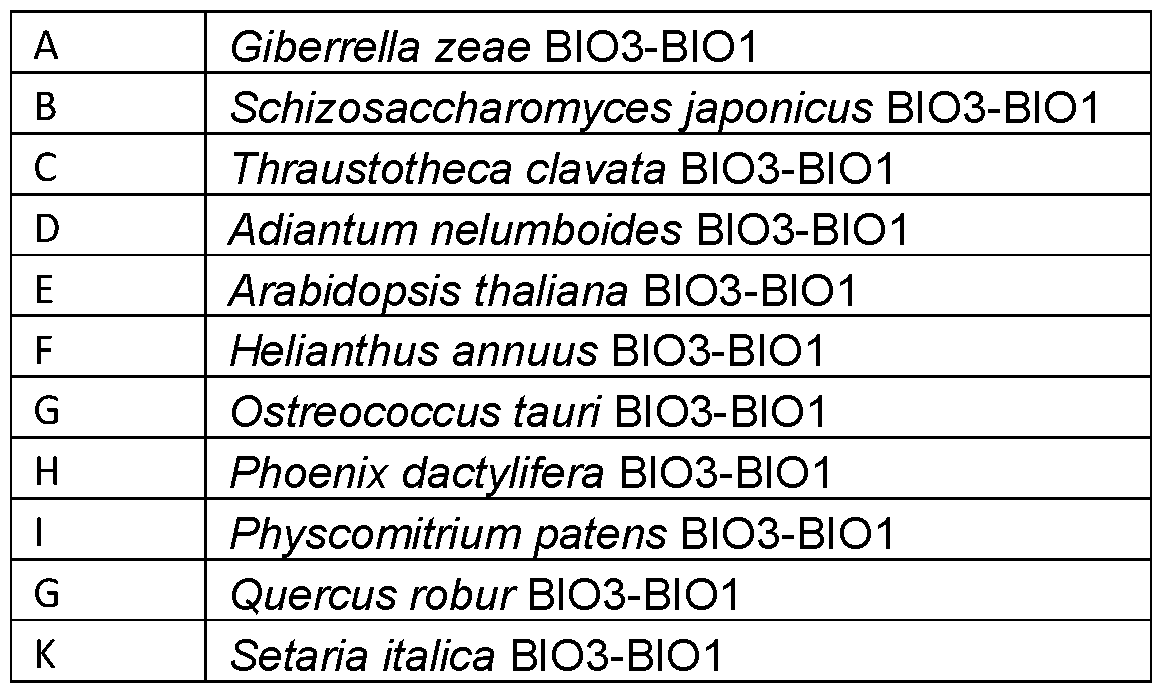


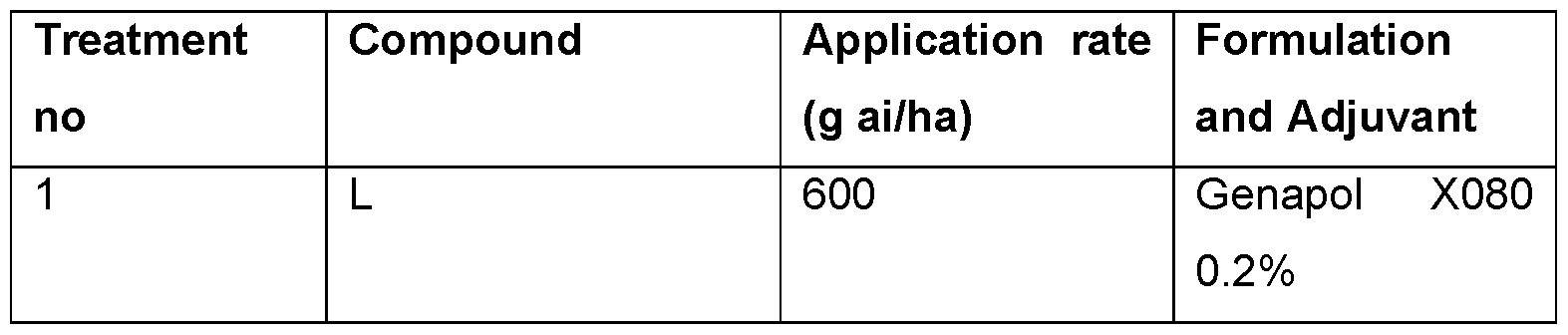

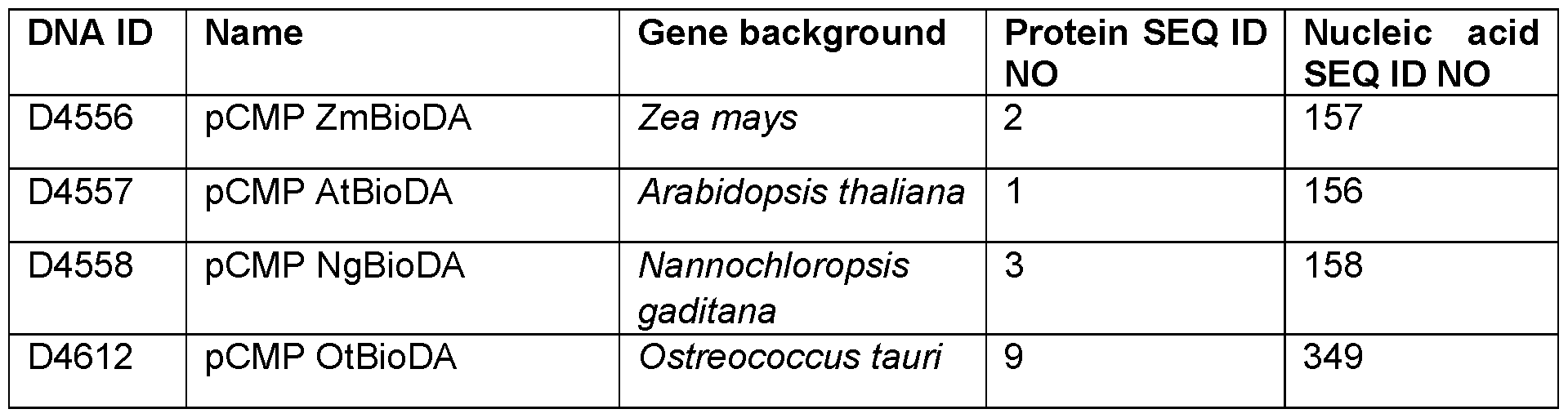
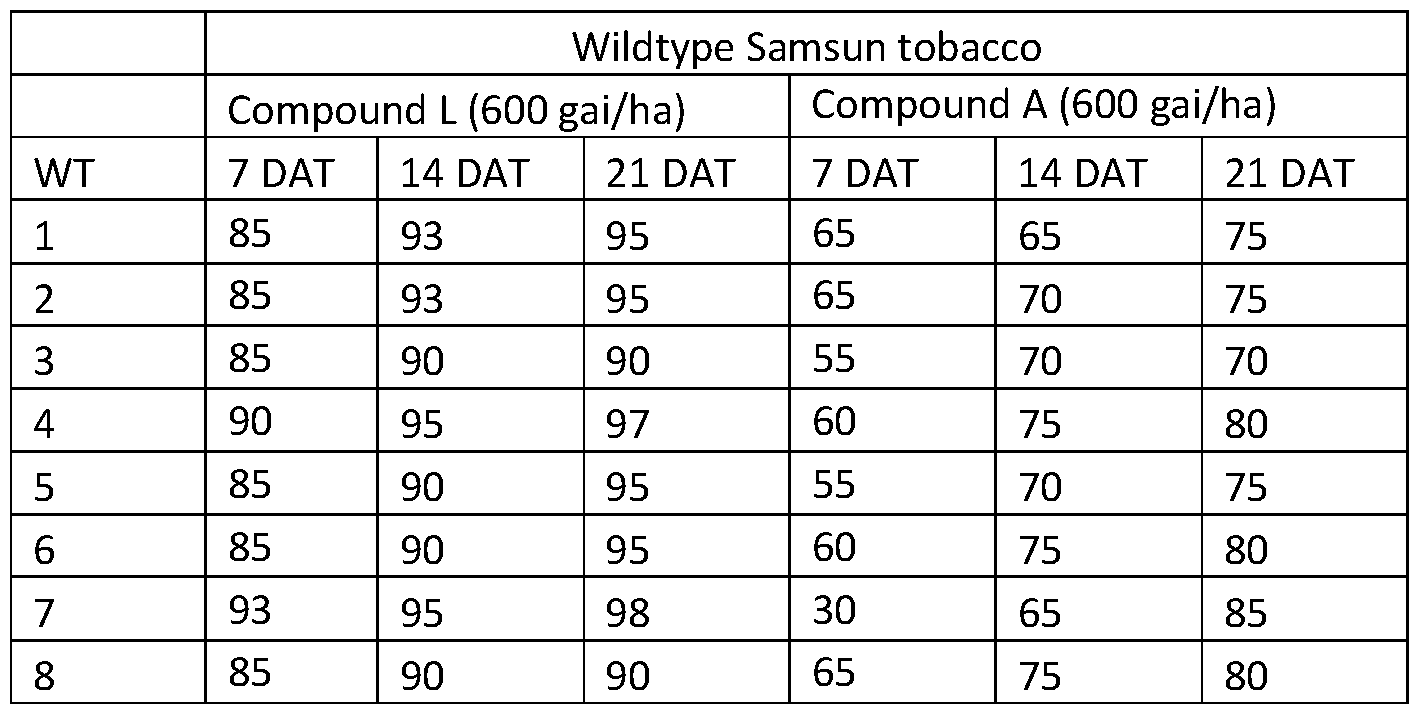
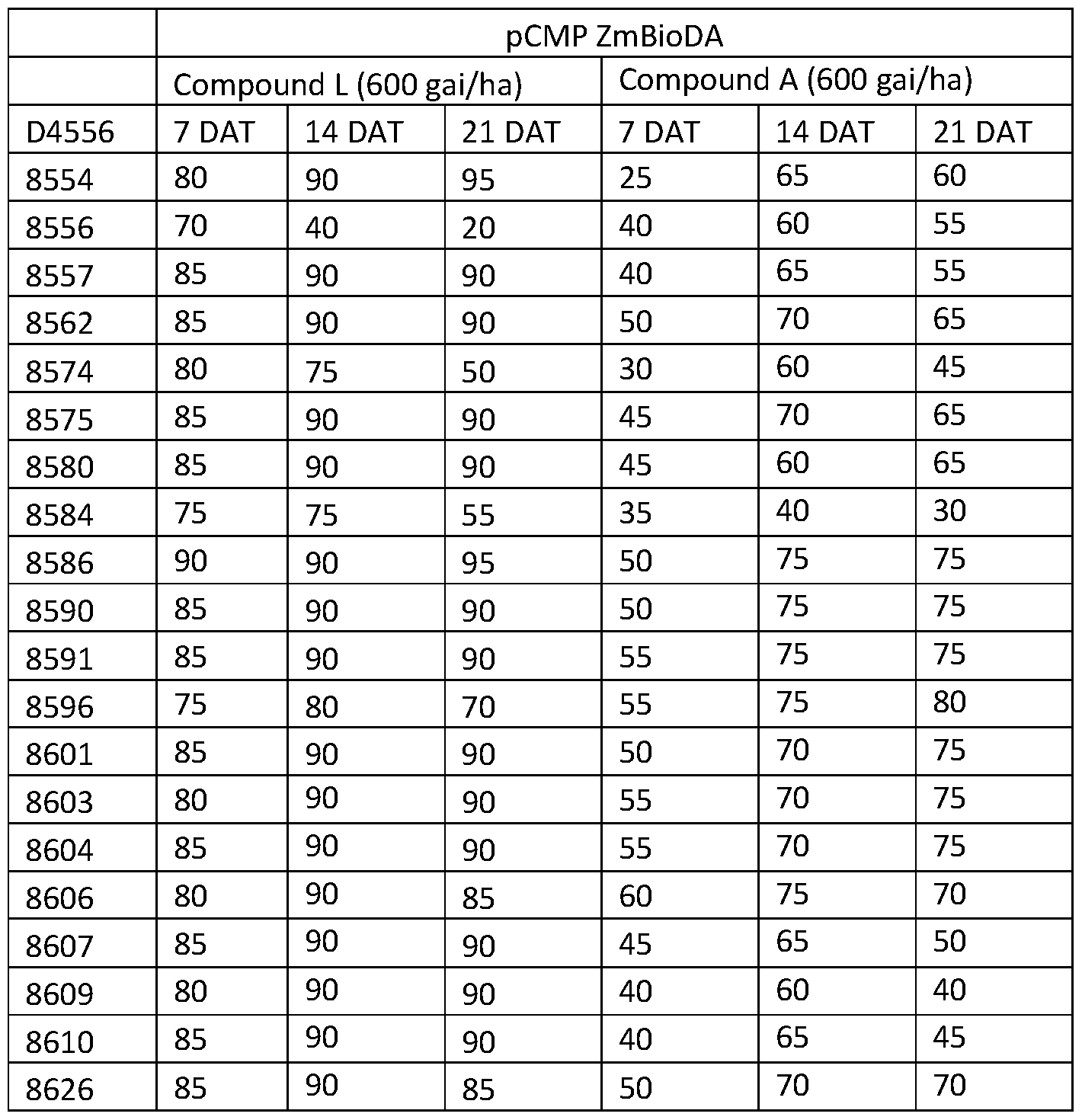


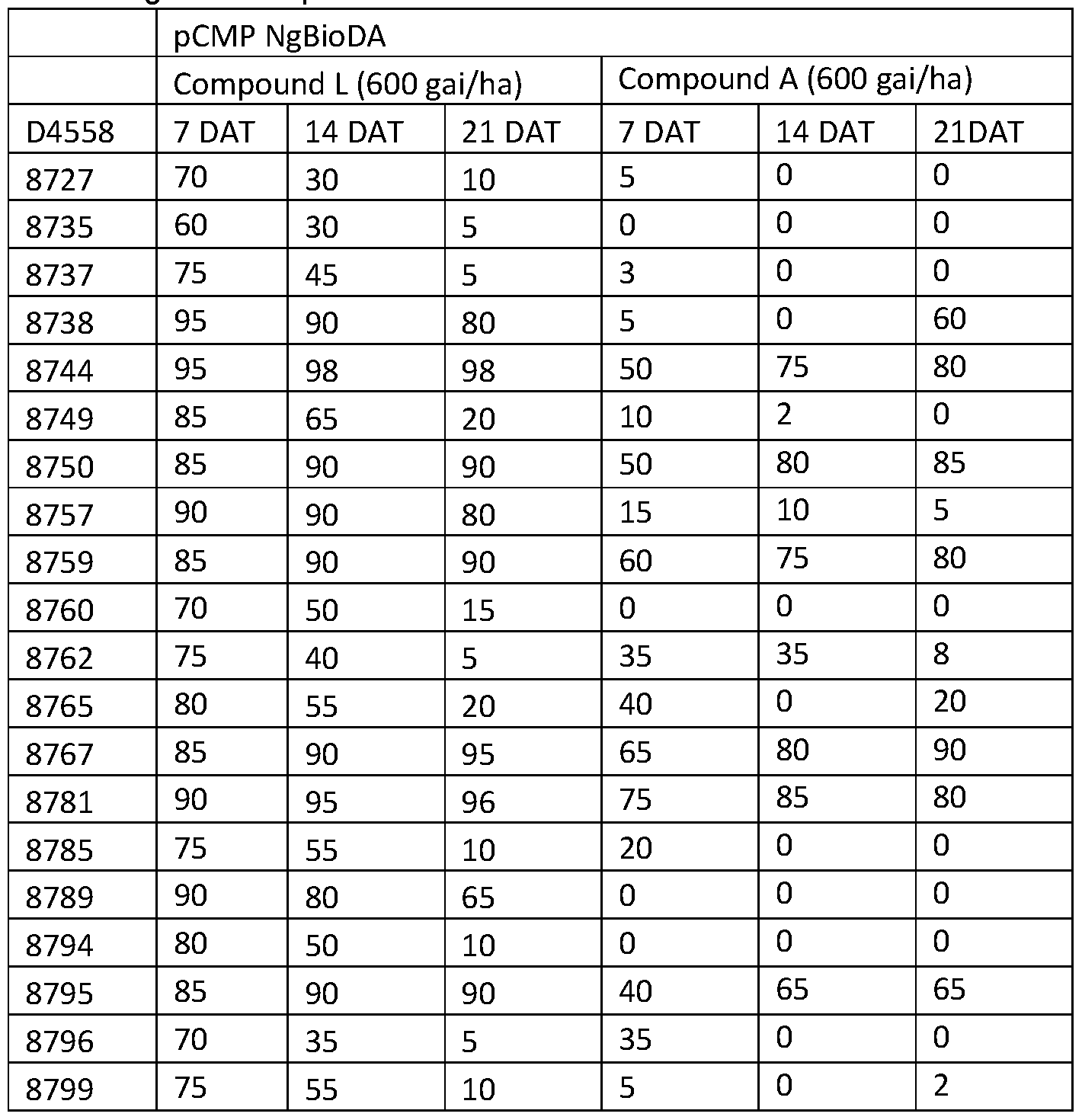
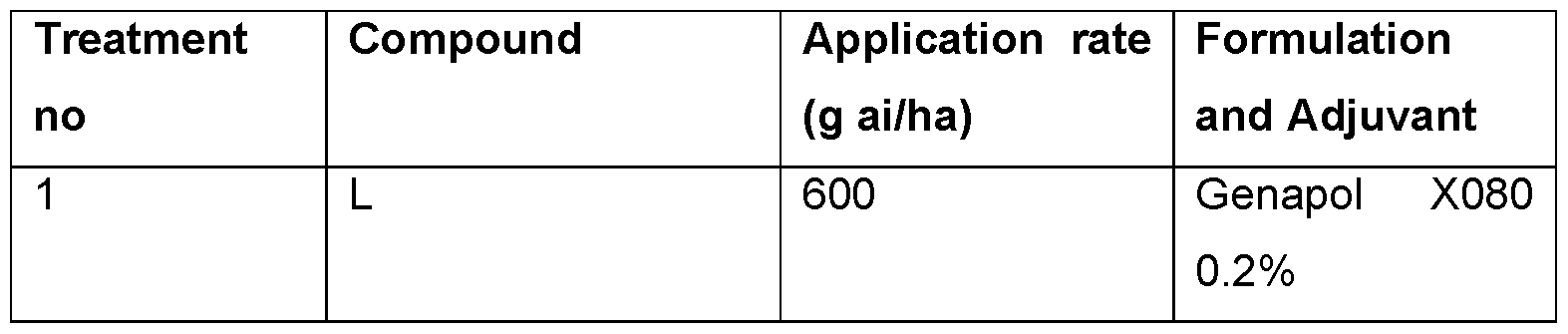

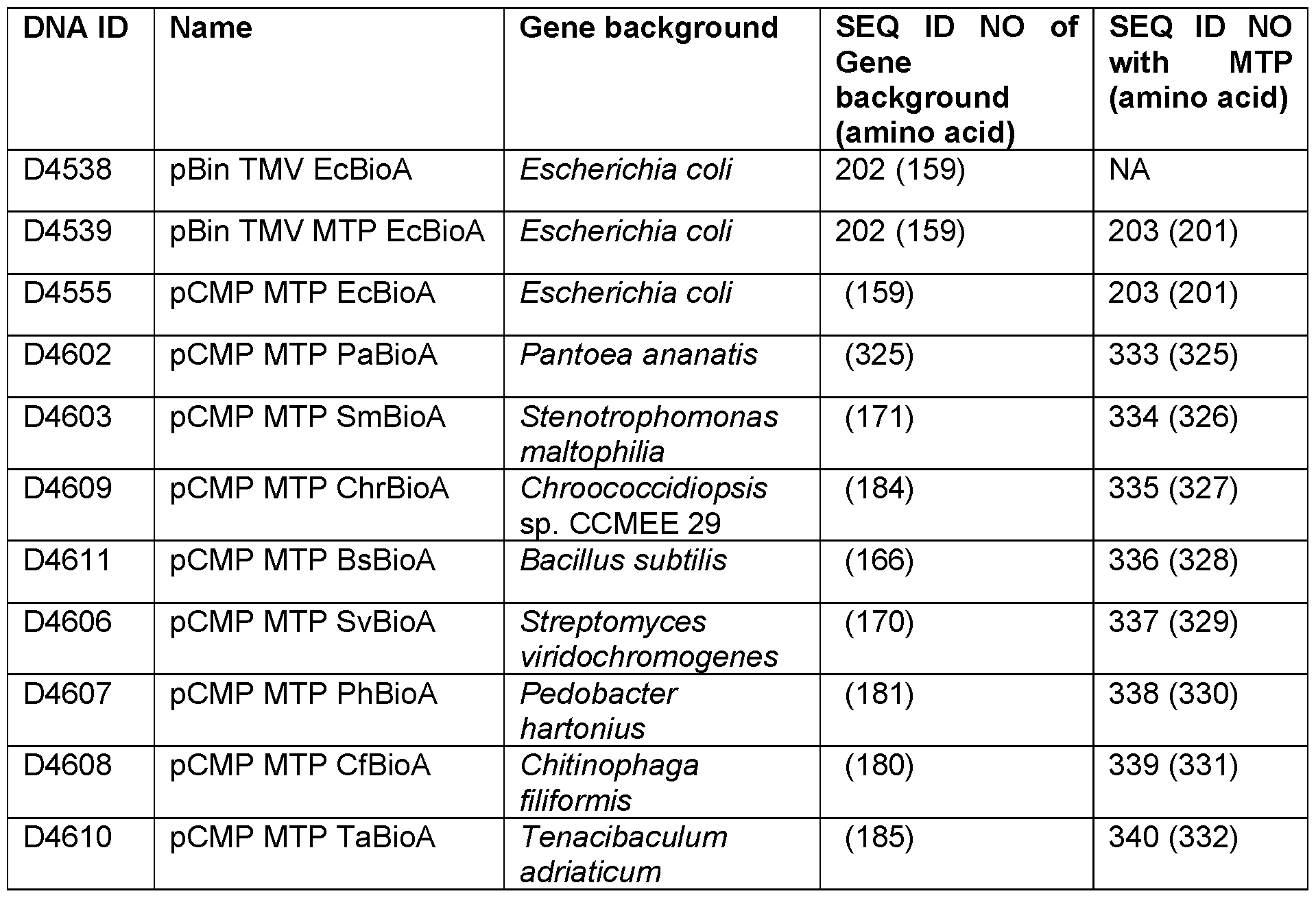

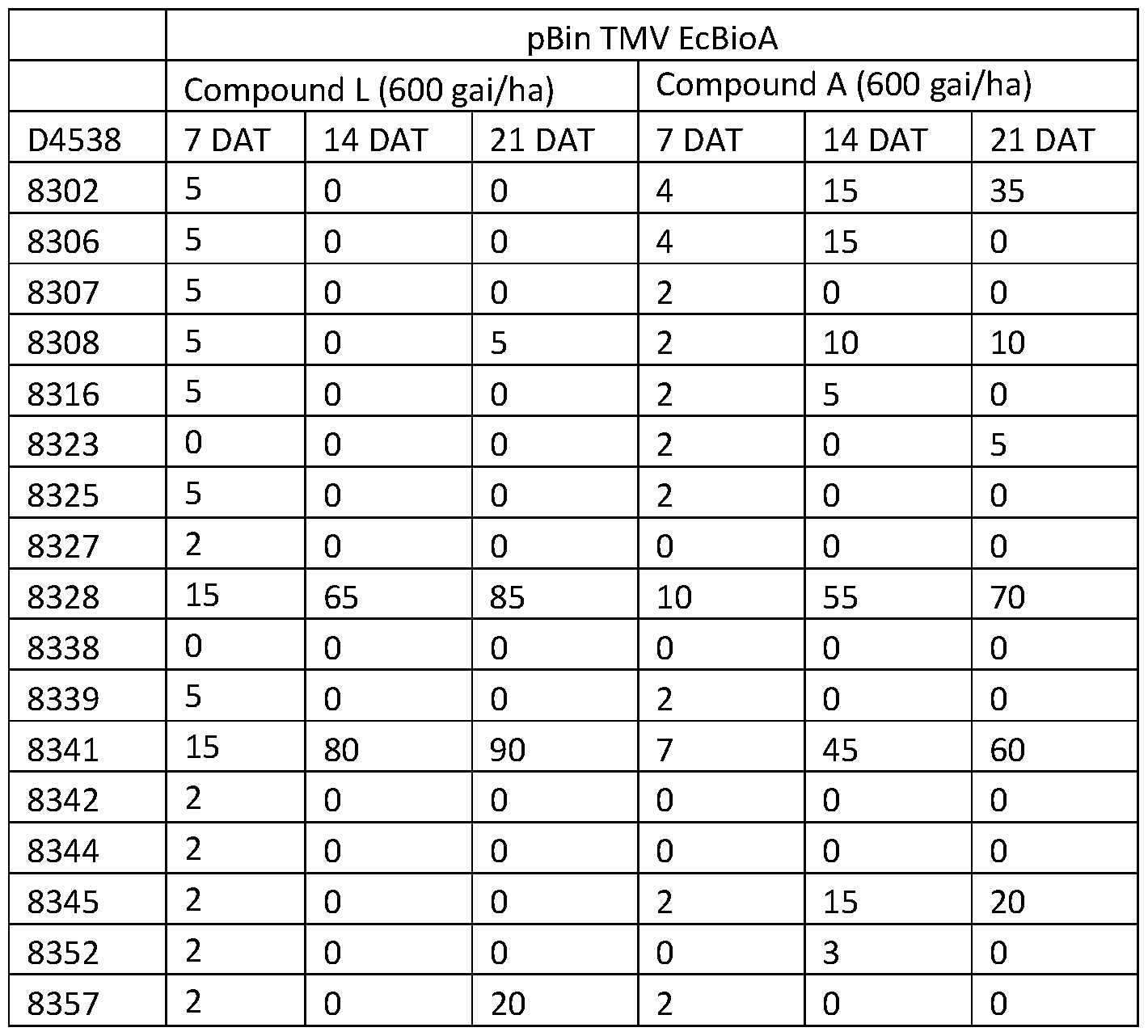


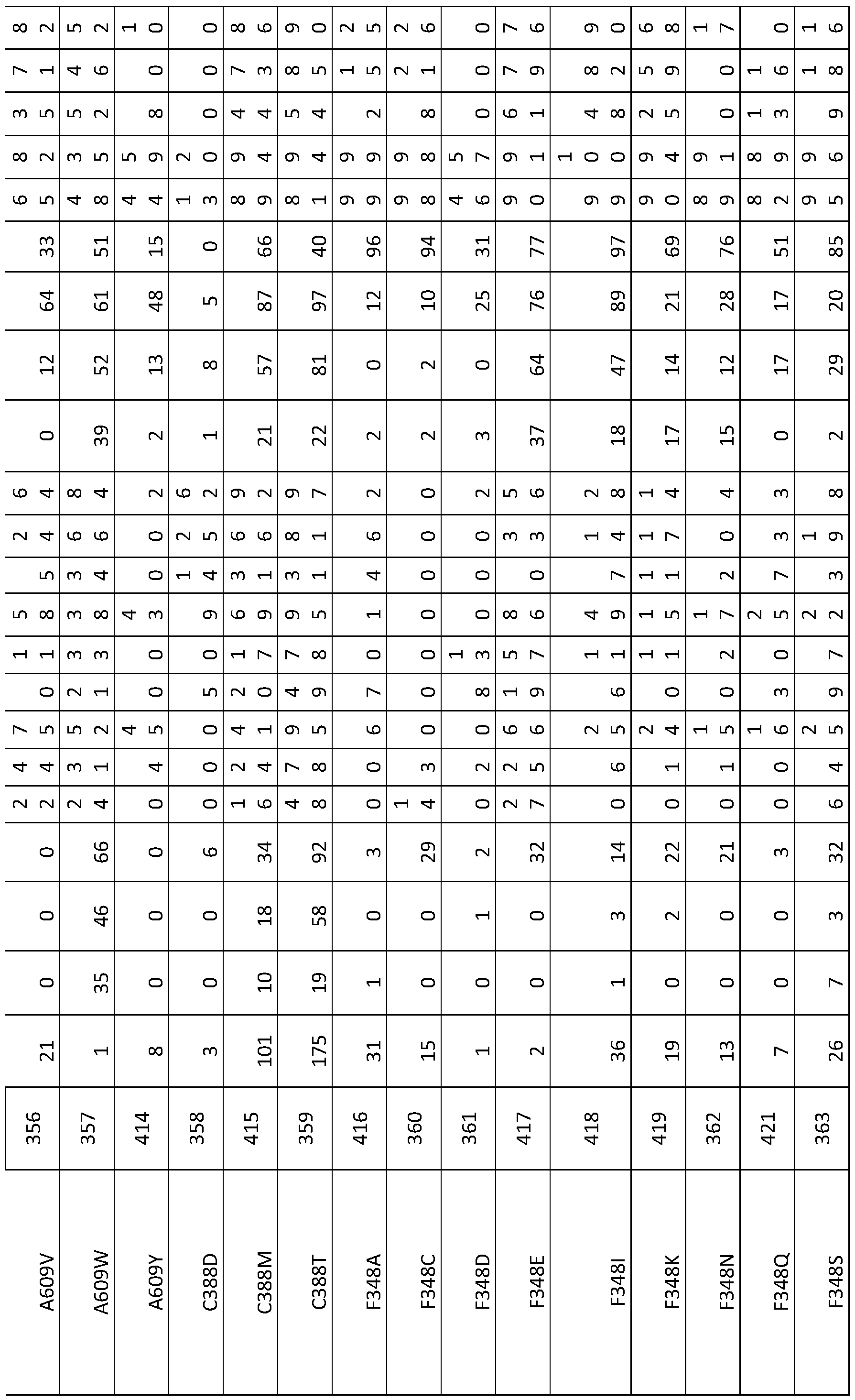

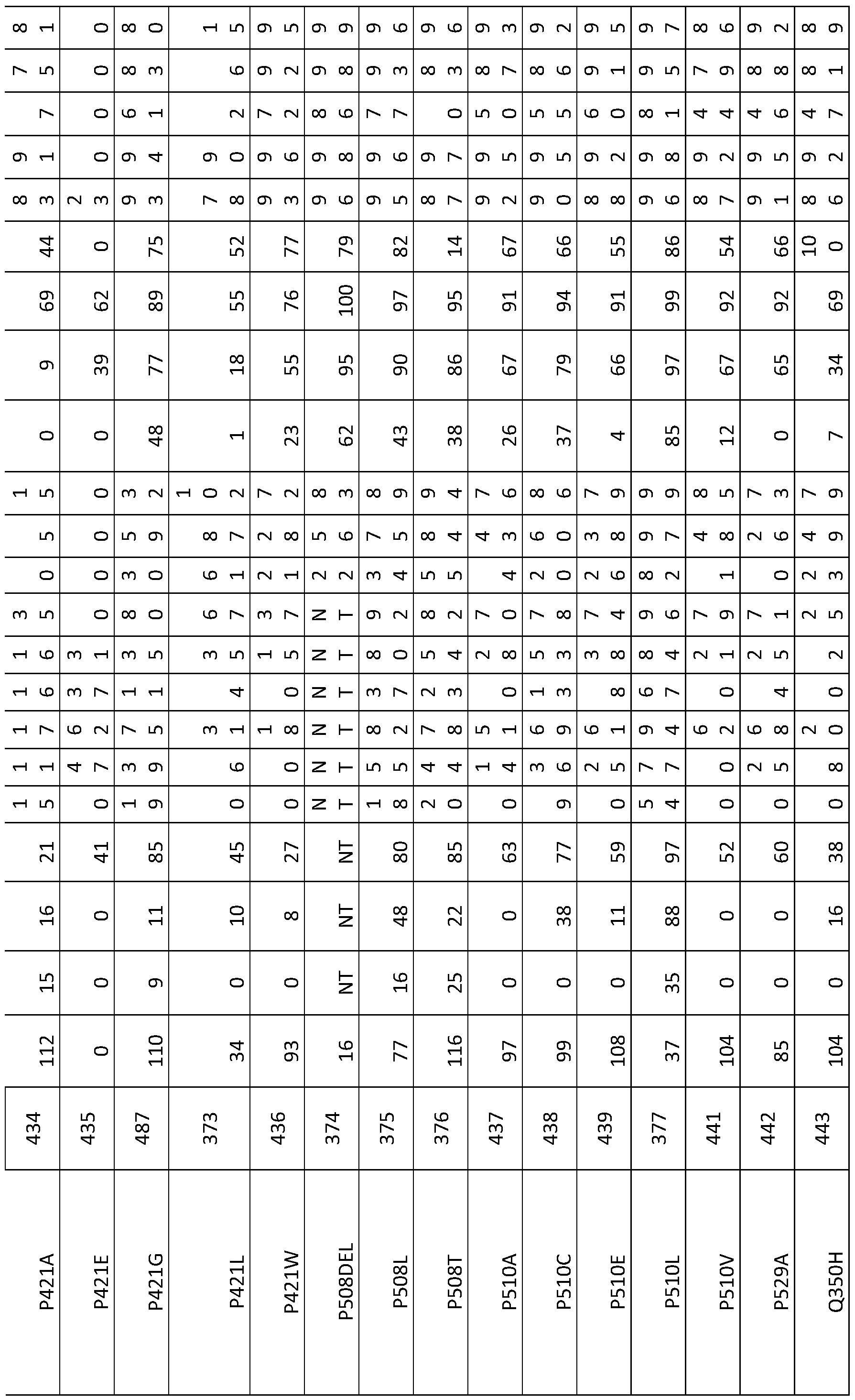
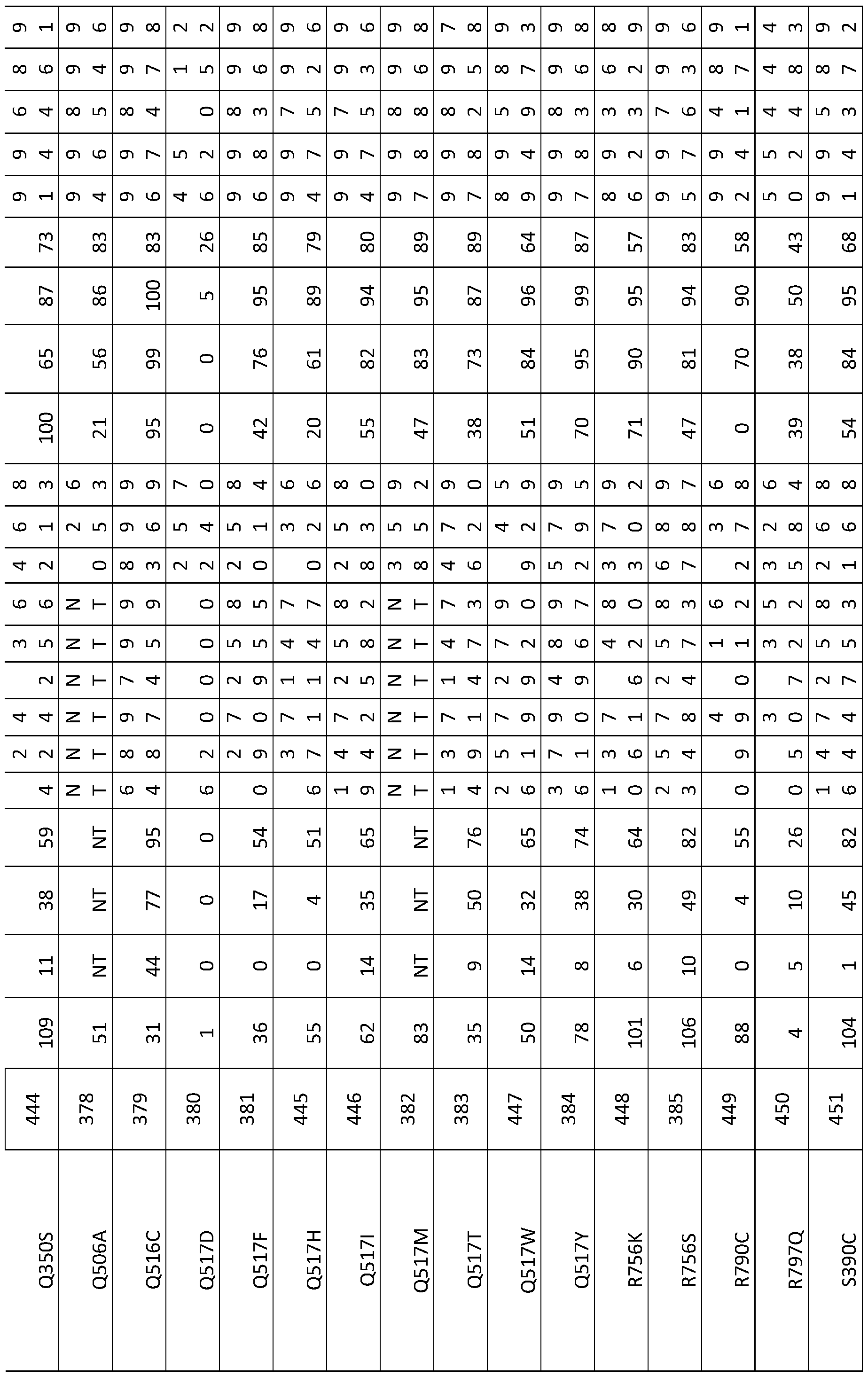

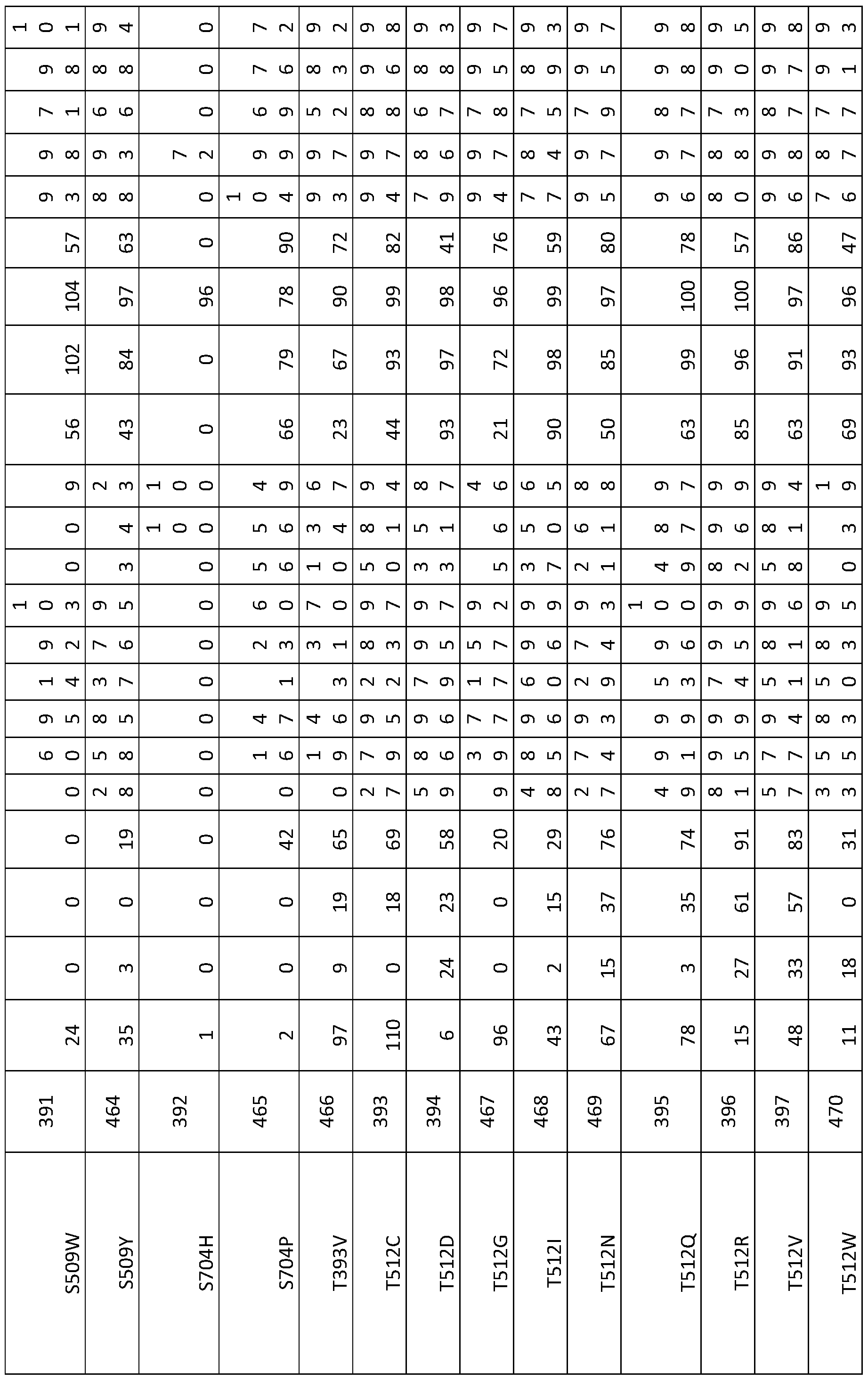
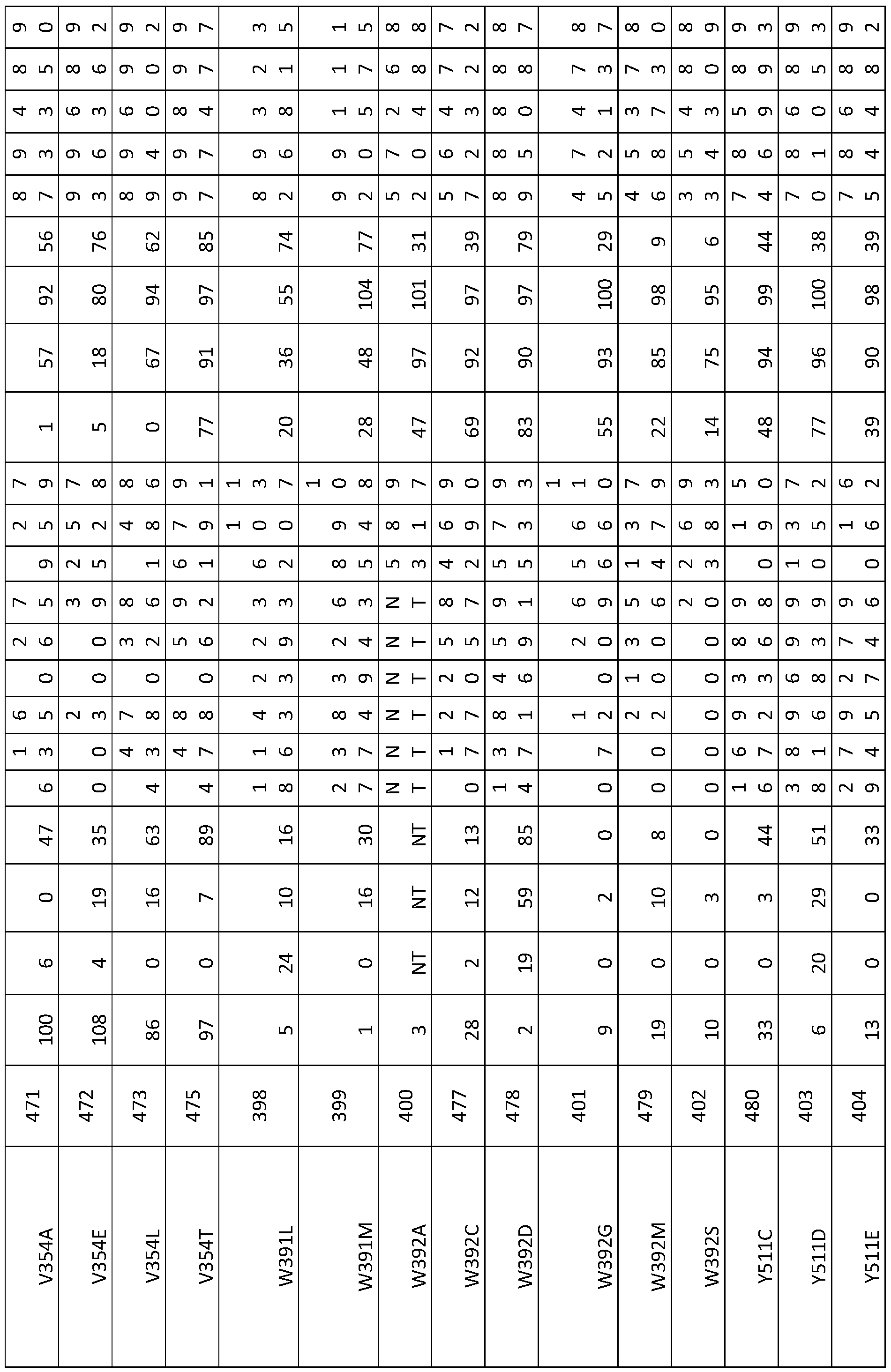


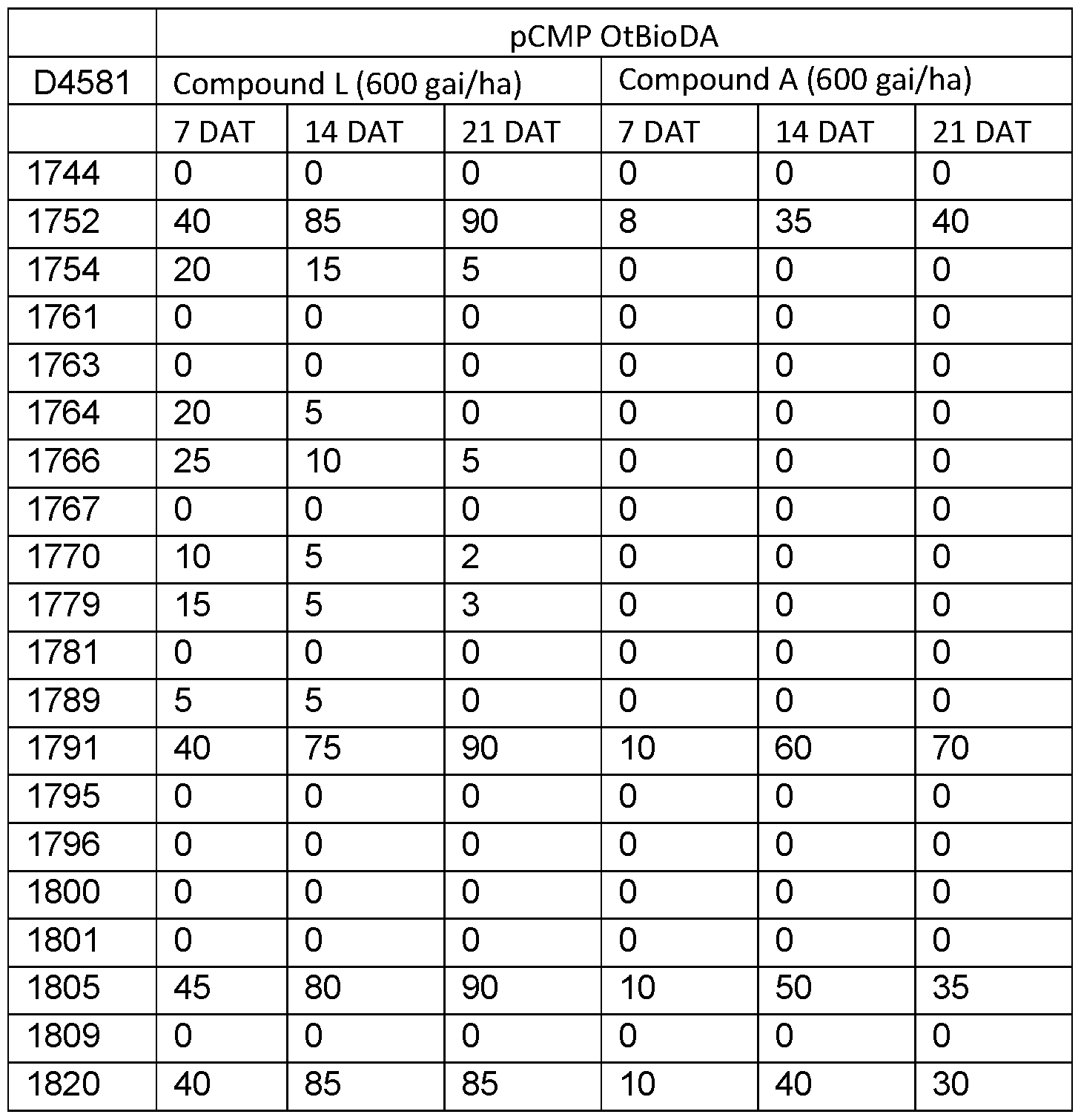

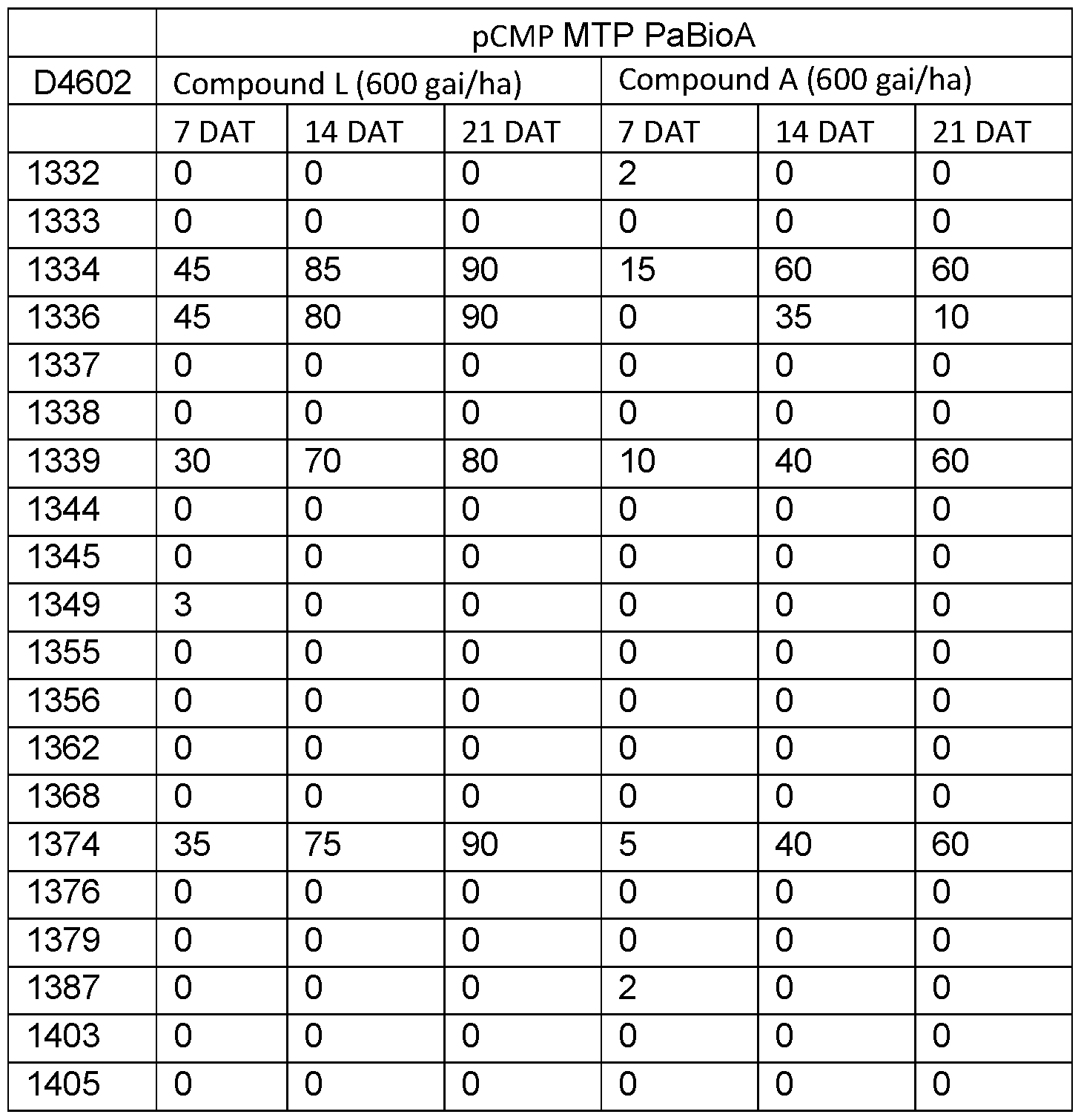
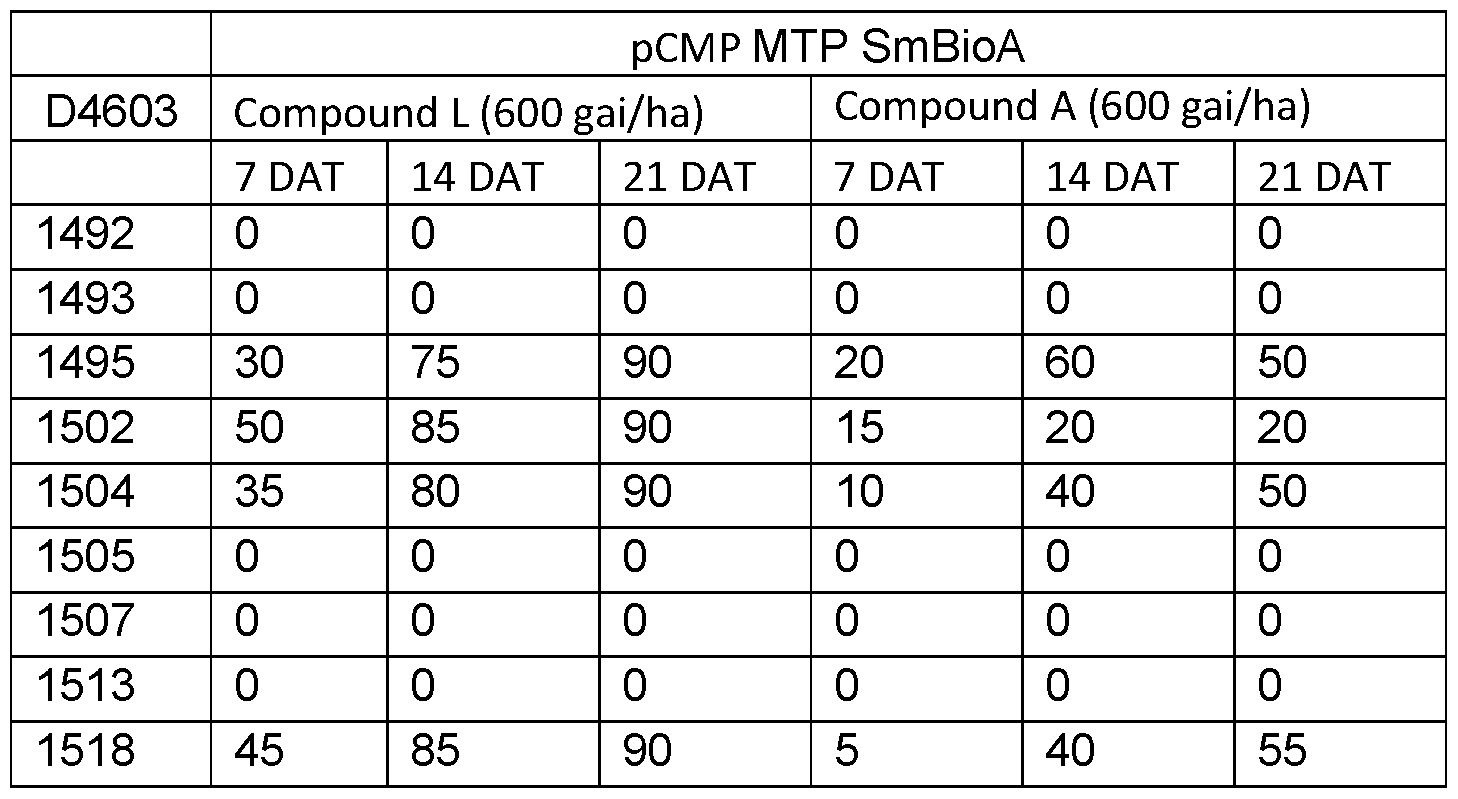


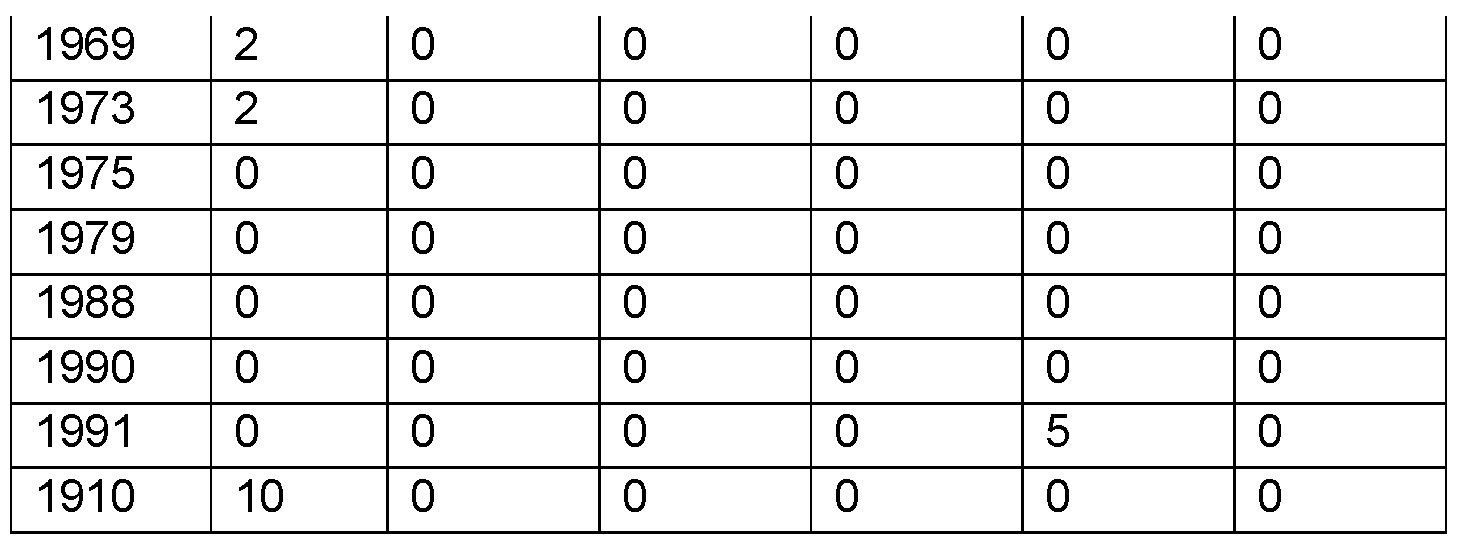


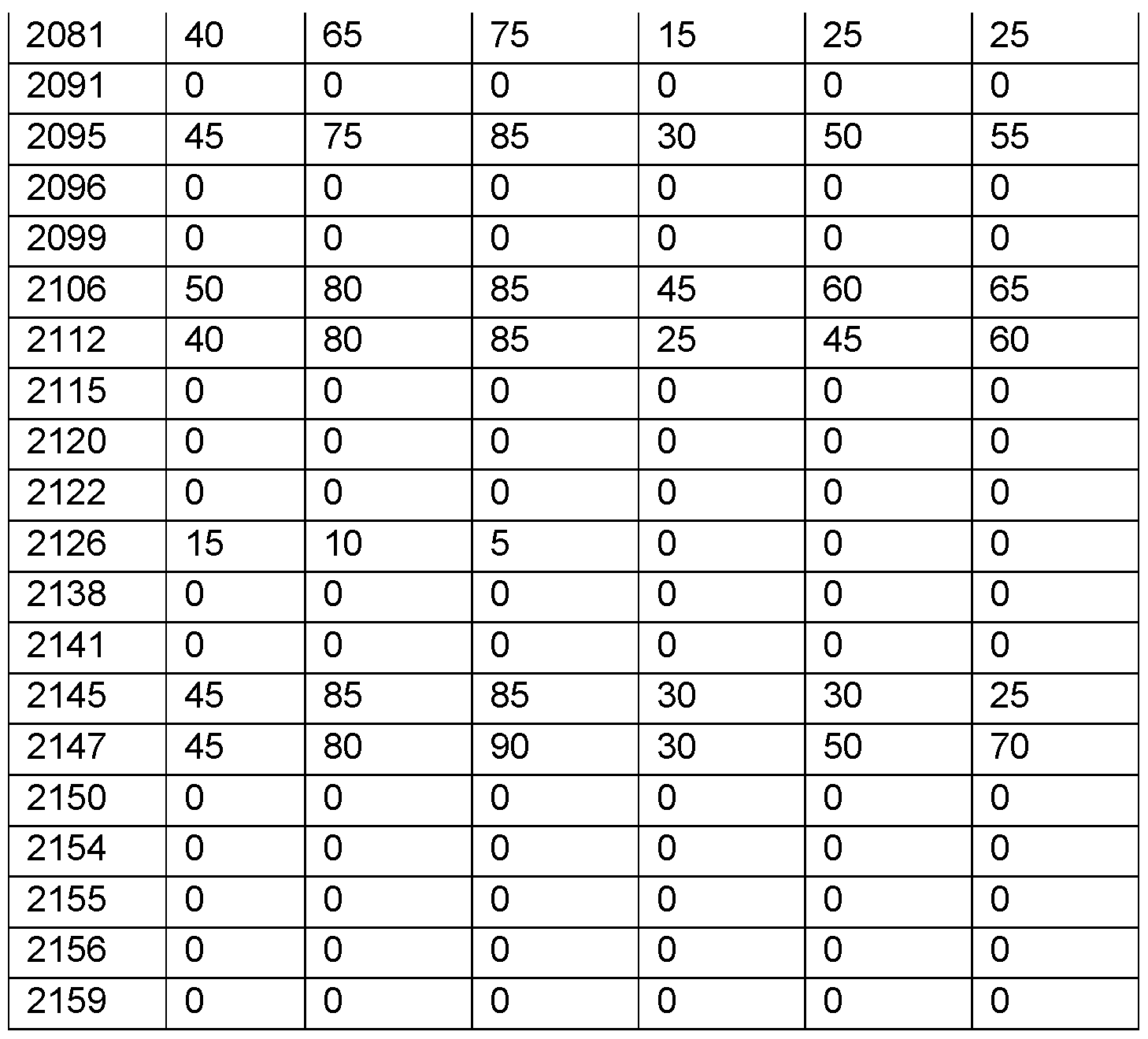
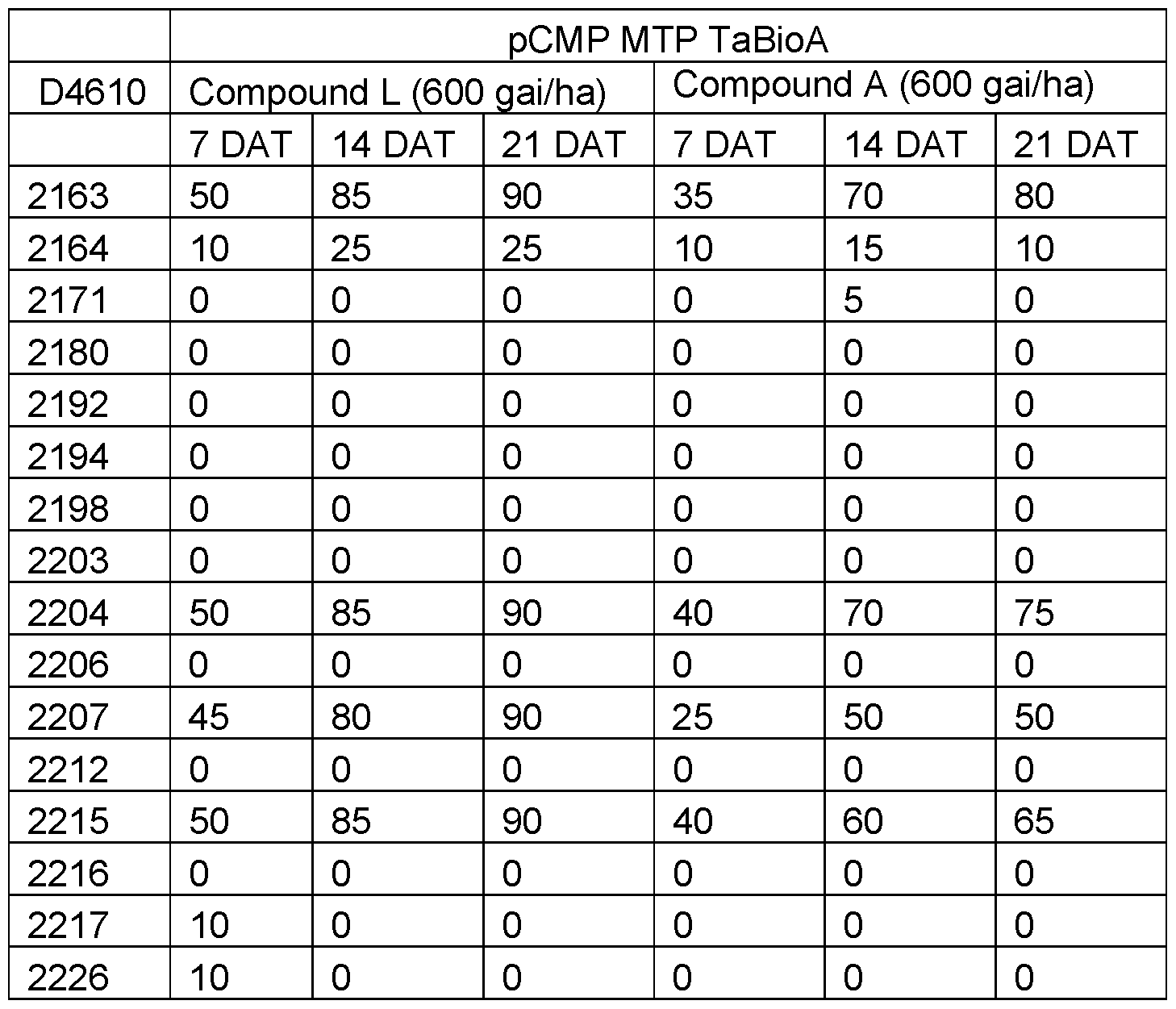


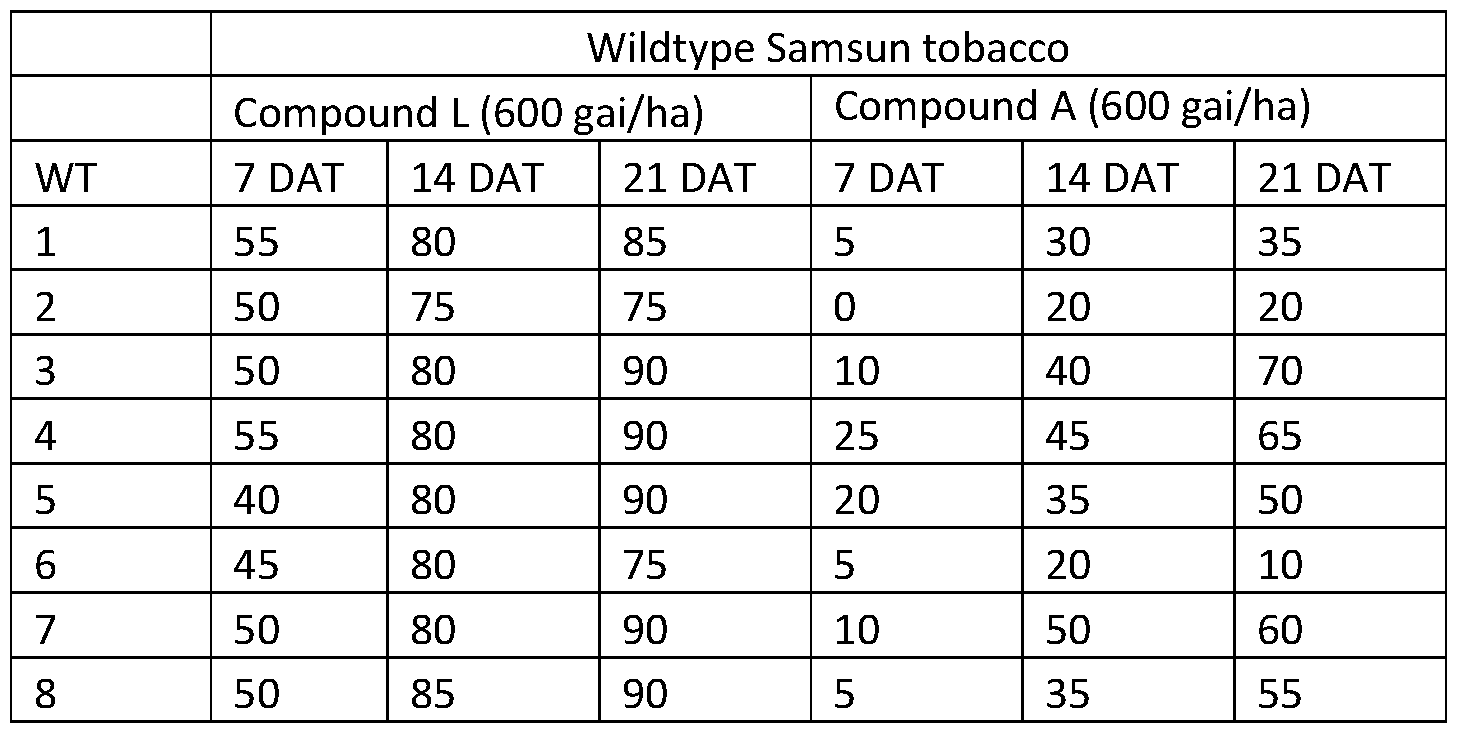



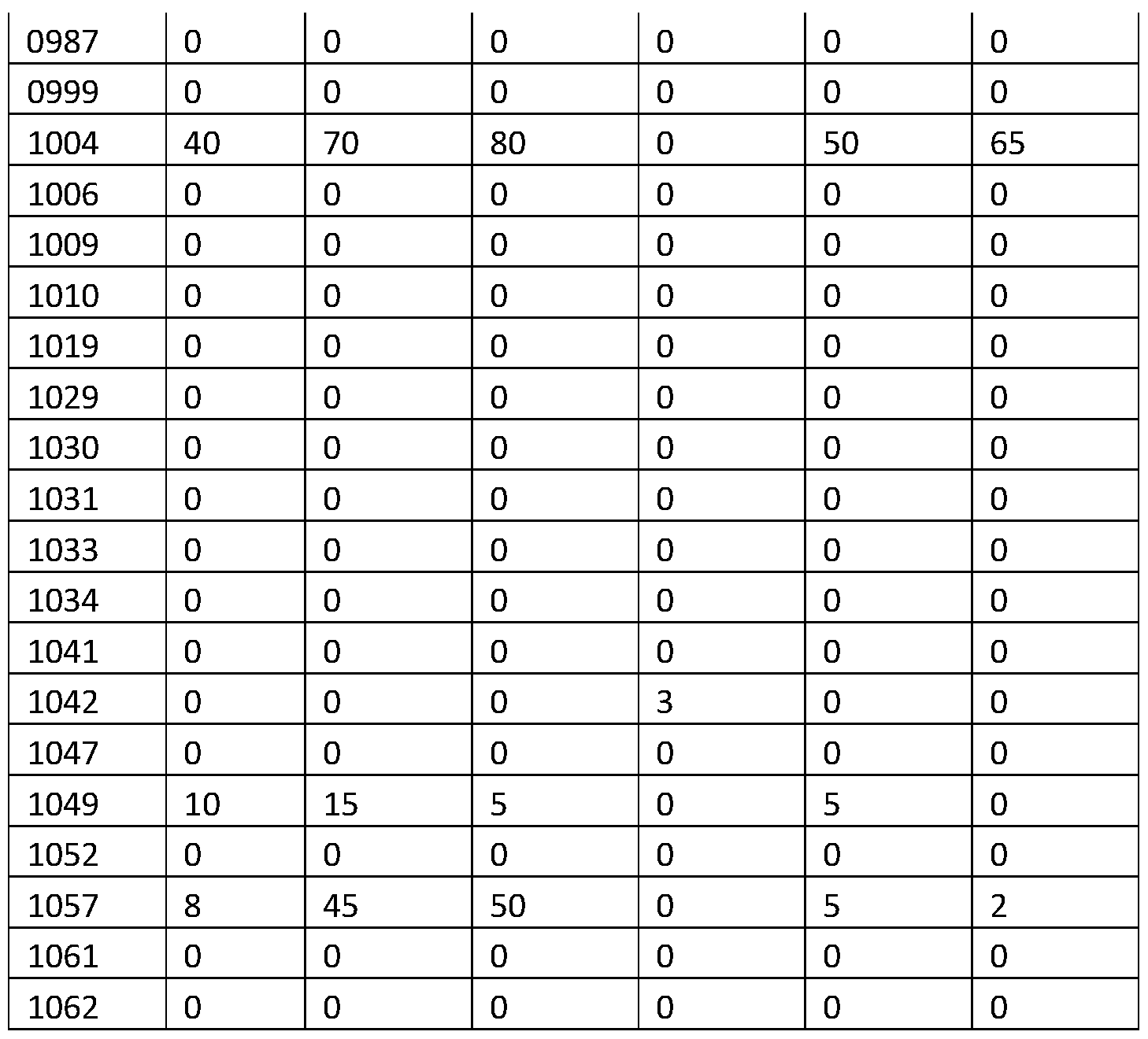


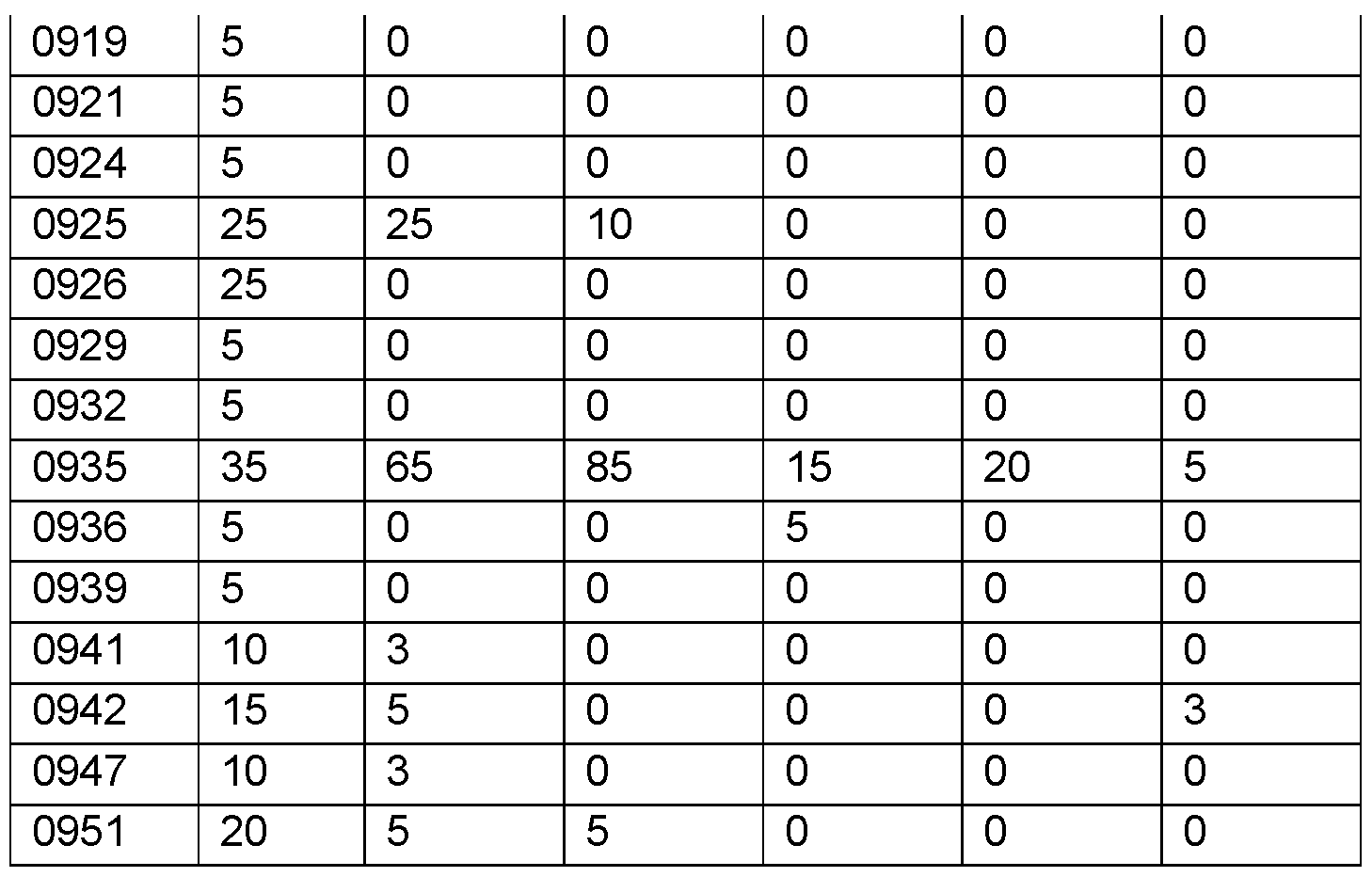


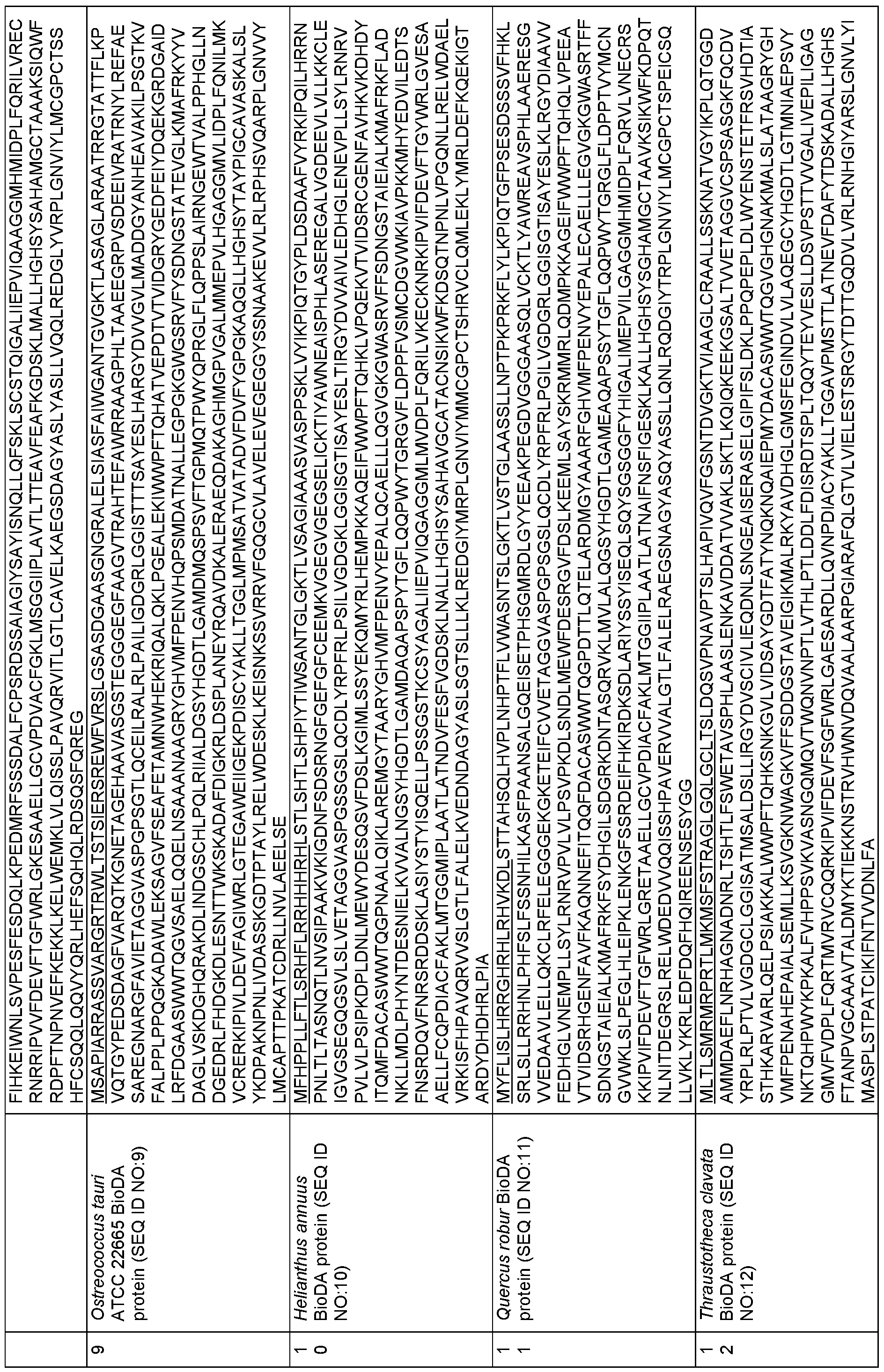

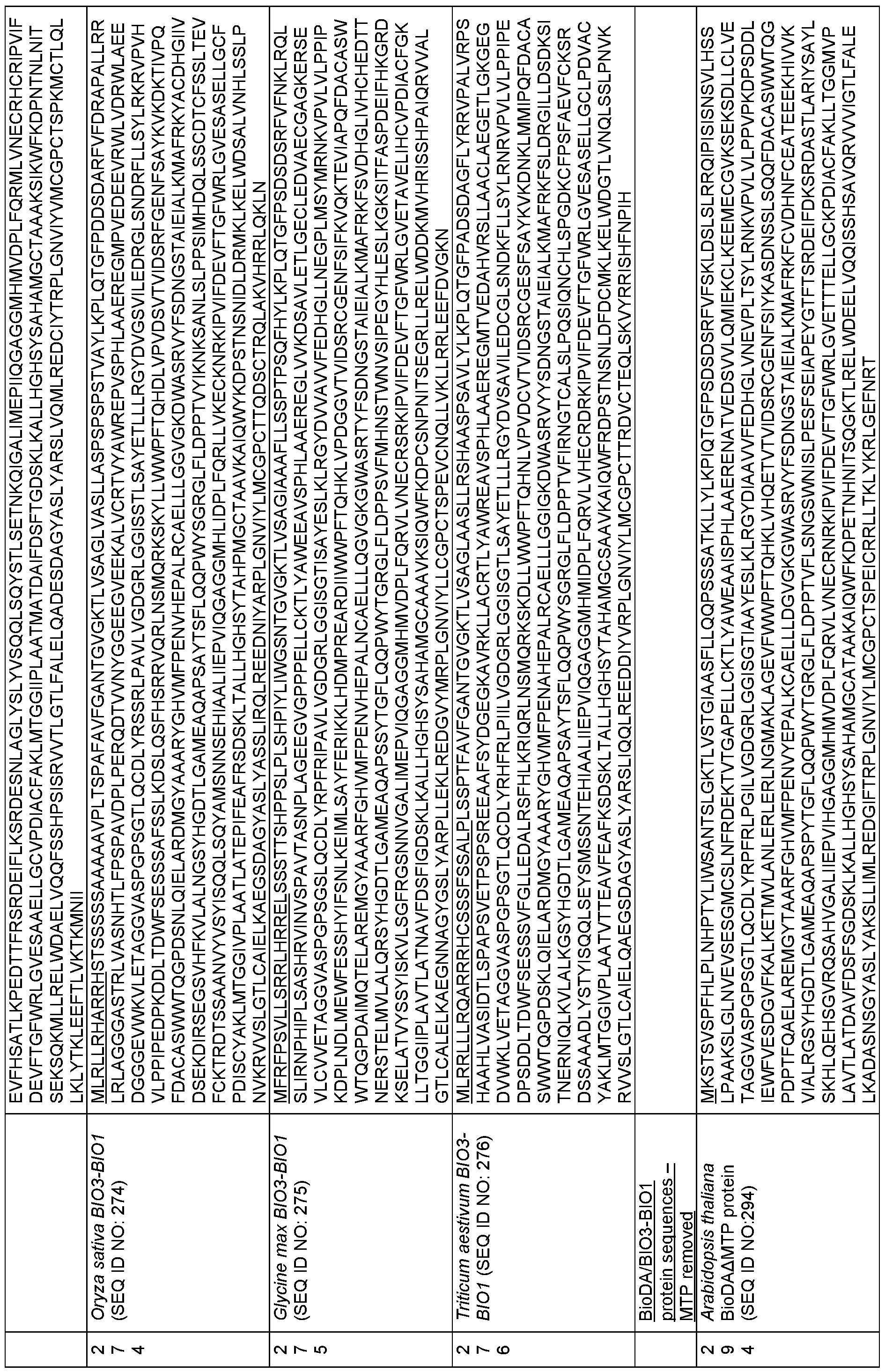


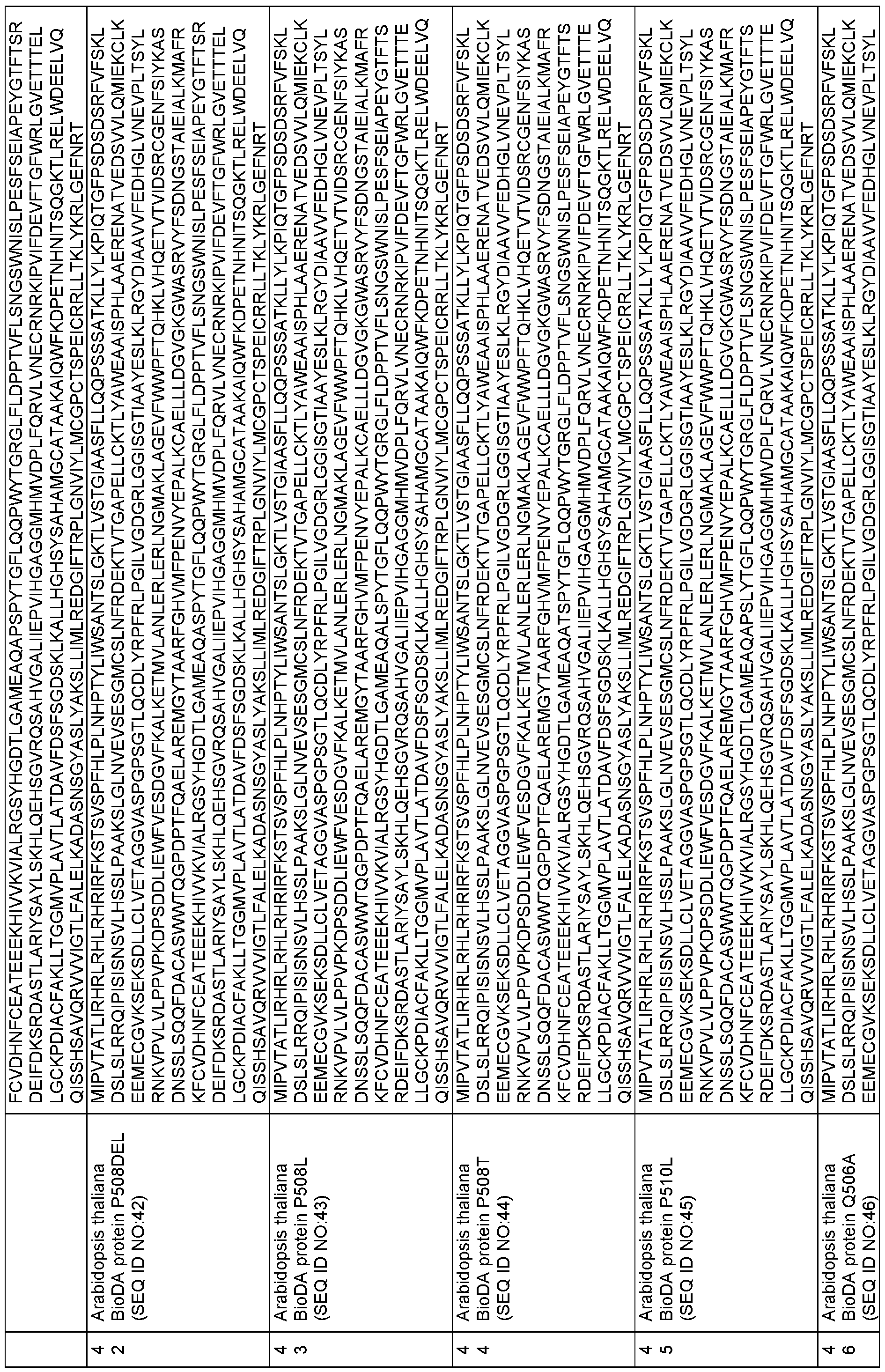

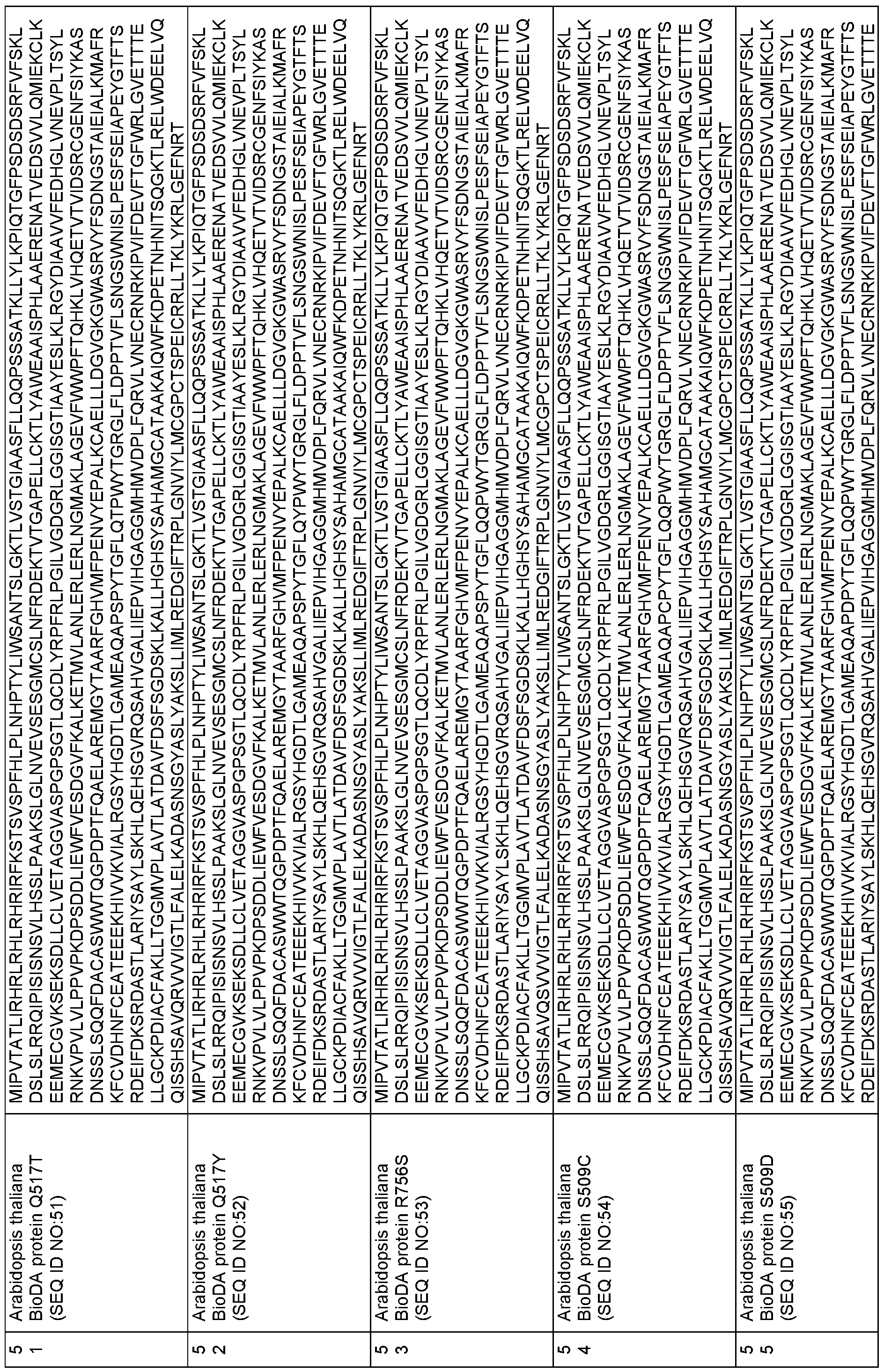


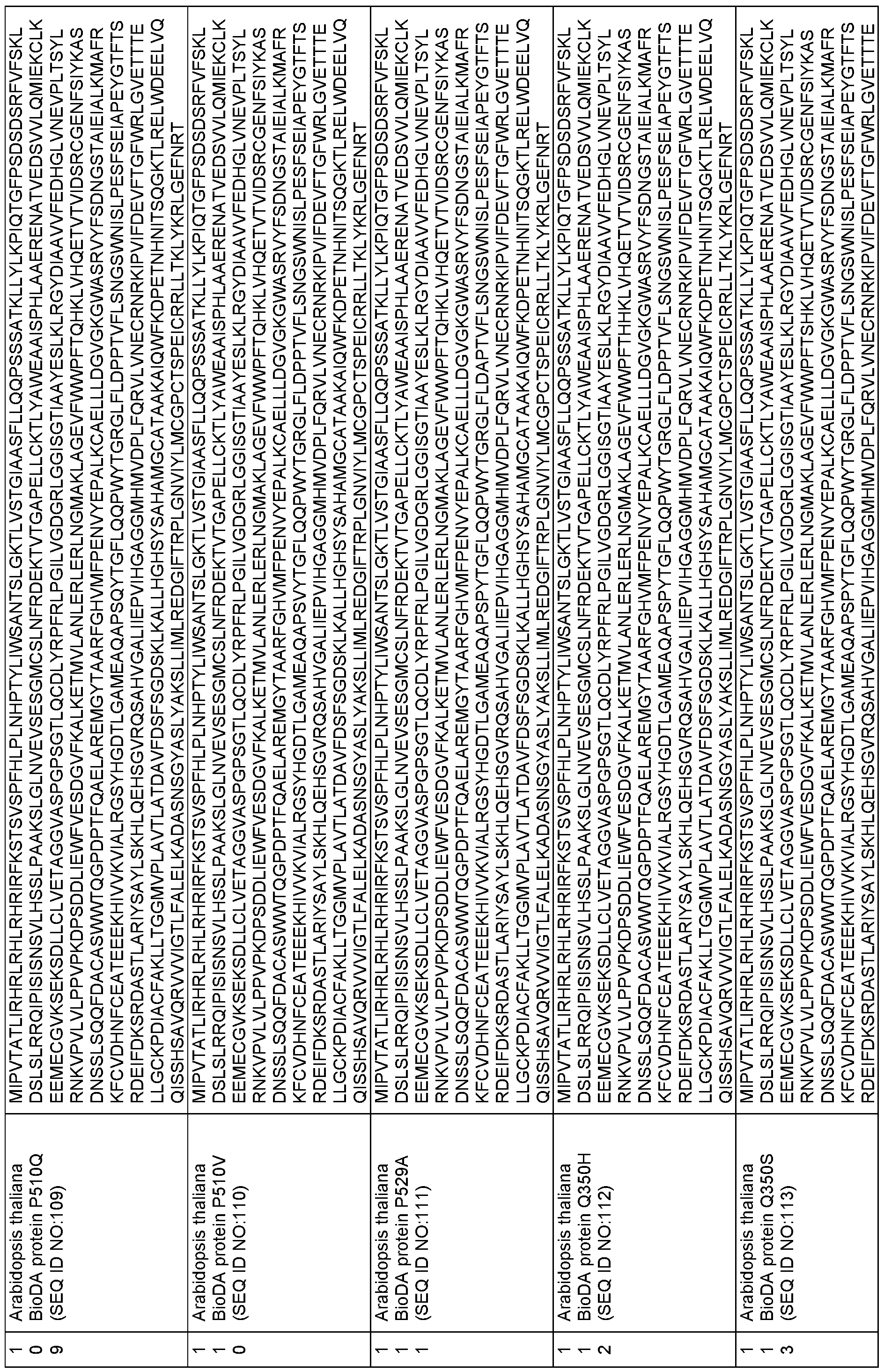


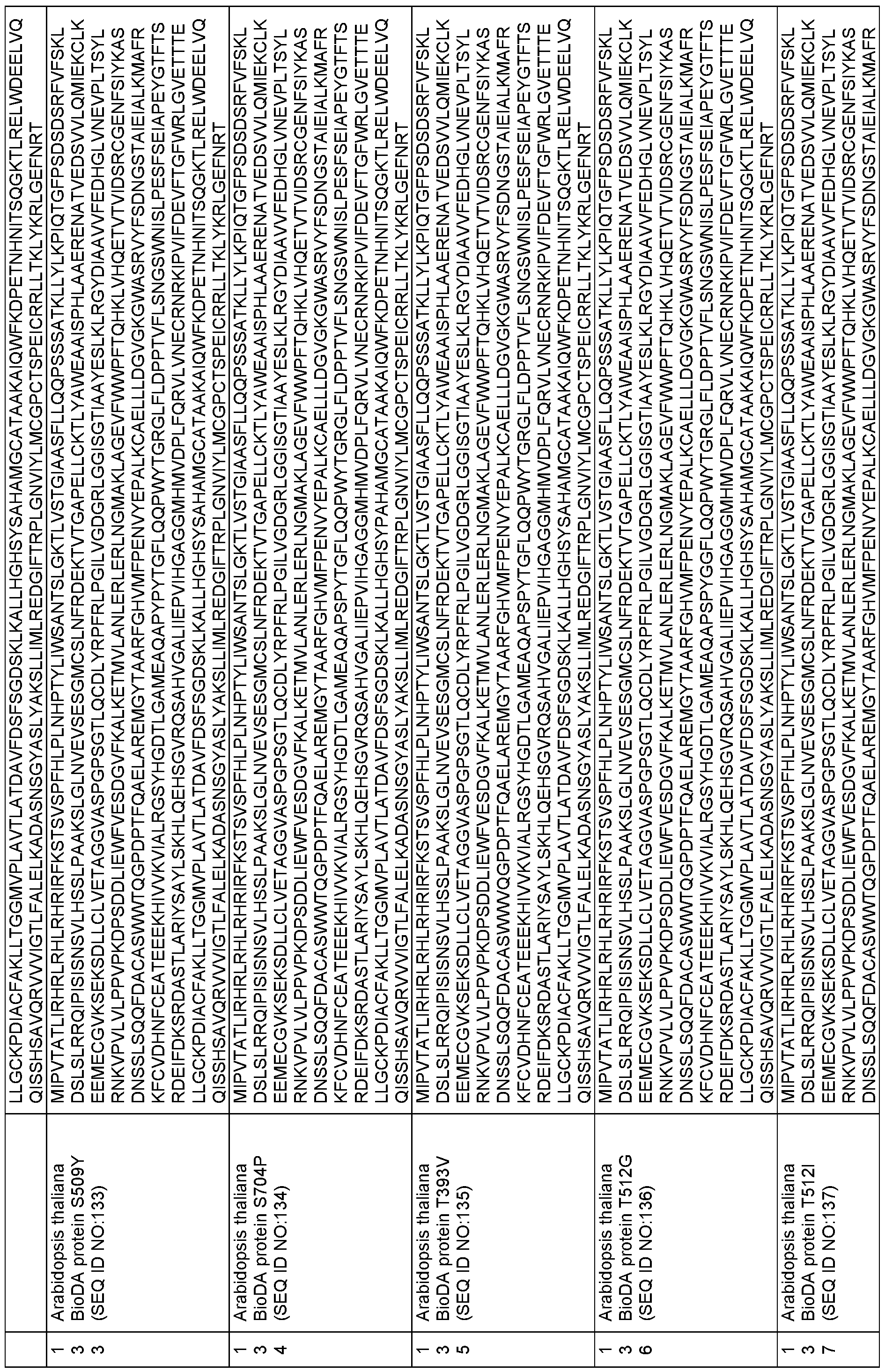


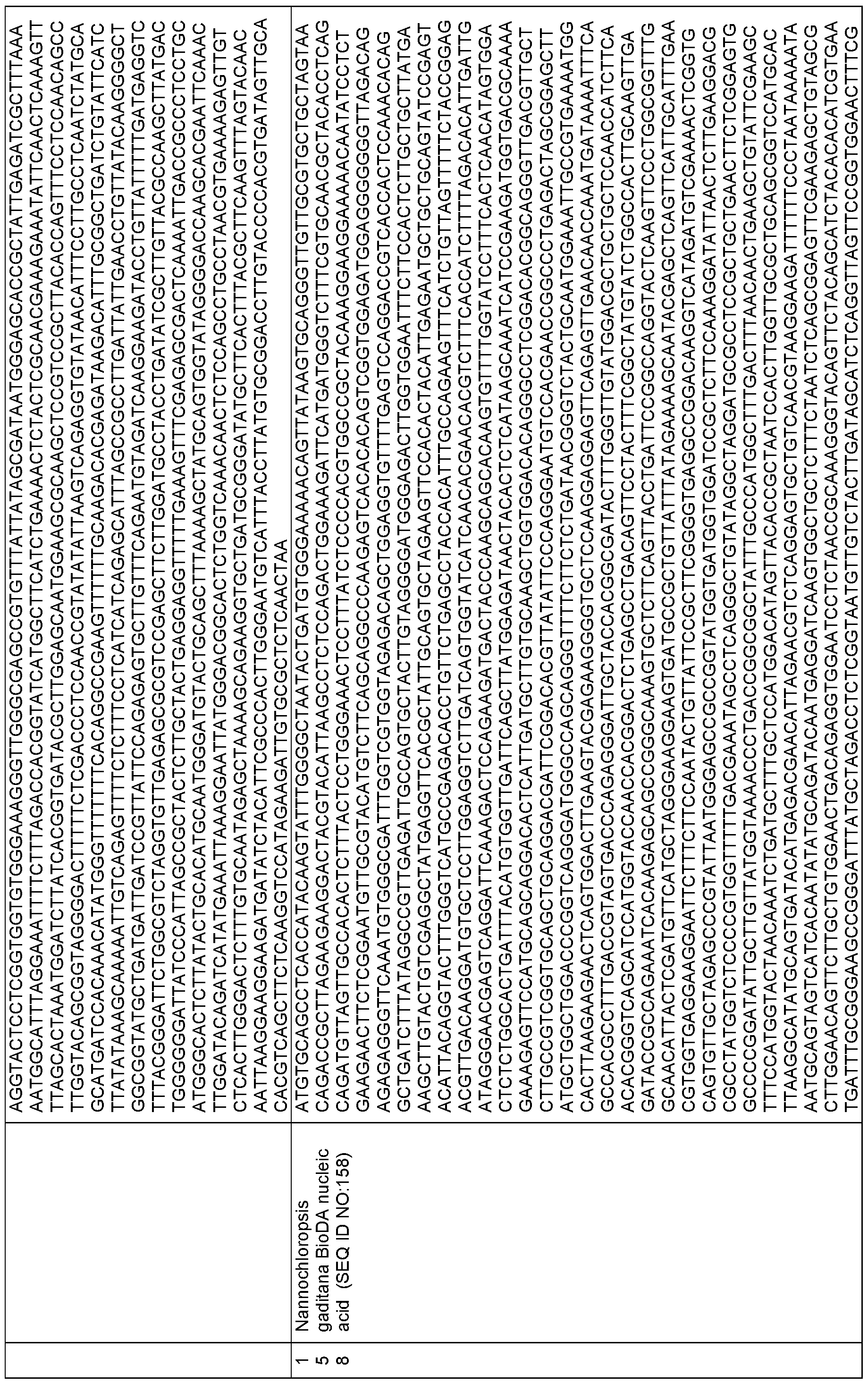


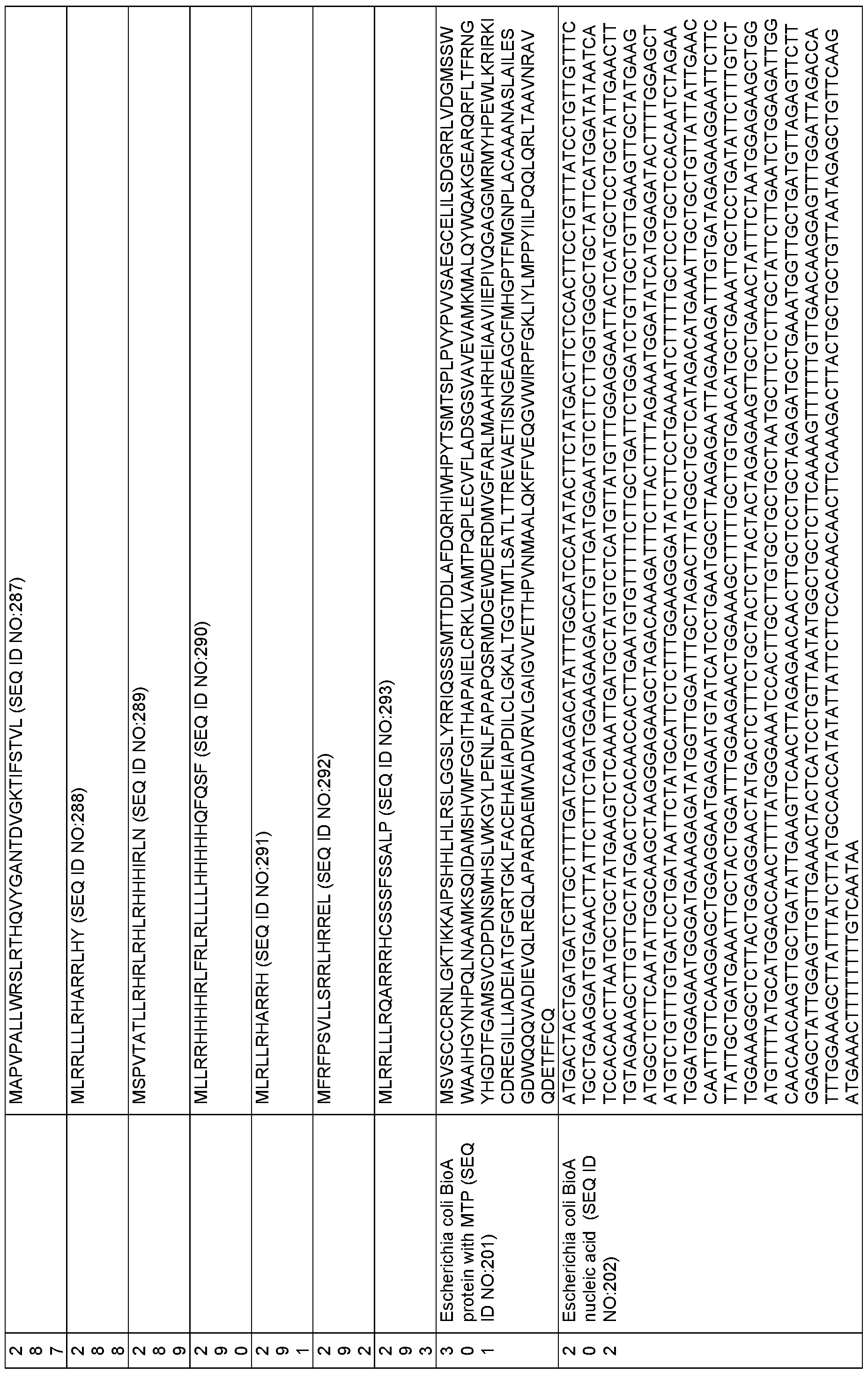






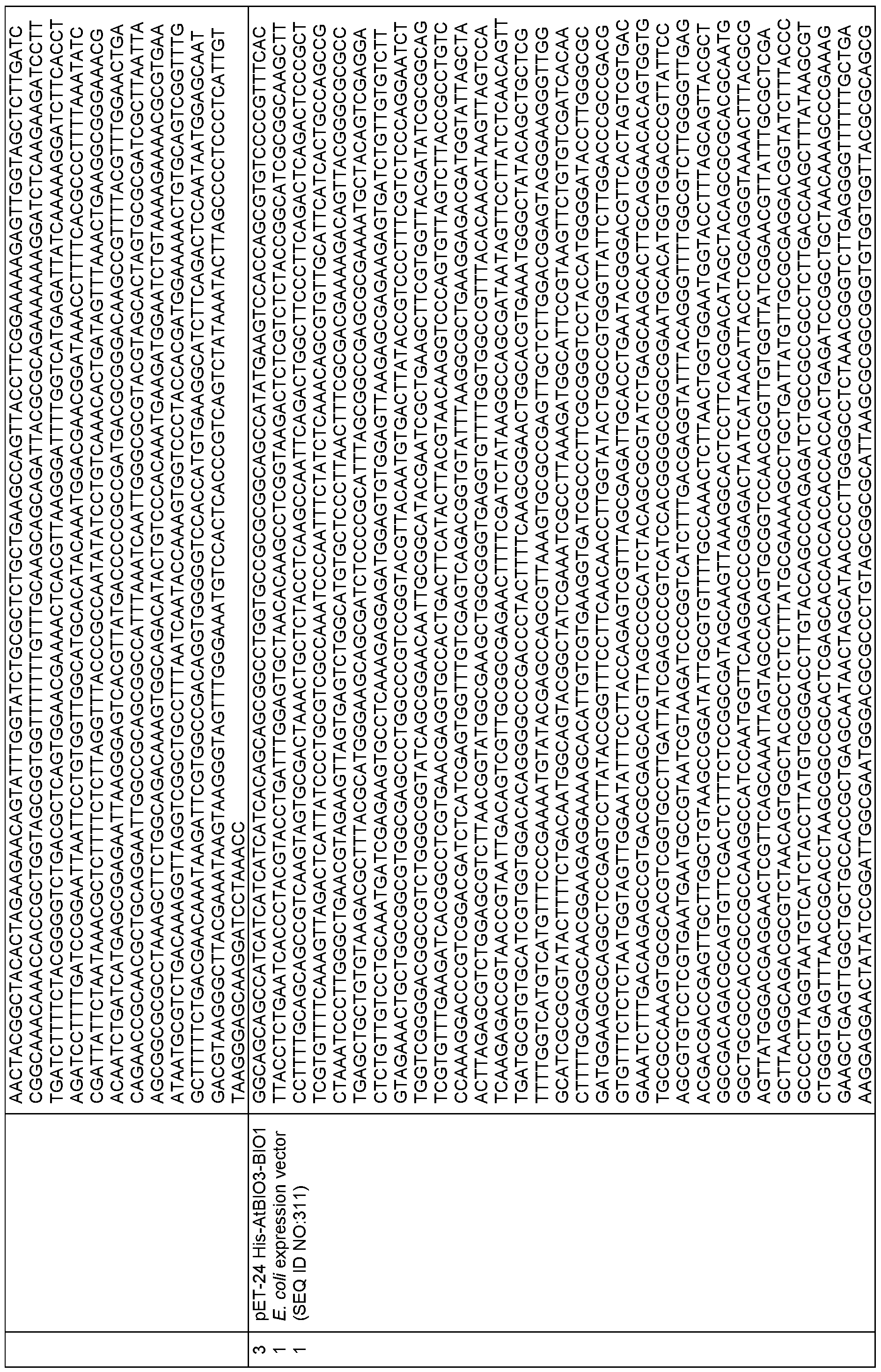


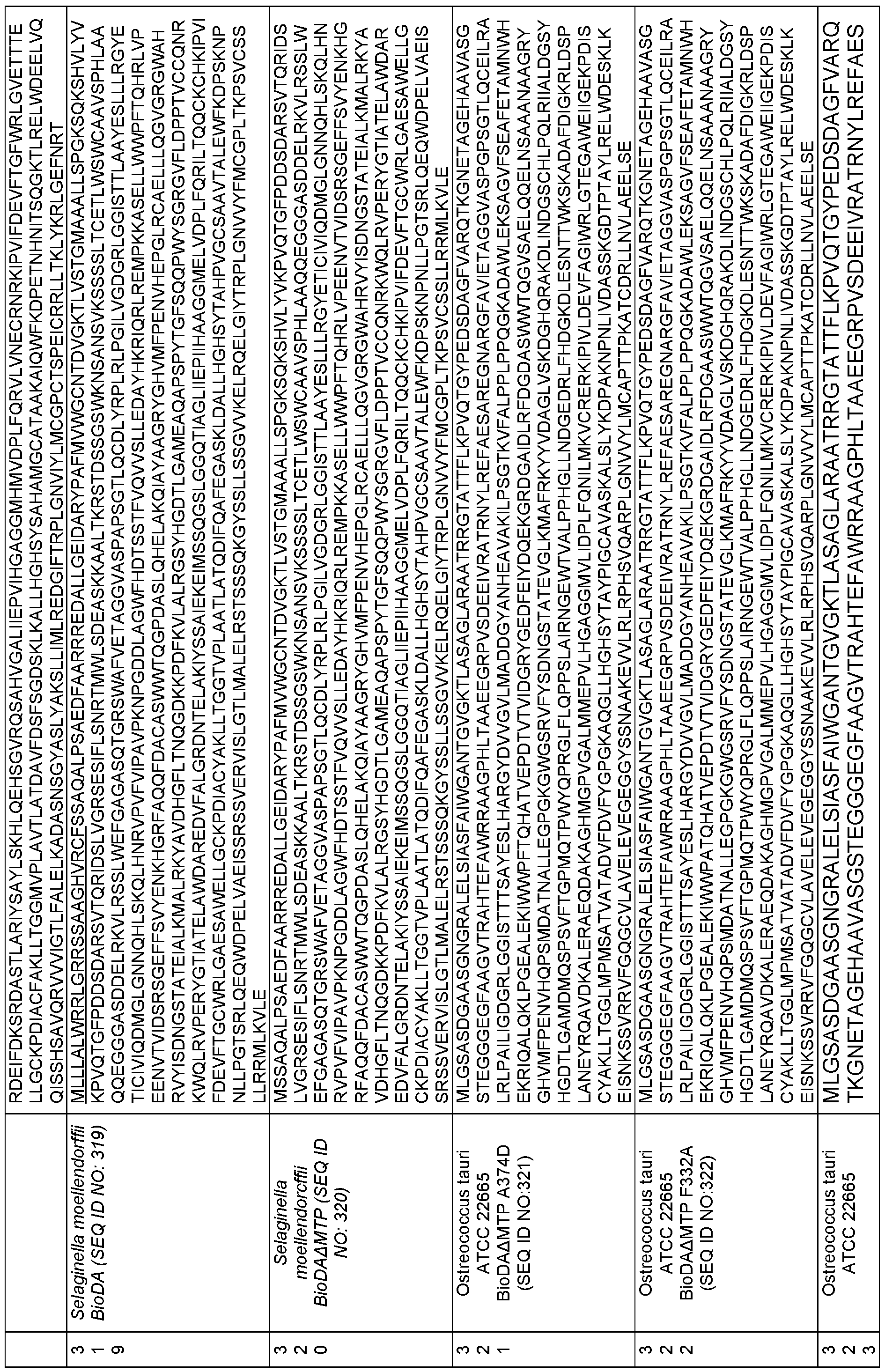


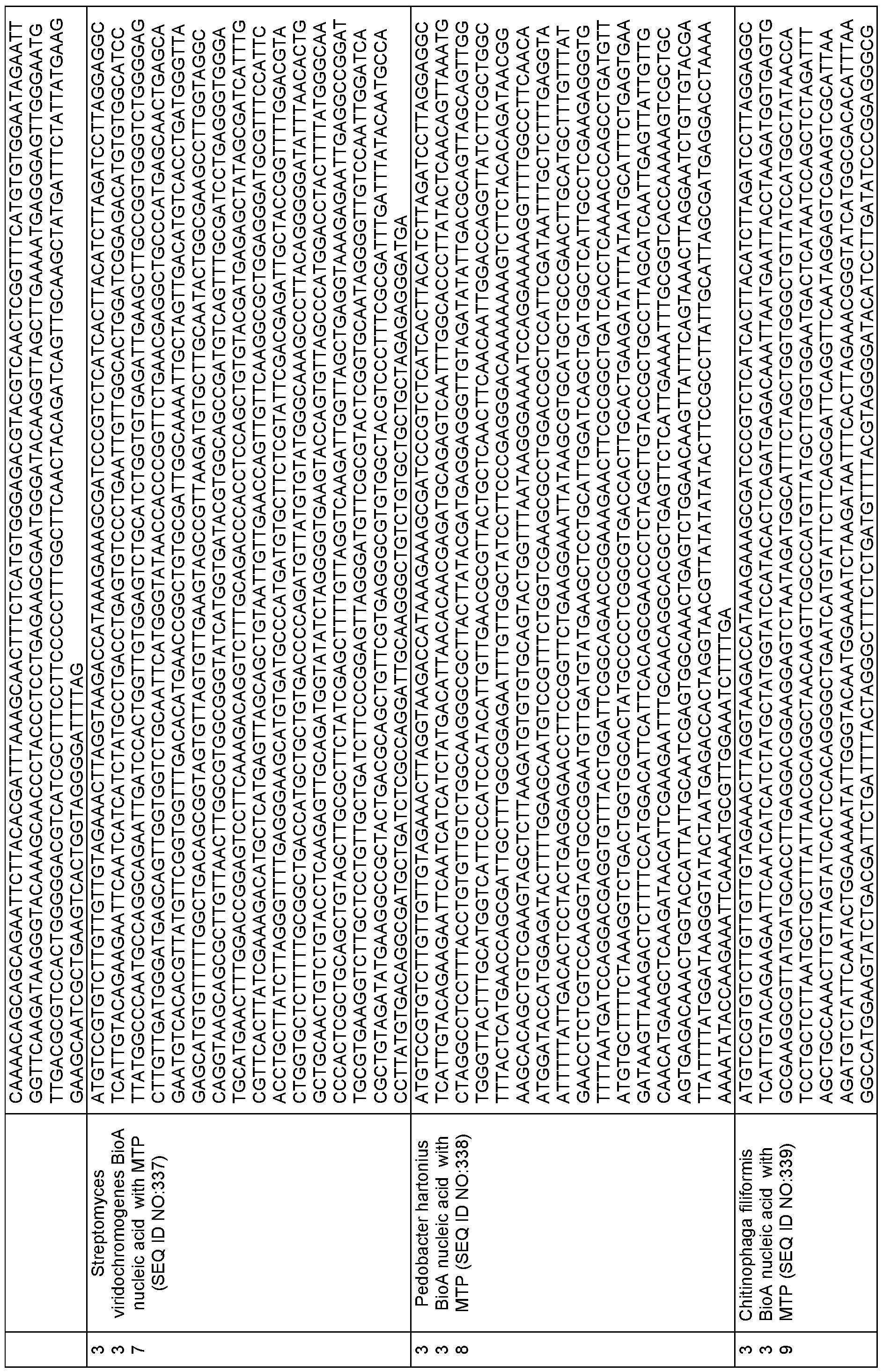

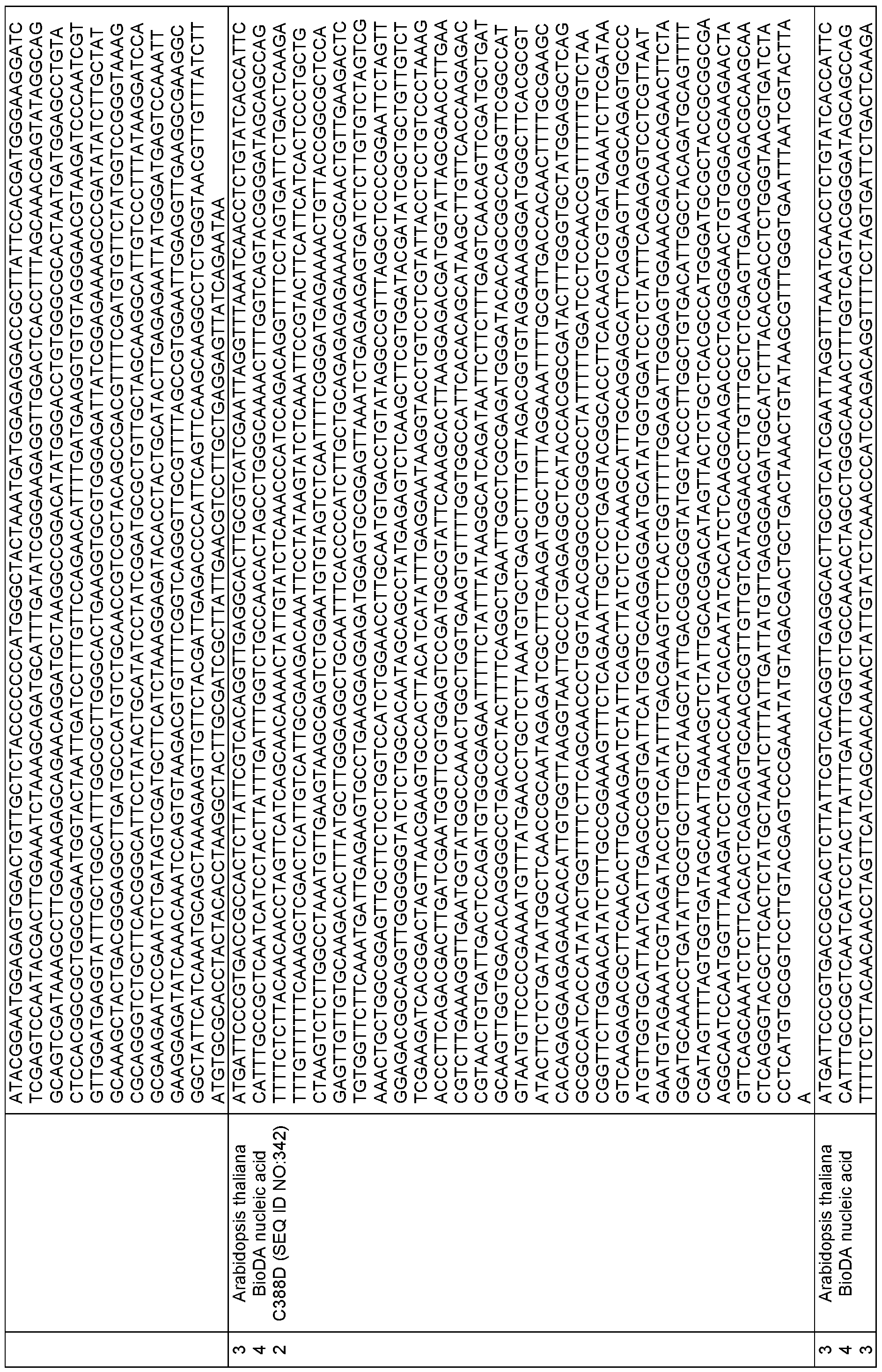
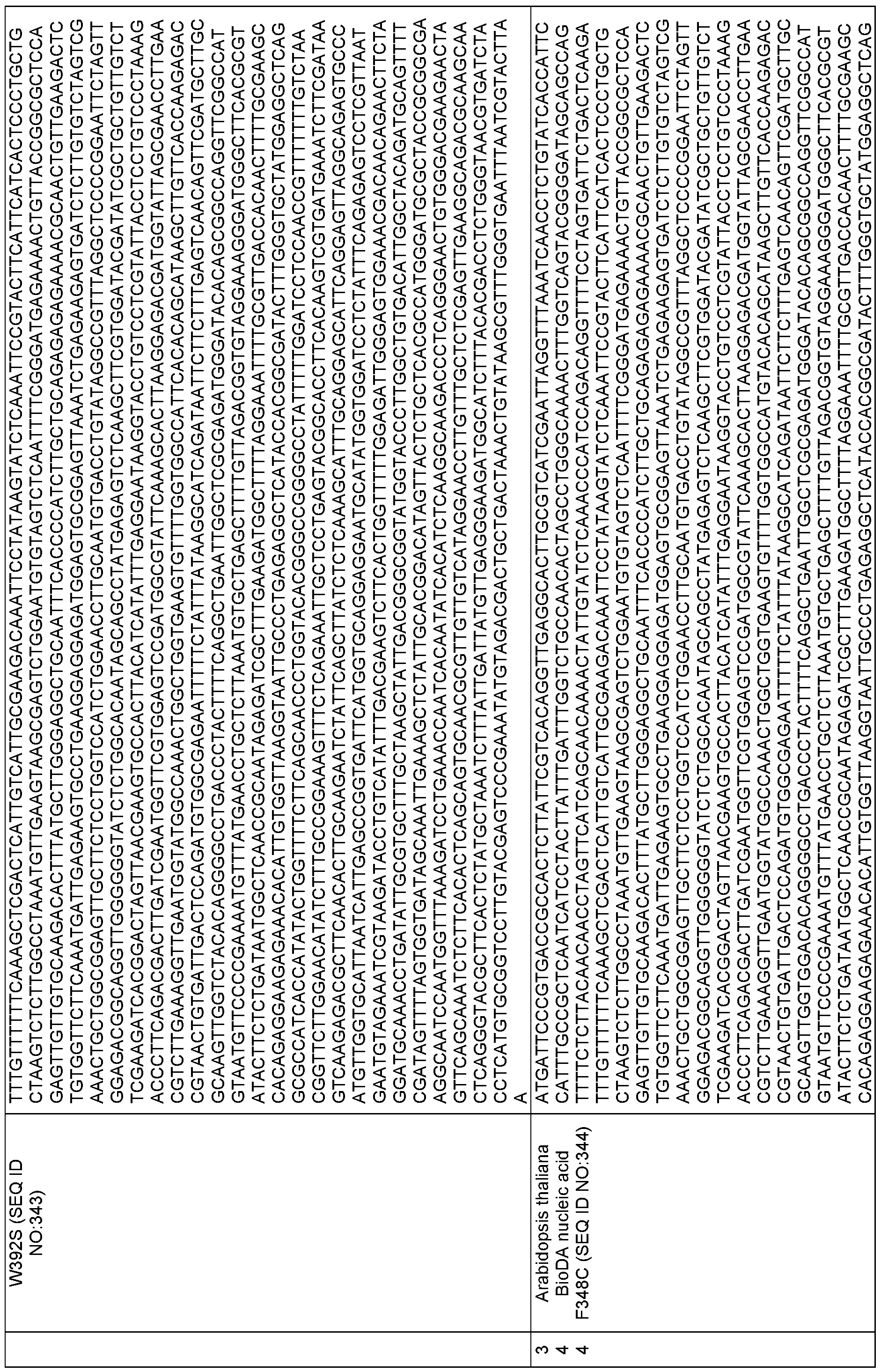


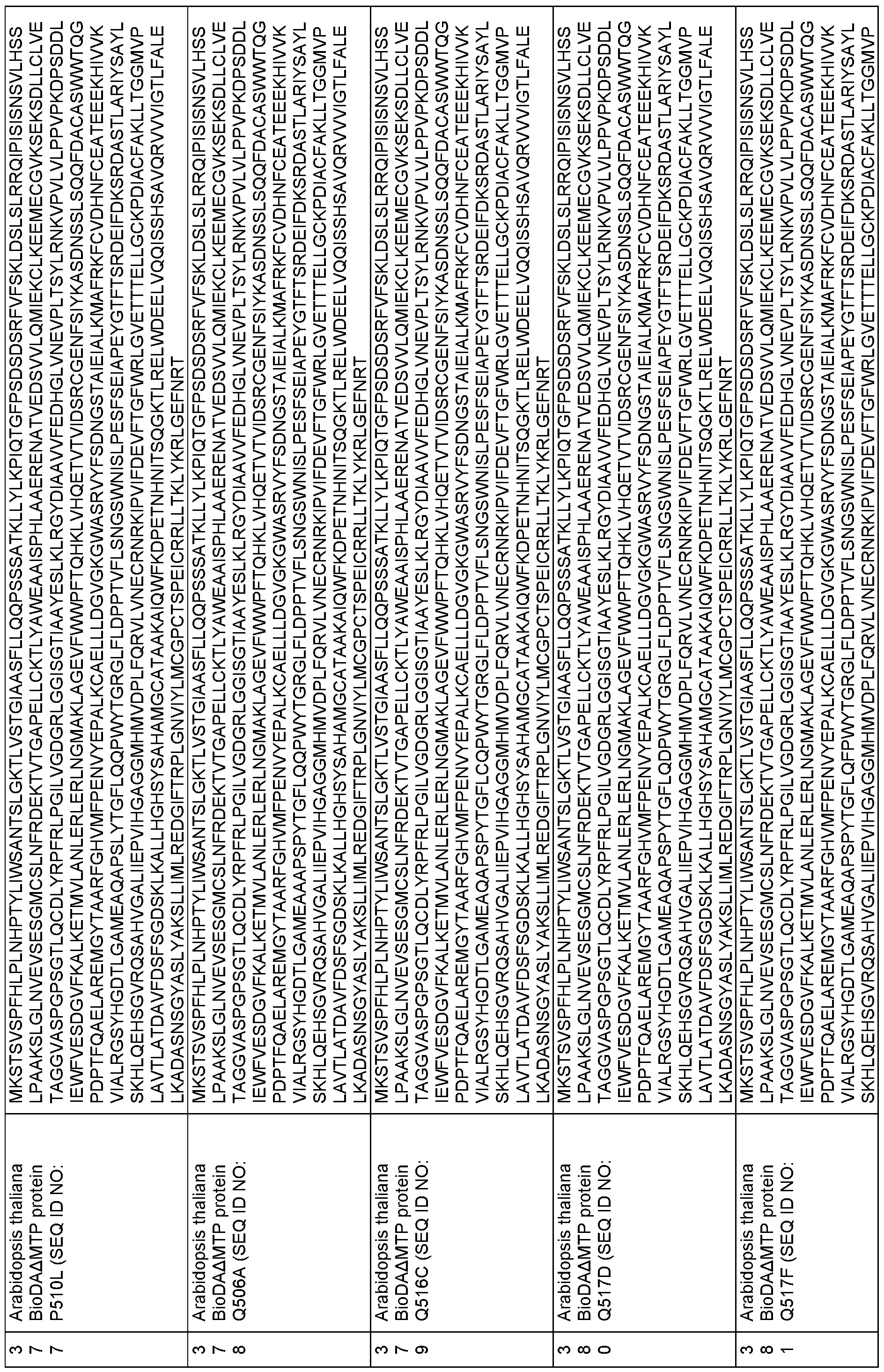


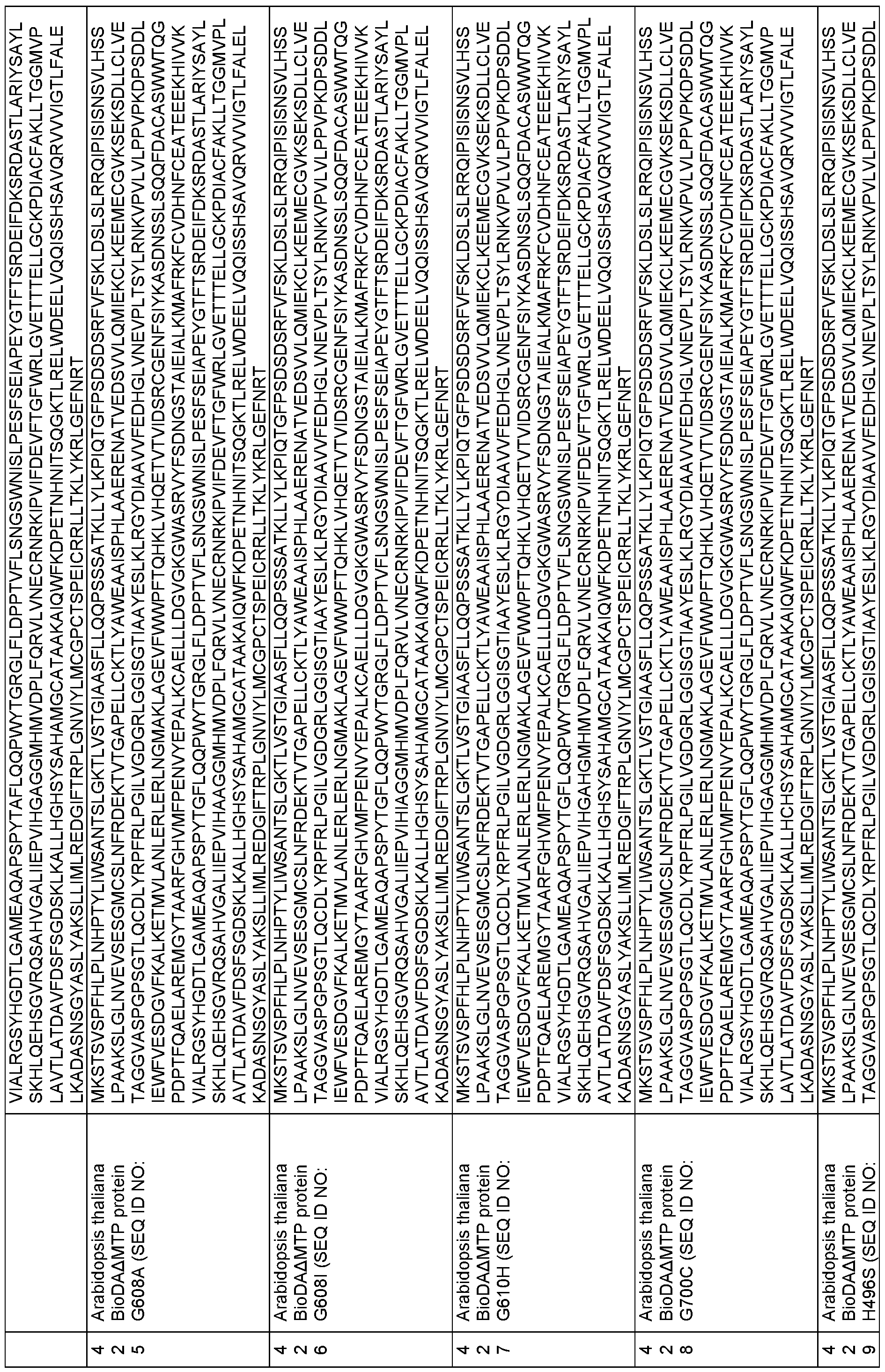
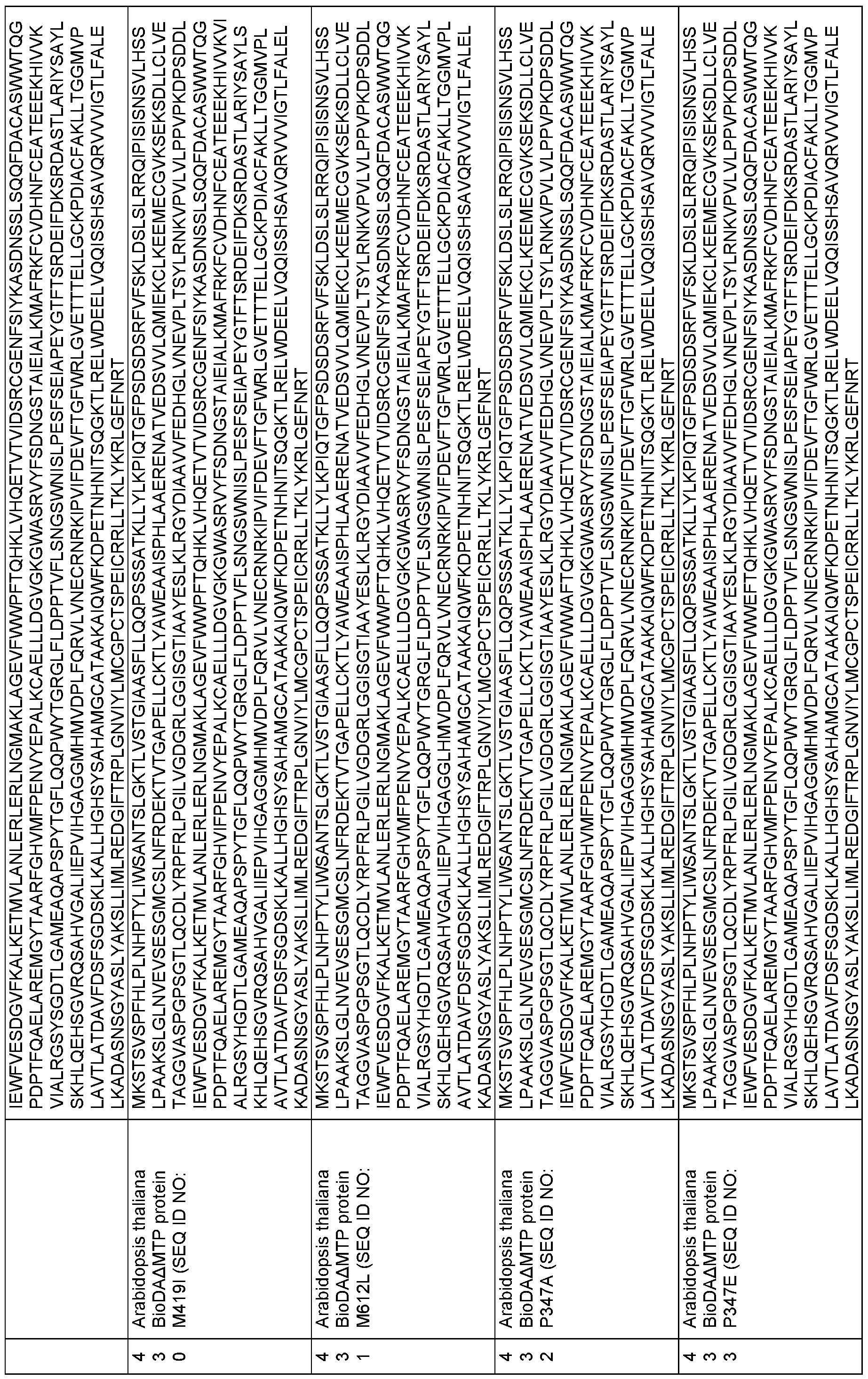


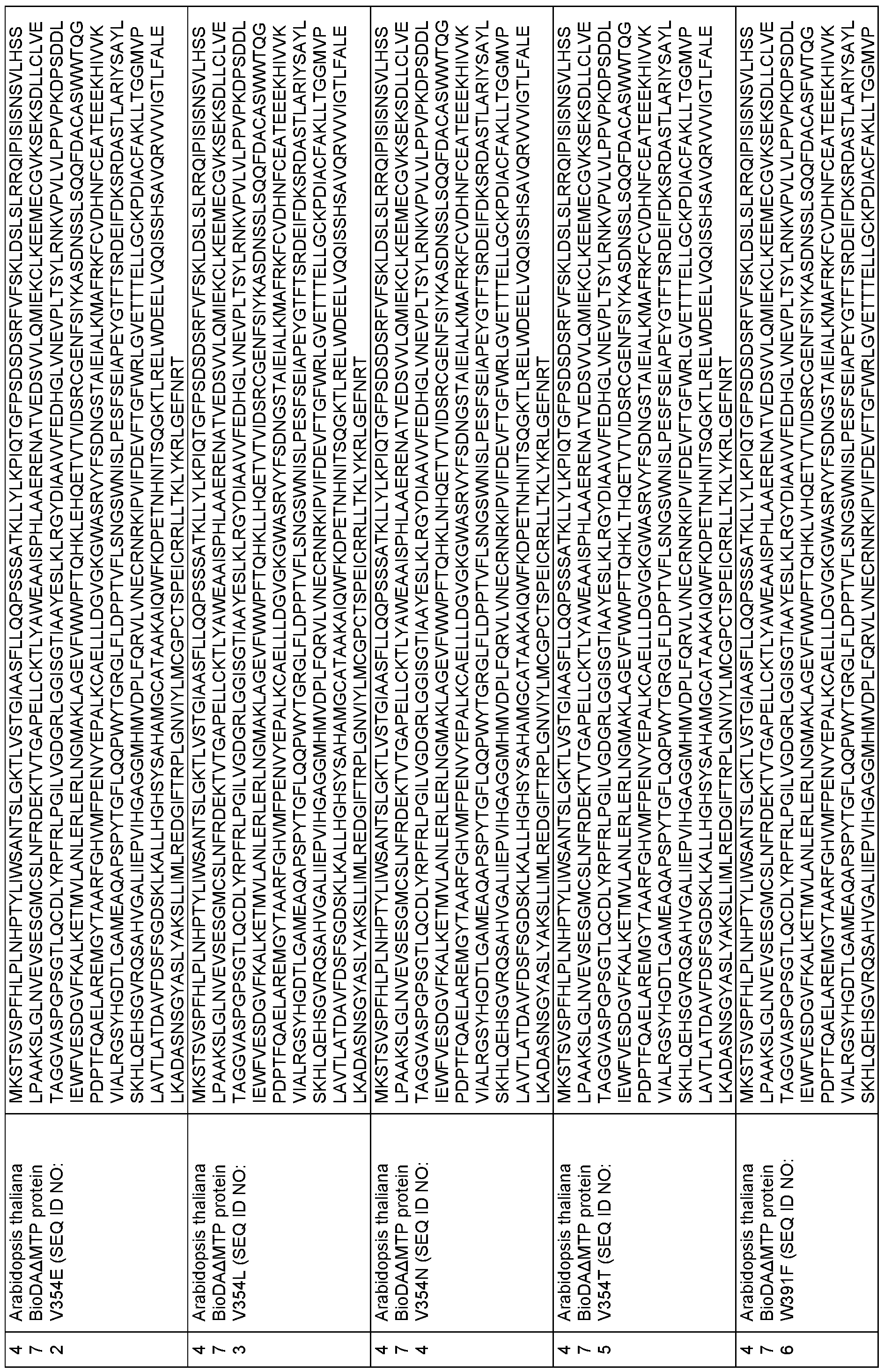

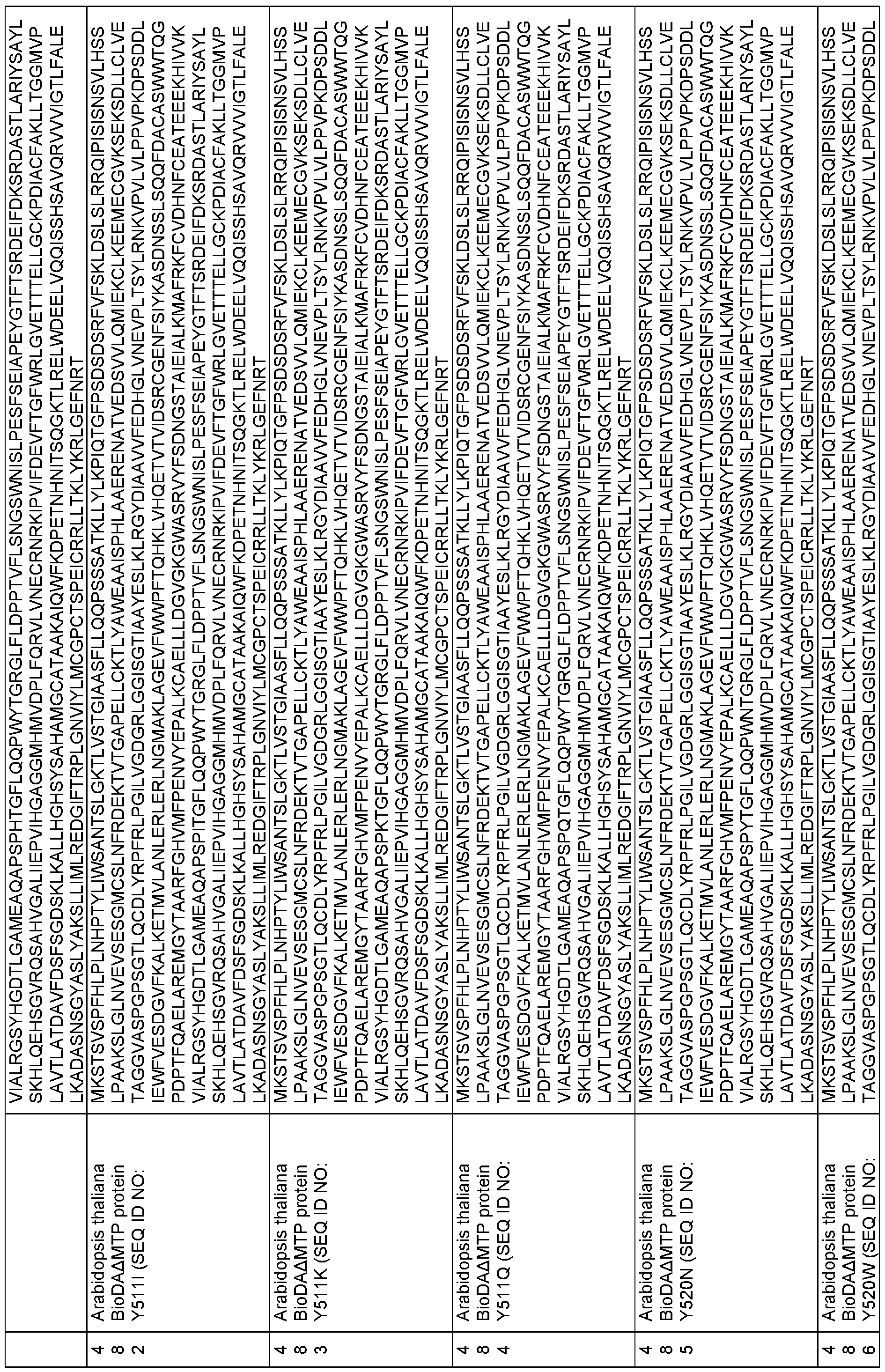
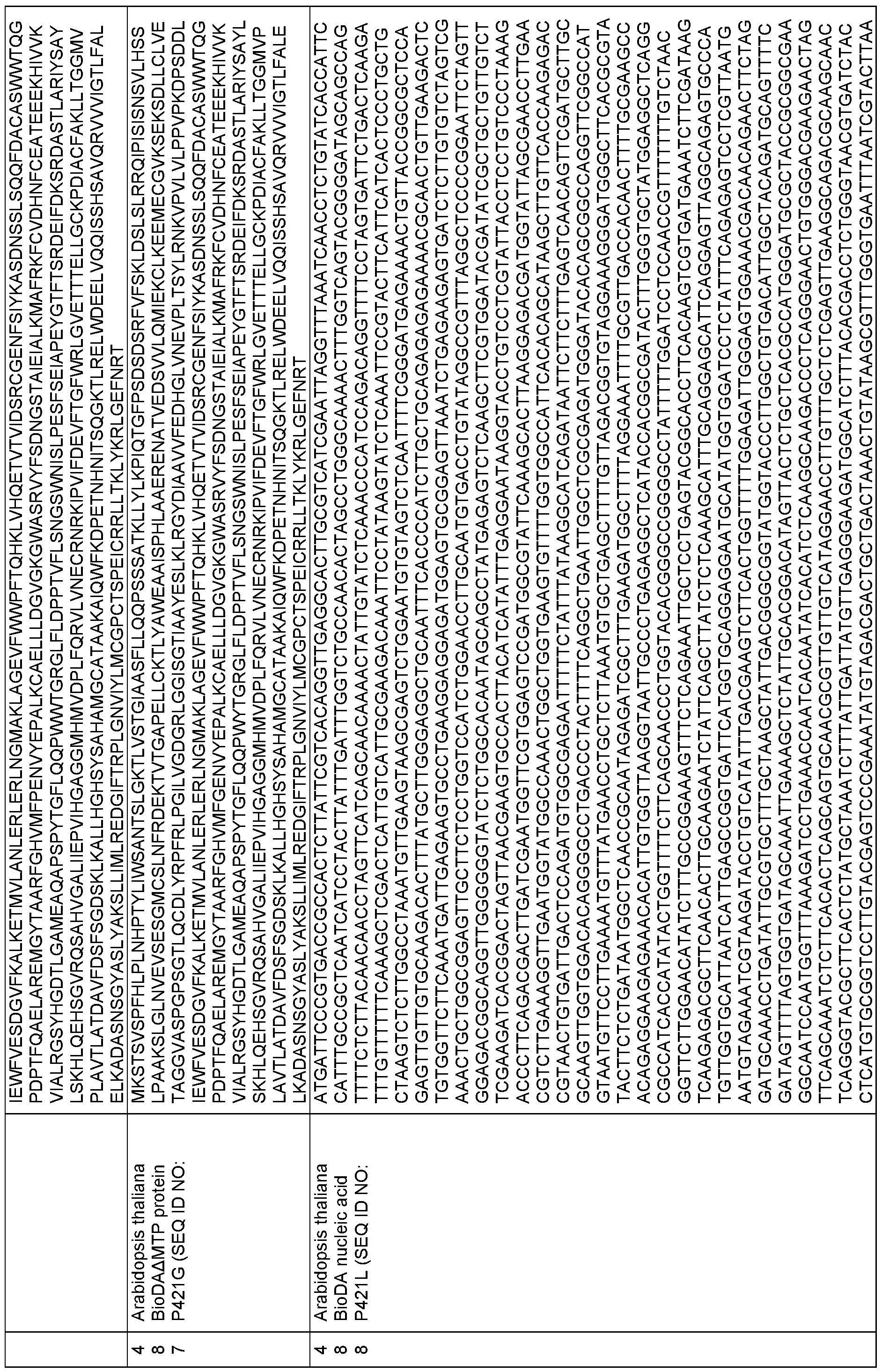
Claims
Priority Applications (3)
| Application Number | Priority Date | Filing Date | Title |
|---|---|---|---|
| EP24703040.6A EP4658770A1 (en) | 2023-02-03 | 2024-02-01 | Herbicide resistant plants |
| CN202480019436.7A CN120958122A (en) | 2023-02-03 | 2024-02-01 | Herbicide-resistant plants |
| MX2025009028A MX2025009028A (en) | 2023-02-03 | 2025-08-01 | Herbicide resistant plants |
Applications Claiming Priority (2)
| Application Number | Priority Date | Filing Date | Title |
|---|---|---|---|
| EP23154964.3 | 2023-02-03 | ||
| EP23154964 | 2023-02-03 |
Publications (1)
| Publication Number | Publication Date |
|---|---|
| WO2024160989A1 true WO2024160989A1 (en) | 2024-08-08 |
Family
ID=85174028
Family Applications (1)
| Application Number | Title | Priority Date | Filing Date |
|---|---|---|---|
| PCT/EP2024/052561 Ceased WO2024160989A1 (en) | 2023-02-03 | 2024-02-01 | Herbicide resistant plants |
Country Status (7)
| Country | Link |
|---|---|
| EP (1) | EP4658770A1 (en) |
| CN (1) | CN120958122A (en) |
| AR (1) | AR131755A1 (en) |
| CL (1) | CL2025002255A1 (en) |
| MX (1) | MX2025009028A (en) |
| UY (1) | UY40630A (en) |
| WO (1) | WO2024160989A1 (en) |
Citations (134)
| Publication number | Priority date | Publication date | Assignee | Title |
|---|---|---|---|---|
| US4458066A (en) | 1980-02-29 | 1984-07-03 | University Patents, Inc. | Process for preparing polynucleotides |
| EP0242246A1 (en) | 1986-03-11 | 1987-10-21 | Plant Genetic Systems N.V. | Plant cells resistant to glutamine synthetase inhibitors, made by genetic engineering |
| US4761373A (en) | 1984-03-06 | 1988-08-02 | Molecular Genetics, Inc. | Herbicide resistance in plants |
| US4769061A (en) | 1983-01-05 | 1988-09-06 | Calgene Inc. | Inhibition resistant 5-enolpyruvyl-3-phosphoshikimate synthase, production and use |
| US4810648A (en) | 1986-01-08 | 1989-03-07 | Rhone Poulenc Agrochimie | Haloarylnitrile degrading gene, its use, and cells containing the gene |
| US4940835A (en) | 1985-10-29 | 1990-07-10 | Monsanto Company | Glyphosate-resistant plants |
| US4975374A (en) | 1986-03-18 | 1990-12-04 | The General Hospital Corporation | Expression of wild type and mutant glutamine synthetase in foreign hosts |
| US5013659A (en) | 1987-07-27 | 1991-05-07 | E. I. Du Pont De Nemours And Company | Nucleic acid fragment encoding herbicide resistant plant acetolactate synthase |
| US5162602A (en) | 1988-11-10 | 1992-11-10 | Regents Of The University Of Minnesota | Corn plants tolerant to sethoxydim and haloxyfop herbicides |
| US5268463A (en) | 1986-11-11 | 1993-12-07 | Jefferson Richard A | Plant promoter α-glucuronidase gene construct |
| US5276268A (en) | 1986-08-23 | 1994-01-04 | Hoechst Aktiengesellschaft | Phosphinothricin-resistance gene, and its use |
| US5304730A (en) | 1991-09-03 | 1994-04-19 | Monsanto Company | Virus resistant plants and method therefore |
| US5380831A (en) | 1986-04-04 | 1995-01-10 | Mycogen Plant Science, Inc. | Synthetic insecticidal crystal protein gene |
| US5399680A (en) | 1991-05-22 | 1995-03-21 | The Salk Institute For Biological Studies | Rice chitinase promoter |
| US5424412A (en) | 1992-03-19 | 1995-06-13 | Monsanto Company | Enhanced expression in plants |
| US5436391A (en) | 1991-11-29 | 1995-07-25 | Mitsubishi Corporation | Synthetic insecticidal gene, plants of the genus oryza transformed with the gene, and production thereof |
| US5437992A (en) | 1994-04-28 | 1995-08-01 | Genencor International, Inc. | Five thermostable xylanases from microtetraspora flexuosa for use in delignification and/or bleaching of pulp |
| US5466785A (en) | 1990-04-12 | 1995-11-14 | Ciba-Geigy Corporation | Tissue-preferential promoters |
| US5495071A (en) | 1987-04-29 | 1996-02-27 | Monsanto Company | Insect resistant tomato and potato plants |
| US5554798A (en) | 1990-01-22 | 1996-09-10 | Dekalb Genetics Corporation | Fertile glyphosate-resistant transgenic corn plants |
| US5569823A (en) | 1993-05-28 | 1996-10-29 | Bayer Aktiengesellschaft | DNA comprising plum pox virus and tomato spotted wilt virus cDNAS for disease resistance |
| US5569597A (en) | 1985-05-13 | 1996-10-29 | Ciba Geigy Corp. | Methods of inserting viral DNA into plant material |
| US5604121A (en) | 1991-08-27 | 1997-02-18 | Agricultural Genetics Company Limited | Proteins with insecticidal properties against homopteran insects and their use in plant protection |
| US5608142A (en) | 1986-12-03 | 1997-03-04 | Agracetus, Inc. | Insecticidal cotton plants |
| US5608144A (en) | 1994-08-12 | 1997-03-04 | Dna Plant Technology Corp. | Plant group 2 promoters and uses thereof |
| US5608149A (en) | 1990-06-18 | 1997-03-04 | Monsanto Company | Enhanced starch biosynthesis in tomatoes |
| US5659026A (en) | 1995-03-24 | 1997-08-19 | Pioneer Hi-Bred International | ALS3 promoter |
| US5767366A (en) | 1991-02-19 | 1998-06-16 | Louisiana State University Board Of Supervisors, A Governing Body Of Louisiana State University Agricultural And Mechanical College | Mutant acetolactate synthase gene from Ararbidopsis thaliana for conferring imidazolinone resistance to crop plants |
| US5869719A (en) * | 1995-03-08 | 1999-02-09 | Novartis Finance Corporation | Transgenic plants having increased biotin content |
| US5879903A (en) | 1986-08-23 | 1999-03-09 | Hoechst Aktiengesellschaft | Phosphinothricin-resistance gene, and its use |
| US5928937A (en) | 1995-04-20 | 1999-07-27 | American Cyanamid Company | Structure-based designed herbicide resistant products |
| WO1999043838A1 (en) | 1998-02-24 | 1999-09-02 | Pioneer Hi-Bred International, Inc. | Synthetic promoters |
| US6084155A (en) | 1995-06-06 | 2000-07-04 | Novartis Ag | Herbicide-tolerant protoporphyrinogen oxidase ("protox") genes |
| US6177611B1 (en) | 1998-02-26 | 2001-01-23 | Pioneer Hi-Bred International, Inc. | Maize promoters |
| US20010016956A1 (en) | 1994-06-16 | 2001-08-23 | Ward Eric R. | Herbicide-tolerant protox genes produced by DNA shuffling |
| US6329504B1 (en) | 1996-12-13 | 2001-12-11 | Monsanto Company | Antifungal polypeptide and methods for controlling plant pathogenic fungi |
| US6337431B1 (en) | 1994-12-30 | 2002-01-08 | Seminis Vegetable Seeds, Inc. | Transgenic plants expressing DNA constructs containing a plurality of genes to impart virus resistance |
| WO2003016654A1 (en) | 2001-08-10 | 2003-02-27 | Akzenta Paneele + Profile Gmbh | Panel and fastening system for such a panel |
| US20040171027A1 (en) | 2002-10-29 | 2004-09-02 | Stephen Barnes | Assay for imidazolinone resistance mutations in Brassica species |
| US20050080506A1 (en) | 2003-10-10 | 2005-04-14 | Kazuhiko Asakawa | Method of determining remaining film thickness in polishing process |
| US20050208178A1 (en) | 2003-12-19 | 2005-09-22 | Syngenta Participations Ag | Microbially expressed xylanases and their use as feed additives and other uses |
| US20050283858A1 (en) | 2004-06-22 | 2005-12-22 | Kening Yao | Brassica AHAS genes and gene alleles that provide resistance to imidazolinone herbicides |
| WO2007024739A2 (en) | 2005-08-25 | 2007-03-01 | The Board Of Trustees Of The University Of Illinois | Herbicide resistance gene, compositions and methods |
| WO2009079729A2 (en) | 2007-12-21 | 2009-07-02 | Tmg - Tropical Melhoramento E Genética Ltda. | Genotypes, alleles and molecular markers associated with asian soybean rust, as well as methods, processes and uses thereof |
| WO2009144079A1 (en) | 2008-04-14 | 2009-12-03 | Bayer Bioscience N.V. | New mutated hydroxyphenylpyruvate dioxygenase, dna sequence and isolation of plants which are tolerant to hppd inhibitor herbicides |
| WO2010009404A2 (en) | 2008-07-18 | 2010-01-21 | Syngenta Participations Ag | Markers associated with soybean rust resistance and methods of use therefor |
| US20100218264A1 (en) | 2008-12-04 | 2010-08-26 | Sangamo Biosciences, Inc. | Genome editing in rats using zinc-finger nucleases |
| WO2011028836A2 (en) | 2009-09-01 | 2011-03-10 | Basf Agrochemical Products.B.V. | Herbicide-tolerant plants |
| WO2011068567A1 (en) | 2009-07-10 | 2011-06-09 | Syngenta Participations Ag | Novel hydroxyphenylpyruvate dioxygenase polypeptides and methods of use |
| US8093453B2 (en) | 2005-03-16 | 2012-01-10 | Syngenta Participations Ag | Corn event 3272 and methods of detection thereof |
| EP2453012A1 (en) | 2010-11-10 | 2012-05-16 | Bayer CropScience AG | HPPD variants and methods of use |
| WO2012080975A1 (en) | 2010-12-16 | 2012-06-21 | Basf Se | Plants having increased tolerance to herbicides |
| WO2013026740A2 (en) | 2011-08-22 | 2013-02-28 | Bayer Cropscience Nv | Methods and means to modify a plant genome |
| WO2013189984A2 (en) | 2012-06-19 | 2013-12-27 | Basf Se | Plants having increased tolerance to herbicides |
| US8642748B2 (en) | 2009-11-23 | 2014-02-04 | Bayer Cropscience N.V. | Elite event EE-GM3 and methods and kits for identifying such event in biological samples |
| WO2014144951A1 (en) | 2013-03-15 | 2014-09-18 | Cibus Us Llc | Methods and compositions for increasing efficiency of increased efficiency of targeted gene modification using oligonucleotide-mediated gene repair |
| US8921646B2 (en) | 2008-10-13 | 2014-12-30 | E. I. Du Pont De Nemours And Company | Genetic loci associated with northern leaf blight resistance in maize |
| WO2015022639A2 (en) | 2013-08-12 | 2015-02-19 | Basf Se | Plants having increased tolerance to herbicides |
| WO2015022636A2 (en) | 2013-08-12 | 2015-02-19 | Basf Se | Plants having increased tolerance to herbicides |
| US9040772B2 (en) | 2010-06-25 | 2015-05-26 | E I Du Pont De Nemours And Company | Compositions and methods for enhancing resistance to northern leaf blight in maize |
| WO2015092706A1 (en) | 2013-12-18 | 2015-06-25 | BASF Agro B.V. | Plants having increased tolerance to herbicides |
| US9078446B2 (en) | 2011-03-25 | 2015-07-14 | Bayer Intellectual Property Gmbh | Use of N-(tetrazol-4-yl)- or N-(triazol-3-yl)arylcarboxamides or their salts for controlling unwanted plants in areas of transgenic crop plants being tolerant to HPPD inhibitor herbicides |
| US9091681B2 (en) | 2006-05-25 | 2015-07-28 | Monsanto Technology Llc | Method to identify disease resistant quantitative trait loci in soybean and compositions thereof |
| WO2016099153A1 (en) | 2014-12-16 | 2016-06-23 | Dongbu Farm Hannong Co., Ltd. | Methods for conferring or enhancing herbicide resistance on plants and/or alga with protoporphyrinogen oxidase variants |
| US20160298078A1 (en) | 2015-04-10 | 2016-10-13 | Feldan Bio Inc. | Polypeptide-based shuttle agents for improving the transduction efficiency of polypeptide cargos to the cytosol of target eukaryotic cells, uses thereof, methods and kits relating to same |
| WO2016203307A2 (en) | 2015-06-19 | 2016-12-22 | Daimler Ag | Method for cold-start of fuel cell stack |
| WO2017023778A1 (en) | 2015-08-03 | 2017-02-09 | Monsanto Technology Llc | Methods and compositions for herbicide tolerance in plants |
| WO2017039969A1 (en) | 2015-09-01 | 2017-03-09 | Monsanto Technology Llc | Methods and compositions for herbicide tolerance in plants |
| US20170231225A1 (en) | 2009-09-01 | 2017-08-17 | Basf Se | Method for treating post-emergent rice |
| WO2017138986A1 (en) | 2016-02-09 | 2017-08-17 | Cibus Us Llc | Methods and compositions for increasing efficiency of targeted gene modification using oligonucleotide-mediated gene repair |
| WO2017217793A1 (en) | 2016-06-16 | 2017-12-21 | Farmhannong Co., Ltd. | Methods and compositions for conferring and/or enhancing herbicide tolerance using protoporphyrinogen oxidase or variant thereof |
| WO2017217794A1 (en) | 2016-06-16 | 2017-12-21 | Farmhannong Co., Ltd. | Protoporphyrinogen oxidase variants and methods and compositions for conferring and/or enhancing herbicide tolerance using the same |
| WO2017222827A2 (en) | 2016-06-09 | 2017-12-28 | Syngenta Crop Protection Llc | Novel genetic loci associated with disease resistance in soybeans |
| WO2018019860A1 (en) | 2016-07-27 | 2018-02-01 | BASF Agro B.V. | Plants having increased tolerance to herbicides |
| WO2018119364A1 (en) | 2016-12-22 | 2018-06-28 | Bayer Cropscience Lp | Elite event ee-gm5 and methods and kits for identifying such event in biological samples |
| WO2018114759A1 (en) | 2016-12-20 | 2018-06-28 | BASF Agro B.V. | Plants having increased tolerance to herbicides |
| WO2018119361A1 (en) | 2016-12-22 | 2018-06-28 | Bayer Cropscience Lp | Elite event ee-gm4 and methods and kits for identifying such event in biological samples |
| WO2018205995A1 (en) | 2017-05-11 | 2018-11-15 | Institute Of Genetics And Developmental Biology, Chinese Academy Of Sciences | Creation of herbicide resistant gene and use thereof |
| CN109082416A (en) | 2018-08-22 | 2018-12-25 | 江苏省农业科学院 | ACCase mutated genes and albumen and its application with Herbicid resistant |
| US20190062777A1 (en) | 2015-06-17 | 2019-02-28 | BASF Agro B.V. | Plants having increased tolerance to herbicides |
| WO2019103918A1 (en) | 2017-11-21 | 2019-05-31 | Syngenta Participations Ag | Novel resistance genes associated with disease resistance in soybeans |
| WO2019117578A1 (en) | 2017-12-15 | 2019-06-20 | 주식회사 팜한농 | Composition and method for conferring and/or enhancing tolerance against herbicides by using variants of ppo |
| WO2019118726A2 (en) | 2017-12-15 | 2019-06-20 | Monsanto Technology Llc | Methods and compositions for ppo herbicide tolerance |
| WO2019117579A2 (en) | 2017-12-15 | 2019-06-20 | 주식회사 팜한농 | Composition and method for conferring and/or enhancing herbicide tolerance using protoporphyrinogen ix oxidase variants derived from synechocystis |
| US10370678B2 (en) | 2011-02-01 | 2019-08-06 | Colorado Wheat Research Foundation, Inc. | Acetyl co-enzyme A carboxylase herbicide resistant plants |
| US10400249B2 (en) | 2014-03-11 | 2019-09-03 | Basf Agricultural Solutions Seed, Us Llc | HPPD variants and methods of use |
| WO2019227036A1 (en) | 2018-05-25 | 2019-11-28 | BASF Agricultural Solutions Seed US LLC | Plants containing elite event ee-gm5 and methods and kits for identifying such event in biological samples, and treatment thereof |
| WO2019227028A1 (en) | 2018-05-25 | 2019-11-28 | BASF Agricultural Solutions Seed US LLC | Plants containing elite event ee-gm4 and methods and kits for identifying such event in biological samples, and treatment thereof |
| US10508089B2 (en) | 2014-03-11 | 2019-12-17 | Basf Se | Use of N-(1,3,4-Oxadiazol-2-yl)arylcarboxamides or their salts for controlling unwanted plants in areas of transgenic crop plants being tolerant to HPPD inhibitor herbicides |
| US10597674B2 (en) | 2015-09-11 | 2020-03-24 | Basf Agricultural Solutions Seed, Us Llc | HPPD variants and methods of use |
| US20200131524A1 (en) | 2017-01-10 | 2020-04-30 | Plant Bioscience Limited | Methods of increasing seed yield |
| US20200157086A1 (en) | 2017-05-30 | 2020-05-21 | Basf Se | Benzamide compounds and their use as herbicides |
| US20200199610A1 (en) | 2018-12-21 | 2020-06-25 | Seminis Vegetable Seeds, Inc. | Corn plants with improved disease resistance |
| US10696975B2 (en) | 2008-04-29 | 2020-06-30 | Monsanto Technology Llc | Genes and uses for plant enhancement |
| US10793872B2 (en) | 2012-09-14 | 2020-10-06 | BASF Agricultural Solutions Seed US LLC | HPPD variants and methods of use |
| US10842097B2 (en) | 2015-05-11 | 2020-11-24 | Two Blades Foundation | Polynucleotides and methods for transferring resistance to Asian soybean rust |
| WO2020236790A2 (en) | 2019-05-20 | 2020-11-26 | Syngenta Crop Protection Ag | Compositions and methods for weed control |
| US10858668B2 (en) | 2017-09-29 | 2020-12-08 | Seminis Vegetable Seeds, Inc. | Maize plants with improved disease resistance |
| WO2020251313A2 (en) | 2019-06-14 | 2020-12-17 | Farmhannong Co., Ltd. | Methods and compositions for conferring and/or enhancing herbicide tolerance using protoporphyrinogen ix oxidase of various cyanobacteria or variant thereof |
| US20210000059A1 (en) | 2015-10-16 | 2021-01-07 | Pioneer Hi-Bred International, Inc. | Generating maize plants with enhanced resistance to northern leaf blight |
| WO2021000878A1 (en) | 2019-07-01 | 2021-01-07 | Oil Crops Research Institute, Chinese Academy Of Agricultural Sciences | Novel genetic loci associated with rust resistance in soybeans |
| US10897862B2 (en) | 2013-09-04 | 2021-01-26 | KWS SAAT SE & Co. KGaA | Plant resistant to Helminthosporium turcicum |
| WO2021022101A2 (en) | 2019-07-31 | 2021-02-04 | Syngenta Crop Protection Ag | Genetic loci associated with disease resistance in soybeans |
| WO2021022026A2 (en) | 2019-07-31 | 2021-02-04 | Syngenta Crop Protection Ag | Genetic loci associated with disease resistance in soybeans |
| WO2021022022A1 (en) | 2019-08-01 | 2021-02-04 | Syngenta Crop Protection Ag | Novel resistance genes associated with disease resistance in soybeans |
| WO2021044027A1 (en) | 2019-09-05 | 2021-03-11 | Institute Of Genetics And Developmental Biology Chinese Academy Of Sciences | Methods of improving seed size and quality |
| WO2021086775A1 (en) * | 2019-11-01 | 2021-05-06 | Syngenta Crop Protection Ag | Weed control methods and related compositions and plants |
| WO2021088601A1 (en) | 2019-11-07 | 2021-05-14 | 青岛清原化合物有限公司 | Method for generating new mutations in organisms, and application thereof |
| US20210147866A1 (en) | 2017-06-21 | 2021-05-20 | Basf Se | Plants having increased tolerance to herbicides |
| EP3839073A1 (en) | 2019-12-20 | 2021-06-23 | KWS SAAT SE & Co. KGaA | Enhanced disease resistance of maize to northern corn leaf blight by a qtl on chromosome 4 |
| WO2021154632A1 (en) | 2020-01-27 | 2021-08-05 | Syngenta Crop Protection Ag | Novel genetic loci associated with disease resistance in soybeans |
| US11180770B2 (en) | 2017-03-07 | 2021-11-23 | BASF Agricultural Solutions Seed US LLC | HPPD variants and methods of use |
| WO2021233786A1 (en) | 2020-05-19 | 2021-11-25 | Syngenta Crop Protection Ag | Herbicidal cinnoline derivatives |
| WO2021233787A1 (en) | 2020-05-19 | 2021-11-25 | Syngenta Crop Protection Ag | Herbicidal cinnoline derivatives |
| WO2021263249A2 (en) | 2020-06-22 | 2021-12-30 | Syngenta Crop Protection Ag | Novel resistance genes associated with disease resistance in soybeans |
| WO2022013268A1 (en) | 2020-07-14 | 2022-01-20 | KWS SAAT SE & Co. KGaA | Methods for identifying and selecting maize plants with resistance to northern corn leaf blight |
| US11279944B2 (en) | 2017-10-24 | 2022-03-22 | BASF Agricultural Solutions Seed US LLC | Of herbicide tolerance to 4-hydroxyphenylpyruvate dioxygenase (HPPD) inhibitors by down-regulation of HPPD expression in soybean |
| WO2022064490A1 (en) | 2020-09-22 | 2022-03-31 | Ag Plenus Ltd | Herbicidal compounds and methods of use thereof |
| US20220135997A1 (en) | 2020-10-30 | 2022-05-05 | Fortiphyte, Inc. | Pathogen resistance in plants |
| WO2022115296A1 (en) | 2020-11-30 | 2022-06-02 | Syngenta Crop Protection Ag | Novel hydroxyphenylpyruvate dioxygenase polypeptides and methods of use thereof |
| WO2022117445A1 (en) | 2020-12-02 | 2022-06-09 | Syngenta Crop Protection Ag | Herbicidal derivatives |
| WO2022117446A1 (en) | 2020-12-02 | 2022-06-09 | Syngenta Crop Protection Ag | Herbicidal derivatives |
| WO2022140257A1 (en) | 2020-12-23 | 2022-06-30 | Pioneer Hi-Bred International, Inc. | Polynucleotides and methods for transferring resistance to asian soybean rust |
| WO2022157780A2 (en) | 2021-01-25 | 2022-07-28 | Ag Plenus Ltd | Pesticidal and herbicidal compounds and methods of use thereof |
| WO2022159341A1 (en) | 2021-01-22 | 2022-07-28 | Syngenta Crop Protection Ag | Soybean engineered resistance |
| WO2022173659A2 (en) | 2021-02-10 | 2022-08-18 | Syngenta Crop Protection Ag | Novel resistance genes associated with disease resistance in soybeans |
| WO2022200208A1 (en) | 2021-03-22 | 2022-09-29 | Bayer Aktiengesellschaft | Substituted pyrrolidin-2-ones, salts thereof and their use as herbicidally active substances |
| WO2023088921A1 (en) | 2021-11-18 | 2023-05-25 | Syngenta Crop Protection Ag | Herbicidal derivatives |
| WO2023110664A1 (en) | 2021-12-17 | 2023-06-22 | Syngenta Crop Protection Ag | Herbicidal pyridone derivatives |
| WO2023156323A1 (en) | 2022-02-17 | 2023-08-24 | Syngenta Crop Protection Ag | Herbicidal quinolone derivatives |
| WO2023208710A1 (en) | 2022-04-27 | 2023-11-02 | Syngenta Crop Protection Ag | Herbicidal 2-oxo-nicotinic acid derivatives |
| WO2023232674A1 (en) | 2022-06-01 | 2023-12-07 | Syngenta Crop Protection Ag | Herbicidal derivatives |
| WO2023232673A1 (en) | 2022-06-01 | 2023-12-07 | Syngenta Crop Protection Ag | Herbicidal derivatives |
| WO2023232676A1 (en) | 2022-06-01 | 2023-12-07 | Syngenta Crop Protection Ag | Herbicidal derivatives |
-
2024
- 2024-02-01 WO PCT/EP2024/052561 patent/WO2024160989A1/en not_active Ceased
- 2024-02-01 UY UY0001040630A patent/UY40630A/en unknown
- 2024-02-01 AR ARP240100241A patent/AR131755A1/en unknown
- 2024-02-01 CN CN202480019436.7A patent/CN120958122A/en active Pending
- 2024-02-01 EP EP24703040.6A patent/EP4658770A1/en active Pending
-
2025
- 2025-07-30 CL CL2025002255A patent/CL2025002255A1/en unknown
- 2025-08-01 MX MX2025009028A patent/MX2025009028A/en unknown
Patent Citations (155)
| Publication number | Priority date | Publication date | Assignee | Title |
|---|---|---|---|---|
| US4458066A (en) | 1980-02-29 | 1984-07-03 | University Patents, Inc. | Process for preparing polynucleotides |
| US4769061A (en) | 1983-01-05 | 1988-09-06 | Calgene Inc. | Inhibition resistant 5-enolpyruvyl-3-phosphoshikimate synthase, production and use |
| US4761373A (en) | 1984-03-06 | 1988-08-02 | Molecular Genetics, Inc. | Herbicide resistance in plants |
| US5569597A (en) | 1985-05-13 | 1996-10-29 | Ciba Geigy Corp. | Methods of inserting viral DNA into plant material |
| US4940835A (en) | 1985-10-29 | 1990-07-10 | Monsanto Company | Glyphosate-resistant plants |
| US4810648A (en) | 1986-01-08 | 1989-03-07 | Rhone Poulenc Agrochimie | Haloarylnitrile degrading gene, its use, and cells containing the gene |
| EP0242246A1 (en) | 1986-03-11 | 1987-10-21 | Plant Genetic Systems N.V. | Plant cells resistant to glutamine synthetase inhibitors, made by genetic engineering |
| US5561236A (en) | 1986-03-11 | 1996-10-01 | Plant Genetic Systems | Genetically engineered plant cells and plants exhibiting resistance to glutamine synthetase inhibitors, DNA fragments and recombinants for use in the production of said cells and plants |
| US4975374A (en) | 1986-03-18 | 1990-12-04 | The General Hospital Corporation | Expression of wild type and mutant glutamine synthetase in foreign hosts |
| US5380831A (en) | 1986-04-04 | 1995-01-10 | Mycogen Plant Science, Inc. | Synthetic insecticidal crystal protein gene |
| US5276268A (en) | 1986-08-23 | 1994-01-04 | Hoechst Aktiengesellschaft | Phosphinothricin-resistance gene, and its use |
| US5879903A (en) | 1986-08-23 | 1999-03-09 | Hoechst Aktiengesellschaft | Phosphinothricin-resistance gene, and its use |
| US5268463A (en) | 1986-11-11 | 1993-12-07 | Jefferson Richard A | Plant promoter α-glucuronidase gene construct |
| US5608142A (en) | 1986-12-03 | 1997-03-04 | Agracetus, Inc. | Insecticidal cotton plants |
| US5495071A (en) | 1987-04-29 | 1996-02-27 | Monsanto Company | Insect resistant tomato and potato plants |
| US5013659A (en) | 1987-07-27 | 1991-05-07 | E. I. Du Pont De Nemours And Company | Nucleic acid fragment encoding herbicide resistant plant acetolactate synthase |
| US5162602A (en) | 1988-11-10 | 1992-11-10 | Regents Of The University Of Minnesota | Corn plants tolerant to sethoxydim and haloxyfop herbicides |
| US5554798A (en) | 1990-01-22 | 1996-09-10 | Dekalb Genetics Corporation | Fertile glyphosate-resistant transgenic corn plants |
| US5466785A (en) | 1990-04-12 | 1995-11-14 | Ciba-Geigy Corporation | Tissue-preferential promoters |
| US5608149A (en) | 1990-06-18 | 1997-03-04 | Monsanto Company | Enhanced starch biosynthesis in tomatoes |
| US5767366A (en) | 1991-02-19 | 1998-06-16 | Louisiana State University Board Of Supervisors, A Governing Body Of Louisiana State University Agricultural And Mechanical College | Mutant acetolactate synthase gene from Ararbidopsis thaliana for conferring imidazolinone resistance to crop plants |
| US5399680A (en) | 1991-05-22 | 1995-03-21 | The Salk Institute For Biological Studies | Rice chitinase promoter |
| US5604121A (en) | 1991-08-27 | 1997-02-18 | Agricultural Genetics Company Limited | Proteins with insecticidal properties against homopteran insects and their use in plant protection |
| US5304730A (en) | 1991-09-03 | 1994-04-19 | Monsanto Company | Virus resistant plants and method therefore |
| US5436391A (en) | 1991-11-29 | 1995-07-25 | Mitsubishi Corporation | Synthetic insecticidal gene, plants of the genus oryza transformed with the gene, and production thereof |
| US5424412A (en) | 1992-03-19 | 1995-06-13 | Monsanto Company | Enhanced expression in plants |
| US5593874A (en) | 1992-03-19 | 1997-01-14 | Monsanto Company | Enhanced expression in plants |
| US5569823A (en) | 1993-05-28 | 1996-10-29 | Bayer Aktiengesellschaft | DNA comprising plum pox virus and tomato spotted wilt virus cDNAS for disease resistance |
| US5437992A (en) | 1994-04-28 | 1995-08-01 | Genencor International, Inc. | Five thermostable xylanases from microtetraspora flexuosa for use in delignification and/or bleaching of pulp |
| US20010016956A1 (en) | 1994-06-16 | 2001-08-23 | Ward Eric R. | Herbicide-tolerant protox genes produced by DNA shuffling |
| US5608144A (en) | 1994-08-12 | 1997-03-04 | Dna Plant Technology Corp. | Plant group 2 promoters and uses thereof |
| US6337431B1 (en) | 1994-12-30 | 2002-01-08 | Seminis Vegetable Seeds, Inc. | Transgenic plants expressing DNA constructs containing a plurality of genes to impart virus resistance |
| US5869719A (en) * | 1995-03-08 | 1999-02-09 | Novartis Finance Corporation | Transgenic plants having increased biotin content |
| US5659026A (en) | 1995-03-24 | 1997-08-19 | Pioneer Hi-Bred International | ALS3 promoter |
| US5928937A (en) | 1995-04-20 | 1999-07-27 | American Cyanamid Company | Structure-based designed herbicide resistant products |
| US6084155A (en) | 1995-06-06 | 2000-07-04 | Novartis Ag | Herbicide-tolerant protoporphyrinogen oxidase ("protox") genes |
| US6072050A (en) | 1996-06-11 | 2000-06-06 | Pioneer Hi-Bred International, Inc. | Synthetic promoters |
| US6329504B1 (en) | 1996-12-13 | 2001-12-11 | Monsanto Company | Antifungal polypeptide and methods for controlling plant pathogenic fungi |
| WO1999043838A1 (en) | 1998-02-24 | 1999-09-02 | Pioneer Hi-Bred International, Inc. | Synthetic promoters |
| US6177611B1 (en) | 1998-02-26 | 2001-01-23 | Pioneer Hi-Bred International, Inc. | Maize promoters |
| WO2003016654A1 (en) | 2001-08-10 | 2003-02-27 | Akzenta Paneele + Profile Gmbh | Panel and fastening system for such a panel |
| US20040171027A1 (en) | 2002-10-29 | 2004-09-02 | Stephen Barnes | Assay for imidazolinone resistance mutations in Brassica species |
| US20050080506A1 (en) | 2003-10-10 | 2005-04-14 | Kazuhiko Asakawa | Method of determining remaining film thickness in polishing process |
| US20050208178A1 (en) | 2003-12-19 | 2005-09-22 | Syngenta Participations Ag | Microbially expressed xylanases and their use as feed additives and other uses |
| US20050283858A1 (en) | 2004-06-22 | 2005-12-22 | Kening Yao | Brassica AHAS genes and gene alleles that provide resistance to imidazolinone herbicides |
| US8093453B2 (en) | 2005-03-16 | 2012-01-10 | Syngenta Participations Ag | Corn event 3272 and methods of detection thereof |
| WO2007024739A2 (en) | 2005-08-25 | 2007-03-01 | The Board Of Trustees Of The University Of Illinois | Herbicide resistance gene, compositions and methods |
| US9091681B2 (en) | 2006-05-25 | 2015-07-28 | Monsanto Technology Llc | Method to identify disease resistant quantitative trait loci in soybean and compositions thereof |
| WO2009079729A2 (en) | 2007-12-21 | 2009-07-02 | Tmg - Tropical Melhoramento E Genética Ltda. | Genotypes, alleles and molecular markers associated with asian soybean rust, as well as methods, processes and uses thereof |
| WO2009144079A1 (en) | 2008-04-14 | 2009-12-03 | Bayer Bioscience N.V. | New mutated hydroxyphenylpyruvate dioxygenase, dna sequence and isolation of plants which are tolerant to hppd inhibitor herbicides |
| US10696975B2 (en) | 2008-04-29 | 2020-06-30 | Monsanto Technology Llc | Genes and uses for plant enhancement |
| WO2010009404A2 (en) | 2008-07-18 | 2010-01-21 | Syngenta Participations Ag | Markers associated with soybean rust resistance and methods of use therefor |
| US8921646B2 (en) | 2008-10-13 | 2014-12-30 | E. I. Du Pont De Nemours And Company | Genetic loci associated with northern leaf blight resistance in maize |
| US20100218264A1 (en) | 2008-12-04 | 2010-08-26 | Sangamo Biosciences, Inc. | Genome editing in rats using zinc-finger nucleases |
| WO2011068567A1 (en) | 2009-07-10 | 2011-06-09 | Syngenta Participations Ag | Novel hydroxyphenylpyruvate dioxygenase polypeptides and methods of use |
| US20170231225A1 (en) | 2009-09-01 | 2017-08-17 | Basf Se | Method for treating post-emergent rice |
| US20170265469A1 (en) | 2009-09-01 | 2017-09-21 | Basf Se | Method for treating post-emergent rice |
| US20120284853A1 (en) | 2009-09-01 | 2012-11-08 | Basf Agrochemical Products, B.V. | Herbicide-tolerant plants |
| US10694694B2 (en) | 2009-09-01 | 2020-06-30 | Basf Se | Method for treating post-emergent rice |
| WO2011028836A2 (en) | 2009-09-01 | 2011-03-10 | Basf Agrochemical Products.B.V. | Herbicide-tolerant plants |
| US20170275645A1 (en) | 2009-09-01 | 2017-09-28 | Basf Agrochemical Products, B.V. | Herbicide-tolerant plants |
| US20120284812A1 (en) | 2009-09-01 | 2012-11-08 | Basf Agrochemical Products, B.V. | Herbicide-Tolerant Plants |
| WO2011028833A2 (en) | 2009-09-01 | 2011-03-10 | Basf Agrochemical Products, B.V. | Herbicide-tolerant plants |
| US20210153448A1 (en) | 2009-09-01 | 2021-05-27 | Basf Se | Method for treating post-emergent rice |
| US20160264990A1 (en) | 2009-09-01 | 2016-09-15 | Basf Agrochemical Products, B.V. | Herbicide-tolerant plants |
| US20160244780A1 (en) | 2009-09-01 | 2016-08-25 | Basf Agrochemical Products, B.V. | Herbicide-tolerant plants |
| US20160108423A1 (en) | 2009-09-01 | 2016-04-21 | Basf Agrochemical Products, B.V. | Herbicide-tolerant plants |
| US8642748B2 (en) | 2009-11-23 | 2014-02-04 | Bayer Cropscience N.V. | Elite event EE-GM3 and methods and kits for identifying such event in biological samples |
| US9040772B2 (en) | 2010-06-25 | 2015-05-26 | E I Du Pont De Nemours And Company | Compositions and methods for enhancing resistance to northern leaf blight in maize |
| EP2453012A1 (en) | 2010-11-10 | 2012-05-16 | Bayer CropScience AG | HPPD variants and methods of use |
| WO2012080975A1 (en) | 2010-12-16 | 2012-06-21 | Basf Se | Plants having increased tolerance to herbicides |
| US10370678B2 (en) | 2011-02-01 | 2019-08-06 | Colorado Wheat Research Foundation, Inc. | Acetyl co-enzyme A carboxylase herbicide resistant plants |
| US9078446B2 (en) | 2011-03-25 | 2015-07-14 | Bayer Intellectual Property Gmbh | Use of N-(tetrazol-4-yl)- or N-(triazol-3-yl)arylcarboxamides or their salts for controlling unwanted plants in areas of transgenic crop plants being tolerant to HPPD inhibitor herbicides |
| WO2013026740A2 (en) | 2011-08-22 | 2013-02-28 | Bayer Cropscience Nv | Methods and means to modify a plant genome |
| US10100329B2 (en) | 2012-06-19 | 2018-10-16 | BASF Agro B.V. | Plants having increased tolerance to herbicides |
| WO2013189984A2 (en) | 2012-06-19 | 2013-12-27 | Basf Se | Plants having increased tolerance to herbicides |
| US10793872B2 (en) | 2012-09-14 | 2020-10-06 | BASF Agricultural Solutions Seed US LLC | HPPD variants and methods of use |
| WO2014144951A1 (en) | 2013-03-15 | 2014-09-18 | Cibus Us Llc | Methods and compositions for increasing efficiency of increased efficiency of targeted gene modification using oligonucleotide-mediated gene repair |
| WO2015022640A2 (en) | 2013-08-12 | 2015-02-19 | Basf Se | Plants having increased tolerance to herbicides (ppo) |
| WO2015022639A2 (en) | 2013-08-12 | 2015-02-19 | Basf Se | Plants having increased tolerance to herbicides |
| US10392630B2 (en) | 2013-08-12 | 2019-08-27 | BASF Agro B.V. | Plants having increased tolerance to herbicides |
| WO2015022636A2 (en) | 2013-08-12 | 2015-02-19 | Basf Se | Plants having increased tolerance to herbicides |
| US10897862B2 (en) | 2013-09-04 | 2021-01-26 | KWS SAAT SE & Co. KGaA | Plant resistant to Helminthosporium turcicum |
| WO2015092706A1 (en) | 2013-12-18 | 2015-06-25 | BASF Agro B.V. | Plants having increased tolerance to herbicides |
| US10508089B2 (en) | 2014-03-11 | 2019-12-17 | Basf Se | Use of N-(1,3,4-Oxadiazol-2-yl)arylcarboxamides or their salts for controlling unwanted plants in areas of transgenic crop plants being tolerant to HPPD inhibitor herbicides |
| US10400249B2 (en) | 2014-03-11 | 2019-09-03 | Basf Agricultural Solutions Seed, Us Llc | HPPD variants and methods of use |
| WO2016099153A1 (en) | 2014-12-16 | 2016-06-23 | Dongbu Farm Hannong Co., Ltd. | Methods for conferring or enhancing herbicide resistance on plants and/or alga with protoporphyrinogen oxidase variants |
| US20160298078A1 (en) | 2015-04-10 | 2016-10-13 | Feldan Bio Inc. | Polypeptide-based shuttle agents for improving the transduction efficiency of polypeptide cargos to the cytosol of target eukaryotic cells, uses thereof, methods and kits relating to same |
| US10842097B2 (en) | 2015-05-11 | 2020-11-24 | Two Blades Foundation | Polynucleotides and methods for transferring resistance to Asian soybean rust |
| US20190062777A1 (en) | 2015-06-17 | 2019-02-28 | BASF Agro B.V. | Plants having increased tolerance to herbicides |
| WO2016203307A2 (en) | 2015-06-19 | 2016-12-22 | Daimler Ag | Method for cold-start of fuel cell stack |
| WO2017023778A1 (en) | 2015-08-03 | 2017-02-09 | Monsanto Technology Llc | Methods and compositions for herbicide tolerance in plants |
| US10370677B2 (en) | 2015-08-03 | 2019-08-06 | Monsanto Technology Llc | Methods and compositions for herbicide tolerance in plants |
| US10378023B2 (en) | 2015-09-01 | 2019-08-13 | Monsanto Technology Llc | Methods and compositions for herbicide tolerance in plants |
| WO2017039969A1 (en) | 2015-09-01 | 2017-03-09 | Monsanto Technology Llc | Methods and compositions for herbicide tolerance in plants |
| US10597674B2 (en) | 2015-09-11 | 2020-03-24 | Basf Agricultural Solutions Seed, Us Llc | HPPD variants and methods of use |
| US20210000059A1 (en) | 2015-10-16 | 2021-01-07 | Pioneer Hi-Bred International, Inc. | Generating maize plants with enhanced resistance to northern leaf blight |
| WO2017138986A1 (en) | 2016-02-09 | 2017-08-17 | Cibus Us Llc | Methods and compositions for increasing efficiency of targeted gene modification using oligonucleotide-mediated gene repair |
| WO2017222827A2 (en) | 2016-06-09 | 2017-12-28 | Syngenta Crop Protection Llc | Novel genetic loci associated with disease resistance in soybeans |
| WO2017217793A1 (en) | 2016-06-16 | 2017-12-21 | Farmhannong Co., Ltd. | Methods and compositions for conferring and/or enhancing herbicide tolerance using protoporphyrinogen oxidase or variant thereof |
| WO2017217794A1 (en) | 2016-06-16 | 2017-12-21 | Farmhannong Co., Ltd. | Protoporphyrinogen oxidase variants and methods and compositions for conferring and/or enhancing herbicide tolerance using the same |
| WO2018019860A1 (en) | 2016-07-27 | 2018-02-01 | BASF Agro B.V. | Plants having increased tolerance to herbicides |
| WO2018114759A1 (en) | 2016-12-20 | 2018-06-28 | BASF Agro B.V. | Plants having increased tolerance to herbicides |
| WO2018119361A1 (en) | 2016-12-22 | 2018-06-28 | Bayer Cropscience Lp | Elite event ee-gm4 and methods and kits for identifying such event in biological samples |
| WO2018119364A1 (en) | 2016-12-22 | 2018-06-28 | Bayer Cropscience Lp | Elite event ee-gm5 and methods and kits for identifying such event in biological samples |
| US20200131524A1 (en) | 2017-01-10 | 2020-04-30 | Plant Bioscience Limited | Methods of increasing seed yield |
| US11180770B2 (en) | 2017-03-07 | 2021-11-23 | BASF Agricultural Solutions Seed US LLC | HPPD variants and methods of use |
| WO2018205995A1 (en) | 2017-05-11 | 2018-11-15 | Institute Of Genetics And Developmental Biology, Chinese Academy Of Sciences | Creation of herbicide resistant gene and use thereof |
| US20200157086A1 (en) | 2017-05-30 | 2020-05-21 | Basf Se | Benzamide compounds and their use as herbicides |
| US20210147866A1 (en) | 2017-06-21 | 2021-05-20 | Basf Se | Plants having increased tolerance to herbicides |
| US10858668B2 (en) | 2017-09-29 | 2020-12-08 | Seminis Vegetable Seeds, Inc. | Maize plants with improved disease resistance |
| US11279944B2 (en) | 2017-10-24 | 2022-03-22 | BASF Agricultural Solutions Seed US LLC | Of herbicide tolerance to 4-hydroxyphenylpyruvate dioxygenase (HPPD) inhibitors by down-regulation of HPPD expression in soybean |
| US20200354739A1 (en) | 2017-11-21 | 2020-11-12 | Syngenta Participations Ag | Novel resistance genes associated with disease resistance in soybeans |
| WO2019103918A1 (en) | 2017-11-21 | 2019-05-31 | Syngenta Participations Ag | Novel resistance genes associated with disease resistance in soybeans |
| WO2019118726A2 (en) | 2017-12-15 | 2019-06-20 | Monsanto Technology Llc | Methods and compositions for ppo herbicide tolerance |
| WO2019117579A2 (en) | 2017-12-15 | 2019-06-20 | 주식회사 팜한농 | Composition and method for conferring and/or enhancing herbicide tolerance using protoporphyrinogen ix oxidase variants derived from synechocystis |
| US11124803B2 (en) | 2017-12-15 | 2021-09-21 | Monsanto Technology Llc | Methods and compositions for PPO herbicide tolerance |
| WO2019117578A1 (en) | 2017-12-15 | 2019-06-20 | 주식회사 팜한농 | Composition and method for conferring and/or enhancing tolerance against herbicides by using variants of ppo |
| WO2019227028A1 (en) | 2018-05-25 | 2019-11-28 | BASF Agricultural Solutions Seed US LLC | Plants containing elite event ee-gm4 and methods and kits for identifying such event in biological samples, and treatment thereof |
| WO2019227036A1 (en) | 2018-05-25 | 2019-11-28 | BASF Agricultural Solutions Seed US LLC | Plants containing elite event ee-gm5 and methods and kits for identifying such event in biological samples, and treatment thereof |
| CN109082416A (en) | 2018-08-22 | 2018-12-25 | 江苏省农业科学院 | ACCase mutated genes and albumen and its application with Herbicid resistant |
| US20200199610A1 (en) | 2018-12-21 | 2020-06-25 | Seminis Vegetable Seeds, Inc. | Corn plants with improved disease resistance |
| WO2020236790A2 (en) | 2019-05-20 | 2020-11-26 | Syngenta Crop Protection Ag | Compositions and methods for weed control |
| WO2020251313A2 (en) | 2019-06-14 | 2020-12-17 | Farmhannong Co., Ltd. | Methods and compositions for conferring and/or enhancing herbicide tolerance using protoporphyrinogen ix oxidase of various cyanobacteria or variant thereof |
| WO2021000878A1 (en) | 2019-07-01 | 2021-01-07 | Oil Crops Research Institute, Chinese Academy Of Agricultural Sciences | Novel genetic loci associated with rust resistance in soybeans |
| WO2021022026A2 (en) | 2019-07-31 | 2021-02-04 | Syngenta Crop Protection Ag | Genetic loci associated with disease resistance in soybeans |
| WO2021022101A2 (en) | 2019-07-31 | 2021-02-04 | Syngenta Crop Protection Ag | Genetic loci associated with disease resistance in soybeans |
| WO2021022022A1 (en) | 2019-08-01 | 2021-02-04 | Syngenta Crop Protection Ag | Novel resistance genes associated with disease resistance in soybeans |
| WO2021044027A1 (en) | 2019-09-05 | 2021-03-11 | Institute Of Genetics And Developmental Biology Chinese Academy Of Sciences | Methods of improving seed size and quality |
| WO2021086775A1 (en) * | 2019-11-01 | 2021-05-06 | Syngenta Crop Protection Ag | Weed control methods and related compositions and plants |
| WO2021088601A1 (en) | 2019-11-07 | 2021-05-14 | 青岛清原化合物有限公司 | Method for generating new mutations in organisms, and application thereof |
| EP3839073A1 (en) | 2019-12-20 | 2021-06-23 | KWS SAAT SE & Co. KGaA | Enhanced disease resistance of maize to northern corn leaf blight by a qtl on chromosome 4 |
| WO2021154632A1 (en) | 2020-01-27 | 2021-08-05 | Syngenta Crop Protection Ag | Novel genetic loci associated with disease resistance in soybeans |
| WO2021233786A1 (en) | 2020-05-19 | 2021-11-25 | Syngenta Crop Protection Ag | Herbicidal cinnoline derivatives |
| WO2021233787A1 (en) | 2020-05-19 | 2021-11-25 | Syngenta Crop Protection Ag | Herbicidal cinnoline derivatives |
| WO2021263249A2 (en) | 2020-06-22 | 2021-12-30 | Syngenta Crop Protection Ag | Novel resistance genes associated with disease resistance in soybeans |
| WO2021260673A2 (en) | 2020-06-22 | 2021-12-30 | Syngenta Crop Protection Ag | Novel resistance genes associated with disease resistance in soybeans |
| WO2022013268A1 (en) | 2020-07-14 | 2022-01-20 | KWS SAAT SE & Co. KGaA | Methods for identifying and selecting maize plants with resistance to northern corn leaf blight |
| WO2022064490A1 (en) | 2020-09-22 | 2022-03-31 | Ag Plenus Ltd | Herbicidal compounds and methods of use thereof |
| US20220135997A1 (en) | 2020-10-30 | 2022-05-05 | Fortiphyte, Inc. | Pathogen resistance in plants |
| WO2022115296A1 (en) | 2020-11-30 | 2022-06-02 | Syngenta Crop Protection Ag | Novel hydroxyphenylpyruvate dioxygenase polypeptides and methods of use thereof |
| WO2022117445A1 (en) | 2020-12-02 | 2022-06-09 | Syngenta Crop Protection Ag | Herbicidal derivatives |
| WO2022117446A1 (en) | 2020-12-02 | 2022-06-09 | Syngenta Crop Protection Ag | Herbicidal derivatives |
| WO2022140257A1 (en) | 2020-12-23 | 2022-06-30 | Pioneer Hi-Bred International, Inc. | Polynucleotides and methods for transferring resistance to asian soybean rust |
| WO2022159341A1 (en) | 2021-01-22 | 2022-07-28 | Syngenta Crop Protection Ag | Soybean engineered resistance |
| WO2022157780A2 (en) | 2021-01-25 | 2022-07-28 | Ag Plenus Ltd | Pesticidal and herbicidal compounds and methods of use thereof |
| WO2022173659A2 (en) | 2021-02-10 | 2022-08-18 | Syngenta Crop Protection Ag | Novel resistance genes associated with disease resistance in soybeans |
| WO2022200208A1 (en) | 2021-03-22 | 2022-09-29 | Bayer Aktiengesellschaft | Substituted pyrrolidin-2-ones, salts thereof and their use as herbicidally active substances |
| WO2023088921A1 (en) | 2021-11-18 | 2023-05-25 | Syngenta Crop Protection Ag | Herbicidal derivatives |
| WO2023110664A1 (en) | 2021-12-17 | 2023-06-22 | Syngenta Crop Protection Ag | Herbicidal pyridone derivatives |
| WO2023156323A1 (en) | 2022-02-17 | 2023-08-24 | Syngenta Crop Protection Ag | Herbicidal quinolone derivatives |
| WO2023208710A1 (en) | 2022-04-27 | 2023-11-02 | Syngenta Crop Protection Ag | Herbicidal 2-oxo-nicotinic acid derivatives |
| WO2023232674A1 (en) | 2022-06-01 | 2023-12-07 | Syngenta Crop Protection Ag | Herbicidal derivatives |
| WO2023232673A1 (en) | 2022-06-01 | 2023-12-07 | Syngenta Crop Protection Ag | Herbicidal derivatives |
| WO2023232676A1 (en) | 2022-06-01 | 2023-12-07 | Syngenta Crop Protection Ag | Herbicidal derivatives |
Non-Patent Citations (80)
| Title |
|---|
| "Sec. Plant Biotechnology", FRONT. PLANT SCI., vol. 5, 5 August 2014 (2014-08-05) |
| ALTSCHUL ET AL., J. MOL. BIOL., vol. 215, 1990, pages 403 - 410 |
| BALLAS ET AL., NUCLEIC ACIDS RES., vol. 17, 1989, pages 7891 - 7903 |
| BEVAN, NUCL. ACIDS RES., 1984 |
| BEVAN, NUCLEIC ACIDS RES, vol. 12, 1984, pages 8711 - 8721 |
| BEVAN, NUCLEIC ACIDS RES., vol. 12, 1984, pages 8711 - 8721 |
| CALLIS ET AL., GENES AND DEVELOPMENT, vol. 1, 1987, pages 1183 - 1200 |
| CAMPBELLGOWRI, PLANT PHYSIOL., vol. 92, 1990, pages 857 - 863 |
| CANEVASCINI ET AL., PLANT PHYSIOL., vol. 112, no. 2, 1996, pages 1331 - 1341 |
| CHRISTENSEN ET AL., PLANT MOL. BIOL., vol. 12, 1989, pages 619 - 632 |
| CHRISTENSEN ET AL., PLANT MOL. BIOL., vol. 18, 1992, pages 675 - 689 |
| CHRISTOU, P: "Oryza: From Molecule to Plant", 1997, SPRINGER, article "Rice transformation: bombardment" |
| CRICKMORE ET AL., MICROBIOL. MOL. BIOL. REV., vol. 62, 1998, pages 807 - 813 |
| DATABASE UniProt [online] 18 July 2018 (2018-07-18), "SubName: Full=Aminotransferase class-III {ECO:0000313|EMBL:PWA92862.1};", XP093058657, retrieved from EBI accession no. UNIPROT:A0A2U1Q4I8 Database accession no. A0A2U1Q4I8 * |
| DATABASE UniProt [online] 29 September 2021 (2021-09-29), "SubName: Full=Bifunctional dethiobiotin synthetase/7 8-diamino-pelargonic acid aminotransferase mitochondrial {ECO:0000313|EMBL:GFQ01905.1};", XP093058641, retrieved from EBI accession no. UNIPROT:A0A830D0G9 Database accession no. A0A830D0G9 * |
| DATTA ET AL., BIO-TECHNOLOGY, vol. 8, 1990, pages 736 - 740 |
| DELLA- CIOPPA ET AL., PLANT PHYSIOL, vol. 84, 1987, pages 965 - 968 |
| ELROY-STEIN ET AL., PROC. NATL. ACAD. SCL USA, vol. 86, 1989, pages 6126 - 6130 |
| ENTCHEVA ET AL., APPLIED MICROBIOLOGY AND BIOTECHNOLOGY, vol. 61, 2003, pages 21 - 31 |
| FENG ET AL., CELL RES, vol. 23, 2013, pages 1229 - 1232 |
| FONFARA ET AL., NATURE, DOI.ORG/10.1038/NATUREL7945, 2016 |
| FROMM, UCLA SYMPOSIUM ON MOLECULAR STRATEGIES FOR CROP IMPROVEMENT, APR. 16-22, 1990. KEYSTONE, COLO, 1990 |
| GALLIE ET AL., GENE, vol. 165, no. 2, 1995, pages 233 - 238 |
| GALLIE ET AL., NUCLEIC ACID RES, vol. 15, 1987, pages 8693 - 8711 |
| GALLIE ET AL., PLANT PHYSIOL, vol. 106, 1994, pages 929 - 939 |
| GALLIE ET AL.: "Molecular Biology ofRNA", 1989, LISS, pages: 237 - 256 |
| GUERINEAU ET AL., MOL. GEN. GENET., vol. 262, 1991, pages 141 - 144 |
| GUEVARA-GARCIA ET AL., PLANT J, vol. 4, no. 3, 1993, pages 495 - 505 |
| HANSEN ET AL., MOL GEN GENET, vol. 254, no. 3, 1997, pages 337 - 343 |
| HENIKOFFHENIKOFF, PROC. NATL. ACAD. SCI. USA, vol. 89, 1989, pages 10915 |
| HERRERA-ESTRELLA ET AL., NATURE, vol. 303, 1983, pages 209 |
| HWANG IN-TAEK ET AL: "Validation of 7-keto-8-aminopelargonic acid synthase as a potential herbicide target with lead compound triphenyltin acetate", PESTICIDE BIOCHEMISTRY AND PHYSIOLOGY, vol. 97, no. 1, 1 May 2010 (2010-05-01), US, pages 24 - 31, XP093058939, ISSN: 0048-3575, DOI: 10.1016/j.pestbp.2009.11.010 * |
| JOBLING ET AL., NATURE, vol. 325, 1987, pages 622 - 625 |
| JOSE JUAN ALMAGRO ARMENTEROS ET AL., LIFE SCIENCE ALLIANCE, vol. 2, no. 5, pages e201900429 |
| JOSHI ET AL., NUCLEIC ACID RES., vol. 15, 1987, pages 9627 - 9639 |
| KARLINALTSCHUL, PROC. NAT'I. ACAD. SCI. USA, vol. 90, 1993, pages 5873 - 5787 |
| KAWAMATA ET AL., PLANT CELL PHYSIOL, vol. 38, no. 7, 1997, pages 792 - 803 |
| KLEE ET AL., ANN. REV. PLANT PHYS., vol. 38, 1987, pages 467 - 486 |
| KLEE ET AL., BIO-TECHNOLOGY, vol. 3, no. 7, 1985, pages 637 - 642 |
| KNITTEL, N.GRUBER, V.HAHNE, G. ET AL.: "Transformation of sunflower (Helianthus annuus L.): a reliable protocol", PLANT CELL REPORTS, vol. 14, 1994, pages 81 - 86, XP002179158, DOI: 10.1007/BF00233766 |
| LAM, RESULTS PROBL. CELL DIFFER., vol. 20, 1994, pages 181 - 196 |
| LAST ET AL., THEOR. APPL. GENET., vol. 81, 1991, pages 581 - 588 |
| LIANG, D: "Plant Genome Engineering. Methods in Molecular Biology", vol. 2653, 2023, HUMANA, article "CRISPR/LbCas12a-Mediated Genome Editing in Soybean" |
| LIU, J.GUNAPATI, S.MIHELICH, N.T.STEC, A.O.MICHNO, JM.STUPAR, R.M.: "Plant Genome Editing with CRISPR Systems. Methods in Molecular Biology", vol. 1917, 2019, HUMANA, article "Genome Editing in Soybean with CRISPR/Cas9" |
| LOMMEL ET AL., VIROLOGY, vol. 154, 1991, pages 382 - 385 |
| MACEJAK ET AL., NATURE, vol. 353, 1991, pages 90 - 94 |
| MADEIRA ET AL., NUCLEIC ACIDS RESEARCH, vol. 50, no. W1, 1 July 2022 (2022-07-01), pages W276 - W279 |
| MADEIRA ET AL.: "The EMBL-EBI search and sequence analysis tools APIs in 2019", NUCLEIC ACIDS RESEARCH, vol. 47, no. W1, June 2019 (2019-06-01), pages W636 - W641 |
| MATSUOKA, PROC NATL. ACAD. SCI. USA, vol. 90, no. 20, 1993, pages 9586 - 9590 |
| MCELROY ET AL., PLANT CELL, vol. 2, 1990, pages 1261 - 1272 |
| MEINKE ET AL., PLANT PHYSIOL., vol. 146, no. 1, January 2008 (2008-01-01), pages 60 - 73 |
| MUNROE ET AL., GENE, vol. 91, 1990, pages 151 - 158 |
| MURALLA ROSANNA ET AL: "A Bifunctional Locus ( BIO3 - BIO1 ) Required for Biotin Biosynthesis in Arabidopsis", vol. 146, no. 1, 9 November 2007 (2007-11-09), pages 60 - 73, XP093058937, Retrieved from the Internet <URL:http://academic.oup.com/plphys/article-pdf/146/1/60/37072030/plphys_v146_1_60.pdf> DOI: 10.1104/pp.107.107409 * |
| MURRAY ET AL., NUCLEIC ACIDS RES, vol. 17, 1989, pages 477 - 498 |
| NEEDLEMANWUNSCH, J. MOL. BIOL., vol. 48, 1970, pages 443 - 453 |
| NISHIMURA, A.AICHI, I.MATSUOKA, M.: "A protocol for Agrobacterium-mediated transformation in rice", NAT PROTOC, vol. 1, 2006, pages 2796 - 2802 |
| NUDELMAN A ET AL: "Inhibitors of biotin biosynthesis as potential herbicides", TETRAHEDRON, ELSEVIER SIENCE PUBLISHERS, AMSTERDAM, NL, vol. 60, no. 8, 16 February 2004 (2004-02-16), pages 1731 - 1748, XP004488380, ISSN: 0040-4020, DOI: 10.1016/J.TET.2003.12.047 * |
| ODELL ET AL., NATURE, vol. 313, 1985, pages 810 - 812 |
| OROZCO ET AL., PLANT MOL BIOL, vol. 23, no. 6, 1993, pages 1129 - 1138 |
| PAREDDY, D.CHENNAREDDY, S.ANTHONY, G. ET AL.: "Transgenic Res", vol. 29, 2020, article "Improved soybean transformation for efficient and high throughput transgenic production", pages: 267 - 281 |
| PEARSONLIPMAN, PROC. NAT'I. ACAD. SCI. USA, vol. 85, 1988, pages 2444 |
| QI ET AL., CELL, vol. 152, 2013, pages 1173 - 1183 |
| RUSSELL ET AL., TRANSGENIC RES, vol. 6, no. 2, 1997, pages 157 - 168 |
| SAMBROOKRUSSELL: "Molecular Cloning: A Laboratory Manual", 2001, COLD SPRING HARBOR LABORATORY PRESS |
| SANDERJOUNG, NAT. BIOTECHNOL., vol. 32, 2014, pages 347 - 355 |
| SANFACON ET AL., GENES DEV, vol. 5, 1991, pages 141 - 149 |
| SHIMAMOTO ET AL., NATURE, vol. 338, 1989, pages 274 - 276 |
| SKUZESKI, PLANT MOL. BIOL., vol. 15, 1990, pages 65 - 79 |
| SVITASHEV, S.SCHWARTZ, C.LENDERTS, B. ET AL.: "Genome editing in maize directed by CRISPR-Cas9 ribonucleoprotein complexes", NAT COMMUN, vol. 7, 2016, pages 13274, XP055359029, DOI: 10.1038/ncomms13274 |
| SWANSON, E. B. ET AL.: "Efficient isolation of microspores and the production of microspore-derived embryos in Brassica napus, L.", PLANT CELL REPORTS, vol. 6, 1987, pages 94 - 97 |
| SWANSON, E. B.: "Methods in Molecular Biology", vol. 6, 1990, HUMANA PRESS, article "Microspore culture in Brassica", pages: 159 - 169 |
| TENKANEN ET AL., ENZYME MICROB. TECHNOL., vol. 14, 1992, pages 566 |
| TORRONEN ET AL., BIO/TECHNOLOGY, vol. 10, 1992, pages 1461 - 674 |
| VASIL ET AL., BIO/TECHNOLOGY, vol. 8, 1990, pages 429 - 434 |
| VELTEN ET AL., EMBO J., vol. 3, 1984, pages 2723 - 2730 |
| XU ET AL., APPL. MICROBIOL. BIOTECHNOL., vol. 49, 1998, pages 718 |
| YAMAMOTO ET AL., PLANT CELL PHYSIOL., vol. 35, no. 5, 1994, pages 773 - 778 |
| YAMAMOTO ET AL., PLANT J, vol. 12, no. 2, 1997, pages 255 - 265 |
| YU, K.LIU, Z.GUI, H. ET AL.: "Highly efficient generation of bacterial leaf blight-resistant and transgene-free rice using a genome editing and multiplexed selection system", BMC PLANT BIOL, vol. 21, 2021, pages 197, XP093008435, DOI: 10.1186/s12870-021-02979-7 |
| ZETSCHE ET AL., CELL, vol. 163, 2015, pages 759 - 771 |
Also Published As
| Publication number | Publication date |
|---|---|
| CL2025002255A1 (en) | 2025-10-24 |
| UY40630A (en) | 2024-08-15 |
| AR131755A1 (en) | 2025-04-30 |
| EP4658770A1 (en) | 2025-12-10 |
| CN120958122A (en) | 2025-11-14 |
| MX2025009028A (en) | 2025-09-02 |
Similar Documents
| Publication | Publication Date | Title |
|---|---|---|
| US11932865B2 (en) | Acetyl co-enzyme a carboxylase herbicide resistant plants | |
| CN102316720B (en) | Corn event 5307 | |
| US20230117437A1 (en) | Methodologies and compositions for creating targeted recombination and breaking linkage between traits | |
| US20220135993A1 (en) | Mutations conferring acetyl-coa carboxylase (acc) inhibiting herbicide tolerance in sorghum | |
| WO2008089061A2 (en) | Acetyl-coa carboxylase herbicide resistant sorghum | |
| CN120500494A (en) | Novel resistance genes associated with disease resistance in soybean | |
| EP4658770A1 (en) | Herbicide resistant plants | |
| EP3541168A1 (en) | Site specific integration of a transgne using intra-genomic recombination via a non-homologous end joining repair pathway | |
| WO2026027723A1 (en) | Herbicide resistant plants | |
| WO2024218220A1 (en) | Herbicide resistant plants | |
| WO2025251225A1 (en) | Novel resistance genes associated with disease resistance in maize | |
| US20250304990A1 (en) | Herbicide resistance | |
| CN120603490A (en) | Novel resistance genes associated with disease resistance in soybean | |
| AU2012212301B9 (en) | Acetyl Co-Enzyme A carboxylase herbicide resistant plants |
Legal Events
| Date | Code | Title | Description |
|---|---|---|---|
| 121 | Ep: the epo has been informed by wipo that ep was designated in this application |
Ref document number: 24703040 Country of ref document: EP Kind code of ref document: A1 |
|
| WWE | Wipo information: entry into national phase |
Ref document number: MX/A/2025/009028 Country of ref document: MX |
|
| REG | Reference to national code |
Ref country code: BR Ref legal event code: B01A Ref document number: 112025016157 Country of ref document: BR |
|
| WWE | Wipo information: entry into national phase |
Ref document number: 202517081823 Country of ref document: IN |
|
| WWP | Wipo information: published in national office |
Ref document number: MX/A/2025/009028 Country of ref document: MX |
|
| WWE | Wipo information: entry into national phase |
Ref document number: 2025124030 Country of ref document: RU |
|
| NENP | Non-entry into the national phase |
Ref country code: DE |
|
| WWP | Wipo information: published in national office |
Ref document number: 202517081823 Country of ref document: IN |
|
| WWP | Wipo information: published in national office |
Ref document number: 2025124030 Country of ref document: RU |
|
| WWP | Wipo information: published in national office |
Ref document number: 2024703040 Country of ref document: EP |