WO2024155807A1 - Multispecific antibodies and uses thereof - Google Patents
Multispecific antibodies and uses thereof Download PDFInfo
- Publication number
- WO2024155807A1 WO2024155807A1 PCT/US2024/012008 US2024012008W WO2024155807A1 WO 2024155807 A1 WO2024155807 A1 WO 2024155807A1 US 2024012008 W US2024012008 W US 2024012008W WO 2024155807 A1 WO2024155807 A1 WO 2024155807A1
- Authority
- WO
- WIPO (PCT)
- Prior art keywords
- acid sequence
- amino acid
- seq
- domain
- antigen
- Prior art date
- Legal status (The legal status is an assumption and is not a legal conclusion. Google has not performed a legal analysis and makes no representation as to the accuracy of the status listed.)
- Ceased
Links
Classifications
-
- C—CHEMISTRY; METALLURGY
- C07—ORGANIC CHEMISTRY
- C07K—PEPTIDES
- C07K16/00—Immunoglobulins [IGs], e.g. monoclonal or polyclonal antibodies
- C07K16/18—Immunoglobulins [IGs], e.g. monoclonal or polyclonal antibodies against material from animals or humans
- C07K16/28—Immunoglobulins [IGs], e.g. monoclonal or polyclonal antibodies against material from animals or humans against receptors, cell surface antigens or cell surface determinants
- C07K16/2866—Immunoglobulins [IGs], e.g. monoclonal or polyclonal antibodies against material from animals or humans against receptors, cell surface antigens or cell surface determinants against receptors for cytokines, lymphokines, interferons
-
- A—HUMAN NECESSITIES
- A61—MEDICAL OR VETERINARY SCIENCE; HYGIENE
- A61K—PREPARATIONS FOR MEDICAL, DENTAL OR TOILETRY PURPOSES
- A61K39/00—Medicinal preparations containing antigens or antibodies
- A61K39/395—Antibodies; Immunoglobulins; Immune serum, e.g. antilymphocytic serum
- A61K39/39533—Antibodies; Immunoglobulins; Immune serum, e.g. antilymphocytic serum against materials from animals
- A61K39/3955—Antibodies; Immunoglobulins; Immune serum, e.g. antilymphocytic serum against materials from animals against proteinaceous materials, e.g. enzymes, hormones, lymphokines
-
- A—HUMAN NECESSITIES
- A61—MEDICAL OR VETERINARY SCIENCE; HYGIENE
- A61K—PREPARATIONS FOR MEDICAL, DENTAL OR TOILETRY PURPOSES
- A61K45/00—Medicinal preparations containing active ingredients not provided for in groups A61K31/00 - A61K41/00
- A61K45/06—Mixtures of active ingredients without chemical characterisation, e.g. antiphlogistics and cardiaca
-
- A—HUMAN NECESSITIES
- A61—MEDICAL OR VETERINARY SCIENCE; HYGIENE
- A61P—SPECIFIC THERAPEUTIC ACTIVITY OF CHEMICAL COMPOUNDS OR MEDICINAL PREPARATIONS
- A61P35/00—Antineoplastic agents
-
- C—CHEMISTRY; METALLURGY
- C07—ORGANIC CHEMISTRY
- C07K—PEPTIDES
- C07K16/00—Immunoglobulins [IGs], e.g. monoclonal or polyclonal antibodies
- C07K16/18—Immunoglobulins [IGs], e.g. monoclonal or polyclonal antibodies against material from animals or humans
- C07K16/28—Immunoglobulins [IGs], e.g. monoclonal or polyclonal antibodies against material from animals or humans against receptors, cell surface antigens or cell surface determinants
- C07K16/2803—Immunoglobulins [IGs], e.g. monoclonal or polyclonal antibodies against material from animals or humans against receptors, cell surface antigens or cell surface determinants against the immunoglobulin superfamily
- C07K16/2809—Immunoglobulins [IGs], e.g. monoclonal or polyclonal antibodies against material from animals or humans against receptors, cell surface antigens or cell surface determinants against the immunoglobulin superfamily against the T-cell receptor (TcR)-CD3 complex
-
- A—HUMAN NECESSITIES
- A61—MEDICAL OR VETERINARY SCIENCE; HYGIENE
- A61K—PREPARATIONS FOR MEDICAL, DENTAL OR TOILETRY PURPOSES
- A61K39/00—Medicinal preparations containing antigens or antibodies
- A61K2039/505—Medicinal preparations containing antigens or antibodies comprising antibodies
-
- C—CHEMISTRY; METALLURGY
- C07—ORGANIC CHEMISTRY
- C07K—PEPTIDES
- C07K2317/00—Immunoglobulins specific features
- C07K2317/20—Immunoglobulins specific features characterized by taxonomic origin
- C07K2317/24—Immunoglobulins specific features characterized by taxonomic origin containing regions, domains or residues from different species, e.g. chimeric, humanized or veneered
-
- C—CHEMISTRY; METALLURGY
- C07—ORGANIC CHEMISTRY
- C07K—PEPTIDES
- C07K2317/00—Immunoglobulins specific features
- C07K2317/30—Immunoglobulins specific features characterized by aspects of specificity or valency
- C07K2317/31—Immunoglobulins specific features characterized by aspects of specificity or valency multispecific
-
- C—CHEMISTRY; METALLURGY
- C07—ORGANIC CHEMISTRY
- C07K—PEPTIDES
- C07K2317/00—Immunoglobulins specific features
- C07K2317/30—Immunoglobulins specific features characterized by aspects of specificity or valency
- C07K2317/35—Valency
-
- C—CHEMISTRY; METALLURGY
- C07—ORGANIC CHEMISTRY
- C07K—PEPTIDES
- C07K2317/00—Immunoglobulins specific features
- C07K2317/50—Immunoglobulins specific features characterized by immunoglobulin fragments
- C07K2317/52—Constant or Fc region; Isotype
-
- C—CHEMISTRY; METALLURGY
- C07—ORGANIC CHEMISTRY
- C07K—PEPTIDES
- C07K2317/00—Immunoglobulins specific features
- C07K2317/50—Immunoglobulins specific features characterized by immunoglobulin fragments
- C07K2317/55—Fab or Fab'
-
- C—CHEMISTRY; METALLURGY
- C07—ORGANIC CHEMISTRY
- C07K—PEPTIDES
- C07K2317/00—Immunoglobulins specific features
- C07K2317/50—Immunoglobulins specific features characterized by immunoglobulin fragments
- C07K2317/56—Immunoglobulins specific features characterized by immunoglobulin fragments variable (Fv) region, i.e. VH and/or VL
- C07K2317/565—Complementarity determining region [CDR]
-
- C—CHEMISTRY; METALLURGY
- C07—ORGANIC CHEMISTRY
- C07K—PEPTIDES
- C07K2317/00—Immunoglobulins specific features
- C07K2317/50—Immunoglobulins specific features characterized by immunoglobulin fragments
- C07K2317/56—Immunoglobulins specific features characterized by immunoglobulin fragments variable (Fv) region, i.e. VH and/or VL
- C07K2317/567—Framework region [FR]
-
- C—CHEMISTRY; METALLURGY
- C07—ORGANIC CHEMISTRY
- C07K—PEPTIDES
- C07K2317/00—Immunoglobulins specific features
- C07K2317/70—Immunoglobulins specific features characterized by effect upon binding to a cell or to an antigen
- C07K2317/73—Inducing cell death, e.g. apoptosis, necrosis or inhibition of cell proliferation
-
- C—CHEMISTRY; METALLURGY
- C07—ORGANIC CHEMISTRY
- C07K—PEPTIDES
- C07K2317/00—Immunoglobulins specific features
- C07K2317/70—Immunoglobulins specific features characterized by effect upon binding to a cell or to an antigen
- C07K2317/76—Antagonist effect on antigen, e.g. neutralization or inhibition of binding
-
- C—CHEMISTRY; METALLURGY
- C07—ORGANIC CHEMISTRY
- C07K—PEPTIDES
- C07K2317/00—Immunoglobulins specific features
- C07K2317/90—Immunoglobulins specific features characterized by (pharmaco)kinetic aspects or by stability of the immunoglobulin
- C07K2317/92—Affinity (KD), association rate (Ka), dissociation rate (Kd) or EC50 value
Definitions
- BACKGROUND Cell proliferative disorders such as cancer are characterized by the uncontrolled growth of cell subpopulations. They are the leading cause of death in the developed world and the second leading cause of death in developing countries, with over 17 million new cancer cases diagnosed and 9.5 million cancer deaths estimated as occurring each year as of 2018. As the elderly population has grown, the incidence of cancer has concurrently risen, as the probability of developing cancer is more than two-fold higher after the age of seventy. Cancer care thus represents a significant and ever- increasing societal burden. Regulatory T (Treg) cells expressing the transcription factor Foxp3 are important for maintaining peripheral immune tolerance and preventing autoimmunity.
- Treg cells also constitute a major component of the immune infiltrate of solid cancers, promoting tumor development and progression by establishing an immunosuppressive tumor microenvironment and dampening anti- tumor immune responses. Treg cells also hamper the efficacy of immunotherapies. An increased proportion of Treg cells among tumor-infiltrating lymphocytes is associated with poorer outcomes in several cancer indications. Several strategies directed to Treg cell depletion or inhibition have been shown to enhance anti-tumor immunity and result in tumor growth inhibition in pre-clinical breast, melanoma, and colon cancer models.
- antigen-binding molecules including multispecific antigen-binding molecules, e.g., bispecific antigen-binding molecules (e.g., bispecific antibodies; PATENT Attorney Docket No.: 50474-313WO2 Genentech Docket No.: P37896-WO including 2+1 T cell-dependent bispecific antibodies (TDBs); e.g., anti-CCR8/anti-CD3 bispecific antigen-binding molecules; e.g., anti-CCR8/anti-CD3 bispecific antibodies) that bind C-C motif chemokine receptor 8 (CCR8) and an activating T cell antigen (e.g., cluster of differentiation 3 (CD3)), compositions comprising the bispecific antigen-binding molecules (e.g., pharmaceutical compositions), polynucleotides encoding the antigen-binding molecules, vectors, host cells, methods of production, and methods and uses thereof.
- TDBs T cell-dependent bispecific antibodies
- compositions comprising the bispecific antigen-binding
- the invention provides a bispecific antigen-binding molecule comprising: (a) a first antigen-binding domain that binds C-C motif chemokine receptor 8 (CCR8), wherein the first antigen-binding domain comprises the following six complementarity-determining regions (CDRs): (i) a CDR-H1 comprising the amino acid sequence TYAMG (SEQ ID NO: 1); (ii) a CDR-H2 comprising the amino acid sequence LIHRSGRTYYATWAKG (SEQ ID NO: 2); (iii) a CDR-H3 comprising the amino acid sequence SYPDYSATASI (SEQ ID NO: 3); (iv) a CDR-L1 comprising the amino acid sequence QASENIANALA (SEQ ID NO: 4); (v) a CDR-L2 comprising the amino acid sequence GASNLAS (SEQ ID NO: 5); and (vi) a CDR-L3 comprising the amino acid sequence QQAYYGNSFVEGT (CCR8)
- the first antigen-binding domain comprises a light chain variable region (VL) domain and a heavy chain variable region (VH) domain, and wherein: (a) the VL domain comprises a proline residue at position 12 (numbering according to Kabat); and/or (b) the VL domain comprises a lysine residue at position 38 and the VH domain comprises a glutamic acid residue at position 39 (numbering according to Kabat).
- the second antigen-binding domain comprises a VL domain and a VH domain, and wherein the VL domain comprises a glutamic acid residue at position 38 and the VH domain comprises a lysine residue at position 39 (numbering according to Kabat).
- the first antigen-binding domain comprises one or more of the following eight framework regions (FRs): (i) an FR-H1 comprising the amino acid sequence of SEQ ID NO: 9; (ii) an FR-H2 comprising the amino acid sequence of SEQ ID NO: 10; (iii) an FR-H3 comprising the amino acid sequence of SEQ ID NO: 11; (iv) an FR-H4 comprising the amino acid sequence of SEQ ID NO: 12; (v) an FR-L1 comprising the amino acid sequence of SEQ ID NO: 13; (vi) an FR-L2 comprising the amino acid sequence of SEQ ID NO: 14; (vii) an FR-L3 comprising the amino acid sequence of SEQ ID NO: 15; and/or (viii) an FR-L4 comprising the amino acid sequence of SEQ ID NO: 16; and/or (b) the second antigen-binding domain comprises one or more of the following eight FRs: (i) an FR-H1 comprising the amino
- the first antigen-binding domain comprises: (a) a VH domain comprising an amino acid sequence having at least 80%, 85%, 90%, 95%, 96%, 97%, 98%, 99%, or 100% sequence identity to the amino acid sequence of SEQ ID NO: 7; (b) a VL domain comprising an amino acid sequence having at least 80%, 85%, 90%, 95%, 96%, 97%, 98%, 99%, or 100% sequence identity to the amino acid sequence of SEQ ID NO: 8; or (c) a VH domain as in (a) and a VL domain as in (b); and/or the second antigen-binding domain comprises: (a) a VH domain comprising an amino acid sequence having at least 80%, 85%, 90%, 95%, 96%, 97%, 98%, 99%, or 100% sequence identity to the amino acid sequence of SEQ ID NO: 23; (b) a VL domain comprising an amino acid sequence having at least 80%, 85%, 90%, 95%, 96%,
- the first antigen-binding domain comprises: (a) a VH domain comprising the amino acid sequence of SEQ ID NO: 7; (b) a VL domain comprising the amino acid sequence of SEQ ID NO: 8; or (c) a VH domain as in (a) and a VL domain as in (b); and/or the second antigen-binding domain comprises: (a) a VH domain comprising the amino acid sequence of SEQ ID NO: 23; (b) a VL domain comprising the amino acid sequence of SEQ ID NO: 24; or (c) a VH domain as in (a) and a VL domain as in (b).
- the first antigen-binding domain comprises: (a) a VH domain comprising the amino acid sequence of SEQ ID NO: 7 and a VL domain comprising the amino acid sequence of SEQ ID NO: 8; and the second antigen-binding domain comprises: (b) a VH domain comprising the amino acid sequence of SEQ ID NO: 23 and a VL domain comprising the amino acid sequence of SEQ ID NO: 24.
- the first antigen-binding domain is a Fab molecule comprising a Fab light chain and a Fab heavy chain and/or the second antigen-binding domain is a Fab molecule comprising a Fab light chain and a Fab heavy chain.
- the first antigen-binding domain is a Fab molecule comprising a Fab light chain and a Fab heavy chain and the second antigen-binding domain is a Fab molecule comprising a Fab light chain and a Fab heavy chain
- the Fab light chain of the first antigen-binding domain comprises a glutamic acid residue at position 133
- the Fab heavy chain of the first antigen-binding domain comprises a lysine residue at position 183 (numbering according to Kabat)
- the Fab light chain of the second antigen-binding domain comprises a lysine residue at position 133
- the Fab heavy chain of the second antigen-binding domain comprises a glutamic acid residue at position 183 (numbering according to Kabat).
- the bispecific antigen-binding molecule further comprises an Fc domain comprising a first subunit and a second subunit.
- the Fc domain is an IgG Fc domain.
- the Fc domain is an IgG1 Fc domain.
- PATENT Attorney Docket No.: 50474-313WO2 Genentech Docket No.: P37896-WO the Fc domain is a human IgG Fc domain.
- the Fc domain comprises a modification promoting the association of the first subunit and the second subunit of the Fc domain.
- the bispecific antigen-binding molecule comprises one or more heavy chain constant domains, wherein the one or more heavy chain constant domains are selected from a first CH1 (CH11) domain, a first CH2 (CH21) domain, a first CH3 (CH31) domain, a second CH1 (CH12) domain, a second CH2 (CH22) domain, and a second CH3 (CH32) domain.
- the first subunit comprises one or more heavy chain constant domains selected from a first CH2 (CH21) domain and/or a first CH3 (CH31) domain
- the second subunit comprises one or more heavy chain constant domains selected from a second CH2 (CH22) domain and/or a second CH3 (CH32) domain.
- the CH31 and CH3 2 domains each comprise a protuberance or cavity, and wherein the protuberance or cavity in the CH31 domain is positionable in the cavity or protuberance, respectively, in the CH32 domain.
- the CH31 and CH32 domains meet at an interface between said protuberance and cavity.
- the CH21 and CH22 domains each comprise a protuberance or cavity, and wherein the protuberance or cavity in the CH21 domain is positionable in the cavity or protuberance, respectively, in the CH22 domain.
- the CH21 and CH22 domains meet at an interface between said protuberance and cavity.
- the first antigen-binding domain and the second antigen-binding domain are each a Fab molecule and the bispecific antigen-binding molecule comprises an Fc domain comprising a first subunit and a second subunit; and wherein the first antigen-binding domain is fused at the C-terminus of the Fab heavy chain to the N-terminus of the first subunit and the second antigen-binding domain is fused at the C-terminus of the Fab heavy chain to the N-terminus of the second subunit.
- the first subunit comprises a tryptophan residue at position 366; and the second subunit comprises a serine residue at position 366, an alanine residue at position 368, and a valine residue at position 407 (numbered according to Kabat EU index).
- each of the first subunit and the second subunit comprises an alanine residue at position 234, an alanine residue at position 235, and a glycine residue at position 329 (numbering according to Kabat EU index).
- the bispecific antigen-binding molecule further comprises a third antigen-binding domain that binds to CCR8.
- the third antigen-binding domain comprises the following six CDRs: (i) a CDR-H1 comprising the amino acid sequence TYAMG (SEQ ID NO: 1); (ii) a CDR-H2 comprising the amino acid sequence LIHRSGRTYYATWAKG (SEQ ID NO: 2); (iii) a CDR-H3 comprising the amino acid sequence SYPDYSATASI (SEQ ID NO: 3); (iv) a CDR-L1 comprising the amino acid sequence QASENIANALA (SEQ ID NO: 4); (v) a CDR-L2 comprising the amino acid sequence GASNLAS (SEQ ID NO: 5); and (vi) a CDR-L3 comprising the amino acid sequence QQAYYGNSFVEGT (SEQ ID NO: 6).
- the third antigen-binding domain comprises a VL domain and a VH domain, and wherein: (a) the VL domain comprises a proline residue at position 12 (numbering according to Kabat); and/or (b) the VL domain comprises a lysine residue at position 38 and the VH domain comprises a glutamic acid residue at position 39 (numbering according to Kabat).
- the third antigen-binding domain comprises one or more of the following eight FRs: (i) an FR-H1 comprising the amino acid sequence of SEQ ID NO: 9; (ii) an FR-H2 comprising the amino acid sequence of SEQ ID NO: 10; (iii) an FR-H3 comprising the amino acid sequence of SEQ ID NO: 11; (iv) an FR-H4 comprising the amino acid sequence of SEQ ID NO: 12; (v) an FR-L1 comprising the amino acid sequence of SEQ ID NO: 13; (vi) an FR-L2 comprising the amino acid sequence of SEQ ID NO: 14; (vii) an FR-L3 comprising the amino acid sequence of SEQ ID NO: 15; and/or (viii) an FR-L4 comprising the amino acid sequence of SEQ ID NO: 16.
- the third antigen-binding domain comprises (a) a VH domain comprising an amino acid sequence having at least 80%, 85%, 90%, 95%, 96%, 97%, 98%, 99%, or 100% sequence identity to the amino acid sequence of SEQ ID NO: 7; (b) a VL domain comprising an amino acid sequence having at least 80%, 85%, 90%, 95%, 96%, 97%, 98%, 99%, or 100% sequence identity to the amino acid sequence of SEQ ID NO: 8; or (c) a VH domain as in (a) and a VL domain as in (b).
- the third antigen-binding domain is a Fab molecule comprising a Fab light chain and a Fab heavy chain, and wherein the Fab light chain of the third antigen-binding domain comprises a glutamic acid residue at position 133, and the Fab heavy chain of the third antigen-binding domain comprises a lysine residue at position 183 (numbering according to Kabat).
- the second antigen-binding domain and the third antigen-binding domain are fused to each other.
- the second antigen-binding domain and the third antigen-binding domain are fused to each other via a peptide linker.
- the peptide linker comprises the amino acid sequence of SEQ ID NO: 37.
- the bispecific antigen-binding molecule comprises an Fc domain comprising of a first subunit and a second subunit; wherein the first antigen-binding domain, the second antigen-binding domain, and the third antigen-binding domain are each a Fab molecule; wherein the first antigen-binding domain is fused at the C-terminus of the Fab heavy chain to the N- terminus of the first subunit; wherein the second antigen-binding domain is fused at the C-terminus of the Fab heavy chain to the N-terminus of the second subunit; and wherein the third antigen-binding PATENT Attorney Docket No.: 50474-313WO2 Genentech Docket No.: P37896-WO domain is fused at the C-terminus of the Fab heavy chain to the N-terminus of the Fab heavy chain of the second antigen-binding domain.
- the bispecific antigen-binding molecule comprises a polypeptide comprising an amino acid sequence having at least 80%, 85%, 90%, 95%, 96%, 97%, 98%, 99%, or 100% sequence identity to the amino acid sequence of SEQ ID NO: 33, a polypeptide comprising an amino acid sequence having at least 80%, 85%, 90%, 95%, 96%, 97%, 98%, 99%, or 100% sequence identity to the amino acid sequence of SEQ ID NO: 34, a polypeptide comprising an amino acid sequence having at least 80%, 85%, 90%, 95%, 96%, 97%, 98%, 99%, or 100% sequence identity to the amino acid sequence of SEQ ID NO: 35, and a polypeptide comprising an amino acid sequence having at least 80%, 85%, 90%, 95%, 96%, 97%, 98%, 99%, or 100% sequence identity to the amino acid sequence of SEQ ID NO: 36.
- the bispecific antigen-binding molecule comprises a polypeptide comprising the amino acid sequence of SEQ ID NO: 33, a first polypeptide and a second polypeptide each comprising the amino acid sequence of SEQ ID NO: 34, a polypeptide comprising the amino acid sequence of SEQ ID NO: 35, and a polypeptide comprising the amino acid sequence of SEQ ID NO: 36.
- the polypeptide comprising the amino acid sequence of SEQ ID NO: 33 is connected to the first polypeptide comprising the amino acid sequence of SEQ ID NO: 34 via a Fab heavy chain and Fab light chain interaction;
- the polypeptide comprising the amino acid sequence of SEQ ID NO: 35 is connected to the second polypeptide comprising the amino acid sequence of SEQ ID NO: 34 via a Fab heavy chain and Fab light chain interaction;
- the polypeptide comprising the amino acid sequence of SEQ ID NO: 35 is connected to the polypeptide comprising the amino acid sequence of SEQ ID NO: 36 via a Fab heavy chain and Fab light chain interaction;
- the polypeptide comprising the amino acid sequence of SEQ ID NO: 33 is connected to the polypeptide comprising the amino acid sequence of SEQ ID NO: 35 via a first subunit and a second subunit of an Fc domain.
- the invention provides an isolated polynucleotide or a set of isolated polynucleotides encoding any one of the bispecific antigen-binding molecules described herein. In one aspect, the invention provides an isolated polynucleotide or a set of isolated polynucleotides comprising a nucleic acid sequence that is at least 85%, at least 90%, at least 95%, or at least 99% identical to the nucleic acid sequence of any one of SEQ ID NOs: 85-89. In one aspect, the invention provides isolated polynucleotide or a set of isolated polynucleotides comprising the nucleic acid sequence of any one of SEQ ID NOs: 85-89.
- the invention provides a set of isolated polynucleotides comprising an isolated polynucleotide comprising the nucleic acid sequence of SEQ ID NO 85, an isolated polynucleotide comprising the nucleic acid sequence of SEQ ID NO 86, an isolated polynucleotide comprising the nucleic acid sequence of SEQ ID NO 87, and an isolated polynucleotide comprising the nucleic acid sequence of SEQ ID NO 88.
- the invention provides a vector or a set of vectors comprising any one of the isolated polynucleotides or any one of the sets of isolated polynucleotides described herein.
- the invention provides a host cell or a set of host cells comprising (i) any one of the isolated polynucleotides or any one of the sets of isolated polynucleotides described herein or (ii) any one of the vectors or any one of the sets of vectors described herein.
- the invention provides a method of producing a bispecific antigen-binding molecule that binds to CCR8 and CD3, comprising the steps of (a) culturing any one of the host cells or any one of the sets of host cells described herein under conditions suitable for the expression of the bispecific antigen-binding molecule.
- the method further comprises recovering the bispecific antigen-binding molecule.
- the invention provides a bispecific antigen-binding molecule that binds to CCR8 and CD3 produced by any one of the methods described herein.
- the invention provides pharmaceutical composition comprising any one of the bispecific antigen-binding molecules described herein and a pharmaceutically acceptable carrier.
- the invention provides any one of the bispecific antigen-binding molecules described herein or any one of the pharmaceutical compositions described herein for use as a medicament.
- the invention provides use of any one of the bispecific antigen-binding molecules described herein or any one of the pharmaceutical compositions described herein in the manufacture of a medicament.
- the invention provides any one of the bispecific antigen-binding molecules described herein or any one of the pharmaceutical compositions described herein for use in the treatment of a cancer. In one aspect, the invention provides use of any one of the bispecific antigen-binding molecules described herein or any one of the pharmaceutical compositions described herein for the treatment of a cancer in a subject in need thereof. In one aspect, the invention provides use of any one of the bispecific antigen-binding molecules described herein or any one of the pharmaceutical compositions described herein for treating a cancer in a subject in need thereof.
- the invention provides a method of treating a cancer in a subject, comprising administering to the subject an effective amount of any one of the bispecific antigen-binding molecules described herein or any one of the pharmaceutical compositions described herein.
- the cancer is selected from the group consisting of bladder cancer, blastoma, blood cancer, bone cancer, brain cancer, breast cancer, cervical cancer, colorectal cancer, endometrial cancer, esophageal cancer, gastric cancer, head and neck cancer, kidney cancer, liver cancer, lung cancer, ovarian cancer, pancreatic cancer, prostate cancer, sarcoma, skin cancer, testicular cancer, and uterine cancer.
- the invention provides use of any one of the bispecific antigen-binding molecules described herein or any one of the pharmaceutical compositions described herein for depleting regulatory T cells.
- PATENT Attorney Docket No.: 50474-313WO2 Genentech Docket No.: P37896-WO the invention provides a method of depleting regulatory T cells in a tumor microenvironment in a subject having cancer comprising administering to the subject an effective amount of any one of the bispecific antigen-binding molecules described herein or any one of the pharmaceutical compositions described herein sufficient to deplete the regulatory T cells in the tumor microenvironment.
- the invention provides a method of depleting regulatory T cells outside of a tumor microenvironment in a subject having cancer comprising administering to the subject an effective amount of any one of the bispecific antigen-binding molecules described herein or any one of the pharmaceutical compositions described herein sufficient to deplete the regulatory T cells outside of the tumor microenvironment.
- the regulatory T cells present in the tumor microenvironment of the cancer are depleted.
- the regulatory T cells outside of the tumor microenvironment of the cancer are depleted.
- the invention provides an in vitro method of depleting regulatory T cells from a cancer cell population, comprising contacting the cell population with any one of the bispecific antigen-binding molecules described herein or any one of the pharmaceutical compositions described herein in an amount sufficient to deplete the regulatory T cells from the cell population.
- the subject has reduced CCR8 mRNA expression.
- the invention provides a method of reducing CCR8 mRNA expression, comprising contacting the cell population with any one of the bispecific antigen-binding molecules described herein or any one of the pharmaceutical compositions described herein in an amount sufficient to reduce CCR8 mRNA expression.
- the method reduces CCR8 mRNA expression in a subject having a cancer.
- any one of the bispecific antigen-binding molecules for use, pharmaceutical compositions for use, uses, or methods described herein further comprises administering an additional therapeutic agent to the subject.
- the additional therapeutic agent is an anti-cancer agent.
- the anti-cancer agent is selected from the group consisting of a microtubule disruptor, an antimetabolite, a topoisomerase inhibitor, a DNA intercalator, an alkylating agent, a hormonal therapy, a kinase inhibitor, a receptor antagonist, an activator of tumor cell apoptosis, antiangiogenic agent, an immunomodulatory agent, an inhibitor of cell adhesion, a cytotoxic or cytostatic agent, an activator of cell apoptosis, an agent that increases the sensitivity of cells to apoptotic inducers, a cytokine, an anti-cancer vaccine or oncolytic virus, a toll-like receptor (TLR) agent, a bispecific antibody, a
- the anti-cancer agent is a PD-L1 binding antagonist.
- the PD-L1 binding antagonist is atezolizumab.
- the additional therapeutic agent is tocilizumab or a corticosteroid.
- the invention provides of a bispecific antigen-binding molecule or a pharmaceutical composition comprising the bispecific antigen-binding molecule thereof for depleting PATENT Attorney Docket No.: 50474-313WO2 Genentech Docket No.: P37896-WO regulatory T cells, wherein the bispecific antigen-binding molecule comprises: (a) a first antigen- binding domain that binds CCR8, wherein the first antigen-binding domain comprises the following six CDRs: (i) a CDR-H1 comprising the amino acid sequence TYAMG (SEQ ID NO: 1); (ii) a CDR-H2 comprising the amino acid sequence LIHRSGRTYYATWAKG (SEQ ID NO: 2); (iii) a CDR-H3 comprising the amino acid sequence SYPDYSATASI (SEQ ID NO: 3); (iv) a CDR-L1 comprising the amino acid sequence QASENIANALA (SEQ ID NO: 4); (v)
- the invention provides a method of depleting regulatory T cells in a tumor microenvironment in a subject having cancer comprising administering to the subject an effective amount of a bispecific antigen-binding molecule or a pharmaceutical composition comprising the bispecific antigen-binding molecule thereof sufficient to deplete the regulatory T cells in the tumor microenvironment, wherein the bispecific antigen-binding molecule comprises: (a) a first antigen- binding domain that binds CCR8, wherein the first antigen-binding domain comprises the following six CDRs: (i) a CDR-H1 comprising the amino acid sequence TYAMG (SEQ ID NO: 1); (ii) a CDR-H2 comprising the amino acid sequence LIHRSGRTYYATWAKG (SEQ ID NO: 2); (iii) a CDR-H3 comprising the amino acid sequence SYPDYSATASI (SEQ ID NO: 3); (iv) a CDR-L1 comprising the amino acid sequence QASENIANALA (SEQ ID NO: 1
- the invention provides a method of depleting regulatory T cells outside of a tumor microenvironment in a subject having cancer comprising administering to the subject an effective amount of a bispecific antigen-binding molecule or a pharmaceutical composition comprising the bispecific antigen-binding molecule thereof sufficient to deplete the regulatory T cells outside of the tumor microenvironment, wherein the bispecific antigen-binding molecule comprises: (a) a first antigen-binding domain that binds CCR8, wherein the first antigen-binding domain comprises the following six CDRs: (i) a CDR-H1 comprising the amino acid sequence TYAMG (SEQ ID NO: 1); (ii) a CDR-H2 comprising the amino acid sequence LIHRSGRTYYATWAKG (SEQ ID NO: 2); (iii) a CDR- H3 comprising the amino acid sequence SYPDYSATASI (SEQ ID NO: 3); (iv) a CDR-L1 comprising the amino acid sequence QASENIANALA (SEQ ID
- the invention provides an in vitro method of depleting regulatory T cells from a cancer cell population, comprising contacting the cell population with a bispecific antigen-binding molecule or a pharmaceutical composition comprising the bispecific antigen-binding molecule thereof in an amount sufficient to deplete the regulatory T cells from the cell population, wherein the bispecific antigen-binding molecule comprises: (a) a first antigen-binding domain that binds CCR8, wherein the first antigen-binding domain comprises the following six CDRs: (i) a CDR-H1 comprising the amino acid sequence TYAMG (SEQ ID NO: 1); (ii) a CDR-H2 comprising the amino acid sequence LIHR
- the activating T cell antigen is CD3.
- the invention provides a method of reducing CCR8 mRNA expression in the blood of a subject comprising administering to the subject an effective amount of a bispecific antigen- binding molecule or a pharmaceutical composition comprising the bispecific antigen-binding molecule sufficient to reduce CCR8 mRNA expression, wherein the bispecific antigen-binding molecule comprises: (a) a first antigen-binding domain that binds CCR8, wherein the first antigen-binding domain comprises the following six CDRs: (i) a CDR-H1 comprising the amino acid sequence TYAMG (SEQ ID NO: 1); (ii) a CDR-H2 comprising the amino acid sequence LIHRSGRTYYATWAKG (SEQ ID NO: 2); (iii) a CDR-H3 comprising the amino acid sequence SYPDYSATASI (SEQ ID NO: 3); (iv) a CDR-L1 comprising the amino acid sequence QA
- the method reduces CCR8 mRNA expression in a subject having a cancer.
- FIG.1A – FIG.1E depict different structural formats of bispecific antigen-binding molecules that bind to CCR8 and CD3.
- FIG.1A depicts a 1+1 A (CCR8)/B (CD3) bispecific antigen-binding molecule (e.g., TDB).
- FIG.1B depicts a 2+0 AB bispecific antigen-binding molecule (e.g., TDB).
- FIG. 1C depicts a 2+1 A/AB bispecific antigen-binding molecule (e.g., TDB).
- FIG.1D depicts a 2+1 A/BA bispecific antigen-binding molecule (e.g., TDB).
- FIG.1E depicts a 2+1 B/AA bispecific antigen- binding molecule (e.g., TDB).
- FIG.2 is a graph comparing the hCCR8+ CHO cell killing potency of 1+1, 2+1, and 2+0 bispecific antigen-binding molecule (e.g., TDB) formats. All TDB formats compared used the 1889 CCR8 antigen-binding domain and the 38E4v1.MD1 (i.e., MD1) CD3 antigen-binding domain.
- FIG.3A – FIG.3E are a series of graphs comparing the ability of various 1+1 and 2+1 bispecific antigen-binding molecule (e.g., TDB) formats to deplete CCR8+ Treg cells.
- TDB formats PATENT Attorney Docket No.: 50474-313WO2 Genentech Docket No.: P37896-WO compared used the 1889 CCR8 antigen-binding domain and the 38E4v1.MD1 (i.e., MD1) or the 40G5c CD3 antigen-binding domain.
- FIG.3A – FIG.3C depict absolute number of Treg cell depletion
- FIG.3D and FIG.3E depict the % Treg cell depletion of FIG.3B and FIG.3C, respectively.
- FIG.4A – FIG.4E compare the two different orientations for 2+1 bispecific antigen-binding molecule (e.g., TDB) formats, A/AB and A/BA.
- FIG.4A – FIG.4D are a series of graphs comparing the ability of A/AB versus A/BA formats to deplete Treg cells in Donor 1 (FIG.4A and FIG.4C) and Donor 2 (FIG.4B and FIG.4D).
- TDB bispecific antigen-binding molecule
- FIG.4A and FIG.4B depict Treg cell depletion for CCR8+ Treg cells.
- FIG.4C and FIG.4D depict Treg cell depletion for non-CCR8+ Treg cells.
- FIG.4E depicts the orientation of A/AB and A/BA format TDBs.
- FIG.5A – FIG.5F are a series of graphs comparing the ability of A/AB 2+1 bispecific antigen- binding molecule (e.g., TDB) formats, either having the high affinity CD3 binder MD1 or the low affinity CD3 binder 40G5c, to deplete CCR8+ Treg cells.
- TDB bispecific antigen- binding molecule
- FIG.5A, FIG.5C, and FIG.5E depict the absolute number of Treg cell depletion
- FIG.6A – FIG.6C are a series of graphs comparing the ability of A/AB 2+1 bispecific antigen- binding molecule (e.g., TDB) formats, either having the high affinity CD3 binder MD1 or the low affinity CD3 binder 40G5c, to reduce tumor size in mouse models of either breast cancer (E0771 breast model) or colorectal cancer (MD-38 colorectal model).
- TDB bispecific antigen- binding molecule
- FIG.7 contains a series of graphs depicting the in vivo cytokine release triggered by different CCR8 antigen-binding molecules.
- 1+1 format TDBs were administered at a dose of 0.5 mg/kg, while 2+1 format TDBs were administered at 0.67 mg/kg.
- bars from left to right represent vehicle, anti-CCR8 (1294), anti- CCR8/CD3 (38E4), anti-CCR8/CD3 (40G5c), anti-CCR8-CD3 (38E4)/CCR8, anti-CCR8-CD3 (40G5c)/CCR8, and anti-CCR8-CD3 (2C11)/CCR8 treatment groups, respectively.
- FIG.8 is a graph comparing the off-rates of monospecific anti-CCR8 antibodies on human CCR8+ CHO cells, as determined by flow cytometry, of affinity-maturation variants of the anti- CCR8.1889 antibody. In particular, five variants showed improved off-rates as compared to WT 1889.
- FIG.9A – FIG.9E are a series of graphs comparing the ability of various CCRB TDB formats having different CCR8 and CD3 binders to deplete CCR8+ Treg cells. Both 1+1 and 2+1 formats are tested.
- FIG.10 is a graph comparing the pharmacokinetics (PK) of various CCR8 TDB formats having either the 1889 WT or 1889 PVS variant CCR8 antigen-binding domain.
- PK pharmacokinetics
- Severe compromised PATENT Attorney Docket No.: 50474-313WO2 Genentech Docket No.: P37896-WO immunodeficiency (SCID) mice were dosed with a single intravenous (IV) dose of 5 mg/kg of the tested CCR8 TDB. The serum concentration time profile is depicted.
- FIG.11A – FIG.11C are a series of graphs showing the results of three experiments (Runs 1 to 3) evaluating the use of Protein L affinity chromatography to purify the generated S12P variant 2+1 1889WT/1889WT.40G5c 2+1 CCR8 TDB. For each experiment (Runs 1-3, corresponding to FIG.
- FIG.11A and FIG.12B are diagrams depicting the structural components of the 2+1 1889WT/1889WT.40G5c 2+1 CCR8 TDB.
- FIG.12A depicts the charge mutations on each domain of the monovalent and bivalent arms, as well as which arm comprises the knob or hole mutation.
- FIG. 12B further provides the molecular weights of each chain, as well as the amino acid mutations that comprise the charge mutations depicted in FIG.12A, as well as the domains comprising the LALA-PG mutations and the knob (“K”) and hole (“H”) mutations.
- FIG.13A – FIG.13C are a series of graphs showing the depletion of CCR8+ Treg cells incubated with human dissociated tumor cells in the presence of 2+11889WT/1889WT.40G5c 2+1 CCR8 TDB for 72 hours.
- FIG.14A and FIG.14B depict the amino acid sequence alignment of the anti-CCR81889 antibody variants relative to the 1889 wild type (WT) antibody.
- FIG.14A depicts the amino acid sequence alignment of the light chain variable region (VL domain) of the 1889 P, PV, PI, PS, PVI, PVS, PIS, and PVIS variants relative to the VL domain of the 1889 WT antibody.
- FIG.14B depicts the amino acid sequence alignment of the heavy chain variable region (VH domain) of the 1889 A and DA variants against the 1889 WT antibody. Amino acid substitutions are highlighted. Underlining shows corresponding CDR regions as defined by Kabat.
- FIG.15A and FIG.15B depict the amino acid sequence alignment of the anti-CD340G5c antibody and the 38E4v1.MD1 (MD1) antibody.
- FIG.15A depicts the amino acid sequence alignment of the light chain variable region (VL domain) of the 40G5c antibody and the MD1 antibody.
- FIG.15B depicts the amino acid sequence alignment of the heavy chain variable region (VH domain) of the 40G5c antibody and the MD1 antibody.
- FIG.16A and FIG.16B are a series of graphs showing binding of CCR8 TDB to sulfated G protein-coupled receptors (GPCRs) CCR2, CCR3, CCR4, CCR5, CXCR4, ACKR2, ACKR4, and CCR8 assessed by flow cytometry.
- GPCRs sulfated G protein-coupled receptors
- FIG.17A is a diagram depicting the monitoring of CCR8 activation by Ca 2+ influx using Fluorescent Imaging Plate Reader (FLIPRTM).
- FLIPRTM Fluorescent Imaging Plate Reader
- FIG.17B is a line graph showing percentage blocking of CCL1-mediated activation of CCR8 by CCR8 TDB (1889/1889.40G5c) or a control antibody (BD 433H). 433H inhibited CCL1-mediated CCR8 activation with an IC50 of 8.4 nM, whereas the CCR8 TDB had no effect on the activation of CCR8.
- FIG.18 is a line graph showing the percentage of CCR8+ Treg cells in the peripheral blood of cynomolgus monkeys treated with control or CCR8 TDB over time.
- FIG.19 is a dot plot depicting the average mRNA expression level of CCR8 in the blood of cynomolgus monkeys treated with CCR8 TDB or vehicle control at various time points. Horizontal lines indicate the mean of the three animals. * Denotes p ⁇ 0.05 as determined by one-way ANOVA, followed by Sidak’s multiple comparison test.
- FIG.20A – FIG.20D are a series of line graphs showing the level of cytokines IL-1 RA (FIG.
- the multispecific antigen-binding molecules disclosed herein deplete Treg cells via formation of immunological synapses between Tregs that express CCR8 and T effector (Teff) cells.
- Teff T effector
- the expression of both CCR8 and CD3 on Treg cells gave rise to potential challenges for the bispecific antigen binding molecules to avoid binding only to Tregs in cis via binding to both CCR8 and CD3 present on the Tregs, which would prevent the CD3 arm from binding and activating CD3+ Teff cells.
- the present invention provides for Treg depletion using multispecific antigen-binding molecules that bind to Treg cells (e.g., via binding to CCR8 or other Treg markers) and Teff cells (e.g., via binding to activating T cell antigens (e.g., CD3)).
- the invention is also based, at least in part, on Applicant’s discovery that bispecific 2+1 TDB molecules having the “A/AB” orientation disclosed herein were unexpectedly superior compared to other tested orientations of TDB cells, e.g., in terms of Treg depletion, and allow for using relatively lower affinity anti-CD3 arms (e.g., 40G5c) having acceptable levels of cytokine release, e.g., are more likely to possess an acceptable safety profile and more beneficial risk-benefit profile.
- acceptor human framework for the purposes herein is a framework comprising the amino acid sequence of a light chain variable domain (VL) framework or a heavy chain variable domain (VH) framework derived from a human immunoglobulin framework or a human consensus framework, as defined below.
- An acceptor human framework “derived from” a human immunoglobulin framework or a human consensus framework may comprise the same amino acid sequence thereof, or it may contain amino acid sequence changes. In some aspects, the number of amino acid changes are 10 or less, 9 or less, 8 or less, 7 or less, 6 or less, 5 or less, 4 or less, 3 or less, or 2 or less.
- the VL acceptor human framework is identical in sequence to the VL human immunoglobulin framework sequence or human consensus framework sequence.
- An “activating T cell antigen” as used herein refers to an antigenic determinant expressed on the surface of a T lymphocyte, particularly a cytotoxic T lymphocyte, which is capable of inducing T cell activation upon interaction with an antigen binding molecule. Specifically, interaction of an antigen binding molecule with an activating T cell antigen may induce T cell activation by triggering the signaling cascade of the T cell receptor complex.
- the activating T cell antigen is CD3, particularly the epsilon subunit of CD3 (see UniProt no. P07766 (version 130), NCBI RefSeq no.
- T cell activation refers to one or more cellular response of a T lymphocyte, particularly a cytotoxic T lymphocyte, selected from: proliferation, differentiation, cytokine secretion, cytotoxic effector molecule release, cytotoxic activity, and expression of activation markers.
- the T cell activating multispecific (e.g., bispecific) antigen-binding molecules disclosed herein are capable of inducing T cell activation. Suitable assays to measure T cell activation are known in the art and described herein.
- administering is meant a method of giving a dosage of a compound (e.g., an anti- CCR8/anti-CD3 multispecific antigen-binding molecule disclosed herein or a nucleic acid encoding an anti-CCR8/anti-CD3 multispecific antigen-binding molecule disclosed herein) or a composition (e.g., a pharmaceutical composition, e.g., a pharmaceutical composition including an anti-CCR8/anti-CD3 multispecific antigen-binding molecule disclosed herein) to a subject.
- a compound e.g., an anti- CCR8/anti-CD3 multispecific antigen-binding molecule disclosed herein or a nucleic acid encoding an anti-CCR8/anti-CD3 multispecific antigen-binding molecule disclosed herein
- a composition e.g., a pharmaceutical composition, e.g., a pharmaceutical composition including an anti-CCR8/anti-CD3 multispecific antigen-binding molecule disclosed herein
- compositions utilized in the methods described herein can be administered, for example, intramuscularly, intravenously, intradermally, percutaneously, intraarterially, intraperitoneally, intralesionally, intracranially, intraarticularly, intraprostatically, intrapleurally, intratracheally, intranasally, intravitreally, intravaginally, intrarectally, topically, intratumorally, peritoneally, subcutaneously, subconjunctivally, intravesicularlly, mucosally, intrapericardially, intraumbilically, intraocularly, orally, topically, locally, by inhalation, by injection, by infusion, by continuous infusion, by localized perfusion bathing target cells directly, by catheter, by lavage, in cremes, or in lipid compositions.
- affinity matured antibody refers to an antibody with one or more alterations in one or more complementary determining regions (CDRs), compared to a parent antibody which does not possess such alterations, such alterations resulting in an improvement in the affinity of the antibody for antigen.
- CDRs complementary determining regions
- atezolizumab is an Fc-engineered, humanized, non-glycosylated IgG1 kappa immunoglobulin that binds PD-L1.
- Atezolizumab comprises a single amino acid substitution (asparagine to alanine) at position 297 on the heavy chain (N297A) using EU numbering of Fc region amino acid residues, which results in a non-glycosylated antibody that has minimal binding to Fc receptors.
- Atezolizumab is also described in WHO Drug Information (International Nonproprietary Names for Pharmaceutical Substances (proposed INN)) List 112, Vol.28, No.4, 2014, p.488.
- the terms “anti-CCR8 antibody” and “an antibody that binds to CCR8” refer to an antibody that is capable of binding CCR8 with sufficient affinity such that the antibody is useful as a diagnostic and/or therapeutic agent in targeting CCR8.
- an antibody that binds to CCR8 has a dissociation constant (KD) of ⁇ 1 ⁇ M, ⁇ 100 nM, ⁇ 10 nM, ⁇ 1 nM, ⁇ 0.1 nM, ⁇ 0.01 nM, or ⁇ 0.001 nM (e.g., 10 -8 M or less, e.g., from 10 -13 M to 10 -8 M, e.g., from 10 -13 M to 10 -9 M).
- KD dissociation constant
- an antibody that binds to CCR8 has a KD of from about 1 ⁇ 10 -12 M to about 1 ⁇ 10- 10 M, from about 1 ⁇ 10 -12 M to about 1 ⁇ 10 -11 M, or from about 1 ⁇ 10 -11 M to about 5 ⁇ 10 -11 M. In certain aspects, an antibody that binds to CCR8 has a KD of about 2 ⁇ 10 -11 M. In certain aspects, an antibody that binds to CCR8 has a KD of about 5 ⁇ 10 -12 M. An antibody is said to “specifically bind” to CCR8 when the antibody has a KD of 1 ⁇ M or less.
- an anti-CCR8 antibody binds to an epitope of CCR8 in at least two different species (e.g., human and cynomolgus (cyno)).
- the terms “anti-CD3 antibody” and “an antibody that binds to CD3” refer to an antibody that is capable of binding CD3 with sufficient affinity such that the antibody is useful as a diagnostic and/or therapeutic agent in targeting CD3.
- the extent of binding of an anti-CD3 antibody to an unrelated, non-CD3 protein is less than about 10% of the binding of the antibody to CD3 as measured, e.g., by a radioimmunoassay (RIA).
- RIA radioimmunoassay
- an antibody that binds to CD3 has a dissociation constant (Kd) of ⁇ 1 ⁇ M, ⁇ 100 nM, ⁇ 10 nM, ⁇ 1 nM, ⁇ 0.1 nM, ⁇ 0.01 nM, or ⁇ 0.001 nM (e.g. 10 -8 M or less, e.g., from 10 -8 M to 10 -13 M, e.g., from 10 -9 M to 10 -13 M).
- Kd dissociation constant
- An antibody is said to “specifically bind” to CD3 when the antibody has a KD of 1 ⁇ M or less.
- an anti-CD3 antibody binds to an epitope of CD3 that is conserved among CD3 from different species.
- the term “antibody” herein is used in the broadest sense and encompasses various antibody structures, including but not limited to monoclonal antibodies, polyclonal antibodies, multispecific antibodies (e.g., bispecific antibodies), and antibody fragments so long as they exhibit the desired antigen-binding activity.
- An “antibody fragment” refers to a molecule other than an intact antibody that comprises a portion of an intact antibody that binds the antigen to which the intact antibody binds.
- antibody fragments include but are not limited to Fv, Fab, Fab’, Fab’-SH, F(ab’)2; diabodies; linear antibodies; single-chain antibody molecules (e.g., scFv, and scFab); single domain antibodies (dAbs); and multispecific antibodies formed from antibody fragments.
- antigen-binding domain is meant a part of a compound or a molecule that specifically binds to a target epitope, antigen, ligand, or receptor.
- Molecules featuring antigen-binding moieties include, but are not limited to, antibodies (e.g., monoclonal, polyclonal, recombinant, humanized, and chimeric antibodies), antibody fragments or portions thereof (e.g., Fab fragments, Fab’2, scFv antibodies, SMIP, domain antibodies, diabodies, minibodies, scFv-Fc, affibodies, nanobodies, and VH and/or VL domains of antibodies), receptors, ligands, aptamers, and other molecules having an identified binding partner.
- antibodies e.g., monoclonal, polyclonal, recombinant, humanized, and chimeric antibodies
- antibody fragments or portions thereof e.g., Fab fragments, Fab’2, scFv antibodies, SMIP, domain antibodies, diabodies, minibodies, scFv-Fc, affibodies, nanobodies, and VH and/or
- a monovalent molecule or portion thereof is capable of specific binding to exactly one antigen.
- the “monovalent binding affinity” or “monovalent KD” of one of the two antigen-binding moieties of a bivalent arm of a bispecific antibody refers to the binding affinity of the antigen-binding domain in monovalent form, i.e., as a monovalent arm of a bispecific antibody capable of specific binding to two different antigens or as a Fab molecule.
- bivalent for example, in the context of a bivalent arm of a bispecific antigen-binding molecule, refers to a molecule or a portion thereof (e.g., a portion of an antigen-binding molecule, e.g., one of two arms of a bispecific antigen-binding molecule) that has exactly two antigen-binding moieties, each of which is capable of specific binding to an antigen.
- a bivalent molecule or portion thereof is capable of specific binding to two antigens or two different epitopes on the same antigen.
- epitope denotes the site on an antigen, either proteinaceous or non-proteinaceous, to which an anti-CCR8 antibody, an anti-CD3 antibody, or a binding domain of an anti-CCR8/anti-CD3 multispecific antigen-binding molecule (e.g., an anti-CCR8/anti-CD3 bispecific antigen-binding molecule) described herein binds.
- an anti-CCR8 antibody an anti-CD3 antibody
- a binding domain of an anti-CCR8/anti-CD3 multispecific antigen-binding molecule e.g., an anti-CCR8/anti-CD3 bispecific antigen-binding molecule
- Epitopes can be formed both from contiguous amino acid stretches (linear epitope) or comprise non-contiguous amino acids (conformational epitope), e.g., PATENT Attorney Docket No.: 50474-313WO2 Genentech Docket No.: P37896-WO coming in spatial proximity due to the folding of the antigen, i.e., by the tertiary folding of a proteinaceous antigen.
- Linear epitopes are typically still bound by an anti-CCR8 antibody, an anti- CD3 antibody, or a binding domain of an anti-CCR8/anti-CD3 multispecific antigen-binding molecule (e.g., a bispecific antigen-binding molecule) described herein after exposure of the proteinaceous antigen to denaturing agents, whereas conformational epitopes are typically destroyed upon treatment with denaturing agents.
- An epitope comprises at least 3, at least 4, at least 5, at least 6, at least 7, at least 8, at least 10, at least 15, at least 20, at least 30, or at least 35, or 3-25, 3-20, 3-15, 3- 10, 3-5, 30-40, 35-40, or 5-10 amino acids in a unique spatial conformation.
- Screening for antibodies binding to a particular epitope can be done using methods routine in the art such as, e.g., without limitation, alanine scanning, peptide blots (see, e.g., Kobeissy et al., Meth. Mol. Biol. (2004) 248: 443-463), peptide cleavage analysis, epitope excision, epitope extraction, chemical modification of antigens (see Hochleitner et al., Prot. Sci.9 (2000) 487-496), and cross-blocking (see “Antibodies”, Harlow and Lane (Cold Spring Harbor Press, Cold Spring Harb., NY).
- an “antibody that binds to the same epitope” as a reference anti-CCR8 or anti- CD3 antibody refers to an antibody that blocks binding of the reference anti-CCR8 or anti-CD3 antibody to its antigen in a competition assay by 50% or more, and conversely, the reference antibody blocks binding of the antibody to its antigen in a competition assay by 50% or more.
- the reference antibody is allowed to bind to CCR8 or CD3 under saturating conditions. After removal of the excess of the reference antibody, the ability of an anti-CCR8 or anti-CD3 antibody in question to bind to CCR8 or CD3, respectively is assessed. If the anti-CCR8 or anti-CD3 antibody is able to bind to CCR8 or CD3, respectively, after saturation binding of the reference anti-CCR8 or anti- CD3 antibody, it can be concluded that the antibody in question binds to a different epitope than the reference antibody.
- the anti-CCR8 or anti-CD3 antibody in question may bind to the same epitope as the epitope bound by the reference anti-CCR8 or anti-CD3 antibody.
- routine experimentation can be used (e.g., peptide mutation and binding analyses using enzyme-linked immunosorbent assay (ELISA), radioimmunoassay (RIA), surface plasmon resonance, flow cytometry or any other quantitative or qualitative antibody-binding assay available in the art).
- This assay should be carried out in two set-ups, i.e., with both of the antibodies being the saturating antibody. If, in both set-ups, only the first (saturating) antibody is capable of binding to CCR8 (or CD3), then it can be concluded that the anti-CCR8 antibody (or anti-CD3 antibody) in question and the reference anti-CCR8 antibody (or reference anti-CD3 antibody) compete for binding to CCR8 (or CD3).
- two antibodies are deemed to bind to the same or an overlapping epitope if a 1-, 5-, 10-, 20-, or 100-fold excess of one antibody inhibits binding of the other by at least 50%, at least 75%, at least 90% or even 99% or more as measured in a competitive binding assay (see, e.g., Junghans et al., Cancer Res.50 (1990) 1495-1502).
- two antibodies are deemed to bind to the same epitope if essentially all amino acid mutations in the antigen that reduce or eliminate binding of one antibody also reduce or eliminate binding of the other.
- chimeric antibody refers to an antibody in which a portion of the heavy and/or light chain is derived from a particular source or species, while the remainder of the heavy and/or light chain is derived from a different source or species.
- class of an antibody refers to the type of constant domain or constant region possessed by its heavy chain.
- the antibody is of the IgG1 isotype.
- the antibody is of the IgG1 isotype with the P329G, L234A and L235A mutation to reduce Fc-region effector function.
- the antibody is of the IgG2 isotype.
- the antibody is of the IgG4 isotype with the S228P mutation in the hinge region to improve stability of IgG4 antibody.
- the heavy chain constant domains that correspond to the different classes of immunoglobulins are called ⁇ , ⁇ , ⁇ , ⁇ , and ⁇ , respectively.
- the light chain of an antibody may be assigned to one of two types, called kappa ( ⁇ ) and lambda ( ⁇ ), based on the amino acid sequence of its constant domain.
- kappa ⁇
- lambda ⁇
- the terms “constant region derived from human origin” or “human constant region” as used herein denotes a constant heavy chain region of a human antibody of the subclass IgG1, IgG2, IgG3, or IgG4 and/or a constant light chain kappa or lambda region.
- Such constant regions are well known in the state of the art and e.g.
- “Effector functions” refer to those biological activities attributable to the Fc region of an antibody (e.g., a bispecific antigen-binding molecule, e.g., 2+1 TDB), which vary with the antibody isotype.
- antibody effector functions include: C1q binding and complement dependent cytotoxicity (CDC); Fc receptor binding; antibody-dependent cell-mediated cytotoxicity (ADCC); phagocytosis; down regulation of cell surface receptors (e.g., B cell receptor); and B cell activation.
- an “effective amount” of a compound for example, a bispecific antigen-binding molecule disclosed herein or a composition (e.g., pharmaceutical composition) thereof, is at least the minimum amount required to achieve the desired therapeutic or prophylactic result, such as a measurable improvement or prevention of a particular disorder (e.g., a cell proliferative disorder, e.g., cancer).
- An effective amount herein may vary according to factors such as the disease state, age, sex, and weight of the patient, and the ability of the antibody to elicit a desired response in the individual.
- beneficial or desired results include results such as eliminating or reducing the risk, lessening the severity, or delaying the onset of the disease, including biochemical, histological and/or behavioral symptoms of the disease, its complications and intermediate pathological phenotypes presenting during development of the disease.
- beneficial or desired results include clinical results such as decreasing one or more symptoms resulting from the disease, increasing the quality of life of those suffering from the disease, decreasing the dose of other medications required to treat the disease, enhancing effect of another medication such as via targeting, delaying the progression of the disease, and/or prolonging survival.
- an effective amount of the drug may have the effect in reducing the number of cancer cells; reducing the tumor size; inhibiting (i.e., slow to some extent or desirably stop) cancer cell infiltration into peripheral organs; inhibit (i.e., slow to some extent and desirably stop) tumor metastasis; inhibiting to some extent tumor growth; and/or relieving to some extent one or more of the symptoms associated with the disorder.
- An effective amount can be administered in one or more administrations.
- an effective amount of drug, compound, or pharmaceutical composition is an amount sufficient to accomplish prophylactic or therapeutic treatment either directly or indirectly.
- an effective amount of a drug, compound, or pharmaceutical composition may or may not be achieved in conjunction with another drug, compound, or pharmaceutical composition.
- an “effective amount” may be considered in the context of administering one or more therapeutic agents, and a single agent may be considered to be given in an effective amount if, in conjunction with one or more other agents, a desirable result may be or is achieved.
- the term “Fc region” herein is used to define a C-terminal region of an immunoglobulin heavy chain that contains at least a portion of the constant region. The term includes native sequence Fc regions and variant Fc regions. In one aspect, a human IgG heavy chain Fc region extends from Cys226, or from Pro230, to the carboxyl-terminus of the heavy chain.
- an antibody produced by a host cell by expression of a specific nucleic acid molecule encoding a full-length heavy chain may include the full- length heavy chain, or it may include a cleaved variant of the full-length heavy chain. This may be the case where the final two C-terminal amino acids of the heavy chain are glycine (G446) and lysine (K447, EU numbering system).
- a heavy PATENT Attorney Docket No.: 50474-313WO2 Genentech Docket No.: P37896-WO chain including an Fc region as specified herein, comprised in an antibody according to the invention comprises an additional C-terminal glycine-lysine dipeptide (G446 and K447, EU numbering system).
- a heavy chain including an Fc region as specified herein, comprised in an antibody according to the invention comprises an additional C-terminal glycine residue (G446, numbering according to EU index).
- G446 numbering according to EU index
- numbering of amino acid residues in the Fc region or constant region is according to the EU numbering system, also called the EU index, as described in Kabat et al., Sequences of Proteins of Immunological Interest, 5th Ed. Public Health Service, National Institutes of Health, Bethesda, MD, 1991. “Framework” or “FR” refers to variable domain residues other than complementary determining regions (CDRs).
- the FR of a variable domain generally consists of four FR domains: FR1, FR2, FR3, and FR4. Accordingly, the CDR and FR sequences generally appear in the following sequence in VH (or VL): FR1-CDR-H1(CDR-L1)-FR2- CDR-H2(CDR-L2)-FR3- CDR-H3(CDR-L3)- FR4.
- VH or VL
- full-length antibody “intact antibody”
- whole antibody are used herein interchangeably to refer to an antibody having a structure substantially similar to a native antibody structure or having heavy chains that contain an Fc region as defined herein.
- the full-length antibody comprises a heavy chain variable domain and light chain variable domain, as defined herein, and an Fc region as defined herein.
- the terms “host cell,” “host cell line,” and “host cell culture” are used interchangeably and refer to cells into which exogenous nucleic acid has been introduced, including the progeny of such cells.
- Host cells include “transformants” and “transformed cells”, which include the primary transformed cell and progeny derived therefrom without regard to the number of passages. Progeny may not be completely identical in nucleic acid content to a parent cell, but may contain mutations. Mutant progeny that have the same function or biological activity as screened or selected for in the originally transformed cell are included herein.
- a “human antibody” is one which possesses an amino acid sequence which corresponds to that of an antibody produced by a human or a human cell or derived from a non-human source that utilizes human antibody repertoires or other human antibody-encoding sequences. This definition of a human antibody specifically excludes a humanized antibody comprising non-human antigen-binding residues.
- a “human consensus framework” is a framework which represents the most commonly occurring amino acid residues in a selection of human immunoglobulin VL or VH framework sequences. Generally, the selection of human immunoglobulin VL or VH sequences is from a subgroup of variable domain sequences.
- the subgroup of sequences is a subgroup as in Kabat et al., Sequences of Proteins of Immunological Interest, Fifth Edition, NIH Publication 91-3242, Bethesda MD (1991), vols.1-3.
- the subgroup is subgroup kappa I as in Kabat et al., supra.
- the subgroup is subgroup III as in Kabat et al., supra.
- a “humanized” antibody refers to a chimeric antibody comprising amino acid residues from non-human CDRs and amino acid residues from human FRs.
- a humanized PATENT Attorney Docket No.: 50474-313WO2 Genentech Docket No.: P37896-WO antibody will comprise substantially all of at least one, and typically two, variable domains, in which all or substantially all of the CDRs correspond to those of a non-human antibody, and all or substantially all of the FRs correspond to those of a human antibody.
- a humanized antibody optionally may comprise at least a portion of an antibody constant region derived from a human antibody.
- a “humanized form” of an antibody, e.g., a non-human antibody refers to an antibody that has undergone humanization.
- hypervariable region refers to each of the regions of an antibody variable domain which are hypervariable in sequence and which determine antigen binding specificity, for example “complementarity determining regions” (“CDRs”).
- CDRs complementarity determining regions
- antibodies comprise six CDRs: three in the VH (CDR-H1, CDR-H2, CDR- H3), and three in the VL (CDR-L1, CDR-L2, CDR-L3).
- the antibodies comprising six CDRs are full-length antibodies.
- the antibodies comprising six CDRs are antibody fragments.
- Exemplary CDRs herein include: (a) hypervariable loops occurring at amino acid residues 26-32 (L1), 50-52 (L2), 91-96 (L3), 26-32 (H1), 53-55 (H2), and 96-101 (H3) (Chothia and Lesk, J. Mol. Biol.196:901-917 (1987)); (b) CDRs occurring at amino acid residues 24-34 (L1), 50-56 (L2), 89-97 (L3), 31-35b (H1), 50-65 (H2), and 95-102 (H3) (Kabat et al., Sequences of Proteins of Immunological Interest, 5th Ed.
- CDR residues of bispecific antigen-binding molecules disclosed herein comprise those identified in Table 2.
- a “subject” is a mammal. Mammals include, but are not limited to, domesticated animals (e.g., cows, sheep, cats, dogs, and horses), primates (e.g., humans and non-human primates such as monkeys), rabbits, and rodents (e.g., mice and rats). In certain aspects, the subject is a human.
- An “isolated” antibody is one which has been separated from a component of its natural environment.
- nucleic acid molecule encompasses deoxyribonucleic acid (DNA) including e.g., complementary DNA (cDNA) and genomic DNA, ribonucleic acid (RNA), in particular messenger RNA (mRNA), synthetic forms of DNA or RNA, and mixed polymers comprising two or more of these molecules.
- DNA deoxyribonucleic acid
- cDNA complementary DNA
- RNA ribonucleic acid
- mRNA messenger RNA
- the nucleic acid molecule may be linear or circular.
- nucleic acid molecule includes both sense and antisense strands, as well as single stranded and double stranded forms.
- the herein described nucleic acid molecule can contain naturally occurring or non- naturally occurring nucleotides.
- nucleic acid molecules also encompass DNA and RNA molecules which are suitable as a vector for direct expression of an antibody as described herein in vitro and/or in vivo, e.g., in a host or subject.
- DNA e.g., cDNA
- RNA e.g., mRNA
- mRNA can be chemically modified to enhance the stability of the RNA vector and/or expression of the encoded molecule so that mRNA can be injected into a subject to generate the antibody in vivo (see e.g., Stadler et al, Nature Medicine 2017, published online 12 June 2017, doi:10.1038/nm.4356 or EP 2101823 B1).
- An “isolated” nucleic acid refers to a nucleic acid molecule that has been separated from a component of its natural environment.
- An isolated nucleic acid includes a nucleic acid molecule contained in cells that ordinarily contain the nucleic acid molecule, but the nucleic acid molecule is present extrachromosomally or at a chromosomal location that is different from its natural chromosomal location.
- An ”isolated nucleic acid encoding a bispecific antigen-binding molecule refers to one or more nucleic acid molecules encoding a bispecific antigen-binding molecule (e.g., an anti-CCR8 bispecific antigen-binding molecule, e.g., an anti-CCR8/anti-CD3 TDB”) heavy and light chains (or fragments thereof), including such nucleic acid molecule(s) in a single vector or separate vectors, and such nucleic acid molecule(s) present at one or more locations in a host cell.
- a bispecific antigen-binding molecule e.g., an anti-CCR8 bispecific antigen-binding molecule, e.g., an anti-CCR8/anti-CD3 TDB
- heavy and light chains or fragments thereof
- the term “monoclonal antibody” as used herein refers to an antibody obtained from a population of substantially homogeneous antibodies, i.e., the individual antibodies comprising the population are identical and/or bind the same epitope, except for possible variant antibodies, e.g., containing naturally occurring mutations or arising during production of a monoclonal antibody preparation, such variants generally being present in minor amounts.
- polyclonal antibody preparations typically include different antibodies directed against different determinants (epitopes)
- each monoclonal antibody of a monoclonal antibody preparation is directed against a single determinant on an antigen.
- the modifier “monoclonal” indicates the character of the antibody as being obtained from a substantially homogeneous population of antibodies, and is not to be construed as requiring production of the antibody by any particular method.
- PATENT Attorney Docket No.: 50474-313WO2 Genentech Docket No.: P37896-WO the monoclonal antibodies in accordance with the present disclosure may be made by a variety of techniques, including but not limited to the hybridoma method, recombinant DNA methods, phage- display methods, and methods utilizing transgenic animals containing all or part of the human immunoglobulin loci, such methods and other exemplary methods for making monoclonal antibodies being described herein.
- a “naked antibody” refers to an antibody that is not conjugated to a heterologous moiety (e.g., a cytotoxic moiety) or radiolabel.
- the naked antibody may be present in a pharmaceutical composition.
- “Native antibodies” refer to naturally occurring immunoglobulin molecules with varying structures. For example, native IgG antibodies are heterotetrameric glycoproteins of about 150,000 daltons, composed of two identical light chains and two identical heavy chains that are disulfide- bonded. From N- to C-terminus, each heavy chain has a variable domain (VH), also called a variable heavy domain or a heavy chain variable region, followed by three constant heavy domains (CH1, CH2, and CH3).
- VH variable domain
- each light chain has a variable domain (VL), also called a variable light domain or a light chain variable region, followed by a constant light (CL) domain.
- VL variable domain
- CL constant light
- packet insert is used to refer to instructions customarily included in commercial packages of therapeutic products, that contain information about the indications, usage, dosage, administration, combination therapy, contraindications and/or warnings concerning the use of such therapeutic products.
- PD-L1 binding antagonist refers to a molecule that decreases, blocks, inhibits, abrogates, or interferes with signal transduction resulting from the interaction of PD-L1 with either one or more of its binding partners, such as PD-1 and/or B7-1.
- a PD-L1 binding antagonist is a molecule that inhibits the binding of PD-L1 to its binding partners.
- the PD-L1 binding antagonist inhibits binding of PD-L1 to PD-1 and/or B7-1.
- the PD-L1 binding antagonists include anti-PD-L1 antibodies, antigen-binding fragments thereof, immunoadhesins, fusion proteins, oligopeptides and other molecules that decrease, block, inhibit, abrogate or interfere with signal transduction resulting from the interaction of PD-L1 with one or more of its binding partners, such as PD-1 and/or B7-1.
- a PD-L1 binding antagonist reduces the negative co-stimulatory signal mediated by or through cell surface proteins expressed on T lymphocytes mediated signaling through PD-L1 so as to render a dysfunctional T-cell less dysfunctional (e.g., enhancing effector responses to antigen recognition).
- the PD- L1 binding antagonist binds to PD-L1.
- a PD-L1 binding antagonist is an anti-PD- L1 antibody (e.g., an anti-PD-L1 antagonist antibody).
- anti-PD-L1 antagonist antibodies include atezolizumab, MDX-1105, MEDI4736 (durvalumab), MSB0010718C (avelumab), SHR-1316, CS1001, envafolimab, TQB2450, ZKAB001, LP-002, CX-072, IMC-001, KL-A167, APL-502, cosibelimab, lodapolimab, FAZ053, TG-1501, BGB-A333, BCD-135, AK-106, LDP, GR1405, HLX20, MSB2311, RC98, PDL-GEX, KD036, KY1003, YBL-007, and HS-636.
- the anti-PD- L1 antibody is atezolizumab, MDX-1105, MEDI4736 (durvalumab), or MSB0010718C (avelumab).
- the PD-L1 binding antagonist is MDX-1105.
- the PD- L1 binding antagonist is MEDI4736 (durvalumab).
- the PD-L1 binding antagonist is MSB0010718C (avelumab).
- the PD-L1 binding antagonist may be a small molecule, e.g., GS-4224, INCB086550, MAX-10181, INCB090244, CA-170, or ABSK041, which in some instances may be administered orally.
- Other exemplary PD-L1 binding antagonists include AVA-004, MT-6035, VXM10, LYN192, GB7003, and JS-003.
- the PD-L1 binding antagonist is atezolizumab.
- PD-1 binding antagonist refers to a molecule that decreases, blocks, inhibits, abrogates or interferes with signal transduction resulting from the interaction of PD-1 with one or more of its binding partners, such as PD-L1 and/or PD-L2.
- PD-1 (programmed death 1) is also referred to in the art as “programmed cell death 1,” “PDCD1,” “CD279,” and “SLEB2.”
- An exemplary human PD- 1 is shown in UniProtKB/Swiss-Prot Accession No. Q15116.
- the PD-1 binding antagonist is a molecule that inhibits the binding of PD-1 to one or more of its binding partners.
- the PD-1 binding antagonist inhibits the binding of PD-1 to PD-L1 and/or PD-L2.
- PD-1 binding antagonists include anti-PD-1 antibodies, antigen-binding fragments thereof, immunoadhesins, fusion proteins, oligopeptides, and other molecules that decrease, block, inhibit, abrogate or interfere with signal transduction resulting from the interaction of PD-1 with PD-L1 and/or PD-L2.
- a PD-1 binding antagonist reduces the negative co-stimulatory signal mediated by or through cell surface proteins expressed on T lymphocytes mediated signaling through PD-1 so as render a dysfunctional T-cell less dysfunctional (e.g., enhancing effector responses to antigen recognition).
- the PD-1 binding antagonist binds to PD-1.
- the PD-1 binding antagonist is an anti-PD-1 antibody (e.g., an anti-PD-1 antagonist antibody).
- anti-PD-1 antagonist antibodies include nivolumab, pembrolizumab, MEDI- 0680, PDR001 (spartalizumab), REGN2810 (cemiplimab), BGB-108, prolgolimab, camrelizumab, sintilimab, tislelizumab, toripalimab, dostarlimab, retifanlimab, sasanlimab, penpulimab, CS1003, HLX10, SCT-I10A, zimberelimab, balstilimab, genolimzumab, BI 754091, cetrelimab, YBL-006, BAT1306, HX008, budigalimab, AMG 404, CX-188, JTX-4014, 609A, Sym021, LZM009, F520, SG001, AM0001, ENUM 244C8, ENUM 388D4, STI-1110, AK-
- a PD-1 binding antagonist is MDX-1106 (nivolumab). In another specific aspect, a PD-1 binding antagonist is MK-3475 (pembrolizumab). In another specific aspect, a PD-1 binding antagonist is a PD-L2 Fc fusion protein, e.g., AMP-224. In another specific aspect, a PD-1 binding antagonist is MED1-0680. In another specific aspect, a PD-1 binding antagonist is PDR001 (spartalizumab). In another specific aspect, a PD-1 binding antagonist is REGN2810 (cemiplimab). In another specific aspect, a PD-1 binding antagonist is BGB-108.
- a PD-1 binding antagonist is prolgolimab. In another specific aspect, a PD-1 binding antagonist is camrelizumab. In another specific aspect, a PD-1 binding antagonist is sintilimab. In another specific aspect, a PD-1 binding antagonist is tislelizumab. In another specific aspect, a PD-1 binding antagonist is toripalimab.
- Other additional exemplary PD-1 binding antagonists include BION-004, CB201, AUNP-012, ADG104, and LBL-006.
- the term “PD-L2 binding antagonist” refers to a molecule that decreases, blocks, inhibits, abrogates or interferes with signal transduction resulting from the interaction of PD-L2 with either one or more of its binding partners, such as PD-1.
- PD-L2 (programmed death ligand 2) is also referred to in the art as “programmed cell death 1 ligand 2,” “PDCD1LG2,” “CD273,” “B7-DC,” “Btdc,” and “PDL2.”
- An exemplary human PD-L2 is shown in UniProtKB/Swiss-Prot Accession No.
- a PD-L2 binding antagonist is a molecule that inhibits the binding of PD-L2 to one or more of its binding partners.
- the PD-L2 binding antagonist inhibits binding of PD- L2 to PD-1.
- Exemplary PD-L2 antagonists include anti-PD-L2 antibodies, antigen binding fragments thereof, immunoadhesins, fusion proteins, oligopeptides and other molecules that decrease, block, inhibit, abrogate or interfere with signal transduction resulting from the interaction of PD-L2 with either one or more of its binding partners, such as PD-1.
- a PD-L2 binding antagonist reduces the negative co-stimulatory signal mediated by or through cell surface proteins expressed on T lymphocytes mediated signaling through PD-L2 so as render a dysfunctional T-cell less dysfunctional (e.g., enhancing effector responses to antigen recognition).
- the PD-L2 binding antagonist binds to PD-L2.
- a PD-L2 binding antagonist is an immunoadhesin.
- a PD-L2 binding antagonist is an anti-PD-L2 antagonist antibody.
- Percent (%) amino acid sequence identity with respect to a reference polypeptide sequence is defined as the percentage of amino acid residues in a candidate sequence that are identical with the amino acid residues in the reference polypeptide sequence, after aligning the sequences and introducing gaps, if necessary, to achieve the maximum percent sequence identity, and not considering any conservative substitutions as part of the sequence identity for the purposes of the alignment. Alignment for purposes of determining percent amino acid sequence identity can be achieved in various ways that are within the skill in the art, for instance, using publicly available computer software such as BLAST, BLAST-2, Clustal W, MEGALIGNTM (DNASTAR) software or the FASTA program package.
- the percent identity values can be generated using the sequence comparison computer program ALIGN-2.
- the ALIGN-2 sequence comparison computer program was authored by Genentech, Inc., and the source code has been filed with user documentation in the U.S. Copyright Office, Washington D.C., 20559, where it is registered under U.S. Copyright Registration No. TXU510087 and is described in WO 2001/007611.
- percent amino acid sequence identity values are generated using the ggsearch program of the FASTA package version 36.3.8c or later with a BLOSUM50 comparison matrix.
- the FASTA program package was authored by W. R. Pearson and D. J. Lipman (1988), “Improved Tools for Biological Sequence Analysis”, PNAS 85:2444-2448; W. R. Pearson (1996) “Effective protein sequence comparison” Meth. Enzymol.266:227- 258; and Pearson et. al. (1997) Genomics 46:24-36 and is publicly available from fasta.bioch.virginia.edu/fasta_www2/fasta_down.shtml or ebi.ac.uk/Tools/ss/fasta.
- pharmaceutical composition and “pharmaceutical formulation” are used interchangeably herein, and refer to a preparation which is in such form as to permit the biological activity of an active ingredient contained therein to be effective, and which contains no additional components which are unacceptably toxic to a subject to which the pharmaceutical composition would be administered.
- pharmaceutically acceptable carrier refers to an ingredient in a pharmaceutical composition or formulation, other than an active ingredient, which is nontoxic to a subject.
- a pharmaceutically acceptable carrier includes, but is not limited to, a buffer, excipient, stabilizer, or preservative.
- CCR8 refers to any native CCR8 from any vertebrate source, including mammals such as primates (e.g., humans, monkeys (cyno)), and rodents (e.g., mice and rats), unless otherwise indicated.
- the term encompasses “full-length”, unprocessed CCR8 as well as any form of CCR8 that results from processing in the cell.
- the term also encompasses naturally occurring variants of CCR8, e.g., splice variants or allelic variants.
- the CCR8 is a human CCR8 (“hCCR8” or “huCCR8”).
- the amino acid sequence of an exemplary human CCR8 is set forth in SEQ ID NO: 79, as shown in the below Table 1.
- the CCR8 is a cynomolgus monkey (“cyno”) CCR8.
- the amino acid sequence of an exemplary cyno CCR8 is set forth in SEQ ID NO: 80, as shown in the below Table 1.
- the CCR8 is a mouse CCR8 (“mCCR8”).
- the amino acid sequence of an exemplary mouse CCR8 is set forth in SEQ ID NO: 87, as shown in the below Table 1. Table 1.
- Exemplary CCR8 sequences D i i S V AI F G L PATENT Attorney Docket No.: 50474-313WO2 Genentech Docket No.: P37896-WO Table 1.
- Exemplary CCR8 sequences Description Sequence N K A F G SL T C YL ny vertebrate source, including mammals such as primates (e.g., humans) and rodents (e.g., mice and rats), unless otherwise indicated, including, for example, CD3 ⁇ , CD3 ⁇ , CD3 ⁇ , and CD3 ⁇ chains.
- CD3 includes, for example, human CD3 ⁇ protein (NCBI RefSeq No. NP_000724), which is 207 amino acids in length, and human CD3 ⁇ protein (NCBI RefSeq No. NP_000064), which is 182 amino acids in length.
- treatment refers to clinical intervention in an attempt to alter the natural course of a disease (e.g., cancer) in the subject being treated, and can be performed either for prophylaxis (“preventative treatment” or “prophylactically treating”) or during the course of clinical pathology (“therapeutic treatment” or “therapeutically treating”). Desirable effects of therapeutic treatment include, but are not limited to, alleviation of symptoms, diminishment of any direct or indirect pathological consequences of the disease, preventing metastasis of the cancer, decreasing the rate of disease progression, amelioration or palliation of the disease state, and remission or improved prognosis.
- Desirable effects of preventative treatment include, but are not limited to, preventing occurrence or recurrence of disease.
- antibodies as described herein are used to delay development of a disease or to slow the progression of a disease.
- the term “variable region” or “variable domain” refers to the domain of an antibody heavy or light chain that is involved in binding the antibody to antigen.
- the variable domains of the heavy chain and light chain (VH and VL, respectively) of a native antibody generally have similar structures, PATENT Attorney Docket No.: 50474-313WO2 Genentech Docket No.: P37896-WO with each domain comprising four conserved framework regions (FRs) and three complementary determining regions (CDRs).
- VH or VL domain may be sufficient to confer antigen-binding specificity.
- antibodies that bind a particular antigen may be isolated using a VH or VL domain from an antibody that binds the antigen to screen a library of complementary VL or VH domains, respectively. See, e.g., Portolano et al., J. Immunol.150:880-887 (1993); Clarkson et al., Nature 352:624-628 (1991).
- vector refers to a nucleic acid molecule capable of propagating another nucleic acid to which it is linked.
- the term includes the vector as a self-replicating nucleic acid structure as well as the vector incorporated into the genome of a host cell into which it has been introduced.
- Certain vectors are capable of directing the expression of nucleic acids to which they are operatively linked. Such vectors are referred to herein as “expression vectors”.
- expression vectors II. COMPOSITIONS AND METHODS
- the present disclosure is based, in part, on multispecific (e.g., bispecific) antigen-binding molecules (e.g., bispecific antibodies; e.g., bispecific antibodies that bind to CCR8 and CD3).
- the bispecific antigen-binding molecules have a monovalent arm capable of specific binding to a first antigen (e.g., CCR8) and a bivalent arm capable of specific binding to two additional antigens (e.g., one antigen-binding domain that specifically binds CD3 and one antigen-binding domain that specifically binds CCR8).
- the bivalent arm may comprise two antigen-binding moieties, each capable of specific binding to a target antigen (e.g., CCR8 or CD3).
- target antigen e.g., CCR8 or CD3
- anti-CCR8 antibodies are also provided herein. Multispecific (e.g., bispecific) antigen-binding molecules and antibodies as described herein are useful, e.g., for the treatment of cancer. A.
- bispecific Antigen-binding molecules e.g., bispecific antibodies; e.g., 2+1 TDBs; e.g., anti-CCR8/anti-CD3 bispecific antigen-binding molecules; e.g., anti-CCR8/anti-CD3 bispecific antibodies
- bind to CCR8 and CD3 e.g., CD3 and CD8.
- the bispecific antigen-binding molecules provided are isolated bispecific antigen-binding molecules that bind to CD3 and CCR8.
- the present disclosure provides bispecific antigen-binding molecules that include one or more antigen-binding moieties that specifically bind to a Treg cell antigen (e.g., CCR8) and one or more antigen-binding moieties that specifically bind to an activating T cell antigen (e.g., CD3).
- the present disclosure provides bispecific antigen-binding molecules that include one or more antigen-binding moieties that specifically bind to CCR8 and one or more antigen- binding moieties that specifically bind to CD3.
- the present disclosure provides bispecific antigen-binding molecules that include two antigen-binding moieties that specifically bind to CCR8 and one antigen-binding domain that specifically bind to CD3.
- the CCR8 is a human CCR8.
- the CD3 is a human CD3 or a cynomolgus monkey (cyno) CD3.
- PATENT Attorney Docket No.: 50474-313WO2 Genentech Docket No.: P37896-WO the invention provides isolated bispecific antigen-binding molecules that bind to CCR8 and CD3.
- an antigen-binding domain of the bispecific antigen-binding molecule of the present invention comprises at least one, at least two, at least three, at least four, at least five, or all six CDRs (e.g., comprises one, two, three, four, five, or six CDRs) as illustrated in Table 2 (Kabat).
- the antigen-binding molecule comprises a VH and/or a VL as illustrated in Table 2. Table 2. Listing of SEQ ID NOs.
- the first antigen-binding domain is CCR81189 S12P (P) and the second antigen-binding domain is CD340G5c.
- the invention provides a bispecific antigen-binding molecule comprising: (a) a first antigen-binding domain that binds CCR8, wherein the first antigen-binding domain comprises the following six CDRs: (i) a CDR-H1 comprising the amino acid sequence TYAMG (SEQ ID NO: 1); (ii) a CDR-H2 comprising the amino acid sequence LIHRSGRTYYATWAKG (SEQ ID NO: 2); (iii) a CDR-H3 comprising the amino acid sequence SYPDYSATASI (SEQ ID NO: 3); (iv) a CDR-L1 comprising the amino acid sequence QASENIANALA (SEQ ID NO: 38); (v
- the first antigen-binding domain is CCR81189 WT and the second antigen-binding domain is CD340G5c.
- the invention provides a bispecific antigen-binding molecule comprising: (a) a first antigen-binding domain that binds CCR8, wherein the first antigen-binding domain comprises the following six CDRs: (i) a CDR-H1 comprising the amino acid sequence TYAMG (SEQ ID NO: 1); (ii) a CDR-H2 comprising the amino acid sequence LIHRSGRTYYATWAKG (SEQ ID NO: 2); (iii) a CDR-H3 comprising the amino acid sequence SYPDYSATASI (SEQ ID NO: 3); (iv) a CDR-L1 comprising the amino acid sequence QASENVANALA (SEQ ID NO: 41); (v) a CDR-L2 comprising the amino acid sequence GASNLAS (SEQ ID NO: 42); and (vi) a CDR-L3
- the first antigen-binding domain is CCR81189 S12P.I29V (PV) and the second antigen-binding domain is CD340G5c.
- the invention provides a bispecific antigen-binding molecule comprising: (a) a first antigen-binding domain that binds CCR8, wherein the first antigen-binding domain comprises the following six CDRs: (i) a CDR-H1 comprising the amino acid sequence TYAMG (SEQ ID NO: 1); (ii) a CDR-H2 comprising the amino acid sequence LIHRSGRTYYATWAKG (SEQ ID NO: 2); (iii) a CDR-H3 comprising the amino acid sequence SYPDYSATASI (SEQ ID NO: 3); (iv) a CDR-L1 comprising the amino acid sequence QASENIANILA (SEQ ID NO: 44); (v) a CDR-L2 comprising the amino acid sequence GASNLAS (SEQ ID NO: 45); and (
- the first antigen-binding domain is CCR81189 S12P.A32I (PI) and the second antigen-binding domain is CD340G5c.
- the invention provides a bispecific antigen-binding molecule comprising: (a) a first antigen-binding domain that binds CCR8, wherein the first antigen-binding domain comprises the following six CDRs: (i) a CDR-H1 comprising the amino acid sequence TYAMG (SEQ ID NO: 1); (ii) a CDR-H2 comprising the amino acid sequence LIHRSGRTYYATWAKG (SEQ ID NO: 2); (iii) a CDR-H3 comprising the amino acid sequence SYPDYSATASI (SEQ ID NO: 3); (iv) a CDR-L1 comprising the amino acid sequence QASENIANALA (SEQ ID NO: 47); (v) a CDR-L2 comprising the amino acid sequence GASNLAS (SEQ ID NO: 48); and (vi
- the first antigen-binding domain is CCR81189 S12P.E95dS (PS) and the second antigen-binding domain is CD340G5c.
- the invention provides a bispecific antigen-binding molecule comprising: (a) a first antigen-binding domain that binds CCR8, wherein the first antigen-binding domain comprises the following six CDRs: (i) a CDR-H1 comprising the amino acid sequence TYAMG (SEQ ID NO: 1); (ii) a CDR-H2 comprising the amino acid sequence LIHRSGRTYYATWAKG (SEQ ID NO: 2); (iii) a CDR-H3 comprising the amino acid sequence SYPDYSATASI (SEQ ID NO: 3); (iv) a CDR-L1 comprising the amino acid sequence QASENVANILA (SEQ ID NO: 50); (v) a CDR-L2 comprising the amino acid sequence GASNLAS (SEQ ID NO: 51); and (
- the first antigen-binding domain is CCR81189 S12P.I29V.E95dS (PVS) and the second antigen-binding domain is CD340G5c.
- the invention provides a bispecific antigen-binding molecule comprising: (a) a first antigen-binding domain that binds CCR8, wherein the first antigen-binding domain comprises the following six CDRs: (i) a CDR-H1 comprising the amino acid sequence TYAMG (SEQ ID NO: 1); (ii) a CDR-H2 comprising the amino acid sequence LIHRSGRTYYATWAKG (SEQ ID NO: 2); (iii) a CDR-H3 comprising the amino acid sequence SYPDYSATASI (SEQ ID NO: 3); (iv) a CDR-L1 comprising the amino acid sequence QASENIANILA (SEQ ID NO: 56); (v) a CDR-L2 comprising the amino acid sequence GASNLAS (SEQ ID NO:
- the first antigen-binding domain is CCR81189 S12P.I29V.A32I.E95dS (PVIS) and the second antigen-binding domain is CD340G5c.
- the invention provides a bispecific antigen-binding molecule comprising: (a) a first antigen-binding domain that binds CCR8, wherein the first antigen-binding domain comprises the following six CDRs: (i) a CDR-H1 comprising the amino acid sequence TYAMG (SEQ ID NO: 62); (ii) a CDR-H2 comprising the amino acid sequence LIHRSGRTAYATWAKG (SEQ ID NO: 63); (iii) a CDR-H3 comprising the amino acid sequence SYPDYSATASI (SEQ ID NO: 64); (iv) a CDR-L1 comprising the amino acid sequence QASENIANALA (SEQ ID NO: 38); (v) a CDR-L2 comprising the amino acid sequence GASNLAS
- the first antigen-binding domain is CCR81189 Y58A (A) and the second antigen-binding domain is CD340G5c.
- the invention provides a bispecific antigen-binding molecule comprising: (a) a first antigen-binding domain that binds CCR8, wherein the first antigen-binding domain comprises the following six CDRs: (i) a CDR-H1 comprising the amino acid sequence TYAMG (SEQ ID NO: 65); (ii) a CDR-H2 comprising the amino acid sequence LIHRSGRDAYATWAKG (SEQ ID NO: 66); (iii) a CDR-H3 comprising the amino acid sequence SYPDYSATASI (SEQ ID NO: 67); (iv) a CDR-L1 comprising the amino acid sequence QASENIANALA (SEQ ID NO: 38); (v) a CDR-L2 comprising the amino acid sequence GASNLAS (SEQ ID NO: 39); and (vi)
- the first antigen-binding domain is CCR81189 T57D.Y58A (DA) and the second antigen-binding domain is CD340G5c.
- the invention provides a bispecific antigen-binding molecule comprising: (a) a first antigen-binding domain that binds CCR8, wherein the first antigen-binding domain comprises the following six complementarity-determining regions (CDRs): (i) a heavy chain complementarity- determining region 1 (CDR-H1) comprising the amino acid sequence TYAMG (SEQ ID NO: 1); (ii) a CDR-H2 comprising the amino acid sequence LIHRSGRTYYATWAKG (SEQ ID NO: 2); (iii) a CDR- H3 comprising the amino acid sequence SYPDYSATASI (SEQ ID NO: 3); (iv) a light chain complementarity-determining region 1 (CDR-L1) comprising the amino acid sequence QASENIANALA (SEQ ID NO: 4); (CDRs)
- the first antigen-binding domain is CCR81189 S12P (P) and the second antigen-binding domain is CD338E4v1.MD1 (MD1).
- the invention provides a bispecific antigen-binding molecule comprising: (a) a first antigen-binding domain that binds CCR8, wherein the first antigen-binding domain comprises the following six CDRs: (i) a CDR-H1 comprising the amino acid sequence TYAMG (SEQ ID NO: 1); (ii) a CDR-H2 comprising the amino acid sequence LIHRSGRTYYATWAKG (SEQ ID NO: 2); (iii) a CDR-H3 comprising the amino acid sequence SYPDYSATASI (SEQ ID NO: 3); (iv) a CDR-L1 comprising the amino acid sequence QASENIANALA (SEQ ID NO: 38); (v) a CDR-L2 comprising the amino acid sequence GASNLAS (SEQ ID NO: 39); and
- the first antigen-binding domain is CCR81189 WT and the second antigen-binding domain is CD338E4v1.MD1 (MD1).
- the invention provides a bispecific antigen-binding molecule comprising: (a) a first antigen-binding domain that binds CCR8, wherein the first antigen-binding domain comprises the following six CDRs: (i) a CDR-H1 comprising the amino acid sequence TYAMG (SEQ ID NO: 1); (ii) a CDR-H2 comprising the amino acid sequence LIHRSGRTYYATWAKG (SEQ ID NO: 2); (iii) a CDR-H3 comprising the amino acid sequence SYPDYSATASI (SEQ ID NO: 3); (iv) a CDR-L1 comprising the amino acid sequence QASENVANALA (SEQ ID NO: 41);
- the first antigen-binding domain is CCR81189 S12P.I29V (PV) and the second antigen-binding domain is CD338E4v1.MD1 (MD1).
- the invention provides a bispecific antigen-binding molecule comprising: (a) a first antigen-binding domain that binds CCR8, wherein the first antigen-binding domain comprises the following six CDRs: (i) a CDR-H1 comprising the amino acid sequence TYAMG (SEQ ID NO: 1); (ii) a CDR-H2 comprising the amino acid sequence LIHRSGRTYYATWAKG (SEQ ID NO: 2); (iii) a CDR-H3 comprising the amino acid sequence SYPDYSATASI (SEQ ID NO: 3); (iv) a CDR-L1 comprising the amino acid sequence QASENIANILA (SEQ ID NO: 44); (v) a CDR-L2 comprising the amino acid sequence GASNLAS (SEQ ID
- the first antigen-binding domain is CCR81189 S12P.A32I (PI) and the second antigen-binding domain is CD338E4v1.MD1 (MD1).
- the invention provides a bispecific antigen-binding molecule comprising: (a) a first antigen-binding domain that binds CCR8, wherein the first antigen-binding domain comprises the following six CDRs: (i) a CDR-H1 comprising the amino acid sequence TYAMG (SEQ ID NO: 1); (ii) a CDR-H2 comprising the amino acid sequence LIHRSGRTYYATWAKG (SEQ ID NO: 2); (iii) a CDR-H3 comprising the amino acid sequence SYPDYSATASI (SEQ ID NO: 3); (iv) a CDR-L1 comprising the amino acid sequence QASENIANALA (SEQ ID NO: 47); (v) a CDR-L2 comprising the amino acid sequence GASNLAS (SEQ ID NO:
- the first antigen-binding domain is CCR81189 S12P.E95dS (PS) and the second antigen-binding domain is CD338E4v1.MD1 (MD1).
- the invention provides a bispecific antigen-binding molecule comprising: (a) a first antigen-binding domain that binds CCR8, wherein the first antigen-binding domain comprises the following six CDRs: (i) a CDR-H1 comprising the amino acid sequence TYAMG (SEQ ID NO: 1); (ii) a CDR-H2 comprising the amino acid sequence LIHRSGRTYYATWAKG (SEQ ID NO: 2); (iii) a CDR-H3 comprising the amino acid sequence SYPDYSATASI (SEQ ID NO: 3); (iv) a CDR-L1 comprising the amino acid sequence QASENVANILA (SEQ ID NO: 50); (v) a CDR-L2 comprising the amino acid sequence GASNLAS (SEQ ID
- the first antigen-binding domain is CCR81189 S12P.I29V.A32I (PVI) and the second antigen-binding domain is CD338E4v1.MD1 (MD1).
- the invention provides a bispecific antigen-binding molecule comprising: (a) a first antigen-binding domain that binds CCR8, wherein the first antigen-binding domain comprises the following six CDRs: (i) a CDR-H1 comprising the amino acid sequence TYAMG (SEQ ID NO: 1); (ii) a CDR-H2 comprising the amino acid sequence LIHRSGRTYYATWAKG (SEQ ID NO: 2); (iii) a CDR-H3 comprising the amino acid sequence SYPDYSATASI (SEQ ID NO: 3); (iv) a CDR-L1 comprising the amino acid sequence QASENVANALA (SEQ ID NO: 53); (v) a CDR-L2 comprising the amino acid sequence GASNLAS
- the first antigen-binding domain is CCR81189 S12P.I29V.E95dS (PVS) and the second antigen-binding domain is CD338E4v1.MD1 (MD1).
- the invention provides a bispecific antigen-binding molecule comprising: (a) a first antigen-binding domain that binds CCR8, wherein the first antigen-binding domain comprises the following six CDRs: (i) a CDR-H1 comprising the amino acid sequence TYAMG (SEQ ID NO: 1); (ii) a CDR-H2 comprising the amino acid sequence LIHRSGRTYYATWAKG (SEQ ID NO: 2); (iii) a CDR-H3 comprising the amino acid sequence SYPDYSATASI (SEQ ID NO: 3); (iv) a CDR-L1 comprising the amino acid sequence QASENIANILA (SEQ ID NO: 56); (v) a CDR-L2 comprising the amino acid sequence GASN
- the first antigen-binding domain is CCR81189 CCR81189 S12P.A32I.E95dS (PIS) and the second antigen-binding domain is CD338E4v1.MD1 (MD1).
- the invention provides a bispecific antigen-binding molecule comprising: (a) a first antigen-binding domain that binds CCR8, wherein the first antigen-binding domain comprises the following six CDRs: (i) a CDR-H1 comprising the amino acid sequence TYAMG (SEQ ID NO: 1); (ii) a CDR-H2 comprising the amino acid sequence LIHRSGRTYYATWAKG (SEQ ID NO: 2); (iii) a CDR-H3 comprising the amino acid sequence SYPDYSATASI (SEQ ID NO: 3); (iv) a CDR-L1 comprising the amino acid sequence QASENVANILA (SEQ ID NO: 59); (v) a CDR-L2 comprising the
- the first antigen-binding domain is CCR81189 Y58A (A) and the second antigen-binding domain is CD338E4v1.MD1 (MD1).
- the invention provides a bispecific antigen-binding molecule comprising: (a) a first antigen-binding domain that binds CCR8, wherein the first antigen-binding domain comprises the following six CDRs: (i) a CDR-H1 comprising the amino acid sequence TYAMG (SEQ ID NO: 65); (ii) a CDR-H2 comprising the amino acid sequence LIHRSGRDAYATWAKG (SEQ ID NO: 66); (iii) a CDR-H3 comprising the amino acid sequence SYPDYSATASI (SEQ ID NO: 67); (iv) a CDR-L1 comprising the amino acid sequence QASENIANALA (SEQ ID NO: 38); (v) a CDR-L2 comprising the amino acid sequence GASNLAS (SEQ ID NO: 39
- the first antigen-binding domain is CCR81189 T57D.Y58A (DA) and the second antigen-binding domain is CD338E4v1.MD1 (MD1).
- the first antigen-binding domain comprises a light chain variable region (VL) domain and a heavy chain variable region (VH) domain, and wherein: (a) the VL domain comprises a proline residue at position 12 (numbering according to Kabat); and/or (b) the VL domain comprises a lysine residue at position 38 and the VH domain comprises a glutamic acid residue at position 39; or the VL domain comprises a glutamic acid residue at position 38 and the VH domain comprises a lysine residue at position 39 (numbering according to Kabat).
- the first antigen-binding domain comprises one or more of the following eight framework regions (FRs): (i) an FR-H1 comprising the amino acid sequence of SEQ ID PATENT Attorney Docket No.: 50474-313WO2 Genentech Docket No.: P37896-WO NO: 9; (ii) an FR-H2 comprising the amino acid sequence of SEQ ID NO: 10 or SEQ ID NO: 113; (iii) an FR-H3 comprising the amino acid sequence of SEQ ID NO: 11; (iv) an FR-H4 comprising the amino acid sequence of SEQ ID NO: 12; (v) an FR-L1 comprising the amino acid sequence of SEQ ID NO: 13; (vi) an FR-L2 comprising the amino acid sequence of SEQ ID NO: 14 or SEQ ID NO: 114; (vii) an FR-L3 comprising the amino acid sequence of SEQ ID NO: 15; and/or (viii) an FR-
- the first antigen-binding domain comprises one or more of the following eight framework regions (FRs): (i) an FR-H1 comprising the amino acid sequence of SEQ ID NO: 9; (ii) an FR-H2 comprising the amino acid sequence of SEQ ID NO: 10 or SEQ ID NO: 113; (iii) an FR-H3 comprising the amino acid sequence of SEQ ID NO: 11; (iv) an FR-H4 comprising the amino acid sequence of SEQ ID NO: 12; (v) an FR-L1 comprising the amino acid sequence of SEQ ID NO: 13; (vi) an FR-L2 comprising the amino acid sequence of SEQ ID NO: 14 or SEQ ID NO: 114; (vii) an FR-L3 comprising the amino acid sequence of SEQ ID NO: 15; and/or (viii) an FR-L4 comprising the amino acid sequence of SEQ ID NO: 16; and/or (b) the second antigen-binding domain comprises one or more of the following eight framework
- the first antigen-binding domain comprises one or more of the following eight framework regions (FRs): (i) an FR-H1 comprising the amino acid sequence of SEQ ID NO: 9; (ii) an FR-H2 comprising the amino acid sequence of SEQ ID NO: 113; (iii) an FR-H3 comprising the amino acid sequence of SEQ ID NO: 11; (iv) an FR-H4 comprising the amino acid sequence of SEQ ID NO: 12; (v) an FR-L1 comprising the amino acid sequence of SEQ ID NO: 13; (vi) an FR-L2 comprising the amino acid sequence of SEQ ID NO: 114; (vii) an FR-L3 comprising the amino acid sequence of SEQ ID NO: 15; and (viii) an FR-L4 comprising the amino acid sequence of SEQ ID NO: 16; and (b) the second antigen-binding domain comprises one or more of the following PATENT Attorney Docket No.: 50474
- the first antigen-binding domain comprises: (a) a VH domain comprising an amino acid sequence having at least 80%, 85%, 90%, 95%, 96%, 97%, 98%, 99%, or 100% sequence identity to the amino acid sequence of SEQ ID NO: 7; (b) a VL domain comprising an amino acid sequence having at least 80%, 85%, 90%, 95%, 96%, 97%, 98%, 99%, or 100% sequence identity to the amino acid sequence of SEQ ID NO: 8; or (c) a VH domain as in (a) and a VL domain as in (b); and/or the second antigen-binding domain comprises: (a) a VH domain comprising an amino acid sequence having at least 80%, 85%, 90%, 95%, 96%, 97%, 98%, 99%, or 100% sequence identity to the amino acid sequence of SEQ ID NO: 23; (b) a VL domain comprising an amino acid sequence having at least 80%, 85%, 90%, 95%, 96%, 9
- the first antigen-binding domain comprises: (a) a VH domain comprising the amino acid sequence of SEQ ID NO: 7; (b) a VL domain comprising the amino acid sequence of SEQ ID NO: 8; or (c) a VH domain as in (a) and a VL domain as in (b); and/or the second antigen-binding domain comprises: (a) a VH domain comprising the amino acid sequence of SEQ ID NO: 23; (b) a VL domain comprising the amino acid sequence of SEQ ID NO: 24; or (c) a VH domain as in (a) and a VL domain as in (b).
- the first antigen-binding domain comprises: (a) a VH domain comprising the amino acid sequence of SEQ ID NO: 7 and a VL domain comprising the amino acid sequence of SEQ ID NO: 8; and the second antigen-binding domain comprises: (b) a VH domain comprising the amino acid sequence of SEQ ID NO: 23 and a VL domain comprising the amino acid sequence of SEQ ID NO: 24.
- the first antigen-binding domain is CCR81189 S12P (P) and the second antigen-binding domain is CD340G5c.
- the first antigen-binding domain comprises: (a) a VH domain comprising an amino acid sequence having at least 80%, 85%, 90%, 95%, 96%, 97%, 98%, 99%, or 100% sequence identity to the amino acid sequence of SEQ ID NO: 68; (b) a VL domain comprising an amino acid sequence having at least 80%, 85%, 90%, 95%, 96%, 97%, 98%, 99%, or 100% sequence identity to the amino acid sequence of SEQ ID NO: 69; or (c) a VH domain as in (a) and a VL domain as in (b); and/or the second antigen-binding domain comprises: (a) a VH domain comprising an amino acid sequence having at least 80%, 85%, 90%, 95%, 96%, 97%, 98%, 99%, or 100% sequence identity to the amino acid sequence of SEQ ID NO: 23; (b) a VL domain comprising an amino acid sequence having at least 80%, 85%, 90%, 95%, 96%
- the first antigen-binding domain comprises: (a) a VH domain comprising the amino acid sequence of SEQ ID NO: 68; (b) a VL domain comprising the PATENT Attorney Docket No.: 50474-313WO2 Genentech Docket No.: P37896-WO amino acid sequence of SEQ ID NO: 69; or (c) a VH domain as in (a) and a VL domain as in (b); and/or the second antigen-binding domain comprises: (a) a VH domain comprising the amino acid sequence of SEQ ID NO: 23; (b) a VL domain comprising the amino acid sequence of SEQ ID NO: 24; or (c) a VH domain as in (a) and a VL domain as in (b).
- the first antigen- binding domain comprises: (a) a VH domain comprising the amino acid sequence of SEQ ID NO: 68 and a VL domain comprising the amino acid sequence of SEQ ID NO: 69; and the second antigen- binding domain comprises: (b) a VH domain comprising the amino acid sequence of SEQ ID NO: 23 and a VL domain comprising the amino acid sequence of SEQ ID NO: 24.
- the first antigen-binding domain is CCR81189 WT and the second antigen-binding domain is CD340G5c.
- the first antigen-binding domain comprises: (a) a VH domain comprising an amino acid sequence having at least 80%, 85%, 90%, 95%, 96%, 97%, 98%, 99%, or 100% sequence identity to the amino acid sequence of SEQ ID NO: 68; (b) a VL domain comprising an amino acid sequence having at least 80%, 85%, 90%, 95%, 96%, 97%, 98%, 99%, or 100% sequence identity to the amino acid sequence of SEQ ID NO: 70; or (c) a VH domain as in (a) and a VL domain as in (b); and/or the second antigen-binding domain comprises: (a) a VH domain comprising an amino acid sequence having at least 80%, 85%, 90%, 95%, 96%, 97%, 98%, 99%, or 100% sequence identity to the amino acid sequence of SEQ ID NO: 23; (b) a VL domain comprising an amino acid sequence having at least 80%, 85%, 90%, 95%, 96%,
- the first antigen-binding domain comprises: (a) a VH domain comprising the amino acid sequence of SEQ ID NO: 68; (b) a VL domain comprising the amino acid sequence of SEQ ID NO: 70; or (c) a VH domain as in (a) and a VL domain as in (b); and/or the second antigen-binding domain comprises: (a) a VH domain comprising the amino acid sequence of SEQ ID NO: 23; (b) a VL domain comprising the amino acid sequence of SEQ ID NO: 24; or (c) a VH domain as in (a) and a VL domain as in (b).
- the first antigen-binding domain comprises: (a) a VH domain comprising an amino acid sequence having at least 80%, 85%, 90%, 95%, 96%, 97%, 98%, 99%, or 100% sequence identity to the amino acid sequence of SEQ ID NO: 68; (b) a VL domain comprising an amino acid sequence having at least 80%, 85%, 90%, 95%, 96%, 97%, 98%, 99%, or 100% sequence identity to the amino acid sequence of SEQ ID NO: 71; or (c) a VH domain as in (a) and a VL domain as in (b); and/or the second antigen-binding domain comprises: (a) a VH domain comprising an amino acid sequence having at least 80%, 85%, 90%, 95%, 96%, 97%, 98%, 99%, or 100% sequence identity to the amino acid sequence of SEQ ID NO: 23; (b) a VL domain comprising PATENT Attorney Docket No.: 50474-313WO2 Genentech
- the first antigen- binding domain comprises: (a) a VH domain comprising the amino acid sequence of SEQ ID NO: 68 and a VL domain comprising the amino acid sequence of SEQ ID NO: 71; and the second antigen- binding domain comprises: (b) a VH domain comprising the amino acid sequence of SEQ ID NO: 23 and a VL domain comprising the amino acid sequence of SEQ ID NO: 24.
- the first antigen-binding domain is CCR81189 S12P.A32I (PI) and the second antigen-binding domain is CD3 40G5c.
- the first antigen-binding domain comprises: (a) a VH domain comprising an amino acid sequence having at least 80%, 85%, 90%, 95%, 96%, 97%, 98%, 99%, or 100% sequence identity to the amino acid sequence of SEQ ID NO: 68; (b) a VL domain comprising an amino acid sequence having at least 80%, 85%, 90%, 95%, 96%, 97%, 98%, 99%, or 100% sequence identity to the amino acid sequence of SEQ ID NO: 72; or (c) a VH domain as in (a) and a VL domain as in (b); and/or the second antigen-binding domain comprises: (a) a VH domain comprising an amino acid sequence having at least 80%, 85%, 90%, 95%, 96%, 97%, 98%, 99%, or 100% sequence identity to the amino acid sequence of SEQ ID NO: 23; (b) a VL domain comprising an amino acid sequence having at least 80%, 85%, 90%, 95%, 96%,
- the first antigen-binding domain comprises: (a) a VH domain comprising the amino acid sequence of SEQ ID NO: 68; (b) a VL domain comprising the amino acid sequence of SEQ ID NO: 72; or (c) a VH domain as in (a) and a VL domain as in (b); and/or the second antigen-binding domain comprises: (a) a VH domain comprising the amino acid sequence of SEQ ID NO: 23; (b) a VL domain comprising the amino acid sequence of SEQ ID NO: 24; or (c) a VH domain as in (a) and a VL domain as in (b).
- the first antigen- binding domain comprises: (a) a VH domain comprising the amino acid sequence of SEQ ID NO: 68 and a VL domain comprising the amino acid sequence of SEQ ID NO: 72; and the second antigen- binding domain comprises: (b) a VH domain comprising the amino acid sequence of SEQ ID NO: 23 and a VL domain comprising the amino acid sequence of SEQ ID NO: 24.
- the first antigen-binding domain is CCR81189 S12P.E95dS (PS) and the second antigen-binding domain is CD340G5c.
- the first antigen-binding domain comprises: (a) a VH domain comprising an amino acid sequence having at least 80%, 85%, 90%, 95%, 96%, 97%, 98%, 99%, or 100% sequence identity to the amino acid sequence of SEQ ID NO: 68; (b) a VL domain comprising an PATENT Attorney Docket No.: 50474-313WO2 Genentech Docket No.: P37896-WO amino acid sequence having at least 80%, 85%, 90%, 95%, 96%, 97%, 98%, 99%, or 100% sequence identity to the amino acid sequence of SEQ ID NO: 73; or (c) a VH domain as in (a) and a VL domain as in (b); and/or the second antigen-binding domain comprises: (a) a VH domain comprising an amino acid sequence having at least 80%, 85%, 90%, 95%, 96%, 97%, 98%, 99%, or 100% sequence identity to the amino acid sequence of SEQ ID NO:
- the first antigen-binding domain comprises: (a) a VH domain comprising the amino acid sequence of SEQ ID NO: 68; (b) a VL domain comprising the amino acid sequence of SEQ ID NO: 73; or (c) a VH domain as in (a) and a VL domain as in (b); and/or the second antigen-binding domain comprises: (a) a VH domain comprising the amino acid sequence of SEQ ID NO: 23; (b) a VL domain comprising the amino acid sequence of SEQ ID NO: 24; or (c) a VH domain as in (a) and a VL domain as in (b).
- the first antigen- binding domain comprises: (a) a VH domain comprising the amino acid sequence of SEQ ID NO: 68 and a VL domain comprising the amino acid sequence of SEQ ID NO: 73; and the second antigen- binding domain comprises: (b) a VH domain comprising the amino acid sequence of SEQ ID NO: 23 and a VL domain comprising the amino acid sequence of SEQ ID NO: 24.
- the first antigen-binding domain is CCR81189 S12P.I29V.A32I (PVI) and the second antigen-binding domain is CD340G5c.
- the first antigen-binding domain comprises: (a) a VH domain comprising an amino acid sequence having at least 80%, 85%, 90%, 95%, 96%, 97%, 98%, 99%, or 100% sequence identity to the amino acid sequence of SEQ ID NO: 68; (b) a VL domain comprising an amino acid sequence having at least 80%, 85%, 90%, 95%, 96%, 97%, 98%, 99%, or 100% sequence identity to the amino acid sequence of SEQ ID NO: 74; or (c) a VH domain as in (a) and a VL domain as in (b); and/or the second antigen-binding domain comprises: (a) a VH domain comprising an amino acid sequence having at least 80%, 85%, 90%, 95%, 96%, 97%, 98%, 99%, or 100% sequence identity to the amino acid sequence of SEQ ID NO: 23; (b) a VL domain comprising an amino acid sequence having at least 80%, 85%, 90%, 95%, 96%
- the first antigen-binding domain comprises: (a) a VH domain comprising the amino acid sequence of SEQ ID NO: 68; (b) a VL domain comprising the amino acid sequence of SEQ ID NO: 74; or (c) a VH domain as in (a) and a VL domain as in (b); and/or the second antigen-binding domain comprises: (a) a VH domain comprising the amino acid sequence of SEQ ID NO: 23; (b) a VL domain comprising the amino acid sequence of SEQ ID NO: 24; or (c) a VH domain as in (a) and a VL domain as in (b).
- the first antigen- binding domain comprises: (a) a VH domain comprising the amino acid sequence of SEQ ID NO: 68 and a VL domain comprising the amino acid sequence of SEQ ID NO: 74; and the second antigen- binding domain comprises: (b) a VH domain comprising the amino acid sequence of SEQ ID NO: 23 and a VL domain comprising the amino acid sequence of SEQ ID NO: 24.
- the first PATENT Attorney Docket No.: 50474-313WO2 Genentech Docket No.: P37896-WO antigen-binding domain is CCR81189 S12P.I29V.E95dS (PVS) and the second antigen-binding domain is CD340G5c.
- the first antigen-binding domain comprises: (a) a VH domain comprising an amino acid sequence having at least 80%, 85%, 90%, 95%, 96%, 97%, 98%, 99%, or 100% sequence identity to the amino acid sequence of SEQ ID NO: 68; (b) a VL domain comprising an amino acid sequence having at least 80%, 85%, 90%, 95%, 96%, 97%, 98%, 99%, or 100% sequence identity to the amino acid sequence of SEQ ID NO: 75; or (c) a VH domain as in (a) and a VL domain as in (b); and/or the second antigen-binding domain comprises: (a) a VH domain comprising an amino acid sequence having at least 80%, 85%, 90%, 95%, 96%, 97%, 98%, 99%, or 100% sequence identity to the amino acid sequence of SEQ ID NO: 23; (b) a VL domain comprising an amino acid sequence having at least 80%, 85%, 90%, 95%, 96%,
- the first antigen-binding domain comprises: (a) a VH domain comprising the amino acid sequence of SEQ ID NO: 68; (b) a VL domain comprising the amino acid sequence of SEQ ID NO: 75; or (c) a VH domain as in (a) and a VL domain as in (b); and/or the second antigen-binding domain comprises: (a) a VH domain comprising the amino acid sequence of SEQ ID NO: 23; (b) a VL domain comprising the amino acid sequence of SEQ ID NO: 24; or (c) a VH domain as in (a) and a VL domain as in (b).
- the first antigen- binding domain comprises: (a) a VH domain comprising the amino acid sequence of SEQ ID NO: 68 and a VL domain comprising the amino acid sequence of SEQ ID NO: 75; and the second antigen- binding domain comprises: (b) a VH domain comprising the amino acid sequence of SEQ ID NO: 23 and a VL domain comprising the amino acid sequence of SEQ ID NO: 24.
- the first antigen-binding domain is CCR81189 S12P.A32I.E95dS (PIS) and the second antigen-binding domain is CD340G5c.
- the first antigen-binding domain comprises: (a) a VH domain comprising an amino acid sequence having at least 80%, 85%, 90%, 95%, 96%, 97%, 98%, 99%, or 100% sequence identity to the amino acid sequence of SEQ ID NO: 68; (b) a VL domain comprising an amino acid sequence having at least 80%, 85%, 90%, 95%, 96%, 97%, 98%, 99%, or 100% sequence identity to the amino acid sequence of SEQ ID NO: 76; or (c) a VH domain as in (a) and a VL domain as in (b); and/or the second antigen-binding domain comprises: (a) a VH domain comprising an amino acid sequence having at least 80%, 85%, 90%, 95%, 96%, 97%, 98%, 99%, or 100% sequence identity to the amino acid sequence of SEQ ID NO: 23; (b) a VL domain comprising an amino acid sequence having at least 80%, 85%, 90%, 95%, 96%
- the first antigen-binding domain comprises: (a) a VH domain comprising the amino acid sequence of SEQ ID NO: 68; (b) a VL domain comprising the amino acid sequence of SEQ ID NO: 76; or (c) a VH domain as in (a) and a VL domain as in (b); and/or the second antigen-binding domain comprises: (a) a VH domain comprising the amino acid sequence of SEQ ID NO: 23; (b) a VL domain comprising the amino acid sequence of SEQ ID NO: PATENT Attorney Docket No.: 50474-313WO2 Genentech Docket No.: P37896-WO 24; or (c) a VH domain as in (a) and a VL domain as in (b).
- the first antigen- binding domain comprises: (a) a VH domain comprising the amino acid sequence of SEQ ID NO: 68 and a VL domain comprising the amino acid sequence of SEQ ID NO: 76; and the second antigen- binding domain comprises: (b) a VH domain comprising the amino acid sequence of SEQ ID NO: 23 and a VL domain comprising the amino acid sequence of SEQ ID NO: 24.
- the first antigen-binding domain is CCR81189 S12P.I29V.A32I.E95dS (PVIS) and the second antigen-binding domain is CD340G5c.
- the first antigen-binding domain comprises: (a) a VH domain comprising an amino acid sequence having at least 80%, 85%, 90%, 95%, 96%, 97%, 98%, 99%, or 100% sequence identity to the amino acid sequence of SEQ ID NO: 77; (b) a VL domain comprising an amino acid sequence having at least 80%, 85%, 90%, 95%, 96%, 97%, 98%, 99%, or 100% sequence identity to the amino acid sequence of SEQ ID NO: 69; or (c) a VH domain as in (a) and a VL domain as in (b); and/or the second antigen-binding domain comprises: (a) a VH domain comprising an amino acid sequence having at least 80%, 85%, 90%, 95%, 96%, 97%, 98%, 99%, or 100% sequence identity to the amino acid sequence of SEQ ID NO: 23; (b) a VL domain comprising an amino acid sequence having at least 80%, 85%, 90%, 95%, 96%
- the first antigen-binding domain comprises: (a) a VH domain comprising the amino acid sequence of SEQ ID NO: 77; (b) a VL domain comprising the amino acid sequence of SEQ ID NO: 69; or (c) a VH domain as in (a) and a VL domain as in (b); and/or the second antigen-binding domain comprises: (a) a VH domain comprising the amino acid sequence of SEQ ID NO: 23; (b) a VL domain comprising the amino acid sequence of SEQ ID NO: 24; or (c) a VH domain as in (a) and a VL domain as in (b).
- the first antigen- binding domain comprises: (a) a VH domain comprising the amino acid sequence of SEQ ID NO: 77 and a VL domain comprising the amino acid sequence of SEQ ID NO: 69; and the second antigen- binding domain comprises: (b) a VH domain comprising the amino acid sequence of SEQ ID NO: 23 and a VL domain comprising the amino acid sequence of SEQ ID NO: 24.
- the first antigen-binding domain is CCR81189 Y58A (A) and the second antigen-binding domain is CD3 40G5c.
- the first antigen-binding domain comprises: (a) a VH domain comprising an amino acid sequence having at least 80%, 85%, 90%, 95%, 96%, 97%, 98%, 99%, or 100% sequence identity to the amino acid sequence of SEQ ID NO: 78; (b) a VL domain comprising an amino acid sequence having at least 80%, 85%, 90%, 95%, 96%, 97%, 98%, 99%, or 100% sequence identity to the amino acid sequence of SEQ ID NO: 69; or (c) a VH domain as in (a) and a VL domain as in (b); and/or the second antigen-binding domain comprises: (a) a VH domain comprising an amino acid sequence having at least 80%, 85%, 90%, 95%, 96%, 97%, 98%, 99%, or 100% sequence identity to the amino acid sequence of SEQ ID NO: 23; (b) a VL domain comprising an amino acid sequence having at least 80%, 85%, 90%, 95%, 96%
- the first antigen-binding domain comprises: (a) a VH domain comprising the amino acid sequence of SEQ ID NO: 78; (b) a VL domain comprising the amino acid sequence of SEQ ID NO: 69; or (c) a VH domain as in (a) and a VL domain as in (b); and/or the second antigen-binding domain comprises: (a) a VH domain comprising the amino acid sequence of SEQ ID NO: 23; (b) a VL domain comprising the amino acid sequence of SEQ ID NO: 24; or (c) a VH domain as in (a) and a VL domain as in (b).
- the first antigen- binding domain comprises: (a) a VH domain comprising the amino acid sequence of SEQ ID NO: 78 and a VL domain comprising the amino acid sequence of SEQ ID NO: 69; and the second antigen- binding domain comprises: (b) a VH domain comprising the amino acid sequence of SEQ ID NO: 23 and a VL domain comprising the amino acid sequence of SEQ ID NO: 24.
- the first antigen-binding domain is CCR81189 T57D.Y58A (DA) and the second antigen-binding domain is CD340G5c.
- the first antigen-binding domain comprises: (a) a VH domain comprising an amino acid sequence having at least 80%, 85%, 90%, 95%, 96%, 97%, 98%, 99%, or 100% sequence identity to the amino acid sequence of SEQ ID NO: 7; (b) a VL domain comprising an amino acid sequence having at least 80%, 85%, 90%, 95%, 96%, 97%, 98%, 99%, or 100% sequence identity to the amino acid sequence of SEQ ID NO: 8; or (c) a VH domain as in (a) and a VL domain as in (b); and/or the second antigen-binding domain comprises: (a) a VH domain comprising an amino acid sequence having at least 80%, 85%, 90%, 95%, 96%, 97%, 98%, 99%, or 100% sequence identity to the amino acid sequence of SEQ ID NO: 97; (b) a VL domain comprising an amino acid sequence having at least 80%, 85%, 90%, 95%, 96%,
- the first antigen-binding domain comprises: (a) a VH domain comprising the amino acid sequence of SEQ ID NO: 7; (b) a VL domain comprising the amino acid sequence of SEQ ID NO: 8; or (c) a VH domain as in (a) and a VL domain as in (b); and/or the second antigen-binding domain comprises: (a) a VH domain comprising the amino acid sequence of SEQ ID NO: 97; (b) a VL domain comprising the amino acid sequence of SEQ ID NO: 98; or (c) a VH domain as in (a) and a VL domain as in (b).
- the first antigen-binding domain comprises: (a) a VH domain comprising the amino acid sequence of SEQ ID NO: 7 and a VL domain comprising the amino acid sequence of SEQ ID NO: 8; and the second antigen-binding domain comprises: (b) a VH domain comprising the amino acid sequence of SEQ ID NO: 97 and a VL domain comprising the amino acid sequence of SEQ ID NO: 98.
- the first antigen-binding domain is CCR81189 S12P (P) and the second antigen-binding domain is CD338E4v1.MD1 (MD1).
- the first antigen-binding domain comprises: (a) a VH domain comprising an amino acid sequence having at least 80%, 85%, 90%, 95%, 96%, 97%, 98%, 99%, or 100% sequence identity to the amino acid sequence of SEQ ID NO: 68; (b) a VL domain comprising an amino acid sequence having at least 80%, 85%, 90%, 95%, 96%, 97%, 98%, 99%, or 100% sequence identity to the amino acid sequence of SEQ ID NO: 69; or (c) a VH domain as in (a) and a VL domain as in (b); and/or the second antigen-binding domain comprises: (a) a VH domain PATENT Attorney Docket No.: 50474-313WO2 Genentech Docket No.: P37896-WO comprising an amino acid sequence having at least 80%, 85%, 90%, 95%, 96%, 97%, 98%, 99%, or 100% sequence identity to the amino acid sequence of SEQ ID NO:
- the first antigen-binding domain comprises: (a) a VH domain comprising the amino acid sequence of SEQ ID NO: 68; (b) a VL domain comprising the amino acid sequence of SEQ ID NO: 69; or (c) a VH domain as in (a) and a VL domain as in (b); and/or the second antigen-binding domain comprises: (a) a VH domain comprising the amino acid sequence of SEQ ID NO: 97; (b) a VL domain comprising the amino acid sequence of SEQ ID NO: 98; or (c) a VH domain as in (a) and a VL domain as in (b).
- the first antigen- binding domain comprises: (a) a VH domain comprising the amino acid sequence of SEQ ID NO: 68 and a VL domain comprising the amino acid sequence of SEQ ID NO: 69; and the second antigen- binding domain comprises: (b) a VH domain comprising the amino acid sequence of SEQ ID NO: 97 and a VL domain comprising the amino acid sequence of SEQ ID NO: 98.
- the first antigen-binding domain is CCR81189 WT and the second antigen-binding domain is CD3 38E4v1.MD1 (MD1).
- the first antigen-binding domain comprises: (a) a VH domain comprising an amino acid sequence having at least 80%, 85%, 90%, 95%, 96%, 97%, 98%, 99%, or 100% sequence identity to the amino acid sequence of SEQ ID NO: 68; (b) a VL domain comprising an amino acid sequence having at least 80%, 85%, 90%, 95%, 96%, 97%, 98%, 99%, or 100% sequence identity to the amino acid sequence of SEQ ID NO: 70; or (c) a VH domain as in (a) and a VL domain as in (b); and/or the second antigen-binding domain comprises: (a) a VH domain comprising an amino acid sequence having at least 80%, 85%, 90%, 95%, 96%, 97%, 98%, 99%, or 100% sequence identity to the amino acid sequence of SEQ ID NO: 97; (b) a VL domain comprising an amino acid sequence having at least 80%, 85%, 90%, 95%, 96%
- the first antigen-binding domain comprises: (a) a VH domain comprising the amino acid sequence of SEQ ID NO: 68; (b) a VL domain comprising the amino acid sequence of SEQ ID NO: 70; or (c) a VH domain as in (a) and a VL domain as in (b); and/or the second antigen-binding domain comprises: (a) a VH domain comprising the amino acid sequence of SEQ ID NO: 97; (b) a VL domain comprising the amino acid sequence of SEQ ID NO: 98; or (c) a VH domain as in (a) and a VL domain as in (b).
- the first antigen- binding domain comprises: (a) a VH domain comprising the amino acid sequence of SEQ ID NO: 68 and a VL domain comprising the amino acid sequence of SEQ ID NO: 70; and the second antigen- binding domain comprises: (b) a VH domain comprising the amino acid sequence of SEQ ID NO: 97 and a VL domain comprising the amino acid sequence of SEQ ID NO: 98.
- the first antigen-binding domain is CCR81189 S12P.I29V (PV) and the second antigen-binding domain is CD338E4v1.MD1 (MD1).
- the first antigen-binding domain comprises: (a) a VH domain comprising an amino acid sequence having at least 80%, 85%, 90%, 95%, 96%, 97%, 98%, 99%, or 100% sequence identity to the amino acid sequence of SEQ ID NO: 68; (b) a VL domain comprising an amino acid sequence having at least 80%, 85%, 90%, 95%, 96%, 97%, 98%, 99%, or 100% sequence identity to the amino acid sequence of SEQ ID NO: 71; or (c) a VH domain as in (a) and a VL domain as in (b); and/or the second antigen-binding domain comprises: (a) a VH domain comprising an amino acid sequence having at least 80%, 85%, 90%, 95%, 96%, 97%, 98%, 99%, or 100% sequence identity to the amino acid sequence of SEQ ID NO:
- the first antigen-binding domain comprises: (a) a VH domain comprising the amino acid sequence of SEQ ID NO: 68; (b) a VL domain comprising the amino acid sequence of SEQ ID NO: 71; or (c) a VH domain as in (a) and a VL domain as in (b); and/or the second antigen-binding domain comprises: (a) a VH domain comprising the amino acid sequence of SEQ ID NO: 97; (b) a VL domain comprising the amino acid sequence of SEQ ID NO: 98; or (c) a VH domain as in (a) and a VL domain as in (b).
- the first antigen- binding domain comprises: (a) a VH domain comprising the amino acid sequence of SEQ ID NO: 68 and a VL domain comprising the amino acid sequence of SEQ ID NO: 71; and the second antigen- binding domain comprises: (b) a VH domain comprising the amino acid sequence of SEQ ID NO: 97 and a VL domain comprising the amino acid sequence of SEQ ID NO: 98.
- the first antigen-binding domain is CCR81189 S12P.A32I (PI) and the second antigen-binding domain is CD3 38E4v1.MD1 (MD1).
- the first antigen-binding domain comprises: (a) a VH domain comprising an amino acid sequence having at least 80%, 85%, 90%, 95%, 96%, 97%, 98%, 99%, or 100% sequence identity to the amino acid sequence of SEQ ID NO: 68; (b) a VL domain comprising an amino acid sequence having at least 80%, 85%, 90%, 95%, 96%, 97%, 98%, 99%, or 100% sequence identity to the amino acid sequence of SEQ ID NO: 72; or (c) a VH domain as in (a) and a VL domain as in (b); and/or the second antigen-binding domain comprises: (a) a VH domain comprising an amino acid sequence having at least 80%, 85%, 90%, 95%, 96%, 97%, 98%, 99%, or 100% sequence identity to the amino acid sequence of SEQ ID NO: 97; (b) a VL domain comprising an amino acid sequence having at least 80%, 85%, 90%, 95%, 96%
- the first antigen-binding domain comprises: (a) a VH domain comprising the amino acid sequence of SEQ ID NO: 68; (b) a VL domain comprising the amino acid sequence of SEQ ID NO: 72; or (c) a VH domain as in (a) and a VL domain as in (b); and/or the second antigen-binding domain comprises: (a) a VH domain comprising the amino acid sequence of SEQ ID NO: 97; (b) a VL domain comprising the amino acid sequence of SEQ ID NO: 98; or (c) a VH domain as in (a) and a VL domain as in (b).
- the first antigen-binding domain comprises: (a) a VH domain comprising an amino acid sequence having at least 80%, 85%, 90%, 95%, 96%, 97%, 98%, 99%, or 100% sequence identity to the amino acid sequence of SEQ ID NO: 68; (b) a VL domain comprising an amino acid sequence having at least 80%, 85%, 90%, 95%, 96%, 97%, 98%, 99%, or 100% sequence identity to the amino acid sequence of SEQ ID NO: 73; or (c) a VH domain as in (a) and a VL domain as in (b); and/or the second antigen-binding domain comprises: (a) a VH domain comprising an amino acid sequence having at least 80%, 85%, 90%, 95%, 96%, 97%, 98%, 99%, or 100% sequence identity to the amino acid sequence of SEQ ID NO: 97; (b) a VL domain comprising an amino acid sequence having at least 80%, 85%, 90%, 95%, 9
- the first antigen-binding domain comprises: (a) a VH domain comprising the amino acid sequence of SEQ ID NO: 68; (b) a VL domain comprising the amino acid sequence of SEQ ID NO: 73; or (c) a VH domain as in (a) and a VL domain as in (b); and/or the second antigen-binding domain comprises: (a) a VH domain comprising the amino acid sequence of SEQ ID NO: 97; (b) a VL domain comprising the amino acid sequence of SEQ ID NO: 98; or (c) a VH domain as in (a) and a VL domain as in (b).
- the first antigen- binding domain comprises: (a) a VH domain comprising the amino acid sequence of SEQ ID NO: 68 and a VL domain comprising the amino acid sequence of SEQ ID NO: 73; and the second antigen- binding domain comprises: (b) a VH domain comprising the amino acid sequence of SEQ ID NO: 97 and a VL domain comprising the amino acid sequence of SEQ ID NO: 98.
- the first antigen-binding domain is CCR81189 S12P.I29V.A32I (PVI) and the second antigen-binding domain is CD338E4v1.MD1 (MD1).
- the first antigen-binding domain comprises: (a) a VH domain comprising an amino acid sequence having at least 80%, 85%, 90%, 95%, 96%, 97%, 98%, 99%, or 100% sequence identity to the amino acid sequence of SEQ ID NO: 68; (b) a VL domain comprising an amino acid sequence having at least 80%, 85%, 90%, 95%, 96%, 97%, 98%, 99%, or 100% sequence identity to the amino acid sequence of SEQ ID NO: 74; or (c) a VH domain as in (a) and a VL domain as in (b); and/or the second antigen-binding domain comprises: (a) a VH domain comprising an amino acid sequence having at least 80%, 85%, 90%, 95%, 96%, 97%, 98%, 99%, or 100% sequence identity to the amino acid sequence of SEQ ID NO: 97; (b) a VL domain comprising an amino acid sequence having at least 80%, 85%, 90%, 95%, 9
- the first antigen-binding domain comprises: (a) a VH domain comprising the amino acid sequence of SEQ ID NO: 68; (b) a VL domain comprising the PATENT Attorney Docket No.: 50474-313WO2 Genentech Docket No.: P37896-WO amino acid sequence of SEQ ID NO: 74; or (c) a VH domain as in (a) and a VL domain as in (b); and/or the second antigen-binding domain comprises: (a) a VH domain comprising the amino acid sequence of SEQ ID NO: 97; (b) a VL domain comprising the amino acid sequence of SEQ ID NO: 98; or (c) a VH domain as in (a) and a VL domain as in (b).
- the first antigen- binding domain comprises: (a) a VH domain comprising the amino acid sequence of SEQ ID NO: 68 and a VL domain comprising the amino acid sequence of SEQ ID NO: 74; and the second antigen- binding domain comprises: (b) a VH domain comprising the amino acid sequence of SEQ ID NO: 97 and a VL domain comprising the amino acid sequence of SEQ ID NO: 98.
- the first antigen-binding domain is CCR81189 S12P.I29V.E95dS (PVS) and the second antigen-binding domain is CD338E4v1.MD1 (MD1).
- the first antigen-binding domain comprises: (a) a VH domain comprising an amino acid sequence having at least 80%, 85%, 90%, 95%, 96%, 97%, 98%, 99%, or 100% sequence identity to the amino acid sequence of SEQ ID NO: 68; (b) a VL domain comprising an amino acid sequence having at least 80%, 85%, 90%, 95%, 96%, 97%, 98%, 99%, or 100% sequence identity to the amino acid sequence of SEQ ID NO: 75; or (c) a VH domain as in (a) and a VL domain as in (b); and/or the second antigen-binding domain comprises: (a) a VH domain comprising an amino acid sequence having at least 80%, 85%, 90%, 95%, 96%, 97%, 98%, 99%, or 100% sequence identity to the amino acid sequence of SEQ ID NO: 97; (b) a VL domain comprising an amino acid sequence having at least 80%, 85%, 90%, 95%, 96%
- the first antigen-binding domain comprises: (a) a VH domain comprising the amino acid sequence of SEQ ID NO: 68; (b) a VL domain comprising the amino acid sequence of SEQ ID NO: 75; or (c) a VH domain as in (a) and a VL domain as in (b); and/or the second antigen-binding domain comprises: (a) a VH domain comprising the amino acid sequence of SEQ ID NO: 97; (b) a VL domain comprising the amino acid sequence of SEQ ID NO: 98; or (c) a VH domain as in (a) and a VL domain as in (b).
- the first antigen- binding domain comprises: (a) a VH domain comprising the amino acid sequence of SEQ ID NO: 68 and a VL domain comprising the amino acid sequence of SEQ ID NO: 75; and the second antigen- binding domain comprises: (b) a VH domain comprising the amino acid sequence of SEQ ID NO: 97 and a VL domain comprising the amino acid sequence of SEQ ID NO: 98.
- the first antigen-binding domain is CCR81189 S12P.A32I.E95dS (PIS) and the second antigen-binding domain is CD338E4v1.MD1 (MD1).
- the first antigen-binding domain comprises: (a) a VH domain comprising an amino acid sequence having at least 80%, 85%, 90%, 95%, 96%, 97%, 98%, 99%, or 100% sequence identity to the amino acid sequence of SEQ ID NO: 68; (b) a VL domain comprising an amino acid sequence having at least 80%, 85%, 90%, 95%, 96%, 97%, 98%, 99%, or 100% sequence identity to the amino acid sequence of SEQ ID NO: 76; or (c) a VH domain as in (a) and a VL domain as in (b); and/or the second antigen-binding domain comprises: (a) a VH domain comprising an amino acid sequence having at least 80%, 85%, 90%, 95%, 96%, 97%, 98%, 99%, or PATENT Attorney Docket No.: 50474-313WO2 Genentech Docket No.: P37896-WO 100% sequence identity to the amino acid sequence of SEQ ID NO:
- the first antigen-binding domain comprises: (a) a VH domain comprising the amino acid sequence of SEQ ID NO: 68; (b) a VL domain comprising the amino acid sequence of SEQ ID NO: 76; or (c) a VH domain as in (a) and a VL domain as in (b); and/or the second antigen-binding domain comprises: (a) a VH domain comprising the amino acid sequence of SEQ ID NO: 97; (b) a VL domain comprising the amino acid sequence of SEQ ID NO: 98; or (c) a VH domain as in (a) and a VL domain as in (b).
- the first antigen- binding domain comprises: (a) a VH domain comprising the amino acid sequence of SEQ ID NO: 68 and a VL domain comprising the amino acid sequence of SEQ ID NO: 76; and the second antigen- binding domain comprises: (b) a VH domain comprising the amino acid sequence of SEQ ID NO: 97 and a VL domain comprising the amino acid sequence of SEQ ID NO: 98.
- the first antigen-binding domain is CCR81189 S12P.I29V.A32I.E95dS (PVIS) and the second antigen-binding domain is CD338E4v1.MD1 (MD1).
- the first antigen-binding domain comprises: (a) a VH domain comprising an amino acid sequence having at least 80%, 85%, 90%, 95%, 96%, 97%, 98%, 99%, or 100% sequence identity to the amino acid sequence of SEQ ID NO: 77; (b) a VL domain comprising an amino acid sequence having at least 80%, 85%, 90%, 95%, 96%, 97%, 98%, 99%, or 100% sequence identity to the amino acid sequence of SEQ ID NO: 69; or (c) a VH domain as in (a) and a VL domain as in (b); and/or the second antigen-binding domain comprises: (a) a VH domain comprising an amino acid sequence having at least 80%, 85%, 90%, 95%, 96%, 97%, 98%, 99%, or 100% sequence identity to the amino acid sequence of SEQ ID NO: 97; (b) a VL domain comprising an amino acid sequence having at least 80%, 85%, 90%, 95%, 9
- the first antigen-binding domain comprises: (a) a VH domain comprising the amino acid sequence of SEQ ID NO: 77; (b) a VL domain comprising the amino acid sequence of SEQ ID NO: 69; or (c) a VH domain as in (a) and a VL domain as in (b); and/or the second antigen-binding domain comprises: (a) a VH domain comprising the amino acid sequence of SEQ ID NO: 97; (b) a VL domain comprising the amino acid sequence of SEQ ID NO: 98; or (c) a VH domain as in (a) and a VL domain as in (b).
- the first antigen- binding domain comprises: (a) a VH domain comprising the amino acid sequence of SEQ ID NO: 77 and a VL domain comprising the amino acid sequence of SEQ ID NO: 69; and the second antigen- binding domain comprises: (b) a VH domain comprising the amino acid sequence of SEQ ID NO: 97 and a VL domain comprising the amino acid sequence of SEQ ID NO: 98.
- the first antigen-binding domain is CCR81189 Y58A (A) and the second antigen-binding domain is CD3 38E4v1.MD1 (MD1).
- the first antigen-binding domain comprises: (a) a VH domain comprising an amino acid sequence having at least 80%, 85%, 90%, 95%, 96%, 97%, 98%, 99%, or 100% PATENT Attorney Docket No.: 50474-313WO2 Genentech Docket No.: P37896-WO sequence identity to the amino acid sequence of SEQ ID NO: 78; (b) a VL domain comprising an amino acid sequence having at least 80%, 85%, 90%, 95%, 96%, 97%, 98%, 99%, or 100% sequence identity to the amino acid sequence of SEQ ID NO: 69; or (c) a VH domain as in (a) and a VL domain as in (b); and/or the second antigen-binding domain comprises: (a) a VH domain comprising an amino acid sequence having at least 80%, 85%, 90%, 95%, 96%, 97%, 98%, 99%, or 100% sequence identity to the amino acid sequence of SEQ ID NO:
- the first antigen-binding domain comprises: (a) a VH domain comprising the amino acid sequence of SEQ ID NO: 78; (b) a VL domain comprising the amino acid sequence of SEQ ID NO: 69; or (c) a VH domain as in (a) and a VL domain as in (b); and/or the second antigen-binding domain comprises: (a) a VH domain comprising the amino acid sequence of SEQ ID NO: 97; (b) a VL domain comprising the amino acid sequence of SEQ ID NO: 98; or (c) a VH domain as in (a) and a VL domain as in (b).
- the first antigen- binding domain comprises: (a) a VH domain comprising the amino acid sequence of SEQ ID NO: 107 and a VL domain comprising the amino acid sequence of SEQ ID NO: 108; and the second antigen- binding domain comprises: (b) a VH domain comprising the amino acid sequence of SEQ ID NO: 109 PATENT Attorney Docket No.: 50474-313WO2 Genentech Docket No.: P37896-WO and a VL domain comprising the amino acid sequence of SEQ ID NO: 110.
- the first antigen-binding domain is CCR81189 S12P (P) and the second antigen-binding domain is CD3 40G5c, wherein the bispecific antigen-binding molecule further comprises reversed charge modifications, i.e., wherein the charge modifications in the antibody are reversed in comparison to a bispecific antigen-binding molecule comprising the set of amino acid sequences of SEQ ID NOs: 7, 8, 23, and 24.
- the first antigen-binding domain comprises: (a) a VH domain comprising an amino acid sequence having at least 80%, 85%, 90%, 95%, 96%, 97%, 98%, 99%, or 100% sequence identity to the amino acid sequence of SEQ ID NO: 107; (b) a VL domain comprising an amino acid sequence having at least 80%, 85%, 90%, 95%, 96%, 97%, 98%, 99%, or 100% sequence identity to the amino acid sequence of SEQ ID NO: 108; or (c) a VH domain as in (a) and a VL domain as in (b); and/or the second antigen-binding domain comprises: (a) a VH domain comprising an amino acid sequence having at least 80%, 85%, 90%, 95%, 96%, 97%, 98%, 99%, or 100% sequence identity to the amino acid sequence of SEQ ID NO: 111; (b) a VL domain comprising an amino acid sequence having at least 80%, 85%, 90%, 95%, 9
- the first antigen-binding domain comprises: (a) a VH domain comprising the amino acid sequence of SEQ ID NO: 107; (b) a VL domain comprising the amino acid sequence of SEQ ID NO: 108; or (c) a VH domain as in (a) and a VL domain as in (b); and/or the second antigen-binding domain comprises: (a) a VH domain comprising the amino acid sequence of SEQ ID NO: 111; (b) a VL domain comprising the amino acid sequence of SEQ ID NO: 112; or (c) a VH domain as in (a) and a VL domain as in (b).
- the first antigen- binding domain comprises: (a) a VH domain comprising the amino acid sequence of SEQ ID NO: 107 and a VL domain comprising the amino acid sequence of SEQ ID NO: 108; and the second antigen- binding domain comprises: (b) a VH domain comprising the amino acid sequence of SEQ ID NO: 111 and a VL domain comprising the amino acid sequence of SEQ ID NO: 112.
- the first antigen-binding domain is CCR81189 S12P (P) and the second antigen-binding domain is CD3 38E4v1.MD1 (MD1), wherein the bispecific antigen-binding molecule further comprises reversed charge modifications, i.e., wherein the charge modifications in the antibody are reversed in comparison to an anti-CCR8 TDB comprising the set of amino acid sequences of SEQ ID NOs: 7, 8, 97, and 98.
- the first antigen-binding domain is a Fab molecule comprising a Fab light chain and a Fab heavy chain and/or the second antigen-binding domain is a Fab molecule comprising a Fab light chain and a Fab heavy chain.
- the first antigen-binding domain is a Fab molecule comprising a Fab light chain and a Fab heavy chain
- the second antigen-binding domain is a Fab molecule comprising a Fab light chain and a Fab heavy chain
- the first antigen- binding domain is a Fab molecule comprising a Fab light chain and a Fab heavy chain
- the second antigen-binding domain is a Fab molecule comprising a Fab light chain and a Fab heavy chain.
- the first antigen-binding domain is a Fab molecule comprising a Fab PATENT Attorney Docket No.: 50474-313WO2 Genentech Docket No.: P37896-WO light chain and a Fab heavy chain
- the second antigen-binding domain is a Fab molecule comprising a Fab light chain and a Fab heavy chain, wherein: (a) the Fab light chain of the first antigen-binding domain comprises a glutamic acid residue at position 133, and the Fab heavy chain of the first antigen-binding domain comprises a lysine residue at position 183; or the Fab light chain of the first antigen-binding domain comprises a lysine residue at position 133, and the Fab heavy chain of the first antigen-binding domain comprises a glutamic acid residue at position 183 (numbering according to Kabat) and/or (b) the Fab light chain of the second antigen-binding domain comprises a lysine residue at position
- the first antigen-binding domain is a Fab molecule comprising a Fab light chain and a Fab heavy chain and the second antigen-binding domain is a Fab molecule comprising a Fab light chain and a Fab heavy chain, wherein: (a) the Fab light chain of the first antigen-binding domain comprises a glutamic acid residue at position 133, and the Fab heavy chain of the first antigen-binding domain comprises a lysine residue at position 183; or the Fab light chain of the first antigen-binding domain comprises a lysine residue at position 133, and the Fab heavy chain of the first antigen-binding domain comprises a glutamic acid residue at position 183 (numbering according to Kabat); (b) the Fab light chain of the second antigen-binding domain comprises a lysine residue at position 133, and the Fab heavy chain of the second antigen-binding domain comprises a glutamic acid residue at position 183; or the Fab light
- the bispecific antigen-binding molecule further comprises an Fc domain comprising a first subunit and a second subunit.
- the Fc domain is an IgG Fc domain. Any suitable IgG Fc domain may be used, e.g., an IgG1 Fc domain, an IgG2 Fc domain, an IgG3 Fc domain, or an IgG4 Fc domain.
- the Fc domain is an IgG1 Fc domain.
- the Fc domain is a human IgG Fc domain.
- the Fc PATENT Attorney Docket No.: 50474-313WO2 Genentech Docket No.: P37896-WO domain comprises a modification promoting the association of the first subunit and the second subunit of the Fc domain.
- the bispecific antigen-binding molecule comprises one or more heavy chain constant domains, wherein the one or more heavy chain constant domains are selected from a first CH1 (CH11) domain, a first CH2 (CH21) domain, a first CH3 (CH31) domain, a second CH1 (CH12) domain, a second CH2 (CH22) domain, and a second CH3 (CH32) domain.
- the first subunit comprises one or more heavy chain constant domains selected from a first CH2 (CH21) domain and/or a first CH3 (CH31) domain; and the second subunit comprises one or more heavy chain constant domains selected from a second CH2 (CH22) domain and/or a second CH3 (CH32) domain.
- at least one of the one or more heavy chain constant domains is paired with another heavy chain constant domain.
- the CH31 and CH3 2 domains each comprise a protuberance or cavity, and wherein the protuberance or cavity in the CH31 domain is positionable in the cavity or protuberance, respectively, in the CH32 domain.
- the CH31 and CH32 domains meet at an interface between said protuberance and cavity.
- the CH21 and CH22 domains each comprise a protuberance or cavity, and wherein the protuberance or cavity in the CH21 domain is positionable in the cavity or protuberance, respectively, in the CH22 domain.
- the CH21 and CH22 domains meet at an interface between said protuberance and cavity.
- the first subunit comprises a tryptophan residue at position 366; and the second subunit comprises a serine residue at position 366, an alanine residue at position 368, and a valine residue at position 407 (numbered according to Kabat EU index).
- each of the first subunit and the second subunit comprises an alanine residue at position 234, an alanine residue at position 235, and a glycine residue at position 329 (numbering according to Kabat EU index).
- the bispecific antigen-binding molecule further comprises a third antigen- binding domain that binds to CCR8.
- the third antigen-binding domain comprises the following six CDRs: (i) a CDR-H1 comprising the amino acid sequence TYAMG (SEQ ID NO: 1); (ii) a CDR-H2 comprising the amino acid sequence LIHRSGRTYYATWAKG (SEQ ID NO: 2); (iii) a CDR-H3 comprising the amino acid sequence SYPDYSATASI (SEQ ID NO: 3); (iv) a CDR-L1 comprising the amino acid sequence QASENIANALA (SEQ ID NO: 4); (v) a CDR-L2 comprising the amino acid sequence GASNLAS (SEQ ID NO: 5); and (vi) a CDR-L3 comprising the amino acid sequence QQAYYGNSFVEGT (SEQ ID NO: 6).
- the third antigen- binding domain is CCR81189 S12P (P). PATENT Attorney Docket No.: 50474-313WO2 Genentech Docket No.: P37896-WO
- the bispecific antigen-binding molecule further comprises a third antigen- binding domain that binds to CCR8.
- the third antigen-binding domain comprises the following six CDRs: (i) a CDR-H1 comprising the amino acid sequence TYAMG (SEQ ID NO: 1); (ii) a CDR-H2 comprising the amino acid sequence LIHRSGRTYYATWAKG (SEQ ID NO: 2); (iii) a CDR-H3 comprising the amino acid sequence SYPDYSATASI (SEQ ID NO: 3); (iv) a CDR-L1 comprising the amino acid sequence QASENIANALA (SEQ ID NO: 38); (v) a CDR-L2 comprising the amino acid sequence GASNLAS (SEQ ID NO: 39); and (vi) a CDR-L3 comprising the amino acid sequence QQAYYGNSFVEGT (SEQ ID NO: 40).
- the third antigen- binding domain is CCR81189 WT.
- the bispecific antigen-binding molecule further comprises a third antigen- binding domain that binds to CCR8.
- the third antigen-binding domain comprises the following six CDRs: (i) a CDR-H1 comprising the amino acid sequence TYAMG (SEQ ID NO: 1); (ii) a CDR-H2 comprising the amino acid sequence LIHRSGRTYYATWAKG (SEQ ID NO: 2); (iii) a CDR-H3 comprising the amino acid sequence SYPDYSATASI (SEQ ID NO: 3); (iv) a CDR-L1 comprising the amino acid sequence QASENVANALA (SEQ ID NO: 41); (v) a CDR-L2 comprising the amino acid sequence GASNLAS (SEQ ID NO: 42); and (vi) a CDR-L3 comprising the amino acid sequence QQAYYGNSFVEGT (SEQ ID NO:
- the third antigen- binding domain is CCR81189 S12P.I29V (PV).
- the bispecific antigen-binding molecule further comprises a third antigen- binding domain that binds to CCR8.
- the third antigen-binding domain comprises the following six CDRs: (i) a CDR-H1 comprising the amino acid sequence TYAMG (SEQ ID NO: 1); (ii) a CDR-H2 comprising the amino acid sequence LIHRSGRTYYATWAKG (SEQ ID NO: 2); (iii) a CDR-H3 comprising the amino acid sequence SYPDYSATASI (SEQ ID NO: 3); (iv) a CDR-L1 comprising the amino acid sequence QASENIANILA (SEQ ID NO: 44); (v) a CDR-L2 comprising the amino acid sequence GASNLAS (SEQ ID NO: 45); and (vi) a CDR-L3 comprising the amino acid sequence QQAYYGNSF
- the third antigen- binding domain is CCR81189 S12P.A32I (PI).
- the bispecific antigen-binding molecule further comprises a third antigen- binding domain that binds to CCR8.
- the third antigen-binding domain comprises the following six CDRs: (i) a CDR-H1 comprising the amino acid sequence TYAMG (SEQ ID NO: 1); (ii) a CDR-H2 comprising the amino acid sequence LIHRSGRTYYATWAKG (SEQ ID NO: 2); (iii) a CDR-H3 comprising the amino acid sequence SYPDYSATASI (SEQ ID NO: 3); (iv) a CDR-L1 comprising the amino acid sequence QASENIANALA (SEQ ID NO: 47); (v) a CDR-L2 comprising the amino acid sequence GASNLAS (SEQ ID NO: 48); and (vi) a CDR-L3 comprising the amino acid sequence QQAYYGNSFVS
- the third antigen-binding domain comprises the following six CDRs: (i) a CDR-H1 comprising the amino acid sequence TYAMG (SEQ ID NO: 1); (ii) a CDR-H2 comprising the amino acid sequence LIHRSGRTYYATWAKG (SEQ ID NO: 2); (iii) a CDR-H3 comprising the amino acid sequence SYPDYSATASI (SEQ ID NO: 3); (iv) a CDR-L1 comprising the amino acid sequence QASENVANALA (SEQ ID NO: 53); (v) a CDR-L2 comprising the amino acid sequence GASNLAS (SEQ ID NO: 54); and (vi) a CDR-L3 comprising the amino acid sequence QQAYYGNSFVSGT (SEQ ID NO: 55).
- the third antigen- binding domain is CCR81189 S12P.I29V.E95dS (PVS).
- the bispecific antigen-binding molecule further comprises a third antigen- binding domain that binds to CCR8.
- the third antigen-binding domain comprises the following six CDRs: (i) a CDR-H1 comprising the amino acid sequence TYAMG (SEQ ID NO: 1); (ii) a CDR-H2 comprising the amino acid sequence LIHRSGRTYYATWAKG (SEQ ID NO: 2); (iii) a CDR-H3 comprising the amino acid sequence SYPDYSATASI (SEQ ID NO: 3); (iv) a CDR-L1 comprising the amino acid sequence QASENIANILA (SEQ ID NO: 56); (v) a CDR-L2 comprising the amino acid sequence GASNLAS (SEQ ID NO: 57); and (vi) a CDR-L3 comprising the amino acid sequence QQAYYGNSFVSGT (SEQ ID NO: 58).
- the third antigen-binding domain comprises the following six CDRs: (i) a CDR-H1 comprising the amino acid sequence TYAMG (SEQ ID NO: 1); (ii) a CDR-H2 comprising the amino acid sequence LIHRSGRTYYATWAKG (SEQ ID NO: 2); (iii) a CDR-H3 comprising the amino acid sequence SYPDYSATASI (SEQ ID NO: 3); (iv) a CDR-L1 comprising the amino acid sequence QASENVANILA (SEQ ID NO: 59); (v) a CDR-L2 comprising the amino acid sequence GASNLAS (SEQ ID NO: 60); and (vi) a CDR-L3 comprising the amino acid sequence QQAYYGNSFVSGT (SEQ ID NO: 61).
- the third antigen- binding domain is CCR81189 S12P.I29V.A32I.E95dS (PVIS).
- the bispecific antigen-binding molecule further comprises a third antigen- binding domain that binds to CCR8.
- the third antigen-binding domain comprises the following six CDRs: (i) a CDR-H1 comprising the amino acid sequence TYAMG (SEQ ID NO: 62); (ii) a CDR-H2 comprising the amino acid sequence LIHRSGRTAYATWAKG (SEQ ID NO: 63); (iii) a CDR-H3 comprising the amino acid sequence SYPDYSATASI (SEQ ID NO: 64); (iv) a CDR-L1 comprising the amino acid sequence QASENIANALA (SEQ ID NO: 38); (v) a CDR-L2 PATENT Attorney Docket No.: 50474-313WO2 Genentech Docket No.: P37896-WO comprising the amino acid sequence GASNLAS (SEQ ID NO: 39); and (vi) a CDR-L3 comprising the amino acid sequence QQAYYGNSFVEGT (SEQ ID NO: 40).
- the third antigen- binding domain is CCR81189 Y58A (A).
- the bispecific antigen-binding molecule further comprises a third antigen- binding domain that binds to CCR8.
- the third antigen-binding domain comprises the following six CDRs: (i) a CDR-H1 comprising the amino acid sequence TYAMG (SEQ ID NO: 65); (ii) a CDR-H2 comprising the amino acid sequence LIHRSGRDAYATWAKG (SEQ ID NO: 66); (iii) a CDR-H3 comprising the amino acid sequence SYPDYSATASI (SEQ ID NO: 67); (iv) a CDR-L1 comprising the amino acid sequence QASENIANALA (SEQ ID NO: 38); (v) a CDR-L2 comprising the amino acid sequence GASNLAS (SEQ ID NO: 39); and (vi) a CDR-L3 comprising the amino acid sequence QQAYYGNSFVEGT (
- the third antigen- binding domain is CCR81189 T57D.Y58A (DA).
- the third antigen-binding domain comprises a VL domain and a VH domain, and wherein: (a) the VL domain comprises a proline residue at position 12 (numbering according to Kabat); and/or (b) the VL domain comprises a lysine residue at position 38 and the VH domain comprises a glutamic acid residue at position 39; or the VL domain comprises a glutamic acid residue at position 38 and the VH domain comprises a lysine residue at position 39 (numbering according to Kabat).
- the third antigen-binding domain comprises a VL domain and a VH domain, and wherein: (a) the VL domain comprises a proline residue at position 12 (numbering according to Kabat); (b) the VL domain comprises a lysine residue at position 38 and the VH domain comprises a glutamic acid residue at position 39; or the VL domain comprises a glutamic acid residue at position 38 and the VH domain comprises a lysine residue at position 39 (numbering according to Kabat); or (c) the VL domain comprises a proline residue at position 12 (numbering according to Kabat) and the VL domain comprises a lysine residue at position 38 and the VH domain comprises a glutamic acid residue at position 39; or the VL domain comprises a proline residue at position 12 (numbering according to Kabat) and the VL domain comprises a glutamic acid residue at position 38 and the VH domain comprises a lysine residue at position 39 (numbering according to Kabat).
- the third antigen-binding domain comprises (a) a VH domain comprising an amino acid sequence having at least 80%, 85%, 90%, 95%, 96%, 97%, 98%, 99%, or 100% sequence identity to the amino acid sequence of SEQ ID NO: 7; (b) a VL domain comprising an amino acid sequence having at least 80%, 85%, 90%, 95%, 96%, 97%, 98%, 99%, or 100% PATENT Attorney Docket No.: 50474-313WO2 Genentech Docket No.: P37896-WO sequence identity to the amino acid sequence of SEQ ID NO: 8; or (c) a VH domain as in (a) and a VL domain as in (b).
- the third antigen-binding domain comprises (a) a VH domain comprising the amino acid sequence of SEQ ID NO: 7; (b) a VL domain comprising the amino acid sequence of SEQ ID NO: 8; or (c) a VH domain as in (a) and a VL domain as in (b).
- the third antigen-binding domain comprises a VH domain comprising the amino acid sequence of SEQ ID NO: 7 and a VL domain comprising the amino acid sequence of SEQ ID NO: 8.
- the third antigen-binding domain is CCR81189 S12P (P).
- the third antigen-binding domain comprises (a) a VH domain comprising an amino acid sequence having at least 80%, 85%, 90%, 95%, 96%, 97%, 98%, 99%, or 100% sequence identity to the amino acid sequence of SEQ ID NO: 68; (b) a VL domain comprising an amino acid sequence having at least 80%, 85%, 90%, 95%, 96%, 97%, 98%, 99%, or 100% sequence identity to the amino acid sequence of SEQ ID NO: 69; or (c) a VH domain as in (a) and a VL domain as in (b).
- the third antigen-binding domain comprises (a) a VH domain comprising the amino acid sequence of SEQ ID NO: 68; (b) a VL domain comprising the amino acid sequence of SEQ ID NO: 69; or (c) a VH domain as in (a) and a VL domain as in (b).
- the third antigen-binding domain comprises a VH domain comprising the amino acid sequence of SEQ ID NO: 68 and a VL domain comprising the amino acid sequence of SEQ ID NO: 69.
- the third antigen-binding domain is CCR81189 WT.
- the third antigen-binding domain comprises (a) a VH domain comprising an amino acid sequence having at least 80%, 85%, 90%, 95%, 96%, 97%, 98%, 99%, or 100% sequence identity to the amino acid sequence of SEQ ID NO: 68; (b) a VL domain comprising an amino acid sequence having at least 80%, 85%, 90%, 95%, 96%, 97%, 98%, 99%, or 100% sequence identity to the amino acid sequence of SEQ ID NO: 70; or (c) a VH domain as in (a) and a VL domain as in (b).
- the third antigen-binding domain comprises (a) a VH domain comprising an amino acid sequence having at least 80%, 85%, 90%, 95%, 96%, 97%, 98%, 99%, or 100% sequence identity to the amino acid sequence of SEQ ID NO: 68; (b) a VL domain comprising an amino acid sequence having at least 80%, 85%, 90%, 95%, 96%, 97%, 98%, 99%, or 100% sequence identity to the amino acid sequence of SEQ ID NO: 71; or (c) a VH domain as in (a) and a VL domain as in (b).
- the third antigen-binding domain comprises (a) a VH domain comprising the amino acid sequence of SEQ ID NO: 68; (b) a VL domain comprising the amino acid sequence of SEQ ID NO: 71; or (c) a VH domain as in (a) and a VL domain as in (b).
- the third antigen-binding domain comprises a VH domain comprising the amino PATENT Attorney Docket No.: 50474-313WO2 Genentech Docket No.: P37896-WO acid sequence of SEQ ID NO: 68 and a VL domain comprising the amino acid sequence of SEQ ID NO: 71.
- the third antigen-binding domain is CCR81189 S12P.A32I (PI).
- the third antigen-binding domain comprises (a) a VH domain comprising an amino acid sequence having at least 80%, 85%, 90%, 95%, 96%, 97%, 98%, 99%, or 100% sequence identity to the amino acid sequence of SEQ ID NO: 68; (b) a VL domain comprising an amino acid sequence having at least 80%, 85%, 90%, 95%, 96%, 97%, 98%, 99%, or 100% sequence identity to the amino acid sequence of SEQ ID NO: 72; or (c) a VH domain as in (a) and a VL domain as in (b).
- the third antigen-binding domain comprises (a) a VH domain comprising an amino acid sequence having at least 80%, 85%, 90%, 95%, 96%, 97%, 98%, 99%, or 100% sequence identity to the amino acid sequence of SEQ ID NO: 68; (b) a VL domain comprising an amino acid sequence having at least 80%, 85%, 90%, 95%, 96%, 97%, 98%, 99%, or 100% sequence identity to the amino acid sequence of SEQ ID NO: 73; or (c) a VH domain as in (a) and a VL domain as in (b).
- the third antigen-binding domain comprises (a) a VH domain comprising the amino acid sequence of SEQ ID NO: 68; (b) a VL domain comprising the amino acid sequence of SEQ ID NO: 73; or (c) a VH domain as in (a) and a VL domain as in (b).
- the third antigen-binding domain comprises a VH domain comprising the amino acid sequence of SEQ ID NO: 68 and a VL domain comprising the amino acid sequence of SEQ ID NO: 73.
- the third antigen-binding domain is CCR81189 S12P.I29V.A32I (PVI).
- the third antigen-binding domain comprises (a) a VH domain comprising an amino acid sequence having at least 80%, 85%, 90%, 95%, 96%, 97%, 98%, 99%, or 100% sequence identity to the amino acid sequence of SEQ ID NO: 68; (b) a VL domain comprising an amino acid sequence having at least 80%, 85%, 90%, 95%, 96%, 97%, 98%, 99%, or 100% sequence identity to the amino acid sequence of SEQ ID NO: 74; or (c) a VH domain as in (a) and a VL domain as in (b).
- the third antigen-binding domain comprises (a) a VH domain comprising the amino acid sequence of SEQ ID NO: 68; (b) a VL domain comprising the amino acid sequence of SEQ ID NO: 74; or (c) a VH domain as in (a) and a VL domain as in (b).
- the third antigen-binding domain comprises a VH domain comprising the amino acid sequence of SEQ ID NO: 68 and a VL domain comprising the amino acid sequence of SEQ ID NO: 74.
- the third antigen-binding domain is CCR81189 S12P.I29V.E95dS (PVS).
- the third antigen-binding domain comprises (a) a VH domain comprising the amino acid sequence of SEQ ID NO: 68; (b) a VL domain comprising the amino acid sequence of SEQ ID NO: 75; or (c) a VH domain as in (a) and a VL domain as in (b).
- the third antigen-binding domain comprises a VH domain comprising the amino acid sequence of SEQ ID NO: 68 and a VL domain comprising the amino acid sequence of SEQ ID NO: 75.
- the third antigen-binding domain is CCR81189 S12P.A32I.E95dS (PIS).
- the third antigen-binding domain comprises (a) a VH domain comprising the amino acid sequence of SEQ ID NO: 68; (b) a VL domain comprising the amino acid sequence of SEQ ID NO: 76; or (c) a VH domain as in (a) and a VL domain as in (b).
- the third antigen-binding domain comprises a VH domain comprising the amino acid sequence of SEQ ID NO: 68 and a VL domain comprising the amino acid sequence of SEQ ID NO: 76.
- the third antigen-binding domain is CCR81189 S12P.I29V.A32I.E95dS (PVIS).
- the third antigen-binding domain comprises (a) a VH domain comprising an amino acid sequence having at least 80%, 85%, 90%, 95%, 96%, 97%, 98%, 99%, or 100% sequence identity to the amino acid sequence of SEQ ID NO: 77; (b) a VL domain comprising an amino acid sequence having at least 80%, 85%, 90%, 95%, 96%, 97%, 98%, 99%, or 100% sequence identity to the amino acid sequence of SEQ ID NO: 69; or (c) a VH domain as in (a) and a VL domain as in (b).
- the third antigen-binding domain comprises (a) a VH domain comprising the amino acid sequence of SEQ ID NO: 77; (b) a VL domain comprising the amino acid sequence of SEQ ID NO: 69; or (c) a VH domain as in (a) and a VL domain as in (b).
- the third antigen-binding domain comprises a VH domain comprising the amino acid sequence of SEQ ID NO: 77 and a VL domain comprising the amino acid sequence of SEQ ID NO: 69.
- the third antigen-binding domain is CCR81189 Y58A (A).
- the third antigen-binding domain comprises (a) a VH domain comprising an amino acid sequence having at least 80%, 85%, 90%, 95%, 96%, 97%, 98%, 99%, or 100% sequence identity to the amino acid sequence of SEQ ID NO: 78; (b) a VL domain comprising an amino acid sequence having at least 80%, 85%, 90%, 95%, 96%, 97%, 98%, 99%, or 100% sequence identity to the amino acid sequence of SEQ ID NO: 69; or (c) a VH domain as in (a) and a VL domain as in (b).
- the third antigen-binding domain comprises (a) a VH domain comprising the amino acid sequence of SEQ ID NO: 78; (b) a VL domain comprising the amino acid sequence of SEQ ID NO: 69; or (c) a VH domain as in (a) and a VL domain as in (b).
- the third antigen-binding domain comprises a VH domain comprising the amino PATENT Attorney Docket No.: 50474-313WO2 Genentech Docket No.: P37896-WO acid sequence of SEQ ID NO: 78 and a VL domain comprising the amino acid sequence of SEQ ID NO: 69.
- the second antigen-binding domain and the third antigen-binding domain are fused to each other. In some embodiments, the second antigen-binding domain and the third antigen-binding domain are fused to each other via a peptide linker. In some embodiments, the peptide linker comprises the amino acid sequence of SEQ ID NO: 37. In some embodiments, the second antigen-binding domain and the third antigen-binding domain are each a Fab molecule, and wherein the third antigen-binding domain is fused at the C-terminus of the Fab heavy chain to the N- terminus of the Fab heavy chain of the second antigen-binding domain.
- the bispecific antigen-binding molecule comprises an Fc domain comprising of a first subunit and a second subunit; wherein the first antigen-binding domain, the second antigen- binding domain, and the third antigen-binding domain are each a Fab molecule; wherein the first antigen-binding domain is fused at the C-terminus of the Fab heavy chain to the N-terminus of the first subunit; wherein the second antigen-binding domain is fused at the C-terminus of the Fab heavy chain to the N-terminus of the second subunit; and wherein the third antigen-binding domain is fused at the C-terminus of the Fab heavy chain to the N-terminus of the Fab heavy chain of the second antigen-binding domain.
- the multispecific antigen-binding molecule described herein comprises a first Fab molecule (FabA) and a third Fab molecule (FabB2) that each specifically binds to CCR8 comprising Q39K (Kabat numbering) and S183E (EU numbering) substitutions in the heavy chain and Q38E (Kabat numbering) and V133K (EU numbering) substitutions in the light chain; and a second Fab molecule (FabB1) that specifically binds to CD3 comprising Q39E (Kabat numbering) and S183K (EU numbering) substitution in the heavy chain and Q38K (Kabat numbering) and V133E (EU numbering) substitutions in the light chain.
- FabA first Fab molecule
- FabB2 third Fab molecule
- the bispecific antigen-binding molecule comprises a polypeptide comprising an amino acid sequence having at least 80%, 85%, 90%, 95%, 96%, 97%, 98%, 99%, or 100% sequence identity to the amino acid sequence of SEQ ID NO: 33, a polypeptide comprising an amino acid sequence having at least 80%, 85%, 90%, 95%, 96%, 97%, 98%, 99%, or 100% sequence identity to the amino acid sequence of SEQ ID NO: 34, a polypeptide comprising an amino acid sequence having at least 80%, 85%, 90%, 95%, 96%, 97%, 98%, 99%, or 100% sequence identity to the amino acid sequence of SEQ ID NO: 35, and a polypeptide comprising an amino acid sequence having at least 80%, 85%, 90%, 95%, 96%, 97%, 98%, 99%, or 100% sequence identity to the amino acid sequence of SEQ ID NO: 35, and a polypeptide comprising an amino acid sequence having at least 80%, 85%, 90%, 95%,
- the bispecific antigen-binding molecule comprises a polypeptide comprising the amino acid sequence of SEQ ID NO: 33, a first polypeptide and a second polypeptide each comprising the amino acid sequence of SEQ ID NO: 34, a polypeptide comprising the amino acid sequence of SEQ ID NO: 35, and a polypeptide comprising the amino acid sequence of SEQ ID NO: 36.
- the polypeptide comprising the amino acid sequence of SEQ ID NO: 33 is connected to the first polypeptide comprising the amino acid sequence of SEQ ID NO: 34 via a Fab heavy chain and Fab light chain interaction;
- the polypeptide comprising the amino acid sequence of SEQ ID NO: 35 is connected to the second polypeptide comprising the amino acid sequence of SEQ ID NO: 34 via a Fab heavy chain and Fab light chain interaction;
- the polypeptide comprising the amino acid sequence of SEQ ID NO: 35 is connected to the polypeptide comprising the amino acid sequence of SEQ ID NO: 36 via a Fab heavy chain and Fab light chain interaction;
- the polypeptide comprising the amino acid sequence of SEQ ID NO: 33 is connected to the polypeptide comprising the amino acid sequence of SEQ ID NO: 35 via a first subunit and a second subunit of an Fc domain.
- the bispecific antigen-binding molecule is a 2+1 A/AB format (A: 1889 P, B: 40G5c) 1889/1889:40G5c anti-CCR8 TDB.
- the bispecific antigen-binding molecule comprises a polypeptide comprising an amino acid sequence having at least 80%, 85%, 90%, 95%, 96%, 97%, 98%, 99%, or 100% sequence identity to the amino acid sequence of SEQ ID NO: 117, a polypeptide comprising an amino acid sequence having at least 80%, 85%, 90%, 95%, 96%, 97%, 98%, 99%, or 100% sequence identity to the amino acid sequence of SEQ ID NO: 118, a polypeptide comprising an amino acid sequence having at least 80%, 85%, 90%, 95%, 96%, 97%, 98%, 99%, or 100% sequence identity to the amino acid sequence of SEQ ID NO: 119, and a polypeptide comprising an amino acid sequence having at least 80%, 85%, 90%, 95%,
- the bispecific antigen-binding molecule comprises a polypeptide comprising the amino acid sequence of SEQ ID NO: 117, a first polypeptide and a second polypeptide each comprising the amino acid sequence of SEQ ID NO: 118, a polypeptide comprising the amino acid sequence of SEQ ID NO: 119, and a polypeptide comprising the amino acid sequence of SEQ ID NO: 120.
- the polypeptide comprising the amino acid sequence of SEQ ID NO: 117 is connected to the first polypeptide comprising the amino acid sequence of SEQ ID NO: 118 via a Fab heavy chain and Fab light chain interaction;
- the polypeptide comprising the amino acid sequence of SEQ ID NO: 119 is connected to the second PATENT Attorney Docket No.: 50474-313WO2 Genentech Docket No.: P37896-WO polypeptide comprising the amino acid sequence of SEQ ID NO: 118 via a Fab heavy chain and Fab light chain interaction;
- the polypeptide comprising the amino acid sequence of SEQ ID NO: 119 is connected to the polypeptide comprising the amino acid sequence of SEQ ID NO: 120 via a Fab heavy chain and Fab light chain interaction; and
- the polypeptide comprising the amino acid sequence of SEQ ID NO: 117 is connected to the polypeptide comprising the amino acid sequence of SEQ ID NO: 119 via
- the bispecific antigen-binding molecule is a 2+1 A/AB format (A: 1889 P, B: 40G5c) 1889/1889:40G5c anti-CCR8 TDB, wherein the bispecific antigen-binding molecule further comprises reversed charge modifications, i.e., wherein the charge modifications in the antibody are reversed in comparison to an anti-CCR8 TDB comprising the set of amino acid sequences of SEQ ID NOs: 33-36.
- the bispecific antigen-binding molecule comprises a polypeptide comprising an amino acid sequence having at least 80%, 85%, 90%, 95%, 96%, 97%, 98%, 99%, or 100% sequence identity to the amino acid sequence of SEQ ID NO: 33, a polypeptide comprising an amino acid sequence having at least 80%, 85%, 90%, 95%, 96%, 97%, 98%, 99%, or 100% sequence identity to the amino acid sequence of SEQ ID NO: 34, a polypeptide comprising an amino acid sequence having at least 80%, 85%, 90%, 95%, 96%, 97%, 98%, 99%, or 100% sequence identity to the amino acid sequence of SEQ ID NO: 90, and a polypeptide comprising an amino acid sequence having at least 80%, 85%, 90%, 95%, 96%, 97%, 98%, 99%, or 100% sequence identity to the amino acid sequence of SEQ ID NO: 36.
- the polypeptide comprising the amino acid sequence of SEQ ID NO: 33 is connected to the first polypeptide comprising the amino acid sequence of SEQ ID NO: 34 via a Fab heavy chain and Fab light chain interaction;
- the polypeptide comprising the amino acid sequence of SEQ ID NO: 90 is connected to the second polypeptide comprising the amino acid sequence of SEQ ID NO: 34 via a Fab heavy chain and Fab light chain interaction;
- the polypeptide comprising the amino acid sequence of SEQ ID NO: 90 is connected to the polypeptide comprising the amino acid sequence of SEQ ID NO: 36 via a Fab heavy chain and Fab light chain interaction;
- the polypeptide comprising the amino acid sequence of SEQ ID NO: 33 is connected to the polypeptide comprising the amino acid sequence of SEQ ID NO: 90 via a first subunit and a second subunit of an Fc domain.
- the bispecific antigen-binding molecule is a 2+1 A/AB format (A: 1889 P, B: MD1) 1889/1889:MD1 anti-CCR8 TDB.
- the bispecific antigen-binding molecule comprises a polypeptide comprising an amino acid sequence having at least 80%, 85%, 90%, 95%, 96%, 97%, 98%, 99%, or 100% sequence identity to the amino acid sequence of SEQ ID NO: 117, a polypeptide comprising an amino acid sequence having at least 80%, 85%, 90%, 95%, 96%, 97%, 98%, 99%, or 100% sequence identity to the amino acid sequence of SEQ ID NO: 118, a polypeptide comprising an amino acid sequence having at least 80%, 85%, 90%, 95%, 96%, 97%, 98%, 99%, or 100% sequence identity to PATENT Attorney Docket No.: 50474-313WO2 Genentech Docket No.: P37896-WO the amino acid sequence of SEQ
- the bispecific antigen-binding molecule comprises a polypeptide comprising the amino acid sequence of SEQ ID NO: 117, a first polypeptide and a second polypeptide each comprising the amino acid sequence of SEQ ID NO: 118, a polypeptide comprising the amino acid sequence of SEQ ID NO: 121, and a polypeptide comprising the amino acid sequence of SEQ ID NO: 120.
- the polypeptide comprising the amino acid sequence of SEQ ID NO: 117 is connected to the first polypeptide comprising the amino acid sequence of SEQ ID NO: 118 via a Fab heavy chain and Fab light chain interaction;
- the polypeptide comprising the amino acid sequence of SEQ ID NO: 121 is connected to the second polypeptide comprising the amino acid sequence of SEQ ID NO: 118 via a Fab heavy chain and Fab light chain interaction;
- the polypeptide comprising the amino acid sequence of SEQ ID NO: 121 is connected to the polypeptide comprising the amino acid sequence of SEQ ID NO: 120 via a Fab heavy chain and Fab light chain interaction;
- the polypeptide comprising the amino acid sequence of SEQ ID NO: 117 is connected to the polypeptide comprising the amino acid sequence of SEQ ID NO: 121 via a first subunit and a second subunit of an Fc domain.
- the bispecific antigen-binding molecule is a 2+1 A/AB format (A: 1889 P, B: MD1) 1889/1889:MD1 anti- CCR8 TDB, wherein the bispecific antigen-binding molecule further comprises reversed charge modifications, i.e., wherein the charge modifications in the antibody are reversed in comparison to an anti-CCR8 TDB comprising the set of amino acid sequences of SEQ ID NOs: 33, 34, 36, and 90.
- the bispecific antigen-binding molecules described herein may include any one or combination of the properties described further in Section C below.
- B. Anti-CCR8 Antibodies In other aspects, provided herein are anti-CCR8 antibodies.
- an anti-CCR8 antibody of the present invention comprises at least one, at least two, at least three, at least four, at least five, or all six CDRs (e.g., comprises one, two, three, four, five, or six CDRs) as illustrated in Table 2 (Kabat).
- the anti-CCR8 antibody comprises a VH and/or a VL as illustrated in Table 2.
- the invention provides an anti-CCR8 antibody comprising the following six CDRs: (i) a CDR-H1 comprising the amino acid sequence TYAMG (SEQ ID NO: 1); (ii) a CDR-H2 comprising the amino acid sequence LIHRSGRX1X2YATWAKG (SEQ ID NO: 82), wherein X1 is T or D and X2 is Y or A; (iii) a CDR-H3 comprising the amino acid sequence SYPDYSATASI (SEQ ID NO: L1 comprising the amino acid sequence QASENX3ANX4LA (SEQ ID NO: 83), wherein X4 is A or I; (v) a CDR-L2 comprising the amino acid sequence GASNLAS (SEQ ID a CDR-L3 comprising the amino acid sequence QQAYYGNSFVX5GT (SEQ ID NO: PATENT Attorney Docket No.: 50474-313WO2 Genentech Docket No.: P378
- the anti-CCR8 antibody comprises a VL domain that does not comprise a Serine residue at position 12 (Kabat numbering).
- the anti-CCR8 antibody does not comprise a VL domain comprising the amino acid sequence of SEQ ID NO: 69.
- the anti-CCR8 antibody comprises the following six CDRs: (i) a CDR-H1 comprising the amino acid sequence TYAMG (SEQ ID NO: 1); (ii) a CDR-H2 comprising the amino acid sequence LIHRSGRTYYATWAKG (SEQ ID NO: 2); (iii) a CDR-H3 comprising the amino acid sequence SYPDYSATASI (SEQ ID NO: 3); (iv) a CDR-L1 comprising the amino acid sequence QASENIANALA (SEQ ID NO: 4); (v) a CDR-L2 comprising the amino acid sequence GASNLAS (SEQ ID NO: 5); and (vi) a CDR-L3 comprising the amino acid sequence QQAYYGNSFVEGT (SEQ ID NO: 6).
- the anti-CCR8 antibody is CCR81189 WT.
- the anti-CCR8 antibody comprises the following six CDRs: (i) a CDR-H1 comprising the amino acid sequence TYAMG (SEQ ID NO: 1); (ii) a CDR-H2 comprising the amino acid sequence LIHRSGRTYYATWAKG (SEQ ID NO: 2); (iii) a CDR-H3 comprising the amino acid sequence SYPDYSATASI (SEQ ID NO: 3); (iv) a CDR-L1 comprising the amino acid sequence QASENVANALA (SEQ ID NO: 41); (v) a CDR-L2 comprising the amino acid sequence GASNLAS (SEQ ID NO: 42); and (vi) a CDR-L3 comprising the amino acid sequence QQAYYGNSFVEGT (SEQ ID NO: 43).
- the anti-CCR8 antibody is CCR81189 S12P.I29V (PV).
- the anti-CCR8 antibody comprises the following six CDRs: (i) a CDR-H1 comprising the amino acid sequence TYAMG (SEQ ID NO: 1); (ii) a CDR-H2 comprising the amino acid sequence LIHRSGRTYYATWAKG (SEQ ID NO: 2); (iii) a CDR-H3 comprising the amino acid sequence SYPDYSATASI (SEQ ID NO: 3); (iv) a CDR-L1 comprising the amino acid sequence QASENIANILA (SEQ ID NO: 44); (v) a CDR-L2 comprising the amino acid sequence GASNLAS (SEQ ID NO: 45); and (vi) a CDR-L3 comprising the amino acid sequence QQAYYGNSFVEGT (SEQ ID NO: 46).
- the anti-CCR8 antibody is CCR81189 S12P.A32I (PI).
- the anti-CCR8 antibody comprises the following six CDRs: (i) a CDR-H1 comprising the amino acid sequence TYAMG (SEQ ID NO: 1); (ii) a CDR-H2 comprising the amino acid sequence LIHRSGRTYYATWAKG (SEQ ID NO: 2); (iii) a CDR-H3 comprising the amino acid sequence SYPDYSATASI (SEQ ID NO: 3); (iv) a CDR-L1 comprising the amino acid sequence QASENIANALA (SEQ ID NO: 47); (v) a CDR-L2 comprising the amino acid sequence GASNLAS (SEQ ID NO: 48); and (vi) a CDR-L3 comprising the amino acid sequence QQAYYGNSFVSGT (SEQ ID NO: 49).
- the anti-CCR8 antibody is CCR81189 S12P.E95dS (PS). PATENT Attorney Docket No.: 50474-313WO2 Genentech Docket No.: P37896-WO
- the anti-CCR8 antibody comprises the following six CDRs: (i) a CDR-H1 comprising the amino acid sequence TYAMG (SEQ ID NO: 1); (ii) a CDR-H2 comprising the amino acid sequence LIHRSGRTYYATWAKG (SEQ ID NO: 2); (iii) a CDR-H3 comprising the amino acid sequence SYPDYSATASI (SEQ ID NO: 3); (iv) a CDR-L1 comprising the amino acid sequence QASENVANILA (SEQ ID NO: 50); (v) a CDR-L2 comprising the amino acid sequence GASNLAS (SEQ ID NO: 51); and (vi) a CDR-L3 comprising the amino acid sequence QQAYYGNSFVEGT (PS).
- the anti-CCR8 antibody is CCR81189 S12P.I29V.A32I (PVI).
- the anti-CCR8 antibody comprises the following six CDRs: (i) a CDR-H1 comprising the amino acid sequence TYAMG (SEQ ID NO: 1); (ii) a CDR-H2 comprising the amino acid sequence LIHRSGRTYYATWAKG (SEQ ID NO: 2); (iii) a CDR-H3 comprising the amino acid sequence SYPDYSATASI (SEQ ID NO: 3); (iv) a CDR-L1 comprising the amino acid sequence QASENVANALA (SEQ ID NO: 53); (v) a CDR-L2 comprising the amino acid sequence GASNLAS (SEQ ID NO: 54); and (vi) a CDR-L3 comprising the amino acid sequence QQAYYGNSFVSGT (SEQ ID NO: 55).
- the anti-CCR8 antibody is CCR81189 S12P.I29V.E95dS (PVS).
- the anti-CCR8 antibody comprises the following six CDRs: (i) a CDR-H1 comprising the amino acid sequence TYAMG (SEQ ID NO: 1); (ii) a CDR-H2 comprising the amino acid sequence LIHRSGRTYYATWAKG (SEQ ID NO: 2); (iii) a CDR-H3 comprising the amino acid sequence SYPDYSATASI (SEQ ID NO: 3); (iv) a CDR-L1 comprising the amino acid sequence QASENIANILA (SEQ ID NO: 56); (v) a CDR-L2 comprising the amino acid sequence GASNLAS (SEQ ID NO: 57); and (vi) a CDR-L3 comprising the amino acid sequence QQAYYGNSFVSGT (SEQ ID NO: 58).
- the anti-CCR8 antibody is CCR81189 S12P.A32I.E95dS (PIS).
- the anti-CCR8 antibody comprises the following six CDRs: (i) a CDR-H1 comprising the amino acid sequence TYAMG (SEQ ID NO: 1); (ii) a CDR-H2 comprising the amino acid sequence LIHRSGRTYYATWAKG (SEQ ID NO: 2); (iii) a CDR-H3 comprising the amino acid sequence SYPDYSATASI (SEQ ID NO: 3); (iv) a CDR-L1 comprising the amino acid sequence QASENVANILA (SEQ ID NO: 59); (v) a CDR-L2 comprising the amino acid sequence GASNLAS (SEQ ID NO: 60); and (vi) a CDR-L3 comprising the amino acid sequence QQAYYGNSFVSGT (SEQ ID NO: 61).
- the anti-CCR8 antibody is CCR81189 S12P.I29V.A32I.E95dS (PVIS).
- the anti-CCR8 antibody comprises the following six CDRs: (i) a CDR-H1 comprising the amino acid sequence TYAMG (SEQ ID NO: 62); (ii) a CDR-H2 comprising the amino acid sequence LIHRSGRTAYATWAKG (SEQ ID NO: 63); (iii) a CDR-H3 comprising the amino acid sequence SYPDYSATASI (SEQ ID NO: 64); (iv) a CDR-L1 comprising the amino acid sequence QASENIANALA (SEQ ID NO: 38); (v) a CDR-L2 comprising the amino acid sequence GASNLAS (SEQ ID NO: 39); and (vi) a CDR-L3 comprising the amino acid sequence QQAYYGNSFVEGT (SEQ ID NO: 40).
- the anti-CCR8 antibody is CCR81189 Y58A (A).
- the anti-CCR8 antibody comprises the following six CDRs: (i) a CDR-H1 comprising the amino acid sequence TYAMG (SEQ ID NO: 65); (ii) a CDR-H2 comprising the amino acid sequence LIHRSGRDAYATWAKG (SEQ ID NO: 66); (iii) a CDR-H3 comprising the amino acid sequence SYPDYSATASI (SEQ ID NO: 67); (iv) a CDR-L1 comprising the amino acid sequence PATENT Attorney Docket No.: 50474-313WO2 Genentech Docket No.: P37896-WO QASENIANALA (SEQ ID NO: 38); (v) a CDR-L2 comprising the amino acid sequence GASNLAS (SEQ ID NO: 39); and (vi) a CDR-L3 comprising the amino acid sequence QQAYYGNSFVEGT (SEQ ID NO: 65
- the anti-CCR8 antibody is CCR81189 T57D.Y58A (DA).
- the anti-CCR8 antibody comprises one or more of the following eight FRs: (i) an FR-H1 comprising the amino acid sequence of SEQ ID NO: 9; (ii) an FR-H2 comprising the amino acid sequence of SEQ ID NO: 10; (iii) an FR-H3 comprising the amino acid sequence of SEQ ID NO: 11; (iv) an FR-H4 comprising the amino acid sequence of SEQ ID NO: 12; (v) an FR-L1 comprising the amino acid sequence of SEQ ID NO: 13; (vi) an FR-L2 comprising the amino acid sequence of SEQ ID NO: 14; (vii) an FR-L3 comprising the amino acid sequence of SEQ ID NO: 15; and/or (viii) an FR-L4 comprising the amino acid sequence of SEQ ID NO: 16.
- the anti-CCR8 antibody comprises (a) a VH domain comprising an amino acid sequence having at least 80%, 85%, 90%, 95%, 96%, 97%, 98%, 99%, or 100% sequence identity to the amino acid sequence of SEQ ID NO: 7; (b) a VL domain comprising an amino acid sequence having at least 80%, 85%, 90%, 95%, 96%, 97%, 98%, 99%, or 100% sequence identity to the amino acid sequence of SEQ ID NO: 8; or (c) a VH domain as in (a) and a VL domain as in (b).
- the anti-CCR8 antibody comprises (a) a VH domain comprising the amino acid sequence of SEQ ID NO: 7; (b) a VL domain comprising the amino acid sequence of SEQ ID NO: 8; or (c) a VH domain as in (a) and a VL domain as in (b).
- the anti-CCR8 antibody comprises a VH domain comprising the amino acid sequence of SEQ ID NO: 7 and a VL domain comprising the amino acid sequence of SEQ ID NO: 8.
- the anti-CCR8 antibody is CCR81189 S12P (P).
- the anti-CCR8 antibody comprises (a) a VH domain comprising an amino acid sequence having at least 80%, 85%, 90%, 95%, 96%, 97%, 98%, 99%, or 100% sequence identity to the amino acid sequence of SEQ ID NO: 68; (b) a VL domain comprising an amino acid sequence having at least 80%, 85%, 90%, 95%, 96%, 97%, 98%, 99%, or 100% sequence identity to the amino acid sequence of SEQ ID NO: 69; or (c) a VH domain as in (a) and a VL domain as in (b).
- the anti-CCR8 antibody comprises (a) a VH domain comprising the amino acid sequence of SEQ ID NO: 68; (b) a VL domain comprising the amino acid sequence of SEQ ID NO: 69; or (c) a VH domain as in (a) and a VL domain as in (b).
- the anti-CCR8 antibody comprises a VH domain comprising the amino acid sequence of SEQ ID NO: 68 and a VL domain comprising the amino acid sequence of SEQ ID NO: 69.
- the anti-CCR8 antibody is CCR81189 WT.
- the anti-CCR8 antibody comprises (a) a VH domain comprising an amino acid sequence having at least 80%, 85%, 90%, 95%, 96%, 97%, 98%, 99%, or 100% sequence identity to the amino acid sequence of SEQ ID NO: 68; (b) a VL domain comprising an amino acid sequence having at least 80%, 85%, 90%, 95%, 96%, 97%, 98%, 99%, or 100% sequence identity to the amino acid sequence of SEQ ID NO: 70; or (c) a VH domain as in (a) and a VL domain as in (b).
- the anti-CCR8 antibody comprises (a) a VH domain comprising the amino acid sequence of SEQ ID NO: 68; (b) a VL domain comprising the amino acid sequence of SEQ ID NO: PATENT Attorney Docket No.: 50474-313WO2 Genentech Docket No.: P37896-WO 70; or (c) a VH domain as in (a) and a VL domain as in (b).
- the anti-CCR8 antibody comprises a VH domain comprising the amino acid sequence of SEQ ID NO: 68 and a VL domain comprising the amino acid sequence of SEQ ID NO: 70.
- the anti-CCR8 antibody is CCR81189 S12P.I29V (PV).
- the anti-CCR8 antibody comprises (a) a VH domain comprising an amino acid sequence having at least 80%, 85%, 90%, 95%, 96%, 97%, 98%, 99%, or 100% sequence identity to the amino acid sequence of SEQ ID NO: 68; (b) a VL domain comprising an amino acid sequence having at least 80%, 85%, 90%, 95%, 96%, 97%, 98%, 99%, or 100% sequence identity to the amino acid sequence of SEQ ID NO: 71; or (c) a VH domain as in (a) and a VL domain as in (b).
- the anti-CCR8 antibody comprises (a) a VH domain comprising the amino acid sequence of SEQ ID NO: 68; (b) a VL domain comprising the amino acid sequence of SEQ ID NO: 71; or (c) a VH domain as in (a) and a VL domain as in (b).
- the anti-CCR8 antibody comprises a VH domain comprising the amino acid sequence of SEQ ID NO: 68 and a VL domain comprising the amino acid sequence of SEQ ID NO: 71.
- the anti-CCR8 antibody is CCR81189 S12P.A32I (PI).
- the anti-CCR8 antibody comprises (a) a VH domain comprising an amino acid sequence having at least 80%, 85%, 90%, 95%, 96%, 97%, 98%, 99%, or 100% sequence identity to the amino acid sequence of SEQ ID NO: 68; (b) a VL domain comprising an amino acid sequence having at least 80%, 85%, 90%, 95%, 96%, 97%, 98%, 99%, or 100% sequence identity to the amino acid sequence of SEQ ID NO: 72; or (c) a VH domain as in (a) and a VL domain as in (b).
- the anti-CCR8 antibody comprises (a) a VH domain comprising the amino acid sequence of SEQ ID NO: 68; (b) a VL domain comprising the amino acid sequence of SEQ ID NO: 72; or (c) a VH domain as in (a) and a VL domain as in (b).
- the anti-CCR8 antibody comprises a VH domain comprising the amino acid sequence of SEQ ID NO: 68 and a VL domain comprising the amino acid sequence of SEQ ID NO: 72.
- the anti-CCR8 antibody is CCR81189 S12P.E95dS (PS).
- the anti-CCR8 antibody comprises (a) a VH domain comprising an amino acid sequence having at least 80%, 85%, 90%, 95%, 96%, 97%, 98%, 99%, or 100% sequence identity to the amino acid sequence of SEQ ID NO: 68; (b) a VL domain comprising an amino acid sequence having at least 80%, 85%, 90%, 95%, 96%, 97%, 98%, 99%, or 100% sequence identity to the amino acid sequence of SEQ ID NO: 73; or (c) a VH domain as in (a) and a VL domain as in (b).
- the anti-CCR8 antibody comprises (a) a VH domain comprising the amino acid sequence of SEQ ID NO: 68; (b) a VL domain comprising the amino acid sequence of SEQ ID NO: 73; or (c) a VH domain as in (a) and a VL domain as in (b).
- the anti-CCR8 antibody comprises a VH domain comprising the amino acid sequence of SEQ ID NO: 68 and a VL domain comprising the amino acid sequence of SEQ ID NO: 73.
- the anti-CCR8 antibody is CCR81189 S12P.I29V.A32I (PVI).
- the anti-CCR8 antibody comprises (a) a VH domain comprising an amino acid sequence having at least 80%, 85%, 90%, 95%, 96%, 97%, 98%, 99%, or 100% sequence PATENT Attorney Docket No.: 50474-313WO2 Genentech Docket No.: P37896-WO identity to the amino acid sequence of SEQ ID NO: 68; (b) a VL domain comprising an amino acid sequence having at least 80%, 85%, 90%, 95%, 96%, 97%, 98%, 99%, or 100% sequence identity to the amino acid sequence of SEQ ID NO: 74; or (c) a VH domain as in (a) and a VL domain as in (b).
- the anti-CCR8 antibody comprises (a) a VH domain comprising the amino acid sequence of SEQ ID NO: 68; (b) a VL domain comprising the amino acid sequence of SEQ ID NO: 74; or (c) a VH domain as in (a) and a VL domain as in (b).
- the anti-CCR8 antibody comprises a VH domain comprising the amino acid sequence of SEQ ID NO: 68 and a VL domain comprising the amino acid sequence of SEQ ID NO: 74.
- the anti-CCR8 antibody is CCR81189 S12P.I29V.E95dS (PVS).
- the anti-CCR8 antibody comprises (a) a VH domain comprising an amino acid sequence having at least 80%, 85%, 90%, 95%, 96%, 97%, 98%, 99%, or 100% sequence identity to the amino acid sequence of SEQ ID NO: 68; (b) a VL domain comprising an amino acid sequence having at least 80%, 85%, 90%, 95%, 96%, 97%, 98%, 99%, or 100% sequence identity to the amino acid sequence of SEQ ID NO: 75; or (c) a VH domain as in (a) and a VL domain as in (b).
- the anti-CCR8 antibody comprises (a) a VH domain comprising the amino acid sequence of SEQ ID NO: 68; (b) a VL domain comprising the amino acid sequence of SEQ ID NO: 75; or (c) a VH domain as in (a) and a VL domain as in (b).
- the anti-CCR8 antibody comprises a VH domain comprising the amino acid sequence of SEQ ID NO: 68 and a VL domain comprising the amino acid sequence of SEQ ID NO: 75.
- the anti-CCR8 antibody is CCR81189 S12P.A32I.E95dS (PIS).
- the anti-CCR8 antibody comprises (a) a VH domain comprising an amino acid sequence having at least 80%, 85%, 90%, 95%, 96%, 97%, 98%, 99%, or 100% sequence identity to the amino acid sequence of SEQ ID NO: 68; (b) a VL domain comprising an amino acid sequence having at least 80%, 85%, 90%, 95%, 96%, 97%, 98%, 99%, or 100% sequence identity to the amino acid sequence of SEQ ID NO: 76; or (c) a VH domain as in (a) and a VL domain as in (b).
- the anti-CCR8 antibody comprises (a) a VH domain comprising the amino acid sequence of SEQ ID NO: 68; (b) a VL domain comprising the amino acid sequence of SEQ ID NO: 76; or (c) a VH domain as in (a) and a VL domain as in (b).
- the anti-CCR8 antibody comprises a VH domain comprising the amino acid sequence of SEQ ID NO: 68 and a VL domain comprising the amino acid sequence of SEQ ID NO: 76.
- the anti-CCR8 antibody is CCR81189 S12P.I29V.A32I.E95dS (PVIS).
- the anti-CCR8 antibody comprises (a) a VH domain comprising an amino acid sequence having at least 80%, 85%, 90%, 95%, 96%, 97%, 98%, 99%, or 100% sequence identity to the amino acid sequence of SEQ ID NO: 77; (b) a VL domain comprising an amino acid sequence having at least 80%, 85%, 90%, 95%, 96%, 97%, 98%, 99%, or 100% sequence identity to the amino acid sequence of SEQ ID NO: 69; or (c) a VH domain as in (a) and a VL domain as in (b).
- the anti-CCR8 antibody comprises (a) a VH domain comprising the amino acid sequence of SEQ ID NO: 77; (b) a VL domain comprising the amino acid sequence of SEQ ID NO: 69; or (c) a VH domain as in (a) and a VL domain as in (b).
- the anti-CCR8 PATENT Attorney Docket No.: 50474-313WO2 Genentech Docket No.: P37896-WO antibody comprises a VH domain comprising the amino acid sequence of SEQ ID NO: 77 and a VL domain comprising the amino acid sequence of SEQ ID NO: 69.
- the anti-CCR8 antibody is CCR81189 Y58A (A).
- the anti-CCR8 antibody comprises (a) a VH domain comprising an amino acid sequence having at least 80%, 85%, 90%, 95%, 96%, 97%, 98%, 99%, or 100% sequence identity to the amino acid sequence of SEQ ID NO: 78; (b) a VL domain comprising an amino acid sequence having at least 80%, 85%, 90%, 95%, 96%, 97%, 98%, 99%, or 100% sequence identity to the amino acid sequence of SEQ ID NO: 69; or (c) a VH domain as in (a) and a VL domain as in (b).
- the anti-CCR8 antibody comprises (a) a VH domain comprising the amino acid sequence of SEQ ID NO: 78; (b) a VL domain comprising the amino acid sequence of SEQ ID NO: 69; or (c) a VH domain as in (a) and a VL domain as in (b).
- the anti-CCR8 antibody comprises a VH domain comprising the amino acid sequence of SEQ ID NO: 78 and a VL domain comprising the amino acid sequence of SEQ ID NO: 69.
- the anti-CCR8 antibody is CCR81189 T57D.Y58A (DA).
- the antibodies described herein may include any one or combination of the properties described further in Section C below. C.
- a multispecific antigen-binding molecule e.g., a multispecific antibody; e.g., a bispecific antigen-binding molecule (e.g., bispecific antibody; 2+1 TDB; e.g., anti-CCR8/anti- CD3 bispecific antigen-binding molecule; e.g., anti-CCR8/anti-CD3 bispecific antibody; e.g., anti- CCR8/anti-CD3 TDB)
- an antibody e.g., an anti-CCR8 antibody
- a multispecific (e.g., bispecific) antigen-binding molecule includes an antibody fragment. Any suitable antibody fragment may be used.
- the antibody fragment is a Fab, Fab’, Fab’-SH, or F(ab’)2 fragment, in particular a Fab fragment.
- Papain digestion of intact antibodies produces two identical antigen-binding fragments, called “Fab” fragments containing each the heavy- and light-chain variable domains (VH and VL, respectively) and also the constant domain of the light chain (CL) and the first constant domain of the heavy chain (CH1).
- Fab fragment thus refers to an antibody fragment comprising a light chain comprising a VL domain and a CL domain, and a heavy chain fragment comprising a VH domain and a CH1 domain
- Fab’ fragments differ from Fab fragments by the addition of residues at the carboxy terminus of the CH1 domain including one or more cysteines from the antibody hinge region.
- Fab’-SH are Fab’ fragments in which the cysteine residue(s) of the constant domains bear a free thiol group. Pepsin treatment yields an F(ab’)2 fragment that has two antigen-binding sites (two Fab fragments) and a part of the Fc region.
- the antibody fragment is a diabody, a triabody or a tetrabody.
- “Diabodies” are antibody fragments with two antigen-binding sites that may be bivalent or bispecific. See, for example, EP 404,097; WO 1993/01161; Hudson et al., Nat. Med.9:129-134 (2003); and Hollinger et al., Proc. Natl.
- the antibody fragment is a single chain Fab fragment.
- a “single chain Fab fragment” or “scFab” is a polypeptide consisting of an antibody heavy chain variable domain (VH), an antibody heavy chain constant domain 1 (CH1), an antibody light chain variable domain (VL), an antibody light chain constant domain (CL) and a linker, wherein said antibody domains and said linker have one of the following orders in N-terminal to C-terminal direction: a) VH-CH1-linker-VL-CL, b) VL- CL-linker-VH-CH1, c) VH-CL-linker-VL-CH1 or d) VL-CH1-linker-VH-CL.
- said linker is a polypeptide of at least 30 amino acids, preferably between 32 and 50 amino acids.
- Said single chain Fab fragments are stabilized via the natural disulfide bond between the CL domain and the CH1 domain.
- these single chain Fab fragments might be further stabilized by generation of interchain disulfide bonds via insertion of cysteine residues (e.g., position 44 in the variable heavy chain and position 100 in the variable light chain according to Kabat numbering).
- the antibody fragment is single-chain variable fragment (scFv).
- a “single- chain variable fragment” or “scFv” is a fusion protein of the variable domains of the heavy (VH) and light chains (VL) of an antibody, connected by a linker.
- the linker is a short polypeptide, typically of 10 to 25 amino acids and is usually rich in glycine for flexibility, as well as serine or threonine for solubility, and can either connect the N-terminus of the VH with the C-terminus of the VL, or vice versa.
- This protein retains the specificity of the original antibody, despite removal of the constant regions and the introduction of the linker.
- the antibody fragment is a single-domain antibody.
- Single-domain antibodies are antibody fragments comprising all or a portion of the heavy chain variable domain or all or a portion of the light chain variable domain of an antibody.
- a single-domain antibody is a human single-domain antibody (Domantis, Inc., Waltham, MA; see, e.g., U.S. Patent No. 6,248,516 B1).
- Antibody fragments can be made by various techniques, including but not limited to proteolytic digestion of an intact antibody as well as recombinant production by recombinant host cells (e.g., E. coli), as described herein. 2.
- a multispecific antigen-binding molecule e.g., a multispecific antibody; e.g., a bispecific antigen-binding molecule (e.g., bispecific antibody; 2+1 TDB; e.g., anti-CCR8/anti- CD3 bispecific antigen-binding molecule; e.g., anti-CCR8/anti-CD3 bispecific antibody; e.g., anti- PATENT Attorney Docket No.: 50474-313WO2 Genentech Docket No.: P37896-WO CCR8/anti-CD3 TDB)
- a chimeric multispecific antigen-binding molecule or multispecific antibody e.g., a multispecific antibody; e.g., a bispecific antigen-binding molecule (e.g., bispecific antibody; 2+1 TDB; e.g., anti-CCR8/anti- CD3 bispecific antigen-binding molecule; e.g., anti-CCR8/
- a multispecific (e.g., bispecific) antigen-binding molecule or antibody e.g., anti-CCR8 antibody
- a chimeric antigen-binding molecule or antibody includes a chimeric antigen-binding molecule or antibody.
- Certain chimeric antibodies are described, e.g., in U.S. Patent No.4,816,567; and Morrison et al., Proc. Natl. Acad. Sci. USA, 81:6851-6855 (1984)).
- a chimeric antibody comprises a non-human variable region (e.g., a variable region derived from a mouse, rat, hamster, rabbit, or non-human primate, such as a monkey) and a human constant region.
- a chimeric antibody is a “class switched” antibody in which the class or subclass has been changed from that of the parent antibody.
- Chimeric antibodies include antigen-binding fragments thereof.
- a chimeric antigen-binding molecule or antibody is a humanized antigen- binding molecule or antibody.
- a non-human antigen-binding molecule or antibody is humanized to reduce immunogenicity to humans, while retaining the specificity and affinity of the parental non-human antibody.
- a humanized antigen-binding molecule or antibody comprises one or more variable domains in which the CDRs (or portions thereof) are derived from a non-human antigen-binding molecule or antibody, and FRs (or portions thereof) are derived from human antibody sequences.
- a humanized antigen-binding molecule or antibody optionally will also comprise at least a portion of a human constant region.
- some FR residues in a humanized antigen-binding molecule or antibody are substituted with corresponding residues from a non-human antigen-binding molecule or antibody (e.g., the antibody from which the CDR residues are derived), e.g., to restore or improve antibody specificity or affinity.
- Human framework regions that may be used for humanization include but are not limited to: framework regions selected using the “best-fit” method (see, e.g., Sims et al. J.
- a multispecific antigen-binding molecule e.g., a multispecific antibody; e.g., a bispecific antigen-binding molecule (e.g., bispecific antibody; 2+1 TDB; e.g., anti-CCR8/anti- CD3 bispecific antigen-binding molecule; e.g., anti-CCR8/anti-CD3 bispecific antibody; e.g., anti- CCR8/anti-CD3 TDB)) or an antibody (e.g., anti-CCR8 antibody) provided herein is a human multispecific antigen-binding molecule (e.g., a multispecific antibody; e.g., a bispecific antigen-binding molecule (e.g., bispecific antibody; 2+1 TDB; e.g., anti-CCR8/anti-CD3 bispecific antigen-binding molecule; e.g., anti-CCR8/anti-CD
- Human antigen-binding molecules or antibodies can be produced using various techniques known in the art. Human antigen-binding molecules or antibodies are described generally in van Dijk and van de Winkel, Curr. Opin. Pharmacol.5: 368-74 (2001) and Lonberg, Curr. Opin. Immunol.20:450-459 (2008). Human antigen-binding molecules or antibodies may be prepared by administering an immunogen to a transgenic animal that has been modified to produce intact human antibodies or intact antibodies with human variable regions in response to antigenic challenge. Such animals typically contain all or a portion of the human immunoglobulin loci, which replace the endogenous immunoglobulin loci, or which are present extrachromosomally or integrated randomly into the animal’s chromosomes.
- Human variable regions from intact antibodies generated by such animals may be further modified, e.g., by combining with a different human constant region.
- Human antigen-binding molecules or antibodies can also be made by hybridoma-based methods. Human myeloma and mouse-human heteromyeloma cell lines for the production of human monoclonal antigen-binding molecules or antibodies have been described. (See, e.g., Kozbor J. Immunol., 133: 3001 (1984); Brodeur et al., Monoclonal Antibody Production Techniques and Applications, pp.51-63 (Marcel Dekker, Inc., New York, 1987); and Boerner et al., J.
- a multispecific antigen-binding molecule e.g., a multispecific antibody; e.g., a bispecific antigen-binding molecule (e.g., bispecific antibody; 2+1 TDB; e.g., anti-CCR8/anti- CD3 bispecific antigen-binding molecule; e.g., anti-CCR8/anti-CD3 bispecific antibody; e.g., anti- CCR8/anti-CD3 TDB)
- an antibody e.g., anti-CCR8 antibody
- Multispecific antigen-binding molecules and “multispecific antibodies” are monoclonal antigen-binding molecules or antibodies, respectively, that have binding specificities for at least two different sites, i.e., different epitopes on different antigens or different epitopes on the same antigen.
- the multispecific antigen-binding molecule or antibody has three or more binding specificities.
- one of the binding specificities is for CCR8 and the other specificity is for any other antigen.
- bispecific antigen-binding molecules or antibodies may bind to two (or more) different epitopes of CCR8.
- Multispecific (e.g., bispecific) antigen-binding molecules or antibodies may also be used to localize cytotoxic agents or cells to cells which express CCR8. Multispecific antigen-binding molecules or antibodies may be prepared as full-length antigen-binding molecules or antibodies or antibody fragments.
- the other antigen is an activating T cell antigen.
- the activating T cell antigen is CD3.
- the CD3 is human or cyno CD3.
- Techniques for making multispecific antigen-binding molecules or antibodies include, but are not limited to, recombinant co-expression of two immunoglobulin heavy chain-light chain pairs having different specificities (see Milstein and Cuello, Nature 305: 537 (1983)) and “knob-in-hole” engineering (see, e.g., U.S. Patent No.5,731,168, and Atwell et al., J. Mol. Biol.270:26 (1997)).
- Multi-specific antibodies may also be made by engineering electrostatic steering effects for making antibody Fc- heterodimeric molecules (see, e.g., WO 2009/089004); cross-linking two or more antibodies or fragments (see, e.g., US Patent No.4,676,980, and Brennan et al., Science, 229: 81 (1985)); using leucine zippers to produce bi-specific antibodies (see, e.g., Kostelny et al., J.
- amino acid sequence variants of the multispecific antigen-binding molecules or antibodies provided herein are contemplated. For example, it may be desirable to alter the binding affinity and/or other biological properties of the multispecific antigen-binding molecule or antibody (e.g., anti-CCR8 antibody). Amino acid sequence variants of a multispecific antigen-binding molecule or antibody may be prepared by introducing appropriate modifications into the nucleotide sequence encoding the antigen-binding molecule or antibody, or by peptide synthesis.
- Such modifications include, for example, deletions from, and/or insertions into and/or substitutions of residues within the amino acid sequences of the antibody. Any combination of deletion, insertion, and substitution can be made to arrive at the final construct, provided that the final construct possesses the desired characteristics, e.g., antigen-binding.
- a) Substitution, Insertion, and Deletion Variants In certain aspects, antibody variants having one or more amino acid substitutions are provided. Sites of interest for substitutional mutagenesis include the CDRs and FRs.
- the VL sequence of the antigen-binding molecule or antibody disclosed herein comprises a V4M mutation, a P43A mutation, a F46L mutation, a C90Q mutation, or a combination thereof.
- the VH sequence of the antibodies disclosed herein comprises a G49S mutation, a K71R mutation, a S73N mutation, or a combination thereof.
- the VL sequence of the antigen-binding molecules or antibodies disclosed herein comprises a Y2I mutation.
- the VH sequence of the antigen-binding molecules or antibodies disclosed herein comprises a S73N mutation, a V78L mutation, a T76N mutation, a F91Y mutation, and a P105Q mutation, or a combination thereof (e.g., numbered according to Kabat). Conservative substitutions are shown in Table 3 under the heading of “conservative substitutions”.
- Contemplated amino acid substitutions Original Exemplary Conservative A (1) hydrophobic: Norleucine, Met, Ala, Val, Leu, Ile; (2) neutral hydrophilic: Cys, Ser, Thr, Asn, Gln; (3) acidic: Asp, Glu; (4) basic: His, Lys, Arg; (5) residues that influence chain orientation: Gly, Pro; (6) aromatic: Trp, Tyr, Phe.
- Non-conservative substitutions will entail exchanging a member of one of these classes for a member of another class.
- One type of substitutional variant involves substituting one or more hypervariable region residues of a parent antigen-binding molecule or antibody (e.g., a humanized or human antigen- binding molecule or antibody).
- the resulting variant(s) selected for further study will have modifications (e.g., improvements) in certain biological properties (e.g., increased affinity, reduced immunogenicity) relative to the parent antigen-binding molecule or antibody and/or will have substantially retained certain biological properties of the parent antigen-binding molecule or antibody.
- An exemplary substitutional variant is an affinity matured antigen-binding molecule or antibody, which may be conveniently generated, e.g., using phage display-based affinity maturation techniques such PATENT Attorney Docket No.: 50474-313WO2 Genentech Docket No.: P37896-WO as those described herein.
- one or more CDR residues are mutated and the variant antigen- binding molecules or antibodies displayed on phage and screened for a particular biological activity (e.g., binding affinity).
- Alterations e.g., substitutions
- CDRs may be made in CDRs, e.g., to improve antibody affinity.
- Such alterations may be made in CDR “hotspots”, i.e., residues encoded by codons that undergo mutation at high frequency during the somatic maturation process (see, e.g., Chowdhury, Methods Mol. Biol.207:179-196 (2008)), and/or residues that contact antigen, with the resulting variant VH or VL being tested for binding affinity.
- Affinity maturation by constructing and reselecting from secondary libraries has been described, e.g., in Hoogenboom et al. in Methods in Molecular Biology 178:1-37 (O’Brien et al., ed., Human Press, Totowa, NJ, (2001).)
- affinity maturation diversity is introduced into the variable genes chosen for maturation by any of a variety of methods (e.g., error-prone PCR, chain shuffling, or oligonucleotide-directed mutagenesis).
- a secondary library is then created. The library is then screened to identify any antibody variants with the desired affinity.
- CDR-directed approaches in which several CDR residues (e.g., 4-6 residues at a time) are randomized.
- CDR residues involved in antigen binding may be specifically identified, e.g., using alanine scanning mutagenesis or modeling.
- CDR-H3 and CDR-L3 in particular are often targeted.
- substitutions, insertions, or deletions may occur within one or more CDRs so long as such alterations do not substantially reduce the ability of the antibody to bind antigen.
- conservative alterations e.g., conservative substitutions as provided herein
- Such alterations may, for example, be outside of antigen contacting residues in the CDRs.
- each CDR either is unaltered, or contains no more than one, two or three amino acid substitutions.
- a useful method for identification of residues or regions of an antibody that may be targeted for mutagenesis is called “alanine scanning mutagenesis” as described by Cunningham and Wells (1989) Science, 244:1081-1085.
- a residue or group of target residues e.g., charged residues such as Arg, Asp, His, Lys, and Glu
- a neutral or negatively charged amino acid e.g., alanine or polyalanine
- amino acid sequence insertions include amino- and/or carboxyl-terminal fusions ranging in length from one residue to polypeptides containing a hundred or more residues, as well as intrasequence insertions of single or multiple amino acid residues. Examples of terminal insertions include an antibody with an N-terminal methionyl residue.
- insertional variants of the antibody PATENT Attorney Docket No.: 50474-313WO2 Genentech Docket No.: P37896-WO molecule include the fusion to the N- or C-terminus of the antibody to an enzyme (e.g., for ADEPT (antibody directed enzyme prodrug therapy)) or a polypeptide which increases the serum half-life of the antibody.
- an enzyme e.g., for ADEPT (antibody directed enzyme prodrug therapy)
- a polypeptide which increases the serum half-life of the antibody e.g., for ADEPT (antibody directed enzyme prodrug therapy)
- a multispecific antigen-binding molecule e.g., a multispecific antibody; e.g., a bispecific antigen-binding molecule (e.g., bispecific antibody; 2+1 TDB; e.g., anti-CCR8/anti- CD3 bispecific antigen-binding molecule; e.g., anti-CCR8/anti-CD3 bispecific antibody; e.g., anti- CCR8/anti-CD3 TDB)
- an antibody e.g., anti-CCR8 antibody
- Addition or deletion of glycosylation sites to a multispecific antigen-binding molecule or an antibody may be conveniently accomplished by altering the amino acid sequence such that one or more glycosylation sites is created or removed.
- the multispecific antigen-binding molecule or antibody comprises an Fc region
- the oligosaccharide attached thereto may be altered.
- Native antigen-binding molecules or antibodies produced by mammalian cells typically comprise a branched, biantennary oligosaccharide that is generally attached by an N-linkage to Asn297 of the CH2 domain of the Fc region. See, e.g., Wright et al. TIBTECH 15:26-32 (1997).
- the oligosaccharide may include various carbohydrates, e.g., mannose, N-acetyl glucosamine (GlcNAc), galactose, and sialic acid, as well as a fucose attached to a GlcNAc in the “stem” of the biantennary oligosaccharide structure.
- modifications of the oligosaccharide in an antibody as described herein may be made in order to create antibody variants with certain improved properties.
- antibody variants are provided having a non-fucosylated oligosaccharide, i.e. an oligosaccharide structure that lacks fucose attached (directly or indirectly) to an Fc region.
- non-fucosylated oligosaccharide particularly is an N-linked oligosaccharide which lacks a fucose residue attached to the first GlcNAc in the stem of the biantennary oligosaccharide structure, and such antibodies are further referred to herein as an “afucosylated antibodies.”
- antibody variants are provided having an increased proportion of non-fucosylated oligosaccharides in the Fc region as compared to a native or parent antibody.
- the proportion of non-fucosylated oligosaccharides may be at least about 20%, at least about 40%, at least about 60%, at least about 80%, or even about 100% (i.e., no fucosylated oligosaccharides are present).
- the proportion of afucosylation is between about 65% to about 100%, between about 80% to about 100%, or between about 80% to about 95%.
- the percentage of non-fucosylated oligosaccharides is the (average) amount of oligosaccharides lacking fucose residues, relative to the sum of all oligosaccharides attached to Asn 297 (e. g.
- Asn297 refers to the asparagine residue located at about position 297 in the Fc region (EU numbering of Fc region residues); however, Asn297 may also be located about ⁇ 3 amino acids upstream or downstream of position 297, i.e., between positions 294 and 300, due to minor sequence variations in antibodies, e.g., Asn 299.
- Such PATENT Attorney Docket No.: 50474-313WO2 Genentech Docket No.: P37896-WO antibodies having an increased proportion of non-fucosylated oligosaccharides in the Fc region may have improved Fc ⁇ RIIIa receptor binding and/or improved effector function, in particular improved ADCC function. See, e.g., US 2003/0157108; US 2004/0093621.
- the present disclosure provides afucosylated antibody variants that have enhanced Fc ⁇ RIIIa receptor binding.
- the present disclosure provides afucosylated antibody variants that have enhanced antibody-dependent cellular cytotoxicity (ADCC).
- ADCC antibody-dependent cellular cytotoxicity
- the present disclosure provides afucosylated antibody variants that have antibody-dependent cellular phagocytosis (ADCP) activities.
- ADCP antibody-dependent cellular phagocytosis
- Examples of cell lines capable of producing antibodies with reduced fucosylation include Lec13 CHO cells deficient in protein fucosylation (Ripka et al. Arch. Biochem. Biophys.249:533-545 (1986); US 2003/0157108; and WO 2004/056312, especially at Example 11), and knockout cell lines, such as alpha-1,6-fucosyltransferase gene, FUT8, knockout CHO cells (see, e.g., Yamane-Ohnuki et al. Biotech. Bioeng.87:614-622 (2004); Kanda, Y.
- antibody variants are provided with bisected oligosaccharides, e.g., in which a biantennary oligosaccharide attached to the Fc region of the antibody is bisected by GlcNAc. Such antibody variants may have reduced fucosylation and/or improved ADCC function as described above.
- antibody variants examples include Umana et al., Nat Biotechnol 17, 176-180 (1999); Ferrara et al., Biotechn Bioeng 93, 851-861 (2006); WO 99/54342; WO 2004/065540, WO 2003/011878.
- Antibody variants with at least one galactose residue in the oligosaccharide attached to the Fc region are also provided. Such antibody variants may have improved CDC function.
- Such antibody variants are described, e.g., in WO 1997/30087; WO 1998/58964; and WO 1999/22764.
- one or more amino acid modifications may be introduced into the Fc region of a multispecific antigen-binding molecule (e.g., a multispecific antibody; e.g., a bispecific antigen- binding molecule (e.g., bispecific antibody; 2+1 TDB; e.g., anti-CCR8/anti-CD3 bispecific antigen- binding molecule; e.g., anti-CCR8/anti-CD3 bispecific antibody; e.g., anti-CCR8/anti-CD3 TDB)) or an antibody (e.g., anti-CCR8 antibody) provided herein, thereby generating an Fc region variant.
- a multispecific antigen-binding molecule e.g., a multispecific antibody; e.g., a bispecific antigen- binding molecule (e.g., bispecific antibody; 2+1 TDB; e.g., anti-CCR8/anti-CD3 bispecific antigen- binding molecule; e.g., anti-C
- the Fc region variant may comprise a human Fc region sequence (e.g., a human IgG1, IgG2, IgG3 or IgG4 Fc region) comprising an amino acid modification (e.g., a substitution) at one or more amino acid positions.
- a human Fc region sequence e.g., a human IgG1, IgG2, IgG3 or IgG4 Fc region
- an amino acid modification e.g., a substitution
- the invention contemplates an antigen-binding molecule or antibody variant that possesses some but not all effector functions, which make it a desirable candidate for applications in which the half-life of the antibody in vivo is important yet certain effector functions (such as complement-dependent cytotoxicity (CDC) and antibody-dependent cell-mediated PATENT Attorney Docket No.: 50474-313WO2 Genentech Docket No.: P37896-WO cytotoxicity (ADCC)) are unnecessary or deleterious.
- CDC complement-dependent cytotoxicity
- In vitro and/or in vivo cytotoxicity assays can be conducted to confirm the reduction/depletion of CDC and/or ADCC activities.
- Fc receptor (FcR) binding assays can be conducted to ensure that the antibody lacks Fc ⁇ R binding (hence likely lacking ADCC activity), but retains FcRn binding ability.
- FcR expression on hematopoietic cells is summarized in Table 3 on page 464 of Ravetch and Kinet, Annu. Rev. Immunol.9:457-492 (1991).
- Non-limiting examples of in vitro assays to assess ADCC activity of a molecule of interest is described in U.S.
- Patent No.5,500,362 see, e.g., Hellstrom, I. et al. Proc. Nat’l Acad. Sci. USA 83:7059-7063 (1986)) and Hellstrom, I et al., Proc. Nat’l Acad. Sci. USA 82:1499-1502 (1985); 5,821,337 (see Bruggemann, M. et al., J. Exp. Med.166:1351-1361 (1987)).
- non-radioactive assays methods may be employed (see, for example, ACTITM non- radioactive cytotoxicity assay for flow cytometry (CellTechnology, Inc.
- PBMC peripheral blood mononuclear cells
- NK Natural Killer
- ADCC activity of the molecule of interest may be assessed in vivo, e.g., in a animal model such as that disclosed in Clynes et al. Proc. Nat’l Acad. Sci. USA 95:652-656 (1998).
- C1q binding assays may also be carried out to confirm that the antibody is unable to bind C1q and hence lacks CDC activity.
- a CDC assay may be performed (see, for example, Gazzano-Santoro et al., J. Immunol. Methods 202:163 (1996); Cragg, M.S. et al., Blood 101:1045-1052 (2003); and Cragg, M.S. and M.J. Glennie, Blood 103:2738-2743 (2004)).
- FcRn binding and in vivo clearance/half life determinations can also be performed using methods known in the art (see, e.g., Petkova, S.B.
- Antibodies with reduced effector function include those with substitution of one or more of Fc region residues 238, 265, 269, 270, 297, 327 and 329 (U.S. Patent No.6,737,056).
- Fc mutants include Fc mutants with substitutions at two or more of amino acid positions 265, 269, 270, 297 and 327, including the so-called “DANA” Fc mutant with substitution of residues 265 and 297 to alanine (US Patent No.7,332,581).
- an antigen-binding molecule or antibody variant comprises an Fc region with one or more amino acid substitutions which improve ADCC, e.g., substitutions at positions 298, 333, and/or 334 of the Fc region (EU numbering of residues).
- an antigen-binding molecule or antibody variant comprises an Fc region with one or more amino acid substitutions which diminish Fc ⁇ R binding, e.g., substitutions at positions 234 and 235 of the Fc region (EU numbering of residues).
- the substitutions are L234A and L235A (LALA).
- the antigen-binding molecule or antibody variant further comprises D265A and/or P329G in an Fc region derived from a human IgG1 Fc region.
- PATENT Attorney Docket No.: 50474-313WO2 Genentech Docket No.: P37896-WO the substitutions are L234A, L235A and P329G (LALA-PG) in an Fc region derived from a human IgG1 Fc region. (See, e.g., WO 2012/130831).
- the substitutions are L234A, L235A and D265A (LALA-DA) in an Fc region derived from a human IgG1 Fc region.
- the Fc region comprises a modification configured to promote the association of the first Fc subunit with the second Fc subunit.
- “Knob-in-hole” engineering of multispecific antigen-binding molecule or antibodies may be utilized to generate a first arm containing a knob and a second arm containing the hole into which the knob of the first arm may bind.
- the knob of the multispecific antibodies of the invention may be a monovalent arm (e.g., anti-CCR8 arm) in one embodiment.
- the knob of the multispecific antigen-binding molecules or antibodies of the invention may be a bivalent arm.
- the hole of the multispecific antigen-binding molecules or antibodies of the invention may be a monovalent arm in one embodiment.
- the hole of the multispecific antigen-binding molecules or antibodies of the invention may be a bivalent arm.
- Multispecific antigen-binding molecules and antibodies may also be engineered using immunoglobulin crossover (also known as Fab domain exchange or CrossMab format) technology (see e.g., WO 2009/080253; Schaefer et al., Proc. Natl. Acad. Sci. USA, 108:11187-11192 (2011)).
- Multispecific antigen-binding molecules or antibodies may also be made by engineering electrostatic steering effects for making antibody Fc-heterodimeric molecules (WO 2009/089004A1); cross-linking two or more antibodies or fragments (see, e.g., US Patent No.4,676,980, and Brennan et al., Science, 229: 81 (1985)); or by using leucine zippers to produce bispecific antibodies (see, e.g., Kostelny et al., J. Immunol., 148(5):1547-1553 (1992)).
- An amino acid residue in the CH3 domain of the second Fc subunit may be replaced with an amino acid residue having a larger side chain volume, thereby generating a protuberance (e.g., a knob) within the CH3 domain of the second Fc subunit which is positionable in a cavity (e.g., a hole) within the CH3 domain of the first Fc subunit, and an amino acid residue in the CH3 domain of the first Fc subunit may be replaced with an amino acid residue having a smaller side chain volume, thereby generating a cavity (e.g., a hole) within the CH3 domain of the first Fc subunit within which the protuberance (e.g., a knob) within the CH3 domain of the second Fc subunit may be positionable.
- a protuberance e.g., a knob
- the CH3 domain of the second Fc subunit comprises the amino acid substitution of T366, and the CH3 domain of the first Fc subunit comprises amino acid substitutions at one, two, or all three of T366, L368, and/or Y407.
- the CH3 domain of the second Fc subunit comprises the amino acid substitution of T366W
- the CH3 domain of the first Fc subunit comprises one, two, or all three amino acid substitutions of T366S, L368A, and/or Y407V.
- a multispecific antigen-binding molecule e.g., a multispecific antibody; e.g., a bispecific antigen-binding molecule (e.g., bispecific antibody; 2+1 TDB; e.g., anti-CCR8/anti- CD3 bispecific antigen-binding molecule; e.g., anti-CCR8/anti-CD3 bispecific antibody; e.g., anti- CCR8/anti-CD3 TDB)
- an antibody e.g., anti-CCR8 antibody
- the antibody variant comprises an Fc region with at least one amino acid substitutions of G236A, I332E, S298A, E333A, K334A, S239D, A330L, F243L, PATENT Attorney Docket No.: 50474-313WO2 Genentech Docket No.: P37896-WO R292P, Y300L, V305I, P396L, L235V, L234Y, L235Q, G236W, S239M, H268D, D270E, K326D, A330M, K334E (See, e.g., Liu et al., Antibodies (Basel) (2020);9(4):64).
- alterations are made in the Fc region that result in altered (i.e., either improved or diminished) C1q binding and/or Complement Dependent Cytotoxicity (CDC), e.g., as described in US Patent No.6,194,551, WO 99/51642, and Idusogie et al. J. Immunol.164: 4178-4184 (2000).
- Fc region residues 238, 252, 254, 256, 265, 272, 286, 303, 305, 307, 311, 312, 317, 340, 356, 360, 362, 376, 378, 380, 382, 413, 424 or 434, e.g., substitution of Fc region residue 434 (See, e.g., US Patent No.7,371,826; Dall’Acqua, W.F., et al.
- Fc region residues critical to the mouse Fc-mouse FcRn interaction have been identified by site-directed mutagenesis (see e.g., Dall’Acqua, W.F., et al. J. Immunol 169 (2002) 5171-5180).
- Residues I253, H310, H433, N434, and H435 are involved in the interaction (Medesan, C., et al., Eur. J. Immunol.26 (1996) 2533; Firan, M., et al., Int.
- a multispecific antigen-binding molecule e.g., a multispecific antibody; e.g., a bispecific antigen-binding molecule (e.g., bispecific antibody; 2+1 TDB; e.g., anti-CCR8/anti- CD3 bispecific antigen-binding molecule; e.g., anti-CCR8/anti-CD3 bispecific antibody; e.g., anti- CCR8/anti-CD3 TDB)
- an antibody e.g., anti-CCR8 antibody
- the antigen-binding molecule or antibody comprises an Fc region with the amino acid substitutions at positions 253, 310 and 435.
- the substitutions are I253A, H310A and H435A in an Fc region derived from a human IgG1 Fc-region. See, e.g., Grevys, A., et al., J. Immunol.194 (2015) 5497-5508.
- a multispecific antigen-binding molecule e.g., a multispecific antibody; e.g., a bispecific antigen-binding molecule (e.g., bispecific antibody; 2+1 TDB; e.g., anti-CCR8/anti- CD3 bispecific antigen-binding molecule; e.g., anti-CCR8/anti-CD3 bispecific antibody; e.g., anti- CCR8/anti-CD3 TDB)
- an antibody e.g., anti-CCR8 antibody
- the antigen-binding molecule or antibody comprises an Fc region with the amino acid substitutions at positions 310, 433 and 436.
- the substitutions are H310A, H433A and Y436A in an Fc region derived from a human IgG1 Fc-region. (See, e.g., WO 2014/177460 Al).
- a multispecific antigen-binding molecule e.g., a multispecific antibody; e.g., a bispecific antigen-binding molecule (e.g., bispecific antibody; 2+1 TDB; e.g., anti-CCR8/anti- CD3 bispecific antigen-binding molecule; e.g., anti-CCR8/anti-CD3 bispecific antibody; e.g., anti- CCR8/anti-CD3 TDB)
- an antibody e.g., anti-CCR8 antibody
- the antigen- binding molecule or antibody comprises an Fc region with amino acid substitutions at positions 252, 254, and 256.
- the substitutions are M252Y, S254T and T256E in an Fc region derived from a human IgG1 Fc-region. See also Duncan & Winter, Nature 322:738-40 (1988); U.S. Patent No. 5,648,260; U.S. Patent No.5,624,821; and WO 94/29351 concerning other examples of Fc region variants.
- the C-terminus of the heavy chain of the multispecific antigen-binding molecule e.g., a multispecific antibody; e.g., a bispecific antigen-binding molecule (e.g., bispecific antibody; 2+1 TDB; e.g., anti-CCR8/anti-CD3 bispecific antigen-binding molecule; e.g., anti-CCR8/anti-CD3 bispecific antibody; e.g., anti-CCR8/anti-CD3 TDB)
- the antibody e.g., anti-CCR8 antibody
- anti-CCR8 antibody as reported herein can be a complete C-terminus ending with the amino acid residues PGK.
- the C-terminus of the heavy chain can be a shortened C-terminus in which one or two of the C terminal amino acid residues have been removed.
- the C-terminus of the heavy chain is a shortened C- terminus ending PG.
- an antibody comprising a heavy chain including a C-terminal CH3 domain as specified herein comprises the C-terminal glycine-lysine dipeptide (G446 and K447, EU index numbering of amino acid positions).
- a multispecific antigen-binding molecule e.g., a multispecific antibody; e.g., a bispecific antigen-binding molecule (e.g., bispecific antibody; 2+1 TDB; e.g., anti-CCR8/anti-CD3 bispecific antigen-binding molecule; e.g., anti-CCR8/anti-CD3 bispecific antibody; e.g., anti- CCR8/anti-CD3 TDB)
- an antibody e.g., anti-CCR8 antibody
- an antibody e.g., anti-CCR8 antibody
- a heavy chain including a C-terminal CH3 domain as specified herein, comprises a C-terminal glycine residue (G446, EU index numbering of amino acid positions).
- an antibody comprising a heavy chain including a C-terminal CH3 domain comprises a C- terminal proline residue (P445, EU index numbering of amino acid positions).
- Cysteine Engineered Antibody Variants it may be desirable to create cysteine engineered antibodies, e.g., THIOMAB TM antibodies, in which one or more residues of an antibody are substituted with cysteine residues. In particular aspects, the substituted residues occur at accessible sites of the antibody.
- Cysteine engineered antibodies may be generated as described, e.g., in U.S. Patent No.7,521,541, 8,30,930, 7,855,275, 9,000,130, or WO 2016040856.
- a multispecific antigen-binding molecule e.g., a multispecific antibody; e.g., a bispecific antigen-binding molecule (e.g., bispecific antibody; 2+1 TDB; e.g., anti-CCR8/anti- CD3 bispecific antigen-binding molecule; e.g., anti-CCR8/anti-CD3 bispecific antibody; e.g., anti- CCR8/anti-CD3 TDB)
- an antibody e.g., anti-CCR8 antibody
- an antibody e.g., anti-CCR8 antibody
- Polyethylene glycol propionaldehyde may have advantages in manufacturing due to its stability in water.
- the polymer may be of any molecular weight, and may be branched or unbranched.
- the number of polymers attached to the antibody may vary, and if more than one polymer is attached, they can be the same or different molecules. In general, the number and/or type of polymers used for derivatization can be determined based on considerations including, but not limited to, the particular properties or functions of the antibody to be improved, whether the antibody derivative will be used in a therapy under defined conditions, etc. D.
- a multispecific antigen-binding molecule e.g., a multispecific antibody; e.g., a bispecific antigen-binding molecule (e.g., bispecific antibody; 2+1 TDB; e.g., anti-CCR8/anti-CD3 bispecific antigen-binding molecule; e.g., anti-CCR8/anti-CD3 bispecific antibody; e.g., anti-CCR8/anti-CD3 TDB)
- an antibody e.g., anti-CCR8 antibody
- an antibody e.g., anti-CCR8 antibody
- isolated nucleic acid e.g., a polynucleotide
- isolated nucleic acid e.g., a polynucleotide encoding a bispecific antigen-binding molecule or an antibody described herein is provided.
- isolated nucleic acid e.g., a polynucleotide encoding a bispecific antigen-binding molecule described herein is provided.
- Such nucleic acid may encode an amino acid sequence comprising the VL and/or an amino acid sequence comprising a VH of the bispecific antigen-binding molecule (e.g., the light and/or heavy chains of the either arm of the PATENT Attorney Docket No.: 50474-313WO2 Genentech Docket No.: P37896-WO bispecific antigen-binding molecule) or antibody.
- the bispecific antigen-binding molecule e.g., the light and/or heavy chains of the either arm of the PATENT Attorney Docket No.: 50474-313WO2 Genentech Docket No.: P37896-WO bispecific antigen-binding molecule
- one or more vectors comprising such nucleic acid are provided.
- the invention provides an isolated polynucleotide or a set of isolated polynucleotides comprising a nucleic acid sequence that is at least 85%, at least 90%, at least 95%, or at least 99% identical to the nucleic acid sequence of any one of SEQ ID NOs: 85-89. In one aspect, the invention provides an isolated polynucleotide or a set of isolated polynucleotides comprising a nucleic acid sequence that is at least 85%, at least 90%, at least 95%, or at least 99% identical to the nucleic acid sequence of SEQ ID NO: 85.
- the invention provides an isolated polynucleotide or a set of isolated polynucleotides comprising a nucleic acid sequence that is at least 85%, at least 90%, at least 95%, or at least 99% identical to the nucleic acid sequence of SEQ ID NO: 86. In one aspect, the invention provides an isolated polynucleotide or a set of isolated polynucleotides comprising a nucleic acid sequence that is at least 85%, at least 90%, at least 95%, or at least 99% identical to the nucleic acid sequence of SEQ ID NO: 87.
- the invention provides an isolated polynucleotide or a set of isolated polynucleotides comprising a nucleic acid sequence that is at least 85%, at least 90%, at least 95%, or at least 99% identical to the nucleic acid sequence of SEQ ID NO: 88. In one aspect, the invention provides an isolated polynucleotide or a set of isolated polynucleotides comprising a nucleic acid sequence that is at least 85%, at least 90%, at least 95%, or at least 99% identical to the nucleic acid sequence of SEQ ID NO: 89.
- the invention provides isolated polynucleotide or a set of isolated polynucleotides comprising the nucleic acid sequence of any one of SEQ ID NOs: 85-89. In one aspect, the invention provides isolated polynucleotide or a set of isolated polynucleotides comprising the nucleic acid sequence of SEQ ID NO: 85. In one aspect, the invention provides isolated polynucleotide or a set of isolated polynucleotides comprising the nucleic acid sequence of SEQ ID NO: 86. In one aspect, the invention provides isolated polynucleotide or a set of isolated polynucleotides comprising the nucleic acid sequence of SEQ ID NO: 87.
- the invention provides isolated polynucleotide or a set of isolated polynucleotides comprising the nucleic acid sequence of SEQ ID NO: 88. In one aspect, the invention provides isolated polynucleotide or a set of isolated polynucleotides comprising the nucleic acid sequence of SEQ ID NO: 89. In some instances, the amino acid sequence of SEQ ID NO: 33 is encoded by a nucleic acid sequence that is at least 85%, at least 90%, at least 95%, at least 99% identical, or is 100% identical to the nucleic acid sequence of SEQ ID NO: 86.
- the amino acid sequence of SEQ ID NO: 34 is encoded by a nucleic acid sequence that is at least 85%, at least 90%, at least 95%, at least 99% identical, or is 100% identical to the nucleic acid sequence of SEQ ID NO: 85.
- the amino acid sequence of SEQ ID NO: 35 is encoded by a nucleic acid sequence that is at least 85%, at least 90%, at least 95%, at least 99% identical, or is 100% identical to the nucleic acid sequence of SEQ ID NO: 88.
- the amino acid sequence of SEQ ID NO: 36 is encoded by a nucleic acid sequence that is at least 85%, at least 90%, at least 95%, at least 99% identical, or is 100% identical to the nucleic acid sequence of SEQ ID NO: 87.
- the amino acid sequence of SEQ ID NO: 90 is encoded by a nucleic acid sequence that is at least 85%, PATENT Attorney Docket No.: 50474-313WO2 Genentech Docket No.: P37896-WO at least 90%, at least 95%, at least 99% identical, or is 100% identical to the nucleic acid sequence of SEQ ID NO: 89.
- Polynucleotides encoding an antibody (e.g., an anti-CCR8 antibody) or a multispecific antigen-binding molecule (e.g., a multispecific antibody; e.g., a bispecific antigen-binding molecule (e.g., bispecific antibody; 2+1 TDB; e.g., anti-CCR8/anti-CD3 bispecific antigen-binding molecule; e.g., anti-CCR8/anti-CD3 bispecific antibody; e.g., anti-CCR8/anti-CD3 TDB)) of the invention may be expressed as a single polynucleotide molecule or as multiple (e.g., two or more) polynucleotides that are co-expressed.
- Polypeptides encoded by polynucleotides that are co-expressed may associate through, e.g., disulfide bonds or other means to form a functional bispecific antigen-binding molecule.
- a light chain portion of an antigen binding moiety may be encoded by a separate polynucleotide from the portion of the bispecific antigen-binding molecule comprising the heavy chain portion of the antigen binding moiety, an Fc domain subunit and optionally another antigen binding moiety.
- the heavy chain polypeptides will associate with the light chain polypeptides to form the antigen binding moiety.
- the portion of the bispecific antigen-binding molecule comprising one of the two Fc domain subunits and optionally one or more antigen-binding moieties could be encoded by a separate polynucleotide from the portion of the T cell activating bispecific antigen binding molecule comprising the other of the two Fc domain subunits and optionally an antigen binding moiety. When co-expressed, the Fc domain subunits will associate to form the Fc domain.
- an isolated polynucleotide of the invention encodes a fragment of a bispecific antigen-binding molecule comprising a first and a second antigen-binding domain, and an Fc domain consisting of two subunits.
- an isolated polynucleotide of the invention encodes the first antigen binding moiety and a subunit of the Fc domain.
- an isolated polynucleotide of the invention encodes the heavy chain of the second antigen binding moiety and a subunit of the Fc domain.
- the isolated polynucleotide encodes a polypeptide, wherein a Fab heavy chain shares a C-terminal peptide bond with an Fc domain subunit.
- an isolated polynucleotide of the invention encodes the heavy chain of the third antigen-binding domain, the heavy chain of the second antigen binding moiety, and a subunit of the Fc domain.
- the host cell is eukaryotic, e.g., a Chinese Hamster Ovary (CHO) cell or lymphoid cell.
- a method of making a bispecific antigen-binding molecule is PATENT Attorney Docket No.: 50474-313WO2 Genentech Docket No.: P37896-WO provided, wherein the method comprises culturing a host cell comprising a nucleic acid encoding the bispecific antigen-binding molecule, as provided above, under conditions suitable for expression of the antibody, and optionally recovering the antibody from the host cell (or host cell culture medium).
- nucleic acids encoding the bispecific antigen-binding molecule are isolated and inserted into one or more vectors for further cloning and/or expression in a host cell.
- nucleic acids may be readily isolated and sequenced using conventional procedures (e.g., by using oligonucleotide probes that are capable of binding specifically to genes encoding the heavy and light chains of the bispecific antigen- binding molecule) or produced by recombinant methods or obtained by chemical synthesis.
- antibodies may be produced in bacteria, in particular when glycosylation and Fc effector function are not needed.
- expression of antibody fragments and polypeptides in bacteria see, e.g., US 5,648,237, US 5,789,199, and US 5,840,523. (See also Charlton, K.A., In: Methods in Molecular Biology, Vol.248, Lo, B.K.C. (ed.), Humana Press, Totowa, NJ (2003), pp.245-254, describing expression of antibody fragments in E. coli.)
- the antibody may be isolated from the bacterial cell paste in a soluble fraction and can be further purified.
- eukaryotic microbes such as filamentous fungi or yeast are suitable cloning or expression hosts for antibody-encoding vectors, including fungi and yeast strains whose glycosylation pathways have been “humanized,” resulting in the production of an antibody with a partially or fully human glycosylation pattern.
- fungi and yeast strains whose glycosylation pathways have been “humanized,” resulting in the production of an antibody with a partially or fully human glycosylation pattern.
- Suitable host cells for the expression of (glycosylated) antibody are also derived from multicellular organisms (invertebrates and vertebrates). Examples of invertebrate cells include plant and insect cells.
- baculoviral strains have been identified which may be used in conjunction with insect cells, particularly for transfection of Spodoptera frugiperda cells.
- Plant cell cultures can also be utilized as hosts. See, e.g., US 5,959,177, US 6,040,498, US 6,420,548, US 7,125,978, and US 6,417,429 (describing PLANTIBODIES technology for producing antibodies in transgenic plants).
- Vertebrate cells may also be used as hosts.
- mammalian cell lines that are adapted to grow in suspension may be useful.
- monkey kidney cells (CV1); African green monkey kidney cells (VERO-76); human cervical carcinoma cells (HELA); canine kidney cells (MDCK; buffalo rat liver cells (BRL 3A); human lung cells (W138); human liver cells (Hep G2); mouse mammary tumor (MMT 060562); TRI cells (as described, e.g., in Mather, J.P. et al., Annals N.Y. Acad. Sci.383 (1982) 44-68); MRC 5 cells; and FS4 cells.
- Other useful mammalian host cell lines include Chinese hamster ovary (CHO) cells, including DHFR- CHO cells (Urlaub, G. et al., Proc.
- the host cell is eukaryotic, e.g., a Chinese Hamster Ovary (CHO) cell or lymphoid cell (e.g., Y0, NS0, Sp20 cell).
- CHO Chinese Hamster Ovary
- a multispecific antigen-binding molecule e.g., a multispecific antibody; e.g., a bispecific antigen-binding molecule (e.g., bispecific antibody; 2+1 TDB; e.g., anti-CCR8/anti-CD3 bispecific antigen-binding molecule; e.g., anti-CCR8/anti-CD3 bispecific antibody; e.g., anti- CCR8/anti-CD3 TDB)
- a multispecific antigen-binding molecule e.g., a multispecific antibody; e.g., a bispecific antigen-binding molecule (e.g., bispecific antibody; 2+1 TDB; e.g., anti-CCR8/anti-CD3 bispecific antigen-
- Transfection of host cells may be performed in a 96-well plate format.
- host cells e.g., bacterial, mammalian, or insect cells
- To screen for anti-CCR8/anti-CD3 TDB production approximately 2,000 to 3,000 clones may be picked and assessed by ELISA and intact IgG homogeneous time resolved fluorescence (HTRF) for their ability to bind the target antigen, CCR8.
- Clones producing anti-CCR8/anti-CD3 TDBs capable of binding to CCR8, or a fragment thereof, may be selected for expansion and further screening (e.g., for binding to CD3). Top clones can then be selected for further analysis based on percent bispecific antibodies (bsAbs) produced, titer, and performance qualification (PQ).
- bsAbs percent bispecific antibodies
- PQ performance qualification
- An exemplary one-cell approach that can be used to produce a multispecific antigen-binding molecule e.g., a multispecific antibody; e.g., a bispecific antigen-binding molecule (e.g., bispecific antibody; 2+1 TDB; e.g., anti-CCR8/anti-CD3 bispecific antigen-binding molecule; e.g., anti- CCR8/anti-CD3 bispecific antibody; e.g., anti-CCR8/anti-CD3 TDB)
- a multispecific antigen-binding molecule e.g., a multispecific antibody; e.g., a bispecific antigen-binding molecule (e.g., bispecific antibody; 2+1 TDB; e.g., anti-CCR8/anti-CD3 bispecific antigen-binding molecule; e.g., anti- CCR8/anti-CD3 bispecific antibody; e.g., anti-CCR8/anti-CD3 TDB
- a method for producing a multispecific antigen-binding molecule e.g., a multispecific antibody; e.g., a bispecific antigen-binding molecule (e.g., bispecific antibody; 2+1 TDB; e.g., anti-CCR8/anti-CD3 bispecific antigen-binding molecule; e.g., anti- CCR8/anti-CD3 bispecific antibody; e.g., anti-CCR8/anti-CD3 TDB)
- a multispecific antigen-binding molecule comprises a) a first heavy chain/light chain pair which comprises a first heavy chain polypeptide (H1) and a first light chain polypeptide
- the positively charged residue is selected from R and K and the negatively charged residue is selected from D and E.
- the positively charged residue is K.
- the negatively charged residue is E.
- the first and third Fab molecules e.g., FabA and FabB2 each specifically binds to CCR8 and the second Fab molecule (FabB1) specifically binds to CD3.
- the multispecific antigen-binding molecule described herein comprises a first Fab molecule (FabA) and a third Fab molecule (FabB2) that each specifically binds to CCR8 PATENT Attorney Docket No.: 50474-313WO2 Genentech Docket No.: P37896-WO comprising Q39E (Kabat numbering) and S183K (EU numbering) substitutions in the heavy chain and Q38K (Kabat numbering) and V133E (EU numbering) substitutions in the light chain; and a second Fab molecule (FabB1) that specifically binds to CD3 comprising Q39K (Kabat numbering) and S183E (EU numbering) substitution in the heavy chain and Q38E (Kabat numbering) and V133K substitutions (EU numbering) in the light chain.
- FabA first Fab molecule
- FabB2 third Fab molecule
- the multispecific antigen-binding molecule described herein comprises a first Fab molecule (FabA) and a third Fab molecule (FabB2) that each specifically binds to CCR8 comprising Q39K (Kabat numbering) and S183E (EU numbering) substitutions in the heavy chain and Q38E (Kabat numbering) and V133K (EU numbering) substitutions in the light chain; and a second Fab molecule (FabB1) that specifically binds to CD3 comprising Q39E (Kabat numbering) and S183K (EU numbering) substitution in the heavy chain and Q38K (Kabat numbering) and V133E (EU numbering) substitutions in the light chain.
- FabA first Fab molecule
- FabB2 third Fab molecule
- a polynucleotide encoding the amino acid sequence of H1 comprises the nucleic acid sequence of SEQ ID NO: 86; a polynucleotide encoding the amino acid sequences of each of L1 and L3 comprises the nucleic acid sequence of SEQ ID NO: 85; a polynucleotide encoding the amino acid sequence of H2 comprises the nucleic acid sequence of SEQ ID NO: 88; and a polynucleotide encoding the amino acid sequence of L2 comprises the nucleic acid sequence of SEQ ID NO: 87.
- a polynucleotide encoding the amino acid sequence of H1 comprises the nucleic acid sequence of SEQ ID NO: 86; a polynucleotide encoding the amino acid sequences of each of L1 and L3 comprises the nucleic acid sequence of SEQ ID NO: 85; a polynucleotide encoding the amino acid sequence of H2 comprises the nucleic acid sequence of SEQ ID NO: 89; and a polynucleotide encoding the amino acid sequence of L2 comprises the nucleic acid sequence of SEQ ID NO: 87.
- a multispecific antigen-binding molecule e.g., a multispecific antibody; e.g., a bispecific antigen-binding molecule (e.g., bispecific antibody; 2+1 TDB; e.g., anti-CCR8/anti-CD3 bispecific antigen-binding molecule; e.g., anti-CCR8/anti-CD3 bispecific antibody; e.g., anti- CCR8/anti-CD3 TDB)
- a multispecific antigen-binding molecule e.g., a multispecific antibody; e.g., a bispecific antigen-binding molecule (e.g., bispecific antibody; 2+1 TDB; e.g., anti-CCR8/anti-CD3 bispecific antigen-binding molecule; e.g., anti-CCR8/anti-CD3 bispecific antibody; e.g., anti- CCR8/anti-CD3 TDB)
- a multispecific antigen-binding molecule e.g., a multispecific antibody; e.g., a bispecific antigen-binding molecule (e.g., bispecific antibody; 2+1 TDB; e.g., anti-CCR8/anti-CD3 bispecific antigen-binding molecule; e.g., anti-CCR8/anti-CD3 bispecific antibody; e.g., anti- CCR8/anti-CD3 TDB)
- a multispecific antigen-binding molecule e.g., a multispecific antibody; e.g., a bispecific antigen-binding molecule (e.g., bispecific antibody; 2+1 TDB; e.g., anti-CCR8/anti-CD3 bispecific antigen-binding molecule; e.g., anti-CCR8/anti-CD3 bispecific antibody; e.g., anti- CCR8/anti-CD3 TDB)
- the antibody hemimers e.g
- the purified half-antibodies can then be combined, for example, at a 1 :1 molar ratio and incubated in 50 mM Tris, pH 8.5 in the presence of 2 mM DTT for 4 hours to allow annealing and the reduction of disulfides in the hinge region.
- Dialysis PATENT Attorney Docket No.: 50474-313WO2 Genentech Docket No.: P37896-WO against the same buffer without DTT for 24-48 hours resulted in the formation of the inter-chain disulfide bonds.
- TDBs may be alternatively produced by transfection of two plasmids, each encoding the distinct arms of the TDB, into separate host cells. The host cells may be co-cultured or cultured separately.
- Transfection of host cells may be performed in a 96-well plate format.
- 2,000 to 3,000 clones may be picked and assessed by ELISA and intact IgG homogeneous time resolved fluorescence (HTRF) for their ability to bind a selected antigen (e.g., CCR8).
- HTRF time resolved fluorescence
- Clones producing TDBs capable of binding to CCR8, or a fragment thereof, may be selected for expansion and further screening. Top clones are selected for further analysis based on percent bispecific antibodies (bsAbs) produced, titer, and PQ.
- Exemplary Production Methods In one example, TDBs may be produced by a co-culture strategy using E. coli cells expressing one half-antibody (hole) and E.
- coli cells expressing the second half-antibody (knob) were grown together in shaker flasks at a predetermined ratio such that it produced similar amounts of each half-antibody (see, Spiess et al., Nat. Biotechnol.31(8):753-8 (2013); PCT Pub. No. WO 2011/069104, which is incorporated herein by reference in its entirety).
- the co-cultured bacterial broth is then harvested, the cells disrupted in a microfluidizer and the antibodies purified by Protein A affinity. It is observed that during microfluidizing and protein A capture the two arms anneal and form the hinge inter-chain disulfide bridges.
- a multispecific antigen-binding molecule e.g., a multispecific antibody; e.g., a bispecific antigen-binding molecule (e.g., bispecific antibody; 2+1 TDB; e.g., anti-CCR8/anti- CD3 bispecific antigen-binding molecule; e.g., anti-CCR8/anti-CD3 bispecific antibody; e.g., anti- CCR8/anti-CD3 TDB)
- a multispecific antigen-binding molecule e.g., a multispecific antibody; e.g., a bispecific antigen-binding molecule (e.g., bispecific antibody; 2+1 TDB; e.g., anti-CCR8/anti- CD3 bispecific antigen-binding molecule; e.g., anti-CCR8/anti-CD3 bispecific antibody; e.g., anti- CCR8/anti-CD3 TDB)
- the two half-antibodies i.e., containing “knob” or “hole” mutations in their CH3 domains, are expressed by transient transfection of CHO cells and then affinity purified with Protein A. Equal amounts of the two half-antibodies are incubated with a 200 molar excess of reduced glutathione at pH 8.5 overnight at 32 °C to drive the formation of the knob-hole disulfide bonds.
- the assembled multispecific antigen-binding molecule e.g., a multispecific antibody; e.g., a bispecific antigen-binding molecule (e.g., bispecific antibody; 2+1 TDB; e.g., anti-CCR8/anti-CD3 bispecific antigen-binding molecule; e.g., anti-CCR8/anti-CD3 bispecific antibody; e.g., anti-CCR8/anti-CD3 TDB)
- the purified anti-CCR8/anti-CD3 TDBs are characterized for purity by mass spectrometry, size exclusion chromatography (SEC), and/or gel electrophoresis.
- a multispecific antigen-binding molecule e.g., a multispecific antibody; e.g., a bispecific antigen-binding molecule (e.g., bispecific antibody; 2+1 TDB; e.g., anti-CCR8/anti-CD3 bispecific antigen-binding molecule; e.g., anti-CCR8/anti-CD3 bispecific antibody; e.g., anti- PATENT Attorney Docket No.: 50474-313WO2 Genentech Docket No.: P37896-WO CCR8/anti-CD3 TDB)
- an antibody e.g., an anti-CCR8 antibody
- an anti-CCR8 antibody provided herein may be identified, screened for, or characterized for their physical/chemical properties and/or biological activities by various assays known in the art.
- a multispecific antigen-binding molecule e.g., a multispecific antibody; e.g., a bispecific antigen-binding molecule (e.g., bispecific antibody; 2+1 TDB; e.g., anti-CCR8/anti-CD3 bispecific antigen-binding molecule; e.g., anti-CCR8/anti-CD3 bispecific antibody; e.g., anti- CCR8/anti-CD3 TDB)
- an antibody e.g., anti-CCR8 antibody
- an antibody e.g., anti-CCR8 antibody as described herein is tested for its antigen binding activity, e.g., by known methods such as ELISA, Western blot, etc.
- a multispecific antigen-binding molecule e.g., a multispecific antibody; e.g., a bispecific antigen-binding molecule (e.g., bispecific antibody; 2+1 TDB; e.g., anti-CCR8/anti- CD3 bispecific antigen-binding molecule; e.g., anti-CCR8/anti-CD3 bispecific antibody; e.g., anti- CCR8/anti-CD3 TDB)
- an antibody e.g., anti-CCR8 antibody
- a multispecific antigen-binding molecule e.g., a multispecific antibody; e.g., a bispecific antigen-binding molecule (e.g., bispecific antibody; 2+1 TDB; e.g., anti-CCR8/anti-CD3 bispecific antigen-binding molecule; e.g., anti-CCR8/anti-CD3 bispecific antibody; e.g., anti-CCR8/anti-CD3 TDB)
- an antibody e.g., anti-CCR8 antibody
- an antibody e.g., anti-CCR8 antibody
- ALEXA FLUORTM 488 an incorporation of ⁇ 4 fluorophores/molecule.
- CHO cells stably expressing either human or cynomolgus CCR8 ( ⁇ 60,000 and 30,000 receptors/cell, respectively) are seeded at a concentration of 1 million cells/mL onto a Multidish 2x2 Petri Dish (Ridgeview Instruments AB, Sweden) to form a circular drop of ⁇ 3 cm diameter in chambers A and C of the dish. Untransfected CHO cells are seeded in opposing chambers (B and D) in the same manner. Cells are left undisturbed to adhere for 4 hours. Excess media is aspirated, fresh growth media is added, and cells are incubated overnight at 37 °C, 5% CO2.
- a multispecific antigen-binding molecule e.g., a multispecific antibody; e.g., a bispecific antigen-binding molecule (e.g., bispecific antibody; 2+1 TDB; e.g., anti-CCR8/anti- PATENT Attorney Docket No.: 50474-313WO2 Genentech Docket No.: P37896-WO CD3 bispecific antigen-binding molecule; e.g., anti-CCR8/anti-CD3 bispecific antibody; e.g., anti- CCR8/anti-CD3 TDB)) or an antibody (e.g., anti-CCR8 antibody) is tested for binding to sulfated GPCRs (e.g., CCR2, CCR3, CCR4, CCR5, CXCR4, ACKR2, ACKR4, or CCR8, among others) by flow cytometry.
- sulfated GPCRs e.g., CCR2, CCR3, CCR4, CCR5, C
- FCS fetal calf serum
- Transfected HEK293 cells are harvested and stained with the multispecific antigen-binding molecule (e.g., a multispecific antibody; e.g., a bispecific antigen-binding molecule (e.g., bispecific antibody; 2+1 TDB; e.g., anti-CCR8/anti-CD3 bispecific antigen-binding molecule; e.g., anti-CCR8/anti-CD3 bispecific antibody; e.g., anti-CCR8/anti-CD3 TDB)), the antibody (e.g., anti-CCR8 antibody), or isotype control antibody anti-gD in FACS buffer (PBS with 0.5% BSA and 2 mM EDTA) (at 10 ⁇ g/mL final concentration) at 4°C for 30 min, then washed twice with FACS buffer.
- the multispecific antigen-binding molecule e.g., a multispecific antibody; e.g., a bispecific antigen-binding molecule (e.
- Cells are then stained with ALEXA FLUOR® 647-anti-Human IgG (Jackson Immunol Lab, 109-606-170, 1:500) at 4°C for 15 min. Cells are washed twice with FACS buffer. Cells are then fixed and permeabilized with Fixation/Permeabilization Kit (BD Bioscience, Cat. #554714) and followed by ALEXA FLUOR® 488 Anti-Myc tag antibody (9E10, ab202008, 1:100) staining at 4°C for 30 min. Cells are washed twice and analyzed on FACSCELESTA® and data is analyzed with FLOWJO® software.
- ALEXA FLUOR® 647-anti-Human IgG Jackson Immunol Lab, 109-606-170, 1:500
- a multispecific antigen-binding molecule e.g., a multispecific antibody; e.g., a bispecific antigen-binding molecule (e.g., bispecific antibody; 2+1 TDB; e.g., anti-CCR8/anti- CD3 bispecific antigen-binding molecule; e.g., anti-CCR8/anti-CD3 bispecific antibody; e.g., anti- CCR8/anti-CD3 TDB)
- an antibody e.g., anti-CCR8 antibody
- CCR8-TDB is labeled via amine conjugation using A LEXA F LUOR ® 488 with an incorporation of about 4 fluorophores/molecule.
- 1 million CHO cells stably expressing either human or cynomolgus CCR8 (about 60,000 and about 30,000 receptors/cell, respectively) are seeded at a concentration of 1 million cells/mL onto a Multidish 2x2 Petri Dish (Ridgeview Instruments AB, Sweden) to form a circular drop of about 3 cm diameter in chambers A and C of the dish.
- Untransfected CHO cells are seeded in opposing chambers (B and D) in the same manner. Cells are left undisturbed to adhere for 4 hours. Excess media is aspirated, fresh growth media is added, and cells are incubated overnight at 37°C, 5% CO2. The following day, media is aspirated, and fresh media is added. The cells are incubated at room temperature for 20 minutes prior to starting the assay. The plate is loaded onto a LIGANDTRACER® Green (Ridgeview Instruments AB) for real-time fluorescence measurement.
- labeled multispecific antigen-binding molecule e.g., a multispecific antibody; e.g., a bispecific antigen-binding molecule (e.g., bispecific antibody; 2+1 TDB; e.g., anti- CCR8/anti-CD3 bispecific antigen-binding molecule; e.g., anti-CCR8/anti-CD3 bispecific antibody; PATENT Attorney Docket No.: 50474-313WO2 Genentech Docket No.: P37896-WO e.g., anti-CCR8/anti-CD3 TDB)
- antibody e.g., anti-CCR8 antibody
- Antibody (Ab) dissociation is recorded by aspirating the media and adding fresh media with 10 nM of unlabeled CCR8-TDB to prevent rebinding of labeled Ab. The Ab dissociation is measured overnight to obtain accurate off-rates. Untransfected CHO cells are used to subtract the non-specific binding. Specific binding traces are analyzed using TraceDrawer 1.7 (Ridgeview Instruments) software to determine the association-(ka) and dissociation-(kd) rate constants. The equilibrium dissociation constants (KD) for each binding event are calculated as the ratio of the dissociation and association rates, kd/ka. Three independent experiments are performed for each cell line.
- a multispecific antigen-binding molecule e.g., a multispecific antibody; e.g., a bispecific antigen-binding molecule (e.g., bispecific antibody; 2+1 TDB; e.g., anti-CCR8/anti- CD3 bispecific antigen-binding molecule; e.g., anti-CCR8/anti-CD3 bispecific antibody; e.g., anti- CCR8/anti-CD3 TDB)
- an antibody e.g., anti-CCR8 antibody
- SPR surface plasmon resonance
- the multispecific antigen-binding molecule e.g., a multispecific antibody; e.g., a bispecific antigen-binding molecule (e.g., bispecific antibody; 2+1 TDB; e.g., anti-CCR8/anti-CD3 bispecific antigen-binding molecule; e.g., anti- CCR8/anti-CD3 bispecific antibody; e.g., anti-CCR8/anti-CD3 TDB)
- the antibody e.g., anti-CCR8 antibody
- the antibody is captured by mouse anti-human Fc antibody (Cytiva, cat# BR-1008-39) coated on CM5 biosensor chips to achieve approximately 250 response units (RU).
- Human CD3-epsilon/delta dimer (linked by murine Fc) is injected in three-fold serial dilutions from 1800nM to 0nM in HBS-P buffer (10 mM HEPES, 150 mM NaCl, 0.05% polysorbate 20, pH 7.4) at 37°C with a flow rate of 100 ⁇ L/min.
- HBS-P buffer 10 mM HEPES, 150 mM NaCl, 0.05% polysorbate 20, pH 7.4
- CCR8-TDB is injected in three-fold serial dilutions from 1800 nM to 0 nM in HBS-P buffer at 37°C with a flow rate of 100 ⁇ L/min.
- Association rates (ka) and dissociation rates (kd) are calculated using a 1:1 Langmuir binding model (BIACORETM T200 Evaluation Software version 3.1).
- the equilibrium dissociation constant (KD) is calculated as the ratio kd/ka.. 2.
- assays are provided for identifying a multispecific antigen-binding molecule (e.g., a multispecific antibody; e.g., a bispecific antigen-binding molecule (e.g., bispecific antibody; 2+1 TDB; e.g., anti-CCR8/anti-CD3 bispecific antigen-binding molecule; e.g., anti-CCR8/anti-CD3 bispecific antibody; e.g., anti-CCR8/anti-CD3 TDB)) or an antibody (e.g., anti-CCR8 antibody) having biological activity.
- a multispecific antigen-binding molecule e.g., a multispecific antibody; e.g., a bispecific antigen-binding molecule (e.g., bispecific antibody; 2+1 TDB; e.g., anti-CCR8/anti-CD3 bispecific antigen-binding molecule; e.g., anti-CCR8/anti-CD3 bispecific antibody; e
- Biological activity may include, e.g., antibody-dependent target cell killing, Treg depletion, pharmacokinetics, stimulation of cytokine release, tumor growth inhibition, and the like.
- a multispecific antigen-binding molecule e.g., a multispecific antibody; e.g., a bispecific antigen-binding molecule (e.g., bispecific antibody; 2+1 TDB; e.g., anti-CCR8/anti- PATENT Attorney Docket No.: 50474-313WO2 Genentech Docket No.: P37896-WO CD3 bispecific antigen-binding molecule; e.g., anti-CCR8/anti-CD3 bispecific antibody; e.g., anti- CCR8/anti-CD3 TDB)) is tested for its target cell killing activity.
- a multispecific antigen-binding molecule e.g., a multispecific antibody; e.g., a bispecific antigen-binding molecule (
- An anti-CCR8/anti-CD3 bispecific antigen-binding molecule may be tested for its target cell killing activity on CCR8.CHO cells.
- human peripheral blood mononuclear cells PBMC
- FICOLL® density gradient centrifugation with LYMPHOPREP® solution STMCELL Technologies
- CD8+ T cells are magnetically enriched using human CD8+ T Cell isolation kit (Miltenyi Biotec).
- Human CCR8-expressing Chinese Hamster Ovary (CHO-hCCR8-Ga15) cells are plated in the black, clear-bottomed 96-well plates at density of 10,000 cells per well.
- CD8+ T cells and CHO-hCCR8 cells were cocultured at a 3:1 ratio with anti- CCR8/CD3-TDB at indicated concentrations. After 48 hours, the plates were washed twice with phosphate-buffered saline (PBS).100 ⁇ L of CELLTITER-GLO® Luminescent Cell Viability reagent (Promega cat#G7570) is added and plates were read on a luminometer as described in the instructions.
- PBS phosphate-buffered saline
- a multispecific antigen-binding molecule e.g., a multispecific antibody; e.g., a bispecific antigen-binding molecule (e.g., bispecific antibody; 2+1 TDB; e.g., anti-CCR8/anti- CD3 bispecific antigen-binding molecule; e.g., anti-CCR8/anti-CD3 bispecific antibody; e.g., anti- CCR8/anti-CD3 TDB)
- an antibody e.g., anti-CCR8 antibody
- peripheral blood mononuclear cells are isolated from healthy donor blood using a FICOLL® density gradient (GE Healthcare). T cells are magnetically enriched using human Pan T Cell isolation kit (Miltenyi Biotec). T cells (1x10 5 cells/well) were incubated for 48 hours at 37 °C in culture media with indicated concentrations of individual bispecific antigen-binding molecules or antibodies in a U-bottom 96-well plate.
- a multispecific antigen-binding molecule e.g., a multispecific antibody; e.g., a bispecific antigen-binding molecule (e.g., bispecific antibody; 2+1 TDB; e.g., anti-CCR8/anti- CD3 bispecific antigen-binding molecule; e.g., anti-CCR8/anti-CD3 bispecific antibody; e.g., anti- CCR8/anti-CD3 TDB)
- an antibody e.g., anti-CCR8 antibody
- the efficacy of anti-CCR8/anti-CD3 TDBs to inhibit tumor growth is investigated in mouse breast cancer syngeneic model, E0771, and mouse colorectal syngeneic model, MC-38.
- Animal studies using these cell lines are carried out in compliance with National Institutes of Health guidelines for the care and use of laboratory animals and were approved by the PATENT Attorney Docket No.: 50474-313WO2 Genentech Docket No.: P37896-WO Institutional Animal Care and Use Committee (IACUC) at Genentech.
- 0.1 million tumor cells (suspended in 0.1 mL of Hanks’ Balanced Salt Solution (HBSS) with MATRIGEL®) are inoculated, into the mammary fat pad #5 for the E0771 model or subcutaneously into the flank for the MC-38, of female hu.CD3E.tg.B6N mice (Genentech; Dixon, CA).
- Hu.CD3E.tg.B6N transgenic mice have a C57Bl/6 mouse background and are genetically engineered to express human CD3.
- mice whose tumor volume exceeded 2000 mm 3 or whose body weight loss was 20% of their starting weight are promptly euthanized per IACUC guidelines.
- Data are analyzed using R statistical software system (R Foundation for Statistical Computing; Vienna, Austria), and a mixed modeling is fit within R using the nlme package (Pinheiro et al.2013).
- Cubic regression splines are used to fit a non-linear profile to the time courses of log2 tumor volume of each treatment. These non-linear profiles are then related to the treatment within the mixed model. This approach addresses both repeated measurements and modest dropouts due to any non-treatment-related removal of animals before study end.
- a multispecific antigen-binding molecule e.g., a multispecific antibody; e.g., a bispecific antigen-binding molecule (e.g., bispecific antibody; 2+1 TDB; e.g., anti-CCR8/anti- CD3 bispecific antigen-binding molecule; e.g., anti-CCR8/anti-CD3 bispecific antibody; e.g., anti- CCR8/anti-CD3 TDB)
- a multispecific antigen-binding molecule e.g., a multispecific antibody; e.g., a bispecific antigen-binding molecule (e.g., bispecific antibody; 2+1 TDB; e.g., anti-CCR8/anti- CD3 bispecific antigen-binding molecule; e.g., anti-CCR8/anti-CD3 bispecific antibody; e.g., anti- CCR8/anti-CD3 TDB)
- cytokine release following anti-CCR8/anti-CD3 TDB (T cell-dependent bispecific) treatment is investigated in mouse colorectal syngeneic model, MC-38.
- the animal study using this cell line is carried out in compliance with National Institutes of Health guidelines for the care and use of laboratory animals and was approved by the Institutional Animal Care and Use Committee (IACUC).
- IACUC Institutional Animal Care and Use Committee
- 0.1 million tumor cells (suspended in 0.1 mL of Hanks’ Balanced Salt Solution (HBSS) with MATRIGEL®) are subcutaneously inoculated into the flank of female hu.CD3E.tg.B6N mice (Genentech; Dixon, CA).
- Hu.CD3E.tg.B6N transgenic mice have a C57Bl/6 mouse background and are genetically engineered to express human CD3.
- Blood samples are collected from mice 2 hours post-dose and processed for serum. Cytokines in serum are analyzed using the mouse cytokine LUMINEX® assay (Millipore) according to the manufacturer instructions.
- a multispecific antigen-binding molecule e.g., a multispecific antibody; e.g., a bispecific antigen-binding molecule (e.g., bispecific antibody; 2+1 TDB; e.g., anti-CCR8/anti-CD3 bispecific antigen-binding molecule; e.g., anti-CCR8/anti-CD3 PATENT Attorney Docket No.: 50474-313WO2 Genentech Docket No.: P37896-WO bispecific antibody; e.g., anti-CCR8/anti-CD3 TDB)) or an antibody (e.g., anti-CCR8 antibody) is tested.
- a multispecific antigen-binding molecule e.g., a multispecific antibody; e.g., a bispecific antigen-binding molecule (e.g., bispecific antibody; 2+1 TDB; e.g., anti-CCR8/anti-CD3 bispecific antigen-binding molecule
- Mice receive a single intravenous (IV) bolus injection of 5 mg/kg of the anti-CCR8/anti-CD3 bispecific antigen-binding molecule or antibody. All test articles were supplied as liquid stock solutions and diluted to 0.92 mg/mL for all groups. The dose volume administered was 5.43 mL/kg for all groups. For all groups, blood is collected from each animal at 0.1667, 1, 6, 24, 72, 168, 240, 336, and 504 hours post dose.
- 35-40 ⁇ L of whole blood is collected via tail vein bleed into SST tubes and stored at room temperature for 30-60 minutes before being processed to serum by centrifugation (11,000 rpm for 5 minutes).
- the concentrations of test articles in the mouse serum are determined using a total human IgG (generic immunoglobulin pharmacokinetics (GRIP)) ELISA.
- Serum samples for pharmacokinetic (PK) analysis are collected at 0.1667, 1, 6, 24, 72, 168, 240, 336, and 504 hours post-dose. Samples collected at these time-points are used to plot serum concentration versus time curves.
- a multispecific antigen-binding molecule e.g., a multispecific antibody; e.g., a bispecific antigen-binding molecule (e.g., bispecific antibody; 2+1 TDB; e.g., anti-CCR8/anti- CD3 bispecific antigen-binding molecule; e.g., anti-CCR
- mice with established tumors are treated with the bispecific antigen-binding molecule, and the proportion of Treg cells, conventional CD4 T cells and CD8 T cells among leukocytes in tumors, spleen and tumor-draining lymph nodes are analyzed.
- tumor cells are harvested in log-phase growth and resuspended in HBSS containing MATRIGEL® at a 1:1 ratio.
- Mice are inoculated subcutaneously in the flank with 0.1 million tumor cells in 100 microliters of HBSS+ MATRIGEL®.
- Tumors are monitored until they become established and reached a mean tumor volume 130-230 mm 3 . Mice are then randomized into treatment groups. Treatment with an anti-CCR8 or an anti-gp120 isotype control Ab is administered intravenously. Three days later mice are sacrificed and tumors, spleens and tumor-draining lymph nodes obtained for analysis. To generate single cell suspensions, tumors are minced and digested. Single cell suspensions are surface stained with fluorescently labelled anti-CD45, anti-CD4 and anti- PATENT Attorney Docket No.: 50474-313WO2 Genentech Docket No.: P37896-WO CD8 antibodies and intracellularly stained with fluorescently labelled anti-Foxp3 antibody.
- Flow cytometry may be performed on a FORTESSATM X-20 or FACSYMPHONYTM and analyzed with FLOWJO® software.
- a multispecific antigen-binding molecule e.g., a multispecific antibody; e.g., a bispecific antigen-binding molecule (e.g., bispecific antibody; 2+1 TDB; e.g., anti-CCR8/anti- CD3 bispecific antigen-binding molecule; e.g., anti-CCR8/anti-CD3 bispecific antibody; e.g., anti- CCR8/anti-CD3 TDB)
- a multispecific antigen-binding molecule e.g., a multispecific antibody; e.g., a bispecific antigen-binding molecule (e.g., bispecific antibody; 2+1 TDB; e.g., anti-CCR8/anti- CD3 bispecific antigen-binding molecule; e.g., anti-CCR8/anti
- mice with established tumors are treated with a multispecific antigen-binding molecule (e.g., a multispecific antibody; e.g., a bispecific antigen- binding molecule (e.g., bispecific antibody; 2+1 TDB; e.g., anti-CCR8/anti-CD3 bispecific antigen- binding molecule; e.g., anti-CCR8/anti-CD3 bispecific antibody; e.g., anti-CCR8/anti-CD3 TDB)) and are monitored for tumor growth over time.
- a multispecific antigen-binding molecule e.g., a multispecific antibody; e.g., a bispecific antigen- binding molecule (e.g., bispecific antibody; 2+1 TDB; e.g., anti-CCR8/anti-CD3 bispecific antigen- binding molecule; e.g., anti-CCR8/anti-CD3 bispecific antibody; e.g., anti-CCR8/anti-CD3 T
- a multispecific antigen-binding molecule e.g., a multispecific antibody; e.g., a bispecific antigen-binding molecule (e.g., bispecific antibody; 2+1 TDB; e.g., anti-CCR8/anti- CD3 bispecific antigen-binding molecule; e.g., anti-CCR8/anti-CD3 bispecific antibody; e.g., anti- CCR8/anti-CD3 TDB)
- an antibody e.g., anti-CCR8 antibody
- FLIPRTM Fluorescent Imaging Plate Reader
- CHO/hCCR8.Gna 15 cells are seeded in 384-well plate (Corning, Cat. #3764) at 10,000 cells per well in F-12K medium supplemented with 10% FBS.
- the cells are loaded with fluorescence Ca 2+ dye Fluo-8 NW (Cat#36307, AAT Bioquest) and incubated for 30 minutes at 37°C followed by 30 minutes incubation at room temperature.
- Serial diluted multispecific antigen-binding molecule e.g., a multispecific antibody; e.g., a bispecific antigen-binding molecule (e.g., bispecific antibody; 2+1 TDB; e.g., anti-CCR8/anti-CD3 bispecific antigen-binding molecule; e.g., anti-CCR8/anti-CD3 bispecific antibody; e.g., anti-CCR8/anti-CD3 TDB)
- antibody e.g., anti-CCR8 antibody
- control antibody BD, Cat.
- a multispecific antigen-binding molecule e.g., a multispecific antibody; e.g., a bispecific antigen-binding molecule (e.g., bispecific antibody; 2+1 TDB; e.g., anti-CCR8/anti- CD3 bispecific antigen-binding molecule; e.g., anti-CCR8/anti-CD3 bispecific antibody; e.g., anti- CCR8/anti-CD3 TDB)
- a multispecific antigen-binding molecule e.g., a multispecific antibody; e.g., a bispecific antigen-binding molecule (e.g., bispecific antibody; 2+1 TDB; e.g., anti-CCR8/anti- CD3 bispecific antigen-binding molecule; e.g., anti-CCR8/anti-CD3 bispecific antibody; e.g., anti- CCR8/anti-CD3 TDB)
- Animals are randomly assigned to receive either 20 mM Histidine acetate, 0.15 M NaCl, pH5.5 (control) or anti-CCR8 TDB at 10 mg/kg via 1-hour intravenous infusion at 2 mL/kg/hr.
- Blood samples are collected at pre-study Day -4 (Day 36 of pre-observation), Day 3, Day 7, Day 11 (pre-dose), Day 13 and Day 20.
- 500 ⁇ L of total blood per condition is divided into 5 separate tubes with 100 ⁇ L blood and each is lysed using 2 mL of 1X Lysing Buffer (BD Biosciences Cat. # 555899) for 15 minutes at room temperature. The samples are washed with 1.5 mL Wash Buffer and centrifuged at 500 ⁇ g for 5 mins at room temperature.
- Composition of antibody mixture C (for cell surface staining, 90 ⁇ L/tube) Name Clone Cat. No. Amount/Test Manufacturer PATENT Attorney Docket No.: 50474-313WO2 Genentech Docket No.: P37896-WO BUV737 Mouse Anti-Human CD4 OKT4 750977 5 ⁇ L A Brilliant Violet 421 anti- h / / t CD278 ICOS C3984 A 313524 5 L B After the surface staining, all the samples are washed 3 times with 1.5 mL Wash Buffer and centrifuged at 500 ⁇ g for 5 minutes at 4°C.
- Composition of antibody mixture D (for intracellular staining, 100 ⁇ L/tube) Name Clone Cat. No. Amount/Test Manufacturer P rm biliz ti n B ff r - - 80 L - c. e sampes are t en was e tmes wt as u er an resuspen e n 300 ⁇ tain Buffer (BD Biosciences Cat. # 554656) and acquired using LSRFORTESSATM X-20 (BD Biosciences, MUT/150) and FACSD IVA TM Software (ver.8.0.1). Analysis is performed using FLOWJO® (ver.10.7.1).
- Regulatory T (Treg) cells are identified as CD45+, CD14-, CD4+, CD8-, FOXP3+ and CD25 cells. GRAPHPAD PRISM® 9 is used for plotting.
- a multispecific antigen-binding molecule e.g., a multispecific antibody; e.g., a bispecific antigen-binding molecule (e.g., bispecific antibody; 2+1 TDB; e.g., anti-CCR8/anti- CD3 bispecific antigen-binding molecule; e.g., anti-CCR8/anti-CD3 bispecific antibody; e.g., anti- CCR8/anti-CD3 TDB)
- a multispecific antigen-binding molecule e.g., a multispecific antibody; e.g., a bispecific antigen-binding molecule (e.g., bispecific antibody; 2+1 TDB; e.g., anti-CCR8/anti- CD3 bispecific antigen-bind
- One ⁇ step reverse transcription and pre ⁇ amplification are carried out using SUPERSCRIPTTM III One ⁇ Step RT ⁇ PCR System (Catalog No.12574018; Thermo Fisher; Waltham, MA).
- PCR reaction for relative gene expression is conducted using TAQMANTM Universal PCR Master Mix II, no UNG (Catalog No.4440048; Thermo Fisher) and the 96.96 DYNAMIC ARRAYTM IFC (Catalog No. BMK ⁇ M ⁇ 96.96; Fluidigm; South San Francisco, CA) on the B IOMARK TM HD System (Fluidigm).
- Threshold cycle (Ct) values are generated using Fluidigm’s Real ⁇ Time PCR software, and subsequent relative gene expression data are normalized against the geometric mean of endogenous control genes and analyzed by TIBCO S POTFIRE ® (Palo Alto, CA). Graph preparation and statistical analyses are performed by using G RAPH P AD P RISM ® software (San Diego, CA).
- a multispecific antigen-binding molecule e.g., a multispecific antibody; e.g., a bispecific antigen-binding molecule (e.g., bispecific antibody; 2+1 TDB; e.g., anti-CCR8/anti- CD3 bispecific antigen-binding molecule; e.g., anti-CCR8/anti-CD3 bispecific antibody; e.g., anti- CCR8/anti-CD3 TDB)
- a multispecific antigen-binding molecule e.g., a multispecific antibody; e.g., a bispecific antigen-binding molecule (e.g., bispecific antibody; 2+1 TDB; e.g., anti-CCR8/anti- CD3 bispecific antigen-binding molecule; e.g., anti-CCR8/anti-CD3 bispecific antibody; e.g., anti- CCR8/anti-CD3 TDB)
- 3 male cynomolgus monkeys per group are administered either vehicle control or anti-CCR8 TDB intravenously on Day 1 and Day 11.
- Cynomolgus monkeys are of Cambodian origin and approximately 2-4 kg and 2-6 years old. Animals are randomly assigned to receive either 20 mM Histidine acetate, 0.15 M NaCl, pH 5.5 (control) or anti-CCR8 TDB at 10 mg/kg via 1-hour intravenous infusion at 2 mL/kg/hr.
- Blood samples are collected at pre-study, Day 1 (6 hours post end of infusion (EOI) of the first dose), Day 11 (6 hours post EOI of the 2 nd dose), and Day 20 (a single time point).
- Blood (approximately 1 mL) is drawn from the femoral vein and left at room temperature for 20 to 60 minutes. Serum is obtained by centrifugation (room temperature, 1700 ⁇ g, 10 minutes) and stored in a deep freezer ( ⁇ 70°C or below) until analysis.
- Each sample is assayed for IL-1 ⁇ , IL-1RA, IL-2, IL-4, IL-5, IL-6, IL-8, IL-10, IL-12/23 (p40), IL-13, IL-17A, IFN- ⁇ , TNF- ⁇ , MCP-1, G-CSF and GM-CSF.
- concentrations (pg/mL) of each parameter are analyzed using P ROCARTA P LEX TM Multiplex Immunoassays [Non-Human Primate Assays] by BIO-PLEX® 200 (Bio-Rad Laboratories, Inc.).
- a biological sample comprises a cell or tissue, such as tumor.
- a multispecific antigen-binding molecule e.g., a multispecific antibody; e.g., a bispecific antigen-binding molecule (e.g., bispecific antibody; 2+1 TDB; e.g., anti-CCR8/anti-CD3 bispecific antigen-binding molecule; e.g., anti-CCR8/anti-CD3 bispecific antibody; e.g., anti- CCR8/anti-CD3 TDB)
- an antibody e.g., anti-CCR8 antibody
- a method of detecting the presence of CCR8 in a biological sample is provided.
- the method comprises contacting the biological sample with an anti-CCR8/anti-CD3 bispecific antigen-binding molecule or an anti-CCR8 antibody as described herein under conditions permissive for binding of the bispecific antigen-binding molecule or anti-CCR8 antibody to CCR8, and detecting whether a complex is formed between the bispecific antigen-binding molecule or anti-CCR8 antibody and CCR8.
- Such method may be an in vitro or in vivo method.
- an anti-CCR8/anti-CD3 bispecific antigen-binding molecule or an anti-CCR8 antibody is used to select subjects eligible for therapy with an anti-CCR8/anti-CD3 bispecific antigen-binding molecule or an anti-CCR8 antibody, e.g., where CCR8 is a biomarker for selection of subjects.
- a labeled multispecific antigen-binding molecule e.g., a multispecific antibody; e.g., a bispecific antigen-binding molecule (e.g., bispecific antibody; 2+1 TDB; e.g., anti- CCR8/anti-CD3 bispecific antigen-binding molecule; e.g., anti-CCR8/anti-CD3 bispecific antibody; e.g., anti-CCR8/anti-CD3 TDB)
- a labeled antibody e.g., anti-CCR8 antibody
- Labels include, but are not limited to, labels or moieties that are detected directly (such as fluorescent, chromophoric, electron-dense, chemiluminescent, and radioactive labels), as well as moieties, such as enzymes or ligands, that are detected indirectly, e.g., through an enzymatic reaction or molecular interaction.
- Exemplary labels include, but are not limited to, the radioisotopes 32 P, 14 C, 125 I, 3 H, and 131 I, fluorophores such as rare earth chelates or fluorescein and its derivatives, rhodamine and its derivatives, dansyl, umbelliferone, luceriferases, e.g., firefly luciferase and bacterial luciferase (U.S.
- Patent No.4,737,456 luciferin, 2,3-dihydrophthalazinediones, horseradish peroxidase (HRP), alkaline phosphatase, ⁇ -galactosidase, glucoamylase, lysozyme, saccharide oxidases, e.g., glucose oxidase, galactose oxidase, and glucose-6-phosphate dehydrogenase, heterocyclic oxidases such as uricase and xanthine oxidase, coupled with an enzyme that employs hydrogen peroxide to oxidize a dye precursor such as HRP, lactoperoxidase, or microperoxidase, biotin/avidin, spin labels, bacteriophage labels, stable free radicals, and the like.
- HRP horseradish peroxidase
- lactoperoxidase lactoperoxidase
- microperoxidase biotin/avidin
- compositions comprising a multispecific antigen-binding molecule (e.g., a multispecific antibody; e.g., a bispecific antigen-binding molecule (e.g., bispecific antibody; 2+1 TDB; e.g., anti-CCR8/anti-CD3 bispecific antigen-binding molecule; e.g., anti-CCR8/anti-CD3 bispecific antibody; e.g., anti-CCR8/anti-CD3 TDB)) or an antibody (e.g., an anti-CCR8 antibody) provided herein, e.g., for use in any of the below therapeutic methods.
- a multispecific antigen-binding molecule e.g., a multispecific antibody; e.g., a bispecific antigen-binding molecule (e.g., bispecific antibody; 2+1 TDB; e.g., anti-CCR8/anti-CD3 bispecific antigen-binding molecule; e.g., anti-C
- a pharmaceutical composition comprises a multispecific antigen-binding molecule (e.g., a PATENT Attorney Docket No.: 50474-313WO2 Genentech Docket No.: P37896-WO multispecific antibody; e.g., a bispecific antigen-binding molecule (e.g., bispecific antibody; 2+1 TDB; e.g., anti-CCR8/anti-CD3 bispecific antigen-binding molecule; e.g., anti-CCR8/anti-CD3 bispecific antibody; e.g., anti-CCR8/anti-CD3 TDB)) or an antibody (e.g., an anti-CCR8 antibody) provided herein and a pharmaceutically acceptable carrier.
- a bispecific antigen-binding molecule e.g., bispecific antibody; 2+1 TDB; e.g., anti-CCR8/anti-CD3 bispecific antigen-binding molecule; e.g., anti-CCR8/anti-
- a pharmaceutical composition comprises any of the antigen-binding molecules or antibodies provided herein and at least one additional therapeutic agent, e.g., as described below.
- Pharmaceutical compositions (formulations) of an antibody or a bispecific antigen-binding molecule as described herein can be prepared by combining the antibody with pharmaceutically acceptable carriers or excipients known to the skilled person. See, for example Remington's Pharmaceutical Sciences 16th edition, Osol, A. Ed. (1980), Shire S., Monoclonal Antibodies: Meeting the Challenges in Manufacturing, Formulation, Delivery and Stability of Final Drug Product, 1 st Ed., Woodhead Publishing (2015), ⁇ 4 and Falconer R.J., Biotechnology Advances (2019), 37, 107412.
- compositions of an antibody or a bispecific antigen-binding molecule as described herein are lyophilized, aqueous, frozen, and the like.
- Pharmaceutically acceptable carriers are generally nontoxic to recipients at the dosages and concentrations employed, and include, but are not limited to: buffers such as histidine, phosphate, citrate, acetate, and other organic acids; antioxidants including ascorbic acid and methionine; preservatives (such as octadecyldimethylbenzyl ammonium chloride; hexamethonium chloride; benzalkonium chloride; benzethonium chloride; phenol, butyl or benzyl alcohol; alkyl parabens such as methyl or propyl paraben; catechol; resorcinol; cyclohexanol; 3-pentanol; and m-cresol); low molecular weight (less than about 10 residues) polypeptides; proteins, such as serum albumin, gelatin
- the pharmaceutical composition herein may also contain more than one active ingredient as necessary for the particular indication being treated, preferably those with complementary activities that do not adversely affect each other. For example, it may be desirable to further provide an additional therapeutic agent useful for treatment of the same disease. Such active ingredients are suitably present in combination in amounts that are effective for the purpose intended.
- the pharmaceutical compositions to be used for in vivo administration are generally sterile. Sterility may be readily accomplished, e.g., by filtration through sterile filtration membranes. H.
- a multispecific antigen-binding molecule e.g., a multispecific antibody; e.g., a bispecific antigen-binding molecule (e.g., bispecific antibody; 2+1 TDB; e.g., anti-CCR8/anti-CD3 bispecific antigen-binding molecule; e.g., anti-CCR8/anti-CD3 bispecific antibody; e.g., anti- PATENT Attorney Docket No.: 50474-313WO2 Genentech Docket No.: P37896-WO CCR8/anti-CD3 TDB)
- an antibody e.g., an anti-CCR8 antibody
- a multispecific antigen-binding molecule e.g., a multispecific antibody; e.g., a bispecific antigen-binding molecule (e.g., bispecific antibody; 2+1 TDB; e.g., anti-CCR8/anti-CD3 bispecific antigen-binding molecule; e.g., anti-CCR8/anti-CD3 bispecific antibody; e.g., anti- CCR8/anti-CD3 TDB)
- an antibody e.g., an anti-CCR8 antibody
- a multispecific antigen-binding molecule e.g., a multispecific antibody; e.g., a bispecific antigen-binding molecule (e.g., bispecific antibody; 2+1 TDB; e.g., anti-CCR8/anti- CD3 bispecific antigen-binding molecule; e.g., anti-CCR8/anti-CD3 bispecific antibody; e.g., anti- CCR8/anti-CD3 TDB)
- an antibody e.g., an anti-CCR8 antibody
- a multispecific antigen-binding molecule e.g., a multispecific antibody; e.g., a bispecific antigen-binding molecule (e.g., bispecific antibody; 2+1 TDB; e.g., anti-CCR8/anti- CD3 bispecific antigen-binding molecule; e.g., anti-CCR8/anti-CD3 bispecific antibody; e.g., anti- CCR8/anti-CD3 TDB)
- an antibody e.g., an anti-CCR8 antibody
- the present disclosure provides a multispecific antigen-binding molecule (e.g., a multispecific antibody; e.g., a bispecific antigen-binding molecule (e.g., bispecific antibody; 2+1 TDB; e.g., anti-CCR8/anti-CD3 bispecific antigen-binding molecule; e.g., anti- CCR8/anti-CD3 bispecific antibody; e.g., anti-CCR8/anti-CD3 TDB)) or an antibody (e.g., an anti- CCR8 antibody) for use in a method of treating a subject (e.g., a human subject) in need thereof comprising administering to the subject an effective amount of the multispecific antigen-binding molecule or antibody.
- a multispecific antigen-binding molecule e.g., a multispecific antibody; e.g., a bispecific antigen-binding molecule (e.g., bispecific antibody; 2+1 TDB; e.g.,
- the method further comprises administering to the subject an effective amount of at least one additional therapeutic agent (e.g., one, two, three, four, five, or six additional therapeutic agents), e.g., as described below.
- at least one additional therapeutic agent e.g., one, two, three, four, five, or six additional therapeutic agents
- the present disclosure provides a multispecific antigen-binding molecule or anti-CCR8 antibody for use in depleting Tregs in a tumor microenvironment.
- the present disclosure provides a multispecific antigen-binding molecule (e.g., a multispecific antibody; e.g., a bispecific antigen-binding molecule (e.g., bispecific antibody; 2+1 TDB; e.g., anti-CCR8/anti-CD3 bispecific antigen-binding molecule; e.g., anti-CCR8/anti-CD3 bispecific antibody; e.g., anti-CCR8/anti-CD3 TDB)) or an antibody (e.g., an anti-CCR8 antibody) for use in a method of depleting Tregs in a tumor microenvironment in a subject comprising administering to the subject an effective amount of the multispecific antigen-binding molecule or the antibody in depletion of Tregs in the tumor microenvironment.
- a multispecific antigen-binding molecule e.g., a multispecific antibody; e.g., a bispecific antigen-binding molecule (e.g., bi
- the present disclosure provides for the use of a multispecific antigen- binding molecule (e.g., a multispecific antibody; e.g., a bispecific antigen-binding molecule (e.g., bispecific antibody; 2+1 TDB; e.g., anti-CCR8/anti-CD3 bispecific antigen-binding molecule; e.g., anti- CCR8/anti-CD3 bispecific antibody; e.g., anti-CCR8/anti-CD3 TDB)) or an antibody (e.g., an anti- CCR8 antibody) in the manufacture or preparation of a medicament.
- the medicament is for treatment of cancer.
- the medicament is for use in a method of treating cancer comprising administering to the subject (e.g., a human subject) in need thereof an effective amount of the medicament.
- the method further comprises administering to the PATENT Attorney Docket No.: 50474-313WO2 Genentech Docket No.: P37896-WO subject an effective amount of at least one additional therapeutic agent, e.g., as described below.
- the medicament is for depleting Tregs in a tumor microenvironment.
- the medicament is for use in a method of depleting Tregs in a tumor microenvironment in a subject comprising administering to the subject an effective amount of the medicament to deplete the Tregs in the tumor microenvironment.
- the present disclosure provides a method for treating cancer.
- the method comprises administering to a subject (e.g., a human subject) in need thereof an effective amount of a multispecific antigen-binding molecule (e.g., a multispecific antibody; e.g., a bispecific antigen-binding molecule (e.g., bispecific antibody; 2+1 TDB; e.g., anti-CCR8/anti-CD3 bispecific antigen-binding molecule; e.g., anti-CCR8/anti-CD3 bispecific antibody; e.g., anti- CCR8/anti-CD3 TDB)) or an antibody (e.g., an anti-CCR8 antibody) in order to treat the cancer.
- a multispecific antigen-binding molecule e.g., a multispecific antibody; e.g., a bispecific antigen-binding molecule (e.g., bispecific antibody; 2+1 TDB; e.g., anti-CCR8/anti-CD3 bispecific antigen-binding molecule
- the method further comprises administering to the subject an effective amount of at least one additional therapeutic agent, as described below.
- a multispecific antigen-binding molecule e.g., a multispecific antibody; e.g., a bispecific antigen-binding molecule (e.g., bispecific antibody; 2+1 TDB; e.g., anti-CCR8/anti-CD3 bispecific antigen-binding molecule; e.g., anti-CCR8/anti-CD3 bispecific antibody; e.g., anti-CCR8/anti-CD3 TDB)
- an antibody e.g., an anti-CCR8 antibody
- an anti-CCR8 antibody for use in depleting Treg cells, e.g., outside or in a tumor microenvironment.
- the present disclosure provides a method for depleting Treg cells in a tumor microenvironment in a subject (e.g., a human subject) in need thereof having cancer comprising administering to the subject an effective amount of a multispecific antigen-binding molecule or an antibody sufficient to deplete the Treg cells in the tumor microenvironment, thereby treating the cancer.
- a subject e.g., a human subject
- the present disclosure provides a method for depleting Treg cells in a tumor microenvironment in a subject (e.g., a human subject) in need thereof having cancer comprising administering to the subject an effective amount of a multispecific antigen-binding molecule or an antibody sufficient to deplete the Treg cells in the tumor microenvironment, thereby treating the cancer.
- the present disclosure provides a method for depleting Treg cells outside of a tumor microenvironment (e.g., in circulation) in a subject (e.g., a human subject) in need thereof having cancer comprising administering to the subject an effective amount of a multispecific antigen- binding molecule (e.g., a multispecific antibody; e.g., a bispecific antigen-binding molecule (e.g., bispecific antibody; 2+1 TDB; e.g., anti-CCR8/anti-CD3 bispecific antigen-binding molecule; e.g., anti- CCR8/anti-CD3 bispecific antibody; e.g., anti-CCR8/anti-CD3 TDB)) or an antibody (e.g., an anti- CCR8 antibody) sufficient to deplete the Treg cells outside the tumor microenvironment, thereby treating the cancer.
- a multispecific antigen- binding molecule e.g., a multispecific antibody; e.g., a bispecific
- the cancer is treated as the number of Treg cells infiltrating into the tumor microenvironment is reduced, thereby reducing the number of Treg cells in the tumor microenvironment.
- the present disclosure provides a multispecific antigen-binding molecule (e.g., a multispecific antibody; e.g., a bispecific antigen-binding molecule (e.g., bispecific antibody; 2+1 TDB; e.g., anti-CCR8/anti-CD3 bispecific antigen-binding molecule; e.g., anti-CCR8/anti-CD3 bispecific antibody; e.g., anti-CCR8/anti-CD3 TDB)) or an antibody (e.g., an anti-CCR8 antibody) for use in reducing CCR8 mRNA expression, e.g., in the blood of a subject.
- a multispecific antigen-binding molecule e.g., a multispecific antibody; e.g., a bispecific antigen-binding molecule (e.g., bispecific antibody; 2+1 TDB; e.g., anti-CCR8/anti-CD3 bispecific antigen-binding molecule; e
- the present disclosure provides a method for reducing CCR8 mRNA expression in the PATENT Attorney Docket No.: 50474-313WO2 Genentech Docket No.: P37896-WO blood of a subject (e.g., a human subject) in need thereof comprising administering to the subject an effective amount of a multispecific antigen-binding molecule or an antibody sufficient to reduce CCR8 mRNA expression.
- the present disclosure provides a method for reducing CCR8 mRNA expression in the blood of a subject (e.g., a human subject) having a cancer.
- Exemplary cancers includes, but is not limited to, bladder cancer (e.g., urothelial cancer), blastoma, blood cancer (e.g., lymphomas such as Non-Hodgkin’s, leukemias), bone cancer, brain cancer, breast cancer (e.g., triple negative breast cancer), cervical cancer, colorectal cancer (e.g., colon cancer, rectal cancer), endometrial cancer, esophageal cancer, gastric cancer, head and neck cancer (e.g., squamous cell carcinoma of the head and neck), kidney cancer (e.g., renal cell carcinoma), liver cancer (e.g., hepatocellular carcinoma), lung cancer (e.g., non-small cell lung cancer, small cell lung carcinoma), ovarian cancer, pancreatic cancer, prostate cancer, sarcoma, skin cancer (e.g., melanoma, squamous cell carcinoma), testicular cancer, and uterine cancer.
- bladder cancer e.g., urothelial
- the cancer is bladder cancer, blood cancer, breast cancer, cervical cancer, colorectal cancer, esophageal cancer, gastric cancer, head and neck cancer, kidney cancer, liver cancer, lung cancer, and skin cancer.
- the cancer is bladder cancer, breast cancer, cervical cancer, colorectal cancer, esophageal cancer, head and neck cancer, liver cancer, lung cancer, or skin cancer.
- the cancer is a solid tumor.
- the cancer expresses CCR8.
- the cancer is a T cell–inflamed tumor or comprises a T-cell-inflamed tumor microenvironment.
- the cancer comprises regulatory T cells in the tumor microenvironment, and for which exposure of the cancer to the multispecific antigen-binding molecule (e.g., a multispecific antibody; e.g., a bispecific antigen-binding molecule (e.g., bispecific antibody; 2+1 TDB; e.g., anti-CCR8/anti-CD3 bispecific antigen-binding molecule; e.g., anti-CCR8/anti-CD3 bispecific antibody; e.g., anti-CCR8/anti-CD3 TDB)) or an antibody (e.g., an anti-CCR8 antibody), as described herein, results in depletion of the regulatory T cell in the tumor microenvironment.
- the multispecific antigen-binding molecule e.g., a multispecific antibody; e.g., a bispecific antigen-binding molecule (e.g., bispecific antibody; 2+1 TDB; e.g., anti-CCR8/anti-CD3 bispecific
- compositions comprising any of the multispecific antigen-binding molecules or the antibodies described herein, e.g., for use in any of the above therapeutic methods.
- a pharmaceutical composition comprises any of the multispecific antigen-binding molecules or the antibodies provided herein and a pharmaceutically acceptable carrier.
- a pharmaceutical composition comprises any of the antigen-binding molecules or the antibodies provided herein and at least one additional therapeutic agent, e.g., as described below.
- a multispecific antigen-binding molecule e.g., a multispecific antibody; e.g., a bispecific antigen-binding molecule (e.g., bispecific antibody; 2+1 TDB; e.g., anti-CCR8/anti-CD3 bispecific antigen-binding molecule; e.g., anti-CCR8/anti-CD3 bispecific antibody; e.g., anti- CCR8/anti-CD3 TDB)
- an antibody e.g., an anti-CCR8 antibody
- an anti-CCR8 antibody as described herein can be administered alone or used in a combination therapy, e.g., useful in treating cancer.
- the PATENT Attorney Docket No.: 50474-313WO2 Genentech Docket No.: P37896-WO combination therapy includes administering a multispecific antigen-binding molecule or an antibody as described herein and administering at least one additional therapeutic agent (e.g., one, two, three, four, five, or six additional therapeutic agents).
- the at least one additional therapeutic agent encompasses any agent that can be administered for treatment.
- the additional therapeutic agent is an additional anti- cancer agent.
- anti-cancer agents include, but are not limited to, a microtubule disruptor, an antimetabolite, a topoisomerase inhibitor, a DNA intercalator, an alkylating agent, a hormonal therapy, a kinase inhibitor, a receptor antagonist, an activator of tumor cell apoptosis, antiangiogenic agent, an immunomodulatory agent, an inhibitor of cell adhesion, a cytotoxic or cytostatic agent, an activator of cell apoptosis, an agent that increases the sensitivity of cells to apoptotic inducers, a cytokine, an anti-cancer vaccine or oncolytic virus, a toll-like receptor (TLR) agent, a bispecific antibody, a cellular therapy, and immune cell engager.
- TLR toll-like receptor
- the additional therapeutic agent is an immunomodulatory anti-cancer agent, e.g., a checkpoint inhibitor (CPI) such as an anti-CTLA4 antibody (e.g., ipilimumab), a PD-L1 binding antagonist, or a PD-1 binding antagonist.
- CRS cytokine release syndrome
- the one or more additional therapeutic agents may reduce the rate or the severity of cytokine release syndrome (CRS). In some instances, the one or more additional therapeutic agents may prevent symptoms associated with CRS.
- the additional therapeutic agent used to reduce the rate or severity of CRS or prevent symptoms associated with CRS is a corticosteroid (e.g., dexamethasone (CAS#: 50-02-2), prednisone (CAS#: 53-03-2), prednisolone (CAS# 50-42-8), or methylprednisolone (CAS#: 83-43-2)) or an IL-6R antagonist (e.g., tocilizumab (CAS#: 375823-41-9), sarilumab (CAS#: 1189541-98-7), vobarilizumab (ALX-0061; CAS#: 1628814-88-9), satralizumab (SA-237; CAS#: 1535963-91-7), and variants thereof).
- a corticosteroid e.g., dexamethasone (CAS#: 50-02-2), prednisone (CAS#: 53-03-2), prednisolone (CAS# 50-42-8
- the additional therapeutic agent encompasses tocilizumab and/or corticosteroids.
- a multispecific antigen-binding molecule e.g., a multispecific antibody; e.g., a bispecific antigen-binding molecule (e.g., bispecific antibody; 2+1 TDB; e.g., anti-CCR8/anti-CD3 bispecific antigen-binding molecule; e.g., anti-CCR8/anti-CD3 bispecific antibody; e.g., anti-CCR8/anti-CD3 TDB)
- an antibody e.g., an anti-CCR8 antibody
- any additional therapeutic agent can be administered by any suitable means, including parenteral, intrapulmonary, and intranasal, and, if desired for local treatment, intralesional administration.
- Parenteral infusions include intramuscular, intravenous, intraarterial, intraperitoneal, or subcutaneous administration. Dosing can be by any suitable route, e.g., by injections, such as intravenous or subcutaneous injections, depending in part on whether the administration is brief or chronic. Various dosing schedules including but not limited to single or multiple administrations over various time-points, bolus administration, and pulse infusion are contemplated herein.
- a multispecific antigen-binding molecule e.g., a multispecific antibody; e.g., a bispecific antigen-binding molecule (e.g., bispecific antibody; 2+1 TDB; e.g., anti-CCR8/anti-CD3 bispecific antigen-binding molecule; e.g., anti-CCR8/anti-CD3 bispecific antibody; e.g., anti- CCR8/anti-CD3 TDB)
- an antibody e.g., an anti-CCR8 antibody
- Factors for consideration in this context include the particular disorder being treated, the particular subject species being treated, the clinical condition of the subject, the cause of the disorder, the site of delivery of the agent, the method of administration, the scheduling of administration, and other factors known to medical practitioners.
- the multispecific antigen-binding molecule or the antibody need not be, but is optionally formulated with, one or more agents currently used to treat the disorder in question.
- the effective amount of such other agents depends on the amount of antigen-binding molecule or antibody present in the pharmaceutical composition, the type of disorder or treatment, and other factors discussed above. These are generally used in the same dosages and with administration routes as described herein, or about from 1 to 99% of the dosages described herein, or in any dosage and by any route that is empirically/clinically determined to be appropriate.
- the multispecific antigen-binding molecule e.g., a multispecific antibody; e.g., a bispecific antigen-binding molecule (e.g., bispecific antibody; 2+1 TDB; e.g., anti-CCR8/anti-CD3 bispecific antigen-binding molecule; e.g., anti-CCR8/anti-CD3 bispecific antibody; e.g., anti-CCR8/anti-CD3 TDB)
- the antibody e.g., the anti-CCR8 antibody
- the anti-CCR8 antibody is suitably administered to the subject at one time or over a series of treatments. For repeated administrations over several days or longer, depending on the condition, the treatment would generally be sustained until a desired suppression of disease symptoms occurs.
- cytokine release syndrome e.g., a CRS event following commencement of any of the methods described above (e.g., following administration of a multispecific antigen-binding molecule (e.g., a multispecific antibody; e.g., a bispecific antigen-binding molecule (e.g., bispecific antibody; 2+1 TDB; e.g., anti- CCR8/anti-CD3 bispecific antigen-binding molecule; e.g., anti-CCR8/anti-CD3 bispecific antibody; e.g., anti-CCR8/anti-CD3 TDB)) or an antibody (e.g., an anti-CCR8 antibody)).
- a multispecific antigen-binding molecule e.g., a multispecific antibody; e.g., a bispecific antigen-binding molecule (e.g., bispecific antibody; 2+1 TDB; e.g., anti- CCR8/anti-CD3 bispecific antigen-bind
- CRS grading is determined by hypotension and/or hypoxia.
- CRS grade is determined by the more severe event, hypotension or hypoxia not attributable to any other cause.
- a subject with temperature of 39.5 °C, hypotension requiring 1 vasopressor, and hypoxia requiring low-flow nasal cannula is classified as Grade 3 CRS.
- Low-flow nasal cannula is defined as oxygen delivered at ⁇ 6 L/minute. Low flow also includes blow-by oxygen delivery, sometimes used in pediatrics.
- High-flow nasal cannula is defined as oxygen delivered at > 6 L/minute.
- CRS is associated with elevations in a wide array of cytokines, including marked elevations in IFN- ⁇ , IL-6, and TNF- ⁇ levels.
- IL-6 is a proinflammatory, multi-functional cytokine produced by a variety of cell types, which has been shown to be involved in a diverse array of physiological processes, including T cell activation. Regardless of the inciting agent, CRS is associated with high IL-6 levels (Nagorsen et al. Cytokine.25(1): 31-5, 2004; Lee et al. Blood.124(2): 188-95, 2014); Doesegger et al. Clin. Transl.
- IL-6 correlates with the severity of CRS, with subjects who experience a Grade 4 or 5 CRS event having much higher IL-6 levels compared to subjects who do not experience CRS or experience milder CRS (Grades 0–3) (Chen et al. J. Immunol. Methods. 434:1-8, 2016).
- blocking the inflammatory action of IL-6 using an agent that inhibits IL-6-mediated signaling to manage CRS observed in subjects during the double-step fractionated, dose-escalation dosing regimen is an alternative to steroid treatment that would not be expected to negatively impact T cell function or diminish the efficacy or clinical benefit of TDB (e.g., anti-CCR8/anti-CD3 TDB) therapy.
- TDB e.g., anti-CCR8/anti-CD3 TDB
- Tocilizumab (ACTEMRA® / ROACTEMRA®; CAS#: 375823-41-9) is a recombinant, humanized, anti-human monoclonal antibody directed against soluble and membrane-bound IL-6R, which inhibits IL-6-mediated signaling (see, e.g., WO 1992/019579, which is incorporated herein by reference in its entirety).
- the method may further involve administering to the subject an effective amount of an interleukin-6 receptor (IL- 6R) antagonist (e.g., an anti-IL-6R antibody, e.g., tocilizumab (ACTEMRA® / ROACTEMRA®)) to manage the event.
- IL- 6R interleukin-6 receptor
- the method may further comprise administering to the subject one or more additional doses of the IL-6R antagonist (e.g., an anti-IL-6R antibody, e.g., tocilizumab) to manage the CRS event.
- the IL-6R antagonist e.g., an anti-IL-6R antibody, e.g., tocilizumab
- the subject may be administered a corticosteroid, such as methylprednisolone or dexamethasone if CRS event is not managed through administration of the IL-6R antagonist.
- Management of the CRS events may be tailored based on the Stage of the CRS and the presence of comorbidities.
- the method may further include treating the symptoms of the Grade 2 CRS event while suspending treatment with the multispecific antigen-binding molecule or multispecific antibody (e.g., TDB, e.g., anti-CCR8/anti-CD3 TDB).
- the multispecific antigen-binding molecule e.g., a multispecific antibody; e.g., a bispecific antigen-binding molecule (e.g., bispecific antibody; 2+1 TDB; e.g., anti-CCR8/anti-CD3 bispecific antigen-binding molecule; e.g., anti-CCR8/anti-CD3 bispecific antibody; e.g., anti- CCR8/anti-CD3 TDB
- the method may further include treating the symptoms of the Grade 2 CRS event while suspending treatment with the multispecific antigen-binding molecule or multispecific antibody (e.g., TDB, e.g., anti-CCR8/anti-CD3 TDB).
- the method may further include resuming treatment with the multispecific antigen-binding molecule or multispecific antibody (e.g., TDB, e.g., anti-CCR8/anti-CD3 TDB) without altering the dose.
- the multispecific antigen-binding molecule or multispecific antibody e.g., TDB, e.g., anti-CCR8/anti-CD3 TDB
- the method may further involve administering to the subject an effective amount of an interleukin-6 receptor (IL-6R) antagonist (e.g., an anti-IL-6R antibody, e.g., tocilizumab (ACTEMRA® / ROACTEMRA®)) to manage the Grade 2 or Grade ⁇ 3 CRS event.
- IL-6R interleukin-6 receptor
- tocilizumab is administered intravenously to the subject as a single dose of about 8 mg/kg.
- each dose of tocilizumab does not exceed 800 mg/dose.
- anti-IL-6R antibodies that could be used instead of, or in combination with, tocilizumab include sarilumab, vobarilizumab (ALX- 0061), satralizumab (SA-237), and variants thereof.
- the method may further include methods understood in the art to mitigate the CRS event, such as administering to the subject a first dose of an IL-6R antagonist (e.g., an anti-IL- 6R antibody, e.g., tocilizumab (ACTEMRA® / ROACTEMRA®)) to mitigate the CRS event, such as administering to the subject a first dose of an IL-6R antagonist (e.g., an anti-IL- 6R antibody, e.g., tocilizumab (ACTEMRA® / ROACTEMRA®)) to the subject.
- an IL-6R antagonist e.g., an anti-IL- 6R antibody, e.g., tocilizumab (ACTEMRA® / ROACTEMRA®)
- anti-IL-6R antibodies that could be used instead of, or in combination with, tocilizumab include sarilumab, vobarilizumab (ALX-0061), satralizumab (SA-237), and variants thereof.
- the method further includes administering to the subject an effective amount of a corticosteroid, such as dexamethasone (CAS#: 50-02-2), prednisone (CAS#: 53-03-2), prednisolone (CAS# 50-42-8), or methylprednisolone (CAS#: 83-43-2.
- a mouse surrogate is contemplated, e.g., for use as an in vitro or in vivo tool molecule.
- a method of treating a disease in a mouse comprising administering an effective amount of the mouse surrogate antibody, as described herein, to the mouse to treat the disease.
- the mouse comprises a xenograft.
- the mouse model is a cancer model, e.g., a breast cancer (e.g., E0771) or a colorectal cancer (e.g., MC-38) model.
- a cancer model e.g., a breast cancer (e.g., E0771) or a colorectal cancer (e.g., MC-38) model.
- the article of manufacture may include a multispecific antigen-binding molecule (e.g., a multispecific antibody; e.g., a bispecific antigen-binding molecule (e.g., bispecific antibody; 2+1 TDB; e.g., anti-CCR8/anti-CD3 bispecific antigen-binding molecule; e.g., anti-CCR8/anti-CD3 bispecific antibody; e.g., anti-CCR8/anti-CD3 TDB)) or an antibody (e.g., an anti-CCR8 antibody) disclosed herein.
- the article of manufacture comprises a container and a label or package insert on or associated with the container.
- Suitable containers include, for example, bottles, vials, syringes, IV solution bags, and the like.
- the containers may be formed from a variety of materials such as glass or plastic.
- the container holds a composition which is by itself or combined with another composition effective for treating, preventing and/or diagnosing the condition and may have a sterile access port (for example the container may be an intravenous solution bag or a vial having a stopper pierceable by a hypodermic injection needle).
- At least one active agent in the composition is an antibody as disclosed herein.
- the label or package insert indicates that the composition is used for treating the condition of choice.
- the article of manufacture may comprise (a) a first container with a composition contained therein, wherein the composition comprises an antibody as disclosed herein; and (b) a second container with a composition contained therein, wherein the composition comprises a further cytotoxic or otherwise therapeutic agent.
- the article of manufacture in this aspect as described herein may further comprise a package insert indicating that the compositions can be used to treat a particular condition.
- the article of manufacture may further comprise a second (or third) PATENT Attorney Docket No.: 50474-313WO2 Genentech Docket No.: P37896-WO container comprising a pharmaceutically-acceptable buffer, such as bacteriostatic water for injection (BWFI), phosphate-buffered saline, Ringer's solution and dextrose solution. It may further include other materials desirable from a commercial and user standpoint, including other buffers, diluents, filters, needles, and syringes.
- BWFI bacteriostatic water for injection
- phosphate-buffered saline such as bacteriostatic water for injection (BWFI), phosphate-buffered saline, Ringer's solution and dextrose solution.
- BWFI bacteriostatic water for injection
- phosphate-buffered saline such as bacteriostatic water for injection (BWFI), phosphate-buffered saline, Ringer's
- Antigen-Binding Molecules Constructs encoding for a panel of T cell-dependent bispecific antibody (TDB) formats (FIG. 1) were generated by gene synthesis.
- TDB T cell-dependent bispecific antibody
- WT wild-type sequence
- PVS affinity matured sequence
- a low affinity anti-human CD3 clone 40G5c or high affinity anti-human CD3 clone MD1 were used. See, e.g., U.S. Publication Nos. US20150166661A1 and US20210179715A1 and PCT Publication Nos. WO 2015/095392 and WO 2021/119505.
- the sequence of an anti-mouse CD3 clone 2C11 was used (Fernandes, et al. J Biol Chem. 287(16):13324-13335, 2012).
- the Fc region for the anti-human TDBs was human IgG1 and the Fc region for the anti-mouse surrogate TDBs was mouse IgG2a. Both Fc were effectorless versions containing the L234A, L235A, and P329G mutations (Lo, et al. J Biol Chem.292(9):2900-2908, 2017). Knobs-into-hole technology with either T366W (knob) or T366S, S368A, and Y407V (hole) mutations (Ridgway, et al. Prot Eng.9(7):617-621, 1996) was used to generate bispecific antibodies.
- Half- antibodies bearing either the knob or hole mutation were separately expressed, captured and purified to generate intermediates, which were then combined and assembled into bispecific antibody using reduction-oxidation assembly chemistry with L-reduced glutathione. Remaining leftover redox chemicals and mis-assembled species were then separated by column chromatography to yield purified bispecific antibody (Williams et al. Biotechnol. Prog.31(5):1315-1322, 2015; Ovacik et al. mAbs.11(2):422-433, 2018).
- An effective TDB molecule requires sufficient potency to eliminate the target cells while also exhibiting low cytokine release.
- Anti-CCR8-1889/1889.aCD3.40G5c was labeled via amine conjugation using ALEXA FLUORTM 488 with an incorporation of ⁇ 4 fluorophores/molecule.
- ALEXA FLUORTM 488 One PATENT Attorney Docket No.: 50474-313WO2 Genentech Docket No.: P37896-WO million Chinese hamster ovary (CHO) cells stably expressing either human or cynomolgus CCR8 ( ⁇ 60,000 and 30,000 receptors/cell, respectively) were seeded at a concentration of 1 million cells/mL onto a Multidish 2x2 Petri Dish (Ridgeview Instruments AB, Sweden) to form a circular drop of ⁇ 3 cm diameter in chambers A and C of the dish.
- Untransfected CHO cells were seeded in opposing chambers (B and D) in the same manner. Cells were left undisturbed to adhere for 4 hours. Excess media was aspirated, fresh growth media was added, and cells were incubated overnight at 37 °C, 5% CO2. The following day, media was aspirated and fresh media was added. The cells were incubated at room temperature for 20 minutes prior to starting the assay. The plate was loaded onto a LIGANDTRACER® Green instrument (Ridgeview Instruments AB) for real-time fluorescence measurement.
- labeled anti-CCR8- 1889/1889.aCD3.40G5c was added in two increasing concentrations (1 nM and 10 nM) until curvature was obtained.
- Antibody (Ab) dissociation was recorded by aspirating the media and adding fresh media with 10 nM of unlabeled Ab to prevent rebinding of labeled Ab. The Ab dissociation was measured overnight to obtain accurate off-rates. Untransfected CHO cells were used to subtract the non-specific binding. Specific binding traces were analyzed using TraceDrawer 1.7 (Ridgeview Instruments) software and fit with a 1-to-2 with bulk binding model to determine association (ka) and dissociation (kd) rate constants.
- the equilibrium dissociation constants (KD) for each binding event were calculated as the ratio of the dissociation and association rates, kd/ka.
- the results of the cell- based affinity assays are provided below in Table 8.
- Table 8. Cell-based Affinities ka (M -1 s -1 ) kd (s -1 ) KD (pM) V l M SD M SD M SD. 3 1 7
- PBMC peripheral blood mononuclear cells
- FICOLL® density gradient centrifugation with LYMPHOPREP® solution STMCELL Technologies
- CD8+ T cells were magnetically enriched using human CD8+ T Cell isolation kit (Miltenyi Biotec).
- Human CCR8-expressing Chinese Hamster Ovary (CHO-hCCR8-Ga15) cells were plated in the black, clear-bottomed 96-well plates at density of 10,000 cells per well.
- CD8+ T cells and CHO-hCCR8 cells were cocultured at a 3:1 ratio with anti- PATENT Attorney Docket No.: 50474-313WO2 Genentech Docket No.: P37896-WO CCR8/CD3-TDB at indicated concentrations. After 48 hours, the plates were washed twice with PBS. 100 ⁇ L of CELLTITER-GLO® Luminescent Cell Viability reagent (Promega cat#G7570) was added and plates were read on a luminometer as described in the instructions. The target cell killing activity was calculated as: ⁇ (reading without TDB-reading with TDB)/(reading without TDB) ⁇ X 100%. Results are shown in FIG.2 and are summarized below in Table 9.
- the 2+1 TDB (e.g., 2+1 anti-CCR8/anti-CD3 TDB; e.g., anti-CCR8 TDB) comprising a bivalent arm with different binding moieties (i.e., one targeting CD3 and one targeting CCR8) was found to perform the best (i.e., having the lowest EC50) compared to 1+1 and 2+0 formats, as well as 2+1 TDB formats having a bivalent arm that comprises two CCR8-binding moieties.
- Table 9 EC 50 of Target Cell Killing Activity of Different TDB Formats CCR8.1889/ CCR8.1889.1889/ CCR8.1889/ CCR8-1889.38E4v1.
- PBMC blood mononuclear cells
- FICOLL® density gradient GE Healthcare
- T cells were magnetically enriched using human Pan T Cell isolation kit (Miltenyi Biotec).
- T cells (1x10 5 cells/well) were incubated for 48 hours at 37 °C in culture media with indicated concentrations of individual anti-CCR8-CD3 T cell engagers in a U-bottom 96-well plate, 1889:40G5c (1+140G5), 1889:MD1 (1+1 MD1), 1889/1889:40G5c (2+140G5) and 1889/1889:MD1 (2+1 MD1).
- T cells were magnetically enriched from either fresh (Donor 1: P0000745051) or frozen/thawed (Donor 2: R54911) healthy donor PBMC using human Pan T Cell isolation kit (Miltenyi Biotec). T cells (1x10 5 cells/well) were incubated for 48 hours at 37 °C in culture media with the indicated concentrations of individual anti-CCR8-CD3 T cell engagers in a U-bottom 96-well plate, 1889/MD1:1889 (A/BA) and 1889/1889:MD1 (A/AB) anti-CCR8 TDBs.
- TDBs were added with three step 10-fold serial dilution with top concentration at 1 ⁇ g/mL (5.16 nM).
- BA and AB denote the orientation of the bivalent arm, where the antigen-binding domain represented by the preceding letter is positioned N-terminal to the antigen-binding domain represented by the succeeding letter.
- T cells were magnetically enriched using human Pan T Cell isolation kit (Miltenyi Biotec). T cells (1x10 5 cells/well) were incubated for 48 hours at 37 °C in culture media with the indicated concentrations of individual anti- CCR8-CD3 T cell engagers in a U-bottom 96-well plate, 1889/1889:40G5c (2+140G5) and 1889/1889:MD1 (2+1 MD1).
- 0.1 million tumor cells (suspended in 0.1 mL of Hanks’ Balanced Salt Solution (HBSS) with MATRIGEL®) were inoculated, into the mammary fat pad #5 for the E0771 model (FIG.6A and FIG.6B) or subcutaneously into the flank for the MC-38 model (FIG. 6C), of female hu.CD3E.tg.B6N mice (Genentech; Dixon, CA).
- Hu.CD3E.tg.B6N transgenic mice had a C57Bl/6 mouse background and were genetically engineered to express human CD3.
- Results were plotted in natural scale as fitted tumor volume of each group over time.
- TDBs comprising high and low CD3-binding moieties performed similarly.
- cytokine release following anti- CCR8 TDB was evaluated in in vivo. Cytokine release following anti-CCR8 TDB (T-cell dependent bispecific) treatment was investigated in mouse colorectal syngeneic model, MC-38. The animal study using this cell line was carried out in compliance with National Institutes of Health guidelines for the care and use of laboratory animals and was approved by the Institutional Animal Care and Use Committee (IACUC).
- IACUC Institutional Animal Care and Use Committee
- 0.1 million tumor cells (suspended in 0.1 mL of Hanks’ Balanced Salt Solution (HBSS) with MATRIGEL®) were subcutaneously inoculated into the flank of female hu.CD3E.tg.B6N mice (Genentech; Dixon, CA).
- Hu.CD3E.tg.B6N transgenic mice had a C57Bl/6 mouse background and were genetically engineered to express human CD3.
- MD1 high CD3 affinity CD3-binding moiety
- Example 4 Affinity Maturation of Anti-CCR8 Antibody Variants To determine if a higher affinity anti-CCR8 antibody (e.g., a higher affinity binding domain that specifically binds to CCR8) could improve the potency of the TDB, affinity maturation on the parent anti-CCR8 antibody was performed. A large panel of anti-CCR8 variants containing all possible PATENT Attorney Docket No.: 50474-313WO2 Genentech Docket No.: P37896-WO single mutations at each position of the six CDRs was generated.
- each anti-CCR8 antibody was determined by flow cytometry.
- human CCR8 CHO stable cell lines were stained with anti-CCR8 antibodies (20 ⁇ g/ml) at 4 °C for 60 minutes, then washed twice with FACS buffer (PBS with 0.5% bovine serum albumin (BSA) and 0.2 mM EDTA).
- FACS buffer PBS with 0.5% bovine serum albumin (BSA) and 0.2 mM EDTA.
- Competitor parental anti-CCR8 100 ⁇ g/mL in FACS buffer
- a rabbit IgG Fc was then added.
- human CCR8 CHO and cyno (cynomolgus monkey) CCR8 CHO stable cell lines were stained with a dilution series of anti-CCR8 antibodies at room temperature for 14 hours, then washed twice with FACS buffer (PBS with 0.5% BSA and 0.2 mM EDTA). Samples were washed twice with FACS buffer followed by staining with goat Fab anti-hu IgG H+L (1:300, Jackson Immuno) at 4 °C for 15 minutes.
- PVS was selected as the clone for further testing as a TDB because both clones showed similar potencies and PVS contained fewer mutations overall.
- Sequence alignment of the VH and VL sequences of the affinity mature variants of the 1889 antibody relative to the 1889 WT antibody is shown in FIG.14A and FIG.14B.
- PBMC Peripheral blood mononuclear cells
- FICOLL® density gradient GE Healthcare
- T cells were magnetically enriched using human Pan T Cell isolation kit (Miltenyi Biotec).
- T cells (1x10 5 cells/well) were incubated for 48 hours at 37 °C in culture media with indicated concentrations of individual anti- CCR8-CD3 T cell engagers in a U-bottom 96-well plate.
- Mice received a single intravenous (IV) bolus injection of 5 mg/kg of anti-CCR8 TDB 2+1 A/AB (A: 1889 WT, B: 40G5c) in Group 1, anti-CCR8 TDB 2+1 A/AB (A: 1889 PVS, B: 40G5c) in Group 2, anti-CCR8 TDB 1+1 A/B (A: 1889 PVS, B: 40G5c) in Group 3, and anti- CCR81889 PVS bivalent antibody in Group 4.
- IV intravenous
- All test articles were supplied as liquid stock solutions and diluted to 0.92 mg/mL for all groups.
- the dose volume administered was 5.43 mL/kg for all groups.
- blood was collected from each animal at 0.1667, 1, 6, 24, 72, 168, 240, 336, and 504 hours post dose. 35-40 ⁇ L of whole blood was collected via tail vein bleed into SST tubes and stored at room temperature for 30-60 minutes before being processed to serum by centrifugation (11,000 rpm for 5 minutes).
- test articles in the mouse serum were determined PATENT Attorney Docket No.: 50474-313WO2 Genentech Docket No.: P37896-WO using a total human IgG (generic immunoglobulin pharmacokinetics (GRIP)) ELISA.
- the minimum quantifiable concentration (MQC) was 15.6 ng/mL for anti-CCR8 TDB 2+1 A/AB (A: 1889 WT, B: 40G5c), 15.6 ng/mL for anti-CCR8 TDB 2+1 A/AB (A: 1889 PVS, B: 40G5c), 31.25 ng/mL for anti- CCR8 TDB 1+1 A/B (A: 1889 PVS, B: 40G5c), and 23.44 ng/mL for anti-CCR81889 PVS bivalent antibody.
- Serum samples for pharmacokinetic (PK) analysis were collected at 0.1667, 1, 6, 24, 72, 168, 240, 336, and 504 hours post-dose.
- PK parameters were estimated from the PK curves: ⁇ Cmax: Maximum observed concentration ⁇ AUCall: Area under the serum concentration versus time curve from Time 0 to time of the last measurable concentration ⁇ AUCinf: Area under the serum concentration versus time curve extrapolated to infinity ⁇ CL: Clearance (Dose/AUCinf) ⁇ Vss: Volume of distribution at steady state ⁇ t1/2: Terminal half-life (ln[2]/z) Dosing solutions were assayed for percent recovery. Dosing solutions for all groups recovered within ⁇ 20% range; therefore, nominal doses were used for PK analysis for all groups.
- SE-UPLC Size-exclusion ultra-high performance liquid chromatography
- the bound fraction of protein was washed with an equilibration buffer and then eluted from the column using a solution of acetic acid. The recovered bound fraction was collected.
- the three fractions load, flowthrough, and pool (i.e., bound)) were analyzed by SE-UPLC.
- LMWF largely flowed through the column, allowing separation from the main species. Specifically: LMWF present in starting levels of 22 – 25% in the load, were the predominant species in the flowthrough at levels of 70% – 89%, while in the pool of purified protein, LMWF was reduced to 1% – 3%. Results are shown in FIG.11A – FIG.11C.
- the S12P mutation (numbering according to Kabat) enabled removal of incorrect species from a mixture.
- the 1889/1889:40G5c anti-CCR8 TDB 2+1 A/AB (A: 1889 P, B: 40G5c) bispecific antigen-binding molecule further contains charge modifications in the Fab heavy chains and Fab light chains to promote correct assembly of the antigen-binding moieties, as well as knob-in-hole mutations and LALA-PG mutations in the Fc domain subunits to promote association of the two farms and reduce effector function, respectively.
- FIG.12A and FIG.12B contain schematics showing the 1889/1889:40G5c anti-CCR8 TDB 2+1 A/AB (A: 1889 P, B: 40G5c) bispecific antigen- binding molecule.
- the 1889/1889:40G5c anti-CCR8 TDB 2+1 A/AB was evaluated for its ability to deplete Treg cells from cultures comprising dissociated tumor cells.
- Peripheral blood mononuclear cells PBMC
- CD8+ T cells were magnetically enriched using human CD8+ T Cell isolation kit (Miltenyi Biotec).
- Human bladder cancer dissociated cells (1x10 5 cells/well, Discovery life sciences) were thawed and co-cultured with CD8+ T cells for 72 hours with aCCR8-1889/1889.aCD3.40G5c at indicated concentrations.
- TDB is Selective to CCR8+ Cells
- Transfected HEK293 cells were harvested and stained with CCR8-TDB, CCR8.hIgG1, or isotype control antibody anti-gD in FACS buffer (PBS with 0.5% BSA and 2 mM EDTA) (at 10 ⁇ g/mL final concentration) at 4°C for 30 min, then washed twice with FACS buffer. Cells were then stained with A LEXA F LUOR ® 647-anti-Human IgG (Jackson Immunol Lab, 109-606-170, 1:500) at 4°C for 15 min. Cells were washed twice with FACS buffer. Cells were then fixed and permeabilized with Fixation/Permeabilization Kit (BD Bioscience, Cat.
- CCR8 TDB and CCR8.hIgG1 staining on Myc-positive cells are shown in FIG.16A and FIG.16B. These results show that CCR8 TDB only binds to CCR8 but not any other sulfated GPCRs tested, including CCR2, CCR3, CCR4, CCR5, CXCR4, ACKR2, and ACKR4.
- the cells were loaded with fluorescence Ca 2+ dye Fluo-8 NW (Cat#36307, AAT Bioquest) and incubated for 30 minutes at 37°C followed by 30 minutes incubation at room temperature.
- Serial diluted CCR8-TDB and control antibody (BD, Cat. #433H) were prepared in Hank’s Buffer with HEPES (HHBS) in a clear 384-well plate and hCCL1 in HHBS buffer was also aliquoted in a clear 384-well plate.
- the FLIPRTM assay was set up on the FDSS/ ⁇ Cell plate reader with continuous monitoring (reading every second) for a total 500 seconds, with antibody addition at 10 second and hCCL1 addition at 300 second.
- CCR8-TDB was labeled via amine conjugation using ALEXA FLUOR® 488 with an incorporation of about 4 fluorophores/molecule.
- 1 million CHO cells stably expressing either human or cynomolgus CCR8 (about 60,000 and about 30,000 receptors/cell, respectively) were seeded at a concentration of 1 million cells/mL onto a Multidish 2x2 Petri Dish (Ridgeview Instruments AB, Sweden) to form a circular drop of about 3 cm diameter in chambers A and C of the dish.
- Untransfected CHO cells were seeded in opposing chambers (B and D) in the same manner. Cells were left undisturbed to adhere for 4 hours. Excess media was aspirated, fresh growth media was added, and cells were incubated overnight at 37°C, 5% CO2. The following day, media was aspirated, and fresh media was added. The cells were incubated at room temperature for 20 minutes prior to starting the assay. The plate was loaded onto a LIGANDTRACER® Green (Ridgeview Instruments AB) for real-time fluorescence measurement. After the fluorescent signal stabilized (15-30 minutes), labeled CCR8-TDB was added in two increasing concentrations (1 nM and 10 nM) until curvature was obtained.
- LIGANDTRACER® Green Renidgeview Instruments AB
- Antibody (Ab) dissociation was recorded by aspirating the media and adding fresh media with 10 nM of unlabeled CCR8-TDB to prevent rebinding of labeled Ab. The Ab dissociation was measured overnight to obtain accurate off- rates. Untransfected CHO cells were used to subtract the non-specific binding. Specific binding traces were analyzed using TraceDrawer 1.7 (Ridgeview Instruments) software to determine the association-(ka) and dissociation-(kd) rate constants. The equilibrium dissociation constants (KD) for each binding event were calculated as the ratio of the dissociation and association rates, kd/ka. Three independent experiments were performed for each cell line. The results are shown below in Table 12.
- CCR8-TDB The binding interactions between CCR8-TDB and CD3 were evaluated by surface plasmon resonance (SPR) technology on a BIACORETM T200 instrument (Cytiva; Marlborough, MA).
- SPR surface plasmon resonance
- CCR8-TDBs were captured by mouse anti-human Fc antibody (Cytiva, cat# BR-1008-39) coated on CM5 biosensor chips to achieve approximately 250 response units (RU).
- Human CD3-epsilon/delta dimer (linked by murine Fc) was injected in three-fold serial dilutions from 1800nM to 0nM in HBS-P buffer (10 mM HEPES, 150 mM NaCl, 0.05% polysorbate 20, pH 7.4) at 37°C with a flow rate of 100 ⁇ L/min.
- HBS-P buffer 10 mM HEPES, 150 mM NaCl, 0.05% polysorbate 20, pH 7.4
- biotinylated cyno CD3 epsilon peptide (Pyr-DGNEEMGSITQTPYQVSISGTTVILTKK-biotin-amide, SEQ ID NO: 122) was captured on CAP chip (Cytiva, cat#28920234).
- CCR8-TDB was injected in three-fold serial dilutions from 1800 nM to 0 nM in HBS-P buffer at 37°C with a flow rate of 100 ⁇ L/min.
- Association rates (ka) and dissociation rates (kd) were calculated using a 1:1 Langmuir binding model (BIACORETM T200 Evaluation Software version 3.1).
- the equilibrium dissociation constant (KD) was calculated as the ratio kd/ka. The results are shown below in Table 12.
- the recombinant human CD3epsilon/delta bound to CCR8-TDB with an average KD value of 1.16 ⁇ M (n 3).
- 500 ⁇ L of total blood per condition was divided into 5 separate tubes with 100 ⁇ L blood and each was lysed using 2 mL of 1X PATENT Attorney Docket No.: 50474-313WO2 Genentech Docket No.: P37896-WO Lysing Buffer (BD biosciences Cat. # 555899) for 15 minutes at room temperature.
- the samples were washed with 1.5 mL Wash Buffer and centrifuged at 500 ⁇ g for 5 mins at room temperature. All 5 tubes were resuspended in 200 ⁇ L of Wash Buffer, then combined into one tube and centrifuged at 500 ⁇ g for 5 mins at room temperature before surface staining.
- Regulatory T (Treg) cells were identified as CD45+, CD14-, CD4+, CD8-, FOXP3+ and CD25 cells. GRAPHPAD PRISM® 9 was used for plotting. The results are shown in FIG.18 and Table 13 below. These results show that CCR8 TDB induced depletion of CCR8+ regulatory T (Treg) cells in the peripheral blood of cynomolgus monkeys. Table 13.
- CCR8 TDB Reduces CCR8 mRNA Expression in Cynomolgus Monkey Blood
- CCR8 TDB reduces CCR8 mRNA expression in cynomolgus monkey blood
- 6 cynomolgus monkeys were divided into two groups treated with either CCR8 TDB (10 mg/kg) or vehicle control.
- RNA isolation of total RNA was conducted using RNEASY® Protect Animal Blood Kit (Catalog No.73224; Qiagen, Hilden, Germany) according to manufacturer’s instructions.
- One ⁇ step reverse transcription and pre ⁇ amplification were carried out using SUPERSCRIPTTM III One ⁇ Step PATENT Attorney Docket No.: 50474-313WO2 Genentech Docket No.: P37896-WO RT ⁇ PCR System (Catalog No.12574018; Thermo Fisher; Waltham, MA).
- PCR reaction for relative gene expression was conducted using T AQ M AN TM Universal PCR Master Mix II, no UNG (Catalog No.
- Cynomolgus monkeys were of Cambodian origin and approximately 2-4 kg and 2-6 years old. Animals were randomly assigned to receive either 20 mM Histidine acetate, 0.15 M NaCl, pH 5.5 (control) or anti-CCR8 TDB at 10 mg/kg via 1-hour intravenous infusion at 2 mL/kg/hr. Blood samples were collected at pre-study, Day 1 (6 hours post end of infusion (EOI) of the first dose), Day 11 (6 hours post EOI of the 2 nd dose), and Day 20 (a single time point).
- EOI end of infusion
- PATENT Attorney Docket No.: 50474-313WO2 Genentech Docket No.: P37896-WO was drawn from the femoral vein and left at room temperature for 20 to 60 minutes. Serum was obtained by centrifugation (room temperature, 1700 ⁇ g, 10 minutes) and stored in a deep freezer ( ⁇ 70°C or below) until analysis. Each sample was assayed for IL-1 ⁇ , IL-1RA, IL-2, IL-4, IL-5, IL-6, IL- 8, IL-10, IL-12/23 (p40), IL-13, IL-17A, IFN- ⁇ , TNF- ⁇ , MCP-1, G-CSF and GM-CSF.
- IL-1 ⁇ (pg/mL) IL-1RA (pg/mL) Group Animal a) N o ⁇ Da -8 1 b) 11 c) 20 d) -8 a) 1 b) 11 c) 20 d) 0 0 0 0 IL-2 (pg/mL) IL-4 (pg/mL) Grou Animal -8a) 1 b) 11 c) 20 d) -8 a) 1 b) 11 c) 20 d) 0 0 0 PATENT Attorney Docket No.: 50474-313WO2 Genentech Docket No.: P37896-WO IL-5 (pg/mL) IL-6 (pg/mL) Group Animal a) N o. ⁇ Day -8 1 b) 11 c) 20 d) -8 a) 1 b) 11
- the first antigen-binding domain comprises a light chain variable region (VL) domain and a heavy chain variable region (VH) domain
- VL domain comprises a proline residue at position 12 (numbering according to Kabat); and/or (b) the VL domain comprises a lysine residue at position 38 and the VH domain comprises a glutamic acid residue at position 39 (numbering according to Kabat).
- the first antigen-binding domain comprises one or more of the following eight framework regions (FRs): (i) an FR-H1 comprising the amino acid sequence of SEQ ID NO: 9; (ii) an FR-H2 comprising the amino acid sequence of SEQ ID NO: 10; (iii) an FR-H3 comprising the amino acid sequence of SEQ ID NO: 11; (iv) an FR-H4 comprising the amino acid sequence of SEQ ID NO: 12; (v) an FR-L1 comprising the amino acid sequence of SEQ ID NO: 13; (vi) an FR-L2 comprising the amino acid sequence of SEQ ID NO: 14; (vii) an FR-L3 comprising the amino acid sequence of SEQ ID NO: 15; and/or (viii) an FR-L4 comprising the amino acid sequence of SEQ ID NO: 16; and/or (b) the second antigen-binding domain comprises
- the first antigen-binding domain comprises: (a) a VH domain comprising an amino acid sequence having at least 80%, 85%, 90%, 95%, 96%, 97%, 98%, 99%, or 100% sequence identity to the amino acid sequence of SEQ ID NO: 7; (b) a VL domain comprising an amino acid sequence having at least 80%, 85%, 90%, 95%, 96%, 97%, 98%, 99%, or 100% sequence identity to the amino acid sequence of SEQ ID NO: 8; or (c) a VH domain as in (a) and a VL domain as in (b); and/or the second antigen-binding domain comprises: (a) a VH domain comprising an amino acid sequence having at least 80%, 85%, 90%, 95%, 96%, 97%, 98%, 99%, or 100% sequence identity to the amino acid sequence of SEQ ID NO: 23; (b) a VL domain comprising an amino acid
- the first antigen-binding domain comprises: PATENT Attorney Docket No.: 50474-313WO2 Genentech Docket No.: P37896-WO (a) a VH domain comprising the amino acid sequence of SEQ ID NO: 7; (b) a VL domain comprising the amino acid sequence of SEQ ID NO: 8; or (c) a VH domain as in (a) and a VL domain as in (b); and/or the second antigen-binding domain comprises: (a) a VH domain comprising the amino acid sequence of SEQ ID NO: 23; (b) a VL domain comprising the amino acid sequence of SEQ ID NO: 24; or (c) a VH domain as in (a) and a VL domain as in (b).
- bispecific antigen-binding molecule of any one of embodiments 1-14 wherein the bispecific antigen-binding molecule comprises one or more heavy chain constant domains, wherein the one or more heavy chain constant domains are selected from a first CH1 (CH11) domain, a first CH2 (CH21) domain, a first CH3 (CH31) domain, a second CH1 (CH12) domain, a second CH2 (CH22) domain, and a second CH3 (CH32) domain. 16.
- the bispecific antigen-binding molecule of any one of embodiments 10-14 wherein the first subunit comprises one or more heavy chain constant domains selected from a first CH2 (CH21) domain and/or a first CH3 (CH31) domain; and the second subunit comprises one or more heavy chain constant domains selected from a second CH2 (CH22) domain and/or a second CH3 (CH32) domain. 17.
- the bispecific antigen-binding molecule of embodiment 16 wherein at least one of the one or more heavy chain constant domains is paired with another heavy chain constant domain. 18.
- 20. The bispecific antigen-binding molecule of any one of embodiments 16-19, wherein the CH21 and CH22 domains each comprise a protuberance or cavity, and wherein the protuberance or cavity in the CH21 domain is positionable in the cavity or protuberance, respectively, in the CH22 domain. 21.
- the third antigen-binding domain comprises the following six CDRs: (i) a CDR-H1 comprising the amino acid sequence TYAMG (SEQ ID NO: 1); (ii) a CDR-H2 comprising the amino acid sequence LIHRSGRTYYATWAKG (SEQ ID NO: 2); (iii) a CDR-H3 comprising the amino acid sequence SYPDYSATASI (SEQ ID NO: 3); (iv) a CDR-L1 comprising the amino acid sequence QASENIANALA (SEQ ID NO: 4); (v) a CDR-L2 comprising the amino acid sequence GASNLAS (SEQ ID NO: 5); and (vi) a CDR-L3 comprising the amino acid sequence QQAYY
- the third antigen-binding domain comprises (a) a VH domain comprising an amino acid sequence having at least 80%, 85%, 90%, 95%, 96%, 97%, 98%, 99%, or 100% sequence identity to the amino acid sequence of SEQ ID NO: 7; (b) a VL domain comprising an amino acid sequence having at least 80%, 85%, 90%, 95%, 96%, 97%, 98%, 99%, or 100% sequence identity to the amino acid sequence of SEQ ID NO: 8; or (c) a VH domain as in (a) and a VL domain as in (b). 30.
- the bispecific antigen-binding molecule of embodiment 34 wherein the second antigen- binding domain and the third antigen-binding domain are fused to each other via a peptide linker.
- 37. The bispecific antigen-binding molecule of any one of embodiments 34-36, wherein the second antigen-binding domain and the third antigen-binding domain are each a Fab molecule, and wherein the third antigen-binding domain is fused at the C-terminus of the Fab heavy chain to the N- terminus of the Fab heavy chain of the second antigen-binding domain. 38.
- bispecific antigen-binding molecule of any one of embodiments 25-37, wherein the bispecific antigen-binding molecule comprises an Fc domain comprising of a first subunit and a second subunit; wherein the first antigen-binding domain, the second antigen-binding domain, and the third antigen-binding domain are each a Fab molecule; wherein the first antigen-binding domain is fused at the C-terminus of the Fab heavy chain to the N-terminus of the first subunit; wherein the second antigen-binding domain is fused at the C-terminus of the Fab heavy chain to the N-terminus of the second subunit; and wherein the third antigen-binding domain is fused at the C-terminus of the Fab heavy chain to the N-terminus of the Fab heavy chain of the second antigen-binding domain.
- bispecific antigen-binding molecule of any one of embodiments 1-38 wherein the bispecific antigen-binding molecule comprises a polypeptide comprising an amino acid sequence having at least 80%, 85%, 90%, 95%, 96%, 97%, 98%, 99%, or 100% sequence identity to the amino acid sequence of SEQ ID NO: 33, a polypeptide comprising an amino acid sequence having at least 80%, 85%, 90%, 95%, 96%, 97%, 98%, 99%, or 100% sequence identity to the amino acid sequence of SEQ ID NO: 34, a polypeptide comprising an amino acid sequence having at least 80%, 85%, 90%, 95%, 96%, 97%, 98%, 99%, or 100% sequence identity to the amino acid sequence of SEQ ID NO: 35, and a polypeptide comprising an amino acid sequence having at least 80%, 85%, 90%, 95%, 96%, 97%, 98%, 99%, or 100% sequence identity to the amino acid sequence of SEQ ID NO: 36.
- bispecific antigen-binding molecule of embodiment 39 wherein the bispecific antigen-binding molecule comprises a polypeptide comprising the amino acid sequence of SEQ ID PATENT Attorney Docket No.: 50474-313WO2 Genentech Docket No.: P37896-WO NO: 33, a first polypeptide and a second polypeptide each comprising the amino acid sequence of SEQ ID NO: 34, a polypeptide comprising the amino acid sequence of SEQ ID NO: 35, and a polypeptide comprising the amino acid sequence of SEQ ID NO: 36. 41.
- the bispecific antigen-binding molecule of embodiment 40 wherein: (i) the polypeptide comprising the amino acid sequence of SEQ ID NO: 33 is connected to the first polypeptide comprising the amino acid sequence of SEQ ID NO: 34 via a Fab heavy chain and Fab light chain interaction; (ii) the polypeptide comprising the amino acid sequence of SEQ ID NO: 35 is connected to the second polypeptide comprising the amino acid sequence of SEQ ID NO: 34 via a Fab heavy chain and Fab light chain interaction; (iii) the polypeptide comprising the amino acid sequence of SEQ ID NO: 35 is connected to the polypeptide comprising the amino acid sequence of SEQ ID NO: 36 via a Fab heavy chain and Fab light chain interaction; and (iv) the polypeptide comprising the amino acid sequence of SEQ ID NO: 33 is connected to the polypeptide comprising the amino acid sequence of SEQ ID NO: 35 via a first subunit and a second subunit of an Fc domain.
- 43. A vector or a set of vectors comprising the isolated polynucleotide or the set of isolated polynucleotides of embodiment 42.
- 44. A host cell or a set of host cells comprising (i) the isolated polynucleotide or the set of isolated polynucleotides of embodiment 42 or (ii) the vector or the set of vectors of embodiment 43. 45.
- a method of producing a bispecific antigen-binding molecule that binds to CCR8 and CD3, comprising the steps of (a) culturing the host cell or the set of host cells of embodiment 44 under conditions suitable for the expression of the bispecific antigen-binding molecule. 46. The method of embodiment 45, further comprising recovering the bispecific antigen- binding molecule. 47. A bispecific antigen-binding molecule that binds to CCR8 and CD3 produced by the method of embodiment 45 or 46. 48. A pharmaceutical composition comprising the bispecific antigen-binding molecule of any one of embodiments 1-41 and 47 and a pharmaceutically acceptable carrier. 49.
- 50. Use of the bispecific antigen-binding molecule of any one of embodiments 1-41 and 47 or the pharmaceutical composition of embodiment 48 in the manufacture of a medicament.
- 51. The bispecific antigen-binding molecule of any one of embodiments 1-41 and 47 or the pharmaceutical composition of embodiment 48 for use in the treatment of a cancer.
- PATENT Attorney Docket No.: 50474-313WO2 Genentech Docket No.: P37896-WO 52. Use of the bispecific antigen-binding molecule of any one of embodiments 1-41 and 47 or the pharmaceutical composition of embodiment 48 for the treatment of a cancer in a subject in need thereof. 53.
- bispecific antigen-binding molecule of any one of embodiments 1-41 and 47 or the pharmaceutical composition of embodiment 48 for treating a cancer in a subject in need thereof.
- a method of treating a cancer in a subject comprising administering to the subject an effective amount of the bispecific antigen-binding molecule of any one of embodiments 1-41 and 47 or the pharmaceutical composition of embodiment 48. 55.
- the cancer is selected from the group consisting of bladder cancer, blastoma, blood cancer, bone cancer, brain cancer, breast cancer, cervical cancer, colorectal cancer, endometrial cancer, esophageal cancer, gastric cancer, head and neck cancer, kidney cancer, liver cancer, lung cancer, ovarian cancer, pancreatic cancer, prostate cancer, sarcoma, skin cancer, testicular cancer, and uterine cancer.
- the cancer is selected from the group consisting
- a method of depleting regulatory T cells in a tumor microenvironment in a subject having cancer comprising administering to the subject an effective amount of the bispecific antigen-binding molecule of any one of embodiments 1-41 and 47 or the pharmaceutical composition of embodiment 48 sufficient to deplete the regulatory T cells in the tumor microenvironment.
- a method of depleting regulatory T cells outside of a tumor microenvironment in a subject having cancer comprising administering to the subject an effective amount of the bispecific antigen- binding molecule of any one of embodiments 1-41 and 47 or the pharmaceutical composition of embodiment 48 sufficient to deplete the regulatory T cells outside of the tumor microenvironment.
- a method of reducing CCR8 mRNA expression in the blood of a subject comprising administering to the subject an effective amount of the bispecific antigen-binding molecule of any one of embodiments 1-41 and 47 or the pharmaceutical composition of embodiment 48 sufficient to reduce CCR8 mRNA expression in the blood.
- the bispecific antigen-binding molecule for use, pharmaceutical composition for use, use, or method of embodiment 65 wherein the anti-cancer agent is selected from the group consisting of a microtubule disruptor, an antimetabolite, a topoisomerase inhibitor, a DNA intercalator, an alkylating agent, a hormonal therapy, a kinase inhibitor, a receptor antagonist, an activator of tumor cell apoptosis, antiangiogenic agent, an immunomodulatory agent, an inhibitor of cell adhesion, a cytotoxic or cytostatic agent, an activator of cell apoptosis, an agent that increases the sensitivity of cells to apoptotic inducers, a cytokine, an anti-cancer vaccine or oncolytic virus, a toll-like receptor (TLR) agent, a bispecific antibody, a cellular therapy, and an immune cell engager.
- the anti-cancer agent is selected from the group consisting of a microtubule disruptor, an antimetabolite
- bispecific antigen-binding molecule or a pharmaceutical composition comprising the bispecific antigen-binding molecule thereof for depleting regulatory T cells, wherein the bispecific antigen-binding molecule comprises: (a) a first antigen-binding domain that binds CCR8, wherein the first antigen-binding domain comprises the following six CDRs: (i) a CDR-H1 comprising the amino acid sequence TYAMG (SEQ ID NO: 1); (ii) a CDR-H2 comprising the amino acid sequence LIHRSGRTYYATWAKG (SEQ ID NO: 2); (iii) a CDR-H3 comprising the amino acid sequence SYPDYSATASI (SEQ ID NO: 3); (iv) a CDR-L1 comprising the amino acid sequence QASENIANALA (SEQ ID NO: 4); (v) a CDR-L2 comprising the amino acid sequence GASNLAS (SEQ ID NO: 5); and (vi) a CDR-L3 comprising the following six C
- a method of depleting regulatory T cells in a tumor microenvironment in a subject having cancer comprising administering to the subject an effective amount of a bispecific antigen-binding molecule or a pharmaceutical composition comprising the bispecific antigen-binding molecule thereof sufficient to deplete the regulatory T cells in the tumor microenvironment, wherein the bispecific antigen-binding molecule comprises: PATENT Attorney Docket No.: 50474-313WO2 Genentech Docket No.: P37896-WO (a) a first antigen-binding domain that binds CCR8, wherein the first antigen-binding domain comprises the following six CDRs: (i) a CDR-H1 comprising the amino acid sequence TYAMG (SEQ ID NO: 1); (ii) a CDR-H2 comprising the amino acid sequence LIHRSGRTYYATWAKG (SEQ ID NO: 2); (iii) a CDR-H3 comprising the amino acid sequence SYPDYSATASI (SEQ ID NO:
- a method of depleting regulatory T cells outside of a tumor microenvironment in a subject having cancer comprising administering to the subject an effective amount of a bispecific antigen- binding molecule or a pharmaceutical composition comprising the bispecific antigen-binding molecule thereof sufficient to deplete the regulatory T cells outside of the tumor microenvironment, wherein the bispecific antigen-binding molecule comprises: (a) a first antigen-binding domain that binds CCR8, wherein the first antigen-binding domain comprises the following six CDRs: (i) a CDR-H1 comprising the amino acid sequence TYAMG (SEQ ID NO: 1); (ii) a CDR-H2 comprising the amino acid sequence LIHRSGRTYYATWAKG (SEQ ID NO: 2); (iii) a CDR-H3 comprising the amino acid sequence SYPDYSATASI (SEQ ID NO: 3); (iv) a CDR-L1 comprising the amino acid sequence QASENIANALA (SEQ ID NO: 4);
- An in vitro method of depleting regulatory T cells from a cancer cell population comprising contacting the cell population with a bispecific antigen-binding molecule or a pharmaceutical composition comprising the bispecific antigen-binding molecule thereof in an amount sufficient to deplete the regulatory T cells from the cell population, wherein the bispecific antigen- binding molecule comprises: (a) a first antigen-binding domain that binds CCR8, wherein the first antigen-binding domain comprises the following six CDRs: (i) a CDR-H1 comprising the amino acid sequence TYAMG (SEQ ID NO: 1); PATENT Attorney Docket No.: 50474-313WO2 Genentech Docket No.: P37896-WO (ii) a CDR-H2 comprising the amino acid sequence LIHRSGRTYYATWAKG (SEQ ID NO: 2); (iii) a CDR-H3 comprising the amino acid sequence SYPDYSATASI (SEQ ID NO: 3); (iv) a C
- a bispecific antigen-binding molecule or a pharmaceutical composition comprising the bispecific antigen-binding molecule thereof for reducing CCR8 mRNA expression wherein the bispecific antigen-binding molecule comprises: (a) a first antigen-binding domain that binds CCR8, wherein the first antigen-binding domain comprises the following six CDRs: (i) a CDR-H1 comprising the amino acid sequence TYAMG (SEQ ID NO: 1); (ii) a CDR-H2 comprising the amino acid sequence LIHRSGRTYYATWAKG (SEQ ID NO: 2); (iii) a CDR-H3 comprising the amino acid sequence SYPDYSATASI (SEQ ID NO: 3); (iv) a CDR-L1 comprising the amino acid sequence QASENIANALA (SEQ ID NO: 4); (v) a CDR-L2 comprising the amino acid sequence GASNLAS (SEQ ID NO: 5); and (vi) a CDR
- a method of reducing CCR8 mRNA expression in the blood of a subject comprising administering to the subject an effective amount of a bispecific antigen-binding molecule or a pharmaceutical composition comprising the bispecific antigen-binding molecule thereof sufficient to reduce CCR8 mRNA expression in the blood, wherein the bispecific antigen-binding molecule comprises: (a) a first antigen-binding domain that binds CCR8, wherein the first antigen-binding domain comprises the following six CDRs: (i) a CDR-H1 comprising the amino acid sequence TYAMG (SEQ ID NO: 1); (ii) a CDR-H2 comprising the amino acid sequence LIHRSGRTYYATWAKG (SEQ ID NO: 2); (iii) a CDR-H3 comprising the amino acid sequence SYPDYSATASI (SEQ ID NO: 3); (iv) a CDR-L1 comprising the amino acid sequence QASENIANALA (SEQ ID NO: 4); (v)
- PATENT Attorney Docket No.: 50474-313WO2 Genentech Docket No.: P37896-WO 78 The bispecific antigen-binding molecule for use, pharmaceutical composition for use, use, or method of any one of embodiments 70-77, wherein the activating T cell antigen is CD3. 79.
- the additional therapeutic agent is an anti-cancer agent.
- the bispecific antigen-binding molecule for use, pharmaceutical composition for use, use, or method of embodiment 80 wherein the anti-cancer agent is selected from the group consisting of a microtubule disruptor, an antimetabolite, a topoisomerase inhibitor, a DNA intercalator, an alkylating agent, a hormonal therapy, a kinase inhibitor, a receptor antagonist, an activator of tumor cell apoptosis, antiangiogenic agent, an immunomodulatory agent, an inhibitor of cell adhesion, a cytotoxic or cytostatic agent, an activator of cell apoptosis, an agent that increases the sensitivity of cells to apoptotic inducers, a cytokine, an anti-cancer vaccine or oncolytic virus, a TLR agent, a bispecific antibody, a cellular therapy, and an immune cell engager.
- the anti-cancer agent is selected from the group consisting of a microtubule disruptor, an antimetabolite, a topoisome
- a bispecific antigen-binding molecule comprising: (a) a first antigen-binding domain that binds CCR8, wherein the first antigen-binding domain comprises the following six CDRs: (i) a CDR-H1 comprising the amino acid sequence TYAMG (SEQ ID NO: 1); (ii) a CDR-H2 comprising the amino acid sequence LIHRSGRX1X2YATWAKG (SEQ ID NO: 82), wherein X1 is T or D and X2 is Y or A; (iii) a CDR-H3 comprising the amino acid sequence SYPDYSATASI (SEQ ID NO: 3); (iv) a CDR-L1 comprising the amino acid sequence QASENX3ANX4LA (SEQ ID NO: 83), wherein X3 is I or V and X4 is A or I; (v) a CDR-L2 comprising the amino acid sequence GASNLAS (SEQ ID NO: 5); and (vi) a C
- a bispecific antigen-binding molecule comprising: (a) a first antigen-binding domain that binds CCR8, wherein the first antigen-binding domain comprises the following six CDRs: (i) a CDR-H1 comprising the amino acid sequence TYAMG (SEQ ID NO: 1); (ii) a CDR-H2 comprising the amino acid sequence LIHRSGRTYYATWAKG (SEQ ID NO: 2), LIHRSGRTAYATWAKG (SEQ ID NO: 63), or LIHRSGRDAYATWAKG (SEQ ID NO: 66); (iii) a CDR-H3 comprising the amino acid sequence SYPDYSATASI (SEQ ID NO: 3); (iv) a CDR-L1 comprising the amino acid sequence QASENIANALA (SEQ ID NO: 38), QASENVANALA (SEQ ID NO: 41), QASENIANILA (SEQ ID NO: 44), or QASENVANILA (SEQ ID NO: 50); (v)
- the bispecific antigen-binding molecule of embodiment 85 or 86, wherein the first antigen-binding domain comprises the following six CDRs: (i) a CDR-H1 comprising the amino acid sequence TYAMG (SEQ ID NO: 1); (ii) a CDR-H2 comprising the amino acid sequence LIHRSGRTYYATWAKG (SEQ ID NO: 2); (iii) a CDR-H3 comprising the amino acid sequence SYPDYSATASI (SEQ ID NO: 3); (iv) a CDR-L1 comprising the amino acid sequence QASENVANILA (SEQ ID NO: 50); (v) a CDR-L2 comprising the amino acid sequence GASNLAS (SEQ ID NO: 51); and (vi) a CDR-L3 comprising the amino acid sequence QQAYYGNSFVEGT (SEQ ID NO: 52).
- the first antigen-binding domain comprises: (a) a VH domain comprising an amino acid sequence having at least 80%, 85%, 90%, 95%, 96%, 97%, 98%, 99%, or 100% sequence identity to the amino acid sequence of any one of SEQ ID NOs: 68, 77, 78, or 107; (b) a VL domain comprising an amino acid sequence having at least 80%, 85%, 90%, 95%, 96%, 97%, 98%, 99%, or 100% sequence identity to the amino acid sequence of any one of SEQ ID NOs: 69-76 or 108; or (c) a VH domain as in (a) and a VL domain as in (b); and/or the second antigen-binding domain comprises: (a) a VH domain comprising an amino acid sequence having at least 80%, 85%, 90%, 95%, 96%, 97%, 98%, 99%, or 100% sequence identity to
- the first antigen-binding domain comprises: (a) a VH domain comprising the amino acid sequence of any one of SEQ ID NOs: 68, 77, 78, or 107; (b) a VL domain comprising the amino acid sequence of any one of SEQ ID NOs: 69-76 or 108; or (c) a VH domain as in (a) and a VL domain as in (b); and/or the second antigen-binding domain comprises: (a) a VH domain comprising the amino acid sequence of SEQ ID NO: 23, 97, 109, or 111; (b) a VL domain comprising the amino acid sequence of SEQ ID NO: 24, 98, 110, or 112; or (c) a VH domain as in (a) and a VL domain as in (b).
- the first antigen-binding domain comprises: (a) a VH domain comprising the amino acid sequence of any one of SEQ ID NOs: 68, 77, 78, or 107 and a VL domain comprising the amino acid sequence of any one of SEQ ID NOs: 69-76 or 108; and the second antigen-binding domain comprises: (b) a VH domain comprising the amino acid sequence of SEQ ID NO: 23, 97, 109, or 111 and a VL domain comprising the amino acid sequence of SEQ ID NO: 24, 98, 110, or 112.
- bispecific antigen-binding molecule of any one of embodiments 85-108 wherein the bispecific antigen-binding molecule comprises one or more heavy chain constant domains, wherein the one or more heavy chain constant domains are selected from a first CH1 (CH11) domain, a first CH2 (CH21) domain, a first CH3 (CH31) domain, a second CH1 (CH12) domain, a second CH2 (CH22) domain, and a second CH3 (CH32) domain.
- the bispecific antigen-binding molecule comprises one or more heavy chain constant domains, wherein the one or more heavy chain constant domains are selected from a first CH1 (CH11) domain, a first CH2 (CH21) domain, a first CH3 (CH31) domain, a second CH1 (CH12) domain, a second CH2 (CH22) domain, and a second CH3 (CH32) domain.
- the bispecific antigen-binding molecule of any one of embodiments 104-108 wherein the first subunit comprises one or more heavy chain constant domains selected from a first CH2 (CH21) domain and/or a first CH3 (CH31) domain; and the second subunit comprises one or more heavy chain constant domains selected from a second CH2 (CH22) domain and/or a second CH3 (CH32) domain.
- the bispecific antigen-binding molecule of embodiment 110 wherein at least one of the one or more heavy chain constant domains is paired with another heavy chain constant domain.
- the bispecific antigen-binding molecule of embodiment 111 wherein the CH31 and CH32 domains each comprise a protuberance or cavity, and wherein the protuberance or cavity in the CH31 domain is positionable in the cavity or protuberance, respectively, in the CH32 domain.
- 114. The bispecific antigen-binding molecule of any one of embodiments 110-113, wherein the CH21 and CH22 domains each comprise a protuberance or cavity, and wherein the protuberance or cavity in the CH21 domain is positionable in the cavity or protuberance, respectively, in the CH22 domain.
- the bispecific antigen-binding molecule of embodiment 114 wherein the CH21 and CH22 domains meet at an interface between said protuberance and cavity.
- 116 The bispecific antigen-binding molecule of any one of embodiments 102-115, wherein the first antigen-binding domain and the second antigen-binding domain are each a Fab molecule and the bispecific antigen-binding molecule comprises an Fc domain comprising a first subunit and a second subunit; and wherein the first antigen-binding domain is fused at the C-terminus of the Fab heavy chain to the N-terminus of the first subunit and the second antigen-binding domain is fused at the C-terminus of the Fab heavy chain to the N-terminus of the second subunit.
- bispecific antigen-binding molecule of any one of embodiments 85-118, wherein the bispecific antigen-binding molecule further comprises a third antigen-binding domain that binds to CCR8. 120.
- the bispecific antigen-binding molecule of embodiment 119, wherein the third antigen- binding domain comprises the following six CDRs: (i) a CDR-H1 comprising the amino acid sequence TYAMG (SEQ ID NO: 1); (ii) a CDR-H2 comprising the amino acid sequence LIHRSGRTYYATWAKG (SEQ ID NO: 2), LIHRSGRTAYATWAKG (SEQ ID NO: 63), or LIHRSGRDAYATWAKG (SEQ ID NO: 66); (iii) a CDR-H3 comprising the amino acid sequence SYPDYSATASI (SEQ ID NO: 3); (iv) a CDR-L1 comprising the amino acid sequence QASENIANALA (SEQ ID NO: 38), QASENVANALA (SEQ ID NO: 41), QASENIANILA (SEQ ID NO: 44), or QASENVANILA (SEQ ID NO: 50); (v) a CDR-L2 comprising the amino acid sequence GASNLAS (SEQ ID
- the bispecific antigen-binding molecule of embodiment 120 or 121, wherein the third antigen-binding domain comprises the following six CDRs: (i) a CDR-H1 comprising the amino acid sequence TYAMG (SEQ ID NO: 1); (ii) a CDR-H2 comprising the amino acid sequence LIHRSGRTYYATWAKG (SEQ ID NO: 2); (iii) a CDR-H3 comprising the amino acid sequence SYPDYSATASI (SEQ ID NO: 3); (iv) a CDR-L1 comprising the amino acid sequence QASENIANALA (SEQ ID NO: 38); (v) a CDR-L2 comprising the amino acid sequence GASNLAS (SEQ ID NO: 39); and (vi) a CDR-L3 comprising the amino acid sequence QQAYYGNSFVEGT (SEQ ID NO: 40).
- the bispecific antigen-binding molecule of embodiment 120 or 121, wherein the third antigen-binding domain comprises the following six CDRs: (i) a CDR-H1 comprising the amino acid sequence TYAMG (SEQ ID NO: 1); (ii) a CDR-H2 comprising the amino acid sequence LIHRSGRTYYATWAKG (SEQ ID NO: 2); (iii) a CDR-H3 comprising the amino acid sequence SYPDYSATASI (SEQ ID NO: 3); (iv) a CDR-L1 comprising the amino acid sequence QASENIANILA (SEQ ID NO: 44); (v) a CDR-L2 comprising the amino acid sequence GASNLAS (SEQ ID NO: 45); and (vi) a CDR-L3 comprising the amino acid sequence QQAYYGNSFVEGT (SEQ ID NO: 46).
- the bispecific antigen-binding molecule of embodiment 120 or 121, wherein the third antigen-binding domain comprises the following six CDRs: (i) a CDR-H1 comprising the amino acid sequence TYAMG (SEQ ID NO: 1); (ii) a CDR-H2 comprising the amino acid sequence LIHRSGRTYYATWAKG (SEQ ID NO: 2); (iii) a CDR-H3 comprising the amino acid sequence SYPDYSATASI (SEQ ID NO: 3); PATENT Attorney Docket No.: 50474-313WO2 Genentech Docket No.: P37896-WO (iv) a CDR-L1 comprising the amino acid sequence QASENVANILA (SEQ ID NO: 50); (v) a CDR-L2 comprising the amino acid sequence GASNLAS (SEQ ID NO: 51); and (vi) a CDR-L3 comprising the amino acid sequence QQAYYGNSFVEGT (SEQ ID NO: 52).
- the bispecific antigen-binding molecule of embodiment 120 or 121, wherein the third antigen-binding domain comprises the following six CDRs: (i) a CDR-H1 comprising the amino acid sequence TYAMG (SEQ ID NO: 1); (ii) a CDR-H2 comprising the amino acid sequence LIHRSGRTYYATWAKG (SEQ ID NO: 2); (iii) a CDR-H3 comprising the amino acid sequence SYPDYSATASI (SEQ ID NO: 3); (iv) a CDR-L1 comprising the amino acid sequence QASENVANALA (SEQ ID NO: 53); (v) a CDR-L2 comprising the amino acid sequence GASNLAS (SEQ ID NO: 54); and (vi) a CDR-L3 comprising the amino acid sequence QQAYYGNSFVSGT (SEQ ID NO: 55).
- the bispecific antigen-binding molecule of embodiment 120 or 121, wherein the third antigen-binding domain comprises the following six CDRs: (i) a CDR-H1 comprising the amino acid sequence TYAMG (SEQ ID NO: 1); (ii) a CDR-H2 comprising the amino acid sequence LIHRSGRTYYATWAKG (SEQ ID NO: 2); (iii) a CDR-H3 comprising the amino acid sequence SYPDYSATASI (SEQ ID NO: 3); (iv) a CDR-L1 comprising the amino acid sequence QASENIANILA (SEQ ID NO: 56); (v) a CDR-L2 comprising the amino acid sequence GASNLAS (SEQ ID NO: 57); and (vi) a CDR-L3 comprising the amino acid sequence QQAYYGNSFVSGT (SEQ ID NO: 58).
- the bispecific antigen-binding molecule of embodiment 120 or 121, wherein the third antigen-binding domain comprises the following six CDRs: (i) a CDR-H1 comprising the amino acid sequence TYAMG (SEQ ID NO: 1); (ii) a CDR-H2 comprising the amino acid sequence LIHRSGRTYYATWAKG (SEQ ID NO: 2); (iii) a CDR-H3 comprising the amino acid sequence SYPDYSATASI (SEQ ID NO: 3); (iv) a CDR-L1 comprising the amino acid sequence QASENVANILA (SEQ ID NO: 59); (v) a CDR-L2 comprising the amino acid sequence GASNLAS (SEQ ID NO: 60); and (vi) a CDR-L3 comprising the amino acid sequence QQAYYGNSFVSGT (SEQ ID NO: 61).
- the bispecific antigen-binding molecule of embodiment 120 or 121, wherein the third antigen-binding domain comprises the following six CDRs: PATENT Attorney Docket No.: 50474-313WO2 Genentech Docket No.: P37896-WO (i) a CDR-H1 comprising the amino acid sequence TYAMG (SEQ ID NO: 62); (ii) a CDR-H2 comprising the amino acid sequence LIHRSGRTAYATWAKG (SEQ ID NO: 63); (iii) a CDR-H3 comprising the amino acid sequence SYPDYSATASI (SEQ ID NO: 64); (iv) a CDR-L1 comprising the amino acid sequence QASENIANALA (SEQ ID NO: 38); (v) a CDR-L2 comprising the amino acid sequence GASNLAS (SEQ ID NO: 39); and (vi) a CDR-L3 comprising the amino acid sequence QQAYYGNSFVEGT (SEQ ID NO: 40).
- the bispecific antigen-binding molecule of embodiment 120 or 121, wherein the third antigen-binding domain comprises the following six CDRs: (i) a CDR-H1 comprising the amino acid sequence TYAMG (SEQ ID NO: 65); (ii) a CDR-H2 comprising the amino acid sequence LIHRSGRDAYATWAKG (SEQ ID NO: 66); (iii) a CDR-H3 comprising the amino acid sequence SYPDYSATASI (SEQ ID NO: 67); (iv) a CDR-L1 comprising the amino acid sequence QASENIANALA (SEQ ID NO: 38); (v) a CDR-L2 comprising the amino acid sequence GASNLAS (SEQ ID NO: 39); and (vi) a CDR-L3 comprising the amino acid sequence QQAYYGNSFVEGT (SEQ ID NO: 40).
- the third antigen-binding domain comprises a VL domain and a VH domain, and wherein: (a) the VL domain comprises a proline residue at position 12 (numbering according to Kabat); and/or (b) the VL domain comprises a lysine residue at position 38 and the VH domain comprises a glutamic acid residue at position 39; or the VL domain comprises a glutamic acid residue at position 38 and the VH domain comprises a lysine residue at position 39 (numbering according to Kabat).
- the VL domain comprises a proline residue at position 12 (numbering according to Kabat); and/or (b) the VL domain comprises a lysine residue at position 38 and the VH domain comprises a glutamic acid residue at position 39; or the VL domain comprises a glutamic acid residue at position 38 and the VH domain comprises a lysine residue at position 39 (numbering according to Kabat).
- the bispecific antigen-binding molecule of embodiment 134 wherein the third antigen- binding domain comprises a VH domain comprising the amino acid sequence of SEQ ID NO: 68, 77, or 78 and a VL domain comprising the amino acid sequence of SEQ ID NO: 69-76.
- the bispecific antigen-binding molecule of embodiment 139, wherein the peptide linker comprises the amino acid sequence of SEQ ID NO: 37. 141.
- a bispecific antigen-binding molecule comprising a first antigen-binding domain that binds CCR8, a second antigen-binding domain that binds CD3, and a third antigen-binding domain that binds CCR8. 144.
- the bispecific antigen-binding molecule of embodiment 143 wherein the first antigen- binding domain, the second antigen-binding domain, and the third antigen-binding molecule are each PATENT Attorney Docket No.: 50474-313WO2 Genentech Docket No.: P37896-WO a Fab molecule, each comprising a Fab heavy chain and a Fab light chain, and the bispecific antigen- binding molecule comprises an Fc domain comprising a first subunit and a second subunit. 145.
- the bispecific antigen-binding molecule of embodiment 144 wherein the first antigen- binding domain is fused at the C-terminus of the Fab heavy chain to the N-terminus of the first subunit, the second antigen-binding domain is fused at the C-terminus of the Fab heavy chain to the N-terminus of the second subunit, and the second antigen-binding domain and the third antigen- binding domain are fused to each other.
- bispecific antigen-binding molecule of any one of embodiments 85-146 wherein the bispecific antigen-binding molecule comprises a polypeptide comprising an amino acid sequence having at least 80%, 85%, 90%, 95%, 96%, 97%, 98%, 99%, or 100% sequence identity to the amino acid sequence of SEQ ID NO: 117, a polypeptide comprising an amino acid sequence having at least 80%, 85%, 90%, 95%, 96%, 97%, 98%, 99%, or 100% sequence identity to the amino acid sequence of SEQ ID NO: 118, a polypeptide comprising an amino acid sequence having at least 80%, 85%, 90%, 95%, 96%, 97%, 98%, 99%, or 100% sequence identity to the amino acid sequence of SEQ ID NO: 119, and a polypeptide comprising an amino acid sequence having at least 80%, 85%, 90%, 95%, 96%, 97%, 98%, 99%, or 100% sequence identity to the amino acid sequence of SEQ ID NO: 120.
- bispecific antigen-binding molecule of embodiment 147 wherein the bispecific antigen-binding molecule comprises a polypeptide comprising the amino acid sequence of SEQ ID NO: 117, a first polypeptide and a second polypeptide each comprising the amino acid sequence of SEQ ID NO: 118, a polypeptide comprising the amino acid sequence of SEQ ID NO: 119, and a polypeptide comprising the amino acid sequence of SEQ ID NO: 120. 149.
- the bispecific antigen-binding molecule of embodiment 148 wherein: (i) the polypeptide comprising the amino acid sequence of SEQ ID NO: 117 is connected to the first polypeptide comprising the amino acid sequence of SEQ ID NO: 118 via a Fab heavy chain and Fab light chain interaction; (ii) the polypeptide comprising the amino acid sequence of SEQ ID NO: 119 is connected to the second polypeptide comprising the amino acid sequence of SEQ ID NO: 118 via a Fab heavy chain and Fab light chain interaction; (iii) the polypeptide comprising the amino acid sequence of SEQ ID NO: 119 is connected to the polypeptide comprising the amino acid sequence of SEQ ID NO: 120 via a Fab heavy chain and Fab light chain interaction; and (iv) the polypeptide comprising the amino acid sequence of SEQ ID NO: 117 is connected to the polypeptide comprising the amino acid sequence of SEQ ID NO: 119 via a first subunit and a second subunit of an Fc domain.
- bispecific antigen-binding molecule of any one of embodiments 85-146 wherein the bispecific antigen-binding molecule comprises a polypeptide comprising an amino acid sequence having at least 80%, 85%, 90%, 95%, 96%, 97%, 98%, 99%, or 100% sequence identity to the amino acid sequence of SEQ ID NO: 33, a polypeptide comprising an amino acid sequence having at least 80%, 85%, 90%, 95%, 96%, 97%, 98%, 99%, or 100% sequence identity to the amino acid sequence of SEQ ID NO: 34, a polypeptide comprising an amino acid sequence having at least 80%, 85%, 90%, 95%, 96%, 97%, 98%, 99%, or 100% sequence identity to the amino acid sequence of SEQ ID NO: 90, and a polypeptide comprising an amino acid sequence having at least 80%, 85%, 90%, 95%,
- bispecific antigen-binding molecule of embodiment 150 wherein the bispecific antigen-binding molecule comprises a polypeptide comprising the amino acid sequence of SEQ ID NO: 33, a first polypeptide and a second polypeptide each comprising the amino acid sequence of SEQ ID NO: 34, a polypeptide comprising the amino acid sequence of SEQ ID NO: 90, and a polypeptide comprising the amino acid sequence of SEQ ID NO: 36. 152.
- the bispecific antigen-binding molecule of embodiment 151 wherein: (i) the polypeptide comprising the amino acid sequence of SEQ ID NO: 33 is connected to the first polypeptide comprising the amino acid sequence of SEQ ID NO: 34 via a Fab heavy chain and Fab light chain interaction; (ii) the polypeptide comprising the amino acid sequence of SEQ ID NO: 90 is connected to the second polypeptide comprising the amino acid sequence of SEQ ID NO: 34 via a Fab heavy chain and Fab light chain interaction; (iii) the polypeptide comprising the amino acid sequence of SEQ ID NO: 90 is connected to the polypeptide comprising the amino acid sequence of SEQ ID NO: 36 via a Fab heavy chain and Fab light chain interaction; and (iv) the polypeptide comprising the amino acid sequence of SEQ ID NO: 33 is connected to the polypeptide comprising the amino acid sequence of SEQ ID NO: 90 via a first subunit and a second subunit of an Fc domain.
- bispecific antigen-binding molecule of any one of embodiments 85-146 wherein the bispecific antigen-binding molecule comprises a polypeptide comprising an amino acid sequence having at least 80%, 85%, 90%, 95%, 96%, 97%, 98%, 99%, or 100% sequence identity to the amino acid sequence of SEQ ID NO: 117, a polypeptide comprising an amino acid sequence having at least 80%, 85%, 90%, 95%, 96%, 97%, 98%, 99%, or 100% sequence identity to the amino acid sequence of SEQ ID NO: 118, a polypeptide comprising an amino acid sequence having at least 80%, 85%, 90%, 95%, 96%, 97%, 98%, 99%, or 100% sequence identity to the amino acid sequence of SEQ ID NO: 121, and a polypeptide comprising an amino acid sequence having at least 80%, 85%, 90%, 95%, 96%, 97%, 98%, 99%, or 100% sequence identity to the amino acid sequence of SEQ ID NO: 120
- bispecific antigen-binding molecule of embodiment 153 wherein the bispecific antigen-binding molecule comprises a polypeptide comprising the amino acid sequence of SEQ ID PATENT Attorney Docket No.: 50474-313WO2 Genentech Docket No.: P37896-WO NO: 117, a first polypeptide and a second polypeptide each comprising the amino acid sequence of SEQ ID NO: 118, a polypeptide comprising the amino acid sequence of SEQ ID NO: 121, and a polypeptide comprising the amino acid sequence of SEQ ID NO: 120.
- 155
- the bispecific antigen-binding molecule of embodiment 154 wherein: (i) the polypeptide comprising the amino acid sequence of SEQ ID NO: 117 is connected to the first polypeptide comprising the amino acid sequence of SEQ ID NO: 118 via a Fab heavy chain and Fab light chain interaction; (ii) the polypeptide comprising the amino acid sequence of SEQ ID NO: 121 is connected to the second polypeptide comprising the amino acid sequence of SEQ ID NO: 118 via a Fab heavy chain and Fab light chain interaction; (iii) the polypeptide comprising the amino acid sequence of SEQ ID NO: 121 is connected to the polypeptide comprising the amino acid sequence of SEQ ID NO: 120 via a Fab heavy chain and Fab light chain interaction; and (iv) the polypeptide comprising the amino acid sequence of SEQ ID NO: 117 is connected to the polypeptide comprising the amino acid sequence of SEQ ID NO: 121 via a first subunit and a second subunit of an Fc domain.
- a vector or a set of vectors comprising the isolated polynucleotide or the set of isolated polynucleotides of any one of embodiments 156-158.
- a host cell or a set of host cells comprising (i) the isolated polynucleotide or the set of isolated polynucleotides of any one of embodiments 156-158 or (ii) the vector or the set of vectors of embodiment 159.
- a pharmaceutical composition comprising the bispecific antigen-binding molecule of any one of embodiments 85-155 and 163 and a pharmaceutically acceptable carrier.
- bispecific antigen-binding molecule of any one of embodiments 85-155 and 163 or the pharmaceutical composition of embodiment 164 in the manufacture of a medicament.
- 169. Use of the bispecific antigen-binding molecule of any one of embodiments 85-155 and 163 or the pharmaceutical composition of embodiment 164 for treating a cancer in a subject in need thereof. 170.
- a method of treating a cancer in a subject comprising administering to the subject an effective amount of the bispecific antigen-binding molecule of any one of embodiments 85-155 and 163 or the pharmaceutical composition of embodiment 164. 171.
- ком ⁇ онент 172 Use of the bispecific antigen-binding molecule of any one of embodiments 85-155 and 163 or the pharmaceutical composition of embodiment 164 for depleting regulatory T cells. 173. A method of depleting regulatory T cells in a tumor microenvironment in a subject having cancer comprising administering to the subject an effective amount of the bispecific antigen- binding molecule of any one of embodiments 85-155 and 163 or the pharmaceutical composition of embodiment 164 sufficient to deplete the regulatory T cells in the tumor microenvironment. 174.
- a method of depleting regulatory T cells outside of a tumor microenvironment in a subject having cancer comprising administering to the subject an effective amount of the bispecific antigen-binding molecule of any one of embodiments 85-155 and 163 or the pharmaceutical composition of embodiment 164 sufficient to deplete the regulatory T cells outside of the tumor microenvironment. 175.
- the use or method of embodiment 172 or 174, wherein the regulatory T cells outside of the tumor microenvironment of the cancer are depleted. 177.
- An in vitro method of depleting regulatory T cells from a cancer cell population comprising contacting the cell population with the bispecific antigen-binding molecule of any one of embodiments 85-155 and 163 or the pharmaceutical composition of embodiment 164 in an amount sufficient to deplete the regulatory T cells from the cell population.
- a method of reducing CCR8 mRNA expression in the blood of a subject comprising administering to the subject an effective amount of the bispecific antigen-binding molecule of any one of embodiments 85-155 and 163 or the pharmaceutical composition of embodiment 164 sufficient to reduce CCR8 mRNA expression.
- the anti-cancer agent is selected from the group consisting of a microtubule disruptor, an antimetabolite, a topoisome
- bispecific antigen-binding molecule or a pharmaceutical composition comprising the bispecific antigen-binding molecule thereof for depleting regulatory T cells, wherein the bispecific antigen-binding molecule comprises: (a) a first antigen-binding domain that binds CCR8; and (b) a second antigen-binding domain that binds an activating T cell antigen. 187.
- a method of depleting regulatory T cells in a tumor microenvironment in a subject having cancer comprising administering to the subject an effective amount of a bispecific antigen- binding molecule or a pharmaceutical composition comprising the bispecific antigen-binding molecule thereof sufficient to deplete the regulatory T cells in the tumor microenvironment, wherein the bispecific antigen-binding molecule comprises: (a) a first antigen-binding domain that binds CCR8; and (b) a second antigen-binding domain that binds an activating T cell antigen. 188.
- a method of depleting regulatory T cells outside of a tumor microenvironment in a subject having cancer comprising administering to the subject an effective amount of a bispecific PATENT Attorney Docket No.: 50474-313WO2 Genentech Docket No.: P37896-WO antigen-binding molecule or a pharmaceutical composition comprising the bispecific antigen-binding molecule thereof sufficient to deplete the regulatory T cells outside of the tumor microenvironment, wherein the bispecific antigen-binding molecule comprises: (a) a first antigen-binding domain that binds CCR8; and (b) a second antigen-binding domain that binds an activating T cell antigen. 189.
- An in vitro method of depleting regulatory T cells from a cancer cell population comprising contacting the cell population with a bispecific antigen-binding molecule or a pharmaceutical composition comprising the bispecific antigen-binding molecule thereof in an amount sufficient to deplete the regulatory T cells from the cell population, wherein the bispecific antigen- binding molecule comprises: (a) a first antigen-binding domain that binds CCR8; and (b) a second antigen-binding domain that binds an activating T cell antigen. 192.
- bispecific antigen-binding molecule or a pharmaceutical composition comprising the bispecific antigen-binding molecule thereof for reducing CCR8 mRNA expression, wherein the bispecific antigen-binding molecule comprises: (a) a first antigen-binding domain that binds CCR8; and (b) a second antigen-binding domain that binds an activating T cell antigen. 193.
- a method of reducing CCR8 mRNA expression in the blood of a subject comprising administering to the subject an effective amount of a bispecific antigen-binding molecule or a pharmaceutical composition comprising the bispecific antigen-binding molecule thereof sufficient to reduce CCR8 mRNA expression, wherein the bispecific antigen-binding molecule comprises: (a) a first antigen-binding domain that binds CCR8; and (b) a second antigen-binding domain that binds an activating T cell antigen. 194.
- the bispecific antigen-binding molecule for use, pharmaceutical composition for use, use, or method of embodiment 196 wherein the anti-cancer agent is selected from the group consisting of a microtubule disruptor, an antimetabolite, a topoisomerase inhibitor, a DNA intercalator, an alkylating agent, a hormonal therapy, a kinase inhibitor, a receptor antagonist, an activator of tumor cell apoptosis, antiangiogenic agent, an immunomodulatory agent, an inhibitor of cell adhesion, a cytotoxic or cytostatic agent, an activator of cell apoptosis, an agent that increases the sensitivity of cells to apoptotic inducers, a cytokine, an anti-cancer vaccine or oncolytic virus, a TLR agent, a bispecific antibody, a cellular therapy, and an immune cell engager.
- the anti-cancer agent is selected from the group consisting of a microtubule disruptor, an antimetabolite, a topoi
- PATENT Attorney Docket No.: 50474-313WO2 Genentech Docket No.: P37896-WO 198 The bispecific antigen-binding molecule for use, pharmaceutical composition for use, use, or method of embodiment 196 or 197, wherein the anti-cancer agent is a PD-L1 binding antagonist.
- SEQ ID NOs: 1-78 and 82-121 are synthetic constructs.
- SEQ ID NO: 79 is a human sequence (e.g., Homo sapiens).
- SEQ ID NO: 80 is a cynomolgus monkey (e.g., Macaca fascicularis) sequence.
- SEQ ID NO: 81 is a mouse (e.g., Mus musculus) sequence. Table 17.
Landscapes
- Health & Medical Sciences (AREA)
- Chemical & Material Sciences (AREA)
- Immunology (AREA)
- Organic Chemistry (AREA)
- Medicinal Chemistry (AREA)
- Life Sciences & Earth Sciences (AREA)
- General Health & Medical Sciences (AREA)
- Biochemistry (AREA)
- Biophysics (AREA)
- Proteomics, Peptides & Aminoacids (AREA)
- Pharmacology & Pharmacy (AREA)
- Animal Behavior & Ethology (AREA)
- Molecular Biology (AREA)
- Public Health (AREA)
- Veterinary Medicine (AREA)
- Genetics & Genomics (AREA)
- Epidemiology (AREA)
- General Chemical & Material Sciences (AREA)
- Chemical Kinetics & Catalysis (AREA)
- Nuclear Medicine, Radiotherapy & Molecular Imaging (AREA)
- Bioinformatics & Cheminformatics (AREA)
- Engineering & Computer Science (AREA)
- Mycology (AREA)
- Endocrinology (AREA)
- Microbiology (AREA)
- Medicines Containing Material From Animals Or Micro-Organisms (AREA)
- Peptides Or Proteins (AREA)
- Medicines That Contain Protein Lipid Enzymes And Other Medicines (AREA)
- Micro-Organisms Or Cultivation Processes Thereof (AREA)
Abstract
Description
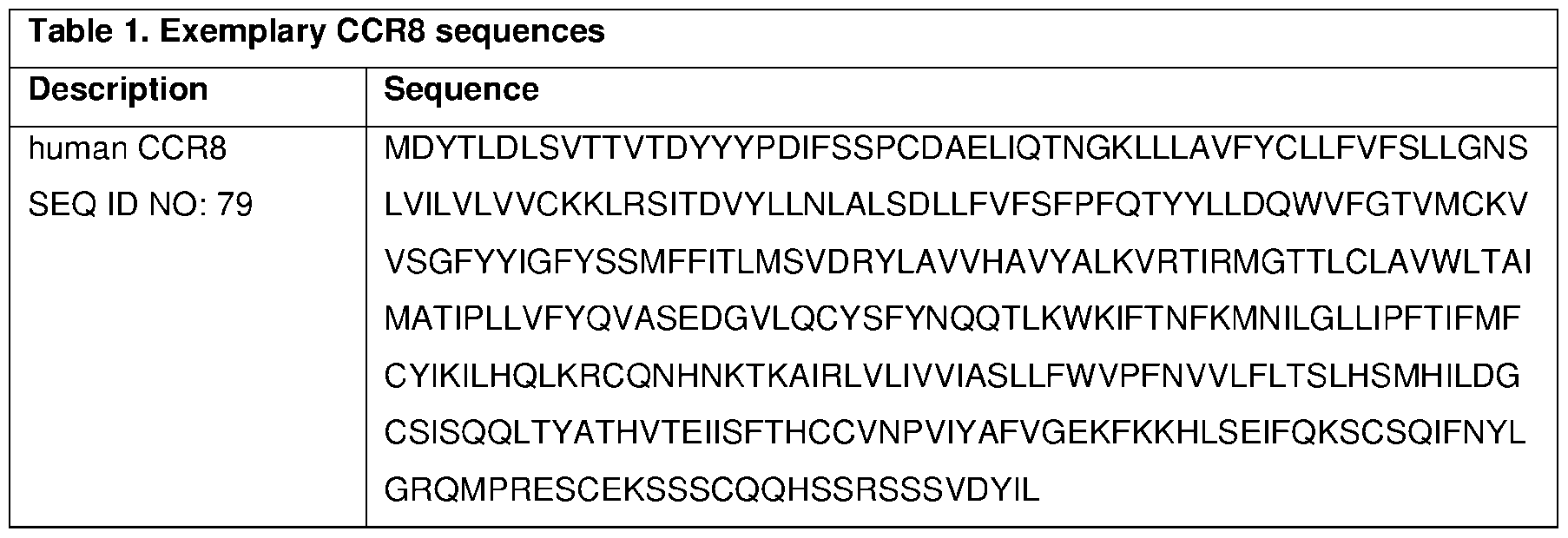

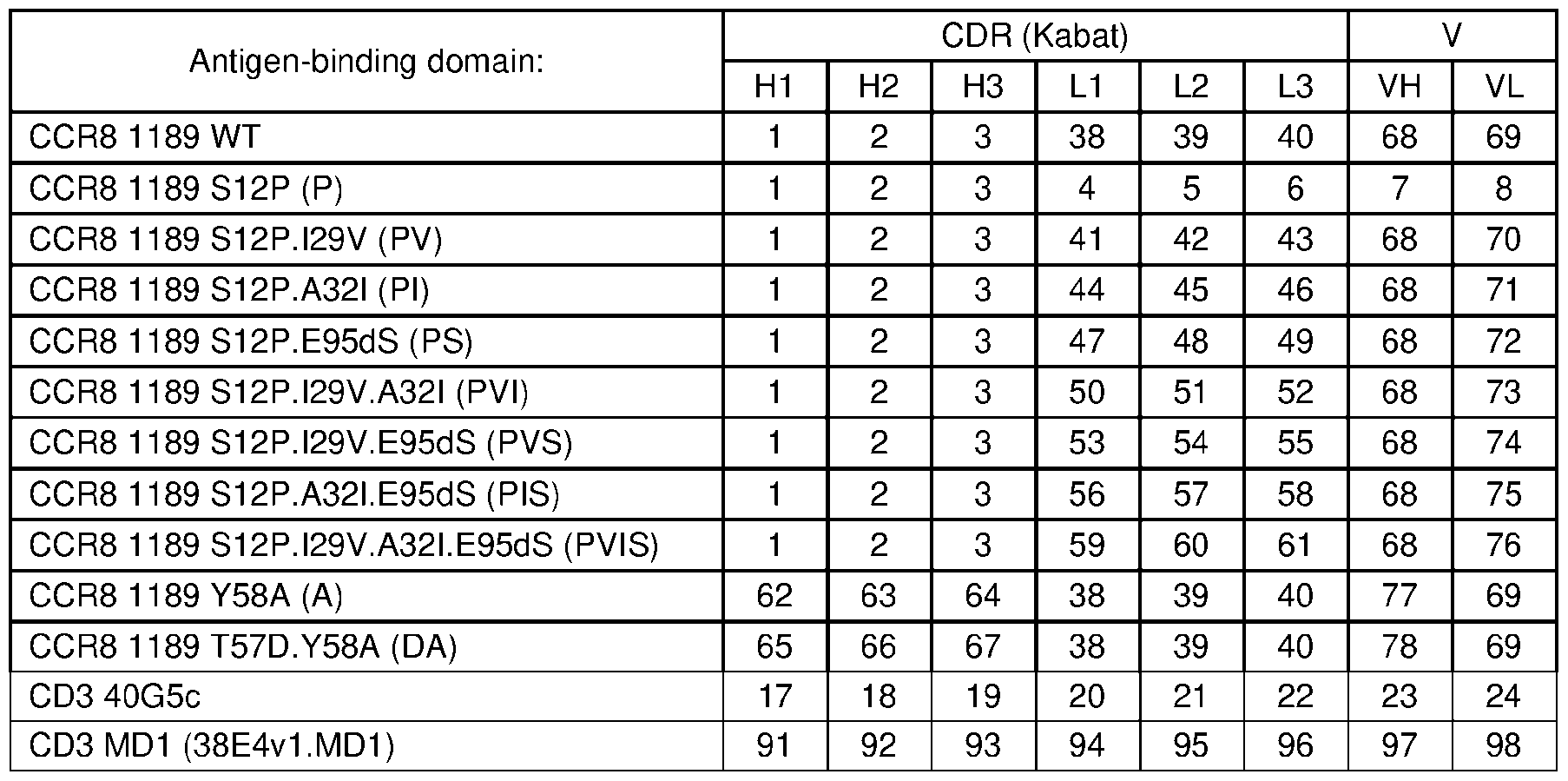


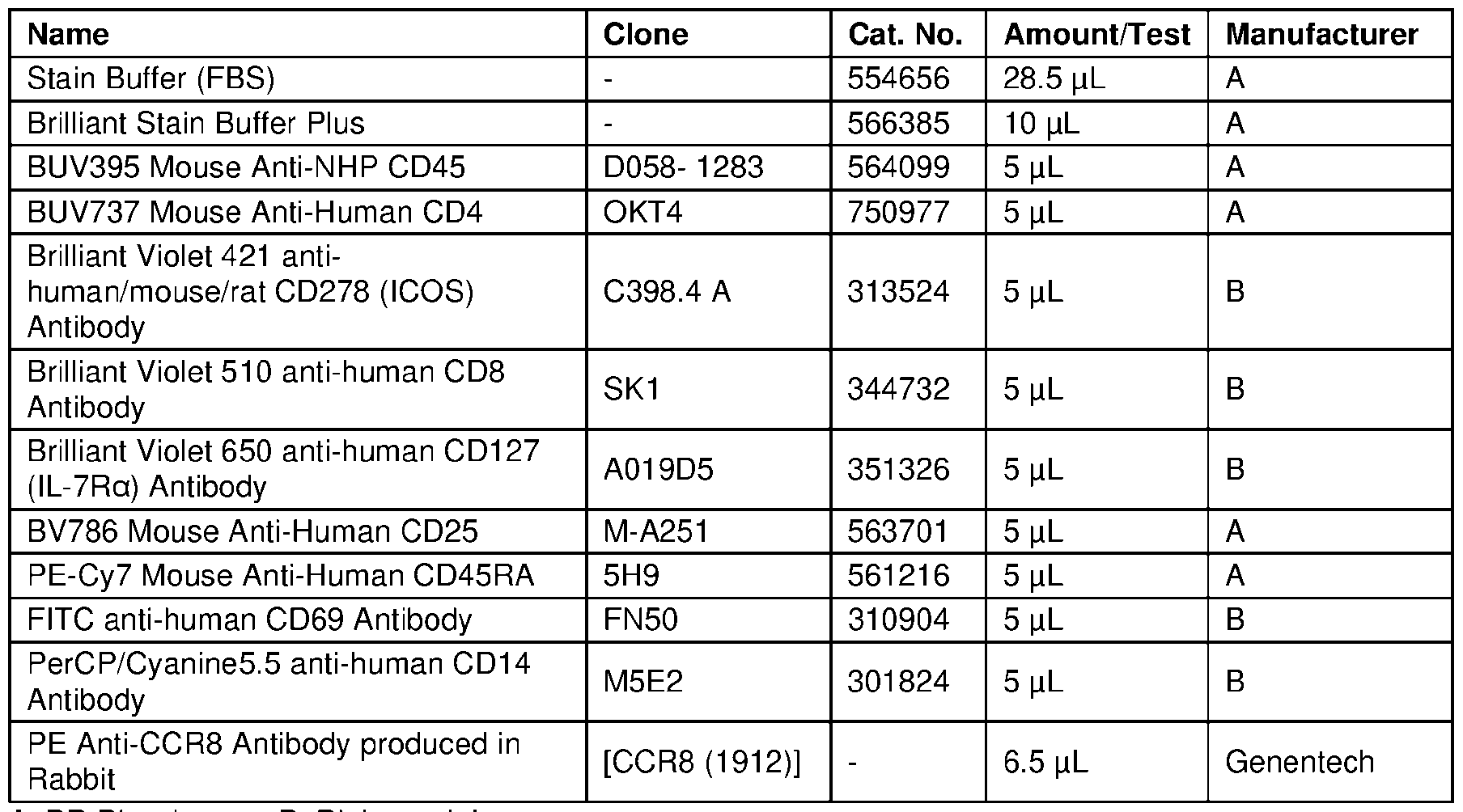


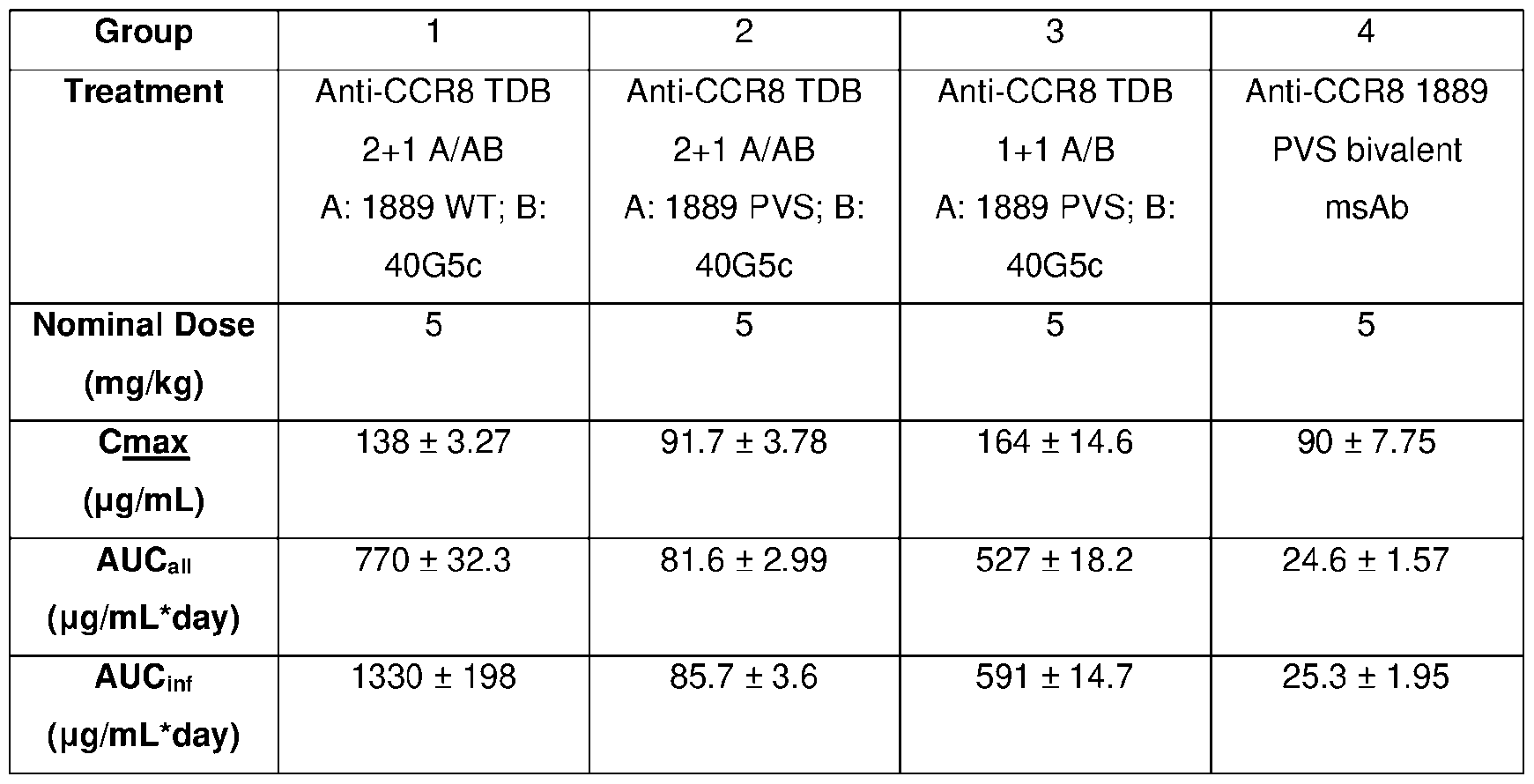


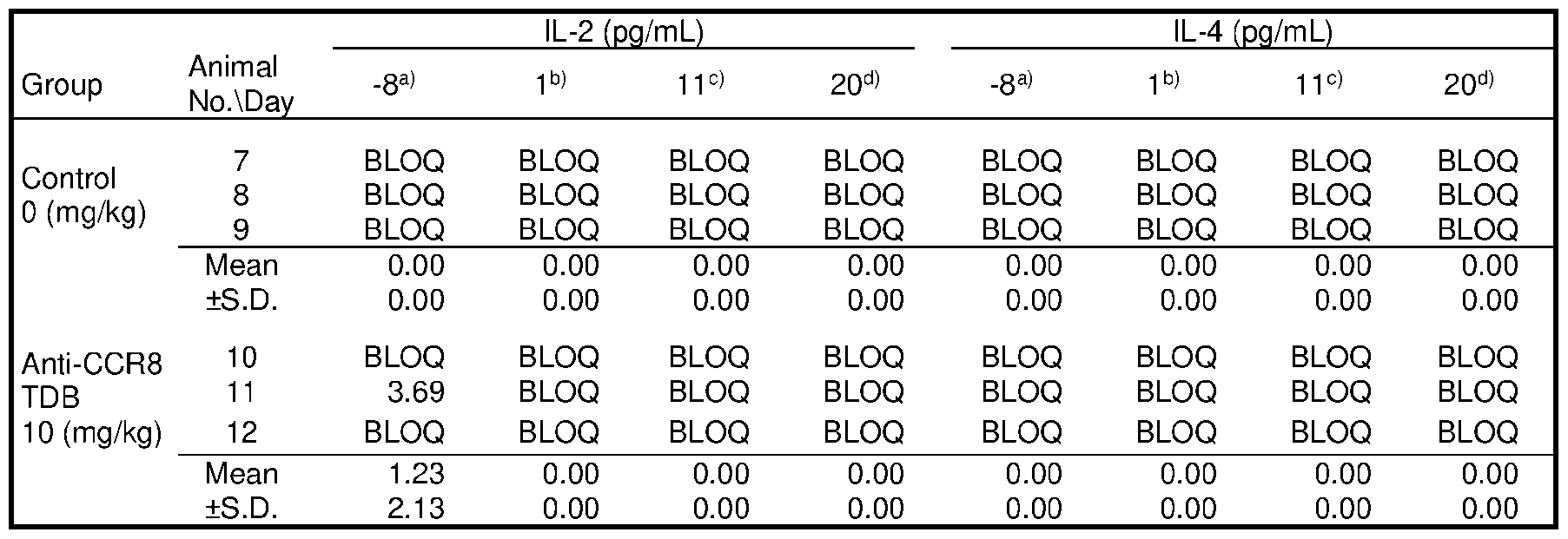

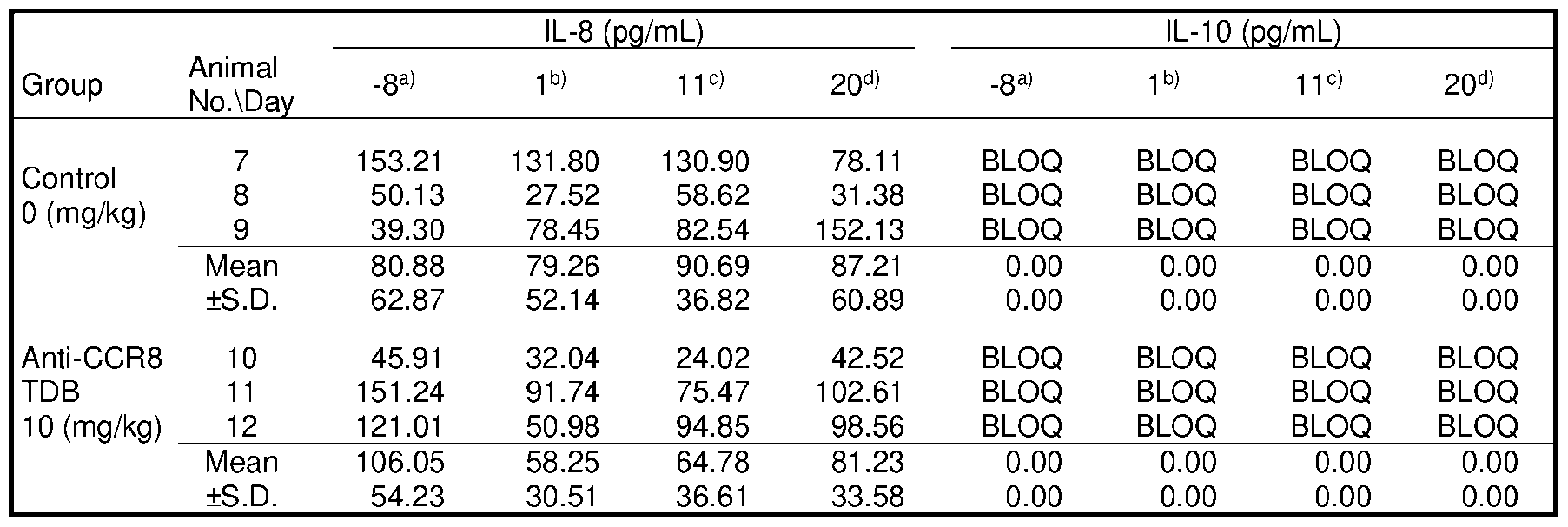

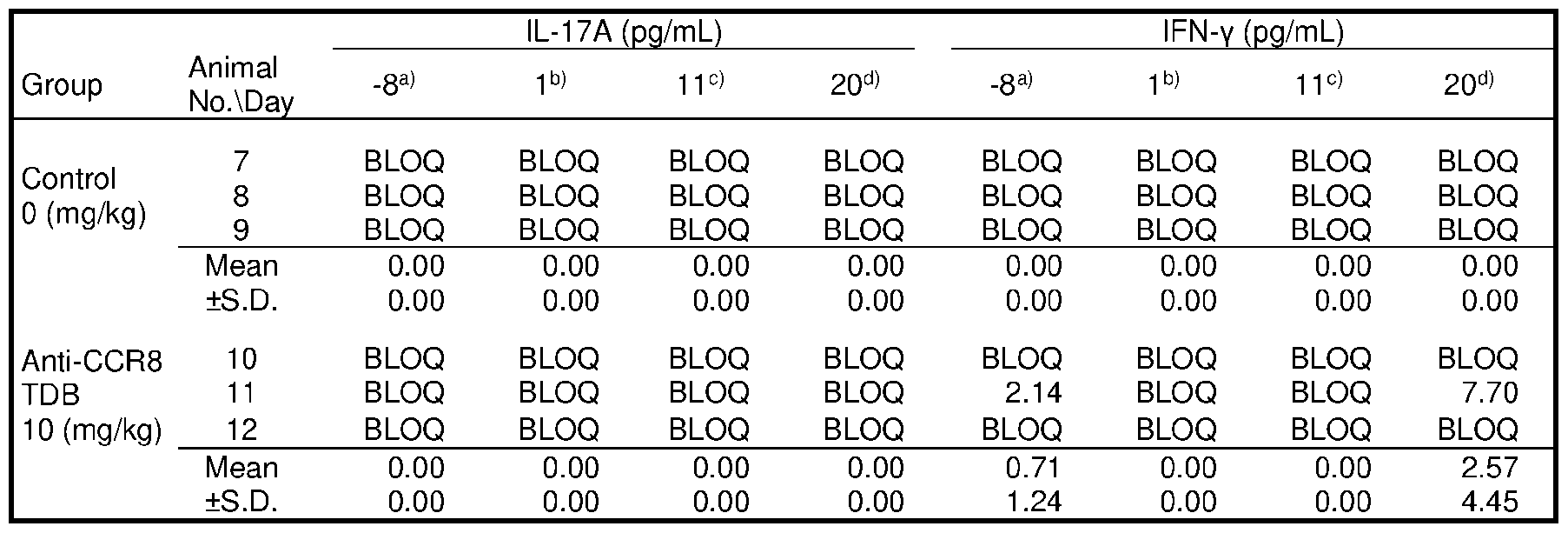


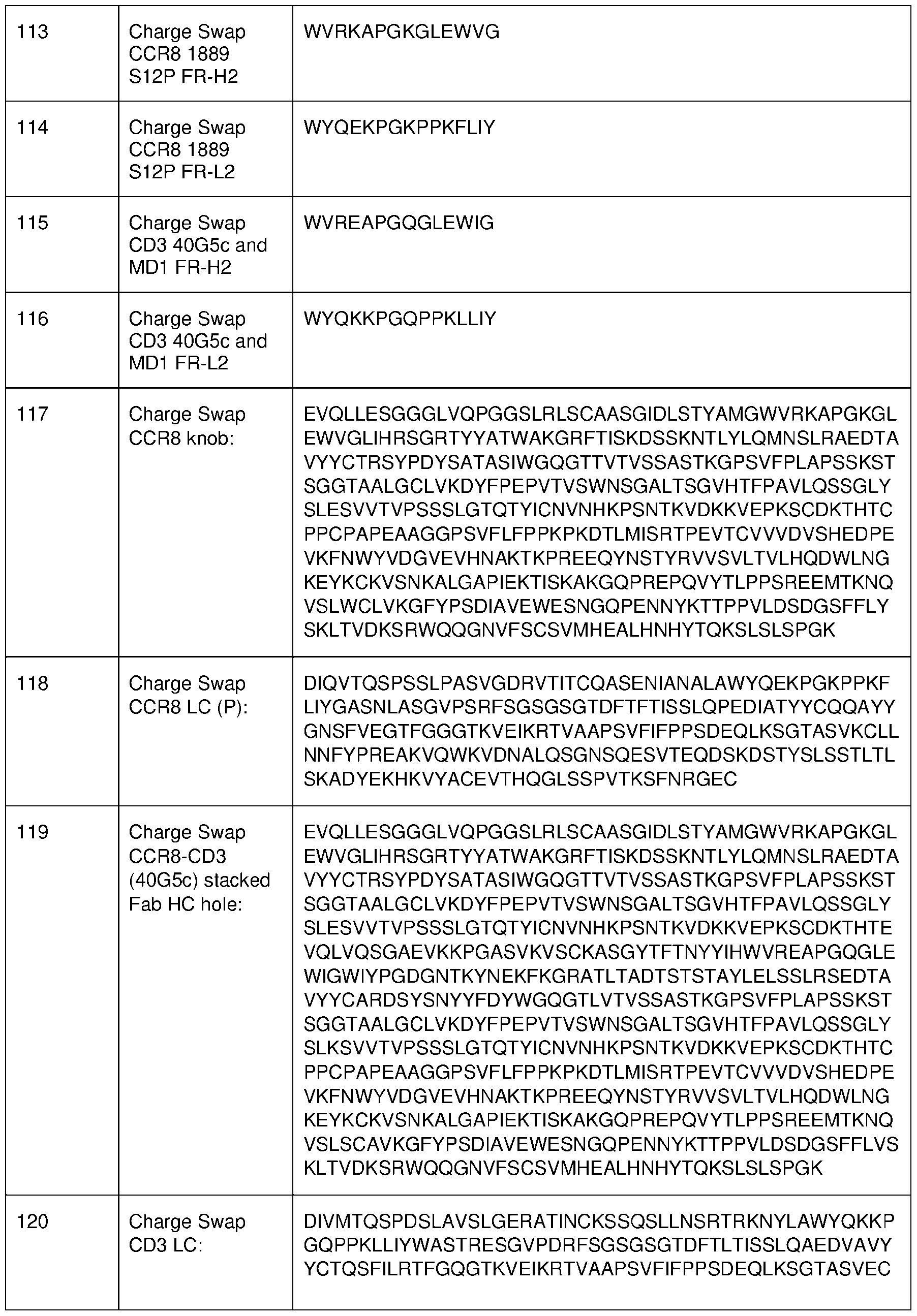

Claims
Priority Applications (9)
| Application Number | Priority Date | Filing Date | Title |
|---|---|---|---|
| KR1020257025392A KR20250134230A (en) | 2023-01-18 | 2024-01-18 | Multispecific antibodies and uses thereof |
| PE2025001492A PE20252286A1 (en) | 2023-01-18 | 2024-01-18 | MULTI-SPECIFIC ANTIBODIES AND THEIR USES |
| AU2024209001A AU2024209001A1 (en) | 2023-01-18 | 2024-01-18 | Multispecific antibodies and uses thereof |
| IL321951A IL321951A (en) | 2023-01-18 | 2024-01-18 | Multispecific antibodies and uses thereof |
| EP24706332.4A EP4652198A1 (en) | 2023-01-18 | 2024-01-18 | Multispecific antibodies and uses thereof |
| CR20250338A CR20250338A (en) | 2023-01-18 | 2024-01-18 | MULTI-SPECIFIC ANTIBODIES AND THEIR USES |
| CN202480007866.7A CN120882748A (en) | 2023-01-18 | 2024-01-18 | Multispecific antibodies and their uses |
| MX2025008324A MX2025008324A (en) | 2023-01-18 | 2025-07-17 | Multispecific antibodies and uses thereof |
| CONC2025/0010244A CO2025010244A2 (en) | 2023-01-18 | 2025-07-25 | Multispecific antibodies and their uses |
Applications Claiming Priority (2)
| Application Number | Priority Date | Filing Date | Title |
|---|---|---|---|
| US202363480469P | 2023-01-18 | 2023-01-18 | |
| US63/480,469 | 2023-01-18 |
Publications (2)
| Publication Number | Publication Date |
|---|---|
| WO2024155807A1 true WO2024155807A1 (en) | 2024-07-25 |
| WO2024155807A8 WO2024155807A8 (en) | 2024-08-29 |
Family
ID=89983451
Family Applications (1)
| Application Number | Title | Priority Date | Filing Date |
|---|---|---|---|
| PCT/US2024/012008 Ceased WO2024155807A1 (en) | 2023-01-18 | 2024-01-18 | Multispecific antibodies and uses thereof |
Country Status (14)
| Country | Link |
|---|---|
| US (1) | US20240360229A1 (en) |
| EP (1) | EP4652198A1 (en) |
| KR (1) | KR20250134230A (en) |
| CN (1) | CN120882748A (en) |
| AR (1) | AR131638A1 (en) |
| AU (1) | AU2024209001A1 (en) |
| CL (1) | CL2025002030A1 (en) |
| CO (1) | CO2025010244A2 (en) |
| CR (1) | CR20250338A (en) |
| IL (1) | IL321951A (en) |
| MX (1) | MX2025008324A (en) |
| PE (1) | PE20252286A1 (en) |
| TW (1) | TW202432607A (en) |
| WO (1) | WO2024155807A1 (en) |
Cited By (3)
| Publication number | Priority date | Publication date | Assignee | Title |
|---|---|---|---|---|
| WO2025061994A1 (en) | 2023-09-21 | 2025-03-27 | Domain Therapeutics | Anti-ccr8 monoclonal antibodies and their therapeutic use |
| WO2025061993A1 (en) | 2023-09-21 | 2025-03-27 | Domain Therapeutics | Anti-ccr8 monoclonal antibodies and their therapeutic use |
| WO2026019990A1 (en) * | 2024-07-18 | 2026-01-22 | Genentech, Inc. | Methods of treating cancer with anti-ccr8/anti-cd3 bispecific antibodies |
Citations (73)
| Publication number | Priority date | Publication date | Assignee | Title |
|---|---|---|---|---|
| US830930A (en) | 1905-11-22 | 1906-09-11 | E & T Fairbanks & Co | Weighing-scale. |
| US4676980A (en) | 1985-09-23 | 1987-06-30 | The United States Of America As Represented By The Secretary Of The Department Of Health And Human Services | Target specific cross-linked heteroantibodies |
| US4737456A (en) | 1985-05-09 | 1988-04-12 | Syntex (U.S.A.) Inc. | Reducing interference in ligand-receptor binding assays |
| US4816567A (en) | 1983-04-08 | 1989-03-28 | Genentech, Inc. | Recombinant immunoglobin preparations |
| EP0404097A2 (en) | 1989-06-22 | 1990-12-27 | BEHRINGWERKE Aktiengesellschaft | Bispecific and oligospecific, mono- and oligovalent receptors, production and applications thereof |
| WO1992019579A1 (en) | 1991-04-26 | 1992-11-12 | Aristech Chemical Corporation | Manufacture of neopentyl glycol (i) |
| WO1993001161A1 (en) | 1991-07-11 | 1993-01-21 | Pfizer Limited | Process for preparing sertraline intermediates |
| WO1993016185A2 (en) | 1992-02-06 | 1993-08-19 | Creative Biomolecules, Inc. | Biosynthetic binding protein for cancer marker |
| WO1994029351A2 (en) | 1993-06-16 | 1994-12-22 | Celltech Limited | Antibodies |
| US5500362A (en) | 1987-01-08 | 1996-03-19 | Xoma Corporation | Chimeric antibody with specificity to human B cell surface antigen |
| US5571894A (en) | 1991-02-05 | 1996-11-05 | Ciba-Geigy Corporation | Recombinant antibodies specific for a growth factor receptor |
| US5587458A (en) | 1991-10-07 | 1996-12-24 | Aronex Pharmaceuticals, Inc. | Anti-erbB-2 antibodies, combinations thereof, and therapeutic and diagnostic uses thereof |
| US5624821A (en) | 1987-03-18 | 1997-04-29 | Scotgen Biopharmaceuticals Incorporated | Antibodies with altered effector functions |
| US5648237A (en) | 1991-09-19 | 1997-07-15 | Genentech, Inc. | Expression of functional antibody fragments |
| WO1997030087A1 (en) | 1996-02-16 | 1997-08-21 | Glaxo Group Limited | Preparation of glycosylated antibodies |
| US5731168A (en) | 1995-03-01 | 1998-03-24 | Genentech, Inc. | Method for making heteromultimeric polypeptides |
| US5770429A (en) | 1990-08-29 | 1998-06-23 | Genpharm International, Inc. | Transgenic non-human animals capable of producing heterologous antibodies |
| US5789199A (en) | 1994-11-03 | 1998-08-04 | Genentech, Inc. | Process for bacterial production of polypeptides |
| US5821337A (en) | 1991-06-14 | 1998-10-13 | Genentech, Inc. | Immunoglobulin variants |
| WO1998050431A2 (en) | 1997-05-02 | 1998-11-12 | Genentech, Inc. | A method for making multispecific antibodies having heteromultimeric and common components |
| US5840523A (en) | 1995-03-01 | 1998-11-24 | Genetech, Inc. | Methods and compositions for secretion of heterologous polypeptides |
| WO1998058964A1 (en) | 1997-06-24 | 1998-12-30 | Genentech, Inc. | Methods and compositions for galactosylated glycoproteins |
| US5869046A (en) | 1995-04-14 | 1999-02-09 | Genentech, Inc. | Altered polypeptides with increased half-life |
| WO1999022764A1 (en) | 1997-10-31 | 1999-05-14 | Genentech, Inc. | Methods and compositions comprising glycoprotein glycoforms |
| US5959177A (en) | 1989-10-27 | 1999-09-28 | The Scripps Research Institute | Transgenic plants expressing assembled secretory antibodies |
| WO1999051642A1 (en) | 1998-04-02 | 1999-10-14 | Genentech, Inc. | Antibody variants and fragments thereof |
| WO1999054342A1 (en) | 1998-04-20 | 1999-10-28 | Pablo Umana | Glycosylation engineering of antibodies for improving antibody-dependent cellular cytotoxicity |
| US6040498A (en) | 1998-08-11 | 2000-03-21 | North Caroline State University | Genetically engineered duckweed |
| US6075181A (en) | 1990-01-12 | 2000-06-13 | Abgenix, Inc. | Human antibodies derived from immunized xenomice |
| US6150584A (en) | 1990-01-12 | 2000-11-21 | Abgenix, Inc. | Human antibodies derived from immunized xenomice |
| WO2001007611A2 (en) | 1999-07-26 | 2001-02-01 | Genentech, Inc. | Novel polynucleotides and method for the use thereof |
| US6194551B1 (en) | 1998-04-02 | 2001-02-27 | Genentech, Inc. | Polypeptide variants |
| US6248516B1 (en) | 1988-11-11 | 2001-06-19 | Medical Research Council | Single domain ligands, receptors comprising said ligands methods for their production, and use of said ligands and receptors |
| US6420548B1 (en) | 1999-10-04 | 2002-07-16 | Medicago Inc. | Method for regulating transcription of foreign genes |
| WO2003011878A2 (en) | 2001-08-03 | 2003-02-13 | Glycart Biotechnology Ag | Antibody glycosylation variants having increased antibody-dependent cellular cytotoxicity |
| US20030157108A1 (en) | 2001-10-25 | 2003-08-21 | Genentech, Inc. | Glycoprotein compositions |
| WO2003085107A1 (en) | 2002-04-09 | 2003-10-16 | Kyowa Hakko Kogyo Co., Ltd. | Cells with modified genome |
| US20040093621A1 (en) | 2001-12-25 | 2004-05-13 | Kyowa Hakko Kogyo Co., Ltd | Antibody composition which specifically binds to CD20 |
| US6737056B1 (en) | 1999-01-15 | 2004-05-18 | Genentech, Inc. | Polypeptide variants with altered effector function |
| US20040110282A1 (en) | 2002-04-09 | 2004-06-10 | Kyowa Hakko Kogyo Co., Ltd. | Cells in which activity of the protein involved in transportation of GDP-fucose is reduced or lost |
| WO2004056312A2 (en) | 2002-12-16 | 2004-07-08 | Genentech, Inc. | Immunoglobulin variants and uses thereof |
| US20040132140A1 (en) | 2002-04-09 | 2004-07-08 | Kyowa Hakko Kogyo Co., Ltd. | Production process for antibody composition |
| WO2004065540A2 (en) | 2003-01-22 | 2004-08-05 | Glycart Biotechnology Ag | Fusion constructs and use of same to produce antibodies with increased fc receptor binding affinity and effector function |
| US20040259150A1 (en) | 2002-04-09 | 2004-12-23 | Kyowa Hakko Kogyo Co., Ltd. | Method of enhancing of binding activity of antibody composition to Fcgamma receptor IIIa |
| US20050014934A1 (en) | 2002-10-15 | 2005-01-20 | Hinton Paul R. | Alteration of FcRn binding affinities or serum half-lives of antibodies by mutagenesis |
| US20050031613A1 (en) | 2002-04-09 | 2005-02-10 | Kazuyasu Nakamura | Therapeutic agent for patients having human FcgammaRIIIa |
| WO2005100402A1 (en) | 2004-04-13 | 2005-10-27 | F.Hoffmann-La Roche Ag | Anti-p-selectin antibodies |
| US6982321B2 (en) | 1986-03-27 | 2006-01-03 | Medical Research Council | Altered antibodies |
| WO2006029879A2 (en) | 2004-09-17 | 2006-03-23 | F.Hoffmann-La Roche Ag | Anti-ox40l antibodies |
| US7041870B2 (en) | 2000-11-30 | 2006-05-09 | Medarex, Inc. | Transgenic transchromosomal rodents for making human antibodies |
| US7087409B2 (en) | 1997-12-05 | 2006-08-08 | The Scripps Research Institute | Humanization of murine antibody |
| WO2006082515A2 (en) | 2005-02-07 | 2006-08-10 | Glycart Biotechnology Ag | Antigen binding molecules that bind egfr, vectors encoding same, and uses thereof |
| US7125978B1 (en) | 1999-10-04 | 2006-10-24 | Medicago Inc. | Promoter for regulating expression of foreign genes |
| US7189826B2 (en) | 1997-11-24 | 2007-03-13 | Institute For Human Genetics And Biochemistry | Monoclonal human natural antibodies |
| US20070061900A1 (en) | 2000-10-31 | 2007-03-15 | Murphy Andrew J | Methods of modifying eukaryotic cells |
| US7371826B2 (en) | 1999-01-15 | 2008-05-13 | Genentech, Inc. | Polypeptide variants with altered effector function |
| US7521541B2 (en) | 2004-09-23 | 2009-04-21 | Genetech Inc. | Cysteine engineered antibodies and conjugates |
| US7527791B2 (en) | 2004-03-31 | 2009-05-05 | Genentech, Inc. | Humanized anti-TGF-beta antibodies |
| WO2009080253A1 (en) | 2007-12-21 | 2009-07-02 | F. Hoffmann-La Roche Ag | Bivalent, bispecific antibodies |
| WO2009089004A1 (en) | 2008-01-07 | 2009-07-16 | Amgen Inc. | Method for making antibody fc-heterodimeric molecules using electrostatic steering effects |
| WO2011034605A2 (en) | 2009-09-16 | 2011-03-24 | Genentech, Inc. | Coiled coil and/or tether containing protein complexes and uses thereof |
| WO2011069104A2 (en) | 2009-12-04 | 2011-06-09 | Genentech, Inc. | Multispecific antibodies, antibody analogs, compositions, and methods |
| WO2012130831A1 (en) | 2011-03-29 | 2012-10-04 | Roche Glycart Ag | Antibody fc variants |
| US20130078249A1 (en) | 2011-08-23 | 2013-03-28 | Oliver Ast | Bispecific t cell activating antigen binding molecules |
| WO2013120929A1 (en) | 2012-02-15 | 2013-08-22 | F. Hoffmann-La Roche Ag | Fc-receptor based affinity chromatography |
| WO2014177460A1 (en) | 2013-04-29 | 2014-11-06 | F. Hoffmann-La Roche Ag | Human fcrn-binding modified antibodies and methods of use |
| US9000130B2 (en) | 2010-06-08 | 2015-04-07 | Genentech, Inc. | Cysteine engineered antibodies and conjugates |
| US20150166661A1 (en) | 2013-12-17 | 2015-06-18 | Genentech, Inc. | Anti-cd3 antibodies and methods of use |
| WO2016040856A2 (en) | 2014-09-12 | 2016-03-17 | Genentech, Inc. | Cysteine engineered antibodies and conjugates |
| EP2101823B1 (en) | 2007-01-09 | 2016-11-23 | CureVac AG | Rna-coded antibody |
| US20180177873A1 (en) | 2015-04-24 | 2018-06-28 | Genentech, Inc. | Multispecific antigen-binding proteins |
| US20210179715A1 (en) | 2019-12-13 | 2021-06-17 | Genentech, Inc. | Anti-ly6g6d antibodies and methods of use |
| WO2022256559A1 (en) * | 2021-06-04 | 2022-12-08 | Amgen Research (Munich) Gmbh | T cell engager molecules and uses thereof |
-
2024
- 2024-01-18 IL IL321951A patent/IL321951A/en unknown
- 2024-01-18 EP EP24706332.4A patent/EP4652198A1/en active Pending
- 2024-01-18 AU AU2024209001A patent/AU2024209001A1/en active Pending
- 2024-01-18 KR KR1020257025392A patent/KR20250134230A/en active Pending
- 2024-01-18 WO PCT/US2024/012008 patent/WO2024155807A1/en not_active Ceased
- 2024-01-18 CR CR20250338A patent/CR20250338A/en unknown
- 2024-01-18 TW TW113102024A patent/TW202432607A/en unknown
- 2024-01-18 PE PE2025001492A patent/PE20252286A1/en unknown
- 2024-01-18 US US18/416,525 patent/US20240360229A1/en active Pending
- 2024-01-18 CN CN202480007866.7A patent/CN120882748A/en active Pending
- 2024-01-18 AR ARP240100117A patent/AR131638A1/en unknown
-
2025
- 2025-07-09 CL CL2025002030A patent/CL2025002030A1/en unknown
- 2025-07-17 MX MX2025008324A patent/MX2025008324A/en unknown
- 2025-07-25 CO CONC2025/0010244A patent/CO2025010244A2/en unknown
Patent Citations (79)
| Publication number | Priority date | Publication date | Assignee | Title |
|---|---|---|---|---|
| US830930A (en) | 1905-11-22 | 1906-09-11 | E & T Fairbanks & Co | Weighing-scale. |
| US4816567A (en) | 1983-04-08 | 1989-03-28 | Genentech, Inc. | Recombinant immunoglobin preparations |
| US4737456A (en) | 1985-05-09 | 1988-04-12 | Syntex (U.S.A.) Inc. | Reducing interference in ligand-receptor binding assays |
| US4676980A (en) | 1985-09-23 | 1987-06-30 | The United States Of America As Represented By The Secretary Of The Department Of Health And Human Services | Target specific cross-linked heteroantibodies |
| US6982321B2 (en) | 1986-03-27 | 2006-01-03 | Medical Research Council | Altered antibodies |
| US5500362A (en) | 1987-01-08 | 1996-03-19 | Xoma Corporation | Chimeric antibody with specificity to human B cell surface antigen |
| US5624821A (en) | 1987-03-18 | 1997-04-29 | Scotgen Biopharmaceuticals Incorporated | Antibodies with altered effector functions |
| US5648260A (en) | 1987-03-18 | 1997-07-15 | Scotgen Biopharmaceuticals Incorporated | DNA encoding antibodies with altered effector functions |
| US6248516B1 (en) | 1988-11-11 | 2001-06-19 | Medical Research Council | Single domain ligands, receptors comprising said ligands methods for their production, and use of said ligands and receptors |
| EP0404097A2 (en) | 1989-06-22 | 1990-12-27 | BEHRINGWERKE Aktiengesellschaft | Bispecific and oligospecific, mono- and oligovalent receptors, production and applications thereof |
| US6417429B1 (en) | 1989-10-27 | 2002-07-09 | The Scripps Research Institute | Transgenic plants expressing assembled secretory antibodies |
| US5959177A (en) | 1989-10-27 | 1999-09-28 | The Scripps Research Institute | Transgenic plants expressing assembled secretory antibodies |
| US6150584A (en) | 1990-01-12 | 2000-11-21 | Abgenix, Inc. | Human antibodies derived from immunized xenomice |
| US6075181A (en) | 1990-01-12 | 2000-06-13 | Abgenix, Inc. | Human antibodies derived from immunized xenomice |
| US5770429A (en) | 1990-08-29 | 1998-06-23 | Genpharm International, Inc. | Transgenic non-human animals capable of producing heterologous antibodies |
| US5571894A (en) | 1991-02-05 | 1996-11-05 | Ciba-Geigy Corporation | Recombinant antibodies specific for a growth factor receptor |
| WO1992019579A1 (en) | 1991-04-26 | 1992-11-12 | Aristech Chemical Corporation | Manufacture of neopentyl glycol (i) |
| US5821337A (en) | 1991-06-14 | 1998-10-13 | Genentech, Inc. | Immunoglobulin variants |
| WO1993001161A1 (en) | 1991-07-11 | 1993-01-21 | Pfizer Limited | Process for preparing sertraline intermediates |
| US5648237A (en) | 1991-09-19 | 1997-07-15 | Genentech, Inc. | Expression of functional antibody fragments |
| US5587458A (en) | 1991-10-07 | 1996-12-24 | Aronex Pharmaceuticals, Inc. | Anti-erbB-2 antibodies, combinations thereof, and therapeutic and diagnostic uses thereof |
| WO1993016185A2 (en) | 1992-02-06 | 1993-08-19 | Creative Biomolecules, Inc. | Biosynthetic binding protein for cancer marker |
| WO1994029351A2 (en) | 1993-06-16 | 1994-12-22 | Celltech Limited | Antibodies |
| US5789199A (en) | 1994-11-03 | 1998-08-04 | Genentech, Inc. | Process for bacterial production of polypeptides |
| US5731168A (en) | 1995-03-01 | 1998-03-24 | Genentech, Inc. | Method for making heteromultimeric polypeptides |
| US5840523A (en) | 1995-03-01 | 1998-11-24 | Genetech, Inc. | Methods and compositions for secretion of heterologous polypeptides |
| US5869046A (en) | 1995-04-14 | 1999-02-09 | Genentech, Inc. | Altered polypeptides with increased half-life |
| WO1997030087A1 (en) | 1996-02-16 | 1997-08-21 | Glaxo Group Limited | Preparation of glycosylated antibodies |
| WO1998050431A2 (en) | 1997-05-02 | 1998-11-12 | Genentech, Inc. | A method for making multispecific antibodies having heteromultimeric and common components |
| WO1998058964A1 (en) | 1997-06-24 | 1998-12-30 | Genentech, Inc. | Methods and compositions for galactosylated glycoproteins |
| WO1999022764A1 (en) | 1997-10-31 | 1999-05-14 | Genentech, Inc. | Methods and compositions comprising glycoprotein glycoforms |
| US7189826B2 (en) | 1997-11-24 | 2007-03-13 | Institute For Human Genetics And Biochemistry | Monoclonal human natural antibodies |
| US7087409B2 (en) | 1997-12-05 | 2006-08-08 | The Scripps Research Institute | Humanization of murine antibody |
| WO1999051642A1 (en) | 1998-04-02 | 1999-10-14 | Genentech, Inc. | Antibody variants and fragments thereof |
| US6194551B1 (en) | 1998-04-02 | 2001-02-27 | Genentech, Inc. | Polypeptide variants |
| WO1999054342A1 (en) | 1998-04-20 | 1999-10-28 | Pablo Umana | Glycosylation engineering of antibodies for improving antibody-dependent cellular cytotoxicity |
| US6040498A (en) | 1998-08-11 | 2000-03-21 | North Caroline State University | Genetically engineered duckweed |
| US7371826B2 (en) | 1999-01-15 | 2008-05-13 | Genentech, Inc. | Polypeptide variants with altered effector function |
| US7332581B2 (en) | 1999-01-15 | 2008-02-19 | Genentech, Inc. | Polypeptide variants with altered effector function |
| US6737056B1 (en) | 1999-01-15 | 2004-05-18 | Genentech, Inc. | Polypeptide variants with altered effector function |
| WO2001007611A2 (en) | 1999-07-26 | 2001-02-01 | Genentech, Inc. | Novel polynucleotides and method for the use thereof |
| US6420548B1 (en) | 1999-10-04 | 2002-07-16 | Medicago Inc. | Method for regulating transcription of foreign genes |
| US7125978B1 (en) | 1999-10-04 | 2006-10-24 | Medicago Inc. | Promoter for regulating expression of foreign genes |
| US20070061900A1 (en) | 2000-10-31 | 2007-03-15 | Murphy Andrew J | Methods of modifying eukaryotic cells |
| US7041870B2 (en) | 2000-11-30 | 2006-05-09 | Medarex, Inc. | Transgenic transchromosomal rodents for making human antibodies |
| WO2003011878A2 (en) | 2001-08-03 | 2003-02-13 | Glycart Biotechnology Ag | Antibody glycosylation variants having increased antibody-dependent cellular cytotoxicity |
| US20030157108A1 (en) | 2001-10-25 | 2003-08-21 | Genentech, Inc. | Glycoprotein compositions |
| US20040093621A1 (en) | 2001-12-25 | 2004-05-13 | Kyowa Hakko Kogyo Co., Ltd | Antibody composition which specifically binds to CD20 |
| US20040110282A1 (en) | 2002-04-09 | 2004-06-10 | Kyowa Hakko Kogyo Co., Ltd. | Cells in which activity of the protein involved in transportation of GDP-fucose is reduced or lost |
| US20040132140A1 (en) | 2002-04-09 | 2004-07-08 | Kyowa Hakko Kogyo Co., Ltd. | Production process for antibody composition |
| US20040259150A1 (en) | 2002-04-09 | 2004-12-23 | Kyowa Hakko Kogyo Co., Ltd. | Method of enhancing of binding activity of antibody composition to Fcgamma receptor IIIa |
| US20050031613A1 (en) | 2002-04-09 | 2005-02-10 | Kazuyasu Nakamura | Therapeutic agent for patients having human FcgammaRIIIa |
| WO2003085107A1 (en) | 2002-04-09 | 2003-10-16 | Kyowa Hakko Kogyo Co., Ltd. | Cells with modified genome |
| US20050014934A1 (en) | 2002-10-15 | 2005-01-20 | Hinton Paul R. | Alteration of FcRn binding affinities or serum half-lives of antibodies by mutagenesis |
| WO2004056312A2 (en) | 2002-12-16 | 2004-07-08 | Genentech, Inc. | Immunoglobulin variants and uses thereof |
| WO2004065540A2 (en) | 2003-01-22 | 2004-08-05 | Glycart Biotechnology Ag | Fusion constructs and use of same to produce antibodies with increased fc receptor binding affinity and effector function |
| US7527791B2 (en) | 2004-03-31 | 2009-05-05 | Genentech, Inc. | Humanized anti-TGF-beta antibodies |
| WO2005100402A1 (en) | 2004-04-13 | 2005-10-27 | F.Hoffmann-La Roche Ag | Anti-p-selectin antibodies |
| WO2006029879A2 (en) | 2004-09-17 | 2006-03-23 | F.Hoffmann-La Roche Ag | Anti-ox40l antibodies |
| US7521541B2 (en) | 2004-09-23 | 2009-04-21 | Genetech Inc. | Cysteine engineered antibodies and conjugates |
| US7855275B2 (en) | 2004-09-23 | 2010-12-21 | Genentech, Inc. | Cysteine engineered antibodies and conjugates |
| WO2006082515A2 (en) | 2005-02-07 | 2006-08-10 | Glycart Biotechnology Ag | Antigen binding molecules that bind egfr, vectors encoding same, and uses thereof |
| EP2101823B1 (en) | 2007-01-09 | 2016-11-23 | CureVac AG | Rna-coded antibody |
| WO2009080253A1 (en) | 2007-12-21 | 2009-07-02 | F. Hoffmann-La Roche Ag | Bivalent, bispecific antibodies |
| WO2009089004A1 (en) | 2008-01-07 | 2009-07-16 | Amgen Inc. | Method for making antibody fc-heterodimeric molecules using electrostatic steering effects |
| WO2011034605A2 (en) | 2009-09-16 | 2011-03-24 | Genentech, Inc. | Coiled coil and/or tether containing protein complexes and uses thereof |
| WO2011069104A2 (en) | 2009-12-04 | 2011-06-09 | Genentech, Inc. | Multispecific antibodies, antibody analogs, compositions, and methods |
| US9000130B2 (en) | 2010-06-08 | 2015-04-07 | Genentech, Inc. | Cysteine engineered antibodies and conjugates |
| WO2012130831A1 (en) | 2011-03-29 | 2012-10-04 | Roche Glycart Ag | Antibody fc variants |
| US20130078249A1 (en) | 2011-08-23 | 2013-03-28 | Oliver Ast | Bispecific t cell activating antigen binding molecules |
| WO2013120929A1 (en) | 2012-02-15 | 2013-08-22 | F. Hoffmann-La Roche Ag | Fc-receptor based affinity chromatography |
| WO2014177460A1 (en) | 2013-04-29 | 2014-11-06 | F. Hoffmann-La Roche Ag | Human fcrn-binding modified antibodies and methods of use |
| US20150166661A1 (en) | 2013-12-17 | 2015-06-18 | Genentech, Inc. | Anti-cd3 antibodies and methods of use |
| WO2015095392A1 (en) | 2013-12-17 | 2015-06-25 | Genentech, Inc. | Anti-cd3 antibodies and methods of use |
| WO2016040856A2 (en) | 2014-09-12 | 2016-03-17 | Genentech, Inc. | Cysteine engineered antibodies and conjugates |
| US20180177873A1 (en) | 2015-04-24 | 2018-06-28 | Genentech, Inc. | Multispecific antigen-binding proteins |
| US20210179715A1 (en) | 2019-12-13 | 2021-06-17 | Genentech, Inc. | Anti-ly6g6d antibodies and methods of use |
| WO2021119505A1 (en) | 2019-12-13 | 2021-06-17 | Genentech, Inc. | Anti-ly6g6d antibodies and methods of use |
| WO2022256559A1 (en) * | 2021-06-04 | 2022-12-08 | Amgen Research (Munich) Gmbh | T cell engager molecules and uses thereof |
Non-Patent Citations (98)
| Title |
|---|
| "Remington's Pharmaceutical Sciences 16th", 1980 |
| ALMAGROFRANSSON, FRONT. BIOSCI, vol. 13, 2008, pages 1619 - 1633 |
| ATWELL ET AL., J. MOL. BIOL., vol. 270, no. 26, 1997 |
| BACA ET AL., J. BIOL. CHEM., vol. 272, 1997, pages 10678 - 10684 |
| BOERNER ET AL., J. IMMUNOL., vol. 147, no. 60, 1991, pages 86 |
| BRENNAN ET AL., SCIENCE, vol. 229, 1985, pages 81 |
| BRUGGEMANN, M ET AL., J. EXP. MED., vol. 166, 1987, pages 1351 - 1361 |
| CARTER ET AL., PROC. NATL. ACAD. SCI. USA, vol. 89, 1992, pages 4285 |
| CHEN ET AL., J. IMMUNOL. METHODS, vol. 434, 2016, pages 1 - 8 |
| CHOTHIALESK, J. MOL. BIOL., vol. 196, 1987, pages 901 - 917 |
| CHOWDHURY, METHODS MOL. BIOL., vol. 207, 2008, pages 179 - 196 |
| CLARKSON ET AL., NATURE, vol. 352, 1991, pages 624 - 628 |
| CLYNES ET AL., PROC. NAT'IACAD. SCI. USA, vol. 95, 1998, pages 652 - 656 |
| CRAGG, M.S. ET AL., BLOOD, vol. 101, 2003, pages 1045 - 1052 |
| CRAGG, M.SM.J. GLENNIE, BLOOD, vol. 103, 2004, pages 2738 - 2743 |
| CUNNINGHAMWELLS, SCIENCE, vol. 244, 1989, pages 1081 - 1085 |
| DALL'ACQUA ET AL., METHODS, vol. 36, 2005, pages 61 - 68 |
| DALL'ACQUA, W.F. ET AL., J. BIOL. CHEM., vol. 281, 2006, pages 23514 - 23524 |
| DALL'ACQUA, W.F. ET AL., J. IMMUNOL, vol. 169, 2002, pages 5171 - 5180 |
| DILLON ET AL., MABS, vol. 9, 2017, pages 213 - 230 |
| DOESEGGER ET AL., CLIN. TRANSL. IMMUNOLOGY, vol. 4, no. 7, 2015, pages e39 |
| FALCONER R.J., BIOTECHNOLOGY ADVANCES, vol. 37, 2019, pages 107412 |
| FERNANDES ET AL., J BIOL CHEM., vol. 287, no. 16, 2012, pages 13324 - 13335 |
| FERRARA ET AL., BIOTECHN BIOENG, vol. 93, 2006, pages 851 - 861 |
| FIRAN, M. ET AL., INT. IMMUNOL, vol. 13, 2001, pages 993 |
| FLATMAN ET AL., J. CHROMATOGR. B, vol. 848, 2007, pages 79 - 87 |
| GAZZANO-SANTORO ET AL., J. IMMUNOL. METHODS, vol. 202, 1996, pages 163 |
| GERNGROSS, T.U., NAT. BIOTECH., vol. 22, 2004, pages 1409 - 1414 |
| GRAHAM, F.L. ET AL., J. GEN VIROL., vol. 36, 1977, pages 59 - 74 |
| GREVYS, A. ET AL., J. IMMUNOL., vol. 194, 2015, pages 5497 - 5508 |
| GRUBER ET AL., J. IMMUNOL., vol. 152, 1994, pages 5368 - 315 |
| GUYER ET AL., J. IMMUNOL., vol. 117, 1976, pages 587 |
| HELLSTROM, I ET AL., PROC. NAT'I ACAD. SCI. USA, vol. 82, 1985, pages 1499 - 1502 |
| HELLSTROM, I ET AL., PROC. NAT'I ACAD. SCI. USA, vol. 83, 1986, pages 7059 - 7063 |
| HOCHLEITNER ET AL., PROT. SCI, vol. 9, 2000, pages 487 - 496 |
| HOLLIGERHUDSON, NATURE BIOTECHNOLOGY, vol. 23, 2005, pages 1126 - 1136 |
| HOLLINGER ET AL., PROC. NATL. ACAD. SCI. USA, vol. 90, 1993, pages 6444 - 6448 |
| HUDSON ET AL., NAT. MED., vol. 9, 2003, pages 129 - 134 |
| IDUSOGIE ET AL., J. IMMUNOL., vol. 164, 2000, pages 4178 - 4184 |
| JUNGHANS ET AL., CANCER RES., vol. 50, 1990, pages 1495 - 1502 |
| JUNTTILA ET AL., CANCER RES., vol. 74, 2014, pages 5561 - 5571 |
| KABAT, E.A ET AL.: "Proc. Natl. Acad. Sci. USA", vol. 72, 1975, pages: 2785 - 2788 |
| KANDA, Y. ET AL., BIOTECHNOL. BIOENG., vol. 94, no. 4, 2006, pages 680 - 688 |
| KIM, J.K. ET AL., EUR. J. IMMUNOL., vol. 24, 1994, pages 542 |
| KIM, J.K. ET AL., EUR. J. IMMUNOL., vol. 29, 1999, pages 2819 |
| KINDT ET AL.: "Kuby Immunology", 2007, W.H. FREEMAN AND CO, pages: 91 |
| KLIMKA ET AL., BR. J. CANCER, vol. 83, 2000, pages 252 - 260 |
| KOBEISSY ET AL., METH. MOL. BIOL, vol. 248, 2004, pages 443 - 463 |
| KOSTELNY ET AL., J. IMMUNOL., vol. 148, no. 5, 1992, pages 1547 - 1553 |
| KOZBOR, J. IMMUNOL., vol. 133, 1984, pages 3001 |
| LEE ET AL., BIOLOGY OF BLOOD AND MARROW TRANSPLANTATION, vol. 25, no. 4, 2019, pages 625 - 638 |
| LEE ET AL., BLOOD, vol. 124, no. 2, 2014, pages 188 - 95 |
| LI ET AL., PROC. NATL. ACAD. SCI. USA, vol. 103, 2006, pages 3557 - 3562 |
| LI, H. ET AL., NAT. BIOTECH., vol. 24, 2006, pages 210 - 215 |
| LIU ET AL., ANTIBODIES, vol. 9, no. 4, 2020, pages 64 |
| LO ET AL., J BIOL CHEM., vol. 292, no. 9, 2017, pages 2900 - 2908 |
| LONBERG, CURR. OPIN. IMMUNOL, vol. 20, 2008, pages 450 - 459 |
| LONBERG, NAT. BIOTECH., vol. 23, 2005, pages 1117 - 1125 |
| MACCALLUM ET AL., J. MOL. BIOL., vol. 262, 1996, pages 732 - 745 |
| MATHER, J.P ET AL., ANNALS N.Y. ACAD. SCI., vol. 383, 1982, pages 44 - 68 |
| MATHER, J.P., BIOL. REPROD., vol. 23, 1980, pages 243 - 252 |
| MEDESAN, C. ET AL., EUR. J. IMMUNOL., vol. 26, 1996, pages 2533 |
| MILSTEINCUELLO, NATURE, vol. 305, 1983, pages 537 |
| MORRISON ET AL., PROC. NATL. ACAD. SCI. USA, vol. 81, 1984, pages 6851 - 6855 |
| NAGORSEN ET AL., CYTOKINE, vol. 25, no. 1, 31 May 2004 (2004-05-31) |
| NI, XIANDAI MIANYIXUE, vol. 26, no. 4, 2006, pages 265 - 268 |
| OVACIK ET AL., MABS, vol. 11, no. 2, 2018, pages 422 - 433 |
| PADLAN, MOL. IMMUNOL, vol. 28, 1991, pages 489 - 498 |
| PEARSON, GENOMICS, vol. 46, 1997, pages 24 - 36 |
| PEREIRA ET AL., MABS, 2018, pages 693 - 711 |
| PETKOVA, S.B. ET AL., INT'L. IMMUNOL., vol. 18, no. 12, 2006, pages 1759 - 1769 |
| PORTOLANO ET AL., J. IMMUNOL., vol. 151, 1993, pages 2623 - 887 |
| QUEEN ET AL., PROC. NAT'L ACAD. SCI. USA, vol. 86, 1989, pages 10029 - 10033 |
| RAVETCHKINET, ANNU. REV. IMMUNOL., vol. 9, 1991, pages 457 - 492 |
| RIDGWAY ET AL., PROT ENG., vol. 9, no. 7, 1996, pages 617 - 621 |
| RIECHMANN ET AL., NATURE, vol. 322, 1988, pages 738 - 329 |
| RIPKA ET AL., ARCH. BIOCHEM. BIOPHYS., vol. 249, 1986, pages 533 - 545 |
| ROSOK ET AL., J. BIOL. CHEM., vol. 271, 1996, pages 22611 - 22618 |
| RUDIKOFF S ET AL: "Single amino acid substitution altering antigen-binding specificity", PROCEEDINGS OF THE NATIONAL ACADEMY OF SCIENCES, NATIONAL ACADEMY OF SCIENCES, vol. 79, 1 March 1982 (1982-03-01), pages 1979 - 1983, XP007901436, ISSN: 0027-8424, DOI: 10.1073/PNAS.79.6.1979 * |
| SCHAEFER ET AL., PROC. NATL. ACAD. SCI. USA, vol. 108, 2011, pages 11187 - 11192 |
| SHIELDS ET AL., BIOL. CHEM., vol. 178, no. 2, 2001, pages 6591 - 6604 |
| SHIELDS, R.L. ET AL., J. BIOL. CHEM., vol. 276, 2001, pages 6591 - 6604 |
| SPIESS ET AL., NAT. BIOTECHNOL., vol. 31, no. 8, 2013, pages 753 - 8 |
| STADLER ET AL., NATURE MEDICINE 2017, 12 June 2017 (2017-06-12) |
| SUN ET AL., SCIENCE TRANS. MED, vol. 7, no. 287ra270, 2015 |
| UMANA ET AL., NAT BIOTECHNOL, vol. 17, 1999, pages 176 - 180 |
| URLAUB, G. ET AL., PROC. NATL. ACAD. SCI. USA, vol. 77, 1980, pages 4216 - 4220 |
| VAN DIJKVAN DE WINKEL, CURR. OPIN. PHARMACOL, vol. 5, 2001, pages 368 - 74 |
| VOLLMERSBRANDLEIN, HISTOLOGY AND HISTOPATHOLOGY, vol. 20, no. 3, 2005, pages 927 - 937 |
| VOLLMERSBRANDLEIN, METHODS AND FINDINGS IN EXPERIMENTAL AND CLINICAL PHARMACOLOGY, vol. 27, no. 3, 2005, pages 185 - 91 |
| W. R. PEARSON: "Effective protein sequence comparison", METH. ENZYMOL, vol. 266, 1996, pages 227 - 258 |
| W. R. PEARSOND. J. LIPMAN: "Improved Tools for Biological Sequence Analysis", PNAS, vol. 85, 1988, pages 2444 - 2448 |
| WHO DRUG INFORMATION (INTERNATIONAL NONPROPRIETARY NAMES FOR PHARMACEUTICAL SUBSTANCES (PROPOSED INN)) LIST 112, vol. 28, no. 4, 2014, pages 488 |
| WILLIAMS ET AL., BIOTECHNOL. PROG., vol. 31, no. 5, 2015, pages 1315 - 1322 |
| WRIGHT ET AL., TIBTECH, vol. 15, 1997, pages 26 - 32 |
| YAMANE-OHNUKI ET AL., BIOTECH. BIOENG., vol. 87, 2004, pages 614 - 622 |
| YAZAKI, P.WU, A.M.: "Methods in Molecular Biology", vol. 248, 2004, HUMANA PRESS, pages: 255 - 268 |
| YEUNG, Y.A. ET AL., J. IMMUNOL., vol. 182, 2009, pages 7667 - 7671 |
Cited By (3)
| Publication number | Priority date | Publication date | Assignee | Title |
|---|---|---|---|---|
| WO2025061994A1 (en) | 2023-09-21 | 2025-03-27 | Domain Therapeutics | Anti-ccr8 monoclonal antibodies and their therapeutic use |
| WO2025061993A1 (en) | 2023-09-21 | 2025-03-27 | Domain Therapeutics | Anti-ccr8 monoclonal antibodies and their therapeutic use |
| WO2026019990A1 (en) * | 2024-07-18 | 2026-01-22 | Genentech, Inc. | Methods of treating cancer with anti-ccr8/anti-cd3 bispecific antibodies |
Also Published As
| Publication number | Publication date |
|---|---|
| IL321951A (en) | 2025-09-01 |
| TW202432607A (en) | 2024-08-16 |
| KR20250134230A (en) | 2025-09-10 |
| CL2025002030A1 (en) | 2025-10-17 |
| AR131638A1 (en) | 2025-04-16 |
| CR20250338A (en) | 2025-09-02 |
| CO2025010244A2 (en) | 2025-08-19 |
| WO2024155807A8 (en) | 2024-08-29 |
| CN120882748A (en) | 2025-10-31 |
| PE20252286A1 (en) | 2025-09-18 |
| US20240360229A1 (en) | 2024-10-31 |
| AU2024209001A1 (en) | 2025-07-24 |
| EP4652198A1 (en) | 2025-11-26 |
| MX2025008324A (en) | 2025-08-01 |
Similar Documents
| Publication | Publication Date | Title |
|---|---|---|
| US12240910B2 (en) | Anti-C-C motif chemokine receptor 8 (CCR8) antibodies and methods of use | |
| CN111448210B (en) | Anti-SIRP-α antibodies and related methods | |
| EP3606954B1 (en) | Anti-lag3 antibodies | |
| TWI825431B (en) | HUMANIZED AND AFFINITY MATURED ANTIBODIES TO FcRH5 AND METHODS OF USE | |
| US20240360229A1 (en) | Multispecific antibodies and uses thereof | |
| JP7596263B2 (en) | Antibody constructs that bind to 4-1BB and tumor-associated antigens and uses thereof | |
| JP2023080074A (en) | ANTI-TREM-1 ANTIBODY AND USES THEREOF | |
| US20250297019A1 (en) | Methods of treating cancer with anti-c-c motif chemokine receptor 8 (ccr8) antibodies | |
| CN117693527A (en) | Anti-C-C motif chemokine receptor 8 (CCR8) antibodies and methods of use | |
| US20240376205A1 (en) | Targeted interferon alpha fusion proteins and methods of use | |
| WO2024238537A1 (en) | Pd-1 -regulated il-2 immunocytokine and uses thereof | |
| KR20260010699A (en) | PD-1-regulated IL-2 immunocytokine and uses thereof | |
| KR20260008781A (en) | Targeted interferon alpha fusion proteins and methods of use | |
| HK40107549A (en) | Anti-c-c motif chemokine receptor 8 (ccr8) antibodies and methods of use | |
| WO2023086989A1 (en) | Transthyretin (ttr) monomer binding antibodies | |
| IL322592A (en) | Anti-v beta 17/anti-cd123 bispecific antibodies |
Legal Events
| Date | Code | Title | Description |
|---|---|---|---|
| 121 | Ep: the epo has been informed by wipo that ep was designated in this application |
Ref document number: 24706332 Country of ref document: EP Kind code of ref document: A1 |
|
| DPE1 | Request for preliminary examination filed after expiration of 19th month from priority date (pct application filed from 20040101) | ||
| WWE | Wipo information: entry into national phase |
Ref document number: 321951 Country of ref document: IL |
|
| WWE | Wipo information: entry into national phase |
Ref document number: AU2024209001 Country of ref document: AU |
|
| ENP | Entry into the national phase |
Ref document number: 2025540406 Country of ref document: JP Kind code of ref document: A |
|
| WWE | Wipo information: entry into national phase |
Ref document number: DZ2025001044 Country of ref document: DZ Ref document number: DZP2025001044 Country of ref document: DZ |
|
| WWE | Wipo information: entry into national phase |
Ref document number: 202480007866.7 Country of ref document: CN |
|
| WWE | Wipo information: entry into national phase |
Ref document number: P2025-02217 Country of ref document: AE |
|
| ENP | Entry into the national phase |
Ref document number: 2024209001 Country of ref document: AU Date of ref document: 20240118 Kind code of ref document: A |
|
| ENP | Entry into the national phase |
Ref document number: 1020257025392 Country of ref document: KR Free format text: ST27 STATUS EVENT CODE: A-0-1-A10-A15-NAP-PA0105 (AS PROVIDED BY THE NATIONAL OFFICE) |
|
| REG | Reference to national code |
Ref country code: BR Ref legal event code: B01A Ref document number: 112025014844 Country of ref document: BR |
|
| WWE | Wipo information: entry into national phase |
Ref document number: 202517075403 Country of ref document: IN |
|
| WWE | Wipo information: entry into national phase |
Ref document number: 202592126 Country of ref document: EA |
|
| WWE | Wipo information: entry into national phase |
Ref document number: 2025122560 Country of ref document: RU |
|
| NENP | Non-entry into the national phase |
Ref country code: DE |
|
| WWE | Wipo information: entry into national phase |
Ref document number: 11202504768T Country of ref document: SG |
|
| WWP | Wipo information: published in national office |
Ref document number: 11202504768T Country of ref document: SG Ref document number: 202517075403 Country of ref document: IN |
|
| WWP | Wipo information: published in national office |
Ref document number: 202480007866.7 Country of ref document: CN |
|
| WWP | Wipo information: published in national office |
Ref document number: 2024706332 Country of ref document: EP |
|
| WWP | Wipo information: published in national office |
Ref document number: 2025122560 Country of ref document: RU |