WO2024118878A2 - Multispecific engineered biomolecules and uses thereof - Google Patents
Multispecific engineered biomolecules and uses thereof Download PDFInfo
- Publication number
- WO2024118878A2 WO2024118878A2 PCT/US2023/081752 US2023081752W WO2024118878A2 WO 2024118878 A2 WO2024118878 A2 WO 2024118878A2 US 2023081752 W US2023081752 W US 2023081752W WO 2024118878 A2 WO2024118878 A2 WO 2024118878A2
- Authority
- WO
- WIPO (PCT)
- Prior art keywords
- signaling
- cytokine
- biomolecule
- multivalent
- seq
- Prior art date
- Legal status (The legal status is an assumption and is not a legal conclusion. Google has not performed a legal analysis and makes no representation as to the accuracy of the status listed.)
- Ceased
Links
Classifications
-
- C—CHEMISTRY; METALLURGY
- C07—ORGANIC CHEMISTRY
- C07K—PEPTIDES
- C07K14/00—Peptides having more than 20 amino acids; Gastrins; Somatostatins; Melanotropins; Derivatives thereof
- C07K14/435—Peptides having more than 20 amino acids; Gastrins; Somatostatins; Melanotropins; Derivatives thereof from animals; from humans
- C07K14/52—Cytokines; Lymphokines; Interferons
- C07K14/54—Interleukins [IL]
- C07K14/55—IL-2
-
- A—HUMAN NECESSITIES
- A61—MEDICAL OR VETERINARY SCIENCE; HYGIENE
- A61K—PREPARATIONS FOR MEDICAL, DENTAL OR TOILETRY PURPOSES
- A61K38/00—Medicinal preparations containing peptides
-
- C—CHEMISTRY; METALLURGY
- C07—ORGANIC CHEMISTRY
- C07K—PEPTIDES
- C07K2319/00—Fusion polypeptide
- C07K2319/30—Non-immunoglobulin-derived peptide or protein having an immunoglobulin constant or Fc region, or a fragment thereof, attached thereto
Definitions
- Cytokines are small proteins involved in cell signaling, including autocrine, paracrine, endocrine signaling as well as immunomodulating agents. They include chemokines, interferons, interleukins, lymphokines, and tumor necrosis factors. Cytokines are produced by a broad range of cells, including immune cells such as macrophages, B lymphocytes, T lymphocytes and mast cells, as well as endothelial cells, fibroblasts, and various stromal cells; a given cytokine may be produced by more than one type of cell.
- Cytokines act through cell surface receptors and are especially important in the immune system; they modulate the balance between humoral and cell-based immune responses, and they regulate the maturation, growth, and responsiveness of particular cell populations. Some cytokines enhance or inhibit the action of other cytokines in complex ways. These proteins are important in health and disease, specifically in host immune responses to infection, inflammation, trauma, sepsis, cancer, and reproduction. Among cytokines, interleukins, which are expressed by and secreted by white blood cells and other body cells, modulate immune function, and are involved in the development and differentiation of T and B lymphocytes and hematopoietic cells. There are over 50 interleukins and related proteins encoded in the human genome.
- ⁇ c the common ⁇ -chain
- ⁇ c family cytokines include IL-2, IL-4, IL-7, IL-9, IL-15, and IL-21.
- IL-2, IL-4, IL-7, IL-9, IL-15, and IL-21 members of this family signal through receptor complexes that contain the common gamma chain subunit.
- This subunit associates with different cytokine-specific receptor subunits to form unique heterodimeric receptors for IL-4, IL-7, IL-9, and IL-21, or associates with both IL-2/IL- 2R ⁇ and IL-2R ⁇ or IL-15R ⁇ to form heterotrimeric receptors for IL-2 or IL-15, respectively.
- Common gamma chain family cytokines generally activate three major signaling pathways that promote cellular survival and proliferation: the PI3K-Akt pathway, the RAS-MAPK pathway, and the JAK-STAT pathway.
- ⁇ c Consistent with the involvement of ⁇ c in diverse cytokine receptor complexes, the chain is expressed constitutively by multiple hematopoietic cell types, including macrophages and T, B and NK cells. Unlike most other cytokine receptors, ⁇ c is thought to be constitutively expressed and functions only after the assembly into receptor complexes.
- Common gamma chain family cytokines serve as critical regulators of the development, survival, proliferation, differentiation and/or function of multiple immune cell types. These cytokines can have both unique and overlapping effects on different cell types, depending primarily on the expression patterns of the cytokines and their unique receptor subunits.
- Cytokines that bind to the common ⁇ -chain ( ⁇ c ) receptor such as interleukin (IL)-2, 4, 7, 9, 15, and 21, are a critical hub in modulating both innate and adaptive immune responses.
- the cytokine family operates through a common theme of binding private receptors for each ligand before engaging the common ⁇ c receptor to induce signaling.
- a prominent phenotypic outcome of ⁇ c receptor signaling is lymphoproliferation, and so the cytokines are often observed to be an endogenous or exogenous mechanism for altering the balance of immune cell types.
- IL-2R ⁇ confers T reg s with greater sensitivity toward IL-2, and so IL-2R ⁇ affinity tunes the relative amount of signaling toward regulatory versus effector populations, while IL-2R ⁇ modulates the overall signaling potency.
- the wild-type cytokine or mutein is fused to an IgG antibody to take advantage of FcRn-mediated recycling for extended half-life.
- Fc fusion has taken many forms, including orienting the cytokine in an N-terminal or C-terminal orientation, including one or two cytokines per IgG, and including or excluding Fc effector functions.
- the potential design space for these molecules quickly becomes experimentally intractable without consistent design principles.
- the present disclosure provides a multispecific multivalent biomolecule comprising two or more covalently linked cytokines or variants thereof, wherein the biomolecule comprises at least a first cytokine or variant thereof, and at least a second cytokine or variant thereof, wherein: a. the first cytokine or variant thereof is a signaling-competent cytokine or a signaling-competent variant thereof; and b. the second cytokine or variant thereof is a same or different cytokine from the first cytokine, and is signaling-deficient compared to that of a native second cytokine.
- the signaling-deficient cytokine has increased receptor affinity, decreased receptor affinity, increased receptor signaling, decreased receptor signaling, or any combination thereof. In some embodiments, decreased receptor signaling is substantially no receptor signaling.
- the first cytokine or variant thereof and the second cytokine of variant thereof are the same cytokine. In some embodiments, the first cytokine or variant thereof and the second cytokine or variant thereof are different cytokines. In some embodiments, the multispecific multivalent biomolecule comprises at least 2, at least 3, at least 4, at least 5, at least 6, at least 7, or at least 8 cytokines or variants thereof.
- the multivalent biomolecule comprises 2, 3, 4, 5, 6, 7 or 8 cytokines or variants thereof.
- the first cytokine or variant thereof and the second cytokine or variant thereof are covalently linked by being present on a fusion polypeptide.
- the first cytokine or variant thereof and the second cytokine or variant thereof cytokines are covalently linked by cross-linking.
- the cytokines are covalently linked by a first cytokine or variant thereof being present on a fusion polypeptide and cross-linked to another fusion polypeptide comprising the second cytokine or variant thereof.
- the cytokines are covalently linked by cross-linking a fusion polypeptide comprising a first cytokine or variant thereof and the second cytokine or variant thereof to at least another cytokine.
- the cytokines or variants thereof are expressed as Fc fusion proteins of the cytokines or variants thereof with human IgG1 Fc.
- the fusion protein comprises the cytokines or variants thereof fused to the N- or C- terminus of human IgG1 Fc.
- the cytokines or variants thereof are fused to the N- or C- terminus of human IgG1 Fc through a (G4S)4 linker.
- At least the first cytokine or the second cytokine is a lymphokine, an interferon, an interleukin, a chemokine or tumor necrosis factor.
- at least the first cytokine or the second cytokine is a common ⁇ -chain receptor cytokine.
- both the first cytokine and the second cytokine are a common ⁇ -chain receptor cytokine.
- the common ⁇ -chain receptor cytokine is independently one or more of IL-2, IL-4, IL-7, IL-9, IL-15 or IL-21, or a variant thereof.
- the present disclosure provides a multispecific multivalent biomolecule as described herein comprising two or more covalently linked cytokines or variants thereof, wherein the biomolecule comprises at least a first cytokine or variant thereof, and at least a second cytokine or variant thereof, wherein: a. the first cytokine or variant thereof is a signaling-competent common ⁇ -chain receptor cytokine or a signaling-competent variant thereof; and b. the second cytokine or variant thereof is a same or different common ⁇ -chain receptor cytokine from the first cytokine, and is signaling-deficient compared to that of a native second cytokine.
- At least one common ⁇ -chain receptor cytokine, or variant thereof comprises a signal sequence.
- the signaling-deficient cytokine has at least one mutation.
- the at least one mutation is an inactivating mutation.
- the multispecific multivalent biomolecule comprises a signaling-competent IL-2 and a signaling-deficient IL-2.
- the signaling- competent IL-2 is native IL-2 or IL-2 having a R38Q and/or H16N mutation.
- the signaling-deficient IL-2 has a V91K, D20A or M104V mutation, or any combination thereof.
- the multispecific multivalent biomolecule comprises two signaling-competent IL-2 and two signaling-deficient IL-2 muteins.
- the multispecific multivalent biomolecule comprises a signaling-competent IL-4 and a signaling-deficient IL-2 mutein.
- the signaling-competent IL-4 is native IL-4.
- the signaling-deficient IL-2 has a V91K, D20A or M104V mutation, or any combination thereof.
- the multispecific multivalent biomolecule comprises two signaling-competent IL-4 and two signaling-deficient IL-2 muteins.
- the multispecific multivalent biomolecule is SEQ ID NOs:07, 08, 09, 11, 13, 15, 17, 19, 20, 22, 24, 26, 29, 31, 33, 35 or 37.
- the multispecific multivalent biomolecule comprises a signaling-competent IL-4 and a signaling-deficient IL-4.
- the signaling- competent IL-4 is native IL-4 or IL-4 having R121D/Y124D mutation.
- the signaling-deficient IL-4 has a R121D/Y124D mutation, or any combination thereof.
- the multispecific multivalent biomolecule comprises two signaling- competent IL-4 and two signaling-deficient IL-4 muteins.
- the multispecific multivalent biomolecule comprises a signaling-competent IL-7 and a signaling-deficient IL-2 mutein.
- the signaling-competent IL-7 is native IL-7.
- the signaling-deficient IL-2 has a V91K, D20A or M104V mutation, or any combination thereof.
- the multispecific multivalent biomolecule comprises two signaling-competent IL-7 and two signaling-deficient IL-2 muteins.
- the multispecific multivalent biomolecule comprises a signaling-competent IL-9 and a signaling-deficient IL-2 mutein.
- the signaling-competent IL-9 is native IL-9. In some embodiments, the signaling-deficient IL-2 has a V91K, D20A or M104V mutation, or any combination thereof. In some embodiments, the multispecific multivalent biomolecule comprises two signaling-competent IL-9 and two signaling-deficient IL-2 muteins. [0026] In some embodiments, the multispecific multivalent biomolecule comprises a signaling-competent IL-15 and a signaling-deficient IL-2 mutein. In some embodiments, the signaling-competent IL-15 is native IL-15.
- the signaling-deficient IL-2 has a V91K, D20A or M104V mutation, or any combination thereof.
- the multispecific multivalent biomolecule comprises two signaling-competent IL-15 and two signaling-deficient IL-2 muteins. [0027] In some embodiments, the multispecific multivalent biomolecule comprises a signaling-competent IL-21 and a signaling-deficient IL-2 mutein. In some embodiments, the signaling-competent IL-21 is native IL-21. In some embodiments, the signaling-deficient IL-2 has a V91K, D20A or M104V mutation, or any combination thereof.
- the multispecific multivalent biomolecule comprises two signaling-competent IL-21 and two signaling-deficient IL-2 muteins.
- the multispecific multivalent biomolecule comprises cross- linked SEQ ID NO:7, cross-linked SEQ ID NO:20, cross-linked SEQ ID NO:07 and SEQ ID NO:20, cross-linked SEQ ID NO:22, cross-linked SEQ ID NO:24, cross-linked SEQ ID NO:29, cross-linked SEQ ID NO:31, cross-linked SEQ ID NO:35, cross-linked SEQ ID NO:29 and SEQ ID NO:20, cross-linked SEQ ID NO:7 and SEQ ID NO:35, cross-linked SEQ ID NO:31 and SEQ ID NO:7, cross-linked SEQ ID NO:31 and SEQ ID NO:20, cross-linked SEQ ID NO:31 and SEQ ID NO:22, cross-linked SEQ ID NO:31 and SEQ ID NO:24, or cross- linked SEQ ID NO:31 and
- the multispecific multivalent biomolecule consists of two cross- linked SEQ ID NO:7, two cross-linked SEQ ID NO:20, cross-linked SEQ ID NO:07 and SEQ ID NO:20, two cross-linked SEQ ID NO:22, two cross-linked SEQ ID NO:24, two cross-linked SEQ ID NO:29, two cross-linked SEQ ID NO:31, two cross-linked SEQ ID NO:35, cross- linked SEQ ID NO:29 and SEQ ID NO:20, cross-linked SEQ ID NO:7 and SEQ ID NO:35, cross-linked SEQ ID NO:31 and SEQ ID NO:7, cross-linked SEQ ID NO:31 and SEQ ID NO:20, cross-linked SEQ ID NO:31 and SEQ ID NO:22, cross-linked SEQ ID NO:31 and SEQ ID NO:24, or cross-linked SEQ ID NO:31 and SEQ ID NO:29.
- the multispecific multivalent biomolecule has enhanced selectivity for driving Treg-mediated immune suppression compared to a native cytokine.
- a method for modulating the immune system of a subject comprising administering to a subject in need thereof any of the multispecific multivalent biomolecules disclosed herein or a nucleic acid encoding the multispecific multivalent biomolecules or cross-linkable components thereof.
- the multispecific multivalent biomolecule is used for treating cancer.
- the modulating is suppressing immune responses in the subject.
- the multispecific multivalent biomolecule is used for treating an autoimmune disease or preventing transplant rejection.
- the autoimmune disease is systemic lupus erythematosus.
- the subject is administered a multispecific multivalent biomolecule or a component thereof, or the subject is administered a nucleic acid encoding a multispecific multivalent cytokine or component thereof.
- the subject is administered cells exposed ex vivo or in vitro to a nucleic acid encoding a multispecific multivalent cytokine or component thereof.
- a multispecific multivalent cytokine is provided of any one of SEQ ID NOs:07, 08, 09, 11, 13, 15, 17, 19, 20, 22, 24, 26, 29, 31, 33, 35 or 37.
- a multispecific multivalent cytokine is provided consisting of any one of SEQ ID NOs:07, 08, 09, 11, 13, 15, 17, 19, 20, 22, 24, 26, 29, 31, 33, 35 or 37.
- a multispecific multivalent cytokine comprises a cross-linked dimer of any one of SEQ ID NOs:07, 20, 22, 24, 29, 31 or 35, or any homodimeric or heterodimeric combination thereof.
- a multispecific multivalent cytokine consists of a cross-linked dimer of two of any of SEQ ID NOs:07, 20, 22, 24, 29, 31 or 35, or any homodimeric or heterodimeric combination thereof.
- a pharmaceutical composition comprising any multispecific multivalent biomolecule or nucleic acid encoding any multispecific multivalent biomolecule or cross-linkable component thereof disclosed herein.
- the pharmaceutical composition comprises SEQ ID NOs: 07, 08, 09, 11, 13, 15, 17, 19, 20, 22, 24, 26, 29, 31, 33, 35 or 37 or a homomeric heteromeric cross-linked dimer of any one of SEQ ID NOs: 07, 20, 22, 24, 29, 31, 35 or any combination thereof.
- the pharmaceutical composition consists of SEQ ID NOs: 07, 08, 09, 11, 13, 15, 17, 19, 20, 22, 24, 26, 29, 31, 33, 35 or 37 or consists of a homomeric or heteromeric cross-linked dimer consisting of two of any of SEQ ID NOs: 07, 20, 22, 24, 29, 31, 35, or any combination thereof.
- the pharmaceutical composition comprises a controlled release delivery composition or device.
- a nucleic acid is provided encoding a multispecific multivalent cytokine as disclosed herein.
- the nucleic acid encodes any one of SEQ ID NOs:07, 08, 09, 11, 13, 15, 17, 19, 20, 22, 24, 26, 29, 31, 33, 35 or 37.
- the nucleic acid is mRNA.
- a vector or plasmid comprising a nucleic acid encoding a multispecific multivalent cytokine as described herein.
- the vector comprising a nucleic acid encoding any one of SEQ ID NOs: 07, 08, 09, 11, 13, 15, 17, 19, 20, 22, 24, 26, 29, 31, 33, 35 or 37.
- a pharmaceutical composition is provided comprising a nucleic acid, vector, plasmid or mRNA that encodes any of the cytokines disclosed herein.
- the pharmaceutical composition comprises a nanoparticle such as a lipid nanoparticle.
- FIGURES 1A-1O show that systematically profiling IL-2 muteins reveals determinants of response.
- (B) IL2R ⁇ and IL2R ⁇ affinities of each IL-2 variant. For affinity assays, two technical replicates were conducted (N 2).
- (D to O) STAT5 phosphorylation response curves for immune cells stimulated with select IL-2 muteins. Time points and cell types are indicated in subplot titles. For all signaling assays, PBMCs were collected from one donor, and three technical replicates were conducted (N 3).
- FIGURES 2A-2N show that IL-2 muteins display structural- and affinity-dependent T reg selectivity that cannot be overcome with cis-targeting strategies.
- A Schematic describing ratio of activation between target and off-target immune populations.
- B and C Ratio of Treg- to-CD8+T cell pSTAT5 dose-response curve at 4 hours (B), and the maximum ratio of signaling (pSTAT5) in T reg cells to off-target cell type versus IL2R ⁇ affinity (C).
- D and E As described in (B and C), respectively, of Treg cells to NK cells (D and E).
- F and G NK bright cells (F and G), and T helper cells (H and I).
- J Schematic depicting how useful markers for conferring selectivity are selected.
- K to N Top sorted Wasserstein distances (k, m) and Kullback-Leibler divergences (l,n) of surface markers (k,l) and RNA data (m,n) in T reg s in the CITE-seq dataset (GSE164378).
- FIGURES 3A-3H show that tensor-based decomposition reveals unique selectivity defined by fusion valency.
- B Schematic representation of non-negative canonical polyadic (CP) decomposition.
- Experimental pSTAT5 measurements are arranged in a tensor according to the duration of treatment, ligand used, cytokine concentration, and cell type. CP decomposition then helps to identify and visualize patterns across these dimensions.
- C Percent variance reconstructed (R2X) of the signaling dataset versus the number of components used during CP decomposition.
- D Component weights for each IL-2 mutant resulting from CP decomposition of the signaling dataset.
- E Component weights representing the effect of IL-2 concentration resulting from CP decomposition of the signaling dataset.
- F Component weights representing cell type specificity resulting from CP decomposition of the signaling dataset.
- FIGURES 4A-4I show that responses are predicted by a simple multivalent binding model.
- B and C Model’s accuracy subset by cell type (B) and ligand (C) for all monovalent and bivalent IL-2 muteins.
- D and E Model’s accuracy subset by concentration (D) for all ligands and time (E) for all ligands, concentrations, and cell types. All accuracies (B to E) are calculated as a Pearson’s correlation R 2 score for experimental cytokine responses at 30 mins and 1 hour.
- FIGURES 5A-5K show that multivalency enhances the selectivity of cytokine fusion proteins.
- a and B Predicted signaling response of T reg cells in response to a ligand of optimal selectivity at different valencies (A), and optimal receptor-ligand dissociation constants for ligand optimized for selectivity (B). Response predictions were normalized to each population’s response for the monovalent case.
- C and D As described in (A and B), respectively, of NK cells (C and D).
- E and F As described in (A and B), respectively, of T helper cells (E and F).
- Selectivity for T reg and NK cells were derived from IL-2 muteins, and selectivity for Thelpers was calculated using IL-7 muteins.
- mutein affinity for IL2R ⁇ and IL2R ⁇ / ⁇ c was allowed to vary for IL-2 muteins
- affinity for IL7R ⁇ was allowed to vary for IL-7 muteins.
- FIG. 1 Schematic of multivalent IL-2 mutant design.
- FIGURES 6A-6L show that asymmetric IL-2 mutants display even greater T reg selectivity.
- a and B Predicted enhancements to Treg selectivity for IL-2 muteins including a separate targeting domain as calculated using CITE-seq surface marker data (A) or surface expressed RNA transcripts (B). Selectivity was calculated for Tregs against all other PBMC cells as the increase in average T reg to off-target cell binding against WT IL-2 at a simulated concentration of 0.1 nM. Model predicted signaling was predicted on a single-cell basis for cells within the CITE-seq dataset.
- C Schematic of asymmetric IL-2 mutant design.
- E to G Ratio of STAT5 phosphorylation in Tregs to Thelper (E), NK (F), NK bright (G) and CD8 + (H) cells at varying concentrations for R38Q/H16N in various valency formats. Dots are representative of mean of experimental replicates. Responses in PBMCs from 5 donors were included, and two experimental replicates were conducted for each donor.
- FIGURES 7A-J show the receptor quantification and gating of PBMC-derived immune cell types.
- a and B Gating for fixed T helper and T reg cells from donor PBMCs during pSTAT5 quantification.
- C and D Fixed CD8+ T cell and NK cell gating.
- E and F Gating for live Thelper and Treg cells during receptor quantification.
- G Live cell NK and NK bright cell gating.
- H Live cell CD8+ cell gating.
- FIGURES 8A-8D show that the concentration of optimum ligand selectivity is a function of IL2R ⁇ affinity.
- a to D Location of the concentration at which the ratio of Treg to NK (A), NK bright (B) CD8 + (C), and Thelper (D) cell activity, assessed as pSTAT5 abundance, is maximized vs. IL2R ⁇ affinity. Lines were fit to monovalent (thin) and bivalent (thick).
- FIGURES 9A-9D show that the linear and non-linear classification algorithms identify IL2R ⁇ as most unique marker on T reg s.
- a and B Largest marker coefficients determined by fitting a RIDGE-classifier to previously published CITE-seq surface marker data (A) and mRNA data (B) (GSE164378). Model was fit to identify T reg s using a one-vs.-all approach.
- FIGURE 12 shows a Western blot of multivalent IL-2 constructs.
- FIGURE 13A-13I shows the full panel of predicted and experimental responses to R38Q/H16N multivalent mutants.
- FIGURE 14A-14I shows the full panel of predicted and experimental responses to bitargeted multivalent mutants.
- FIGURE 15A-15H shows the receptor quantification and gating of PBMC-derived immune cell types.
- a to E Gating for fixed ILC2s and Treg cells from donor PBMCs.
- F and G Mean fluorescent intensity (MFI) for Tregs and ILC2s across aggregated across 4 donors.
- the present disclosure is directed generally to multispecific multivalent biomolecules that comprise two or more covalently linked cytokines or variants thereof, where at least one cytokine is signaling competent and one cytokine is signaling deficient.
- the signaling competent and signaling deficient cytokines may be the same cytokine (e.g., both IL-2, one signaling competent and one signaling deficient), or they may be two different cytokines (e.g., signaling-competent IL-7 and signaling deficient IL-2).
- each of the signaling competent cytokine and the signaling deficient cytokine may be cross-linked, such as by disulfide crosslinking of Fc sequences comprising each cytokine.
- the at least two cytokines comprising the multispecific multivalent biomolecules disclosed herein are the same or different chemokine, interferon, interleukin, lymphokine, or tumor necrosis factors. In some aspects, the at least two cytokines comprising the multispecific multivalent biomolecules disclosed herein are the same or different interleukins. In some aspects, the at least two cytokines comprising the multispecific multivalent biomolecules disclosed herein are the same or different common ⁇ -chain ( ⁇ c ) receptor cytokines.
- multispecific multivalent biomolecules comprising the same or different common ⁇ -chain ( ⁇ c ) receptor cytokines
- the disclosure is not so limiting and multispecific multivalent biomolecules comprising other cytokines are fully embraced herein.
- the terms homodimeric or heterodimeric, or syntactical variants thereof, are used to refer to the multispecific multivalent biomolecules disclosed herein that comprise two of the same, or two different, respectively, dimerizable Fc-containing molecules cross-linked together.
- Non-limited examples of homodimeric biomolecules are two SEQ ID NO:7 molecules, two SEQ ID NO: 20 molecules, two SEQ ID NO: 22 molecules, two SEQ ID NO:24 molecules, two SEQ ID NO:29 molecules, two SEQ ID NO:31 molecules or two SEQ ID NO:35 molecules forming a tetrameric biomolecule.
- two different crosslinkable molecules form a heterodimeric tetramer.
- heterodimeric biomolecules include a combination of SEQ ID NO:7 and SEQ ID NO:20, and a combination of SEQ ID NO:22 and SEQ ID NO:35.
- the term tetravalent refers to a multispecific multivalent biomolecule comprising two bivalent biomolecules.
- bivalent refers to a biomolecule having two cytokines with the same or different specificities, such as a native (wild type or WT) IL-2 and a signaling deficient IL-2.
- Such bivalent biomolecules may comprise a single chain polypeptide comprising both cytokines, or may comprise a cross-linked biomolecule formed by cross-linking two single-chain polypeptides, each with a cytokine and a means for cross-linking to the other, such as a dimerizable Fc region.
- multispecific refers to a biomolecule as disclosed herein with at least two different specificities, such as a native IL-2 and a signaling deficient IL-2.
- the common ⁇ -chain ( ⁇ c ) receptor cytokines such as interleukin (IL)-2, 4, 7, 9, 15, and 21, are integral for modulating both innate and adaptive immune responses.
- the common ⁇ - chain receptor cytokines are promising immune therapies due to their central role in coordinating the proliferation and activity of various immune cell populations.
- One of these cytokines, interleukin (IL)-2 has potential as a therapy in autoimmunity but is limited in effectiveness by its modest specificity toward regulatory T cells (T regs ).
- T regs regulatory T cells
- IL-2 muteins with altered receptor-ligand binding kinetics can improve the cell type selectivity of the signaling response.
- IL-2 is an approved, effective therapy for metastatic melanoma, and the antitumor effects of IL-2 and IL-15 have been explored in combination with other treatments.
- engineered proteins have been produced with potentially beneficial properties. For example, mutants skewed toward IL-2R ⁇ over IL- 2R ⁇ binding selectively expand T reg populations over cytotoxic T cells and NK cells as compared to native IL-2.
- the present disclosure provides compounds and mechanisms for deriving cell type- selective cytokine responses.
- altered cytokine selectivity has almost entirely been derived through changes in affinity toward different receptors. For instance, T reg have a higher abundance of IL2R ⁇ . Retaining the high affinity for this receptor, while decreasing the affinity toward IL2R ⁇ , provides some selectivity toward T reg . Multivalency can enhance selectivity.
- valency Unlike affinity changes, valency provides avidity effects, which allows one to selectively activate cells based on the quantitative abundance of a receptor, rather than based on a distinct pattern of receptor expression. Thus, one can make, for example, a tetravalent Fc fusion with four IL-2 monomer units that is more T reg selective than observed as a monomeric or bivalent Fc fusion.
- Such benefits of multivalency have been explored in, for example, PCT/US2022/35711. However, improvements can be made beyond the selectivity achieved through multivalency alone.
- This disclosure provides for a combination of cytokine multivalency and varied cytokine selectivity therein, which has been found to enhance selectivity, increase potency, and enable the modulating of cytokine signaling that is therapeutically advantageous for addressing immunological functions useful for the treatment of numerous conditions and diseases.
- Such combination of multivalency and varied cytokine selectivity may be provided, by multispecific multivalent biomolecule compositions comprising at least one cytokine that is signaling competent, such as the native cytokine or a signaling competent mutein thereof, and a signaling deficient cytokine, which may be the same or different cytokine as the signaling competent cytokine, but have deficient signaling such as by mutation compared to its native cytokine.
- the different property is an altered receptor specificity or binding property, such as increased receptor affinity, decreased receptor affinity, increased receptor signaling, decreased receptor signaling, or any combination thereof, including reduced affinity or lack of signaling.
- Such multispecific multivalent compositions have uses in regulation of the immune response.
- high-throughput profiling data was used to inquire whether binding to other proteins on the T reg surface would further enhance selectivity.
- IL2R ⁇ CD25
- the IL-2 cytokine was allowed to vary in its affinity toward both IL2R ⁇ and IL2R ⁇ , so there was presumably already IL2R ⁇ binding.
- IL-7 may be more potent in promoting T reg -mediated immune suppression, but typically cannot be made to have T reg -selective effects because the IL-7 receptors are not uniquely abundant on T reg s.
- a multispecific multivalent complex is provided having IL-7 with signaling “dead” IL-2 monomers that carry IL-7 to T reg exclusively.
- the present disclosure provides a multispecific multivalent biomolecule comprising two or more same or different covalently linked cytokines, wherein at least one cytokine is a signaling-competent cytokine or a signaling-competent variant thereof; and the second cytokine or variant thereof is a same or different cytokine from the first cytokine, and is signaling-deficient compared to that of a native second cytokine.
- such multispecific multivalent biomolecule may be provided in any of a number of formats that provide the at least two cytokines and for various uses as described herein.
- the signaling-competent cytokine and signaling-deficient cytokine may be provided on a single polypeptide chain, for example a fusion polypeptide.
- the signaling-competent cytokine and signaling-deficient cytokine may be cross-linked, such as wherein each is present on a fusion polypeptide with a cross-linkable polypeptide such as a Fc hinge region.
- two fusion polypeptides, each with a Fc portion and one or more cytokine as described herein may be cross-linked, so as to provide at least one signaling-competent cytokine and one signaling- deficient cytokine covalently linked.
- Treg selectivity is central to the mechanism of action for these therapies, and so it is expected that these benefits to selectivity will improve therapeutic properties in several ways: more potent activation of signaling in Tregs without off-target effects may improve the potency of these therapies and the breadth of applications; reduced toxicity may allow for more routine use with minimal patient monitoring.
- IL-2 IL-2 receptors themselves (Fig. 6). Beyond these results, heterospecificity creates opportunities for synergistic receptor agonism.
- PD-1 cis-targeting with IL-2 increases the stemness of CD8 + T cells and consequently their tumor killing capacity.
- IL-2 has been employed as a therapy because of its T reg selectivity, there is no reason to believe that the cytokine’s signaling effects are optimal for enhancing Treg suppressive activities.
- other cytokine signaling such as IL-9 is qualitatively more effective than IL-2 at promoting cytotoxic T cell function.
- one possibility enabled by bitargeting is potentially plug-and-play combinations of one or more cytokines that are more capable than IL-2 of driving desirable Treg properties, made T reg -selective through their fusion to multivalent IL2R ⁇ -targeting complexes.
- More systems- level research into the signaling regulation of Treg proliferation and suppressive activities, and comparisons to other cytokines beyond IL-2, is needed to develop these possibilities.
- Such studies which will be used to not only identify the optimal signal using functional suppressive assays, but also to further improve the selectivity with which that signal is delivered, will justify the translation of such fusion proteins into in vivo disease model studies.
- Cytokines include chemokines, interferons, interleukins, lymphokines, bone morphogenetic protein and tumor necrosis factors.
- Non-limiting examples include interleukins such as the common ⁇ -chain receptor cytokines (discussed in more detail below), transforming growth factor ⁇ (TGF- ⁇ ) and transforming growth factor ⁇ (TGF- ⁇ ).
- TGF- ⁇ transforming growth factor ⁇
- TGF- ⁇ transforming growth factor ⁇
- TGF- ⁇ transforming growth factor ⁇
- TGF- ⁇ transforming growth factor ⁇
- TGF- ⁇ transforming growth factor ⁇
- TGF- ⁇ transforming growth factor ⁇
- Common ⁇ -chain receptor cytokines include, but are not limited to, IL-2, IL-4, IL-7, IL-9, IL-15 and IL-21.
- multispecific multivalent biomolecule will use common ⁇ - chain receptor cytokines as examples of the various signaling-competent and signaling- deficient components, as well as various types of constructs (fusion polypeptides, fusion polypeptides with cross-linkable sequences, cross-linked fusion polypeptides with cross- linkable sequences, etc.).
- constructs fusion polypeptides, fusion polypeptides with cross-linkable sequences, cross-linked fusion polypeptides with cross- linkable sequences, etc.
- Signaling-competent cytokines include native cytokines as well as muteins and other variants thereof that retain signaling activity similar to that of the native cytokine.
- Signaling competent cytokines may or may not have the N-terminal signal sequence (e.g., amino acids 1-20 of IL-2).
- Native cytokines comprise at least one signaling- competent cytokine, such as a native common ⁇ -chain receptor cytokine. Examples of common ⁇ -chain receptor cytokines include, but are not limited to, IL-2, IL-4, IL-7, IL-9, IL-15 and IL- 21.
- cytokines as generally described herein may be a component of the compositions disclosed herein.
- Non-limiting examples include TGF- ⁇ and TGF- ⁇ .
- bone morphogenetic proteins are embraced herein.
- Native cytokine signaling-competent variants A signaling-competent variant of a native cytokine as used herein refers to a cytokine that has a modification that does not alter its signaling properties.
- Non-limiting examples of such native cytokines include IL-2 with a R38Q, H16N or both R38Q/H16N mutation (SEQ ID NO:28) (see Shen et al., Front. Immuol. 08 May 2020; 11:832); IL-4 with a R121Q or both R121K/Y124F mutation (SEQ ID NO:21) (Junttila et al., Nature Chem. Biol.8: 990-998 (2012); and IL-21 with a R76E mutation (Shen et al., op. cit.).
- compositions herein comprising a signaling-deficient common ⁇ -chain receptor cytokine comprise at least one common ⁇ -chain receptor cytokine with deficient signaling as compared to its native cytokine.
- a signaling-deficient IL-2 may have mutations V91K, D20A, M104V, or any combination thereof.
- the signaling-deficient IL-2 has V91K, D20A and M104V.
- IL-4 R121D/Y124D (Mueller et al., 2002, Biochim Biophys Acta 1592(3):237-250), which lacks interaction with the ⁇ -chain receptor while retaining binding affinity for IL-4R ⁇
- IL-21 Q116D/H120D or Q116D/L123D (Xu et al., 2022, J Biol Chem 285(15):12223-12231), which lack interaction with the ⁇ -chain receptor but retain binding affinity for IL-21R ⁇
- IL-15 Q101D/Q108D (Kim et al., 198, J Immunol 160(12): 5742-5748), which lacks interaction with the ⁇ -chain receptor but retain binding affinity for IL-15R ⁇ .
- the at least one signaling-deficient cytokine may be the cytokine as the signaling- competent cytokine in the multispecific multivalent biomolecule, or it may be a different cytokine.
- such compositions with the same cytokine include a composition comprising at least a signaling-competent IL-2 and at least a signaling-deficient IL-2, or a signaling-competent IL-7 and at least a signaling-deficient IL-7.
- compositions with different types of cytokine include a composition comprising at least a signaling-competent IL-7 and at least a signaling-deficient IL-2.
- the signaling-competent cytokine may be any native cytokine or a variant that is signaling-competent; the signaling-deficient cytokine may be a mutein of any native cytokine.
- Other non-limiting examples include native or a signaling-competent TGF- ⁇ and a signaling- deficient IL-2, and native or a signaling-competent TGF- ⁇ and a signaling-deficient IL-2.
- the disclosed multispecific multivalent biomolecules comprising a signaling-deficient common ⁇ -chain receptor cytokine, or a variant thereof, has lowered affinity for the cognate ⁇ -chain private receptor as compared to the same common ⁇ -chain private receptor cytokine in native form.
- the affinity is lowered at least 2-fold.
- the affinity for the private receptor is lowered by more than or equal to about 2-fold, more than or equal to about 5-fold, more than or equal to about 10-fold or more than or equal to about 50-fold, compared to affinity the native cytokine or a signaling- competent variant thereof.
- the disclosed multispecific multivalent biomolecules comprising signaling-deficient common ⁇ -chain receptor cytokines, or a variant thereof, has lowered signaling of the cognate ⁇ -chain family receptor as compared to the same common ⁇ -chain receptor cytokine in native form.
- the signaling activity is lowered at least or equal to about 10-fold, at least or equal to about 50-fold, at least or equal to about 100-fold, at least or equal to about 1000-fold, or signaling is substantially eliminated.
- the disclosed multispecific multivalent biomolecules comprising signaling-deficient common ⁇ -chain receptor cytokines, or a variant thereof, has lowered signaling of the private receptor as compared to the same common ⁇ -chain receptor cytokine in native form.
- the signaling activity is lowered at by least 2-fold, by at least 5-fold, by at least 10-fold, at least 50-fold, at least 100-fold, at least 1000-fold, or substantially eliminated. Signaling deficiency may be assessed by methods such as those described herein below.
- Such signaling-deficient cytokines may have reduced receptor affinity as compared to the native cytokine.
- the disclosed multispecific multivalent biomolecules comprising signaling-deficient common ⁇ -chain receptor cytokines, or a variant thereof has lowered affinity of the cognate ⁇ -chain family receptor as compared to the same common ⁇ - chain receptor cytokine in native form.
- the affinity is lowered at least or equal to about 10 fold, at least or equal to about 50 fold, at least or equal to about 100 fold, at least or equal to about 1000 fold, or affinity is substantially eliminated.
- the disclosed multispecific multivalent biomolecules comprising signaling-deficient common ⁇ -chain receptor cytokines, or a variant thereof has lowered affinity for the private receptor as compared to the same common ⁇ -chain receptor cytokine in native form.
- the affinity is lowered at least 10 fold, at least 50 fold, at least 100 fold, at least 1000 fold, or substantially eliminated. Signaling deficiency may be assessed by methods such as those described herein below.
- the common ⁇ -chain ( ⁇ c) receptor cytokines such as interleukin (IL)-2, 4, 7, 9, 15, and 21, or a variant thereof, may comprise one or more modifications, such as but not limited to an amino acid modification such as an amino acid substitution, insertion, and/or deletion; truncation; modification of a (free) N- or C-terminus; and/or a post-translational modification such as but not limited to glycosylation, acylation, phosphorylation, deamidation, pegylation or sulphation.
- modifications may alter or not alter the receptor interaction property; such alterations that do not alter the receptor interaction property are considered for the purposes herein a signaling competent cytokine.
- modifications that alter the receptor interaction and/or affinity and/or signaling property are considered for the purposes herein a signaling deficient cytokine.
- signal competent muteins are IL-2 muteins with R38Q and/or H16N mutations; numerous other muteins of the common ⁇ -chain receptor cytokines comprising the multivalent cytokines disclosed herein are known in the art and are embraced herein.
- IL-2 superkine SEQ ID NO:01
- SEQ ID NO:01 IL-2 superkine
- Such modifications in one embodiment enhance the biological activity, receptor binding activity, receptor affinity, receptor avidity, half-life, resistance to degradation, resistance to metabolism, resistance to proteolysis, and/or other features that modify and/or improve one or more features of the multivalent cytokines disclosed herein for clinical use, dosing, effective and/or convenient dosing regimen, administration, storage, stability, ease of manufacturing, or other factors, in any combination. Any such modification may also be provided on fragments of the common ⁇ -chain receptor cytokines disclosed herein, which retain their activity for the purposes described herein and hence referred to immunologically active or altered fragments.
- Non-limiting examples of IL-2 muteins with signaling deficient properties include V91K, D20A, M104V or any combination thereof, including V91K, D20A and M104V.
- Non-limiting examples of IL-4 muteins with signaling deficient properties include R121D/Y124D.
- Non-limiting examples of IL-15 muteins with signaling deficient properties include Q101D/Q108D.
- Non-limiting examples of IL-21 muteins with signaling deficient properties include Q116D/H123D.
- Multispecific multivalent biomolecule constructs general principles [0080] Various constructs of the multispecific multivalent biomolecules disclosed herein are possible and embodied herein, such as wherein (1) the signaling-competent and signaling- deficient cytokines are on the same polypeptide chain; (2) the signaling-competent and signaling-deficient cytokines are on different polypeptide chains and cross-linked; and (3) the signaling-competent and signaling-deficient cytokines are on the same polypeptide chain and cross-linked to another cytokine. Any of the foregoing constructs may have one or more additional cytokines. Such constructs are merely exemplary of ways to construct the multispecific multivalent biomolecules disclosed here and others are embraced herein.
- the multivalent biomolecule disclosed herein comprises at least 2, at least 3, at least 4, at least 5 or at least 6 common ⁇ -chain receptor cytokines variants thereof, wherein at least one cytokine or variant thereof is signaling competent and at least one cytokine or variant thereof is signaling deficient, as described herein.
- the multivalent biomolecule disclosed herein comprises 2, 3, 4, 5 or 6 common ⁇ -chain receptor cytokines or variants thereof, at least one cytokine or variant thereof is signaling competent and at least one cytokine or variant thereof is signaling deficient, as described herein.
- Single- chain polypeptides having means for cross-linking with another single-chain polypeptide allow for the opportunity to provide a composition disclosed herein wherein the one or more signaling-competent cytokine is on one of the cross-linkable single-chain polypeptides and a signaling-deficient cytokine is on the other; or wherein each of the cross- linkable polypeptides has at least one signaling-competent and at least one signaling-deficient cytokine.
- Such variations are embraced among the multispecific multivalent biomolecules disclosed herein.
- the multispecific multivalent biomolecules disclosed herein may comprise at least any signaling-competent cytokine, such as TGF- ⁇ or TGF- ⁇ , and at least any signaling-deficient cytokine such as a signaling-deficient IL-2 mutein as described herein.
- signaling-competent cytokine such as TGF- ⁇ or TGF- ⁇
- signaling-deficient cytokine such as a signaling-deficient IL-2 mutein as described herein.
- such multispecific multivalent biomolecule may be a single-chain polypeptide comprising at least both the signaling-competent and signaling-deficient cytokine, or at least each such component may be provided in the multispecific multivalent biomolecule by cross- linking separate single-chain polypeptide chains.
- the multispecific multivalent biomolecules disclosed herein further comprise a cross-linkable polypeptide or other moiety, such that two such same or different polypeptides can be cross-linked to form a multispecific multivalent biomolecule.
- a cross-linkable polypeptide that can be expressed in a single- chain polypeptide with a cytokine described herein is the Fc hinge region CH2/CH3, without a C-terminal K, from human IgG Fc, such as a Fc from IgG1 (SEQ ID NO:03), IgG2, IgG3 or IgG4.
- a cross-linkable polypeptide that can be expressed in a single- chain polypeptide with a cytokine described herein is the Fc hinge region CH2/CH3, without a C-terminal K, from human IgG Fc, such as a Fc from IgG1 (SEQ ID NO:03), IgG2, IgG3 or IgG4.
- Such Fc hinge region provides means for cross-linking two single-chain polypeptides comprising Fc hinge regions, via disulfide links. Such Fc hinge region also provides for an improved in vivo half-life.
- Such cross-linked multispecific multivalent biomolecules are described herein.
- Such Fc hinge region CH2/CH3 without a C terminal K may be referred to herein simply as Fc when describing the components of a single chain polypeptide or any constructs described herein.
- the multispecific multivalent biomolecules disclosed herein are readily manufacturable using methods known in the art.
- IgG isotypes form interchain disulfide cross-links at positions well known in the art.
- Multispecific multivalent biomolecule constructs single chain polypeptides [0086] In one embodiment, at least one signaling-competent common ⁇ -chain receptor cytokine, or variant thereof, and at least one signaling-deficient cytokine, or a variant thereof, are expressed as a single-chain polypeptide. Such single-chain polypeptides can be generated following standard molecular biology techniques.
- multiple same or different units of the common ⁇ -chain receptor cytokines, at least one signaling-competent and at least one signaling-deficient can be multimerized optionally with linkers generally known in the art, such as (G4S)4.
- linkers generally known in the art such as (G4S)4.
- Such single-chain polypeptides comprising at least one signaling-competent cytokine or variant thereof and one signaling-deficient cytokine or variant thereof are thus covalently linked by residing on the same polypeptide chain.
- the single polypeptide chain may comprise one or more additional signaling-competent cytokines or variant thereof and/or one or more signaling-deficient cytokines or variant thereof.
- the single polypeptide chain may comprise an Fc polypeptide, such as the IgG1 Fc hinge region CH2/CH3, without C-terminal K.
- Fc polypeptide such as the IgG1 Fc hinge region CH2/CH3, without C-terminal K.
- Fc hinge region and variations thereof confer various properties such as but not limited to allowing disulfide crosslinking between Fc regions on different polypeptides, or for improved in vivo half-life, or other purposes as described herein.
- Fc region for cross-linking is described further below.
- a non-cross-linkable (“monovalent Fc fragment”) Fc hinge region has the sequence DKTHTCPPCPAPELLGGPSVFLFPPKPKDTLMISRTPEVTC VVVDVSHEDPEVKFNWYVDGVEVHNAKTKPREEQYNSTYRVVSVLTVLHQDWLN GKEYKCKVSNKALPAPIEKTISKAKGQPREPQVYTLPPSRDELTKNQVNLTCLVKGF YPSDIAVEWESNGQPENNYKTTPPVLDSDGSFFLNSTLTVDKSRWQQGNVFSCSVM HEALHNHYTQKSLSLSP (SEQ ID NO: 02).
- a cross-linkable (“bivalent Fc fragment”) Fc region has the sequence DKTHTCPPCPAPELLGGPSVFLFPPKPKDTLMISR TPEVTCVVVDVSHEDPEVKFNWYVDGVEVHNAKTKPREEQYNSTYRVVSVLTVLH QDWLNGKEYKCKVSNKALPAPIEKTISKAKGQPREPQVYTLPPSRDELTKNQVSLTC LVKGFYPSDIAVEWESNGQPENNYKTTPPVLDSDGSFFLYSKLTVDKSRWQQGNVFS CSVMHEALHNHYTQKSLSLSP (SEQ ID NO: 03).
- the signaling-deficient cytokine may not include the N-terminal signal sequence (e.g., amino acids 1-20), may comprise one or more muteins, or both.
- a signaling-deficient IL-2 excludes amino acids 1-20 of native IL2 with muteins V91K, D20A and M104V: APTSSSTKKTQLQLEHLLLALQMILNGINNYKNPKLTRML TFKFYMPKKATELKHLQCLEEELKPLEEVLNLAQSKNFHLRPRDLISNINKIVLELKGS ETTFVCEYADETATIVEFLNRWITFCQSIISTLT (SEQ ID NO:04).
- polypeptides comprising cytokines and optional linkers and/or Fc regions
- such polypeptides may be expressed using the Expi293 expression system according to manufacturer instructions (e.g., Thermo Scientific).
- proteins were expressed as human IgG1 Fc fused at the N or C terminus to the human cytokine or variant sequence through a (G4S)4 linker.
- C-terminal fusions may omit the C-terminal lysine residue of human IgG1.
- Proteins may be purified using MabSelect resin (GE Healthcare).
- Proteins may be biotinylated using BirA enzyme (BPS Biosciences) according to manufacturer instructions, and extensively buffer-exchanged into phosphate buffered saline (PBS) using Amicon 10 kDa spin concentrators (EMD Millipore).
- BirA enzyme BPS Biosciences
- EMD Millipore Amicon 10 kDa spin concentrators
- cross-linkable single-chain polypeptides cross-link upon expression.
- two same or different single chain polypeptides comprising a dimerizable Fc region as described above may be expressed and cross-linked to form a dimer of single polypeptide chains.
- Such dimer can, in one embodiment, cross-link a signaling-competent cytokine or variant thereof to a signaling-deficient cytokine forming the multispecific multivalent biomolecule disclosed herein.
- a cross- linkable single-chain polypeptide already comprising a signaling-competent cytokine or variant thereof and one signaling-deficient cytokine or variant thereof can be cross-linked to another one or more cytokine to provide additional cytokines in the multispecific multivalent biomolecule disclosed here. Examples of each of these types of constructs are described below and are not intended to be limiting.
- Such biomolecules may be prepared by cross-linking, for example, by co-expression, of a single-chain polypeptide comprising a single signaling-competent cytokine or variant and a dimerizable Fc region, with a single-chain polypeptide comprising a single signaling- deficient cytokine or variant thereof and a dimerizable Fc region.
- the multispecific multivalent biomolecule disclosed herein or one or more components thereof may be expressed as Fc fusion proteins with a human IgG Fc, such as a Fc from IgG1, IgG2, IgG3 or IgG4.
- the native or altered common ⁇ -chain receptor cytokine or immunologically active or altered fragment thereof is fused to the N terminus of human IgG1 Fc. In another embodiment, the native or altered common ⁇ -chain receptor cytokine or immunologically active or altered fragment thereof is fused to the C terminus of human IgG1 Fc.
- the native or altered common ⁇ -chain receptor cytokine or immunologically active or altered fragment thereof is fused to the N or C terminus of human IgG1 Fc through a linker.
- Linkers useful for making the Fc fusion proteins include, but are not limited to, (G4S)4 and other generally known linkers.
- Multispecific multivalent biomolecule constructs cross-linked single chain polypeptides [0094] As described herein, a multispecific multivalent biomolecule comprises at least one signaling-competent cytokine or variant thereof and at least one signaling-deficient cytokine or variant thereof which are covalently linked, and which the cytokines may be the same or different. As noted herein, in some embodiments, a multispecific multivalent biomolecule may be formed from the disulfide cross-linking of two single-chain polypeptides via Fc portions in each polypeptide.
- a multispecific multivalent biomolecule may comprise or consist of any two from among SEQ ID NOs:07, 20, 22, 24, 29, 31 or 35.
- two SEQ ID NO:07 form disulfide cross-links during expression, forming a multispecific multivalent biomolecule with two signaling-competent IL-2s and two signaling-deficient IL- 2s.
- two SEQ ID NO:29 form disulfide cross-links during expression, forming a multispecific multivalent biomolecule with four signaling-competent IL-2s.
- two SEQ ID NO:31 form disulfide cross-links during expression, forming a multivalent biomolecule with two signaling-competent IL-2s.
- two SEQ ID NO:35 form disulfide cross-links during expression, forming a multispecific multivalent biomolecule with two signaling-competent IL-2s and two signaling-deficient IL-2s.
- two SEQ ID NO:20 form disulfide cross-links during expression, forming a multispecific multivalent biomolecule with two signaling-competent IL-4s and two signaling- deficient IL-2s.
- two SEQ ID NO:22 form disulfide cross-links during expression, forming a multispecific multivalent biomolecule with two signaling-competent TGF- ⁇ and two signaling-deficient IL-2s.
- two SEQ ID NO:24 form disulfide cross-links during expression, forming a multispecific multivalent biomolecule with two signaling-competent TGF- ⁇ and two signaling-deficient IL-2s.
- any single-chain polypeptide such as those disclosed herein may be prepared using a dimerizable Fc region (such as in place of the monovalent Fc in SEQ ID NOs: 11, 13, 15, 17, 33, 37) to form a cross-linked multispecific multivalent biomolecule with two signaling-competent common ⁇ -chain receptor cytokines and two signaling-deficient IL-2s.
- a dimerizable Fc region such as in place of the monovalent Fc in SEQ ID NOs: 11, 13, 15, 17, 33, 37
- cross-linking of different single-chain polypeptides is provided, such as a SEQ ID NO:07 and a SEQ ID NO:20 form disulfide cross-links during expression, forming a multispecific multivalent biomolecule with one signaling-competent IL-2, one signaling- competent IL-4s and two signaling-deficient IL-2s.
- SEQ ID NO:07 and SEQ ID NO:20 form disulfide cross-links during expression, forming a multispecific multivalent biomolecule with one signaling-competent IL-2, one signaling- competent IL-4s and two signaling-deficient IL-2s.
- Other combinations of different single- chain polypeptides are fully embraced herein. These examples are merely illustrative of the variations in design and composition of multispecific multivalent biomolecule disclosed herein.
- the disclosure encompasses nucleic acids encoding the multispecific multivalent biomolecules disclosed herein, and components thereof, such that the multispecific multivalent biomolecules may be produced by expression by cells of the desired components (e.g., cross-linkable Fc region-containing single chain polypeptides that dimerize into multispecific multivalent biomolecules as disclosed herein, or other molecules disclosed herein).
- desired components e.g., cross-linkable Fc region-containing single chain polypeptides that dimerize into multispecific multivalent biomolecules as disclosed herein, or other molecules disclosed herein.
- production of the multispecific multivalent biomolecules may be achieved in vivo by administering to a patient or subject cells engineered to express the multispecific multivalent biomolecules or components thereof, or achieved in vivo by administering to the patient or subject a nucleic acid encoding multispecific multivalent biomolecules or components thereof, for example mRNA in a lipid nanoparticle, which on taking up by cells in the body, produce and export the multispecific multivalent biomolecules or components thereof, which in some embodiments said components may dimerize in vivo to form the desired multispecific multivalent biomolecules for treating a condition or disease such as described herein.
- a multispecific multivalent biomolecule disclosed herein produces an altered immunological response as compared to a biomolecule comprising the same ⁇ -chain receptor cytokine in monomeric or multivalent form.
- the altered immunological response results from altered signaling by the biomolecule. Examples of other altered immunological and other responses include, but are not limited to, altered pharmacokinetics, altered intracellular degradation, or altered in vivo half-life, or any combination thereof.
- the present disclosure provides a method for modulating the immune system of a subject, comprising administering to a subject in need thereof a multispecific multivalent biomolecule disclosed herein.
- the multivalent biomolecule comprises a signaling-competent cytokine and an signaling-deficient cytokine, or variants thereof, from among the same or a combination of two or more common ⁇ -chain receptor cytokine such as IL-2, IL-4, IL-7, IL-9, IL-15 or IL-21, and the method is used to modulate immune responses in the subject.
- the multispecific multivalent biomolecule comprises a signaling-competent cytokine and an signaling-deficient cytokine, or variants thereof, from among the same or a combination of two or more common ⁇ -chain receptor cytokine such as IL-2, IL-4, IL-7, IL-9, IL-15 or IL-21, and the method is used to activate immune responses in the subject.
- the multispecific multivalent biomolecule comprises a signaling-competent cytokine and an signaling-deficient cytokine, or variants thereof, from among the same or a combination of two or more common ⁇ -chain receptor cytokine such as IL-2, IL-4, IL-7, IL-9, IL-15 or IL-21, and the method is used to suppress immune responses in the subject.
- the method can be used to treat cancer in the subject.
- the method can be used to treat an autoimmune disease (e.g., systemic lupus erythematosus) or prevent transplant rejection in the subject.
- an autoimmune disease e.g., systemic lupus erythematosus
- the degree of mismatch between the donor and recipient of a transplant may provide the rationale for treatment with a multispecific multivalent biomolecule disclosed herein.
- multispecific multivalent biomolecules disclosed herein include, but are not limited to, carcinoma, sarcoma, lymphoma, leukemia, germ cell tumor, blastoma, chondrosarcoma, Ewing’s sarcoma, malignant fibrous histiocytoma of bone, osteosarcoma, rhabdomyosarcoma, heart cancer, brain cancer, astrocytoma, glioma, medulloblastoma, neuroblastoma, breast cancer, medullary carcinoma, adrenocortical carcinoma, thyroid cancer, Merkel cell carcinoma, eye cancer, gastrointestinal cancer, colon cancer, gallbladder cancer, gastric (stomach) cancer, gastrointestinal carcinoid tumor, hepatocellular cancer, pancre
- autoimmune disease examples include, but are not limited to, achalasia, amyloidosis, ankylosing spondylitis, antiphospholipid syndrome, arthritis, autoimmune angioedema, autoimmune encephalomyelitis, autoimmune hepatitis, autoimmune myocarditis, autoimmune oophoritis, autoimmune orchitis, autoimmune pancreatitis, autoimmune retinopathy, autoimmune urticaria, Behcet’s disease, celiac disease, chagas disease, chronic inflammatory demyelinating polyneuropathy, Cogan’s syndrome, congenital heart block, Crohn’s disease, dermatitis, dermatomyositis, discoid lupus, Dressler’s syndrome, endometriosis, fibromyalgia, fibrosing alveolitis, granulomatosis with polyangiitis, Graves’ disease, Guillain-Barre syndrome, herpes gestationis,
- Organ transplant includes but is not limited to a solid organ transplant, a tissue transplant or a cellular transplant.
- Non-limiting examples include heart, lung, pancreas, intestine, nerve, tendon, skin, liver, kidney, bone, cornea, bone marrow and stem cells.
- the method is used when rejection of the transplant is anticipated or detected.
- the compatibility of the donor organ may be assessed and treatment with a multispecific multivalent biomolecule disclosed herein may be initiated.
- the term “method” refers to manners, means, techniques and procedures for accomplishing a given task including, but not limited to, those manners, means, techniques and procedures either known to, or readily developed from known manners, means, techniques and procedures by practitioners of the chemical, pharmacological, biological, biochemical and medical arts.
- the terms “treating”, “treatment”, or “therapy” refer to therapeutic treatment, including prophylactic or preventative measures, wherein the object is to prevent or slow down (lessen) an undesired physiological change associated with a disease or condition.
- Beneficial or desired clinical results include, but are not limited to, alleviation of symptoms, diminishment of the extent of a disease or condition, stabilization of a disease or condition (i.e., where the disease or condition does not worsen), delay or slowing of the progression of a disease or condition, amelioration or palliation of the disease or condition, and remission (whether partial or total) of the disease or condition, whether detectable or undetectable.
- Those in need of treatment include those already with the disease or condition as well as those prone to having the disease or condition, or those in which the disease or condition is to be treated or prevented.
- “modulating” refers to “stimulating” or “inhibiting” an activity of a molecular target or pathway.
- a composition modulates the activity of a molecular target or pathway if it stimulates or inhibits the activity of the molecular target or pathway by at least 10%, by at least about 20%, by at least about 25%, by at least about 30%, by at least about 40%, by at least about 50%, by at least about 60%, by at least about 70%, by at least about 75%, by at least about 80%, by at least about 90%, by at least about 95%, by at least about 98%, or by about 99% or more relative to the activity of the molecular target or pathway under the same conditions but lacking only the presence of the composition.
- a composition modulates the activity of a molecular target or pathway if it stimulates or inhibits the activity of the molecular target or pathway by at least 2-fold, at least 5-fold, at least 10-fold, at least 20-fold, at least 50-fold, at least 100-fold relative to the activity of the molecular target or pathway under the same conditions but lacking only the presence of the composition.
- the activity of a molecular target or pathway may be measured by any reproducible means.
- the activity of a molecular target or pathway may be measured in vitro or in vivo.
- the activity of a molecular target or pathway may be measured in vitro or in vivo by an appropriate assay known in the art measuring the activity. Control samples can be assigned a relative activity value of 100%.
- nucleic acids are provided encoding a single chain multispecific multivalent biomolecule disclosed herein.
- a nucleic acid is provided encoding any one of SEQ ID NOs:07, 08, 09, 11, 13, 15, 17, 19, 20, 22, 24, 26, 29, 31, 33, 35 or 37.
- a vector is provided comprising a nucleic acid encoding a multispecific multivalent biomolecule disclosed herein.
- a vector is provided comprising a nucleic acid encoding any one of SEQ ID NOs: SEQ ID NOs:07, 08, 09, 11, 13, 15, 17, 19, 20, 22, 24, 26, 29, 31, 33, 35 or 37.
- nucleic acids and/or vectors are useful for preparing the multispecific multivalent biomolecules disclosed herein, such as the single-chain polypeptides comprising multiple cytokines sequences, or the Fc constructs comprising multiple cytokine sequences described herein, that may then be dimerized.
- a nucleic acid described to be “encoding” a multispecific multivalent biomolecule is wherein the nucleic acid is encoding a component of the multispecific multivalent biomolecule, which upon expression, the components dimerize to form the multispecific multivalent biomolecule.
- reference to a multispecific multivalent biomolecule encoded by a nucleic acid, or a nucleic acid encoding a multispecific multivalent biomolecule includes wherein the nucleic acid encodes the components, which dimerize to form the multispecific multivalent biomolecule.
- nucleic acids and vectors or plasmids comprising them are useful for administration to a patient or subject such that, in one embodiments, such nucleic acids delivered to cells results in expression of the encoded multispecific multivalent biomolecule disclosed herein.
- the nucleic acid e.g., as a vector
- is administered to the patient or subject e.g., by parenteral administration).
- cells are obtained from the patient, or from a donor or cell line, and in vitro or ex vivo exposed to a nucleic acid as disclosed herein, wherein such cells are subsequently administered to the subject or patient.
- such cells produce at least one multispecific multivalent biomolecule disclosed herein or a component thereof.
- the components of a multispecific multivalent biomolecule are produced by the cell, which dimerize (e.g., by dimerizable Fc regions) to produce an active (e.g., tetravalent) multispecific multivalent biomolecules.
- nucleic acids encoding different multispecific multivalent cytokine components are administered to cells in order to produce tetravalent biomolecules comprising different components, such as SEQ ID NO:7 and SEQ ID NO:20.
- nucleic acids encoding different multispecific multivalent cytokine with dimerizing Fc introduced into a cells will produce a mixture of homodimeric and heterodimeric tetravalent biomolecules.
- such cells whether exposed to a nucleic acid in vitro or ex vivo and administered, or exposed in vivo, provides for the production, in some embodiment, long term, production of the desired multispecific multivalent biomolecule for treatment of a condition or disease of the patient or subject.
- compositions suitable for use in the methods disclosed herein include compositions wherein the active ingredients are contained in an amount effective to achieve the intended purpose.
- a therapeutically effective amount means an amount of active ingredients effective to prevent, alleviate or ameliorate symptoms of disease (e.g., cancer, auto-immune disease) or prolong the quality of life or survival of the subject being treated. Determination of a therapeutically effective amount is well within the capability of those skilled in the art. For example, for treatment of cancer to include effector T cells, a dosing regimen based on prior studies with IL-2 indicate a dose of 600,000 IU (0.037 mg) IL-2 per kg, administered IV three times a day for 14 doses, followed by a 9-day rest period and another 14 doses.
- the relative efficacy of the multivalent cytokines disclosed herein compared to, e.g., IL-2, will be factored into the dose and dosing regimen calculations for this or other indications.
- a lower dose of IL-2 therapy is known in the art to be effective; the dose of a multispecific multivalent biomolecule disclosed here will be further adjusted based on the potency of the multispecific multivalent biomolecule compared to readily obtainable comparative data on monovalent cytokines.
- compositions may comprise excipients, vehicles, diluents, carriers, and/or any other components to aid in the formulation, storage, aliquoting, vialing, sterilizing, packaging, distribution and/or administration of the multispecific multivalent biomolecule to a subject.
- compositions may be administered by any route of administration appropriate for the intended use, typically but not necessarily intravenously or subcutaneously, or at a particular site in the body. Other routes include oral, intraarterial, intramuscular, parenteral, transmucosal, transdermal, or topical administration.
- the composition may be formulated as an immediate, controlled, extended or delayed release composition
- a controlled release composition is injected or implanted subcutaneously or elsewhere in the body that slowly releases the biomolecule.
- the pharmaceutical composition is a controlled release delivery composition or device.
- the controlled release delivery composition or device provides for low levels of a multispecific multivalent cytokine to be delivered to sites in the subject or patient.
- the controlled release delivery composition is biodegradable.
- controlled release compositions include biodegradable scaffolds or hydrogels such as alginate, dextran, heparin, polyethylene glycol (PEG), poly(2-hydroxyethyl methacrylate), poly(vinyl alcohol), PEG-polyester copolymers, poly(N-isopropylacrylamide, and those described in Abune et al., Affinity Hydrogels for Protein Delivery, Trends Pharmacol Sci.
- another controlled release delivery method is to deliver a nucleic acid encoding a multispecific multivalent cytokine to cells within the subject or patient, wherein such cells express and release the multispecific multivalent cytokine at desirable levels for effective treatment. Such levels may be guided by the teaching herein and that for cytokines therapies known in the art.
- the therapeutically effective amount or dose can be estimated initially from in vitro assays. For example, a dose can be formulated in animal models and such information can be used to determine useful doses more accurately in humans.
- toxicity and therapeutic efficacy of the active ingredients described herein can be determined by standard pharmaceutical procedures in vitro, in cell cultures or experimental animals.
- the data obtained from these in vitro and cell culture assays and animal studies can be used in formulating a range of dosage for use in human.
- the dosage may vary depending upon the dosage form employed and the route of administration utilized. The exact formulation, route of administration and dosage can be chosen by the individual physician in view of the patient’s condition. [See e.g., Fingl, et al., (1975) “The Pharmacological Basis of Therapeutics”, Ch. 1 p.1].
- the useful dose (or need) for mitigating or treating transplant rejection may be evaluated in vitro using a mixed lymphocyte reaction assay.
- the dose and dosing regimen are selected to provide an efficacious treatment for the subject or patient in need, and is tailored to the particular disease and/or other conditions of the subject.
- the dose level, dosing frequency (e.g., once, twice or three times a day, or less frequently such as twice a week, once a week, every 2, 3 or 4 weeks, for example) will be determined by the pharmacokinetics, severity of disease, potential side effects, tolerability, and resolution of the disease and/or symptoms of the subject.
- the duration of dosing, possible dosing holidays, and other aspects of the dosing regimen will be determined by the healthcare professional based on the foregoing and other relevant medical information.
- a nucleic acid such as a DNA or mRNA or a vector or plasmid encoding a multispecific multivalent cytokine or component thereof is administered to a subject or patient, or to cells from the subject or patient or from a donor or cell line.
- the nucleic acid is administered in a nanoparticle.
- the nucleic is administered in a lipid nanoparticle.
- Pharmaceutical compositions for delivering nucleic acids to cells or to a patient or subject are known in the art; non-limiting examples include that described by Sabnis, S.
- dimerizable components of a multispecific multivalent cytokine may be produced by a cell and the components dimerize (e.g., by dimerizable Fc regions) to form a tetravalent multispecific multivalent cytokine.
- the activity of a multispecific multivalent biomolecule disclosed herein on elevating T reg s in a patient undergoing treatment may be assessed by determining the T reg abundance in a blood sample from the patient, which may be determined over time, e.g., during and after the treatment period.
- titration of the dose level in a patient is carried out by measuring T reg levels periodically and adjusting the dose or dose regimen.
- determining the optimal effective dose or dose regimen of a multispecific multivalent biomolecule in a clinical study may be carried out by conducting a dose response study to identify the highest dose of multispecific multivalent biomolecule that expands the T reg population without expanding other T cell populations such as helper T cells and/or NK cells. Such monitoring of activity may be provided during clinical development of a multispecific multivalent biomolecule, or recommended monitoring for patients receiving treatment.
- the terms “comprise”, “comprises”, “comprising”, “includes”, “including”, “having” and their conjugates mean “including but not limited to”.
- the singular form “a”, “an” and “the” include plural references unless the context clearly dictates otherwise.
- an enzyme or “at least one enzyme” may include a plurality of enzymes, including mixtures thereof.
- various embodiments of the present disclosure may be presented in a range format. It should be understood that the description in range format is merely for convenience and brevity and should not be construed as an inflexible limitation on the scope of the disclosure. Accordingly, the description of a range should be considered to have specifically disclosed all the possible subranges as well as individual numerical values within that range.
- a range such as from 1 to 6 should be considered to have specifically disclosed subranges such as from 1 to 3, from 1 to 4, from 1 to 5, from 2 to 4, from 2 to 6, from 3 to 6 etc., as well as individual numbers within that range, for example, 1, 2, 3, 4, 5, and 6. This applies regardless of the breadth of the range.
- a numerical range is indicated herein, it is meant to include any cited numeral (fractional or integral) within the indicated range.
- the phrases “ranging/ranges between” a first indicate number and a second indicate number and “ranging/ranges from” a first indicate number “to” a second indicate number are used herein interchangeably and are meant to include the first and second indicated numbers and all the fractional and integral numerals therebetween.
- Receptor quantitation data was gathered as described previously in Farhat et al. (op. cit.); the preprocessing of fluorescence measurements, population gating, and receptor abundance calculations were performed using these data. To quantify the number of antibodies bound to cells and to standard beads, the fluorescence intensity of isotype controls was subtracted from the signal from matched receptor stains and then calibrated using the two lowest quantitation standards. Cell gating was conducted as shown in Fig. 71, A to H. The geometric means of replicates were calculated to summarize the results.
- PBMCs pSTAT5-based measurement of IL-2 and IL-15 signaling in PBMCs
- Cryopreserved PBMCs ATCC, PCS-800-011, Lot #81115172
- 9 mL pre-warmed RPMI-1640 Corning, 10040CV
- FBS VWR, 97068-091, lot#029K20
- Penicillin/Streptomycin Gibco, 15140122
- IL-2 (R&D Systems, 202-IL-010) or IL-15 (R&D Systems, 247-ILB- 025) were diluted in RPMI-1640 in the absence of FBS. These dilutions were then added to the concentrations indicated.
- the media was taken away, and cells were fixed using 100 ⁇ L of 10% formalin (Fisher Scientific, SF100-4) for 15 mins at room temperature. Formalin was removed from the cells, and the PBMCs were placed on ice. They were then suspended in 50 ⁇ L of cold methanol (-30°C). PBMCs were then kept at -30°C overnight. PBSA was used to wash the cells twice.
- the cells were then split into two identical plates and stained with fluorescent antibodies for 1 hr at room temperature in darkness using 50 ⁇ L of antibody panels 4 and 5 per well.
- Cells were suspended in 100 ⁇ L PBSA per well, and beads to 50 ⁇ L, and analyzed on an IntelliCyt iQue Screener PLUS with VBR configuration (Sartorius) using a sip time of 35 secs and beads 30 secs. Compensation of measured fluorescent values was calculated as detailed above. Gating of cell populations was performed as shown in Fig.7, and the median pSTAT5 level was calculated for each population in each well.
- Recombinant proteins [0128] The Expi293 expression system was used to express IL-2/Fc fusion proteins.
- Proteins were formulated as the Fc of human IgG1 fused at its N- or C-terminus to human IL- 2 using a (G 4 S) 4 linker (SEQ ID NO:06). C-terminal lysine residues of human IgG1 were not included in C-terminal fusions.
- the AviTag sequence GLNDIFEAQKIEWHE was added to the Fc terminus which did not contain IL-2. Fc mutations which prevented dimerization were introduced into the Fc sequence for monovalent muteins (Ishino, T. et al. Engineering a monomeric Fc domain modality by N-glycosylation for the half-life extension of biotherapeutics.
- the Expi293 system was used to express the protein, which was subsequently purified on MabSelect resin as above.
- the IL2R ⁇ ectodomain was generated to include a C- terminal 6xHis tag and then purified on Nickel-NTA spin columns (Qiagen) according to manufacturer instructions.
- PBMCs pSTAT5-based measurement of tetravalent IL-2 signaling in PBMCs
- Cryopreserved PBMCs (UCLA Virology Core, sex of donors unknown) were thawed to room temperature and slowly diluted with 9 mL pre-warmed RPMI-1640 (Corning, 10040CV) supplemented with 10% FBS (VWR, 97068-091, lot#029K20) and Penicillin/Streptomycin (Gibco, 15140122). Media was removed, and cells were brought to 3x10 6 cells/mL, distributed at 300,000 cells per well in a 96-well V-bottom plate, and allowed to recover 2 hrs at 37°C in an incubator at 5% CO 2 .
- IL-2 (Peprotech, 200-02-50mg) and tetravalent IL-2 (expressed and purified as described below) were diluted in RPMI-1640 without FBS and added to the indicated concentrations. Cells were stained with antibodies from panel 1 described below. To measure pSTAT5, media was removed, and cells fixed in 100 ⁇ L of 4% paraformaldehyde (PFA, Election Microscopy Sciences, 15714) diluted in PBS for 15 mins at room temperature. [0130] PFA was removed, cells were gently suspended in 100 ⁇ L of cold methanol (-30°C).
- Tetravalent IL-2 expression Proteins were expressed as human IgG1 Fc-fused at the N- or C- terminus to mutant human IL-2 through a flexible (G4S)4 linker. C-terminal fusions omitted the C-terminal lysine residue of human IgG1. In monovalent R38Q/H16N variants, Fc mutations to prevent dimerization were introduced into the Fc sequence. In R38Q/H16N variants, each IL-2 fused via the 20 amino acid long linker to the Fc domain contained R38Q and H16N mutations to reduce the IL-2’s affinity with which it binds IL2R ⁇ .
- one IL-2 included R38Q/H16N mutations, and the other IL-2 fused to the Fc domain included V91K/D20A/M104V mutations to ablate binding to IL2R ⁇ .
- Fc mutations were included to prevent Fc dimerization. Plasmid DNA prepared by maxi-prep (Qiagen, 12162) were transfected into adherent HEK293T cells using Lipofectamine 3000 (Thermo-Fisher, L3000008) in 15 cm dishes in DMEM (Corning, 15017CV) supplemented with GlutaMax (Gibco, 35050061) and 10% FBS.
- IL-2 was eluted from resin using 0.1M glycine, pH 2.3, into 2M Tris-HCl, pH 8. IL-2 was then buffer exchanged into PBS for storage at -80°C. Concentration was determined by BCA assay and confirmed using an IgG1 ELISA.
- Octet binding assays [0132] An Octet RED384 (ForteBio) was used to measure the binding affinity of each IL-2 mutein. Monomeric, biotintylated IL-2/Fc fusion proteins were loaded to Streptavidin biosensors (ForteBio) at roughly 10% of saturation point and allowed to equilibrate for 10 min in PBS + 0.1% bovine serum albumin (BSA).
- BSA bovine serum albumin
- IL2R ⁇ / ⁇ binding data fit a 1:1 binding model; thus, in these cases on- rate (k on ), off-rate (k off ) and K D were determined by fitting to the entire binding curve. The average of each kinetic parameter across all concentrations with detectable binding (typically 12.5 nM and above) was used to calculate K D .
- Cryopreserved PBMCs (UCLA Virology Core, sex of donors unknown) from each donor were thawed to room temperature and slowly diluted with 9 mL pre-warmed RPMI-1640 (Corning, 10040CV) supplemented with 10% FBS (VWR, 97068-091, lot#029K20) and Penicillin/Streptomycin (Gibco, 15140122). Media was then removed and PBMCs were washed with ice cold 1% bovine serum albumin (BSA, Sigma-Aldrich, B4287-25G) in PBS (PBSA).
- BSA bovine serum albumin
- PBMCs were then stained for one hour at 4°C in a cocktail of anti-lineage FITC (Invitrogen, 22-7778-72), anti-Fc ⁇ R1 FITC (Biolegend 334608), anti-CD25 APC/Fire 810 (Biolegend 356150), anti-CD127 Brilliant Violet 421 (Biolegend 351310), and anti-CRTH2 Brilliant Violet 605 (Biolegend 350122), (panel 2 below) all at a dilution of 1:20 in PBSA except for the anti-lineage antibody, which was diluted 1:10.
- Cells were then washed once with cold PBSA and once with cold PBS, then fixed in 2% paraformaldehyde (PFA) at room temperature for 15 minutes.
- PFA paraformaldehyde
- Paraformaldehyde (PFA, Election Microscopy Sciences, 15714) diluted in PBS for 15 mins at room temperature. PFA was then removed, and cells were washed once with PBS. Cells were then resuspended in ice cold methanol and incubated on ice for 30 minutes. Cells were then washed with PBS and resuspended in anti-Foxp3 Alexa Fluor 647 (Biolegend 320114) diluted 1:20 in PBSA for 1 hour. Cells were then washed twice with PBSA before being resuspended in PBSA for analysis on a BD FACSCelesta flow cytometer.
- MFI mean fluorescent intensity
- Antibodies [0135] The following antibodies were used to quantify receptor abundances, as well as to perform initial pSTAT5 response quantification in PBMCs can be found in Farhat et al.(op. cit.). Antibody Source Identifiers Panel Anti-CD25, BD Biosciences Cat #: 563701; Clone: M-A251; RRID: 1 BV786 AB_2744338 Newly created materials [0136] All novel IL-2 muteins were synthesized as described above, and contained the mutations as described above. No restrictions on access to these materials are noted. Binding model [0137] The model was formulated as described in Tan et al. (Tan, Z. C. & Meyer, A. S.
- CITE-seq marker selectivity analysis [0141] To assist in identifying possible markers to increase IL-2 selectivity towards Tregs, a publicly available Cellular Indexing of Transcriptomes and Epitopes by sequencing (CITE- seq) dataset containing data gathered from human PBMCs was analyzed.
- RNA transcripts encoding cell membrane extracellular-facing proteins were included.
- Markers of interest were then used in conjunction with the binding model to determine whether they could confer selectivity, using the CITE-seq data to inform the number of markers per cell. Conversion factors for calculating marker abundance from CITE-seq marker and mRNA reads were estimated using proportional conversions from the data to previously experimentally determined marker abundances.
- Single cell marker abundances were calculated for 1000 cells at a time, and the ratio of T reg signaling to off-target signaling was calculated.
- two distinct binding domains for each ligand were modeled, one for IL-2, with affinity for IL2R ⁇ and IL2R ⁇ / ⁇ c, and the other for the marker of interest.
- the ligand affinities were varied while defining selectivity as the summed T reg signaling divided by the signaling across all off-target cell populations. After finding IL2R ⁇ to be the optimal epitope for increasing selectivity, we sought to explore the effects of increasing valency by doubling the number of binding domains per ligand.
- the muteins included some variation in structural features: Fc fusion at either the C- or N-terminus, which has been shown to alter receptor-interaction kinetics, and fusion to Fc in both monomeric or dimeric formats.
- Fc fusion at either the C- or N-terminus which has been shown to alter receptor-interaction kinetics, and fusion to Fc in both monomeric or dimeric formats.
- Our panel includes several muteins previously published or clinically developed for their T reg selectivity— monomeric N88D and dimeric R38Q/H16N were previously developed by Amgen and Otsuka Pharmaceuticals, respectively.
- T reg helper T (Thelper), CD8 + , NK, and NK CD56 bright (NK bright ) cells—were gated and quantified (Fig.7, A to D).
- T reg and T helper cells were further dissected into low, average, and high IL2R ⁇ abundance by isolating subpopulations using three logarithmically spaced bins (Fig. 7J).
- Valency also had a prominent effect on signaling response; the bivalent Fc fusion form increased sensitivity and potency of response across all cell types.
- Temporal dynamics also affected response characteristics (Fig.1, H to K). For example, we found that C- or N-terminus Fc-fused IL-2 demonstrated distinct responses in T reg s at 1 hour of treatment but shared responses after 4 hours of treatment (Fig.1, H to K). Temporal effects are likely influenced by receptor-mediated endocytosis of IL-2 receptor subunits and transcriptional changes arising from IL-2 signaling. [0148] Finally, we found that receptor abundance interacted with cell identity to alter response (Fig.1, L to O).
- T reg populations with high amounts of IL2R ⁇ strongly responded to monovalent H16N N-term, and the bivalent form moderately enhanced this response.
- the effect of bivalency was even greater; only bivalent H16N induced a significant response.
- IL2R ⁇ high T helper cells also showed a moderate increase in potency with bivalency, like the IL2R ⁇ high Treg cells, but the IL2R ⁇ lo population showed no distinction between the monovalent and bivalent fusions.
- immune populations are further subdivided by receptor abundance into subpopulations with distinct cellular responses.
- T reg selectivity quantified against CD8 + , NK, or NK bright cells most prominently separated bivalent from monovalent ligands, with bivalent muteins being most selective for Tregs at lower concentrations.
- the selectivity demonstrated by bivalent muteins at lower doses can also be quantified by observing their lower Treg activation EC50 values and relatively unchanged off- target EC 50 values (Table 2).
- IL2R ⁇ affinity varied widely between our IL-2 mutants and is a known T reg selectivity regulator, we sought to understand how affinity differences contribute to Treg selectivity.
- IL-2 variants EC50 values for each immune cell subtype.
- the valency of each ligand is reported next to the ligand’s name (Mono, monovalent; Biv, bivalent).
- Ligand CD8 NK NK bright Thelper Treg F42Q N-Term (Mono) N/A 97.0 N/A N/A N/A H16N N-term (Biv) N/A N/A N/A N/A N/A H16N N-term (Mono) 1.3 0.88 0.94 1.1 1.0 IL15 (Mono) 3.6 1.9 0.77 1.2 0.94 IL2 (Mono) N/A N/A 19.6 N/A N/A N88D C-term (Mono) N/A 68.1 N/A N/A N/A Ligand CD8 NK NK bright T helper T reg R38Q N-term (Biv) N/A N/A 6.3 37.1 23.3 R38Q N-term (Mono) N/A N/A N/A 79.0 N/A R38Q/H16N (Biv) N/A N/A 14.8 51.9 41.4 V91K C-term (Mono) N/A N/A 3.3 0.74 0.
- Tregs have limited opportunities for cis targeting [0152] Whereas IL2R ⁇ is more abundant in T reg s, the difference is subtle compared to that of some off-target cells, making selectively targeted activation more challenging. Consequently, we investigated whether a cis-targeting strategy—in which IL-2 is fused to a domain binding some other Treg-specific surface marker—would provide even greater selectivity. To explore this possibility, we used a CITE-seq data set in which >211,000 human PBMCs were simultaneously analyzed for 228 surface markers coupled with single-cell RNA-seq (GSE164378). Our previous work shows that specificity is conferred by markers expressed at a high ratio between target and off-target cells (Fig. 2, J).
- CP decomposition a technique that represents n-dimensional tensors as additively separable patterns, themselves approximated by the outer product of dimension-specific vectors.
- CP decomposition to derive factors summarizing the influence of each dimension (Fig. 3B).
- Three components explained roughly 90% of the variance within the dataset (Fig.3C).
- Factorization separated distinct response profiles into separate components, and the effect of each dimension (such as time or concentration) into separate factors. For instance, component 1 almost exclusively represented responses to wild-type cytokines (Fig.
- Multivalency provides a general strategy for enhanced signaling selectivity and guides the development of superior IL-2 muteins
- a simple binding model accurately predicted cell type-specific responses to IL-2 and that bivalent, Fc-fused IL-2 muteins have favorable specificity properties
- multivalency might be a generally useful strategy. While monovalent ligand binding scales linearly with receptor abundance, multivalent ligands bind nonlinearly depending upon receptor abundance. Thus, multivalent ligands should be able to selectively target cells with uniquely high expression of certain ⁇ c family receptors.
- Valency enhancements are only apparent with coordinated changes in receptor-ligand binding affinities.
- IL-2 muteins lacking IL2R ⁇ binding could selectively target NK cells, based on their uniquely high expression of IL2R ⁇ , with similar results; IL-2 muteins of higher valency were predicted to be increasingly selective for activation of NK cells, so long as IL2R ⁇ / ⁇ c affinity was coordinately decreased (Fig.5, C and D).
- multivalent IL-7 could be used to target T helper s, as they express high amounts of IL7R ⁇ (Fig.7I).
- Tetravalent IL-2 was designed by Fc-fusing IL-2 muteins at both the C- and N-terminus and allowing the Fc to dimerize (Fig. 5G).
- the harvested cells were stimulated for 30 minutes and stained for cell type markers as well as pSTAT5.
- R38Q/H16N was selected as the mutant closest to optimal binding affinities in tetravalent form, though further optimization is possible (Figs. 1B and 5B).
- valency increased the responsiveness of both Tregs and off-target immune cells at each concentration (Fig. 13, A to E).
- bivalent bitargeted IL-2 was designed by introducing Fc mutations preventing Fc dimerization (Fig. 6C). Tetravalent bitargeted constructs were predicted to have greater T reg specificity than their non- bitargeted counterparts for any IL2R ⁇ affinity, using either the IL2R ⁇ affinity of WT or R38Q/H16N (Fig. 6D).
- ILC2s are able to secrete large quantities of inflammatory cytokines such as IL-5 and IL-13, are known to respond to IL- 2 through expression of IL2R ⁇ , and have been implicated as a potential source of eosinophilia in low-dose IL-2 therapy.
- Multispecific Multivalent Cytokines Various forms of multispecific multivalent cytokines may be prepared using fusions of a signaling-competent cytokine such as wild type IL-2 or IL-4 and a signaling-deficient cytokine such as an IL-2 mutein with V91K/D20A/M104V.
- a signaling-competent cytokine such as wild type IL-2 or IL-4
- a signaling-deficient cytokine such as an IL-2 mutein with V91K/D20A/M104V.
- an IL-2 that is signal competent such as R38Q and/or H16N, may be used, having decreased IL2R ⁇ affinity or increased selectivity for Tregs.
- a single-chain polypeptide is expressed having at least one signaling-competent cytokine such as wild type IL-2 or IL-4, and a signaling-deficient cytokine such as an IL-2 mutein with V91K/D20A/M104V.
- a linker such as (G 4 S) 4 may be provided between the cytokine sequences.
- a single-chain polypeptide such as mentioned above are expressed with a cross-linkable (dimerizable) or non-cross-linkable (monovalent) Fc domain, such as a Fc CH2/CH3 hinge region, with or without a C-terminal lysine.
- Such dimerizing Fc allows for the disulfide crosslinking of two Fc regions to form a dimer of the aforementioned single polypeptide chains, which if each has at least two cytokines (at signaling competent and signaling deficient), forms a tetravalent, multispecific biomolecule.
- a tandem sequence of two cytokines at the N terminus and one at the C terminus (at least one signaling competent and at least one signaling deficient) forms a trivalent Fc fusion polypeptide, which if synthesized with a dimerizable Fc region, when dimerized forms a multispecific hexavalent cytokine.
- a tandem sequence of two cytokines expressed as a fusion polypeptide at both the N- and C-termini of Fc forms a tetravalent single- chain polypeptide (with at least one signaling competent cytokine and at least one signaling deficient cytokine), which if dimerized forms an multispecific octavalent cytokine. Variations in the design and preparation of such multispecific multivalent cytokines are fully embraced herein.
- a patient presenting with the autoimmune disease systemic lupus erythematosus is started on a regimen of a tetrameric, multispecific multivalent IL-2 described herein comprising dimerized SEQ ID NO:07, administered once daily by intravenous infusion, using a dose level that is identified in a clinical trial to achieve Treg expansion without expanding other, undesirable T cell populations.
- the patient s T reg abundance increases over time, and resolution of the disease is observed.
- a patient to receive an organ transplant from a donor is identified by HLA matching or diagnostic signs of rejection to be a candidate for Treg enhancement therapy using a tetravalent multispecific multivalent cytokine.
- the patient is administered lipid nanoparticles comprising SEQ ID NO:35, which is taken up by cells in the patient and produces a tetravalent bitargeted multispecific multivalent cytokine by cross-linking of the Fc regions.
- the patient s T reg abundance increases over time, and organ rejection is suppressed.
Landscapes
- Chemical & Material Sciences (AREA)
- Health & Medical Sciences (AREA)
- Life Sciences & Earth Sciences (AREA)
- Organic Chemistry (AREA)
- Biochemistry (AREA)
- Gastroenterology & Hepatology (AREA)
- Zoology (AREA)
- Biophysics (AREA)
- General Health & Medical Sciences (AREA)
- Genetics & Genomics (AREA)
- Medicinal Chemistry (AREA)
- Molecular Biology (AREA)
- Proteomics, Peptides & Aminoacids (AREA)
- Toxicology (AREA)
- Medicines That Contain Protein Lipid Enzymes And Other Medicines (AREA)
Abstract
Description
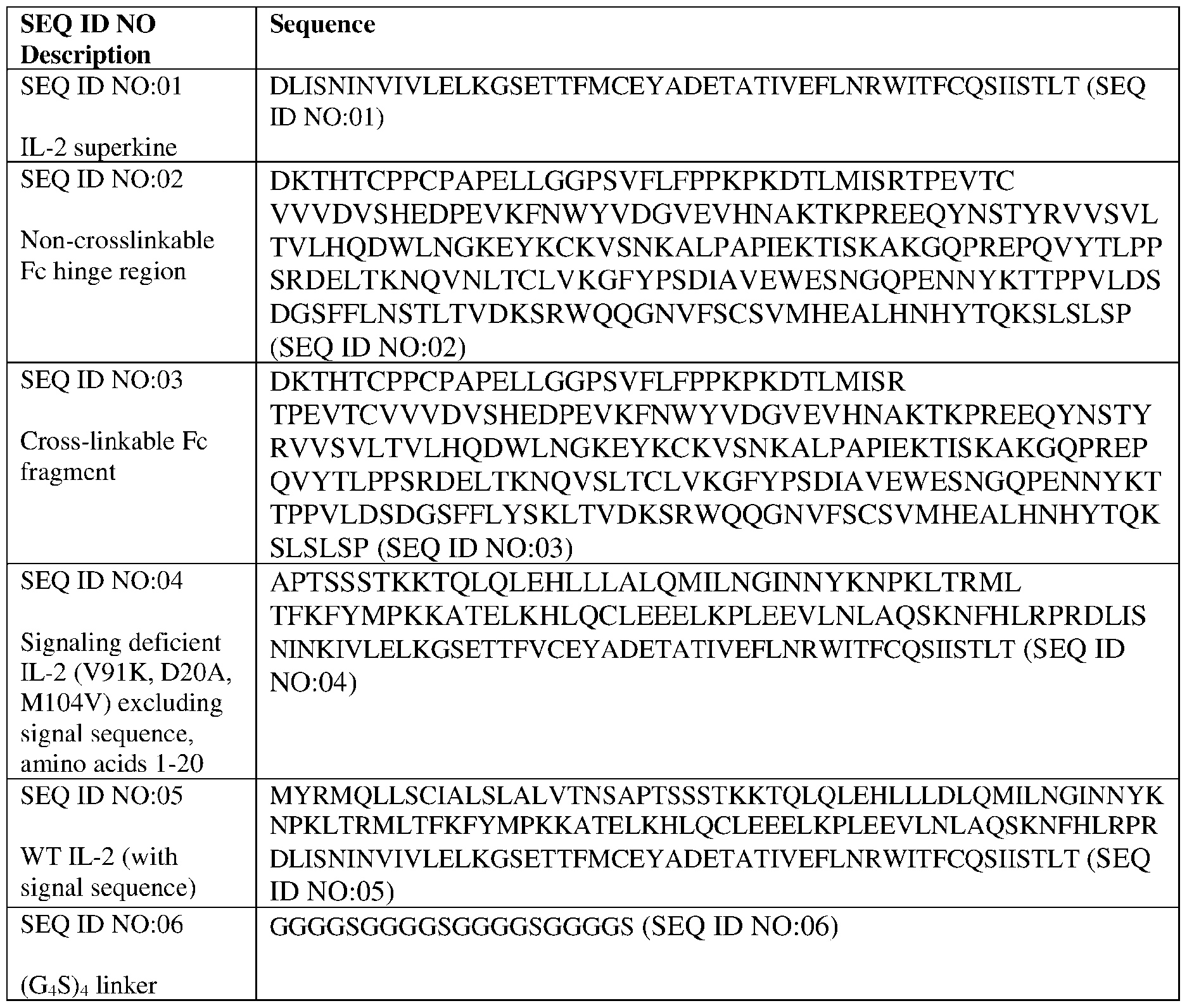
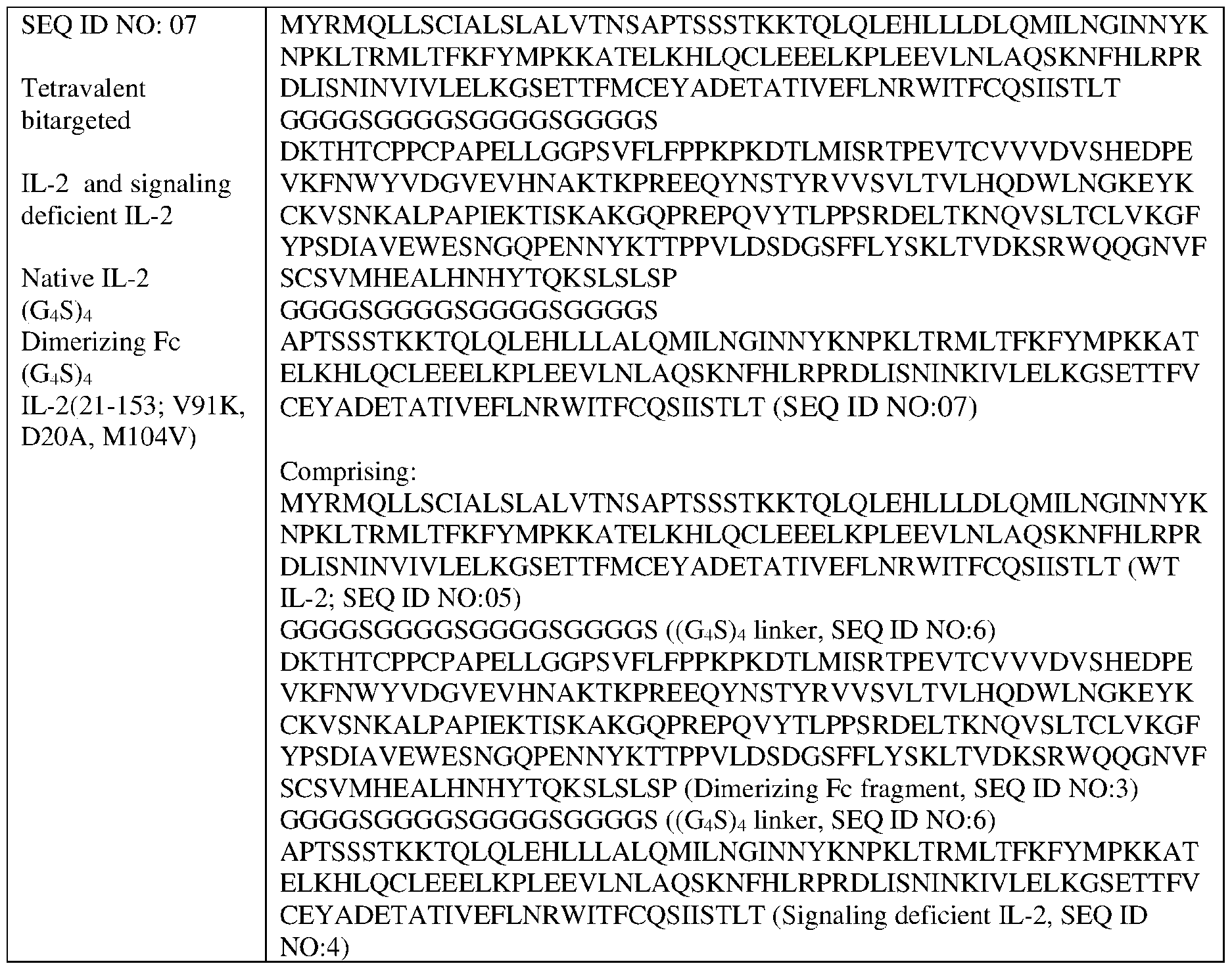


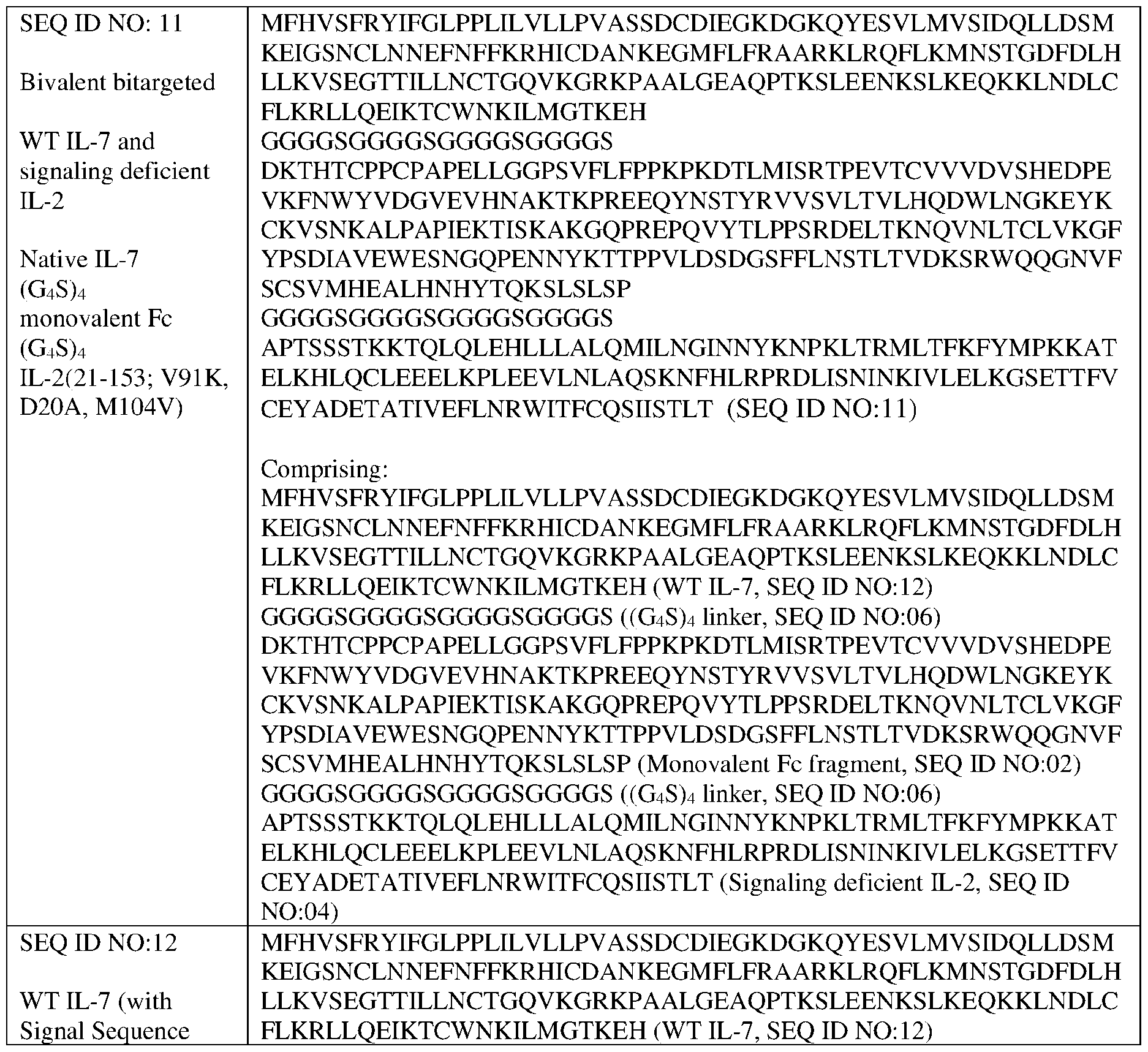
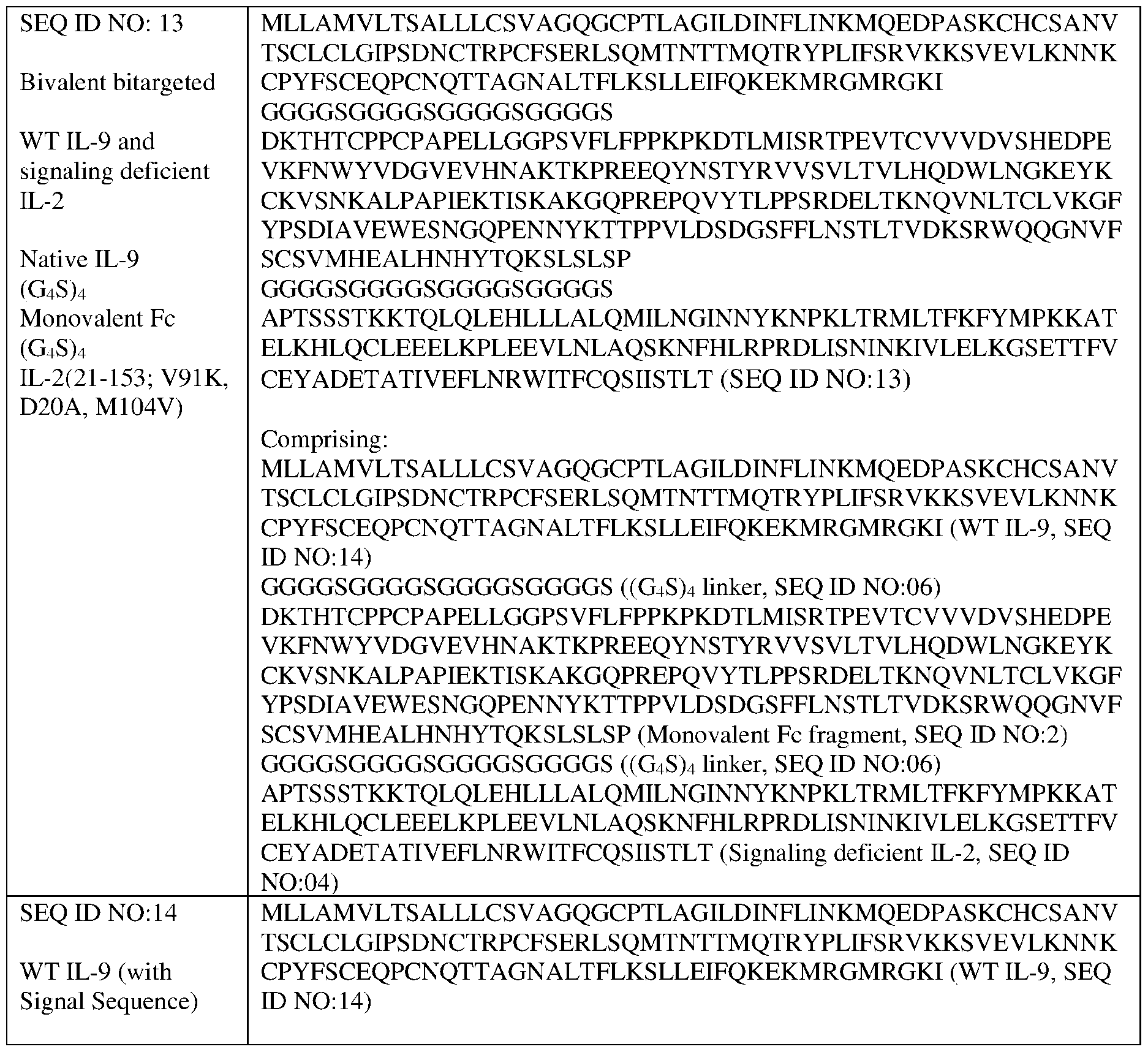
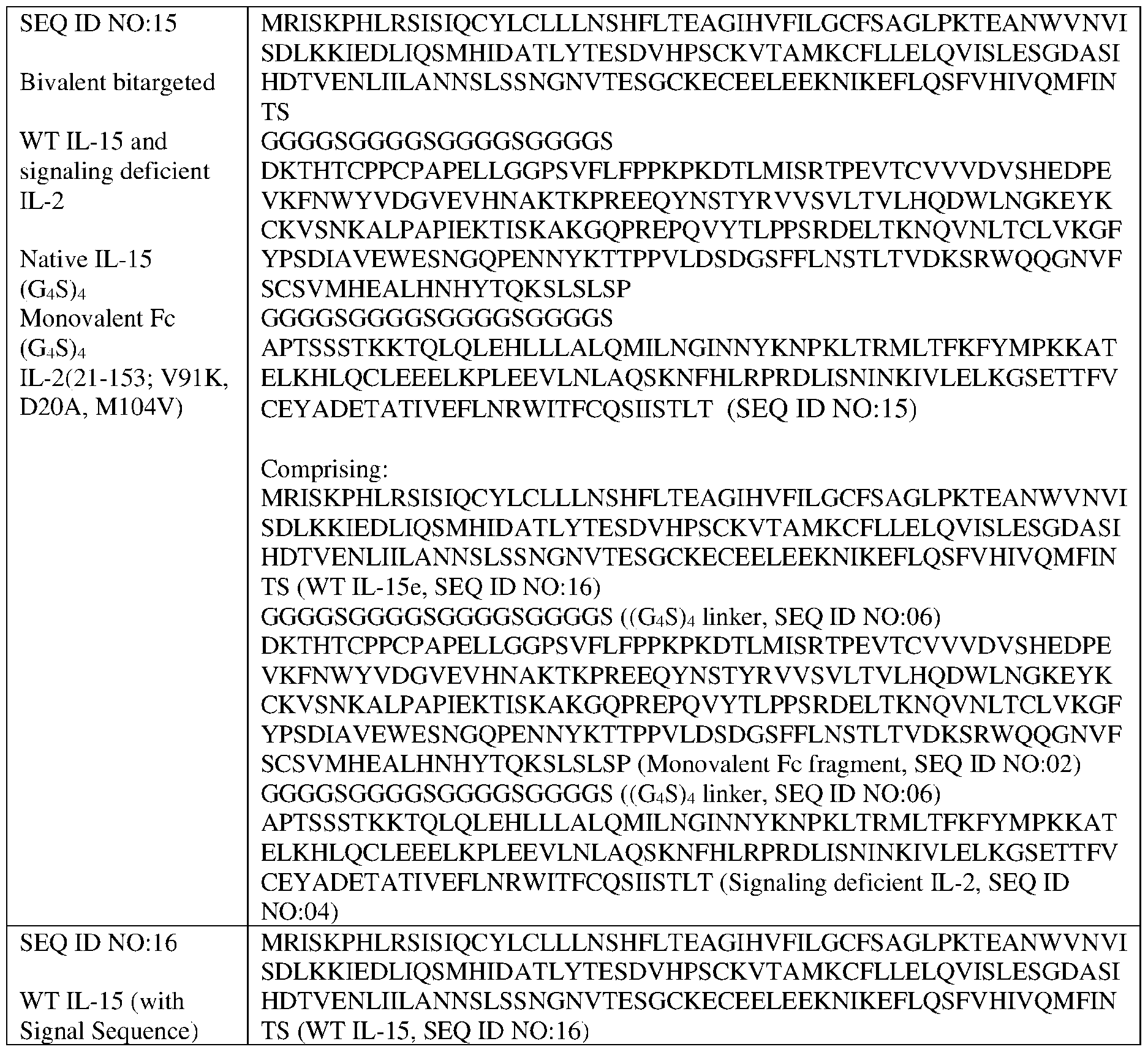
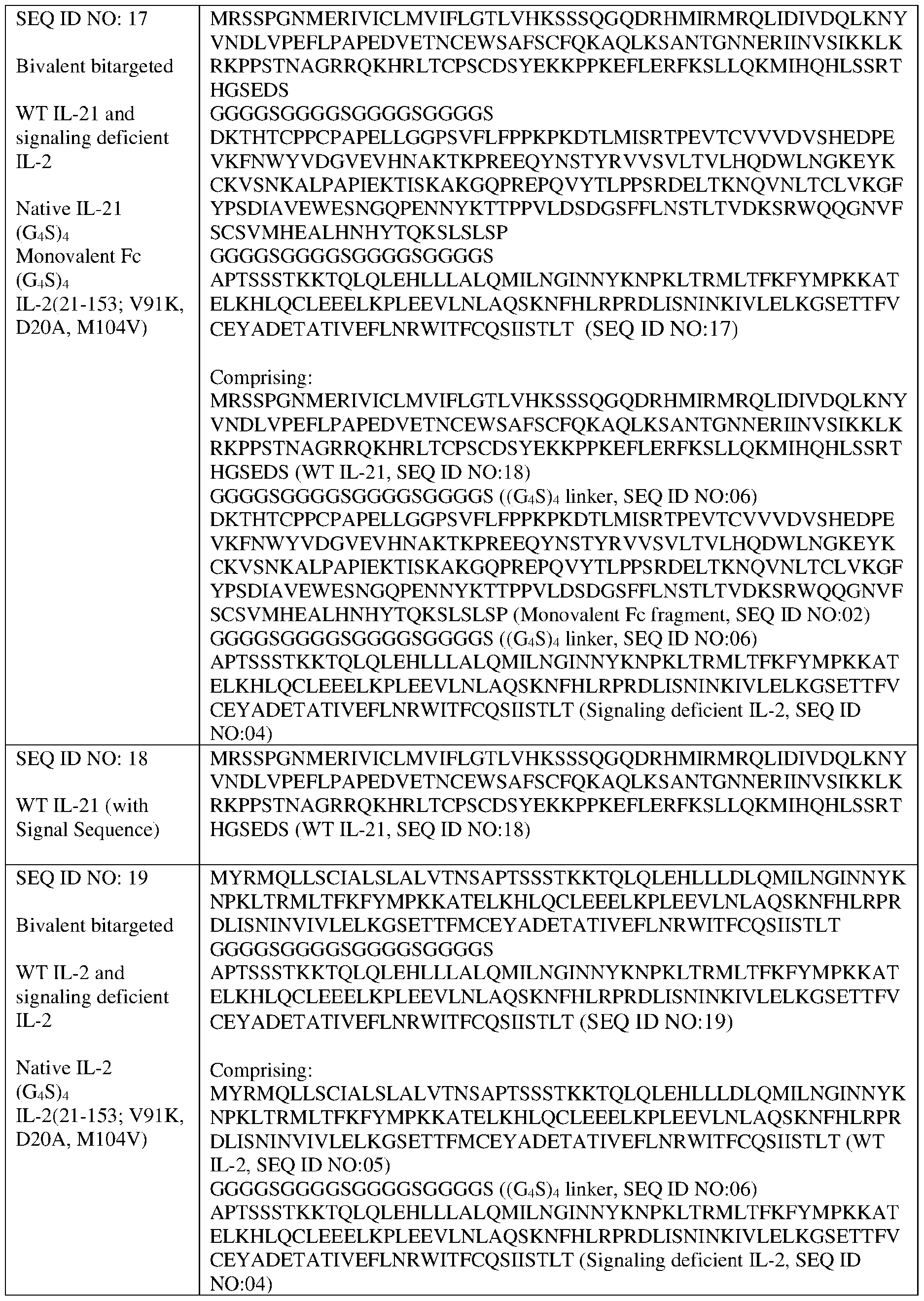
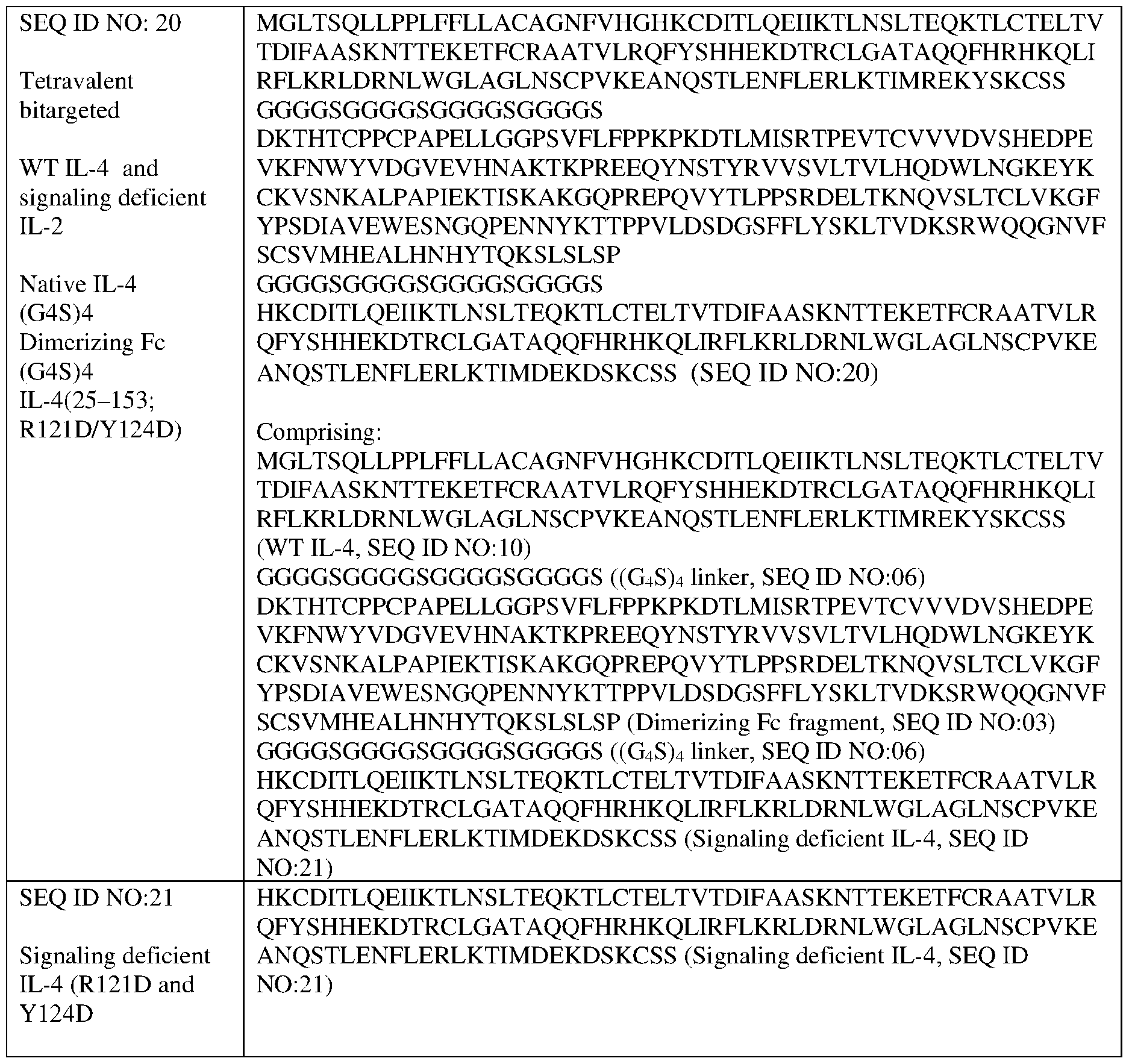
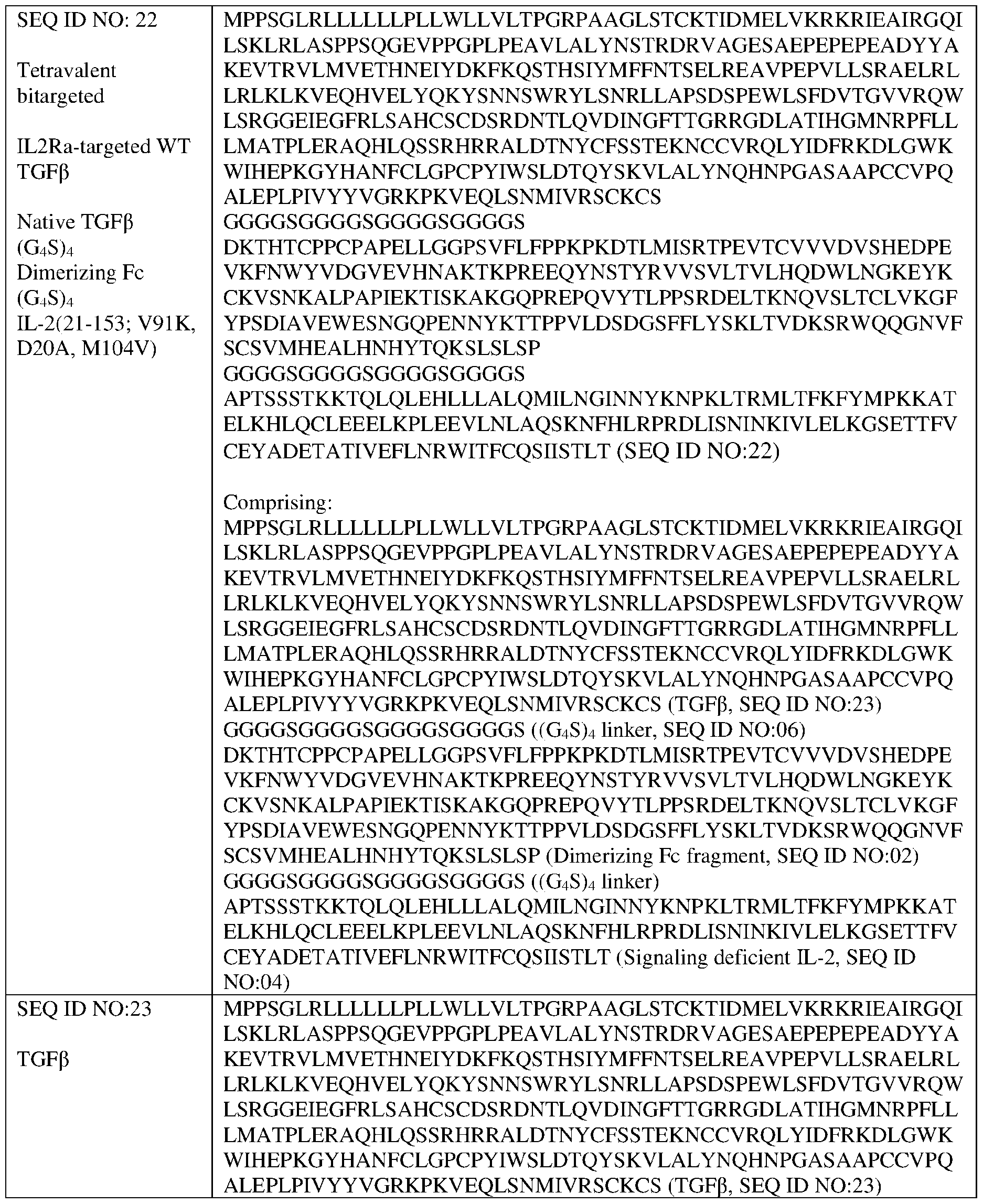

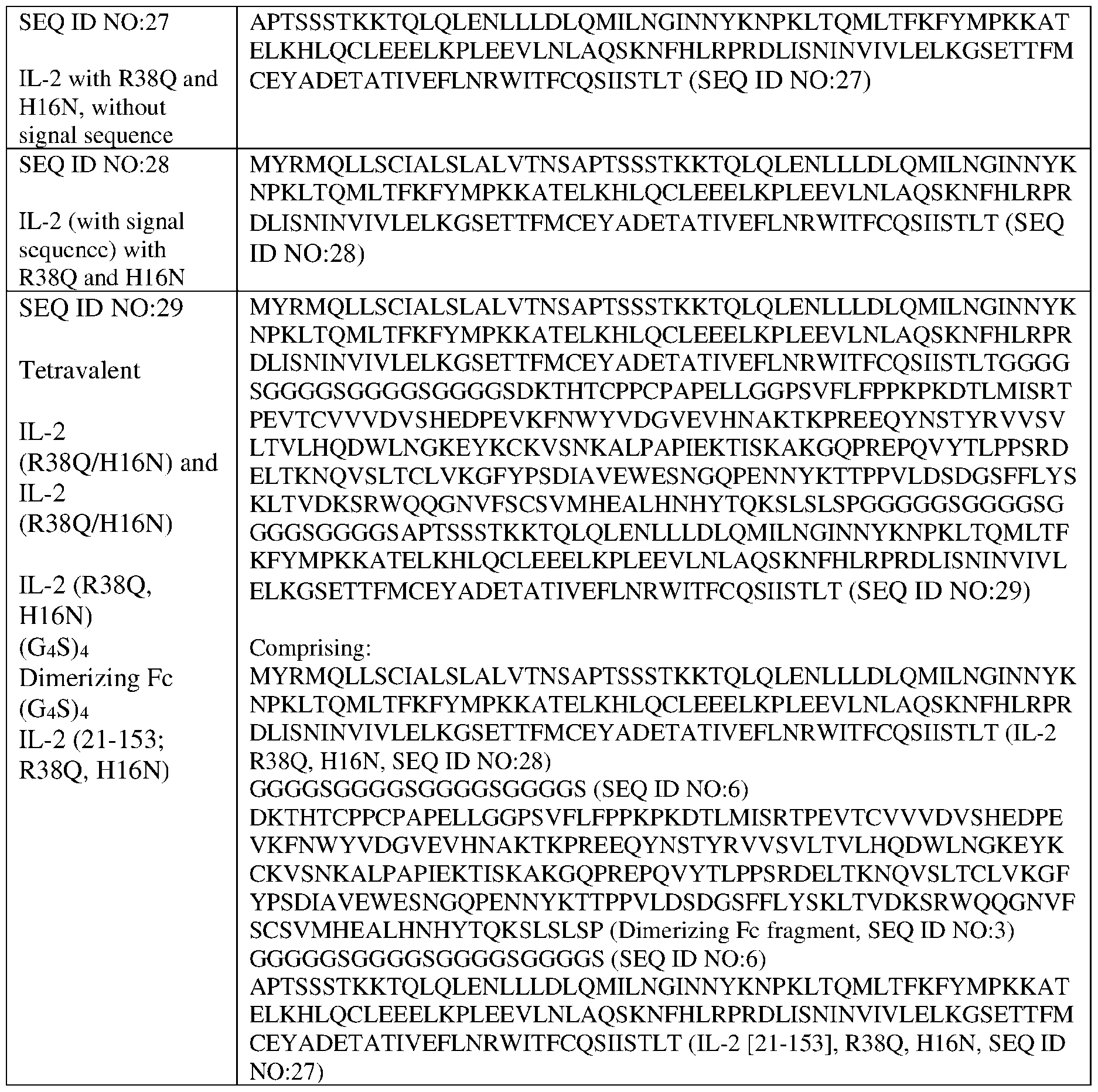
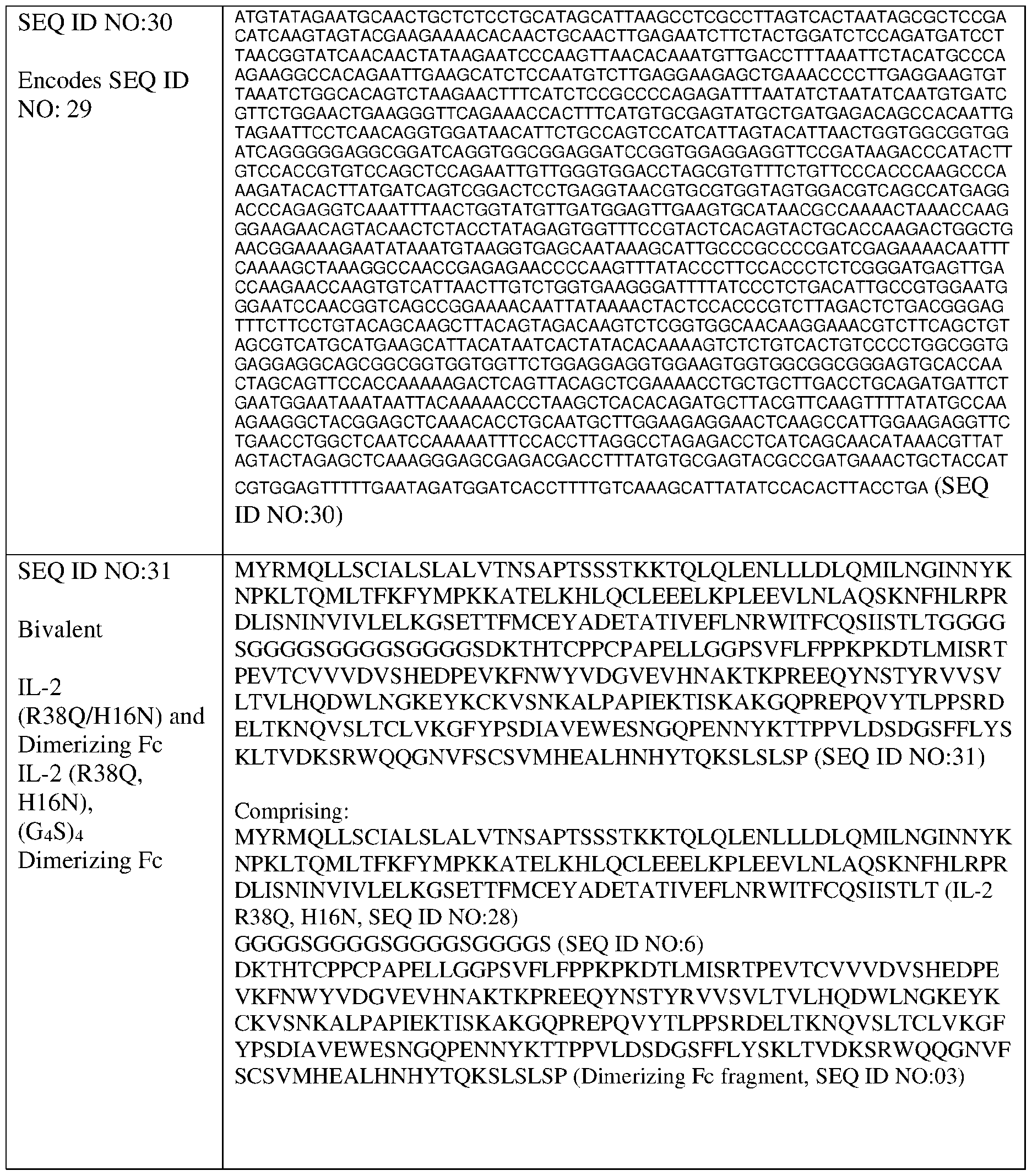

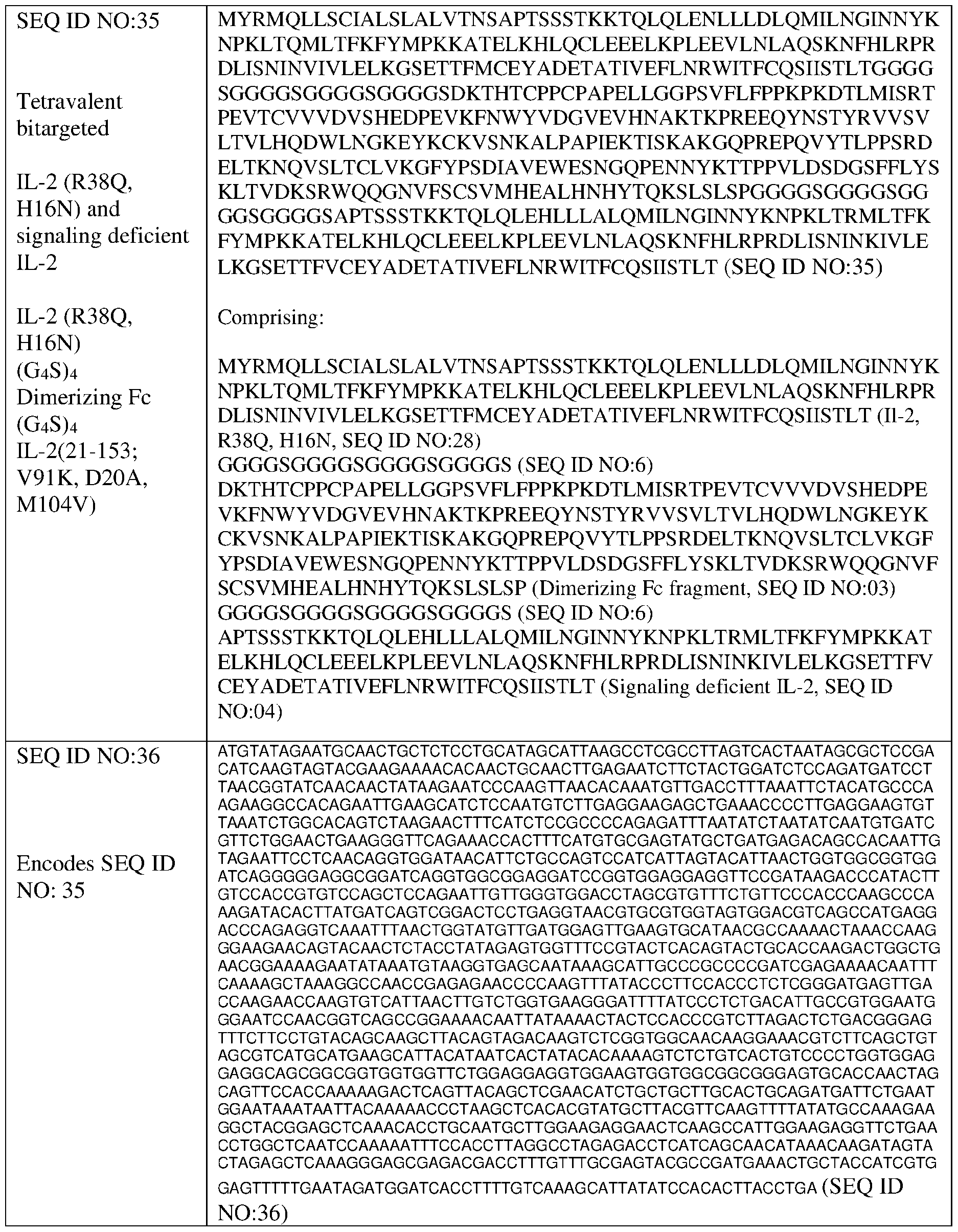
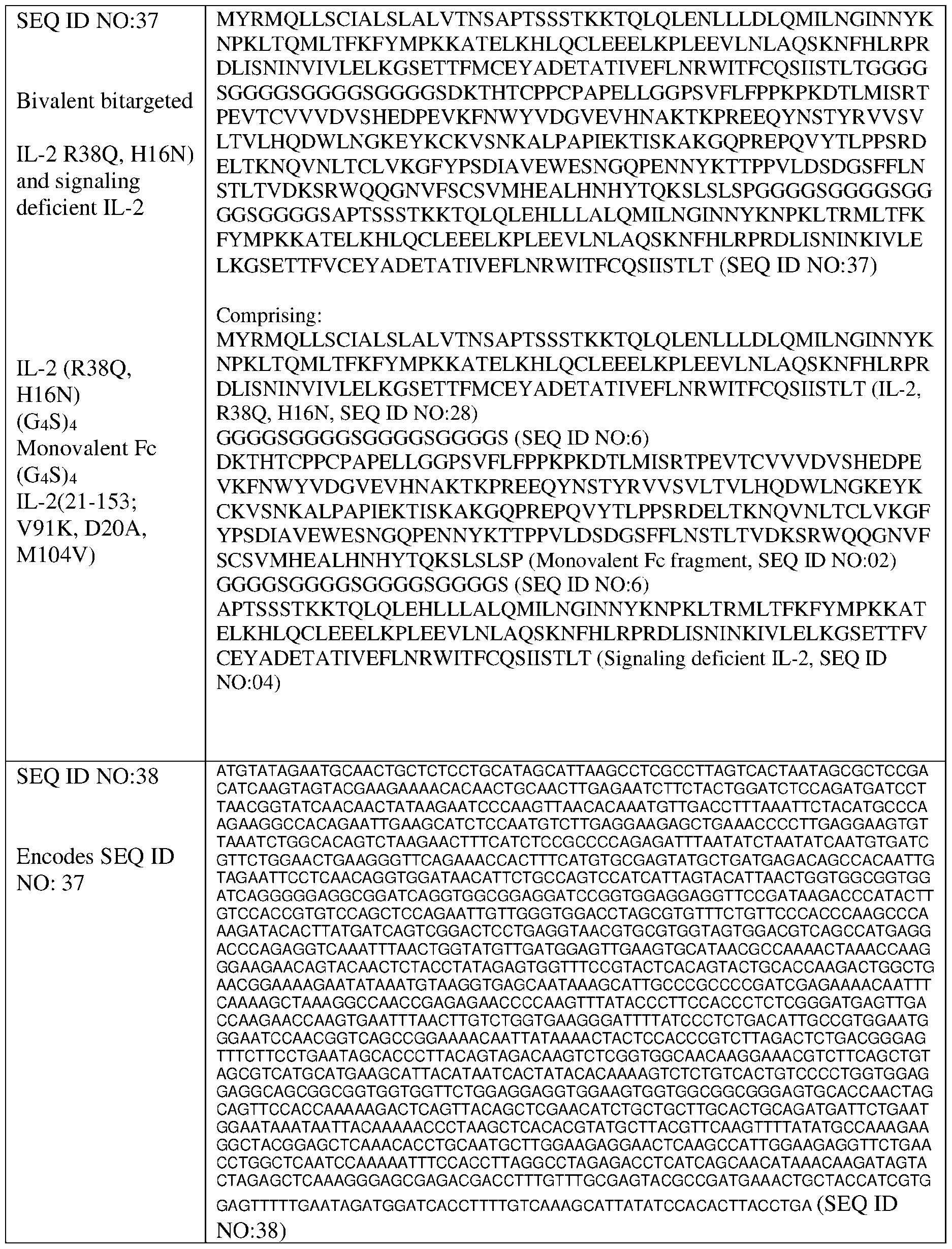
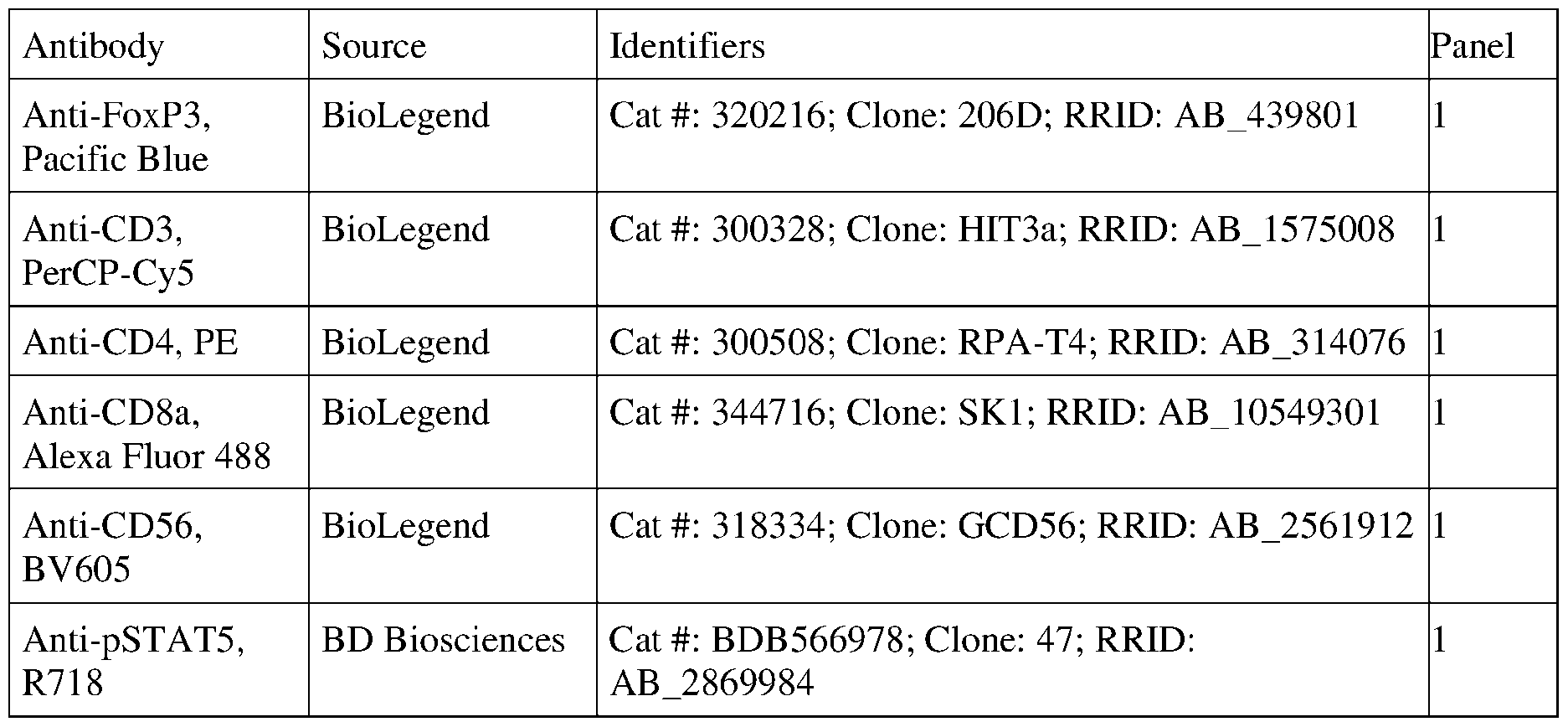
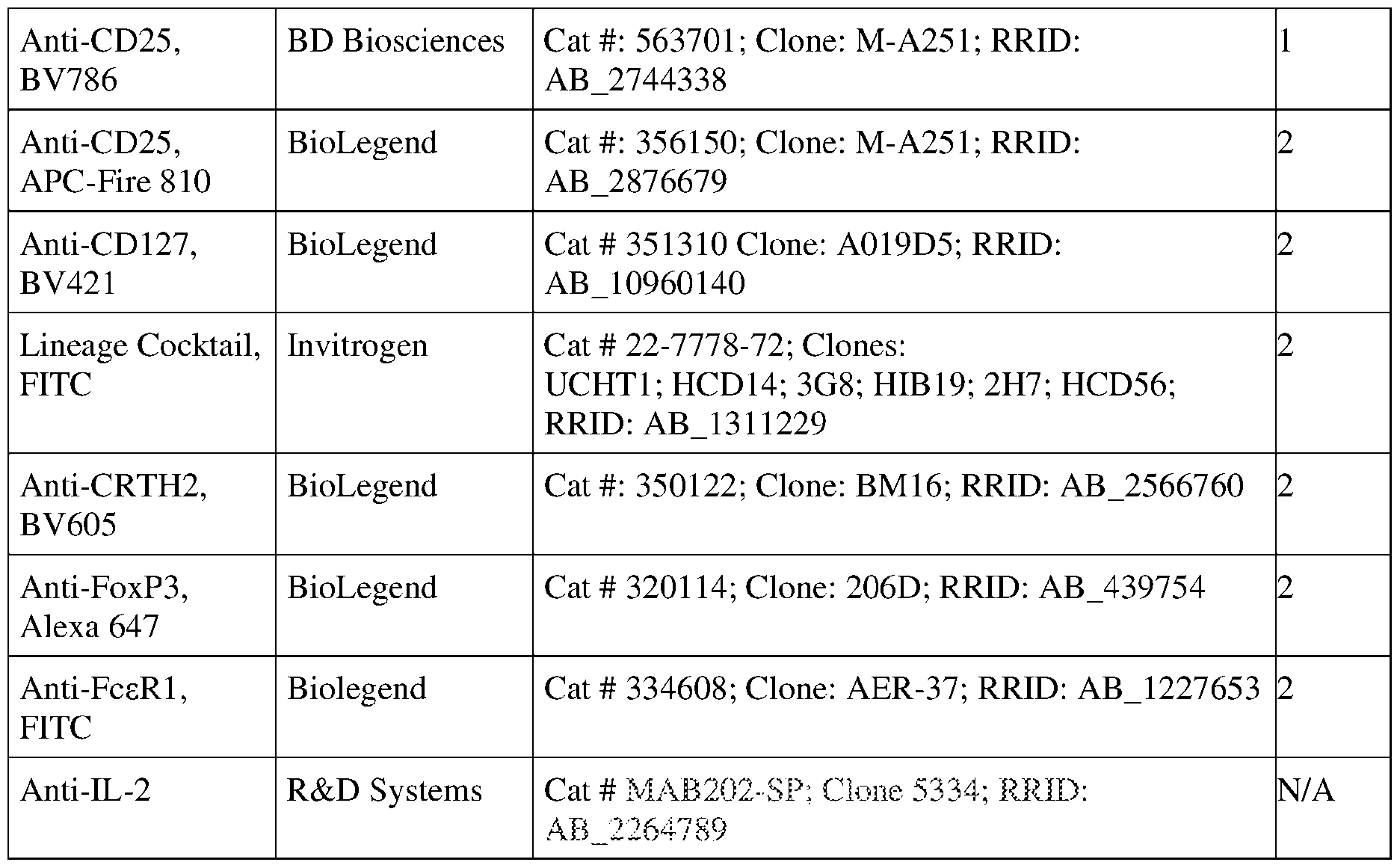


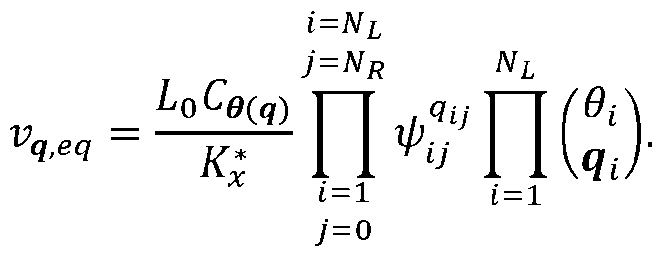

Claims
Priority Applications (1)
| Application Number | Priority Date | Filing Date | Title |
|---|---|---|---|
| EP23898871.1A EP4626486A2 (en) | 2022-11-30 | 2023-11-30 | Multispecific engineered biomolecules and uses thereof |
Applications Claiming Priority (2)
| Application Number | Priority Date | Filing Date | Title |
|---|---|---|---|
| US202263428921P | 2022-11-30 | 2022-11-30 | |
| US63/428,921 | 2022-11-30 |
Publications (2)
| Publication Number | Publication Date |
|---|---|
| WO2024118878A2 true WO2024118878A2 (en) | 2024-06-06 |
| WO2024118878A3 WO2024118878A3 (en) | 2024-08-02 |
Family
ID=91325020
Family Applications (1)
| Application Number | Title | Priority Date | Filing Date |
|---|---|---|---|
| PCT/US2023/081752 Ceased WO2024118878A2 (en) | 2022-11-30 | 2023-11-30 | Multispecific engineered biomolecules and uses thereof |
Country Status (2)
| Country | Link |
|---|---|
| EP (1) | EP4626486A2 (en) |
| WO (1) | WO2024118878A2 (en) |
Family Cites Families (3)
| Publication number | Priority date | Publication date | Assignee | Title |
|---|---|---|---|---|
| EP3421495A3 (en) * | 2013-03-15 | 2019-05-15 | Xencor, Inc. | Modulation of t cells with bispecific antibodies and fc fusions |
| GB202102049D0 (en) * | 2021-02-13 | 2021-03-31 | Psioxus Therapeutics Ltd | Viruses |
| US20240199714A1 (en) * | 2021-04-16 | 2024-06-20 | Orionis Biosciences, Inc. | Il-2 based constructs |
-
2023
- 2023-11-30 WO PCT/US2023/081752 patent/WO2024118878A2/en not_active Ceased
- 2023-11-30 EP EP23898871.1A patent/EP4626486A2/en active Pending
Also Published As
| Publication number | Publication date |
|---|---|
| EP4626486A2 (en) | 2025-10-08 |
| WO2024118878A3 (en) | 2024-08-02 |
Similar Documents
| Publication | Publication Date | Title |
|---|---|---|
| US11717559B2 (en) | Interleukin 15 protein complex and use thereof | |
| CN111655716B (en) | IL-15-based fusions with IL-7 and IL-21 | |
| Tang et al. | The challenges and molecular approaches surrounding interleukin-2-based therapeutics in cancer | |
| CN115768524A (en) | ILT binding agents and methods of use thereof | |
| JP2020503885A (en) | Chimeric antigen receptor for AXL or ROR2 and method of using the same | |
| Koh et al. | IL-17 and IL-21: their immunobiology and therapeutic potentials | |
| CN113544144A (en) | Methods and uses of variant CD80 fusion proteins and related constructs | |
| CN116406380A (en) | Bispecific recombinant protein and its use | |
| JP2024520427A (en) | T-CELL RECEPTORS TARGETING RAS MUTATIONS AND USES THEREOF - Patent application | |
| WO2022129512A1 (en) | Bifunctional anti-pd1/il-7 molecules | |
| JP2022524993A (en) | T cell receptor and its usage | |
| JP7727546B2 (en) | T cell receptors and methods of use thereof | |
| WO2024118878A2 (en) | Multispecific engineered biomolecules and uses thereof | |
| JP7669346B2 (en) | T cell receptors and methods of use thereof | |
| JP7727547B2 (en) | T cell receptors and methods of use thereof | |
| EP4362969A1 (en) | Altering cytokine specificity through binding valency | |
| EP4047021A1 (en) | Ox40/pd-l1 bispecific antibody | |
| EP4004218A1 (en) | T cell receptors and methods of use thereof | |
| WO2024193546A1 (en) | Engineered il-21 variants and methods of use thereof | |
| US20250236653A1 (en) | Targeted low potency il-12 fc fusion proteins and uses thereof | |
| WO2022007885A1 (en) | Fusion polypeptide and polypeptide dimer, and use thereof | |
| HK40060137A (en) | Methods and uses of variant cd80 fusion proteins and related constructs | |
| BR112020015030B1 (en) | FUSION PROTEIN COMPRISING IL-2 AND CD80, DIMER OF SAID PROTEIN, USES THEREOF TO TREAT CANCER, AS WELL AS POLYNUCLEOTIDE, VECTOR, TRANSFORMED MICROORGANISM AND PHARMACEUTICAL COMPOSITION | |
| BR122024021342A2 (en) | FUSION PROTEIN COMPRISING IL-2 AND CD80, DIMER OF SAID PROTEIN, USES THEREOF FOR TREATMENT OF CANCER OR AN INFECTIOUS DISEASE, AS WELL AS POLYNUCLEOTIDE, VECTOR, TRANSFORMED CELL AND PHARMACEUTICAL COMPOSITION | |
| HK40058870A (en) | Il-12 heterodimeric fc-fusion proteins |
Legal Events
| Date | Code | Title | Description |
|---|---|---|---|
| 121 | Ep: the epo has been informed by wipo that ep was designated in this application |
Ref document number: 23898871 Country of ref document: EP Kind code of ref document: A2 |
|
| WWE | Wipo information: entry into national phase |
Ref document number: 2023898871 Country of ref document: EP |
|
| NENP | Non-entry into the national phase |
Ref country code: DE |
|
| ENP | Entry into the national phase |
Ref document number: 2023898871 Country of ref document: EP Effective date: 20250630 |
|
| 121 | Ep: the epo has been informed by wipo that ep was designated in this application |
Ref document number: 23898871 Country of ref document: EP Kind code of ref document: A2 |
|
| WWP | Wipo information: published in national office |
Ref document number: 2023898871 Country of ref document: EP |