Attorney Docket No.57547-723.601 CHECKPOINT KINASE 1 (CHK1) INHIBITORS AND USES THEREOF CROSS-REFERENCE [0001] This application claims the benefit of U.S. Provisional Application Serial No.63/385,344 filed November 29, 2022 which is hereby incorporated by reference in its entirety. FIELD OF THE INVENTION [0002] Described herein are compounds, methods of making such compounds, pharmaceutical compositions, and medicaments comprising such compounds, and methods of using such compounds for inhibiting checkpoint kinase 1 (Chk1). BACKGROUND OF THE INVENTION [0003] Checkpoint kinases (Chks) are protein kinases that are involved in cell cycle control. Two checkpoint kinase subtypes have been identified, Chk1 and Chk2. Chk1 is a central component of genome surveillance pathways and is a key regulator of the cell cycle and cell survival. Chk1 is required for the initiation of DNA damage checkpoints and has recently been shown to play a role in the normal (unperturbed) cell cycle. Chk1 impacts various stages of the cell cycle including the S phase, G2/M transition, and M phase. In addition to mediating cell cycle checkpoints, Chk1 also contributes to DNA repair processes, gene transcription, embryo development, cellular responses to HIV infection and somatic cell viability. [0004] Chk1 is essential for the maintenance of genomic integrity. Chk1 monitors DNA replication in unperturbed cell cycles and responds to genotoxic stress if present. Chk1 recognizes DNA strand instability during replication and can stall DNA replication to allow time for DNA repair mechanisms to restore the genome. Recently, Chk1 has been shown to mediate DNA repair mechanisms and does so by activating various repair factors. Furthermore, Chk1 has been associated with three particular aspects of the S-phase, which includes the regulation of late origin firing, controlling the elongation process and maintenance of DNA replication fork stability. [0005] In response to DNA damage, Chk1 is an important signal transducer for G2/M checkpoint activation. Activation of Chk1 holds the cell in the G2 phase until ready to enter the mitotic phase. This delay allows time for DNA to repair or for cell death to occur if DNA damage is irreversible. Chk1 must inactivate for the cell to transition from the G2 phase into mitosis, Chk1 expression levels are mediated by regulatory proteins. [0006] Chk1 has a regulatory role in the spindle checkpoint; however, the relationship is less clear as compared to checkpoints in other cell cycle stages. During this phase, the Chk1 activating element of single strand DNA (ssDNA) cannot be generated suggesting an alternate form of activation. Studies on Chk1 deficient chicken lymphoma cells have shown increased levels of genomic instability and failure to arrest
Attorney Docket No.57547-723.601 during the spindle checkpoint phase in mitosis. Furthermore, haploinsufficient mammary epithelial cells illustrated misaligned chromosomes and abnormal segregation. These studies suggest Chk1 depletion can lead to defects in the spindle checkpoint resulting in mitotic abnormalities. [0007] DNA damage induces the activation of Chk1, which facilitates the initiation of the DNA damage response (DDR) and cell cycle checkpoints. The DNA damage response is a network of signaling pathways that leads to activation of checkpoints, DNA repair and apoptosis to inhibit damaged cells from progressing through the cell cycle. [0008] Chk1 is regulated by ATR through phosphorylation, forming the ATR-Chk1 pathway. This pathway recognizes ssDNA, which can be a result of UV-induced damage, replication stress and inter-strand cross linking. Often ssDNA can be a result of abnormal replication during S phase through the uncoupling of replication enzymes helicase and DNA polymerase. These ssDNA structures attract ATR and eventually activate the checkpoint pathway. [0009] However, activation of Chk1 is not solely dependent on ATR; intermediate proteins involved in DNA replication are often necessary. Regulatory proteins such as replication protein A, Claspin, Tim/Tipin, Rad 17, TopBP1 may be involved to facilitate Chk1 activation. Additional protein interactions are involved to induce maximal phosphorylation of Chk1. Chk1 activation can also be ATR-independent through interactions with other protein kinases such as PKB/AKT, MAPKAPK and p90/RSK. [0010] Chk1 interacts with many downstream effectors to induce cell cycle arrest. In response to DNA damage, Chk1 primarily phosphorylates Cdc25 which results in its proteasomal degradation. The degradation has an inhibitory effect on the formation of cyclin-dependent kinase complexes, which are key drivers of the cell cycle. Through targeting Cdc25, cell cycle arrest can occur at multiple time points including the G1/S transition, S phase and G2/M transition. Furthermore, Chk1 can target Cdc25 indirectly through phosphorylating Nek11. [0011] Chk1 has shown to mediate DNA repair mechanisms and does so by activating repair factors such as proliferating cell nuclear antigen (PCNA), FANCE, Rad51 and TLK. Chk1 facilitates replication fork stabilization during DNA replication and repair however more research is necessary to define the underlying interactions. [0012] There is a need for Chk1 inhibitors that are potent inhibitors of the cell cycle checkpoints that can act effectively as potentiators of DNA damaging agents to address the need for safe and effective treatments of cancer. BRIEF SUMMARY OF THE INVENTION [0013] Described herein are Chk1 inhibitors that are useful in treating cancer. [0014] Disclosed herein is a compound of Formula (I), or a pharmaceutically acceptable salt, solvate, tautomer, or stereoisomer thereof:
Attorney Docket No.57547-723.601

Formula (I) as disclosed herein. [0015] In some embodiments, the compound is of Formula (Ia):
Formula (Ia). [0016] In some embodiments, the compound is of Formula (Ib):
Formula (Ib). [0017] In some embodiments, the compound is of Formula (Ic):
Formula (Ic). [0018] In some embodiments, the compound is of Formula (Id):
Attorney Docket No.57547-723.601
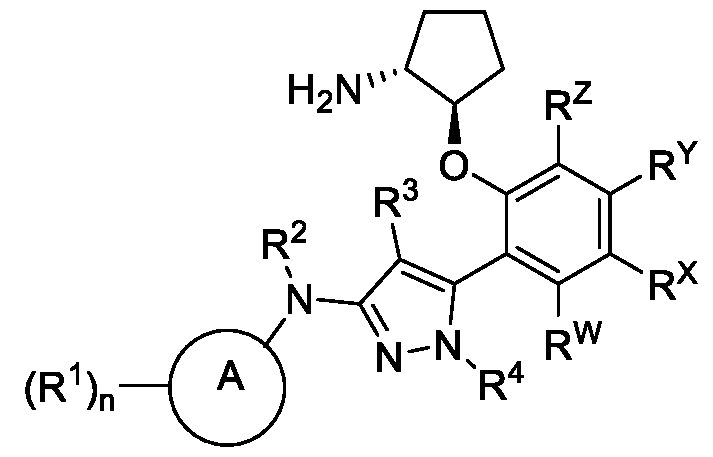
Formula (Id). [0019] Also disclosed herein is a pharmaceutical composition comprising a compound disclosed herein, or a pharmaceutically acceptable salt, solvate, tautomer, or stereoisomer thereof, and a pharmaceutically acceptable excipient. [0020] Also disclosed herein is a method of treating cancer in a subject, comprising administering to the subject a compound disclosed herein, or a pharmaceutically acceptable salt, solvate, tautomer, or stereoisomer thereof, or a pharmaceutical composition disclosed herein. [0021] In some embodiments, the cancer is brain tumor. In some embodiments, the cancer has metastasized in the brain. [0022] Also disclosed herein is a method for treating a tumor or tumor cells in a subject, the method comprising administering a compound disclosed herein, or a pharmaceutically acceptable salt, solvate, tautomer, or stereoisomer thereof, in an amount sufficient to induce replication stress in the tumor or tumor cells; and administering a cancer-targeted therapeutic agent; wherein the tumor or tumor cells have an ecDNA signature; and wherein growth or size of the tumor or growth or number of tumor cells is reduced. [0023] Also disclosed herein is a method for treating a tumor or tumor cells in a subject, the method comprising administering a compound disclosed herein, or a pharmaceutically acceptable salt, solvate, tautomer, or stereoisomer thereof; and administering a cancer-targeted therapeutic agent; wherein the tumor or tumor cells have an ecDNA signature; and wherein growth or size of the tumor or growth or number of tumor cells is reduced. [0024] In some embodiments, the compound or a pharmaceutically acceptable salt, solvate, tautomer, or stereoisomer thereof is administered in an amount sufficient to induce replication stress in the tumor or tumor cells. [0025] Also disclosed herein is a method of treating an ecDNA-associated tumor or tumor cells comprising administering a compound disclosed herein, or a pharmaceutically acceptable salt, solvate, tautomer, or stereoisomer thereof, to a subject identified as having a tumor or tumor cells having ecDNA, wherein growth or size of the tumor or growth or number of the tumor cells is decreased as a result of treatment. [0026] In some embodiments, the method further comprises administering a cancer-targeted therapeutic agent. [0027] In some embodiments, the compound is CNS penetrant.
Attorney Docket No.57547-723.601 [0028] Also disclosed herein is a method of inhibiting Chk1 in a subject, comprising administering to the subject a compound disclosed herein, or a pharmaceutically acceptable salt, solvate, tautomer, or stereoisomer thereof, or a pharmaceutical composition disclosed herein. [0029] Also disclosed herein is a method of treating tumor or tumor cells having a focal amplification of a target gene comprising administering a compound disclosed herein, or a pharmaceutically acceptable salt, solvate, tautomer, or stereoisomer thereof, to a subject identified as having a tumor or tumor cells having the focal amplification, wherein growth or size of the tumor or growth or number of the tumor cells is decreased as a result of treatment. In some embodiments, the method further comprises administering a cancer-targeted therapeutic agent directed against the target gene. In some embodiments, the focal amplification is present on ecDNA. [0030] Also disclosed herein is a method of treating tumor or tumor cells that have developed resistance to a targeted agent comprising administering a compound disclosed herein, or a pharmaceutically acceptable salt, solvate, tautomer, or stereoisomer thereof, to a subject identified as having a tumor or tumor cells that have developed resistance to the targeted agent, wherein growth or size of the tumor or growth or number of the tumor cells is decreased as a result of treatment. In some embodiments, the method further comprises administering the targeted agent. In some embodiments, the targeted agent is directed against a target gene present within a focal amplification and/or on ecDNA. INCORPORATION BY REFERENCE [0031] All publications, patents, and patent applications mentioned in this specification are herein incorporated by reference for the specific purposes identified herein. DETAILED DESCRIPTION OF THE INVENTION Definitions [0032] In the following description, certain specific details are set forth in order to provide a thorough understanding of various embodiments. However, one skilled in the art will understand that the invention may be practiced without these details. In other instances, well-known structures have not been shown or described in detail to avoid unnecessarily obscuring descriptions of the embodiments. Unless the context requires otherwise, throughout the specification and claims which follow, the word “comprise” and variations thereof, such as, “comprises” and “comprising” are to be construed in an open, inclusive sense, that is, as “including, but not limited to.” Further, headings provided herein are for convenience only and do not interpret the scope or meaning of the claimed invention. [0033] Reference throughout this specification to “some embodiments” or “an embodiment” means that a particular feature, structure, or characteristic described in connection with the embodiment is included in at least one embodiment. Thus, the appearances of the phrases “in one embodiment” or “in an embodiment” in various places throughout this specification are not necessarily all referring to the same embodiment. Furthermore, the particular features, structures, or characteristics may be combined in any suitable manner in
Attorney Docket No.57547-723.601 one or more embodiments. Also, as used in this specification and the appended claims, the singular forms “a,” “an,” and “the” include plural referents unless the content clearly dictates otherwise. It should also be noted that the term “or” is generally employed in its sense including “and/or” unless the content clearly dictates otherwise. [0034] The terms below, as used herein, have the following meanings, unless indicated otherwise: [0035] “oxo” refers to =O. [0036] “Carboxyl” refers to -COOH. [0037] “Cyano” refers to -CN. [0038] “Alkyl” refers to a straight-chain or branched-chain saturated hydrocarbon monoradical having from one to about ten carbon atoms, more preferably one to six carbon atoms. Examples include, but are not limited to methyl, ethyl, n-propyl, isopropyl, 2-methyl-1-propyl, 2-methyl-2-propyl, 2-methyl-1-butyl, 3- methyl-1-butyl, 2-methyl-3-butyl, 2,2-dimethyl-1-propyl, 2-methyl-1-pentyl, 3-methyl-1-pentyl, 4-methyl-1- pentyl, 2-methyl-2-pentyl, 3-methyl-2-pentyl, 4-methyl-2-pentyl, 2,2-dimethyl-1-butyl, 3,3-dimethyl-1- butyl, 2-ethyl-1-butyl, n-butyl, isobutyl, sec-butyl, t-butyl, n-pentyl, isopentyl, neopentyl, tert-amyl and hexyl, and longer alkyl groups, such as heptyl, octyl and the like. Whenever it appears herein, a numerical range such as “C1-C6 alkyl” or “C1-6alkyl”, means that the alkyl group may consist of 1 carbon atom, 2 carbon atoms, 3 carbon atoms, 4 carbon atoms, 5 carbon atoms or 6 carbon atoms, although the present definition also covers the occurrence of the term “alkyl” where no numerical range is designated. In some embodiments, the alkyl is a C
1-10alkyl. In some embodiments, the alkyl is a C
1-6alkyl. In some embodiments, the alkyl is a C
1-5alkyl. In some embodiments, the alkyl is a C
1-4alkyl. In some embodiments, the alkyl is a C
1-3alkyl. Unless stated otherwise specifically in the specification, an alkyl group may be optionally substituted, for example, with oxo, halogen, amino, nitrile, nitro, hydroxyl, haloalkyl, alkoxy, carboxyl, carboxylate, aryl, cycloalkyl, heterocycloalkyl, heteroaryl, and the like. In some embodiments, the alkyl is optionally substituted with oxo, halogen, -CN, -COOH, -COOMe, -OH, -OMe, -NH
2, or -NO
2. In some embodiments, the alkyl is optionally substituted with halogen, -CN, -OH, or -OMe. In some embodiments, the alkyl is optionally substituted with halogen. [0039] “Alkenyl” refers to a straight-chain, or branched-chain hydrocarbon monoradical having one or more carbon-carbon double-bonds and having from two to about ten carbon atoms, more preferably two to about six carbon atoms. The group may be in either the cis or trans conformation about the double bond(s), and should be understood to include both isomers. Examples include, but are not limited to ethenyl (- CH=CH
2), 1-propenyl (-CH
2CH=CH
2), isopropenyl [-C(CH
3)=CH
2], butenyl, 1,3-butadienyl and the like. Whenever it appears herein, a numerical range such as “C
2-C
6 alkenyl” or “C
2-6alkenyl”, means that the alkenyl group may consist of 2 carbon atoms, 3 carbon atoms, 4 carbon atoms, 5 carbon atoms or 6 carbon atoms, although the present definition also covers the occurrence of the term “alkenyl” where no numerical range is designated. Unless stated otherwise specifically in the specification, an alkenyl group may be optionally substituted, for example, with oxo, halogen, amino, nitrile, nitro, hydroxyl, haloalkyl, alkoxy, carboxyl, carboxylate, aryl, cycloalkyl, heterocycloalkyl, heteroaryl, and the like. In some embodiments, the
Attorney Docket No.57547-723.601 alkenyl is optionally substituted with oxo, halogen, -CN, -COOH, -COOMe, -OH, -OMe, -NH
2, or -NO
2. In some embodiments, the alkenyl is optionally substituted with halogen, -CN, -OH, or -OMe. In some embodiments, the alkenyl is optionally substituted with halogen. [0040] “Alkynyl” refers to a straight-chain or branched-chain hydrocarbon monoradical having one or more carbon-carbon triple-bonds and having from two to about ten carbon atoms, more preferably from two to about six carbon atoms. Examples include, but are not limited to ethynyl, 2-propynyl, 2-butynyl, 1,3- butadiynyl and the like. Whenever it appears herein, a numerical range such as “C2-C6 alkynyl” or “C2- 6alkynyl”, means that the alkynyl group may consist of 2 carbon atoms, 3 carbon atoms, 4 carbon atoms, 5 carbon atoms or 6 carbon atoms, although the present definition also covers the occurrence of the term “alkynyl” where no numerical range is designated. Unless stated otherwise specifically in the specification, an alkynyl group may be optionally substituted, for example, with oxo, halogen, amino, nitrile, nitro, hydroxyl, haloalkyl, alkoxy, carboxyl, carboxylate, aryl, cycloalkyl, heterocycloalkyl, heteroaryl, and the like. In some embodiments, the alkynyl is optionally substituted with oxo, halogen, -CN, -COOH, COOMe, -OH, -OMe, -NH2, or -NO2. In some embodiments, the alkynyl is optionally substituted with halogen, -CN, - OH, or -OMe. In some embodiments, the alkynyl is optionally substituted with halogen. [0041] “Alkylene” refers to a straight or branched divalent hydrocarbon chain. Unless stated otherwise specifically in the specification, an alkylene group may be optionally substituted, for example, with oxo, halogen, amino, nitrile, nitro, hydroxyl, haloalkyl, alkoxy, carboxyl, carboxylate, aryl, cycloalkyl, heterocycloalkyl, heteroaryl, and the like. In some embodiments, the alkylene is optionally substituted with oxo, halogen, -CN, -COOH, COOMe, -OH, -OMe, -NH2, or -NO2. In some embodiments, the alkylene is optionally substituted with halogen, -CN, -OH, or -OMe. In some embodiments, the alkylene is optionally substituted with halogen.
[0042] “Alkoxy” refers to a radical of the formula -OR
a where R
a is an alkyl radical as defined. Unless stated otherwise specifically in the specification, an alkoxy group may be optionally substituted, for example, with oxo, halogen, amino, nitrile, nitro, hydroxyl, haloalkyl, alkoxy, carboxyl, carboxylate, aryl, cycloalkyl, heterocycloalkyl, heteroaryl, and the like. In some embodiments, the alkoxy is optionally substituted with halogen, -CN, -COOH, COOMe, -OH, -OMe, -NH
2, or -NO
2. In some embodiments, the alkoxy is optionally substituted with halogen, -CN, -OH, or -OMe. In some embodiments, the alkoxy is optionally substituted with halogen. [0043] “Aryl” refers to a radical derived from a hydrocarbon ring system comprising 6 to 30 carbon atoms and at least one aromatic ring. The aryl radical may be a monocyclic, bicyclic, tricyclic, or tetracyclic ring system, which may include fused (when fused with a cycloalkyl or heterocycloalkyl ring, the aryl is bonded through an aromatic ring atom) or bridged ring systems. In some embodiments, the aryl is a 6- to 10- membered aryl. In some embodiments, the aryl is a 6-membered aryl (phenyl). Aryl radicals include, but are not limited to, aryl radicals derived from the hydrocarbon ring systems of anthrylene, naphthylene, phenanthrylene, anthracene, azulene, benzene, chrysene, fluoranthene, fluorene, as-indacene, s-indacene, indane, indene, naphthalene, phenalene, phenanthrene, pleiadene, pyrene, and triphenylene. Unless stated
Attorney Docket No.57547-723.601 otherwise specifically in the specification, an aryl may be optionally substituted, for example, with halogen, amino, nitrile, nitro, hydroxyl, alkyl, alkenyl, alkynyl, haloalkyl, alkoxy, carboxyl, carboxylate, aryl, cycloalkyl, heterocycloalkyl, heteroaryl, and the like. In some embodiments, the aryl is optionally substituted with halogen, methyl, ethyl, -CN, -COOH, COOMe, -CF
3, -OH, -OMe, -NH
2, or -NO
2. In some embodiments, the aryl is optionally substituted with halogen, methyl, ethyl, -CN, -CF
3, -OH, or -OMe. In some embodiments, the aryl is optionally substituted with halogen. [0044] “Cycloalkyl” refers to a partially or fully saturated, monocyclic, or polycyclic carbocyclic ring, which may include fused (when fused with an aryl or a heteroaryl ring, the cycloalkyl is bonded through a non-aromatic ring atom) or bridged ring systems. In some embodiments, the cycloalkyl is fully saturated. Representative cycloalkyls include, but are not limited to, cycloalkyls having from three to fifteen carbon atoms (C3-C15 cycloalkyl or C3-C15 cycloalkenyl), from three to ten carbon atoms (C3-C10 cycloalkyl or C3- C10 cycloalkenyl), from three to eight carbon atoms (C3-C8 cycloalkyl or C3-C8 cycloalkenyl), from three to six carbon atoms (C3-C6 cycloalkyl or C3-C6 cycloalkenyl), from three to five carbon atoms (C3-C5 cycloalkyl or C3-C5 cycloalkenyl), or three to four carbon atoms (C3-C4 cycloalkyl or C3-C4 cycloalkenyl). In some embodiments, the cycloalkyl is a 3- to 10-membered cycloalkyl or a 3- to 10-membered cycloalkenyl. In some embodiments, the cycloalkyl is a 3- to 6-membered cycloalkyl or a 3- to 6-membered cycloalkenyl. In some embodiments, the cycloalkyl is a 5- to 6-membered cycloalkyl or a 5- to 6-membered cycloalkenyl. Monocyclic cycloalkyls include, for example, cyclopropyl, cyclobutyl, cyclopentyl, cyclohexyl, cycloheptyl, and cyclooctyl. Polycyclic cycloalkyls include, for example, adamantyl, norbornyl, decalinyl, bicyclo[3.3.0]octane, bicyclo[4.3.0]nonane, cis-decalin, trans-decalin, bicyclo[2.1.1]hexane, bicyclo[2.2.1]heptane, bicyclo[2.2.2]octane, bicyclo[3.2.2]nonane, and bicyclo[3.3.2]decane, and 7,7- dimethyl-bicyclo[2.2.1]heptanyl. Partially saturated cycloalkyls include, for example cyclopentenyl, cyclohexenyl, cycloheptenyl, and cyclooctenyl. Unless stated otherwise specifically in the specification, a cycloalkyl is optionally substituted, for example, with oxo, halogen, amino, nitrile, nitro, hydroxyl, alkyl, alkenyl, alkynyl, haloalkyl, alkoxy, carboxyl, carboxylate, aryl, cycloalkyl, heterocycloalkyl, heteroaryl, and the like. In some embodiments, a cycloalkyl is optionally substituted with oxo, halogen, methyl, ethyl, -CN, -COOH, COOMe, -CF3, -OH, -OMe, -NH2, or -NO2. In some embodiments, a cycloalkyl is optionally substituted with oxo, halogen, methyl, ethyl, -CN, -CF3, -OH, or -OMe. In some embodiments, the cycloalkyl is optionally substituted with halogen. [0045] “Halo” or “halogen” refers to bromo, chloro, fluoro or iodo. In some embodiments, halogen is fluoro or chloro. In some embodiments, halogen is fluoro. [0046] “Haloalkyl” refers to an alkyl radical, as defined above, that is substituted by one or more halo radicals, as defined above, e.g., trifluoromethyl, difluoromethyl, fluoromethyl, trichloromethyl, 2,2,2- trifluoroethyl, 1,2-difluoroethyl, 3-bromo-2-fluoropropyl, 1,2-dibromoethyl, and the like. [0047] “Hydroxyalkyl” refers to an alkyl radical, as defined above, that is substituted by one or more hydroxyls. In some embodiments, the alkyl is substituted with one hydroxyl. In some embodiments, the alkyl is substituted with one, two, or three hydroxyls. Hydroxyalkyl include, for example, hydroxymethyl,
Attorney Docket No.57547-723.601 hydroxyethyl, hydroxypropyl, hydroxybutyl, or hydroxypentyl. In some embodiments, the hydroxyalkyl is hydroxymethyl. [0048] “Aminoalkyl” refers to an alkyl radical, as defined above, that is substituted by one or more amines. In some embodiments, the alkyl is substituted with one amine. In some embodiments, the alkyl is substituted with one, two, or three amines. Aminoalkyl include, for example, aminomethyl, aminoethyl, aminopropyl, aminobutyl, or aminopentyl. In some embodiments, the aminoalkyl is aminomethyl. [0049] “Deuteroalkyl” refers to an alkyl radical, as defined above, that is substituted by one or more deuteriums. In some embodiments, the alkyl is substituted with one deuterium. In some embodiments, the alkyl is substituted with one, two, or three deuteriums. In some embodiments, the alkyl is substituted with one, two, three, four, five, or six deuteriums. Deuteroalkyl include, for example, CD3, CH2D, CHD2, CH2CD3, CD2CD3, CHDCD3, CH2CH2D, or CH2CHD2. In some embodiments, the deuteroalkyl is CD3. [0050] “Heteroalkyl” refers to an alkyl group in which one or more skeletal atoms of the alkyl are selected from an atom other than carbon, e.g., oxygen, nitrogen (e.g., -NH-, -N(alkyl)-), sulfur, phosphorus, or combinations thereof. A heteroalkyl is attached to the rest of the molecule at a carbon atom of the heteroalkyl. In one aspect, a heteroalkyl is a C1-C6 heteroalkyl wherein the heteroalkyl is comprised of 1 to 6 carbon atoms and one or more atoms other than carbon, e.g., oxygen, nitrogen (e.g. -NH-, -N(alkyl)-), sulfur, phosphorus, or combinations thereof wherein the heteroalkyl is attached to the rest of the molecule at a carbon atom of the heteroalkyl. Examples of such heteroalkyl are, for example, -CH2OCH3, -CH2CH2OCH3, -CH2CH2OCH2CH2OCH3, -CH(CH3)OCH3, -CH2NHCH3, -CH2N(CH3)2, -CH2CH2NHCH3, or - CH2CH2N(CH3)2. Unless stated otherwise specifically in the specification, a heteroalkyl is optionally substituted for example, with oxo, halogen, amino, nitrile, nitro, hydroxyl, alkyl, alkenyl, alkynyl, haloalkyl, alkoxy, aryl, cycloalkyl, heterocycloalkyl, heteroaryl, and the like. In some embodiments, a heteroalkyl is optionally substituted with oxo, halogen, methyl, ethyl, -CN, -CF3, -OH, -OMe, -NH2, or -NO2. In some embodiments, a heteroalkyl is optionally substituted with oxo, halogen, methyl, ethyl, -CN, -CF
3, -OH, or - OMe. In some embodiments, the heteroalkyl is optionally substituted with halogen. [0051] “Heterocycloalkyl” refers to a 3- to 24-membered partially or fully saturated ring radical comprising 2 to 23 carbon atoms and from one to 8 heteroatoms selected from the group consisting of nitrogen, oxygen, phosphorous and sulfur. In some embodiments, the heterocycloalkyl is fully saturated. In some embodiments, the heterocycloalkyl comprises one to three heteroatoms selected from the group consisting of nitrogen, oxygen, and sulfur. In some embodiments, the heterocycloalkyl comprises one to three heteroatoms selected from the group consisting of nitrogen and oxygen. In some embodiments, the heterocycloalkyl comprises one to three nitrogens. In some embodiments, the heterocycloalkyl comprises one or two nitrogens. In some embodiments, the heterocycloalkyl comprises one nitrogen. In some embodiments, the heterocycloalkyl comprises one nitrogen and one oxygen. Unless stated otherwise specifically in the specification, the heterocycloalkyl radical may be a monocyclic, bicyclic, tricyclic, or tetracyclic ring system, which may include fused (when fused with an aryl or a heteroaryl ring, the heterocycloalkyl is bonded through a non-aromatic ring atom) or bridged ring systems; and the nitrogen,
Attorney Docket No.57547-723.601 carbon, or sulfur atoms in the heterocycloalkyl radical may be optionally oxidized; the nitrogen atom may be optionally quaternized. Representative heterocycloalkyls include, but are not limited to, heterocycloalkyls having from two to fifteen carbon atoms (C
2-C
15 heterocycloalkyl or C
2-C
15 heterocycloalkenyl), from two to ten carbon atoms (C
2-C
10 heterocycloalkyl or C
2-C
10 heterocycloalkenyl), from two to eight carbon atoms (C
2-C
8 heterocycloalkyl or C
2-C
8 heterocycloalkenyl), from two to seven carbon atoms (C
2-C
7 heterocycloalkyl or C
2-C
7 heterocycloalkenyl), from two to six carbon atoms (C
2-C
6 heterocycloalkyl or C
2- C
6 heterocycloalkenyl), from two to five carbon atoms (C
2-C
5 heterocycloalkyl or C
2-C
5 heterocycloalkenyl), or two to four carbon atoms (C
2-C
4 heterocycloalkyl or C
2-C
4 heterocycloalkenyl). Examples of such heterocycloalkyl radicals include, but are not limited to, aziridinyl, azetidinyl, oxetanyl, dioxolanyl, thienyl[1,3]dithianyl, decahydroisoquinolyl, imidazolinyl, imidazolidinyl, isothiazolidinyl, isoxazolidinyl, morpholinyl, octahydroindolyl, octahydroisoindolyl, 2-oxopiperazinyl, 2-oxopiperidinyl, 2- oxopyrrolidinyl, oxazolidinyl, piperidinyl, piperazinyl, 4-piperidonyl, pyrrolidinyl, pyrazolidinyl, quinuclidinyl, thiazolidinyl, tetrahydrofuryl, trithianyl, tetrahydropyranyl, thiomorpholinyl, thiamorpholinyl, 1-oxo-thiomorpholinyl, 1,1-dioxo-thiomorpholinyl, 1,3-dihydroisobenzofuran-1-yl, 3-oxo-1,3- dihydroisobenzofuran-1-yl, methyl-2-oxo-1,3-dioxol-4-yl, and 2-oxo-1,3-dioxol-4-yl. The term heterocycloalkyl also includes all ring forms of the carbohydrates, including but not limited to the monosaccharides, the disaccharides, and the oligosaccharides. Unless otherwise noted, heterocycloalkyls have from 2 to 10 carbons in the ring. It is understood that when referring to the number of carbon atoms in a heterocycloalkyl, the number of carbon atoms in the heterocycloalkyl is not the same as the total number of atoms (including the heteroatoms) that make up the heterocycloalkyl (i.e. skeletal atoms of the heterocycloalkyl ring). In some embodiments, the heterocycloalkyl is a 3- to 8-membered heterocycloalkyl. In some embodiments, the heterocycloalkyl is a 3- to 7-membered heterocycloalkyl. In some embodiments, the heterocycloalkyl is a 3- to 6-membered heterocycloalkyl. In some embodiments, the heterocycloalkyl is a 4- to 6-membered heterocycloalkyl. In some embodiments, the heterocycloalkyl is a 5- to 6-membered heterocycloalkyl. In some embodiments, the heterocycloalkyl is a 3- to 8-membered heterocycloalkenyl. In some embodiments, the heterocycloalkyl is a 3- to 7-membered heterocycloalkenyl. In some embodiments, the heterocycloalkyl is a 3- to 6-membered heterocycloalkenyl. In some embodiments, the heterocycloalkyl is a 4- to 6-membered heterocycloalkenyl. In some embodiments, the heterocycloalkyl is a 5- to 6-membered heterocycloalkenyl. Unless stated otherwise specifically in the specification, a heterocycloalkyl may be optionally substituted as described below, for example, with oxo, halogen, amino, nitrile, nitro, hydroxyl, alkyl, alkenyl, alkynyl, haloalkyl, alkoxy, carboxyl, carboxylate, aryl, cycloalkyl, heterocycloalkyl, heteroaryl, and the like. In some embodiments, the heterocycloalkyl is optionally substituted with oxo, halogen, methyl, ethyl, -CN, -COOH, COOMe, -CF3, -OH, -OMe, -NH2, or -NO2. In some embodiments, the heterocycloalkyl is optionally substituted with halogen, methyl, ethyl, -CN, -CF
3, -OH, or -OMe. In some embodiments, the heterocycloalkyl is optionally substituted with halogen. [0052] “Heteroaryl” refers to a 5- to 14-membered ring system radical comprising one to thirteen carbon atoms, one to six heteroatoms selected from the group consisting of nitrogen, oxygen, phosphorous, and
Attorney Docket No.57547-723.601 sulfur, and at least one aromatic ring. In some embodiments, the heteroaryl comprises one to three heteroatoms selected from the group consisting of nitrogen, oxygen, and sulfur. In some embodiments, the heteroaryl comprises one to three heteroatoms selected from the group consisting of nitrogen and oxygen. In some embodiments, the heteroaryl comprises one to three nitrogens. In some embodiments, the heteroaryl comprises one or two nitrogens. In some embodiments, the heteroaryl comprises one nitrogen. The heteroaryl radical may be a monocyclic, bicyclic, tricyclic, or tetracyclic ring system, which may include fused (when fused with a cycloalkyl or heterocycloalkyl ring, the heteroaryl is bonded through an aromatic ring atom) or bridged ring systems; and the nitrogen, carbon, or sulfur atoms in the heteroaryl radical may be optionally oxidized; the nitrogen atom may be optionally quaternized. In some embodiments, the heteroaryl is a 5- to 10-membered heteroaryl. In some embodiments, the heteroaryl is a 5- to 6-membered heteroaryl. In some embodiments, the heteroaryl is a 6-membered heteroaryl. In some embodiments, the heteroaryl is a 5- membered heteroaryl. Examples include, but are not limited to, azepinyl, acridinyl, benzimidazolyl, benzothiazolyl, benzindolyl, benzodioxolyl, benzofuranyl, benzooxazolyl, benzothiazolyl, benzothiadiazolyl, benzo[b][1,4]dioxepinyl, 1,4-benzodioxanyl, benzonaphthofuranyl, benzoxazolyl, benzodioxolyl, benzodioxinyl, benzopyranyl, benzopyranonyl, benzofuranyl, benzofuranonyl, benzothienyl (benzothiophenyl), benzotriazolyl, benzo[4,6]imidazo[1,2-a]pyridinyl, carbazolyl, cinnolinyl, dibenzofuranyl, dibenzothiophenyl, furanyl, furanonyl, isothiazolyl, imidazolyl, indazolyl, indolyl, isoindolyl, indolinyl, isoindolinyl, isoquinolyl, indolizinyl, isoxazolyl, naphthyridinyl, oxadiazolyl, 2- oxoazepinyl, oxazolyl, oxiranyl, 1-oxidopyridinyl, 1-oxidopyrimidinyl, 1-oxidopyrazinyl, 1- oxidopyridazinyl, 1-phenyl-1H-pyrrolyl, phenazinyl, phenothiazinyl, phenoxazinyl, phthalazinyl, pteridinyl, purinyl, pyrrolyl, pyrazolyl, pyridinyl, pyrazinyl, pyrimidinyl, pyridazinyl, quinazolinyl, quinoxalinyl, quinolinyl, quinuclidinyl, isoquinolinyl, tetrahydroquinolinyl, thiazolyl, thiadiazolyl, triazolyl, tetrazolyl, triazinyl, and thiophenyl (i.e., thienyl). Unless stated otherwise specifically in the specification, a heteroaryl may be optionally substituted, for example, with halogen, amino, nitrile, nitro, hydroxyl, alkyl, alkenyl, alkynyl, haloalkyl, alkoxy, carboxyl, carboxylate, aryl, cycloalkyl, heterocycloalkyl, heteroaryl, and the like. In some embodiments, the heteroaryl is optionally substituted with halogen, methyl, ethyl, -CN, -COOH, COOMe, -CF3, -OH, -OMe, -NH2, or -NO2. In some embodiments, the heteroaryl is optionally substituted with halogen, methyl, ethyl, -CN, -CF3, -OH, or -OMe. In some embodiments, the heteroaryl is optionally substituted with halogen. [0053] The term “optional” or “optionally” means that the subsequently described event or circumstance may or may not occur, and that the description includes instances where said event or circumstance occurs and instances in which it does not. For example, “optionally substituted alkyl” means either “alkyl” or “substituted alkyl” as defined above. Further, an optionally substituted group may be un-substituted (e.g., - CH
2CH
3), fully substituted (e.g., -CF
2CF
3), mono-substituted (e.g., -CH
2CH
2F) or substituted at a level anywhere in-between fully substituted and mono-substituted (e.g., -CH
2CHF
2, -CH
2CF
3, -CF
2CH
3, - CFHCHF
2, etc.). It will be understood by those skilled in the art with respect to any group containing one or more substituents that such groups are not intended to introduce any substitution or substitution patterns
Attorney Docket No.57547-723.601 (e.g., substituted alkyl includes optionally substituted cycloalkyl groups, which in turn are defined as including optionally substituted alkyl groups, potentially ad infinitum) that are sterically impractical and/or synthetically non-feasible. Thus, any substituents described should generally be understood as having a maximum molecular weight of about 1,000 daltons, and more typically, up to about 500 daltons. [0054] The term “one or more” when referring to an optional substituent means that the subject group is optionally substituted with one, two, three, four, or more substituents. In some embodiments, the subject group is optionally substituted with one, two, three, or four substituents. In some embodiments, the subject group is optionally substituted with one, two, or three substituents. In some embodiments, the subject group is optionally substituted with one or two substituents. In some embodiments, the subject group is optionally substituted with one substituent. In some embodiments, the subject group is optionally substituted with two substituents. [0055] The terms “treat,” “treated,” “treatment,” or “treating” as used herein refers to therapeutic treatment, wherein the object is to prevent or slow (lessen) an undesired physiological condition, disorder, or disease, or to obtain beneficial or desired clinical results. For the purposes described herein, beneficial or desired clinical results include, but are not limited to, alleviation of symptoms; diminishment of the extent of the condition, disorder or disease; stabilization (i.e., not worsening) of the state of the condition, disorder or disease; delay in onset or slowing of the progression of the condition, disorder or disease; amelioration of the condition, disorder or disease state; and remission (whether partial or total), whether detectable or undetectable, or enhancement or improvement of the condition, disorder or disease. Treatment includes eliciting a clinically significant response without excessive levels of side effects. Treatment also includes prolonging survival as compared to expected survival if not receiving treatment. The terms “treat,” “treated,” “treatment,” or “treating” as well as words stemming therefrom, as used herein, do not necessarily imply 100% or complete treatment. Rather, there are varying degrees of treatment of which one of ordinary skill in the art recognizes as having a potential benefit or therapeutic effect. In this respect, the disclosed methods can provide any amount of any level of treatment of the disorder in a mammal. For example, a disorder, including symptoms or conditions thereof, may be reduced by, for example, about 100%, about 90%, about 80%, about 70%, about 60%, about 50%, about 40%, about 30%, about 20%, or about 10%. [0056] The terms “effective amount” or “therapeutically effective amount,” as used herein, refer to a sufficient amount of a compound disclosed herein being administered which will relieve to some extent one or more of the symptoms of the disease or condition being treated, e.g., cancer or an inflammatory disease. In some embodiments, the result is a reduction and/or alleviation of the signs, symptoms, or causes of a disease, or any other desired alteration of a biological system. For example, an “effective amount” for therapeutic uses is the amount of the composition comprising a compound disclosed herein required to provide a clinically significant decrease in disease symptoms. In some embodiments, an appropriate “effective” amount in any individual case is determined using techniques, such as a dose escalation study. [0057] The term “ecDNA signature” as used herein, generally refers to one or more characteristics common to tumors or tumor cells that are ecDNA+. In some cases, the ecDNA signature is selected from
Attorney Docket No.57547-723.601 the group consisting of a gene amplification; a p53 loss of function mutation; absence of microsatellite instability (MSI-H); a low level of PD-L1 expression; a low level of tumor inflammation signature (TIS); a low level of tumor mutational burden (TMB); an increased frequency of allele substitutions, insertions, or deletions (indels); and any combination thereof. In some cases, ecDNA signature includes a detection or identification of ecDNA using an imaging technology. In some cases, ecDNA signature does not include any imaging or direct detection of ecDNA. Compounds [0058] Described herein are Chk1 inhibitor that are useful for the treatment of cancer. In some embodiments, the cancer is a brain tumor or is a cancer that has metastasized in the brain. [0059] Disclosed herein is a compound of Formula (I), or a pharmaceutically acceptable salt, solvate, tautomer, or stereoisomer thereof:
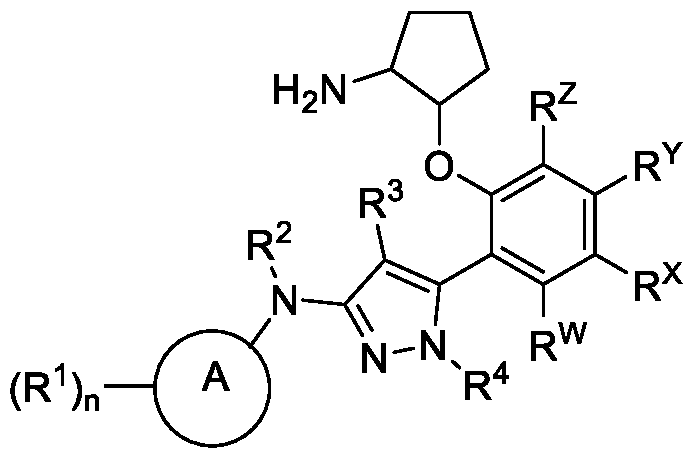
Formula (I), wherein: Ring A is cycloalkyl, heterocycloalkyl, aryl, or heteroaryl; each R
1 is independently deuterium, halogen, -CN, -NO2, -OH, -OR
a, -OC(=O)R
a, -OC(=O)OR
b, - OC(=O)NR
cR
d, -SH, -SR
a, -S(=O)R
a, -S(=O)2R
a, -S(=O)2NR
cR
d, -NR
cR
d, -NR
bC(=O)NR
cR
d, - NR
bC(=O)R
a, -NR
bC(=O)OR
b, -NR
bS(=O)2R
a, -C(=O)R
a, -C(=O)OR
b, -C(=O)NR
cR
d, C1-C6alkyl, C1-C6haloalkyl, C1-C6deuteroalkyl, C1-C6hydroxyalkyl, C1-C6aminoalkyl, C1-C6heteroalkyl, C2- C6alkenyl, C2-C6alkynyl, cycloalkyl, heterocycloalkyl, aryl, or heteroaryl; or two R
1 on the same atom are taken together to form an oxo; n is 0-4; R
2 is hydrogen, C1-C6alkyl, C1-C6haloalkyl, C1-C6deuteroalkyl, C1-C6hydroxyalkyl, C1-C6aminoalkyl, C1-C6heteroalkyl, cycloalkyl, or heterocycloalkyl; R
3 is hydrogen, deuterium, halogen, -CN, -NO2, -OH, -OR
a, -NR
cR
d, -C(=O)R
a, -C(=O)OR
b, -C(=O)NR
cR
d, C1-C6alkyl, C1-C6haloalkyl, C1-C6deuteroalkyl, C1-C6hydroxyalkyl, C1-C6aminoalkyl, C1-C6heteroalkyl, cycloalkyl, or heterocycloalkyl; R
4 is hydrogen, C
1-C
6alkyl, C
1-C
6haloalkyl, C
1-C
6deuteroalkyl, C
1-C
6hydroxyalkyl, C
1-C
6aminoalkyl, C
1-C
6heteroalkyl, cycloalkyl, or heterocycloalkyl; R
W is hydrogen, deuterium, halogen, -CN, -NO
2, -OH, -OR
a, -OC(=O)R
a, -OC(=O)OR
b, -OC(=O)NR
cR
d, - SH, -SR
a, -S(=O)R
a, -S(=O)
2R
a, -S(=O)
2NR
cR
d, -NR
cR
d, -NR
bC(=O)NR
cR
d, -NR
bC(=O)R
a, -
Attorney Docket No.57547-723.601 NR
bC(=O)OR
b, -NR
bS(=O)
2R
a, -C(=O)R
a, -C(=O)OR
b, -C(=O)NR
cR
d, C
1-C
6alkyl, C
1-C
6haloalkyl, C
1-C
6deuteroalkyl, C
1-C
6hydroxyalkyl, C
1-C
6aminoalkyl, C
1-C
6heteroalkyl, C
2-C
6alkenyl, C
2-C
6alkynyl, cycloalkyl, heterocycloalkyl, aryl, or heteroaryl; wherein the alkyl, alkenyl, alkynyl, cycloalkyl, heterocycloalkyl, aryl, and heteroaryl is optionally substituted with one or more R; R
X is hydrogen, deuterium, halogen, -CN, -NO
2, -OH, -OR
a, -OC(=O)R
a, -OC(=O)OR
b, -OC(=O)NR
cR
d, - SH, -SR
a, -S(=O)R
a, -S(=O)
2R
a, -S(=O)
2NR
cR
d, -NR
cR
d, -NR
bC(=O)NR
cR
d, -NR
bC(=O)R
a, - NR
bC(=O)OR
b, -NR
bS(=O)
2R
a, -C(=O)R
a, -C(=O)OR
b, -C(=O)NR
cR
d, C
1-C
6alkyl, C
1-C
6haloalkyl, C
1-C
6deuteroalkyl, C
1-C
6hydroxyalkyl, C
1-C
6aminoalkyl, C
1-C
6heteroalkyl, C
2-C
6alkenyl, C
2-C
6alkynyl, cycloalkyl, heterocycloalkyl, aryl, or heteroaryl; wherein the alkyl, alkenyl, alkynyl, cycloalkyl, heterocycloalkyl, aryl, and heteroaryl is optionally substituted with one or more R; R
Y is deuterium, halogen, -CN, -NO2, -OH, -OR
a, -OC(=O)R
a, -OC(=O)OR
b, -OC(=O)NR
cR
d, -SH, -SR
a, - S(=O)R
a, -S(=O)2R
a, -S(=O)2NR
cR
d, -NR
cR
d, -NR
bC(=O)NR
cR
d, -NR
bC(=O)R
a, -NR
bC(=O)OR
b, - NR
bS(=O)2R
a, -C(=O)R
a, -C(=O)OR
b, -C(=O)NR
cR
d, C1-C6alkyl, C1-C6haloalkyl, C1-C6deuteroalkyl, C1-C6hydroxyalkyl, C1-C6aminoalkyl, C1-C6heteroalkyl, C2-C6alkenyl, C2-C6alkynyl, cycloalkyl, heterocycloalkyl, aryl, or heteroaryl; wherein the alkyl, alkenyl, alkynyl, cycloalkyl, heterocycloalkyl, aryl, and heteroaryl is optionally substituted with one or more R; R
Z is hydrogen, deuterium, halogen, -CN, -NO2, -OH, -OR
a, -OC(=O)R
a, -OC(=O)OR
b, -OC(=O)NR
cR
d, - SH, -SR
a, -S(=O)R
a, -S(=O)2R
a, -S(=O)2NR
cR
d, -NR
cR
d, -NR
bC(=O)NR
cR
d, -NR
bC(=O)R
a, - NR
bC(=O)OR
b, -NR
bS(=O)2R
a, -C(=O)R
a, -C(=O)OR
b, -C(=O)NR
cR
d, C1-C6alkyl, C1-C6haloalkyl, C1-C6deuteroalkyl, C1-C6hydroxyalkyl, C1-C6aminoalkyl, C1-C6heteroalkyl, C2-C6alkenyl, C2-C6alkynyl, cycloalkyl, heterocycloalkyl, aryl, or heteroaryl; wherein the alkyl, alkenyl, alkynyl, cycloalkyl, heterocycloalkyl, aryl, and heteroaryl is optionally substituted with one or more R; each R
a is independently C1-C6alkyl, C1-C6haloalkyl, C1-C6deuteroalkyl, C1-C6hydroxyalkyl, C1-C6aminoalkyl, C2-C6alkenyl, C2-C6alkynyl, cycloalkyl, heterocycloalkyl, aryl, heteroaryl, C1-C6alkylene(cycloalkyl), C1-C6alkylene(heterocycloalkyl), C1-C6alkylene(aryl), or C1-C6alkylene(heteroaryl); wherein each alkyl, alkylene, alkenyl, alkynyl, cycloalkyl, heterocycloalkyl, aryl, and heteroaryl is independently optionally substituted with one or more R; each R
b is independently hydrogen, C1-C6alkyl, C1-C6haloalkyl, C1-C6deuteroalkyl, C1-C6hydroxyalkyl, C1-C6aminoalkyl, C2-C6alkenyl, C2-C6alkynyl, cycloalkyl, heterocycloalkyl, aryl, heteroaryl, C1-C6alkylene(cycloalkyl), C1-C6alkylene(heterocycloalkyl), C1-C6alkylene(aryl), or C
1-C
6alkylene(heteroaryl); wherein each alkyl, alkylene, alkenyl, alkynyl, cycloalkyl, heterocycloalkyl, aryl, and heteroaryl is independently optionally substituted with one or more R; and each R
c and R
d are independently hydrogen, C1-C6alkyl, C1-C6haloalkyl, C1-C6deuteroalkyl, C
1-C
6hydroxyalkyl, C
1-C
6aminoalkyl, C
2-C
6alkenyl, C
2-C
6alkynyl, cycloalkyl, heterocycloalkyl, aryl, heteroaryl, C
1-C
6alkylene(cycloalkyl), C
1-C
6alkylene(heterocycloalkyl), C
1-C
6alkylene(aryl), or C
1-C
6alkylene(heteroaryl); wherein each alkyl, alkylene, alkenyl, alkynyl, cycloalkyl, heterocycloalkyl, aryl, and heteroaryl is independently optionally substituted with one or more R;
Attorney Docket No.57547-723.601 or R
c and R
d are taken together with the atom to which they are attached to form a heterocycloalkyl optionally substituted with one or more R; each R is independently halogen, -CN, -OH, -OC
1-C
3alkyl, -OC
1-C
3haloalkyl, -SC
1-C
3alkyl, -S(=O)C
1- C
3alkyl, -S(=O)
2C
1-C
3alkyl, -S(=O)
2NH
2, -S(=O)
2NHC
1-C
3alkyl, -S(=O)
2N(C
1-C
3alkyl)
2, -NH
2, -NHC
1- C
3alkyl, -N(C
1-C
3alkyl)
2, -C(=O)C
1-C
3alkyl, -C(=O)OH, -C(=O)OC
1-C
3alkyl, -C(=O)NH
2, - C(=O)NHC
1-C
3alkyl, -C(=O)N(C
1-C
3alkyl)
2, C
1-C
3alkyl, C
1-C
3haloalkyl, C
1-C
3deuteroalkyl, C
1- C
3hydroxyalkyl, C
1-C
3aminoalkyl, C
1-C
3heteroalkyl, or C
3-C
6cycloalkyl; or two R on the same atom form an oxo. [0060] Also disclosed herein is a compound of Formula (I’), or a pharmaceutically acceptable salt, solvate, tautomer, or stereoisomer thereof:
wherein: Ring A is cycloalkyl, heterocycloalkyl, aryl, or heteroaryl; each R
1 is independently deuterium, halogen, -CN, -NO2, -OH, -OR
a, -OC(=O)R
a, -OC(=O)OR
b, - OC(=O)NR
cR
d, -SH, -SR
a, -S(=O)R
a, -S(=O)2R
a, -S(=O)2NR
cR
d, -NR
cR
d, -NR
bC(=O)NR
cR
d, - NR
bC(=O)R
a, -NR
bC(=O)OR
b, -NR
bS(=O)2R
a, -C(=O)R
a, -C(=O)OR
b, -C(=O)NR
cR
d, C1-C6alkyl, C1-C6haloalkyl, C1-C6deuteroalkyl, C1-C6hydroxyalkyl, C1-C6aminoalkyl, C1-C6heteroalkyl, C2- C6alkenyl, C2-C6alkynyl, cycloalkyl, heterocycloalkyl, aryl, or heteroaryl; or two R
1 on the same atom are taken together to form an oxo; n is 0-4; R
2 is hydrogen, C1-C6alkyl, C1-C6haloalkyl, C1-C6deuteroalkyl, C1-C6hydroxyalkyl, C1-C6aminoalkyl, C1-C6heteroalkyl, cycloalkyl, or heterocycloalkyl; R
3 is hydrogen, deuterium, halogen, -CN, -NO2, -OH, -OR
a, -NR
cR
d, -C(=O)R
a, -C(=O)OR
b, -C(=O)NR
cR
d, C1-C6alkyl, C1-C6haloalkyl, C1-C6deuteroalkyl, C1-C6hydroxyalkyl, C1-C6aminoalkyl, C1-C6heteroalkyl, cycloalkyl, or heterocycloalkyl; R
4 is hydrogen, C1-C6alkyl, C1-C6haloalkyl, C1-C6deuteroalkyl, C1-C6hydroxyalkyl, C1-C6aminoalkyl, C1-C6heteroalkyl, cycloalkyl, or heterocycloalkyl; R
W is hydrogen, deuterium, halogen, -CN, -NO2, -OH, -OR
a, -OC(=O)R
a, -OC(=O)OR
b, -OC(=O)NR
cR
d, - SH, -SR
a, -S(=O)R
a, -S(=O)
2R
a, -S(=O)
2NR
cR
d, -NR
cR
d, -NR
bC(=O)NR
cR
d, -NR
bC(=O)R
a, - NR
bC(=O)OR
b, -NR
bS(=O)
2R
a, -C(=O)R
a, -C(=O)OR
b, -C(=O)NR
cR
d, C
1-C
6alkyl, C
1-C
6haloalkyl, C1-C6deuteroalkyl, C1-C6hydroxyalkyl, C1-C6aminoalkyl, C1-C6heteroalkyl, C2-C6alkenyl, C2-C6alkynyl,
Attorney Docket No.57547-723.601 cycloalkyl, heterocycloalkyl, aryl, or heteroaryl; wherein the alkyl, alkenyl, alkynyl, cycloalkyl, heterocycloalkyl, aryl, and heteroaryl is optionally substituted with one or more R; R
X is hydrogen, deuterium, halogen, -CN, -NO
2, -OH, -OR
a, -OC(=O)R
a, -OC(=O)OR
b, -OC(=O)NR
cR
d, - SH, -SR
a, -S(=O)R
a, -S(=O)
2R
a, -S(=O)
2NR
cR
d, -NR
cR
d, -NR
bC(=O)NR
cR
d, -NR
bC(=O)R
a, - NR
bC(=O)OR
b, -NR
bS(=O)
2R
a, -C(=O)R
a, -C(=O)OR
b, -C(=O)NR
cR
d, C
1-C
6alkyl, C
1-C
6haloalkyl, C
1-C
6deuteroalkyl, C
1-C
6hydroxyalkyl, C
1-C
6aminoalkyl, C
1-C
6heteroalkyl, C
2-C
6alkenyl, C
2-C
6alkynyl, cycloalkyl, heterocycloalkyl, aryl, or heteroaryl; wherein the alkyl, alkenyl, alkynyl, cycloalkyl, heterocycloalkyl, aryl, and heteroaryl is optionally substituted with one or more R; R
Y is deuterium, halogen, -CN, -NO2, -OH, -OR
a, -OC(=O)R
a, -OC(=O)OR
b, -OC(=O)NR
cR
d, -SH, -SR
a, - S(=O)R
a, -S(=O)2R
a, -S(=O)2NR
cR
d, -NR
cR
d, -NR
bC(=O)NR
cR
d, -NR
bC(=O)R
a, -NR
bC(=O)OR
b, - NR
bS(=O)2R
a, -C(=O)R
a, -C(=O)OR
b, -C(=O)NR
cR
d, C1-C6alkyl, C1-C6haloalkyl, C1-C6deuteroalkyl, C1-C6hydroxyalkyl, C1-C6aminoalkyl, C1-C6heteroalkyl, C2-C6alkenyl, C2-C6alkynyl, cycloalkyl, heterocycloalkyl, aryl, or heteroaryl; wherein the alkyl, alkenyl, alkynyl, cycloalkyl, heterocycloalkyl, aryl, and heteroaryl is optionally substituted with one or more R; R
Z is hydrogen, deuterium, halogen, -CN, -NO2, -OH, -OR
a, -OC(=O)R
a, -OC(=O)OR
b, -OC(=O)NR
cR
d, - SH, -SR
a, -S(=O)R
a, -S(=O)2R
a, -S(=O)2NR
cR
d, -NR
cR
d, -NR
bC(=O)NR
cR
d, -NR
bC(=O)R
a, - NR
bC(=O)OR
b, -NR
bS(=O)2R
a, -C(=O)R
a, -C(=O)OR
b, -C(=O)NR
cR
d, C1-C6alkyl, C1-C6haloalkyl, C1-C6deuteroalkyl, C1-C6hydroxyalkyl, C1-C6aminoalkyl, C1-C6heteroalkyl, C2-C6alkenyl, C2-C6alkynyl, cycloalkyl, heterocycloalkyl, aryl, or heteroaryl; wherein the alkyl, alkenyl, alkynyl, cycloalkyl, heterocycloalkyl, aryl, and heteroaryl is optionally substituted with one or more R; each R
a is independently C1-C6alkyl, C1-C6haloalkyl, C1-C6deuteroalkyl, C1-C6hydroxyalkyl, C1-C6aminoalkyl, C2-C6alkenyl, C2-C6alkynyl, cycloalkyl, heterocycloalkyl, aryl, heteroaryl, C1-C6alkylene(cycloalkyl), C1-C6alkylene(heterocycloalkyl), C1-C6alkylene(aryl), or C1-C6alkylene(heteroaryl); wherein each alkyl, alkylene, alkenyl, alkynyl, cycloalkyl, heterocycloalkyl, aryl, and heteroaryl is independently optionally substituted with one or more R; each R
b is independently hydrogen, C1-C6alkyl, C1-C6haloalkyl, C1-C6deuteroalkyl, C1-C6hydroxyalkyl, C1-C6aminoalkyl, C2-C6alkenyl, C2-C6alkynyl, cycloalkyl, heterocycloalkyl, aryl, heteroaryl, C1-C6alkylene(cycloalkyl), C1-C6alkylene(heterocycloalkyl), C1-C6alkylene(aryl), or C1-C6alkylene(heteroaryl); wherein each alkyl, alkylene, alkenyl, alkynyl, cycloalkyl, heterocycloalkyl, aryl, and heteroaryl is independently optionally substituted with one or more R; and each R
c and R
d are independently hydrogen, C
1-C
6alkyl, C
1-C
6haloalkyl, C
1-C
6deuteroalkyl, C
1-C
6hydroxyalkyl, C
1-C
6aminoalkyl, C
2-C
6alkenyl, C
2-C
6alkynyl, cycloalkyl, heterocycloalkyl, aryl, heteroaryl, C1-C6alkylene(cycloalkyl), C1-C6alkylene(heterocycloalkyl), C1-C6alkylene(aryl), or C
1-C
6alkylene(heteroaryl); wherein each alkyl, alkylene, alkenyl, alkynyl, cycloalkyl, heterocycloalkyl, aryl, and heteroaryl is independently optionally substituted with one or more R; or R
c and R
d are taken together with the atom to which they are attached to form a heterocycloalkyl optionally substituted with one or more R;
Attorney Docket No.57547-723.601 each R is independently halogen, -CN, -OH, -OC
1-C
3alkyl, -OC
1-C
3haloalkyl, -SC
1-C
3alkyl, -S(=O)C
1- C
3alkyl, -S(=O)
2C
1-C
3alkyl, -S(=O)
2NH
2, -S(=O)
2NHC
1-C
3alkyl, -S(=O)
2N(C
1-C
3alkyl)
2, -NH
2, -NHC
1- C
3alkyl, -N(C
1-C
3alkyl)
2, -C(=O)C
1-C
3alkyl, -C(=O)OH, -C(=O)OC
1-C
3alkyl, -C(=O)NH
2, - C(=O)NHC
1-C
3alkyl, -C(=O)N(C
1-C
3alkyl)
2, C
1-C
3alkyl, C
1-C
3haloalkyl, C
1-C
3deuteroalkyl, C
1- C
1-C
3aminoalkyl, C
1-C
3heteroalkyl, or C
3-C
6cycloalkyl; or two R on the same atom form an oxo. [0061] Disclosed herein is a compound of Formula (I), or a pharmaceutically acceptable salt, solvate, tautomer, or stereoisomer thereof:
wherein: R
W is halogen, -OH, -OR
a, C1-C6alkyl, C1-C6haloalkyl, or cycloalkyl; R
Y is C1-C6alkyl or cycloalkyl; wherein the alkyl and cycloalkyl is optionally substituted with one or more R; each R
a is independently C1-C6alkyl or C1-C6haloalkyl; each R is independently halogen, -CN, -OH, -OC
1-C
3alkyl, -OC
1-C
3haloalkyl, C
1-C
3alkyl, or C
1-C
3haloalkyl; or two R on the same atom form an oxo. [0062] Disclosed herein is a compound of Formula (I), or a pharmaceutically acceptable salt, solvate, tautomer, or stereoisomer thereof:
Formula (I), wherein: R
W is halogen; R
Y is C1-C6alkyl or cycloalkyl; wherein the alkyl and cycloalkyl is optionally substituted with one or more R; each R is independently halogen, -CN, -OH, -OC1-C3alkyl, -OC1-C3haloalkyl, C1-C3alkyl, or C1-C3haloalkyl; or two R on the same atom form an oxo. [0063] In some embodiments of a compound of Formula (I), the compound is of Formula (Ia):
Attorney Docket No.57547-723.601
Formula (Ia). [0064] In some embodiments of a compound of Formula (I’), the compound is of Formula (Ia’):
Formula (Ia’). [0065] In some embodiments of a compound of Formula (I), the compound is of Formula (Ib):
Formula (Ib). [0066] In some embodiments of a compound of Formula (I’), the compound is of Formula (Ib’):
Formula (Ib’). [0067] In some embodiments of a compound of Formula (I), the compound is of Formula (Ic):
Attorney Docket No.57547-723.601
Formula (Ic). [0068] In some embodiments of a compound of Formula (I’), the compound is of Formula (Ic’):
Formula (Ic’). [0069] In some embodiments of a compound of Formula (I), the compound is of Formula (Id):
Formula (Id). [0070] In some embodiments of a compound of Formula (I), the compound is of Formula (Id’):
Formula (Id’). [0071] In some embodiments of a compound of Formula (I), (I’), (Ia)-(Id), or (Ia’)-(Id’), Ring A is aryl or heteroaryl. In some embodiments of a compound of Formula (I), (I’), (Ia)-(Id), or (Ia’)-(Id’), Ring A is heteroaryl. In some embodiments of a compound of Formula (I), (I’), (Ia)-(Id), or (Ia’)-(Id’), Ring A is 6- membered heteroaryl. In some embodiments of a compound of Formula (I), (I’), (Ia)-(Id), or (Ia’)-(Id’), Ring A is pyrazinyl.
Attorney Docket No.57547-723.601 [0072] In some embodiments of a compound of Formula (I), (I’), (Ia)-(Id), or (Ia’)-(Id’), each R
1 is independently deuterium, halogen, -CN, -OH, -OR
a, -C(=O)R
a, -C(=O)OR
b, -C(=O)NR
cR
d, C
1-C
6alkyl, C
1-C
6haloalkyl, C
1-C
6deuteroalkyl, C
1-C
6hydroxyalkyl, C
1-C
6aminoalkyl, C
1-C
6heteroalkyl, cycloalkyl, or heterocycloalkyl. In some embodiments of a compound of Formula (I), (I’), (Ia)-(Id), or (Ia’)-(Id’), each R
1 is independently deuterium, halogen, -CN, -OH, -OR
a, C1-C6alkyl, or C1-C6haloalkyl. [0073] In some embodiments of a compound of Formula (I), (I’), (Ia)-(Id), or (Ia’)-(Id’), n is 0-2. In some embodiments of a compound of Formula (I), (I’), (Ia)-(Id), or (Ia’)-(Id’), n is 1 or 2. In some embodiments of a compound of Formula (I), (I’), (Ia)-(Id), or (Ia’)-(Id’), n is 0 or 1. In some embodiments of a compound of Formula (I), (I’), (Ia)-(Id), or (Ia’)-(Id’), n is 0. In some embodiments of a compound of Formula (I), (I’), (Ia)-(Id), or (Ia’)-(Id’), n is 1. In some embodiments of a compound of Formula (I), (I’), (Ia)-(Id), or (Ia’)- (Id’), n is 2. In some embodiments of a compound of Formula (I), (I’), (Ia)-(Id), or (Ia’)-(Id’), n is 3. [0074] In some embodiments of a compound of Formula (I), (I’), (Ia)-(Id), or (Ia’)-(Id’), R
2 is hydrogen or C1-C6alkyl. In some embodiments of a compound of Formula (I), (I’), (Ia)-(Id), or (Ia’)-(Id’), R
2 is hydrogen. [0075] In some embodiments of a compound of Formula (I), (I’), (Ia)-(Id), or (Ia’)-(Id’), R
3 is hydrogen, deuterium, halogen, C1-C6alkyl, or C1-C6haloalkyl. In some embodiments of a compound of Formula (I), (I’), (Ia)-(Id), or (Ia’)-(Id’), R
3 is hydrogen.
[0076] In some embodiments of a compound of Formula (I), (I’), (Ia)-(Id), or (Ia’)-(Id’), R
4 is hydrogen or C
1-C
6alkyl. In some embodiments of a compound of Formula (I), (I’), (Ia)-(Id), or (Ia’)-(Id’), R
4 is hydrogen. [0077] In some embodiments of a compound of Formula (I), (I’), (Ia)-(Id), or (Ia’)-(Id’), R
W is deuterium, halogen, -CN, -NO
2, -OH, -OR
a, -OC(=O)R
a, -OC(=O)OR
b, -OC(=O)NR
cR
d, -SH, -SR
a, -S(=O)R
a, - S(=O)
2R
a, -S(=O)
2NR
cR
d, -NR
cR
d, -NR
bC(=O)NR
cR
d, -NR
bC(=O)R
a, -NR
bC(=O)OR
b, -NR
bS(=O)
2R
a, - C(=O)R
a, -C(=O)OR
b, -C(=O)NR
cR
d, C
1-C
6alkyl, C
1-C
6haloalkyl, C
1-C
6deuteroalkyl, C
1-C
6hydroxyalkyl, C
1-C
6aminoalkyl, C
1-C
6heteroalkyl, C
2-C
6alkenyl, C
2-C
6alkynyl, cycloalkyl, heterocycloalkyl, aryl, or heteroaryl; wherein the alkyl, alkenyl, alkynyl, cycloalkyl, heterocycloalkyl, aryl, and heteroaryl is optionally substituted with one or more R. In some embodiments of a compound of Formula (I), (I’), (Ia)- (Id), or (Ia’)-(Id’), R
W is hydrogen, deuterium, halogen, -CN, -OH, -OR
a, -NR
cR
d, -C(=O)R
a, -C(=O)OR
b, - C(=O)NR
cR
d, C
1-C
6alkyl, C
1-C
6haloalkyl, C
1-C
6deuteroalkyl, C
1-C
6hydroxyalkyl, C
1-C
6aminoalkyl, C
1-C
6heteroalkyl, cycloalkyl, heterocycloalkyl, aryl, or heteroaryl; wherein the alkyl, cycloalkyl, heterocycloalkyl, aryl, and heteroaryl is optionally substituted with one or more R. In some embodiments of a compound of Formula (I), (I’), (Ia)-(Id), or (Ia’)-(Id’), R
W is hydrogen, deuterium, halogen, -CN, -OH, - OR
a, -NR
cR
d, C1-C6alkyl, C1-C6haloalkyl, C1-C6deuteroalkyl, cycloalkyl, or heterocycloalkyl; wherein the alkyl, cycloalkyl and heterocycloalkyl is optionally substituted with one or more R. In some embodiments of a compound of Formula (I), (I’), (Ia)-(Id), or (Ia’)-(Id’), R
W is deuterium, halogen, -CN, -OH, -OR
a, -NR
cR
d, C1-C6alkyl, C1-C6haloalkyl, C1-C6deuteroalkyl, cycloalkyl, or heterocycloalkyl; wherein the alkyl, cycloalkyl and heterocycloalkyl is optionally substituted with one or more R. In some embodiments of a
Attorney Docket No.57547-723.601 compound of Formula (I), (I’), (Ia)-(Id), or (Ia’)-(Id’), R
W is hydrogen, deuterium, halogen, -OH, -OR
a, - NR
cR
d, C
1-C
6alkyl, C
1-C
6haloalkyl, or cycloalkyl. In some embodiments of a compound of Formula (I), (I’), (Ia)-(Id), or (Ia’)-(Id’), R
W is deuterium, halogen, -OH, -OR
a, -NR
cR
d, C
1-C
6alkyl, C
1-C
6haloalkyl, or cycloalkyl. In some embodiments of a compound of Formula (I), (I’), (Ia)-(Id), or (Ia’)-(Id’), R
W is hydrogen, halogen, -OH, -OR
a, C
1-C
6alkyl, C
1-C
6haloalkyl, or cycloalkyl. In some embodiments of a compound of Formula (I), (I’), (Ia)-(Id), or (Ia’)-(Id’), R
W is halogen, -OH, -OR
a, C
1-C
6alkyl, C
1-C
6haloalkyl, or cycloalkyl. In some embodiments of a compound of Formula (I), (I’), (Ia)-(Id), or (Ia’)- (Id’), R
W is halogen or C
1-C
6alkyl. In some embodiments of a compound of Formula (I), (I’), (Ia)-(Id), or (Ia’)-(Id’), R
W is halogen. In some embodiments of a compound of Formula (I), (I’), (Ia)-(Id), or (Ia’)-(Id’), R
W is fluoro. In some embodiments of a compound of Formula (I), (I’), (Ia)-(Id), or (Ia’)-(Id’), R
W is -OR
a. [0078] In some embodiments of a compound of Formula (I), (I’), (Ia)-(Id), or (Ia’)-(Id’), R
X is hydrogen, deuterium, halogen, -CN, -OH, -OR
a, -NR
cR
d, -C(=O)R
a, -C(=O)OR
b, -C(=O)NR
cR
d, C1-C6alkyl, C1-C6haloalkyl, C1-C6deuteroalkyl, C1-C6hydroxyalkyl, C1-C6aminoalkyl, C1-C6heteroalkyl, cycloalkyl, heterocycloalkyl, aryl, or heteroaryl; wherein the alkyl, cycloalkyl, heterocycloalkyl, aryl, and heteroaryl is optionally substituted with one or more R. In some embodiments of a compound of Formula (I), (I’), (Ia)- (Id), or (Ia’)-(Id’), R
X is hydrogen, deuterium, halogen, -CN, -OH, -OR
a, -NR
cR
d, C1-C6alkyl, C1-C6haloalkyl, C1-C6deuteroalkyl, cycloalkyl, or heterocycloalkyl; wherein the alkyl, cycloalkyl, and heterocycloalkyl is optionally substituted with one or more R. In some embodiments of a compound of Formula (I), (I’), (Ia)-(Id), or (Ia’)-(Id’), R
X is hydrogen, deuterium, halogen, -OH, -OR
a, -NR
cR
d, C1-C6alkyl, C1-C6haloalkyl, or cycloalkyl. In some embodiments of a compound of Formula (I), (I’), (Ia)- (Id), or (Ia’)-(Id’), R
X is hydrogen, halogen, C1-C6alkyl, C1-C6haloalkyl, or cycloalkyl. In some embodiments of a compound of Formula (I), (I’), (Ia)-(Id), or (Ia’)-(Id’), R
X is hydrogen, halogen, or C1-C6alkyl. In some embodiments of a compound of Formula (I), (I’), (Ia)-(Id), or (Ia’)-(Id’), R
X is hydrogen or halogen. In some embodiments of a compound of Formula (I), (I’), (Ia)-(Id), or (Ia’)-(Id’), R
X is hydrogen or C1-C6alkyl. In some embodiments of a compound of Formula (I), (I’), (Ia)-(Id), or (Ia’)-(Id’), R
X is hydrogen.
[0079] In some embodiments of a compound of Formula (I), (I’), (Ia)-(Id), or (Ia’)-(Id’), R
Y is deuterium, halogen, -CN, -OH, -OR
a, -NR
cR
d, -C(=O)R
a, -C(=O)OR
b, -C(=O)NR
cR
d, C1-C6alkyl, C1-C6haloalkyl, C
1-C
6deuteroalkyl, C
1-C
6hydroxyalkyl, C
1-C
6aminoalkyl, C
1-C
6heteroalkyl, cycloalkyl, heterocycloalkyl, aryl, or heteroaryl; wherein the alkyl, cycloalkyl, heterocycloalkyl, aryl, and heteroaryl is optionally substituted with one or more R. In some embodiments of a compound of Formula (I), (I’), (Ia)-(Id), or (Ia’)- (Id’), R
Y is deuterium, halogen, -CN, -OH, -OR
a, -NR
cR
d, C
1-C
6alkyl, C
1-C
6haloalkyl, C
1-C
6deuteroalkyl, C
1-C
6hydroxyalkyl, cycloalkyl, or heterocycloalkyl; wherein the alkyl, cycloalkyl, and heterocycloalkyl is optionally substituted with one or more R. In some embodiments of a compound of Formula (I), (I’), (Ia)- (Id), or (Ia’)-(Id’), R
Y is deuterium, halogen, -OH, -OR
a, C
1-C
6alkyl, C
1-C
6haloalkyl, C
1-C
6hydroxyalkyl, cycloalkyl, or heterocycloalkyl; wherein the alkyl, cycloalkyl, and heterocycloalkyl is optionally substituted with one or more R. In some embodiments of a compound of Formula (I), (I’), (Ia)-(Id), or (Ia’)-(Id’), R
Y is
Attorney Docket No.57547-723.601 halogen, -OH, -OR
a, C
1-C
6alkyl, C
1-C
6haloalkyl, C
1-C
6hydroxyalkyl, or cycloalkyl; wherein the alkyl and cycloalkyl is optionally substituted with one or more R. In some embodiments of a compound of Formula (I), (I’), (Ia)-(Id), or (Ia’)-(Id’), R
Y is halogen, C
1-C
6alkyl, C
1-C
6haloalkyl, C
1-C
6hydroxyalkyl, or cycloalkyl; wherein the alkyl and cycloalkyl is optionally substituted with one or more R. In some embodiments of a compound of Formula (I), (I’), (Ia)-(Id), or (Ia’)-(Id’), R
Y is C
1-C
6alkyl or cycloalkyl; wherein the alkyl and cycloalkyl is optionally substituted with one or more R. In some embodiments of a compound of Formula (I), (I’), (Ia)-(Id), or (Ia’)-(Id’), R
Y is C
1-C
6alkyl optionally substituted with one or more R. In some embodiments of a compound of Formula (I), (I’), (Ia)-(Id), or (Ia’)-(Id’), R
Y is methyl. In some embodiments of a compound of Formula (I), (I’), (Ia)-(Id), or (Ia’)-(Id’), R
Y is cycloalkyl optionally substituted with one or more R. In some embodiments of a compound of Formula (I), (I’), (Ia)-(Id), or (Ia’)-(Id’), R
Y is cycloalkyl or heterocycloalkyl; wherein the cycloalkyl and heterocycloalkyl is optionally substituted with one or more R. In some embodiments of a compound of Formula (I), (I’), (Ia)-(Id), or (Ia’)-(Id’), R
Y is cyclopropyl optionally substituted with one or more R. In some embodiments of a compound of Formula (I),
[0080] In some embodiments of a compound of Formula (I), (I’), (Ia)-(Id), or (Ia’)-(Id’), R
Z is hydrogen, deuterium, halogen, -CN, -OH, -OR
a, -NR
cR
d, -C(=O)R
a, -C(=O)OR
b, -C(=O)NR
cR
d, C1-C6alkyl, C1-C6haloalkyl, C1-C6deuteroalkyl, C1-C6hydroxyalkyl, C1-C6aminoalkyl, C1-C6heteroalkyl, cycloalkyl, heterocycloalkyl, aryl, or heteroaryl; wherein the alkyl, cycloalkyl, heterocycloalkyl, aryl, and heteroaryl is optionally substituted with one or more R. In some embodiments of a compound of Formula (I), (I’), (Ia)- (Id), or (Ia’)-(Id’), R
Z is hydrogen, deuterium, halogen, -CN, -OH, -OR
a, -NR
cR
d, C
1-C
6alkyl, C
1-C
6haloalkyl, C
1-C
6deuteroalkyl, cycloalkyl, or heterocycloalkyl; wherein the alkyl, cycloalkyl, and heterocycloalkyl is optionally substituted with one or more R. In some embodiments of a compound of Formula (I), (I’), (Ia)-(Id), or (Ia’)-(Id’), R
Z is hydrogen, deuterium, halogen, -OH, -OR
a, -NR
cR
d, C
1-C
6alkyl, C
1-C
6haloalkyl, or cycloalkyl. In some embodiments of a compound of Formula (I), (I’), (Ia)- (Id), or (Ia’)-(Id’), R
Z is hydrogen, deuterium, halogen, C
1-C
6alkyl, or C
1-C
6haloalkyl. In some embodiments of a compound of Formula (I), (I’), (Ia)-(Id), or (Ia’)-(Id’), R
Z is hydrogen, halogen, or C
1-C
6alkyl. In some embodiments of a compound of Formula (I), (I’), (Ia)-(Id), or (Ia’)-(Id’), R
Z is hydrogen or halogen. In some embodiments of a compound of Formula (I), (I’), (Ia)-(Id), or (Ia’)-(Id’), R
Z is hydrogen or C
1-C
6alkyl. In some embodiments of a compound of Formula (I), (I’), (Ia)-(Id), or (Ia’)-(Id’), R
Z is hydrogen. [0081] In some embodiments of a compound of Formula (I), (I’), (Ia)-(Id), or (Ia’)-(Id’), each R
a is independently C
1-C
6alkyl, C
1-C
6haloalkyl, C
1-C
6deuteroalkyl, C
1-C
6hydroxyalkyl, C
1-C
6aminoalkyl, cycloalkyl, heterocycloalkyl, C
1-C
6alkylene(cycloalkyl), or C
1-C
6alkylene(heterocycloalkyl); wherein each alkyl, alkylene, cycloalkyl, and heterocycloalkyl is independently optionally substituted with one or more R. In some embodiments of a compound of Formula (I), (I’), (Ia)-(Id), or (Ia’)-(Id’), each R
a is independently C
1-C
6alkyl, C
1-C
6haloalkyl, C
1-C
6deuteroalkyl, C
1-C
6hydroxyalkyl, C
1-C
6aminoalkyl, cycloalkyl, heterocycloalkyl; wherein each alkyl, alkylene, cycloalkyl, and heterocycloalkyl is independently optionally
Attorney Docket No.57547-723.601 substituted with one or more R. In some embodiments of a compound of Formula (I), (I’), (Ia)-(Id), or (Ia’)- (Id’), each R
a is independently C
1-C
6alkyl, C
1-C
6haloalkyl, C
1-C
6deuteroalkyl, C
1-C
6hydroxyalkyl, or C
1-C
6aminoalkyl. In some embodiments of a compound of Formula (I), (I’), (Ia)-(Id), or (Ia’)-(Id’), each R
a is independently C
1-C
6alkyl or C
1-C
6haloalkyl. In some embodiments of a compound of Formula (I), (I’), (Ia)-(Id), or (Ia’)-(Id’), each R
a is independently C
1-C
6alkyl. [0082] In some embodiments of a compound of Formula (I), (I’), (Ia)-(Id), or (Ia’)-(Id’), each R
b is independently hydrogen, C1-C6alkyl, C1-C6haloalkyl, C1-C6deuteroalkyl, C1-C6hydroxyalkyl, C1-C6aminoalkyl, cycloalkyl, heterocycloalkyl, C1-C6alkylene(cycloalkyl), or C1-C6alkylene(heterocycloalkyl); wherein each alkyl, alkylene, cycloalkyl, and heterocycloalkyl is independently optionally substituted with one or more R. In some embodiments of a compound of Formula (I), (I’), (Ia)-(Id), or (Ia’)-(Id’), each R
b is independently hydrogen, C1-C6alkyl, C1-C6haloalkyl, C1-C6deuteroalkyl, C1-C6hydroxyalkyl, C1-C6aminoalkyl, cycloalkyl, heterocycloalkyl; wherein each alkyl, alkylene, cycloalkyl, and heterocycloalkyl is independently optionally substituted with one or more R. In some embodiments of a compound of Formula (I), (I’), (Ia)-(Id), or (Ia’)-(Id’), each R
b is independently hydrogen, C1-C6alkyl, C1-C6haloalkyl, C1-C6deuteroalkyl, C1-C6hydroxyalkyl, or C1-C6aminoalkyl. In some embodiments of a compound of Formula (I), (I’), (Ia)-(Id), or (Ia’)-(Id’), each R
b is independently hydrogen, C1-C6alkyl, or C1-C6haloalkyl. In some embodiments of a compound of Formula (I), (I’), (Ia)-(Id), or (Ia’)- (Id’), each R
b is independently hydrogen or C1-C6alkyl. In some embodiments of a compound of Formula (I), (I’), (Ia)-(Id), or (Ia’)-(Id’), each R
b is independently hydrogen. In some embodiments of a compound of Formula (I), (I’), (Ia)-(Id), or (Ia’)-(Id’), each R
b is independently C1-C6alkyl. [0083] In some embodiments of a compound of Formula (I), (I’), (Ia)-(Id), or (Ia’)-(Id’), each R
c and R
d are independently hydrogen, C1-C6alkyl, C1-C6haloalkyl, C1-C6deuteroalkyl, C1-C6hydroxyalkyl, C1-C6aminoalkyl, cycloalkyl, heterocycloalkyl, C1-C6alkylene(cycloalkyl), or C1-C6alkylene(heterocycloalkyl); wherein each alkyl, alkylene, cycloalkyl, and heterocycloalkyl is independently optionally substituted with one or more R. In some embodiments of a compound of Formula (I), (I’), (Ia)-(Id), or (Ia’)-(Id’), each R
c and R
d are independently hydrogen, C
1-C
6alkyl, C
1-C
6haloalkyl, C
1-C
6deuteroalkyl, C
1-C
6hydroxyalkyl, C
1-C
6aminoalkyl, cycloalkyl, heterocycloalkyl; wherein each alkyl, alkylene, cycloalkyl, and heterocycloalkyl is independently optionally substituted with one or more R. In some embodiments of a compound of Formula (I), (I’), (Ia)-(Id), or (Ia’)-(Id’), each R
c and R
d are independently hydrogen, C
1-C
6alkyl, C
1-C
6haloalkyl, C
1-C
6deuteroalkyl, C
1-C
6hydroxyalkyl, or C
1-C
6aminoalkyl. In some embodiments of a compound of Formula (I), (I’), (Ia)-(Id), or (Ia’)-(Id’), each R
c and R
d are independently hydrogen, C
1-C
6alkyl, or C
1-C
6haloalkyl. In some embodiments of a compound of Formula (I), (I’), (Ia)-(Id), or (Ia’)-(Id’), each R
c and R
d are independently hydrogen or C
1-C
6alkyl. In some embodiments of a compound of Formula (I), (I’), (Ia)-(Id), or (Ia’)-(Id’), each R
c and R
d are hydrogen. In some embodiments of a compound of Formula (I), (I’), (Ia)-(Id), or (Ia’)-(Id’), each R
c and R
d are independently C
1-C
6alkyl.
Attorney Docket No.57547-723.601 [0084] In some embodiments of a compound of Formula (I), (I’), (Ia)-(Id), or (Ia’)-(Id’), R
c and R
d are taken together with the atom to which they are attached to form a heterocycloalkyl optionally substituted with one or more R. [0085] In some embodiments of a compound of Formula (I), (I’), (Ia)-(Id), or (Ia’)-(Id’), each R is independently halogen, -CN, -OH, -OC1-C3alkyl, -OC1-C3haloalkyl, -NH2, -NHC1-C3alkyl, -N(C1-C3alkyl)2, -C(=O)C1-C3alkyl, -C(=O)OH, -C(=O)OC1-C3alkyl, -C(=O)NH2, -C(=O)NHC1-C3alkyl, -C(=O)N(C1- C3alkyl)2, C1-C3alkyl, C1-C3haloalkyl, C1-C3deuteroalkyl, C1-C3hydroxyalkyl, C1-C3aminoalkyl, C1- C3heteroalkyl, or C3-C6cycloalkyl; or two R on the same atom form an oxo. In some embodiments of a compound of Formula (I), (I’), (Ia)-(Id), or (Ia’)-(Id’), each R is independently halogen, -CN, -OH, -OC1- C3alkyl, -OC1-C3haloalkyl, -NH2, -NHC1-C3alkyl, -N(C1-C3alkyl)2, C1-C3alkyl, C1-C3haloalkyl, C1- C3deuteroalkyl, C1-C3hydroxyalkyl, C1-C3aminoalkyl, C1-C3heteroalkyl, or C3-C6cycloalkyl; or two R on the same atom form an oxo. In some embodiments of a compound of Formula (I), (I’), (Ia)-(Id), or (Ia’)-(Id’), each R is independently halogen, -CN, -OH, -OC1-C3alkyl, -NH2, C1-C3alkyl, or C1-C3haloalkyl; or two R on the same atom form an oxo. In some embodiments of a compound of Formula (I), (I’), (Ia)-(Id), or (Ia’)- (Id’), each R is independently halogen, -OH, C1-C3alkyl, or C1-C3haloalkyl; or two R on the same atom form an oxo. In some embodiments of a compound of Formula (I), (I’), (Ia)-(Id), or (Ia’)-(Id’), each R is independently halogen, -OH, -NH2, C1-C3alkyl, or C1-C3haloalkyl; or two R on the same atom form an oxo. In some embodiments of a compound of Formula (I), (I’), (Ia)-(Id), or (Ia’)-(Id’), each R is independently halogen, C1-C3alkyl, or C1-C3haloalkyl; or two R on the same atom form an oxo. In some embodiments of a compound of Formula (I), (I’), (Ia)-(Id), or (Ia’)-(Id’), each R is independently halogen or C1-C3alkyl; or two R on the same atom form an oxo. [0086] In some embodiments of a compound disclosed herein, the compound is selected from a compound of Table 1: TABLE 1
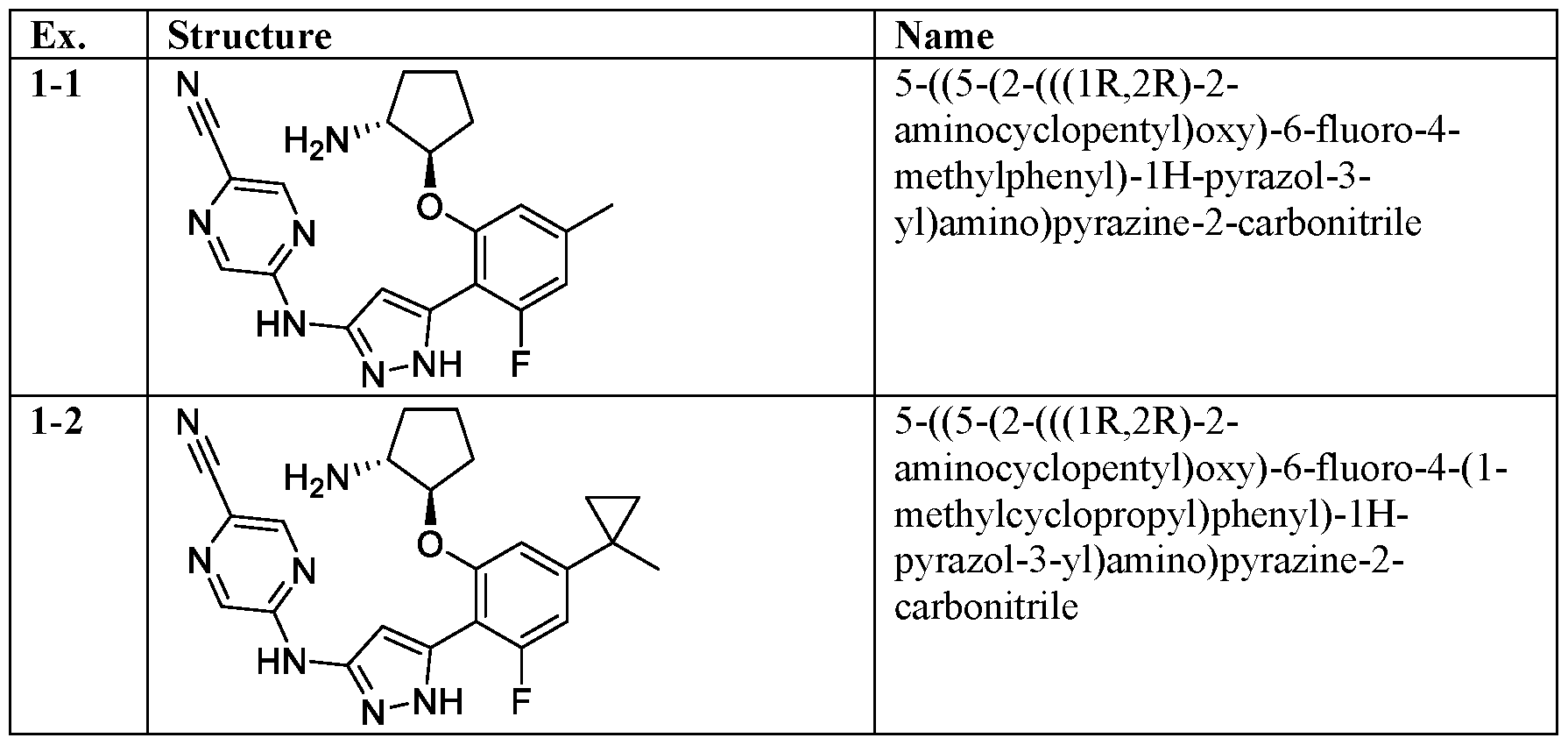
Attorney Docket No.57547-723.601 [0087] In some embodiments, the Chk1 inhibitor is CNS-penetrant. In some embodiments, a CNS- penetrant compound is a compound having a brain:plasma ratio greater than about 1. In some embodiments, the brain:plasma ratio is between about 1 and about 5. In some embodiments, the brain:plasma ratio is between about 1 and about 4. In some embodiments, the brain:plasma ratio is between about 1 and about 3. In some embodiments, the brain:plasma ratio is between about 1 and about 2. In some embodiments, the brain:plasma ratio is equal to about 1. In some embodiments, the brain:plasma ratio is equal to about 1.1. In some embodiments, the brain:plasma ratio is equal to about 1.2. In some embodiments, the brain:plasma ratio is equal to about 1.3. In some embodiments, the brain:plasma ratio is equal to about 1.4. In some embodiments, the brain:plasma ratio is equal to about 1.5. In some embodiments, the brain:plasma ratio is equal to about 1.6. In some embodiments, the brain:plasma ratio is equal to about 1.7. In some embodiments, the brain:plasma ratio is equal to about 1.8. In some embodiments, the brain:plasma ratio is equal to about 1.9. In some embodiments, the brain:plasma ratio is equal to about 2. In some embodiments, the brain:plasma ratio is equal to about 2.1. In some embodiments, the brain:plasma ratio is equal to about 2.2. In some embodiments, the brain:plasma ratio is equal to about 2.3. In some embodiments, the brain:plasma ratio is equal to about 2.4. In some embodiments, the brain:plasma ratio is equal to about 2.5. In some embodiments, the brain:plasma ratio is equal to about 2.6. In some embodiments, the brain:plasma ratio is equal to about 2.7. In some embodiments, the brain:plasma ratio is equal to about 2.8. In some embodiments, the brain:plasma ratio is equal to about 2.9. In some embodiments, the brain:plasma ratio is equal to about 3. Further Forms of Compounds Disclosed Herein Isomers/Stereoisomers [0088] In some embodiments, the compounds described herein exist as geometric isomers. In some embodiments, the compounds described herein possess one or more double bonds. The compounds presented herein include all cis, trans, syn, anti, entgegen (E), and zusammen (Z) isomers as well as the corresponding mixtures thereof. In some situations, the compounds described herein possess one or more chiral centers and each center exists in the R configuration or S configuration. The compounds described herein include all diastereomeric, enantiomeric, and epimeric forms as well as the corresponding mixtures thereof. In additional embodiments of the compounds and methods provided herein, mixtures of enantiomers and/or diastereoisomers, resulting from a single preparative step, combination, or interconversion are useful for the applications described herein. In some embodiments, the compounds described herein are prepared as their individual stereoisomers by reacting a racemic mixture of the compound with an optically active resolving agent to form a pair of diastereoisomeric compounds, separating the diastereomers, and recovering the optically pure enantiomers. In some embodiments, dissociable complexes are preferred. In some embodiments, the diastereomers have distinct physical properties (e.g., melting points, boiling points, solubilities, reactivity, etc.) and are separated by taking advantage of these dissimilarities. In some embodiments, the diastereomers are separated by chiral chromatography, or preferably, by
Attorney Docket No.57547-723.601 separation/resolution techniques based upon differences in solubility. In some embodiments, the optically pure enantiomer is then recovered, along with the resolving agent. Labeled compounds [0089] In some embodiments, the compounds described herein exist in their isotopically-labeled forms. In some embodiments, the methods disclosed herein include methods of treating diseases by administering such isotopically-labeled compounds. In some embodiments, the methods disclosed herein include methods of treating diseases by administering such isotopically-labeled compounds as pharmaceutical compositions. Thus, in some embodiments, the compounds disclosed herein include isotopically-labeled compounds, which are identical to those recited herein, but for the fact that one or more atoms are replaced by an atom having an atomic mass or mass number different from the atomic mass or mass number usually found in nature. Examples of isotopes that can be incorporated into compounds described herein, or a solvate, tautomer, or stereoisomer thereof, include isotopes of hydrogen, carbon, nitrogen, oxygen, phosphorous, sulfur, fluorine, and chloride, such as
2H,
3H,
13C,
14C,
l5N,
18O,
17O,
31P,
32P,
35S,
18F, and
36Cl, respectively. Compounds described herein, and the pharmaceutically acceptable salts, solvates, or stereoisomers thereof that contain the aforementioned isotopes and/or other isotopes of other atoms are within the scope of this disclosure. Certain isotopically-labeled compounds, for example those into which radioactive isotopes such as
3H and
14C are incorporated, are useful in drug and/or substrate tissue distribution assays. Tritiated, i.e.,
3H and carbon-14, i.e.,
14C, isotopes are particularly preferred for their ease of preparation and detectability. Further, substitution with heavy isotopes such as deuterium, i.e.,
2H, produces certain therapeutic advantages resulting from greater metabolic stability, for example increased in vivo half-life or reduced dosage requirements. In some embodiments, the isotopically labeled compound or a pharmaceutically acceptable salt, solvate, tautomer, or stereoisomer thereof is prepared by any suitable method. [0090] In some embodiments, the compounds described herein are labeled by other means, including, but not limited to, the use of chromophores or fluorescent moieties, bioluminescent labels, or chemiluminescent labels. Pharmaceutically acceptable salts [0091] In some embodiments, the compounds described herein exist as their pharmaceutically acceptable salts. In some embodiments, the methods disclosed herein include methods of treating diseases by administering such pharmaceutically acceptable salts. In some embodiments, the methods disclosed herein include methods of treating diseases by administering such pharmaceutically acceptable salts as pharmaceutical compositions. [0092] In some embodiments, the compounds described herein possess acidic or basic groups and therefor react with any of a number of inorganic or organic bases, and inorganic and organic acids, to form a pharmaceutically acceptable salt. In some embodiments, these salts are prepared in situ during the final isolation and purification of the compounds disclosed herein, or by separately reacting a purified compound in its free form with a suitable acid or base, and isolating the salt thus formed.
Attorney Docket No.57547-723.601 [0093] Examples of pharmaceutically acceptable salts include those salts prepared by reaction of the compounds described herein with a mineral, organic acid, or inorganic base, such salts including acetate, acrylate, adipate, alginate, aspartate, benzoate, benzenesulfonate, bisulfate, bisulfite, bromide, butyrate, butyn-1,4-dioate, camphorate, camphorsulfonate, caproate, caprylate, chlorobenzoate, chloride, citrate, cyclopentanepropionate, decanoate, digluconate, dihydrogenphosphate, dinitrobenzoate, dodecylsulfate, ethanesulfonate, formate, fumarate, glucoheptanoate, glycerophosphate, glycolate, hemisulfate, heptanoate, hexanoate, hexyne-1,6-dioate, hydroxybenzoate, γ-hydroxybutyrate, hydrochloride, hydrobromide, hydroiodide, 2-hydroxyethanesulfonate, iodide, isobutyrate, lactate, maleate, malonate, methanesulfonate, mandelate metaphosphate, methanesulfonate, methoxybenzoate, methylbenzoate, monohydrogenphosphate, 1-napthalenesulfonate, 2-napthalenesulfonate, nicotinate, nitrate, palmoate, pectinate, persulfate, 3- phenylpropionate, phosphate, picrate, pivalate, propionate, pyrosulfate, pyrophosphate, propiolate, phthalate, phenylacetate, phenylbutyrate, propanesulfonate, salicylate, succinate, sulfate, sulfite, succinate, suberate, sebacate, sulfonate, tartrate, thiocyanate, tosylate, undecanoate, and xylenesulfonate. [0094] Further, the compounds described herein can be prepared as pharmaceutically acceptable salts formed by reacting the free base form of the compound with a pharmaceutically acceptable inorganic or organic acid, including, but not limited to, inorganic acids such as hydrochloric acid, hydrobromic acid, sulfuric acid, nitric acid, phosphoric acid metaphosphoric acid, and the like; and organic acids such as acetic acid, propionic acid, hexanoic acid, cyclopentanepropionic acid, glycolic acid, pyruvic acid, lactic acid, malonic acid, succinic acid, malic acid, maleic acid, fumaric acid, p-toluenesulfonic acid, tartaric acid, trifluoroacetic acid, citric acid, benzoic acid, 3-(4-hydroxybenzoyl)benzoic acid, cinnamic acid, mandelic acid, arylsulfonic acid, methanesulfonic acid, ethanesulfonic acid, 1,2-ethanedisulfonic acid, 2- hydroxyethanesulfonic acid, benzenesulfonic acid, 2-naphthalenesulfonic acid, 4-methylbicyclo-[2.2.2]oct- 2-ene-1-carboxylic acid, glucoheptonic acid, 4,4’-methylenebis-(3-hydroxy-2-ene-1-carboxylic acid), 3- phenylpropionic acid, trimethylacetic acid, tertiary butylacetic acid, lauryl sulfuric acid, gluconic acid, glutamic acid, hydroxynaphthoic acid, salicylic acid, stearic acid, and muconic acid. [0095] In some embodiments, those compounds described herein that comprise a free acid group react with a suitable base, such as the hydroxide, carbonate, bicarbonate, or sulfate of a pharmaceutically acceptable metal cation, with ammonia, or with a pharmaceutically acceptable organic primary, secondary, tertiary, or quaternary amine. Representative salts include the alkali or alkaline earth salts, like lithium, sodium, potassium, calcium, and magnesium, and aluminum salts and the like. Illustrative examples of bases include sodium hydroxide, potassium hydroxide, choline hydroxide, sodium carbonate, N
+(C
1-4 alkyl)
4, and the like. Representative salts include the alkali or alkaline earth salts, like lithium, sodium, potassium, calcium, and magnesium, and aluminum salts and the like of the tetrazole. [0096] Representative organic amines useful for the formation of base addition salts include ethylamine, diethylamine, ethylenediamine, ethanolamine, diethanolamine, piperazine, and the like. It should be understood that the compounds described herein also include the quaternization of any basic nitrogen-
Attorney Docket No.57547-723.601 containing groups they contain. In some embodiments, water or oil-soluble or dispersible products are obtained by such quaternization. Solvates [0097] In some embodiments, the compounds described herein exist as solvates. The disclosure provides for methods of treating diseases by administering such solvates. The disclosure further provides for methods of treating diseases by administering such solvates as pharmaceutical compositions. [0098] Solvates contain either stoichiometric or non-stoichiometric amounts of a solvent, such as water, ethanol, and the like. Hydrates are formed when the solvent is water, or alcoholates are formed when the solvent is alcohol. Solvates of the compounds described herein can be conveniently prepared or formed during the processes described herein. In addition, the compounds provided herein can exist in unsolvated as well as solvated forms. In general, the solvated forms are considered equivalent to the unsolvated forms for the purposes of the compounds and methods provided herein. Tautomers [0099] In some situations, compounds exist as tautomers. The compounds described herein include all possible tautomers within the formulas described herein. Tautomers are compounds that are interconvertible by migration of a hydrogen atom, accompanied by a switch of a single bond and adjacent double bond. In bonding arrangements where tautomerization is possible, a chemical equilibrium of the tautomers will exist. All tautomeric forms of the compounds disclosed herein are contemplated. The exact ratio of the tautomers depends on several factors, including temperature, solvent, and pH. Preparation of the Compounds [00100] The compounds used in the reactions described herein are made according to organic synthesis techniques known to those skilled in this art, starting from commercially available chemicals and/or from compounds described in the chemical literature. [00101] Suitable reference books and treatises that detail the synthesis of reactants useful in the preparation of compounds described herein, or provide references to articles that describe the preparation, include for example, “Synthetic Organic Chemistry”, John Wiley & Sons, Inc., New York; S. R. Sandler et al., “Organic Functional Group Preparations,” 2nd Ed., Academic Press, New York, 1983; H. O. House, “Modern Synthetic Reactions”, 2nd Ed., W. A. Benjamin, Inc. Menlo Park, Calif.1972; T. L. Gilchrist, “Heterocyclic Chemistry”, 2nd Ed., John Wiley & Sons, New York, 1992; J. March, “Advanced Organic Chemistry: Reactions, Mechanisms and Structure”, 4th Ed., Wiley-Interscience, New York, 1992. Additional suitable reference books and treatises that detail the synthesis of reactants useful in the preparation of compounds described herein, or provide references to articles that describe the preparation, include for example, Fuhrhop, J. and Penzlin G. “Organic Synthesis: Concepts, Methods, Starting Materials”, Second, Revised and Enlarged Edition (1994) John Wiley & Sons ISBN: 3-527-29074-5; Hoffman, R.V. “Organic Chemistry, An Intermediate Text” (1996) Oxford University Press, ISBN 0-19-509618-5; Larock, R. C. “Comprehensive Organic Transformations: A Guide to Functional Group Preparations” 2nd Edition (1999) Wiley-VCH, ISBN: 0-471-19031-4; March, J.
Attorney Docket No.57547-723.601 “Advanced Organic Chemistry: Reactions, Mechanisms, and Structure” 4th Edition (1992) John Wiley & Sons, ISBN: 0-471-60180-2; Otera, J. (editor) “Modern Carbonyl Chemistry” (2000) Wiley-VCH, ISBN: 3- 527-29871-1; Patai, S. “Patai’s 1992 Guide to the Chemistry of Functional Groups” (1992) Interscience ISBN: 0-471-93022-9; Solomons, T. W. G. “Organic Chemistry” 7th Edition (2000) John Wiley & Sons, ISBN: 0-471-19095-0; Stowell, J.C., “Intermediate Organic Chemistry” 2nd Edition (1993) Wiley- Interscience, ISBN: 0-471-57456-2; “Industrial Organic Chemicals: Starting Materials and Intermediates: An Ullmann’s Encyclopedia” (1999) John Wiley & Sons, ISBN: 3-527-29645-X, in 8 volumes; “Organic Reactions” (1942-2000) John Wiley & Sons, in over 55 volumes; and “Chemistry of Functional Groups” John Wiley & Sons, in 73 volumes. [00102] Specific and analogous reactants are optionally identified through the indices of known chemicals prepared by the Chemical Abstract Service of the American Chemical Society, which are available in most public and university libraries, as well as through on-line. Chemicals that are known but not commercially available in catalogs are optionally prepared by custom chemical synthesis houses, where many of the standard chemical supply houses (e.g., those listed above) provide custom synthesis services. A reference for the preparation and selection of pharmaceutical salts of the compounds described herein is P. H. Stahl & C. G. Wermuth “Handbook of Pharmaceutical Salts,” Verlag Helvetica Chimica Acta, Zurich, 2002. Pharmaceutical Compositions [00103] In certain embodiments, the compound described herein is administered as a pure chemical. In some embodiments, the compound described herein is combined with a pharmaceutically suitable or acceptable carrier (also referred to herein as a pharmaceutically suitable (or acceptable) excipient, physiologically suitable (or acceptable) excipient, or physiologically suitable (or acceptable) carrier) selected on the basis of a chosen route of administration and standard pharmaceutical practice as described, for example, in Remington: The Science and Practice of Pharmacy (Gennaro, 21
st Ed. Mack Pub. Co., Easton, PA (2005)). [00104] Accordingly, provided herein is a pharmaceutical composition comprising a compound described herein, or a pharmaceutically acceptable salt, solvate, tautomer, or stereoisomer thereof, and a pharmaceutically acceptable excipient. [00105] In certain embodiments, the compound provided herein is substantially pure, in that it contains less than about 5%, or less than about 1%, or less than about 0.1% of other organic small molecules, such as unreacted intermediates or synthesis by-products that are created, for example, in one or more of the steps of a synthesis method. [00106] Pharmaceutical compositions are administered in a manner appropriate to the disease to be treated (or prevented). An appropriate dose and a suitable duration and frequency of administration will be determined by such factors as the condition of the patient, the type and severity of the patient’s disease, the particular form of the active ingredient, and the method of administration. In general, an appropriate dose and treatment regimen provides the composition(s) in an amount sufficient to provide therapeutic and/or
Attorney Docket No.57547-723.601 prophylactic benefit (e.g., an improved clinical outcome, such as increased overall response rate, increased duration of response, more frequent complete or partial remissions, or longer disease-free and/or overall survival, or a lessening of symptom severity. Optimal doses are generally determined using experimental models and/or clinical trials. The optimal dose depends upon the body mass, weight, or blood volume of the patient. [00107] In some embodiments, the pharmaceutical composition is formulated for oral, topical (including buccal and sublingual), rectal, vaginal, transdermal, parenteral, intrapulmonary, intradermal, intrathecal, epidural, or intranasal administration. Parenteral administration includes intramuscular, intravenous, intraarterial, intraperitoneal, or subcutaneous administration. In some embodiments, the pharmaceutical composition is formulated for intravenous injection, oral administration, inhalation, nasal administration, topical administration, or ophthalmic administration. In some embodiments, the pharmaceutical composition is formulated for oral administration. In some embodiments, the pharmaceutical composition is formulated for intravenous injection. In some embodiments, the pharmaceutical composition is formulated as a tablet, a pill, a capsule, a liquid, an inhalant, a nasal spray solution, a suppository, a gel, a colloid, a dispersion, a suspension, a solution, an emulsion, an ointment, a lotion, an eye drop, or an ear drop. In some embodiments, the pharmaceutical composition is formulated as a tablet. [00108] Suitable doses and dosage regimens are determined by conventional range-finding techniques known to those of ordinary skill in the art. Generally, treatment is initiated with smaller dosages that are less than the optimum dose of the compound disclosed herein. Thereafter, the dosage is increased by small increments until the optimum effect under the circumstances is reached. Methods of Treatment [00109] Disclosed herein are methods for treating cancer in a subject in need thereof, including administering to the subject a therapeutically effective amount of a compound disclosed herein, or a pharmaceutically acceptable salt, solvate, tautomer, or stereoisomer thereof. Disclosed herein are methods for treating a Chk1-related cancer in a subject in need thereof, including administering to the subject a therapeutically effective amount of a compound disclosed herein, or a pharmaceutically acceptable salt, solvate, tautomer, or stereoisomer thereof. [00110] In some embodiments, the cancer includes malignant tumors whose size can be decreased, whose growth or spread can be halted, or whose symptom is in remission or alleviated and/or completely cured by deleting or suppressing and/or inhibiting functions of Chk1. Malignant tumors of interest are, but not limited to, head and neck cancer, gastrointestinal cancer (esophageal cancer, gastric cancer, duodenal cancer, liver cancer, biliary tract cancer (gallbladder, bile duct cancer, etc.), pancreatic cancer, colorectal cancer (colon cancer, rectal cancer, etc.), etc.), lung cancer (non-small cell lung cancer, small cell lung cancer, squamous cell lung carcinoma, mesothelioma, etc.), breast cancer, genital cancer (ovarian cancer, uterine cancer, cervical cancer, endometrial cancer, etc.), urinary cancer (kidney cancer, bladder cancer, prostate cancer, testicular tumor, etc.), hematopoietic tumors (leukemia, malignant lymphoma, multiple myeloma, etc.), bone
Attorney Docket No.57547-723.601 and soft tissue tumors (e.g., soft tissue sarcomas and osteosarcomas), skin cancer, brain tumor (e.g., glioblastoma) and the like. In some embodiments, the cancer is a brain tumor (e.g., glioblastoma). In some embodiments, the cancer has metastasized in the brain. [00111] In some embodiments, the term cancer is used in accordance with its plain ordinary meaning in light of the present disclosure and refers to all types of cancer, neoplasm or malignant tumors found in mammals, including leukemias, lymphomas, melanomas, neuroendocrine tumors, carcinomas, and sarcomas. Exemplary cancers that may be treated with a compound disclosed herein, or a pharmaceutically acceptable salt, solvate, tautomer, or stereoisomer thereof, pharmaceutical compositions include acute myeloid leukemia, adrenal cortical cancer, adrenal gland cancer, bladder cancer, bone cancer, brain cancer, breast cancer (e.g., ductal carcinoma, lobular carcinoma, primary, metastatic), breast cancer, cancer of the endocrine system, cancer of the hepatic stellate cells, cancer of the pancreatic stellate cells, cervical cancer, colon cancer, colorectal cancer, ductal carcinoma, endometrial cancer, esophageal cancer, gastric cancer, genitourinary tract cancer, glioblastoma, glioma, head and neck cancer, hepatocellular carcinoma, Hodgkin’s Disease, kidney cancer, leukemia (e.g., lymphoblastic leukemia, chronic lymphocytic leukemia, hairy cell leukemia), liver cancer (e.g., hepatocellular carcinoma), lobular carcinoma, lung cancer (e.g., non-small cell lung carcinoma, squamous cell lung carcinoma, adenocarcinoma, large cell lung carcinoma, small cell lung carcinoma, carcinoid, sarcoma), lymph node cancer, lymphoma (e.g., Mantel cell lymphoma, follicular lymphoma, diffuse large B-cell lymphoma, marginal zona lymphoma, Burkitt’s lymphoma, Non-Hodgkin’s Lymphoma) malignant carcinoid, malignant hypercalcemia, malignant pancreatic insulinoma, medullary thyroid cancer, Medulloblastoma, melanoma, mesothelioma, multiple myeloma muscle cancer, neoplasms of the endocrine or exocrine pancreas, neuroblastoma, ovarian cancer, Paget’s Disease of the Nipple, pancreatic cancer, papillary thyroid cancer, Phyllodes Tumors, premalignant skin lesions, primary thrombocytosis, prostate cancer (e.g. castration-resistant prostate cancer) rhabdomyosarcoma, salivary gland cancer, sarcoma, soft tissue sarcoma, squamous cell carcinoma (e.g., head, neck, or esophagus), stomach cancer, testicular cancer, thyroid cancer, urinary bladder cancer, or uterine cancer. In embodiments, the cancer is selected from bladder cancer, breast cancer, colon cancer, esophageal cancer, esophageal cancer, glioblastoma, liver cancer, lung cancer, ovarian cancer, pancreatic cancer, prostate cancer, salivary gland cancer, soft tissue sarcoma, squamous cell lung carcinoma, stomach cancer, and uterine cancer. [00112] ecDNA mediates an important and clinically distinct mechanism of resistance to targeted therapies. There are immediate therapeutic opportunities for utility of the one or more Chk1 inhibitor described herein as a single agent or in combination with other therapies. In some embodiments, the one or more Chk1 inhibitor described herein may be used to treat an ecDNA+ cancer, ecDNA+ tumor or ecDNA+ tumor cells. One or more Chk1 inhibitor described herein may be used to treat tumors, such as with one or more amplified oncogenes (e.g. FGFR, EGFR, MET, KRAS, MDM2 amplifications), in some cases, the one or more amplified oncogenes comprise non-mutant forms of the oncogene and in some cases, the amplified oncogenes comprises mutant forms of the oncogenes. One or more Chk1 inhibitor described herein may be used to treat tumors for which there are no approved targeted therapies or for which highly efficacious
Attorney Docket No.57547-723.601 therapies are lacking.. One or more Chk1 inhibitor described herein may be used to treat tumors that have developed resistance to another therapy such as a resistance to a targeted agent. In some cases, a tumor (or tumor cells) treated with one or more targeted agents develops resistance to a targeted agent, such as a targeted agent directed to an oncogene or a targeted agent that directly inhibits activating mutant forms of certain oncoproteins (e.g. KRAS, BRAF, EGFR) or as a consequence of focal amplification such as ecDNA- based amplification of the target gene itself, and the one or more Chk1 inhibitor described herein may be used to treat such tumors or tumor cells. [00113] Provided herein are methods wherein inhibition of Chk1 by the one or more Chk1 inhibitors described herein exhibits synthetic lethality with a cancer-targeted agent. In some embodiments, synthetic lethality arises with one or more Chk1 inhibitors described herein in combination with a cancer targeted agent. In some cases, a tumor background is identified as hyper-sensitive to a Chk1 inhibitor and allows a sufficient therapeutic index to enable tolerated doses that are efficacious. In some embodiments, synthetic lethality arises with one or more Chk1 inhibitors described herein in combination with a cancer targeted agent where the tumor or tumor cells are ecDNA+. In some cases, Chk1 inhibition results in reduced ecDNA copy number. In some cases, Chk1 inhibition results in enhanced cytotoxicity in ecDNA+ cells. In some cases, enhanced cytotoxicity results from the combination of Chk1 inhibition and inhibition of a cancer- target, such as an oncogene. [00114] In an aspect of methods herein, a tumor or tumor cells to be treated are ecDNA+. In some cases, such tumor or tumor cells are determined to have an ecDNA signature. In some cases, a tumor or tumor cells are determined to have an ecDNA signature when the tumor or tumor cells have one or more characteristics associated with ecDNA+ tumors or tumor cells. For example, in some cases, the ecDNA signature is selected from the group consisting of a gene amplification; a p53 loss of function mutation; absence of microsatellite instability (MSI-H); a low level of PD-L1 expression; a low level of tumor inflammation signature (TIS); a low level of tumor mutational burden (TMB); an increased frequency of allele substitutions, insertions, or deletions (indels); and any combination thereof. Combination Therapy [00115] In certain instances, the compound described herein, or a pharmaceutically acceptable salt, solvate, tautomer, or stereoisomer thereof, is administered in combination with a second therapeutic agent or a cancer-targeted agent. [00116] In an aspect of methods herein, the method further comprises administering a cancer-targeted therapeutic agent, directed to an activity of a protein product of a target gene. In some cases, the treatment with the cancer-targeted therapeutic agent and the Chk1 inhibitor disclosed herein reduces amplification or expression of the target gene in the tumor or tumor cells. In some cases, the cancer-targeted therapeutic agent is administered prior to the Chk1 inhibitor. In some cases, the cancer-targeted therapeutic agent is administered concurrently with the Chk1 inhibitor.
Attorney Docket No.57547-723.601 [00117] In an aspect of methods herein, the tumor or tumor cells have an ecDNA signature. In some cases, the tumor or tumor cells develop the ecDNA signature after administration of the cancer-targeted therapeutic agent. In some cases, the tumor or tumor cells develop the ecDNA signature prior to treatment. In some cases, the method prevents an increase of ecDNA in the tumor or tumor cells. [00118] In some embodiment, the second therapeutic agent or the cancer-targeted agent includes antimetabolites, platinum drugs, plant alkaloid drugs, and molecular targeting drugs. [00119] In some embodiment, the second therapeutic agent the cancer-targeted agent includes DNA- damaging agents. [00120] In some embodiment, the second therapeutic agent includes a radiation therapy. [00121] In some embodiments, the antimetabolites include 5-fluorouracil, 5-fluoro-2’-deoxyuridine, tegafur, tegafur-uracil, tegafur-gimeracil-oteracil, pemetrexed, trifluridine, trifluridine-tipiracil hydrochloride, fludarabine (or an active metabolite fludarabine nucleoside), cytarabine, gemcitabine, capecitabine, nelarabine, clofarabine, and DNA methylation inhibitors (decitabine, guadecitabine, azacitidine, etc.). [00122] In some embodiments, the platinum drugs include cisplatin, oxaliplatin, carboplatin, and nedaplatin. [00123] In some embodiments, the plant alkaloid drugs include microtube inhibiting drugs such as paclitaxel, docetaxel, vinblastine, vincristine, vindesine, vinorelbine, and eribulin, and topoisomerase inhibiting drugs such as irinotecan (or an active metabolite SN-38), nogitecan, and etoposide. [00124] In some embodiments, the molecular targeting drugs include ATR (ataxia telangiectasia and Rad3 related protein) inhibitors, AXL inhibitors, BRAF inhibitors, CDK4/6 inhibitors, other Chk1 (checkpoint kinase 1) inhibitors, CSF1R (colony-stimulating factor 1 receptor) inhibitors, EGFR (epidermal growth factor receptor) inhibitors, FGFR (fibroblast growth factor receptor) inhibitors, FLT3 (fms-related tyrosine kinase 3) inhibitors, HER2 inhibitors, HSP (heat shock protein) 90 inhibitors, KIT inhibitors, KRAS inhibitors, KRAS inhibitors, MDM2 (murine double minute 2) inhibitors, MDM4 (murine double minute 4) inhibitors, MET inhibitors, MYC inhibitors, PARP (poly ADP ribose polymerase) inhibitors, PDGFR (platelet-derived growth factor receptor) inhibitors, RET inhibitors, RNR (ribonucleotide reductase) inhibitors, TIE2 (tunica interna endothelial cell kinase 2) inhibitors, TRK inhibitors, VEGFR (vascular endothelial growth factor receptor) inhibitors, and Wee1 inhibitors. [00125] In some embodiments, the ATR inhibitors include ART-0380, ATRN-119, ATRN-212, AZ-20, AZZ-6738, BAY-1895344, berzosertib (M-6620), BKT-300, IMP-9064, M-1774, M-4344 (VX-803), M- 6620, nLs-BG-129, NU-6027, RP-3500, SC-0245, VE-822, and VX-970. [00126] In some embodiments, the AXL inhibitors include cabozantinib and gilteritinib. [00127] In some embodiments, the BRAF inhibitors include ASN-003, AZ-304, AZ-628, DP-2874, EBI- 907, EBI-945, GDC-0879, LYN 204, NMS-P285, NMS-P730, PF-04880594, TL-241, UAI-201,and UB- 941. In some embodiments, the BRAF inhibitors include ABM-1310, agerafenib (RXDX-105), ARQ-736, BAL-3833, belvarafenib, BGB-3245, BI-882370, DAY101, lifirafenib, LUT-014, PF-07284890, PLX-8394,
Attorney Docket No.57547-723.601 RX-208, VS-6766, and XL-281. In some embodiments, the BRAF inhibitors include dabrafenib, encorafenib, and vemurafenib. [00128] In some embodiments, the CDK4/6 inhibitors include AG-122275, AM-5992, AU2-94, IIIM-985, IIIM-290, GW-491619, HEC-80797, MM-D37K, MS-140, NP-102, QHRD-110, R-547, RGB-286199, RGT-419B, riviciclib, RO-0505124, THR-53, THR-79, TQB-3303, TY-302, VS2-370, XH-30002, and WXWH-0240. In some embodiments, the CDK4/6 inhibitors include auceliciclib, AT-7519, BEBT-209, BPI-1178, BPI-16350, CS-3002, fascaplysin, FCN-437, FN-1501, GLR-2007, HS-10342, lerociclib, milciclib maleate, NUV-422, ON-123300, PF-06842874, PF-06873600, PF-07220060, SHR-6390, TQB- 3616, TY-302, voruciclib, and XZP-3287. In some embodiments, the CDK4/6 inhibitors include abemaciclib, palbociclib, ribociclib, and trilaciclib. [00129] In some embodiments, the other Chk1 inhibitors include AZD-7762, BEBT-260, GDC-0575, LY- 2880070, PF-477736, prexasertib, rabusertib (LY-2603618), RG-7602, SCH-900776, SRA737, and XCCS- 605B. [00130] In some embodiments, the CSF1R inhibitors include ARRY-382, BLZ-945, and sunitinib. [00131] In some embodiments, the EGFR inhibitors include small molecule inhibitors such as APL-1898, BDTX-1535, BLU-701, BPI-361175, CH-7233163, DS-2087, E-10C, FWD-1509, IN-A008, JS-111, JS- 113, LL-191, LYN 205, neptinib, NT-004, ORIC-114, PRB-001, SIM-200, TGRX-360, WJ-13404, yinlitinib maleate, and ZSP-0391, and anti-EGFR antibodies such as 705, 707, ABX-900, CMAB-017, GB- 263, KN-023, SSGJ-612, and SHR-A1307. In some embodiments, the EGFR inhibitors include small molecule inhibitors such as abivertinib, alflutinib mesylate, agerafenib (RXDX-105), ASK-120067, BBT- 176, BDTX-189, BEBT-109, befortinib mesylate, beitatini, BPI-7711, BPI-D0316, BLU-945, CK-101, dositinib, DFP-17729, DZD-9008, epertinib, epitinib (HMPL-813), ES-072, FCN-411, FHND-9041, furmonertinib, GMA-204, Hemay-022, JRF-103, KP-673, larotinib, lazertinib, maihuatinib, marizomib, mobocertinib, naputinib tosilate, nazartinib, NRC-2694-A, OBX1-012, olafertinib, olmutinib, oritinib, pirotinib, poziotinib, SPH-1188, tarloxotinib, theliatinib (HMPL-309), TAS-6417, TPC-064, TQB-3804, TY-9591, WSD-0922, XZP-5809, YK-029A, YZJ-0318, and zorifertinib, and anti-EGFR antibodies such as 602, C-005, CDP1, depatuxizumab, E01001, GC-1118A, GR-1401, HLX-07, HS-627, I-010, imgatuzumab, JMT-101, JZB-28, KN-026, MP-0274, QL-1203, SCT-200, serclutamab, SYN-004, and TAD-011. In some embodiments, the EGFR inhibitors include small molecule inhibitors such as afatinib, amivantamab, aumolertinib (almonertinib), dacomitinib, erlotinib, gefitinib, icotinib, lapatinib, osimertinib, and pyrotinib, and anti-EGFR antibodies such as cetuximab, necitumumab, nimotuzumab, and panitumumab. [00132] In some embodiments, FGFR inhibitors include small molecule inhibitors such as ABSK-012, ABSK-061, AST-56100, BIO-1262, BGS-2219, EVT-601, FPI-1966, JAB-6000, KIN-3248, SAR-439115, SC-0011, and WXSH-0011, and anti- FGFR antibodies such as M-6123, OM-RCA-001. In some embodiments, FGFR inhibitors include small molecule inhibitors such as 3D-185, ABSK-011, ABSK-091, aldafermin, alofanib, AZD-4547, BFKB-8488A, BPI-17509, BPI-43487, CPL-304-110, derazantinib, E- 7090, EVER-4010001, FGF-401, fisogatinib, futibatinib, gunagratinib, H3B-6527, HH-185, HMPL-453,
Attorney Docket No.57547-723.601 HS-236, ICP-105, ICP-192, infigratinib, MAX-40279, RLY-4008, rogaratinib, SAR-442501, SY-4798, TT- 00434, and zoligratinib (FF-284), and anti- FGFR antibodies such as bemarituzumab. In some embodiments, FGFR inhibitors include small molecule inhibitors such as erdafitinib and pemigatinib. [00133] In some embodiments, the FLT3 inhibitors include cabozantinib, gilteritinib, midostaurin, sorafenib, and sunitinib. [00134] In some embodiments, the HER2 inhibitors include small molecule inhibitors such as LL-191, NT-004, SPH-3261, and VRN-10, and anti-Her2 antibodies such as 704, 706, AbGn-110, ACE-1702, ALL- C-2137, ANT-043, AT-501, ATV:HER2, BSI-001, GB-251, Herceptarg, HK-001, IGEM-H, KL-A166, KM-254, KM-257, LIN-001, LIN-002, MI-180021, SHR-A1811, SSGJ-612, VB7-756, ZV-0201. In some embodiments, the HER2 inhibitors include small molecule inhibitors such as AR-788, BDTX-189, DZD- 1516, epertinib, JRF-103, larotinib, maihuatinib, mobocertinib, NRC-2694-A, pirotinib, poziotinib, tarloxotinib, TAS-0728, and ZN-A-1041, and anti-Her2 antibodies such as AC-101, ARX-788, B00-2, BAT- 1006, BAY-2701439, BCD-147, DAC-001, disitamab vedotin, DP-303c, E01001, GP-2, GQ-1001, HLX-22, KN-026, LCB-14, MB-103, MBS-301, MRG-002, MRT-201, MP-0273, PF-06804103, QL-1209, TAA-013, WLB-301, zanidatamab, zenocutuzumab, and ZW-49. In some embodiments, the HER2 inhibitors include small molecule inhibitors such as afatinib, dacomitinib, lapatinib, neratinib, pyrotinib, and tucatinib, and anti-Her2 antibodies such as margetuximab, pertuzumab, and trastuzumab. [00135] In some embodiments, the HSP90 inhibitors include ganetespib, luminespib, and onalespib. [00136] In some embodiments, the KIT inhibitors include lenvatinib, midostaurin, pazopanib, sorafenib, and sunitinib. [00137] In some embodiments, the KRAS include small molecule inhibitors such as ABREV01, ARS- 1620, APG-1842, ATG-012, BBP-454, BEPT-607, BI-2852, BI-1823911, BPI-421286, BTX-2541, COTI- 219, IMM-1811900, JAB-21000, JAB-22000, JAB-23000, JAB-BX300, JP-002, KR-12, LYN 202, MRTX- 1133, RAS-F, RMC-6236, RMC-6291, SDGR 5, STX-301, and YL-15293, and anti-KRAS antibodies such as SBT-100, SBT-102, and SBT-300. In some embodiments, the KRAS include small molecule inhibitors such as adagrasib, ARS-3248, D-1553, GDC-6036, JDQ-443, LY3537982, sotorasib (AMG 510), and BI 1701963. [00138] In some embodiments, MDM2 inhibitors include AD-021.32, CYC700, DS-5272, MI-1061, MI- 219, MI-43, MD-224, MK-8242, NU-8231, OM-301, PXN-527, Rigel-3, RO-2468, RO-5353, RO-5963, and SIL-43. In some embodiments, MDM2 inhibitors include ALRN-6924, APG-115, ASTX-295, ATSP-7041, BI-907828, CGM-097, idasanutlin, KRT-232 (AMG-232), MI-77301 (SAR405838, SAR299155), NVP- CGM097, RAIN-32 (milademetan), RG7112 (RO5045337), RG7388 (RG7775), serdemetan (JNJ- 26854165), siremadlin, and UBX-0101. [00139] In some embodiments, the MDM4 inhibitors include 17AAG, 489-PXN, CTX1, FL-118, Inulanolide A, K-178, and SAH-p53-8. In some embodiments, the MDM4 inhibitors include APG-115, ALRN-6924, ATSP-7041, and BI-907828.
Attorney Docket No.57547-723.601 [00140] In some embodiments, the MET small molecule inhibitors such as ABP-1130, BPI-1831, BPI- 2021, BYON-3521, CG-203306, CX-1003, Debio-1144, EMD-94283, EMT-100, EMT-101, HE-003, LMV- 12, LS-177, NX-125, OMO-2, PF-4254644, PRX-MET, PTX-2173, QBH-196, RP-1400, SAB-Y14, SAR- 125844, SGX-126, SYD-3521, WXSH-0011, X-379, and XL-265, and anti-MET antibodies such as ABX- 900, GB-263, FS-101, LY-3164530, LY-3343544, PMC-002, and SAIT-301. In some embodiments, the MET small molecule inhibitors such as ABN-401, ABT-700, AMG-208, AMG-337, ARGX-111, BAY-85- 3474, BMS-817378, bozitinib, BPI-9016M, glumetinib, golvatinib tartrate, GST-HG161, HQP-8361, I-020, JNJ-38877605, kanitinib, merestinib, MK-2461, MK-8033, OMO-1, pamufetinib, S-49076, savolitinib, SPH-3348, tivantinib, SAR-125844, SCR-1515, and TPX-0022, and anti-MET antibodies such as APL- 101, CKD-702, EMB-01, EMI-137, ficlatuzumab, HLX-55, HS-10241, MCLA-129, MT-8633, NOV-1105, RC-108, REGN-5093, SHR-A1403, Sym-015, telisotuzumab vedotin. In some embodiments, the MET small molecule inhibitors such as amivantamab, capmatinib, crizotinib, and tepotinib.. [00141] In some embodiments, the PARP inhibitors include niraparib, olaparib, rucaparib, talazoparib, veliparib. [00142] In some embodiments, the PDGFR inhibitors are PDGFRα and/or PDGFRβ inhibitors and include lenvatinib, midostaurin, pazopanib, sorafenib, and sunitinib. [00143] In some embodiments, the RET inhibitors include sunitinib, cabozantinib, sorafenib, lenvatinib, and vandetanib. [00144] In some embodiments, the RNR inhibitors include 5-chloro-2-(n-((1S,2R)-2-(6-fluoro-2,3- dimethylphenyl)-1-(5-oxo-4,5-dihydro-1,3,4-oxadiazol-2-yl)propyl)sulfamoyl)benzamide, cladribine, clofarabine, COH29 (N-[4-(3,4-dihydroxyphenyl)-5-phenyl-1,3-thiazol-2-yl]-3,4-dihydroxybenzamide), fluarabine, gemcitabine, hydroxyurea, motexafin gadolinium, osalmid, TAS1553, tezacitabine, and triapine. [00145] In some embodiments, the TIE2 inhibitors include cabozantinib. [00146] In some embodiments, the TRK inhibitors include cabozantinib and entrectinib. [00147] In some embodiments, the VEGFR inhibitors are inhibitors of at least one of VEGFR1, VEGFR2, and VEGFR3 and include small molecule inhibitors such as sunitinib, cabozantinib, midostaurin, sorafenib, vandetanib, pazopanib, lenvatinib, and axitinib, and anti-VEGFR antibodies such as ramucirumab. [00148] In some embodiments, Wee1 inhibitors include adavosertib, AZD1775 (MK1775), Bos-I, bosutinib, DC-859/A, Debio 0123, IMP7068, NUV-569, PD 407824, PD0166285, PD0166285, PD0407824, SC-0191, SDR-7778, SDR-7995, WEE1-IN-3, and ZN-c3. [00149] In some embodiments, the benefit experienced by a patient is increased by administering one of the compounds described herein with a second therapeutic agent (which also includes a therapeutic regimen) that also has therapeutic benefit. [00150] In one specific embodiment, a compound described herein, or a pharmaceutically acceptable salt, solvate, tautomer, or stereoisomer thereof, is co-administered with a second therapeutic agent, wherein the compound described herein, or a pharmaceutically acceptable salt, solvate, tautomer, or stereoisomer thereof, and the second therapeutic agent modulate different aspects of the disease, disorder or condition
Attorney Docket No.57547-723.601 being treated, thereby providing a greater overall benefit than administration of either therapeutic agent alone. [00151] In any case, regardless of the disease, disorder or condition being treated, the overall benefit experienced by the patient is additive of the two therapeutic agents or the patient experiences a synergistic benefit. [00152] In certain embodiments, different therapeutically effective dosages of the compounds disclosed herein will be utilized in formulating a pharmaceutical composition and/or in treatment regimens when the compounds disclosed herein are administered in combination with a second therapeutic agent. Therapeutically effective dosages of drugs and other agents for use in combination treatment regimens are optionally determined by means similar to those set forth hereinabove for the actives themselves. Furthermore, the methods of prevention/treatment described herein encompasses the use of metronomic dosing, i.e., providing more frequent, lower doses in order to minimize toxic side effects. In some embodiments, a combination treatment regimen encompasses treatment regimens in which administration of a compound described herein, or a pharmaceutically acceptable salt, solvate, tautomer, or stereoisomer thereof, is initiated prior to, during, or after treatment with a second agent described herein, and continues until any time during treatment with the second agent or after termination of treatment with the second agent. It also includes treatments in which a compound described herein, or a pharmaceutically acceptable salt, solvate, tautomer, or stereoisomer thereof, and the second agent being used in combination are administered simultaneously or at different times and/or at decreasing or increasing intervals during the treatment period. Combination treatment further includes periodic treatments that start and stop at various times to assist with the clinical management of the patient. [00153] It is understood that the dosage regimen to treat, prevent, or ameliorate the condition(s) for which relief is sought, is modified in accordance with a variety of factors (e.g., the disease, disorder, or condition from which the subject suffers; the age, weight, sex, diet, and medical condition of the subject). Thus, in some instances, the dosage regimen employed varies and, in some embodiments, deviates from the dosage regimens set forth herein. [00154] For combination therapies described herein, dosages of the co-administered compounds vary depending on the type of co-drug employed, on the specific drug employed, on the disease or condition being treated, and so forth. In additional embodiments, when co-administered with a second therapeutic agent, the compound provided herein is administered either simultaneously with the second therapeutic agent, or sequentially. [00155] In combination therapies, the multiple therapeutic agents (one of which is one of the compounds described herein) are administered in any order or even simultaneously. If administration is simultaneous, the multiple therapeutic agents are, by way of example only, provided in a single, unified form, or in multiple forms (e.g., as a single pill or as two separate pills, as a single infusion, or as two separate infusions).
Attorney Docket No.57547-723.601 [00156] The compounds described herein, or a pharmaceutically acceptable salt, solvate, tautomer, or stereoisomer thereof, as well as combination therapies, are administered before, during, or after the occurrence of a disease or condition, and the timing of administering the composition containing a compound varies. Thus, in one embodiment, the compounds described herein are used as a prophylactic and are administered continuously to subjects with a propensity to develop conditions or diseases in order to prevent the occurrence of the disease or condition. In another embodiment, the compounds and compositions are administered to a subject during or as soon as possible after the onset of the symptoms. In specific embodiments, a compound described herein is administered as soon as is practicable after the onset of a disease or condition is detected or suspected, and for a length of time necessary for the treatment of the disease. In some embodiments, the length required for treatment varies, and the treatment length is adjusted to suit the specific needs of each subject. For example, in specific embodiments, a compound described herein or a formulation containing the compound is administered for at least 2 weeks, about 1 month to about 5 years. [00157] In some embodiments, the compound described herein, or a pharmaceutically acceptable salt, solvate, tautomer, or stereoisomer thereof, is administered in combination with an adjuvant. In one embodiment, the therapeutic effectiveness of one of the compounds described herein is enhanced by administration of an adjuvant (i.e., by itself the adjuvant has minimal therapeutic benefit, but in combination with another therapeutic agent, the overall therapeutic benefit to the patient is enhanced). EXAMPLES [00158] All final compounds were purified by either high-performance liquid chromatography (HPLC) or supercritical fluid chromatography (SFC) and were characterized by proton (
1H) NMR. All chemicals were purchased from commercial suppliers and used as received unless otherwise indicated. Proton nuclear magnetic resonance (
1H NMR) spectra were recorded on Bruker AVANCE 400 MHz spectrometers. Chemical shifts are expressed in δ ppm and are calibrated to the residual solvent peak (CDCl
3, 7.26 ppm; DMSO-d
6, 2.54 ppm). Coupling constants (J), when given, are reported in hertz. Multiplicities are reported using the following abbreviations: s = singlet, d = doublet, dd = doublet of doublets, t = triplet, q = quartet, m = multiplet (range of multiplet is given), br = broad signal, and dt = doublet of triplets. Carbon nuclear magnetic resonance (
13C NMR) spectra were recorded using a Bruker AVANCE HD spectrometer at 100 MHz. Chemical shifts are reported in δ ppm and are calibrated to the solvent peak: carbon (CDCl
3, 77.23 ppm). [00159] All final compounds were purified by reverse phase HPLC or SFC. The purity for test compounds was determined by HPLC on a SHIMADZU LC-2010A HT instrument. HPLC conditions were as follows: XBRIDGE C18 column, 3.5 µm, 2.1 mm x 50 mm, water(+0.05% TFA):acetonitrile(+0.05% TFA), acetonitrile from 0 to 60% over 7 minutes, acetonitrile from 60% to 100% over 1 minute, flow rate 0.8 mL/min, UV detection (λ =214, 254 nm). Mass spectra were obtained using LCMS on a LCMS-Agilent
Attorney Docket No.57547-723.601 6125 instrument using electrospray ionization (ESI). LCMS conditions were as follows: Waters Cortecs C18+ column, 2.7 µm, 2.1 mm x 30 mm; column temperature 45 °C; mobile phase, acetonitrile(+0.05% formic acid):water(+0.05% formic acid); gradient, 5% acetonitrile to 95% acetonitrile in 1.0 min, hold 1.0 min, total 2.5 min; flow rate 1.8 mL/min; UV detection (λ = 214, 254 nm). Chiral purity for test compounds was determined using a Thar SFC prep 80 instrument. Preparations Preparation 1: Methyl 4-bromo-2-(((1R,2R)-2-((tert-butoxycarbonyl)amino)cyclopentyl)oxy)-6- fluorobenzoate (P1-1)
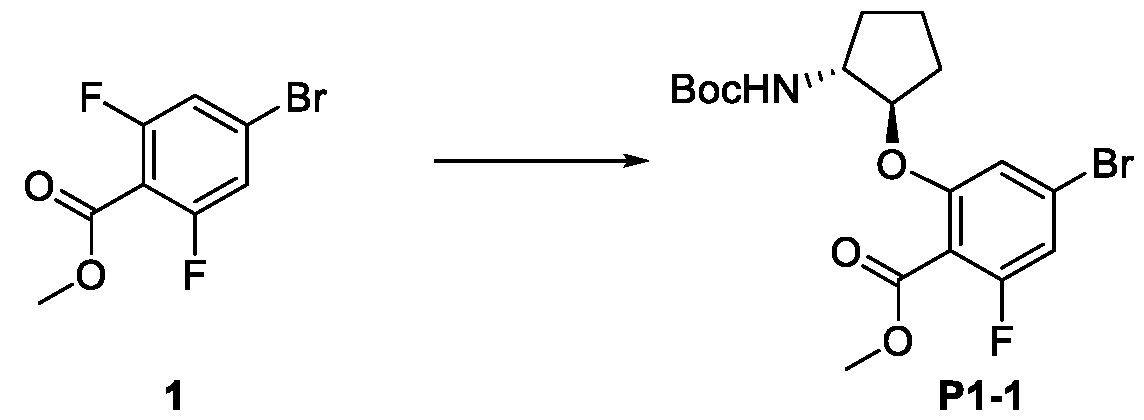
[00160] To a solution of tert-butyl ((1R,2R)-2-hydroxycyclopentyl)carbamate (4.41 g, 21.89 mmol) in tetrahydrofuran (40 mL) was added lithium bis(trimethylsilyl)amide (1 M in tetrahydrofuran, 21.89 mL, 21.89 mmol) at 0
oC and the mixture was stirred for 1 h at 0 °C under nitrogen. The mixture was added dropwise to a solution of methyl 4-bromo-2,6-difluorobenzoate (5 g, 19.9 mmol) in tetrahydrofuran (200 mL) at 0 °C and the reaction mixture was stirred for 12 h at room temperature under nitrogen. The reaction was quenched with saturated aqueous ammonium chloride (40 mL) and the mixture was extracted with ethyl acetate (3 x 50 mL). The combined organic layers were washed with brine (50 mL), dried over sodium sulfate, filtered and evaporated. The residue was purified by silica gel column chromatography (petroleum ether:ethyl acetate, 91:9 to 50:50) to afford the title compound (5.2 g, 57% yield). LCMS Rt = 1.454 min, ESMS m/z = 453.9 [M+Na]
+. Preparation 2: Methyl 2-(((1R,2R)-2-((tert-butoxycarbonyl)amino)cyclopentyl)oxy)-6-fluoro-4- methylbenzoate
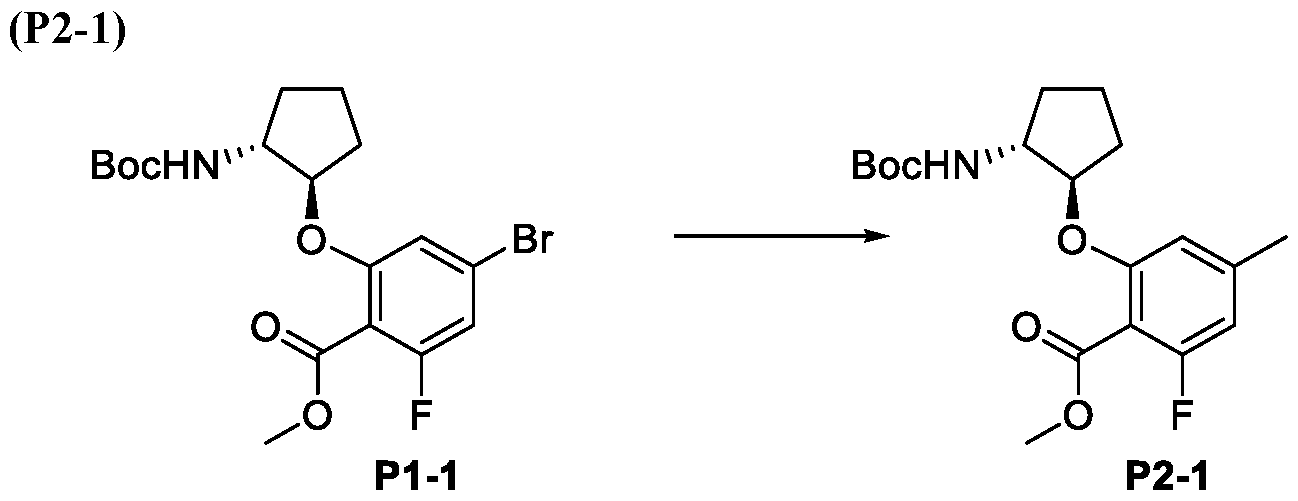
[00161] To a solution of methyl 4-bromo-2-(((1R,2R)-2-((tert-butoxycarbonyl)amino)cyclopentyl)oxy)-6- fluorobenzoate (600 mg, 1.39 mmol) and 2,4,6-trimethyl-1,3,5,2,4,6-trioxatriborinane (192 mg, 1.53 mmol) in 1,4-dioxane (20 mL) was added potassium carbonate (288 mg, 2.08 mmol) and [1,1′- bis(diphenylphosphino)ferrocene]dichloropalladium(II) dichloromethane complex (57 mg, 0.0694 mmol)
Attorney Docket No.57547-723.601 and the reaction mixture was heated to 100 °C for 18 h under nitrogen. The reaction mixture was poured into water (20 mL) and extracted with ethyl acetate (3 x 20 mL). The combined organic layers were washed with brine (20 mL), dried over sodium sulfate, filtered and evaporated. The residue was purified by silica gel column chromatography (petroleum ether:ethyl acetate, 91:9 to 50:50) to afford the title compound (470 mg, 91% yield). LCMS Rt = 1.411 min, ESMS m/z = 390.0 [M+Na]
+. Preparation 3: Methyl 2-(((1R,2R)-2-((tert-butoxycarbonyl)amino)cyclopentyl)oxy)-6-fluoro-4-(1- methylcyclopropyl)benzoate (P3-1)

Step 1: Methyl 2-(((1R,2R)-2-((tert-butoxycarbonyl)amino)cyclopentyl)oxy)-6-fluoro-4-(prop-1-en-2- yl)benzoate (2) [00162] A mixture of methyl 4-bromo-2-(((1R,2R)-2-((tert-butoxycarbonyl)amino)cyclopentyl)oxy)-6- fluorobenzoate (200 mg, 0.442 mmol), 4,4,5,5-tetramethyl-2-(prop-1-en-2-yl)-1,3,2-dioxaborolane (93 mg, 0.55 mmol), [1,1′-bis(diphenylphosphino)ferrocene]dichloropalladium(II) (34 mg, 0.046 mmol) and potassium carbonate (128 mg, 0.925 mmol) in a mixture of 1,4-dioxane and water (5:1, 6 mL) was stirred at 100 °C for 18 h under nitrogen. The reaction mixture was filtered and evaporated at 40 °C. The residue was diluted with ice water (20 mL) and extracted with ethyl acetate (3 x 50 mL). The combined organic layers were dried over anhydrous sodium sulfate, filtered, and evaporated. The crude product was purified by silica gel column chromatography (petroleum ether:ethyl acetate, 100:0 to 90:10) to afford the title compound (190 mg, quant.). LCMS Rt = 1.485 min, ESMS m/z = 416.0 [M+Na]
+. Step 2: Methyl 2-(((1R,2R)-2-aminocyclopentyl)oxy)-6-fluoro-4-(1-methylcyclopropyl)benzoate (3) [00163] To a solution of diethylzinc (298 mg, 2.4 mmol) in dichloromethane (20 mL) was added diiodomethane (647 mg, 2.4 mmol) dropwise. To the reaction mixture was added a solution of trifluoroacetic acid (55 µL, 0.72 mmol) in dichloromethane (3 mL) at 0 °C and the mixture was stirred for 30 min. To the reaction mixture was added a solution of methyl 2-(((1R,2R)-2-((tert- butoxycarbonyl)amino)cyclopentyl)oxy)-6-fluoro-4-(prop-1-en-2-yl)benzoate (190 mg, 0.483 mmol) in dichloromethane (5 mL) dropwise. The reaction mixture was stirred at room temperature for 12 h. The reaction was quenched with saturated aqueous ammonium chloride (30 mL) and filtered. The filtrate was
Attorney Docket No.57547-723.601 extracted with dichloromethane (3 x 50 mL). The combined organic layers were dried over anhydrous sodium sulfate, filtered and evaporated. The crude product was purified by silica gel column chromatography (petroleum ether:ethyl acetate, 100:0 to 70:30) to afford the title compound (90 mg, 61% yield). LCMS Rt = 1.125 min, ESMS m/z = 308.0 [M+H]
+. Step 3: Methyl 2-(((1R,2R)-2-((tert-butoxycarbonyl)amino)cyclopentyl)oxy)-6-fluoro-4-(1- methylcyclopropyl)benzoate (P3-1) [00164] A mixture of methyl 2-(((1R,2R)-2-aminocyclopentyl)oxy)-6-fluoro-4-(1- methylcyclopropyl)benzoate (90 mg, 0.29 mmol ), di-tert-butlydicarbonate (96 mg, 0.44 mmol ) and triethylamine (122 µL, 0.88 mmol ) in dichloromethane (5 mL) was stirred at room temperature for 2 h under nitrogen. The mixture was extracted with dichloromethane (3 x 20 mL) and the combined organic layers were dried over sodium sulfate, filtered and evaporated. The crude product was purified by silica gel column chromatography (petroleum ether:ethyl acetate, 100:0 to 50:50) to afford the title compound (90 mg, 76% yield). LCMS Rt = 1.499 min, ESMS m/z = 430.1 [M+Na]
+. Example 1-1: 5-((5-(2-(((1R,2R)-2-Aminocyclopentyl)oxy)-6-fluoro-4-methylphenyl)-1H-pyrazol-3- yl)amino)pyrazine-2-carbonitrile

Step 1: tert-Butyl ((1R,2R)-2-(2-(2-cyanoacetyl)-3-fluoro-5-methylphenoxy)cyclopentyl)carbamate (1) [00165] To a solution of methyl 2-(((1R,2R)-2-((tert-butoxycarbonyl)amino)cyclopentyl)oxy)-6-fluoro-4- methylbenzoate (470 mg, 1.28 mmol) in tetrahydrofuran (10 mL) was added acetonitrile (400 µL, 7.66 mmol) and lithium bis(trimethylsilyl)amide (1 M in tetrahydrofuran, 3.8 mL, 3.8 mmol) at -40 °C. The reaction mixture was stirred for 1 h at room temperature under nitrogen. The reaction was quenched with saturated ammonium chloride (10 mL) and the mixture was extracted with ethyl acetate (3 x 10 mL). The combined organic layers were washed with brine (10 mL), dried over sodium sulfate, filtered and evaporated. The residue was purified by gradient silica gel column chromatography (petroleum ether:ethyl
Attorney Docket No.57547-723.601 acetate, 91:9 to 50:50) to afford the title compound (120 mg, 25% yield). LCMS Rt = 1.362 min, ESMS m/z = 399.0 [M+Na]
+. Step 2: tert-Butyl ((1R,2R)-2-(2-(3-amino-1H-pyrazol-5-yl)-3-fluoro-5- methylphenoxy)cyclopentyl)carbamate (2) [00166] To a solution of tert-butyl ((1R,2R)-2-(2-(2-cyanoacetyl)-3-fluoro-5- methylphenoxy)cyclopentyl)carbamate (120 mg, 0.319 mmol) in ethanol (8 mL) was added hydrazine hydrate (64 µL, 1.28 mmol) and acetic acid (54 µL, 0.94 mmol). The reaction mixture was stirred at 90 °C for 12 h under nitrogen. The reaction mixture was evaporated and the residue was purified by gradient silica gel column chromatography (dichloromethane:methanol, 98:2 to 90:10) to afford the title compound (40 mg, 32% yield). LCMS Rt = 1.213 min, ESMS m/z = 391.1 [M+H]
+. Step 3: tert-Butyl ((1R,2R)-2-(2-(3-((5-cyanopyrazin-2-yl)amino)-1H-pyrazol-5-yl)-3-fluoro-5- methylphenoxy)cyclopentyl)carbamate (3) [00167] To a solution of tert-butyl ((1R,2R)-2-(2-(3-amino-1H-pyrazol-5-yl)-3-fluoro-5- methylphenoxy)cyclopentyl)carbamate (40 mg, 0.102 mmol) and 5-chloropyrazine-2-carbonitrile (17 mg, 0.123 mmol) in dimethyl sulfoxide (5 mL) was added 4-ethylmorpholine (20 µL, 0.156 mmol) and the reaction mixture was stirred at 80 °C for 8 h under nitrogen. The reaction mixture was poured into water (10 mL) and extracted with ethyl acetate (3 x 10 mL). The combined organic layers were washed with brine (10 mL), dried over sodium sulfate, filtered and evaporated. The residue was purified by gradient silica gel column chromatography (dichloromethane:methanol, 98:2 to 90:10) to furnish the title compound (40 mg, 71% yield). LCMS Rt = 1.348 min, ESMS m/z = 494.2 [M+H]
+. Step 4: 5-((5-(2-(((1R,2R)-2-Aminocyclopentyl)oxy)-6-fluoro-4-methylphenyl)-1H-pyrazol-3- yl)amino)pyrazine-2-carbonitrile (Example 1-1) [00168] A solution of tert-butyl ((1R,2R)-2-(2-(3-((5-cyanopyrazin-2-yl)amino)-1H-pyrazol-5-yl)-3- fluoro-5-methylphenoxy)cyclopentyl)carbamate (40 mg, 0.081 mmol) in a mixture of trifluoroacetic acid and dichloromethane (5:1 v/v, 3 mL) was stirred at room temperature for 30 min. The reaction mixture was evaporated and to the residue was added saturated aqueous sodium carbonate to achieve pH 8. The mixture was acidifed to pH 5-6 by addition of formic acid. The mixture was purified by preparative HPLC (Daisogel-C18-10-100, 30 x 250 mm, 5 um, mobile phase: ACN--H
2O (0.1%FA), gradient: 5 ~ 95) to afford the title compound (18.2 mg, 56% yield). LCMS Rt = 1.011 min, ESMS m/z = 394.1 [M+H]
+.
1H NMR (400 MHz, DMSO-d
6) δ ppm 10.78 (s, 1H), 8.63 (s, 1H), 8.52 (s, 1H), 8.29 (s, 1H), 6.56 (s, 2H), 6.78 (d, J = 11.6 Hz, 1H), 4.55-4.50 (m, 1H), 3.42-3.37 (m, 1H), 2.35 (s, 1H), 2.23-2.16 (m, 1H), 1.98-1.92 (m, 1H), 1.75- 1.62 (m, 3H), 1.43-1.39 (m, 1H). [00169] The following compound was prepared by the same general method:
Attorney Docket No.57547-723.601
Example A: Kinase HTRF biochemical assay [00170] CHK1 enzyme activity was measured using an HTRF KinEASE assay (Cisbio, catalog no. 62ST1PEC). Full-length human CHK1 protein (GenBank accession number NP_001265.1) was obtained from Carna Biosciences, Inc. (Kobe, Japan, catalog no.02-117). The enzyme reaction was carried out in assay buffer containing (final concentrations): CHK1 enzyme (0.012 ng/µL), MgCl
2 (5 mM) and DTT (1 mM). To determine compound dose response, DMSO stock solutions were serially diluted in a 10-point concentration series in duplicate. Compound solution (50 nL) was added to 384-well assay plates (Greiner, catalog no.784075). To each well containing compound solution was added assay buffer solution (5 µL). Plates were centrifuged at 1000 rpm for 1 minute, then incubated at room temperature for 10 minutes. The reaction was started by addition of substrate buffer (5 µL/well) containing (final concentrations): STK substrate 1-biotin (120 nM) and ATP (1 mM). Assay plates were centrifuged at 1000 rpm for 1 minute, then incubated at room temperature for 60 minutes. The reaction was stopped by addition of detection buffer (Cisbio, 10 µL) containing (final concentrations): STK antibody-cryptate (0.25 nM) and streptavidin-XL665 (7.5 nM). Plates were centrifuged at 1000 rpm for 1 minute, then incubated at 25 °C for 2 hours. HTRF signal was read on an EnVision multimode plate reader (CisBio) in HTRF mode. Data were fit to dose- response curves using XLfit (IDBS, Surrey, UK) or Prism (GraphPad Software, La Jolla, CA, US) to calculate IC50 values for each compound tested. Example B: AlphaLisa cellular assay [00171] Compound activity in cells was measured using an AlphaLISA® SureFire® Ultra™ p-CHK1 (Ser345) assay (Perkin Elmer, catalog no. ALSU-PCHK1-A10K). HT29 cells were cultured in McCoy 5A medium with 10% FBS and 1% penicillin-streptomycin and seeded to 96-well plates (Corning, catalog no. 3599). Compounds were serially diluted in DMSO over a 10-point dose range with 3-fold dilution and to each well containing cells was added compound solution. Plates were centrifuged at 1000 rpm for 30 seconds. Plates were incubated at 37 °C for 16 h. Supernatant was removed by flicking the plate against a paper towel. Wells were washed once with PBS solution. To each well was added freshly prepared lysis buffer and plates were agitated on a plate shaker at 400 rpm for 30 min. The 96-well cell plates were centrifuged at 1500 rpm for 1 minute. From each well was transferred 10 µL of the lysates to a 384-well Optiplate™ (Perkin Elmer, catalog no.6007290). To each well was added Acceptor Mix (5 µL) and the plates were sealed and wrapped in foil. Plates were agitated on a plate shaker for 2 minutes, then incubated
Attorney Docket No.57547-723.601 at room temperature for 1 h. To each well was added Donor Mix (5 µL) and the plates were sealed and wrapped in foil. Plates were agitated on a plate shaker for 2 minutes, then incubated at room temperature for 1 h. AlphaLisa signal was read on an EnVision multimode plate reader (Perkin Elmer). Data were fit to dose-response curves using XLfit (IDBS, Surrey, UK) or Prism (GraphPad Software, La Jolla, CA, US) to calculate IC50 values for each compound tested. [00172] The data from example A and B is found in table 2. TABLE 2

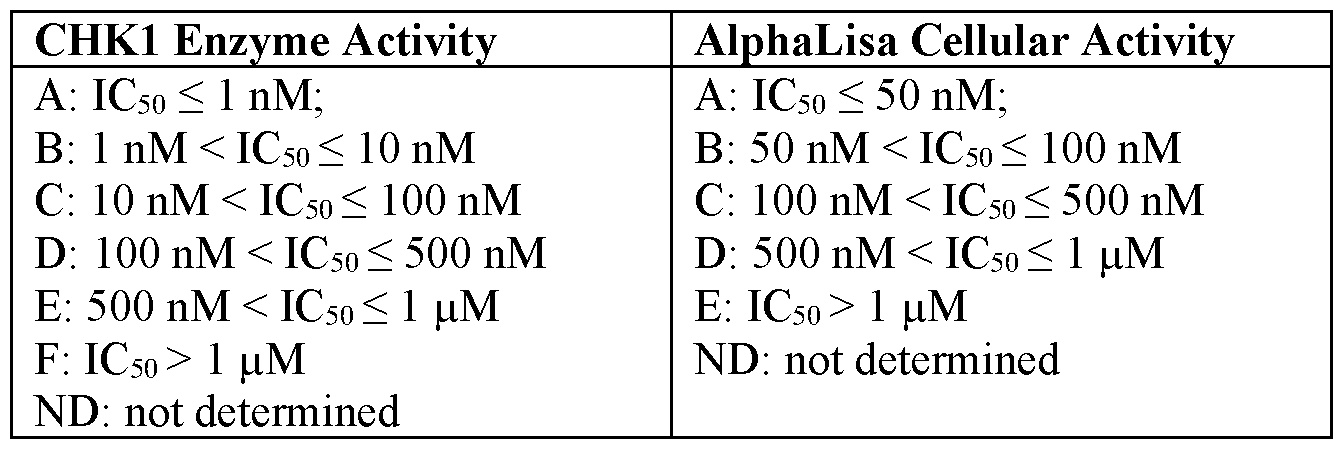
Example C: Mouse brain:plasma ratio determination [00173] Compound blood-brain barrier penetration in vivo was determined in CD-1 mice. A total of 3 male CD-1 mice were dosed with compound orally at a selected dose. Blood, CSF, and brains were collected at a single point (2 h) after each occasion of dosing, or at multiple time points (0.5 h, 1 h, 2 h, 4 h, 8 h and 24 h) after each occasion of dosing. Blood samples (approximately 0.080 mL) were collected via saphenous vein puncture and placed in K2EDTA-containing tubes. Immediately following blood collection, the samples were inverted several times and held on wet ice pending centrifugation. All samples were centrifuged within 30 min of collection under refrigeration (set to maintain 4°C for 5 min at 4600 rpm) to obtain plasma (approximately 20 to 40 µL). Animals were then euthanized by inhalation of excess CO2 and exsanguinated via cardiac puncture. CSF samples (5 µL; Tween 80 was used as a desorbent if the compound was specifically adsorbed) were collected into tubes via puncture of the cisterna magna. Brain samples were collected, rinsed with saline, drained with filter paper and blood vessels removed. Brains were then weighed and weights recorded. A 5-fold of the homogenate solvent (water) was used for brain homogenization. Sample (plasma, brain, and CSF) concentrations of each compound were determined by pharmacokinetic analysis with a non-compartmental method using WinNonlin (Phoenix Build 8.0.0.3176). AUC values were determined from t=0 to the last time point for brain, CSF, and plasma. TABLE 3
Attorney Docket No.57547-723.601

Attorney Docket No.57547-723.601

Example D: Pharmaceutical Compositions Example D1: Parenteral Composition [00174] To prepare a parenteral pharmaceutical composition suitable for administration by injection, 100 mg of a water-soluble salt of a compound described herein is dissolved in DMSO and then mixed with 10 mL of 0.9% sterile saline. The mixture is incorporated into a dosage unit form suitable for administration by injection. Example D2: Oral Composition [00175] To prepare a pharmaceutical composition for oral delivery, 100 mg of a compound described herein is mixed with 750 mg of starch. The mixture is incorporated into an oral dosage unit for, such as a hard gelatin capsule, which is suitable for oral administration. Example D3: Sublingual (Hard Lozenge) Composition [00176] To prepare a pharmaceutical composition for buccal delivery, such as a hard lozenge, mix 100 mg of a compound described herein, with 420 mg of powdered sugar mixed, with 1.6 mL of light corn syrup,
Attorney Docket No.57547-723.601 2.4 mL distilled water, and 0.42 mL mint extract. The mixture is gently blended and poured into a mold to form a lozenge suitable for buccal administration. [00177] The examples and embodiments described herein are for illustrative purposes only and in some embodiments, various modifications or changes are to be included within the purview of disclosure and scope of the appended claims.
 Formula (Ia). [0016] In some embodiments, the compound is of Formula (Ib):
 Formula (Ib). [0017] In some embodiments, the compound is of Formula (Ic):
 Formula (Ic). [0018] In some embodiments, the compound is of Formula (Id):
Attorney Docket No.57547-723.601
Formula (Ic). [0018] In some embodiments, the compound is of Formula (Id):
Attorney Docket No.57547-723.601
 wherein: Ring A is cycloalkyl, heterocycloalkyl, aryl, or heteroaryl; each R1 is independently deuterium, halogen, -CN, -NO2, -OH, -ORa, -OC(=O)Ra, -OC(=O)ORb, - OC(=O)NRcRd, -SH, -SRa, -S(=O)Ra, -S(=O)2Ra, -S(=O)2NRcRd, -NRcRd, -NRbC(=O)NRcRd, - NRbC(=O)Ra, -NRbC(=O)ORb, -NRbS(=O)2Ra, -C(=O)Ra, -C(=O)ORb, -C(=O)NRcRd, C1-C6alkyl, C1-C6haloalkyl, C1-C6deuteroalkyl, C1-C6hydroxyalkyl, C1-C6aminoalkyl, C1-C6heteroalkyl, C2- C6alkenyl, C2-C6alkynyl, cycloalkyl, heterocycloalkyl, aryl, or heteroaryl; or two R1 on the same atom are taken together to form an oxo; n is 0-4; R2 is hydrogen, C1-C6alkyl, C1-C6haloalkyl, C1-C6deuteroalkyl, C1-C6hydroxyalkyl, C1-C6aminoalkyl, C1-C6heteroalkyl, cycloalkyl, or heterocycloalkyl; R3 is hydrogen, deuterium, halogen, -CN, -NO2, -OH, -ORa, -NRcRd, -C(=O)Ra, -C(=O)ORb, -C(=O)NRcRd, C1-C6alkyl, C1-C6haloalkyl, C1-C6deuteroalkyl, C1-C6hydroxyalkyl, C1-C6aminoalkyl, C1-C6heteroalkyl, cycloalkyl, or heterocycloalkyl; R4 is hydrogen, C1-C6alkyl, C1-C6haloalkyl, C1-C6deuteroalkyl, C1-C6hydroxyalkyl, C1-C6aminoalkyl, C1-C6heteroalkyl, cycloalkyl, or heterocycloalkyl; RW is hydrogen, deuterium, halogen, -CN, -NO2, -OH, -ORa, -OC(=O)Ra, -OC(=O)ORb, -OC(=O)NRcRd, - SH, -SRa, -S(=O)Ra, -S(=O)2Ra, -S(=O)2NRcRd, -NRcRd, -NRbC(=O)NRcRd, -NRbC(=O)Ra, - NRbC(=O)ORb, -NRbS(=O)2Ra, -C(=O)Ra, -C(=O)ORb, -C(=O)NRcRd, C1-C6alkyl, C1-C6haloalkyl, C1-C6deuteroalkyl, C1-C6hydroxyalkyl, C1-C6aminoalkyl, C1-C6heteroalkyl, C2-C6alkenyl, C2-C6alkynyl,
Attorney Docket No.57547-723.601 cycloalkyl, heterocycloalkyl, aryl, or heteroaryl; wherein the alkyl, alkenyl, alkynyl, cycloalkyl, heterocycloalkyl, aryl, and heteroaryl is optionally substituted with one or more R; RX is hydrogen, deuterium, halogen, -CN, -NO2, -OH, -ORa, -OC(=O)Ra, -OC(=O)ORb, -OC(=O)NRcRd, - SH, -SRa, -S(=O)Ra, -S(=O)2Ra, -S(=O)2NRcRd, -NRcRd, -NRbC(=O)NRcRd, -NRbC(=O)Ra, - NRbC(=O)ORb, -NRbS(=O)2Ra, -C(=O)Ra, -C(=O)ORb, -C(=O)NRcRd, C1-C6alkyl, C1-C6haloalkyl, C1-C6deuteroalkyl, C1-C6hydroxyalkyl, C1-C6aminoalkyl, C1-C6heteroalkyl, C2-C6alkenyl, C2-C6alkynyl, cycloalkyl, heterocycloalkyl, aryl, or heteroaryl; wherein the alkyl, alkenyl, alkynyl, cycloalkyl, heterocycloalkyl, aryl, and heteroaryl is optionally substituted with one or more R; RY is deuterium, halogen, -CN, -NO2, -OH, -ORa, -OC(=O)Ra, -OC(=O)ORb, -OC(=O)NRcRd, -SH, -SRa, - S(=O)Ra, -S(=O)2Ra, -S(=O)2NRcRd, -NRcRd, -NRbC(=O)NRcRd, -NRbC(=O)Ra, -NRbC(=O)ORb, - NRbS(=O)2Ra, -C(=O)Ra, -C(=O)ORb, -C(=O)NRcRd, C1-C6alkyl, C1-C6haloalkyl, C1-C6deuteroalkyl, C1-C6hydroxyalkyl, C1-C6aminoalkyl, C1-C6heteroalkyl, C2-C6alkenyl, C2-C6alkynyl, cycloalkyl, heterocycloalkyl, aryl, or heteroaryl; wherein the alkyl, alkenyl, alkynyl, cycloalkyl, heterocycloalkyl, aryl, and heteroaryl is optionally substituted with one or more R; RZ is hydrogen, deuterium, halogen, -CN, -NO2, -OH, -ORa, -OC(=O)Ra, -OC(=O)ORb, -OC(=O)NRcRd, - SH, -SRa, -S(=O)Ra, -S(=O)2Ra, -S(=O)2NRcRd, -NRcRd, -NRbC(=O)NRcRd, -NRbC(=O)Ra, - NRbC(=O)ORb, -NRbS(=O)2Ra, -C(=O)Ra, -C(=O)ORb, -C(=O)NRcRd, C1-C6alkyl, C1-C6haloalkyl, C1-C6deuteroalkyl, C1-C6hydroxyalkyl, C1-C6aminoalkyl, C1-C6heteroalkyl, C2-C6alkenyl, C2-C6alkynyl, cycloalkyl, heterocycloalkyl, aryl, or heteroaryl; wherein the alkyl, alkenyl, alkynyl, cycloalkyl, heterocycloalkyl, aryl, and heteroaryl is optionally substituted with one or more R; each Ra is independently C1-C6alkyl, C1-C6haloalkyl, C1-C6deuteroalkyl, C1-C6hydroxyalkyl, C1-C6aminoalkyl, C2-C6alkenyl, C2-C6alkynyl, cycloalkyl, heterocycloalkyl, aryl, heteroaryl, C1-C6alkylene(cycloalkyl), C1-C6alkylene(heterocycloalkyl), C1-C6alkylene(aryl), or C1-C6alkylene(heteroaryl); wherein each alkyl, alkylene, alkenyl, alkynyl, cycloalkyl, heterocycloalkyl, aryl, and heteroaryl is independently optionally substituted with one or more R; each Rb is independently hydrogen, C1-C6alkyl, C1-C6haloalkyl, C1-C6deuteroalkyl, C1-C6hydroxyalkyl, C1-C6aminoalkyl, C2-C6alkenyl, C2-C6alkynyl, cycloalkyl, heterocycloalkyl, aryl, heteroaryl, C1-C6alkylene(cycloalkyl), C1-C6alkylene(heterocycloalkyl), C1-C6alkylene(aryl), or C1-C6alkylene(heteroaryl); wherein each alkyl, alkylene, alkenyl, alkynyl, cycloalkyl, heterocycloalkyl, aryl, and heteroaryl is independently optionally substituted with one or more R; and each Rc and Rd are independently hydrogen, C1-C6alkyl, C1-C6haloalkyl, C1-C6deuteroalkyl, C1-C6hydroxyalkyl, C1-C6aminoalkyl, C2-C6alkenyl, C2-C6alkynyl, cycloalkyl, heterocycloalkyl, aryl, heteroaryl, C1-C6alkylene(cycloalkyl), C1-C6alkylene(heterocycloalkyl), C1-C6alkylene(aryl), or C1-C6alkylene(heteroaryl); wherein each alkyl, alkylene, alkenyl, alkynyl, cycloalkyl, heterocycloalkyl, aryl, and heteroaryl is independently optionally substituted with one or more R; or Rc and Rd are taken together with the atom to which they are attached to form a heterocycloalkyl optionally substituted with one or more R;
Attorney Docket No.57547-723.601 each R is independently halogen, -CN, -OH, -OC1-C3alkyl, -OC1-C3haloalkyl, -SC1-C3alkyl, -S(=O)C1- C3alkyl, -S(=O)2C1-C3alkyl, -S(=O)2NH2, -S(=O)2NHC1-C3alkyl, -S(=O)2N(C1-C3alkyl)2, -NH2, -NHC1- C3alkyl, -N(C1-C3alkyl)2, -C(=O)C1-C3alkyl, -C(=O)OH, -C(=O)OC1-C3alkyl, -C(=O)NH2, - C(=O)NHC1-C3alkyl, -C(=O)N(C1-C3alkyl)2, C1-C3alkyl, C1-C3haloalkyl, C1-C3deuteroalkyl, C1- C1-C3aminoalkyl, C1-C3heteroalkyl, or C3-C6cycloalkyl; or two R on the same atom form an oxo. [0061] Disclosed herein is a compound of Formula (I), or a pharmaceutically acceptable salt, solvate, tautomer, or stereoisomer thereof:
wherein: Ring A is cycloalkyl, heterocycloalkyl, aryl, or heteroaryl; each R1 is independently deuterium, halogen, -CN, -NO2, -OH, -ORa, -OC(=O)Ra, -OC(=O)ORb, - OC(=O)NRcRd, -SH, -SRa, -S(=O)Ra, -S(=O)2Ra, -S(=O)2NRcRd, -NRcRd, -NRbC(=O)NRcRd, - NRbC(=O)Ra, -NRbC(=O)ORb, -NRbS(=O)2Ra, -C(=O)Ra, -C(=O)ORb, -C(=O)NRcRd, C1-C6alkyl, C1-C6haloalkyl, C1-C6deuteroalkyl, C1-C6hydroxyalkyl, C1-C6aminoalkyl, C1-C6heteroalkyl, C2- C6alkenyl, C2-C6alkynyl, cycloalkyl, heterocycloalkyl, aryl, or heteroaryl; or two R1 on the same atom are taken together to form an oxo; n is 0-4; R2 is hydrogen, C1-C6alkyl, C1-C6haloalkyl, C1-C6deuteroalkyl, C1-C6hydroxyalkyl, C1-C6aminoalkyl, C1-C6heteroalkyl, cycloalkyl, or heterocycloalkyl; R3 is hydrogen, deuterium, halogen, -CN, -NO2, -OH, -ORa, -NRcRd, -C(=O)Ra, -C(=O)ORb, -C(=O)NRcRd, C1-C6alkyl, C1-C6haloalkyl, C1-C6deuteroalkyl, C1-C6hydroxyalkyl, C1-C6aminoalkyl, C1-C6heteroalkyl, cycloalkyl, or heterocycloalkyl; R4 is hydrogen, C1-C6alkyl, C1-C6haloalkyl, C1-C6deuteroalkyl, C1-C6hydroxyalkyl, C1-C6aminoalkyl, C1-C6heteroalkyl, cycloalkyl, or heterocycloalkyl; RW is hydrogen, deuterium, halogen, -CN, -NO2, -OH, -ORa, -OC(=O)Ra, -OC(=O)ORb, -OC(=O)NRcRd, - SH, -SRa, -S(=O)Ra, -S(=O)2Ra, -S(=O)2NRcRd, -NRcRd, -NRbC(=O)NRcRd, -NRbC(=O)Ra, - NRbC(=O)ORb, -NRbS(=O)2Ra, -C(=O)Ra, -C(=O)ORb, -C(=O)NRcRd, C1-C6alkyl, C1-C6haloalkyl, C1-C6deuteroalkyl, C1-C6hydroxyalkyl, C1-C6aminoalkyl, C1-C6heteroalkyl, C2-C6alkenyl, C2-C6alkynyl,
Attorney Docket No.57547-723.601 cycloalkyl, heterocycloalkyl, aryl, or heteroaryl; wherein the alkyl, alkenyl, alkynyl, cycloalkyl, heterocycloalkyl, aryl, and heteroaryl is optionally substituted with one or more R; RX is hydrogen, deuterium, halogen, -CN, -NO2, -OH, -ORa, -OC(=O)Ra, -OC(=O)ORb, -OC(=O)NRcRd, - SH, -SRa, -S(=O)Ra, -S(=O)2Ra, -S(=O)2NRcRd, -NRcRd, -NRbC(=O)NRcRd, -NRbC(=O)Ra, - NRbC(=O)ORb, -NRbS(=O)2Ra, -C(=O)Ra, -C(=O)ORb, -C(=O)NRcRd, C1-C6alkyl, C1-C6haloalkyl, C1-C6deuteroalkyl, C1-C6hydroxyalkyl, C1-C6aminoalkyl, C1-C6heteroalkyl, C2-C6alkenyl, C2-C6alkynyl, cycloalkyl, heterocycloalkyl, aryl, or heteroaryl; wherein the alkyl, alkenyl, alkynyl, cycloalkyl, heterocycloalkyl, aryl, and heteroaryl is optionally substituted with one or more R; RY is deuterium, halogen, -CN, -NO2, -OH, -ORa, -OC(=O)Ra, -OC(=O)ORb, -OC(=O)NRcRd, -SH, -SRa, - S(=O)Ra, -S(=O)2Ra, -S(=O)2NRcRd, -NRcRd, -NRbC(=O)NRcRd, -NRbC(=O)Ra, -NRbC(=O)ORb, - NRbS(=O)2Ra, -C(=O)Ra, -C(=O)ORb, -C(=O)NRcRd, C1-C6alkyl, C1-C6haloalkyl, C1-C6deuteroalkyl, C1-C6hydroxyalkyl, C1-C6aminoalkyl, C1-C6heteroalkyl, C2-C6alkenyl, C2-C6alkynyl, cycloalkyl, heterocycloalkyl, aryl, or heteroaryl; wherein the alkyl, alkenyl, alkynyl, cycloalkyl, heterocycloalkyl, aryl, and heteroaryl is optionally substituted with one or more R; RZ is hydrogen, deuterium, halogen, -CN, -NO2, -OH, -ORa, -OC(=O)Ra, -OC(=O)ORb, -OC(=O)NRcRd, - SH, -SRa, -S(=O)Ra, -S(=O)2Ra, -S(=O)2NRcRd, -NRcRd, -NRbC(=O)NRcRd, -NRbC(=O)Ra, - NRbC(=O)ORb, -NRbS(=O)2Ra, -C(=O)Ra, -C(=O)ORb, -C(=O)NRcRd, C1-C6alkyl, C1-C6haloalkyl, C1-C6deuteroalkyl, C1-C6hydroxyalkyl, C1-C6aminoalkyl, C1-C6heteroalkyl, C2-C6alkenyl, C2-C6alkynyl, cycloalkyl, heterocycloalkyl, aryl, or heteroaryl; wherein the alkyl, alkenyl, alkynyl, cycloalkyl, heterocycloalkyl, aryl, and heteroaryl is optionally substituted with one or more R; each Ra is independently C1-C6alkyl, C1-C6haloalkyl, C1-C6deuteroalkyl, C1-C6hydroxyalkyl, C1-C6aminoalkyl, C2-C6alkenyl, C2-C6alkynyl, cycloalkyl, heterocycloalkyl, aryl, heteroaryl, C1-C6alkylene(cycloalkyl), C1-C6alkylene(heterocycloalkyl), C1-C6alkylene(aryl), or C1-C6alkylene(heteroaryl); wherein each alkyl, alkylene, alkenyl, alkynyl, cycloalkyl, heterocycloalkyl, aryl, and heteroaryl is independently optionally substituted with one or more R; each Rb is independently hydrogen, C1-C6alkyl, C1-C6haloalkyl, C1-C6deuteroalkyl, C1-C6hydroxyalkyl, C1-C6aminoalkyl, C2-C6alkenyl, C2-C6alkynyl, cycloalkyl, heterocycloalkyl, aryl, heteroaryl, C1-C6alkylene(cycloalkyl), C1-C6alkylene(heterocycloalkyl), C1-C6alkylene(aryl), or C1-C6alkylene(heteroaryl); wherein each alkyl, alkylene, alkenyl, alkynyl, cycloalkyl, heterocycloalkyl, aryl, and heteroaryl is independently optionally substituted with one or more R; and each Rc and Rd are independently hydrogen, C1-C6alkyl, C1-C6haloalkyl, C1-C6deuteroalkyl, C1-C6hydroxyalkyl, C1-C6aminoalkyl, C2-C6alkenyl, C2-C6alkynyl, cycloalkyl, heterocycloalkyl, aryl, heteroaryl, C1-C6alkylene(cycloalkyl), C1-C6alkylene(heterocycloalkyl), C1-C6alkylene(aryl), or C1-C6alkylene(heteroaryl); wherein each alkyl, alkylene, alkenyl, alkynyl, cycloalkyl, heterocycloalkyl, aryl, and heteroaryl is independently optionally substituted with one or more R; or Rc and Rd are taken together with the atom to which they are attached to form a heterocycloalkyl optionally substituted with one or more R;
Attorney Docket No.57547-723.601 each R is independently halogen, -CN, -OH, -OC1-C3alkyl, -OC1-C3haloalkyl, -SC1-C3alkyl, -S(=O)C1- C3alkyl, -S(=O)2C1-C3alkyl, -S(=O)2NH2, -S(=O)2NHC1-C3alkyl, -S(=O)2N(C1-C3alkyl)2, -NH2, -NHC1- C3alkyl, -N(C1-C3alkyl)2, -C(=O)C1-C3alkyl, -C(=O)OH, -C(=O)OC1-C3alkyl, -C(=O)NH2, - C(=O)NHC1-C3alkyl, -C(=O)N(C1-C3alkyl)2, C1-C3alkyl, C1-C3haloalkyl, C1-C3deuteroalkyl, C1- C1-C3aminoalkyl, C1-C3heteroalkyl, or C3-C6cycloalkyl; or two R on the same atom form an oxo. [0061] Disclosed herein is a compound of Formula (I), or a pharmaceutically acceptable salt, solvate, tautomer, or stereoisomer thereof:
 wherein: RW is halogen, -OH, -ORa, C1-C6alkyl, C1-C6haloalkyl, or cycloalkyl; RY is C1-C6alkyl or cycloalkyl; wherein the alkyl and cycloalkyl is optionally substituted with one or more R; each Ra is independently C1-C6alkyl or C1-C6haloalkyl; each R is independently halogen, -CN, -OH, -OC1-C3alkyl, -OC1-C3haloalkyl, C1-C3alkyl, or C1-C3haloalkyl; or two R on the same atom form an oxo. [0062] Disclosed herein is a compound of Formula (I), or a pharmaceutically acceptable salt, solvate, tautomer, or stereoisomer thereof:
 Formula (I), wherein: RW is halogen; RY is C1-C6alkyl or cycloalkyl; wherein the alkyl and cycloalkyl is optionally substituted with one or more R; each R is independently halogen, -CN, -OH, -OC1-C3alkyl, -OC1-C3haloalkyl, C1-C3alkyl, or C1-C3haloalkyl; or two R on the same atom form an oxo. [0063] In some embodiments of a compound of Formula (I), the compound is of Formula (Ia):
Attorney Docket No.57547-723.601
Formula (I), wherein: RW is halogen; RY is C1-C6alkyl or cycloalkyl; wherein the alkyl and cycloalkyl is optionally substituted with one or more R; each R is independently halogen, -CN, -OH, -OC1-C3alkyl, -OC1-C3haloalkyl, C1-C3alkyl, or C1-C3haloalkyl; or two R on the same atom form an oxo. [0063] In some embodiments of a compound of Formula (I), the compound is of Formula (Ia):
Attorney Docket No.57547-723.601
 Formula (Ia). [0064] In some embodiments of a compound of Formula (I’), the compound is of Formula (Ia’):
 Formula (Ia’). [0065] In some embodiments of a compound of Formula (I), the compound is of Formula (Ib):
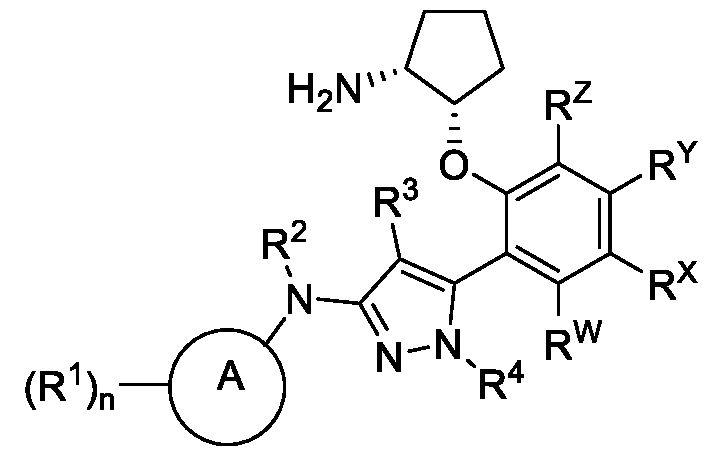 Formula (Ib). [0066] In some embodiments of a compound of Formula (I’), the compound is of Formula (Ib’):
 Formula (Ib’). [0067] In some embodiments of a compound of Formula (I), the compound is of Formula (Ic):
Attorney Docket No.57547-723.601
Formula (Ib’). [0067] In some embodiments of a compound of Formula (I), the compound is of Formula (Ic):
Attorney Docket No.57547-723.601
 Formula (Ic). [0068] In some embodiments of a compound of Formula (I’), the compound is of Formula (Ic’):
 Formula (Ic’). [0069] In some embodiments of a compound of Formula (I), the compound is of Formula (Id):
 Formula (Id). [0070] In some embodiments of a compound of Formula (I), the compound is of Formula (Id’):
 Formula (Id’). [0071] In some embodiments of a compound of Formula (I), (I’), (Ia)-(Id), or (Ia’)-(Id’), Ring A is aryl or heteroaryl. In some embodiments of a compound of Formula (I), (I’), (Ia)-(Id), or (Ia’)-(Id’), Ring A is heteroaryl. In some embodiments of a compound of Formula (I), (I’), (Ia)-(Id), or (Ia’)-(Id’), Ring A is 6- membered heteroaryl. In some embodiments of a compound of Formula (I), (I’), (Ia)-(Id), or (Ia’)-(Id’), Ring A is pyrazinyl.
Attorney Docket No.57547-723.601 [0072] In some embodiments of a compound of Formula (I), (I’), (Ia)-(Id), or (Ia’)-(Id’), each R1 is independently deuterium, halogen, -CN, -OH, -ORa, -C(=O)Ra, -C(=O)ORb, -C(=O)NRcRd, C1-C6alkyl, C1-C6haloalkyl, C1-C6deuteroalkyl, C1-C6hydroxyalkyl, C1-C6aminoalkyl, C1-C6heteroalkyl, cycloalkyl, or heterocycloalkyl. In some embodiments of a compound of Formula (I), (I’), (Ia)-(Id), or (Ia’)-(Id’), each R1 is independently deuterium, halogen, -CN, -OH, -ORa, C1-C6alkyl, or C1-C6haloalkyl. [0073] In some embodiments of a compound of Formula (I), (I’), (Ia)-(Id), or (Ia’)-(Id’), n is 0-2. In some embodiments of a compound of Formula (I), (I’), (Ia)-(Id), or (Ia’)-(Id’), n is 1 or 2. In some embodiments of a compound of Formula (I), (I’), (Ia)-(Id), or (Ia’)-(Id’), n is 0 or 1. In some embodiments of a compound of Formula (I), (I’), (Ia)-(Id), or (Ia’)-(Id’), n is 0. In some embodiments of a compound of Formula (I), (I’), (Ia)-(Id), or (Ia’)-(Id’), n is 1. In some embodiments of a compound of Formula (I), (I’), (Ia)-(Id), or (Ia’)- (Id’), n is 2. In some embodiments of a compound of Formula (I), (I’), (Ia)-(Id), or (Ia’)-(Id’), n is 3. [0074] In some embodiments of a compound of Formula (I), (I’), (Ia)-(Id), or (Ia’)-(Id’), R2 is hydrogen or C1-C6alkyl. In some embodiments of a compound of Formula (I), (I’), (Ia)-(Id), or (Ia’)-(Id’), R2 is hydrogen. [0075] In some embodiments of a compound of Formula (I), (I’), (Ia)-(Id), or (Ia’)-(Id’), R3 is hydrogen, deuterium, halogen, C1-C6alkyl, or C1-C6haloalkyl. In some embodiments of a compound of Formula (I), (I’), (Ia)-(Id), or (Ia’)-(Id’), R3 is hydrogen. [0076] In some embodiments of a compound of Formula (I), (I’), (Ia)-(Id), or (Ia’)-(Id’), R4 is hydrogen or C1-C6alkyl. In some embodiments of a compound of Formula (I), (I’), (Ia)-(Id), or (Ia’)-(Id’), R4 is hydrogen. [0077] In some embodiments of a compound of Formula (I), (I’), (Ia)-(Id), or (Ia’)-(Id’), RW is deuterium, halogen, -CN, -NO2, -OH, -ORa, -OC(=O)Ra, -OC(=O)ORb, -OC(=O)NRcRd, -SH, -SRa, -S(=O)Ra, - S(=O)2Ra, -S(=O)2NRcRd, -NRcRd, -NRbC(=O)NRcRd, -NRbC(=O)Ra, -NRbC(=O)ORb, -NRbS(=O)2Ra, - C(=O)Ra, -C(=O)ORb, -C(=O)NRcRd, C1-C6alkyl, C1-C6haloalkyl, C1-C6deuteroalkyl, C1-C6hydroxyalkyl, C1-C6aminoalkyl, C1-C6heteroalkyl, C2-C6alkenyl, C2-C6alkynyl, cycloalkyl, heterocycloalkyl, aryl, or heteroaryl; wherein the alkyl, alkenyl, alkynyl, cycloalkyl, heterocycloalkyl, aryl, and heteroaryl is optionally substituted with one or more R. In some embodiments of a compound of Formula (I), (I’), (Ia)- (Id), or (Ia’)-(Id’), RW is hydrogen, deuterium, halogen, -CN, -OH, -ORa, -NRcRd, -C(=O)Ra, -C(=O)ORb, - C(=O)NRcRd, C1-C6alkyl, C1-C6haloalkyl, C1-C6deuteroalkyl, C1-C6hydroxyalkyl, C1-C6aminoalkyl, C1-C6heteroalkyl, cycloalkyl, heterocycloalkyl, aryl, or heteroaryl; wherein the alkyl, cycloalkyl, heterocycloalkyl, aryl, and heteroaryl is optionally substituted with one or more R. In some embodiments of a compound of Formula (I), (I’), (Ia)-(Id), or (Ia’)-(Id’), RW is hydrogen, deuterium, halogen, -CN, -OH, - ORa, -NRcRd, C1-C6alkyl, C1-C6haloalkyl, C1-C6deuteroalkyl, cycloalkyl, or heterocycloalkyl; wherein the alkyl, cycloalkyl and heterocycloalkyl is optionally substituted with one or more R. In some embodiments of a compound of Formula (I), (I’), (Ia)-(Id), or (Ia’)-(Id’), RW is deuterium, halogen, -CN, -OH, -ORa, -NRcRd, C1-C6alkyl, C1-C6haloalkyl, C1-C6deuteroalkyl, cycloalkyl, or heterocycloalkyl; wherein the alkyl, cycloalkyl and heterocycloalkyl is optionally substituted with one or more R. In some embodiments of a
Attorney Docket No.57547-723.601 compound of Formula (I), (I’), (Ia)-(Id), or (Ia’)-(Id’), RW is hydrogen, deuterium, halogen, -OH, -ORa, - NRcRd, C1-C6alkyl, C1-C6haloalkyl, or cycloalkyl. In some embodiments of a compound of Formula (I), (I’), (Ia)-(Id), or (Ia’)-(Id’), RW is deuterium, halogen, -OH, -ORa, -NRcRd, C1-C6alkyl, C1-C6haloalkyl, or cycloalkyl. In some embodiments of a compound of Formula (I), (I’), (Ia)-(Id), or (Ia’)-(Id’), RW is hydrogen, halogen, -OH, -ORa, C1-C6alkyl, C1-C6haloalkyl, or cycloalkyl. In some embodiments of a compound of Formula (I), (I’), (Ia)-(Id), or (Ia’)-(Id’), RW is halogen, -OH, -ORa, C1-C6alkyl, C1-C6haloalkyl, or cycloalkyl. In some embodiments of a compound of Formula (I), (I’), (Ia)-(Id), or (Ia’)- (Id’), RW is halogen or C1-C6alkyl. In some embodiments of a compound of Formula (I), (I’), (Ia)-(Id), or (Ia’)-(Id’), RW is halogen. In some embodiments of a compound of Formula (I), (I’), (Ia)-(Id), or (Ia’)-(Id’), RW is fluoro. In some embodiments of a compound of Formula (I), (I’), (Ia)-(Id), or (Ia’)-(Id’), RW is -ORa. [0078] In some embodiments of a compound of Formula (I), (I’), (Ia)-(Id), or (Ia’)-(Id’), RX is hydrogen, deuterium, halogen, -CN, -OH, -ORa, -NRcRd, -C(=O)Ra, -C(=O)ORb, -C(=O)NRcRd, C1-C6alkyl, C1-C6haloalkyl, C1-C6deuteroalkyl, C1-C6hydroxyalkyl, C1-C6aminoalkyl, C1-C6heteroalkyl, cycloalkyl, heterocycloalkyl, aryl, or heteroaryl; wherein the alkyl, cycloalkyl, heterocycloalkyl, aryl, and heteroaryl is optionally substituted with one or more R. In some embodiments of a compound of Formula (I), (I’), (Ia)- (Id), or (Ia’)-(Id’), RX is hydrogen, deuterium, halogen, -CN, -OH, -ORa, -NRcRd, C1-C6alkyl, C1-C6haloalkyl, C1-C6deuteroalkyl, cycloalkyl, or heterocycloalkyl; wherein the alkyl, cycloalkyl, and heterocycloalkyl is optionally substituted with one or more R. In some embodiments of a compound of Formula (I), (I’), (Ia)-(Id), or (Ia’)-(Id’), RX is hydrogen, deuterium, halogen, -OH, -ORa, -NRcRd, C1-C6alkyl, C1-C6haloalkyl, or cycloalkyl. In some embodiments of a compound of Formula (I), (I’), (Ia)- (Id), or (Ia’)-(Id’), RX is hydrogen, halogen, C1-C6alkyl, C1-C6haloalkyl, or cycloalkyl. In some embodiments of a compound of Formula (I), (I’), (Ia)-(Id), or (Ia’)-(Id’), RX is hydrogen, halogen, or C1-C6alkyl. In some embodiments of a compound of Formula (I), (I’), (Ia)-(Id), or (Ia’)-(Id’), RX is hydrogen or halogen. In some embodiments of a compound of Formula (I), (I’), (Ia)-(Id), or (Ia’)-(Id’), RX is hydrogen or C1-C6alkyl. In some embodiments of a compound of Formula (I), (I’), (Ia)-(Id), or (Ia’)-(Id’), RX is hydrogen. [0079] In some embodiments of a compound of Formula (I), (I’), (Ia)-(Id), or (Ia’)-(Id’), RY is deuterium, halogen, -CN, -OH, -ORa, -NRcRd, -C(=O)Ra, -C(=O)ORb, -C(=O)NRcRd, C1-C6alkyl, C1-C6haloalkyl, C1-C6deuteroalkyl, C1-C6hydroxyalkyl, C1-C6aminoalkyl, C1-C6heteroalkyl, cycloalkyl, heterocycloalkyl, aryl, or heteroaryl; wherein the alkyl, cycloalkyl, heterocycloalkyl, aryl, and heteroaryl is optionally substituted with one or more R. In some embodiments of a compound of Formula (I), (I’), (Ia)-(Id), or (Ia’)- (Id’), RY is deuterium, halogen, -CN, -OH, -ORa, -NRcRd, C1-C6alkyl, C1-C6haloalkyl, C1-C6deuteroalkyl, C1-C6hydroxyalkyl, cycloalkyl, or heterocycloalkyl; wherein the alkyl, cycloalkyl, and heterocycloalkyl is optionally substituted with one or more R. In some embodiments of a compound of Formula (I), (I’), (Ia)- (Id), or (Ia’)-(Id’), RY is deuterium, halogen, -OH, -ORa, C1-C6alkyl, C1-C6haloalkyl, C1-C6hydroxyalkyl, cycloalkyl, or heterocycloalkyl; wherein the alkyl, cycloalkyl, and heterocycloalkyl is optionally substituted with one or more R. In some embodiments of a compound of Formula (I), (I’), (Ia)-(Id), or (Ia’)-(Id’), RY is
Attorney Docket No.57547-723.601 halogen, -OH, -ORa, C1-C6alkyl, C1-C6haloalkyl, C1-C6hydroxyalkyl, or cycloalkyl; wherein the alkyl and cycloalkyl is optionally substituted with one or more R. In some embodiments of a compound of Formula (I), (I’), (Ia)-(Id), or (Ia’)-(Id’), RY is halogen, C1-C6alkyl, C1-C6haloalkyl, C1-C6hydroxyalkyl, or cycloalkyl; wherein the alkyl and cycloalkyl is optionally substituted with one or more R. In some embodiments of a compound of Formula (I), (I’), (Ia)-(Id), or (Ia’)-(Id’), RY is C1-C6alkyl or cycloalkyl; wherein the alkyl and cycloalkyl is optionally substituted with one or more R. In some embodiments of a compound of Formula (I), (I’), (Ia)-(Id), or (Ia’)-(Id’), RY is C1-C6alkyl optionally substituted with one or more R. In some embodiments of a compound of Formula (I), (I’), (Ia)-(Id), or (Ia’)-(Id’), RY is methyl. In some embodiments of a compound of Formula (I), (I’), (Ia)-(Id), or (Ia’)-(Id’), RY is cycloalkyl optionally substituted with one or more R. In some embodiments of a compound of Formula (I), (I’), (Ia)-(Id), or (Ia’)-(Id’), RY is cycloalkyl or heterocycloalkyl; wherein the cycloalkyl and heterocycloalkyl is optionally substituted with one or more R. In some embodiments of a compound of Formula (I), (I’), (Ia)-(Id), or (Ia’)-(Id’), RY is cyclopropyl optionally substituted with one or more R. In some embodiments of a compound of Formula (I),
Formula (Id’). [0071] In some embodiments of a compound of Formula (I), (I’), (Ia)-(Id), or (Ia’)-(Id’), Ring A is aryl or heteroaryl. In some embodiments of a compound of Formula (I), (I’), (Ia)-(Id), or (Ia’)-(Id’), Ring A is heteroaryl. In some embodiments of a compound of Formula (I), (I’), (Ia)-(Id), or (Ia’)-(Id’), Ring A is 6- membered heteroaryl. In some embodiments of a compound of Formula (I), (I’), (Ia)-(Id), or (Ia’)-(Id’), Ring A is pyrazinyl.
Attorney Docket No.57547-723.601 [0072] In some embodiments of a compound of Formula (I), (I’), (Ia)-(Id), or (Ia’)-(Id’), each R1 is independently deuterium, halogen, -CN, -OH, -ORa, -C(=O)Ra, -C(=O)ORb, -C(=O)NRcRd, C1-C6alkyl, C1-C6haloalkyl, C1-C6deuteroalkyl, C1-C6hydroxyalkyl, C1-C6aminoalkyl, C1-C6heteroalkyl, cycloalkyl, or heterocycloalkyl. In some embodiments of a compound of Formula (I), (I’), (Ia)-(Id), or (Ia’)-(Id’), each R1 is independently deuterium, halogen, -CN, -OH, -ORa, C1-C6alkyl, or C1-C6haloalkyl. [0073] In some embodiments of a compound of Formula (I), (I’), (Ia)-(Id), or (Ia’)-(Id’), n is 0-2. In some embodiments of a compound of Formula (I), (I’), (Ia)-(Id), or (Ia’)-(Id’), n is 1 or 2. In some embodiments of a compound of Formula (I), (I’), (Ia)-(Id), or (Ia’)-(Id’), n is 0 or 1. In some embodiments of a compound of Formula (I), (I’), (Ia)-(Id), or (Ia’)-(Id’), n is 0. In some embodiments of a compound of Formula (I), (I’), (Ia)-(Id), or (Ia’)-(Id’), n is 1. In some embodiments of a compound of Formula (I), (I’), (Ia)-(Id), or (Ia’)- (Id’), n is 2. In some embodiments of a compound of Formula (I), (I’), (Ia)-(Id), or (Ia’)-(Id’), n is 3. [0074] In some embodiments of a compound of Formula (I), (I’), (Ia)-(Id), or (Ia’)-(Id’), R2 is hydrogen or C1-C6alkyl. In some embodiments of a compound of Formula (I), (I’), (Ia)-(Id), or (Ia’)-(Id’), R2 is hydrogen. [0075] In some embodiments of a compound of Formula (I), (I’), (Ia)-(Id), or (Ia’)-(Id’), R3 is hydrogen, deuterium, halogen, C1-C6alkyl, or C1-C6haloalkyl. In some embodiments of a compound of Formula (I), (I’), (Ia)-(Id), or (Ia’)-(Id’), R3 is hydrogen. [0076] In some embodiments of a compound of Formula (I), (I’), (Ia)-(Id), or (Ia’)-(Id’), R4 is hydrogen or C1-C6alkyl. In some embodiments of a compound of Formula (I), (I’), (Ia)-(Id), or (Ia’)-(Id’), R4 is hydrogen. [0077] In some embodiments of a compound of Formula (I), (I’), (Ia)-(Id), or (Ia’)-(Id’), RW is deuterium, halogen, -CN, -NO2, -OH, -ORa, -OC(=O)Ra, -OC(=O)ORb, -OC(=O)NRcRd, -SH, -SRa, -S(=O)Ra, - S(=O)2Ra, -S(=O)2NRcRd, -NRcRd, -NRbC(=O)NRcRd, -NRbC(=O)Ra, -NRbC(=O)ORb, -NRbS(=O)2Ra, - C(=O)Ra, -C(=O)ORb, -C(=O)NRcRd, C1-C6alkyl, C1-C6haloalkyl, C1-C6deuteroalkyl, C1-C6hydroxyalkyl, C1-C6aminoalkyl, C1-C6heteroalkyl, C2-C6alkenyl, C2-C6alkynyl, cycloalkyl, heterocycloalkyl, aryl, or heteroaryl; wherein the alkyl, alkenyl, alkynyl, cycloalkyl, heterocycloalkyl, aryl, and heteroaryl is optionally substituted with one or more R. In some embodiments of a compound of Formula (I), (I’), (Ia)- (Id), or (Ia’)-(Id’), RW is hydrogen, deuterium, halogen, -CN, -OH, -ORa, -NRcRd, -C(=O)Ra, -C(=O)ORb, - C(=O)NRcRd, C1-C6alkyl, C1-C6haloalkyl, C1-C6deuteroalkyl, C1-C6hydroxyalkyl, C1-C6aminoalkyl, C1-C6heteroalkyl, cycloalkyl, heterocycloalkyl, aryl, or heteroaryl; wherein the alkyl, cycloalkyl, heterocycloalkyl, aryl, and heteroaryl is optionally substituted with one or more R. In some embodiments of a compound of Formula (I), (I’), (Ia)-(Id), or (Ia’)-(Id’), RW is hydrogen, deuterium, halogen, -CN, -OH, - ORa, -NRcRd, C1-C6alkyl, C1-C6haloalkyl, C1-C6deuteroalkyl, cycloalkyl, or heterocycloalkyl; wherein the alkyl, cycloalkyl and heterocycloalkyl is optionally substituted with one or more R. In some embodiments of a compound of Formula (I), (I’), (Ia)-(Id), or (Ia’)-(Id’), RW is deuterium, halogen, -CN, -OH, -ORa, -NRcRd, C1-C6alkyl, C1-C6haloalkyl, C1-C6deuteroalkyl, cycloalkyl, or heterocycloalkyl; wherein the alkyl, cycloalkyl and heterocycloalkyl is optionally substituted with one or more R. In some embodiments of a
Attorney Docket No.57547-723.601 compound of Formula (I), (I’), (Ia)-(Id), or (Ia’)-(Id’), RW is hydrogen, deuterium, halogen, -OH, -ORa, - NRcRd, C1-C6alkyl, C1-C6haloalkyl, or cycloalkyl. In some embodiments of a compound of Formula (I), (I’), (Ia)-(Id), or (Ia’)-(Id’), RW is deuterium, halogen, -OH, -ORa, -NRcRd, C1-C6alkyl, C1-C6haloalkyl, or cycloalkyl. In some embodiments of a compound of Formula (I), (I’), (Ia)-(Id), or (Ia’)-(Id’), RW is hydrogen, halogen, -OH, -ORa, C1-C6alkyl, C1-C6haloalkyl, or cycloalkyl. In some embodiments of a compound of Formula (I), (I’), (Ia)-(Id), or (Ia’)-(Id’), RW is halogen, -OH, -ORa, C1-C6alkyl, C1-C6haloalkyl, or cycloalkyl. In some embodiments of a compound of Formula (I), (I’), (Ia)-(Id), or (Ia’)- (Id’), RW is halogen or C1-C6alkyl. In some embodiments of a compound of Formula (I), (I’), (Ia)-(Id), or (Ia’)-(Id’), RW is halogen. In some embodiments of a compound of Formula (I), (I’), (Ia)-(Id), or (Ia’)-(Id’), RW is fluoro. In some embodiments of a compound of Formula (I), (I’), (Ia)-(Id), or (Ia’)-(Id’), RW is -ORa. [0078] In some embodiments of a compound of Formula (I), (I’), (Ia)-(Id), or (Ia’)-(Id’), RX is hydrogen, deuterium, halogen, -CN, -OH, -ORa, -NRcRd, -C(=O)Ra, -C(=O)ORb, -C(=O)NRcRd, C1-C6alkyl, C1-C6haloalkyl, C1-C6deuteroalkyl, C1-C6hydroxyalkyl, C1-C6aminoalkyl, C1-C6heteroalkyl, cycloalkyl, heterocycloalkyl, aryl, or heteroaryl; wherein the alkyl, cycloalkyl, heterocycloalkyl, aryl, and heteroaryl is optionally substituted with one or more R. In some embodiments of a compound of Formula (I), (I’), (Ia)- (Id), or (Ia’)-(Id’), RX is hydrogen, deuterium, halogen, -CN, -OH, -ORa, -NRcRd, C1-C6alkyl, C1-C6haloalkyl, C1-C6deuteroalkyl, cycloalkyl, or heterocycloalkyl; wherein the alkyl, cycloalkyl, and heterocycloalkyl is optionally substituted with one or more R. In some embodiments of a compound of Formula (I), (I’), (Ia)-(Id), or (Ia’)-(Id’), RX is hydrogen, deuterium, halogen, -OH, -ORa, -NRcRd, C1-C6alkyl, C1-C6haloalkyl, or cycloalkyl. In some embodiments of a compound of Formula (I), (I’), (Ia)- (Id), or (Ia’)-(Id’), RX is hydrogen, halogen, C1-C6alkyl, C1-C6haloalkyl, or cycloalkyl. In some embodiments of a compound of Formula (I), (I’), (Ia)-(Id), or (Ia’)-(Id’), RX is hydrogen, halogen, or C1-C6alkyl. In some embodiments of a compound of Formula (I), (I’), (Ia)-(Id), or (Ia’)-(Id’), RX is hydrogen or halogen. In some embodiments of a compound of Formula (I), (I’), (Ia)-(Id), or (Ia’)-(Id’), RX is hydrogen or C1-C6alkyl. In some embodiments of a compound of Formula (I), (I’), (Ia)-(Id), or (Ia’)-(Id’), RX is hydrogen. [0079] In some embodiments of a compound of Formula (I), (I’), (Ia)-(Id), or (Ia’)-(Id’), RY is deuterium, halogen, -CN, -OH, -ORa, -NRcRd, -C(=O)Ra, -C(=O)ORb, -C(=O)NRcRd, C1-C6alkyl, C1-C6haloalkyl, C1-C6deuteroalkyl, C1-C6hydroxyalkyl, C1-C6aminoalkyl, C1-C6heteroalkyl, cycloalkyl, heterocycloalkyl, aryl, or heteroaryl; wherein the alkyl, cycloalkyl, heterocycloalkyl, aryl, and heteroaryl is optionally substituted with one or more R. In some embodiments of a compound of Formula (I), (I’), (Ia)-(Id), or (Ia’)- (Id’), RY is deuterium, halogen, -CN, -OH, -ORa, -NRcRd, C1-C6alkyl, C1-C6haloalkyl, C1-C6deuteroalkyl, C1-C6hydroxyalkyl, cycloalkyl, or heterocycloalkyl; wherein the alkyl, cycloalkyl, and heterocycloalkyl is optionally substituted with one or more R. In some embodiments of a compound of Formula (I), (I’), (Ia)- (Id), or (Ia’)-(Id’), RY is deuterium, halogen, -OH, -ORa, C1-C6alkyl, C1-C6haloalkyl, C1-C6hydroxyalkyl, cycloalkyl, or heterocycloalkyl; wherein the alkyl, cycloalkyl, and heterocycloalkyl is optionally substituted with one or more R. In some embodiments of a compound of Formula (I), (I’), (Ia)-(Id), or (Ia’)-(Id’), RY is
Attorney Docket No.57547-723.601 halogen, -OH, -ORa, C1-C6alkyl, C1-C6haloalkyl, C1-C6hydroxyalkyl, or cycloalkyl; wherein the alkyl and cycloalkyl is optionally substituted with one or more R. In some embodiments of a compound of Formula (I), (I’), (Ia)-(Id), or (Ia’)-(Id’), RY is halogen, C1-C6alkyl, C1-C6haloalkyl, C1-C6hydroxyalkyl, or cycloalkyl; wherein the alkyl and cycloalkyl is optionally substituted with one or more R. In some embodiments of a compound of Formula (I), (I’), (Ia)-(Id), or (Ia’)-(Id’), RY is C1-C6alkyl or cycloalkyl; wherein the alkyl and cycloalkyl is optionally substituted with one or more R. In some embodiments of a compound of Formula (I), (I’), (Ia)-(Id), or (Ia’)-(Id’), RY is C1-C6alkyl optionally substituted with one or more R. In some embodiments of a compound of Formula (I), (I’), (Ia)-(Id), or (Ia’)-(Id’), RY is methyl. In some embodiments of a compound of Formula (I), (I’), (Ia)-(Id), or (Ia’)-(Id’), RY is cycloalkyl optionally substituted with one or more R. In some embodiments of a compound of Formula (I), (I’), (Ia)-(Id), or (Ia’)-(Id’), RY is cycloalkyl or heterocycloalkyl; wherein the cycloalkyl and heterocycloalkyl is optionally substituted with one or more R. In some embodiments of a compound of Formula (I), (I’), (Ia)-(Id), or (Ia’)-(Id’), RY is cyclopropyl optionally substituted with one or more R. In some embodiments of a compound of Formula (I),
 [0080] In some embodiments of a compound of Formula (I), (I’), (Ia)-(Id), or (Ia’)-(Id’), RZ is hydrogen, deuterium, halogen, -CN, -OH, -ORa, -NRcRd, -C(=O)Ra, -C(=O)ORb, -C(=O)NRcRd, C1-C6alkyl, C1-C6haloalkyl, C1-C6deuteroalkyl, C1-C6hydroxyalkyl, C1-C6aminoalkyl, C1-C6heteroalkyl, cycloalkyl, heterocycloalkyl, aryl, or heteroaryl; wherein the alkyl, cycloalkyl, heterocycloalkyl, aryl, and heteroaryl is optionally substituted with one or more R. In some embodiments of a compound of Formula (I), (I’), (Ia)- (Id), or (Ia’)-(Id’), RZ is hydrogen, deuterium, halogen, -CN, -OH, -ORa, -NRcRd, C1-C6alkyl, C1-C6haloalkyl, C1-C6deuteroalkyl, cycloalkyl, or heterocycloalkyl; wherein the alkyl, cycloalkyl, and heterocycloalkyl is optionally substituted with one or more R. In some embodiments of a compound of Formula (I), (I’), (Ia)-(Id), or (Ia’)-(Id’), RZ is hydrogen, deuterium, halogen, -OH, -ORa, -NRcRd, C1-C6alkyl, C1-C6haloalkyl, or cycloalkyl. In some embodiments of a compound of Formula (I), (I’), (Ia)- (Id), or (Ia’)-(Id’), RZ is hydrogen, deuterium, halogen, C1-C6alkyl, or C1-C6haloalkyl. In some embodiments of a compound of Formula (I), (I’), (Ia)-(Id), or (Ia’)-(Id’), RZ is hydrogen, halogen, or C1-C6alkyl. In some embodiments of a compound of Formula (I), (I’), (Ia)-(Id), or (Ia’)-(Id’), RZ is hydrogen or halogen. In some embodiments of a compound of Formula (I), (I’), (Ia)-(Id), or (Ia’)-(Id’), RZ is hydrogen or C1-C6alkyl. In some embodiments of a compound of Formula (I), (I’), (Ia)-(Id), or (Ia’)-(Id’), RZ is hydrogen. [0081] In some embodiments of a compound of Formula (I), (I’), (Ia)-(Id), or (Ia’)-(Id’), each Ra is independently C1-C6alkyl, C1-C6haloalkyl, C1-C6deuteroalkyl, C1-C6hydroxyalkyl, C1-C6aminoalkyl, cycloalkyl, heterocycloalkyl, C1-C6alkylene(cycloalkyl), or C1-C6alkylene(heterocycloalkyl); wherein each alkyl, alkylene, cycloalkyl, and heterocycloalkyl is independently optionally substituted with one or more R. In some embodiments of a compound of Formula (I), (I’), (Ia)-(Id), or (Ia’)-(Id’), each Ra is independently C1-C6alkyl, C1-C6haloalkyl, C1-C6deuteroalkyl, C1-C6hydroxyalkyl, C1-C6aminoalkyl, cycloalkyl, heterocycloalkyl; wherein each alkyl, alkylene, cycloalkyl, and heterocycloalkyl is independently optionally
Attorney Docket No.57547-723.601 substituted with one or more R. In some embodiments of a compound of Formula (I), (I’), (Ia)-(Id), or (Ia’)- (Id’), each Ra is independently C1-C6alkyl, C1-C6haloalkyl, C1-C6deuteroalkyl, C1-C6hydroxyalkyl, or C1-C6aminoalkyl. In some embodiments of a compound of Formula (I), (I’), (Ia)-(Id), or (Ia’)-(Id’), each Ra is independently C1-C6alkyl or C1-C6haloalkyl. In some embodiments of a compound of Formula (I), (I’), (Ia)-(Id), or (Ia’)-(Id’), each Ra is independently C1-C6alkyl. [0082] In some embodiments of a compound of Formula (I), (I’), (Ia)-(Id), or (Ia’)-(Id’), each Rb is independently hydrogen, C1-C6alkyl, C1-C6haloalkyl, C1-C6deuteroalkyl, C1-C6hydroxyalkyl, C1-C6aminoalkyl, cycloalkyl, heterocycloalkyl, C1-C6alkylene(cycloalkyl), or C1-C6alkylene(heterocycloalkyl); wherein each alkyl, alkylene, cycloalkyl, and heterocycloalkyl is independently optionally substituted with one or more R. In some embodiments of a compound of Formula (I), (I’), (Ia)-(Id), or (Ia’)-(Id’), each Rb is independently hydrogen, C1-C6alkyl, C1-C6haloalkyl, C1-C6deuteroalkyl, C1-C6hydroxyalkyl, C1-C6aminoalkyl, cycloalkyl, heterocycloalkyl; wherein each alkyl, alkylene, cycloalkyl, and heterocycloalkyl is independently optionally substituted with one or more R. In some embodiments of a compound of Formula (I), (I’), (Ia)-(Id), or (Ia’)-(Id’), each Rb is independently hydrogen, C1-C6alkyl, C1-C6haloalkyl, C1-C6deuteroalkyl, C1-C6hydroxyalkyl, or C1-C6aminoalkyl. In some embodiments of a compound of Formula (I), (I’), (Ia)-(Id), or (Ia’)-(Id’), each Rb is independently hydrogen, C1-C6alkyl, or C1-C6haloalkyl. In some embodiments of a compound of Formula (I), (I’), (Ia)-(Id), or (Ia’)- (Id’), each Rb is independently hydrogen or C1-C6alkyl. In some embodiments of a compound of Formula (I), (I’), (Ia)-(Id), or (Ia’)-(Id’), each Rb is independently hydrogen. In some embodiments of a compound of Formula (I), (I’), (Ia)-(Id), or (Ia’)-(Id’), each Rb is independently C1-C6alkyl. [0083] In some embodiments of a compound of Formula (I), (I’), (Ia)-(Id), or (Ia’)-(Id’), each Rc and Rd are independently hydrogen, C1-C6alkyl, C1-C6haloalkyl, C1-C6deuteroalkyl, C1-C6hydroxyalkyl, C1-C6aminoalkyl, cycloalkyl, heterocycloalkyl, C1-C6alkylene(cycloalkyl), or C1-C6alkylene(heterocycloalkyl); wherein each alkyl, alkylene, cycloalkyl, and heterocycloalkyl is independently optionally substituted with one or more R. In some embodiments of a compound of Formula (I), (I’), (Ia)-(Id), or (Ia’)-(Id’), each Rc and Rd are independently hydrogen, C1-C6alkyl, C1-C6haloalkyl, C1-C6deuteroalkyl, C1-C6hydroxyalkyl, C1-C6aminoalkyl, cycloalkyl, heterocycloalkyl; wherein each alkyl, alkylene, cycloalkyl, and heterocycloalkyl is independently optionally substituted with one or more R. In some embodiments of a compound of Formula (I), (I’), (Ia)-(Id), or (Ia’)-(Id’), each Rc and Rd are independently hydrogen, C1-C6alkyl, C1-C6haloalkyl, C1-C6deuteroalkyl, C1-C6hydroxyalkyl, or C1-C6aminoalkyl. In some embodiments of a compound of Formula (I), (I’), (Ia)-(Id), or (Ia’)-(Id’), each Rc and Rd are independently hydrogen, C1-C6alkyl, or C1-C6haloalkyl. In some embodiments of a compound of Formula (I), (I’), (Ia)-(Id), or (Ia’)-(Id’), each Rc and Rd are independently hydrogen or C1-C6alkyl. In some embodiments of a compound of Formula (I), (I’), (Ia)-(Id), or (Ia’)-(Id’), each Rc and Rd are hydrogen. In some embodiments of a compound of Formula (I), (I’), (Ia)-(Id), or (Ia’)-(Id’), each Rc and Rd are independently C1-C6alkyl.
Attorney Docket No.57547-723.601 [0084] In some embodiments of a compound of Formula (I), (I’), (Ia)-(Id), or (Ia’)-(Id’), Rc and Rd are taken together with the atom to which they are attached to form a heterocycloalkyl optionally substituted with one or more R. [0085] In some embodiments of a compound of Formula (I), (I’), (Ia)-(Id), or (Ia’)-(Id’), each R is independently halogen, -CN, -OH, -OC1-C3alkyl, -OC1-C3haloalkyl, -NH2, -NHC1-C3alkyl, -N(C1-C3alkyl)2, -C(=O)C1-C3alkyl, -C(=O)OH, -C(=O)OC1-C3alkyl, -C(=O)NH2, -C(=O)NHC1-C3alkyl, -C(=O)N(C1- C3alkyl)2, C1-C3alkyl, C1-C3haloalkyl, C1-C3deuteroalkyl, C1-C3hydroxyalkyl, C1-C3aminoalkyl, C1- C3heteroalkyl, or C3-C6cycloalkyl; or two R on the same atom form an oxo. In some embodiments of a compound of Formula (I), (I’), (Ia)-(Id), or (Ia’)-(Id’), each R is independently halogen, -CN, -OH, -OC1- C3alkyl, -OC1-C3haloalkyl, -NH2, -NHC1-C3alkyl, -N(C1-C3alkyl)2, C1-C3alkyl, C1-C3haloalkyl, C1- C3deuteroalkyl, C1-C3hydroxyalkyl, C1-C3aminoalkyl, C1-C3heteroalkyl, or C3-C6cycloalkyl; or two R on the same atom form an oxo. In some embodiments of a compound of Formula (I), (I’), (Ia)-(Id), or (Ia’)-(Id’), each R is independently halogen, -CN, -OH, -OC1-C3alkyl, -NH2, C1-C3alkyl, or C1-C3haloalkyl; or two R on the same atom form an oxo. In some embodiments of a compound of Formula (I), (I’), (Ia)-(Id), or (Ia’)- (Id’), each R is independently halogen, -OH, C1-C3alkyl, or C1-C3haloalkyl; or two R on the same atom form an oxo. In some embodiments of a compound of Formula (I), (I’), (Ia)-(Id), or (Ia’)-(Id’), each R is independently halogen, -OH, -NH2, C1-C3alkyl, or C1-C3haloalkyl; or two R on the same atom form an oxo. In some embodiments of a compound of Formula (I), (I’), (Ia)-(Id), or (Ia’)-(Id’), each R is independently halogen, C1-C3alkyl, or C1-C3haloalkyl; or two R on the same atom form an oxo. In some embodiments of a compound of Formula (I), (I’), (Ia)-(Id), or (Ia’)-(Id’), each R is independently halogen or C1-C3alkyl; or two R on the same atom form an oxo. [0086] In some embodiments of a compound disclosed herein, the compound is selected from a compound of Table 1: TABLE 1
[0080] In some embodiments of a compound of Formula (I), (I’), (Ia)-(Id), or (Ia’)-(Id’), RZ is hydrogen, deuterium, halogen, -CN, -OH, -ORa, -NRcRd, -C(=O)Ra, -C(=O)ORb, -C(=O)NRcRd, C1-C6alkyl, C1-C6haloalkyl, C1-C6deuteroalkyl, C1-C6hydroxyalkyl, C1-C6aminoalkyl, C1-C6heteroalkyl, cycloalkyl, heterocycloalkyl, aryl, or heteroaryl; wherein the alkyl, cycloalkyl, heterocycloalkyl, aryl, and heteroaryl is optionally substituted with one or more R. In some embodiments of a compound of Formula (I), (I’), (Ia)- (Id), or (Ia’)-(Id’), RZ is hydrogen, deuterium, halogen, -CN, -OH, -ORa, -NRcRd, C1-C6alkyl, C1-C6haloalkyl, C1-C6deuteroalkyl, cycloalkyl, or heterocycloalkyl; wherein the alkyl, cycloalkyl, and heterocycloalkyl is optionally substituted with one or more R. In some embodiments of a compound of Formula (I), (I’), (Ia)-(Id), or (Ia’)-(Id’), RZ is hydrogen, deuterium, halogen, -OH, -ORa, -NRcRd, C1-C6alkyl, C1-C6haloalkyl, or cycloalkyl. In some embodiments of a compound of Formula (I), (I’), (Ia)- (Id), or (Ia’)-(Id’), RZ is hydrogen, deuterium, halogen, C1-C6alkyl, or C1-C6haloalkyl. In some embodiments of a compound of Formula (I), (I’), (Ia)-(Id), or (Ia’)-(Id’), RZ is hydrogen, halogen, or C1-C6alkyl. In some embodiments of a compound of Formula (I), (I’), (Ia)-(Id), or (Ia’)-(Id’), RZ is hydrogen or halogen. In some embodiments of a compound of Formula (I), (I’), (Ia)-(Id), or (Ia’)-(Id’), RZ is hydrogen or C1-C6alkyl. In some embodiments of a compound of Formula (I), (I’), (Ia)-(Id), or (Ia’)-(Id’), RZ is hydrogen. [0081] In some embodiments of a compound of Formula (I), (I’), (Ia)-(Id), or (Ia’)-(Id’), each Ra is independently C1-C6alkyl, C1-C6haloalkyl, C1-C6deuteroalkyl, C1-C6hydroxyalkyl, C1-C6aminoalkyl, cycloalkyl, heterocycloalkyl, C1-C6alkylene(cycloalkyl), or C1-C6alkylene(heterocycloalkyl); wherein each alkyl, alkylene, cycloalkyl, and heterocycloalkyl is independently optionally substituted with one or more R. In some embodiments of a compound of Formula (I), (I’), (Ia)-(Id), or (Ia’)-(Id’), each Ra is independently C1-C6alkyl, C1-C6haloalkyl, C1-C6deuteroalkyl, C1-C6hydroxyalkyl, C1-C6aminoalkyl, cycloalkyl, heterocycloalkyl; wherein each alkyl, alkylene, cycloalkyl, and heterocycloalkyl is independently optionally
Attorney Docket No.57547-723.601 substituted with one or more R. In some embodiments of a compound of Formula (I), (I’), (Ia)-(Id), or (Ia’)- (Id’), each Ra is independently C1-C6alkyl, C1-C6haloalkyl, C1-C6deuteroalkyl, C1-C6hydroxyalkyl, or C1-C6aminoalkyl. In some embodiments of a compound of Formula (I), (I’), (Ia)-(Id), or (Ia’)-(Id’), each Ra is independently C1-C6alkyl or C1-C6haloalkyl. In some embodiments of a compound of Formula (I), (I’), (Ia)-(Id), or (Ia’)-(Id’), each Ra is independently C1-C6alkyl. [0082] In some embodiments of a compound of Formula (I), (I’), (Ia)-(Id), or (Ia’)-(Id’), each Rb is independently hydrogen, C1-C6alkyl, C1-C6haloalkyl, C1-C6deuteroalkyl, C1-C6hydroxyalkyl, C1-C6aminoalkyl, cycloalkyl, heterocycloalkyl, C1-C6alkylene(cycloalkyl), or C1-C6alkylene(heterocycloalkyl); wherein each alkyl, alkylene, cycloalkyl, and heterocycloalkyl is independently optionally substituted with one or more R. In some embodiments of a compound of Formula (I), (I’), (Ia)-(Id), or (Ia’)-(Id’), each Rb is independently hydrogen, C1-C6alkyl, C1-C6haloalkyl, C1-C6deuteroalkyl, C1-C6hydroxyalkyl, C1-C6aminoalkyl, cycloalkyl, heterocycloalkyl; wherein each alkyl, alkylene, cycloalkyl, and heterocycloalkyl is independently optionally substituted with one or more R. In some embodiments of a compound of Formula (I), (I’), (Ia)-(Id), or (Ia’)-(Id’), each Rb is independently hydrogen, C1-C6alkyl, C1-C6haloalkyl, C1-C6deuteroalkyl, C1-C6hydroxyalkyl, or C1-C6aminoalkyl. In some embodiments of a compound of Formula (I), (I’), (Ia)-(Id), or (Ia’)-(Id’), each Rb is independently hydrogen, C1-C6alkyl, or C1-C6haloalkyl. In some embodiments of a compound of Formula (I), (I’), (Ia)-(Id), or (Ia’)- (Id’), each Rb is independently hydrogen or C1-C6alkyl. In some embodiments of a compound of Formula (I), (I’), (Ia)-(Id), or (Ia’)-(Id’), each Rb is independently hydrogen. In some embodiments of a compound of Formula (I), (I’), (Ia)-(Id), or (Ia’)-(Id’), each Rb is independently C1-C6alkyl. [0083] In some embodiments of a compound of Formula (I), (I’), (Ia)-(Id), or (Ia’)-(Id’), each Rc and Rd are independently hydrogen, C1-C6alkyl, C1-C6haloalkyl, C1-C6deuteroalkyl, C1-C6hydroxyalkyl, C1-C6aminoalkyl, cycloalkyl, heterocycloalkyl, C1-C6alkylene(cycloalkyl), or C1-C6alkylene(heterocycloalkyl); wherein each alkyl, alkylene, cycloalkyl, and heterocycloalkyl is independently optionally substituted with one or more R. In some embodiments of a compound of Formula (I), (I’), (Ia)-(Id), or (Ia’)-(Id’), each Rc and Rd are independently hydrogen, C1-C6alkyl, C1-C6haloalkyl, C1-C6deuteroalkyl, C1-C6hydroxyalkyl, C1-C6aminoalkyl, cycloalkyl, heterocycloalkyl; wherein each alkyl, alkylene, cycloalkyl, and heterocycloalkyl is independently optionally substituted with one or more R. In some embodiments of a compound of Formula (I), (I’), (Ia)-(Id), or (Ia’)-(Id’), each Rc and Rd are independently hydrogen, C1-C6alkyl, C1-C6haloalkyl, C1-C6deuteroalkyl, C1-C6hydroxyalkyl, or C1-C6aminoalkyl. In some embodiments of a compound of Formula (I), (I’), (Ia)-(Id), or (Ia’)-(Id’), each Rc and Rd are independently hydrogen, C1-C6alkyl, or C1-C6haloalkyl. In some embodiments of a compound of Formula (I), (I’), (Ia)-(Id), or (Ia’)-(Id’), each Rc and Rd are independently hydrogen or C1-C6alkyl. In some embodiments of a compound of Formula (I), (I’), (Ia)-(Id), or (Ia’)-(Id’), each Rc and Rd are hydrogen. In some embodiments of a compound of Formula (I), (I’), (Ia)-(Id), or (Ia’)-(Id’), each Rc and Rd are independently C1-C6alkyl.
Attorney Docket No.57547-723.601 [0084] In some embodiments of a compound of Formula (I), (I’), (Ia)-(Id), or (Ia’)-(Id’), Rc and Rd are taken together with the atom to which they are attached to form a heterocycloalkyl optionally substituted with one or more R. [0085] In some embodiments of a compound of Formula (I), (I’), (Ia)-(Id), or (Ia’)-(Id’), each R is independently halogen, -CN, -OH, -OC1-C3alkyl, -OC1-C3haloalkyl, -NH2, -NHC1-C3alkyl, -N(C1-C3alkyl)2, -C(=O)C1-C3alkyl, -C(=O)OH, -C(=O)OC1-C3alkyl, -C(=O)NH2, -C(=O)NHC1-C3alkyl, -C(=O)N(C1- C3alkyl)2, C1-C3alkyl, C1-C3haloalkyl, C1-C3deuteroalkyl, C1-C3hydroxyalkyl, C1-C3aminoalkyl, C1- C3heteroalkyl, or C3-C6cycloalkyl; or two R on the same atom form an oxo. In some embodiments of a compound of Formula (I), (I’), (Ia)-(Id), or (Ia’)-(Id’), each R is independently halogen, -CN, -OH, -OC1- C3alkyl, -OC1-C3haloalkyl, -NH2, -NHC1-C3alkyl, -N(C1-C3alkyl)2, C1-C3alkyl, C1-C3haloalkyl, C1- C3deuteroalkyl, C1-C3hydroxyalkyl, C1-C3aminoalkyl, C1-C3heteroalkyl, or C3-C6cycloalkyl; or two R on the same atom form an oxo. In some embodiments of a compound of Formula (I), (I’), (Ia)-(Id), or (Ia’)-(Id’), each R is independently halogen, -CN, -OH, -OC1-C3alkyl, -NH2, C1-C3alkyl, or C1-C3haloalkyl; or two R on the same atom form an oxo. In some embodiments of a compound of Formula (I), (I’), (Ia)-(Id), or (Ia’)- (Id’), each R is independently halogen, -OH, C1-C3alkyl, or C1-C3haloalkyl; or two R on the same atom form an oxo. In some embodiments of a compound of Formula (I), (I’), (Ia)-(Id), or (Ia’)-(Id’), each R is independently halogen, -OH, -NH2, C1-C3alkyl, or C1-C3haloalkyl; or two R on the same atom form an oxo. In some embodiments of a compound of Formula (I), (I’), (Ia)-(Id), or (Ia’)-(Id’), each R is independently halogen, C1-C3alkyl, or C1-C3haloalkyl; or two R on the same atom form an oxo. In some embodiments of a compound of Formula (I), (I’), (Ia)-(Id), or (Ia’)-(Id’), each R is independently halogen or C1-C3alkyl; or two R on the same atom form an oxo. [0086] In some embodiments of a compound disclosed herein, the compound is selected from a compound of Table 1: TABLE 1
 Example A: Kinase HTRF biochemical assay [00170] CHK1 enzyme activity was measured using an HTRF KinEASE assay (Cisbio, catalog no. 62ST1PEC). Full-length human CHK1 protein (GenBank accession number NP_001265.1) was obtained from Carna Biosciences, Inc. (Kobe, Japan, catalog no.02-117). The enzyme reaction was carried out in assay buffer containing (final concentrations): CHK1 enzyme (0.012 ng/µL), MgCl2 (5 mM) and DTT (1 mM). To determine compound dose response, DMSO stock solutions were serially diluted in a 10-point concentration series in duplicate. Compound solution (50 nL) was added to 384-well assay plates (Greiner, catalog no.784075). To each well containing compound solution was added assay buffer solution (5 µL). Plates were centrifuged at 1000 rpm for 1 minute, then incubated at room temperature for 10 minutes. The reaction was started by addition of substrate buffer (5 µL/well) containing (final concentrations): STK substrate 1-biotin (120 nM) and ATP (1 mM). Assay plates were centrifuged at 1000 rpm for 1 minute, then incubated at room temperature for 60 minutes. The reaction was stopped by addition of detection buffer (Cisbio, 10 µL) containing (final concentrations): STK antibody-cryptate (0.25 nM) and streptavidin-XL665 (7.5 nM). Plates were centrifuged at 1000 rpm for 1 minute, then incubated at 25 °C for 2 hours. HTRF signal was read on an EnVision multimode plate reader (CisBio) in HTRF mode. Data were fit to dose- response curves using XLfit (IDBS, Surrey, UK) or Prism (GraphPad Software, La Jolla, CA, US) to calculate IC50 values for each compound tested. Example B: AlphaLisa cellular assay [00171] Compound activity in cells was measured using an AlphaLISA® SureFire® Ultra™ p-CHK1 (Ser345) assay (Perkin Elmer, catalog no. ALSU-PCHK1-A10K). HT29 cells were cultured in McCoy 5A medium with 10% FBS and 1% penicillin-streptomycin and seeded to 96-well plates (Corning, catalog no. 3599). Compounds were serially diluted in DMSO over a 10-point dose range with 3-fold dilution and to each well containing cells was added compound solution. Plates were centrifuged at 1000 rpm for 30 seconds. Plates were incubated at 37 °C for 16 h. Supernatant was removed by flicking the plate against a paper towel. Wells were washed once with PBS solution. To each well was added freshly prepared lysis buffer and plates were agitated on a plate shaker at 400 rpm for 30 min. The 96-well cell plates were centrifuged at 1500 rpm for 1 minute. From each well was transferred 10 µL of the lysates to a 384-well Optiplate™ (Perkin Elmer, catalog no.6007290). To each well was added Acceptor Mix (5 µL) and the plates were sealed and wrapped in foil. Plates were agitated on a plate shaker for 2 minutes, then incubated
Attorney Docket No.57547-723.601 at room temperature for 1 h. To each well was added Donor Mix (5 µL) and the plates were sealed and wrapped in foil. Plates were agitated on a plate shaker for 2 minutes, then incubated at room temperature for 1 h. AlphaLisa signal was read on an EnVision multimode plate reader (Perkin Elmer). Data were fit to dose-response curves using XLfit (IDBS, Surrey, UK) or Prism (GraphPad Software, La Jolla, CA, US) to calculate IC50 values for each compound tested. [00172] The data from example A and B is found in table 2. TABLE 2
Example A: Kinase HTRF biochemical assay [00170] CHK1 enzyme activity was measured using an HTRF KinEASE assay (Cisbio, catalog no. 62ST1PEC). Full-length human CHK1 protein (GenBank accession number NP_001265.1) was obtained from Carna Biosciences, Inc. (Kobe, Japan, catalog no.02-117). The enzyme reaction was carried out in assay buffer containing (final concentrations): CHK1 enzyme (0.012 ng/µL), MgCl2 (5 mM) and DTT (1 mM). To determine compound dose response, DMSO stock solutions were serially diluted in a 10-point concentration series in duplicate. Compound solution (50 nL) was added to 384-well assay plates (Greiner, catalog no.784075). To each well containing compound solution was added assay buffer solution (5 µL). Plates were centrifuged at 1000 rpm for 1 minute, then incubated at room temperature for 10 minutes. The reaction was started by addition of substrate buffer (5 µL/well) containing (final concentrations): STK substrate 1-biotin (120 nM) and ATP (1 mM). Assay plates were centrifuged at 1000 rpm for 1 minute, then incubated at room temperature for 60 minutes. The reaction was stopped by addition of detection buffer (Cisbio, 10 µL) containing (final concentrations): STK antibody-cryptate (0.25 nM) and streptavidin-XL665 (7.5 nM). Plates were centrifuged at 1000 rpm for 1 minute, then incubated at 25 °C for 2 hours. HTRF signal was read on an EnVision multimode plate reader (CisBio) in HTRF mode. Data were fit to dose- response curves using XLfit (IDBS, Surrey, UK) or Prism (GraphPad Software, La Jolla, CA, US) to calculate IC50 values for each compound tested. Example B: AlphaLisa cellular assay [00171] Compound activity in cells was measured using an AlphaLISA® SureFire® Ultra™ p-CHK1 (Ser345) assay (Perkin Elmer, catalog no. ALSU-PCHK1-A10K). HT29 cells were cultured in McCoy 5A medium with 10% FBS and 1% penicillin-streptomycin and seeded to 96-well plates (Corning, catalog no. 3599). Compounds were serially diluted in DMSO over a 10-point dose range with 3-fold dilution and to each well containing cells was added compound solution. Plates were centrifuged at 1000 rpm for 30 seconds. Plates were incubated at 37 °C for 16 h. Supernatant was removed by flicking the plate against a paper towel. Wells were washed once with PBS solution. To each well was added freshly prepared lysis buffer and plates were agitated on a plate shaker at 400 rpm for 30 min. The 96-well cell plates were centrifuged at 1500 rpm for 1 minute. From each well was transferred 10 µL of the lysates to a 384-well Optiplate™ (Perkin Elmer, catalog no.6007290). To each well was added Acceptor Mix (5 µL) and the plates were sealed and wrapped in foil. Plates were agitated on a plate shaker for 2 minutes, then incubated
Attorney Docket No.57547-723.601 at room temperature for 1 h. To each well was added Donor Mix (5 µL) and the plates were sealed and wrapped in foil. Plates were agitated on a plate shaker for 2 minutes, then incubated at room temperature for 1 h. AlphaLisa signal was read on an EnVision multimode plate reader (Perkin Elmer). Data were fit to dose-response curves using XLfit (IDBS, Surrey, UK) or Prism (GraphPad Software, La Jolla, CA, US) to calculate IC50 values for each compound tested. [00172] The data from example A and B is found in table 2. TABLE 2
 Formula (I), wherein: Ring A is cycloalkyl, heterocycloalkyl, aryl, or heteroaryl; each R1 is independently deuterium, halogen, -CN, -NO2, -OH, -ORa, -OC(=O)Ra, -OC(=O)ORb, - OC(=O)NRcRd, -SH, -SRa, -S(=O)Ra, -S(=O)2Ra, -S(=O)2NRcRd, -NRcRd, -NRbC(=O)NRcRd, - NRbC(=O)Ra, -NRbC(=O)ORb, -NRbS(=O)2Ra, -C(=O)Ra, -C(=O)ORb, -C(=O)NRcRd, C1-C6alkyl, C1-C6haloalkyl, C1-C6deuteroalkyl, C1-C6hydroxyalkyl, C1-C6aminoalkyl, C1-C6heteroalkyl, C2- C6alkenyl, C2-C6alkynyl, cycloalkyl, heterocycloalkyl, aryl, or heteroaryl; or two R1 on the same atom are taken together to form an oxo; n is 0-4; R is hydrogen, C1-C6alkyl, C1-C6haloalkyl, C1-C6deuteroalkyl, C1-C6hydroxyalkyl, C1-C6aminoalkyl, C1-C6heteroalkyl, cycloalkyl, or heterocycloalkyl; R is hydrogen, deuterium, halogen, -CN, -NO2, -OH, -ORa, -NRcRd, -C(=O)Ra, -C(=O)ORb, -C(=O)NRcRd, C1-C6alkyl, C1-C6haloalkyl, C1-C6deuteroalkyl, C1-C6hydroxyalkyl, C1-C6aminoalkyl, C1-C6heteroalkyl, cycloalkyl, or heterocycloalkyl; R is hydrogen, C1-C6alkyl, C1-C6haloalkyl, C1-C6deuteroalkyl, C1-C6hydroxyalkyl, C1-C6aminoalkyl, C1-C6heteroalkyl, cycloalkyl, or heterocycloalkyl; R is hydrogen, deuterium, halogen, -CN, -NO2, -OH, -ORa, -OC(=O)Ra, -OC(=O)ORb, -OC(=O)NRcRd, - SH, -SRa, -S(=O)Ra, -S(=O)2Ra, -S(=O)2NRcRd, -NRcRd, -NRbC(=O)NRcRd, -NRbC(=O)Ra, - NRbC(=O)ORb, -NRbS(=O)2Ra, -C(=O)Ra, -C(=O)ORb, -C(=O)NRcRd, C1-C6alkyl, C1-C6haloalkyl, C1-C6deuteroalkyl, C1-C6hydroxyalkyl, C1-C6aminoalkyl, C1-C6heteroalkyl, C2-C6alkenyl, C2-C6alkynyl, cycloalkyl, heterocycloalkyl, aryl, or heteroaryl; wherein the alkyl, alkenyl, alkynyl, cycloalkyl, heterocycloalkyl, aryl, and heteroaryl is optionally substituted with one or more R; R is hydrogen, deuterium, halogen, -CN, -NO2, -OH, -ORa, -OC(=O)Ra, -OC(=O)ORb, -OC(=O)NRcRd, - SH, -SRa, -S(=O)Ra, -S(=O)2Ra, -S(=O)2NRcRd, -NRcRd, -NRbC(=O)NRcRd, -NRbC(=O)Ra, - NRbC(=O)ORb, -NRbS(=O)2Ra, -C(=O)Ra, -C(=O)ORb, -C(=O)NRcRd, C1-C6alkyl, C1-C6haloalkyl, C1-C6deuteroalkyl, C1-C6hydroxyalkyl, C1-C6aminoalkyl, C1-C6heteroalkyl, C2-C6alkenyl, C2-C6alkynyl,
Attorney Docket No.57547-723.601 cycloalkyl, heterocycloalkyl, aryl, or heteroaryl; wherein the alkyl, alkenyl, alkynyl, cycloalkyl, heterocycloalkyl, aryl, and heteroaryl is optionally substituted with one or more R; RY is deuterium, halogen, -CN, -NO2, -OH, -ORa, -OC(=O)Ra, -OC(=O)ORb, -OC(=O)NRcRd, -SH, -SRa, - S(=O)Ra, -S(=O)2Ra, -S(=O)2NRcRd, -NRcRd, -NRbC(=O)NRcRd, -NRbC(=O)Ra, -NRbC(=O)ORb, - NRbS(=O)2Ra, -C(=O)Ra, -C(=O)ORb, -C(=O)NRcRd, C1-C6alkyl, C1-C6haloalkyl, C1-C6deuteroalkyl, C1-C6hydroxyalkyl, C1-C6aminoalkyl, C1-C6heteroalkyl, C2-C6alkenyl, C2-C6alkynyl, cycloalkyl, heterocycloalkyl, aryl, or heteroaryl; wherein the alkyl, alkenyl, alkynyl, cycloalkyl, heterocycloalkyl, aryl, and heteroaryl is optionally substituted with one or more R; R is hydrogen, deuterium, halogen, -CN, -NO2, -OH, -ORa, -OC(=O)Ra, -OC(=O)ORb, -OC(=O)NRcRd, - SH, -SRa, -S(=O)Ra, -S(=O)2Ra, -S(=O)2NRcRd, -NRcRd, -NRbC(=O)NRcRd, -NRbC(=O)Ra, - NRbC(=O)ORb, -NRbS(=O)2Ra, -C(=O)Ra, -C(=O)ORb, -C(=O)NRcRd, C1-C6alkyl, C1-C6haloalkyl, C1-C6deuteroalkyl, C1-C6hydroxyalkyl, C1-C6aminoalkyl, C1-C6heteroalkyl, C2-C6alkenyl, C2-C6alkynyl, cycloalkyl, heterocycloalkyl, aryl, or heteroaryl; wherein the alkyl, alkenyl, alkynyl, cycloalkyl, heterocycloalkyl, aryl, and heteroaryl is optionally substituted with one or more R; each Ra is independently C1-C6alkyl, C1-C6haloalkyl, C1-C6deuteroalkyl, C1-C6hydroxyalkyl, C1-C6aminoalkyl, C2-C6alkenyl, C2-C6alkynyl, cycloalkyl, heterocycloalkyl, aryl, heteroaryl, C1-C6alkylene(cycloalkyl), C1-C6alkylene(heterocycloalkyl), C1-C6alkylene(aryl), or C1-C6alkylene(heteroaryl); wherein each alkyl, alkylene, alkenyl, alkynyl, cycloalkyl, heterocycloalkyl, aryl, and heteroaryl is independently optionally substituted with one or more R; each Rb is independently hydrogen, C1-C6alkyl, C1-C6haloalkyl, C1-C6deuteroalkyl, C1-C6hydroxyalkyl, C1-C6aminoalkyl, C2-C6alkenyl, C2-C6alkynyl, cycloalkyl, heterocycloalkyl, aryl, heteroaryl, C1-C6alkylene(cycloalkyl), C1-C6alkylene(heterocycloalkyl), C1-C6alkylene(aryl), or C1-C6alkylene(heteroaryl); wherein each alkyl, alkylene, alkenyl, alkynyl, cycloalkyl, heterocycloalkyl, aryl, and heteroaryl is independently optionally substituted with one or more R; and each Rc and Rd are independently hydrogen, C1-C6alkyl, C1-C6haloalkyl, C1-C6deuteroalkyl, C1-C6hydroxyalkyl, C1-C6aminoalkyl, C2-C6alkenyl, C2-C6alkynyl, cycloalkyl, heterocycloalkyl, aryl, heteroaryl, C1-C6alkylene(cycloalkyl), C1-C6alkylene(heterocycloalkyl), C1-C6alkylene(aryl), or C1-C6alkylene(heteroaryl); wherein each alkyl, alkylene, alkenyl, alkynyl, cycloalkyl, heterocycloalkyl, aryl, and heteroaryl is independently optionally substituted with one or more R; or Rc and Rd are taken together with the atom to which they are attached to form a heterocycloalkyl optionally substituted with one or more R; each R is independently halogen, -CN, -OH, -OC1-C3alkyl, -OC1-C3haloalkyl, -SC1-C3alkyl, -S(=O)C1- C3alkyl, -S(=O)2C1-C3alkyl, -S(=O)2NH2, -S(=O)2NHC1-C3alkyl, -S(=O)2N(C1-C3alkyl)2, -NH2, -NHC1- C3alkyl, -N(C1-C3alkyl)2, -C(=O)C1-C3alkyl, -C(=O)OH, -C(=O)OC1-C3alkyl, -C(=O)NH2, - C(=O)NHC1-C3alkyl, -C(=O)N(C1-C3alkyl)2, C1-C3alkyl, C1-C3haloalkyl, C1-C3deuteroalkyl, C1- C3hydroxyalkyl, C1-C3aminoalkyl, C1-C3heteroalkyl, or C3-C6cycloalkyl; or two R on the same atom form an oxo.
Attorney Docket No.57547-723.601 2. The compound of claim 1, or a pharmaceutically acceptable salt, solvate, tautomer, or stereoisomer thereof, wherein the compound is of Formula (Ia):
Formula (I), wherein: Ring A is cycloalkyl, heterocycloalkyl, aryl, or heteroaryl; each R1 is independently deuterium, halogen, -CN, -NO2, -OH, -ORa, -OC(=O)Ra, -OC(=O)ORb, - OC(=O)NRcRd, -SH, -SRa, -S(=O)Ra, -S(=O)2Ra, -S(=O)2NRcRd, -NRcRd, -NRbC(=O)NRcRd, - NRbC(=O)Ra, -NRbC(=O)ORb, -NRbS(=O)2Ra, -C(=O)Ra, -C(=O)ORb, -C(=O)NRcRd, C1-C6alkyl, C1-C6haloalkyl, C1-C6deuteroalkyl, C1-C6hydroxyalkyl, C1-C6aminoalkyl, C1-C6heteroalkyl, C2- C6alkenyl, C2-C6alkynyl, cycloalkyl, heterocycloalkyl, aryl, or heteroaryl; or two R1 on the same atom are taken together to form an oxo; n is 0-4; R is hydrogen, C1-C6alkyl, C1-C6haloalkyl, C1-C6deuteroalkyl, C1-C6hydroxyalkyl, C1-C6aminoalkyl, C1-C6heteroalkyl, cycloalkyl, or heterocycloalkyl; R is hydrogen, deuterium, halogen, -CN, -NO2, -OH, -ORa, -NRcRd, -C(=O)Ra, -C(=O)ORb, -C(=O)NRcRd, C1-C6alkyl, C1-C6haloalkyl, C1-C6deuteroalkyl, C1-C6hydroxyalkyl, C1-C6aminoalkyl, C1-C6heteroalkyl, cycloalkyl, or heterocycloalkyl; R is hydrogen, C1-C6alkyl, C1-C6haloalkyl, C1-C6deuteroalkyl, C1-C6hydroxyalkyl, C1-C6aminoalkyl, C1-C6heteroalkyl, cycloalkyl, or heterocycloalkyl; R is hydrogen, deuterium, halogen, -CN, -NO2, -OH, -ORa, -OC(=O)Ra, -OC(=O)ORb, -OC(=O)NRcRd, - SH, -SRa, -S(=O)Ra, -S(=O)2Ra, -S(=O)2NRcRd, -NRcRd, -NRbC(=O)NRcRd, -NRbC(=O)Ra, - NRbC(=O)ORb, -NRbS(=O)2Ra, -C(=O)Ra, -C(=O)ORb, -C(=O)NRcRd, C1-C6alkyl, C1-C6haloalkyl, C1-C6deuteroalkyl, C1-C6hydroxyalkyl, C1-C6aminoalkyl, C1-C6heteroalkyl, C2-C6alkenyl, C2-C6alkynyl, cycloalkyl, heterocycloalkyl, aryl, or heteroaryl; wherein the alkyl, alkenyl, alkynyl, cycloalkyl, heterocycloalkyl, aryl, and heteroaryl is optionally substituted with one or more R; R is hydrogen, deuterium, halogen, -CN, -NO2, -OH, -ORa, -OC(=O)Ra, -OC(=O)ORb, -OC(=O)NRcRd, - SH, -SRa, -S(=O)Ra, -S(=O)2Ra, -S(=O)2NRcRd, -NRcRd, -NRbC(=O)NRcRd, -NRbC(=O)Ra, - NRbC(=O)ORb, -NRbS(=O)2Ra, -C(=O)Ra, -C(=O)ORb, -C(=O)NRcRd, C1-C6alkyl, C1-C6haloalkyl, C1-C6deuteroalkyl, C1-C6hydroxyalkyl, C1-C6aminoalkyl, C1-C6heteroalkyl, C2-C6alkenyl, C2-C6alkynyl,
Attorney Docket No.57547-723.601 cycloalkyl, heterocycloalkyl, aryl, or heteroaryl; wherein the alkyl, alkenyl, alkynyl, cycloalkyl, heterocycloalkyl, aryl, and heteroaryl is optionally substituted with one or more R; RY is deuterium, halogen, -CN, -NO2, -OH, -ORa, -OC(=O)Ra, -OC(=O)ORb, -OC(=O)NRcRd, -SH, -SRa, - S(=O)Ra, -S(=O)2Ra, -S(=O)2NRcRd, -NRcRd, -NRbC(=O)NRcRd, -NRbC(=O)Ra, -NRbC(=O)ORb, - NRbS(=O)2Ra, -C(=O)Ra, -C(=O)ORb, -C(=O)NRcRd, C1-C6alkyl, C1-C6haloalkyl, C1-C6deuteroalkyl, C1-C6hydroxyalkyl, C1-C6aminoalkyl, C1-C6heteroalkyl, C2-C6alkenyl, C2-C6alkynyl, cycloalkyl, heterocycloalkyl, aryl, or heteroaryl; wherein the alkyl, alkenyl, alkynyl, cycloalkyl, heterocycloalkyl, aryl, and heteroaryl is optionally substituted with one or more R; R is hydrogen, deuterium, halogen, -CN, -NO2, -OH, -ORa, -OC(=O)Ra, -OC(=O)ORb, -OC(=O)NRcRd, - SH, -SRa, -S(=O)Ra, -S(=O)2Ra, -S(=O)2NRcRd, -NRcRd, -NRbC(=O)NRcRd, -NRbC(=O)Ra, - NRbC(=O)ORb, -NRbS(=O)2Ra, -C(=O)Ra, -C(=O)ORb, -C(=O)NRcRd, C1-C6alkyl, C1-C6haloalkyl, C1-C6deuteroalkyl, C1-C6hydroxyalkyl, C1-C6aminoalkyl, C1-C6heteroalkyl, C2-C6alkenyl, C2-C6alkynyl, cycloalkyl, heterocycloalkyl, aryl, or heteroaryl; wherein the alkyl, alkenyl, alkynyl, cycloalkyl, heterocycloalkyl, aryl, and heteroaryl is optionally substituted with one or more R; each Ra is independently C1-C6alkyl, C1-C6haloalkyl, C1-C6deuteroalkyl, C1-C6hydroxyalkyl, C1-C6aminoalkyl, C2-C6alkenyl, C2-C6alkynyl, cycloalkyl, heterocycloalkyl, aryl, heteroaryl, C1-C6alkylene(cycloalkyl), C1-C6alkylene(heterocycloalkyl), C1-C6alkylene(aryl), or C1-C6alkylene(heteroaryl); wherein each alkyl, alkylene, alkenyl, alkynyl, cycloalkyl, heterocycloalkyl, aryl, and heteroaryl is independently optionally substituted with one or more R; each Rb is independently hydrogen, C1-C6alkyl, C1-C6haloalkyl, C1-C6deuteroalkyl, C1-C6hydroxyalkyl, C1-C6aminoalkyl, C2-C6alkenyl, C2-C6alkynyl, cycloalkyl, heterocycloalkyl, aryl, heteroaryl, C1-C6alkylene(cycloalkyl), C1-C6alkylene(heterocycloalkyl), C1-C6alkylene(aryl), or C1-C6alkylene(heteroaryl); wherein each alkyl, alkylene, alkenyl, alkynyl, cycloalkyl, heterocycloalkyl, aryl, and heteroaryl is independently optionally substituted with one or more R; and each Rc and Rd are independently hydrogen, C1-C6alkyl, C1-C6haloalkyl, C1-C6deuteroalkyl, C1-C6hydroxyalkyl, C1-C6aminoalkyl, C2-C6alkenyl, C2-C6alkynyl, cycloalkyl, heterocycloalkyl, aryl, heteroaryl, C1-C6alkylene(cycloalkyl), C1-C6alkylene(heterocycloalkyl), C1-C6alkylene(aryl), or C1-C6alkylene(heteroaryl); wherein each alkyl, alkylene, alkenyl, alkynyl, cycloalkyl, heterocycloalkyl, aryl, and heteroaryl is independently optionally substituted with one or more R; or Rc and Rd are taken together with the atom to which they are attached to form a heterocycloalkyl optionally substituted with one or more R; each R is independently halogen, -CN, -OH, -OC1-C3alkyl, -OC1-C3haloalkyl, -SC1-C3alkyl, -S(=O)C1- C3alkyl, -S(=O)2C1-C3alkyl, -S(=O)2NH2, -S(=O)2NHC1-C3alkyl, -S(=O)2N(C1-C3alkyl)2, -NH2, -NHC1- C3alkyl, -N(C1-C3alkyl)2, -C(=O)C1-C3alkyl, -C(=O)OH, -C(=O)OC1-C3alkyl, -C(=O)NH2, - C(=O)NHC1-C3alkyl, -C(=O)N(C1-C3alkyl)2, C1-C3alkyl, C1-C3haloalkyl, C1-C3deuteroalkyl, C1- C3hydroxyalkyl, C1-C3aminoalkyl, C1-C3heteroalkyl, or C3-C6cycloalkyl; or two R on the same atom form an oxo.
Attorney Docket No.57547-723.601 2. The compound of claim 1, or a pharmaceutically acceptable salt, solvate, tautomer, or stereoisomer thereof, wherein the compound is of Formula (Ia):
 Formula (Ia). 3 The compound of claim 1, or a pharmaceutically acceptable salt, solvate, tautomer, or stereoisomer thereof, wherein the compound is of Formula (Ib):
 Formula (Ib). 4 The compound of claim 1, or a pharmaceutically acceptable salt, solvate, tautomer, or stereoisomer thereof, wherein the compound is of Formula (Ic):
 Formula (Ic). 5 The compound of claim 1, or a pharmaceutically acceptable salt, solvate, tautomer, or stereoisomer thereof, wherein the compound is of Formula (Id):
 Attorney Docket No.57547-723.601 6. The compound of any one of claims 1-5, or a pharmaceutically acceptable salt, solvate, tautomer, or stereoisomer thereof, wherein Ring A is pyrazinyl. 7. The compound of any one of claims 1-6, or a pharmaceutically acceptable salt, solvate, tautomer, or stereoisomer thereof, wherein each R1 is independently -CN. 8. The compound of any one of claims 1-7, or a pharmaceutically acceptable salt, solvate, tautomer, or stereoisomer thereof, wherein n is 1. 9 The compound of any one of claims 1-8, or a pharmaceutically acceptable salt, solvate, tautomer, or stereoisomer thereof, wherein R2 is hydrogen. 10 The compound of any one of claims 1-9, or a pharmaceutically acceptable salt, solvate, tautomer, or stereoisomer thereof, wherein R3 is hydrogen. 11 The compound of any one of claims 1-10, or a pharmaceutically acceptable salt, solvate, tautomer, or stereoisomer thereof, wherein R4 is hydrogen. 12 The compound of any one of claims 1-11, or a pharmaceutically acceptable salt, solvate, tautomer, or stereoisomer thereof, wherein RW is halogen or C1-C6alkyl. 13 The compound of any one of claims 1-11, or a pharmaceutically acceptable salt, solvate, tautomer, or stereoisomer thereof, wherein RW is halogen. 14 The compound of any one of claims 1-11, or a pharmaceutically acceptable salt, solvate, tautomer, or stereoisomer thereof, wherein RW is fluoro. 15 The compound of any one of claims 1-14, or a pharmaceutically acceptable salt, solvate, tautomer, or stereoisomer thereof, wherein RX is hydrogen, halogen, or C1-C6alkyl. 16 The compound of any one of claims 1-14, or a pharmaceutically acceptable salt, solvate, tautomer, or stereoisomer thereof, wherein RX is hydrogen or halogen. 17 The compound of any one of claims 1-14, or a pharmaceutically acceptable salt, solvate, tautomer, or stereoisomer thereof, wherein RX is hydrogen or C1-C6alkyl. 18 The compound of any one of claims 1-14, or a pharmaceutically acceptable salt, solvate, tautomer, or stereoisomer thereof, wherein RX is hydrogen. 19 The compound of any one of claims 1-18, or a pharmaceutically acceptable salt, solvate, tautomer, or stereoisomer thereof, wherein RY is deuterium, halogen, -OH, -ORa, C1-C6alkyl, C1-C6haloalkyl, C1-C6hydroxyalkyl, cycloalkyl, or heterocycloalkyl; wherein the alkyl, cycloalkyl, and heterocycloalkyl is optionally substituted with one or more R. 20 The compound of any one of claims 1-18, or a pharmaceutically acceptable salt, solvate, tautomer, or stereoisomer thereof, wherein RY is halogen, -OH, -ORa, C1-C6alkyl, C1-C6haloalkyl, C1-C6hydroxyalkyl, or cycloalkyl; wherein the alkyl and cycloalkyl is optionally substituted with one or more R. 21 The compound of any one of claims 1-18, or a pharmaceutically acceptable salt, solvate, tautomer, or stereoisomer thereof, wherein RY is halogen, C1-C6alkyl, C1-C6haloalkyl, C1-C6hydroxyalkyl, or cycloalkyl; wherein the alkyl and cycloalkyl is optionally substituted with one or more R.
Attorney Docket No.57547-723.601 22. The compound of any one of claims 1-18, or a pharmaceutically acceptable salt, solvate, tautomer, or stereoisomer thereof, wherein RY is C1-C6alkyl or cycloalkyl; wherein the alkyl and cycloalkyl is optionally substituted with one or more R. 23. The compound of any one of claims 1-18, or a pharmaceutically acceptable salt, solvate, tautomer, or stereoisomer thereof, wherein RY is C1-C6alkyl optionally substituted with one or more R. 24. The compound of any one of claims 1-18, or a pharmaceutically acceptable salt, solvate, tautomer, or stereoisomer thereof, wherein RY is methyl. 25. The compound of any one of claims 1-18, or a pharmaceutically acceptable salt, solvate, tautomer, or stereoisomer thereof, wherein RY is cycloalkyl optionally substituted with one or more R. 26. The compound of any one of claims 1-18, or a pharmaceutically acceptable salt, solvate, tautomer, or stereoisomer thereof, wherein RY is cyclopropyl optionally substituted with one or more R. 27. The compound of any one of claims 1-18, or a pharmaceutically acceptable salt, solvate, tautomer, or stereoisomer thereof, wherein RY is
Attorney Docket No.57547-723.601 6. The compound of any one of claims 1-5, or a pharmaceutically acceptable salt, solvate, tautomer, or stereoisomer thereof, wherein Ring A is pyrazinyl. 7. The compound of any one of claims 1-6, or a pharmaceutically acceptable salt, solvate, tautomer, or stereoisomer thereof, wherein each R1 is independently -CN. 8. The compound of any one of claims 1-7, or a pharmaceutically acceptable salt, solvate, tautomer, or stereoisomer thereof, wherein n is 1. 9 The compound of any one of claims 1-8, or a pharmaceutically acceptable salt, solvate, tautomer, or stereoisomer thereof, wherein R2 is hydrogen. 10 The compound of any one of claims 1-9, or a pharmaceutically acceptable salt, solvate, tautomer, or stereoisomer thereof, wherein R3 is hydrogen. 11 The compound of any one of claims 1-10, or a pharmaceutically acceptable salt, solvate, tautomer, or stereoisomer thereof, wherein R4 is hydrogen. 12 The compound of any one of claims 1-11, or a pharmaceutically acceptable salt, solvate, tautomer, or stereoisomer thereof, wherein RW is halogen or C1-C6alkyl. 13 The compound of any one of claims 1-11, or a pharmaceutically acceptable salt, solvate, tautomer, or stereoisomer thereof, wherein RW is halogen. 14 The compound of any one of claims 1-11, or a pharmaceutically acceptable salt, solvate, tautomer, or stereoisomer thereof, wherein RW is fluoro. 15 The compound of any one of claims 1-14, or a pharmaceutically acceptable salt, solvate, tautomer, or stereoisomer thereof, wherein RX is hydrogen, halogen, or C1-C6alkyl. 16 The compound of any one of claims 1-14, or a pharmaceutically acceptable salt, solvate, tautomer, or stereoisomer thereof, wherein RX is hydrogen or halogen. 17 The compound of any one of claims 1-14, or a pharmaceutically acceptable salt, solvate, tautomer, or stereoisomer thereof, wherein RX is hydrogen or C1-C6alkyl. 18 The compound of any one of claims 1-14, or a pharmaceutically acceptable salt, solvate, tautomer, or stereoisomer thereof, wherein RX is hydrogen. 19 The compound of any one of claims 1-18, or a pharmaceutically acceptable salt, solvate, tautomer, or stereoisomer thereof, wherein RY is deuterium, halogen, -OH, -ORa, C1-C6alkyl, C1-C6haloalkyl, C1-C6hydroxyalkyl, cycloalkyl, or heterocycloalkyl; wherein the alkyl, cycloalkyl, and heterocycloalkyl is optionally substituted with one or more R. 20 The compound of any one of claims 1-18, or a pharmaceutically acceptable salt, solvate, tautomer, or stereoisomer thereof, wherein RY is halogen, -OH, -ORa, C1-C6alkyl, C1-C6haloalkyl, C1-C6hydroxyalkyl, or cycloalkyl; wherein the alkyl and cycloalkyl is optionally substituted with one or more R. 21 The compound of any one of claims 1-18, or a pharmaceutically acceptable salt, solvate, tautomer, or stereoisomer thereof, wherein RY is halogen, C1-C6alkyl, C1-C6haloalkyl, C1-C6hydroxyalkyl, or cycloalkyl; wherein the alkyl and cycloalkyl is optionally substituted with one or more R.
Attorney Docket No.57547-723.601 22. The compound of any one of claims 1-18, or a pharmaceutically acceptable salt, solvate, tautomer, or stereoisomer thereof, wherein RY is C1-C6alkyl or cycloalkyl; wherein the alkyl and cycloalkyl is optionally substituted with one or more R. 23. The compound of any one of claims 1-18, or a pharmaceutically acceptable salt, solvate, tautomer, or stereoisomer thereof, wherein RY is C1-C6alkyl optionally substituted with one or more R. 24. The compound of any one of claims 1-18, or a pharmaceutically acceptable salt, solvate, tautomer, or stereoisomer thereof, wherein RY is methyl. 25. The compound of any one of claims 1-18, or a pharmaceutically acceptable salt, solvate, tautomer, or stereoisomer thereof, wherein RY is cycloalkyl optionally substituted with one or more R. 26. The compound of any one of claims 1-18, or a pharmaceutically acceptable salt, solvate, tautomer, or stereoisomer thereof, wherein RY is cyclopropyl optionally substituted with one or more R. 27. The compound of any one of claims 1-18, or a pharmaceutically acceptable salt, solvate, tautomer, or stereoisomer thereof, wherein RY is
 . 28. The compound of any one of claims 1-27, or a pharmaceutically acceptable salt, solvate, tautomer, or stereoisomer thereof, wherein RZ is hydrogen, halogen, or C1-C6alkyl. 29. The compound of any one of claims 1-27, or a pharmaceutically acceptable salt, solvate, tautomer, or stereoisomer thereof, wherein RZ is hydrogen or halogen. 30. The compound of any one of claims 1-27, or a pharmaceutically acceptable salt, solvate, tautomer, or stereoisomer thereof, wherein RZ is hydrogen or C1-C6alkyl. 31. The compound of any one of claims 1-27, or a pharmaceutically acceptable salt, solvate, tautomer, or stereoisomer thereof, wherein RZ is hydrogen. 32.
 pharmaceutically acceptable salt, solvate, tautomer, or stereoisomer thereof. 33.
 pharmaceutically acceptable salt, solvate, tautomer, or stereoisomer thereof. 34. A pharmaceutical composition comprising a compound of any one of claims 1-33, or a pharmaceutically acceptable salt, solvate, tautomer, or stereoisomer thereof, and a pharmaceutically acceptable excipient.
Attorney Docket No.57547-723.601 35. A method of treating cancer in a subject, comprising administering to the subject a compound of any one of claims 1-33, or a pharmaceutically acceptable salt, solvate, tautomer, or stereoisomer thereof, or a pharmaceutical composition of claim 34. 36. The method of claim 35, wherein the cancer is brain tumor. 37. The method of claim 35, wherein the cancer has metastasized in the brain. 38. A method of inhibiting Chk1 in a subject, comprising administering to the subject a compound of any one of claims 1-33, or a pharmaceutically acceptable salt, solvate, tautomer, or stereoisomer thereof, or a pharmaceutical composition of claim 34. 39. A method for treating a tumor or tumor cells in a subject, the method comprising administering a compound of any one of claims 1-33, or a pharmaceutically acceptable salt, solvate, tautomer, or stereoisomer thereof; and administering a cancer-targeted therapeutic agent; wherein the tumor or tumor cells have an ecDNA signature; and wherein growth or size of the tumor or growth or number of tumor cells is reduced. 40. The method of claim 39, wherein the compound or a pharmaceutically acceptable salt, solvate, tautomer, or stereoisomer thereof is administered in an amount sufficient to induce replication stress in the tumor or tumor cells. 41. A method of treating an ecDNA-associated tumor or tumor cells comprising administering a compound of any one of claims 1-33, or a pharmaceutically acceptable salt, solvate, tautomer, or stereoisomer thereof, to a subject identified as having a tumor or tumor cells having ecDNA, wherein growth or size of the tumor or growth or number of the tumor cells is decreased as a result of treatment. 42. The method of any one of claims 35-41, wherein the method further comprises administering a cancer-targeted therapeutic agent. 43. The method of any one of claims 35-42, wherein the compound is CNS penetrant. 44. A method of treating tumor or tumor cells having a focal amplification of a target gene comprising administering a compound of any one of claims 1-33, or a pharmaceutically acceptable salt, solvate, tautomer, or stereoisomer thereof, to a subject identified as having a tumor or tumor cells having the focal amplification, wherein growth or size of the tumor or growth or number of the tumor cells is decreased as a result of treatment. 45. The method of claim 44, wherein the method further comprises administering a cancer-targeted therapeutic agent directed against the target gene. 46. The method of claim 44 or 45, wherein the focal amplification is present on ecDNA. 47. A method of treating tumor or tumor cells that have developed resistance to a targeted agent comprising administering a compound of any one of claims 1-33, or a pharmaceutically acceptable salt, solvate, tautomer, or stereoisomer thereof, to a subject identified as having a tumor or tumor cells that have developed resistance to the targeted agent, wherein growth or size of the tumor or growth or number of the tumor cells is decreased as a result of treatment.
Attorney Docket No.57547-723.601 48. The method of claim 47, wherein the method further comprises administering the targeted agent. 49. The method of claim 47 or 48, wherein the targeted agent is directed against a target gene present within a focal amplification and/or on ecDNA.
pharmaceutically acceptable salt, solvate, tautomer, or stereoisomer thereof. 34. A pharmaceutical composition comprising a compound of any one of claims 1-33, or a pharmaceutically acceptable salt, solvate, tautomer, or stereoisomer thereof, and a pharmaceutically acceptable excipient.
Attorney Docket No.57547-723.601 35. A method of treating cancer in a subject, comprising administering to the subject a compound of any one of claims 1-33, or a pharmaceutically acceptable salt, solvate, tautomer, or stereoisomer thereof, or a pharmaceutical composition of claim 34. 36. The method of claim 35, wherein the cancer is brain tumor. 37. The method of claim 35, wherein the cancer has metastasized in the brain. 38. A method of inhibiting Chk1 in a subject, comprising administering to the subject a compound of any one of claims 1-33, or a pharmaceutically acceptable salt, solvate, tautomer, or stereoisomer thereof, or a pharmaceutical composition of claim 34. 39. A method for treating a tumor or tumor cells in a subject, the method comprising administering a compound of any one of claims 1-33, or a pharmaceutically acceptable salt, solvate, tautomer, or stereoisomer thereof; and administering a cancer-targeted therapeutic agent; wherein the tumor or tumor cells have an ecDNA signature; and wherein growth or size of the tumor or growth or number of tumor cells is reduced. 40. The method of claim 39, wherein the compound or a pharmaceutically acceptable salt, solvate, tautomer, or stereoisomer thereof is administered in an amount sufficient to induce replication stress in the tumor or tumor cells. 41. A method of treating an ecDNA-associated tumor or tumor cells comprising administering a compound of any one of claims 1-33, or a pharmaceutically acceptable salt, solvate, tautomer, or stereoisomer thereof, to a subject identified as having a tumor or tumor cells having ecDNA, wherein growth or size of the tumor or growth or number of the tumor cells is decreased as a result of treatment. 42. The method of any one of claims 35-41, wherein the method further comprises administering a cancer-targeted therapeutic agent. 43. The method of any one of claims 35-42, wherein the compound is CNS penetrant. 44. A method of treating tumor or tumor cells having a focal amplification of a target gene comprising administering a compound of any one of claims 1-33, or a pharmaceutically acceptable salt, solvate, tautomer, or stereoisomer thereof, to a subject identified as having a tumor or tumor cells having the focal amplification, wherein growth or size of the tumor or growth or number of the tumor cells is decreased as a result of treatment. 45. The method of claim 44, wherein the method further comprises administering a cancer-targeted therapeutic agent directed against the target gene. 46. The method of claim 44 or 45, wherein the focal amplification is present on ecDNA. 47. A method of treating tumor or tumor cells that have developed resistance to a targeted agent comprising administering a compound of any one of claims 1-33, or a pharmaceutically acceptable salt, solvate, tautomer, or stereoisomer thereof, to a subject identified as having a tumor or tumor cells that have developed resistance to the targeted agent, wherein growth or size of the tumor or growth or number of the tumor cells is decreased as a result of treatment.
Attorney Docket No.57547-723.601 48. The method of claim 47, wherein the method further comprises administering the targeted agent. 49. The method of claim 47 or 48, wherein the targeted agent is directed against a target gene present within a focal amplification and/or on ecDNA.