[go: up one dir, main page]

WO2024092161A2 - Size-tunable synthetic particles with tunable optical properties and methods for using the same for immune cell activation - Google Patents

Size-tunable synthetic particles with tunable optical properties and methods for using the same for immune cell activation Download PDF

Info

Publication number
WO2024092161A2
WO2024092161A2 PCT/US2023/077961 US2023077961W WO2024092161A2 WO 2024092161 A2 WO2024092161 A2 WO 2024092161A2 US 2023077961 W US2023077961 W US 2023077961W WO 2024092161 A2 WO2024092161 A2 WO 2024092161A2
Authority
WO
WIPO (PCT)
Prior art keywords
particle
succinimidyl ester
methacrylate
difluoro
cell
Prior art date
Legal status (The legal status is an assumption and is not a legal conclusion. Google has not performed a legal analysis and makes no representation as to the accuracy of the status listed.)
Ceased
Application number
PCT/US2023/077961
Other languages
French (fr)
Other versions
WO2024092161A3 (en
Inventor
Daixuan ZHANG
Solomon STONEBLOOM
Juan ARMAS
Harini KETHAR
Sunil Thomas
Martina DE GEUS
Current Assignee (The listed assignees may be inaccurate. Google has not performed a legal analysis and makes no representation or warranty as to the accuracy of the list.)
Slingshot Biosciences Inc
Original Assignee
Slingshot Biosciences Inc
Priority date (The priority date is an assumption and is not a legal conclusion. Google has not performed a legal analysis and makes no representation as to the accuracy of the date listed.)
Filing date
Publication date
Application filed by Slingshot Biosciences Inc filed Critical Slingshot Biosciences Inc
Priority to CN202380074286.5A priority Critical patent/CN120712108A/en
Priority to EP23883775.1A priority patent/EP4608872A2/en
Publication of WO2024092161A2 publication Critical patent/WO2024092161A2/en
Priority to US18/735,500 priority patent/US12196661B2/en
Publication of WO2024092161A3 publication Critical patent/WO2024092161A3/en
Priority to US18/966,771 priority patent/US20250093251A1/en
Anticipated expiration legal-status Critical
Ceased legal-status Critical Current

Links

Classifications

    • GPHYSICS
    • G01MEASURING; TESTING
    • G01NINVESTIGATING OR ANALYSING MATERIALS BY DETERMINING THEIR CHEMICAL OR PHYSICAL PROPERTIES
    • G01N33/00Investigating or analysing materials by specific methods not covered by groups G01N1/00 - G01N31/00
    • G01N33/48Biological material, e.g. blood, urine; Haemocytometers
    • G01N33/50Chemical analysis of biological material, e.g. blood, urine; Testing involving biospecific ligand binding methods; Immunological testing
    • G01N33/53Immunoassay; Biospecific binding assay; Materials therefor
    • G01N33/531Production of immunochemical test materials
    • G01N33/532Production of labelled immunochemicals
    • GPHYSICS
    • G01MEASURING; TESTING
    • G01NINVESTIGATING OR ANALYSING MATERIALS BY DETERMINING THEIR CHEMICAL OR PHYSICAL PROPERTIES
    • G01N15/00Investigating characteristics of particles; Investigating permeability, pore-volume or surface-area of porous materials
    • G01N15/08Investigating permeability, pore-volume, or surface area of porous materials
    • G01N15/088Investigating volume, surface area, size or distribution of pores; Porosimetry
    • G01N15/0893Investigating volume, surface area, size or distribution of pores; Porosimetry by measuring weight or volume of sorbed fluid, e.g. B.E.T. method
    • GPHYSICS
    • G01MEASURING; TESTING
    • G01NINVESTIGATING OR ANALYSING MATERIALS BY DETERMINING THEIR CHEMICAL OR PHYSICAL PROPERTIES
    • G01N15/00Investigating characteristics of particles; Investigating permeability, pore-volume or surface-area of porous materials
    • G01N15/10Investigating individual particles
    • G01N15/1012Calibrating particle analysers; References therefor
    • GPHYSICS
    • G01MEASURING; TESTING
    • G01NINVESTIGATING OR ANALYSING MATERIALS BY DETERMINING THEIR CHEMICAL OR PHYSICAL PROPERTIES
    • G01N15/00Investigating characteristics of particles; Investigating permeability, pore-volume or surface-area of porous materials
    • G01N15/10Investigating individual particles
    • G01N15/14Optical investigation techniques, e.g. flow cytometry
    • G01N15/1456Optical investigation techniques, e.g. flow cytometry without spatial resolution of the texture or inner structure of the particle, e.g. processing of pulse signals
    • G01N15/1459Optical investigation techniques, e.g. flow cytometry without spatial resolution of the texture or inner structure of the particle, e.g. processing of pulse signals the analysis being performed on a sample stream
    • GPHYSICS
    • G01MEASURING; TESTING
    • G01NINVESTIGATING OR ANALYSING MATERIALS BY DETERMINING THEIR CHEMICAL OR PHYSICAL PROPERTIES
    • G01N15/00Investigating characteristics of particles; Investigating permeability, pore-volume or surface-area of porous materials
    • G01N15/10Investigating individual particles
    • G01N15/14Optical investigation techniques, e.g. flow cytometry
    • G01N15/1468Optical investigation techniques, e.g. flow cytometry with spatial resolution of the texture or inner structure of the particle
    • GPHYSICS
    • G01MEASURING; TESTING
    • G01NINVESTIGATING OR ANALYSING MATERIALS BY DETERMINING THEIR CHEMICAL OR PHYSICAL PROPERTIES
    • G01N15/00Investigating characteristics of particles; Investigating permeability, pore-volume or surface-area of porous materials
    • G01N15/10Investigating individual particles
    • G01N15/14Optical investigation techniques, e.g. flow cytometry
    • G01N15/1468Optical investigation techniques, e.g. flow cytometry with spatial resolution of the texture or inner structure of the particle
    • G01N15/147Optical investigation techniques, e.g. flow cytometry with spatial resolution of the texture or inner structure of the particle the analysis being performed on a sample stream
    • GPHYSICS
    • G01MEASURING; TESTING
    • G01NINVESTIGATING OR ANALYSING MATERIALS BY DETERMINING THEIR CHEMICAL OR PHYSICAL PROPERTIES
    • G01N33/00Investigating or analysing materials by specific methods not covered by groups G01N1/00 - G01N31/00
    • G01N33/48Biological material, e.g. blood, urine; Haemocytometers
    • G01N33/50Chemical analysis of biological material, e.g. blood, urine; Testing involving biospecific ligand binding methods; Immunological testing
    • G01N33/5005Chemical analysis of biological material, e.g. blood, urine; Testing involving biospecific ligand binding methods; Immunological testing involving human or animal cells
    • GPHYSICS
    • G01MEASURING; TESTING
    • G01NINVESTIGATING OR ANALYSING MATERIALS BY DETERMINING THEIR CHEMICAL OR PHYSICAL PROPERTIES
    • G01N33/00Investigating or analysing materials by specific methods not covered by groups G01N1/00 - G01N31/00
    • G01N33/48Biological material, e.g. blood, urine; Haemocytometers
    • G01N33/50Chemical analysis of biological material, e.g. blood, urine; Testing involving biospecific ligand binding methods; Immunological testing
    • G01N33/53Immunoassay; Biospecific binding assay; Materials therefor
    • G01N33/531Production of immunochemical test materials
    • G01N33/532Production of labelled immunochemicals
    • G01N33/533Production of labelled immunochemicals with fluorescent label
    • GPHYSICS
    • G01MEASURING; TESTING
    • G01NINVESTIGATING OR ANALYSING MATERIALS BY DETERMINING THEIR CHEMICAL OR PHYSICAL PROPERTIES
    • G01N33/00Investigating or analysing materials by specific methods not covered by groups G01N1/00 - G01N31/00
    • G01N33/48Biological material, e.g. blood, urine; Haemocytometers
    • G01N33/50Chemical analysis of biological material, e.g. blood, urine; Testing involving biospecific ligand binding methods; Immunological testing
    • G01N33/53Immunoassay; Biospecific binding assay; Materials therefor
    • G01N33/563Immunoassay; Biospecific binding assay; Materials therefor involving antibody fragments
    • CCHEMISTRY; METALLURGY
    • C07ORGANIC CHEMISTRY
    • C07KPEPTIDES
    • C07K16/00Immunoglobulins [IGs], e.g. monoclonal or polyclonal antibodies
    • C07K16/18Immunoglobulins [IGs], e.g. monoclonal or polyclonal antibodies against material from animals or humans
    • C07K16/28Immunoglobulins [IGs], e.g. monoclonal or polyclonal antibodies against material from animals or humans against receptors, cell surface antigens or cell surface determinants
    • GPHYSICS
    • G01MEASURING; TESTING
    • G01NINVESTIGATING OR ANALYSING MATERIALS BY DETERMINING THEIR CHEMICAL OR PHYSICAL PROPERTIES
    • G01N15/00Investigating characteristics of particles; Investigating permeability, pore-volume or surface-area of porous materials
    • G01N2015/0038Investigating nanoparticles
    • GPHYSICS
    • G01MEASURING; TESTING
    • G01NINVESTIGATING OR ANALYSING MATERIALS BY DETERMINING THEIR CHEMICAL OR PHYSICAL PROPERTIES
    • G01N15/00Investigating characteristics of particles; Investigating permeability, pore-volume or surface-area of porous materials
    • G01N15/10Investigating individual particles
    • G01N2015/1006Investigating individual particles for cytology
    • GPHYSICS
    • G01MEASURING; TESTING
    • G01NINVESTIGATING OR ANALYSING MATERIALS BY DETERMINING THEIR CHEMICAL OR PHYSICAL PROPERTIES
    • G01N15/00Investigating characteristics of particles; Investigating permeability, pore-volume or surface-area of porous materials
    • G01N15/10Investigating individual particles
    • G01N15/1012Calibrating particle analysers; References therefor
    • G01N2015/1014Constitution of reference particles
    • GPHYSICS
    • G01MEASURING; TESTING
    • G01NINVESTIGATING OR ANALYSING MATERIALS BY DETERMINING THEIR CHEMICAL OR PHYSICAL PROPERTIES
    • G01N15/00Investigating characteristics of particles; Investigating permeability, pore-volume or surface-area of porous materials
    • G01N15/10Investigating individual particles
    • G01N15/14Optical investigation techniques, e.g. flow cytometry
    • G01N2015/1493Particle size
    • GPHYSICS
    • G01MEASURING; TESTING
    • G01NINVESTIGATING OR ANALYSING MATERIALS BY DETERMINING THEIR CHEMICAL OR PHYSICAL PROPERTIES
    • G01N15/00Investigating characteristics of particles; Investigating permeability, pore-volume or surface-area of porous materials
    • G01N15/10Investigating individual particles
    • G01N15/14Optical investigation techniques, e.g. flow cytometry
    • G01N2015/1497Particle shape

Definitions

  • Flow cytometry is a technique that allows for the rapid separation, counting, and characterization of individual cells and is routinely used in clinical and laboratory settings for a variety of applications.
  • the technology relies on directing a beam of light onto a hydrodynamically-focused stream of liquid.
  • a number of detectors are then aimed at the point where the stream passes through the light beam: one in line with the light beam (forward scatter or FSC) and several perpendicular to it (side scatter or SSC).
  • FSC correlates with the cell volume and SSC depends on the inner complexity of the particle (e.g., shape of the nucleus, the amount and type of cytoplasmic granules or the membrane roughness).
  • T cell activation Current standards for in vitro T cell activation are magnetic microbeads containing ⁇ CD3 and ⁇ CD28 antibodies and having a subcellular sized diameter. However, these microbeads, which may be monodisperse polystyrene beads, are superparamagnetic, thus requiring an additional isolation step after beads have been in culture.
  • Other methods to stimulate e.g., T cells in vitro include a plate- bound method where ⁇ CD3 and ⁇ CD28 antibodies are directly added to T cell culture and are Attorney Docket No. SLIN-015/01WO 323489-2099 washed off after 24h of stimulation.
  • the present disclosure relates to a hydrogel particle comprising a polymerized monomer and having at least one surface is provided.
  • the hydrogel particle has at least one optical property that is substantially similar to the at least one optical property of a target cell.
  • the optical property in one embodiment is a side scatter profile (SSC), forward scatter profile (FSC), a fluorescence emission profile, or a combination thereof.
  • the target cell can be any target cell that the user specifies.
  • the target cell is an immune cell, stem cell or cancer cell.
  • the present disclosure relates to a method for calibrating a cytometric device for analysis of a target cell, is provided.
  • the method comprises inserting into the device a hydrogel particle having at least one optical property substantially similar to a target cell, wherein the hydrogel particle comprises a polymerized monomer and has at least one surface.
  • the method further comprises measuring the at least one optical property of the hydrogel particle using the cytometric device.
  • the at least one optical property in one embodiment is used as a reference to detect a target cell in a sample.
  • the present disclosure relates to a method for detecting a target cell in a sample.
  • the method comprises inserting into the device a hydrogel particle having at least one optical property substantially similar to a target cell, wherein the hydrogel particle comprises a polymerized monomer.
  • the method further comprises measuring the at least one optical property of the hydrogel particle using the cytometric device.
  • a sample comprising a plurality of cells is inserted into the cytometric device, and the at least one optical property of individual cells of the plurality are measured.
  • a determination is made, based on the optical property measurement, whether the target cell or plurality thereof is present in the sample.
  • the hydrogel particle comprises a biodegradable monomer.
  • the biodegradable monomer is a Attorney Docket No. SLIN-015/01WO 323489-2099 monosaccharide, disaccharide, polysaccharide, peptide, protein, or protein domain.
  • the biodegradable monomer is functionalized with acrylamide or acrylate.
  • the methods herein can be used on any appropriate detection or analysis platform, including, without limitation, imaging (e.g., a microscope, a scanner, or the like), flow cytometry, or other immunodetection methods (e.g., an ELISA assay), electrophoresis, omic analysis (genomics, glycomics, proteomics, lipidomics analysis), molecular analysis (q-PCR etc.), or the like.
  • Analysis such as imaging or detecting, can be performed in fluorescence, bright field, dark field, or immunohistochemical (e.g. chromogenic stains).
  • the present disclosure relates to particles for immune cell activation.
  • FIG.1A-B illustrates the optical properties of disclosed hydrogel particles compared to polystyrene beads.
  • FIG. 2 depicts the process of producing labeled hydrogel particles of the disclosure, including hydrogels with attached biomolecules.
  • FIG.3A-3C provides brightfield and fluorescent images of labeled hydrogel particles of the disclosure.
  • FIG.4A-4C illustrates the use of hydrogel particles of the disclosure as calibrants for cell types displaying a variety of optical scattering properties.
  • FIG. 5 provides dating showing correlation of inter-drop delay for a flow cytometer with hydrogel particle diameter.
  • FIG.6A and FIG.6C provides brightfield and FIG.6B and FIG.6D fluorescent images of Chinese Hamster Ovary cells (FIG.6A and FIG.6B) and hydrogel particles of the disclosure (FIG.6C and FIG.6D).
  • FIG.7 provides data showing comparison of human buccal cells to hydrogel particles encapsulating different amounts of DNA, as measured by fluorescence-activated cell sorting (FACS).
  • FIG. 8 provides data for hydrogel particles encapsulating nanoparticles at different concentrations, demonstrating tuning of side scattering independent of forward scattering.
  • FIG. 9 provides data for hydrogel particles produced with different percentages of polymer, demonstrating tuning of refractive index measured by forward scattering.
  • FIG.10 shows one embodiment of hydrogel parameter tuning to match and/or mimic desired cell population metrics.
  • Attorney Docket No. SLIN-015/01WO 323489-2099 [0020]
  • FIGS.11A-11D and 12A-B are diagrams showing embodiments of how to adjust the forward scatter, side scatter and surface properties of a hydrogel particle.
  • FIG.13 are scatter plots for various hydrogel particles (FIG.13A) and (FIG.13B) and a commercial blood sample (FIG.13C).
  • FIG.14 shows a scatter plot of a porous particle and a general step for manufacturing of porous particles.
  • FIG.13 shows one embodiment of hydrogel parameter tuning to match and/or mimic desired cell population metrics.
  • FIGS.11A-11D and 12A-B are diagrams showing embodiments of how to adjust the forward scatter, side scatter and surface properties of a hydrogel particle.
  • FIG.13 are scatter plots for various hydrogel particles (FIG.13A) and (FIG.13B) and a commercial blood
  • the porogen may be polyethylene glycol 8000 at concentrations of 2.25%, 3.4%, 4.5%, 6.3%, and 9% w/v.
  • the porosity of the porous particles increases with increasing content of polyethylene glycol 8000 in the water phase formulations.
  • Each image of the porogen concentrations can be evaluated in view of the 50 ⁇ m scale bar in the 9% porogen image.
  • Increased porosity can be used as a factor for increase SSC optical match of particles.
  • Porosity can also help replicate visual morphologies of target cells. Further conjugation of biomolecules on particles can provide additional functionality, including immune response activation functions.
  • FIG. 16 provides scatter plots of side scatter data and forward scatter data for porous particles formed by varying porogen concentrations (weight by volume) within the dispersed phase. From left to right, the porous particles comprise polyethylene glycol 8000 at concentrations of 2.25%, 3.4%, and 4.5% w/v. The side scatter of the porous particles measured by flow cytometry increases with increasing content of polyethylene glycol 8000 in the water phase formulations, while the forward scatter is largely unchanged.
  • FIG. 17 provides scatter plots of side scatter data and forward scatter data for porous particles comprising a constant concentration of porogen and nanoparticles.
  • FIG. 18 provides scatter plots of optical scatter of porous particles conjugated with fluorescent dyes. Fluorophores or dyes can be conjugated to the porous particles, which can then be used to mimic a stained cell in the applications of image cytometry or histology.
  • FIG.19 is a schematic of a degradable particle, according to embodiments of the present disclosure.
  • FIG.20 is a schematic of a particle as a synthetic feeder cell, according to embodiments of the present disclosure.
  • Attorney Docket No. SLIN-015/01WO 323489-2099 [0029]
  • FIG. 21 is a schematic of a particle as a synthetic biomolecule presenting particle, according to embodiments of the present disclosure.
  • FIG.22A and FIG.22B relate to particles as feeder cells, according to embodiments of the present disclosure.
  • FIG.23A and FIG.23B relate to synthetic biomolecule presenting particles, according to embodiments of the present disclosure.
  • FIG. 24 depicts a method of generating porous particles by a microfluidic droplet process, the process including curing and purification before cell therapy application.
  • FIG. 24 depicts a method of generating porous particles by a microfluidic droplet process, the process including curing and purification before cell therapy application.
  • FIG. 25 is a microscopy image of porous particles formed using polyethylene glycol (PEG).
  • FIG.26 depicts early-stage (24 hour incubation) activation of Jurkat samples incubated with either DynabeadsTM or porous particles, according to embodiments of the present disclosure.
  • the porous particles of FIG. 26 are particles having pores formed during manufacturing using 9% w/v PEG as a porogen.
  • FIG. 26 depicts an increased activation of Jurkat samples as indicated by upregulation of activation marker CD69 when compared with baseline Jurkats values and also when compared against cells activated by DynabeadsTM.
  • FIG. 26 depicts an increased activation of Jurkat samples as indicated by upregulation of activation marker CD69 when compared with baseline Jurkats values and also when compared against cells activated by DynabeadsTM.
  • FIG. 27 is a bar chart depicting early-stage T-cell activation (i.e., increase in Jurkat activation) when incubated with porous particles (pores formed by 9% PEG) and DynabeadsTM for 24 hours. As shown, T-cell activation is increased in porous particles samples, as shown by an increase in CD69.
  • FIG.28 depicts a relative upregulation of early-stage T-cell activation marker CD69 in Jurkat samples incubated for 48 hours with porous particles (pores formed by 9% PEG) as compared to DynabeadsTM. Activation during this prolonged incubation period represents a sustained activation.
  • FIG.29 depicts a relative upregulation of late-stage T-cell activation marker CD25 in Jurkat samples incubated for 48 hours with porous particles (pores formed by 9% PEG) as compared to DynabeadsTM. Activation during this prolonged incubation period represents a sustained activation.
  • FIG. 30 is a bar chart depicting a relative upregulation of late-stage T-cell activation marker CD25 in Jurkat samples incubated for 48 hours with porous particles (pores formed by 9% PEG) as compared to DynabeadsTM.
  • FIG. 31 provides scatter plots of conjugation.
  • the term “about” is used to indicate that a value includes the inherent variation of error for the device or the method being employed to determine the value, or the variation that exists among the samples being measured. Unless otherwise stated or otherwise evident from the context, the term “about” means within 10% above or below the reported numerical value (except where such number would exceed 100% of a possible value or go below 0%). When used in conjunction with a range or series of values, the term “about” applies to the endpoints of the range or each of the values enumerated in the series, unless otherwise indicated. As used in this application, the terms “about” and “approximately” are used as equivalents.
  • porosity may be used to refer to the percentage of void space within the hydrogel particle. When porogens are used, the porosity is the percentage of void space within the hydrogel particle after removal of the porogens. In such a case, the porosity may comprise a plurality of micropores and a plurality of macropores, as will be described below.
  • the cells contacted with the defined medium can be further treated with a cell differentiation environment to stabilize the cells, or to differentiate the cells.
  • the term “stabilize,” when used in reference to the differentiation state of a cell or culture of cells indicates that the cells will continue to proliferate over multiple passages in culture, and preferably indefinitely in culture, where most, if not all, of the cells in the culture are of the same differentiation state.
  • the stabilized cells when the stabilized cells divide, the division typically yields cells of the same cell type or yields cells of the same differentiation state.
  • a stabilized cell or cell population in general does not further differentiate or de-differentiate if the cell culture conditions are not altered and the cells continue to be passaged and are not overgrown.
  • the cell that is stabilized is capable of proliferation in the stable state indefinitely, or for at least more than 2 passages.
  • the cells are stable for more than 3 passages, 4 passages, 5 passages, 6 passages, 7 passages, 8 passages, 9 passages, more than 10 passages, more than 15 passages, more than 20 passages, more than 25 passages, or more than 30 passages.
  • the cell is stable for greater than approximately 1 month, 2 months, 3 months, 4 months, 5 months, 6 months, 7 months, 8 months, 9 months, 10 months, or 11 months of continuous passaging. In another embodiment, the cell is stable for greater than approximately 1 year of continuous passaging.
  • stem cells are maintained in culture in a pluripotent state by routine passage in the defined medium until it is desired that they be differentiated.
  • proliferate refers to an increase in the number cells in a cell culture.
  • growth environment is an environment in which stem cells (e.g., primate embryonic stem cells) will proliferate in vitro.
  • a “defined” medium refers to a biochemically defined formulation comprised solely of the biochemically-defined constituents.
  • a defined medium may include solely constituents having known chemical compositions.
  • a defined medium may also include constituents that are derived from known sources.
  • a defined medium may also include factors and other compositions secreted from known tissues or cells; however, the defined medium will not include the conditioned medium from a culture of such cells.
  • a “defined medium” may, if indicated, include particular compounds added to form the culture medium.
  • the term “basal medium” refers to a solution of amino acids, vitamins, salts, and nutrients that is effective to support the growth of cells in culture, although normally these compounds will not support cell growth unless supplemented with additional compounds.
  • the nutrients include a carbon source (e.g., a sugar such as glucose) that can be metabolized by the cells, as well as other compounds necessary for the cells' survival.
  • DMEM Dulbecco's Modified Eagle Media
  • KO-DMEM Knockout- DMEM
  • DMEM/F12 any base medium that supports the growth of primate embryonic stem cells in a substantially undifferentiated state can be employed.
  • a “basal medium” as described herein also refers to the basal medium described in PCT/US2007/062755, filed Jun.13, 2007, which is herein incorporated in its entirety.
  • Several critical calibration measurements for flow cytometers require precise time resolution, such as setting the offset time between lasers, and calculating the delay time between detection and sorting of an object. Due to the fluidic conditions within the instrument, precise setting of these timing parameters requires the use of calibration particles that are the same size as the cells to be analyzed. Timing calibrations are typically performed using polystyrene beads with variable fluorescent intensities to calibrate the response of an excitation source and to set the inter-laser timing delay and sorting delay.
  • Flow cytometers can also be calibrated using forward and side scatter signals which are general measures of size and granularity or complexity of the target sample. These calibrations are crucial for the accurate performance of the cytometer and for any downstream analysis or sorting of cell populations.
  • the disclosed hydrogel particles exhibit tuned scatter properties and are suitable for use as calibration reagents for a range of mammalian or bacterial cell types. Scattering is a standard metric for distinguishing cell types in heterogeneous mixtures for clinical, food safety, and research purposes.
  • polystyrene particles can be used to set inter-laser and sorting delays for some applications, many eukaryotic cell types fall outside of the size range of commercially available polystyrene particles (1-20 ⁇ m) making it nearly impossible to accurately calibrate a flow cytometer for these targets.
  • polystyrene particles are fundamentally limited in the optical properties that can possess such as side scattering, which is a general Attorney Docket No. SLIN-015/01WO 323489-2099 measure of cellular complexity. Polystyrene particles are therefore limited in the two most important passive optical measurements used in flow cytometry: FSC (forward scattering), and SSC (side scattering) which measure the size and complexity of the target respectively.
  • a composition comprising a plurality of hydrogel particles, wherein the individual hydrogel particles of the plurality each has one or more optical properties substantially similar to one or more optical properties of a target cell.
  • Each of the individual hydrogel particles of the plurality independently comprises a hydrogel which is synthesized by polymerizing one or more monomers, i.e., to form a homopolymer or copolymer.
  • the use of bifunctional monomers allows for the further derivatization of hydrogels, e.g., with fluorescent dyes, biomolecules, such as cell surface markers or epitope binding fragments thereof, and immunostimulatory biomolecules, including CD markers and antibodies or antigen-binding fragments thereof, as well as a combination thereof.
  • An example of hydrogel parameter tuning to meet/match desired cell subpopulation metrics is provided at FIG.10. Methods for tuning the properties of a hydrogel are described herein.
  • the present invention provides individual hydrogel particles each having one or more optical properties substantially similar to one or more optical Attorney Docket No. SLIN-015/01WO 323489-2099 properties of a target cell.
  • the one or more optical properties is a side scatter profile, a forward scatter profile or a secondary marker profile, such as a fluorescence marker profile, for example a fluorescence marker profile of a fluorescently-labeled antibody that binds to the surface of the hydrogel particle.
  • substantially similar denotes at least 40% similar, at least 50% similar, at least 60% similar, at least 70% similar, at least 80% similar, at least 90% similar, at least 95% similar, at least 96% similar, at least 97% similar, at least 98% similar or at least 99% similar.
  • the present invention is based in part on the unexpected discovery that one or more optical properties of a hydrogel particle can be independently modulated by altering the composition of the hydrogel particle, for example, by altering the amount of initial monomer (or co-monomer) in the composition, by altering the surface functionalization, by altering the amount of a polymerization initiator or by altering the amount of crosslinker .
  • hydrogel particles can be tuned without having a substantial effect on density of the particle.
  • SSC side scattering
  • FSC forward scattering
  • the optical properties (e.g. refractive index) of hydrogel particles can be tuned without having a substantial effect on density of the particle.
  • cytometric methods such as flow cytometry or (fluorescence-activated cell sorting) FACS require a minimal density in order to function in those assays.
  • a method for producing a hydrogel particle is provided, wherein the hydrogel particle has one or more optical properties substantially similar to the optical properties of one or more target cells.
  • the hydrogel particle has pre- determined optical properties.
  • the optical property in one embodiment, is SSC, FSC, fluorescence emission, or a combination thereof.
  • a method of calibrating a cytometric device for analysis of a target cell comprises (a) inserting into the device a hydrogel particle having optical properties substantially similar to the optical properties of the target cell; b) measuring the optical properties of the hydrogel particle using the cytometric device, thereby calibrating the cytometric device for analysis of the target cell.
  • Cytometric devices are known in the art, and include commercially available devices for performing flow cytometry and FACS.
  • compositions comprising a plurality of hydrogel particles are provided.
  • a hydrogel is a material comprising a macromolecular three-dimensional network that allows it to swell when in the presence of water, to shrink in the absence of (or by reduction of the amount of) water, but not dissolve in water.
  • the swelling Attorney Docket No. SLIN-015/01WO 323489-2099 i.e., the absorption of water, is a consequence of the presence of hydrophilic functional groups attached to or dispersed within the macromolecular network.
  • Crosslinks between adjacent macromolecules result in the aqueous insolubility of these hydrogels.
  • the cross-links may be due to chemical (i.e., covalent) or physical (i.e., Van Der Waal forces, hydrogen-bonding, ionic forces, etc.) bonds.
  • Synthetically prepared hydrogels can be prepared by polymerizing a monomeric material to form a backbone and cross-linking the backbone with a crosslinking agent.
  • the term “hydrogel” refers to the macromolecular material whether dehydrated or in a hydrated state.
  • a characteristic of a hydrogel that is of particular value is that the material retains the general shape, whether dehydrated or hydrated. Thus, if the hydrogel has an approximately spherical shape in the dehydrated condition, it will be spherical in the hydrated condition.
  • a hydrogel particle disclosed herein comprises greater than about 30%, greater than about 40%, greater than about 50%, greater than about 55%, greater than about 60%, greater than about 65%, greater than about 70%, greater than about 75%, greater than about 80%, greater than about 85%, greater than about 90%, or greater than about 95% water.
  • a hydrogel particle has a water content of about 10 percent by weight to about 95 percent by weight, or about 20 percent by weight to about 95 percent by weight, or about 30 percent by weight to about 95 percent by weight, or about 40 percent by weight to about 95 percent by weight, or about 50 percent by weight to about 95 percent by weight, or about 60 percent by weight to about 95 percent by weight, or about 70 percent by weight to about 95 percent by weight, or about 80 percent by weight to about 95 percent by weight.
  • the monomeric material (monomer) in one embodiment is polymerized to form a homopolymer.
  • copolymers of different monomeric units i.e., co-monomers
  • the monomer or co-monomers used in the methods and compositions described herein in one embodiment, is a bifunctional monomer or includes a bifunctional monomer (where co-monomers are employed).
  • the hydrogel is synthesized in the presence of a crosslinker. In a further embodiment, embodiment, the hydrogel is synthesized in the presence of a polymerization initiator.
  • the amount of monomer can be varied by the user of the invention, for example to obtain a particular optical property that is substantially similar to that of a target cell.
  • the monomeric component(s) i.e., monomer, co-monomer, bifunctional monomer, or a combination thereof, for example, bis/acrylamide in various crosslinking ratios, allyl amine or other co-monomers which provide chemical functionality for secondary labeling/conjugation or alginate is present at about 10 percent by weight to about 95 percent weight of the hydrogel.
  • the monomeric component(s) is present at about 15 percent by weight to about 90 percent weight of the hydrogel, or about 20 percent by weight to about 90 percent weight of the hydrogel.
  • Examples of various monomers and cross-linking chemistries available for use with the present invention are provided in the Thermo Scientific Crosslinking Technical Handbook entitled “Easy molecular bonding crosslinking technology,” (available at tools.lifetechnologies.com/content/sfs/brochures/1602163-Crosslinking-Reagents- Handbook.pdf, the disclosure of which is incorporated by reference in its entirety for all purposes.
  • a monomer for use with the hydrogels provided herein is lactic acid, glycolic acid, acrylic acid, 1-hydroxyethyl methacrylate, ethyl methacrylate, 2- hydroxyethyl methacrylate (HEMA), propylene glycol methacrylate, acrylamide, N- vinylpyrrolidone (NVP), methyl methacrylate, glycidyl methacrylate, glycerol methacrylate (GMA), glycol methacrylate, ethylene glycol, fumaric acid, a derivatized version thereof, or a combination thereof.
  • the polymer may be degradable.
  • the polymer may be a polyester based on polylactide (PLA), polyglycolide (PGA), polycaprolactone, poly(lactic-co-glycolic) acid (PLGA), and their copolymers.
  • PLA polylactide
  • PGA polyglycolide
  • PLGA poly(lactic-co-glycolic) acid
  • Other biodegradable polymers may be used.
  • one or more of the following monomers is used herein to form a hydrogel of the present invention: 2-hydroxyethyl methacrylate, hydroxyethoxyethyl methacrylate, hydroxydiethoxyethyl methacrylate, methoxyethyl methacrylate, methoxyethoxyethyl methacrylate, methoxydiethoxyethyl methacrylate, poly(ethylene glycol) methacrylate, methoxy-poly(ethylene glycol) methacrylate, methacrylic acid, sodium methacrylate, glycerol methacrylate, hydroxypropyl methacrylate, hydroxybutyl methacrylate or a combination thereof.
  • one or more of the following monomers is used herein to form a tunable hydrogel: phenyl acrylate, phenyl methacrylate, benzyl acrylate, benzyl methacrylate, 2-phenylethyl acrylate, 2-phenylethyl methacrylate, 2-phenoxyethyl acrylate, 2-phenoxyethyl Attorney Docket No.
  • Both synthetic monomers and bio-monomers can be used in the hydrogels provided herein, to form synthetic hydrogels, bio-hydrogels, or hybrid hydrogels that comprise a synthetic component and a bio-component (e.g., peptide, protein, monosaccharide, disaccharide, polysaccharide, primary amines sulfhydryls, carbonyls, carbohydrates, carboxylic acids present on a biolmolecule).
  • a bio-component e.g., peptide, protein, monosaccharide, disaccharide, polysaccharide, primary amines sulfhydryls, carbonyls, carbohydrates, carboxylic acids present on a biolmolecule.
  • proteins, peptides or carbohydrates can be used as individual monomers to form a hydrogel that includes or does not include a synthetic monomer (or polymer) and in combination with chemically compatible co-monomers and crosslinking chemistries (see for example, the Thermo Scientific Crosslinking Technical Handbook entitled “Easy molecular bonding crosslinking technology,” available at tools.lifetechnologies.com/content/sfs/brochures/1602163-Crosslinking-Reagents- Handbook.pdf, the disclosure of which is incorporated by reference in its entirety for all purposes.).
  • Compatible crosslinking chemistries include, but are not limited to, amines, carboxyls, and other reactive chemical side groups.
  • any form of polymerization chemistry/methods commonly known by those skilled in the art can be employed to form polymers.
  • polymerization can be catalyzed by ultraviolet light-induced radical formation and reaction progression.
  • a hydrogel particle of the disclosure is produced by the polymerization of acrylamide or the polymerization of acrylate.
  • the acrylamide in one embodiment is a polymerizable carbohydrate derivatized acrylamide as described in U.S. Patent No.
  • an acrylate-functionalized poly(ethylene) glycol monomer is used as a hydrogel monomer.
  • the PEG in one embodiment is an acrylate or acrylamide functionalized PEG.
  • a hydrogel particle comprises a monofunctional monomer polymerized with at least one bifunctional monomer.
  • a monofunctional monomer polymerized with at least one bifunctional monomer includes, but is not limited to, the formation of poly-acrylamide polymers using acrylamide and bis-acrylamide (a bifunctional monomer).
  • a hydrogel particle provided herein comprises a bifunctional monomer polymerized with a second bifunctional monomer.
  • One example include, but is not limited to, the formation of polymers with mixed composition containing compatible chemistries such as acrylamide, bis-acrylamide, and bis-acrylamide structural congeners containing a wide range of additional chemistries.
  • a hydrogel particle provided herein comprises a polymerizable monofunctional monomer and is a monofunctional acrylic monomer.
  • monofunctional acrylic monomers for use herein are acrylamide; methacrylamide; N- alkylacrylamides such as N-ethylacrylamide, N-isopropylacrylamide or N- tertbutylacrylamide; N-alkylmethacrylamides such as N-ethylmethacrylamide or Nisopropylmethacrylamide; N,N-dialkylacrylamides such as N,N-dimethylacrylamide and N ,N -diethyl-acrylamide; N-[( dialkylamino)alkyl] acrylamides such as N-[3dimethylamino) propyl]acrylamide or N-[3-(diethylamino)propyl] acrylamide; N-[(dialkylamino) alkyl] methacrylamides such as N-[3
  • a bifunctional monomer is any monomer that can polymerize with a monofunctional monomer of the disclosure to form a hydrogel as described herein that further contains a second functional group that can participate in a second reaction, e.g., conjugation of a fluorophore, cell surface receptor (or domain thereof), or immunostimulatory biomolecule.
  • a bifunctional monomer is selected from the group consisting of: allyl amine, allyl alcohol, allyl isothiocyanate, allyl chloride, and allyl maleimide.
  • a bifunctional monomer can be a bifunctional acrylic monomer.
  • Non-limiting examples of bifunctional acrylic monomers are N,N'-methylenebisacrylamide, N,N'methylene bismethacrylamide, N ,N'-ethylene bisacrylamide, N,N' -ethylene bismethacrylamide, N,N'propylenebisacrylamide and N,N'-(1,2- dihydroxyethylene) bisacrylamide.
  • Higher-order branched chain and linear co-monomers can be substituted in the polymer mix to adjust the refractive index while maintaining polymer density, as described in U.S. Patent No.6,657,030, incorporated herein by reference in its entirety for all purposes.
  • a hydrogel comprises a molecule that modulates the optical properties of the hydrogel.
  • an individual hydrogel particle or a plurality thereof comprises a biodegradable polymer as a hydrogel monomer.
  • the biodegradable polymer is a poly(esters) based on polylactide (PLA), polyglycolide (PGA), polycaprolactone (PCL), poly(lactic-co-glycolic) acid (PLGA), and their copolymers.
  • the biodegradable polymer is a carbohydrate or a protein, or a combination thereof.
  • a monosaccharide, disaccharide or polysaccharide e.g., glucose, sucrose, or maltodextrin
  • peptide, protein or domain thereof
  • hydrogel monomer e.g., glucose, sucrose, or maltodextrin
  • Other biodegradable polymers include poly(hydroxyalkanoate)s of the PHB-PHV class, additional poly(ester)s, and natural polymers, for example, modified poly(saccharide)s, e.g., starch, cellulose, and chitosan.
  • the biocompatible polymer is an adhesion protein, cellulose, a carbohydrate, a starch (e.g., maltodextrin, 2-hydroxyethyl starch, alginic acid), a dextran, a lignin, a polyaminoacid, an amino acid, or chitin.
  • a starch e.g., maltodextrin, 2-hydroxyethyl starch, alginic acid
  • dextran e.g., a lignin, a polyaminoacid, an amino acid, or chitin.
  • the protein in one embodiment comprises only natural amino acids. However, the invention is not limited thereto.
  • self-assembling artificial proteins and proteins with non-natural amino acids e.g., those incorporated into non-ribosomal peptides or synthetically introduced via synthetic approaches, see for example, Zhang et al. (2013). Current Opinion in Structural Biology 23, pp. 581-587, the disclosure of which is incorporated by reference in its entirety for all purposes), or protein domains thereof, can also be used as hydrogel monomers.
  • the range of non-natural (unnatural) amino acids that can be incorporated into such compositions is well known to those skilled in the art (Zhang et al. (2013). Current Opinion in Structural Biology 23, pp.581-587; incorporated by reference in its entirety for all Attorney Docket No.
  • the biodegradable polymer in one embodiment, is used as a co-monomer, i.e., in a mixture of monomers.
  • the biodegradable polymer in one embodiment is a bifunctional monomer.
  • the biomonomer in one embodiment, is functionalized with acrylamide or acrylate.
  • the polymerizable acrylamide functionalized biomolecule is an acrylamide or acrylate functionalized protein (for example, an acrylamide functionalized collagen or functionalized collagen domain), an acrylamide or acrylate functionalized peptide, or an acrylamide or acrylate functionalized monosaccharide, disaccharide or polysaccharide.
  • Any monosaccharide, disaccharide or polysaccharide (functionalized or otherwise) can be used as a hydrogel monomer.
  • an acrylamide or acrylate functionalized monosaccharide, disaccharide or polysaccharide is used as a polymerizable hydrogel monomer.
  • a structural polysaccharide is used as a polymerizable hydrogel monomer.
  • the structural polysaccharide is an arabinoxylan, cellulose, chitin or a pectin.
  • alginic acid (alginate) is used as a polymerizable hydrogel monomer.
  • a glycosaminoglycan is used as a polymerizable monomer in the hydrogels provided herein.
  • the GAG is chondroitin sulfate, dermatan sulfate, keratin sulfate, heparin, heparin sulfate or hyaluronic acid (also referred to in the art as hyaluron or hyaluronate) is used as a polymerizable hydrogel monomer.
  • hyaluron or hyaluronate also referred to in the art as hyaluron or hyaluronate
  • biocompatible monomers that can be incorporated are known in the art, see, for example the non-degradable biocompatible monomers disclosed in Shastri (2003). Current Pharmaceutical Biotechnology 4, pp. 331-337, incorporated by reference herein in its entirety for all purposes. Other monomers are provided in de Moraes Porto (2012). Polymer Biocompatibility, Polymerization, Dr. Ailton De Souza Gomes (Ed.), ISBN: 978-953- 51-0745-3; InTech, DOI: 10.5772/47786; Heller et al. (2010).
  • Biocompatible monomers for use with the hydrogels described herein include in one embodiment, ethyleglycol dimethacrylate (EGDMA), 2-hydroxyethyl methacrylate (HEMA), methylmethacrylte (MMA), methacryloxymethyltrimethylsilane (TMS-MA), N-vinyl-2- pyrrolidon (N-VP), styrene, or a combination thereof.
  • EGDMA ethyleglycol dimethacrylate
  • HEMA 2-hydroxyethyl methacrylate
  • MMA methylmethacrylte
  • TMS-MA methacryloxymethyltrimethylsilane
  • N-VP N-vinyl-2- pyrrolidon
  • styrene or a combination thereof.
  • Naturally occurring hydrogels useful in this invention include various polysaccharides available from natural sources such as plants, algae, fungi, yeasts, marine invertebrates and arthropods.
  • Non-limiting examples include agarose, dextrans, chitin, cellulose-based compounds, starch, derivatized starch, and the like. These generally will have repeating glucose units as a major portion of the polysaccharide backbone.
  • Hyaluronan in one embodiment is used as a hydrogel monomer (either as a single monomer or as a co-monomer).
  • Hyaluronan in one embodiment is functionalized, for example with acrylate or acrylamide.
  • Hyaluronan is a high molecular weight GAG composed of disaccharide repeating units of N-acetylglucosamine and glucuronic acid linked together through alternating ⁇ -1,4 and ⁇ -1,3 glycosidic bonds.
  • hyaluronate is found in several soft connective tissues, including skin, umbilical cord, synovial fluid, and vitreous humor. Accordingly, in one embodiment, where one or more optical properties of a skin cell, umbilical cord cell or vitreous humor cell is desired to be mimicked, in one embodiment, hyaluronan is used as a hydrogel monomer. Methods for fabricating hydrogel particles are described in Xu et al. (2012). Soft Matter. 8, pp.
  • hyaluronan can be derivatized with various reactive handles depending on the desired cross-linking chemistry and other monomers used to form a hydrogel particle.
  • chitosan a linear polysaccharide composed of randomly distributed ⁇ -(1-4)-linked D-glucosamine (deacetylated unit) and N-acetyl-D-glucosamine (acetylated unit), is used as a hydrogel monomer (either as a single monomer or as a co- monomer).
  • polysaccharides for use as a hydrogel monomer or co-monomer include but are not limited to, agar, agarose, alginic acid, alguronic acid, alpha glucan, amylopectin, amylose, arabinoxylan, beta-glucan, callose, capsullan, carrageenan polysaccharides (e.g., kappa, iota or lambda class), cellodextrin, cellulin, cellulose, chitin, chitosan, chrysolaminarin, curdlan, cyclodextrin, alpha-cyclodextrin, dextrin, ficoll, fructan, fucoidan, galactoglucomannan, galactomannan, galactosaminoogalactan, gellan gum, glucan, glucomannan, glucorunoxylan, glycocalyx, glycogen, hemicellulose, homopolys
  • polysaccharide can be further functionalized.
  • one or more of the polysaccharides described herein in one embodiment is functionalized with acrylate or acrylamide.
  • an individual hydrogel particle or a plurality thereof comprises a peptide, protein, a protein domain, or a combination thereof as a hydrogel monomer or plurality thereof.
  • the protein is a structural protein, or a domain thereof, for example, such as silk, elastin, titin or collagen, or a domain thereof.
  • the protein is an extracellular matrix (ECM) component (e.g., collagen, elastin, proteoglycan, fibrin, lysine, fibronectin).
  • ECM extracellular matrix
  • the structural protein is collagen.
  • the collagen is collagen type I, collagen type II or collagen type III or a combination thereof.
  • the hydrogel monomer comprises a proteoglycan.
  • the proteoglycan is decorin, biglycan, testican, bikunin, fibromodulin, lumican, or a domain thereof.
  • an acrylate-functionalized structural protein hydrogel monomer is used as a component of the hydrogel provided herein (e.g., an acrylate functionalized protein or protein domain, for example, silk, elastin, titin, collagen, proteoglycan, or a functionalized domain thereof).
  • the acrylate functionalized structural protein hydrogel monomer comprises a proteoglycan, e.g., decorin, biglycan, testican, bikunin, fibromodulin, lumican, or a domain thereof.
  • PEG monomers and oligopeptides can be that mimic extracellular matrix proteins are used in the hydrogels provided herein, for example, with vinyl sulfone- functionalized multiarm PEG, integrin binding peptides and bis-cysteine matrix metalloproteinase peptides as described by Lutolf et al. (2003). Proc. Natl. Acad. Sci. U.S.A.
  • hydrogels are formed by a Michael-type addition reaction between the di- thiolated oligopeptides and vinyl sulfone groups on the PEG.
  • the range of additional compatible chemistries that can be incorporated here are obvious to those skilled in the art and follow general chemical reactivity principles, see for example Thermo Scientific Crosslinking Technical Handbook entitled “Easy molecular bonding crosslinking technology,” (available at Attorney Docket No. SLIN-015/01WO 323489-2099 tools.lifetechnologies.com/content/sfs/brochures/1602163-Crosslinking-Reagents- Handbook.pdf).
  • bioactive domains in natural proteins can also be used as a hydrogel monomer or portion thereof.
  • a cell-adhesive integrin binding domain, a controlled release affinity binding domain or a transglutaminase cross-linking domain can be used in the hydrogels provided herein. Details for producing such hydrogels can be found in Martino et al. (2009). Biomaterials 30, 1089; Martino et al. (2011). Sci. Trans. Med.3, 100ra89; Hu and Messersmith (2003). J. Am. Chem. Soc.125, 14298, each of which is incorporated by reference in its entirety for all purposes.
  • recombinant DNA methods are used to create proteins, designed to gel in response to changes in pH or temperature, for example, by the methods described by Petka et al. (1998). Science 281, pp.389-392, incorporated by reference in its entirety for all purposes. Briefly, the proteins consist of terminal leucine zipper domains flanking a water- soluble polyelectrolyte segment. In near-neutral aqueous solutions, coiled-coil aggregates of the terminal domains form a three-dimensional hydrogel polymer network.
  • cross linking agents that can be used to crosslink the hydrogels provided herein include but are not limited to ethylene glycol dimethacrylate (EGDMA), tetraethylene glycol dimethacrylate, and N,N'-15 methylenebisacrylamide.
  • EGDMA ethylene glycol dimethacrylate
  • tetraethylene glycol dimethacrylate tetraethylene glycol dimethacrylate
  • N,N'-15 methylenebisacrylamide ethylene glycol dimethacrylate
  • additional crosslinking chemistries which can be used are obvious to those skilled in the art and follow general chemical reactivity principles, see for example Thermo Scientific Crosslinking Technical Handbook entitled “Easy molecular bonding crosslinking technology,” (available at tools.lifetechnologies.com/content/sfs/brochures/1602163-Crosslinking-Reagents- Handbook.pdf).
  • polymerization of a hydrogel is initiated by a persulfate or an equivalent initiator that catalyzes radical formation.
  • a persulfate or an equivalent initiator that catalyzes radical formation.
  • the range of compatible initiators are known to those skilled in the art and follow general chemical reactivity principles, see for example Thermo Scientific Crosslinking Technical Handbook entitled “Easy molecular bonding crosslinking technology,” (available at tools.lifetechnologies.com/content/sfs/brochures/1602163-Crosslinking-Reagents- Handbook.pdf).
  • the persulfate can be any water-soluble persulfate. Non-limiting examples of water soluble persulfates are ammonium persulfate and alkali metal persulfates.
  • Alkali metals include lithium, sodium and potassium.
  • the persulfate is ammonium persulfate or potassium persulfate.
  • polymerization of the hydrogel provided herein is initiated by ammonium persulfate.
  • an accelerant which can catalyze the formation of polymerization-labile chemical side groups.
  • the range of possible accelerants is known to those skilled in the art and follow general chemical reactivity principles see for example Thermo Scientific Crosslinking Technical Handbook entitled “Easy molecular bonding crosslinking technology,” (available at tools.lifetechnologies.com/ content/sfs/brochures/1602163-Crosslinking-Reagents-Handbook.pdf).
  • the accelerant in one embodiment is a tertiary amine.
  • the tertiary amine can be any water-soluble tertiary amine.
  • an accelerant is used in the polymerization reaction and is N,N,N',N'tetramethylethylenediamine, 3-dimethylamino) propionitrile, or N,N,N',N'tetramethylethylenediamine (TEMED).
  • an accelerant is used in the polymerization reaction and isazobis (isobutyronitrile) (AIBN).
  • AIBN isazobis (isobutyronitrile)
  • Microfluidic methods of producing a plurality of droplets are known to those of ordinary skill in the art, and described in US Patent Publication No. 2011/0218123 and U.S. Patent No. 7,294,503, each incorporated herein by reference in their entireties for all purposes.
  • Such methods provide for a plurality of droplets containing a first fluid (e.g., dispersed phase) and being substantially surrounded by a second fluid (e.g., a continuous phase), where the first fluid and the second fluid are substantially immiscible (e.g., droplets containing an aqueous-based liquid being substantially surrounded by an oil-based liquid).
  • a plurality of fluidic droplets may be polydisperse (e.g., having a range of different sizes), or in some cases, the fluidic droplets may be monodisperse or substantially monodisperse, e.g., having a homogenous distribution of diameters, for instance, such that no more than about 10%, about 5%, about 3%, about 1%, about 0.03%, or about 0.01% of the droplets have an average diameter greater than about 10%, about 5%, about 3%, about 1%, about 0.03%, or about 0.01% of the average diameter.
  • the average diameter of a population of droplets refers to the arithmetic average of the diameters of the droplets. Average diameters of the particles can be measured, for example, by light scattering techniques. Average diameters of hydrogel particles in one embodiment, are tailored, for example by varying flow rates of the fluid streams of the first and second fluids within the channel(s) of a microfluidic device, or by varying the volume of the channel(s) of the microfluidic device.
  • Attorney Docket No. SLIN-015/01WO 323489-2099 [0098] Accordingly, the disclosure provides population of hydrogel particles comprising a plurality of hydrogel particles, wherein the population of hydrogel particles is substantially monodisperse.
  • microfluidic refers to a device, apparatus or system including at least one fluid channel having a cross-sectional dimension of less than 1 mm, and a ratio of length to largest cross-sectional dimension perpendicular to the channel of at least about 3:1.
  • a micro fluidic device comprising a micro fluidic channel is especially well suited to preparing a plurality of mono disperse droplets.
  • Droplet size (e.g., volume) is related to microfluidic channel size.
  • the micro fluidic channel may be of any size, for example, having a largest dimension perpendicular to fluid flow of less than about 5 mm or 2 mm, or less than about 1 mm, or less than about 500 ⁇ m, less than about 200 ⁇ m, less than about 100 ⁇ m, less than about 60 ⁇ m, less than about 50 ⁇ m, less than about 40 ⁇ m, less than about 30 ⁇ m, less than about 25 ⁇ m, less than about 10 ⁇ m, less than about 3 ⁇ m, less than about 1 ⁇ m, less than about 300 nm, less than about 100 nm, less than about 30 nm, or less than about 10 nm.
  • Droplet size can be tuned by adjusting the relative flow rates.
  • drop diameters are equivalent to the width of the channel, or within about 10%, 15%, 20%, 30%, 40%, 50%, 60%, 70%, 80%, 90%, or 100% the width of the channel.
  • the dimensions of a hydrogel particle of the disclosure are substantially similar to the droplet from which it was formed. Therefore, in some embodiments, a hydrogel particle has a diameter of less than about 1 ⁇ m, 2, 5, 10, 15, 20, 25, 30, 35, 40, 45, 50, 60, 70, 80, 90, 100, 120, 150, 200, 250, 300, 350, 400, 450, 500, 600, 800, or less than 1000 ⁇ m in diameter.
  • a hydrogel particle has a diameter of more than about 1 ⁇ m, 2, 5, 10, 15, 20, 25, 30, 35, 40, 45, 50, 60, 70, 80, 90, 100, 120, 150, 200, 250, 300, 350, 400, 450, 500, 600, 800, or greater than 1000 ⁇ m in diameter. In one embodiment, a hydrogel particle has a diameter in the range of 5 ⁇ m to 100 ⁇ m. [0104] In some embodiments, a hydrogel particle of the disclosure is spherical in shape. Attorney Docket No. SLIN-015/01WO 323489-2099 [0105] In some embodiments, a hydrogel particle of the disclosure does not comprise agarose.
  • Hydrogel particle manufacturing in one embodiment is carried out by suspension polymerization, which is also referred to in the art as pearl, bead or granular polymerization (see Elbert (2011). Acta Biomater.7, pp.31-56, incorporated by reference herein in its entirety for all purposes).
  • suspension polymerization the monomer is insoluble in the continuous phase, for example an aqueous monomer solution (dispersed phase) in a continuous oil phase (continuous phase).
  • polymerization initiation occurs within the monomer-rich droplets and with greater than one radical per droplet at any time.
  • the monomer phase in one embodiment includes a monomer which can be a bifunctional monomer or a plurality of monomer species (co-monomers, which can be a plurality of bifunctional monomers.
  • the monomer phase in one embodiment includes an initiator and/or a crosslinking agent.
  • Emulsion polymerization can also be used to form the hydrogel particles described herein. In emulsion polymerization, the monomer has poor solubility in the continuous phase, similar to suspension polymerization, however, polymerization initiation occurs outside the monomer droplets (see Elbert (2011). Acta Biomater.7, pp.31-56, incorporated by reference herein in its entirety for all purposes).
  • the initiator causes chain growth of the monomer (or co-monomers) dissolved in the continuous phase or monomer contained in micelles if surfactants are present.
  • hydrogel particles are formed by precipitation polymerization, for example as described in Elbert (2011). Acta Biomater. 7, pp. 31-56, incorporated by reference herein in its entirety for all purposes.
  • Precipitation polymerization is a technique that takes advantage of the differences in the solubility of monomer and polymer to produce microparticles. Specifically, it is known that larger polymer chains generally have lower solubility than smaller ones. Accordingly, above a specific molecular weight, phase separation may be favored.
  • Precipitation polymerization initially begins as solution polymerizations in a single phase, homogenous system. Shortly after the start of the polymerization, in one embodiment, a relatively high concentration of polymer chains is present, favoring phase separation by nucleation. As polymerization proceeds, the concentration of polymer chains is low and existing particles capture the chains before nucleation of new particles can occur. Thus, nucleation of particles occurs only for a brief period of time shortly after the start of the reaction, which in one embodiment, results in a narrow size distribution of particles. Additional methods include but are not limited to lithographic particle formation (Helgeson et al. (2011). Curr. Opin. Colloid. Interface Sci. 16, pp. 106-117, incorporated by reference herein in its Attorney Docket No.
  • membrane emulsification e.g., by the micosieve emulsification technology techniques described by Nanomi B.V. (Netherlands)
  • microchannel emulsification Sugiura et al. (2002). Languimir 18, pp.5708-5712, incorporated by reference herein in its entirety
  • bulk emulsification SNF Floerger, available at snf.com.au/downloads/Emulsion_Handbook_E.pdf, incorporated by reference herein in its entirety).
  • hydrogel particles are formed within a microfluidic device having two oil channels that focus on a central stream of aqueous monomer solution.
  • droplets form at the interface of the two channels and central stream to break off droplets in water-in-oil emulsion.
  • droplets are stabilized prior to polymerization, for example, by adding a surfactant to the oil phase.
  • droplets are not stabilized prior to polymerization.
  • Polymerization of the monomer in one embodiment is triggered by adding an accelerator (e.g., N,N,N' ,N'tetramethylethylenediamine) to one or both of the oil channels after initial droplets are formed.
  • an accelerator e.g., N,N,N' ,N'tetramethylethylenediamine
  • the aqueous monomer solution as provided above can include a single monomer species or a plurality of monomer species.
  • the aqueous monomer solution can include co- monomers, a bifunctional monomer or a combination thereof.
  • the monomer or plurality of monomers can includes a bifunctional monomer, for example, one of the monomers described above.
  • co-monomers can be used to modulate forward scatter or side scatter, for example, by adjusting the refractive index of the hydrogel particle.
  • the central stream of aqueous monomer solution comprises a cross- linker, for example, N,N'-bisacrylamide.
  • the central stream of aqueous monomer solution comprises a cross-linker and an accelerator, in addition to the monomer.
  • the aqueous monomer solution comprises an initiator, for example an oxidizing agent such as ammonium persulfate.
  • Forward scatter was modulated by adjusting the refractive index of the gel by adding co-monomers allyl acrylate and allyl methacrylate (see also FIGS.11 and 12). Forward scatter can also be modulated with side scattering nanoparticles containing sufficient optical resolution/size/density including, but not limited to, higher density colloidal suspensions of silica and/or PMMA particles.
  • a bead, plurality of beads, biomolecule, or plurality of biomolecules is embedded (encapsulated) within the hydrogel particle.
  • An encapsulated bead or biomolecule in one embodiment, is employed to mimic one or more intracellular organelles of a target cell, or a cell after it engulfs a particle.
  • encapsulating or embedding a bead or biomolecule is accomplished at the time of hydrogel particle formation.
  • beads can be suspended in the appropriate concentration to allow for an average of one bead to be embedded/encapsulated in a single hydrogel particle.
  • the bead suspension can be included, for example, within the aqueous solution of monomer.
  • a biomolecule or mixture of biomolecules can be incorporated into the aqueous solution of monomer to encapsulate the biomolecule or biomolecules.
  • a hydrogel particle comprising an embedded substance is provided.
  • the embedded substance is an embedded molecule, for example a biomolecule.
  • the biomolecule can be a single species or a plurality of different species.
  • a protein, peptide, carbohydrate, nucleic acid or combination thereof can be encapsulated within a hydrogel particle of the invention.
  • nucleic acid molecules e.g., of varying sequences or nucleic acid type such as genomic DNA, messenger RNA or DNA-RNA hybrids
  • these can be comprised of any protein or nucleic acid as both forms of biological material contain labile chemical side-groups (or can be modified by commercial vendors (e.g., Integrated DNA Technology chemical side group modifications).
  • Such side-groups are compatible with reaction chemistries commonly found in co-monomer compositions (e.g., acrylate chemistry, NHS-ester, primary amines, copper catalyzed click chemistry (Sharpless)).
  • reaction chemistries commonly found in co-monomer compositions (e.g., acrylate chemistry, NHS-ester, primary amines, copper catalyzed click chemistry (Sharpless)).
  • the range of possible embedded molecules which contain compatible chemistries is understood by those skilled in the art.
  • embedded molecules can also be attached on particle surfaces, including micro and/or macropore surfaces.
  • different subpopulations of hydrogel particles are fabricated, each with a different concentration of biomolecule.
  • the biomolecule is a nucleic acid, a protein, an intracellular ion such as calcium acid (or other biomolecule of the user’s choosing, for example, calcium).
  • different subpopulations of hydrogel particles are fabricated, each with a different concentration of a drug substance.
  • SLIN-015/01WO 323489-2099 drug substance in one embodiment is a biomolecule (i.e., a biologic, antibody or antigen- binding fragment thereof, antibody drug conjugate, protein/enzyme, peptide, non-ribosomal peptide, or related molecule) or a small molecule synthetic drug (e.g., Type I/II/III polyketide, non-ribosomal peptide with bioactive properties, or other small molecule entity as generally classified by those skilled in the art).
  • the present invention is particularly useful for determining assay resolution where cells are stained for their respective nucleic acid or protein content.
  • different populations of the hydrogel particles provided herein are encapsulated with known, differing amounts of an intracellular substance, e.g., nucleic acid or protein.
  • Individual hydrogel particles are stained for the intracellular substance and fluorescence is measured via a cytometric device for the individual hydrogels of the various populations. This allows for a generation of a standard curve to establish the sensitivity and dynamic range of the intracellular assay. Once established, a sample can be run through the cytometer to detect target cell(s) if present, and to quantify the amount of intracellular substance in the respective target cell(s).
  • the embedded substance is an infectious disease biomarker, for example one of the infectious disease biomarkers in the Infectious Disease Biomarker Database (IDBD, see Yang et al. (2008) IDBD: Infectious Disease Biomarker Database. Nucleic Acid Res.36, pp. D455-D460, incorporated by reference in its entirety for all purposes).
  • the infectious disease biomarker is a biomarker of gastrointestinal infection, respiratory infection, neurological infection, urogenital infection, viral infection, hemorrhagic fever, zoonosis, arbovirus, antibiotics resistance or bioterrorism.
  • the viral infection is an Ebola infection.
  • the methods provided herein are used to determine the sensitivity and/or dynamic range of a cellular nucleic acid quantification assay.
  • a sample is interrogated for cell types within the sample (if present), and amount of cellular nucleic acid within the cell.
  • the present invention provides a means for determining the resolution and/or sensitivity of an intracellular protein quantification assay.
  • Hydrogel particles in one embodiment, encapsulate known amounts of protein, at various concentrations, and subsequently stained with the appropriate protein antibody. Fluorescence is measured for the various particles to determine the sensitivity and/or dynamic range of the assay.
  • individual hydrogel particles are tuned to have at least one optical property substantially similar to a circulating tumor cell or a fetal cell, present in maternal blood.
  • the individual particles are embedded with known quantities of a biomolecule of interest.
  • the particles are used to generate a standard curve for a biomolecule detection assay for the particular cell type.
  • the embedded substance is a bead or plurality of beads.
  • a hydrogel particle is embedded with a single bead.
  • individual hydrogels the average number of embedded beads in a plurality of hydrogel particles is one.
  • the optical properties of the bead or plurality of beads are used in combination with the FSC and SSC properties of the hydrogel particle for quality control of a flow cytometry assay.
  • the embedded bead in one embodiment is used as a control to calibrate the flow cytometer system, including the laser source, optics, and stream flow.
  • the embedded bead is used as a means for quantitating the amount of fluorescence in a sample, e.g., a particular cell.
  • embedded beads of various intensities can be used to generate a standard curve of fluorescence to determine whether a cell expresses a certain marker and at what level of expression.
  • a bead with the diameter of about 1 ⁇ m to about 3 ⁇ m, about 2 ⁇ m to about 4 ⁇ m or about 3 ⁇ m to about 7 ⁇ m is embedded in a hydrogel provided herein.
  • the bead has a diameter of about 3 ⁇ m to about 3.5 ⁇ m.
  • the bead is a fluorescent bead.
  • the bead has a diameter of about 1 ⁇ m to about 2.5 ⁇ m or about 1.5 ⁇ m to about 3 ⁇ m.
  • the bead is a fluorescent bead and can be stained either internally or at its surface.
  • the fluorescent bead is stained internally. Without wishing to be bound by theory, it is thought that internal staining insulates the fluorophores from environmental interactions that could cause variable fluorescence output.
  • the embedded bead is a fluorescence bead and in a further embodiment, the fluorescent bead is stained internally.
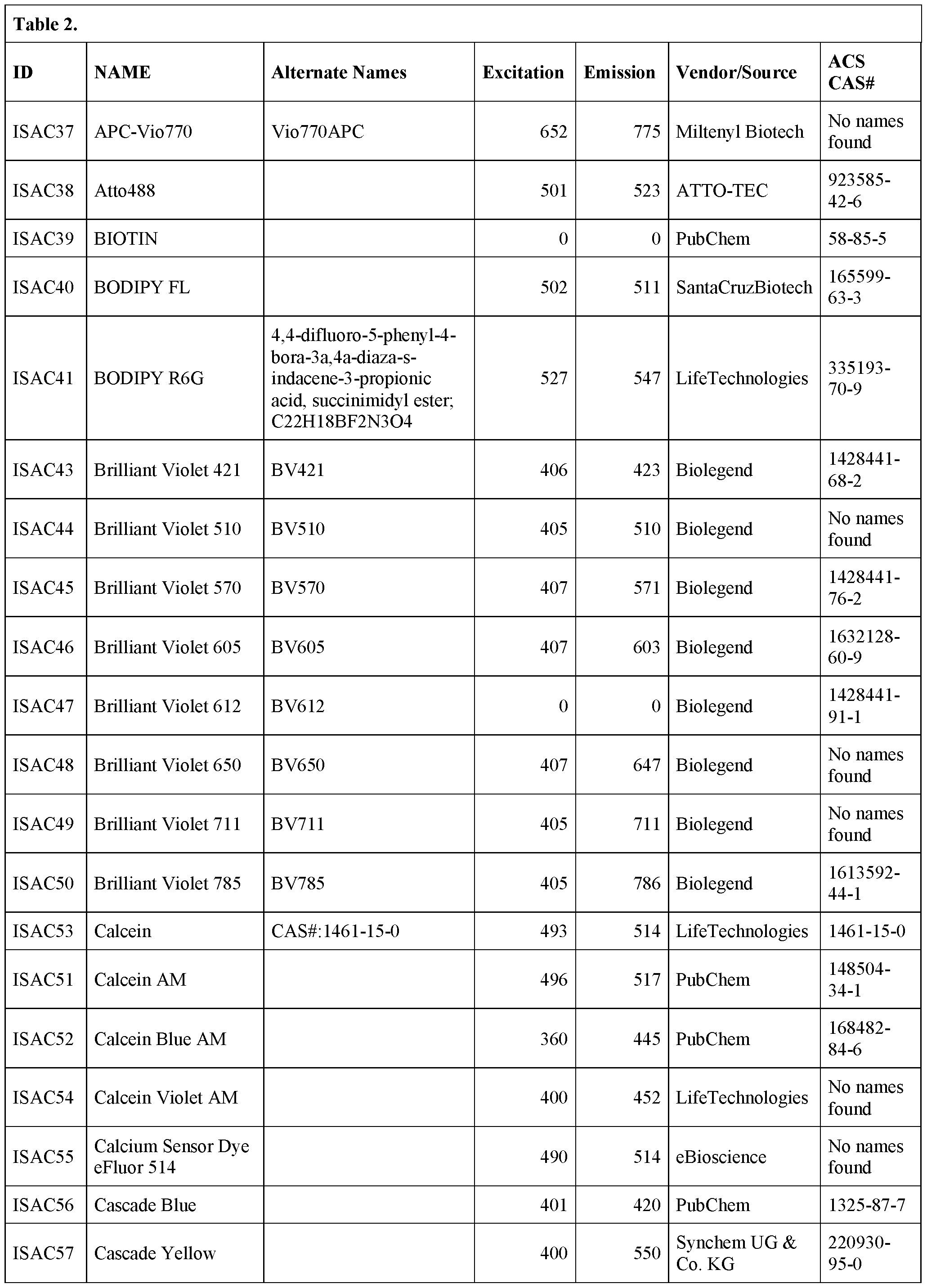
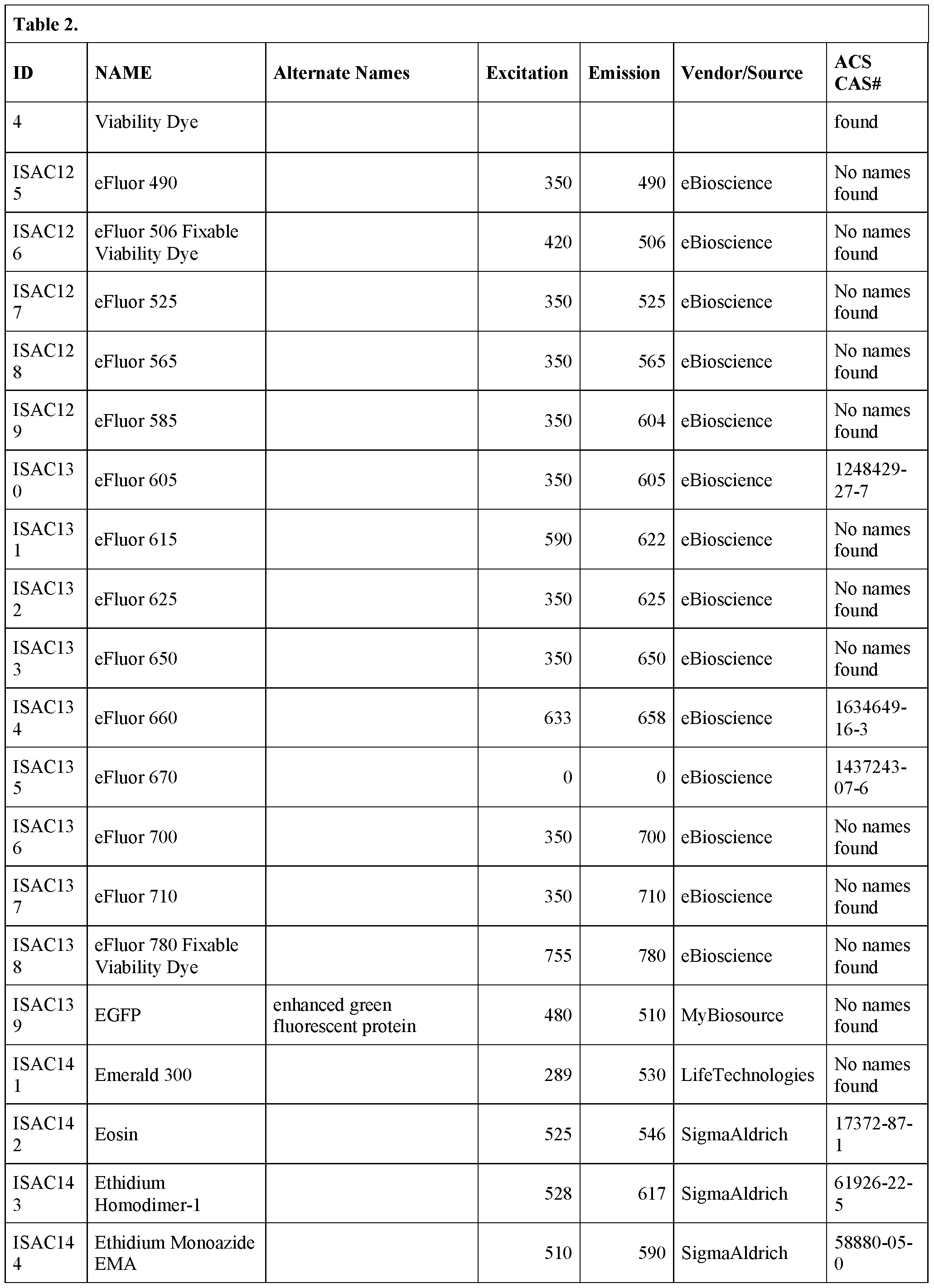
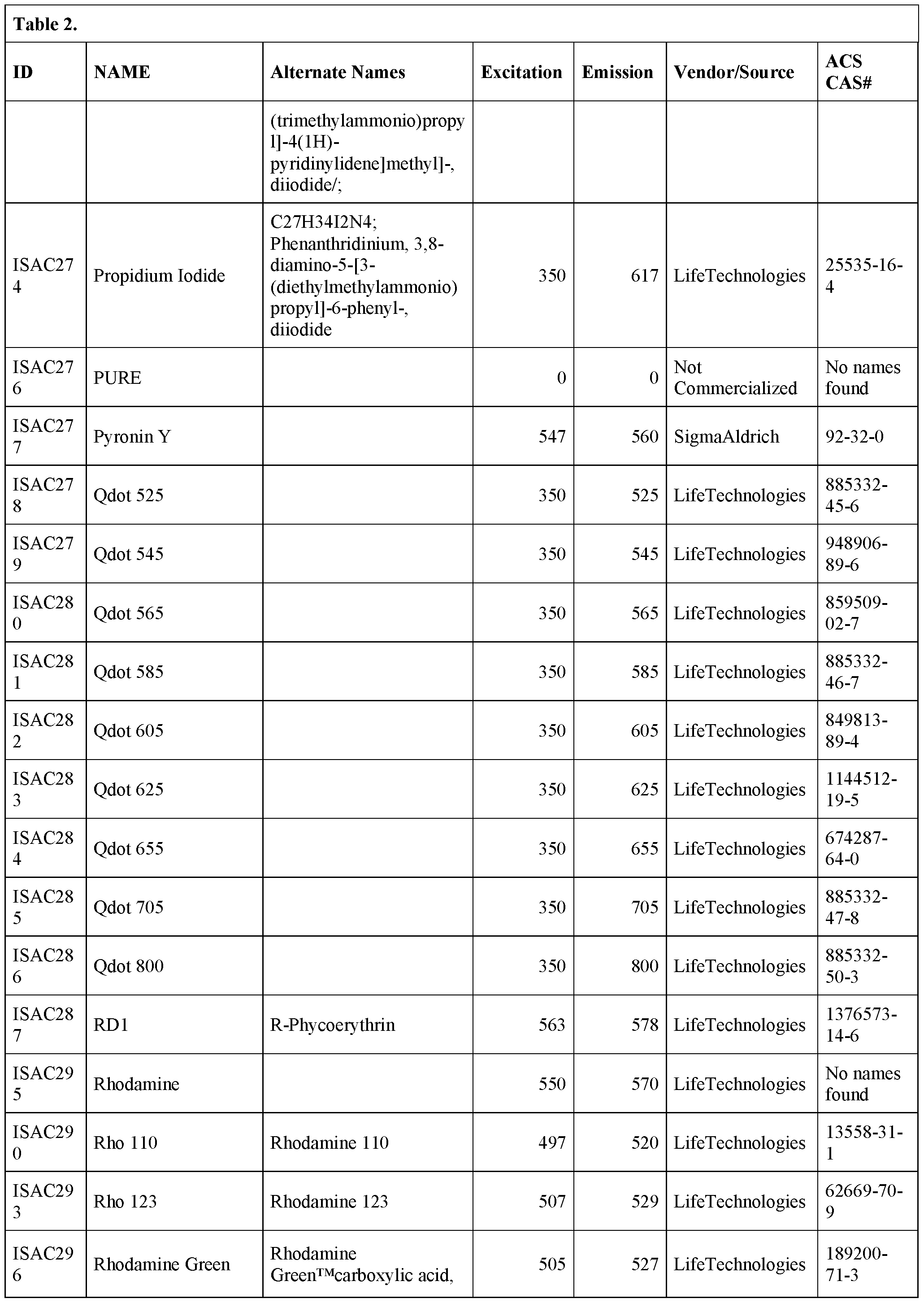
  • the bead is derivatized with one or more of the following fluorescent dyes: 6- carboxy-4', 5'-dichloro- 2', 7'-dimethoxyfluorescein succinimidylester; 5-( and-6)- carboxyeosin; 5- carboxyfluorescein;6 carboxyfluorescein; 5-(and-6)-carboxyfluorescein; S- Attorney Docket No.
  • SLIN-015/01WO 323489-2099 including, but not limited to BODIPY® FL; BODIPY® TMR STP ester; BODIPY® TR-X STP ester; BODIPY® 630/650-X STPester; BODIPY® 650/665-X STP ester;6-dibromo-4, 4- difluoro-5, 7 -dimethyl-4-bora-3 a, 4a-diaza-s-indacene-3-propionic acid succinimidyl ester;4,4-difluoro-4-bora-3a,4a-diaza-s-indacene-3,5-dipropionic acid;4,4- difluoro-5,7- dimethyl-4-bora-3a,4a-diaza-s-indacene-3-pentanoicacid; 4,4-difluoro-5,7- dimethyl-4- bora3a,4a-diaza-s-
  • a fluorescent bead that can be excited at any wavelength from 365 nm – 650 nm is embedded in a hydrogel particle.
  • the bead is a “rainbow particle” that contains a mixture of fluorophores, for example 4 fluorophores, 5 fluorophores, 6 fluorophores, seven fluorophores or eight fluorophores.
  • the user selects which wavelength to excite the particle, depending on the fluorophore being interrogated.
  • Rainbow particles are commercially available, for example, from BD Biosciences (catalog nos.556298 (mid range FL1 fluorescence), 556286 (6 color, 3.0-3.4 ⁇ m), 556288 (6 color, 6.0-6.4 ⁇ m), 559123 (8 color)) and Spherotech in various diameters (e.g., catalog nos.
  • a cell sorting set-up bead can be embedded in one or more of the hydrogel particles provided herein.
  • a cell sorting set-up beads approximates the size, emission wavelength, and intensity of a biological sample, and can be used to calibrate a flow cytometer’s cell sorting system, including laser source, optics, and stream flow.
  • a cell sorting set-up beads is embedded in one or more hydrogel particles and is amenable for use with a UV, blue, green/yellow or red laser.
  • the embedded bead is excited at 570 nm with emission of 575 nm, but may also be exited at 488 nm.
  • Commercially available cell sorting set-up beads are available, for example, from Life Technologies (catalog nos. C-16506 (UV laser), C-16508 (blue laser), C- 16509 (green-yellow laser), C-16507 (red laser)).
  • a compensation control bead can also be embedded in one or more of the hydrogel particles provided herein. Accurate compensation is an important parameter for effective multicolor analysis in flow cytometry. However, cellular-based compensation controls are not completely effective as many antigens are not highly expressed, and dimly stained cells can lead to inaccurate compensation settings.
  • a compensation control bead in one embodiment, includes a fluorescent antibody conjugate capture capacity (positive compensation bead) or is inert (negative compensation bead).
  • the compensation bead is mixed with a fluorophore-conjugated human, mouse, rat, hamster, or rabbit antibody; the two components provide a distinct high-signal positive control with an appropriate negative population that can then be used to set compensation properly regardless of the intensity of the cells in the actual experiment.
  • the antibody is mixed with the bead, it is embedded in one or more of the hydrogel particles provided herein.
  • Commercially available compensation beads are available, for example, from Life Technologies (catalog nos.
  • a hydrogel particle with an embedded/encapsulated bead is used as a reference for a cellular assay, for example, a phagocytosis assay cytoxicity assay, motility assay, viability assay, etc.
  • Phagocytosis is the process by which a cell engulfs a solid particle to form an internal vesicle known as a phagosome.
  • a hydrogel particle can be tuned to have one or more optical properties substantially similar to a phagocyte, before and after the phagocyte engulfs a particle.
  • the hydrogel particles provided herein are used as control particles for a phagocytosis assay.
  • one or more of the optical properties of a hydrogel particle is substantially similar to a phagocyte prior to particle uptake and
  • one or more of the optical properties of a second hydrogel particle is substantially similar to a phagocyte after to particle uptake.
  • a control is generated for measuring particle uptake by a phagocyte.
  • the phagocyte is a professional phagocyte.
  • the phagocyte is a non-professional phagocyte (i.e., a cell that consumes dying cells and foreign organisms).
  • the non-professional phagocyte is an epithelial cell, endothelial cell, fibroblast or mesenchymal cell.
  • Hydrogel particles in one embodiment are tuned to have one or more optical properties substantially similar to a professional phagocyte set forth in Table 3 below (prior to and/or after particle uptake). Attorney Docket No.
  • a plurality of hydrogel particles of the invention, embedded with a substance such as nucleic acid or a bead is used as control reagents for a genomic cytometry assay.
  • a specific number of copies of a particular chromosome, RNA sequence and/or DNA sequence can be mimicked by the embedded substance.
  • the hydrogel particle can then be used as a control for a sample being probed for genetic information, such as the number of copies of a chromosome, the number of copies of an RNA sequence and/or the number of copies of an RNA sequence.
  • the three primary modes of deconvolution for flow cytometry are the two passive optical properties of a particle (forward scattering, FSC, corresponding to the refractive index, or RI; and side scattering, SSC) and biomarkers present on the surface of a given cell type. Therefore, compositions that allow hydrogel particles of the disclosure to mimic specific cell types with respect to these three modes are useful for providing synthetic, robust calibrants for flow cytometry.
  • FSC forward scattering
  • SSC side scattering
  • the refractive index (RI) of a disclosed hydrogel particle is greater than about 1.10, greater than about 1.15, greater than about 1.20, greater than about 1.25, greater than about 1.30, greater than about 1.35, greater than about 1.40, greater than about 1.45, greater than about 1.50, greater than about 1.55, greater than about 1.60, greater than about 1.65, greater than about 1.70, greater than about 1.75, greater than about 1.80, greater than about 1.85, greater than about 1.90, greater than about 1.95, greater than about 2.00, greater than about 2.10, greater than about 2.20, greater than about 2.30, greater than about 2.40, greater than about 2.50, greater than about 2.60, greater than about 2.70, greater than about 2.80, or greater than about 2.90.
  • the refractive index (RI) of a disclosed hydrogel particle is about 1.10 to about 3.0, or about 1.15 to about 3.0, or about 1.20 to about 3.0, or about 1.25 to about 3.0, or about 1.30 to about 3.0, or about 1.35 to about 3.0, or about 1.4 to about 3.0, or about 1.45 to about 3.0, or about 1.50 to about 3.0, or about 1.6 to about 3.0, or about 1.7 to about 3.0, or about 1.8 to about 3.0, or about 1.9 to about 3.0, or about 2.0 to about 3.0.
  • the refractive index (RI) of a disclosed hydrogel particle is less than about 1.10, less than about 1.15, less than about 1.20, less than about 1.25, less than about 1.30, less than about 1.35, less than about 1.40, less than about 1.45, less than about 1.50, less than about 1.55, less than about 1.60, less than about 1.65, less than about 1.70, less than about 1.75, less than about 1.80, less than about 1.85, less than about 1.90, less than about 1.95, less than about 2.00, less than about 2.10, less than about 2.20, less than about 2.30, less than about Attorney Docket No.
  • SLIN-015/01WO 323489-2099 2.40 less than about 2.50, less than about 2.60, less than about 2.70, less than about 2.80, or less than about 2.90.
  • the SSC of a disclosed hydrogel particle is most meaningfully measured in comparison to that of target cell.
  • a disclosed hydrogel particle has an SSC within 30%, within 25%, within 20%, within 15%, within 10%, within 5%, or within 1% that of a target cell, as measured by a cytometric device.
  • the SSC of a hydrogel particle in one embodiment, is modulated by incorporating a high-refractive index molecule (or plurality thereof) in the hydrogel.
  • a high-refractive index molecule is provided in a hydrogel particle, and in a further embodiment, the high-refractive index molecule is colloidal silica, alkyl acrylate, alkyl methacrylate or a combination thereof.
  • a hydrogel particle of the disclosure comprises alkyl acrylate and/or alkyl methacrylate. Concentration of monomer in one embodiment is adjusted to further adjust the refractive index of the hydrogel particle.
  • Alkyl acrylates or Alkyl methacrylates can contain 1 to 18, 1 to 8, or 2 to 8, carbon atoms in the alkyl group, such as methyl, ethyl, n-propyl, isopropyl, n-butyl, isobutyl or tertbutyl, 2-ethylhexyl, heptyl or octyl groups.
  • the alkyl group may be branched or linear.
  • High-refractive index molecules can also include vinylarenes such as styrene and methylstyrene, optionally substituted on the aromatic ring with an alkyl group, such as methyl, ethyl or tert-butyl, or with a halogen, such as chlorostyrene.
  • FSC is modulated by adjusting the percentage of monomer present in the composition thereby altering the water content present during hydrogel formation.
  • the ratio of monomer and co-monomer is adjusted to change the hydrogel particle’s forward scatter properties. This is shown in both FIG.11 and FIG.12.
  • the ratio of monomer and co-monomer can be used to adjust the hydrogel particle’s elasticity (i.e., Young’s Modulus) to be substantially similar to the elasticity of the target cell.
  • the ratio of the monomer and co-monomer can change the Young’s Modulus for the hydrogel particle can range from 0.2 kiloPascals (kPa) to 400 kPa, based on the elasticity of the target cell.
  • the elasticity of the hydrogel particle e.g., softness or firmness
  • the FSC of a disclosed hydrogel particle is most meaningfully measured in comparison to that of target cell.
  • a disclosed hydrogel particle has an FSC within 30%, within 25%, within 20%, within 15%, within 10%, within 5%, or within 1% that of a target cell, as measured by a cytometric device.
  • FSC is related to particle volume, and thus can be modulated by altering particle diameter, as described herein.
  • particle diameter in one embodiment is altered to modulate FSC properties of a hydrogel particle.
  • hydrogel particle diameter is increased in one embodiment is altered by harnessing larger microfluidic channels during particle formation.
  • a hydrogel particle of the disclosure comprises one or more types of nanoparticles selected from the group consisting of: polymethyl methacrylate (PMMA) nanoparticles, polystyrene (PS) nanoparticles, and silica nanoparticles. See also FIGS.11 and 12 which show that addition of various concentrations of nanoparticles allow for the adjustment of side scatter of a particle.
  • PMMA polymethyl methacrylate
  • PS polystyrene
  • silica nanoparticles silica nanoparticles.
  • hydrogel particles can be fabricated and adjusted to tune the capacitance of the particles, e.g., to calibrate coulter counters.
  • a hydrogel particle’s capacitance is adjusted by altering the amount of hydrogel monomer in the composition.
  • a hydrogel particle of the disclosure has material modulus properties (e.g., elasticity) more closely resembling that of a target cell as compared to a polystyrene bead of the same diameter.
  • material modulus properties e.g., elasticity
  • one or more of the particle’s surfaces can be functionalized, for example, to mimic one or more optical properties of a target cell or a labeled target cell, or to imbue the particle with immunostimulatory properties.
  • the functionalized hydrogel particle can also include an embedded bead or substance such as a biomolecule, as described above.
  • one or more hydrogel particles are functionalized with one or more fluorescent dyes, one or more cell surface markers/immunostimulatory biomolecules (or epitope binding regions thereof), or a combination thereof.
  • the hydrogel particle is formed by polymerizing at least one bifunctional Attorney Docket No. SLIN-015/01WO 323489-2099 monomer and after formation, the hydrogel particle includes one or more functional groups that can be used for further attachment of a cell surface marker, an epitope binding region of a cell surface marker, a fluorescent dye, or combination thereof.
  • the free functional group in one embodiment, is an amine group, a carboxyl group, a hydroxyl group or a combination thereof.
  • a hydrogel particle can be functionalized with any fluorescent dye known in the art, including fluorescent dyes listed in The MolecularProbes® Handbook-A Guide to Fluorescent Probes and Labeling Technologies, incorporated herein by reference in its entirety for all purposes.
  • Functionalization can be mediated by a compound comprising a free amine group, e.g. allylamine, which can be incorporated into a bifunctional monomer used to form the hydrogel, as discussed above.
  • Non-limiting examples of known fluorescent dyes that can be used to functionalize the surface of a hydrogel particle described herein include: 6-carboxy-4', 5'-dichloro- 2', 7'- dimethoxyfluorescein succinimidylester; 5-( and-6)-carboxyeosin; 5- carboxyfluorescein;6 carboxyfluorescein; 5-( and-6)-carboxyfluorescein; S-carboxyfluorescein- bis-(5- carboxymethoxy-2-nitrobenzyl)ether,-alanine-carboxamide, or succinimidyl ester; 5- carboxyfluoresceinsuccinimidyl ester; 6-carboxyfluorescein succinimidyl ester;5-( and-6)- carboxyfluorescein succinimidyl ester;5-(4,6-dichlorotriazinyl) amino fluorescein; 2 ', 7' - difluoro fluorescein; e
  • fluorescent dyes for use with the hydrogel particles described herein include, but are not limited to, BODIPY® dyes commercially available from Invitrogen, including, but not limited to BODIPY® FL; BODIPY® TMR STP ester; BODIPY® TR-X STP ester; BODIPY® 630/650-X STPester; BODIPY® 650/665-X STP ester;6-dibromo-4, 4- difluoro-5, 7 -dimethyl-4-bora-3 a, 4a-diaza-s-indacene-3-propionic acid succinimidyl ester;4,4-difluoro-4-bora-3a,4a-diaza-s-indacene-3,5-dipropionic acid;4,4- difluoro-5,7- dimethyl-4-bora-3a,4a-diaza-s-indacene-3-pentanoicacid;
  • Fluorescent dyes for derivatization of the surface of one or more hydrogel particles in one embodiment include, but are not limited to, , Alexa fluor dyes commercially available from Invitrogen, including but not limited to Alexa Fluor® 350 carboxylic acid; Alexa Fluor® 430 carboxylic acid; Alexa Fluor® 488 carboxylic acid; Alexa Fluor® 532 carboxylic acid; Alexa Fluor® 546 carboxylic acid; Alexa Fluor® 555 carboxylic acid; Alexa Fluor® 568 carboxylic acid; Alexa Fluor® 594 carboxylic acid; Alexa Fluor® 633 carboxylic acid; Alexa Fluor® 64 7 carboxylic acid; Alexa Fluor® 660 carboxylic acid; and Alexa Fluor® 680 carboxylic acid.
  • Alexa fluor dyes commercially available from Invitrogen, including but not limited to Alexa Fluor® 350 carboxylic acid; Alexa Fluor® 430 carboxylic acid; Alexa Fluor® 488 carboxylic acid;
  • fluorescent dyes for use with the hydrogel particles and methods described herein include cyanine dyes commercially available from Amersham- Pharmacia Biotech, including, but not limited to Cy3 NHS ester; Cy 5 NHS ester; Cy5.5 NHSester; and Cy7 NHS ester. [0153] It is within the ordinary skill in the art to select a suitable dye or dyes based on the desired spectral excitation and emission properties of the hydrogel particle.
  • Hydrogel particles in one embodiment, are functionalized with one or more cell surface markers (see, e.g., Tables 4 and 7-8), or fragments thereof, for example, extracellular portions thereof in the case of transmembrane proteins, for example, by attaching the one or more cell surface markers, extracellular portions or ligand binding regions thereof to the particle via a free amine, free carboxyl and/or free hydroxyl group present on the surface of the hydrogel Attorney Docket No. SLIN-015/01WO 323489-2099 particle.
  • Functionalization of a hydrogel particle with a dye or cell surface molecule can also occur through a linker, for example a streptavidin/biotin conjugate.
  • individual hydrogel particles can be derivatized with one or more cell surface markers, or fragments thereof, for example, extracellular portions thereof in the case of transmembrane proteins to further mimic the structural properties of the target cell.
  • Tables 4 and 7-8 provided below, sets forth a non-limiting list of cell surface markers that can be used to derivative hydrogel particles, depending on the target cell.
  • the cell surface marker is provided, it is understood that a portion of the cell surface marker, for example, a receptor binding portion, a ligand binding portion, or an extracellular portion of the marker can be used to derivative the hydrogel particle (at the free functional group, as described above). See also FIGS.
  • the particles of the present disclosure mimic target cells as measured by experimental assays (e.g., cytometry). In other embodiments, the particles mimic the properties of one or more target cells, as exhibited in a biological context. Thus, in some embodiments, the particles of the present disclosure exhibit immunostimulatory or feeder properties.
  • a plurality of hydrogel particles is used to determine the dynamic range and/or sensitivity of detection of a particular cell surface marker or combination thereof on a population of target cells.
  • the population of hydrogel particles can be tuned to have the SSC and/or FSC profile of the target cell, and subpopulations of the hydrogel particle are derivatized with a specific number of copies of a cell surface marker, e.g., a cell surface receptor, or a domain thereof, for example, an epitope binding region thereof.
  • individual subpopulations of hydrogel particles can each be derivatized to have a unique number of copies, e.g., one subpopulation will contain 100 copies of a cell surface marker, a second subpopulation will contain 1,000 copies of the same cell surface marker, a third subpopulation will contain 10,000 copies of the same cell surface marker, etc.
  • the populations of hydrogel particles are fluorescently stained for the respective cell surface marker and fluorescence is detected for hydrogel particles in each subpopulation.
  • the subpopulations of hydrogel particles can be used to generate a standard curve of fluorescence emission for target cells with the respective cell marker.
  • the cell surface marker can be any of the cell surface markers provided thereof, or binding regions thereof, or a cell surface marker known to one of ordinary skill in the art.
  • Hydrogel particles of the disclosure behave similarly to target cells in procedures such as staining and analysis by flow cytometry or FACS.
  • a hydrogel particle has one or more optical properties substantially similar to one of the cell types set forth in Table 4, Table 5, Table 6, or Table 7.
  • a target cell is an immune cell.
  • immune cells include B lymphocytes, also called B cells, T lymphocytes, also called T cells, Attorney Docket No.
  • a target cell encompasses all cells of a particular class of cell with shared properties.
  • a target cell can be a lymphocyte, including NK cells, T cells, and B cells.
  • a target cell can be an activated lymphocyte.
  • a target cell is a primary cell, cultured cell, established cell, normal cell, transformed cell, infected cell, stably transfected cell, transiently transfected cell, proliferating cell, or terminally differentiated cells.
  • a target cell is a primary neuronal cell.
  • a variety of neurons can be target cells.
  • a target cell can be a primary neuron; established neuron; transformed neuron; stably transfected neuron; or motor or sensory neuron.
  • a target cell is selected from the group consisting of: primary lymphocytes, monocytes, and granulocytes.
  • a target cell can be virtually any type of cell, including prokaryotic and eukaryotic cells.
  • Suitable prokaryotic target cells include, but are not limited to, bacteria such as E. coli, various Bacillus species, and the extremophile bacteria such as thermophiles.
  • Suitable eukaryotic target cells include, but are not limited to, fungi such as yeast and filamentous fungi, including species of Saccharomyces, Aspergillus, Trichoderma, and Neurospora; plant cells including those of com, sorghum, tobacco, canola, soybean, cotton, tomato, potato, alfalfa, sunflower, etc.; and animal cells, including fish, birds and mammals.
  • Suitable fish cells include, but are not limited to, those from species of salmon, trout, tilapia, tuna, carp, flounder, halibut, swordfish, cod and zebrafish.
  • Suitable bird cells include, but are not limited to, those of chickens, ducks, quail, pheasants and turkeys, and other jungle foul or game birds.
  • Suitable mammalian cells include, but are not limited to, cells from horses, cows, buffalo, deer, sheep, rabbits, rodents such as mice, rats, hamsters and guinea pigs, goats, pigs, primates, marine mammals including dolphins and whales, as well as cell lines, such as human cell lines of any tissue or stem cell type, and stem cells, including pluripotent and non- pluripotent, and non-human zygotes.
  • Suitable cells also include those cell types implicated in a wide variety of disease conditions, even while in a non-diseased state. Accordingly, suitable eukaryotic cell types Attorney Docket No.
  • SLIN-015/01WO 323489-2099 include, but are not limited to, tumor cells of all types (e.g., melanoma, myeloid leukemia, carcinomas of the lung, breast, ovaries, colon, kidney, prostate, pancreas and testes), cardiomyocytes, dendritic cells, endothelial cells, epithelial cells, lymphocytes (T -cell and B cell), mast cells, eosinophils, vascular intimal cells, macrophages, natural killer cells, erythrocytes, hepatocytes, leukocytes including mononuclear leukocytes, stem cells such as hematopoietic, neural, skin, lung, kidney, liver and myocyte stem cells (for use in screening for differentiation and de-differentiation factors), osteoclasts, chondrocytes and other connective tissue cells, keratinocytes, melanocytes, liver cells, kidney cells, and adipocytes.
  • tumor cells of all types
  • the cells are primary disease state cells, such as primary tumor cells. Suitable cells also include known research cells, including, but not limited to, Jurkat T cells, NIH3T3 cells, CHO, COS, etc. See the ATCC cell line catalog, hereby expressly incorporated by reference.
  • a target cell is a tumor microvesicle or tumor macrovesicle. Tumor microvesicles, also known as tumor-secreted microvesicles or tumor-secreted exosomes, can be found in circulating blood and may have immune-suppressive activities. Tumor microvesicles typically range in size from 30-200 nm in diameter.
  • tumor macro vesicles Larger tumor micro vesicles may be referred to as tumor macro vesicles, and can range in size from 3-10 ⁇ m in diameter.
  • the hydrogel particles described herein can be employed in any flow cytometer known to those of ordinary skill in the art. For example, one or more of the flow cytometers provided in Table 9 below are amenable for use with the hydrogels and assays described herein.
  • Attorney Docket No. SLIN-015/01WO 323489-2099 Attorney Docket No. SLIN-015/01WO 323489-2099 Attorney Docket No. SLIN-015/01WO 323489-2099 Attorney Docket No. SLIN-015/01WO 323489-2099 Attorney Docket No. SLIN-015/01WO 323489-2099 Attorney Docket No. SLIN-015/01WO 323489-2099 Attorney Docket No.
  • the present disclosure further relates to the use of the above- described hydrogel particles, or modifications thereof, as synthetic biomolecule presenting Attorney Docket No. SLIN-015/01WO 323489-2099 particles.
  • the synthetic biomolecule presenting particles herein may be referred to as synthetic particles, or more generally as hydrogel particles.
  • the particles in order to be used as a biomolecule presenting particle, the particles may be functionalized. After the particles are formed, a biomolecule (or other stimulating factor or marker) can be attached to a surface of the particles using binding chemistries based on the particle composition (i.e., polymer). These biomolecules may be selected based on particular cell surface markers of interest.
  • markers of interest may be one or more cell surface markers, or fragments thereof, for example, extracellular portions thereof in the case of transmembrane proteins, for example.
  • the biomolecules may be antibodies or antigen-binding fragments thereof related to the particular cell surface marker of interest.
  • the biomolecules may be one or more cell surface markers, extracellular portions or ligand binding regions thereof and may be attached to the particle via a free amine, free carboxyl and/or free hydroxyl group present on the surface of the particle.
  • Functionalization of a particle with a cell surface molecule can also occur through a linker, such as by a streptavidin/biotin conjugate, a biotin/streptavidin conjugate, a streptavidin/biotin/streptavidin conjugate, and/or a biotin/streptavidin/biotin conjugate.
  • a linker such as by a streptavidin/biotin conjugate, a biotin/streptavidin conjugate, a streptavidin/biotin/streptavidin conjugate, and/or a biotin/streptavidin/biotin conjugate.
  • a linker such as by a streptavidin/biotin conjugate, a biotin/streptavidin conjugate, a streptavidin/biotin/streptavidin conjugate, and/or a biotin/streptavidin/biotin conjugate.
  • the alteration of pore size distribution allows more surface area per unit hydrogel particle or more surface area per unit volume for advanced cell therapy.
  • the porosity of the porous particle may be controlled by adjusting manufacturing parameters. For instance, the porosity may be controlled through the use of a porogen.
  • the generation of pores offers a number of advantages over nonporous structures. This includes enhanced nutrient transport and higher surface to area to volume ratio.
  • This 3- dimensional scaffold mimics a bioreactor. This bioreactor is achieved by allowing the porous hydrogels to absorb water, maintain an optimal ion nutrient gradient, and maintain an optimal osmotic pressure which favors cellular growth and cell activation.
  • any material that a) can phase separate (is not miscible) with the hydrogel matrix and b) does not get incorporated into/tethered to the hydrogel matrix and can be removed after formation of the hydrogel matrix can be used as a porogen for the synthesis of porous hydrogel particles.
  • the porous hydrogel particle comprises a plurality of micropores, which are formed inherently by monomer polymerization, and a plurality of Attorney Docket No. SLIN-015/01WO 323489-2099 macropores, which are formed when the porogen is removed from the hydrogel particle.
  • the plurality of micropores which may be formed during polymerization of the monomer within the dispersed phase, may have an average diameter of between about 1nm and about 20 nm and/or between about 2 nm and about 4 nm. In embodiments, the plurality of macropores may have an average diameter of between about 200 nm and about 2 ⁇ m. In embodiments, the macropore-laden hydrogel particle may have a diameter substantially similar to the hydrogel particles described elsewhere herein. For instance, the macropore-laden hydrogel particle may have a diameter of between about 1 ⁇ m and about 25 ⁇ m and/or between about 2 ⁇ m and about 5 ⁇ m.
  • the macropore-laden hydrogel particles may exhibit a Young’s modulus of between about 0.2 kPa and about 400 kPa.
  • the present disclosure refers to methods of producing particles comprising a dispersed monomer phase and a continuous suspension phase, such as oil. Embodiments of these methods recite the presence of a porogen mixed with the monomer phase. As noted in earlier portion of this disclosure, porogens may be immiscible within the monomer, and thus may be said to form a further dispersed phase within the monomer phase (i.e., where porogen may be considered the dispersed phase and the monomer phase would be considered a continuous phase).
  • the monomer phase is referred to as the dispersed phase, regardless of whether it also includes porogens.
  • the continuous phase refers to the suspension (e.g., oil) phase.
  • the monomer to be polymerized may be within a first phase and the porogen may be within a second phase.
  • the porogen may be one or more of a porogen polymer, a water-soluble polymer, a salt, carbon black, a biodegradable polymer, a degradable polymer, seaweed polysaccharides, and a paraffin wax.
  • the salt comprises one or more of sodium chloride, ammonium bicarbonate, lithium chloride, zinc chloride, silicon dioxide, calcium carbonate, and combinations thereof.
  • calcium carbonate particles can phase separate in hydrogel and get washed away with a low pH buffer.
  • the porogen polymer comprises one or more of polyethylene glycol, poly(vinylpyrrolidone), polyvinyl alcohol, and combinations thereof.
  • the porogen polymer may include polymers that are water soluble but also gel matrix polymer immiscible may also be used.
  • PEG polyethylene glycol
  • PEG polyethylene glycol
  • linear PEG polymer for example, can be Attorney Docket No. SLIN-015/01WO 323489-2099 introduced in the water phase of our microfluidic synthesis of hydrogel particles.
  • the linear PEG polymers immiscible with the gel matrix polymer (poly acrylamide in this case), become phase separated with the gel matrix and form its own domains, spatially excluding polyacrylamide hydrogels.
  • the beads are washed with water where the PEG polymers are removed from the hydrogel matrix. This leaves hollow pores within the hydrogels. These pores create more water/hydrogel interface and thus increase the side scattering of the entire particle.
  • the porous hydrogel also have unique sponge-like morphology that can be observed with microscopy and also useful as cell control for imaging cytometry or any imaging based cell characterization techniques.
  • the porogen polymer can have a linear, branched, hyperbranched, or a bottlebrush structure.
  • the porogen polymer may comprise polymeric particles that become water soluble after a stimulus is applied.
  • hydrogel particles with a degradable crosslinker e.g. N,N'-Bis(acryloyl)cystamine
  • a cleaving agent e.g. reducing agent for N,N’- Bis(acryloyl)cystamine.
  • Porous structures can be created on the hydrogel particles where biomarkers may be conjugated and remain accessible to interactions with antibodies or in inverse, where conjugated antibodies can interact with their antigens on cells.
  • the porous structures allow for conjugation of a large number of biomolecules (i.e., greater than 100,000, greater than 1,000,000). All previously demonstrated attachment chemistries can be used with or incorporated into this technique.
  • the side scatter properties of porous hydrogel particles may more closely match the optical properties of living cells. Addition of polyethylene glycol (PEG) to the hydrogel matrix during synthesis creates pores in the hydrogel beads that can scatter incident light due to phase transitions between the hydrogel matrix and the pores containing.
  • PEG polyethylene glycol
  • Addition of PEG as a porogen can also increase the biomarker binding capacity of the hydrogel beads by creating a porous surface with increased surface area for the binding of biomarkers.
  • creating a porous bead structure increases the surface area of the hydrogel particle.
  • Modification of the percentage of the material forming the hydrogel particle, the molecular weight of the porogen and the % concentration of the porogen added can be adjusted to achieve a desired porosity and resultant side scatter profile when measured on a flow cytometer. Table 10 shows previously characterized hydrodynamic radius of various PEG polymer molecular weights, and thus the minimum implied pore size introduced by their Attorney Docket No.
  • PEG polyethylene glycol
  • Adjusting the initial PEG concentration added during the preparation of the raw droplets impacts pore size and distribution.
  • varying the PEG concentration introduced to the particle formulation determines a number of pores per unit volume of the resulting particle matrix.
  • the PEG concentration within the dispersed phase may be between about 1% w/v and about 99% w/v.
  • the PEG concentration may be at least about 1%, at least about 2%, at least about 4%, at least about 6% at least about 8%, at least about 10%, at least about 12%, at least about 14%, at least about 16%, at least about 18%, at least about 20%, at least about 25%, at least about 30%, at least about 35% and/or at least about 40% w/v.
  • the PEG concentration introduced during preparation of the particles may be about 9% w/v.
  • the PEG concentration introduced during preparation of the particles may be about 2.25%, about 3.4%, or about 4.5% w/v.
  • the PEG concentration within the dispersed phase may be between about 1% v/v and about 99% v/v.
  • the PEG solution comprises a variable concentration of PEG 8000.
  • the Attorney Docket No. SLIN-015/01WO 323489-2099 particles of the present disclosure can be further modified by varying the size of the microsphere (i.e., particle) produced. Size can be controlled by flow rates and/or pressure of the aqueous and oil phase during the microfluidic droplet generation process.
  • FIG.14 provides a high-level flow diagram of formation of porous hydrogel particles, including polymerization of a dispersed phase into a hydrogel particle, encapsulation of PEG domains therein, and washing of the hydrogel particle to remove the PEG domains to form macropores.
  • the PEG domains may alternatively, or additionally, be removed by leaching. Unlike washing, which may refer to a solute that is readily dissolvable, leaching may be appropriate when the solute requires more time to dissolve and thus to be removed from the material.
  • leaching may be appropriate when the solute requires more time to dissolve and thus to be removed from the material.
  • FIG.15 provides a series of microscopic images of porous hydrogel particles formed with varying levels of PEG, increasing in concentration from left to right.
  • FIG.16 demonstrates the ability to modify PEG concentrations used during formation to modify side scatter profiles of the resulting porous hydrogel particle.
  • nanoparticles can be used in conjunction with porous hydrogel particles.
  • FIG.17 demonstrates the ability to modify nanoparticle concentrations within the porous hydrogel particles to mimic organelles in a target cell. Without wishing to be bound by theory, the ability to selectively tune both forward and side scatter of a hydrogel, as described herein, allows for a robust platform to mimic a vast array of cell types.
  • FIG. 18 demonstrates the ability to conjugate fluorophores to the porous hydrogel particles. Suitable fluorophores will be described further below. [0186]
  • cell therapy activation can be performed.
  • each particle can be functionalized with biotinylated-proteins for advanced cell activation. Exploiting the pore structure of this porous network permits improvements in cell response and cell proliferation.
  • pores into these particles could be used to improve biological response and lead to improved outcomes in biomedical, diagnostic, and therapeutics applications, especially cell activation therapy. It may be that the increased surface area to volume ratio introduced by these pores can enhance biological cell seeding by enabling more efficient mass transport such as cell signaling and cell cargo transport with enhanced liquid diffusion such as cell media to maximize cell proliferation. In any event, the generation of pores offers a number of advantages over non-porous structures. This includes enhanced nutrient transport and higher surface to area to volume ratio. Attorney Docket No. SLIN-015/01WO 323489-2099 [0187]
  • the particles may be hydrogels as described herein.
  • the particles may be bioreactors, achieved by allowing the porous particles to absorb water, maintain an optimal ion nutrient gradient, and maintain an optimal osmotic pressure which favors cellular growth and cell activation.
  • the particles are hydrogels, and appreciating it is well established in tissue engineering that cell migration is influenced by hydrogel stiffness and rough surface area, it is likely the particles of the present disclosure lead to the formation of much stronger cell–ligand bonds, thereby leading to enhanced growth and proliferation.
  • the present disclosure relates to a PEG-based porous particle having a porosity that allows for higher protein/biomolecule loading capacity, further allowing for improved cell stimulation.
  • the fabricated particle allows for stronger bead-to-cell contact, and possible changes in Young's modulus, thereby affecting the quality of the stimulatory signal that the T cell receives and adhesion when compared to a monolayer slab (i.e., plate-bound activation method).
  • a monolayer slab i.e., plate-bound activation method.
  • biotinylated ⁇ CD3 and ⁇ CD28 antibodies are attached to streptavidin coated, porous particles, thereby allowing for engagement of T-cell receptors (TCR) and co-stimulatory receptors on T-cells.
  • the present disclosure relates to the use of a biodegradable polymer as a base polymer for the particles.
  • each particle of a plurality of particles can be fabricated according to the methods described previously herein.
  • the use of bifunctional monomers allows for the further derivatization of particles, e.g., with cell surface markers or epitope binding fragments thereof, or a combination thereof.
  • Methods for tuning Attorney Docket No. SLIN-015/01WO 323489-2099 the properties of each particle were described above.
  • the ability to adjust a range of parameters including particle components and concentration of the same allows for the ability to tune a particle to mimic a wide range of cells, for example one of the cell types described above.
  • one or more of the particle’s surfaces can be functionalized, for example, to mimic one or more optical properties of a target cell or a labeled target cell.
  • the functionalized particle can also include an embedded bead or substance such as a biomolecule, as described above.
  • one or more particles are functionalized with one or more fluorescent dyes, one or more cell surface markers (or epitope binding regions thereof), or a combination thereof.
  • the particle is formed by polymerizing at least one bifunctional monomer and after formation, the particle includes one or more functional groups that can be used for further attachment of a cell surface marker, an epitope binding region of a cell surface marker, a fluorescent dye, or combination thereof.
  • the free functional group in one embodiment, is an amine group, a carboxyl group, a hydroxyl group or a combination thereof.
  • multiple bifunctional monomers can be used, for example, to functionalize the particle using different chemistries and with different molecules.
  • a particle can be functionalized with any fluorescent dye known in the art, including fluorescent dyes listed in The MolecularProbes® Handbook-A Guide to Fluorescent Probes and Labeling Technologies, incorporated herein by reference in its entirety for all purposes.
  • Functionalization can be mediated by a compound comprising a free amine group, e.g. allylamine, which can be incorporated into a bifunctional monomer used to form the particle, as discussed above.
  • Fluorescent dyes for derivatization of the surface of one or more particles in one embodiment include, but are not limited to: Alexa fluor dyes commercially available from Invitrogen, including but not limited to Alexa Fluor® 350 carboxylic acid; Alexa Fluor® 430 carboxylic acid; Alexa Fluor® 488 carboxylic acid; Alexa Fluor® 532 carboxylic acid; Alexa Fluor® 546 carboxylic acid; Alexa Fluor® 555 carboxylic acid; Alexa Fluor® 568 carboxylic acid; Alexa Fluor® 594 carboxylic acid; Alexa Fluor® 633 carboxylic acid; Alexa Fluor® 64 7 carboxylic acid; Alexa Fluor® 660 carboxylic acid; and Alexa Fluor® 680 carboxylic acid.
  • Alexa fluor dyes commercially available from Invitrogen, including but not limited to Alexa Fluor® 350 carboxylic acid; Alexa Fluor® 430 carboxylic acid; Alexa Fluor® 488 carboxylic acid; Alexa Fluor
  • fluorescent dyes for use with the particles and methods described herein include cyanine dyes commercially available from Amersham-Pharmacia Biotech, Attorney Docket No. SLIN-015/01WO 323489-2099 including, but not limited to Cy3 NHS ester; Cy 5 NHS ester; Cy5.5 NHSester; and Cy7 NHS ester. [0196] It is within the ordinary skill in the art to select a suitable dye or dyes based on the desired spectral excitation and emission properties of the particle.
  • Particles in one embodiment, are functionalized with one or more cell surface markers (see, e.g., Tables 4 and 7), or fragments thereof, for example, extracellular portions thereof in the case of transmembrane proteins, for example, by attaching the one or more cell surface markers, extracellular portions or ligand binding regions thereof to the particle via a free amine, free carboxyl and/or free hydroxyl group present on the surface of the particle.
  • Functionalization of a particle with a dye or cell surface molecule can also occur through a linker, for example a streptavidin/biotin conjugate.
  • Feeder cells support the growth of target cells by releasing biomolecules such as growth factors, adhesion molecules, and/or extracellular matrix to the culture media, but can introduce issues such as viruses and unwanted antigens into the cell culture.
  • the present disclosure provides particles that act as feeder cells and comprise one or more growth factors, adhesion molecules, and/or extracellular matrix to the culture media/target cells.
  • the feeder particles comprise a polymer matrix and one or more polypeptides or fragments thereof that support the growth of target cells.
  • the feeder particles comprise one or more polypeptides or fragments (e.g., proliferation analyte) thereof that stimulate the proliferation and/or activation of the target cell.
  • the biomolecules are attached to the surface of the particle.
  • the biomolecules are in the matrix of the particle itself.
  • the particle is engineered to degrade to provide such biomolecule to the target cell. The rate of degradation can be modulated to provide slow degradation of the particle and thus slow release of the biomolecule to the target cell.
  • the biomolecules are attached to both the surface of the particle and in the matrix of the particle.
  • the biomolecules on the surface and in the matrix of the particle are the same.
  • the biomolecules on the surface and in the matrix of the particle are different.
  • the present disclosure may be used for plasma cells, lymphocytes, immune cells, biomolecule presenting cells (e.g., dendritic cells, macrophages, B cells), na ⁇ ve B cells, memory B cells, na ⁇ ve T cells, memory T cells, chimeric antigen receptor T cell (CAR T cell), regulatory T cells, cytotoxic T cells, NK cells, or any other appropriate cell.
  • T cell activation is triggered by a peptide antigen bound to a major histocompatibility complex (MHC) molecule on the surface of an antigen presenting cell (APC), a T cell receptor / CD3 complex (TCR / CD3). While this is the primary signal in T cell activation, other receptor-ligand interactions between APC and T cells are also required for full activation. For example, TCR stimulation in the absence of other molecular interactions can induce an anergic state such that these cells cannot respond to a complete activation signal upon restimulation.
  • MHC major histocompatibility complex
  • APC antigen presenting cell
  • TCR / CD3 complex T cell receptor / CD3 complex
  • a second signaling molecule such as a membrane bound protein or APC secretion product.
  • a second signaling molecule such as a membrane bound protein or APC secretion product.
  • membrane-bound proteins such second interactions are usually adhesive in nature and enhance the contact between the two cells.
  • Other signaling molecules eg, further activation signaling from APC to T cells
  • CD28 is a surface glycoprotein that is present in 80% of peripheral T cells in humans and is present in both quiescent and activated T cells. CD28 binds to B7-1 (CD80) or B7-2 (CD86) and is one of the most potent of the known costimulatory molecules. Combined with TCR engagement, CD28 ligation on T cells induces the production of interleukin-2 (IL-2).
  • IL-2 interleukin-2
  • the present disclosure provides particles (comprising a polymer matrix) that act as APCs and comprise one or more immunostimulatory biomolecules that stimulate the expansion and/or activation of a T cell.
  • these synthetic biomolecule presenting particles comprise one or more of an activation biomolecule, a stimulatory biomolecule, a costimulatory biomolecule and/or a T cell homeostasis factor.
  • the present disclosure can detect, induce, or detect and induce activation events including, but not limited to, cell expansion, cell proliferation, cell differentiation, activation maintenance, cell maturation, cell receptor clustering, synapse formation (e.g., between a lymphocyte and a tumor cell), cytokine production, gene expression, protein expression, or any other appropriate occurrence by which the target cell is activated upon recognition of or stimulation by the proper antigen, antibody, immunoglobulin (e.g., CD3, Attorney Docket No.
  • activation events including, but not limited to, cell expansion, cell proliferation, cell differentiation, activation maintenance, cell maturation, cell receptor clustering, synapse formation (e.g., between a lymphocyte and a tumor cell), cytokine production, gene expression, protein expression, or any other appropriate occurrence by which the target cell is activated upon recognition of or stimulation by the proper antigen, antibody, immunoglobulin (e.g., CD3, Attorney Docket No.
  • these activation events can be induced based on proximity of a particle to a cell of interest.
  • the particle can be conjugated to the cell of interest, whether via direct or indirect conjugation.
  • the particle can be proximal to but not in contact with the cell of interest.
  • the particle and the cell of interest can be separated by less than 1 nm, less than 1 micron, less than 1 millimeter, or any appropriate separation distance by which the activation event can still occur.
  • Action may be distant from an area of introduction of the particle. in which a signal event or cascade event occurs remotely. The distance can be at least 1 millimeter, at least 1 centimeter, at least 1 meter, etc.
  • the particle may be introduced intramuscularly or intravenously and the action is in a lymph node or distant immune organ or other target organ.
  • the particle may be introduced on one side of a membrane and the action maybe on another side of a membrane (for e.g., via a semi-permeable membrane).
  • the molecule that can stimulate T cell expansion and/or activation is a polypeptide or fragment thereof. In some embodiments, the polypeptide or fragment thereof that can stimulate T cell expansion and/or activation is a peptide antigen. In some embodiments, the molecule that can stimulate T cell expansion and/or activation is a component of a MHC molecule. In some embodiments, the molecule that can stimulate T cell expansion and/or activation is a component of a T cell receptor/CD3 complex. In some embodiments, the molecule that can stimulate T cell expansion and/or activation is an antibody that specifically binds a component of a T cell receptor/CD3 complex.
  • the particle of the present disclosure comprises an antibody or antigen-binding fragment therefore that specifically binds to CD3.
  • the particle of the present disclosure comprises one or more T cell activation molecules and one or more T cell costimulatory molecules.
  • the particle of the present disclosure comprises one or more antibodies or antigen-binding fragments thereof that specifically bind T cell activation molecules and one or more T cell costimulatory molecules.
  • the particle of the present disclosure comprises a T cell activation molecule of CD3 and a T cell costimulatory molecule selected from CD28, ICOS, CD27, CD40, CD40L, CD137L, and CD137 (or antibodies targeting said activation/costimulatory molecules.
  • the particle of the present disclosure comprises one or more antibodies or antigen-binding fragments thereof that Attorney Docket No. SLIN-015/01WO 323489-2099 specifically bind to CD3 and one or more antibodies or antigen-binding fragments thereof that specifically bind to CD28, ICOS, CD27, CD40, CD40L, CD137L, CD137, the like, or combinations thereof.
  • the receptor molecule on the particle would be a MHC-tetramer (MHC class I or class II) and the CD3 CD28 molecules would be encapsulated within and/or attached to the surface of the particle such that the primary recognition would be dictated by antigen-specificity by the MHC tetramer with the CD3, CD28 stimulation of such targeted cells occurring later with the consequence that only Ag-specific cells are co-stimulated allowing for lower magnitude of Cytokine Release Syndrome.
  • An embodiment of the present disclosure is to use synthetic particles to eliminate a pathogenic subset of T-cells, B-cells, NK cells or other immune cells. For example, to eliminate pathogenic T-cells in auto-immune disease.
  • the T cell activation molecule may be an anti-CD3 antibody or an antigen-binding fragment thereof, an anti-macrophage scavenger receptor (MSR1) antibody or an antigen-binding fragment thereof, an anti-T cell receptor (TCR) antibody or an antigen- binding fragment thereof, an anti-CD2 antibody or an antibody thereof, antigen-binding fragments, anti-CD47 antibodies or antigen-binding fragments thereof, major histocompatibility complex (MHC) molecules loaded with MHC peptides or multimers thereof, and MHC-immunoglobulin (Ig) conjugates or multimers thereof, or combinations thereof.
  • MSR1 anti-macrophage scavenger receptor
  • TCR anti-T cell receptor
  • the particle comprises one or more T cell costimulatory molecules including, but not limited to, CD28, 4.1BB (CD137), OX40 (CD134), CD27 (TNFRSF7), GITR (CD357), CD30 (TNFRSF8), HVEM (CD270), LT ⁇ R (TNFRSF3), DR3 (TNFRSF25) ), ICOS (CD278), CD226 (DNAM1), CRTAM (CD355), TIM1 (HAVCR1, KIM1), CD2 (LFA2, OX34), SLAM (CD150, SLAMF1), 2B4 (CD244, SLAMF4), Ly108 (NTBA, CD352) , SLAMF6), CD84 (SLAMF5), Ly9 (CD229, SLAMF3) and/or CRACC (CD319, BLAME).
  • T cell costimulatory molecules including, but not limited to, CD28, 4.1BB (CD137), OX40 (CD134), CD27 (TNFRSF7), GITR (
  • the particles comprises one or more antibodies or antigen-binding fragments thereof that specifically bind to CD28, 4.1BB (CD137), OX40 (CD134), CD27 (TNFRSF7), GITR (CD357), CD30 (TNFRSF8), HVEM (CD270), LT ⁇ R (TNFRSF3), DR3 (TNFRSF25) ), ICOS (CD278), PD1 (CD279) CD226 (DNAM1), CRTAM (CD355), TIM1 (HAVCR1, KIM1), CD2 (LFA2, OX34), SLAM (CD150, SLAMF1), 2B4 (CD244, SLAMF4), Ly108 (NTBA, CD352) , SLAMF6), CD84 (SLAMF5), Ly9 (CD229, Attorney Docket No.
  • the particle of the present disclosure comprises an anti-CD28 antibody or antigen-binding fragment thereof.
  • the particle of the present disclosure comprises one or more polypeptides that promote expansion of a particular T cell subtype while simultaneously inhibiting the development of the other subset.
  • the polypeptide that promotes expansion of a particular T cell subtype is a cytokine.
  • the cytokine is an interleukin, interferon, lymphotoxin, a member of the TNF superfamily, or an antibody or antigen-binding fragment thereof that binds to one of the foregoing.
  • the cytokine is selected from a list including, but not limited to, IL-1, IL-2, IL- 4, IL-5, IL-7, IL-10, IL-12, IL-15, IL-17, IL-21, interferon ⁇ , IFN alpha, IFN beta, lymphotoxin ⁇ , TNF ⁇ , TNF ⁇ or a combination thereof.
  • the particle of the present disclosure comprises one or more T cell homeostasis factors.
  • the T cell homeostasis factor is selected from a list including, but not limited to, transforming growth factor ⁇ (TGF- ⁇ ), or agonists thereof, mimetics thereof, variants thereof, functional fragments thereof, or a combination thereof.
  • TGF- ⁇ transforming growth factor ⁇
  • the T cell homeostasis factor is IL-2, an agonist, mimetic, variant, or functional fragment or a combination thereof.
  • the particle comprises a CD3 and a CD28 biomolecule or fragment thereof.
  • the particle comprises an anti- CD3 and an anti-CD28 antibody or antigen-binding fragment thereof.
  • the biomolecules are attached to the surface of the particle (e.g., a synthetic particle or a feeder particle). In some embodiments, the biomolecules are in the matrix of the particle itself (e.g., encapsulated or embedded within the particle). In some embodiments, the biomolecules are attached to both the surface of the particle and within the matrix of the particle. In some embodiments, the biomolecules on the surface and in the matrix of the particle are the same. In some embodiments, the biomolecules on the surface and in the matrix of the particle are different.
  • the T cell stimulated and/or expanded and or depleted/removed by the particle of the present disclosure is selected from the nonlimiting group consisting of natural killer (NK) cells, CD3 + T cells, CD4 + T cells, CD8 + T cells, and regulatory T cells (Treg), or a combination thereof.
  • the T cell is a helper T cell.
  • the T cell is a cytotoxic T cell.
  • the T cell is a Th1 or a Th2 cell.
  • the T cell is a recombinant T cell.
  • T cells depleted/removed by the particles of the present disclosure are CD25+ regulatory T cells and/or CD4+ T cells.
  • the T cell is freshly collected from a subject.
  • the T cell is a cultured cell line.
  • the T cell is an established cell line.
  • the T cell is cultured from a preserved or frozen sample.
  • the particles of the present disclosure induce the expansion, proliferation, and/or activation of any appropriate T cell.
  • the T cell does not expand, proliferate, and/or activate in culture without the synthetic particles.
  • the T cell does not expand, proliferate, and/or activate well in culture without the synthetic particles.
  • the T cells, or subsets thereof are eliminated as a consequence of incubating with the synthetic particles.
  • the T cells are derived from any appropriate source within an animal.
  • the animals from which the T cells are harvested may be vertebrate or invertebrate, mammalian or non-mammalian, human or non-human. Examples of animal sources include, but are not limited to, primates, rodents, canines, felines, equines, bovines and porcines.
  • the target cell is as described above and in Tables 3, 4, 5, and 6.
  • the particles of the present disclosure support the growth of any appropriate target cell.
  • the target cell does not proliferate in culture without the feeder particles. In some embodiments, the target cell does not proliferate well in culture without the feeder particles.
  • the target cell is a stem cell.
  • the stem cell is, without limitation, an embryonic stem cell, a ICM/epiblast cell, a primitive ectoderm cell, a primordial germ cell, a cancer cell, or a teratocarcinoma cell.
  • the stem cell is a pluripotent stem cell, a totipotent stem cell, a multipotent stem cell, an oligopotent, or a unipotent stem cell.
  • the pluripotent stem cell is an embryonic stem cell.
  • the stem cell is an undifferentiated pluripotent stem cell.
  • the totipotent stem cell is, without limitation, an embryonic stem cell, a neural stem cell, a bone marrow stem cell, a hematopoietic stem cell, a cardiomyocytes, a neuron, an astrocyte, a muscle cell, or a connective tissue cell.
  • the multipotent stem cell is, without limitation, a myeloid progenitor cell, or a lymphoid progenitor cell.
  • the stem cell is an induced pluripotent stem cell (iSPC).
  • the stem cell is an adult stem cell.
  • the stem cell is an undifferentiated pluripotent stem cell.
  • Attorney Docket No. SLIN-015/01WO 323489-2099 the stem cell is a mammalian stem cell.
  • the stem cell is a primate stem cell.
  • the stem cell is a human stem cell.
  • the stem cells are derived from any source within an animal.
  • stem cells may be harvested from embryos, or any primordial germ layer therein, from placental or chorion tissue, or from more mature tissue such as adult stem cells including, but not limited to adipose, bone marrow, nervous tissue, mammary tissue, liver tissue, pancreas, epithelial, respiratory, gonadal and muscle tissue.
  • the stem cells are placental- or chorionic-derived stem cells.
  • the present disclosure contemplates using differentiable cells from any animal capable of generating differentiable cells, e.g., pancreatic type cells such as beta cells.
  • the animals from which the differentiable cells are harvested may be vertebrate or invertebrate, mammalian or non-mammalian, human or non-human.
  • animal sources include, but are not limited to, primates, rodents, canines, felines, equines, bovines and porcines.
  • the target cell is a blood cell.
  • the target cell is a peripheral blood mononuclear cell (PMBC).
  • the peripheral blood mononuclear cell is a lymphocyte, a monocyte, or a dendritic cell.
  • the lymphocyte is a T-cell, B-cell, or NK cell.
  • the target cell is a natural killer (NK) cell.
  • the cell culture is enriched.
  • the term “enriched” refers to a cell culture that contains at least 10%, 15%, 20%, 25%, 30%, 35%, 40%, 45%, 50%, 55%, 60%, 65%, 70%, 75%, 80%, 85%, 90%, 95%, or 100% of the desired cell lineage.
  • the term “substantially undifferentiated” cell culture refers to a population of stem cells comprising at least about 50%, preferably at least about 60%, 70%, or 80%, and even more preferably, at least about 90%, undifferentiated, stem cells.
  • Fluorescence- activated cell sorting using labeled antibodies or reporter genes/proteins e.g., enhanced green fluorescence protein [EGFP]
  • EGFP enhanced green fluorescence protein
  • one or more cell surface markers correlated with an undifferentiated state e.g., SSEA-4, Tra-1-60, and Tra-1-81
  • SSEA-4, Tra-1-60, and Tra-1-81 e.g., SSEA-4, Tra-1-60, and Tra-1-81
  • the typical pluripotent stem cell transcription factor marker, Oct-4 can be detected.
  • Telomerase reverse transcriptase (TERT) activity and alkaline phosphatase can also be assayed.
  • positive and/or negative selection can be used to detect, for Attorney Docket No. SLIN-015/01WO 323489-2099 example, by immuno-staining or employing a reporter gene (e.g., EGFP), the expression (or lack thereof) of certain markers (e.g., Oct-4, SSEA-4, Tra-1-60, Tra-1-81, SSEA-1, SSEA-3, nestin, telomerase, Myc, p300, and Tip60 histone acetyltransferases, and alkaline phosphatase activity) or the presence of certain post- translational modifications (e.g., acetylated histones), thereby facilitating assessment of the state of self-renewal or differentiation of the cells.
  • a reporter gene e.g., EGFP
  • certain markers e.g., Oct-4, SSEA-4, Tra-1-60, Tra-1-81, SSEA-1, SSEA-3, nestin, telomerase, Myc, p300, and Tip60 histone
  • the feeder particle comprises one or more molecules that support cell growth and/or stimulate target cell proliferation or activation. These molecules include, but are not limited to, cytokines, growth factors, cytokine receptors, extracellular matrix, transcription factors, secreted polypeptides and other molecules, and growth factor receptors, or fragments thereof.
  • the feeder particle comprises a fibroblast growth factor (bFGF), an acidic fibroblast growth factor (aFGF), an epidermal growth factor (EGF), insulin-like growth factor -1 (IGF-I), insulin-like growth factor-II (IGF-II), a platelet-derived growth factor-AB (PDGF), a vascular endothelial cell growth factor (VEGF), activin-A, a bone morphogenic protein (BMP), a chemokine, a morphogen, a neutralizing antibody, a heregulin, an interferon, a macrophage-derived cytokine, an interleukin, an interleukin receptor, IL-1, IL-2, IL-3, IL-4, IL-5, IL-6, IL-7, IL-8, IL-9, IL-10, IL-11, IL-12, IL-13, IL-14, IL-15, IL-16, IL-17, IL-18, IL-19, IL-20, IL
  • CD27 ligand CD40L, CD137L
  • TNF-related apoptosis-inducing ligand TRAIL
  • TNF-related activation-induced cytokine TRANCE
  • TNF-related weak inducer of apoptosis TWEAK
  • BAFF B cell activating factor
  • LIGHT LIGHT (homologous to lymphotoxin, exhibits inducible expression and competes with herpes simplex virus glycoprotein D for binding to herpesvirus entry mediator, a receptor expressed on T lymphocytes), TNF-like cytokine 1A (TL1A), glucocorticoid-induced TNF receptor-related protein ligand (GITRL), transforming growth factor ⁇ (TGF- ⁇ ), TGF- ⁇ , vascular endothelial growth factor (VEGF), nerve growth factor (NGF), macrophage colony- stimulating factor (M-CSF), granulocyte-macro
  • the biomolecules on the surface and in the matrix of the particle are different and the components of the matrix dissolve at different rates.
  • Attorney Docket No. SLIN-015/01WO 323489-2099 [0231]
  • the particles are engineered to degrade to provide such biomolecules to a cell in culture. Degradation can include, without limitation, dissolution (i.e., dissolving) or lysis.
  • the particle can be engineered to have multiple layers, as shown in FIG. 19, with different rates of degradation for at least two of the layers.
  • the particle whether in its entirety or various layers thereof, can be degraded chemically (e.g., reagents, detergents, bursting, or the like), mechanically (e.g., vibration, acoustic, freeze-thaw, bursting, or the like), or both chemically and mechanically.
  • the rate of degradation of the entire particles, individual layers of the particles, or groups or subpopulations of a particle population can be fast (i.e., less than 24 hours) or slow (i.e., 24 hours or more). For example, a first layer of a particle can degrade in less than 24 hours and a second layer of the same particle can degrade in 48 hours.
  • a first subpopulation of particles can degrade in less than 1 hour
  • a second subpopulation of particles can degrade in 24 hours
  • a third subpopulation of particles can degrade in one week.
  • the first, second, and third subpopulations form a population of particles.
  • a population of particles can include groups or subpopulations of particles having different rates of degradation.
  • the particle can be engineered to have pore sizes which correlate to various rates of degradation. The pore sizes can range from 0.1 nm to 1 ⁇ m.
  • a first particle can have a first pore size, such that the first particle has a first rate of degradation; and, a second can have a second pore size, such that the particle has a second rate of degradation with the first and second rates of degradation not being equal (e.g., first rate is faster than the second rate; or the first rate is slower than the second rate).
  • the particle can be engineered to have a rate of degradation based on a plurality of factors, including, without limitation, pore size, chemical composition (i.e., chemical bonds, monomers, co-monomer), layer composition, the like, and combinations thereof.
  • the particle contains growth factor, cytokines or hormone precursors that must be processed by a protease to release the active growth factor.
  • the corresponding proteases capable of producing the active growth factor may be added to the growth media, naturally secreted by the target cells or included in the composition of the particles.
  • the particle contains disulfide cross links enabling the particle to dissolve upon the addition of a reducing agent.
  • the particle can be dissolved by the addition of a protease.
  • the growth factors are Attorney Docket No.
  • the feeder particle comprises only one type of molecule that supports cell growth and/or stimulates target cell proliferation or activation. In some embodiments, the feeder particle comprises only one class of molecule that supports target cell growth and/or stimulates target cell proliferation or activation.
  • the feeder particle comprises multiple types and/or classes of molecules that support cell growth and/or stimulate target cell proliferation or activation.
  • the feeder particle comprises an interleukin and a cell surface molecule. In some embodiments, the feeder particle comprises at least two interleukins and a cell surface molecule. In some embodiments, the feeder particle comprises IL-2, IL-15, IL-21, CD137L, and CD137 (TNFRSF9; 4-1BB). In some embodiments, the feeder particle comprises IL-15, IL-21, CD137L, and CD137 and activates NK cells. [0239] In some embodiments, the feeder particle comprises one or more components of the extracellular matrix. In some embodiments, the feeder particle provides physical support for the target cells.
  • the feeder particle comprises between about 1 and about 100,000,000 copies of one or more molecules that support cell growth and/or stimulate target cell proliferation or activation. In some embodiments, the feeder particle is approximately the same size as the target cell and comprises between about 500 and 100,000,000 copies of one or more molecules that support cell growth and/or stimulate target cell proliferation or activation. In some embodiments, the feeder particle is approximately about 5 ⁇ m to about 200 ⁇ m and comprises between about 500 and 100,000,000 copies of one or more molecules that support cell growth and/or stimulate target cell proliferation or activation. In some embodiments, the particle has a diameter of at least 5 nm.
  • the feeder particle comprises at least the same number of the one or more molecules that support cell growth and/or stimulate target cell proliferation or activation as binding sites of the target cell. In some embodiments, the feeder particle comprises more of the one or more molecules that support cell growth and/or stimulate target cell proliferation or activation as binding sites of the target cell. In some embodiments, the feeder particle comprises at least 1, at least 10, at least 100, at least 1,000, at least 10,000, at least 100,000, at least 1,000,000, at least 10,000,000, or at least 100,000,000 copies of one or more molecules that support cell growth and/or stimulate target cell proliferation or activation. Attorney Docket No.
  • a plurality of particles is used to determine the dynamic range and/or sensitivity of detection of a particular cell surface marker or combination thereof on a population of target cells.
  • the population of particles can be tuned to have the SSC and/or FSC profile of the target cell, and subpopulations of the particle are derivatized with a specific number of copies of a cell surface marker, e.g., a cell surface receptor, or a domain thereof, for example, an epitope binding region thereof.
  • individual subpopulations of particles can each be derivatized to have a unique number of copies, e.g., one subpopulation will contain 100 copies of a cell surface marker, a second subpopulation will contain 1,000 copies of the same cell surface marker, a third subpopulation will contain 10,000 copies of the same cell surface marker, etc.
  • the populations of particles are fluorescently stained for the respective cell surface marker and fluorescence is detected for particles in each subpopulation.
  • the subpopulations of particles can be used to generate a standard curve of fluorescence emission for target cells with the respective cell marker.
  • the cell surface marker can be any of the cell surface markers provided thereof, or binding regions thereof, or a cell surface marker known to one of ordinary skill in the art.
  • the present disclosure provides methods of culturing a target cell with one or more feeder particles as described herein.
  • the culturing media is useful in culturing the target cells.
  • the media is substantially isotonic as compared to the cells being cultured.
  • the particular medium comprises a base medium and an amount of various factors necessary to support substantially undifferentiated growth of embryonic stem cells.
  • the base medium comprises salts, essential amino acids, a carbon source that can be metabolized by the target cells, and human serum.
  • the base medium comprises cytokines such as IL-2, IL-7, and IL-15. All these ingredients are supplied in an amount that will support respective target cells.
  • the disclosure provides a cell culture composition comprising a target cell, a defined culture media comprising human serum (hS), and a feeder particle as described herein, and wherein the composition is essentially free of feeder cells.
  • the disclosure provides a cell culture composition comprising a natural killer cell, a defined culture media comprising human serum (hS), and a feeder particle as described herein, and wherein the composition is essentially free of feeder cells.
  • the disclosure provides a cell culture composition comprising a natural killer cell, a defined culture media comprising human serum (hS), and a feeder particle as described herein comprising one or more of an interleukin and/or a member of the tumor necrosis factor Attorney Docket No. SLIN-015/01WO 323489-2099 superfamily, and wherein the composition is essentially free of feeder cells.
  • the disclosure provides a cell culture composition comprising a natural killer cell, a defined culture media comprising human serum (hS), and a feeder particle as described herein comprising one or more of IL-15, IL-21, CD137L, and/or CD137 and wherein the composition is essentially free of feeder cells.
  • the disclosure provides a cell culture composition comprising a natural killer cell, a defined culture media comprising human serum (hS), and different feeder particles as described herein comprising one or more of IL-15, IL-21, CD137L, and/or CD137 and wherein the composition is essentially free of feeder cells.
  • the disclosure provides, as partially shown in FIG.5A and as partially described in FIG. 5B, a feeder particle comprising IL-15, IL-21, CD137L, and CD137.
  • the disclosure provides a cell culture composition comprising a T cell, a defined culture media comprising human serum (hS), and a synthetic particle as described herein, and wherein the composition is essentially free of feeder cells.
  • the disclosure provides a cell culture composition comprising a B cell, a defined culture media comprising human serum (hS), and a CD19-expressing synthetic particle as described herein, and wherein the composition is essentially free of feeder cells.
  • the disclosure provides a cell culture composition comprising a T cell, a defined culture media comprising human serum (hS), and a synthetic particle as described herein comprising one or more antibodies or antigen-binding fragments thereof that specifically bind CD3 and one or more antibodies or antigen-binding fragments thereof that specifically bind CD28, and wherein the composition is essentially free of feeder cells.
  • the disclosure provides a cell culture composition comprising a T cell, a defined culture media comprising human serum (hS), and a synthetic particle, as shown in FIG. 22A and FIG. 22B, comprising one or more antibodies or antigen-binding fragments thereof that specifically bind CD3 and one or more antibodies or antigen-binding fragments thereof that specifically bind CD28, and wherein the composition is essentially free of feeder cells.
  • the disclosure provides a cell culture composition comprising a lymphocyte, a defined culture media comprising hS, and a synthetic particle, as shown in FIG. 23A, comprising one or more antibodies or antigen-binding fragments thereof that specifically bind CD4. As shown in FIG.
  • FIG. 23A staining anti-CD4-conjugated magnetic nanoparticle containing particles with a fluorescently labeled secondary antibody shows a mean fluorescence intensity (MFI) of 190k indicating that the particles contain a significant amount Attorney Docket No. SLIN-015/01WO 323489-2099 of bound anti-CD4.
  • FIG. 23B shows that capture beads can bind specifically with particle lymphocyte mimics. Top panels of FIG. 23B show positive control interactions between streptavidin and biotin particles. Bottom panels of FIG.23B show Anti-CD4 beads with CD4+ particles.
  • the disclosure provides a cell culture composition comprising a hydrogel particle, as described herein, and at least one immune cell.
  • the cell culture composition may comprise a hydrogel particle comprising a matrix comprising a polymerized monomer, said matrix comprising a plurality of micropores and a plurality of macropores and one or more immunostimulatory biomolecules, and at least one immune cell.
  • the one or more immunostimulatory biomolecules may be selected from the group consisting of an anti-CD3 antibody or antigen-binding fragment thereof, an anti-CD28 antibody or antigen-binding fragment thereof, an anti-CD19 antibody or antigen-binding fragment, an anti- 41BBL antibody or antigen-binding fragment, an anti-OX40L antibody or antigen-binding fragment, an anti-CD2 antibody or antigen-binding fragment, an anti-CD335 antibody or antigen-binding fragment, an anti-CD16 antibody or antigen-binding fragment, an anti-CD56 antibody or antigen-binding fragment, an anti-CD20 antibody or antigen-binding fragment, an anti-CD80 antibody or antigen-binding fragment, an anti-CD86 antibody or antigen-binding fragment, an anti-CD69 antibody or antigen-binding fragment, an anti-CD154 antibody or antigen-binding fragment, an anti-CD137 antibody or antigen-binding fragment, an IgM antibody or antigen-binding fragment, an IgG antibody
  • the at least one immune cell may be a target cell selected from one of Tables 3-7.
  • the cells and the particles are cultured in media comprising synthetic media supplements and are serum-free.
  • the feeder particles form a single monolayer in the cell culture. In some embodiments, the feeder particles form a multi-layer support in the cell culture.
  • the cell culture comprises a single type of feeder particle. In some embodiments, the cell culture comprises a combination of different types of feeder particles. [0251] In some embodiments, the cell culture comprises between about 1 x 10 5 and about 1 x 10 8 feeder particles per mL of cell culture.
  • the cell culture comprises about 1 x 10 5 , about 1 x 10 6 , about 1 x 10 7 , or about 1 x 10 8 feeder particles per mL of cell Attorney Docket No. SLIN-015/01WO 323489-2099 culture.
  • the cell culture comprises a similar concentration of feeder particles as feeder cells used in traditional cell culturing methods.
  • the feeder particles of the present disclosure are applied to the cell culture at a dilution of about 1:1 to about 1:1000.
  • the feeder particles are applied to the cell culture at a dilution of about 1:1, about 1:2, about 1:3, about 1:4, about 1:5, about 1:6, about 1:7, about 1:8, about 1:9, about 1:10, about 1:20, about 1:30, about 1:40, about 1:50, about 1:60, about 1:70, about 1:80, about 1:90, about 1:100, about 1:200, about 1:300, about 1:400, about 1:500, about 1:600, about 1:700, about 1:800, about 1:900, or about 1:1000.
  • culturing the target cell with a feeder particle of the present disclosure increases target cell proliferation by about 1% to about 10000% compared to culturing of the target cell without the feeder particle.
  • target cell proliferation is increased by about 1%, about 2%, about 3%, about 4%, about 5%, about 6%, about 7%, about 8%, about 9%, about 10%, about 15%, about 20%, about 25%, about 30%, about 35%, about 40%, about 45%, about 50%, about 55%, about 60%, about 65%, about 70%, about 75%, about 80%, about 85%, about 90%, about 95%, about 100%, about 200%, about 300%, about400%, about 500%, about 600%, about 700%, about 800%, about 900%, about 1000%, about 2000%, about 3000%, about 4000%, about 5000%, about 6000%, about 7000%, about 8000%, about 9000%, or about 10000% compared to culturing of the target cell without the feeder particle.
  • cell proliferation can be at least 100,000x the initial cell population.
  • culturing the target cell with a feeder particle of the present disclosure increases target cell activation by about 1% to about 10000% compared to culturing of the target cell without the feeder particle.
  • target cell proliferation is increased by about 1%, about 2%, about 3%, about 4%, about 5%, about 6%, about 7%, about 8%, about 9%, about 10%, about 15%, about 20%, about 25%, about 30%, about 35%, about 40%, about 45%, about 50%, about 55%, about 60%, about 65%, about 70%, about 75%, about 80%, about 85%, about 90%, about 95%, about 100%, about 200%, about 300%, about 400%, about 500%, about 600%, about 700%, about 800%, about 900%, about 1000%, about 2000%, about 3000%, about 4000%, about 5000%, about 6000%, about 7000%, about 8000%, about 9000%, or about 10000% compared to culturing of the target cell without the feeder particle.
  • cell activation can be at least 100,000x the initial cell population.
  • the feeder cells can support culturing or proliferation based on proximity of a particle to a cell of interest.
  • the particle can be conjugated to Attorney Docket No. SLIN-015/01WO 323489-2099 the cell of interest, whether via direct or indirect conjugation.
  • the particle can be proximal to but not in contact with the cell of interest.
  • the particle and the cell of interest can be separated by less than 1 nm, less than 1 micron, less than 1 millimeter, or any appropriate separation distance by which the activation event can still occur.
  • Culturing or proliferation may be distant from an area in which the cell of interest is located (i.e., culturing or proliferation can occur remotely).
  • the distance can be at least 1 millimeter, at least 1 centimeter, at least 1 meter, etc.
  • the particle may be introduced intramuscularly or intravenously and the action is in a lymph node or distant immune organ or other target organ.
  • the particle may be introduced on one side of a membrane and the action maybe on another side of a membrane (for e.g., via a semi- permeable membrane).
  • the synthetic particles form a single monolayer in the cell culture.
  • the synthetic particles form a multi-layer support in the cell culture.
  • the cell culture comprises a single type of a synthetic particle. In some embodiments, the cell culture comprises a combination of different types of synthetic particles. [0259] In some embodiments, the cell culture comprises at least about 1 x 10 1 synthetic particles per mL of cell culture, e.g., at least about 1 x 10 1 , at least about 1 x 10 2 , at least about 1 x 10 3 , at least about 1 x 10 4 , at least about 1 x 10 5 , at least about 1 x 10 6 , at least about 1 x 10 7 , at least about 1 x 10 8 , at least about 1 x 10 9 , at least about 1 x 10 10 , at least about 1 x 10 11 ,at least about 1 x 10 12 , at least about 1 x 10 13 , at least about 1 x 10 14 , at least about 1 x 10 15 , at least about 1 x 10 16 , at least about 1 x 10 17 , at least about 1 x
  • the cell culture comprises from about 1 x 10 5 to about 1 x 10 8 synthetic particles per mL of cell culture (e.g., 1 x 10 5 , 2 x 10 5 , 3 x 10 5 , 4 x 10 5 , 5 x 10 5 , 6 x 10 5 , 7 x 10 5 , 8 x 10 5 , 9 x 10 5 , 1 x 10 6 , 2 x 10 6 , 3 x 10 6 , 4 x 10 6 , 5 x 10 6 , 6 x 10 6 , 7 x 10 6 , 8 x 10 6 , 9 x 10 6 , 1 x 10 7 , 2 x 10 7 , 3 x 10 7 , 4 x 10 7 , 5 x 10 7 , 6 x 10 7 , 7 x 10 7 , 8 x 10 7 , 9 x 10 7 , including all values and subranges therein).
  • the cell culture comprises about 1 x 10 5 , about 1 x 10 6 , about 1 x 10 7 , or about 1 x 10 8 synthetic particles per mL of cell culture.
  • the cell culture comprises a similar concentration of synthetic particles as APC cells used in traditional cell culturing methods.
  • the synthetic particles of the present disclosure and T cells are cultured for at least about 30 minutes, about 1 hour, about 1.5 hours, about 2 hours, about 2.5 hours, about 3 hours, about 3.5 hours, about 4 hours, about 4.5 hours, about 5 hours, about 5.5 Attorney Docket No.
  • SLIN-015/01WO 323489-2099 hours about 6 hours, about 6.5 hours, about 7 hours, about 7.5 hours, about 8 hours, about 8.5 hours, about 9 hours, about 9.5 hours, about 10 hours, about 10.5 hours, about 11 hours, about 11.5 hours, about 12 hours, about 13 hours, about 14 hours, about 15 hours, about 16 hours, about 17 hours, about 18 hours, about 19 hours, about 20 hours, about 21 hours, about 22 hours, about 23 hours, about 24 hours, 2, days, 36 hours, 3 days, 4 days, 5 days, 6 days, 7 days, 8 days, 9 days, 10 days, 11 days, 13 days, 14 days, or more, including all values and ranges therein.
  • Adoptive Cell Therapy Provided are synthetic particles, and cells produced therefrom, for adoptive cell therapy, e.g., adoptive immunotherapy.
  • the cells include immune cells such as those described above, including T cells and NK cells, and generally express genetically engineered antigen receptors such as engineered TCRs and/or chimeric antigen receptors (CARs).
  • CARs chimeric antigen receptors
  • the particles are engineered by introducing one or more biomolecules that stimulate T cell expansion and/or activation.
  • the biomolecules may interact with antigen receptors, including engineered T cell receptors (TCRs) and functional non-TCR antigen receptors, such as chimeric antigen receptors (CARs), including activating, stimulatory, and costimulatory CARs, and combinations thereof.
  • TCRs engineered T cell receptors
  • CARs chimeric antigen receptors
  • the cells cultured with the synthetic particles disclosed herein express an engineered receptor targeting (e.g., specifically binding to or recognizing) a biomolecule, such as a disease-specific target antigen corresponding to the disease or condition to be treated.
  • the adoptive cell therapy is tumor-infiltrating lymphocyte therapy. In tumor infiltrating lymphocyte therapy, naturally occurring T cells that have already infiltrated patients’ tumors are harvested and cultured with the synthetic particles described herein to activate and expand them. Activated T cells are then re-infused into patients, where they can then seek out and destroy tumors.
  • the adoptive cell therapy is engineered TCR therapy. In TCR therapy, T cells from patients are harvested.
  • the T cells are equipped (engineered) with an appropriate T cell receptor (e.g., as described herein) that enables them to target specific cancer biomolecules.
  • the engineered T cells are then cultured with the synthetic particles described herein to activate and expand them. Activated T cells are then re-infused into patients, where they can then seek out and destroy tumors.
  • the adoptive cell therapy is CAR T cell therapy.
  • CAR T cell therapy T cells from patients are harvested. T cells are collected via apheresis, a procedure Attorney Docket No. SLIN-015/01WO 323489-2099 during which blood is withdrawn from the body and one or more blood components (such as plasma, platelets or white blood cells) are removed.
  • T cells are then reengineered in a laboratory.
  • the T cells are sent to a laboratory or a drug manufacturing facility where they are genetically engineered, by introducing nucleic acids, RNA, and/or DNA into them, to produce CARs on the surface of the cells.
  • the T cells are known as CAR T cells.
  • CARs are proteins that allow the T cells to recognize an antigen on targeted tumor cells.
  • the reengineered CAR T cells are then cultured with the synthetic particles described herein to activate and expand them.
  • the number of the patient’s genetically modified T cells is “expanded” by growing cells in the laboratory.
  • CAR T cells When there are enough of them, these CAR T cells are frozen and sent to the hospital or center where the patient is being treated. At the hospital or treatment center, the CAR T cells are thawed and then infused into the patient, where they can then seek out and destroy tumors. CARs can bind to cancer cells even if their antigens are not presented on the surface via major histocompatibility complex, which can render more cancer cells vulnerable to their attacks. Many patients are given a brief course of one or more chemotherapy agents, called “lymphodepletion,” before they receive the infusion of CAR T cells. CAR T cells that have been returned to the patient’s bloodstream multiply in number. These are the “attacker” cells that will recognize, and attack, cells that have the targeted antigen on their surface.
  • the adoptive cell therapy is natural killer (NK) cell therapy.
  • individual particles can be derivatized with one or more cell surface markers, or fragments thereof, for example, extracellular portions thereof in the case of transmembrane proteins to further mimic the structural properties of the target cell.
  • Tables 4, 7, and 8, provided previously, sets forth a non-limiting list of cell surface markers that can be used to derivative particles, depending on the target cell.
  • the cell surface marker is provided, it is understood that a portion of the cell surface marker, for example, a receptor binding portion, a ligand binding portion, or an extracellular portion of the marker can be used to derivative the particle (at the free functional group, as described above).
  • FIGS.29 and 30 show that particle surface modification with for example, a cell surface receptor, together with the selective tuning of FSC and/or SSC, allows for the fabrication of a particle with the desired feature(s).
  • Cell types including but not limited to various cell lines such as CHO, HEK-293, BHK- 21, NS0, MDCK, VERO, MRC-S, W1-38 and Sp2/0 Mouse Myeloma (hybridomas).
  • Other cell types for use with the particles described herein include keratinocyte of epidermis, basal cell of epidermis, keratinocyte of fingernails and toenails, basal cell of nail bed, hair shaft cells, Attorney Docket No.
  • medullary hair shaft cells cortical hair shaft cells, cuticular hair shaft cells, hair-root sheath cells, cuticular hair-root sheath cells, hair-root sheath cells of Huxley's layer, hair-root sheath cells of Henle's layer, external hair-root sheath cells, hair matrix cell (stem cell), surface epithelial cell of stratified squamous epithelium of tongue, surface epithelial cell of stratified squamous epithelium of oral cavity, surface epithelial cell of stratified squamous epithelium of esophagus, surface epithelial cell of stratified squamous epithelium of anal canal, surface epithelial cell of stratified squamous epithelium of distal urethra, surface epithelial cell of stratified squamous epithelium of vagina, basal cell of these epithelia, cell of urinary epi
  • juxtaglomerular cell renin secretion
  • macula densa cell of kidney peripolar cell of kidney, mesangial cell of kidney, epidermal keratinocyte, epidermal basal cell, keratinocyte of fingernails and toenails, nail bed basal cell (stem cell), medullary hair shaft cell, cortical hair shaft cell, cuticular hair shaft cell, cuticular hair root sheath cell, hair root sheath cell of Huxley's layer, hair root sheath cell of Henle's layer, external hair root sheath cell, hair matrix cell (stem cell), epithelial cell of stratified squamous epithelium of cornea, epithelial cell of stratified squamous epithelium of tongue, epithelial cell of stratified squamous epithelium of oral cavity, epithelial cell of stratified squamous epithelium of esophage, renin secretion, nail bed
  • SLIN-015/01WO 323489-2099 semilunatum epithelial cell of vestibular system of ear, organ of Corti interdental epithelial cell, loose connective tissue fibroblasts, corneal fibroblasts (corneal keratocytes), tendon fibroblasts, bone marrow reticular tissue fibroblasts, nonepithelial fibroblasts, pericyte, nucleus pulposus cell of intervertebral disc, cementoblast/cementocyte, odontoblast/odontocyte, hyaline cartilage chondrocyte, fibrocartilage chondrocyte, elastic cartilage chondrocyte, osteoblast/osteocyte, osteoprogenitor cell , hyalocyte of vitreous body of eye, stellate cell of perilymphatic space of ear, hepatic stellate cell (Ito cell), pancreatic stelle cell, skeletal muscle cell, red skeletal muscle cell (slow), white skeletal
  • a target cell is a tumor microvesicle or tumor macrovesicle.
  • Tumor microvesicles also known as tumor-secreted microvesicles or tumor-secreted exosomes, can be found in circulating blood and may have immune-suppressive activities. Tumor microvesicles typically range in size from 30-200 nm in diameter. Larger tumor micro vesicles may be referred to as tumor macro vesicles, and can range in size from 3-10 ⁇ m in diameter.
  • the cells are eukaryotic cells, such as mammalian cells, e.g., human cells.
  • the cells are derived from the blood, bone marrow, lymph, or lymphoid organs, are cells of the immune system, such as cells of the innate or adaptive immunity, e.g., myeloid or lymphoid cells, including lymphocytes, typically T cells and/or NK cells.
  • Other exemplary cells include stem cells, such as multipotent and pluripotent stem cells, including induced pluripotent stem cells (iPSCs).
  • the cells are human cells.
  • the cells typically are primary cells, such as those isolated directly from a subject and/or Attorney Docket No. SLIN-015/01WO 323489-2099 isolated from a subject and frozen.
  • the cells include one or more subsets of T cells or other cell types, such as whole T cell populations, CD4+ cells, CDS+ cells, and subpopulations thereof, such as those defined by function, activation state, maturity, potential for differentiation, expansion, recirculation, localization, and/or persistence capacities, antigen-specificity, type of antigen receptor, presence in a particular organ or compartment, marker or cytokine secretion profile, and/or degree of differentiation.
  • the cells may be allogeneic and/or autologous.
  • the methods include off-the-shelf methods.
  • the cells are pluripotent and/or multipotent, such as stem cells, such as induced pluripotent stem cells (iPSCs).
  • the methods include isolating cells from the subject, preparing, processing, culturing, and/or engineering them, as described herein, and re- introducing them into the same patient, before or after cryopreservation.
  • T cells and/or of CD4+ and/or of CDS+ T cells are naive T (TN) cells, effector T cells (T EFF), memory T cells and sub-types thereof, such as stem cell memory T (T scM), central memory T (TcM), effector memory T (TEM), or terminally differentiated effector memory T cells, tumor-infiltrating lymphocytes (TIL), immature T cells, mature T cells, helper T cells, cytotoxic T cells, mucosa-associated invariant T (MAIT) cells, naturally occurring and adaptive regulatory T (Treg) cells, helper T cells, such as THI cells, TH2 cells, TH3 cells, THI 7 cells, TH9 cells, TH22 cells, follicular helper T cells, alpha/beta T cells, and delta/gamma T cells.
  • T scM stem cell memory T
  • TcM central memory T
  • TEM effector memory T
  • TIL tumor-infiltrating lymphocytes
  • one or more of the T cell populations is enriched for or depleted of cells that are positive for (marker+) or express high levels (marker high ) of one or more particular markers, such as surface markers, or that are negative for (marker-) or express relatively low levels (marker low ) of one or more markers.
  • markers are those that are absent or expressed at relatively low levels on certain populations of T cells (such as nonmemory cells) but are present or expressed at relatively higher levels on certain other populations of T cells (such as memory cells).
  • the cells are enriched for (i.e., positively selected for) cells that are positive or expressing high surface levels of CD45RO, CCR7, CD2S, CD27, CD44, CDl27, and/or CD62L and/or depleted of (e.g., negatively selected for) cells that are positive for or express high surface levels of CD45RA.
  • cells are enriched for or depleted of cells positive or expressing high surface levels of CDl22, CD95, CD25, CD27, and/or IL 7-Ra (CDl27).
  • CDS+ T cells are enriched for cells positive for CD45RO (or negative for CD45RA) and for CD62L. Attorney Docket No. SLIN-015/01WO 323489-2099 [0273]
  • a CD4+ T cell population and a CDS+ T cell sub-population e.g., a sub-population enriched for central memory (T cM) cells.
  • the cells are natural killer (NK) cells.
  • the cells are monocytes or granulocytes, e.g., myeloid cells, macrophages, neutrophils, dendritic cells, mast cells, eosinophils, and/or basophils. ii.
  • the cells typically are isolated from a sample, such as a biological sample, e.g., one obtained from or derived from a subject.
  • a sample such as a biological sample, e.g., one obtained from or derived from a subject.
  • the subject from which the cell is isolated as one having a particular disease or condition or in need of a cell therapy or to which cell therapy will be administered.
  • the subject in some embodiments is a mammal, such as a human, such as a subject in need of a particular therapeutic intervention, such as the adoptive cell therapy for which cells are being isolated, processed, and/or engineered.
  • the cells in some embodiments are primary cells, e.g., primary human cells.
  • the samples include tissue, fluid, and other samples taken directly from the subject, as well as samples resulting from one or more processing steps, such as separation, centrifugation, genetic engineering (e.g., transduction with viral vector), washing, and/or incubation.
  • the biological sample can be a sample obtained directly from a biological source or a sample that is processed.
  • Biological samples include, but are not limited to, body fluids, such as blood, plasma, serum, cerebrospinal fluid, synovial fluid, urine and sweat, tissue and organ samples, including processed samples derived therefrom.
  • the sample from which the cells are derived or isolated is blood or a blood-derived sample or is or is derived from an apheresis or leukapheresis product.
  • Exemplary samples include whole blood, peripheral blood mononuclear cells (PBMCs), leukocytes, bone marrow, thymus, tissue biopsy, tumor, leukemia, lymphoma, lymph node, gut associated lymphoid tissue, mucosa associated lymphoid tissue, spleen, other lymphoid tissues, liver, lung, stomach, intestine, colon, kidney, pancreas, breast, bone, prostate, cervix, testes, ovaries, tonsil, or other organ, and/or cells derived therefrom.
  • Samples include, in the context of cell therapy, e.g., adoptive cell therapy, samples from autologous and allogeneic sources.
  • the cells are derived from cell lines, e.g., T cell lines.
  • the cells in some embodiments are obtained from a xenogeneic source, for example, from mouse, rat, non-human primate, and pig. iii. Incubation and Culture Attorney Docket No. SLIN-015/01WO 323489-2099 [0278]
  • the cells are incubated and/or cultured prior to or in connection with genetic engineering.
  • the incubation steps can include culture, cultivation, stimulation, activation, and/or propagation.
  • the compositions or cells are incubated in the presence of stimulating conditions or a stimulatory agent.
  • Such conditions include those designed to induce proliferation, expansion, activation, and/or survival of cells in the population, to mimic antigen exposure, and/or to prime the cells for genetic engineering, such as for the introduction of a genetically engineered antigen receptor.
  • the conditions can include one or more of particular media, temperature, oxygen content, carbon dioxide content, time, agents, e.g., nutrients, amino acids, antibiotics, ions, and/or stimulatory factors, such as cytokines, chemokines, antigens, binding partners, fusion proteins, recombinant soluble receptors, and any other agents designed to activate the cells.
  • the stimulating conditions or agents include one or more agent, e.g., ligand, which is capable of activating an intracellular signaling domain of a TCR complex.
  • the agent turns on or initiates TCR/CD3 intracellular signaling cascade in a T cell.
  • agents can include antibodies, such as those specific for a TCR component and/or costimulatory receptor, e.g., anti-CD3, anti-CD28, for example, bound to solid support such as a bead, and/or one or more cytokines.
  • the expansion method may further comprise the step of adding anti-CD3 and/or anti CD28 antibody to the culture medium (e.g., at a concentration of at least about 0.5 ng/ml).
  • the stimulating agents include lL-2 and/or IL- 15, for example, an IL-2 concentration of at least about 10 units/mL.
  • the T cells are expanded by adding to the culture-initiating composition feeder cells, such as non-dividing peripheral blood mononuclear cells (PBMC), (e.g., such that the resulting population of cells contains at least about 5, 10, 20, or 40 or more PBMC feeder cells for each T lymphocyte in the initial population to be expanded), and incubating the culture (e.g., for a time sufficient to expand the numbers of T cells).
  • the non-dividing feeder cells can comprise gamma irradiated PBMC feeder cells.
  • the PBMC are irradiated with ganma rays in the range of about 3000 to 3600 rads to prevent cell division.
  • the feeder cells are added to culture medium prior to the addition complex (MHC) molecule.
  • MHC addition complex
  • antigen receptors including CARs and recombinant TCRs, as well as methods for engineering and introducing the receptors into cells.
  • the T cells are expanded by cell culture with synthetic particles, as described above.
  • the cell culture comprises at least about 1 x 10 1 synthetic particles per mL of cell culture, e.g., at least about 1 x 10 1 , at least about Attorney Docket No.
  • the cell culture comprises from about 1 x 10 5 to about 1 x 10 8 synthetic particles per mL of cell culture (e.g., 1 x 10 5 , 2 x 10 5 , 3 x 10 5 , 4 x 10 5 , 5 x 10 5 , 6 x 10 5 , 7 x 10 5 , 8 x 10 5 , 9 x 10 5 , 1 x 10 6 , 2 x 10 6 , 3 x 10 6 , 4 x 10 6 , 5 x 10 6 , 6 x 10 6 , 7 x 10 6 , 8 x 10 6 , 9 x 10 6 , 1 x 10 7 , 2 x 10 7 , 3 x 10 7 , 4 x 10 7 , 5 x 10 7 , 6 x 10 7 , 7 x 10 7 , 8 x 10 7 , 9 x 10 7 , including all values and subranges therein).
  • the cell culture comprises about 1 x 10 5 , about 1 x 10 6 , about 1 x 10 7 , or about 1 x 10 8 synthetic particles per mL of cell culture.
  • the synthetic particles of the present disclosure and T cells are cultured for at least about 30 minutes, about 1 hour, about 1.5 hours, about 2 hours, about 2.5 hours, about 3 hours, about 3.5 hours, about 4 hours, about 4.5 hours, about 5 hours, about 5.5 hours, about 6 hours, about 6.5 hours, about 7 hours, about 7.5 hours, about 8 hours, about 8.5 hours, about 9 hours, about 9.5 hours, about 10 hours, about 10.5 hours, about 11 hours, about 11.5 hours, about 12 hours, about 13 hours, about 14 hours, about 15 hours, about 16 hours, about 17 hours, about 18 hours, about 19 hours, about 20 hours, about 21 hours, about 22 hours, about 23 hours, about 24 hours, 2 days, 3, days, 4 days, 5 days, 6 days, 7 days, 8 days, 9 days, 10 days,
  • the synthetic particles of the present disclosure are applied to the cell culture at a dilution of about 1:1 to about 1:1000. In some embodiments, the synthetic particles are applied to the cell culture at a dilution of about 1:1, about 1:2, about 1:3, about 1:4, about 1:5, about 1:6, about 1:7, about 1:8, about 1:9, about 1:10, about 1:20, about 1:30, about 1:40, about 1:50, about 1:60, about 1:70, about 1:80, about 1:90, about 1:100, about 1:200, about 1:300, about 1:400, about 1:500, about 1:600, about 1:700, about 1:800, about 1:900, or about 1:1000.
  • culturing the T cell with a synthetic particle of the present disclosure increases T cell proliferation by about 1% to about 1000s% compared to culturing of the T cell without the synthetic particle.
  • T cell proliferation is increased by about 1%, about 2%, about 3%, about 4%, about 5%, about 6%, about 7%, about 8%, about 9%, about 10%, about 15%, about 20%, about 25%, about 30%, about 35%, about 40%, about 45%, about 50%, about 55%, about 60%, about 65%, about 70%, about 75%, about 80%, about 85%, about 90%, about 95%, about 100%, about 200%, about 300%, about 400%, Attorney Docket No.
  • culturing the T cell with a synthetic particle of the present disclosure increases T cell activation by about 1% to about 1000% compared to culturing of the T cell without the synthetic particle.
  • T cell activation is increased by about 1%, about 2%, about 3%, about 4%, about 5%, about 6%, about 7%, about 8%, about 9%, about 10%, about 15%, about 20%, about 25%, about 30%, about 35%, about 40%, about 45%, about 50%, about 55%, about 60%, about 65%, about 70%, about 75%, about 80%, about 85%, about 90%, about 95%, about 100%, about 200%, about 300%, about 400%, about 500%, about 600%, about 700%, about 800%, about 900%, or about 1000% compared to culturing of the T cell without the synthetic particle.
  • culturing the T cell with a synthetic particle of the present disclosure increases T cell expansion by about 1% to about 1000% compared to culturing of the T cell without the synthetic particle.
  • T cell expansion is increased by about 1%, about 2%, about 3%, about 4%, about 5%, about 6%, about 7%, about 8%, about 9%, about 10%, about 15%, about 20%, about 25%, about 30%, about 35%, about 40%, about 45%, about 50%, about 55%, about 60%, about 65%, about 70%, about 75%, about 80%, about 85%, about 90%, about 95%, about 100%, about 200%, about 300%, about 400%, about 500%, about 600%, about 700%, about 800%, about 900%, or about 1000% compared to culturing of the T cell without the synthetic particle.
  • the stimulating conditions include temperature suitable for the growth of human T lymphocytes, for example, at least about 25 degrees Celsius, generally at least about 30 degrees, and generally at or about 37 degrees Celsius.
  • the incubation may further comprise adding non-dividing EBY-transformed lymphoblastoid cells (LCL) as feeder cells.
  • LCL can be irradiated with gamma rays in the range of about 6000 to 10,000 rads.
  • the LCL feeder cells in some embodiments is provided in any suitable amount, such as a ratio of LCL feeder cells to initial T lymphocytes of at least about 10: 1.
  • antigen-specific T cells such as antigenspecific CD4+ and/or CDS+ T cells
  • antigen-specific T cell lines or clones can be generated to cytomegalovirus antigens by isolating T cells from infected subjects and stimulating the cells in vitro with the same antigen.
  • the methods include assessing expression of one or more markers on the surface of the engineered cells or cells being engineered. In one embodiment, Attorney Docket No.
  • the methods include assessing surface expression of one or more target antigen (e.g., antigen recognized by the genetically engineered antigen receptor) sought to be targeted by the adoptive cell therapy, for example, by affinity-based detection methods such as by flow cytometry.
  • target antigen e.g., antigen recognized by the genetically engineered antigen receptor
  • affinity-based detection methods such as by flow cytometry.
  • the method reveals surface expression of the antigen or other marker
  • the gene encoding the antigen or other marker is disrupted or expression otherwise repressed for example, using the methods described herein.
  • Example 1 Generation of Hydrogel Particles
  • Photomasks for UV lithography were sourced from CADart Services Inc. and were designed using AutoCad (AutoDesk, Inc.).
  • SU-8 photo resist Mocrochem, Inc.
  • OAI, Inc. collimated UV light source
  • PDMS polydimethylsiloxane, Sigma Aldrich, Inc.
  • Droplets were formed using flow-focusing geometry where two oil channels focus a central stream of aqueous monomer solution to break off droplets in a water-in-oil emulsion.
  • a fluorocarbon-oil Novec 75003M, Inc. was used as the outer, continuous phase liquid for droplet formation.
  • a surfactant was added at 0.5% w/w to the oil phase (ammonium carboxylate salt of Krytox 157 FSH, Dupont).
  • a central phase of an aqueous monomer solution containing N-acrylamide (1-20% w/v), a cross-linker (N,N'-bisacrylamide, 0.05-1% w/v), an accelerator, and ammonium persulfate (1% w/v) was used.
  • Several co-monomers were added to the basic gel formulation to add functionality. Allyl-amine provided primary amine groups for secondary labeling after gel formation.
  • hydrogel particles are tuned in multiple dimensions to match specific cell types unlike polystyrene beads. Cells are deconvolved using combinations of optical parameters such as FSC and SSC (FIG.4A) or secondary markers. Hydrogel particles are tuned to match the SSC and FSC of specific cell types unlike polystyrene beads (brown) which are limited in size (FSC) and side scattering (FIG. 4B).
  • Hydrogel particles are further functionalized with stoichiometrically tuned ratios of specific chemical side-groups and secondary labels allowing the cell type to be precisely matched without suffering from biological noise as fixed cell lines do (FIG.4C).
  • Example 4 Flow Cytometer Delay Time as a Function of Hydrogel Particle Diameter [0298] As shown in FIG. 5, the inter-drop delay for a flow cytometer can be precisely correlated to hydrogel particle diameter. Data are shown for hydrogel particles of 3, 6, 10, 32, and 50 ⁇ m diameters using flow cytometer nozzle sizes of 70 ⁇ m and 100 ⁇ m.
  • Example 5 Comparison of Hydrogel Particles with Encapsulated DNA to Cells Attorney Docket No.
  • hydrogel particles with encapsulated DNA 40 ⁇ g/mL-1000) ⁇ g/mL of reconstituted calf thymus DNA was added to a polymer mix containing 20% 19:1(acrylamide:bis-acrylamide) and 0.1% allyl amine in water. 0.4% ammoniumpersulfate was added to the mix prior to droplet formation.
  • Hydrogel particles were formed as described in Example 1. Hydrogel particles with 200 ⁇ g/mL of encapsulated calf thymus DNA displayed cell-like staining using propidium iodide as visualized using a commercial imaging cytometer and compared to Chinese Hamster Ovary cells stained using the same procedure.
  • FIG.6 Images were obtained using a Nexcelom CellometerTM (FIG.6).
  • Cells obtained from a buccal swab were washed in PBS and stained with propidium iodide.
  • populations of hydrogel particles containing a range of DNA concentrations were also stained in the same manner.
  • Both the cell and particle suspensions were analyzed on a flow cytometer (488/590 nm excitation/emission).
  • Flow cytometry analysis of cheek cells and the same range of encapsulated DNA particles showed that the particles display a range of cell-like fluorescent properties (FIG. 7, left panel).
  • the intensity of staining shows a linear correlation with the median intensity as measured by flow cytometry (FIG.7, right panel).
  • Example 6 Tuning of Hydrogel Particle Side Scattering [0301] Colloidal silica was added at 12.5%, 6.25%, 3.125% and 0% to the aqueous fraction of the polymer mix and hydrogel particles were formed as described in Example 1. Forward and side scattering data were obtained using a flow cytometer. The results showed that side scatter signal (FIG. 8, left panel) increased with higher percentages of encapsulated nanoparticles while forward scatter (FIG. 8, right panel) remained generally unchanged, demonstrating the independent tuning of side scatter and forward scatter.
  • Example 7 Tuning of Hydrogel Particle Forward Scattering
  • the percentage of acrylamide:bis-acrylamide in the hydrogel composition was varied from between 10 and 40% to tune the refractive index of the hydrogel particles as measured by forward scattering in a flow cytometer. As shown in FIG. 9, the forward scattering increased with increasing percentages of acrylamide: bisacrylamide as a fraction of water.
  • Example 8 Tuning of Hydrogel Particle Optical Properties [0303] An example of tuning hydrogel particles to match optical properties of a desired cell subtype. Co/monomers can be combined with nanoparticles to tune both forward and side Attorney Docket No.
  • chemically labile co-monomers e.g. allyl amine, acrylic acid
  • additional fluorophores/proteins/biological side groups can be added and labeled (if desired) in order to match cell subpopulation staining in addition to scattering properties.
  • Additional side groups such as those containing heavy metals, can be used for Cy-TOF (cytometry, time of flight mass spectrometry) calibration for example.
  • biocompatible material can be encapsulated to mimic subcellular organelle staining.
  • Example 9 Tuning of Hydrogel Particle Optical Properties
  • a 50 nm nanoparticle colloidal suspension was incorporated into the hydrogel matrix to mimic the optical properties of lymphocytes and monocytes (FIGS. 13A and 13B).
  • the percent composition of the suspension was altered to match the blood cell subpopulations from the blood sample control (Streck) (FIG.13C).
  • the concentration of the acrylamide monomer (0.7 - 0.8M) of the hydrogel particle was adjusted to increase the forward scatter of the particles to match blood cell subpopulations.
  • the percentage of bisacrylamide cross linker can also be changed to affect forward scatter (1-5%).
  • Silica nanoparticles were used at 5% or 10% in the compositions to adjust side scatter.
  • Example 10 Tuning of Hydrogel Particle Optical Properties
  • a 50 nm nanoparticle colloidal suspension was incorporated into the hydrogel matrix to mimic the optical properties of lymphocytes and monocytes (FIGS. 13A and 13B).
  • the percent composition of the suspension was altered to match the blood cell subpopulations from the blood sample control (Streck) (FIG.13C).
  • the concentration of the acrylamide monomer (0.7 - 0.8M) of the hydrogel particle was adjusted to increase the forward scatter of the particles to match blood cell subpopulations.
  • the percentage of bisacrylamide cross linker can also be changed to affect forward scatter (1-5%).
  • Example 11 Formation and Functionalization of Porous Hydrogel Particles [0308]
  • an aqueous solution, or continuous phase, of monomers was formed (e.g., acrylamide and bis-acrylamide at 0.62M Attorney Docket No. SLIN-015/01WO 323489-2099 with the addition of 0.0036M of streptavidin-acrylamide dissolved in a 100mM pH 7.5 Tris- HCl buffer).
  • An additive e.g., linear PEG 8000 was added (e.g., at 9 wt%) to the aqueous solution to form a dispersed phase.
  • a dispersed phase From the aqueous phase, droplets were formed using a microfluidic polydimethylsiloxane (PDMS) device configured (e.g., using the channels, flow rates, and/or pressures) to control the droplets’ form (e.g., having an average droplet diameter of about 20 ⁇ m).
  • PDMS microfluidic polydimethylsiloxane
  • the droplets were collected, de-gassed, and then cured in the presence of a polymerization agent (e.g., ammonium persulfate at 0.1 wt %).
  • a polymerization agent e.g., ammonium persulfate at 0.1 wt %.
  • FIG.25 is a microscopy image of porous particles formed using polyethylene glycol (PEG).
  • Example 12 Porous Hydrogel Particles as Immune Response Activators [0309] Porous particles generated according to Example 11 were used in immune cell activation assays. With reference to FIG. 26-31, a porous hydrogel particle was fabricated according to the above and the below specifications.
  • FIG. 26 shows early-stage activation was increased in Jurkat samples incubated with 9% PEG porous hydrogel particles compared to DynabeadsTM at 24 hours, as evidenced by upregulation in CD69, an early-stage activation marker.
  • FIG. 27 shows late-stage activation was increased in Jurkat samples incubated with 9% PEG porous hydrogel particles compared to DynabeadsTM at 48 hours, as evidence by sustained activation of CD25, a late-stage T cell activation marker.
  • Embodiment A1 A hydrogel particle, comprising a polymerized monomer comprising a plurality of micropores, and a plurality of macropores within the polymerized monomer, wherein the particle has a porosity of about 5% to about 95% of a volume of the particle.
  • Embodiment A1.1 The particle of Embodiment A1, wherein an average diameter of the plurality of macropores is larger than an average diameter of the plurality of micropores.
  • Embodiment A1.2 The particle of Embodiment A1, wherein an average diameter of the plurality of macropores is between about 200 nm and about 2 ⁇ m.
  • Embodiment A1.3 The particle of Embodiment A1, wherein an average diameter of the plurality of micropores is between about 1 nm and about 20 nm.
  • Attorney Docket No. SLIN-015/01WO 323489-2099 [0321] Embodiment A1.4.
  • Embodiment A1.3 wherein the average diameter of the plurality of micropores is between about 2 nm and about 4 nm.
  • Embodiment A2 The particle of Embodiment A1, wherein the plurality of micropores are formed during monomer polymerization.
  • Embodiment A3. The particle of Embodiment A1 or Embodiment A2, wherein the plurality of macropores comprise between about 2% and about 30% of a total number of pores of the particle, the total number of pores of the particle being a combination of the plurality of micropores and the plurality of macropores.
  • Embodiment A3.1 Embodiment A3.1.
  • Embodiment A3 The particle of any one of Embodiment A1 to Embodiment A3, wherein the particle comprises the plurality of macropores at a concentration of at least 2.25% v/v, at least 3.4% v/v, and/or at least 4.5% v/v.
  • Embodiment A4 The particle of any one of Embodiment A1 to Embodiment A3, wherein the particle has a porosity of between about 80% and about 95% of the volume of the particle.
  • a refractive index greater than about 1.10, greater than about 1.15, greater than about 1.20, greater than about 1.25, greater than about 1.30, greater than about 1.35, greater than about 1.40, greater than about 1.45, greater
  • Embodiment A6 The particle of any one of Embodiment A1 to Embodiment A5, wherein the particle exhibits increased side scatter compared to an otherwise identical particle lacking macropores.
  • Embodiment A7 The particle of Embodiment A6, wherein the particle exhibits increased forward scatter compared to an otherwise identical particle lacking macropores.
  • Embodiment A8 The particle of any one of Embodiment A1 to Embodiment A7, wherein the particle exhibits a Young’s modulus of between about 0.2 kPa and about 400 kPa.
  • Embodiment A8.1 The particle of any one of Embodiment A1 to Embodiment A8, further comprising one or more biomolecules.
  • Embodiment A9 The particle of any one of Embodiment A1 to Embodiment A8, further comprising one or more biomolecules conjugated to a surface of the particle.
  • Embodiment A10 The particle of Embodiment A9, wherein the surface of the particle is an internal surface or an external surface.
  • Embodiment A11 The particle of Embodiment A10, wherein the internal surface is within the plurality of macropores.
  • Embodiment A12.1 The particle of Embodiment A12, wherein the one or more biomolecules is an antibody or an antigen-binding fragment thereof and the antibody or antigen-binding fragment thereof comprises anti CD3 and/or anti CD28.
  • Embodiment A12.2 The particle of any one of Embodiment A8.1 to Embodiment A12.1, wherein the antibody or antigen-binding fragment comprises comprising anti-CD19, anti-41BBL, anti-OX40L, anti-CD2, anti-CD335, anti-CD16, anti-CD56, anti-CD20, anti- CD80, anti-CD86, anti-CD69, anti-CD154, and/or anti-CD137.
  • the one or more biomolecules comprise an IgM antibody or antigen-binding fragment, an IgG antibody or antigen-binding fragment, an IgE antibody or antigen-binding fragment, an IgA antibody or antigen-binding fragment, an IgD antibody or antigen-binding fragment, and/or toll-like receptors.
  • the polymerized monomer comprises one or more monomers selected from the group consisting of: hydroxyethyl methacrylate; ethyl methacrylate; 2-hydroxyethyl methacrylate (HEMA); propylene glycol methacrylate; acrylamide; N-vinylpyrrolidone (NVP); methyl methacrylate; glycidyl methacrylate; glycerol methacrylate (GMA); glycol methacrylate; ethylene glycol; fumaric acid; 2-hydroxyethyl methacrylate; hydroxyethoxyethyl methacrylate; hydroxydiethoxyethyl methacrylate; methoxyethyl methacrylate; methoxyethoxyethyl methacrylate; methoxydiethoxyethyl methacrylate; poly(ethylene glycol) methacrylate; methoxy-poly(ethylene glycol) methacrylate; methoxy-poly(ethylene glycol) methacrylate
  • Embodiment A13.1 The particle of any one of Embodiment A1 to Embodiment A13, further comprising at least one fluorophore.
  • Embodiment A14 The particle of any one of Embodiment A1 to Embodiment A13, further comprising at least one fluorophore conjugated to a surface of the particle.
  • Embodiment A15 The particle of Embodiment A14, wherein the surface of the particle is an internal surface or an external surface.
  • Embodiment A16 The particle of Embodiment A15, wherein the internal surface is within the plurality of macropores.
  • Embodiment A17 Embodiment A17.
  • Embodiment A13.1 or Embodiment A14 wherein the at least one fluorophore is one or more selected from the group consisting of: peridinin chlorophyll protein-cyanine 5.5 dye (PerCP-Cy5.5); phycoerythrin-cyanine7 (PE Cy7); allophycocyanin-cyanine 7 (APC-Cy7); fluorescein isothiocyanate (FITC); phycoerythrin (PE); allophyscocyanin (APC); 6-carboxy-4', 5'-dichloro-2', 7'- dimethoxyfluorescein succinimidylester; 5-( and-6)-carboxyeosin; 5-carboxyfluorescein; 6 carboxyfluorescein; 5-(and-6)-carboxyfluorescein; S-carboxyfluorescein-bis-(5- carboxymethoxy-2-nitrobenzyl)ether,-alanine-carboxamide, or succinimidy
  • Embodiment A18 The particle of any one of Embodiment A1 to Embodiment A17, wherein the particle has a diameter of between about 1 ⁇ m and about 25 ⁇ m.
  • Embodiment A19 The particle of any one of Embodiment A1 to Embodiment A18, wherein the particle has a diameter of between about 2 ⁇ m and about 5 ⁇ m.
  • Embodiment A20 The particle of any one of Embodiment A1 to Embodiment A18, wherein the particle has an optical-scatter property that is substantially similar to a corresponding optical-scatter property of a target cell.
  • Embodiment A20.1 Embodiment A20.1.
  • Embodiment A20 wherein the optical-scatter property that is substantially similar to the corresponding optical-scatter property of the target cell is side scatter (SSC). Attorney Docket No. SLIN-015/01WO 323489-2099 [0348] Embodiment A20.2.
  • the particle of Embodiment A20, wherein the optical-scatter property that is substantially similar to the corresponding optical-scatter property of the target cell is forward scatter (FSC). [0349] Embodiment A21.
  • a method of forming a particle comprising mixing a dispersed phase comprising a monomer and porogens, with a continuous phase, wherein the dispersed phase and the continuous phase are immiscible, polymerizing the monomer in the dispersed phase, thereby encapsulating or embedding porogens within the polymerized monomer, and removing the porogens from the polymerized monomer to form the particle.
  • a method of forming a particle comprising mixing a first phase comprising a monomer and porogens, with a second phase, wherein the first phase and the second phase are immiscible, polymerizing the monomer in the first phase, thereby encapsulating or embedding porogens within the polymerized monomer. and removing the porogens from the polymerized monomer to form the particle.
  • a method of forming a particle comprising mixing an aqueous phase comprising a monomer and porogens, with a non-aqueous phase, wherein the non- aqueous phase and the aqueous phase are immiscible, polymerizing the monomer in the aqueous phase, thereby encapsulating or embedding porogens within the polymerized monomer. and removing the porogens from the polymerized monomer to form the particle.
  • Embodiment A21 wherein the dispersed phase comprises one or more porogens selected from the group consisting of: a porogen polymer; a water-soluble polymer; a salt; carbon black; a biodegradable polymer; seaweed polysaccharides; and a paraffin wax.
  • Embodiment A23 The method of Embodiment A22, wherein the porogens comprise a salt selected from the group consisting of sodium chloride, ammonium bicarbonate, lithium chloride, zinc chloride, silicon dioxide, calcium carbonate, and combinations thereof.
  • Embodiment A24 Embodiment A24.
  • Embodiment A22 or Embodiment A23 wherein the porogens comprise a porogen polymer selected from the group consisting of polyethylene glycol, poly(vinylpyrrolidone), polyvinyl alcohol, and combinations thereof.
  • Embodiment A25 The method of Embodiment A24, wherein porogen polymer comprises a polyethylene glycol having a molecular weight of between about 200 kDa and about 40,000 kDa.
  • Embodiment A26 The method of Embodiment A24 or Embodiment A25, wherein the porogen polymer comprises a polyethylene glycol having a linear, branched, hyperbranched, and/or bottlebrush structure.
  • Embodiment A27 The method of any one of Embodiment A24 to Embodiment A26, wherein the porogen polymer comprises a polyethylene glycol having a hydrodynamic radius of between about 0.5 nm and between about 4 nm.
  • Embodiment A28 The method of any one of Embodiment A21 to Embodiment A27, wherein the dispersed phase comprises polyethylene glycol at a concentration of between about 1% v/v and about 90% v/v.
  • Embodiment A28.1 Embodiment A28.1.
  • Embodiment A29 The method of any one of Embodiment A21 to Embodiment A27, wherein the dispersed phase comprises polyethylene glycol at a concentration of between about 1% w/v and about 99% w/v.
  • Embodiment A29 The method of any one of Embodiment A21 to Embodiment A28, wherein the dispersed phase comprises polyethylene glycol at a concentration of between about 2% v/v and about 20% v/v.
  • Embodiment A29.1 The method of any one of Embodiment A21 to Embodiment A28, wherein the dispersed phase comprises porogens at a concentration of between about 2% w/v and about 20% w/v.
  • Embodiment A30 The method of any one of Embodiment A21 to Embodiment A29, wherein removing the porogens from the polymerized monomer comprises washing the polymerized monomer in a solvent.
  • Embodiment A31 The method of Embodiment A30, wherein the washing is performed iteratively.
  • Embodiment A32 The method of Embodiment A30 or Embodiment A31, wherein the solvent is selected from the group consisting of water, polydioctylfluorene, and an alcohol.
  • Embodiment A33 The method of Embodiment A30 or Embodiment A31, wherein the solvent is selected from the group consisting of water, polydioctylfluorene, and an alcohol.
  • Embodiment A34 The method of any one of Embodiment A21 to Embodiment A33, wherein removing the porogens forms a plurality of macropores within polymerized monomer.
  • Embodiment A34.1 The method of Embodiment A34, wherein an average diameter of the plurality of macropores is between about 200 nm and about 2 ⁇ m.
  • Embodiment A34 wherein the polymerized monomer comprises a plurality of micropores formed during the polymerizing step.
  • Embodiment A36 The method of Embodiment A35, wherein an average diameter of the plurality of micropores is between about 1 nm and about 20 nm. Attorney Docket No. SLIN-015/01WO 323489-2099 [0370] Embodiment A37. The method of Embodiment A36, wherein the average diameter of the plurality of micropores is between about 2 nm and about 4 nm. [0371] Embodiment A38.
  • Embodiment A35 or Embodiment A36 wherein the plurality of macropores comprise between about 2% and about 30% of a total number of pores of the particle, the total number of pores of the particle being a combination of the plurality of micropores and the plurality of macropores.
  • Embodiment A39 The method of any one of claims 21 to Embodiment A38, wherein the particle has a porosity between about 80% and about 95% of a volume of the particle.
  • Embodiment A41 The method of Embodiment A35 or Embodiment A36, wherein the particle comprises the plurality of macropores at a concentration of at least 2.25% v/v, at least 3.4% v/v, and/or at least 4.5% v/v.
  • Embodiment A42 The method of any one of Embodiment A35 to Embodiment A41, wherein the particle exhibits increased side scatter compared to an otherwise identical particle lacking macropores.
  • Embodiment A43 The method of any one of Embodiment A35 to Embodiment A42, wherein the particle exhibits increased forward scatter compared to an otherwise identical property lacking macropores.
  • Embodiment A44 The method of any one of Embodiment A35 to Embodiment A42, wherein the particle exhibits increased forward scatter compared to an otherwise identical property lacking macropores.
  • Embodiment A45 The method of any one of Embodiment A21 to Embodiment A44, further comprising curing the particle. Attorney Docket No. SLIN-015/01WO 323489-2099 [0379] Embodiment A46. The method of Embodiment A45, wherein curing comprises thermal curing. [0380] Embodiment A47.
  • a method for calibrating a cytometric device for analysis of a target cell comprising inserting into the device the particle of any one of Embodiment A1 to Embodiment A20, wherein the particle has at least one optical property substantially similar to a target cell, measuring the at least one optical property of the particle using the cytometric device, and calibrating the cytometric device based on the optical property measurement of the particle.
  • a method for detecting a target cell in a sample comprising, inserting into the device the particle of any one of Embodiment A1 to Embodiment A20, wherein the particle has at least one optical property substantially similar to a target cell, measuring the at least one optical property of the particle using the cytometric device, inserting a sample in the cytometric device comprising a plurality of cells, measuring the at least one optical property of individual cells of the plurality, determining, based on the optical property measurement, whether the target cell or plurality thereof is present in the sample.
  • a method for calibrating a cytometric device for analysis of a target cell comprising inserting into the device the particle of any one of Embodiment A1 to Embodiment A20, wherein the particle has at least one morphological property that is substantially similar to a target cell, measuring the at least one morphological property of the particle using the cytometric device, and calibrating the cytometric device based on the morphological property measurement of the particle.
  • a method for detecting a target cell in a sample comprising inserting into the device the particle of any one of Embodiment A1 to Embodiment A20, wherein the particle has at least one morphological property substantially similar to a target cell, measuring the at least one morphological property of the particle using the cytometric device, inserting a sample in the cytometric device comprising a plurality of cells, measuring the at least one morphological property of individual cells of the plurality, determining, based on the morphological property measurement, whether the target cell or plurality thereof is present in the sample.
  • a hydrogel particle comprising a matrix comprising a polymerized monomer having a plurality of micropores, a plurality of macropores, and one or more biomolecules.
  • Embodiment B1.1 The particle of Embodiment B1, wherein the particle has a porosity of about 5% to about 95% of a volume of the particle.
  • Embodiment B1.2 The particle of Embodiment B1, wherein an average diameter of the plurality of macropores is larger than an average diameter of the plurality of micropores.
  • Embodiment B1 wherein an average diameter of the plurality of macropores is between about 200 nm and about 2 ⁇ m.
  • Embodiment B1.4 The particle of Embodiment B1, wherein an average diameter of the plurality of micropores is between about 1 nm and about 20 nm.
  • Embodiment B1.5 The particle of Embodiment B1.4, wherein the average diameter of the plurality of micropores is between about 2 nm and about 4 nm.
  • Embodiment B2. The particle of any one of Embodiment B1 to Embodiment B1.5, wherein the one or more biomolecules are attached to the matrix.
  • Embodiment B1 to Embodiment B2 wherein the one or more biomolecules are attached to surfaces of the matrix, the surfaces comprising internal surfaces and/or external surfaces.
  • Embodiment B4 The particle of Embodiment B3, wherein the internal surfaces are within the plurality of micropores and the plurality of macropores.
  • Embodiment B5. The particle of any one of Embodiment B1 to Embodiment B4, wherein the one or more biomolecules are attached to the matrix via a linker.
  • Embodiment B6 The particle of Embodiment B5, wherein the linker comprises streptavidin.
  • Embodiment B7 Embodiment B7.
  • Embodiment B8 The particle of any one of Embodiment B1 to Embodiment B6, wherein the one or more biomolecules are biotinylated.
  • Embodiment B8 The particle of any one of Embodiment B1 to Embodiment B7, wherein the polymerized monomer comprises a bifunctional monomer, and wherein the one or more biomolecules are attached to the bifunctional monomer.
  • Embodiment B9 The particle of Embodiment B8, wherein the biomolecule is further attached via a linker comprising streptavidin.
  • the polymerized monomer comprises one or more monomers selected from the group consisting of: hydroxyethyl methacrylate; ethyl methacrylate; 2-hydroxyethyl methacrylate (HEMA); propylene glycol methacrylate; acrylamide; N-vinylpyrrolidone (NVP); methyl methacrylate; glycidyl methacrylate; glycerol methacrylate (GMA); glycol methacrylate; ethylene glycol; fumaric acid; 2-hydroxyethyl methacrylate; hydroxyethoxyethyl methacrylate; hydroxydiethoxyethyl methacrylate; methoxyethyl methacrylate; methoxyethoxyethyl methacrylate; methoxydiethoxyethyl methacrylate; poly(ethylene glycol) Attorney Docket No.
  • Embodiment B11 The particle of any one of Embodiment B1 to Embodiment B10, wherein the one or more biomolecules are one or more selected from the group consisting of: a biologic; an antibody or an antigen-binding fragment thereof; an antibody drug conjugate; a protein; an enzyme; a peptide; a non-ribosomal peptide; CD3; CD4; CD8; CD19; CD14; ccr7; CD45; CD45RA; CD27; CD16; CD56; CD127; CD25; CD38; HLA-DR; PD-1; CD28; CD183; CD185; CD57; IFN-gamma; CD20; TCR gamma/delta; TNF alpha; CD69; IL-2; Ki-67; CCR6; CD34; CD45RO; CD161; IgD; CD95; CD117; CD123; CD11c; IgM; CD39; FoxP3; CD10; CD40L; CD62L;
  • Embodiment B11.1 The particle of any one of Embodiment B1 to Embodiment B11, wherein the one or more biomolecules is an antibody or an antigen-binding fragment thereof and said antibody or antigen-binding fragment thereof comprises anti CD3 and/or anti CD28.
  • Embodiment B11.2. The particle of any one of Embodiment B1 to Embodiment B11.1, wherein the antibody or antigen-binding fragment comprises comprising anti-CD19, anti-41BBL, anti-OX40L, anti-CD2, anti-CD335, anti-CD16, and/or anti-CD56.
  • Embodiment B12 The particle of any one of Embodiment B1 to Embodiment B11.3, further comprising at least one fluorophore attached to a surface of the particle. [0404] Embodiment B13.
  • Embodiment B11.3 or Embodiment B12 wherein the at least one fluorophore is one or more selected from the group consisting of: peridinin chlorophyll protein-cyanine 5.5 dye (PerCP-Cy5.5); phycoerythrin-cyanine7 (PE Cy7); allophycocyanin-cyanine 7 (APC-Cy7); fluorescein isothiocyanate (FITC); phycoerythrin (PE); allophyscocyanin (APC); 6-carboxy-4', 5'-dichloro-2', 7'-dimethoxyfluorescein succinimidylester; 5-( and-6)-carboxyeosin; 5-carboxyfluorescein; 6 carboxyfluorescein; 5- Attorney Docket No.
  • a method of inducing an immune cell response comprising contacting an immune cell with a particle comprising, a matrix comprising a polymerized monomer having a plurality of micropores and a plurality of macropores, and one or more biomolecules, wherein the immune cell response comprises activation and/or expansion of the immune cell.
  • Embodiment B14.2. The method of Embodiment B14.1, wherein the particle has a porosity of about 5% to about 95% of a volume of the particle.
  • a method of inducing an immune cell response comprising culturing immune cells with a particle comprising a matrix comprising a polymerized monomer comprising a plurality of micropores and a plurality of macropores, and one or more biomolecules, wherein the immune cell response comprises activation and/or expansion of the immune cell.
  • Embodiment B14.4 The method of any one of Embodiment B14 to Embodiment B14.3 wherein the particle has a porosity of about 5% to about 95% of a volume of the particle.
  • the one or more T cell stimulatory molecules and one or more T cell co-stimulatory molecules comprise CD28, 4.1BB (CD137), OX40 (CD134), CD27 (TNFRSF7), GITR (CD357), CD30 (TNFRSF8), HVEM (CD270), LT ⁇ R (TNFRSF3), DR3 (TNFRSF25) ), ICOS (CD278), CD226 (DNAM1), CRTAM (CD355), TIM1 (HAVCR1, KIM1), CD2 (LFA2, OX34), SLAM (CD150, SLAMF1), 2B4 (CD244, SLAMF4), Ly108 (NTBA, CD352) , SLAMF6), CD84 (SLAMF5), Ly9 (CD229, SLAMF3) and/or CRACC (CD319, BLAME).
  • Embodiment B16 The method of any one of Embodiment B14 to Embodiment B15, wherein the one or more biomolecules comprise antibodies or antigen-binding fragments thereof that specifically bind one or more T cell stimulatory molecules and/or one or more T cell co-stimulatory molecules.
  • Embodiment B16.1 The method of any one of Embodiment B14 to Embodiment B15, wherein the one or more biomolecules comprise one or more antibodies or antigen- binding fragments thereof that specifically bind to CD28, 4.1BB (CD137), OX40 (CD134), CD27 (TNFRSF7), GITR (CD357), CD30 (TNFRSF8), HVEM (CD270), LT ⁇ R (TNFRSF3), DR3 (TNFRSF25) ), ICOS (CD278), PD1 (CD279) CD226 (DNAM1), CRTAM (CD355), TIM1 (HAVCR1, KIM1), CD2 (LFA2, OX34), SLAM (CD150, SLAMF1), 2B4 (CD244, SLAMF4), Ly108 (NTBA, CD352) , SLAMF6), CD84 (SLAMF5), Ly9 (CD229, SLAMF3) and/or
  • Embodiment B17 The method of Embodiment B16, wherein the antibodies or antigen-binding fragments thereof comprise an anti-CD3 antibody or antigen-binding fragments thereof, and/or an anti-CD28 antibody or antigen-binding fragments thereof.
  • Embodiment B17.1. The method of any one of Embodiment B14 to Embodiment B17, wherein the immune cell response from contacting the immune cell with the particle is higher than the immune cell response from a control immune cell contacted with an otherwise identical particle lacking macropores.
  • Embodiment B17.2. The method of Embodiment B17.1, wherein the immune cell response is determined by IL-2 secretion from the immune cell.
  • Embodiment B17.3. The method of Embodiment B17.1, wherein the immune cell response is determined by CD25 expression from the immune cell.
  • Embodiment B17.4. The method of Embodiment B17.1, wherein the immune cell response is determined by CD69 expression from the immune cell.
  • Embodiment B18. The method of any one of Embodiment B14 to Embodiment B17.4, wherein contacting comprises exposing the immune cell to the particle at a ratio of immune cell:particle of between about 1:0.5 and about 1:20. [0420] Embodiment B19.
  • Embodiment B20 A method of inducing expansion and/or activation of immune cells in culture, comprising culturing the immune cells with a plurality of the particle of any one of Embodiment B1-Embodiment B13.
  • Embodiment B20 The method of Embodiment B19, wherein the immune cells are T cells.
  • Embodiment B21 The method of Embodiment B19, wherein the immune cells are cytotoxic T cells.
  • Embodiment B22 The method of Embodiment B19, wherein the immune cells are chimeric antigen receptor (CAR) T cells. Attorney Docket No. SLIN-015/01WO 323489-2099 [0424] Embodiment B23.
  • Embodiment B23.1 The method of Embodiment B23, wherein the one or more T cell stimulatory molecules and one or more T cell co-stimulatory molecules comprise CD28, 4.1BB (CD137), OX40 (CD134), CD27 (TNFRSF7), GITR (CD357), CD30 (TNFRSF8), HVEM (CD270), LT ⁇ R (TNFRSF3), DR3 (TNFRSF25) ), ICOS (CD278), CD226 (DNAM1), CRTAM (CD355), TIM1 (HAVCR1, KIM1), CD2 (LFA2, OX34), SLAM (CD150, SLAMF1), 2B4 (CD244, SLAMF4), Ly108 (NTBA, CD352) , SLAMF6), CD84 (SLAMF5), Ly9 (CD229
  • Embodiment B23.2 The method of Embodiment B19, wherein the one or more biomolecules comprise polypeptides that promote expansion of a particular T cell subtype.
  • Embodiment B23.3 The method of Embodiment B23.2, wherein the polypeptides comprise a cytokine selected from one or more cytokines including IL-1, IL-2, IL-4, IL-5, IL- 7, IL-10, IL-12, IL-15, IL-17, IL-21, interferon ⁇ , IFN alpha, IFN beta, lymphotoxin ⁇ , TNF ⁇ , and/or TNF ⁇ .
  • Embodiment B24 Embodiment B24.
  • Embodiment B19 wherein the one or more biomolecules comprise antibodies or antigen-binding fragments thereof that specifically bind one or more T cell stimulatory molecules and/or one or more T cell co-stimulatory molecules.
  • Embodiment B25 The method of Embodiment B24, wherein the antibodies or antigen-binding fragments thereof comprise an anti-CD3 antibody or antigen-binding fragments thereof, and/or an anti-CD28 antibody or antigen-binding fragments thereof.
  • Embodiment B26 Embodiment B26.
  • Embodiment B26.1 The method of Embodiment B26, wherein the immune cell response is determined by IL-2 secretion from the immune cell.
  • Embodiment B26.2. The method of Embodiment B26, wherein the immune cell response is determined by CD25 expression from the immune cell.
  • Embodiment B26 wherein the immune cell response is determined by CD69 expression from the immune cell.
  • Attorney Docket No. SLIN-015/01WO 323489-2099 [0434] Embodiment B27.3.
  • the method of any one of Embodiment B19 to Embodiment B26.3, wherein contacting comprises exposing the immune cell to the particle at a ratio of immune cell:particle of between about 1:0.5 and about 1:20. [0435] Embodiment C1.
  • a hydrogel particle comprising a matrix comprising a polymerized monomer, said matrix comprising i) a plurality of micropores and a plurality of macropores, and ii) one or more immunostimulatory biomolecules selected from the group consisting of an anti-CD3 antibody or antigen-binding fragment thereof, an anti-CD28 antibody or antigen-binding fragment thereof, and combinations thereof.
  • Embodiment C1.1 The particle of Embodiment C1, wherein an average diameter of the plurality of macropores is larger than an average diameter of the plurality of micropores.
  • Embodiment C1.2 Embodiment C1.2.
  • Embodiment C1 wherein an average diameter of the plurality of macropores is between about 200 nm and about 2 ⁇ m.
  • Embodiment C1.3 The particle of Embodiment C1, wherein an average diameter of the plurality of micropores is between about 1 nm and about 20 nm.
  • Embodiment C1.4 The particle of Embodiment C1.3, wherein the average diameter of the plurality of micropores is between about 2 nm and about 4 nm.
  • Embodiment C1.5 Embodiment C1.5.
  • Embodiment C1 The particle of any one of Embodiment C1 to Embodiment C1.4, wherein the particle comprises the plurality of macropores at a concentration of at least 2.25% v/v, at least 3.4% v/v, and/or at least 4.5% v/v.
  • Embodiment C1.6 The particle of any one of Embodiment C1 to Embodiment C1.5, wherein the particle has a diameter of between about 1 ⁇ m and about 25 ⁇ m.
  • Embodiment C1.7 The particle of any one of Embodiment C1 to Embodiment C1.6, wherein the particle has a diameter of between about 2 ⁇ m and about 5 ⁇ m.
  • Embodiment C1 wherein the one or more immunostimulatory biomolecules are attached to the matrix.
  • Embodiment C3 The particle of Embodiment C1 or Embodiment C2, wherein the one or more immunostimulatory biomolecules are attached to surfaces of the matrix, the surfaces comprising internal surfaces and/or external surfaces.
  • Embodiment C4 The particle of Embodiment C3, wherein the internal surfaces are within the plurality of micropores and the plurality of macropores.
  • Embodiment C5 The particle of any one of Embodiment C1 to Embodiment C3, wherein the one or more immunostimulatory biomolecules are attached to a surface of the matrix via a linker.
  • Embodiment C6 The particle of Embodiment C5, wherein the linker comprises streptavidin.
  • Embodiment C7 The particle of any one of Embodiment C1 to Embodiment C6, wherein the one or more immunostimulatory biomolecules are biotinylated.
  • Embodiment C8 The particle of Embodiment C5, wherein the polymerized monomer comprises a bifunctional monomer and wherein the one or more immunostimulatory biomolecules are attached to the bifunctional monomer.
  • Embodiment C10 The particle of any one of Embodiment C1 to Embodiment C9, wherein the polymerized monomer comprises one or more monomers selected from the group consisting of: hydroxyethyl methacrylate; ethyl methacrylate; 2-hydroxyethyl methacrylate (HEMA); propylene glycol methacrylate; acrylamide; N-vinylpyrrolidone (NVP); methyl methacrylate; glycidyl methacrylate; glycerol methacrylate (GMA); glycol methacrylate; ethylene glycol; fumaric acid; 2-hydroxyethyl methacrylate; hydroxyethoxyethyl methacrylate; hydroxydiethoxyethyl methacrylate; methoxyethyl methacrylate; methoxyethyl methacrylate; methoxye
  • the particle of Embodiment C1, wherein the one or more immunostimulatory biomolecules further comprises an anti-CD19 antibody or antigen-binding fragment, an anti-41BBL antibody or antigen-binding fragment, an anti-OX40L antibody or antigen-binding fragment, an anti-CD2 antibody or antigen-binding fragment, an anti-CD335 antibody or antigen-binding fragment, an anti-CD16 antibody or antigen-binding fragment, an anti-CD56 antibody or antigen-binding fragment, an anti-CD20 antibody or antigen-binding fragment, an anti-CD80 antibody or antigen-binding fragment, an anti-CD86 antibody or antigen-binding fragment, an anti-CD69 antibody or antigen-binding fragment, an anti-CD154 antibody or antigen-binding fragment, an anti-CD137 antibody or antigen-binding fragment, an IgM antibody or antigen-binding fragment, an IgG antibody or antigen-binding fragment, an IgE antibody or antigen-binding fragment, an IgA antibody
  • Embodiment C12 The particle of any one of Embodiment C1 to Embodiment C11, further comprising at least one fluorophore.
  • Oregon Green® 488 isothiocyanate; Oregon Green® 488-X succinimidyl ester; Oregon Green® 500 carboxylic acid; Oregon Green® 500 carboxylic acid, succinimidylester or triethylammonium salt; Oregon Green® 514 carboxylic acid; Oregon Green® 514 carboxylic acid or succinimidyl ester; RhodamineGreenTM carboxylic acid, succinimidyl ester or hydrochloride; Rhodamine GreenTM carboxylic acid, trifluoroacetamide or succinimidylester; Rhodamine GreenTM-X succinimidyl ester or hydrochloride; RhodolGreenTM carboxylic acid, N,O-bis-(trifluoroacetyl) or succinimidylester; bis-(4- carboxypiperidinyl) sulfonerhodamine or di(succinimidylester); 5-( and-6)carboxynap
  • Embodiment C14 A method of forming a synthetic human cell mimic particle, comprising mixing a dispersed phase comprising a monomer and porogens, with a continuous phase, wherein the dispersed phase and the continuous phase are immiscible, polymerizing the dispersed phase, thereby encapsulating or embedding porogens of the within the polymerized monomer, removing the porogens from the polymerized monomer to form the particle, and attaching one or more antibodies or antibody fragments to the particle, the one or more antibodies or antibody fragments comprising at least one antibody or antigen-binding fragment Attorney Docket No.
  • SLIN-015/01WO 323489-2099 thereof selected from the group consisting of: an anti-CD3 antibody or antigen-binding fragment thereof, an anti-CD28 antibody or antigen-binding fragment thereof, and combinations thereof.
  • Embodiment C14.1 Embodiment C14.1.
  • a method of forming a synthetic human cell mimic particle comprising mixing a first phase comprising a monomer and porogens, with a second phase, wherein the first phase and the second phase are immiscible, polymerizing the first phase, thereby encapsulating or embedding porogens of the within the polymerized monomer, removing the porogens from the polymerized monomer to form the particle, and attaching one or more antibodies or antibody fragments to the particle, the one or more antibodies or antibody fragments comprising at least one antibody or antigen-binding fragment thereof selected from the group consisting of: an anti-CD3 antibody or antigen-binding fragment thereof, an anti- CD28 antibody or antigen-binding fragment thereof, and combinations thereof.
  • Embodiment C14.2. A method of forming a synthetic human cell mimic particle, comprising mixing an aqueous phase comprising a monomer and porogens, with a non-aqueous phase, wherein the non-aqueous phase and the aqueous phase are immiscible, polymerizing the aqueous phase, thereby encapsulating or embedding porogens of the within the polymerized monomer, removing the porogens from the polymerized monomer to form the particle, and attaching one or more antibodies or antibody fragments to the particle, the one or more antibodies or antibody fragments comprising at least one antibody or antigen-binding fragment thereof selected from the group consisting of: an anti-CD3 antibody or antigen-binding fragment thereof, an anti-CD28 antibody or antigen-binding fragment thereof, and combinations thereof.
  • Embodiment C15 The method of Embodiment C14, wherein the dispersed phase comprises one or more porogens selected from the group consisting of: a porogen polymer; a water-soluble polymer, a salt; carbon black; a biodegradable polymer; seaweed polysaccharides; and a paraffin wax.
  • Embodiment C16 The method of Embodiment C15, wherein the porogens comprise a salt selected from the group consisting of: sodium chloride, ammonium bicarbonate, lithium chloride, zinc chloride, silicon dioxide, calcium carbonate, and combinations thereof.
  • Embodiment C17 Embodiment C17.
  • Embodiment C15 or Embodiment C16 wherein the porogens comprise a porogen polymer selected from the group consisting of: polyethylene glycol, poly(vinylpyrrolidone), polyvinyl alcohol, and combinations thereof.
  • a porogen polymer selected from the group consisting of: polyethylene glycol, poly(vinylpyrrolidone), polyvinyl alcohol, and combinations thereof.
  • Attorney Docket No. SLIN-015/01WO 323489-2099 [0462]
  • Embodiment C18 The method of Embodiment C17, wherein the porogen polymer comprises a polyethylene glycol having a molecular weight of between about 200 kDa and about 40,000 kDa.
  • Embodiment C19 Embodiment C19.
  • Embodiment C17 wherein the porogen polymer comprises a polyethylene glycol having a linear, branched, hyperbranched, and/or bottlebrush structure.
  • Embodiment C20 The method of Embodiment C17, wherein the porogen polymer comprises a polyethylene glycol having a hydrodynamic radius of between about 0.5 nm and between about 4 nm.
  • Embodiment C21 The method of Embodiment C17, wherein the dispersed phase comprises polyethylene glycol at a concentration of between about 1% v/v and about 99% v/v.
  • Embodiment C21.1 Embodiment C21.1.
  • Embodiment C17 wherein the dispersed phase comprises polyethylene glycol at a concentration of between about 1% w/v and about 99% w/v.
  • Embodiment C22 The method of any one of Embodiment C14 to Embodiment C21, wherein the dispersed phase comprises porogens at a concentration of between about 2% v/v and about 20% v/v.
  • Embodiment C22.1 The method of any one of Embodiment C14 to Embodiment C21, wherein the dispersed phase comprises porogens at a concentration of between about 2% w/v and about 20% w/v.
  • Embodiment C23 Embodiment C23.
  • Embodiment C22 wherein the particle comprises a plurality of macropores at a concentration of at least 2.25% v/v, at least 3.4% v/v, and/or at least 4.5% v/v, wherein the plurality of macropores are formed by removing the porogens.
  • Embodiment C24 The method of any one of Embodiment C14 to Embodiment C23, wherein removing the porogens from the polymerized monomer comprises washing the polymerized monomer in a solvent.
  • Embodiment C25 The method of Embodiment C24, wherein the washing is performed iteratively.
  • Embodiment C26 Embodiment C26.
  • Embodiment C25 wherein the solvent is selected from the group consisting of water, polydioctylfluorene, and an alcohol.
  • Embodiment C27 The method of any one of Embodiment C14 to Embodiment C26, wherein removing the porogens comprises leaching the porogen from the polymerized monomer.
  • Embodiment C28 The method of any one of Embodiment C14 to Embodiment C27, wherein a plurality of macropores are formed by removing the porogens, and wherein the Attorney Docket No. SLIN-015/01WO 323489-2099 plurality of macropores comprise between about 2% and about 30% of a total number of pores of the particle.
  • Embodiment C29 The method of any one of Embodiment C14 to Embodiment C28, wherein the particle has a porosity between about 80% and about 95% of a volume of the particle. [0476] Embodiment C30.
  • a refractive index of the particle is greater than about 1.10, greater than about 1.15, greater than about 1.20, greater than about 1.25, greater than about 1.30, greater than about 1.35, greater than about 1.40, greater than about 1.45, greater than about 1.50, greater than about 1.55, greater than about 1.60, greater than about 1.65, greater than about 1.70, greater than about 1.75, greater than about 1.80, greater than about 1.85, greater than about 1.90, greater than about 1.95, greater than about 2.00, greater than about 2.10, greater than about 2.20, greater than about 2.30, greater than about 2.40, greater than about 2.50, greater than about 2.60, greater than about 2.70, greater than about 2.80, or greater than about 2.90.
  • Embodiment C31 The method of any one of Embodiment C14 to Embodiment C30, wherein the particle exhibits increased side scatter compared to an otherwise identical particle lacking macropores.
  • Embodiment C32 The method of any one of Embodiment C14 to Embodiment C31, wherein the particle exhibits increased forward scatter compared to an otherwise identical particle lacking macropores.
  • Embodiment C33 The method of any one of Embodiment C14 to Embodiment C32, wherein the particle exhibits a Young’s modulus of between about 0.2 kPa and about 400 kPa.
  • Embodiment C34 Embodiment C34.
  • Embodiment C14 to Embodiment C33 further comprising curing the particle.
  • Embodiment C35 The method of Embodiment C34, wherein curing comprises thermal curing.
  • Embodiment C36 The method of any one of Embodiment C14 to Embodiment C35, wherein the one or more antibodies or antibody fragments are attached to surfaces of the particle via a linker.
  • Embodiment C37 The method of Embodiment C36, wherein the surfaces of the particle are an internal surface or an external surface.
  • Embodiment C38 The method of Embodiment C37, wherein the linker is streptavidin.
  • Embodiment C39 The method of any one of Embodiment C14 to Embodiment C38, wherein the one or more antibodies or antibody fragments are biotinylated. [0486] Embodiment C40.
  • the polymerized monomer comprises one or more monomers selected from the group consisting of: hydroxyethyl methacrylate; ethyl methacrylate; 2-hydroxyethyl methacrylate (HEMA); propylene glycol methacrylate; acrylamide; N-vinylpyrrolidone (NVP); methyl methacrylate; glycidyl methacrylate; glycerol methacrylate (GMA); glycol methacrylate; ethylene glycol; fumaric acid; 2-hydroxyethyl methacrylate; hydroxyethoxyethyl methacrylate; hydroxydiethoxyethyl methacrylate; methoxyethyl methacrylate; methoxyethoxyethyl methacrylate; methoxydiethoxyethyl methacrylate; poly(ethylene glycol) methacrylate; methoxy-poly(ethylene glycol) methacrylate; methoxy-poly(ethylene glycol) methacrylate
  • Embodiment C41 The method of any one of Embodiment C14 to Embodiment C40, further comprising attaching at least one fluorophore to the particle.
  • Embodiment C42 The method of any one of Embodiment C14 to Embodiment C41, further comprising attaching at least one fluorophore to surfaces of the particle.
  • Embodiment C43 The method of any one of Embodiment C14 to Embodiment C41, further comprising attaching at least one fluorophore to surfaces of the particle.
  • Embodiment C42 wherein the at least one fluorophore is one or more selected from the group consisting of: peridinin chlorophyll protein-cyanine 5.5 dye (PerCP-Cy5.5); phycoerythrin-cyanine7 (PE Cy7); allophycocyanin-cyanine 7 (APC-Cy7); fluorescein isothiocyanate (FITC); phycoerythrin (PE); allophyscocyanin (APC); 6-carboxy-4', 5'-dichloro-2', 7'-dimethoxyfluorescein succinimidylester; 5-( and-6)-carboxyeosin; 5-carboxyfluorescein; 6 carboxyfluorescein; 5- (and-6)-carboxyfluorescein; S-carboxyfluorescein-bis-(5-carboxymethoxy-2- nitrobenzyl)ether,-alanine-carboxamide, or succinimid

Landscapes

  • Health & Medical Sciences (AREA)
  • Immunology (AREA)
  • Life Sciences & Earth Sciences (AREA)
  • Chemical & Material Sciences (AREA)
  • Engineering & Computer Science (AREA)
  • General Physics & Mathematics (AREA)
  • Pathology (AREA)
  • Biochemistry (AREA)
  • General Health & Medical Sciences (AREA)
  • Physics & Mathematics (AREA)
  • Analytical Chemistry (AREA)
  • Hematology (AREA)
  • Molecular Biology (AREA)
  • Urology & Nephrology (AREA)
  • Biomedical Technology (AREA)
  • Dispersion Chemistry (AREA)
  • Cell Biology (AREA)
  • Medicinal Chemistry (AREA)
  • Food Science & Technology (AREA)
  • Microbiology (AREA)
  • Biotechnology (AREA)
  • Tropical Medicine & Parasitology (AREA)
  • Peptides Or Proteins (AREA)
  • Apparatus Associated With Microorganisms And Enzymes (AREA)

Abstract

A hydrogel particle, comprising a matrix comprising a polymerized monomer, said matrix comprising a plurality of micropores and a plurality of macropores, and one or more immunostimulatory biomolecules selected from the group consisting of an anti-CD3 antibody or antigen-binding fragment thereof, an anti-CD28 antibody or antigen-binding fragment thereof, and combinations thereof.

Description
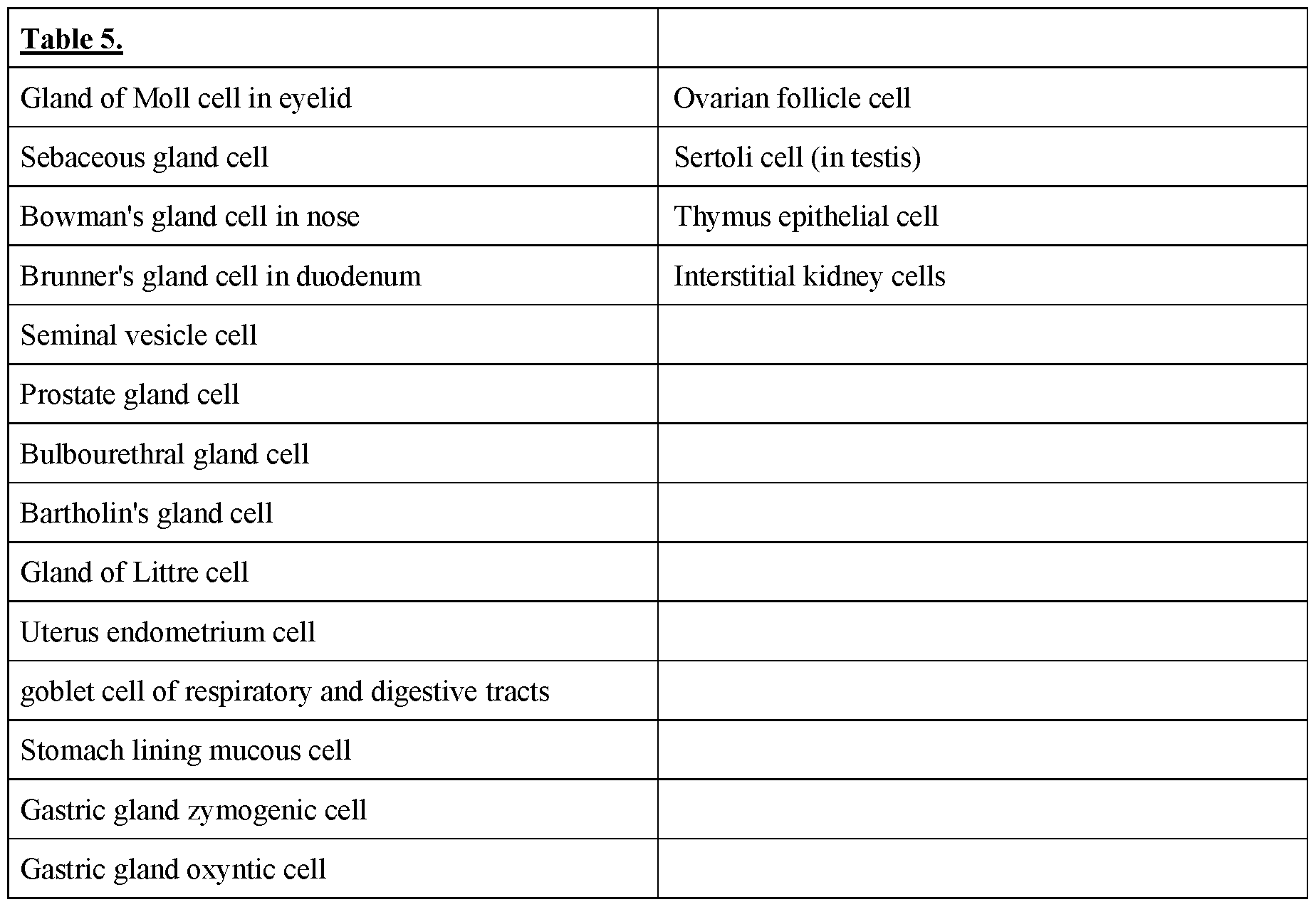
Attorney Docket No. SLIN-015/01WO 323489-2099 SIZE-TUNABLE SYNTHETIC PARTICLES WITH TUNABLE OPTICAL PROPERTIES AND METHODS FOR USING THE SAME FOR IMMUNE CELL ACTIVATION CROSS-REFERENCE TO RELATED APPLICATIONS [0001] This application claims the benefit of U.S. Provisional Patent Application No. 63/419,580, filed on October 26, 2022, and U.S. Provisional Patent Application No. 63/488,949, filed on March 7, 2023, each of which is incorporated by reference herein in its entirety for all purposes. BACKGROUND OF THE INVENTION [0002] Flow cytometry is a technique that allows for the rapid separation, counting, and characterization of individual cells and is routinely used in clinical and laboratory settings for a variety of applications. The technology relies on directing a beam of light onto a hydrodynamically-focused stream of liquid. A number of detectors are then aimed at the point where the stream passes through the light beam: one in line with the light beam (forward scatter or FSC) and several perpendicular to it (side scatter or SSC). FSC correlates with the cell volume and SSC depends on the inner complexity of the particle (e.g., shape of the nucleus, the amount and type of cytoplasmic granules or the membrane roughness). As a result of these correlations, different specific cell types exhibit different FSC and SSC, allowing cell types to be distinguished in flow cytometry. The ability to identify specific cell types, however, relies on proper calibration of the instrument, a process that has relied on the use of purified cells of the cell type of interest. Obtaining these purified cells can require costly, laborious procedures that are prone to batch-to-batch variation. Therefore, there is a need in the art for synthetic compositions with tunable optical properties that can mimic specific cell types in devices such as flow cytometers. [0003] To this end, hydrogel particles for immunotherapy are also desired. Immunotherapy involving priming and expansion of immune cells, including T lymphocytes (T cells), is a promising treatment for the treatment of cancer and infectious disease. Current standards for in vitro T cell activation are magnetic microbeads containing αCD3 and αCD28 antibodies and having a subcellular sized diameter. However, these microbeads, which may be monodisperse polystyrene beads, are superparamagnetic, thus requiring an additional isolation step after beads have been in culture. Other methods to stimulate e.g., T cells in vitro include a plate- bound method where αCD3 and αCD28 antibodies are directly added to T cell culture and are Attorney Docket No. SLIN-015/01WO 323489-2099 washed off after 24h of stimulation. Still other methods rely on T cells stimulated in vitro on autologous dendritic cells, virally infected B cells, and/or allogenic feeder cells cloned and injected with expanded T cells. However, these methods require billions of cells, and co- culturing e.g., T cells with other cell types may induce undesirable immune reactions or the introduction of viruses when the expanded T cells are administered to a patient. Accordingly, an improved method for immune cell activation is needed. SUMMARY OF THE INVENTION [0004] In an embodiment, the present disclosure relates to a hydrogel particle comprising a polymerized monomer and having at least one surface is provided. The hydrogel particle has at least one optical property that is substantially similar to the at least one optical property of a target cell. The optical property in one embodiment, is a side scatter profile (SSC), forward scatter profile (FSC), a fluorescence emission profile, or a combination thereof. The target cell can be any target cell that the user specifies. For example, in one embodiment, the target cell is an immune cell, stem cell or cancer cell. [0005] In an embodiment, the present disclosure relates to a method for calibrating a cytometric device for analysis of a target cell, is provided. In one embodiment, the method comprises inserting into the device a hydrogel particle having at least one optical property substantially similar to a target cell, wherein the hydrogel particle comprises a polymerized monomer and has at least one surface. The method further comprises measuring the at least one optical property of the hydrogel particle using the cytometric device. The at least one optical property in one embodiment, is used as a reference to detect a target cell in a sample. [0006] In an embodiment, the present disclosure relates to a method for detecting a target cell in a sample is provided. The method comprises inserting into the device a hydrogel particle having at least one optical property substantially similar to a target cell, wherein the hydrogel particle comprises a polymerized monomer. The method further comprises measuring the at least one optical property of the hydrogel particle using the cytometric device. A sample comprising a plurality of cells is inserted into the cytometric device, and the at least one optical property of individual cells of the plurality are measured. Finally, a determination is made, based on the optical property measurement, whether the target cell or plurality thereof is present in the sample. [0007] In an embodiment of the methods provided herein, the hydrogel particle comprises a biodegradable monomer. In a further embodiment, the biodegradable monomer is a Attorney Docket No. SLIN-015/01WO 323489-2099 monosaccharide, disaccharide, polysaccharide, peptide, protein, or protein domain. In even a further embodiment, the biodegradable monomer is functionalized with acrylamide or acrylate. [0008] In an embodiment, the methods herein can be used on any appropriate detection or analysis platform, including, without limitation, imaging (e.g., a microscope, a scanner, or the like), flow cytometry, or other immunodetection methods (e.g., an ELISA assay), electrophoresis, omic analysis (genomics, glycomics, proteomics, lipidomics analysis), molecular analysis (q-PCR etc.), or the like. Analysis, such as imaging or detecting, can be performed in fluorescence, bright field, dark field, or immunohistochemical (e.g. chromogenic stains). [0009] In an embodiment, the present disclosure relates to particles for immune cell activation. BRIEF DESCRIPTION OF THE FIGURES [0010] FIG.1A-B illustrates the optical properties of disclosed hydrogel particles compared to polystyrene beads. [0011] FIG. 2 depicts the process of producing labeled hydrogel particles of the disclosure, including hydrogels with attached biomolecules. [0012] FIG.3A-3C provides brightfield and fluorescent images of labeled hydrogel particles of the disclosure. [0013] FIG.4A-4C illustrates the use of hydrogel particles of the disclosure as calibrants for cell types displaying a variety of optical scattering properties. [0014] FIG. 5 provides dating showing correlation of inter-drop delay for a flow cytometer with hydrogel particle diameter. [0015] FIG.6A and FIG.6C provides brightfield and FIG.6B and FIG.6D fluorescent images of Chinese Hamster Ovary cells (FIG.6A and FIG.6B) and hydrogel particles of the disclosure (FIG.6C and FIG.6D). [0016] FIG.7 provides data showing comparison of human buccal cells to hydrogel particles encapsulating different amounts of DNA, as measured by fluorescence-activated cell sorting (FACS). [0017] FIG. 8 provides data for hydrogel particles encapsulating nanoparticles at different concentrations, demonstrating tuning of side scattering independent of forward scattering. [0018] FIG. 9 provides data for hydrogel particles produced with different percentages of polymer, demonstrating tuning of refractive index measured by forward scattering. [0019] FIG.10 shows one embodiment of hydrogel parameter tuning to match and/or mimic desired cell population metrics. Attorney Docket No. SLIN-015/01WO 323489-2099 [0020] FIGS.11A-11D and 12A-B are diagrams showing embodiments of how to adjust the forward scatter, side scatter and surface properties of a hydrogel particle. [0021] FIG.13 are scatter plots for various hydrogel particles (FIG.13A) and (FIG.13B) and a commercial blood sample (FIG.13C). [0022] FIG.14 shows a scatter plot of a porous particle and a general step for manufacturing of porous particles. [0023] FIG. 15 provides illustrations of porous particles formed from porogens at a range of concentrations (weight by volume) within the dispersed phase. As shown in FIG. 15, the porogen may be polyethylene glycol 8000 at concentrations of 2.25%, 3.4%, 4.5%, 6.3%, and 9% w/v. By visual observation, the porosity of the porous particles increases with increasing content of polyethylene glycol 8000 in the water phase formulations. Each image of the porogen concentrations can be evaluated in view of the 50 μm scale bar in the 9% porogen image. Increased porosity can be used as a factor for increase SSC optical match of particles. Porosity can also help replicate visual morphologies of target cells. Further conjugation of biomolecules on particles can provide additional functionality, including immune response activation functions. [0024] FIG. 16 provides scatter plots of side scatter data and forward scatter data for porous particles formed by varying porogen concentrations (weight by volume) within the dispersed phase. From left to right, the porous particles comprise polyethylene glycol 8000 at concentrations of 2.25%, 3.4%, and 4.5% w/v. The side scatter of the porous particles measured by flow cytometry increases with increasing content of polyethylene glycol 8000 in the water phase formulations, while the forward scatter is largely unchanged. [0025] FIG. 17 provides scatter plots of side scatter data and forward scatter data for porous particles comprising a constant concentration of porogen and nanoparticles. From left to right, the porous particles are formed from 9% polyethylene glycol with nanoparticles at concentrations (weight by volume) of 0%, 0.0825%, and at 0.165% w/v. The plots illustrate that the side scatter of a particle can be controlled independently of its porosity. [0026] FIG. 18 provides scatter plots of optical scatter of porous particles conjugated with fluorescent dyes. Fluorophores or dyes can be conjugated to the porous particles, which can then be used to mimic a stained cell in the applications of image cytometry or histology. [0027] FIG.19 is a schematic of a degradable particle, according to embodiments of the present disclosure. [0028] FIG.20 is a schematic of a particle as a synthetic feeder cell, according to embodiments of the present disclosure. Attorney Docket No. SLIN-015/01WO 323489-2099 [0029] FIG. 21 is a schematic of a particle as a synthetic biomolecule presenting particle, according to embodiments of the present disclosure. [0030] FIG.22A and FIG.22B relate to particles as feeder cells, according to embodiments of the present disclosure. [0031] FIG.23A and FIG.23B relate to synthetic biomolecule presenting particles, according to embodiments of the present disclosure. [0032] FIG. 24 depicts a method of generating porous particles by a microfluidic droplet process, the process including curing and purification before cell therapy application. [0033] FIG. 25 is a microscopy image of porous particles formed using polyethylene glycol (PEG). [0034] FIG.26 depicts early-stage (24 hour incubation) activation of Jurkat samples incubated with either Dynabeads™ or porous particles, according to embodiments of the present disclosure. The porous particles of FIG. 26 are particles having pores formed during manufacturing using 9% w/v PEG as a porogen. FIG. 26 depicts an increased activation of Jurkat samples as indicated by upregulation of activation marker CD69 when compared with baseline Jurkats values and also when compared against cells activated by Dynabeads™. [0035] FIG. 27 is a bar chart depicting early-stage T-cell activation (i.e., increase in Jurkat activation) when incubated with porous particles (pores formed by 9% PEG) and Dynabeads™ for 24 hours. As shown, T-cell activation is increased in porous particles samples, as shown by an increase in CD69. [0036] FIG.28 depicts a relative upregulation of early-stage T-cell activation marker CD69 in Jurkat samples incubated for 48 hours with porous particles (pores formed by 9% PEG) as compared to Dynabeads™. Activation during this prolonged incubation period represents a sustained activation. [0037] FIG.29 depicts a relative upregulation of late-stage T-cell activation marker CD25 in Jurkat samples incubated for 48 hours with porous particles (pores formed by 9% PEG) as compared to Dynabeads™. Activation during this prolonged incubation period represents a sustained activation. [0038] FIG. 30 is a bar chart depicting a relative upregulation of late-stage T-cell activation marker CD25 in Jurkat samples incubated for 48 hours with porous particles (pores formed by 9% PEG) as compared to Dynabeads™. [0039] FIG. 31 provides scatter plots of conjugation. 15 µm porous particles with 4.5% polyethylene glycol (MW 3550) and 0.4 mg/mL streptavidin acrylamide conjugated with Attorney Docket No. SLIN-015/01WO 323489-2099 EpCAM protein were stained with anti-EpCAM (Alexa Fluor 405). Three different levels of EpCAM protein were evaluated (low, medium, high). DETAILED DESCRIPTION OF THE INVENTION Definitions [0040] The indefinite articles “a” and “an” and the definite article “the” are intended to include both the singular and the plural, unless the context in which they are used clearly indicates otherwise. [0041] “At least one” and “one or more” are used interchangeably to mean that the article may include one or more than one of the listed elements. [0042] Throughout this application, the term “about” is used to indicate that a value includes the inherent variation of error for the device or the method being employed to determine the value, or the variation that exists among the samples being measured. Unless otherwise stated or otherwise evident from the context, the term “about” means within 10% above or below the reported numerical value (except where such number would exceed 100% of a possible value or go below 0%). When used in conjunction with a range or series of values, the term “about” applies to the endpoints of the range or each of the values enumerated in the series, unless otherwise indicated. As used in this application, the terms “about” and “approximately” are used as equivalents. [0043] “Substantially similar,” as may be used herein, denotes at least 40% similar, at least 50% similar, at least 60% similar, at least 70% similar, at least 80% similar, at least 90% similar, at least 95% similar, at least 96% similar, at least 97% similar, at least 98% similar or at least 99% similar. [0044] As referred to herein, “porosity” may be used to refer to the percentage of void space within the hydrogel particle. When porogens are used, the porosity is the percentage of void space within the hydrogel particle after removal of the porogens. In such a case, the porosity may comprise a plurality of micropores and a plurality of macropores, as will be described below. [0045] Unless otherwise indicated, it is to be understood that all numbers expressing quantities, ratios, and numerical properties of ingredients, reaction conditions, and so forth, used in the specification are contemplated to be able to be modified in all instances by the term “about”. [0046] As may be used herein, the term “contacting” (i.e., contacting a cell e.g., a differentiable cell, with a compound) is intended to include incubating the item/compound and the cell together in vitro (e.g., adding the compound/particles to cells in culture). It is understood that Attorney Docket No. SLIN-015/01WO 323489-2099 the cells contacted with the defined medium (e.g., particles) can be further treated with a cell differentiation environment to stabilize the cells, or to differentiate the cells. [0047] As may be used herein, the term “stabilize,” when used in reference to the differentiation state of a cell or culture of cells, indicates that the cells will continue to proliferate over multiple passages in culture, and preferably indefinitely in culture, where most, if not all, of the cells in the culture are of the same differentiation state. In addition, when the stabilized cells divide, the division typically yields cells of the same cell type or yields cells of the same differentiation state. A stabilized cell or cell population in general, does not further differentiate or de-differentiate if the cell culture conditions are not altered and the cells continue to be passaged and are not overgrown. In one embodiment, the cell that is stabilized is capable of proliferation in the stable state indefinitely, or for at least more than 2 passages. In a more specific embodiment, the cells are stable for more than 3 passages, 4 passages, 5 passages, 6 passages, 7 passages, 8 passages, 9 passages, more than 10 passages, more than 15 passages, more than 20 passages, more than 25 passages, or more than 30 passages. In one embodiment, the cell is stable for greater than approximately 1 month, 2 months, 3 months, 4 months, 5 months, 6 months, 7 months, 8 months, 9 months, 10 months, or 11 months of continuous passaging. In another embodiment, the cell is stable for greater than approximately 1 year of continuous passaging. In one embodiment, stem cells are maintained in culture in a pluripotent state by routine passage in the defined medium until it is desired that they be differentiated. As used herein, the term “proliferate” refers to an increase in the number cells in a cell culture. [0048] Hence, as may be used herein, the term “growth environment” is an environment in which stem cells (e.g., primate embryonic stem cells) will proliferate in vitro. Features of the environment include the medium in which the cells are cultured, and a supporting structure (such as a substrate on a solid surface) if present. [0049] As may be used herein, a “defined” medium refers to a biochemically defined formulation comprised solely of the biochemically-defined constituents. A defined medium may include solely constituents having known chemical compositions. A defined medium may also include constituents that are derived from known sources. For example, a defined medium may also include factors and other compositions secreted from known tissues or cells; however, the defined medium will not include the conditioned medium from a culture of such cells. Thus, a “defined medium” may, if indicated, include particular compounds added to form the culture medium. Attorney Docket No. SLIN-015/01WO 323489-2099 [0050] As may be used herein, the term “basal medium” refers to a solution of amino acids, vitamins, salts, and nutrients that is effective to support the growth of cells in culture, although normally these compounds will not support cell growth unless supplemented with additional compounds. The nutrients include a carbon source (e.g., a sugar such as glucose) that can be metabolized by the cells, as well as other compounds necessary for the cells' survival. These are compounds that the cells themselves cannot synthesize, due to the absence of one or more of the gene(s) that encode the protein(s) necessary to synthesize the compound (e.g., essential amino acids) or, with respect to compounds which the cells can synthesize, because of their particular developmental state the gene(s) encoding the necessary biosynthetic proteins are not being expressed as sufficient levels. A number of base media are known in the art of mammalian cell culture, such as Dulbecco's Modified Eagle Media (DMEM), Knockout- DMEM (KO-DMEM), and DMEM/F12, although any base medium that supports the growth of primate embryonic stem cells in a substantially undifferentiated state can be employed. A “basal medium” as described herein also refers to the basal medium described in PCT/US2007/062755, filed Jun.13, 2007, which is herein incorporated in its entirety. [0051] Several critical calibration measurements for flow cytometers require precise time resolution, such as setting the offset time between lasers, and calculating the delay time between detection and sorting of an object. Due to the fluidic conditions within the instrument, precise setting of these timing parameters requires the use of calibration particles that are the same size as the cells to be analyzed. Timing calibrations are typically performed using polystyrene beads with variable fluorescent intensities to calibrate the response of an excitation source and to set the inter-laser timing delay and sorting delay. Flow cytometers can also be calibrated using forward and side scatter signals which are general measures of size and granularity or complexity of the target sample. These calibrations are crucial for the accurate performance of the cytometer and for any downstream analysis or sorting of cell populations. The disclosed hydrogel particles exhibit tuned scatter properties and are suitable for use as calibration reagents for a range of mammalian or bacterial cell types. Scattering is a standard metric for distinguishing cell types in heterogeneous mixtures for clinical, food safety, and research purposes. [0052] Although polystyrene particles can be used to set inter-laser and sorting delays for some applications, many eukaryotic cell types fall outside of the size range of commercially available polystyrene particles (1-20 µm) making it nearly impossible to accurately calibrate a flow cytometer for these targets. Also, as shown in FIG.1, polystyrene particles are fundamentally limited in the optical properties that can possess such as side scattering, which is a general Attorney Docket No. SLIN-015/01WO 323489-2099 measure of cellular complexity. Polystyrene particles are therefore limited in the two most important passive optical measurements used in flow cytometry: FSC (forward scattering), and SSC (side scattering) which measure the size and complexity of the target respectively. Due to these limitations of polystyrene, users must rely on purified cell lines to calibrate fluorescent intensity, inter-laser delay, sort delays, size and cellular complexity for experiments. This is a lengthy and labor-intensive process that increases the cost of flow cytometry validation and research pipelines significantly. More importantly, these calibration cell lines introduce biological variation, causing disparities in the interpretation of data. [0053] Moreover, quality control (QC) for calibration of flow cytometers is also a crucial consideration when these instruments are used for clinical applications, for example, to isolate human T-regulatory cells or stem cells for downstream cellular therapies. The FDA mandates that the sterility, identity, purity, and potency of a cell therapy product be demonstrated before administration to patients (Riley et al. (2009). Immunity 30, pp.656-665). Contamination of a cellular population with polystyrene QC particles could therefore be problematic, as polystyrene has been implicated in certain cancers. Additionally, a cellular population that is contaminated with a QC standard that is enzymatically degraded or digested internally after administration to a patient potentially overcomes contamination issues, should they arise. [0054] The present invention addresses these and other needs, as discussed below. [0055] In one aspect, a composition comprising a plurality of hydrogel particles is provided, wherein the individual hydrogel particles of the plurality each has one or more optical properties substantially similar to one or more optical properties of a target cell. Each of the individual hydrogel particles of the plurality independently comprises a hydrogel which is synthesized by polymerizing one or more monomers, i.e., to form a homopolymer or copolymer. As discussed further below, the use of bifunctional monomers allows for the further derivatization of hydrogels, e.g., with fluorescent dyes, biomolecules, such as cell surface markers or epitope binding fragments thereof, and immunostimulatory biomolecules, including CD markers and antibodies or antigen-binding fragments thereof, as well as a combination thereof. An example of hydrogel parameter tuning to meet/match desired cell subpopulation metrics is provided at FIG.10. Methods for tuning the properties of a hydrogel are described herein. The ability to adjust a range of parameters including hydrogel components and concentration of the same allows for the ability to tune a particle to mimic a wide range of cells, for example one of the cell types described herein. [0056] As provided above, in one aspect, the present invention provides individual hydrogel particles each having one or more optical properties substantially similar to one or more optical Attorney Docket No. SLIN-015/01WO 323489-2099 properties of a target cell. In one embodiment, the one or more optical properties, is a side scatter profile, a forward scatter profile or a secondary marker profile, such as a fluorescence marker profile, for example a fluorescence marker profile of a fluorescently-labeled antibody that binds to the surface of the hydrogel particle. “Substantially similar,” as used herein, denotes at least 40% similar, at least 50% similar, at least 60% similar, at least 70% similar, at least 80% similar, at least 90% similar, at least 95% similar, at least 96% similar, at least 97% similar, at least 98% similar or at least 99% similar. [0057] The present invention is based in part on the unexpected discovery that one or more optical properties of a hydrogel particle can be independently modulated by altering the composition of the hydrogel particle, for example, by altering the amount of initial monomer (or co-monomer) in the composition, by altering the surface functionalization, by altering the amount of a polymerization initiator or by altering the amount of crosslinker . For example, side scattering (SSC) can be modulated without substantially affecting forward scattering (FSC), and vice versa. Furthermore, the optical properties (e.g. refractive index) of hydrogel particles can be tuned without having a substantial effect on density of the particle. This is a surprising and useful feature, as hydrogel particles that serve as surrogates for cells in cytometric methods such as flow cytometry or (fluorescence-activated cell sorting) FACS require a minimal density in order to function in those assays. [0058] In another aspect, a method for producing a hydrogel particle is provided, wherein the hydrogel particle has one or more optical properties substantially similar to the optical properties of one or more target cells. In one embodiment, the hydrogel particle has pre- determined optical properties. The optical property, in one embodiment, is SSC, FSC, fluorescence emission, or a combination thereof. [0059] In yet another aspect, a method of calibrating a cytometric device for analysis of a target cell is provided. In one embodiment, the method comprises (a) inserting into the device a hydrogel particle having optical properties substantially similar to the optical properties of the target cell; b) measuring the optical properties of the hydrogel particle using the cytometric device, thereby calibrating the cytometric device for analysis of the target cell. Cytometric devices are known in the art, and include commercially available devices for performing flow cytometry and FACS. [0060] As provided above, in one aspect of the invention, compositions comprising a plurality of hydrogel particles are provided. A hydrogel is a material comprising a macromolecular three-dimensional network that allows it to swell when in the presence of water, to shrink in the absence of (or by reduction of the amount of) water, but not dissolve in water. The swelling, Attorney Docket No. SLIN-015/01WO 323489-2099 i.e., the absorption of water, is a consequence of the presence of hydrophilic functional groups attached to or dispersed within the macromolecular network. Crosslinks between adjacent macromolecules result in the aqueous insolubility of these hydrogels. The cross-links may be due to chemical (i.e., covalent) or physical (i.e., Van Der Waal forces, hydrogen-bonding, ionic forces, etc.) bonds. Synthetically prepared hydrogels can be prepared by polymerizing a monomeric material to form a backbone and cross-linking the backbone with a crosslinking agent. As referred to herein, the term “hydrogel” refers to the macromolecular material whether dehydrated or in a hydrated state. A characteristic of a hydrogel that is of particular value is that the material retains the general shape, whether dehydrated or hydrated. Thus, if the hydrogel has an approximately spherical shape in the dehydrated condition, it will be spherical in the hydrated condition. [0061] In one embodiment, a hydrogel particle disclosed herein comprises greater than about 30%, greater than about 40%, greater than about 50%, greater than about 55%, greater than about 60%, greater than about 65%, greater than about 70%, greater than about 75%, greater than about 80%, greater than about 85%, greater than about 90%, or greater than about 95% water. In another embodiment, a hydrogel particle has a water content of about 10 percent by weight to about 95 percent by weight, or about 20 percent by weight to about 95 percent by weight, or about 30 percent by weight to about 95 percent by weight, or about 40 percent by weight to about 95 percent by weight, or about 50 percent by weight to about 95 percent by weight, or about 60 percent by weight to about 95 percent by weight, or about 70 percent by weight to about 95 percent by weight, or about 80 percent by weight to about 95 percent by weight. [0062] The hydrogels provided herein, in the form of particles, are synthesized by polymerizing one or more of the monomers provided herein. The synthesis is carried out to form individual hydrogel particles. The monomeric material (monomer) in one embodiment is polymerized to form a homopolymer. However, in another embodiment copolymers of different monomeric units (i.e., co-monomers) are synthesized and used in the methods provided herein. The monomer or co-monomers used in the methods and compositions described herein, in one embodiment, is a bifunctional monomer or includes a bifunctional monomer (where co-monomers are employed). In one embodiment, the hydrogel is synthesized in the presence of a crosslinker. In a further embodiment, embodiment, the hydrogel is synthesized in the presence of a polymerization initiator. [0063] The amount of monomer can be varied by the user of the invention, for example to obtain a particular optical property that is substantially similar to that of a target cell. In one Attorney Docket No. SLIN-015/01WO 323489-2099 embodiment, the monomeric component(s) (i.e., monomer, co-monomer, bifunctional monomer, or a combination thereof, for example, bis/acrylamide in various crosslinking ratios, allyl amine or other co-monomers which provide chemical functionality for secondary labeling/conjugation or alginate is present at about 10 percent by weight to about 95 percent weight of the hydrogel. In a further embodiment, the monomeric component(s) is present at about 15 percent by weight to about 90 percent weight of the hydrogel, or about 20 percent by weight to about 90 percent weight of the hydrogel. [0064] Examples of various monomers and cross-linking chemistries available for use with the present invention are provided in the Thermo Scientific Crosslinking Technical Handbook entitled “Easy molecular bonding crosslinking technology,” (available at tools.lifetechnologies.com/content/sfs/brochures/1602163-Crosslinking-Reagents- Handbook.pdf, the disclosure of which is incorporated by reference in its entirety for all purposes. For example, hydrazine (e.g., with an NHS ester compound) or EDC coupling reactions (e.g., with a maleimide compound) can be used to construct the hydrogels of the invention. [0065] In one embodiment, a monomer for use with the hydrogels provided herein is lactic acid, glycolic acid, acrylic acid, 1-hydroxyethyl methacrylate, ethyl methacrylate, 2- hydroxyethyl methacrylate (HEMA), propylene glycol methacrylate, acrylamide, N- vinylpyrrolidone (NVP), methyl methacrylate, glycidyl methacrylate, glycerol methacrylate (GMA), glycol methacrylate, ethylene glycol, fumaric acid, a derivatized version thereof, or a combination thereof. In an embodiment, the polymer may be degradable. For instance, the polymer may be a polyester based on polylactide (PLA), polyglycolide (PGA), polycaprolactone, poly(lactic-co-glycolic) acid (PLGA), and their copolymers. Other biodegradable polymers may be used. [0066] In one embodiment, one or more of the following monomers is used herein to form a hydrogel of the present invention: 2-hydroxyethyl methacrylate, hydroxyethoxyethyl methacrylate, hydroxydiethoxyethyl methacrylate, methoxyethyl methacrylate, methoxyethoxyethyl methacrylate, methoxydiethoxyethyl methacrylate, poly(ethylene glycol) methacrylate, methoxy-poly(ethylene glycol) methacrylate, methacrylic acid, sodium methacrylate, glycerol methacrylate, hydroxypropyl methacrylate, hydroxybutyl methacrylate or a combination thereof. [0067] In another embodiment, one or more of the following monomers is used herein to form a tunable hydrogel: phenyl acrylate, phenyl methacrylate, benzyl acrylate, benzyl methacrylate, 2-phenylethyl acrylate, 2-phenylethyl methacrylate, 2-phenoxyethyl acrylate, 2-phenoxyethyl Attorney Docket No. SLIN-015/01WO 323489-2099 methacrylate, phenylthioethyl acrylate, phenylthioethyl methacrylate, 2,4,6-tribromophenyl acrylate, 2,4,6-tribromophenyl methacrylate, pentabromophenyl acrylate, pentabromophenyl methacrylate, pentachlorophenyl acrylate, pentachlorophenyl methacrylate, 2,3- dibromopropyl acrylate, 2,3-dibromopropyl methacrylate, 2-naphthyl acrylate, 2-naphthyl methacrylate, 4-methoxybenzyl acrylate, 4-methoxybenzyl methacrylate, 2-benzyloxyethyl acrylate, 2-benzyloxyethyl methacrylate, 4-chlorophenoxyethyl acrylate, 4- chlorophenoxyethyl methacrylate, 2-phenoxyethoxyethyl acrylate, 2-phenoxyethoxyethyl methacrylate, N-phenyl acrylamide, N-phenyl methacrylamide, N-benzyl acrylamide, N- benzyl methacrylamide, N,N-dibenzyl acrylamide, N,N-dibenzyl methacrylamide, N- diphenylmethyl acrylamide N-(4-methylphenyl)methyl acrylamide, N-1-naphthyl acrylamide, N-4-nitrophenyl acrylamide, N-(2-phenylethyl)acrylamide, N-triphenylmethyl acrylamide, N- (4-hydroxyphenyl)acrylamide, N,N-methylphenyl acrylamide, N,N-phenyl phenylethyl acrylamide, N-diphenylmethyl methacrylamide, N-(4-methyl phenyl)methyl methacrylamide, N-1-naphthyl methacrylamide, N-4-nitrophenyl methacrylamide, N-(2- phenylethyl)methacrylamide, N-triphenylmethyl methacrylamide, N-(4- hydroxyphenyl)methacrylamide, N,N-methylphenyl methacrylamide, N,N'-phenyl phenylethyl methacrylamide, N-vinylcarbazole, 4-vinylpyridine, 2-vinylpyridine, as described in U.S. Patent No. 6,657,030, which is incorporated by reference in its entirety herein for all purposes. [0068] Both synthetic monomers and bio-monomers can be used in the hydrogels provided herein, to form synthetic hydrogels, bio-hydrogels, or hybrid hydrogels that comprise a synthetic component and a bio-component (e.g., peptide, protein, monosaccharide, disaccharide, polysaccharide, primary amines sulfhydryls, carbonyls, carbohydrates, carboxylic acids present on a biolmolecule). For example, proteins, peptides or carbohydrates can be used as individual monomers to form a hydrogel that includes or does not include a synthetic monomer (or polymer) and in combination with chemically compatible co-monomers and crosslinking chemistries (see for example, the Thermo Scientific Crosslinking Technical Handbook entitled “Easy molecular bonding crosslinking technology,” available at tools.lifetechnologies.com/content/sfs/brochures/1602163-Crosslinking-Reagents- Handbook.pdf, the disclosure of which is incorporated by reference in its entirety for all purposes.). Compatible crosslinking chemistries include, but are not limited to, amines, carboxyls, and other reactive chemical side groups. Representative reactive groups amenable for use in the hydrogels and monomers described herein are provided in Table 1, below. Attorney Docket No. SLIN-015/01WO 323489-2099
Figure imgf000016_0001
[0069] In general, any form of polymerization chemistry/methods commonly known by those skilled in the art, can be employed to form polymers. In some embodiments, polymerization can be catalyzed by ultraviolet light-induced radical formation and reaction progression. In other embodiments, a hydrogel particle of the disclosure is produced by the polymerization of acrylamide or the polymerization of acrylate. For example, the acrylamide in one embodiment is a polymerizable carbohydrate derivatized acrylamide as described in U.S. Patent No. 6,107,365, the disclosure of which is incorporated by reference in its entirety for all purposes. As described therein and known to those of ordinary skill in the art, specific attachment of acrylamide groups to sugars is readily adapted to a range of monosaccharides and higher order polysaccharides, e.g., synthetic polysaccharides or polysaccharides derived from natural sources, such as glycoproteins found in serum or tissues. [0070] In one embodiment, an acrylate-functionalized poly(ethylene) glycol monomer is used as a hydrogel monomer. For example, the PEG in one embodiment is an acrylate or acrylamide functionalized PEG. Attorney Docket No. SLIN-015/01WO 323489-2099 [0071] In some embodiments, a hydrogel particle comprises a monofunctional monomer polymerized with at least one bifunctional monomer. One example includes, but is not limited to, the formation of poly-acrylamide polymers using acrylamide and bis-acrylamide (a bifunctional monomer). In another embodiment, a hydrogel particle provided herein comprises a bifunctional monomer polymerized with a second bifunctional monomer. One example include, but is not limited to, the formation of polymers with mixed composition containing compatible chemistries such as acrylamide, bis-acrylamide, and bis-acrylamide structural congeners containing a wide range of additional chemistries. The range of chemically compatible monomers, bifunctional monomers, and mixed compositions is obvious to those skilled in the art and follows chemical reactivity principles know to those skilled in the art. (reference Thermo handbook and acrylamide polymerization handbook). See, for example, the Thermo Scientific Crosslinking Technical Handbook entitled “Easy molecular bonding crosslinking technology,” (available at tools.lifetechnologies.com/content/sfs/brochures/1602163-Crosslinking-Reagents- Handbook.pdf) and the Polyacrylamide Emulsions Handbook (SNF Floerger, available at snf.com.au/downloads/Emulsion_Handbook_E.pdf), the disclosure of each of which is incorporated by reference in its entirety for all purposes. [0072] In one embodiment, a hydrogel particle provided herein comprises a polymerizable monofunctional monomer and is a monofunctional acrylic monomer. Non-limiting examples of monofunctional acrylic monomers for use herein are acrylamide; methacrylamide; N- alkylacrylamides such as N-ethylacrylamide, N-isopropylacrylamide or N- tertbutylacrylamide; N-alkylmethacrylamides such as N-ethylmethacrylamide or Nisopropylmethacrylamide; N,N-dialkylacrylamides such as N,N-dimethylacrylamide and N ,N -diethyl-acrylamide; N-[( dialkylamino)alkyl] acrylamides such as N-[3dimethylamino) propyl]acrylamide or N-[3-(diethylamino)propyl] acrylamide; N-[(dialkylamino) alkyl] methacrylamides such as N-[3-dimethylamino)propyl] methacrylamide or N-[3- (diethylamino) propyl] methacrylamide; (dialkylamino)alkyl acrylates such as 2- (dimethylamino )ethyl acrylate, 2-( dimethylamino)propyl acrylate, or 2-(diethylamino )ethyl acrylates; and (dialkylamino) alkyl methacrylates such as 2-(dimethylamino) ethyl methacrylate. [0073] A bifunctional monomer is any monomer that can polymerize with a monofunctional monomer of the disclosure to form a hydrogel as described herein that further contains a second functional group that can participate in a second reaction, e.g., conjugation of a fluorophore, cell surface receptor (or domain thereof), or immunostimulatory biomolecule. Attorney Docket No. SLIN-015/01WO 323489-2099 [0074] In some embodiments, a bifunctional monomer is selected from the group consisting of: allyl amine, allyl alcohol, allyl isothiocyanate, allyl chloride, and allyl maleimide. [0075] A bifunctional monomer can be a bifunctional acrylic monomer. Non-limiting examples of bifunctional acrylic monomers are N,N'-methylenebisacrylamide, N,N'methylene bismethacrylamide, N ,N'-ethylene bisacrylamide, N,N' -ethylene bismethacrylamide, N,N'propylenebisacrylamide and N,N'-(1,2- dihydroxyethylene) bisacrylamide. [0076] Higher-order branched chain and linear co-monomers can be substituted in the polymer mix to adjust the refractive index while maintaining polymer density, as described in U.S. Patent No.6,657,030, incorporated herein by reference in its entirety for all purposes. [0077] In some embodiments, a hydrogel comprises a molecule that modulates the optical properties of the hydrogel. Molecules capable of altering optical properties of a hydrogel are discussed further below. [0078] In one embodiment, an individual hydrogel particle or a plurality thereof comprises a biodegradable polymer as a hydrogel monomer. In one embodiment, the biodegradable polymer is a poly(esters) based on polylactide (PLA), polyglycolide (PGA), polycaprolactone (PCL), poly(lactic-co-glycolic) acid (PLGA), and their copolymers. In one embodiment, the biodegradable polymer is a carbohydrate or a protein, or a combination thereof. For example, in one embodiment, a monosaccharide, disaccharide or polysaccharide, (e.g., glucose, sucrose, or maltodextrin) peptide, protein (or domain thereof) is used as a hydrogel monomer. Other biodegradable polymers include poly(hydroxyalkanoate)s of the PHB-PHV class, additional poly(ester)s, and natural polymers, for example, modified poly(saccharide)s, e.g., starch, cellulose, and chitosan. In another embodiment, the biocompatible polymer is an adhesion protein, cellulose, a carbohydrate, a starch (e.g., maltodextrin, 2-hydroxyethyl starch, alginic acid), a dextran, a lignin, a polyaminoacid, an amino acid, or chitin. Such biodegradable polymers are available commercially, for example, from Sigma Aldrich (St. Louis, MO). [0079] The protein in one embodiment comprises only natural amino acids. However, the invention is not limited thereto. For example, self-assembling artificial proteins and proteins with non-natural amino acids (e.g., those incorporated into non-ribosomal peptides or synthetically introduced via synthetic approaches, see for example, Zhang et al. (2013). Current Opinion in Structural Biology 23, pp. 581-587, the disclosure of which is incorporated by reference in its entirety for all purposes), or protein domains thereof, can also be used as hydrogel monomers. The range of non-natural (unnatural) amino acids that can be incorporated into such compositions is well known to those skilled in the art (Zhang et al. (2013). Current Opinion in Structural Biology 23, pp.581-587; incorporated by reference in its entirety for all Attorney Docket No. SLIN-015/01WO 323489-2099 purposes). The biodegradable polymer in one embodiment, is used as a co-monomer, i.e., in a mixture of monomers. The biodegradable polymer in one embodiment is a bifunctional monomer. [0080] The biomonomer, in one embodiment, is functionalized with acrylamide or acrylate. For example, in one embodiment, the polymerizable acrylamide functionalized biomolecule is an acrylamide or acrylate functionalized protein (for example, an acrylamide functionalized collagen or functionalized collagen domain), an acrylamide or acrylate functionalized peptide, or an acrylamide or acrylate functionalized monosaccharide, disaccharide or polysaccharide. [0081] Any monosaccharide, disaccharide or polysaccharide (functionalized or otherwise) can be used as a hydrogel monomer. In one embodiment, an acrylamide or acrylate functionalized monosaccharide, disaccharide or polysaccharide is used as a polymerizable hydrogel monomer. In one embodiment, a structural polysaccharide is used as a polymerizable hydrogel monomer. In a further embodiment, the structural polysaccharide is an arabinoxylan, cellulose, chitin or a pectin. In another embodiment, alginic acid (alginate) is used as a polymerizable hydrogel monomer. In yet another embodiment, a glycosaminoglycan (GAG) is used as a polymerizable monomer in the hydrogels provided herein. In a further embodiment, the GAG is chondroitin sulfate, dermatan sulfate, keratin sulfate, heparin, heparin sulfate or hyaluronic acid (also referred to in the art as hyaluron or hyaluronate) is used as a polymerizable hydrogel monomer. The additional range of compatible biomonomers and their reactive chemistries are known be individuals skilled in the art and follow general chemical reactivity principles. [0082] An additional range of biocompatible monomers that can be incorporated are known in the art, see, for example the non-degradable biocompatible monomers disclosed in Shastri (2003). Current Pharmaceutical Biotechnology 4, pp. 331-337, incorporated by reference herein in its entirety for all purposes. Other monomers are provided in de Moraes Porto (2012). Polymer Biocompatibility, Polymerization, Dr. Ailton De Souza Gomes (Ed.), ISBN: 978-953- 51-0745-3; InTech, DOI: 10.5772/47786; Heller et al. (2010). Journal of Polymer Science Part A: Polymer Chemistry 49, pp.650-661; Final Report for Biocompatible Materials (2004), The Board of the Biocompatible Materials and the Molecular Engineering in Polymer Science programmes, ISBN 91-631-4985-0, the disclosure of each of which are hereby incorporated by reference in their entirety. [0083] Biocompatible monomers for use with the hydrogels described herein include in one embodiment, ethyleglycol dimethacrylate (EGDMA), 2-hydroxyethyl methacrylate (HEMA), methylmethacrylte (MMA), methacryloxymethyltrimethylsilane (TMS-MA), N-vinyl-2- pyrrolidon (N-VP), styrene, or a combination thereof. Attorney Docket No. SLIN-015/01WO 323489-2099 [0084] Naturally occurring hydrogels useful in this invention include various polysaccharides available from natural sources such as plants, algae, fungi, yeasts, marine invertebrates and arthropods. Non-limiting examples include agarose, dextrans, chitin, cellulose-based compounds, starch, derivatized starch, and the like. These generally will have repeating glucose units as a major portion of the polysaccharide backbone. Cross-linking chemistries for such polysaccharides are known in the art, see for example Thermo Scientific Crosslinking Technical Handbook entitled “Easy molecular bonding crosslinking technology,” (available at tools.lifetechnologies.com/content/sfs/brochures/1602163-Crosslinking-Reagents- Handbook.pdf). [0085] Hyaluronan in one embodiment is used as a hydrogel monomer (either as a single monomer or as a co-monomer). Hyaluronan in one embodiment, is functionalized, for example with acrylate or acrylamide. Hyaluronan is a high molecular weight GAG composed of disaccharide repeating units of N-acetylglucosamine and glucuronic acid linked together through alternating β-1,4 and β-1,3 glycosidic bonds. In the human body, hyaluronate is found in several soft connective tissues, including skin, umbilical cord, synovial fluid, and vitreous humor. Accordingly, in one embodiment, where one or more optical properties of a skin cell, umbilical cord cell or vitreous humor cell is desired to be mimicked, in one embodiment, hyaluronan is used as a hydrogel monomer. Methods for fabricating hydrogel particles are described in Xu et al. (2012). Soft Matter. 8, pp. 3280-3294, the disclosure of which is incorporated herein in its entirety for all purposes. As described therein, hyaluronan can be derivatized with various reactive handles depending on the desired cross-linking chemistry and other monomers used to form a hydrogel particle. [0086] In yet other embodiments, chitosan, a linear polysaccharide composed of randomly distributed β-(1-4)-linked D-glucosamine (deacetylated unit) and N-acetyl-D-glucosamine (acetylated unit), is used as a hydrogel monomer (either as a single monomer or as a co- monomer). [0087] Other polysaccharides for use as a hydrogel monomer or co-monomer include but are not limited to, agar, agarose, alginic acid, alguronic acid, alpha glucan, amylopectin, amylose, arabinoxylan, beta-glucan, callose, capsullan, carrageenan polysaccharides (e.g., kappa, iota or lambda class), cellodextrin, cellulin, cellulose, chitin, chitosan, chrysolaminarin, curdlan, cyclodextrin, alpha-cyclodextrin, dextrin, ficoll, fructan, fucoidan, galactoglucomannan, galactomannan, galactosaminoogalactan, gellan gum, glucan, glucomannan, glucorunoxylan, glycocalyx, glycogen, hemicellulose, homopolysaccharide, hypromellose, icodextrin, inulin, kefiran, laminarin, lentinan, levan polysaccharide, lichenin, mannan, mixed-linkage glucan, Attorney Docket No. SLIN-015/01WO 323489-2099 paramylon, pectic acid, pectin, pentastarch, phytoglycogen, pleuran, polydextrose, polysaccharide peptide, porphyran, pullulan, schizophyllan, sinistrin, sizofiran, welan gum, xanthan gum, xylan, xyloglucan, zymosan, or a combination thereof. As described throughout, depending on the desired cross-linking chemistry and/or additional co-monomers employed in the hydrogel, the polysaccharide can be further functionalized. For example, one or more of the polysaccharides described herein in one embodiment is functionalized with acrylate or acrylamide. [0088] In one embodiment, an individual hydrogel particle or a plurality thereof comprises a peptide, protein, a protein domain, or a combination thereof as a hydrogel monomer or plurality thereof. In a further embodiment, the protein is a structural protein, or a domain thereof, for example, such as silk, elastin, titin or collagen, or a domain thereof. In one embodiment, the protein is an extracellular matrix (ECM) component (e.g., collagen, elastin, proteoglycan, fibrin, lysine, fibronectin). In even a further embodiment, the structural protein is collagen. In yet a further embodiment, the collagen is collagen type I, collagen type II or collagen type III or a combination thereof. In another embodiment, the hydrogel monomer comprises a proteoglycan. In a further embodiment, the proteoglycan is decorin, biglycan, testican, bikunin, fibromodulin, lumican, or a domain thereof. [0089] In another embodiment, an acrylate-functionalized structural protein hydrogel monomer is used as a component of the hydrogel provided herein (e.g., an acrylate functionalized protein or protein domain, for example, silk, elastin, titin, collagen, proteoglycan, or a functionalized domain thereof). In a further embodiment, the acrylate functionalized structural protein hydrogel monomer comprises a proteoglycan, e.g., decorin, biglycan, testican, bikunin, fibromodulin, lumican, or a domain thereof. [0090] In one embodiment PEG monomers and oligopeptides can be that mimic extracellular matrix proteins are used in the hydrogels provided herein, for example, with vinyl sulfone- functionalized multiarm PEG, integrin binding peptides and bis-cysteine matrix metalloproteinase peptides as described by Lutolf et al. (2003). Proc. Natl. Acad. Sci. U.S.A. 100, 5413-5418, incorporated by reference in its entirety for all purposes. In this particular embodiment, hydrogels are formed by a Michael-type addition reaction between the di- thiolated oligopeptides and vinyl sulfone groups on the PEG. The range of additional compatible chemistries that can be incorporated here are obvious to those skilled in the art and follow general chemical reactivity principles, see for example Thermo Scientific Crosslinking Technical Handbook entitled “Easy molecular bonding crosslinking technology,” (available at Attorney Docket No. SLIN-015/01WO 323489-2099 tools.lifetechnologies.com/content/sfs/brochures/1602163-Crosslinking-Reagents- Handbook.pdf). [0091] Other bioactive domains in natural proteins can also be used as a hydrogel monomer or portion thereof. For example, a cell-adhesive integrin binding domain, a controlled release affinity binding domain or a transglutaminase cross-linking domain can be used in the hydrogels provided herein. Details for producing such hydrogels can be found in Martino et al. (2009). Biomaterials 30, 1089; Martino et al. (2011). Sci. Trans. Med.3, 100ra89; Hu and Messersmith (2003). J. Am. Chem. Soc.125, 14298, each of which is incorporated by reference in its entirety for all purposes. [0092] In one embodiment, recombinant DNA methods are used to create proteins, designed to gel in response to changes in pH or temperature, for example, by the methods described by Petka et al. (1998). Science 281, pp.389-392, incorporated by reference in its entirety for all purposes. Briefly, the proteins consist of terminal leucine zipper domains flanking a water- soluble polyelectrolyte segment. In near-neutral aqueous solutions, coiled-coil aggregates of the terminal domains form a three-dimensional hydrogel polymer network. [0093] Common cross linking agents that can be used to crosslink the hydrogels provided herein include but are not limited to ethylene glycol dimethacrylate (EGDMA), tetraethylene glycol dimethacrylate, and N,N'-15 methylenebisacrylamide. The range of additional crosslinking chemistries which can be used are obvious to those skilled in the art and follow general chemical reactivity principles, see for example Thermo Scientific Crosslinking Technical Handbook entitled “Easy molecular bonding crosslinking technology,” (available at tools.lifetechnologies.com/content/sfs/brochures/1602163-Crosslinking-Reagents- Handbook.pdf). [0094] In one embodiment, polymerization of a hydrogel is initiated by a persulfate or an equivalent initiator that catalyzes radical formation. The range of compatible initiators are known to those skilled in the art and follow general chemical reactivity principles, see for example Thermo Scientific Crosslinking Technical Handbook entitled “Easy molecular bonding crosslinking technology,” (available at tools.lifetechnologies.com/content/sfs/brochures/1602163-Crosslinking-Reagents- Handbook.pdf). The persulfate can be any water-soluble persulfate. Non-limiting examples of water soluble persulfates are ammonium persulfate and alkali metal persulfates. Alkali metals include lithium, sodium and potassium. In some embodiments, the persulfate is ammonium persulfate or potassium persulfate. In a further embodiment, polymerization of the hydrogel provided herein is initiated by ammonium persulfate. Attorney Docket No. SLIN-015/01WO 323489-2099 [0095] Polymerization of a hydrogel can be accelerated by an accelerant which can catalyze the formation of polymerization-labile chemical side groups. The range of possible accelerants is known to those skilled in the art and follow general chemical reactivity principles see for example Thermo Scientific Crosslinking Technical Handbook entitled “Easy molecular bonding crosslinking technology,” (available at tools.lifetechnologies.com/ content/sfs/brochures/1602163-Crosslinking-Reagents-Handbook.pdf). The accelerant in one embodiment, is a tertiary amine. The tertiary amine can be any water-soluble tertiary amine. In one embodiment, an accelerant is used in the polymerization reaction and is N,N,N',N'tetramethylethylenediamine, 3-dimethylamino) propionitrile, or N,N,N',N'tetramethylethylenediamine (TEMED). In another embodiment, an accelerant is used in the polymerization reaction and isazobis (isobutyronitrile) (AIBN). [0096] As discussed above, the hydrogel for use in the compositions and methods described herein can include any of the monomeric units and crosslinkers as described herein, and in one aspect, are produced as hydrogel particles by polymerizing droplets (see, e.g., FIG. 2). Microfluidic methods of producing a plurality of droplets, including fluidic and rigidified droplets, are known to those of ordinary skill in the art, and described in US Patent Publication No. 2011/0218123 and U.S. Patent No. 7,294,503, each incorporated herein by reference in their entireties for all purposes. Such methods provide for a plurality of droplets containing a first fluid (e.g., dispersed phase) and being substantially surrounded by a second fluid (e.g., a continuous phase), where the first fluid and the second fluid are substantially immiscible (e.g., droplets containing an aqueous-based liquid being substantially surrounded by an oil-based liquid). [0097] A plurality of fluidic droplets (e.g., prepared using a microfluidic device) may be polydisperse (e.g., having a range of different sizes), or in some cases, the fluidic droplets may be monodisperse or substantially monodisperse, e.g., having a homogenous distribution of diameters, for instance, such that no more than about 10%, about 5%, about 3%, about 1%, about 0.03%, or about 0.01% of the droplets have an average diameter greater than about 10%, about 5%, about 3%, about 1%, about 0.03%, or about 0.01% of the average diameter. The average diameter of a population of droplets, as used herein, refers to the arithmetic average of the diameters of the droplets. Average diameters of the particles can be measured, for example, by light scattering techniques. Average diameters of hydrogel particles in one embodiment, are tailored, for example by varying flow rates of the fluid streams of the first and second fluids within the channel(s) of a microfluidic device, or by varying the volume of the channel(s) of the microfluidic device. Attorney Docket No. SLIN-015/01WO 323489-2099 [0098] Accordingly, the disclosure provides population of hydrogel particles comprising a plurality of hydrogel particles, wherein the population of hydrogel particles is substantially monodisperse. [0099] The term microfluidic refers to a device, apparatus or system including at least one fluid channel having a cross-sectional dimension of less than 1 mm, and a ratio of length to largest cross-sectional dimension perpendicular to the channel of at least about 3:1. A micro fluidic device comprising a micro fluidic channel is especially well suited to preparing a plurality of mono disperse droplets. [0100] Non-limiting examples of microfluidic systems that may be used with the present invention are disclosed in U.S. Patent Application Publication No.2006/0163385; U.S. Patent Application Publication No. 2005/0172476; U.S. Patent Application Publication No. 2007/000342; International Patent Application Publication No. WO 2006/ 096571; U.S. Patent Application Publication No. 2007/0054119; U.S. Patent No. 7,776,927; and International Patent Application Publication No. WO 2006/078841, each incorporated herein by reference in their entireties for all purposes. [0101] Droplet size (e.g., volume) is related to microfluidic channel size. The micro fluidic channel may be of any size, for example, having a largest dimension perpendicular to fluid flow of less than about 5 mm or 2 mm, or less than about 1 mm, or less than about 500 µm, less than about 200 µm, less than about 100 µm, less than about 60 µm, less than about 50 µm, less than about 40 µm, less than about 30 µm, less than about 25 µm, less than about 10 µm, less than about 3 µm, less than about 1 µm, less than about 300 nm, less than about 100 nm, less than about 30 nm, or less than about 10 nm. [0102] Droplet size can be tuned by adjusting the relative flow rates. In some embodiments, drop diameters are equivalent to the width of the channel, or within about 10%, 15%, 20%, 30%, 40%, 50%, 60%, 70%, 80%, 90%, or 100% the width of the channel. [0103] The dimensions of a hydrogel particle of the disclosure are substantially similar to the droplet from which it was formed. Therefore, in some embodiments, a hydrogel particle has a diameter of less than about 1 µm, 2, 5, 10, 15, 20, 25, 30, 35, 40, 45, 50, 60, 70, 80, 90, 100, 120, 150, 200, 250, 300, 350, 400, 450, 500, 600, 800, or less than 1000 µm in diameter. In some embodiments, a hydrogel particle has a diameter of more than about 1 µm, 2, 5, 10, 15, 20, 25, 30, 35, 40, 45, 50, 60, 70, 80, 90, 100, 120, 150, 200, 250, 300, 350, 400, 450, 500, 600, 800, or greater than 1000 µm in diameter. In one embodiment, a hydrogel particle has a diameter in the range of 5 µm to 100 µm. [0104] In some embodiments, a hydrogel particle of the disclosure is spherical in shape. Attorney Docket No. SLIN-015/01WO 323489-2099 [0105] In some embodiments, a hydrogel particle of the disclosure does not comprise agarose. [0106] Hydrogel particle manufacturing in one embodiment, is carried out by suspension polymerization, which is also referred to in the art as pearl, bead or granular polymerization (see Elbert (2011). Acta Biomater.7, pp.31-56, incorporated by reference herein in its entirety for all purposes). In suspension polymerization, the monomer is insoluble in the continuous phase, for example an aqueous monomer solution (dispersed phase) in a continuous oil phase (continuous phase). In suspension polymerization, polymerization initiation occurs within the monomer-rich droplets and with greater than one radical per droplet at any time. The monomer phase in one embodiment includes a monomer which can be a bifunctional monomer or a plurality of monomer species (co-monomers, which can be a plurality of bifunctional monomers. The monomer phase in one embodiment, includes an initiator and/or a crosslinking agent. [0107] Emulsion polymerization can also be used to form the hydrogel particles described herein. In emulsion polymerization, the monomer has poor solubility in the continuous phase, similar to suspension polymerization, however, polymerization initiation occurs outside the monomer droplets (see Elbert (2011). Acta Biomater.7, pp.31-56, incorporated by reference herein in its entirety for all purposes). In emulsion polymerization embodiments, the initiator causes chain growth of the monomer (or co-monomers) dissolved in the continuous phase or monomer contained in micelles if surfactants are present. [0108] In another embodiment, hydrogel particles are formed by precipitation polymerization, for example as described in Elbert (2011). Acta Biomater. 7, pp. 31-56, incorporated by reference herein in its entirety for all purposes. Precipitation polymerization is a technique that takes advantage of the differences in the solubility of monomer and polymer to produce microparticles. Specifically, it is known that larger polymer chains generally have lower solubility than smaller ones. Accordingly, above a specific molecular weight, phase separation may be favored. Precipitation polymerization initially begins as solution polymerizations in a single phase, homogenous system. Shortly after the start of the polymerization, in one embodiment, a relatively high concentration of polymer chains is present, favoring phase separation by nucleation. As polymerization proceeds, the concentration of polymer chains is low and existing particles capture the chains before nucleation of new particles can occur. Thus, nucleation of particles occurs only for a brief period of time shortly after the start of the reaction, which in one embodiment, results in a narrow size distribution of particles. Additional methods include but are not limited to lithographic particle formation (Helgeson et al. (2011). Curr. Opin. Colloid. Interface Sci. 16, pp. 106-117, incorporated by reference herein in its Attorney Docket No. SLIN-015/01WO 323489-2099 entirety for all puposes) membrane emulsification (e.g., by the micosieve emulsification technology techniques described by Nanomi B.V. (Netherlands)) and microchannel emulsification (Sugiura et al. (2002). Languimir 18, pp.5708-5712, incorporated by reference herein in its entirety) and bulk emulsification (SNF Floerger, available at snf.com.au/downloads/Emulsion_Handbook_E.pdf, incorporated by reference herein in its entirety). [0109] In one embodiment, hydrogel particles are formed within a microfluidic device having two oil channels that focus on a central stream of aqueous monomer solution. In this embodiment, droplets form at the interface of the two channels and central stream to break off droplets in water-in-oil emulsion. Once droplets are formed, in one embodiment, they are stabilized prior to polymerization, for example, by adding a surfactant to the oil phase. However, in another embodiment, droplets are not stabilized prior to polymerization. Polymerization of the monomer in one embodiment is triggered by adding an accelerator (e.g., N,N,N' ,N'tetramethylethylenediamine) to one or both of the oil channels after initial droplets are formed. [0110] The aqueous monomer solution as provided above can include a single monomer species or a plurality of monomer species. The aqueous monomer solution can include co- monomers, a bifunctional monomer or a combination thereof. In one embodiment, the monomer or plurality of monomers can includes a bifunctional monomer, for example, one of the monomers described above. As described below, co-monomers can be used to modulate forward scatter or side scatter, for example, by adjusting the refractive index of the hydrogel particle. [0111] In one embodiment, the central stream of aqueous monomer solution comprises a cross- linker, for example, N,N'-bisacrylamide. In a further embodiment, the central stream of aqueous monomer solution comprises a cross-linker and an accelerator, in addition to the monomer. In yet a further embodiment, the aqueous monomer solution comprises an initiator, for example an oxidizing agent such as ammonium persulfate. [0112] Forward scatter was modulated by adjusting the refractive index of the gel by adding co-monomers allyl acrylate and allyl methacrylate (see also FIGS.11 and 12). Forward scatter can also be modulated with side scattering nanoparticles containing sufficient optical resolution/size/density including, but not limited to, higher density colloidal suspensions of silica and/or PMMA particles. Side scattering of the droplets was tuned by adding a colloidal suspension of silica nanoparticles and/or PMMA (poly(methyl methacrylate)) particles (~100 nm) to the central aqueous phase prior to polymerization (FIGS.11 and 12). Attorney Docket No. SLIN-015/01WO 323489-2099 [0113] In one embodiment, a bead, plurality of beads, biomolecule, or plurality of biomolecules is embedded (encapsulated) within the hydrogel particle. An encapsulated bead or biomolecule, in one embodiment, is employed to mimic one or more intracellular organelles of a target cell, or a cell after it engulfs a particle. In one embodiment, encapsulating or embedding a bead or biomolecule is accomplished at the time of hydrogel particle formation. For example, beads can be suspended in the appropriate concentration to allow for an average of one bead to be embedded/encapsulated in a single hydrogel particle. The bead suspension can be included, for example, within the aqueous solution of monomer. Similarly, a biomolecule or mixture of biomolecules can be incorporated into the aqueous solution of monomer to encapsulate the biomolecule or biomolecules. [0114] Alternatively, once a hydrogel particle is formed, for example by the methods described above, in one embodiment, it can be further manipulated, for example, by embedding a bead, plurality of beads, biomolecule or plurality of biomolecules within the hydrogel particle. [0115] Accordingly, in one aspect of the invention, a hydrogel comprising an embedded substance is provided. [0116] In one embodiment, the embedded substance is an embedded molecule, for example a biomolecule. The biomolecule can be a single species or a plurality of different species. For example, a protein, peptide, carbohydrate, nucleic acid or combination thereof can be encapsulated within a hydrogel particle of the invention. Moreover, different nucleic acid molecules (e.g., of varying sequences or nucleic acid type such as genomic DNA, messenger RNA or DNA-RNA hybrids) can be encapsulated by the hydrogel particle of the invention. These can be comprised of any protein or nucleic acid as both forms of biological material contain labile chemical side-groups (or can be modified by commercial vendors (e.g., Integrated DNA Technology chemical side group modifications). Such side-groups are compatible with reaction chemistries commonly found in co-monomer compositions (e.g., acrylate chemistry, NHS-ester, primary amines, copper catalyzed click chemistry (Sharpless)). The range of possible embedded molecules which contain compatible chemistries is understood by those skilled in the art. In some embodiments embedded molecules can also be attached on particle surfaces, including micro and/or macropore surfaces. [0117] In one embodiment, different subpopulations of hydrogel particles are fabricated, each with a different concentration of biomolecule. In a further embodiment, the biomolecule is a nucleic acid, a protein, an intracellular ion such as calcium acid (or other biomolecule of the user’s choosing, for example, calcium). In another embodiment, different subpopulations of hydrogel particles are fabricated, each with a different concentration of a drug substance. The Attorney Docket No. SLIN-015/01WO 323489-2099 drug substance in one embodiment is a biomolecule (i.e., a biologic, antibody or antigen- binding fragment thereof, antibody drug conjugate, protein/enzyme, peptide, non-ribosomal peptide, or related molecule) or a small molecule synthetic drug (e.g., Type I/II/III polyketide, non-ribosomal peptide with bioactive properties, or other small molecule entity as generally classified by those skilled in the art). [0118] In this regard, the present invention is particularly useful for determining assay resolution where cells are stained for their respective nucleic acid or protein content. In one embodiment, different populations of the hydrogel particles provided herein are encapsulated with known, differing amounts of an intracellular substance, e.g., nucleic acid or protein. Individual hydrogel particles are stained for the intracellular substance and fluorescence is measured via a cytometric device for the individual hydrogels of the various populations. This allows for a generation of a standard curve to establish the sensitivity and dynamic range of the intracellular assay. Once established, a sample can be run through the cytometer to detect target cell(s) if present, and to quantify the amount of intracellular substance in the respective target cell(s). In one embodiment, the embedded substance is an infectious disease biomarker, for example one of the infectious disease biomarkers in the Infectious Disease Biomarker Database (IDBD, see Yang et al. (2008) IDBD: Infectious Disease Biomarker Database. Nucleic Acid Res.36, pp. D455-D460, incorporated by reference in its entirety for all purposes). In a further embodiment, the infectious disease biomarker is a biomarker of gastrointestinal infection, respiratory infection, neurological infection, urogenital infection, viral infection, hemorrhagic fever, zoonosis, arbovirus, antibiotics resistance or bioterrorism. In a further embodiment, the viral infection is an Ebola infection. [0119] In one embodiment, the methods provided herein are used to determine the sensitivity and/or dynamic range of a cellular nucleic acid quantification assay. In this embodiment, a sample is interrogated for cell types within the sample (if present), and amount of cellular nucleic acid within the cell. [0120] In another embodiment, the present invention provides a means for determining the resolution and/or sensitivity of an intracellular protein quantification assay. Hydrogel particles, in one embodiment, encapsulate known amounts of protein, at various concentrations, and subsequently stained with the appropriate protein antibody. Fluorescence is measured for the various particles to determine the sensitivity and/or dynamic range of the assay. The fluorescence values can then be compared to the values obtained from cells in a sample, to determine whether a target cell is present and whether it contains the intracellular protein, and the amount of the protein. Attorney Docket No. SLIN-015/01WO 323489-2099 [0121] In one embodiment, individual hydrogel particles are tuned to have at least one optical property substantially similar to a circulating tumor cell or a fetal cell, present in maternal blood. The individual particles are embedded with known quantities of a biomolecule of interest. The particles are used to generate a standard curve for a biomolecule detection assay for the particular cell type. [0122] As provided above, in one aspect of the invention, a hydrogel comprising an embedded substance is provided. In one embodiment, the embedded substance is a bead or plurality of beads. In one embodiment, a hydrogel particle is embedded with a single bead. In another embodiment, individual hydrogels the average number of embedded beads in a plurality of hydrogel particles is one. [0123] In the case where a bead or plurality of beads are embedded into a hydrogel particle, in one embodiment, the optical properties of the bead or plurality of beads are used in combination with the FSC and SSC properties of the hydrogel particle for quality control of a flow cytometry assay. For example, the embedded bead in one embodiment is used as a control to calibrate the flow cytometer system, including the laser source, optics, and stream flow. In another embodiment, the embedded bead is used as a means for quantitating the amount of fluorescence in a sample, e.g., a particular cell. In this regard, embedded beads of various intensities can be used to generate a standard curve of fluorescence to determine whether a cell expresses a certain marker and at what level of expression. [0124] In one embodiment, a bead with the diameter of about 1 µm to about 3 µm, about 2 µm to about 4 µm or about 3 µm to about 7 µm is embedded in a hydrogel provided herein. For example, in one embodiment, the bead has a diameter of about 3 µm to about 3.5 µm. In a further embodiment, the bead is a fluorescent bead. In another embodiment, the bead has a diameter of about 1 µm to about 2.5 µm or about 1.5 µm to about 3 µm. In a further embodiment, the bead is a fluorescent bead and can be stained either internally or at its surface. In even a further embodiment, the fluorescent bead is stained internally. Without wishing to be bound by theory, it is thought that internal staining insulates the fluorophores from environmental interactions that could cause variable fluorescence output. [0125] As provided above, in one embodiment, the embedded bead is a fluorescence bead and in a further embodiment, the fluorescent bead is stained internally. It is within the skill in the art to select the appropriate fluorophore for use in conjunction with an embedded bead. In one embodiment, the bead is derivatized with one or more of the following fluorescent dyes: 6- carboxy-4', 5'-dichloro- 2', 7'-dimethoxyfluorescein succinimidylester; 5-( and-6)- carboxyeosin; 5- carboxyfluorescein;6 carboxyfluorescein; 5-(and-6)-carboxyfluorescein; S- Attorney Docket No. SLIN-015/01WO 323489-2099 carboxyfluorescein-bis-(5-carboxymethoxy-2-nitrobenzyl)ether,-alanine-carboxamide, or succinimidyl ester; 5-carboxy fluorescein succinimidyl ester; 6-carboxyfluorescein succinimidyl ester;5-( and-6)-carboxyfluorescein succinimidyl ester; 5-(4,6-dichlorotriazinyl) amino fluorescein; 2 ', 7' -difluoro fluorescein; eosin-5-isothiocyanate; erythrosin5- isothiocyanate;6-( fluorescein-5-carboxamido) hexanoic acid or succinimidyl ester;6- (fluorescein-5-( and-6)-carboxamido) hexanoic acid or succinimidylester; fluorescein-S-EX succinimidyl ester; fluorescein-5-isothiocyanate; fluorescein-6-isothiocyanate; OregonGreen® 488 carboxylic acid, or succinimidyl ester; Oregon Green® 488 isothiocyanate; Oregon Green® 488-X succinimidyl ester; Oregon Green® 500 carboxylic acid; Oregon Green® 500 carboxylic acid, succinimidylester or triethylammonium salt; Oregon Green® 514 carboxylic acid; Oregon Green® 514 carboxylic acid or succinimidyl ester; RhodamineGreen™ carboxylic acid, succinimidyl ester or hydrochloride; Rhodamine Green™ carboxylic acid, trifluoroacetamide or succinimidylester; Rhodamine Green™-X succinimidyl ester or hydrochloride; RhodolGreen™ carboxylic acid, N,O-bis-(trifluoroacetyl) or succinimidylester; bis-(4- carboxypiperidinyl) sulfonerhodamine or di(succinimidylester); 5-( and- 6)carboxynaphtho fluorescein,5-( and-6)carboxynaphthofluorescein succinimidyl ester;5- carboxyrhodamine 6G hydrochloride; 6-carboxyrhodamine6Ghydrochloride, 5- carboxyrhodamine 6G succinimidyl ester;6-carboxyrhodamine 6G succinimidyl ester; 5-( and- 6)-carboxyrhodamine6G succinimidyl ester;5-carboxy-2',4',5',7'-tetrabromosulfonefluorescein succinimidyl esteror bis-( diisopropylethylammonium) salt; 5-carboxytetramethylrhodamine; 6-carboxytetramethylrhodamine; 5-(and-6)- carboxytetramethylrhodamine; 5- carboxytetramethylrhodamine succinimidyl ester; 6- carboxytetramethylrhodaminesuccinimidyl ester;5 -(and -6)-carboxytetramethylrhodamine succinimidyl ester;6-carboxy-X-rhodamine; 5-carboxy-X-rhodamine succinimidyl ester;6- carboxy-Xrhodamine succinimidyl ester; 5-( and-6)-carboxy-Xrhodaminesuccinimidyl ester; 5-carboxy-X-rhodamine triethylammonium salt;LissamineTM rhodamine B sulfonyl chloride; malachite green; isothiocyanate; NANOGOLD® mono(sulfosuccinimidyl ester); QSY® 21carboxylic acid or succinimidyl ester; QSY® 7 carboxylic acid or succinimidyl ester; Rhodamine RedTM-X succinimidyl ester;6-(tetramethylrhodamine-5-(and-6)-carboxamido) hexanoic acid; succinimidyl ester; tetramethylrhodamine-5- isothiocyanate;tetramethylrhodamine-6-isothiocyanate; tetramethylrhodamine-5-(and-6)- isothiocyanate; Texas Red® sulfonyl; Texas Red® sulfonyl chloride; Texas Red®-X STP ester or sodium salt; Texas Red®-X succinimidyl ester; Texas Red®-X succinimidyl ester; andX- rhodamine-5-(and-6) isothiocyanate, BODIPY® dyes commercially available from Invitrogen, Attorney Docket No. SLIN-015/01WO 323489-2099 including, but not limited to BODIPY® FL; BODIPY® TMR STP ester; BODIPY® TR-X STP ester; BODIPY® 630/650-X STPester; BODIPY® 650/665-X STP ester;6-dibromo-4, 4- difluoro-5, 7 -dimethyl-4-bora-3 a, 4a-diaza-s-indacene-3-propionic acid succinimidyl ester;4,4-difluoro-4-bora-3a,4a-diaza-s-indacene-3,5-dipropionic acid;4,4- difluoro-5,7- dimethyl-4-bora-3a,4a-diaza-s-indacene-3-pentanoicacid; 4,4-difluoro-5,7- dimethyl-4- bora3a,4a-diaza-s-indacene-3-pentanoicacid succinimidyl ester;4,4-difluoro-5,7- dimefhyl-4- bora-3 a, 4a-diaza-s-indacene-3propionicacid; 4, 4-difluoro-5, 7 -dimethyl-4-bora- 3 a, 4adiaza-s-indacene-3-propionicacid succinimidyl ester;4, 4difluoro-5, 7 -dimefhyl-4-bora- 3a,4a-diaza-s-indacene-3propionic acid; sulfosuccinimidyl ester or sodium salt; 6-(( 4,4- difluoro-5, 7 -dimethyl-4-bora-3a,4a-diaza-s-indacene-3propionyl)amino )hexanoicacid; 6-( ( 4,4-difluoro-5, 7 dimethyl-4-bora-3a,4a-diaza-s-indacene-3-propionyl)amino )hexanoic acid or succinimidyl ester; N-(4, 4-difluoro 5, 7 -dimethyl-4-bora-3 a, 4a-diaza-s-indacene-3- propionyl) cysteic acid, succinimidyl ester or triethylammonium salt; 6-4,4-difluoro-1,3- dimethyl-5-( 4-methoxyphenyl)-4-bora3a, 4a4, 4-difluoro-5, 7-diphenyl-4-bora-3a,4a-diaza- sindacene-3-propionicacid; 4, 4-difluoro-5, 7 -diphenyl-4-bora3 a, 4a-diaza-s-indacene-3- propionicacid succinimidyl ester;4, 4-difluoro-5-phenyl-4-bora-3 a, 4a-diaza-s-indacene-3- propionic acid; succinimidyl ester;6-(( 4, 4-difluoro-5-phenyl-4 bora-3 a, 4a-diaza-s-indacene- 3- propionyl)amino) hexanoicacid or succinimidyl ester;4,4-difluoro-5-(4-phenyl- 1,3butadienyl)- 4-bora-3 a, 4a-diaza-s-indacene-3-propionicacid succinimidyl ester; 4, 4- difluoro-5-(2- pyrrolyl)-4-bora-3a,4a-diaza-s-indacene-3-propionic acid succinimidyl ester;6- (((4,4- difluoro-5-(2-pyrrolyl)-4-bora-3a,4a-diaza-s-indacene-3- yl)styryloxy)acetyl)aminohexanoicacid or succinimidyl ester;4,4-difluoro-5-styryl-4-bora-3a, 4a-diaza-s-indacene-3-propionic acid; 4, 4-difluoro-5 -styryl-4-bora-3 a, 4a-diaza-sindacene- 3-propionic acid; succinimidyl ester;4,4-difluoro-1,3,5,7-tetramethyl-4-bora-3a,4adiaza- s- indacene-8-propionicacid; 4,4-difluoro-1,3,5,7-tetramethyl-4bora-3a,4a-diaza-sindacene- 8- propionic acid succinimidyl ester;4,4-difluoro-5-(2-thienyl)-4-bora-3a,4a-diaza-sindacene- 3- propionic acid succinimidyl ester;6-( ( ( 4-( 4, 4-difluoro-5 -(2-thienyl)-4-bora-3 a, 4adiazas- indacene-3-yl)phenoxy)acetyl)amino )hexanoic acid or succinimidyl ester; and 6-(((4,4- difluoro-5-(2-thienyl)-4-bora-3a,4a-diaza-s-indacene-3- yl)styryloxy)acetyl) aminohexanoic acid or succinimidyl ester, Alexa fluor dyes commercially available from Invitrogen, including but not limited to Alexa Fluor® 350 carboxylic acid; Alexa Fluor® 430 carboxylic acid; Alexa Fluor® 488 carboxylic acid; Alexa Fluor® 532 carboxylic acid; Alexa Fluor® 546 carboxylic acid; Alexa Fluor® 555 carboxylic acid; Alexa Fluor® 568 carboxylic acid; Alexa Fluor® 594 carboxylic acid; Alexa Fluor® 633 carboxylic acid; Alexa Fluor® 647 carboxylic acid; Alexa Attorney Docket No. SLIN-015/01WO 323489-2099 Fluor® 660 carboxylic acid; and Alexa Fluor® 680 carboxylic acid, cyanine dyes commercially available from Amersham-Pharmacia Biotech, including, but not limited to Cy3 NHS ester; Cy 5 NHS ester; Cy5.5 NHSester; and Cy7 NHS ester. [0126] Other Fluorophores amenable for use with the present invention are provided in Table 2 below.
Attorney Docket No. SLIN-015/01WO 323489-2099
Figure imgf000033_0001
Attorney Docket No. SLIN-015/01WO 323489-2099
Figure imgf000034_0001
Attorney Docket No. SLIN-015/01WO 323489-2099
Figure imgf000035_0001
Attorney Docket No. SLIN-015/01WO 323489-2099
Figure imgf000036_0001
Attorney Docket No. SLIN-015/01WO 323489-2099
Figure imgf000037_0001
Attorney Docket No. SLIN-015/01WO 323489-2099
Figure imgf000038_0001
Attorney Docket No. SLIN-015/01WO 323489-2099
Figure imgf000039_0001
Attorney Docket No. SLIN-015/01WO 323489-2099
Figure imgf000040_0001
Attorney Docket No. SLIN-015/01WO 323489-2099
Figure imgf000041_0001
Attorney Docket No. SLIN-015/01WO 323489-2099
Figure imgf000042_0001
Attorney Docket No. SLIN-015/01WO 323489-2099
Figure imgf000043_0001
Attorney Docket No. SLIN-015/01WO 323489-2099
Figure imgf000044_0001
Attorney Docket No. SLIN-015/01WO 323489-2099
Figure imgf000045_0001
Attorney Docket No. SLIN-015/01WO 323489-2099
Figure imgf000046_0001
Attorney Docket No. SLIN-015/01WO 323489-2099
Figure imgf000047_0001
Attorney Docket No. SLIN-015/01WO 323489-2099
Figure imgf000048_0001
Attorney Docket No. SLIN-015/01WO 323489-2099
Figure imgf000049_0001
Attorney Docket No. SLIN-015/01WO 323489-2099
Figure imgf000050_0001
[0126] In one embodiment, a fluorescent bead that can be excited at any wavelength from 365 nm – 650 nm is embedded in a hydrogel particle. In one embodiment, the bead is a “rainbow particle” that contains a mixture of fluorophores, for example 4 fluorophores, 5 fluorophores, 6 fluorophores, seven fluorophores or eight fluorophores. In this regard, the user selects which wavelength to excite the particle, depending on the fluorophore being interrogated. Rainbow particles are commercially available, for example, from BD Biosciences (catalog nos.556298 (mid range FL1 fluorescence), 556286 (6 color, 3.0-3.4 µm), 556288 (6 color, 6.0-6.4 µm), 559123 (8 color)) and Spherotech in various diameters (e.g., catalog nos. RCP20-5 (4 color), RCP-30-5 (6 peaks), RCP-30-5A (8 peaks) [0127] A cell sorting set-up bead can be embedded in one or more of the hydrogel particles provided herein. In one embodiment, a cell sorting set-up beads approximates the size, emission wavelength, and intensity of a biological sample, and can be used to calibrate a flow cytometer’s cell sorting system, including laser source, optics, and stream flow. In one embodiment, a cell sorting set-up beads is embedded in one or more hydrogel particles and is amenable for use with a UV, blue, green/yellow or red laser. Where a green laser is used, in one embodiment, the embedded bead is excited at 570 nm with emission of 575 nm, but may also be exited at 488 nm. Commercially available cell sorting set-up beads are available, for example, from Life Technologies (catalog nos. C-16506 (UV laser), C-16508 (blue laser), C- 16509 (green-yellow laser), C-16507 (red laser)). [0128] A compensation control bead can also be embedded in one or more of the hydrogel particles provided herein. Accurate compensation is an important parameter for effective multicolor analysis in flow cytometry. However, cellular-based compensation controls are not completely effective as many antigens are not highly expressed, and dimly stained cells can lead to inaccurate compensation settings. [0129] A compensation control bead, in one embodiment, includes a fluorescent antibody conjugate capture capacity (positive compensation bead) or is inert (negative compensation bead). The compensation bead is mixed with a fluorophore-conjugated human, mouse, rat, hamster, or rabbit antibody; the two components provide a distinct high-signal positive control with an appropriate negative population that can then be used to set compensation properly regardless of the intensity of the cells in the actual experiment. Once the antibody is mixed with the bead, it is embedded in one or more of the hydrogel particles provided herein. Commercially available compensation beads are available, for example, from Life Technologies (catalog nos. A-10344, A-10389, A10497, A10513) and Spherotech (catalog nos. CMIg-P-08-2K, CMIg-P-30-2K, CMIg-P-50-3K, CMIg-P-70-3K). Attorney Docket No. SLIN-015/01WO 323489-2099 [0130] In one embodiment, a hydrogel particle with an embedded/encapsulated bead is used as a reference for a cellular assay, for example, a phagocytosis assay cytoxicity assay, motility assay, viability assay, etc. Phagocytosis is the process by which a cell engulfs a solid particle to form an internal vesicle known as a phagosome. In this regard, a hydrogel particle can be tuned to have one or more optical properties substantially similar to a phagocyte, before and after the phagocyte engulfs a particle. Accordingly, in one embodiment, the hydrogel particles provided herein are used as control particles for a phagocytosis assay. In a further embodiment, (i) one or more of the optical properties of a hydrogel particle is substantially similar to a phagocyte prior to particle uptake and (ii) one or more of the optical properties of a second hydrogel particle is substantially similar to a phagocyte after to particle uptake. In this regard, a control is generated for measuring particle uptake by a phagocyte. [0131] In one embodiment, the phagocyte is a professional phagocyte. In another embodiment, the phagocyte is a non-professional phagocyte (i.e., a cell that consumes dying cells and foreign organisms). In a further embodiment, the non-professional phagocyte is an epithelial cell, endothelial cell, fibroblast or mesenchymal cell. Hydrogel particles in one embodiment, are tuned to have one or more optical properties substantially similar to a professional phagocyte set forth in Table 3 below (prior to and/or after particle uptake).
Figure imgf000052_0001
Attorney Docket No. SLIN-015/01WO 323489-2099 [0132] In one embodiment, a plurality of hydrogel particles of the invention, embedded with a substance such as nucleic acid or a bead is used as control reagents for a genomic cytometry assay. In this regard, a specific number of copies of a particular chromosome, RNA sequence and/or DNA sequence can be mimicked by the embedded substance. The hydrogel particle can then be used as a control for a sample being probed for genetic information, such as the number of copies of a chromosome, the number of copies of an RNA sequence and/or the number of copies of an RNA sequence. [0133] The three primary modes of deconvolution for flow cytometry are the two passive optical properties of a particle (forward scattering, FSC, corresponding to the refractive index, or RI; and side scattering, SSC) and biomarkers present on the surface of a given cell type. Therefore, compositions that allow hydrogel particles of the disclosure to mimic specific cell types with respect to these three modes are useful for providing synthetic, robust calibrants for flow cytometry. [0134] In one embodiment, the refractive index (RI) of a disclosed hydrogel particle is greater than about 1.10, greater than about 1.15, greater than about 1.20, greater than about 1.25, greater than about 1.30, greater than about 1.35, greater than about 1.40, greater than about 1.45, greater than about 1.50, greater than about 1.55, greater than about 1.60, greater than about 1.65, greater than about 1.70, greater than about 1.75, greater than about 1.80, greater than about 1.85, greater than about 1.90, greater than about 1.95, greater than about 2.00, greater than about 2.10, greater than about 2.20, greater than about 2.30, greater than about 2.40, greater than about 2.50, greater than about 2.60, greater than about 2.70, greater than about 2.80, or greater than about 2.90. [0135] In another embodiment, the refractive index (RI) of a disclosed hydrogel particle is about 1.10 to about 3.0, or about 1.15 to about 3.0, or about 1.20 to about 3.0, or about 1.25 to about 3.0, or about 1.30 to about 3.0, or about 1.35 to about 3.0, or about 1.4 to about 3.0, or about 1.45 to about 3.0, or about 1.50 to about 3.0, or about 1.6 to about 3.0, or about 1.7 to about 3.0, or about 1.8 to about 3.0, or about 1.9 to about 3.0, or about 2.0 to about 3.0. [0136] In some embodiments, the refractive index (RI) of a disclosed hydrogel particle is less than about 1.10, less than about 1.15, less than about 1.20, less than about 1.25, less than about 1.30, less than about 1.35, less than about 1.40, less than about 1.45, less than about 1.50, less than about 1.55, less than about 1.60, less than about 1.65, less than about 1.70, less than about 1.75, less than about 1.80, less than about 1.85, less than about 1.90, less than about 1.95, less than about 2.00, less than about 2.10, less than about 2.20, less than about 2.30, less than about Attorney Docket No. SLIN-015/01WO 323489-2099 2.40, less than about 2.50, less than about 2.60, less than about 2.70, less than about 2.80, or less than about 2.90. [0137] The SSC of a disclosed hydrogel particle is most meaningfully measured in comparison to that of target cell. In some embodiments, a disclosed hydrogel particle has an SSC within 30%, within 25%, within 20%, within 15%, within 10%, within 5%, or within 1% that of a target cell, as measured by a cytometric device. [0138] The SSC of a hydrogel particle in one embodiment, is modulated by incorporating a high-refractive index molecule (or plurality thereof) in the hydrogel. In one embodiment, a high-refractive index molecule is provided in a hydrogel particle, and in a further embodiment, the high-refractive index molecule is colloidal silica, alkyl acrylate, alkyl methacrylate or a combination thereof. Thus in some embodiments, a hydrogel particle of the disclosure comprises alkyl acrylate and/or alkyl methacrylate. Concentration of monomer in one embodiment is adjusted to further adjust the refractive index of the hydrogel particle. [0139] Alkyl acrylates or Alkyl methacrylates can contain 1 to 18, 1 to 8, or 2 to 8, carbon atoms in the alkyl group, such as methyl, ethyl, n-propyl, isopropyl, n-butyl, isobutyl or tertbutyl, 2-ethylhexyl, heptyl or octyl groups. The alkyl group may be branched or linear. [0140] High-refractive index molecules can also include vinylarenes such as styrene and methylstyrene, optionally substituted on the aromatic ring with an alkyl group, such as methyl, ethyl or tert-butyl, or with a halogen, such as chlorostyrene. [0141] In some embodiments, FSC is modulated by adjusting the percentage of monomer present in the composition thereby altering the water content present during hydrogel formation. In one embodiment, where a monomer and co-monomer are employed, the ratio of monomer and co-monomer is adjusted to change the hydrogel particle’s forward scatter properties. This is shown in both FIG.11 and FIG.12. [0142] For example, the ratio of monomer and co-monomer can be used to adjust the hydrogel particle’s elasticity (i.e., Young’s Modulus) to be substantially similar to the elasticity of the target cell. The ratio of the monomer and co-monomer can change the Young’s Modulus for the hydrogel particle can range from 0.2 kiloPascals (kPa) to 400 kPa, based on the elasticity of the target cell. The elasticity of the hydrogel particle (e.g., softness or firmness) can affect the function of the target cell with which the hydrogel particle interacts. [0143] The FSC of a disclosed hydrogel particle is most meaningfully measured in comparison to that of target cell. In some embodiments, a disclosed hydrogel particle has an FSC within 30%, within 25%, within 20%, within 15%, within 10%, within 5%, or within 1% that of a target cell, as measured by a cytometric device. Attorney Docket No. SLIN-015/01WO 323489-2099 [0144] FSC is related to particle volume, and thus can be modulated by altering particle diameter, as described herein. Generally, it has been observed that large objects refract more light than smaller objects leading to high forward scatter signals (and vice versa). Accordingly, particle diameter in one embodiment is altered to modulate FSC properties of a hydrogel particle. For example, hydrogel particle diameter is increased in one embodiment is altered by harnessing larger microfluidic channels during particle formation. [0145] SSC can be engineered by encapsulating nanoparticles within hydrogels to mimic organelles in a target cell. In some embodiments, a hydrogel particle of the disclosure comprises one or more types of nanoparticles selected from the group consisting of: polymethyl methacrylate (PMMA) nanoparticles, polystyrene (PS) nanoparticles, and silica nanoparticles. See also FIGS.11 and 12 which show that addition of various concentrations of nanoparticles allow for the adjustment of side scatter of a particle. Without wishing to be bound by theory, the ability to selectively tune both forward and side scatter of a hydrogel, as described herein, allows for a robust platform to mimic a vast array of cell types. [0146] Although the invention is mainly described with respect to the modification of optical properties, the invention is not limited thereto. For example, hydrogel particles can be fabricated and adjusted to tune the capacitance of the particles, e.g., to calibrate coulter counters. In one embodiment, a hydrogel particle’s capacitance is adjusted by altering the amount of hydrogel monomer in the composition. For example, polyanaline, polyacetylene; polyphenylene vinylene; polypyrrole (X = NH) and polythiophene (X = S) co-monomers; and polyaniline (X = NH/N) and polyphenylene sulfide (X = S) co-monomer concentrations can all be adjusted to alter capacitance. In one embodiment, the concentration of one or more of these monomers is increased to increase the capacitance of the hydrogel particle. [0147] In some embodiments, a hydrogel particle of the disclosure has material modulus properties (e.g., elasticity) more closely resembling that of a target cell as compared to a polystyrene bead of the same diameter. [0148] After the hydrogel particle is formed, one or more of the particle’s surfaces can be functionalized, for example, to mimic one or more optical properties of a target cell or a labeled target cell, or to imbue the particle with immunostimulatory properties. The functionalized hydrogel particle can also include an embedded bead or substance such as a biomolecule, as described above. In one embodiment, one or more hydrogel particles are functionalized with one or more fluorescent dyes, one or more cell surface markers/immunostimulatory biomolecules (or epitope binding regions thereof), or a combination thereof. In one embodiment, the hydrogel particle is formed by polymerizing at least one bifunctional Attorney Docket No. SLIN-015/01WO 323489-2099 monomer and after formation, the hydrogel particle includes one or more functional groups that can be used for further attachment of a cell surface marker, an epitope binding region of a cell surface marker, a fluorescent dye, or combination thereof. The free functional group, in one embodiment, is an amine group, a carboxyl group, a hydroxyl group or a combination thereof. Depending on the functionalization desired, it is to be understood that multiple bifunctional monomers can be used, for example, to functionalize the particle using different chemistries and with different molecules. [0149] A hydrogel particle can be functionalized with any fluorescent dye known in the art, including fluorescent dyes listed in The MolecularProbes® Handbook-A Guide to Fluorescent Probes and Labeling Technologies, incorporated herein by reference in its entirety for all purposes. Functionalization can be mediated by a compound comprising a free amine group, e.g. allylamine, which can be incorporated into a bifunctional monomer used to form the hydrogel, as discussed above. [0150] Non-limiting examples of known fluorescent dyes that can be used to functionalize the surface of a hydrogel particle described herein include: 6-carboxy-4', 5'-dichloro- 2', 7'- dimethoxyfluorescein succinimidylester; 5-( and-6)-carboxyeosin; 5- carboxyfluorescein;6 carboxyfluorescein; 5-( and-6)-carboxyfluorescein; S-carboxyfluorescein- bis-(5- carboxymethoxy-2-nitrobenzyl)ether,-alanine-carboxamide, or succinimidyl ester; 5- carboxyfluoresceinsuccinimidyl ester; 6-carboxyfluorescein succinimidyl ester;5-( and-6)- carboxyfluorescein succinimidyl ester;5-(4,6-dichlorotriazinyl) amino fluorescein; 2 ', 7' - difluoro fluorescein; eosin-5-isothiocyanate; erythrosin5-isothiocyanate; 6-(fluorescein-5- carboxamido) hexanoic acid or succinimidyl ester; 6-(fluorescein-5-(and-6)-carboxamido )hexanoic acid or succinimidylester; fluorescein-S-EX succinimidyl ester; fluorescein-5- isothiocyanate; fluorescein-6-isothiocyanate; OregonGreen® 488 carboxylic acid, or succinimidyl ester; Oregon Green® 488 isothiocyanate; Oregon Green® 488-X succinimidyl ester; Oregon Green® 500 carboxylic acid; Oregon Green® 500 carboxylic acid, succinimidylester or triethylammonium salt; Oregon Green® 514 carboxylic acid; Oregon Green® 514 carboxylic acid or succinimidyl ester; RhodamineGreen™ carboxylic acid, succinimidyl ester or hydrochloride; Rhodamine Green™ carboxylic acid, trifluoroacetamide or succinimidylester; Rhodamine Green™-X succinimidyl ester or hydrochloride; RhodolGreen™ carboxylic acid, N,O-bis-(trifluoroacetyl) or succinimidylester; bis-(4- carboxypiperidinyl) sulfonerhodamine or di(succinimidylester); 5-(and-6)carboxynaphtho fluorescein,5-( and-6)carboxynaphthofluorescein succinimidyl ester; 5-carboxyrhodamine 6G hydrochloride; 6-carboxyrhodamine6Ghydrochloride, 5-carboxyrhodamine 6G succinimidyl Attorney Docket No. SLIN-015/01WO 323489-2099 ester;6-carboxyrhodamine 6G succinimidyl ester; 5-(and-6)-carboxyrhodamine6G succinimidyl ester;5-carboxy-2',4',5',7'-tetrabromosulfonefluorescein succinimidyl esteror bis- (diisopropylethylammonium) salt; 5-carboxytetramethylrhodamine; 6- carboxytetramethylrhodamine; 5-(and-6)-carboxytetramethylrhodamine;5- carboxytetramethylrhodamine succinimidyl ester; 6- carboxytetramethylrhodaminesuccinimidyl ester;5-(and-6)-carboxytetramethylrhodamine succinimidyl ester;6-carboxy-X-rhodamine; 5-carboxy-X-rhodamine succinimidyl ester;6- carboxy-Xrhodamine succinimidyl ester; 5-( and-6)-carboxy-Xrhodaminesuccinimidyl ester; 5-carboxy-X-rhodamine triethylammonium salt;LissamineTM rhodamine B sulfonyl chloride; malachite green; isothiocyanate; NANOGOLD® mono(sulfosuccinimidyl ester); QSY® 21carboxylic acid or succinimidyl ester; QSY® 7 carboxylic acid or succinimidyl ester; Rhodamine RedTM-X succinimidyl ester;6-(tetramethylrhodamine-5-( and-6)-carboxamido) hexanoic acid; succinimidyl ester; tetramethylrhodamine-5- isothiocyanate;tetramethylrhodamine-6-isothiocyanate; tetramethylrhodamine-5-( and-6)- isothiocyanate; Texas Red® sulfonyl; Texas Red® sulfonyl chloride; Texas Red®-X STP ester or sodium salt; Texas Red®-X succinimidyl ester; Texas Red®-X succinimidyl ester; andX- rhodamine-5-(and-6) isothiocyanate. [0151] Other examples of fluorescent dyes for use with the hydrogel particles described herein include, but are not limited to, BODIPY® dyes commercially available from Invitrogen, including, but not limited to BODIPY® FL; BODIPY® TMR STP ester; BODIPY® TR-X STP ester; BODIPY® 630/650-X STPester; BODIPY® 650/665-X STP ester;6-dibromo-4, 4- difluoro-5, 7 -dimethyl-4-bora-3 a, 4a-diaza-s-indacene-3-propionic acid succinimidyl ester;4,4-difluoro-4-bora-3a,4a-diaza-s-indacene-3,5-dipropionic acid;4,4- difluoro-5,7- dimethyl-4-bora-3a,4a-diaza-s-indacene-3-pentanoicacid; 4,4-difluoro-5,7-dimethyl-4- bora3a,4a-diaza-s-indacene-3-pentanoicacid succinimidyl ester;4,4-difluoro-5,7- dimefhyl-4- bora-3 a, 4a-diaza-s-indacene-3propionicacid; 4, 4-difluoro-5, 7 -dimethyl-4-bora- 3 a, 4adiaza-s-indacene-3-propionicacid succinimidyl ester;4, 4difluoro-5, 7 -dimefhyl-4-bora- 3a,4a-diaza-s-indacene-3propionic acid; sulfosuccinimidyl ester or sodium salt; 6-((4,4- difluoro-5, 7 -dimethyl-4-bora-3a,4a-diaza-s-indacene-3propionyl)amino) hexanoic acid; 6- ((4,4-difluoro-5, 7 dimethyl-4-bora-3a,4a-diaza-s-indacene-3-propionyl)amino) hexanoic acid or succinimidyl ester; N -( 4, 4-difluoro 5, 7 -dimethyl-4-bora-3 a, 4a-diaza-s-indacene-3- propionyl) cysteic acid, succinimidyl ester or triethylammonium salt;6-4,4-difluoro-1,3- dimethyl-5-( 4-methoxyphenyl)-4-bora3a, 4a4,4-difluoro-5, 7-diphenyl-4-bora-3a,4a-diaza- sindacene-3-propionicacid; 4, 4-difluoro-5, 7 -diphenyl-4-bora3 a, 4a-diaza-s-indacene-3- Attorney Docket No. SLIN-015/01WO 323489-2099 propionic acid succinimidyl ester;4, 4-difluoro-5-phenyl-4-bora-3 a, 4a-diaza-s-indacene-3- propionic acid; succinimidyl ester;6-( ( 4, 4-difluoro-5-phenyl-4 bora-3 a, 4a-diaza-s-indacene- 3- propionyl)amino) hexanoicacid or succinimidyl ester;4,4-difluoro-5-( 4-phenyl- 1,3butadienyl)-4-bora-3 a, 4a-diaza-s-indacene-3-propionicacid succinimidyl ester; 4, 4- difluoro-5-(2- pyrrolyl)-4-bora-3a,4a-diaza-s-indacene-3-propionic acid succinimidyl ester; 6- (((4,4-difluoro-5-(2-pyrrolyl)-4-bora-3a,4a-diaza-s-indacene-3- yl)styryloxy)acetyl)aminohexanoicacid or succinimidyl ester;4,4-difluoro-5-styryl-4-bora- 3 a, 4a-diaza-s-indacene-3-propionic acid;4, 4-difluoro-5 -styryl-4-bora-3 a, 4a-diaza-sindacene- 3- propionic acid; succinimidyl ester;4,4-difluoro-1,3,5,7-tetramethyl-4-bora-3a,4adiaza- s- indacene-8-propionicacid; 4,4-difluoro-1,3,5,7-tetramethyl-4bora-3a,4a-diaza-sindacene- 8- propionicacid succinimidyl ester;4,4-difluoro-5-(2-thienyl)-4-bora-3a,4a-diaza-sindacene- 3- propionicacid succinimidyl ester;6-(((4-( 4, 4-difluoro-5 -(2-thienyl)-4-bora-3 a, 4adiazas- indacene-3-yl)phenoxy)acetyl)amino )hexanoic acid or succinimidyl ester; and 6-(((4,4- difluoro-5-(2-thienyl)-4-bora-3a,4a-diaza-s-indacene-3-yl) styryloxy)acetyl) aminohexanoic acid or succinimidyl ester. [0152] Fluorescent dyes for derivatization of the surface of one or more hydrogel particles in one embodiment, include, but are not limited to, , Alexa fluor dyes commercially available from Invitrogen, including but not limited to Alexa Fluor® 350 carboxylic acid; Alexa Fluor® 430 carboxylic acid; Alexa Fluor® 488 carboxylic acid; Alexa Fluor® 532 carboxylic acid; Alexa Fluor® 546 carboxylic acid; Alexa Fluor® 555 carboxylic acid; Alexa Fluor® 568 carboxylic acid; Alexa Fluor® 594 carboxylic acid; Alexa Fluor® 633 carboxylic acid; Alexa Fluor® 64 7 carboxylic acid; Alexa Fluor® 660 carboxylic acid; and Alexa Fluor® 680 carboxylic acid. In another embodiment, fluorescent dyes for use with the hydrogel particles and methods described herein include cyanine dyes commercially available from Amersham- Pharmacia Biotech, including, but not limited to Cy3 NHS ester; Cy 5 NHS ester; Cy5.5 NHSester; and Cy7 NHS ester. [0153] It is within the ordinary skill in the art to select a suitable dye or dyes based on the desired spectral excitation and emission properties of the hydrogel particle. [0154] Hydrogel particles, in one embodiment, are functionalized with one or more cell surface markers (see, e.g., Tables 4 and 7-8), or fragments thereof, for example, extracellular portions thereof in the case of transmembrane proteins, for example, by attaching the one or more cell surface markers, extracellular portions or ligand binding regions thereof to the particle via a free amine, free carboxyl and/or free hydroxyl group present on the surface of the hydrogel Attorney Docket No. SLIN-015/01WO 323489-2099 particle. Functionalization of a hydrogel particle with a dye or cell surface molecule can also occur through a linker, for example a streptavidin/biotin conjugate. [0155] Depending on the target cell, individual hydrogel particles can be derivatized with one or more cell surface markers, or fragments thereof, for example, extracellular portions thereof in the case of transmembrane proteins to further mimic the structural properties of the target cell. Tables 4 and 7-8, provided below, sets forth a non-limiting list of cell surface markers that can be used to derivative hydrogel particles, depending on the target cell. Although the cell surface marker is provided, it is understood that a portion of the cell surface marker, for example, a receptor binding portion, a ligand binding portion, or an extracellular portion of the marker can be used to derivative the hydrogel particle (at the free functional group, as described above). See also FIGS. 11 and 12 which show that hydrogel surface modification with for example, a cell surface receptor, together with the selective tuning of FSC and/or SSC, allows for the fabrication of a hydrogel particle with the desired feature(s)/properties. That is, in some embodiments, the particles of the present disclosure mimic target cells as measured by experimental assays (e.g., cytometry). In other embodiments, the particles mimic the properties of one or more target cells, as exhibited in a biological context. Thus, in some embodiments, the particles of the present disclosure exhibit immunostimulatory or feeder properties.
Attorney Docket No. SLIN-015/01WO 323489-2099
Figure imgf000060_0001
Attorney Docket No. SLIN-015/01WO 323489-2099 [0156] Cell types including but not limited to various cell lines such as CHO, HEK-293, BHK- 21, NS0, MDCK, VERO, MRC-S, W1-38 and Sp2/0 Mouse Myeloma (hybridomas). Table 5 and Table 6 each provides other cell types for use with the hydrogel particles described herein.
Figure imgf000061_0001
Attorney Docket No. SLIN-015/01WO 323489-2099
Figure imgf000062_0001
Attorney Docket No. SLIN-015/01WO 323489-2099
Figure imgf000063_0001
Attorney Docket No. SLIN-015/01WO 323489-2099
Figure imgf000064_0001
Attorney Docket No. SLIN-015/01WO 323489-2099
Figure imgf000065_0001
Attorney Docket No. SLIN-015/01WO 323489-2099
Figure imgf000066_0001
Attorney Docket No. SLIN-015/01WO 323489-2099
Figure imgf000067_0001
Figure imgf000067_0002
Attorney Docket No. SLIN-015/01WO 323489-2099
Figure imgf000068_0001
Attorney Docket No. SLIN-015/01WO 323489-2099
Figure imgf000069_0001
Attorney Docket No. SLIN-015/01WO 323489-2099
Figure imgf000070_0001
Attorney Docket No. SLIN-015/01WO 323489-2099
Figure imgf000071_0001
Attorney Docket No. SLIN-015/01WO 323489-2099
Figure imgf000072_0001
Attorney Docket No. SLIN-015/01WO 323489-2099
Figure imgf000073_0001
Attorney Docket No. SLIN-015/01WO 323489-2099
Figure imgf000074_0001
Attorney Docket No. SLIN-015/01WO 323489-2099
Figure imgf000075_0001
Attorney Docket No. SLIN-015/01WO 323489-2099
Figure imgf000076_0001
Attorney Docket No. SLIN-015/01WO 323489-2099
Figure imgf000077_0001
Attorney Docket No. SLIN-015/01WO 323489-2099
Figure imgf000078_0001
Attorney Docket No. SLIN-015/01WO 323489-2099
Figure imgf000079_0001
Attorney Docket No. SLIN-015/01WO 323489-2099
Figure imgf000080_0001
Attorney Docket No. SLIN-015/01WO 323489-2099
Figure imgf000081_0001
Table 8. Cell surface markers for use with the particles described herein.
Figure imgf000081_0002
Attorney Docket No. SLIN-015/01WO 323489-2099
Figure imgf000082_0001
Attorney Docket No. SLIN-015/01WO 323489-2099
Figure imgf000083_0001
Attorney Docket No. SLIN-015/01WO 323489-2099
Figure imgf000084_0001
Attorney Docket No. SLIN-015/01WO 323489-2099
Figure imgf000085_0001
Attorney Docket No. SLIN-015/01WO 323489-2099
Figure imgf000086_0001
Attorney Docket No. SLIN-015/01WO 323489-2099
Figure imgf000087_0001
Attorney Docket No. SLIN-015/01WO 323489-2099
Figure imgf000088_0001
Attorney Docket No. SLIN-015/01WO 323489-2099
Figure imgf000089_0001
Attorney Docket No. SLIN-015/01WO 323489-2099
Figure imgf000090_0001
Attorney Docket No. SLIN-015/01WO 323489-2099
Figure imgf000091_0001
Attorney Docket No. SLIN-015/01WO 323489-2099
Figure imgf000092_0001
Attorney Docket No. SLIN-015/01WO 323489-2099
Figure imgf000093_0001
Attorney Docket No. SLIN-015/01WO 323489-2099
Figure imgf000094_0001
Attorney Docket No. SLIN-015/01WO 323489-2099
Figure imgf000095_0001
Attorney Docket No. SLIN-015/01WO 323489-2099
Figure imgf000096_0001
Attorney Docket No. SLIN-015/01WO 323489-2099
Figure imgf000097_0001
Attorney Docket No. SLIN-015/01WO 323489-2099
Figure imgf000098_0001
Attorney Docket No. SLIN-015/01WO 323489-2099
Figure imgf000099_0001
Attorney Docket No. SLIN-015/01WO 323489-2099
Figure imgf000100_0001
Attorney Docket No. SLIN-015/01WO 323489-2099
Figure imgf000101_0001
Attorney Docket No. SLIN-015/01WO 323489-2099
Figure imgf000102_0001
Attorney Docket No. SLIN-015/01WO 323489-2099
Figure imgf000103_0001
Attorney Docket No. SLIN-015/01WO 323489-2099
Figure imgf000104_0001
Attorney Docket No. SLIN-015/01WO 323489-2099
Figure imgf000105_0001
Attorney Docket No. SLIN-015/01WO 323489-2099
Figure imgf000106_0001
Attorney Docket No. SLIN-015/01WO 323489-2099
Figure imgf000107_0001
Attorney Docket No. SLIN-015/01WO 323489-2099
Figure imgf000108_0001
Attorney Docket No. SLIN-015/01WO 323489-2099
Figure imgf000109_0001
Attorney Docket No. SLIN-015/01WO 323489-2099
Figure imgf000110_0001
Attorney Docket No. SLIN-015/01WO 323489-2099
Figure imgf000111_0001
Attorney Docket No. SLIN-015/01WO 323489-2099
Figure imgf000112_0001
Attorney Docket No. SLIN-015/01WO 323489-2099
Figure imgf000113_0001
Attorney Docket No. SLIN-015/01WO 323489-2099
Figure imgf000114_0001
[0157] In one embodiment, a plurality of hydrogel particles is used to determine the dynamic range and/or sensitivity of detection of a particular cell surface marker or combination thereof on a population of target cells. For example, the population of hydrogel particles can be tuned to have the SSC and/or FSC profile of the target cell, and subpopulations of the hydrogel particle are derivatized with a specific number of copies of a cell surface marker, e.g., a cell surface receptor, or a domain thereof, for example, an epitope binding region thereof. For example, individual subpopulations of hydrogel particles can each be derivatized to have a unique number of copies, e.g., one subpopulation will contain 100 copies of a cell surface marker, a second subpopulation will contain 1,000 copies of the same cell surface marker, a third subpopulation will contain 10,000 copies of the same cell surface marker, etc. The populations of hydrogel particles are fluorescently stained for the respective cell surface marker and fluorescence is detected for hydrogel particles in each subpopulation. In this regard, the subpopulations of hydrogel particles can be used to generate a standard curve of fluorescence emission for target cells with the respective cell marker. The cell surface marker can be any of the cell surface markers provided thereof, or binding regions thereof, or a cell surface marker known to one of ordinary skill in the art. [0158] Hydrogel particles of the disclosure behave similarly to target cells in procedures such as staining and analysis by flow cytometry or FACS. For example, in one embodiment, a hydrogel particle has one or more optical properties substantially similar to one of the cell types set forth in Table 4, Table 5, Table 6, or Table 7. [0159] In some embodiments, a target cell is an immune cell. Non-limiting examples of immune cells include B lymphocytes, also called B cells, T lymphocytes, also called T cells, Attorney Docket No. SLIN-015/01WO 323489-2099 natural killer (NK) cells, lymphokine-activated killer (LAK) cells, monocytes, macrophages, neutrophils, granulocytes, mast cells, platelets, Langerhans cells, stem cells, dendritic cells, peripheral blood mononuclear cells, tumor infiltrating (TIL) cells, gene modified immune cells including hybridomas, drug modified immune cells, and derivatives, precursors or progenitors of any of the cell types listed herein. [0160] In some embodiments, a target cell encompasses all cells of a particular class of cell with shared properties. For example, a target cell can be a lymphocyte, including NK cells, T cells, and B cells. A target cell can be an activated lymphocyte. [0161] In some embodiments, a target cell is a primary cell, cultured cell, established cell, normal cell, transformed cell, infected cell, stably transfected cell, transiently transfected cell, proliferating cell, or terminally differentiated cells. [0162] In one embodiment, a target cell is a primary neuronal cell. A variety of neurons can be target cells. As non-limiting examples, a target cell can be a primary neuron; established neuron; transformed neuron; stably transfected neuron; or motor or sensory neuron. [0163] In other embodiments, a target cell is selected from the group consisting of: primary lymphocytes, monocytes, and granulocytes. [0164] A target cell can be virtually any type of cell, including prokaryotic and eukaryotic cells. [0165] Suitable prokaryotic target cells include, but are not limited to, bacteria such as E. coli, various Bacillus species, and the extremophile bacteria such as thermophiles. [0166] Suitable eukaryotic target cells include, but are not limited to, fungi such as yeast and filamentous fungi, including species of Saccharomyces, Aspergillus, Trichoderma, and Neurospora; plant cells including those of com, sorghum, tobacco, canola, soybean, cotton, tomato, potato, alfalfa, sunflower, etc.; and animal cells, including fish, birds and mammals. Suitable fish cells include, but are not limited to, those from species of salmon, trout, tilapia, tuna, carp, flounder, halibut, swordfish, cod and zebrafish. Suitable bird cells include, but are not limited to, those of chickens, ducks, quail, pheasants and turkeys, and other jungle foul or game birds. Suitable mammalian cells include, but are not limited to, cells from horses, cows, buffalo, deer, sheep, rabbits, rodents such as mice, rats, hamsters and guinea pigs, goats, pigs, primates, marine mammals including dolphins and whales, as well as cell lines, such as human cell lines of any tissue or stem cell type, and stem cells, including pluripotent and non- pluripotent, and non-human zygotes. [0167] Suitable cells also include those cell types implicated in a wide variety of disease conditions, even while in a non-diseased state. Accordingly, suitable eukaryotic cell types Attorney Docket No. SLIN-015/01WO 323489-2099 include, but are not limited to, tumor cells of all types (e.g., melanoma, myeloid leukemia, carcinomas of the lung, breast, ovaries, colon, kidney, prostate, pancreas and testes), cardiomyocytes, dendritic cells, endothelial cells, epithelial cells, lymphocytes (T -cell and B cell), mast cells, eosinophils, vascular intimal cells, macrophages, natural killer cells, erythrocytes, hepatocytes, leukocytes including mononuclear leukocytes, stem cells such as hematopoietic, neural, skin, lung, kidney, liver and myocyte stem cells (for use in screening for differentiation and de-differentiation factors), osteoclasts, chondrocytes and other connective tissue cells, keratinocytes, melanocytes, liver cells, kidney cells, and adipocytes. In certain embodiments, the cells are primary disease state cells, such as primary tumor cells. Suitable cells also include known research cells, including, but not limited to, Jurkat T cells, NIH3T3 cells, CHO, COS, etc. See the ATCC cell line catalog, hereby expressly incorporated by reference. [0168] In some embodiments, a target cell is a tumor microvesicle or tumor macrovesicle. Tumor microvesicles, also known as tumor-secreted microvesicles or tumor-secreted exosomes, can be found in circulating blood and may have immune-suppressive activities. Tumor microvesicles typically range in size from 30-200 nm in diameter. Larger tumor micro vesicles may be referred to as tumor macro vesicles, and can range in size from 3-10 µm in diameter. [0169] The hydrogel particles described herein can be employed in any flow cytometer known to those of ordinary skill in the art. For example, one or more of the flow cytometers provided in Table 9 below are amenable for use with the hydrogels and assays described herein.
Figure imgf000116_0001
Attorney Docket No. SLIN-015/01WO 323489-2099
Figure imgf000117_0002
Figure imgf000117_0001
Attorney Docket No. SLIN-015/01WO 323489-2099
Figure imgf000118_0001
Attorney Docket No. SLIN-015/01WO 323489-2099
Figure imgf000119_0001
Attorney Docket No. SLIN-015/01WO 323489-2099
Figure imgf000120_0001
Attorney Docket No. SLIN-015/01WO 323489-2099
Figure imgf000121_0002
Figure imgf000121_0001
Attorney Docket No. SLIN-015/01WO 323489-2099
Figure imgf000122_0001
Attorney Docket No. SLIN-015/01WO 323489-2099
Figure imgf000123_0001
Attorney Docket No. SLIN-015/01WO 323489-2099
Figure imgf000124_0001
Attorney Docket No. SLIN-015/01WO 323489-2099
Figure imgf000125_0002
Figure imgf000125_0001
[0170] Further to the above, current methods used to activate and subsequently expand immune cells (e.g., T-cells) in vitro lead to cell exhaustion or require multi-step processes to remove activation agents from culture due to incompatibility with long-term cell survival. Accordingly, the present disclosure provides methods for improving the in vitro activation and expansion of immune cells. [0171] In an embodiment, the present disclosure further relates to the use of the above- described hydrogel particles, or modifications thereof, as synthetic biomolecule presenting Attorney Docket No. SLIN-015/01WO 323489-2099 particles. Generally, the synthetic biomolecule presenting particles herein may be referred to as synthetic particles, or more generally as hydrogel particles. [0172] In embodiments, in order to be used as a biomolecule presenting particle, the particles may be functionalized. After the particles are formed, a biomolecule (or other stimulating factor or marker) can be attached to a surface of the particles using binding chemistries based on the particle composition (i.e., polymer). These biomolecules may be selected based on particular cell surface markers of interest. These markers of interest may be one or more cell surface markers, or fragments thereof, for example, extracellular portions thereof in the case of transmembrane proteins, for example. For instance, the biomolecules may be antibodies or antigen-binding fragments thereof related to the particular cell surface marker of interest. In another instance, the biomolecules may be one or more cell surface markers, extracellular portions or ligand binding regions thereof and may be attached to the particle via a free amine, free carboxyl and/or free hydroxyl group present on the surface of the particle. Functionalization of a particle with a cell surface molecule can also occur through a linker, such as by a streptavidin/biotin conjugate, a biotin/streptavidin conjugate, a streptavidin/biotin/streptavidin conjugate, and/or a biotin/streptavidin/biotin conjugate. For instance, when the particle comprises acrylamide, a streptavidin-biotin linkage can be exploited to attach particular biomolecules to the surface of the particles. Of course, other known binding/linkage methods can be used without departing from the spirit of the present disclosure. [0173] In embodiments, the particles of the present disclosure may be particles with enhanced porosity. Compared to non-porous particles, the alteration of pore size distribution allows more surface area per unit hydrogel particle or more surface area per unit volume for advanced cell therapy. The porosity of the porous particle may be controlled by adjusting manufacturing parameters. For instance, the porosity may be controlled through the use of a porogen. [0174] The generation of pores offers a number of advantages over nonporous structures. This includes enhanced nutrient transport and higher surface to area to volume ratio. This 3- dimensional scaffold mimics a bioreactor. This bioreactor is achieved by allowing the porous hydrogels to absorb water, maintain an optimal ion nutrient gradient, and maintain an optimal osmotic pressure which favors cellular growth and cell activation. [0175] Generally speaking, any material that a) can phase separate (is not miscible) with the hydrogel matrix and b) does not get incorporated into/tethered to the hydrogel matrix and can be removed after formation of the hydrogel matrix can be used as a porogen for the synthesis of porous hydrogel particles. In this way, the porous hydrogel particle comprises a plurality of micropores, which are formed inherently by monomer polymerization, and a plurality of Attorney Docket No. SLIN-015/01WO 323489-2099 macropores, which are formed when the porogen is removed from the hydrogel particle. In embodiments, the plurality of micropores, which may be formed during polymerization of the monomer within the dispersed phase, may have an average diameter of between about 1nm and about 20 nm and/or between about 2 nm and about 4 nm. In embodiments, the plurality of macropores may have an average diameter of between about 200 nm and about 2 μm. In embodiments, the macropore-laden hydrogel particle may have a diameter substantially similar to the hydrogel particles described elsewhere herein. For instance, the macropore-laden hydrogel particle may have a diameter of between about 1 μm and about 25 μm and/or between about 2 μm and about 5 μm. Moreover, similar to the hydrogel particles described earlier, the macropore-laden hydrogel particles may exhibit a Young’s modulus of between about 0.2 kPa and about 400 kPa. [0176] In some embodiments, the present disclosure refers to methods of producing particles comprising a dispersed monomer phase and a continuous suspension phase, such as oil. Embodiments of these methods recite the presence of a porogen mixed with the monomer phase. As noted in earlier portion of this disclosure, porogens may be immiscible within the monomer, and thus may be said to form a further dispersed phase within the monomer phase (i.e., where porogen may be considered the dispersed phase and the monomer phase would be considered a continuous phase). These embodiments could be described as an emulsion within an emulsion. For the purposes of this disclosure however, the monomer phase is referred to as the dispersed phase, regardless of whether it also includes porogens. The continuous phase refers to the suspension (e.g., oil) phase. [0177] In embodiments, the monomer to be polymerized may be within a first phase and the porogen may be within a second phase. In embodiments, the porogen may be one or more of a porogen polymer, a water-soluble polymer, a salt, carbon black, a biodegradable polymer, a degradable polymer, seaweed polysaccharides, and a paraffin wax. In an embodiment, the salt comprises one or more of sodium chloride, ammonium bicarbonate, lithium chloride, zinc chloride, silicon dioxide, calcium carbonate, and combinations thereof. For example, calcium carbonate particles can phase separate in hydrogel and get washed away with a low pH buffer. In an embodiment, the porogen polymer comprises one or more of polyethylene glycol, poly(vinylpyrrolidone), polyvinyl alcohol, and combinations thereof. For instance, the porogen polymer may include polymers that are water soluble but also gel matrix polymer immiscible may also be used. For example, polyethylene glycol (PEG), which is water soluble, may be used because it is also immiscible with polyacrylamide, described above with reference to the hydrogel particles herein. As a porogen, inert, linear PEG polymer, for example, can be Attorney Docket No. SLIN-015/01WO 323489-2099 introduced in the water phase of our microfluidic synthesis of hydrogel particles. During the curing process, the linear PEG polymers, immiscible with the gel matrix polymer (poly acrylamide in this case), become phase separated with the gel matrix and form its own domains, spatially excluding polyacrylamide hydrogels. After synthesis, the beads are washed with water where the PEG polymers are removed from the hydrogel matrix. This leaves hollow pores within the hydrogels. These pores create more water/hydrogel interface and thus increase the side scattering of the entire particle. The porous hydrogel also have unique sponge-like morphology that can be observed with microscopy and also useful as cell control for imaging cytometry or any imaging based cell characterization techniques. [0178] In embodiments, the porogen polymer can have a linear, branched, hyperbranched, or a bottlebrush structure. In an embodiment, the porogen polymer may comprise polymeric particles that become water soluble after a stimulus is applied. For example, hydrogel particles with a degradable crosslinker (e.g. N,N'-Bis(acryloyl)cystamine) can be embedded into hydrogel particles and then degraded with a cleaving agent. (e.g. reducing agent for N,N’- Bis(acryloyl)cystamine). [0179] Porous structures can be created on the hydrogel particles where biomarkers may be conjugated and remain accessible to interactions with antibodies or in inverse, where conjugated antibodies can interact with their antigens on cells. In some embodiments, the porous structures allow for conjugation of a large number of biomolecules (i.e., greater than 100,000, greater than 1,000,000). All previously demonstrated attachment chemistries can be used with or incorporated into this technique. [0180] Moreover, the side scatter properties of porous hydrogel particles may more closely match the optical properties of living cells. Addition of polyethylene glycol (PEG) to the hydrogel matrix during synthesis creates pores in the hydrogel beads that can scatter incident light due to phase transitions between the hydrogel matrix and the pores containing. Addition of PEG as a porogen can also increase the biomarker binding capacity of the hydrogel beads by creating a porous surface with increased surface area for the binding of biomarkers. In embodiments, creating a porous bead structure increases the surface area of the hydrogel particle. [0181] Modification of the percentage of the material forming the hydrogel particle, the molecular weight of the porogen and the % concentration of the porogen added can be adjusted to achieve a desired porosity and resultant side scatter profile when measured on a flow cytometer. Table 10 shows previously characterized hydrodynamic radius of various PEG polymer molecular weights, and thus the minimum implied pore size introduced by their Attorney Docket No. SLIN-015/01WO 323489-2099 inclusion in hydrogels, as an example of a porogen polymer used within the hydrogel particles of the present disclosure. Table 10
Figure imgf000129_0001
(such as DNA, proteins, etc) within hydrogels, or to increase cell affinity of hydrogels for tissue engineering purposes. [0183] In the present disclosure, polyethylene glycol (PEG) provides an inert, pore-forming agent that can be used in the aqueous dispersion phase during microfluidic droplet generation. Adding PEG solution during the preparation of raw droplets, followed by removal after polymerization, allows cavities and tunnels to be irreversibly introduced into the matrix of the particle. Adjusting the initial PEG concentration added during the preparation of the raw droplets (e.g., within the dispersed phase) impacts pore size and distribution. In an embodiment, varying the PEG concentration introduced to the particle formulation determines a number of pores per unit volume of the resulting particle matrix. For instance, the PEG concentration within the dispersed phase may be between about 1% w/v and about 99% w/v. For instance, the PEG concentration may be at least about 1%, at least about 2%, at least about 4%, at least about 6% at least about 8%, at least about 10%, at least about 12%, at least about 14%, at least about 16%, at least about 18%, at least about 20%, at least about 25%, at least about 30%, at least about 35% and/or at least about 40% w/v. In an embodiment, the PEG concentration introduced during preparation of the particles may be about 9% w/v. In an embodiment, the PEG concentration introduced during preparation of the particles may be about 2.25%, about 3.4%, or about 4.5% w/v. In another embodiment, the PEG concentration within the dispersed phase may be between about 1% v/v and about 99% v/v. In embodiments, the PEG solution comprises a variable concentration of PEG 8000. In an embodiment, the Attorney Docket No. SLIN-015/01WO 323489-2099 particles of the present disclosure can be further modified by varying the size of the microsphere (i.e., particle) produced. Size can be controlled by flow rates and/or pressure of the aqueous and oil phase during the microfluidic droplet generation process. [0184] FIG.14 provides a high-level flow diagram of formation of porous hydrogel particles, including polymerization of a dispersed phase into a hydrogel particle, encapsulation of PEG domains therein, and washing of the hydrogel particle to remove the PEG domains to form macropores. In embodiments, the PEG domains may alternatively, or additionally, be removed by leaching. Unlike washing, which may refer to a solute that is readily dissolvable, leaching may be appropriate when the solute requires more time to dissolve and thus to be removed from the material. [0185] A microscopic image of the porous hydrogel particles is shown at top right and a side scatter plot is shown at bottom left. FIG.15 provides a series of microscopic images of porous hydrogel particles formed with varying levels of PEG, increasing in concentration from left to right. FIG.16 demonstrates the ability to modify PEG concentrations used during formation to modify side scatter profiles of the resulting porous hydrogel particle. As discussed above, nanoparticles can be used in conjunction with porous hydrogel particles. FIG.17 demonstrates the ability to modify nanoparticle concentrations within the porous hydrogel particles to mimic organelles in a target cell. Without wishing to be bound by theory, the ability to selectively tune both forward and side scatter of a hydrogel, as described herein, allows for a robust platform to mimic a vast array of cell types. FIG. 18 demonstrates the ability to conjugate fluorophores to the porous hydrogel particles. Suitable fluorophores will be described further below. [0186] In view of the above, cell therapy activation can be performed. In embodiments, where the base polymer was formed using a porogen, each particle can be functionalized with biotinylated-proteins for advanced cell activation. Exploiting the pore structure of this porous network permits improvements in cell response and cell proliferation. The introduction of pores into these particles, via e.g., PEG, could be used to improve biological response and lead to improved outcomes in biomedical, diagnostic, and therapeutics applications, especially cell activation therapy. It may be that the increased surface area to volume ratio introduced by these pores can enhance biological cell seeding by enabling more efficient mass transport such as cell signaling and cell cargo transport with enhanced liquid diffusion such as cell media to maximize cell proliferation. In any event, the generation of pores offers a number of advantages over non-porous structures. This includes enhanced nutrient transport and higher surface to area to volume ratio. Attorney Docket No. SLIN-015/01WO 323489-2099 [0187] In embodiments, the particles may be hydrogels as described herein. In this instance, the particles may be bioreactors, achieved by allowing the porous particles to absorb water, maintain an optimal ion nutrient gradient, and maintain an optimal osmotic pressure which favors cellular growth and cell activation. In addition, when the particles are hydrogels, and appreciating it is well established in tissue engineering that cell migration is influenced by hydrogel stiffness and rough surface area, it is likely the particles of the present disclosure lead to the formation of much stronger cell–ligand bonds, thereby leading to enhanced growth and proliferation. [0188] In embodiments, the present disclosure relates to a PEG-based porous particle having a porosity that allows for higher protein/biomolecule loading capacity, further allowing for improved cell stimulation. The fabricated particle allows for stronger bead-to-cell contact, and possible changes in Young's modulus, thereby affecting the quality of the stimulatory signal that the T cell receives and adhesion when compared to a monolayer slab (i.e., plate-bound activation method). [0189] Further, through utilizing streptavidin-biotin binding, biotinylated αCD3 and αCD28 antibodies are attached to streptavidin coated, porous particles, thereby allowing for engagement of T-cell receptors (TCR) and co-stimulatory receptors on T-cells. For instance, when incubated with primary T-cells at 37 °C for 300 hours, cells were activated and showed early signs of IL-2 secretion and TCR engagement with early-stage and late-stage cell activation markers, CD25 and CD69, respectively, within 24 hours of culture. Long-term activation is also reported from readouts at 300 hours through fluorescence activated cell sorting, indicating a sustained response. [0190] In embodiments, the present disclosure relates to the use of a biodegradable polymer as a base polymer for the particles. The fabricated particle allows for stronger bead-to-cell contact, thereby affecting the quality of the stimulatory signal that the T cell receives and adhesion when compared to a monolayer slab (i.e., plate-bound activation method). In an example, utilizing streptavidin-biotin binding, biotinylated αCD3 and αCD28 antibodies are attached to streptavidin coated, particles, thereby allowing for engagement of T-cell receptors (TCR) and co-stimulatory receptors on T-cells. [0191] According to an embodiment, each particle of a plurality of particles can be fabricated according to the methods described previously herein. This includes polymerizing one or more monomers, i.e., to form a homopolymer or copolymer. As discussed above, the use of bifunctional monomers allows for the further derivatization of particles, e.g., with cell surface markers or epitope binding fragments thereof, or a combination thereof. Methods for tuning Attorney Docket No. SLIN-015/01WO 323489-2099 the properties of each particle were described above. The ability to adjust a range of parameters including particle components and concentration of the same allows for the ability to tune a particle to mimic a wide range of cells, for example one of the cell types described above. [0192] After the particle is formed, one or more of the particle’s surfaces can be functionalized, for example, to mimic one or more optical properties of a target cell or a labeled target cell. The functionalized particle can also include an embedded bead or substance such as a biomolecule, as described above. In one embodiment, one or more particles are functionalized with one or more fluorescent dyes, one or more cell surface markers (or epitope binding regions thereof), or a combination thereof. In one embodiment, the particle is formed by polymerizing at least one bifunctional monomer and after formation, the particle includes one or more functional groups that can be used for further attachment of a cell surface marker, an epitope binding region of a cell surface marker, a fluorescent dye, or combination thereof. The free functional group, in one embodiment, is an amine group, a carboxyl group, a hydroxyl group or a combination thereof. Depending on the functionalization desired, it is to be understood that multiple bifunctional monomers can be used, for example, to functionalize the particle using different chemistries and with different molecules. [0193] A particle can be functionalized with any fluorescent dye known in the art, including fluorescent dyes listed in The MolecularProbes® Handbook-A Guide to Fluorescent Probes and Labeling Technologies, incorporated herein by reference in its entirety for all purposes. Functionalization can be mediated by a compound comprising a free amine group, e.g. allylamine, which can be incorporated into a bifunctional monomer used to form the particle, as discussed above. [0194] Non-limiting examples of known fluorescent dyes that can be used to functionalize the surface of a particle described herein are described above and shown in Table 2. [0195] Fluorescent dyes for derivatization of the surface of one or more particles in one embodiment, include, but are not limited to: Alexa fluor dyes commercially available from Invitrogen, including but not limited to Alexa Fluor® 350 carboxylic acid; Alexa Fluor® 430 carboxylic acid; Alexa Fluor® 488 carboxylic acid; Alexa Fluor® 532 carboxylic acid; Alexa Fluor® 546 carboxylic acid; Alexa Fluor® 555 carboxylic acid; Alexa Fluor® 568 carboxylic acid; Alexa Fluor® 594 carboxylic acid; Alexa Fluor® 633 carboxylic acid; Alexa Fluor® 64 7 carboxylic acid; Alexa Fluor® 660 carboxylic acid; and Alexa Fluor® 680 carboxylic acid. In another embodiment, fluorescent dyes for use with the particles and methods described herein include cyanine dyes commercially available from Amersham-Pharmacia Biotech, Attorney Docket No. SLIN-015/01WO 323489-2099 including, but not limited to Cy3 NHS ester; Cy 5 NHS ester; Cy5.5 NHSester; and Cy7 NHS ester. [0196] It is within the ordinary skill in the art to select a suitable dye or dyes based on the desired spectral excitation and emission properties of the particle. [0197] Particles, in one embodiment, are functionalized with one or more cell surface markers (see, e.g., Tables 4 and 7), or fragments thereof, for example, extracellular portions thereof in the case of transmembrane proteins, for example, by attaching the one or more cell surface markers, extracellular portions or ligand binding regions thereof to the particle via a free amine, free carboxyl and/or free hydroxyl group present on the surface of the particle. Functionalization of a particle with a dye or cell surface molecule can also occur through a linker, for example a streptavidin/biotin conjugate. Particles Support Target Cell Growth [0198] Feeder cells support the growth of target cells by releasing biomolecules such as growth factors, adhesion molecules, and/or extracellular matrix to the culture media, but can introduce issues such as viruses and unwanted antigens into the cell culture. Here, as shown in FIG.20, the present disclosure provides particles that act as feeder cells and comprise one or more growth factors, adhesion molecules, and/or extracellular matrix to the culture media/target cells. In some aspects of the present disclosure the feeder particles comprise a polymer matrix and one or more polypeptides or fragments thereof that support the growth of target cells. In some aspects of the present disclosure the feeder particles comprise one or more polypeptides or fragments (e.g., proliferation analyte) thereof that stimulate the proliferation and/or activation of the target cell. [0199] In some embodiments, the biomolecules are attached to the surface of the particle. In some embodiments, the biomolecules are in the matrix of the particle itself. In some embodiments, the particle is engineered to degrade to provide such biomolecule to the target cell. The rate of degradation can be modulated to provide slow degradation of the particle and thus slow release of the biomolecule to the target cell. In some embodiments, the biomolecules are attached to both the surface of the particle and in the matrix of the particle. In some embodiments, the biomolecules on the surface and in the matrix of the particle are the same. In some embodiments, the biomolecules on the surface and in the matrix of the particle are different. Particles as Biomolecule Presenting Particles Attorney Docket No. SLIN-015/01WO 323489-2099 [0200] Though the present disclosure is described with reference to immune cells, and in particular, to a T cell, the disclosure is not intended to be so limited in its scope of application. The present disclosure may be used for plasma cells, lymphocytes, immune cells, biomolecule presenting cells (e.g., dendritic cells, macrophages, B cells), naïve B cells, memory B cells, naïve T cells, memory T cells, chimeric antigen receptor T cell (CAR T cell), regulatory T cells, cytotoxic T cells, NK cells, or any other appropriate cell. Additionally, the method may be used for any number of cells or analytes, such as one, at least one, a plurality, etc. [0201] Generally, T cell activation is triggered by a peptide antigen bound to a major histocompatibility complex (MHC) molecule on the surface of an antigen presenting cell (APC), a T cell receptor / CD3 complex (TCR / CD3). While this is the primary signal in T cell activation, other receptor-ligand interactions between APC and T cells are also required for full activation. For example, TCR stimulation in the absence of other molecular interactions can induce an anergic state such that these cells cannot respond to a complete activation signal upon restimulation. Thus, optimal functionality may be conferred through the use of a second signaling molecule, such as a membrane bound protein or APC secretion product. For these membrane-bound proteins, such second interactions are usually adhesive in nature and enhance the contact between the two cells. Other signaling molecules (eg, further activation signaling from APC to T cells) may also be relevant. For example, CD28 is a surface glycoprotein that is present in 80% of peripheral T cells in humans and is present in both quiescent and activated T cells. CD28 binds to B7-1 (CD80) or B7-2 (CD86) and is one of the most potent of the known costimulatory molecules. Combined with TCR engagement, CD28 ligation on T cells induces the production of interleukin-2 (IL-2). Secreted IL-2 is an important factor for ex vivo T cell expansion. [0202] Here, as shown in FIG. 21, the present disclosure provides particles (comprising a polymer matrix) that act as APCs and comprise one or more immunostimulatory biomolecules that stimulate the expansion and/or activation of a T cell. In some embodiments, these synthetic biomolecule presenting particles comprise one or more of an activation biomolecule, a stimulatory biomolecule, a costimulatory biomolecule and/or a T cell homeostasis factor. [0203] Furthermore, the present disclosure can detect, induce, or detect and induce activation events including, but not limited to, cell expansion, cell proliferation, cell differentiation, activation maintenance, cell maturation, cell receptor clustering, synapse formation (e.g., between a lymphocyte and a tumor cell), cytokine production, gene expression, protein expression, or any other appropriate occurrence by which the target cell is activated upon recognition of or stimulation by the proper antigen, antibody, immunoglobulin (e.g., CD3, Attorney Docket No. SLIN-015/01WO 323489-2099 CD19, CD20, CD28, CD80, CD86, CD69, CD154, CD137, IgM, IgG, IgE, IgA, IgD, or antibodies targeting said biomolecules), toll-like receptors (TLR, such as, for example, TLR1- 13), or the like. [0204] In some embodiments, these activation events can be induced based on proximity of a particle to a cell of interest. In one example, the particle can be conjugated to the cell of interest, whether via direct or indirect conjugation. In another example, the particle can be proximal to but not in contact with the cell of interest. The particle and the cell of interest can be separated by less than 1 nm, less than 1 micron, less than 1 millimeter, or any appropriate separation distance by which the activation event can still occur. [0205] Action may be distant from an area of introduction of the particle. in which a signal event or cascade event occurs remotely. The distance can be at least 1 millimeter, at least 1 centimeter, at least 1 meter, etc. For example, the particle may be introduced intramuscularly or intravenously and the action is in a lymph node or distant immune organ or other target organ. Alternatively, the particle may be introduced on one side of a membrane and the action maybe on another side of a membrane (for e.g., via a semi-permeable membrane). [0206] In some embodiments, the molecule that can stimulate T cell expansion and/or activation is a polypeptide or fragment thereof. In some embodiments, the polypeptide or fragment thereof that can stimulate T cell expansion and/or activation is a peptide antigen. In some embodiments, the molecule that can stimulate T cell expansion and/or activation is a component of a MHC molecule. In some embodiments, the molecule that can stimulate T cell expansion and/or activation is a component of a T cell receptor/CD3 complex. In some embodiments, the molecule that can stimulate T cell expansion and/or activation is an antibody that specifically binds a component of a T cell receptor/CD3 complex. In some embodiments, the particle of the present disclosure comprises an antibody or antigen-binding fragment therefore that specifically binds to CD3. [0207] In some embodiments, the particle of the present disclosure comprises one or more T cell activation molecules and one or more T cell costimulatory molecules. In some embodiments, the particle of the present disclosure comprises one or more antibodies or antigen-binding fragments thereof that specifically bind T cell activation molecules and one or more T cell costimulatory molecules. In some embodiments, the particle of the present disclosure comprises a T cell activation molecule of CD3 and a T cell costimulatory molecule selected from CD28, ICOS, CD27, CD40, CD40L, CD137L, and CD137 (or antibodies targeting said activation/costimulatory molecules. In some embodiments, the particle of the present disclosure comprises one or more antibodies or antigen-binding fragments thereof that Attorney Docket No. SLIN-015/01WO 323489-2099 specifically bind to CD3 and one or more antibodies or antigen-binding fragments thereof that specifically bind to CD28, ICOS, CD27, CD40, CD40L, CD137L, CD137, the like, or combinations thereof. [0208] In some embodiments, the receptor molecule on the particle would be a MHC-tetramer (MHC class I or class II) and the CD3 CD28 molecules would be encapsulated within and/or attached to the surface of the particle such that the primary recognition would be dictated by antigen-specificity by the MHC tetramer with the CD3, CD28 stimulation of such targeted cells occurring later with the consequence that only Ag-specific cells are co-stimulated allowing for lower magnitude of Cytokine Release Syndrome. [0209] An embodiment of the present disclosure is to use synthetic particles to eliminate a pathogenic subset of T-cells, B-cells, NK cells or other immune cells. For example, to eliminate pathogenic T-cells in auto-immune disease. Take a synthetic cell, make it specific to a B-Cell which makes Abs against autoantigens as in Systemic Lupus Erythematosus (SLE). This results in elimination of B-Cells that produce Abs against various auto antigens. [0210] In some embodiments, the T cell activation molecule may be an anti-CD3 antibody or an antigen-binding fragment thereof, an anti-macrophage scavenger receptor (MSR1) antibody or an antigen-binding fragment thereof, an anti-T cell receptor (TCR) antibody or an antigen- binding fragment thereof, an anti-CD2 antibody or an antibody thereof, antigen-binding fragments, anti-CD47 antibodies or antigen-binding fragments thereof, major histocompatibility complex (MHC) molecules loaded with MHC peptides or multimers thereof, and MHC-immunoglobulin (Ig) conjugates or multimers thereof, or combinations thereof. [0211] In some embodiments, the particle comprises one or more T cell costimulatory molecules including, but not limited to, CD28, 4.1BB (CD137), OX40 (CD134), CD27 (TNFRSF7), GITR (CD357), CD30 (TNFRSF8), HVEM (CD270), LTβR (TNFRSF3), DR3 (TNFRSF25) ), ICOS (CD278), CD226 (DNAM1), CRTAM (CD355), TIM1 (HAVCR1, KIM1), CD2 (LFA2, OX34), SLAM (CD150, SLAMF1), 2B4 (CD244, SLAMF4), Ly108 (NTBA, CD352) , SLAMF6), CD84 (SLAMF5), Ly9 (CD229, SLAMF3) and/or CRACC (CD319, BLAME). In some embodiments, the particles comprises one or more antibodies or antigen-binding fragments thereof that specifically bind to CD28, 4.1BB (CD137), OX40 (CD134), CD27 (TNFRSF7), GITR (CD357), CD30 (TNFRSF8), HVEM (CD270), LTβR (TNFRSF3), DR3 (TNFRSF25) ), ICOS (CD278), PD1 (CD279) CD226 (DNAM1), CRTAM (CD355), TIM1 (HAVCR1, KIM1), CD2 (LFA2, OX34), SLAM (CD150, SLAMF1), 2B4 (CD244, SLAMF4), Ly108 (NTBA, CD352) , SLAMF6), CD84 (SLAMF5), Ly9 (CD229, Attorney Docket No. SLIN-015/01WO 323489-2099 SLAMF3) and/or CRACC (CD319, BLAME). In some embodiments, the particle of the present disclosure comprises an anti-CD28 antibody or antigen-binding fragment thereof. [0212] In some embodiments, the particle of the present disclosure comprises one or more polypeptides that promote expansion of a particular T cell subtype while simultaneously inhibiting the development of the other subset. In some embodiments, the polypeptide that promotes expansion of a particular T cell subtype is a cytokine. In some embodiments, the cytokine is an interleukin, interferon, lymphotoxin, a member of the TNF superfamily, or an antibody or antigen-binding fragment thereof that binds to one of the foregoing. In some embodiments, the cytokine is selected from a list including, but not limited to, IL-1, IL-2, IL- 4, IL-5, IL-7, IL-10, IL-12, IL-15, IL-17, IL-21, interferon γ, IFN alpha, IFN beta, lymphotoxin α, TNFα, TNFβ or a combination thereof. [0213] In some embodiments, the particle of the present disclosure comprises one or more T cell homeostasis factors. In some embodiments, the T cell homeostasis factor is selected from a list including, but not limited to, transforming growth factor β (TGF-β), or agonists thereof, mimetics thereof, variants thereof, functional fragments thereof, or a combination thereof. In some embodiments, the T cell homeostasis factor is IL-2, an agonist, mimetic, variant, or functional fragment or a combination thereof. [0214] In some embodiments, the particle comprises a CD3 and a CD28 biomolecule or fragment thereof. In some embodiments, the particle comprises an anti- CD3 and an anti-CD28 antibody or antigen-binding fragment thereof. [0215] In some embodiments, the biomolecules are attached to the surface of the particle (e.g., a synthetic particle or a feeder particle). In some embodiments, the biomolecules are in the matrix of the particle itself (e.g., encapsulated or embedded within the particle). In some embodiments, the biomolecules are attached to both the surface of the particle and within the matrix of the particle. In some embodiments, the biomolecules on the surface and in the matrix of the particle are the same. In some embodiments, the biomolecules on the surface and in the matrix of the particle are different. [0216] In some embodiments, the T cell stimulated and/or expanded and or depleted/removed by the particle of the present disclosure is selected from the nonlimiting group consisting of natural killer (NK) cells, CD3 + T cells, CD4 + T cells, CD8 + T cells, and regulatory T cells (Treg), or a combination thereof. In some embodiments, the T cell is a helper T cell. In some embodiments, the T cell is a cytotoxic T cell. In some embodiments, the T cell is a Th1 or a Th2 cell. In some embodiments, the T cell is a recombinant T cell. In some embodiments, the Attorney Docket No. SLIN-015/01WO 323489-2099 recombinant T cell is a CAR T cell. In embodiments, T cells depleted/removed by the particles of the present disclosure are CD25+ regulatory T cells and/or CD4+ T cells. [0217] In some embodiments, the T cell is freshly collected from a subject. In some embodiments, the T cell is a cultured cell line. In some embodiments, the T cell is an established cell line. In some embodiments, the T cell is cultured from a preserved or frozen sample. [0218] In some embodiments, the particles of the present disclosure induce the expansion, proliferation, and/or activation of any appropriate T cell. In some embodiments, the T cell does not expand, proliferate, and/or activate in culture without the synthetic particles. In some embodiments, the T cell does not expand, proliferate, and/or activate well in culture without the synthetic particles. [0219] In some embodiments, the T cells, or subsets thereof are eliminated as a consequence of incubating with the synthetic particles. [0220] In some embodiments, the T cells are derived from any appropriate source within an animal. The animals from which the T cells are harvested may be vertebrate or invertebrate, mammalian or non-mammalian, human or non-human. Examples of animal sources include, but are not limited to, primates, rodents, canines, felines, equines, bovines and porcines. In embodiments, the target cell is as described above and in Tables 3, 4, 5, and 6. [0221] In some embodiments, the particles of the present disclosure support the growth of any appropriate target cell. In some embodiments, the target cell does not proliferate in culture without the feeder particles. In some embodiments, the target cell does not proliferate well in culture without the feeder particles. [0222] In some embodiments, the target cell is a stem cell. In some embodiments, the stem cell is, without limitation, an embryonic stem cell, a ICM/epiblast cell, a primitive ectoderm cell, a primordial germ cell, a cancer cell, or a teratocarcinoma cell. [0223] In some embodiments, the stem cell is a pluripotent stem cell, a totipotent stem cell, a multipotent stem cell, an oligopotent, or a unipotent stem cell. In some embodiments, the pluripotent stem cell is an embryonic stem cell. In some embodiments, the stem cell is an undifferentiated pluripotent stem cell. In some embodiments, the totipotent stem cell is, without limitation, an embryonic stem cell, a neural stem cell, a bone marrow stem cell, a hematopoietic stem cell, a cardiomyocytes, a neuron, an astrocyte, a muscle cell, or a connective tissue cell. In some embodiments, the multipotent stem cell is, without limitation, a myeloid progenitor cell, or a lymphoid progenitor cell. In some embodiments, the stem cell is an induced pluripotent stem cell (iSPC). In some embodiments, the stem cell is an adult stem cell. In some embodiments, the stem cell is an undifferentiated pluripotent stem cell. In some embodiments, Attorney Docket No. SLIN-015/01WO 323489-2099 the stem cell is a mammalian stem cell. In some embodiments, the stem cell is a primate stem cell. In some embodiments, the stem cell is a human stem cell. [0224] In some embodiments, the stem cells are derived from any source within an animal. For example, stem cells may be harvested from embryos, or any primordial germ layer therein, from placental or chorion tissue, or from more mature tissue such as adult stem cells including, but not limited to adipose, bone marrow, nervous tissue, mammary tissue, liver tissue, pancreas, epithelial, respiratory, gonadal and muscle tissue. In some embodiments, the stem cells are placental- or chorionic-derived stem cells. [0225] In some embodiments, the present disclosure contemplates using differentiable cells from any animal capable of generating differentiable cells, e.g., pancreatic type cells such as beta cells. The animals from which the differentiable cells are harvested may be vertebrate or invertebrate, mammalian or non-mammalian, human or non-human. Examples of animal sources include, but are not limited to, primates, rodents, canines, felines, equines, bovines and porcines. [0226] In some embodiments, the target cell is a blood cell. In some embodiments, the target cell is a peripheral blood mononuclear cell (PMBC). In some embodiments, the peripheral blood mononuclear cell is a lymphocyte, a monocyte, or a dendritic cell. In some embodiments, the lymphocyte is a T-cell, B-cell, or NK cell. In some embodiments, the target cell is a natural killer (NK) cell. [0227] In certain embodiments of the present disclosure, the cell culture is enriched. The term “enriched” refers to a cell culture that contains at least 10%, 15%, 20%, 25%, 30%, 35%, 40%, 45%, 50%, 55%, 60%, 65%, 70%, 75%, 80%, 85%, 90%, 95%, or 100% of the desired cell lineage. [0228] As used herein, the term “substantially undifferentiated” cell culture refers to a population of stem cells comprising at least about 50%, preferably at least about 60%, 70%, or 80%, and even more preferably, at least about 90%, undifferentiated, stem cells. Fluorescence- activated cell sorting using labeled antibodies or reporter genes/proteins (e.g., enhanced green fluorescence protein [EGFP]) to one or more markers indicative of a desired undifferentiated state can be used to determine how many cells of a given stem cell population are undifferentiated. For purposes of making this assessment, one or more cell surface markers correlated with an undifferentiated state (e.g., SSEA-4, Tra-1-60, and Tra-1-81), as well as the typical pluripotent stem cell transcription factor marker, Oct-4, can be detected. Telomerase reverse transcriptase (TERT) activity and alkaline phosphatase can also be assayed. In the context of primate stem cells, positive and/or negative selection can be used to detect, for Attorney Docket No. SLIN-015/01WO 323489-2099 example, by immuno-staining or employing a reporter gene (e.g., EGFP), the expression (or lack thereof) of certain markers (e.g., Oct-4, SSEA-4, Tra-1-60, Tra-1-81, SSEA-1, SSEA-3, nestin, telomerase, Myc, p300, and Tip60 histone acetyltransferases, and alkaline phosphatase activity) or the presence of certain post- translational modifications (e.g., acetylated histones), thereby facilitating assessment of the state of self-renewal or differentiation of the cells. Also, undifferentiated cells described herein have typical stem cell morphology which is well described in the art. [0229] In some aspects of the present disclosure, the feeder particle comprises one or more molecules that support cell growth and/or stimulate target cell proliferation or activation. These molecules include, but are not limited to, cytokines, growth factors, cytokine receptors, extracellular matrix, transcription factors, secreted polypeptides and other molecules, and growth factor receptors, or fragments thereof. In some embodiments, the feeder particle comprises a fibroblast growth factor (bFGF), an acidic fibroblast growth factor (aFGF), an epidermal growth factor (EGF), insulin-like growth factor -1 (IGF-I), insulin-like growth factor-II (IGF-II), a platelet-derived growth factor-AB (PDGF), a vascular endothelial cell growth factor (VEGF), activin-A, a bone morphogenic protein (BMP), a chemokine, a morphogen, a neutralizing antibody, a heregulin, an interferon, a macrophage-derived cytokine, an interleukin, an interleukin receptor, IL-1, IL-2, IL-3, IL-4, IL-5, IL-6, IL-7, IL-8, IL-9, IL-10, IL-11, IL-12, IL-13, IL-14, IL-15, IL-16, IL-17, IL-18, IL-19, IL-20, IL-21, IL- 22, Il-23, IL-24, IL-25, IL-26, IL-28, IL-29, IL-30, IL-31, IL-32, IL-33, IL-34, IL-35, IL-36, IL-37, IL-38, tumor necrosis factor, TNFα, TNFβ, TNFR1, TNFR2, IFAR1, IFAR2, TGFR1, TGFR2, FGF, granulocyte macrophage colony- stimulating factor, chemokines (e.g. CCL1, CCL2, CCL3, CCL, CCL5, and CXCL8), CD27 ligand (CD27L), CD40L, CD137L, TNF- related apoptosis-inducing ligand (TRAIL), TNF-related activation-induced cytokine (TRANCE), TNF-related weak inducer of apoptosis (TWEAK), B cell activating factor (BAFF), LIGHT (homologous to lymphotoxin, exhibits inducible expression and competes with herpes simplex virus glycoprotein D for binding to herpesvirus entry mediator, a receptor expressed on T lymphocytes), TNF-like cytokine 1A (TL1A), glucocorticoid-induced TNF receptor-related protein ligand (GITRL), transforming growth factor α (TGF-α), TGF-β, vascular endothelial growth factor (VEGF), nerve growth factor (NGF), macrophage colony- stimulating factor (M-CSF), granulocyte-macrophage colony-stimulating factor (GM-CSF), IFN- α, IFN-β, and IFN-γ. [0230] In some embodiments, the biomolecules on the surface and in the matrix of the particle are different and the components of the matrix dissolve at different rates. Attorney Docket No. SLIN-015/01WO 323489-2099 [0231] In some embodiments, the particles are engineered to degrade to provide such biomolecules to a cell in culture. Degradation can include, without limitation, dissolution (i.e., dissolving) or lysis. The particle can be engineered to have multiple layers, as shown in FIG. 19, with different rates of degradation for at least two of the layers. The particle, whether in its entirety or various layers thereof, can be degraded chemically (e.g., reagents, detergents, bursting, or the like), mechanically (e.g., vibration, acoustic, freeze-thaw, bursting, or the like), or both chemically and mechanically. [0232] The rate of degradation of the entire particles, individual layers of the particles, or groups or subpopulations of a particle population can be fast (i.e., less than 24 hours) or slow (i.e., 24 hours or more). For example, a first layer of a particle can degrade in less than 24 hours and a second layer of the same particle can degrade in 48 hours. As yet another example, a first subpopulation of particles can degrade in less than 1 hour, a second subpopulation of particles can degrade in 24 hours, and a third subpopulation of particles can degrade in one week. The first, second, and third subpopulations form a population of particles. [0233] In some embodiments, a population of particles can include groups or subpopulations of particles having different rates of degradation. [0234] In some embodiments, the particle can be engineered to have pore sizes which correlate to various rates of degradation. The pore sizes can range from 0.1 nm to 1 µm. For example, a first particle can have a first pore size, such that the first particle has a first rate of degradation; and, a second can have a second pore size, such that the particle has a second rate of degradation with the first and second rates of degradation not being equal (e.g., first rate is faster than the second rate; or the first rate is slower than the second rate). [0235] In some embodiments, the particle can be engineered to have a rate of degradation based on a plurality of factors, including, without limitation, pore size, chemical composition (i.e., chemical bonds, monomers, co-monomer), layer composition, the like, and combinations thereof. [0236] In some embodiments, the particle contains growth factor, cytokines or hormone precursors that must be processed by a protease to release the active growth factor. In some embodiments the corresponding proteases capable of producing the active growth factor may be added to the growth media, naturally secreted by the target cells or included in the composition of the particles. [0237] In some embodiments, the particle contains disulfide cross links enabling the particle to dissolve upon the addition of a reducing agent. In some embodiments the particle can be dissolved by the addition of a protease. In some embodiments the growth factors are Attorney Docket No. SLIN-015/01WO 323489-2099 crosslinked to each other or to the matrix via disulfide crosslinks that may be broken by the addition of a reducing agent, releasing active growth factors. Appropriate reducing agents may include but are not limited to dithiothreitol, Tris(2-carboxyethyl)phosphine hydrochloride and 2-mercaptoethanol. In some embodiments, the feeder particle comprises only one type of molecule that supports cell growth and/or stimulates target cell proliferation or activation. In some embodiments, the feeder particle comprises only one class of molecule that supports target cell growth and/or stimulates target cell proliferation or activation. In some embodiments, the feeder particle comprises multiple types and/or classes of molecules that support cell growth and/or stimulate target cell proliferation or activation. [0238] In some embodiments, the feeder particle comprises an interleukin and a cell surface molecule. In some embodiments, the feeder particle comprises at least two interleukins and a cell surface molecule. In some embodiments, the feeder particle comprises IL-2, IL-15, IL-21, CD137L, and CD137 (TNFRSF9; 4-1BB). In some embodiments, the feeder particle comprises IL-15, IL-21, CD137L, and CD137 and activates NK cells. [0239] In some embodiments, the feeder particle comprises one or more components of the extracellular matrix. In some embodiments, the feeder particle provides physical support for the target cells. [0240] In some embodiments, the feeder particle comprises between about 1 and about 100,000,000 copies of one or more molecules that support cell growth and/or stimulate target cell proliferation or activation. In some embodiments, the feeder particle is approximately the same size as the target cell and comprises between about 500 and 100,000,000 copies of one or more molecules that support cell growth and/or stimulate target cell proliferation or activation. In some embodiments, the feeder particle is approximately about 5 µm to about 200 µm and comprises between about 500 and 100,000,000 copies of one or more molecules that support cell growth and/or stimulate target cell proliferation or activation. In some embodiments, the particle has a diameter of at least 5 nm. In some embodiments, the feeder particle comprises at least the same number of the one or more molecules that support cell growth and/or stimulate target cell proliferation or activation as binding sites of the target cell. In some embodiments, the feeder particle comprises more of the one or more molecules that support cell growth and/or stimulate target cell proliferation or activation as binding sites of the target cell. In some embodiments, the feeder particle comprises at least 1, at least 10, at least 100, at least 1,000, at least 10,000, at least 100,000, at least 1,000,000, at least 10,000,000, or at least 100,000,000 copies of one or more molecules that support cell growth and/or stimulate target cell proliferation or activation. Attorney Docket No. SLIN-015/01WO 323489-2099 [0241] In one embodiment, a plurality of particles is used to determine the dynamic range and/or sensitivity of detection of a particular cell surface marker or combination thereof on a population of target cells. For example, the population of particles can be tuned to have the SSC and/or FSC profile of the target cell, and subpopulations of the particle are derivatized with a specific number of copies of a cell surface marker, e.g., a cell surface receptor, or a domain thereof, for example, an epitope binding region thereof. For example, individual subpopulations of particles can each be derivatized to have a unique number of copies, e.g., one subpopulation will contain 100 copies of a cell surface marker, a second subpopulation will contain 1,000 copies of the same cell surface marker, a third subpopulation will contain 10,000 copies of the same cell surface marker, etc. The populations of particles are fluorescently stained for the respective cell surface marker and fluorescence is detected for particles in each subpopulation. In this regard, the subpopulations of particles can be used to generate a standard curve of fluorescence emission for target cells with the respective cell marker. The cell surface marker can be any of the cell surface markers provided thereof, or binding regions thereof, or a cell surface marker known to one of ordinary skill in the art. [0242] In some aspects, the present disclosure provides methods of culturing a target cell with one or more feeder particles as described herein. In some aspects, the culturing media is useful in culturing the target cells. In some embodiments, the media is substantially isotonic as compared to the cells being cultured. In some embodiments where undifferentiated stem cells are cultured, the particular medium comprises a base medium and an amount of various factors necessary to support substantially undifferentiated growth of embryonic stem cells. In some embodiments, the base medium comprises salts, essential amino acids, a carbon source that can be metabolized by the target cells, and human serum. In some embodiments, for instance when the target cell is a T cell, the base medium comprises cytokines such as IL-2, IL-7, and IL-15. All these ingredients are supplied in an amount that will support respective target cells. [0243] In some embodiments, the disclosure provides a cell culture composition comprising a target cell, a defined culture media comprising human serum (hS), and a feeder particle as described herein, and wherein the composition is essentially free of feeder cells. In some embodiments, the disclosure provides a cell culture composition comprising a natural killer cell, a defined culture media comprising human serum (hS), and a feeder particle as described herein, and wherein the composition is essentially free of feeder cells. In some embodiments, the disclosure provides a cell culture composition comprising a natural killer cell, a defined culture media comprising human serum (hS), and a feeder particle as described herein comprising one or more of an interleukin and/or a member of the tumor necrosis factor Attorney Docket No. SLIN-015/01WO 323489-2099 superfamily, and wherein the composition is essentially free of feeder cells. In some embodiments, the disclosure provides a cell culture composition comprising a natural killer cell, a defined culture media comprising human serum (hS), and a feeder particle as described herein comprising one or more of IL-15, IL-21, CD137L, and/or CD137 and wherein the composition is essentially free of feeder cells. In some embodiments, the disclosure provides a cell culture composition comprising a natural killer cell, a defined culture media comprising human serum (hS), and different feeder particles as described herein comprising one or more of IL-15, IL-21, CD137L, and/or CD137 and wherein the composition is essentially free of feeder cells. In some embodiments, the disclosure provides, as partially shown in FIG.5A and as partially described in FIG. 5B, a feeder particle comprising IL-15, IL-21, CD137L, and CD137. [0244] In some embodiments, the disclosure provides a cell culture composition comprising a T cell, a defined culture media comprising human serum (hS), and a synthetic particle as described herein, and wherein the composition is essentially free of feeder cells. In some embodiments, the disclosure provides a cell culture composition comprising a B cell, a defined culture media comprising human serum (hS), and a CD19-expressing synthetic particle as described herein, and wherein the composition is essentially free of feeder cells. In some embodiments, the disclosure provides a cell culture composition comprising a T cell, a defined culture media comprising human serum (hS), and a synthetic particle as described herein comprising one or more antibodies or antigen-binding fragments thereof that specifically bind CD3 and one or more antibodies or antigen-binding fragments thereof that specifically bind CD28, and wherein the composition is essentially free of feeder cells. [0245] In some embodiments, the disclosure provides a cell culture composition comprising a T cell, a defined culture media comprising human serum (hS), and a synthetic particle, as shown in FIG. 22A and FIG. 22B, comprising one or more antibodies or antigen-binding fragments thereof that specifically bind CD3 and one or more antibodies or antigen-binding fragments thereof that specifically bind CD28, and wherein the composition is essentially free of feeder cells. [0246] In some embodiments, the disclosure provides a cell culture composition comprising a lymphocyte, a defined culture media comprising hS, and a synthetic particle, as shown in FIG. 23A, comprising one or more antibodies or antigen-binding fragments thereof that specifically bind CD4. As shown in FIG. 23A, staining anti-CD4-conjugated magnetic nanoparticle containing particles with a fluorescently labeled secondary antibody shows a mean fluorescence intensity (MFI) of 190k indicating that the particles contain a significant amount Attorney Docket No. SLIN-015/01WO 323489-2099 of bound anti-CD4. FIG. 23B shows that capture beads can bind specifically with particle lymphocyte mimics. Top panels of FIG. 23B show positive control interactions between streptavidin and biotin particles. Bottom panels of FIG.23B show Anti-CD4 beads with CD4+ particles. [0247] In some embodiments, the disclosure provides a cell culture composition comprising a hydrogel particle, as described herein, and at least one immune cell. In embodiments, the cell culture composition may comprise a hydrogel particle comprising a matrix comprising a polymerized monomer, said matrix comprising a plurality of micropores and a plurality of macropores and one or more immunostimulatory biomolecules, and at least one immune cell. The one or more immunostimulatory biomolecules may be selected from the group consisting of an anti-CD3 antibody or antigen-binding fragment thereof, an anti-CD28 antibody or antigen-binding fragment thereof, an anti-CD19 antibody or antigen-binding fragment, an anti- 41BBL antibody or antigen-binding fragment, an anti-OX40L antibody or antigen-binding fragment, an anti-CD2 antibody or antigen-binding fragment, an anti-CD335 antibody or antigen-binding fragment, an anti-CD16 antibody or antigen-binding fragment, an anti-CD56 antibody or antigen-binding fragment, an anti-CD20 antibody or antigen-binding fragment, an anti-CD80 antibody or antigen-binding fragment, an anti-CD86 antibody or antigen-binding fragment, an anti-CD69 antibody or antigen-binding fragment, an anti-CD154 antibody or antigen-binding fragment, an anti-CD137 antibody or antigen-binding fragment, an IgM antibody or antigen-binding fragment, an IgG antibody or antigen-binding fragment, an IgE antibody or antigen-binding fragment, an IgA antibody or antigen-binding fragment, an IgD antibody or antigen-binding fragment, and/or toll-like receptors. The at least one immune cell may be a target cell selected from one of Tables 3-7. [0248] In some embodiments, the cells and the particles are cultured in media comprising synthetic media supplements and are serum-free. [0249] In some embodiments, the feeder particles form a single monolayer in the cell culture. In some embodiments, the feeder particles form a multi-layer support in the cell culture. [0250] In some embodiments, the cell culture comprises a single type of feeder particle. In some embodiments, the cell culture comprises a combination of different types of feeder particles. [0251] In some embodiments, the cell culture comprises between about 1 x 10⁵ and about 1 x 10⁸ feeder particles per mL of cell culture. In some embodiments, the cell culture comprises about 1 x 10⁵ , about 1 x 10⁶, about 1 x 10⁷, or about 1 x 10⁸ feeder particles per mL of cell Attorney Docket No. SLIN-015/01WO 323489-2099 culture. In some embodiments, the cell culture comprises a similar concentration of feeder particles as feeder cells used in traditional cell culturing methods. [0252] In some embodiments, the feeder particles of the present disclosure are applied to the cell culture at a dilution of about 1:1 to about 1:1000. In some embodiments, the feeder particles are applied to the cell culture at a dilution of about 1:1, about 1:2, about 1:3, about 1:4, about 1:5, about 1:6, about 1:7, about 1:8, about 1:9, about 1:10, about 1:20, about 1:30, about 1:40, about 1:50, about 1:60, about 1:70, about 1:80, about 1:90, about 1:100, about 1:200, about 1:300, about 1:400, about 1:500, about 1:600, about 1:700, about 1:800, about 1:900, or about 1:1000. [0253] In some embodiments, culturing the target cell with a feeder particle of the present disclosure increases target cell proliferation by about 1% to about 10000% compared to culturing of the target cell without the feeder particle. In some embodiments, target cell proliferation is increased by about 1%, about 2%, about 3%, about 4%, about 5%, about 6%, about 7%, about 8%, about 9%, about 10%, about 15%, about 20%, about 25%, about 30%, about 35%, about 40%, about 45%, about 50%, about 55%, about 60%, about 65%, about 70%, about 75%, about 80%, about 85%, about 90%, about 95%, about 100%, about 200%, about 300%, about400%, about 500%, about 600%, about 700%, about 800%, about 900%, about 1000%, about 2000%, about 3000%, about 4000%, about 5000%, about 6000%, about 7000%, about 8000%, about 9000%, or about 10000% compared to culturing of the target cell without the feeder particle. In some embodiments, cell proliferation can be at least 100,000x the initial cell population. [0254] In some embodiments, culturing the target cell with a feeder particle of the present disclosure increases target cell activation by about 1% to about 10000% compared to culturing of the target cell without the feeder particle. In some embodiments, target cell proliferation is increased by about 1%, about 2%, about 3%, about 4%, about 5%, about 6%, about 7%, about 8%, about 9%, about 10%, about 15%, about 20%, about 25%, about 30%, about 35%, about 40%, about 45%, about 50%, about 55%, about 60%, about 65%, about 70%, about 75%, about 80%, about 85%, about 90%, about 95%, about 100%, about 200%, about 300%, about 400%, about 500%, about 600%, about 700%, about 800%, about 900%, about 1000%, about 2000%, about 3000%, about 4000%, about 5000%, about 6000%, about 7000%, about 8000%, about 9000%, or about 10000% compared to culturing of the target cell without the feeder particle. In some embodiments, cell activation can be at least 100,000x the initial cell population. [0255] In some embodiments, the feeder cells can support culturing or proliferation based on proximity of a particle to a cell of interest. In one example, the particle can be conjugated to Attorney Docket No. SLIN-015/01WO 323489-2099 the cell of interest, whether via direct or indirect conjugation. In another example, the particle can be proximal to but not in contact with the cell of interest. The particle and the cell of interest can be separated by less than 1 nm, less than 1 micron, less than 1 millimeter, or any appropriate separation distance by which the activation event can still occur. [0256] Culturing or proliferation may be distant from an area in which the cell of interest is located (i.e., culturing or proliferation can occur remotely). The distance can be at least 1 millimeter, at least 1 centimeter, at least 1 meter, etc. For example, the particle may be introduced intramuscularly or intravenously and the action is in a lymph node or distant immune organ or other target organ. Alternatively, the particle may be introduced on one side of a membrane and the action maybe on another side of a membrane (for e.g., via a semi- permeable membrane). [0257] In some embodiments, the synthetic particles form a single monolayer in the cell culture. In some embodiments, the synthetic particles form a multi-layer support in the cell culture. [0258] In some embodiments, the cell culture comprises a single type of a synthetic particle. In some embodiments, the cell culture comprises a combination of different types of synthetic particles. [0259] In some embodiments, the cell culture comprises at least about 1 x 101 synthetic particles per mL of cell culture, e.g., at least about 1 x 101, at least about 1 x 10², at least about 1 x 10³, at least about 1 x 10⁴, at least about 1 x 10⁵, at least about 1 x 10⁶, at least about 1 x 10⁷, at least about 1 x 10⁸, at least about 1 x 10⁹, at least about 1 x 10¹⁰, at least about 1 x 10¹¹,at least about 1 x 10¹², at least about 1 x 10¹³, at least about 1 x 10¹⁴, at least about 1 x 10¹⁵, at least about 1 x 10¹⁶, at least about 1 x 10¹⁷, at least about 1 x 10¹⁸, at least about 1 x 10¹⁹, at least about 1 x 10²⁰, or more. In some embodiments, the cell culture comprises from about 1 x 10⁵ to about 1 x 10⁸ synthetic particles per mL of cell culture (e.g., 1 x 10⁵, 2 x 10⁵, 3 x 10⁵, 4 x 10⁵, 5 x 10⁵, 6 x 10⁵, 7 x 10⁵, 8 x 10⁵, 9 x 10⁵, 1 x 10⁶, 2 x 10⁶, 3 x 10⁶, 4 x 10⁶, 5 x 10⁶, 6 x 10⁶, 7 x 10⁶, 8 x 10⁶, 9 x 10⁶, 1 x 10⁷, 2 x 10⁷, 3 x 10⁷, 4 x 10⁷, 5 x 10⁷, 6 x 10⁷, 7 x 10⁷, 8 x 10⁷, 9 x 10⁷, including all values and subranges therein). In some embodiments, the cell culture comprises about 1 x 10⁵, about 1 x 10⁶, about 1 x 10⁷, or about 1 x 10⁸ synthetic particles per mL of cell culture. In some embodiments, the cell culture comprises a similar concentration of synthetic particles as APC cells used in traditional cell culturing methods. [0260] In some embodiments, the synthetic particles of the present disclosure and T cells are cultured for at least about 30 minutes, about 1 hour, about 1.5 hours, about 2 hours, about 2.5 hours, about 3 hours, about 3.5 hours, about 4 hours, about 4.5 hours, about 5 hours, about 5.5 Attorney Docket No. SLIN-015/01WO 323489-2099 hours, about 6 hours, about 6.5 hours, about 7 hours, about 7.5 hours, about 8 hours, about 8.5 hours, about 9 hours, about 9.5 hours, about 10 hours, about 10.5 hours, about 11 hours, about 11.5 hours, about 12 hours, about 13 hours, about 14 hours, about 15 hours, about 16 hours, about 17 hours, about 18 hours, about 19 hours, about 20 hours, about 21 hours, about 22 hours, about 23 hours, about 24 hours, 2, days, 36 hours, 3 days, 4 days, 5 days, 6 days, 7 days, 8 days, 9 days, 10 days, 11 days, 13 days, 14 days, or more, including all values and ranges therein. Adoptive Cell Therapy [0261] Provided are synthetic particles, and cells produced therefrom, for adoptive cell therapy, e.g., adoptive immunotherapy. The cells include immune cells such as those described above, including T cells and NK cells, and generally express genetically engineered antigen receptors such as engineered TCRs and/or chimeric antigen receptors (CARs). [0262] The particles are engineered by introducing one or more biomolecules that stimulate T cell expansion and/or activation. The biomolecules may interact with antigen receptors, including engineered T cell receptors (TCRs) and functional non-TCR antigen receptors, such as chimeric antigen receptors (CARs), including activating, stimulatory, and costimulatory CARs, and combinations thereof. In some embodiments, the cells cultured with the synthetic particles disclosed herein express an engineered receptor targeting (e.g., specifically binding to or recognizing) a biomolecule, such as a disease-specific target antigen corresponding to the disease or condition to be treated. [0263] In some embodiments, the adoptive cell therapy is tumor-infiltrating lymphocyte therapy. In tumor infiltrating lymphocyte therapy, naturally occurring T cells that have already infiltrated patients’ tumors are harvested and cultured with the synthetic particles described herein to activate and expand them. Activated T cells are then re-infused into patients, where they can then seek out and destroy tumors. [0264] In some embodiments, the adoptive cell therapy is engineered TCR therapy. In TCR therapy, T cells from patients are harvested. The T cells are equipped (engineered) with an appropriate T cell receptor (e.g., as described herein) that enables them to target specific cancer biomolecules. The engineered T cells are then cultured with the synthetic particles described herein to activate and expand them. Activated T cells are then re-infused into patients, where they can then seek out and destroy tumors. [0265] In some embodiments, the adoptive cell therapy is CAR T cell therapy. In CAR T cell therapy, T cells from patients are harvested. T cells are collected via apheresis, a procedure Attorney Docket No. SLIN-015/01WO 323489-2099 during which blood is withdrawn from the body and one or more blood components (such as plasma, platelets or white blood cells) are removed. The remaining blood is then returned to the body. T cells are then reengineered in a laboratory. To this end, the T cells are sent to a laboratory or a drug manufacturing facility where they are genetically engineered, by introducing nucleic acids, RNA, and/or DNA into them, to produce CARs on the surface of the cells. After this reengineering, the T cells are known as CAR T cells. CARs are proteins that allow the T cells to recognize an antigen on targeted tumor cells. The reengineered CAR T cells are then cultured with the synthetic particles described herein to activate and expand them. The number of the patient’s genetically modified T cells is “expanded” by growing cells in the laboratory. When there are enough of them, these CAR T cells are frozen and sent to the hospital or center where the patient is being treated. At the hospital or treatment center, the CAR T cells are thawed and then infused into the patient, where they can then seek out and destroy tumors. CARs can bind to cancer cells even if their antigens are not presented on the surface via major histocompatibility complex, which can render more cancer cells vulnerable to their attacks. Many patients are given a brief course of one or more chemotherapy agents, called “lymphodepletion,” before they receive the infusion of CAR T cells. CAR T cells that have been returned to the patient’s bloodstream multiply in number. These are the “attacker” cells that will recognize, and attack, cells that have the targeted antigen on their surface. [0266] In some embodiments, the adoptive cell therapy is natural killer (NK) cell therapy. [0267] Depending on the target cell, individual particles can be derivatized with one or more cell surface markers, or fragments thereof, for example, extracellular portions thereof in the case of transmembrane proteins to further mimic the structural properties of the target cell. Tables 4, 7, and 8, provided previously, sets forth a non-limiting list of cell surface markers that can be used to derivative particles, depending on the target cell. Although the cell surface marker is provided, it is understood that a portion of the cell surface marker, for example, a receptor binding portion, a ligand binding portion, or an extracellular portion of the marker can be used to derivative the particle (at the free functional group, as described above). See also FIGS.29 and 30 which show that particle surface modification with for example, a cell surface receptor, together with the selective tuning of FSC and/or SSC, allows for the fabrication of a particle with the desired feature(s). [0268] Cell types including but not limited to various cell lines such as CHO, HEK-293, BHK- 21, NS0, MDCK, VERO, MRC-S, W1-38 and Sp2/0 Mouse Myeloma (hybridomas). Other cell types for use with the particles described herein include keratinocyte of epidermis, basal cell of epidermis, keratinocyte of fingernails and toenails, basal cell of nail bed, hair shaft cells, Attorney Docket No. SLIN-015/01WO 323489-2099 medullary hair shaft cells, cortical hair shaft cells, cuticular hair shaft cells, hair-root sheath cells, cuticular hair-root sheath cells, hair-root sheath cells of Huxley's layer, hair-root sheath cells of Henle's layer, external hair-root sheath cells, hair matrix cell (stem cell), surface epithelial cell of stratified squamous epithelium of tongue, surface epithelial cell of stratified squamous epithelium of oral cavity, surface epithelial cell of stratified squamous epithelium of esophagus, surface epithelial cell of stratified squamous epithelium of anal canal, surface epithelial cell of stratified squamous epithelium of distal urethra, surface epithelial cell of stratified squamous epithelium of vagina, basal cell of these epithelia, cell of urinary epithelium, cells of salivary gland, mucous cells of salivary gland, serous cell of salivary gland, cell of von Ebner's gland in tongue, cell of mammary gland, cell of lacrimal gland, cell of ceruminous gland of ear, cell of eccrine sweat gland, cell of eccrine sweat gland, cell of apocrine sweat gland, cell of gland of Moll in eyelid, cell of sebaceous gland, cell of Bowman's gland in nose, cell of Brunner's gland in duodenum, cell of seminal vesicle, cell of prostate gland, cell of bulbourethral gland, cell of Bartholin's gland, cell of gland of Littre, cell of endometrium of uterus, isolated goblet cell of respiratory and digestive tracts, mucous cell of lining of stomach, zymogenic cell of gastric gland, oxyntic cell of gastric gland, acinar cell of pancreas, Paneth cell of small intestine, type II pneumocyte of lung, Clara cell of lung, cells of anterior pituitary, cell of intermediate pituitary, cells of posterior pituitary, cells of gut and respiratory tract, cells of thyroid gland, cells of parathyroid gland ,cells of adrenal gland, steroid hormones, cells of gonads, cells of juxtaglomerular apparatus of kidney, juxtaglomerular cell, macula, densa cell, peripolar cell, mesangial cell, brush border cell of intestine, striated duct cell of exocrine glands, gall bladder epithelial cell, brush border cell of proximal tubule of kidney, distal tubule cell of kidney, nonciliated cell of ductulus efferens, epididymal principal cell, epididymal basal cell, hepatocyte, white fat cell, brown fat cell, lipocyte of liver, type I pneumocyte, pancreatic duct cell, parietal cell of kidney glomerulus, podocyte of kidney glomerulus, cell of thin segment of loop of Henle, collecting duct cell (in kidney), duct cell of seminal vesicle, duct cell of prostate gland, vascular endothelial cells of blood vessels and lymphatics, fenestrated vascular endothelial cells, continuous vascular endothelial cells, splenic vascular endothelial cells, synovial cell, serosal cell, squamous cell lining perilymphatic space of ear, cells lining endolymphatic space of ear, squamous cell, columnar cells of endolymphatic sac, "dark" cell, vestibular membrane cell, stria vascularis basal cell, stria vascularis marginal cell, cell of Claudius, cell of Boettcher, choroid plexus cell, squamous cell of pia-arachnoid, cells of ciliary epithelium of eye, corneal "endothelial" cell, ciliated cells of respiratory tract, ciliated cells of oviduct and of endometrium of uterus, ciliated cells of rete Attorney Docket No. SLIN-015/01WO 323489-2099 testis and ductulus efferens, ciliated cells of central nervous system, epithelial, ameloblast, nonepithelial, chondrocytes, osteoblast/osteocyte, osteoprogenitor cell, hyalocyte of vitreous body of eye, stellate cell of perilymphatic space of ear, skeletal muscle cells, heart muscle cells, smooth muscle cells (various), myoepithelial cells, red blood cell, megakaryocyte, macrophages and related cells, neutrophil, eosinophil, basophil, mast cell, T lymphocyte, B lymphocyte, photoreceptors (rods, cones, and can be blue sensitive, green sensitive, red sensitive), inner hair cell of organ of Corti, outer hair cell of organ of Corti, type I hair cell of vestibular apparatus of ear , type II hair cell of vestibular apparatus of ear, type II taste bud cell, olfactory neuron, basal cell of olfactory epithelium, carotid body cell type I, carotid body cell type II, Merkel cell of epidermis, primary sensory neurons specialized for touch (various), primary sensory neurons specialized for temperature - cold sensitive, primary sensory neurons specialized for temperature - heat sensitive, primary sensory neurons specialized for pain (various), proprioceptive primary sensory neurons (various), autonomic neurons, inner pillar cell, outer pillar cell, inner phalangeal cell, outer phalangeal cell, border cell, Hensen cell, supporting cell of vestibular apparatus, supporting cell of taste bud (type I taste bud cell), supporting cell of olfactory epithelium, Schwann cell, satellite cell (encapsulating peripheral nerve cell bodies), enteric glial cell, neurons, glial cells, anterior lens epithelial cell, lens fiber (crystallin-containing cell), melanocyte, retinal pigmented epithelial cell, oogonium/oocyte, spermatocyte, spermatogonium (stem cell for spermatocyte), ovarian follicle cell, Sertoli cell (in testis), thymus epithelial cell, salivary gland mucous cell, salivary gland number 1, Von Ebner's gland cell in tongue, mammary gland cell, lacrimal gland cell, Ceruminous gland cell in ear, Eccrine sweat gland dark cell, eccrine sweat gland clear cell, apocrine sweat gland cell, Gland of Moll cell in eyelid, sebaceous gland cell, Bowman's gland cell in nose, Brunner's gland cell in duodenum, seminal vesicle cell, prostate gland cell, Bulbourethral gland cell, Bartholin's gland cell, Gland of Littre cell, uterus endometrium cell, goblet cell of respiratory and digestive tracts, stomach lining mucous cell, gastric gland zymogenic cell, gastric gland oxyntic cell, pancreatic acinar cell, Paneth cell of small intestine, pneumocyte of lung, Clara cell of lung, anterior pituitary cells, somatotropes, lactotropes, thyrotropes, gonadotropes, corticotropes, melanocyte-stimulating hormone, magnocellular neurosecretory cells, gut and respiratory tract cells, thyroid gland cells, thyroid epithelial cell, parafollicular cell, parathyroid gland cells, parathyroid chief cell, oxyphil cell, adrenal gland cells, chromaffin cells, secreting steroid hormones (mineralcorticoids and gluco corticoids), Leydig cell of testes secreting testosterone, Theca interna cell of ovarian follicle secreting estrogen, corpus luteum cell of ruptured ovarian follicle secreting progesterone, granulosa lutein cells, theca lutein cells, Attorney Docket No. SLIN-015/01WO 323489-2099 juxtaglomerular cell (renin secretion), macula densa cell of kidney, peripolar cell of kidney, mesangial cell of kidney, epidermal keratinocyte, epidermal basal cell, keratinocyte of fingernails and toenails, nail bed basal cell (stem cell), medullary hair shaft cell, cortical hair shaft cell, cuticular hair shaft cell, cuticular hair root sheath cell, hair root sheath cell of Huxley's layer, hair root sheath cell of Henle's layer, external hair root sheath cell, hair matrix cell (stem cell), epithelial cell of stratified squamous epithelium of cornea, epithelial cell of stratified squamous epithelium of tongue, epithelial cell of stratified squamous epithelium of oral cavity, epithelial cell of stratified squamous epithelium of esophagus, epithelial cell of stratified squamous epithelium of anal canal, epithelial cell of stratified squamous epithelium of distalurethra, epithelial cell of stratified squamous epithelium of vagina, basal cell (stem cell) of epithelia of cornea, basal cell (stem cell) of epithelia of tongue, basal cell (stem cell) of epithelia of oral cavity, basal cell (stem cell) of epithelia of esophagus, basal cell (stem cell) of epithelia of anal canal, basal cell (stem cell) of epithelia of distal urethra, basal cell (stem cell) of epithelia of vagina, urinary epithelium cell, auditory inner hair cell of organ of Corti, auditory outer hair cell of organ of Corti, basal cell of olfactory epithelium, cold-sensitive primary sensory neurons, heat-sensitive primary sensory neurons, Merkel cell of epidermis (touch sensor), olfactory receptor neuron, pain-sensitive primary sensory neurons (various types), photoreceptor cells of retina in eye: photoreceptor rod cells, photoreceptor blue- sensitive cone cell of eye, photoreceptor green-sensitive cone cell of eye, photoreceptor red- sensitive cone cell of eye, proprioceptive primary sensory neurons, touch-sensitive primary sensory neurons, Type I carotid body cell, Type II carotid body cell, Type I hair cell of vestibular system of ear, Type II hair cell of vestibular system of ear, Type I taste bud cell, cholinergic neural cell, adrenergic neural cell, peptidergic neural cell, inner pillar cell of organ of Corti, outer pillar cell of organ of Corti, inner phalangeal cell of organ of Corti, outer phalangeal cell of organ of Corti, border cell of organ of Corti, Hensen cell of organ of Corti, vestibular apparatus supporting cell, taste bud supporting cell, olfactory epithelium supporting cell, Schwann cell, satellite glial cell, enteric glial cell, astrocyte, neuron cells, oligodendrocyte, spindle neuron, anterior lens epithelial cell, crystallin-containing lens fiber cell, hepatocyte, adipocytes (white fat cell, brown fat cell, liver lipocyte), kidney parietal cell, kidney glomerulus podocyte, kidney proximal tubule brush border cell, loop of Henle thin segment cell, kidney distal tubule cell, kidney collecting duct cell, Type I pneumocyte, pancreatic duct cell, nonstriated duct cell, principal cell, intercalated cell, duct cell, intestinal brush border cell, exocrine gland striated duct cell, gall bladder epithelial cell, ductulus efferens nonciliated cell, epididymal principal cell, epididymal basal cell, ameloblast epithelial cell, planum Attorney Docket No. SLIN-015/01WO 323489-2099 semilunatum epithelial cell of vestibular system of ear, organ of Corti interdental epithelial cell, loose connective tissue fibroblasts, corneal fibroblasts (corneal keratocytes), tendon fibroblasts, bone marrow reticular tissue fibroblasts, nonepithelial fibroblasts, pericyte, nucleus pulposus cell of intervertebral disc, cementoblast/cementocyte, odontoblast/odontocyte, hyaline cartilage chondrocyte, fibrocartilage chondrocyte, elastic cartilage chondrocyte, osteoblast/osteocyte, osteoprogenitor cell , hyalocyte of vitreous body of eye, stellate cell of perilymphatic space of ear, hepatic stellate cell (Ito cell), pancreatic stelle cell, skeletal muscle cell, red skeletal muscle cell (slow), white skeletal muscle cell (fast), intermediate skeletal muscle cell, nuclear bag cell of muscle spindle, nuclear chain cell of muscle spindle satellite cell (stem cell), heart muscle cells, ordinary heart muscle cell, nodal heart muscle cell, Purkinje fiber cell, smooth muscle cell, myoepithelial cell of iris, myoepithelial cell of exocrine glands, erythrocyte, megakaryocyte, monocyte, connective tissue macrophage, epidermal Langerhans cell, osteoclast (in bone), dendritic cell (in lymphoid tissues), microglial cell (in central nervous system), neutrophil granulocyte, eosinophil granulocyte, basophil granulocyte, hybridoma cell, mast cell, helper T cell, suppressor T cell, cytotoxic T cell, natural killer T cell, B cell, natural killer cell, reticulocyte, stem cells and committed progenitors for the blood and immune system (various types), oogonium/oocyte, spermatid, spermatocyte, spermatogonium cell, spermatozoon, ovarian follicle cell, sertoli cell (in testis), thymus epithelial cell, and/or interstitial kidney cells. [0269] In some embodiments, a target cell is a tumor microvesicle or tumor macrovesicle. Tumor microvesicles, also known as tumor-secreted microvesicles or tumor-secreted exosomes, can be found in circulating blood and may have immune-suppressive activities. Tumor microvesicles typically range in size from 30-200 nm in diameter. Larger tumor micro vesicles may be referred to as tumor macro vesicles, and can range in size from 3-10 µm in diameter. i. Cells, Cell Preparation, and Culture [0270] In some embodiments, the cells are eukaryotic cells, such as mammalian cells, e.g., human cells. In some embodiments, the cells are derived from the blood, bone marrow, lymph, or lymphoid organs, are cells of the immune system, such as cells of the innate or adaptive immunity, e.g., myeloid or lymphoid cells, including lymphocytes, typically T cells and/or NK cells. Other exemplary cells include stem cells, such as multipotent and pluripotent stem cells, including induced pluripotent stem cells (iPSCs). In some embodiments, the cells are human cells. The cells typically are primary cells, such as those isolated directly from a subject and/or Attorney Docket No. SLIN-015/01WO 323489-2099 isolated from a subject and frozen. In some embodiments, the cells include one or more subsets of T cells or other cell types, such as whole T cell populations, CD4+ cells, CDS+ cells, and subpopulations thereof, such as those defined by function, activation state, maturity, potential for differentiation, expansion, recirculation, localization, and/or persistence capacities, antigen-specificity, type of antigen receptor, presence in a particular organ or compartment, marker or cytokine secretion profile, and/or degree of differentiation. With reference to the subject to be treated, the cells may be allogeneic and/or autologous. Among the methods include off-the-shelf methods. In some embodiments, such as for off-the-shelf technologies, the cells are pluripotent and/or multipotent, such as stem cells, such as induced pluripotent stem cells (iPSCs). In some embodiments, the methods include isolating cells from the subject, preparing, processing, culturing, and/or engineering them, as described herein, and re- introducing them into the same patient, before or after cryopreservation. [0271] Among the sub-types and subpopulations of T cells and/or of CD4+ and/or of CDS+ T cells are naive T (TN) cells, effector T cells (T EFF), memory T cells and sub-types thereof, such as stem cell memory T (T scM), central memory T (TcM), effector memory T (TEM), or terminally differentiated effector memory T cells, tumor-infiltrating lymphocytes (TIL), immature T cells, mature T cells, helper T cells, cytotoxic T cells, mucosa-associated invariant T (MAIT) cells, naturally occurring and adaptive regulatory T (Treg) cells, helper T cells, such as THI cells, TH2 cells, TH3 cells, THI 7 cells, TH9 cells, TH22 cells, follicular helper T cells, alpha/beta T cells, and delta/gamma T cells. [0272] In some embodiments, one or more of the T cell populations is enriched for or depleted of cells that are positive for (marker+) or express high levels (markerhigh) of one or more particular markers, such as surface markers, or that are negative for (marker-) or express relatively low levels (markerlow) of one or more markers. In some cases, such markers are those that are absent or expressed at relatively low levels on certain populations of T cells (such as nonmemory cells) but are present or expressed at relatively higher levels on certain other populations of T cells (such as memory cells). In one embodiment, the cells (such as the CDS+ cells or the T cells, e.g., CD3+ cells) are enriched for (i.e., positively selected for) cells that are positive or expressing high surface levels of CD45RO, CCR7, CD2S, CD27, CD44, CDl27, and/or CD62L and/or depleted of (e.g., negatively selected for) cells that are positive for or express high surface levels of CD45RA. In some embodiments, cells are enriched for or depleted of cells positive or expressing high surface levels of CDl22, CD95, CD25, CD27, and/or IL 7-Ra (CDl27). In some examples, CDS+ T cells are enriched for cells positive for CD45RO (or negative for CD45RA) and for CD62L. Attorney Docket No. SLIN-015/01WO 323489-2099 [0273] In some embodiments, a CD4+ T cell population and a CDS+ T cell sub-population, e.g., a sub-population enriched for central memory (T cM) cells. In some embodiments, the cells are natural killer (NK) cells. In some embodiments, the cells are monocytes or granulocytes, e.g., myeloid cells, macrophages, neutrophils, dendritic cells, mast cells, eosinophils, and/or basophils. ii. Cell Preparation [0274] The cells typically are isolated from a sample, such as a biological sample, e.g., one obtained from or derived from a subject. In some embodiments, the subject from which the cell is isolated as one having a particular disease or condition or in need of a cell therapy or to which cell therapy will be administered. The subject in some embodiments is a mammal, such as a human, such as a subject in need of a particular therapeutic intervention, such as the adoptive cell therapy for which cells are being isolated, processed, and/or engineered. [0275] Accordingly, the cells in some embodiments are primary cells, e.g., primary human cells. The samples include tissue, fluid, and other samples taken directly from the subject, as well as samples resulting from one or more processing steps, such as separation, centrifugation, genetic engineering (e.g., transduction with viral vector), washing, and/or incubation. The biological sample can be a sample obtained directly from a biological source or a sample that is processed. Biological samples include, but are not limited to, body fluids, such as blood, plasma, serum, cerebrospinal fluid, synovial fluid, urine and sweat, tissue and organ samples, including processed samples derived therefrom. [0276] In some embodiments, the sample from which the cells are derived or isolated is blood or a blood-derived sample or is or is derived from an apheresis or leukapheresis product. Exemplary samples include whole blood, peripheral blood mononuclear cells (PBMCs), leukocytes, bone marrow, thymus, tissue biopsy, tumor, leukemia, lymphoma, lymph node, gut associated lymphoid tissue, mucosa associated lymphoid tissue, spleen, other lymphoid tissues, liver, lung, stomach, intestine, colon, kidney, pancreas, breast, bone, prostate, cervix, testes, ovaries, tonsil, or other organ, and/or cells derived therefrom. Samples include, in the context of cell therapy, e.g., adoptive cell therapy, samples from autologous and allogeneic sources. [0277] In some embodiments, the cells are derived from cell lines, e.g., T cell lines. The cells in some embodiments are obtained from a xenogeneic source, for example, from mouse, rat, non-human primate, and pig. iii. Incubation and Culture Attorney Docket No. SLIN-015/01WO 323489-2099 [0278] In some embodiments, the cells are incubated and/or cultured prior to or in connection with genetic engineering. The incubation steps can include culture, cultivation, stimulation, activation, and/or propagation. In some embodiments, the compositions or cells are incubated in the presence of stimulating conditions or a stimulatory agent. Such conditions include those designed to induce proliferation, expansion, activation, and/or survival of cells in the population, to mimic antigen exposure, and/or to prime the cells for genetic engineering, such as for the introduction of a genetically engineered antigen receptor. The conditions can include one or more of particular media, temperature, oxygen content, carbon dioxide content, time, agents, e.g., nutrients, amino acids, antibiotics, ions, and/or stimulatory factors, such as cytokines, chemokines, antigens, binding partners, fusion proteins, recombinant soluble receptors, and any other agents designed to activate the cells. [0279] In some embodiments, the stimulating conditions or agents include one or more agent, e.g., ligand, which is capable of activating an intracellular signaling domain of a TCR complex. In some aspects, the agent turns on or initiates TCR/CD3 intracellular signaling cascade in a T cell. Such agents can include antibodies, such as those specific for a TCR component and/or costimulatory receptor, e.g., anti-CD3, anti-CD28, for example, bound to solid support such as a bead, and/or one or more cytokines. Optionally, the expansion method may further comprise the step of adding anti-CD3 and/or anti CD28 antibody to the culture medium (e.g., at a concentration of at least about 0.5 ng/ml). In some embodiments, the stimulating agents include lL-2 and/or IL- 15, for example, an IL-2 concentration of at least about 10 units/mL. [0280] In some embodiments, the T cells are expanded by adding to the culture-initiating composition feeder cells, such as non-dividing peripheral blood mononuclear cells (PBMC), (e.g., such that the resulting population of cells contains at least about 5, 10, 20, or 40 or more PBMC feeder cells for each T lymphocyte in the initial population to be expanded), and incubating the culture (e.g., for a time sufficient to expand the numbers of T cells). In some embodiments, the non-dividing feeder cells can comprise gamma irradiated PBMC feeder cells. In some embodiments, the PBMC are irradiated with ganma rays in the range of about 3000 to 3600 rads to prevent cell division. In some embodiments, the feeder cells are added to culture medium prior to the addition complex (MHC) molecule. Exemplary antigen receptors, including CARs and recombinant TCRs, as well as methods for engineering and introducing the receptors into cells. [0281] In some embodiments, the T cells are expanded by cell culture with synthetic particles, as described above. For instance, in some embodiments, the cell culture comprises at least about 1 x 101 synthetic particles per mL of cell culture, e.g., at least about 1 x 101, at least about Attorney Docket No. SLIN-015/01WO 323489-2099 1 x 10², at least about 1 x 10³, at least about 1 x 10⁴, at least about 1 x 10⁵, at least about 1 x 10⁶, at least about 1 x 10⁷, at least about 1 x 10⁸, at least about 1 x 10⁹, at least about 1 x 10¹⁰, at least about 1 x 10¹¹,at least about 1 x 10¹², at least about 1 x 10¹³, at least about 1 x 10¹⁴, at least about 1 x 10¹⁵, at least about 1 x 10¹⁶, at least about 1 x 10¹⁷, at least about 1 x 10¹⁸, at least about 1 x 10¹⁹, at least about 1 x 10²⁰, or more. In some embodiments, the cell culture comprises from about 1 x 10⁵ to about 1 x 10⁸ synthetic particles per mL of cell culture (e.g., 1 x 10⁵, 2 x 10⁵, 3 x 10⁵, 4 x 10⁵, 5 x 10⁵, 6 x 10⁵, 7 x 10⁵, 8 x 10⁵, 9 x 10⁵, 1 x 10⁶, 2 x 10⁶, 3 x 10⁶, 4 x 10⁶, 5 x 10⁶, 6 x 10⁶, 7 x 10⁶, 8 x 10⁶, 9 x 10⁶, 1 x 10⁷, 2 x 10⁷, 3 x 10⁷, 4 x 10⁷, 5 x 10⁷, 6 x 10⁷, 7 x 10⁷, 8 x 10⁷, 9 x 10⁷, including all values and subranges therein). In some embodiments, the cell culture comprises about 1 x 10⁵, about 1 x 10⁶, about 1 x 10⁷, or about 1 x 10⁸ synthetic particles per mL of cell culture. [0282] In some embodiments, the synthetic particles of the present disclosure and T cells are cultured for at least about 30 minutes, about 1 hour, about 1.5 hours, about 2 hours, about 2.5 hours, about 3 hours, about 3.5 hours, about 4 hours, about 4.5 hours, about 5 hours, about 5.5 hours, about 6 hours, about 6.5 hours, about 7 hours, about 7.5 hours, about 8 hours, about 8.5 hours, about 9 hours, about 9.5 hours, about 10 hours, about 10.5 hours, about 11 hours, about 11.5 hours, about 12 hours, about 13 hours, about 14 hours, about 15 hours, about 16 hours, about 17 hours, about 18 hours, about 19 hours, about 20 hours, about 21 hours, about 22 hours, about 23 hours, about 24 hours, 2 days, 3, days, 4 days, 5 days, 6 days, 7 days, 8 days, 9 days, 10 days, 11 days, 13 days, 14 days, or more, including all values and ranges therein. [0283] In some embodiments, the synthetic particles of the present disclosure are applied to the cell culture at a dilution of about 1:1 to about 1:1000. In some embodiments, the synthetic particles are applied to the cell culture at a dilution of about 1:1, about 1:2, about 1:3, about 1:4, about 1:5, about 1:6, about 1:7, about 1:8, about 1:9, about 1:10, about 1:20, about 1:30, about 1:40, about 1:50, about 1:60, about 1:70, about 1:80, about 1:90, about 1:100, about 1:200, about 1:300, about 1:400, about 1:500, about 1:600, about 1:700, about 1:800, about 1:900, or about 1:1000. [0284] In some embodiments, culturing the T cell with a synthetic particle of the present disclosure increases T cell proliferation by about 1% to about 1000s% compared to culturing of the T cell without the synthetic particle. In some embodiments, T cell proliferation is increased by about 1%, about 2%, about 3%, about 4%, about 5%, about 6%, about 7%, about 8%, about 9%, about 10%, about 15%, about 20%, about 25%, about 30%, about 35%, about 40%, about 45%, about 50%, about 55%, about 60%, about 65%, about 70%, about 75%, about 80%, about 85%, about 90%, about 95%, about 100%, about 200%, about 300%, about 400%, Attorney Docket No. SLIN-015/01WO 323489-2099 about 500%, about 600%, about 700%, about 800%, about 900%, or about 1000% compared to culturing of the T cell without the synthetic particle. [0285] In some embodiments, culturing the T cell with a synthetic particle of the present disclosure increases T cell activation by about 1% to about 1000% compared to culturing of the T cell without the synthetic particle. In some embodiments, T cell activation is increased by about 1%, about 2%, about 3%, about 4%, about 5%, about 6%, about 7%, about 8%, about 9%, about 10%, about 15%, about 20%, about 25%, about 30%, about 35%, about 40%, about 45%, about 50%, about 55%, about 60%, about 65%, about 70%, about 75%, about 80%, about 85%, about 90%, about 95%, about 100%, about 200%, about 300%, about 400%, about 500%, about 600%, about 700%, about 800%, about 900%, or about 1000% compared to culturing of the T cell without the synthetic particle. [0286] In some embodiments, culturing the T cell with a synthetic particle of the present disclosure increases T cell expansion by about 1% to about 1000% compared to culturing of the T cell without the synthetic particle. In some embodiments, T cell expansion is increased by about 1%, about 2%, about 3%, about 4%, about 5%, about 6%, about 7%, about 8%, about 9%, about 10%, about 15%, about 20%, about 25%, about 30%, about 35%, about 40%, about 45%, about 50%, about 55%, about 60%, about 65%, about 70%, about 75%, about 80%, about 85%, about 90%, about 95%, about 100%, about 200%, about 300%, about 400%, about 500%, about 600%, about 700%, about 800%, about 900%, or about 1000% compared to culturing of the T cell without the synthetic particle. [0287] In some embodiments, the stimulating conditions include temperature suitable for the growth of human T lymphocytes, for example, at least about 25 degrees Celsius, generally at least about 30 degrees, and generally at or about 37 degrees Celsius. Optionally, the incubation may further comprise adding non-dividing EBY-transformed lymphoblastoid cells (LCL) as feeder cells. LCL can be irradiated with gamma rays in the range of about 6000 to 10,000 rads. The LCL feeder cells in some embodiments is provided in any suitable amount, such as a ratio of LCL feeder cells to initial T lymphocytes of at least about 10: 1. [0288] In embodiments, antigen-specific T cells, such as antigenspecific CD4+ and/or CDS+ T cells, are obtained by stimulating naive or antigen specific T lymphocytes with antigen. For example, antigen-specific T cell lines or clones can be generated to cytomegalovirus antigens by isolating T cells from infected subjects and stimulating the cells in vitro with the same antigen. [0289] In some embodiments, the methods include assessing expression of one or more markers on the surface of the engineered cells or cells being engineered. In one embodiment, Attorney Docket No. SLIN-015/01WO 323489-2099 the methods include assessing surface expression of one or more target antigen (e.g., antigen recognized by the genetically engineered antigen receptor) sought to be targeted by the adoptive cell therapy, for example, by affinity-based detection methods such as by flow cytometry. In some embodiments, where the method reveals surface expression of the antigen or other marker, the gene encoding the antigen or other marker is disrupted or expression otherwise repressed for example, using the methods described herein. Examples [0290] The present invention is further illustrated by reference to the following Examples. However, it should be noted that these Examples, like the embodiments described above, are illustrative and are not to be construed as restricting the scope of the invention in any way. Example 1: Generation of Hydrogel Particles [0291] Photomasks for UV lithography were sourced from CADart Services Inc. and were designed using AutoCad (AutoDesk, Inc.). SU-8 photo resist (Microchem, Inc.) was photo crosslinked on 4" silicon wafers using a collimated UV light source (OAI, Inc.) to create masters for microfluidic device fabrication. PDMS (polydimethylsiloxane, Sigma Aldrich, Inc.) was prepared and formed using standard published methods for soft lithography and microfluidic device fabrication (See, McDonald JC, et al., 2000, Electrophoresis 21 :27-40). [0292] Droplets were formed using flow-focusing geometry where two oil channels focus a central stream of aqueous monomer solution to break off droplets in a water-in-oil emulsion. A fluorocarbon-oil (Novec 75003M, Inc.) was used as the outer, continuous phase liquid for droplet formation. To stabilize droplets before polymerization, a surfactant was added at 0.5% w/w to the oil phase (ammonium carboxylate salt of Krytox 157 FSH, Dupont). To make the basic polyacrylamide gel particle, a central phase of an aqueous monomer solution containing N-acrylamide (1-20% w/v), a cross-linker (N,N'-bisacrylamide, 0.05-1% w/v), an accelerator, and ammonium persulfate (1% w/v) was used. An accelerator, (N,N,N' ,N'tetramethylethylenediamine (2% vol%) was added to the oil-phase in order to trigger hydrogel particle polymerization after droplet formation. [0293] Several co-monomers were added to the basic gel formulation to add functionality. Allyl-amine provided primary amine groups for secondary labeling after gel formation. We modulated forward scatter by adjusting the refractive index of the gel by adding co-monomers allyl acrylate and allyl methacrylate. Side scattering of the droplets was tuned by adding a Attorney Docket No. SLIN-015/01WO 323489-2099 colloidal suspension of silica nanoparticles and/or PMMA (poly(methyl methacrylate)) particles (~100 nm) to the central aqueous phase prior to polymerization. [0294] Stoichiometric multiplexing of the hydrogel particles was achieved by utilizing co- monomers containing chemically orthogonal side groups (amine, carboxyl, maleimide, epoxide, alkyne, etc.) for secondary labeling. [0295] Droplets were formed at an average rate of 5 kHz and were collected in the fluorocarbon oil phase. Polymerization was completed at 50 °C for 30 minutes, and the resulting hydrogel particles were washed from the oil into an aqueous solution. Example 2: Generation and Visualization of Hydrogel Particles [0296] Water containing 5% acrylamide, 0.25% bisacrylamide, 0.05% allyl amine, and 0.1% ammonium persulfate was flowed through a center channel and focused by oil containing 0.1% TEMED through a 10 μm nozzle to produce 10 µm hydrogel particles, shown in FIG. 3A. Following polymerization, the particles were washed in water, shown in FIG. 3B, and conjugated to dyes of interest. The fluorescent hydrogel particles were visualized with fluorescence microscopy, shown in FIG.3C. Example 3: Multidimensional Tuning of Hydrogel Particle Optical Properties [0297] As depicted in FIG. 4, hydrogel particles are tuned in multiple dimensions to match specific cell types unlike polystyrene beads. Cells are deconvolved using combinations of optical parameters such as FSC and SSC (FIG.4A) or secondary markers. Hydrogel particles are tuned to match the SSC and FSC of specific cell types unlike polystyrene beads (brown) which are limited in size (FSC) and side scattering (FIG. 4B). Hydrogel particles are further functionalized with stoichiometrically tuned ratios of specific chemical side-groups and secondary labels allowing the cell type to be precisely matched without suffering from biological noise as fixed cell lines do (FIG.4C). Example 4: Flow Cytometer Delay Time as a Function of Hydrogel Particle Diameter [0298] As shown in FIG. 5, the inter-drop delay for a flow cytometer can be precisely correlated to hydrogel particle diameter. Data are shown for hydrogel particles of 3, 6, 10, 32, and 50 µm diameters using flow cytometer nozzle sizes of 70 μm and 100 µm. Example 5: Comparison of Hydrogel Particles with Encapsulated DNA to Cells Attorney Docket No. SLIN-015/01WO 323489-2099 [0299] To form hydrogel particles with encapsulated DNA, 40 µg/mL-1000) µg/mL of reconstituted calf thymus DNA was added to a polymer mix containing 20% 19:1(acrylamide:bis-acrylamide) and 0.1% allyl amine in water. 0.4% ammoniumpersulfate was added to the mix prior to droplet formation. Hydrogel particles were formed as described in Example 1. Hydrogel particles with 200 µg/mL of encapsulated calf thymus DNA displayed cell-like staining using propidium iodide as visualized using a commercial imaging cytometer and compared to Chinese Hamster Ovary cells stained using the same procedure. Images were obtained using a Nexcelom Cellometer™ (FIG.6). [0300] Cells obtained from a buccal swab were washed in PBS and stained with propidium iodide. In parallel, populations of hydrogel particles containing a range of DNA concentrations were also stained in the same manner. Both the cell and particle suspensions were analyzed on a flow cytometer (488/590 nm excitation/emission). Flow cytometry analysis of cheek cells and the same range of encapsulated DNA particles showed that the particles display a range of cell-like fluorescent properties (FIG. 7, left panel). The intensity of staining shows a linear correlation with the median intensity as measured by flow cytometry (FIG.7, right panel). Example 6: Tuning of Hydrogel Particle Side Scattering [0301] Colloidal silica was added at 12.5%, 6.25%, 3.125% and 0% to the aqueous fraction of the polymer mix and hydrogel particles were formed as described in Example 1. Forward and side scattering data were obtained using a flow cytometer. The results showed that side scatter signal (FIG. 8, left panel) increased with higher percentages of encapsulated nanoparticles while forward scatter (FIG. 8, right panel) remained generally unchanged, demonstrating the independent tuning of side scatter and forward scatter. Example 7: Tuning of Hydrogel Particle Forward Scattering [0302] In this experiment, the percentage of acrylamide:bis-acrylamide in the hydrogel composition was varied from between 10 and 40% to tune the refractive index of the hydrogel particles as measured by forward scattering in a flow cytometer. As shown in FIG. 9, the forward scattering increased with increasing percentages of acrylamide: bisacrylamide as a fraction of water. Example 8: Tuning of Hydrogel Particle Optical Properties [0303] An example of tuning hydrogel particles to match optical properties of a desired cell subtype. Co/monomers can be combined with nanoparticles to tune both forward and side Attorney Docket No. SLIN-015/01WO 323489-2099 scatter properties of the hydrogels using passive optical measurements in a flow cytometer. By combining these properties with chemically labile co-monomers (e.g. allyl amine, acrylic acid), additional fluorophores/proteins/biological side groups can be added and labeled (if desired) in order to match cell subpopulation staining in addition to scattering properties. These are the three primary metric by which cells are identified using flow cytometry. Additional side groups, such as those containing heavy metals, can be used for Cy-TOF (cytometry, time of flight mass spectrometry) calibration for example. Finally, biocompatible material can be encapsulated to mimic subcellular organelle staining. Example 9: Tuning of Hydrogel Particle Optical Properties [0304] A 50 nm nanoparticle colloidal suspension was incorporated into the hydrogel matrix to mimic the optical properties of lymphocytes and monocytes (FIGS. 13A and 13B). The percent composition of the suspension was altered to match the blood cell subpopulations from the blood sample control (Streck) (FIG.13C). [0305] Specifically, the concentration of the acrylamide monomer (0.7 - 0.8M) of the hydrogel particle was adjusted to increase the forward scatter of the particles to match blood cell subpopulations. The percentage of bisacrylamide cross linker can also be changed to affect forward scatter (1-5%). Silica nanoparticles were used at 5% or 10% in the compositions to adjust side scatter. The results of this experiment are shown in FIG.13A and FIG.13B. Example 10: Tuning of Hydrogel Particle Optical Properties [0306] A 50 nm nanoparticle colloidal suspension was incorporated into the hydrogel matrix to mimic the optical properties of lymphocytes and monocytes (FIGS. 13A and 13B). The percent composition of the suspension was altered to match the blood cell subpopulations from the blood sample control (Streck) (FIG.13C). [0307] Specifically, the concentration of the acrylamide monomer (0.7 - 0.8M) of the hydrogel particle was adjusted to increase the forward scatter of the particles to match blood cell subpopulations. The percentage of bisacrylamide cross linker can also be changed to affect forward scatter (1-5%). Silica nanoparticles were used at 5% or 10% in the compositions to adjust side scatter. The results of this experiment are shown in FIG.13A and FIG.13B. Example 11: Formation and Functionalization of Porous Hydrogel Particles [0308] With reference to FIG.24, to fabricate porous particles, first, an aqueous solution, or continuous phase, of monomers was formed (e.g., acrylamide and bis-acrylamide at 0.62M Attorney Docket No. SLIN-015/01WO 323489-2099 with the addition of 0.0036M of streptavidin-acrylamide dissolved in a 100mM pH 7.5 Tris- HCl buffer). An additive (e.g., linear PEG 8000) was added (e.g., at 9 wt%) to the aqueous solution to form a dispersed phase. From the aqueous phase, droplets were formed using a microfluidic polydimethylsiloxane (PDMS) device configured (e.g., using the channels, flow rates, and/or pressures) to control the droplets’ form (e.g., having an average droplet diameter of about 20 μm). The droplets were collected, de-gassed, and then cured in the presence of a polymerization agent (e.g., ammonium persulfate at 0.1 wt %). Oil (e.g, 1H, 1H, 2H, 2H- Perfluorooctan-1-ol (PFO)) was added to the cured droplets (e.g., at a 1:1 ratio) to obtain crude particles. The crude particles were washed and purified several times with water to obtain the particles by phase separation. FIG.25 is a microscopy image of porous particles formed using polyethylene glycol (PEG). Example 12: Porous Hydrogel Particles as Immune Response Activators [0309] Porous particles generated according to Example 11 were used in immune cell activation assays. With reference to FIG. 26-31, a porous hydrogel particle was fabricated according to the above and the below specifications.
Figure imgf000163_0001
[0310] Immunostimulatory biomolecules were added to the hydrogel matrix of the porous particles. A set of particles comprising anti-CD3 and anti-CD28 antibodies were produced, and tested for T-Cell expansion assay. Other combinations were also tested (e.g., comprising CD19). [0311] Using these porous particles for cell activation showed stronger and more retained TCR engagement and stimulation while reducing the magnetic depletion step used in current activation methods. [0312] Activation efficiency was measured using early and late-stage T cell activation markers, CD69, as shown in FIGS.26-28, and CD25, as shown in FIG.29 and FIG.30, at various time Attorney Docket No. SLIN-015/01WO 323489-2099 points post incubation with T cells. For example, FIG. 26 shows early-stage activation was increased in Jurkat samples incubated with 9% PEG porous hydrogel particles compared to Dynabeads™ at 24 hours, as evidenced by upregulation in CD69, an early-stage activation marker. FIG. 27 shows late-stage activation was increased in Jurkat samples incubated with 9% PEG porous hydrogel particles compared to Dynabeads™ at 48 hours, as evidence by sustained activation of CD25, a late-stage T cell activation marker. [0313] As shown in FIG.31, 15 μm diameter sized pores with 4.5% PEG at MW 3550 and 0.4 mg/ml streptavidin-acrylamide was conjugated with EpCAM protein at three levels and stained with anti-EpCAM (Alexa Fluor 405). The results are shown from left to right at low levels of EpCAM, medium levels of EpCAM, and high levels of EpCAM. * * * * * * * * [0314] All, documents, patents, patent applications, publications, product descriptions, and protocols which are cited throughout this application are incorporated herein by reference in their entireties for all purposes. [0315] The embodiments illustrated and discussed in this specification are intended only to teach those skilled in the art the best way known to the inventors to make and use the invention. Modifications and variation of the above-described embodiments of the invention are possible without departing from the invention, as appreciated by those skilled in the art in light of the above teachings. It is therefore understood that, within the scope of the claims and their equivalents, the invention may be practiced otherwise than as specifically described. NUMBERED EMBODIMENTS OF THE INVENTION [0316] Notwithstanding the appended claims, the disclosure sets forth the following numbered embodiments: [0317] Embodiment A1. A hydrogel particle, comprising a polymerized monomer comprising a plurality of micropores, and a plurality of macropores within the polymerized monomer, wherein the particle has a porosity of about 5% to about 95% of a volume of the particle. [0318] Embodiment A1.1. The particle of Embodiment A1, wherein an average diameter of the plurality of macropores is larger than an average diameter of the plurality of micropores. [0319] Embodiment A1.2. The particle of Embodiment A1, wherein an average diameter of the plurality of macropores is between about 200 nm and about 2 μm. [0320] Embodiment A1.3. The particle of Embodiment A1, wherein an average diameter of the plurality of micropores is between about 1 nm and about 20 nm. Attorney Docket No. SLIN-015/01WO 323489-2099 [0321] Embodiment A1.4. The particle of Embodiment A1.3, wherein the average diameter of the plurality of micropores is between about 2 nm and about 4 nm. [0322] Embodiment A2. The particle of Embodiment A1, wherein the plurality of micropores are formed during monomer polymerization. [0323] Embodiment A3. The particle of Embodiment A1 or Embodiment A2, wherein the plurality of macropores comprise between about 2% and about 30% of a total number of pores of the particle, the total number of pores of the particle being a combination of the plurality of micropores and the plurality of macropores. [0324] Embodiment A3.1. The particle of any one of Embodiment A1 to Embodiment A3, wherein the particle comprises the plurality of macropores at a concentration of at least 2.25% v/v, at least 3.4% v/v, and/or at least 4.5% v/v. [0325] Embodiment A4. The particle of any one of Embodiment A1 to Embodiment A3, wherein the particle has a porosity of between about 80% and about 95% of the volume of the particle. [0326] Embodiment A5. The particle of any one of Embodiment A1 to Embodiment A4, wherein the particle comprises a refractive index greater than about 1.10, greater than about 1.15, greater than about 1.20, greater than about 1.25, greater than about 1.30, greater than about 1.35, greater than about 1.40, greater than about 1.45, greater than about 1.50, greater than about 1.55, greater than about 1.60, greater than about 1.65, greater than about 1.70, greater than about 1.75, greater than about 1.80, greater than about 1.85, greater than about 1.90, greater than about 1.95, greater than about 2.00, greater than about 2.10, greater than about 2.20, greater than about 2.30, greater than about 2.40, greater than about 2.50, greater than about 2.60, greater than about 2.70, greater than about 2.80, or greater than about 2.90. [0327] Embodiment A6. The particle of any one of Embodiment A1 to Embodiment A5, wherein the particle exhibits increased side scatter compared to an otherwise identical particle lacking macropores. [0328] Embodiment A7. The particle of Embodiment A6, wherein the particle exhibits increased forward scatter compared to an otherwise identical particle lacking macropores. [0329] Embodiment A8. The particle of any one of Embodiment A1 to Embodiment A7, wherein the particle exhibits a Young’s modulus of between about 0.2 kPa and about 400 kPa. [0330] Embodiment A8.1 The particle of any one of Embodiment A1 to Embodiment A8, further comprising one or more biomolecules. [0331] Embodiment A9. The particle of any one of Embodiment A1 to Embodiment A8, further comprising one or more biomolecules conjugated to a surface of the particle. Attorney Docket No. SLIN-015/01WO 323489-2099 [0332] Embodiment A10. The particle of Embodiment A9, wherein the surface of the particle is an internal surface or an external surface. [0333] Embodiment A11. The particle of Embodiment A10, wherein the internal surface is within the plurality of macropores. [0334] Embodiment A12. The particle of Embodiment A8.1 or Embodiment A9, wherein the one or more biomolecules are one or more selected from the group consisting of: a biologic; an antibody or an antigen-binding fragment thereof; an antibody drug conjugate; a protein; an enzyme; a peptide; a non-ribosomal peptide; CD3; CD4; CD8; CD19; CD14; ccr7; CD45; CD45RA; CD27; CD16; CD56; CD127; CD25; CD38; HLA-DR; PD-1; CD28; CD183; CD185; CD57; IFN-gamma; CD20; TCR gamma/delta; TNF alpha; CD69; IL-2; Ki-67; CCR6; CD34; CD45RO; CD161; IgD; CD95; CD117; CD123; CD11c; IgM; CD39; FoxP3; CD10; CD40L; CD62L; CD194; CD314; IgG; TCR V alpha 7.2; CD11b; CD21; CD24; IL-4; Biotin; CCR10; CD31; CD44; CD138; CD294; NKp46; TCR V delta 2; TIGIT; CD1c; CD2; CD7; CD8a; CD15; CD32; CD103; CD107a; CD141; CD158; CD159c; IL-13; IL-21; KLRG1; TIM- 3; CCR5; CD5; CD33; CD45.2; CD80; CD159a (NKG2a); CD244; CD272; CD278; CD337; Granzyme B; Ig Lambda Light Chain; IgA; IL-17A; Streptavidin; TCR V delta 1; CD1d; CD26; CD45R (B220); CD64; CD73; CD86; CD94; CD137; CD163; CD193; CTLA-4; CX3CR1; Fc epsilon R1 alpha; IL-22; Lag-3; MIP-1 beta; Perforin; TCR V gamma 9; CD1a; CD22; CD36; CD40; CD45R; CD66b; CD85j; CD160; CD172a; CD186; CD226; CD303; CLEC12A; CXCR4; Helios; Ig Kappa Light Chain; IgE; IgG1; IgG3; IL-5; IL-8; IL-21 R; KIR3dl05; KLRC1/2; Ly-6C; Ly-6G; MHC Class II (I-A/I-E); MHC II; TCR alpha/beta; TCR beta; TCR V alpha 24; Akt (pS473); ALDH1A1; Annexin V; Bcl-2; c-Met; CCR7; cd16/32; cd41a; CD3 epsilon; CD8b; CD11b/c; CD16/CD32; CD23; CD29; CD43; CD45.1; CD48; CD49b; CD49d; CD66; CD68; CD71; CD85k; CD93; CD99; CD106; CD122; CD133; CD134; CD146; CD150; CD158b; CD158b1/b2; CD158e; CD166; CD169; CD184; CD200; CD200 R; CD235a; CD267; CD268; CD273; CD274; CD317; CD324; CD326; CD328; CD336; CD357; CD366; DDR2; eFluor 780 Fix Viability; EGF Receptor; EGFR (pY845); EOMES; EphA2; ERK1/2 (pT202/pY204); F4/80; FCRL5; Flt-3; FVS575V; FVS700; Granzyme A; HER2/ErbB2; Hes1; Hoechst (33342); ICAM-1; IFN-alpha; IgA1; IgA1/IgA2; IgA2; IgG2; IgG4; IL-1 RAcP; IL-6; IL-10; IL-12; IL-17; Integrin alpha 4 beta 7; Isotype Ctrl; KLRC1; KLRC2; Live/Dead Fix Aqua; Ly-6A/Ly-6E; Ly-6G/Ly-6C; Mannose Receptor; MDR1; Met (pY1234/pY1235); MMP-9; NGF Receptor p75; ORAI1; ORAI2; ORAI3; p53; P2RY12; PARP; cleaved; RT1B; S6 (pS235/pS236); STIM1; STIM2; TCR delta; TCR delta/gamma; Attorney Docket No. SLIN-015/01WO 323489-2099 TCR V alpha 24 J alpha 18; TCR V beta 11; TCR V gamma 1.1; TCR V gamma 2; TER-119; TIMP-3; TRAF3; TSLP Receptor; VDAC1; Vimentin; XCR1; and YAP1. [0335] Embodiment A12.1 The particle of Embodiment A12, wherein the one or more biomolecules is an antibody or an antigen-binding fragment thereof and the antibody or antigen-binding fragment thereof comprises anti CD3 and/or anti CD28. [0336] Embodiment A12.2 The particle of any one of Embodiment A8.1 to Embodiment A12.1, wherein the antibody or antigen-binding fragment comprises comprising anti-CD19, anti-41BBL, anti-OX40L, anti-CD2, anti-CD335, anti-CD16, anti-CD56, anti-CD20, anti- CD80, anti-CD86, anti-CD69, anti-CD154, and/or anti-CD137. [0337] Embodiment A12.3. The particle of any one of Embodiment A8.1 to Embodiment A12.1, wherein the one or more biomolecules comprise an IgM antibody or antigen-binding fragment, an IgG antibody or antigen-binding fragment, an IgE antibody or antigen-binding fragment, an IgA antibody or antigen-binding fragment, an IgD antibody or antigen-binding fragment, and/or toll-like receptors. [0338] Embodiment A13. The particle of any one of Embodiment A1 to Embodiment A12.1, wherein the polymerized monomer comprises one or more monomers selected from the group consisting of: hydroxyethyl methacrylate; ethyl methacrylate; 2-hydroxyethyl methacrylate (HEMA); propylene glycol methacrylate; acrylamide; N-vinylpyrrolidone (NVP); methyl methacrylate; glycidyl methacrylate; glycerol methacrylate (GMA); glycol methacrylate; ethylene glycol; fumaric acid; 2-hydroxyethyl methacrylate; hydroxyethoxyethyl methacrylate; hydroxydiethoxyethyl methacrylate; methoxyethyl methacrylate; methoxyethoxyethyl methacrylate; methoxydiethoxyethyl methacrylate; poly(ethylene glycol) methacrylate; methoxy-poly(ethylene glycol) methacrylate; methacrylic acid, sodium methacrylate; glycerol methacrylate; hydroxypropyl methacrylate; hydroxybutyl methacrylate; phenyl acrylate; phenyl methacrylate; benzyl acrylate; benzyl methacrylate; 2- phenylethyl acrylate; 2-phenylethyl methacrylate; 2-phenoxyethyl acrylate; 2-phenoxyethyl methacrylate; phenylthioethyl acrylate; phenylthioethyl methacrylate; 2,4,6-tribromophenyl acrylate, 2,4,6-tribromophenyl methacrylate; pentabromophenyl acrylate; pentabromophenyl methacrylate; pentachlorophenyl acrylate; pentachlorophenyl methacrylate, 2,3- dibromopropyl acrylate; 2,3-dibromopropyl methacrylate; 2-naphthyl acrylate; 2-naphthyl methacrylate, 4-methoxybenzyl acrylate; 4-methoxybenzyl methacrylate; 2-benzyloxyethyl acrylate; 2-benzyloxyethyl methacrylate; 4-chlorophenoxyethyl acrylate; 4- chlorophenoxyethyl methacrylate; 2-phenoxyethoxyethyl acrylate; 2-phenoxyethoxyethyl methacrylate; N-phenyl acrylamide; N-phenyl methacrylamide; N-benzyl acrylamide; N- Attorney Docket No. SLIN-015/01WO 323489-2099 benzyl methacrylamide; N,N-dibenzyl acrylamide; N,N-dibenzyl methacrylamide; N- diphenylmethyl acrylamide N-(4-methylphenyl)methyl acrylamide; N-1-naphthyl acrylamide; N-4-nitrophenyl acrylamide; N-(2-phenylethyl)acrylamide; N-triphenylmethyl acrylamide; N- (4-hydroxyphenyl)acrylamide; N,N-methylphenyl acrylamide; N,N-phenyl phenylethyl acrylamide; N-diphenylmethyl methacrylamide; N-(4-methyl phenyl)methyl methacrylamide; N-1-naphthyl methacrylamide; N-4-nitrophenyl methacrylamide; N-(2- phenylethyl)methacrylamide; N-triphenylmethyl methacrylamide; N-(4- hydroxyphenyl)methacrylamide; N,N-methylphenyl methacrylamide; N,N′-phenyl phenylethyl methacrylamide; N-vinyl carbazole; 4-vinylpyridine; and 2-vinylpyridine. [0339] Embodiment A13.1 The particle of any one of Embodiment A1 to Embodiment A13, further comprising at least one fluorophore. [0340] Embodiment A14. The particle of any one of Embodiment A1 to Embodiment A13, further comprising at least one fluorophore conjugated to a surface of the particle. [0341] Embodiment A15. The particle of Embodiment A14, wherein the surface of the particle is an internal surface or an external surface. [0342] Embodiment A16. The particle of Embodiment A15, wherein the internal surface is within the plurality of macropores. [0343] Embodiment A17. The particle of Embodiment A13.1 or Embodiment A14, wherein the at least one fluorophore is one or more selected from the group consisting of: peridinin chlorophyll protein-cyanine 5.5 dye (PerCP-Cy5.5); phycoerythrin-cyanine7 (PE Cy7); allophycocyanin-cyanine 7 (APC-Cy7); fluorescein isothiocyanate (FITC); phycoerythrin (PE); allophyscocyanin (APC); 6-carboxy-4', 5'-dichloro-2', 7'- dimethoxyfluorescein succinimidylester; 5-( and-6)-carboxyeosin; 5-carboxyfluorescein; 6 carboxyfluorescein; 5-(and-6)-carboxyfluorescein; S-carboxyfluorescein-bis-(5- carboxymethoxy-2-nitrobenzyl)ether,-alanine-carboxamide, or succinimidyl ester; 5-carboxy fluorescein succinimidyl ester; 6-carboxyfluorescein succinimidyl ester; 5-( and-6)- carboxyfluorescein succinimidyl ester; 5-(4,6-dichlorotriazinyl) amino fluorescein; 2', 7'- difluoro fluorescein; eosin-5-isothiocyanate; erythrosin5-isothiocyanate;6-( fluorescein-5- carboxamido) hexanoic acid or succinimidyl ester; 6- (fluorescein-5-( and-6)-carboxamido) hexanoic acid or succinimidylester; fluorescein-S-EX succinimidyl ester; fluorescein-5- isothiocyanate; fluorescein-6-isothiocyanate; OregonGreen® 488 carboxylic acid, or succinimidyl ester; Oregon Green® 488 isothiocyanate; Oregon Green® 488-X succinimidyl ester; Oregon Green® 500 carboxylic acid; Oregon Green® 500 carboxylic acid, succinimidylester or triethylammonium salt; Oregon Green® 514 carboxylic acid; Oregon Attorney Docket No. SLIN-015/01WO 323489-2099 Green® 514 carboxylic acid or succinimidyl ester; RhodamineGreen™ carboxylic acid, succinimidyl ester or hydrochloride; Rhodamine Green™ carboxylic acid, trifluoroacetamide or succinimidylester; Rhodamine Green™-X succinimidyl ester or hydrochloride; RhodolGreen™ carboxylic acid, N,O-bis-(trifluoroacetyl) or succinimidylester; bis-(4- carboxypiperidinyl) sulfonerhodamine or di(succinimidylester); 5-( and-6)carboxynaphtho fluorescein,5-( and-6)carboxynaphthofluorescein succinimidyl ester;5-carboxyrhodamine 6G hydrochloride; 6-carboxyrhodamine6Ghydrochloride, 5-carboxyrhodamine 6G succinimidyl ester; 6-carboxyrhodamine 6G succinimidyl ester; 5-( and-6)-carboxyrhodamine6G succinimidyl ester; 5-carboxy-2',4',5',7'-tetrabromosulfonefluorescein succinimidyl esteror bis-( diisopropylethylammonium) salt; 5-carboxytetramethylrhodamine; 6- carboxytetramethylrhodamine; 5-(and-6)- carboxytetramethylrhodamine; 5- carboxytetramethylrhodamine succinimidyl ester; 6- carboxytetramethylrhodaminesuccinimidyl ester; 5-(and -6)-carboxytetramethylrhodamine succinimidyl ester;6-carboxy-X-rhodamine; 5-carboxy-X-rhodamine succinimidyl ester; 6- carboxy-X-rhodamine succinimidyl ester; 5-( and-6)-carboxy-X-rhodamine succinimidyl ester; 5-carboxy-X-rhodamine triethylammonium salt; LissamineTM rhodamine B sulfonyl chloride; malachite green; isothiocyanate; NANOGOLD® mono(sulfosuccinimidyl ester); QSY® 21carboxylic acid or succinimidyl ester; QSY® 7 carboxylic acid or succinimidyl ester; Rhodamine RedTM-X succinimidyl ester; 6-(tetramethylrhodamine-5-(and-6)-carboxamido) hexanoic acid; succinimidyl ester; tetramethylrhodamine-5-isothiocyanate; tetramethylrhodamine-6-isothiocyanate; tetramethylrhodamine-5-(and-6)-isothiocyanate; Texas Red® sulfonyl; Texas Red® sulfonyl chloride; Texas Red®-X STP ester or sodium salt; Texas Red®-X succinimidyl ester; Texas Red®-X succinimidyl ester; X-rhodamine-5-(and-6) isothiocyanate, BODIPY® FL; BODIPY® TMR STP ester; BODIPY® TR-X STP ester; BODIPY® 630/650-X STPester; BODIPY® 650/665-X STP ester; 6-dibromo-4, 4-difluoro-5, 7 -dimethyl-4-bora-3 a, 4a-diaza-s-indacene-3-propionic acid succinimidyl ester; 4,4-difluoro- 4-bora-3a,4a-diaza-s-indacene-3,5-dipropionic acid; 4,4- difluoro-5,7-dimethyl-4-bora-3a,4a- diaza-s-indacene-3-pentanoicacid; 4,4-difluoro-5,7- dimethyl-4-bora3a,4a-diaza-s-indacene- 3-pentanoicacid succinimidyl ester; 4,4-difluoro-5,7- dimefhyl-4-bora-3 a, 4a-diaza-s- indacene-3propionicacid; 4, 4-difluoro-5, 7 -dimethyl-4-bora- 3 a, 4adiaza-s-indacene-3- propionicacid succinimidyl ester; 4, 4-difluoro-5, 7 -dimefhyl-4-bora- 3a,4a-diaza-s-indacene- 3propionic acid; sulfosuccinimidyl ester or sodium salt; 6-(( 4,4- difluoro-5, 7 -dimethyl-4- bora-3a,4a-diaza-s-indacene-3propionyl)amino)hexanoicacid; 6-( ( 4,4-difluoro-5, 7 dimethyl- 4-bora-3a,4a-diaza-s-indacene-3-propionyl)amino)hexanoic acid or succinimidyl ester; N-(4, Attorney Docket No. SLIN-015/01WO 323489-2099 4-difluoro 5, 7 -dimethyl-4-bora-3 a, 4a-diaza-s-indacene-3-propionyl) cysteic acid, succinimidyl ester or triethylammonium salt; 6-4,4-difluoro-1,3- dimethyl-5-( 4- methoxyphenyl)-4-bora3a, 4a4, 4-difluoro-5, 7-diphenyl-4-bora-3a,4a-diaza-sindacene-3- propionicacid; 4, 4-difluoro-5, 7 -diphenyl-4-bora3 a, 4a-diaza-s-indacene-3- propionicacid succinimidyl ester; 4, 4-difluoro-5-phenyl-4-bora-3 a, 4a-diaza-s-indacene-3- propionic acid; succinimidyl ester; 6-(( 4, 4-difluoro-5-phenyl-4 bora-3 a, 4a-diaza-s-indacene-3- propionyl)amino) hexanoicacid or succinimidyl ester; 4,4-difluoro-5-(4-phenyl- 1,3butadienyl)-4-bora-3 a, 4a-diaza-s-indacene-3-propionicacid succinimidyl ester; 4, 4- difluoro-5-(2- pyrrolyl)-4-bora-3a,4a-diaza-s-indacene-3-propionic acid succinimidyl ester; 6- (((4,4- difluoro-5-(2-pyrrolyl)-4-bora-3a,4a-diaza-s-indacene-3- yl)styryloxy)acetyl)aminohexanoicacid or succinimidyl ester; 4,4-difluoro-5-styryl-4-bora-3a, 4a-diaza-s-indacene-3-propionic acid; 4, 4-difluoro-5 -styryl-4-bora-3 a, 4a-diaza-sindacene- 3-propionic acid; succinimidyl ester; 4,4-difluoro-1,3,5,7-tetramethyl-4-bora-3a,4adiaza-s- indacene-8-propionicacid; 4,4-difluoro-1,3,5,7-tetramethyl-4bora-3a,4a-diaza-sindacene- 8- propionic acid succinimidyl ester; 4,4-difluoro-5-(2-thienyl)-4-bora-3a,4a-diaza-sindacene- 3- propionic acid succinimidyl ester; 6-( ( ( 4-( 4, 4-difluoro-5 -(2-thienyl)-4-bora-3 a, 4adiazas- indacene-3-yl)phenoxy)acetyl)amino )hexanoic acid or succinimidyl ester; and 6-(((4,4- difluoro-5-(2-thienyl)-4-bora-3a,4a-diaza-s-indacene-3- yl)styryloxy)acetyl) aminohexanoic acid or succinimidyl ester, Alexa Fluor® 350 carboxylic acid; Alexa Fluor® 430 carboxylic acid; Alexa Fluor® 488 carboxylic acid; Alexa Fluor® 532 carboxylic acid; Alexa Fluor® 546 carboxylic acid; Alexa Fluor® 555 carboxylic acid; Alexa Fluor® 568 carboxylic acid; Alexa Fluor® 594 carboxylic acid; Alexa Fluor® 633 carboxylic acid; Alexa Fluor® 647 carboxylic acid; Alexa Fluor® 660 carboxylic acid; Alexa Fluor® 680 carboxylic acid, Cy3 NHS ester; Cy 5 NHS ester; Cy5.5 NHSester; and Cy7 NHS ester. [0344] Embodiment A18. The particle of any one of Embodiment A1 to Embodiment A17, wherein the particle has a diameter of between about 1 μm and about 25 μm. [0345] Embodiment A19. The particle of any one of Embodiment A1 to Embodiment A18, wherein the particle has a diameter of between about 2 μm and about 5 μm. [0346] Embodiment A20. The particle of any one of Embodiment A1 to Embodiment A18, wherein the particle has an optical-scatter property that is substantially similar to a corresponding optical-scatter property of a target cell. [0347] Embodiment A20.1. The particle of Embodiment A20, wherein the optical-scatter property that is substantially similar to the corresponding optical-scatter property of the target cell is side scatter (SSC). Attorney Docket No. SLIN-015/01WO 323489-2099 [0348] Embodiment A20.2. The particle of Embodiment A20, wherein the optical-scatter property that is substantially similar to the corresponding optical-scatter property of the target cell is forward scatter (FSC). [0349] Embodiment A21. A method of forming a particle, comprising mixing a dispersed phase comprising a monomer and porogens, with a continuous phase, wherein the dispersed phase and the continuous phase are immiscible, polymerizing the monomer in the dispersed phase, thereby encapsulating or embedding porogens within the polymerized monomer, and removing the porogens from the polymerized monomer to form the particle. [0350] Embodiment A21.1. A method of forming a particle, comprising mixing a first phase comprising a monomer and porogens, with a second phase, wherein the first phase and the second phase are immiscible, polymerizing the monomer in the first phase, thereby encapsulating or embedding porogens within the polymerized monomer. and removing the porogens from the polymerized monomer to form the particle. [0351] Embodiment A21.2. A method of forming a particle, comprising mixing an aqueous phase comprising a monomer and porogens, with a non-aqueous phase, wherein the non- aqueous phase and the aqueous phase are immiscible, polymerizing the monomer in the aqueous phase, thereby encapsulating or embedding porogens within the polymerized monomer. and removing the porogens from the polymerized monomer to form the particle. [0352] Embodiment A22. The method of Embodiment A21, wherein the dispersed phase comprises one or more porogens selected from the group consisting of: a porogen polymer; a water-soluble polymer; a salt; carbon black; a biodegradable polymer; seaweed polysaccharides; and a paraffin wax. [0353] Embodiment A23. The method of Embodiment A22, wherein the porogens comprise a salt selected from the group consisting of sodium chloride, ammonium bicarbonate, lithium chloride, zinc chloride, silicon dioxide, calcium carbonate, and combinations thereof. [0354] Embodiment A24. The method of Embodiment A22 or Embodiment A23, wherein the porogens comprise a porogen polymer selected from the group consisting of polyethylene glycol, poly(vinylpyrrolidone), polyvinyl alcohol, and combinations thereof. [0355] Embodiment A25. The method of Embodiment A24, wherein porogen polymer comprises a polyethylene glycol having a molecular weight of between about 200 kDa and about 40,000 kDa. [0356] Embodiment A26. The method of Embodiment A24 or Embodiment A25, wherein the porogen polymer comprises a polyethylene glycol having a linear, branched, hyperbranched, and/or bottlebrush structure. Attorney Docket No. SLIN-015/01WO 323489-2099 [0357] Embodiment A27. The method of any one of Embodiment A24 to Embodiment A26, wherein the porogen polymer comprises a polyethylene glycol having a hydrodynamic radius of between about 0.5 nm and between about 4 nm. [0358] Embodiment A28. The method of any one of Embodiment A21 to Embodiment A27, wherein the dispersed phase comprises polyethylene glycol at a concentration of between about 1% v/v and about 90% v/v. [0359] Embodiment A28.1. The method of any one of Embodiment A21 to Embodiment A27, wherein the dispersed phase comprises polyethylene glycol at a concentration of between about 1% w/v and about 99% w/v. [0360] Embodiment A29. The method of any one of Embodiment A21 to Embodiment A28, wherein the dispersed phase comprises polyethylene glycol at a concentration of between about 2% v/v and about 20% v/v. [0361] Embodiment A29.1. The method of any one of Embodiment A21 to Embodiment A28, wherein the dispersed phase comprises porogens at a concentration of between about 2% w/v and about 20% w/v. [0362] Embodiment A30. The method of any one of Embodiment A21 to Embodiment A29, wherein removing the porogens from the polymerized monomer comprises washing the polymerized monomer in a solvent. [0363] Embodiment A31. The method of Embodiment A30, wherein the washing is performed iteratively. [0364] Embodiment A32. The method of Embodiment A30 or Embodiment A31, wherein the solvent is selected from the group consisting of water, polydioctylfluorene, and an alcohol. [0365] Embodiment A33. The method of any one of Embodiment A21 to Embodiment A32, wherein removing the porogens comprises leaching the porogen from the polymerized monomer over a period of time. [0366] Embodiment A34. The method of any one of Embodiment A21 to Embodiment A33, wherein removing the porogens forms a plurality of macropores within polymerized monomer. [0367] Embodiment A34.1. The method of Embodiment A34, wherein an average diameter of the plurality of macropores is between about 200 nm and about 2 μm. [0368] Embodiment A35. The method of Embodiment A34, wherein the polymerized monomer comprises a plurality of micropores formed during the polymerizing step. [0369] Embodiment A36. The method of Embodiment A35, wherein an average diameter of the plurality of micropores is between about 1 nm and about 20 nm. Attorney Docket No. SLIN-015/01WO 323489-2099 [0370] Embodiment A37. The method of Embodiment A36, wherein the average diameter of the plurality of micropores is between about 2 nm and about 4 nm. [0371] Embodiment A38. The method of Embodiment A35 or Embodiment A36, wherein the plurality of macropores comprise between about 2% and about 30% of a total number of pores of the particle, the total number of pores of the particle being a combination of the plurality of micropores and the plurality of macropores. [0372] Embodiment A39. The method of any one of claims 21 to Embodiment A38, wherein the particle has a porosity between about 80% and about 95% of a volume of the particle. [0373] Embodiment A40. The method of any one of Embodiment A21 to Embodiment A39, wherein the particle comprises a refractive index greater than about 1.10, greater than about 1.15, greater than about 1.20, greater than about 1.25, greater than about 1.30, greater than about 1.35, greater than about 1.40, greater than about 1.45, greater than about 1.50, greater than about 1.55, greater than about 1.60, greater than about 1.65, greater than about 1.70, greater than about 1.75, greater than about 1.80, greater than about 1.85, greater than about 1.90, greater than about 1.95, greater than about 2.00, greater than about 2.10, greater than about 2.20, greater than about 2.30, greater than about 2.40, greater than about 2.50, greater than about 2.60, greater than about 2.70, greater than about 2.80, or greater than about 2.90. [0374] Embodiment A41. The method of Embodiment A35 or Embodiment A36, wherein the particle comprises the plurality of macropores at a concentration of at least 2.25% v/v, at least 3.4% v/v, and/or at least 4.5% v/v. [0375] Embodiment A42. The method of any one of Embodiment A35 to Embodiment A41, wherein the particle exhibits increased side scatter compared to an otherwise identical particle lacking macropores. [0376] Embodiment A43. The method of any one of Embodiment A35 to Embodiment A42, wherein the particle exhibits increased forward scatter compared to an otherwise identical property lacking macropores. [0377] Embodiment A44. The method of any one of Embodiment A21 to Embodiment A43, wherein the particle exhibits a Young’s modulus of between about 0.2 kPa and about 400 kPa. [0378] Embodiment A45. The method of any one of Embodiment A21 to Embodiment A44, further comprising curing the particle. Attorney Docket No. SLIN-015/01WO 323489-2099 [0379] Embodiment A46. The method of Embodiment A45, wherein curing comprises thermal curing. [0380] Embodiment A47. A method for calibrating a cytometric device for analysis of a target cell, comprising inserting into the device the particle of any one of Embodiment A1 to Embodiment A20, wherein the particle has at least one optical property substantially similar to a target cell, measuring the at least one optical property of the particle using the cytometric device, and calibrating the cytometric device based on the optical property measurement of the particle. [0381] Embodiment A48. A method for detecting a target cell in a sample, comprising, inserting into the device the particle of any one of Embodiment A1 to Embodiment A20, wherein the particle has at least one optical property substantially similar to a target cell, measuring the at least one optical property of the particle using the cytometric device, inserting a sample in the cytometric device comprising a plurality of cells, measuring the at least one optical property of individual cells of the plurality, determining, based on the optical property measurement, whether the target cell or plurality thereof is present in the sample. [0382] Embodiment A49. A method for calibrating a cytometric device for analysis of a target cell, comprising inserting into the device the particle of any one of Embodiment A1 to Embodiment A20, wherein the particle has at least one morphological property that is substantially similar to a target cell, measuring the at least one morphological property of the particle using the cytometric device, and calibrating the cytometric device based on the morphological property measurement of the particle. [0383] Embodiment A50. A method for detecting a target cell in a sample, comprising inserting into the device the particle of any one of Embodiment A1 to Embodiment A20, wherein the particle has at least one morphological property substantially similar to a target cell, measuring the at least one morphological property of the particle using the cytometric device, inserting a sample in the cytometric device comprising a plurality of cells, measuring the at least one morphological property of individual cells of the plurality, determining, based on the morphological property measurement, whether the target cell or plurality thereof is present in the sample. [0384] Embodiment B1. A hydrogel particle, comprising a matrix comprising a polymerized monomer having a plurality of micropores, a plurality of macropores, and one or more biomolecules. [0385] Embodiment B1.1. The particle of Embodiment B1, wherein the particle has a porosity of about 5% to about 95% of a volume of the particle. Attorney Docket No. SLIN-015/01WO 323489-2099 [0386] Embodiment B1.2. The particle of Embodiment B1, wherein an average diameter of the plurality of macropores is larger than an average diameter of the plurality of micropores. [0387] Embodiment B1.3. The particle of Embodiment B1, wherein an average diameter of the plurality of macropores is between about 200 nm and about 2 μm. [0388] Embodiment B1.4. The particle of Embodiment B1, wherein an average diameter of the plurality of micropores is between about 1 nm and about 20 nm. [0389] Embodiment B1.5. The particle of Embodiment B1.4, wherein the average diameter of the plurality of micropores is between about 2 nm and about 4 nm. [0390] Embodiment B2. The particle of any one of Embodiment B1 to Embodiment B1.5, wherein the one or more biomolecules are attached to the matrix. [0391] Embodiment B3. The particle of any one of Embodiment B1 to Embodiment B2, wherein the one or more biomolecules are attached to surfaces of the matrix, the surfaces comprising internal surfaces and/or external surfaces. [0392] Embodiment B4. The particle of Embodiment B3, wherein the internal surfaces are within the plurality of micropores and the plurality of macropores. [0393] Embodiment B5. The particle of any one of Embodiment B1 to Embodiment B4, wherein the one or more biomolecules are attached to the matrix via a linker. [0394] Embodiment B6. The particle of Embodiment B5, wherein the linker comprises streptavidin. [0395] Embodiment B7. The particle of any one of Embodiment B1 to Embodiment B6, wherein the one or more biomolecules are biotinylated. [0396] Embodiment B8. The particle of any one of Embodiment B1 to Embodiment B7, wherein the polymerized monomer comprises a bifunctional monomer, and wherein the one or more biomolecules are attached to the bifunctional monomer. [0397] Embodiment B9. The particle of Embodiment B8, wherein the biomolecule is further attached via a linker comprising streptavidin. [0398] Embodiment B10. The particle of any one of Embodiment B1 to Embodiment B9, wherein the polymerized monomer comprises one or more monomers selected from the group consisting of: hydroxyethyl methacrylate; ethyl methacrylate; 2-hydroxyethyl methacrylate (HEMA); propylene glycol methacrylate; acrylamide; N-vinylpyrrolidone (NVP); methyl methacrylate; glycidyl methacrylate; glycerol methacrylate (GMA); glycol methacrylate; ethylene glycol; fumaric acid; 2-hydroxyethyl methacrylate; hydroxyethoxyethyl methacrylate; hydroxydiethoxyethyl methacrylate; methoxyethyl methacrylate; methoxyethoxyethyl methacrylate; methoxydiethoxyethyl methacrylate; poly(ethylene glycol) Attorney Docket No. SLIN-015/01WO 323489-2099 methacrylate; methoxy-poly(ethylene glycol) methacrylate; methacrylic acid, sodium methacrylate; glycerol methacrylate; hydroxypropyl methacrylate; hydroxybutyl methacrylate; phenyl acrylate; phenyl methacrylate; benzyl acrylate; benzyl methacrylate; 2-phenylethyl acrylate; 2-phenylethyl methacrylate; 2-phenoxyethyl acrylate; 2-phenoxyethyl methacrylate; phenylthioethyl acrylate; phenylthioethyl methacrylate; 2,4,6-tribromophenyl acrylate, 2,4,6- tribromophenyl methacrylate; pentabromophenyl acrylate; pentabromophenyl methacrylate; pentachlorophenyl acrylate; pentachlorophenyl methacrylate, 2,3-dibromopropyl acrylate; 2,3- dibromopropyl methacrylate; 2-naphthyl acrylate; 2-naphthyl methacrylate, 4-methoxybenzyl acrylate; 4-methoxybenzyl methacrylate; 2-benzyloxyethyl acrylate; 2-benzyloxyethyl methacrylate; 4-chlorophenoxyethyl acrylate; 4-chlorophenoxyethyl methacrylate; 2- phenoxyethoxyethyl acrylate; 2-phenoxyethoxyethyl methacrylate; N-phenyl acrylamide; N- phenyl methacrylamide; N-benzyl acrylamide; N-benzyl methacrylamide; N,N-dibenzyl acrylamide; N,N-dibenzyl methacrylamide; N-diphenylmethyl acrylamide N-(4- methylphenyl)methyl acrylamide; N-1-naphthyl acrylamide; N-4-nitrophenyl acrylamide; N- (2-phenylethyl)acrylamide; N-triphenylmethyl acrylamide; N-(4-hydroxyphenyl)acrylamide; N,N-methylphenyl acrylamide; N,N-phenyl phenylethyl acrylamide; N-diphenylmethyl methacrylamide; N-(4-methyl phenyl)methyl methacrylamide; N-1-naphthyl methacrylamide; N-4-nitrophenyl methacrylamide; N-(2-phenylethyl)methacrylamide; N-triphenylmethyl methacrylamide; N-(4-hydroxyphenyl)methacrylamide; N,N-methylphenyl methacrylamide; N,N′-phenyl phenylethyl methacrylamide; N-vinyl carbazole; 4-vinylpyridine; and 2- vinylpyridine. [0399] Embodiment B11. The particle of any one of Embodiment B1 to Embodiment B10, wherein the one or more biomolecules are one or more selected from the group consisting of: a biologic; an antibody or an antigen-binding fragment thereof; an antibody drug conjugate; a protein; an enzyme; a peptide; a non-ribosomal peptide; CD3; CD4; CD8; CD19; CD14; ccr7; CD45; CD45RA; CD27; CD16; CD56; CD127; CD25; CD38; HLA-DR; PD-1; CD28; CD183; CD185; CD57; IFN-gamma; CD20; TCR gamma/delta; TNF alpha; CD69; IL-2; Ki-67; CCR6; CD34; CD45RO; CD161; IgD; CD95; CD117; CD123; CD11c; IgM; CD39; FoxP3; CD10; CD40L; CD62L; CD194; CD314; IgG; TCR V alpha 7.2; CD11b; CD21; CD24; IL-4; Biotin; CCR10; CD31; CD44; CD138; CD294; NKp46; TCR V delta 2; TIGIT; CD1c; CD2; CD7; CD8a; CD15; CD32; CD103; CD107a; CD141; CD158; CD159c; IL-13; IL-21; KLRG1; TIM- 3; CCR5; CD5; CD33; CD45.2; CD80; CD159a (NKG2a); CD244; CD272; CD278; CD337; Granzyme B; Ig Lambda Light Chain; IgA; IL-17A; Streptavidin; TCR V delta 1; CD1d; CD26; CD45R (B220); CD64; CD73; CD86; CD94; CD137; CD163; CD193; CTLA-4; Attorney Docket No. SLIN-015/01WO 323489-2099 CX3CR1; Fc epsilon R1 alpha; IL-22; Lag-3; MIP-1 beta; Perforin; TCR V gamma 9; CD1a; CD22; CD36; CD40; CD45R; CD66b; CD85j; CD160; CD172a; CD186; CD226; CD303; CLEC12A; CXCR4; Helios; Ig Kappa Light Chain; IgE; IgG1; IgG3; IL-5; IL-8; IL-21 R; KIR3dl05; KLRC1/2; Ly-6C; Ly-6G; MHC Class II (I-A/I-E); MHC II; TCR alpha/beta; TCR beta; TCR V alpha 24; Akt (pS473); ALDH1A1; Annexin V; Bcl-2; c-Met; CCR7; cd16/32; cd41a; CD3 epsilon; CD8b; CD11b/c; CD16/CD32; CD23; CD29; CD43; CD45.1; CD48; CD49b; CD49d; CD66; CD68; CD71; CD85k; CD93; CD99; CD106; CD122; CD133; CD134; CD146; CD150; CD158b; CD158b1/b2; CD158e; CD166; CD169; CD184; CD200; CD200 R; CD235a; CD267; CD268; CD273; CD274; CD317; CD324; CD326; CD328; CD336; CD357; CD366; DDR2; eFluor 780 Fix Viability; EGF Receptor; EGFR (pY845); EOMES; EphA2; ERK1/2 (pT202/pY204); F4/80; FCRL5; Flt-3; FVS575V; FVS700; Granzyme A; HER2/ErbB2; Hes1; Hoechst (33342); ICAM-1; IFN-alpha; IgA1; IgA1/IgA2; IgA2; IgG2; IgG4; IL-1 RAcP; IL-6; IL-10; IL-12; IL-17; Integrin alpha 4 beta 7; Isotype Ctrl; KLRC1; KLRC2; Live/Dead Fix Aqua; Ly-6A/Ly-6E; Ly-6G/Ly-6C; Mannose Receptor; MDR1; Met (pY1234/pY1235); MMP-9; NGF Receptor p75; ORAI1; ORAI2; ORAI3; p53; P2RY12; PARP; cleaved; RT1B; S6 (pS235/pS236); STIM1; STIM2; TCR delta; TCR delta/gamma; TCR V alpha 24 J alpha 18; TCR V beta 11; TCR V gamma 1.1; TCR V gamma 2; TER-119; TIMP-3; TRAF3; TSLP Receptor; VDAC1; Vimentin; XCR1; and YAP1. [0400] Embodiment B11.1. The particle of any one of Embodiment B1 to Embodiment B11, wherein the one or more biomolecules is an antibody or an antigen-binding fragment thereof and said antibody or antigen-binding fragment thereof comprises anti CD3 and/or anti CD28. [0401] Embodiment B11.2. The particle of any one of Embodiment B1 to Embodiment B11.1, wherein the antibody or antigen-binding fragment comprises comprising anti-CD19, anti-41BBL, anti-OX40L, anti-CD2, anti-CD335, anti-CD16, and/or anti-CD56. [0402] Embodiment B11.3. The particle of any one of Embodiment B1 to Embodiment B11.2, further comprising at least one fluorophore. [0403] Embodiment B12. The particle of any one of Embodiment B1 to Embodiment B11.3, further comprising at least one fluorophore attached to a surface of the particle. [0404] Embodiment B13. The particle of Embodiment B11.3 or Embodiment B12, wherein the at least one fluorophore is one or more selected from the group consisting of: peridinin chlorophyll protein-cyanine 5.5 dye (PerCP-Cy5.5); phycoerythrin-cyanine7 (PE Cy7); allophycocyanin-cyanine 7 (APC-Cy7); fluorescein isothiocyanate (FITC); phycoerythrin (PE); allophyscocyanin (APC); 6-carboxy-4', 5'-dichloro-2', 7'-dimethoxyfluorescein succinimidylester; 5-( and-6)-carboxyeosin; 5-carboxyfluorescein; 6 carboxyfluorescein; 5- Attorney Docket No. SLIN-015/01WO 323489-2099 (and-6)-carboxyfluorescein; S-carboxyfluorescein-bis-(5-carboxymethoxy-2- nitrobenzyl)ether,-alanine-carboxamide, or succinimidyl ester; 5-carboxy fluorescein succinimidyl ester; 6-carboxyfluorescein succinimidyl ester; 5-( and-6)-carboxyfluorescein succinimidyl ester; 5-(4,6-dichlorotriazinyl) amino fluorescein; 2', 7'-difluoro fluorescein; eosin-5-isothiocyanate; erythrosin5-isothiocyanate;6-( fluorescein-5-carboxamido) hexanoic acid or succinimidyl ester; 6- (fluorescein-5-( and-6)-carboxamido) hexanoic acid or succinimidylester; fluorescein-S-EX succinimidyl ester; fluorescein-5-isothiocyanate; fluorescein-6-isothiocyanate; OregonGreen® 488 carboxylic acid, or succinimidyl ester; Oregon Green® 488 isothiocyanate; Oregon Green® 488-X succinimidyl ester; Oregon Green® 500 carboxylic acid; Oregon Green® 500 carboxylic acid, succinimidylester or triethylammonium salt; Oregon Green® 514 carboxylic acid; Oregon Green® 514 carboxylic acid or succinimidyl ester; RhodamineGreen™ carboxylic acid, succinimidyl ester or hydrochloride; Rhodamine Green™ carboxylic acid, trifluoroacetamide or succinimidylester; Rhodamine Green™-X succinimidyl ester or hydrochloride; RhodolGreen™ carboxylic acid, N,O-bis-(trifluoroacetyl) or succinimidylester; bis-(4- carboxypiperidinyl) sulfonerhodamine or di(succinimidylester); 5-( and-6)carboxynaphtho fluorescein,5-( and- 6)carboxynaphthofluorescein succinimidyl ester;5-carboxyrhodamine 6G hydrochloride; 6- carboxyrhodamine6Ghydrochloride, 5-carboxyrhodamine 6G succinimidyl ester; 6- carboxyrhodamine 6G succinimidyl ester; 5-( and-6)-carboxyrhodamine6G succinimidyl ester; 5-carboxy-2',4',5',7'-tetrabromosulfonefluorescein succinimidyl esteror bis-( diisopropylethylammonium) salt; 5-carboxytetramethylrhodamine; 6- carboxytetramethylrhodamine; 5-(and-6)- carboxytetramethylrhodamine; 5- carboxytetramethylrhodamine succinimidyl ester; 6- carboxytetramethylrhodaminesuccinimidyl ester; 5-(and -6)-carboxytetramethylrhodamine succinimidyl ester;6-carboxy-X-rhodamine; 5-carboxy-X-rhodamine succinimidyl ester; 6- carboxy-X-rhodamine succinimidyl ester; 5-( and-6)-carboxy-X-rhodamine succinimidyl ester; 5-carboxy-X-rhodamine triethylammonium salt; LissamineTM rhodamine B sulfonyl chloride; malachite green; isothiocyanate; NANOGOLD® mono(sulfosuccinimidyl ester); QSY® 21carboxylic acid or succinimidyl ester; QSY® 7 carboxylic acid or succinimidyl ester; Rhodamine RedTM-X succinimidyl ester; 6-(tetramethylrhodamine-5-(and-6)-carboxamido) hexanoic acid; succinimidyl ester; tetramethylrhodamine-5-isothiocyanate; tetramethylrhodamine-6-isothiocyanate; tetramethylrhodamine-5-(and-6)-isothiocyanate; Texas Red® sulfonyl; Texas Red® sulfonyl chloride; Texas Red®-X STP ester or sodium salt; Texas Red®-X succinimidyl ester; Texas Red®-X succinimidyl ester; X-rhodamine-5-(and-6) Attorney Docket No. SLIN-015/01WO 323489-2099 isothiocyanate, BODIPY® FL; BODIPY® TMR STP ester; BODIPY® TR-X STP ester; BODIPY® 630/650-X STPester; BODIPY® 650/665-X STP ester; 6-dibromo-4, 4-difluoro-5, 7 -dimethyl-4-bora-3 a, 4a-diaza-s-indacene-3-propionic acid succinimidyl ester; 4,4-difluoro- 4-bora-3a,4a-diaza-s-indacene-3,5-dipropionic acid; 4,4- difluoro-5,7-dimethyl-4-bora-3a,4a- diaza-s-indacene-3-pentanoicacid; 4,4-difluoro-5,7- dimethyl-4-bora3a,4a-diaza-s-indacene- 3-pentanoicacid succinimidyl ester; 4,4-difluoro-5,7- dimefhyl-4-bora-3 a, 4a-diaza-s- indacene-3propionicacid; 4, 4-difluoro-5, 7 -dimethyl-4-bora- 3 a, 4adiaza-s-indacene-3- propionicacid succinimidyl ester; 4, 4-difluoro-5, 7 -dimefhyl-4-bora- 3a,4a-diaza-s-indacene- 3propionic acid; sulfosuccinimidyl ester or sodium salt; 6-(( 4,4- difluoro-5, 7 -dimethyl-4- bora-3a,4a-diaza-s-indacene-3propionyl)amino)hexanoicacid; 6-( ( 4,4-difluoro-5, 7 dimethyl- 4-bora-3a,4a-diaza-s-indacene-3-propionyl)amino)hexanoic acid or succinimidyl ester; N-(4, 4-difluoro 5, 7 -dimethyl-4-bora-3 a, 4a-diaza-s-indacene-3-propionyl) cysteic acid, succinimidyl ester or triethylammonium salt; 6-4,4-difluoro-1,3- dimethyl-5-( 4- methoxyphenyl)-4-bora3a, 4a4, 4-difluoro-5, 7-diphenyl-4-bora-3a,4a-diaza-sindacene-3- propionicacid; 4, 4-difluoro-5, 7 -diphenyl-4-bora3 a, 4a-diaza-s-indacene-3- propionicacid succinimidyl ester; 4, 4-difluoro-5-phenyl-4-bora-3 a, 4a-diaza-s-indacene-3- propionic acid; succinimidyl ester; 6-(( 4, 4-difluoro-5-phenyl-4 bora-3 a, 4a-diaza-s-indacene-3- propionyl)amino) hexanoicacid or succinimidyl ester; 4,4-difluoro-5-(4-phenyl- 1,3butadienyl)-4-bora-3 a, 4a-diaza-s-indacene-3-propionicacid succinimidyl ester; 4, 4- difluoro-5-(2- pyrrolyl)-4-bora-3a,4a-diaza-s-indacene-3-propionic acid succinimidyl ester; 6- (((4,4- difluoro-5-(2-pyrrolyl)-4-bora-3a,4a-diaza-s-indacene-3- yl)styryloxy)acetyl)aminohexanoicacid or succinimidyl ester; 4,4-difluoro-5-styryl-4-bora-3a, 4a-diaza-s-indacene-3-propionic acid; 4, 4-difluoro-5 -styryl-4-bora-3 a, 4a-diaza-sindacene- 3-propionic acid; succinimidyl ester; 4,4-difluoro-1,3,5,7-tetramethyl-4-bora-3a,4adiaza-s- indacene-8-propionicacid; 4,4-difluoro-1,3,5,7-tetramethyl-4bora-3a,4a-diaza-sindacene- 8- propionic acid succinimidyl ester; 4,4-difluoro-5-(2-thienyl)-4-bora-3a,4a-diaza-sindacene- 3- propionic acid succinimidyl ester; 6-( ( ( 4-( 4, 4-difluoro-5 -(2-thienyl)-4-bora-3 a, 4adiazas- indacene-3-yl)phenoxy)acetyl)amino )hexanoic acid or succinimidyl ester; and 6-(((4,4- difluoro-5-(2-thienyl)-4-bora-3a,4a-diaza-s-indacene-3- yl)styryloxy)acetyl) aminohexanoic acid or succinimidyl ester, Alexa Fluor® 350 carboxylic acid; Alexa Fluor® 430 carboxylic acid; Alexa Fluor® 488 carboxylic acid; Alexa Fluor® 532 carboxylic acid; Alexa Fluor® 546 carboxylic acid; Alexa Fluor® 555 carboxylic acid; Alexa Fluor® 568 carboxylic acid; Alexa Fluor® 594 carboxylic acid; Alexa Fluor® 633 carboxylic acid; Alexa Fluor® 647 carboxylic Attorney Docket No. SLIN-015/01WO 323489-2099 acid; Alexa Fluor® 660 carboxylic acid; Alexa Fluor® 680 carboxylic acid, Cy3 NHS ester; Cy 5 NHS ester; Cy5.5 NHSester; and Cy7 NHS ester. [0405] B14. A method of inducing an immune cell response, comprising contacting an immune cell with the particle of any one of Embodiment B1-Embodiment B13, wherein the immune cell response comprises activation and/or expansion of the immune cell. [0406] Embodiment B14.1. A method of inducing an immune cell response, comprising contacting an immune cell with a particle comprising, a matrix comprising a polymerized monomer having a plurality of micropores and a plurality of macropores, and one or more biomolecules, wherein the immune cell response comprises activation and/or expansion of the immune cell. [0407] Embodiment B14.2. The method of Embodiment B14.1, wherein the particle has a porosity of about 5% to about 95% of a volume of the particle. [0408] Embodiment B14.3. A method of inducing an immune cell response, comprising culturing immune cells with a particle comprising a matrix comprising a polymerized monomer comprising a plurality of micropores and a plurality of macropores, and one or more biomolecules, wherein the immune cell response comprises activation and/or expansion of the immune cell. [0409] Embodiment B14.4. The method of any one of Embodiment B14 to Embodiment B14.3 wherein the particle has a porosity of about 5% to about 95% of a volume of the particle. [0410] Embodiment B15. The method of any one of Embodiment B14 to Embodiment B14.4, wherein the one or more biomolecules comprise one or more T cell stimulatory molecules and one or more T cell co-stimulatory molecules. [0411] Embodiment B15.1. The method of Embodiment B15, wherein the one or more T cell stimulatory molecules and one or more T cell co-stimulatory molecules comprise CD28, 4.1BB (CD137), OX40 (CD134), CD27 (TNFRSF7), GITR (CD357), CD30 (TNFRSF8), HVEM (CD270), LTβR (TNFRSF3), DR3 (TNFRSF25) ), ICOS (CD278), CD226 (DNAM1), CRTAM (CD355), TIM1 (HAVCR1, KIM1), CD2 (LFA2, OX34), SLAM (CD150, SLAMF1), 2B4 (CD244, SLAMF4), Ly108 (NTBA, CD352) , SLAMF6), CD84 (SLAMF5), Ly9 (CD229, SLAMF3) and/or CRACC (CD319, BLAME). [0412] Embodiment B16. The method of any one of Embodiment B14 to Embodiment B15, wherein the one or more biomolecules comprise antibodies or antigen-binding fragments thereof that specifically bind one or more T cell stimulatory molecules and/or one or more T cell co-stimulatory molecules. Attorney Docket No. SLIN-015/01WO 323489-2099 [0413] Embodiment B16.1 The method of any one of Embodiment B14 to Embodiment B15, wherein the one or more biomolecules comprise one or more antibodies or antigen- binding fragments thereof that specifically bind to CD28, 4.1BB (CD137), OX40 (CD134), CD27 (TNFRSF7), GITR (CD357), CD30 (TNFRSF8), HVEM (CD270), LTβR (TNFRSF3), DR3 (TNFRSF25) ), ICOS (CD278), PD1 (CD279) CD226 (DNAM1), CRTAM (CD355), TIM1 (HAVCR1, KIM1), CD2 (LFA2, OX34), SLAM (CD150, SLAMF1), 2B4 (CD244, SLAMF4), Ly108 (NTBA, CD352) , SLAMF6), CD84 (SLAMF5), Ly9 (CD229, SLAMF3) and/or CRACC (CD319, BLAME). [0414] Embodiment B17. The method of Embodiment B16, wherein the antibodies or antigen-binding fragments thereof comprise an anti-CD3 antibody or antigen-binding fragments thereof, and/or an anti-CD28 antibody or antigen-binding fragments thereof. [0415] Embodiment B17.1. The method of any one of Embodiment B14 to Embodiment B17, wherein the immune cell response from contacting the immune cell with the particle is higher than the immune cell response from a control immune cell contacted with an otherwise identical particle lacking macropores. [0416] Embodiment B17.2. The method of Embodiment B17.1, wherein the immune cell response is determined by IL-2 secretion from the immune cell. [0417] Embodiment B17.3. The method of Embodiment B17.1, wherein the immune cell response is determined by CD25 expression from the immune cell. [0418] Embodiment B17.4. The method of Embodiment B17.1, wherein the immune cell response is determined by CD69 expression from the immune cell. [0419] Embodiment B18. The method of any one of Embodiment B14 to Embodiment B17.4, wherein contacting comprises exposing the immune cell to the particle at a ratio of immune cell:particle of between about 1:0.5 and about 1:20. [0420] Embodiment B19. A method of inducing expansion and/or activation of immune cells in culture, comprising culturing the immune cells with a plurality of the particle of any one of Embodiment B1-Embodiment B13. [0421] Embodiment B20. The method of Embodiment B19, wherein the immune cells are T cells. [0422] Embodiment B21. The method of Embodiment B19, wherein the immune cells are cytotoxic T cells. [0423] Embodiment B22. The method of Embodiment B19, wherein the immune cells are chimeric antigen receptor (CAR) T cells. Attorney Docket No. SLIN-015/01WO 323489-2099 [0424] Embodiment B23. The method of Embodiment B19, wherein the one or more biomolecules comprise one or more T cell stimulatory molecules and one or more T cell co- stimulatory molecules. [0425] Embodiment B23.1. The method of Embodiment B23, wherein the one or more T cell stimulatory molecules and one or more T cell co-stimulatory molecules comprise CD28, 4.1BB (CD137), OX40 (CD134), CD27 (TNFRSF7), GITR (CD357), CD30 (TNFRSF8), HVEM (CD270), LTβR (TNFRSF3), DR3 (TNFRSF25) ), ICOS (CD278), CD226 (DNAM1), CRTAM (CD355), TIM1 (HAVCR1, KIM1), CD2 (LFA2, OX34), SLAM (CD150, SLAMF1), 2B4 (CD244, SLAMF4), Ly108 (NTBA, CD352) , SLAMF6), CD84 (SLAMF5), Ly9 (CD229, SLAMF3) and/or CRACC (CD319, BLAME). [0426] Embodiment B23.2. The method of Embodiment B19, wherein the one or more biomolecules comprise polypeptides that promote expansion of a particular T cell subtype. [0427] Embodiment B23.3. The method of Embodiment B23.2, wherein the polypeptides comprise a cytokine selected from one or more cytokines including IL-1, IL-2, IL-4, IL-5, IL- 7, IL-10, IL-12, IL-15, IL-17, IL-21, interferon γ, IFN alpha, IFN beta, lymphotoxin α, TNFα, and/or TNFβ. [0428] Embodiment B24. The method of Embodiment B19, wherein the one or more biomolecules comprise antibodies or antigen-binding fragments thereof that specifically bind one or more T cell stimulatory molecules and/or one or more T cell co-stimulatory molecules. [0429] Embodiment B25. The method of Embodiment B24, wherein the antibodies or antigen-binding fragments thereof comprise an anti-CD3 antibody or antigen-binding fragments thereof, and/or an anti-CD28 antibody or antigen-binding fragments thereof. [0430] Embodiment B26. The method of any one of Embodiment B19 to Embodiment B25, wherein the induced proliferation, expansion, and/or activation of the immune cells in culture with the plurality of the particle is higher than the induced expansion and/or activation of control immune cells in culture with an otherwise identical particle lacking macropores. [0431] Embodiment B26.1. The method of Embodiment B26, wherein the immune cell response is determined by IL-2 secretion from the immune cell. [0432] Embodiment B26.2. The method of Embodiment B26, wherein the immune cell response is determined by CD25 expression from the immune cell. [0433] Embodiment B26.3. The method of Embodiment B26, wherein the immune cell response is determined by CD69 expression from the immune cell. Attorney Docket No. SLIN-015/01WO 323489-2099 [0434] Embodiment B27.3. The method of any one of Embodiment B19 to Embodiment B26.3, wherein contacting comprises exposing the immune cell to the particle at a ratio of immune cell:particle of between about 1:0.5 and about 1:20. [0435] Embodiment C1. A hydrogel particle, comprising a matrix comprising a polymerized monomer, said matrix comprising i) a plurality of micropores and a plurality of macropores, and ii) one or more immunostimulatory biomolecules selected from the group consisting of an anti-CD3 antibody or antigen-binding fragment thereof, an anti-CD28 antibody or antigen-binding fragment thereof, and combinations thereof. [0436] Embodiment C1.1. The particle of Embodiment C1, wherein an average diameter of the plurality of macropores is larger than an average diameter of the plurality of micropores. [0437] Embodiment C1.2. The particle of Embodiment C1, wherein an average diameter of the plurality of macropores is between about 200 nm and about 2 μm. [0438] Embodiment C1.3. The particle of Embodiment C1, wherein an average diameter of the plurality of micropores is between about 1 nm and about 20 nm. [0439] Embodiment C1.4. The particle of Embodiment C1.3, wherein the average diameter of the plurality of micropores is between about 2 nm and about 4 nm. [0440] Embodiment C1.5. The particle of any one of Embodiment C1 to Embodiment C1.4, wherein the particle comprises the plurality of macropores at a concentration of at least 2.25% v/v, at least 3.4% v/v, and/or at least 4.5% v/v. [0441] Embodiment C1.6. The particle of any one of Embodiment C1 to Embodiment C1.5, wherein the particle has a diameter of between about 1 μm and about 25 μm. [0442] Embodiment C1.7. The particle of any one of Embodiment C1 to Embodiment C1.6, wherein the particle has a diameter of between about 2 μm and about 5 μm. [0443] Embodiment C2. The particle of Embodiment C1, wherein the one or more immunostimulatory biomolecules are attached to the matrix. [0444] Embodiment C3. The particle of Embodiment C1 or Embodiment C2, wherein the one or more immunostimulatory biomolecules are attached to surfaces of the matrix, the surfaces comprising internal surfaces and/or external surfaces. [0445] Embodiment C4. The particle of Embodiment C3, wherein the internal surfaces are within the plurality of micropores and the plurality of macropores. [0446] Embodiment C5 The particle of any one of Embodiment C1 to Embodiment C3, wherein the one or more immunostimulatory biomolecules are attached to a surface of the matrix via a linker. Attorney Docket No. SLIN-015/01WO 323489-2099 [0447] Embodiment C6. The particle of Embodiment C5, wherein the linker comprises streptavidin. [0448] Embodiment C7. The particle of any one of Embodiment C1 to Embodiment C6, wherein the one or more immunostimulatory biomolecules are biotinylated. [0449] Embodiment C8. The particle of Embodiment C5, wherein the polymerized monomer comprises a bifunctional monomer and wherein the one or more immunostimulatory biomolecules are attached to the bifunctional monomer. [0450] Embodiment C9. The particle of Embodiment C8, wherein the one or more immunostimulatory biomolecules is further attached via a linker comprising streptavidin. [0451] Embodiment C10. The particle of any one of Embodiment C1 to Embodiment C9, wherein the polymerized monomer comprises one or more monomers selected from the group consisting of: hydroxyethyl methacrylate; ethyl methacrylate; 2-hydroxyethyl methacrylate (HEMA); propylene glycol methacrylate; acrylamide; N-vinylpyrrolidone (NVP); methyl methacrylate; glycidyl methacrylate; glycerol methacrylate (GMA); glycol methacrylate; ethylene glycol; fumaric acid; 2-hydroxyethyl methacrylate; hydroxyethoxyethyl methacrylate; hydroxydiethoxyethyl methacrylate; methoxyethyl methacrylate; methoxyethoxyethyl methacrylate; methoxydiethoxyethyl methacrylate; poly(ethylene glycol) methacrylate; methoxy-poly(ethylene glycol) methacrylate; methacrylic acid, sodium methacrylate; glycerol methacrylate; hydroxypropyl methacrylate; hydroxybutyl methacrylate; phenyl acrylate; phenyl methacrylate; benzyl acrylate; benzyl methacrylate; 2-phenylethyl acrylate; 2-phenylethyl methacrylate; 2-phenoxyethyl acrylate; 2-phenoxyethyl methacrylate; phenylthioethyl acrylate; phenylthioethyl methacrylate; 2,4,6-tribromophenyl acrylate, 2,4,6- tribromophenyl methacrylate; pentabromophenyl acrylate; pentabromophenyl methacrylate; pentachlorophenyl acrylate; pentachlorophenyl methacrylate, 2,3-dibromopropyl acrylate; 2,3- dibromopropyl methacrylate; 2-naphthyl acrylate; 2-naphthyl methacrylate, 4-methoxybenzyl acrylate; 4-methoxybenzyl methacrylate; 2-benzyloxyethyl acrylate; 2-benzyloxyethyl methacrylate; 4-chlorophenoxyethyl acrylate; 4-chlorophenoxyethyl methacrylate; 2- phenoxyethoxyethyl acrylate; 2-phenoxyethoxyethyl methacrylate; N-phenyl acrylamide; N- phenyl methacrylamide; N-benzyl acrylamide; N-benzyl methacrylamide; N,N-dibenzyl acrylamide; N,N-dibenzyl methacrylamide; N-diphenylmethyl acrylamide N-(4- methylphenyl)methyl acrylamide; N-1-naphthyl acrylamide; N-4-nitrophenyl acrylamide; N- (2-phenylethyl)acrylamide; N-triphenylmethyl acrylamide; N-(4-hydroxyphenyl)acrylamide; N,N-methylphenyl acrylamide; N,N-phenyl phenylethyl acrylamide; N-diphenylmethyl methacrylamide; N-(4-methyl phenyl)methyl methacrylamide; N-1-naphthyl methacrylamide; Attorney Docket No. SLIN-015/01WO 323489-2099 N-4-nitrophenyl methacrylamide; N-(2-phenylethyl)methacrylamide; N-triphenylmethyl methacrylamide; N-(4-hydroxyphenyl)methacrylamide; N,N-methylphenyl methacrylamide; N,N′-phenyl phenylethyl methacrylamide; N-vinyl carbazole; 4-vinylpyridine; and 2- vinylpyridine. [0452] Embodiment C11. The particle of Embodiment C1, wherein the one or more immunostimulatory biomolecules further comprises an anti-CD19 antibody or antigen-binding fragment, an anti-41BBL antibody or antigen-binding fragment, an anti-OX40L antibody or antigen-binding fragment, an anti-CD2 antibody or antigen-binding fragment, an anti-CD335 antibody or antigen-binding fragment, an anti-CD16 antibody or antigen-binding fragment, an anti-CD56 antibody or antigen-binding fragment, an anti-CD20 antibody or antigen-binding fragment, an anti-CD80 antibody or antigen-binding fragment, an anti-CD86 antibody or antigen-binding fragment, an anti-CD69 antibody or antigen-binding fragment, an anti-CD154 antibody or antigen-binding fragment, an anti-CD137 antibody or antigen-binding fragment, an IgM antibody or antigen-binding fragment, an IgG antibody or antigen-binding fragment, an IgE antibody or antigen-binding fragment, an IgA antibody or antigen-binding fragment, an IgD antibody or antigen-binding fragment, and/or toll-like receptors. [0453] Embodiment C12. The particle of any one of Embodiment C1 to Embodiment C11, further comprising at least one fluorophore. [0454] Embodiment C12.1. The particle of Embodiment C12, wherein the at least one fluorophore is attached to a surface of the matrix. [0455] Embodiment C13. The particle of Embodiment C12 or Embodiment C12.1, wherein the at least one fluorophore is one or more selected from the group consisting of: peridinin chlorophyll protein-cyanine 5.5 dye (PerCP-Cy5.5); phycoerythrin-cyanine7 (PE Cy7); allophycocyanin-cyanine 7 (APC-Cy7); fluorescein isothiocyanate (FITC); phycoerythrin (PE); allophyscocyanin (APC); 6-carboxy-4', 5'-dichloro-2', 7'-dimethoxyfluorescein succinimidylester; 5-( and-6)-carboxyeosin; 5-carboxyfluorescein; 6 carboxyfluorescein; 5- (and-6)-carboxyfluorescein; S-carboxyfluorescein-bis-(5-carboxymethoxy-2- nitrobenzyl)ether,-alanine-carboxamide, or succinimidyl ester; 5-carboxy fluorescein succinimidyl ester; 6-carboxyfluorescein succinimidyl ester; 5-( and-6)-carboxyfluorescein succinimidyl ester; 5-(4,6-dichlorotriazinyl) amino fluorescein; 2', 7'-difluoro fluorescein; eosin-5-isothiocyanate; erythrosin5-isothiocyanate;6-( fluorescein-5-carboxamido) hexanoic acid or succinimidyl ester; 6- (fluorescein-5-( and-6)-carboxamido) hexanoic acid or succinimidylester; fluorescein-S-EX succinimidyl ester; fluorescein-5-isothiocyanate; fluorescein-6-isothiocyanate; OregonGreen® 488 carboxylic acid, or succinimidyl ester; Attorney Docket No. SLIN-015/01WO 323489-2099 Oregon Green® 488 isothiocyanate; Oregon Green® 488-X succinimidyl ester; Oregon Green® 500 carboxylic acid; Oregon Green® 500 carboxylic acid, succinimidylester or triethylammonium salt; Oregon Green® 514 carboxylic acid; Oregon Green® 514 carboxylic acid or succinimidyl ester; RhodamineGreen™ carboxylic acid, succinimidyl ester or hydrochloride; Rhodamine Green™ carboxylic acid, trifluoroacetamide or succinimidylester; Rhodamine Green™-X succinimidyl ester or hydrochloride; RhodolGreen™ carboxylic acid, N,O-bis-(trifluoroacetyl) or succinimidylester; bis-(4- carboxypiperidinyl) sulfonerhodamine or di(succinimidylester); 5-( and-6)carboxynaphtho fluorescein,5-( and- 6)carboxynaphthofluorescein succinimidyl ester;5-carboxyrhodamine 6G hydrochloride; 6- carboxyrhodamine6Ghydrochloride, 5-carboxyrhodamine 6G succinimidyl ester; 6- carboxyrhodamine 6G succinimidyl ester; 5-( and-6)-carboxyrhodamine6G succinimidyl ester; 5-carboxy-2',4',5',7'-tetrabromosulfonefluorescein succinimidyl esteror bis-( diisopropylethylammonium) salt; 5-carboxytetramethylrhodamine; 6- carboxytetramethylrhodamine; 5-(and-6)- carboxytetramethylrhodamine; 5- carboxytetramethylrhodamine succinimidyl ester; 6- carboxytetramethylrhodaminesuccinimidyl ester; 5-(and -6)-carboxytetramethylrhodamine succinimidyl ester;6-carboxy-X-rhodamine; 5-carboxy-X-rhodamine succinimidyl ester; 6- carboxy-X-rhodamine succinimidyl ester; 5-( and-6)-carboxy-X-rhodamine succinimidyl ester; 5-carboxy-X-rhodamine triethylammonium salt; LissamineTM rhodamine B sulfonyl chloride; malachite green; isothiocyanate; NANOGOLD® mono(sulfosuccinimidyl ester); QSY® 21carboxylic acid or succinimidyl ester; QSY® 7 carboxylic acid or succinimidyl ester; Rhodamine RedTM-X succinimidyl ester; 6-(tetramethylrhodamine-5-(and-6)-carboxamido) hexanoic acid; succinimidyl ester; tetramethylrhodamine-5-isothiocyanate; tetramethylrhodamine-6-isothiocyanate; tetramethylrhodamine-5-(and-6)-isothiocyanate; Texas Red® sulfonyl; Texas Red® sulfonyl chloride; Texas Red®-X STP ester or sodium salt; Texas Red®-X succinimidyl ester; Texas Red®-X succinimidyl ester; X-rhodamine-5-(and-6) isothiocyanate, BODIPY® FL; BODIPY® TMR STP ester; BODIPY® TR-X STP ester; BODIPY® 630/650-X STPester; BODIPY® 650/665-X STP ester; 6-dibromo-4, 4-difluoro-5, 7 -dimethyl-4-bora-3 a, 4a-diaza-s-indacene-3-propionic acid succinimidyl ester; 4,4-difluoro- 4-bora-3a,4a-diaza-s-indacene-3,5-dipropionic acid; 4,4- difluoro-5,7-dimethyl-4-bora-3a,4a- diaza-s-indacene-3-pentanoicacid; 4,4-difluoro-5,7- dimethyl-4-bora3a,4a-diaza-s-indacene- 3-pentanoicacid succinimidyl ester; 4,4-difluoro-5,7- dimefhyl-4-bora-3 a, 4a-diaza-s- indacene-3propionicacid; 4, 4-difluoro-5, 7 -dimethyl-4-bora- 3 a, 4adiaza-s-indacene-3- propionicacid succinimidyl ester; 4, 4-difluoro-5, 7 -dimefhyl-4-bora- 3a,4a-diaza-s-indacene- Attorney Docket No. SLIN-015/01WO 323489-2099 3propionic acid; sulfosuccinimidyl ester or sodium salt; 6-(( 4,4- difluoro-5, 7 -dimethyl-4- bora-3a,4a-diaza-s-indacene-3propionyl)amino)hexanoicacid; 6-( ( 4,4-difluoro-5, 7 dimethyl- 4-bora-3a,4a-diaza-s-indacene-3-propionyl)amino)hexanoic acid or succinimidyl ester; N-(4, 4-difluoro 5, 7 -dimethyl-4-bora-3 a, 4a-diaza-s-indacene-3-propionyl) cysteic acid, succinimidyl ester or triethylammonium salt; 6-4,4-difluoro-1,3- dimethyl-5-( 4- methoxyphenyl)-4-bora3a, 4a4, 4-difluoro-5, 7-diphenyl-4-bora-3a,4a-diaza-sindacene-3- propionicacid; 4, 4-difluoro-5, 7 -diphenyl-4-bora3 a, 4a-diaza-s-indacene-3- propionicacid succinimidyl ester; 4, 4-difluoro-5-phenyl-4-bora-3 a, 4a-diaza-s-indacene-3- propionic acid; succinimidyl ester; 6-(( 4, 4-difluoro-5-phenyl-4 bora-3 a, 4a-diaza-s-indacene-3- propionyl)amino) hexanoicacid or succinimidyl ester; 4,4-difluoro-5-(4-phenyl- 1,3butadienyl)-4-bora-3 a, 4a-diaza-s-indacene-3-propionicacid succinimidyl ester; 4, 4- difluoro-5-(2- pyrrolyl)-4-bora-3a,4a-diaza-s-indacene-3-propionic acid succinimidyl ester; 6- (((4,4- difluoro-5-(2-pyrrolyl)-4-bora-3a,4a-diaza-s-indacene-3- yl)styryloxy)acetyl)aminohexanoicacid or succinimidyl ester; 4,4-difluoro-5-styryl-4-bora-3a, 4a-diaza-s-indacene-3-propionic acid; 4, 4-difluoro-5 -styryl-4-bora-3 a, 4a-diaza-sindacene- 3-propionic acid; succinimidyl ester; 4,4-difluoro-1,3,5,7-tetramethyl-4-bora-3a,4adiaza-s- indacene-8-propionicacid; 4,4-difluoro-1,3,5,7-tetramethyl-4bora-3a,4a-diaza-sindacene- 8- propionic acid succinimidyl ester; 4,4-difluoro-5-(2-thienyl)-4-bora-3a,4a-diaza-sindacene- 3- propionic acid succinimidyl ester; 6-( ( ( 4-( 4, 4-difluoro-5 -(2-thienyl)-4-bora-3 a, 4adiazas- indacene-3-yl)phenoxy)acetyl)amino )hexanoic acid or succinimidyl ester; and 6-(((4,4- difluoro-5-(2-thienyl)-4-bora-3a,4a-diaza-s-indacene-3- yl)styryloxy)acetyl) aminohexanoic acid or succinimidyl ester, Alexa Fluor® 350 carboxylic acid; Alexa Fluor® 430 carboxylic acid; Alexa Fluor® 488 carboxylic acid; Alexa Fluor® 532 carboxylic acid; Alexa Fluor® 546 carboxylic acid; Alexa Fluor® 555 carboxylic acid; Alexa Fluor® 568 carboxylic acid; Alexa Fluor® 594 carboxylic acid; Alexa Fluor® 633 carboxylic acid; Alexa Fluor® 647 carboxylic acid; Alexa Fluor® 660 carboxylic acid; Alexa Fluor® 680 carboxylic acid, Cy3 NHS ester; Cy 5 NHS ester; Cy5.5 NHSester; and Cy7 NHS ester. [0456] Embodiment C14. A method of forming a synthetic human cell mimic particle, comprising mixing a dispersed phase comprising a monomer and porogens, with a continuous phase, wherein the dispersed phase and the continuous phase are immiscible, polymerizing the dispersed phase, thereby encapsulating or embedding porogens of the within the polymerized monomer, removing the porogens from the polymerized monomer to form the particle, and attaching one or more antibodies or antibody fragments to the particle, the one or more antibodies or antibody fragments comprising at least one antibody or antigen-binding fragment Attorney Docket No. SLIN-015/01WO 323489-2099 thereof selected from the group consisting of: an anti-CD3 antibody or antigen-binding fragment thereof, an anti-CD28 antibody or antigen-binding fragment thereof, and combinations thereof. [0457] Embodiment C14.1. A method of forming a synthetic human cell mimic particle, comprising mixing a first phase comprising a monomer and porogens, with a second phase, wherein the first phase and the second phase are immiscible, polymerizing the first phase, thereby encapsulating or embedding porogens of the within the polymerized monomer, removing the porogens from the polymerized monomer to form the particle, and attaching one or more antibodies or antibody fragments to the particle, the one or more antibodies or antibody fragments comprising at least one antibody or antigen-binding fragment thereof selected from the group consisting of: an anti-CD3 antibody or antigen-binding fragment thereof, an anti- CD28 antibody or antigen-binding fragment thereof, and combinations thereof. [0458] Embodiment C14.2. A method of forming a synthetic human cell mimic particle, comprising mixing an aqueous phase comprising a monomer and porogens, with a non-aqueous phase, wherein the non-aqueous phase and the aqueous phase are immiscible, polymerizing the aqueous phase, thereby encapsulating or embedding porogens of the within the polymerized monomer, removing the porogens from the polymerized monomer to form the particle, and attaching one or more antibodies or antibody fragments to the particle, the one or more antibodies or antibody fragments comprising at least one antibody or antigen-binding fragment thereof selected from the group consisting of: an anti-CD3 antibody or antigen-binding fragment thereof, an anti-CD28 antibody or antigen-binding fragment thereof, and combinations thereof. [0459] Embodiment C15. The method of Embodiment C14, wherein the dispersed phase comprises one or more porogens selected from the group consisting of: a porogen polymer; a water-soluble polymer, a salt; carbon black; a biodegradable polymer; seaweed polysaccharides; and a paraffin wax. [0460] Embodiment C16. The method of Embodiment C15, wherein the porogens comprise a salt selected from the group consisting of: sodium chloride, ammonium bicarbonate, lithium chloride, zinc chloride, silicon dioxide, calcium carbonate, and combinations thereof. [0461] Embodiment C17. The method of Embodiment C15 or Embodiment C16, wherein the porogens comprise a porogen polymer selected from the group consisting of: polyethylene glycol, poly(vinylpyrrolidone), polyvinyl alcohol, and combinations thereof. Attorney Docket No. SLIN-015/01WO 323489-2099 [0462] Embodiment C18. The method of Embodiment C17, wherein the porogen polymer comprises a polyethylene glycol having a molecular weight of between about 200 kDa and about 40,000 kDa. [0463] Embodiment C19. The method of Embodiment C17, wherein the porogen polymer comprises a polyethylene glycol having a linear, branched, hyperbranched, and/or bottlebrush structure. [0464] Embodiment C20. The method of Embodiment C17, wherein the porogen polymer comprises a polyethylene glycol having a hydrodynamic radius of between about 0.5 nm and between about 4 nm. [0465] Embodiment C21. The method of Embodiment C17, wherein the dispersed phase comprises polyethylene glycol at a concentration of between about 1% v/v and about 99% v/v. [0466] Embodiment C21.1. The method of Embodiment C17, wherein the dispersed phase comprises polyethylene glycol at a concentration of between about 1% w/v and about 99% w/v. [0467] Embodiment C22. The method of any one of Embodiment C14 to Embodiment C21, wherein the dispersed phase comprises porogens at a concentration of between about 2% v/v and about 20% v/v. [0468] Embodiment C22.1. The method of any one of Embodiment C14 to Embodiment C21, wherein the dispersed phase comprises porogens at a concentration of between about 2% w/v and about 20% w/v. [0469] Embodiment C23. The method of Embodiment C22, wherein the particle comprises a plurality of macropores at a concentration of at least 2.25% v/v, at least 3.4% v/v, and/or at least 4.5% v/v, wherein the plurality of macropores are formed by removing the porogens. [0470] Embodiment C24. The method of any one of Embodiment C14 to Embodiment C23, wherein removing the porogens from the polymerized monomer comprises washing the polymerized monomer in a solvent. [0471] Embodiment C25. The method of Embodiment C24, wherein the washing is performed iteratively. [0472] Embodiment C26. The method of Embodiment C25, wherein the solvent is selected from the group consisting of water, polydioctylfluorene, and an alcohol. [0473] Embodiment C27. The method of any one of Embodiment C14 to Embodiment C26, wherein removing the porogens comprises leaching the porogen from the polymerized monomer. [0474] Embodiment C28. The method of any one of Embodiment C14 to Embodiment C27, wherein a plurality of macropores are formed by removing the porogens, and wherein the Attorney Docket No. SLIN-015/01WO 323489-2099 plurality of macropores comprise between about 2% and about 30% of a total number of pores of the particle. [0475] Embodiment C29. The method of any one of Embodiment C14 to Embodiment C28, wherein the particle has a porosity between about 80% and about 95% of a volume of the particle. [0476] Embodiment C30. The method of any one of Embodiment C14 to Embodiment C29, wherein a refractive index of the particle is greater than about 1.10, greater than about 1.15, greater than about 1.20, greater than about 1.25, greater than about 1.30, greater than about 1.35, greater than about 1.40, greater than about 1.45, greater than about 1.50, greater than about 1.55, greater than about 1.60, greater than about 1.65, greater than about 1.70, greater than about 1.75, greater than about 1.80, greater than about 1.85, greater than about 1.90, greater than about 1.95, greater than about 2.00, greater than about 2.10, greater than about 2.20, greater than about 2.30, greater than about 2.40, greater than about 2.50, greater than about 2.60, greater than about 2.70, greater than about 2.80, or greater than about 2.90. [0477] Embodiment C31. The method of any one of Embodiment C14 to Embodiment C30, wherein the particle exhibits increased side scatter compared to an otherwise identical particle lacking macropores. [0478] Embodiment C32. The method of any one of Embodiment C14 to Embodiment C31, wherein the particle exhibits increased forward scatter compared to an otherwise identical particle lacking macropores. [0479] Embodiment C33. The method of any one of Embodiment C14 to Embodiment C32, wherein the particle exhibits a Young’s modulus of between about 0.2 kPa and about 400 kPa. [0480] Embodiment C34. The method of any one of Embodiment C14 to Embodiment C33, further comprising curing the particle. [0481] Embodiment C35. The method of Embodiment C34, wherein curing comprises thermal curing. [0482] Embodiment C36. The method of any one of Embodiment C14 to Embodiment C35, wherein the one or more antibodies or antibody fragments are attached to surfaces of the particle via a linker. [0483] Embodiment C37. The method of Embodiment C36, wherein the surfaces of the particle are an internal surface or an external surface. [0484] Embodiment C38. The method of Embodiment C37, wherein the linker is streptavidin. Attorney Docket No. SLIN-015/01WO 323489-2099 [0485] Embodiment C39. The method of any one of Embodiment C14 to Embodiment C38, wherein the one or more antibodies or antibody fragments are biotinylated. [0486] Embodiment C40. The method of any one of Embodiment C14 to Embodiment C39, wherein the polymerized monomer comprises one or more monomers selected from the group consisting of: hydroxyethyl methacrylate; ethyl methacrylate; 2-hydroxyethyl methacrylate (HEMA); propylene glycol methacrylate; acrylamide; N-vinylpyrrolidone (NVP); methyl methacrylate; glycidyl methacrylate; glycerol methacrylate (GMA); glycol methacrylate; ethylene glycol; fumaric acid; 2-hydroxyethyl methacrylate; hydroxyethoxyethyl methacrylate; hydroxydiethoxyethyl methacrylate; methoxyethyl methacrylate; methoxyethoxyethyl methacrylate; methoxydiethoxyethyl methacrylate; poly(ethylene glycol) methacrylate; methoxy-poly(ethylene glycol) methacrylate; methacrylic acid, sodium methacrylate; glycerol methacrylate; hydroxypropyl methacrylate; hydroxybutyl methacrylate; phenyl acrylate; phenyl methacrylate; benzyl acrylate; benzyl methacrylate; 2- phenylethyl acrylate; 2-phenylethyl methacrylate; 2-phenoxyethyl acrylate; 2-phenoxyethyl methacrylate; phenylthioethyl acrylate; phenylthioethyl methacrylate; 2,4,6-tribromophenyl acrylate, 2,4,6-tribromophenyl methacrylate; pentabromophenyl acrylate; pentabromophenyl methacrylate; pentachlorophenyl acrylate; pentachlorophenyl methacrylate, 2,3- dibromopropyl acrylate; 2,3-dibromopropyl methacrylate; 2-naphthyl acrylate; 2-naphthyl methacrylate, 4-methoxybenzyl acrylate; 4-methoxybenzyl methacrylate; 2-benzyloxyethyl acrylate; 2-benzyloxyethyl methacrylate; 4-chlorophenoxyethyl acrylate; 4- chlorophenoxyethyl methacrylate; 2-phenoxyethoxyethyl acrylate; 2-phenoxyethoxyethyl methacrylate; N-phenyl acrylamide; N-phenyl methacrylamide; N-benzyl acrylamide; N- benzyl methacrylamide; N,N-dibenzyl acrylamide; N,N-dibenzyl methacrylamide; N- diphenylmethyl acrylamide N-(4-methylphenyl)methyl acrylamide; N-1-naphthyl acrylamide; N-4-nitrophenyl acrylamide; N-(2-phenylethyl)acrylamide; N-triphenylmethyl acrylamide; N- (4-hydroxyphenyl)acrylamide; N,N-methylphenyl acrylamide; N,N-phenyl phenylethyl acrylamide; N-diphenylmethyl methacrylamide; N-(4-methyl phenyl)methyl methacrylamide; N-1-naphthyl methacrylamide; N-4-nitrophenyl methacrylamide; N-(2- phenylethyl)methacrylamide; N-triphenylmethyl methacrylamide; N-(4- hydroxyphenyl)methacrylamide; N,N-methylphenyl methacrylamide; N,N′-phenyl phenylethyl methacrylamide; N-vinyl carbazole; 4-vinylpyridine; and 2-vinylpyridine. [0487] Embodiment C41. The method of any one of Embodiment C14 to Embodiment C40, further comprising attaching at least one fluorophore to the particle. Attorney Docket No. SLIN-015/01WO 323489-2099 [0488] Embodiment C42. The method of any one of Embodiment C14 to Embodiment C41, further comprising attaching at least one fluorophore to surfaces of the particle. [0489] Embodiment C43. The method of Embodiment C42 or Embodiment C42, wherein the at least one fluorophore is one or more selected from the group consisting of: peridinin chlorophyll protein-cyanine 5.5 dye (PerCP-Cy5.5); phycoerythrin-cyanine7 (PE Cy7); allophycocyanin-cyanine 7 (APC-Cy7); fluorescein isothiocyanate (FITC); phycoerythrin (PE); allophyscocyanin (APC); 6-carboxy-4', 5'-dichloro-2', 7'-dimethoxyfluorescein succinimidylester; 5-( and-6)-carboxyeosin; 5-carboxyfluorescein; 6 carboxyfluorescein; 5- (and-6)-carboxyfluorescein; S-carboxyfluorescein-bis-(5-carboxymethoxy-2- nitrobenzyl)ether,-alanine-carboxamide, or succinimidyl ester; 5-carboxy fluorescein succinimidyl ester; 6-carboxyfluorescein succinimidyl ester; 5-( and-6)-carboxyfluorescein succinimidyl ester; 5-(4,6-dichlorotriazinyl) amino fluorescein; 2', 7'-difluoro fluorescein; eosin-5-isothiocyanate; erythrosin5-isothiocyanate;6-( fluorescein-5-carboxamido) hexanoic acid or succinimidyl ester; 6- (fluorescein-5-( and-6)-carboxamido) hexanoic acid or succinimidylester; fluorescein-S-EX succinimidyl ester; fluorescein-5-isothiocyanate; fluorescein-6-isothiocyanate; OregonGreen® 488 carboxylic acid, or succinimidyl ester; Oregon Green® 488 isothiocyanate; Oregon Green® 488-X succinimidyl ester; Oregon Green® 500 carboxylic acid; Oregon Green® 500 carboxylic acid, succinimidylester or triethylammonium salt; Oregon Green® 514 carboxylic acid; Oregon Green® 514 carboxylic acid or succinimidyl ester; RhodamineGreen™ carboxylic acid, succinimidyl ester or hydrochloride; Rhodamine Green™ carboxylic acid, trifluoroacetamide or succinimidylester; Rhodamine Green™-X succinimidyl ester or hydrochloride; RhodolGreen™ carboxylic acid, N,O-bis-(trifluoroacetyl) or succinimidylester; bis-(4- carboxypiperidinyl) sulfonerhodamine or di(succinimidylester); 5-( and-6)carboxynaphtho fluorescein,5-( and- 6)carboxynaphthofluorescein succinimidyl ester;5-carboxyrhodamine 6G hydrochloride; 6- carboxyrhodamine6Ghydrochloride, 5-carboxyrhodamine 6G succinimidyl ester; 6- carboxyrhodamine 6G succinimidyl ester; 5-( and-6)-carboxyrhodamine6G succinimidyl ester; 5-carboxy-2',4',5',7'-tetrabromosulfonefluorescein succinimidyl esteror bis-( diisopropylethylammonium) salt; 5-carboxytetramethylrhodamine; 6- carboxytetramethylrhodamine; 5-(and-6)- carboxytetramethylrhodamine; 5- carboxytetramethylrhodamine succinimidyl ester; 6- carboxytetramethylrhodaminesuccinimidyl ester; 5-(and -6)-carboxytetramethylrhodamine succinimidyl ester;6-carboxy-X-rhodamine; 5-carboxy-X-rhodamine succinimidyl ester; 6- carboxy-X-rhodamine succinimidyl ester; 5-( and-6)-carboxy-X-rhodamine succinimidyl Attorney Docket No. SLIN-015/01WO 323489-2099 ester; 5-carboxy-X-rhodamine triethylammonium salt; LissamineTM rhodamine B sulfonyl chloride; malachite green; isothiocyanate; NANOGOLD® mono(sulfosuccinimidyl ester); QSY® 21carboxylic acid or succinimidyl ester; QSY® 7 carboxylic acid or succinimidyl ester; Rhodamine RedTM-X succinimidyl ester; 6-(tetramethylrhodamine-5-(and-6)-carboxamido) hexanoic acid; succinimidyl ester; tetramethylrhodamine-5-isothiocyanate; tetramethylrhodamine-6-isothiocyanate; tetramethylrhodamine-5-(and-6)-isothiocyanate; Texas Red® sulfonyl; Texas Red® sulfonyl chloride; Texas Red®-X STP ester or sodium salt; Texas Red®-X succinimidyl ester; Texas Red®-X succinimidyl ester; X-rhodamine-5-(and-6) isothiocyanate, BODIPY® FL; BODIPY® TMR STP ester; BODIPY® TR-X STP ester; BODIPY® 630/650-X STPester; BODIPY® 650/665-X STP ester; 6-dibromo-4, 4-difluoro-5, 7 -dimethyl-4-bora-3 a, 4a-diaza-s-indacene-3-propionic acid succinimidyl ester; 4,4-difluoro- 4-bora-3a,4a-diaza-s-indacene-3,5-dipropionic acid; 4,4- difluoro-5,7-dimethyl-4-bora-3a,4a- diaza-s-indacene-3-pentanoicacid; 4,4-difluoro-5,7- dimethyl-4-bora3a,4a-diaza-s-indacene- 3-pentanoicacid succinimidyl ester; 4,4-difluoro-5,7- dimefhyl-4-bora-3 a, 4a-diaza-s- indacene-3propionicacid; 4, 4-difluoro-5, 7 -dimethyl-4-bora- 3 a, 4adiaza-s-indacene-3- propionicacid succinimidyl ester; 4, 4-difluoro-5, 7 -dimefhyl-4-bora- 3a,4a-diaza-s-indacene- 3propionic acid; sulfosuccinimidyl ester or sodium salt; 6-(( 4,4- difluoro-5, 7 -dimethyl-4- bora-3a,4a-diaza-s-indacene-3propionyl)amino)hexanoicacid; 6-( ( 4,4-difluoro-5, 7 dimethyl- 4-bora-3a,4a-diaza-s-indacene-3-propionyl)amino)hexanoic acid or succinimidyl ester; N-(4, 4-difluoro 5, 7 -dimethyl-4-bora-3 a, 4a-diaza-s-indacene-3-propionyl) cysteic acid, succinimidyl ester or triethylammonium salt; 6-4,4-difluoro-1,3- dimethyl-5-( 4- methoxyphenyl)-4-bora3a, 4a4, 4-difluoro-5, 7-diphenyl-4-bora-3a,4a-diaza-sindacene-3- propionicacid; 4, 4-difluoro-5, 7 -diphenyl-4-bora3 a, 4a-diaza-s-indacene-3- propionicacid succinimidyl ester; 4, 4-difluoro-5-phenyl-4-bora-3 a, 4a-diaza-s-indacene-3- propionic acid; succinimidyl ester; 6-(( 4, 4-difluoro-5-phenyl-4 bora-3 a, 4a-diaza-s-indacene-3- propionyl)amino) hexanoicacid or succinimidyl ester; 4,4-difluoro-5-(4-phenyl- 1,3butadienyl)-4-bora-3 a, 4a-diaza-s-indacene-3-propionicacid succinimidyl ester; 4, 4- difluoro-5-(2- pyrrolyl)-4-bora-3a,4a-diaza-s-indacene-3-propionic acid succinimidyl ester; 6- (((4,4- difluoro-5-(2-pyrrolyl)-4-bora-3a,4a-diaza-s-indacene-3- yl)styryloxy)acetyl)aminohexanoicacid or succinimidyl ester; 4,4-difluoro-5-styryl-4-bora-3a, 4a-diaza-s-indacene-3-propionic acid; 4, 4-difluoro-5 -styryl-4-bora-3 a, 4a-diaza-sindacene- 3-propionic acid; succinimidyl ester; 4,4-difluoro-1,3,5,7-tetramethyl-4-bora-3a,4adiaza-s- indacene-8-propionicacid; 4,4-difluoro-1,3,5,7-tetramethyl-4bora-3a,4a-diaza-sindacene- 8- propionic acid succinimidyl ester; 4,4-difluoro-5-(2-thienyl)-4-bora-3a,4a-diaza-sindacene- 3- Attorney Docket No. SLIN-015/01WO 323489-2099 propionic acid succinimidyl ester; 6-( ( ( 4-( 4, 4-difluoro-5 -(2-thienyl)-4-bora-3 a, 4adiazas- indacene-3-yl)phenoxy)acetyl)amino )hexanoic acid or succinimidyl ester; and 6-(((4,4- difluoro-5-(2-thienyl)-4-bora-3a,4a-diaza-s-indacene-3- yl)styryloxy)acetyl) aminohexanoic acid or succinimidyl ester, Alexa Fluor® 350 carboxylic acid; Alexa Fluor® 430 carboxylic acid; Alexa Fluor® 488 carboxylic acid; Alexa Fluor® 532 carboxylic acid; Alexa Fluor® 546 carboxylic acid; Alexa Fluor® 555 carboxylic acid; Alexa Fluor® 568 carboxylic acid; Alexa Fluor® 594 carboxylic acid; Alexa Fluor® 633 carboxylic acid; Alexa Fluor® 647 carboxylic acid; Alexa Fluor® 660 carboxylic acid; Alexa Fluor® 680 carboxylic acid, Cy3 NHS ester; Cy 5 NHS ester; Cy5.5 NHSester; and Cy7 NHS ester.

Claims

Attorney Docket No. SLIN-015/01WO 323489-2099 CLAIMS 1. A hydrogel particle, comprising: a polymerized monomer comprising a plurality of micropores; and a plurality of macropores within the polymerized monomer, wherein the particle has a porosity of about 5% to about 95% of a volume of the particle. 2. The particle of claim 1, wherein an average diameter of the plurality of macropores is larger than an average diameter of the plurality of micropores. 3. The particle of claim 1, wherein an average diameter of the plurality of macropores is between about 200 nm and about 2 μm. 4. The particle of claim 1, wherein an average diameter of the plurality of micropores is between about 1 nm and about 20 nm. 5. The particle of claim 4, wherein the average diameter of the plurality of micropores is between about 2 nm and about 4 nm. 6. The particle of claim 1, wherein the plurality of micropores are formed during monomer polymerization. 7. The particle of claim 1 to claim 6, wherein the plurality of macropores comprise between about 2% and about 30% of a total number of pores of the particle, the total number of pores of the particle being a combination of the plurality of micropores and the plurality of macropores. 8. The particle of any one of claim 1 to claim 7, wherein the particle comprises the plurality of macropores at a concentration of at least 2.25% v/v, at least 3.4% v/v, and/or at least 4.5% v/v. 9. The particle of any one of claim 1 to claim 7, wherein the particle has a porosity of between about 80% and about 95% of the volume of the particle. Attorney Docket No. SLIN-015/01WO 323489-2099 10. The particle of any one of claim 1 to claim 9, wherein the particle comprises a refractive index greater than about 1.10, greater than about 1.15, greater than about 1.20, greater than about 1.25, greater than about 1.30, greater than about 1.35, greater than about 1.40, greater than about 1.45, greater than about 1.50, greater than about 1.55, greater than about 1.60, greater than about 1.65, greater than about 1.70, greater than about 1.75, greater than about 1.80, greater than about 1.85, greater than about 1.90, greater than about 1.95, greater than about 2.00, greater than about 2.10, greater than about 2.20, greater than about 2.30, greater than about 2.40, greater than about 2.50, greater than about 2.60, greater than about 2.70, greater than about 2.80, or greater than about 2.90. 11. The particle of any one of claim 1 to claim 10, wherein the particle exhibits increased side scatter compared to an otherwise identical particle lacking macropores. 12. The particle of claim 11, wherein the particle exhibits increased forward scatter compared to an otherwise identical particle lacking macropores. 13. The particle of any one of claim 1 to claim 12, wherein the particle exhibits a Young’s modulus of between about 0.2 kPa and about 400 kPa. 14. The particle of any one of claim 1 to claim 13, further comprising one or more biomolecules. 15. The particle of any one of claim 1 to claim 13, further comprising one or more biomolecules conjugated to a surface of the particle. 16. The particle of claim 15, wherein the surface of the particle is an internal surface or an external surface. 17. The particle of claim 16, wherein the internal surface is within the plurality of macropores. 18. The particle of claim 14 or claim 15, wherein the one or more biomolecules are one or more selected from the group consisting of: a biologic; an antibody or an antigen-binding fragment thereof; an antibody drug conjugate; a protein; an enzyme; a peptide; a non- Attorney Docket No. SLIN-015/01WO 323489-2099 ribosomal peptide; CD3; CD4; CD8; CD19; CD14; ccr7; CD45; CD45RA; CD27; CD16; CD56; CD127; CD25; CD38; HLA-DR; PD-1; CD28; CD183; CD185; CD57; IFN-gamma; CD20; TCR gamma/delta; TNF alpha; CD69; IL-2; Ki-67; CCR6; CD34; CD45RO; CD161; IgD; CD95; CD117; CD123; CD11c; IgM; CD39; FoxP3; CD10; CD40L; CD62L; CD194; CD314; IgG; TCR V alpha 7.2; CD11b; CD21; CD24; IL-4; Biotin; CCR10; CD31; CD44; CD138; CD294; NKp46; TCR V delta 2; TIGIT; CD1c; CD2; CD7; CD8a; CD15; CD32; CD103; CD107a; CD141; CD158; CD159c; IL-13; IL-21; KLRG1; TIM-3; CCR5; CD5; CD33; CD45.2; CD80; CD159a (NKG2a); CD244; CD272; CD278; CD337; Granzyme B; Ig Lambda Light Chain; IgA; IL-17A; Streptavidin; TCR V delta 1; CD1d; CD26; CD45R (B220); CD64; CD73; CD86; CD94; CD137; CD163; CD193; CTLA-4; CX3CR1; Fc epsilon R1 alpha; IL-22; Lag-3; MIP-1 beta; Perforin; TCR V gamma 9; CD1a; CD22; CD36; CD40; CD45R; CD66b; CD85j; CD160; CD172a; CD186; CD226; CD303; CLEC12A; CXCR4; Helios; Ig Kappa Light Chain; IgE; IgG1; IgG3; IL-5; IL-8; IL-21 R; KIR3dl05; KLRC1/2; Ly-6C; Ly-6G; MHC Class II (I-A/I-E); MHC II; TCR alpha/beta; TCR beta; TCR V alpha 24; Akt (pS473); ALDH1A1; Annexin V; Bcl-2; c-Met; CCR7; cd16/32; cd41a; CD3 epsilon; CD8b; CD11b/c; CD16/CD32; CD23; CD29; CD43; CD45.1; CD48; CD49b; CD49d; CD66; CD68; CD71; CD85k; CD93; CD99; CD106; CD122; CD133; CD134; CD146; CD150; CD158b; CD158b1/b2; CD158e; CD166; CD169; CD184; CD200; CD200 R; CD235a; CD267; CD268; CD273; CD274; CD317; CD324; CD326; CD328; CD336; CD357; CD366; DDR2; eFluor 780 Fix Viability; EGF Receptor; EGFR (pY845); EOMES; EphA2; ERK1/2 (pT202/pY204); F4/80; FCRL5; Flt-3; FVS575V; FVS700; Granzyme A; HER2/ErbB2; Hes1; Hoechst (33342); ICAM-1; IFN-alpha; IgA1; IgA1/IgA2; IgA2; IgG2; IgG4; IL-1 RAcP; IL-6; IL-10; IL-12; IL-17; Integrin alpha 4 beta 7; Isotype Ctrl; KLRC1; KLRC2; Live/Dead Fix Aqua; Ly-6A/Ly-6E; Ly-6G/Ly-6C; Mannose Receptor; MDR1; Met (pY1234/pY1235); MMP-9; NGF Receptor p75; ORAI1; ORAI2; ORAI3; p53; P2RY12; PARP; cleaved; RT1B; S6 (pS235/pS236); STIM1; STIM2; TCR delta; TCR delta/gamma; TCR V alpha 24 J alpha 18; TCR V beta 11; TCR V gamma 1.1; TCR V gamma 2; TER-119; TIMP-3; TRAF3; TSLP Receptor; VDAC1; Vimentin; XCR1; and YAP1. 19. The particle of claim 18, wherein the one or more biomolecules is an antibody or an antigen-binding fragment thereof and the antibody or antigen-binding fragment thereof comprises anti CD3 and/or anti CD28. Attorney Docket No. SLIN-015/01WO 323489-2099 20. The particle of any one of claim 14 to claim 19, wherein the antibody or antigen- binding fragment comprises comprising anti-CD19, anti-41BBL, anti-OX40L, anti-CD2, anti-CD335, anti-CD16, and/or anti-CD56. 21. The particle of any one of claim 1 to claim 19, wherein the polymerized monomer comprises one or more monomers selected from the group consisting of: hydroxyethyl methacrylate; ethyl methacrylate; 2-hydroxyethyl methacrylate (HEMA); propylene glycol methacrylate; acrylamide; N-vinylpyrrolidone (NVP); methyl methacrylate; glycidyl methacrylate; glycerol methacrylate (GMA); glycol methacrylate; ethylene glycol; fumaric acid; 2-hydroxyethyl methacrylate; hydroxyethoxyethyl methacrylate; hydroxydiethoxyethyl methacrylate; methoxyethyl methacrylate; methoxyethoxyethyl methacrylate; methoxydiethoxyethyl methacrylate; poly(ethylene glycol) methacrylate; methoxy- poly(ethylene glycol) methacrylate; methacrylic acid, sodium methacrylate; glycerol methacrylate; hydroxypropyl methacrylate; hydroxybutyl methacrylate; phenyl acrylate; phenyl methacrylate; benzyl acrylate; benzyl methacrylate; 2-phenylethyl acrylate; 2- phenylethyl methacrylate; 2-phenoxyethyl acrylate; 2-phenoxyethyl methacrylate; phenylthioethyl acrylate; phenylthioethyl methacrylate; 2,4,6-tribromophenyl acrylate, 2,4,6- tribromophenyl methacrylate; pentabromophenyl acrylate; pentabromophenyl methacrylate; pentachlorophenyl acrylate; pentachlorophenyl methacrylate, 2,3-dibromopropyl acrylate; 2,3-dibromopropyl methacrylate; 2-naphthyl acrylate; 2-naphthyl methacrylate, 4- methoxybenzyl acrylate; 4-methoxybenzyl methacrylate; 2-benzyloxyethyl acrylate; 2- benzyloxyethyl methacrylate; 4-chlorophenoxyethyl acrylate; 4-chlorophenoxyethyl methacrylate; 2-phenoxyethoxyethyl acrylate; 2-phenoxyethoxyethyl methacrylate; N-phenyl acrylamide; N-phenyl methacrylamide; N-benzyl acrylamide; N-benzyl methacrylamide; N,N-dibenzyl acrylamide; N,N-dibenzyl methacrylamide; N-diphenylmethyl acrylamide N- (4-methylphenyl)methyl acrylamide; N-1-naphthyl acrylamide; N-4-nitrophenyl acrylamide; N-(2-phenylethyl)acrylamide; N-triphenylmethyl acrylamide; N-(4- hydroxyphenyl)acrylamide; N,N-methylphenyl acrylamide; N,N-phenyl phenylethyl acrylamide; N-diphenylmethyl methacrylamide; N-(4-methyl phenyl)methyl methacrylamide; N-1-naphthyl methacrylamide; N-4-nitrophenyl methacrylamide; N-(2- phenylethyl)methacrylamide; N-triphenylmethyl methacrylamide; N-(4- hydroxyphenyl)methacrylamide; N,N-methylphenyl methacrylamide; N,N′-phenyl phenylethyl methacrylamide; N-vinyl carbazole; 4-vinylpyridine; and 2-vinylpyridine. Attorney Docket No. SLIN-015/01WO 323489-2099 22. The particle of any one of claim 1 to claim 21, further comprising at least one fluorophore. 23. The particle of any one of claim 1 to claim 21, further comprising at least one fluorophore conjugated to a surface of the particle. 24. The particle of claim 23, wherein the surface of the particle is an internal surface or an external surface. 25. The particle of claim 24, wherein the internal surface is within the plurality of macropores. 26. The particle of claim 22 or claim 23, wherein the at least one fluorophore is one or more selected from the group consisting of: peridinin chlorophyll protein-cyanine 5.5 dye (PerCP-Cy5.5); phycoerythrin-cyanine7 (PE Cy7); allophycocyanin-cyanine 7 (APC-Cy7); fluorescein isothiocyanate (FITC); phycoerythrin (PE); allophyscocyanin (APC); 6-carboxy- 4', 5'-dichloro-2', 7'-dimethoxyfluorescein succinimidylester; 5-( and-6)-carboxyeosin; 5- carboxyfluorescein; 6 carboxyfluorescein; 5-(and-6)-carboxyfluorescein; S- carboxyfluorescein-bis-(5-carboxymethoxy-2-nitrobenzyl)ether,-alanine-carboxamide, or succinimidyl ester; 5-carboxy fluorescein succinimidyl ester; 6-carboxyfluorescein succinimidyl ester; 5-( and-6)-carboxyfluorescein succinimidyl ester; 5-(4,6- dichlorotriazinyl) amino fluorescein; 2', 7'-difluoro fluorescein; eosin-5-isothiocyanate; erythrosin5-isothiocyanate;6-( fluorescein-5-carboxamido) hexanoic acid or succinimidyl ester; 6- (fluorescein-5-( and-6)-carboxamido) hexanoic acid or succinimidylester; fluorescein-S-EX succinimidyl ester; fluorescein-5-isothiocyanate; fluorescein-6- isothiocyanate; OregonGreen® 488 carboxylic acid, or succinimidyl ester; Oregon Green® 488 isothiocyanate; Oregon Green® 488-X succinimidyl ester; Oregon Green® 500 carboxylic acid; Oregon Green® 500 carboxylic acid, succinimidylester or triethylammonium salt; Oregon Green® 514 carboxylic acid; Oregon Green® 514 carboxylic acid or succinimidyl ester; RhodamineGreen™ carboxylic acid, succinimidyl ester or hydrochloride; Rhodamine Green™ carboxylic acid, trifluoroacetamide or succinimidylester; Rhodamine Green™-X succinimidyl ester or hydrochloride; RhodolGreen™ carboxylic acid, N,O-bis- (trifluoroacetyl) or succinimidylester; bis-(4- carboxypiperidinyl) sulfonerhodamine or di(succinimidylester); 5-( and-6)carboxynaphtho fluorescein,5-( and- Attorney Docket No. SLIN-015/01WO 323489-2099 6)carboxynaphthofluorescein succinimidyl ester;5-carboxyrhodamine 6G hydrochloride; 6- carboxyrhodamine6Ghydrochloride, 5-carboxyrhodamine 6G succinimidyl ester; 6- carboxyrhodamine 6G succinimidyl ester; 5-( and-6)-carboxyrhodamine6G succinimidyl ester; 5-carboxy-2',4',5',7'-tetrabromosulfonefluorescein succinimidyl esteror bis-( diisopropylethylammonium) salt; 5-carboxytetramethylrhodamine; 6- carboxytetramethylrhodamine; 5-(and-6)- carboxytetramethylrhodamine; 5- carboxytetramethylrhodamine succinimidyl ester; 6- carboxytetramethylrhodaminesuccinimidyl ester; 5-(and -6)-carboxytetramethylrhodamine succinimidyl ester;6-carboxy-X-rhodamine; 5-carboxy-X-rhodamine succinimidyl ester; 6- carboxy-X-rhodamine succinimidyl ester; 5-( and-6)-carboxy-X-rhodamine succinimidyl ester; 5-carboxy-X-rhodamine triethylammonium salt; LissamineTM rhodamine B sulfonyl chloride; malachite green; isothiocyanate; NANOGOLD® mono(sulfosuccinimidyl ester); QSY® 21carboxylic acid or succinimidyl ester; QSY® 7 carboxylic acid or succinimidyl ester; Rhodamine RedTM-X succinimidyl ester; 6-(tetramethylrhodamine-5-(and-6)- carboxamido) hexanoic acid; succinimidyl ester; tetramethylrhodamine-5-isothiocyanate; tetramethylrhodamine-6-isothiocyanate; tetramethylrhodamine-5-(and-6)-isothiocyanate; Texas Red® sulfonyl; Texas Red® sulfonyl chloride; Texas Red®-X STP ester or sodium salt; Texas Red®-X succinimidyl ester; Texas Red®-X succinimidyl ester; X-rhodamine-5- (and-6) isothiocyanate, BODIPY® FL; BODIPY® TMR STP ester; BODIPY® TR-X STP ester; BODIPY® 630/650-X STPester; BODIPY® 650/665-X STP ester; 6-dibromo-4, 4- difluoro-5, 7 -dimethyl-4-bora-3 a, 4a-diaza-s-indacene-3-propionic acid succinimidyl ester; 4,4-difluoro-4-bora-3a,4a-diaza-s-indacene-3,5-dipropionic acid; 4,4- difluoro-5,7-dimethyl- 4-bora-3a,4a-diaza-s-indacene-3-pentanoicacid; 4,4-difluoro-5,7- dimethyl-4-bora3a,4a- diaza-s-indacene-3-pentanoicacid succinimidyl ester; 4,4-difluoro-5,7- dimefhyl-4-bora-3 a, 4a-diaza-s-indacene-3propionicacid; 4, 4-difluoro-5, 7 -dimethyl-4-bora- 3 a, 4adiaza-s- indacene-3-propionicacid succinimidyl ester; 4, 4-difluoro-5, 7 -dimefhyl-4-bora- 3a,4a- diaza-s-indacene-3propionic acid; sulfosuccinimidyl ester or sodium salt; 6-(( 4,4- difluoro-5, 7 -dimethyl-4-bora-3a,4a-diaza-s-indacene-3propionyl)amino)hexanoicacid; 6-( ( 4,4- difluoro-5, 7 dimethyl-4-bora-3a,4a-diaza-s-indacene-3-propionyl)amino)hexanoic acid or succinimidyl ester; N-(4, 4-difluoro 5, 7 -dimethyl-4-bora-3 a, 4a-diaza-s-indacene-3- propionyl) cysteic acid, succinimidyl ester or triethylammonium salt; 6-4,4-difluoro-1,3- dimethyl-5-( 4-methoxyphenyl)-4-bora3a, 4a4, 4-difluoro-5, 7-diphenyl-4-bora-3a,4a-diaza- sindacene-3-propionicacid; 4, 4-difluoro-5, 7 -diphenyl-4-bora3 a, 4a-diaza-s-indacene-3- propionicacid succinimidyl ester; 4, 4-difluoro-5-phenyl-4-bora-3 a, 4a-diaza-s-indacene-3- Attorney Docket No. SLIN-015/01WO 323489-2099 propionic acid; succinimidyl ester; 6-(( 4, 4-difluoro-5-phenyl-4 bora-3 a, 4a-diaza-s- indacene-3-propionyl)amino) hexanoicacid or succinimidyl ester; 4,4-difluoro-5-(4-phenyl- 1,3butadienyl)-4-bora-3 a, 4a-diaza-s-indacene-3-propionicacid succinimidyl ester; 4, 4- difluoro-5-(2- pyrrolyl)-4-bora-3a,4a-diaza-s-indacene-3-propionic acid succinimidyl ester; 6-(((4,4- difluoro-5-(2-pyrrolyl)-4-bora-3a,4a-diaza-s-indacene-3- yl)styryloxy)acetyl)aminohexanoicacid or succinimidyl ester; 4,4-difluoro-5-styryl-4-bora-3a, 4a-diaza-s-indacene-3-propionic acid; 4, 4-difluoro-5 -styryl-4-bora-3 a, 4a-diaza-sindacene- 3-propionic acid; succinimidyl ester; 4,4-difluoro-1,3,5,7-tetramethyl-4-bora-3a,4adiaza-s- indacene-8-propionicacid; 4,4-difluoro-1,3,5,7-tetramethyl-4bora-3a,4a-diaza-sindacene- 8- propionic acid succinimidyl ester; 4,4-difluoro-5-(2-thienyl)-4-bora-3a,4a-diaza-sindacene- 3-propionic acid succinimidyl ester; 6-( ( ( 4-( 4, 4-difluoro-5 -(2-thienyl)-4-bora-3 a, 4adiazas- indacene-3-yl)phenoxy)acetyl)amino )hexanoic acid or succinimidyl ester; and 6- (((4,4-difluoro-5-(2-thienyl)-4-bora-3a,4a-diaza-s-indacene-3- yl)styryloxy)acetyl) aminohexanoic acid or succinimidyl ester, Alexa Fluor® 350 carboxylic acid; Alexa Fluor® 430 carboxylic acid; Alexa Fluor® 488 carboxylic acid; Alexa Fluor® 532 carboxylic acid; Alexa Fluor® 546 carboxylic acid; Alexa Fluor® 555 carboxylic acid; Alexa Fluor® 568 carboxylic acid; Alexa Fluor® 594 carboxylic acid; Alexa Fluor® 633 carboxylic acid; Alexa Fluor® 647 carboxylic acid; Alexa Fluor® 660 carboxylic acid; Alexa Fluor® 680 carboxylic acid, Cy3 NHS ester; Cy 5 NHS ester; Cy5.5 NHSester; and Cy7 NHS ester. 27. The particle of any one of claim 1 to claim 26, wherein the particle has a diameter of between about 1 μm and about 25 μm. 28. The particle of any one of claim 1 to claim 27, wherein the particle has a diameter of between about 2 μm and about 5 μm. 29. The particle of any one of claim 1 to claim 27, wherein the particle has an optical- scatter property that is substantially similar to a corresponding optical-scatter property of a target cell. 30. The particle of claim 29, wherein the optical-scatter property that is substantially similar to the corresponding optical-scatter property of the target cell is side scatter (SSC). Attorney Docket No. SLIN-015/01WO 323489-2099 31. The particle of claim 29, wherein the optical-scatter property that is substantially similar to the corresponding optical-scatter property of the target cell is forward scatter (FSC). 32. A method of forming a particle, comprising: mixing a dispersed phase comprising a monomer and porogens, with a continuous phase, wherein the dispersed phase and the continuous phase are immiscible; polymerizing the monomer in the dispersed phase, thereby encapsulating or embedding porogens within the polymerized monomer; and removing the porogens from the polymerized monomer to form the particle. 33. A method of forming a particle, comprising: mixing a first phase comprising a monomer and porogens, with a second phase, wherein the first phase and the second phase are immiscible; polymerizing the monomer in the first phase, thereby encapsulating or embedding porogens within the polymerized monomer; and removing the porogens from the polymerized monomer to form the particle. 34. A method of forming a particle, comprising: mixing an aqueous phase comprising a monomer and porogens, with a non-aqueous phase, wherein the non-aqueous phase and the aqueous phase are immiscible; polymerizing the monomer in the aqueous phase, thereby encapsulating or embedding porogens within the polymerized monomer; and removing the porogens from the polymerized monomer to form the particle. 35. The method of claim 32, wherein the dispersed phase comprises one or more porogens selected from the group consisting of: a porogen polymer; a water-soluble polymer; a salt; carbon black; a biodegradable polymer; seaweed polysaccharides; and a paraffin wax. 36. The method of claim 35, wherein the porogens comprise a salt selected from the group consisting of sodium chloride, ammonium bicarbonate, lithium chloride, zinc chloride, silicon dioxide, calcium carbonate, and combinations thereof. Attorney Docket No. SLIN-015/01WO 323489-2099 37. The method of claim 35 or claim 36, wherein the porogens comprise a porogen polymer selected from the group consisting of polyethylene glycol, poly(vinylpyrrolidone), polyvinyl alcohol, and combinations thereof. 38. The method of claim 37, wherein porogen polymer comprises a polyethylene glycol having a molecular weight of between about 200 kDa and about 40,000 kDa. 39. The method of claim 37 or claim 38, wherein the porogen polymer comprises a polyethylene glycol having a linear, branched, hyperbranched, and/or bottlebrush structure. 40. The method of any one of claim 37 to claim 39, wherein the porogen polymer comprises a polyethylene glycol having a hydrodynamic radius of between about 0.5 nm and between about 4 nm. 41. The method of any one of claim 32 to claim 40, wherein the dispersed phase comprises polyethylene glycol at a concentration of between about 1% v/v and about 90% v/v. 42. The method of any one of claim 32 to claim 40, wherein the dispersed phase comprises polyethylene glycol at a concentration of between about 1% w/v and about 99% w/v. 43. The method of any one of claim 32 to claim 41, wherein the dispersed phase comprises polyethylene glycol at a concentration of between about 2% v/v and about 20% v/v. 44. The method of any one of claim 32 to claim 41, wherein the dispersed phase comprises porogens at a concentration of between about 2% w/v and about 20% w/v. 45. The method of any one of claim 32 to claim 43, wherein removing the porogens from the polymerized monomer comprises washing the polymerized monomer in a solvent. 46. The method of claim 45, wherein the washing is performed iteratively. Attorney Docket No. SLIN-015/01WO 323489-2099 47. The method of claim 45 or claim 46, wherein the solvent is selected from the group consisting of water, polydioctylfluorene, and an alcohol. 48. The method of any one of claim 32 to claim 47, wherein removing the porogens comprises leaching the porogen from the polymerized monomer over a period of time. 49. The method of any one of claim 32 to claim 48, wherein removing the porogens forms a plurality of macropores within polymerized monomer. 50. The method of claim 49, wherein an average diameter of the plurality of macropores is between about 200 nm and about 2 μm. 51. The method of claim 49, wherein the polymerized monomer comprises a plurality of micropores formed during the polymerizing step. 52. The method of claim 51, wherein an average diameter of the plurality of micropores is between about 1 nm and about 20 nm. 53. The method of claim 52, wherein the average diameter of the plurality of micropores is between about 2 nm and about 4 nm. 54. The method of claim 51 or claim 52, wherein the plurality of macropores comprise between about 2% and about 30% of a total number of pores of the particle, the total number of pores of the particle being a combination of the plurality of micropores and the plurality of macropores. 55. The method of any one of claim 34 to claim 54, wherein the particle has a porosity between about 80% and about 95% of a volume of the particle. 56. The method of any one of claim 32 to claim 55, wherein the particle comprises a refractive index greater than about 1.10, greater than about 1.15, greater than about 1.20, greater than about 1.25, greater than about 1.30, greater than about 1.35, greater than about 1.40, greater than about 1.45, greater than about 1.50, greater than about 1.55, greater than about 1.60, greater than about 1.65, greater than about 1.70, greater than about 1.75, greater Attorney Docket No. SLIN-015/01WO 323489-2099 than about 1.80, greater than about 1.85, greater than about 1.90, greater than about 1.95, greater than about 2.00, greater than about 2.10, greater than about 2.20, greater than about 2.30, greater than about 2.40, greater than about 2.50, greater than about 2.60, greater than about 2.70, greater than about 2.80, or greater than about 2.90. 57. The method of claim 51 or claim 52, wherein the particle comprises the plurality of macropores at a concentration of at least 2.25% v/v, at least 3.4% v/v, and/or at least 4.5% v/v. 58. The method of any one of claim 51 to claim 57, wherein the particle exhibits increased side scatter compared to an otherwise identical particle lacking macropores. 59. The method of any one of claim 51 to claim 58, wherein the particle exhibits increased forward scatter compared to an otherwise identical property lacking macropores. 60. The method of any one of claim 32 to claim 59, wherein the particle exhibits a Young’s modulus of between about 0.2 kPa and about 400 kPa. 61. The method of any one of claim 32 to claim 60, further comprising curing the particle. 62. The method of claim 61, wherein curing comprises thermal curing. 63. A method for calibrating a cytometric device for analysis of a target cell, comprising, inserting into the device the particle of any one of claim 1 to claim 29, wherein the particle has at least one optical property substantially similar to a target cell; measuring the at least one optical property of the particle using the cytometric device; and calibrating the cytometric device based on the optical property measurement of the particle. 64. A method for detecting a target cell in a sample, comprising, inserting into the device the particle of any one of claim 1 to claim 29, wherein the particle has at least one optical property substantially similar to a target cell; measuring the at least one optical property of the particle using the cytometric device; Attorney Docket No. SLIN-015/01WO 323489-2099 inserting a sample in the cytometric device comprising a plurality of cells; measuring the at least one optical property of individual cells of the plurality; determining, based on the optical property measurement, whether the target cell or plurality thereof is present in the sample. 65. A method for calibrating a cytometric device for analysis of a target cell, comprising, inserting into the device the particle of any one of claim 1 to claim 29, wherein the particle has at least one morphological property that is substantially similar to a target cell; measuring the at least one morphological property of the particle using the cytometric device; and calibrating the cytometric device based on the morphological property measurement of the particle. 66. A method for detecting a target cell in a sample, comprising, inserting into the device the particle of any one of claim 1 to claim 29, wherein the particle has at least one morphological property substantially similar to a target cell; measuring the at least one morphological property of the particle using the cytometric device; inserting a sample in the cytometric device comprising a plurality of cells; measuring the at least one morphological property of individual cells of the plurality; determining, based on the morphological property measurement, whether the target cell or plurality thereof is present in the sample. 67. A hydrogel particle, comprising: a matrix comprising a polymerized monomer having a plurality of micropores; a plurality of macropores; and one or more biomolecules. 68. The particle of claim 67, wherein the particle has a porosity of about 5% to about 95% of a volume of the particle. 69. The particle of claim 67, wherein an average diameter of the plurality of macropores is larger than an average diameter of the plurality of micropores. Attorney Docket No. SLIN-015/01WO 323489-2099 70. The particle of claim 67, wherein an average diameter of the plurality of macropores is between about 200 nm and about 2 μm. 71. The particle of claim 67, wherein an average diameter of the plurality of micropores is between about 1 nm and about 20 nm. 72. The particle of claim 71, wherein the average diameter of the plurality of micropores is between about 2 nm and about 4 nm. 73. The particle of any one of claim 67 to claim 72, wherein the one or more biomolecules are attached to the matrix. 74. The particle of any one of claim 67 to claim 73, wherein the one or more biomolecules are attached to surfaces of the matrix, the surfaces comprising internal surfaces and/or external surfaces. 75. The particle of claim 74, wherein the internal surfaces are within the plurality of micropores and the plurality of macropores. 76. The particle of any one of claim 67 to claim 75, wherein the one or more biomolecules are attached to the matrix via a linker. 77. The particle of claim 76, wherein the linker comprises streptavidin. 78. The particle of any one of claim 67 to claim 77, wherein the one or more biomolecules are biotinylated. 79. The particle of any one of claim 67 to claim 78, wherein the polymerized monomer comprises a bifunctional monomer, and wherein the one or more biomolecules are attached to the bifunctional monomer. 80. The particle of claim 79, wherein the biomolecule is further attached via a linker comprising streptavidin. Attorney Docket No. SLIN-015/01WO 323489-2099 81. The particle of any one of claim 67 to claim 80, wherein the polymerized monomer comprises one or more monomers selected from the group consisting of: hydroxyethyl methacrylate; ethyl methacrylate; 2-hydroxyethyl methacrylate (HEMA); propylene glycol methacrylate; acrylamide; N-vinylpyrrolidone (NVP); methyl methacrylate; glycidyl methacrylate; glycerol methacrylate (GMA); glycol methacrylate; ethylene glycol; fumaric acid; 2-hydroxyethyl methacrylate; hydroxyethoxyethyl methacrylate; hydroxydiethoxyethyl methacrylate; methoxyethyl methacrylate; methoxyethoxyethyl methacrylate; methoxydiethoxyethyl methacrylate; poly(ethylene glycol) methacrylate; methoxy- poly(ethylene glycol) methacrylate; methacrylic acid, sodium methacrylate; glycerol methacrylate; hydroxypropyl methacrylate; hydroxybutyl methacrylate; phenyl acrylate; phenyl methacrylate; benzyl acrylate; benzyl methacrylate; 2-phenylethyl acrylate; 2- phenylethyl methacrylate; 2-phenoxyethyl acrylate; 2-phenoxyethyl methacrylate; phenylthioethyl acrylate; phenylthioethyl methacrylate; 2,4,6-tribromophenyl acrylate, 2,4,6- tribromophenyl methacrylate; pentabromophenyl acrylate; pentabromophenyl methacrylate; pentachlorophenyl acrylate; pentachlorophenyl methacrylate, 2,3-dibromopropyl acrylate; 2,3-dibromopropyl methacrylate; 2-naphthyl acrylate; 2-naphthyl methacrylate, 4- methoxybenzyl acrylate; 4-methoxybenzyl methacrylate; 2-benzyloxyethyl acrylate; 2- benzyloxyethyl methacrylate; 4-chlorophenoxyethyl acrylate; 4-chlorophenoxyethyl methacrylate; 2-phenoxyethoxyethyl acrylate; 2-phenoxyethoxyethyl methacrylate; N-phenyl acrylamide; N-phenyl methacrylamide; N-benzyl acrylamide; N-benzyl methacrylamide; N,N-dibenzyl acrylamide; N,N-dibenzyl methacrylamide; N-diphenylmethyl acrylamide N- (4-methylphenyl)methyl acrylamide; N-1-naphthyl acrylamide; N-4-nitrophenyl acrylamide; N-(2-phenylethyl)acrylamide; N-triphenylmethyl acrylamide; N-(4- hydroxyphenyl)acrylamide; N,N-methylphenyl acrylamide; N,N-phenyl phenylethyl acrylamide; N-diphenylmethyl methacrylamide; N-(4-methyl phenyl)methyl methacrylamide; N-1-naphthyl methacrylamide; N-4-nitrophenyl methacrylamide; N-(2- phenylethyl)methacrylamide; N-triphenylmethyl methacrylamide; N-(4- hydroxyphenyl)methacrylamide; N,N-methylphenyl methacrylamide; N,N′-phenyl phenylethyl methacrylamide; N-vinyl carbazole; 4-vinylpyridine; and 2-vinylpyridine. 82. The particle of any one of claim 67 to claim 81, wherein the one or more biomolecules are one or more selected from the group consisting of: a biologic; an antibody or an antigen-binding fragment thereof; an antibody drug conjugate; a protein; an enzyme; a peptide; a non-ribosomal peptide; CD3; CD4; CD8; CD19; CD14; ccr7; CD45; CD45RA; Attorney Docket No. SLIN-015/01WO 323489-2099 CD27; CD16; CD56; CD127; CD25; CD38; HLA-DR; PD-1; CD28; CD183; CD185; CD57; IFN-gamma; CD20; TCR gamma/delta; TNF alpha; CD69; IL-2; Ki-67; CCR6; CD34; CD45RO; CD161; IgD; CD95; CD117; CD123; CD11c; IgM; CD39; FoxP3; CD10; CD40L; CD62L; CD194; CD314; IgG; TCR V alpha 7.2; CD11b; CD21; CD24; IL-4; Biotin; CCR10; CD31; CD44; CD138; CD294; NKp46; TCR V delta 2; TIGIT; CD1c; CD2; CD7; CD8a; CD15; CD32; CD103; CD107a; CD141; CD158; CD159c; IL-13; IL-21; KLRG1; TIM-3; CCR5; CD5; CD33; CD45.2; CD80; CD159a (NKG2a); CD244; CD272; CD278; CD337; Granzyme B; Ig Lambda Light Chain; IgA; IL-17A; Streptavidin; TCR V delta 1; CD1d; CD26; CD45R (B220); CD64; CD73; CD86; CD94; CD137; CD163; CD193; CTLA- 4; CX3CR1; Fc epsilon R1 alpha; IL-22; Lag-3; MIP-1 beta; Perforin; TCR V gamma 9; CD1a; CD22; CD36; CD40; CD45R; CD66b; CD85j; CD160; CD172a; CD186; CD226; CD303; CLEC12A; CXCR4; Helios; Ig Kappa Light Chain; IgE; IgG1; IgG3; IL-5; IL-8; IL- 21 R; KIR3dl05; KLRC1/2; Ly-6C; Ly-6G; MHC Class II (I-A/I-E); MHC II; TCR alpha/beta; TCR beta; TCR V alpha 24; Akt (pS473); ALDH1A1; Annexin V; Bcl-2; c-Met; CCR7; cd16/32; cd41a; CD3 epsilon; CD8b; CD11b/c; CD16/CD32; CD23; CD29; CD43; CD45.1; CD48; CD49b; CD49d; CD66; CD68; CD71; CD85k; CD93; CD99; CD106; CD122; CD133; CD134; CD146; CD150; CD158b; CD158b1/b2; CD158e; CD166; CD169; CD184; CD200; CD200 R; CD235a; CD267; CD268; CD273; CD274; CD317; CD324; CD326; CD328; CD336; CD357; CD366; DDR2; eFluor 780 Fix Viability; EGF Receptor; EGFR (pY845); EOMES; EphA2; ERK1/2 (pT202/pY204); F4/80; FCRL5; Flt-3; FVS575V; FVS700; Granzyme A; HER2/ErbB2; Hes1; Hoechst (33342); ICAM-1; IFN-alpha; IgA1; IgA1/IgA2; IgA2; IgG2; IgG4; IL-1 RAcP; IL-6; IL-10; IL-12; IL-17; Integrin alpha 4 beta 7; Isotype Ctrl; KLRC1; KLRC2; Live/Dead Fix Aqua; Ly-6A/Ly-6E; Ly-6G/Ly-6C; Mannose Receptor; MDR1; Met (pY1234/pY1235); MMP-9; NGF Receptor p75; ORAI1; ORAI2; ORAI3; p53; P2RY12; PARP; cleaved; RT1B; S6 (pS235/pS236); STIM1; STIM2; TCR delta; TCR delta/gamma; TCR V alpha 24 J alpha 18; TCR V beta 11; TCR V gamma 1.1; TCR V gamma 2; TER-119; TIMP-3; TRAF3; TSLP Receptor; VDAC1; Vimentin; XCR1; and YAP1. 83. The particle of any one of claim 67 to claim 82, wherein the one or more biomolecules is an antibody or an antigen-binding fragment thereof and said antibody or antigen-binding fragment thereof comprises anti CD3 and/or anti CD28. Attorney Docket No. SLIN-015/01WO 323489-2099 84. The particle of any one of claim 67 to claim 83, wherein the antibody or antigen- binding fragment comprises comprising anti-CD19, anti-41BBL, anti-OX40L, anti-CD2, anti-CD335, anti-CD16, and/or anti-CD56. 85. The particle of any one of claim 67 to claim 84, further comprising at least one fluorophore. 86. The particle of any one of claim 67 to claim 85, further comprising at least one fluorophore attached to a surface of the particle. 87. The particle of claim 85 or claim 86, wherein the at least one fluorophore is one or more selected from the group consisting of: peridinin chlorophyll protein-cyanine 5.5 dye (PerCP-Cy5.5); phycoerythrin-cyanine7 (PE Cy7); allophycocyanin-cyanine 7 (APC-Cy7); fluorescein isothiocyanate (FITC); phycoerythrin (PE); allophyscocyanin (APC); 6-carboxy- 4’, 5’-dichloro-2’, 7’-dimethoxyfluorescein succinimidylester; 5-( and-6)-carboxyeosin; 5- carboxyfluorescein; 6 carboxyfluorescein; 5-(and-6)-carboxyfluorescein; S- carboxyfluorescein-bis-(5-carboxymethoxy-2-nitrobenzyl)ether,-alanine-carboxamide, or succinimidyl ester; 5-carboxy fluorescein succinimidyl ester; 6-carboxyfluorescein succinimidyl ester; 5-( and-6)-carboxyfluorescein succinimidyl ester; 5-(4,6- dichlorotriazinyl) amino fluorescein; 2’, 7’-difluoro fluorescein; eosin-5-isothiocyanate; erythrosin5-isothiocyanate;6-( fluorescein-5-carboxamido) hexanoic acid or succinimidyl ester; 6- (fluorescein-5-( and-6)-carboxamido) hexanoic acid or succinimidylester; fluorescein-S-EX succinimidyl ester; fluorescein-5-isothiocyanate; fluorescein-6- isothiocyanate; OregonGreen® 488 carboxylic acid, or succinimidyl ester; Oregon Green® 488 isothiocyanate; Oregon Green® 488-X succinimidyl ester; Oregon Green® 500 carboxylic acid; Oregon Green® 500 carboxylic acid, succinimidylester or triethylammonium salt; Oregon Green® 514 carboxylic acid; Oregon Green® 514 carboxylic acid or succinimidyl ester; RhodamineGreen™ carboxylic acid, succinimidyl ester or hydrochloride; Rhodamine Green™ carboxylic acid, trifluoroacetamide or succinimidylester; Rhodamine Green™-X succinimidyl ester or hydrochloride; RhodolGreen™ carboxylic acid, N,O-bis- (trifluoroacetyl) or succinimidylester; bis-(4- carboxypiperidinyl) sulfonerhodamine or di(succinimidylester); 5-( and-6)carboxynaphtho fluorescein,5-( and- 6)carboxynaphthofluorescein succinimidyl ester;5-carboxyrhodamine 6G hydrochloride; 6- carboxyrhodamine6Ghydrochloride, 5-carboxyrhodamine 6G succinimidyl ester; 6- Attorney Docket No. SLIN-015/01WO 323489-2099 carboxyrhodamine 6G succinimidyl ester; 5-( and-6)-carboxyrhodamine6G succinimidyl ester; 5-carboxy-2’,4’,5’,7’-tetrabromosulfonefluorescein succinimidyl esteror bis-( diisopropylethylammonium) salt; 5-carboxytetramethylrhodamine; 6- carboxytetramethylrhodamine; 5-(and-6)- carboxytetramethylrhodamine; 5- carboxytetramethylrhodamine succinimidyl ester; 6- carboxytetramethylrhodaminesuccinimidyl ester; 5-(and -6)-carboxytetramethylrhodamine succinimidyl ester;6-carboxy-X-rhodamine; 5-carboxy-X-rhodamine succinimidyl ester; 6- carboxy-X-rhodamine succinimidyl ester; 5-( and-6)-carboxy-X-rhodamine succinimidyl ester; 5-carboxy-X-rhodamine triethylammonium salt; LissamineTM rhodamine B sulfonyl chloride; malachite green; isothiocyanate; NANOGOLD® mono(sulfosuccinimidyl ester); QSY® 21carboxylic acid or succinimidyl ester; QSY® 7 carboxylic acid or succinimidyl ester; Rhodamine RedTM-X succinimidyl ester; 6-(tetramethylrhodamine-5-(and-6)- carboxamido) hexanoic acid; succinimidyl ester; tetramethylrhodamine-5-isothiocyanate; tetramethylrhodamine-6-isothiocyanate; tetramethylrhodamine-5-(and-6)-isothiocyanate; Texas Red® sulfonyl; Texas Red® sulfonyl chloride; Texas Red®-X STP ester or sodium salt; Texas Red®-X succinimidyl ester; Texas Red®-X succinimidyl ester; X-rhodamine-5- (and-6) isothiocyanate, BODIPY® FL; BODIPY® TMR STP ester; BODIPY® TR-X STP ester; BODIPY® 630/650-X STPester; BODIPY® 650/665-X STP ester; 6-dibromo-4, 4- difluoro-5, 7 -dimethyl-4-bora-3 a, 4a-diaza-s-indacene-3-propionic acid succinimidyl ester; 4,4-difluoro-4-bora-3a,4a-diaza-s-indacene-3,5-dipropionic acid; 4,4- difluoro-5,7-dimethyl- 4-bora-3a,4a-diaza-s-indacene-3-pentanoicacid; 4,4-difluoro-5,7- dimethyl-4-bora3a,4a- diaza-s-indacene-3-pentanoicacid succinimidyl ester; 4,4-difluoro-5,7- dimefhyl-4-bora-3 a, 4a-diaza-s-indacene-3propionicacid; 4, 4-difluoro-5, 7 -dimethyl-4-bora- 3 a, 4adiaza-s- indacene-3-propionicacid succinimidyl ester; 4, 4-difluoro-5, 7 -dimefhyl-4-bora- 3a,4a- diaza-s-indacene-3propionic acid; sulfosuccinimidyl ester or sodium salt; 6-(( 4,4- difluoro-5, 7 -dimethyl-4-bora-3a,4a-diaza-s-indacene-3propionyl)amino)hexanoicacid; 6-( ( 4,4- difluoro-5, 7 dimethyl-4-bora-3a,4a-diaza-s-indacene-3-propionyl)amino)hexanoic acid or succinimidyl ester; N-(4, 4-difluoro 5, 7 -dimethyl-4-bora-3 a, 4a-diaza-s-indacene-3- propionyl) cysteic acid, succinimidyl ester or triethylammonium salt; 6-4,4-difluoro-1,3- dimethyl-5-( 4-methoxyphenyl)-4-bora3a, 4a4, 4-difluoro-5, 7-diphenyl-4-bora-3a,4a-diaza- sindacene-3-propionicacid; 4, 4-difluoro-5, 7 -diphenyl-4-bora3 a, 4a-diaza-s-indacene-3- propionicacid succinimidyl ester; 4, 4-difluoro-5-phenyl-4-bora-3 a, 4a-diaza-s-indacene-3- propionic acid; succinimidyl ester; 6-(( 4, 4-difluoro-5-phenyl-4 bora-3 a, 4a-diaza-s- indacene-3-propionyl)amino) hexanoicacid or succinimidyl ester; 4,4-difluoro-5-(4-phenyl- Attorney Docket No. SLIN-015/01WO 323489-2099 1,3butadienyl)-4-bora-3 a, 4a-diaza-s-indacene-3-propionicacid succinimidyl ester; 4, 4- difluoro-5-(2- pyrrolyl)-4-bora-3a,4a-diaza-s-indacene-3-propionic acid succinimidyl ester; 6-(((4,4- difluoro-5-(2-pyrrolyl)-4-bora-3a,4a-diaza-s-indacene-3- yl)styryloxy)acetyl)aminohexanoicacid or succinimidyl ester; 4,4-difluoro-5-styryl-4-bora-3a, 4a-diaza-s-indacene-3-propionic acid; 4, 4-difluoro-5 -styryl-4-bora-3 a, 4a-diaza-sindacene- 3-propionic acid; succinimidyl ester; 4,4-difluoro-1,3,5,7-tetramethyl-4-bora-3a,4adiaza-s- indacene-8-propionicacid; 4,4-difluoro-1,3,5,7-tetramethyl-4bora-3a,4a-diaza-sindacene- 8- propionic acid succinimidyl ester; 4,4-difluoro-5-(2-thienyl)-4-bora-3a,4a-diaza-sindacene- 3-propionic acid succinimidyl ester; 6-( ( ( 4-( 4, 4-difluoro-5 –(2-thienyl)-4-bora-3 a, 4adiazas- indacene-3-yl)phenoxy)acetyl)amino )hexanoic acid or succinimidyl ester; and 6- (((4,4-difluoro-5-(2-thienyl)-4-bora-3a,4a-diaza-s-indacene-3- yl)styryloxy)acetyl) aminohexanoic acid or succinimidyl ester, Alexa Fluor® 350 carboxylic acid; Alexa Fluor® 430 carboxylic acid; Alexa Fluor® 488 carboxylic acid; Alexa Fluor® 532 carboxylic acid; Alexa Fluor® 546 carboxylic acid; Alexa Fluor® 555 carboxylic acid; Alexa Fluor® 568 carboxylic acid; Alexa Fluor® 594 carboxylic acid; Alexa Fluor® 633 carboxylic acid; Alexa Fluor® 647 carboxylic acid; Alexa Fluor® 660 carboxylic acid; Alexa Fluor® 680 carboxylic acid, Cy3 NHS ester; Cy 5 NHS ester; Cy5.5 NHSester; and Cy7 NHS ester. 88. A method of inducing an immune cell response, comprising: Contacting an immune cell with the particle of any one of claim 67 to claim 87, wherein the immune cell response comprises activation and/or expansion of the immune cell. 89. A method of inducing an immune cell response, comprising: contacting an immune cell with a particle comprising: a matrix comprising a polymerized monomer having a plurality of micropores and a plurality of macropores; and one or more biomolecules, wherein the immune cell response comprises activation and/or expansion of the immune cell. 90. The method of claim 89, wherein the particle has a porosity of about 5% to about 95% of a volume of the particle. Attorney Docket No. SLIN-015/01WO 323489-2099 91. A method of inducing an immune cell response, comprising: culturing immune cells with a particle comprising a matrix comprising a polymerized monomer comprising a plurality of micropores and a plurality of macropores; and one or more biomolecules, wherein the immune cell response comprises activation and/or expansion of the immune cell. 92. The method of any one of claim 88 to claim 91 wherein the particle has a porosity of about 5% to about 95% of a volume of the particle. 93. The method of any one of claim 88 to claim 92, wherein the one or more biomolecules comprise one or more T cell stimulatory molecules and one or more T cell co- stimulatory molecules. 94. The method of any one of claim 88 to claim 93, wherein the one or more biomolecules comprise antibodies or antigen-binding fragments thereof that specifically bind one or more T cell stimulatory molecules and/or one or more T cell co-stimulatory molecules. 95. The method of claim 94, wherein the antibodies or antigen-binding fragments thereof comprise: an anti-CD3 antibody or antigen-binding fragments thereof; and/or an anti-CD28 antibody or antigen-binding fragments thereof. 96. The method of any one of claim 88 to claim 95, wherein the immune cell response from contacting the immune cell with the particle is higher than the immune cell response from a control immune cell contacted with an otherwise identical particle lacking macropores. 97. The method of claim 96, wherein the immune cell response is determined by IL-2 secretion from the immune cell. 98. The method of claim 96, wherein the immune cell response is determined by CD25 expression from the immune cell. Attorney Docket No. SLIN-015/01WO 323489-2099 99. The method of claim 96, wherein the immune cell response is determined by CD69 expression from the immune cell. 100. The method of any one of claim 88 to claim 99, wherein contacting comprises exposing the immune cell to the particle at a ratio of immune cell:particle of between about 1:0.5 and about 1:20. 101. A method of inducing expansion and/or activation of immune cells in culture, comprising: culturing the immune cells with a plurality of the particle of any one of claim 67 to claim 87. 102. The method of claim 101, wherein the immune cells are T cells. 103. The method of claim 101, wherein the immune cells are cytotoxic T cells. 104. The method of claim 101, wherein the immune cells are chimeric antigen receptor (CAR) T cells. 105. The method of claim 101, wherein the one or more biomolecules comprise one or more T cell stimulatory molecules and one or more T cell co-stimulatory molecules. 106. The method of claim 101, wherein the one or more biomolecules comprise antibodies or antigen-binding fragments thereof that specifically bind one or more T cell stimulatory molecules and/or one or more T cell co-stimulatory molecules. 107. The method of claim 106, wherein the antibodies or antigen-binding fragments thereof comprise: an anti-CD3 antibody or antigen-binding fragments thereof; and/or an anti-CD28 antibody or antigen-binding fragments thereof. 108. The method of any one of claim 101 to claim 107, wherein the induced proliferation, expansion, and/or activation of the immune cells in culture with the plurality of the particle is Attorney Docket No. SLIN-015/01WO 323489-2099 higher than the induced expansion and/or activation of control immune cells in culture with an otherwise identical particle lacking macropores. 109. The method of claim 108, wherein the immune cell response is determined by IL-2 secretion from the immune cell. 110. The method of claim 108, wherein the immune cell response is determined by CD25 expression from the immune cell. 111. The method of claim 108, wherein the immune cell response is determined by CD69 expression from the immune cell. 112. The method of any one of claim 101 to claim 111, wherein contacting comprises exposing the immune cell to the particle at a ratio of immune cell:particle of between about 1:0.5 and about 1:20. 113. A hydrogel particle, comprising: a matrix comprising a polymerized monomer, said matrix comprising: i) a plurality of micropores and a plurality of macropores; and ii) one or more immunostimulatory biomolecules selected from the group consisting of an anti-CD3 antibody or antigen-binding fragment thereof, an anti-CD28 antibody or fragment thereof, and combinations thereof. 114. The particle of claim 113, wherein an average diameter of the plurality of macropores is larger than an average diameter of the plurality of micropores. 115. The particle of claim 113, wherein an average diameter of the plurality of macropores is between about 200 nm and about 2 μm. 116. The particle of claim 113, wherein an average diameter of the plurality of micropores is between about 1 nm and about 20 nm. 117. The particle of claim 116, wherein the average diameter of the plurality of micropores is between about 2 nm and about 4 nm. Attorney Docket No. SLIN-015/01WO 323489-2099 118. The particle of any one of claim 113 to claim 117, wherein the particle comprises the plurality of macropores at a concentration of at least 2.25% v/v, at least 3.4% v/v, and/or at least 4.5% v/v. 119. The particle of any one of claim 113 to claim 118, wherein the particle has a diameter of between about 1 μm and about 25 μm. 120. The particle of any one of claim 113 to claim 119, wherein the particle has a diameter of between about 2 μm and about 5 μm. 121. The particle of claim 113, wherein the one or more immunostimulatory biomolecules are attached to the matrix. 122. The particle of claim 113 or claim 121, wherein the one or more immunostimulatory biomolecules are attached to surfaces of the matrix, the surfaces comprising internal surfaces and/or external surfaces. 123. The method of claim 122, wherein the internal surfaces are within the plurality of micropores and the plurality of macropores. 124 The method of any one of claim 113 to claim 122, wherein the one or more immunostimulatory biomolecules are attached to a surface of the matrix via a linker. 125. The method of claim 124, wherein the linker comprises streptavidin. 126. The method of any one of claim 113 to claim 125, wherein the one or more immunostimulatory biomolecules are biotinylated. 127. The method of claim 124, wherein the polymerized monomer comprises a bifunctional monomer and wherein the one or more immunostimulatory biomolecules are attached to the bifunctional monomer. Attorney Docket No. SLIN-015/01WO 323489-2099 128. The method of claim 127, wherein the one or more immunostimulatory biomolecules is further attached via a linker comprising streptavidin. 129. The method of any one of claim 113 to claim 128, wherein the polymerized monomer comprises one or more monomers selected from the group consisting of: hydroxyethyl methacrylate; ethyl methacrylate; 2-hydroxyethyl methacrylate (HEMA); propylene glycol methacrylate; acrylamide; N-vinylpyrrolidone (NVP); methyl methacrylate; glycidyl methacrylate; glycerol methacrylate (GMA); glycol methacrylate; ethylene glycol; fumaric acid; 2-hydroxyethyl methacrylate; hydroxyethoxyethyl methacrylate; hydroxydiethoxyethyl methacrylate; methoxyethyl methacrylate; methoxyethoxyethyl methacrylate; methoxydiethoxyethyl methacrylate; poly(ethylene glycol) methacrylate; methoxy- poly(ethylene glycol) methacrylate; methacrylic acid, sodium methacrylate; glycerol methacrylate; hydroxypropyl methacrylate; hydroxybutyl methacrylate; phenyl acrylate; phenyl methacrylate; benzyl acrylate; benzyl methacrylate; 2-phenylethyl acrylate; 2- phenylethyl methacrylate; 2-phenoxyethyl acrylate; 2-phenoxyethyl methacrylate; phenylthioethyl acrylate; phenylthioethyl methacrylate; 2,4,6-tribromophenyl acrylate, 2,4,6- tribromophenyl methacrylate; pentabromophenyl acrylate; pentabromophenyl methacrylate; pentachlorophenyl acrylate; pentachlorophenyl methacrylate, 2,3-dibromopropyl acrylate; 2,3-dibromopropyl methacrylate; 2-naphthyl acrylate; 2-naphthyl methacrylate, 4- methoxybenzyl acrylate; 4-methoxybenzyl methacrylate; 2-benzyloxyethyl acrylate; 2- benzyloxyethyl methacrylate; 4-chlorophenoxyethyl acrylate; 4-chlorophenoxyethyl methacrylate; 2-phenoxyethoxyethyl acrylate; 2-phenoxyethoxyethyl methacrylate; N-phenyl acrylamide; N-phenyl methacrylamide; N-benzyl acrylamide; N-benzyl methacrylamide; N,N-dibenzyl acrylamide; N,N-dibenzyl methacrylamide; N-diphenylmethyl acrylamide N- (4-methylphenyl)methyl acrylamide; N-1-naphthyl acrylamide; N-4-nitrophenyl acrylamide; N-(2-phenylethyl)acrylamide; N-triphenylmethyl acrylamide; N-(4- hydroxyphenyl)acrylamide; N,N-methylphenyl acrylamide; N,N-phenyl phenylethyl acrylamide; N-diphenylmethyl methacrylamide; N-(4-methyl phenyl)methyl methacrylamide; N-1-naphthyl methacrylamide; N-4-nitrophenyl methacrylamide; N-(2- phenylethyl)methacrylamide; N-triphenylmethyl methacrylamide; N-(4- hydroxyphenyl)methacrylamide; N,N-methylphenyl methacrylamide; N,N′-phenyl phenylethyl methacrylamide; N-vinyl carbazole; 4-vinylpyridine; and 2-vinylpyridine. Attorney Docket No. SLIN-015/01WO 323489-2099 130. The particle of claim 113, wherein the one or more immunostimulatory biomolecules further comprises an anti-CD19 antibody or antigen-binding fragment, an anti-41BBL antibody or antigen-binding fragment, an anti-OX40L antibody or antigen-binding fragment, an anti-CD2 antibody or antigen-binding fragment, an anti-CD335 antibody or antigen- binding fragment, an anti-CD16 antibody or antigen-binding fragment, and/or an anti-CD56 antibody or antigen-binding fragment. 131. The particle of any one of claim 113 to claim 130, further comprising at least one fluorophore. 132. The particle of claim 131, wherein the at least one fluorophore is attached to a surface of the matrix. 133. The particle of claim 131 or claim 132, wherein the at least one fluorophore is one or more selected from the group consisting of: peridinin chlorophyll protein-cyanine 5.5 dye (PerCP-Cy5.5); phycoerythrin-cyanine7 (PE Cy7); allophycocyanin-cyanine 7 (APC-Cy7); fluorescein isothiocyanate (FITC); phycoerythrin (PE); allophyscocyanin (APC); 6-carboxy- 4', 5'-dichloro-2', 7'-dimethoxyfluorescein succinimidylester; 5-( and-6)-carboxyeosin; 5- carboxyfluorescein; 6 carboxyfluorescein; 5-(and-6)-carboxyfluorescein; S- carboxyfluorescein-bis-(5-carboxymethoxy-2-nitrobenzyl)ether,-alanine-carboxamide, or succinimidyl ester; 5-carboxy fluorescein succinimidyl ester; 6-carboxyfluorescein succinimidyl ester; 5-( and-6)-carboxyfluorescein succinimidyl ester; 5-(4,6- dichlorotriazinyl) amino fluorescein; 2', 7'-difluoro fluorescein; eosin-5-isothiocyanate; erythrosin5-isothiocyanate;6-( fluorescein-5-carboxamido) hexanoic acid or succinimidyl ester; 6- (fluorescein-5-( and-6)-carboxamido) hexanoic acid or succinimidylester; fluorescein-S-EX succinimidyl ester; fluorescein-5-isothiocyanate; fluorescein-6- isothiocyanate; OregonGreen® 488 carboxylic acid, or succinimidyl ester; Oregon Green® 488 isothiocyanate; Oregon Green® 488-X succinimidyl ester; Oregon Green® 500 carboxylic acid; Oregon Green® 500 carboxylic acid, succinimidylester or triethylammonium salt; Oregon Green® 514 carboxylic acid; Oregon Green® 514 carboxylic acid or succinimidyl ester; RhodamineGreen™ carboxylic acid, succinimidyl ester or hydrochloride; Rhodamine Green™ carboxylic acid, trifluoroacetamide or succinimidylester; Rhodamine Green™-X succinimidyl ester or hydrochloride; RhodolGreen™ carboxylic acid, N,O-bis- (trifluoroacetyl) or succinimidylester; bis-(4- carboxypiperidinyl) sulfonerhodamine or Attorney Docket No. SLIN-015/01WO 323489-2099 di(succinimidylester); 5-( and-6)carboxynaphtho fluorescein,5-( and- 6)carboxynaphthofluorescein succinimidyl ester;5-carboxyrhodamine 6G hydrochloride; 6- carboxyrhodamine6Ghydrochloride, 5-carboxyrhodamine 6G succinimidyl ester; 6- carboxyrhodamine 6G succinimidyl ester; 5-( and-6)-carboxyrhodamine6G succinimidyl ester; 5-carboxy-2',4',5',7'-tetrabromosulfonefluorescein succinimidyl esteror bis-( diisopropylethylammonium) salt; 5-carboxytetramethylrhodamine; 6- carboxytetramethylrhodamine; 5-(and-6)- carboxytetramethylrhodamine; 5- carboxytetramethylrhodamine succinimidyl ester; 6- carboxytetramethylrhodaminesuccinimidyl ester; 5-(and -6)-carboxytetramethylrhodamine succinimidyl ester;6-carboxy-X-rhodamine; 5-carboxy-X-rhodamine succinimidyl ester; 6- carboxy-X-rhodamine succinimidyl ester; 5-( and-6)-carboxy-X-rhodamine succinimidyl ester; 5-carboxy-X-rhodamine triethylammonium salt; LissamineTM rhodamine B sulfonyl chloride; malachite green; isothiocyanate; NANOGOLD® mono(sulfosuccinimidyl ester); QSY® 21carboxylic acid or succinimidyl ester; QSY® 7 carboxylic acid or succinimidyl ester; Rhodamine RedTM-X succinimidyl ester; 6-(tetramethylrhodamine-5-(and-6)- carboxamido) hexanoic acid; succinimidyl ester; tetramethylrhodamine-5-isothiocyanate; tetramethylrhodamine-6-isothiocyanate; tetramethylrhodamine-5-(and-6)-isothiocyanate; Texas Red® sulfonyl; Texas Red® sulfonyl chloride; Texas Red®-X STP ester or sodium salt; Texas Red®-X succinimidyl ester; Texas Red®-X succinimidyl ester; X-rhodamine-5- (and-6) isothiocyanate, BODIPY® FL; BODIPY® TMR STP ester; BODIPY® TR-X STP ester; BODIPY® 630/650-X STPester; BODIPY® 650/665-X STP ester; 6-dibromo-4, 4- difluoro-5, 7 -dimethyl-4-bora-3 a, 4a-diaza-s-indacene-3-propionic acid succinimidyl ester; 4,4-difluoro-4-bora-3a,4a-diaza-s-indacene-3,5-dipropionic acid; 4,4- difluoro-5,7-dimethyl- 4-bora-3a,4a-diaza-s-indacene-3-pentanoicacid; 4,4-difluoro-5,7- dimethyl-4-bora3a,4a- diaza-s-indacene-3-pentanoicacid succinimidyl ester; 4,4-difluoro-5,7- dimefhyl-4-bora-3 a, 4a-diaza-s-indacene-3propionicacid; 4, 4-difluoro-5, 7 -dimethyl-4-bora- 3 a, 4adiaza-s- indacene-3-propionicacid succinimidyl ester; 4, 4-difluoro-5, 7 -dimefhyl-4-bora- 3a,4a- diaza-s-indacene-3propionic acid; sulfosuccinimidyl ester or sodium salt; 6-(( 4,4- difluoro-5, 7 -dimethyl-4-bora-3a,4a-diaza-s-indacene-3propionyl)amino)hexanoicacid; 6-( ( 4,4- difluoro-5, 7 dimethyl-4-bora-3a,4a-diaza-s-indacene-3-propionyl)amino)hexanoic acid or succinimidyl ester; N-(4, 4-difluoro 5, 7 -dimethyl-4-bora-3 a, 4a-diaza-s-indacene-3- propionyl) cysteic acid, succinimidyl ester or triethylammonium salt; 6-4,4-difluoro-1,3- dimethyl-5-( 4-methoxyphenyl)-4-bora3a, 4a4, 4-difluoro-5, 7-diphenyl-4-bora-3a,4a-diaza- sindacene-3-propionicacid; 4, 4-difluoro-5, 7 -diphenyl-4-bora3 a, 4a-diaza-s-indacene-3- Attorney Docket No. SLIN-015/01WO 323489-2099 propionicacid succinimidyl ester; 4, 4-difluoro-5-phenyl-4-bora-3 a, 4a-diaza-s-indacene-3- propionic acid; succinimidyl ester; 6-(( 4, 4-difluoro-5-phenyl-4 bora-3 a, 4a-diaza-s- indacene-3-propionyl)amino) hexanoicacid or succinimidyl ester; 4,4-difluoro-5-(4-phenyl- 1,3butadienyl)-4-bora-3 a, 4a-diaza-s-indacene-3-propionicacid succinimidyl ester; 4, 4- difluoro-5-(2- pyrrolyl)-4-bora-3a,4a-diaza-s-indacene-3-propionic acid succinimidyl ester; 6-(((4,4- difluoro-5-(2-pyrrolyl)-4-bora-3a,4a-diaza-s-indacene-3- yl)styryloxy)acetyl)aminohexanoicacid or succinimidyl ester; 4,4-difluoro-5-styryl-4-bora-3a, 4a-diaza-s-indacene-3-propionic acid; 4, 4-difluoro-5 -styryl-4-bora-3 a, 4a-diaza-sindacene- 3-propionic acid; succinimidyl ester; 4,4-difluoro-1,3,5,7-tetramethyl-4-bora-3a,4adiaza-s- indacene-8-propionicacid; 4,4-difluoro-1,3,5,7-tetramethyl-4bora-3a,4a-diaza-sindacene- 8- propionic acid succinimidyl ester; 4,4-difluoro-5-(2-thienyl)-4-bora-3a,4a-diaza-sindacene- 3-propionic acid succinimidyl ester; 6-( ( ( 4-( 4, 4-difluoro-5 -(2-thienyl)-4-bora-3 a, 4adiazas- indacene-3-yl)phenoxy)acetyl)amino )hexanoic acid or succinimidyl ester; and 6- (((4,4-difluoro-5-(2-thienyl)-4-bora-3a,4a-diaza-s-indacene-3- yl)styryloxy)acetyl) aminohexanoic acid or succinimidyl ester, Alexa Fluor® 350 carboxylic acid; Alexa Fluor® 430 carboxylic acid; Alexa Fluor® 488 carboxylic acid; Alexa Fluor® 532 carboxylic acid; Alexa Fluor® 546 carboxylic acid; Alexa Fluor® 555 carboxylic acid; Alexa Fluor® 568 carboxylic acid; Alexa Fluor® 594 carboxylic acid; Alexa Fluor® 633 carboxylic acid; Alexa Fluor® 647 carboxylic acid; Alexa Fluor® 660 carboxylic acid; Alexa Fluor® 680 carboxylic acid, Cy3 NHS ester; Cy 5 NHS ester; Cy5.5 NHSester; and Cy7 NHS ester. 134. A method of forming a synthetic human cell mimic particle, comprising: mixing a dispersed phase comprising a monomer and porogens, with a continuous phase, wherein the dispersed phase and the continuous phase are immiscible; polymerizing the dispersed phase, thereby encapsulating or embedding porogens of the within the polymerized monomer; removing the porogens from the polymerized monomer to form the particle; and attaching one or more antibodies or antibody fragments to the particle, the one or more antibodies or antibody fragments comprising at least one antibody or fragment thereof selected from the group consisting of: an anti-CD3 antibody or fragment thereof, an anti- CD28 antibody or fragment thereof, and combinations thereof. 135. A method of forming a synthetic human cell mimic particle, comprising: Attorney Docket No. SLIN-015/01WO 323489-2099 mixing a first phase comprising a monomer and porogens, with a second phase, wherein the first phase and the second phase are immiscible; polymerizing the first phase, thereby encapsulating or embedding porogens of the within the polymerized monomer; removing the porogens from the polymerized monomer to form the particle; and attaching one or more antibodies or antibody fragments to the particle, the one or more antibodies or antibody fragments comprising at least one antibody or fragment thereof selected from the group consisting of: an anti-CD3 antibody or fragment thereof, an anti- CD28 antibody or fragment thereof, and combinations thereof. 136. A method of forming a synthetic human cell mimic particle, comprising: mixing an aqueous phase comprising a monomer and porogens, with a non-aqueous phase, wherein the non-aqueous phase and the aqueous phase are immiscible; polymerizing the aqueous phase, thereby encapsulating or embedding porogens of the within the polymerized monomer; removing the porogens from the polymerized monomer to form the particle; and attaching one or more antibodies or antibody fragments to the particle, the one or more antibodies or antibody fragments comprising at least one antibody or fragment thereof selected from the group consisting of: an anti-CD3 antibody or fragment thereof, an anti- CD28 antibody or fragment thereof, and combinations thereof. 137. The method of claim 134, wherein the dispersed phase comprises one or more porogens selected from the group consisting of: a porogen polymer; a water-soluble polymer, a salt; carbon black; a biodegradable polymer; seaweed polysaccharides; and a paraffin wax. 138. The method of claim 137, wherein the porogens comprise a salt selected from the group consisting of: sodium chloride, ammonium bicarbonate, lithium chloride, zinc chloride, silicon dioxide, calcium carbonate, and combinations thereof. 139. The method of claim 137 or claim 138, wherein the porogens comprise a porogen polymer selected from the group consisting of: polyethylene glycol, poly(vinylpyrrolidone), polyvinyl alcohol, and combinations thereof. Attorney Docket No. SLIN-015/01WO 323489-2099 140. The method of claim 139, wherein the porogen polymer comprises a polyethylene glycol having a molecular weight of between about 200 kDa and about 40,000 kDa. 141. The method of claim 139, wherein the porogen polymer comprises a polyethylene glycol having a linear, branched, hyperbranched, and/or bottlebrush structure. 142. The method of claim 139, wherein the porogen polymer comprises a polyethylene glycol having a hydrodynamic radius of between about 0.5 nm and between about 4 nm. 143. The method of claim 139, wherein the dispersed phase comprises polyethylene glycol at a concentration of between about 1% v/v and about 99% v/v. 144. The method of claim 139, wherein the dispersed phase comprises polyethylene glycol at a concentration of between about 1% w/v and about 99% w/v. 145. The method of any one of claim 134 to claim 143, wherein the dispersed phase comprises porogens at a concentration of between about 2% v/v and about 20% v/v. 146. The method of any one of claim 134 to claim 143, wherein the dispersed phase comprises porogens at a concentration of between about 2% w/v and about 20% w/v. 147. The method of claim 145, wherein the particle comprises a plurality of macropores at a concentration of at least 2.25% v/v, at least 3.4% v/v, and/or at least 4.5% v/v, wherein the plurality of macropores are formed by removing the porogens. 148. The method of any one of claim 134 to claim 147, wherein removing the porogens from the polymerized monomer comprises washing the polymerized monomer in a solvent. 149. The method of claim 148, wherein the washing is performed iteratively. 150. The method of claim 149, wherein the solvent is selected from the group consisting of water, polydioctylfluorene, and an alcohol. Attorney Docket No. SLIN-015/01WO 323489-2099 151. The method of any one of claim 134 to claim 150, wherein removing the porogens comprises leaching the porogen from the polymerized monomer. 152. The method of any one of claim 134 to claim 151, wherein a plurality of macropores are formed by removing the porogens, and wherein the plurality of macropores comprise between about 2% and about 30% of a total number of pores of the particle. 153. The method of any one of claim 134 to claim 152, wherein the particle has a porosity between about 80% and about 95% of a volume of the particle. 154. The method of any one of claim 134 to claim 153, wherein a refractive index of the particle is greater than about 1.10, greater than about 1.15, greater than about 1.20, greater than about 1.25, greater than about 1.30, greater than about 1.35, greater than about 1.40, greater than about 1.45, greater than about 1.50, greater than about 1.55, greater than about 1.60, greater than about 1.65, greater than about 1.70, greater than about 1.75, greater than about 1.80, greater than about 1.85, greater than about 1.90, greater than about 1.95, greater than about 2.00, greater than about 2.10, greater than about 2.20, greater than about 2.30, greater than about 2.40, greater than about 2.50, greater than about 2.60, greater than about 2.70, greater than about 2.80, or greater than about 2.90. 155. The method of any one of claim 134 to claim 154, wherein the particle exhibits increased side scatter compared to an otherwise identical particle lacking macropores. 156. The method of any one of claim 134 to claim 155, wherein the particle exhibits increased forward scatter compared to an otherwise identical particle lacking macropores. 157. The method of any one of claim 134 to claim 156, wherein the particle exhibits a Young’s modulus of between about 0.2 kPa and about 400 kPa. 158. The method of any one of claim 134 to claim 157, further comprising curing the particle. 159. The method of claim 158, wherein curing comprises thermal curing. Attorney Docket No. SLIN-015/01WO 323489-2099 160. The method of any one of claim 134 to claim 159, wherein the one or more antibodies or antibody fragments are attached to surfaces of the particle via a linker. 161. The method of claim 160, wherein the surfaces of the particle are an internal surface or an external surface. 162. The method of claim 161, wherein the linker is streptavidin. 163. The method of any one of claim 134 to claim 162, wherein the one or more antibodies or antibody fragments are biotinylated. 164. The method of any one of claim 134 to claim 163, wherein the polymerized monomer comprises one or more monomers selected from the group consisting of: hydroxyethyl methacrylate; ethyl methacrylate; 2-hydroxyethyl methacrylate (HEMA); propylene glycol methacrylate; acrylamide; N-vinylpyrrolidone (NVP); methyl methacrylate; glycidyl methacrylate; glycerol methacrylate (GMA); glycol methacrylate; ethylene glycol; fumaric acid; 2-hydroxyethyl methacrylate; hydroxyethoxyethyl methacrylate; hydroxydiethoxyethyl methacrylate; methoxyethyl methacrylate; methoxyethoxyethyl methacrylate; methoxydiethoxyethyl methacrylate; poly(ethylene glycol) methacrylate; methoxy- poly(ethylene glycol) methacrylate; methacrylic acid, sodium methacrylate; glycerol methacrylate; hydroxypropyl methacrylate; hydroxybutyl methacrylate; phenyl acrylate; phenyl methacrylate; benzyl acrylate; benzyl methacrylate; 2-phenylethyl acrylate; 2- phenylethyl methacrylate; 2-phenoxyethyl acrylate; 2-phenoxyethyl methacrylate; phenylthioethyl acrylate; phenylthioethyl methacrylate; 2,4,6-tribromophenyl acrylate, 2,4,6- tribromophenyl methacrylate; pentabromophenyl acrylate; pentabromophenyl methacrylate; pentachlorophenyl acrylate; pentachlorophenyl methacrylate, 2,3-dibromopropyl acrylate; 2,3-dibromopropyl methacrylate; 2-naphthyl acrylate; 2-naphthyl methacrylate, 4- methoxybenzyl acrylate; 4-methoxybenzyl methacrylate; 2-benzyloxyethyl acrylate; 2- benzyloxyethyl methacrylate; 4-chlorophenoxyethyl acrylate; 4-chlorophenoxyethyl methacrylate; 2-phenoxyethoxyethyl acrylate; 2-phenoxyethoxyethyl methacrylate; N-phenyl acrylamide; N-phenyl methacrylamide; N-benzyl acrylamide; N-benzyl methacrylamide; N,N-dibenzyl acrylamide; N,N-dibenzyl methacrylamide; N-diphenylmethyl acrylamide N- (4-methylphenyl)methyl acrylamide; N-1-naphthyl acrylamide; N-4-nitrophenyl acrylamide; N-(2-phenylethyl)acrylamide; N-triphenylmethyl acrylamide; N-(4- Attorney Docket No. SLIN-015/01WO 323489-2099 hydroxyphenyl)acrylamide; N,N-methylphenyl acrylamide; N,N-phenyl phenylethyl acrylamide; N-diphenylmethyl methacrylamide; N-(4-methyl phenyl)methyl methacrylamide; N-1-naphthyl methacrylamide; N-4-nitrophenyl methacrylamide; N-(2- phenylethyl)methacrylamide; N-triphenylmethyl methacrylamide; N-(4- hydroxyphenyl)methacrylamide; N,N-methylphenyl methacrylamide; N,N′-phenyl phenylethyl methacrylamide; N-vinyl carbazole; 4-vinylpyridine; and 2-vinylpyridine. 165. The method of any one of claim 134 to claim 164, further comprising attaching at least one fluorophore to the particle. 166. The method of any one of claim 134 to claim 165, further comprising attaching at least one fluorophore to surfaces of the particle. 167. The method of claim 165 or claim 166, wherein the at least one fluorophore is one or more selected from the group consisting of: peridinin chlorophyll protein-cyanine 5.5 dye (PerCP-Cy5.5); phycoerythrin-cyanine7 (PE Cy7); allophycocyanin-cyanine 7 (APC-Cy7); fluorescein isothiocyanate (FITC); phycoerythrin (PE); allophyscocyanin (APC); 6-carboxy- 4', 5'-dichloro-2', 7'-dimethoxyfluorescein succinimidylester; 5-( and-6)-carboxyeosin; 5- carboxyfluorescein; 6 carboxyfluorescein; 5-(and-6)-carboxyfluorescein; S- carboxyfluorescein-bis-(5-carboxymethoxy-2-nitrobenzyl)ether,-alanine-carboxamide, or succinimidyl ester; 5-carboxy fluorescein succinimidyl ester; 6-carboxyfluorescein succinimidyl ester; 5-( and-6)-carboxyfluorescein succinimidyl ester; 5-(4,6- dichlorotriazinyl) amino fluorescein; 2', 7'-difluoro fluorescein; eosin-5-isothiocyanate; erythrosin5-isothiocyanate;6-( fluorescein-5-carboxamido) hexanoic acid or succinimidyl ester; 6- (fluorescein-5-( and-6)-carboxamido) hexanoic acid or succinimidylester; fluorescein-S-EX succinimidyl ester; fluorescein-5-isothiocyanate; fluorescein-6- isothiocyanate; OregonGreen® 488 carboxylic acid, or succinimidyl ester; Oregon Green® 488 isothiocyanate; Oregon Green® 488-X succinimidyl ester; Oregon Green® 500 carboxylic acid; Oregon Green® 500 carboxylic acid, succinimidylester or triethylammonium salt; Oregon Green® 514 carboxylic acid; Oregon Green® 514 carboxylic acid or succinimidyl ester; RhodamineGreen™ carboxylic acid, succinimidyl ester or hydrochloride; Rhodamine Green™ carboxylic acid, trifluoroacetamide or succinimidylester; Rhodamine Green™-X succinimidyl ester or hydrochloride; RhodolGreen™ carboxylic acid, N,O-bis- (trifluoroacetyl) or succinimidylester; bis-(4- carboxypiperidinyl) sulfonerhodamine or Attorney Docket No. SLIN-015/01WO 323489-2099 di(succinimidylester); 5-( and-6)carboxynaphtho fluorescein,5-( and- 6)carboxynaphthofluorescein succinimidyl ester;5-carboxyrhodamine 6G hydrochloride; 6- carboxyrhodamine6Ghydrochloride, 5-carboxyrhodamine 6G succinimidyl ester; 6- carboxyrhodamine 6G succinimidyl ester; 5-( and-6)-carboxyrhodamine6G succinimidyl ester; 5-carboxy-2',4',5',7'-tetrabromosulfonefluorescein succinimidyl esteror bis-( diisopropylethylammonium) salt; 5-carboxytetramethylrhodamine; 6- carboxytetramethylrhodamine; 5-(and-6)- carboxytetramethylrhodamine; 5- carboxytetramethylrhodamine succinimidyl ester; 6- carboxytetramethylrhodaminesuccinimidyl ester; 5-(and -6)-carboxytetramethylrhodamine succinimidyl ester;6-carboxy-X-rhodamine; 5-carboxy-X-rhodamine succinimidyl ester; 6- carboxy-X-rhodamine succinimidyl ester; 5-( and-6)-carboxy-X-rhodamine succinimidyl ester; 5-carboxy-X-rhodamine triethylammonium salt; LissamineTM rhodamine B sulfonyl chloride; malachite green; isothiocyanate; NANOGOLD® mono(sulfosuccinimidyl ester); QSY® 21carboxylic acid or succinimidyl ester; QSY® 7 carboxylic acid or succinimidyl ester; Rhodamine RedTM-X succinimidyl ester; 6-(tetramethylrhodamine-5-(and-6)- carboxamido) hexanoic acid; succinimidyl ester; tetramethylrhodamine-5-isothiocyanate; tetramethylrhodamine-6-isothiocyanate; tetramethylrhodamine-5-(and-6)-isothiocyanate; Texas Red® sulfonyl; Texas Red® sulfonyl chloride; Texas Red®-X STP ester or sodium salt; Texas Red®-X succinimidyl ester; Texas Red®-X succinimidyl ester; X-rhodamine-5- (and-6) isothiocyanate, BODIPY® FL; BODIPY® TMR STP ester; BODIPY® TR-X STP ester; BODIPY® 630/650-X STPester; BODIPY® 650/665-X STP ester; 6-dibromo-4, 4- difluoro-5, 7 -dimethyl-4-bora-3 a, 4a-diaza-s-indacene-3-propionic acid succinimidyl ester; 4,4-difluoro-4-bora-3a,4a-diaza-s-indacene-3,5-dipropionic acid; 4,4- difluoro-5,7-dimethyl- 4-bora-3a,4a-diaza-s-indacene-3-pentanoicacid; 4,4-difluoro-5,7- dimethyl-4-bora3a,4a- diaza-s-indacene-3-pentanoicacid succinimidyl ester; 4,4-difluoro-5,7- dimefhyl-4-bora-3 a, 4a-diaza-s-indacene-3propionicacid; 4, 4-difluoro-5, 7 -dimethyl-4-bora- 3 a, 4adiaza-s- indacene-3-propionicacid succinimidyl ester; 4, 4-difluoro-5, 7 -dimefhyl-4-bora- 3a,4a- diaza-s-indacene-3propionic acid; sulfosuccinimidyl ester or sodium salt; 6-(( 4,4- difluoro-5, 7 -dimethyl-4-bora-3a,4a-diaza-s-indacene-3propionyl)amino)hexanoicacid; 6-( ( 4,4- difluoro-5, 7 dimethyl-4-bora-3a,4a-diaza-s-indacene-3-propionyl)amino)hexanoic acid or succinimidyl ester; N-(4, 4-difluoro 5, 7 -dimethyl-4-bora-3 a, 4a-diaza-s-indacene-3- propionyl) cysteic acid, succinimidyl ester or triethylammonium salt; 6-4,4-difluoro-1,3- dimethyl-5-( 4-methoxyphenyl)-4-bora3a, 4a4, 4-difluoro-5, 7-diphenyl-4-bora-3a,4a-diaza- sindacene-3-propionicacid; 4, 4-difluoro-5, 7 -diphenyl-4-bora3 a, 4a-diaza-s-indacene-3- Attorney Docket No. SLIN-015/01WO 323489-2099 propionicacid succinimidyl ester; 4, 4-difluoro-5-phenyl-4-bora-3 a, 4a-diaza-s-indacene-3- propionic acid; succinimidyl ester; 6-(( 4, 4-difluoro-5-phenyl-4 bora-3 a, 4a-diaza-s- indacene-3-propionyl)amino) hexanoicacid or succinimidyl ester; 4,4-difluoro-5-(4-phenyl- 1,3butadienyl)-4-bora-3 a, 4a-diaza-s-indacene-3-propionicacid succinimidyl ester; 4, 4- difluoro-5-(2- pyrrolyl)-4-bora-3a,4a-diaza-s-indacene-3-propionic acid succinimidyl ester; 6-(((4,4- difluoro-5-(2-pyrrolyl)-4-bora-3a,4a-diaza-s-indacene-3- yl)styryloxy)acetyl)aminohexanoicacid or succinimidyl ester; 4,4-difluoro-5-styryl-4-bora-3a, 4a-diaza-s-indacene-3-propionic acid; 4, 4-difluoro-5 -styryl-4-bora-3 a, 4a-diaza-sindacene- 3-propionic acid; succinimidyl ester; 4,4-difluoro-1,3,5,7-tetramethyl-4-bora-3a,4adiaza-s- indacene-8-propionicacid; 4,4-difluoro-1,3,5,7-tetramethyl-4bora-3a,4a-diaza-sindacene- 8- propionic acid succinimidyl ester; 4,4-difluoro-5-(2-thienyl)-4-bora-3a,4a-diaza-sindacene- 3-propionic acid succinimidyl ester; 6-( ( ( 4-( 4, 4-difluoro-5 -(2-thienyl)-4-bora-3 a, 4adiazas- indacene-3-yl)phenoxy)acetyl)amino )hexanoic acid or succinimidyl ester; and 6- (((4,4-difluoro-5-(2-thienyl)-4-bora-3a,4a-diaza-s-indacene-3- yl)styryloxy)acetyl) aminohexanoic acid or succinimidyl ester, Alexa Fluor® 350 carboxylic acid; Alexa Fluor® 430 carboxylic acid; Alexa Fluor® 488 carboxylic acid; Alexa Fluor® 532 carboxylic acid; Alexa Fluor® 546 carboxylic acid; Alexa Fluor® 555 carboxylic acid; Alexa Fluor® 568 carboxylic acid; Alexa Fluor® 594 carboxylic acid; Alexa Fluor® 633 carboxylic acid; Alexa Fluor® 647 carboxylic acid; Alexa Fluor® 660 carboxylic acid; Alexa Fluor® 680 carboxylic acid, Cy3 NHS ester; Cy 5 NHS ester; Cy5.5 NHSester; and Cy7 NHS ester.
PCT/US2023/077961 2022-10-26 2023-10-26 Size-tunable synthetic particles with tunable optical properties and methods for using the same for immune cell activation Ceased WO2024092161A2 (en)

Priority Applications (4)

Application Number Priority Date Filing Date Title
CN202380074286.5A CN120712108A (en) 2022-10-26 2023-10-26 Size-tunable synthetic particles with tunable optical properties and methods for using the same for immune cell activation
EP23883775.1A EP4608872A2 (en) 2022-10-26 2023-10-26 Size-tunable synthetic particles with tunable optical properties and methods for using the same for immune cell activation
US18/735,500 US12196661B2 (en) 2022-10-26 2024-06-06 Size-tunable synthetic particles with tunable optical properties and methods for using the same for immune cell activation
US18/966,771 US20250093251A1 (en) 2022-10-26 2024-12-03 Size-tunable synthetic particles with tunable optical properties and methods for using the same immune cell activation

Applications Claiming Priority (4)

Application Number Priority Date Filing Date Title
US202263419580P 2022-10-26 2022-10-26
US63/419,580 2022-10-26
US202363488949P 2023-03-07 2023-03-07
US63/488,949 2023-03-07

Related Child Applications (1)

Application Number Title Priority Date Filing Date
US18/735,500 Continuation US12196661B2 (en) 2022-10-26 2024-06-06 Size-tunable synthetic particles with tunable optical properties and methods for using the same for immune cell activation

Publications (2)

Publication Number Publication Date
WO2024092161A2 true WO2024092161A2 (en) 2024-05-02
WO2024092161A3 WO2024092161A3 (en) 2024-07-04

Family

ID=90832105

Family Applications (1)

Application Number Title Priority Date Filing Date
PCT/US2023/077961 Ceased WO2024092161A2 (en) 2022-10-26 2023-10-26 Size-tunable synthetic particles with tunable optical properties and methods for using the same for immune cell activation

Country Status (4)

Country Link
US (2) US12196661B2 (en)
EP (1) EP4608872A2 (en)
CN (1) CN120712108A (en)
WO (1) WO2024092161A2 (en)

Cited By (3)

* Cited by examiner, † Cited by third party
Publication number Priority date Publication date Assignee Title
US12134779B2 (en) 2021-10-29 2024-11-05 Slingshot Biosciences, Inc. Hydrogel particles as feeder cells and as synthetic antigen presenting cells
US12196661B2 (en) 2022-10-26 2025-01-14 Slingshot Biosciences, Inc. Size-tunable synthetic particles with tunable optical properties and methods for using the same for immune cell activation
US12352679B2 (en) 2015-02-09 2025-07-08 Slingshot Biosciences, Inc. Synthetic human cell mimic particle for cytometric or coulter device

Families Citing this family (1)

* Cited by examiner, † Cited by third party
Publication number Priority date Publication date Assignee Title
JP2025516304A (en) 2022-05-05 2025-05-27 スリングショット バイオサイエンシーズ, インコーポレイテッド Engineered particles as red blood cell mimics for hematology and compositions containing them - Patents.com

Family Cites Families (187)

* Cited by examiner, † Cited by third party
Publication number Priority date Publication date Assignee Title
US3822095A (en) 1972-08-14 1974-07-02 Block Engineering System for differentiating particles
GB1412274A (en) 1973-05-29 1975-11-05 Bio Rad Laboratories Radioactive determination of serum thyroxine
US3916205A (en) 1973-05-31 1975-10-28 Block Engineering Differential counting of leukocytes and other cells
US3872312A (en) 1973-07-02 1975-03-18 Block Engineering Method and apparatus for detecting and classifying nucleic acid particles
US3975084A (en) 1973-09-27 1976-08-17 Block Engineering, Inc. Particle detecting system
US3937799A (en) 1974-08-26 1976-02-10 Bio-Rad Laboratories Radioassay of vitamin b-12 employing bentonite
US4271123A (en) 1979-10-22 1981-06-02 Bio-Rad Laboratories, Inc. Automated system for performing fluorescent immunoassays
US4295199A (en) 1979-10-22 1981-10-13 Bio-Rad Laboratories, Inc. Automatic fluorometer and data processor for performing fluorescent immunoassays
US4389491A (en) 1982-04-26 1983-06-21 Bio-Rad Laboratories, Inc. Method and kit for chromatographic separation of hemoglobin A1c
US4409335A (en) 1982-05-28 1983-10-11 Bio-Rad Laboratories, Inc. Method for eliminating glucose dependent Schiff base effect from hemoglobin A1 assay
US4511662A (en) 1982-06-18 1985-04-16 Bio-Rad Laboratories, Inc. Simultaneous assay for T and B lymphocyte populations and subpopulations
US4448888A (en) 1982-08-24 1984-05-15 Bio-Rad Laboratories, Inc. Compositions and method for correcting temperature dependence of hemoglobin assays
US4774189A (en) 1984-12-24 1988-09-27 Flow Cytometry Standards Corp. Fluorescent calibration microbeads simulating stained cells
US4857451A (en) 1984-12-24 1989-08-15 Flow Cytometry Standards Corporation Method of compensating and calibrating a flow cytometer, and microbead standards kit therefor
US5093234A (en) 1984-12-24 1992-03-03 Caribbean Microparticles Corporation Method of aligning, compensating, and calibrating a flow cytometer for analysis of samples, and microbead standards kit therefor
DE3650175T3 (en) 1985-04-29 2007-09-06 Bio-Rad Laboratories, Inc., Hercules SYNTHETIC ANTIGENIC TO IDENTIFY AIDS.
US4704891A (en) 1986-08-29 1987-11-10 Becton, Dickinson And Company Method and materials for calibrating flow cytometers and other analysis instruments
US5244799A (en) * 1987-05-20 1993-09-14 Anderson David M Preparation of a polymeric hydrogel containing micropores and macropores for use as a cell culture substrate
US5091206A (en) 1987-10-26 1992-02-25 Baxter Diagnostics Inc. Process for producing magnetically responsive polymer particles and application thereof
US5395688A (en) 1987-10-26 1995-03-07 Baxter Diagnostics Inc. Magnetically responsive fluorescent polymer particles
JPH03503845A (en) 1988-04-22 1991-08-29 マサチユセツツ・インスチチユート・オブ・テクノロジー How to form and use microdroplets
US5840293A (en) 1988-11-16 1998-11-24 Advanced Polymer Systems, Inc. Ionic beads for controlled release and adsorption
US5820879A (en) 1993-02-12 1998-10-13 Access Pharmaceuticals, Inc. Method of delivering a lipid-coated condensed-phase microparticle composition
WO1995003408A1 (en) 1993-07-26 1995-02-02 Dana-Farber Cancer Institute B7-2: ctl a4/cd 28 counter receptor
DE4339509A1 (en) 1993-11-22 1995-05-24 Basf Ag PPE / PA moldings for the production of moldings by means of blow molding, profile extrusion and pipe extrusion
USRE39542E1 (en) 1994-01-13 2007-04-03 The Rogosin Institute Preparation of agarose coated, solid agarose-collagen beads containing secretory cells
JP3875754B2 (en) 1995-11-17 2007-01-31 シスメックス株式会社 Standard solution for flow cytometer
US5841139A (en) 1997-02-28 1998-11-24 Bio-Rad Laboratories, Inc. Optical instrument providing combined infrared and Ramen analysis of samples
US6043506A (en) 1997-08-13 2000-03-28 Bio-Rad Laboratories, Inc. Multi parameter scanner
WO1999011692A1 (en) 1997-09-03 1999-03-11 The Regents Of The University Of California Novel biomimetic hydrogel materials
CA2260991C (en) 1997-11-18 2009-03-24 Bio-Rad Laboratories, Inc. Multiplex flow immunoassays with magnetic particles as solid phase
US6051835A (en) 1998-01-07 2000-04-18 Bio-Rad Laboratories, Inc. Spectral imaging apparatus and methodology
DE19810565A1 (en) * 1998-03-11 1999-09-16 Basf Ag Economical drying of microporous particles containing fluid e.g. inorganic, organic or polymer gel
US6613234B2 (en) 1998-04-06 2003-09-02 Ciphergen Biosystems, Inc. Large pore volume composite mineral oxide beads, their preparation and their applications for adsorption and chromatography
WO2000008212A1 (en) 1998-08-07 2000-02-17 Cellay, Llc Gel microdrops in genetic analysis
US6329485B1 (en) 1998-12-11 2001-12-11 Bausch & Lomb Incorporated High refractive index hydrogel compositions for ophthalmic implants
CA2368247A1 (en) 1999-04-27 2000-11-09 Ciphergen Biosystems, Inc. Probes for a gas phase ion spectrometer
US6372813B1 (en) 1999-06-25 2002-04-16 Motorola Methods and compositions for attachment of biomolecules to solid supports, hydrogels, and hydrogel arrays
DE60027576T2 (en) 1999-08-17 2007-05-03 Luminex Corp., Austin SECULATION OF FLUORESCENT PARTICLES
AU7646000A (en) 1999-11-05 2001-05-14 Novozymes A/S Methods to screen microorganisms or gene libraries for products secreted from a cell
US6514763B2 (en) 2000-04-28 2003-02-04 Hematronix, Inc. Hematology blood control and method for preparation of same
US6635750B1 (en) 2000-07-20 2003-10-21 Millennium Pharmaceuticals, Inc. B7-H2 nucleic acids, members of the B7 family
AU2001290879A1 (en) 2000-09-15 2002-03-26 California Institute Of Technology Microfabricated crossflow devices and methods
US6905881B2 (en) 2000-11-30 2005-06-14 Paul Sammak Microbead-based test plates and test methods for fluorescence imaging systems
US20020115116A1 (en) 2001-02-22 2002-08-22 Yong Song Multiplex protein interaction determinations using glutathione-GST binding
US6806058B2 (en) 2001-05-26 2004-10-19 One Cell Systems, Inc. Secretions of proteins by encapsulated cells
IL159475A0 (en) 2001-06-21 2004-06-01 Altus Biologics Inc Spherical protein particles, compositions containing the same and methods for the production thereof
US7842498B2 (en) 2001-11-08 2010-11-30 Bio-Rad Laboratories, Inc. Hydrophobic surface chip
EP1456652A4 (en) 2001-11-13 2005-11-02 Dana Farber Cancer Inst Inc AGENTS MODULATING IMMUNE CELL ACTIVITY AND METHODS OF USE THEREOF
US6838289B2 (en) 2001-11-14 2005-01-04 Beckman Coulter, Inc. Analyte detection system
US8088388B2 (en) 2002-02-14 2012-01-03 United Biomedical, Inc. Stabilized synthetic immunogen delivery system
US20030218130A1 (en) 2002-05-02 2003-11-27 Ciphergen Biosystems, Inc. Biochips with surfaces coated with polysaccharide-based hydrogels
JP2006507921A (en) 2002-06-28 2006-03-09 プレジデント・アンド・フェロウズ・オブ・ハーバード・カレッジ Method and apparatus for fluid dispersion
US7045366B2 (en) 2003-09-12 2006-05-16 Ciphergen Biosystems, Inc. Photocrosslinked hydrogel blend surface coatings
WO2004076511A2 (en) 2003-02-21 2004-09-10 Ciphergen Biosystems, Inc. Photocrosslinked hydrogel surface coatings
JP4239637B2 (en) 2003-03-24 2009-03-18 富士ゼロックス株式会社 Polymer gel composition and optical element using the same
EP3511693B1 (en) 2003-03-28 2022-08-24 Inguran, LLC Apparatus for detecting the breakoff point of a droplet generation system
CA2521862C (en) 2003-04-10 2012-10-16 President And Fellows Of Harvard College Formation and control of fluidic species
EP1641424A4 (en) 2003-07-09 2007-05-02 Vaxdesign Corp Programmed immune responses using a vaccination node
EP2662136A3 (en) 2003-08-27 2013-12-25 President and Fellows of Harvard College Method for handling and mixing droplets
US20050112650A1 (en) 2003-10-20 2005-05-26 Ciphergen Biosystems, Inc. Reactive polyurethane-based polymers
WO2005042048A2 (en) 2003-10-22 2005-05-12 Encelle, Inc. Bioactive hydrogel compositions for regenerating connective tissue
US20050089987A1 (en) 2003-10-27 2005-04-28 Lonza Ltd. Polyacryamide beads containing encapsulated cells
EP1682261B1 (en) 2003-11-12 2012-08-15 BIO-RAD Haifa Ltd. Method for carrying out multiple binding reactions in an array format
US20080044472A1 (en) 2004-01-23 2008-02-21 Garcia Antonio A Photoresponsive Hydrogels
EP1580559B1 (en) 2004-03-23 2013-12-25 Bio-Rad Laboratories, Inc. Methods for reducing the variance between analyte concentrations taken from complex sample mixtures
WO2005092286A2 (en) 2004-03-29 2005-10-06 The University Of Houston System Metallic nano-particles and discrete polymer-coated nano-particles
JP4261403B2 (en) * 2004-03-29 2009-04-30 積水化成品工業株式会社 Method for producing porous resin particles
GB0414825D0 (en) 2004-07-02 2004-08-04 Biostatus Ltd Gel formulations and uses thereof
US20080213593A1 (en) 2005-01-21 2008-09-04 President And Fellows Of Harvard College Systems And Methods For Forming Fluidic Droplets Encapsulated In Particles Such As Colloidal Particles
US20060240560A1 (en) 2005-01-31 2006-10-26 Eric Bakker Microsphere optical ion sensors based on doped silica gel templates
WO2006096571A2 (en) 2005-03-04 2006-09-14 President And Fellows Of Harvard College Method and apparatus for forming multiple emulsions
US20070054119A1 (en) 2005-03-04 2007-03-08 Piotr Garstecki Systems and methods of forming particles
US7531357B2 (en) 2005-04-04 2009-05-12 Bio-Rad Laboratories, Inc. Preparation of platelet analogs
JP2006349060A (en) 2005-06-16 2006-12-28 Ntn Corp Ball screw
EP1744145B1 (en) 2005-07-12 2015-09-09 Sysmex Corporation Standard material for particle analyzer
JP4744264B2 (en) 2005-10-19 2011-08-10 シスメックス株式会社 Reference material for urine sediment analyzer.
US20080023630A1 (en) 2005-11-22 2008-01-31 Ciphergen Biosystems Inc. Polymer probe doped with conductive material for mass spectrometry
JP2009518501A (en) * 2005-12-07 2009-05-07 エムアイピー テクノロジーズ エービー Production method of polymer beads
US7560283B2 (en) 2006-01-27 2009-07-14 Bio-Rad Laboratories, Inc. Storage-stable cellular whole blood composition containing elevated amounts of D-dimer
KR20080109775A (en) 2006-02-23 2008-12-17 노보셀, 인크 Compositions and methods useful for culturing differentiable cells
US20070254378A1 (en) 2006-03-06 2007-11-01 Bio-Rad Laboratories, Inc. Chelating monomers and polymers
EP2021113A2 (en) 2006-05-11 2009-02-11 Raindance Technologies, Inc. Microfluidic devices
US20080019921A1 (en) 2006-06-30 2008-01-24 Invitrogen Corporation Uniform fluorescent microsphere with hydrophobic surfaces
US7482161B2 (en) 2006-07-17 2009-01-27 Bio-Rad Laboratories, Inc. Preparation of a red blood cell component for a hematology control
US7588942B2 (en) 2006-08-04 2009-09-15 Bio-Rad Laboratories, Inc. Standard/reference/control for blood coagulation testing
US7935518B2 (en) 2006-09-27 2011-05-03 Alessandra Luchini Smart hydrogel particles for biomarker harvesting
US7776927B2 (en) 2007-03-28 2010-08-17 President And Fellows Of Harvard College Emulsions and techniques for formation
FR2917174B1 (en) 2007-06-08 2021-02-12 Bio Rad Pasteur MULTIPLE ANALYSIS OF BLOOD SAMPLES
CN101214217A (en) 2007-12-26 2008-07-09 仲恺农业技术学院 Hydrogel-hydrogel composite material and its preparation method and application of drug slow-release matrix
US8030095B2 (en) 2008-03-04 2011-10-04 Crystal Bioscience Inc. Gel microdrop composition and method of using the same
CN101245368A (en) 2008-03-20 2008-08-20 重庆师范大学 Classification of myxospores using scattered light and autofluorescence parameters in flow cytometry
JP2011516895A (en) 2008-04-17 2011-05-26 キアゲン レイク コンスタンツ ゲゼルシャフト ミット ベシュレンクテル ハフツング Fluorescence standards and their use
KR102340754B1 (en) 2008-04-21 2021-12-16 오토노미, 인코포레이티드 Auris formulations for treating otic diseases and conditions
US9931386B2 (en) 2008-06-16 2018-04-03 Atsuo Ochi Recombinant multiple domain fusion protein mitogens and use thereof for inducing enhancement or repression of antigen-specific immunity
JP5896119B2 (en) 2008-08-26 2016-03-30 リオッタ,ランス,エー. Immunoassay based on hydrogel nanoparticles
WO2010025988A1 (en) 2008-09-04 2010-03-11 Unilever Plc Method and apparatus for producing microparticles
WO2010033200A2 (en) 2008-09-19 2010-03-25 President And Fellows Of Harvard College Creation of libraries of droplets and related species
US9417190B2 (en) 2008-09-23 2016-08-16 Bio-Rad Laboratories, Inc. Calibrations and controls for droplet-based assays
CN102143996A (en) * 2008-10-30 2011-08-03 大卫·刘 Micro-spherical porous biocompatible scaffolds and methods and apparatus for fabricating same
US8415161B2 (en) 2008-11-13 2013-04-09 Becton, Dickinson And Company Instrument setup system for a fluorescence analyzer
US8114580B2 (en) 2009-01-13 2012-02-14 Bio-Rad Laboratories, Inc. Simulation of normal fresh blood platelets for reference control
US20100187441A1 (en) 2009-01-28 2010-07-29 Bio-Rad Laboratories, Inc. Transilluminator adaptor for conversion of ultraviolet radiation to visible light
WO2010105070A1 (en) 2009-03-12 2010-09-16 Conocophillips Company Crosslinked swellable polymer
US8187885B2 (en) 2009-05-07 2012-05-29 Nodality, Inc. Microbead kit and method for quantitative calibration and performance monitoring of a fluorescence instrument
US11090363B2 (en) * 2009-07-10 2021-08-17 University of Pittsburgh—of the Commonwealth System of Higher Education Vasoactive intestinal peptide release from microparticles
US8451450B2 (en) 2009-09-14 2013-05-28 Bio-Rad Laboratories, Inc. Near real time optical phase conjugation
US8603828B2 (en) 2009-11-18 2013-12-10 Bio-Rad Laboratories, Inc. Multiplex immunoassays for hemoglobin, hemoglobin variants, and glycated forms
US8790592B2 (en) 2010-02-04 2014-07-29 Bio-Rad Laboratories, Inc. Measuring multi-analyte samples using an in-line flow cell
WO2011098407A1 (en) 2010-02-12 2011-08-18 Cemm Forschungszentrum Für Molekulare Medizin Gmbh Microspheres
JP5934657B2 (en) 2010-02-12 2016-06-15 レインダンス テクノロジーズ, インコーポレイテッド Digital specimen analysis
KR101825607B1 (en) 2010-02-18 2018-02-05 다우 코닝 코포레이션 Surface-modified hydrogels and hydrogel microparticles
FR2956868B1 (en) 2010-03-01 2014-01-10 Bio Rad Pasteur RAPID METHOD FOR DETECTION OF ENZYMES AND MICROORGANISMS
WO2011156432A2 (en) 2010-06-07 2011-12-15 Firefly Bioworks, Inc. Scanning multifunctional particles
US20110318820A1 (en) 2010-06-29 2011-12-29 Life Technologies Corporation Immobilized Buffer Particles and Uses Thereof
JP5858451B2 (en) 2010-06-29 2016-02-10 国立大学法人 岡山大学 Method for producing hydrogel capsules
US8530449B2 (en) 2010-09-09 2013-09-10 Assad S. Sawaya Composition for a topical ophthalmic clear colloidal liquid which undergoes a liquid-gel phase transition in the eye
US8609363B2 (en) 2010-11-18 2013-12-17 Bio-Rad Laboratories, Inc. Viability cell counting by differential light absorption
WO2012103516A1 (en) 2011-01-28 2012-08-02 Amyris, Inc. Gel-encapsulated microcolony screening
EP2675913B1 (en) 2011-02-15 2016-12-14 Bio-Rad Laboratories, Inc. Detecting methylation in a subpopulation of genomic dna
US9816931B2 (en) 2011-03-31 2017-11-14 Bio-Rad Laboratories, Inc. Managing variation in spectroscopic intensity measurements through the use of a reference component
US9228898B2 (en) 2011-03-31 2016-01-05 Gnubio, Inc. Scalable spectroscopic detection and measurement
JP2013015357A (en) 2011-07-01 2013-01-24 Shimadzu Corp Flow cytometer
EP2739587B1 (en) 2011-08-01 2020-05-27 Denovo Sciences Cell capture system
JP2013155358A (en) 2012-01-31 2013-08-15 Kanazawa Univ Emulsion polymerization method, and method for synthesizing hydrogel
FR2986617B1 (en) 2012-02-02 2015-03-27 Horiba Abx Sas DEVICE AND METHOD FOR PERFORMING HEMATOLOGICAL AND BIOCHEMICAL MEASUREMENTS FROM A BIOLOGICAL SAMPLE
US20150177115A1 (en) 2012-04-06 2015-06-25 Slingshot Biosciences Hydrogel particles with tunable optical properties
US20130274125A1 (en) 2012-04-16 2013-10-17 Bio-Rad Laboratories Inc. Multiplex immunoassay for rheumatoid arthritis and other autoimmune diseases
JP2015525343A (en) 2012-05-30 2015-09-03 アイリス インターナショナル インコーポレイテッド Flow cytometer
EP2859324B1 (en) 2012-06-07 2019-08-07 Bio-rad Laboratories, Inc. Automated and accurate drop delay for flow cytometry
EP2864787B1 (en) 2012-06-22 2017-11-01 Bio-Rad Laboratories, Inc. Human factor xiii as a normalization control for immunoassays
JP2015530361A (en) 2012-07-13 2015-10-15 タフツ・ユニバーシティ Encapsulation of immiscible phases in silk fibroin biomaterial
WO2014043388A1 (en) 2012-09-12 2014-03-20 Gnubio, Inc. Integrated microfluidic system, method and kit for performing assays
US9804149B2 (en) 2012-10-10 2017-10-31 Bio-Rad Laboratories, Inc. Patient-based results display
US20150267196A1 (en) 2012-10-12 2015-09-24 Case Western Reserve University Biodegradable hydrogel for polynucleotide delivery
US20140179808A1 (en) 2012-10-23 2014-06-26 Bio-Rad Laboratories, Inc. Detection of Ovarian Carcinoma by Assay for Autoantibodies to Multiple Antigens
RU2631002C2 (en) 2012-12-05 2017-09-15 Тевакс Дженетикс Вэксин Ко., Лтд. Fusion proteins for application as immunogenic amplifying agents to induce antigen-specific t-cell response
US9176154B2 (en) 2012-12-12 2015-11-03 Bio-Rad Laboratories, Inc. Calibration process and system
US9217175B2 (en) 2013-02-01 2015-12-22 Bio-Rad Laboratories, Inc. Multiplexed digital assay with specific and generic reporters
CA2905272A1 (en) 2013-03-14 2014-10-02 Icahn School Of Medicine At Mount Sinai Newcastle disease viruses and uses thereof
CN109828110A (en) 2013-04-26 2019-05-31 生物辐射实验室股份有限公司 Multiple hepatitis B test
US9856535B2 (en) 2013-05-31 2018-01-02 Denovo Sciences, Inc. System for isolating cells
CA2953287A1 (en) 2013-06-19 2014-12-24 Massachusetts Institute Of Technology In vivo targeting of cells with ligand-conjugated particles
CN103744185B (en) 2013-12-30 2016-03-30 维林光电(苏州)有限公司 A kind of calibrating method of the scaling system based on flow cytometer polychromatic source waist position
US10392557B2 (en) 2014-04-08 2019-08-27 Dna Medicine Institute, Inc. Multi-dye microparticles
EP3161157B1 (en) 2014-06-24 2024-03-27 Bio-Rad Laboratories, Inc. Digital pcr barcoding
US10583091B2 (en) 2014-10-23 2020-03-10 The Brigham And Women's Hospital, Inc. Amphiphile-polymer particles
CA2969038C (en) 2014-12-03 2023-07-04 Ventana Medical Systems, Inc. Methods, systems, and apparatuses for quantitative analysis of heterogeneous biomarker distribution
WO2016113691A1 (en) 2015-01-14 2016-07-21 Bio-Rad Laboratories, Inc. Blood analysis systems and methods
US20230067460A1 (en) 2015-02-09 2023-03-02 Slingshot Biosciences, Inc. Hydrogel particles as feeder cells and as synthetic antigen presenting cells
EP3256850B1 (en) 2015-02-09 2025-07-09 Slingshot Biosciences, Inc. Hydrogel particles with tunable optical properties and methods for using the same
AU2016291817A1 (en) 2015-07-16 2018-02-22 Biolinerx Ltd. Compositions and methods for treating cancer
US10180385B2 (en) 2015-08-12 2019-01-15 Bio-Rad Laboratories, Inc. Multi-spectral filter profiling and quality control for flow cytometry
CN107923070A (en) 2015-08-25 2018-04-17 生物辐射实验室股份有限公司 Digital immunoassays
US11213490B2 (en) 2016-05-19 2022-01-04 Molly Shoichet Encapsulation-free controlled protein release system
WO2018022991A1 (en) 2016-07-29 2018-02-01 Streck, Inc. Suspension composition for hematology analysis control
EP3335695B1 (en) 2016-12-15 2020-02-05 UPM-Kymmene Corporation A method for freeze-drying hydrogel comprising nanofibrillar cellulose, a freeze-dried medical hydrogel comprising nanofibrillar cellulose, and a hydrogel comprising nanofibrillar cellulose
EP3574047B1 (en) 2017-01-30 2024-03-06 Bio-Rad Laboratories, Inc. Emulsion compositions and methods of their use
EP4455301A3 (en) 2017-02-24 2024-11-13 The Regents of The University of California Particle-drop structures and methods for making and using the same
US20200085971A1 (en) * 2017-03-20 2020-03-19 Qt Holdings Corp Methods and compositions for modulation of immune cells
US11884738B2 (en) * 2017-03-31 2024-01-30 The University Of North Carolina At Chapel Hill Methods and compositions for activation of T cells using nanoparticles conjugated with multiple ligands for binding receptors on T cells
JP7339160B2 (en) 2017-04-27 2023-09-05 ジュノ セラピューティクス ゲーエムベーハー Oligomeric particle reagents and methods of use thereof
US11186862B2 (en) 2017-06-20 2021-11-30 Bio-Rad Laboratories, Inc. MDA using bead oligonucleotide
US11808772B2 (en) 2017-07-19 2023-11-07 Bio-Rad Europe Gmbh Biomarker combinations to simultaneously evaluate non-alcoholic steatohepatitis and hepatic fibrosis status
CA3075355A1 (en) 2017-09-11 2019-03-14 Evorion Biotechnologies Gmbh Systems, methods and hydrogels for cell culture and analysis
US11047845B1 (en) 2017-11-15 2021-06-29 Medica Corporation Control material and methods for cell analyzers
WO2019099948A1 (en) 2017-11-17 2019-05-23 Bio-Rad Laboratories, Inc. Smart advisor for blood test evaluation
JP7027459B2 (en) 2018-02-13 2022-03-01 イルミナ インコーポレイテッド DNA sequencing using hydrogel beads
US10344100B1 (en) 2018-02-28 2019-07-09 The Florida International University Board Of Trustees Micro/nano magnetic hydrogels with autofluorescence for therapeutic and diagnostic applications
EP4458351A3 (en) 2018-08-17 2025-05-21 The Regents of the University of California Particle-containing droplet systems with monodisperse fluid volumes
EP4249651B1 (en) 2018-08-20 2025-01-29 Bio-Rad Laboratories, Inc. Nucleotide sequence generation by barcode bead-colocalization in partitions
US11697793B2 (en) 2018-10-10 2023-07-11 Washington University Compositions and methods of making and using protein-functionalized hydrogels
AU2019364545B2 (en) 2018-10-26 2025-09-04 Illumina, Inc. Modulating polymer beads for DNA processing
EP3903095A4 (en) 2018-12-28 2023-02-08 Becton, Dickinson and Company METHODS FOR SPECTRAL RESOLUTION OF FLUOROPHORES OF A SAMPLE AND SYSTEMS THEREOF
US20200232979A1 (en) 2019-01-22 2020-07-23 Mayo Foundation For Medical Education And Research Microcapsules and Methods for Analyte Detection
CA3126087A1 (en) * 2019-02-25 2020-09-03 Novartis Ag Mesoporous silica particles compositions for viral delivery
WO2021091859A1 (en) 2019-11-04 2021-05-14 Bio-Rad Laboratories, Inc. Cell barcoding for single cell sequencing
EP4069867B1 (en) 2019-12-04 2025-08-27 Becton, Dickinson and Company Magnetic capture bead mediated molecular barcoding of nucleic acid targets in single particles and compositions for use in the same
US20210190740A1 (en) 2019-12-19 2021-06-24 Bio-Rad Laboratories, Inc. Automated chromatogram analysis for blood test evaluation
US11313782B2 (en) 2020-01-24 2022-04-26 Slingshot Biosciences, Inc. Compositions and methods for cell-like calibration particles
EP4097599A4 (en) 2020-01-31 2024-02-28 Bio-Rad Laboratories, Inc. STABLE REFERENCE MATERIALS FOR AUTOMATED HEMATOLOGY TESTING PLATFORMS
US11598768B2 (en) 2020-05-04 2023-03-07 Slingshot Biosciences, Inc. Compositions and methods for passive optical barcoding for multiplexed assays
US12163968B2 (en) 2020-09-03 2024-12-10 Bio-Rad Laboratories, Inc. Preparation of nucleated RBC (NRBC) analogs for use as reference hematology controls in automated hematology analyzers
CA3235582A1 (en) 2021-10-29 2023-05-04 Anh Tuan Nguyen Hydrogel particles as feeder cells and as synthetic antigen presenting cells
JP2025516304A (en) 2022-05-05 2025-05-27 スリングショット バイオサイエンシーズ, インコーポレイテッド Engineered particles as red blood cell mimics for hematology and compositions containing them - Patents.com
AU2023280490A1 (en) 2022-06-02 2024-12-05 Slingshot Biosciences, Inc. Apoptotic cell mimic
WO2024092161A2 (en) * 2022-10-26 2024-05-02 Slingshot Biosciences, Inc. Size-tunable synthetic particles with tunable optical properties and methods for using the same for immune cell activation

Cited By (4)

* Cited by examiner, † Cited by third party
Publication number Priority date Publication date Assignee Title
US12352679B2 (en) 2015-02-09 2025-07-08 Slingshot Biosciences, Inc. Synthetic human cell mimic particle for cytometric or coulter device
US12134779B2 (en) 2021-10-29 2024-11-05 Slingshot Biosciences, Inc. Hydrogel particles as feeder cells and as synthetic antigen presenting cells
US12312595B2 (en) 2021-10-29 2025-05-27 Slingshot Biosciences, Inc. Hydrogel particles as feeder cells and as synthetic antigen presenting cells
US12196661B2 (en) 2022-10-26 2025-01-14 Slingshot Biosciences, Inc. Size-tunable synthetic particles with tunable optical properties and methods for using the same for immune cell activation

Also Published As

Publication number Publication date
WO2024092161A3 (en) 2024-07-04
US12196661B2 (en) 2025-01-14
US20240353305A1 (en) 2024-10-24
US20250093251A1 (en) 2025-03-20
EP4608872A2 (en) 2025-09-03
CN120712108A (en) 2025-09-26

Similar Documents

Publication Publication Date Title
US20230067460A1 (en) Hydrogel particles as feeder cells and as synthetic antigen presenting cells
US12134779B2 (en) Hydrogel particles as feeder cells and as synthetic antigen presenting cells
WO2024092161A2 (en) Size-tunable synthetic particles with tunable optical properties and methods for using the same for immune cell activation
KR102436976B1 (en) Hydrogel particles with tunable optical properties and methods for using the same
Barnes et al. Collagen–poly (N-isopropylacrylamide) hydrogels with tunable properties
Liu et al. Viscoelastic synthetic antigen-presenting cells for augmenting the potency of cancer therapies
Quartey et al. Matrix‐Bound Hyaluronan Molecular Weight as a Regulator of Dendritic Cell Immune Potency
WO2025049609A1 (en) Cd34 stem cell mimics
CN118355112A (en) Hydrogel particles as feeder cells and as synthetic antigen presenting cells
WO2024186668A2 (en) Size-tunable synthetic particles for immune cell activation
WO2025090968A1 (en) Hydrogel cell mimics with subcellular features
WO2025166277A1 (en) Synthetic cell mimics with modified surface charges
Quartey et al. Tissue-bound hyaluronan molecular weight as a regulator of dendritic cell immune potency
WO2025024017A1 (en) Synthetic viscoelastic activating cells for t cell engineering
EP4677359A1 (en) Cell labeling and annotation in micro-organospheres

Legal Events

Date Code Title Description
121 Ep: the epo has been informed by wipo that ep was designated in this application

Ref document number: 23883775

Country of ref document: EP

Kind code of ref document: A2

WWE Wipo information: entry into national phase

Ref document number: 2023883775

Country of ref document: EP

NENP Non-entry into the national phase

Ref country code: DE

ENP Entry into the national phase

Ref document number: 2023883775

Country of ref document: EP

Effective date: 20250526

121 Ep: the epo has been informed by wipo that ep was designated in this application

Ref document number: 23883775

Country of ref document: EP

Kind code of ref document: A2

WWP Wipo information: published in national office

Ref document number: 2023883775

Country of ref document: EP