WO2024064858A2 - Compounds and methods for reducing mecp2 expression - Google Patents
Compounds and methods for reducing mecp2 expression Download PDFInfo
- Publication number
- WO2024064858A2 WO2024064858A2 PCT/US2023/074833 US2023074833W WO2024064858A2 WO 2024064858 A2 WO2024064858 A2 WO 2024064858A2 US 2023074833 W US2023074833 W US 2023074833W WO 2024064858 A2 WO2024064858 A2 WO 2024064858A2
- Authority
- WO
- WIPO (PCT)
- Prior art keywords
- certain embodiments
- mecp2
- pharmaceutical composition
- modified
- modified oligonucleotide
- Prior art date
- Legal status (The legal status is an assumption and is not a legal conclusion. Google has not performed a legal analysis and makes no representation as to the accuracy of the status listed.)
- Ceased
Links
Classifications
-
- C—CHEMISTRY; METALLURGY
- C12—BIOCHEMISTRY; BEER; SPIRITS; WINE; VINEGAR; MICROBIOLOGY; ENZYMOLOGY; MUTATION OR GENETIC ENGINEERING
- C12N—MICROORGANISMS OR ENZYMES; COMPOSITIONS THEREOF; PROPAGATING, PRESERVING, OR MAINTAINING MICROORGANISMS; MUTATION OR GENETIC ENGINEERING; CULTURE MEDIA
- C12N15/00—Mutation or genetic engineering; DNA or RNA concerning genetic engineering, vectors, e.g. plasmids, or their isolation, preparation or purification; Use of hosts therefor
- C12N15/09—Recombinant DNA-technology
- C12N15/11—DNA or RNA fragments; Modified forms thereof; Non-coding nucleic acids having a biological activity
- C12N15/113—Non-coding nucleic acids modulating the expression of genes, e.g. antisense oligonucleotides; Antisense DNA or RNA; Triplex- forming oligonucleotides; Catalytic nucleic acids, e.g. ribozymes; Nucleic acids used in co-suppression or gene silencing
-
- A—HUMAN NECESSITIES
- A61—MEDICAL OR VETERINARY SCIENCE; HYGIENE
- A61K—PREPARATIONS FOR MEDICAL, DENTAL OR TOILETRY PURPOSES
- A61K31/00—Medicinal preparations containing organic active ingredients
- A61K31/70—Carbohydrates; Sugars; Derivatives thereof
- A61K31/7088—Compounds having three or more nucleosides or nucleotides
- A61K31/712—Nucleic acids or oligonucleotides having modified sugars, i.e. other than ribose or 2'-deoxyribose
-
- A—HUMAN NECESSITIES
- A61—MEDICAL OR VETERINARY SCIENCE; HYGIENE
- A61K—PREPARATIONS FOR MEDICAL, DENTAL OR TOILETRY PURPOSES
- A61K47/00—Medicinal preparations characterised by the non-active ingredients used, e.g. carriers or inert additives; Targeting or modifying agents chemically bound to the active ingredient
- A61K47/02—Inorganic compounds
-
- A—HUMAN NECESSITIES
- A61—MEDICAL OR VETERINARY SCIENCE; HYGIENE
- A61K—PREPARATIONS FOR MEDICAL, DENTAL OR TOILETRY PURPOSES
- A61K47/00—Medicinal preparations characterised by the non-active ingredients used, e.g. carriers or inert additives; Targeting or modifying agents chemically bound to the active ingredient
- A61K47/46—Ingredients of undetermined constitution or reaction products thereof, e.g. skin, bone, milk, cotton fibre, eggshell, oxgall or plant extracts
-
- A—HUMAN NECESSITIES
- A61—MEDICAL OR VETERINARY SCIENCE; HYGIENE
- A61P—SPECIFIC THERAPEUTIC ACTIVITY OF CHEMICAL COMPOUNDS OR MEDICINAL PREPARATIONS
- A61P25/00—Drugs for disorders of the nervous system
-
- C—CHEMISTRY; METALLURGY
- C07—ORGANIC CHEMISTRY
- C07H—SUGARS; DERIVATIVES THEREOF; NUCLEOSIDES; NUCLEOTIDES; NUCLEIC ACIDS
- C07H21/00—Compounds containing two or more mononucleotide units having separate phosphate or polyphosphate groups linked by saccharide radicals of nucleoside groups, e.g. nucleic acids
- C07H21/04—Compounds containing two or more mononucleotide units having separate phosphate or polyphosphate groups linked by saccharide radicals of nucleoside groups, e.g. nucleic acids with deoxyribosyl as saccharide radical
-
- C—CHEMISTRY; METALLURGY
- C12—BIOCHEMISTRY; BEER; SPIRITS; WINE; VINEGAR; MICROBIOLOGY; ENZYMOLOGY; MUTATION OR GENETIC ENGINEERING
- C12N—MICROORGANISMS OR ENZYMES; COMPOSITIONS THEREOF; PROPAGATING, PRESERVING, OR MAINTAINING MICROORGANISMS; MUTATION OR GENETIC ENGINEERING; CULTURE MEDIA
- C12N2310/00—Structure or type of the nucleic acid
- C12N2310/10—Type of nucleic acid
- C12N2310/14—Type of nucleic acid interfering nucleic acids [NA]
-
- C—CHEMISTRY; METALLURGY
- C12—BIOCHEMISTRY; BEER; SPIRITS; WINE; VINEGAR; MICROBIOLOGY; ENZYMOLOGY; MUTATION OR GENETIC ENGINEERING
- C12N—MICROORGANISMS OR ENZYMES; COMPOSITIONS THEREOF; PROPAGATING, PRESERVING, OR MAINTAINING MICROORGANISMS; MUTATION OR GENETIC ENGINEERING; CULTURE MEDIA
- C12N2310/00—Structure or type of the nucleic acid
- C12N2310/30—Chemical structure
- C12N2310/31—Chemical structure of the backbone
- C12N2310/315—Phosphorothioates
-
- C—CHEMISTRY; METALLURGY
- C12—BIOCHEMISTRY; BEER; SPIRITS; WINE; VINEGAR; MICROBIOLOGY; ENZYMOLOGY; MUTATION OR GENETIC ENGINEERING
- C12N—MICROORGANISMS OR ENZYMES; COMPOSITIONS THEREOF; PROPAGATING, PRESERVING, OR MAINTAINING MICROORGANISMS; MUTATION OR GENETIC ENGINEERING; CULTURE MEDIA
- C12N2310/00—Structure or type of the nucleic acid
- C12N2310/30—Chemical structure
- C12N2310/34—Spatial arrangement of the modifications
- C12N2310/341—Gapmers, i.e. of the type ===---===
Definitions
- Such oligomeric agents, oligomeric compounds, methods, and pharmaceutical compositions are useful to ameliorate at least one symptom or hallmark of a neurodevelopmental disease or disorder.
- Such neurodevelopmental diseases or disorders include MECP2 duplication syndrome.
- Such symptoms or hallmarks include autism, intellectual disability, motor dysfunction, hypotonia, global developmental delays, gastrointestinal symptoms, anxiety, epilepsy, recurrent respiratory tract infections, epileptic encephalopathy, and early death.
- Methyl CpG binding protein 2 (MECP2) is located on chromosome Xq28 and plays a fundamental role in epigenetics, controlling chromatin states, and expression of thousands of genes (Chahrour et al., Science, 2008, 320:1224-1229; Nan et al., Nature, 1998, 393:386-389; Jones et al., Nat. Genet., 1998, 19:187-191).
- MECP2 duplication syndrome caused by overexpression of MECP2 is characterized by autism, intellectual disability, motor dysfunction, hypotonia, global developmental delays, gastrointestinal symptoms, anxiety, epilepsy, recurrent respiratory tract infections, epileptic encephalopathy, and early death, typically in males (Ramocki et al., Am J Med Genet A, 2010, 152A:1079-1088).
- MECP2 RNA or protein levels can be reduced in a cell or animal. Also provided are methods of treating MECP2 Duplication Syndrome. Detailed Description It is to be understood that both the foregoing general description and the following detailed description are exemplary and explanatory only and are not restrictive. Herein, the use of the singular includes the plural unless specifically stated otherwise. As used herein, the use of “or” means “and/or” unless stated otherwise. Furthermore, the use of the term “including” as well as other forms, such as “includes” and “included” is not limiting. Also, terms such as “element” or “component” encompass both elements and components comprising one unit and elements and components that comprise more than one subunit, unless specifically stated otherwise.
- 2’-deoxynucleoside means a nucleoside comprising a 2’-H(H) deoxyfuranosyl sugar moiety.
- a 2’-deoxynucleoside is a 2’- ⁇ -D-deoxynucleoside and comprises a 2’- ⁇ -D-deoxyribosyl sugar moiety, which has the ⁇ -D ribosyl configuration as found in naturally occurring deoxyribonucleic acids (DNA).
- a 2’-deoxynucleoside may comprise a modified nucleobase or may comprise an RNA nucleobase (uracil).
- “2’-MOE” means a OCH 2 CH 2 OCH 3 group in place of the 2’-OH group of a furanosyl sugar moiety.
- a “2’-MOE sugar moiety” or a “2’-O-methoxyethyl sugar moiety” or “2’-MOE ribosyl sugar moiety” means a sugar moiety with a OCH 2 CH 2 OCH 3 group in place of the 2’-OH group of a furanosyl sugar moiety.
- a 2’-MOE sugar moiety is in the ⁇ -D-ribosyl configuration.
- MOE means O-methoxyethyl.
- 2’-MOE nucleoside means a nucleoside comprising a 2’-MOE sugar moiety.
- 5-methylcytosine means a cytosine modified with a methyl group attached to the 5 position. A 5-methylcytosine is a modified nucleobase.
- “ameliorate” in reference to a treatment means improvement in at least one symptom or hallmark relative to the same symptom or hallmark in the absence of the treatment.
- amelioration is the reduction in the severity or frequency of a symptom or hallmark or the delayed onset or slowing of progression in the severity or frequency of a symptom or hallmark.
- the symptom or hallmark is one or more of autism, intellectual disability, motor dysfunction, hypotonia, global developmental delays, gastrointestinal symptoms, anxiety, epilepsy, recurrent respiratory tract infections, epileptic encephalopathy, and early death.
- the progression or severity of indicators may be determined by subjective or objective measures, which are known to those skilled in the art.
- “cell-targeting moiety” means a conjugate moiety or portion of a conjugate moiety that is capable of binding to a particular cell type or particular cell types.
- Cerebrospinal fluid or “CSF” means the fluid filling the space around the brain and spinal cord.
- Artificial cerebrospinal fluid” or “aCSF” means a prepared or manufactured fluid that has certain properties (e.g., osmolarity, pH, and/or electrolytes) similar to cerebrospinal fluid and is biocompatible with CSF.
- chirally controlled in reference to an internucleoside linkage means chirality at that linkage is enriched for a particular stereochemical configuration.
- chirally enriched in reference to a population means a plurality of molecules of identical molecular formula, wherein the number or percentage of molecules within the population that contain a particular stereochemical configuration at a particular chiral center is greater than the number or percentage of molecules expected to contain the same particular stereochemical configuration at the same particular chiral center within the population if the particular chiral center were stereorandom as defined herein. Chirally enriched populations of molecules having multiple chiral centers within each molecule may contain one or more stereorandom chiral centers.
- the molecules are modified oligonucleotides.
- the molecules are oligomeric compounds comprising modified oligonucleotides.
- the chiral center is at the phosphorous atom of a phosphorothioate internucleoside linkage. In certain embodiments, the chiral center is at the phosphorous atom of a mesyl phosphoramidate internucleoside linkage.
- “cleavable moiety” means a bond or group of atoms that is cleaved under physiological conditions, for example, inside a cell, an animal, or a human.
- oligonucleotide in reference to an oligonucleotide means that at least 70% of the nucleobases of the oligonucleotide and the nucleobases of another nucleic acid or one or more regions thereof are capable of hydrogen bonding with one another when the nucleobase sequence of the oligonucleotide and the other nucleic acid are aligned in opposing directions.
- “Complementary region” in reference to a region of an oligonucleotide means that at least 70% of the nucleobases of that region and the nucleobases of another nucleic acid or one or more regions thereof are capable of hydrogen bonding with one another when the nucleobase sequence of the oligonucleotide and the other nucleic acid are aligned in opposing directions.
- Complementary nucleobases mean nucleobases that are capable of forming hydrogen bonds with one another.
- Complementary nucleobase pairs include adenine (A) and thymine (T), adenine (A) and uracil (U), cytosine (C) and guanine (G), 5-methylcytosine (mC) and guanine (G).
- Certain modified nucleobases that pair with unmodified nucleobases or with other modified nucleobases are known in the art and are not considered complementary nucleobases as defined herein unless indicated otherwise.
- inosine can pair, but is not considered complementary, with adenosine, cytosine, or uracil.
- Complementary oligonucleotides and/or nucleic acids need not have nucleobase complementarity at each nucleoside.
- oligonucleotide is complementary to another oligonucleotide or nucleic acid at each nucleobase of the shorter of the two oligonucleotides, or at each nucleoside if the oligonucleotides are the same length.
- complementary region in reference to an oligonucleotide is the range of nucleobases of the oligonucleotide that is complementary with a second oligonucleotide or target nucleic acid.
- conjugate group means a group of atoms that is directly attached to an oligonucleotide.
- Conjugate groups include a conjugate moiety and a conjugate linker that attaches the conjugate moiety to the oligonucleotide.
- conjugate linker means a single bond or a group of atoms comprising at least one bond that connects a conjugate moiety to an oligonucleotide.
- conjugate moiety means a group of atoms that modifies one or more properties of a molecule compared to the identical molecule lacking the conjugate moiety, including but not limited to pharmacodynamics, pharmacokinetics, stability, binding, absorption, tissue distribution, cellular distribution, cellular uptake, charge, and clearance.
- conjugate moiety in the context of an oligonucleotide refers to nucleosides, nucleobases, sugar moieties, or internucleoside linkages that are immediately adjacent to each other.
- contiguous nucleobases means nucleobases that are immediately adjacent to each other in a sequence.
- deoxy region means a region of 5-12 contiguous nucleotides, wherein at least 70% of the nucleosides comprise a ⁇ -D-2’-deoxyribosyl sugar moiety.
- a deoxy region is the gap of a gapmer.
- a deoxy region supports RNase H activity.
- diluent means an ingredient in a composition that lacks pharmacological activity but is pharmaceutically necessary or desirable.
- the diluent in an injected composition can be a liquid, e.g., aCSF, PBS, or saline solution.
- double-stranded in reference to a region or an oligonucleotide, means a duplex formed by complementary strands of nucleic acids (including, but not limited to oligonucleotides) hybridized to one another.
- the two strands of a double-stranded region are separate molecules.
- the two strands are regions of the same molecule that has folded onto itself (e.g., a hairpin structure).
- duplex or “duplex region” means the structure formed by two oligonucleotides or portions thereof that are hybridized to one another.
- gapmer means a modified oligonucleotide comprising an internal region positioned between external regions having one or more nucleosides, wherein the nucleosides comprising the internal region are chemically distinct from the nucleoside or nucleosides comprising the external regions, and wherein the modified oligonucleotide supports RNAse H cleavage.
- the internal region may be referred to as the “gap” and the external regions may be referred to as the “wings.”
- the internal region is a deoxy region.
- the positions of the internal region or gap refer to the order of the nucleosides of the internal region and are counted starting from the 5’-end of the internal region.
- each nucleoside of the gap is a 2’- ⁇ -D-deoxynucleoside.
- the gap comprises one 2’-substituted nucleoside at position 1, 2, 3, 4, or 5 of the gap, and the remainder of the nucleosides of the gap are 2’- ⁇ -D-deoxynucleosides.
- MOE gapmer indicates a gapmer having a gap comprising 2’- ⁇ -D-deoxynucleosides and wings comprising 2’-MOE nucleosides.
- the term “mixed wing gapmer” indicates a gapmer having wings comprising modified nucleosides comprising at least two different sugar modifications. Unless otherwise indicated, a gapmer may comprise one or more modified internucleoside linkages and/or modified nucleobases and such modifications do not necessarily follow the gapmer pattern of the sugar modifications.
- hotspot region is a range of nucleobases on a target nucleic acid that is amenable to reduction of the amount or activity of the target nucleic acid by the action of an oligomeric agent, oligomeric compound, modified oligonucleotide, antisense compound, or antisense agent.
- hybridization means the annealing of oligonucleotides and/or nucleic acids. While not limited to a particular mechanism, the most common mechanism of hybridization involves hydrogen bonding, which may be Watson-Crick, Hoogsteen or reversed Hoogsteen hydrogen bonding, between complementary nucleobases.
- complementary nucleic acid molecules include, but are not limited to, an antisense compound and a nucleic acid target. In certain embodiments, complementary nucleic acid molecules include, but are not limited to, an oligonucleotide and a nucleic acid target.
- internucleoside linkage is the covalent linkage between adjacent nucleosides in an oligonucleotide.
- modified internucleoside linkage means any internucleoside linkage other than a phosphodiester internucleoside linkage.
- Phosphorothioate internucleoside linkage or “PS internucleoside linkage” is a modified internucleoside linkage in which one of the non-bridging oxygen atoms of a phosphodiester internucleoside linkage is replaced with a sulfur atom.
- linked nucleosides are nucleosides that are connected in a contiguous sequence (i.e., no additional nucleosides are presented between those that are linked).
- linker-nucleoside means a nucleoside that links, either directly or indirectly, an oligonucleotide to a conjugate moiety. Linker-nucleosides are located within the conjugate linker of an oligomeric compound. Linker-nucleosides are not considered part of the oligonucleotide portion of an oligomeric compound even if they are contiguous with the oligonucleotide.
- mismatch or “non-complementary” means a nucleobase of a first nucleic acid sequence that is not complementary with the corresponding nucleobase of a second nucleic acid sequence or target nucleic acid when the first and second nucleic acid sequences are aligned in opposing directions.
- motif means the pattern of unmodified and/or modified sugar moieties, nucleobases, and/or internucleoside linkages, in an oligonucleotide.
- modified nucleoside means a nucleoside comprising a modified nucleobase and/or a modified sugar moiety.
- non-bicyclic modified sugar moiety means a modified sugar moiety that comprises a modification, such as a substituent, that does not form a bridge between two atoms of the sugar to form a second ring.
- nucleobase means an unmodified nucleobase or a modified nucleobase.
- a nucleobase is a heterocyclic moiety.
- an “unmodified nucleobase” is adenine (A), thymine (T), cytosine (C), uracil (U), or guanine (G).
- a “modified nucleobase” is a group of atoms other than unmodified A, T, C, U, or G capable of pairing with at least one other nucleobase.
- a “5-methylcytosine” is a modified nucleobase.
- a universal base is a modified nucleobase that can pair with any one of the five unmodified nucleobases.
- nucleobase sequence means the order of contiguous nucleobases in a nucleic acid or oligonucleotide independent of any sugar or internucleoside linkage modification.
- nucleobase sequence of a reference SEQ ID NO, refers only to the nucleobase sequence provided in such SEQ ID NO and therefore, unless otherwise indicated, includes compounds wherein each sugar moiety and each internucleoside linkage, independently, is modified or unmodified, irrespective of the presence or absence of modifications indicated in the referenced SEQ ID NO.
- nucleoside means a compound or fragment of a compound comprising a nucleobase and a sugar moiety. The nucleobase and sugar moiety are each, independently, unmodified or modified.
- oligomeric compound means an oligonucleotide and optionally one or more additional features, such as a conjugate group or terminal group.
- oligomeric compound may be paired with a second oligomeric compound that is complementary to the first oligomeric compound or may be unpaired.
- a “singled-stranded oligomeric compound” is an unpaired oligomeric compound.
- oligomeric duplex means a duplex formed by two oligomeric compounds having complementary nucleobase sequences. Each oligomeric compound of an oligomeric duplex may be referred to as a “duplexed oligomeric compound.”
- “oligonucleotide” means a strand of linked nucleosides connected via internucleoside linkages, wherein each nucleoside and internucleoside linkage may be modified or unmodified.
- oligonucleotides consist of 8-50 linked nucleosides.
- modified oligonucleotide means an oligonucleotide, wherein at least one nucleoside or internucleoside linkage is modified.
- unmodified oligonucleotide means an oligonucleotide that does not comprise any nucleoside modifications or internucleoside modifications.
- An oligonucleotide may be paired with a second oligonucleotide that is complementary to the oligonucleotide or it may be unpaired.
- a “single-stranded oligonucleotide” is an unpaired oligonucleotide.
- a “double- stranded oligonucleotide” is an oligonucleotide that is paired with a second oligonucleotide.
- pharmaceutically acceptable carrier or diluent means any substance suitable for use in administering to an animal. Certain such carriers enable pharmaceutical compositions to be formulated as, for example, tablets, pills, dragees, capsules, liquids, gels, syrups, slurries, suspensions, and lozenges for the oral ingestion by a subject.
- a pharmaceutically acceptable carrier or diluent is sterile water, sterile saline, sterile buffer solution or sterile artificial cerebrospinal fluid.
- pharmaceutically acceptable salt(s) means physiologically and pharmaceutically acceptable salts of compounds. Pharmaceutically acceptable salts retain the desired biological activity of the parent compound and do not impart undesired toxicological effects thereto.
- pharmaceutical composition means a mixture of substances suitable for administering to a subject.
- a pharmaceutical composition may comprise an oligomeric compound and a sterile aqueous solution.
- a pharmaceutical composition shows activity in free uptake assay in certain cell lines.
- RNA means an RNA transcript and includes pre-mRNA and mature mRNA unless otherwise specified.
- RNAi agent means an antisense agent that acts, at least in part, through RISC or Ago2 to modulate a target nucleic acid and/or protein encoded by a target nucleic acid.
- RNAi agents include, but are not limited to double-stranded siRNA, single-stranded RNAi (ssRNAi), and microRNA, including microRNA mimics.
- RNAi agents may comprise conjugate groups and/or terminal groups.
- an RNAi agent modulates the amount and/or activity, of a target nucleic acid.
- the term RNAi agent excludes antisense agents that act through RNase H.
- RNase H agent means an antisense agent that acts through RNase H to modulate a target nucleic acid and/or protein encoded by a target nucleic acid.
- RNase H agents are single- stranded.
- RNase H agents are double-stranded.
- RNase H compounds may comprise conjugate groups and/or terminal groups.
- an RNase H agent modulates the amount and/or activity of a target nucleic acid.
- the term RNase H agent excludes antisense agents that act principally through RISC/Ago2.
- single-stranded means a nucleic acid (including but not limited to an oligonucleotide) that is unpaired and is not part of a duplex. Single-stranded compounds are capable of hybridizing with complementary nucleic acids to form duplexes, at which point they are no longer single-stranded.
- stereoorandom or “stereorandom chiral center” in the context of a population of molecules of identical molecular formula means a chiral center that is not controlled during synthesis, or enriched following synthesis, for a particular absolute stereochemical configuration.
- the stereochemical configuration of a chiral center is considered random when it is the result of a synthetic method that is not designed to control the stereochemical configuration.
- the number of molecules having the (S) configuration of the stereorandom chiral center may be but is not necessarily the same as the number of molecules having the (R) configuration of the stereorandom chiral center (“racemic”).
- the stereorandom chiral center is not racemic because one absolute configuration predominates following synthesis, e.g., due to the action of non-chiral reagents near the enriched stereochemistry of an adjacent sugar moiety.
- a stereorandom chiral center is at the phosphorous atom of a stereorandom phosphorothioate or mesyl phosphoroamidate internucleoside linkage.
- subject means a human or non-human animal.
- subject means “subject”, “animal”, and “individual” are used interchangeably.
- the subject is human.
- sacgar moiety means an unmodified sugar moiety or a modified sugar moiety.
- unmodified sugar moiety means a 2’-OH(H) ribosyl moiety, as found in RNA (an “unmodified RNA sugar moiety”), or a 2’-H(H) deoxyribosyl sugar moiety, as found in DNA (an “unmodified DNA sugar moiety”).
- Unmodified sugar moieties have one hydrogen at each of the 1’, 3’, and 4’ positions, an oxygen at the 3’ position, and two hydrogens at the 5’ position.
- modified sugar moiety or “modified sugar” means a modified furanosyl sugar moiety or a sugar surrogate.
- symptom or hallmark means any physical feature or test result that indicates the existence or extent of a disease or disorder.
- a symptom is apparent to a subject or to a medical professional examining or testing said subject.
- a hallmark is apparent upon invasive diagnostic testing, including, but not limited to, post-mortem tests.
- a hallmark is apparent on a brain MRI scan.
- symptoms and hallmarks include autism, intellectual disability, motor dysfunction, hypotonia, global developmental delays, gastrointestinal symptoms, anxiety, epilepsy, recurrent respiratory tract infections, epileptic encephalopathy, and early death.
- target nucleic acid and “target RNA” mean a nucleic acid that an oligomeric compound is designed to affect.
- Target RNA means an RNA transcript and includes pre-mRNA and mature mRNA unless otherwise specified.
- target region means a portion of a target nucleic acid to which an oligomeric compound is designed to hybridize.
- terminal group means a chemical group or group of atoms that is covalently linked to a terminus of an oligonucleotide.
- treating means improving a subject’s disease or condition by administering an oligomeric compound, an oligomeric duplex, or an antisense agent described herein.
- treating a subject improves a symptom relative to the same symptom in the absence of the treatment.
- treatment reduces in the severity or frequency of a symptom, or delays the onset of a symptom, slows the progression of a symptom, or slows the severity or frequency of a symptom.
- therapeutically effective amount means an amount of a pharmaceutical agent or composition that provides a therapeutic benefit to an animal.
- a therapeutically effective amount improves a symptom of a disease.
- antisense activity means any detectable and/or measurable change attributable to the hybridization of an antisense compound to its target nucleic acid.
- antisense activity is a decrease in the amount or expression of a target nucleic acid or protein encoded by such target nucleic acid compared to target nucleic acid levels or target protein levels in the absence of the antisense compound.
- antisense activity is the modulation of splicing of a target pre-mRNA.
- antisense agent means an antisense compound and optionally one or more additional features, such as a sense compound.
- antisense compound means an antisense oligonucleotide and optionally one or more additional features, such as a conjugate group.
- sense compound means a sense oligonucleotide and optionally one or more additional features, such as a conjugate group.
- antisense oligonucleotide means an oligonucleotide, including the oligonucleotide portion of an antisense compound, that is capable of hybridizing to a target nucleic acid and is capable of at least one antisense activity.
- Antisense oligonucleotides include but are not limited to antisense RNAi oligonucleotides and antisense RNase H oligonucleotides.
- sense oligonucleotide means an oligonucleotide, including the oligonucleotide portion of a sense compound, that is capable of hybridizing to an antisense oligonucleotide.
- CERTAIN EMBODIMENTS The present disclosure provides the following non-limiting numbered embodiments: Embodiment 1. A modified oligonucleotide according to the following chemical structure:
- Embodiment 2 The modified oligonucleotide of embodiment 1, which is a pharmaceutically acceptable salt comprising one or more cations selected from sodium, potassium, calcium, and magnesium.
- Embodiment 3. The modified oligonucleotide of embodiment 1, which is the sodium salt or the potassium salt.
- Embodiment 4. A modified oligonucleotide according to the following chemical structure:
- Embodiment 6 A population of modified oligonucleotides of embodiment 1, wherein all of the phosphorothioate internucleoside linkages of the modified oligonucleotide are stereorandom.
- Embodiment 7. A pharmaceutical composition comprising a modified oligonucleotide of embodiment 1 and a pharmaceutically acceptable diluent.
- Embodiment 8. The pharmaceutical composition of embodiment 7, wherein the pharmaceutically acceptable diluent is phosphate-buffered saline or artificial cerebrospinal fluid.
- Embodiment 9 The pharmaceutical composition of embodiment 8, wherein the pharmaceutical composition consists essentially of the modified oligonucleotide and the phosphate-buffered saline or the artificial cerebrospinal fluid.
- Embodiment 10 A population of modified oligonucleotides of embodiment 2, wherein all of the phosphorothioate internucleoside linkages of the modified oligonucleotide are stereorandom.
- Embodiment 11 A pharmaceutical composition comprising a modified oligonucleotide of embodiment 2 and a pharmaceutically acceptable diluent.
- Embodiment 12. The pharmaceutical composition of embodiment 11, wherein the pharmaceutically acceptable diluent is phosphate-buffered saline or artificial cerebrospinal fluid.
- Embodiment 13 The pharmaceutical composition of embodiment 12, wherein the pharmaceutical composition consists essentially of the modified oligonucleotide and the phosphate-buffered saline or the artificial cerebrospinal fluid.
- Embodiment 14 A population of modified oligonucleotides of embodiment 4, wherein all of the phosphorothioate internucleoside linkages of the modified oligonucleotide are stereorandom.
- Embodiment 15. A pharmaceutical composition comprising a modified oligonucleotide of embodiment 4 and a pharmaceutically acceptable diluent.
- Embodiment 16. The pharmaceutical composition of embodiment 15, wherein the pharmaceutically acceptable diluent is phosphate-buffered saline or artificial cerebrospinal fluid.
- Embodiment 17 The pharmaceutical composition of embodiment 16, wherein the pharmaceutical composition consists essentially of the modified oligonucleotide and the phosphate-buffered saline or the artificial cerebrospinal fluid.
- Embodiment 18 A population of oligomeric compounds of embodiment 5, wherein all of the phosphorothioate internucleoside linkages of the oligomeric compound are stereorandom.
- Embodiment 19 A pharmaceutical composition comprising an oligomeric compound of embodiment 5 and a pharmaceutically acceptable diluent.
- Embodiment 20 The pharmaceutical composition of embodiment 19, wherein the pharmaceutically acceptable diluent is phosphate-buffered saline or artificial cerebrospinal fluid.
- Embodiment 21 The pharmaceutical composition of embodiment 20, wherein the pharmaceutical composition consists essentially of the oligomeric compound and the phosphate-buffered saline or the artificial cerebrospinal fluid.
- Embodiment 22 A pharmaceutical composition comprising an oligomeric compound of embodiment 5 and a pharmaceutically acceptable diluent.
- Embodiment 20 The pharmaceutical composition of embodiment 19, wherein the pharmaceutically acceptable diluent is phosphate-buffered saline or artificial cerebrospinal fluid
- a pharmaceutical composition comprising a population of embodiment 6 and a pharmaceutically acceptable diluent.
- Embodiment 23 The pharmaceutical composition of embodiment 22, wherein the pharmaceutically acceptable diluent is phosphate-buffered saline or artificial cerebrospinal fluid.
- Embodiment 24 A pharmaceutical composition comprising a population of embodiment 10 and a pharmaceutically acceptable diluent.
- Embodiment 25 The pharmaceutical composition of embodiment 24, wherein the pharmaceutically acceptable diluent is phosphate-buffered saline or artificial cerebrospinal fluid.
- Embodiment 26 A pharmaceutical composition comprising a population of embodiment 14 and a pharmaceutically acceptable diluent.
- Embodiment 27 A pharmaceutical composition comprising a population of embodiment 14 and a pharmaceutically acceptable diluent.
- Embodiment 26 wherein the pharmaceutically acceptable diluent is phosphate-buffered saline or artificial cerebrospinal fluid.
- Embodiment 28 A pharmaceutical composition comprising a population of embodiment 18 and a pharmaceutically acceptable diluent.
- Embodiment 29 The pharmaceutical composition of embodiment 28, wherein the pharmaceutically acceptable diluent is phosphate-buffered saline or artificial cerebrospinal fluid.
- Embodiment 30 A method comprising administering to a subject a modified oligonucleotide of any of embodiments 1-4, an oligomeric compound of embodiment 5, a population of any of embodiments 6, 10, 14, and 18, or a pharmaceutical composition of any of embodiments 7-9, 11-13, 15-17, and 19-29.
- Embodiment 31 The method of embodiment 30, wherein the subject has a disease or disorder associated with MECP2.
- Embodiment 32 The method of embodiment 31, wherein the disease or disorder associated with MECP2 is a neurodevelopmental disease or disorder.
- Embodiment 33 The method of embodiment 31 or embodiment 32, wherein the disease or disorder associated with MECP2 is MECP2 Duplication Syndrome.
- Embodiment 34 The method of embodiment 31 or embodiment 32, wherein the disease or disorder associated with MECP2 is MECP2 Duplication Syndrome.
- a method of treating a disease or disorder associated with MECP2 comprising administering to a subject having or at risk for developing a disease or disorder associated with MECP2 a therapeutically effective amount of a modified oligonucleotide of any of embodiments 1-4, an oligomeric compound of embodiment 5, a population of any of embodiments 6, 10, 14, and 18, or a pharmaceutical composition of any of embodiments 7-9, 11- 13, 15-17, and 19-29; and thereby treating the disease or disorder associated with MECP2.
- Embodiment 35 The method of embodiment 34, wherein the disease or disorder associated with MECP2 is a neurodevelopmental disease or disorder.
- Embodiment 36 The method of embodiment 34 or embodiment 35, wherein the disease or disorder associated with MECP2 is MECP2 Duplication Syndrome.
- Embodiment 37 The method of any of embodiments 34-36, wherein at least one symptom or hallmark of the disease or disorder associated with MECP2 is ameliorated.
- Embodiment 38 The method of embodiment 37, wherein the symptom or hallmark is autism, intellectual disability, motor dysfunction, hypotonia, global developmental delays, gastrointestinal symptoms, anxiety, epilepsy, recurrent respiratory tract infections, epileptic encephalopathy, or early death.
- Embodiment 39 The method of any one of embodiments 34-38, wherein the disease or disorder associated with MECP2 is associated with an elevated level of MECP2 in the subject.
- Embodiment 40 The method of any one of embodiments 34-38, wherein the disease or disorder associated with MECP2 is associated with an elevated level of MECP2 in the subject.
- a method of reducing expression of MECP2 in a cell comprising contacting the cell with a modified oligonucleotide of any of embodiments 1-4, an oligomeric compound of embodiment 5, a population of any of embodiments 6, 10, 14, and 18, or a pharmaceutical composition of any of embodiments 7-9, 11-13, 15-17, and 19-29.
- Embodiment 44. The method of embodiment 42 or embodiment 43, wherein the cell is a human cell.
- Embodiment 46. Use of a modified oligonucleotide of any of embodiments 1-4, an oligomeric compound of embodiment 5, a population of any of embodiments 6, 10, 14, and 18, or a pharmaceutical composition of any of embodiments 7-9, 11-13, 15-17, and 19-29 in the manufacture of a medicament for treating a disease or disorder associated with MECP2.
- Embodiment 47 Use of a modified oligonucleotide of any of embodiments 1-4, an oligomeric compound of embodiment 5, a population of any of embodiments 6, 10, 14, and 18, or a pharmaceutical composition of any of embodiments 7-9, 11-13, 15-17, and 19-29 in the manufacture of a medicament for treating a disease or
- Compound No.1435454 is characterized as a 5-10-5 MOE gapmer of linked nucleosides having a nucleobase sequence (from 5’ to 3’) of GCAACATTTTCAGTTTCAGC (SEQ ID NO: 18), wherein each of nucleosides 1-5 and 16-20 (from 5’ to 3’) are 2’-MOE nucleosides and each of nucleosides 6-15 are 2’- ⁇ -D-deoxynucleosides, wherein the internucleoside linkages between nucleosides 2-3, 3-4, 4-5, 5-6, 16-17, and 17-18 are phosphodiester internucleoside linkages, the internucleoside linkages between nucleoside
- Compound No.1435454 is represented by the following chemical structure: O N NH HO N N NH O NH O Structure 1.
- the oligomeric compound comprises a pharmaceutically acceptable salt of the modified oligonucleotide represented by Structure 1 comprising one or more cations selected from sodium, potassium, calcium, and magnesium.
- the sodium salt of Compound No.1435454 is represented by the following chemical structure:
- oligomeric compounds comprising oligonucleotides, which consist of linked nucleosides.
- Oligonucleotides may be unmodified oligonucleotides (RNA or DNA) or may be modified oligonucleotides.
- Modified oligonucleotides comprise at least one modification relative to unmodified RNA or DNA. That is, modified oligonucleotides comprise at least one modified nucleoside (comprising a modified sugar moiety and/or a modified nucleobase) and/or at least one modified internucleoside linkage.
- modified nucleosides and modified internucleoside linkages suitable for use in modified oligonucleotides are described below.
- Modified nucleosides comprise a modified sugar moiety, a modified nucleobase or both a modified sugar moiety and a modified nucleobase.
- modified nucleosides comprising the following modified sugar moieties and/or the following modified nucleobases may be incorporated into modified oligonucleotides.
- modified sugar moieties are non-bicyclic modified sugar moieties.
- modified sugar moieties are non-bicyclic modified sugar moieties comprising a furanosyl ring with one or more substituent groups none of which bridges two atoms of the furanosyl ring to form a bicyclic structure.
- Such non bridging substituents may be at any position of the furanosyl, including but not limited to substituents at the 2’, 3’, 4’, and/or 5’ positions.
- non-bicyclic modifed sugar moieties comprise a substituent group at the 2’-position.
- a 2’-substituted non-bicyclic modified nucleoside comprises a sugar moiety comprising a non-bridging 2’-substituent group selected from: F, OCH 3 , and OCH 2 CH 2 OCH 3 .
- a 2’-substituted non-bicyclic modified nucleoside comprises a sugar moiety comprising a non-bridging 2’-substituent group of OCH 2 CH 2 OCH 3 .
- modified furanosyl sugar moieties and nucleosides incorporating such modified furanosyl sugar moieties are further defined by isomeric configuration.
- a 2’-deoxyfuranosyl sugar moiety may be in seven isomeric configurations other than the naturally occurring ⁇ -D-deoxyribosyl configuration.
- modified sugar moieties are described in, e.g., WO 2019/157531.
- modified oligonucleotides comprise one or more nucleosides comprising an unmodified nucleobase. In certain embodiments, modified oligonucleotides comprise one or more nucleosides comprising a modified nucleobase. Examples of modified nucleobases include 5-methylcytosine.
- modified oligonucleotides comprise one or more nucleosides that does not comprise a nucleobase, referred to as an abasic nucleoside.
- modified oligonucleotides comprise one or more inosine nucleosides (i.e., nucleosides comprising a hypoxanthine nucleobase).
- An “unmodified nucleobase” is adenine (A), thymine (T), cytosine (C), uracil (U), or guanine (G).
- a modified nucleobase is a group of atoms other than unmodified A, T, C, U, or G capable of pairing with at least one other nucleobase.
- modified nucleobase is an example of a modified nucleobase.
- a universal base is a modified nucleobase that can pair with any one of the five unmodified nucleobases.
- modified adenine has structure (I): wherein: R 2A is H, C 1 -C 6 alkyl, substituted C 1 -C 6 alkyl, C 1 -C 6 thioalkyl, or substituted C 1 -C 6 thioalkyl, C 1 -C 6 alkyloxy, or substituted C 1 -C 6 alkyloxy; R 6A is H, N(R a )(R b ), oxo, acetyl, formyl, or O-phenyl; Y 7A is N and R 7A is absent or is C 1 -C 6 alkyl; or Y 7A is C and R 7A is selected from H, C 1 -C 6 alkyl, or CN(R a )(R b );
- modified guanine has structure (II): II R 1G is H, or R 6G is selected from O-C 1 -C 6 alkyl or S-C 1 -C 6 alkyl and R 1G is absent; Y 7G is N and R 7A is absent or is C 1 -C 6 alkyl; or Y 7G is C and R 7G is selected from H, C 1 -C 6 alkyl, or CN(R a )(R b ); Y 8G is N and R 8G is absent, or Y 8G is C and R 8G is selected from H, a halogen, OH, C 1 -C 6 alkyl, or substituted C 1 -C 6 alkyl; R a and R b are independently selected from H, C 1 -C 6 alkyl, substituted C 1 -C 6 alkyl, C 1 -C 6 alkenyl, substituted C 1 -C 6 alkenyl, acetyl, formyl
- modified thymine or modified uracil has structure (III): 5 R U is selected from H, OH, halogen, O-C 1 -C 12 alkyl, O-C 1 -C 12 substituted alkyl, C 1 -C 12 alkyl , substituted C 1 -C 12 alkyl, C 1 -C 12 alkenyl, substituted C 1 -C 12 alkenyl; wherein if each X is O, R 5U is not H or CH 3 (unmodified uracil and unmodified thymine, respectively).
- modified cytosine has structure (IV): wherein: X is selected from O or S, R 4C is N(R a )(R b ); R 5C is selected from H, OH, halogen, O-C 1 -C 12 alkyl, O- C 1 -C 12 substituted alkyl, C 1 -C 12 alkyl , substituted C 1 -C 12 alkyl, C 1 -C 12 alkenyl, substituted C 1 -C 12 alkenyl; R a and R b are independently selected from H, C 1 -C 6 alkyl, substituted C 1 -C 6 alkyl, C 1 -C 6 alkenyl, substituted C 1 -C 6 alkenyl, acetyl, formyl, or together form a 5-7-membered heterocycle; excluding where X is O, R 4C is NH 2 and R 5C is H (unmodified cytosine).
- modified nucleobases of a modified oligonucleotide are selected from: 5-substituted pyrimidines, 6-azapyrimi ⁇ dines, alkyl or alkynyl substituted pyrimidines, alkyl substituted purines, and N-2, N-6, and O-6 substituted purines.
- modified nucleobases are selected from: 5-methylcytosine, hypoxanthine, 1-methylpseudouridine, 2-aminopropyladenine, 5-hydroxymethyl cytosine, xanthine, 2-aminoadenine, 6- N-methylguanine, 6-N-methyladenine, 2-propyladenine, 2-thiouracil, 2-thiothymine and 2-thiocytosine, 5-propynyl ( C ⁇ C-CH3) uracil, 5-propynylcytosine, 6-azouracil, 6-azocytosine, 6-azothymine, 5-ribosyluracil (pseudouracil), 4- thiouracil, 8-halo, 8-amino, 8-thiol, 8-thioalkyl, 8-hydroxyl, 8-aza and other 8-substituted purines, 5-halo (particularly 5- bromo), 5-trifluoromethyl, 5-halouracil, and 5-halocytosine, 5-
- nucleobases include tricyclic pyrimidines, such as 1,3-diazaphenoxazine-2-one, 1,3- diazaphenothiazine-2-one, and 9-(2-aminoethoxy)-1,3-diazaphenoxazine-2-one (G-clamp).
- Modified nucleobases may also include those in which the purine or pyrimidine base is replaced with other heterocycles, for example, 7-deaza- adenine, 7-deazaguanosine, 2-aminopyridine, and 2-pyridone.
- Further nucleobases include those disclosed in Englisch, U. et al., Angew. Chem. Int.
- each nucleobase of a modified oligonucleotide is selected from unmodified A, unmodified G, unmodified C, unmodified T, unmodified U, m C, or hypoxanthine. 3.
- Certain Modified Internucleoside Linkages The naturally occurring internucleoside linkage of RNA and DNA is a 3’ to 5’ phosphodiester linkage.
- nucleosides of modified oligonucleotides may be linked together using one or more modified internucleoside linkages.
- the two main classes of internucleoside linking groups are defined by the presence or absence of a phosphorus atom.
- Modified internucleoside linkages, compared to naturally occurring phosphate linkages can be used to alter, typically increase, nuclease resistance of the oligonucleotide.
- internucleoside linkages having a chiral atom can be prepared as a racemic mixture, or as separate enantiomers.
- internucleoside linkages having a chiral center include but are not limited to phosphorothioates.
- Modified oligonucleotides comprising internucleoside linkages having a chiral center can be prepared as populations of modified oligonucleotides comprising stereorandom internucleoside linkages, or as populations of modified oligonucleotides comprising phosphorothioate linkages in particular stereochemical configurations.
- populations of modified oligonucleotides comprise phosphorothioate internucleoside linkages wherein all of the phosphorothioate internucleoside linkages are stereorandom.
- Such modified oligonucleotides can be generated using synthetic methods that result in random selection of the stereochemical configuration of each phosphorothioate linkage. Nonetheless, each individual phosphorothioate of each individual oligonucleotide molecule has a defined stereoconfiguration.
- populations of modified oligonucleotides are enriched for modified oligonucleotides comprising one or more particular phosphorothioate internucleoside linkages in a particular, independently selected stereochemical configuration.
- the particular configuration of the particular phosphorothioate linkage is present in at least 65% of the molecules in the population. In certain embodiments, the particular configuration of the particular phosphorothioate linkage is present in at least 70% of the molecules in the population. In certain embodiments, the particular configuration of the particular phosphorothioate linkage is present in at least 80% of the molecules in the population. In certain embodiments, the particular configuration of the particular phosphorothioate linkage is present in at least 90% of the molecules in the population. In certain embodiments, the particular configuration of the particular phosphorothioate linkage is present in at least 99% of the molecules in the population.
- modified oligonucleotides can be generated using synthetic methods known in the art, e.g., methods described in Oka et al., JACS 125, 8307 (2003), Wan et al. Nuc. Acid. Res.42, 13456 (2014), and WO 2017/015555.
- a population of modified oligonucleotides is enriched for modified oligonucleotides having at least one indicated phosphorothioate in the (Sp) configuration.
- a population of modified oligonucleotides is enriched for modified oligonucleotides having at least one phosphorothioate in the (Rp) configuration.
- modified oligonucleotides comprising (Rp) and/or (Sp) phosphorothioates comprise one or more of the following formulas, respectively, wherein “B” indicates a nucleobase:
- modified oligonucleotides comprise one or more modified nucleosides comprising a modified sugar moiety.
- modified oligonucleotides comprise one or more modified nucleosides comprising a modified nucleobase.
- modified oligonucleotides comprise one or more modified internucleoside linkage.
- the modified, unmodified, and differently modified sugar moieties, nucleobases, and/or internucleoside linkages of a modified oligonucleotide define a pattern or motif. Unless otherwise indicated, the patterns of sugar moieties, nucleobases, and internucleoside linkages are each independent of one another. Thus, a modified oligonucleotide may be described by its sugar motif, nucleobase motif and/or internucleoside linkage motif (as used herein, nucleobase motif describes the modifications to the nucleobases independent of the sequence of nucleobases). 1.
- oligonucleotides comprise one or more type of modified sugar and/or unmodified sugar moiety arranged along the oligonucleotide or region thereof in a defined pattern or sugar motif. In certain instances, such sugar motifs include but are not limited to any of the sugar modifications discussed herein.
- modified oligonucleotides comprise a deoxy region. In certain embodiments, each nucleoside of the deoxy region is a 2’- ⁇ -D-deoxynucleoside. In certain embodiments, the deoxy region consists of 5-12 linked nucleosides. In certain embodiments, the deoxy region consists of 6, 7, 8, 9, 10, or 6-10 linked nucleosides.
- At least one nucleoside within the deoxy region comprises a modified sugar moiety. In certain embodiments, exactly one nucleoside within the deoxy region comprises a modified sugar moiety. In certain embodiments, two or three nucleosides within the deoxy region comprise a modified sugar moiety. In certain embodiments, the deoxy region is flanked on the 5’-side by a 5’-region consisting of linked 5’-region nucleosides and on the 3’-side by a 3’-region consisting of linked 3’-region nucleosides; wherein the 3’-most nucleoside of the 5’-region is a modified nucleoside and the 5’-most nucleoside of the 3’-region is a modified nucleoside.
- At least one nucleoside of the 5’-region comprises a modified sugar moiety; and at least one nucleoside of the 3’-region comprises a modified sugar moiety.
- the three regions form a contiguous sequence of nucleosides.
- the sugar moiety of the 3’-most nucleoside of the 5’-region and the sugar moiety of the 5’-most nucleoside of the 3’-region each differ from the sugar moiety of the respective adjacent nucleoside of the deoxy region, thus defining the boundary between the 5’-region, the deoxy region, and the 3’- region.
- each nucleoside of the 5’-region and each nucleoside of the 3’-region comprises a modified sugar moiety.
- the nucleosides within the 5’-region comprise the same sugar modification.
- the nucleosides within the 5’-region comprise two or more different sugar modifications.
- the nucleosides within the 3’-region comprise the same sugar modification.
- the nucleosides within the 3’-region comprise two or more different sugar modifications.
- the 5’-region and the 3’-region of a modified oligonucleotide each comprises 1-8 nucleosides.
- the 5’-region comprises 1-7 nucleosides.
- the 5’-region comprises 1-6 nucleosides. In certain embodiments, the 5’-region comprises 1, 2, 3, 4, 5, 6, 7, or 8 nucleosides. In certain embodiments, the 3’-region comprises 1-7 nucleosides. In certain embodiments, the 3’-region comprises 1-6 nucleosides. In certain embodiments, the 3’-region comprises 1, 2, 3, 4, 5, 6, 7, or 8 nucleosides.
- modified oligonucleotides comprise or consist of a region having a gapmer motif, which is defined by two external regions or “wings” and a central or internal region or “gap.”
- the three regions of a gapmer motif (the 5’-wing, the gap, and the 3’-wing) form a contiguous sequence of nucleosides wherein at least some of the sugar moieties of the nucleosides of each of the wings differ from at least some of the sugar moieties of the nucleosides of the gap.
- the sugar moieties of the nucleosides of each wing that are closest to the gap differ from the sugar moiety of the neighboring gap nucleosides, thus defining the boundary between the wings and the gap (i.e., the wing/gap junction).
- the sugar moieties within the gap are the same as one another.
- the gap includes one or more nucleoside having a sugar moiety that differs from the sugar moiety of one or more other nucleosides of the gap.
- the sugar motifs of the two wings are the same as one another (symmetric gapmer).
- the sugar motif of the 5’-wing differs from the sugar motif of the 3’-wing (asymmetric gapmer).
- the wings of a gapmer comprise 1-6 nucleosides.
- each nucleoside of each wing of a gapmer comprises a modified sugar moiety.
- at least one nucleoside of each wing of a gapmer comprises a modified sugar moiety.
- at least two nucleosides of each wing of a gapmer comprises a modified sugar moiety.
- at least three nucleosides of each wing of a gapmer comprises a modified sugar moiety.
- each wing of a gapmer comprises a modified sugar moiety.
- the gap of a gapmer comprises 7-12 nucleosides.
- each nucleoside of the gap of a gapmer comprises a 2’- ⁇ -D-deoxyribosyl sugar moiety.
- at least one nucleoside of the gap of a gapmer comprises a modified sugar moiety.
- the gapmer is a deoxy gapmer.
- the nucleosides on the gap side of each wing/gap junction comprise 2’- deoxyribosyl sugar moieties and the nucleosides on the wing sides of each wing/gap junction comprise modified sugar moieties.
- each nucleoside of the gap comprises a 2’- ⁇ -D-deoxyribosyl sugar moiety.
- each nucleoside of each wing of a gapmer comprises a modified sugar moiety.
- at least one nucleoside of the gap of a gapmer comprises a modified sugar moiety.
- one nucleoside of the gap comprises a modified sugar moiety and each remaining nucleoside of the gap comprises a 2’-deoxyribosyl sugar moiety.
- at least one nucleoside of the gap of a gapmer comprises a 2’-Ome sugar moiety.
- the lengths (number of nucleosides) of the three regions of a gapmer may be provided using the notation [# of nucleosides in the 5’-wing] – [# of nucleosides in the gap] – [# of nucleosides in the 3’-wing].
- a 3- 10-3 gapmer consists of 3 linked nucleosides in each wing and 10 linked nucleosides in the gap.
- a 5-10-5 MOE gapmer consists of 5 linked 2’-MOE nucleosides in the 5’-wing, 10 linked 2’- ⁇ -D-deoxynucleosides in the gap, and 5 linked 2’-MOE nucleosides in the 3’-wing.
- a 5-8-5 MOE gapmer consists of 5 linked 2’-MOE nucleosides in the 5’-wing, 8 linked 2’- ⁇ -D-deoxynucleosides in the gap, and 5 linked 2’-MOE nucleosides in the 3’-wing.
- modified oligonucleotides are 5-10-5 MOE gapmers.
- modified oligonucleotides have the sugar motif from 5’ to 3’: eeeeedddddddddddeeee; wherein each “d” represents a 2’- ⁇ -D-deoxyribosyl sugar moiety and each “e” represents a 2’-MOE ribosyl sugar moiety.
- oligonucleotides comprise modified and/or unmodified nucleobases arranged along the oligonucleotide or region thereof in a defined pattern or motif.
- each nucleobase is modified.
- none of the nucleobases are modified.
- each purine or each pyrimidine is modified.
- each cytosine is modified.
- some or all of the cytosine nucleobases in a modified oligonucleotide are 5-methylcytosines.
- cytosine nucleobases are 5-methylcytosines and all of the other nucleobases of the modified oligonucleotide are unmodified nucleobases.
- oligonucleotides having a gapmer motif comprise a nucleoside comprising a modified nucleobase.
- one nucleoside comprising a modified nucleobase is in the central gap of an oligonucleotide having a gapmer motif.
- the sugar moiety of said nucleoside is a 2’- deoxyribosyl sugar moiety.
- oligonucleotides comprise modified and/or unmodified internucleoside linkages arranged along the oligonucleotide or region thereof in a defined pattern or motif.
- each internucleoside linkage of a modified oligonucleotide is independently selected from a phosphorothioate internucleoside linkage and phosphodiester internucleoside linkage.
- each phosphorothioate internucleoside linkage is independently selected from a stereorandom phosphorothioate a (Sp) phosphorothioate, and a (Rp) phosphorothioate.
- the sugar motif of a modified oligonucleotide is a gapmer and the internucleoside linkages within the gap are all modified.
- the internucleoside linkages in the wings are unmodified phosphodiester internucleoside linkages.
- the terminal internucleoside linkages are modified.
- the sugar motif of a modified oligonucleotide is a gapmer, and the internucleoside linkage motif comprises at least one phosphodiester internucleoside linkage in at least one wing, wherein the at least one phosphodiester linkage is not a terminal internucleoside linkage, and the remaining internucleoside linkages are phosphorothioate internucleoside linkages.
- all of the phosphorothioate linkages are stereorandom.
- populations of modified oligonucleotides are enriched for modified oligonucleotides comprising such internucleoside linkage motifs.
- modified oligonucleotides have an internucleoside linkage motif of (from 5’-3’) soooosssssssssooss, wherein each “s” represents a phosphorothioate internucleoside linkage and each “o” represents a phosphodiester internucleoside linkage.
- Modified Oligonucleotides Populations of modified oligonucleotides in which all of the modified oligonucleotides of the population have the same molecular formula can be stereorandom populations or chirally enriched populations. All of the chiral centers of all of the modified oligonucleotides are stereorandom in a stereorandom population. In a chirally enriched population, at least one particular chiral center is not stereorandom in the modified oligonucleotides of the population.
- the modified oligonucleotides of a chirally enriched population are enriched for ⁇ -D ribosyl sugar moieties, and all of the phosphorothioate internucleoside linkages are stereorandom.
- the modified oligonucleotides of a chirally enriched population are enriched for both ⁇ -D ribosyl sugar moieties and at least one, particular phosphorothioate internucleoside linkage in a particular stereochemical configuration.
- D. Nucleobase Sequence In certain embodiments, oligonucleotides (unmodified or modified oligonucleotides) are further described by their nucleobase sequence.
- oligonucleotides have a nucleobase sequence that is complementary to a second oligonucleotide or an identified reference nucleic acid, such as a target nucleic acid.
- a region of an oligonucleotide has a nucleobase sequence that is complementary to a second oligonucleotide or an identified reference nucleic acid, such as a target nucleic acid.
- the nucleobase sequence of a region or entire length of an oligonucleotide is at least 50%, at least 60%, at least 70%, at least 80%, at least 85%, at least 90%, at least 95%, or 100% complementary to the second oligonucleotide or nucleic acid, such as a target nucleic acid.
- oligomeric compounds which consist of an oligonucleotide (modified or unmodified) and optionally one or more conjugate groups and/or terminal groups.
- Conjugate groups consist of one or more conjugate moiety and a conjugate linker which links the conjugate moiety to the oligonucleotide.
- Conjugate groups may be attached to either or both ends of an oligonucleotide and/or at any internal position. In certain embodiments, conjugate groups are attached to the 2’-position of a nucleoside of a modified oligonucleotide. In certain embodiments, conjugate groups that are attached to either or both ends of an oligonucleotide are terminal groups. In certain such embodiments, conjugate groups or terminal groups are attached at the 3’ and/or 5’-end of oligonucleotides. In certain such embodiments, conjugate groups (or terminal groups) are attached at the 3’-end of oligonucleotides. In certain embodiments, conjugate groups are attached near the 3’-end of oligonucleotides.
- conjugate groups are attached at the 5’-end of oligonucleotides. In certain embodiments, conjugate groups are attached near the 5’-end of oligonucleotides.
- A. Certain Conjugate Groups In certain embodiments, oligonucleotides are covalently attached to one or more conjugate groups. In certain embodiments, conjugate groups modify one or more properties of the attached oligonucleotide, including but not limited to pharmacodynamics, pharmacokinetics, stability, binding, absorption, tissue distribution, cellular distribution, cellular uptake, charge and clearance.
- conjugation of one or more carbohydrate moieties to a modified oligonucleotide can alter one or more properties of the modified oligonucleotide.
- the carbohydrate moiety is attached to a modified subunit of the modified oligonucleotide.
- the ribose sugar of one or more ribonucleotide subunits of a modified oligonucleotide can be replaced with another moiety, e.g. a non-carbohydrate (preferably cyclic) carrier to which is attached a carbohydrate ligand.
- a ribonucleotide subunit in which the ribose sugar of the subunit has been so replaced is referred to herein as a ribose replacement modification subunit (RRMS), which is a modified sugar moiety.
- RRMS ribose replacement modification subunit
- a cyclic carrier may be a carbocyclic ring system, i.e., one or more ring atoms may be a heteroatom, e.g., nitrogen, oxygen, sulphur.
- the cyclic carrier may be a monocyclic ring system, or may contain two or more rings, e.g., fused rings.
- the cyclic carrier may be a fully saturated ring system, or it may contain one or more double bonds.
- the modified oligonucleotide is a gapmer.
- conjugate groups impart a new property on the attached oligonucleotide, e.g., fluorophores or reporter groups that enable detection of the oligonucleotide.
- Certain conjugate groups and conjugate moieties have been described previously, for example: cholesterol moiety (Letsinger et al., Proc. Natl. Acad. Sci. USA, 1989, 86, 6553-6556), cholic acid (Manoharan et al., Bioorg. Med. Chem. Lett., 1994, 4, 1053-1060), a thioether, e.g., hexyl-S-tritylthiol (Manoharan et al., Ann. N.Y.
- Acids Res., 1990, 18, 3777-3783 a polyamine or a polyethylene glycol chain (Manoharan et al., Nucleosides & Nucleotides, 1995, 14, 969-973), or adamantane acetic acid a palmityl moiety (Mishra et al., Biochim. Biophys. Acta, 1995, 1264, 229-237), an octadecylamine or hexylamino-carbonyl-oxycholesterol moiety (Crooke et al., J. Pharmacol. Exp.
- conjugate groups may be selected from any of a C22 alkyl, C20 alkyl, C16 alkyl, C10 alkyl, C21 alkyl, C19 alkyl, C18 alkyl, C17 alkyl, C15 alkyl, C14 alkyl, C13 alkyl, C12 alkyl, C11 alkyl, C9 alkyl, C8 alkyl, C7 alkyl, C6 alkyl, C5 alkyl, C22 alkenyl, C20 alkenyl, C16 alkenyl, C10 alkenyl, C21 alkenyl, C19 alkenyl, C18 alkenyl, C17 alkenyl, C15 alkenyl, C14 alkenyl, C13 alkenyl, C12 alkenyl, C11 alkenyl, C9 alkenyl, C8 alkenyl, C7 alkenyl, C6 alkenyl, or C5 alkenyl.
- conjugate groups may be selected from any of C22 alkyl, C20 alkyl, C16 alkyl, C10 alkyl, C21 alkyl, C19 alkyl, C18 alkyl, C17 alkyl, C15 alkyl, C14 alkyl, C13 alkyl, C12 alkyl, C11 alkyl, C9 alkyl, C8 alkyl, C7 alkyl, C6 alkyl, and C5 alkyl, where the alkyl chain has one or more unsaturated bonds.
- a conjugate group has the following structure: .
- Conjugate moieties include, without limitation, intercalators, reporter molecules, polyamines, polyamides, peptides, carbohydrates (e.g., GalNAc), vitamin moieties, polyethylene glycols, thioethers, polyethers, cholesterols, thiocholesterols, cholic acid moieties, folate, lipids, phospholipids, biotin, phenazine, phenanthridine, anthraquinone, adamantane, acridine, fluoresceins, rhodamines, coumarins, fluorophores, and dyes.
- intercalators include, without limitation, intercalators, reporter molecules, polyamines, polyamides, peptides, carbohydrates (e.g., GalNAc), vitamin moieties, polyethylene glycols, thioethers, polyethers, cholesterols, thiocholesterols, cholic acid moieties, folate, lipids, phospholipids, bio
- a conjugate moiety comprises an active drug substance, for example, aspirin, warfarin, phenylbutazone, ibuprofen, suprofen, fen-bufen, ketoprofen, (S)-(+)-pranoprofen, carprofen, dansylsarcosine, 2,3,5- triiodobenzoic acid, fingolimod, flufenamic acid, folinic acid, a benzothiadiazide, chlorothiazide, a diazepine, indo-methicin, a barbiturate, a cephalosporin, a sulfa drug, an antidiabetic, an antibacterial or an antibiotic.
- an active drug substance for example, aspirin, warfarin, phenylbutazone, ibuprofen, suprofen, fen-bufen, ketoprofen, (S)-(+)-pranoprofen, car
- Conjugate Linkers Conjugate moieties are attached to oligonucleotides through conjugate linkers.
- the conjugate linker is a single chemical bond (i.e., the conjugate moiety is attached directly to an oligonucleotide through a single bond).
- the conjugate linker comprises a chain structure, such as a hydrocarbyl chain, or an oligomer of repeating units such as ethylene glycol, nucleosides, or amino acid units.
- a conjugate linker comprises pyrrolidine.
- a conjugate linker comprises one or more groups selected from alkyl, amino, oxo, amide, disulfide, polyethylene glycol, ether, thioether, and hydroxylamino. In certain such embodiments, the conjugate linker comprises groups selected from alkyl, amino, oxo, amide and ether groups. In certain embodiments, the conjugate linker comprises groups selected from alkyl and amide groups. In certain embodiments, the conjugate linker comprises groups selected from alkyl and ether groups. In certain embodiments, the conjugate linker comprises at least one phosphorus moiety. In certain embodiments, the conjugate linker comprises at least one phosphate group. In certain embodiments, the conjugate linker includes at least one neutral linking group.
- conjugate linkers are bifunctional linking moieties, e.g., those known in the art to be useful for attaching conjugate groups to compounds, such as the oligonucleotides provided herein.
- a bifunctional linking moiety comprises at least two functional groups. One of the functional groups is selected to bind to a particular site on a compound and the other is selected to bind to a conjugate group. Examples of functional groups used in a bifunctional linking moiety include but are not limited to electrophiles for reacting with nucleophilic groups and nucleophiles for reacting with electrophilic groups.
- bifunctional linking moieties comprise one or more groups selected from amino, hydroxyl, carboxylic acid, thiol, alkyl, alkenyl, and alkynyl.
- conjugate linkers include but are not limited to pyrrolidine, 8-amino-3,6-dioxaoctanoic acid (ADO), succinimidyl 4-(N-maleimidomethyl) cyclohexane-1-carboxylate (SMCC) and 6-aminohexanoic acid (AHEX or AHA).
- conjugate linkers include but are not limited to substituted or unsubstituted C 1 -C 10 alkyl, substituted or unsubstituted C 2 -C 10 alkenyl or substituted or unsubstituted C 2 -C 10 alkynyl, wherein a nonlimiting list of preferred substituent groups includes hydroxyl, amino, alkoxy, carboxy, benzyl, phenyl, nitro, thiol, thioalkoxy, halogen, alkyl, aryl, alkenyl and alkynyl.
- conjugate linkers comprise 1-10 linker-nucleosides. In certain embodiments, conjugate linkers comprise 1-5 linker-nucleosides.
- conjugate linkers comprise 1-3 linker- nucleosides. In certain embodiments, conjugate linkers comprise exactly 3 linker-nucleosides. In certain embodiments, conjugate linkers comprise the TCA motif. In certain embodiments, such linker-nucleosides are modified nucleosides. In certain embodiments such linker-nucleosides comprise a modified sugar moiety. In certain embodiments, linker- nucleosides are unmodified. In certain embodiments, linker-nucleosides comprise an optionally protected heterocyclic base selected from a purine, substituted purine, pyrimidine or substituted pyrimidine.
- a cleavable moiety is a nucleoside selected from uracil, thymine, cytosine, 4-N-benzoylcytosine, 5-methylcytosine, 4-N- benzoyl-5-methylcytosine, adenine, 6-N-benzoyladenine, guanine and 2-N-isobutyrylguanine. It is typically desirable for linker-nucleosides to be cleaved from the oligomeric compound after it reaches a target tissue. Accordingly, linker- nucleosides are typically linked to one another and to the remainder of the oligomeric compound through cleavable bonds. In certain embodiments, such cleavable bonds are phosphodiester bonds.
- linker-nucleosides are not considered to be part of the oligonucleotide. Accordingly, in embodiments in which an oligomeric compound comprises an oligonucleotide consisting of a specified number or range of linked nucleosides and/or a specified percent complementarity to a reference nucleic acid and the oligomeric compound also comprises a conjugate group comprising a conjugate linker comprising linker-nucleosides, those linker-nucleosides are not counted toward the length of the oligonucleotide and are not used in determining the percent complementarity of the oligonucleotide for the reference nucleic acid.
- an oligomeric compound may comprise (1) a modified oligonucleotide consisting of 8-30 nucleosides and (2) a conjugate group comprising 1-10 linker-nucleosides that are contiguous with the nucleosides of the modified oligonucleotide.
- the total number of contiguous linked nucleosides in such an oligomeric compound is more than 30.
- an oligomeric compound may comprise a modified oligonucleotide consisting of 8-30 nucleosides and no conjugate group. The total number of contiguous linked nucleosides in such an oligomeric compound is no more than 30.
- conjugate linkers comprise no more than 10 linker-nucleosides.
- conjugate linkers comprise no more than 5 linker- nucleosides. In certain embodiments, conjugate linkers comprise no more than 3 linker-nucleosides. In certain embodiments, conjugate linkers comprise no more than 2 linker-nucleosides. In certain embodiments, conjugate linkers comprise no more than 1 linker-nucleoside. In certain embodiments, it is desirable for a conjugate group to be cleaved from the oligonucleotide.
- conjugate linkers may comprise one or more cleavable moieties.
- a cleavable moiety is a cleavable bond.
- a cleavable moiety is a group of atoms comprising at least one cleavable bond.
- a cleavable moiety comprises a group of atoms having one, two, three, four, or more than four cleavable bonds.
- a cleavable moiety is selectively cleaved inside a cell or subcellular compartment, such as a lysosome.
- a cleavable moiety is selectively cleaved by endogenous enzymes, such as nucleases.
- a cleavable bond is selected from an amide, an ester, an ether, one or both esters of a phosphodiester, a phosphate ester, a carbamate, and a disulfide.
- a cleavable bond is one or both of the esters of a phosphodiester.
- a cleavable moiety comprises a phosphate or phosphodiester.
- the cleavable moiety is a phosphate linkage between an oligonucleotide and a conjugate moiety or conjugate group.
- a cleavable moiety comprises or consists of one or more linker-nucleosides. In certain such embodiments, the one or more linker-nucleosides are linked to one another and/or to the remainder of the oligomeric compound through cleavable bonds.
- cleavable bonds are unmodified phosphodiester bonds.
- a cleavable moiety is 2’-deoxynucleoside that is attached to either the 3’ or 5’-terminal nucleoside of an oligonucleotide by a phosphate internucleoside linkage and covalently attached to the remainder of the conjugate linker or conjugate moiety by a phosphate or phosphorothioate linkage.
- the cleavable moiety is 2’-deoxyadenosine. 3.
- a conjugate group comprises a cell-targeting moiety.
- a conjugate group has the general formula: wherein n is from 1 to about 3, m is 0 when n is 1, m is 1 when n is 2 or greater, j is 1 or 0, and k is 1 or 0. In certain embodiments, n is 1, j is 1 and k is 0. In certain embodiments, n is 1, j is 0 and k is 1. In certain embodiments, n is 1, j is 1 and k is 1. In certain embodiments, n is 2, j is 1 and k is 0. In certain embodiments, n is 2, j is 0 and k is 1. In certain embodiments, n is 2, j is 1 and k is 1. In certain embodiments, n is 3, j is 1 and k is 0.
- conjugate groups comprise cell-targeting moieties that have at least one tethered ligand.
- cell-targeting moieties comprise two tethered ligands covalently attached to a branching group.
- cell-targeting moieties comprise three tethered ligands covalently attached to a branching group.
- the cell-targeting moiety targets neurons.
- the cell-targeting moiety targets a neurotransmitter receptor.
- the cell targeting moiety targets a neurotransmitter transporter.
- the cell targeting moiety targets a GABA transporter. See e.g., WO 2011/131693, WO 2014/064257.
- conjugate groups comprise cell-targeting moieties that have affinities for transferrin receptor (TfR) (also referred to herein as TfR1 and CD71).
- TfR transferrin receptor
- a conjugate group described herein comprises an anti-TfR1 antibody or fragment thereof.
- the conjugate group comprises a protein or peptide capable of binding TfR1.
- the conjugate group comprises an aptamer capable of binding TfR1.
- the anti-TfR1 antibody or fragment thereof can be any known in the art including but not limited to those described in WO 1991/004753; WO2013/103800; WO 2014/144060; WO 2016/081643; WO 2016/179257; WO 2016/207240; WO 2017/221883; WO 2018/129384; WO 2018/124121; WO 2019/151539; WO 2020/132584; WO 2020/028864; U.S.7,208,174; U.S.9,034,329; and U.S.10,550,188.
- a fragment of an anti-TfR1 antibody is F(ab’) 2 , Fab, Fab’, Fv, or scFv.
- the conjugate group comprises a protein or peptide capable of binding TfR1.
- the protein or peptide capable of binding TfR1 can be any known in the art including but not limited to those described in WO 2019/140050; WO 2020/037150; WO 2020/124032; and U.S.10,138,483.
- the conjugate group comprises an aptamer capable of binding TfR1.
- oligomeric compounds comprise one or more terminal groups. Examples of terminal groups include but are not limited to conjugate groups, capping groups, phosphate moieties, protecting groups, modified or unmodified nucleosides, and two or more nucleosides that are independently modified or unmodified. In certain such embodiments, oligomeric compounds comprise a stabilized 5’-phosphate.
- Stabilized 5’-phosphates include, but are not limited to 5’-phosphonates, including, but not limited to 5’-vinylphosphonates.
- terminal groups comprise one or more abasic sugar moieties and/or inverted nucleosides.
- terminal groups comprise one or more 2’-linked nucleosides or sugar moieties.
- the 2’-linked group is an abasic sugar moiety.
- antisense agents have antisense activity when they reduce or inhibit the amount or activity of a target nucleic acid by 25% or more in the standard cell assay. In certain embodiments, antisense agents selectively affect one or more target nucleic acid.
- antisense agents comprise a nucleobase sequence that hybridizes to one or more target nucleic acid, resulting in one or more desired antisense activity and does not hybridize to one or more non-target nucleic acid or does not hybridize to one or more non-target nucleic acid in such a way that results in significant undesired antisense activity.
- hybridization of an antisense agents or a portion of an antisense agent to a target nucleic acid results in recruitment of a protein that cleaves the target nucleic acid.
- certain antisense agents result in Rnase H mediated cleavage of the target nucleic acid.
- Rnase H is a cellular endonuclease that cleaves the RNA strand of an RNA:DNA duplex. The DNA in such an RNA:DNA duplex need not be unmodified DNA.
- described herein are antisense agents comprising antisense oligomeric compounds comprising antisense oligonucleotidesthat are sufficiently “DNA-like” to elicit Rnase H activity.
- one or more non- DNA-like nucleoside in the gap of a gapmer is tolerated.
- an antisense agent or a portion of an antisense agent is loaded into an RNA- induced silencing complex (RISC), ultimately resulting in cleavage of the target nucleic acid.
- RISC RNA- induced silencing complex
- certain antisense agents result in cleavage of the target nucleic acid by Argonaute.
- Antisense agents that are loaded into RISC are RNAi agents.
- RNAi agents may be double-stranded (siRNA or dsRNAi) or single-stranded (ssRNAi).
- hybridization of an antisense agent or portion thereof to a target nucleic acid does not result in recruitment of a protein that cleaves that target nucleic acid. In certain embodiments, hybridization of the antisense agent or portion thereof to the target nucleic acid results in alteration of splicing of the target nucleic acid. In certain embodiments, hybridization of an antisense agent or a portion thereof to a target nucleic acid results in inhibition of a binding interaction between the target nucleic acid and a protein or other nucleic acid. In certain embodiments, hybridization of an antisense agent or a portion thereof to a target nucleic acid results in alteration of translation of the target nucleic acid. Antisense activities may be observed directly or indirectly.
- observation or detection of an antisense activity involves observation or detection of a change in an amount of a target nucleic acid or protein encoded by such target nucleic acid, a change in the ratio of splice variants of a nucleic acid or protein and/or a phenotypic change in a cell or animal.
- oligomeric compounds comprise or consist of an oligonucleotide comprising a region that is complementary to a target nucleic acid.
- the target nucleic acid is an endogenous RNA molecule.
- the target nucleic acid encodes a protein.
- the target nucleic acid is selected from: a mature mRNA and a pre-mRNA, including intronic, exonic and untranslated regions.
- the target RNA is a mature mRNA.
- the target nucleic acid is a pre- mRNA.
- the target region is entirely within an intron.
- the target region spans an intron/exon junction.
- the target region is at least 50% within an intron.
- oligomeric compounds, oligomeric duplexes, or antisense agents comprise or consist of an oligonucleotide comprising a region that is complementary to a target nucleic acid, wherein the target nucleic acid is a MECP2 nucleic acid.
- the MECP2 nucleic acid has the nucleobase sequence set forth in SEQ ID NO: 1 (GenBank Accession No. NC_000023.11 truncated from nucleosides 154019001 to 154101000) or SEQ ID NO: 2 (GenBank Accession No. NM_004992.3).
- contacting a cell with an oligomeric compound, oligomeric duplex, or antisense agent complementary to SEQ ID NO: 1 or SEQ ID NO: 2 reduces the amount of MECP2 RNA, and in certain embodiments reduces the amount of MECP2 protein.
- the oligomeric compound, oligomeric duplex, or antisense agent consists of a modified oligonucleotide.
- the oligomeric compound, oligomeric duplex, or antisense agent consists of a modified oligonucleotide and a conjugate group.
- contacting a cell with an oligomeric compound, oligomeric duplex, or antisense agent complementary to SEQ ID NO: 1 or SEQ ID NO: 2 reduces the amount of MECP2 RNA in a cell. In certain embodiments, contacting a cell with an oligomeric agent, oligomeric compound, oligomeric duplex, or antisense agent complementary to SEQ ID NO: 1 or SEQ ID NO: 2 reduces the amount of MECP2 protein in a cell. In certain embodiments, the cell is in vitro.
- contacting a cell in a subject with an oligomeric compound, oligomeric duplex, or antisense agent complementary to SEQ ID NO: 1 or SEQ ID NO: 2 ameliorates one or more symptoms or hallmarks of a neurodegenerative disease or disorder associated with MECP2.
- the neurodegenerative disease or disorder associated with MECP2 is MECP duplication syndrome.
- the symptom or hallmark is any of autism, intellectual disability, motor dysfunction, hypotonia, global developmental delays, gastrointestinal symptoms, anxiety, epilepsy, recurrent respiratory tract infections, epileptic encephalopathy, and early death.
- an oligomeric compound, oligomeric duplex, or antisense agent complementary to SEQ ID NO: 1 or SEQ ID NO: 2 is capable of reducing the detectable amount of MECP2 RNA in vitro by at least 10%, at least 20%, at least 30%, at least 40%, at least 50%, at least 60%, at least 70%, at least 80%, or at least 90% in the standard cell assay.
- an oligomeric compound, oligomeric duplex, or antisense agent complementary to SEQ ID NO: 1 or SEQ ID NO: 2 is capable of reducing the detectable amount of MECP2 protein in vitro by at least 10%, at least 20%, at least 30%, at least 40%, at least 50%, at least 60%, at least 70%, at least 80%, or at least 90%.
- an oligomeric compound, oligomeric duplex, or antisense agent complementary to SEQ ID NO: 1 or SEQ ID NO: 2 is capable of reducing the detectable amount of MECP2 RNA in vivo by at least 10%, at least 20%, at least 30%, at least 40%, at least 50%, at least 60%, at least 70%, at least 80%, or at least 90%.
- an oligomeric compound, oligomeric duplex, or antisense agent complementary to SEQ ID NO: 1 or SEQ ID NO: 2 is capable of reducing the detectable amount of MECP2 protein in vivo by at least 10%, at least 20%, at least 30%, at least 40%, at least 50%, at least 60%, at least 70%, at least 80%, or at least 90%.
- an oligomeric compound, oligomeric duplex, or antisense agent complementary to SEQ ID NO: 1 or SEQ ID NO: 2 is capable of reducing the detectable amount of MECP2 RNA in the CSF of an animal by at least 10%, at least 20%, at least 30%, at least 40%, at least 50%, at least 60%, at least 70%, at least 80%, or at least 90%.
- an oligomeric compound, oligomeric duplex, or antisense agent complementary to SEQ ID NO: 1 or SEQ ID NO: 2 is capable of reducing the detectable amount of MECP2 protein in the CSF of an animal by at least 10%, at least 20%, at least 30%, at least 40%, at least 50%, at least 60%, at least 70%, at least 80%, or at least 90%.
- oligomeric compounds comprise or consist of an oligonucleotide comprising a region that is complementary to a target nucleic acid, wherein the target nucleic acid is expressed in a pharmacologically relevant tissue.
- the pharmacologically relevant tissues are the brain and spinal cord.
- the target nucleic acid is expressed in a pharmacologically relevant cell.
- the pharmacologically relevant cell is a MECP2-expressing cell.
- the pharmacologically relevant cell is a neuron or glial cell.
- the pharmacologically relevant cell is a neuronal cell.
- the pharmacologically relevant cell is an astrocyte, an oligodendrocyte or a microglial cell. IV.
- Certain embodiments provided herein relate to methods of reducing or inhibiting MECP2 expression or activity, which can be useful for treating, preventing, or ameliorating a disease or disorder associated with overexpression of MECP2 in a subject, by administration of an oligomeric compound, an oligomeric duplex, or an antisense agent, any of which comprise a modified oligonucleotide having a nucleobase sequence complementary to a MECP2 nucleic acid.
- the disease or disorder associated with overexpression of MECP2 is a neurodegenerative disease or disorder.
- the neurodegenerative disease or disorder is MECP2 Duplication Syndrome.
- a method comprises administering to a subject an oligomeric compound, an oligomeric duplex, or an antisense agent, any of which having a nucleobase sequence complementary to a MECP2 nucleic acid.
- the subject has or is at risk for developing MECP2 Duplication Syndrome.
- a method of treating a neurodegenerative disease or disorder associated with MECP2 comprises administering to a subject a therapeutically effective amount of an oligomeric compound, an oligomeric duplex, or an antisense agent, any of which having a nucleobase sequence complementary to an MECP2 nucleic acid, thereby treating the subject.
- the subject has or is at risk for developing a neurodegenerative disease or disorder associated with MECP2.
- the disease or disorder is associated with an elevated level of MECP2 in the subject.
- the subject has or is at risk for developing MECP2 Duplication Syndrome.
- at least one symptom or hallmark of the neurodegenerative disease or disorder associated with MECP2 Duplication Syndrome is ameliorated. Exemplary symptoms or hallmarks include, but are not limited to, autism, intellectual disability, motor dysfunction, hypotonia, global developmental delays, gastrointestinal symptoms, anxiety, epilepsy, recurrent respiratory tract infections, epileptic encephalopathy, and early death.
- a method of reducing expression of MECP2 nucleic acid, for example RNA, or reducing the expression of MECP2 protein in a cell comprises administering to the subject an oligomeric compound, an oligomeric duplex, or an antisense agent, any of which having a nucleobase sequence complementary to an MECP2 nucleic acid, thereby inhibiting expression of MECP2 nucleic acid in the subject.
- administering the oligomeric compound, the oligomeric duplex, or the antisense agent inhibits expression of MECP2 in the brain or the spinal cord of the subject.
- the subject has or is at risk for developing a neurological disease or condition associated with MECP2.
- a method of inhibiting expression of MECP2 nucleic acid in a cell comprises contacting the cell with an oligomeric compound, an oligomeric duplex, or an antisense agent, any of which having a nucleobase sequence complementary to a MECP2 nucleic acid, thereby inhibiting expression of MECP2 nucleic acid in the cell.
- the cell is a human cell.
- the cell is a brain cell.
- the cell is a neuron or a glial cell (e.g., an astrocyte, an oligodendrocyte, a microglial cell).
- the cell is obtained from a subject, e.g., a subject that has or is at risk for developing a disease or disorder associated with MECP2.
- the cell is in a subject having a disease or condition associated with MECP2 such as MECP2 Duplication Syndrome.
- a method of reducing expression of MECP2, for example MECP2 RNA, or reducing the expression of MECP2 protein in a cell comprises contacting the cell with an oligomeric compound, an oligomeric duplex, or an antisense agent, any of which having a nucleobase sequence complementary to an ATN1 nucleic acid.
- the subject has or is at risk for developing MECP2 Duplication Syndrome (MDS).
- MDS MECP2 Duplication Syndrome
- the subject has MDS.
- the cell is a neuron or glial cell.
- the cell is a human cell.
- Certain embodiments are drawn to an oligomeric compound, an oligomeric duplex, or an antisense agent, any of which having a nucleobase sequence complementary to an MECP2 nucleic acid, for use in treating a disease or disorder associated with elevated MECP2 signaling, or with over-expression of MECP2.
- the disease or disorder is MECP2 Duplication Syndrome.
- an an oligomeric compound, an oligomeric duplex, or an antisense agent is for use in improving a symptom or hallmark of a disease or condition associated with MECP2 Duplication Syndrome.
- the symptom or hallmark is selected from autism, intellectual disability, motor dysfunction, hypotonia, global developmental delays, gastrointestinal symptoms, anxiety, epilepsy, recurrent respiratory tract infections, epileptic encephalopathy, and early death.
- an oligomeric compound, a modified oligonucleotide, an oligomeric duplex, or an antisense agent is for use in reducing MECP2 expression in a subject.
- Certain embodiments are drawn to an oligomeric compound, an oligomeric duplex, or an antisense agent, any of which comprising a modified oligonucleotide having a nucleobase sequence complementary to an MECP2 nucleic acid, for the manufacture or preparation of a medicament for treating a disease associated with MECP2.
- the disease is MECP2 Duplication Syndrome.
- an oligomeric compound, an oligomeric duplex, or an antisense agent is for the manufacture or preparation of a medicament for improving symptoms or hallmarks associated with MECP2 Duplication Syndrome.
- an oligomeric compound, an oligomeric duplex, or an antisense agent is for the manufacture or preparation of a medicament for use in reducing MECP2 expression in a subject.
- the oligomeric compound, oligomeric duplex, or antisense agent can be any described herein.
- the one or more oligomeric compounds each comprise a modified oligonucleotide. In certain embodiments, the one or more oligomeric compounds each consists of a modified oligonucleotide.
- the pharmaceutical composition comprises a pharmaceutically acceptable diluent or carrier. In certain embodiments, a pharmaceutical composition comprises or consists of a sterile saline solution and one or more oligomeric oligomeric compound. In certain embodiments, the sterile saline is pharmaceutical grade saline. In certain embodiments, a pharmaceutical composition comprises or consists of one or more oligomeric compound and sterile water. In certain embodiments, the sterile water is pharmaceutical grade water.
- a pharmaceutical composition comprises or consists of one or more oligomeric compounds and phosphate-buffered saline (PBS).
- the sterile PBS is pharmaceutical grade PBS.
- a pharmaceutical composition comprises or consists of one or more oligomeric compounds and artificial cerebrospinal fluid (“artificial CSF” or “aCSF”).
- the artificial cerebrospinal fluid is pharmaceutical grade artificial cerebrospinal fluid.
- a pharmaceutical composition comprises an oligomeric compound and PBS.
- a pharmaceutical composition consists of an oligomeric compound and PBS.
- a pharmaceutical composition consists essentially of an oligomeric compound and PBS.
- the PBS is pharmaceutical grade.
- a pharmaceutical composition comprises a modified oligonucleotide and PBS.
- a pharmaceutical composition consists of a modified oligonucleotide and PBS.
- a pharmaceutical composition consists essentially of a modified oligonucleotide and PBS.
- the PBS is pharmaceutical grade.
- a pharmaceutical composition comprises an oligomeric compound and artificial cerebrospinal fluid.
- a pharmaceutical composition consists of an oligomeric compound and artificial cerebrospinal fluid.
- a pharmaceutical composition consists essentially of an oligomeric compound and artificial cerebrospinal fluid.
- the artificial cerebrospinal fluid is pharmaceutical grade.
- a pharmaceutical composition comprises a modified oligonucleotide and aCSF.
- a pharmaceutical composition consists of a modified oligonucleotide and aCSF.
- a pharmaceutical composition consists essentially of a modified oligonucleotide and aCSF.
- the aCSF is pharmaceutical grade.
- aCSF comprises sodium chloride, potassium chloride, sodium dihydrogen phosphate dihydrate, sodium phosphate dibasic anhydrous, calcium chloride dihydrate, and magnesium chloride hexahydrate.
- the pH of an aCSF solution is modulated with a suitable pH- adjusting agent, for example, with acids such as hydrochloric acid and alkalis such as sodium hydroxide, to a range of from about 7.1-7.3, or to about 7.2.
- pharmaceutical compositions comprise one or more oligomeric compounds and one or more excipients.
- excipients are selected from water, salt solutions, alcohol, polyethylene glycols, gelatin, lactose, amylase, magnesium stearate, talc, silicic acid, viscous paraffin, hydroxymethylcellulose and polyvinylpyrrolidone.
- oligomeric compounds may be admixed with pharmaceutically acceptable active and/or inert substances for the preparation of pharmaceutical compositions or formulations.
- Compositions and methods for the formulation of pharmaceutical compositions depend on a number of criteria, including, but not limited to, route of administration, extent of disease, or dose to be administered.
- pharmaceutical compositions comprising an oligomeric compound encompass any pharmaceutically acceptable salts of the oligomeric compound; esters of the the oligomeric compound; or salts of such esters.
- compositions comprising oligomeric compounds comprising one or more modified oligonucleotide, upon administration to an subject, including a human subject, are capable of providing (directly or indirectly) the biologically active metabolite or residue thereof.
- pharmaceutically acceptable salts of oligomeric compounds, prodrugs, pharmaceutically acceptable salts of such prodrugs, and other bioequivalents comprise inorganic salts, such as monovalent or divalent inorganic salts. Suitable pharmaceutically acceptable salts include, but are not limited to, sodium, potassium, calcium, and magnesium salts.
- prodrugs comprise one or more conjugate group attached to an oligonucleotide, wherein the conjugate group is cleaved by endogenous nucleases within the body.
- oligomeric compounds are lyophilized and isolated as sodium salts.
- the sodium salt of an oligomeric compound is mixed with a pharmaceutically acceptable diluent.
- the pharmaceutically acceptable diluent comprises sterile saline, sterile water, PBS, or aCSF.
- the sodium salt of an oligomeric compound is mixed with PBS.
- the sodium salt of an oligomeric compound is mixed with aCSF.
- the sodium salt of the oligomeric compound is a sodium salt of a modified oligonucleotide.
- Lipid moieties have been used in nucleic acid therapies in a variety of methods.
- the nucleic acid such as an oligomeric compound, is introduced into preformed liposomes or lipoplexes made of mixtures of cationic lipids and neutral lipids.
- DNA complexes with mono- or poly-cationic lipids are formed without the presence of a neutral lipid.
- a lipid moiety is selected to increase distribution of a pharmaceutical agent to a particular cell or tissue.
- a lipid moiety is selected to increase distribution of a pharmaceutical agent to fat tissue.
- a lipid moiety is selected to increase distribution of a pharmaceutical agent to muscle tissue.
- pharmaceutical compositions comprise a delivery system. Examples of delivery systems include, but are not limited to, liposomes and emulsions. Certain delivery systems are useful for preparing certain pharmaceutical compositions including those comprising hydrophobic compounds. In certain embodiments, certain organic solvents such as dimethylsulfoxide are used.
- pharmaceutical compositions comprise one or more tissue-specific delivery molecules designed to deliver the one or more pharmaceutical agents comprising an oligomeric compound provided herein to specific tissues or cell types. For example, in certain embodiments, pharmaceutical compositions include liposomes coated with a tissue-specific antibody. In certain embodiments, pharmaceutical compositions comprise a co-solvent system.
- co-solvent systems comprise, for example, benzyl alcohol, a nonpolar surfactant, a water-miscible organic polymer, and an aqueous phase.
- co-solvent systems are used for hydrophobic compounds.
- a non-limiting example of such a co-solvent system is the VPD co-solvent system, which is a solution of absolute ethanol comprising 3% w/v benzyl alcohol, 8% w/v of the nonpolar surfactant Polysorbate 80TM and 65% w/v polyethylene glycol 300.
- the proportions of such co-solvent systems may be varied considerably without significantly altering their solubility and toxicity characteristics.
- co-solvent components may be varied: for example, other surfactants may be used instead of Polysorbate 80TM; the fraction size of polyethylene glycol may be varied; other biocompatible polymers may replace polyethylene glycol, e.g., polyvinyl pyrrolidone; and other sugars or polysaccharides may substitute for dextrose.
- pharmaceutical compositions are prepared for oral administration.
- pharmaceutical compositions are prepared for buccal administration.
- a pharmaceutical composition is prepared for administration by injection (e.g., intravenous, subcutaneous, intramuscular, intrathecal (IT), intracerebroventricular (ICV), etc.).
- a pharmaceutical composition comprises a carrier and is formulated in an aqueous solution, such as water or a physiologically compatible buffer such as Hanks’s solution, Ringer’s solution, or physiological saline buffer.
- a physiologically compatible buffer such as Hanks’s solution, Ringer’s solution, or physiological saline buffer.
- other ingredients are included (e.g., ingredients that aid in solubility or serve as preservatives).
- injectable suspensions are prepared using appropriate liquid carriers, suspending agents and the like.
- Certain pharmaceutical compositions for injection are presented in unit dosage form, e.g., in ampoules or in multi-dose containers.
- Certain pharmaceutical compositions for injection are suspensions, solutions or emulsions in oily or aqueous vehicles, and may contain formulatory agents such as suspending, stabilizing and/or dispersing agents.
- Certain solvents suitable for use in pharmaceutical compositions for injection include, but are not limited to, lipophilic solvents and fatty oils, such as sesame oil, synthetic fatty acid esters, such as ethyl oleate or triglycerides, and liposomes.
- certain compounds disclosed herein act as acids. Although such compounds may be drawn or described in protonated (free acid) form, or ionized and in association with a cation (salt) form, aqueous solutions of such compounds exist in equilibrium among such forms. For example, a phosphate linkage of an oligonucleotide in aqueous solution exists in equilibrium among free acid, anion and salt forms. Unless otherwise indicated, compounds described herein are intended to include all such forms.
- oligonucleotides have several such linkages, each of which is in equilibrium. Thus, oligonucleotides in solution exist in an ensemble of forms at multiple positions all at equilibrium.
- the term “oligonucleotide” is intended to include all such forms.
- Drawn structures necessarily depict a single form. Nevertheless, unless otherwise indicated, such drawings are likewise intended to include corresponding forms.
- a structure depicting the free acid of a compound followed by the term “or salt thereof” or “or a pharmaceutically acceptable salt thereof” expressly includes all such forms that may be fully or partially protonated/de-protonated/in association with a cation or a combination of cations. In certain embodiments, one or more specific cation is identified.
- modified oligonucleotides or oligomeric compounds are in aqueous solution with sodium. In certain embodiments, modified oligonucleotides or oligomeric compounds are in PBS. In certain embodiments, modified oligonucleotides or oligomeric compounds are in water.
- the pH of the solution is adjusted with NaOH and/or HCl to achieve a desired pH.
- a dose may be in the form of a dosage unit.
- a dose (or dosage unit) of a modified oligonucleotide or oligomeric compound in milligrams indicates the mass of the free acid form of the modified oligonucleotide or oligomeric compound.
- the free acid is in equilibrium with anionic and salt forms.
- a modified oligonucleotide or an oligomeric compound may be partially or fully de-protonated and in association with sodium ions.
- the mass of the protons is nevertheless counted toward the weight of the dose, and the mass of the sodium ions is not counted toward the weight of the dose.
- a dose, or dosage unit, of 10 mg of Compound No.1435454 equals the number of fully protonated molecules that weighs 10 mg. This would be equivalent to 10.59 mg of solvent-free, sodium acetate-free, anhydrous sodiated Compound No.1435454.
- a modified oligonucleotide or oligomeric compound where a modified oligonucleotide or oligomeric compound is in a solution, such as aCSF, comprising sodium, potassium, calcium, and magnesium, the modified oligonucleotide or oligomeric compound may be partially or fully de-protonated and in association with sodium, potassium, calcium, and/or magnesium.
- the mass of the protons is nevertheless counted toward the weight of the dose, and the mass of the sodium, potassium, calcium, and magnesium ions is not counted toward the weight of the dose.
- an oligomeric compound comprises a conjugate group
- the mass of the conjugate group is included in calculating the dose of such oligomeric compound.
- the conjugate group also has an acid
- the conjugate group is likewise assumed to be fully protonated for the purpose of calculating dose.
- Nonlimiting disclosure and incorporation by reference Each of the literature and patent publications listed herein is incorporated by reference in its entirety. While certain compounds, compositions and methods described herein have been described with specificity in accordance with certain embodiments, the following examples serve only to illustrate the compounds described herein and are not intended to limit the same.
- Each of the references, GenBank accession numbers, and the like recited in the present application is incorporated herein by reference in its entirety.
- the description of compounds as having “the nucleobase sequence of” a SEQ ID NO describes only the nucleobase sequence.
- nucleobase sequence of a SEQ ID NO does not limit sugar or internucleoside linkage modifications or presence or absence of additional substituents such as a conjugate group.
- nucleobases of a compound “having the nucleobase sequence of” a SEQ ID NO include such compounds having modified forms of the identified nucleobases as described herein.
- sequence listing accompanying this filing identifies each sequence as either “RNA” or “DNA” as required; however, one of skill in the art will readily appreciate that such designation as “RNA” or “DNA” to describe modified oligonucleotides is, in certain instances, arbitrary.
- an oligonucleotide comprising a nucleoside comprising a 2’-OH sugar moiety and a thymine base could be described as a DNA having a modified sugar moiety (2’-OH in place of one 2’-H of DNA) or as an RNA having a modified base (thymine (methylated uracil) in place of a uracil of RNA); and certain nucleic acid compounds described herein comprise one or more nucleosides comprising modified sugar moieties having 2’-substituent(s) that are neither OH nor H.
- labeling such nucleic acid compounds “RNA” or “DNA” does not alter or limit the description of such nucleic acid compounds.
- nucleic acid sequences provided herein are intended to encompass nucleic acids containing any combination of natural or modified RNA and/or DNA, unless otherwise stated, including, but not limited to such nucleic acids having modified nucleobases.
- an oligomeric compound having the nucleobase sequence “ATCGATCG” encompasses any oligomeric compounds having such nucleobase sequence, whether modified or unmodified, including, but not limited to, such compounds comprising RNA bases, such as those having sequence “AUCGAUCG” and those having some DNA bases and some RNA bases such as “AUCGATCG” and oligomeric compounds having other modified nucleobases, such as “AT m CGAUCG,” wherein m C indicates a cytosine base comprising a methyl group at the 5- position.
- nucleobase sequence of SEQ ID NO: X refers only to the sequence of nucleobases in that SEQ ID NO.: X, independent of any sugar or internucleoside linkage modifications also described in such SEQ ID.
- Certain compounds described herein e.g., modified oligonucleotides
- the chemical notation of “A es T ko m C ez G ds C” indicates a compound wherein the first nucleoside comprises a 2’-MOE sugar moiety (indicated by the “e” subscript) and an unmodified adenine nucleobase linked to the second nucleoside via a phosphorothioate linkage (indicated by the “s” subscript); the second nucleoside comprises a cEt sugar moiety (indicated by the “k” subscript) and an unmodified thymine nucleobase linked to the third nucleoside via a phosphodiester linkage (indicated by the “o” subscript); the third nucleoside comprises a 2’-MOE sugar moiety and a 5-methyl modified cytosine nucleobase (indicated by the “m” superscript) linked to the fourth nucleoside via a mesylphosphoramidate linkage (indicated by the “z” subscript); the
- “A es T ko m C ez G ds C” indicates a compound wherein the first nucleoside comprises a 2’-MOE sugar moiety (indicated by the “e” subscript) and an unmodified adenine nucleobase linked to the second nucleoside via a phosphorothioate linkage (indicated by the “s” subscript); the second nucleoside comprises a cEt sugar moiety (indicated by the “k” subscript) and an unmodified thymine nucleobase linked to the third nucleoside via a phosphodiester linkage (indicated by the “o” subscript); the third nucleoside comprises a 2’-MOE sugar moiety and a 5-methyl modified cytosine nucleobase (indicated by the “m” superscript) linked to the fourth nucleoside via a mesylphosphorami
- sugar, internucleoside linkage, and nucleobase modifications may be indicated within a nucleotide or nucleobase sequence (e.g., by superscript or subscript, as shown above) or may be indicated in text accompanying a sequence (e.g., in separate text that appears within or above or below a table of compounds).
- each nucleobase, sugar, and internucleoside linkage of such a specific compound includes only the modifications indicated in the drawn chemical structure.
- drawn compounds may exist in equilibrium between tautomeric forms and/or as salts in equilibrium with protonated or ionic forms. Drawn structures are intended to capture all such forms of such compounds.
- Isotopic substitutions encompassed by the compounds herein include but are not limited to: 2 H or 3 H in place of 1 H, 13 C or 14 C in place of 12 C, 15 N in place of 14 N, 17 O or 18 O in place of 16 O, and 33 S, 34 S, 35 S, or 36 S in place of 32 S.
- non-radioactive isotopic substitutions may impart new properties on the oligomeric compound that are beneficial for use as a therapeutic or research tool.
- radioactive isotopic substitutions may make the compound suitable for research or diagnostic purposes such as imaging.
- Example 1 Effect of 5-10-5 MOE gapmers complementary to human MECP2 RNA in vitro, single dose Modified oligonucleotides complementary to a human MECP2 nucleic acid were designed and tested for their single dose effects on MECP2 RNA in vitro.
- the modified oligonucleotides in the table below are 5-10-5 MOE gapmers with mixed PO/PS linkages.
- the modified oligonucleotides in the table below are 20 nucleosides in length, wherein the sugar motif for the modified oligonucleotides is (from 5’ to 3’): eeeeeddddddddddeeeee; wherein each “e” represents a 2’-MOE ribosyl sugar moiety and each “d” represents a 2’- ⁇ -D-deoxyribosyl sugar moiety.
- the internucleoside linkage motif for the modified oligonucleotides is (from 5’ to 3’): soooossssssssooss; wherein each “s” represents a phosphorothioate internucleoside linkage, and each “o” represents a phosphodiester linkage. Each cytosine residue is a 5-methylcytosine.
- Modified oligonucleotides listed in the table below are 100% complementary to SEQ ID NO: 1 (the complement of GenBank Accession No. NC_000023.11 truncated from nucleosides 154019001 to 154101000), to SEQ ID NO: 2 (GenBank Accession No. NM_004992.3), or to both.
- “Start site” indicates the 5’-most nucleoside to which the modified oligonucleotide is complementary in the target nucleic acid sequence. “Stop site” indicates the 3’-most nucleoside to which the modified oligonucleotide is complementary in the target nucleic acid sequence. ‘N/A’ indicates that the modified oligonucleotide is not 100% complementary to that particular target nucleic acid sequence.
- A431 cells were treated with modified oligonucleotide at a concentration of 4,000 nM by free uptake at a density of 10,000 cells per well. After a treatment period of approximately 48 hours, total RNA was isolated from the cells and MECP2 RNA levels were measured by quantitative real-time RT-PCR.
- MECP2 RNA levels were measured by human primer-probe set RTS37209 (forward sequence CAAGGCCAAACAGAGAGGA, designated herein as SEQ ID NO: 3; reverse sequence TTGTCAGAGCCCTACCCATA, designated herein as SEQ ID NO: 4; probe sequence AGAATAAAGGCAGCTGTTGTCTCTTCTCC, designated herein as SEQ ID NO: 5).
- MECP2 RNA levels were normalized to total RNA content, as measured by RIBOGREEN®. Reduction of MECP2 RNA is presented in the table below as percent MECP2 RNA relative to the amount of MECP2 RNA in untreated control cells (% UTC).
- RNA was isolated from the cells and MECP2 RNA levels were measured by quantitative real-time RTPCR.
- Human MECP2 primer-probe set RTS37209 (described herein above) was used to measure RNA levels as described above.
- MECP2 RNA levels were normalized to total RNA content, as measured by RIBOGREEN®. Reduction of MECP2 RNA is presented in the table below as percent MECP2 RNA, relative to untreated control cells (% UTC).
- the half maximal inhibitory concentration (IC 50 ) of the modified oligonucleotide was calculated using a linear regression on a log/linear plot of the data in Excel and is also presented in the table below. Each experiment is presented in a separate table.
- Compound No.1435454 is a modified oligonucleotide having a nucleobase sequence of (from 5’ to 3’) GCAACATTTTCAGTTTCAGC (SEQ ID NO: 18), wherein each of nucleosides 1-5 and 16-20 (from 5’ to 3’) are 2’- MOE nucleosides and each of nucleosides 6-15 are 2’- ⁇ -D-deoxynucleosides, wherein the internucleoside linkages between nucleosides 2-3, 3-4, 4-5, 5-6, 16-17, and 17-18 are phosphodiester internucleoside linkages, the internucleoside linkages between nucleosides 1-2, 6-7, 7-8, 8-9, 9-10, 10-11, 11-12, 12-13, 13-14, 14-15, 15-16, 18-19, and 19-20 are phosphorothioate internucleoside linkages, and wherein each cytosine is a 5-methylcytosine.
- Comparator Compound No.628785 is a 5-10-5 MOE gapmer, having a nucleobase sequence of (from 5’ to 3’): GGTTTTTCTCCTTTATTATC (incorporated herein as SEQ ID NO: 20), wherein the sugar motif for Compound No.628785 is (from 5’ to 3’): eeeeeddddddddddeeeee; wherein each “e” represents a 2’-MOE ribosyl sugar moiety and each “d” represents a 2’- ⁇ -D-deoxyribosyl sugar moiety, wherein the internucleoside linkage motif is (from 5’ to 3’): soooossssssssssooss; wherein each “s” represents a phosphorothioate internu
- Comparator Compound No.912669 is a 5-10-5 MOE gapmer, having a nucleobase sequence of (from 5’ to 3’): TATGGTTTTTCTCCTTTATT (incorporated herein as SEQ ID NO: 21), wherein the sugar motif for Compound No.912669 is (from 5’ to 3’): eeeeeddddddddddeeeee; wherein each “e” represents a 2’-MOE ribosyl sugar moiety and each “d” represents a 2’- ⁇ -D- deoxyribosyl sugar moiety, wherein the internucleoside linkage motif is (from 5’ to 3’): soooossssssssssooss, wherein each “s” represents a phosphorothioate internucleoside linkage, and each “o” represents a phosphodiester linkage, and
- the compounds 628785 and 912669 are 100% complementary to SEQ ID NO: 1 (described herein above).
- start site indicates the 5’-most nucleoside to which the modified oligonucleotide is complementary in the target nucleic acid sequence
- stop site indicates the 3’-most nucleoside to which the modified oligonucleotide is complementary in the target nucleic acid sequence.
- N/A indicates that the modified oligonucleotide is not 100% complementary to that particular target nucleic acid sequence.
- Table 3 Compound No.
- B27 ThermoFisher
- GlutaMAX ThermoFisher
- 10 ⁇ M retinoic acid 10 days.
- Differentiated SH- SY5Y cells were treated with modified oligonucleotides at concentrations indicated in the tables below by free uptake. After a treatment period of 5 days, total RNA was isolated from the cells and MECP2 RNA levels were measured by quantitative real-time RTPCR.
- Human MECP2 primer-probe set RTS52360 (forward sequence GATCAATCCCCAGGGAAAAGC, designated herein as SEQ ID NO: 12; reverse sequence CCTCTCCCAGTTACCGTGAAG, designated herein as SEQ ID NO: 13; probe sequence CATTAGGGTCCAGGGATGTGTCGC, designated herein as SEQ ID NO: 14) was used to measure RNA levels as described above. MECP2 RNA levels were normalized to human GAPDH.
- Human GAPDH was amplified using human primer probe set RTS104 (forward sequence GAAGGTGAAGGTCGGAGTC, designated herein as SEQ ID NO: 15; reverse sequence GAAGATGGTGATGGGATTTC, designated herein as SEQ ID NO: 16; probe sequence CAAGCTTCCCGTTCTCAGCC, designated herein as SEQ ID NO: 17).
- Reduction of MECP2 RNA is presented in the table below as percent MECP2 RNA, relative to the amount of MECP2 RNA in untreated control cells (% UTC).
- the half maximal inhibitory concentration (IC 50 ) of each modified oligonucleotide was calculated with GraphPad Prism software. As shown in the table below, Compound No.
- Example 4 Activity of modified oligonucleotides complementary to human MECP2 in transgenic mice
- MECP2 Tg1 previously described in Collins AL, et.al., Human Molecular Genetics, Volume 13, Issue 21, 1 November 2004, pages 2679–2689, was used to determine the effect of modified oligonucleotides described herein above on MECP2 RNA.
- MECP2 transgenic mice were divided into groups of 2-4 mice each. Each mouse received a single ICV bolus injection of either 350 ⁇ g or 500 ⁇ g of modified oligonucleotide as specified in the tables below.
- mice received a single ICV bolus injection with PBS as a negative control.
- RNA was extracted from cortical brain tissue and spinal cord for quantitative real-time RTPCR analysis of RNA expression of MECP2 using human primer probe set RTS4253 (forward sequence TGAAGGAGTCTTCTATCCGATCTGT, designated herein as SEQ ID NO: 6; reverse sequence CACTTCCTTGACCTCGATGCT, designated herein as SEQ ID NO: 7; probe sequence AGACCGTACTCCCCATCAAGAAGCGC, designated herein as SEQ ID NO: 8) or human primer probe set RTS37209 (described herein above).
- RTS4253 forward sequence TGAAGGAGTCTTCTATCCGATCTGT, designated herein as SEQ ID NO: 6
- reverse sequence CACTTCCTTGACCTCGATGCT designated herein as SEQ ID NO: 7
- probe sequence AGACCGTACTCCCCATCAAGAAGCGC designated herein as SEQ ID NO: 8
- MECP2 RNA levels were normalized to mouse GAPDH
- Mouse GAPDH was amplified using primer probe set mGapdh_LTS00102 (forward sequence GGCAAATTCAACGGCACAGT, designated herein as SEQ ID NO: 9; reverse sequence GGGTCTCGCTCCTGGAAGAT, designated herein as SEQ ID NO: 10; probe sequence AAGGCCGAGAATGGGAAGCTTGTCATC, designated herein as SEQ ID NO: 11).
- Results are presented as percent human MECP2 RNA relative to the amount of MECP2 RNA in PBS treated animals, (% control). Each experiment is presented in a separate table.
- mice received PBS as a negative control. Two weeks post treatment, mice were sacrificed, and RNA was extracted from cortical brain tissue, spinal cord, hippocampus, and cerebellum for quantitative real-time RT-PCR analysis to measure the amount of MECP2 RNA using human primer probe set RTS4253 (described herein above). MECP2 RNA levels were normalized to mouse GAPDH. Mouse GAPDH was amplified using primer probe set mGapdh_2 (described herein above). Results are presented as percent human MECP2 RNA relative to the amount of MECP2 RNA in PBS treated animals, (% control).
Landscapes
- Health & Medical Sciences (AREA)
- Chemical & Material Sciences (AREA)
- Life Sciences & Earth Sciences (AREA)
- Molecular Biology (AREA)
- Organic Chemistry (AREA)
- Biochemistry (AREA)
- Engineering & Computer Science (AREA)
- General Health & Medical Sciences (AREA)
- Genetics & Genomics (AREA)
- Biotechnology (AREA)
- Medicinal Chemistry (AREA)
- Pharmacology & Pharmacy (AREA)
- Biomedical Technology (AREA)
- Animal Behavior & Ethology (AREA)
- Public Health (AREA)
- Veterinary Medicine (AREA)
- Epidemiology (AREA)
- Bioinformatics & Cheminformatics (AREA)
- General Engineering & Computer Science (AREA)
- Wood Science & Technology (AREA)
- Zoology (AREA)
- Chemical Kinetics & Catalysis (AREA)
- Plant Pathology (AREA)
- Botany (AREA)
- Neurosurgery (AREA)
- Physics & Mathematics (AREA)
- Biophysics (AREA)
- Neurology (AREA)
- General Chemical & Material Sciences (AREA)
- Microbiology (AREA)
- Nuclear Medicine, Radiotherapy & Molecular Imaging (AREA)
- Inorganic Chemistry (AREA)
- Pharmaceuticals Containing Other Organic And Inorganic Compounds (AREA)
- Saccharide Compounds (AREA)
- Medicinal Preparation (AREA)
- Medicines That Contain Protein Lipid Enzymes And Other Medicines (AREA)
- Micro-Organisms Or Cultivation Processes Thereof (AREA)
Abstract
Description

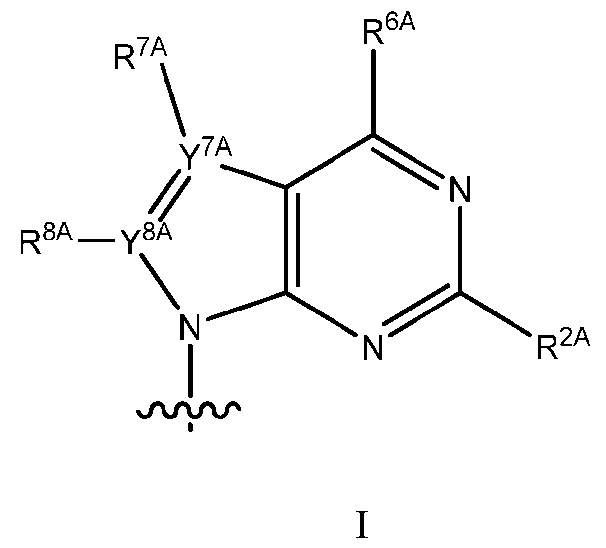





Claims

Priority Applications (9)
| Application Number | Priority Date | Filing Date | Title |
|---|---|---|---|
| EP23869212.3A EP4590310A2 (en) | 2022-09-23 | 2023-09-22 | Compounds and methods for reducing mecp2 expression |
| CA3268249A CA3268249A1 (en) | 2022-09-23 | 2023-09-22 | Compounds and methods for reducing mecp2 expression |
| AU2023347222A AU2023347222A1 (en) | 2022-09-23 | 2023-09-22 | Compounds and methods for reducing mecp2 expression |
| MA71569A MA71569A (en) | 2022-09-23 | 2023-09-22 | COMPOUNDS AND METHODS FOR REDUCING MECP2 EXPRESSION |
| IL319629A IL319629A (en) | 2022-09-23 | 2023-09-22 | Compounds and methods for reducing mecp2 expression |
| KR1020257013078A KR20250075637A (en) | 2022-09-23 | 2023-09-22 | COMPOUNDS AND METHODS FOR REDUCING MECP2 EXPRESSION |
| CN202380067714.1A CN120239607A (en) | 2022-09-23 | 2023-09-22 | Compounds and methods for reducing MECP2 expression |
| JP2025517345A JP2025532127A (en) | 2022-09-23 | 2023-09-22 | Compounds and methods for reducing MECP2 expression |
| MX2025003395A MX2025003395A (en) | 2022-09-23 | 2025-03-21 | Compounds and methods for reducing mecp2 expression |
Applications Claiming Priority (2)
| Application Number | Priority Date | Filing Date | Title |
|---|---|---|---|
| US202263376936P | 2022-09-23 | 2022-09-23 | |
| US63/376,936 | 2022-09-23 |
Publications (2)
| Publication Number | Publication Date |
|---|---|
| WO2024064858A2 true WO2024064858A2 (en) | 2024-03-28 |
| WO2024064858A3 WO2024064858A3 (en) | 2024-05-16 |
Family
ID=90455347
Family Applications (1)
| Application Number | Title | Priority Date | Filing Date |
|---|---|---|---|
| PCT/US2023/074833 Ceased WO2024064858A2 (en) | 2022-09-23 | 2023-09-22 | Compounds and methods for reducing mecp2 expression |
Country Status (11)
| Country | Link |
|---|---|
| US (1) | US12152052B2 (en) |
| EP (1) | EP4590310A2 (en) |
| JP (1) | JP2025532127A (en) |
| KR (1) | KR20250075637A (en) |
| CN (1) | CN120239607A (en) |
| AU (1) | AU2023347222A1 (en) |
| CA (1) | CA3268249A1 (en) |
| IL (1) | IL319629A (en) |
| MX (1) | MX2025003395A (en) |
| TW (1) | TW202426642A (en) |
| WO (1) | WO2024064858A2 (en) |
Cited By (1)
| Publication number | Priority date | Publication date | Assignee | Title |
|---|---|---|---|---|
| US12152052B2 (en) | 2022-09-23 | 2024-11-26 | Ionis Pharmaceuticals, Inc. | Compounds and methods for reducing MECP2 expression |
Family Cites Families (199)
| Publication number | Priority date | Publication date | Assignee | Title |
|---|---|---|---|---|
| US3687808A (en) | 1969-08-14 | 1972-08-29 | Univ Leland Stanford Junior | Synthetic polynucleotides |
| US4500707A (en) | 1980-02-29 | 1985-02-19 | University Patents, Inc. | Nucleosides useful in the preparation of polynucleotides |
| US5132418A (en) | 1980-02-29 | 1992-07-21 | University Patents, Inc. | Process for preparing polynucleotides |
| US4469863A (en) | 1980-11-12 | 1984-09-04 | Ts O Paul O P | Nonionic nucleic acid alkyl and aryl phosphonates and processes for manufacture and use thereof |
| US4973679A (en) | 1981-03-27 | 1990-11-27 | University Patents, Inc. | Process for oligonucleo tide synthesis using phosphormidite intermediates |
| US4415732A (en) | 1981-03-27 | 1983-11-15 | University Patents, Inc. | Phosphoramidite compounds and processes |
| US5023243A (en) | 1981-10-23 | 1991-06-11 | Molecular Biosystems, Inc. | Oligonucleotide therapeutic agent and method of making same |
| US4476301A (en) | 1982-04-29 | 1984-10-09 | Centre National De La Recherche Scientifique | Oligonucleotides, a process for preparing the same and their application as mediators of the action of interferon |
| DE3329892A1 (en) | 1983-08-18 | 1985-03-07 | Köster, Hubert, Prof. Dr., 2000 Hamburg | METHOD FOR PRODUCING OLIGONUCLEOTIDES |
| US5118800A (en) | 1983-12-20 | 1992-06-02 | California Institute Of Technology | Oligonucleotides possessing a primary amino group in the terminal nucleotide |
| USRE34036E (en) | 1984-06-06 | 1992-08-18 | National Research Development Corporation | Data transmission using a transparent tone-in band system |
| US5550111A (en) | 1984-07-11 | 1996-08-27 | Temple University-Of The Commonwealth System Of Higher Education | Dual action 2',5'-oligoadenylate antiviral derivatives and uses thereof |
| FR2567892B1 (en) | 1984-07-19 | 1989-02-17 | Centre Nat Rech Scient | NOVEL OLIGONUCLEOTIDES, THEIR PREPARATION PROCESS AND THEIR APPLICATIONS AS MEDIATORS IN DEVELOPING THE EFFECTS OF INTERFERONS |
| US5367066A (en) | 1984-10-16 | 1994-11-22 | Chiron Corporation | Oligonucleotides with selectably cleavable and/or abasic sites |
| FR2575751B1 (en) | 1985-01-08 | 1987-04-03 | Pasteur Institut | NOVEL ADENOSINE DERIVATIVE NUCLEOSIDES, THEIR PREPARATION AND THEIR BIOLOGICAL APPLICATIONS |
| US5166315A (en) | 1989-12-20 | 1992-11-24 | Anti-Gene Development Group | Sequence-specific binding polymers for duplex nucleic acids |
| US5405938A (en) | 1989-12-20 | 1995-04-11 | Anti-Gene Development Group | Sequence-specific binding polymers for duplex nucleic acids |
| US5506337A (en) | 1985-03-15 | 1996-04-09 | Antivirals Inc. | Morpholino-subunit combinatorial library and method |
| US5034506A (en) | 1985-03-15 | 1991-07-23 | Anti-Gene Development Group | Uncharged morpholino-based polymers having achiral intersubunit linkages |
| US5235033A (en) | 1985-03-15 | 1993-08-10 | Anti-Gene Development Group | Alpha-morpholino ribonucleoside derivatives and polymers thereof |
| US5185444A (en) | 1985-03-15 | 1993-02-09 | Anti-Gene Deveopment Group | Uncharged morpolino-based polymers having phosphorous containing chiral intersubunit linkages |
| DE3788914T2 (en) | 1986-09-08 | 1994-08-25 | Ajinomoto Kk | Compounds for cleaving RNA at a specific position, oligomers used in the preparation of these compounds and starting materials for the synthesis of these oligomers. |
| US5264423A (en) | 1987-03-25 | 1993-11-23 | The United States Of America As Represented By The Department Of Health And Human Services | Inhibitors for replication of retroviruses and for the expression of oncogene products |
| US5276019A (en) | 1987-03-25 | 1994-01-04 | The United States Of America As Represented By The Department Of Health And Human Services | Inhibitors for replication of retroviruses and for the expression of oncogene products |
| EP0366685B1 (en) | 1987-06-24 | 1994-10-19 | Howard Florey Institute Of Experimental Physiology And Medicine | Nucleoside derivatives |
| US5188897A (en) | 1987-10-22 | 1993-02-23 | Temple University Of The Commonwealth System Of Higher Education | Encapsulated 2',5'-phosphorothioate oligoadenylates |
| US4924624A (en) | 1987-10-22 | 1990-05-15 | Temple University-Of The Commonwealth System Of Higher Education | 2,',5'-phosphorothioate oligoadenylates and plant antiviral uses thereof |
| US5403711A (en) | 1987-11-30 | 1995-04-04 | University Of Iowa Research Foundation | Nucleic acid hybridization and amplification method for detection of specific sequences in which a complementary labeled nucleic acid probe is cleaved |
| WO1989005358A1 (en) | 1987-11-30 | 1989-06-15 | University Of Iowa Research Foundation | Dna and rna molecules stabilized by modifications of the 3'-terminal phosphodiester linkage and their use as nucleic acid probes and as therapeutic agents to block the expression of specifically targeted genes |
| EP0406309A4 (en) | 1988-03-25 | 1992-08-19 | The University Of Virginia Alumni Patents Foundation | Oligonucleotide n-alkylphosphoramidates |
| US5278302A (en) | 1988-05-26 | 1994-01-11 | University Patents, Inc. | Polynucleotide phosphorodithioates |
| US5216141A (en) | 1988-06-06 | 1993-06-01 | Benner Steven A | Oligonucleotide analogs containing sulfur linkages |
| US5175273A (en) | 1988-07-01 | 1992-12-29 | Genentech, Inc. | Nucleic acid intercalating agents |
| US5194599A (en) | 1988-09-23 | 1993-03-16 | Gilead Sciences, Inc. | Hydrogen phosphonodithioate compositions |
| US5256775A (en) | 1989-06-05 | 1993-10-26 | Gilead Sciences, Inc. | Exonuclease-resistant oligonucleotides |
| US5134066A (en) | 1989-08-29 | 1992-07-28 | Monsanto Company | Improved probes using nucleosides containing 3-dezauracil analogs |
| US5591722A (en) | 1989-09-15 | 1997-01-07 | Southern Research Institute | 2'-deoxy-4'-thioribonucleosides and their antiviral activity |
| US5399676A (en) | 1989-10-23 | 1995-03-21 | Gilead Sciences | Oligonucleotides with inverted polarity |
| US5721218A (en) | 1989-10-23 | 1998-02-24 | Gilead Sciences, Inc. | Oligonucleotides with inverted polarity |
| US5264562A (en) | 1989-10-24 | 1993-11-23 | Gilead Sciences, Inc. | Oligonucleotide analogs with novel linkages |
| US5264564A (en) | 1989-10-24 | 1993-11-23 | Gilead Sciences | Oligonucleotide analogs with novel linkages |
| EP0942000B1 (en) | 1989-10-24 | 2004-06-23 | Isis Pharmaceuticals, Inc. | 2'-Modified oligonucleotides |
| US5177198A (en) | 1989-11-30 | 1993-01-05 | University Of N.C. At Chapel Hill | Process for preparing oligoribonucleoside and oligodeoxyribonucleoside boranophosphates |
| US5130302A (en) | 1989-12-20 | 1992-07-14 | Boron Bilogicals, Inc. | Boronated nucleoside, nucleotide and oligonucleotide compounds, compositions and methods for using same |
| US5587470A (en) | 1990-01-11 | 1996-12-24 | Isis Pharmaceuticals, Inc. | 3-deazapurines |
| US5859221A (en) | 1990-01-11 | 1999-01-12 | Isis Pharmaceuticals, Inc. | 2'-modified oligonucleotides |
| US6005087A (en) | 1995-06-06 | 1999-12-21 | Isis Pharmaceuticals, Inc. | 2'-modified oligonucleotides |
| US5587361A (en) | 1991-10-15 | 1996-12-24 | Isis Pharmaceuticals, Inc. | Oligonucleotides having phosphorothioate linkages of high chiral purity |
| US5670633A (en) | 1990-01-11 | 1997-09-23 | Isis Pharmaceuticals, Inc. | Sugar modified oligonucleotides that detect and modulate gene expression |
| US5681941A (en) | 1990-01-11 | 1997-10-28 | Isis Pharmaceuticals, Inc. | Substituted purines and oligonucleotide cross-linking |
| US5623065A (en) | 1990-08-13 | 1997-04-22 | Isis Pharmaceuticals, Inc. | Gapped 2' modified oligonucleotides |
| US5646265A (en) | 1990-01-11 | 1997-07-08 | Isis Pharmceuticals, Inc. | Process for the preparation of 2'-O-alkyl purine phosphoramidites |
| US5459255A (en) | 1990-01-11 | 1995-10-17 | Isis Pharmaceuticals, Inc. | N-2 substituted purines |
| US5457191A (en) | 1990-01-11 | 1995-10-10 | Isis Pharmaceuticals, Inc. | 3-deazapurines |
| US7101993B1 (en) | 1990-01-11 | 2006-09-05 | Isis Pharmaceuticals, Inc. | Oligonucleotides containing 2′-O-modified purines |
| US5149797A (en) | 1990-02-15 | 1992-09-22 | The Worcester Foundation For Experimental Biology | Method of site-specific alteration of rna and production of encoded polypeptides |
| US5220007A (en) | 1990-02-15 | 1993-06-15 | The Worcester Foundation For Experimental Biology | Method of site-specific alteration of RNA and production of encoded polypeptides |
| US5321131A (en) | 1990-03-08 | 1994-06-14 | Hybridon, Inc. | Site-specific functionalization of oligodeoxynucleotides for non-radioactive labelling |
| US5470967A (en) | 1990-04-10 | 1995-11-28 | The Dupont Merck Pharmaceutical Company | Oligonucleotide analogs with sulfamate linkages |
| GB9009980D0 (en) | 1990-05-03 | 1990-06-27 | Amersham Int Plc | Phosphoramidite derivatives,their preparation and the use thereof in the incorporation of reporter groups on synthetic oligonucleotides |
| DK0455905T3 (en) | 1990-05-11 | 1998-12-07 | Microprobe Corp | Dipsticks for nucleic acid hybridization assays and method for covalent immobilization of oligonucleotides |
| US5623070A (en) | 1990-07-27 | 1997-04-22 | Isis Pharmaceuticals, Inc. | Heteroatomic oligonucleoside linkages |
| US5677437A (en) | 1990-07-27 | 1997-10-14 | Isis Pharmaceuticals, Inc. | Heteroatomic oligonucleoside linkages |
| US5386023A (en) | 1990-07-27 | 1995-01-31 | Isis Pharmaceuticals | Backbone modified oligonucleotide analogs and preparation thereof through reductive coupling |
| US5618704A (en) | 1990-07-27 | 1997-04-08 | Isis Pharmacueticals, Inc. | Backbone-modified oligonucleotide analogs and preparation thereof through radical coupling |
| US5378825A (en) | 1990-07-27 | 1995-01-03 | Isis Pharmaceuticals, Inc. | Backbone modified oligonucleotide analogs |
| US5489677A (en) | 1990-07-27 | 1996-02-06 | Isis Pharmaceuticals, Inc. | Oligonucleoside linkages containing adjacent oxygen and nitrogen atoms |
| US5610289A (en) | 1990-07-27 | 1997-03-11 | Isis Pharmaceuticals, Inc. | Backbone modified oligonucleotide analogues |
| US5541307A (en) | 1990-07-27 | 1996-07-30 | Isis Pharmaceuticals, Inc. | Backbone modified oligonucleotide analogs and solid phase synthesis thereof |
| CA2088258C (en) | 1990-07-27 | 2004-09-14 | Phillip Dan Cook | Nuclease resistant, pyrimidine modified oligonucleotides that detect and modulate gene expression |
| US5608046A (en) | 1990-07-27 | 1997-03-04 | Isis Pharmaceuticals, Inc. | Conjugated 4'-desmethyl nucleoside analog compounds |
| US5602240A (en) | 1990-07-27 | 1997-02-11 | Ciba Geigy Ag. | Backbone modified oligonucleotide analogs |
| US5223618A (en) | 1990-08-13 | 1993-06-29 | Isis Pharmaceuticals, Inc. | 4'-desmethyl nucleoside analog compounds |
| DK0541722T3 (en) | 1990-08-03 | 1996-04-22 | Sterling Winthrop Inc | Compounds and Methods for Inhibiting Gene Expression |
| US5177196A (en) | 1990-08-16 | 1993-01-05 | Microprobe Corporation | Oligo (α-arabinofuranosyl nucleotides) and α-arabinofuranosyl precursors thereof |
| US5214134A (en) | 1990-09-12 | 1993-05-25 | Sterling Winthrop Inc. | Process of linking nucleosides with a siloxane bridge |
| US5561225A (en) | 1990-09-19 | 1996-10-01 | Southern Research Institute | Polynucleotide analogs containing sulfonate and sulfonamide internucleoside linkages |
| EP0549686A4 (en) | 1990-09-20 | 1995-01-18 | Gilead Sciences Inc | Modified internucleoside linkages |
| US5432272A (en) | 1990-10-09 | 1995-07-11 | Benner; Steven A. | Method for incorporating into a DNA or RNA oligonucleotide using nucleotides bearing heterocyclic bases |
| US6582908B2 (en) | 1990-12-06 | 2003-06-24 | Affymetrix, Inc. | Oligonucleotides |
| US5948903A (en) | 1991-01-11 | 1999-09-07 | Isis Pharmaceuticals, Inc. | Synthesis of 3-deazapurines |
| US5672697A (en) | 1991-02-08 | 1997-09-30 | Gilead Sciences, Inc. | Nucleoside 5'-methylene phosphonates |
| US7015315B1 (en) | 1991-12-24 | 2006-03-21 | Isis Pharmaceuticals, Inc. | Gapped oligonucleotides |
| US5571799A (en) | 1991-08-12 | 1996-11-05 | Basco, Ltd. | (2'-5') oligoadenylate analogues useful as inhibitors of host-v5.-graft response |
| ES2103918T3 (en) | 1991-10-17 | 1997-10-01 | Ciba Geigy Ag | BICYCLE NUCLEOSIDES, OLIGONUCLEOTIDES, PROCEDURE FOR THEIR OBTAINING AND INTERMEDIATE PRODUCTS. |
| US5594121A (en) | 1991-11-07 | 1997-01-14 | Gilead Sciences, Inc. | Enhanced triple-helix and double-helix formation with oligomers containing modified purines |
| TW393513B (en) | 1991-11-26 | 2000-06-11 | Isis Pharmaceuticals Inc | Enhanced triple-helix and double-helix formation with oligomers containing modified pyrimidines |
| US5484908A (en) | 1991-11-26 | 1996-01-16 | Gilead Sciences, Inc. | Oligonucleotides containing 5-propynyl pyrimidines |
| AU3222793A (en) | 1991-11-26 | 1993-06-28 | Gilead Sciences, Inc. | Enhanced triple-helix and double-helix formation with oligomers containing modified pyrimidines |
| US5792608A (en) | 1991-12-12 | 1998-08-11 | Gilead Sciences, Inc. | Nuclease stable and binding competent oligomers and methods for their use |
| US5359044A (en) | 1991-12-13 | 1994-10-25 | Isis Pharmaceuticals | Cyclobutyl oligonucleotide surrogates |
| US5700922A (en) | 1991-12-24 | 1997-12-23 | Isis Pharmaceuticals, Inc. | PNA-DNA-PNA chimeric macromolecules |
| FR2687679B1 (en) | 1992-02-05 | 1994-10-28 | Centre Nat Rech Scient | OLIGOTHIONUCLEOTIDES. |
| US5633360A (en) | 1992-04-14 | 1997-05-27 | Gilead Sciences, Inc. | Oligonucleotide analogs capable of passive cell membrane permeation |
| US5434257A (en) | 1992-06-01 | 1995-07-18 | Gilead Sciences, Inc. | Binding compentent oligomers containing unsaturated 3',5' and 2',5' linkages |
| EP0577558A2 (en) | 1992-07-01 | 1994-01-05 | Ciba-Geigy Ag | Carbocyclic nucleosides having bicyclic rings, oligonucleotides therefrom, process for their preparation, their use and intermediates |
| US5652355A (en) | 1992-07-23 | 1997-07-29 | Worcester Foundation For Experimental Biology | Hybrid oligonucleotide phosphorothioates |
| US5476925A (en) | 1993-02-01 | 1995-12-19 | Northwestern University | Oligodeoxyribonucleotides including 3'-aminonucleoside-phosphoramidate linkages and terminal 3'-amino groups |
| GB9304620D0 (en) | 1993-03-06 | 1993-04-21 | Ciba Geigy Ag | Compounds |
| GB9304618D0 (en) | 1993-03-06 | 1993-04-21 | Ciba Geigy Ag | Chemical compounds |
| CA2159631A1 (en) | 1993-03-30 | 1994-10-13 | Sanofi | Acyclic nucleoside analogs and oligonucleotide sequences containing them |
| CA2159629A1 (en) | 1993-03-31 | 1994-10-13 | Sanofi | Oligonucleotides with amide linkages replacing phosphodiester linkages |
| US5502177A (en) | 1993-09-17 | 1996-03-26 | Gilead Sciences, Inc. | Pyrimidine derivatives for labeled binding partners |
| US5801154A (en) | 1993-10-18 | 1998-09-01 | Isis Pharmaceuticals, Inc. | Antisense oligonucleotide modulation of multidrug resistance-associated protein |
| US5457187A (en) | 1993-12-08 | 1995-10-10 | Board Of Regents University Of Nebraska | Oligonucleotides containing 5-fluorouracil |
| US5446137B1 (en) | 1993-12-09 | 1998-10-06 | Behringwerke Ag | Oligonucleotides containing 4'-substituted nucleotides |
| JP3585238B2 (en) | 1993-12-09 | 2004-11-04 | トーマス ジェファーソン ユニバーシティー | Compounds and methods for site-directed mutagenesis in eukaryotic cells |
| US5519134A (en) | 1994-01-11 | 1996-05-21 | Isis Pharmaceuticals, Inc. | Pyrrolidine-containing monomers and oligomers |
| US5596091A (en) | 1994-03-18 | 1997-01-21 | The Regents Of The University Of California | Antisense oligonucleotides comprising 5-aminoalkyl pyrimidine nucleotides |
| US5627053A (en) | 1994-03-29 | 1997-05-06 | Ribozyme Pharmaceuticals, Inc. | 2'deoxy-2'-alkylnucleotide containing nucleic acid |
| US5625050A (en) | 1994-03-31 | 1997-04-29 | Amgen Inc. | Modified oligonucleotides and intermediates useful in nucleic acid therapeutics |
| US5646269A (en) | 1994-04-28 | 1997-07-08 | Gilead Sciences, Inc. | Method for oligonucleotide analog synthesis |
| US5525711A (en) | 1994-05-18 | 1996-06-11 | The United States Of America As Represented By The Secretary Of The Department Of Health And Human Services | Pteridine nucleotide analogs as fluorescent DNA probes |
| US5597909A (en) | 1994-08-25 | 1997-01-28 | Chiron Corporation | Polynucleotide reagents containing modified deoxyribose moieties, and associated methods of synthesis and use |
| AU4412096A (en) | 1994-12-13 | 1996-07-03 | Ribozyme Pharmaceuticals, Inc. | Method and reagent for treatment of arthritic conditions, induction of graft tolerance and reversal of immune responses |
| US5652356A (en) | 1995-08-17 | 1997-07-29 | Hybridon, Inc. | Inverted chimeric and hybrid oligonucleotides |
| AU1039397A (en) | 1995-11-22 | 1997-06-27 | Johns Hopkins University, The | Ligands to enhance cellular uptake of biomolecules |
| US6770748B2 (en) | 1997-03-07 | 2004-08-03 | Takeshi Imanishi | Bicyclonucleoside and oligonucleotide analogue |
| USRE44779E1 (en) | 1997-03-07 | 2014-02-25 | Santaris Pharma A/S | Bicyclonucleoside and oligonucleotide analogues |
| US7572582B2 (en) | 1997-09-12 | 2009-08-11 | Exiqon A/S | Oligonucleotide analogues |
| US20030228597A1 (en) | 1998-04-13 | 2003-12-11 | Cowsert Lex M. | Identification of genetic targets for modulation by oligonucleotides and generation of oligonucleotides for gene modulation |
| US6300319B1 (en) | 1998-06-16 | 2001-10-09 | Isis Pharmaceuticals, Inc. | Targeted oligonucleotide conjugates |
| US6043352A (en) | 1998-08-07 | 2000-03-28 | Isis Pharmaceuticals, Inc. | 2'-O-Dimethylaminoethyloxyethyl-modified oligonucleotides |
| AU6258999A (en) | 1998-09-16 | 2000-04-03 | Vitagenix, Inc. | Compositions and methods of use of uptake mechanisms for diagnostic and therapeutic applications of oligonucleotides targeting bacteria |
| JP2002543214A (en) | 1999-05-04 | 2002-12-17 | エクシコン エ/エス | L-ribo-LNA analog |
| US6525191B1 (en) | 1999-05-11 | 2003-02-25 | Kanda S. Ramasamy | Conformationally constrained L-nucleosides |
| US7491805B2 (en) | 2001-05-18 | 2009-02-17 | Sirna Therapeutics, Inc. | Conjugates and compositions for cellular delivery |
| US6426220B1 (en) | 2000-10-30 | 2002-07-30 | Isis Pharmaceuticals, Inc. | Antisense modulation of calreticulin expression |
| CA2431839A1 (en) | 2000-12-01 | 2002-06-06 | Paul O. P. Ts'o | Conjugates of glycosylated/galactosylated peptide |
| US20030158403A1 (en) | 2001-07-03 | 2003-08-21 | Isis Pharmaceuticals, Inc. | Nuclease resistant chimeric oligonucleotides |
| US20030175906A1 (en) | 2001-07-03 | 2003-09-18 | Muthiah Manoharan | Nuclease resistant chimeric oligonucleotides |
| AU2003290598A1 (en) | 2002-11-05 | 2004-06-03 | Isis Pharmaceuticals, Inc. | Modified oligonucleotides for use in rna interference |
| WO2004041889A2 (en) | 2002-11-05 | 2004-05-21 | Isis Pharmaceuticals, Inc. | Polycyclic sugar surrogate-containing oligomeric compounds and compositions for use in gene modulation |
| WO2006006948A2 (en) | 2002-11-14 | 2006-01-19 | Dharmacon, Inc. | METHODS AND COMPOSITIONS FOR SELECTING siRNA OF IMPROVED FUNCTIONALITY |
| EP2305813A3 (en) | 2002-11-14 | 2012-03-28 | Dharmacon, Inc. | Fuctional and hyperfunctional sirna |
| US7723509B2 (en) | 2003-04-17 | 2010-05-25 | Alnylam Pharmaceuticals | IRNA agents with biocleavable tethers |
| EP1661905B9 (en) | 2003-08-28 | 2012-12-19 | IMANISHI, Takeshi | Novel artificial nucleic acids of n-o bond crosslinkage type |
| EP1677822B1 (en) | 2003-09-18 | 2014-04-23 | Isis Pharmaceuticals, Inc. | 4'-thionucleosides and oligomeric compounds |
| US20070009899A1 (en) | 2003-10-02 | 2007-01-11 | Mounts William M | Nucleic acid arrays for detecting gene expression in animal models of inflammatory diseases |
| CA2566286A1 (en) | 2004-05-11 | 2005-12-08 | Rnai Co., Ltd. | Polynucleotide causing rna interfere and method of regulating gene expression with the use of the same |
| US7687616B1 (en) | 2004-05-14 | 2010-03-30 | Rosetta Genomics Ltd | Small molecules modulating activity of micro RNA oligonucleotides and micro RNA targets and uses thereof |
| US20060148740A1 (en) | 2005-01-05 | 2006-07-06 | Prosensa B.V. | Mannose-6-phosphate receptor mediated gene transfer into muscle cells |
| US7569686B1 (en) | 2006-01-27 | 2009-08-04 | Isis Pharmaceuticals, Inc. | Compounds and methods for synthesis of bicyclic nucleic acid analogs |
| CN102908630B (en) | 2006-01-27 | 2014-11-19 | Isis制药公司 | 6-modified bicyclic nucleic acid analogs |
| US8178503B2 (en) | 2006-03-03 | 2012-05-15 | International Business Machines Corporation | Ribonucleic acid interference molecules and binding sites derived by analyzing intergenic and intronic regions of genomes |
| BRPI0711182A2 (en) | 2006-05-03 | 2011-08-23 | Baltic Technology Dev | antisense agents combining tightly bound base-modified oligonucleotide and artificial nuclease |
| US7666854B2 (en) | 2006-05-11 | 2010-02-23 | Isis Pharmaceuticals, Inc. | Bis-modified bicyclic nucleic acid analogs |
| US7547684B2 (en) | 2006-05-11 | 2009-06-16 | Isis Pharmaceuticals, Inc. | 5′-modified bicyclic nucleic acid analogs |
| DK2410054T4 (en) | 2006-10-18 | 2020-02-10 | Ionis Pharmaceuticals Inc | Antisense Compounds |
| WO2008101157A1 (en) | 2007-02-15 | 2008-08-21 | Isis Pharmaceuticals, Inc. | 5'-substituted-2'-f modified nucleosides and oligomeric compounds prepared therefrom |
| WO2008150729A2 (en) | 2007-05-30 | 2008-12-11 | Isis Pharmaceuticals, Inc. | N-substituted-aminomethylene bridged bicyclic nucleic acid analogs |
| ES2386492T3 (en) | 2007-06-08 | 2012-08-21 | Isis Pharmaceuticals, Inc. | Carbocyclic bicyclic nucleic acid analogs |
| US20090082297A1 (en) | 2007-06-25 | 2009-03-26 | Lioy Daniel T | Compositions and Methods for Regulating Gene Expression |
| ATE538127T1 (en) | 2007-07-05 | 2012-01-15 | Isis Pharmaceuticals Inc | 6-DISUBSTITUTED BICYCLIC NUCLEIC ACID ANALOGUES |
| AU2008286771B2 (en) | 2007-08-15 | 2013-08-15 | Isis Pharmaceuticals, Inc. | Tetrahydropyran nucleic acid analogs |
| EP2195029A2 (en) | 2007-08-24 | 2010-06-16 | Oryzon Genomics SA | Treatment and prevention of neurodegenerative diseases |
| US8389488B2 (en) | 2007-11-05 | 2013-03-05 | Isis Pharmaceuticals, Inc. | Antidotes to antisense compounds |
| US8546556B2 (en) | 2007-11-21 | 2013-10-01 | Isis Pharmaceuticals, Inc | Carbocyclic alpha-L-bicyclic nucleic acid analogs |
| JP5635412B2 (en) | 2007-12-04 | 2014-12-03 | アルニラム ファーマスーティカルズ インコーポレイテッドAlnylam Pharmaceuticals, Inc. | Targeted lipid |
| EP2265627A2 (en) | 2008-02-07 | 2010-12-29 | Isis Pharmaceuticals, Inc. | Bicyclic cyclohexitol nucleic acid analogs |
| WO2010036698A1 (en) | 2008-09-24 | 2010-04-01 | Isis Pharmaceuticals, Inc. | Substituted alpha-l-bicyclic nucleosides |
| WO2010105096A2 (en) | 2009-03-11 | 2010-09-16 | University Of Massachusetts | Modulation of human cytomegalovirus replication by micro-rna 132 (mir132), micro-rna 145 (mir145) and micro-rna 212 (mir212) |
| EP2462153B1 (en) | 2009-08-06 | 2015-07-29 | Isis Pharmaceuticals, Inc. | Bicyclic cyclohexose nucleic acid analogs |
| KR101198046B1 (en) | 2009-12-11 | 2012-11-07 | 한국생명공학연구원 | Method for diagnosis/prognosis of cancers using an epigenetic marker consisting of a specific single CpG site in TTP promoter and treatment of cancers by regulating its epigenetic status |
| US9696297B2 (en) | 2009-12-23 | 2017-07-04 | Salk Institute For Biological Studies | Method for preparing an X chromosome inactivated female human neural cell |
| US10913767B2 (en) | 2010-04-22 | 2021-02-09 | Alnylam Pharmaceuticals, Inc. | Oligonucleotides comprising acyclic and abasic nucleosides and analogs |
| AU2011302152B2 (en) | 2010-09-15 | 2015-06-11 | Alnylam Pharmaceuticals, Inc. | Modified iRNA agents |
| WO2012109395A1 (en) | 2011-02-08 | 2012-08-16 | Isis Pharmaceuticals, Inc. | Oligomeric compounds comprising bicyclic nucleotides and uses thereof |
| EP3453761A1 (en) | 2011-08-29 | 2019-03-13 | Ionis Pharmaceuticals, Inc. | Oligomer-conjugate complexes and their use |
| US8865674B2 (en) | 2011-09-20 | 2014-10-21 | Isis Pharmaceuticals, Inc. | Antisense modulation of GCGR expression |
| WO2013159108A2 (en) | 2012-04-20 | 2013-10-24 | Isis Pharmaceuticals, Inc. | Oligomeric compounds comprising bicyclic nucleotides and uses thereof |
| US20150232836A1 (en) | 2012-05-16 | 2015-08-20 | Rana Therapeutics, Inc. | Compositions and methods for modulating gene expression |
| AU2013262709A1 (en) | 2012-05-16 | 2015-01-22 | Rana Therapeutics, Inc. | Compositions and methods for modulating MECP2 expression |
| EA201492122A1 (en) | 2012-05-16 | 2015-10-30 | Рана Терапьютикс, Инк. | COMPOSITIONS AND METHODS FOR MODULATING UTRN EXPRESSION |
| US9833519B2 (en) | 2012-09-25 | 2017-12-05 | The United States Of America, As Represented By The Secretary, Department Of Health And Human Services | Methods for the diagnosis and treatment of sjögren's syndrome |
| US9228184B2 (en) | 2012-09-29 | 2016-01-05 | Dynavax Technologies Corporation | Human toll-like receptor inhibitors and methods of use thereof |
| US9695418B2 (en) | 2012-10-11 | 2017-07-04 | Ionis Pharmaceuticals, Inc. | Oligomeric compounds comprising bicyclic nucleosides and uses thereof |
| CN117126846A (en) | 2012-11-15 | 2023-11-28 | 罗氏创新中心哥本哈根有限公司 | Oligonucleotide conjugates |
| DK2991656T3 (en) | 2013-05-01 | 2020-03-23 | Ionis Pharmaceuticals Inc | COMPOSITIONS AND PROCEDURES FOR MODULATING APOLIPOPROTEIN C-III EXPRESSION |
| US9874565B2 (en) | 2013-06-21 | 2018-01-23 | Dana-Farber Cancer Institute, Inc. | Oncogene associated with human cancers and methods of use thereof |
| JP2017501149A (en) | 2013-12-12 | 2017-01-12 | ザ・ブロード・インスティテュート・インコーポレイテッド | Delivery, use and therapeutic applications of CRISPR-CAS systems and compositions for targeting disorders and diseases using particle delivery components |
| US20180044673A1 (en) | 2015-03-03 | 2018-02-15 | Ionis Pharmaceuticals, Inc. | Methods for modulating mecp2 expression |
| US11129844B2 (en) | 2015-03-03 | 2021-09-28 | Ionis Pharmaceuticals, Inc. | Compositions and methods for modulating MECP2 expression |
| EP4636085A3 (en) * | 2015-03-03 | 2026-01-07 | Ionis Pharmaceuticals, Inc. | Compositions for modulating mecp2 expression |
| US20180318285A1 (en) | 2015-03-10 | 2018-11-08 | President And Fellows Of Harvard College | Methods for treatment of autism spectrum disorders |
| US10900036B2 (en) | 2015-03-17 | 2021-01-26 | The General Hospital Corporation | RNA interactome of polycomb repressive complex 1 (PRC1) |
| MA43072A (en) | 2015-07-22 | 2018-05-30 | Wave Life Sciences Ltd | COMPOSITIONS OF OLIGONUCLEOTIDES AND RELATED PROCESSES |
| CA3026110A1 (en) | 2016-04-19 | 2017-11-02 | The Broad Institute, Inc. | Novel crispr enzymes and systems |
| EP3585896A1 (en) | 2017-02-22 | 2020-01-01 | CRISPR Therapeutics AG | Materials and methods for treatment of merosin-deficient cogenital muscular dystrophy (mdcmd) and other laminin, alpha 2 (lama2) gene related conditions or disorders |
| TWI809004B (en) * | 2017-11-09 | 2023-07-21 | 美商Ionis製藥公司 | Compounds and methods for reducing snca expression |
| CA3090901A1 (en) | 2018-02-12 | 2019-08-15 | Ionis Pharmaceuticals, Inc. | Modified compounds and uses thereof |
| GB201905301D0 (en) | 2019-04-15 | 2019-05-29 | Ospedale San Raffaele Srl | Gene therapy |
| US20220228146A1 (en) | 2019-05-06 | 2022-07-21 | The Children's Hospital Of Philadelphia | Micro-rna site blocking oligonucleotides for the treatment of epileptic encephalopathy and neurodevelopmental disorders |
| EP4087930A1 (en) | 2020-01-10 | 2022-11-16 | Scribe Therapeutics Inc. | Compositions and methods for the targeting of pcsk9 |
| CN111150854A (en) | 2020-01-21 | 2020-05-15 | 中国科学院生物物理研究所 | Method for improving autism social disorder |
| JP2024504377A (en) | 2021-01-22 | 2024-01-31 | アイオーニス ファーマシューティカルズ, インコーポレーテッド | Compounds and methods for reducing DUX4 expression |
| US20230348907A1 (en) | 2022-01-10 | 2023-11-02 | University Of Massachusetts | Oligonucleotides for mecp2 modulation |
| WO2024064858A2 (en) | 2022-09-23 | 2024-03-28 | Ionis Pharmaceuticals, Inc. | Compounds and methods for reducing mecp2 expression |
| WO2024064854A2 (en) | 2022-09-23 | 2024-03-28 | Ionis Pharmaceuticals, Inc. | Compounds and methods for reducing mecp2 expression |
-
2023
- 2023-09-22 WO PCT/US2023/074833 patent/WO2024064858A2/en not_active Ceased
- 2023-09-22 IL IL319629A patent/IL319629A/en unknown
- 2023-09-22 CN CN202380067714.1A patent/CN120239607A/en active Pending
- 2023-09-22 KR KR1020257013078A patent/KR20250075637A/en active Pending
- 2023-09-22 CA CA3268249A patent/CA3268249A1/en active Pending
- 2023-09-22 JP JP2025517345A patent/JP2025532127A/en active Pending
- 2023-09-22 US US18/472,506 patent/US12152052B2/en active Active
- 2023-09-22 AU AU2023347222A patent/AU2023347222A1/en active Pending
- 2023-09-22 EP EP23869212.3A patent/EP4590310A2/en active Pending
- 2023-09-23 TW TW112136402A patent/TW202426642A/en unknown
-
2025
- 2025-03-21 MX MX2025003395A patent/MX2025003395A/en unknown
Cited By (1)
| Publication number | Priority date | Publication date | Assignee | Title |
|---|---|---|---|---|
| US12152052B2 (en) | 2022-09-23 | 2024-11-26 | Ionis Pharmaceuticals, Inc. | Compounds and methods for reducing MECP2 expression |
Also Published As
| Publication number | Publication date |
|---|---|
| IL319629A (en) | 2025-05-01 |
| CA3268249A1 (en) | 2024-03-28 |
| CN120239607A (en) | 2025-07-01 |
| US20240124513A1 (en) | 2024-04-18 |
| EP4590310A2 (en) | 2025-07-30 |
| AU2023347222A1 (en) | 2025-03-27 |
| KR20250075637A (en) | 2025-05-28 |
| WO2024064858A3 (en) | 2024-05-16 |
| US12152052B2 (en) | 2024-11-26 |
| TW202426642A (en) | 2024-07-01 |
| MX2025003395A (en) | 2025-05-02 |
| JP2025532127A (en) | 2025-09-29 |
Similar Documents
| Publication | Publication Date | Title |
|---|---|---|
| US20220380773A1 (en) | Compounds and methods for reducing app expression | |
| WO2022246251A2 (en) | Compounds for modulating unc13a expression | |
| WO2022026589A1 (en) | Compounds and methods for reducing app expression | |
| US12152052B2 (en) | Compounds and methods for reducing MECP2 expression | |
| CA3230299A1 (en) | Compounds and methods for modulating scn1a expression | |
| US20240279654A1 (en) | Compounds for reducing ptbp1 expression | |
| EP4216964A1 (en) | Compounds and methods for reducing apoe expression | |
| WO2024064854A2 (en) | Compounds and methods for reducing mecp2 expression | |
| WO2025030064A1 (en) | Compounds and methods for reducing tubb4a expression | |
| US20240301411A1 (en) | Compounds and methods for reducing app expression | |
| US20250340874A1 (en) | Compounds and methods for reducing pcdh19 expression | |
| WO2024173783A2 (en) | Allele-selective compounds and methods for modulating huntingtin expression | |
| WO2022266414A1 (en) | Compounds and methods for reducing ifnar1 expression | |
| AU2024220937A1 (en) | Compounds and methods for modulating alpha-synuclein expression | |
| WO2023122666A2 (en) | Compounds and methods for modulating glycogen synthase 1 |
Legal Events
| Date | Code | Title | Description |
|---|---|---|---|
| 121 | Ep: the epo has been informed by wipo that ep was designated in this application |
Ref document number: 23869212 Country of ref document: EP Kind code of ref document: A2 |
|
| WWE | Wipo information: entry into national phase |
Ref document number: 819444 Country of ref document: NZ Ref document number: AU2023347222 Country of ref document: AU |
|
| WWE | Wipo information: entry into national phase |
Ref document number: 319629 Country of ref document: IL |
|
| WWE | Wipo information: entry into national phase |
Ref document number: 202380067714.1 Country of ref document: CN |
|
| ENP | Entry into the national phase |
Ref document number: 2025517345 Country of ref document: JP Kind code of ref document: A |
|
| WWE | Wipo information: entry into national phase |
Ref document number: MX/A/2025/003395 Country of ref document: MX Ref document number: 2025517345 Country of ref document: JP |
|
| ENP | Entry into the national phase |
Ref document number: 2023347222 Country of ref document: AU Date of ref document: 20230922 Kind code of ref document: A |
|
| WWP | Wipo information: published in national office |
Ref document number: 819444 Country of ref document: NZ |
|
| REG | Reference to national code |
Ref country code: BR Ref legal event code: B01A Ref document number: 112025005329 Country of ref document: BR |
|
| WWE | Wipo information: entry into national phase |
Ref document number: 202547037166 Country of ref document: IN |
|
| ENP | Entry into the national phase |
Ref document number: 20257013078 Country of ref document: KR Kind code of ref document: A |
|
| WWE | Wipo information: entry into national phase |
Ref document number: 1020257013078 Country of ref document: KR |
|
| WWE | Wipo information: entry into national phase |
Ref document number: 2023869212 Country of ref document: EP |
|
| NENP | Non-entry into the national phase |
Ref country code: DE |
|
| ENP | Entry into the national phase |
Ref document number: 2023869212 Country of ref document: EP Effective date: 20250423 |
|
| WWE | Wipo information: entry into national phase |
Ref document number: 11202501636S Country of ref document: SG |
|
| WWP | Wipo information: published in national office |
Ref document number: 11202501636S Country of ref document: SG |
|
| WWP | Wipo information: published in national office |
Ref document number: MX/A/2025/003395 Country of ref document: MX |
|
| WWP | Wipo information: published in national office |
Ref document number: 202547037166 Country of ref document: IN |
|
| 121 | Ep: the epo has been informed by wipo that ep was designated in this application |
Ref document number: 23869212 Country of ref document: EP Kind code of ref document: A2 |
|
| WWP | Wipo information: published in national office |
Ref document number: 202380067714.1 Country of ref document: CN |
|
| WWP | Wipo information: published in national office |
Ref document number: 2023869212 Country of ref document: EP |
|
| ENP | Entry into the national phase |
Ref document number: 112025005329 Country of ref document: BR Kind code of ref document: A2 Effective date: 20250319 |