WO2024017982A1 - Leukotriene a4 hydrolase (lta4h) as (blood) biomarker for the diagnosis of polycystic ovarian syndrome - Google Patents
Leukotriene a4 hydrolase (lta4h) as (blood) biomarker for the diagnosis of polycystic ovarian syndrome Download PDFInfo
- Publication number
- WO2024017982A1 WO2024017982A1 PCT/EP2023/070091 EP2023070091W WO2024017982A1 WO 2024017982 A1 WO2024017982 A1 WO 2024017982A1 EP 2023070091 W EP2023070091 W EP 2023070091W WO 2024017982 A1 WO2024017982 A1 WO 2024017982A1
- Authority
- WO
- WIPO (PCT)
- Prior art keywords
- pcos
- lta4h
- patient
- sample
- concentration
- Prior art date
- Legal status (The legal status is an assumption and is not a legal conclusion. Google has not performed a legal analysis and makes no representation as to the accuracy of the status listed.)
- Ceased
Links
Classifications
-
- G—PHYSICS
- G01—MEASURING; TESTING
- G01N—INVESTIGATING OR ANALYSING MATERIALS BY DETERMINING THEIR CHEMICAL OR PHYSICAL PROPERTIES
- G01N33/00—Investigating or analysing materials by specific methods not covered by groups G01N1/00 - G01N31/00
- G01N33/48—Biological material, e.g. blood, urine; Haemocytometers
- G01N33/50—Chemical analysis of biological material, e.g. blood, urine; Testing involving biospecific ligand binding methods; Immunological testing
- G01N33/88—Chemical analysis of biological material, e.g. blood, urine; Testing involving biospecific ligand binding methods; Immunological testing involving prostaglandins or their receptors
-
- G—PHYSICS
- G01—MEASURING; TESTING
- G01N—INVESTIGATING OR ANALYSING MATERIALS BY DETERMINING THEIR CHEMICAL OR PHYSICAL PROPERTIES
- G01N2800/00—Detection or diagnosis of diseases
- G01N2800/04—Endocrine or metabolic disorders
- G01N2800/042—Disorders of carbohydrate metabolism, e.g. diabetes, glucose metabolism
-
- G—PHYSICS
- G01—MEASURING; TESTING
- G01N—INVESTIGATING OR ANALYSING MATERIALS BY DETERMINING THEIR CHEMICAL OR PHYSICAL PROPERTIES
- G01N2800/00—Detection or diagnosis of diseases
- G01N2800/36—Gynecology or obstetrics
- G01N2800/361—Menstrual abnormalities or abnormal uterine bleeding, e.g. dysmenorrhea
-
- G—PHYSICS
- G01—MEASURING; TESTING
- G01N—INVESTIGATING OR ANALYSING MATERIALS BY DETERMINING THEIR CHEMICAL OR PHYSICAL PROPERTIES
- G01N2800/00—Detection or diagnosis of diseases
- G01N2800/36—Gynecology or obstetrics
- G01N2800/367—Infertility, e.g. sperm disorder, ovulatory dysfunction
Definitions
- LTA4H Leukotriene A4 Hydrolase
- the present invention relates to methods of assessing whether a patient has Polycystic Ovarian Syndrome (PCOS) or is at risk of developing PCOS, to methods of selecting a patient for therapy, and to methods of monitoring a patient suffering from PCOS or being treated for PCOS, by determining the amount or concentration of Leukotriene A4 Hydrolase (LTA4H) in a sample of the patient, and comparing the determined amount or concentration to a reference.
- PCOS Polycystic Ovarian Syndrome
- LTA4H Leukotriene A4 Hydrolase
- the present invention relates to a computer- implemented method of assessing a patient with suspected PCOS by determining the amount or concentration of LTA4H in a sample of the patient, optionally by determining the amount or concentration of a second biomarker and/or an additional diagnostic criterion and comparing the amounts or concentrations of LTA4H, optionally the second biomarker and/or optionally the presence of the diagnostic criterion to a reference.
- PCOS Polycystic ovarian syndrome
- Patients with PCOS can have a range of clinical presentations, which can be of reproductive and/or of metabolic type.
- Reproductive presentations include irregular menstrual cycle, infertility, pregnancy complications and hirsutism
- metabolic presentations include obesity, insulin resistance, metabolic syndrome, prediabetes, type-2 diabetes and cardiovascular factors.
- These clinical presentations are also associated with psychological disorders, such as anxiety and depression (Escobar- Morreale, H. F. 2018; International evidence-based guideline for the assessment and management of polycystic ovary syndrome 2018).
- PCOS non-classical adrenal hyperplasia
- NCAH non-classical adrenal hyperplasia
- Congenital Adrenal Hyperplasia androgen secreting tumors
- Cushing syndrome thyroid disorders
- hyperprolactinemia Escobar-Morreale HF.
- Polycystic ovary syndrome definition, aetiology, diagnosis and treatment. Nat Rev Endocrinol. 2018 ;14(5):270-284; Teede HJ, Misso ML, Costello MF, et al. International PCOS Network. Recommendations from the international evidencebased guideline for the assessment and management of polycystic ovary syndrome. Hum Reprod. 2018;33(9):1602-1618). Diagnostic tests which may be used to exclude other diseases are e.g.
- Thyroid Stimulating Hormone Thyroid Stimulating Hormone
- PCOS may be caused by a combination of genetic, epigenetic and environmental factors, such as inheritance.
- PCOS is one of the most common endocrine disorders in women, affecting 10% of the women during their reproductive years, up to 70% of the affected women remain undiagnosed (March WA, Moore VM, Willson KJ, et al. The prevalence of polycystic ovary syndrome in a community sample assessed under contrasting diagnostic criteria. Hum Reprod. 2010;25(2):544-51).
- PCOS The mostly widely used criteria for PCOS diagnosis are the so-called Rotterdam Criteria.
- PCOS is indicated, if at least 2 of the following criteria apply: (i) irregular cycles (oligomenorrhea) and/or ovulatory dysfunction (oligo-anovulation, OA), (ii) clinical and/or biochemical hyperandrogenism (HA) and (iii) polycystic ovarian morphology (PCOM) (PCOS Consensus Workshop Group, Fertil Steril 2004; 81:19-25).
- the first criterion is defined as menstrual cycles with a cycle length of less than 21 days or more than 35 days or less than 8 cycles per year.
- Clinical and/or biochemical signs of hyperandrogenism where clinical hyperandrogenism is defined as hirsutism (excess and male-pattern hair growth) and/or acne, and biochemical hyperandrogenism is defined as higher levels of free androgens compared to healthy controls.
- Clinical hyperandrogenism is also defined as a modified Ferriman-Gallwey score of > 8.
- Biochemical hyperandrogenism may be assessed using free testosterone or the free androgen index (FAI) which can be calculated measuring total testosterone and sex hormone binding globuline (SHBG).
- FAI free androgen index
- SHBG free androgen index
- PCOM is usually determined according to the “International Evidence-based Guideline for PCOS 2018” using endovaginal ultrasound transducers with a frequency bandwidth that includes 8 MHz.
- the threshold for PCOM is considered to be on either ovary: a follicle number per ovary of > 20 and/or an ovarian volume >10 ml, ensuring no corpora lutea, cysts or dominant follicles are present. If older ultrasound technology is used, the threshold for PCOM could be an ovarian volume >10 ml or a follicle count of > 12 on either ovary.
- AMH Anti-Mullerian Hormone
- AMH is a glycoprotein hormone whose expression is critical to sex differentiation at a specific time during fetal development. Further, AMH produced by granulosa cells of growing follicles usually correlates with the number of antral follicles within the ovary. Therefore, serum levels of AMH may be a surrogate biomarker for the antral follicle count/number (AFC) determined by transvaginal ultrasound.
- AFC antral follicle count/number
- a further method for detecting PCOS is a 3-item PCOS criteria system (Indran et al.
- oligomenorrhea defined as mean menstrual cycle length > 35 days
- AMH above threshold oligomenorrhea
- hyperandrogenism defined as either testosterone above threshold and/or the presence of hirsutism (mFG score > 5).
- AMH was suggested in combination with hyperandrogenism and oligomenorrhea (Sahmay et al., 2014) or in combination with SHBG (Calzada et al.,
- Another method for detecting PCOS is to measure other hormones, such as e.g. luteinizing hormone (LH) and follicle-stimulating hormone (FSH).
- LH luteinizing hormone
- FSH follicle-stimulating hormone
- Testosterone is the most abundant measured androgen, in its total, bound and free form.
- the practice of measuring free testosterone has its limitations. Direct measurement of free testosterone using radioimmunoassay is highly inaccurate, and does not reflect the true values.
- the assays have high intra- and interassay variability. Alternatively, a greater degree of accuracy, particularly for clinical research, will be obtained by measuring total testosterone concentration using extraction and chromatography, or gas (GC-MS) or liquid (LC-MS) chromatography-mass spectrometry.
- the diagnostic performance of measuring serum testosterone may be enhanced by the concomitant measurement of SHBG, such that the calculation of free T concentration from the total testosterone and SHBG levels only requires solving a second-degree equation (Azziz R, Carmina E, Dewailly D, et al. Task Force on the Phenotype of the Polycystic Ovary Syndrome of The Androgen Excess and PCOS Society. The Androgen Excess and PCOS Society criteria for the polycystic ovary syndrome: the complete task force report. Fertil Steril. 2009 ;91(2):456-88).
- the definition of HA may differ depending on ethnicity.
- the mFG score of >8 to diagnose hirsutism in women with PCOS may not be appropriate for the diagnosis in all ethnicities.
- East-Asian women have a lower prevalence of hirsutism compared to Caucasians, and a score of >5 has been proposed for defining hirsutism in Chinese women.
- the level of androgens in blood differs between ethnicities, where the Japanese population has a lower prevalence of raised androgens and testosterone is only recommended as a complementary factor in the diagnosis of PCOS in this population (Huang Z, Yong EL. Ethnic differences: Is there an Asian phenotype for polycystic ovarian syndrome? Best Pract Res Clin Obstet Gynaecol. 2016;37:46-55; Kubota T. Update in polycystic ovary syndrome: new criteria of diagnosis and treatment in Japan. Reprod Med Biol. 2013;12(3):71-77).
- Phenotype A is characteristic for patients showing hyperandrogenism, ovulatory dysfunction and/or irregular cycles and polycystic ovarian morphology.
- Phenotype B is characterized by hyperandrogenism, ovulatory dysfunction and/or irregular cycles.
- Phenotype C is characterized by hyperandrogenism and polycystic ovarian morphology.
- Phenotype D is characterized by ovulatory dysfunction and/or irregular cycles and polycystic ovarian morphology.
- PCOS An area of particular interest in the diagnosis of PCOS is in women of young age, namely adolescents and young women under the age of 25, when the features of normal pubertal development overlap with adult diagnostic criteria. This makes diagnosis controversial and challenging. Many of the manifestations that are used for diagnosing PCOS may evolve over time and change during the first years after menarche. Normal pubertal physiological changes such as irregular menstrual cycles, acne and PCOM, overlap with adult PCOS diagnostic criteria. In adolescent and young adult women, PCOS is diagnosed when both the OA and HA criteria are fulfilled.
- the pelvic ultrasound is not recommended to be done in adolescents ⁇ 8 years from menarche, due to the high incidence of multifollicular ovaries in this life stage (Pena AS, Witchel SF, Hoeger KM, Oberfield SE, Vogiatzi MG, Misso M, Garad R, Dabadghao P, Teede H. Adolescent polycystic ovary syndrome according to the international evidence-based guideline. BMC Med. 2020;18(l):72).
- the assessment of an irregular menstrual cycle in adolescents can be difficult. Menstrual cycles are often irregular during adolescence.
- the present invention relates to a method of assessing whether a patient has PCOS or is at risk of developing PCOS comprising;
- the present invention relates to a method of selecting a patient for therapy of PCOS, comprising:
- the present invention relates to a method for monitoring PCOS progression in a patient or for monitoring response to treatment in a patient having PCOS, said method comprising:
- step c) monitoring progression in the patient suffering from PCOS or being treated for PCOS, based on the results of step c).
- the present invention relates to a computer-implemented method of assessing a patient with suspected PCOS comprising the steps of:
- (c) optionally, receiving a value for the presence or absence of at least an additional diagnostic criterion selected from the group consisting of oligo-anovulation, hyperandrogenism and polycystic ovarian morphology;
- step (e) assessing said patient based on the comparison and/or the calculation made in step (d).
- FIG. 1 Serum Leukotriene A4 Hydrolase concentrations (ng/mL) in healthy controls and in PCOS phenotypes A-D. Results obtained using ELISA immunoassay.
- Figure 7. ROC curve analysis for Leukotriene A4 Hydrolase for young PCOS cases (age ⁇ 25) when all phenotypes A-D were combined. Results obtained using ELISA immunoassay.
- FIG. 9 ROC curves for Leukotriene A4 Hydrolase for young PCOS cases (age ⁇ 25) separated by phenotypes A-D versus young healthy controls (age ⁇ 25). The results were obtained using ELISA immunoassay.
- Figure 17 ROC curve analysis for Leukotriene A4 Hydrolase for young PCOS cases (age 15-25) when all phenotypes A-D were combined. Results obtained using ELISA immunoassay.
- Figure 18 Serum Leukotriene A4 Hydrolase (ng/mL) of young controls versus young PCOS cases (age 15-25) combined phenotypes A-D. The results were obtained using ELISA immunoassay.
- FIG. 19 ROC curves for Leukotriene A4 Hydrolase for young PCOS cases (age 15-25) separated by phenotypes A-D versus young healthy controls (age 15-25). The results were obtained using ELISA immunoassay.
- FIG. 20 Serum Leukotriene A4 Hydrolase concentrations (ng/mL) in young healthy controls (age 15-25) and in PCOS phenotypes A-D (age 15-25). Results obtained by ELISA immunoassay.
- LTA4H Leukotriene A4 Hydrolase
- the inventors of the present invention have identified Leukotriene A4 Hydrolase (LTA4H) as a reliable biomarker for diagnosing PCOS in a patient, for determining if the patient is at risk of developing PCOS, to determine response to therapy in a patient with PCOS, or to monitor PCOS progression in a patient having PCOS, or to monitor response to therapy in a patient having PCOS.
- LTA4H can be used either alone or in combination with at least an additional criterion such as hyperandrogenism, oligo-anovulation, PCOM or irregular cycles for the diagnosis, risk assessment and/or monitoring response to therapy in a patient.
- determination of the level of LTA4H compared to a control level can be used to monitor response to a treatment and/or to monitor PCOS progression in said patient.
- LTA4H value measured in a sample preferably a biological fluid sample, which is preferably blood, plasma, serum, capillary blood, interstitial fluid, peritoneal fluid, or menstrual fluid and wherein the biological fluid sample is more preferably blood, plasma or serum, is increased in women suffering from PCOS compared to controls.
- LTA4H value measured in a sample preferably a biological fluid sample, which is preferably blood, plasma, serum, capillary blood, interstitial fluid, peritoneal fluid, or menstrual fluid and wherein the biological fluid sample is more preferably blood, plasma or serum, is increased in women suffering from any phenotypes A to D of PCOS.
- the solution provided by this invention is an immunoassay that detects Leukotriene A4 Hydrolase in a sample, preferably a biological fluid sample, which is preferably blood, plasma, serum, capillary blood, interstitial fluid, peritoneal fluid, or menstrual fluid and wherein the biological fluid sample is more preferably blood, plasma or serum.
- This immunoassay can be used to diagnose women with PCOS also in combination with other clinical and/or biochemical features such as oligoanovulation and/or irregular cycles, hyperandrogenism or PCOM. Further, measuring the LTA4H value can be used to monitor progression of PCOS in said patients and to monitor response to therapy.
- a sample preferably a biological fluid sample, which is preferably blood, plasma, serum, capillary blood, interstitial fluid, peritoneal fluid, or menstrual fluid and wherein the biological fluid sample is more preferably blood, plasma or serum, either alone or in combination with an additional diagnostic criterion as described above, is particularly suitable for the diagnosis of PCOS in adolescents or young women under the age of 25 years, in particular under the age of 20 years, in particular 15 to under the age of 25 years, in particular 15 to under the age of 20 years.
- Measurements of LTA4H in a sample preferably a biological fluid sample, which is preferably blood, plasma, serum, capillary blood, interstitial fluid, peritoneal fluid, or menstrual fluid and wherein the biological fluid sample is more preferably blood, plasma or serum, have the advantage of a reliable biological fluid - based test that identifies women suffering from PCOS that is currently not possible.
- Measurements of LTA4H in a sample preferably a biological fluid sample, which is preferably blood, plasma, serum, capillary blood, interstitial fluid, peritoneal fluid, or menstrual fluid and wherein the biological fluid sample is more preferably blood, plasma or serum, can also be reliably used in adolescent patients and young women under the age of 25 years, in particular under the age of 20 years, in particular 15 to under the age of 25 years, in particular 15 to under the age of 20 years, for the diagnosis of PCOS. Diagnosis of PCOS in adolescent patients is difficult for the reasons described above and hence, for the first time, we provide an accurate test for the diagnosis of PCOS in the adolescent and young women population.
- measurements of LTA4H in a sample preferably a biological fluid sample, which is preferably blood, plasma, serum, capillary blood, interstitial fluid, peritoneal fluid, or menstrual fluid and wherein the biological fluid sample is more preferably blood, plasma or serum
- a biological fluid sample which is preferably blood, plasma, serum, capillary blood, interstitial fluid, peritoneal fluid, or menstrual fluid and wherein the biological fluid sample is more preferably blood, plasma or serum, of a patient is to monitor the progression of PCOS.
- a computer-implemented method for assessing a patient suffering from PCOS by measuring LTA4H levels in a sample, preferably a biological fluid sample, which is preferably blood, plasma, serum, capillary blood, interstitial fluid, peritoneal fluid, or menstrual fluid and wherein the biological fluid sample is more preferably blood, plasma or serum, and, optionally, with further criteria such as a value for oligo-anovulation and/or irregular cycles, hyperandrogenism and/or polycystic ovarian morphology or with further biomarkers or hormones, for assessing said patient based on the comparison and/or the calculation of the data described above.
- a biological fluid sample which is preferably blood, plasma, serum, capillary blood, interstitial fluid, peritoneal fluid, or menstrual fluid and wherein the biological fluid sample is more preferably blood, plasma or serum, and, optionally, with further criteria such as a value for oligo-anovulation and/or irregular cycles, hyperandrogenism and/or poly
- PCOS cardiovascular disease
- the metabolic type of PCOS include obesity, insulin resistance, metabolic syndrome, pre-diabetes, type-2 diabetes, nonalcoholic fatty liver disease (NAFLD), and cardiovascular factors.
- NAFLD nonalcoholic fatty liver disease
- the term “phenotypical” can be used instead of “reproductive”.
- the term “reproductive” (or “phenotypical”) describes any feature of the phenotype of a female known to be indicative of PCOS.
- reproductive characteristics comprise polycystic ovarian morphology (PCOM) and/or clinical hyperandrogenism, such as acne, seborrhea, alopecia, and/or hirsutism.
- PCOM polycystic ovarian morphology
- clinical hyperandrogenism such as acne, seborrhea, alopecia, and/or hirsutism.
- these reproductive characteristics comprise polycystic ovarian morphology (PCOM) and/or clinical hyperandrogenism, more preferably acne, seborrhea, alopecia, deepening of voice and/or hirsutism.
- PCOM polycystic ovarian morphology
- clinical hyperandrogenism more preferably acne, seborrhea, alopecia, deepening of voice and/or hirsutism.
- These reproductive characteristics of clinical hyperandrogenism may be simply diagnosed by asking the female or are apparent after a short physical examination of the female’s body.
- a reference population does not show any or not more than one of these phenotypical characteristics known to be indicative of PCOS.
- Leukotriene A4 Hydrolase is part of the 5-lipoxygenase (5-LO) pathway which converts arachidonic acid (AA) into pro-inflammatory leukotrienes and antiinflammatory lipoxins.
- LTA4H is widely expressed in various organs, tissues and individual cell types (Haeggstrom JZ. Leukotriene A4 hydrolase and the committed step in leukotriene B4 biosynthesis. Clin Rev Allergy Immunol. 1999 Spring- Summer;17(l-2):111-31). According to the Human Protein Atlas a medium expression of LTA4H is detected in normal ovary tissues (http://www.proteinatlas.org). The patterns of expression of LTA4H have been investigated in human ovarian tissues, revealing weak and moderate expression in the preovulatory follicles on the granulosa and theca interna cells, respectively. After ovulation, the intensity of LTA4H on large luteal cells increased and was highest in the midluteal phase.
- LTA4H is a unique bi- functional zinc metalloenzyme with both epoxide hydrolase (intracellularly) and aminopeptidase (extracellularly) activities.
- LTA4H catalyzes the final and committed step in leukotriene B4 (LTB4) biosynthesis, an eicosanoid that has potent chemoattractant and pro-inflammatory properties (Serhan CN.
- Leukotrienes are a family of eicosanoids that function as potent chemical mediators in a variety of allergic and inflammatory reactions. Emerging data suggest that leukotrienes can have an important role in carcinogenesis. LTB4 levels are increased in several human cancers, including skin, lung, colon and prostate cancers (Dreyling KW, Hoppe U, Peskar BA, et al Leukotriene synthesis by human gastrointestinal tissues. Biochim Biophys Acta. 1986 Sep 12;878(2): 184-93; Chen X, Wang S, Wu N, Yang CS.
- Leukotriene A4 hydrolase as a target for cancer prevention and therapy. Curr Cancer Drug Targets. 2004 May;4(3):267-83; Wang Q, He Z, Zhang J, et al. Overexpression of endoplasmic reticulum molecular chaperone GRP94 and GRP78 in human lung cancer tissues and its significance. Cancer Detect Prev. 2005;29(6):544-51; Larre S, Tran N, Fan C, et al. PGE2 and LTB4 tissue levels in benign and cancerous prostates. Pro staglandins Other Lipid Mediat. 2008 Dec;87(l-4):14-9; Oi N, Yamamoto H, Langfald A, et al. LTA4H regulates cell cycle and skin carcinogenesis.
- LTB4 receptors are increased in human pancreatic cancer (Hennig R, Ding XZ, Tong WG, et al. 5- Lipoxygenase and leukotriene B(4) receptor are expressed in human pancreatic cancers but not in pancreatic ducts in normal tissue. Am J Pathol. 2002 Aug;161(2):421-8). LTB4 expression is also increased in HRAS-vl2-transformed cells and the receptor BLT2 is required for Ras-induced transformation in vivo (Yoo MH, Song H, Woo CH, et al. Role of the BLT2, a leukotriene B4 receptor, in Ras transformation. Oncogene.
- 5-lipoxygenase of the hypoxia marker HIFla and of the macrophage marker CD68, was positively correlating in ovarian cancer tissues. Furthermore, hypoxic ovarian cancer cell lines showed increased production of LTA4H and 5-LOX metabolites, responsible for enhancing the infiltration of tumor-associated macrophages (Wen Z, Liu H, Li M, et al. Increased metabolites of 5-lipoxygenase from hypoxic ovarian cancer cells promote tumor- associated macrophage infiltration. Oncogene. 2015 Mar 5;34(10): 1241-52).
- LTA4H may also counteract inflammation by its aminopeptidase activity, which inactivates by cleavage the tripeptide Pro-Gly-Pro (PGP) (Stsiapanava A, Olsson U, Wan M, et al. Binding of Pro-Gly-Pro at the active site of leukotriene A4 hydrolase/aminopeptidase and development of an epoxide hydrolase selective inhibitor. Proc Natl Acad Sci USA. 2014 Mar 18;111(11):4227-32).
- PGP is a biomarker for chronic obstructive pulmonary disease (COPD) and promotes neutrophil accumulation (Snelgrove RJ, Jackson PL, Hardison MT, et al.
- Serum LTA4H was recently suggested as a potential biomarker to predict the efficiency of allergen immunotherapy for the treatment of allergic rhinitis (Ma TT, Cao MD, Yu RL, et al. Leukotriene A4 Hydrolase Is a Candidate Predictive Biomarker for Successful Allergen Immunotherapy. Front Immunol. 2020 Nov 24;11:559746).
- the first aspect of the present invention relates to a method of assessing whether a patient has PCOS or is at risk of developing PCOS comprising;
- An elevated amount or concentration of LTA4H in the sample of the patient is indicative of the presence or the risk or developing PCOS in the patient.
- an amount or concentration of LTA4H in the sample of the patient is indicative of the presence or the risk of developing PCOS in the patient if the amount or concentration of LTA4H in the sample of the patient is higher than the amount or concentration of LTA4H in a reference or a reference sample.
- LTA4H is detectable in higher amounts or concentrations in a biological fluid sample of the patient assessed for the presence or risk of developing PCOS than in the same biological fluid sample of individuals not suffering or being at risk of developing PCOS.
- an amount or concentration of LTA4H elevated by 50% or more is indicative of the presence or risk of developing PCOS.
- an amount or concentration of LTA4H elevated by 100% or more is indicative of the presence or risk of developing PCOS.
- an amount or concentration of LTA4H elevated by 150% or more is indicative of the presence or risk of developing PCOS.
- an amount or concentration of LTA4H elevated by 200% or more is indicative of the presence or risk of developing PCOS.
- the biological fluid sample is whole blood, serum, plasma, capillary blood, interstitial fluid, peritoneal fluid, or menstrual fluid preferably the biological fluid sample is serum or whole blood.
- the sample is an in vitro sample, i.e. it will be analyzed in vitro and not transferred back to the body.
- the patient is a laboratory animal, a domestic animal or a primate.
- the patient is a human patient.
- the patient is a female human patient.
- the patient is a female human patient of less than 25 years old.
- the patient is a female human patient of less than 20 years old.
- the patient is a female human patient of 15 to less than 25 years old.
- the patient is a female human patient of 15 to less than 20 years old.
- the patient is a female human patient of less than 25 years old and three years after menarche.
- the patient is a female human patient of less than 20 years old and three years after menarche.
- the patient is a female human patient of 15 to less than 25 years old and three years after menarche.
- the patient is a female human patient of 15 to less than 20 years old and three years after menarche.
- the patient is a female human patient of 15 to less than 20 years old and three years after menarche.
- the patient is a female human patient of 15 to less than 20 years
- PCOS is assessed from the group consisting of metabolic or phenotypical PCOS. In further embodiments, PCOS is assessed from the group consisting of phenotype A, phenotype B, phenotype C and phenotype D PCOS.
- the first method of the present invention is an in vitro method.
- the amount or concentration of LTA4H is determined using antibodies, in particular using monoclonal antibodies.
- step a) of determining the amount or concentration of LTA4H in a sample of the patient comprises performing an immunoassay.
- the immunoassay is performed either in a direct or indirect format.
- such immunoassay is selected from the group consisting of enzyme linked immunosorbent assay (ELISA), enzyme immunoassay (EIA), radioimmunoassay (RIA), or immuno assay based on detection of luminescence, fluorescence, chemiluminescence or electrochemiluminescence.
- step a) of determining the amount or concentration of LTA4H in a sample of the patient comprises the steps of: i) incubating the sample of the patient with one or more antibodies specifically binding to LTA4H, thereby generating a complex between the antibody and LTA4H, and ii) quantifying the complex formed in step i), thereby quantifying the amount or concentration of LTA4H in the sample of the patient.
- step i) the sample is incubated with two antibodies, specifically binding to LTA4H.
- the sample can be contacted with the first and the second antibody in any desired order, e.g. First antibody first and then the second antibody or second antibody first and then the first antibody, or simultaneously, for a time and under conditions sufficient to form a first anti-LTA4H antibody / LTA4H / second anti-LTA4H antibody complex.
- the detection of the anti-LTA4H antibody / LTA4H complex can be performed by any appropriate means.
- the detection of the first anti-LTA4H antibody / LTA4H / second anti-LTA4H antibody complex can be performed by any appropriate means.
- a sandwich will be formed comprising a first antibody to LTA4H, LTA4H (analyte) and the second antibody to LTA4H, wherein the second antibody is detectably labeled.
- a sandwich will be formed comprising a first antibody to LTA4H, LTA4H (analyte) and the second antibody to LTA4H, wherein the second antibody is detectably labeled and wherein the first anti-LTA4H antibody is capable of binding to a solid phase or is bound to a solid phase.
- the second antibody is directly or indirectly detectably labeled.
- the second antibody is detectably labeled with a luminescent dye, in particular a chemiluminescent dye or an electrochemiluminescent dye.
- the present invention relates to a method of selecting a patient for therapy of PCOS, comprising:
- a patient is selected for therapy of PCOS if an elevated amount of LTA4H in the sample of the patient is determined.
- a patient is selected for therapy of PCOS if the amount of LTA4H is higher than the amount of LTA4H in a reference or reference sample.
- a patient is selected for therapy of PCOS if the amount of LTA4H is higher in a biological fluid sample of the patient assessed for therapy of PCOS than in the same biological fluid sample of individuals not suffering or being at risk of developing PCOS or not being selected for therapy of PCOS.
- a patient is selected for therapy of PCOS if the amount of LTA4H is elevated by 50% or more.
- a patient is selected for therapy of PCOS if the amount of LTA4H is elevated by 100% or more.
- a patient is selected for therapy of PCOS if the amount of LTA4H is elevated by 150% or more.
- a patient is selected for therapy of PCOS if the amount of LTA4H is elevated by 200% or more.
- the patient is selected for a drug-based therapy of PCOS or for lifestyle changes to control metabolic symptoms.
- drug-based therapy of PCOS is selected from the group consisting of drugs for regulating periods, in particular oral contraceptives or progestin therapy, drugs for preventing or controlling diabetes, in particular type 2 diabetes, drugs for preventing or controlling high cholesterol, hormones or drugs to increase fertility, drugs, hormones or procedures to remove excess hair, drugs or procedure to control acne.
- the biological fluid sample is whole blood, serum, plasma, capillary blood, interstitial fluid, peritoneal fluid, or menstrual fluid preferably the biological fluid sample is serum or whole blood.
- the sample is an in vitro sample, i.e. it will be analyzed in vitro and not transferred back to the body.
- the patient is a laboratory animal, a domestic animal or a primate.
- the patient is a human patient.
- the patient is a female human patient.
- the patient is a female human patient of less than 25 years old.
- the patient is a female human patient of less than 20 years old.
- the patient is a female human patient of 15 to less than 25 years old.
- the patient is a female human patient of 15 to less than 20 years old.
- the patient is a female human patient of less than 25 years old and three years after menarche.
- the patient is a female human patient of less than 20 years old and three years after menarche.
- the patient is a female human patient of 15 to less than 25 years old and three years after menarche.
- the patient is a female human patient of 15 to less than 20 years old and three years after menarche.
- the patient is a female human patient of 15 to less than 20 years old and three years after menarche.
- the patient is a female human patient of 15 to less than 20 years
- the second method of the present invention is an in vitro method.
- the amount of LTA4H is determined using antibodies, in particular using monoclonal antibodies.
- step a) of determining the amount or concentration of LTA4H in a sample of the patient comprises performing an immunoassay.
- the immunoassay is performed either in a direct or indirect format.
- such immunoassay is selected from the group consisting of enzyme linked immunosorbent assay (ELISA), enzyme immunoassay (EIA), radioimmunoassay (RIA), or immuno assay based on detection of luminescence, fluorescence, chemiluminescence or electrochemiluminescence.
- step a) of determining the amount or concentration of LTA4H in a sample of the patient comprises the steps of: i) incubating the sample of the patient with one or more antibodies specifically binding to LTA4H, thereby generating a complex between the antibody and LTA4H, and ii) quantifying the complex formed in step i), thereby quantifying the amount of LTA4H in the sample of the patient.
- the sample in step i) is incubated with two antibodies, specifically binding to LTA4H.
- the sample can be contacted with the first and the second antibody in any desired order, i.g. First antibody first and then the second antibody or second antibody first and then the first antibody, or simultaneously, for a time and under conditions sufficient to form a first anti-LTA4H antibody / LTA4H / second anti-LTA4H antibody complex.
- the detection of the anti-LTA4H antibody / LTA4H complex can be performed by any appropriate means.
- the detection of the first anti-LTA4H antibody / LTA4H / second anti-LTA4H antibody complex can be performed by any appropriate means.
- the person skilled in the art is absolutely familiar with such means / methods.
- a sandwich will be formed comprising a first antibody to LTA4H, LTA4H (analyte) and the second antibody to LTA4H, wherein the second antibody is detectably labeled.
- a sandwich will be formed comprising a first antibody to LTA4H, LTA4H (analyte) and the second antibody to LTA4H, wherein the second antibody is detectably labeled and wherein the first anti-LTA4H antibody is capable of binding to a solid phase or is bound to a solid phase.
- the second antibody is directly or indirectly detectably labeled.
- the second antibody is detectably labeled with a luminescent dye, in particular a chemiluminescent dye or an electrochemiluminescent dye.
- the present invention relates to a method for monitoring PCOS progression in a patient or for monitoring response to treatment in a patient having PCOS, said method comprising:
- step c) monitoring progression in the patient suffering from PCOS or being treated for PCOS, based on the results of step c).
- PCOS progression in a patient having PCOS is monitored to determine if the amount or concentration of LTA4H is changing over time in a sample of the patient.
- PCOS progression is monitored to determine if the amount or concentration of LTA4H is increasing, decreasing or not changing over time.
- PCOS progression is monitored if an elevated amount or concentration of LTA4H in the sample of the patient is determined.
- a patient being treated for PCOS is monitored to determine if the amount or concentration of LTA4H is changing in a sample of the patient.
- a patient being treated for PCOS is monitored to determine if the amount or concentration of LTA4H is increasing, decreasing or not changing.
- a patient being treated for PCOS is monitored to determine if the amount or concentration of LTA4H is increasing, decreasing or not changing due to the therapy applied.
- a decreasing amount or concentration of LTA4H in a patient being treated for PCOS is indicative of the therapy being effective.
- an unaltered or increasing amount or concentration of LTA4H in a sample of the patient being treated for PCOS is indicative of persisting PCOS.
- the treatment for PCOS is ineffective if the amount or concentration of LTA4H is increasing to 50% or more. In particular, the treatment for PCOS is ineffective if the amount or concentration of LTA4H is increasing to 100% or more. In particular, the treatment for PCOS is ineffective if the amount or concentration of LTA4H is increasing to 150% or more. In particular, the treatment for PCOS is ineffective if the amount or concentration of LTA4H is increasing to 200% or more.
- therapy is adapted if an unaltered or increased amount or concentration of LTA4H in a sample of the patient being treated for PCOS is determined.
- the patient is monitored several times at different time points. In embodiments, the patient is monitored several times within a time frame of weeks, months or years. In particular embodiments, a patient is monitored once a month or once a year. In embodiments, a patient suffering from PCOS is monitored once a month or once a year after diagnosis of PCOS. In embodiments, a patient being treated for PCOS is monitored once after therapy. In particular, the patient being treated for PCOS is monitored once a month or once a year to determine the efficacy of treatment.
- therapy of PCOS is selected from the group consisting of drugbased therapy of PCOS and lifestyle changes to control metabolic symptoms.
- drug-based therapy of PCOS is selected from the group consisting of drugs for regulating periods, in particular oral contraceptives or progestin therapy, drugs for preventing or controlling diabetes, in particular type 2 diabetes, drugs for preventing or controlling high cholesterol, hormones or drugs to increase fertility, drugs, hormones or procedures to remove excess hair, drugs or procedure to control acne.
- the biological fluid sample is whole blood, serum, plasma, capillary blood, interstitial fluid, peritoneal fluid, or menstrual fluid preferably the biological fluid sample is serum or whole blood.
- the sample is an in vitro sample, i.e. it will be analyzed in vitro and not transferred back to the body.
- the patient is a laboratory animal, a domestic animal or a primate.
- the patient is a human patient.
- the patient is a female human patient.
- the patient is a female human patient of less than 25 years old.
- the patient is a female human patient of less than 20 years old.
- the patient is a female human patient of 15 to less than 25 years old.
- the patient is a female human patient of 15 to less than 20 years old.
- the patient is a female human patient of less than 25 years old and three years after menarche.
- the patient is a female human patient of less than 20 years old and three years after menarche.
- the patient is a female human patient of 15 to less than 25 years old and three years after menarche.
- the patient is a female human patient of 15 to less than 20 years old and three years after menarche.
- the patient is a female human patient of 15 to less than 20 years old and three years after menarche.
- the patient is a female human patient of 15 to less than 20 years
- the second method of the present invention is an in vitro method.
- the amount or concentration of LTA4H is determined using antibodies, in particular using monoclonal antibodies.
- step a) of determining the amount or concentration of LTA4H in a sample of the patient comprises performing an immunoassay.
- the immunoassay is performed either in a direct or indirect format.
- such immunoassay is selected from the group consisting of enzyme linked immunosorbent assay (ELISA), enzyme immunoassay (EIA), radioimmunoassay (RIA), or immuno assay based on detection of luminescence, fluorescence, chemiluminescence or electrochemiluminescence.
- step a) of determining the amount or concentration of LTA4H in a sample of the patient comprises the steps of: i) incubating the sample of the patient with one or more antibodies specifically binding to LTA4H, thereby generating a complex between the antibody and LTA4H, and ii) quantifying the complex formed in step i), thereby quantifying the amount or concentration of LTA4H in the sample of the patient.
- step i) the sample is incubated with two antibodies, specifically binding to LTA4H.
- the sample can be contacted with the first and the second antibody in any desired order, e.g. First antibody first and then the second antibody or second antibody first and then the first antibody, or simultaneously, for a time and under conditions sufficient to form a first anti-LTA4H antibody / LTA4H / second anti-LTA4H antibody complex.
- the detection of the anti-LTA4H antibody / LTA4H complex can be performed by any appropriate means.
- the detection of the first anti-LTA4H antibody / LTA4H / second anti-LTA4H antibody complex can be performed by any appropriate means. The person skilled in the art is absolutely familiar with such means / methods.
- a sandwich will be formed comprising a first antibody to LTA4H, LTA4H (analyte) and the second antibody to LTA4H, wherein the second antibody is detectably labeled.
- a sandwich will be formed comprising a first antibody to LTA4H, LTA4H (analyte) and the second antibody to LTA4H, wherein the second antibody is detectably labeled and wherein the first anti-LTA4H antibody is capable of binding to a solid phase or is bound to a solid phase.
- the second antibody is directly or indirectly detectably labeled.
- the second antibody is detectably labeled with a luminescent dye, in particular a chemiluminescent dye or an electrochemiluminescent dye.
- the present invention relates to a computer-implemented method of assessing a patient with suspected PCOS comprising the steps of:
- (c) optionally, receiving a value for the presence or absence of at least an additional diagnostic criterion selected from the group consisting of oligoanovulation, hyperandrogenism and polycystic ovarian morphology;
- step (e) assessing said patient based on the comparison and/or the calculation made in step (d).
- the computer-implemented method of assessing a patient with suspected PCOS includes methods which essentially consist of the aforementioned steps or methods which include further steps.
- the method of the present invention preferably, is an ex vivo and more preferably an in vitro method.
- further steps may relate to the determination of further markers and/or to sample pre-treatments or evaluation of the results obtained by the method.
- the method may be carried out manually or assisted by automation.
- the term “computer-implemented” as used herein means that the method is carried out in an automated fashion on a data processing unit which is, typically, comprised in a computer or similar data processing device.
- the data processing unit shall receive values for the amount of the biomarkers. Such values can be the amounts, relative amounts or any other calculated value reflecting the amount as described elsewhere herein in detail. Accordingly, it is to be understood that the aforementioned method does not require the determination of amounts for the biomarkers but rather uses values for already predetermined amounts.
- the present invention also, in principle, contemplates a computer program, computer program product or computer readable storage medium having tangibly embedded said computer program, wherein the computer program comprises instructions which, when run on a data processing device or computer, carry out the method of the present invention as specified above.
- the present disclosure further encompasses: a computer or computer network comprising at least one processor, wherein the processor is adapted to perform the method according to one of the embodiments described in this description, a computer loadable data structure that is adapted to perform the method according to one of the embodiments described in this description while the data structure is being executed on a computer, a computer script, wherein the computer program is adapted to perform the method according to one of the embodiments described in this description while the program is being executed on a computer, a computer program comprising program means for performing the method according to one of the embodiments described in this description while the computer program is being executed on a computer or on a computer network, a computer program comprising program means according to the preceding embodiment, wherein the program means are stored on a storage medium readable to a computer, a storage medium, wherein a data structure is stored on the storage medium and wherein the data structure is adapted to perform the method according to one of the embodiments described in this description after having been loaded into a main and/or working storage of
- the present invention relates also to a kit comprising reagents for the diagnosis of PCOS.
- the reagents of the kit may comprise antibodies or antibody fragments.
- the antibodies or antibody fragments recognize epitopes or antigens of LTA4H.
- the kit may further contain other reagents which recognize other biomarkers. Therefore, the kit may comprise a combination of at least two reagents.
- the kit may specifically measure the amount or concentration of LTA4H and any other biomarker of interest.
- a biomarker can also comprise hormones, such as for example Anti-Mullerian Hormone, AMH.
- the kit can be used in any diagnostic assay.
- the term “reagent” describes a substance or compound added to a sample allowing to display the amount or concentration of a specific component in the sample.
- the term “specifically measure” means to detect the exact amount or concentration of a clearly defined molecule.
- the sample obtained from a female may be incubated with the reagent under conditions appropriate for formation of a binding agent marker- complex. Such conditions need not be specified, since such appropriate incubation conditions are well-known to the skilled artisan.
- the term “reagent” may describe a protein molecule (such as an antibody), a nucleic acid molecule (such as any form of deoxyribonucleic acid (DNA) or ribonucleic acid (RNA)) or another biochemical, organic or inorganic substance, which may interact with the molecule to be specifically measured in a sample.
- a protein molecule such as an antibody
- a nucleic acid molecule such as any form of deoxyribonucleic acid (DNA) or ribonucleic acid (RNA)
- RNA ribonucleic acid
- the reagent may be linked to a detectable reporter moiety or label such as an enzyme, dye, radionuclide, luminescent group, fluorescent group or biotin, or the like, such as a fluorescent marker that may be used for immunoassays analysis.
- a detectable reporter moiety or label such as an enzyme, dye, radionuclide, luminescent group, fluorescent group or biotin, or the like, such as a fluorescent marker that may be used for immunoassays analysis.
- Any reporter moiety or label could be used with the reagent of the kit according to the second aspect of the invention so long as the signal of such may be directly related or proportional to the quantity of binding agent remaining on the support after wash.
- the amount of an optional second binding agent that remains bound to the solid support may then be determined using a method appropriate for the specific detectable reporter moiety or label. For radioactive groups, scintillation counting or autoradiographic methods are generally appropriate.
- Antibody-enzyme conjugates can be prepared using a variety of coupling techniques (for review see, e.g., Scouten, W. H., Methods in Enzymology 135:30-65, 1987).
- Spectroscopic methods can be used to detect dyes (including, for example, colorimetric products of enzyme reactions), luminescent groups and fluorescent groups.
- Biotin can be detected using avidin or streptavidin, coupled to a different reporter group (commonly a radioactive or fluorescent group or an enzyme).
- Enzyme reporter groups can generally be detected by the addition of substrate (generally for a specific period of time), followed by spectroscopic, spectrophotometric or other analysis of the reaction products. Standards and standard additions can be used to determine the level of antigen in a sample, using techniques well-known to the person skilled in the art.
- the reagent may also be a substance that may additionally be capable of linking to the matrix of a column used for chromatography for purification and / or further analysis (such as mass spectrometry analysis). Moreover, the reagent may be linked to a testing strip.
- the reagent is an antibody. Suitable antibodies for measuring the amount or concentration of one of the molecules to be specifically measured in a sample obtained from the female mentioned above are well-known to the person skilled in the art.
- the reagent may be used in an electrochemiluminescence-immunoassay, more preferably, the reagent is an antibody that may be used in an electrochemiluminescence-immunoassay.
- the kit may comprise more than one reagent, such as two different reagents, three different reagents, four different reagents or more different reagents, preferably two different reagents to interact with one molecule that is specifically measured in a sample.
- the kit may comprise two different antibodies binding to the same molecule to be measured.
- the two different antibodies binding to the same molecule are not competing for the binding site at the molecule and bind this molecule at different positions.
- both antibodies may be linked to different detectable reporter moieties or labels.
- the kit may further comprise buffering agents and / or salts to adjust the pH as well as the reaction and measuring conditions.
- the kit may comprise stabilizers, e.g. to support the stability of the reagents and / or hormones during the specific measurement of (i) the amount or concentration of FT or (ii) the amount or concentration of TT and the amount or concentration SHBG; the amount or concentration of AMH; and the amount or concentration of one or more further hormones indicative of PCOS.
- Suitable buffers, salts and stabilizers are well-known to the person skilled in the art.
- sodium azide may be added to all liquid solutions of the kit, such as reagents or buffers.
- the kit may also comprise all equipment necessary to take a blood sample from a female, such as a container for the blood sample, a needle and a device connecting the container and the needle.
- the kit may comprise a syringe.
- a physician or a physician’s assistant may take blood from a female. Subsequently, the blood may be sent to a laboratory, where the sample is measured using the kit on a designated analyser, and the data are sent to the physician.
- the kit may also be applied by a physician or by a physician’s assistant himself. The kit may be applied during ambulatory, stationary treatment or domiciliary visit of the physician.
- kits may be packaged separately in individual containers. However, it is also possible that two or more components of the kit may be packaged together in one or more containers.
- the kit may further comprise a label, e.g. comprising instructions on how to use the kit or describing the kit’s contents.
- a label e.g. comprising instructions on how to use the kit or describing the kit’s contents.
- this information may also be provided in any other form, such as on storage media such as a CD-ROM or a USB stick.
- indicator refers to a sign or signal for a condition or is used to monitor a condition.
- a condition refers to the biological status of a cell, tissue or organ or to the health and/or disease status of an individual.
- An indicator may be the presence or absence of a molecule, including but not limited to peptide, protein, and nucleic acid, or may be a change in the expression level or pattern of such molecule in a cell, or tissue, organ or individual.
- An indicator may be a sign for the onset, development or presence of a disease in an individual or for the further progression of such disease.
- An indicator may also be a sign for the risk of developing a disease in an individual.
- biomarker refers to a substance within a biological system that is used as an indicator of a biological state of said system.
- the term termed “biomarker” is sometimes also applied to means for the detection of said endogenous substances (e.g. antibodies, nucleic acid probes etc, imaging systems).
- bio marker hall be only applied for the substance, not for the detection means.
- biomarkers can be any kind of molecule present in a living organism, such as a nucleic acid (DNA, mRNA, miRNA, rRNA etc.), a protein (cell surface receptor, cytosolic protein etc.), a metabolite or hormone (blood sugar, insulin, estrogen, etc.), a molecule characteristic of a certain modification of another molecule (e.g. sugar moieties or phosphoryl residues on proteins, methyl-residues on genomic DNA) or a substance that has been internalized by the organism or a metabolite of such a substance.
- a nucleic acid DNA, mRNA, miRNA, rRNA etc.
- a protein cell surface receptor, cytosolic protein etc.
- a metabolite or hormone blood sugar, insulin, estrogen, etc.
- a molecule characteristic of a certain modification of another molecule e.g. sugar moieties or phosphoryl residues on proteins, methyl-residues on genomic DNA
- the biomarkers as referred to herein can be detected using methods generally known in the art. Methods of detection generally encompass methods to quantify the level of a bio marker in the sample (quantitative method). It is generally known to the skilled artisan which of the following methods are suitable for qualitative and/or for quantitative detection of a biomarker. Samples can be conveniently assayed for, e.g., proteins using Westerns and immunoassays, like ELISAs, RIAs, fluorescence- and luminescence-based immunoassays and proximity extension assays, which are commercially available. Further suitable methods to detect biomarkers include measuring a physical or chemical property specific for the peptide or polypeptide such as its precise molecular mass or NMR spectrum.
- Said methods comprise, e.g., biosensors, optical devices coupled to immunoassays, biochips, analytical devices such as mass-spectrometers, NMR- analyzers, or chromatography devices.
- methods include microplate ELISA-based methods, fully-automated or robotic immunoassays (available for example on ElecsysTM analyzers), CBA (an enzymatic Cobalt Binding Assay, available for example on Roche-HitachiTM analyzers), and latex agglutination assays (available for example on Roche-HitachiTM analyzers).
- the term “anovulation” usually describes the condition when the ovaries do not release any oocyte during a female menstrual cycle at all.
- the female whose risk of having PCOS is assessed may be determined to suffer from anovulation, if no oocyte is released for the duration of at least one female menstrual cycle, preferably at least three female menstrual cycles, more preferably at least six female menstrual cycles and mostly preferred at least nine female menstrual cycles in one year. Further, the female whose risk of having PCOS is assessed may be determined to suffer from anovulation, if no oocyte is released for the duration of at least 6 months, preferably at least 9 months, more preferably at least 1 year.
- Symptoms of a disease are implication of the disease noticeable by the tissue, organ or organism having such disease and include but are not limited to pain, weakness, tenderness, strain, stiffness, and spasm of the tissue, an organ or an individual. Symptoms typical for PCOS include but are not limited to oligoanovulation, irregular cycles, hyperandrogenism, polycystic ovarian morphology, infertility, diabetes type 2, overweight and other metabolic conditions, and psychological distress. "Signs” or “signals” of a disease include but are not limited to the change or alteration such as the presence, absence, increase or elevation, decrease or decline, of specific indicators such as biomarkers or molecular markers, or the development, presence, or worsening of symptoms.
- Symptoms of pain include, but are not limited to an unpleasant sensation that may be felt as a persistent or varying burning, throbbing, itching or stinging ache.
- the term "disease” and “disorder” are used interchangeably herein, referring to an abnormal condition, especially an abnormal medical condition such as an illness or injury, wherein a tissue, an organ or an individual is not able to efficiently fulfill its function anymore.
- a disease is associated with specific symptoms or signs indicating the presence of such disease. The presence of such symptoms or signs may thus, be indicative for a tissue, an organ or an individual suffering from a disease. An alteration of these symptoms or signs may be indicative for the progression of such a disease.
- a progression of a disease is typically characterized by an increase or decrease of such symptoms or signs which may indicate a "worsening" or “bettering” of the disease.
- the "worsening" of a disease is characterized by a decreasing ability of a tissue, organ or organism to fulfill its function efficiently, whereas the "bettering" of a disease is typically characterized by an increase in the ability of a tissue, an organ or an individual to fulfill its function efficiently.
- a tissue, an organ or an individual being at "risk of developing" a disease is in a healthy state but shows potential of a disease emerging.
- the risk of developing a disease is associated with early or weak signs or symptoms of such disease. In such case, the onset of the disease may still be prevented by treatment.
- Examples of a disease include but are not limited to inflammatory diseases, infectious diseases, cutaneous conditions, endocrine diseases, intestinal diseases, neurological disorders, joint diseases, genetic disorders, autoimmune diseases, traumatic diseases, and various types of cancer.
- patient and “subject” are used interchangeably herein, referring to an animal, preferably a mammal and, more typically to a human.
- the patient is preferably a human female.
- sample or “sample of interest” are used interchangeably herein, referring to a part or piece of a tissue, organ or individual, typically being smaller than such tissue, organ or individual, intended to represent the whole of the tissue, organ or individual.
- samples include but are not limited to fluid samples such as blood, serum, plasma, synovial fluid, urine, saliva, and lymphatic fluid, or solid samples such as tissue extracts, cartilage, bone, synovium, and connective tissue. Analysis of a sample may be accomplished on a visual or chemical basis.
- Visual analysis includes but is not limited to microscopic imaging or radiographic scanning of a tissue, organ or individual allowing for morphological evaluation of a sample.
- Chemical analysis includes but is not limited to the detection of the presence or absence of specific indicators or alterations in their amount, concentration or level.
- the sample is an in vitro sample, it will be analyzed in vitro and not transferred back into the body.
- amount encompasses the absolute amount of a biomarker as referred to herein, the relative amount or concentration of the said biomarker as well as any value or parameter which correlates thereto or can be derived therefrom.
- values or parameters comprise intensity signal values from all specific physical or chemical properties obtained from the said peptides by direct measurements, e.g., intensity values in mass spectra or NMR spectra.
- values or parameters which are obtained by indirect measurements specified elsewhere in this description e.g., response amounts measured from biological read out systems in response to the peptides or intensity signals obtained from specifically bound ligands. It is to be understood that values correlating to the aforementioned amounts or parameters can also be obtained by all standard mathematical operations.
- comparing refers to comparing the amount of the biomarker in the sample from the subject with the reference amount of the biomarker specified elsewhere in this description. It is to be understood that comparing as used herein usually refers to a comparison of corresponding parameters or values, e.g., an absolute amount is compared to an absolute reference amount while a concentration is compared to a reference concentration or an intensity signal obtained from the biomarker in a sample is compared to the same type of intensity signal obtained from a reference sample.
- the comparison may be carried out manually or computer- assisted. Thus, the comparison may be carried out by a computing device.
- the value of the measured or detected amount of the biomarker in the sample from the subject and the reference amount can be, e.g., compared to each other and the said comparison can be automatically carried out by a computer program executing an algorithm for the comparison.
- the computer program carrying out the said evaluation will provide the desired assessment in a suitable output format.
- the value of the measured amount may be compared to values corresponding to suitable references which are stored in a database by a computer program.
- the computer program may further evaluate the result of the comparison, i.e. automatically provide the desired assessment in a suitable output format.
- the value of the measured amount may be compared to values corresponding to suitable references which are stored in a database by a computer program.
- the computer program may further evaluate the result of the comparison, i.e. automatically provides the desired assessment in a suitable output format.
- comparing the amount or concentration determined to a reference is merely used to further illustrate what is obvious to the skilled artisan anyway.
- a reference concentration is established in a control sample
- reference sample refers to a sample which is analyzed in a substantially identical manner as the sample of interest and whose information is compared to that of the sample of interest.
- a reference sample thereby provides a standard allowing for the evaluation of the information obtained from the sample of interest.
- a control sample may be derived from a healthy or normal tissue, organ or individual, thereby providing a standard of a healthy status of a tissue, organ or individual. Differences between the status of the normal reference sample and the status of the sample of interest may be indicative of the risk of disease development or the presence or further progression of such disease or disorder.
- a control sample may be derived from an abnormal or diseased tissue, organ or individual thereby providing a standard of a diseased status of a tissue, organ or individual. Differences between the status of the abnormal reference sample and the status of the sample of interest may be indicative of a lowered risk of disease development or the absence or bettering of such disease or disorder.
- a reference sample may also be derived from the same tissue, organ, or individual as the sample of interest but has been taken at an earlier time point. Differences between the status of the earlier taken reference sample and the status of the sample of interest may be indicative of the progression of the disease, i.e. a bettering or worsening of the disease over time.
- the control sample may be an internal or an external control sample.
- An internal control sample is used, i.e. the marker level(s) is(are) assessed in the test sample as well as in one or more other sample(s) taken from the same subject to determine if there are any changes in the level(s) of said marker(s).
- For an external control sample the presence or amount of a marker in a sample derived from the individual is compared to its presence or amount in an individual known to suffer from, or known to be at risk of, a given condition; or an individual known to be free of a given condition, i.e., "normal individual".
- such external control sample may be obtained from a single individual or may be obtained from a reference population that is age-matched and free of confounding diseases. Typically, samples from 100 well-characterized individuals from the appropriate reference population are used to establish a "reference value". However, reference population may also be chosen to consist of 20, 30, 50, 200, 500 or 1000 individuals. Healthy individuals represent a preferred reference population for establishing a control value.
- a marker concentration in a patient sample can be compared to a concentration known to be associated with a specific course of a certain disease.
- the sample's marker concentration is directly or indirectly correlated with a diagnosis and the marker concentration is e.g. used to determine whether an individual is at risk for a certain disease.
- the sample's marker concentration can e.g. be compared to a marker concentration known to be associated with a response to therapy in a certain disease, the diagnosis of a certain disease, the assessment of the severity of a certain disease, the guidance for selecting an appropriate drug to a certain disease, in judging the risk of disease progression, or in the follow-up of patients.
- assessing refers to assessing whether a patient suffers from PCOS or is at risk of developing PCOS. Accordingly, assessing as used herein includes diagnosing PCOS, predicting the risk for developing PCOS, selecting for therapy of PCOS, monitoring a patient suffering from PCOS or being treated for PCOS, by determining the amount or concentration of LTA4H in a sample of the patient, and comparing the determined amount or concentration to a reference.
- the assessment made in accordance with the present invention may usually not be correct for 100% of the investigated subjects.
- the term typically, requires that a statistically significant portion of subjects can be correctly assessed. Whether a portion is statistically significant can be determined without further ado by the person skilled in the art using various well known statistic evaluation tools, e.g., determination of confidence intervals, p-value determination, Student's t-test, Mann- Whitney test, etc.. Details may be found in Dowdy and Wearden, Statistics for Research, John Wiley & Sons, New York 1983. Typically envisaged confidence intervals are at least 50%, at least 60%, at least 70%, at least 80%, at least 90%, at least 95%.
- the p- values are, typically, 0.2, 0.1, 0.05.
- lowered or “decreased” level, amount and/or concentration of an indicator refer to the level, amount and/or concentration of such indicator in the sample being reduced in comparison to the reference or reference sample.
- an indicator refers to the level, amount and/or concentration of such indicator in the sample being higher in comparison to the reference or reference sample.
- a protein that is detectable in higher amounts or concentrations in a fluid sample of one individual suffering from a given disease than in the same fluid sample of individuals not suffering from said disease has an elevated level.
- measurement preferably comprises a qualitative, a semi-quantitative or a quantitative measurement.
- immunoglobulin refers to immunity conferring glycoproteins of the immunoglobulin superfamily.
- Surface immunoglobulins are attached to the membrane of effector cells by their transmembrane region and encompass molecules such as but not limited to B-cell receptors, T -cell receptors, class I and II major histocompatibility complex (MHC) proteins, beta-2 micro globulin (-2M), CD3, CD4 and CDS.
- MHC major histocompatibility complex
- -2M beta-2 micro globulin
- CD3, CD4 and CDS CDS.
- antibody refers to secreted immunoglobulins which lack the transmembrane region and can thus, be released into the bloodstream and body cavities.
- Human antibodies are grouped into different isotypes based on the heavy chain they possess. There are five types of human Ig heavy chains denoted by the Greek letters: a, y, 5, a, and p. - The type of heavy chain present defines the class of antibody, i.e. these chains are found in IgA, IgD, IgE, IgG, and IgM antibodies, respectively, each performing different roles, and directing the appropriate immune response against different types of antigens.
- Distinct heavy chains differ in size and composition; and may comprise approximately 450 amino acids (Janeway et al. (2001) Immunobiology, Garland Science).
- IgA is found in mucosal areas, such as the gut, respiratory tract and urogenital tract, as well as in saliva, tears, and breast milk and prevents colonization by pathogens (Underdown & Schiff (1986) Annu. Rev. Immunol. 4:389-417).
- IgD mainly functions as an antigen receptor on B cells that have not been exposed to antigens and is involved in activating basophils and mast cells to produce antimicrobial factors (Geisberger et al. (2006) Immunology 118:429-437; Chen et al. (2009) Nat. Immunol.
- IgE is involved in allergic reactions via its binding to allergens triggering the release of histamine from mast cells and basophils. IgE is also involved in protecting against parasitic worms (Pier et al. (2004) Immunology, Infection, and Immunity, ASM Press). IgG provides the majority of antibody-based immunity against invading pathogens and is the only antibody isotype capable of crossing the placenta to give passive immunity to fetus (Pier et al. (2004) Immunology, Infection, and Immunity, ASM Press).
- IgGl In humans there are four different IgG subclasses (IgGl, 2, 3, and 4), named in order of their abundance in serum with IgGl being the most abundant (-66%), followed by IgG2 (-23%), IgG3 (-7%) and IgG (-4%).
- the biological profile of the different IgG classes is determined by the structure of the respective hinge region.
- IgM is expressed on the surface of B cells in a monomeric form and in a secreted pentameric form with very high avidity. IgM is involved in eliminating pathogens in the early stages of B cell mediated (humoral) immunity before sufficient IgG is produced (Geisberger et al. (2006) Immunology 118:429-437).
- Antibodies are not only found as monomers but are also known to form dimers of two Ig units (e.g. IgA), tetramers of four Ig units (e.g. IgM of teleost fish), or pentamers of five Ig units (e.g. mammalian IgM).
- Antibodies are typically made of four polypeptide chains comprising two identical heavy chains and identical two light chains which are connected via disulfide bonds and resemble a "Y"-shaped macromolecule. Each of the chains comprises a number of immunoglobulin domains out of which some are constant domains and others are variable domains. Immunoglobulin domains consist of a 2-layer sandwich of between 7 and 9 antiparallel —strands arranged in two —sheets.
- the heavy chain of an antibody comprises four Ig domains with three of them being constant (CH domains: CHI. CH2. CH3) domains and one of the being a variable domain (V H).
- the light chain typically comprises one constant Ig domain (CL) and one variable Ig domain (V L).
- the human IgG heavy chain is composed of four Ig domains linked from N- to C-terminus in the order VwCHl-CH2-CH3 (also referred to as VwCyl-Cy2-Cy3), whereas the human IgG light chain is composed of two immunoglobulin domains linked from N- to C-terminus in the order VL-CL, being either of the kappa or lambda type (VK-CK or VA.-CA.).
- the constant chain of human IgG comprises 447 amino acids. Throughout the present specification and claims, the numbering of the amino acid positions in an immunoglobulin are that of the "EU index" as in Kabat, E.
- CH domains in the context of IgG are as follows: "CHI” refers to amino acid positions 118-220 according to the EU index as in Kabat; "CH2” refers to amino acid positions 237- 340 according to the EU index as in Kabat; and “CH3” refers to amino acid positions 341-44 7 according to the EU index as in Kabat.
- full-length antibody “intact antibody”, and “whole antibody” are used herein interchangeably to refer to an antibody in its substantially intact form, not antibody fragments as defined below.
- Papain digestion of antibodies produces two identical antigen binding fragments, called “Fab fragments” (also referred to as “Fab portion” or “Fab region”) each with a single antigen binding site, and a residual “Fe fragment” (also referred to as “Fe portion” or “Fe region”) whose name reflects its ability to crystallize readily.
- Fab fragments also referred to as “Fab portion” or “Fab region”
- Fe portion also referred to as “Fe portion” or “Fe region
- the Fe region is composed of two identical protein fragments, derived from the CH2 and CH3 domains of the antibody's two heavy chains; in IgM and IgE isotypes, the Fe regions contain three heavy chain constant domains (CH2-4) in each polypeptide chain.
- CH2-4 heavy chain constant domains
- smaller immunoglobulin molecules exist naturally or have been constructed artificially.
- the term "Fab' fragment” refers to a Fab fragment additionally comprise the hinge region of an Ig molecule whilst “F(ab')2 fragments” are understood to comprise two Fab' fragments being either chemically linked or connected via a disulfide bond. Whilst “single domain antibodies (sdAb )" (Desmyter et al.
- scFv single chain Fv
- di-scFvs Divalent single-chain variable fragments
- scFvA- scFvB Divalent single-chain variable fragments
- Bispecific diabodies are formed by expressing two chains with the arrangement VHA-VLB and VHB- VLA or VLA-VHB and VLB-VHA, respectively.
- Single chain diabodies comprise a VHA-VLB and a VHB-VLA fragment which are linked by a linker peptide (P) of 12-20 amino acids, preferably 14 amino acids, (VHA-VLB-P-VHB- VLA).
- Bi-specific T-cell engagers (BiTEs)" are fusion proteins consisting of two scFvs of different antibodies wherein one of the scFvs binds to T cells via the CD3 receptor, and the other to a tumor cell via a tumor specific molecule (Kufer et al. (2004) Trends Biotechnol. 22:238-244).
- Dual affinity retargeting molecules (“DART” molecules) are diabodies additionally stabilized through a C-terminal disulfide bridge.
- antibody fragments refers to a portion of an intact antibody, preferably comprising the antigen-binding region thereof.
- Antibody fragments include but are not limited to Fab, Fab', F(ab')2, Fv fragments; diabodies; sdAb, nanobodies, scFv, di- scFvs, tandem scFvs, triabodies, diabodies, scDb, BiTEs, and DARTs.
- binding affinity generally refers to the strength of the sum total of nonco valent interactions between a single binding site of a molecule (e.g., an antibody) and its binding partner (e.g., an antigen). Unless indicated otherwise, as used herein, “binding affinity” refers to intrinsic binding affinity which reflects a 1 : 1 interaction between members of a binding pair (e.g., antibody and antigen).
- the affinity of a molecule X for its partner Y can generally be represented by the dissociation constant (Kd). Affinity can be measured by common methods known in the art, including but not limited to surface plasmon resonance based assay (such as the BIAcore assay as described in PCT Application Publication No.
- Eow-affinity antibodies generally bind antigen slowly and tend to dissociate readily, whereas high-affinity antibodies generally bind antigen faster and tend to remain bound longer.
- a variety of methods of measuring binding affinity are known in the art, any of which can be used for purposes of the present invention.
- “Sandwich immunoassays” are broadly used in the detection of an analyte of interest.
- the analyte is “sandwiched” in between a first antibody and a second antibody.
- a sandwich assay requires that capture and detection antibody bind to different, non-overlapping epitopes on an analyte of interest. By appropriate means such sandwich complex is measured and the analyte thereby quantified.
- a first antibody bound to the solid phase or capable of binding thereto and a detectably- labeled second antibody each bind to the analyte at different and non-overlapping epitopes.
- the first analyte-specific binding agent e.g.
- an antibody is either covalently or passively bound to a solid surface.
- the solid surface is typically glass or a polymer, the most commonly used polymers being cellulose, polyacrylamide, nylon, polystyrene, polyvinyl chloride, or polypropylene.
- the solid supports may be in the form of tubes, beads, discs of microplates, or any other surface suitable for conducting an immunoassay.
- the binding processes are well-known in the art and generally consist of cross-linking covalently binding or physically adsorbing, the polymer-antibody complex is washed in preparation for the test sample. An aliquot of the sample to be tested is then added to the solid phase complex and incubated for a period of time sufficient (e.g.
- the solid phase comprising the first or capture antibody and bound thereto the antigen can be washed, and incubated with a secondary or labeled antibody binding to another epitope on the antigen.
- the second antibody is linked to a reporter molecule which is used to indicate the binding of the second antibody to the complex of first antibody and the antigen of interest.
- An extremely versatile alternative sandwich assay format includes the use of a solid phase coated with the first partner of a binding pair, e.g. paramagnetic streptavidin- coated microparticles. Such microparticles are mixed and incubated with an analytespecific binding agent bound to the second partner of the binding pair (e.g. a biotinylated antibody), a sample suspected of comprising or comprising the analyte, wherein said second partner of the binding pair is bound to said analyte- specific binding agent, and a second analyte- specific binding agent which is detectably labeled.
- an analytespecific binding agent bound to the second partner of the binding pair e.g. a biotinylated antibody
- a sample suspected of comprising or comprising the analyte wherein said second partner of the binding pair is bound to said analyte- specific binding agent
- a second analyte- specific binding agent which is detectably labeled.
- these components are incubated under appropriate conditions and for a period of time sufficient for binding the labeled antibody via the analyte, the analyte-specific binding agent (bound to) the second partner of the binding pair and the first partner of the binding pair to the solid phase microparticles.
- such assay may include one or more washing step(s).
- detectably labeled encompasses labels that can be directly or indirectly detected.
- Directly detectable labels either provide a detectable signal or they interact with a second label to modify the detectable signal provided by the first or second label, e.g. to give FRET (fluorescence resonance energy transfer).
- Labels such as fluorescent dyes and luminescent (including chemiluminescent and electrochemiluminescent) dyes (Briggs et al "Synthesis of Functionalised Fluorescent Dyes and Their Coupling to Amines and Amino Acids," J. Chem. Soc., Perkin-Trans. 1 (1997) 1051-1058) provide a detectable signal and are generally applicable for labeling.
- detectably labeled refers to a label providing or inducible to provide a detectable signal, i.e. to a fluorescent label, to a luminescent label (e.g. a chemiluminescent label or an electrochemiluminescent label), a radioactive label or a metal-chelate based label, respectively.
- Fluorescent dyes are e.g. described by Briggs et al "Synthesis of Functionalized Fluorescent Dyes and Their Coupling to Amines and Amino Acids," J. Chem. Soc., Perkin-Trans. 1 (1997) 1051-1058).
- Fluorescent labels or fluorophores include rare earth chelates (europium chelates), fluorescein type labels including FITC, 5-carboxyfluorescein, 6-carboxy fluorescein; rhodamine type labels including TAMRA; dansyl; Lissamine; cyanines; phycoerythrins; Texas Red; and analogs thereof.
- the fluorescent labels can be conjugated to an aldehyde group comprised in target molecule using the techniques disclosed herein.
- Fluorescent dyes and fluorescent label reagents include those which are commercially available from Invitrogen/Molecular Probes (Eugene, Oregon, USA) and Pierce Biotechnology, Inc. (Rockford, Ill.).
- Luminescent dyes or labels can be further subcategorized into chemiluminescent and electrochemiluminescent dyes.
- chemiluminogenic labels include luminol, acridinium compounds, coelenterazine and analogues, dioxetanes, systems based on peroxyoxalic acid and their derivatives.
- acridinium based labels are used (a detailed overview is given in Dodeigne C. et al., Taianta 51 (2000) 415-439).
- Electrochemiluminescense proved to be very useful in analytical applications as a highly sensitive and selective method. It combines analytical advantages of chemiluminescent analysis (absence of background optical signal) with ease of reaction control by applying electrode potential.
- Ruthenium complexes especially [Ru (Bpy)3]2+ (which releases a photon at -620 nm) regenerating with TPA (Tripropylamine) in liquid phase or liquid-solid interface are used as ECL-labels.
- Electrochemiluminescent (ECL) assays provide a sensitive and precise measurement of the presence and concentration of an analyte of interest. Such techniques use labels or other reactants that can be induced to luminesce when electrochemically oxidized or reduced in an appropriate chemical environment. Such electrochemiluminescense is triggered by a voltage imposed on a working electrode at a particular time and in a particular manner. The light produced by the label is measured and indicates the presence or quantity of the analyte.
- ECL Electrochemiluminescent
- Radioactive labels make use of radioisotopes (radionuclides), such as 3H, 11C, 14C, 18F, 32P, 35S, 64Cu, 68Gn, 86Y, 89Zr, 99TC, U lin, 1231, 1241, 1251, 1311, 133Xe, 177Lu, 211 At, or 131BL
- radioisotopes such as 3H, 11C, 14C, 18F, 32P, 35S, 64Cu, 68Gn, 86Y, 89Zr, 99TC, U lin, 1231, 1241, 1251, 1311, 133Xe, 177Lu, 211 At, or 131BL
- Example 1 Diagnostic performance of biomarker LTA4H in women with PCOS (phenotype A) and controls determined by the Proximity Extension Assay (PEA) technology developed at Olink
- the concentration of the analytes was determined using the Proximity Extension Assay (PEA) technology developed at Olink. Briefly, a matched pair of antibodies, coupled to unique, partially complementary oligonucleotides, addresses each biomarker. Quantification is then performed by quantitative real-time PCR.
- PEA Proximity Extension Assay
- the Olink protocol After sample dilution according to the manufacturer's protocol for each of the selected panels, the Olink protocol consists of three core steps: 1. Incubation, 2. Extension and amplification, 3. Detection. One pl of each sample was mixed with 3 pl of incubation mix in a 96 well plate. The incubation mix, additionally to the 92 antibody pairs, labeled with DNA oligonucleotides, contains also internal controls designed to monitor the three main steps of the Olink protocol (2 incubation controls, 1 extension control and 1 detection control). As external controls, 3 positive (interplate control) and 3 negative controls were included in the plate as well as 2 sample controls (pooled plasma samples). Samples were incubated overnight at +4°C. During this step the antibody pairs bind to the respective protein in the samples.
- Receiver Operating Characteristic (ROC) curves were generated (Fig. 1). The model performance is determined by looking at the area under the curve (AUC). The best possible AUC is 1 while the lowest possible is 0.5. The ROC curve analysis illustrated an AUC of 1.00 (95% CI 1-1, Fig. 1), showing that LTA4H has high diagnostic accuracy for PCOS.
- the data obtained by the Olink PEA technology were used to generate box and whisker plots for healthy controls and PCOS cases.
- the boxes include the median (middle quartile), the interquartile range (which represents the middle 50% of scores for the group), the upper quartile (75% of scores fall below the upper quartile) and the lower quartile (25% of scores fall below the lower quartile).
- the whiskers represent values that are 1.5 times the interquartile ranges. Serum LTA4H concentrations are increased in women with PCOS when compared to healthy controls (Fig. 2).
- Example 2 Diagnostic performance of biomarker LTA4H in women with PCOS (phenotypes A, B, C and D) and controls determined by ELISA technology
- Performance validation has been performed in a sample collective of 87 cases (serum samples from women with PCOS) and 42 controls (serum samples from healthy women).
- the concentration of the analyte was determined by ELISA (enzyme- linked immunosorbent assay).
- the case group is composed of patients diagnosed with PCOS (28 phenotype A, 20 phenotype B, 20 phenotype C and 19 phenotype D) according to the Rotterdam criteria.
- the control group includes healthy women without PCOS.
- the concentration of LTA4H in human serum was determined using the Human LTA4H ELISA kit Ver.l from Invitrogen (catalog number: EH308RB).
- the kit is a solid-phase sandwich Enzyme-Linked Immunosorbent Assay (ELISA) designed to detect and quantify the level of human LTA4H in cell culture supernatants, plasma, and serum.
- Human LTA4H antibody pre-coated plates are provided with the kit. Samples were measured in 2-fold dilution. After bringing all reagents to room temperature 100 pL of each sample and standard were added. Samples and standards were measured in duplicates.
- any LTA4H present was bound to the immobilized capture antibody on the microtiter plate.
- the washing step (4 x 300 pL)
- unbound substances were removed from the plate before 100 pL of the diluted anti- LTA4H biotin conjugate was added to the wells.
- 100 pL of the prepared Streptavidin-HRP solution was added to the plate.
- TMB Substrate 100 pL was added to the plate. The plate was incubated for 30 minutes at room temperature in the dark with gentle shaking. During the incubation the substrate turned blue. The color developed in proportion to the amount of LTA4H bound in the initial step. Color development was stopped by addition of 50 pL stop solution, the solution in the well changed from blue to yellow and color intensity was measured with a plate reader at 450 nm for detection and 570 nm for background subtraction. For generation of calibration curves, lyophilized, recombinant LTA4H delivered with the kit was reconstituted and diluted in calibrator diluent. The calibration range of the assay is 2.048 ng/mL to 500 ng/mL.
- Calibrator 1 (500 ng/mL) corresponds to the reconstituted stock solution and calibrator 2 to calibrator 7 (2.048 ng/mL) were prepared by serial 2.5-fold dilution steps in calibrator diluent. Pure calibrator diluent served as blank (0 ng/mL). The calibration curves were fitted using a 4-parameter nonlinear regression (Newton/Raphson) with no weighting.
- Receiver Operating Characteristic (ROC) curves were generated (Fig. 3). The model performance is determined by looking at the area under the curve (AUC). The best possible AUC is 1 while the lowest possible is 0.5.
- the diagnostic performance of Leukotriene A4 Hydrolase to distinguish between women with PCOS (cases, PCOS phenotypes A-D) and healthy control subjects using ROC analysis is shown in Table 2 describing the AUC of the ROC curve analysis and the associated 95% confidence interval. The results were obtained using ELISA immunoassay.
- Table 3 shows the diagnostic performance of Leukotriene A4 Hydrolase to distinguish between women with PCOS when separated by the different phenotypes A, B, C and D versus healthy control subjects. The results were obtained using ELISA immunoassay. AUC for each phenotype is reported in the table.
- ROC curve analysis for Leukotriene A4 Hydrolase for PCOS cases separated by the different phenotypes versus healthy controls showed an AUC of 0.9 (95% CI 0.82- 0.98), 0.88 (95% CI 0.78-0.97), 0.76 (95% CI 0.64-0.88) and 0.85 (95% CI 0.75- 0.95), respectively for the phenotypes from A to D (Fig. 5).
- the results confirm the high diagnostic accuracy of LTA4H for PCOS.
- Serum Leukotriene A4 Hydrolase concentrations (ng/mL) in all the different PCOS phenotypes (Phenotype A-D) showed increased levels compared to healthy controls (Fig. 6, results obtained using ELISA immunoassay).
- Table 4 shows the diagnostic performance of Leukotriene A4 Hydrolase in young women (age ⁇ 25), to distinguish young women with PCOS from young healthy control subjects when all phenotypes were combined (phenotypes A-D). The results were obtained using ELISA assays.
- the ROC curve analysis for Leukotriene A4 Hydrolase for young PCOS cases illustrated an AUC of 0.97 (95% CI 0.89-1), 0.80 (95% CI 0.34-1), 0.72 (95% CI 0.34-1), 0.67 (95% CI 0.25-1) for each phenotype respectively, confirming high diagnostic accuracy of LTA4H for PCOS, in the subgroup of women of age 25 or younger (Fig. 9).
- Leukotriene A4 Hydrolase concentrations were increased in all the different PCOS phenotypes (Phenotype A- D, age ⁇ 25) when compared to LTA4H concentrations in young healthy controls (age ⁇ 25, Fig. 10).
- Example 3 Diagnostic performance of biomarker LTA4H in women with PCOS (phenotypes A, B, C and D) and controls determined by ELISA technology, in different age groups
- Performance validation has been performed in an additional sample collective of 240 cases (serum samples from women with PCOS) and 48 controls (serum samples from healthy women).
- the concentration of the analyte was determined by ELISA (enzyme- linked immunosorbent assay).
- the control group includes healthy women without PCOS (age 20-40).
- the concentration of LTA4H in human serum was determined using the Human LTA4H ELISA kit Ver.l from Invitrogen (catalog number: EH308RB) as described in example 2.
- ROC Receiver Operating Characteristic
- Table 7 shows the diagnostic performance of LTA4H to distinguish between women with PCOS when separated by the different phenotypes A, B, C and D versus healthy control subjects. The results were obtained using ELISA immunoassay. AUC for each phenotype is reported in the table.
- ROC curve analysis for LTA4H for PCOS cases separated by the different phenotypes versus healthy controls showed an AUC of 0.75 (95% CI 0.66-0.84), 0.77 (95% CI 0.65-0.89), 0.70 (95% CI 0.50-0.90) and 0.70 (95% CI 0.60-0.81), respectively for the phenotypes from A to D (Fig. 13).
- the results confirm the high diagnostic accuracy of LTA4H for PCOS.
- Serum LTA4H concentrations (ng/mL) in all the different PCOS phenotypes (Phenotype A-D) showed increased levels compared to healthy controls (Fig. 14, results obtained using ELISA immunoassay).
- Table 8 shows the diagnostic performance of LTA4H in different age groups (15 ⁇ age ⁇ 20, 20 ⁇ age ⁇ 25, 25 ⁇ age ⁇ 40), to distinguish women with PCOS from healthy control subjects when all phenotypes were combined (phenotypes A-D). The results were obtained using ELISA assays.
- ROC curve analysis for LTA4H for PCOS cases separated by the different age groups versus healthy controls showed an AUC of 0.74 (95% CI 0.64-0.84), 0.70 (95% CI 0.61-0.80) and 0.78 (95% CI 0.68-0.87), respectively for the age groups 15-20, 20-25, 25-40 (Fig. 15). The results confirm the high diagnostic accuracy of LTA4H for PCOS in all the different age groups.
- Table 9 shows the diagnostic performance of LTA4H in young women (15 ⁇ age ⁇ 25), to distinguish young women with PCOS from young healthy control subjects when all phenotypes were combined (phenotypes A-D). The results were obtained using ELISA assays.
- the ROC curve analysis for LTA4H for young PCOS cases (15 ⁇ age ⁇ 25, phenotypes A-D) illustrated an AUC of 0.76 (95% CI 0.63-0.90), 0.78 (95% CI 0.61-0.95), 0.69 (95% CI 0.47-0.92), 0.72 (95% CI 0.58-0.86) for each phenotype respectively, confirming high diagnostic accuracy of LTA4H for PCOS, in the subgroup of women of age 15-25 (Fig. 19).
- LTA4H concentrations were increased in all the different PCOS phenotypes (Phenotype A-D, 15 ⁇ age ⁇ 25), when compared to LTA4H concentrations in young healthy controls (15 ⁇ age ⁇ 25, Fig. 20).
Landscapes
- Life Sciences & Earth Sciences (AREA)
- Health & Medical Sciences (AREA)
- Engineering & Computer Science (AREA)
- Molecular Biology (AREA)
- Biomedical Technology (AREA)
- Chemical & Material Sciences (AREA)
- Hematology (AREA)
- Immunology (AREA)
- Urology & Nephrology (AREA)
- Cell Biology (AREA)
- Microbiology (AREA)
- Biotechnology (AREA)
- Food Science & Technology (AREA)
- Medicinal Chemistry (AREA)
- Physics & Mathematics (AREA)
- Analytical Chemistry (AREA)
- Biochemistry (AREA)
- General Health & Medical Sciences (AREA)
- General Physics & Mathematics (AREA)
- Pathology (AREA)
- Investigating Or Analysing Biological Materials (AREA)
Abstract
Description

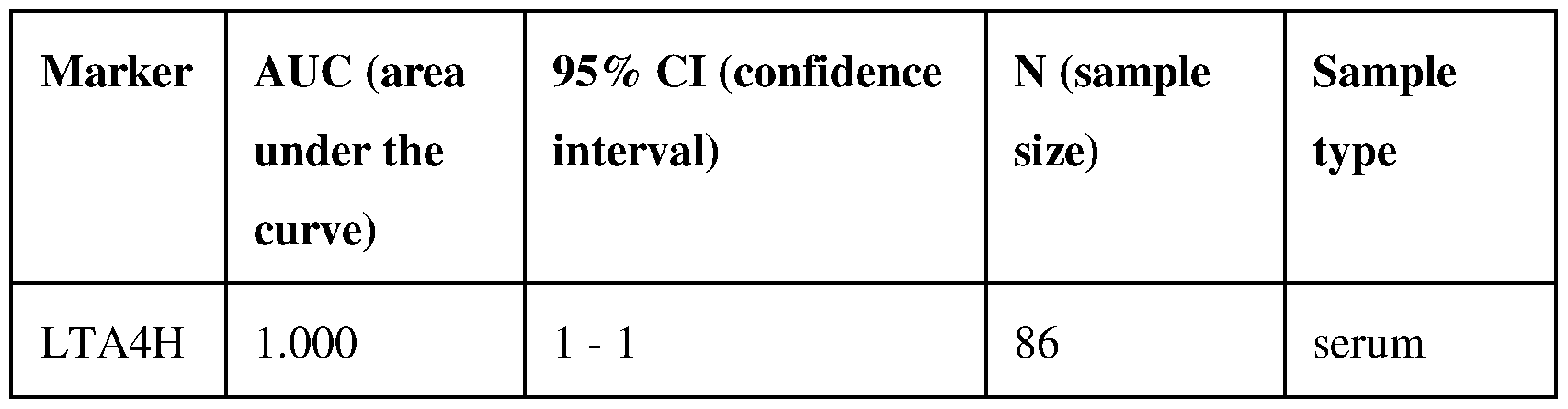


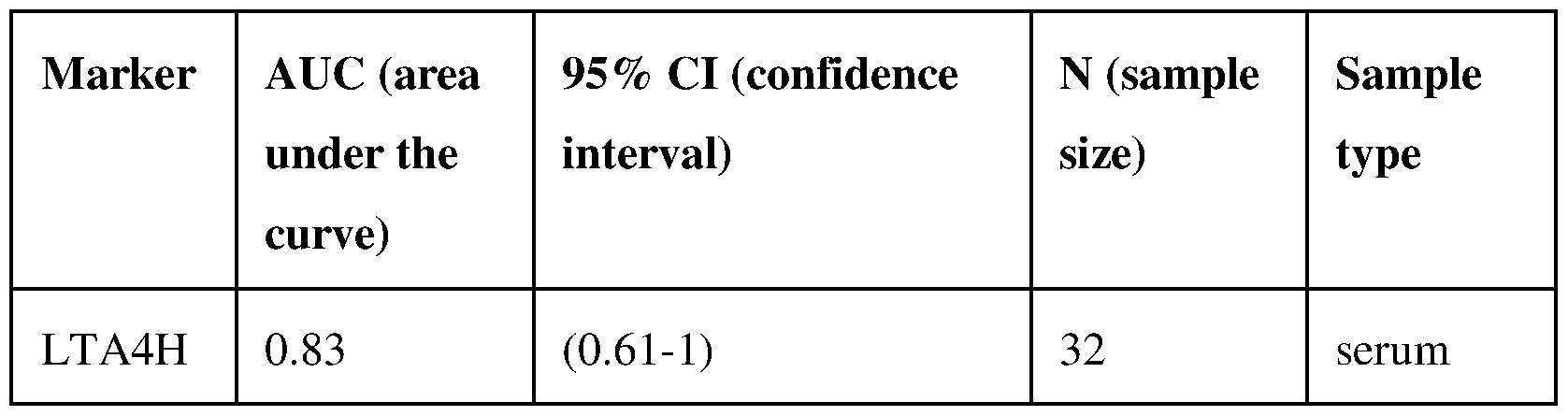
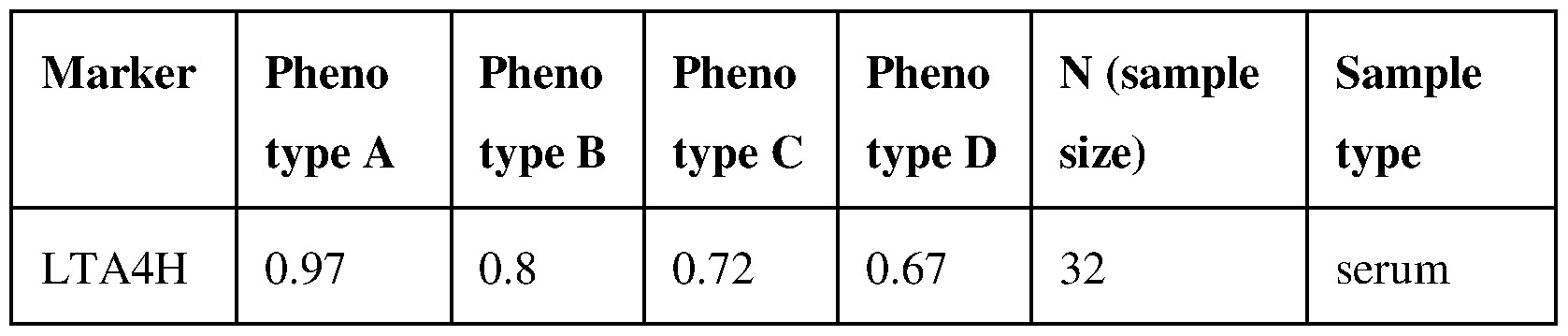
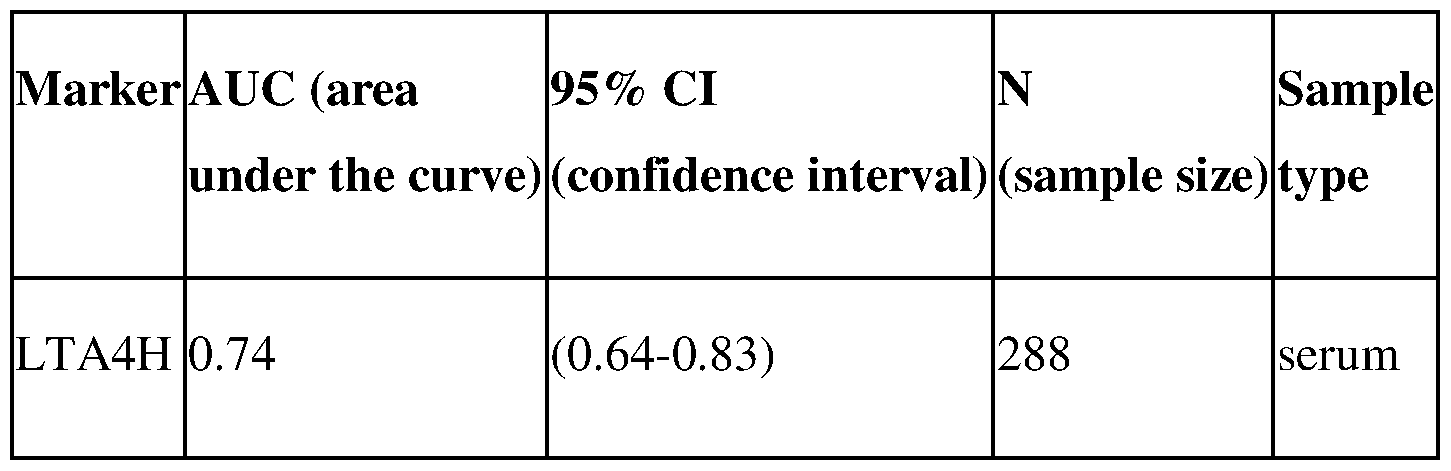
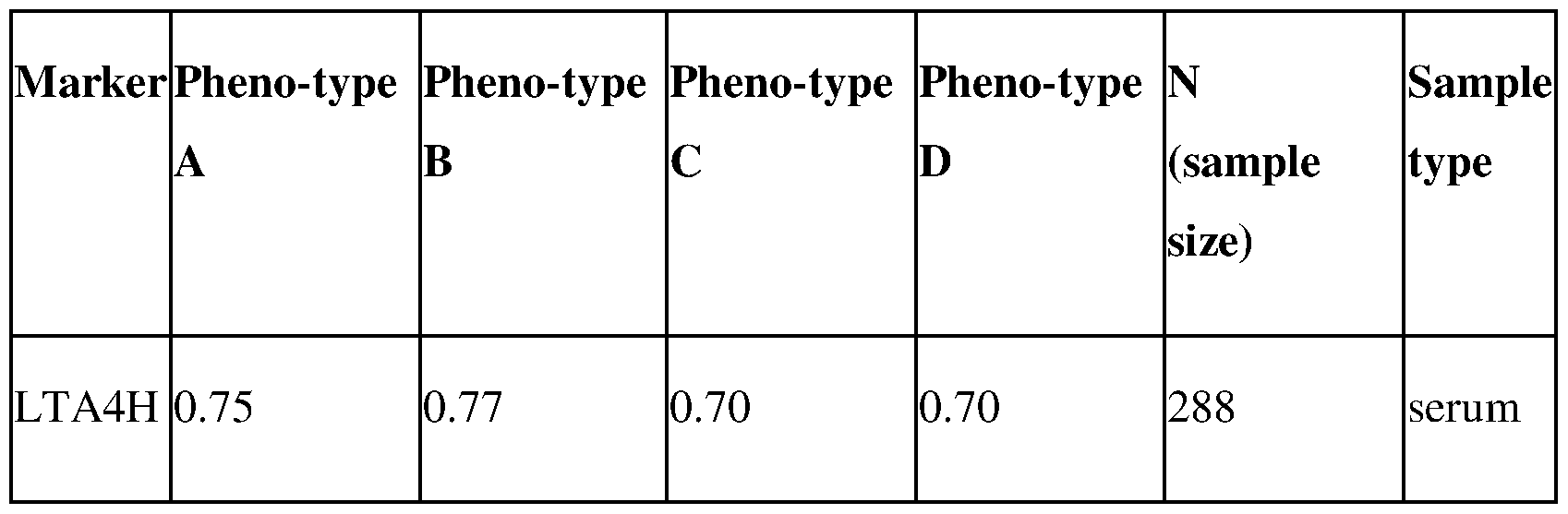


Claims
Priority Applications (3)
| Application Number | Priority Date | Filing Date | Title |
|---|---|---|---|
| EP23744495.5A EP4558830A1 (en) | 2022-07-22 | 2023-07-20 | Leukotriene a4 hydrolase (lta4h) as (blood) biomarker for the diagnosis of polycystic ovarian syndrome |
| CN202380055404.8A CN119604768A (en) | 2022-07-22 | 2023-07-20 | Leukotriene A4 hydrolase (LTA4H) as a (blood) biomarker for the diagnosis of polycystic ovary syndrome |
| JP2025503367A JP2025524025A (en) | 2022-07-22 | 2023-07-20 | Leukotriene A4 hydrolase (LTA4H) as a (blood) biomarker for the diagnosis of polycystic ovary syndrome |
Applications Claiming Priority (2)
| Application Number | Priority Date | Filing Date | Title |
|---|---|---|---|
| EP22186513.2 | 2022-07-22 | ||
| EP22186513 | 2022-07-22 |
Publications (1)
| Publication Number | Publication Date |
|---|---|
| WO2024017982A1 true WO2024017982A1 (en) | 2024-01-25 |
Family
ID=82701867
Family Applications (1)
| Application Number | Title | Priority Date | Filing Date |
|---|---|---|---|
| PCT/EP2023/070091 Ceased WO2024017982A1 (en) | 2022-07-22 | 2023-07-20 | Leukotriene a4 hydrolase (lta4h) as (blood) biomarker for the diagnosis of polycystic ovarian syndrome |
Country Status (4)
| Country | Link |
|---|---|
| EP (1) | EP4558830A1 (en) |
| JP (1) | JP2025524025A (en) |
| CN (1) | CN119604768A (en) |
| WO (1) | WO2024017982A1 (en) |
Citations (30)
| Publication number | Priority date | Publication date | Assignee | Title |
|---|---|---|---|---|
| WO1987006706A1 (en) | 1986-04-30 | 1987-11-05 | Igen, Inc. | Electrochemiluminescent assays |
| WO1990005296A1 (en) | 1988-11-03 | 1990-05-17 | Igen, Inc. | Electrochemiluminescent reaction utilizing amine-derived reductant |
| WO1990005301A1 (en) | 1988-11-03 | 1990-05-17 | Igen, Inc. | Electrochemiluminescent assays |
| WO1992014139A1 (en) | 1991-02-06 | 1992-08-20 | Igen, Inc. | Methods and apparatus for improved luminescence assays |
| US5221605A (en) | 1984-10-31 | 1993-06-22 | Igen, Inc. | Luminescent metal chelate labels and means for detection |
| US5316757A (en) | 1984-10-18 | 1994-05-31 | Board Of Regents, The University Of Texas System | Synthesis of polyazamacrocycles with more than one type of side-chain chelating groups |
| US5342606A (en) | 1984-10-18 | 1994-08-30 | Board Of Regents, The University Of Texas System | Polyazamacrocyclic compounds for complexation of metal ions |
| US5385893A (en) | 1993-05-06 | 1995-01-31 | The Dow Chemical Company | Tricyclopolyazamacrocyclophosphonic acids, complexes and derivatives thereof, for use as contrast agents |
| WO1995008644A1 (en) | 1993-09-22 | 1995-03-30 | Igen, Inc. | Self-sustained sequence replication electrochemiluminescent nucleic acid assay |
| US5428139A (en) | 1991-12-10 | 1995-06-27 | The Dow Chemical Company | Bicyclopolyazamacrocyclophosphonic acid complexes for use as radiopharmaceuticals |
| US5462725A (en) | 1993-05-06 | 1995-10-31 | The Dow Chemical Company | 2-pyridylmethylenepolyazamacrocyclophosphonic acids, complexes and derivatives thereof, for use as contrast agents |
| US5480990A (en) | 1991-12-10 | 1996-01-02 | The Dow Chemical Company | Bicyclopolyazamacrocyclocarboxylic acid complexes for use as contrast agents |
| WO1996006946A1 (en) | 1994-08-26 | 1996-03-07 | Igen, Inc. | Biosensor for and method of electrogenerated chemiluminescent detection of nucleic acid adsorbed to a solid surface |
| WO1996024690A1 (en) | 1995-02-09 | 1996-08-15 | Igen, Inc. | Electrogenerated chemiluminescence labels for analysis and/or referencing |
| WO1996033411A1 (en) | 1995-04-18 | 1996-10-24 | Igen, Inc. | Electrochemiluminescence of rare earth metal chelates |
| WO1996039534A1 (en) | 1995-06-06 | 1996-12-12 | Igen, Inc. | Electrochemiluminescent enzyme biosensors |
| WO1996041175A1 (en) | 1995-06-07 | 1996-12-19 | Igen, Inc. | Electrochemiluminescent enzyme immunoassay |
| WO1996040978A1 (en) | 1995-06-07 | 1996-12-19 | Igen, Inc. | Electrochemiluminescent monitoring of compounds |
| US5591581A (en) | 1986-04-30 | 1997-01-07 | Igen, Inc. | Electrochemiluminescent rhenium moieties and methods for their use |
| US5597910A (en) | 1991-12-11 | 1997-01-28 | Igen, Inc. | Electrochemiluminescent label for DNA probe assays |
| US5679519A (en) | 1995-05-09 | 1997-10-21 | Oprandy; John J. | Multi-label complex for enhanced sensitivity in electrochemiluminescence assay |
| US5739294A (en) | 1991-12-10 | 1998-04-14 | The Dow Chemical Company | Bicyclopol yazamacrocyclophosphonic acid complexes for use as contrast agents |
| US5834461A (en) | 1993-07-29 | 1998-11-10 | American Cyanamid Company | Tricyclic benzazepine vasopressin antagonists |
| WO2005012359A2 (en) | 2003-08-01 | 2005-02-10 | Genentech, Inc. | Anti-vegf antibodies |
| US20100111861A1 (en) | 2008-10-31 | 2010-05-06 | Lili Liu | Detection and quantification of abasic site formation in vivo |
| WO2012107419A1 (en) | 2011-02-09 | 2012-08-16 | Roche Diagnostics Gmbh | New iridium-based complexes for ecl |
| US9503190B2 (en) | 2012-06-28 | 2016-11-22 | Chunghwa Telecom Co., Ltd. | Client-side dynamic multi-routing power distribution system of FTTx optical terminal equipment |
| US9606763B2 (en) | 2013-12-07 | 2017-03-28 | Lenovo (Singapore) Pte Ltd | Folding electronic device |
| US9703653B2 (en) | 2012-12-12 | 2017-07-11 | Kabushiki Kaisha Toshiba | Cloud system management apparatus, cloud system, reallocation method, and computer program product |
| US9716942B2 (en) | 2015-12-22 | 2017-07-25 | Bose Corporation | Mitigating effects of cavity resonance in speakers |
-
2023
- 2023-07-20 CN CN202380055404.8A patent/CN119604768A/en active Pending
- 2023-07-20 EP EP23744495.5A patent/EP4558830A1/en active Pending
- 2023-07-20 WO PCT/EP2023/070091 patent/WO2024017982A1/en not_active Ceased
- 2023-07-20 JP JP2025503367A patent/JP2025524025A/en active Pending
Patent Citations (32)
| Publication number | Priority date | Publication date | Assignee | Title |
|---|---|---|---|---|
| US5428155A (en) | 1984-10-18 | 1995-06-27 | Board Of Regents, The University Of Texas System | Synthesis of polyazamacrocycles with more than one type of side-chain chelating groups |
| US5342606A (en) | 1984-10-18 | 1994-08-30 | Board Of Regents, The University Of Texas System | Polyazamacrocyclic compounds for complexation of metal ions |
| US5316757A (en) | 1984-10-18 | 1994-05-31 | Board Of Regents, The University Of Texas System | Synthesis of polyazamacrocycles with more than one type of side-chain chelating groups |
| US5221605A (en) | 1984-10-31 | 1993-06-22 | Igen, Inc. | Luminescent metal chelate labels and means for detection |
| WO1987006706A1 (en) | 1986-04-30 | 1987-11-05 | Igen, Inc. | Electrochemiluminescent assays |
| US5591581A (en) | 1986-04-30 | 1997-01-07 | Igen, Inc. | Electrochemiluminescent rhenium moieties and methods for their use |
| WO1990005301A1 (en) | 1988-11-03 | 1990-05-17 | Igen, Inc. | Electrochemiluminescent assays |
| WO1990005296A1 (en) | 1988-11-03 | 1990-05-17 | Igen, Inc. | Electrochemiluminescent reaction utilizing amine-derived reductant |
| WO1992014139A1 (en) | 1991-02-06 | 1992-08-20 | Igen, Inc. | Methods and apparatus for improved luminescence assays |
| US5428139A (en) | 1991-12-10 | 1995-06-27 | The Dow Chemical Company | Bicyclopolyazamacrocyclophosphonic acid complexes for use as radiopharmaceuticals |
| US5480990A (en) | 1991-12-10 | 1996-01-02 | The Dow Chemical Company | Bicyclopolyazamacrocyclocarboxylic acid complexes for use as contrast agents |
| US5750660A (en) | 1991-12-10 | 1998-05-12 | The Dow Chemical Company | Bicyclopolyazamacrocyclophosphonic acid half esters |
| US5739294A (en) | 1991-12-10 | 1998-04-14 | The Dow Chemical Company | Bicyclopol yazamacrocyclophosphonic acid complexes for use as contrast agents |
| US5597910A (en) | 1991-12-11 | 1997-01-28 | Igen, Inc. | Electrochemiluminescent label for DNA probe assays |
| US5385893A (en) | 1993-05-06 | 1995-01-31 | The Dow Chemical Company | Tricyclopolyazamacrocyclophosphonic acids, complexes and derivatives thereof, for use as contrast agents |
| US5462725A (en) | 1993-05-06 | 1995-10-31 | The Dow Chemical Company | 2-pyridylmethylenepolyazamacrocyclophosphonic acids, complexes and derivatives thereof, for use as contrast agents |
| US5834461A (en) | 1993-07-29 | 1998-11-10 | American Cyanamid Company | Tricyclic benzazepine vasopressin antagonists |
| WO1995008644A1 (en) | 1993-09-22 | 1995-03-30 | Igen, Inc. | Self-sustained sequence replication electrochemiluminescent nucleic acid assay |
| WO1996006946A1 (en) | 1994-08-26 | 1996-03-07 | Igen, Inc. | Biosensor for and method of electrogenerated chemiluminescent detection of nucleic acid adsorbed to a solid surface |
| WO1996024690A1 (en) | 1995-02-09 | 1996-08-15 | Igen, Inc. | Electrogenerated chemiluminescence labels for analysis and/or referencing |
| WO1996033411A1 (en) | 1995-04-18 | 1996-10-24 | Igen, Inc. | Electrochemiluminescence of rare earth metal chelates |
| US5679519A (en) | 1995-05-09 | 1997-10-21 | Oprandy; John J. | Multi-label complex for enhanced sensitivity in electrochemiluminescence assay |
| WO1996039534A1 (en) | 1995-06-06 | 1996-12-12 | Igen, Inc. | Electrochemiluminescent enzyme biosensors |
| WO1996040978A1 (en) | 1995-06-07 | 1996-12-19 | Igen, Inc. | Electrochemiluminescent monitoring of compounds |
| WO1996041175A1 (en) | 1995-06-07 | 1996-12-19 | Igen, Inc. | Electrochemiluminescent enzyme immunoassay |
| WO2005012359A2 (en) | 2003-08-01 | 2005-02-10 | Genentech, Inc. | Anti-vegf antibodies |
| US20100111861A1 (en) | 2008-10-31 | 2010-05-06 | Lili Liu | Detection and quantification of abasic site formation in vivo |
| WO2012107419A1 (en) | 2011-02-09 | 2012-08-16 | Roche Diagnostics Gmbh | New iridium-based complexes for ecl |
| US9503190B2 (en) | 2012-06-28 | 2016-11-22 | Chunghwa Telecom Co., Ltd. | Client-side dynamic multi-routing power distribution system of FTTx optical terminal equipment |
| US9703653B2 (en) | 2012-12-12 | 2017-07-11 | Kabushiki Kaisha Toshiba | Cloud system management apparatus, cloud system, reallocation method, and computer program product |
| US9606763B2 (en) | 2013-12-07 | 2017-03-28 | Lenovo (Singapore) Pte Ltd | Folding electronic device |
| US9716942B2 (en) | 2015-12-22 | 2017-07-25 | Bose Corporation | Mitigating effects of cavity resonance in speakers |
Non-Patent Citations (64)
| Title |
|---|
| "ACOG Committee Opinion No. 651: Menstruation in Girls and Adolescents: Using the Menstrual Cycle as a Vital Sign", OBSTET GYNECOL., vol. 126, no. 6, 2015, pages 143 - 146 |
| AZZIZ RCARMINA EDEWAILLY D ET AL.: "Task Force on the Phenotype of the Polycystic Ovary Syndrome of The Androgen Excess and PCOS Society. The Androgen Excess and PCOS Society criteria for the polycystic ovary syndrome: the complete task force report", FERTIL STERIL, vol. 91, no. 2, 2009, pages 456 - 88 |
| BAUER RWVAN DER KERHOF PCDE GROOD RM: "Epidermal hyperproliferation following the induction of microabscesses by leukotriene B4", BR J DERMATOL, vol. 114, 1986, pages 409 - 12 |
| BLEND ET AL., CANCER BIOTHERAPY & RADIOPHARMACEUTICALS, vol. 18, 2003, pages 355 - 363 |
| BRIGGS ET AL.: "Synthesis of Functionalised Fluorescent Dyes and Their Coupling to Amines and Amino Acids", J. CHEM. SOC., PERKIN-TRANS., vol. 1, 1997, pages 1051 - 1058, XP002298160, DOI: 10.1039/a605012c |
| BRIGGS ET AL.: "Synthesis of Functionalized Fluorescent Dyes and Their Coupling to Amines and Amino Acids", J. CHEM. SOC., PERKIN-TRANS., vol. 1, 1997, pages 1051 - 1058, XP002298160, DOI: 10.1039/a605012c |
| CAMERA ET AL., J. NUCL. MED., vol. 21, 1994, pages 640 - 646 |
| CHEN ET AL., NAT. IMMUNOL., vol. 10, 2009, pages 889 - 898 |
| CHEN XLI NWANG S ET AL.: "Leukotriene A4 hydrolase in rat and human esophageal adenocarcinomas and inhibitory effects of bestatin", J NATL CANCER INST., vol. 95, no. 14, 16 July 2003 (2003-07-16), pages 1053 - 61 |
| CHEN XWANG SWU NYANG CS: "Leukotriene A4 hydrolase as a target for cancer prevention and therapy", CURR CANCER DRUG TARGETS, vol. 4, no. 3, May 2004 (2004-05-01), pages 267 - 83, XP009043805, DOI: 10.2174/1568009043333041 |
| DENARDO ET AL., CLINICAL CANCER RESEARCH, vol. 4, 1998, pages 2483 - 90 |
| DESMYTER ET AL., NAT. STRUCTURE BIOL., vol. 3, 1996, pages 803 - 811 |
| DIETZ DE LOOS ET AL., FERTIL STERIL, 2021 |
| DODEIGNE C. ET AL., TALANTA, vol. 51, 2000, pages 415 - 439 |
| DREYLING KWHOPPE UPESKAR BA ET AL.: "Leukotriene synthesis by human gastrointestinal tissues", BIOCHIM BIOPHYS ACTA, vol. 878, no. 2, 12 September 1986 (1986-09-12), pages 184 - 93, XP023374095, DOI: 10.1016/0005-2760(86)90145-1 |
| ESCOBAR-MORREALE HF.: "Polycystic ovary syndrome: definition, aetiology, diagnosis and treatment", NAT REV ENDOCRINOL., vol. 14, no. 5, 2018, pages 270 - 284, XP002808205 |
| ESCOBAR-MORREALE, H. F., INTERNATIONAL EVIDENCE-BASED GUIDELINE FOR THE ASSESSMENT AND MANAGEMENT OF POLYCYSTIC OVARY SYNDROME 2018, 2018 |
| GEISBERGER ET AL., IMMUNOLOGY, vol. 118, 2006, pages 429 - 437 |
| GIBSON-HELM MTEEDE HDUNAIF ADOKRAS A: "Delayed Diagnosis and a Lack of Information Associated With Dissatisfaction in Women With Polycystic Ovary Syndrome", J CLIN ENDOCRINOL METAB., vol. 102, no. 2, 2017, pages 604 - 612 |
| HAEGGSTROM JZ: "Leukotriene A4 hydrolase and the committed step in leukotriene B4 biosynthesis", CLIN REV ALLERGY IMMUNOL., vol. 17, no. 1-2, 1999, pages 111 - 31 |
| HATTORI NFUJIWARA HMAEDA M ET AL.: "Human large luteal cells in the menstrual cycle and early pregnancy express leukotriene A4 hydrolase", MOL HUM REPROD., vol. 4, no. 8, August 1998 (1998-08-01), pages 803 - 10 |
| HENNIG RDING XZTONG WG ET AL.: "5-Lipoxygenase and leukotriene B(4) receptor are expressed in human pancreatic cancers but not in pancreatic ducts in normal tissue", AM J PATHOL., vol. 161, no. 2, August 2002 (2002-08-01), pages 421 - 8 |
| HNATOWICH ET AL., J. IMMUNOL. METHODS, vol. 65, 1983, pages 147 - 157 |
| HUANG ZYONG EL: "Ethnic differences: Is there an Asian phenotype for polycystic ovarian syndrome?", BEST PRACT RES CLIN OBSTET GYNAECOL., vol. 37, 2016, pages 46 - 55, XP029823690, DOI: 10.1016/j.bpobgyn.2016.04.001 |
| HUSTON ET AL., PROC. NATL. ACAD. SCI. USA, vol. 85, 1988, pages 5879 - 5883 |
| IZARD ET AL., BIOCONJUGATE CHEM., vol. 3, 1992, pages 346 - 350 |
| KNIGHT ET AL., ANALYST, vol. 119, 1994, pages 879 - 890 |
| KOBAYASHI ET AL., BIOCONJUGATE CHEM., vol. 10, 1999, pages 103 - 111 |
| KOBAYASHI ET AL., J. NUCL. MED., vol. 39, 1998, pages 2105 - 2110 |
| KUBOTA T.: "Update in polycystic ovary syndrome: new criteria of diagnosis and treatment in Japan", REPROD MED BIOL., vol. 12, no. 3, 2013, pages 71 - 77 |
| KUFER, TRENDS BIOTECHNOL., vol. 22, 2004, pages 238 - 244 |
| LARRE STRAN NFAN C ET AL.: "PGE2 and LTB4 tissue levels in benign and cancerous prostates", PROSTAGLANDINS OTHER LIPID MEDIAT., vol. 87, no. 1-4, December 2008 (2008-12-01), pages 14 - 9, XP025656325, DOI: 10.1016/j.prostaglandins.2008.05.001 |
| LEE ET AL., CANCER RES., vol. 61, 2001, pages 4474 - 4482 |
| M., GOTTESMAN, K. S.FOELLER, C.: "Sequences of proteins of immunological interest", 1991, U.S. DEPARTMENT OF HEALTH AND HUMAN SERVICE |
| MA TTCAO MDYU RL ET AL.: "Leukotriene A4 Hydrolase Is a Candidate Predictive Biomarker for Successful Allergen Immunotherapy", FRONT IMMUNOL., vol. 11, 24 November 2020 (2020-11-24), pages 559746 |
| MARCH WAMOORE VMWILLSON KJ ET AL.: "The prevalence of polycystic ovary syndrome in a community sample assessed under contrasting diagnostic criteria", HUM REPROD., vol. 25, no. 2, 2010, pages 544 - 51 |
| MARDIROSSIAN ET AL., NUCL. MED. BIOL., vol. 20, 1993, pages 955 - 74 |
| MEARES ET AL., ANAL. BIOCHEM., vol. 142, 1984, pages 68 - 78 |
| MEARES ET AL., J. CANCER, vol. 10, 1990, pages 21 - 26 |
| MIEDERER ET AL., J. NUCL. MED., vol. 45, 2004, pages 129 - 137 |
| MIRZADEH ET AL., BIOCONJUGATE CHEM., vol. 1, 1990, pages 59 - 65 |
| MITCHELL ET AL., J. NUCL. MED., vol. 44, 2003, pages 1105 - 1112 |
| NEVEN ACHLAVEN JTEEDE HJBOYLE JA.: "A Summary on Polycystic Ovary Syndrome: Diagnostic Criteria, Prevalence, Clinical Manifestations, and Management According to the Latest International Guidelines", SEMIN REPROD MED., vol. 36, no. 1, January 2018 (2018-01-01), pages 5 - 12 |
| NIKULA ET AL., J. NUCL. MED., vol. 40, 1999, pages 166 - 76 |
| NIKULA ET AL., NUCL. MED. BIOL., vol. 22, 1995, pages 387 - 90 |
| OI NYAMAMOTO HLANGFALD A ET AL.: "LTA4H regulates cell cycle and skin carcinogenesis", CARCINOGENESIS, vol. 38, no. 7, 1 July 2017 (2017-07-01), pages 728 - 737 |
| PCOS CONSENSUS WORKSHOP GROUP, FERTIL STERIL, vol. 81, 2004, pages 19 - 25 |
| PENA ASWITCHEL SFHOEGER KMOBERFIELD SEVOGIATZI MGMISSO MGARAD RDABADGHAO PTEEDE H: "Adolescent polycystic ovary syndrome according to the international evidence-based guideline", BMC MED., vol. 18, no. 1, 2020, pages 72 |
| ROSELLI ET AL., CANCER BIOTHERAPY & RADIOPHARMACEUTICALS, vol. 14, 1999, pages 209 - 20 |
| RUEGG ET AL., CANCER RES., vol. 50, 1990, pages 4221 - 4226 |
| RUZICKA TBURG G.: "Effects of chronic intracutaneous administration of arachidonic acid and its metabolites. Induction of leukocytoclastic vasculitis by leukotriene B4 and 12-hydroxyeicosatetraenoic acid and its prevention by prostaglandin E2", J INVEST DERMATOL, vol. 88, 1987, pages 120 - 3 |
| SCOUTEN, W. H., METHODS IN ENZYMOLOGY, vol. 135, 1987, pages 30 - 65 |
| SERHAN CN: "Resolution phase of inflammation: novel endogenous anti-inflammatory and proresolving lipid mediators and pathways", ANNUAL REVIEW OF IMMUNOLOGY, vol. 25, 2007, pages 101 - 137 |
| SNELGROVE RJJACKSON PLHARDISON MT ET AL.: "A critical role for LTA4H in limiting chronic pulmonary neutrophilic inflammation", SCIENCE, vol. 330, no. 6000, 1 October 2010 (2010-10-01), pages 90 - 4 |
| STSIAPANAVA AOLSSON UWAN M ET AL.: "Binding of Pro-Gly-Pro at the active site of leukotriene A4 hydrolase/aminopeptidase and development of an epoxide hydrolase selective inhibitor", PROC NATL ACAD SCI USA., vol. 111, no. 11, 18 March 2014 (2014-03-18), pages 4227 - 32 |
| TEEDE HJMISSO MLCOSTELLO MF ET AL.: "International PCOS Network. Recommendations from the international evidence-based guideline for the assessment and management of polycystic ovary syndrome", HUM REPROD., vol. 33, no. 9, 2018, pages 1602 - 1618 |
| UNDERDOWNSCHIFF, ANNU. REV. IMMUNOL., vol. 4, 1986, pages 389 - 417 |
| WANG QHE ZZHANG J ET AL.: "Overexpression of endoplasmic reticulum molecular chaperone GRP94 and GRP78 in human lung cancer tissues and its significance", CANCER DETECT PREV., vol. 29, no. 6, 2005, pages 544 - 51, XP025263592, DOI: 10.1016/j.cdp.2005.09.010 |
| WEN ZLIU HLI M ET AL.: "Increased metabolites of 5-lipoxygenase from hypoxic ovarian cancer cells promote tumor-associated macrophage infiltration", ONCOGENE, vol. 34, no. 10, 5 March 2015 (2015-03-05), pages 1241 - 52, XP036972773, DOI: 10.1038/onc.2014.85 |
| WHITWORTH LCOXON JVAN LAARHOVEN A ET AL.: "A Bayesian analysis of the association between Leukotriene A4 Hydrolase genotype and survival in tuberculous meningitis", ELIFE, vol. 10, 8 January 2021 (2021-01-08), pages 61722 |
| WITCHEL SFTEEDE HJPENA AS: "Curtailing PCOS", PEDIATR RES., vol. 87, no. 2, 2020, pages 353 - 361, XP036988432, DOI: 10.1038/s41390-019-0615-1 |
| YOO MHSONG HWOO CH ET AL.: "Role of the BLT2, a leukotriene B4 receptor, in Ras transformation", ONCOGENE, vol. 23, no. 57, 9 December 2004 (2004-12-09), pages 9259 - 68, XP037740223, DOI: 10.1038/sj.onc.1208151 |
| ZHAO SYAO KLI D ET AL.: "Inhibition of LTA4H by bestatin in human and mouse colorectal cancer", EBIOMEDICINE., vol. 44, June 2019 (2019-06-01), pages 361 - 374 |
| ZHENG QIN ET AL: "Novel Serum Biomarkers Detected by Protein Array in Polycystic Ovary Syndrome with Low Progesterone Level", vol. 46, no. 6, 1 January 2018 (2018-01-01), CH, pages 2297 - 2310, XP093003352, ISSN: 1015-8987, Retrieved from the Internet <URL:https://www.karger.com/Article/Pdf/489619> DOI: 10.1159/000489619 * |
Also Published As
| Publication number | Publication date |
|---|---|
| CN119604768A (en) | 2025-03-11 |
| EP4558830A1 (en) | 2025-05-28 |
| JP2025524025A (en) | 2025-07-25 |
Similar Documents
| Publication | Publication Date | Title |
|---|---|---|
| US20220137058A1 (en) | S100a6 as blood biomarker for the non-invasive diagnosis of endometriosis | |
| US20220137068A1 (en) | S100a8 as blood biomarker for the non-invasive diagnosis of endometriosis | |
| US20260016487A1 (en) | Meteorin-like protein (metrnl) as (blood) biomarker for the diagnosis of polycystic ovarian syndrome | |
| WO2022207628A1 (en) | Scf as blood biomarker for the non-invasive diagnosis of endometriosis | |
| US20240027474A1 (en) | Psp94 as blood biomarker for the non-invasive diagnosis of endometriosis | |
| US20260036596A1 (en) | Leukotriene a4 hydrolase (lta4h) as (blood) biomarker for the diagnosis of polycystic ovarian syndrome | |
| US20220155315A1 (en) | S100a9 as blood biomarker for the non-invasive diagnosis of endometriosis | |
| EP4558830A1 (en) | Leukotriene a4 hydrolase (lta4h) as (blood) biomarker for the diagnosis of polycystic ovarian syndrome | |
| US20220137069A1 (en) | S100a12 as blood biomarker for the non-invasive diagnosis of endometriosis | |
| US20220137052A1 (en) | Substance p as blood biomarker for the non-invasive diagnosis of endometriosis | |
| JP2025520600A (en) | Methods for diagnosing and staging endometriosis - Patents.com | |
| US20260036594A1 (en) | Fibroblast growth factor binding protein 1 (fgfbp1) as (blood) biomarker for the diagnosis of polycystic ovarian syndrome | |
| WO2024017985A1 (en) | Fibroblast growth factor binding protein 1 (fgfbp1) as (blood) biomarker for the diagnosis of polycystic ovarian syndrome |
Legal Events
| Date | Code | Title | Description |
|---|---|---|---|
| 121 | Ep: the epo has been informed by wipo that ep was designated in this application |
Ref document number: 23744495 Country of ref document: EP Kind code of ref document: A1 |
|
| WWE | Wipo information: entry into national phase |
Ref document number: 202380055404.8 Country of ref document: CN |
|
| WWE | Wipo information: entry into national phase |
Ref document number: 2025503367 Country of ref document: JP Ref document number: 18997767 Country of ref document: US |
|
| WWE | Wipo information: entry into national phase |
Ref document number: 2023744495 Country of ref document: EP |
|
| NENP | Non-entry into the national phase |
Ref country code: DE |
|
| ENP | Entry into the national phase |
Ref document number: 2023744495 Country of ref document: EP Effective date: 20250224 |
|
| WWP | Wipo information: published in national office |
Ref document number: 202380055404.8 Country of ref document: CN |
|
| WWP | Wipo information: published in national office |
Ref document number: 2023744495 Country of ref document: EP |