WO2024015791A1 - Ang-2/vegf antibodies and uses thereof - Google Patents
Ang-2/vegf antibodies and uses thereof Download PDFInfo
- Publication number
- WO2024015791A1 WO2024015791A1 PCT/US2023/069962 US2023069962W WO2024015791A1 WO 2024015791 A1 WO2024015791 A1 WO 2024015791A1 US 2023069962 W US2023069962 W US 2023069962W WO 2024015791 A1 WO2024015791 A1 WO 2024015791A1
- Authority
- WO
- WIPO (PCT)
- Prior art keywords
- antibody
- amino acid
- acid sequence
- vegf
- seq
- Prior art date
- Legal status (The legal status is an assumption and is not a legal conclusion. Google has not performed a legal analysis and makes no representation as to the accuracy of the status listed.)
- Ceased
Links
Classifications
-
- C—CHEMISTRY; METALLURGY
- C07—ORGANIC CHEMISTRY
- C07K—PEPTIDES
- C07K16/00—Immunoglobulins [IGs], e.g. monoclonal or polyclonal antibodies
- C07K16/18—Immunoglobulins [IGs], e.g. monoclonal or polyclonal antibodies against material from animals or humans
- C07K16/22—Immunoglobulins [IGs], e.g. monoclonal or polyclonal antibodies against material from animals or humans against growth factors ; against growth regulators
-
- A—HUMAN NECESSITIES
- A61—MEDICAL OR VETERINARY SCIENCE; HYGIENE
- A61P—SPECIFIC THERAPEUTIC ACTIVITY OF CHEMICAL COMPOUNDS OR MEDICINAL PREPARATIONS
- A61P27/00—Drugs for disorders of the senses
- A61P27/02—Ophthalmic agents
-
- A—HUMAN NECESSITIES
- A61—MEDICAL OR VETERINARY SCIENCE; HYGIENE
- A61K—PREPARATIONS FOR MEDICAL, DENTAL OR TOILETRY PURPOSES
- A61K39/00—Medicinal preparations containing antigens or antibodies
- A61K2039/505—Medicinal preparations containing antigens or antibodies comprising antibodies
-
- A—HUMAN NECESSITIES
- A61—MEDICAL OR VETERINARY SCIENCE; HYGIENE
- A61K—PREPARATIONS FOR MEDICAL, DENTAL OR TOILETRY PURPOSES
- A61K39/00—Medicinal preparations containing antigens or antibodies
- A61K39/395—Antibodies; Immunoglobulins; Immune serum, e.g. antilymphocytic serum
-
- C—CHEMISTRY; METALLURGY
- C07—ORGANIC CHEMISTRY
- C07K—PEPTIDES
- C07K2317/00—Immunoglobulins specific features
- C07K2317/30—Immunoglobulins specific features characterized by aspects of specificity or valency
- C07K2317/31—Immunoglobulins specific features characterized by aspects of specificity or valency multispecific
-
- C—CHEMISTRY; METALLURGY
- C07—ORGANIC CHEMISTRY
- C07K—PEPTIDES
- C07K2317/00—Immunoglobulins specific features
- C07K2317/30—Immunoglobulins specific features characterized by aspects of specificity or valency
- C07K2317/33—Crossreactivity, e.g. for species or epitope, or lack of said crossreactivity
-
- C—CHEMISTRY; METALLURGY
- C07—ORGANIC CHEMISTRY
- C07K—PEPTIDES
- C07K2317/00—Immunoglobulins specific features
- C07K2317/30—Immunoglobulins specific features characterized by aspects of specificity or valency
- C07K2317/35—Valency
-
- C—CHEMISTRY; METALLURGY
- C07—ORGANIC CHEMISTRY
- C07K—PEPTIDES
- C07K2317/00—Immunoglobulins specific features
- C07K2317/50—Immunoglobulins specific features characterized by immunoglobulin fragments
-
- C—CHEMISTRY; METALLURGY
- C07—ORGANIC CHEMISTRY
- C07K—PEPTIDES
- C07K2317/00—Immunoglobulins specific features
- C07K2317/50—Immunoglobulins specific features characterized by immunoglobulin fragments
- C07K2317/515—Complete light chain, i.e. VL + CL
-
- C—CHEMISTRY; METALLURGY
- C07—ORGANIC CHEMISTRY
- C07K—PEPTIDES
- C07K2317/00—Immunoglobulins specific features
- C07K2317/50—Immunoglobulins specific features characterized by immunoglobulin fragments
- C07K2317/52—Constant or Fc region; Isotype
- C07K2317/526—CH3 domain
-
- C—CHEMISTRY; METALLURGY
- C07—ORGANIC CHEMISTRY
- C07K—PEPTIDES
- C07K2317/00—Immunoglobulins specific features
- C07K2317/50—Immunoglobulins specific features characterized by immunoglobulin fragments
- C07K2317/54—F(ab')2
-
- C—CHEMISTRY; METALLURGY
- C07—ORGANIC CHEMISTRY
- C07K—PEPTIDES
- C07K2317/00—Immunoglobulins specific features
- C07K2317/50—Immunoglobulins specific features characterized by immunoglobulin fragments
- C07K2317/55—Fab or Fab'
-
- C—CHEMISTRY; METALLURGY
- C07—ORGANIC CHEMISTRY
- C07K—PEPTIDES
- C07K2317/00—Immunoglobulins specific features
- C07K2317/50—Immunoglobulins specific features characterized by immunoglobulin fragments
- C07K2317/56—Immunoglobulins specific features characterized by immunoglobulin fragments variable (Fv) region, i.e. VH and/or VL
- C07K2317/565—Complementarity determining region [CDR]
-
- C—CHEMISTRY; METALLURGY
- C07—ORGANIC CHEMISTRY
- C07K—PEPTIDES
- C07K2317/00—Immunoglobulins specific features
- C07K2317/70—Immunoglobulins specific features characterized by effect upon binding to a cell or to an antigen
- C07K2317/76—Antagonist effect on antigen, e.g. neutralization or inhibition of binding
-
- C—CHEMISTRY; METALLURGY
- C07—ORGANIC CHEMISTRY
- C07K—PEPTIDES
- C07K2317/00—Immunoglobulins specific features
- C07K2317/90—Immunoglobulins specific features characterized by (pharmaco)kinetic aspects or by stability of the immunoglobulin
- C07K2317/92—Affinity (KD), association rate (Ka), dissociation rate (Kd) or EC50 value
Definitions
- VEGF vascular endothelial growth factor
- ANG2 angiopoietin-2
- Described herein are antibodies and bispecific antibodies that that bind to VEGF and/or ANG-2. Also described are methods of treating diseases of the eye by administering the antibodies and bispecific antibodies to individuals in need thereof. Such diseases include macular degeneration, retinal vein occlusions, branch vein occlusions, and central vein occlusions.
- the bispecific antibodies described herein possess advantages over previously described bispecific antibodies in that the binding moieties that bind to VEGF and ANG-2 both bind with high- affinity to their respective antigens.
- the surrogate light chains which are used as the common light chin are of human germline origin, and are, thus, less immunogenic than other common light chains allowing for a safer molecule that is less likely to be subject to anti- therapeutic antibody responses.
- Low anti-therapeutic antibody immune responses are desirable as it allows the therapeutic antibody to maintain efficacy over repeat administrations.
- a vascular endothelial growth factor (VEGF) binding antibody or antigen binding fragment thereof comprising: (a) a heavy chain complementarity determining region 1 (HCDR1) comprising the amino acid sequence set forth in SEQ ID NO: 3 (GYTFSIYT); (b) a heavy chain complementarity determining region 2 (HCDR2) comprising the amino acid sequence set forth in SEQ ID NO: 4 (INPYNGNT); and (c) a heavy chain complementarity determining region 3 (HCDR3) comprising the amino acid sequence set forth in SEQ ID NO: 5 (AKAPAVFWWTGLDY); wherein the antibody binds to VEGF.
- HCDR1 heavy chain complementarity determining region 1
- HCDR2 comprising the amino acid sequence set forth in SEQ ID NO: 4
- HCDR3 a heavy chain complementarity determining region 3
- the antibody or antigen binding fragment thereof comprises a heavy chain variable region comprising an amino acid sequence comprising at least 85%, 90%, 95%, 96%, 97%, 98%, 99%, or 100% identity to the amino acid sequence set forth in SEQ ID NO: 1.
- the antibody or antigen binding fragment thereof comprises a heavy chain constant region comprising an amino acid sequence comprising at least 85%, 90%, 95%, 96%, 97%, 98%, 99%, or 100% identity to the amino acid sequence set forth in SEQ ID NO: 2.
- the antibody or antigen binding fragment thereof comprises a surrogate light chain.
- the surrogate light chain comprises: (a) a light chain complementarity determining region 1 (LCDR1) comprising the amino acid sequence set forth in SEQ ID NO: 23 (NDHDIGVYS); (b) a light chain complementarity determining region 2 (LCDR2) comprising the amino acid sequence set forth in SEQ ID NO: 24 (YFSQSDK); and (c) a light chain complementarity determining region 3 (LCDR3) comprising the amino acid sequence set forth in SEQ ID NO: 25 (AMGARSSVTH).
- LCDR1 light chain complementarity determining region 1
- LCDR2 comprising the amino acid sequence set forth in SEQ ID NO: 24
- YFSQSDK a light chain complementarity determining region 3
- the antibody or antigen binding fragment thereof comprises a light chain variable region comprising an amino acid sequence comprising at least 85%, 90%, 95%, 96%, 97%, 98%, 99%, or 100% identity to the amino acid sequence set forth in SEQ ID NO: 21.
- the antibody or antigen binding fragment thereof comprises a light chain constant region comprising an amino acid sequence comprising at least 85%, 90%, 95%, 96%, 97%, 98%, 99%, or 100% identity to the amino acid sequence set forth in SEQ ID NO: 22.
- the antibody binds to a peptide comprising a platelet-derived growth factor (PDGF) domain of VEGF-A.
- PDGF platelet-derived growth factor
- the PDGF domain of VEGF A comprises a fragment of VEGF A ranging from 50th to 132nd amino acids.
- the antibody binds to a peptide comprising a VEGF-C heparin domain of VEGF-A.
- the VEGF C heparin domain of VEGF A comprises a fragment of VEGF-A ranging from 143rd to 191st amino acids.
- the antibody binds to VEGF-A or a fragment thereof.
- the antibody binds to VEGF A or a fragment thereof with an EC50 of about 60 picomolar or less.
- the antibody inhibits an interaction of VEGF-A or a fragment thereof and a VEGF receptor. In certain embodiments, the antibody inhibits the interaction of VEGF_ A or a fragment thereof and the VEGF receptor with an IC50 of about 2000 picomolar or less. In certain embodiments, the antibody inhibits the interaction of VEGF_ A or a fragment thereof and the VEGF receptor at least 3 -fold stronger than Faricimab inhibits the interaction. In certain embodiments, the VEGF receptor is a VEGF receptor 2/kinase insert domain receptor (KDR). In certain embodiments, the antibody or antigen binding fragment thereof is a Fab, F(ab)2, a singledomain antibody, or a single chain variable fragment (scFv).
- the antibody or antigen binding fragment thereof is an IgG antibody. In certain embodiments, the antibody or antigen binding fragment thereof is human, chimeric, or humanized. In certain embodiments, the antibody or antigen binding fragment thereof is humanized. Also described is a pharmaceutical composition comprising the antibody or antigen binding fragment thereof and a pharmaceutically acceptable carrier, excipient, or diluent. In certain embodiments, the pharmaceutical composition is formulated for intravenous administration. In certain embodiments, the pharmaceutical composition is formulated for intravitreal administration. Also described herein is a nucleic acid encoding the antibody. In certain embodiments, the nucleic acid is an expression vector.
- the expression vector is a lentiviral vector, an adenoviral vector, an adeno-associated viral vector, or a plasmid vector. In certain embodiments, the expression vector is formulated for intravenous administration. In certain embodiments, the expression vector is formulated for intravitreal administration. Also described herein is a cell comprising the nucleic acid or the expression vector. In certain embodiments, the cell is a eukaryotic cell suitable for antibody production.
- the bi specific antibody is used in a method of treating a disease of the eye in an individual, the method comprising administering to the individual the antibody, the nucleic acid or plurality of nucleic acids encoding the antibody, or pharmaceutical composition comprising the antibody, thereby treating the disease of the eye.
- the disease of the eye is macular degeneration.
- the macular degeneration is age related.
- the macular degeneration is diabetes related.
- the macular degeneration is wet macular degeneration.
- the disease of the eye is branch retinal vein occlusion.
- the disease of the eye is central retinal vein occlusion.
- angiopoietin 2 (ANG-2) binding antibody or antigen binding fragment thereof comprising: (a) a heavy chain complementarity determining region 1 (HCDR1) comprising the amino acid sequence set forth in SEQ ID NO: 13 (GFTFSSYG); (b) a heavy chain complementarity determining region 2 (HCDR2) comprising the amino acid sequence set forth in SEQ ID NO: 14 (ISADSGDK); and (c) a heavy chain complementarity determining region 3 (HCDR3) comprising the amino acid sequence set forth in SEQ ID NO: 15 (AKEFISWIYTFDYLDY), wherein the antibody binds to ANG-2.
- HCDR1 heavy chain complementarity determining region 1
- HCDR2 comprising the amino acid sequence set forth in SEQ ID NO: 14
- ISADSGDK ISADSGDK
- HCDR3 heavy chain complementarity determining region 3
- the antibody or antigen binding fragment thereof comprises an amino acid sequence comprising at least 85%, 90%, 95%, 96%, 97%, 98%, 99%, or 100% identity to the amino acid sequence set forth in SEQ ID NO: 11.
- the antibody or antigen binding fragment thereof comprises a heavy chain constant region comprising an amino acid sequence comprising at least 85%, 90%, 95%, 96%, 97%, 98%, 99%, or 100% identity to the amino acid sequence set forth in SEQ ID NO: 12.
- the antibody or antigen binding fragment thereof comprises a surrogate light chain.
- the surrogate light chain comprises: (a) a light chain complementarity determining region 1 (LCDR1) comprising the amino acid sequence set forth in SEQ ID NO: 23 (NDHDIGVYS); (b) a light chain complementarity determining region 2 (LCDR2) comprising the amino acid sequence set forth in SEQ ID NO: 24 (YFSQSDK); and (c) a light chain complementarity determining region 3 (LCDR3) comprising the amino acid sequence set forth in SEQ ID NO: 25 (AMGARSSVTH).
- LCDR1 light chain complementarity determining region 1
- LCDR2 comprising the amino acid sequence set forth in SEQ ID NO: 24
- YFSQSDK a light chain complementarity determining region 3
- the antibody or antigen binding fragment thereof comprises a light chain variable region comprising an amino acid sequence comprising at least 85%, 90%, 95%, 96%, 97%, 98%, 99%, or 100% identity to the amino acid sequence set forth in SEQ ID NO: 21.
- the antibody or antigen binding fragment thereof comprises a light chain constant region comprising an amino acid sequence comprising at least 85%, 90%, 95%, 96%, 97%, 98%, 99%, or 100% identity to the amino acid sequence set forth in SEQ ID NO: 22.
- the antibody binds ANG-2.
- the antibody binds ANG-2 with an EC50 of about 55 picomolar or less.
- the antibody binds ANG-2 at least 50-fold stronger than Faricimab binds to ANG-2. In certain embodiments, the antibody inhibits an interaction of ANG-2 and an ANG-2 receptor. In certain embodiments, the antibody inhibits the interaction of ANG-2 and the ANG-2 receptor with an IC50 of about 800 picomolar or less. In certain embodiments, the antibody inhibits the interaction of ANG-2 and the ANG-2 receptor at least 15-fold stronger than Faricimab. In certain embodiments, the ANG-2 receptor is a tyrosine kinase with immunoglobulin-like and EGF-like domains 2 receptor (Tie-2 receptor).
- the antibody or antigen binding fragment thereof is a Fab, F(ab)2, a single-domain antibody, or a single chain variable fragment (scFv).
- the antibody or antigen binding fragment thereof is an IgG antibody.
- the antibody or antigen binding fragment thereof is human, chimeric, or humanized.
- the antibody or antigen binding fragment thereof is humanized.
- a pharmaceutical composition comprising the antibody or antigen binding fragment thereof and a pharmaceutically acceptable carrier, excipient, or diluent.
- the pharmaceutical composition is formulated for intravenous administration.
- the pharmaceutical composition is formulated for intravitreal administration.
- nucleic acid encoding the antibody.
- the nucleic acid is an expression vector.
- the expression vector is a lentiviral vector, an adenoviral vector, an adeno-associated viral vector, or a plasmid vector.
- the expression vector is formulated for intravenous administration.
- the expression vector is formulated for intravitreal administration.
- a cell comprising the nucleic acid or the expression vector. In certain embodiments, the cell is a eukaryotic cell suitable for antibody production.
- the antibody is used in a method of treating a disease of the eye in an individual, the method comprising administering to the individual the antibody, the nucleic acid or plurality of nucleic acids encoding the antibody, or pharmaceutical composition comprising the antibody, thereby treating the disease of the eye.
- the disease of the eye is macular degeneration.
- the macular degeneration is age related.
- the macular degeneration is diabetes related.
- the macular degeneration is wet macular degeneration.
- the disease of the eye is branch retinal vein occlusion.
- the disease of the eye is central retinal vein occlusion.
- a bispecific antibody comprising: a vascular endothelial growth factor (VEGF) binding moiety comprising: (a) a heavy chain complementarity determining region 1 (HCDR1) comprising the amino acid sequence set forth in SEQ ID NO: 3 (GYTFSIYT); (b) a heavy chain complementarity determining region 2 (HCDR2) comprising the amino acid sequence set forth in SEQ ID NO: 4 (INPYNGNT); and (c) a heavy chain complementarity determining region 3 (HCDR3) comprising the amino acid sequence set forth in SEQ ID NO: 5 (AKAPAVFWWTGLDY); and an angiopoietin 2 (ANG-2) binding moiety comprising: (a) a heavy chain complementarity determining region 1 (HCDR1) comprising the amino acid sequence set forth in SEQ ID NO: 13 (GFTFSSYG); (b) a heavy chain complementarity determining region 2 (HCDR2) comprising the amino acid sequence set forth
- the VEGF binding moiety comprises a heavy chain variable region comprising an amino acid sequence at least 85%, 90%, 95%, 96%, 97%, 98%, 99%, or 100% identity to the amino acid sequence set forth in SEQ ID NO: 1.
- the VEGF binding moiety further comprises a heavy chain constant region.
- the heavy chain constant region comprises an engineered protuberance or an engineered cavity such that homodimerization of the VEGF binding moiety is inhibited.
- the engineered protuberance comprises a T366W substitution according to EU numbering.
- the engineered cavity comprises a T366S/L368A/Y407V substitution according to EU numbering.
- the heavy chain constant region comprises one or more substitutions to the Fc region that reduces antibody effector function.
- the one or more substitutions to the Fc region that reduces antibody effector function comprise L234A and/or L235A according to EU numbering.
- the heavy chain constant region comprises one or more substitutions of a cysteine residue.
- the one or more substitutions of a cysteine residue is at serine 354 by EU numbering.
- the VEGF binding moiety comprises a heavy chain constant region comprising an amino acid sequence comprising at least 85%, 90%, 95%, 96%, 97%, 98%, 99%, or 100% identity to the amino acid sequence set forth in SEQ ID NO: 2.
- the ANG-2 binding moiety comprises a heavy chain variable region comprising an amino acid sequence comprising at least 85%, 90%, 95%, 96%, 97%, 98%, 99%, or 100% identity to the amino acid sequence set forth in SEQ ID NO: 11.
- the ANG-2 binding moiety further comprises a heavy chain constant region.
- the heavy chain constant region comprises an engineered protuberance or an engineered cavity such that homodimerization of the ANG-2 binding moiety is inhibited.
- the engineered protuberance comprises a T366W substitution according to EU numbering.
- the engineered cavity comprises a T366S/L368A/Y407V substitution according to EU numbering.
- the heavy chain constant region comprises one or more substitutions to the Fc region that reduces antibody effector function.
- the one or more substitutions to the Fc region that reduces antibody effector function comprise L234A and/or L235A according to EU numbering.
- the heavy chain constant region comprises one or more substitutions of a cysteine residue.
- the one or more substitutions of a cysteine residue is at serine 354 by EU numbering.
- the bispecific antibody binds to a peptide comprising a platelet-derived growth factor (PDGF) domain of VEGF-A.
- PDGF platelet-derived growth factor
- the PDGF domain of VEGF A comprises a fragment of VEGF A ranging from 50th to 132nd amino acids.
- the bispecific antibody binds to a peptide comprising a VEGF-C heparin domain of VEGF-A.
- the VEGF C heparin domain of VEGF A comprises a fragment of VEGF-A ranging from 143rd to 191st amino acids.
- the bispecific antibody binds to VEGF-A or a fragment thereof.
- the bispecific antibody binds to VEGF A or a fragment thereof with an EC50 of about 60 picomolar or less.
- the bispecific antibody inhibits an interaction of VEGF-A or a fragment thereof and a VEGF receptor. In certain embodiments, the bispecific antibody inhibits the interaction of VEGF_ A or a fragment thereof and the VEGF receptor with an IC50 of about 2000 picomolar or less. In certain embodiments, the bispecific antibody inhibits the interaction of VEGF_ A or a fragment thereof and the VEGF receptor at least 3 -fold stronger than Faricimab inhibits the interaction. In certain embodiments, the VEGF receptor is a VEGF receptor 2/kinase insert domain receptor (KDR).
- KDR VEGF receptor 2/kinase insert domain receptor
- the ANG-2 binding moiety comprises a heavy chain constant region comprising an amino acid sequence comprising at least 85%, 90%, 95%, 96%, 97%, 98%, 99%, or 100% identity to the amino acid sequence set forth in SEQ ID NO: 12.
- the bispecific antibody comprises a common light chain.
- the common light chain is a surrogate light chain.
- the surrogate light chain comprises: (a) a light chain complementarity determining region 1 (LCDR1) comprising the amino acid sequence set forth in SEQ ID NO: 23 (NDHDIGVYS); (b) a light chain complementarity determining region 2 (LCDR2) comprising the amino acid sequence set forth in SEQ ID NO: 24 (YFSQSDK); and (c) a light chain complementarity determining region 3 (LCDR3) comprising the amino acid sequence set forth in SEQ ID NO: 25 (AMGARSSVTH).
- LCDR1 light chain complementarity determining region 1
- LCDR2 comprising the amino acid sequence set forth in SEQ ID NO: 24
- YFSQSDK a light chain complementarity determining region 3
- the surrogate light chain comprises a light chain variable region comprising an amino acid sequence comprising at least 85%, 90%, 95%, 96%, 97%, 98%, 99%, or 100% identity to the amino acid sequence set forth in SEQ ID NO: 21.
- the surrogate light chain comprises a light chain constant region comprising an amino acid sequence comprising at least 85%, 90%, 95%, 96%, 97%, 98%, 99%, or 100% identity to the amino acid sequence set forth in SEQ ID NO: 22.
- the bispecific antibody comprises: (a) a first heavy chain variable region comprising an amino acid sequence comprising at least 85%, 90%, 95%, 96%, 97%, 98%, 99%, 100% identity to the amino acid sequence set forth in SEQ ID NO: 1; (b) a second heavy chain variable region comprising an amino acid sequence comprising at least 85%, 90%, 95%, 96%, 97%, 98%, 99%, 100% identity to the amino acid sequence set forth in SEQ ID NO: 11; and (c) a common light chain variable region, wherein the common light chain variable region comprises a light chain variable region comprising an amino acid sequence comprising at least 85%, 90%, 95%, 96%, 97%, 98%, 99%, 100% identity to the amino acid sequence set forth in SEQ ID NO: 21, wherein the bispecific antibody binds to VEGF and ANG-2.
- the bispecific antibody binds ANG-2. In certain embodiments, the bispecific antibody binds ANG-2 with an EC50 of about 55 picomolar or less. In certain embodiments, the bispecific antibody binds ANG-2 at least 50-fold stronger than Faricimab binds to ANG-2. In certain embodiments, the bispecific antibody inhibits an interaction of ANG-2 and an ANG-2 receptor. In certain embodiments, the bispecific antibody inhibits the interaction of ANG-2 and the ANG-2 receptor with an IC50 of about 800 picomolar or less. In certain embodiments, the bispecific antibody inhibits the interaction of ANG-2 and the ANG-2 receptor at least 15-fold stronger than Faricimab.
- the ANG-2 receptor is a tyrosine kinase with immunoglobulin-like and EGF-like domains 2 receptor (Tie-2 receptor).
- the bispecific antibody or antigen binding fragment thereof is human, chimeric, or humanized. In certain embodiments, the bispecific antibody or antigen binding fragment thereof is humanized.
- a pharmaceutical composition comprising the bispecific antibody or antigen binding fragment thereof and a pharmaceutically acceptable carrier, excipient, or diluent. In certain embodiments, the pharmaceutical composition is formulated for intravenous administration. In certain embodiments, the pharmaceutical composition is formulated for intravitreal administration. Also described herein is a nucleic acid encoding the bispecific antibody.
- the nucleic acid is an expression vector.
- the expression vector is a lentiviral vector, an adenoviral vector, an adeno-associated viral vector, or a plasmid vector.
- the expression vector is formulated for intravenous administration.
- the expression vector is formulated for intravitreal administration.
- a cell comprising the nucleic acid or the expression vector.
- the cell is a eukaryotic cell suitable for bispecific antibody production.
- the bispecific antibody is used in a method of treating a disease of the eye in an individual, the method comprising administering to the individual the bispecific antibody, the nucleic acid or plurality of nucleic acids encoding the bispecific antibody, or pharmaceutical composition comprising the bispecific antibody, thereby treating the disease of the eye.
- the disease of the eye is macular degeneration.
- the macular degeneration is age related.
- the macular degeneration is diabetes related.
- the macular degeneration is wet macular degeneration.
- the disease of the eye is branch retinal vein occlusion.
- the disease of the eye is central retinal vein occlusion.
- a bispecific antibody comprising: (a) a first heavy chain comprising an amino acid sequence comprising at least 85%, 90%, 95%, 96%, 97%, 98%, 99%, 100% identity to the amino acid sequence set forth in SEQ ID NO: 2; (b) a second heavy chain comprising an amino acid sequence comprising at least 85%, 90%, 95%, 96%, 97%, 98%, 99%, 100% identity to the amino acid sequence set forth in SEQ ID NO: 12; and (c) a common light chain, wherein the common light chain comprises a light chain comprising an amino acid sequence comprising at least 85%, 90%, 95%, 96%, 97%, 98%, 99%, 100% identity to the amino acid set forth in SEQ ID NO: 22, wherein the bispecific antibody binds to VEGF and ANG-2.
- the bispecific antibody binds VEGF with an EC50 of about 60 picomolar or less. In certain embodiments, the bispecific antibody inhibits the interaction of VEGF_ A or a fragment thereof and the VEGF receptor with an IC50 of about 2000 picomolar or less. In certain embodiments, the bispecific antibody binds ANG-2 at least 50-fold stronger than Faricimab binds to ANG-2. In certain embodiments, the bispecific antibody inhibits an interaction of ANG-2 and an ANG-2 receptor. In certain embodiments, the bi specific antibody inhibits the interaction of ANG-2 and the ANG-2 receptor with an IC50 of about 800 picomolar or less.
- the bispecific antibody inhibits the interaction of ANG-2 and the ANG-2 receptor at least 15-fold stronger than Faricimab. In certain embodiments, the bispecific antibody inhibits the interaction of VEGF_ A or a fragment thereof and the VEGF receptor at least 3-fold stronger than Faricimab inhibits the interaction. In certain embodiments, the bispecific antibody binds ANG-2 with an EC50 of about 55 picomolar or less. In certain embodiments, the bispecific antibody or antigen binding fragment thereof is human, chimeric, or humanized. In certain embodiments, the bispecific antibody or antigen binding fragment thereof is humanized.
- a pharmaceutical composition comprising the bispecific antibody or antigen binding fragment thereof and a pharmaceutically acceptable carrier, excipient, or diluent.
- the pharmaceutical composition is formulated for intravenous administration.
- the pharmaceutical composition is formulated for intravitreal administration.
- a nucleic acid encoding the bispecific antibody is an expression vector.
- the expression vector is a lentiviral vector, an adenoviral vector, an adeno- associated viral vector, or a plasmid vector.
- the expression vector is formulated for intravenous administration.
- the expression vector is formulated for intravitreal administration.
- the cell comprising the nucleic acid or the expression vector.
- the cell is a eukaryotic cell suitable for bispecific antibody production.
- the bispecific antibody is used in a method of treating a disease of the eye in an individual, the method comprising administering to the individual the bispecific antibody, the nucleic acid or plurality of nucleic acids encoding the bispecific antibody, or pharmaceutical composition comprising the bispecific antibody, thereby treating the disease of the eye.
- the disease of the eye is macular degeneration.
- the macular degeneration is age related.
- the macular degeneration is diabetes related.
- the macular degeneration is wet macular degeneration.
- the disease of the eye is branch retinal vein occlusion. In certain embodiments, the disease of the eye is central retinal vein occlusion.
- a bispecific antibody comprising: (a) a first heavy chain comprising an amino acid sequence as set forth in SEQ ID NO: 2; (b) a second heavy chain comprising an amino acid sequence as set forth in SEQ ID NO: 12; and (c) a common light chain, wherein the common light chain comprises a light chain comprising an as set forth in SEQ ID NO: 22, wherein the bispecific antibody binds to VEGF and ANG-2.
- the bispecific antibody binds VEGF with an EC50 of about 60 picomolar or less.
- the bispecific antibody inhibits an interaction of VEGF-A or a fragment thereof and a VEGF receptor.
- the bispecific antibody inhibits the interaction of VEGF_ A or a fragment thereof and the VEGF receptor with an IC50 of about 2000 picomolar or less. In certain embodiments, the bispecific antibody inhibits the interaction of VEGF_ A or a fragment thereof and the VEGF receptor at least 3 -fold stronger than Faricimab inhibits the interaction. In certain embodiments, the bi specific antibody binds ANG-2 with an EC50 of about 55 picomolar or less. In certain embodiments, the bispecific antibody binds ANG- 2 at least 50-fold stronger than Faricimab binds to ANG-2. In certain embodiments, the bispecific antibody inhibits an interaction of ANG-2 and an ANG-2 receptor.
- the bispecific antibody inhibits the interaction of ANG-2 and the ANG-2 receptor with an IC50 of about 800 picomolar or less. In certain embodiments, the bispecific antibody inhibits the interaction of ANG-2 and the ANG-2 receptor at least 15-fold stronger than Faricimab. In certain embodiments, the bispecific antibody or antigen binding fragment thereof is human, chimeric, or humanized. In certain embodiments, the bispecific antibody or antigen binding fragment thereof is humanized. Also described is a pharmaceutical composition comprising the bispecific antibody or antigen binding fragment thereof and a pharmaceutically acceptable carrier, excipient, or diluent. In certain embodiments, the pharmaceutical composition is formulated for intravenous administration. In certain embodiments, the pharmaceutical composition is formulated for intravitreal administration.
- nucleic acid encoding the bispecific antibody.
- the nucleic acid is an expression vector.
- the expression vector is a lentiviral vector, an adenoviral vector, an adeno- associated viral vector, or a plasmid vector.
- the expression vector is formulated for intravenous administration.
- the expression vector is formulated for intravitreal administration.
- a cell comprising the nucleic acid or the expression vector. In certain embodiments, the cell is a eukaryotic cell suitable for bispecific antibody production.
- the bispecific antibody is used in a method of treating a disease of the eye in an individual, the method comprising administering to the individual the bispecific antibody, the nucleic acid or plurality of nucleic acids encoding the bispecific antibody, or pharmaceutical composition comprising the bispecific antibody, thereby treating the disease of the eye.
- the disease of the eye is macular degeneration.
- the macular degeneration is age related.
- the macular degeneration is diabetes related.
- the macular degeneration is wet macular degeneration.
- the disease of the eye is branch retinal vein occlusion.
- the disease of the eye is central retinal vein occlusion.
- FIGs. 1A-1B illustrate SDS-PAGE and SE-HPLC analysis of bispecific surrobodies with amino acid sequences corresponding to SEQ ID NO: 2, SEQ ID NO: 12, and SEQ ID NO: 22 produced in CHO cells.
- FIG. 1A illustrates SDS-PAGE results for reduced and non-reduced samples. Lane 1, MW ladder; lane 2, IgG control (non-reduced); lane 3, Sample 1 (non-reduced); lane 4, Sample 2 (non-reduced); lane 5, Sample 3 (non-reduced); lane 6, IgG control (reduced); lane 7, Sample 1 (reduced); lane 8, Sample 2 (reduced); lane 5, Sample 3 (reduced).
- FIG. IB illustrates SE-HPLC results of the 3 samples.
- FIGs. 2A-2F illustrate surrobody RO-101’s binding to VEGF and its inhibition of the interaction between VEGF and its receptors in comparison with Faricimab.
- FIG. 2A illustrates sequence alignment between VEGF 121 and VEGFies.
- FIG. 2B illustrates ELISA-binding results for RO-101’s binding to VEGF 121 or VEGFies.
- FIG. 2C illustrates ELISA-binding results for RO-101 or Faricimab’s binding to VEGF121.
- FIG. 2D illustrates ELISA-binding results for RO- 101 or Faricimab’s binding to VEGFies.
- FIG. 2E illustrates a diagram of an assay testing surrobodies’ capacity to inhibit the interaction between VEGF and its receptors.
- FIG. 2F illustrates ELISA-binding results for RO-101 or Faricimab’s inhibition of the interaction between VEGF 165 and its receptors.
- FIGs. 3A-3C illustrate surrobody RO-101 ’s binding to ANG-2 and its inhibition of the interaction between ANG-2 and its receptors in comparison with Faricimab.
- FIG. 3A illustrates ELISA-binding results for RO-101 or Faricimab’s binding to ANG-2.
- FIG. 3B illustrates a diagram of an assay testing surrobodies’ capacity to inhibit the interaction between ANG-2 and its receptors.
- FIG. 3C illustrates ELISA-binding results for RO-101 or Faricimab’s inhibition of the interaction between ANG-2 and its receptors.
- FIGs. 4A-4B illustrate different forms of RO-101’s binding to VEGF and ANG-2.
- FIG. 4A illustrates ELISA-binding results for binding between RO-101 SgG, scSv, or Sab that was derived from RO-101 and VEGF.
- FIG. 4B illustrates ELISA-binding results for binding between RO-101 SgG, scSv, or Sab that was derived from RO-101 and ANG-2.
- FIGs. 5A-5D illustrate RO-101’s binding to other PDGF/VEGF family members.
- FIG. 5A illustrates a sequence alignment among VEGF B, VEGF C, VEGF D, PIGF-1, and PIGF-3.
- FIG. 5B illustrates ELISA-binding results for RO-101’s binding to VEGF B from different vendors in comparison with VEGFies.
- FIG. 5C illustrates RO-101’s binding to VEGF C or VEGF D in comparison with VEGFies.
- FIG. 5D illustrates RO-101’ s binding to PIGF-1 or PIGF-3 in comparison with VEGFies.
- FIGs. 6A-6D illustrate RO-101’s binding to non-human orthologs for VEGF or
- FIG. 6A illustrates a sequence alignment among VEGF orthologs from human, rabbits, dogs and pigs.
- FIG. 6B illustrates ELISA-binding results for RO-101’ s binding to VEGF orthologs from human, rabbits, dogs and pigs.
- FIG. 6C illustrates a sequence alignment among ANG-2 orthologs from human, rabbits, dogs and pigs
- FIG. 6D illustrates ELISA-binding results for RO-101’s binding to ANG-2 orthologs from human, rabbits, and dogs.
- a vascular endothelial growth factor (VEGF) binding antibody or antigen binding fragment thereof comprising: a heavy chain complementarity determining region 1 (HCDR1) comprising the amino acid sequence set forth in SEQ ID NO: 3 (GYTFSIYT); a heavy chain complementarity determining region 2 (HCDR2) comprising the amino acid sequence set forth in SEQ ID NO: 4 (INPYNGNT); and a heavy chain complementarity determining region 3 (HCDR3) comprising the amino acid sequence set forth in SEQ ID NO: 5 (AKAPAVFWWTGLDY); wherein the antibody binds to VEGF.
- HCDR1 heavy chain complementarity determining region 1
- HCDR2 heavy chain complementarity determining region 2
- INPYNGNT immunodeoxyribonitride
- HCDR3 heavy chain complementarity determining region 3
- an angiopoietin 2 (ANG-2) binding antibody or antigen binding fragment thereof comprising: a heavy chain complementarity determining region 1 (HCDR1) comprising the amino acid sequence set forth in SEQ ID NO: 13 (GFTFSSYG); a heavy chain complementarity determining region 2 (HCDR2) comprising the amino acid sequence set forth in SEQ ID NO: 14 (ISADSGDK); and a heavy chain complementarity determining region 3 (HCDR3) comprising the amino acid sequence set forth in SEQ ID NO: 15 (AKEFISWIYTFDYLDY), wherein the antibody binds to ANG-2.
- HCDR1 heavy chain complementarity determining region 1
- HCDR2 comprising the amino acid sequence set forth in SEQ ID NO: 14
- ISADSGDK ISADSGDK
- HCDR3 heavy chain complementarity determining region 3
- a bispecific antibody comprising: a vascular endothelial growth factor (VEGF) binding moiety comprising: a heavy chain complementarity determining region 1 (HCDR1) comprising the amino acid sequence set forth in SEQ ID NO: 3 (GYTFSIYT); a heavy chain complementarity determining region 2 (HCDR2) comprising the amino acid sequence set forth in SEQ ID NO: 4 (INPYNGNT); and a heavy chain complementarity determining region 3 (HCDR3) comprising the amino acid sequence set forth in SEQ ID NO: 5 (AKAPAVFWWTGLDY); and an angiopoietin 2 (ANG-2) binding moiety comprising: a heavy chain complementarity determining region 1 (HCDR1) comprising the amino acid sequence set forth in SEQ ID NO: 13 (GFTFSSYG); a heavy chain complementarity determining region 2 (HCDR2) comprising the amino acid sequence set forth in SEQ ID NO: 14 (ISADSGDK); and
- VEGF vascular endothelial growth
- a bispecific antibody comprising: (a) a first heavy chain variable region comprising an amino acid sequence comprising at least 85%, 90%, 95%, 96%, 97%, 98%, 99%, 100% identity to the amino acid sequence set forth in SEQ ID NO: 1; (b) a second heavy chain variable region comprising an amino acid sequence comprising at least 85%, 90%, 95%, 96%, 97%, 98%, 99%, 100% identity to the amino acid sequence set forth in SEQ ID NO: 11; and (c) a common light chain variable region, wherein the common light chain variable region comprises a light chain variable region comprising an amino acid sequence comprising at least 85%, 90%, 95%, 96%, 97%, 98%, 99%, 100% identity to the amino acid sequence set forth in SEQ ID NO: 21, wherein the bispecific antibody binds to VEGF and ANG- 2.
- a bispecific antibody comprising: (a) a first heavy chain comprising an amino acid sequence comprising at least 85%, 90%, 95%, 96%, 97%, 98%, 99%, 100% identity to the amino acid sequence set forth in SEQ ID NO: 2; (b) a second heavy chain comprising an amino acid sequence comprising at least 85%, 90%, 95%, 96%, 97%, 98%, 99%, 100% identity to the amino acid sequence set forth in SEQ ID NO: 12; and (c) a common light chain, wherein the common light chain comprises a light chain comprising an amino acid sequence comprising at least 85%, 90%, 95%, 96%, 97%, 98%, 99%, 100% identity to the amino acid sequence set forth in SEQ ID NO: 22, wherein the bispecific antibody binds to VEGF and ANG-2.
- a bispecific antibody comprising: (a) a first heavy chain comprising an amino acid sequence as set forth in SEQ ID NO: 2; (b) a second heavy chain comprising an amino acid sequence as set forth in SEQ ID NO: 12; and (c) a common light chain, wherein the common light chain comprises a light chain comprising an as set forth in SEQ ID NO: 22 wherein the bispecific antibody binds to VEGF and ANG-2.
- vascular endothelial growth factor refers to the polypeptide encoded by the VEGFA gene, which amino acid sequence is available at www.uniprot.org/uniprot/P15692. Such sequence includes post-translational modifications, naturally occurring amino acid variants, and naturally occurring splice variants that do not affect the binding of the antibodies and bi specific antibodies described herein.
- Angiopoietin 2 or “ANG-2” refers to the polypeptide encoded by the ANGPT2 gene, which amino acid sequence is available at www.uniprot.org/uniprot/O15123. Such sequence includes post-translational modifications, naturally occurring amino acid variants, and naturally occurring splice variants that do not affect the binding of the antibodies and bispecific antibodies described herein.
- a “surrogate light chain” refers to a light chain formed by fusion of a VpreB polypeptide and X5 polypeptide, and can promiscuously associate with two or more structurally distinct heavy chains.
- Such surrogate light chains are described in U.S. 8,114,967; U.S. 10,214,580; and 8,969,082, each of which are incorporated herein in their entirety.
- the term “individual,” “patient,” or “subject” refers to individuals diagnosed with, suspected of being afflicted with, or at-risk of developing at least one disease for which the described compositions and method are useful for treating.
- the individual is a mammal.
- the mammal is a mouse, rat, rabbit, dog, cat, horse, cow, sheep, pig, goat, llama, alpaca, or yak.
- the individual is a human.
- an antibody includes, but is not limited to, full-length and native antibodies, as well as fragments and portion thereof retaining the binding specificities thereof, such as any specific binding portion thereof including those having any number of, immunoglobulin classes and/or isotypes (e.g., IgGl, IgG2, IgG3, IgG4, IgM, IgA, IgD, IgE and IgM); and biologically relevant (antigen-binding) fragments or specific binding portions thereof, including but not limited to Fab, F(ab’)2, Fv, and scFv (single chain or related entity).
- immunoglobulin classes and/or isotypes e.g., IgGl, IgG2, IgG3, IgG4, IgM, IgA, IgD, IgE and IgM
- biologically relevant (antigen-binding) fragments or specific binding portions thereof including but not limited to Fab, F(ab’)2, Fv, and scFv (
- a monoclonal antibody is generally one within a composition of substantially homogeneous antibodies; thus, any individual antibodies comprised within the monoclonal antibody composition are identical except for possible naturally occurring mutations that may be present in minor amounts.
- the monoclonal antibody can comprise a human IgGl constant region.
- the monoclonal antibody can comprise a human IgG4 constant region.
- antibody herein is used in the broadest sense and includes monoclonal antibodies, bispecific antibodies, and includes intact antibodies and functional (antigen -binding) antibody fragments thereof, including fragment antigen binding (Fab) fragments, F(ab')2 fragments, Fab' fragments, Fv fragments, recombinant IgG (rlgG) fragments, single chain antibody fragments, including single chain variable fragments (sFv or scFv), and single domain antibodies (e.g., sdAb, sdFv, nanobody) fragments.
- Fab fragment antigen binding
- F(ab')2 fragments fragment antigen binding
- Fab' fragments fragment antigen binding
- Fv fragments fragment antigen binding
- rlgG fragment antigen binding fragments
- single chain antibody fragments including single chain variable fragments (sFv or scFv) fragments.
- single domain antibodies e.g., sdAb, sdFv, nanobody
- the term encompasses genetically engineered and/or otherwise modified forms of immunoglobulins, such as intrabodies, peptibodies, chimeric antibodies, fully human antibodies, humanized antibodies, and heteroconjugate antibodies, multispecific, e.g., bispecific, antibodies, diabodies, triabodies, and tetrabodies, tandem di-scFv, tandem tri-scFv.
- antibody should be understood to encompass functional antibody fragments thereof.
- the term also encompasses intact or full- length antibodies, including antibodies of any class or sub-class, including IgG and sub-classes thereof, IgM, IgE, IgA, and IgD.
- the antibody can comprise a human IgGl constant region.
- the antibody can comprise a human IgG4 constant region.
- bispecific a molecule, peptide, polypeptide, antibody, or antibody fragment
- a bispecific molecule possesses the ability to specifically bind to at least two structurally distinct targets.
- the specific binding may be the result of two distinct binding moieties that are structurally distinct at the molecular level, including but not limited to distinct non-identical amino acid sequences; or a single binding moiety that is able to specifically bind to two structurally distinct targets with high affinity (e.g., with a KD less than about IxlO' 6 ).
- a molecule, peptide, polypeptide, antibody, or antibody fragment referred to as “multi-specific” refers to a molecule that possesses the ability to specifically bind to at least three structurally distinct targets.
- a “bispecific antibody” including grammatical equivalents refers to a bispecific molecule that preserves at least one fragment of an antibody able to specifically bind a target, for example, a variable region, heavy or light chain, or one or more complementarity determining regions from an antibody molecule.
- a “multi-specific antibody” including grammatical equivalents refers to a multi -specific molecule that preserves at least one fragment of an antibody able to specifically bind with a target, for example, a variable region, heavy or light chain, or complementarity determining region from an antibody molecule.
- CDR complementarity determining region
- HVR hypervariable region
- CDR-H1, CDR-H2, CDR-H3 three CDRs in each heavy chain variable region
- CDR- Ll three CDRs in each light chain variable region
- FR Framework regions
- FR-H1, FR-H2, FR-H3, and FR-H4 there are four FRs in each full-length heavy chain variable region (FR-H1, FR-H2, FR-H3, and FR-H4), and four FRs in each full-length light chain variable region (FR-L1, FR-L2, FR-L3, and FR-L4).
- FR-H1, FR-H2, FR-H3, and FR-H4 four FRs in each full-length heavy chain variable region
- FR-L1, FR-L2, FR-L3, and FR-L4 four FRs in each full-length light chain variable region.
- the precise amino acid sequence boundaries of a given CDR or FR can be readily determined using any of a number of well-known schemes, including those described by Kabat et al. (1991), “Sequences of Proteins of Immunological Interest,” 5th Ed.
- the CDRs of the antibodies described herein can be defined by a method selected from Kabat, Chothia, IMGT, Aho, AbM, or combinations thereof.
- the boundaries of a given CDR or FR may vary depending on the scheme used for identification.
- the Kabat scheme is based on structural alignments
- the Chothia scheme is based on structural information. Numbering for both the Kabat and Chothia schemes is based upon the most common antibody region sequence lengths, with insertions accommodated by insertion letters, for example, “30a,” and deletions appearing in some antibodies. The two schemes place certain insertions and deletions (“indels”) at different positions, resulting in differential numbering.
- the Contact scheme is based on analysis of complex crystal structures and is similar in many respects to the Chothia numbering scheme.
- variable region refers to the domain of an antibody heavy or light chain that is involved in binding the antibody to antigen.
- the variable domains of the heavy chain and light chain (VH and VL, respectively) of a native antibody generally have similar structures, with each domain comprising four conserved framework regions (FRs) and three CDRs (See e.g., Kindt et al. Kuby Immunology, 6th ed., W.H. Freeman and Co., page 91(2007)).
- FRs conserved framework regions
- antibodies that bind a particular antigen may be isolated using a VH or VL domain from an antibody that binds the antigen to screen a library of complementary VL or VH domains, respectively (See e.g., Portolano et al., J. Immunol. 150:880-887 (1993); Clarkson et al., Nature 352:624-628 (1991)).
- Specific binding or binding of antibody molecules described herein refers to binding mediated by one or more CDR portions of the antibody. Not all CDRs may be required for specific binding. Specific binding can be demonstrated for example by an ELISA against a specific recited target or antigen that shows significant increase in binding compared to an isotype control antibody.
- an “epitope” refers to the binding determinant of an antibody or fragment described herein minimally necessary for specific binding of the antibody or fragment thereof to a target antigen.
- the target antigen is a polypeptide the epitope will be a continuous or discontinuous epitope.
- a continuous epitope is formed by one region of the target antigen, while a discontinuous epitope may be formed from two or more separate regions.
- a discontinuous epitope for example, may form when a target antigen adopts a tertiary structure that brings two amino acid sequences together and forms a three-dimensional structure bound by the antibody.
- the epitope When the target antigen is a polypeptide the epitope will generally be a plurality of amino acids linked into a polypeptide chain.
- a continuous epitope may comprise 5, 6, 7, 8, 9, 10, 11, 12, 13, 14, 15, 16, 17, 18, 19, or 20 contiguous amino acids. While an epitope may comprise a contiguous polymer of amino acids, not every amino acid of the polymer may be contacted by an amino acid residue of the antibody. Such non-contacted amino acids will still comprise part of the epitope as they may be important for the structure and linkage of the contacted amino acids.
- the skilled artisan may determine if any given antibody binds an epitope of a reference antibody, for example, by cross-blocking experiments with a reference antibody.
- antibodies that bind the same epitope of the described antibodies are antibodies that are antibodies that are competitively blocked by the described antibodies. In certain embodiments, described herein, are antibodies that compete for binding with the described antibodies.
- antibody fragments refers to a molecule other than an intact antibody that comprises a portion of an intact antibody that binds the antigen to which the intact antibody binds.
- antibody fragments include, but are not limited to, Fv, Fab, Fab’, Fab’-SH, F(ab’)2; diabodies; linear antibodies; single-chain antibody molecules (e.g. scFv or sFv); and multispecific antibodies formed from antibody fragments.
- the antibodies are single-chain antibody fragments comprising a variable heavy chain region and/or a variable light chain region, such as scFvs.
- Antibody fragments can be made by various techniques, including but not limited to proteolytic digestion of an intact antibody as well as production by recombinant host cells.
- the antibodies are recombinantly-produced fragments, such as fragments comprising arrangements that do not occur naturally, such as those with two or more antibody regions or chains joined by synthetic linkers, e.g., polypeptide linkers, and/or those that are not produced by enzyme digestion of a naturally-occurring intact antibody.
- the antibody fragments are scFvs.
- a “humanized” antibody is an antibody in which all or substantially all CDR amino acid residues are derived from non-human CDRs and all or substantially all FR amino acid residues are derived from human FRs.
- a humanized antibody optionally may include at least a portion of an antibody constant region derived from a human antibody.
- a “humanized form” of a non-human antibody refers to a variant of the non-human antibody that has undergone humanization, typically to reduce immunogenicity to humans, while retaining the specificity and affinity of the parental non-human antibody.
- some FR residues in a humanized antibody are substituted with corresponding residues from a non-human antibody (e.g., the antibody from which the CDR residues are derived), e.g., to restore or improve antibody specificity or affinity.
- a non-human antibody e.g., the antibody from which the CDR residues are derived
- human antibodies are human antibodies.
- a “human antibody” is an antibody with an amino acid sequence corresponding to that of an antibody produced by a human or a human cell, or non-human source that utilizes human antibody repertoires or other human antibody-encoding sequences, including human antibody libraries.
- the term excludes humanized forms of non-human antibodies comprising non-human antigen-binding regions, such as those in which all or substantially all CDRs are non-human.
- Human antibodies may be prepared by administering an immunogen to a transgenic animal that has been modified to produce intact human antibodies or intact antibodies with human variable regions in response to antigenic challenge. Such animals typically contain all or a portion of the human immunoglobulin loci, which replace the endogenous immunoglobulin loci, or which are present extrachromosomally or integrated randomly into the animal’s chromosomes. In such transgenic animals, the endogenous immunoglobulin loci have generally been inactivated. Human antibodies also may be derived from human antibody libraries, including phage display and cell-free libraries, containing antibody-encoding sequences derived from a human repertoire.
- polypeptide and “protein” are used interchangeably to refer to a polymer of amino acid residues, and are not limited to a minimum length.
- Polypeptides including the provided antibodies and antibody chains and other peptides, e.g., linkers and binding peptides, may include amino acid residues including natural and/or non-natural amino acid residues.
- the terms also include post-expression modifications of the polypeptide, for example, glycosylation, sialylation, acetylation, phosphorylation, and the like.
- the polypeptides may contain modifications with respect to a native or natural sequence, as long as the protein maintains the desired activity.
- amino acid sequence variants of the antibodies provided herein are contemplated.
- a variant typically differs from a polypeptide specifically disclosed herein in one or more substitutions, deletions, additions and/or insertions.
- Such variants can be naturally occurring or can be synthetically generated, for example, by modifying one or more of the above polypeptide sequences of the invention and evaluating one or more biological activities of the polypeptide as described herein and/or using any of a number of known techniques.
- Amino acid sequence variants of an antibody may be prepared by introducing appropriate modifications into the nucleotide sequence encoding the antibody, or by peptide synthesis. Such modifications include, for example, deletions from, and/or insertions into and/or substitutions of residues within the amino acid sequences of the antibody. Any combination of deletion, insertion, and substitution can be made to arrive at the final construct, provided that the final construct possesses the desired characteristics, e.g., antigen-binding.
- Percent (%) sequence identity with respect to a reference polypeptide sequence is the percentage of amino acid residues in a candidate sequence that are identical with the amino acid residues in the reference polypeptide sequence, after aligning the sequences and introducing gaps, if necessary, to achieve the maximum percent sequence identity, and not considering any conservative substitutions as part of the sequence identity. Alignment for purposes of determining percent amino acid sequence identity can be achieved in various ways that are known for instance, using publicly available computer software such as BLAST, BLAST-2, ALIGN or Megalign (DNASTAR) software. Appropriate parameters for aligning sequences are able to be determined, including algorithms needed to achieve maximal alignment over the full length of the sequences being compared.
- % amino acid sequence identity values are generated using the sequence comparison computer program ALIGN-2.
- the ALIGN-2 sequence comparison computer program was authored by Genentech, Inc., and the source code has been filed with user documentation in the U.S. Copyright Office, Washington D.C., 20559, where it is registered under U.S. Copyright Registration No. TXU510087.
- the ALIGN-2 program is publicly available from Genentech, Inc., South San Francisco, Calif., or may be compiled from the source code.
- the ALIGN-2 program should be compiled for use on a UNIX operating system, including digital UNIX V4.0D. All sequence comparison parameters are set by the ALIGN-2 program and do not vary.
- the % amino acid sequence identity of a given amino acid sequence A to, with, or against a given amino acid sequence B is calculated as follows: 100 times the fraction X/Y, where X is the number of amino acid residues scored as identical matches by the sequence alignment program ALIGN-2 in that program's alignment of A and B, and where Y is the total number of amino acid residues in B.
- Amino acid sequence insertions and deletions include amino- and/or carboxyl- terminal fusions ranging in length from one residue to polypeptides containing a hundred or more residues, as well as intrasequence insertions and deletions of single or multiple amino acid residues.
- terminal insertions include an antibody with an N-terminal methionyl residue.
- Other insertional variants of the antibody molecule include the fusion to the N- or C- terminus of the antibody to an enzyme (e.g., for ADEPT) or a polypeptide which increases the serum half-life of the antibody.
- intrasequence insertion variants of the antibody molecules include an insertion of 3 amino acids in the light chain.
- terminal deletions include an antibody with a deletion of 7 or less amino acids at an end of the light chain.
- an antibody provided herein has a dissociation constant (KD) of about 1 pM, 100 nM, 50 nM, 40 nM, 30 nM, 20 nM, 10 nM, 5 nM, 2 nM, 1 nM, 0.5 nM, 0.1 nM, 0.05 nM, 0.01 nM or less (e.g., 10 -8 M or less, e.g., from 10 -8 M to 10 -13 M, e.g., from 10 -9 M to 10 -13 M) for the antibody target.
- KD dissociation constant
- an antibody provided herein has a dissociation constant (KD) of about 100 nM, 50 nM, 40 nM, 30 nM, 20 nM, 10 nM, 5 nM, 2 nM, 1 nM, 0.5 nM, 0.1 nM, 0.05 nM, 0.01 nM, or 0.001 nM or greater (e.g., 10 -8 M or less, e.g., from 10 -8 M to 10 -13 M, e.g., from 10 -9 M to 10 -13 M) for the antibody target.
- the antibody target can be an anti-VEGF or anti-ANG-2 antibody.
- KD can be measured by any suitable assay. In certain embodiments, KD can be measured using surface plasmon resonance assays (e.g., using a BIACORE®-2000, a BIACORE®-3000 or Octet).
- the antibodies disclosed herein bind to VEGF A.
- VEGF-A may have several different splice sites thus may have various isoforms depending on splice sites. Accordingly, in certain embodiments, the antibodies disclosed herein bind to VEGFies. In certain embodiments, the antibodies disclosed herein bind to VEGF . In certain embodiments, the antibodies’ binding affinity to VEGF121 is predicative of the antibodies’ efficacy in treating a disease of an eye. In certain embodiments, the antibodies disclosed herein bind to a peptide comprising a platelet-derived growth factor (PDGF) domain of VEGF A.
- PDGF platelet-derived growth factor
- the PDGF domain of VEGF A comprises a fragment of VEGF A ranging from about 40 th , 41 st , 42 nd , 43 rd , 44 th , 45 th , 46 th , 46 th , 47 th , 48 th , 49 th , or 50 th to about 130 th , 131 st , 132 nd 133 rd , 134 th , 135 th , 136 th , 137 th , 138 th , 139 th , or 140 th amino acids.
- the antibodies disclosed herein bind to a peptide comprising a VEGF C heparin domain of VEGF A.
- the VEGF C heparin domain of VEGF A comprises a fragment of VEGF A ranging from about 140 th , 141 st , 142 nd , 143 rd , 144 th , 145 th , 146 th , 147 th , 148 th , 149 th , or 150 th to about 190 th , 191 st , 192 nd , 193 rd , 194 th , 195 th , 196 th , 197 th , 198 th , 199 th , 120 th amino acids.
- the antibodies disclosed herein bind to VEGF A from a species of human or a non-human (e.g., rabbits, canines (dogs), or porcine (pigs
- the antibodies are anti -Human VEGF antibodies which bind to human VEGF at a KD or EC50 of 100, 75, 60, 50, 40, 30, or 25 picomolar or less. In certain embodiments, the antibodies are anti-Human VEGF A antibodies which bind to human VEGF at a KD or EC50 of 100, 75, 60, 50, 40, 30, or 25 picomolar or less. In certain embodiments, the antibodies are anti-Human VEGF A antibodies which bind to human VEGF at a KD or EC50 of 1, 2, 3, 4, 5, 6, 7, 8, 9, or 10 picomolar or more.
- the antibodies disclosed herein bind to VEGF A or a fragment thereof with a similar EC50 as the one between Faricimab and VEGF A or a fragment thereof. In certain embodiments, the antibodies disclosed herein bind to VEGF_A or a fragment thereof with an EC50 10, 20, 30, 40, 50, 60, 70, 80, 90, 100, 200, 300, 400, 500 pM less than the one between Faricimab and VEGF A or a fragment thereof.
- the antibodies are anti-Human VEGF A antibodies which inhibits an interaction of VEGF -A or a fragment thereof and a VEGF receptor. In certain embodiments, the antibodies are anti-Human VEGF A antibodies which inhibits an interaction of VEGF- A or a fragment thereof and a VEGF receptor at an IC50 of 5 nM, 4 nM, 3 nM, 2 nM, 1 nM, 900 pM, 800 pM, 700 pM, 600 pM or less.
- the antibodies are anti- Human VEGF A antibodies which inhibits an interaction of VEGF -A or a fragment thereof and a VEGF receptor at an IC50 of 1, 2, 3, 4, 5, 6, 7, 8, 9, or 10 picomolar or more.
- the antibodies disclosed herein inhibit the interaction of VEGF_ A or a fragment thereof and the VEGF receptor at least 1-fold, 2-fold, 3-fold, 4-fold, 5-fold, 6-fold, 7-fold, 8-fold, 9-fold, or 10-fold stronger than Faricimab inhibits the interaction.
- the VEGF receptor is VEGF receptor 2/kinase insert domain receptor (KDR).
- the antibodies disclosed herein bind to VEGF B significantly less than to VEGF A. In certain embodiments, the antibodies disclosed herein bind to VEGF C significantly less than to VEGF A. In certain embodiments, the antibodies disclosed herein bind to VEGF D significantly less than to VEGF A. In certain embodiments, the antibodies disclosed herein bind to PIGF-1 significantly less than to VEGF A. In certain embodiments, the antibodies disclosed herein bind to PIGF-3 significantly less than to VEGF A.
- the antibodies are anti -Human ANG-2 antibodies which bind to human ANG-2 at a KD or EC50 of 100, 75, 60, 55, 50, 40, 30, or 25 picomolar or less. In certain embodiments, the antibodies are anti-Human ANG-2 antibodies which bind to human ANG-2 at a KD or EC50 of 1, 2, 3, 4, 5, 6, 7, 8, 9, or 10 picomolar or more. In certain embodiments, the antibodies bind to ANG-2 at least 10-fold, 20-fold, 30-fold, 40-fold, 50-fold, 60-fold, or 70-fold stronger than Faricimab binds to ANG-2.
- the antibodies are anti-Human ANG-2 antibodies which inhibits an interaction of ANG-2 and an ANG-2 receptor.
- the antibodies are anti-Human VEGF A antibodies which inhibits an interaction of ANG-2 and an ANG-2 receptor at an IC50 of 5 nM, 4 nM, 3 nM, 2 nM, 1 nM, 900 pM, 800 pM, 700 pM, 600 pM or less.
- the antibodies are anti-Human VEGF A antibodies which inhibits an interaction of ANG-2 and an ANG-2 receptor at an IC50 of 1, 2, 3, 4, 5, 6, 7, 8, 9, or 10 picomolar or more.
- the antibodies disclosed herein inhibit the interaction of ANG-2 and the ANG-2 receptor at least 1-fold, 2-fold, 3-fold, 4-fold, 5-fold, 6-fold, 7-fold, 8-fold, 9- fold, 10-fold, 11-fold, 12-fold, 13-fold, 14-fold, or 15-fold stronger than Faricimab inhibits the interaction.
- the ANG-2 receptor is a tyrosine kinase with immunoglobulin-like and EGF-like domains 2 receptor (Tie-2 receptor).
- the antibodies are anti-Human VEGF/ANG-2 bispecific antibodies which bind to human VEGF at a KD or EC50 of 100, 75, 60, 50, 40, 30, or 25 picomolar or less. In certain embodiments, the antibodies are anti-Human VEGF/ANG-2 bispecific antibodies which bind to human VEGF_A at a KD or EC50 of 100, 75, 60, 50, 40, 30, or 25 picomolar or less. In certain embodiments, the antibodies are anti-Human VEGF/ANG-2 bispecific antibodies which bind to human VEGF A at a KD or EC50 of 1, 2, 3, 4, 5, 6, 7, 8, 9, or 10 picomolar or more.
- the antibodies are anti-Human VEGF/ANG-2 bispecific antibodies which bind to human ANG-2 at a KD or EC50 of 100, 75, 60, 50, 40, 30, or 25 picomolar or less. In certain embodiments, the antibodies are anti-Human VEGF/ANG-2 bispecific antibodies which bind to human ANG-2 at a KD or EC50 of 1, 2, 3, 4, 5, 6, 7, 8, 9, or 10 picomolar or more.
- the antibodies disclosed herein are IgG antibodies. In some embodiments, the antibodies disclosed herein are IgE antibodies. In some embodiments, the antibodies disclosed herein are IgM antibodies. In some embodiments, the antibodies disclosed herein are IgA antibodies. In some embodiments, the antibodies disclosed herein are Fab, F(ab)2, single-domain antibody, or single chain variable fragment (scFv).
- the antibodies disclosed herein are surrobodies.
- the antigen binding fragment thereof is a surrobody antigen-binding fragment (Sab) or single chain variable fragment of a surrobody (scSv).
- one or more amino acid modifications may be introduced into the Fc region of an antibody provided herein, thereby generating an Fc region variant.
- An Fc region herein is a C-terminal region of an immunoglobulin heavy chain that contains at least a portion of the constant region.
- An Fc region includes native sequence Fc regions and variant Fc regions.
- the Fc region variant may comprise a human Fc region sequence (e.g., a human IgGl, IgG2, IgG3 or IgG4 Fc region) comprising an amino acid modification (c.g, a substitution) at one or more amino acid positions.
- one or more amino acid modifications may be introduced into the Fc region of an antibody provided herein, thereby generating an Fc region variant.
- An Fc region herein is a C-terminal region of an immunoglobulin heavy chain that contains at least a portion of the constant region.
- An Fc region includes native sequence Fc regions and variant Fc regions.
- the Fc region variant may comprise a human Fc region sequence (e.g., a human IgGl, IgG2, IgG3 or IgG4 Fc region) comprising an amino acid modification (c.g, a substitution) at one or more amino acid positions.
- the Fc region of an immunoglobulin is important for many important antibody functions (e.g. effector functions), such as antigen-dependent cellular cytotoxicity (ADCC), complement dependent cytotoxicity (CDC), and antibody -dependent cell- mediated phagocytosis (ADCP), result in killing of target cells, albeit by different mechanisms.
- ADCC antigen-dependent cellular cytotoxicity
- CDC complement dependent cytotoxicity
- ADCP antibody -dependent cell- mediated phagocytosis
- the antibodies described herein comprise the variable domains of the invention combined with constant domains comprising different Fc regions, selected based on the biological activities of the antibody for the intended use.
- Human IgGs for example, can be classified into four subclasses, IgGl, IgG2, IgG3, and IgG4, and each these of these comprises an Fc region having a unique profile for binding to one or more of Fey receptors (activating receptors FcyRI (CD64), FcyRIIA, FcyRIIC (CD32); FcyRIIIA and FcyRIIIB (CD 16) and inhibiting receptor FcyRIIB), and for the first component of complement (Clq).
- Fey receptors activating receptors FcyRI (CD64), FcyRIIA, FcyRIIC (CD32); FcyRIIIA and FcyRIIIB (CD 16) and inhibiting receptor FcyRIIB
- CD64 activating receptors FcyRI
- FcyRIIA FcyRIIC
- FcyRIIIA and FcyRIIIB CD 16
- Human IgGl and IgG3 bind to all Fey receptors; IgG2 binds to FcyRIIAnBi, and with lower affinity to FcyRIIAkisi FcyRIIIAviss; IgG4 binds to FcyRI, FcyRIIA, FcyRIIB, FcyRIIC, and FcyRIIIAviss; and the inhibitory receptor FcyRIIB has a lower affinity for IgGl, IgG2 and IgG3 than all other Fey receptors. Studies have shown that FcyRI does not bind to IgG2, and FcyRIIIB does not bind to IgG2 or IgG4. Id. In general, with regard to ADCC activity, human IgGl>IgG3»IgG4>IgG2.
- the antibodies of this disclosure are variants that possess reduced effector functions, which make it a desirable candidate for applications in which certain effector functions (such as complement fixation and ADCC) are unnecessary or deleterious.
- Such antibodies can have decreased complement-dependent cytotoxicity (CDC), antibody-dependent cell cytotoxicity (ADCC), or antibody dependent cellular phagocytosis (ADCP).
- CDC complement-dependent cytotoxicity
- ADCC antibody-dependent cell cytotoxicity
- ADCP antibody dependent cellular phagocytosis
- the antibodies of this disclosure are variants that possess increased effector functions for applications in which increased immunogenicity would be beneficial.
- Such antibodies can have increased CDC, ADCC, or ADCP, or a combination thereof.
- Non-limiting examples of in vitro assays to assess ADCC activity of a molecule of interest is described in U.S. Pat. No.
- non-radioactive assays methods may be employed (e.g., ACTITM and CytoTox 96® non-radioactive cytotoxicity assays).
- useful effector cells for such assays include peripheral blood mononuclear cells (PBMC), monocytes, macrophages, and Natural Killer (NK) cells.
- Antibodies can have increased half-lives and improved binding to the neonatal Fc receptor (FcRn) (See e.g., US 2005/0014934).
- Such antibodies can comprise an Fc region with one or more substitutions therein which improve binding of the Fc region to FcRn, and include those with substitutions at one or more of Fc region residues: 238, 256, 265, 272, 286, 303, 305, 307, 311, 312, 317, 340, 356, 360, 362, 376, 378, 380, 382, 413, 424 or 434 according to the EU numbering system See e.g., U.S. Pat. No. 7,371,826).
- Fc region variants are also contemplated (See e.g., Duncan & Winter, Nature 322:738-40 (1988); U.S. Pat. Nos. 5,648,260 and5,624,821; and WO94/29351).
- cysteine engineered antibodies e.g., “thioMAbs,” in which one or more residues of an antibody are substituted with cysteine residues.
- the substituted residues occur at accessible sites of the antibody.
- Reactive thiol groups can be positioned at sites for conjugation to other moieties, such as drug moieties or linker drug moieties, to create an immunoconjugate.
- any one or more of the following residues may be substituted with cysteine: V205 (Kabat numbering) of the light chain; Al 18 (EU numbering) of the heavy chain; and S400 (EU numbering) of the heavy chain Fc region.
- an antibody provided herein may be further modified to contain additional nonproteinaceous moieties that are known and available.
- the moieties suitable for derivatization of the antibody include but are not limited to water soluble polymers.
- water soluble polymers include, but are not limited to, polyethylene glycol (PEG), copolymers of ethylene glycol/propylene glycol, carboxymethylcellulose, dextran, polyvinyl alcohol, polyvinyl pyrrolidone, poly-1, 3-dioxolane, poly-1, 3, 6-trioxane, ethyl ene/maleic anhydride copolymer, polyaminoacids (either homopolymers or random copolymers), and dextran or poly(n vinyl pyrrolidone)polyethylene glycol, polypropylene glycol homopolymers, polypropylen oxide/ethylene oxide co-polymers, polyoxyethylated polyols (e.g.,
- Polyethylene glycol propionaldehyde may have advantages in manufacturing due to its stability in water.
- the polymer may be of any molecular weight, and may be branched or unbranched.
- the number of polymers attached to the antibody may vary, and if two or more polymers are attached, they can be the same or different molecules.
- the antibodies described herein can be encoded by a nucleic acid.
- a nucleic acid is a type of polynucleotide comprising two or more nucleotide bases.
- the nucleic acid is a component of a vector that can be used to transfer the polypeptide encoding polynucleotide into a cell.
- the term “vector” refers to a nucleic acid molecule capable of transporting another nucleic acid to which it has been linked.
- One type of vector is a genomic integrated vector, or “integrated vector,” which can become integrated into the chromosomal DNA of the host cell.
- vectors capable of directing the expression of genes to which they are operatively linked are referred to herein as “expression vectors.”
- Suitable vectors comprise plasmids, bacterial artificial chromosomes, yeast artificial chromosomes, viral vectors and the like.
- regulatory elements such as promoters, enhancers, poly adenylation signals for use in controlling transcription can be derived from mammalian, microbial, viral or insect genes. The ability to replicate in a host, usually conferred by an origin of replication, and a selection gene to facilitate recognition of transformants may additionally be incorporated.
- Vectors derived from viruses may be employed. Plasmid vectors can be linearized for integration into a genomic region.
- the expression vector is a plasmid.
- the expression vector is a lentivirus, adenovirus, or adeno-associated virus.
- the expression vector is an adenovirus.
- the expression vector is an adeno-associated virus.
- the expression vector is a lentivirus.
- the expression vector described herein is used in a gene therapy.
- the expression vector described herein is formulated for intravenous administration. In some embodiments, the expression vector described herein is formulated for intravitreal administration.
- the terms “homologous,” “homology,” or “percent homology” when used herein to describe to an amino acid sequence or a nucleic acid sequence, relative to a reference sequence can be determined using the formula described by Karlin and Altschul (Proc. Natl. Acad. Sci. USA 87: 2264-2268, 1990, modified as in Proc. Natl. Acad. Sci. USA 90:5873- 5877, 1993). Such a formula is incorporated into the basic local alignment search tool (BLAST) programs of Altschul et al. (J. Mol. Biol. 215: 403-410, 1990). Percent homology of sequences can be determined using the most recent version of BLAST, as of the filing date of this application.
- BLAST basic local alignment search tool
- the nucleic acids encoding the antibodies described herein can be used to infect, transfect, transform, or otherwise render a suitable cell transgenic for the nucleic acid, thus enabling the production of antibodies for commercial or therapeutic uses.
- Standard cell lines and methods for the production of antibodies from a large scale cell culture are known in the art. See e.g., Li et al., “Cell culture processes for monoclonal antibody production.” Mabs. 2010 Sep-Oct; 2(5): 466-477.
- the cell is a Eukaryotic cell.
- the Eukaryotic cell is a mammalian cell.
- the mammalian cell is a cell line useful for producing antibodies is a Chines Hamster Ovary cell (CHO) cell, an NS0 murine myeloma cell, or a PER.C6® cell.
- the nucleic acid encoding the antibody is integrated into a genomic locus of a cell useful for producing antibodies.
- described herein is a method of making an antibody comprising culturing a cell comprising a nucleic acid encoding an antibody under conditions in vitro sufficient to allow production and secretion of said antibody.
- a master cell bank comprising: (a) a mammalian cell line comprising a nucleic acid encoding an antibody or bispecific antibody described herein integrated at a genomic location; and (b) a cryoprotectant.
- the cryoprotectant comprises glycerol or DMSO.
- the master cell bank comprises: (a) a CHO cell line comprising a nucleic acid encoding an antibody or bispecific antibody described herein integrated at a genomic location; and (b) a cryoprotectant.
- the cryoprotectant comprises glycerol or DMSO.
- the master cell bank is contained in a suitable vial or container able to withstand freezing by liquid nitrogen.
- the harvesting can further comprise one or more purification steps to remove live cells, cellular debris, non -antibody proteins or polypeptides, undesired salts, buffers, and medium components.
- the additional purification step(s) include centrifugation, ultracentrifugation, protein A, protein G, protein A/G, or protein L purification, and/or ion exchange chromatography.
- Treat,” “treatment,” or “treating,” as used herein refers to, e.g., a deliberate intervention to a physiological disease state resulting in the reduction in severity of a disease or condition; the reduction in the duration of a condition course; the amelioration or elimination of one or more symptoms associated with a disease or condition; or the provision of beneficial effects to a subject with a disease or condition. Treatment does not require curing the underlying disease or condition.
- a “therapeutically effective amount,” “effective dose,” “effective amount,” or “therapeutically effective dosage” of a drug or therapeutic agent is any amount of the drug that, when used alone or in combination with another therapeutic agent, protects a subject against the onset of a disease or promotes disease regression evidenced by a decrease in severity of disease symptoms, an increase in frequency and duration of disease symptom-free periods, or a prevention of impairment or disability due to the disease affliction.
- the ability of a therapeutic agent to promote disease regression can be evaluated using a variety of methods known to the skilled practitioner, such as in human subjects during clinical trials, in animal model systems predictive of efficacy in humans, or by assaying the activity of the agent in in vitro assays.
- “pharmaceutically acceptable” with reference to a carrier” “excipient” or “diluent” includes any and all solvents, dispersion media, coatings, antibacterial and antifungal agents, isotonic and absorption delaying agents, and the like that are physiologically compatible.
- the carrier is suitable for intravenous, intramuscular, subcutaneous, parenteral, spinal or epidermal administration (e.g., by injection or infusion).
- the active compound i.e., antibody
- the active compound i.e., antibody
- the active compound i.e., antibody
- the pharmaceutical compounds described herein can include one or more pharmaceutically acceptable salts.
- a “pharmaceutically acceptable salt” refers to a salt that retains the desired biological activity of the parent compound and does not impart any undesired toxicological effects (see e.g., Berge, S.M., et al. (1977) J. Pharm. Sci. 66: 1-19). Examples of such salts include acid addition salts and base addition salts.
- Acid addition salts include those derived from nontoxic inorganic acids, such as hydrochloric, nitric, phosphoric, sulfuric, hydrobromic, hydroiodic, phosphorous and the like, as well as from nontoxic organic acids such as aliphatic mono- and dicarboxylic acids, phenyl- substituted alkanoic acids, hydroxy alkanoic acids, aromatic acids, aliphatic and aromatic sulfonic acids and the like.
- nontoxic inorganic acids such as hydrochloric, nitric, phosphoric, sulfuric, hydrobromic, hydroiodic, phosphorous and the like
- nontoxic organic acids such as aliphatic mono- and dicarboxylic acids, phenyl- substituted alkanoic acids, hydroxy alkanoic acids, aromatic acids, aliphatic and aromatic sulfonic acids and the like.
- Base addition salts include those derived from alkaline earth metals, such as sodium, potassium, magnesium, calcium and the like, as well as from nontoxic organic amines, such as N,N'- dibenzylethylenediamine, N-m ethylglucamine, chloroprocaine, choline, diethanolamine, ethylenediamine, procaine and the like.
- VEGF protein is a human VEGF protein.
- a vascular endothelial growth factor (VEGF) binding antibody or antigen binding fragment thereof comprising; a heavy chain complementarity determining region 1 (HCDR1) comprising the amino acid sequence set forth in SEQ ID NO: 3 (GYTFSIYT); a heavy chain complementarity determining region 2 (HCDR2) comprising the amino acid sequence set forth in SEQ ID NO: 4 (INPYNGNT); and a heavy chain complementarity determining region 3 (HCDR3) comprising the amino acid sequence set forth in SEQ ID NO: 5 (AKAPAVFWWTGLDY); wherein the antibody binds to VEGF.
- HCDR1 heavy chain complementarity determining region 1
- HCDR2 heavy chain complementarity determining region 2
- HCDR3 heavy chain complementarity determining region 3
- a vascular endothelial growth factor (VEGF) binding antibody or antigen binding fragment thereof comprising; a heavy chain complementarity determining region 1 (HCDR1) comprising the amino acid sequence set forth in SEQ ID NO: 3 (GYTFSIYT); a heavy chain complementarity determining region 2 (HCDR2) comprising the amino acid sequence set forth in SEQ ID NO: 4 (INPYNGNT); and a heavy chain complementarity determining region 3 (HCDR3) comprising the amino acid sequence set forth in SEQ ID NO: 5 (AKAPAVFWWTGLDY); a light chain complementarity determining region 1 (LCDR1) comprising the amino acid sequence set forth in SEQ ID NO: 23 (NDHDIGVYS); a light chain complementarity determining region 2 (LCDR2) comprising the amino acid sequence set forth in SEQ ID NO: 24 (YFSQSDK); and a light chain complementarity determining region 3 (LCDR3) comprising the amino acid sequence set forth
- the heavy chain variable region of the VEGF antibody comprises an amino acid sequence comprising at least 85% identity to the amino acid sequence set forth in SEQ ID NO: 1. In certain embodiments, the heavy chain variable region of the VEGF antibody comprises an amino acid sequence comprising at least 90% identity to the amino acid sequence set forth in SEQ ID NO: 1. In certain embodiments, the heavy chain variable region of the VEGF antibody comprises an amino acid sequence comprising at least 95% identity to the amino acid sequence set forth in SEQ ID NO: 1. In certain embodiments, the heavy chain variable region of the VEGF antibody comprises an amino acid sequence comprising at least 96% identity to the amino acid sequence set forth in SEQ ID NO: 1.
- the heavy chain variable region of the VEGF antibody comprises an amino acid sequence comprising at least 97% identity to the amino acid sequence set forth in SEQ ID NO: 1. In certain embodiments, the heavy chain variable region of the VEGF antibody comprises an amino acid sequence comprising at least 98% identity to the amino acid sequence set forth in SEQ ID NO: 1. In certain embodiments, the heavy chain variable region of the VEGF antibody comprises an amino acid sequence comprising at least 99% identity to the amino acid sequence set forth in SEQ ID NO: 1. In certain embodiments, the heavy chain variable region of the VEGF antibody comprises an amino acid sequence comprising the amino acid sequence set forth in SEQ ID NO: 1.
- the heavy chain of the VEGF antibody comprises an amino acid sequence comprising at least 85% identity to the amino acid sequence set forth in SEQ ID NO: 2. In certain embodiments, the heavy chain of the VEGF antibody comprises an amino acid sequence comprising at least 90% identity to the amino acid sequence set forth in SEQ ID NO: 2. In certain embodiments, the heavy chain of the VEGF antibody comprises an amino acid sequence comprising at least 95% identity to the amino acid sequence set forth in SEQ ID NO: 2. In certain embodiments, the heavy chain of the VEGF antibody comprises an amino acid sequence comprising at least 96% identity to the amino acid sequence set forth in SEQ ID NO: 2.
- the heavy chain of the VEGF antibody comprises an amino acid sequence comprising at least 97% identity to the amino acid sequence set forth in SEQ ID NO: 2. In certain embodiments, the heavy chain of the VEGF antibody comprises an amino acid sequence comprising at least 98% identity to the amino acid sequence set forth in SEQ ID NO: 2. In certain embodiments, the heavy chain of the VEGF antibody comprises an amino acid sequence comprising at least 99% identity to the amino acid sequence set forth in SEQ ID NO: 2. In certain embodiments, the heavy chain of the VEGF antibody comprises an amino acid sequence comprising the amino acid sequence set forth in SEQ ID NO: 2.
- the light chain variable region of the VEGF antibody comprises an amino acid sequence comprising at least 85% identity to the amino acid sequence set forth in SEQ ID NO: 21. In certain embodiments, the light chain variable region of the VEGF antibody comprises an amino acid sequence comprising at least 90% identity to the amino acid sequence set forth in SEQ ID NO: 21. In certain embodiments, the light chain variable region of the VEGF antibody comprises an amino acid sequence comprising at least 95% identity to the amino acid sequence set forth in SEQ ID NO: 21. In certain embodiments, the light chain variable region of the VEGF antibody comprises an amino acid sequence comprising at least 96% identity to the amino acid sequence set forth in SEQ ID NO: 21.
- the light chain variable region of the VEGF antibody comprises an amino acid sequence comprising at least 97% identity to the amino acid sequence set forth in SEQ ID NO: 21. In certain embodiments, the light chain variable region of the VEGF antibody comprises an amino acid sequence comprising at least 98% identity to the amino acid sequence set forth in SEQ ID NO: 21. In certain embodiments, the light chain variable region of the VEGF antibody comprises an amino acid sequence comprising at least 99% identity to the amino acid sequence set forth in SEQ ID NO: 21. In certain embodiments, the light chain variable region of the VEGF antibody comprises an amino acid sequence set forth in SEQ ID NO: 21.
- the light chain of the VEGF antibody comprises an amino acid sequence comprising at least 85% identity to the amino acid sequence set forth in SEQ ID NO: 22. In certain embodiments, the light chain of the VEGF antibody comprises an amino acid sequence comprising at least 90% identity to the amino acid sequence set forth in SEQ ID NO: 22. In certain embodiments, the light chain of the VEGF antibody comprises an amino acid sequence comprising at least 95% identity to the amino acid sequence set forth in SEQ ID NO: 22. In certain embodiments, the light chain of the VEGF antibody comprises an amino acid sequence comprising at least 96% identity to the amino acid sequence set forth in SEQ ID NO: 22.
- the light chain of the VEGF antibody comprises an amino acid sequence comprising at least 97% identity to the amino acid sequence set forth in SEQ ID NO: 22. In certain embodiments, the light chain of the VEGF antibody comprises an amino acid sequence comprising at least 98% identity to the amino acid sequence set forth in SEQ ID NO: 22. In certain embodiments, the light chain of the VEGF antibody comprises an amino acid sequence comprising at least 99% identity to the amino acid sequence set forth in SEQ ID NO: 22. In certain embodiments, the light chain of the VEGF antibody comprises an amino acid sequence set forth in SEQ ID NO: 22.
- the VEGF antibody binds VEGF with an EC50 of about 75 picomolar or less. In certain embodiments, the VEGF antibody binds VEGF with an EC50 of about 60 picomolar or less. In certain embodiments, the VEGF antibody binds VEGF with an EC50 of about 50 picomolar or less. In certain embodiments, the VEGF antibody binds VEGF with an EC50 of about 40 picomolar or less.
- ANG-2 protein is a human ANG-2 protein.
- an angiopoietin 2 (ANG-2) binding antibody or antigen binding fragment thereof comprising: a heavy chain complementarity determining region 1 (HCDR1) comprising the amino acid sequence set forth in SEQ ID NO: 13 (GFTFSSYG); a heavy chain complementarity determining region 2 (HCDR2) comprising the amino acid sequence set forth in SEQ ID NO: 14 (ISADSGDK); and a heavy chain complementarity determining region 3 (HCDR3) comprising the amino acid sequence set forth in SEQ ID NO: 15 (AKEFISWIYTFDYLDY); wherein the antibody binds to ANG-2.
- HCDR1 heavy chain complementarity determining region 1
- HCDR2 comprising the amino acid sequence set forth in SEQ ID NO: 14
- ISADSGDK ISADSGDK
- HCDR3 heavy chain complementarity determining region 3
- an angiopoietin 2 (ANG-2) binding antibody or antigen binding fragment thereof comprising: a heavy chain complementarity determining region 1 (HCDR1) comprising the amino acid sequence set forth in SEQ ID NO: 13 (GFTFSSYG); a heavy chain complementarity determining region 2 (HCDR2) comprising the amino acid sequence set forth in SEQ ID NO: 14 (ISADSGDK); and a heavy chain complementarity determining region 3 (HCDR3) comprising the amino acid sequence set forth in SEQ ID NO: 15 (AKEFISWIYTFDYLDY); a light chain complementarity determining region 1 (LCDR1) comprising the amino acid sequence set forth in SEQ ID NO: 23 (NDHDIGVYS); a light chain complementarity determining region 2 (LCDR2) comprising the amino acid sequence set forth in SEQ ID NO: 24 (YFSQSDK); and a light chain complementarity determining region 3 (LCDR3) comprising the amino acid sequence set forth in SEQ
- the heavy chain variable region of the ANG-2 antibody comprises an amino acid sequence comprising at least 85% identity to the amino acid sequence set forth in SEQ ID NO: 11. In certain embodiments, the heavy chain variable region of the ANG-2 antibody comprises an amino acid sequence comprising at least 90% identity to the amino acid sequence set forth in SEQ ID NO: 11. In certain embodiments, the heavy chain variable region of the ANG-2 antibody comprises an amino acid sequence comprising at least 95% identity to the amino acid sequence set forth in SEQ ID NO: 11. In certain embodiments, the heavy chain variable region of the ANG-2 antibody comprises an amino acid sequence comprising at least 96% identity to the amino acid sequence set forth in SEQ ID NO: 11.
- the heavy chain variable region of the ANG-2 antibody comprises an amino acid sequence comprising at least 97% identity to the amino acid sequence set forth in SEQ ID NO: 11. In certain embodiments, the heavy chain variable region of the ANG-2 antibody comprises an amino acid sequence comprising at least 98% identity to the amino acid sequence set forth in SEQ ID NO: 11. In certain embodiments, the heavy chain variable region of the ANG-2 antibody comprises an amino acid sequence comprising at least 99% identity to the amino acid sequence set forth in SEQ ID NO: 11. In certain embodiments, the heavy chain variable region of the ANG-2 antibody comprises an amino acid sequence comprising the amino acid sequence set forth in SEQ ID NO: 11.
- the heavy chain of the ANG-2 antibody comprises an amino acid sequence comprising at least 85% identity to the amino acid sequence set forth in SEQ ID NO: 12. In certain embodiments, the heavy chain of the ANG-2 antibody comprises an amino acid sequence comprising at least 90% identity to the amino acid sequence set forth in SEQ ID NO: 12. In certain embodiments, the heavy chain of the ANG-2 antibody comprises an amino acid sequence comprising at least 95% identity to the amino acid sequence set forth in SEQ ID NO: 12. In certain embodiments, the heavy chain of the ANG-2 antibody comprises an amino acid sequence comprising at least 96% identity to the amino acid sequence set forth in SEQ ID NO: 12.
- the heavy chain of the ANG-2 antibody comprises an amino acid sequence comprising at least 97% identity to the amino acid sequence set forth in SEQ ID NO: 12. In certain embodiments, the heavy chain of the ANG-2 antibody comprises an amino acid sequence comprising at least 98% identity to the amino acid sequence set forth in SEQ ID NO: 12. In certain embodiments, the heavy chain of the ANG-2 antibody comprises an amino acid sequence comprising at least 99% identity to the amino acid sequence set forth in SEQ ID NO: 12. In certain embodiments, the heavy chain of the ANG-2 antibody comprises an amino acid sequence comprising the amino acid sequence set forth in SEQ ID NO: 12.
- the light chain variable region of the ANG-2 antibody comprises an amino acid sequence comprising at least 85% identity to the amino acid sequence set forth in SEQ ID NO: 21. In certain embodiments, the light chain variable region of the ANG- 2 antibody comprises an amino acid sequence comprising at least 90% identity to the amino acid sequence set forth in SEQ ID NO: 21. In certain embodiments, the light chain variable region of the ANG-2 antibody comprises an amino acid sequence comprising at least 95% identity to the amino acid sequence set forth in SEQ ID NO: 21. In certain embodiments, the light chain variable region of the ANG-2 antibody comprises an amino acid sequence comprising at least 96% identity to the amino acid sequence set forth in SEQ ID NO: 21.
- the light chain variable region of the ANG-2 antibody comprises an amino acid sequence comprising at least 97% identity to the amino acid sequence set forth in SEQ ID NO: 21. In certain embodiments, the light chain variable region of the ANG-2 antibody comprises an amino acid sequence comprising at least 98% identity to the amino acid sequence set forth in SEQ ID NO: 21. In certain embodiments, the light chain variable region of the ANG-2 antibody comprises an amino acid sequence comprising at least 99% identity to the amino acid sequence set forth in SEQ ID NO: 21. In certain embodiments, the light chain variable region of the ANG- 2 antibody comprises an amino acid sequence set forth in SEQ ID NO: 21.
- the light chain of the ANG-2 antibody comprises an amino acid sequence comprising at least 85% identity to the amino acid sequence set forth in SEQ ID NO: 22. In certain embodiments, the light chain of the ANG-2 antibody comprises an amino acid sequence comprising at least 90% identity to the amino acid sequence set forth in SEQ ID NO: 22. In certain embodiments, the light chain of the ANG-2 antibody comprises an amino acid sequence comprising at least 95% identity to the amino acid sequence set forth in SEQ ID NO: 22. In certain embodiments, the light chain of the ANG-2 antibody comprises an amino acid sequence comprising at least 96% identity to the amino acid sequence set forth in SEQ ID NO: 22.
- the light chain of the ANG-2 antibody comprises an amino acid sequence comprising at least 97% identity to the amino acid sequence set forth in SEQ ID NO: 22. In certain embodiments, the light chain of the ANG-2 antibody comprises an amino acid sequence comprising at least 98% identity to the amino acid sequence set forth in SEQ ID NO: 22. In certain embodiments, the light chain of the ANG-2 antibody comprises an amino acid sequence comprising at least 99% identity to the amino acid sequence set forth in SEQ ID NO: 22. In certain embodiments, the light chain of the ANG-2 antibody comprises an amino acid sequence set forth in SEQ ID NO: 22.
- bispecific antibodies that bind to the VEGF and the ANG-2 protein.
- the VEGF and/or the ANG-2 protein is a human VEGF or ANG- 2 protein.
- the bispecific antibodies of the current disclosure are of a common light chain format, wherein the heavy chain for the VEGF binding moiety is distinct from the heavy chain of the ANG-2 binding moiety and a common light chain that can associate with either heavy chain is used.
- Such formats prevent unwanted heavy and light chain parings (as there is only one type of light chain) making antibody formation more efficient during production.
- the resulting antibody comprises two heavy chains and two light chains arranged as a classical antibody (except that the two heavy chains form a heterodimer).
- the heavy chains can further comprise mutations or substitution to the heavy chain constant regions to promote proper heterodimer formation.
- the common light chain bispecific structure can comprise a first and a second heavy chain molecule that further comprises mutations within the CH3 domain that promote coupling of the first and the second heavy chain and/or prevent coupling of a first heavy chain to another first heavy chain or a second heavy chain to another second heavy chain.
- the mutations can physically (e.g. steric hinderance, “knobs” into “holes”) or biochemically (e.g. electrostatic interactions) prevent coupling of the two first heavy chain molecules or two second heavy chain molecules.
- Exemplary knob into hole mutations can comprise T366W (EU numbering) in one heavy chain and T366S/L368A/Y407V (EU numbering) in a second heavy chain.
- the anti-VEGF/ANG-2 bispecific antibodies may comprise one or more substitutions to reduce effector function. Such substitution result in a variant Fc molecule.
- the variant Fc region comprises an IgGl Fc region, and wherein the one or more mutations comprises (a) 297A, 297Q, 297G, or 297D, (b) 279F, 279K, or 279L, (c) 228P, (d) 235A, 235E, 235G, 235Q, 235R, or 235S, (e) 237A, 237E, 237K, 237N, or 237R, (f) 234A, 234V, or 234F, (g) 233P, (h) 328A, (i) 327Q or 327T, (j) 329A, 329G, 329Y, or 329R (k) 33 IS, (1) 236F or 236R, (m) 238 A, 238E, 238G,
- a bispecific antibody comprising: a vascular endothelial growth factor (VEGF) binding moiety comprising: (a) a heavy chain complementarity determining region 1 (HCDR1) comprising the amino acid sequence set forth in SEQ ID NO: 3 (GYTFSIYT); (b) a heavy chain complementarity determining region 2 (HCDR2) comprising the amino acid sequence set forth in SEQ ID NO: 4 (INPYNGNT); and (c) a heavy chain complementarity determining region 3 (HCDR3) comprising the amino acid sequence set forth in SEQ ID NO: 5 (AKAPAVFWWTGLDY); and an angiopoietin 2 (ANG-2) binding moiety comprising: (a) a heavy chain complementarity determining region 1 (HCDR1) comprising the amino acid sequence set forth in SEQ ID NO: 13 (GFTFSSYG); (b)a heavy chain complementarity determining region 2 (HCDR2) comprising the amino acid sequence set forth in
- a bispecific antibody comprising: a vascular endothelial growth factor (VEGF) binding moiety comprising: (a) a heavy chain complementarity determining region 1 (HCDR1) comprising the amino acid sequence set forth in SEQ ID NO: 3 (GYTFSIYT); (b) a heavy chain complementarity determining region 2 (HCDR2) comprising the amino acid sequence set forth in SEQ ID NO: 4 (INPYNGNT); and (c) a heavy chain complementarity determining region 3 (HCDR3) comprising the amino acid sequence set forth in SEQ ID NO: 5 (AKAPAVFWWTGLDY); and an angiopoietin 2 (ANG-2) binding moiety comprising: (a) a heavy chain complementarity determining region 1 (HCDR1) comprising the amino acid sequence set forth in SEQ ID NO: 13 (GFTFSSYG); (b)a heavy chain complementarity determining region 2 (HCDR2) comprising the amino acid sequence set forth in
- a bispecific antibody comprising: a vascular endothelial growth factor (VEGF) binding moiety comprising: (a) a heavy chain complementarity determining region 1 (HCDR1) comprising the amino acid sequence set forth in SEQ ID NO: 3 (GYTFSIYT); (b) a heavy chain complementarity determining region 2 (HCDR2) comprising the amino acid sequence set forth in SEQ ID NO: 4 (INPYNGNT); and (c) a heavy chain complementarity determining region 3 (HCDR3) comprising the amino acid sequence set forth in SEQ ID NO: 5 (AKAPAVFWWTGLDY); and an angiopoietin 2 (ANG-2) binding moiety comprising: (a) a heavy chain complementarity determining region 1 (HCDR1) comprising the amino acid sequence set forth in SEQ ID NO: 13 (GFTFSSYG); (b)a heavy chain complementarity determining region 2 (HCDR2) comprising the amino acid sequence set forth in
- a bispecific antibody comprising: (a) a first heavy chain variable region comprising an amino acid sequence comprising at least 85%, 90%, 95%, 96%, 97%, 98%, 99%, 100% identity to the amino acid sequence set forth in SEQ ID NO: 1; (b) a second heavy chain variable region comprising an amino acid sequence comprising at least 85%, 90%, 95%, 96%, 97%, 98%, 99%, 100% identity to the amino acid sequence set forth in SEQ ID NO: 11; and (c) a common light chain variable region, wherein the common light chain variable region comprises a light chain variable region comprising an amino acid sequence comprising at least 85%, 90%, 95%, 96%, 97%, 98%, 99%, 100% identity to the amino acid sequence set forth in SEQ ID NO: 21, wherein the bispecific antibody binds to VEGF and ANG-2.
- the VEGF/ANG-2 bispecific antibody comprises: (a) a first heavy chain comprising an amino acid sequence comprising at least 85% identity to the amino acid sequence set forth in SEQ ID NO: 2; (b) a second heavy chain comprising an amino acid sequence comprising at least 85% identity to the amino acid sequence set forth in SEQ ID NO: 12; and (c) a common light chain, wherein the common light chain comprises a light chain comprising an amino acid sequence comprising at least 85% identity to the amino acid sequence set forth in SEQ ID NO: 22; wherein the bispecific antibody binds to VEGF and ANG-2.
- the VEGF/ANG-2 bispecific antibody comprises: (a) a first heavy chain comprising an amino acid sequence comprising at least 90% identity to the amino acid sequence set forth in SEQ ID NO: 2; (b) a second heavy chain comprising an amino acid sequence comprising at least 90% identity to the amino acid sequence set forth in SEQ ID NO: 12; and (c) a common light chain, wherein the common light chain comprises a light chain comprising an amino acid sequence comprising at least 90% identity to the amino acid sequence set forth in SEQ ID NO: 22; wherein the bispecific antibody binds to VEGF and ANG-2.
- the VEGF/ANG-2 bispecific antibody comprises: (a) a first heavy chain comprising an amino acid sequence comprising at least 95% identity to the amino acid sequence set forth in SEQ ID NO: 2; (b) a second heavy chain comprising an amino acid sequence comprising at least 95% identity to the amino acid sequence set forth in SEQ ID NO: 12; and (c) a common light chain, wherein the common light chain comprises a light chain comprising an amino acid sequence comprising at least 95% identity to the amino acid sequence set forth in SEQ ID NO: 22; wherein the bispecific antibody binds to VEGF and ANG-2.
- the VEGF/ANG-2 bispecific antibody comprises: (a) a first heavy chain comprising an amino acid sequence comprising at least 97% identity to the amino acid sequence set forth in SEQ ID NO: 2; (b) a second heavy chain comprising an amino acid sequence comprising at least 97% identity to the amino acid sequence set forth in SEQ ID NO: 12; and (c) a common light chain, wherein the common light chain comprises a light chain comprising an amino acid sequence comprising at least 97% identity to the amino acid sequence set forth in SEQ ID NO: 22; wherein the bispecific antibody binds to VEGF and ANG-2.
- the VEGF/ANG-2 bispecific antibody comprises: (a) a first heavy chain comprising an amino acid sequence comprising at least 98% identity to the amino acid sequence set forth in SEQ ID NO: 2; (b) a second heavy chain comprising an amino acid sequence comprising at least 98% identity to the amino acid sequence set forth in SEQ ID NO: 12; and (c) a common light chain, wherein the common light chain comprises a light chain comprising an amino acid sequence comprising at least 98% identity to the amino acid sequence set forth in SEQ ID NO: 22; wherein the bispecific antibody binds to VEGF and ANG-2.
- the VEGF/ANG-2 bispecific antibody comprises: (a) a first heavy chain comprising an amino acid sequence comprising at least 99% identity to the amino acid sequence set forth in SEQ ID NO: 2; (b) a second heavy chain comprising an amino acid sequence comprising at least 99% identity to the amino acid sequence set forth in SEQ ID NO: 12; and (c) a common light chain, wherein the common light chain comprises a light chain comprising an amino acid sequence comprising at least 99% identity to the amino acid sequence set forth in SEQ ID NO: 22; wherein the bispecific antibody binds to VEGF and ANG-2.
- a bispecific antibody comprising: (a) a first heavy chain comprising an amino acid sequence as set forth in SEQ ID NO: 2; (b) a second heavy chain comprising an amino acid sequence as set forth in SEQ ID NO: 12; and (c) a common light chain, wherein the common light chain comprises a light chain comprising an as set forth in SEQ ID NO: 22; wherein the bispecific antibody binds to VEGF and ANG-2.
- the disease of the eye is associated with age or another comorbidity such as diabetes mellitus.
- the disease of the eye is macular degeneration.
- the macular degeneration is age related.
- the macular degeneration is diabetes related.
- the macular degeneration is wet macular degeneration.
- the disease of the eye is branch retinal vein occlusion.
- the disease of the eye is central retinal vein occlusion.
- the antibodies can be administered to a subject in need thereof by any route suitable for the administration of antibody-containing pharmaceutical compositions, such as, for example, topically, subcutaneously, intravenously, or intravitreally.
- the antibody or pharmaceutical composition comprising the antibody is administered topically.
- the antibody or pharmaceutical composition comprising the antibody is administered subcutaneously.
- the antibody or pharmaceutical composition comprising the antibody is administered intravenously.
- the antibody or pharmaceutical composition comprising the antibody is administered intravitreally.
- the antibodies are administered on a suitable dosage schedule, for example, weekly, twice weekly, monthly, twice monthly, once every two weeks, once every three weeks, or once a month, once every two months, once every three months, once every four months, once every five months, or once every six months, etc.
- the antibodies can be administered in any therapeutically effective amount.
- the therapeutically acceptable amount is between about 0.1 mg/kg and about 50 mg/kg.
- the therapeutically acceptable amount is between about 1 mg/kg and about 40 mg/kg.
- the therapeutically acceptable amount is between about 1 mg/kg and about 20 mg/kg.
- the therapeutically acceptable amount is between about 1 mg/kg and about 10 mg/kg.
- the therapeutically acceptable amount is between about 5 mg/kg and about 30 mg/kg. In certain embodiments, the therapeutically acceptable amount is between about 5 mg/kg and about 20 mg/kg.
- Intravitreal dosage concentrations can range from 50 mg/ml to 150 mg/ml for intravitreal use. Therapeutically effective amounts include amounts sufficient to ameliorate one or more symptoms associated with the disease or affliction to be treated.
- the anti-VEGF/ANG-2 monospecific and bispecific antibodies of the current disclosure are included in a pharmaceutical composition comprising one or more pharmaceutically acceptable excipients, carriers, and diluents.
- Pharmaceutically acceptable excipients, carriers and diluents can be included to increase shelf-life, stability, or the admini strability of the antibody.
- Such compounds include salts, pH buffers, detergents, anticoagulants, and preservatives.
- the antibodies of the current disclosure are administered suspended in a sterile solution.
- the solution comprises about 0.9% NaCl.
- the solution comprises about 5.0% dextrose.
- the solution further comprises one or more of: buffers, for example, acetate, citrate, histidine, succinate, phosphate, bicarbonate and hydroxymethylaminomethane (Tris); surfactants, for example, polysorbate 80 (Tween 80), polysorbate 20 (Tween 20), and poloxamer 188; polyol/disaccharide/polysaccharides, for example, glucose, dextrose, mannose, mannitol, sorbitol, sucrose, trehalose, and dextran 40; amino acids, for example, glycine or arginine; antioxidants, for example, ascorbic acid, methionine; or chelating agents, for example, EDTA or EGTA.
- buffers for example, acetate, citrate, histidine, succinate, phosphate, bicarbonate and hydroxymethylaminomethane (Tris)
- surfactants for example, polysorbate 80 (Tween 80), polysorbate 20 (T
- the antibodies of the current disclosure can be shipped/stored lyophilized and reconstituted before administration.
- lyophilized antibody formulations comprise a bulking agent such as, mannitol, sorbitol, sucrose, trehalose, dextran 40, or combinations thereof.
- the lyophilized formulation can be contained in a vial comprised of glass or other suitable non-reactive material.
- the antibodies when formulated, whether reconstituted or not, can be buffered at a certain pH, generally less than 7.0.
- the pH can be between 4.5 and 7.0, 4.5 and 6.5, 4.5 and 6.0, 4.5 and 5.5, 4.5 and 5.0, or 5.0 and 6.0.
- kits comprising one or more of the antibodies described herein in a suitable container and one or more additional components selected from: instructions for use; a diluent, an excipient, a carrier, and a device for administration.
- described herein is a method of preparing a treatment for a disease of the eye comprising admixing one or more pharmaceutically acceptable excipients, carriers, or diluents and an antibody of the current disclosure.
- described herein is a method of preparing a cancer treatment for storage or shipping comprising lyophilizing one or more antibodies of the current disclosure.
- Nucleic acid sequences encoding sequences corresponding to SEQ ID NO: 2, SEQ ID NO: 12, and SEQ ID NO: 22 were cloned into plasmid vectors to direct eukaryotic cell expression. Three types of expression plasmids were constructed. The first plasmid contained 1 copy of each surrogate light chain (SLC), VEGF-specific Knob heavy chain, and ANG-2-specific Hole heavy chain. The second plasmid contains 2 copies of SLC and 1 copy of each heavy chain in the orientation of SLC:HC-Knob:HC:Hole:SLC.
- SLC surrogate light chain
- VEGF-specific Knob heavy chain VEGF-specific Knob heavy chain
- ANG-2-specific Hole heavy chain The second plasmid contains 2 copies of SLC and 1 copy of each heavy chain in the orientation of SLC:HC-Knob:HC:Hole:SLC.
- the third plasmid contains 2 copies of SLC and 1 copy of each heavy chain in the orientation of SLC:SLC-:HC-Knob:HC:Hole.
- Products expressed and purified (“RO- 101”) from 3 stable cell lines were named as Sample, 1 Sample 2, and Sample 3 accordingly.
- CHO cells were cultured in CD-CHO media (Life Technologies) supplemented with 6 mM L-glutamine (Life Technologies). Cells were incubated in a shaking incubator at 36.5 °C, 5% CO2, 140 rpm.
- Gene expression plasmids were prepared for transfection by linearizing followed by ethanol precipitation and resuspension in EB buffer to a final concentration of 400 pg/ml. Transfections were carried out via electroporation using the Gene Pulse XCell. For each transfection, viable cells were resuspended in pre-warmed CD-CHO media to 1.43x 10 7 cells/ml. 100 pl linearized DNA at a concentration of 400 pg/ml was aliquoted into a 0.4 cm gap electroporation cuvette and 700 pl cell suspension was added.
- FIG. 1A confirms the presence of products and good levels of purity were observed. Under non-reducing conditions, multiple protein bands between 100 and 150 kDa were seen for the products (FIG. 1A: lanes 3 to 5). Under reducing conditions, bands corresponding to the molecular weight of light chain ( ⁇ 25 kDa) and heavy chains ( ⁇ 50 kDa) are observed and are as expected for all three products (FIG. 1A: lanes 7 to 9).
- the purified RO-101 proteins were also analyzed in SE-HPLC. All three sample proteins showed 100% single peak (see FIG. IB).
- VEGF ELISA- Recombinant human VEGFies (Peprotech, Cat #100-20) was used to coat plates at 1 pg/mL. The products were diluted in blocking buffer at a starting concentration of 100 nM and then 1 :3 dilutions were tested. The binding was detected by HRP-conjugated donkey anti-human IgG Fcy antibody (Jackson ImmunoResearch Laboratories, Cat # 709-035-098). Herceptin was used as a non-specific control that had no binding. Faricimab and Aflibercept were run alongside the products as reference materials. The results are shown in Table 1. The results showed high binding affinities for the products with EC50 values between 0.040 and 0.056 nM which was comparable or slightly better than binding with Faricimab and Aflibercept reference materials. Table 1-EC50 for VEGF (nM)
- ANG-2 ELISA Recombinant human ANG-2 (R&D Systems, Cat# 623-AN- 025/CF) was used to coat plates at 1 pg/mL. The products were diluted in blocking buffer at a starting concentration of 100 nM and then 1 :3 dilutions were tested. The binding was detected by HRP-conjugated donkey anti -human IgG Fcy antibody (Jackson ImmunoResearch Laboratories, Cat # 709-035-098). Herceptin was used as a non-specific control that had no binding. The results are shown in Table 2. The results showed high binding affinity for the products with EC50 values between 0.045 and 0.054 nM, while Faricimab showed significantly lower binding affinities and Aflibercept control showed no binding at all.
- the tested bispecific RO-101 surrobodies showed a similar affinity to rhVEGF 165 when compared to the existing VEGF antibody or fusion protein of the extracellular domains of the human VEGFR1 and VEGFR2, and showed a much superior affinity to ANG-2 (e.g., a 42 - 65 fold increase in binding affinity).
- ANG-2 e.g., a 42 - 65 fold increase in binding affinity
- VEGFies is the most abundant and potent isoform of VEGF-A, and VEGF 121 is the predominant isoform in eyes. Therefore, both isoforms were tested in the binding assay.
- Recombinant human VEGF 121 (“rh VEGF 121”) and Recombinant human VEGFies (“rh VEGFies”) were obtained from Peprotech (see Table 10). The sequence alignment and analysis are shown in FIG. 2A.
- rh VEGF 121 contains a reserved platelet-derived growth factor (PDGF) domain without a heparin binding domain and is freely diffusible.
- PDGF platelet-derived growth factor
- rh VEGF121 (Peprotech, Cat #100-20A) and rh VEGFies (Peprotech, Cat #100-20) were used to coat Corning 9017 medium binding plates at 1 pg/mL and lOOpl per well. The products were diluted in blocking buffer at a starting concentration of 100 nM and then 1 :3 dilutions were tested. Donkey anti-human IgG Fcy-HRP (Jackson ImmunoResearch Laboratories, Cat # 709-035-098) was used for detection and visualized by TMB substrate. OD450 nm readings were measured by Victor 3 (PerkinElmer 1420 Multilabel Counter).
- RO-101 bind to rh VEGF 121 and rh VEGFies with a similar affinity.
- RO-101_Sample 1 in the format of SgGl was compared to Faricimab (IgGl) in terms of their binding affinity towards rh VEGF 121 in an ELISA binding assay, rh VEGF 121 was used to coat Coming 9017 medium binding plates.
- RO-101 were diluted in blocking buffer at a starting concentration of 10 nM and then 1 :3 dilutions were tested.
- OD450 nm readings were measured by Victor 3 (PerkinElmer 1420 Multilabel Counter).
- RO-101 and Faricimab bind to rhVEGF 121 with a similar affinity in ELISA.
- RO-101 sample 1 was compared to Faricimab in terms of their binding affinity towards rhVEGF 165 in an ELISA binding assay.
- VEGFies was used to coat Coming 9017 medium binding plates.
- RO-101 were diluted in blocking buffer at a starting concentration of 10 nM and then 1 :3 dilutions were tested.
- Donkey anti-human IgG Fcy-HRP Jackson ImmunoResearch Laboratories, Cat # 709-035-098 was used for detection and visualized by TMB substrate.
- OD450 nm readings were measured by Victor 3 with PerkinElmer 1420 Multilabel Counter.
- RO-101 and Faricimab bind to rhVEGF 165 with a similar affinity in ELISA.
- RO-101_Sample 1 was compared to Faricimab in terms of their inhibition of the interaction between VEGFies and VEGF receptor 2 (VEGF R2).
- VEGF R2 is also known as kinase insert domain receptor (KDR).
- KDR kinase insert domain receptor
- 1 :3 serial diluted RO-101 or Faricimab starting at 200 nM were mixed with 2 nM biotinylated rhVEGF R2/KDR receptor (AcroBiosystems, Cat #KDR-H82E5) at 1 : 1 ratio. The mixture was added to ELISA binding plates which contained rhVEGF 165 coating.
- Biotinylated rhVEGF R2/KDR without RO-101 or Farcimab was used as the binding controls.
- the receptor binding was detected by HRP- conjugated streptavidin (Jackson ImmunoResearch Laboratories, Cat #016-030-084) and visualized by TMB substrate.
- the results are shown in FIG. 2F and the corresponding IC50 values are shown in Table 6.
- RO-101_Sample 1 was more than 3 fold stronger than Faricimab in inhibiting the interaction between rhVEGFies and rhVEGF R2/KDR receptor.
- the Surrobody product RO-101 was tested in terms of its binding to ANG-2 and its inhibition of the interaction between ANG-2 and its receptors.
- RO-101_Sample 1 or RO-101 in a concentrated solution (“RO-101 LX”) was compared to Faricimab in terms of their binding affinity towards rhANG-2 in an ELISA binding assay.
- rhANG-2 (AcroBioSystems, Cat #AN2-H52H4) was used to coat Corning 9017 medium binding plates.
- RO-101 were diluted in blocking buffer at a starting concentration of 100 nM and then 1 :3 dilutions were tested.
- Donkey anti-human IgG Fcy-HRP Jackson ImmunoResearch Laboratories, Cat # 709-035-098 was used for detection and visualized by TMB substrate.
- OD450 nm readings were measured by Victor 3 with PerkinElmer 1420 Multilabel Counter.
- RO-101_Sample 1 was compared to Faricimab in terms of their inhibition of the interaction between human ANG-2 and tyrosine kinase with immunoglobulin-like and EGF-like domains 2 receptor (Tie-2), an ANG-2 receptor.
- 1 :3 serial diluted RO-101 or Faricimab starting at 200 nM were mixed with 2nM His-tagged rhANG-2 (AcroBiosystems, Cat #AN2-H52H4) at 1 : 1 ratio.
- rhANG-2-His without RO-101 or Faricimab served as the binding control. As shown in FIG.
- RO-101_Sample 1 was more than 17 fold stronger than Faricimab in inhibiting the interaction between ANG-2 and Tie-2 receptor.
- RO-101 exhibited superior binding characteristics to rhANG-2 when compared to Faricimab.
- VEGF-A specific surrobody antigen binding monomerics (Sab), a Fab equivalence, and single-chain fragments (scSv), a scFv equivalence, derived from RO-101 were expressed in HEK293 cells.
- Sab a 50kDa form of the surrobody, comprised a VH-CH1 domain associated to VpreB and lambda 5 (surrogate light chain).
- scSV comprised a single chain fragment comprised of VH domain linked to VpreB.
- RO-101 SgGl, Sab, and scSv were tested in duplicates. They were diluted in blocking buffer at a starting concentration of 10 nM and then 1 :3 dilutions were tested. rhVEGF i65-binding ELISA was detected by biotinylated anti -human VpreB 1 antibody and HRP-conjugated streptavidin.
- Table 9.2 EC50 for RO-101 SgG, Sab, and scSv’s binding towards ANG-2 detected by biotinylated anti- VpreB antibody and HRP-conjugated streptavidin [00138] As shown in FIG. 4B and Table 9.2, monomeric anti-ANG-2 Sab and scSv bind well to ANG-2, with picomolar affinity to rhANG-2.
- PDGF/VEGF family members were obtained from three different vendors: Peprotech, R&D Systems, and AcroBiosystems (see Table 10). Sequence alignment and analysis were conducted (see FIG. 5A). Specifically, rhVEGF-B from Peprotech and R&D had identical sequences, while the rhVEGF-B sequence from AcroBiosystems had a different C terminal. All three vendors used the same rhVEGF-C sequence, except that AcroBiosystems’ rhVEGF-C sequence had additional 9 residues at the N terminus. All three vendors used the same rhVEGF-D sequence, except that Peprotech’ s rhVEGF-D sequence had additional 4 residues at the N terminus and 4 residues at the C terminus.
- the RO-101’ s cross-reactivity to two additional human PDGF/VEGF family members, placenta growth factor-1 (P1GF-1) and placenta growth factor-3 (P1GF-3) containing the conserved cysteine-knot domain, was also examined.
- rhVEGF-B was tested in comparison with rhVEGFies.
- rhVEGF-B or rhVEGFies was used to coat Corning 9017 medium binding plates at 1 pg/mL and lOOpl per well.
- the products RO-101_sample 1 were diluted in blocking buffer at a starting concentration of 100 nM and then 1 :3 dilutions were tested.
- Donkey anti -human IgG Fcy-HRP was used for detection.
- OD450 nm readings were measured by Victor 3.
- Table 11 EC50 for RO-101_Sample 1’s binding towards rhVEGFies or rhVEGF-B
- RO-101 had little binding to rhVEGF-B at 100 nM.
- rhVEGF-C and rhVEGF-D were obtained from AcroBiosystems.
- rhVEGFies was obtained from Peprotech, which served as a positive control.
- Different target proteins were used to coat Corning 9017 medium binding plates at 1 pg/mL and lOOpl per well.
- Donkey anti-human IgG Fcy-HRP was used for detection.
- OD450 nm readings were measured by Victor 3.
- Table 12 EC50 for RO-101_Sampel l’s binding towards rhVEGFies, rhVEGF-C or rhVEGF-D
- RO-101 did not bind to commercial rhVEGF-C or rhVEGF-D proteins which contain PDGF domain only.
- Target proteins were used to coat Coming 9017 medium binding plates at 1 pg/mL and lOOpl per well.
- the products RO-101_sample 1 were diluted in blocking buffer at a starting concentration of 100 nM and then 1:3 dilutions were tested.
- Donkey anti-human IgG Fcy-HRP was used for detection.
- OD450 nm readings were measured by Victor 3.
- Table 13 EC50 for RO-101_Sample 1’s binding towards rhVEGFies, rhPIGF-1 or rhPIGF-3
- RO-101 had no binding to PIGF-1 and weak binding to PIGF-3 at >100nM.
- RO-101 was tested for its affinity to VEGF 165 and ANG-2 orthologs from different species (see Table 14). Sequence alignment (see FIG. 6A for VEGF and FIG. 6C for ANG-2) and homology comparison (see Table 15.1 for VEGF and Table 15.2 for ANG-2) were conducted.
- FIG. 6B and Table 16 show that RO-101 bind to rabbit, dog, and pig VEGF-A targets with a comparable affinity when compared to the binding of human VEGF-A.
- FIG. 6D and Table 17 show that RO-101 bind to rabbit, and dog ANG-2 targets with a comparable affinity to human ANG-2.
- RO-101 exhibited similarly strong binding affinity to VEGF and ANG-2 orthologs across several species.
Landscapes
- Health & Medical Sciences (AREA)
- Chemical & Material Sciences (AREA)
- Organic Chemistry (AREA)
- Life Sciences & Earth Sciences (AREA)
- General Health & Medical Sciences (AREA)
- Medicinal Chemistry (AREA)
- Immunology (AREA)
- Biochemistry (AREA)
- Biophysics (AREA)
- Genetics & Genomics (AREA)
- Molecular Biology (AREA)
- Proteomics, Peptides & Aminoacids (AREA)
- Bioinformatics & Cheminformatics (AREA)
- Animal Behavior & Ethology (AREA)
- Ophthalmology & Optometry (AREA)
- Chemical Kinetics & Catalysis (AREA)
- General Chemical & Material Sciences (AREA)
- Nuclear Medicine, Radiotherapy & Molecular Imaging (AREA)
- Pharmacology & Pharmacy (AREA)
- Engineering & Computer Science (AREA)
- Public Health (AREA)
- Veterinary Medicine (AREA)
- Peptides Or Proteins (AREA)
- Medicines Containing Antibodies Or Antigens For Use As Internal Diagnostic Agents (AREA)
- Preparation Of Compounds By Using Micro-Organisms (AREA)
- Medicines Containing Material From Animals Or Micro-Organisms (AREA)
- Micro-Organisms Or Cultivation Processes Thereof (AREA)
- Medicines That Contain Protein Lipid Enzymes And Other Medicines (AREA)
Abstract
Description
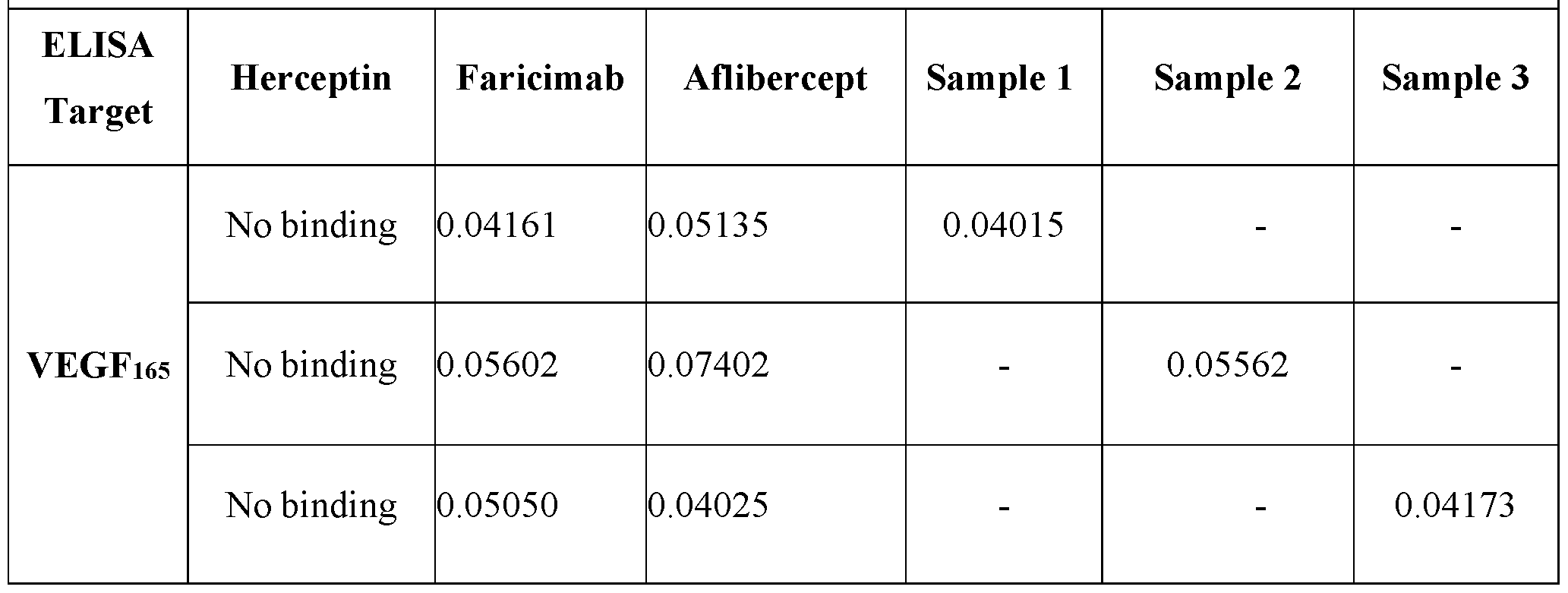
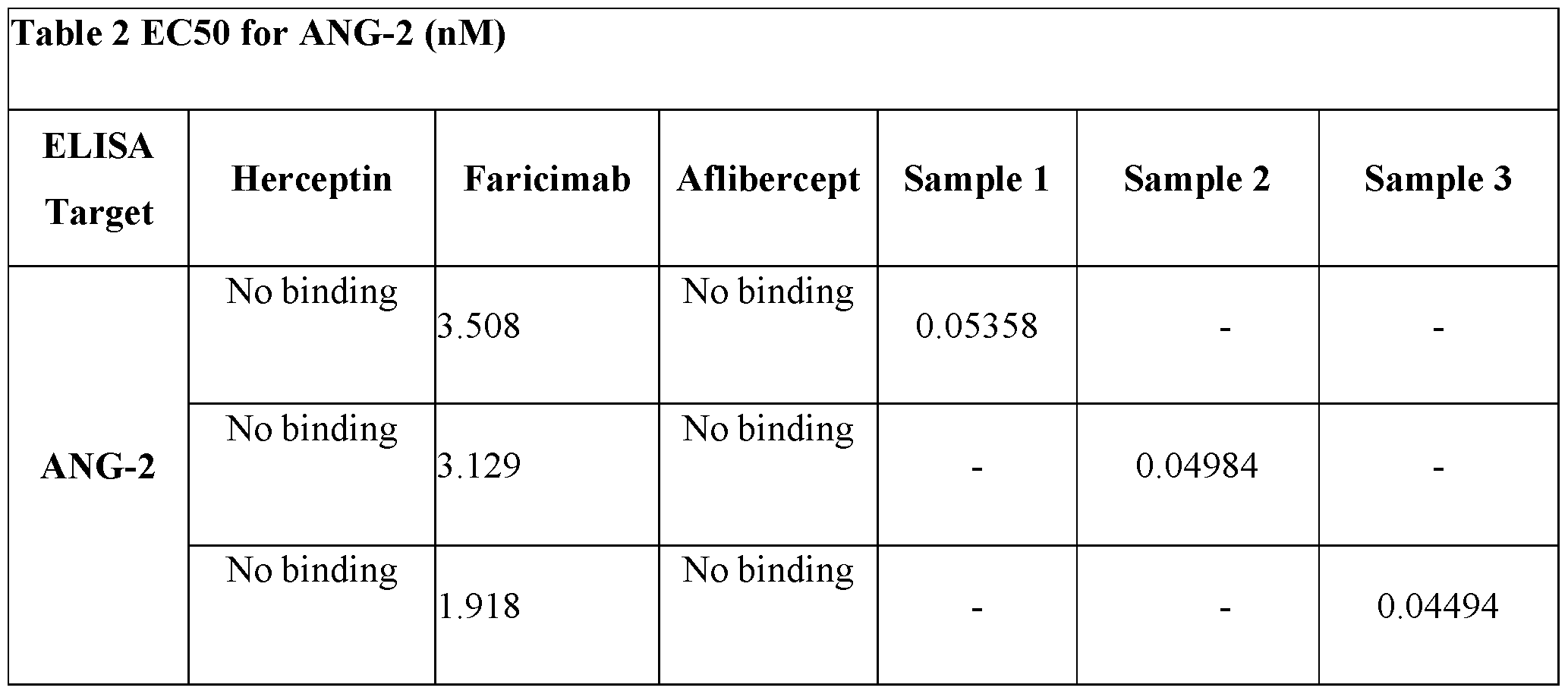

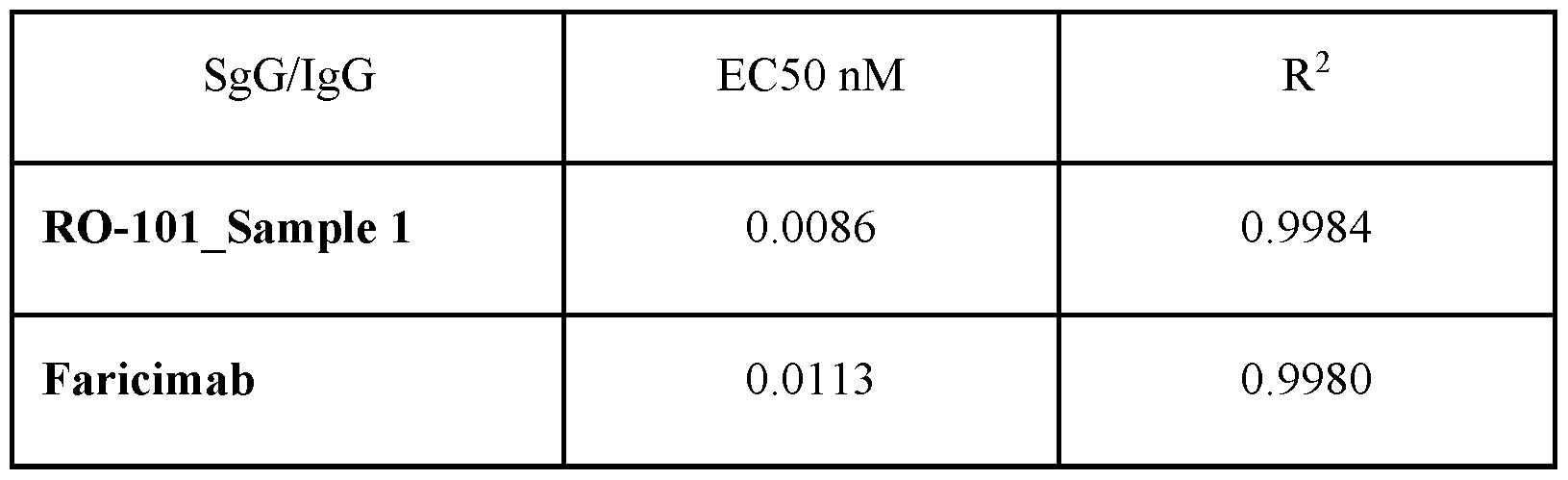


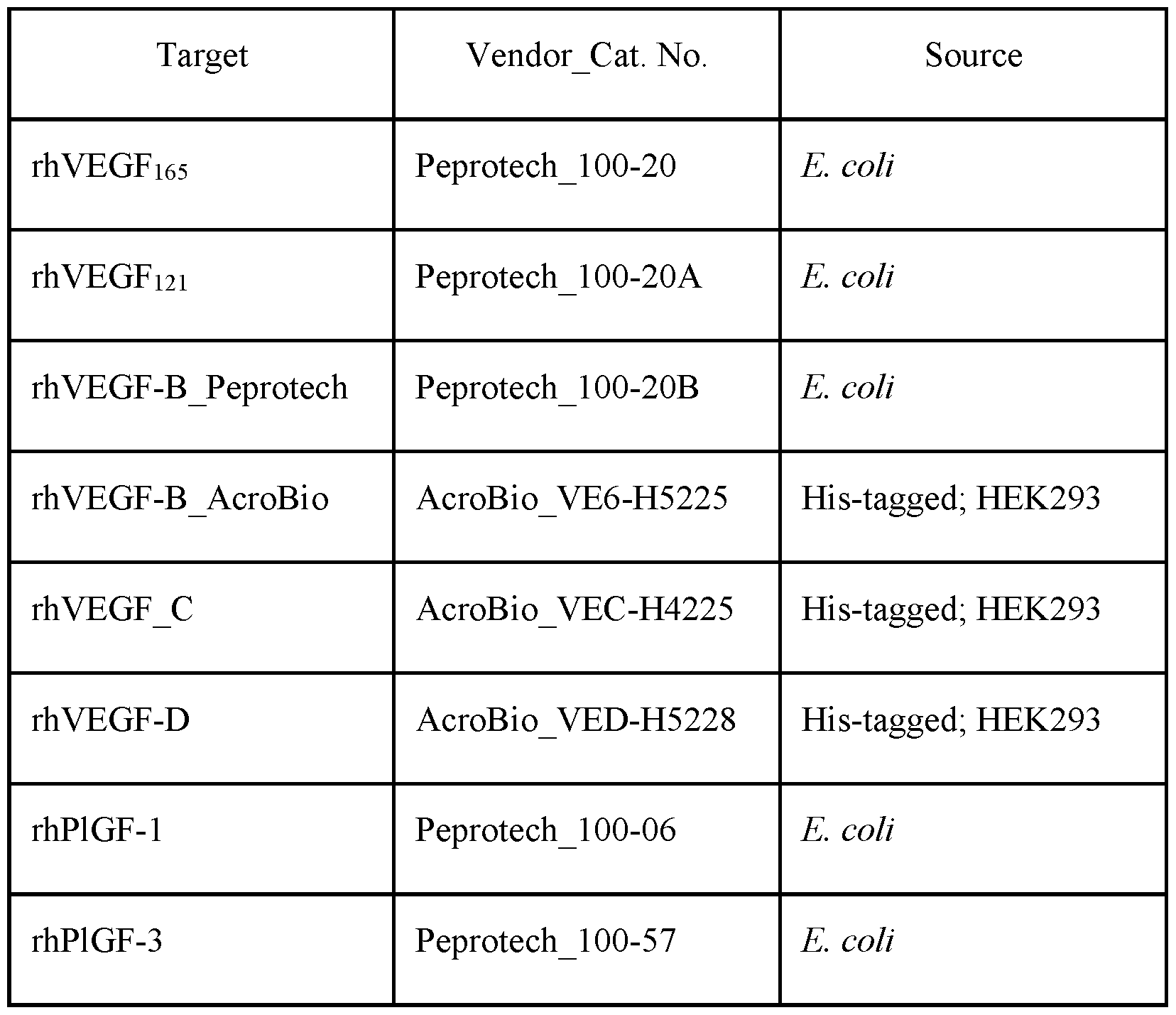


Claims
Priority Applications (9)
| Application Number | Priority Date | Filing Date | Title |
|---|---|---|---|
| KR1020257004070A KR20250036852A (en) | 2022-07-12 | 2023-07-11 | ANG-2/VEGF antibody and its uses |
| AU2023307151A AU2023307151A1 (en) | 2022-07-12 | 2023-07-11 | Ang-2/vegf antibodies and uses thereof |
| IL318151A IL318151A (en) | 2022-07-12 | 2023-07-11 | Ang-2/vegf antibodies and uses thereof |
| CN202380065620.0A CN119855830A (en) | 2022-07-12 | 2023-07-11 | ANG-2/VEGF antibodies and uses thereof |
| CA3261145A CA3261145A1 (en) | 2022-07-12 | 2023-07-11 | Ang-2/vegf antibodies and uses thereof |
| JP2024577003A JP2025525442A (en) | 2022-07-12 | 2023-07-11 | ANG2/VEGF ANTIBODIES AND USES THEREOF |
| EP23840465.1A EP4554976A1 (en) | 2022-07-12 | 2023-07-11 | Ang-2/vegf antibodies and uses thereof |
| US19/013,495 US20250250330A1 (en) | 2022-07-12 | 2025-01-08 | Ang-2/vegf antibodies and uses thereof |
| MX2025000456A MX2025000456A (en) | 2022-07-12 | 2025-01-10 | Ang-2/vegf antibodies and uses thereof |
Applications Claiming Priority (2)
| Application Number | Priority Date | Filing Date | Title |
|---|---|---|---|
| US202263388538P | 2022-07-12 | 2022-07-12 | |
| US63/388,538 | 2022-07-12 |
Related Child Applications (1)
| Application Number | Title | Priority Date | Filing Date |
|---|---|---|---|
| US19/013,495 Continuation US20250250330A1 (en) | 2022-07-12 | 2025-01-08 | Ang-2/vegf antibodies and uses thereof |
Publications (1)
| Publication Number | Publication Date |
|---|---|
| WO2024015791A1 true WO2024015791A1 (en) | 2024-01-18 |
Family
ID=89537441
Family Applications (1)
| Application Number | Title | Priority Date | Filing Date |
|---|---|---|---|
| PCT/US2023/069962 Ceased WO2024015791A1 (en) | 2022-07-12 | 2023-07-11 | Ang-2/vegf antibodies and uses thereof |
Country Status (10)
| Country | Link |
|---|---|
| US (1) | US20250250330A1 (en) |
| EP (1) | EP4554976A1 (en) |
| JP (1) | JP2025525442A (en) |
| KR (1) | KR20250036852A (en) |
| CN (1) | CN119855830A (en) |
| AU (1) | AU2023307151A1 (en) |
| CA (1) | CA3261145A1 (en) |
| IL (1) | IL318151A (en) |
| MX (1) | MX2025000456A (en) |
| WO (1) | WO2024015791A1 (en) |
Cited By (1)
| Publication number | Priority date | Publication date | Assignee | Title |
|---|---|---|---|---|
| WO2025076131A1 (en) * | 2023-10-03 | 2025-04-10 | Revopsis Therapeutics, Inc. | Compostions of multispecific antigen binding polypeptides and methods of use |
Citations (2)
| Publication number | Priority date | Publication date | Assignee | Title |
|---|---|---|---|---|
| WO2008118970A2 (en) * | 2007-03-27 | 2008-10-02 | Sea Lane Biotechnologies, Llc | Constructs and libraries comprising antibody surrogate light chain sequences |
| WO2013003652A1 (en) * | 2011-06-28 | 2013-01-03 | Sea Lane Biotechnologies, Llc | Multispecific stacked variable domain binding proteins |
-
2023
- 2023-07-11 AU AU2023307151A patent/AU2023307151A1/en active Pending
- 2023-07-11 IL IL318151A patent/IL318151A/en unknown
- 2023-07-11 JP JP2024577003A patent/JP2025525442A/en active Pending
- 2023-07-11 KR KR1020257004070A patent/KR20250036852A/en active Pending
- 2023-07-11 WO PCT/US2023/069962 patent/WO2024015791A1/en not_active Ceased
- 2023-07-11 CA CA3261145A patent/CA3261145A1/en active Pending
- 2023-07-11 CN CN202380065620.0A patent/CN119855830A/en active Pending
- 2023-07-11 EP EP23840465.1A patent/EP4554976A1/en active Pending
-
2025
- 2025-01-08 US US19/013,495 patent/US20250250330A1/en active Pending
- 2025-01-10 MX MX2025000456A patent/MX2025000456A/en unknown
Patent Citations (3)
| Publication number | Priority date | Publication date | Assignee | Title |
|---|---|---|---|---|
| WO2008118970A2 (en) * | 2007-03-27 | 2008-10-02 | Sea Lane Biotechnologies, Llc | Constructs and libraries comprising antibody surrogate light chain sequences |
| WO2013003652A1 (en) * | 2011-06-28 | 2013-01-03 | Sea Lane Biotechnologies, Llc | Multispecific stacked variable domain binding proteins |
| WO2013003647A2 (en) * | 2011-06-28 | 2013-01-03 | Sea Lane Biotechnologies, Llc | Multispecific stacked variable domain binding proteins |
Non-Patent Citations (5)
| Title |
|---|
| ANONYMOUS: "A Novel Surrobody Reduces Neovascularization in a Rat Model of CNV ", IOVS | ARVO JOURNALS, vol. 60, no. 9, 1 July 2019 (2019-07-01), pages 132, XP093132624 * |
| ANONYMOUS: "The Characterization of the Ang-2 Arm of a Novel Anti-VEGF-A and Ang-2 Bispecific Protein (RO-101) in Comparison to Faricimab-svoa | ", IOVS | ARVO JOURNALS, vol. 64, no. 8, 1 June 2023 (2023-06-01), pages 739, XP093132627 * |
| JOHN KUNZEMAN; JEFFREY L OLSON; ANTHONY JONES; JOSH MORGENSTERN; ANNE STRONG; STEVEN DROHO; SHAUN BEVERS; NIKLAUS MUELLER; MICHAEL: "Assessing Inhibition of HUVEC Migration by a Novel VEGF-A and Angiopoietin-2 Bispecific Protein ( RO -634", INVESTIGATIVE OPHTHALMOLOGY & VISUAL SCIENCE, vol. 63, 31 May 2022 (2022-05-31), pages 1325, XP009552134 * |
| XU LI ET AL: "Combinatorial surrobody libraries.", PROCEEDINGS OF THE NATIONAL ACADEMY OF SCIENCES, NATIONAL ACADEMY OF SCIENCES, vol. 105, no. 31, 5 August 2008 (2008-08-05), pages 10756 - 10761, XP002498064, ISSN: 0027-8424, DOI: 10.1073/pnas.0805293105 * |
| XU, L. ; ESTELLES, A. ; BRIANTE, R. ; KURTZMAN, A.L. ; HANNUM, C.H. ; KASHYAP, A.K. ; HOROWITZ, L. ; HOROWITZ, M. ; BHATT, R.R. ; : "Surrobodies with Functional Tails", JOURNAL OF MOLECULAR BIOLOGY, ACADEMIC PRESS, UNITED KINGDOM, vol. 397, no. 1, 19 March 2010 (2010-03-19), United Kingdom , pages 352 - 360, XP026929320, ISSN: 0022-2836, DOI: 10.1016/j.jmb.2010.01.036 * |
Cited By (1)
| Publication number | Priority date | Publication date | Assignee | Title |
|---|---|---|---|---|
| WO2025076131A1 (en) * | 2023-10-03 | 2025-04-10 | Revopsis Therapeutics, Inc. | Compostions of multispecific antigen binding polypeptides and methods of use |
Also Published As
| Publication number | Publication date |
|---|---|
| EP4554976A1 (en) | 2025-05-21 |
| CA3261145A1 (en) | 2024-01-18 |
| KR20250036852A (en) | 2025-03-14 |
| MX2025000456A (en) | 2025-05-02 |
| AU2023307151A1 (en) | 2025-02-13 |
| IL318151A (en) | 2025-03-01 |
| CN119855830A (en) | 2025-04-18 |
| JP2025525442A (en) | 2025-08-05 |
| US20250250330A1 (en) | 2025-08-07 |
Similar Documents
| Publication | Publication Date | Title |
|---|---|---|
| US11851495B2 (en) | TRAILR2 CDH17 binding molecules for the treatment of cancer | |
| AU2016323440A1 (en) | Tetravalent bispecific and tetraspecific antigen binding proteins and uses thereof | |
| JP7754506B2 (en) | Antibodies to the poliovirus receptor (PVR) and uses thereof | |
| CN116390950A (en) | Compositions and methods for modulating delta gamma chain-mediated immunity | |
| US20250250330A1 (en) | Ang-2/vegf antibodies and uses thereof | |
| KR20220117267A (en) | TGF-beta-RII binding protein | |
| US20230406942A1 (en) | Igf1r antibodies | |
| JP2022538374A (en) | Antigen-binding molecule that binds to PDGF-B and PDGF-D and use thereof | |
| CA3120063A1 (en) | Flt3 agonist antibodies and uses thereof | |
| US20240052065A1 (en) | Binding molecules for the treatment of cancer | |
| US20240150480A1 (en) | Binding molecules for the treatment of cancer | |
| WO2025076131A1 (en) | Compostions of multispecific antigen binding polypeptides and methods of use | |
| JP2025535498A (en) | Antibodies to CD24 and uses thereof | |
| CN119948058A (en) | Anti-CD30L antibodies, preparations thereof and uses thereof |
Legal Events
| Date | Code | Title | Description |
|---|---|---|---|
| 121 | Ep: the epo has been informed by wipo that ep was designated in this application |
Ref document number: 23840465 Country of ref document: EP Kind code of ref document: A1 |
|
| WWE | Wipo information: entry into national phase |
Ref document number: 2024577003 Country of ref document: JP |
|
| WWE | Wipo information: entry into national phase |
Ref document number: 318151 Country of ref document: IL |
|
| WWE | Wipo information: entry into national phase |
Ref document number: MX/A/2025/000456 Country of ref document: MX |
|
| WWE | Wipo information: entry into national phase |
Ref document number: 202517007427 Country of ref document: IN |
|
| WWE | Wipo information: entry into national phase |
Ref document number: AU2023307151 Country of ref document: AU |
|
| REG | Reference to national code |
Ref country code: BR Ref legal event code: B01A Ref document number: 112025000580 Country of ref document: BR |
|
| ENP | Entry into the national phase |
Ref document number: 20257004070 Country of ref document: KR Kind code of ref document: A |
|
| WWE | Wipo information: entry into national phase |
Ref document number: 1020257004070 Country of ref document: KR |
|
| WWE | Wipo information: entry into national phase |
Ref document number: 2023840465 Country of ref document: EP |
|
| ENP | Entry into the national phase |
Ref document number: 2023307151 Country of ref document: AU Date of ref document: 20230711 Kind code of ref document: A |
|
| NENP | Non-entry into the national phase |
Ref country code: DE |
|
| ENP | Entry into the national phase |
Ref document number: 2023840465 Country of ref document: EP Effective date: 20250212 |
|
| WWP | Wipo information: published in national office |
Ref document number: 202517007427 Country of ref document: IN |
|
| WWE | Wipo information: entry into national phase |
Ref document number: 11202500133X Country of ref document: SG |
|
| WWP | Wipo information: published in national office |
Ref document number: 11202500133X Country of ref document: SG |
|
| WWE | Wipo information: entry into national phase |
Ref document number: 202380065620.0 Country of ref document: CN |
|
| WWP | Wipo information: published in national office |
Ref document number: 1020257004070 Country of ref document: KR |
|
| WWP | Wipo information: published in national office |
Ref document number: 202380065620.0 Country of ref document: CN |
|
| WWP | Wipo information: published in national office |
Ref document number: MX/A/2025/000456 Country of ref document: MX |
|
| WWP | Wipo information: published in national office |
Ref document number: 2023840465 Country of ref document: EP |
|
| ENP | Entry into the national phase |
Ref document number: 112025000580 Country of ref document: BR Kind code of ref document: A2 Effective date: 20250113 |