WO2024011179A1 - Combinations of il15/il15r alpha heterodimeric fc-fusion proteins and fcrh5xcd3 bispecific antibodies for the treatment of blood cancers - Google Patents
Combinations of il15/il15r alpha heterodimeric fc-fusion proteins and fcrh5xcd3 bispecific antibodies for the treatment of blood cancers Download PDFInfo
- Publication number
- WO2024011179A1 WO2024011179A1 PCT/US2023/069713 US2023069713W WO2024011179A1 WO 2024011179 A1 WO2024011179 A1 WO 2024011179A1 US 2023069713 W US2023069713 W US 2023069713W WO 2024011179 A1 WO2024011179 A1 WO 2024011179A1
- Authority
- WO
- WIPO (PCT)
- Prior art keywords
- fcrh5xcd3
- heterodimeric
- fusion protein
- il15ra
- bispecific antibody
- Prior art date
- Legal status (The legal status is an assumption and is not a legal conclusion. Google has not performed a legal analysis and makes no representation as to the accuracy of the status listed.)
- Ceased
Links
Classifications
-
- A—HUMAN NECESSITIES
- A61—MEDICAL OR VETERINARY SCIENCE; HYGIENE
- A61K—PREPARATIONS FOR MEDICAL, DENTAL OR TOILETRY PURPOSES
- A61K38/00—Medicinal preparations containing peptides
- A61K38/16—Peptides having more than 20 amino acids; Gastrins; Somatostatins; Melanotropins; Derivatives thereof
- A61K38/17—Peptides having more than 20 amino acids; Gastrins; Somatostatins; Melanotropins; Derivatives thereof from animals; from humans
- A61K38/19—Cytokines; Lymphokines; Interferons
- A61K38/20—Interleukins [IL]
- A61K38/2086—IL-13 to IL-16
-
- A—HUMAN NECESSITIES
- A61—MEDICAL OR VETERINARY SCIENCE; HYGIENE
- A61K—PREPARATIONS FOR MEDICAL, DENTAL OR TOILETRY PURPOSES
- A61K38/00—Medicinal preparations containing peptides
- A61K38/16—Peptides having more than 20 amino acids; Gastrins; Somatostatins; Melanotropins; Derivatives thereof
- A61K38/17—Peptides having more than 20 amino acids; Gastrins; Somatostatins; Melanotropins; Derivatives thereof from animals; from humans
- A61K38/177—Receptors; Cell surface antigens; Cell surface determinants
- A61K38/1793—Receptors; Cell surface antigens; Cell surface determinants for cytokines; for lymphokines; for interferons
-
- A—HUMAN NECESSITIES
- A61—MEDICAL OR VETERINARY SCIENCE; HYGIENE
- A61K—PREPARATIONS FOR MEDICAL, DENTAL OR TOILETRY PURPOSES
- A61K39/00—Medicinal preparations containing antigens or antibodies
- A61K39/395—Antibodies; Immunoglobulins; Immune serum, e.g. antilymphocytic serum
-
- A—HUMAN NECESSITIES
- A61—MEDICAL OR VETERINARY SCIENCE; HYGIENE
- A61P—SPECIFIC THERAPEUTIC ACTIVITY OF CHEMICAL COMPOUNDS OR MEDICINAL PREPARATIONS
- A61P35/00—Antineoplastic agents
-
- A—HUMAN NECESSITIES
- A61—MEDICAL OR VETERINARY SCIENCE; HYGIENE
- A61P—SPECIFIC THERAPEUTIC ACTIVITY OF CHEMICAL COMPOUNDS OR MEDICINAL PREPARATIONS
- A61P35/00—Antineoplastic agents
- A61P35/02—Antineoplastic agents specific for leukemia
-
- C—CHEMISTRY; METALLURGY
- C07—ORGANIC CHEMISTRY
- C07K—PEPTIDES
- C07K14/00—Peptides having more than 20 amino acids; Gastrins; Somatostatins; Melanotropins; Derivatives thereof
- C07K14/435—Peptides having more than 20 amino acids; Gastrins; Somatostatins; Melanotropins; Derivatives thereof from animals; from humans
- C07K14/52—Cytokines; Lymphokines; Interferons
- C07K14/54—Interleukins [IL]
- C07K14/5443—IL-15
-
- C—CHEMISTRY; METALLURGY
- C07—ORGANIC CHEMISTRY
- C07K—PEPTIDES
- C07K14/00—Peptides having more than 20 amino acids; Gastrins; Somatostatins; Melanotropins; Derivatives thereof
- C07K14/435—Peptides having more than 20 amino acids; Gastrins; Somatostatins; Melanotropins; Derivatives thereof from animals; from humans
- C07K14/705—Receptors; Cell surface antigens; Cell surface determinants
- C07K14/715—Receptors; Cell surface antigens; Cell surface determinants for cytokines; for lymphokines; for interferons
- C07K14/7155—Receptors; Cell surface antigens; Cell surface determinants for cytokines; for lymphokines; for interferons for interleukins [IL]
-
- C—CHEMISTRY; METALLURGY
- C07—ORGANIC CHEMISTRY
- C07K—PEPTIDES
- C07K16/00—Immunoglobulins [IGs], e.g. monoclonal or polyclonal antibodies
- C07K16/18—Immunoglobulins [IGs], e.g. monoclonal or polyclonal antibodies against material from animals or humans
- C07K16/24—Immunoglobulins [IGs], e.g. monoclonal or polyclonal antibodies against material from animals or humans against cytokines, lymphokines or interferons
- C07K16/244—Interleukins [IL]
- C07K16/248—IL-6
-
- C—CHEMISTRY; METALLURGY
- C07—ORGANIC CHEMISTRY
- C07K—PEPTIDES
- C07K16/00—Immunoglobulins [IGs], e.g. monoclonal or polyclonal antibodies
- C07K16/18—Immunoglobulins [IGs], e.g. monoclonal or polyclonal antibodies against material from animals or humans
- C07K16/28—Immunoglobulins [IGs], e.g. monoclonal or polyclonal antibodies against material from animals or humans against receptors, cell surface antigens or cell surface determinants
- C07K16/2803—Immunoglobulins [IGs], e.g. monoclonal or polyclonal antibodies against material from animals or humans against receptors, cell surface antigens or cell surface determinants against the immunoglobulin superfamily
- C07K16/2809—Immunoglobulins [IGs], e.g. monoclonal or polyclonal antibodies against material from animals or humans against receptors, cell surface antigens or cell surface determinants against the immunoglobulin superfamily against the T-cell receptor (TcR)-CD3 complex
-
- C—CHEMISTRY; METALLURGY
- C07—ORGANIC CHEMISTRY
- C07K—PEPTIDES
- C07K16/00—Immunoglobulins [IGs], e.g. monoclonal or polyclonal antibodies
- C07K16/18—Immunoglobulins [IGs], e.g. monoclonal or polyclonal antibodies against material from animals or humans
- C07K16/28—Immunoglobulins [IGs], e.g. monoclonal or polyclonal antibodies against material from animals or humans against receptors, cell surface antigens or cell surface determinants
- C07K16/2803—Immunoglobulins [IGs], e.g. monoclonal or polyclonal antibodies against material from animals or humans against receptors, cell surface antigens or cell surface determinants against the immunoglobulin superfamily
- C07K16/283—Immunoglobulins [IGs], e.g. monoclonal or polyclonal antibodies against material from animals or humans against receptors, cell surface antigens or cell surface determinants against the immunoglobulin superfamily against Fc-receptors, e.g. CD16, CD32, CD64
-
- A—HUMAN NECESSITIES
- A61—MEDICAL OR VETERINARY SCIENCE; HYGIENE
- A61K—PREPARATIONS FOR MEDICAL, DENTAL OR TOILETRY PURPOSES
- A61K39/00—Medicinal preparations containing antigens or antibodies
- A61K2039/505—Medicinal preparations containing antigens or antibodies comprising antibodies
-
- A—HUMAN NECESSITIES
- A61—MEDICAL OR VETERINARY SCIENCE; HYGIENE
- A61K—PREPARATIONS FOR MEDICAL, DENTAL OR TOILETRY PURPOSES
- A61K39/00—Medicinal preparations containing antigens or antibodies
- A61K2039/54—Medicinal preparations containing antigens or antibodies characterised by the route of administration
-
- A—HUMAN NECESSITIES
- A61—MEDICAL OR VETERINARY SCIENCE; HYGIENE
- A61K—PREPARATIONS FOR MEDICAL, DENTAL OR TOILETRY PURPOSES
- A61K39/00—Medicinal preparations containing antigens or antibodies
- A61K2039/545—Medicinal preparations containing antigens or antibodies characterised by the dose, timing or administration schedule
-
- A—HUMAN NECESSITIES
- A61—MEDICAL OR VETERINARY SCIENCE; HYGIENE
- A61K—PREPARATIONS FOR MEDICAL, DENTAL OR TOILETRY PURPOSES
- A61K2300/00—Mixtures or combinations of active ingredients, wherein at least one active ingredient is fully defined in groups A61K31/00 - A61K41/00
-
- C—CHEMISTRY; METALLURGY
- C07—ORGANIC CHEMISTRY
- C07K—PEPTIDES
- C07K2317/00—Immunoglobulins specific features
- C07K2317/20—Immunoglobulins specific features characterized by taxonomic origin
- C07K2317/24—Immunoglobulins specific features characterized by taxonomic origin containing regions, domains or residues from different species, e.g. chimeric, humanized or veneered
-
- C—CHEMISTRY; METALLURGY
- C07—ORGANIC CHEMISTRY
- C07K—PEPTIDES
- C07K2317/00—Immunoglobulins specific features
- C07K2317/30—Immunoglobulins specific features characterized by aspects of specificity or valency
- C07K2317/31—Immunoglobulins specific features characterized by aspects of specificity or valency multispecific
-
- C—CHEMISTRY; METALLURGY
- C07—ORGANIC CHEMISTRY
- C07K—PEPTIDES
- C07K2317/00—Immunoglobulins specific features
- C07K2317/50—Immunoglobulins specific features characterized by immunoglobulin fragments
- C07K2317/56—Immunoglobulins specific features characterized by immunoglobulin fragments variable (Fv) region, i.e. VH and/or VL
- C07K2317/565—Complementarity determining region [CDR]
-
- C—CHEMISTRY; METALLURGY
- C07—ORGANIC CHEMISTRY
- C07K—PEPTIDES
- C07K2319/00—Fusion polypeptide
- C07K2319/30—Non-immunoglobulin-derived peptide or protein having an immunoglobulin constant or Fc region, or a fragment thereof, attached thereto
-
- C—CHEMISTRY; METALLURGY
- C07—ORGANIC CHEMISTRY
- C07K—PEPTIDES
- C07K2319/00—Fusion polypeptide
- C07K2319/32—Fusion polypeptide fusions with soluble part of a cell surface receptor, "decoy receptors"
Definitions
- the present disclosure pertains to the field of treatment of blood cancer, such as multiple myeloma, using a combination of an IL15-IL15Ra heterodimeric Fc- fusion protein and an FcRH5xCD3 bispecific antibody.
- MM multiple myeloma
- M-proteins monoclonal proteins
- End-organ damage resulting from MM includes hypercalcemia, renal insufficiency, anemia, and lytic bone lesions.
- MM remains incurable despite advances in treatment, with an estimated median survival of 8-10 years for standard-risk and 2-3 years from high-risk myeloma, even with aggressive treatments such as autologous stem cell transplantation (ASCT) (Mikhael et al. 2013).
- ASCT autologous stem cell transplantation
- Increased survival has been achieved with the introduction of proteasome inhibitors (Pls) such as bortezomib (Velcade ® U.S.
- IMDs immunomodulatory drugs
- lenalidomide Revlimid ® USPI
- IPDs immunomodulatory drugs
- monoclonal antibodies such as daratumumab
- daratumumab Darzalex ® USPI, Darzalex- FasproTM USPI
- Other agents with novel mechanisms of action that have received U.S. Food and Drug Administration approval for the treatment of MM include the nuclear export inhibitor Selinexor (XpovioTM USPI) and belantamab mafodotin-bmlf (Blenrep USPI).
- R/R MM Relap sed/refractory multiple myeloma
- CAR chimeric antigen receptor
- the present disclosure provides a method of treating a blood cancer in a subject in need thereof, the method comprising administering to the subject a therapeutically effective amount of (a) an IL15-IL15Ra heterodimeric Fc- fusion protein and (b) an FcRH5xCD3 bispecific antibody or a fragment thereof that binds both antigens.
- the present disclosure provides use of a therapeutically effective amount of (a) an IL15-IL15Ra heterodimeric Fc-fusion protein and (b) an FcRH5xCD3 bispecific antibody or a fragment thereof that binds both antigens in the manufacture of one or more medicaments for the treatment of a blood cancer in a subject in need thereof.
- the present disclosure provides a therapeutically effective amount of (a) an IL15-IL15Ra heterodimeric Fc-fusion protein and (b) an FcRH5xCD3 bispecific antibody or a fragment thereof that binds both antigen for use in treating a blood cancer in a subject in need thereof.
- the IL15-IL15Ra heterodimeric Fc-fusion protein comprises: (a) a first fusion protein comprising an interleukin- 15 (IL-15) protein covalently attached to the N-terminus of a first Fc domain via a first domain linker, wherein the IL-15 protein comprises the amino acid sequence of SEQ ID NO: 5 and wherein the first Fc domain is a variant of a human IgGl Fc domain; and (b) a second fusion protein comprising an IL-15 receptor alpha (IL-15Ra) protein fragment covalently attached to the N-terminus of a second Fc domain via a second domain linker, wherein the IL-15Ra protein comprises the amino acid sequence of SEQ ID NO: 4 and wherein the second Fc domain is a variant of a human IgGl Fc domain.
- IL-15 interleukin- 15
- the IL15-IL15Ra heterodimeric Fc-fusion protein comprises: (a) a first fusion protein comprising an interleukin- 15 (IL-15) protein covalently attached to the N-terminus of a first Fc domain via a first domain linker, wherein the IL-15 protein comprises the amino acid sequence of SEQ ID NO: 5 and wherein the first Fc domain comprises the amino acid sequence of SEQ ID NO: 6; and (b) a second fusion protein comprising an IL-15 receptor alpha (IL-15Ra) protein fragment covalently attached to the N-terminus of a second Fc domain via a second domain linker, wherein the IL-15Ra protein comprises the amino acid sequence of SEQ ID NO: 4 and wherein the second Fc domain comprises the amino acid sequence of SEQ ID NO: 7.
- IL-15 interleukin- 15
- the first domain linker comprises the amino acid sequence of SEQ ID NO: 8.
- the second domain linker comprises the amino acid sequence of SEQ ID NO: 8.
- the first domain linker comprises the amino acid sequence of SEQ ID NO: 8 and the second domain linker comprises the amino acid sequence of SEQ ID NO: 8.
- the first fusion protein comprises the amino acid sequence of SEQ ID NO: 9.
- the second fusion protein comprises the amino acid sequence of SEQ ID NO: 10.
- the heterodimeric protein comprises a first monomer comprising the amino acid sequence set forth in SEQ ID NO: 9, and a second monomer comprising the amino acid sequence set forth in SEQ ID NO: 10.
- the IL15-IL15Ra heterodimeric Fc-fusion protein is XmAb24306.
- the FcRH5xCD3 bispecific antibody or a fragment thereof that binds both antigens comprises an anti-FcRH5 light chain variable region, an anti-FcRH5 heavy chain variable region, an anti-CD3 light chain variable region, and an anti-CD3 heavy chain variable region.
- the anti-FcRH5 light chain variable region comprises a light chain complementarity determining region- 1 (CDR-L1) comprising the amino acid sequence of SEQ ID NO: 11, a CDR-L2 comprising the amino acid sequence of SEQ ID NO: 12, and a CDR-L3 comprising the amino acid sequence of SEQ ID NO: 13; and the anti-FcRH5 heavy chain variable region comprises a heavy chain complementarity determining region-1 (CDR-H1) comprising the amino acid sequence of SEQ ID NO: 14, a CDR-H2 comprising the amino acid sequence of SEQ ID NO: 15, and a CDR-H3 comprising the amino acid sequence of SEQ ID NO: 16.
- CDR-L1 light chain complementarity determining region- 1
- CDR-L2 comprising the amino acid sequence of SEQ ID NO: 12
- a CDR-L3 comprising the amino acid sequence of SEQ ID NO: 13
- the anti-FcRH5 heavy chain variable region comprises a heavy chain complementarity determining
- the anti-FcRH5 light chain variable region comprises the amino acid sequence of SEQ ID NO: 17. In some embodiments, the anti- FcRH5 heavy chain variable region comprises the amino acid sequence of SEQ ID NO: 18. In some embodiments, the anti-FcRH5 light chain comprises the amino acid sequence of SEQ ID NO: 19. In some embodiments, the anti-FcRH5 heavy chain comprises the amino acid sequence of SEQ ID NO: 20.
- the anti-CD3 light chain variable region comprises a light chain complementarity determining region- 1 (CDR-L1) comprising the amino acid sequence of SEQ ID NO: 21, a CDR-L2 comprising the amino acid sequence of SEQ ID NO: 22, and a CDR-L3 comprising the amino acid sequence of SEQ ID NO: 23; and the anti-CD3 heavy chain variable region comprises a heavy chain complementarity determining region-1 (CDR-H1) comprising the amino acid sequence of SEQ ID NO: 24, a CDR-H2 comprising the amino acid sequence of SEQ ID NO: 25, and a CDR-H3 comprising the amino acid sequence of SEQ ID NO: 26.
- CDR-L1 light chain complementarity determining region- 1
- CDR-L2 comprising the amino acid sequence of SEQ ID NO: 22
- a CDR-L3 comprising the amino acid sequence of SEQ ID NO: 23
- the anti-CD3 heavy chain variable region comprises a heavy chain complementarity determining region-1 (CDR-H1)
- the anti-CD3 light chain variable region comprises the amino acid sequence of SEQ ID NO: 27. In some embodiments, the anti- CD3 heavy chain variable region comprises the amino acid sequence of SEQ ID NO: 28. In some embodiments, the anti-CD3 light chain comprises the amino acid sequence of SEQ ID NO: 29. In some embodiments, the anti-CD3 heavy chain comprises the amino acid sequence of SEQ ID NO: 30.
- the anti-FcRH5 light chain variable region comprises the amino acid sequence of SEQ ID NO: 17; the anti-FcRH5 heavy chain variable region comprises the amino acid sequence of SEQ ID NO: 18; the anti-CD3 light chain variable region comprises the amino acid sequence of SEQ ID NO: 27; and the anti-CD3 heavy chain variable region comprises the amino acid sequence of SEQ ID NO: 28.
- the anti-FcRH5 light chain comprises the amino acid sequence of SEQ ID NO: 19; the anti-FcRH5 heavy chain comprises the amino acid sequence of SEQ ID NO: 20; the anti-CD3 light chain comprises the amino acid sequence of SEQ ID NO: 29; and the anti-CD3 heavy chain comprises the amino acid sequence of SEQ ID NO: 30.
- the FcRH5xCD3 bispecific antibody is cevostamab.
- the blood cancer of this disclosure is selected from the group consisting of leukemia, acute myeloid leukemia, adult acute lymphoblastic leukemia, chronic lymphocytic leukemia, lymphoma, non-Hodgkin’s lymphoma, B-cell non-Hodgkin’s lymphoma, and multiple myeloma.
- the blood cancer is multiple myeloma.
- the multiple myeloma is relapsed or refractory multiple myeloma.
- the blood cancer is B-cell non-Hodgkin’s lymphoma.
- the blood cancer is chronic lymphocytic leukemia.
- the subject has been previously administered one or more prior treatments.
- the prior treatment of this disclosure is an immunomodulatory drug, a proteasome inhibitor, or an anti-CD38 monoclonal antibody.
- the immunomodulatory drug is selected from the group consisting of lenalidomide, thalidomide, and pomalidomide.
- the proteasome inhibitor is selected from the group consisting of bortezomib, carfilzomib, and ixazomib.
- the anti-CD38 monoclonal antibody is selected from the group consisting of daratumumab, isatuximab, mezagitamab, and felzartamab.
- the IL15-IL15Ra heterodimeric Fc-fusion protein (e.g., XmAb24306) is administered at a dose selected from the group consisting of about 0.0025 mg/kg, about 0.005 mg/kg, about 0.01 mg/kg, about 0.015 mg/kg, about 0.02 mg/kg, about 0.025 mg/kg, about 0.03 mg/kg, about 0.04 mg/kg, about 0.05 mg/kg, about 0.06 mg/kg, about 0.08 mg/kg, about 0.1 mg/kg, about 0.12 mg/kg, about 0.16 mg/kg, about 0.2 mg/kg, about 0.24 mg/kg and about 0.32 mg/kg body weight.
- a dose selected from the group consisting of about 0.0025 mg/kg, about 0.005 mg/kg, about 0.01 mg/kg, about 0.015 mg/kg, about 0.02 mg/kg, about 0.025 mg/kg, about 0.03 mg/kg, about 0.04 mg/kg, about 0.05 mg/kg, about 0.06 mg/kg
- the IL15-IL15Ra heterodimeric Fc-fusion protein (e.g, XmAb24306) is administered at a dose selected from the group consisting of about 0.01 mg/kg, about 0.02 mg/kg, about 0.04 mg/kg, about 0.06 mg/kg, about 0.09 mg/kg and about 0.12 mg/kg body weight.
- the IL15-IL15Ra heterodimeric Fc-fusion protein (e.g, XmAb24306) is administered at a dose selected from the group consisting of 0.0025 mg/kg, 0.005 mg/kg, 0.01 mg/kg, 0.015 mg/kg, 0.02 mg/kg, 0.025 mg/kg, 0.03 mg/kg, 0.04 mg/kg, 0.05 mg/kg, 0.06 mg/kg, 0.08 mg/kg, 0.10 mg/kg, 0.16 mg/kg, 0.20 mg/kg, 0.24 mg/kg and 0.32 mg/kg body weight.
- a dose selected from the group consisting of 0.0025 mg/kg, 0.005 mg/kg, 0.01 mg/kg, 0.015 mg/kg, 0.02 mg/kg, 0.025 mg/kg, 0.03 mg/kg, 0.04 mg/kg, 0.05 mg/kg, 0.06 mg/kg, 0.08 mg/kg, 0.10 mg/kg, 0.16 mg/kg, 0.20 mg/kg, 0.24 mg/kg and 0.32 mg
- the IL 15- IL15Ra heterodimeric Fc-fusion protein (e.g., XmAb24306) is administered at a dose selected from the group consisting of 0.01 mg/kg, 0.02 mg/kg, 0.04 mg/kg, 0.06 mg/kg, 0.09 mg/kg, and 0.12 mg/kg body weight.
- the IL15-IL15Ra heterodimeric Fc-fusion protein (e.g., XmAb24306) is administered at a frequency selected from the group consisting of Q1W, Q2W, Q3W, Q4W, Q5W and Q6W.
- the IL15-IL15Ra heterodimeric Fc-fusion protein (e.g., XmAb24306) is administered at a frequency of Q1W in one or more cycles.
- the IL15-IL15Ra heterodimeric Fc-fusion protein (e.g., XmAb24306) is administered at a frequency of Q2W in one or more cycles.
- the IL15-IL15Ra heterodimeric Fc-fusion protein (e.g., XmAb24306) is administered at a frequency of Q4W in one or more cycles.
- the IL15-IL15Ra heterodimeric Fc-fusion protein (e.g., XmAb24306) is administered intravenously.
- the IL15-IL15Ra heterodimeric Fc-fusion protein e.g., XmAb24306
- said FcRH5xCD3 bispecific antibody e.g., cevostamab
- the IL15-IL15Ra heterodimeric Fc-fusion protein e.g., XmAb24306
- said FcRH5xCD3 bispecific antibody e.g., cevostamab
- the FcRH5xCD3 bispecific antibody e.g., cevostamab) or fragment thereof that binds both antigens is administered at a frequency selected from the group consisting of Q1W, Q2W, Q3W, Q4W, Q5W and Q6W in one or more cycles.
- the FcRH5xCD3 bispecific antibody (e.g., cevostamab) or fragment thereof that binds both antigens is administered at a frequency of Q2W in one or more cycles.
- the IL15-IL15Ra heterodimeric Fc-fusion protein (e.g., XmAb24306) is administered at a frequency of Q4W, and wherein said FcRH5xCD3 bispecific antibody (e.g., cevostamab) or fragment thereof that binds both antigens is administered at a frequency of Q2W in one or more cycles.
- each of the one or more cycles is a four-week cycle.
- the FcRH5xCD3 bi specific antibody e.g., cevostamab
- the FcRH5xCD3 bispecific antibody e.g., cevostamab
- the FcRH5xCD3 bispecific antibody e.g., cevostamab
- the FcRH5xCD3 bispecific antibody e.g., cevostamab
- a fragment thereof that binds both antigens is administered on Days 1 and 15 for six four- week cycles and administered on Day 1 in the seventh and any subsequent four-week cycle.
- the FcRH5xCD3 bispecific antibody (e.g., cevostamab) is administered at a dose of about 132 mg to about 198 mg. In some embodiments, the FcRH5xCD3 bispecific antibody (e.g., cevostamab) is administered at a dose of about 132 mg. In some embodiments, the FcRH5xCD3 bispecific antibody (e.g, cevostamab) is administered at a dose of about 132 mg at a frequency of Q2W in one or more 28-day cycles. In some embodiments, the FcRH5xCD3 bispecific antibody (e.g, cevostamab) is administered at a dose of about 160 mg. In some embodiments, the FcRH5xCD3 bispecific antibody (e.g., cevostamab) is administered at a dose of about 198 mg.
- the one or more priming doses of the FcRH5xCD3 bispecific antibody (e.g., cevostamab) or a fragment thereof that binds both antigens is administered to the subject during a pre-phase before the first treatment cycle.
- the pre-phase is seven days.
- the priming dose is about 3.6 mg of the FcRH5xCD3 bispecific antibody (e.g., cevostamab).
- the two priming doses of the FcRH5xCD3 bispecific antibody (e.g., cevostamab) or a fragment thereof that binds both antigens are administered to the subject.
- about 3.6 mg of the FcRH5xCD3 bispecific antibody is administered between the two priming doses (/. e. , the amount administered in the first priming dose and the amount administered in the second priming dose add up to about 3.6 mg).
- the first priming dose is administered on pre-phase Day 1.
- the second priming dose is administered between pre-phase Days 2-4.
- the minimum interval between the end of the first priming dose and the initiation of the second priming dose is 20 hours.
- the FcRH5xCD3 bispecific antibody e.g., cevostamab
- the first priming dose is about 0.3 mg and the second priming dose is about 3.3 mg.
- the subject is administered a first priming dose of about 0.3 mg of the FcRH5xCD3 bispecific antibody (e.g., cevostamab) on pre-phase Day 1, a second priming dose of about 3.3 mg of the FcRH5xCD3 bispecific antibody (e.g., cevostamab) between pre-phase Days 2-4 and, thereafter, at a dose of about 132 mg of the FcRH5xCD3 bispecific antibody (e.g., cevostamab) on Days 1 and 15 for six four-week cycles and on Day 1 for the seventh and any subsequent four-week cycles.
- the FcRH5xCD3 bispecific antibody e.g., cevostamab
- the method further comprises administering to the subject a therapeutically effective amount of tocilizumab.
- the subject has suffered a cytokine release syndrome (CRS) event.
- the tocilizumab is administered to subjects that remain refractory to a corticosteroid 24 hours after the first corticosteroid dose.
- the tocilizumab is administered at a dose of 8 mg/kg.
- the tocilizumab is administered at a dose of 8 mg/kg if the subject’s weight is > 30 kg.
- the tocilizumab is administered at a dose of 12 mg/kg.
- the tocilizumab is administered at a dose of 12 mg/kg if the patient’s weight is ⁇ 30 kg.
- the tocilizumab is administered intravenously. In some embodiments, the tocilizumab is administered every 8 hours.
- a fourth aspect of the present disclosure provides a method of treating multiple myeloma in a subject in need thereof, the method comprising administering to the subject a therapeutically effective amount of (a) XmAb24306, wherein XmAb24306 comprises a first monomer comprising the amino acid sequence of SEQ ID NO: 9 and a second monomer comprising the amino acid sequence of SEQ ID NO: 10, and (b) cevostamab, wherein cevostamab comprises an anti-FcRH5 light chain comprising the amino acid sequence of SEQ ID NO: 19, an anti-FcRH5 heavy chain comprising the amino acid sequence of SEQ ID NO: 20, an anti-CD3 light chain comprising the amino acid sequence of SEQ ID NO: 29, and an anti-CD3 heavy chain comprising the amino acid sequence of SEQ ID NO: 30, wherein XmAb24306 is administered intravenously at a dose from about 0.02 mg/kg to about 0.06 mg/kg and cevostamab is administered intravenously at a dose
- a fifth aspect of the present disclosure provides use of a therapeutically effective amount of (a) XmAb24306, wherein XmAb24306 comprises a first monomer comprising the amino acid sequence of SEQ ID NO: 9 and a second monomer comprising the amino acid sequence of SEQ ID NO: 10, and (b) cevostamab, wherein cevostamab comprises an anti-FcRH5 light chain comprising the amino acid sequence of SEQ ID NO: 19, an anti-FcRH5 heavy chain comprising the amino acid sequence of SEQ ID NO: 20, an anti-CD3 light chain comprising the amino acid sequence of SEQ ID NO: 29, and an anti-CD3 heavy chain comprising the amino acid sequence of SEQ ID NO: 30 in the manufacture of one or more medicaments for treating multiple myeloma in a subject in need thereof, wherein XmAb24306 is formulated to be administered intravenously at a dose from about 0.02 mg/kg to about 0.06 mg/kg and cevostamab is formulated to be administered
- a sixth aspect of the present disclosure provides a therapeutically effective amount of (a) XmAb24306, wherein XmAb24306 comprises a first monomer comprising the amino acid sequence of SEQ ID NO: 9 and a second monomer comprising the amino acid sequence of SEQ ID NO: 10, and (b) cevostamab, wherein cevostamab comprises an anti-FcRH5 light chain comprising the amino acid sequence of SEQ ID NO: 19, an anti-FcRH5 heavy chain comprising the amino acid sequence of SEQ ID NO: 20, an anti-CD3 light chain comprising the amino acid sequence of SEQ ID NO: 29, and an anti-CD3 heavy chain comprising the amino acid sequence of SEQ ID NO: 30 for use in treating multiple myeloma in a subject in need thereof, wherein XmAb24306 is administered intravenously at a dose from about 0.02 mg/kg to about 0.06 mg/kg and cevostamab is administered intravenously at a dose of about 132 mg.
- the treatment further comprises administering to the subject one or more priming doses of cevostamab at a total dose of about 3.6 mg during a seven-day pre-phase before the first treatment cycle, wherein the priming dose is administered as a single dose.
- the treatment further comprises administering to the subject one or more priming doses of cevostamab at a total dose of about 3.6 mg during a seven-day pre-phase before the first treatment cycle, wherein the priming dose is administered as two doses.
- the first priming dose is about 0.3 mg and the second priming dose is about 3.3 mg.
- the first priming dose is administered on Day 1 of the pre-phase and wherein the second priming dose is administered on Day 2, 3 or 4 of the pre-phase.
- XmAb24306 is administered at a frequency of Q4W for one or more cycles.
- cevostamab is administered at a frequency of Q2W for one or more cycles. In some embodiments, cevostamab is administered at a frequency of Q4W for one or more cycles.
- XmAb24306 is administered intravenously at a frequency of Q4W for at least seven four- week cycles, and wherein a first priming dose of 0.3 mg of cevostamab is administered intravenously on pre-phase Day 1, a second priming dose of 3.3 mg of cevostamab is administered intravenously between pre-phase Days 2-4, wherein the pre-phase is seven days, and, thereafter, at a dose of 132 mg of cevostamab is administered intravenously on Days 1 and 15 for six four- week cycles and on Day 1 for the seventh and any subsequent four-week cycles.
- a seventh aspect of the present disclosure provides a method of treating multiple myeloma in a subject in need thereof, the method comprising administering to the subject a therapeutically effective amount of (a) XmAb24306, wherein XmAb24306 comprises a first monomer comprising the amino acid sequence of SEQ ID NO: 9 and a second monomer comprising the amino acid sequence of SEQ ID NO: 10, and (b) cevostamab, wherein cevostamab comprises an anti-FcRH5 light chain comprising the amino acid sequence of SEQ ID NO: 19, an anti-FcRH5 heavy chain comprising the amino acid sequence of SEQ ID NO: 20, an anti-CD3 light chain comprising the amino acid sequence of SEQ ID NO: 29, and an anti-CD3 heavy chain comprising the amino acid sequence of SEQ ID NO: 30, wherein XmAb24306 is administered intravenously at a dose from about 0.02 mg/kg to about 0.06 mg/kg at a frequency of Q4W for at least seven four-week
- An eighth aspect of the present disclosure provides use of a therapeutically effective amount of (a) XmAb24306, wherein XmAb24306 comprises a first monomer comprising the amino acid sequence of SEQ ID NO: 9 and a second monomer comprising the amino acid sequence of SEQ ID NO: 10, and (b) cevostamab, wherein cevostamab comprises an anti-FcRH5 light chain comprising the amino acid sequence of SEQ ID NO: 19, an anti-FcRH5 heavy chain comprising the amino acid sequence of SEQ ID NO: 20, an anti-CD3 light chain comprising the amino acid sequence of SEQ ID NO: 29, and an anti-CD3 heavy chain comprising the amino acid sequence of SEQ ID NO: 30 in the manufacture of one or more medicaments for treating multiple myeloma in a subject in need thereof, wherein XmAb24306 is formulated to be administered intravenously at a dose from about 0.02 mg/kg to about 0.06 mg/kg at a frequency of Q4W for at least seven
- a ninth aspect of the present disclosure provides a therapeutically effective amount of (a) XmAb24306, wherein XmAb24306 comprises a first monomer comprising the amino acid sequence of SEQ ID NO: 9 and a second monomer comprising the amino acid sequence of SEQ ID NO: 10, and (b) cevostamab, wherein cevostamab comprises an anti-FcRH5 light chain comprising the amino acid sequence of SEQ ID NO: 19, an anti-FcRH5 heavy chain comprising the amino acid sequence of SEQ ID NO: 20, an anti-CD3 light chain comprising the amino acid sequence of SEQ ID NO: 29, and an anti-CD3 heavy chain comprising the amino acid sequence of SEQ ID NO: 30 for use in treating multiple myeloma in a subject in need thereof, wherein XmAb24306 is administered intravenously at a dose from about 0.02 mg/kg to about 0.06 mg/kg at a frequency of Q4W for at least seven four-week cycles, and wherein a first priming
- Figures 1A-1B provide graphs measuring in vitro pharmacologic activity of cevostamab in combination with XmAb24306 in primary bone marrow mononuclear cells (BMMC) from multiple myeloma (MM) subjects (ie., donors 1-3).
- Figure 1A provides a graph showing percentage change of CD8 + T cell number compared to untreated samples in BMMC in MM subjects.
- Figure IB provides a graph showing the percentage of MM tumor cell (CDSS 1 ⁇ 11 , CD138 + ) lysis.
- MM multiple myeloma. Data are shown as means ⁇ SD of the replicates. Paired t test was used for statistical analysis.
- Figures 2A-2C provide graphs showing the levels of CD69 (Figure 2A), CD25 ( Figure 2B) and CD122 (IL-2R/IL-15Rb; Figure 2C) expression in human CD4 + T cells, CD8 + T cells, and natural killer (NK) cells following cevostamab treatment in vitro.
- Human PBMCs from three healthy donors were co-cultured with a multiple myeloma cell line (MOLP-2 cells) in the presence of 5000 pM of cevostamab or isotype control or in the absence of treatment for 30 minutes, 2 hours, 4 hours, 24 hours and 48 hours.
- MOLP-2 cells multiple myeloma cell line
- the mean fluorescence intensity level for CD69 ( Figure 2A), CD25 ( Figure 2B) and CD122 (Figure 2C) was measured on CD4 + T cells, CD8 + T cells and on NK cells. Cevostamab induced upregulation of CD69, CD25, and CD122 in CD4 + T cells and CD8 + T cells. Data are shown as means ⁇ SD of the replicates.
- MFI mean fluorescence intensity
- NK natural killer cells
- TDB T-cell-dependent bispecific antibody.
- Figure 3 provides the amino acid sequences for XmAb24306 monomer 1 (SEQ ID NO: 9) and XmAb24306 monomer 2 (SEQ ID NO: 10).
- the IL15 portion is underlined, the linker is offset with slashes and is bolded and underlined, and the Fc portion follows the second slash and does not contain any formatting.
- the IL15Ra portion is underlined, the linker is offset with slashes and is bold and underlined, and the Fc portion follows the second slash and does not contain any formatting.
- Figures 4A and 4B provides the amino acid sequences for the human IL-15 precursor protein (full-length human IL-15) (SEQ ID NO: 2), the mature or truncated human IL- 15 protein (SEQ ID NO: 1), the full-length human IL-15Ra protein (SEQ ID NO: 3), the extracellular domain of the human IL-15Ra protein (SEQ ID NO: 31), and the sushi domain of the human IL-15Ra protein (SEQ ID NO: 4).
- SEQ ID NO: 2 the mature or truncated human IL- 15 protein
- SEQ ID NO: 3 the full-length human IL-15Ra protein
- SEQ ID NO: 31 the extracellular domain of the human IL-15Ra protein
- SEQ ID NO: 4 the sushi domain of the human IL-15Ra protein
- Figure 5 provides a representative treatment schedule for a combination therapy comprising XmAb24306 and cevostamab.
- DLT dose-limiting toxicity.
- Figure 6 is the combination study schema for an IL15/IL15Ra heterodimeric protein (e.g., XmAb24306) and cevostamab, showing subjects enrolled in two stages: a dose-escalation stage and an expansion stage and details on these two stages.
- Figure 7 provides a representative treatment schedule for cevostamab monotherapy.
- DLT dose-limiting toxicity.
- compositions are described as having, including, or comprising (or variations thereof), specific components, it is contemplated that compositions also may consist essentially of, or consist of, the recited components. Similarly, where methods or processes are described as having, including, or comprising specific process steps, the processes also may consist essentially of, or consist of, the recited processing steps. Further, it should be understood that the order of steps or order for performing certain actions is immaterial so long as the compositions and methods described herein remains operable. Moreover, two or more steps or actions can be conducted simultaneously.
- the term “about” modifying the quantity of an ingredient, parameter, calculation, or measurement in the compositions employed in the methods of the disclosure refers to the variation in the numerical quantity that can occur, for example, through typical measuring and liquid handling procedures used for making isolated polypeptides or pharmaceutical compositions in the real world; through inadvertent error in these procedures; through differences in the manufacture, source, or purity of the ingredients employed to make the compositions or carry out the methods; and the like without having a substantial effect on the chemical or physical attributes of the compositions or methods of the disclosure.
- Such variation can be typically within 10%, more typically still within 5%, of a given value or range.
- ablation refers to a decrease or removal of activity.
- “ablating FcyR binding” means that the Fc region amino acid variant has less than 50% starting binding as compared to an Fc region not containing the specific variant, with less than 70%, less than 80%, less than 90%, less than 95% or less than 98% loss of activity being preferred, and in general, with the activity being below the level of detectable binding in a BIACORE® assay (Pharmacia Biosensor AB, Uppsala, Sweden and Piscataway, N. J.). Unless otherwise noted, the Fc domains described herein retain binding to the FcRn receptor.
- administering or “administration of’ a substance, a compound or an agent to a subject refers to the contact of that substance, compound or agent to the subject or a cell, tissue, organ or bodily fluid of the subject.
- a compound or an agent can be administered intravenously or subcutaneously.
- Administering can also be performed, for example, once, a plurality of times, and/or over one or more extended periods.
- the administration includes both direct administration, including self-administration, and indirect administration, including the act of prescribing a drug.
- a physician who instructs a subject to self-administer a drug, or to have the drug administered by another and/or who provides a subject with a prescription for a drug is administering the drug to the subject.
- affinity of a molecule refers to the strength of interaction between the molecule and a binding partner, such as a receptor, a ligand or an antigen.
- a molecule affinity for its binding partner is typically expressed as the binding affinity equilibrium dissociation constant (KD) of a particular interaction, wherein the lower the KD, the higher the affinity.
- KD binding affinity constant can be measured by surface plasmon resonance, for example using the BIACORE® system (Pharmacia Biosensor AB, Uppsala, Sweden and Piscataway, N.J.) See also, Jonsson et al., Ann. Biol. Clin.
- the KD may also be measured using a KinExA® system (Sapidyne Instruments, Hanover, Germany and Boise, ID).
- the IL- 15 variant of the heterodimeric protein described herein has reduced binding affinity towards IL-2/IL-15Py receptor, compared with wild-type IL- 15.
- the first and/or the second Fc variant of the heterodimeric protein described herein has reduced affinity towards human, cynomolgus monkey, and mouse Fey receptors.
- the first and/or the second Fc variant of the heterodimeric protein described herein does not bind to human, cynomolgus monkey, and mouse Fey receptors.
- amino acid and “amino acid identity,” as used herein, refer to one of the 20 naturally occurring amino acids that are coded for by DNA and RNA.
- amino acid substitution or “substitution,” as used herein, refers to the replacement of an amino acid at a particular position in a parent polypeptide sequence with a different amino acid.
- the substitution is to an amino acid that is not naturally occurring at the particular position, either not naturally occurring within the organism or in any organism.
- the substitution E272Y refers to a variant polypeptide, in this case an Fc variant, in which the glutamic acid at position 272 is replaced with tyrosine.
- a protein which has been engineered to change the nucleic acid coding sequence but not change the starting amino acid is not an “amino acid substitution”; that is, despite the creation of a new gene encoding the same protein, if the protein has the same amino acid at the particular position that it started with, it is not considered an amino acid substitution.
- amino acid insertion refers to the addition of an amino acid sequence at a particular position in a parent polypeptide sequence.
- -233E, 233E or 233E designates an insertion of glutamic acid after position 233 and before position 234.
- -233ADE, _233ADE or 233ADE designates an insertion of AlaAspGlu after position 233 and before position 234.
- amino acid deletion refers to the removal of an amino acid sequence at a particular position in a parent polypeptide sequence.
- E233- or E233#, E233( ), E233_ or E233del designates a deletion of glutamic acid at position 233.
- EDA233-, EDA233_ or EDA233# designates a deletion of the sequence GluAspAla that begins at position 233.
- antibody refers to an immunoglobulin molecule (e.g., complete antibodies, antibody fragment or modified antibodies) capable of recognizing and binding to a specific target or antigen, such as a carbohydrate, polynucleotide, lipid, polypeptide, etc., through at least one antigen recognition site, located in the variable region of the immunoglobulin molecule.
- a specific target or antigen such as a carbohydrate, polynucleotide, lipid, polypeptide, etc.
- antibody can encompass any type of antibody, including but not limited to monoclonal antibodies, polyclonal antibodies, human antibodies, engineered antibodies (including humanized antibodies, fully human antibodies, chimeric antibodies, single-chain antibodies, artificially selected antibodies, CDR-granted antibodies, etc.) that specifically bind to a given antigen.
- antibody and/or “immunoglobulin” (Ig) refers to a polypeptide comprising at least two heavy (H) chains (about 50-70 kDa) and two light (L) chains (about 25 kDa), optionally inter-connected by disulfide bonds. There are two types of light chain: X and K.
- X and K light chains are similar, but only one type is present in each antibody.
- Heavy chains are classified as mu, delta, gamma, alpha, or epsilon, and define the antibody’s isotype as IgM, IgD, IgG, IgA, and IgE, respectively. See generally, Fundamental Immunology Ch. 7 (Paul, W., ed., 2nd ed. Raven Press, N.Y. (1989)) (incorporated by reference in its entirety).
- the methods, uses, and compositions-for-use disclosed herein utilize IgG antibodies.
- an antigen-binding fragment refers to a portion (or fragment) of an antibody that retains the antibodies binding specificity. Accordingly, as used herein, an antigen-binding fragment retains the six CDRs of the reference antibody.
- effector function refers to a biochemical event that results from the interaction of an antibody Fc region with an Fc receptor or another effector molecule (e.g., Fc receptor-Like (FcRL) molecules, complement component Clq, and Tripartite motif-containing protein 21 (TRIM21)). Effector functions include, but are not limited to, antibody dependent cell-mediated cytotoxicity (ADCC), antibody dependent cell-mediated phagocytosis (ADCP) and complementdependent cellular cytotoxicity (CDC).
- ADCC antibody dependent cell-mediated cytotoxicity
- ADCP antibody dependent cell-mediated phagocytosis
- CDC complementdependent cellular cytotoxicity
- ADCC antibody dependent cell-mediated cytotoxicity
- ADCC refers to the cell-mediated reaction wherein nonspecific cytotoxic cells that express FcyRs recognize bound antibody on a target cell and subsequently cause lysis of the target cell.
- ADCC is correlated with binding to FcyRIIIa; increased binding to FcyRIIIa leads to an increase in ADCC activity.
- ADCP or “antibody dependent cell-mediated phagocytosis,” as used herein, refers to the cell-mediated reaction wherein nonspecific cytotoxic cells that express FcyRs recognize bound antibody on a target cell and subsequently cause phagocytosis of the target cell.
- CDC complement-dependent cellular cytotoxicity
- the terms “Fc,” “Fc region” or “Fc domain” are used interchangeably herein and refer to the polypeptide comprising the constant region of an antibody excluding, in some instances, the first constant region immunoglobulin domain (e.g., CHI) or a portion thereof, and in some cases, part of the hinge.
- the Fc domain comprises immunoglobulin domains Cy2 and Cy3 (Cy2 and Cy3) and the lower hinge region between Cyl (Cyl) and Cy2 (Cy2).
- an Fc refers to a truncated CHI domain, and CH2 and CH3 of an immunoglobulin.
- the human IgG heavy chain Fc region is usually defined to include residues E216 or C226 or P230 to its carboxylterminus, wherein the numbering is according to the EU numbering.
- amino acid modifications are made to the Fc region, for example to alter binding to one or more FcyR receptors or to the FcRn receptor.
- the Fc domain is derived from a human IgGl heavy chain Fc domain. In some embodiments, the Fc domain is derived from a human IgG2 heavy chain Fc domain.
- EU format as set forth in Edelman” or “EU numbering” or “EU index” refers to the residue numbering of the human Fc domain as described in Edelman GM et al. (Proc. Natl. Acad. USA (1969), 63, 78-85, hereby entirely incorporated by reference).
- Fc fusion protein and “immunoadhesin” are used interchangeably and refer to a protein comprising an Fc region, generally linked (optionally through a linker moiety, as described herein) to a different protein, such as to IL-15 and/or IL-15R, as described herein.
- two Fc fusion proteins can form a homodimeric Fc fusion protein or a heterodimeric Fc fusion protein with the latter being preferred.
- Fc variant or “variant Fc” refers to a protein comprising an amino acid modification in an Fc domain.
- the Fc variants of the present invention are defined according to the amino acid modifications that compose them.
- N434S is an Fc variant with the substitution serine at position 434 relative to the parent Fc polypeptide, wherein the numbering is according to the EU index.
- M428L/N434S defines an Fc variant with the substitutions M428L and N434S relative to the parent Fc polypeptide.
- amino acid position numbering is according to the EU index.
- the modification can be an addition, deletion, or substitution
- Fc gamma receptor FcyR
- FcgammaR Fcgamma receptor
- this family includes but is not limited to FcyRI (CD64), including isoforms FcyRIa, FcyRIb, and FcyRIc; FcyRII (CD32), including isoforms FcyRIIa (including allotypes H131 and R131), FcyRIIb (including FcyRIIb-1 and FcyRIIb-2), and FcyRIIc; and FcyRIII (CD16), including isoforms FcyRIIIa (including allotypes V158 and F158) and FcyRIIIb (including allotypes FcyRIIb-NAl and FcyRIIb-NA2) (Jefferis et al., 2002, Immunol Lett 82:57-65, entirely incorporated by reference), as well as any undiscovered human FcyRs or FcyR isoforms or allotypes.
- FcRn or “neonatal Fc Receptor,” as used herein, refers to a protein that binds the IgG antibody Fc region and is encoded at least in part by an FcRn gene.
- the FcRn may be from any organism.
- the FcRn is a human FcRn.
- the functional FcRn protein comprises two polypeptides, often referred to as the heavy chain and light chain. The light chain is beta-2-microglobulin and the heavy chain is encoded by the FcRn gene.
- FcRn or an FcRn protein refers to the complex of FcRn heavy chain with beta-2 -microglobulin.
- FcRn variants can be used to increase binding to the FcRn receptor, and in some cases, to increase serum half-life.
- the Fc monomers disclosed herein retain binding to the FcRn receptor (and, as noted below, can include amino acid variants to increase binding to the FcRn receptor).
- IL-15 As used herein, “IL-15,” “IL15” or “Interleukin 15” may be used interchangeably and refer to a four-a-helix protein belonging to a family of cytokines. IL-15 signals through a receptor complex composed of the IL-2/IL-15 receptor P (IL- 15RP) (CD122) subunit.
- the IL-15 protein comprises the polypeptide sequence set forth in SEQ ID NO:2 (full-length human IL-15).
- the IL-15 protein comprises the polypeptide sequence set forth in SEQ ID NO: 1 (truncated or mature human IL- 15).
- the IL- 15 protein comprises a polypeptide sequence selected from the group consisting of SEQ ID NO: 1 and SEQ ID NO:2.
- XENP24306 As used herein, “XENP24306,” “XmAb306,” “XmAb24306” may be used interchangeably and refer to an IL15-IL15Ra heterodimeric Fc-fusion protein, wherein the first monomer comprises the amino acid sequence of SEQ ID NO: 9 and the second monomer comprises the amino acid sequence of SEQ ID NO: 10.
- modification refers to an amino acid substitution, insertion, and/or deletion in a polypeptide sequence or an alteration to a moiety chemically linked to a protein.
- a modification may be an altered carbohydrate or PEG structure attached to a protein.
- amino acid modification herein is meant an amino acid substitution, insertion, and/or deletion in a polypeptide sequence.
- the amino acid modification is always referring to an amino acid coded for by DNA, e.g., the 20 amino acids that have codons in DNA and RNA.
- nucleic acid refers to a deoxyribonucleotide or ribonucleotide polymer, in linear or circular conformation, and in either single- or double-stranded form.
- polynucleotide refers to a deoxyribonucleotide or ribonucleotide polymer, in linear or circular conformation, and in either single- or double-stranded form.
- these terms are not to be construed as limiting with respect to the length of a polymer.
- non-naturally occurring modification refers to an amino acid modification that is not isotypic.
- the substitution 434S in IgGl, IgG2, or IgG4 (or hybrids thereof) is considered a non-naturally occurring modification.
- patient refers to a human in need to treatment.
- subject is in need of treatment of a blood cancer, such as multiple myeloma.
- treating and treatment refer to reduction in severity and/or frequency of symptoms, elimination of symptoms and/or underlying cause, prevention of the occurrence of symptoms and/or their underlying cause, and improvement or remediation of damage.
- polypeptide As used herein, the terms “polypeptide,” “peptide” and “protein” are used interchangeably to refer to a polymer of amino acid residues.
- Expression of a fusion protein in a cell can result from delivery of the fusion protein to the cell or by delivery of a polynucleotide encoding the fusion protein to a cell, wherein the polynucleotide is transcribed, and the transcript is translated, to generate the fusion protein.
- Trans-splicing, polypeptide cleavage and polypeptide ligation can also be involved in expression of a protein in a cell. Methods for polynucleotide and polypeptide delivery to cells are known in the art.
- position refers to a location in the sequence of a protein. Positions may be numbered sequentially, or according to an established format, for example the EU index for antibody numbering. A position may be defined relative to a reference sequence. In such cases, the reference sequence is provided for comparison purposes, and the heterodimeric protein of the disclosure (or a portion thereof) may comprise additional amino acid alterations (e.g., substitutions, insertions, and deletions) relative to the reference sequence. In some embodiments, the heterodimeric protein of the disclosure (or a portion thereof) does not comprise any additional amino acid alterations relative to the reference sequence.
- residue refers to a position in a protein and its associated amino acid identity.
- Asparagine 297 also referred to as Asn297 or N297
- Asn297 is a residue at position 297 in a specific protein.
- therapeutically effective amount and “effective amount” are used interchangeably herein and refer to that amount of the therapeutic agent being administered, as a single agent or in combination with one or more additional agents, which will relieve to some extent one or more of the symptoms of the condition being treated.
- the therapeutically effective amount is an amount sufficient to effect the beneficial or desired clinical results.
- a therapeutically effective amount refers to that amount which has at least one of the following effects: palliate, ameliorate, stabilize, reverse, prevent, slow or delay the progression of (and/or symptoms associated with) of a blood cancer, such as multiple myeloma.
- the effective amounts that may be used in the present disclosure varies depending upon the manner of administration, the age, body weight, and general health of the subject.
- the appropriate amount and dosage regimen can be determined using routine skill in the art.
- efficacy can be determined using the International Myeloma Working Group (IMWG) Uniform Response Criteria.
- IMWG International Myeloma Working Group
- wild type or “WT” are used interchangeably herein and refer to an amino acid sequence or a nucleotide sequence that is found in nature, including allelic variations.
- a WT protein has an amino acid sequence or is encoded by a nucleotide sequence that has not been intentionally modified.
- the sequences referenced herein are provided in Table 1, infra. It is known in the art that during the processing and expression of Fc-containing proteins that the C-terminal lysine may be cleaved (also known in the art as C-terminal lysine clipping). Accordingly, for each sequence disclosed herein that contains a C-terminal lysine, the corresponding sequence without the C-terminal lysine (i.e. the C-terminal lysine cleavage product) is also contemplated.
- the first monomer comprises a C-terminal lysine. In some embodiments, the first monomer lacks a C-terminal lysine.
- the second monomer comprises a C- terminal lysine. In some embodiments, the second monomer lacks a C-terminal lysine.
- the C-terminal cleavage process is imprecise and that additional C-terminal residues are cleaved. Accordingly, for each sequence disclosed herein that contains a C-terminal lysine, the corresponding sequence without the two C-terminal residues is also contemplated. In some embodiments, for each sequence disclosed herein that contains a C-terminal lysine, the corresponding sequence without the three C-terminal residues is also contemplated.
- the corresponding sequence without the four C-terminal residues is also contemplated. In some embodiments, for each sequence disclosed herein that contains a C-terminal lysine, the corresponding sequence without the five C-terminal residues is also contemplated. In some embodiments, for each sequence disclosed herein that contains a C-terminal lysine, the corresponding sequence without the six C-terminal residues is also contemplated. In some embodiments, for each sequence disclosed herein that contains a C-terminal lysine, the corresponding sequence without the seven C-terminal residues is also contemplated.
- the corresponding sequence without the eight C-terminal residues is also contemplated. In some embodiments, for each sequence disclosed herein that contains a C-terminal lysine, the corresponding sequence without the nine C-terminal residues is also contemplated. In some embodiments, for each sequence disclosed herein that contains a C-terminal lysine, the corresponding sequence without the ten C-terminal residues is also contemplated. In some embodiments, for each sequence disclosed herein that contains a C-terminal lysine, the corresponding sequence without the eleven C-terminal residues is also contemplated.
- the corresponding sequence without the twelve C-terminal residues is also contemplated. In some embodiments, for each sequence disclosed herein that contains a C-terminal lysine, the corresponding sequence without the thirteen C- terminal residues is also contemplated. In some embodiments, for each sequence disclosed herein that contains a C-terminal lysine, the corresponding sequence without the fourteen C-terminal residues is also contemplated. In some embodiments, for each sequence disclosed herein that contains a C-terminal lysine, the corresponding sequence without the fifteen C-terminal residues is also contemplated. In some embodiments, the missing C-terminal residues are the result of engineering (e.g., expressing a polynucleotide missing the nucleotide sequences encoding one or more of the C-terminal residues).
- the present disclosure relates to methods of treating a blood cancer in a subject in need thereof.
- the method comprising administering to the subject a therapeutically effective amount of a heterodimeric Fc fusion protein that includes IL- 15 and IL- 15 receptor alpha (IL-15Ra) protein domains and an FcRH5xCD3 bispecific antibody.
- the present disclosure relates to methods for inducing the proliferation of CD8 + effector memory T cells in a subject suffering from a blood cancer, the method comprising administering to the subject an effective amount of a heterodimeric Fc fusion protein that includes IL- 15 and IL- 15 receptor alpha (IL- 15Ra) protein domains and an FcRH5xCD3 bispecific antibody.
- a first aspect of the present disclosure provides a method of treating a blood cancer as disclosed herein in a subject in need thereof, the method comprising administering to the subject an effective amount of (a) an IL15-IL15Ra heterodimeric Fc-fusion protein and (b) an FcRH5xCD3 bi specific antibody or a fragment thereof that binds both antigens.
- the T cell-mediated antitumor activity of the FcRH5xCD3 bispecific antibody may be enhanced by an increase in the proliferation, survival, and/or effector function of T cells upon exposure to an IL- 15 agonist, such as an IL15-IL15Ra heterodimeric Fc-fusion protein, disclosed herein, like XmAb24306.
- an IL- 15 agonist such as an IL15-IL15Ra heterodimeric Fc-fusion protein, disclosed herein, like XmAb24306.
- the present disclosure provides use of a therapeutically effective amount of (a) an IL15-IL15Ra heterodimeric Fc-fusion protein and (b) an FcRH5xCD3 bispecific antibody or a fragment thereof that binds both antigens in the manufacture of one or more medicaments for the treatment of a blood cancer in a subject in need thereof.
- the present disclosure provides a therapeutically effective amount of (a) an IL15-IL15Ra heterodimeric Fc-fusion protein and (b) an FcRH5xCD3 bispecific antibody or a fragment thereof that binds both antigen for use in treating a blood cancer in a subject in need thereof.
- the IL15-IL15Ra heterodimeric Fc-fusion protein comprises: (a) a first fusion protein comprising an interleukin- 15 (IL-15) protein covalently attached to the N-terminus of a first Fc domain via a first domain linker, wherein the IL-15 protein comprises the amino acid sequence of SEQ ID NO: 5 and wherein the first Fc domain is a variant of a human IgGl Fc domain; and (b) a second fusion protein comprising an IL-15 receptor alpha (IL-15Ra) protein fragment covalently attached to the N-terminus of a second Fc domain via a second domain linker, wherein the IL-15Ra protein comprises the amino acid sequence of SEQ ID NO: 4 and wherein the second Fc domain is a variant of a human IgGl Fc domain.
- IL-15 interleukin- 15
- a blood cancer refers to an abnormal or excessive production of blood cells (e.g., white blood cells).
- blood cancers to be treated by the methods and uses disclosed herein include, but are not limited, leukemias, lymphomas, and myelomas. More particular non-limiting examples of such blood cancers include acute myeloid leukemia, adult acute lymphoblastic leukemia, chronic lymphocytic leukemia, non-Hodgkin’s lymphoma, B-cell non-Hodgkin’s lymphoma, and multiple myeloma.
- the blood cancer is a relapsed or refractory.
- the blood cancer is selected from the group consisting of leukemia, acute myeloid leukemia, adult acute lymphoblastic leukemia, chronic lymphocytic leukemia, lymphoma, non-Hodgkin’s lymphoma, B-cell non-Hodgkin’s lymphoma, and multiple myeloma.
- the blood cancer is selected from the group consisting of leukemia, acute myeloid leukemia, adult acute lymphoblastic leukemia, chronic lymphocytic leukemia.
- the blood cancer is selected from the group consisting of lymphoma, non-Hodgkin’s lymphoma, B-cell non-Hodgkin’s lymphoma.
- the blood cancer is leukemia. In some embodiments, the blood cancer is acute myeloid leukemia. In some embodiments, the blood cancer is adult acute lymphoblastic leukemia. In some embodiments, the blood cancer is chronic lymphocytic leukemia. In some embodiments, the blood cancer is lymphoma. In some embodiments, the blood cancer is non-Hodgkin’s lymphoma. In some embodiments, the blood cancer is B-cell non-Hodgkin’s lymphoma. In some embodiments, the blood cancer is multiple myeloma. In some embodiments, the blood cancer is relapsed or refractory multiple myeloma. In some embodiments, the blood cancer is a blood cancer for which standard therapy does not exist, has proven to be ineffective or intolerable, or is considered inappropriate, or for whom a clinical trial of an investigational agent is a recognized standard of care.
- Identifying a subject in need of such treatment can be in the judgment of a subject or a health care professional and can be subjective (e.g. opinion) or objective (e.g. measurable by a test or diagnostic method). Such treatment will be suitably administered to subjects suffering from, having, susceptible to, or at risk for the blood cancer.
- IL15-IL15Ra heterodimeric Fc-fusion proteins are known in the art. See, e.g., WO 2018/071919, incorporated herein by reference. The use of IL15-IL15Ra heterodimeric Fc-fusion proteins for treating cancer is also known in the art. See, e.g., WO 2021/155042, incorporated herein by reference.
- XmAb24306 is an interleukin- 15 (IL15)/IL15-receptor alpha (IL15Ra) fusion protein engineered with a heterodimeric Fc domain and half-life extension mutations (IL15/IL15Ra-Fc).
- XmAb24306 By complexing IL15 and IL15Ra (CD215) on the same Fc domain, XmAb24306 selectively engages IL2RP (CD122) and the common gamma-chain (y) receptor (CD132) without engaging IL2Ra (CD25). Compared to IL2-based therapeutics, XmAb24306 is expected to selectively expand natural killer (NK) cells and CD8 T cells and have minimal impact on proliferation of regulatory T cells that are known to constitutively express IL2Ra. XmAb24306 has also been engineered to reduce affinity to the CD122/CD132 receptor complex and extend in vivo half-life to improve pharmacokinetics and prolong pharmacodynamic response.
- the IL-15 variant has engineered to have reduced binding affinity (compared with wild-type IL- 15) towards IL-2/IL- 15[3y receptor complex with the goal of improving tolerability and extending pharmacokinetics by reducing acute toxicity, and ultimately promote antitumor immunity through IL-15 mediated signaling on CD8 + T cells and NK cells.
- IL-15Ra protein is a transmembrane protein with very high affinity for IL- 15 that facilitates IL- 15 trafficking from the endoplasmic reticulum (ER) through the cytoplasm and presentation of IL-15/IL-15Ra complexes on the cell surface.
- the term “sushi domain of IL-15Ra” refers to the truncated extracellular region of IL-15Ra or recombinant human IL-15 receptor a.
- the IL-15Ra protein comprises a polypeptide sequence of SEQ ID NO:3 (full-length human IL-15Ra).
- the IL-15Ra protein comprises a polypeptide sequence of SEQ ID NO:4 (sushi domain of human IL-15Ra).
- the IL15-IL15Ra heterodimeric Fc-fusion protein comprises: a) a first fusion protein comprising an interleukin- 15 (IL-15) protein covalently attached to the N-terminus of a first Fc domain via a first domain linker, wherein the IL-15 protein comprises the amino acid sequence of SEQ ID NO: 5 and wherein the first Fc domain comprises the amino acid sequence of SEQ ID NO: 6; and b) a second fusion protein comprising an IL- 15 receptor alpha (IL-15Ra) protein fragment covalently attached to the N-terminus of a second Fc domain via a second domain linker, wherein the IL-15Ra protein comprises the amino acid sequence of SEQ ID NO: 4 and wherein the second Fc domain comprises the amino acid sequence of SEQ ID NO: 7.
- IL-15 interleukin- 15
- the first domain linker comprises the amino acid sequence of SEQ ID NO: 8.
- the second domain linker comprises the amino acid sequence of SEQ ID NO: 8.
- the first domain linker comprises the amino acid sequence of SEQ ID NO: 8 and the second domain linker comprises the amino acid sequence of SEQ ID NO: 8.
- the first fusion protein comprises the amino acid sequence of SEQ ID NO: 9.
- the second fusion protein comprises the amino acid sequence of SEQ ID NO: 10.
- the heterodimeric protein comprises a first monomer comprising the amino acid sequence set forth in SEQ ID NO: 9, and a second monomer comprising the amino acid sequence set forth in SEQ ID NO: 10.
- the IL15-IL15Ra heterodimeric Fc-fusion protein is XmAb24306.
- the Fc receptor-like 5 (FcRH5, also known as FcRL5 or IRTA2) gene belongs to a family of six recently identified genes of the immunoglobulin superfamily (IgSF).
- the FcRH cDNAs encode type I transmembrane glycoproteins with multiple Ig-like extracellular domains and cytoplasmic domains containing consensus immunoreceptor tyrosine-based activating and/or inhibitory signaling motifs.
- FcRH5 has been implicated in enhanced proliferation and downstream isotype expression during the development of antigen-primed B-cells (Dement-Brown et al. J. Leukoc. Biol. 91 :59-67, 2012).
- FcRH5 is selectively expressed in the B-cell lineage starting from pre-B cells, but unlike most B-cell markers, its expression is retained in plasma cells (Polson et al. 2006; Li et al. 2017).
- Analysis of FcRH5 RNA expression in 53 different normal human tissues demonstrated that FcRH5 expression is expressed exclusively in the B-cell lineage.
- the selective expression for B-lineage cells and tissues predicts a favorable safety profile for this target.
- FcRH5 is expressed by myeloma tumor cells. FcRH5 expression was detected in all patient-derived myeloma tumor cells, suggesting near 100% prevalence in MM. Overall, the high prevalence in MM, the predicted favorable safety profile, and overexpression in high-risk patients indicate FcRH5 as a promising target for MM (Li et al. 2017).
- CD3 (cluster of differentiation 3) is a protein complex and T cell coreceptor that plays a role in activating both the cytotoxic T cell (CD8 + naive T cells) and T helper cells (CD4 + naive T cells).
- CD3 comprises four distinct chains: a CD3y chain, a CD35 chain, and two CD3s chains. These chains associate with the T-cell receptor (TCR) and the CD3-zeta ( ⁇ -chain) to generate an activation signal in T lymphocytes.
- TCR T-cell receptor
- ⁇ -chain CD3-zeta
- an FcRH5xCD3 bispecific antibody e.g., cevostamab
- FcRH5xCD3 bispecific antibodies are known in the art. See, e.g., W02016/205520, incorporated herein by reference.
- the use of FcRH5xCD3 bispecific antibodies for treating cancer, including multiple myeloma, is also known in the art. See, e.g., WO 2022/076462, incorporated herein by reference.
- the FcRH5xCD3 bispecific antibody or a fragment thereof that binds both antigens comprises an anti-FcRH5 light chain variable region, an anti-FcRH5 heavy chain variable region, an anti-CD3 light chain variable region, and an anti-CD3 heavy chain variable region.
- the anti-FcRH5 light chain variable region comprises a light chain complementarity determining region- 1 (CDR-L1) comprising the amino acid sequence KASQDVRNLVV (SEQ ID NO: 11); a CDR-L2 comprising the amino acid sequence SGSYRYS (SEQ ID NO: 12); and a CDR-L3 comprising the amino acid sequence QQHYSPPYT (SEQ ID NO: 13); and the anti-FcRH5 heavy chain variable region comprises a CDR-H1 comprising the amino acid sequence RFGVH (SEQ ID NO: 14); a CDR-H2 comprising the amino acid sequence VIWRGGSTDYNAAFVS (SEQ ID NO: 15); and a CDR-H3 comprising the amino acid sequence HYYGSSDYALDN (SEQ ID NO: 16), according to Kabat numbering.
- the anti-FcRH5 light chain variable region comprises the amino acid sequence
- the anti-FcRH5 heavy chain variable region comprises the amino acid sequence
- the anti-FcRH5 light chain comprises the amino acid sequence DIQMTQSPSSLSASVGDRVTITCKASQDVRNLVVWFQQKPGKAPKLLIYSGSY RYSGVPSRFSGSGSGTDFTLTISSLQPEDFATYYCQQHYSPPYTFGQGTKVEIK RTVAAPSVFIFPPSDEQLKSGTASVVCLLNNFYPREAKVQWKVDNALQSGNS QESVTEQDSKDSTYSLSSTLTLSKADYEKHKVYACEVTHQGLSSPVTKSFNR GEC (SEQ ID NO: 19).
- the anti-FcRH5 heavy chain comprises the amino acid sequence
- the anti-CD3 light chain variable region comprises a light chain complementarity determining region- 1 (CDR-L1) comprising the amino acid sequence KSSQSLLNSRTRKNYLA (SEQ ID NO: 21); a CDR-L2 comprising the amino acid sequence WTSTRKS (SEQ ID NO: 22); and a CDR-L3 comprising the amino acid sequence HYYGSSDYALDN (SEQ ID NO: 23); and the anti-CD3 heavy chain variable region comprises a CDR-H1 comprising the amino acid sequence SYYIH (SEQ ID NO: 24); a CDR-H2 comprising the amino acid sequence WIYPENDNTKYNEKFKD (SEQ ID NO: 25); and a CDR-H3 comprising the amino acid sequence DGYSRYYFDY (SEQ ID NO: 26), according to Kabat numbering.
- CDR-L1 comprising the amino acid sequence KSSQSLLNSRTRKNYLA
- SEQ ID NO: 22 a CDR-L3 compris
- the anti-CD3 light chain variable region comprises the amino acid sequence DIVMTQSPDSLAVSLGERATINCKSSQSLLNSRTRKNYLAWYQQKPGQSPKL LIYWTSTRKSGVPDRFSGSGSGTDFTLTISSLQAEDVAVYYCKQSFILRTFGQG TKVEIK (SEQ ID NO: 27).
- the anti-CD3 heavy chain variable region comprises the amino acid sequence EVQLVQSGAEVKKPGASVKVSCKASGFTFTSYYIHWVRQAPGQGLEWIGWI YPENDNTKYNEKFKDRVTITADTSTSTAYLELSSLRSEDTAVYYCARDGYSR YYFDYWGQGTLVTVSS (SEQ ID NO: 28).
- the anti-CD3 light chain comprises the amino acid sequence DIVMTQSPDSLAVSLGERATINCKSSQSLLNSRTRKNYLAWYQQKPGQSPKL LIYWTSTRKSGVPDRFSGSGSGTDFTLTISSLQAEDVAVYYCKQSFILRTFGQG TKVEIKRTVAAPSVFIFPPSDEQLKSGTASVVCLLNNFYPREAKVQWKVDNA LQSGNSQESVTEQDSKDSTYSLSSTLTLSKADYEKHKVYACEVTHQGLSSPVT KSFNRGEC (SEQ ID NO: 29).
- the anti-CD3 heavy chain comprises the amino acid sequence
- the FcRH5xCD3 bispecific antibody is cevostamab.
- Cevostamab is described in WHO Drug Information (International Nonproprietary Names for Pharmaceutical Substances), Recommended INN: List 84, Vol. 34, No. 3, published September 9, 2020 (see pages 701-703).
- Cevostamab which is also known in the art as BFCR4350A or RO7187797, is an Fc-engineered, humanized, full-length non-glycosylated IgGl kappa T-cell-dependent bispecific antibody (TDB) that binds FcRH5 and CD3 and comprises an anti-FcRH5 arm comprising the heavy chain polypeptide sequence of SEQ ID NO: 20 and the light chain polypeptide sequence of SEQ ID NO: 19 and an anti-CD3 arm comprising the heavy chain polypeptide sequence of SEQ ID NO: 30 and the light chain polypeptide sequence of SEQ ID NO: 29.
- TDB T-cell-dependent bispecific antibody
- Cevostamab comprises a threonine to tryptophan amino acid substitution at position 366 on the heavy chain of the anti-FcRH5 arm (T366W) using EU numbering of Fc region amino acid residues and three amino acid substitutions (tyrosine to valine at position 407, threonine to serine at position 366, and leucine to alanine at position 368) on the heavy chain of the anti-CD3 arm (Y407V, T366S, and L368A) using EU numbering of Fc region amino acid residues to drive heterodimerization of the two arms (half-antibodies).
- Cevostamab also comprises an amino acid substitution (asparagine to glycine) at position 297 on each heavy chain (N297G) using EU numbering of Fc region amino acid residues, which results in a nonglycosylated antibody that has minimal binding to Fc (Fey) receptors and, consequently, prevents Fc-effector function.
- amino acid substitution asparagine to glycine
- the FcRH5xCD3 bispecific antibody or a fragment thereof that binds both antigens is administered in combination with XmAb24306.
- cevostamab is administered in combination with the IL15-IL15Ra heterodimeric Fc-fusion protein.
- cevostamab or a fragment thereof that binds both antigens is administered in combination with the IL15-IL15Ra heterodimeric Fc-fusion protein.
- cevostamab is administered in combination with XmAb24306.
- cevostamab or a fragment thereof that binds both antigens is administered in combination with XmAb24306.
- the FcRH5xCD3 bispecific antibody e.g., cevostamab or a fragment thereof that binds both antigens may be administered by any suitable route.
- the FxRH5xCD3 bispecific antibody e.g., cevostamab
- a fragment thereof that binds both antigens is administered parenterally.
- the FxRH5xCD3 bispecific antibody e.g. , cevostamab
- a fragment thereof that binds both antigens is administered intravenously.
- the FxRH5xCD3 bispecific antibody e.g., cevostamab) or a fragment thereof that binds both antigens is administered subcutaneously.
- cevostamab is administered intravenously.
- cevostamab is administered subcutaneously.
- the FcRH5xCD3 bispecific antibody e.g., cevostamab
- the FcRH5xCD3 bispecific antibody e.g., cevostamab
- the FcRH5xCD3 bispecific antibody e.g., cevostamab
- a fragment thereof that binds both antigens is administered as a composition comprising a pharmaceutically acceptable buffer.
- Suitable carriers and their formulations are described, for example, in Remington’s Pharmaceutical Sciences by E. W. Martin.
- the FcRH5xCD3 bispecific antibody e.g., cevostamab
- a fragment thereof that binds both antigens is provided in a dosage form that is suitable for parenteral (e.g., intravenous) administration.
- the amount of the FcRH5xCD3 bispecific antibody (e.g., cevostamab) or a fragment thereof that binds both antigens to be administered in combination with the heterodimeric protein of the disclosure (or combinations thereof) varies depending upon the manner of administration, the age and body weight of the patient, and the clinical symptoms of the cancer to be treated. A physician will be able to determine the adequate dosage of the FcRH5xCD3 bispecific antibody (e.g., cevostamab) or a fragment thereof that binds both antigens to administer in combination with the heterodimeric protein of the disclosure.
- the dosage of the FcRH5xCD3 bispecific antibody is about 0.15 mg to 198 mg. In some embodiments, the dosage of the FcRH5xCD3 bispecific antibody (e.g., cevostamab) is about 132 mg to about 198 mg. In some embodiments, the dosage of the FcRH5xCD3 bispecific antibody (e.g., cevostamab) is 132 mg to 198 mg. In some embodiments, the dosage of the FcRH5xCD3 bispecific antibody (e.g., cevostamab) is about 132 mg.
- the dosage of the FcRH5xCD3 bispecific antibody is about 132 mg every week. In some embodiments, the dosage of the FcRH5xCD3 bispecific antibody (e.g., cevostamab) is about 132 mg every two weeks. In some embodiments, the dosage of the FcRH5xCD3 bispecific antibody (e.g., cevostamab) is about 132 mg every three weeks. In some embodiments, the dosage of the FcRH5xCD3 bispecific antibody (e.g., cevostamab) is about 132 mg every four weeks. In some embodiments, the dosage of the FcRH5xCD3 bispecific antibody (e.g., cevostamab) is about 132 mg every five weeks.
- the dosage of the FcRH5xCD3 bispecific antibody is 132 mg. In some embodiments, the dosage of the FcRH5xCD3 bispecific antibody e.g., cevostamab) is 132 mg every week. In some embodiments, the dosage of the FcRH5xCD3 bispecific antibody e.g., cevostamab) is 132 mg every two weeks. In some embodiments, the dosage of the FcRH5xCD3 bispecific antibody e.g., cevostamab) is 132 mg every three weeks.
- the dosage of the FcRH5xCD3 bispecific antibody e.g., cevostamab is 132 mg every four weeks. In some embodiments, the dosage of the FcRH5xCD3 bispecific antibody e.g., cevostamab) is 132 mg every five weeks.
- the dosage of the FcRH5xCD3 bispecific antibody e.g., cevostamab) is about 160 mg. In some embodiments, the dosage of the FcRH5xCD3 bispecific antibody e.g., cevostamab) is about 160 mg every week. In some embodiments, the dosage of the FcRH5xCD3 bispecific antibody e.g., cevostamab) is about 160 mg every two weeks. In some embodiments, the dosage of the FcRH5xCD3 bispecific antibody e.g., cevostamab) is about 160 mg every three weeks.
- the dosage of the FcRH5xCD3 bispecific antibody e.g., cevostamab is about 160 mg every four weeks. In some embodiments, the dosage of the FcRH5xCD3 bispecific antibody e.g., cevostamab) is about 160 mg every five weeks.
- the dosage of the FcRH5xCD3 bispecific antibody e.g., cevostamab) is 160 mg. In some embodiments, the dosage of the FcRH5xCD3 bispecific antibody e.g., cevostamab) is 160 mg every week. In some embodiments, the dosage of the FcRH5xCD3 bispecific antibody e.g., cevostamab) is 160 mg every two weeks. In some embodiments, the dosage of the FcRH5xCD3 bispecific antibody e.g., cevostamab) is 160 mg every three weeks.
- the dosage of the FcRH5xCD3 bispecific antibody e.g., cevostamab is 160 mg every four weeks. In some embodiments, the dosage of the FcRH5xCD3 bispecific antibody (e.g., cevostamab) is 160 mg every five weeks.
- the dosage of the FcRH5xCD3 bispecific antibody is about 198 mg. In some embodiments, the dosage of the FcRH5xCD3 bispecific antibody (e.g., cevostamab) is about 198 mg every week. In some embodiments, the dosage of the FcRH5xCD3 bispecific antibody (e.g., cevostamab) is about 198 mg every two weeks. In some embodiments, the dosage of the FcRH5xCD3 bispecific antibody (e.g., cevostamab) is about 198 mg every three weeks.
- the dosage of the FcRH5xCD3 bispecific antibody is about 198 mg every four weeks. In some embodiments, the dosage of the FcRH5xCD3 bispecific antibody (e.g., cevostamab) is about 198 mg every five weeks.
- the dosage of the FcRH5xCD3 bispecific antibody is 198 mg. In some embodiments, the dosage of the FcRH5xCD3 bispecific antibody (e.g., cevostamab) is 198 mg every week. In some embodiments, the dosage of the FcRH5xCD3 bispecific antibody (e.g., cevostamab) is 198 mg every two weeks. In some embodiments, the dosage of the FcRH5xCD3 bispecific antibody (e.g., cevostamab) is 198 mg every three weeks.
- the dosage of the FcRH5xCD3 bispecific antibody is 198 mg every four weeks. In some embodiments, the dosage of the FcRH5xCD3 bispecific antibody (e.g., cevostamab) is 198 mg every five weeks.
- the dosage of cevostamab is about 0.15 mg to 198 mg. In some embodiments, the dosage of cevostamab is about 132 mg to about 198 mg. In some embodiments, the dosage of cevostamab is 132 mg to 198 mg. In some embodiments, the dosage of cevostamab is about 132 mg. In some embodiments, the dosage of cevostamab is about 132 mg every week. In some embodiments, the dosage of cevostamab is about 132 mg every two weeks. In some embodiments, the dosage of cevostamab is about 132 mg every three weeks. In some embodiments, the dosage of cevostamab is about 132 mg every four weeks. In some embodiments, the dosage of cevostamab is about 132 mg every five weeks.
- the dosage of cevostamab is 132 mg. In some embodiments, the dosage of cevostamab is 132 mg every week. In some embodiments, the dosage of cevostamab is 132 mg every two weeks. In some embodiments, the dosage of cevostamab is 132 mg every three weeks. In some embodiments, the dosage of cevostamab is 132 mg every four weeks. In some embodiments, the dosage of cevostamab is 132 mg every five weeks.
- the dosage of cevostamab is about 160 mg. In some embodiments, the dosage of cevostamab is about 160 mg every week. In some embodiments, the dosage of cevostamab is about 160 mg every two weeks. In some embodiments, the dosage of cevostamab is about 160 mg every three weeks. In some embodiments, the dosage of cevostamab is about 160 mg every four weeks. In some embodiments, the dosage of cevostamab is about 160 mg every five weeks.
- the dosage of cevostamab is 160 mg. In some embodiments, the dosage of cevostamab is 160 mg every week. In some embodiments, the dosage of cevostamab is 160 mg every two weeks. In some embodiments, the dosage of cevostamab is 160 mg every three weeks. In some embodiments, the dosage of cevostamab is 160 mg every four weeks. In some embodiments, the dosage of cevostamab is 160 mg every five weeks.
- the dosage of cevostamab is about 198 mg. In some embodiments, the dosage of cevostamab is about 198 mg every week. In some embodiments, the dosage of cevostamab is about 198 mg every two weeks. In some embodiments, the dosage of cevostamab is about 198 mg every three weeks. In some embodiments, the dosage of cevostamab is about 198 mg every four weeks. In some embodiments, the dosage of cevostamab is about 198 mg every five weeks.
- the dosage of cevostamab is 198 mg. In some embodiments, the dosage of cevostamab is 198 mg every week. In some embodiments, the dosage of cevostamab is 198 mg every two weeks. In some embodiments, the dosage of cevostamab is 198 mg every three weeks. In some embodiments, the dosage of cevostamab is 198 mg every four weeks. In some embodiments, the dosage of cevostamab is 198 mg every five weeks.
- the FcRH5xCD3 bispecific antibody e.g., cevostamab or a fragment thereof that binds both antigens is administered daily, z.e., every 24 hours.
- the FcRH5xCD3 bispecific antibody e.g., cevostamab or a fragment thereof that binds both antigens is administered weekly, z.e., once per week (Q1W).
- the FcRH5xCD3 bispecific antibody (e.g., cevostamab) or a fragment thereof that binds both antigens is administered once every two weeks, z.e., once every 14 days (Q2W).
- the FcRH5xCD3 bispecific antibody e.g., cevostamab or a fragment thereof that binds both antigens is administered once every three weeks, i.e., once every 21 days (Q3W). In some embodiments, the FcRH5xCD3 bispecific antibody (e.g., cevostamab) or a fragment thereof that binds both antigens is administered once every four weeks, i.e., once every 28 days (Q4W). In some embodiments, the FcRH5xCD3 bispecific antibody (e.g., cevostamab) or a fragment thereof that binds both antigens is administered once every five weeks (Q5W).
- the FcRH5xCD3 bispecific antibody e.g., cevostamab or a fragment thereof that binds both antigens is administered once every six weeks (Q6W). In some embodiments, the FcRH5xCD3 bispecific antibody (e.g., cevostamab) or a fragment thereof that binds both antigens is administered once every month. In some embodiments, the FcRH5xCD3 bispecific antibody (e.g., cevostamab) or a fragment thereof that binds both antigens is administered intravenously according to a frequency disclosed herein.
- the FcRH5xCD3 bispecific antibody e.g., cevostamab or a fragment thereof that binds both antigens is administered at any of the above frequencies in one or more cycles.
- the FcRH5xCD3 bispecific antibody e.g., cevostamab or a fragment thereof that binds both antigens is administered at any of the above frequencies in 1, 2, 3, 4, 5, 6, 7, 8, 9, 10, 11, 12, 13, 14, 15, 16, 17, 18, 19 or 20 cycles.
- the FcRH5xCD3 bispecific antibody e.g., cevostamab or a fragment thereof that binds both antigens is administered at a frequency of Q1W in one or more cycles.
- the FcRH5xCD3 bispecific antibody e.g., cevostamab or a fragment thereof that binds both antigens is administered at a frequency of Q1W in 1, 2, 3, 4, 5, 6, 7, 8, 9, 10, 11, 12, 13, 14, 15, 16, 17, 18, 19 or 20 cycles.
- the FcRH5xCD3 bispecific antibody e.g., cevostamab or a fragment thereof that binds both antigens is administered at a frequency of Q2W in one or more cycles.
- the FcRH5xCD3 bispecific antibody e.g., cevostamab or a fragment thereof that binds both antigens is administered at a frequency of Q1W for four cycles.
- the FcRH5xCD3 bispecific antibody e.g., cevostamab or a fragment thereof that binds both antigens is administered at a frequency of Q2W in 1, 2, 3, 4, 5, 6, 7, 8, 9, 10, 11, 12, 13, 14, 15, 16, 17, 18, 19 or 20 cycles. In some embodiments, the FcRH5xCD3 bispecific antibody is administered at a frequency of Q2W for six cycles. In some embodiments, the FcRH5xCD3 bispecific antibody (e.g., cevostamab) or a fragment thereof that binds both antigens is administered at a frequency of Q3W in one or more cycles.
- the FcRH5xCD3 bispecific antibody e.g., cevostamab
- a fragment thereof that binds both antigens is administered at a frequency of Q3W in 1, 2, 3, 4, 5, 6, 7, 8, 9, 10, 11, 12, 13, 14, 15, 16, 17, 18, 19 or 20 cycles.
- the FcRH5xCD3 bispecific antibody e.g., cevostamab
- a fragment thereof that binds both antigens is administered at a frequency of Q4W in one or more cycles.
- the FcRH5xCD3 bispecific antibody e.g., cevostamab) or a fragment thereof that binds both antigens is administered at a frequency of Q4W in 1, 2, 3, 4, 5, 6, 7, 8, 9, 10, 11, 12, 13, 14, 15, 16, 17, 18, 19 or 20 cycles.
- each of the cycles is a 28-day cycle.
- the subject will be administered one or more priming dose of the FcRH5xCD3 bispecific antibody e.g., cevostamab) or a fragment thereof that binds both antigens during a pre-phase before the first treatment cycle.
- the pre-phase is seven days. See, e.g., Figure 5.
- the priming dose is 3.6 mg. In some embodiments, the priming dose is about 3.6 mg.
- the subject will be administered two priming doses on the FcRH5xCD3 bispecific antibody (e.g., cevostamab) or a fragment thereof that binds both antigens.
- 3.6 mg of the FcRH5xCD3 bispecific antibody (e.g., cevostamab) or a fragment thereof that binds both antigens is administered between the two priming doses (i.e., the amount administered in the first priming dose and the amount administered in the second priming dose add up to 3.6 mg). In some embodiments, about 3.6 mg of the FcRH5xCD3 bispecific antibody (e.g., cevostamab) is administered between the two priming doses (i.e., the amount administered in the first priming dose and the amount administered in the second priming dose add up to about 3.6 mg). In some embodiments, the first priming dose is administered on pre-phase Day 1.
- the second priming dose is administered between pre-phase Days 2-4. In some embodiments, the minimum interval between the end of the first priming dose and the initiation of the second priming dose is 20 hours.
- the first priming dose is 0.3 mg of the FcRH5xCD3 bispecific antibody (e.g., cevostamab). In some embodiments, the first priming dose is about 0.3 mg of the FcRH5xCD3 bispecific antibody (e.g., cevostamab). In some embodiments, the second priming dose is 3.3 mg of the FcRH5xCD3 bispecific antibody (e.g., cevostamab).
- the second priming dose is about 3.3 mg of the FcRH5xCD3 bispecific antibody (e.g., cevostamab).
- the FcRH5xCD3 bispecific antibody e.g., cevostamab.
- the FcRH5xCD3 bispecific antibody e.g., cevostamab
- each cycle is a 4-week cycle.
- the FcRH5xCD3 bispecific antibody e.g., cevostamab
- a fragment thereof that binds both antigens is administered Q2W for six four-week cycles and administered Q4W in the seventh and any subsequent four-week cycle.
- the FcRH5xCD3 bispecific antibody e.g., cevostamab or a fragment thereof that binds both antigens is administered on Days 1 and 15 for six four-week cycles and administered on Day 1 in the seventh and any subsequent four-week cycle.
- the FcRH5xCD3 bispecific antibody e.g., cevostamab
- the FcRH5xCD3 bispecific antibody e.g., cevostamab
- a fragment thereof that binds both antigens is administered at a dose of 132 mg.
- the FcRH5xCD3 bispecific antibody (e.g., cevostamab) or a fragment thereof that binds both antigens is administered at a dose of about 132 mg.
- the patient is administered a first priming dose of the FcRH5xCD3 bispecific antibody (e.g., cevostamab) or a fragment thereof that binds both antigens on pre-phase Day 1, a second priming dose between pre-phase Days 2-4 and, thereafter, Q2W for six four-week cycles and Q4W for the seventh and any subsequent four-week cycles.
- a first priming dose of the FcRH5xCD3 bispecific antibody e.g., cevostamab
- the patient is administered a first priming dose of the FcRH5xCD3 bispecific antibody (e.g., cevostamab) or a fragment thereof that binds both antigens on pre-phase Day 1, a second priming dose between pre-phase Days 2-4 and, thereafter, Days 1 and 15 for six four-week cycles and on Day 1 for the seventh and any subsequent four-week cycles.
- a first priming dose of the FcRH5xCD3 bispecific antibody e.g., cevostamab
- a second priming dose between pre-phase Days 2-4 and, thereafter, Days 1 and 15 for six four-week cycles and on Day 1 for the seventh and any subsequent four-week cycles.
- the patient is administered a first priming dose of 0.3 mg of the FcRH5xCD3 bispecific antibody (e.g., cevostamab) on pre-phase Day 1, a second priming dose of 3.3 mg of the FcRH5xCD3 bispecific antibody (e.g., cevostamab) between pre-phase Days 2-4 and, thereafter, at a dose of 132 mg of the FcRH5xCD3 bispecific antibody (e.g., cevostamab) on Days 1 and 15 for six four-week cycles and on Day 1 for the seventh and any subsequent four-week cycles.
- a first priming dose of 0.3 mg of the FcRH5xCD3 bispecific antibody (e.g., cevostamab) on pre-phase Day 1
- a second priming dose of 3.3 mg of the FcRH5xCD3 bispecific antibody e.g., cevostamab
- a dose of 132 mg of the FcRH5xCD3 bispecific antibody e.
- the IL15-IL15Ra heterodimeric Fc-fusion protein may be administered by any suitable route.
- the IL15-IL15Ra heterodimeric Fc-fusion protein e.g., XmAb24306
- the parenteral administration is intravenous.
- XmAb24306 is administered intravenously.
- the IL15-IL15Ra heterodimeric Fc-fusion protein (e.g., XmAb24306) is administered systemically.
- the IL15-IL15Ra heterodimeric Fc-fusion protein (e.g., XmAb24306) is administered as a composition comprising a pharmaceutically acceptable buffer. Suitable carriers and their formulations are described, for example, in Remington’s Pharmaceutical Sciences by E. W. Martin.
- the heterodimeric protein is provided in a dosage form that is suitable for parenteral (e.g., intravenous) administration.
- the amount of the IL15-IL15Ra heterodimeric Fc-fusion protein to be administered in combination with FcRH5xCD3 bispecific antibody (e.g., cevostamab) or a fragment thereof that binds both antigens varies depending upon the manner of administration, the age and body weight of the patient, and the clinical symptoms of the cancer to be treated. A physician will be able to determine the adequate dosage of the IL15-IL15Ra heterodimeric Fc-fusion protein to administer in combination with the FcRH5xCD3 bispecific antibody (e.g., cevostamab) or a fragment thereof that binds both antigens.
- FcRH5xCD3 bispecific antibody e.g., cevostamab
- the dosage of the IL15-IL15Ra heterodimeric Fc-fusion protein may vary from between about 0.0001 mg protein/kg body weight to about 5 mg protein/kg body weight; or from about 0.001 mg/kg body weight to about 4 mg/kg body weight or from about 0.005 mg/kg body weight to about 1 mg/kg body weight or from about 0.005 mg/kg body weight to about 0.3 mg/kg body weight or from about 0.005 mg/kg body weight to about 0.2 mg/kg body weight or from about 0.005 mg/kg body weight to about 0.02 mg/kg body weight.
- this dose of the IL15-IL15Ra heterodimeric Fc-fusion protein may be about 0.0001, about 0.00025, about 0.0003, about 0.0005, about 0.001, about 0.003, about 0.005, about 0.008, about 0.01, about 0.015, about 0.02, about 0.03, about 0.04, about 0.05, about 0.06, about 0.07, about 0.08, about 0.09, about 0.1, about 0.12, about 0.135, about 0.15, about 0.16, about 0.2, about 0.2025, about 0.24, about 0.25, about 0.3, about 0.32, about 0.35, about 0.4, about 0.45, about 0.5, about 0.55, or about 0.6 mg/kg body weight.
- the dose of the IL15-IL15Ra heterodimeric Fc-fusion protein is about 0.0025 mg/kg, about 0.005 mg/kg, about 0.01 mg/kg, about 0.015 mg/kg, about 0.02 mg/kg, about 0.025 mg/kg, about 0.03 mg/kg, about 0.04 mg/kg, about 0.05 mg/kg, about 0.06 mg/kg, about 0.08 mg/kg, about 0.1 mg/kg, about 0.12 mg/kg, about 0.16 mg/kg, about 0.2mg/kg, about 0.24 mg/kg and about 0.32 mg/kg body weight.
- the dosage of the IL15-IL15Ra heterodimeric Fc-fusion protein is about 0.0025 mg/kg body weight. In some embodiments, the dosage of the IL15- IL15Ra heterodimeric Fc-fusion protein (e.g., XmAb24306) is about 0.01 mg/kg body weight. In some embodiments, the dosage of the IL15-IL15Ra heterodimeric Fc-fusion protein (e.g., XmAb24306) is about 0.015 mg/kg body weight.
- the dosage of the IL15-IL15Ra heterodimeric Fc-fusion protein is about 0.02 mg/kg body weight. In some embodiments, the dosage of the IL15-IL15Ra heterodimeric Fc-fusion protein (e.g., XmAb24306) is about 0.03 mg/kg body weight. In some embodiments, the dosage of the IL15-IL15Ra heterodimeric Fc-fusion protein (e.g., XmAb24306) is about 0.04 mg/kg body weight.
- the dosage of the IL15-IL15Ra heterodimeric Fc-fusion protein is about 0.06 mg/kg body weight. In some embodiments, the dosage of the IL15-IL15Ra heterodimeric Fc-fusion protein (e.g., XmAb24306) is about 0.08 mg/kg body weight. In some embodiments, the dosage of the IL15-IL15Ra heterodimeric Fc-fusion protein (e.g., XmAb24306) is about 0.09 mg/kg body weight.
- the dosage of the IL15-IL15Ra heterodimeric Fc-fusion protein is about 0.12 mg/kg body weight. In some embodiments, the dosage of the IL15-IL15Ra heterodimeric Fc-fusion protein (e.g., XmAb24306) is about 0.135 mg/kg body weight. In some embodiments, the dosage of the IL15-IL15Ra heterodimeric Fc-fusion protein (e.g., XmAb24306) is about 0.16 mg/kg body weight.
- the dosage of the IL15-IL15Ra heterodimeric Fc-fusion protein is about 0.2025 mg/kg body weight. In some embodiments, the dosage of the IL15- IL15Ra heterodimeric Fc-fusion protein (e.g., XmAb24306) is about 0.24 mg/kg body weight. In some embodiments, the dosage of the IL15-IL15Ra heterodimeric Fc-fusion protein (e.g., XmAb24306) is about 0.32 mg/kg body weight. In some embodiments, the IL15-IL15Ra heterodimeric Fc-fusion protein (e.g.
- XmAb24306 is administered at a dose selected from the group consisting of about 0.01 mg/kg, about 0.02 mg/kg, about 0.04 mg/kg, about 0.06 mg/kg, about 0.09 mg/kg, about 0.135 mg/kg, and about 0.2025 mg/kg body weight.
- the IL15-IL15Ra heterodimeric Fc- fusion protein e.g. XmAb24306
- the IL15-IL15Ra heterodimeric Fc-fusion protein is administered by IV infusion according to these dosages.
- the dosage of the IL15-IL15Ra heterodimeric Fc-fusion protein may vary from between 0.0001 mg protein/kg body weight to 5 mg protein/kg body weight; or from 0.001 mg/kg body weight to 4 mg/kg body weight or from 0.005 mg/kg body weight to 1 mg/kg body weight or from 0.005 mg/kg body weight to 0.3 mg/kg body weight or from 0.005 mg/kg body weight to 0.2 mg/kg body weight or from 0.005 mg/kg body weight to 0.02 mg/kg body weight.
- this dose of the IL15-IL15Ra heterodimeric Fc-fusion protein may be 0.0001, 0.0003, 0.0005, 0.001, 0.003, 0.005, 0.008, 0.01, 0.015, 0.02, 0.03, 0.05, 0.08, 0.1, 0.15, 0.2, 0.25, 0.3, 0.35, 0.4, 0.45, 0.5, 0.55, or 0.6 mg/kg body weight.
- the dose of the IL15-IL15Ra heterodimeric Fc-fusion protein is selected from the group consisting of 0.0025 mg/kg, 0.005 mg/kg, 0.01 mg/kg, 0.015 mg/kg, 0.02 mg/kg, 0.025 mg/kg, 0.03 mg/kg, 0.04 mg/kg, 0.05 mg/kg, 0.06 mg/kg, 0.08 mg/kg, 0.09 mg/kg, 0.10 mg/kg, 0.12 mg/kg, 0.135 mg/kg, 0.16 mg/kg, 0.20 mg/kg, 0.2025 mg/kg, 0.24 mg/kg and 0.32 mg/kg body weight.
- the dosage of the IL15-IL15Ra heterodimeric Fc-fusion protein is 0.0025 mg/kg body weight. In some embodiments, the dosage of the IL15-IL15Ra heterodimeric Fc-fusion protein (e.g., XmAb24306) is 0.01 mg/kg body weight. In some embodiments, the dosage of the IL15-IL15Ra heterodimeric Fc-fusion protein (e.g., XmAb24306) is 0.015 mg/kg body weight.
- the dosage of the IL15-IL15Ra heterodimeric Fc- fusion protein is 0.02 mg/kg body weight. In some embodiments, the dosage of the IL15-IL15Ra heterodimeric Fc-fusion protein (e.g., XmAb24306) is 0.03 mg/kg body weight. In some embodiments, the dosage of the IL15-IL15Ra heterodimeric Fc-fusion protein (e.g., XmAb24306) is 0.04 mg/kg body weight. In some embodiments, the dosage of the IL15-IL15Ra heterodimeric Fc-fusion protein is 0.06 mg/kg body weight.
- the dosage of the IL15-IL15Ra heterodimeric Fc-fusion protein is 0.08 mg/kg body weight. In some embodiments, the dosage of the IL15-IL15Ra heterodimeric Fc-fusion protein (e.g., XmAb24306) is 0.09 mg/kg body weight. In some embodiments, the dosage of the IL15-IL15Ra heterodimeric Fc-fusion protein (e.g., XmAb24306) is 0.12 mg/kg body weight. In some embodiments, the dosage of the IL15-IL15Ra heterodimeric Fc- fusion protein is 0.135 mg/kg body weight.
- the dosage of the IL15-IL15Ra heterodimeric Fc-fusion protein (e.g., XmAb24306) is 0.16 mg/kg body weight. In some embodiments, the dosage of the IL15-IL15Ra heterodimeric Fc-fusion protein (e.g., XmAb24306) is 0.2025 mg/kg body weight. In some embodiments, the dosage of the IL15-IL15Ra heterodimeric Fc-fusion protein (e.g., XmAb24306) is 0.24 mg/kg body weight.
- the dosage of the IL15-IL15Ra heterodimeric Fc-fusion protein is 0.32 mg/kg body weight.
- the IL15-IL15Ra heterodimeric Fc-fusion protein e.g. XmAb24306
- the IL15-IL15Ra heterodimeric Fc-fusion protein e.g.
- XmAb24306 is administered at a dose selected from the group consisting of 0.01 mg/kg, 0.02 mg/kg, 0.04 mg/kg, 0.06 mg/kg, 0.09 mg/kg, and 0.12 mg/kg body weight.
- the IL15-IL15Ra heterodimeric Fc-fusion protein e.g., XmAb24306 is administered by IV infusion according to these dosages.
- the IL15-IL15Ra heterodimeric Fc-fusion protein is XmAb24306.
- the dosage of XmAb24306 is about 0.0025 mg/kg body weight. In some embodiments, the dosage of XmAb24306 is about 0.01 mg/kg body weight. In some embodiments, the dosage of XmAb24306 is about 0.015 mg/kg body weight. In some embodiments, the dosage of XmAb24306 is about 0.02 mg/kg body weight. In some embodiments, the dosage of XmAb24306 is about 0.03 mg/kg body weight. In some embodiments, the dosage of XmAb24306 is about 0.04 mg/kg body weight.
- the dosage of XmAb24306 is about 0.06 mg/kg body weight. In some embodiments, the dosage of XmAb24306 is about 0.08 mg/kg body weight. In some embodiments, the dosage of XmAb24306 is about 0.09 mg/kg body weight. In some embodiments, the dosage of XmAb24306 is about 0.12 mg/kg body weight. In some embodiments, the dosage of XmAb24306 is about 0.135 mg/kg body weight. In some embodiments, the dosage of XmAb24306 is about 0.16 mg/kg body weight. In some embodiments, the dosage of XmAb24306 is about 0.2025 mg/kg body weight.
- the dosage of XmAb24306 is about 0.24 mg/kg body weight. In some embodiments, the dosage of XmAb24306 is about 0.32 mg/kg body weight. In some embodiments, XmAb24306 is administered at a dose selected from the group consisting of about 0.01 mg/kg, about 0.02 mg/kg, about 0.04 mg/kg, about 0.06 mg/kg, about 0.09 mg/kg, about 0.135 mg/kg, and about 0.2025 mg/kg body weight.
- XmAb24306 is administered at a dose selected from the group consisting of about 0.01 mg/kg, about 0.02 mg/kg, about 0.04 mg/kg, about 0.06 mg/kg, about 0.09 mg/kg, and about 0.12 mg/kg body weight. In some embodiments, XmAb24306 is administered by IV infusion according to these dosages.
- the dosage of XmAb24306 is 0.0025 mg/kg body weight. In some embodiments, the dosage of XmAb24306 is 0.01 mg/kg body weight. In some embodiments, the dosage of XmAb24306 is 0.015 mg/kg body weight.
- the dosage of XmAb24306 is 0.02 mg/kg body weight, In some embodiments, the dosage of XmAb24306 is 0.03 mg/kg body weight, In some embodiments, the dosage of XmAb24306 is 0.04 mg/kg body weight, In some embodiments, the dosage of XmAb24306 is 0.06 mg/kg body weight, In some embodiments, the dosage of XmAb24306 is 0.08 mg/kg body weight, In some embodiments, the dosage of XmAb24306 is 0.09 mg/kg body weight, In some embodiments, the dosage of XmAb24306 is 0.12 mg/kg body weight, In some embodiments, the dosage of XmAb24306 is 0.135 mg/kg body weight, In some embodiments, the dosage of XmAb24306 is 0.16 mg/kg body weight.
- the dosage of XmAb24306 is 0.2025 mg/kg body weight, In some embodiments, the dosage of XmAb24306 is 0.24 mg/kg body weight, In some embodiments, the dosage of XmAb24306 is 0.32 mg/kg body weight. In some embodiments, XmAb24306 is administered at a dose selected from the group consisting of 0.01 mg/kg, 0.02 mg/kg, 0.04 mg/kg, 0.06 mg/kg, 0.09 mg/kg, 0.135 mg/kg, and 0.2025 mg/kg body weight.
- XmAb24306 is administered at a dose selected from the group consisting of 0.01 mg/kg, 0.02 mg/kg, 0.04 mg/kg, 0.06 mg/kg, 0.09 mg/kg, and 0.12 mg/kg body weight. In some embodiments, XmAb24306 is administered by IV infusion according to these dosages.
- the IL15-IL15Ra heterodimeric Fc-fusion protein (e.g., XmAb24306) is administered daily, i.e., every 24 hours.
- the IL15-IL15Ra heterodimeric Fc-fusion protein (e.g., XmAb24306) is administered weekly, i.e., once per week (Q1W).
- the IL15- IL15Ra heterodimeric Fc-fusion protein e.g., XmAb24306
- Q2W the IL15-IL15Ra heterodimeric Fc-fusion protein
- the IL15-IL15Ra heterodimeric Fc-fusion protein (e.g., XmAb24306) is administered once every three weeks, i.e., once every 21 days (Q3W). In some embodiments, the IL15-IL15Ra heterodimeric Fc-fusion protein (e.g., XmAb24306) is administered once every four weeks, i.e., once every 28 days (Q4W). In some embodiments, the IL15-IL15Ra heterodimeric Fc-fusion protein (e.g., XmAb24306) is administered once every five weeks (Q5W).
- the IL15-IL15Ra heterodimeric Fc-fusion protein (e.g., XmAb24306) is administered once every six weeks (Q6W). In some embodiments, the IL15-IL15Ra heterodimeric Fc-fusion protein (e.g., XmAb24306) is administered once every month. In some embodiments, the IL15-IL15Ra heterodimeric Fc-fusion protein (e.g., XmAb24306) of the disclosure is administered by IV infusion according to the frequency disclosed herein.
- the IL15-IL15Ra heterodimeric Fc-fusion protein (e.g., XmAb24306) is administered at any of the above frequencies in one or more cycles.
- the IL15-IL15Ra heterodimeric Fc-fusion protein (e.g., XmAb24306) is administered at any of the above frequencies in 1, 2, 3, 4, 5, 6, 7, 8, 9, 10, 11, 12, 13, 14, 15, 16, 17, 18, 19 or 20 cycles.
- the IL 15- IL15Ra heterodimeric Fc-fusion protein is administered at a frequency of Q1W in one or more cycles.
- the IL15-IL15Ra heterodimeric Fc-fusion protein (e.g., XmAb24306) is administered at a frequency of Q1W in 1, 2, 3, 4, 5, 6, 7, 8, 9, 10, 11, 12, 13, 14, 15, 16, 17, 18, 19 or 20 cycles.
- the IL 15- IL15Ra heterodimeric Fc-fusion protein (e.g., XmAb24306) is administered at a frequency of Q2W in one or more cycles.
- the IL15-IL15Ra heterodimeric Fc-fusion protein (e.g., XmAb24306) is administered at a frequency of Q2W in 1, 2, 3, 4, 5, 6, 7, 8, 9, 10, 11, 12, 13, 14, 15, 16, 17, 18, 19 or 20 cycles.
- the IL15-IL15Ra heterodimeric Fc-fusion protein (e.g., XmAb24306) is administered at a frequency of Q3W in one or more cycles.
- the IL15-IL15Ra heterodimeric Fc-fusion protein (e.g., XmAb24306) is administered at a frequency of Q3W in 1, 2, 3, 4, 5, 6, 7, 8, 9, 10, 11, 12, 13, 14, 15, 16, 17, 18, 19 or 20 cycles.
- the IL15-IL15Ra heterodimeric Fc- fusion protein (e.g., XmAb24306) is administered at a frequency of Q4W in one or more cycles. In some embodiments, the IL15-IL15Ra heterodimeric Fc-fusion protein (e.g., XmAb24306) is administered at a frequency of Q4W in 1, 2, 3, 4, 5, 6, 7, 8, 9, 10, 11, 12, 13, 14, 15, 16, 17, 18, 19 or 20 cycles. [00144] An IL15-IL15Ra heterodimeric Fc-fusion protein disclosed herein (e.g., XmAb24306) may be administered Q4W.
- the first dose of the IL15-IL15Ra heterodimeric Fc-fusion protein (e.g., XmAb24306) is administered at least 24 hours after the first Cycle 1 dose of the FcRH5xCD3 bispecific antibody e.g., cevostamab) or a fragment thereof that binds both antigens.
- the first dose of the IL15-IL15Ra heterodimeric Fc-fusion protein e.g., XmAb24306) is administered is administered between Days 2 and 4 of Cycle 1.
- the IL15-IL15Ra heterodimeric Fc-fusion protein e.g., XmAb24306 is administered on Day 1 of Cycle 2 and subsequent cycles.
- a fourth aspect of the present disclosure provides a method of treating multiple myeloma in a subject in need thereof, the method comprising administering to the subject a therapeutically effective amount of (a) XmAb24306, wherein XmAb24306 comprises a first monomer comprising the amino acid sequence of SEQ ID NO: 9 and a second monomer comprising the amino acid sequence of SEQ ID NO: 10, and (b) cevostamab, wherein cevostamab comprises an anti-FcRH5 light chain comprising the amino acid sequence of SEQ ID NO: 19, an anti-FcRH5 heavy chain comprising the amino acid sequence of SEQ ID NO: 20, an anti-CD3 light chain comprising the amino acid sequence of SEQ ID NO: 29, and an anti-CD3 heavy chain comprising the amino acid sequence of SEQ ID NO: 30, wherein XmAb24306 is administered intravenously at a dose from about 0.02 mg/kg to about 0.06 mg/kg and cevostamab is administered intravenously at a dose
- a fifth aspect of the present disclosure provides use of a therapeutically effective amount of (a) XmAb24306, wherein XmAb24306 comprises a first monomer comprising the amino acid sequence of SEQ ID NO: 9 and a second monomer comprising the amino acid sequence of SEQ ID NO: 10, and (b) cevostamab, wherein cevostamab comprises an anti-FcRH5 light chain comprising the amino acid sequence of SEQ ID NO: 19, an anti-FcRH5 heavy chain comprising the amino acid sequence of SEQ ID NO: 20, an anti-CD3 light chain comprising the amino acid sequence of SEQ ID NO: 29, and an anti-CD3 heavy chain comprising the amino acid sequence of SEQ ID NO: 30 in the manufacture of one or more medicaments for treating multiple myeloma in a subject in need thereof, wherein XmAb24306 is administered intravenously at a dose from about 0.02 mg/kg to about 0.06 mg/kg and cevostamab is administered intravenously at a dose of
- a sixth aspect of the present disclosure provides a therapeutically effective amount of (a) XmAb24306, wherein XmAb24306 comprises a first monomer comprising the amino acid sequence of SEQ ID NO: 9 and a second monomer comprising the amino acid sequence of SEQ ID NO: 10, and (b) cevostamab, wherein cevostamab comprises an anti-FcRH5 light chain comprising the amino acid sequence of SEQ ID NO: 19, an anti-FcRH5 heavy chain comprising the amino acid sequence of SEQ ID NO: 20, an anti-CD3 light chain comprising the amino acid sequence of SEQ ID NO: 29, and an anti-CD3 heavy chain comprising the amino acid sequence of SEQ ID NO: 30 for use in treating multiple myeloma in a subject in need thereof, wherein XmAb24306 is administered intravenously at a dose from about 0.02 mg/kg to about 0.06 mg/kg and cevostamab is administered intravenously at a dose of about 132 mg.
- the subject has been previously administered one or more priming doses of cevostamab at a total dose of about 3.6 mg, wherein the priming dose is administered as a single dose. In some embodiments, the subject has been previously administered one or more priming doses of cevostamab at a total dose of about 3.6 mg, wherein the priming dose is administered as two doses. In some embodiments, the first priming dose is about 0.3 mg and the second priming dose is about 3.3 mg. In some embodiments, the first priming dose is administered on Day 1 and wherein the second priming dose is administered on Day 2, 3 or 4.
- XmAb24306 is administered at a frequency of Q4W for one or more cycles.
- cevostamab is administered at a frequency of Q2W for one or more cycles. In some embodiments, cevostamab is administered at a frequency of Q4W for one or more cycles.
- XmAb24306 is administered intravenously at a frequency of Q4W for at least seven four- week cycles, and wherein a first priming dose of 0.3 mg of cevostamab is administered intravenously on pre-phase Day 1, a second priming dose of 3.3 mg of cevostamab is administered intravenously between pre-phase Days 2-4, wherein the pre-phase is seven days, and, thereafter, at a dose of 132 mg of cevostamab is administered intravenously on Days 1 and 15 for six four- week cycles and on Day 1 for the seventh and any subsequent four-week cycles.
- a seventh aspect of the present disclosure provides a method of treating multiple myeloma in a subject in need thereof, the method comprising administering to the subject a therapeutically effective amount of (a) XmAb24306, wherein XmAb24306 comprises a first monomer comprising the amino acid sequence of SEQ ID NO: 9 and a second monomer comprising the amino acid sequence of SEQ ID NO: 10, and (b) cevostamab, wherein cevostamab comprises an anti-FcRH5 light chain comprising the amino acid sequence of SEQ ID NO: 19, an anti-FcRH5 heavy chain comprising the amino acid sequence of SEQ ID NO: 20, an anti-CD3 light chain comprising the amino acid sequence of SEQ ID NO: 29, and an anti-CD3 heavy chain comprising the amino acid sequence of SEQ ID NO: 30, wherein XmAb24306 is administered intravenously at a dose from about 0.02 mg/kg to about 0.06 mg/kg at a frequency of Q4W for at least seven four- week
- An eighth aspect of the present disclosure provides use of a therapeutically effective amount of (a) XmAb24306, wherein XmAb24306 comprises a first monomer comprising the amino acid sequence of SEQ ID NO: 9 and a second monomer comprising the amino acid sequence of SEQ ID NO: 10, and (b) cevostamab, wherein cevostamab comprises an anti-FcRH5 light chain comprising the amino acid sequence of SEQ ID NO: 19, an anti-FcRH5 heavy chain comprising the amino acid sequence of SEQ ID NO: 20, an anti-CD3 light chain comprising the amino acid sequence of SEQ ID NO: 29, and an anti-CD3 heavy chain comprising the amino acid sequence of SEQ ID NO: 30 in the manufacture of one or more medicaments for treating multiple myeloma in a subject in need thereof, wherein XmAb24306 is administered intravenously at a dose from about 0.02 mg/kg to about 0.06 mg/kg at a frequency of Q4W for at least seven four-week cycles
- a ninth aspect of the present disclosure provides a therapeutically effective amount of (a) XmAb24306, wherein XmAb24306 comprises a first monomer comprising the amino acid sequence of SEQ ID NO: 9 and a second monomer comprising the amino acid sequence of SEQ ID NO: 10, and (b) cevostamab, wherein cevostamab comprises an anti-FcRH5 light chain comprising the amino acid sequence of SEQ ID NO: 19, an anti-FcRH5 heavy chain comprising the amino acid sequence of SEQ ID NO: 20, an anti-CD3 light chain comprising the amino acid sequence of SEQ ID NO: 29, and an anti-CD3 heavy chain comprising the amino acid sequence of SEQ ID NO: 30 for use in treating multiple myeloma in a subject in need thereof, wherein XmAb24306 is administered intravenously at a dose from about 0.02 mg/kg to about 0.06 mg/kg at a frequency of Q4W for at least seven four-week cycles, and wherein a first priming
- the IL15-IL15Ra heterodimeric Fc-fusion protein disclosed herein may be administered simultaneously or sequentially with the FcRH5xCD3 bispecific antibody (e.g., cevostamab) or a fragment thereof that binds both antigens.
- the IL15-IL15Ra heterodimeric Fc-fusion protein disclosed herein e.g., XmAb24306
- an FcRH5xCD3 bispecific antibody e.g., cevostamab
- the IL15-IL15Ra heterodimeric Fc-fusion protein disclosed herein e.g., XmAb24306
- an FcRH5xCD3 bispecific antibody e.g., cevostamab
- the FcRH5xCD3 bispecific antibody e.g., cevostamab
- the FcRH5xCD3 bispecific antibody e.g., cevostamab
- a fragment thereof that binds both antigens is administered after administering the IL15-IL15Ra heterodimeric Fc-fusion protein disclosed herein (e.g, XmAb24306).
- the FcRH5xCD3 bispecific antibody e.g. cevostamab or a fragment thereof that binds both antigens is administered before administering the IL15-IL15Ra heterodimeric Fc-fusion protein disclosed herein (e.g., XmAb24306).
- the IL15-IL15Ra heterodimeric Fc-fusion protein disclosed herein e.g., XmAb24306
- the FcRH5xCD3 bispecific antibody e.g., cevostamab
- a fragment thereof that binds both antigens are administered in the same composition.
- the IL15-IL15Ra heterodimeric Fc- fusion protein disclosed herein are administered in a different composition than the FcRH5xCD3 bispecific antibody (e.g., cevostamab) or a fragment thereof that binds both antigens.
- the FcRH5xCD3 bispecific antibody e.g., cevostamab
- the IL15-IL15Ra heterodimeric Fc-fusion protein disclosed herein e.g., XmAb24306
- the FcRH5xCD3 bispecific antibody e.g., cevostamab
- the IL15-IL15Ra heterodimeric Fc-fusion protein may be administered at a dosage less than its therapeutically effective dose when administered as a monotherapy.
- the FcRH5xCD3 bispecific antibody e.g., cevostamab
- a fragment thereof that binds both antigens may be administered at a dosage less than its therapeutically effective dose when administered as a monotherapy.
- the method further comprises administering a corticosteroid to the subject.
- the corticosteroid is administered to a subject with signs or symptoms of CRS.
- CRS symptoms can be progressive, must include fever at the onset, and may include hypotension, capillary leak (hypoxia) and end organ dysfunction. The fever should cause a temperature > 38°C (100.4°F) and may be prolonged (e.g., greater than 4 hours, such as greater than 6 hours).
- the corticosteroid is administered intravenously.
- the corticosteroid is dexamethasone.
- the dexamethasone is administered at a dose of 10 mg.
- the 10 mg of dexamethasone is administered intravenously every six hours.
- the method further comprises administering a therapeutically effective amount of tocilizumab.
- Tocilizumab (Actemra®/RoActemra®) is a recombinant, humanized, anti-human monoclonal antibody directed against soluble and membrane-bound IL 6R, which inhibits IL-6 mediated signaling. Emerging evidence implicates IL-6 as a central mediator in CRS. Without being bound by theory, blocking the inflammatory action of IL-6 using tocilizumab could therefore represent an effective approach for the treatment of CRS. Indeed, the U.S.
- tocilizumab Food and Drug Administration has approved tocilizumab for the treatment of severe or life-threatening CAR-T cell-induced CRS in adults and in pediatric patients 2 years of age and older.
- tocilizumab in all grades of CRS (Neelapu et al. 2018; Riegler et al. 2019).
- FcRH5xCD3 bispecific antibody e.g., cevostamab
- the tocilizumab is administered to subjects who experience a CRS event. In some embodiments of any of the above methods, the tocilizumab is administered to subjects remain refractory to a corticosteroid 24 hours after the first corticosteroid dose. In some embodiments of any of the above methods, the tocilizumab is administered at a dose of 8 mg/kg. In some embodiments of any of the above methods, the tocilizumab is administered at a dose of 12 mg/kg. In some embodiments of any of the above methods, the tocilizumab is administered at a dose of 8 mg/kg if the patient’s weight is > 30 kg.
- the tocilizumab is administered at a dose of 12 mg/kg if the patient’s weight is ⁇ 30 kg. In some embodiments of any of the above methods, the tocilizumab is administered intravenously. In some embodiments, the tocilizumab is administered every 8 hours.
- the subject has been previously administered an agent for the treatment of the blood cancer. In some embodiments of any of the above methods, the subject has been previously administered one or more prior treatments for treatment of the blood cancer. In some embodiments of any of the above methods, the subject has been previously administered one prior treatment. In some embodiments of any of the above methods, the subject has been previously administered two prior treatments. In some embodiments of any of the above methods, the subject has been previously administered three prior treatments. In some embodiments of any of the above methods, the subject has been previously administered four prior treatments. In some embodiments, the subject has been previously administered five prior treatments.
- the prior treatment administered to the subject is an immunomodulatory drug, a proteasome inhibitor, an anti-CD38 monoclonal antibody, or a combination thereof.
- the subject has previously been administered at least three prior treatments, including at least one immunomodulatory drug, proteasome inhibitor, or anti-CD38 monoclonal antibody.
- the subject has previously been administered at least three prior treatments, including at least one immunomodulatory drug, proteasome inhibitor, and anti-CD38 monoclonal antibody.
- the prior treatment administered to the subject is an immunomodulatory drug.
- the immunomodulatory drug is selected from the group consisting of lenalidomide, thalidomide, and pomalidomide. In some embodiments of any of the above methods, the immunomodulatory drug is lenalidomide. In some embodiments of any of the above methods, the immunomodulatory drug is thalidomide. In some embodiments of any of the above methods, the immunomodulatory drug is pomalidomide. In some embodiments of any of the above methods, the prior treatment administered to the subject is a proteasome inhibitor. In some embodiments of any of the above methods, the proteasome inhibitor is selected from the group consisting of bortezomib, carfilzomib, and ixazomib.
- the proteasome inhibitor is selected from the group consisting of bortezomib. In some embodiments of any of the above methods, the proteasome inhibitor is selected from the group consisting of carfilzomib. In some embodiments of any of the above methods, the proteasome inhibitor is selected from the group consisting of ixazomib. In some embodiments of any of the above methods, the prior treatment administered to the subject is an anti-CD38 monoclonal antibody. In some embodiments of any of the above methods, the anti-CD38 monoclonal antibody is selected from the group consisting of daratumumab, isatuximab, mezagitamab (TAK-079) and felzartamab (MOR202).
- the anti-CD38 monoclonal antibody is daratumumab. In some embodiments of any of the above methods, the anti-CD38 monoclonal antibody is isatuximab. In some embodiments of any of the above methods, the anti-CD38 monoclonal antibody is mezagitamab. In some embodiments of any of the above methods, the anti-CD38 monoclonal antibody is felzartamab.
- a method of treating a blood cancer in a subject in need thereof comprising administering to the subject a therapeutically effective amount of (a) an IL15-IL15Ra heterodimeric Fc-fusion protein and (b) an FcRH5xCD3 bispecific antibody or a fragment thereof that binds both antigens.
- a therapeutically effective amount of (a) an IL15-IL15Ra heterodimeric Fc-fusion protein and (b) an FcRH5xCD3 bispecific antibody or a fragment thereof that binds both antigens in the manufacture of one or more medicaments for the treatment of a blood cancer in a subject in need thereof.
- a therapeutically effective amount of (a) an IL15-IL15Ra heterodimeric Fc- fusion protein and (b) an FcRH5xCD3 bispecific antibody or a fragment thereof that binds both antigen for use in treating a blood cancer in a subject in need thereof.
- the IL15-IL15Ra heterodimeric Fc-fusion protein comprises: (a) a first fusion protein comprising an interleukin- 15 (IL-15) protein covalently attached to the N-terminus of a first Fc domain via a first domain linker, wherein the IL-15 protein comprises the amino acid sequence of SEQ ID NO: 5 and wherein the first Fc domain is a variant of a human IgGl Fc domain; and (b) a second fusion protein comprising an IL- 15 receptor alpha (IL-15Ra) protein fragment covalently attached to the N-terminus of a second Fc domain via a second domain linker, wherein the IL- 15Ra protein comprises the amino acid sequence of SEQ ID NO: 4 and wherein the second Fc domain is a variant of a human
- the IL15-IL15Ra heterodimeric Fc-fusion protein comprises: (a) a first fusion protein comprising an interleukin- 15 (IL-15) protein covalently attached to the N-terminus of a first Fc domain via a first domain linker, wherein the IL-15 protein comprises the amino acid sequence of SEQ ID NO: 5 and wherein the first Fc domain comprises the amino acid sequence of SEQ ID NO: 6; and (b) a second fusion protein comprising an IL- 15 receptor alpha (IL-15Ra) protein fragment covalently attached to the N- terminus of a second Fc domain via a second domain linker, wherein the IL- 15Ra protein comprises the amino acid sequence of SEQ ID NO: 4 and wherein the second Fc domain comprises the amino acid sequence of SEQ ID NO: 7.
- IL-15 interleukin- 15
- any one of embodiments 1 and 4-10 the use of any one of embodiments 2 and 4-10, or the IL15-IL15Ra heterodimeric Fc-fusion protein and FcRH5xCD3 bispecific antibody or a fragment thereof of any one of embodiments 3-10, wherein the heterodimeric protein comprises a first fusion protein comprising the amino acid sequence set forth in SEQ ID NO: 9, and a second fusion protein comprising the amino acid sequence set forth in SEQ ID NO: 10.
- the anti-FcRH5 light chain variable region comprises a light chain complementarity determining region-1 (CDR-L1) comprising the amino acid sequence of SEQ ID NO: 11, a CDR-L2 comprising the amino acid sequence of SEQ ID NO: 12, and a CDR-L3 comprising the amino acid sequence of SEQ ID NO: 13; and the anti-FcRH5 heavy chain variable region comprises a heavy chain complementarity determining region-1 (CDR-H1) comprising the amino acid sequence of SEQ ID NO: 14, a CDR-H2 comprising the amino acid sequence of SEQ ID NO: 15, and a CDR-H3 comprising the amino acid sequence of SEQ ID NO: 16.
- CDR-L1 light chain complementarity determining region-1
- CDR-H2 comprising the amino acid sequence of SEQ ID NO: 14
- CDR-H3 comprising the amino acid sequence of SEQ ID NO: 16
- the anti-CD3 light chain variable region comprises a light chain complementarity determining region- 1 (CDR-L1) comprising the amino acid sequence of SEQ ID NO: 21, a CDR-L2 comprising the amino acid sequence of SEQ ID NO: 22, and a CDR-L3 comprising the amino acid sequence of SEQ ID NO: 23; and the anti-CD3 heavy chain variable region comprises a heavy chain complementarity determining region- 1 (CDR- Hl) comprising the amino acid sequence of SEQ ID NO: 24, a CDR-H2 comprising the amino acid sequence of SEQ ID NO: 25, and a CDR-H3 comprising the amino acid sequence of SEQ ID NO: 26.
- CDR-L1 light chain complementarity determining region- 1
- CDR-L2 comprising the amino acid sequence of SEQ ID NO: 22
- a CDR-L3 comprising the amino acid sequence of SEQ ID NO: 23
- the anti-CD3 heavy chain variable region comprises a heavy chain complementarity determining region- 1 (CDR
- the anti-FcRH5 light chain variable region comprises the amino acid sequence of SEQ ID NO: 17
- the anti-FcRH5 heavy chain variable region comprises the amino acid sequence of SEQ ID NO: 18
- the anti-CD3 light chain variable region comprises the amino acid sequence of SEQ ID NO: 27
- the anti-CD3 heavy chain variable region comprises the amino acid sequence of SEQ ID NO: 28.
- the method, the use, or the IL15-IL15Ra heterodimeric Fc-fusion protein and FcRH5xCD3 bispecific antibody or a fragment thereof according to any one of embodiments 46-57, wherein one or more priming doses of the FcRH5xCD3 bispecific antibody or a fragment thereof that binds both antigens is administered to the subject during a pre-phase before the first treatment cycle.
- a method of treating multiple myeloma in a subject in need thereof comprising administering to the subject a therapeutically effective amount of (a) XmAb24306, wherein XmAb24306 comprises a first monomer comprising the amino acid sequence of SEQ ID NO: 9 and a second monomer comprising the amino acid sequence of SEQ ID NO: 10, and (b) cevostamab, wherein cevostamab comprises an anti-FcRH5 light chain comprising the amino acid sequence of SEQ ID NO: 19, an anti-FcRH5 heavy chain comprising the amino acid sequence of SEQ ID NO: 20, an anti-CD3 light chain comprising the amino acid sequence of SEQ ID NO: 29, and an anti-CD3 heavy chain comprising the amino acid sequence of SEQ ID NO: 30, wherein XmAb24306 is administered intravenously at a dose from about 0.02 mg/kg to about 0.06 mg/kg and cevostamab is administered intravenously at a dose of about 132 mg.
- XmAb24306 comprises a first monomer comprising the amino acid sequence of SEQ ID NO: 9 and a second monomer comprising the amino acid sequence of SEQ ID NO: 10
- cevostamab comprises an anti- FcRH5 light chain comprising the amino acid sequence of SEQ ID NO: 19, an anti-FcRH5 heavy chain comprising the amino acid sequence of SEQ ID NO: 20, an anti-CD3 light chain comprising the amino acid sequence of SEQ ID NO: 29, and an anti-CD3 heavy chain comprising the amino acid sequence of SEQ ID NO: 30 in the manufacture of one or more medicaments for treating multiple myeloma in a subject in need thereof, wherein XmAb24306 is formulated to be administered intravenously at a dose from about 0.02 mg/kg to about 0.06 mg/kg and cevostamab is formulated to be administered intravenously at a dose of about 132 mg
- the treatment further comprises administering to the subject one or more priming doses of cevostamab at a total dose of about 3.6 mg during a seven-day prephase before the first treatment cycle, wherein the priming dose is administered as a single dose.
- the treatment further comprises administering to the subject one or more priming doses of cevostamab at a total dose of about 3.6 mg during a seven-day prephase before the first treatment cycle, wherein the priming dose is administered as two doses.
- XmAb24306 is administered intravenously at a frequency of Q4W for at least seven four- week cycles, and wherein a first priming dose of 0.3 mg of cevostamab is administered intravenously on pre-phase Day 1, a second priming dose of 3.3 mg of cevostamab is administered intravenously between pre-phase Days 2-4, wherein the pre-phase is seven days, and, thereafter, at a dose of 132 mg of cevostamab is administered intravenously on Days 1 and 15 for six four-week cycles and on Day 1 for the seventh and any subsequent four-week cycles.
- a method of treating multiple myeloma in a subject in need thereof comprising administering to the subject a therapeutically effective amount of (a) XmAb24306, wherein XmAb24306 comprises a first monomer comprising the amino acid sequence of SEQ ID NO: 9 and a second monomer comprising the amino acid sequence of SEQ ID NO: 10, and (b) cevostamab, wherein cevostamab comprises an anti-FcRH5 light chain comprising the amino acid sequence of SEQ ID NO: 19, an anti-FcRH5 heavy chain comprising the amino acid sequence of SEQ ID NO: 20, an anti-CD3 light chain comprising the amino acid sequence of SEQ ID NO: 29, and an anti-CD3 heavy chain comprising the amino acid sequence of SEQ ID NO: 30, wherein XmAb24306 is administered intravenously at a dose from about 0.02 mg/kg to about 0.06 mg/kg at a frequency of Q4W for at least seven four-week cycles, and wherein a first priming dose of
- XmAb24306 comprises a first monomer comprising the amino acid sequence of SEQ ID NO: 9 and a second monomer comprising the amino acid sequence of SEQ ID NO: 10, and (b) cevostamab, wherein cevostamab comprises an anti- FcRH5 light chain comprising the amino acid sequence of SEQ ID NO: 19, an anti-FcRH5 heavy chain comprising the amino acid sequence of SEQ ID NO: 20, an anti-CD3 light chain comprising the amino acid sequence of SEQ ID NO: 29, and an anti-CD3 heavy chain comprising the amino acid sequence of SEQ ID NO: 30 in the manufacture of one or more medicaments for treating multiple myeloma in a subject in need thereof, wherein XmAb24306 is formulated to be administered intravenously at a dose from about 0.02 mg/kg to about 0.06 mg/kg at a frequency of Q4W for at least seven four-week cycles, wherein cevostamab
- BMMC bone marrow mononuclear cells
- FCS fetal calf serum
- FCS fetal calf serum
- the live BMMC were isolated by Ficoll density-gradient centrifugation. 3 x 10 5 viable cells were pretreated with 10 mg/mL XmAb24306 for 24 hours before 15 ng/mL cevostamab was added for combination treatment, or medium as single agent treatment in 96-well plates. The treatments were continued for an additional 72 hours.
- the cells were collected, and the myeloma cell lysis was quantified by flow cytometric analysis.
- the quantification of absolute cell counts was determined by using the CountBrightTM Absolute Counting Beads (ThermoFisher Scientific, #C36950).
- the multiple myeloma tumor cells were defined as CD38 high CD138 + .
- the killing activity was calculated as: ⁇ (number of live target cells without treatment - number of live target cells with treatment)/(number of live target cells without treatment) ⁇ X 100%.
- PBMC Human peripheral blood mononuclear cells
- a multiple myeloma cell line e.g., MOLP-2 cells
- a 3: 1 ratio in 96 well plates in the presence or absence of 5000 pM of cevostamab for 30 minutes, 2 hours, 4 hours, 24 hours and 48 hours.
- cells were collected and stained with surface markers as following: CD3-BV421, CD4-APC-Cy7, CD8- BUV395, CD56-APC, CD122-PE, CD25-FITC and CD69-PE-Cy7.
- the expression level of CD69, CD25 and CD122 on CD4 + T cells, CD8 + T cells and NK cells were analyzed by flow cytometry.
- CD69, CD25 and CD122 expression on T cell and natural killer (NK) cells upon cevostamab treatment was assessed by co-culturing human PBMC and MOLP-2 cells in presence or absence of cevostamab ( Figures 2A-2C).
- MOLP-2 was identified as a benchmark cell line expressing similar levels of FcRH5 as plasma cells and MM tumor cells (Li et al. 2017).
- CD69 (an early T cell activation marker) expression was detectable on both CD4 + T cells and CD8 + T cells at 4 hour cevostamab treatment and reached the peak level in 24 hours (Figure 2A).
- CD25 expression level increased after 24 hour treatment in both CD4 + T cells and CD8 + T cells ( Figure 2B).
- CD122 was expressed at low levels in unstimulated peripheral blood CD4 + T cells and CD8 + T cells. Stimulation of T cells with 5000 pM cevostamab induced the expression of CD122 at 24-48h on CD4 + T cells and CD8 + T cells, but had little effect on NK cells, which express high levels of CD122 at the baseline ( Figure 2C).
- Example 2 Combination therapy, open-label, multicenter, global, dose-escalation study of XmAb24306 in combination with cevostamab
- a combination therapy, open-label, multicenter, global, dose-escalation study to evaluate the safety, tolerability, pharmacokinetics and activity of the FcRH5xCD3 bispecific antibody cevostamab alone or in combination with XmAb24306 will be conducted in subjects with blood cancer (e.g., relapsed or refractory multiple myeloma (R/R MM)) who have received a minimum of three prior lines of treatment, including at least one immunomodulatory drug (IMiD), one proteasome inhibitor (PI), and one anti-CD38 monoclonal antibody.
- IMD immunomodulatory drug
- PI proteasome inhibitor
- the study consists of a screening period of up to 28 days, a treatment period (up to 1 year or longer), and a minimum follow-up period of 90 days after treatment.
- Subjects in the combination study arm will be enrolled in two stages: a dose-escalation stage and an expansion stage.
- Cevostamab will be initially administered using a split-dose priming schedule. Two cevostamab priming doses will be administered during a pre-phase cycle with the first priming dose (0.3 mg) administered on Day 1 and the second priming dose (3.3 mg) administered on Day 2, 3 or 4 pending resolution of infusion- related events including cytokine release syndrome (CRS), and with a minimum interval of 20 hours from the end of infusion of the first cevostamab priming dose to the initiation of second priming dose. Thereafter, the cevostamab target dose (132 mg) will be administered every 2 weeks (on Day 1 and Day 15) in Cycles 1-6 and every 4 weeks (on Day 1) in Cycles 7 and beyond (see Figure 5).
- CRS cytokine release syndrome
- the starting dose for XmAb24306 will be 0.02 mg/kg administered IV.
- the first dose of XmAb24306 will be administered at least 24 hours after the first target dose of cevostamab on Cycle 1 Days 2-4 once the subject has cleared safety parameters. Thereafter, XmAb24306 will be administered every 4 weeks on Day 1 of each cycle in Cycle 2 and beyond (see Figure 5).
- the DLT assessment window is defined as Day 1 to Day 28 of Cycle 1.
- the cevostamab monotherapy arm will enroll approximately 20 subj ects and provide contemporaneous comparison data for the combination therapy described above. In the event that enrollment into the combination therapy arm will be restricted to specific populations of interest, the same restriction may be applied to the enrollment in the monotherapy arm.
- the cevostamab dosing schedule in the monotherapy arm will be a splitdose priming schedule with two escalating cevostamab priming doses that will be administered during the pre-phase period with the first priming dose of 0.3 mg to be administered on Day 1 and the second priming dose of 3.3 mg to be administered between Days 2 to 4, and target doses of 132 mg will be administered every 2 weeks (on Day 1 and Day 15) in Cycles 1 to 6 and every 4 weeks (on Day 1) in Cycle 7 and beyond (see, Figure 7).
- Subj ects who are initially treated with the cevostamab monotherapy who have been on treatment for at least 1 cycle with a disease response assessment of stable disease (SD) or better but who subsequently progress while on study treatment may benefit from treatment with XmAb24306 in combination with cevostamab. Accordingly, such subjects may be eligible to crossover into the combination arm of the trial. Without being bound by theory, the rationale for this crossover design is that the addition of XmAb24306 to cevostamab may increase the proliferation, survival and/or cytotoxicity of CD8 + T cells resulting in enhanced antitumor activity as compared with single-agent cevostamab. Subjects who crossover from cevostamab monotherapy to XmAb24306 and cevostamab combination therapy may receive up to 12 months of combination therapy, or longer.
- SD stable disease
- Subject must have been on treatment in the cevostamab monotherapy arm for at least 1 cycle with a disease response assessment of stable disease (SD) or better before progressing while on study treatment;
- SD stable disease
- Adverse events will be graded according to the National Cancer Institute Common Terminology Criteria for Adverse Events, Version 5.0 (NCI CTCAE v5.0) with the exception of CRS, which will be graded according to American Society of Transplantation and Cellular Therapy (ASTCT) Consensus Grading for Cytokine Release Syndrome. Tocilizumab will be administered as appropriate for treatment-emergent CRS.
- Tocilizumab will be administered at a dose of 8 mg/kg IV (8 mg/kg for patients > 30 kg weight only; 12 mg/kg for patients ⁇ 30 kg weight; doses not to exceed 800 mg per infusion) and repeated every 8 hours as necessary (up to a maximum of four doses).
- Subjects in both arms of the trial will undergo disease assessments at screening (baseline) and at regular intervals during the study, which will be evaluated according to International Myeloma Working Group [IMWG] Uniform Response Criteria.
- Subjects with acceptable toxicity and evidence of clinical benefit may continue to receive treatment with XmAb24306 and cevostamab for up to 12 months or until disease progression (as determined according to IMWG criteria) or unacceptable toxicity, whichever occurs first.
- patients who have not experienced disease progression may continue study treatment if they agree to a bone marrow aspirate/biopsy and their overall IMWG disease assessment does not indicate a stringent complete response (sCR).
- bone marrow assessment is not performed, or if bone marrow demonstrates sCR, patient will no longer be able to continue study treatment.
- the safety objective for this study is to evaluate the safety and tolerability of the combination of XmAb24306 and cevostamab on the basis of the following endpoints:
- PK pharmacokinetic
- ORR Objective response rate
- CR complete response
- VGPR very good partial response
- PR partial response
- ⁇ Rate of CR/sCR defined as the proportion of patients achieving a CR or sCR as determined by the investigator on two consecutive occasions
- ⁇ Rate of VGPR or better defined as the proportion of patients achieving a VGPR or better as determined by the investigator on two consecutive occasions
- the exploratory activity obj ective for this study is to make a preliminary assessment of the activity of XmAb24306 when administered in combination with cevostamab, on the basis of the following endpoints:
- ⁇ Duration of response defined as the time from the first occurrence of a documented confirmed objective response (sCR, CR, VGPR, or PR) to disease progression or death from any cause during the study (defined as within 30 days after the final dose of study drug), as determined by the investigator according to IMWG criteria
- PFS Progression-free survival
- Time to first response (for patients who achieve a response of PR or better), defined as the time from initiation of study treatment to achieving a confirmed PR or better
- ⁇ Rate of minimal residual disease (MRD) negativity (for patients who achieve a response of CR or sCR), defined as the proportion of patients who achieve MRD negativity as determined using next-generation sequencing (NGS) on bone marrow aspirate
- OS Overall survival
- an additional exploratory activity objective for this study is to make a preliminary assessment of the efficacy of tocilizumab in ameliorating the symptoms of cytokine release syndrome (CRS) following administration of study treatment on the basis of the following endpoint:
- the immunogenicity objective for this study is to evaluate the immune response to XmAb24306 in combination with cevostamab on the basis of the following endpoints:
- AD As anti-drug antibodies
- biomarkers that are predictive of response to XmAb24306 and cevostamab are early surrogates of activity, are associated with progression to a more severe disease state (z.e., prognostic biomarkers), are associated with acquired resistance to XmAb24306 and/or cevostamab, are associated with susceptibility to developing adverse events or can lead to improved adverse event monitoring or investigation (z.e., safety biomarkers), can provide evidence of XmAb24306 and/or cevostamab activity (z.e., pharmacodynamic (PD) biomarkers), or can increase the knowledge and understanding of disease biology and drug safety, on the basis of the following endpoint: o Relationship between biomarkers in blood and bone marrow aspirate/biopsy and safety, PK, activity, immunogenicity, or other biomarker endpoints.
- PD pharmacodynamic
Landscapes
- Health & Medical Sciences (AREA)
- Chemical & Material Sciences (AREA)
- Life Sciences & Earth Sciences (AREA)
- Immunology (AREA)
- Organic Chemistry (AREA)
- Medicinal Chemistry (AREA)
- General Health & Medical Sciences (AREA)
- Proteomics, Peptides & Aminoacids (AREA)
- Biochemistry (AREA)
- Molecular Biology (AREA)
- Genetics & Genomics (AREA)
- Biophysics (AREA)
- Veterinary Medicine (AREA)
- Animal Behavior & Ethology (AREA)
- Pharmacology & Pharmacy (AREA)
- Public Health (AREA)
- Zoology (AREA)
- Gastroenterology & Hepatology (AREA)
- Toxicology (AREA)
- Bioinformatics & Cheminformatics (AREA)
- Epidemiology (AREA)
- Engineering & Computer Science (AREA)
- Chemical Kinetics & Catalysis (AREA)
- General Chemical & Material Sciences (AREA)
- Nuclear Medicine, Radiotherapy & Molecular Imaging (AREA)
- Cell Biology (AREA)
- Hematology (AREA)
- Oncology (AREA)
- Microbiology (AREA)
- Mycology (AREA)
- Peptides Or Proteins (AREA)
- Medicines Containing Antibodies Or Antigens For Use As Internal Diagnostic Agents (AREA)
- Medicines That Contain Protein Lipid Enzymes And Other Medicines (AREA)
- Preparation Of Compounds By Using Micro-Organisms (AREA)
- Medicinal Preparation (AREA)
Abstract
Description


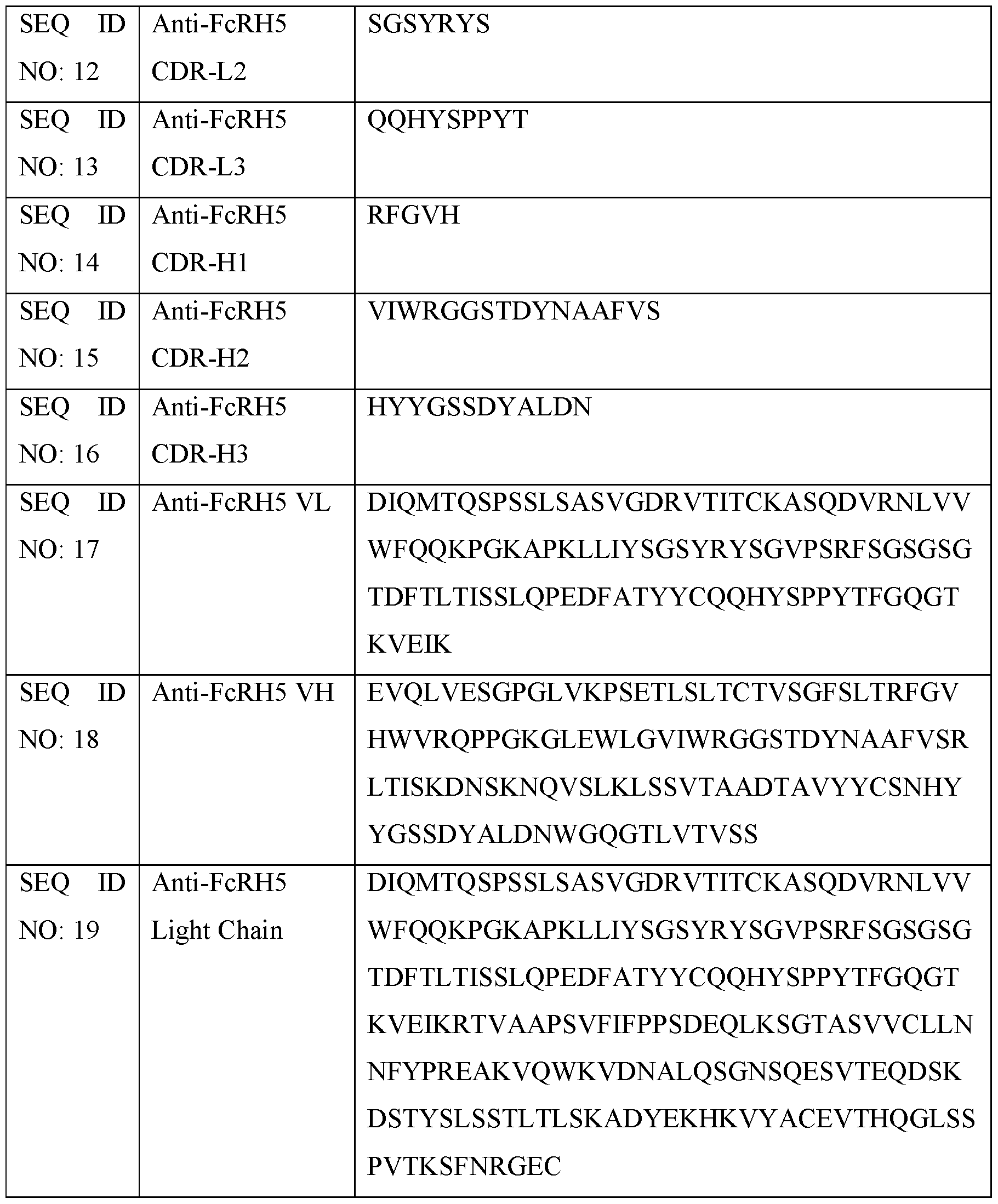


Claims
Priority Applications (9)
| Application Number | Priority Date | Filing Date | Title |
|---|---|---|---|
| EP23749263.2A EP4551297A1 (en) | 2022-07-07 | 2023-07-06 | Combinations of il15/il15r alpha heterodimeric fc-fusion proteins and fcrh5xcd3 bispecific antibodies for the treatment of blood cancers |
| JP2025500004A JP2025522865A (en) | 2022-07-07 | 2023-07-06 | Combination of IL15/IL15R alpha heterodimeric FC fusion protein and FCRH5XCD3 bispecific antibody for the treatment of hematological cancers |
| IL317946A IL317946A (en) | 2022-07-07 | 2023-07-06 | Combinations of il15/il15r alpha heterodimeric fc-fusion proteins and fcrh5xcd3 bispecific antibodies for the treatment of blood cancers |
| AU2023303515A AU2023303515A1 (en) | 2022-07-07 | 2023-07-06 | Combinations of il15/il15r alpha heterodimeric fc-fusion proteins and fcrh5xcd3 bispecific antibodies for the treatment of blood cancers |
| CN202380052102.5A CN119923274A (en) | 2022-07-07 | 2023-07-06 | Combination of IL15/IL15Rα heterodimer Fc fusion protein and FcRH5xCD3 bispecific antibody for the treatment of blood cancer |
| KR1020257003501A KR20250035553A (en) | 2022-07-07 | 2023-07-06 | Combination of IL15/IL15R alpha heterodimer FC-fusion protein and FCRH5XCD3 bispecific antibody for the treatment of hematological malignancies |
| CA3260240A CA3260240A1 (en) | 2022-07-07 | 2023-07-06 | Combinations of il15/il15r alpha heterodimeric fc-fusion proteins and fcrh5xcd3 bispecific antibodies for the treatment of blood cancers |
| US19/010,767 US20250205309A1 (en) | 2022-07-07 | 2025-01-06 | Combinations of il15/il15r alpha heterodimeric fc-fusion proteins and fcrh5xcd3 bispecific antibodies for the treatment of blood cancers |
| MX2025000124A MX2025000124A (en) | 2022-07-07 | 2025-01-06 | Combinations of il15/il15r alpha heterodimeric fc-fusion proteins and fcrh5xcd3 bispecific antibodies for the treatment of blood cancers |
Applications Claiming Priority (4)
| Application Number | Priority Date | Filing Date | Title |
|---|---|---|---|
| US202263367900P | 2022-07-07 | 2022-07-07 | |
| US63/367,900 | 2022-07-07 | ||
| US202363504524P | 2023-05-26 | 2023-05-26 | |
| US63/504,524 | 2023-05-26 |
Related Child Applications (1)
| Application Number | Title | Priority Date | Filing Date |
|---|---|---|---|
| US19/010,767 Continuation US20250205309A1 (en) | 2022-07-07 | 2025-01-06 | Combinations of il15/il15r alpha heterodimeric fc-fusion proteins and fcrh5xcd3 bispecific antibodies for the treatment of blood cancers |
Publications (1)
| Publication Number | Publication Date |
|---|---|
| WO2024011179A1 true WO2024011179A1 (en) | 2024-01-11 |
Family
ID=87553956
Family Applications (1)
| Application Number | Title | Priority Date | Filing Date |
|---|---|---|---|
| PCT/US2023/069713 Ceased WO2024011179A1 (en) | 2022-07-07 | 2023-07-06 | Combinations of il15/il15r alpha heterodimeric fc-fusion proteins and fcrh5xcd3 bispecific antibodies for the treatment of blood cancers |
Country Status (11)
| Country | Link |
|---|---|
| US (1) | US20250205309A1 (en) |
| EP (1) | EP4551297A1 (en) |
| JP (1) | JP2025522865A (en) |
| KR (1) | KR20250035553A (en) |
| CN (1) | CN119923274A (en) |
| AU (1) | AU2023303515A1 (en) |
| CA (1) | CA3260240A1 (en) |
| IL (1) | IL317946A (en) |
| MX (1) | MX2025000124A (en) |
| TW (1) | TW202415403A (en) |
| WO (1) | WO2024011179A1 (en) |
Cited By (2)
| Publication number | Priority date | Publication date | Assignee | Title |
|---|---|---|---|---|
| US12448423B2 (en) | 2018-12-20 | 2025-10-21 | Xencor, Inc. | Targeted heterodimeric Fc fusion proteins containing NKG2D antigen binding domains |
| US12509495B2 (en) | 2018-04-18 | 2025-12-30 | Xencor, Inc. | LAG-3 targeted heterodimeric fusion proteins containing IL-15/IL-15RA Fc-fusion proteins and LAG-3 antigen binding domains |
Families Citing this family (1)
| Publication number | Priority date | Publication date | Assignee | Title |
|---|---|---|---|---|
| JP7142630B2 (en) * | 2016-10-14 | 2022-09-27 | ゼンコア インコーポレイテッド | IL15/IL15Rα heterodimeric FC-fusion protein |
Citations (5)
| Publication number | Priority date | Publication date | Assignee | Title |
|---|---|---|---|---|
| WO2016205520A1 (en) | 2015-06-16 | 2016-12-22 | Genentech, Inc. | Humanized and affinity matured antibodies to fcrh5 and methods of use |
| WO2018071919A1 (en) | 2016-10-14 | 2018-04-19 | Xencor, Inc. | IL15/IL15Rα HETERODIMERIC FC-FUSION PROTEINS |
| WO2019204592A1 (en) * | 2018-04-18 | 2019-10-24 | Xencor, Inc. | Il-15/il-15ra heterodimeric fc fusion proteins and uses thereof |
| WO2021155042A1 (en) | 2020-01-28 | 2021-08-05 | Genentech, Inc. | Il15/il15r alpha heterodimeric fc-fusion proteins for the treatment of cancer |
| WO2022076462A1 (en) | 2020-10-05 | 2022-04-14 | Genentech, Inc. | Dosing for treatment with anti-fcrh5/anti-cd3 bispecific antibodies |
-
2023
- 2023-07-06 IL IL317946A patent/IL317946A/en unknown
- 2023-07-06 EP EP23749263.2A patent/EP4551297A1/en active Pending
- 2023-07-06 CN CN202380052102.5A patent/CN119923274A/en active Pending
- 2023-07-06 AU AU2023303515A patent/AU2023303515A1/en active Pending
- 2023-07-06 CA CA3260240A patent/CA3260240A1/en active Pending
- 2023-07-06 KR KR1020257003501A patent/KR20250035553A/en active Pending
- 2023-07-06 JP JP2025500004A patent/JP2025522865A/en active Pending
- 2023-07-06 WO PCT/US2023/069713 patent/WO2024011179A1/en not_active Ceased
- 2023-07-07 TW TW112125407A patent/TW202415403A/en unknown
-
2025
- 2025-01-06 MX MX2025000124A patent/MX2025000124A/en unknown
- 2025-01-06 US US19/010,767 patent/US20250205309A1/en active Pending
Patent Citations (5)
| Publication number | Priority date | Publication date | Assignee | Title |
|---|---|---|---|---|
| WO2016205520A1 (en) | 2015-06-16 | 2016-12-22 | Genentech, Inc. | Humanized and affinity matured antibodies to fcrh5 and methods of use |
| WO2018071919A1 (en) | 2016-10-14 | 2018-04-19 | Xencor, Inc. | IL15/IL15Rα HETERODIMERIC FC-FUSION PROTEINS |
| WO2019204592A1 (en) * | 2018-04-18 | 2019-10-24 | Xencor, Inc. | Il-15/il-15ra heterodimeric fc fusion proteins and uses thereof |
| WO2021155042A1 (en) | 2020-01-28 | 2021-08-05 | Genentech, Inc. | Il15/il15r alpha heterodimeric fc-fusion proteins for the treatment of cancer |
| WO2022076462A1 (en) | 2020-10-05 | 2022-04-14 | Genentech, Inc. | Dosing for treatment with anti-fcrh5/anti-cd3 bispecific antibodies |
Non-Patent Citations (14)
| Title |
|---|
| "Fundamental Immunology", 1989, RAVEN PRESS |
| ANONYMOUS: "NCT05646836: A Study to Evaluate the Safety, Pharmacokinetics, and Activity of XmAb24306 in Combination With Cevostamab in Participants With Relapsed/Refractory Multiple Myeloma", CLINICALTRIALS.GOV, 28 June 2023 (2023-06-28), XP093093022, Retrieved from the Internet <URL:https://classic.clinicaltrials.gov/ct2/history/NCT05646836?V_9=View#StudyPageTop> [retrieved on 20231019] * |
| COHEN ADAM D. ET AL: "GO39775: A multicenter phase I trial evaluating the safety, pharmacokinetics, and activity of BFCR4350A, a FcRH5/CD3 T-cell dependent bispecific antibody, in patients with relapsed or refractory multiple myeloma.", JOURNAL OF CLINICAL ONCOLOGY, vol. 38, no. 15_suppl, 20 May 2020 (2020-05-20), US, pages TPS8551 - TPS8551, XP055895456, ISSN: 0732-183X, DOI: 10.1200/JCO.2020.38.15_suppl.TPS8551 * |
| COHEN ADAM D. ET AL: "Initial Clinical Activity and Safety of BFCR4350A, a FcRH5/CD3 T-Cell-Engaging Bispecific Antibody, in Relapsed/Refractory Multiple Myeloma", BLOOD, vol. 136, no. Supplement 1, 5 November 2020 (2020-11-05), US, pages 42 - 43, XP055951835, ISSN: 0006-4971, Retrieved from the Internet <URL:https://ashpublications.org/blood/article/136/Supplement%201/42/470145/Initial-Clinical-Activity-and-Safety-of-BFCR4350A> DOI: 10.1182/blood-2020-136985 * |
| DEMENT-BROWN ET AL., J. LEUKOC. BIOL., vol. 91, 2012, pages 59 - 67 |
| EDELMAN GM ET AL., PROC. NATL. ACAD. USA, vol. 63, 1969, pages 78 - 85 |
| HEARTY S ET AL., METHODS MOL BIOL., vol. 907, 2012, pages 411 - 42 |
| JEFFERIS ET AL., IMMUNOL LETT, vol. 82, 2002, pages 57 - 65 |
| JOHNSSON ET AL., ANAL. BIOCHEM., vol. 198, 1991, pages 268 277 |
| JONSSON ET AL., ANN. BIOL. CLIN, vol. 51, 1993, pages 19 26 |
| JONSSON ET AL., BIOTECHNIQUES, vol. 11, 1991, pages 620 627 |
| JONSSON ET AL., J. MOL. RECOGNIT., vol. 8, 1995, pages 125 131 |
| LANCMAN GUIDO ET AL: "Bispecifics, trispecifics, and other novel immune treatments in myeloma", HEMATOLOGY, vol. 2020, no. 1, 4 December 2020 (2020-12-04), pages 264 - 271, XP055964173, Retrieved from the Internet <URL:https://www.ncbi.nlm.nih.gov/pmc/articles/PMC7727546/pdf/bloodbook-2020-264.pdf> DOI: 10.1182/hematology.2020000110 * |
| XU HONG ET AL: "A novel multimeric IL15/IL15R[alpha]-Fc complex to enhance cancer immunotherapy", ONCOIMMUNOLGY, vol. 10, no. 1, 1 January 2021 (2021-01-01), US, XP093092312, ISSN: 2162-4011, DOI: 10.1080/2162402X.2021.1893500 * |
Cited By (2)
| Publication number | Priority date | Publication date | Assignee | Title |
|---|---|---|---|---|
| US12509495B2 (en) | 2018-04-18 | 2025-12-30 | Xencor, Inc. | LAG-3 targeted heterodimeric fusion proteins containing IL-15/IL-15RA Fc-fusion proteins and LAG-3 antigen binding domains |
| US12448423B2 (en) | 2018-12-20 | 2025-10-21 | Xencor, Inc. | Targeted heterodimeric Fc fusion proteins containing NKG2D antigen binding domains |
Also Published As
| Publication number | Publication date |
|---|---|
| TW202415403A (en) | 2024-04-16 |
| KR20250035553A (en) | 2025-03-12 |
| US20250205309A1 (en) | 2025-06-26 |
| JP2025522865A (en) | 2025-07-17 |
| CN119923274A (en) | 2025-05-02 |
| MX2025000124A (en) | 2025-02-10 |
| IL317946A (en) | 2025-02-01 |
| AU2023303515A1 (en) | 2025-01-16 |
| EP4551297A1 (en) | 2025-05-14 |
| CA3260240A1 (en) | 2024-01-11 |
Similar Documents
| Publication | Publication Date | Title |
|---|---|---|
| US11851466B2 (en) | Targeted IL-12 heterodimeric Fc-fusion proteins | |
| CN112566935B (en) | Anti-OX40 antibodies and methods of use | |
| US20210095027A1 (en) | Bispecific antibodies that bind cd20 and cd3 | |
| CN109641049B (en) | CD3 binding antibody | |
| US20250205309A1 (en) | Combinations of il15/il15r alpha heterodimeric fc-fusion proteins and fcrh5xcd3 bispecific antibodies for the treatment of blood cancers | |
| AU2019274229A1 (en) | Anti-CD33 antibodies, anti-CD33/anti-CD3 bispecific antibodies and uses thereof | |
| WO2018052503A1 (en) | Cd3 binding antibodies | |
| US20230250176A1 (en) | Ppharmaceutical formulations and therapeutic uses of multi-specific binding proteins that bind egfr, nkg2d, and cd16 | |
| CN117529504A (en) | Multispecific antibodies that bind to CD20, NKP46, CD16 and are conjugated to IL-2 | |
| US11987636B2 (en) | Dosing of a bispecific antibody that binds CD20 and CD3 | |
| CA3225405A1 (en) | Il15/il15r alpha heterodimeric fc-fusion proteins for the treatment of blood cancers | |
| JP2023503396A (en) | Methods of treating cancer using anti-OX40 antibodies in combination with anti-PD1 antibodies or anti-PDL1 antibodies | |
| JP2023502323A (en) | Methods of treating cancer using anti-OX40 antibodies in combination with anti-TIGIT antibodies | |
| US20240239912A1 (en) | Targeted reduction of activated immune cells | |
| CN120152989A (en) | Combination therapy of anti-CD19/anti-CD28 bispecific antibodies | |
| CN114641500B (en) | Methods of treating cancer using a combination of an anti-OX 40 antibody and an anti-TIM 3 antibody | |
| JP2023503031A (en) | Methods of treating cancer with anti-OX40 antibodies in combination with chemotherapeutic agents | |
| WO2025085781A1 (en) | Combinations of il15/il15r alpha heterodimeric fc-fusion proteins and her2xcd3 bispecific antibodies for the treatment of her2-positive cancers | |
| WO2024044675A1 (en) | Methods of cancer treatment using anti-pd1 antibodies in combination with anti-tim3 antibodies | |
| WO2024251884A1 (en) | Nk cell engager proteins comprising anti-cd20 and ant-nkp46 antibody, linked to il-2 in treatment of r/r b-nhl | |
| WO2025024309A2 (en) | Modulation of myeloid fcυ receptor depletion | |
| WO2026033437A1 (en) | Methods of treating autoimmune diseases comprising the administration of anti-bcma therapeutics | |
| TW202500583A (en) | Pd-1 agonist antibodies and methods of treating inflammatory or autoimmune skin diseases with a pd-1 agonist antibody | |
| JP2023543835A (en) | Anti-CD94 antibody and method of use thereof |
Legal Events
| Date | Code | Title | Description |
|---|---|---|---|
| 121 | Ep: the epo has been informed by wipo that ep was designated in this application |
Ref document number: 23749263 Country of ref document: EP Kind code of ref document: A1 |
|
| WWE | Wipo information: entry into national phase |
Ref document number: 317946 Country of ref document: IL Ref document number: AU2023303515 Country of ref document: AU |
|
| WWE | Wipo information: entry into national phase |
Ref document number: MX/A/2025/000124 Country of ref document: MX Ref document number: 2025500004 Country of ref document: JP Ref document number: 202380052102.5 Country of ref document: CN |
|
| ENP | Entry into the national phase |
Ref document number: 2023303515 Country of ref document: AU Date of ref document: 20230706 Kind code of ref document: A |
|
| ENP | Entry into the national phase |
Ref document number: 20257003501 Country of ref document: KR Kind code of ref document: A |
|
| REG | Reference to national code |
Ref country code: BR Ref legal event code: B01A Ref document number: 112025000230 Country of ref document: BR |
|
| WWE | Wipo information: entry into national phase |
Ref document number: 1020257003501 Country of ref document: KR |
|
| WWE | Wipo information: entry into national phase |
Ref document number: 2025102601 Country of ref document: RU Ref document number: 2023749263 Country of ref document: EP |
|
| NENP | Non-entry into the national phase |
Ref country code: DE |
|
| ENP | Entry into the national phase |
Ref document number: 2023749263 Country of ref document: EP Effective date: 20250207 |
|
| WWP | Wipo information: published in national office |
Ref document number: MX/A/2025/000124 Country of ref document: MX |
|
| WWP | Wipo information: published in national office |
Ref document number: 2025102601 Country of ref document: RU |
|
| WWP | Wipo information: published in national office |
Ref document number: 1020257003501 Country of ref document: KR |
|
| WWP | Wipo information: published in national office |
Ref document number: 202380052102.5 Country of ref document: CN |
|
| WWP | Wipo information: published in national office |
Ref document number: 2023749263 Country of ref document: EP |
|
| ENP | Entry into the national phase |
Ref document number: 112025000230 Country of ref document: BR Kind code of ref document: A2 Effective date: 20250107 |