WO2023247617A1 - Composition for lightening keratin fibres and process for lightening keratin fibres using said composition - Google Patents
Composition for lightening keratin fibres and process for lightening keratin fibres using said composition Download PDFInfo
- Publication number
- WO2023247617A1 WO2023247617A1 PCT/EP2023/066783 EP2023066783W WO2023247617A1 WO 2023247617 A1 WO2023247617 A1 WO 2023247617A1 EP 2023066783 W EP2023066783 W EP 2023066783W WO 2023247617 A1 WO2023247617 A1 WO 2023247617A1
- Authority
- WO
- WIPO (PCT)
- Prior art keywords
- group
- mixtures
- chosen
- compounds
- composition
- Prior art date
- Legal status (The legal status is an assumption and is not a legal conclusion. Google has not performed a legal analysis and makes no representation as to the accuracy of the status listed.)
- Ceased
Links
Classifications
-
- A—HUMAN NECESSITIES
- A61—MEDICAL OR VETERINARY SCIENCE; HYGIENE
- A61K—PREPARATIONS FOR MEDICAL, DENTAL OR TOILETRY PURPOSES
- A61K8/00—Cosmetics or similar toiletry preparations
- A61K8/18—Cosmetics or similar toiletry preparations characterised by the composition
- A61K8/19—Cosmetics or similar toiletry preparations characterised by the composition containing inorganic ingredients
- A61K8/22—Peroxides; Oxygen; Ozone
-
- A—HUMAN NECESSITIES
- A61—MEDICAL OR VETERINARY SCIENCE; HYGIENE
- A61Q—SPECIFIC USE OF COSMETICS OR SIMILAR TOILETRY PREPARATIONS
- A61Q5/00—Preparations for care of the hair
- A61Q5/10—Preparations for permanently dyeing the hair
-
- A—HUMAN NECESSITIES
- A61—MEDICAL OR VETERINARY SCIENCE; HYGIENE
- A61K—PREPARATIONS FOR MEDICAL, DENTAL OR TOILETRY PURPOSES
- A61K8/00—Cosmetics or similar toiletry preparations
- A61K8/18—Cosmetics or similar toiletry preparations characterised by the composition
- A61K8/19—Cosmetics or similar toiletry preparations characterised by the composition containing inorganic ingredients
-
- A—HUMAN NECESSITIES
- A61—MEDICAL OR VETERINARY SCIENCE; HYGIENE
- A61K—PREPARATIONS FOR MEDICAL, DENTAL OR TOILETRY PURPOSES
- A61K8/00—Cosmetics or similar toiletry preparations
- A61K8/18—Cosmetics or similar toiletry preparations characterised by the composition
- A61K8/19—Cosmetics or similar toiletry preparations characterised by the composition containing inorganic ingredients
- A61K8/25—Silicon; Compounds thereof
-
- A—HUMAN NECESSITIES
- A61—MEDICAL OR VETERINARY SCIENCE; HYGIENE
- A61K—PREPARATIONS FOR MEDICAL, DENTAL OR TOILETRY PURPOSES
- A61K8/00—Cosmetics or similar toiletry preparations
- A61K8/18—Cosmetics or similar toiletry preparations characterised by the composition
- A61K8/30—Cosmetics or similar toiletry preparations characterised by the composition containing organic compounds
- A61K8/33—Cosmetics or similar toiletry preparations characterised by the composition containing organic compounds containing oxygen
- A61K8/36—Carboxylic acids; Salts or anhydrides thereof
-
- A—HUMAN NECESSITIES
- A61—MEDICAL OR VETERINARY SCIENCE; HYGIENE
- A61K—PREPARATIONS FOR MEDICAL, DENTAL OR TOILETRY PURPOSES
- A61K8/00—Cosmetics or similar toiletry preparations
- A61K8/18—Cosmetics or similar toiletry preparations characterised by the composition
- A61K8/30—Cosmetics or similar toiletry preparations characterised by the composition containing organic compounds
- A61K8/33—Cosmetics or similar toiletry preparations characterised by the composition containing organic compounds containing oxygen
- A61K8/36—Carboxylic acids; Salts or anhydrides thereof
- A61K8/362—Polycarboxylic acids
-
- A—HUMAN NECESSITIES
- A61—MEDICAL OR VETERINARY SCIENCE; HYGIENE
- A61K—PREPARATIONS FOR MEDICAL, DENTAL OR TOILETRY PURPOSES
- A61K8/00—Cosmetics or similar toiletry preparations
- A61K8/18—Cosmetics or similar toiletry preparations characterised by the composition
- A61K8/30—Cosmetics or similar toiletry preparations characterised by the composition containing organic compounds
- A61K8/33—Cosmetics or similar toiletry preparations characterised by the composition containing organic compounds containing oxygen
- A61K8/37—Esters of carboxylic acids
-
- A—HUMAN NECESSITIES
- A61—MEDICAL OR VETERINARY SCIENCE; HYGIENE
- A61K—PREPARATIONS FOR MEDICAL, DENTAL OR TOILETRY PURPOSES
- A61K8/00—Cosmetics or similar toiletry preparations
- A61K8/18—Cosmetics or similar toiletry preparations characterised by the composition
- A61K8/30—Cosmetics or similar toiletry preparations characterised by the composition containing organic compounds
- A61K8/40—Cosmetics or similar toiletry preparations characterised by the composition containing organic compounds containing nitrogen
- A61K8/41—Amines
-
- A—HUMAN NECESSITIES
- A61—MEDICAL OR VETERINARY SCIENCE; HYGIENE
- A61K—PREPARATIONS FOR MEDICAL, DENTAL OR TOILETRY PURPOSES
- A61K8/00—Cosmetics or similar toiletry preparations
- A61K8/18—Cosmetics or similar toiletry preparations characterised by the composition
- A61K8/30—Cosmetics or similar toiletry preparations characterised by the composition containing organic compounds
- A61K8/40—Cosmetics or similar toiletry preparations characterised by the composition containing organic compounds containing nitrogen
- A61K8/41—Amines
- A61K8/416—Quaternary ammonium compounds
-
- A—HUMAN NECESSITIES
- A61—MEDICAL OR VETERINARY SCIENCE; HYGIENE
- A61K—PREPARATIONS FOR MEDICAL, DENTAL OR TOILETRY PURPOSES
- A61K8/00—Cosmetics or similar toiletry preparations
- A61K8/18—Cosmetics or similar toiletry preparations characterised by the composition
- A61K8/30—Cosmetics or similar toiletry preparations characterised by the composition containing organic compounds
- A61K8/40—Cosmetics or similar toiletry preparations characterised by the composition containing organic compounds containing nitrogen
- A61K8/42—Amides
-
- A—HUMAN NECESSITIES
- A61—MEDICAL OR VETERINARY SCIENCE; HYGIENE
- A61K—PREPARATIONS FOR MEDICAL, DENTAL OR TOILETRY PURPOSES
- A61K8/00—Cosmetics or similar toiletry preparations
- A61K8/18—Cosmetics or similar toiletry preparations characterised by the composition
- A61K8/30—Cosmetics or similar toiletry preparations characterised by the composition containing organic compounds
- A61K8/40—Cosmetics or similar toiletry preparations characterised by the composition containing organic compounds containing nitrogen
- A61K8/44—Aminocarboxylic acids or derivatives thereof, e.g. aminocarboxylic acids containing sulfur; Salts; Esters or N-acylated derivatives thereof
-
- A—HUMAN NECESSITIES
- A61—MEDICAL OR VETERINARY SCIENCE; HYGIENE
- A61Q—SPECIFIC USE OF COSMETICS OR SIMILAR TOILETRY PREPARATIONS
- A61Q5/00—Preparations for care of the hair
- A61Q5/08—Preparations for bleaching the hair
-
- A—HUMAN NECESSITIES
- A61—MEDICAL OR VETERINARY SCIENCE; HYGIENE
- A61K—PREPARATIONS FOR MEDICAL, DENTAL OR TOILETRY PURPOSES
- A61K2800/00—Properties of cosmetic compositions or active ingredients thereof or formulation aids used therein and process related aspects
- A61K2800/80—Process related aspects concerning the preparation of the cosmetic composition or the storage or application thereof
- A61K2800/88—Two- or multipart kits
Definitions
- the present invention relates to a composition for lightening keratin fibres, comprising at least one chemical oxidizing agent, at least one (bi)carbonate, at least one silicate, at least one compound chosen from esters and/or amides and/or imines and at least one compound chosen from alcohols, amphoteric or zwitterionic compounds, organic acids, alkanes and/or alkenes and/or ethers and mixtures thereof, and also to a process for lightening keratin fibres using said composition.
- the tone levels range from 1 (black) to 10 (very light blond), one unit corresponding to one tone; the higher the figure, the lighter the shade.
- persulfate-based lightening compositions may lead to a deterioration of the fibre quality.
- persulfate-based compositions are generally not chemically compatible with the presence of oxidation dyes and/or direct dyes in order to be able to bleach the hair fibre and to dye it in a single step.
- a two-step process is used with a first step of bleaching the keratin fibres followed by a second step of dyeing the keratin fibres using a dye composition comprising one or more direct dyes and/or one or more oxidation dyes.
- compositions which allows effective lightening of keratin fibres, notably dark keratin fibres, with a less yellow and more natural result.
- a composition should also be more respectful of the quality of the fibres, notably by minimizing their degradation.
- such a composition should also be compatible with the presence of direct dyes and/or oxidation dyes so as to obtain good colour buildup, intense and chromatic colours and also allow a wider range of colours to be obtained.
- a subject of the present invention is a composition
- a composition comprising: i) one or more chemical oxidizing agents chosen from hydrogen peroxide, hydrogen peroxide-generating systems other than peroxygenated salts, and mixtures thereof; ii) one or more compounds chosen from carbonates, carbonate-generating systems, bicarbonates, bicarbonate-generating systems and mixtures thereof, preferably from carbonates, bicarbonates and mixtures thereof; iii) one or more silicates; iv) one or more compounds chosen from esters, amides, imines and mixtures thereof; iv’) one or more compounds different from the compounds iv), chosen from: a) alcohols; b) amphoteric or zwitterionic compounds chosen from: phospholipids such as lecithins, amino acids, amphoteric or zwitterionic surfactants and mixtures thereof; c) organic acids; d) organic amines; e) compounds consisting of a saturated or unsaturated, linear or branched hydro
- the silicate(s) are present in the composition in a total content ranging from 2% to 35% by weight relative to the total weight of the composition;
- composition comprises a total content of persulfates of less than 5% by weight.
- a subject of the present invention is a process for lightening keratin fibres, comprising the application to the keratin fibres of a composition comprising ingredients i) to iv) and iv’) as defined previously.
- a subject of the present invention is a process for the simultaneous bleaching and dyeing of keratin fibres, comprising the application to the keratin fibres of a composition comprising ingredients i) to iv) and iv’) as defined previously and v) one or more colouring agents, preferably chosen from direct dyes, oxidation dyes and mixtures thereof.
- a subject of the present invention is the use of a composition comprising ingredients i) to iv) and iv’) as defined previously for lightening keratin fibres, preferably for lightening keratin fibres while at the same time de-yellowing them.
- a subject of the present invention is the use of a composition comprising ingredients i) to iv) and iv’) as defined previously and v) one or more colouring agents, preferably chosen from direct dyes, oxidation dyes and mixtures thereof, for the simultaneous bleaching and dyeing of keratin fibres.
- a subject of the present invention is a device containing several separate compartments (kit), comprising:
- composition (A) comprising:
- one or more chemical oxidizing agents chosen from hydrogen peroxide, hydrogen peroxide-generating systems other than peroxygenated salts, and mixtures thereof, preferably hydrogen peroxide;
- composition (B) comprising:
- colouring agents preferably chosen from direct dyes and oxidation dyes, and mixtures thereof;
- composition (C) comprising:
- one or more colouring agents preferably chosen from direct dyes and oxidation dyes, and mixtures thereof;
- compositions (A) or (B) or at least one of the compositions (A) or (B) or (C), if composition (C) is present comprises one or more compounds iv) as defined previously; and - at least one of the compositions (A) or (B) or at least one of the compositions (A) or (B) or (C), if composition (C) is present, comprises one or more compounds iv’) as defined previously.
- Fig. 1 is a graph representing the variation in intensity L* as a function of the parameter b* for the compositions according to the invention (Example 2) and the comparative persulfate-based compositions (Example 1), the values of L* and b* being measured in the CIE L*a*b* system.
- keratin fibres means fibres of human or animal origin, such as head hair, bodily hairs, the eyelashes, the eyebrows, wool, angora, cashmere or fur. According to the present invention, the keratin fibres are preferably human keratin fibres, more preferentially head hair;
- alcohol means an organic compound in which one of the carbon atoms is linked to an -OH hydroxyl or phenol group.
- ester means a compound comprising at least one ester function.
- amide means a compound comprising at least one amide function.
- the term “imine” means a compound comprising at least one imine function.
- organic amine means an organic compound comprising at least one primary, secondary or tertiary amine function.
- salt means an addition salt with an organic or mineral acid or base.
- the addition salts with an acid are notably chosen from addition salts with acids such as hydrochloric acid, hydrobromic acid, sulfuric acid, citric acid, succinic acid, tartaric acid, lactic acid, tosylic acid, benzenesulfonic acid, phosphoric acid or acetic acid.
- the addition salts with a base are notably chosen from the addition salts with bases such as the basifying agents defined hereinbelow, notably alkali metal hydroxides, alkaline-earth metal hydroxides, ammonia, amines or alkanolamines.
- alkyl group means a linear or branched saturated hydrocarbon-based radical comprising from 1 to 40 carbon atoms, preferably from 1 to 30 carbon atoms, more preferentially from 1 to 26 carbon atoms, even more preferentially from 1 to 22 carbon atoms, for example methyl, ethyl, n-propyl, isopropyl, butyl, n-pentyl, n-hexyl, n- decyl, n-dodecyl, tetradecyl, hexadecyl or eicosyl.
- (C x -C y )alkyl group means an alkyl group comprising from x to y carbon atoms.
- alkenyl group means a linear or branched hydrocarbon-based radical comprising one or more ethylenic unsaturations, and from 1 to 30 carbon atoms, preferably from 1 to 26 carbon atoms, more preferentially from 1 to 22 carbon atoms, for example ethenyl, n-propenyl, isopropenyl, butenyl, n-pentenyl, n-hexenyl, n-decenyl, n- dodecenyl, tetradecenyl, hexadecenyl or eicosenyl.
- (C x -C y )alkenyl group means an alkenyl group comprising from x to y carbon atoms.
- alkoxy group means an alkyl group bonded to an oxygen atom.
- (C x -C y )alkoxy group means an alkoxy group comprising from x to y carbon atoms.
- (poly)(hydroxy)alkyl group means an alkyl group or a hydroxyalkyl group or a polyhydroxyalkyl group.
- hydroxyalkyl group means an alkyl group substituted with a hydroxyl group ( ⁇ OH);
- polyhydroxyalkyl group means an alkyl group substituted with at least two hydroxyl groups (-OH).
- (poly)hydroxyalkyl group means a hydroxyalkyl or polyhydroxyalkyl group.
- (hetero)cyclic group means a cyclic or heterocyclic group.
- cyclic group means a condensed or non-condensed, saturated or unsaturated, notably aromatic, monocyclic or polycyclic carbocycle comprising from 6 to 22 carbon atoms, it being possible for said cyclic group to be substituted with one or more identical or different groups, notably chosen from: C1-C6) alkyl, C1-C6) alkoxy, (C1- C 6 )(poly)hydroxyalkyl, hydroxyl (-OH) or carboxyl (-COOH).
- heterocyclic group means a condensed or non-condensed, saturated or unsaturated, in particular aromatic, monocyclic or polycyclic group comprising from 5 to 22 members and containing from 1 to 3 heteroatoms chosen from a nitrogen, oxygen or sulfur atom, it being possible for said heterocyclic group to be substituted with one or more identical or different groups, notably chosen from: C1-C6) alkyl, C1-C6) alkoxy, (C1- C 6 )(poly)hydroxyalkyl, hydroxyl (-OH) or carboxyl (-COOH).
- silicate means a silicic acid salt
- colouring agent means an oxidation dye, a direct dye or a pigment.
- oxidation dye means an oxidation dye precursor chosen from oxidation bases and couplers. Oxidation bases and couplers are colourless or sparingly coloured compounds, which, via a condensation reaction in the presence of an oxidizing agent, give a coloured species;
- direct dye means a natural and/or synthetic dye, including in the form of an extract or extracts, other than oxidation dyes. These are coloured compounds that will spread superficially on the fibre. They may be ionic or nonionic, i.e. anionic, cationic, neutral or nonionic.
- chemical oxidizing agent means an oxidizing agent other than atmospheric oxygen.
- this also includes the optical isomers thereof, the geometrical isomers thereof, the tautomers thereof, the salts thereof or the solvates thereof such as hydrates, and mixtures thereof.
- a subject of the present invention is a composition comprising ingredients i) to iv) and iv’) as defined previously.
- the composition according to the present invention allowed effective lightening of keratin fibres with a less yellow and more natural result.
- b* values measured in the CIE L* a* b* system are observed to be lower for the composition according to the invention than for lightening compositions known in the art at an equivalent intensity level L*.
- composition according to the invention is more respectful of the quality of the fibres, notably minimizing their degradation.
- the composition according to the invention comprises: i) hydrogen peroxide; ii) one or more compounds chosen from carbonates, bicarbonates and mixtures thereof; iii) one or more silicates; iv) one or more compounds chosen from esters, amides, imines and mixtures thereof; iv’) one or more compounds different from the compounds iv), chosen from: a) alcohols; b) amphoteric or zwitterionic compounds chosen from: phospholipids such as lecithins, amino acids, amphoteric or zwitterionic surfactants and mixtures thereof; c) organic acids; d) organic amines; e) compounds consisting of a saturated or unsaturated, linear or branched hydrocarbonbased chain comprising from 1 to 30 carbon atoms, the hydrocarbon-based chain being optionally substituted with one or more cyclic groups and/or optionally interrupted with one or more non-adjacent oxygen atoms; saturated or unsaturated, optionally aromatic, mono
- the silicate(s) are present in the composition in a total content ranging from 2% to 35% by weight relative to the total weight of the composition;
- composition comprises a total content of persulfates of less than 5% by weight.
- composition according to the invention comprises i) one or more chemical oxidizing agents chosen from hydrogen peroxide, hydrogen peroxide-generating systems other than peroxygenated salts and mixtures thereof.
- the hydrogen peroxide-generating systems other than peroxygenated salts may be chosen from urea peroxide, polymeric complexes that can release hydrogen peroxide, oxidases, and mixtures thereof.
- polymeric complexes that can release hydrogen peroxide mention may be made of polyvinylpyrrolidone/H 2 0 2 in particular in powder form, and the other polymeric complexes described in US 5 008 093, US 3 376 110 and US 5 183 901.
- Oxidases can produce hydrogen peroxide in the presence of a suitable substrate, for instance glucose in the case of glucose oxidase or uric acid with uricase.
- hydrogen peroxide and/or the hydrogen peroxidegenerating system(s) other than peroxygenated salts may be incorporated into the composition according to the invention just before it is applied to the keratin fibres.
- the intermediate composition(s) comprising hydrogen peroxide and/or hydrogen peroxidegenerating system(s) other than peroxygenated salts may be referred to as oxidizing compositions and may also include various additional compounds or various adjuvants conventionally used in compositions for lightening keratin fibres.
- the composition according to the invention comprises hydrogen peroxide as chemical oxidizing agent.
- the chemical oxidizing agent(s) are preferably present in the composition in a total content ranging from 1% to 12% by weight, more preferentially ranging from 3% to 9% by weight and even more preferentially ranging from 3.5% to 8.5% by weight, relative to the total weight of the composition.
- the hydrogen peroxide is present in the composition in a total content ranging from 1% to 12% by weight, preferably ranging from 3% to 9% by weight, more preferentially ranging from 3.5% to 8.5% by weight, relative to the total weight of the composition.
- composition according to the invention also comprises ii) one or more compounds chosen from carbonates, carbonate-generating systems, bicarbonates, bicarbonate- generating systems and mixtures thereof. According to a preferred embodiment, the composition according to the invention also comprises ii) one or more compounds chosen from carbonates, bicarbonates and mixtures thereof.
- the composition according to the invention also comprises ii) one or more compounds chosen from ammonium carbonate, ammonium bicarbonate and mixtures thereof.
- the compound(s) ii) are preferably present in the composition in a total content ranging from 0.01 % to 20% by weight, preferably ranging from 1 % to 15% by weight, more preferentially ranging from 2% to 15% by weight, even more preferentially ranging from 4% to 15% by weight, relative to the total weight of the composition.
- carbonate-generating system means a system which generates carbonate in situ, for instance carbon dioxide in water or percarbonate in water.
- the carbonate(s) are chosen from:
- R 1 , R 2 , R 3 and R 4 represent, independently of each other, a hydrogen atom or a (C1-C4)alkyl group optionally substituted with a hydroxyl group;
- the carbonate(s) are chosen from sodium carbonate, potassium carbonate, caesium carbonate, lithium carbonate, magnesium carbonate, calcium carbonate, barium carbonate, strontium carbonate, cerium carbonate, lanthanum carbonate, yttrium carbonate, copper(ll) carbonate, manganese carbonate, nickel carbonate, silver carbonate, zirconium carbonate, bismuth carbonate, cadmium carbonate, thallium carbonate, zinc carbonate, ammonium carbonate, guanidine carbonate, tetraethylammonium carbonate and mixtures thereof.
- the carbonate(s) are chosen from sodium carbonate, potassium carbonate, caesium carbonate, magnesium carbonate, calcium carbonate, cerium carbonate, manganese carbonate, zinc carbonate, ammonium carbonate, guanidine carbonate and mixtures thereof.
- the carbonate(s) are chosen from sodium carbonate, potassium carbonate, magnesium carbonate, calcium carbonate, ammonium carbonate and mixtures thereof.
- the carbonate included in the composition is ammonium carbonate.
- the carbonate(s) and/or the carbonate-generating system(s) are preferably present in the composition in a total content ranging from 0.01% to 20% by weight, more preferentially ranging from 1% to 20% by weight and even more preferentially ranging from 1% to 10% by weight, relative to the total weight of the composition.
- the carbonate(s) are present in the composition in a total content ranging from 0.01 % to 20% by weight, preferably ranging from 1% to 20% by weight, more preferentially ranging from 1% to 10% by weight, relative to the total weight of the composition.
- the compound(s) ii) are chosen from carbonates, carbonate-generating systems and mixtures thereof, preferably from carbonates.
- bicarbonate-generating system means a system which generates bicarbonate in situ, for instance carbon dioxide in water or by buffering a carbonate with a mineral or organic acid.
- the bicarbonate(s) are chosen from:
- R 1 , R 2 , R 3 and R 4 represent, independently of each other, a hydrogen atom or a (C1-C4)alkyl group optionally substituted with a hydroxyl group;
- the bicarbonate(s) are chosen from sodium bicarbonate, potassium bicarbonate, lithium bicarbonate, caesium bicarbonate, calcium bicarbonate, magnesium bicarbonate, ammonium bicarbonate, choline bicarbonate, triethylammonium bicarbonate, aminoguanidine bicarbonate, and mixtures thereof.
- the bicarbonate(s) are chosen from sodium bicarbonate, potassium bicarbonate, caesium bicarbonate, calcium bicarbonate, magnesium bicarbonate, ammonium bicarbonate, and mixtures thereof.
- the bicarbonate(s) are chosen from sodium bicarbonate, potassium bicarbonate, ammonium bicarbonate and mixtures thereof.
- the bicarbonate included in the composition is ammonium bicarbonate.
- the bicarbonates may originate from a natural water, for example spring water from the Vichy basin or from La Roche Posay or Badoit water.
- the bicarbonate(s) and/or the bicarbonate-generating system(s) are preferably present in the composition in a total content ranging from 0.01% to 20% by weight, more preferentially ranging from 1% to 15% by weight, even more preferentially ranging from 2% to 15% by weight, most preferentially ranging from 4% to 15% by weight, relative to the total weight of the composition.
- the bicarbonate(s) are present in a total content ranging from 0.01% to 20% by weight, preferably ranging from 1% to 15% by weight, more preferentially ranging from 2% to 15% by weight, even more preferentially ranging from 4% to 15% by weight, relative the total weight of the composition.
- the compound(s) ii) are chosen from bicarbonates, bicarbonate-generating systems and mixtures thereof, preferably from bicarbonates.
- composition according to the invention also comprises iii) one or more silicates.
- the silicate(s) are preferably water-soluble.
- water-soluble silicate means a silicate which has a solubility in water at ordinary room temperature (25°C) and at atmospheric pressure (760 mmHg) of greater than 0.5% by weight, preferably greater than 1% by weight.
- the silicate(s) are chosen from alkali metal silicates, alkaline-earth metal silicates, aluminium silicates, trimethylammonium silicates and mixtures thereof.
- the silicate(s) are chosen from sodium silicates, potassium silicates, calcium silicates, aluminium silicates, trimethylammonium silicates and mixtures thereof. Even more preferentially, the silicate(s) are chosen from sodium silicates.
- the silicate(s) are chosen from compounds having the INCI name Sodium Silicate (CAS: [1344-09-8]) and/or Sodium Metasilicate (CAS: [6834-92-0]).
- the silicate(s) are preferably present in the composition in a total content ranging from 1% to 40% by weight, more preferentially ranging from 2% to 35% by weight, even more preferentially ranging from 3% to 35% by weight, most preferentially ranging from 4% to 20% by weight, relative to the total weight of the composition.
- the weight ratio of the total amount of carbonate(s) and/or carbonate-generating system(s)/total amount of si I icate(s) is preferably from 0.00025 to 20, more preferentially from 0.028 to 10 and even more preferentially from 0.028 to 3.4.
- the weight ratio of the total amount of carbonate(s)/total amount of silicate(s) is from 0.00025 to 20, preferably from 0.028 to 10, more preferentially from 0.028 to 3.4.
- the weight ratio of the total amount of carbonate(s) and/or carbonate-generating system(s)/total amount of chemical oxidizing agent(s) is preferably from 0.0008 to 20, more preferentially from 0.1 to 6.6 and even more preferentially from 0.1 to 2.9.
- the weight ratio of the total amount of carbonate(s)/total amount of chemical oxidizing agent(s) is from 0.0008 to 20, preferably from 0.1 to 6.6 and more preferentially from 0.1 to 2.9.
- the weight ratio of the total amount of carbonate(s)/total amount of hydrogen peroxide is from 0.0008 to 20, preferably from 0.1 to 6.6 and more preferentially from 0.1 to 2.9.
- the weight ratio of the total amount of bicarbonate(s) and/or bicarbonate-generating system(s)/total amount of si I icate(s) is preferably from 0.00025 to 20, more preferentially from 0.02 to 7.5 and even more preferentially from 0.05 to 5.
- the weight ratio of the total amount of bicarbonate(s)/total amount of silicate(s) is from 0.00025 to 20, preferably from 0.02 to 7.5, more preferentially from 0.05 to 5.
- the weight ratio of the total amount of bicarbonate(s) and/or bicarbonate-generating system(s)/total amount of chemical oxidizing agent(s) is preferably from 0.0008 to 20, more preferentially from 0.11 to 5 and even more preferentially from 0.2 to 4.2.
- the weight ratio of the total amount of bicarbonate(s)/total amount of chemical oxidizing agent(s) is from 0.0008 to 20, preferably from 0.11 to 5 and more preferentially from 0.2 to 4.2.
- the weight ratio of the total amount of bicarbonate(s)/total amount of hydrogen peroxide is from 0.0008 to 20, preferably from 0.11 to 5 and more preferentially from 0.2 to 4.2.
- the weight ratio of the total amount of carbonate(s) and/or carbonate-generating system(s)/total amount of bicarbonate(s) and/or bicarbonate-generating system(s) is preferably from 0.0005 to 2000, more preferentially from 0.06 to 20 and even more preferentially from 0.06 to 5.
- the weight ratio of the total amount of carbonate(s)/total amount of bicarbonate(s) is from 0.0005 to 2000, preferably from 0.06 to 20 and more preferentially from 0.06 to 5.
- composition according to the invention also comprises iv) one or more compounds chosen from esters, amides, imines and mixtures thereof.
- the compound(s) iv) are chosen from compounds of formula (Ic) below, salts thereof, optical isomers thereof, geometrical isomers thereof, tautomers thereof, solvates thereof and mixtures thereof: in which formula (Ic):
- ⁇ A represents a linear or branched, saturated or unsaturated hydrocarbon-based group comprising from 1 to 30 carbon atoms, optionally interrupted with one or more non-adjacent oxygen atoms and/or with one or more identical or different groups chosen from: -CO-, -OCO-, -COO-, and/or optionally substituted with one or more identical or different groups chosen from: a hydroxyl group (-OH), a group -COOAkl , a (hetero) cyclic group optionally substituted with one or more hydroxyl groups (-OH);
- ⁇ Xi independently represents an oxygen atom or a group -NR-, preferably an oxygen atom
- ⁇ X 2 represents an oxygen atom or a group -NR-, preferably an oxygen atom
- ⁇ p 0 or 1 ;
- ⁇ B represents a saturated or unsaturated, linear or branched or cyclic hydrocarbonbased group comprising from 1 to 40 carbon atoms, optionally substituted with one or more identical or different groups chosen from: - a (hetero)cyclic group optionally substituted with one or more identical or different groups chosen from: hydroxyl (-OH), -OR”, -COOA’, -OCOA’, (poly)(hydroxy)alkyl;
- ⁇ A’ represents a linear or branched, saturated or unsaturated hydrocarbon-based group comprising from 1 to 30 carbon atoms, optionally interrupted with one or more non-adjacent oxygen atoms and/or with one or more identical or different groups chosen from: -CO-, -OCO-, -COO-, and/or optionally substituted with one or more identical or different groups chosen from: hydroxyl (-OH), -COOAkl ;
- ⁇ R represents a hydrogen atom or an alkyl group, in particular a (C1-C4)alkyl group
- ⁇ R’ represents a hydrogen atom or an alkyl group optionally substituted with one or more identical or different groups chosen from: hydroxyl (-OH) or -OCOA’;
- ⁇ R represents:
- - a (hetero)cyclic group optionally substituted with one or more identical or different groups chosen from: hydroxyl (-OH), (poly)(hydroxy)alkyl;
- ⁇ Ak1 represents an alkyl group optionally substituted with -COOAk2;
- ⁇ Ak2 represents an alkyl group; it being possible for R and B together with the nitrogen atom bearing them to form a heterocycle; it being possible for A and B together to form a heterocycle optionally substituted notably with one or more identical or different groups chosen from:
- - a (hetero)cyclic group optionally substituted notably with one or more identical or different groups chosen from: hydroxyl (-OH), (poly)(hydroxy)alkyl;
- the compound(s) iv) are chosen from the following compounds 1c to 94c, salts thereof, optical isomers thereof, geometrical isomers thereof, tautomers
- the compound(s) iv) are chosen from compounds 1c to 63c and 94c, salts thereof, optical isomers thereof, geometrical isomers thereof, tautomers thereof, solvates thereof and mixtures thereof.
- the compound(s) iv) are chosen from compounds 1c, 4c, 5c, 6c, 8c, 12c, 15c, 16c, 22c, 24c, 26c, 27c, 31c, 33c, 37c, 41c, 53c, 54c, 55c, 58c, 60c, 62c, 63c and 94c, salts thereof, optical isomers thereof, geometrical isomers thereof, tautomers thereof, solvates thereof and mixtures thereof.
- the compound(s) iv) are chosen from compounds 4c, 12c, 22c, 58c, 94c, salts thereof, optical isomers thereof, geometrical isomers thereof, tautomers thereof, solvates thereof and mixtures thereof.
- the compound(s) c) preferably denote the compounds of formula (C1) hereinbelow, salts thereof, optical isomers thereof, geometrical isomers thereof, tautomers thereof, solvates thereof and mixtures thereof:
- - A1 represents a C1-C40 alkyl or alkenyl group, optionally substituted with one or more hydroxyl (OH) groups, and/or optionally interrupted with -OCO-, CO-O-, -O- or CO-NR or CO with R as defined previously, preferably a (C1-C4)alkyl group such as methyl;
- - Bi represents a C1-C40 alkyl or alkenyl group, optionally substituted with one or more identical or different groups chosen from: a hydroxyl group (OH), a (hetero)cyclic group, said (hetero) cyclic group being optionally substituted with one or more groups chosen from hydroxyl (OH), -OR b , -O-CO-A3 with A 3 representing a C1-C40 alkyl or alkenyl group and R b representing a preferably C1-C6) alkyl group; and/or optionally interrupted with -O-CO-, -CO-O-, -CO-NR’a-, -NR’ a -CO-, an oxygen atom -O- or -CO- with R’ a representing a hydrogen atom or a C1-C10 alkyl group, preferably C1-C4 alkyl, such as methyl.
- R’ a representing a hydrogen atom or a C1-C10 alky
- compounds of formula (C1 ) mention may be made of compounds 1 c to 8c, 9c to 30c, 32c to 35c, 36c to 39c, 41c to 48c, 50c to 63c, 65c to 69c, 73c, 74c, 76c, 78c a 82c, 84c, 85c, 91c, salts thereof, optical isomers thereof, geometrical isomers thereof, tautomers thereof, solvates thereof and mixtures thereof, in particular compounds 1c, 4c, 5c, 6c, 8c, 12c, 15c, 16c, 22c, 24c, 26c, 27c, 33c, 37c, 41c, 53c, 54c, 55c, 58c, 60c, 62c and 63c, salts thereof, optical isomers thereof, geometrical isomers thereof, tautomers thereof, solvates thereof and mixtures thereof, in particular compounds 8c and 58c, salts thereof, optical isomers thereof, geometrical isomers thereof,
- - a (hetero)cyclic group optionally substituted notably with one or more identical or different groups chosen from: hydroxyl (-OH), (poly)(hydroxy)alkyl;
- R denotes a C1-C6) alkyl radical such as ethyl
- the compound(s) iv) preferably denote the compounds of formula (C3) hereinbelow, salts thereof, optical isomers thereof, geometrical isomers thereof, tautomers thereof, solvates thereof and mixtures thereof:
- ⁇ A 4 and B 4 independently represent a C1-C40, preferably C1-C20, more preferentially C1-C10, alkyl or alkenyl group, optionally substituted with one or more hydroxyl (OH) groups, -OR” with R” as defined previously, in particular R” represents a C1-C6) alkyl group such as methyl or (poly)(hydroxy)alkyl, which is preferably unsubstituted, and/or optionally interrupted with -OCO-, CO-O-, -O-, CO-NR a with R a denoting a hydrogen atom or a preferably C1-C4 alkyl or CO group, preferably interrupted with -O-, more preferentially uninterrupted; or
- - a (hetero)cyclic group optionally substituted notably with one or more identical or different groups chosen from: hydroxyl (-OH), (poly)(hydroxy)alkyl;
- R represents a C1-C6) alkyl radical such as methyl
- a (poly)(hydroxy)alkyl group such as a C1-C6) alkyl group, a C1-C6) hydroxyalkyl group or a C1-C6) polyhydroxyalkyl group.
- the compounds of formula (C3) are such that A 4 and B 4 are identical.
- a 4 and B 4 independently denote a preferably linear C1-C10 alkyl radical such as methyl, ethyl, propyl, isopropyl, butyl, isobutyl, tert-butyl, heptyl or octyl.
- heterocyclic group is optionally substituted with one or more identical or different groups chosen from: - a group -OR” with R” as defined previously; in particular, R” represents a C1-C6) alkyl radical such as methyl or ethyl;
- a (poly)(hydroxy)alkyl group such as a C1-C6) alkyl group, a C1-C6) hydroxyalkyl group or a C1-C6) polyhydroxyalkyl group.
- the compound(s) iv) preferably denote the compounds of formula (C4) hereinbelow, salts thereof, optical isomers thereof, geometrical isomers thereof, tautomers thereof, solvates thereof and mixtures thereof:
- ⁇ A 5 and B 5 independently represent a C1-C40, preferably C1-C20, alkyl or alkenyl group, optionally substituted with one or more hydroxyl groups (OH), -OR” with R” as defined previously; in particular, R” represents a C1-C6) alkyl group such as methyl, or (poly)(hydroxy)alkyl, which is preferably unsubstituted, and/or optionally interrupted with -OCO-, CO-O-, -O-, CO-NR a with R a representing a hydrogen atom or a preferably C1- 04, alkyl group, or CO, preferably interrupted with -O- more preferentially uninterrupted; or
- heterocyclic group optionally substituted notably with one or more identical or different groups chosen from: hydroxyl (-OH) and (poly)(hydroxy)alkyl, said heterocyclic group also possibly containing one or more CO;
- R represents a C1-C6) alkyl group such as methyl or ethyl
- a (poly)(hydroxy)alkyl group such as a C1-C6) alkyl group, a C1-C6) hydroxyalkyl group or a C1-C6) polyhydroxyalkyl group;
- R b denotes a hydrogen atom or a C1-C20 alkyl radical, preferably C1-C10 alkyl, more preferentially C1-C4 alkyl, such as methyl or ethyl.
- the compound(s) iv) preferably denote the compounds of formula (C5) hereinbelow, salts thereof, optical isomers thereof, geometrical isomers thereof, tautomers thereof, solvates thereof and mixtures thereof:
- a 6 -NR- C X1-NR-B 6 (C5) in which:
- ⁇ A 6 and B 6 independently represent a hydrogen atom, a C1-C20 preferably C1-C10 alkyl or alkenyl group, optionally substituted with one or more hydroxyl (OH) groups, -OR” or (poly)(hydroxy)alkyl, which is preferably unsubstituted, and/or optionally interrupted with -OCO-, CO-O-, -O-, or CO, which is preferably uninterrupted; or
- R denotes a C1-C6) alkyl radical such as methyl
- ⁇ R represents a hydrogen atom or an alkyl group, in particular a (C1-C4)alkyl group such as methyl or ethyl.
- heterocyclic group is optionally substituted with one or more identical or different groups chosen from C1-C6) alkyl groups, preferably C1- 04 alkyl groups such as methyl;
- the compound(s) iv) are preferably present in the composition in a total content ranging from 0.01% to 50% by weight, more preferentially ranging from 1% to 30% by weight and even more preferentially ranging from 1% to 15% by weight, relative to the total weight of the composition.
- composition according to the invention also comprises iv’) one or more compounds chosen from: a) alcohols; b) amphoteric or zwitterionic compounds chosen from: phospholipids such as lecithins, amino acids, amphoteric or zwitterionic surfactants and mixtures thereof; c) organic acids; d) organic amines; e) compounds consisting of a saturated or unsaturated, linear or branched hydrocarbonbased chain comprising from 1 to 30 carbon atoms, the hydrocarbon-based chain being optionally substituted with one or more cyclic groups and/or optionally interrupted with one or more non-adjacent oxygen atoms; saturated or unsaturated, optionally aromatic, monocyclic or polycyclic, condensed or non-condensed carbocyclic compounds comprising from 3 to 22 carbon atoms, optionally substituted with one or more identical or different groups chosen from: C1-C6) alkyl or C1-C6) alkenyl or C1-C6) alkoxy and/or optionally
- the alcohols are chosen from the compounds of formula (la) below, salts thereof, optical isomers thereof, geometrical isomers thereof, tautomers thereof, solvates thereof and mixtures thereof: in which formula (la):
- ⁇ R 1 and R 2 independently represent:
- - a linear or branched, saturated or unsaturated hydrocarbon-based group comprising from 1 to 30 carbon atoms, optionally interrupted with one or more non-adjacent oxygen atoms and/or optionally substituted with one or more identical or different groups chosen from: hydroxyl (-OH) or (poly)(hydroxy)alkyl; or
- R 1 and R 2 possibly forming together with the carbon atom which bears them a (hetero)cyclic group optionally substituted with one or more identical or different groups chosen from:
- ⁇ R 3 represents:
- - a linear or branched, saturated or unsaturated or aromatic hydrocarbon-based group comprising from 1 to 30 carbon atoms, optionally interrupted with one or more non- adjacent oxygen atoms or one or more carbonyl (CO) groups and/or optionally substituted with one or more identical or different groups chosen from: hydroxyl (-OH) or (poly)(hydroxy)alkyl or -CHO or (hetero)cyclic, the (hetero)cyclic group itself being optionally substituted with one or more identical or different groups chosen from: hydroxyl (-OH) or (poly)(hydroxy)alkyl or -OR” or -CHO; or
- ⁇ p 0 or 1 ;
- ⁇ R represents:
- the alcohols do not contain any amino groups (primary amine NH 2 , secondary amine or tertiary amine).
- the alcohols are chosen from the following compounds 1a to 50a, salts thereof, optical isomers thereof, geometrical isomers thereof, tautomers thereof, solvates thereof and mixtures thereof:
- the alcohols are chosen from compounds 1a to 29a, 45a, 49a and 50a, salts thereof, optical isomers thereof, geometrical isomers thereof, tautomers thereof, solvates thereof and mixtures thereof. More preferably, the alcohols are chosen from compounds 1a, 2a, 3a, 12a, 15a, 16a, 18a, 21a, 22a, 26a, 29a, 45a and 49a, salts thereof, optical isomers thereof, geometrical isomers thereof, tautomers thereof, solvates thereof and mixtures thereof. Even more preferably, the alcohols are chosen from compounds 16a, 26a, salts thereof, optical isomers thereof, geometrical isomers thereof, tautomers thereof, solvates thereof and mixtures thereof.
- - a linear or branched, saturated or unsaturated or aromatic hydrocarbon-based group, preferably linear or branched, and saturated or unsaturated, comprising from 1 to 30 carbon atoms, optionally interrupted with one or more non-adjacent oxygen atoms or one or more carbonyl (CO) groups, preferably uninterrupted, and/or optionally substituted with one or more identical or different groups chosen from hydroxyl (OH), -CHO or (hetero)cyclic groups such as phenyl, the (hetero)cyclic group itself being optionally substituted with one or more identical or different groups chosen from OH, -OR” or -CHO; or
- alcohols of formula (la) according to this variant, mention may be made of the compounds 1a, 2a, 3a, 6a, 7a, 8a, 9a, 11a, 12a, 13a, 14a, 15a, 16a, 18a, 19a, 20a, 21a, 22a, 23a, 24a, 25a, 26a, 28a, 29a, 31a, 32a, 33a, 34a, 37a, 43a, 45a, 46a, 49a, salts thereof, optical isomers thereof, geometrical isomers thereof, tautomers thereof, solvates thereof and mixtures thereof.
- formula (la) p 1
- R 1 and R 2 represent a hydrogen atom
- R 3 represents a linear or branched, saturated or unsaturated hydrocarbon-based group comprising from 1 to 30 carbon atoms, optionally interrupted with one or more non-adjacent oxygen atoms or one or more carbonyl groups (CO), preferably uninterrupted, and/or optionally substituted with one or more hydroxyl groups
- the alcohols denote a sugar or a sugar derivative.
- sugar means a monosaccharide or polysaccharide sugar comprising from 2 to 5 saccharide unit(s), preferably from 2 to 3 saccharide unit(s), more preferentially a sugar denotes a compound comprising 1 or 2 saccharide unit(s) (monosaccharide or disaccharide).
- the sugar when the sugar represents a monosaccharide, then it may be in pyranose form (the sugar heterocycle of which it is composed has 6 chain members) or furanose form (the sugar heterocycle of which it is composed has 5 chain members); and when the sugar represents a polysaccharide radical, it comprises a sequence of 2 to 5 saccharide units which may be identical to or different from each other and which may be in furanose or pyranose form.
- the polysaccharide is a disaccharide resulting from the linking of a saccharide unit in furanose form and a unit in pyranose form or the linking of a saccharide unit in pyranose form and a unit in furanose form.
- each saccharide unit may be in the L laevorotatory or D dextrorotatory form, and in the a or p anomeric form.
- the monosaccharide sugars are chosen from: glucose, galactose, mannose, xylose, lyxose, fucose, arabinose, rhamnose, quinovose, fructose, sorbose, talose, and mixtures thereof.
- the disaccharide(s) are chosen from: lactose, maltulose, palatinose, lactulose, amygdalose, turanose, cellobiose, isomaltose, rutinose, maltose, and mixtures thereof.
- sugar derivative means compounds in which one or more of the hydroxyl radicals (OH) borne by the furanose or pyranose ring are replaced with one or more alkoxy radicals OR” with R” as defined previously.
- OH hydroxyl radicals
- alkyl or alkenyl group optionally interrupted with one or more carbonyl (CO) groups, which is preferably uninterrupted, and/or optionally substituted with a (hetero)cyclic group, the (hetero)cyclic group itself being optionally substituted with one or more identical or different groups chosen from: hydroxyl (-OH) or (poly)(hydroxy)alkyl; more preferentially, the alcohols denote a saturated or aromatic 5- or 6-membered ring bearing at least one hydroxyl (-OH) group, preferably a hydroxyl (-OH) group, and optionally substituted with one or more groups -OR” with R” as defined previously.
- CO carbonyl
- alcohols of formula (la) according to this variant, mention may be made of compounds 17a, 38a, 39a and 41a.
- the alcohols are preferably present in the composition in a content ranging from 0.01% to 50%, more preferentially ranging from 0.1% to 30%, even more preferentially ranging from 0.2% to 15% by weight relative to the total weight of the composition.
- amphoteric or zwitterionic compounds are chosen from: phospholipids such as lecithins, amino acids, amphoteric or zwitterionic surfactants, salts thereof, optical isomers thereof, geometrical isomers thereof, tautomers thereof, solvates thereof and mixtures thereof.
- the phospholipids may be of plant or animal origin and may be present in pure form or as a mixture.
- the phospholipids are phospholipids of plant origin.
- the phospholipids are preferably chosen from lecithins.
- the lecithins that may be used according to the present invention may be hydrogenated or non-hydrogenated.
- Non-hydrogenated lecithins are generally obtained by lipid extraction, using apolar solvents, from plant or animal fatty substances. This lipid fraction usually predominantly comprises glycerophospholipids, including phosphatidylcholine.
- the animal or plant sources that may be used to extract non-hydrogenated lecithins are, for example, soybean, sunflower or eggs.
- the glycerophospholipids included, in high proportion, in these lecithins are mainly phosphatidylcholine and phosphatidylethanolamine.
- the lecithins are lecithins of plant origin.
- non-hydrogenated lecithins that are suitable for use in the present invention may be lecithins derived from soybean, from sunflower or from egg and/or mixtures thereof.
- the lecithins are usually provided in a form dissolved in fatty acids, triglycerides or other solvents, or in the form of powders or cakes.
- lecithins are usually mixtures of lecithins, in which the content of glycerophospholipids, in the products as sold, generally ranges from about at least 15% to about at least 95%.
- non-hydrogenated lecithins that may be suitable for use in the cosmetic compositions in accordance with the present invention, mention may be made of the lecithins sold under the trade names Nattermann Phospholipid®, Phospholipon 80® and Phosale 75® by the company American Lecithin Company, Epikuron 145V, Topcithin 300, Emulmetik 930, Ovothin 200 and Organic Lecithin sold by the company Lucas Meyer, Lipoid S 20 sold by the company Lipoid Kosmetik, and Alcolec F 100 by the company American Lecithin Company.
- the phospholipids may be chosen from hydrogenated lecithins.
- hydrogenated lecithins are obtained by controlled hydrogenation of the nonhydrogenated lecithins as described above.
- hydrogenated lecithins that may be used in the composition according to the invention, an example that may be mentioned is the product sold under the reference Nikkol Lecinol S 10 by Nikko.
- the amino acids may be chosen from acidic amino acids, basic amino acids, polar neutral amino acids and apolar neutral amino acids, and mixtures thereof.
- the amino acids may be in D or L form or in a mixture.
- acidic amino acid means an amino acid including more acidic functions than basic functions, in particular protein-forming amino acids, the side chain of which includes an acidic function.
- acidic amino acids mention may be made of aspartic acid, glutamic acid and mixtures thereof.
- basic amino acid means an amino acid including more basic functions than acidic functions, in particular protein-forming amino acids, the side chain of which includes a basic function.
- basic amino acids mention may be made of arginine, histidine, lysine and mixtures thereof.
- polar neutral amino acids mention may be made of serine, threonine, cysteine, asparagine, glutamine, tyrosine and mixtures thereof.
- apolar neutral amino acids mention may be made of amino acids chosen from glycine, alanine, valine, leucine, isoleucine, methionine, phenylalanine, tryptophan, proline and mixtures thereof.
- amphoteric or zwitterionic surfactants may be optionally quaternized secondary or tertiary aliphatic amine derivatives, in which the aliphatic group is a linear or branched chain including from 8 to 22 carbon atoms, said amine derivatives containing at least one anionic group, for instance a carboxylate, sulfonate, sulfate, phosphate or phosphonate group.
- R a represents a Cw to C 3 o alkyl or alkenyl group derived from an acid R a COOH preferably present in hydrolyzed coconut kernel oil, or a heptyl, nonyl or undecyl group;
- R b represents a p-hydroxyethyl group
- R c represents a carboxymethyl group
- - M + represents a cationic counterion derived from an alkali metal or alkaline-earth metal, such as sodium, an ammonium ion or an ion derived from an organic amine, and
- - X’ represents an organic or mineral anionic counterion, such as that chosen from halides, acetates, phosphates, nitrates, (C1-C4)alkyl sulfates, (C1-C4)alkyl- or (C1- C 4 )alkylarylsulfonates, in particular methyl sulfate and ethyl sulfate; or alternatively M + and X’ are absent;
- - B represents the group -CH2CH2OX’
- - X’ represents the group -CH 2 COOH, -CH 2 -COOZ’, -CH 2 CH 2 COOH or CH 2 CH 2 -COOZ’, or a hydrogen atom;
- - Y’ represents the group -COOH, -COOZ’ or -CH 2 CH(OH)SO 3 H or the group CH 2 CH(OH)SO 3 -Z’;
- - Z’ represents a cationic counterion derived from an alkali metal or alkaline-earth metal, such as sodium, an ammonium ion or an ion derived from an organic amine;
- R a ’ represents a Cw to C30 alkyl or alkenyl group of an acid R a -COOH which is preferably present in hydrolysed linseed oil or coconut kernel oil, an alkyl group, notably a C17 alkyl group, and its iso form, or an unsaturated C17 group.
- cocoamphodiacetate sold by the company Rhodia under the trade name Miranol® C2M Concentrate.
- - Y represents the group -COOH, -COOZ” or -CH 2 CH(OH)SO 3 H or the group CH 2 CH(OH)SO 3 -Z”;
- Rd and R e independently of each other, represent a C1 to C 4 alkyl or hydroxyalkyl radical
- - Z represents a cationic counterion derived from an alkali metal or alkaline-earth metal, such as sodium, an ammonium ion or an ion derived from an organic amine;
- R a - represents a Cw to C 30 alkyl or alkenyl group of an acid R a -COOH which is preferably present in hydrolysed linseed oil or coconut kernel oil;
- - n and n’ denote, independently of each other, an integer ranging from 1 to 3.
- amphoteric or zwitterionic surfactants are chosen, alone or as a mixture, from (C8-C20))alkylbetaines, (C 8 -C 20 )alkylsulfobetaines, (C 8 -C 20 )alkylamido(C 3 - C 8 )alkylbetaines, (C8-C20))alkylamido(C 6 -C 8 )alkylsulfobetaines and (C 8 - C 20 )alkylamido(C 3 -C 8 )alkylhydroxysultaines, and also the compounds of formulae (3), (4) and (5) as defined previously.
- amphoteric or zwitterionic surfactants are chosen, alone or as a mixture, from (C 8 -C 20 )alkylbetaines such as cocoylbetaine, (C 8 -C 20 )alkylamido(C 3 - C 8 )alkylbetaines such as cocamidopropylbetaine, and (C 8 -C 20 )alkylamido(C 3 - C 8 )alkylhydroxysultaines such as cocamidopropylhydroxysultaine.
- (C 8 -C 20 )alkylbetaines such as cocoylbetaine
- (C 8 -C 20 )alkylamido(C 3 - C 8 )alkylbetaines such as cocamidopropylbetaine
- C 8 -C 20 )alkylamido(C 3 - C 8 )alkylhydroxysultaines such as cocamidopropylhydroxysultaine.
- amphoteric or zwitterionic surfactants are chosen from (C 8 - C2o)alkylamido(C3-C8)alkylbetaines such as cocamidopropylbetaine, and (C 8 - C 2 o)alkylamido(C3-C8)alkylhydroxysultaines such as cocamidopropylhydroxysultaine.
- amphoteric or zwitterionic compounds are chosen from compounds 1b to 28b below, salts thereof, optical isomers thereof, geometrical isomers thereof,
- amphoteric or zwitterionic compounds are chosen from compounds 2b, 10b, 12b, 15b, 17b, 18b, 24b, 27b and 28b, salts thereof, optical isomers thereof, geometrical isomers thereof, tautomers thereof, solvates thereof and mixtures thereof.
- amphoteric or zwitterionic compounds are chosen from compound 28b, salts thereof, solvates thereof and mixtures thereof.
- the amphoteric or zwitterionic compounds are of formula Rb-CO-X-Z (B1) in which R b represents a (C1-C 3 o)alkyl group, preferably a (C1-C 2 o)alkyl group, more preferentially a (C 8 -C1 6 )alkyl group, X represents an oxygen atom or NH, preferably NH, and Z represents a linear or branched hydrocarbon-based group containing from 1 to 30 carbon atoms, preferably from 1 to 10 carbon atoms, the group Z being substituted with a carboxylic group (COOH) and an amino group.
- Rb represents a (C1-C 3 o)alkyl group, preferably a (C1-C 2 o)alkyl group, more preferentially a (C 8 -C1 6 )alkyl group
- X represents an oxygen atom or NH, preferably NH
- Z represents a linear or branched hydrocarbon-based group
- the amphoteric or zwitterionic compounds are of formula Ri-N(R 2 )-[Y]t-Z (B2) in which Ri and R 2 independently represent a hydrogen atom or an alkyl group; preferably, Ri represents a hydrogen atom and R 2 represents an alkyl group, Y represents CO or CONH, t is 0 or 1 , and Z represents a linear or branched hydrocarbon-based group of 1 to 30 carbon atoms, the group Z being substituted with a carboxylic group (COOH) and an amino group.
- the amphoteric or zwitterionic compounds are of formula RI-N + (R 2 )(R 3 )-Z’-COO _ (B3) in which Ri, R 2 and R 3 independently represent an alkyl group, preferably a C1-C 20 alkyl group such as methyl, said alkyl group being optionally substituted with an amido group -NH-CO-R 4 with R 4 representing a C1-C 30 (hydroxy)alkyl group, Z’ represents a divalent linear or branched hydrocarbon-based group containing from 1 to 30 carbon atoms, the group Z’ being optionally substituted with one or more hydroxyl (OH) groups.
- amphoteric or zwitterionic compounds are of formula NH 2 -Z’-COOH (B4) in which Z’ represents a linear or branched divalent hydrocarbon-based group of 1 to 30 carbon atoms, preferably of 1 to 10 carbon atoms, more preferentially of 1 to 5 carbon atoms, the group Z’ being optionally substituted with one or more hydroxyl (OH) groups, preferably unsubstituted.
- the amphoteric or zwitterionic compounds are preferably present in the composition in a content ranging from 0.01% to 50%, more preferentially ranging from 0.1% to 30%, even more preferentially ranging from 0.2% to 15% by weight relative to the total weight of the composition.
- the organic acids are chosen from the compounds of formulae (I) and/or (II) below, salts thereof, optical isomers thereof, geometrical isomers thereof, tautomers thereof, solvates thereof and mixtures thereof: in which formula (I):
- ⁇ A represents a group -OR 4 or a group -CR 1 (R 2 )p(R 3 ), it being understood that if X represents P-OH, then A represents a group -OR 4 ;
- ⁇ p 0 or 1 ;
- R 1 represents a hydrogen atom or a hydroxyl group (-OH) or a group -NR a -R c or a group -NR a -CO-R c ;
- R 2 represents a hydrogen atom or a hydroxyl group (-OH) or a group -X(O)OH with X as defined previously, in particular with X representing a carbon atom;
- R 3 represents a hydrogen atom or a hydroxyl group (-OH) or a (hetero)cyclic group optionally substituted with one or more identical or different groups chosen from (C1- C 6 )alkyl, notably (C1-C4)alkyl such as methyl, alkylcarbonyl -(CO)-R C , alkylcarbonyloxy -O-CO-R 0 , alkyloxycarbonyl -CO-O-R 0 , -OH, C1-C6) alkoxy, in particular (C1-C4)alkoxy such as methoxy, -X(O)OH with X as defined previously, in particular with X representing a carbon atom or -O-X(O)OH with X as defined previously or R 3 represents an alkyl group or an alkenyl group or an alkylamino group or an alkylamido group, said alkyl or alkenyl or alkylamino or alkylamido group being:
- - optionally interrupted with one or more heteroatoms or groups chosen from -O-, -NR a -, -S-, -CO-, or combinations thereof such as -O-CO-, -(CO)-O-, -NR a - (CO)- or -(CO)-NR a -;
- R 1 and R 3 possibly forming together with the carbon atom bearing them a carbonyl group -CO-;
- R 4 represents a hydrogen atom or an alkyl group or an alkenyl group or a (hetero)cyclic group, said alkyl or alkenyl or (hetero)cyclic group being optionally substituted with one or more identical or different groups chosen from: a group -X(O)OH with X as defined previously, in particular with X representing a carbon atom or P-OH; a hydroxyl group (-OH) or a (hetero)cyclic group;
- ⁇ R a represents a hydrogen atom or a (C1-C4)alkyl group optionally substituted with one or more groups -X(O)OH with X as defined previously, in particular with X representing a carbon atom;
- R c represents an alkyl group or an alkenyl group or an alkylamino group or an alkylamido group, said alkyl or alkenyl or alkylamino or alkylamido group being:
- - optionally substituted with one or more identical or different groups chosen from: a group -X(O)OH with X as defined previously, in particular with X representing a carbon atom; a hydroxyl group (-OH) or a (hetero)cyclic group; and/or
- ⁇ P represents a polysaccharide chain constituted of monosaccharides comprising 5 carbon atoms or more than 5 carbon atoms, preferably 6 or more than 6 carbon atoms and more particularly 6 carbon atoms;
- ⁇ Y is chosen from a hydrogen atom, the ions derived from an alkali metal or an alkaline-earth metal such as sodium or potassium, ammonia, organic amines such as monoethanolamine, diethanolamine, triethanolamine and 3-amino-1 ,2-propanediol and basic amino acids such as lysine, arginine, sarcosine, ornithine and citrulline;
- ⁇ m + n is greater than or equal to 1 ;
- ⁇ m is such that the degree of substitution of the polysaccharide with one or more aldehyde groups (DS(CHO)) is within the range from 0.001 to 2 and preferably from 0.005 to 1.5;
- ⁇ n is such that the degree of substitution of the polysaccharide with one or more carboxylic groups (DS(COOX)) is within the range from 0 to 2 and preferably from 0.001 to 1.5.
- degree of substitution DS(CHO) or DS(COOX) of the polysaccharides according to the invention means the ratio between the number of carbons oxidized to give an aldehyde or carboxylic group for all the repeating units and the number of elementary monosaccharides (even opened by preoxidation) constituting the polysaccharide.
- the groups CHO and COOX may be obtained during the oxidation of certain carbon atoms, for example in position C2, C3 or C6, of a saccharide unit comprising 6 carbon atoms.
- the oxidation may take place at C2 and at C3, more particularly from 0.01% to 75% by number and preferably from 0.1% to 50% by number of the rings having possibly been opened.
- the polysaccharide chain is preferably chosen from inulins, celluloses, starches, guar gums, xanthan gums, pu II u Ian gums, alginate gums, agar-agar gums, carrageenan gums, gellan gums, acacia gums, xyloses and tragacanth gums, and derivatives thereof, cellobiose, maltodextrin, scleroglucan, chitosan, ulvan, fucoidan, alginate, pectin, heparin, hyaluronic acid or mixtures thereof, more preferentially chosen from inulins or starches. Even more preferentially, the polysaccharide chain is inulin.
- the term “derivative” means the compounds obtained by chemical modification of the mentioned compounds. They may be esters, amides or ethers of said compounds.
- the oxidation may take place according to a process known in the art, for example according to the process described in FR 2 842200, in document FR 2 854 161 or in the article “Hydrophobic films from maize bran hemicelluloses” by E. Fredon et al., Carbohydrate Polymers 49, 2002, pages 1 to 12.
- Another oxidation process is described in the article “Water soluble oxidized starches by peroxide reaction extrusion” Industrial Crops and Products 75 (1997) 45-52 - R.E. Wing, J.L. Willet.
- These oxidation processes are easy to perform, are efficient and do not generate any toxic by-products or byproducts that are difficult to remove.
- the peroxides that may be used in these oxidation processes may be an alkali metal or alkaline-earth metal percarbonate or perborate, an alkyl peroxide, peracetic acid or hydrogen peroxide. Hydrogen peroxide is particularly preferred, in so far as it is readily accessible and does not produce interfering by-products.
- the amount of peroxide in the reaction medium is between 0.05 and 1 molar equivalent per glucose unit of the polysaccharide, preferably between 0.1 and 0.8 molar equivalent. It is preferable to add the peroxide in successive portions, leaving the reaction medium stirring between two additions.
- a single phthalocyanin or a mixture of phthalocyanins may be used as catalyst in the oxidation process.
- the amount of catalyst depends on the desired degree of substitution. In general, a small amount, for example an amount corresponding to 0.003 to 0.016 molar equivalent per 100 glucose units of polysaccharide, is suitable.
- the process may also be performed by placing the polysaccharide in pulverulent form in contact with the catalyst dissolved in a small volume of water and with the peroxide. This process is referred to as a “semi-dry” process.
- the process may be performed by reactive extrusion in the presence of peroxide.
- the polysaccharide is obtained by oxidation of inulin, cellulose, carboxymethylcellulose, hydroxyethylcellulose, hydroxypropylcellulose, hydroxypropylmethylcellulose, methylcellulose, starch, starch acetate, hydroxyethyl starch, hydroxypropyl starch, guar gum, carboxymethyl guar gum, carboxymethylhydroxypropyl guar gum, hydroxyethyl guar gum, hydroxypropyl guar gum, xylose or xanthan gum, carrageenan gum, cellobiose, maltodextrin, scleroglucan, chitosan, ulvan, fucoidan, alginate, pectin, heparin and hyaluronic acid, or mixtures thereof.
- the polysaccharide is obtained by oxidation of inulin or starch, more preferentially by oxidation of inulin.
- the polysaccharide is obtained by oxidation of inulin by performing a reactive extrusion process in the presence of hydrogen peroxide.
- the polysaccharide chain before and after oxidation preferably has a weight-average molecular mass ranging from 400 to 15 000 000, better still from 500 to 10 000 000 and more particularly from 500 to 50 000 g/mol.
- polysaccharides that are most particularly preferred in the invention are those corresponding to formula (II) in which: P represents a polymer chain derived from inulin or from starch; m is such that the degree of substitution of the polysaccharide with one or more aldehyde groups (DS(CHO)) is within the range from 0.005 to 2.5; n is such that the degree of substitution of the polysaccharide with one or more carboxylic groups (DS(COOX)) is within the range from 0.001 to 2.
- P represents a polymer chain derived from inulin or from starch
- m is such that the degree of substitution of the polysaccharide with one or more aldehyde groups (DS(CHO)) is within the range from 0.005 to 2.5
- n is such that the degree of substitution of the polysaccharide with one or more carboxylic groups (DS(COOX)) is within the range from 0.001 to 2.
- the radical P of formula (II) as defined previously represents a polymer chain derived from inulin; m is such that the degree of substitution of the polysaccharide with one or more aldehyde groups (DS(CHO)) is within the range from 0.01 to 1 ; n is such that the degree of substitution of the polysaccharide with one or more carboxylic groups (DS(COOX)) is within the range from 0.01 to 2.
- the organic acids are chosen from the compounds of formula (I) as defined previously, salts thereof, optical isomers thereof, geometrical isomers thereof, tautomers thereof, solvates thereof and mixtures thereof.
- organic acids are chosen from compounds 1 to 40 below, salts thereof, optical isomers thereof, geometrical isomers thereof, tautomers thereof,
- the organic acids are chosen from compounds 1, 2, 6, 7, 8, 9, 10, 15, 18, 20, 22, 23, 26, 28 and 31 , salts thereof, optical isomers thereof, geometrical isomers thereof, tautomers thereof, solvates thereof and mixtures thereof. Even more preferably, the organic acids are chosen from compounds 1 , 2, 20, 26, 28 and 31 , salts thereof, optical isomers thereof, geometrical isomers thereof, tautomers thereof, solvates thereof and mixtures thereof. Better still, the organic acids are chosen from compounds 20 and 26, salts thereof, optical isomers thereof, geometrical isomers thereof, tautomers thereof, solvates thereof and mixtures thereof:
- the organic acids are chosen from the compounds of formula (I), salts thereof, optical isomers thereof, geometrical isomers thereof, tautomers thereof, solvates thereof and mixtures thereof, in which formula (I) X represents a carbon atom, A represents a group -CR 1 (R 2 )(R 3 ) in which R 1 represents a hydrogen atom, R 2 represents a hydrogen atom or a hydroxyl group (-OH), R 3 represents a (hetero)cyclic group, preferably an aromatic hydrocarbon-based group such as phenyl, said (hetero) cyclic group being optionally substituted with one or more identical or different groups chosen from: C1-C6) alkyl, notably (C1-C4)alkyl such as methyl, (C1- C 6 )alkoxy, notably (C1-C4)alkoxy such as methoxy or -C(O)OH or R 3 represents an alkyl group or an alkenyl group optionally interrupted with -
- the organic acids are preferably chosen from compounds 1 , 2, 3, 4, 5, 6, 7, 8, 9, 10, 11 , 12, 14, 15, 32, salts thereof, optical isomers thereof, geometrical isomers thereof, tautomers thereof, solvates thereof and mixtures thereof, more preferentially chosen from compounds 1 , 2, 3, 4, 5, 6, 7, 8, 9, 10, 11 , 12, 14, 15, salts thereof, optical isomers thereof, geometrical isomers thereof, tautomers thereof, solvates thereof and mixtures thereof, even more particularly chosen from compounds 1 , 2, 6, 7, 8, 9, 10, 15, salts thereof, optical isomers thereof, solvates thereof and mixtures thereof.
- the organic acids are chosen from the compounds of formula (I), salts thereof, optical isomers thereof, geometrical isomers thereof, tautomers thereof, solvates thereof and mixtures thereof, in which formula (I) X represents a carbon atom, A represents a group -CR 1 (R 2 )(R 3 ) in which R 1 represents a hydrogen atom or a group -NR a -CO-R c with R a and R c as defined previously, preferably R a represents a hydrogen atom and R c represents an alkyl radical, R 2 represents a hydrogen atom or a hydroxyl group (-OH), R 3 represents an alkyl group or an alkenyl group, said alkyl or alkenyl group being substituted with one or more -C(O)OH groups, notably substituted with one or two -C(O)OH groups and:
- the organic acids are preferably chosen from compounds 17, 18, 19, 20, 21 , 22, 23, 24, 25, 26, 27, 28, 29, 30, 31, 32, salts thereof, optical isomers thereof, geometrical isomers thereof, tautomers thereof, solvates thereof and mixtures thereof, more preferentially chosen from compounds 17, 18, 19, 20, 21 , 22, 23, 24, 25, 26, 27, 28, 29, 30, 31 , salts thereof, optical isomers thereof, geometrical isomers thereof, tautomers thereof, solvates thereof and mixtures thereof, even more preferentially chosen from compounds 18, 20, 22, 23, 26, 28, 31 , most preferentially chosen from compounds 20, 26, 31 , salts thereof, optical isomers thereof, geometrical isomers thereof, tautomers thereof, solvates thereof and mixtures thereof.
- the organic acids are chosen from the compounds of formula (I), salts thereof, optical isomers thereof, geometrical isomers thereof, tautomers thereof, solvates thereof and mixtures thereof, in which formula (I) X represents a carbon atom, A represents a group -CR 1 (R 3 ) in which R 1 and R 3 , together with the carbon atom which bears them, form a (hetero)cyclic group, preferably an aromatic group, optionally substituted with one or more identical or different groups chosen from: C1-C6) alkyl, notably (C1-C4)alkyl such as methyl, alkylcarbonyl -(CO)-R C , alkylcarbonyloxy -O-CO-R 0 , alkyloxycarbonyl -CO-O-R 0 , -OH, C1-C6) alkoxy, notably (C1-C4)alkoxy such as methoxy, -C(O)OH, with R c as
- the organic acids c) are preferably present in the composition in a content ranging from 0.01% to 50%, more preferentially ranging from 0.1% to 30%, even more preferentially ranging from 0.2% to 15% by weight relative to the total weight of the composition.
- the organic amines of the invention may or may not be polymeric.
- the polymeric organic amines are polyaminated and hydrocarbon-based and thus do not comprise any Si atoms.
- the organic amines may notably be chosen from amino polymers, with a weight-average molecular weight ranging from 500 g.mol’ 1 to 1 000 000 g.mol’ 1 , preferably ranging from 500 g.mol’ 1 to 500 000 g.mol’ 1 , and preferentially ranging from 500 g.mol’ 1 to 100 000 g.mol’ 1 .
- the organic amines are diamines and are chosen in particular from polyether diamines notably of formula H 2 N-ALK-O- [ALK’-O] m -ALK”-NH 2 with ALK, ALK’ and ALK”, which may be identical or different, representing a linear or branched C1-C6) )alkylene group, and m representing an integer greater than or equal to 0, such as 4,7,10-trioxa-1 ,13-tridecanediamine or the compounds known under the reference Jeffamine from the company Hunstman, and more particularly a,co-diamino polyethylene glycol and/or polypropylene glycol (with an amine function at the end of the chain) such as the products sold under the names Jeffamine D-230, D-400, D-2000, D-4000, ED-600, ED-9000 and ED-2003.
- polyether diamines notably of formula H 2 N-ALK-O- [ALK’-O] m -ALK”-
- the organic amines are triaminated, i.e. they contain three primary and/or secondary amine groups, preferably primary amine groups (NH 2 ). More particularly, they are chosen from polyether triamines notably of formula ALK’”[(O-ALK’) m -NH 2 ]3 with ALK’ as defined previously and ALK’” representing a linear or branched trivalent C1-C6) alkylene group, and m representing an integer greater than or equal to 0.
- polyether triamines are particularly mentioned, and notably a,co-diamino polyethylene glycol and/or polypropylene glycol (with an amine function at the end of the chain) such as the products sold under the names Jeffamine T-403.
- the organic amines include more than three primary and/or secondary amine groups, preferably primary amine groups (NH 2 ).
- the organic amines are chosen from poly(meth)acrylates or poly(meth)acrylamides bearing lateral primary or secondary amine functions, such as poly(3-aminopropyl)methacrylamide and poly(2-aminoethyl) methacrylate.
- the organic amines are chosen from chitosans (notably poly(D-glucosamine)) and polydimethylsiloxanes comprising primary amine groups at the end of the chain and/or on side chains.
- chitosans notably poly(D-glucosamine)
- polydimethylsiloxanes comprising primary amine groups at the end of the chain and/or on side chains.
- the organic amines are chosen in particular from poly(alkylene (C 2 -Cs)imines), and preferably polyethylenimines and polypropyleneimines, notably poly(ethyleneimine), in particular the product sold under reference 408700 by the company Aldrich Chemical or under the trade name Lupasol by BASF, notably with a molecular weight of between 1200 and 25 000; poly(allylamine), in particular the product sold under reference 479136 by the company Aldrich Chemical; polyvinylamines and copolymers thereof, notably with vinylamides, in particular vinylamine/vinylformamide copolymers such as those sold under the name Lupamin® 9030 by the company BASF; polyamino acids containing NH 2 groups, such as polylysine, notably the product sold by the company JNC Corporation (formerly Chisso); amino dextran, in particular the product sold by CarboMer Inc; amino polyvinyl alcohol, in particular the product sold by CarboMer Inc;
- organic amines mention may also be made of a,co-diamino polytetrahydrofurans (or polytetramethylene glycol) and a,co-diamino polybutadienes.
- the organic amines are chosen from hyperbranched polymers comprising at least one amino group and dendrimers bearing at least one amino group, such as PAMAM polyamidoamine dendrimers with an ethylenediamine core and a terminal amine function.
- the organic amines are chosen from compounds 1d to 37d below, chitosans, salts thereof, optical isomers thereof, geometrical isomers thereof, tautomers thereof, solvates thereof and mixtures thereof:
- the organic amines are chosen from compounds 1d to 37d, salts thereof, optical isomers thereof, geometrical isomers thereof, tautomers thereof, solvates thereof and mixtures thereof.
- the organic amines are chosen from compounds 1d to 35d, salts thereof, optical isomers thereof, geometrical isomers thereof, tautomers thereof, solvates thereof and mixtures thereof.
- the organic amines are chosen from compounds 1 d, 2d, 3d, 22d and 30d, salts thereof, optical isomers thereof, geometrical isomers thereof, tautomers thereof, solvates thereof and mixtures thereof.
- the organic amines are chosen from compound 30d, salts thereof, optical isomers thereof, geometrical isomers thereof, tautomers thereof, solvates thereof and mixtures thereof.
- the organic amines are preferably chosen from the compounds of formula (D) hereinbelow, salts thereof, optical isomers thereof, geometrical isomers thereof, tautomers thereof, solvates thereof and mixtures thereof: RaaN(Rbb)(Rcc) (D) in which:
- Raa, Rbb and R cc independently represent:
- Raa and R b b may form together with the nitrogen atom which bears them an aromatic or non-aromatic heterocyclic group, preferably of 5 or 6 chain members, said heterocyclic group being optionally substituted with one or more groups chosen from (poly)(hydroxy)alkyl, amino (-NH 2 ), amine -NR d d(Ree), hydroxy (-OH); it being understood that R aa , Rbb and R cc cannot simultaneously denote a hydrogen atom; Ak represents an alkyl or alkenyl group, preferably an alkyl group, said group being optionally substituted with at least one hydroxyl group (-OH), and said group also possibly being interrupted with an oxygen atom, an NR or CO group;
- Ak1 represents a hydrogen atom or an alkyl or alkenyl group, preferably alkyl, said alkyl or alkenyl group being optionally substituted with at least one hydroxyl group (-OH) and said alkyl or alkenyl group also possibly being interrupted with an oxygen atom, a group NR or CO;
- Rdd and R ee independently represent an alkyl or alkenyl group optionally substituted with at least one group chosen from hydroxyl (-OH), said alkyl or alkenyl group also possibly being interrupted with an oxygen atom, a group NR or CO; Rdd and R ee may form together with the nitrogen atom which bears them an aromatic or non-aromatic heterocyclic group, preferably of 5 or 6 chain members, said heterocyclic group being optionally substituted with one or more groups chosen from (poly)(hydroxy)alkyl, amino (-NH 2 ) and hydroxyl (-OH);
- R represents a hydrogen atom or a preferably C1-C4 alkyl group such as methyl.
- the organic amines are preferably chosen from the compounds of formula (D), salts thereof, optical isomers thereof, geometrical isomers thereof, tautomers thereof, solvates thereof and mixtures thereof, in which formula (D) Rbb and R cc represent a hydrogen atom.
- R aa denotes:
- alkyl or alkenyl group preferably a C1-C40 alkyl group
- the organic amines are preferably chosen from the compounds of formula (D), salts thereof, optical isomers thereof, geometrical isomers thereof, tautomers thereof, solvates thereof and mixtures thereof, in which formula (D) R b b and R cc represent a hydrogen atom, and R aa represents a heterocyclic group chosen from the sugars as described previously, preferably a monosaccharide or polysaccharide comprising from 2 to 5 saccharide unit(s), preferably from 2 to 3 saccharide unit(s); preferentially, sugar denotes a compound comprising 1 or 2 saccharide unit(s) (monosaccharide or disaccharide), in particular glucosamine or galactosamine.
- formula (D) R b b and R cc represent a hydrogen atom
- R aa represents a heterocyclic group chosen from the sugars as described previously, preferably a monosaccharide or polysaccharide comprising from 2 to 5 saccharide unit(
- the organic amines are preferably chosen from the compounds of formula (D), salts thereof, optical isomers thereof, geometrical isomers thereof, tautomers thereof, solvates thereof and mixtures thereof, in which formula (D) R bb and R cc represent a hydrogen atom and R aa represents an alkyl or alkenyl group, preferably a C1-C40 alkyl substituted with an amino group -NH 2 , said alkyl or alkenyl group also being optionally substituted with at least one hydroxyl radical (-OH) and/or interrupted with an oxygen atom.
- formula (D) R bb and R cc represent a hydrogen atom and R aa represents an alkyl or alkenyl group, preferably a C1-C40 alkyl substituted with an amino group -NH 2 , said alkyl or alkenyl group also being optionally substituted with at least one hydroxyl radical (-OH) and/or interrupted with an oxygen atom.
- the organic amines are preferably chosen from the compounds of formula (D), salts thereof, optical isomers thereof, geometrical isomers thereof, tautomers thereof, solvates thereof and mixtures thereof, in which formula (D) R bb and R cc represent a hydrogen atom and R aa represents an alkyl or alkenyl group, preferably a C1-C40 alkyl optionally substituted with an amino group - NH 2 , said alkyl or alkenyl group being interrupted with at least one NR group, wherein R is as defined hereinbefore, preferably representing a hydrogen atom.
- formula (D) R bb and R cc represent a hydrogen atom and R aa represents an alkyl or alkenyl group, preferably a C1-C40 alkyl optionally substituted with an amino group - NH 2 , said alkyl or alkenyl group being interrupted with at least one NR group, wherein R is as defined hereinbefore, preferably representing a hydrogen
- the organic amines are preferably chosen from the compounds of formula (D), salts thereof, optical isomers thereof, geometrical isomers thereof, tautomers thereof, solvates thereof and mixtures thereof, in which formula (D) R bb and R cc denote a hydrogen atom and R aa represents an alkyl or alkenyl group preferably a C1-C10 alkyl, more preferentially a C 2 -Cw alkyl, optionally substituted with one or more groups chosen from hydroxyl or (hetero)cyclic such as phenyl optionally substituted with OH as described for (D), said alkyl or alkenyl group also being interrupted with an oxygen atom, an ester -OCO- or -CO-O-.
- formula (D) R bb and R cc denote a hydrogen atom and R aa represents an alkyl or alkenyl group preferably a C1-C10 alkyl, more preferentially a C 2 -C
- the organic amines are preferably chosen from the compounds of formula (D), salts thereof, optical isomers thereof, geometrical isomers thereof, tautomers thereof, solvates thereof and mixtures thereof, in which formula (D) R aa represents a hydrogen atom and R bb and R cc as defined previously are other than a hydrogen atom; preferably, R bb and R cc independently represent a C1-C10 alkyl or C 2 -Cw alkenyl radical, preferably a C1-C10 alkyl, more preferentially a C1-C6) alkyl, the alkyl or alkenyl group being optionally substituted with one or more hydroxyl radicals (-OH) or R aa and R bb form together with the nitrogen atom which bears them an aromatic or non- aromatic, preferably non-aromatic, 5- or 6-membered heterocyclic group, the heterocyclic group being optionally substituted with one or more groups chosen from C1- 04 (pol
- the organic amines are preferably chosen from the compounds of formula (D), salts thereof, optical isomers thereof, geometrical isomers thereof, tautomers thereof, solvates thereof and mixtures thereof, in which formula (D) Raa, Rbb and R cc as defined previously are other than a hydrogen atom; preferably, R aa , Rbb and R cc independently represent a C1-C10 alkyl or C2-C10 alkenyl group, preferably a C1-C10 alkyl, more preferentially a C1-C6) alkyl, said alkyl or alkenyl group being optionally substituted with one or more groups chosen from hydroxyl (-OH), aromatic or non- aromatic, preferably aromatic, 5- or 6-membered (hetero)cyclic group, said (hetero)cyclic group being optionally substituted with one or more groups chosen from C1-C4 (poly)(hydroxy)alkyl and C1-C4 alkoxy.
- R aa and R b b independently represent a C1-C10 alkyl group, more preferentially a C1-C6) alkyl group optionally substituted with one or more hydroxyl (-OH) groups
- R cc represents an aromatic or non-aromatic, preferably aromatic 5- or 6-membered (hetero) cyclic group, said (hetero)cyclic group being optionally substituted with one or more groups chosen from C1-C4 (poly)hydroxyalkyl, hydroxyl (-OH) and C1-C4 alkoxy.
- the organic amines d) are preferably present in the composition in a content ranging from 0.01% to 50%, more preferentially ranging from 0.1 % to 30%, even more preferentially ranging from 0.2% to 15% by weight relative to the total weight of the composition.
- the compounds e) are chosen from compounds 1e to 18e below, optical isomers thereof, geometrical isomers thereof, tautomers thereof, solvates thereof and mixtures thereof:
- the compounds e) are chosen from compounds 1e, 2e, 4e and 18e, optical isomers thereof, geometrical isomers thereof, tautomers thereof, solvates thereof and mixtures thereof. Even more preferentially, the compounds e) are chosen from compound 2e, solvates thereof and mixtures thereof.
- the compounds e) do not include an amine, ester, amide, alcohol, imine or acid function.
- the compounds e) are preferably chosen from linear or branched C7-C40 alkanes such as compounds 1e, 14e, 15e and 18e, ethers of formula (E) hereinbelow: Re1-O-Re2 (E) in which:
- R ei and R 6 2 independently represent a linear or branched C1-C20 alkyl group optionally interrupted with one or more oxygen atoms or a 5- or 6-membered carbocycle such as cyclohexyl or cyclopentyl;
- Rei and R 6 2 may form, with the oxygen atom which bears them, an aromatic or nonaromatic heterocyclic group, preferably with 5 or 6 chain members, said heterocyclic group being optionally substituted notably with one or more groups chosen from (C1- C 4 )alkyl.
- the compounds e) are preferably present in the composition in a content ranging from 0.01% to 50%, more preferentially ranging from 0.1% to 30%, even more preferentially ranging from 0.02% to 15% by weight relative to the total weight of the composition.
- the compound(s) iv’) are preferably present in the composition in a total content ranging from 0.01% to 50%, more preferentially ranging from 0.1% to 30%, even more preferentially ranging from 0.2% to 15% by weight relative to the total weight of the composition.
- the compound(s) iv) and the compound(s) iv’) are present in the composition in a total content by weight of iv) and iv’) preferably ranging from 0.01% to 70% by weight, more preferentially ranging from 1% to 60% by weight, even more preferentially ranging from 10% to 60% by weight relative to the total weight of the composition.
- the composition preferably comprises a total content of magnesium carbonate of less than 5% by weight, more preferentially of less than 1% by weight, even more preferentially of less than 0.1% by weight, most preferentially of less than 0.01% by weight and better still of less than 0.001 % by weight.
- the composition is free of magnesium carbonate.
- the composition preferably comprises a total content of persulfates of less than 1% by weight, more preferentially less than 0.1% by weight, even more preferentially less than 0.01% by weight, most preferentially less than 0.001% by weight.
- the composition is free of persulfates.
- the composition also comprises v) one or more dyes preferably chosen from direct dyes, oxidation dyes and mixtures thereof.
- the dye(s) are preferably present in a total content ranging from 0.001% to 10% by weight, preferably from 0.01% to 4% by weight, and more preferentially from 0.1% to 1% by weight, relative to the total weight of the composition.
- the oxidation dyes are generally chosen from one or more oxidation bases optionally combined with one or more coupling agents (also known as couplers).
- composition may optionally comprise one or more oxidation bases advantageously chosen from those conventionally used in the dyeing of keratin fibres.
- the oxidation bases are chosen from para-phenylenediamines, bis(phenyl)alkylenediamines, para-aminophenols ortho-aminophenols and heterocyclic bases, and the corresponding addition salts.
- para-phenylenediamines that may be mentioned are, for example, paraphenylenediamine, para-toluenediamine, 2-chloro-para-phenylenediamine, 2,3- dimethyl-para-phenylenediamine, 2,6-dimethyl-para-phenylenediamine, 2,6-diethyl- para-phenylenediamine, 2,5-dimethyl-para-phenylenediamine, N,N-dimethyl-para- phenylenediamine, N,N-diethyl-para-phenylenediamine, N,N-dipropyl-para- phenylenediamine, 4-amino-N,N-diethyl-3-methylaniline, N,N-bis(P-hydroxyethyl)-para- phenylenediamine, 4-N,N-bis(P-hydroxyethyl)amino-2-methylaniline, 4-N,N-bis(P- hydroxyethyl)a
- N-phenyl-para-phenylenediamine 2-p-hydroxyethyloxy-para-phenylenediamine, 2-
- para-phenylenediamine para- toluenediamine, 2-isopropyl-para-phenylenediamine, 2-p-hydroxyethyl-para- phenylenediamine, 2-p-hydroxyethyloxy-para-phenylenediamine, 2,6-dimethyl-para- phenylenediamine, 2,6-diethyl-para-phenylenediamine, 2,3-dimethyl-para- phenylenediamine, N,N-bis(P-hydroxyethyl)-para-phenylenediamine, 2-chloro-para- phenylenediamine and 2-p-acetylaminoethyloxy-para-phenylenediamine, and the corresponding addition salts with an acid, are particularly preferred.
- bis(phenyl)alkylenediamines that may be mentioned, for example, are N,N’- bis(P-hydroxyethyl)-N,N’-bis(4’-aminophenyl)-1 ,3-diaminopropanol, N,N’-bis(P- hydroxyethyl)-N,N’-bis(4’-aminophenyl)ethylenediamine, N,N’-bis(4- aminophenyl)tetramethylenediamine, N,N’-bis(P-hydroxyethyl)-N,N’-bis(4- aminophenyl)tetramethylenediamine, N,N’-bis(4- methylaminophenyl)tetramethylenediamine, N,N’-bis(ethyl)-N,N’-bis(4’-amino-3’- methylphenyl)ethylenediamine and 1 ,8-bis(2,5-diaminophenoxy
- para-aminophenols that are mentioned are, for example, para-aminophenol, 4-amino-3-methylphenol, 4-amino-3-fluorophenol, 4-amino-3-chlorophenol, 4-amino-3- hydroxymethylphenol, 4-amino-2-methylphenol, 4-amino-2-hydroxymethylphenol, 4- amino-2-methoxymethylphenol, 4-amino-2-aminomethylphenol, 4-amino-2-(P- hydroxyethylaminomethyl)phenol and 4-amino-2-fluorophenol, and the corresponding addition salts with an acid.
- para-aminophenol 4-amino-3-methylphenol, 4-amino-3-fluorophenol, 4-amino-3-chlorophenol, 4-amino-3- hydroxymethylphenol, 4-amino-2-methylphenol, 4-amino-2-hydroxymethylphenol, 4- amino-2-methoxymethylphenol, 4-amino-2-aminomethylphenol, 4-amino-2-(P- hydroxyethyla
- ortho-aminophenols that may be mentioned are, for example, 2- aminophenol, 2-amino-5-methylphenol, 2-amino-6-methylphenol and 5-acetamido-2- aminophenol, and the corresponding addition salts.
- heterocyclic bases that may be mentioned, for example, are pyridine, pyrimidine and pyrazole derivatives.
- pyridine derivatives that may be mentioned are the compounds described, for example, in patents GB 1 026 978 and GB 1 153 196, for example 2,5- diaminopyridine, 2-(4-methoxyphenyl)amino-3-aminopyridine and 3,4-diaminopyridine, and the corresponding addition salts.
- pyridine oxidation bases that are useful in the present invention are the 3- aminopyrazolo[1 ,5-a]pyridine oxidation bases or the corresponding addition salts described, for example, in patent application FR 2 801 308.
- Examples that may be mentioned include pyrazolo[1 ,5-a]pyrid-3-ylamine, 2-acetylaminopyrazolo[1 ,5-a]pyrid-3- ylamine, 2-(morpholin-4-yl)pyrazolo[1 ,5-a]pyrid-3-ylamine, 3-aminopyrazolo[1 ,5- a]pyridine-2-carboxylic acid, 2-methoxypyrazolo[1 ,5-a]pyrid-3-ylamine, (3- aminopyrazolo[1 ,5-a]pyrid-7-yl)methanol, 2-(3-aminopyrazolo[1 ,5-a]pyrid-5-yl)ethanol,
- the oxidation bases that are useful in the present invention are chosen from 3-aminopyrazolo[1 ,5-a]pyridines preferably substituted on carbon atom 2 with: a) a (di)C1-C6) (alkyl)amino group, said alkyl group possibly being substituted with at least one hydroxyl, amino or imidazolium group; b) an optionally cationic 5- to 7-membered heterocycloalkyl group comprising from 1 to 3 heteroatoms, optionally substituted with one or more C1-C6) alkyl groups such as a di(C1-C4)alkylpiperazinium group; or c) a C1-C6) alkoxy group optionally substituted with one or more hydroxyl groups, such as a p- hydroxy alkoxy group, and the corresponding addition salts.
- pyrimidine derivatives that may be mentioned are the compounds described, for example, in patents DE 2359399; JP 88-169571 ; JP 05-63124; EP 0770375 or patent application WO 96/15765, such as 2,4,5,6-tetraaminopyrimidine, 4- hydroxy-2, 5,6- triaminopyrimidine, 2-hydroxy-4,5,6-triaminopyrimidine, 2,4-dihydroxy-5,6- diaminopyrimidine, 2,5,6-triaminopyrimidine and the addition salts thereof and the tautomeric forms thereof, when a tautomeric equilibrium exists.
- pyrazole derivatives that may be mentioned are the compounds described in patents DE 3843892 and DE 4133957 and patent applications WO 94/08969, WO 94/08970, FR-A-2 733 749 and DE 195 43 988, for instance 4,5-diamino-1- methylpyrazole, 4,5-diamino-1-(
- a 4,5-diaminopyrazole will preferably be used and even more preferentially 4,5-diamino- 1-(P-hydroxyethyl)pyrazole and/or a corresponding salt.
- pyrazole derivatives that may also be mentioned include diamino-N,N- dihydropyrazolopyrazolones and in particular those described in patent application FR- A-2 886 136, such as the following compounds and the corresponding addition salts: 2,3-diamino-6,7-dihydro-1 H,5H-pyrazolo[1 ,2-a]pyrazol-1-one, 2-amino-3-ethylamino- 6,7-dihydro-1 H,5H-pyrazolo[1 ,2-a]pyrazol-1-one, 2-amino-3-isopropylamino-6,7- dihydro-1 H,5H-pyrazolo[1 ,2-a]pyrazol-1 -one, 2-amino-3-(pyrrolidin-1-yl)-6,7-dihydro- 1 H,5H-pyrazolo[1 ,2-a]pyrazol-1-one, 4,5-diamino-1 ,2-
- Use will preferably be made of 2,3-diamino-6,7-dihydro-1 H,5H-pyrazolo[1 ,2-a]pyrazol-1- one and/or a corresponding salt.
- Heterocyclic bases that will preferably be used are 4,5-diamino-1-(
- composition may optionally comprise one or more coupling agents advantageously chosen from those conventionally used in the dyeing of keratin fibres.
- couplers mention may be made in particular of meta-phenylenediamines, meta-aminophenols, meta-diphenols, naphthalene-based coupling agents and heterocyclic coupling agents, and also the corresponding addition salts.
- addition salts of the oxidation bases and couplers that may be used in the context of the invention are chosen in particular from the addition salts with an acid such as the hydrochlorides, hydrobromides, sulfates, citrates, succinates, tartrates, lactates, tosylates, benzenesulfonates, phosphates and acetates.
- an acid such as the hydrochlorides, hydrobromides, sulfates, citrates, succinates, tartrates, lactates, tosylates, benzenesulfonates, phosphates and acetates.
- the oxidation base(s) each advantageously represent from 0.001% to 10% by weight relative to the total weight of the composition, and preferably from 0.005% to 5% by weight relative to the total weight of the composition.
- composition may also comprise one or more direct dyes.
- the direct dyes may be neutral, cationic or anionic direct dyes, preferably neutral or cationic direct dyes.
- the direct dyes may be neutral, cationic or anionic direct dyes chosen from: acridines; acridones; anthranthrones; anthrapyrimidines; anthraquinones; azines; (poly)azos or azos, hydrazono or hydrazones, in particular arylhydrazones; azomethines; benzanthrones; benzimidazoles; benzimidazolones; benzindoles; benzoxazoles; benzopyrans; benzothiazoles; benzoquinones; bis-isoindolines; carboxanilides; coumarins; cyanines, such as (di)azacarbocyanines, (di)azahemicyanines, hemicyanines or tetraazacarbocyanines; (di)azines; bis-azines; (di)oxazines; (di)thiazines; (di)phenylamines;
- the direct dyes may be chosen in particular from neutral, cationic or anionic nitrobenzene direct dyes, neutral, cationic or anionic azo direct dyes, neutral, cationic or anionic tetraazapentamethine dyes, cationic or anionic quinone dyes and in particular neutral, cationic or anionic anthraquinone dyes, neutral, cationic or anionic azine direct dyes, neutral, cationic or anionic triarylmethane direct dyes, neutral, cationic or anionic azomethine direct dyes and natural direct dyes.
- the direct dyes are chosen from neutral or anionic anthraquinone dyes and stilbenes.
- anionic or cationic direct dyes that may be used in the present invention, mention may be made of the following dyes: acridines; acridones; anthranthrones; anthrapyrimidines; anthraquinones; azines; (poly)azos, hydrazono or hydrazones, in particular arylhydrazones; azomethines; benzanthrones; benzimidazoles; benzimidazolones; benzindoles; benzoxazoles; benzopyrans; benzothiazoles; benzoquinones; bisazines; bis-isoindolines; carboxanilides; coumarins; cyanines, such as azacarbocyanines, diazacarbocyanines, diazahemicyanines, hemicyanines or tetraazacarbocyanines; diazines; diketopyrrolopyrroles; dioxazines; diphenylamines
- the direct dyes may be neutral direct dyes, preferably chosen from the hydrazono dyes of formulae (Illa) and (lll’a), the azo and styryl dyes (IVa), the diazo and distyryl dyes (IV’a) and (IV’a), the anthraquinone dyes (Va) and the azomethine dyes (Via) and (VI’a) below, and mixtures thereof: in which formulae (Illa), (lll’a), (IVa), (IV’a), (IV”a), (Va), (Via) and (VI’a):
- Ar represents an aryl group, such as phenyl or naphthyl, substituted with at least one electron-donating group such as i) optionally substituted (C1-C8)alkyl, ii) optionally substituted (C1-C8)alkoxy, iii) (di)(C1-C8)(alkyl)amino optionally substituted on the alkyl group(s) with a hydroxyl group, iv) aryl(C1-C8)alkylamino, v) optionally substituted /V-(C1- C 8 )alkyl-/V-aryl(C1-C8)alkylamino, or Ar represents a julolidine group;
- ⁇ Ar’ represents an optionally substituted divalent (hetero)arylene group such as phenylene, particularly para-phenylene, or naphthalene, which is optionally substituted, preferably with one or more (C1-C8)alkyl, hydroxyl or (C1-C8)alkoxy groups;
- ⁇ Ar represents a (hetero)aryl group, which is optionally substituted, preferably with at least i) an electron-withdrawing group such as nitro, nitroso, -C(X)-X’-R’ or ii) a (di)(C1 - C 6 )(alkyl)amino group, iii) hydroxyl, iv) C1-C6) alkoxy;
- (hetero)aryl is particularly chosen from imidazolyl, triazolyl, indolyl or pyridyl or phenyl optionally substituted with at least one group chosen from nitro, nitroso and amino, preferably substituted in the para position of the phenyl group;
- ⁇ X, X’ and X which may be identical or different, represent an oxygen or sulfur atom, or a group NR”, preferably an oxygen atom;
- R 1 , R 2 , R 3 and R 4 which may be identical or different, represent a hydrogen or halogen atom, or a group chosen from hydroxyl, thiol, (C1-C4)alkyl, (C1-C4)alkoxy, (di)(C1- C 4 )(alkyl)amino, nitro and nitroso;
- ⁇ R’ and R” represent a (C1-C4)alkyl group
- R a and R b which may be identical or different, represent a hydrogen atom or a (C1- C 8 )alkyl group, which is optionally substituted, preferably with a hydroxyl group; or, as a variant, the substituent R a with a substituent of Ar” and/or R b with a substituent of Ar and/or R a with R b form, together with the atoms that bear them, a (hetero)cycloalkyl; in particular, R a and R b represent a hydrogen atom or a (C1-C4)alkyl group, which is optionally substituted with a hydroxyl group;
- ⁇ T and T’ which may be identical or different, represent a group C(R a ) or N, preferably N;
- ⁇ L represents a divalent group -ALK-, -C(X)-ALK-, -ALK-C(X)- or -C(X)-ALK-C(X’)- , with ALK representing a linear or branched C1-C6) alkylene group, such as methylene, and X and X’ as defined previously;
- R22, R23, R24, R25, R26 and R27 which may be identical or different, represent a hydrogen or halogen atom, or a group chosen from:
- ⁇ Z’ represents a hydrogen atom or a group NR28R29 with R 2 « and R29, which may be identical or different, representing a hydrogen atom or a group chosen from:
- - polyhydroxyC1-C6) alkyl such as hydroxyethyl; - aryl optionally substituted with one or more group(s), particularly i) C1-C6) alkyl; iii) R°- C(X)-X’-, R°-X’-C(X)-, R°-X’-C(X)-X”- with R° representing a C1-C6) alkyl group and X, X’ and X” as defined previously; iv) a sulfonate;
- - cycloalkyl notably cyclohexyl
- ⁇ Z represents a group chosen from hydroxyl and NR’28R’29 with R’ 28 and R’29, which may be identical or different, representing the same atoms or groups as R 28 and R 29 as defined previously.
- the direct dyes of formula (IV”a) are preferably of formula (IV”’a) in which formula (IV”’a):
- R 1 and R 3 which may be identical or different, preferably identical, represent a hydrogen atom, a (C1-C4)alkyl group such as methyl or a sugar such as glucosyl, preferably a hydrogen atom;
- R 2 and R 4 which may be identical or different, preferably identical, represent a hydrogen atom, a (C1-C4)alkyl or (C1-C4)alkoxy group or an -O-sugar group such as -O- glucosyl, preferably (C1-C4)alkoxy; such as methoxy;
- ⁇ X which may be identical or different, preferably identical, represents an oxygen or sulfur atom or N-R with R representing a hydrogen atom or a group, preferably an oxygen atom;
- ⁇ ALK represents a (C1-C4) alkylene group such as methylene or ethylene, preferably methylene.
- the direct dyes of formula (IV”a) may be derived from curcumin, demethoxycurcumin and bis-demethoxycurcumin.
- the direct dyes are chosen from the direct dyes of formulae (IV”a) and (IV”’a) and mixtures thereof as defined previously.
- the direct dyes are neutral direct dyes chosen from the following compounds (A) to (G) and mixtures thereof: preferably from the compounds (E), (F) and (G) and mixtures thereof, more preferentially from the compounds (E) and (G) and mixtures thereof.
- the direct dyes may be chosen from direct dyes which are cationic or commonly referred to as “basic dyes” for their affinity with acidic substances notably including in their structure at least one endocyclic or exocyclic cationic or cationizable group.
- cationic azo dyes that can be used in the present invention, mention may be made particularly of the cationic dyes described in Kirk-Othmer’s Encyclopedia of Chemical Technology, “Dyes, Azo”, J. Wiley & Sons, updated on 04/19/2010. Mention may also be made of the cationic azo dyes described in patent applications WO 95/15144, WO 95/01772 and EP 714 954.
- cationic azo dyes described in the Colour Index International 3rd Edition, notably of the following compounds: Basic Red 22; Basic Red 76; Basic Yellow 57; Basic Brown 16; Basic Brown 17.
- cationic quinone dyes those mentioned in the Colour Index International 3rd Edition, are suitable for use and, among these, mention may be made, inter alia, of the following dyes: Basic Blue 22; Basic Blue 99.
- azine dyes that are suitable for use, mention may be made of those listed in the Colour Index International 3rd Edition, for example the following dyes: Basic Blue 17, Basic Red 2.
- cationic triarylmethane dyes that can be used according to the invention, mention may be made, in addition to those listed in the Color Index International, 3rd edition, of the following dyes: Basic Green 1 , Basic Violet 3, Basic Violet 14, Basic Blue 7, Basic Blue 26.
- the cationic direct dyes are chosen from those resulting from dyes of azo and hydrazono type.
- the cationic direct dyes may be cationic azo dyes, as described in EP 850 636, FR 2 788 433, EP 920 856, WO 99/48465, FR 2 757 385, EP 850 637, EP 918 053, WO 97/44004, FR 2 570 946, FR 2285 851 , DE 2 538 363, FR 2 189 006, FR 1 560664, FR 1 540 423, FR 1 567 219, FR 1 516 943, FR 1 221 122, DE 4 220 388, DE 4 137 005, WO 01/66646, US 5708 151 , WO 95/01772, WO 515 144, GB 1 195386, US 3524842, US 5 879413, EP 1 062 940, EP 1 133 976, GB 738 585, DE 2 527 638, FR 2 275 462, GB 1974-27645, Acta Histochem.
- the cationic direct dyes comprise a quaternary ammonium group; more preferentially, the cationic charge is endocyclic.
- These cationic groups are, for example, a cationic group:
- - having an endocyclic charge such as comprising a cationic heteroaryl group chosen from: acridinium, benzimidazolium, benzobistriazolium, benzopyrazolium, benzopyridazinium, benzoquinolium, benzothiazolium, benzotriazolium, benzoxazolium, bipyridinium, bis-tetrazolium, dihydrothiazolium, imidazopyridinium, imidazolium, indolium, isoquinolium, naphthoimidazolium, naphthoxazolium, naphthopyrazolium, oxadiazolium, oxazolium, oxazolopyridinium, oxonium, phenazinium, phenoxazolium, pyrazinium, pyrazolium, pyrazoyltriazolium, pyridinium, pyridinoimidazolium, pyrrolium, pyr
- Het + represents a cationic heteroaryl group, preferentially bearing an endocyclic cationic charge, such as imidazolium, indolium or pyridinium, which is optionally substituted, preferentially with at least one (C1-C8)alkyl group such as methyl;
- ⁇ Ar + represents an aryl group, such as phenyl or naphthyl, bearing an exocyclic cationic charge, preferentially ammonium, particularly tri(C1-C8)alkylammonium, such as trimethylammonium;
- ⁇ Ar represents an aryl group, notably phenyl, which is optionally substituted, preferentially with one or more electron-donating groups such as i) optionally substituted (C1-C8)alkyl, ii) optionally substituted (C1-C8)alkoxy, iii) (di)(C1-C8)(alkyl)amino optionally substituted on the alkyl group(s) with a hydroxyl group, iv) aryl(C1-C8)alkylamino, v) optionally substituted N-(C1-C8)alkyl-N-aryl(C1-C8)alkylamino or alternatively Ar represents a julolidine group;
- ⁇ Ar represents an optionally substituted (hetero)aryl group, such as phenyl or pyrazolyl, which are optionally substituted, preferentially with one or more (C1-C8)alkyl, hydroxyl, (di)(C1-C8)(alkyl)amino, (C1-C8)alkoxy or phenyl groups;
- R a and R b which may be identical or different, represent a hydrogen atom or a (C1- C 8 )alkyl group which is optionally substituted, preferentially with a hydroxyl group;
- R a with a substituent of Het + and/or R b with a substituent of Ar and/or R a with R b form, together with the atoms which bear them, a (hetero)cycloalkyl; in particular, R a and R b represent a hydrogen atom or a (C1-C4)alkyl group optionally substituted with a hydroxyl group;
- ⁇ Q" represents an anionic counterion such as a halide, an alkyl sulfate or an alkylsulfonate.
- ⁇ R 1 represents a (C1-C4)alkyl group such as methyl
- R 2 and R 3 which may be identical or different, represent a hydrogen atom or a (C1- C 4 )alkyl group, such as methyl;
- R 4 represents a hydrogen atom or an electron-donating group such as optionally substituted (C1-C8)alkyl, optionally substituted (C1-C8)alkoxy, or (di)(C1-C8)(alkyl)amino optionally substituted on the alkyl group(s) with a hydroxyl group; in particular, R 4 is a hydrogen atom;
- ⁇ Z represents a CH group or a nitrogen atom, preferentially CH
- ⁇ Q" is an anionic counterion as defined previously, in particular a halide, such as chloride, or an alkyl sulfate, such as methyl sulfate or mesyl.
- the dyes of formulae (11-1) and (IV-1) are chosen from Basic Red 51 , Basic Yellow 87 and Basic Orange 31 or derivatives thereof: with Q’ being an anionic counterion as defined previously, in particular a halide, such as chloride, or an alkyl sulfate, such as methyl sulfate or mesyl.
- the direct dyes may be chosen from fluorescent direct dyes.
- fluorescent dyes that may be used in the present invention, mention may be made of neutral, anionic or cationic dyes chosen from the following dyes: acridines, acridones, benzanthrones, benzimidazoles, benzimidazolones, benzindoles, benzoxazoles, benzopyrans, benzothiazoles, coumarins, difluoro ⁇ 2-[(2H-pyrrol-2- ylidene-kN)methyl]-1 H-pyrrolato-kN ⁇ borons (BODIPY®), d i keto pyrro Io pyrroles, fluorindines, (poly)methines (notably cyanines and styryls/hemicyanines), naphthalimides, naphthanilides, naphthylamines (such as dansyls), oxadiazoles, oxazines, perilones, perinones, perylenes, polyen
- ⁇ W + represents a cationic heterocyclic or heteroaryl group, particularly comprising a quaternary ammonium optionally substituted with one or more (C1-C8)alkyl groups, optionally substituted notably with one or more hydroxyl groups;
- ⁇ Ar representing an aryl group such as phenyl or naphthyl, optionally substituted preferentially with i) one or more halogen atoms such as chlorine or fluorine; ii) one or more (C1-C8)alkyl and preferably (C1-C4)alkyl groups such as methyl; iii) one or more hydroxyl groups; iv) one or more (C1-C8)alkoxy groups such as methoxy; v) one or more hydroxy(C1-C8)alkyl groups such as hydroxyethyl, vi) one or more amino or (di)(C1- C 8 )alkylamino groups, preferably with the C1-C4 alkyl part optionally substituted with one or more hydroxyl groups, such as (di)hydroxyethylamino, vii) with one or more acylamino groups; viii) one or more heterocycloalkyl groups such as piperazinyl, piperidyl or
- R c and R d which may be identical or different, represent a hydrogen atom or an optionally substituted (C1-C8)alkyl group, preferably an optionally substituted (C1-C4)alkyl group, or alternatively R c contiguous with W + and/or R d contiguous with Ar form, with the atoms which bear them, a (hetero)cycloalkyl; in particular, R c is contiguous with W + and they form a (hetero)cycloalkyl, such as cyclohexyl;
- ⁇ Q" is an anionic counterion as defined previously.
- the direct dyes may be chosen from anionic direct dyes or dyes commonly referred to as “acidic” direct dyes on account of their affinity with alkaline substances.
- anionic direct dye means any direct dye including in its structure at least one CO 2 R or SO 3 R substituent with R denoting a hydrogen atom or a cation originating from a metal or an amine, or an ammonium ion.
- the anionic dyes may be chosen from direct nitro acid dyes, azo acid dyes, azine acid dyes, triarylmethane acid dyes, indoamine acid dyes, anthraquinone acid dyes, indigoid dyes and natural acid dyes.
- the anionic direct dyes are anthraquinone acid dyes.
- the direct dyes may be anionic direct dyes preferably chosen from the dyes of formulae (III), (III’), (IV), (IV’), (V), (V’), (VI), (VI’), (VII), (VIII), (IX) and (X) below, and mixtures thereof: a) the diaryl anionic azo dyes of formula (III) or (III’): in which formulae (III) and (III’):
- R 7 , RS, RS, R10, R’Z, R’S, R’S and R’10 which may be identical or different, represent a hydrogen atom or a group chosen from:
- X, X’ and X which may be identical or different, representing an oxygen or sulfur atom, or NR with R representing a hydrogen atom or a C1-C6) alkyl group;
- R representing a C1-C6) alkyl group or an aryl group which is optionally substituted, X’ as defined previously;
- arylC1-C6 (alkyl)amino optionally substituted with one or more groups chosen from i) nitro; ii) nitroso; iii) (O) 2 S(O’)-, M + and iv) C1-C6) alkoxy with M + as defined previously;
- - cycloalkyl notably cyclohexyl
- Ar-N N- with Ar representing an optionally substituted aryl group; preferentially a phenyl optionally substituted with one or more alkyl, (O) 2 S(Oj, M + or phenylamino groups;
- ⁇ W represents a sigma bond o, an oxygen or sulfur atom, or a divalent group i) -NR- with R as defined previously, or ii) methylene -C(R a )(R b )- with R a and R b , which may be identical or different, representing a hydrogen atom or an aryl group, or alternatively R a and R b together form, with the carbon atom that bears them, a spiro cycloalkyl; preferentially, W represents a sulfur atom or R a and R b together form a cyclohexyl; it being understood that the formulae (III) and (III’) comprise, on one of the rings A, A’, B, B’ or C:
- dyes of formula (III) mention may be made of: Acid Red 1 , Acid Red 4, Acid Red 13, Acid Red 14, Acid Red 18, Acid Red 27, Acid Red 28, Acid Red 32, Acid Red 33, Acid Red 35, Acid Red 37, Acid Red 40, Acid Red 41 , Acid Red 42, Acid Red 44, Pigment Red 57, Acid Red 68, Acid Red 73, Acid Red 135, Acid Red 138, Acid Red 184, Food Red 1 , Food Red 13, Acid Orange 6, Acid Orange 7, Acid Orange 10, Acid Orange 19, Acid Orange 20, Acid Orange 24, Yellow 6, Acid Yellow 9, Acid Yellow 36, Acid Yellow 199, Food Yellow 3, Acid Violet 7, Acid Violet 14, Acid Blue 113, Acid Blue 117, Acid Black 1 , Acid Brown 4, Acid Brown 20, Acid Black 26, Acid Black 52, Food Black 1 , Food Black 2, Food Yellow 3 or Sunset Yellow; and as examples of dyes of formula (III’), mention may be made of: Acid Red 111 , Acid Red 134, Acid Yellow 38; b) the pyrazolone anionic azo dyes of formula (IV) or (IV’): in which
- Rn , R12 and R13 which may be identical or different, represent a hydrogen or halogen atom, a C1-C6) alkyl group or -(O) 2 S(O _ ), M + with M + as defined previously;
- ⁇ RTM represents a hydrogen atom, a C1-C6) alkyl group or a -C(O)O _ , M + group with M + as defined previously;
- ⁇ R15 represents a hydrogen atom
- ⁇ RIG represents an oxo group, in which case R’I 6 is absent, or alternatively R15 with RIG together form a double bond;
- ⁇ R17 and Ris which may be identical or different, represent a hydrogen atom or a group chosen from:
- Ar representing an optionally substituted aryl group; preferentially a phenyl optionally substituted with one or more alkyl groups; ⁇ R19 and R20 together form either a double bond, or a benzo group D’, which is optionally substituted;
- R’16, R’19 and R’20 which may be identical or different, represent a hydrogen atom or a C1-C6) alkyl group, or a hydroxyl group;
- ⁇ R21 represents a hydrogen atom or a C1-C6) alkyl or C1-C6) alkoxy group
- R a and R b which may be identical or different, are as defined previously; preferentially, R a represents a hydrogen atom and R b represents an aryl group such as phenyl;
- ⁇ Y represents either a hydroxyl group or an oxo group
- ⁇ represents a single bond when Y is an oxo group; and represents a double bond when Y represents a hydroxyl group; it being understood that the formulae (IV) and (IV’) comprise, on one of the rings D or E:
- dyes of formula (IV) mention may be made of: Acid Red 195, Acid Yellow 23, Acid Yellow 27, Acid Yellow 76, and as examples of dyes of formula (IV’), mention may be made of: Acid Yellow 17; c) the anthraquinone dyes of formula (V) or (V’): in which formulae (V) and (V’):
- R22, R23, R24, R25, R26 and R27 which may be identical or different, represent a hydrogen or halogen atom, or a group chosen from:
- alkyl optionally substituted with one or more groups chosen from alkyl and (O) 2 S(O j-, M + with M + as defined previously;
- ⁇ Z’ represents a hydrogen atom or a group NR 28 R 29 with R 28 and R 29 , which may be identical or different, representing a hydrogen atom or a group chosen from:
- - aryl optionally substituted with one or more group(s), particularly i) C1-C6) alkyl such as methyl, n-dodecyl, n-butyl; ii) (O) 2 S(Oj-, M + with M + as defined previously; iii) R°-C(X)- X’-, R°-X’-C(X)-, R°-X’-C(X)-X”- with R°, X, X’ and X” as defined previously; preferentially R° represents a C1-C6) alkyl group;
- - cycloalkyl notably cyclohexyl
- ⁇ Z represents a group chosen from hydroxyl and NR’ 28 R’ 29 with R’ 28 and R’ 29 , which may be identical or different, representing the same atoms or groups as R 28 and R 29 as defined previously; it being understood that the formulae (V) and (V’) comprise:
- dyes of formula (V) mention may be made of: Acid Blue 25, Acid Blue 43, Acid Blue 62, Acid Blue 78, Acid Blue 129, Acid Blue 138, Acid Blue 140, Acid Blue 251 , Acid Green 25, Acid Green 41 , Acid Violet 42, Acid Violet 43, Mordant Red 3; EXT Violet No. 2; and as examples of dyes of formula (V’), mention may be made of: Acid Black 48; d) the nitro dyes of formula (VI) or (VI’):
- R30, R31 and R32 which may be identical or different, represent a hydrogen or halogen atom, or a group chosen from:
- R30, R31 and R32 represent a hydrogen atom
- R c and R d which may be identical or different, represent a hydrogen atom or a (C1- C 6 )alkyl group
- ⁇ W is as defined previously; W particularly represents an N(H)- group;
- ALK represents a linear or branched divalent C1-C6) alkylene group; in particular, ALK represents a -CH2-CH2- group;
- ⁇ n 1 or 2;
- ⁇ p represents an integer ranging from 1 to 5
- ⁇ q represents an integer ranging from 1 to 4
- ⁇ u is 0 or 1 ;
- J represents a nitro or nitroso group; particularly nitro
- J represents an oxygen or sulfur atom, or a divalent group -S(O) m - with m representing an integer 1 or 2; preferentially, J represents an -SO 2 - group;
- ⁇ M represents a hydrogen atom or a cationic counterion
- dyes of formula (VI) mention may be made of: Acid Brown 13 and Acid Orange 3; as examples of dyes of formula (VI’), mention may be made of: Acid Yellow 1 , sodium salt of 2,4-dinitro-1-naphthol-7-sulfonic acid, 2-piperidino-5- nitrobenzenesulfonic acid, 2-(4’-N,N-(2”-hydroxyethyl)amino-2’- nitro)anilineethanesulfonic acid, 4-
- R37, Rss, R39, R40, R41, R42, R43 and R44 which may be identical or different, represent a hydrogen atom or a group chosen from:
- X, X’ and X which may be identical or different, representing an oxygen or sulfur atom, or NR with R representing a hydrogen atom or a C1-C6) alkyl group;
- R41 with R42 or R42 with R43 or R43 with R44 together form a fused benzo group optionally substituted with one or more group(s) chosen from i) nitro; ii) nitroso; iii) (O) 2 S(Oj-, M + ; iv) hydroxyl; v) mercapto; vi) (di)C1-C6) (alkyl)amino; vii) R°-C(X)-X’-; viii) R°-X’-C(X)-; ix) R°-X’-C(X)-X”-; with M + , R°, X, X’ and X” as defined previously; particularly, R37 to R40 represent a hydrogen atom, and R41 to R44, which may be identical or different, represent a hydroxyl or (O) 2 S(Oj-, M + group with M + as defined previously; and when R43 with R44 together form a fused benzo group optionally
- dyes of formula (VII) mention may be made of: Acid Blue 1 ; Acid Blue 3; Acid Blue 7, Acid Blue 9; Acid Violet 49; Acid Green 3; Acid Green 5 and Acid Green 50. f) the xanthene-based dyes of formula (VIII):
- R45, R46, R47 and R48 which may be identical or different, represent a hydrogen or halogen atom
- R49, Rso, R51 and R52 which may be identical or different, represent a hydrogen or halogen atom, or a group chosen from:
- R53, R54, R55 and R 4 « represent a hydrogen or halogen atom
- G represents an oxygen or sulfur atom or a group NR e with R e as defined previously; particularly, G represents an oxygen atom;
- ⁇ L represents an alkoxide O; M + ; a thioalkoxide S; M + or a group NR f , with R f representing a hydrogen atom or a C1-C6) alkyl group, and M + as defined previously; M + is particularly sodium or potassium;
- ⁇ L’ represents an oxygen or sulfur atom or an ammonium group: N + R f R g , with R f and R g , which may be identical or different, representing a hydrogen atom, a C1-C6) alkyl group or an optionally substituted aryl group; L’ represents particularly an oxygen atom or a phenylamino group optionally substituted with one or more alkyl or (O) m S(Oj-, M + group(s) with m and M + as defined previously;
- ⁇ Q and Q’ which may be identical or different, represent an oxygen or sulfur atom; particularly Q and Q’ represent an oxygen atom;
- ⁇ M + is as defined previously.
- dyes of formula (VIII) mention may be made of: Acid Yellow 73; Acid Red 51 ; Acid Red 52; Acid Red 87; Acid Red 92; Acid Red 95; Acid Violet 9; q) the indole-based dyes of formula (IX): in which formula (IX):
- R53, R54, R55, R56, R57, Rss, R59 and R 6 O which may be identical or different, represent a hydrogen atom or a group chosen from:
- X, X’ and X which may be identical or different, representing an oxygen or sulfur atom, or NR with R representing a hydrogen atom or a C1-C6) alkyl group;
- G represents an oxygen or sulfur atom or a group NR e with R e as defined previously; particularly, G represents an oxygen atom;
- Rj and R h which may be identical or different, represent a hydrogen atom or a (C1- C 6 )alkyl group; it being understood that formula (IX) comprises:
- dyes of formula (IX) mention may be made of: Acid Blue 74. h) the quinoline-based dyes of formula (X): in which formula (X):
- R 6 I represents a hydrogen or halogen atom or a C1-C6) alkyl group
- Res and R 6 4 which may be identical or different, represent a hydrogen atom or a group (O) 2 S(O _ )-, M + with M + representing a hydrogen atom or a cationic counterion; or else R 6 I with R 6 2, or R 6 I with R 6 4, together form a benzo group optionally substituted with one or more groups (O) 2 S(Oj-, M + with M + representing a hydrogen atom or a cationic counterion; it being understood that formula (X) comprises at least one group (O) 2 S(Oj-, M’ + with M’ + representing a cationic counterion, preferably at least one sodium sulfonate group.
- dyes of formula (X) mention may be made of: Acid Yellow 2, Acid Yellow 3 and Acid Yellow 5.
- the dyes of formulae (III) to (VIII) that are useful in the invention are chosen from: Acid Red 87 (VIII) (C.l. 45380); Sodium salt of 2,4-dinitro-1-naphthol-7- sulfonic acid (VI’) (C.l. 10316); Acid Orange 3 (VI) (C.l. 10383); Acid Yellow 9 I Food Yellow 2 (III) (C.l. 13015); Direct Red 45/Food Red 13 (III) (C.l. 14780); Acid Black 52 (III) (C.l. 13711); Acid Yellow 36 (III) (C.l.
- Acid Yellow 23 I Food Yellow 4 (IV) (C.l. 19140); 4’-(Sulfonato-2”,4”-dimethyl)bis(2,6-phenylazo)-1 ,3- dihydroxybenzene / Acid Orange 24 (III) (C.l. 20170); sodium salt of 1-amino-2-(4’- nitrophenylazo)-7-phenylazo-8-hydroxynaphthalene-3,6-disulfonic acid I Acid Black 1 (III) (C.l.
- Acid Blue 9 (VII) (C.l. 42090); Acid Violet 43 (V) (C.l. 60730); Acid Green 25 (V) (C.l. 61570); Sodium salt of 1-amino-4-cyclohexylamino-9,10- anthraquinone-2-sulfonic acid/Acid Blue 62 (V) (C.l. 62045); Acid Blue 78 (V) (C.l. 62105); Sodium salt of 4-hydroxy-3-((2-methoxyphenyl)azo)-1-naphthalenesulfonic acid/Acid Red 4 (III) (C.l.
- the anionic dyes which are most particularly preferred are the dyes designated in the Colour Index under the code C.l. 58005 (monosodium salt of 1 ,2-dihydroxy-9,10- anthraquinone-3-sulfonic acid), C.l. 60730 (monosodium salt of 2-[(9,10-dihydro-4- hydroxy-9,10-dioxo-1-anthracenyl)amino]-5-methylbenzenesulfonic acid), C.l. 15510 (monosodium salt of 4-[(2-hydroxy-1-naphthalenyl)azo]benzenesulfonic acid), C.l.
- the direct dyes may be chosen from natural direct dyes.
- the direct dyes are chosen from the triarylmethane direct dyes of formulae (lla-i) and (lla 2 ) below, and mixtures thereof: in which:
- ⁇ Ri, R 2 , R3 and R 4 which may be identical or different, represent a hydrogen atom or group from among: C1-C6) alkyl which is optionally substituted, preferably with a hydroxyl group; aryl such as phenyl, aryl(C1-C4)alkyl such as benzyl, heteroaryl, heteroaryl(C1- C 4 )alkyl, or else two groups R1 and R 2 , and/or R 3 and R 4 , borne by the same nitrogen atom, form, together with the nitrogen atom which bears them, an optionally substituted heterocycloalkyl group such as morpholino, piperazino or piperidino; preferably, R1, R 2 , R 3 and R 4 , which may be identical or different, represent a hydrogen atom or a (C1- C 4 )alkyl group; ⁇ Rs, Rs, R?, Rs, Rs, R10, R11, R12, R13, R14, R15, and
- ⁇ Q" represents an anionic counterion for achieving electrical neutrality, preferably chosen from halides such as chloride or bromide, and phosphate;
- the direct dye is preferably HC Blue 15.
- the direct dye(s) are chosen from cationic, preferably endocyclic, direct dyes, more particularly of formula (IV-1) as defined previously, for instance Basic Red 51.
- the direct dye(s) are preferably chosen from cationic direct dyes, more preferentially from the triarylmethane direct dyes of formulae (lla-i) and (lla 2 ) as defined previously, the direct dyes of formulae (11-1) and (IV-1) as defined previously, and mixtures thereof, even more preferentially from HC Blue 15, Basic Red 51 , Basic Yellow 87 and mixtures thereof.
- the direct dye(s) may be present in the composition in a total content ranging from 0.001% to 5% by weight, preferably from 0.01 % to 3% by weight, more preferentially from 0.1% to 1% by weight, even more preferentially from 0.1% to 0.8% by weight, relative to the total weight of the composition.
- the composition comprises a total content of colouring agents of less than 0.1% by weight, preferably of less than 0.01% by weight, more preferentially of less than 0.001% by weight, relative to the total weight of the composition.
- the composition is free of colouring agents.
- composition may also comprise one or more additional basifying agents other than the carbonates, bicarbonates and silicates as defined previously.
- the additional basifying agent(s) may be mineral or organic. They may be chosen from i) aqueous ammonia, ii) alkanolamines such as monoethanolamine, diethanolamine, triethanolamine and derivatives thereof, iii) oxyethylenated and/or oxypropylenated ethylenediamines, iv) mineral or organic hydroxides, v) amino acids, preferably basic amino acids such as arginine, lysine, ornithine, citrulline and histidine, and vi) the compounds of formula (II) below: in which:
- - W is a divalent (C1-C8)alkylene group, preferably propylene optionally substituted notably with a hydroxyl group or a C1-C4 alkyl radical;
- R a , R b , R c and R d which may be identical or different, represent a hydrogen atom or a C1-C4 alkyl or C1-C4 (poly)hydroxyalkyl radical; vii) and mixtures thereof.
- the mineral or organic hydroxides are preferably chosen from i) alkali metal hydroxides such as sodium hydroxide or potassium hydroxide, ii) alkaline-earth metal hydroxides, iii) transition metal hydroxides, such as hydroxides of metals from groups III, IV, V and VI, iv) hydroxides of lanthanides or of actinides.
- the additional basifying agent(s) preferably represent from 0.001% to 20% by weight, more particularly from 0.005% to 16%, relative to the total weight of the composition.
- the composition according to the invention does not comprise any additional basifying agent chosen from aqueous ammonia and/or alkanolamines.
- the composition may also comprise one or more mineral acidifying agents, for instance hydrochloric acid, (ortho)phosphoric acid, boric acid, nitric acid and sulfuric acid. pH of the composition
- composition according to the invention preferably has a pH of less than or equal to 11 , preferably less than or equal to 10.5, preferably less than or equal to 10.
- the pH of the composition according to the invention may range from 8 to 11 , preferably from 8 to 10.5, more preferentially from 8 to 10.
- the pH of the composition according to the invention ranges from 8.3 to 10.
- composition according to the invention optionally contains one or more sequestrants.
- sequestrants that may be used in the present invention, mention may be made of N,N-dicarboxymethyl-L-glutamic acid and tetrasodium N,N- bis(carboxymethyl)-L-glutamate.
- the composition preferably comprises water in a content ranging from 5% to 99% by weight, more preferentially ranging from 5% to 80% by weight, relative to the total weight of the composition.
- composition may also comprise at least one organic solvent.
- organic solvent means an organic substance that is capable of dissolving another substance without chemically modifying it.
- organic solvents examples include lower C 2 -C 4 alkanols, such as ethanol and isopropanol; polyols and polyol ethers, for instance 2-butoxyethanol, propylene glycol, propylene glycol monomethyl ether and diethylene glycol monoethyl ether and monomethyl ether, and also aromatic alcohols, for instance benzyl alcohol or phenoxyethanol, and mixtures thereof.
- lower C 2 -C 4 alkanols such as ethanol and isopropanol
- polyols and polyol ethers for instance 2-butoxyethanol, propylene glycol, propylene glycol monomethyl ether and diethylene glycol monoethyl ether and monomethyl ether
- aromatic alcohols for instance benzyl alcohol or phenoxyethanol, and mixtures thereof.
- the organic solvents are present in proportions preferably ranging from 0.1% to 40% by weight, more preferentially from 1% to 30% by weight, even more preferentially from 1 % to 25% by weight, relative to the total weight of the composition.
- composition according to the invention may be in liquid form, in the form of a serum, in thickened form, in particular a gel, a cream, a wax or a paste, or in foam form.
- composition according to the invention may also comprise one or more additional compounds chosen from nonionic, anionic, cationic or amphoteric surfactants, cationic, anionic, nonionic or zwitterionic, associative or non-associative thickening polymers of natural or synthetic origin, silicones in the form of oil, gums or resins or non-silicone plant, mineral or synthetic oils, UV-screening agents, pigments, fillers, such as nacres and metal oxides such as titanium dioxides, clays, fragrances, peptizers, vitamins and preserving agents.
- additional compounds chosen from nonionic, anionic, cationic or amphoteric surfactants, cationic, anionic, nonionic or zwitterionic, associative or non-associative thickening polymers of natural or synthetic origin, silicones in the form of oil, gums or resins or non-silicone plant, mineral or synthetic oils, UV-screening agents, pigments, fillers, such as nacres and metal oxide
- a subject of the present invention is a process for lightening keratin fibres, comprising the application to the keratin fibres of a composition comprising ingredients i) to iv) and iv') as defined previously.
- a subject of the present invention is a process for the simultaneous bleaching and dyeing of keratin fibres, comprising the application to the keratin fibres of a composition comprising ingredients i) to iv) and iv') as defined previously and v) one or more colouring agents, preferably chosen from direct dyes, oxidation dyes and mixtures thereof.
- composition is applied to wet or dry keratin fibres.
- the keratin fibres are dark keratin fibres.
- dark keratin fibres means keratin fibres with a tone depth of less than or equal to 6 (dark blond) and preferably less than or equal to 4 (chestnut-brown).
- composition may advantageously be applied to the keratin fibres in an amount ranging from 0.1 g to 20 g of composition per gram of keratin fibres.
- composition is left to stand on the fibres for a period generally from 1 minute to 1 hour, preferably from 5 minutes to 60 minutes.
- the composition may be left to stand on the fibres for a period of 50 minutes.
- composition may be left to stand on the fibres under an occlusive system.
- an occlusive system that may be mentioned is an occlusive system of envelope type made of aluminium or plastic film or a hair cap with or without holes.
- the temperature during the lightening process is conventionally between ambient temperature (between 15°C and 25°C) and 80°C, and preferably between ambient temperature and 60°C.
- the temperature during the lightening process is 33°C.
- the keratin fibres are optionally rinsed with water, optionally washed with a shampoo and then rinsed with water, before being dried or left to dry naturally.
- the drying may be performed using absorbent paper, a hairdryer or a styling hood, or any other drying means.
- the composition used in the process according to the present invention is preferably prepared by mixing at least two compositions. Preferably, the mixing of said at least two compositions is performed extemporaneously, before application of the composition to the keratin fibres.
- composition used in the process according to the invention is derived from the mixing:
- composition (A) comprising:
- one or more chemical oxidizing agents chosen from hydrogen peroxide, hydrogen peroxide-generating systems other than peroxygenated salts, and mixtures thereof as defined previously, preferably hydrogen peroxide;
- composition (B) comprising:
- colouring agents preferably chosen from direct dyes and oxidation dyes, and mixtures thereof;
- composition (C) comprising:
- one or more colouring agents preferably chosen from direct dyes and oxidation dyes, and/or mixtures thereof;
- compositions (A) or (B) or at least one of the compositions (A) or (B) or (C), if composition (C) is present comprises one or more compounds iv) as defined previously; and - at least one of the compositions (A) or (B) or at least one of the compositions (A) or (B) or (C), if composition (C) is present, comprises one or more compounds iv’) as defined previously.
- composition (B) is preferably present in composition (B) or in at least one of the compositions (B) or (C), if composition (C) is present.
- the alcohols a) are preferably present in composition (B) or in at least one of the compositions (B) or (C), if composition (C) is present.
- amphoteric or zwitterionic compounds b) are preferably present in composition (A) or in at least one of the compositions (A) or (C), if composition (C) is present.
- the organic acids c) are preferably present in composition (A) or in at least one of the compositions (A) or (C), preferably in composition (C), if composition (C) is present.
- the organic amines d) are preferably present in composition (B) or in at least one of the compositions (B) or (C), if composition (C) is present.
- composition (B) does not comprise any colouring agent(s) chosen from direct dyes, oxidation dyes and mixtures thereof.
- compositions (A) or (B) or at least one of the three compositions (A) or (B) or (C) is aqueous. More preferentially, composition (A) is aqueous.
- composition (B) is anhydrous.
- composition (A) is aqueous
- composition (B) is anhydrous
- composition (C) when it is present, is aqueous.
- aqueous composition means a composition comprising at least 2% by weight of water, preferably at least 5% by weight of water, more preferentially at least 10% by weight of water and even more advantageously more than 20% by weight of water.
- anhydrous composition refers to a composition containing less than 2% by weight of water, preferably less than 0.5% by weight of water, and more preferentially free of water. Where appropriate, such small amounts of water may notably be introduced by ingredients of the composition that may contain residual amounts thereof.
- composition used in the process according to the present invention makes it possible to obtain a lightening of keratin fibres characterized by a b* value that is lower, preferably by 10% and more preferentially by 15%, than the b* value measured at the same intensity level L* on keratin fibres lightened using a composition comprising one or more persulfates, the b* and L* values being measured in the CIE L*a*b* system.
- the values of b* and L* are measured according to the colour evaluation method described in the examples.
- a subject of the present invention is the use of a composition comprising ingredients i) to iv) and iv’) as defined previously for lightening keratin fibres, preferably for lightening keratin fibres while at the same time de-yellowing them.
- a subject of the present invention is the use of a composition comprising ingredients i) to iv) and iv’) as defined previously and v) one or more colouring agents, preferably chosen from direct dyes, oxidation dyes and mixtures thereof, for the simultaneous bleaching and dyeing of keratin fibres.
- a subject of the present invention is a device containing several separate compartments (kit), comprising: ⁇ a first compartment containing a composition (A) comprising:
- one or more chemical oxidizing agents chosen from hydrogen peroxide, hydrogen peroxide-generating systems other than peroxygenated salts, and mixtures thereof, preferably hydrogen peroxide;
- composition (B) comprising:
- colouring agents preferably chosen from direct dyes and oxidation dyes, and mixtures thereof;
- composition (C) comprising:
- one or more colouring agents preferably chosen from direct dyes and oxidation dyes, and mixtures thereof;
- composition (C) comprises one or more compounds iv) as defined previously;
- composition (C) comprises one or more compounds iv’) as defined previously.
- the colour of the locks was evaluated in the CIE L* a* b* system, using a colorimeter which is a Minolta CM3610A Spectrophotometer (illuminant D65).
- L* represents the intensity of the colour
- a* indicates the shade of the colour on the green/red colour axis
- b* indicates the shade of the colour on the blue/yellow colour axis.
- L* the lighter the colour.
- compositions C1 to C12 below were prepared and then applied according to the application protocol described below: [Table 1] [Table 2]
- the locks are then rinsed, washed with a standard shampoo, rinsed again and then dried.
- Example 2 Compositions C13 to C19 below were prepared and then applied according to the application protocol described below: [Table 4]
- the locks are then rinsed, washed with a standard shampoo, rinsed again and then dried.
- compositions according to the invention make it possible to obtain a good level of lightening characterized by relatively high L* values. Furthermore, the colour shades obtained are characterized by lower b* values at an equivalent L* intensity level for the compositions according to the present invention than for the comparative persulfate-based compositions of Example 1 , as illustrated in Figure 1.
Landscapes
- Health & Medical Sciences (AREA)
- Life Sciences & Earth Sciences (AREA)
- Animal Behavior & Ethology (AREA)
- General Health & Medical Sciences (AREA)
- Public Health (AREA)
- Veterinary Medicine (AREA)
- Birds (AREA)
- Epidemiology (AREA)
- Emergency Medicine (AREA)
- Chemical & Material Sciences (AREA)
- Inorganic Chemistry (AREA)
- Cosmetics (AREA)
Abstract
Description


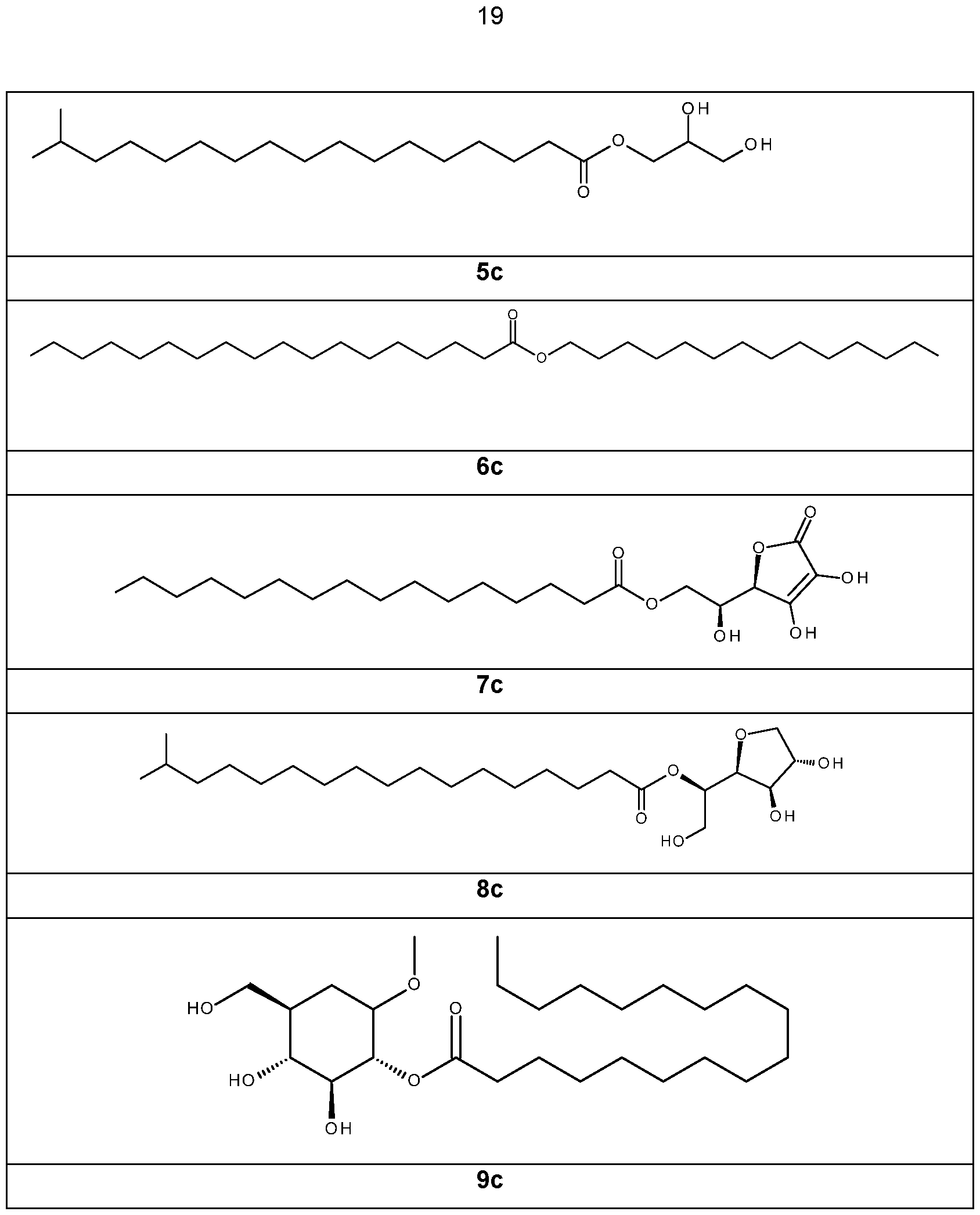

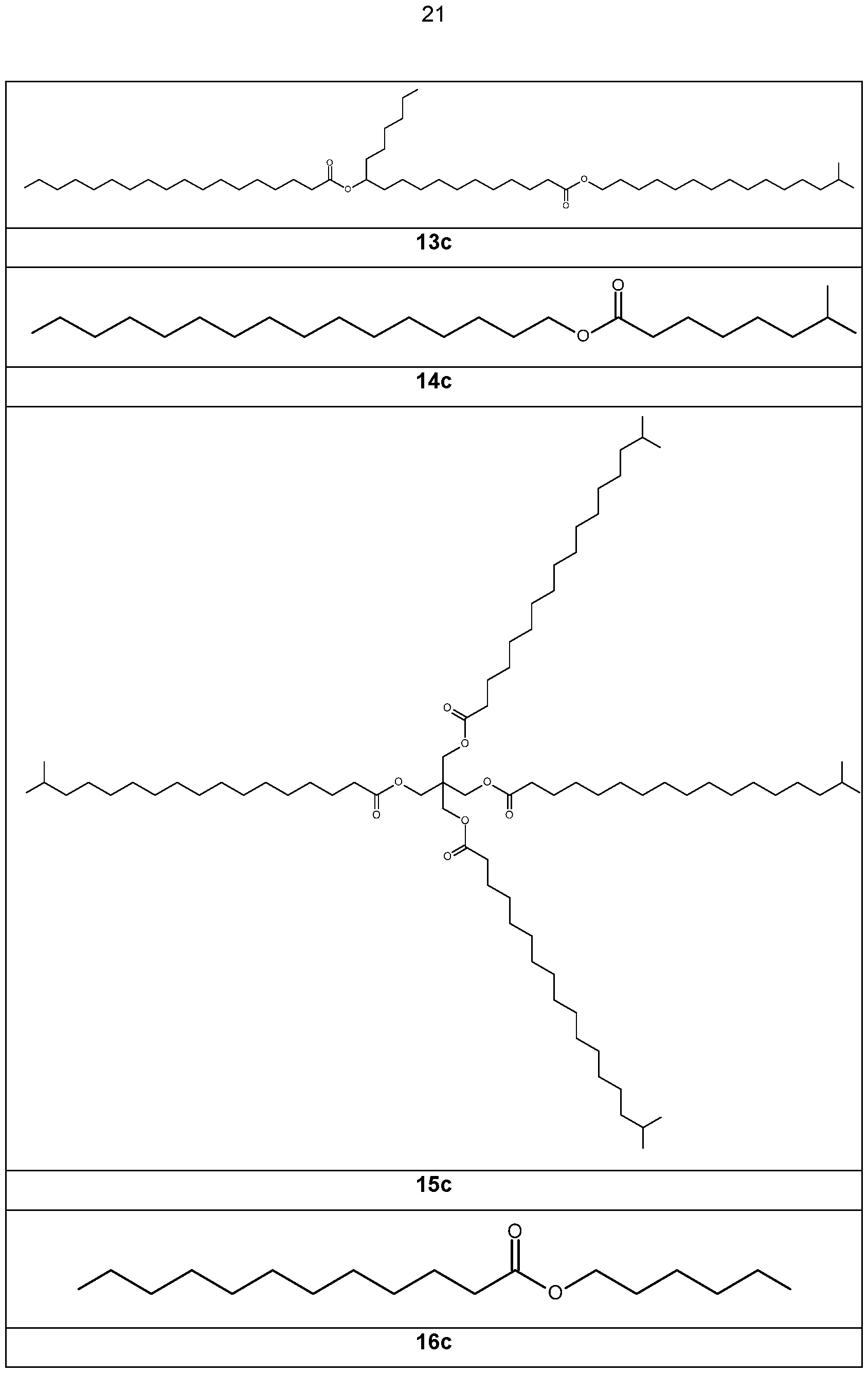


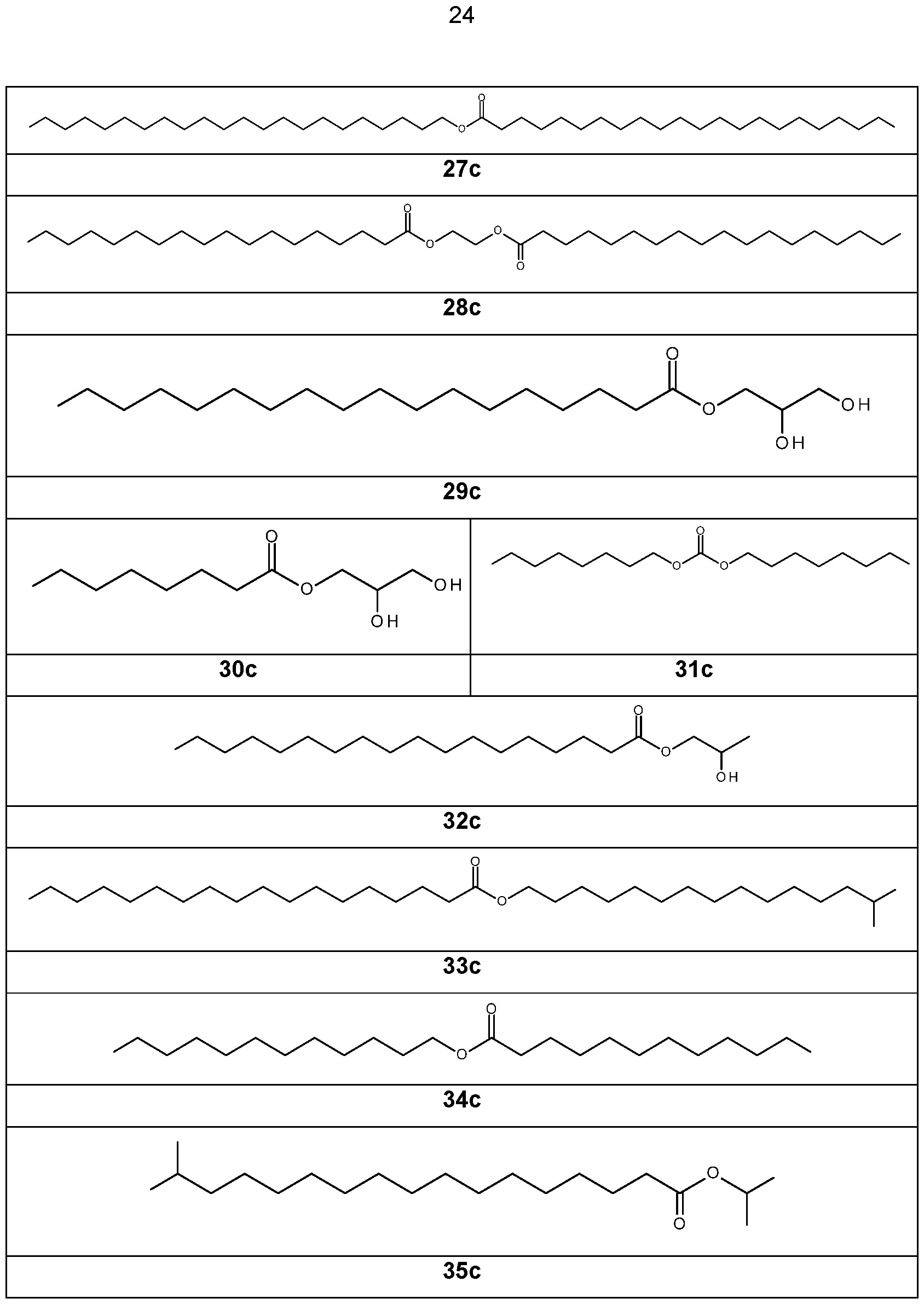


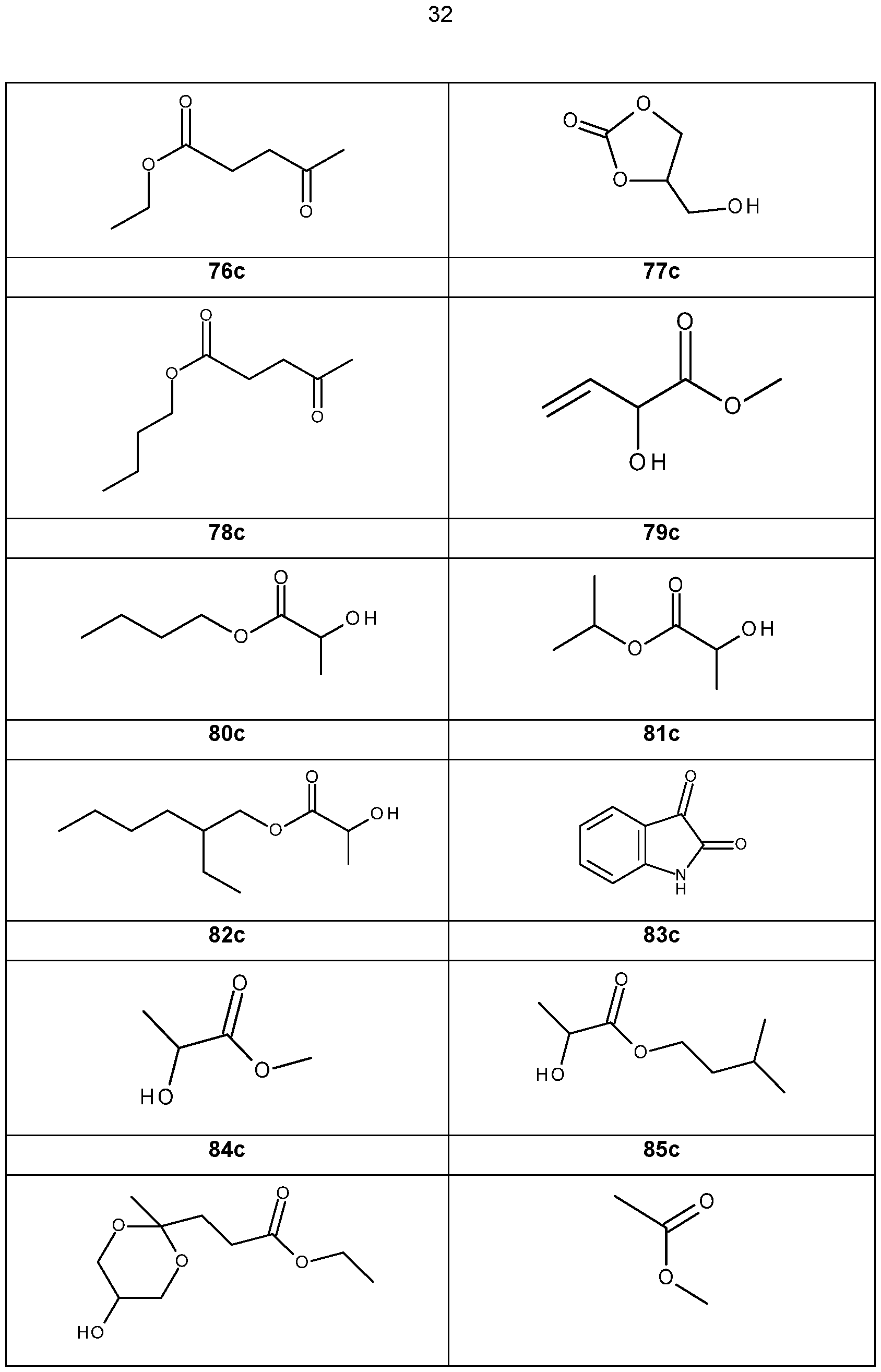


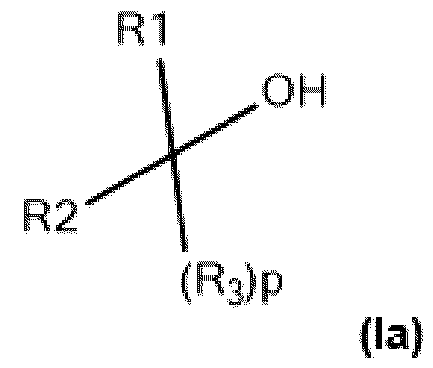
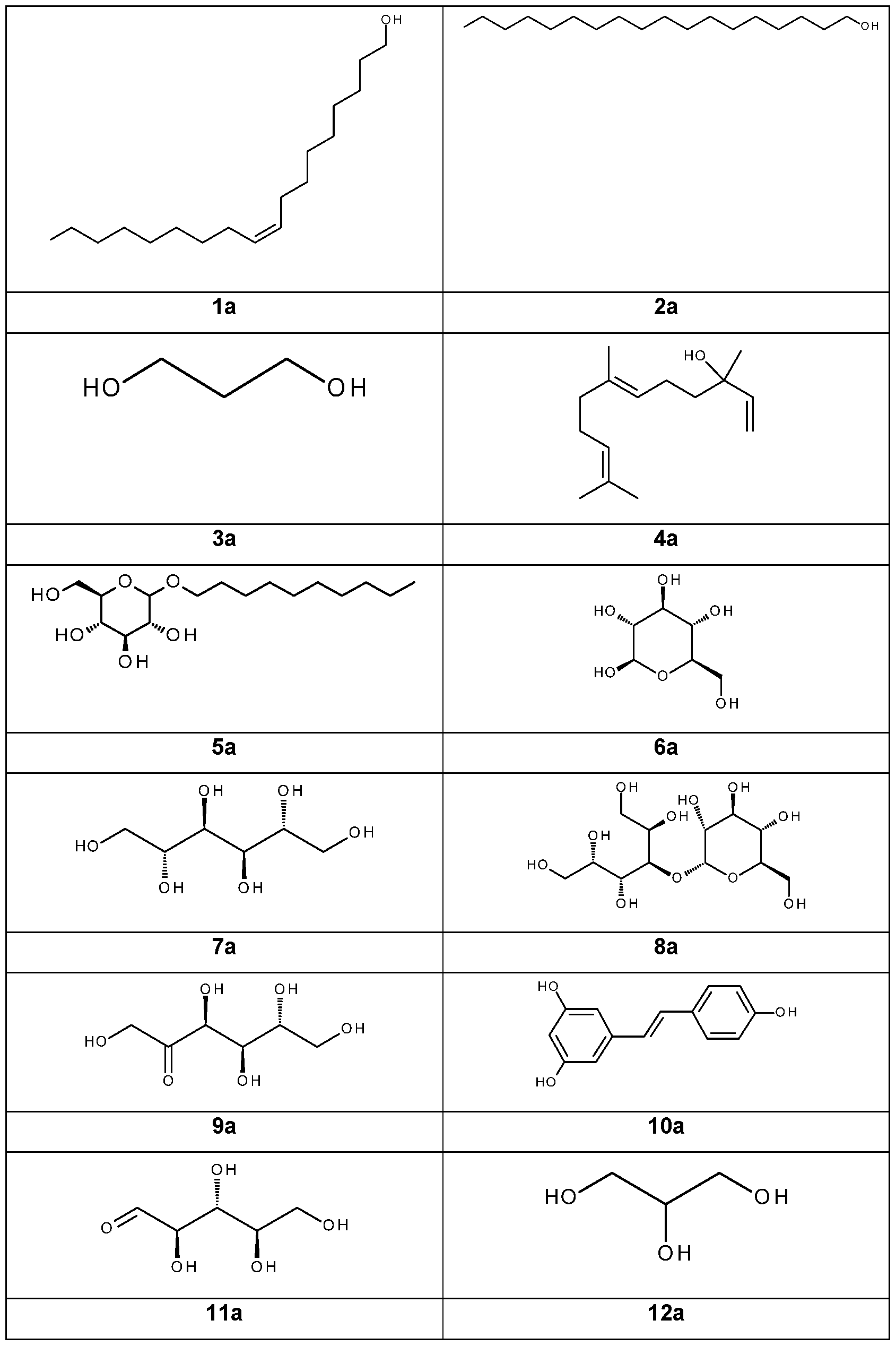
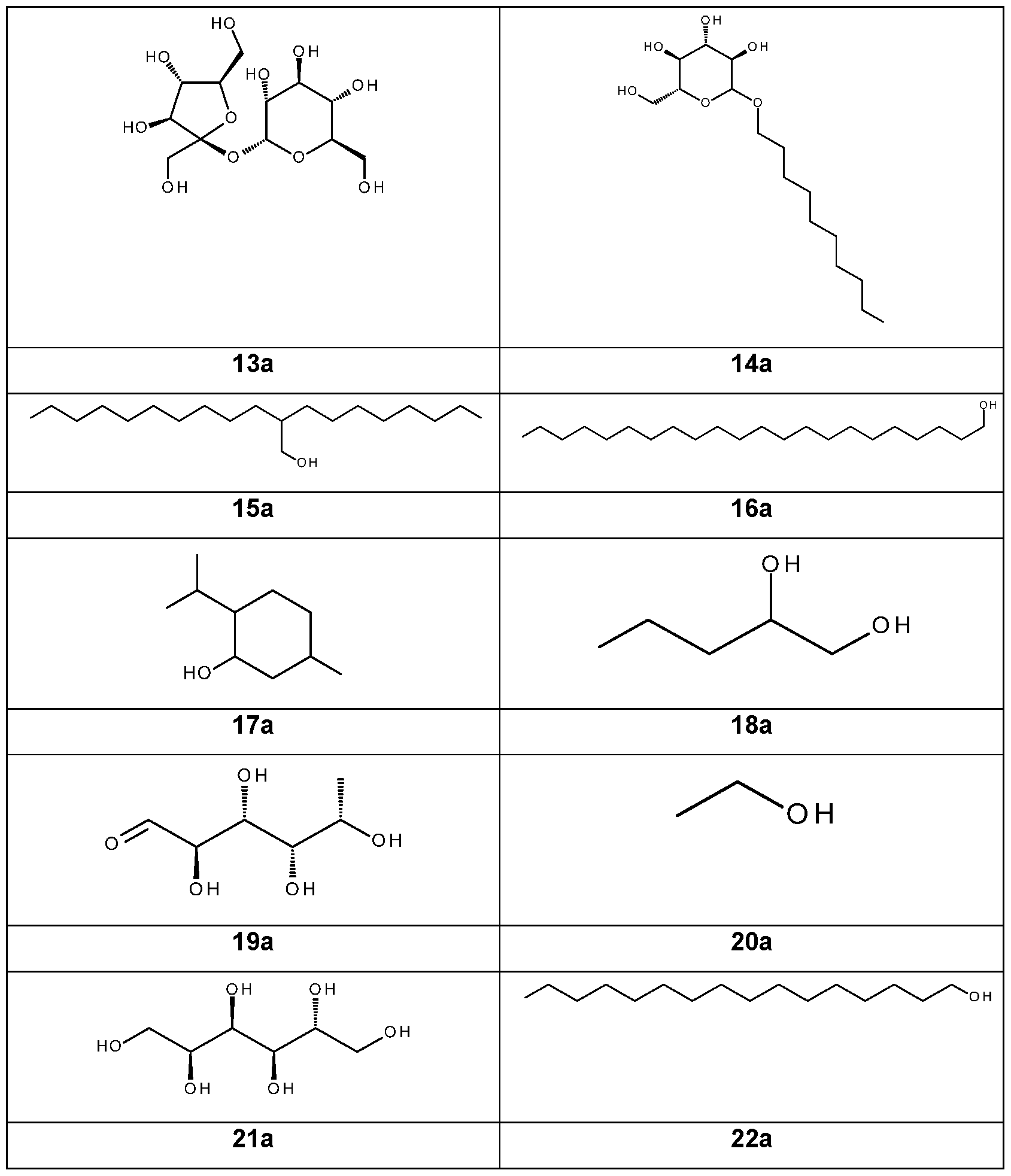


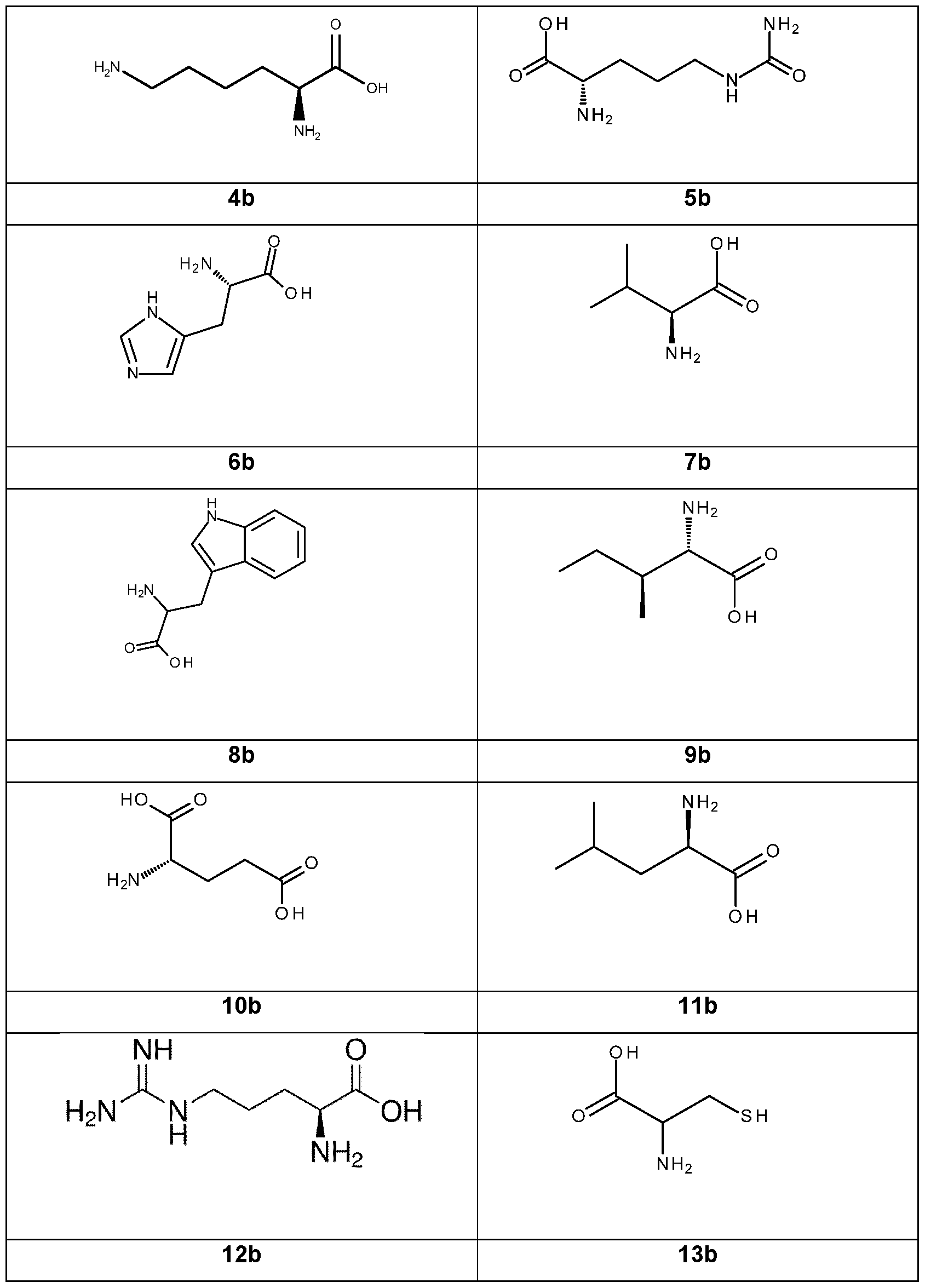


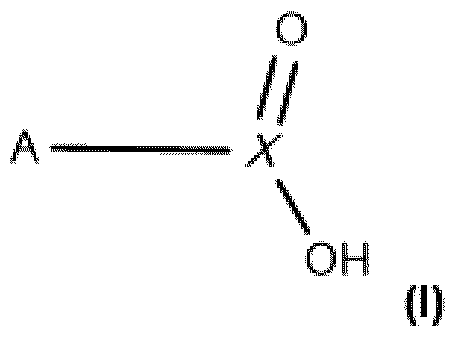
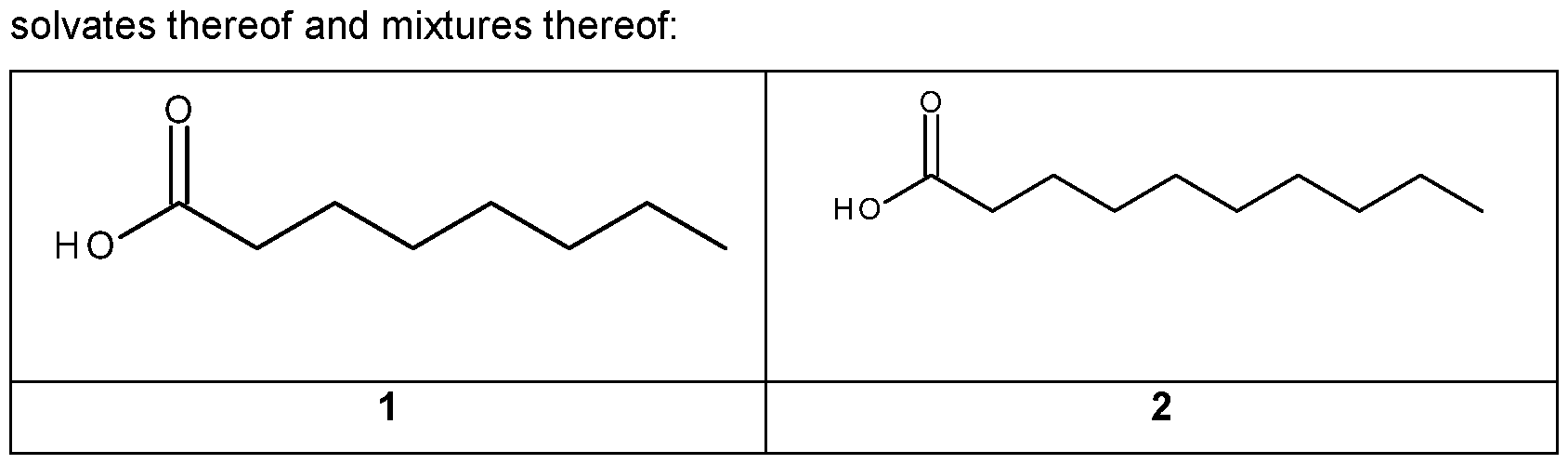


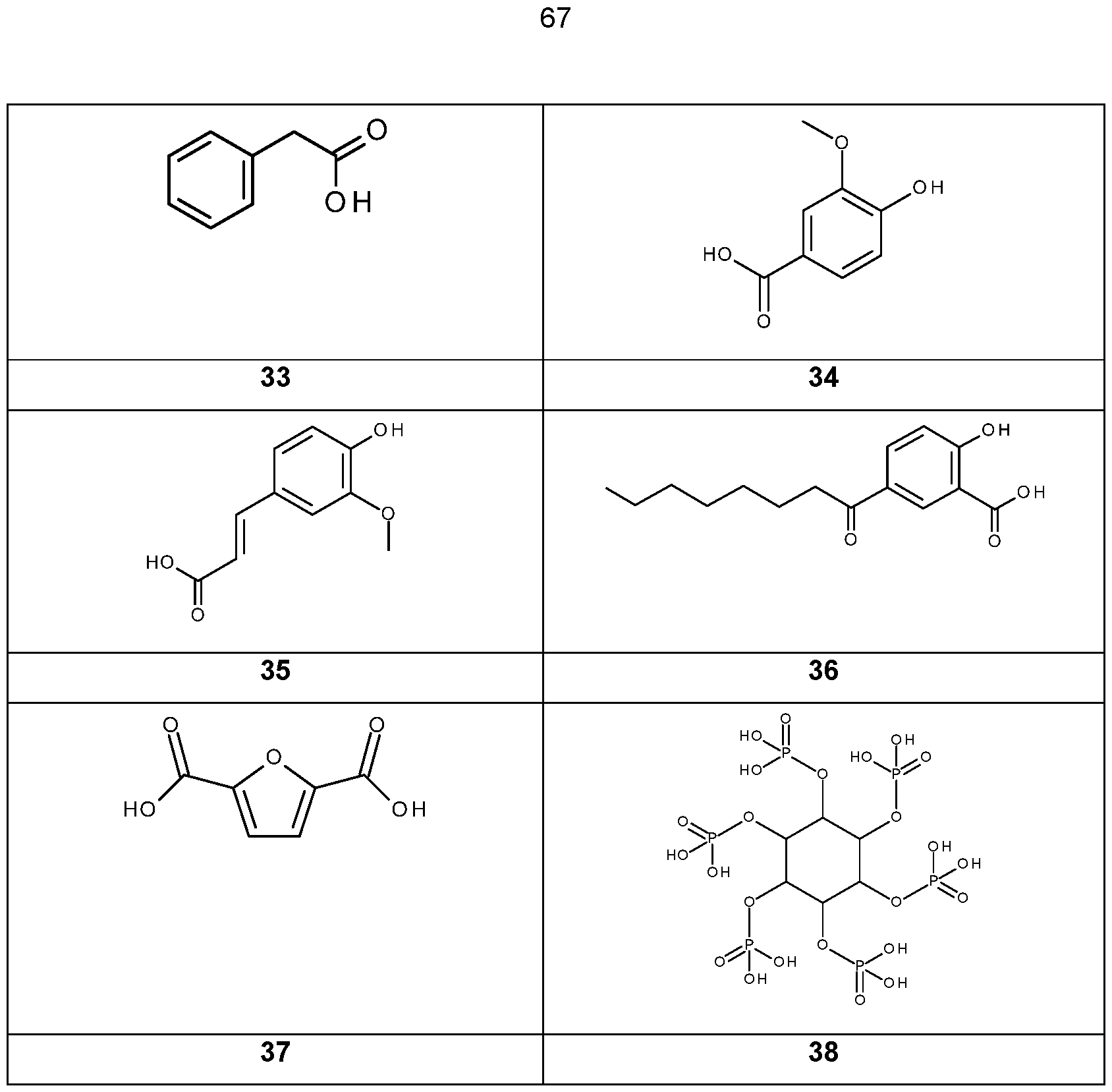


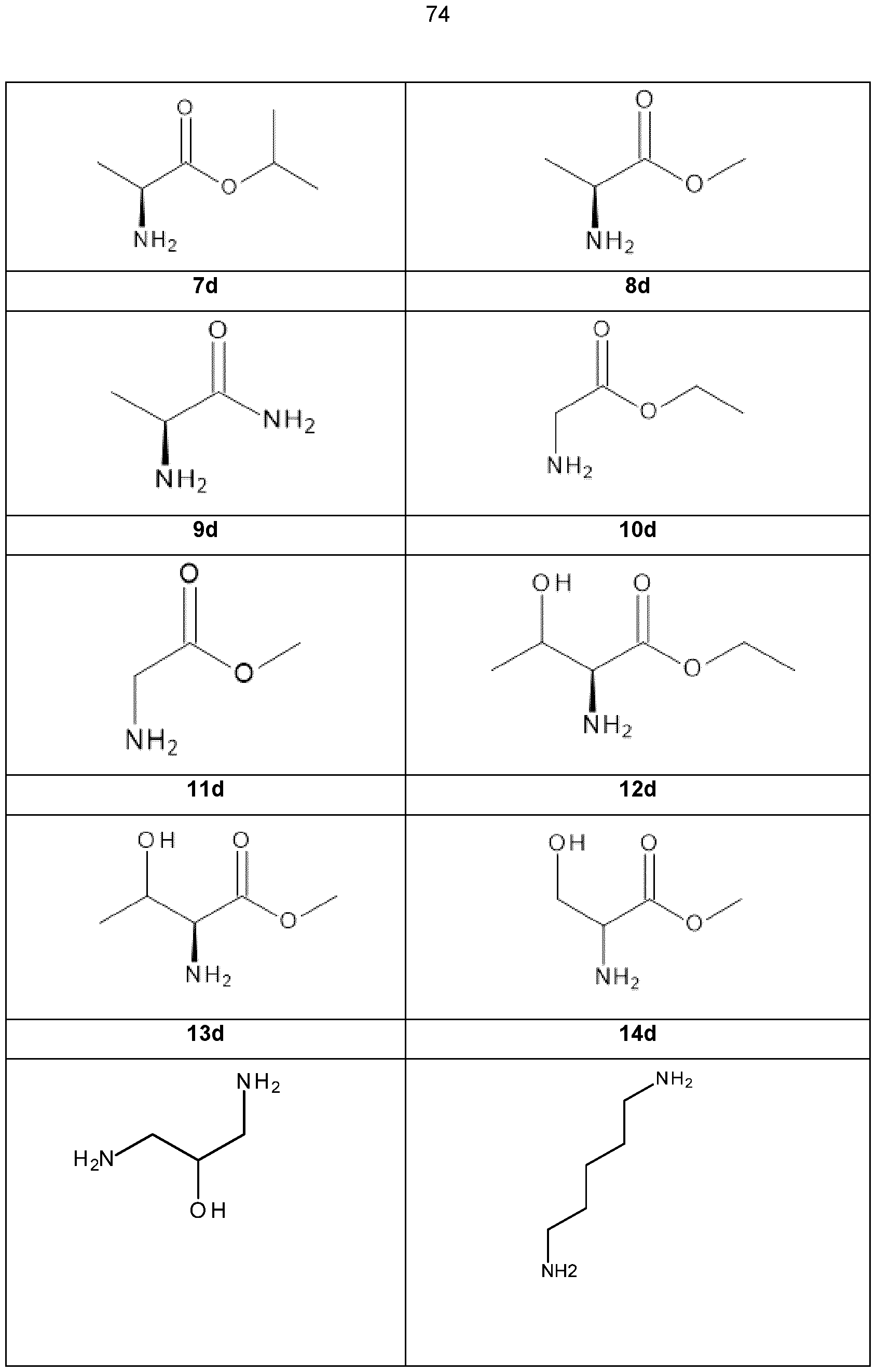


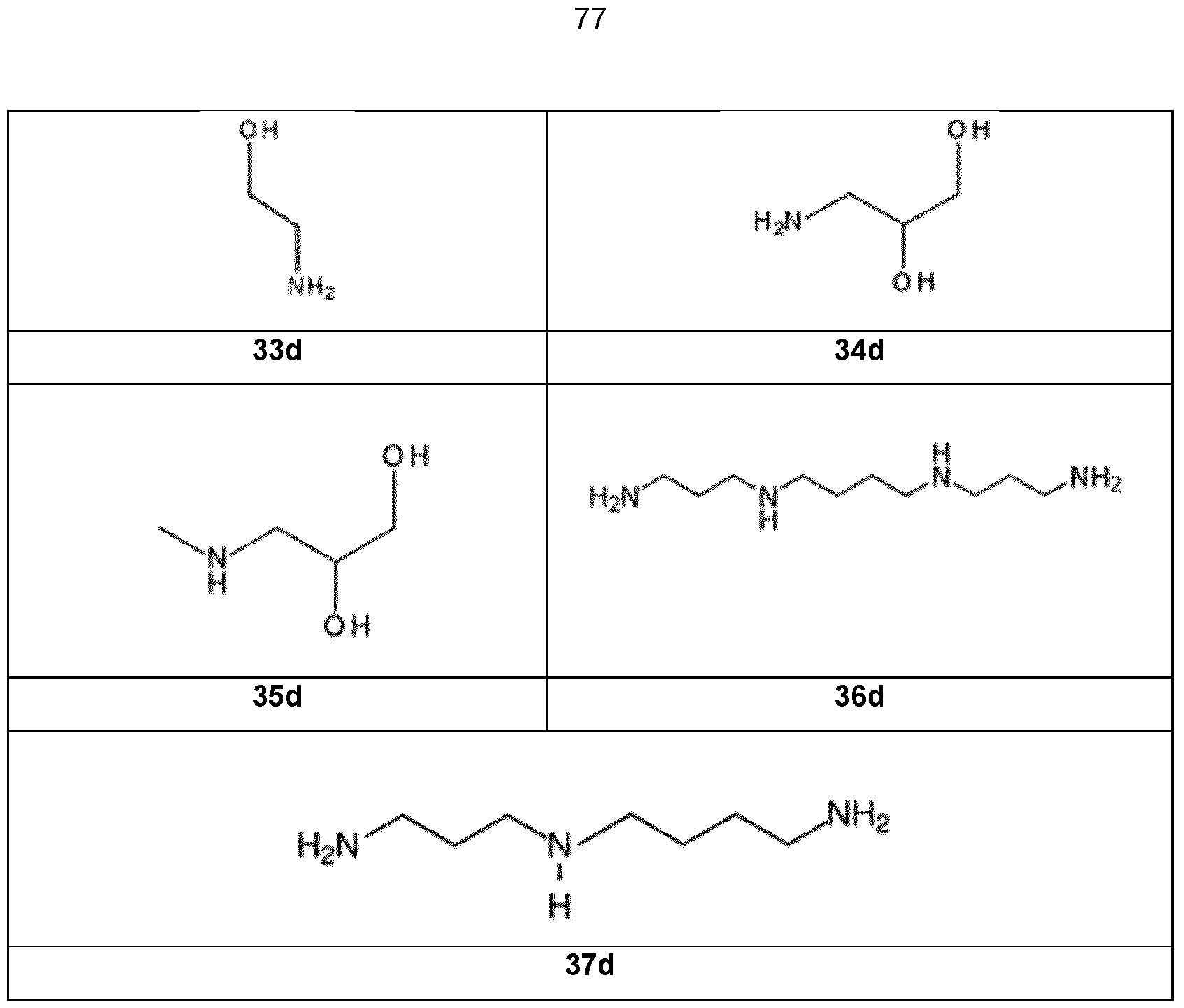


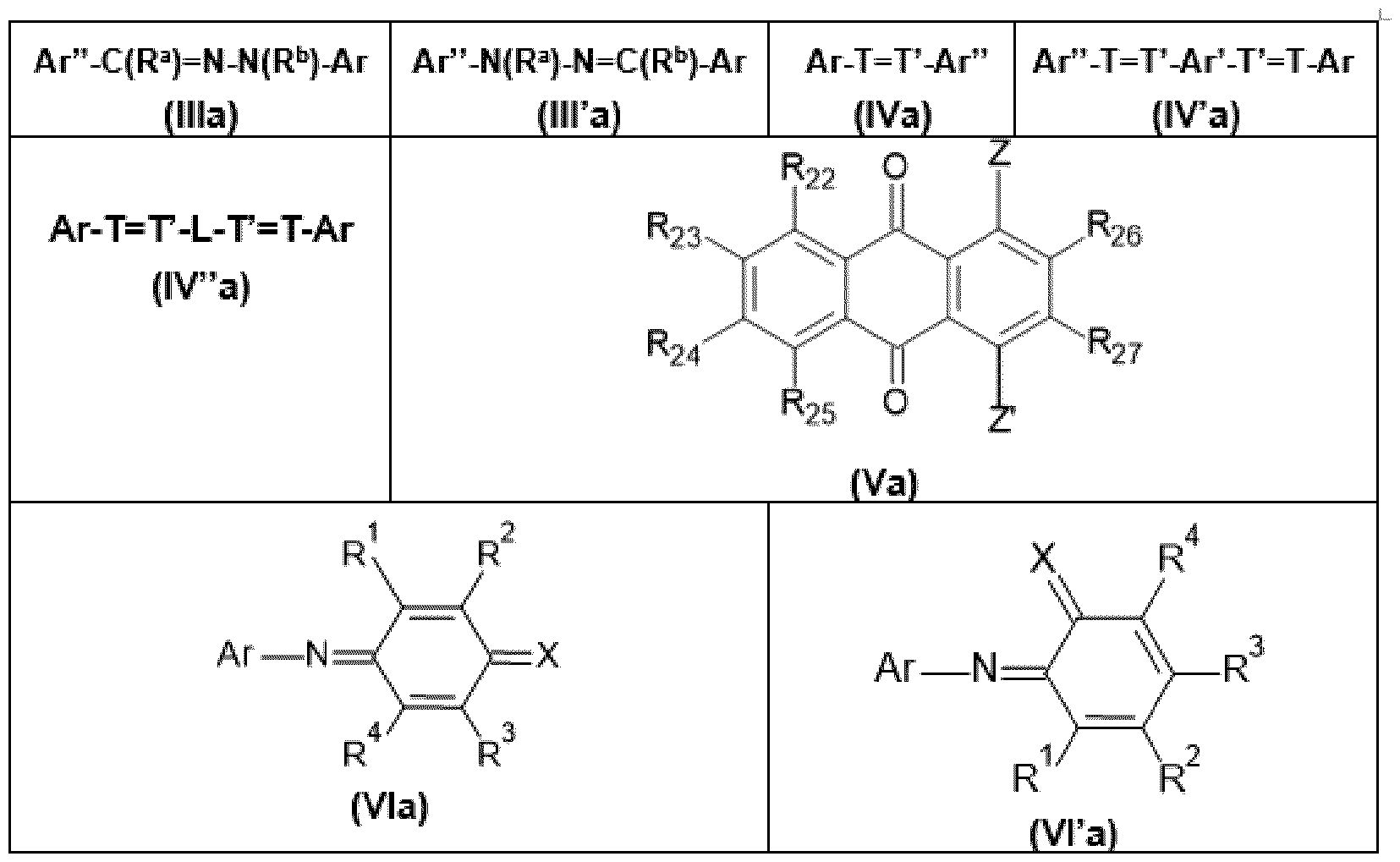

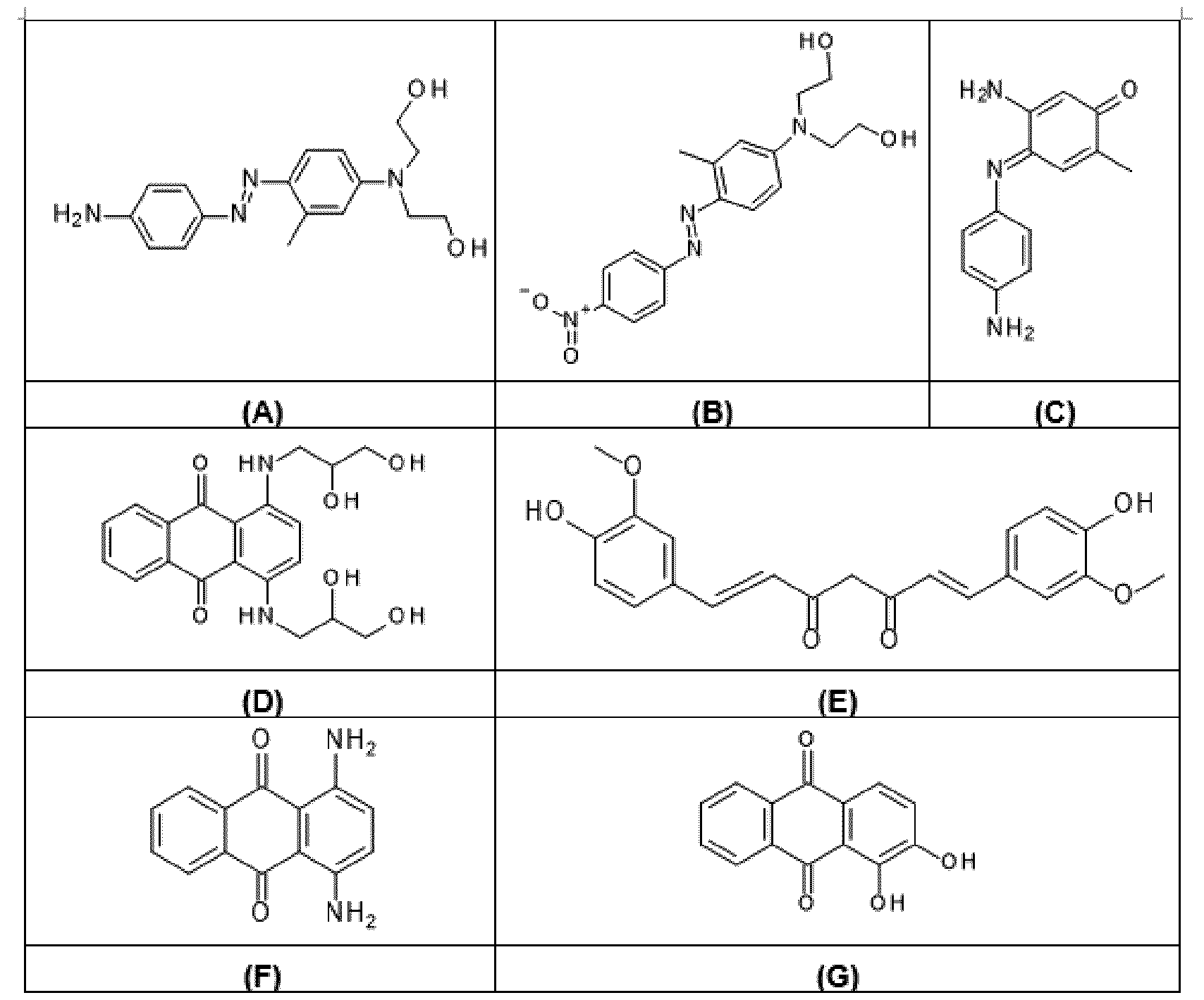

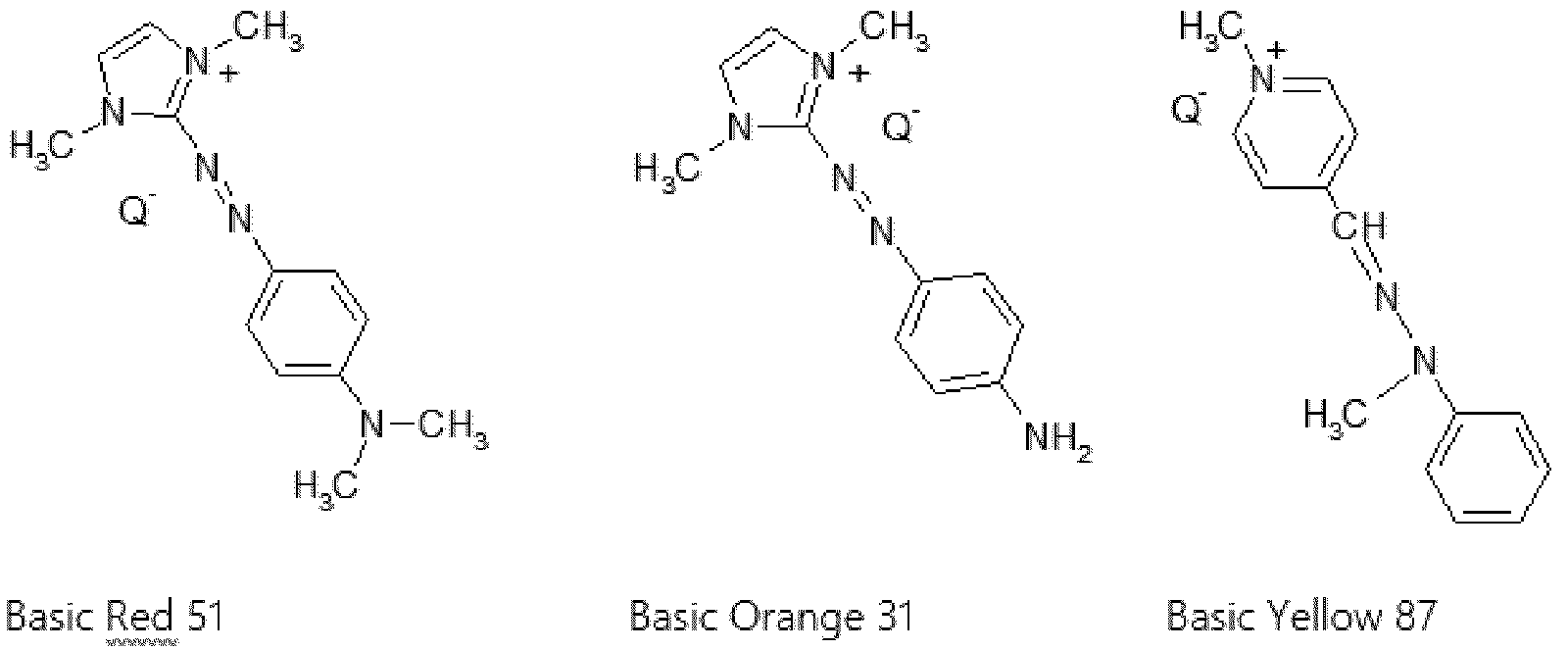


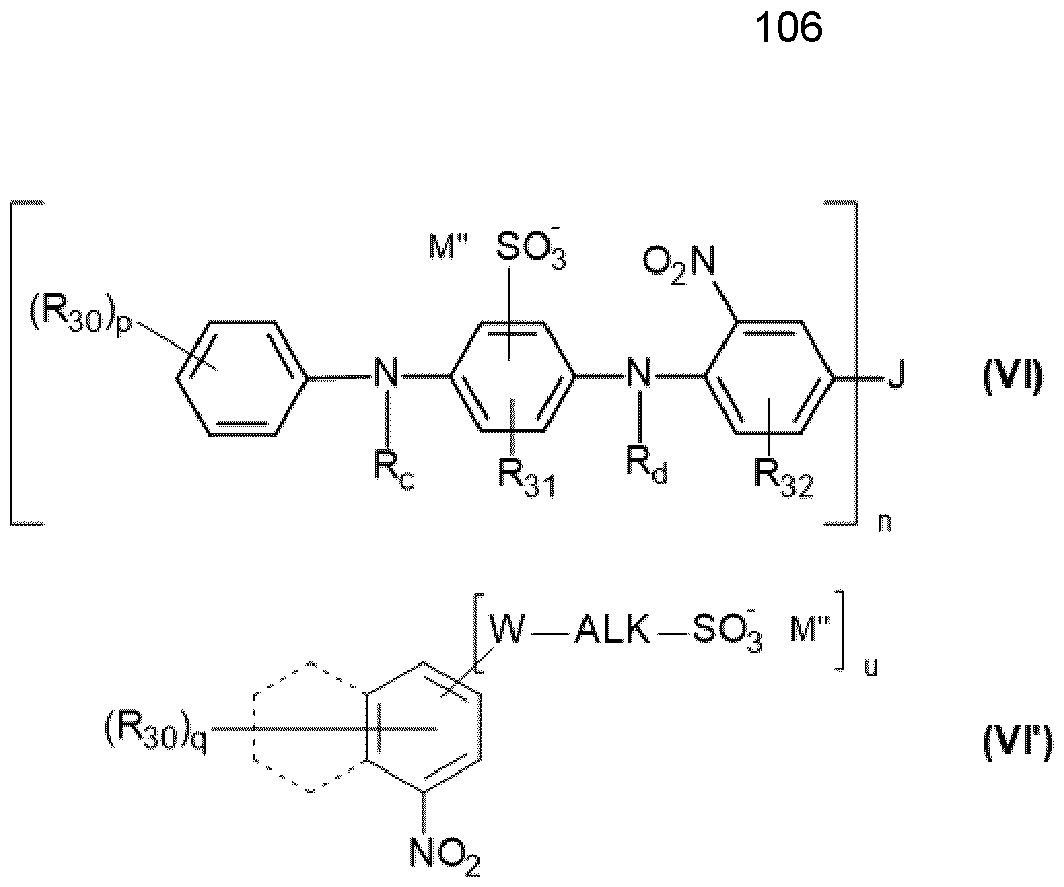


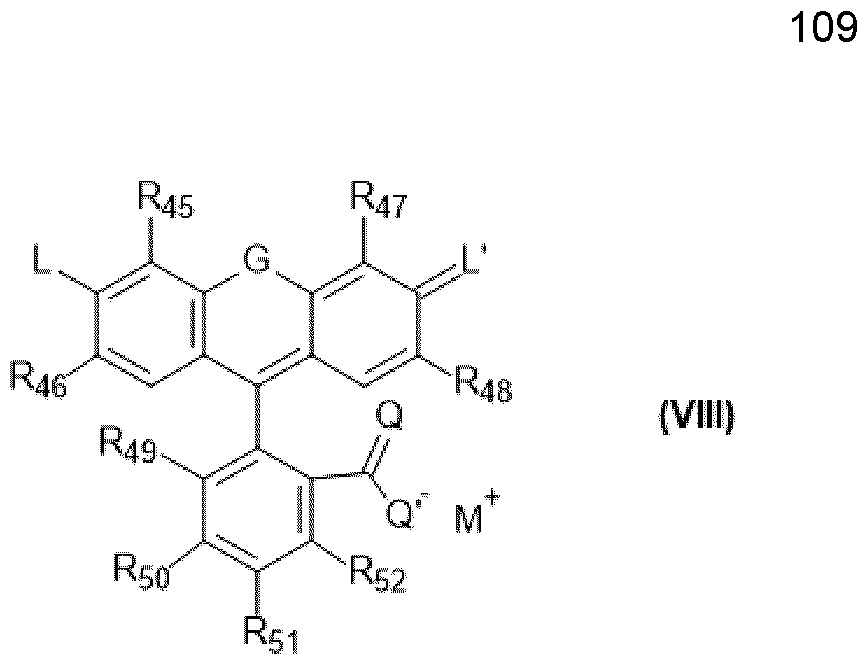


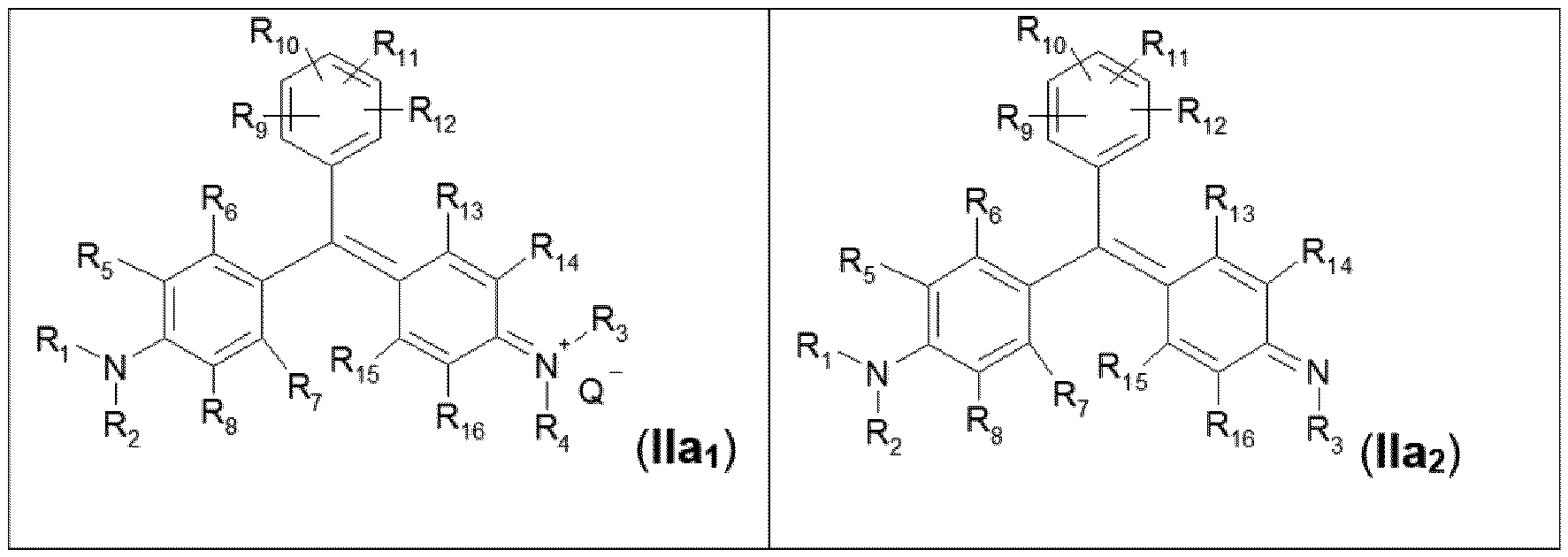
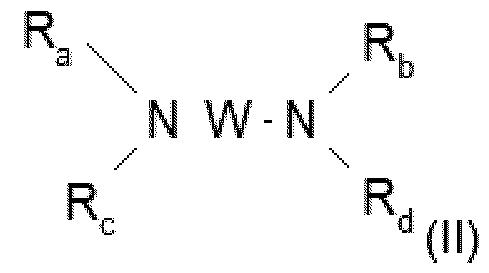
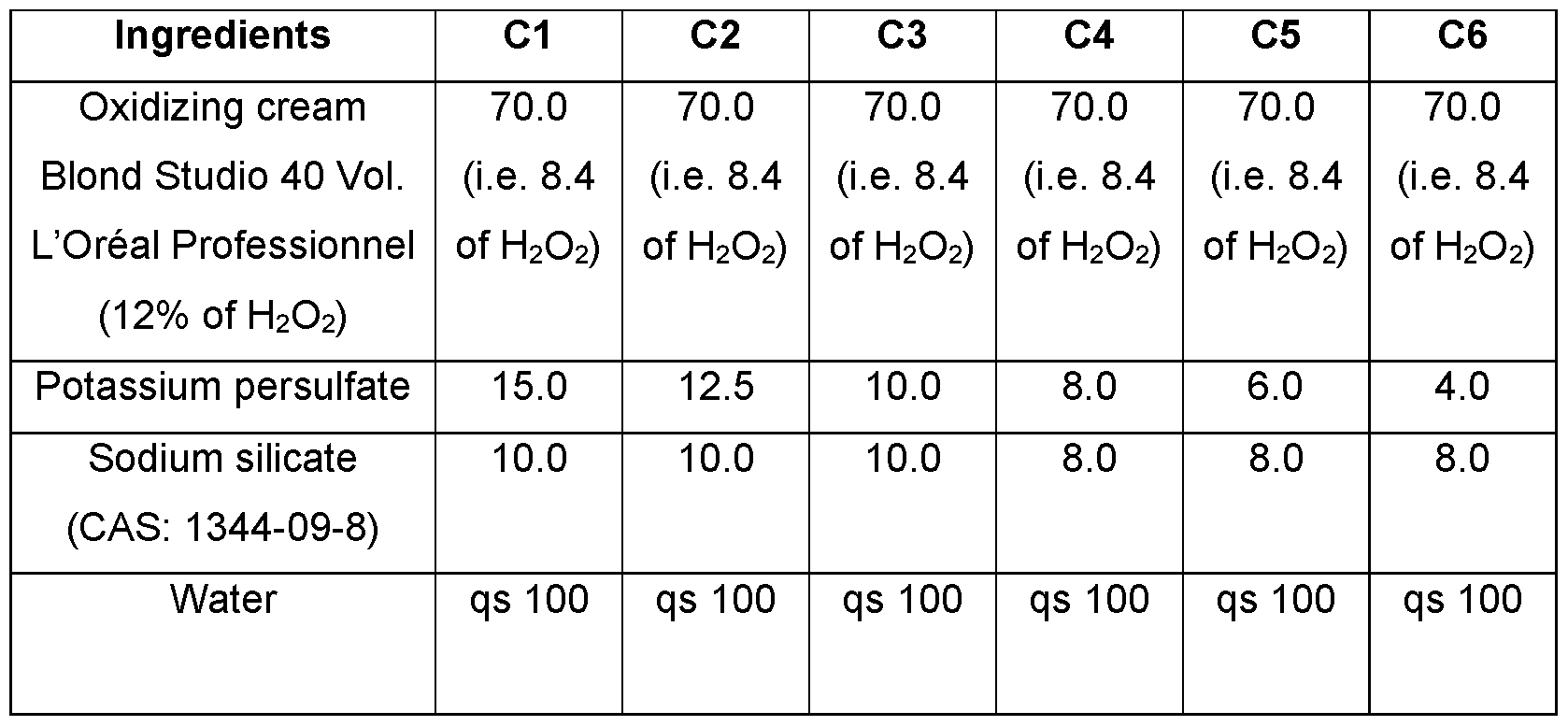
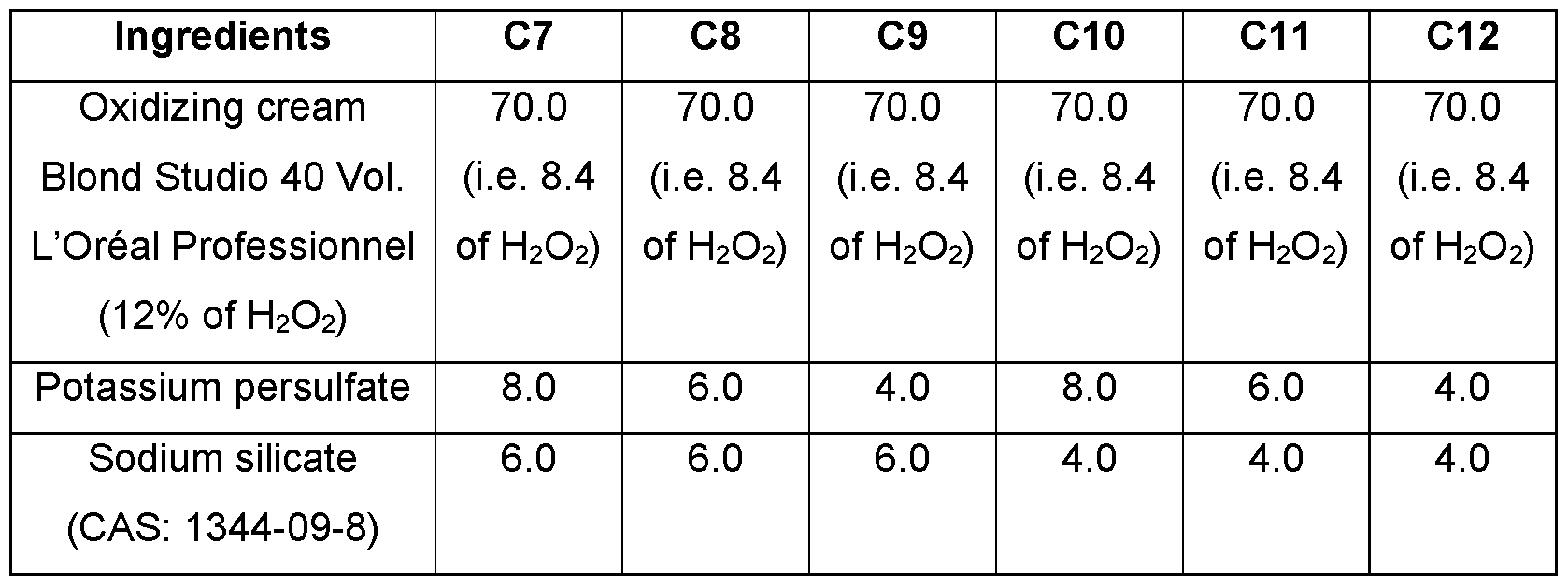


Claims
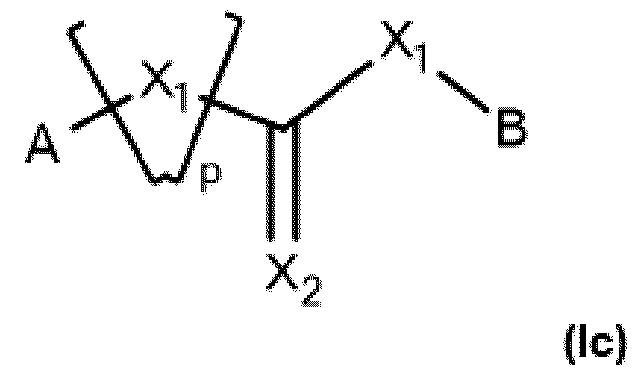


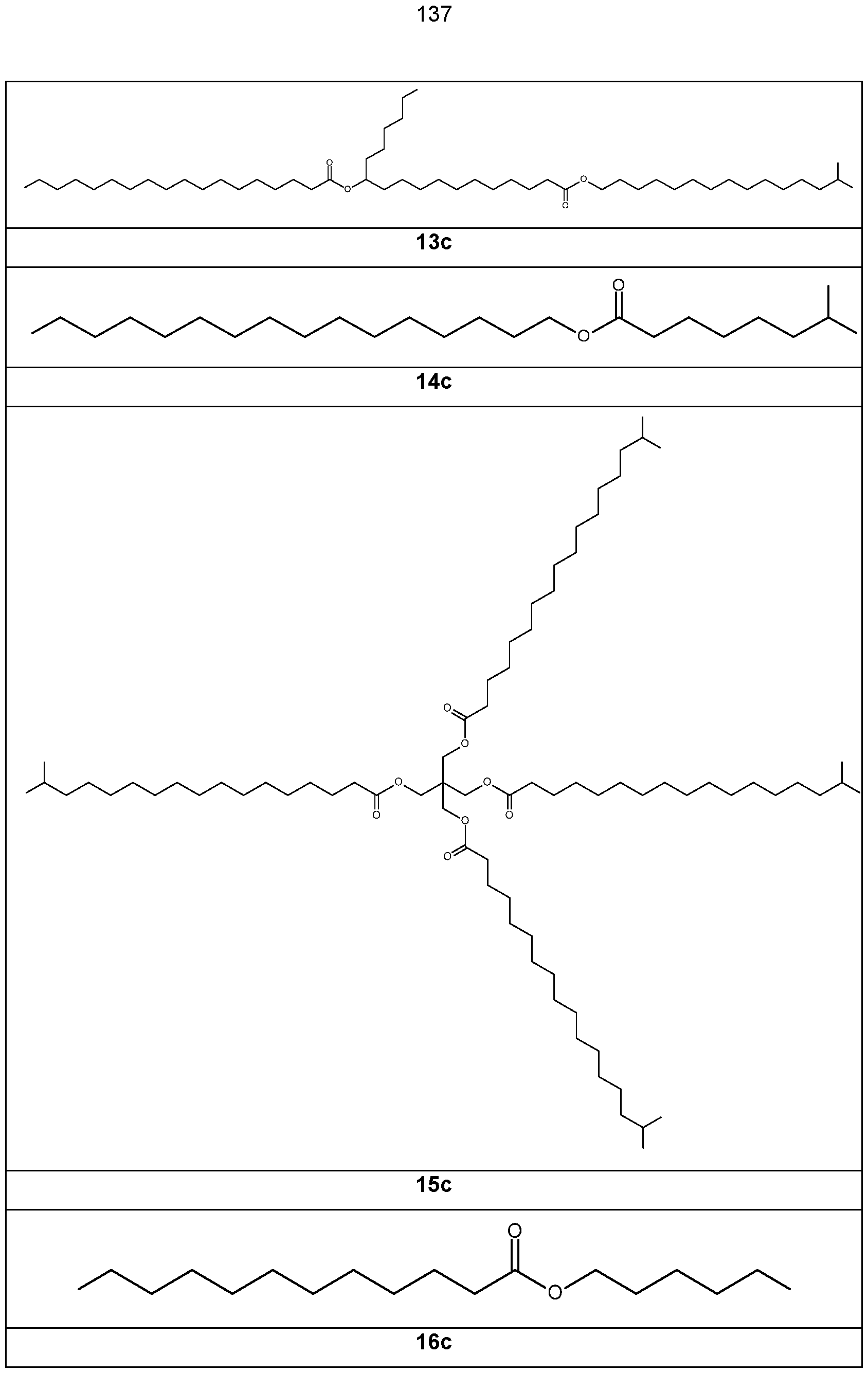
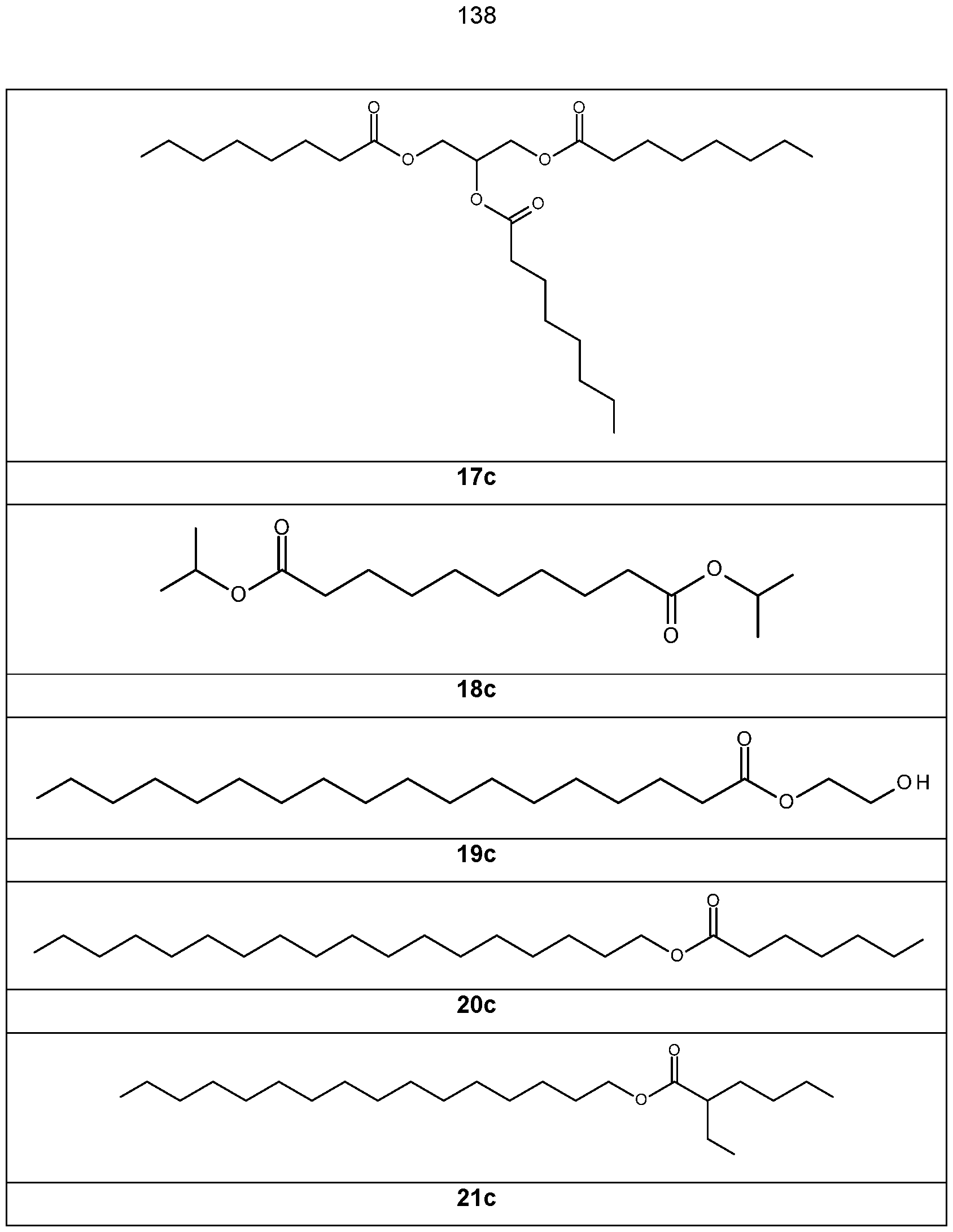
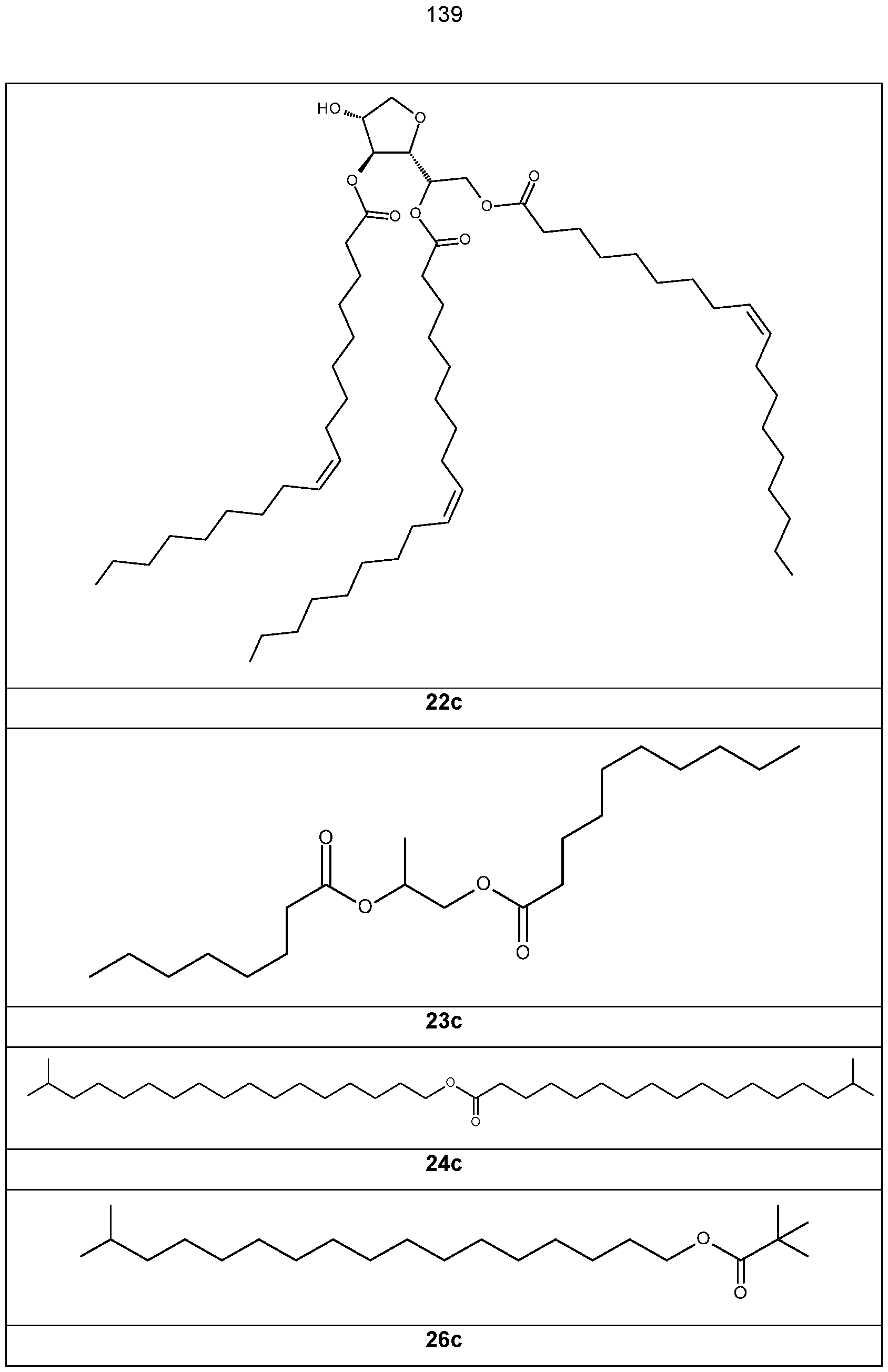

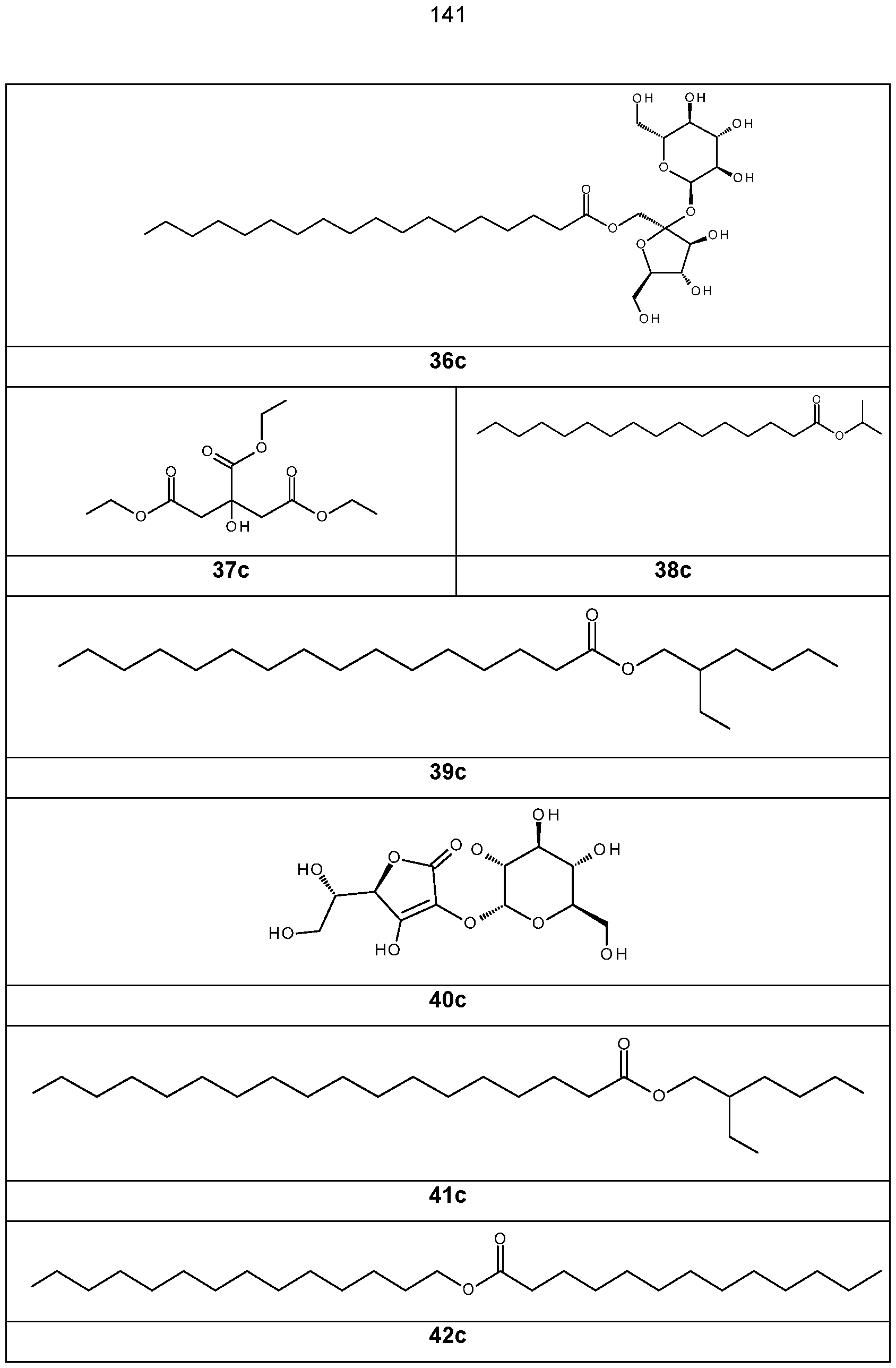

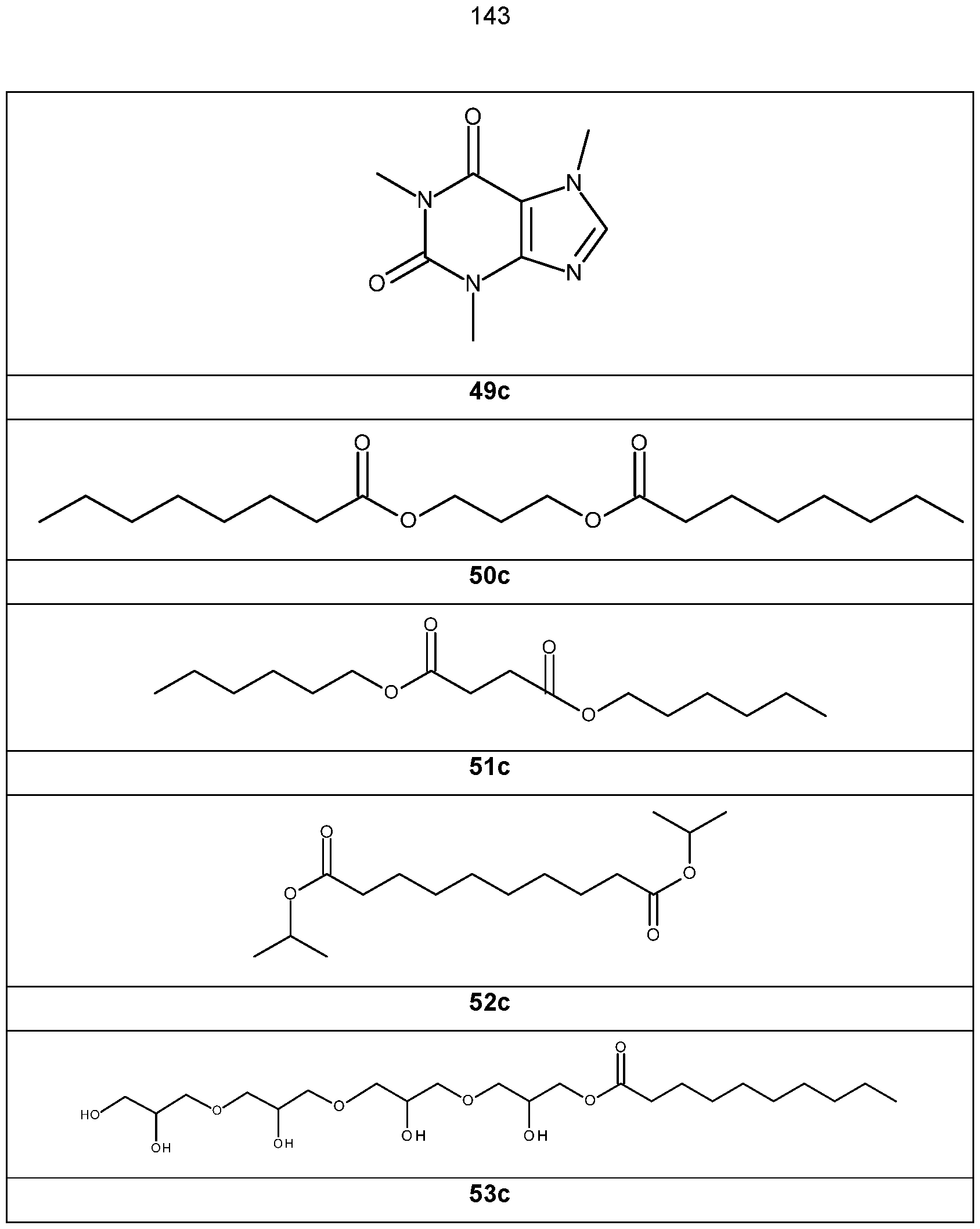


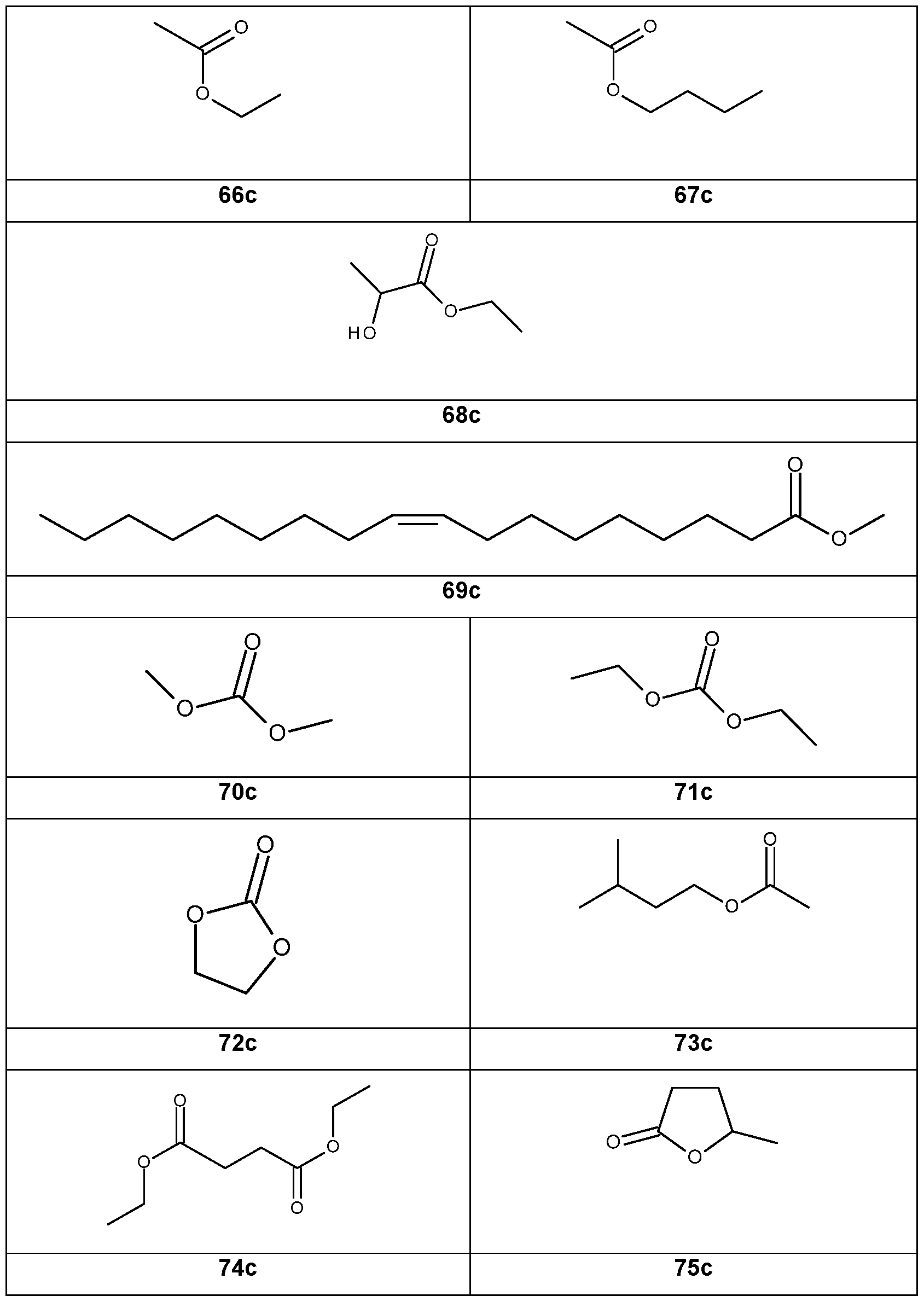


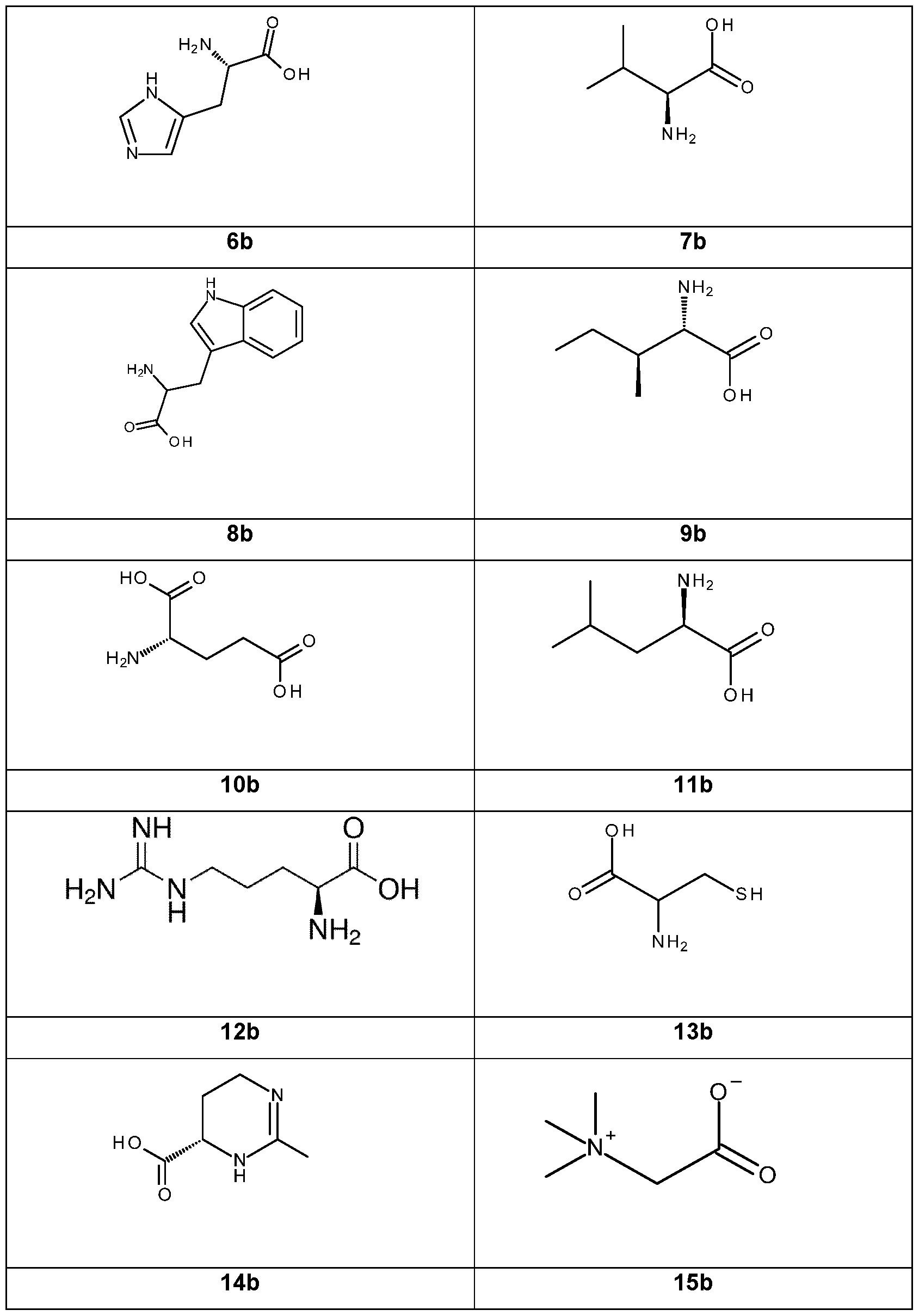


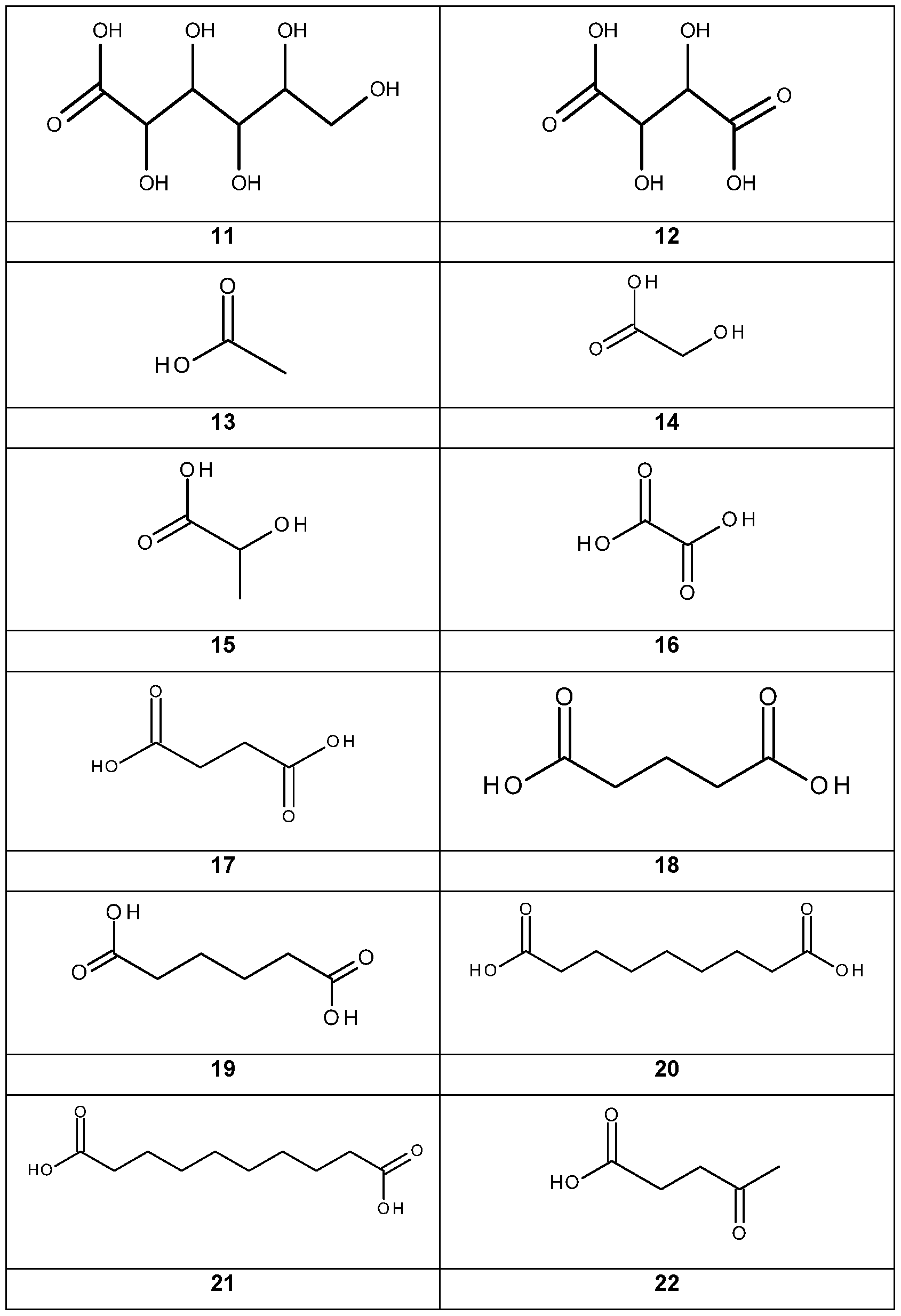


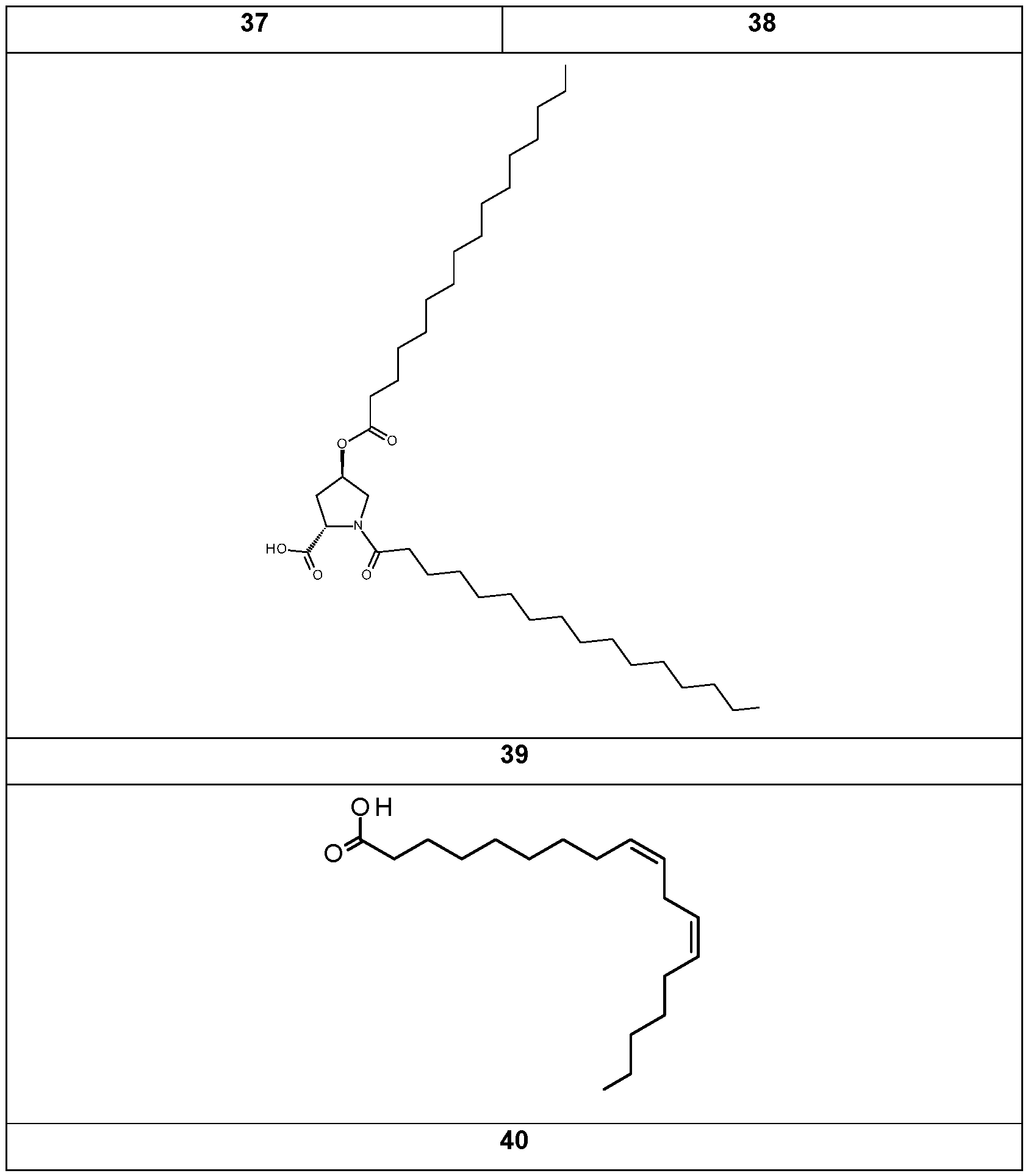


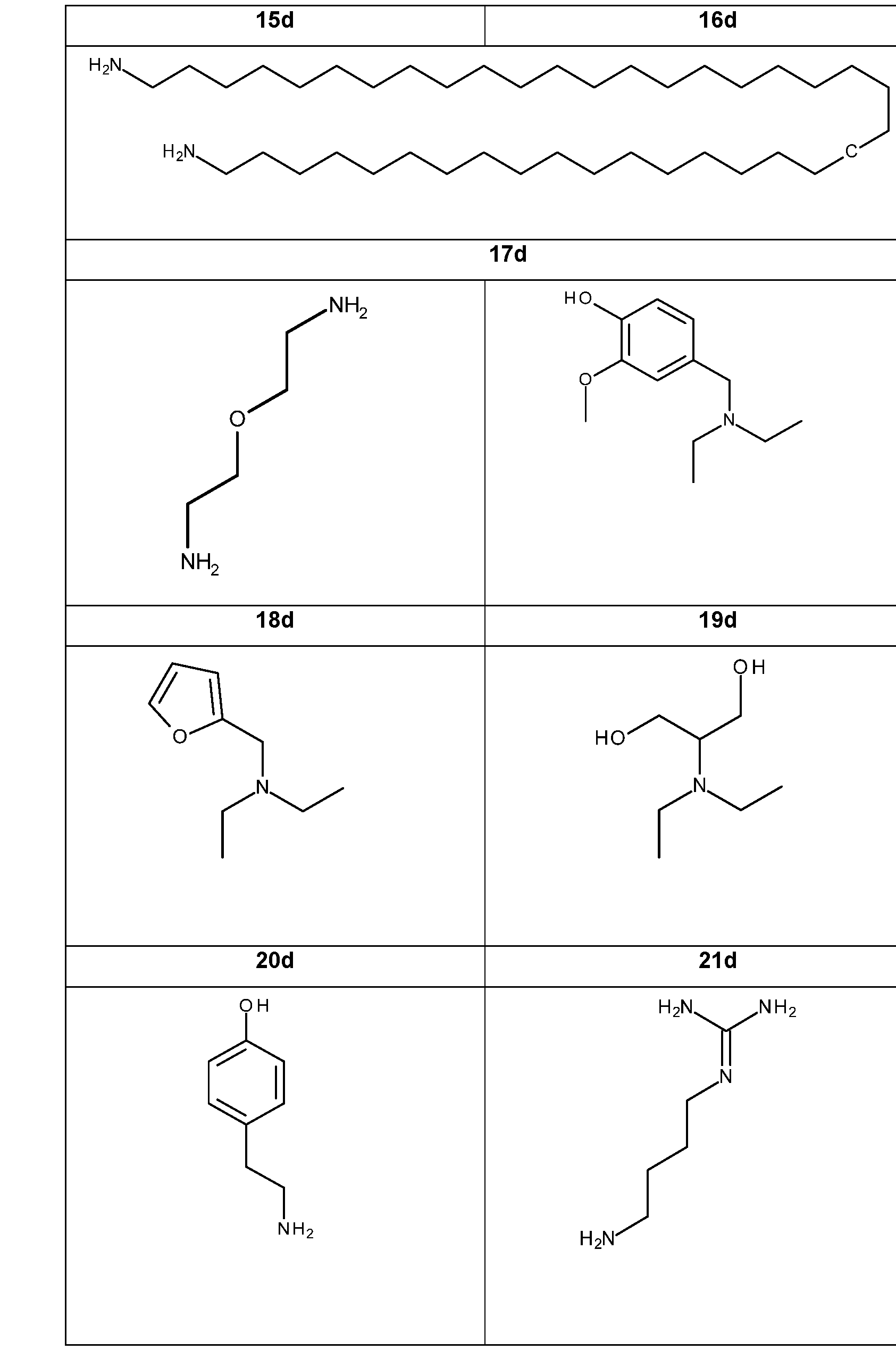
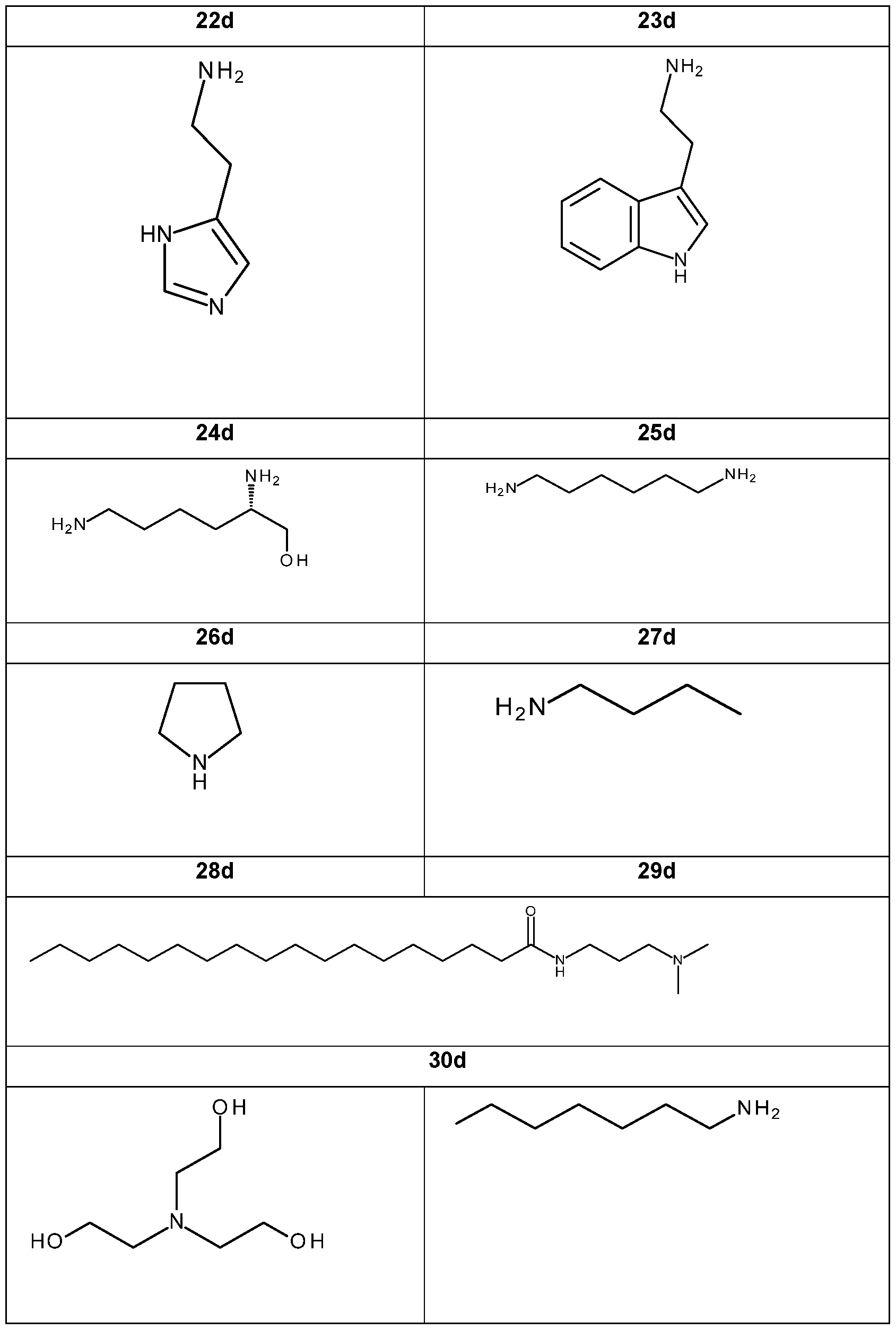


Priority Applications (4)
| Application Number | Priority Date | Filing Date | Title |
|---|---|---|---|
| JP2024574599A JP2025519800A (en) | 2022-06-22 | 2023-06-21 | Composition for lightening keratinous fibers and method for lightening keratinous fibers using said composition - Patents.com |
| EP23731315.0A EP4543401A1 (en) | 2022-06-22 | 2023-06-21 | Composition for lightening keratin fibres and process for lightening keratin fibres using said composition |
| CN202380048414.9A CN119836282A (en) | 2022-06-22 | 2023-06-21 | Composition for lightening keratin fibers and method for lightening keratin fibers using the same |
| US18/876,591 US20250195349A1 (en) | 2022-06-22 | 2023-06-21 | Composition for lightening keratin fibres and process for lightening keratin fibres using said composition |
Applications Claiming Priority (2)
| Application Number | Priority Date | Filing Date | Title |
|---|---|---|---|
| FRFR2206174 | 2022-06-22 | ||
| FR2206174A FR3136972A1 (en) | 2022-06-22 | 2022-06-22 | Composition for lightening keratin fibers and process for lightening keratin fibers using this composition |
Publications (1)
| Publication Number | Publication Date |
|---|---|
| WO2023247617A1 true WO2023247617A1 (en) | 2023-12-28 |
Family
ID=83899738
Family Applications (1)
| Application Number | Title | Priority Date | Filing Date |
|---|---|---|---|
| PCT/EP2023/066783 Ceased WO2023247617A1 (en) | 2022-06-22 | 2023-06-21 | Composition for lightening keratin fibres and process for lightening keratin fibres using said composition |
Country Status (6)
| Country | Link |
|---|---|
| US (1) | US20250195349A1 (en) |
| EP (1) | EP4543401A1 (en) |
| JP (1) | JP2025519800A (en) |
| CN (1) | CN119836282A (en) |
| FR (1) | FR3136972A1 (en) |
| WO (1) | WO2023247617A1 (en) |
Citations (60)
| Publication number | Priority date | Publication date | Assignee | Title |
|---|---|---|---|---|
| GB738585A (en) | 1952-07-17 | 1955-10-19 | May & Baker Ltd | Improvements in or relating to tetrazolium compounds |
| FR1221122A (en) | 1958-02-25 | 1960-05-31 | Thera Chemie G M B H | Hair dye products |
| GB1026978A (en) | 1962-03-30 | 1966-04-20 | Schwarzkopf Verwaltung G M B H | Method of dyeing hair |
| FR1516943A (en) | 1966-01-10 | 1968-02-05 | Oreal | Basic dyes suitable for dyeing hair |
| US3376110A (en) | 1967-01-30 | 1968-04-02 | Gen Aniline & Film Corp | Solid stabilized hydrogen peroxide compositions |
| FR1540423A (en) | 1966-07-25 | 1968-09-27 | Oreal | New dyes, their manufacturing processes and their applications |
| FR1560664A (en) | 1967-02-22 | 1969-03-21 | ||
| FR1567219A (en) | 1967-03-01 | 1969-05-16 | ||
| GB1153196A (en) | 1965-07-07 | 1969-05-29 | Schwarzkopf Verwaltung G M B H | Method of Dyeing Hair |
| GB1195386A (en) | 1966-08-05 | 1970-06-17 | Sandoz Ltd | Water-Soluble Cationic Monoazo-Dyestuffs and their manufacture and use |
| US3524842A (en) | 1967-08-04 | 1970-08-18 | Durand & Huguenin Ag | Water-soluble cationic phenylazo-naphthol dyestuffs containing a quaternary ammonium group |
| FR2189006A1 (en) | 1972-06-19 | 1974-01-25 | Oreal | |
| DE2359399A1 (en) | 1973-11-29 | 1975-06-12 | Henkel & Cie Gmbh | Tetraaminopyrimidines as developers in oxidation hair dyes - esp. used with meta aminophenol couplers for blue shading dyes |
| FR2275462A1 (en) | 1974-06-21 | 1976-01-16 | Ici Ltd | PROCESS FOR PREPARING BIPYRIDILIUM COMPOUNDS AND PRODUCTS OBTAINED |
| FR2285851A1 (en) | 1974-09-27 | 1976-04-23 | Oreal | 3-AMINO PYRIDINE DERIVATIVES AND TINCTORIAL COMPOSITIONS CONTAINING THEM |
| DE2538363A1 (en) | 1974-08-30 | 1976-05-13 | Oreal | COLORING AGENTS CONTAINING QUATERNAER AZO COLORS DERIVED FROM 2-AMINOPYRIDINE |
| FR2570946A1 (en) | 1984-10-01 | 1986-04-04 | Oreal | NOVEL KERATIN FIBER DYEING COMPOSITIONS CONTAINING AZOIC DYE, PROCESS FOR PREPARING THE DYE AND IMPLEMENTING SAID COMPOSITIONS FOR DYING KERATIN FIBERS |
| DE3843892A1 (en) | 1988-12-24 | 1990-06-28 | Wella Ag | OXIDATION HAIR AGENTS CONTAINING DIAMINOPYRAZOL DERIVATIVES AND NEW DIAMINOPYRAZOLE DERIVATIVES |
| US5008093A (en) | 1989-11-08 | 1991-04-16 | Gaf Chemicals Corporation | Anhydrous complexes of PVP and hydrogen peroxide |
| US5183901A (en) | 1992-01-24 | 1993-02-02 | Isp Investments Inc. | Urea-hydrogen peroxide-polyvinylpyrrolidone |
| JPH0563124A (en) | 1991-09-03 | 1993-03-12 | Mitsubishi Electric Corp | Hybrid integrated circuit device |
| DE4133957A1 (en) | 1991-10-14 | 1993-04-15 | Wella Ag | HAIR DYE CONTAINING AMINOPYRAZOLE DERIVATIVES AND NEW PYRAZOLE DERIVATIVES |
| DE4137005A1 (en) | 1991-11-11 | 1993-05-13 | Bitterfeld Wolfen Chemie | Hair dye contg. bis:cationic diazo dye contg. tri:azo gps. - giving uniform colour from hair roots to tips without dyeing scalp |
| DE4220388A1 (en) | 1992-06-22 | 1993-12-23 | Bitterfeld Wolfen Chemie | Cationic azo dyes - for keratin materials showing improved evenness |
| WO1994008969A1 (en) | 1992-10-16 | 1994-04-28 | Wella Aktiengesellschaft | Process for producing 4,5-diamino pyrazole derivatives, their use for colouring hair and novel pyrazole derivatives |
| WO1994008970A1 (en) | 1992-10-16 | 1994-04-28 | Wella Aktiengesellschaft | Oxidation hair dye containing 4,5-diaminopyrazole derivatives and novel 4,5-diaminopyrazole derivatives and process for their production |
| WO1995001772A1 (en) | 1993-07-05 | 1995-01-19 | Ciba-Geigy Ag | Process for dyeing keratin-containing fibres |
| WO1995015144A1 (en) | 1993-11-30 | 1995-06-08 | Ciba-Geigy Ag | Cationic dyes for keratin-containing fibres |
| WO1996015765A1 (en) | 1994-11-17 | 1996-05-30 | Henkel Kommanditgesellschaft Auf Aktien | Oxidation dyes |
| EP0714954A2 (en) | 1994-11-03 | 1996-06-05 | Ciba-Geigy Ag | Cationic iminazoleazodyestuffs |
| FR2733749A1 (en) | 1995-05-05 | 1996-11-08 | Oreal | COMPOSITIONS FOR DYEING KERATINIC FIBERS CONTAINING DIAMINO PYRAZOLES, DYEING PROCESS, NOVEL DIAMINO PYRAZOLES, AND PREPARATION METHOD THEREOF |
| EP0770375A1 (en) | 1995-10-21 | 1997-05-02 | GOLDWELL GmbH | Hair dyeing composition |
| DE19543988A1 (en) | 1995-11-25 | 1997-05-28 | Wella Ag | Oxidative hair dye composition |
| WO1997044004A1 (en) | 1996-05-23 | 1997-11-27 | L'oreal | Direct capillary dyeing composition comprising a cross-linked polymer with acrylic and alkyl c10-c30 acrylate units |
| FR2757385A1 (en) | 1996-12-23 | 1998-06-26 | Oreal | KERATIN FIBER OXIDATION DYEING COMPOSITION AND DYEING METHOD USING THE SAME |
| EP0850637A1 (en) | 1996-12-23 | 1998-07-01 | L'oreal | Composition for the oxidative dyeing of keratinic fibres and dyeing process using this composition |
| EP0860636A1 (en) | 1997-02-20 | 1998-08-26 | Hutchinson | Tight connection between conduits |
| US5879413A (en) | 1996-11-27 | 1999-03-09 | Warner-Jenkinson Europe Limited | Cationic diazo dyes for the dyeing of hair |
| US5888252A (en) | 1993-11-30 | 1999-03-30 | Ciba Specialty Chemicals Corporation | Processes for dyeing keratin-containing fibres with cationicazo dyes |
| EP0918053A1 (en) | 1997-11-21 | 1999-05-26 | L'oreal | Azo compounds, their use for dyeing, compositions containing them and dyeing processes |
| EP0920856A1 (en) | 1997-12-05 | 1999-06-09 | L'oreal | Process for direct dying of keratinous fibres in two steps with the help of direct basic dyes |
| WO1999048465A1 (en) | 1998-03-20 | 1999-09-30 | L'oreal | Oxidation dyeing composition for keratinous fibres containing a 3-aminopyridine azo derivative and dyeing method using said composition |
| FR2788433A1 (en) | 1999-01-19 | 2000-07-21 | Oreal | USE OF CATIONIC PHENYL-AZO-BENZENIC COMPOUNDS IN KERATIN FIBER DYE, TINCTORIAL COMPOSITIONS AND DYEING PROCESSES |
| DE29923409U1 (en) * | 1999-03-05 | 2000-08-17 | Wella Ag, 64295 Darmstadt | Means for decolourising or bleaching hair |
| EP1062940A1 (en) | 1998-02-10 | 2000-12-27 | Yamahatsu Sangyo Kaisha, Ltd. | A permanent wave agent composition having dyeing effect and method for dyeing hair using the same |
| FR2801308A1 (en) | 1999-11-19 | 2001-05-25 | Oreal | KERATIN FIBER DYEING COMPOSITIONS CONTAINING 3-AMINO PYRAZOLO- [1, (- a] -PYRIDINES, DYEING PROCESS, NOVEL 3-AMINO PYRAZOLO- [1,5-a] -PYRIDINES |
| WO2001066646A1 (en) | 2000-03-09 | 2001-09-13 | Ciba Specialty Chemicals Holding Inc. | A method of colouring hair using cationic dyes |
| EP1133976A2 (en) | 2000-03-17 | 2001-09-19 | Kao Corporation | Hair dye composition |
| EP1133975A2 (en) | 2000-03-17 | 2001-09-19 | Kao Corporation | Hair dye composition |
| WO2003029359A1 (en) | 2001-09-24 | 2003-04-10 | Ciba Specialty Chemicals Holdings Inc. | Cationic reactive dyes |
| FR2842200A1 (en) | 2002-07-12 | 2004-01-16 | Centre Nat Rech Scient | PROCESS FOR OBTAINING MODIFIED POLYSACCHARIDES |
| FR2854161A1 (en) | 2003-04-28 | 2004-10-29 | Centre Nat Rech Scient | Crystalline polysaccharide derivatives in the form of water-insoluble aggregates of microcrystals, for use e.g. as viscosity modifiers or super-absorbers, manufactured by controlled oxidation of primary alcohol groups |
| FR2886136A1 (en) | 2005-05-31 | 2006-12-01 | Oreal | COMPOSITION FOR DYING KERATIN FIBERS COMPRISING AT LEAST ONE DIAMINO-N, N-DIHYDRO-PYRAZOLONE DERIVATIVE AND A CATIONIC OXIDATION DYE |
| WO2008152570A1 (en) * | 2007-06-15 | 2008-12-18 | The Procter & Gamble Company | A system for highlighting hair |
| EP2191812A1 (en) * | 2008-11-27 | 2010-06-02 | KPSS-Kao Professional Salon Services GmbH | Bleaching/Highlighting composition |
| JP2013169571A (en) | 2012-02-21 | 2013-09-02 | Nippon Steel & Sumitomo Metal Corp | Method of manufacturing forged steel roll |
| EP2257271B1 (en) * | 2008-04-03 | 2017-03-29 | Henkel AG & Co. KGaA | Agents for lightening fibers containing keratin having coated particles |
| US20170340549A1 (en) * | 2016-05-31 | 2017-11-30 | Henkel Ag & Co. Kgaa | Blonding agent and method for gentle oxidative hair lightening |
| EP2702894B1 (en) * | 2011-04-28 | 2019-01-23 | Kao Corporation | Hair decoration article and hair dyeing and bleaching method using same |
| WO2021099510A1 (en) * | 2019-11-20 | 2021-05-27 | L'oreal | Dyeing or lightening process using a hand-held styling device and a substrate |
Family Cites Families (1)
| Publication number | Priority date | Publication date | Assignee | Title |
|---|---|---|---|---|
| JP3810921B2 (en) * | 1998-06-30 | 2006-08-16 | 花王株式会社 | Keratinous fiber treatment agent composition |
-
2022
- 2022-06-22 FR FR2206174A patent/FR3136972A1/en active Pending
-
2023
- 2023-06-21 US US18/876,591 patent/US20250195349A1/en active Pending
- 2023-06-21 EP EP23731315.0A patent/EP4543401A1/en active Pending
- 2023-06-21 CN CN202380048414.9A patent/CN119836282A/en active Pending
- 2023-06-21 WO PCT/EP2023/066783 patent/WO2023247617A1/en not_active Ceased
- 2023-06-21 JP JP2024574599A patent/JP2025519800A/en active Pending
Patent Citations (63)
| Publication number | Priority date | Publication date | Assignee | Title |
|---|---|---|---|---|
| GB738585A (en) | 1952-07-17 | 1955-10-19 | May & Baker Ltd | Improvements in or relating to tetrazolium compounds |
| FR1221122A (en) | 1958-02-25 | 1960-05-31 | Thera Chemie G M B H | Hair dye products |
| GB1026978A (en) | 1962-03-30 | 1966-04-20 | Schwarzkopf Verwaltung G M B H | Method of dyeing hair |
| GB1153196A (en) | 1965-07-07 | 1969-05-29 | Schwarzkopf Verwaltung G M B H | Method of Dyeing Hair |
| FR1516943A (en) | 1966-01-10 | 1968-02-05 | Oreal | Basic dyes suitable for dyeing hair |
| FR1540423A (en) | 1966-07-25 | 1968-09-27 | Oreal | New dyes, their manufacturing processes and their applications |
| GB1195386A (en) | 1966-08-05 | 1970-06-17 | Sandoz Ltd | Water-Soluble Cationic Monoazo-Dyestuffs and their manufacture and use |
| US3376110A (en) | 1967-01-30 | 1968-04-02 | Gen Aniline & Film Corp | Solid stabilized hydrogen peroxide compositions |
| FR1560664A (en) | 1967-02-22 | 1969-03-21 | ||
| FR1567219A (en) | 1967-03-01 | 1969-05-16 | ||
| US3524842A (en) | 1967-08-04 | 1970-08-18 | Durand & Huguenin Ag | Water-soluble cationic phenylazo-naphthol dyestuffs containing a quaternary ammonium group |
| FR2189006A1 (en) | 1972-06-19 | 1974-01-25 | Oreal | |
| DE2359399A1 (en) | 1973-11-29 | 1975-06-12 | Henkel & Cie Gmbh | Tetraaminopyrimidines as developers in oxidation hair dyes - esp. used with meta aminophenol couplers for blue shading dyes |
| DE2527638A1 (en) | 1974-06-21 | 1976-05-06 | Ici Ltd | PROCESS FOR PRODUCING DIPYRIDILIUM COMPOUNDS |
| FR2275462A1 (en) | 1974-06-21 | 1976-01-16 | Ici Ltd | PROCESS FOR PREPARING BIPYRIDILIUM COMPOUNDS AND PRODUCTS OBTAINED |
| DE2538363A1 (en) | 1974-08-30 | 1976-05-13 | Oreal | COLORING AGENTS CONTAINING QUATERNAER AZO COLORS DERIVED FROM 2-AMINOPYRIDINE |
| FR2285851A1 (en) | 1974-09-27 | 1976-04-23 | Oreal | 3-AMINO PYRIDINE DERIVATIVES AND TINCTORIAL COMPOSITIONS CONTAINING THEM |
| FR2570946A1 (en) | 1984-10-01 | 1986-04-04 | Oreal | NOVEL KERATIN FIBER DYEING COMPOSITIONS CONTAINING AZOIC DYE, PROCESS FOR PREPARING THE DYE AND IMPLEMENTING SAID COMPOSITIONS FOR DYING KERATIN FIBERS |
| DE3843892A1 (en) | 1988-12-24 | 1990-06-28 | Wella Ag | OXIDATION HAIR AGENTS CONTAINING DIAMINOPYRAZOL DERIVATIVES AND NEW DIAMINOPYRAZOLE DERIVATIVES |
| US5008093A (en) | 1989-11-08 | 1991-04-16 | Gaf Chemicals Corporation | Anhydrous complexes of PVP and hydrogen peroxide |
| JPH0563124A (en) | 1991-09-03 | 1993-03-12 | Mitsubishi Electric Corp | Hybrid integrated circuit device |
| DE4133957A1 (en) | 1991-10-14 | 1993-04-15 | Wella Ag | HAIR DYE CONTAINING AMINOPYRAZOLE DERIVATIVES AND NEW PYRAZOLE DERIVATIVES |
| DE4137005A1 (en) | 1991-11-11 | 1993-05-13 | Bitterfeld Wolfen Chemie | Hair dye contg. bis:cationic diazo dye contg. tri:azo gps. - giving uniform colour from hair roots to tips without dyeing scalp |
| US5183901A (en) | 1992-01-24 | 1993-02-02 | Isp Investments Inc. | Urea-hydrogen peroxide-polyvinylpyrrolidone |
| DE4220388A1 (en) | 1992-06-22 | 1993-12-23 | Bitterfeld Wolfen Chemie | Cationic azo dyes - for keratin materials showing improved evenness |
| WO1994008969A1 (en) | 1992-10-16 | 1994-04-28 | Wella Aktiengesellschaft | Process for producing 4,5-diamino pyrazole derivatives, their use for colouring hair and novel pyrazole derivatives |
| WO1994008970A1 (en) | 1992-10-16 | 1994-04-28 | Wella Aktiengesellschaft | Oxidation hair dye containing 4,5-diaminopyrazole derivatives and novel 4,5-diaminopyrazole derivatives and process for their production |
| WO1995001772A1 (en) | 1993-07-05 | 1995-01-19 | Ciba-Geigy Ag | Process for dyeing keratin-containing fibres |
| WO1995015144A1 (en) | 1993-11-30 | 1995-06-08 | Ciba-Geigy Ag | Cationic dyes for keratin-containing fibres |
| US5888252A (en) | 1993-11-30 | 1999-03-30 | Ciba Specialty Chemicals Corporation | Processes for dyeing keratin-containing fibres with cationicazo dyes |
| US5708151A (en) | 1994-11-03 | 1998-01-13 | Ciba Specialty Chemicals Corporation | Cationic imidazole azo dyes |
| EP0714954A2 (en) | 1994-11-03 | 1996-06-05 | Ciba-Geigy Ag | Cationic iminazoleazodyestuffs |
| WO1996015765A1 (en) | 1994-11-17 | 1996-05-30 | Henkel Kommanditgesellschaft Auf Aktien | Oxidation dyes |
| FR2733749A1 (en) | 1995-05-05 | 1996-11-08 | Oreal | COMPOSITIONS FOR DYEING KERATINIC FIBERS CONTAINING DIAMINO PYRAZOLES, DYEING PROCESS, NOVEL DIAMINO PYRAZOLES, AND PREPARATION METHOD THEREOF |
| EP0770375A1 (en) | 1995-10-21 | 1997-05-02 | GOLDWELL GmbH | Hair dyeing composition |
| DE19543988A1 (en) | 1995-11-25 | 1997-05-28 | Wella Ag | Oxidative hair dye composition |
| WO1997044004A1 (en) | 1996-05-23 | 1997-11-27 | L'oreal | Direct capillary dyeing composition comprising a cross-linked polymer with acrylic and alkyl c10-c30 acrylate units |
| US5879413A (en) | 1996-11-27 | 1999-03-09 | Warner-Jenkinson Europe Limited | Cationic diazo dyes for the dyeing of hair |
| FR2757385A1 (en) | 1996-12-23 | 1998-06-26 | Oreal | KERATIN FIBER OXIDATION DYEING COMPOSITION AND DYEING METHOD USING THE SAME |
| EP0850636A1 (en) | 1996-12-23 | 1998-07-01 | L'oreal | Composition for the oxidative dyeing of keratinic fibres and dyeing process using this composition |
| EP0850637A1 (en) | 1996-12-23 | 1998-07-01 | L'oreal | Composition for the oxidative dyeing of keratinic fibres and dyeing process using this composition |
| EP0860636A1 (en) | 1997-02-20 | 1998-08-26 | Hutchinson | Tight connection between conduits |
| EP0918053A1 (en) | 1997-11-21 | 1999-05-26 | L'oreal | Azo compounds, their use for dyeing, compositions containing them and dyeing processes |
| EP0920856A1 (en) | 1997-12-05 | 1999-06-09 | L'oreal | Process for direct dying of keratinous fibres in two steps with the help of direct basic dyes |
| EP1062940A1 (en) | 1998-02-10 | 2000-12-27 | Yamahatsu Sangyo Kaisha, Ltd. | A permanent wave agent composition having dyeing effect and method for dyeing hair using the same |
| WO1999048465A1 (en) | 1998-03-20 | 1999-09-30 | L'oreal | Oxidation dyeing composition for keratinous fibres containing a 3-aminopyridine azo derivative and dyeing method using said composition |
| FR2788433A1 (en) | 1999-01-19 | 2000-07-21 | Oreal | USE OF CATIONIC PHENYL-AZO-BENZENIC COMPOUNDS IN KERATIN FIBER DYE, TINCTORIAL COMPOSITIONS AND DYEING PROCESSES |
| DE29923409U1 (en) * | 1999-03-05 | 2000-08-17 | Wella Ag, 64295 Darmstadt | Means for decolourising or bleaching hair |
| FR2801308A1 (en) | 1999-11-19 | 2001-05-25 | Oreal | KERATIN FIBER DYEING COMPOSITIONS CONTAINING 3-AMINO PYRAZOLO- [1, (- a] -PYRIDINES, DYEING PROCESS, NOVEL 3-AMINO PYRAZOLO- [1,5-a] -PYRIDINES |
| WO2001066646A1 (en) | 2000-03-09 | 2001-09-13 | Ciba Specialty Chemicals Holding Inc. | A method of colouring hair using cationic dyes |
| EP1133976A2 (en) | 2000-03-17 | 2001-09-19 | Kao Corporation | Hair dye composition |
| EP1133975A2 (en) | 2000-03-17 | 2001-09-19 | Kao Corporation | Hair dye composition |
| WO2003029359A1 (en) | 2001-09-24 | 2003-04-10 | Ciba Specialty Chemicals Holdings Inc. | Cationic reactive dyes |
| FR2842200A1 (en) | 2002-07-12 | 2004-01-16 | Centre Nat Rech Scient | PROCESS FOR OBTAINING MODIFIED POLYSACCHARIDES |
| FR2854161A1 (en) | 2003-04-28 | 2004-10-29 | Centre Nat Rech Scient | Crystalline polysaccharide derivatives in the form of water-insoluble aggregates of microcrystals, for use e.g. as viscosity modifiers or super-absorbers, manufactured by controlled oxidation of primary alcohol groups |
| FR2886136A1 (en) | 2005-05-31 | 2006-12-01 | Oreal | COMPOSITION FOR DYING KERATIN FIBERS COMPRISING AT LEAST ONE DIAMINO-N, N-DIHYDRO-PYRAZOLONE DERIVATIVE AND A CATIONIC OXIDATION DYE |
| WO2008152570A1 (en) * | 2007-06-15 | 2008-12-18 | The Procter & Gamble Company | A system for highlighting hair |
| EP2257271B1 (en) * | 2008-04-03 | 2017-03-29 | Henkel AG & Co. KGaA | Agents for lightening fibers containing keratin having coated particles |
| EP2191812A1 (en) * | 2008-11-27 | 2010-06-02 | KPSS-Kao Professional Salon Services GmbH | Bleaching/Highlighting composition |
| EP2702894B1 (en) * | 2011-04-28 | 2019-01-23 | Kao Corporation | Hair decoration article and hair dyeing and bleaching method using same |
| JP2013169571A (en) | 2012-02-21 | 2013-09-02 | Nippon Steel & Sumitomo Metal Corp | Method of manufacturing forged steel roll |
| US20170340549A1 (en) * | 2016-05-31 | 2017-11-30 | Henkel Ag & Co. Kgaa | Blonding agent and method for gentle oxidative hair lightening |
| WO2021099510A1 (en) * | 2019-11-20 | 2021-05-27 | L'oreal | Dyeing or lightening process using a hand-held styling device and a substrate |
Non-Patent Citations (27)
| Title |
|---|
| "A Guide to Fluorescent Probes and Labeling Technologies", 2005, MOLECULAR PROBES/LNVITROGEN |
| "Colour Index", THE SOCIETY OF DYERS AND COLOURISTS |
| "Kirk-Othmer Encyclopaedia of Chemical Technology", 1993, WILEY AND SONS, article "Dyes and Dye Intermediates" |
| "Kirk-Othmer's Encyclopedia of Chemical Technology", 19 April 2010, J. WILEY & SONS, article "Dyes, Azo" |
| ACTA HISTOCHEM, vol. 61, no. 1, 1978, pages 48 - 52 |
| ANN. CHIM. (ROME, vol. 65, no. 5-6, 1975, pages 305 - 14 |
| CHIM. IND. (MILAN, vol. 56, no. 9, 1974, pages 600 - 3 |
| DATABASE GNPD [online] MINTEL; 13 October 2003 (2003-10-13), ANONYMOUS: "Londacolor Color Creme", XP055847971, retrieved from https://www.gnpd.com/sinatra/recordpage/232927/ Database accession no. 232927 * |
| DATABASE GNPD [online] MINTEL; 19 July 2017 (2017-07-19), ANONYMOUS: "Creme Bleach", XP055847962, retrieved from https://www.gnpd.com/sinatra/recordpage/4968559/ Database accession no. 4968559 * |
| DATABASE GNPD [online] MINTEL; 23 August 2006 (2006-08-23), ANONYMOUS: "Hair Colour", XP055847972, retrieved from https://www.gnpd.com/sinatra/recordpage/574739/ Database accession no. 574739 * |
| DATABASE GNPD [online] MINTEL; 4 January 2017 (2017-01-04), ANONYMOUS: "Bleach Kit", XP055848001, retrieved from https://www.gnpd.com/sinatra/recordpage/4497323/ Database accession no. 4497323 * |
| DATABASE GNPD [online] MINTEL; 4 July 2016 (2016-07-04), ANONYMOUS: "Oxygen Bleach", XP055847995, retrieved from https://www.gnpd.com/sinatra/recordpage/4115217/ Database accession no. 4115217 * |
| DATABASE GNPD [online] MINTEL; 6 July 2017 (2017-07-06), ANONYMOUS: "EX Hi-Bleach", XP093018061, retrieved from https://www.gnpd.com/sinatra/recordpage/4942957/ Database accession no. 4942957 * |
| DYES PIGM., vol. 11, no. 3, 1989, pages 163 - 72 |
| DYES PIGM., vol. 19, no. 1, 1992, pages 69 - 79 |
| E. FREDON ET AL.: "Hydrophobic films from maize bran hemicelluloses", CARBOHYDRATE POLYMERS, vol. 49, 2002, pages 1 - 12, XP004341983, DOI: 10.1016/S0144-8617(01)00312-5 |
| GER. MONATSH. CHEM., vol. 106, no. 3, 1975, pages 643 - 8 |
| JOURNAL OF THE CHINESE CHEMICAL SOCIETY (TAIPEI, vol. 45, no. 1, 1998, pages 209 - 211 |
| K. VENKATARAMAN: "The Chemistry of Synthetic Dyes", vol. 1-7, 1952, ACADEMIC PRESS |
| KHIM. TEKHNOL., vol. 22, no. 5, 1979, pages 548 - 53 |
| LIHUA JIANYAN, HUAXUE FENCE, vol. 29, no. 4, 1993, pages 233 - 4 |
| MRL BULL. RES. DEV., vol. 6, no. 2, 1992, pages 21 - 7 |
| R.E. WINGJ.L. WILLET: "Water soluble oxidized starches by peroxide reaction extrusion", INDUSTRIAL CROPS AND PRODUCTS, vol. 75, 1997, pages 45 - 52 |
| REV. ROUM. CHIM., vol. 33, no. 4, 1988, pages 215,278 - 83 |
| TEXT. RES. J., vol. 54, no. 2, 1984, pages 105 - 7 |
| TSITOLOGIYA, vol. 10, no. 3, 1968, pages 403 - 5 |
| ZH. OBSHCH. KHIM., vol. 40, no. 1, 1970, pages 195 - 202 |
Also Published As
| Publication number | Publication date |
|---|---|
| CN119836282A (en) | 2025-04-15 |
| FR3136972A1 (en) | 2023-12-29 |
| EP4543401A1 (en) | 2025-04-30 |
| JP2025519800A (en) | 2025-06-26 |
| US20250195349A1 (en) | 2025-06-19 |
Similar Documents
| Publication | Publication Date | Title |
|---|---|---|
| WO2023110948A1 (en) | Composition for lightening keratin fibres and process for lightening keratin fibres using this composition | |
| WO2023110950A1 (en) | Composition for lightening keratin fibres and process for lightening keratin fibres using this composition | |
| US20260007583A1 (en) | Composition for lightening keratin fibres and process for lightening keratin fibres using said composition | |
| EP4262994A1 (en) | Process for lightening keratin fibres | |
| WO2022129344A1 (en) | Composition for lightening keratin fibres and process for lightening keratin fibres using this composition | |
| US20250195349A1 (en) | Composition for lightening keratin fibres and process for lightening keratin fibres using said composition | |
| US20250381107A1 (en) | Composition for lightening keratin fibres and process for lightening keratin fibres using said composition | |
| WO2022129347A1 (en) | Composition for the simultaneous bleaching and dyeing of keratin fibres and process using this composition | |
| US20250381106A1 (en) | Composition for lightening keratin fibres and process for lightening keratin fibres using said composition | |
| US20250375361A1 (en) | Composition for lightening keratin fibres and process for lightening keratin fibres using said composition | |
| WO2023247620A1 (en) | Composition for lightening keratin fibres and process for lightening keratin fibres using said composition | |
| US20250073139A1 (en) | Composition for lightening keratin fibres and process for lightening keratin fibres using this composition | |
| EP4448117A1 (en) | Composition for lightening keratin fibres and process for lightening keratin fibres using this composition | |
| WO2023110943A1 (en) | Process for lightening or simultaneously bleaching and dyeing keratin fibres | |
| EP4448118A1 (en) | Process for lightening or for simultaneously bleaching and dyeing keratin fibres | |
| EP4262991A1 (en) | Composition for the simultaneous bleaching and dyeing of keratin fibres and process employing this composition | |
| WO2022129345A1 (en) | Process for lightening keratin fibres |
Legal Events
| Date | Code | Title | Description |
|---|---|---|---|
| 121 | Ep: the epo has been informed by wipo that ep was designated in this application |
Ref document number: 23731315 Country of ref document: EP Kind code of ref document: A1 |
|
| WWE | Wipo information: entry into national phase |
Ref document number: 202417078742 Country of ref document: IN |
|
| WWE | Wipo information: entry into national phase |
Ref document number: 2024574599 Country of ref document: JP |
|
| WWE | Wipo information: entry into national phase |
Ref document number: 202380048414.9 Country of ref document: CN |
|
| WWE | Wipo information: entry into national phase |
Ref document number: 2023731315 Country of ref document: EP |
|
| NENP | Non-entry into the national phase |
Ref country code: DE |
|
| ENP | Entry into the national phase |
Ref document number: 2023731315 Country of ref document: EP Effective date: 20250122 |
|
| REG | Reference to national code |
Ref country code: BR Ref legal event code: B01A Ref document number: 112024026557 Country of ref document: BR |
|
| REG | Reference to national code |
Ref country code: BR Ref legal event code: B01E Ref document number: 112024026557 Country of ref document: BR Free format text: APRESENTE NOVAS FOLHAS DE RELATORIO DESCRITIVO, REIVINDICACOES, RESUMO E DESENHOS ADAPTADAS AO ART. 16 DA PORTARIA/INPI NO 14/2024, UMA VEZ QUE O CONTEUDO ENVIADO NA PETICAO NO 870240108050 DE 18/12/2024 ENCONTRA-SE FORA DA NORMA NO QUE SE REFERE A NUMERACAO DAS PAGINAS. A EXIGENCIA DEVE SER RESPONDIDA EM ATE 60 (SESSENTA) DIAS DE SUA PUBLICACAO E DEVE SER REALIZADA POR MEIO DA PETICAO GRU CODIGO DE SERVICO 207. |
|
| WWP | Wipo information: published in national office |
Ref document number: 202380048414.9 Country of ref document: CN |
|
| WWP | Wipo information: published in national office |
Ref document number: 2023731315 Country of ref document: EP |
|
| WWP | Wipo information: published in national office |
Ref document number: 18876591 Country of ref document: US |
|
| ENP | Entry into the national phase |
Ref document number: 112024026557 Country of ref document: BR Kind code of ref document: A2 Effective date: 20241218 |