WO2023240169A1 - Immunoeffector cells derived from induced pluripotent stem cells genetically engineered with membrane bound il12 and uses thereof - Google Patents
Immunoeffector cells derived from induced pluripotent stem cells genetically engineered with membrane bound il12 and uses thereof Download PDFInfo
- Publication number
- WO2023240169A1 WO2023240169A1 PCT/US2023/068105 US2023068105W WO2023240169A1 WO 2023240169 A1 WO2023240169 A1 WO 2023240169A1 US 2023068105 W US2023068105 W US 2023068105W WO 2023240169 A1 WO2023240169 A1 WO 2023240169A1
- Authority
- WO
- WIPO (PCT)
- Prior art keywords
- cell
- seq
- amino acid
- ipsc
- acid sequence
- Prior art date
- Legal status (The legal status is an assumption and is not a legal conclusion. Google has not performed a legal analysis and makes no representation as to the accuracy of the status listed.)
- Ceased
Links
Classifications
-
- A—HUMAN NECESSITIES
- A61—MEDICAL OR VETERINARY SCIENCE; HYGIENE
- A61K—PREPARATIONS FOR MEDICAL, DENTAL OR TOILETRY PURPOSES
- A61K40/00—Cellular immunotherapy
- A61K40/10—Cellular immunotherapy characterised by the cell type used
- A61K40/11—T-cells, e.g. tumour infiltrating lymphocytes [TIL] or regulatory T [Treg] cells; Lymphokine-activated killer [LAK] cells
-
- A—HUMAN NECESSITIES
- A61—MEDICAL OR VETERINARY SCIENCE; HYGIENE
- A61K—PREPARATIONS FOR MEDICAL, DENTAL OR TOILETRY PURPOSES
- A61K31/00—Medicinal preparations containing organic active ingredients
- A61K31/70—Carbohydrates; Sugars; Derivatives thereof
- A61K31/7088—Compounds having three or more nucleosides or nucleotides
- A61K31/7105—Natural ribonucleic acids, i.e. containing only riboses attached to adenine, guanine, cytosine or uracil and having 3'-5' phosphodiester links
-
- A—HUMAN NECESSITIES
- A61—MEDICAL OR VETERINARY SCIENCE; HYGIENE
- A61K—PREPARATIONS FOR MEDICAL, DENTAL OR TOILETRY PURPOSES
- A61K31/00—Medicinal preparations containing organic active ingredients
- A61K31/70—Carbohydrates; Sugars; Derivatives thereof
- A61K31/7088—Compounds having three or more nucleosides or nucleotides
- A61K31/713—Double-stranded nucleic acids or oligonucleotides
-
- A—HUMAN NECESSITIES
- A61—MEDICAL OR VETERINARY SCIENCE; HYGIENE
- A61K—PREPARATIONS FOR MEDICAL, DENTAL OR TOILETRY PURPOSES
- A61K35/00—Medicinal preparations containing materials or reaction products thereof with undetermined constitution
- A61K35/12—Materials from mammals; Compositions comprising non-specified tissues or cells; Compositions comprising non-embryonic stem cells; Genetically modified cells
- A61K35/14—Blood; Artificial blood
- A61K35/17—Lymphocytes; B-cells; T-cells; Natural killer cells; Interferon-activated or cytokine-activated lymphocytes
-
- A—HUMAN NECESSITIES
- A61—MEDICAL OR VETERINARY SCIENCE; HYGIENE
- A61K—PREPARATIONS FOR MEDICAL, DENTAL OR TOILETRY PURPOSES
- A61K38/00—Medicinal preparations containing peptides
- A61K38/16—Peptides having more than 20 amino acids; Gastrins; Somatostatins; Melanotropins; Derivatives thereof
- A61K38/17—Peptides having more than 20 amino acids; Gastrins; Somatostatins; Melanotropins; Derivatives thereof from animals; from humans
- A61K38/18—Growth factors; Growth regulators
-
- A—HUMAN NECESSITIES
- A61—MEDICAL OR VETERINARY SCIENCE; HYGIENE
- A61K—PREPARATIONS FOR MEDICAL, DENTAL OR TOILETRY PURPOSES
- A61K38/00—Medicinal preparations containing peptides
- A61K38/16—Peptides having more than 20 amino acids; Gastrins; Somatostatins; Melanotropins; Derivatives thereof
- A61K38/17—Peptides having more than 20 amino acids; Gastrins; Somatostatins; Melanotropins; Derivatives thereof from animals; from humans
- A61K38/19—Cytokines; Lymphokines; Interferons
-
- A—HUMAN NECESSITIES
- A61—MEDICAL OR VETERINARY SCIENCE; HYGIENE
- A61K—PREPARATIONS FOR MEDICAL, DENTAL OR TOILETRY PURPOSES
- A61K40/00—Cellular immunotherapy
- A61K40/10—Cellular immunotherapy characterised by the cell type used
- A61K40/15—Natural-killer [NK] cells; Natural-killer T [NKT] cells
-
- A—HUMAN NECESSITIES
- A61—MEDICAL OR VETERINARY SCIENCE; HYGIENE
- A61K—PREPARATIONS FOR MEDICAL, DENTAL OR TOILETRY PURPOSES
- A61K40/00—Cellular immunotherapy
- A61K40/30—Cellular immunotherapy characterised by the recombinant expression of specific molecules in the cells of the immune system
- A61K40/31—Chimeric antigen receptors [CAR]
-
- A—HUMAN NECESSITIES
- A61—MEDICAL OR VETERINARY SCIENCE; HYGIENE
- A61K—PREPARATIONS FOR MEDICAL, DENTAL OR TOILETRY PURPOSES
- A61K45/00—Medicinal preparations containing active ingredients not provided for in groups A61K31/00 - A61K41/00
- A61K45/06—Mixtures of active ingredients without chemical characterisation, e.g. antiphlogistics and cardiaca
-
- C—CHEMISTRY; METALLURGY
- C07—ORGANIC CHEMISTRY
- C07K—PEPTIDES
- C07K14/00—Peptides having more than 20 amino acids; Gastrins; Somatostatins; Melanotropins; Derivatives thereof
- C07K14/435—Peptides having more than 20 amino acids; Gastrins; Somatostatins; Melanotropins; Derivatives thereof from animals; from humans
- C07K14/705—Receptors; Cell surface antigens; Cell surface determinants
- C07K14/70503—Immunoglobulin superfamily
- C07K14/7051—T-cell receptor (TcR)-CD3 complex
-
- C—CHEMISTRY; METALLURGY
- C07—ORGANIC CHEMISTRY
- C07K—PEPTIDES
- C07K16/00—Immunoglobulins [IGs], e.g. monoclonal or polyclonal antibodies
-
- C—CHEMISTRY; METALLURGY
- C12—BIOCHEMISTRY; BEER; SPIRITS; WINE; VINEGAR; MICROBIOLOGY; ENZYMOLOGY; MUTATION OR GENETIC ENGINEERING
- C12N—MICROORGANISMS OR ENZYMES; COMPOSITIONS THEREOF; PROPAGATING, PRESERVING, OR MAINTAINING MICROORGANISMS; MUTATION OR GENETIC ENGINEERING; CULTURE MEDIA
- C12N5/00—Undifferentiated human, animal or plant cells, e.g. cell lines; Tissues; Cultivation or maintenance thereof; Culture media therefor
- C12N5/06—Animal cells or tissues; Human cells or tissues
- C12N5/0602—Vertebrate cells
- C12N5/0634—Cells from the blood or the immune system
- C12N5/0636—T lymphocytes
-
- C—CHEMISTRY; METALLURGY
- C12—BIOCHEMISTRY; BEER; SPIRITS; WINE; VINEGAR; MICROBIOLOGY; ENZYMOLOGY; MUTATION OR GENETIC ENGINEERING
- C12N—MICROORGANISMS OR ENZYMES; COMPOSITIONS THEREOF; PROPAGATING, PRESERVING, OR MAINTAINING MICROORGANISMS; MUTATION OR GENETIC ENGINEERING; CULTURE MEDIA
- C12N5/00—Undifferentiated human, animal or plant cells, e.g. cell lines; Tissues; Cultivation or maintenance thereof; Culture media therefor
- C12N5/06—Animal cells or tissues; Human cells or tissues
- C12N5/0602—Vertebrate cells
- C12N5/0634—Cells from the blood or the immune system
- C12N5/0646—Natural killers cells [NK], NKT cells
-
- C—CHEMISTRY; METALLURGY
- C12—BIOCHEMISTRY; BEER; SPIRITS; WINE; VINEGAR; MICROBIOLOGY; ENZYMOLOGY; MUTATION OR GENETIC ENGINEERING
- C12N—MICROORGANISMS OR ENZYMES; COMPOSITIONS THEREOF; PROPAGATING, PRESERVING, OR MAINTAINING MICROORGANISMS; MUTATION OR GENETIC ENGINEERING; CULTURE MEDIA
- C12N5/00—Undifferentiated human, animal or plant cells, e.g. cell lines; Tissues; Cultivation or maintenance thereof; Culture media therefor
- C12N5/06—Animal cells or tissues; Human cells or tissues
- C12N5/0602—Vertebrate cells
- C12N5/0634—Cells from the blood or the immune system
- C12N5/0647—Haematopoietic stem cells; Uncommitted or multipotent progenitors
-
- C—CHEMISTRY; METALLURGY
- C12—BIOCHEMISTRY; BEER; SPIRITS; WINE; VINEGAR; MICROBIOLOGY; ENZYMOLOGY; MUTATION OR GENETIC ENGINEERING
- C12N—MICROORGANISMS OR ENZYMES; COMPOSITIONS THEREOF; PROPAGATING, PRESERVING, OR MAINTAINING MICROORGANISMS; MUTATION OR GENETIC ENGINEERING; CULTURE MEDIA
- C12N5/00—Undifferentiated human, animal or plant cells, e.g. cell lines; Tissues; Cultivation or maintenance thereof; Culture media therefor
- C12N5/06—Animal cells or tissues; Human cells or tissues
- C12N5/0602—Vertebrate cells
- C12N5/0696—Artificially induced pluripotent stem cells, e.g. iPS
-
- C—CHEMISTRY; METALLURGY
- C12—BIOCHEMISTRY; BEER; SPIRITS; WINE; VINEGAR; MICROBIOLOGY; ENZYMOLOGY; MUTATION OR GENETIC ENGINEERING
- C12N—MICROORGANISMS OR ENZYMES; COMPOSITIONS THEREOF; PROPAGATING, PRESERVING, OR MAINTAINING MICROORGANISMS; MUTATION OR GENETIC ENGINEERING; CULTURE MEDIA
- C12N5/00—Undifferentiated human, animal or plant cells, e.g. cell lines; Tissues; Cultivation or maintenance thereof; Culture media therefor
- C12N5/10—Cells modified by introduction of foreign genetic material
-
- A—HUMAN NECESSITIES
- A61—MEDICAL OR VETERINARY SCIENCE; HYGIENE
- A61K—PREPARATIONS FOR MEDICAL, DENTAL OR TOILETRY PURPOSES
- A61K39/00—Medicinal preparations containing antigens or antibodies
- A61K2039/555—Medicinal preparations containing antigens or antibodies characterised by a specific combination antigen/adjuvant
- A61K2039/55511—Organic adjuvants
- A61K2039/55522—Cytokines; Lymphokines; Interferons
- A61K2039/55527—Interleukins
-
- A—HUMAN NECESSITIES
- A61—MEDICAL OR VETERINARY SCIENCE; HYGIENE
- A61K—PREPARATIONS FOR MEDICAL, DENTAL OR TOILETRY PURPOSES
- A61K39/00—Medicinal preparations containing antigens or antibodies
- A61K2039/555—Medicinal preparations containing antigens or antibodies characterised by a specific combination antigen/adjuvant
- A61K2039/55511—Organic adjuvants
- A61K2039/55522—Cytokines; Lymphokines; Interferons
- A61K2039/55527—Interleukins
- A61K2039/55538—IL-12
-
- A—HUMAN NECESSITIES
- A61—MEDICAL OR VETERINARY SCIENCE; HYGIENE
- A61K—PREPARATIONS FOR MEDICAL, DENTAL OR TOILETRY PURPOSES
- A61K2239/00—Indexing codes associated with cellular immunotherapy of group A61K40/00
- A61K2239/39—Indexing codes associated with cellular immunotherapy of group A61K40/00 characterised by a specific adjuvant, e.g. cytokines or CpG
-
- A—HUMAN NECESSITIES
- A61—MEDICAL OR VETERINARY SCIENCE; HYGIENE
- A61K—PREPARATIONS FOR MEDICAL, DENTAL OR TOILETRY PURPOSES
- A61K2239/00—Indexing codes associated with cellular immunotherapy of group A61K40/00
- A61K2239/46—Indexing codes associated with cellular immunotherapy of group A61K40/00 characterised by the cancer treated
- A61K2239/48—Blood cells, e.g. leukemia or lymphoma
-
- A—HUMAN NECESSITIES
- A61—MEDICAL OR VETERINARY SCIENCE; HYGIENE
- A61K—PREPARATIONS FOR MEDICAL, DENTAL OR TOILETRY PURPOSES
- A61K40/00—Cellular immunotherapy
- A61K40/50—Cellular immunotherapy characterised by the use of allogeneic cells
-
- C—CHEMISTRY; METALLURGY
- C12—BIOCHEMISTRY; BEER; SPIRITS; WINE; VINEGAR; MICROBIOLOGY; ENZYMOLOGY; MUTATION OR GENETIC ENGINEERING
- C12N—MICROORGANISMS OR ENZYMES; COMPOSITIONS THEREOF; PROPAGATING, PRESERVING, OR MAINTAINING MICROORGANISMS; MUTATION OR GENETIC ENGINEERING; CULTURE MEDIA
- C12N2501/00—Active agents used in cell culture processes, e.g. differentation
- C12N2501/20—Cytokines; Chemokines
- C12N2501/23—Interleukins [IL]
- C12N2501/2312—Interleukin-12 (IL-12)
-
- C—CHEMISTRY; METALLURGY
- C12—BIOCHEMISTRY; BEER; SPIRITS; WINE; VINEGAR; MICROBIOLOGY; ENZYMOLOGY; MUTATION OR GENETIC ENGINEERING
- C12N—MICROORGANISMS OR ENZYMES; COMPOSITIONS THEREOF; PROPAGATING, PRESERVING, OR MAINTAINING MICROORGANISMS; MUTATION OR GENETIC ENGINEERING; CULTURE MEDIA
- C12N2506/00—Differentiation of animal cells from one lineage to another; Differentiation of pluripotent cells
- C12N2506/45—Differentiation of animal cells from one lineage to another; Differentiation of pluripotent cells from artificially induced pluripotent stem cells
-
- C—CHEMISTRY; METALLURGY
- C12—BIOCHEMISTRY; BEER; SPIRITS; WINE; VINEGAR; MICROBIOLOGY; ENZYMOLOGY; MUTATION OR GENETIC ENGINEERING
- C12N—MICROORGANISMS OR ENZYMES; COMPOSITIONS THEREOF; PROPAGATING, PRESERVING, OR MAINTAINING MICROORGANISMS; MUTATION OR GENETIC ENGINEERING; CULTURE MEDIA
- C12N2510/00—Genetically modified cells
Definitions
- This application provides immuno-effector cells derived from induced pluripotent stem cells (iPSCs) genetically modified to express membrane bound IL-12 and derivative cells thereof. Also provided are uses of the iPSCs or derivative cells thereof to express a chimeric antigen receptor for allogenic cell therapy. Also provided are related vectors, polynucleotides, and pharmaceutical compositions.
- iPSCs induced pluripotent stem cells
- This application contains a sequence listing, which is submitted electronically via EFS-Web as an ASCII formatted sequence listing with a file name “Sequence Listing_ST26.xml” and a creation date of June 6, 2023 and having a size of 210 kb.
- the sequence listing submitted via EFS-Web is part of the specification and is herein incorporated by reference in its entirety.
- Chimeric antigen receptors significantly enhance anti-tumor activity of immune effector cells.
- CARs are engineered receptors typically comprising an extracellular targeting domain that is linked to a linker peptide, a transmembrane (TM) domain, and one or more intracellular signaling domains.
- the extracellular domain consists of an antigen binding fragment of an antibody (such as a single chain Fv, scFv) that is specific for a given tumor-associated antigen (TAA) or cell surface target.
- TAA tumor-associated antigen
- the extracellular domain confers the tumor specificity of the CAR, while the intracellular signaling domain activates the T cell that has been genetically engineered to express the CAR upon TAA/target engagement.
- the engineered immune effector cells are re-infused into cancer patients, where they specifically engage and kill cells expressing the TAA target of the CAR (Maus et al., Blood. 2014 Apr 24;123(17):2625-35; Curran and Brentjens, J Clin Oncol. 2015 May 20;33(15): 1703-6).
- CAR-T technology and its wider application is also limited due to a number of other key shortcomings, including, e.g., a) an inefficient anti -tumor response in solid tumors, b) limited penetration and susceptibility of adoptively transferred CAR T cells to an immunosuppressive tumor microenvironment (TME), c) poor persistence of CAR-T cells in vivo, d) serious adverse events in the patients including cytokine release syndrome (CRS) and graft-versus-host disease (GVHD) mediated by the CAR-T, and e) the time required for manufacturing.
- TEE immunosuppressive tumor microenvironment
- CRS cytokine release syndrome
- GVHD graft-versus-host disease
- IL-2 interleukin-2
- IL-12 IL-12
- IL-15 adoptive T cell therapies
- IL-12 is particularly attractive for such a purpose given that it is a potent mediator of activated immune cells and can greatly enhance the activity of immune cells against tumor cells.
- IL-12 is a heterodimeric protein, composed of p35 (IL-12A) and p40 (IL-12B) subunits, that was originally characterized as a potent activator of natural killer (NK) cells.
- IL-12 has since been shown to also promote differentiation of CD4 T cells to interferon-y (IFN-y)- producing type 1 helper cells (TH1), increase CD8 T cell cytotoxicity, up-regulate antigen presentation, and re-program MDSCs to a T cell-supportive phenotype.
- IFN-y interferon-y
- TH1 type 1 helper cells
- the activity of NK cells to kill sensitive targets such as cancer cells is increased 20 to 100 fold when NK cells are exposed to IL-12, a cytokine produced by dendritic cells and macrophages.
- IL- 12 is often used in NK or T cell therapy.
- IL-12 systemic exposure to IL 12 can have negative effects throughout the body and its use therapeutically is limited by these systemic effects.
- the clinical utility of IL-12 has been limited by severe toxicities upon systemic administration.
- To safely harness IL-12 for cancer therapy several groups have investigated the ability to stimulate antitumor immune responses selectively in the tumor microenvironment. This includes efforts to genetically engineer tumor-specific T cells to drive IL- 12 expression selectively upon tumor antigen encounter See L. Zhang, et al. “Improving adoptive T cell therapy by targeting and controlling IL-12 expression to the tumor environment.” Mol. Ther.19, 751-759 (2011). This markedly improved the efficacy of T cell therapy in a mouse tumor model.
- TILs tumor infiltrating lymphocytes
- IL-12 can be fused to a to a transmembrane domain (TM),such as an EGFR transmembrane domain orto a signaling domain.
- TM transmembrane domain
- Another approach to controlling cytokine expression is the concept of controlled release of the cytokine by attaching the cytokine to the outside of the cell membrane via a cleavable linker allowing the release upon cleavage by proteases. See e.g. A. Gonzalez et al, Senti Bio Abstract #584 AACR Annual Meeting 2022.
- a genetically engineered induced pluripotent stem cell or a derivative cell thereof.
- the cell comprises: (i) a first exogenous polynucleotide encoding a chimeric antigen receptor (CAR); (ii) a second exogenous polynucleotide encoding a membrane-bound interleukin 12 (IL-12) comprising a first polypeptide comprising an IL-12 alpha subunit p35 or a polypeptide at least 90% similar thereto, a second polypeptide comprising an IL- 12 beta subunit p40 or a polypeptide at least 90% similar thereto, and a transmembrane fused to the terminus of the first and/or second IL- 12 subunit polypeptide, and (iii) a deletion or reduced expression of one or more of B2M, TAP 1, TAP 2, Tapasin, RFXANK, CIITA, RFX5 and RFXAP genes, preferably
- the polynucleotide encoding the membrane bound TL-12 is fused to a polynucleotide encoding an ADAM17 protease cleavage site peptide for the activation induced release of the IL-12 through the protease ADAMI 7.
- ADAM17 is expressed by activated lymphocytes and is directly involved in the liberation of other immune mediators like TNFa that are similarly presented as a membrane anchored form. When this membrane tethered IL-12 is expressed on engineered iNK or T cells, it remains cell associated. Upon cell activation and the increased expression of ADAMI 7, the protease cleaves the membrane stalk and releases IL-12 into the extracellular space. This type of regulation ensures that the activities of the IL- 12 are confined to spaces surrounding the tumor where the engineered immune cells engage their targets on the tumor cells that cause their activation.
- the iPSC cell or the derivative cell thereof further comprises a third exogenous polynucleotide encoding a human leukocyte antigen E (HLA-E) and/or human leukocyte antigen G (HLA-G).
- HLA-E human leukocyte antigen E
- HLA-G human leukocyte antigen G
- one or more of the exogenous polynucleotides are integrated at one or more loci on the chromosome of the cell, preferably the one or more loci are of one or more genes selected from the group consisting of AAVS1, CLYBL, CCR5, ROSA26, collagen, HTRP, Hl 1, GAPDH, RUNX1, B2M, TAPI, TAP2, Tapasin, NLRC5, CIITA, RFXANK, CIITA, RFX5, RFXAP, TCR a or b constant region, NKG2A, NKG2D, CD38, CIS, CBL-B, SOCS2, PD1, CTLA4, LAG3, TIM3, or TIGIT genes, provided that at least one of the exogenous polynucleotides is integrated at a locus of a gene selected from the group consisting of B2M, TAP 1, TAP 2, Tapasin, RFXANK, CIITA, RFX5 and RFXAP
- the iPSC is reprogrammed from whole peripheral blood mononuclear cells (PBMCs).
- PBMCs peripheral blood mononuclear cells
- the iPSC is derived from a reprogrammed T-cell.
- the CAR comprises: (i) a signal peptide; (ii) an extracellular domain comprising a binding domain that specifically binds the antigen; (iii) a hinge region, (iv) a transmembrane domain,
- an intracellular signaling domain and (vi) a co-stimulatory domain, such as a co-stimulatory domain comprising a CD28 signaling domain.
- the signal peptide is GMCSFR signal peptide.
- the extracellular domain comprises an VHH domain.
- the hinge region comprises a CD28 hinge region.
- the transmembrane domain comprises a CD28 transmembrane domain.
- the intracellular signaling domain comprises a CD3( ⁇ intracellular domain
- the co-stimulatory domain comprises a CD28 signaling domain.
- the CAR comprises:
- the signal peptide comprising an amino acid sequence having at least 90%, 91%, 92%, 93%, 94%, 95%, 96%, 97%, 98%, 99% or 100% sequence identity to SEQ ID NO: 1;
- the hinge region comprising an amino acid sequence having at least 90%, 91%, 92%, 93%, 94%, 95%, 96%, 97%, 98%, 99% or 100% sequence identity to SEQ ID NO: 22;
- transmembrane domain comprising an amino acid sequence having at least 90%, 91%, 92%, 93%, 94%, 95%, 96%, 97%, 98%, 99% or 100% sequence identity to SEQ ID NO: 24;
- the intracellular signaling domain comprising an amino acid sequence having at least 90%, 91%, 92%, 93%, 94%, 95%, 96%, 97%, 98%, 99% or 100% sequence identity to SEQ ID NO: 6;
- the CAR comprises: (i) the signal peptide comprising the amino acid sequence of SEQ ID NO: 1; (ii) an extracellular domain comprising a scFV or VHH domain; (iii) the hinge region comprising an amino acid sequence of SEQ ID NO: 22; (iv) the transmembrane domain comprising the amino acid sequence of SEQ ID NO: 24; (v) the intracellular signaling domain comprising the amino acid sequence of SEQ ID NO: 6; and (vi) the co-stimulatory domain comprising the amino acid sequence of SEQ ID NO: 20.
- the HLA-E has the amino acid sequence having at least 90%, 91%, 92%, 93%, 94%, 95%, 96%, 97%, 98%, 99% or 100% sequence identity to SEQ ID NO: 66.
- the HLA-E has the amino acid sequence of SEQ ID NO: 66.
- the HLA-G has the amino acid sequence having at least 90%, 91%, 92%, 93%, 94%, 95%, 96%, 97%, 98%, 99% or 100% sequence identity to SEQ ID NO: 69.
- the HLA-G has the amino acid sequence of SEQ ID NO: 69.
- the second exogenous polynucleotide comprises a polynucleotide encoding a membrane-bound interleukin 12 (IL-12) comprising a first polypeptide comprising an IL-12 alpha subunit p35 or a polypeptide having at least 90%, 91%, 92%, 93%, 94%, 95%, 96%, 97%, 98%, 99% or 100% sequence identity to SEQ ID NO: 102, a second polypeptide comprising an IL- 12 beta subunit p40 or a polypeptide having at least 90%, 91%, 92%, 93%, 94%, 95%, 96%, 97%, 98%, 99% or 100% sequence identity to SEQ ID NO: 103, and a transmembrane domain fused to the terminus of the first and/or second IL-12 subunit polypeptide having at least 90%, 91%, 92%, 93%, 94%, 95%, 96%, 97%, 98%, 99% or 100% sequence identity to SEQ ID NO: 103, and
- the second exogeneous polynucleotide sequence encoding the membrane bound IL-12 is fused to a polynucleotide encoding an ADAM17 protease cleavage site peptide having at least 90%, 91%, 92%, 93%, 94%, 95%, 96%, 97%, 98%, 99% or 100% sequence identity to SEQ ID NO: 101.
- the second exogenous polynucleotide is integrated at a locus of a gene selected from the group consisting of AAVS1, CLYBL, CCR5, ROSA26, collagen, HTRP, Hl 1, GAPDH, RUNX1, TAPI, TAP2, Tapasin, NLRC5, RFXANK, CIITA, RFX5, RFXAP, TCR a or b constant region, NKG2A, NKG2D, CD38, CIS, CBL-B, S0CS2, PD1, CTLA4, LAG3, TIM3, and TTGTT genes, preferably of the AAVS1 or CLYBL gene.
- a gene selected from the group consisting of AAVS1, CLYBL, CCR5, ROSA26, collagen, HTRP, Hl 1, GAPDH, RUNX1, TAPI, TAP2, Tapasin, NLRC5, RFXANK, CIITA, RFX5, RFXAP, TCR a or b constant region, N
- the IL-12 is fused to a transmembrane domain such as the EGFR transmembrane domain.
- the IL-12/TM subunit is further fused to a signaling domain (SD).
- the signaling domain is a CD3( ⁇ , CD28, and/or 4- IBB signaling domain.
- the signaling domain comprises CD3( ⁇ and 4-1BB signaling domains.
- the signaling domain is 4-1BB
- the first exogenous polynucleotide is integrated at a locus of AAVS1 gene; (i) the second exogenous polypeptide is integrated at a locus of CIITA gene; and (ii) the third exogenous polypeptide is integrated at a locus of B2M gene; wherein integration of the exogenous polynucleotides deletes or reduces expression of CIITA and B2M, preferably, the second exogenous polynucleotide comprises the polynucleotide sequence of SEQ ID NO: 97 or 99, and the third exogenous polynucleotide comprises the polynucleotide sequence of SEQ ID NO: 67 or 70.
- the first exogenous polynucleotide is integrated at a locus of CIITA gene; (i) the second exogenous polypeptide is integrated at a locus of AAVS1 gene; and (ii) the third exogenous polypeptide is integrated at a locus of B2M gene; wherein integration of the exogenous polynucleotides deletes or reduces expression of CIITA and B2M, preferably, the second exogenous polynucleotide comprises the polynucleotide sequence of SEQ ID NO: 97 or 99, and the third exogenous polynucleotide comprises the polynucleotide sequence of SEQ ID NO: 67 or 70.
- the first exogenous polynucleotide is integrated at a locus of B2M gene; (i) the second exogenous polypeptide is integrated at a locus of AAVS1 gene; and (ii) the third exogenous polypeptide is integrated at a locus of CIITA gene; wherein integration of the exogenous polynucleotides deletes or reduces expression of CIITA and B2M, preferably, the second exogenous polynucleotide comprises the polynucleotide sequence of SEQ ID NO: 97 or 99, and the third exogenous polynucleotide comprises the polynucleotide sequence of SEQ ID NO: 67 or 70.
- the first exogenous polynucleotide is integrated at a locus of CIITA gene; (i) the second exogenous polypeptide is integrated at a locus of CLYBL gene; and (ii) the third exogenous polypeptide is integrated at a locus of B2M gene; wherein integration of the exogenous polynucleotides deletes or reduces expression of CIITA and B2M, preferably, the second exogenous polynucleotide comprises the polynucleotide sequence of SEQ ID NO: 97 or 99, and the third exogenous polynucleotide comprises the polynucleotide sequence of SEQ ID NO: 67 or 70.
- the first exogenous polynucleotide is integrated at a locus of B2M gene; (i) the second exogenous polypeptide is integrated at a locus of CLYBL gene; and (ii) the third exogenous polypeptide is integrated at a locus of CIITA gene; wherein integration of the exogenous polynucleotides deletes or reduces expression of CIITA and B2M, preferably, the second exogenous polynucleotide comprises the polynucleotide sequence of SEQ ID NO: 97 or 99, and the third exogenous polynucleotide comprises the polynucleotide sequence of SEQ ID NO: 67 or 70.
- the derivative cell is a natural killer (NK) cell or a T cell.
- NK natural killer
- the genetically engineered iPSC or the derivative cell thereof further comprises a third exogenous polynucleotide encoding an HLA-E having the amino acid sequence of SEQ ID NO: 66 or an HLA-G having the amino acid sequence of SEQ ID NO: 69.
- the third exogenous polynucleotide is integrated at a locus of a gene selected from the group consisting of AAVS1, CLYBL, CCR5, ROSA26, collagen, HTRP, Hl 1, GAPDH, RUNX1, TAPI, TAP2, Tapasin, NLRC5, RFXANK, CIITA, RFX5, RFXAP, TCR a or b constant region, NKG2A, NKG2D, CD38, CIS, CBL-B, SOCS2, PD1, CTLA4, LAG3, TIM3, and TIGIT genes, preferably of the AAVS1 or CLYBL gene.
- a gene selected from the group consisting of AAVS1, CLYBL, CCR5, ROSA26, collagen, HTRP, Hl 1, GAPDH, RUNX1, TAPI, TAP2, Tapasin, NLRC5, RFXANK, CIITA, RFX5, RFXAP, TCR a or b constant region, NKG
- the second exogenous polynucleotide comprises a polynucleotide sequence having at least 90%, 91%, 92%, 93%, 94%, 95%, 96%, 97%, 98%, 99% or 100% sequence identity to SEQ ID NO: 97 or 99.
- the third exogenous polynucleotide comprises the polynucleotide sequence having at least 90%, 91%, 92%, 93%, 94%, 95%, 96%, 97%, 98%, 99% or 100% sequence identity to SEQ ID NO: 67 or 70.
- the second exogenous polynucleotide comprises the polynucleotide sequence of SEQ ID NO: 97 or 99; and the third exogenous polynucleotide comprises the polynucleotide sequence of SEQ ID NO: 67 or 70.
- the first exogenous polynucleotide is integrated at a locus of CIITA gene; the second exogenous polynucleotide is integrated at a locus of AAVS1 gene; and the third exogenous polynucleotide is integrated at a locus of B2M gene; wherein integration of the exogenous polynucleotides deletes or reduces expression of CIITA and B2M genes, preferably, the second exogenous polynucleotide comprises the polynucleotide sequence of SEQ ID NO: 97 or 99, and the third exogenous polynucleotide comprises the polynucleotide sequence of SEQ ID NO: 67 or 70.
- the first exogenous polynucleotide is integrated at a locus of CIITA gene; the second exogenous polynucleotide is integrated at a locus of CLYBL gene; and the third exogenous polynucleotide is integrated at a locus of B2M gene; wherein integration of the exogenous polynucleotides deletes or reduces expression of CIITA and B2M genes, preferably, the second exogenous polynucleotide comprises the polynucleotide sequence of SEQ ID NO: 97 or 99, and the third exogenous polynucleotide comprises the polynucleotide sequence of SEQ ID NO: 67 or 70.
- the first exogenous polynucleotide is integrated at a locus of B2M gene; the second exogenous polynucleotide is integrated at a locus of AAVS1 gene; and the third exogenous polynucleotide is integrated at a locus of CIITA gene; wherein integration of the exogenous polynucleotides deletes or reduces expression of CIITA and B2M genes, preferably, the second exogenous polynucleotide comprises the polynucleotide sequence of SEQ ID NO: 97 or 99, and the third exogenous polynucleotide comprises the polynucleotide sequence of SEQ ID NO: 67 or 70.
- the first exogenous polynucleotide is integrated at a locus of B2M gene; the second exogenous polynucleotide is integrated at a locus of CLYBL gene; and the third exogenous polynucleotide is integrated at a locus of CIITA gene; wherein integration of the exogenous polynucleotides deletes or reduces expression of CIITA and B2M genes, preferably, the second exogenous polynucleotide comprises the polynucleotide sequence of SEQ ID NO: 97 or 99, and the third exogenous polynucleotide comprises the polynucleotide sequence of SEQ ID NO: 67 or 70.
- the cell also optionally comprises an exogenous polynucleotide encoding a safety switch.
- a safety switch to eliminate the infused cells in case of adverse events.
- CAR cells have been engineered to include a gene for an artificial cell death polypeptide (a “suicide gene”) which is a genetically encoded molecule that allows selective destruction of the CAR cell allowing selective ablation of the gene modified cells, preventing collateral damage to contiguous cells and/or tissues.
- the artificial cell death polypeptide could mediate induction of apoptosis, inhibition of protein synthesis, DNA replication, growth arrest, transcriptional and post-transcriptional genetic regulation and/or antibody-mediated depletion.
- the artificial cell death polypeptide is activated by an exogenous molecule, e.g., an antibody, anti-viral drug, or radioisotopic conjugate drugs, that when activated, triggers apoptosis and/or cell death of a therapeutic cell.
- the artificial cell death polypeptide comprises a viral enzyme that is recognized by an antiviral drug.
- the viral enzyme is a herpes simplex virus thymidine kinase (HSV-tk) (Bonini et al, Science. 1997 Jun 13;276(5319): 1719-24).
- the safety switch comprises an inactivated cell surface receptor that comprises a monoclonal antibody-specific epitope, preferably a truncated epithelial growth factor (tEGFR) variant.
- the inactivated cell surface protein is selected from the group of monoclonal antibody specific epitopes selected from epitopes specifically recognized by ibritumomab, tiuxetan, muromonab-CD3, tositumomab, abciximab, basiliximab, brentuximab vedotin, cetuximab, infliximab, rituximab, alemtuzumab, bevacizumab, certolizumab pegol, daclizumab, eculizumab, efalizumab, gemtuzumab, natalizumab, omalizumab, palivizumab, polatuzumab vedotin, ranibizumab, tocilizumab, trastuzumab, vedolizumab, adalimumab, belimumab, canakinumab, den
- the inactivated cell surface protein is a truncated epithelial growth factor (tEGFR) variant.
- the tEGFR variant has or consists of, the amino acid sequence having at least 90%, 91%, 92%, 93%, 94%, 95%, 96%, 97%, 98%, 99% or 100% sequence identity to SEQ ID NO: 71.
- the tEGFR variant has or consists of the amino acid sequence of SEQ ID NO: 71.
- an inactivated cell surface receptor comprises a monoclonal antibody-specific epitope operably linked to a cytokine such as IL- 15, preferably by an autoprotease peptide sequence.
- the autoprotease peptide include, but are not limited to, a peptide sequence selected from the group consisting of porcine teschovirus-1 2A (P2A), a foot-and-mouth disease virus (FMDV) 2 A (F2A), an Equine Rhinitis A Virus (ERAV) 2 A (E2A), a Thosea asigna virus 2 A (T2A), a cytoplasmic polyhedrosis virus 2A (BmCPV2A), a Flacherie Virus 2A (BmIFV2A), and a combination thereof.
- P2A porcine teschovirus-1 2A
- FMDV foot-and-mouth disease virus
- E2A Equine Rhinitis A Virus
- T2A a cytoplasmic polyhedrosis virus 2A
- the autoprotease peptide is an autoprotease peptide of porcine tesehovirus-1 2A (P2A).
- the autoprotease peptide comprises an amino acid sequence at least 90%, such as at least 90%, 91%, 92%, 93%, 94%, 95%, 96%, 97%, 98%, 99% or 100%, identical to SEQ ID NO: 73, preferably the amino acid sequence of SEQ ID NO: 73.
- the cell may also optionally comprise a fifth exogeneous polynucleotide encoding a cytokine such as IL- 15 or a membrane-bound IL- 15 fusion protein.
- a cytokine such as IL- 15 or a membrane-bound IL- 15 fusion protein.
- Interleukin- 15 refers to a cytokine that regulates T and NK cell activation and proliferation, or a functional portion thereof.
- a “functional portion” (“biologically active portion”) of a cytokine refers to a portion of the cytokine that retains one or more functions of full length or mature cytokine.
- Such functions for IL-15 include the promotion of NK cell survival, regulation of NK cell and T cell activation and proliferation as well as the support of NK cell development from hematopoietic stem cells.
- the sequence of a variety of IL-15 molecules are known in the art.
- the IL-15 is a wild-type IL-15.
- the IL-15 is a human IL-15. In certain embodiments, the IL-15 is membrane bound IL-15. In certain embodiments, the IL-15 comprises an amino acid sequence at least 90%, such as at least 90%, 91%, 92%, 93%, 94%, 95%, 96%, 97%, 98%, 99% or 100%, identical to SEQ ID NO: 72, preferably the amino acid sequence of SEQ ID NO: 72.
- an inactivated cell surface receptor comprises a truncated epithelial growth factor (tEGFR) variant operably linked to an interleukin- 15 (IL- 15) by an autoprotease peptide sequence.
- the inactivated cell surface receptor comprises an amino acid sequence at least 90%, such as at least 90%, 91%, 92%, 93%, 94%, 95%, 96%, 97%, 98%, 99% or 100%, identical to SEQ ID NO: 74 preferably the amino acid sequence of SEQ ID NO: 74 Tn
- the tEGFR variant consists of the amino acid sequence of SEQ ID NO: 71
- the autoprotease peptide has the amino acid sequence of SEQ ID NO: 73
- the IL-15 comprises the amino acid sequence of SEQ ID NO: 72.
- the iPSC or derivative has a deletion or reduced expression of one or more of the B2M and/or CIITA genes.
- the derivative cell is a natural killer (NK) cell or a T cell.
- NK natural killer
- iPSC induced pluripotent stem cell
- NK natural killer cell
- T cell comprising:
- a second exogenous polynucleotide encoding a membrane-bound interleukin 12 (IL-12) comprising a first polypeptide comprising an IL-12 alpha subunit p35 or a polypeptide at least 90% similar thereto, a second polypeptide comprising an IL-12 beta subunit p40 or a polypeptide at least 90% similar thereto, and a transmembrane domain fused to the terminus of the first and/or second IL-12 subunit polypeptide; or a membrane bound IL- 12 fused to a polynucleotide encoding an ADAM17 protease cleavage site peptide ;
- IL-12 membrane-bound interleukin 12
- HLA-E human leukocyte antigen E
- HLA-G human leukocyte antigen G
- the present disclosure provides and an iPSC, a natural killer (NK) cell or a T cell, comprising: a first exogenous polynucleotide encoding a chimeric antigen receptor (CAR).
- the iPSC, the natural killer (NK) cell or the T cell comprises a second exogenous polynucleotide encoding: (i) a membrane-bound interleukin 12 (IL- 12) having the amino acid sequence of SEQ ID NO: 96; (ii) a membrane bound IL-12 fused to a polynucleotide encoding an ADAM17 protease cleavage site peptide having the amino acid sequence of SEQ ID NO: 98; (iii) a membrane bound IL-12 fused to a polynucleotide encoding an ADAM17 protease cleavage site peptide having the amino acid sequence of SEQ ID NO: 108; (iv) a membrane bound IL-12 fused to a
- the iPSC, the natural killer (NK) cell or the T cell optionally comprises a third exogenous polynucleotide encoding a human leukocyte antigen E (HLA-E) having the amino acid sequence of SEQ ID NO: 66 and/or an exogenous polynucleotide encoding a human leukocyte antigen G (HLA-G) having the amino acid sequence of SEQ ID NO: 69.
- the iPSC, the natural killer (NK) cell or the T cell optionally comprises a fourth exogeneous polynucleotide encoding an IL-15 protein according to SEQ ID NO: 72.
- one or more of the exogenous polynucleotides comprised by the iPSC, the natural killer (NK) cell or the T cell are integrated at loci of CIITA and B2M genes to thereby delete or reduce expression of CIITA and/or B2M.
- an iPSC a natural killer (NK) cell or a T cell comprising : (i) a first exogenous polynucleotide encoding a chimeric antigen receptor (CAR); (ii) a second exogenous polynucleotide encoding a membrane-bound interleukin 12 (IL- 12) comprising a first polypeptide comprising an IL-12 alpha subunit p35 having at least 90% sequence identity to the amino acid sequence of SEQ ID NO: 102, a second polypeptide comprising an IL-12 beta subunit p40 having at least 90% sequence identity to the amino acid sequence of SEQ ID NO: 103, and a transmembrane domain fused to the terminus of the first and/or second IL-12 subunit polypeptide, having the amino acid sequence of SEQ ID NO: 100; (iii) a third exogenous polynucleotide encoding a human leukocyte antigen E (HLA-E) having the amino acid
- the second exogenous polynucleotide comprises the polynucleotide sequence of SEQ ID NO: 97 or 99; and (ii) the third exogenous polynucleotide comprises the polynucleotide sequence of SEQ ID NO: 67 or 70, and the first, second and third exogenous polynucleotides are integrated at loci of (a) AAVS1, CIITA and B2M genes, respectively, (b) AAVS1, CIITA and B2M genes, respectively, (c) CLYBL, CIITA and B2M genes, respectively, (d) CIITA, AAVSI, and B2M genes, respectively, (e) CIITA, CLYBL, and B2M genes, respectively, (f) B2M, AAVSI, and CIITA genes, respectively, or (g) B2M, CLYBL, and CIITA genes, respectively,.
- composition comprising the cells of the application.
- a composition of the application can further comprise, or be used in combination with, one or more other therapeutic agents.
- other therapeutic agents include, but are not limited to, a peptide, a cytokine, a checkpoint inhibitor, a mitogen, a growth factor, a small RNA, a dsRNA (double stranded RNA), siRNA, oligonucleotide, mononuclear blood cells, a vector comprising one or more polynucleic acids of interest, an antibody, a chemotherapeutic agent or a radioactive moiety, or an immunomodulatory drug (IMiD).
- IMD immunomodulatory drug
- the cancer is non-Hodgkin’s lymphoma (NHL).
- the method comprises introducing to an iPSC cell the first, second, and optionally third, exogenous polynucleotides to thereby obtain the genetically engineered iPSC.
- Any genetic engineering method can be used to obtain the genetically engineered iPSC of the application.
- the genetic engineering comprises targeted editing, and more preferably the targeted editing comprises deletion, insertion, or in/del, and wherein the targeted editing is carried out by CRISPR, ZFN, TALEN, homing nuclease, homology recombination, or any other functional variation of these methods.
- a method of differentiating an induced pluripotent stem cell (iPSC) cell into an NK cell by subjecting the cells to a differentiation protocol including the addition of recombinant human IL- 12 for the final 24 hours of culture.
- the recombinant IL- 12 is IL12p70.
- HPC hematopoietic progenitor cell
- iPSC induced pluripotent stem cell
- iPSC induced pluripotent stem cell
- IL-12 membrane-bound interleukin 12
- IL-12 a membrane-bound interleukin 12
- inventions of the application include a genetically engineered iPSC or a derivative cell thereof for use in treating a cancer in a subject in need thereof.
- the engineered iPSCs derivative cells of the invention have improved anti-tumor immunity, increased persistency, increased resistance to immune cells, or increased immune-resistance; or the genome-engineered iPSCs may have increased resistance to T and/or NK cells.
- the IL-12 transgene of the invention once transfected into the iPSC’s and differentiated into NK cells in accordance with the invention, demonstrate increased anti-tumor immunity, increased persistency, decreased exhaustion and increased serial killing when compared to NK cells derived from iPSC’s cells without the IL- 12 transgene of the invention.
- the genome-engineered iPSCs of the invention have the potential to differentiate into non-pluripotent cells comprising hematopoietic lineage cells having the same functional targeted genomic editing.
- the genome-engineered iPSCs of the invention have the potential to differentiate into mesodermal cells, CD34 cells, hemogenic endothelium cells, hematopoietic stem and progenitor cells, hematopoietic multipotent progenitor cells, T cell progenitors, NK cell progenitors, T cells, NKT cells, NK cells, or B cells.
- FIGs. 1A-1B show plasmid vector maps comprising mbIL12 transgenes and p70 (A) without an ADAM17 cleavage site (p 1513), and (B) with an ADAM17 cleavage site (pl 514), for insertion into the AAVS1 locus.
- FIGs. 2A-2C show flow cytometry results of membrane bound IL 12 expression in iPSCs.
- iPSCs were transduced with either (A) the p 1513 plasmid, (B) the p 1514 plasmid, or (C) untransduced. After 4 days in culture, cells were incubated with 500 ug/ml of Geneticin to select against cells that did not successfully incorporate the transgene into the AAVS1 locus. The surviving cells, indicative of correct insertion of the transgene, were expanded and analyzed for membrane IL 12 expression by flow cytometry.
- FIG. 3 shows results of IL12 expression in cells transduced with p 1513 (left) or p 1514 (right) after 9 days in culture (HPC stage).
- FIGs. 4A-4B show (A) a genomic map based on which PCR primers were designed to amplify the transmembrane IL12 sequence within the genomic DNA of iPS cells, and (B) the results of a gel electrophoresis of an amplification of iPSC genomic DNA using 1514 forward and one of l514 R or l514 R2 primers, confirming the presence of the transgene in the iPS cells.
- FIGs. 5A-5B show (A) a genomic map of primer sites for performing junction PCT, where one primer is specific to the transgene sequence and the other specific to the genomic sequence outside of the homology arms, and (B) the results of a gel electrophoresis of PCR products of a junction PCR reaction to confirm insertion of the transgene at the correct locus.
- FIGs. 6A-6B show results of IL12 expression in cells transduced with p 1513 (left) or pl 514 (right) after (A) 14 days, and (B) 21 days in culture (iNK stage).
- FIG. 7 shows flow cytometry results of the effects of TAPT-1 on TL12 surface expression in control cells (left) or cells incubated with 50 uM of the ADAM I 7 inhibitor TAPI-1 (right).
- FIGs. 8A-8B show cytotoxicity of CAG-CAR-IL15 expressing iNK cells with and without human recombinant IL 12.
- FIG. 8A shows a graph demonstrating Raji cell death over time when cultured with CAG-CAR-IL15 iNK cells with and without IL 12.
- FIG. 8B shows a graph demonstrating tumor growth measured as mean whole body luminescent average radiance of mice infused with IL12-primed and unprimed CAG-CAR-IL15 iNK cells.
- any numerical values such as a concentration or a concentration range described herein, are to be understood as being modified in all instances by the term “about.”
- a numerical value typically includes ⁇ 10% of the recited value.
- a concentration of 1 mg/mL includes 0.9 mg/mL to 1.1 mg/mL.
- a concentration range of 1% to 10% (w/v) includes 0.9% (w/v) to 11% (w/v).
- the use of a numerical range expressly includes all possible subranges, all individual numerical values within that range, including integers within such ranges and fractions of the values unless the context clearly indicates otherwise.
- the terms “comprises,” “comprising,” “includes,” “including,” “has,” “having,” “contains” or “containing,” or any other variation thereof, will be understood to imply the inclusion of a stated integer or group of integers but not the exclusion of any other integer or group of integers and are intended to be non-exclusive or open-ended.
- a composition, a mixture, a process, a method, an article, or an apparatus that comprises a list of elements is not necessarily limited to only those elements but can include other elements not expressly listed or inherent to such composition, mixture, process, method, article, or apparatus.
- “or” refers to an inclusive or and not to an exclusive or. For example, a condition A or B is satisfied by any one of the following: A is true (or present) and B is false (or not present), A is false (or not present) and B is true (or present), and both A and B are true (or present).
- the conjunctive term “and/or” between multiple recited elements is understood as encompassing both individual and combined options. For instance, where two elements are conjoined by “and/or,” a first option refers to the applicability of the first element without the second. A second option refers to the applicability of the second element without the first. A third option refers to the applicability of the first and second elements together. Any one of these options is understood to fall within the meaning, and therefore satisfy the requirement of the term “and/or” as used herein. Concurrent applicability of more than one of the options is also understood to fall within the meaning, and therefore satisfy the requirement of the term “and/or.”
- subject means any animal, preferably a mammal, most preferably a human.
- mammal encompasses any mammal. Examples of mammals include, but are not limited to, cows, horses, sheep, pigs, cats, dogs, mice, rats, rabbits, guinea pigs, monkeys, humans, etc., more preferably a human.
- nucleic acids or polypeptide sequences e.g., CAR polypeptides and the CAR polynucleotides that encode them
- sequences or subsequences that are the same or have a specified percentage of amino acid residues or nucleotides that are the same, when compared and aligned for maximum correspondence, as measured using one of the following sequence comparison algorithms or by visual inspection.
- sequence comparison typically one sequence acts as a reference sequence, to which test sequences are compared.
- test and reference sequences are input into a computer, subsequence coordinates are designated, if necessary, and sequence algorithm program parameters are designated.
- sequence comparison algorithm then calculates the percent sequence identity for the test sequence(s) relative to the reference sequence, based on the designated program parameters.
- Optimal alignment of sequences for comparison can be conducted, e.g., by the local homology algorithm of Smith & Waterman, Adv. Appl. Math. 2:482 (1981), by the homology alignment algorithm of Needleman & Wunsch, J. Mol. Biol. 48:443 (1970), by the search for similarity method of Pearson & Lipman, Proc. Nat’L Acad. Sci. USA 85:2444 (1988), by computerized implementations of these algorithms (GAP, BESTFIT, FASTA, and TFASTA in the Wisconsin Genetics Software Package, Genetics Computer Group, 575 Science Dr., Madison, WI), or by visual inspection (see generally, Current Protocols in Molecular Biology, F.M. Ausubel el al, eds., Current Protocols, a joint venture between Greene Publishing Associates, Inc. and John Wiley & Sons, Inc., (1995 Supplement) (Ausubel)).
- Cumulative scores are calculated using, for nucleotide sequences, the parameters M (reward score for a pair of matching residues; always > 0) and N (penalty score for mismatching residues; always ⁇ 0).
- M forward score for a pair of matching residues; always > 0
- N penalty score for mismatching residues; always ⁇ 0.
- a scoring matrix is used to calculate the cumulative score. Extension of the word hits in each direction are halted when: the cumulative alignment score falls off by the quantity X from its maximum achieved value; the cumulative score goes to zero or below, due to the accumulation of one or more negative-scoring residue alignments; or the end of either sequence is reached.
- the BLAST algorithm parameters W, T, and X determine the sensitivity and speed of the alignment.
- W wordlength
- E expectation
- BLOSUM62 scoring matrix see Henikoff & Henikoff, Proc. Natl. Acad. Set. USA 89:10915 (1989)).
- the BLAST algorithm In addition to calculating percent sequence identity, the BLAST algorithm also performs a statistical analysis of the similarity between two sequences (see, e.g., Karlin & Altschul, Proc. Nat’l. Acad. Sci. USA 90:5873-5787 (1993)).
- One measure of similarity provided by the BLAST algorithm is the smallest sum probability (P(N)), which provides an indication of the probability by which a match between two nucleotide or amino acid sequences would occur by chance.
- P(N) the smallest sum probability
- a nucleic acid is considered similar to a reference sequence if the smallest sum probability in a comparison of the test nucleic acid to the reference nucleic acid is less than about 0.1, more preferably less than about 0.01, and most preferably less than about 0.001.
- a further indication that two nucleic acid sequences or polypeptides are substantially identical is that the polypeptide encoded by the first nucleic acid is immunologically cross reactive with the polypeptide encoded by the second nucleic acid, as described below.
- a polypeptide is typically substantially identical to a second polypeptide, for example, where the two peptides differ only by conservative substitutions.
- Another indication that two nucleic acid sequences are substantially identical is that the two molecules hybridize to each other under stringent conditions.
- isolated means a biological component (such as a nucleic acid, peptide, protein, or cell) has been substantially separated, produced apart from, or purified away from other biological components of the organism in which the component naturally occurs, i.e., other chromosomal and extrachromosomal DNA and RNA, proteins, cells, and tissues.
- Nucleic acids, peptides, proteins, and cells that have been “isolated” thus include nucleic acids, peptides, proteins, and cells purified by standard purification methods and purification methods described herein.
- isolated nucleic acids, peptides, proteins, and cells can be part of a composition and still be isolated if the composition is not part of the native environment of the nucleic acid, peptide, protein, or cell.
- the term also embraces nucleic acids, peptides and proteins prepared by recombinant expression in a host cell as well as chemically synthesized nucleic acids.
- nucleic acid molecule As used herein, the term “polynucleotide,” synonymously referred to as “nucleic acid molecule,” “nucleotides” or “nucleic acids,” refers to any polyribonucleotide or polydeoxyribonucleotide, which can be unmodified RNA or DNA or modified RNA or DNA.
- Polynucleotides include, without limitation single- and double-stranded DNA, DNA that is a mixture of single- and double-stranded regions, single- and doublestranded RNA, and RNA that is mixture of single- and double-stranded regions, hybrid molecules comprising DNA and RNA that can be single-stranded or, more typically, double-stranded or a mixture of single- and double-stranded regions.
- polynucleotide refers to triple-stranded regions comprising RNA or DNA or both RNA and DNA.
- the term polynucleotide also includes DNAs or RNAs containing one or more modified bases and DNAs or RNAs with backbones modified for stability or for other reasons.
- Modified bases include, for example, tritylated bases and unusual bases such as inosine.
- polynucleotide embraces chemically, enzymatically or metabolically modified forms of polynucleotides as typically found in nature, as well as the chemical forms of DNA and RNA characteristic of viruses and cells.
- Polynucleotide also embraces relatively short nucleic acid chains, often referred to as oligonucleotides.
- a “construct” refers to a macromolecule or complex of molecules comprising a polynucleotide to be delivered to a host cell, either in vitro or in vivo.
- a “vector,” as used herein refers to any nucleic acid construct capable of directing the delivery/ or transfer of a foreign genetic material to target cells, where it can be replicated and/or expressed.
- the term “vector” as used herein comprises the construct to be delivered.
- a vector can be a linear or a circular molecule.
- a vector can be integrating or non-integrating.
- the major types of vectors include, but are not limited to, plasmids, episomal vector, viral vectors, cosmids, and artificial chromosomes.
- Viral vectors include, but are not limited to, adenovirus vector, adeno-associated virus vector, retrovirus vector, lentivirus vector, Sendai virus vector, and the like.
- integration it is meant that one or more nucleotides of a construct is stably inserted into the cellular genome, i.e., covalently linked to the nucleic acid sequence within the cell's chromosomal DNA
- target integration it is meant that the nucleotide(s) of a construct is inserted into the cell's chromosomal or mitochondrial DNA at a pre-selected site or “integration site”.
- integration as used herein further refers to a process involving insertion of one or more exogenous sequences or nucleotides of the construct, with or without deletion of an endogenous sequence or nucleotide at the integration site. In the case, where there is a deletion at the insertion site, “integration” can further comprise replacement of the endogenous sequence or a nucleotide that is deleted with the one or more inserted nucleotides.
- the term “exogenous” is intended to mean that the referenced molecule or the referenced activity is introduced into, or non-native to, the host cell.
- the molecule can be introduced, for example, by introduction of an encoding nucleic acid into the host genetic material such as by integration into a host chromosome or as n on- chromosomal genetic material such as a plasmid. Therefore, the term as it is used in reference to expression of an encoding nucleic acid refers to introduction of the encoding nucleic acid in an expressible form into the cell.
- the term “endogenous” refers to a referenced molecule or activity that is present in the host cell in its native form. Similarly, the term when used in reference to expression of an encoding nucleic acid refers to expression of an encoding nucleic acid natively contained within the cell and not exogenously introduced.
- a “gene of interest” or “a polynucleotide sequence of interest” is a DNA sequence that is transcribed into RNA and in some instances translated into a polypeptide in vivo when placed under the control of appropriate regulatory sequences.
- a gene or polynucleotide of interest can include, but is not limited to, prokaryotic sequences, cDNA from eukaryotic mRNA, genomic DNA sequences from eukaryotic (e.g., mammalian) DNA, and synthetic DNA sequences.
- a gene of interest may encode an miRNA, an shRNA, a native polypeptide (i.e. a polypeptide found in nature) or fragment thereof; a variant polypeptide (i e. a mutant of the native polypeptide having less than 100% sequence identity with the native polypeptide) or fragment thereof; an engineered polypeptide or peptide fragment, a therapeutic peptide or polypeptide, an imaging marker, a selectable marker, and the like.
- “Operably-linked” refers to the association of nucleic acid sequences on a single nucleic acid fragment so that the function of one is affected by the other.
- a promoter is operably-linked with a coding sequence or functional RNA when it is capable of affecting the expression of that coding sequence or functional RNA (i.e., the coding sequence or functional RNA is under the transcriptional control of the promoter).
- Coding sequences can be operably-linked to regulatory sequences in sense or antisense orientation.
- the term encompasses the transcription of a gene into RNA.
- the term also encompasses translation of RNA into one or more polypeptides, and further encompasses all naturally occurring post-transcriptional and post-translational modifications.
- the expressed CAR can be within the cytoplasm of a host cell, into the extracellular milieu such as the growth medium of a cell culture or anchored to the cell membrane.
- peptide can refer to a molecule comprised of amino acids and can be recognized as a protein by those of skill in the art.
- the conventional one-letter or three-letter code for amino acid residues is used herein.
- peptide can be used interchangeably herein to refer to polymers of amino acids of any length.
- the polymer can be linear or branched, it can comprise modified amino acids, and it can be interrupted by non-amino acids.
- the terms also encompass an amino acid polymer that has been modified naturally or by intervention; for example, disulfide bond formation, glycosylation, lipidation, acetylation, phosphorylation, or any other manipulation or modification, such as conjugation with a labeling component. Also included within the definition are, for example, polypeptides containing one or more analogs of an amino acid (including, for example, unnatural amino acids, etc.), as well as other modifications known in the art.
- the peptide sequences described herein are written according to the usual convention whereby the N-terminal region of the peptide is on the left and the C-terminal region is on the right. Although isomeric forms of the amino acids are known, it is the L- form of the amino acid that is represented unless otherwise expressly indicated.
- engineered immune cell refers to an immune cell, also referred to as an immune effector cell, that has been genetically modified by the addition of exogenous genetic material in the form of DNA or RNA to the total genetic material of the cell.
- IPSCs have unlimited self-renewing capacity.
- Use of iPSCs enables cellular engineering to produce a controlled cell bank of modified cells that can be expanded and differentiated into desired immune effector cells, supplying large amounts of homogeneous allogeneic therapeutic products.
- IPSCs and derivative cells thereof.
- the selected genomic modifications provided herein enhance the therapeutic properties of the derivative cells.
- the derivative cells are functionally improved and suitable for allogenic off-the-shelf cell therapies following a combination of selective modalities being introduced to the cells at the level of iPSC through genomic engineering. This approach can help to reduce the side effects mediated by CRS/GVHD and prevent longterm autoimmunity while providing excellent efficacy.
- the term "differentiation” is the process by which an unspecialized ("uncommitted") or less specialized cell acquires the features of a specialized cell.
- Specialized cells include, for example, a blood cell or a muscle cell.
- a differentiated or differentiation- induced cell is one that has taken on a more specialized ("committed") position within the lineage of a cell.
- the term “committed”, when applied to the process of differentiation, refers to a cell that has proceeded in the differentiation pathway to a point where, under normal circumstances, it will continue to differentiate into a specific cell type or subset of cell types, and cannot, under normal circumstances, differentiate into a different cell type or revert to a less differentiated cell type.
- pluripotent refers to the ability of a cell to form all lineages of the body or soma or the embryo proper.
- embryonic stem cells are a type of pluripotent stem cells that are able to form cells from each of the three germs layers, the ectoderm, the mesoderm, and the endoderm
- Pluripotency is a continuum of developmental potencies ranging from the incompletely or partially pluripotent cell (e g., an epiblast stem cell or EpiSC), which is unable to give rise to a complete organism to the more primitive, more pluripotent cell, which is able to give rise to a complete organism (e g., an embryonic stem cell).
- reprogramming or “dedifferentiation” refers to a method of increasing the potency of a cell or dedifferentiating the cell to a less differentiated state.
- a cell that has an increased cell potency has more developmental plasticity (i.e., can differentiate into more cell types) compared to the same cell in the non-reprogrammed state.
- a reprogrammed cell is one that is in a less differentiated state than the same cell in a non-reprogrammed state.
- induced pluripotent stem cells or, iPSCs, means that the stem cells are produced from differentiated adult, neonatal or fetal cells that have been induced or changed or reprogrammed into cells capable of differentiating into tissues of all three germ or dermal layers: mesoderm, endoderm, and ectoderm.
- the iPSCs produced do not refer to cells as they are found in nature.
- hematopoietic stem and progenitor cells refers to cells which are committed to a hematopoietic lineage but are capable of further hematopoietic differentiation.
- Hematopoietic stem cells include, for example, multipotent hematopoietic stem cells (hematoblasts), myeloid progenitors, megakaryocyte progenitors, erythrocyte progenitors, and lymphoid progenitors.
- Hematopoietic stem and progenitor cells are multipotent stem cells that give rise to all the blood cell types including myeloid (monocytes and macrophages, neutrophils, basophils, eosinophils, erythrocytes, megakaryocytes/platelets, dendritic cells), and lymphoid lineages (T cells, B cells, NK cells).
- myeloid monocytes and macrophages
- neutrophils neutrophils
- basophils basophils
- eosinophils neutrophils
- eosinophils neutrophils
- basophils basophils
- eosinophils neutrophils
- erythrocytes erythrocytes
- megakaryocytes/platelets dendritic cells
- dendritic cells lymphoid lineages
- CD34+ hematopoietic progenitor cell refers to an HPC that expresses CD34 on its surface.
- immune cell refers to a cell that is involved in an immune response. Immune response includes, for example, the promotion of an immune effector response. Examples of immune cells include T cells, B cells, natural killer (NK) cells, mast cells, and myeloid-derived phagocytes.
- T lymphocyte and “T cell” are used interchangeably and refer to a type of white blood cell that completes maturation in the thymus and that has various roles in the immune system. A T cell can have the roles including, e.g., the identification of specific foreign antigens in the body and the activation and deactivation of other immune cells.
- a T cell can be any T cell, such as a cultured T cell, e.g., a primary T cell, or a T cell from a cultured T cell line, e.g., Jurkat, SupTl, etc., or a T cell obtained from a mammal.
- the T cell can be CD3+ cells.
- the T cell can be any type of T cell and can be of any developmental stage, including but not limited to, CD4+/CD8+ double positive T cells, CD4+ helper T cells (e.g., Thl and Th2 cells), CD8+ T cells (e.g., cytotoxic T cells), peripheral blood mononuclear cells (PBMCs), peripheral blood leukocytes (PBLs), tumor infdtrating lymphocytes (TILs), memory T cells, naive T cells, regulator T cells, gamma delta T cells (gd T cells), and the like.
- helper T cells include cells such as Th3 (Treg), Thl7, Th9, or Tfh cells.
- T cells such as central memory T cells (Tcm cells), effector memory T cells (Tern cells and TEMRA cells).
- the T cell can also refer to a genetically engineered T cell, such as a T cell modified to express a T cell receptor (TCR) or a chimeric antigen receptor (CAR).
- TCR T cell receptor
- CAR chimeric antigen receptor
- the T cell can also be differentiated from a stem cell or progenitor cell.
- CD4+ T cells refers to a subset of T cells that express CD4 on their surface and are associated with cell-mediated immune response. They are characterized by the secretion profiles following stimulation, which may include secretion of cytokines such as IFN-gamma, TNF-alpha, IL2, IL4 and IL10. “CD4” are 55-kD glycoproteins originally defined as differentiation antigens on T-lymphocytes, but also found on other cells including monocytes/macrophages. CD4 antigens are members of the immunoglobulin supergene family and are implicated as associative recognition elements in MHC (major histocompatibility complex) class Il-restricted immune responses. On T- lymphocytes they define the helper/inducer subset.
- CD8+ T cells refers to a subset of T cells which express CD8 on their surface, are MHC class I-restricted, and function as cytotoxic T cells.
- CD8 molecules are differentiation antigens found on thymocytes and on cytotoxic and suppressor T- lymphocytes. CD8 antigens are members of the immunoglobulin supergene family and are associative recognition elements in major histocompatibility complex class T- restricted interactions.
- NK cell or “Natural Killer cell” refers to a subset of peripheral blood lymphocytes defined by the expression of CD56 and CD45 and the absence of the T cell receptor (TCR chains).
- the NK cell can also refer to a genetically engineered NK cell, such as a NK cell modified to express a chimeric antigen receptor (CAR).
- CAR chimeric antigen receptor
- the NK cell can also be differentiated from a stem cell or progenitor cell.
- the term “genetic imprint” refers to genetic or epigenetic information that contributes to preferential therapeutic attributes in a source cell or an iPSC, and is retainable in the source cell derived iPSCs, and/or the iPSC-derived hematopoietic lineage cells.
- a source cell is a non-pluripotent cell that may be used for generating iPSCs through reprogramming, and the source cell derived iPSCs may be further differentiated to specific cell types including any hematopoietic lineage cells.
- the source cell derived iPSCs, and differentiated cells therefrom are sometimes collectively called “derived” or “derivative” cells depending on the context.
- derivative effector cells or derivative NK or “iNK” cells or derivative T or “iT” cells, as used throughout this application are cells differentiated from an iPSC, as compared to their primary counterpart obtained from natural/native sources such as peripheral blood, umbilical cord blood, or other donor tissues.
- the genetic imprint(s) conferring a preferential therapeutic attribute is incorporated into the iPSCs either through reprogramming a selected source cell that is donor-, disease-, or treatment response- specific, or through introducing genetically modified modalities to iPSC using genomic editing.
- the induced pluripotent stem cell (iPSC) parental cell lines may be generated from peripheral blood mononuclear cells (PBMCs) or T-cells using any known method for introducing re-programming factors into non-pluripotent cells such as the episomal plasmid-based process as previously described in U.S. Pat. Nos. 8,546,140; 9,644,184; 9,328,332; and 8,765,470, the complete disclosures of which are incorporated herein by reference.
- the reprogramming factors may be in a form of polynucleotides, and thus are introduced to the non-pluripotent cells by vectors such as a retrovirus, a Sendai virus, an adenovirus, an episome, and a mini-circle.
- the one or more polynucleotides encoding at least one reprogramming factor are introduced by a lentiviral vector.
- the one or more polynucleotides are introduced by a Sendai viral vector.
- the iPSC’s are clonal iPSC’s or are obtained from a pool of iPSCs and the genome edits are introduced by making one or more targeted integration and/or in/del at one or more selected sites.
- the iPSC’s are obtained from human T cells having antigen specificity and a reconstituted TCR gene (hereinafter, also refer to as "T-iPS” cells) as described in US Pat. Nos. 9206394, and 10787642 hereby incorporated by reference into the present application..
- the application relates to an induced pluripotent stem cell (iPSC) cell or a derivative cell thereof comprising: (i) a first exogenous polynucleotide encoding a chimeric antigen receptor (CAR); (ii) a second exogenous polynucleotide encoding a membrane-bound interleukin 12 (IL-12) comprising a first polypeptide comprising an IL-12 alpha subunit p35 or a polypeptide at least 90% similar thereto, a second polypeptide comprising an IL-12 beta subunit p40 or a polypeptide at least 90% similar thereto, and a transmembrane domain fused to the terminus of the first and/or second IL-12 subunit polypeptide, and (iii) a deletion or reduced expression of one or more of B2M, TAP 1, TAP 2, Tapasin, RFXANK, CIITA, RFX5 and RFXAP genes, preferably a deletion
- an iPSC cell or a derivative cell thereof comprises a first exogenous polynucleotide encoding a chimeric antigen receptor (CAR), such as a CAR targeting a tumor antigen.
- CAR chimeric antigen receptor
- the CAR targets a CD 19 antigen.
- chimeric antigen receptor refers to a recombinant polypeptide comprising at least an extracellular domain that binds specifically to an antigen or a target, a transmembrane domain and an intracellular signaling domain. Engagement of the extracellular domain of the CAR with the target antigen on the surface of a target cell results in clustering of the CAR and delivers an activation stimulus to the CAR-containing cell. CARs redirect the specificity of immune effector cells and trigger proliferation, cytokine production, phagocytosis and/or production of molecules that can mediate cell death of the target antigen-expressing cell in a major histocompatibility (MHC)-independent manner.
- MHC major histocompatibility
- signal peptide refers to a leader sequence at the aminoterminus (N-terminus) of a nascent CAR protein, which co-translationally or post- translationally directs the nascent protein to the endoplasmic reticulum and subsequent surface expression.
- extracellular antigen binding domain refers to the part of a CAR that is located outside of the cell membrane and is capable of binding to an antigen, target or ligand.
- hinge region or “hinge domain” refers to the part of a CAR that connects two adjacent domains of the CAR protein, i.e., the extracellular domain and the transmembrane domain of the CAR protein.
- transmembrane domain refers to the portion of a CAR that extends across the cell membrane and anchors the CAR to cell membrane.
- intracellular signaling domain refers to the part of a CAR that is located inside of the cell membrane and is capable of transducing an effector signal.
- the term “stimulatory molecule” refers to a molecule expressed by an immune cell (e.g., NK cell or T cell) that provides the primary cytoplasmic signaling sequence(s) that regulate primary activation of receptors in a stimulatory way for at least some aspect of the immune cell signaling pathway.
- Stimulatory molecules comprise two distinct classes of cytoplasmic signaling sequence, those that initiate antigen-dependent primary activation (referred to as “primary signaling domains”), and those that act in an antigen-independent manner to provide a secondary of co-stimulatory signal (referred to as “co-stimulatory signaling domains”).
- the extracellular domain comprises an antigen binding domain and/or an antigen binding fragment.
- the antigen binding fragment can, for example, be an antibody or antigen binding fragment thereof that specifically binds a tumor antigen.
- the antigen binding fragments of the application possess one or more desirable functional properties, including but not limited to high-affinity binding to a tumor antigen, high specificity to a tumor antigen, the ability to stimulate complementdependent cytotoxicity (CDC), antibody-dependent phagocytosis (ADPC), and/or antibody-dependent cellular-mediated cytotoxicity (ADCC) against cells expressing a tumor antigen, and the ability to inhibit tumor growth in subjects in need thereof and in animal models when administered alone or in combination with other anti -cancer therapies.
- CDC complementdependent cytotoxicity
- ADPC antibody-dependent phagocytosis
- ADCC antibody-dependent cellular-mediated cytotoxicity
- antibody is used in a broad sense and includes immunoglobulin or antibody molecules including human, humanized, composite and chimeric antibodies and antibody fragments that are monoclonal or polyclonal. In general, antibodies are proteins or peptide chains that exhibit binding specificity to a specific antigen. Antibody structures are well known. Immunoglobulins can be assigned to five major classes (i.e., IgA, IgD, IgE, IgG and IgM), depending on the heavy chain constant domain amino acid sequence. IgA and IgG are further sub-classified as the isotypes IgAl, IgA2, IgGl, IgG2, IgG3 and IgG4.
- the antibodies of the application can be of any of the five major classes or corresponding sub-classes.
- the antibodies of the application are IgGl, IgG2, IgG3 or IgG4.
- Antibody light chains of vertebrate species can be assigned to one of two clearly distinct types, namely kappa and lambda, based on the amino acid sequences of their constant domains.
- the antibodies of the application can contain a kappa or lambda light chain constant domain.
- the antibodies of the application include heavy and/or light chain constant regions from rat or human antibodies.
- antibodies contain an antigen-binding region that is made up of a light chain variable region and a heavy chain variable region, each of which contains three domains (i.e., complementarity determining regions 1-3; CDR1, CDR2, and CDR3).
- the light chain variable region domains are alternatively referred to as LCDR1, LCDR2, and LCDR3, and the heavy chain variable region domains are alternatively referred to as HCDR1, HCDR2, and HCDR3.
- an “isolated antibody” refers to an antibody which is substantially free of other antibodies having different antigenic specificities (e g., an isolated antibody that specifically binds to the specific tumor antigen is substantially free of antibodies that do not bind to the tumor antigen). In addition, an isolated antibody is substantially free of other cellular material and/or chemicals.
- the term “monoclonal antibody” refers to an antibody obtained from a population of substantially homogeneous antibodies, i.e., the individual antibodies comprising the population are identical except for possible naturally occurring mutations that can be present in minor amounts.
- the monoclonal antibodies of the application can be made by the hybridoma method, phage display technology, single lymphocyte gene cloning technology, or by recombinant DNA methods.
- the monoclonal antibodies can be produced by a hybridoma which includes a B cell obtained from a transgenic nonhuman animal, such as a transgenic mouse or rat, having a genome comprising a human heavy chain transgene and a light chain transgene.
- the term “antigen-binding fragment” refers to an antibody fragment such as, for example, a diabody, a Fab, a Fab', a F(ab')2, an Fv fragment, a disulfide stabilized Fv fragment (dsFv), a (dsFv)2, a bispecific dsFv (dsFv-dsFv 1 ), a disulfide stabilized diabody (ds diabody), a single-chain antibody molecule (scFv), a single domain antibody (sdAb), a scFv dimer (bivalent diabody), a multispecific antibody formed from a portion of an antibody comprising one or more CDRs, a camelized single domain antibody, a minibody, a nanobody, a domain antibody, a bivalent domain antibody, a light chain variable domain (VL), a variable domain (VHH) of a camelid antibody, or any other antibody fragment that binds to an antigen-binding
- single-chain antibody refers to a conventional singlechain antibody in the field, which comprises a heavy chain variable region and a light chain variable region connected by a short peptide of about 15 to about 20 amino acids (e g., a linker peptide).
- single domain antibody refers to a conventional single domain antibody in the field, which comprises a heavy chain variable region and a heavy chain constant region or which comprises only a heavy chain variable region.
- human antibody refers to an antibody produced by a human or an antibody having an amino acid sequence corresponding to an antibody produced by a human made using any technique known in the art. This definition of a human antibody includes intact or full-length antibodies, fragments thereof, and/or antibodies comprising at least one human heavy and/or light chain polypeptide.
- humanized antibody refers to a non-human antibody that is modified to increase the sequence homology to that of a human antibody, such that the antigen-binding properties of the antibody are retained, but its antigenicity in the human body is reduced.
- chimeric antibody refers to an antibody wherein the amino acid sequence of the immunoglobulin molecule is derived from two or more species.
- the variable region of both the light and heavy chains often corresponds to the variable region of an antibody derived from one species of mammal (e.g., mouse, rat, rabbit, etc.) having the desired specificity, affinity, and capability, while the constant regions correspond to the sequences of an antibody derived from another species of mammal (e.g., human) to avoid eliciting an immune response in that species.
- multispecific antibody refers to an antibody that comprises a plurality of immunoglobulin variable domain sequences, wherein a first immunoglobulin variable domain sequence of the plurality has binding specificity for a first epitope and a second immunoglobulin variable domain sequence of the plurality has binding specificity for a second epitope.
- the first and second epitopes are on the same antigen, e.g., the same protein (or subunit of a multimeric protein).
- the first and second epitopes overlap or substantially overlap.
- the first and second epitopes do not overlap or do not substantially overlap.
- the first and second epitopes are on different antigens, e.g., the different proteins (or different subunits of a multimeric protein).
- a multispecific antibody comprises a third, fourth, or fifth immunoglobulin variable domain.
- a multispecific antibody is a bispecific antibody molecule, a trispecific antibody molecule, or a tetraspecific antibody molecule.
- bispecific antibody refers to a multispecific antibody that binds no more than two epitopes or two antigens
- a bispecific antibody is characterized by a first immunoglobulin variable domain sequence which has binding specificity for a first epitope and a second immunoglobulin variable domain sequence that has binding specificity for a second epitope.
- the first and second epitopes are on the same antigen, e.g., the same protein (or subunit of a multimeric protein).
- the first and second epitopes overlap or substantially overlap.
- the first and second epitopes are on different antigens, e.g., the different proteins (or different subunits of a multimeric protein).
- a bispecific antibody comprises a heavy chain variable domain sequence and a light chain variable domain sequence which have binding specificity for a first epitope and a heavy chain variable domain sequence and a light chain variable domain sequence which have binding specificity for a second epitope.
- a bispecific antibody comprises a half antibody, or fragment thereof, having binding specificity for a first epitope and a half antibody, or fragment thereof, having binding specificity for a second epitope.
- a bispecific antibody comprises a scFv, or fragment thereof, having binding specificity for a first epitope, and a scFv, or fragment thereof, having binding specificity for a second epitope.
- a bispecific antibody comprises a VuH having binding specificity for a first epitope, and a VuH having binding specificity for a second epitope.
- an antigen binding domain or antigen binding fragment that “specifically binds to a tumor antigen” refers to an antigen binding domain or antigen binding fragment that binds a tumor antigen, with a KD of 1 * IO -7 M or less, preferably l x IO -8 M or less, more preferably 5x l0 -9 M or less, l x IO -9 M or less, 5x lO -10 M or less, or 1 x 10" llJ M or less.
- KD refers to the dissociation constant, which is obtained from the ratio of Kd to Ka (i.e., Kd/Ka) and is expressed as a molar concentration (M).
- KD values for antibodies can be determined using methods in the art in view of the present disclosure.
- the KD of an antigen binding domain or antigen binding fragment can be determined by using surface plasmon resonance, such as by using a biosensor system, e.g., a Biacore® system, or by using bio-layer interferometry technology, such as an Octet RED96 system.
- a biosensor system e.g., a Biacore® system
- bio-layer interferometry technology such as an Octet RED96 system.
- antibodies or antibody fragments suitable for use in the CAR of the present disclosure include, but are not limited to, monoclonal antibodies, bispecific antibodies, multispecific antibodies, chimeric antibodies, polypeptide-Fc fusions, single-chain Fvs (scFv), single chain antibodies, Fab fragments, F(ab') fragments, disulfide-linked Fvs (sdFv), masked antibodies (e.g., Probodies®), Small Modular ImmunoPharmaceuticals (“SMIPsTM”), intrabodies, minibodies, single domain antibody variable domains, nanobodies, VHHs, diabodies, tandem diabodies (TandAb®), anti-idiotypic (anti-Id) antibodies (including, e.g., anti-Id antibodies to antigen-specific TCR), and epitope-binding fragments of any of the above.
- Antibodies and/or antibody fragments may be derived from murine antibodies, rabbit antibodies, human antibodies, fully humanized antibodies, camelid antibody variable domain
- the antigen-binding fragment is an Fab fragment, an Fab' fragment, an F(ab')2 fragment, an scFv fragment, an Fv fragment, a dsFv diabody, a VHH, a VNAR, a single-domain antibody (sdAb) or nanobody, a dAb fragment, a Fd' fragment, a Fd fragment, a heavy chain variable region, an isolated complementarity determining region (CDR), a diabody, a triabody, or a decabody.
- the antigen-binding fragment is an scFv fragment.
- the antigenbinding fragment is a VHH.
- At least one of the extracellular tag-binding domain, the antigen-binding domain, or the tag comprises a single-domain antibody or nanobody. In some embodiments, at least one of the extracellular tag-binding domain, the antigenbinding domain, or the tag comprises a VHH.
- the extracellular tag-binding domain and the tag each comprise a VHH.
- the extracellular tag-binding domain, the tag, and the antigen-binding domain each comprise a VHH.
- at least one of the extracellular tag-binding domain, the antigenbinding domain, or the tag comprises an scFv.
- the extracellular tag-binding domain and the tag each comprise an scFv.
- the extracellular tag-binding domain, the tag, and the antigen-binding domain each comprise a scFv.
- Alternative scaffolds to immunoglobulin domains that exhibit similar functional characteristics, such as high-affinity and specific binding of target biomolecules, may also be used in the CARs of the present disclosure. Such scaffolds have been shown to yield molecules with improved characteristics, such as greater stability or reduced immunogenicity.
- Non-limiting examples of alternative scaffolds that may be used in the CAR of the present disclosure include engineered, tenascin-derived, tenascin type III domain (e.g., CentyrinTM); engineered, gamma-B crystallin-derived scaffold or engineered, ubiquitin-derived scaffold (e.g., Affilins); engineered, fibronectin-derived, 10th fibronectin type III (10Fn3) domain (e.g., monobodies, AdNectinsTM, or AdNexinsTM);; engineered, ankyrin repeat motif containing polypeptide (e.g., DARPinsTM); engineered, low-density-lipoprotein-receptor-derived, A domain (LDLR-A) (e g., AvimersTM); lipocalin (e.g., anticalins); engineered, protease inhibitor-derived, Kunitz domain (e.g., EETI-IVAGRP, BPTI/
- the alternative scaffold is Affilin or Centyrin.
- the first polypeptide of the CARs of the present disclosure comprises a leader sequence.
- the leader sequence may be positioned at the N-terminus the extracellular tag-binding domain.
- the leader sequence may be optionally cleaved from the extracellular tag-binding domain during cellular processing and localization of the CAR to the cellular membrane. Any of various leader sequences known to one of skill in the art may be used as the leader sequence.
- Non-limiting examples of peptides from which the leader sequence may be derived include granulocyte-macrophage colonystimulating factor receptor (GMCSFR), FcsR, human immunoglobulin (IgG) heavy chain (HC) variable region, CD8a, or any of various other proteins secreted by T cells.
- the leader sequence is compatible with the secretory pathway of a T cell.
- the leader sequence is derived from human immunoglobulin heavy chain (HC).
- the leader sequence is derived from GMCSFR.
- the GMCSFR leader sequence comprises the amino acid sequence set forth in SEQ ID NO: 1, or a variant thereof having at least 50, at least 55, at least 60, at least 65, at least 70, at least 75, at least 80, at least 85, at least 90, at least 95, at least 96, at least 97, at least 98 or at least 99%, sequence identity with SEQ ID NO: 1.
- the first polypeptide of the CARs of the present disclosure comprise a transmembrane domain, fused in frame between the extracellular tag-binding domain and the cytoplasmic domain.
- the transmembrane domain may be derived from the protein contributing to the extracellular tag-binding domain, the protein contributing the signaling or co-signaling domain, or by a totally different protein.
- the transmembrane domain can be selected or modified by amino acid substitution, deletions, or insertions to minimize interactions with other members of the CAR complex.
- the transmembrane domain can be selected or modified by amino acid substitution, deletions, or insertions to avoid binding of proteins naturally associated with the transmembrane domain.
- the transmembrane domain includes additional amino acids to allow for flexibility and/or optimal distance between the domains connected to the transmembrane domain.
- the transmembrane domain may be derived either from a natural or from a synthetic source. Where the source is natural, the domain may be derived from any membrane-bound or transmembrane protein.
- Non-limiting examples of transmembrane domains of particular use in this disclosure may be derived from (i.e. comprise at least the transmembrane region(s) of) the a, P or chain of the T-cell receptor (TCR), CD28, CD3 epsilon, CD45, CD4, CD5, CD8, CD8a, CD9, CD16, CD22, CD33, CD37, CD40, CD64, CD80, CD86, CD134, CD137, or CD154.
- TCR T-cell receptor
- the transmembrane domain may be synthetic, in which case it will comprise predominantly hydrophobic residues such as leucine and valine.
- a triplet of phenylalanine, tryptophan and/or valine can be found at each end of a synthetic transmembrane domain.
- transmembrane domain of the , >1 or FcsRly chains which contain a cysteine residue capable of disulfide bonding so that the resulting chimeric protein will be able to form disulfide linked dimers with itself, or with unmodified versions of the r) or FcsRly chains or related proteins.
- the transmembrane domain will be selected or modified by amino acid substitution to avoid binding of such domains to the transmembrane domains of the same or different surface membrane proteins to minimize interactions with other members of the receptor complex.
- transmembrane domain of , r; or FcsRly and -P, MB1 (Iga.), B29 or CD3- y, or q in order to retain physical association with other members of the receptor complex.
- the transmembrane domain is derived from CD8 or CD28.
- the CD8 transmembrane domain comprises the amino acid sequence set forth in SEQ ID NO: 23, or a variant thereof having at least 50, at least 55, at least 60, at least 65, at least 70, at least 75, at least 80, at least 85, at least 90, at least 95, at least 96, at least 97, at least 98 or at least 99%, sequence identity with SEQ ID NO: 23.
- the CD28 transmembrane domain comprises the amino acid sequence set forth in SEQ ID NO: 24, or a variant thereof having at least 50, at least 55, at least 60, at least 65, at least 70, at least 75, at least 80, at least 85, at least 90, at least 95, at least 96, at least 97, at least 98 or at least 99%, sequence identity with SEQ ID NO: 24.
- the first polypeptide of the CAR of the present disclosure comprises a spacer region between the extracellular tag-binding domain and the transmembrane domain, wherein the tag-binding domain, linker, and the transmembrane domain are in frame with each other.
- spacer region generally means any oligo- or polypeptide that functions to link the tag-binding domain to the transmembrane domain.
- a spacer region can be used to provide more flexibility and accessibility for the tagbinding domain.
- a spacer region may comprise up to 300 amino acids, preferably 10 to 100 amino acids and most preferably 25 to 50 amino acids.
- a spacer region may be derived from all or part of naturally occurring molecules, such as from all or part of the extracellular region of CD8, CD4 or CD28, or from all or part of an antibody constant region.
- the spacer region may be a synthetic sequence that corresponds to a naturally occurring spacer region sequence, or may be an entirely synthetic spacer region sequence.
- Non-limiting examples of spacer regions which may be used in accordance to the disclosure include a part of human CD8a chain, partial extracellular domain of CD28, FcyRllla receptor, IgG, IgM, IgA, IgD, IgE, an Ig hinge, or functional fragment thereof.
- additional linking amino acids are added to the spacer region to ensure that the antigen-binding domain is an optimal distance from the transmembrane domain.
- the spacer when the spacer is derived from an Ig, the spacer may be mutated to prevent Fc receptor binding.
- the spacer region comprises a hinge domain.
- the hinge domain may be derived from CD8a, CD28, or an immunoglobulin (IgG).
- IgG immunoglobulin
- the IgG hinge may be from IgGl, IgG2, IgG3, IgG4, IgMl, IgM2, IgAl, IgA2, IgD, IgE, or a chimera thereof.
- the hinge domain comprises an immunoglobulin IgG hinge or functional fragment thereof.
- the IgG hinge is from IgGl, IgG2, IgG3, IgG4, IgMl, IgM2, IgAl, IgA2, IgD, IgE, or a chimera thereof.
- the hinge domain comprises the CHI, CH2, CH3 and/or hinge region of the immunoglobulin.
- the hinge domain comprises the core hinge region of the immunoglobulin.
- core hinge can be used interchangeably with the term “short hinge” (a.k.a “SH”).
- Non-limiting examples of suitable hinge domains are the core immunoglobulin hinge regions include EPKSCDKTHTCPPCP (SEQ ID NO: 57) from IgGl, ERKCCVECPPCP (SEQ ID NO: 58) from IgG2, ELKTPLGDTTHTCPRCP(EPKSCDTPPPCPRCP) 3 (SEQ ID NO: 59) from IgG3, and ESKYGPPCPSCP (SEQ ID NO: 60) from IgG4 (see also Wypych et al., JBC 2008 283(23): 16194-16205, which is incorporated herein by reference in its entirety for all purposes).
- the hinge domain is a fragment of the immunoglobulin hinge.
- the hinge domain is derived from CD8 or CD28.
- the CD8 hinge domain comprises the amino acid sequence set forth in SEQ ID NO: 21, or a variant thereof having at least 50, at least 55, at least 60, at least 65, at least 70, at least 75, at least 80, at least 85, at least 90, at least 95, at least 96, at least 97, at least 98 or at least 99%, sequence identity with SEQ ID NO: 21.
- the CD28 hinge domain comprises the amino acid sequence set forth in SEQ ID NO: 22, or a variant thereof having at least 50, at least 55, at least 60, at least 65, at least 70, at least 75, at least 80, at least 85, at least 90, at least 95, at least 96, at least 97, at least 98 or at least 99%, sequence identity with SEQ ID NO: 22.
- the transmembrane domain and/or hinge domain is derived from CD8 or CD28. In some embodiments, both the transmembrane domain and hinge domain are derived from CD8. In some embodiments, both the transmembrane domain and hinge domain are derived from CD28.
- the first polypeptide of CARs of the present disclosure comprise a cytoplasmic domain, which comprises at least one intracellular signaling domain.
- cytoplasmic domain also comprises one or more costimulatory signaling domains.
- the cytoplasmic domain is responsible for activation of at least one of the normal effector functions of the host cell (e.g., T cell) in which the CAR has been placed in.
- effector function refers to a specialized function of a cell. Effector function of a T-cell, for example, may be cytolytic activity or helper activity including the secretion of cytokines.
- signaling domain refers to the portion of a protein which transduces the effector function signal and directs the cell to perform a specialized function. While usually the entire signaling domain is present, in many cases it is not necessary to use the entire chain.
- intracellular signaling domain is thus meant to include any truncated portion of the signaling domain sufficient to transduce the effector function signal.
- Non-limiting examples of signaling domains which can be used in the CARs of the present disclosure include, e.g., signaling domains derived from DAP10, DAP12, Fc epsilon receptor I y chain (FCER1G), FcR , CD38, CD3s, CD3y, CD3 ⁇ , CD5, CD22, CD226, CD66d, CD79A, and CD79B.
- the cytoplasmic domain comprises a CD3( ⁇ signaling domain.
- the CD3 ⁇ signaling domain comprises the amino acid sequence set forth in SEQ ID NO: 6, or a variant thereof having at least 50, at least 55, at least 60, at least 65, at least 70, at least 75, at least 80, at least 85, at least 90, at least 95, at least 96, at least 97, at least 98 or at least 99%, sequence identity with SEQ ID NO: 6.
- the cytoplasmic domain further comprises one or more costimulatory signaling domains.
- the one or more co- stimulatory signaling domains are derived from CD28, 4 IBB, IL2Rb, CD40, 0X40 (CD 134), CD80, CD86, CD27, ICOS, NKG2D, DAP10, DAP12, 2B4 (CD244), BTLA, CD30, GITR, CD226, CD79A, and HVEM.
- the co-stimulatory signaling domain is derived from 41BB.
- the 41BB co-stimulatory signaling domain comprises the amino acid sequence set forth in SEQ ID NO: 8, or a variant thereof having at least 50, at least 55, at least 60, at least 65, at least 70, at least 75, at least 80, at least 85, at least 90, at least 95, at least 96, at least 97, at least 98 or at least 99%, sequence identity with SEQ ID NO: 8.
- the co-stimulatory signaling domain is derived from IL2Rb .
- the IL2Rb co-stimulatory signaling domain comprises the amino acid sequence set forth in SEQ ID NO: 9, or a variant thereof having at least 50, at least 55, at least 60, at least 65, at least 70, at least 75, at least 80, at least 85, at least 90, at least 95, at least 96, at least 97, at least 98 or at least 99%, sequence identity with SEQ ID NO: 9.
- the co-stimulatory signaling domain is derived from CD40.
- the CD40 co-stimulatory signaling domain comprises the amino acid sequence set forth in SEQ ID NO: 10, or a variant thereof having at least 50, at least 55, at least 60, at least 65, at least 70, at least 75, at least 80, at least 85, at least 90, at least 95, at least 96, at least 97, at least 98 or at least 99%, sequence identity with SEQ ID NO:
- the co-stimulatory signaling domain is derived from 0X40.
- the 0X40 co-stimulatory signaling domain comprises the amino acid sequence set forth in SEQ ID NO: 11, or a variant thereof having at least 50, at least 55, at least 60, at least 65, at least 70, at least 75, at least 80, at least 85, at least 90, at least 95, at least 96, at least 97, at least 98 or at least 99%, sequence identity with SEQ ID NO:
- the co-stimulatory signaling domain is derived from CD80.
- the CD80 co-stimulatory signaling domain comprises the amino acid sequence set forth in SEQ ID NO: 12, or a variant thereof having at least 50, at least 55, at least 60, at least 65, at least 70, at least 75, at least 80, at least 85, at least 90, at least 95, at least 96, at least 97, at least 98 or at least 99%, sequence identity with SEQ ID NO:
- the co-stimulatory signaling domain is derived from CD86.
- the CD86 co-stimulatory signaling domain comprises the amino acid sequence set forth in SEQ ID NO: 13, or a variant thereof having at least 50, at least 55, at least 60, at least 65, at least 70, at least 75, at least 80, at least 85, at least 90, at least 95, at least 96, at least 97, at least 98 or at least 99%, sequence identity with SEQ ID NO:
- the co-stimulatory signaling domain is derived from CD27.
- the CD27 co-stimulatory signaling domain comprises the amino acid sequence set forth in SEQ ID NO: 14, or a variant thereof having at least 50, at least 55, at least 60, at least 65, at least 70, at least 75, at least 80, at least 85, at least 90, at least 95, at least 96, at least 97, at least 98 or at least 99%, sequence identity with SEQ ID NO:
- the co-stimulatory signaling domain is derived from TCOS.
- the ICOS co-stimulatory signaling domain comprises the amino acid sequence set forth in SEQ ID NO: 15, or a variant thereof having at least 50, at least 55, at least 60, at least 65, at least 70, at least 75, at least 80, at least 85, at least 90, at least 95, at least 96, at least 97, at least 98 or at least 99%, sequence identity with SEQ ID NO: 15.
- the co-stimulatory signaling domain is derived from NKG2D.
- the NKG2D co-stimulatory signaling domain comprises the amino acid sequence set forth in SEQ ID NO: 16, or a variant thereof having at least 50, at least 55, at least 60, at least 65, at least 70, at least 75, at least 80, at least 85, at least 90, at least 95, at least 96, at least 97, at least 98 or at least 99%, sequence identity with SEQ ID NO: 16.
- the co-stimulatory signaling domain is derived from DAP10.
- the DAP 10 co-stimulatory signaling domain comprises the amino acid sequence set forth in SEQ ID NO: 17, or a variant thereof having at least 50, at least 55, at least 60, at least 65, at least 70, at least 75, at least 80, at least 85, at least 90, at least 95, at least 96, at least 97, at least 98 or at least 99%, sequence identity with SEQ ID NO: 17.
- the co-stimulatory signaling domain is derived from DAP12.
- the DAP12 co-stimulatory signaling domain comprises the amino acid sequence set forth in SEQ ID NO: 18, or a variant thereof having at least 50, at least 55, at least 60, at least 65, at least 70, at least 75, at least 80, at least 85, at least 90, at least 95, at least 96, at least 97, at least 98 or at least 99%, sequence identity with SEQ ID NO: 18.
- the co-stimulatory signaling domain is derived from 2B4 (CD244).
- the 2B4 (CD244) co-stimulatory signaling domain comprises the amino acid sequence set forth in SEQ ID NO: 19, or a variant thereof having at least 50, at least 55, at least 60, at least 65, at least 70, at least 75, at least 80, at least 85, at least 90, at least 95, at least 96, at least 97, at least 98 or at least 99%, sequence identity with SEQ ID NO: 19.
- the CAR of the present disclosure comprises one costimulatory signaling domains.
- the CAR of the present disclosure comprises two or more costimulatory signaling domains.
- the CAR of the present disclosure comprises two, three, four, five, six or more costimulatory signaling domains.
- the signaling domain(s) and costimulatory signaling domain(s) can be placed in any order.
- the signaling domain is upstream of the costimulatory signaling domains.
- the signaling domain is downstream from the costimulatory signaling domains. In the cases where two or more costimulatory domains are included, the order of the costimulatory signaling domains could be switched.
- Non-limiting exemplary CAR regions and sequences are provided in Table 1.
- the antigen-binding domain of the second polypeptide binds to an antigen.
- the antigen-binding domain of the second polypeptide may bind to more than one antigen or more than one epitope in an antigen.
- the antigenbinding domain of the second polypeptide may bind to two, three, four, five, six, seven, eight or more antigens.
- the antigen-binding domain of the second polypeptide may bind to two, three, four, five, six, seven, eight or more epitopes in the same antigen.
- antigen-binding domain may depend upon the type and number of antigens that define the surface of a target cell.
- the antigen-binding domain may be chosen to recognize an antigen that acts as a cell surface marker on target cells associated with a particular disease state.
- the CARs of the present disclosure can be genetically modified to target a tumor antigen of interest by way of engineering a desired antigen-binding domain that specifically binds to an antigen (e g., on a tumor cell).
- Non-limiting examples of cell surface markers that may act as targets for the antigen-binding domain in the CAR of the disclosure include those associated with tumor cells or autoimmune diseases.
- the antigen-binding domain binds to at least one tumor antigen or autoimmune antigen.
- the antigen-binding domain binds to at least one tumor antigen. In some embodiments, the antigen-binding domain binds to two or more tumor antigens. In some embodiments, the two or more tumor antigens are associated with the same tumor. In some embodiments, the two or more tumor antigens are associated with different tumors.
- the antigen-binding domain binds to at least one autoimmune antigen. In some embodiments, the antigen-binding domain binds to two or more autoimmune antigens. In some embodiments, the two or more autoimmune antigens are associated with the same autoimmune disease. Tn some embodiments, the two or more autoimmune antigens are associated with different autoimmune diseases.
- the tumor antigen is associated with glioblastoma, ovarian cancer, cervical cancer, head and neck cancer, liver cancer, prostate cancer, pancreatic cancer, renal cell carcinoma, bladder cancer, or hematologic malignancy.
- tumor antigen associated with glioblastoma include HER2, EGFRvIII, EGFR, CD133, PDGFRA, FGFR1, FGFR3, MET, CD70, ROBOland IL13Ra2.
- tumor antigens associated with ovarian cancer include FOLR1, FSHR, MUC16, MUC1, Mesothelin, CA125, EpCAM, EGFR, PDGFRa, Nectin-4, and B7H4.
- Non-limiting examples of the tumor antigens associated with cervical cancer or head and neck cancer include GD2, MUC1, Mesothelin, HER2, and EGFR.
- Non-limiting examples of tumor antigen associated with liver cancer include Claudin 18.2, GPC-3, EpCAM, cMET, and AFP.
- Non-limiting examples of tumor antigens associated with hematological malignancies include CD22, CD79, BCMA, GPRC5D, SLAM F7, CD33, CLL1, CD123, and CD70.
- Non-limiting examples of tumor antigens associated with bladder cancer include Nectin-4 and SLITRK6.
- Non-limiting examples of tumor antigens associated with renal cell cancer include CD70, FOLR1, SLITICR6, and nectin-4.
- antigens that may be targeted by the antigen-binding domain include, but are not limited to, alpha-fetoprotein, A3, antigen specific for A33 antibody, Ba 733, BrE3-antigen, carbonic anhydrase EX, CD1, CDla, CD3, CD5, CD15, CD16, CD19, CD20, CD21, CD22, CD23, CD25, CD30, CD33, CD38, CD45, CD74, CD79a, CD80, CD123, CD138, colon-specific antigen-p (CSAp), CEA (CEACAM5), CEACAM6, CSAp, EGFR, EGP-I, EGP-2, Ep-CAM, EphAl, EphA2, EphA3, EphA4, EphA5, EphA6, EphA7, EphA8, EphAlO, EphBl, EphB2, EphB3, EphB4, EphB6, FIt-I, Flt-3, folate receptor, HLA-DR, human chorionic
- the antigen targeted by the antigen-binding domain is CD 19.
- the antigen-binding domain comprises an anti -CD 19 scFv.
- the anti -CD 19 scFv comprises a heavy chain variable region (VH) comprising the amino acid sequence set forth in SEQ ID NO: 2, or a variant thereof having at least 50, at least 55, at least 60, at least 65, at least 70, at least 75, at least 80, at least 85, at least 90, at least 95, at least 96, at least 97, at least 98 or at least 99%, sequence identity with SEQ ID NO: 2.
- VH heavy chain variable region
- the anti-CD19 scFv comprises a light chain variable region (VL) comprising the amino acid sequence set forth in SEQ ID NO: 4, or a variant thereof having at least 50, at least 55, at least 60, at least 65, at least 70, at least 75, at least 80, at least 85, at least 90, at least 95, at least 96, at least 97, at least 98 or at least 99%, sequence identity with SEQ ID NO: 4.
- VL light chain variable region
- the anti -CD 19 scFv comprises the amino acid sequence set forth in SEQ ID NO: 7, or a variant thereof having at least 50, at least 55, at least 60, at least 65, at least 70, at least 75, at least 80, at least 85, at least 90, at least 95, at least 96, at least 97, at least 98 or at least 99%, sequence identity with SEQ ID NO: 7.
- the antigen is associated with an autoimmune disease or disorder.
- Such antigens may be derived from cell receptors and cells which produce “self ’-directed antibodies.
- the antigen is associated with an autoimmune disease or disorder such as Rheumatoid arthritis (RA), multiple sclerosis (MS), Sjogren's syndrome, Systemic lupus erythematosus, sarcoidosis, Type 1 diabetes mellitus, insulin dependent diabetes mellitus (IDDM), autoimmune thyroiditis, reactive arthritis, ankylosing spondylitis, scleroderma, polymyositis, dermatomyositis, psoriasis, vasculitis, Wegener's granulomatosis, Myasthenia gravis, Hashimoto's thyroiditis, Graves' disease, chronic inflammatory demyelinating polyneuropathy, Guillain-Barre syndrome, Crohn's disease or ulcerative colitis.
- RA Rheumatoid arthritis
- autoimmune antigens that may be targeted by the CAR disclosed herein include but are not limited to platelet antigens, myelin protein antigen, Sm antigens in snRNPs, islet cell antigen, Rheumatoid factor, and anticitrullinated protein, citrullinated proteins and peptides such as CCP-1, CCP-2 (cyclical citrullinated peptides), fibrinogen, fibrin, vimentin, fillaggrin, collagen T and IT peptides, alphaenolase, translation initiation factor 4G1, perinuclear factor, keratin, Sa (cytoskeletal protein vimentin), components of articular cartilage such as collagen II, IX, and XI, circulating serum proteins such as RFs (IgG, IgM), fibrinogen, plasminogen, ferritin, nuclear components such as RA33/hnRNP A2, Sm, eukaryotic translation elongation factor 1 alpha 1, stress proteins such
- the scFv fragment used in the CAR of the present disclosure may include a linker between the VH and VL domains.
- the linker can be a peptide linker and may include any naturally occurring amino acid. Exemplary amino acids that may be included into the linker are Gly, Ser Pro, Thr, Glu, Lys, Arg, He, Leu, His and The.
- the linker should have a length that is adequate to link the VH and the VL in such a way that they form the correct conformation relative to one another so that they retain the desired activity, such as binding to an antigen.
- the linker may be about 5-50 amino acids long. In some embodiments, the linker is about 10-40 amino acids long.
- the linker is about 10-35 amino acids long. In some embodiments, the linker is about 10-30 amino acids long. In some embodiments, the linker is about 10- 25 amino acids long. In some embodiments, the linker is about 10-20 amino acids long. In some embodiments, the linker is about 15-20 amino acids long.
- Exemplary linkers that may be used are Gly rich linkers, Gly and Ser containing linkers, Gly and Ala containing linkers, Ala and Ser containing linkers, and other flexible linkers.
- the linker is a Whitlow linker.
- the Whitlow linker comprises the amino acid sequence set forth in SEQ ID NO: 3, or a variant thereof having at least 50, at least 55, at least 60, at least 65, at least 70, at least 75, at least 80, at least 85, at least 90, at least 95, at least 96, at least 97, at least 98 or at least 99%, sequence identity with SEQ ID NO: 3.
- the linker is a (G iS)s linker.
- the (G iS)s linker comprises the amino acid sequence set forth in SEQ ID NO: 25, or a variant thereof having at least 50, at least 55, at least 60, at least 65, at least 70, at least 75, at least 80, at least 85, at least 90, at least 95, at least 96, at least 97, at least 98 or at least 99%, sequence identity with SEQ ID NO: 25.
- Other linker sequences may include portions of immunoglobulin hinge area, CL or CHI derived from any immunoglobulin heavy or light chain isotype.
- Exemplary linkers that may be used include any of SEQ ID NOs: 26-56 in Table 1. Additional linkers are described for example in Int. Pat. Publ. No. WO2019/060695, incorporated by reference herein in its entirety.
- an iPSC cell or a derivative cell thereof optionally comprises an exogenous polynucleotide encoding a safety switch which may comprise an artificial cell death polypeptide.
- a safety switch to eliminate the infused cells in case of adverse events.
- CAR cells have been engineered to include a gene for a safety switch (i.e., a “suicide gene”) which is a genetically encoded molecule that allows selective destruction of the CAR cell allowing selective ablation of the gene modified cells, preventing collateral damage to contiguous cells and/or tissues.
- the safety switch could mediate induction of apoptosis, inhibition of protein synthesis, DNA replication, growth arrest, transcriptional and post-transcriptional genetic regulation and/or antibody-mediated depletion.
- the safety switch is activated by an exogenous molecule, e.g., an antibody, anti-viral drug, or radioisotopic conjugate drugs, that when activated, triggers apoptosis and/or cell death of a therapeutic cell.
- the artificial cell death polypeptide comprises a viral enzyme that is recognized by an antiviral drug.
- the viral enzyme is a herpes simplex virus thymidine kinase (HSV-tk) (Bonini et al, Science 1997 Jun 13;276(5319): 1719-24).
- the safety switch comprises an inactivated cell surface receptor that comprises a monoclonal antibody-specific epitope, preferably a truncated epithelial growth factor (tEGFR) variant.
- the term " artificial cell death polypeptide” refers to an engineered protein designed to prevent potential toxicity or otherwise adverse effects of a cell therapy.
- the artificial cell death polypeptide could mediate induction of apoptosis, inhibition of protein synthesis, DNA replication, growth arrest, transcriptional and post- transcriptional genetic regulation and/or antibody-mediated depletion.
- the artificial cell death polypeptide is activated by an exogenous molecule, e.g. an antibody, that when activated, triggers apoptosis and/or cell death of a therapeutic cell.
- an artificial cell death polypeptide comprises an inactivated cell surface receptor that comprises an epitope specifically recognized by an antibody, particularly a monoclonal antibody, which is also referred to herein as a monoclonal antibody-specific epitope.
- an antibody particularly a monoclonal antibody, which is also referred to herein as a monoclonal antibody-specific epitope.
- the inactivated cell surface receptor When expressed by iPSCs or derivative cells thereof, the inactivated cell surface receptor is signaling inactive or significantly impaired, but can still be specifically recognized by an antibody.
- the specific binding of the antibody to the inactivated cell surface receptor enables the elimination of the iPSCs or derivative cells thereof by ADCC and/or ADCP mechanisms, as well as, direct killing with antibody drug conjugates with toxins or radionuclides.
- the inactivated cell surface receptor comprises an epitope that is selected from epitopes specifically recognized by an antibody, including but not limited to, ibritumomab, tiuxetan, muromonab-CD3, tositumomab, abciximab, basiliximab, brentuximab vedotin, cetuximab, infliximab, rituximab, alemtuzumab, bevacizumab, certolizumab pegol, daclizumab, eculizumab, efalizumab, gemtuzumab, natalizumab, omalizumab, palivizumab, polatuzumab vedotin, ranibizumab, tocilizumab, trastuzumab, vedolizumab, adalimumab, belimumab, canakinumab, den
- Epidermal growth factor receptor also known as EGFR, ErbBl and HER1
- EGFR epidermal growth factor receptor
- ErbBl ErbBl
- HER1 is a cell-surface receptor for members of the epidermal growth factor family of extracellular ligands.
- truncated EGFR “tEGFR,” “short EGFR” or “sEGFR” refers to an inactive EGFR variant that lacks the EGF-binding domains and the intracellular signaling domains of the EGFR
- An exemplary tEGFR variant contains residues 322-333 of domain 2, all of domains 3 and 4 and the transmembrane domain of the native EGFR sequence containing the cetuximab binding epitope.
- tEGFR variant on the cell surface enables cell elimination by an antibody that specifically binds to the tEGFR, such as cetuximab (Erbitux®), as needed. Due to the absence of the EGF-binding domains and intracellular signaling domains, tEGFR is inactive when expressed by iPSCs or derivative cell thereof.
- An exemplary inactivated cell surface receptor of the application comprises a tEGFR variant.
- expression of the inactivated cell surface receptor in an engineered immune cell expressing a chimeric antigen receptor (CAR) induces cell suicide of the engineered immune cell when the cell is contacted with an anti-EGFR antibody.
- CAR chimeric antigen receptor
- a subject who has previously received an engineered immune cell of the present disclosure that comprises a heterologous polynucleotide encoding an inactivated cell surface receptor comprising a tEGFR variant can be administered an anti-EGFR antibody in an amount effective to ablate in the subject the previously administered engineered immune cell.
- the anti-EGFR antibody is cetuximab, matuzumab, necitumumab or panitumumab, preferably the anti-EGFR antibody is cetuximab.
- the tEGFR variant comprises or consists of an amino acid sequence at least 90%, such as at least 90%, 91%, 92%, 93%, 94%, 95%, 96%, 97%, 98%, 99% or 100%, identical to SEQ ID NO: 71, preferably the amino acid sequence of SEQ ID NO: 71.
- the inactivated cell surface receptor comprises one or more epitopes of CD79b, such as an epitope specifically recognized by polatuzumab vedotin.
- the CD79b epitope comprises or consists of an amino acid sequence at least 90%, such as at least 90%, 91%, 92%, 93%, 94%, 95%, 96%, 97%, 98%, 99% or 100%, identical to SEQ ID NO: 78, preferably the amino acid sequence of SEQ ID NO: 78.
- the inactivated cell surface receptor comprises one or more epitopes of CD20, such as an epitope specifically recognized by rituximab.
- the CD20 epitope comprises or consists of an amino acid sequence at least 90%, such as at least 90%, 91%, 92%, 93%, 94%, 95%, 96%, 97%, 98%, 99% or 100%, identical to SEQ ID NO: 80, preferably the amino acid sequence of SEQ ID NO: 80.
- the inactivated cell surface receptor comprises one or more epitopes of Her 2 receptor or ErbB, such as an epitope specifically recognized by trastuzumab.
- the monoclonal antibody-specific epitope comprises or consists of an amino acid sequence at least 90%, such as at least 90%, 91%, 92%, 93%, 94%, 95%, 96%, 97%, 98%, 99% or 100%, identical to SEQ ID NO: 82, preferably the amino acid sequence of SEQ ID NO: 82.
- the inactivated cell surface protein is a truncated epithelial growth factor (tEGFR) variant.
- the tEGFR variant has or consists of, the amino acid sequence having at least 90%, 91%, 92%, 93%, 94%, 95%, 96%, 97%, 98%, 99% or 100% sequence identity to SEQ ID NO: 71.
- the tEGFR variant has or consists of the amino acid sequence of SEQ ID NO: 71.
- the iPSC cell or a derivative cell thereof optionally comprises an exogenous polynucleotide encoding a cytokine, such as interleukin- 15 or interleukin-2.
- Interleukin- 15 refers to a cytokine that regulates T and NK cell activation and proliferation, or a functional portion thereof.
- a “functional portion” (“biologically active portion”) of a cytokine refers to a portion of the cytokine that retains one or more functions of full length or mature cytokine.
- Such functions for IL-15 include the promotion of NK cell survival, regulation of NK cell and T cell activation and proliferation as well as the support of NK cell development from hematopoietic stem cells.
- the sequence of a variety of IL-15 molecules are known in the art.
- the IL-15 is a wild-type IL-15.
- the IL-15 is a human IL-15.
- the IL-15 comprises an amino acid sequence at least 90%, such as at least 90%, 91%, 92%, 93%, 94%, 95%, 96%, 97%, 98%, 99% or 100%, identical to SEQ ID NO: 72, preferably the amino acid sequence of SEQ ID NO: 72.
- the IL-15 is a membrane bound form, where all or a functional portion of the IL- 15 protein is fused to all or a portion of a transmembrane protein that anchors the expressed IL- 15 as a cell membrane-bound polypeptide (mblLJ 5)”, for example the construct described in US Patent US9629877B2, hereby incorporated by reference into the present application.
- mblLJ 5 cell membrane-bound polypeptide
- Interleukin-2 refers to a cytokine that regulates T and NK cell activation and proliferation, or a functional portion thereof.
- the IL-2 is a wild-type IL-2.
- the IL-2 is a human IL-2.
- the IL-2 comprises an amino acid sequence at least 90%, such as at least 90%, 91%, 92%, 93%, 94%, 95%, 96%, 97%, 98%, 99% or 100%, identical to SEQ ID NO: 76, preferably the amino acid sequence of SEQ ID NO: 76.
- the cytokine may be linked to the safety switch so that it comprises an inactivated sell surface receptor comprising a monoclonal antibody-specific epitope operably linked to a cytokine, preferably by an autoprotease peptide sequence.
- the autoprotease peptide examples include, but are not limited to, a peptide sequence selected from the group consisting of porcine teschovirus- 1 2A (P2A), a foot-and-mouth disease virus (FMDV) 2A (F2A), an Equine Rhinitis A Virus (ERAV) 2A (E2A), a Thosea asigna virus 2A (T2A), a cytoplasmic polyhedrosis virus 2A (BmCPV2A), a Flacherie Virus 2A (BmIFV2A), and a combination thereof.
- the autoprotease peptide is an autoprotease peptide of porcine tesehovirus-1 2A (P2A).
- the autoprotease peptide comprises an amino acid sequence at least 90%, such as at least 90%, 91%, 92%, 93%, 94%, 95%, 96%, 97%, 98%, 99% or 100%, identical to SEQ ID NO: 73, preferably the amino acid sequence of SEQ ID NO: 73.
- an inactivated cell surface receptor comprises a truncated epithelial growth factor (tEGFR) variant operably linked to an interleukin- 15 (IL- 15) or IL-2 by an autoprotease peptide sequence.
- the inactivated cell surface receptor comprises an amino acid sequence at least 90%, such as at least 90%, 91%, 92%, 93%, 94%, 95%, 96%, 97%, 98%, 99% or 100%, identical to SEQ ID NO: 74, preferably the amino acid sequence of SEQ ID NO: 74.
- an inactivated cell surface receptor further comprises a signal sequence.
- the signal sequence comprises an amino acid sequence at least 90%, such as at least 90%, 91%, 92%, 93%, 94%, 95%, 96%, 97%, 98%, 99% or 100%, identical to SEQ ID NO: 77, preferably the amino acid sequence of SEQ ID NO: 77.
- an inactivated cell surface receptor further comprises a hinge domain.
- the hinge domain is derived from CD8.
- the CD8 hinge domain comprises the amino acid sequence set forth in SEQ ID NO: 21, or a variant thereof having at least 50, at least 55, at least 60, at least 65, at least 70, at least 75, at least 80, at least 85, at least 90, at least 95, at least 96, at least 97, at least 98 or at least 99%, sequence identity with SEQ ID NO: 21.
- an inactivated cell surface receptor further comprises a transmembrane domain.
- the transmembrane domain is derived from CD8.
- the CD8 transmembrane domain comprises the amino acid sequence set forth in SEQ ID NO: 23, or a variant thereof having at least 50, at least 55, at least 60, at least 65, at least 70, at least 75, at least 80, at least 85, at least 90, at least 95, at least 96, at least 97, at least 98 or at least 99%, sequence identity with SEQ ID NO: 23.
- an inactivated cell surface receptor comprises one or more epitopes specifically recognized by an antibody in its extracellular domain, a transmembrane region and a cytoplasmic domain.
- the inactivated cell surface receptor further comprises a hinge region between the epitope(s) and the transmembrane region.
- the inactivated cell surface receptor comprises more than one epitopes specifically recognized by an antibody, the epitopes can have the same or different amino acid sequences, and the epitopes can be linked together via a peptide linker, such as a flexible peptide linker have the sequence of (GGGGS)n, wherein n is an integer of 1-8 (SEQ ID NO: 25).
- the inactivated cell surface receptor further comprises a cytokine, such as an IL-15 or IL-2.
- the cytokine is in the cytoplasmic domain of the inactivated cell surface receptor.
- the cytokine is operably linked to the epitope(s) specifically recognized by an antibody, directly or indirectly, via an autoprotease peptide sequence, such as those described herein.
- the cytokine is indirectly linked to the epitope(s) by connecting to the transmembrane region via the autoprotease peptide sequence.
- Non-limiting exemplary inactivated cell surface receptor regions and sequences are provided in Table 2.
- the inactivated cell surface receptor comprises an amino acid sequence at least 90%, such as at least 90%, 91%, 92%, 93%, 94%, 95%, 96%, 97%, 98%, 99% or 100%, identical to SEQ ID NO: 79, preferably the amino acid sequence of SEQ ID NO: 79.
- the inactivated cell surface receptor comprises an amino acid sequence at least 90%, such as at least 90%, 91%, 92%, 93%, 94%, 95%, 96%, 97%, 98%, 99% or 100%, identical to SEQ ID NO: 81, preferably the amino acid sequence of SEQ ID NO : 81.
- the inactivated cell surface receptor comprises an amino acid sequence at least 90%, such as at least 90%, 91%, 92%, 93%, 94%, 95%, 96%, 97%, 98%, 99% or 100%, identical to SEQ ID NO: 83, preferably the amino acid sequence of SEQ ID NO: 83.
- an iPSC or derivative cell thereof of the application can be further modified by introducing a third exogenous polynucleotide encoding one or more proteins related to immune evasion, such as non-classical HLA class I proteins (e g., HLA-E and HLA-G).
- a third exogenous polynucleotide encoding one or more proteins related to immune evasion, such as non-classical HLA class I proteins (e g., HLA-E and HLA-G).
- disruption of the B2M gene eliminates surface expression of all MHC class I molecules, leaving cells vulnerable to lysis by NK cells through the “missing self’ response.
- Exogenous HLA-E expression can lead to resistance to NK-mediated lysis (Gomalusse et al., Nat Biotechnol. 2017 Aug; 35(8): 765-772).
- the iPSC or derivative cell thereof comprises a third exogenous polypeptide encoding at least one of a human leukocyte antigen E (HLA-E) and human leukocyte antigen G (HLA-G).
- HLA-E comprises an amino acid sequence at least 90%, such as at least 90%, 91%, 92%, 93%, 94%, 95%, 96%, 97%, 98%, 99% or 100%, identical to SEQ ID NO: 65, preferably the amino acid sequence of SEQ ID NO: 65.
- the HLA-G comprises an amino acid sequence at least 90%, such as at least 90%, 91%, 92%, 93%, 94%, 95%, 96%, 97%, 98%, 99% or 100%, identical to SEQ ID NO: 68, preferably SEQ ID NO: 68.
- the third exogenous polynucleotide encodes a polypeptide comprising a signal peptide operably linked to a mature B2M protein that is fused to an HLA-E via a linker.
- the third exogenous polypeptide comprises an amino acid sequence at least sequence at least 90%, such as at least 90%, 91%, 92%, 93%, 94%, 95%, 96%, 97%, 98%, 99% or 100%, identical to SEQ ID NO: 66.
- the third exogenous polynucleotide encodes a polypeptide comprising a signal peptide operably linked to a mature B2M protein that is fused to an HLA-G via a linker.
- the third exogenous polypeptide comprises an amino acid sequence at least sequence at least 90%, such as at least 90%, 91%, 92%, 93%, 94%, 95%, 96%, 97%, 98%, 99% or 100%, identical to SEQ ID NO: 69.
- TL-12 Membrane Bound IL-12 Interleukin- 12
- TL-12 is a heterodimeric molecule composed of an alpha chain (the p35 subunit) and a beta chain (the p40 subunit) covalently linked by a disulfide bridge to form the biologically active 70 kDa dimer.
- IL-12 is an inflammatory cytokine that is produced in response to infection by a variety of cells of the immune system, including phagocytic cells, B cells and activated dendritic cells (Colombo and Trinchieri (2002), Cytokine & Growth Factor Reviews, 13: 155-168 and Hamza et al., “Interleukin- 12 a Key Immunoregulatory Cytokine in Infection Applications” Int. J. Mol. Sei. 11;789- 806 (2010).
- IL-12 plays an essential role in mediating the interaction of the innate and adaptive arms of the immune system, acting on T-cells and natural killer (NK) cells, enhancing the proliferation and activity of cytotoxic lymphocytes and the production of other inflammatory cytokines, especially interferon-gamma (IFN-gamma).
- IFN-gamma interferon-gamma
- IL-12 has been tested in human clinical trials as an immunotherapeutic agent for the treatment of a wide variety of cancers (Atkins et al. (1997), Clin. Cancer Res., 3: 409- 17;Gollob et al. (2000), Clin. Cancer Res., 6: 1678-92; Hurteau et al. (2001), Gynecol. Oncol. ,82: 7-10; and Youssoufian, et al. (2013) Surgical Oncology Clinics of North America, 22(4): 885 -901), including renal, colon, and ovarian cancer, melanoma and T-cell lymphoma, and as an adjuvant for cancer vaccines (Lee et al. (2001), J. Clin. Oncol.
- IL-12 is toxic when administered systemically as a recombinant protein. Trinchieri, Adv. Immunol. 1998; 70:83-243. Since IL-12 is a heterodimeric molecule composed of an alpha chain (the p35 subunit) and a beta chain (the p40 subunit), the simultaneous expression of the two subunits is necessary for the production of the biologically active heterodimer. Recombinant IL- 12 expression has been achieved using bicistronic vectors containing the p40 and p35 subunits, which can be separated by an IRES (internal ribosome entry site) sequence to allow independent expression of both subunits from a single vector.
- IRES internal ribosome entry site
- the membrane-anchored IL- 12 protein sequences that can be used in various embodiments include the amino acid sequences of wild-type IL- 12, as well as analogues and derivatives thereof.
- the IL12 polypeptide may be modified (e.g. genetically, synthetically, or recombinantly engineered) to increase susceptibility to proteinases to reduce the biologically active half-life of the IL12 complex, compared to a corresponding IL12 lacking proteinases susceptibility.
- Proteinase susceptible forms of IL12 are described in International Patent Publication No. WO2017062953; the contents of which are incorporated by reference in its entirety.
- the p35 and p40 subunits of the IL- 12 protein are tethered to the cell membrane by fusing the scIL-12 to a transmembrane domain (TM), such as an EGFR transmembrane domain.
- TM transmembrane domain
- the p35/TM subunit is further fused to a signaling domain (SD).
- the signaling domain is a CD3(j, CD28, and/or 4-1BB signaling domain.
- the signaling domain comprises CD3( ⁇ and 4-1BB signaling domains.
- the signaling domain is 4-1BB.
- transmembrane domain refers broadly to an amino acid sequence of about 15 residues in length which spans the plasma membrane. More preferably, a transmembrane domain includes at least 20, 21, 22, 2.3, 24, 25, 26, 27, 28, 29, 30, 31 , 32, 33, 34, 35, 36, 37, 38, 39, 40, 41, 42, 43, 44, or 45 amino acid residues and spans the plasma membrane.
- the transmembrane domain of the present disclosure may be derived either from a natural or from a synthetic source.
- the transmembrane domain may be derived from any naturally membrane-bound or transmembrane protein.
- the transmembrane domain may be derived from iEGFR.
- the transmembrane domain of the present disclosure may be synthetic.
- the synthetic sequence may comprise predominantly hydrophobic residues such as leucine and valine.
- amino acid sequence for the EGFR transmembrane fused p70 IL-12 is as follows:
- the corresponding nucleotide sequence for the EGFR transmembrane fused p70 IL-12 is as follows: ATGTGTCACCAACAGTTGGTCATATCATGGTTCTCTTTGGTATTTCTCGCGTCC CCCCTTGTTGCCATCTGGGAGCTCAAAAAGGACGTGTACGTAGTTGAGCTCG ACTGGTACCCCGACGCCCCGGGAGAGATGGTGGTCCTTACCTGTGACACCCC CGAGGAAGATGGCATAACATGGACGCTCGATCAATCATCTGAAGTCCTCGGG AGCGGGAAGACCTTGACTATTCAGGTGAAAGAATTTGGTGATGCCGGACAAT ACACTTGTCATAAGGGCGGAGAGGTACTGAGTCATAGTTTGCTGTTGTTGCAC AAGAAAGAAGATGGCATCTGGTCAACAGATATCCTCAAGGATCAGAAAGAG CCGAAGAATAAAACTTTTCTTCGATGCGAAGCTAAGAACTATTCCGGCAGGT TTACTTGTTGGACCTGAC
- the membrane bound IL-12 p70 protein may incorporate a protease cleavage site for the activation induced release through the protease AD AMU.
- AD AMU is expressed by activated lymphocytes and is directly involved in the liberation of other immune mediators like TNFa that are similarly presented as a membrane anchored form.
- this membrane tethered IL12 is expressed on engineered iNK cells, it remains cell associated.
- ADA 17 the protease cleaves the membrane stalk and release IL12 into the extracellular space. This type of regulation ensures that the activities of the IL 12 are confined to spaces surrounding the tumor where the engineered immune cells engage their targets on the tumor cells that cause their activation.
- TNFa and TGFa are two substrates cleavable by ADAM17.
- the membrane bound IL-12 p70 protein can comprise TNFa or TGFa, or a portion of one or both thereof, for the activation induced release through the protease ADAM17.
- An exemplary amino acid sequence for the membrane IL-12 p70 with a TGF- a short scaffold protease cleavage site fusion protein is as follows: MCHQQLVISWFSLVFLASPLVAIWELKKDVYVVELDWYPDAPGEMVVLTCDTP
- the corresponding nucleotide sequence for the membrane IL- 12 p70 with a TGF- a short scaffold protease cleavage site fusion protein is as follows:
- An exemplary amino acid sequence for the membrane IL-12 p70 with a TGF-a. scaffold protease cleavage site fusion protein is as follows:
- the corresponding nucleotide sequence for the membrane IL-12 p70 with a TGF- a scaffold protease cleavage site fusion protein is as follows: ATGTGTCACCAGCAGTTGGTCATCTCTTGGTTTTCCCTGGTTTTTCTGGCATCT CCCCTCGTGGCCATATGGGAACTGAAGAAAGATGTTTATGTCGTAGAATTGG ATTGGTATCCGGATGCCCCTGGAGAAATGGTGGTCCTCACCTGTGACACCCCT GAAGAAGATGGTATCACCTGGACCTTGGACCAGAGCAGTGAGGTCTTAGGCT CTGGCAAAACCCTGACCATCCAAGTCAAAGAGTTTGGAGATGCTGGCCAGTA CACCTGTCACAAAGGAGGCGAGGTTCTAAGCCATTCGCTCCTGCTGCTTCAC AAAAAGGAAGATGGAATTTGGTCCACTGATATTTTAAAGGACCAGAAAGAAC CCAAAAATAAGACCTTTCTAAGATGCGAGGCCAAGAACGTTT CACCTGCTGGTGG
- An exemplary amino acid sequence for the membrane IL-12 p70 with a TGF-a scaffold / TACEtide protease cleavage site fusion protein is as follows:
- the corresponding nucleotide sequence for the membrane IL-12 p70 with a TGF- a / TACEtide scaffold protease cleavage site fusion protein is as follows:
- An exemplary amino acid sequence for the membrane IL-12 p70 with a TNF-a scaffold protease cleavage site fusion protein is as follows: MSTESMIRDVELAEEALPKKTGGPQGSRRCLFLSLFSFLIVAGATTLFCLLHFGVI GPQREEFPRDLSLISPLAQAVRSSSRTGGGGSGGGGSIWELKKDVYVVELDWYP DAPGEMVVLTCDTPEEDGITWTLDQSSEVLGSGKTLTIQVKEFGDAGQYTCHKG GEVLSHSLLLLHKKEDGIWSTDILKDQKEPKNKTFLRCEAKNYSGRFTCWWLTTI STDLTF S VKS SRGS SDPQGVTCGAATLS AERVRGDNKEYEYS VECQEDS ACPAA EESLPIEVMVD AVHKLKYENYT S SFFIRDIIKPDPPKNLQLKPLKNSRQ VE VS WEY PDTWSTPHSYFSLTFCVQVQGKSKRE
- the corresponding nucleotide sequence for the membrane IL-12 p70 with a TNF- a. scaffold protease cleavage site fusion protein is as follows: ATGAGCACTGAAAGCATGATCCGGGACGTGGAGCTGGCCGAGGAGGCGCTC CCCAAGAAGACAGGGGGGCCCCAGGGCTCCAGGCGGTGCTTGTTCCTCAGCC TCTTCTCCTGATCGTGGCAGGCGCCACCACGCTCTTCTGCCTGCTGCAC TTTGGAGTGATCGGCCCCCAGAGGGAAGAGTTCCCCAGGGACCTCTCTCTAA TCAGCCCTCTGGCCCAGGCAGTCAGATCATCTTCTCGAACCGGAGGCGGAGG CAGCGGAGGAGGCGGATCTATATGGGAACTGAAGAAAGATGTTTATGTCGTA GAATTGGATTGGTATCCGGATGCCCCTGGAGAAATGGTGGTCCTCACCTGTG ACACCCCTGAAGAAGATGGTATCACCTGGACCTTGGACCAGAGCAGTGAGGT CTTAGGCT
- An exemplary amino acid sequence for the membrane IL-12 p70 with a TGF-a. scaffold protease cleavage site and EGFR transmembrane domain fusion protein is as follows:
- the corresponding nucleotide sequence for the membrane IL-12 p70 with a TGF- a scaffold protease cleavage site and EGFR transmembrane domain fusion protein is as follows:
- An exemplary amino acid sequence for the membrane IL-12 p70 with a TGF-ci scaffold tandem protease cleavage site fusion protein is as follows:
- the corresponding nucleotide sequence for the membrane IL-12 p70 with a TGF- a scaffold tandem protease cleavage site fusion protein is as follows:
- An exemplary amino acid sequence for the membrane IL-12 p70 with a TGF-a scaffold protease cleavage site (variant 1) fusion protein is as follows: MCHQQLVISWFSLVFLASPLVAIWELKKDVYVVELDWYPDAPGEMVVLTCDTP EEDGITWTLDQSSEVLGSGKTLTIQVKEFGDAGQYTCHKGGEVLSHSLLLLHKKE DGIWSTDILKDQKEPKNKTFLRCEAKNYSGRFTCWWLTTISTDLTFSVKSSRGSS DPQGVTCGAATLSAERVRGDNKEYEYSVECQEDSACPAAEESLPIEVMVDAVH KLKYENYTSSFFIRDIIKPDPPKNLQLKPLKNSRQVEVSWEYPDTWSTPHSYFSLT FCVQVQGKSKREKKDRVFTDKTSATVICRKNASISVRAQDRYYSSSWSEWASVP CSGSTSGSGKPGSGEGSTKGRNLPVATPDPGMFPCLHHS
- nucleotide sequence for the membrane IL-12 p70 with a TGF- a scaffold protease cleavage site (variant 1) fusion protein is as follows: ATGTGTCACCAGCAGTTGGTCATCTCTTGGTTTTCCCTGGTTTTTCTGGCATCT CCCCTCGTGGCCATATGGGAACTGAAGAAAGATGTTTATGTCGTAGAATTGG ATTGGTATCCGGATGCCCCTGGAGAAATGGTGGTCCTCACCTGTGACACCCCT GAAGAAGATGGTATCACCTGGACCTTGGACCAGAGCAGTGAGGTCTTAGGCT
- An exemplary amino acid sequence for the membrane IL-12 p70 with a TGF-a scaffold protease cleavage site (variant 2) fusion protein is as follows: MCHQQLVISWFSLVFLASPLVAIWELKKDVYVVELDWYPDAPGEMVVLTCDTP EEDGITWTLDQSSEVLGSGKTLTIQVKEFGDAGQYTCHKGGEVLSHSLLLLHKKE DGIWSTDILKDQKEPKNKTFLRCEAKNYSGRFTCWWLTTISTDLTFSVKSSRGSS DPQGVTCGAATLSAERVRGDNKEYEYSVECQEDSACPAAEESLPIEVMVDAVH KLKYENYTSSFFIRDIIKPDPPKNLQLKPLKNSRQVEVSWEYPDTWSTPHSYFSLT FCVQVQGKSKREKKDRVFTDKTSATVICRKNASISVRAQDRYYSSSWSEWASVP CSGSTSGSGKPGSGEGSTKGRNLPVATPDPGMFPCLHHS
- the corresponding nucleotide sequence for the membrane IL-12 p70 with a TGF- a. scaffold protease cleavage site (variant 2) fusion protein is as follows:
- An exemplary amino acid sequence for the membrane IL-12 p70 with a TGF-a scaffold protease cleavage site (variant 3) fusion protein is as follows: MCHQQLVISWFSLVFLASPLVAIWELKKDVYVVELDWYPDAPGEMVVLTCDTP EEDGITWTLDQSSEVLGSGKTLTIQVKEFGDAGQYTCHKGGEVLSHSLLLLHKKE DGIWSTDTLKDQKEPKNKTFLRCEAKNYSGRFTCWWLTTTSTDLTFSVKSSRGSS DPQGVTCGAATLSAERVRGDNKEYEYSVECQEDSACPAAEESLPIEVMVDAVH KLKYENYTSSFFIRDIIKPDPPKNLQLKPLKNSRQVEVSWEYPDTWSTPHSYFSLT FCVQVQGKSKREKKDRVFTDKTSATVICRKNASISVRAQDRYYSSSWSEWASVP
- nucleotide sequence for the membrane IL-12 p70 with a TGF- a scaffold protease cleavage site (variant 3) fusion protein is as follows:
- the exogenous polynucleotide encoding the mbIL-12 protein or the membrane IL-12 p70 AD AMU protease cleavage site fusion protein are integrated at one or more loci on the chromosome of the cell, preferably the one or more loci are of one or more genes selected from the group consisting of AAVS1, CLYBL, CCR5, ROSA26, collagen, HTRP, Hl 1, GAPDH, RUNX1, B2M, TAPI, TAP2, Tapasin, NLRC5, CIITA, RFXANK, CIITA, RFX5, RFXAP, TCR a or b constant region, NKG2A, NKG2D, CD38, CIS, CBL-B, SOCS2, PD1, CTLA4, LAG3, TIM3, or TIGIT genes, more preferably, the one or more of the exogenous polynucleotides are integrated at the loci of the AAVS1 or CLYBL gene.
- the genomic editing at one or more selected sites may comprise insertions of one or more exogenous polynucleotides encoding other additional artificial cell death polypeptide, targeting modalities, receptors, signaling molecules, transcription factors, pharmaceutically active proteins and peptides, drug target candidates, or proteins promoting engraftment, trafficking, homing, viability, self-renewal, persistence, and/or survival of the genome-engineered iPSCs or derivative cells thereof.
- the genome-engineered iPSCs generated using the above method comprise one or more different exogenous polynucleotides encoding proteins comprising caspase, thymidine kinase, cytosine deaminase, B-cell CD20, ErbB2 or CD79b wherein when the genome-engineered iPSCs comprise two or more suicide genes, the suicide genes are integrated in different safe harbor locus comprising AAVS1, CCR5, ROSA26, collagen, HTRP, Hll, Hll, beta-2 microglobulin, GAPDH, TCR or RUNX1.
- exogenous polynucleotides encoding proteins may include those encoding PET reporters, homeostatic cytokines, and inhibitory checkpoint inhibitory proteins such as PD1, PD-L1, and CTLA4 as well as proteins that target the CD47/signal regulatory protein alpha (SIRPa) axis .
- the genome-engineered iPSCs generated using the method provided herein comprise in/del at one or more endogenous genes associated with targeting modality, receptors, signaling molecules, transcription factors, drug target candidates, immune response regulation and modulation, or proteins suppressing engraftment, trafficking, homing, viability, selfrenewal, persistence, and/or survival of the iPSCs or derivative cells thereof.
- the exogenous polynucleotides for insertion are operatively linked to (1) one or more exogenous promoters comprising CMV, EFla, PGK, CAG, UBC, or other constitutive, inducible, temporal-, tissue-, or cell type-specific promoters; or (2) one or more endogenous promoters comprised in the selected sites comprising AAVS1, CLYBL, CCR5, ROSA26, collagen, HTRP, Hll, beta-2 microglobulin, GAPDH, TCR or RUNX1, or other locus meeting the criteria of a genome safe harbor.
- exogenous promoters comprising CMV, EFla, PGK, CAG, UBC, or other constitutive, inducible, temporal-, tissue-, or cell type-specific promoters
- endogenous promoters comprised in the selected sites comprising AAVS1, CLYBL, CCR5, ROSA26, collagen, HTRP, Hll, beta-2 microglobulin, GAPDH, TCR or
- one or more of the exogenous polynucleotides are integrated at one or more loci on the chromosome of an iPSC.
- Genome editing, or genomic editing, or genetic editing, as used interchangeably herein, is a type of genetic engineering in which DNA is inserted, deleted, and/or replaced in the genome of a targeted cell.
- Targeted genome editing (interchangeable with “targeted genomic editing” or “targeted genetic editing”) enables insertion, deletion, and/or substitution at pre-selected sites in the genome.
- targeted integration referring to a process involving insertion of one or more exogenous sequences at pre-selected sites in the genome, with or without deletion of an endogenous sequence at the insertion site.
- Targeted editing can be achieved either through a nuclease-independent approach, or through a nuclease-dependent approach.
- nuclease-independent targeted editing approach homologous recombination is guided by homologous sequences flanking an exogenous polynucleotide to be inserted, through the enzymatic machinery of the host cell.
- targeted editing could be achieved with higher frequency through specific introduction of double strand breaks (DSBs) by specific rare-cutting endonucleases.
- DSBs double strand breaks
- Such nuclease-dependent targeted editing utilizes DNA repair mechanisms including non-homologous end joining (NHEJ), which occurs in response to DSBs. Without a donor vector containing exogenous genetic material, the NHEJ often leads to random insertions or deletions (in/dels) of a small number of endogenous nucleotides.
- NHEJ non-homologous end joining
- the exogenous genetic material can be introduced into the genome during homology directed repair (HDR) by homologous recombination, resulting in a “targeted integration.”
- HDR homology directed repair
- DSBs Available endonucleases capable of introducing specific and targeted DSBs include, but not limited to, zine-finger nucleases (ZFN), transcription activator-like effector nucleases (TALEN), RNA-guided CRTSPR (Clustered Regular Interspaced Short Palindromic Repeats) systems. Additionally, DICE (dual integrase cassette exchange) system utilizing phiC31 and Bxbl integrases is also a promising tool for targeted integration.
- ZFN zine-finger nucleases
- TALEN transcription activator-like effector nucleases
- CRTSPR Clustered Regular Interspaced Short Palindromic Repeats
- ZFNs are targeted nucleases comprising a nuclease fused to a zinc finger DNA binding domain.
- a “zinc finger DNA binding domain” or “ZFBD” it is meant a polypeptide domain that binds DNA in a sequence-specific manner through one or more zinc fingers.
- a zinc finger is a domain of about 30 amino acids within the zinc finger binding domain whose structure is stabilized through coordination of a zinc ion. Examples of zinc fingers include, but not limited to, C2H2 zinc fingers, C3H zinc fingers, and C4 zinc fingers.
- a “designed” zinc finger domain is a domain not occurring in nature whose design/composition results principally from rational criteria, e g., application of substitution rules and computerized algorithms for processing information in a database storing information of existing ZFP designs and binding data. See, for example, U.S. Pat. Nos. 6,140,081; 6,453,242; and 6,534,261; see also WO 98/53058; WO 98/53059; WO 98/53060; WO 02/016536 and WO 03/016496.
- a “selected” zinc finger domain is a domain not found in nature whose production results primarily from an empirical process such as phage display, interaction trap or hybrid selection. ZFNs are described in greater detail in U.S. Pat. No.
- a TALEN is a targeted nuclease comprising a nuclease fused to a TAL effector DNA binding domain.
- transcription activator-like effector DNA binding domain By “transcription activator-like effector DNA binding domain”, “TAL effector DNA binding domain”, or “TALE DNA binding domain” it is meant the polypeptide domain of TAL effector proteins that is responsible for binding of the TAL effector protein to DNA.
- TAL effector proteins are secreted by plant pathogens of the genus Xanthomonas during infection. These proteins enter the nucleus of the plant cell, bind effector-specific DNA sequences via their DNA binding domain, and activate gene transcription at these sequences via their transactivation domains.
- TAL effector DNA binding domain specificity depends on an effector-variable number of imperfect 34 amino acid repeats, which comprise polymorphisms at select repeat positions called repeat variable-diresidues (RVD).
- RVD repeat variable-diresidues
- TALENs are described in greater detail in U.S. Patent Application No. 2011/0145940, which is herein incorporated by reference.
- the most recognized example of a TALEN in the art is a fusion polypeptide of the Fokl nuclease to a TAL effector DNA binding domain.
- a targeted nuclease that finds use in the subject methods is a targeted Spoil nuclease, a polypeptide comprising a Spol 1 polypeptide having nuclease activity fused to a DNA binding domain, e.g. a zinc finger DNA binding domain, a TAL effector DNA binding domain, etc. that has specificity for a DNA sequence of interest.
- a DNA binding domain e.g. a zinc finger DNA binding domain, a TAL effector DNA binding domain, etc. that has specificity for a DNA sequence of interest.
- targeted nucleases suitable for the present application include, but not limited to Bxbl, phiC3 1, R4, PhiBTl, and Wp/SPBc/TP901-l, whether used individually or in combination.
- targeted nucleases include naturally occurring and recombinant nucleases; CRISPR related nucleases from families including cas, cpf, cse, csy, csn, csd, cst, csh, csa, csm, and cmr; restriction endonucleases; meganucleases; homing endonucleases, and the like.
- CRISPR/Cas9 requires two major components: (1) a Cas9 endonuclease and (2) the crRNA-tracrRNA complex. When coexpressed, the two components form a complex that is recruited to a target DNA sequence comprising PAM and a seeding region near PAM.
- the crRNA and tracrRNA can be combined to form a chimeric guide RNA (gRNA) to guide Cas9 to target selected sequences. These two components can then be delivered to mammalian cells via transfection or transduction.
- CRISPR/Cpfl comprises two major components: (1) a CPfl endonuclease and (2) a crRNA. When co-expressed, the two components form a ribobnucleoprotein (RNP) complex that is recruited to a target DNA sequence comprising PAM and a seeding region near PAM.
- the crRNA can be combined to form a chimeric guide RNA (gRNA) to guide Cpfl to target selected sequences. These two components can then be delivered to mammalian cells via transfection or transduction.
- MAD7 is an engineered Casl2a variant originating from the bacterium Eubacterium rectale that has a preference for 5'-TTTN-3' and 5'-CTTN-3' PAM sites and does not require a tracrRNA. See, for example, PCT Publication No. 2018/236548, the disclosure of which is incorporated herein by reference.
- DICE mediated insertion uses a pair of recombinases, for example, phiC31 and Bxbl, to provide unidirectional integration of an exogenous DNA that is tightly restricted to each enzymes’ own small attB and attP recognition sites. Because these target att sites are not naturally present in mammalian genomes, they must be first introduced into the genome, at the desired integration site. See, for example, U.S. Application Publication No. 2015/0140665, the disclosure of which is incorporated herein by reference.
- One aspect of the present application provides a construct comprising one or more exogenous polynucleotides for targeted genome integration.
- the construct further comprises a pair of homologous arm specific to a desired integration site, and the method of targeted integration comprises introducing the construct to cells to enable site specific homologous recombination by the cell host enzymatic machinery.
- the method of targeted integration in a cell comprises introducing a construct comprising one or more exogenous polynucleotides to the cell, and introducing a ZFN expression cassette comprising a DNA-binding domain specific to a desired integration site to the cell to enable a ZFN-mediated insertion.
- the method of targeted integration in a cell comprises introducing a construct comprising one or more exogenous polynucleotides to the cell, and introducing a TALEN expression cassette comprising a DNA-binding domain specific to a desired integration site to the cell to enable a TALEN-mediated insertion.
- the method of targeted integration in a cell comprises introducing a construct comprising one or more exogenous polynucleotides to the cell, introducing a Cpfl expression cassette, and a gRNA comprising a guide sequence specific to a desired integration site to the cell to enable a Cpfl -mediated insertion.
- the method of targeted integration in a cell comprises introducing a construct comprising one or more exogenous polynucleotides to the cell, introducing a Cas9 expression cassette, and a gRNA comprising a guide sequence specific to a desired integration site to the cell to enable a Cas9-mediated insertion.
- the method of targeted integration in a cell comprises introducing a construct comprising one or more att sites of a pair of DICE recombinases to a desired integration site in the cell, introducing a construct comprising one or more exogenous polynucleotides to the cell, and introducing an expression cassette for DICE recombinases, to enable DICE-mediated targeted integration.
- Sites for targeted integration include, but are not limited to, genomic safe harbors, which are intragenic or extragenic regions of the human genome that, theoretically, are able to accommodate predictable expression of newly integrated DNA without adverse effects on the host cell or organism.
- the genome safe harbor for the targeted integration is one or more loci of genes selected from the group consisting of AAVS1, CLYBL, CCR5, ROSA26, collagen, HTRP, Hll, GAPDH, TCR and RUNX1 genes.
- the site for targeted integration is selected for deletion or reduced expression of an endogenous gene at the insertion site.
- the term “deletion” with respect to expression of a gene refers to any genetic modification that abolishes the expression of the gene. Examples of “deletion” of expression of a gene include, e.g., a removal or deletion of a DNA sequence of the gene, an insertion of an exogenous polynucleotide sequence at a locus of the gene, and one or more substitutions within the gene, which abolishes the expression of the gene.
- MHC deficient including MHC-class I deficient, or MHC-class II deficient, or both, refers to cells that either lack, or no longer maintain, or have reduced level of surface expression of a complete MHC complex comprising a MHC class I protein heterodimer and/or a MHC class II heterodimer, such that the diminished or reduced level is less than the level naturally detectable by other cells or by synthetic methods.
- MHC class I deficiency can be achieved by functional deletion of any region of the MHC class I locus (chromosome 6p21), or deletion or reducing the expression level of one or more MHC class-I associated genes including, not being limited to, beta-2 microglobulin (B2M) gene, TAP 1 gene, TAP 2 gene and Tapasin genes.
- B2M gene encodes a common subunit essential for cell surface expression of all MHC class I heterodimers.
- B2M null cells are MHC-I deficient.
- MHC class TT deficiency can be achieved by functional deletion or reduction of MHC-TT associated genes including, not being limited to, RFXANK, CIITA, RFX5 and RFXAP.
- CIITA is a transcriptional coactivator, functioning through activation of the transcription factor RFX5 required for class II protein expression.
- CIITA null cells are MHC-II deficient.
- one or more of the exogenous polynucleotides are integrated at one or more loci of genes selected from the group consisting of B2M, TAP 1, TAP 2, Tapasin, RFXANK, CIITA, RFX5 and RFXAP genes to thereby delete or reduce the expression of the gene(s) with the integration.
- the exogenous polynucleotides are integrated at one or more loci on the chromosome of the cell, preferably the one or more loci are of genes selected from the group consisting of AAVS1, CLYBL, CCR5, ROSA26, collagen, HTRP, Hl 1, GAPDH, RUNX1, B2M, TAPI, TAP2, Tapasin, NLRC5, CIITA, RFXANK, CIITA, RFX5, RFXAP, TCR a or b constant region, NKG2A, NKG2D, CD38, CIS, CBL-B, SOCS2, PD1, CTLA4, LAG3, TIM3, or TIGIT genes, provided at least one of the one or more loci is of a MHC gene, such as a gene selected from the group consisting of B2M, TAP 1, TAP 2, Tapasin, RFXANK, CIITA, RFX5 and RFXAP genes.
- a MHC gene such as a gene selected
- the one or more exogenous polynucleotides are integrated at a locus of an MHC class-I associated gene, such as a beta-2 microglobulin (B2M) gene, TAP 1 gene, TAP 2 gene or Tapasin gene; and at a locus of an MHC-II associated gene, such as a RFXANK, CIITA, RFX5, RFXAP, or CIITA gene; and optionally further at a locus of a safe harbor gene selected from the group consisting of AAVS1, CLYBL, CCR5, ROSA26, collagen, HTRP, HU, GAPDH, TCR and RUNX1 genes. More preferably, the one or more of the exogenous polynucleotides are integrated at the loci of CIITA, AAVS1 and B2M genes, or at the loci of CIITA, CLYBL and B2M genes.
- an MHC class-I associated gene such as a beta-2 microglobulin (B2M) gene
- the first exogenous polynucleotide (the CAR) is integrated at a locus of the CIITA or B2M gene; (ii) the second exogenous polypeptide (mbIL-12) is integrated at a locus of AAVS1 or CLYBL gene; and (iii) a third exogenous polypeptide (i.e. the HLA-E and or HLA-G transgene) is integrated at a locus of B2M or CIITA gene; wherein integrations of the exogenous polynucleotides delete or reduce expression of CIITA and B2M genes.
- the first exogenous polynucleotide encodes a CAR
- the second exogenous polynucleotide comprises the polynucleotide sequence having at least 90%, 91%, 92%, 93%, 94%, 95%, 96%, 97%, 98%, 99% or 100% sequence identity to SEQ ID NO: 97 or 99
- a third exogenous polynucleotide comprises the polynucleotide sequence having at least 90%, 91%, 92%, 93%, 94%, 95%, 96%, 97%, 98%, 99% or 100% sequence identity to SEQ ID NO: 67 or 70.
- the first exogenous polynucleotide encodes a CAR
- the second exogenous polynucleotide comprises the polynucleotide sequence of SEQ ID NO: 97 or 99
- the third exogenous polynucleotide comprises the polynucleotide sequence of SEQ ID NO: 67 or 70.
- the invention relates to a cell derived from differentiation of an iPSC, a derivative cell.
- the genomic edits introduced into the iPSC cell are retained in the derivative cell.
- the derivative cell is a hematopoietic cell, including, but not limited to, HSCs (hematopoietic stem and progenitor cells), hematopoietic multipotent progenitor cells, T cell progenitors, NK cell progenitors, T cells, NKT cells, NK cells, B cells, antigen presenting cells (APC), monocytes and macrophages.
- the derivative cell is an immune effector cell, such as a NK cell or a T cell.
- the application provides a natural killer (NK) cell or a T cell comprising: (i) a first exogenous polynucleotide encoding a chimeric antigen receptor (CAR); (ii) a second exogenous polynucleotide encoding a membrane-bound interleukin 12 (IL-12) comprising a first polypeptide comprising an IL-12 alpha subunit p35 or a polypeptide at least 90% similar thereto, a second polypeptide comprising an IL-12 beta subunit p40 or a polypeptide at least 90% similar thereto, and a transmembrane domain fused to the terminus of the first and/or second IL-12 subunit polypeptide, and (iii) a deletion or reduced expression of one or more of B2M, TAP 1, TAP 2, Tapasin, RFXANK, CIITA, RFX5 and RFXAP genes, preferably a deletion or reduced expression of B2M and CIITA genes
- the natural killer (NK) cell or a T cell comprising the polynucleotide encoding the membrane bound IL-12 is fused to a polynucleotide encoding an ADAMI 7 protease cleavage site peptide for the activation induced release of the IL- 12 through the protease ADAM 17.
- ADAM 17 is expressed by activated lymphocytes and is directly involved in the liberation of other immune mediators like TNFa that are similarly presented as a membrane anchored form. When this membrane tethered IL-12 is expressed on engineered iNK or T cells, it remains cell associated.
- ADAMI 7 Upon cell activation and the increased expression of ADAMI 7, the protease cleaves the membrane stalk and releases IL-12 into the extracellular space. This type of regulation ensures that the activities of the IL- 12 are confined to spaces surrounding the tumor where the engineered immune cells engage their targets on the tumor cells that cause their activation.
- the NK cell or T cell further comprises a third exogenous polynucleotide encoding at least one of a human leukocyte antigen E (HLA-E) and a human leukocyte antigen G (HLA-G).
- HLA-E human leukocyte antigen E
- HLA-G human leukocyte antigen G
- an NK cell or a T cell comprising: (i) a first exogenous polynucleotide encoding a chimeric antigen receptor (CAR); (ii) a second exogenous polynucleotide encoding a membrane-bound interleukin 12 (IL-12) comprising a first polypeptide comprising an IL-12 alpha subunit p35 or a polypeptide at least 90% similar thereto, a second polypeptide comprising an IL-12 beta subunit p40 or a polypeptide at least 90% similar thereto, and a transmembrane domain fused to the terminus of the first and/or second IL-12 subunit polypeptide, and (iii) a deletion or reduced expression of one or more of B2M, TAP 1 , TAP 2, Tapasin, RFXANK, CIITA, RFX5 and RFXAP genes, preferably a deletion or reduced expression of B2M and CIITA genes.
- CAR chimeric anti
- an NK or T cell comprising a (i) a first exogenous polynucleotide encoding a chimeric antigen receptor (CAR); (ii) a second exogenous polynucleotide encoding a membrane-bound interleukin 12 (IL- 12) comprising a first polypeptide comprising an IL-12 alpha subunit p35 having at least 90% sequence identity to SEQ ID NO: 102, a second polypeptide comprising an IL- 12 beta subunit p40 having at least 90% sequence identity to SEQ ID NO: 103, and a transmembrane domain fused to the terminus of the first and/or second IL- 12 subunit polypeptide, having the amino acid sequence of SEQ ID NO: 100 or a second exogeneous polynucleotide encoding a membrane bound IL- 12 fused to a polynucleotide encoding an ADAMI 7 protease cleavage site peptide
- CAR chi
- the second exogenous polynucleotide comprises the polynucleotide sequence of SEQ ID NO: 97 or 99; and the third exogenous polynucleotide comprises the polynucleotide sequence of SEQ ID NO: 67 or 70.
- HPC hematopoietic progenitor cell
- iPSC induced pluripotent stem cell
- a first exogenous polynucleotide encoding a chimeric antigen receptor (CAR);
- a second exogenous polynucleotide encoding a membrane-bound interleukin 12 (IL-12) comprising a first polypeptide comprising an IL-12 alpha subunit p35 or a polypeptide at least 90% similar thereto, a second polypeptide comprising an IL-12 beta subunit p40 or a polypeptide at least 90% similar thereto, and a transmembrane domain fused to the terminus of the first and/or second IL- 12 subunit polypeptide, and (iii) a deletion or reduced expression of one or more of B2M, TAP 1, TAP 2, Tapasin, RFXANK, CIITA, RFX5 and RF
- the CD34+ HPC further comprises a third exogenous polynucleotide encoding a human leukocyte antigen E (HLA-E) and/or human leukocyte antigen G (HLA-G).
- HLA-E human leukocyte antigen E
- HLA-G human leukocyte antigen G
- the CAR comprises (i) a signal peptide; (ii) an extracellular domain comprising a binding domain that specifically binds the CD 19 antigen; (iii) a hinge region; (iv) a transmembrane domain; (v) an intracellular signaling domain; and (vi) a co-stimulatory domain, such as a co-stimulatory domain comprising a CD28 signaling domain.
- the method comprises differentiating the iPSC under conditions for cell differentiation to thereby obtain the derivative cell.
- An iPSC of the application can be differentiated by any method known in the art. Exemplary methods are described in US8846395, US8945922, US8318491, W02010/099539, W02012/109208, W02017/070333, WO2017/179720, WO20 16/010148, WO2018/048828 and WO2019/157597, each of which are herein incorporated by reference in its entirety.
- the differentiation protocol may use feeder cells or may be feeder-free.
- feeder cells are terms describing cells of one type that are co-cultured with cells of a second type to provide an environment in which the cells of the second type can grow, expand, or differentiate, as the feeder cells provide stimulation, growth factors and nutrients for the support of the second cell type.
- the iPSC derivative cells of the invention are NK cells which are prepared by a method of differentiating an iPSC cell into an NK cell by subjecting the cells to a differentiation protocol including the addition of recombinant human TL-12p70 for the final 24 hours of culture.
- a differentiation protocol including the addition of recombinant human TL-12p70 for the final 24 hours of culture.
- TL-12 in the differentiation protocol, cells that are primed with IL- 12 demonstrate more rapid cell killing compared to those that are differentiated in the absence of IL-12 (FIG. 8A).
- the cells differentiated using the IL- 12 conditions demonstrate improved cancer cell growth inhibition (FIG. 8B).
- the invention in another general aspect, relates to an isolated nucleic acid encoding a chimeric antigen receptor (CAR) useful for an invention according to embodiments of the application.
- CAR chimeric antigen receptor
- the coding sequence of a CAR can be changed (e.g., replaced, deleted, inserted, etc.) without changing the amino acid sequence of the protein. Accordingly, it will be understood by those skilled in the art that nucleic acid sequences encoding CARs of the application can be altered without changing the amino acid sequences of the proteins.
- the isolated nucleic acid encodes a CAR targeting CD 19.
- the isolated nucleic acid encoding the CAR comprises a polynucleotide sequence at least 90%, such as at least 90%, 91%, 92%, 93%, 94%, 95%, 96%, 97%, 98% or 100%, identical to SEQ ID NO: 62, preferably the polynucleotide sequence of SEQ ID NO: 62.
- the application provides a vector comprising a polynucleotide sequence encoding a CAR useful for an invention according to embodiments of the application.
- Any vector known to those skilled in the art in view of the present disclosure can be used, such as a plasmid, a cosmid, a phage vector or a viral vector.
- the vector is a recombinant expression vector such as a plasmid.
- the vector can include any element to establish a conventional function of an expression vector, for example, a promoter, ribosome binding element, terminator, enhancer, selection marker, and origin of replication.
- the promoter can be a constitutive, inducible, or repressible promoter.
- the application provides vectors for targeted integration of a CAR useful for an invention according to embodiments of the application.
- the vector comprises an exogenous polynucleotide having, in the 5’ to 3’ order, (a) a promoter; (b) a polynucleotide sequence encoding a CAR according to an embodiment of the application; and (c) a terminator/polyadenylation signal.
- the promoter is a CAG promoter.
- the CAG promoter comprises the polynucleotide sequence at least 90%, such as at least 90%, 91%, 92%, 93%, 94%, 95%, 96%, 97%, 98% or 100%, identical to SEQ ID NO: 63.
- Other promoters can also be used, examples of which include, but are not limited to, EFla, UBC, CMV, SV40, PGK1, and human beta actin.
- the terminator/ polyadenylation signal is a SV40 signal.
- the SV40 signal comprises the polynucleotide sequence at least 90%, such as at least 90%, 91%, 92%, 93%, 94%, 95%, 96%, 97%, 98% or 100%, identical to SEQ ID NO: 64.
- Other terminator sequences can also be used, examples of which include, but are not limited to, BGH, hGH, and PGK.
- the polynucleotide sequence encoding a CAR comprises the polynucleotide sequence at least 90%, such as at least 90%, 91%, 92%, 93%, 94%, 95%, 96%, 97%, 98% or 100%, identical to SEQ ID NO: 62.
- the vector further comprises a left homology arm and a right homology arm flanking the exogenous polynucleotide.
- left homology arm and right homology arm refers to a pair of nucleic acid sequences that flank an exogenous polynucleotide and facilitate the integration of the exogenous polynucleotide into a specified chromosomal locus. Sequences of the left and right arm homology arms can be designed based on the integration site of interest. In some embodiment, the left or right arm homology arm is homologous to the left or right side sequence of the integration site.
- the membrane bound IL 12 transgene (e.g., according to SEQ ID NOs: 97 or 99) is integrated at the AAVS1 locus, and (i) the left homology arm comprises the polynucleotide sequence at least 90%, such as at least 90%, 91%, 92%, 93%, 94%, 95%, 96%, 97%, 98% or 100%, identical to SEQ ID NO: 104, and the right homology arm comprises the polynucleotide sequence at least 90%, such as at least 90%, 91%, 92%, 93%, 94%, 95%, 96%, 97%, 98% or 100%, identical to SEQ ID NO: 105.
- the left homology arm comprises the polynucleotide sequence at least 90%, such as at least 90%, 91%, 92%, 93%, 94%, 95%, 96%, 97%, 98% or 100%, identical to SEQ ID NO: 105.
- the membrane bound IL12 transgene (e.g., according to SEQ ID NOs: 97 or 99) is integrated at the CLYBL locus, and (i) the left homology arm comprises the polynucleotide sequence at least 90%, such as at least 90%, 91%, 92%, 93%, 94%, 95%, 96%, 97%, 98% or 100%, identical to SEQ ID NO: 106, and the right homology arm comprises the polynucleotide sequence at least 90%, such as at least 90%, 91%, 92%, 93%, 94%, 95%, 96%, 97%, 98% or 100%, identical to SEQ ID NO: 107.
- the left homology arm comprises the polynucleotide sequence at least 90%, such as at least 90%, 91%, 92%, 93%, 94%, 95%, 96%, 97%, 98% or 100%, identical to SEQ ID NO: 107.
- the vector comprises a polynucleotide sequence at least 85%, such as at least 85%, 86%, 87%, 88%, 89%, 90%, 91%, 92%, 93%, 94%, 95%, 96%, 97%, 98% or 100%, identical to SEQ ID NO: 97 or 99, preferably the polynucleotide sequence of SEQ ID NO: 97 or 99.
- the invention relates to an isolated nucleic acid encoding a mbIL-12 protein useful for an invention according to embodiments of the application.
- the coding sequence of an inactivated cell surface receptor can be changed (e.g., replaced, deleted, inserted, etc.) without changing the amino acid sequence of the protein.
- nucleic acid sequences encoding a mbIL-12 of the application can be altered without changing the amino acid sequences of the proteins.
- an isolated nucleic acid encodes the membrane bound IL- 12 fused to a polynucleotide encoding an ADAM 17 protease cleavage site peptide for the activation induced release of the IL-12 through the protease ADAM17.
- the mbIL-12 consists of an amino acid sequence having at least 90%, 91%, 92%, 93%, 94%, 95%, 96%, 97%, 98%, 99% or 100% sequence identity to the amino acid sequence of SEQ ID NO: 96, 98, 102, or 103.
- an isolated nucleic acid encodes the membrane bound IL- 12 fused to a polynucleotide encoding an ADAM I 7 protease cleavage site peptide for the activation induced release of the IL-12 through the protease ADAM17 having at least 90%, 91%, 92%, 93%, 94%, 95%, 96%, 97%, 98%, 99% or 100% sequence identity to the amino acid sequence of SEQ ID NO: 98.
- the isolated nucleic acid encodes a safety switch such as an inactivated cell surface receptor having a truncated epithelial growth factor (tEGFR) variant.
- the inactivated cell surface receptor comprises an epitope specifically recognized by cetuximab, matuzumab, necitumumab or panitumumab, preferably cetuximab.
- the isol ted nucleic acid encodes an inactivated cell surface receptor having one or more epitopes of CD79b, such as an epitope specifically recognized by polatuzumab vedotin.
- the isolated nucleic acid encodes an inactivated cell surface receptor having one or more epitopes of CD20, such as an epitope specifically recognized by rituximab.
- the isolated nucleic acid encodes an inactivated cell surface receptor having one or more epitopes of Her 2 receptor, such as an epitope specifically recognized by trastuzumab
- the autoprotease peptide sequence is porcine tesehovirus- 1 2 A (P2A).
- the truncated epithelial growth factor (tEGFR) variant consists of an amino acid sequence having at least 90%, 91%, 92%, 93%, 94%, 95%, 96%, 97%, 98%, 99% or 100% sequence identity to the amino acid sequence of SEQ ID NO: 71.
- the monoclonal antibody-specific epitope specifically recognized by polatuzumab vedotin consists of an amino acid sequence at least 90%, such as at least 90%, 91%, 92%, 93%, 94%, 95%, 96%, 97%, 98%, 99% or 100%, identical to SEQ ID NO: 78.
- the monoclonal antibody-specific epitope specifically recognized by rituximab consists of an amino acid sequence at least 90%, such as at least 90%, 91%, 92%, 93%, 94%, 95%, 96%, 97%, 98%, 99% or 100%, identical to SEQ ID NO: 80.
- the monoclonal antibody-specific epitope specifically recognized by trastuzumab consists of an amino acid sequence at least 90%, such as at least 90%, 91%, 92%, 93%, 94%, 95%, 96%, 97%, 98%, 99% or 100%, identical to SEQ ID NO: 82.
- the IL-15 comprises an amino acid sequence having at least 90%, 91%, 92%, 93%, 94%, 95%, 96%, 97%, 98%, 99% or 100% sequence identity to the amino acid sequence of SEQ ID NO: 72.
- the autoprotease peptide has an amino acid sequence having at least 90%, 91%, 92%, 93%, 94%, 95%, 96%, 97%, 98%, 99% or 100% sequence identity to the amino acid sequence of SEQ ID NO: 73.
- the polynucleotide sequence encodes a polypeptide comprising an amino acid sequence having at least 90%, 91%, 92%, 93%, 94%, 95%, 96%, 97%, 98%, 99% or 100% sequence identity to the amino acid sequence of SEQ ID NO: 74.
- the isolated nucleic acid encoding the inactivated cell surface receptor comprises a polynucleotide sequence at least 90%, such as at least 90%, 91%, 92%, 93%, 94%, 95%, 96%, 97%, 98% or 100%, identical to SEQ ID NO: 75, preferably the polynucleotide sequence of SEQ ID NO: 75.
- the polynucleotide sequence encodes a polypeptide comprising an amino acid sequence having at least 90%, 91%, 92%, 93%, 94%, 95%, 96%, 97%, 98%, 99% or 100% sequence identity to the amino acid sequence of SEQ ID NO: 79.
- the application provides a vector comprising a polynucleotide sequence encoding an inactivated cell surface receptor useful for an invention according to embodiments of the application.
- Any vector known to those skilled in the art in view of the present disclosure can be used, such as a plasmid, a cosmid, a phage vector or a viral vector.
- the vector is a recombinant expression vector such as a plasmid.
- the vector can include any element to establish a conventional function of an expression vector, for example, a promoter, ribosome binding element, terminator, enhancer, selection marker, and origin of replication.
- the promoter can be a constitutive, inducible, or repressible promoter.
- a number of expression vectors capable of delivering nucleic acids to a cell are known in the art and can be used herein for production of a inactivated cell surface receptor in the cell.
- Conventional cloning techniques or artificial gene synthesis can be used to generate a recombinant expression vector according to embodiments of the application.
- the application provides a vector for targeted integration of an inactivated cell surface receptor useful for an invention according to embodiments of the application.
- the vector comprises an exogenous polynucleotide having, in the 5’ to 3’ order, (a) a promoter; (b) a polynucleotide sequence encoding an inactivated cell surface receptor, such as an inactivated cell surface receptor comprising a truncated epithelial growth factor (tEGFR) variant and an interleukin 15 (IL-15), wherein the tEGFR variant and IL-15 are operably linked by an autoprotease peptide sequence, such as porcine tesehovirus-1 2A (P2A), and (c) a terminator/polyadenylation signal.
- tEGFR truncated epithelial growth factor
- IL-15 interleukin 15
- the promoter is a CAG promoter.
- the CAG promoter comprises the polynucleotide sequence at least 90%, such as at least 90%, 91%, 92%, 93%, 94%, 95%, 96%, 97%, 98% or 100%, identical to SEQ ID NO: 63.
- Other promoters can also be used, examples of which include, but are not limited to, EFla, UBC, CMV, SV40, PGK1, and human beta actin.
- the terminator/polyadenylation signal is a SV40 signal.
- the SV40 signal comprises the polynucleotide sequence at least 90%, such as at least 90%, 91%, 92%, 93%, 94%, 95%, 96%, 97%, 98% or 100%, identical to SEQ ID NO: 64.
- Other terminator sequences can also be used, examples of which include, but are not limited to BGH, hGH, and PGK.
- the polynucleotide sequence encoding an inactivated cell surface receptor comprises the polynucleotide sequence at least 90%, such as at least 90%, 91%, 92%, 93%, 94%, 95%, 96%, 97%, 98% or 100%, identical to SEQ ID NO: 75.
- the vector further comprises a left homology arm and a right homology arm flanking the exogenous polynucleotide.
- the left homology arm comprises the polynucleotide sequence at least 90%, such as at least 90%, 91%, 92%, 93%, 94%, 95%, 96%, 97%, 98% or 100%, identical to SEQ ID NO: 84.
- the right homology arm comprises the polynucleotide sequence at least 90%, such as at least 90%, 91%, 92%, 93%, 94%, 95%, 96%, 97%, 98% or 100%, identical to SEQ ID NO: 85
- the vector comprises a polynucleotide sequence at least 85%, such as at least 85%, 86%, 87%, 88%, 89%, 90%, 91%, 92%, 93%, 94%, 95%, 96%, 97%, 98% or 100%, identical to SEQ ID NO: 86, preferably the polynucleotide sequence of SEQ ID NO: 86.
- the invention relates to an isolated nucleic acid encoding an HLA construct useful for an invention according to embodiments of the application.
- the coding sequence of an HLA construct can be changed (e g., replaced, deleted, inserted, etc.) without changing the amino acid sequence of the protein.
- nucleic acid sequences encoding an HLA construct of the application can be altered without changing the amino acid sequences of the proteins.
- the isolated nucleic acid encodes an HLA construct comprising a signal peptide, such as an HLA-G signal peptide, operably linked to an HLA coding sequence, such as a coding sequence of a mature B2M, and/or a mature HLA-E.
- the HLA coding sequence encodes the HLA-G and B2M, which are operably linked by a 4X GGGGS linker, and/or the B2M and HLA-E, which are operably linked by a 3X GGGGS linker.
- the isolated nucleic acid encoding the HLA construct comprises a polynucleotide sequence at least 90%, such as at least 90%, 91%, 92%, 93%, 94%, 95%, 96%, 97%, 98% or 100%, identical to SEQ ID NO: 67, preferably the polynucleotide sequence of SEQ ID NO: 67.
- the isolated nucleic acid encoding the HLA construct comprises a polynucleotide sequence at least 90%, such as at least 90%, 91%, 92%, 93%, 94%, 95%, 96%, 97%, 98% or 100%, identical to SEQ ID NO: 70, preferably the polynucleotide sequence of SEQ ID NO: 70.
- the application provides a vector comprising a polynucleotide sequence encoding a HLA construct useful for an invention according to embodiments of the application.
- Any vector known to those skilled in the art in view of the present disclosure can be used, such as a plasmid, a cosmid, a phage vector or a viral vector.
- the vector is a recombinant expression vector such as a plasmid.
- the vector can include any element to establish a conventional function of an expression vector, for example, a promoter, ribosome binding element, terminator, enhancer, selection marker, and origin of replication.
- the promoter can be a constitutive, inducible, or repressible promoter.
- a number of expression vectors capable of delivering nucleic acids to a cell are known in the art and can be used herein for production of a HLA construct in the cell.
- Conventional cloning techniques or artificial gene synthesis can be used to generate a recombinant expression vector according to embodiments of the application.
- the application provides vectors for targeted integration of a HLA construct useful for an invention according to embodiments of the application.
- the vector comprises an exogenous polynucleotide having, in the 5’ to 3’ order, (a) a promoter; (b) a polynucleotide sequence encoding an HLA construct; and (c) a terminator/poly adenylation signal.
- the promoter is a CAG promoter.
- the CAG promoter comprises the polynucleotide sequence at least 90%, such as at least 90%, 91%, 92%, 93%, 94%, 95%, 96%, 97%, 98% or 100%, identical to SEQ ID NO: 63.
- Other promoters can also be used, examples of which include, but are not limited to, EFla, UBC, CMV, SV40, PGK1, and human beta actin.
- the terminator/ polyadenylation signal is a SV40 signal.
- the SV40 signal comprises the polynucleotide sequence at least 90%, such as at least 90%, 91%, 92%, 93%, 94%, 95%, 96%, 97%, 98% or 100%, identical to SEQ ID NO: 64.
- Other terminator sequences can also be used, examples of which include, but are not limited to BGH, hGH, and PGK.
- a polynucleotide sequence encoding a HLA construct comprises a signal peptide, such as a HLA-G signal peptide, a mature B2M, and a mature HLA-E, wherein the HLA-G and B2M are operably linked by a 4X GGGGS linker (SEQ ID NO: 31) and the B2M transgene and HLA-E are operably linked by a 3X GGGGS linker (SEQ ID NO: 25).
- the HLA construct comprises the polynucleotide sequence at least 90%, such as at least 90%, 91%, 92%, 93%, 94%, 95%, 96%, 97%, 98% or 100%, identical to SEQ ID NO: 67, preferably the polynucleotide sequence of SEQ ID NO: 67.
- the HLA construct comprises the polynucleotide sequence at least 90%, such as at least 90%, 91%, 92%, 93%, 94%, 95%, 96%, 97%, 98% or 100%, identical to SEQ ID NO: 70, preferably the polynucleotide sequence of SEQ ID NO: 70.
- the vector further comprises a left homology arm and a right homology arm flanking the exogenous polynucleotide.
- the left homology arm comprises the polynucleotide sequence at least 90%, such as at least 90%, 91%, 92%, 93%, 94%, 95%, 96%, 97%, 98% or 100%, identical to SEQ ID NO: 87.
- the right homology arm comprises the polynucleotide sequence at least 90%, such as at least 90%, 91%, 92%, 93%, 94%, 95%, 96%, 97%, 98% or 100%, identical to SEQ ID NO: 88.
- the vector comprises a polynucleotide sequence at least 85%, such as at least 85%, 86%, 87%, 88%, 89%, 90%, 91%, 92%, 93%, 94%, 95%, 96%, 97%, 98% or 100%, identical to SEQ ID NO: 89, preferably the polynucleotide sequence of SEQ ID NO: 89.
- the application provides a host cell comprising a vector of the application and/or an isolated nucleic acid encoding a construct of the application.
- Any host cell known to those skilled in the art in view of the present disclosure can be used for recombinant expression of exogenous polynucleotides of the application.
- the recombinant expression vector is transformed into host cells by conventional methods such as chemical transfection, heat shock, or electroporation, where it is stably integrated into the host cell genome such that the recombinant nucleic acid is effectively expressed.
- host cells include, for example, recombinant cells containing a vector or isolated nucleic acid of the application useful for the production of a vector or construct of interest; or an engineered iPSC or derivative cell thereof containing one or more isolated nucleic acids of the application, preferably integrated at one or more chromosomal loci.
- a host cell of an isolated nucleic acid of the application can also be an immune effector cell, such as a T cell or NK cell, comprising the one or more isolated nucleic acids of the application.
- the immune effector cell can be obtained by differentiation of an engineered iPSC of the application. Any suitable method in the art can be used for the differentiation in view of the present disclosure.
- the immune effector cell can also be obtained transfecting an immune effector cell with one or more isolated nucleic acids of the application.
- compositions in another general aspect, the application provides a composition comprising an isolated polynucleotide of the application, a host cell and/or an iPSC or derivative cell thereof of the application.
- the composition further comprises one or more therapeutic agents selected from the group consisting of a peptide, a cytokine, a checkpoint inhibitor, a mitogen, a growth factor, a small RNA, a dsRNA (double stranded RNA), siRNA, oligonucleotide, mononuclear blood cells, , a vector comprising one or more polynucleic acids of interest, an antibody, a chemotherapeutic agent or a radioactive moiety, or an immunomodulatory drug (IMiD).
- a therapeutic agents selected from the group consisting of a peptide, a cytokine, a checkpoint inhibitor, a mitogen, a growth factor, a small RNA, a dsRNA (double stranded RNA), siRNA, oligonucleotide, mononuclear blood cells, , a vector comprising one or more polynucleic acids of interest, an antibody, a chemotherapeutic agent or a radioactive mo
- the composition is a pharmaceutical composition comprising an isolated polynucleotide of the application, a host cell and/or an iPSC or derivative cell thereof of the application and a pharmaceutically acceptable carrier.
- pharmaceutical composition means a product comprising an isolated polynucleotide of the application, an isolated polypeptide of the application, a host cell of the application, and/or an iPSC or derivative cell thereof of the application together with a pharmaceutically acceptable carrier.
- Polynucleotides, polypeptides, host cells, and/or iPSCs or derivative cells thereof of the application and compositions comprising them are also useful in the manufacture of a medicament for therapeutic applications mentioned herein.
- carrier refers to any excipient, diluent, fdler, salt, buffer, stabilizer, solubilizer, oil, lipid, lipid containing vesicle, microsphere, liposomal encapsulation, or other material well known in the art for use in pharmaceutical formulations. It will be understood that the characteristics of the carrier, excipient or diluent will depend on the route of administration for a particular application.
- pharmaceutically acceptable carrier refers to a non-toxic material that does not interfere with the effectiveness of a composition described herein or the biological activity of a composition described herein.
- any pharmaceutically acceptable carrier suitable for use in a polynucleotide, polypeptide, host cell, and/or iPSC or derivative cell thereof can be used.
- the formulation of pharmaceutically active ingredients with pharmaceutically acceptable carriers is known in the art, e g., Remington: The Science and Practice of Pharmacy (e.g. 21st edition (2005), and any later editions).
- additional ingredients include: buffers, diluents, solvents, tonicity regulating agents, preservatives, stabilizers, and chelating agents.
- One or more pharmaceutically acceptable carrier may be used in formulating the pharmaceutical compositions of the application. XL Methods of Use
- the application provides a method of treating a disease or a condition in a subject in need thereof.
- the methods comprise administering to the subject in need thereof a therapeutically effective amount of cells of the application and/or a composition of the application.
- the disease or condition is cancer.
- the cancer can, for example, be a solid or a liquid cancer.
- the cancer can, for example, be selected from the group consisting of a lung cancer, a gastric cancer, a colon cancer, a liver cancer, a renal cell carcinoma, a bladder urothelial carcinoma, a metastatic melanoma, a breast cancer, an ovarian cancer, a cervical cancer, a head and neck cancer, a pancreatic cancer, an endometrial cancer, a prostate cancer, a thyroid cancer, a glioma, a glioblastoma, and other solid tumors, and a non-Hodgkin’s lymphoma (NHL), Hodgkin’s lymphoma/disease (HD), an acute lymphocytic leukemia (ALL), a chronic lymphocytic leukemia (CLL), a chronic myelogenous leukemia (CML), a multiple myeloma (MM), an acute myeloid leukemia (AML), and other liquid tumors.
- the cancer is a non-Hodg
- the composition comprises a therapeutically effective amount of an isolated polynucleotide, an isolated polypeptide, a host cell, and/or an iPSC or derivative cell thereof.
- therapeutically effective amount refers to an amount of an active ingredient or component that elicits the desired biological or medicinal response in a subject.
- a therapeutically effective amount can be determined empirically and in a routine manner, in relation to the stated purpose.
- a therapeutically effective amount means an amount of the cells and/or the pharmaceutical composition that modulates an immune response in a subject in need thereof.
- a therapeutically effective amount refers to the amount of therapy which is sufficient to achieve one, two, three, four, or more of the following effects: (i) reduce or ameliorate the severity of the disease, disorder or condition to be treated or a symptom associated therewith; (ii) reduce the duration of the disease, disorder or condition to be treated, or a symptom associated therewith; (iii) prevent the progression of the disease, disorder or condition to be treated, or a symptom associated therewith; (iv) cause regression of the disease, disorder or condition to be treated, or a symptom associated therewith; (v) prevent the development or onset of the disease, disorder or condition to be treated, or a symptom associated therewith; (vi) prevent the recurrence of the disease, disorder or condition to be treated, or a symptom associated therewith; (vii) reduce hospitalization of a subject having the disease, disorder or condition to be treated, or a symptom associated therewith; (viii) reduce hospitalization length of a subject having the disease, disorder or
- the therapeutically effective amount or dosage can vary according to various factors, such as the disease, disorder or condition to be treated, the means of administration, the target site, the physiological state of the subject (including, e.g., age, body weight, health), whether the subject is a human or an animal, other medications administered, and whether the treatment is prophylactic or therapeutic. Treatment dosages are optimally titrated to optimize safety and efficacy.
- compositions described herein are formulated to be suitable for the intended route of administration to a subject.
- the compositions described herein can be formulated to be suitable for intravenous, subcutaneous, or intramuscular administration.
- the cells of the application and/or the pharmaceutical compositions of the application can be administered in any convenient manner known to those skilled in the art.
- the cells of the application can be administered to the subject by aerosol inhalation, injection, ingestion, transfusion, implantation, and/or transplantation.
- compositions comprising the cells of the application can be administered transarterially, subcutaneously, intradermaly, intratumorally, intranodally, intramedullary, intramuscularly, inrapleurally, by intravenous (i.v.) injection, or intraperitoneally.
- the cells of the application can be administered with or without lymphodepletion of the subject.
- compositions comprising cells of the application can be provided in sterile liquid preparations, typically isotonic aqueous solutions with cell suspensions, or optionally as emulsions, dispersions, or the like, which are typically buffered to a selected pH.
- the compositions can comprise carriers, for example, water, saline, phosphate buffered saline, and the like, suitable for the integrity and viability of the cells, and for administration of a cell composition.
- Sterile injectable solutions can be prepared by incorporating cells of the application in a suitable amount of the appropriate solvent with various other ingredients, as desired.
- Such compositions can include a pharmaceutically acceptable carrier, diluent, or excipient such as sterile water, physiological saline, glucose, dextrose, or the like, that are suitable for use with a cell composition and for administration to a subject, such as a human.
- Suitable buffers for providing a cell composition are well known in the art. Any vehicle, diluent, or additive used is compatible with preserving the integrity and viability of the cells of the application.
- the cells of the application and/or the pharmaceutical compositions of the application can be administered in any physiologically acceptable vehicle.
- a cell population comprising cells of the application can comprise a purified population of cells.
- the ranges in purity in cell populations comprising genetically modified cells of the application can be from about 50% to about 55%, from about 55% to about 60%, from about 60% to about 65%, from about 65% to about 70%, from about 70% to about 75%, from about 75% to about 80%, from about 80% to about 85%, from about 85% to about 90%, from about 90% to about 95%, or from about 95% to about 100%. Dosages can be readily adjusted by those skilled in the art, for example, a decrease in purity could require an increase in dosage.
- the cells of the application are generally administered as a dose based on cells per kilogram (cells/kg) of body weight of the subject to which the cells and/or pharmaceutical compositions comprising the cells are administered.
- the cell doses are in the range of about 10 4 to about IO 10 cells/kg of body weight, for example, about 10 5 to about 10 9 , about 10 5 to about 10 8 , about 10 5 to about 10 7 , or about 10 5 to about 10 6 , depending on the mode and location of administration.
- a higher dose is used than in regional administration, where the immune cells of the application are administered in the region of a tumor and/or cancer.
- Exemplary dose ranges include, but are not limited to, 1 x 10 4 to 1 x 10 8 , 2 x 10 4 to 1 x 10 8 , 3 x 10 4 to 1 x 10 8 , 4 x 10 4 to 1 x 10 8 , 5 x 10 4 to 6 x 10 8 , 7 x 10 4 to 1 x 10 8 , 8 x
- the dose can be adjusted to account for whether a single dose is being administered or whether multiple doses are being administered. The precise determination of what would be considered an effective dose can be based on factors individual to each subject. The precise determination of what would be considered an effective dose can be based on factors individual to each subject. The precise determination of what would be considered an effective dose can be based on factors individual to each subject. The precise determination of what would be considered an effective dose can be based on factors individual to each subject.
- the terms “treat,” “treating,” and “treatment” are all intended to refer to an amelioration or reversal of at least one measurable physical parameter related to a cancer, which is not necessarily discernible in the subject, but can be discernible in the subject.
- the terms “treat,” “treating,” and “treatment,” can also refer to causing regression, preventing the progression, or at least slowing down the progression of the disease, disorder, or condition.
- “treat,” “treating,” and “treatment” refer to an alleviation, prevention of the development or onset, or reduction in the duration of one or more symptoms associated with the disease, disorder, or condition, such as a tumor or more preferably a cancer.
- “treat,” “treating,” and “treatment” refer to prevention of the recurrence of the disease, disorder, or condition. In a particular embodiment, “treat,” “treating,” and “treatment” refer to an increase in the survival of a subject having the disease, disorder, or condition. In a particular embodiment, “treat,” “treating,” and “treatment” refer to elimination of the disease, disorder, or condition in the subject.
- the cells of the application and/or the pharmaceutical compositions of the application can be administered in combination with one or more additional therapeutic agents.
- the one or more therapeutic agents are selected from the group consisting of a peptide, a cytokine, a checkpoint inhibitor, a mitogen, a growth factor, a small RNA, a dsRNA (double stranded RNA), siRNA, oligonucleotide, mononuclear blood cells, , a vector comprising one or more polynucleic acids of interest, an antibody, a chemotherapeutic agent or a radioactive moiety, or an immunomodulatory drug (IMiD).
- IMD immunomodulatory drug
- iPSC Induced pluripotent stem cell
- gBlocks encoding the transgene of interest, with the promoter, terminator, and homology arms were designed and synthesized by chemical synthesis at IDT, Inc.
- the gBlock gene fragments were assembled into a pUC19 plasmid using the In-Fusion® Cloning HD Plus kit (Takara Bio; Shiga, Japan) according to manufacturer’s protocol.
- Reaction products from In-Fusion Cloning, i.e. expression constructs were transformed into Stbl3 bacterial cells (Thermo Fisher; Waltham, MA) for amplification according to manufacturer’s protocol.
- Vector (plasmid) from the amplified expression construct was purified from bacterial cell culture using the Hi Speed Plasmid Maxi Prep kit (Qiagen; Hilden, Germany) according to the manufacturer's protocol. Research grade sequencing was performed on purified plasmid DNA and evaluated by restriction digestion to confirm transgene sequence. The concentration of purified plasmid DNA was measured by absorbance. Additionally, the absorbance ratio at A260/A280 nm and A260/A230 nm were measured to evaluate residual RNA and protein levels, respectively. AAVS1 Targeting Plasmid
- the AAVS1 targeting plasmid contains a CAG promoter (SEQ ID NO: 63), SV40 terminator / polyadenylation (SEQ ID NO: 64), and mbIL-12 (SEQ ID NO: 97) or the membrane bound IL-12 p70 AD AMU protease cleavage site fusion protein (SEQ ID NO: 99).
- the pl 392 AAVS1 homology directed repair (HDR) vector specifically targets intron 1 of the AAV1 locus (PPP1R12C gene) for site specific integration of transgenes into cells and allows for Geneticin antibiotic selection of positively engineered cells.
- the HDR vectors containing the two versions of membrane IL 12 were electroporated into iPSC005 cells along with Cpfl/AAVSl gRNA ribonucleoprotein complexes to facilitate site-specific integration of the transgenes.
- IL12 surface detection at day 9 HPC stage is shown in FIG. 3.
- PCR primers were designed to amplify the tmIL12 sequence within the genomic DNA of iPSC1294 cells based on the genomic map in FIG. 4A.
- Primers 1514 forward and 1514 R would amplify a -1700 by band, while primers 1514 forward and 1514 R2 would amplify an -600 bp band.
- FIG. 4B results confirm the presence of the transgene in the iPSCs.
- junction PCR was performed to confirm insertion of the transgene at the correct locus (see, e.g., genomic map in FIG. 5A).
- IL 12 surface detection at day 14 iNK stage are shown in FIG. 6A.
- IL 12 surface detection at day 21 iNK stage are shown in FIG. 6B.
- iPSCs were incubated with different concentrations of the ADAMI 7 inhibitor TAPI-1 and then analyzed by flow cytometry for IL 12 detection on the surface of the engineered iPSCs.
- Interleukin- 12 is a cytokine that stimulates the production of interferon-gamma (IFN-y) and tumor necrosis factor-alpha (TNF-a) from T cells and natural killer (NK) cells.
- IFN-y interferon-gamma
- TNF-a tumor necrosis factor-alpha
- iNK cells were differentiated in the standard protocol (no IL-12) or with inclusion of 10 ng/ml recombinant human IL-12p70 (PeproTech; Rocky Hill, NJ) for the final 24 hours of culture.
- iNK cells were used in an Incucyte killing assay to determine efficacy for killing the Raji CD19+ B cell leukemia cell line (ATCC; Manassas, VA). Cells that were primed with IL-12 demonstrated more rapid killing of Raji cells compared to those that were differentiated in the absence of IL-12 (FIG. 8A).
- IL-12 primed iNK cells were further tested for effects on tumorigenesis in vivo.
- Luciferase-labeled Burkitt’s lymphoma cell line Raji was intravenously (iv) implanted in female NSGTM mice on study Day 0.
- Mice were intravenously infused with 1x10 7 unprimed or IL12-primed CAG-CAR-IL15 iNK cells on study days 1, 4, and 7.
- Mice were supplemented with intraperitoneal recombinant human IL-2 (100,000 IU, PeproTech #200-02) three times weekly for the duration of the study, beginning on day 1. An untreated group served as the control.
Landscapes
- Health & Medical Sciences (AREA)
- Life Sciences & Earth Sciences (AREA)
- Engineering & Computer Science (AREA)
- Chemical & Material Sciences (AREA)
- Biomedical Technology (AREA)
- General Health & Medical Sciences (AREA)
- Organic Chemistry (AREA)
- Zoology (AREA)
- Genetics & Genomics (AREA)
- Bioinformatics & Cheminformatics (AREA)
- Biotechnology (AREA)
- Wood Science & Technology (AREA)
- Immunology (AREA)
- Biochemistry (AREA)
- Public Health (AREA)
- Animal Behavior & Ethology (AREA)
- Epidemiology (AREA)
- Veterinary Medicine (AREA)
- Cell Biology (AREA)
- Medicinal Chemistry (AREA)
- Hematology (AREA)
- General Engineering & Computer Science (AREA)
- Microbiology (AREA)
- Pharmacology & Pharmacy (AREA)
- Developmental Biology & Embryology (AREA)
- Proteomics, Peptides & Aminoacids (AREA)
- Molecular Biology (AREA)
- Gastroenterology & Hepatology (AREA)
- Biophysics (AREA)
- Transplantation (AREA)
- Toxicology (AREA)
- Virology (AREA)
- Micro-Organisms Or Cultivation Processes Thereof (AREA)
- Medicines That Contain Protein Lipid Enzymes And Other Medicines (AREA)
- Medicines Containing Material From Animals Or Micro-Organisms (AREA)
Abstract
Description

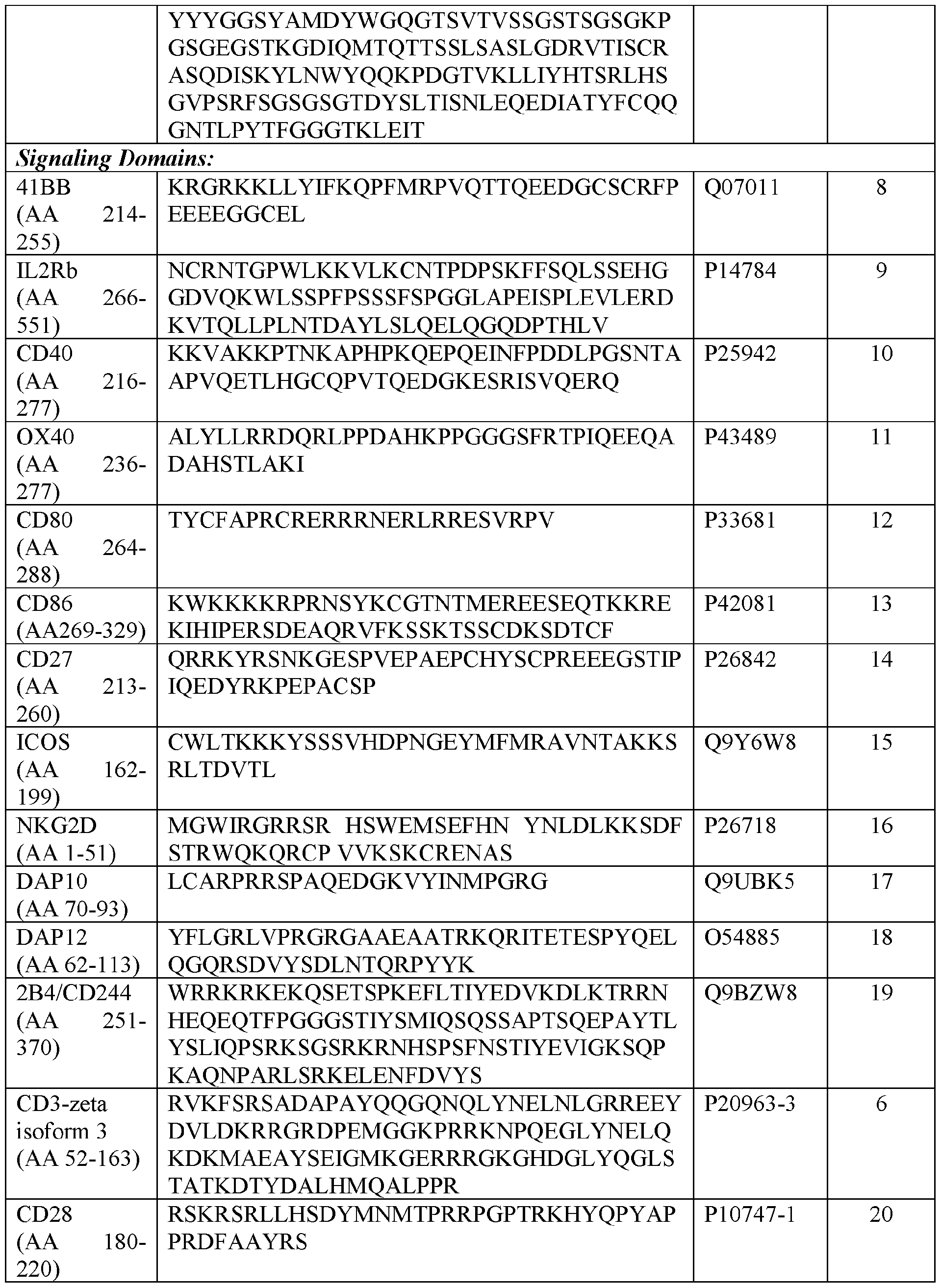


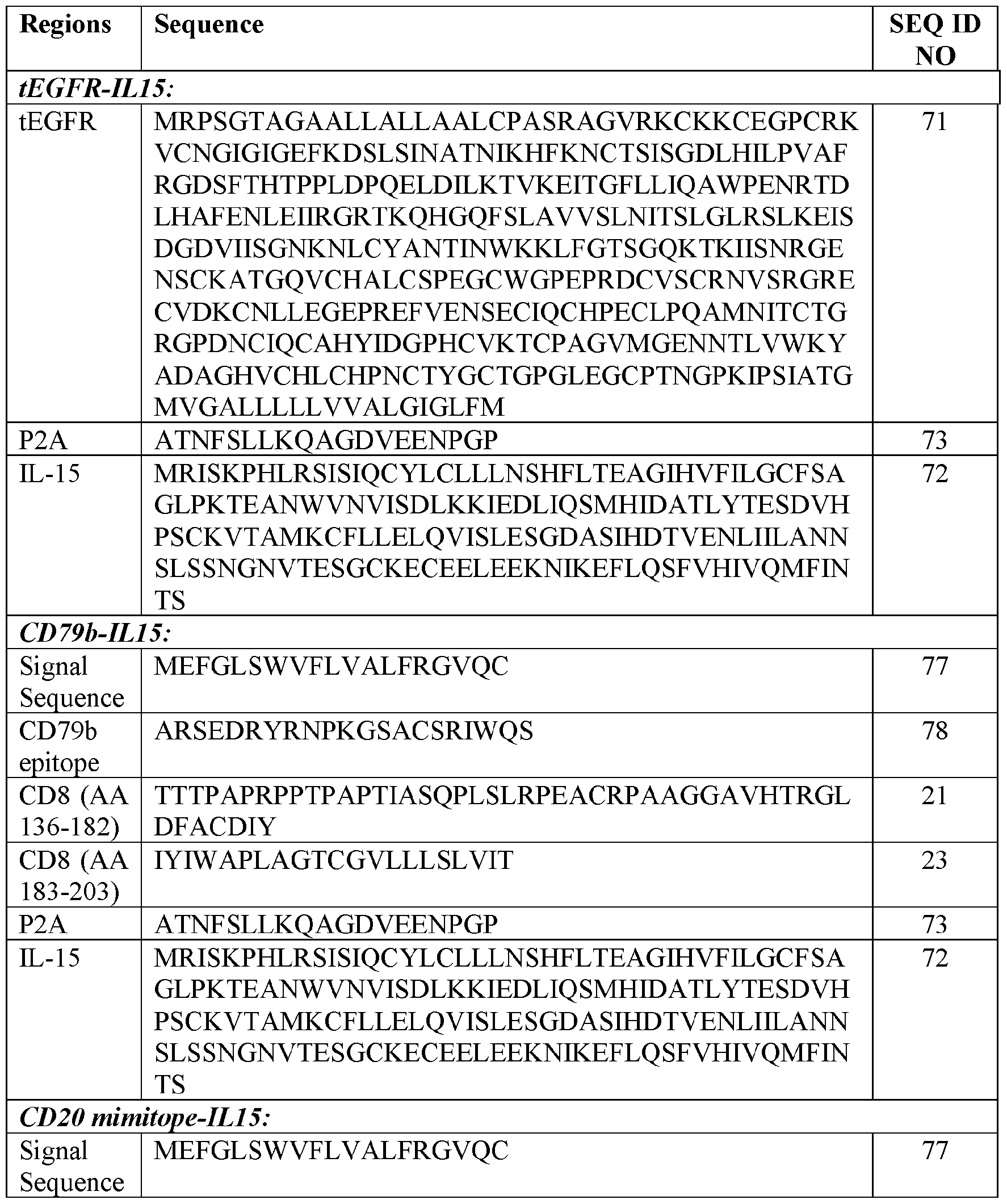

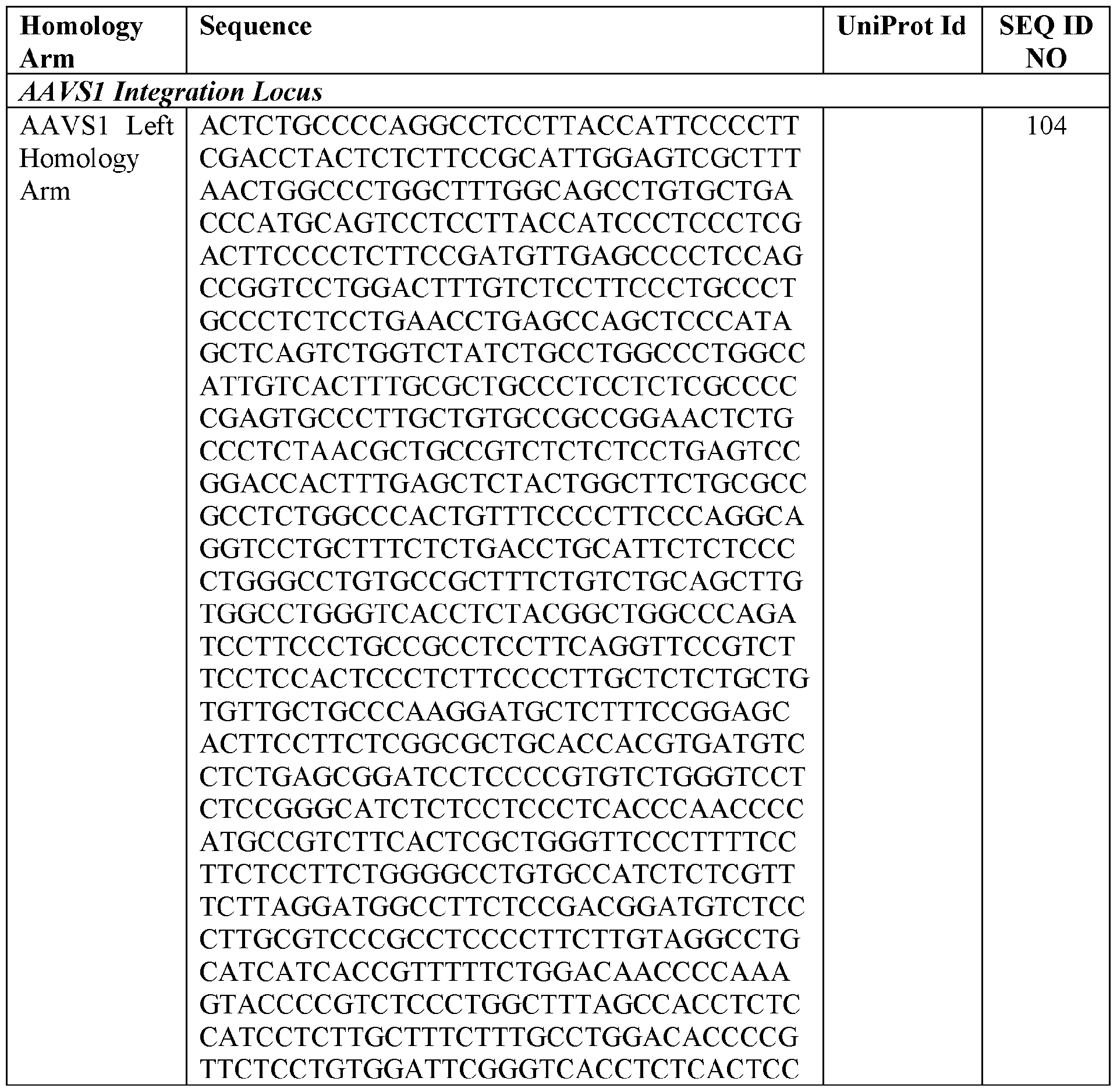


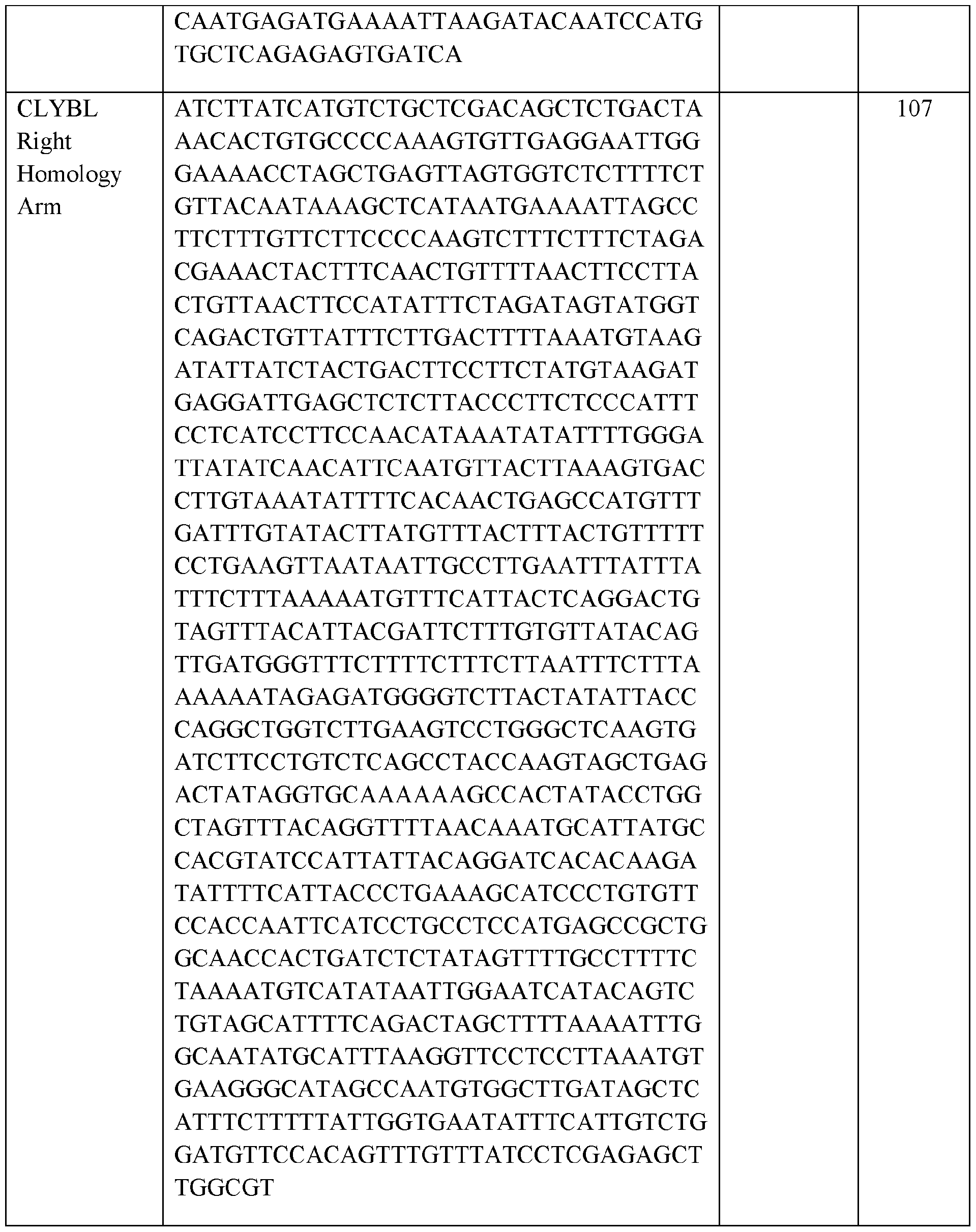
Claims
Priority Applications (5)
| Application Number | Priority Date | Filing Date | Title |
|---|---|---|---|
| CN202380054535.4A CN119698467A (en) | 2022-06-08 | 2023-06-08 | Immune effector cells derived from induced pluripotent stem cells genetically engineered to have membrane-bound IL12 and their uses |
| EP23738595.0A EP4536814A1 (en) | 2022-06-08 | 2023-06-08 | Immunoeffector cells derived from induced pluripotent stem cells genetically engineered with membrane bound il12 and uses thereof |
| CA3257650A CA3257650A1 (en) | 2022-06-08 | 2023-06-08 | Immunoeffector cells derived from induced pluripotent stem cells genetically engineered with membrane bound il12 and uses thereof |
| US18/872,591 US20250360210A1 (en) | 2022-06-08 | 2023-06-08 | Immunoeffector cells derived from induced pluripotent stem cells genetically engineered with membrane bound il12 and uses thereof |
| JP2024571920A JP2025519448A (en) | 2022-06-08 | 2023-06-08 | Immune effector cells derived from induced pluripotent stem cells genetically engineered with membrane-bound il12 and uses thereof |
Applications Claiming Priority (2)
| Application Number | Priority Date | Filing Date | Title |
|---|---|---|---|
| US202263350172P | 2022-06-08 | 2022-06-08 | |
| US63/350,172 | 2022-06-08 |
Publications (1)
| Publication Number | Publication Date |
|---|---|
| WO2023240169A1 true WO2023240169A1 (en) | 2023-12-14 |
Family
ID=87155593
Family Applications (1)
| Application Number | Title | Priority Date | Filing Date |
|---|---|---|---|
| PCT/US2023/068105 Ceased WO2023240169A1 (en) | 2022-06-08 | 2023-06-08 | Immunoeffector cells derived from induced pluripotent stem cells genetically engineered with membrane bound il12 and uses thereof |
Country Status (6)
| Country | Link |
|---|---|
| US (1) | US20250360210A1 (en) |
| EP (1) | EP4536814A1 (en) |
| JP (1) | JP2025519448A (en) |
| CN (1) | CN119698467A (en) |
| CA (1) | CA3257650A1 (en) |
| WO (1) | WO2023240169A1 (en) |
Cited By (2)
| Publication number | Priority date | Publication date | Assignee | Title |
|---|---|---|---|---|
| WO2024107670A1 (en) * | 2022-11-16 | 2024-05-23 | Regeneron Pharmaceuticals, Inc. | Chimeric proteins comprising membrane bound il-12 with protease cleavable linkers |
| CN118725140A (en) * | 2024-06-27 | 2024-10-01 | 广州百吉生物制药有限公司 | Fusion protein, engineered immune cell, preparation method and application thereof |
Citations (36)
| Publication number | Priority date | Publication date | Assignee | Title |
|---|---|---|---|---|
| WO1998053059A1 (en) | 1997-05-23 | 1998-11-26 | Medical Research Council | Nucleic acid binding proteins |
| WO1998053058A1 (en) | 1997-05-23 | 1998-11-26 | Gendaq Limited | Nucleic acid binding proteins |
| US6140081A (en) | 1998-10-16 | 2000-10-31 | The Scripps Research Institute | Zinc finger binding domains for GNN |
| WO2002016536A1 (en) | 2000-08-23 | 2002-02-28 | Kao Corporation | Bactericidal antifouling detergent for hard surface |
| US6453242B1 (en) | 1999-01-12 | 2002-09-17 | Sangamo Biosciences, Inc. | Selection of sites for targeting by zinc finger proteins and methods of designing zinc finger proteins to bind to preselected sites |
| WO2003016496A2 (en) | 2001-08-20 | 2003-02-27 | The Scripps Research Institute | Zinc finger binding domains for cnn |
| US6534261B1 (en) | 1999-01-12 | 2003-03-18 | Sangamo Biosciences, Inc. | Regulation of endogenous gene expression in cells using zinc finger proteins |
| WO2010099539A1 (en) | 2009-02-27 | 2010-09-02 | Cellular Dynamics International, Inc. | Differentiation of pluripotent cells |
| US7888121B2 (en) | 2003-08-08 | 2011-02-15 | Sangamo Biosciences, Inc. | Methods and compositions for targeted cleavage and recombination |
| US20110145940A1 (en) | 2009-12-10 | 2011-06-16 | Voytas Daniel F | Tal effector-mediated dna modification |
| US7972854B2 (en) | 2004-02-05 | 2011-07-05 | Sangamo Biosciences, Inc. | Methods and compositions for targeted cleavage and recombination |
| WO2012109208A2 (en) | 2011-02-08 | 2012-08-16 | Cellular Dynamics International, Inc. | Hematopoietic precursor cell production by programming |
| US8318491B2 (en) | 2007-08-02 | 2012-11-27 | Korea Research Institute Of Bioscience And Biotechnology | Method of differentiating hematopoietic stem cells into natural killer cells using YC-1 or IL-21 |
| US8546140B2 (en) | 2008-06-04 | 2013-10-01 | Cellular Dynamics International, Inc. | Methods for the production of iPS cells using non-viral approach |
| US8765470B2 (en) | 2010-08-04 | 2014-07-01 | Cellular Dynamics International, Inc. | Reprogramming immortalized B-cells to induced pluripotent stem cells |
| US8846395B2 (en) | 2005-06-01 | 2014-09-30 | Wisconsin Alumni Research Foundation | Generation of mature myelomonocytic cells through expansion and differentiation of pluripotent stem cell-derived lin-CD34+CD43+CD45+progenitors |
| US8945922B2 (en) | 2008-09-08 | 2015-02-03 | Riken | Generating a mature NKT cell from a reprogrammed somatic cell with a T-cell antigen receptor α-chain region rearranged to uniform Va-Ja in a NKT-cell specific way |
| US20150140665A1 (en) | 2013-11-15 | 2015-05-21 | The Board Of Trustees Of The Leland Stanford Junior University | Site-Specific Integration of Transgenes into Human Cells |
| US9206394B2 (en) | 2010-02-03 | 2015-12-08 | The University Of Tokyo | Method for reconstructing immune function using pluripotent stem cells |
| WO2016010148A1 (en) | 2014-07-18 | 2016-01-21 | 国立大学法人京都大学 | Method for inducing t cells for immunocytotherapy from pluripotent stem cells |
| WO2017062953A1 (en) | 2015-10-10 | 2017-04-13 | Intrexon Corporation | Improved therapeutic control of proteolytically sensitive, destabilized forms of interleukin-12 |
| US9629877B2 (en) | 2013-05-14 | 2017-04-25 | Board Of Regents, The University Of Texas System | Human application of engineered chimeric antigen receptor (CAR) T-cells |
| WO2017070333A1 (en) | 2015-10-20 | 2017-04-27 | Cellular Dynamics International, Inc. | Multi-lineage hematopoietic precursor cell production by genetic programming |
| WO2017179720A1 (en) | 2016-04-15 | 2017-10-19 | 国立大学法人京都大学 | Method for inducing cd8+ t cells |
| WO2018048828A1 (en) | 2016-09-06 | 2018-03-15 | The Children's Medical Center Corporation | Immune cells derived from induced pluripotent stem cell |
| WO2018058002A1 (en) | 2016-09-23 | 2018-03-29 | Fred Hutchinson Cancer Research Center | Tcrs specific for minor histocompatibility (h) antigen ha-1 and uses thereof |
| WO2018068008A1 (en) | 2016-10-07 | 2018-04-12 | Board Regents, The University Of Texas System | T cells expressing membrane-anchored il-12 for the treatment of cancer |
| WO2018236548A1 (en) | 2017-06-23 | 2018-12-27 | Inscripta, Inc. | Nucleic acid-guided nucleases |
| WO2019023396A1 (en) | 2017-07-25 | 2019-01-31 | Board Of Regents, The University Of Texas System | Enhanced chimeric antigen receptors and use thereof |
| WO2019060695A1 (en) | 2017-09-22 | 2019-03-28 | Kite Pharma, Inc. | Chimeric polypeptides and uses thereof |
| WO2019070856A1 (en) | 2017-10-03 | 2019-04-11 | Precision Biosciences, Inc. | Modified epidermal growth factor receptor peptides for use in genetically-modified cells |
| WO2019157597A1 (en) | 2018-02-14 | 2019-08-22 | Sunnybrook Research Institute | Method for generating cells of the t cell lineage |
| WO2020160350A1 (en) | 2019-02-01 | 2020-08-06 | Board Of Regents, The University Of Texas System | Modified il-12 t cell therapy for the treatment of cancer |
| WO2022098922A1 (en) * | 2020-11-04 | 2022-05-12 | Senti Biosciences, Inc. | Protein payload release |
| WO2022104109A1 (en) * | 2020-11-13 | 2022-05-19 | Catamaran Bio, Inc. | Genetically modified natural killer cells and methods of use thereof |
| WO2022120334A1 (en) * | 2020-12-03 | 2022-06-09 | Century Therapeutics, Inc. | Genetically engineered cells and uses thereof |
-
2023
- 2023-06-08 WO PCT/US2023/068105 patent/WO2023240169A1/en not_active Ceased
- 2023-06-08 CA CA3257650A patent/CA3257650A1/en active Pending
- 2023-06-08 US US18/872,591 patent/US20250360210A1/en active Pending
- 2023-06-08 EP EP23738595.0A patent/EP4536814A1/en active Pending
- 2023-06-08 JP JP2024571920A patent/JP2025519448A/en active Pending
- 2023-06-08 CN CN202380054535.4A patent/CN119698467A/en active Pending
Patent Citations (40)
| Publication number | Priority date | Publication date | Assignee | Title |
|---|---|---|---|---|
| WO1998053058A1 (en) | 1997-05-23 | 1998-11-26 | Gendaq Limited | Nucleic acid binding proteins |
| WO1998053060A1 (en) | 1997-05-23 | 1998-11-26 | Gendaq Limited | Nucleic acid binding proteins |
| WO1998053059A1 (en) | 1997-05-23 | 1998-11-26 | Medical Research Council | Nucleic acid binding proteins |
| US6140081A (en) | 1998-10-16 | 2000-10-31 | The Scripps Research Institute | Zinc finger binding domains for GNN |
| US6453242B1 (en) | 1999-01-12 | 2002-09-17 | Sangamo Biosciences, Inc. | Selection of sites for targeting by zinc finger proteins and methods of designing zinc finger proteins to bind to preselected sites |
| US6534261B1 (en) | 1999-01-12 | 2003-03-18 | Sangamo Biosciences, Inc. | Regulation of endogenous gene expression in cells using zinc finger proteins |
| WO2002016536A1 (en) | 2000-08-23 | 2002-02-28 | Kao Corporation | Bactericidal antifouling detergent for hard surface |
| WO2003016496A2 (en) | 2001-08-20 | 2003-02-27 | The Scripps Research Institute | Zinc finger binding domains for cnn |
| US7888121B2 (en) | 2003-08-08 | 2011-02-15 | Sangamo Biosciences, Inc. | Methods and compositions for targeted cleavage and recombination |
| US7972854B2 (en) | 2004-02-05 | 2011-07-05 | Sangamo Biosciences, Inc. | Methods and compositions for targeted cleavage and recombination |
| US8846395B2 (en) | 2005-06-01 | 2014-09-30 | Wisconsin Alumni Research Foundation | Generation of mature myelomonocytic cells through expansion and differentiation of pluripotent stem cell-derived lin-CD34+CD43+CD45+progenitors |
| US8318491B2 (en) | 2007-08-02 | 2012-11-27 | Korea Research Institute Of Bioscience And Biotechnology | Method of differentiating hematopoietic stem cells into natural killer cells using YC-1 or IL-21 |
| US9644184B2 (en) | 2008-06-04 | 2017-05-09 | Cellular Dynamics International, Inc. | Methods for the production of IPS cells using Epstein-Barr (EBV)-based reprogramming vectors |
| US8546140B2 (en) | 2008-06-04 | 2013-10-01 | Cellular Dynamics International, Inc. | Methods for the production of iPS cells using non-viral approach |
| US9328332B2 (en) | 2008-06-04 | 2016-05-03 | Cellular Dynamics International, Inc. | Methods for the production of IPS cells using non-viral approach |
| US8945922B2 (en) | 2008-09-08 | 2015-02-03 | Riken | Generating a mature NKT cell from a reprogrammed somatic cell with a T-cell antigen receptor α-chain region rearranged to uniform Va-Ja in a NKT-cell specific way |
| WO2010099539A1 (en) | 2009-02-27 | 2010-09-02 | Cellular Dynamics International, Inc. | Differentiation of pluripotent cells |
| US20110145940A1 (en) | 2009-12-10 | 2011-06-16 | Voytas Daniel F | Tal effector-mediated dna modification |
| US10787642B2 (en) | 2010-02-03 | 2020-09-29 | The University Of Tokyo | Method for reconstructing immune function using pluripotent stem cells |
| US9206394B2 (en) | 2010-02-03 | 2015-12-08 | The University Of Tokyo | Method for reconstructing immune function using pluripotent stem cells |
| US8765470B2 (en) | 2010-08-04 | 2014-07-01 | Cellular Dynamics International, Inc. | Reprogramming immortalized B-cells to induced pluripotent stem cells |
| WO2012109208A2 (en) | 2011-02-08 | 2012-08-16 | Cellular Dynamics International, Inc. | Hematopoietic precursor cell production by programming |
| US9629877B2 (en) | 2013-05-14 | 2017-04-25 | Board Of Regents, The University Of Texas System | Human application of engineered chimeric antigen receptor (CAR) T-cells |
| US20150140665A1 (en) | 2013-11-15 | 2015-05-21 | The Board Of Trustees Of The Leland Stanford Junior University | Site-Specific Integration of Transgenes into Human Cells |
| WO2016010148A1 (en) | 2014-07-18 | 2016-01-21 | 国立大学法人京都大学 | Method for inducing t cells for immunocytotherapy from pluripotent stem cells |
| WO2017062953A1 (en) | 2015-10-10 | 2017-04-13 | Intrexon Corporation | Improved therapeutic control of proteolytically sensitive, destabilized forms of interleukin-12 |
| WO2017070333A1 (en) | 2015-10-20 | 2017-04-27 | Cellular Dynamics International, Inc. | Multi-lineage hematopoietic precursor cell production by genetic programming |
| WO2017179720A1 (en) | 2016-04-15 | 2017-10-19 | 国立大学法人京都大学 | Method for inducing cd8+ t cells |
| WO2018048828A1 (en) | 2016-09-06 | 2018-03-15 | The Children's Medical Center Corporation | Immune cells derived from induced pluripotent stem cell |
| WO2018058002A1 (en) | 2016-09-23 | 2018-03-29 | Fred Hutchinson Cancer Research Center | Tcrs specific for minor histocompatibility (h) antigen ha-1 and uses thereof |
| WO2018068008A1 (en) | 2016-10-07 | 2018-04-12 | Board Regents, The University Of Texas System | T cells expressing membrane-anchored il-12 for the treatment of cancer |
| WO2018236548A1 (en) | 2017-06-23 | 2018-12-27 | Inscripta, Inc. | Nucleic acid-guided nucleases |
| WO2019023396A1 (en) | 2017-07-25 | 2019-01-31 | Board Of Regents, The University Of Texas System | Enhanced chimeric antigen receptors and use thereof |
| WO2019060695A1 (en) | 2017-09-22 | 2019-03-28 | Kite Pharma, Inc. | Chimeric polypeptides and uses thereof |
| WO2019070856A1 (en) | 2017-10-03 | 2019-04-11 | Precision Biosciences, Inc. | Modified epidermal growth factor receptor peptides for use in genetically-modified cells |
| WO2019157597A1 (en) | 2018-02-14 | 2019-08-22 | Sunnybrook Research Institute | Method for generating cells of the t cell lineage |
| WO2020160350A1 (en) | 2019-02-01 | 2020-08-06 | Board Of Regents, The University Of Texas System | Modified il-12 t cell therapy for the treatment of cancer |
| WO2022098922A1 (en) * | 2020-11-04 | 2022-05-12 | Senti Biosciences, Inc. | Protein payload release |
| WO2022104109A1 (en) * | 2020-11-13 | 2022-05-19 | Catamaran Bio, Inc. | Genetically modified natural killer cells and methods of use thereof |
| WO2022120334A1 (en) * | 2020-12-03 | 2022-06-09 | Century Therapeutics, Inc. | Genetically engineered cells and uses thereof |
Non-Patent Citations (41)
| Title |
|---|
| A. GONZALEZ ET AL., SENTI BIO ABSTRACT #584 AACR ANNUAL MEETING, 2022 |
| ALTSCHUL ET AL., J. MOL. BIOL., vol. 215, 1990, pages 403 - 410 |
| ALTSCHUL ET AL., NUCLEIC ACIDS RES., vol. 25, 1997, pages 3389 - 3402 |
| ATKINS ET AL., CLIN. CANCER RES., vol. 3, 1997, pages 409 - 17 |
| BINZ H ET AL., NAT BIOLECHNOL, vol. 23, 2005, pages 1257 - 68 |
| BONINI ET AL., SCIENCE, vol. 276, no. 5319, 13 June 1997 (1997-06-13), pages 1719 - 24 |
| BORGES L ET AL: "Development of Multi-Engineered iPSC-Derived CAR-NK Cells for the Treatment of B-Cell Malignancies", BLOOD, vol. 138, no. Supplement 1, 5 November 2021 (2021-11-05), 63rd Annual Meeting of the American Society of Hematology; Atlanta, GA, USA; 11-14 December 2021, pages 1729 - 1730, XP093080672, ISSN: 0006-4971, DOI: 10.1182/blood-2021-148438 * |
| BYLA P ET AL., J BIOL CHEM, vol. 285, 2010, pages 12096 |
| COLOMBOTRINCHIERI, CYTOKINE & GROWTH FACTOR REVIEWS, vol. 13, 2002, pages 155 - 168 |
| CURRANBRENTJENS, J CLIN ONCOL., vol. 33, no. 15, 20 May 2015 (2015-05-20), pages 1703 - 6 |
| GILL DDAMLE N, CURR OPIN BIOTECH, vol. 17, 2006, pages 653 - 8 |
| GILLESSEN ET AL., EUR. J. IMMUNOL., vol. 25, no. 1, 1995, pages 200 - 6 |
| GOLLOB ET AL., CLIN. CANCER RES., vol. 6, 2000, pages 1678 - 92 |
| GORNALUSSE ET AL., NAT BIOTECHNOL., vol. 35, no. 8, August 2017 (2017-08-01), pages 765 - 772 |
| HAMZA ET AL.: "Interleukin-12 a Key Immunoregulatory Cytokine in Infection Applications", INT. J. MOL. SCI., vol. 11, 2010, pages 789 - 806, XP055309016, DOI: 10.3390/ijms11030789 |
| HENIKOFFHENIKOFF, PROC. NATL. ACAD. SCI. USA, vol. 89, 1989, pages 10915 |
| HEY T ET AL., TRENDS BIOTECHNOL, vol. 23, pages 514 - 522 |
| HOLLIGER PHUDSON P, NAT BIOTECHNOL, vol. 23, 2005, pages 1126 - 36 |
| HU J ET AL: "Cell membrane-anchored and tumor-targeted IL-12 (attIL12)-T cell therapy for eliminating large and heterogeneous solid tumors", JOURNAL FOR IMMUNOTHERAPY OF CANCER, vol. 10, E003633, 13 January 2022 (2022-01-13), XP093081419, DOI: 10.1136/jitc-2021-003633 * |
| HURTEAU ET AL., GYNECOL. ONCOL., vol. 82, 2001, pages 7 - 10 |
| JONES ET AL., SCI. ADV., vol. 8, 2022, pages eabi 8075 |
| KARLINALTSCHUL, PROC. NAT'L. ACAD. SCI. USA, vol. 90, 1993, pages 5873 - 5787 |
| KOIDE AKOIDE S, METHODS MOL BIOL, vol. 352, 2007, pages 95 - 109 |
| L. ZHANG ET AL.: "Improving adoptive T cell therapy by targeting and controlling IL-12 expression to the tumor environment.", MOL. THER, vol. 19, 2011, pages 751 - 759, XP055327746, DOI: 10.1038/mt.2010.313 |
| L. ZHANG ET AL.: "Tumor-infiltrating lymphocytes genetically engineered with an inducible gene encoding interleukin-12 for the immunotherapy of metastatic melanoma.", CLIN. CANCER RES., vol. 21, 2015, pages 2278 - 2288, XP055981943, DOI: 10.1158/1078-0432.CCR-14-2085 |
| LEE ET AL., J. CLIN. ONCOL., vol. 19, 2001, pages 3836 - 47 |
| LIESCHKE ET AL., NATURE BIOTECHNOLOGY, vol. 15, 1997, pages 35 - 40 |
| LODE ET AL., PNAS, vol. 95, 1998, pages 2475 - 2480 |
| MAUS ET AL., BLOOD, vol. 123, no. 17, 24 April 2014 (2014-04-24), pages 2625 - 35 |
| MIZUGUCHI ET AL., MOL THERA, vol. 1, 2000, pages 376 - 382 |
| NEEDLEMANWUNSCH, J. MOL. BIOL., vol. 48, 1970, pages 443 |
| PEARSONLIPMAN, PROC. NAT'L. ACAD. SCI. USA, vol. 85, 1988, pages 2444 |
| SKERRA, CURRENT OPIN. IN BIOTECH., vol. 18, 2007, pages 295 - 304 |
| SMITHWATERMAN, ADV. APPL. MATH., vol. 2, 1981, pages 482 |
| TRINCHIERI, ADV. IMMUNOL., vol. 70, 1998, pages 83 - 243 |
| WIKMAN M ET AL., PROTEIN ENG DES SEL, vol. 17, 2004, pages 455 - 62 |
| WORN APLUCKTHUN A, J MOL BIOL, vol. 305, 2001, pages 989 - 1010 |
| WYPYCH ET AL., JBC, vol. 283, no. 23, 2008, pages 16194 - 16205 |
| XU L ET AL., CHEM BIOL, vol. 9, 2002, pages 933 - 42 |
| YOUSSOUFIAN ET AL., SURGICAL ONCOLOGY CLINICS OF NORTH AMERICA, vol. 22, no. 4, 2013, pages 885 - 901 |
| ZOLLER F ET AL., MOLECULES, vol. 16, 2011, pages 2467 - 85 |
Cited By (3)
| Publication number | Priority date | Publication date | Assignee | Title |
|---|---|---|---|---|
| WO2024107670A1 (en) * | 2022-11-16 | 2024-05-23 | Regeneron Pharmaceuticals, Inc. | Chimeric proteins comprising membrane bound il-12 with protease cleavable linkers |
| CN118725140A (en) * | 2024-06-27 | 2024-10-01 | 广州百吉生物制药有限公司 | Fusion protein, engineered immune cell, preparation method and application thereof |
| CN118725140B (en) * | 2024-06-27 | 2025-04-18 | 广州百吉生物制药有限公司 | Fusion protein, engineered immune cell, preparation method and application thereof |
Also Published As
| Publication number | Publication date |
|---|---|
| EP4536814A1 (en) | 2025-04-16 |
| CN119698467A (en) | 2025-03-25 |
| CA3257650A1 (en) | 2023-12-14 |
| JP2025519448A (en) | 2025-06-26 |
| US20250360210A1 (en) | 2025-11-27 |
Similar Documents
| Publication | Publication Date | Title |
|---|---|---|
| US12269888B2 (en) | Artificial cell death polypeptide for chimeric antigen receptor and uses thereof | |
| US20250064934A1 (en) | Genetically engineered cells having anti-cd19 / anti-cd22 chimeric antigen receptors, and uses thereof | |
| US20220184123A1 (en) | Genetically Engineered Cells and Uses Thereof | |
| US20250360210A1 (en) | Immunoeffector cells derived from induced pluripotent stem cells genetically engineered with membrane bound il12 and uses thereof | |
| US20220195396A1 (en) | Genetically Engineered Cells and Uses Thereof | |
| WO2025106626A1 (en) | Genetically engineered cells expressing c-x-c chemokine receptor type 4, and uses thereof | |
| US20250090582A1 (en) | Genetically engineered cells having anti-cd133 / anti-egfr chimeric antigen receptors, and uses thereof | |
| US20250345425A1 (en) | Cells engineered with an hla-e and hla-g transgene | |
| AU2023284442A1 (en) | Genetically engineered cells expressing cd16 variants and nkg2d and uses thereof | |
| US20230381317A1 (en) | Methods for controlled activation and/or expansion of genetically engineered cells using polyethylene glycol (peg) receptors | |
| US11661459B2 (en) | Artificial cell death polypeptide for chimeric antigen receptor and uses thereof | |
| US20220331361A1 (en) | Gene transfer vectors and methods of engineering cells | |
| WO2025207798A1 (en) | Genetically engineered cells having anti-cd123 chimeric antigen receptors, and uses thereof | |
| WO2025207795A1 (en) | Genetically engineered cells having anti-cd33 / anti-cd123 chimeric antigen receptors, and uses thereof | |
| WO2024102838A1 (en) | Engineered interleukin-7 receptors and uses thereof | |
| CN118742319A (en) | Genetically engineered cells with anti-CD19/anti-CD22 chimeric antigen receptors and uses thereof |
Legal Events
| Date | Code | Title | Description |
|---|---|---|---|
| 121 | Ep: the epo has been informed by wipo that ep was designated in this application |
Ref document number: 23738595 Country of ref document: EP Kind code of ref document: A1 |
|
| WWE | Wipo information: entry into national phase |
Ref document number: 2024571920 Country of ref document: JP |
|
| WWE | Wipo information: entry into national phase |
Ref document number: 2023738595 Country of ref document: EP |
|
| NENP | Non-entry into the national phase |
Ref country code: DE |
|
| WWE | Wipo information: entry into national phase |
Ref document number: 202380054535.4 Country of ref document: CN |
|
| ENP | Entry into the national phase |
Ref document number: 2023738595 Country of ref document: EP Effective date: 20250108 |
|
| WWP | Wipo information: published in national office |
Ref document number: 202380054535.4 Country of ref document: CN |
|
| WWP | Wipo information: published in national office |
Ref document number: 2023738595 Country of ref document: EP |
|
| WWP | Wipo information: published in national office |
Ref document number: 18872591 Country of ref document: US |