WO2023239756A1 - Lipid nanoparticle compositions and uses thereof - Google Patents
Lipid nanoparticle compositions and uses thereof Download PDFInfo
- Publication number
- WO2023239756A1 WO2023239756A1 PCT/US2023/024642 US2023024642W WO2023239756A1 WO 2023239756 A1 WO2023239756 A1 WO 2023239756A1 US 2023024642 W US2023024642 W US 2023024642W WO 2023239756 A1 WO2023239756 A1 WO 2023239756A1
- Authority
- WO
- WIPO (PCT)
- Prior art keywords
- lipid
- pharmaceutical composition
- peg
- alkyl
- formula
- Prior art date
- Legal status (The legal status is an assumption and is not a legal conclusion. Google has not performed a legal analysis and makes no representation as to the accuracy of the status listed.)
- Ceased
Links
Classifications
-
- A—HUMAN NECESSITIES
- A61—MEDICAL OR VETERINARY SCIENCE; HYGIENE
- A61K—PREPARATIONS FOR MEDICAL, DENTAL OR TOILETRY PURPOSES
- A61K48/00—Medicinal preparations containing genetic material which is inserted into cells of the living body to treat genetic diseases; Gene therapy
- A61K48/0008—Medicinal preparations containing genetic material which is inserted into cells of the living body to treat genetic diseases; Gene therapy characterised by an aspect of the 'non-active' part of the composition delivered, e.g. wherein such 'non-active' part is not delivered simultaneously with the 'active' part of the composition
- A61K48/0025—Medicinal preparations containing genetic material which is inserted into cells of the living body to treat genetic diseases; Gene therapy characterised by an aspect of the 'non-active' part of the composition delivered, e.g. wherein such 'non-active' part is not delivered simultaneously with the 'active' part of the composition wherein the non-active part clearly interacts with the delivered nucleic acid
- A61K48/0033—Medicinal preparations containing genetic material which is inserted into cells of the living body to treat genetic diseases; Gene therapy characterised by an aspect of the 'non-active' part of the composition delivered, e.g. wherein such 'non-active' part is not delivered simultaneously with the 'active' part of the composition wherein the non-active part clearly interacts with the delivered nucleic acid the non-active part being non-polymeric
-
- A—HUMAN NECESSITIES
- A61—MEDICAL OR VETERINARY SCIENCE; HYGIENE
- A61K—PREPARATIONS FOR MEDICAL, DENTAL OR TOILETRY PURPOSES
- A61K48/00—Medicinal preparations containing genetic material which is inserted into cells of the living body to treat genetic diseases; Gene therapy
- A61K48/0008—Medicinal preparations containing genetic material which is inserted into cells of the living body to treat genetic diseases; Gene therapy characterised by an aspect of the 'non-active' part of the composition delivered, e.g. wherein such 'non-active' part is not delivered simultaneously with the 'active' part of the composition
- A61K48/0025—Medicinal preparations containing genetic material which is inserted into cells of the living body to treat genetic diseases; Gene therapy characterised by an aspect of the 'non-active' part of the composition delivered, e.g. wherein such 'non-active' part is not delivered simultaneously with the 'active' part of the composition wherein the non-active part clearly interacts with the delivered nucleic acid
-
- A—HUMAN NECESSITIES
- A61—MEDICAL OR VETERINARY SCIENCE; HYGIENE
- A61K—PREPARATIONS FOR MEDICAL, DENTAL OR TOILETRY PURPOSES
- A61K48/00—Medicinal preparations containing genetic material which is inserted into cells of the living body to treat genetic diseases; Gene therapy
- A61K48/005—Medicinal preparations containing genetic material which is inserted into cells of the living body to treat genetic diseases; Gene therapy characterised by an aspect of the 'active' part of the composition delivered, i.e. the nucleic acid delivered
-
- A—HUMAN NECESSITIES
- A61—MEDICAL OR VETERINARY SCIENCE; HYGIENE
- A61K—PREPARATIONS FOR MEDICAL, DENTAL OR TOILETRY PURPOSES
- A61K48/00—Medicinal preparations containing genetic material which is inserted into cells of the living body to treat genetic diseases; Gene therapy
- A61K48/005—Medicinal preparations containing genetic material which is inserted into cells of the living body to treat genetic diseases; Gene therapy characterised by an aspect of the 'active' part of the composition delivered, i.e. the nucleic acid delivered
- A61K48/0058—Nucleic acids adapted for tissue specific expression, e.g. having tissue specific promoters as part of a contruct
-
- A—HUMAN NECESSITIES
- A61—MEDICAL OR VETERINARY SCIENCE; HYGIENE
- A61K—PREPARATIONS FOR MEDICAL, DENTAL OR TOILETRY PURPOSES
- A61K48/00—Medicinal preparations containing genetic material which is inserted into cells of the living body to treat genetic diseases; Gene therapy
- A61K48/0075—Medicinal preparations containing genetic material which is inserted into cells of the living body to treat genetic diseases; Gene therapy characterised by an aspect of the delivery route, e.g. oral, subcutaneous
-
- A—HUMAN NECESSITIES
- A61—MEDICAL OR VETERINARY SCIENCE; HYGIENE
- A61K—PREPARATIONS FOR MEDICAL, DENTAL OR TOILETRY PURPOSES
- A61K9/00—Medicinal preparations characterised by special physical form
- A61K9/0012—Galenical forms characterised by the site of application
- A61K9/0048—Eye, e.g. artificial tears
-
- A—HUMAN NECESSITIES
- A61—MEDICAL OR VETERINARY SCIENCE; HYGIENE
- A61K—PREPARATIONS FOR MEDICAL, DENTAL OR TOILETRY PURPOSES
- A61K9/00—Medicinal preparations characterised by special physical form
- A61K9/48—Preparations in capsules, e.g. of gelatin, of chocolate
- A61K9/50—Microcapsules having a gas, liquid or semi-solid filling; Solid microparticles or pellets surrounded by a distinct coating layer, e.g. coated microspheres, coated drug crystals
- A61K9/51—Nanocapsules; Nanoparticles
- A61K9/5107—Excipients; Inactive ingredients
- A61K9/5123—Organic compounds, e.g. fats, sugars
-
- A—HUMAN NECESSITIES
- A61—MEDICAL OR VETERINARY SCIENCE; HYGIENE
- A61K—PREPARATIONS FOR MEDICAL, DENTAL OR TOILETRY PURPOSES
- A61K48/00—Medicinal preparations containing genetic material which is inserted into cells of the living body to treat genetic diseases; Gene therapy
- A61K48/0008—Medicinal preparations containing genetic material which is inserted into cells of the living body to treat genetic diseases; Gene therapy characterised by an aspect of the 'non-active' part of the composition delivered, e.g. wherein such 'non-active' part is not delivered simultaneously with the 'active' part of the composition
- A61K48/0025—Medicinal preparations containing genetic material which is inserted into cells of the living body to treat genetic diseases; Gene therapy characterised by an aspect of the 'non-active' part of the composition delivered, e.g. wherein such 'non-active' part is not delivered simultaneously with the 'active' part of the composition wherein the non-active part clearly interacts with the delivered nucleic acid
- A61K48/0041—Medicinal preparations containing genetic material which is inserted into cells of the living body to treat genetic diseases; Gene therapy characterised by an aspect of the 'non-active' part of the composition delivered, e.g. wherein such 'non-active' part is not delivered simultaneously with the 'active' part of the composition wherein the non-active part clearly interacts with the delivered nucleic acid the non-active part being polymeric
-
- A—HUMAN NECESSITIES
- A61—MEDICAL OR VETERINARY SCIENCE; HYGIENE
- A61K—PREPARATIONS FOR MEDICAL, DENTAL OR TOILETRY PURPOSES
- A61K48/00—Medicinal preparations containing genetic material which is inserted into cells of the living body to treat genetic diseases; Gene therapy
- A61K48/0083—Medicinal preparations containing genetic material which is inserted into cells of the living body to treat genetic diseases; Gene therapy characterised by an aspect of the administration regime
-
- A—HUMAN NECESSITIES
- A61—MEDICAL OR VETERINARY SCIENCE; HYGIENE
- A61K—PREPARATIONS FOR MEDICAL, DENTAL OR TOILETRY PURPOSES
- A61K9/00—Medicinal preparations characterised by special physical form
- A61K9/0012—Galenical forms characterised by the site of application
- A61K9/0048—Eye, e.g. artificial tears
- A61K9/0051—Ocular inserts, ocular implants
-
- C—CHEMISTRY; METALLURGY
- C12—BIOCHEMISTRY; BEER; SPIRITS; WINE; VINEGAR; MICROBIOLOGY; ENZYMOLOGY; MUTATION OR GENETIC ENGINEERING
- C12N—MICROORGANISMS OR ENZYMES; COMPOSITIONS THEREOF; PROPAGATING, PRESERVING, OR MAINTAINING MICROORGANISMS; MUTATION OR GENETIC ENGINEERING; CULTURE MEDIA
- C12N2750/00—MICROORGANISMS OR ENZYMES; COMPOSITIONS THEREOF; PROPAGATING, PRESERVING, OR MAINTAINING MICROORGANISMS; MUTATION OR GENETIC ENGINEERING; CULTURE MEDIA ssDNA viruses
- C12N2750/00011—Details
- C12N2750/14011—Parvoviridae
- C12N2750/14111—Dependovirus, e.g. adenoassociated viruses
- C12N2750/14141—Use of virus, viral particle or viral elements as a vector
- C12N2750/14143—Use of virus, viral particle or viral elements as a vector viral genome or elements thereof as genetic vector
Definitions
- Some genes such as the 6.8kb ABCA4 gene causing Stargardt’s hereditary maculopathy, an inherited disorder of the macula that typically causes vision loss during childhood or adolescence, are too large to be carried into the retina by the AAV virus, so other approaches are needed. What remains clear is that the choice of vector and the mode of administration are important determinants of the efficacy and safety of ocular therapeutics.
- LNPs Ionizable lipid nanoparticles
- gene therapeutics e.g., RNA therapeutics.
- Various types of ionizable lipid materials have been previously reported for LNP formulations, such as C12-200, cKK-E12, and DLin-MC3-DMA, and efficient gene silencing in the liver at a dosing level of 0.002 mg of siRNA/kg has been demonstrated (Dong, et al., Proc. Natl. Acad. Sci. U.S.A. I l l, 3955-3960 (2014)).
- targeting ligands Although the inclusion of targeting ligands has been shown to enhance the delivery and therapeutic efficiency of mRNA-LNPs, it has been recognized that attaching targeting moieties may add complexity, cost, and regulatory difficulties to the process of manufacturing LNP systems (Cheng et al., Science. 2012 Nov 16;
- AAV vectors are currently the viral vector of choice for retinal gene transfer.
- RPE retinal pigmented epithelium
- the present disclosure describes for the first time the combination of a LNP incorporating, for example, Lipid A or Lipid 58 as the ionizable lipid, with an mRNA cargo for retinal delivery.
- a LNP incorporating, for example, Lipid A or Lipid 58 as the ionizable lipid
- an mRNA cargo for retinal delivery Using mouse, rat, and non-human primate (NHP) in vivo systems, the present disclosure surprisingly demonstrated that GFP expression can be achieved evenly in the RPE cells (eye cup) and PR cells (neural retina) using LNP/GFP mRNA constructs.
- the data presented herein shows that saturation can be achieved at low doses of LNP/mRNA construct; that is, the dose of LNPs does not need to be high for expression, which is an important consideration for toxicity.
- the disclosure provides a pharmaceutical composition comprising a lipid nanoparticle (LNP), a therapeutic nucleic acid (TNA) and at least one pharmaceutically acceptable excipient, wherein the LNP comprises at least one lipid, and wherein the LNP is capable of delivering the TNA to a retinal cell.
- the LNP is capable of delivering the TNA to a photoreceptor (PR) cell.
- the LNP is capable of delivering the TNA to a retinal pigment epithelium (RPE) cell.
- the LNP is capable of delivering the TNA to a photoreceptor (PR) cell and a retinal pigment epithelium (RPE) cell, wherein expression of the TNA in the PR cell and expression of the TNA in RPE cell is evenly distributed.
- the pharmaceutical composition is for administration to a subject.
- the pharmaceutical composition is for administration to a subject via subretinal injection, suprachoroidal injection, or intravitreal injection.
- the LNP/TNA is for administration at a dose of about 0.03 pg to about 2.0 pg, for example about 0.03 pg to about 1.5 pg, about 0.05 pg to about 2.0 pg, about 1.0 pg to about 1.5 pg, about 1.0 pg to about 2.0 pg, about 1.5 pg to about 2.0 pg, about 0.5 pg to about 1.0 pg, or about 0.5 pg to about 1.5 pg.
- the LNP/TNA is for administration at a dose of about 0.1 pg to about 1.0 pg, for example about 0.1 pg to about 0.5 pg or about 0.5 pg to about 1.0 pg or about 0.25 pg to about 0.5 pg or about 0.1 pg to about 0.25 pg or about 0.75 pg to about 1.0 pg.
- the LNP/TNA is for administration at a dose of about 0.1 pg to about 0.5 pg, for example 0.1 pg, 0.2 pg, 0.25 pg, 0.3 pg, 0.35 pg, 0.4 pg, 0.45 pg or 0.5 pg.
- the subject is a human in need of treatment with LNP encapsulated with TNA.
- the LNP is capable of being internalized into the PR cell and/or the RPE cell.
- retinal degeneration does not exceed more than 5% of outer nuclear layer (ONL) loss after 7 days.
- retinal degeneration does not exceed more than 5% of outer nuclear layer (ONL) loss after 14 days.
- retinal degeneration does not exceed more than 5% of outer nuclear layer (ONL) loss after 21 days.
- retinal degeneration does not exceed more than 15% of outer nuclear layer (ONL) loss after 7 days. According to some embodiments of the aspects and embodiments herein, retinal degeneration does not exceed more than 15% of outer nuclear layer (ONL) loss after 14 days. According to some embodiments of the aspects and embodiments herein, retinal degeneration does not exceed more than 15% of outer nuclear layer (ONL) loss after 21 days. According to some embodiments of the aspects and embodiments herein, retinal degeneration does not exceed more than 15% of outer nuclear layer (ONL) loss after 4 weeks. According to some embodiments of the aspects and embodiments herein, ONL loss is measured by Optical Coherence Tomography (OCT).
- OCT Optical Coherence Tomography
- the LNP comprises a lipid selected from the group consisting of: a cationic lipid, a sterol or a derivative thereof, a non-cationic lipid, and a PEGylated lipid.
- the TNA is encapsulated in the lipid.
- the TNA is selected from the group consisting of minigenes, plasmids, minicircles, small interfering RNA (siRNA), microRNA (miRNA), antisense oligonucleotides (ASO), ribozymes, closed-ended (ceDNA), ministring, doggyboneTM, protelomere closed ended DNA, or dumbbell linear DNA, dicer-substrate dsRNA, small hairpin RNA (shRNA), asymmetrical interfering RNA (aiRNA), microRNA (miRNA), mRNA, tRNA, rRNA, gRNA, DNA viral vectors, viral RNA vector, non-viral vector and any combination thereof.
- the TNA is ceDNA. According to some embodiments, the ceDNA is linear duplex DNA. According to some embodiments, the TNA is mRNA. According to some embodiments, the TNA is siRNA. According to some embodiments, the TNA is a plasmid.
- the pharmaceutical composition is administered to a subject.
- the subject is a human patient in need of treatment with the TNA encapsulated by the LNP.
- R 1 and R 1 are each independently optionally substituted linear or branched C1-3 alkylene;
- R 2 and R 2 are each independently optionally substituted linear or branched C1-6 alkylene;
- R 3 and R 3 are each independently optionally substituted linear or branched C1-6 alkyl; or alternatively, when R 2 is optionally substituted branched C1-6 alkylene, R 2 and R 3 , taken together with their intervening N atom, form a 4- to 8-membered heterocyclyl; or alternatively, when R 2 is optionally substituted branched C1-6 alkylene, R 2 and R 3 , taken together with their intervening N atom, form a 4- to 8-membered heterocyclyl;
- R 4 and R 4 are each independently -CR a , -C(R a )2CR a , or -[C(R a )2]2CR a ;
- R a for each occurrence, is independently H or C1-3 alkyl; or alternatively, when R 4 is -C(R a )2CR a , or -[C(R a )2]2CR a and when R a is C1-3 alkyl, R 3 and R 4 , taken together with their intervening N atom, form a 4- to 8-membered heterocyclyl; or alternatively, when R 4 is -C(R a )2CR a , or -[C(R a )2]2CR a and when R a is C1-3 alkyl, R 3 and R 4 , taken together with their intervening N atom, form a 4- to 8-membered heterocyclyl;
- R 6 and R 6 are independently C1-20 alkylene, C3-20 cycloalkylene, or C2-20 alkenylene; and m and n are each independently an integer selected from 1, 2, 3, 4, and 5.
- the cationic lipid is represented by Formula (II): or a pharmaceutically acceptable salt thereof, wherein: a is an integer ranging from 1 to 20; b is an integer ranging from 2 to 10;
- R 1 is absent or is selected from (C2-C2o)alkenyl, -C(0)0(C2-C2o)alkyl, and cyclopropyl substituted with (C2-C2o)alkyl;
- R 2 is (C2-C 2 o)alkyl.
- R 1 and R 1 are each independently (Ci-C6)alkylene optionally substituted with one or more groups selected from R a ;
- R 3 and R 3 are each independently (Ci-Ce)alkyl optionally substituted with one or more groups selected from R b ; or alternatively, R 2 and R 3 and/or R 2 and R 3 are taken together with their intervening N atom to form a 4- to 7-membered heterocyclyl;
- R 5 and R 5 ’ are each independently a (C2-C3o)alkyl or (C2-C3o)alkenyl, each of which are optionally interrupted with -C(O)O- or (C3-C6)cycloalkyl; and
- R a and R b are each halo or cyano.
- the cationic lipid is represented by Formula (XV): or a pharmaceutically acceptable salt thereof, wherein:
- R’ is absent, hydrogen, or Ci-Ce alkyl; provided that when R’ is hydrogen or Ci-Ce alkyl, the nitrogen atom to which R’, R 1 , and R 2 are all attached is protonated;
- R 1 and R 2 are each independently hydrogen, Ci-Ce alkyl, or C2-C6 alkenyl
- R 3 is C1-C12 alkylene or C2-C12 alkenylene
- R 4 is C1-C16 unbranched alkyl, C2-C16 unbranched alkenyl, wherein:
- R 4a and R 4b are each independently C1-C16 unbranched alkyl or C2-C16 unbranched alkenyl;
- R 5 is absent, Ci-Cx alkylene, or C2-C8 alkenylene
- R 6a and R 6b are each independently C7-C16 alkyl or C7-C16 alkenyl; provided that the total number of carbon atoms in R 6a and R 6b as combined is greater than 15;
- R a for each occurrence, is independently hydrogen or Ci-Ce alkyl; and n is an integer selected from 1, 2, 3, 4, 5, and 6.
- the cationic lipid is represented by Formula (XX): or a pharmaceutically acceptable salt thereof, wherein:
- R 1 and R 2 are each independently hydrogen or C1-C3 alkyl
- R 3 is C3-C10 alkylene or C3-C10 alkenylene; v ⁇ R4b
- R 4 is C1-C16 unbranched alkyl, C2-C16 unbranched alkenyl, or R 4a ; wherein:
- R 4a and R 4b are each independently C1-C16 unbranched alkyl or C2-C16 unbranched alkenyl;
- R 5 is absent, Ci-Ce alkylene, or C2-C6 alkenylene
- R 6a and R 6b are each independently C7-C14 alkyl or C7-C14 alkenyl
- R a for each occurrence, is independently hydrogen or Ci-Ce alkyl; and n is an integer selected from 1, 2, 3, 4, 5, and 6.
- the cationic lipid is selected from any lipid in Table 2, Table 5, Table 6, Table 7, or Table 8.
- Lipid 58 or a pharmaceutically acceptable salt thereof is Lipid 58 or a pharmaceutically acceptable salt thereof.
- the sterol or a derivative thereof is a cholesterol.
- the sterol or a derivative thereof is beta-sitosterol.
- the non-cationic lipid is selected from the group consisting of distearoyl-sn-glycero-phosphoethanolamine (DSPE), distearoylphosphatidylcholine (DSPC), dioleoylphosphatidylcholine (DOPC), dipalmitoylphosphatidylcholine (DPPC), dioleoylphosphatidylglycerol (DOPG), dipalmitoylphosphatidylglycerol (DPPG), dioleoylphosphatidylethanolamine (DOPE), palmitoyloleoylphosphatidylcholine (POPC), palmitoyloleoylphosphatidylethanolamine (POPE), dioleoyl-phosphatidylethanolamine 4-(N- maleimidomethyl)-cyclohexane-l -carboxylate (DOPE-mal), dipalmitoyl phosphatidyl ethanolamine (DPPE), dipalmitoyl
- the non-cationic lipid is selected from the group consisting of dioleoylphosphatidylcholine (DOPC), distearoylphosphatidylcholine (DSPC), and dioleoylphosphatidylethanolamine (DOPE).
- DOPC dioleoylphosphatidylcholine
- DSPC distearoylphosphatidylcholine
- DOPE dioleoylphosphatidylethanolamine
- the PEGylated lipid is DMG-PEG, DSPE-PEG, DSPE-PEG-OH, DSG-PEG, or a combination thereof. According to some embodiments, the PEGylated lipid is DMG-PEG2000, DSPE-PEG2000, DSPE-PEG2000-OH, DSG-PEG2000, or a combination thereof
- the cationic lipid is present at a molar percentage of about 30% to about 80%, for example about 30% to about 70%, about 30% to about 60%, about 30% to about 50%, about 30% to about 40%, about 40% to about 80%, about 40% to about 70%, about 40% to about 60%, about 40% to about 50%, about 50% to about 80%, about 50% to about 70%, about 50% to about 60%, about 60% to about 80%, about 60% to about 70% , or about 70% to about 80%.
- the sterol is present at a molar percentage of about 20% to about 50%, about 20% to about 40%, about 20% to about 30%, about 30% to about 50%, about 30% to about 40%, or about 40% to about 50%.
- the non-cationic lipid is present at a molar percentage of about 2% to about 20%, for example about 2% to about 15%, about 2% to about 10%, about 2% to about 5%, about 5% to about 20%, about 5% to about 15%, about 5% to about 10%, about 10% to about 15%, about 10% to about 20%, or about 15% to about 20%.
- the PEGylated lipid is present at a molar percentage of about 2. 1% to about 10%, for example about 2.1% to about 5% or about 5% to about 10% or wherein the PEGylated lipid is present at a molar percentage of about 1% to about 2%, for example about 1%, 1.1%, 1.2%, 1.3%, 1.4%, 1.5%, 1.6%, 1.7%, 1.8%, 1.9% or 2%
- the pharmaceutical composition further comprises dexamethasone palmitate.
- the LNP comprises Lipid A, DOPC, cholesterol and DMG-PEG.
- the LNP comprises Lipid A, DOPC, cholesterol, DMG-PEG, and DSPE-PEG. According to some embodiments, the LNP comprises Lipid A, DOPE, cholesterol and DMG-PEG. According to some embodiments, the LNP comprises Lipid A, DOPE, cholesterol, DMG-PEG, and DSPE-PEG. According to some embodiments, the LNP comprises Lipid A, DSPC, cholesterol and DMG-PEG. According to some embodiments, the LNP comprises Lipid A, DSPC, cholesterol, DMG-PEG, and DSPE-PEG. According to some embodiments, the LNP comprises Lipid A, DOPC, beta-sitosterol and DMG-PEG.
- the PEG is DMG-PEG2000.
- the DSPE-PEG is DSPE-PEG2000.
- the e DSPE-PEG is DSPE-PEG5000.
- the LNP comprises Lipid A, DOPC, sterol, DMG-PEG and DSPE-PEG at molar ratios of about 51 : 7.3 : 38.3 : 2.9 : 0.5.
- the disclosure provides a method of treating an ocular disorder in a subject, the method comprising administering to the subject a therapeutically effective amount of the pharmaceutical composition of any one of the aspects and embodiments herein.
- the subject is a human.
- the disclosure provides a method of treating a genetic disorder in a subject, comprising administering to the subject an effective amount of the pharmaceutical composition of any one of the aspects and embodiments herein.
- the subject is a human.
- the genetic disorder is an ocular disorder.
- FIGs. 2A-2I show the results of fundus imaging for GFP expression in rats and mice at 24 hours, as described in Example 2.
- FIGS. 2A-2I show fundus imaging of Lipid A LNP/GFP mRNA treated mice (0.4 pg) (Group 2 as described in Table 9, FIGS. 2A-2E) compared to non-treated control mice (Group 1 as described in Table 9, FIGS. 2F-2I).
- FIG. 3 is a graph that shows the amount of GFP in the neural retina and RPE/eye cup as determined by ELISA after dosing of wild type mice with Lipid A LNP/GFP mRNA (0.4 pg) (Group 2 as described in Table 9) at 12 hours and 24 hours post-treatment.
- FIG. 4A and FIG. 4B show a comparison of GFP expression pattern in Lipid A LNP/GFP mRNA (0.4 pg) (FIG. 4B) compared to GFP transgenic mice (FIG. 4A).
- FIGs. 7A-7E show GFP expression in the neural retina and RPE in mice treated with Lipid A LNP/GFP mRNA (0.4 pg) and AAV. GFP (AAV5-CAG-GFP), as described in Example 2.
- FIG. 7A- FIG. 7D are images showing the results from immunohistochemistry (IHC).
- FIG. 7E is a graph quantifying the results.
- FIGS. 8A and 8B are graphs that quantitate GFP expression by ELISA in the neural retina (with photoreceptors or PR) and eyecup (with retinal pigment epithelium or RPE cells) at increasing doses (0.2 pg, 0.4 pg, 1.0 pg) at 12 and 24 hours, with the GFP concentration expressed as ng/eye (FIG. 8A) and ng/pg cargo (FIG. 8B).
- FIGs. 9A-9F show the results of fundus imaging in mouse and rat models as described in Example 4.
- LNP-delivered mRNA such as Lipid A LNP/GFP mRNA
- GFP expression by fundus in the rat was found to be comparable to that in the mouse.
- Lipid A LNP/GFP mRNA given at the medium and high doses to rats achieved expression levels in rats that were comparable to the expression levels of Lipid A LNP/GFP mRNA given at the medium and high doses to mice (0. 1 pg and 0.4 pg, respectively, see FIG. 9B and FIG. 9C)
- FIGs. 10A-10D are images that show retinal degeneration in mice treated as described in Example 4.
- FIG. 10A shows vehicle treatment for reference.
- the images in FIGS. 10B, 10C and 10D show that no retinal degeneration occurred at day 1 after the mice were administered with increased Lipid A LNP/GFP mRNA doses of 0.03 pg, 0. 1 pg, and 0.4 pg, thereby indicating a large tolerability window for LNP -delivered mRNA.
- FIG. 12 is a graph that quantifies GFP expression in both the neural retina and eye cup from the experiments performed in Example 5.
- FIGs. 14A-14F are panels showing the results of OCT imaging at day 1 as described in Example 5.
- FIG. 14A shows the vehicle reference.
- FIG. 14B shows Lipid A LNP/GFP mRNA
- FIG. 14C shows MC3 LNP/ GFP mRNA
- FIG. 14D and FIG. 14E show control (CTRL) Lipid Z LNP 1/GFP mRNA and control (CTRL) Lipid Z LNP 2/ GFP mRNA, respectively
- FIG. 14F shows Lipid 58 LNP/ GFP mRNA.
- FIGs. 16A-16D show the images of OCT (taken at day 22) and hematoxylin and eosin (H&E) qualitative analysis (taken at day 28) for the vehicle control and the low dose of 6 pg.
- FIGs. 17A-17C are immunohistochemistry (IHC) images taken of the untreated area that served as negative control (FIG. 17A), the 6 pg low dose treatment (FIG. 17B), and the 30 pg high dose (FIG. 17C), 24 hours post-treatment.
- IHC immunohistochemistry
- AAV vectors are currently the viral vector of choice for retinal gene transfer.
- the optimal method to deliver these treatments to the retinal pigment epithelial (RPE) cells and/or photoreceptor cells remains to be improved to increase transduction efficacy and to reduce complications associated with the highly invasive surgery required for subretinal injection of the viral vector suspension.
- the present disclosure describes for the first time the combination of a lipid nanoparticle, such as a lipid nanoparticle having Lipid A as described herein as an ionizable or cationic lipid, with an mRNA cargo for retinal delivery.
- any concentration range, percentage range, ratio range, or integer range is to be understood to include the value of any integer within the recited range and, when appropriate, fractions thereof (such as one tenth and one hundredth of an integer), unless otherwise indicated.
- “comprise,” “comprising,” and “comprises” and “comprised of’ are meant to be synonymous with “include”, “including”, “includes” or “contain”, “containing”, “contains” and are inclusive or open-ended terms that specifies the presence of what follows e.g. component and do not exclude or preclude the presence of additional, non-recited components, features, element, members, steps, known in the art or disclosed therein.
- consisting essentially of refers to those elements required for a given embodiment. The term permits the presence of additional elements that do not materially affect the basic and novel or functional characteristic(s) of that embodiment of the disclosure.
- administering refers to introducing a composition or agent (e.g., nucleic acids, in particular ceDNA) into a subject and includes concurrent and sequential introduction of one or more compositions or agents.
- a composition or agent e.g., nucleic acids, in particular ceDNA
- administering can refer, e.g., to therapeutic, pharmacokinetic, diagnostic, research, placebo, and experimental methods. “Administration” also encompasses in vitro and ex vivo treatments.
- the introduction of a composition or agent into a subject is by any suitable route, including orally, pulmonarily, intranasally, parenterally (intravenously, intramuscularly, intraperitoneally, or subcutaneously), rectally, intralymphatically, intratumorally, or topically.
- Administration includes self-administration and the administration by another. Administration can be carried out by any suitable route.
- a suitable route of administration allows the composition or the agent to perform its intended function. For example, if a suitable route is intravenous, the composition is administered by introducing the composition or agent into a vein of the subject.
- bases includes purines and pyrimidines, which further include natural compounds adenine, thymine, guanine, cytosine, uracil, inosine, and natural analogs, and synthetic derivatives of purines and pyrimidines, which include, but are not limited to, modifications which place new reactive groups such as, but not limited to, amines, alcohols, thiols, carboxylates, and alkylhalides.
- carrier and “excipient” are meant to include any and all solvents, dispersion media, vehicles, coatings, diluents, antibacterial and antifungal agents, isotonic and absorption delaying agents, buffers, carrier solutions, suspensions, colloids, and the like.
- dispersion media vehicles, coatings, diluents, antibacterial and antifungal agents, isotonic and absorption delaying agents, buffers, carrier solutions, suspensions, colloids, and the like.
- Supplementary active ingredients can also be incorporated into the compositions.
- pharmaceutically- acceptable refers to molecular entities and compositions that do not produce a toxic, an allergic, or similar untoward reaction when administered to a host.
- the ceDNA is a dumbbell shaped linear duplex closed-ended DNA comprising two hairpin structures of ITRs in the 5’ and 3’ ends of an expression cassette.
- the ceDNA is a doggyboneTM DNA.
- ITR inverted terminal repeat
- Example 1 of International Patent Application Nos. PCT/US 18/49996, filed September 7, 2018, and PCT/US2018/064242, filed December 6, 2018 each of which is incorporated herein in its entirety by reference.
- Certain methods for the production of synthetic ceDNA vectors comprising various ITR sequences and configurations are described, e.g., in International application PCT/US2019/14122, filed January 18, 2019, the entire content of which is incorporated herein by reference.
- ceDNA-bacmid refers to an infectious baculovirus genome comprising a ceDNA genome as an intermolecular duplex that is capable of propagating in E. coli as a plasmid, and so can operate as a shuttle vector for baculovirus.
- DNA regulatory sequences As used herein, the terms “DNA regulatory sequences,” “control elements,” and “regulatory elements,” are used interchangeably herein, and are meant to refer to transcriptional and translational control sequences, such as promoters, enhancers, polyadenylation signals, terminators, protein degradation signals, and the like, that provide for and/or regulate transcription of a non-coding sequence (e.g., DNA-targeting RNA) or a coding sequence (e.g., site-directed modifying polypeptide, or Cas9/Csnl polypeptide) and/or regulate translation of an encoded polypeptide.
- a non-coding sequence e.g., DNA-targeting RNA
- a coding sequence e.g., site-directed modifying polypeptide, or Cas9/Csnl polypeptide
- the ITR can be present on the 3’ end only in synthetic AAV vector.
- an ITR located 5’ to (“upstream of’) an expression cassette in a synthetic AAV vector is referred to as a “5 ’ ITR” or a “left ITR”
- an ITR located 3’ to (“downstream of’) an expression cassette in a vector or synthetic AAV is referred to as a “3’ ITR” or a “right ITR”.
- the term “substantially symmetrical WT-ITRs” or a “substantially symmetrical WT-ITR pair” refers to a pair of WT-ITRs within a synthetic AAV vector that are both wild type ITRs that have an inverse complement sequence across their entire length.
- an ITR can be considered to be a wild-type sequence, even if it has one or more nucleotides that deviate from the canonical naturally occurring canonical sequence, so long as the changes do not affect the physical and functional properties and overall three-dimensional structure of the sequence (secondary and tertiary structures).
- the deviating nucleotides represent conservative sequence changes.
- asymmetric ITRs also referred to as “asymmetric ITR pairs” refers to a pair of ITRs within a single synthetic AAV genome that are not inverse complements across their full length.
- an asymmetric ITR pair does not have a symmetrical three- dimensional spatial organization to their cognate ITR such that their 3D structures are different shapes in geometrical space.
- neither ITRs of the asymmetric ITR pair is a wild-type AAV sequence and the two ITRs are modified ITRs that have different shapes in geometrical space (i.e., a different overall geometric structure).
- one mod-ITRs of an asymmetric ITR pair can have a short C-C’ arm and the other ITR can have a different modification (e.g. , a single arm, or a short B-B’ arm etc.) such that they have different three- dimensional spatial organization as compared to the cognate asymmetric mod-ITR.
- the terms “substantially symmetrical modified-ITRs” or a “substantially symmetrical mod-ITR pair” refers to a pair of modified-ITRs within a synthetic AAV that are both that have an inverse complement sequence across their entire length.
- the modified ITR can be considered substantially symmetrical, even if it has some nucleotide sequences that deviate from the inverse complement sequence so long as the changes do not affect the properties and overall shape.
- Suitable assays for measuring expression of a target gene or target sequence include, e.g., examination of protein or RNA levels using techniques known to those of skill in the art such as dot blots, northern blots, in situ hybridization, ELISA, immunoprecipitation, enzyme function, as well as phenotypic assays known to those of skill in the art.
- expression refers to the cellular processes involved in producing RNA and proteins and as appropriate, secreting proteins, including where applicable, but not limited to, for example, transcription, transcript processing, translation and protein folding, modification and processing.
- expression products include RNA transcribed from a gene (e.g., transgene), and polypeptides obtained by translation of mRNA transcribed from a gene.
- expression cassette and “expression unit” are used interchangeably, and meant to refer to a heterologous DNA sequence that is operably linked to a promoter or other DNA regulatory sequence sufficient to direct transcription of a transgene of a DNA vector, e.g., synthetic AAV vector.
- Suitable promoters include, for example, tissue specific promoters. Promoters can also be of AAV origin.
- phospholipids include, but are not limited to, phosphatidylcholine, phosphatidylethanolamine, phosphatidylserine, phosphatidylinositol, phosphatidic acid, palmitoyloleoyl phosphatidylcholine, lysophosphatidylcholine, lysophosphatidylethanolamine, dipalmitoylphosphatidylcholine, dioleoylphosphatidylcholine, distearoylphosphatidylcholine, and dilinoleoylphosphatidylcholine.
- amphipathic lipids Other compounds lacking in phosphorus, such as sphingolipid, glycosphingolipid families, diacylglycerols, and [3-acyloxyacids, are also within the group designated as amphipathic lipids. Additionally, the amphipathic lipids described above can be mixed with other lipids including triglycerides and sterols.
- POZ polyoxazoline
- POZ-lipid conjugates e.g., POZ- DAA conjugates; see, e.g., U.S. Provisional Application No. 61/294,828, fded Jan. 13, 2010, and U.S. Provisional Application No. 61/295,140, fded Jan. 14, 2010
- polyamide oligomers e.g., ATTA-lipid conjugates
- Additional examples of POZ -lipid conjugates are described in International Patent Application Publication No. WO 2010/006282.
- PEG or POZ can be conjugated directly to the lipid or may be linked to the lipid via a linker moiety.
- cationic lipid refers to any lipid that is positively charged at physiological pH.
- the cationic lipid in the lipid particles may comprise, e.g., one or more cationic lipids such as 1, 2 -dilinoleyloxy-N,N -dimethylaminopropane (DLinDMA), l,2-dilinolenyloxy-N,N- dimethylaminopropane (DLenDMA), l,2-di-y-linolenyloxy-N,N -dimethylaminopropane (y- DLenDMA), 2,2-dilinoleyl-4-(2-dimethylaminoethyl)-[l,3]-dioxolane (DLin-K-C2-DMA), 2,2- dilinoleyl-4-dimethylaminomethyl-[l,3]-dioxolane (DLin-K-DMA), “DLinDMA), “DLinD
- a cationic lipid is also an ionizable lipid, i.e., an ionizable cationic lipid.
- Corresponding quaternary lipids of all cationic lipids described herein i.e., where the nitrogen atom in the cationic moiety is protonated and has four substituents) are contemplated within the scope of this disclosure. Any cationic lipid described herein may be converted to corresponding quaternary lipids, for example, by treatment with chloromethane (CH3CI) in acetonitrile (CH3CN) and chloroform (CHCI3).
- CH3CI chloromethane
- CH3CN acetonitrile
- CHCI3 chloroform
- anionic lipid refers to any lipid that is negatively charged at physiological pH.
- these lipids include, but are not limited to, phosphatidylglycerols, cardiolipins, diacylphosphatidylserines, diacylphosphatidic acids, N-dodecanoyl phosphatidylethanolamines, N- succinyl phosphatidylethanolamines, N-glutarylphosphatidylethanolamines, lysylphosphatidylglycerols, palmitoyloleyolphosphatidylglycerol (POPG), and other anionic modifying groups joined to neutral lipids.
- phosphatidylglycerols cardiolipins
- diacylphosphatidylserines diacylphosphatidic acids
- N-dodecanoyl phosphatidylethanolamines N-dodecanoyl phosphatidylethanolamines
- hydrophobic lipid refers to compounds having apolar groups that include, but are not limited to, long-chain saturated and unsaturated aliphatic hydrocarbon groups and such groups optionally substituted by one or more aromatic, cycloaliphatic, or heterocyclic group(s). Suitable examples include, but are not limited to, diacylglycerol, dialkylglycerol, N-N-dialkylamino, 1, 2 -diacyloxy-3 -aminopropane, and l,2-dialkyl-3 -aminopropane.
- a SS-cleavable lipid can be an ss-OP lipid (COATSOME® SS-OP), an ss-M lipid (COATSOME® SS-M), an ss-E lipid (COATSOME® SS-E), an ss-EC lipid (COATSOME® SS-EC), an ss-LC lipid (COATSOME® SS-LC), an ss-OC lipid (COATSOME® SS-OC), and an ss-PalmE lipid (see, for example, Formulae I-IV), or a lipid described by Togashi et al., (2016) Journal of Controlled Release “A hepatic pDNA delivery system based on an intracellular environment sensitive vitamin E -scaffold lipid-like material with the aid of an anti-inflammatory drug” 279:262-270.
- organic lipid solution refers to a composition comprising in whole, or in part, an organic solvent having a lipid.
- liposome refers to lipid molecules assembled in a spherical configuration encapsulating an interior aqueous volume that is segregated from an aqueous exterior.
- Uiposomes are vesicles that possess at least one lipid bilayer. Uiposomes are typical used as carriers for drug/ therapeutic delivery in the context of pharmaceutical development. They work by fusing with a cellular membrane and repositioning its lipid structure to deliver a drug or active pharmaceutical ingredient.
- Uiposome compositions for such delivery are typically composed of phospholipids, especially compounds having a phosphatidylcholine group, however these compositions may also include other lipids.
- nucleic acid refers to a polymer containing at least two nucleotides (i.e., deoxyribonucleotides or ribonucleotides) in either single- or double-stranded form and includes DNA, RNA, and hybrids thereof.
- DNA may be in the form of, e.g., antisense molecules, plasmid DNA, DNA-DNA duplexes, pre-condensed DNA, PCR products, vectors (Pl, PAC, BAC, YAC, artificial chromosomes), expression cassettes, chimeric sequences, chromosomal DNA, or derivatives and combinations of these groups.
- DNA may be in the form of minicircle, plasmid, bacmid, minigene, ministring DNA (linear covalently closed DNA vector), closed-ended linear duplex DNA (CEUiD or ceDNA), doggyboneTM DNA, dumbbell shaped DNA, minimalistic immunological-defmed gene expression (MIDGE) -vector, viral vector or nonviral vectors.
- RNA may be in the form of small interfering RNA (siRNA), Dicer-substrate dsRNA, small hairpin RNA (shRNA), asymmetrical interfering RNA (aiRNA), microRNA (miRNA), mRNA, rRNA, tRNA, gRNA, viral RNA (vRNA), and combinations thereof.
- Nucleic acids include nucleic acids containing known nucleotide analogs or modified backbone residues or linkages, which are synthetic, naturally occurring, and non-naturally occurring, and which have similar binding properties as the reference nucleic acid.
- analogs and/or modified residues include, without limitation, phosphorothioates, phosphorodiamidate morpholino oligomer (morpholino), phosphoramidates, methyl phosphonates, chiral -methyl phosphonates, 2’-0-methyl ribonucleotides, locked nucleic acid (LNATM), and peptide nucleic acids (PNAs).
- nucleic acids containing known analogues of natural nucleotides that have similar binding properties as the reference nucleic acid.
- a particular nucleic acid sequence also implicitly encompasses conservatively modified variants thereof (e.g., degenerate codon substitutions), alleles, orthologs, SNPs, and complementary sequences as well as the sequence explicitly indicated.
- Non-limiting examples of DNA-based therapeutics include minicircle DNA, minigene, viral DNA (e.g., Uentiviral or AAV genome) or non-viral synthetic DNA vectors, closed-ended linear duplex DNA (ceDNA / CEUiD), plasmids, bacmids, DOGGYBONETM DNA vectors, minimalistic immunological-defined gene expression (MIDGE) -vector, nonviral ministring DNA vector (linear-covalently closed DNA vector), or dumbbell -shaped DNA minimal vector (“dumbbell DNA”).
- viral DNA e.g., Uentiviral or AAV genome
- non-viral synthetic DNA vectors closed-ended linear duplex DNA (ceDNA / CEUiD)
- plasmids e.g., plasmids
- bacmids e.g., DOGGYBONETM DNA vectors
- DOGGYBONETM DNA vectors e.g., DOGGYBONETM DNA vectors
- MIDGE minimalistic immunological
- nucleotides contain a sugar deoxyribose (DNA) or ribose (RNA), a base, and a phosphate group. Nucleotides are linked together through the phosphate groups.
- the term “pharmaceutically acceptable carrier” includes any of the standard pharmaceutical carriers, such as a phosphate buffered saline solution, water, emulsions such as an oil/water or water/oil, and various types of wetting agents.
- the term also encompasses any of the agents approved by a regulatory agency of the US Federal government or listed in the US Pharmacopeia for use in animals, including humans, as well as any carrier or diluent that does not cause significant irritation to a subject and does not abrogate the biological activity and properties of the administered compound.
- gap refers to a discontinued portion of synthetic DNA vector of the present invention, creating a stretch of single stranded DNA portion in otherwise double stranded ceDNA.
- the gap can be 1 base-pair to 100 base-pair long in length in one strand of a duplex DNA.
- gaps designed and created by the methods described herein and synthetic vectors generated by the methods can be, for example, 1, 2, 3, 4, 5, 6, 7, 8, 9, 10, 11, 12, 13, 14, 15, 16, 17, 18, 19, 20, 21, 22, 23, 24, 25, 26, 27, 28, 29, 30, 31, 32, 33, 34, 35, 36, 37, 38, 39, 40, 41, 42, 43, 44, 45, 46, 47, 48, 49, 50, 51, 52, 53, 54, 55, 56, 57, 58, 59 or 60 bp long in length.
- Exemplified gaps in the present disclosure can be 1 bp to 10 bp long, 1 to 20 bp long, 1 to 30 bp long in length.
- receptor as used herein is intended to encompass the entire receptor or ligandbinding portions thereof. These portions of the receptor particularly include those regions sufficient for specific binding of the ligand to occur.
- ocular disorder is meant to include conditions associated with ocular angiogenesis, dry eye, inflammatory conditions, ocular hypertension and ocular diseases associated with elevated intraocular pressure (IOP), such as glaucoma.
- IOP intraocular pressure
- the term “subject” refers to a human or animal, to whom treatment, including prophylactic treatment, with the therapeutic nucleic acid according to the present disclosure, is provided.
- the animal is a vertebrate such as, but not limited to a primate, rodent, domestic animal or game animal.
- Primates include but are not limited to, chimpanzees, cynomolgus monkeys, spider monkeys, and macaques, e.g., Rhesus.
- Rodents include mice, rats, woodchucks, ferrets, rabbits and hamsters.
- domestic and game animals include, but are not limited to, cows, horses, pigs, deer, bison, buffalo, feline species, e.g., domestic cat, canine species, e.g., dog, fox, wolf, avian species, e.g., chicken, emu, ostrich, and fish, e.g., trout, catfish and salmon.
- the subject is a mammal, e.g., a primate or a human.
- a subject can be male or female.
- a subject can be an infant or a child.
- the subject can be a neonate or an unborn subject, e.g., the subject is in utero.
- the subject is a mammal.
- the mammal can be a human, non-human primate, mouse, rat, dog, cat, horse, or cow, but is not limited to these examples. Mammals other than humans can be advantageously used as subjects that represent animal models of diseases and disorders.
- the methods and compositions described herein can be used for domesticated animals and/or pets.
- a human subject can be of any age, gender, race or ethnic group, e.g., Caucasian (white), Asian, African, black, African American, African European, Hispanic, Mideastem, etc.
- the subject can be a patient or other subject in a clinical setting. In some embodiments, the subject is already undergoing treatment.
- the subject is an embryo, a fetus, neonate, infant, child, adolescent, or adult. In some embodiments, the subject is a human fetus, human neonate, human infant, human child, human adolescent, or human adult. In some embodiments, the subject is an animal embryo, or non-human embryo or non-human primate embryo. In some embodiments, the subject is a human embryo.
- the phrase “subject in need” refers to a subject that (i) will be administered a ceDNA lipid particle (or pharmaceutical composition comprising a ceDNA lipid particle) according to the described disclosure, (ii) is receiving a ceDNA lipid particle (or pharmaceutical composition comprising a ceDNA lipid particle) according to the described disclosure; or (iii) has received a ceDNA lipid particle (or pharmaceutical composition comprising a ceDNA lipid particle) according to the described disclosure, unless the context and usage of the phrase indicates otherwise.
- the term “suppress,” “decrease,” “interfere,” “inhibit” and/or “reduce” generally refers to the act of reducing, either directly or indirectly, a concentration, level, function, activity, or behavior relative to the natural, expected, or average, or relative to a control condition.
- systemic delivery refers to delivery of lipid particles that leads to a broad biodistribution of an active agent such as an interfering RNA (e.g., siRNA) within an organism. Some techniques of administration can lead to the systemic delivery of certain agents, but not others. Systemic delivery means that a useful, preferably therapeutic, amount of an agent is exposed to most parts of the body. To obtain broad biodistribution generally requires a blood lifetime such that the agent is not rapidly degraded or cleared (such as by first pass organs (liver, lung, etc.) or by rapid, nonspecific cell binding) before reaching a disease site distal to the site of administration.
- an active agent such as an interfering RNA (e.g., siRNA) within an organism.
- Systemic delivery of lipid particles can be by any means known in the art including, for example, intravenous, subcutaneous, and intraperitoneal.
- systemic delivery of lipid particles is by intravenous delivery.
- terminal repeat includes any viral or non-viral terminal repeat or synthetic sequence that comprises at least one minimal required origin of replication and a region comprising a palindromic hairpin structure.
- a Rep-binding sequence (“RBS” or also referred to as Rep-binding element (RBE)) and a terminal resolution site (“TRS”) together constitute a “minimal required origin of replication” for an AAV and thus the TR comprises at least one RBS and at least one TRS.
- TRs that are the inverse complement of one another within a given stretch of polynucleotide sequence are typically each referred to as an “inverted terminal repeat” or “ITR”.
- ITRs In the context of a virus, ITRs plays a critical role in mediating replication, viral particle and DNA packaging, DNA integration and genome and provirus rescue. TRs that are not inverse complement (palindromic) across their full length can still perform the traditional functions of ITRs, and thus, the term ITR is used to refer to a TR in an viral or non-viral AAV vector that is capable of mediating replication of in the host cell. It will be understood by one of ordinary skill in the art that in a complex AAV vector configurations more than two ITRs or asymmetric ITR pairs may be present.
- the terms “therapeutic amount”, “therapeutically effective amount”, an “amount effective”, or “pharmaceutically effective amount” of an active agent are used interchangeably to refer to an amount that is sufficient to provide the intended benefit of treatment.
- dosage levels are based on a variety of factors, including the type of injury, the age, weight, sex, medical condition of the patient, the severity of the condition, the route of administration, and the particular active agent employed.
- the dosage regimen may vary widely, but can be determined routinely by a physician using standard methods.
- compositions of the described disclosure include prophylactic or preventative amounts of the compositions of the described disclosure.
- pharmaceutical compositions or medicaments are administered to a patient susceptible to, or otherwise at risk of, a disease, disorder or condition in an amount sufficient to eliminate or reduce the risk, lessen the severity, or delay the onset of the disease, disorder or condition, including biochemical, histologic and/or behavioral symptoms of the disease, disorder or condition, its complications, and intermediate pathological phenotypes presenting during development of the disease, disorder or condition. It is generally preferred that a maximum dose be used, that is, the highest safe dose according to some medical judgment.
- dose and “dosage” are used interchangeably herein.
- therapeutic effect refers to a consequence of treatment, the results of which are judged to be desirable and beneficial.
- a therapeutic effect can include, directly or indirectly, the arrest, reduction, or elimination of a disease manifestation.
- a therapeutic effect can also include, directly or indirectly, the arrest reduction or elimination of the progression of a disease manifestation.
- Pharmacokinetic principles provide a basis for modifying a dosage regimen to obtain a desired degree of therapeutic efficacy with a minimum of unacceptable adverse effects. In situations where the drug's plasma concentration can be measured and related to therapeutic window, additional guidance for dosage modification can be obtained.
- the terms “treat,” “treating,” and/or “treatment” include abrogating, substantially inhibiting, slowing or reversing the progression of a condition, substantially ameliorating clinical symptoms of a condition, or substantially preventing the appearance of clinical symptoms of a condition, obtaining beneficial or desired clinical results.
- Treating further refers to accomplishing one or more of the following: (a) reducing the severity of the disorder; (b) limiting development of symptoms characteristic of the disorder(s) being treated; (c) limiting worsening of symptoms characteristic of the disorder(s) being treated; (d) limiting recurrence of the disorder(s) in patients that have previously had the disorder(s); and (e) limiting recurrence of symptoms in patients that were previously asymptomatic for the disorder(s).
- Beneficial or desired clinical results include, but are not limited to, preventing the disease, disorder or condition from occurring in a subject that may be predisposed to the disease, disorder or condition but does not yet experience or exhibit symptoms of the disease (prophylactic treatment), alleviation of symptoms of the disease, disorder or condition, diminishment of extent of the disease, disorder or condition, stabilization (i.e., not worsening) of the disease, disorder or condition, preventing spread of the disease, disorder or condition, delaying or slowing of the disease, disorder or condition progression, amelioration or palliation of the disease, disorder or condition, and combinations thereof, as well as prolonging survival as compared to expected survival if not receiving treatment.
- proliferative treatment preventing the disease, disorder or condition from occurring in a subject that may be predisposed to the disease, disorder or condition but does not yet experience or exhibit symptoms of the disease (prophylactic treatment), alleviation of symptoms of the disease, disorder or condition, diminishment of extent of the disease, disorder or condition, stabilization (i.e., not worsening) of
- Beneficial or desired clinical results include, but are not limited to, preventing the disease, disorder or condition from occurring in a subject that may be predisposed to the disease, disorder or condition but does not yet experience or exhibit symptoms of the disease (prophylactic treatment), alleviation of symptoms of the disease, disorder or condition, diminishment of extent of the disease, disorder or condition, stabilization (i.e., not worsening) of the disease, disorder or condition, preventing spread of the disease, disorder or condition, delaying or slowing of the disease, disorder or condition progression, amelioration or palliation of the disease, disorder or condition, and combinations thereof, as well as prolonging survival as compared to expected survival if not receiving treatment.
- proliferative treatment preventing the disease, disorder or condition from occurring in a subject that may be predisposed to the disease, disorder or condition but does not yet experience or exhibit symptoms of the disease (prophylactic treatment), alleviation of symptoms of the disease, disorder or condition, diminishment of extent of the disease, disorder or condition, stabilization (i.e., not worsening) of
- alkyl refers to a saturated monovalent hydrocarbon radical of 1 to 20 carbon atoms (i.e. , C1-20 alkyl). “Monovalent” means that alkyl has one point of attachment to the remainder of the molecule. In one embodiment, the alkyl has 1 to 12 carbon atoms (i.e. , C1-12 alkyl) or 1 to 10 carbon atoms (i.e., CHO alkyl).
- the alkyl has 1 to 8 carbon atoms (i.e., Ci- 8 alkyl), 1 to 7 carbon atoms (i.e., C1-7 alkyl), 1 to 6 carbon atoms (i.e., C1-6 alkyl), 1 to 4 carbon atoms (i.e., C1-4 alkyl), or 1 to 3 carbon atoms (i.e., C1-3 alkyl).
- Examples include, but are not limited to, methyl, ethyl, 1-propyl, 2-propyl, 1-butyl, 2-methyl-l -propyl, 2-butyl, 2-methyl-2-propyl, 1-pentyl, 2- pentyl, 3-pentyl, 2-methyl-2-butyl, 3 -methyl -2 -butyl, 3-methyl-l -butyl, 2-methyl-l -butyl, 1-hexyl, 2- hexyl, 3-hexyl, 2-methyl-2-pentyl, 3 -methyl -2 -pentyl, 4-methyl-2-pentyl, 3 -methyl-3 -pentyl, 2- methyl-3-pentyl, 2,3 -dimethyl -2 -butyl, 3,3 -dimethyl -2 -butyl, 1-heptyl, 1-octyl, and the like.
- a linear or branched alkyl such as a “linear or branched C1-6 alkyl,” “linear or branched C1-4 alkyl,” or “linear or branched C1-3 alkyl” means that the saturated monovalent hydrocarbon radical is a linear or branched chain.
- linear as referring to aliphatic hydrocarbon chains means that the chain is unbranched.
- alkylene refers to a saturated divalent hydrocarbon radical of 1 to 20 carbon atoms (i.e., C1-20 alkylene), examples of which include, but are not limited to, those having the same core structures of the alkyl groups as exemplified above. “Divalent” means that the alkylene has two points of attachment to the remainder of the molecule. In one embodiment, the alkylene has 1 to 12 carbon atoms (i.e., C1-12 alkylene) or 1 to 10 carbon atoms (i.e., C1-10 alkylene).
- alkenyl refers to straight or branched aliphatic hydrocarbon radical with one or more (e.g., one or two) carbon-carbon double bonds, wherein the alkenyl radical includes radicals having “cis” and “trans” orientations, or by an alternative nomenclature, “E” and “Z” orientations.
- Alkenylene refers to aliphatic divalent hydrocarbon radical of 2 to 20 carbon atoms (i. e. , C2-20 alkenylene) with one or two carbon-carbon double bonds, wherein the alkenylene radical includes radicals having “cis” and “trans” orientations, or by an alternative nomenclature, “E” and “Z” orientations. “Divalent” means that alkenylene has two points of attachment to the remainder of the molecule. In one embodiment, the alkenylene has 2 to 12 carbon atoms (i.e., C2-16 alkenylene),
- a linear or branched alkenylene, such as a “linear or branched C2-6 alkenylene,” “linear or branched C2-4 alkenylene,” or “linear or branched C2-3 alkenylene” means that the unsaturated divalent hydrocarbon radical is a linear or branched chain.
- Cycloalkylene refers to a divalent saturated carbocyclic ring radical having
- cycloalkylene has two points of attachment to the remainder of the molecule.
- the cycloalkylene is a 3 - to 7-membered monocyclic or 3- to 6-membered monocyclic.
- Examples of monocyclic cycloalkyl groups include, but are not limited to, cyclopropylene, cyclobutylene, cyclopentylene, cyclohexylene, cycloheptylene, cyclooctylene, cyclononylene, cyclodecylene, cycloundecylene, cyclododecylene, and the like.
- the cycloalkylene is cyclopropylene.
- heterocycle refers to a cyclic group which contains at least one N atom has a heteroatom and optionally 1-3 additional heteroatoms selected from N and S, and are non-aromatic (i. e. , partially or fully saturated). It can be monocyclic or bicyclic (bridged or fused).
- a “5- or 6-membered heterocyclyl” means a radical having from 5 or 6 atoms (including 1 to 4 heteroatoms selected from N and S, or 1 to 3 N atoms, or 1 or 2 N atoms, or 1 N atom) arranged in a monocyclic ring.
- the term “heterocycle” is intended to include all the possible isomeric forms. Heterocycles are described in Paquette, Leo A., Principles of Modern Heterocyclic Chemistry (W. A. Benjamin, New York, 1968), particularly Chapters 1, 3, 4, 6, 7, and 9; The Chemistry of Heterocyclic Compounds, A Series of Monographs (John Wiley & Sons, New York, 1950 to present), in particular Volumes 13, 14, 16, 19, and 28; and J. Am. Chem. Soc. (1960) 82:5566.
- the heterocyclyl groups may be carbon (carbon-linked) or nitrogen (nitrogen-linked) attached to the rest of the molecule where such is possible.
- a group is described as being “optionally substituted,” the group may be either (1) not substituted, or (2) substituted. If a carbon of a group is described as being optionally substituted with one or more of a list of substituents, one or more of the hydrogen atoms on the carbon (to the extent there are any) may separately and/or together be replaced with an independently selected optional substituent.
- Suitable substituents for an alkyl, alkylene, alkenylene, cycloalkylene, and heterocyclyl are those which do not significantly adversely affect the biological activity of the bifunctional compound.
- the substituent for the optionally substituted alkyl, alkylene, alkenylene, cycloalkylene, and heterocyclyl described above is selected from the group consisting of halogen, -CN, -NR101R102, -CF3, -ORioo, aryl, heteroaryl, heterocyclyl, -SR101, -SOR101, -SO2R101, and -SO3M.
- the suitable substituent is selected from the group consisting of halogen, -OH, -NO2, -CN, C1-4 alkyl, -ORioo,
- Halogen as used herein refers to F, Cl, Br or I.
- Cyano is -CN.
- Amine or “amino” as used herein interchangeably refers to a functional group that contains a basic nitrogen atom with a lone pair.
- a pharmaceutically acceptable salt may involve the inclusion of another molecule such as an acetate ion, a succinate ion or other counter ion.
- the counter ion may be any organic or inorganic moiety that stabilizes the charge on the parent compound.
- a pharmaceutically acceptable salt may have more than one charged atom in its structure. Instances where multiple charged atoms are part of the pharmaceutically acceptable salt can have multiple counter ions. Hence, a pharmaceutically acceptable salt can have one or more charged atoms and/or one or more counter ion.
- the disclosure described herein does not concern a process for cloning human beings, processes for modifying the germ line genetic identity of human beings, uses of human embryos for industrial or commercial purposes or processes for modifying the genetic identity of animals which are likely to cause them suffering without any substantial medical benefit to man or animal, and also animals resulting from such processes.
- compositions e.g., pharmaceutical compositions, comprising a lipid nanoparticle (LNP), a therapeutic nucleic acid (TNA) and at least one pharmaceutically acceptable excipient, wherein the LNP comprises at least one lipid, and wherein the LNP is capable of delivering the TNA to a retinal cell.
- LNP lipid nanoparticle
- TNA therapeutic nucleic acid
- the LNP is capable of delivering the TNA to a retinal cell.
- the LNP is capable of delivering the TNA to a photoreceptor (PR) cell.
- PR photoreceptor
- the LNP is capable of delivering the TNA to a retinal pigment epithelium (RPE) cell.
- RPE retinal pigment epithelium
- a composition e.g., pharmaceutical composition, described herein does not comprise any targeting ligand, such as an ApoE polypeptide, or a fragment thereof, and/or an ApoB polypeptide, or fragment thereof.
- the lipid nanoparticle having mean diameter of 20-74 nm comprises a cationic lipid.
- the cationic lipid is, e.g, a non-fusogenic cationic lipid.
- a non-fusogenic cationic lipid is meant a cationic lipid that can condense and/or encapsulate the nucleic acid cargo, such as ceDNA, but does not have, or has very little, fusogenic activity.
- the cationic lipid is described in the international and U.S. patent application publications listed below in Table 1, and determined to be non-fusogenic, as measured, for example, by a membrane-impermeable fluorescent dye exclusion assay, e.g., the assay described in the Examples section herein. Contents of all of these patent documents international and U.S. patent application publications listed below in Table 1 are incorporated herein by reference in their entireties.
- the cationic lipid is selected from the group consisting of N- [l-(2,3-dioleyloxy)propyll-N,N,N-trimethylammonium chloride (DOTMA); N-[l-(2,3- dioleoyloxy)propyll-N,N,N-trimethylammonium chloride (DOTAP); 1,2-dioleoyl-sn-glycero -3- ethylphosphocholine (DOEPC); l,2-dilauroyl-sn-glycero-3 -ethylphosphocholine (DLEPC); 1,2- dimyristoyl-sn-glycero-3-ethylphosphocholine (DMEPC); 1,2-dimyristoleoyl- sn-glycero-3- ethylphosphocholine (14: 1), Nl- [2-((lS)-l-[(3-aminopropyl)amino]-4
- the condensing lipid is DOTAP.
- compositions containing LNPs comprising an ionizable lipid and a therapeutic nucleic acid like non-viral vector (e.g., ceDNA).
- LNPs can be used to deliver, e.g., the pharmaceutical composition comprising a lipid nanoparticle (LNP) and a therapeutic nucleic acid (TNA), as described herein, to a target site of interest (e.g., cell, tissue, organ, and the like).
- a target site of interest e.g., cell, tissue, organ, and the like.
- Exemplary ionizable lipids are described in International PCT patent publications WO2015/095340, WO2015/199952, W02018/011633, WO2017/049245, WO2015/061467, WO2012/040184, WO2012/000104, W02015/074085, WO2016/081029, WO2017/004143, WO2017/075531, WO2017/117528, WO2011/022460, WO2013/148541, WO2013/116126, WO2011/153120, WO2012/044638, WO2012/054365, WO2011/090965, W02013/016058, W02012/162210, W02008/042973, W02010/129709, W02010/144740 , WO2012/099755, WO2013/049328, WO2013/086322, WO2013/086373, WO2011/071860, W02009/132131, WO2010/048536,
- the ionizable lipid is MC3 (6Z,9Z,28Z,31Z)-heptatriaconta-6,9,28,31- tetraen-19-yl-4-(dimethylamino) butanoate (DLin-MC3-DMA or MC3) having the following structure:
- lipid DLin-MC3-DMA is described in Jayaraman et al. , Angew. Chem. Int. Ed Engl. (2012), 51(34): 8529-8533, content of which is incorporated herein by reference in its entirety.
- the ionizable lipid is the lipid ATX-002 as described in
- the ionizable lipid is (13Z,16Z)-N,N-dimethyl-3-nonyldocosa-13,16- dien-l-amine (Compound 32), as described in WO2012/040184, the contents of which is incorporated herein by reference in its entirety.
- the ionizable lipid is Compound 6 or Compound 22 as described in WO2015/199952, the contents of which is incorporated herein by reference in its entirety.
- the ionizable lipids are represented by Formula (I): or a pharmaceutically acceptable salt thereof, wherein:
- R 1 and R 1 are each independently C1-3 alkylene
- R 2 and R 2 are each independently linear or branched C1-6 alkylene, or C3-6 cycloalkylene;
- R 3 and R 3 are each independently optionally substituted C1-6 alkyl or optionally substituted C3-6 cycloalkyl; or alternatively, when R 2 is branched C1-6 alkylene and when R 3 is C1-6 alkyl, R 2 and R 3 , taken together with their intervening N atom, form a 4- to 8-membered heterocyclyl; or alternatively, when R 2 is branched C1-6 alkylene and when R 3 is C1-6 alkyl, R 2 and R 3 , taken together with their intervening N atom, form a 4- to 8-membered heterocyclyl;
- R 4 and R 4 are each independently -CH, -CH2CH, or -(CH2)2CH;
- R 5 and R 5 are each independently hydrogen, C1-20 alkylene or C2-20 alkenylene;
- R 6 and R 6 are independently C1-20 alkylene, C3-20 cycloalkylene, or C2-20 alkenylene; and m and n are each independently an integer selected from 1, 2, 3, 4, and 5.
- R 2 and R 2 are each independently C1-3 alkylene.
- the linear or branched C1-3 alkylene represented by R 1 or R 1 , the linear or branched C1-6 alkylene represented by R 2 or R 2 , and the optionally substituted linear or branched C1-6 alkyl are each optionally substituted with one or more halo and cyano groups.
- R 1 and R 2 taken together are C1-3 alkylene and R 1 and R 2 taken together are C1-3 alkylene, e.g, ethylene.
- R 3 and R 3 are each independently optionally substituted C1-3 alkyl, e.g., methyl.
- R 4 and R 4 are each -CH.
- R 2 is optionally substituted branched C1-6 alkylene; and R 2 and R 3 , taken together with their intervening N atom, form a 5- or 6-membered heterocyclyl.
- R 2 is optionally substituted branched C1-6 alkylene; and R 2 and R 3 , taken together with their intervening N atom, form a 5- or 6-membered heterocyclyl, such as pyrrolidinyl or piperidinyl.
- R 4 is - C(R a )2CR a , or -[C(R a )2]2CR a and R a is C1-3 alkyl; and R 3 and R 4 , taken together with their intervening N atom, form a 5- or 6 -membered heterocyclyl.
- R 4 is -C(R a )2CR a , or -[C(R a )2]2CR a and R a is C1-3 alkyl; and R 3 and R 4 , taken together with their intervening N atom, form a 5- or 6-membered heterocyclyl, such as pyrrolidinyl or piperidinyl.
- R 5 and R 5 are each independently Ci-io alkylene or C2-10 alkenylene. In one embodiment, R 5 and R 5 are each independently Ci-s alkylene or C1-6 alkylene.
- R 6 and R 6 are independently Cuo alkylene, C3-10 cycloalkylene, or C2-10 alkenylene.
- the C3-10 cycloalkylene or the C3-6 cycloalkylene is cyclopropylene.
- m and n are each 3.
- the ionizable lipid is selected from any one of the lipids in Table 2 or a pharmaceutically acceptable salt thereof.
- the ionizable lipids are of the Formula (II): or a pharmaceutically acceptable salt thereof, wherein: a is an integer ranging from 1 to 20 (e.g, a is 1, 2, 3, 4, 5, 6, 7, 8, 9, 10, 11, 12, 13, 14, 15, 16, 17, 18, 19, or 20); b is an integer ranging from 2 to 10 (e.g., b is 2, 3, 4, 5, 6, 7, 8, 9, or 10);
- R 1 is absent or is selected from (C2-C2o)alkenyl, -C(0)0(C2-C2o)alkyl, and cyclopropyl substituted with (C2-C2o)alkyl;
- R 2 is (C 2 -C2o)alkyl.
- the ionizable lipid of the Formula (II) is of the Formula
- c and d in the ionizable lipid of Formula (II) or (III) are each independently integers ranging from 2 to 8, 3 to 8, 3 to 7, 3 to 6, 3 to 5, 4 to 8, 4 to 7, 4 to 6, 5 to 8, 5 to 7, or 6 to 8, wherein the remaining variables are as described for Formula (XII).
- c in the ionizable lipid of Formula (II) or (III) is 2, 3, 4, 5,
- c and d in the ionizable lipid of Formula (XII) or (XIII) or a pharmaceutically acceptable salt thereof are each independently 1, 3, 5, or 7, wherein the remaining variables are as described for Formula (XII) or the second or third chemical embodiment.
- d in the ionizable lipid of Formula (II) or (III) is 2, 3, 4, 5, 6,
- the ionizable lipid of Formula (II) or (III) is of the Formula
- b in the ionizable lipid of Formula (II), (III), or (IV) is an integer ranging from 3 to 9, wherein the remaining variables are as described for Formula (II), or the second, third, fourth or fifth chemical embodiment.
- b in the ionizable lipid of Formula (II), (III), or (IV) is an integer ranging from 3 to 8, 3 to 7, 3 to 6, 3 to 5, 4 to 9, 4 to 8, 4 to 7, 4 to 6, 5 to 9, 5 to 8, 5 to 7, 6 to 9, 6 to 8, or 7 to 9, wherein the remaining variables are as described for Formula (II), or the second, third, fourth or fifth chemical embodiment.
- b in the ionizable lipid of Formula (II), (III), or (IV) is 3, 4, 5, 6, 7, 8, or 9, wherein the remaining variables are as described for Formula (XII), or the second, third, fourth or fifth chemical embodiment.
- a in the ionizable lipid of Formula (II), (III), or (IV) is an integer ranging from 2 to 18, wherein the remaining variables are as described for Formula (II), or the second, third, fourth, fifth, or seventh chemical embodiment.
- a in the ionizable lipid of Formula (II), (III), or (IV) is an integer ranging from 2 to 18, 2 to 17, 2 to 16, 2 to 15, 2 to 14, 2 to 13, 2 to 12, 2 to 11, 2 to 10, 2 to 9, 2 to 8, 2 to 7, 2 to 6, 2 to 5, 2 to 4, 3 to 18, 3 to 17, 3 to 16, 3 to 15, 3 to 14, 3 to 13, 3 to 12, 3 to 11, 3 to 10, 3 to 9, 3 to 8, 3 to 7, 3 to
- a in the ionizable lipid of Formula (II), (III), or (IV) is 2, 3, 4, 5, 6, 7, 8, 9, 10, 11, 12, 13, 14, 15, 16, 17, or 18, wherein the remaining variables are as described for Formula (II), or the second, third, fourth, fifth, or seventh chemical embodiment.
- R 1 in the ionizable lipid of Formula (II), (III), or (IV) or a pharmaceutically acceptable salt thereof is absent or is selected from (C5-Ci5)alkenyl, -C(O)O(C4- Cis)alkyl, and cyclopropyl substituted with (C4-Cie)alkyl, wherein the remaining variables are as described for Formula (II), (III), or (IV) or the second, third, fourth, fifth, seventh, or eighth chemical embodiment.
- R 1 in the ionizable lipid of Formula (II), (III), or (IV) or a pharmaceutically acceptable salt thereof is absent or is selected from (C5-Ci5)alkenyl, -C(O)O(C4-Ci6)alkyl, and cyclopropyl substituted with (C4-Cie)alkyl, wherein the remaining variables are as described for Formula (II), (III), or (IV) or the second, third, fourth, fifth, seventh, or eighth chemical embodiment.
- R 1 in the ionizable lipid of Formula (II), (III), or (IV) or a pharmaceutically acceptable salt thereof is absent or is selected from (C5-Ci2)alkenyl, -C(O)O(C4-Ci2)alkyl, and cyclopropyl substituted with (C4-Ci2)alkyl, wherein the remaining variables are as described for Formula (II), (III), or (IV) or the second, third, fourth, fifth, seventh, or eighth chemical embodiment.
- R 1 in the ionizable lipid of Formula (II), (III), or (IV) or a pharmaceutically acceptable salt thereof is absent or is selected from (C5-Cio)alkenyl, -C(O)O(C4- Cio)alkyl, and cyclopropyl substituted with (C4-Cio)alkyl, wherein the remaining variables are as described for Formula (II), (III), or (IV) or the second, third, fourth, fifth, seventh, or eighth chemical embodiment.
- R 1 is Cio alkenyl, wherein the remaining variables are as described in any one of the foregoing embodiments.
- the alkyl in C(0)0(C2-C2o)alkyl, -C(O)O(C4-Ci8)alkyl, [00177] -C(O)O(C4-Ci2)alkyl, or -C(0)0(C4-Cio)alkyl of R 1 in the ionizable lipid of Formula (II), (III), or (IV) or a pharmaceutically acceptable salt thereof is an unbranched alkyl, wherein the remaining variables are as described in any one of the foregoing embodiments.
- R 1 is -C(O)O(Cg alkyl).
- the alkyl in -C(O)O(C 4 -Ci8)alkyl, -C(O)O(C 4 -Ci 2 )alkyl, or -C(0)0(C 4 -Cio)alkyl of R 1 in the ionizable lipid of Formula (II), (III), or (IV) or a pharmaceutically acceptable salt thereof is a branched alkyl, wherein the remaining variables are as described in any one of the foregoing chemical embodiments.
- R 1 is
- R 1 in the ionizable lipid of Formula (II), (III), or (IV) or a pharmaceutically acceptable salt thereof is selected from any group listed in Table 3 below, wherein the wavy bond in each of the groups indicates the point of attachment of the group to the rest of the lipid molecule, and wherein the remaining variables are as described for Formula (II), (III), or (IV) or the second, third, fourth, fifth, seventh, or eighth chemical embodiment.
- the present disclosure further contemplates the combination of any one of the R 1 groups in Table 4 with any one of the R 2 groups in Table 5, wherein the remaining variables are as described for Formula (II), (III), or (IV) or the second, third, fourth, fifth, seventh, or eighth chemical embodiment.
- R 2 in the ionizable lipid of Formula (II) or a pharmaceutically acceptable salt thereof is selected from any group listed in Table 4 below, wherein the wavy bond in each of the groups indicates the point of attachment of the group to the rest of the lipid molecule, and wherein the remaining variables are as described for Formula (II), or the seventh, eighth, ninth, tenth, or eleventh chemical embodiment.
- a lipid nanoparticle of the present disclosure comprises l-(4-
- the ionizable lipids are of the Formula (V): or a pharmaceutically acceptable salt thereof, wherein:
- R 1 and R 1 are each independently (Ci-C6)alkylene optionally substituted with one or more groups selected from R a ;
- R 2 and R 2 are each independently (Ci-C2)alkylene
- R 3 and R 3 are each independently (Ci-Ce)alkyl optionally substituted with one or more groups selected from R b ; or alternatively, R 2 and R 3 and/or R 2 and R 3 are taken together with their intervening N atom to form a 4- to 7-membered heterocyclyl;
- R 4 and R 4 ’ are each a (C2-C6)alkylene interrupted by -C(O)O-;
- R 5 and R 5 ’ are each independently a (C2-C3o)alkyl or (C2-C3o)alkenyl, each of which are optionally interrupted with -C(O)O- or (C3-C6)cycloalkyl; and
- R a and R b are each halo or cyano.
- R 1 and R 1 in the ionizable lipids of the Formula (V) each independently (Ci-C6)alkylene, wherein the remaining variables are as described above for Formula (V).
- R 1 and R 1 in the ionizable lipids of the Formula (V) each independently (Ci-C3)alkylene, wherein the remaining variables are as described above for Formula (V).
- the ionizable lipids of the Formula (V) are of the
- the ionizable lipids of the Formula (V) are of the Formula (VII) or (VIII): or a pharmaceutically acceptable salt thereof, wherein the remaining variables are as described above for Formula (V).
- the ionizable lipids of the Formula (V) are of the Formula (IX) or
- the ionizable lipids of the Formula (V) are of the Formula (XI), or a pharmaceutically acceptable salt thereof, wherein the remaining variables are as described above for Formula (XV).
- At least one of R 5 and R 5 in the ionizable lipid of Formula (V), (VI), (VII), (VIII), (IX), (X), (XI), (XII), (XIII), or (XIV) is a branched alkyl or branched alkenyl (number of carbon atoms as described above for Formula (V), (VI), (VII), (VIII), (IX), (X), (XI), (XII), (XIII), or (XIV)).
- one of R 5 and R 5 in the ionizable lipid of Formula (V), (VI), (VII), (VIII), (IX), (X), (XI), (XII), (XIII), or (XIV) is a branched alkyl or branched alkenyl.
- R 5 in the ionizable lipid of Formula (V), (VI), (VII), (VIII), (IX), (X), (XI), (XII), (XIII), or (XIV) is a branched alkyl or branched alkenyl.
- R 5 in the ionizable lipid of Formula (V), (VI), (VII), (VIII), (IX), (X), (XI), (XII), (XIII), or (XIV) is a branched alkyl or branched alkenyl.
- (IX), (X), (XI), (XII), (XIII), or (XIV) is a (Ce-C26)alkyl or (Ce-C26)alkenyl, each of which are optionally interrupted with -C(O)O- or (C3-C6)cycloalkyl, wherein the remaining variables are as described above for Formula (I).
- R 5 in the ionizable lipid of Formula (V), (VI), (VII), (VIII), (IX), (X), (XI), (XII), (XIII), or (XIV) is a (C 6 - C2e)alkyl or (Ce-C26)alkenyl, each of which are optionally interrupted with -C(O)O- or (C3- C5)cycloalkyl, wherein the remaining variables are as described above for Formula (V).
- R 5 in the ionizable lipid of Formula (V), (VI), (VII), (VIII), (IX), (X), (XI), (XII), (XIII), or (XIV) is a (C?-C26)alkyl or (C7-C2e)alkenyl, each of which are optionally interrupted with -C(O)O- or (C3-C5)cycloalkyl, wherein the remaining variables are as described above for Formula (V).
- R 5 in the ionizable lipid of Formula (V), (VI), (VII), (VIII), (IX), (X), (XI), (XII), (XIII), or (XIV) is a (C 8 - C2e)alkyl or (Cx-CVlalkcnyl. each of which are optionally interrupted with -C(O)O- or (C3- C5)cycloalkyl, wherein the remaining variables are as described above for Formula (V).
- R 5 in the ionizable lipid of Formula (V), (VI), (VII), (VIII), (IX), (X), (XI), (XII), (XIII), or (XIV) is a (Ce-C24)alkyl or (Ce-C24)alkenyl, each of which are optionally interrupted with -C(O)O- or cyclopropyl, wherein the remaining variables are as described above for Formula (V).
- R 5 in the ionizable lipid of Formula (V), (VI), (VII), (VIII), (IX), (X), (XI), (XII), (XIII), or (XIV) is a (C 8 -C 2 4)alkyl or (Cx-C’24)alkcnyl. wherein said (Cx-CAlalkyl is optionally interrupted with -C(O)O- or cyclopropyl, wherein the remaining variables are as described above for Formula (V).
- R 5 in the ionizable lipid of Formula (V), (VI), (VII), (VIII), (IX), (X), (XI), (XII), (XIII), or (XIV) is a (C 8 -Cio)alkyl, wherein the remaining variables are as described above for Formula (V).
- R 5 in the ionizable lipid of Formula (V), (VI), (VII), (VIII), (IX), (X), (XI), (XII), (XIII), or (XIV) is a (Ci 4 -Ci 6 )alkyl interrupted with cyclopropyl, wherein the remaining variables are as described above for Formula (V).
- R 5 in the ionizable lipid of Formula (V), (VI), (VII), (VIII), (IX), (X), (XI), (XII), (XIII), or (XIV) is a (Cio-C 2 4)alkyl interrupted with -C(O)O- , wherein the remaining variables are as described above for Formula (V).
- R 5 in the ionizable lipid of Formula (V), (VI), (VII), (VIII), (IX), (X), (XI), (XII), (XIII), or (XIV) is - (CH 2 )3C(O)O(CH 2 ) 8 CH3, -(CH 2 ) 5 C(O)O(CH 2 ) 8 CH 3 -(CH 2 ) 7 C(O)O(CH 2 ) 8 CH 3 , -(CH 2 ) 7 C(O)OCH[(CH 2 ) 7 CH 3 ] 2 , -(CH 2 ) 7 -C 3 H 6 - (CH 2 ) 7 CH 3 , -(CH 2 ) 7 CH 3 , -(CH 2 ) 7 CH 3 , -(CH 2 ) 7 CH 3 , -(CH 2 ) 7 CH 3 , -(CH 2 ) 7 CH 3 , -(CH 2 ) 7 CH 3 , -(CH 2 ) 7 CH 3
- R 5 in the ionizable lipid of Formula (V), (VI), (VII), (VIII), (IX), (X), (XI), (XII), (XIII), or (XIV) is a (Cis-C 28 )alkyl interrupted with -C(O)O-, wherein the remaining variables are as described above for Formula (V) or the eighth chemical aspect.
- R 5 in the ionizable lipid of Formula (V), (VI), (VII), (VIII), (IX), (X), (XI), (XII), (XIII), or (XIV) is a (Ci 7 -C 28 )alkyl interrupted with -C(O)O-, wherein the remaining variables are as described above for Formula (V) or the eighth chemical aspect.
- R 5 in the ionizable lipid of Formula (V), (VI), (VII), (VIII), (IX), (X), (XI), (XII), (XIII), or (XIV) is a (Ci 9 -C 28 )alkyl interrupted with -C(O)O-, wherein the remaining variables are as described above for Formula (V) or the eighth chemical aspect.
- R 5 in the ionizable lipid of Formula (V), (VI), (VII), (VIII), (IX), (X), (XI), (XII), (XIII), or (XIV) is a (Ci 7 -C 26 )alkyl interrupted with -C(O)O- , wherein the remaining variables are as described above for Formula (V) or the eighth chemical aspect.
- R 5 in the ionizable lipid of Formula (V), (VI), (VII), (VIII), (IX), (X), (XI), (XII), (XIII), or (XIV) is a (Ci 9 -C 26 )alkyl interrupted with -C(O)O- , wherein the remaining variables are as described above for Formula (V) or the eighth chemical aspect.
- R 5 in the ionizable lipid of Formula (V), (VI), (VII), (VIII), (IX), (X), (XI), (XII), (XIII), or (XIV) is a (C 20 -C 26 )alkyl interrupted with - C(O)O-, wherein the remaining variables are as described above for Formula (V) or the eighth chemical aspect.
- R 5 is a (C 22 -C 2 4)alkyl interrupted with -C(O)O-, wherein the remaining variables are as described above for Formula (V) or the eighth chemical aspect.
- R 5 is - (CH 2 ) 5 C(O)OCH[(CH 2 ) 7 CH 3 ] 2 , -(CH 2 ) 7 C(O)OCH[(CH 2 ) 7 CH 3 ] 2 , - (CH 2 ) 5 C(O)OCH(CH 2 ) 2 [(CH 2 ) 7 CH 3 ] 2 , or -(CH 2 ) 7 C(O)OCH(CH 2 ) 2 [(CH 2 ) 7 CH 3 ] 2 , wherein the remaining variables are as described above for Formula (V) or the eighth chemical aspect.
- the ionizable lipid of Formula (V), (VI), (VIII), (VIII), (IX), (X), (XII), (XIII), or (XIV) may be selected from any of the following lipids in Table 6 or a pharmaceutically acceptable salt thereof. Table 6. Exemplary ionizable lipids of Formula (V), (VI), (VIII), (VIII), (IX), (X), (XII), (XIII), or
- the ionizable lipids are of the Formula (XV): or a pharmaceutically acceptable salt thereof, wherein:
- R’ is absent, hydrogen, or Ci-Ce alkyl; provided that when R’ is hydrogen or Ci-Ce alkyl, the nitrogen atom to which R’, R 1 , and R 2 are all attached is protonated;
- R 1 and R 2 are each independently hydrogen, Ci-Ce alkyl, or C2-C6 alkenyl
- R 3 is C1-C12 alkylene or C2-C12 alkenylene
- R 4 is C1-C16 unbranched alkyl, C2-C16 unbranched alkenyl, wherein:
- R 4a and R 4b are each independently C1-C16 unbranched alkyl or C2-C16 unbranched alkenyl;
- R 5 is absent, Ci-G alkylene, or C2-C8 alkenylene
- R 6a and R 6b are each independently C7-C16 alkyl or C7-C16 alkenyl; provided that the total number of carbon atoms in R 6a and R 6b as combined is greater than 15;
- X 1 and X 2 are the same; and all other remaining variables are as described for Formula (V) or the first embodiment.
- the ionizable lipid of the present disclosure is represented by Formula (XVI): or a pharmaceutically acceptable salt thereof, wherein n is an integer selected from 1, 2, 3, and 4; and all other remaining variables are as described for Formula (XV) or any one of the preceding embodiments.
- the ionizable lipid of the present disclosure is represented by Formula (XVII): or a pharmaceutically acceptable salt thereof, wherein n is an integer selected from 1, 2, and 3; and all other remaining variables are as described for Formula (XV), Formula (XVI) or any one of the preceding embodiments.
- the ionizable lipid of the present disclosure is represented by
- R 1 and R 2 are each independently hydrogen, Ci-Ce alkyl or C2-C6 alkenyl, or C1-C5 alkyl or C2-C5 alkenyl, or C1-C4 alkyl or C2-C4 alkenyl, or Ce alkyl, or C5 alkyl, or C4 alkyl, or C3 alkyl, or C2 alkyl, or Ci alkyl, or C ( , alkenyl, or C5 alkenyl, or C4 alkenyl, or C3 alkenyl, or C2 alkenyl; and all other remaining variables are as described for Formula (XV), Formula (XVI), Formula (XVII), Formula (XVIII) or any one of the preceding embodiments.
- the ionizable lipid of the present disclosure is represented by Formula (XIX): or a pharmaceutically acceptable salt thereof; and all other remaining variables are as described for Formula (XV), Formula (XVI), Formula (XVII), Formula (XVIII) or any one of the preceding embodiments.
- R 3 is C1-C9 alkylene or C2-C9 alkenylene, C1-C7 alkylene or C2-C7 alkenylene, C1-C5 alkylene or C2-C5 alkenylene, or C2-C8 alkylene or C2-C8 alkenylene, or C3-C7 alkylene or C3-C7 alkenylene, or C5-C7 alkylene or C5-C7 alkenylene; or R 3 is C12 alkylene, Cn alkylene, C10 alkylene, C9 alkylene, or Cs alkylene, or C7 alkylene, or C ( , alkylene, or C5 alkylene, or C4 alkylene, or C3 alkylene,
- R 5 is absent, Ci-Ce alkylene, or C2-C6 alkenylene; or R 5 is absent, C1-C4 alkylene, or C2-C4 alkenylene; or R 5 is absent; or R 5 is G alkylene, C7 alkylene, G alkylene, C5 alkylene, C4 alkylene, C3 alkylene, C2 alkylene, Ci alkylene, Cx alkenylene, C7 alkenylene, G> alkenylene, C5 alkenylene, C4 alkenylene, C3 alkenylene, or C2 alkenylene; and all other remaining variables are as described for Formula (XV), Formula (XVI), Formula (XVII), Formula (XVIII), Formula (X
- R 4 is C1-C14 unbranched alkyl, C2-C14 unbranched alkenyl, or , wherein R 4a and R 4b are each independently C1-C12 unbranched alkyl or C2-C12 unbranched alkenyl; or R 4 is C2-C12 unbranched alkyl or C2-C12 unbranched alkenyl; or R 4 is C5-C7 unbranched alkyl or C5-C7 unbranched alkenyl; or R 4 is Ci6 unbranched alkyl, C15 unbranched alkyl, C14 unbranched alkyl, C13 unbranched alkyl, C12 unbranched alkyl, Cn unbranched alkyl, o unbranched alkyl,
- R 6a and R 6b are each independently Ce-Cu alkyl or C ( ,- C 14 alkenyl’ or R 6a and R 6b are each independently Cx-C’ alkyl or Cx-C’ alkenyl; or R 6a and R 6b are each independently Ci6 alkyl, C15 alkyl, C14 alkyl, C13 alkyl, C12 alkyl, Cn alkyl, C10 alkyl, C9 alkyl, Cx alkyl, C7 alkyl, Ci6 alkenyl, C15 alkenyl, C14 alkenyl, C13 alkenyl, C12 alkenyl, Cn alkenyl, C10 alkenyl, C9 alkenyl
- R 6a and R 6b contain an equal number of carbon atoms with each other; or R 6a and R 6b are the same; or R 6a and R 6b are both Ci6 alkyl, C15 alkyl, C14 alkyl, C13 alkyl, C12 alkyl, Cn alkyl, C10 alkyl, C9 alkyl, Cx alkyl, C7 alkyl, Ci6 alkenyl, C15 alkenyl, C14 alkenyl, C13 alkenyl, C12 alkenyl, Cn alkenyl, C10 alkenyl, C9 alkenyl, Cx alkenyl, or C7 alkenyl; provided that the total number of carbon atoms in R 6a and
- R 6a and R 6b as defined in any one of the preceding embodiments each contain a different number of carbon atoms with each other; or the number of carbon atoms R 6a and R 6b differs by one or two carbon atoms; or the number of carbon atoms R 6a and R 6b differs by one carbon atom; or R 6a is C7 alkyl and R 6a is Cs alkyl, R 6a is Cs alkyl and R 6a is C7 alkyl, R 6a is Cx alkyl and R 6a is C9 alkyl, R 6a is C9 alkyl and R 6a is Cx alkyl, R 6a is C9 alkyl and R 6a is C10 alkyl, R 6a is C
- the cationic lipid of the present disclosure or the cationic lipid of Formula (XV), Formula (XVI), Formula (XVII), Formula (XVIII), or Formula (XIX) is any one lipid selected from the lipids in Table 7 or a pharmaceutically acceptable salt thereof:
- Exemplary lipids of the present disclosure including exemplary lipids of Formula (XV), Formula (XVI), Formula (XVII), Formula (XVIII), Formula (XIX)
- the cationic lipids are of the Formula (XX): or a pharmaceutically acceptable salt thereof, wherein:
- R’ is absent, hydrogen, or C1-C3 alkyl; provided that when R’ is hydrogen or C1-C3 alkyl, the nitrogen atom to which R’, R 1 , and R 2 are all attached is protonated;
- R 1 and R 2 are each independently hydrogen or C1-C3 alkyl
- R 3 is C3-C10 alkylene or C3-C10 alkenylene; x X ⁇ R4b
- R 4 is C1-C16 unbranched alkyl, C2-C16 unbranched alkenyl, or R 4a ; wherein:
- R 4a and R 4b are each independently C1-C16 unbranched alkyl or C2-C16 unbranched alkenyl;
- R 5 is absent, Ci-Ce alkylene, or C2-C6 alkenylene
- R 6a and R 6b are each independently C7-C14 alkyl or C7-C14 alkenyl
- R a for each occurrence, is independently hydrogen or Ci-Ce alkyl; and n is an integer selected from 1, 2, 3,
- the cationic lipid of the present disclosure is represented by Formula (XXI): or a pharmaceutically acceptable salt thereof, wherein n is an integer selected from 1, 2, 3, and 4; and all other remaining variables are as described for Formula (XX) or any one of the preceding embodiments.
- n is an integer selected from 1, 2, and 3; and all other remaining variables are as described for Formula (XX) or any one of the preceding embodiments.
- the cationic lipid of the present disclosure is represented by Formula (XXII): (XXII) or a pharmaceutically acceptable salt thereof; and all other remaining variables are as described for Formula (XX), Formula (XXI) or any one of the preceding embodiments.
- R 1 and R 2 are each independently hydrogen or C1-C2 alkyl, or C2-C3 alkenyl; or R’, R 1 , and R 2 are each independently hydrogen, C1-C2 alkyl; and all other remaining variables are as described for Formula (XX), Formula (XXI) or any one of the preceding embodiments.
- the cationic lipid of the present disclosure is represented by Formula (XXII):
- R 5 is absent or Ci-Cx alkylene; or R 5 is absent, Ci-Ce alkylene, or C2-C6 alkenylene; or R 5 is absent, C1-C4 alkylene, or C2-C4 alkenylene; or R 5 is absent; or R 5 is C ( , alkylene, C5 alkylene, C4 alkylene, C3 alkylene, C2 alkylene, Ci alkylene, Ce alkenylene, C5 alkenylene, C4 alkenylene, C3 alkenylene, or C2 alkenylene; and all other remaining variables are as described for Formula (XX), Formula (XXI), Formula (XXII), Formula (XXIII) or any one of the preceding embodiments.
- the cationic lipid of the present disclosure is represented by Formula (XXIV): or a pharmaceutically acceptable salt thereof; and all other remaining variables are as described for Formula (XX), Formula (XXI), Formula (XXII), Formula (XXIII) or any one of the preceding embodiments.
- R 4 is C1-C14 unbranched alkyl, C2-C14 unbranched alkenyl, or , wherein R 4a and R 4b are each independently C1-C12 unbranched alkyl or C2-C12 unbranched alkenyl; or R 4 is C2-C12 unbranched alkyl or C2-C12 unbranched alkenyl; or R 4 is C5-C12 unbranched alkyl or C5-C12 unbranched alkenyl; or R 4 is Ci6 unbranched alkyl, C15 unbranched alkyl, C14 unbranched alkyl, C13 unbranched alkyl, C12 unbranched alkyl, Cn unbranched alkyl, o unbranched alky
- R 4a wherein R 4a and R 4b are each independently C2-C10 unbranched alkyl or C2-C10 y R4b unbranched alkenyl; or R 4 is R 4a , wherein R 4a and R 4b are each independently Ci6 unbranched alkyl, C15 unbranched alkyl, C14 unbranched alkyl, C13 unbranched alkyl, C12 unbranched alkyl, Cn unbranched alkyl, Go unbranched alkyl, C9 unbranched alkyl, G unbranched alkyl, G unbranched alkyl, G> unbranched alkyl, G unbranched alkyl, G unbranched alkyl, G unbranched alkyl, G alkyl, Ci alkyl, Ci6 unbranched alkenyl, C15 unbranched alkenyl, C14 unbranched alkenyl, C13 unbranched alkenyl, C12 unbranched alkenyl, Cn unbranched alkenyl
- R 3 is G-G alkylene or G- alkenylene, G-G alkylene or C3-C7 alkenylene, or C3-C5 alkylene or C3-C5 alkenylene,; or R 3 is Cx alkylene, or C7 alkylene, or C ( , alkylene, or C5 alkylene, or C4 alkylene, or C3 alkylene, or Ci alkylene, or Cx alkenylene, or C7 alkenylene, or C ( , alkenylene, or C5 alkenylene, or C4 alkenylene, or C3 alkenylene; and all other remaining variables are as described for Formula (XX), Formula (XXI), Formula (XXII)
- R 6a and R 6b are each independently C7-C12 alkyl or C7-C12 alkenyl; or R 6a and R 6b are each independently Cs-Cio alkyl or Cs-Cio alkenyl; or R 6a and R 6b are each independently C12 alkyl, Cn alkyl, C10 alkyl, C9 alkyl, C« alkyl, C7 alkyl, C12 alkenyl, Cn alkenyl, C10 alkenyl, C9 alkenyl, C « alkenyl, or C7 alkenyl; and all other remaining variables are as described for Formula (XX), Formula (XXI), Formula (XXII), Formula (XXIII), Formula (
- R 6a and R 6b contain an equal number of carbon atoms with each other; or R 6a and R 6b are the same; or R 6a and R 6b are both C12 alkyl, Cn alkyl, C10 alkyl, C9 alkyl, Cx alkyl, C7 alkyl, C12 alkenyl, Cn alkenyl, C10 alkenyl, C9 alkenyl, C « alkenyl, or C7 alkenyl; and all other remaining variables are as described for Formula (XX), Formula (XXI), Formula (XXII), Formula (XXIII), Formula (XXIV) or any one of the preceding embodiments.
- R 6a and R 6b as defined in any one of the preceding embodiments each contain a different number of carbon atoms with each other; or the number of carbon atoms R 6a and R 6b differs by one or two carbon atoms; or the number of carbon atoms R 6a and R 6b differs by one carbon atom; or R 6a is C7 alkyl and R 6a is Cs alkyl, R 6a is Cs alkyl and R 6a is C7 alkyl, R 6a is Cx alkyl and R 6a is C9 alkyl, R 6a is C9 alkyl and R 6a is C« alkyl, R 6a is C9 alkyl and R 6a is C10 alkyl, R 6a and R 6b as defined in any one of the preceding embodiments each contain a different number of carbon atoms with each other; or the number of carbon atoms R 6a and R 6b differs by one or two carbon atoms; or the number of carbon atoms R 6a and
- R’ is absent; and all other remaining variables are as described for Formula (XX), Formula (XXI), Formula (XXII), Formula (XXIII), Formula (XXIV)or any one of the preceding embodiments.
- the cationic lipid of the present disclosure or the cationic lipid of Formula (XX), Formula (XXI), Formula (XXII), Formula (XXIII), Formula (XXIV) is any one lipid selected from the lipids in Table 8 or a pharmaceutically acceptable salt thereof:
- compositions comprising a lipid nanoparticle (LNP), a therapeutic nucleic acid (TNA) and at least one pharmaceutically acceptable excipient, wherein the LNP comprises at least one lipid, and wherein the LNP is capable of delivering the TNA to a retinal cell.
- LNP lipid nanoparticle
- TNA therapeutic nucleic acid
- cleavable lipid refers to a cationic lipid comprising a disulfide bond (“SS”) cleavable unit.
- SS- cleavable lipids comprise a tertiary amine, which responds to an acidic compartment (e.g., an endosome or lysosome) for membrane destabilization and a disulfide bond that can cleave in a reductive environment (e.g., the cytoplasm).
- SS-cleavable lipids may include SS-cleavable and pH- activated lipid-like materials, such as ss-OP lipids, ssPalm lipids, ss-M lipids, ss-E lipids, ss-EC lipids, ss-LC lipids and ss-OC lipids, etc.
- SS-cleavable lipids are described in International Patent Application Publication No. WO2019188867, incorporated by reference in its entirety herein.
- the LNPs described herein range in size from about 20 to about 70 nm in mean diameter, for example, a mean diameter of from about 20 nm to about 70 nm, about 25 nm to about 70 nm, from about 30 nm to about 70 nm, from about 35 nm to about 70 nm, from about 40 nm to about 70 nm, from about 45 nm to about 80 nm, from about 50 nm to about 70 nm, from about 60 nm to about 70 nm, from about 65 nm to about 70 nm, or about 20 nm, about 25 nm, about 30 nm, about 35 nm, about 40 nm, about 45 nm, about 50 nm, about 55 nm, about 60 nm, about 65 nm, about 70 nm.
- the mean diameter of the LNPs is about 50 nm to about 70 nm. which is significantly smaller and therefore advantageous in targeting and circumventing immune responses.
- the LNPs described herein can encapsulate greater than about 60% to about 90% of double stranded DNA, like ceDNA.
- the LNPs described herein can encapsulate greater than about 60% of double stranded DNA, like ceDNA, greater than about 65% of double stranded DNA, like ceDNA, greater than about 70% of double stranded DNA, like ceDNA, greater than about 75% of double stranded DNA, like ceDNA, greater than about 80% of double stranded DNA, like ceDNA, greater than about 85% of double stranded DNA, like ceDNA, or greater than about 90% of double stranded DNA, like ceDNA.
- the lipid particles (e.g., LNPs, wherein the LNP comprises at least one lipid) described herein can advantageously be used to increase delivery of nucleic acids (e.g., ceDNA, mRNA) to target cells/tissues compared to LNPs produced by other processes, and compared to other lipids, e.g., ionizable cationic lipids.
- nucleic acids e.g., ceDNA, mRNA
- the lipid particles (e.g., LNPs, wherein the LNP comprises at least one lipid) described herein provided maximum nucleic acid delivery compared to lipid particles prepared by processes and methods known in the art.
- a cleavable lipid may comprise three components: an amine head group, a linker group, and a hydrophobic tail(s).
- the cleavable lipid comprises one or more phenyl ester bonds, one of more tertiary amino groups, and a disulfide bond.
- the tertiary amine groups provide pH responsiveness and induce endosomal escape, the phenyl ester bonds enhance the degradability of the structure (self- degradability) and the disulfide bond cleaves in a reductive environment.
- the cleavable lipid is an SS-cleavable lipid.
- the SS- cleavable lipid comprises the structure shown below of Lipid A:
- the SS-cleavable lipid is an SS-cleavable and pH-activated lipid-like material (ssPalm).
- ssPalm lipids are well known in the art. For example, see Togashi et al., Journal of Controlled Release, 279 (2016) 262-270, the entire contents of which are incorporated herein by reference.
- the ssPalm is an ssPalmM lipid comprising the structure of Lipid B.
- the ssPalmE lipid is a ssPalmE-P4-C2 lipid, comprising the structure of Lipid C.
- the ssPalmE lipid is a ssPalmE-Paz4-C2 lipid, comprising the structure of Lipid D.
- the cleavable lipid is an ss-M lipid.
- an ss-M lipid comprises the structure shown in Lipid E below:
- the cleavable lipid is an ss-E lipid.
- an ss-E lipid comprises the structure shown in Lipid F below: Lipid F
- the cleavable lipid is an ss-EC lipid.
- an ss-EC lipid comprises the structure shown in Lipid G below:
- the cleavable lipid is an ss-LC lipid.
- an ss-LC lipid comprises the structure shown in Lipid H below:
- the cleavable lipid is an ss-OC lipid.
- an ss-OC lipid comprises the structure shown in Lipid J below: Lipid J
- a lipid nanoparticle of the present disclosure comprises Lipid A as listed above.
- a lipid nanoparticle of the present disclosure may comprise Lipid A, DOPC, cholesterol and PEG-DMG. In some embodiments, a lipid nanoparticle of the present disclosure may comprise Lipid A, DOPC, cholesterol and PEG2000-DMG.
- a lipid nanoparticle of the present disclosure may comprise Lipid A, DOPC, cholesterol, PEG2000-DMG and GalNAc.
- the lipid nanoparticle may comprise Lipid A, DOPC, cholesterol, PEG2000-DMG and GalNAc with molar ratios of 50%: 10%: 38%: 1.5%: 0.5 %, respectively.
- a lipid particle formulation is made and loaded with ceDNA obtained by the process as disclosed in International Patent Application No. PCT/US2018/050042, fded on September 7, 2018, which is incorporated by reference in its entirety herein.
- This can be accomplished by high energy mixing of ethanolic lipids with aqueous ceDNA at low pH which protonates the lipid and provides favorable energetics for ceDNA/lipid association and nucleation of particles.
- the particles can be further stabilized through aqueous dilution and removal of the organic solvent.
- the particles can be concentrated to the desired level.
- the disclosure provides a ceDNA lipid particle comprising a lipid of Formula I prepared by a process as described in Example 2 of U.S. Provisional Application No. 63/194,620, incorporated by reference in its entirety herein.
- the lipid particles are prepared at a total lipid to ceDNA (mass or weight) ratio of from about 10: 1 to 60: 1.
- the lipid to ceDNA ratio can be in the range of from about 1 : 1 to about 60: 1, from about 1 : 1 to about 55: 1, from about 1: 1 to about 50: 1, from about 1: 1 to about 45: 1, from about 1: 1 to about 40: 1, from about 1: 1 to about 35: 1, from about 1: 1 to about 30: 1, from about 1: 1 to about 25: 1, from about 10: 1 to about 14: 1, from about 3: 1 to about 15: 1, from about 4: 1 to about 10: 1, from about 5: 1 to about 9: 1, about 6: 1 to about 9: 1; from about 30: 1 to about 60: 1.
- the lipid particles are prepared at a ceDNA (mass or weight) to total lipid ratio of about 60: 1. According to some embodiments, the lipid particles are prepared at a ceDNA (mass or weight) to total lipid ratio of about 30: 1.
- the amounts of lipids and ceDNA can be adjusted to provide a desired N/P ratio, for example, N/P ratio of 3, 4, 5, 6, 7, 8, 9, 10 or higher.
- the lipid particle formulation’s overall lipid content can range from about 5 mg/ml to about 30 mg/mL.
- the lipid nanoparticle comprises an agent for condensing and/or encapsulating nucleic acid cargo, such as ceDNA.
- an agent is also referred to as a condensing or encapsulating agent herein.
- any compound known in the art for condensing and/or encapsulating nucleic acids can be used as long as it is non-fusogenic.
- an agent capable of condensing and/or encapsulating the nucleic acid cargo, such as ceDNA but having little or no fusogenic activity.
- a condensing agent may have some fusogenic activity when not condensing/encapsulating a nucleic acid, such as ceDNA, but a nucleic acid encapsulating lipid nanoparticle formed with said condensing agent can be non- fusogenic.
- the LNPs described herein can encapsulate greater than about 60% of rigid double stranded DNA, like ceDNA, greater than about 65% of rigid double stranded DNA, like ceDNA, greater than about 70% of rigid double stranded DNA, like ceDNA, greater than about 75% of rigid double stranded DNA, like ceDNA, greater than about 80% of rigid double stranded DNA, like ceDNA, greater than about 85% of rigid double stranded DNA, like ceDNA, or greater than about 90% of rigid double stranded DNA, like ceDNA.
- the cationic lipid is typically employed to condense the nucleic acid cargo, e.g., ceDNA at low pH and to drive membrane association and fusogenicity.
- cationic lipids are lipids comprising at least one amino group that is positively charged or becomes protonated under acidic conditions, for example at pH of 6.5 or lower.
- Cationic lipids may also be ionizable lipids, e.g., ionizable cationic lipids.
- a “non-fusogenic cationic lipid” is meant a cationic lipid that can condense and/or encapsulate the nucleic acid cargo, such as ceDNA, but does not have, or has very little, fusogenic activity.
- the cationic lipid can comprise 20-90% (mol) of the total lipid present in the lipid particles (e.g., lipid nanoparticles).
- cationic lipid molar content can be 20-70% (mol), 30-60% (mol), 40-60% (mol), 40-55% (mol) or 45-55% (mol) of the total lipid present in the lipid particle (e.g., lipid nanoparticles).
- cationic lipid comprises from about 50 mol % to about 90 mol % of the total lipid present in the lipid particles described herein.
- the SS-cleavable lipid is not MC3 (6Z,9Z,28Z,3 lZ)-heptatriaconta- 6,9,28,3 l-tetraen-19-yl-4-(dimethylamino)butanoate (DLin-MC3-DMA or MC3).
- DLin-MC3-DMA is described in Jayaraman et al., Angew. Chem. Int. Ed Engl. (2012), 51(34): 8529-8533, the contents of which is incorporated herein by reference in its entirety.
- the structure of D-Lin-MC3-DMA (MC3) is shown below as Lipid K: Lipid K
- the cleavable lipid is not the lipid ATX -002.
- the lipid ATX-002 is described in W02015/074085, the content of which is incorporated herein by reference in its entirety.
- the cleavable lipid is not (13Z.16Z)-/V,/V-dimethyl-3-nonyldocosa- 13,16-dien-l- amine (Compound 32).
- Compound 32 is described in WO2012/040184, the contents of which is incorporated herein by reference in its entirety.
- the cleavable lipid is not Compound 6 or Compound 22.
- Compounds 6 and 22 are described in WO2015/199952, the content of which is incorporated herein by reference in its entirety.
- Non-limiting examples of cationic lipids include SS-cleavable and pH-activated lipid-like material-OP (ss-OP; Formula I), SS-cleavable and pH-activated lipid-like material-M (SS-M; Formula V), SS-cleavable and pH-activated lipid-like material-E (SS-E; Formula VI), SS-cleavable and pH- activated lipid-like material-EC (SS-EC; Formula VII), SS-cleavable and pH-activated lipid-like material-LC (SS-LC; Formula VIII), SS-cleavable and pH-activated lipid-like material-OC ( SS-OC; Formula IX), polyethylenimine, polyamidoamine (PAMAM) starburst dendrimers, Lipofectin (a combination of DOTMA and DOPE), Lipofectase, LIPOFECTAMINETM (e.g, LIPOFECTAMINETM 2000), DOPE, Cy
- Exemplary cationic liposomes can be made from N-[l-(2,3-dioleoloxy)-propyl]-N,N,N- trimethylammonium chloride (DOTMA), N-[l - (2,3-dioleoloxy)-propyl]-N,N,N-trimethylammonium methylsulfate (DOTAP), 3b-[N-(N',N'- dimethylaminoethane)carbamoyl]cholesterol (DC-Chol), 2,3,- dioleyloxy-N- [2(sperminecarboxamido)ethyl]-N,N -dimethyl- 1-propanaminium trifluoroacetate (DOSPA), 1,2- dimyristyloxypropyl-3-dimethyl-hydroxyethyl ammonium bromide; and dimethyldioctadecylammonium bromide (DDAB).
- DOTMA N-[l-(2,
- Nucleic acids e.g., ceDNA or CELiD
- the cationic lipid is ss-OP of Formula I. In another embodiment, the cationic lipid SS-PAZ of Formula II.
- a ceDNA vector as disclosed herein is delivered using a cationic lipid described in U.S. Patent No. 8,158,601, or a polyamine compound or lipid as described in U.S. Patent No. 8,034,376.
- the lipid particles can further comprise a non-cationic lipid.
- the non-cationic lipid can serve to increase fusogenicity and also increase stability of the LNP during formation.
- Non-cationic lipids include amphipathic lipids, neutral lipids and anionic lipids. Accordingly, the non-cationic lipid can be a neutral uncharged, zwitterionic, or anionic lipid.
- Non-cationic lipids are typically employed to enhance fusogenicity.
- Exemplary non-cationic lipids include, but are not limited to, distearoyl-sn-glycero- phosphoethanolamine, distearoylphosphatidylcholine (DSPC), dioleoylphosphatidylcholine (DOPC), dipalmitoylphosphatidylcholine (DPPC), dioleoylphosphatidylglycerol (DOPG), dipalmitoylphosphatidylglycerol (DPPG), dioleoyl-phosphatidylethanolamine (DOPE), palmitoyloleoylphosphatidylcholine (POPC), palmitoyloleoylphosphatidylethanolamine (POPE), dioleoyl-phosphatidylethanolamine 4-(N-maleimidomethyl)-cyclohexane-l-carboxylate (DOPE-mal), dipalmitoyl phosphatidyl ethanolamine (DPPE), dimyristo
- acyl groups in these lipids are preferably acyl groups derived from fatty acids having Cio- C24 carbon chains, e.g., lauroyl, myristoyl, palmitoyl, stearoyl, or oleoyl.
- non-cationic lipids suitable for use in the lipid particles described herein include nonphosphorous lipids such as, e.g., stearylamine, dodecylamine, hexadecylamine, acetyl palmitate, glycerolricinoleate, hexadecyl stereate, isopropyl myristate, amphoteric acrylic polymers, triethanolamine -lauryl sulfate, alkyl-aryl sulfate polyethyloxylated fatty acid amides, dioctadecyldimethyl ammonium bromide, ceramide, sphingomyelin, and the like.
- nonphosphorous lipids such as, e.g., stearylamine, dodecylamine, hexadecylamine, acetyl palmitate, glycerolricinoleate, hexadecyl stereate
- the non-cationic lipid is a phospholipid.
- the noncationic lipid is selected from the group consisting of DSPC, DPPC, DMPC, DOPC, POPC, DOPE, and SM.
- the non-cationic lipid is DSPC.
- the noncationic lipid is DOPC.
- the non-cationic lipid is DOPE.
- the non-cationic lipid can comprise 0-20% (mol) of the total lipid present in the lipid nanoparticle. In some embodiments, the non-cationic lipid content is 0.5-15% (mol) of the total lipid present in the lipid particle (e.g., lipid nanoparticle). In some embodiments, the non-cationic lipid content is 5-12% (mol) of the total lipid present in the lipid particle (e.g., lipid nanoparticle). In some embodiments, the non-cationic lipid content is 5-10% (mol) of the total lipid present in the lipid particle (e.g., lipid nanoparticle).
- the non-cationic lipid content is about 6% (mol) of the total lipid present in the lipid particle (e.g., lipid nanoparticle). In one embodiment, the non-cationic lipid content is about 7.0% (mol) of the total lipid present in the lipid particle (e.g., lipid nanoparticle). In one embodiment, the non-cationic lipid content is about 7.5% (mol) of the total lipid present in the lipid particle (e.g., lipid nanoparticle). In one embodiment, the non-cationic lipid content is about 8.0% (mol) of the total lipid present in the lipid particle (e.g., lipid nanoparticle).
- the non-cationic lipid content is about 9.0% (mol) of the total lipid present in the lipid particle (e.g., lipid nanoparticle). In some embodiments, the non-cationic lipid content is about 10% (mol) of the total lipid present in the lipid particle (e.g., lipid nanoparticle). In one embodiment, the non-cationic lipid content is about 11% (mol) of the total lipid present in the lipid particle (e.g., lipid nanoparticle).
- Exemplary non-cationic lipids are described in International Patent Application Publication No. WO2017/099823 and US Patent Application Publication No. US2018/0028664, the contents of both of which are incorporated herein by reference in their entirety.
- the lipid particles can further comprise a component, such as a sterol, to provide membrane integrity and stability of the lipid particle.
- a component such as a sterol
- an exemplary sterol that can be used in the lipid particle is cholesterol, or a derivative thereof.
- Non-limiting examples of cholesterol derivatives include polar analogues such as 5a- cholestanol, 5[3-coprostanol, cholesteryl-(2’-hydroxy)-ethyl ether, cholesteryl-(4’-hydroxy)-butyl ether, and 6-ketocholestanol; non-polar analogues such as 5a-cholestane, cholestenone, 5 a- cholestanone, 5[3-cholestanone, and cholesteryl decanoate; and mixtures thereof.
- the cholesterol derivative is a polar analogue such as cholesteryl-(4’-hydroxy)-butyl ether.
- cholesterol derivative is cholestryl hemisuccinate (CHEMS).
- the component providing membrane integrity can comprise 0-50% (mol) of the total lipid present in the lipid particle (e.g., lipid nanoparticle). In some embodiments, such a component is 20-50% (mol) of the total lipid content of the lipid particle (e.g., lipid nanoparticle). In some embodiments, such a component is 30-40% (mol) of the total lipid content of the lipid particle (e.g., lipid nanoparticle). In some embodiments, such a component is 35- 45% (mol) of the total lipid content of the lipid particle (e.g., lipid nanoparticle). In some embodiments, such a component is 38-42% (mol) of the total lipid content of the lipid particle (e.g., lipid nanoparticle).
- the lipid particle (e.g., lipid nanoparticle) can further comprise a polyethylene glycol (PEG) or a conjugated lipid molecule.
- PEG polyethylene glycol
- conjugated lipids include, but are not limited to, PEG-lipid conjugates, polyoxazoline (POZ)-lipid conjugates, polyamide -lipid conjugates (such as ATTA-lipid conjugates), cationic -polymer lipid (CPL) conjugates, and mixtures thereof.
- the conjugated lipid molecule is a PEGylated lipid, for example, a (methoxy polyethylene glycol)-conjugated lipid.
- the PEGylated lipid is PEG2000-DMG (dimyristoylglycerol).
- Exemplary PEGylated lipids include, but are not limited to, PEG-diacylglycerol (DAG) (such as l-(monomethoxy-polyethyleneglycol)-2, 3 -dimyristoylglycerol (PEG-DMG)), PEG- dialkyloxypropyl (DAA), PEG-phospholipid, PEG-ceramide (Cer), a pegylated phosphatidylethanoloamine (PEG-PE), PEG succinate diacylglycerol (PEGS-DAG) (such as 4-0- (2 ’ ,3 ’ -di(tetradecanoyloxy)propyl-l-0-(w-methoxy(polyethoxy)ethyl) butanedioate (PEG-S -DMG)), PEG dialkoxypropylcarbam, N-(carbonyl-methoxypoly ethylene glycol 2000)-l,2-d
- DAG
- PEG-lipid conjugates are described, for example, in US5,885,613, US6,287,591, US2003/0077829, US2003/0077829, US2005/0175682, US2008/0020058, US2011/0117125, US2010/0130588, US2016/0376224, and US2017/0119904, the contents of all of which are incorporated herein by reference in their entirety.
- the PEG-DAA PEGylated lipid can be, for example, PEG- dilauryloxypropyl, PEG- dimyristyloxypropyl, PEG-dipalmityloxypropyl, or PEG-distearyloxypropyl.
- the PEG-lipid can be one or more of PEG-DMG, PEG-dilaurylglycerol, PEG-dipalmitoylglycerol, PEG-disterylglycerol, PEG-dilaurylglycamide, PEG-dimyristylglycamide, PEG- dipalmitoylglycamide, PEG- disterylglycamide, PEG-cholesterol (l-[8’-(Cholest-5-en-3[beta]- oxy)carboxamido-3’,6’-dioxaoctanyl] carbamoyl-[omega]-methyl-poly(ethylene glycol), PEG-DMB (3,4-Ditetradecoxylbenzyl- [omega] - methyl -polyethylene glycol) ether), and 1,2-dimyristoyl-sn- glycero-3-phosphoethanolamine-N- [methoxy(polyethylene
- the PEG-lipid can be selected from the group consisting of PEG-DMG, l,2-dimyristoyl-sn-glycero-3- phosphoethanolamine-N- [methoxy(polyethylene glycol)-2000],
- the PEGylated lipid is selected from the group consisting N- (Carbonyl-methoxypo lyethy leneg lyco In)- 1 ,2-dimyristoyl-sn-glycero-3 -phosphoethanolamine (DMPE-PEGn, where n (representing PEG average molecular weight) is 350, 500, 750, 1000 or 2000), N-(Carbonyl-methoxypolyethyleneglycoln)-l,2-distearoyl-sn-glycero-3-phosphoethanolamine (DSPE- PEGn, where n is 350, 500, 750, 1000, 2000, or 5000), DSPE-polyglycelin-cyclohexyl-carboxylic acid, DSPE-polyglycelin-2-methylglutar-carboxylic acid, l,2-Distearoyl-sn-Glycero-3- Phosphoethanolamine (DSPE) conjugated
- the PEG-lipid is N- (Carbonyl -methoxypolyethyleneglycol 2000)- 1 ,2-dimyristoyl-sn-glycero-3 -phosphoethanolamine (DMPE-PEG 2,000).
- n (representing PEG average molecular weight) is 350, 500, 750, 1000, 2000, or 5000 the PEG-lipid is N-( Carbonylmethoxypolyethyleneglycol 2000)- 1 ,2-distearoyl-sn-glycero-3 -phosphoethanolamine (DSPE-PEG 2,000).
- the PEGylated lipid is DSPE-PEG-OH.
- the PEGylated lipid is PEG-DMG.
- the PEGylated lipid is PEG-DSG.
- lipids conjugated with a molecule other than a PEG can also be used in place of PEG-lipid.
- polyoxazoline (POZ)-lipid conjugates, polyamide -lipid conjugates (such as ATTA-lipid conjugates), and cationic -polymer lipid (CPL) conjugates can be used in place of or in addition to the PEG-lipid.
- Exemplary conjugated lipids, i.e., PEG-lipids, (POZ)-lipid conjugates, ATTA-lipid conjugates and cationic polymer-lipids are described in the International Patent Application Publication Nos.
- the PEGylated lipid can comprise 0-20% (mol) of the total lipid present in the lipid nanoparticle.
- PEGylated lipid content is about 0.5-10% (mol).
- PEGylated lipid content is about 1-5% (mol).
- PEGylated lipid content is 2-4% (mol).
- PEGylated lipid content is about 2-3% (mol).
- PEGylated lipid content is about 1-3% (mol).
- PEGylated lipid content is about 0.75-2.5% (mol).
- PEGylated lipid content is about 0.75-2.0% (mol).
- PEGylated lipid content is about 0.75-1.8% (mol). In some embodiments, PEGylated lipid content is about 1-2% (mol). In some embodiments, PEGylated lipid content is about 0.75-1.5% (mol). In some embodiments, PEGylated lipid content is about 1- 1.8% (mol). In some embodiments, PEGylated lipid content is about 1-1.5% (mol). In some embodiments, PEGylated lipid content is about 1-1.3% (mol). In some embodiments, PEGylated lipid content is about 1-1.2% (mol). In some embodiments, PEGylated lipid content is about 0.75-1.5% (mol).
- PEGylated lipid content is about 0.75-1.25% (mol). In some embodiments, PEGylated lipid content is about 1.5-1.8% (mol). In some embodiments, PEGylated lipid content is about 1.2-1.5% (mol). In one embodiment, PEGylated lipid content is about 2% (mol). In one embodiment, PEGylated lipid content is about 2.5% (mol). In some embodiments, PEGylated lipid content is about 3% (mol). In one embodiment, PEGylated lipid content is about 3.5% (mol). In one embodiment, PEGylated lipid content is about 4% (mol).
- the lipid particle e.g., lipid nanoparticle
- the lipid particle can comprise 30-70% cationic lipid by mole or by total weight of the composition, 0-60% cholesterol by mole or by total weight of the composition, 0-30% non-cationic lipid by mole or by total weight of the composition and 2-5% PEGylated lipid by mole or by total weight of the composition.
- the composition comprises 40-60% cationic lipid by mole or by total weight of the composition, 30-50% cholesterol by mole or by total weight of the composition, 5-15% non -cationic lipid by mole or by total weight of the composition and 2-5% PEG or the conjugated lipid by mole or by total weight of the composition.
- the composition is 40-60% cationic lipid by mole or by total weight of the composition, 30-40% cholesterol by mole or by total weight of the composition, and 5- 10% non-cationic lipid, by mole or by total weight of the composition and 2-5% PEGylated lipid by mole or by total weight of the composition.
- the composition may contain 60-70% cationic lipid by mole or by total weight of the composition, 25-35% cholesterol by mole or by total weight of the composition, 5-10% non-cationic- lipid by mole or by total weight of the composition and 2-5% PEGylated lipid by mole or by total weight of the composition.
- the composition may also contain up to 45-55% cationic lipid by mole or by total weight of the composition, 35-45% cholesterol by mole or by total weight of the composition, 2 to 15% non-cationic lipid by mole or by total weight of the composition, and 2-5% PEGylated lipid by mole or by total weight of the composition.
- the formulation may also be a lipid nanoparticle formulation, for example comprising 8-30% cationic lipid by mole or by total weight of the composition, 5-15% non -cationic lipid by mole or by total weight of the composition, and 0-40% cholesterol by mole or by total weight of the composition; 4-25% cationic lipid by mole or by total weight of the composition, 4-25% non-cationic lipid by mole or by total weight of the composition, 2 to 25% cholesterol by mole or by total weight of the composition, 10 to 35% conjugate lipid by mole or by total weight of the composition, and 5% cholesterol by mole or by total weight of the composition; or 2-30% cationic lipid by mole or by total weight of the composition, 2-30% noncationic lipid by mole or by total weight of the composition, 1 to 15% cholesterol by mole or by total weight of the composition, 2 to 35% PEGylated lipid by mole or by total weight of the composition, and 1-20% cholesterol by mole or by total weight of the composition; or
- the lipid particle (e.g, lipid nanoparticle) formulation comprises cationic lipid, non-cationic phospholipid, cholesterol and a PEGylated lipid (conjugated lipid) in a molar ratio of about 50:7:40:3.
- the disclosure provides for a lipid nanoparticle formulation comprising phospholipids, lecithin, phosphatidylcholine and phosphatidylethanolamine.
- the lipid particle (e.g., lipid nanoparticle) comprises cationic lipid, noncationic lipid (e.g., phospholipid), a sterol (e.g., cholesterol) and a PEGylated lipid (conjugated lipid), where the molar ratio of lipids ranges from 20 to 70 mole percent for the cationic lipid, with a target of 30-60, the mole percent of non-cationic lipid ranges from 0 to 30, with a target of 0 to 15, the mole percent of sterol ranges from 20 to 70, with a target of 30 to 50, and the mole percent of PEGylated lipid (conjugated lipid) ranges from 1 to 6, with a target of 2 to 5.
- noncationic lipid e.g., phospholipid
- a sterol e.g., cholesterol
- PEGylated lipid conjuggated lipid
- Lipid nanoparticles comprising ceDNA are disclosed in International Patent Application No. PCT/US2018/050042, filed on September 7, 2018, which is incorporated herein in its entirety and envisioned for use in the methods and compositions as disclosed herein.
- Lipid particle (e.g., lipid nanoparticle) size can be determined by quasi-elastic light scattering using a Malvern Zetasizer Nano ZS (Malvern, UK). According to some embodiments, LNP mean diameter as determined by light scattering is less than about 75 nm or less than about 70 nm. According to some embodiments, LNP mean diameter as determined by light scattering is between about 50 nm to about 75 nm or about 50 nm to about 70 nm.
- the pKa of formulated cationic lipids can be correlated with the effectiveness of the LNPs for delivery of nucleic acids (see Jayaraman et al, Angewandte Chemie, International Edition (2012), 51(34), 8529-8533; Semple et al., Nature Biotechnology 28, 172-176 (20 1 0), both of which are incorporated by reference in their entireties).
- the pKa of each cationic lipid is determined in lipid nanoparticles using an assay based on fluorescence of 2-(p- toluidino)-6- napthalene sulfonic acid (TNS).
- Lipid nanoparticles comprising of cationic lipid/DSPC/cholesterol/PEG-lipid (50/10/38.5/1.5 mol %) in PBS at a concentration of 0.4 mM total lipid can be prepared using the in-line process as described herein and elsewhere.
- TNS can be prepared as a 100 mM stock solution in distilled water.
- Vesicles can be diluted to 24 mM lipid in 2 mb of buffered solutions containing, 10 mM HEPES, 10 mM MES, 10 mM ammonium acetate, 130 mM NaCl, where the pH ranges from 2.5 to 11.
- TNS solution An aliquot of the TNS solution can be added to give a final concentration of 1 mM and following vortex mixing fluorescence intensity is measured at room temperature in a SLM Aminco Series 2 Luminescence Spectrophotometer using excitation and emission wavelengths of 321 nm and 445 nm. A sigmoidal best fit analysis can be applied to the fluorescence data and the pKa is measured as the pH giving rise to half-maximal fluorescence intensity.
- relative activity can be determined by measuring luciferase expression in the liver 4 hours following administration via tail vein injection. The activity is compared at a dose of 0.3 and 1.0 mg ceDNA/kg and expressed as ng luciferase/g liver measured 4 hours after administration.
- a lipid particle (e.g., lipid nanoparticle) of the disclosure includes a lipid formulation that can be used to deliver a capsid-free, non-viral DNA vector to a target site of interest (e.g., cell, tissue, organ, and the like).
- a target site of interest e.g., cell, tissue, organ, and the like.
- the lipid particle e.g., lipid nanoparticle
- the lipid particle (e.g., lipid nanoparticle) comprises a cationic lipid / non-cationic-lipid / sterol / conjugated lipid at a molar ratio of 50: 10:38.5: 1.5.
- the disclosure provides for a lipid particle (e.g., lipid nanoparticle) formulation comprising phospholipids, lecithin, phosphatidylcholine and phosphatidylethanolamine.
- compositions comprising a lipid nanoparticle (LNP) and a therapeutic nucleic acid (TNA).
- LNP lipid nanoparticle
- TNA therapeutic nucleic acid
- the disclosure provides LNPs comprising a therapeutic nucleic acid (TNA) and at least one pharmaceutically acceptable excipient, wherein the LNP comprises at least one lipid, and wherein the LNP is capable of delivering the TNA to a retinal cell.
- Illustrative therapeutic nucleic acids of the present disclosure can include, but are not limited to, minigenes, plasmids, minicircles, small interfering RNA (siRNA), microRNA (miRNA), antisense oligonucleotides (ASO), ribozymes, closed ended double stranded DNA (e.g., ceDNA, CELiD, linear covalently closed DNA (“ministring”), doggyboneTM, protelomere closed ended DNA, or dumbbell linear DNA), dicer-substrate dsRNA, small hairpin RNA (shRNA), asymmetrical interfering RNA (aiRNA), microRNA (miRNA), mRNA, tRNA, rRNA, gRNA, and DNA viral vectors, viral RNA vector, and any combination thereof.
- minigenes plasmids, minicircles, small interfering RNA (siRNA), microRNA (miRNA), antisense oligonucleotides (ASO), rib
- siRNA or miRNA that can downregulate the intracellular levels of specific proteins through a process called RNA interference (RNAi) are also contemplated by the present disclosure to be nucleic acid therapeutics.
- RNAi RNA interference
- siRNA or miRNA is introduced into the cytoplasm of a host cell, these double -stranded RNA constructs can bind to a protein called RISC.
- the sense strand of the siRNA or miRNA is removed by the RISC complex.
- the RISC complex when combined with the complementary mRNA, cleaves the mRNA and release the cut strands.
- RNAi is by inducing specific destruction of mRNA that results in downregulation of a corresponding protein.
- Antisense oligonucleotides (ASO) and ribozymes that inhibit mRNA translation into protein can be nucleic acid therapeutics.
- these single stranded deoxy nucleic acids have a complementary sequence to the sequence of the target protein mRNA, and Watson - capable of binding to the mRNA by Crick base pairing. This binding prevents translation of a target mRNA, and / or triggers RNaseH degradation of the mRNA transcript.
- the antisense oligonucleotide has increased specificity of action (i.e., down-regulation of a specific disease-related protein).
- the therapeutic nucleic acid can be a therapeutic RNA.
- Said therapeutic RNA can be an inhibitor of mRNA translation, agent of RNA interference (RNAi), catalytically active RNA molecule (ribozyme), transfer RNA (tRNA) or an RNA that binds an mRNA transcript (ASO), protein or other molecular ligand (aptamer).
- RNAi agent of RNA interference
- ribozyme catalytically active RNA molecule
- tRNA transfer RNA
- ASO transfer RNA
- aptamer RNA that binds an mRNA transcript
- the agent of RNAi can be a double -stranded RNA, single -stranded RNA, micro RNA, short interfering RNA, short hairpin RNA, or a triplex-forming oligonucleotide.
- a therapeutic nucleic acid when transcribed from a pharmaceutical composition comprising a LNP, as described herein, interferes with the ocular disorders of the invention by interfering with the translation or transcription of aberrant or excess proteins associated with the disorders of the invention.
- the therapeutic nucleic acid is a mRNA.
- the mRNA is translated to a therapeutic polypeptide.
- the therapeutic polypeptide may provide, for example, a polypeptide and/or enzyme activity that is absent or present at reduced levels in a retinal cell or organism.
- gene augmentation therapy for retinal degeneration caused by mutations in the RPE65 gene showed success in clinical trials with an AAV delivery platform.
- the therapeutic polypeptide may provide a polypeptide and/or enzymatic activity that indirectly reverses the imbalance within the retinal cell.
- the therapeutic nucleic acid encodes a therapeutic polypeptide.
- nucleic acids encoding therapeutic polypeptides include: nucleic acids for the replacement of defective or mutated genes known to cause retinal disease, e.g., Prph2, RPE65, MERTK, RPGR, RP2, RPGRIP, CNGA3, CNGB3 and GNAT2.
- Other non-limiting examples of nucleic acids encoding therapeutic polypeptides include neurotrophic factors (e.g., GDNF, CNTF, FGF2, PEDF, EPO), anti-apoptotic genes (e.g.
- BCL2, BCL-X, NFKB Anti- angiogenic factors (e.g., endostatin, angiostatin, sFlt), and anti-inflammatory factors (e.g., IL10, IL1- ra, TGFp, IL4).
- Anti- angiogenic factors e.g., endostatin, angiostatin, sFlt
- anti-inflammatory factors e.g., IL10, IL1- ra, TGFp, IL4
- Other therapeutic polypeptides for ocular disorders include, but are not limited to, Myo7a, ABCA4, REP1, GUCY2D, PDE6C, RSI, RPGRIP, Lpcatl, AIPL1, RDH12, CHM.
- the encoded polypeptide is a human variant of the polypeptide.
- target genes associated with the retinal disorders include tyrosine kinase, endothelial (TEK); complement factor B (CFB); hypoxia-inducible factor 1, a subunit (HIF1A); HtrA serine peptidase 1 (HTRA1); platelet-derived growth factor receptor [3 (PDGFRB); chemokine, CXC motif, receptor 4 (CXCR4); insulin-like growth factor I receptor (IGF1R); angiopoietin 2 (ANGPT2); v-fos FBI murine osteosarcoma viral oncogene homolog (FOS); cathepsin LI, transcript variant 1 (CTSL1); cathepsin LI, transcript variant 2 (CTSL2); intracellular adhesion molecule 1 (ICAM1); insulin-like growth factor I (IGF1); integrin a5 (ITGA5); integrin pi (ITGB1); nuclear factor kappa- B, subunit 1 (NFKB1); nuclear factor
- target genes associated with glaucoma include carbonic anhydrase II (CA2); carbonic anhydrase IV (CA4); carbonic anhydrase XII (CA12); pi andrenergic receptor (ADBR1); P2 andrenergic receptor (ADBR2); acetylcholinesterase (ACHE); Na+/K+-ATPase; solute carrier family 12 (sodium/potassium/chloride transporters), member 1 (SLC12A1); solute carrier family 12 (sodium/potassium/chloride transporters), member 2 (SLC12A2); connective tissue growth factor (CTGF); serum amyloid A (SAA); secreted frizzled-related protein 1 (sFRPl); gremlin (GREM1); lysyl oxidase (LOX); c-Maf; rho-associated coiled-coil-containing protein kinase 1 (ROCK1); rh
- target genes associated with ocular inflammation include tumor necrosis factor receptor superfamily, member 1A (TNFRSF1A); phosphodiesterase 4D, cAMP-specific (PDE4D); histamine receptor Hl (HRH1); spleen tyrosine kinase (SYK); interkeukin 1
- TNFRSF1A tumor necrosis factor receptor superfamily, member 1A
- PDE4D phosphodiesterase 4D, cAMP-specific
- HRH1 histamine receptor Hl
- SYK spleen tyrosine kinase
- IL1B interkeukin 1
- NFKBl nuclear factor kappa-B, subunit 1
- NFKB2 nuclear factor kappa-B
- compositions comprising lipid particles (e.g., pharmaceutical compositions), comprising a lipid nanoparticle (LNP) and a denatured therapeutic nucleic acid (TNA), where TNA is as defined above.
- lipid particles e.g., pharmaceutical compositions
- LNP lipid nanoparticle
- TNA denatured therapeutic nucleic acid
- the term “denatured therapeutic nucleic acid” refers to a partially or fully TNA where the conformation has changed from the standard B-form structure.
- the conformational changes may include changes in the secondary structure (z. e. , base pair interactions within a single nucleic acid molecule) and/or changes in the tertiary structure (i.e., double helix structure).
- TNA treated with an alcohol/water solution or pure alcohol solvent results in the denaturation of the nucleic acid to a conformation that enhances encapsulation efficiency by LNP and produces LNP formulations having a smaller diameter size (i.e., smaller than 75 nm, for example, the mean size of about 68 to 74 nm in diameter).
- All LNP mean diameter sizes and size ranges described herein apply to LNPs containing a denatured TNA.
- the denatured TNA is a mRNA.
- the denatured TNA is a closed ended DNA (ceDNA).
- DNA When DNA is in an aqueous environment, it has a B-form structure with 10.4 base pairs in each complete helical turn. If this aqueous environment is gradually changed by adding a moderately less polar alcohol such as methanol, the twist of the helix relaxes, whereby the DNA changes smoothly into a form with only 10.2 base pairs per helical turn, as visualized by circular dichroism (CD) spectroscopy.
- CD circular dichroism
- the denatured TNA in a pharmaceutical composition provided herein has a 10.2-form structure.
- the denatured TNA in a pharmaceutical composition provided herein has an A-form structure.
- the denatured TNA in a pharmaceutical composition provided herein has a rod-like structure when visualized under transmission electron microscopy (TEM).
- the denatured TNA in a pharmaceutical composition provided herein has a circular-like structure when visualized under transmission electron microscopy (TEM). Comparatively, TNA that has not been denatured has a strand-like structure.
- Embodiments of the disclosure are based on methods and compositions comprising closed- ended linear duplexed (ceDNA) vectors that can express a transgene (e.g., a therapeutic nucleic acid (TNA)).
- a transgene e.g., a therapeutic nucleic acid (TNA)
- the ceDNA vectors as described herein have no packaging constraints imposed by the limiting space within the viral capsid.
- ceDNA vectors represent a viable eukaryotically-produced alternative to prokaryote -produced plasmid DNA vectors, as opposed to encapsulated AAV genomes. This permits the insertion of control elements, e.g., regulatory switches as disclosed herein, large transgenes, multiple transgenes etc.
- ceDNA vectors preferably have a linear and continuous structure rather than a non-continuous structure.
- the linear and continuous structure is believed to be more stable from attack by cellular endonucleases, as well as less likely to be recombined and cause mutagenesis.
- a ceDNA vector in the linear and continuous structure is a preferred embodiment.
- the continuous, linear, single strand intramolecular duplex ceDNA vector can have covalently bound terminal ends, without sequences encoding AAV capsid proteins.
- ceDNA vectors are structurally distinct from plasmids (including ceDNA plasmids described herein), which are circular duplex nucleic acid molecules of bacterial origin.
- ceDNA vectors can be produced without DNA base methylation of prokaryotic type, unlike plasmids. Therefore, the ceDNA vectors and ceDNA-plasmids are different both in term of structure (in particular, linear versus circular) and also in view of the methods used for producing and purifying these different objects, and also in view of their DNA methylation which is of prokaryotic type for ceDNA-plasmids and of eukaryotic type for the ceDNA vector.
- non-viral, capsid-free ceDNA molecules with covalently closed ends can be produced in permissive host cells from an expression construct (e.g., a ceDNA-plasmid, a ceDNA-bacmid, a ceDNA- baculovirus, or an integrated cell-line) containing a heterologous gene (e.g., a transgene, in particular a therapeutic transgene) positioned between two different inverted terminal repeat (ITR) sequences, where the ITRs are different with respect to each other.
- an expression construct e.g., a ceDNA-plasmid, a ceDNA-bacmid, a ceDNA- baculovirus, or an integrated cell-line
- a heterologous gene e.g., a transgene, in particular a therapeutic transgene
- one of the ITRs is modified by deletion, insertion, and/or substitution as compared to a wild-type ITR sequence (e.g., AAV ITR); and at least one of the ITRs comprises a functional terminal resolution site (trs) and a Rep binding site.
- the ceDNA vector is preferably duplex, e.g, self-complementary, over at least a portion of the molecule, such as the expression cassette (e.g., ceDNA is not a double stranded circular molecule).
- the ceDNA vector has covalently closed ends, and thus is resistant to exonuclease digestion (e.g., exonuclease I or exonuclease III), e.g., for over an hour at 37°C.
- a ceDNA vector comprises, in the 5’ to 3’ direction: a first adeno-associated virus (AAV) inverted terminal repeat (ITR), a nucleotide sequence of interest (for example an expression cassette as described herein) and a second AAV ITR.
- AAV adeno-associated virus
- ITR inverted terminal repeat
- nucleotide sequence of interest for example an expression cassette as described herein
- second AAV ITR for example an expression cassette as described herein
- the first ITR (5 ’ ITR) and the second ITR (3’ ITR) are asymmetric with respect to each other - that is, they have a different 3D-spatial configuration from one another.
- the first ITR can be a wild-type ITR and the second ITR can be a mutated or modified ITR, or vice versa, where the first ITR can be a mutated or modified ITR and the second ITR a wild- type ITR.
- the first ITR and the second ITR are both modified but are different sequences, or have different modifications, or are not identical modified ITRs, and have different 3D spatial configurations.
- a ceDNA vector with asymmetric ITRs have ITRs where any changes in one ITR relative to the WT-ITR are not reflected in the other ITR; or alternatively, where the asymmetric ITRs have a the modified asymmetric ITR pair can have a different sequence and different three-dimensional shape with respect to each other.
- a ceDNA vector comprises, in the 5’ to 3’ direction: a first adeno- associated virus (AAV) inverted terminal repeat (ITR), a nucleotide sequence of interest (for example an expression cassette as described herein) and a second AAV ITR, where the first ITR (5 ’ ITR) and the second ITR (3 ’ ITR) are symmetric, or substantially symmetrical with respect to each other— that is, a ceDNA vector can comprise ITR sequences that have a symmetrical three-dimensional spatial organization such that their structure is the same shape in geometrical space, or have the same A, C- C’ and B-B’ loops in 3D space.
- AAV adeno- associated virus
- ITR inverted terminal repeat
- a symmetrical ITR pair, or substantially symmetrical ITR pair can be modified ITRs (e.g., mod-ITRs) that are not wild-type ITRs.
- a mod-ITR pair can have the same sequence which has one or more modifications from wild-type ITR and are reverse complements (inverted) of each other.
- a modified ITR pair are substantially symmetrical as defined herein, that is, the modified ITR pair can have a different sequence but have corresponding or the same symmetrical three-dimensional shape.
- the symmetrical ITRs, or substantially symmetrical ITRs can be are wild type (WT- ITRs) as described herein.
- both ITRs have a wild type sequence, but do not necessarily have to be WT-ITRs from the same AAV serotype.
- one WT-ITR can be from one AAV serotype, and the other WT-ITR can be from a different AAV serotype.
- a WT-ITR pair are substantially symmetrical as defined herein, that is, they can have one or more conservative nucleotide modification while still retaining the symmetrical three-dimensional spatial organization.
- the wild-type or mutated or otherwise modified ITR sequences provided herein represent DNA sequences included in the expression construct (e.g., ceDNA-plasmid, ceDNA Bacmid, ceDNA- baculovirus) for production of the ceDNA vector.
- ITR sequences actually contained in the ceDNA vector produced from the ceDNA-plasmid or other expression construct may or may not be identical to the ITR sequences provided herein as a result of naturally occurring changes taking place during the production process (e.g., replication error).
- a ceDNA vector described herein comprising the expression cassette with a transgene which is a therapeutic nucleic acid sequence, can be operatively linked to one or more regulatory sequence(s) that allows or controls expression of the transgene.
- the polynucleotide comprises a first ITR sequence and a second ITR sequence, wherein the nucleotide sequence of interest is flanked by the first and second ITR sequences, and the first and second ITR sequences are asymmetrical relative to each other, or symmetrical relative to each other.
- an expression cassette is located between two ITRs comprised in the following order with one or more of: a promoter operably linked to a transgene, a posttranscriptional regulatory element, and a polyadenylation and termination signal.
- the promoter is regulatable— inducible or repressible.
- the promoter can be any sequence that facilitates the transcription of the transgene.
- the promoter is a CAG promoter, or variation thereof.
- the posttranscriptional regulatory element is a sequence that modulates expression of the transgene, as a non-limiting example, any sequence that creates a tertiary structure that enhances expression of the transgene which is a therapeutic nucleic acid sequence.
- the posttranscriptional regulatory element comprises WPRE.
- the polyadenylation and termination signal comprise BGHpolyA. Any cis regulatory element known in the art, or combination thereof, can be additionally used e.g., SV40 late polyA signal upstream enhancer sequence (USE), or other posttranscriptional processing elements including, but not limited to, the thymidine kinase gene of herpes simplex virus, or hepatitis B virus (HBV).
- the expression cassette length in the 5 ’ to 3 ’ direction is greater than the maximum length known to be encapsidated in an AAV virion. In one embodiment, the length is greater than 4.6 kb, or greater than 5 kb, or greater than 6 kb, or greater than 7 kb.
- Various expression cassettes are exemplified herein.
- the expression cassette can comprise more than 4000 nucleotides, 5000 nucleotides, 10,000 nucleotides or 20,000 nucleotides, or 30,000 nucleotides, or 40,000 nucleotides or 50,000 nucleotides, or any range between about 4000-10,000 nucleotides or 10,000-50,000 nucleotides, or more than 50,000 nucleotides.
- the expression cassette can comprise a transgene which is a therapeutic nucleic acid sequence in the range of 500 to 50,000 nucleotides in length.
- the expression cassette can comprise a transgene which is a therapeutic nucleic acid sequence in the range of 500 to 75,000 nucleotides in length.
- the expression cassette can comprise a transgene which is a therapeutic nucleic acid sequence in the range of 500 to 10,000 nucleotides in length. In one embodiment, the expression cassette can comprise a transgene which is a therapeutic nucleic acid sequence in the range of 1000 to 10,000 nucleotides in length. In one embodiment, the expression cassette can comprise a transgene which is a therapeutic nucleic acid sequence in the range of 500 to 5,000 nucleotides in length.
- the ceDNA vectors do not have the size limitations of encapsidated AAV vectors, and thus enable delivery of a large-size expression cassette to the host. In one embodiment, the ceDNA vector is devoid of prokaryote-specific methylation.
- the rigid therapeutic nucleic acid can be a plasmid.
- ceDNA vectors disclosed herein are used for therapeutic purposes (e.g., for medical, diagnostic, or veterinary uses) or immunogenic polypeptides.
- the expression cassette can comprise any transgene which is a therapeutic nucleic acid sequence.
- the ceDNA vector comprises any gene of interest in the subject, which includes one or more polypeptides, peptides, ribozymes, peptide nucleic acids, siRNAs, RNAis, antisense oligonucleotides, antisense polynucleotides, antibodies, antigen binding fragments, or any combination thereof.
- the ceDNA expression cassette can include, for example, an expressible exogenous sequence (e.g., open reading frame) that encodes a protein that is either absent, inactive, or insufficient activity in the recipient subject or a gene that encodes a protein having a desired biological or a therapeutic effect.
- the exogenous sequence such as a donor sequence can encode a gene product that can function to correct the expression of a defective gene or transcript.
- the expression cassette can also encode corrective DNA strands, encode polypeptides, sense or antisense oligonucleotides, or RNAs (coding or non-coding; e.g., siRNAs, shRNAs, micro-RNAs, and their antisense counterparts (e.g., inisteriR)).
- RNAs coding or non-coding; e.g., siRNAs, shRNAs, micro-RNAs, and their antisense counterparts (e.g., inisteriR)).
- expression cassettes can include an exogenous sequence that encodes a reporter protein to be used for experimental or diagnostic purposes, such as b-lactamase, b -galactosidase (LacZ), alkaline phosphatase, thymidine kinase, green fluorescent protein (GFP), chloramphenicol acetyltransferase (CAT), luciferase, and others well known in the art.
- a reporter protein such as b-lactamase, b -galactosidase (LacZ), alkaline phosphatase, thymidine kinase, green fluorescent protein (GFP), chloramphenicol acetyltransferase (CAT), luciferase, and others well known in the art.
- the expression cassette can include any gene that encodes a protein, polypeptide or RNA that is either reduced or absent due to a mutation or which conveys a therapeutic benefit when overexpressed is considered to be within the scope of the disclosure.
- the ceDNA vector may comprise a template or donor nucleotide sequence used as a correcting DNA strand to be inserted after a double-strand break (or nick) provided by a nuclease.
- the ceDNA vector may include a template nucleotide sequence used as a correcting DNA strand to be inserted after a double-strand break (or nick) provided by a guided RNA nuclease, meganuclease, or zinc finger nuclease.
- Embodiments of the disclosure are based on compositions comprising a lipid nanoparticle (LNP) and a therapeutic nucleic acid (TNA).
- LNP lipid nanoparticle
- TAA therapeutic nucleic acid
- the ceDNA vectors as described herein have no packaging constraints imposed by the limiting space within the viral capsid.
- ceDNA vectors represent a viable eukaryotically-produced alternative to prokaryote-produced plasmid DNA vectors, as opposed to encapsulated AAV genomes. This permits the insertion of control elements, e.g., regulatory switches as disclosed herein, large transgenes, multiple transgenes etc.
- the ceDNA vector can be obtained, for example, by the process comprising the steps of: a) incubating a population of host cells (e.g., insect cells) harboring the polynucleotide expression construct template (e.g., a ceDNA-plasmid, a ceDNA-Bacmid, and/or a ceDNA- baculovirus), which is devoid of viral capsid coding sequences, in the presence of a Rep protein under conditions effective and for a time sufficient to induce production of the ceDNA vector within the host cells, and wherein the host cells do not comprise viral capsid coding sequences; and b) harvesting and isolating the ceDNA vector from the host cells.
- the presence of Rep protein induces replication of the vector polynucleotide with a modified ITR to produce the ceDNA vector in a host cell.
- synthetic ceDNA is produced via excision from a doublestranded DNA molecule. Synthetic production of the ceDNA vectors is described in Examples 2-6 of International Application PCT/US19/14122, filed January 18, 2019, which is incorporated herein in its entirety by reference.
- a ceDNA vector can be generated using a double stranded DNA construct, e.g., see FIGS. 7A-8E of PCT/US19/14122.
- the double stranded DNA construct is a ceDNA plasmid, e.g., see, e.g., FIG. 6 in International patent application PCT/US2018/064242, filed December 6, 2018).
- a construct to make a ceDNA vector comprises additional components to regulate expression of the transgene, for example, regulatory switches, to regulate the expression of the transgene, or a kill switch, which can kill a cell comprising the vector.
- a molecular regulatory switch is one which generates a measurable change in state in response to a signal. Such regulatory switches can be usefully combined with the ceDNA vectors described herein to control the output of expression of the transgene.
- the ceDNA vector comprises a regulatory switch that serves to fine tune expression of the transgene. For example, it can serve as a biocontainment function of the ceDNA vector.
- the switch is an “ON/OFF” switch that is designed to start or stop (i.e., shut down) expression of the gene of interest in the ceDNA vector in a controllable and regulatable fashion.
- the switch can include a “kill switch” that can instruct the cell comprising the synthetic ceDNA vector to undergo cell programmed death once the switch is activated.
- a “kill switch” that can instruct the cell comprising the synthetic ceDNA vector to undergo cell programmed death once the switch is activated.
- Exemplary regulatory switches encompassed for use in a ceDNA vector can be used to regulate the expression of a transgene, and are more fully discussed in International application PCT/US 18/49996, which is incorporated herein in its entirety by reference and described herein.
- FIG. 3 Another exemplary method of producing a ceDNA vector using a synthetic method that involves assembly of various oligonucleotides, is provided in Example 3 of PCT/US19/14122, where a ceDNA vector is produced by synthesizing a 5 ’ oligonucleotide and a 3 ’ ITR oligonucleotide and ligating the ITR oligonucleotides to a double-stranded polynucleotide comprising an expression cassette.
- IB of PCT/US19/14122 shows an exemplary method of ligating a 5’ ITR oligonucleotide and a 3’ ITR oligonucleotide to a double stranded polynucleotide comprising an expression cassette.
- An exemplary method of producing a ceDNA vector using a synthetic method is provided in Example 4 of PCT/US19/14122, incorporated by reference in its entirety herein, and uses a singlestranded linear DNA comprising two sense ITRs which flank a sense expression cassette sequence and are attached covalently to two antisense ITRs which flank an antisense expression cassette, the ends of which single stranded linear DNA are then ligated to form a closed-ended single-stranded molecule.
- One non-limiting example comprises synthesizing and/or producing a single-stranded DNA molecule, annealing portions of the molecule to form a single linear DNA molecule which has one or more base-paired regions of secondary structure, and then ligating the free 5 ’ and 3 ’ ends to each other to form a closed single-stranded molecule.
- the invention provides for host cell lines that have stably integrated the DNA vector polynucleotide expression template (ceDNA template) described herein, into their own genome for use in production of the non-viral DNA vector.
- Methods for producing such cell lines are described in Lee, L. et al. (2013) Pios One 8(8): e69879, which is herein incorporated by reference in its entirety.
- the Rep protein is added to host cells at an MOI of 3.
- the host cell line is an invertebrate cell line, preferably insect Sf9 cells.
- the host cell line is a mammalian cell line, preferably 293 cells
- the cell lines can have polynucleotide vector template stably integrated, and a second vector, such as herpes virus can be used to introduce Rep protein into cells, allowing for the excision and amplification of ceDNA in the presence of Rep.
- a second vector such as herpes virus
- Any promoter can be operably linked to the heterologous nucleic acid (e.g. reporter nucleic acid or therapeutic transgene) of the vector polynucleotide.
- the expression cassette can contain a synthetic regulatory element, such as CAG promoter.
- the CAG promoter comprises (i) the cytomegalovirus (CMV) early enhancer element, (ii) the promoter, the first exon and the first intron of the chicken beta actin gene, and (ii) the splice acceptor of the rabbit beta globin gene.
- expression cassette can contain an Alpha- 1 -antitrypsin (AAT) promoter, a liver specific (LP1) promoter, or Human elongation factor- 1 alpha (EFl -a) promoter.
- the expression cassete includes one or more constitutive promoters, for example, the retroviral Rous sarcoma virus (RSV) LTR promoter (optionally with the RSV enhancer), cytomegalovirus (CMV) immediate early promoter (optionally with the CMV enhancer).
- RSV Rous sarcoma virus
- CMV cytomegalovirus
- an inducible or repressible promoter a native promoter for a transgene, a tissue-specific promoter, or various promoters known in the art can be used. Suitable transgenes for gene therapy are well known to those of skill in the art.
- the capsid-free ceDNA vectors can also be produced from vector polynucleotide expression constructs that further comprise cis-regulatory elements, or combination of cis regulatory elements, a non-limiting example include a woodchuck hepatitis virus postranscriptional regulatory element (WPRE) and BGH polyA, or e.g., beta-globin polyA.
- WPRE woodchuck hepatitis virus postranscriptional regulatory element
- BGH polyA e.g., beta-globin polyA
- Other postranscriptional processing elements include, e.g., the thymidine kinase gene of herpes simplex virus, or hepatitis B virus (HBV).
- the expression cassetes can include any poly-adenylation sequence known in the art or a variation thereof, such as a naturally occurring isolated from bovine BGHpA or a virus SV40pA, or synthetic. Some expression cassetes can also include SV40 late polyA signal upstream enhancer (USE) sequence. The USE can be used in combination with SV40pA or heterologous poly-A signal.
- USE SV40 late polyA signal upstream enhancer
- the time for harvesting and collecting DNA vectors described herein from the cells can be selected and optimized to achieve a high-yield production of the ceDNA vectors.
- the harvest time can be selected in view of cell viability, cell morphology, cell growth, etc.
- cells are grown under sufficient conditions and harvested a sufficient time after baculoviral infection to produce DNA-vectors, but before the majority of cells start to die because of the viral toxicity.
- the DNA-vectors can be isolated using plasmid purification kits such as Qiagen Endo-Free Plasmid kits. Other methods developed for plasmid isolation can be also adapted for DNA- vectors. Generally, any nucleic acid purification methods can be adopted.
- the DNA vectors can be purified by any means known to those of skill in the art for purification of DNA.
- ceDNA vectors are purified as DNA molecules.
- the ceDNA vectors are purified as exosomes or microparticles.
- the capsid free non-viral DNA vector comprises or is obtained from a plasmid comprising a polynucleotide template comprising in this order: a first adeno-associated virus (AAV) inverted terminal repeat (ITR), a nucleotide sequence of interest (for example an expression cassete of an exogenous DNA) and a modified AAV ITR, wherein said template nucleic acid molecule is devoid of AAV capsid protein coding.
- the nucleic acid template of the invention is devoid of viral capsid protein coding sequences (i.e., it is devoid of AAV capsid genes but also of capsid genes of other viruses).
- the template nucleic acid molecule is also devoid of AAV Rep protein coding sequences. Accordingly, in a preferred embodiment, the nucleic acid molecule of the invention is devoid of both functional AAV cap and AAV rep genes.
- ceDNA can include an ITR structure that is mutated with respect to the wild type AAV2 ITR disclosed herein, but still retains an operable RBE, TRS and RBE' portion.
- a ceDNA-plasmid is a plasmid used for later production of a ceDNA vector.
- a ceDNA-plasmid can be constructed using known techniques to provide at least the following as operatively linked components in the direction of transcription: (1) a modified 5’ ITR sequence; (2) an expression cassette containing a cis-regulatory element, for example, a promoter, inducible promoter, regulatory switch, enhancers and the like; and (3) a modified 3’ ITR sequence, where the 3’ ITR sequence is symmetric relative to the 5’ ITR sequence.
- the expression cassette flanked by the ITRs comprises a cloning site for introducing an exogenous sequence.
- a ceDNA vector is obtained from a plasmid, referred to herein as a “ceDNA-plasmid” encoding in this order: a first adeno-associated virus (AAV) inverted terminal repeat (ITR), an expression cassette comprising a transgene, and a mutated or modified AAV ITR, wherein said ceDNA-plasmid is devoid of AAV capsid protein coding sequences.
- AAV adeno-associated virus
- ITR inverted terminal repeat
- the ceDNA-plasmid encodes in this order: a first (or 5’) modified or mutated AAV ITR, an expression cassette comprising a transgene, and a second (or 3’) modified AAV ITR, wherein said ceDNA-plasmid is devoid of AAV capsid protein coding sequences, and wherein the 5’ and 3’ ITRs are symmetric relative to each other.
- the ceDNA-plasmid encodes in this order: a first (or 5’) modified or mutated AAV ITR, an expression cassette comprising a transgene, and a second (or 3’) mutated or modified AAV ITR, wherein said ceDNA-plasmid is devoid of AAV capsid protein coding sequences, and wherein the 5 ’ and 3 ’ modified ITRs are have the same modifications (i.e., they are inverse complement or symmetric relative to each other).
- the ceDNA-plasmid system is devoid of viral capsid protein coding sequences (i.e. it is devoid of AAV capsid genes but also of capsid genes of other viruses).
- the ceDNA-plasmid is also devoid of AAV Rep protein coding sequences.
- ceDNA-plasmid is devoid of functional AAV cap and AAV rep genes GG-3’ for AAV2) plus a variable palindromic sequence allowing for hairpin formation.
- a ceDNA-plasmid of the present disclosure can be generated using natural nucleotide sequences of the genomes of any AAV serotypes well known in the art.
- the ceDNA-plasmid backbone is derived from the AAV1, AAV2, AAV3, AAV4, AAV5, AAV 5, AAV7, AAV8, AAV9, AAV 10, AAV 11, AAV 12, AAVrh8, AAVrhlO, AAV-DJ, and AAV-DJ8 genome, e.g., NCBI: NC 002077; NC 001401; NC001729; NC001829; NC006152; NC 006260; NC 006261; Kotin and Smith, The Springer Index of Viruses, available at the URL maintained by Springer.
- the ceDNA-plasmid backbone is derived from the AAV2 genome.
- the ceDNA- plasmid backbone is a synthetic backbone genetically engineered to include at its 5 ’ and 3 ’ ITRs derived from one of these AAV genomes.
- a ceDNA-plasmid can optionally include a selectable or selection marker for use in the establishment of a ceDNA vector-producing cell line.
- the selection marker can be inserted downstream (i.e., 3') of the 3' ITR sequence.
- the selection marker can be inserted upstream (i.e., 5') of the 5' ITR sequence.
- Appropriate selection markers include, for example, those that confer drug resistance. Selection markers can be, for example, a blasticidin S- resistance gene, kanamycin, geneticin, and the like.
- Lipid particles can form spontaneously upon mixing of ceDNA and the lipid(s).
- the resultant nanoparticle mixture can be extruded through a membrane (e.g., 100 nm cut-off) using, for example, a thermobarrel extruder, such as Lipex Extruder (Northern Lipids, Inc).
- a thermobarrel extruder such as Lipex Extruder (Northern Lipids, Inc).
- the extrusion step can be omitted. Ethanol removal and simultaneous buffer exchange can be accomplished by, for example, dialysis or tangential flow fdtration.
- the lipid nanoparticles are formed as described in Example 3 described in U.S. Provisional Application No. 63/194,620.
- lipid particles can be formed by any method known in the art.
- the lipid particles e.g., lipid nanoparticles
- the lipid particles can be prepared by the methods described, for example, in US2013/0037977, US2010/0015218, US2013/0156845, US2013/0164400, US2012/0225129, and US2010/0130588, content of each of which is incorporated herein by reference in its entirety.
- lipid particles e.g., lipid nanoparticles
- the disclosure provides for an LNP comprising a DNA vector, including a ceDNA vector as described herein and an ionizable lipid.
- a lipid nanoparticle formulation that is made and loaded with therapeutic nucleic acid like ceDNA obtained by the process as disclosed in International Patent Application No. PCT/US2018/050042, filed on September 7, 2018, which is incorporated by reference in its entirety herein.
- the lipid particles can be prepared by an impinging jet process.
- the particles are formed by mixing lipids dissolved in alcohol (e.g., ethanol) with ceDNA dissolved in a buffer, e.g., a citrate buffer, a sodium acetate buffer, a sodium acetate and magnesium chloride buffer, a malic acid buffer, a malic acid and sodium chloride buffer, or a sodium citrate and sodium chloride buffer.
- a buffer e.g., a citrate buffer, a sodium acetate buffer, a sodium acetate and magnesium chloride buffer, a malic acid buffer, a malic acid and sodium chloride buffer, or a sodium citrate and sodium chloride buffer.
- the mixing ratio of lipids to ceDNA can be about 45- 55% lipid and about 65-45% ceDNA.
- the lipid solution can contain a cationic lipid (e.g., an ionizable cationic lipid), a noncationic lipid (e.g., a phospholipid, such as DSPC, DOPE, and DOPC), PEG or PEG conjugated molecule (e.g., PEG-lipid), and a sterol (e.g., cholesterol) at a total lipid concentration of 5-30 mg/mL, more likely 5-15 mg/mL, most likely 9-12 mg/mL in an alcohol, e.g., in ethanol.
- a cationic lipid e.g., an ionizable cationic lipid
- a noncationic lipid e.g., a phospholipid, such as DSPC, DOPE, and DOPC
- PEG or PEG conjugated molecule e.g., PEG-lipid
- a sterol e.g., cholesterol
- mol ratio of the lipids can range from about 25-98% for the cationic lipid, preferably about 35-65%; about 0-15% for the non-ionic lipid, preferably about 0-12%; about 0-15% for the PEG or PEG conjugated lipid molecule, preferably about 1-6%; and about 0-75% for the sterol, preferably about 30-50%.
- the ceDNA solution can comprise the ceDNA at a concentration range from 0.3 to 1.0 mg/mL, preferably 0.3-0.9 mg/mL in buffered solution, with pH in the range of 3.5-5.
- the two liquids are heated to a temperature in the range of about 15-40°C, preferably about 30-40°C, and then mixed, for example, in an impinging jet mixer, instantly forming the LNP.
- the mixing flow rate can range from 10-600 mL/min.
- the tube ID can have a range from 0.25 to 1.0 mm and a total flow rate from 10-600 mL/min.
- the combination of flow rate and tubing ID can have the effect of controlling the particle size of the LNPs between 30 and 200 nm.
- the solution can then be mixed with a buffered solution at a higher pH with a mixing ratio in the range of 1: 1 to 1:3 vokvol, preferably about 1:2 vokvol. If needed this buffered solution can be at a temperature in the range of 15-40°C or 30-40°C.
- the mixed LNPs can then undergo an anion exchange filtration step. Prior to the anion exchange, the mixed LNPs can be incubated for a period of time, for example 30mins to 2 hours. The temperature during incubating can be in the range of 15-40°C or 30-40°C. After incubating the solution is filtered through a filter, such as a 0.8pm filter, containing an anion exchange separation step. This process can use tubing IDs ranging from 1 mm ID to 5 mm ID and a flow rate from 10 to 2000 mL/min.
- the LNPs can be concentrated and diafiltered via an ultrafiltration process where the alcohol is removed and the buffer is exchanged for the final buffer solution, for example, phosphate buffered saline (PBS) at about pH 7, e.g., about pH 6.9, about pH 7.0, about pH 7.1, about pH 7.2, about pH 7.3, or about pH 7.4.
- PBS phosphate buffered saline
- the ultrafiltration process can use a tangential flow filtration format (TFF) using a membrane nominal molecular weight cutoff range from 30-500 kD.
- the membrane format is hollow fiber or flat sheet cassette.
- the TFF processes with the proper molecular weight cutoff can retain the LNP in the retentate and the filtrate or permeate contains the alcohol; citrate buffer and final buffer wastes.
- the TFF process is a multiple step process with an initial concentration to a ceDNA concentration of 1-3 mg/mL. Following concentration, the LNPs solution is diafiltered against the final buffer for 10-20 volumes to remove the alcohol and perform buffer exchange. The material can then be concentrated an additional 1-3-fold. The concentrated LNP solution can be sterile filtered.
- a pharmaceutical composition comprising a lipid nanoparticle (LNP), a therapeutic nucleic acid (TNA) and at least one pharmaceutically acceptable excipient, wherein the LNP comprises at least one lipid, and wherein the LNP is capable of delivering the TNA to a retinal cell.
- excipients include any pharmaceutical agent suitable for direct delivery to the eye.
- the lipid particles are substantially non-toxic to a subject, e.g., to a mammal such as a human.
- the LNP comprises a lipid selected from the group consisting of a cationic lipid, a sterol or a derivative thereof, a non-cationic lipid, and at least one PEGylated lipid, as described herein.
- the LNP comprises a cationic lipid.
- the LNP comprises a sterol or derivative thereof.
- the LNP comprises a noncationic lipid.
- the LNP comprises at least one PEGylated lipid.
- the lipid particles may be conjugated with other moieties to prevent aggregation.
- lipid conjugates include, but are not limited to, PEG-lipid conjugates such as, e.g., PEG coupled to dialkyloxypropyls (e.g., PEG-DAA conjugates), PEG coupled to diacylglycerols (e.g., PEG-DAG conjugates), PEG coupled to cholesterol, PEG coupled to phosphatidylethanolamines, and PEG conjugated to ceramides (see, e.g., U.S. Patent No.
- POZ-lipid conjugates e.g., POZ-DAA conjugates; see, e.g., U.S. Provisional Application No. 61/294,828, filed Jan. 13, 2010, and U.S. Provisional Application No. 61/295,140, filed Jan. 14, 2010
- polyamide oligomers e.g., ATTA-lipid conjugates
- Additional examples of POZ-lipid conjugates are described in PCT Publication No. WO 2010/006282.
- PEG or POZ can be conjugated directly to the lipid or may be linked to the lipid via a linker moiety.
- linker moiety suitable for coupling the PEG or the POZ to a lipid can be used including, e.g., non-ester containing linker moieties and ester-containing linker moieties.
- non-ester containing linker moieties such as amides or carbamates, are used.
- the TNA (e.g. , ceDNA) is encapsulated in the lipid.
- the TNA can be fully encapsulated in the lipid position of the lipid particle (e.g., lipid nanoparticle), thereby protecting it from degradation by a nuclease, e.g., in an aqueous solution.
- the TNA in the lipid particle (e.g., lipid nanoparticle) is not substantially degraded after exposure of the lipid particle (e.g., lipid nanoparticle) to a nuclease at 37°C. for at least about 20, 30, 45, or 60 minutes.
- the TNA in the lipid particle is not substantially degraded after incubation of the particle in serum at 37°C. for at least about 30, 45, or 60 minutes or at least about 2, 3, 4, 5, 6, 7, 8, 9, 10, 12, 14, 16, 18, 20, 22, 24, 26, 28, 30, 32, 34, or 36 hours.
- encapsulation of TNA (e.g., ceDNA) in lipid particles can be determined by performing a membrane-impermeable fluorescent dye exclusion assay, which uses a dye that has enhanced fluorescence when associated with nucleic acid, for example, an OLIGREEN® assay or PICOGREEN® assay.
- encapsulation is determined by adding the dye to the lipid particle formulation, measuring the resulting fluorescence, and comparing it to the fluorescence observed upon addition of a small amount of nonionic detergent.
- Detergent- mediated disruption of the lipid bilayer releases the encapsulated TNA (e.g., ceDNA), allowing it to interact with the membrane-impermeable dye.
- the TNA is selected from the group consisting of minigenes, plasmids, minicircles, small interfering RNA (siRNA), microRNA (miRNA), antisense oligonucleotides (ASO), ribozymes, closed-ended (ceDNA), ministring, doggyboneTM, protelomere closed ended DNA, or dumbbell linear DNA, dicer-substrate dsRNA, small hairpin RNA (shRNA), asymmetrical interfering RNA (aiRNA), microRNA (miRNA), mRNA, tRNA, rRNA, gRNA, DNA viral vectors, viral RNA vector, non-viral vector and any combination thereof.
- the TNA is ceDNA.
- the ceDNA is linear duplex DNA.
- the TNA is mRNA.
- the TNA is siRNA.
- the TNA is a plasmid.
- the LNP has a total lipid to TNA ratio of about 10: 1 to about 40: 1.
- the LNP comprises a cationic lipid, wherein the cationic lipid is present at a molar percentage of about 30% to about 80%. According to some embodiments, the LNP comprises a cationic lipid, wherein the cationic lipid is present at a molar percentage of about 30% to about 70%. According to some embodiments, the LNP comprises a cationic lipid, wherein the cationic lipid is present at a molar percentage of about 30% to about 60%. According to some embodiments, the LNP comprises a cationic lipid, wherein the cationic lipid is present at a molar percentage of about 30% to about 50%.
- the LNP comprises a cationic lipid, wherein the cationic lipid is present at a molar percentage of about 30% to about 40%. According to some embodiments, the LNP comprises a cationic lipid, wherein the cationic lipid is present at a molar percentage of about 40% to about 80%. According to some embodiments, the LNP comprises a cationic lipid, wherein the cationic lipid is present at a molar percentage of about 30% to about 70%. According to some embodiments, the LNP comprises a cationic lipid, wherein the cationic lipid is present at a molar percentage of about 40% to about 60%.
- the LNP comprises a cationic lipid, wherein the cationic lipid is present at a molar percentage of about 40% to about 50%. According to some embodiments, the LNP comprises a cationic lipid, wherein the cationic lipid is present at a molar percentage of about 50% to about 80%. According to some embodiments, the LNP comprises a cationic lipid, wherein the cationic lipid is present at a molar percentage of about 50% to about 70%. According to some embodiments, the LNP comprises a cationic lipid, wherein the cationic lipid is present at a molar percentage of about 50% to about 60%.
- the LNP comprises a cationic lipid, wherein the cationic lipid is present at a molar percentage of about 60% to about 80%. According to some embodiments, the LNP comprises a cationic lipid, wherein the cationic lipid is present at a molar percentage of about 70% to about 80%.
- the LNP comprises a sterol, wherein the sterol is present at a molar percentage of about 20% to about 50%. According to some embodiments, the LNP comprises a sterol, wherein the sterol is present at a molar percentage of about 30% to about 50%. According to some embodiments, the LNP comprises a sterol, wherein the sterol is present at a molar percentage of about 40% to about 50%. According to some embodiments, the LNP comprises a sterol, wherein the sterol is present at a molar percentage of about 20% to about 40%. According to some embodiments, the LNP comprises a sterol, wherein the sterol is present at a molar percentage of about 30% to about 40%.
- the LNP comprises a non-cationic lipid, wherein the non-cationic lipid is present at a molar percentage of about 2% to about 20%. According to some embodiments, the LNP comprises a non-cationic lipid, wherein the non-cationic lipid is present at a molar percentage of about 5% to about 20%. According to some embodiments, the LNP comprises a non-cationic lipid, wherein the non-cationic lipid is present at a molar percentage of about 10% to about 20%. According to some embodiments, the LNP comprises a non-cationic lipid, wherein the non-cationic lipid is present at a molar percentage of about 15% to about 20%.
- the LNP comprises a non-cationic lipid, wherein the non-cationic lipid is present at a molar percentage of about 10% to about 20%. According to some embodiments, the LNP comprises a non-cationic lipid, wherein the non-cationic lipid is present at a molar percentage of about 10% to about 15%.
- the LNP comprises at least one PEGylated lipid, wherein the PEGylated lipid is present at a molar percentage of about 2.1% to about 10%. According to some embodiments, the LNP comprises at least one PEGylated lipid, wherein the PEGylated lipid is present at a molar percentage of about 5% to about 10%. According to some embodiments, the LNP comprises at least one PEGylated lipid, wherein the PEGylated lipid is present at a molar percentage of about 7% to about 10%.
- the LNP comprises at least one PEGylated lipid, wherein the PEGylated lipid is present at a molar percentage of about 2.1% to about 8%. According to some embodiments, the LNP comprises at least one PEGylated lipid, wherein the PEGylated lipid is present at a molar percentage of about 2.1% to about 5%. According to some embodiments, the LNP comprises at least one PEGylated lipid, wherein the PEGylated lipid is present at a molar percentage of about 5% to about 8%.
- the LNP comprises at least one PEGylated lipid, wherein the PEGylated lipid is present at a molar percentage of about 1% to about 2%. According to some embodiments, the LNP comprises at least one PEGylated lipid, wherein the PEGylated lipid is present at a molar percentage of about 1.2% to about 2%. According to some embodiments, the LNP comprises at least one PEGylated lipid, wherein the PEGylated lipid is present at a molar percentage of about 1.5% to about 2%.
- the LNP comprises at least one PEGylated lipid, wherein the PEGylated lipid is present at a molar percentage of about 1.75% to about 2%. According to some embodiments, the LNP comprises at least one PEGylated lipid, wherein the PEGylated lipid is present at a molar percentage of about 1% to about 1.5%. According to some embodiments, the LNP comprises at least one PEGylated lipid, wherein the PEGylated lipid is present at a molar percentage of about 1.25% to about 1.5%. According to some embodiments, the LNP comprises at least one PEGylated lipid, wherein the PEGylated lipid is present at a molar percentage of about 1.5% to about 1.75%.
- the proportions of the components can be varied and the delivery efficiency of a particular formulation can be measured using, for example, an endosomal release parameter (ERP) assay.
- ERP endosomal release parameter
- the pharmaceutical compositions may further comprise dexamethasone palmitate.
- the LNP comprises Lipid A, DOPC, cholesterol and DMG-PEG.
- LNP comprises Lipid A, DOPC, cholesterol, DMG- PEG, and DSPE-PEG.
- the LNP comprises Lipid A, DOPE, cholesterol and DMG-PEG.
- the LNP comprises Lipid A, DOPE, cholesterol, DMG-PEG, and DSPE-PEG.
- the LNP comprises Lipid A, DSPC, cholesterol and DMG-PEG.
- the e LNP comprises Lipid A, DSPC, cholesterol, DMG-PEG, and DSPE-PEG.
- the LNP comprises Lipid A, DOPC, beta-sitosterol and DMG-PEG.
- the LNP comprises Lipid A, DOPC, beta-sitosterol, DMG-PEG, and DSPE-PEG.
- the LNP comprises Lipid A, DOPE, beta-sitosterol and DMG-PEG.
- the LNP comprises Lipid A, DOPE, betasitosterol, DMG-PEG, and DSPE-PEG. According to some embodiments of the pharmaceutical compositions described herein, the LNP comprises Lipid A, DSPC, beta-sitosterol and DMG-PEG. According to some embodiments of the pharmaceutical compositions described herein, the LNP comprises Lipid A, DSPC, beta-sitosterol, DMG-PEG, and DSPE-PEG.
- the DMG-PEG is DMG-PEG2000.
- the DSPE-PEG is DSPE-PEG2000.
- the DSPE-PEG is DSPE-PEG5000.
- the LNP comprises Lipid A, DOPC, sterol, DMG-PEG and DSPE-PEG at molar ratios of about 51 : 7.3 : 38.3 : 2.9 : 0.5.
- the disclosure provides a pharmaceutical composition comprising a LNP, a therapeutic messenger RNA (mRNA), and at least one pharmaceutically acceptable excipient; wherein the LNP is capable of delivering the mRNA to a retinal cell.
- the LNP is capable of delivering the mRNA to a photoreceptor (PR) cell.
- the LNP is capable of delivering the mRNA to a retina pigment epithelium (RPE) cell.
- the LNP is capable of being internalized into the PR cell and/or the RPE cell.
- the mRNA expression is evenly distributed in the PR cell and the RPE cell.
- the LNP is capable of delivering the mRNA to a retinal cell without resulting in retinal degradation or thinning of the outer nuclear layer (ONL), compared to a suitable control.
- the mRNA is encapsulated in the LNP.
- the LNP further comprises a lipid selected from the group consisting of a sterol or a derivative thereof, a non-cationic lipid, and at least one PEGylated lipid.
- the sterol or a derivative thereof is a cholesterol.
- the sterol or a derivative thereof is beta-sitosterol.
- the non-cationic lipid is selected from the group consisting of dioleoylphosphatidylcholine (DOPC), distearoylphosphatidylcholine (DSPC), and dioleoylphosphatidylethanolamine (DOPE).
- DOPC dioleoylphosphatidylcholine
- DSPC distearoylphosphatidylcholine
- DOPE dioleoylphosphatidylethanolamine
- the PEGylated lipid is DMG- PEG, DSPE-PEG, DSPE-PEG-OH, DSG-PEG, or a combination thereof.
- the at least one PEGylated lipid is DMG-PEG2000, DSPE-PEG2000, DSPE-PEG2000- OH, DSG-PEG, or a combination thereof.
- the LNP comprises Lipid A, DOPC, cholesterol and DMG-PEG; or Lipid A, DOPE, cholesterol and DMG-PEG; or [00362] Lipid A, DSPC, cholesterol and DMG-PEG; or Lipid A, DSPC, cholesterol, DMG-PEG, and DSPE-PEG; Lipid A, DOPC, beta-sitosterol and DMG-PEG; or Lipid A, DOPC, beta-sitosterol, DMG-PEG, and DSPE-PEG; or Lipid A, DOPE, beta-sitosterol and DMG-PEG; or Lipid A, DOPE, beta-sitosterol, DMG-PEG, and DSPE-PEG; or Lipid A, DSPC, beta-sitosterol and DMG-PEG; or Lipid A, DSPC, beta-sitosterol and DMG-PEG; or Lipid A, DSPC, beta-sitosterol and DMG-PEG;
- the DMG-PEG is DMG-PEG2000.
- the DSPE-PEG is DSPE-PEG2000.
- the DSPE-PEG is DSPE-PEG5000.
- the LNP comprises Lipid A, DOPC, sterol, DMG-
- the lipid particle formulation is an aqueous solution.
- the lipid particle (e.g., lipid nanoparticle) formulation is a lyophilized powder.
- the disclosure provides for a lipid particle formulation further comprising one or more pharmaceutical excipients.
- the lipid particle (e.g., lipid nanoparticle) formulation further comprises sucrose, tris, trehalose and/or glycine.
- compositions for therapeutic purposes can be formulated as a solution, microemulsion, dispersion, liposomes, or other ordered structure suitable for high TNA (e.g., ceDNA) vector concentration.
- Sterile injectable solutions can be prepared by incorporating the TNA (e.g., ceDNA) vector compound in the required amount in an appropriate buffer (e.g., pharmaceutically acceptable excipient) with one or a combination of ingredients enumerated above, as required, followed by fdtered sterilization.
- compositions for therapeutic purposes typically must be sterile and stable under the conditions of manufacture and storage.
- the composition can be formulated as a solution, microemulsion, dispersion, liposomes, or other ordered structure suitable to high TNA (e.g., ceDNA) vector concentration.
- Sterile injectable solutions can be prepared by incorporating the ceDNA vector compound in the required amount in an appropriate buffer with one or a combination of ingredients enumerated above, as required, followed by fdtered sterilization.
- lipid particles are solid core particles that possess at least one lipid bilayer.
- the lipid particles e.g., lipid nanoparticles
- have a non-bilayer structure i.e., a non-lamellar (i.e., non-bilayer) morphology.
- the non-bilayer morphology can include, for example, three dimensional tubes, rods, cubic symmetries, etc.
- the non-lamellar morphology (i.e., non-bilayer structure) of the lipid particles (e.g., lipid nanoparticles) can be determined using analytical techniques known to and used by those of skill in the art. Such techniques include, but are not limited to, Cryo-Transmission Electron Microscopy (“Cryo-TEM”), Differential Scanning calorimetry (“DSC”), X-Ray Diffraction, and the like.
- the morphology of the lipid particles (lamellar vs. non-lamellar) can readily be assessed and characterized using, e.g., Cryo-TEM analysis as described in US2010/0130588, the content of which is incorporated herein by reference in its entirety.
- the lipid particles (e.g., lipid nanoparticles) having a non-lamellar morphology are electron dense.
- the disclosure provides for a lipid particle (e.g., lipid nanoparticle) that is either unilamellar or multilamellar in structure.
- the disclosure provides for a lipid particle (e.g., lipid nanoparticle) formulation that comprises multi -vesicular particles and/or foambased particles.
- the composition and concentration of the lipid components By controlling the composition and concentration of the lipid components, one can control the rate at which the lipid conjugate exchanges out of the lipid particle and, in turn, the rate at which the lipid particle (e.g., lipid nanoparticle) becomes fusogenic.
- other variables including, for example, pH, temperature, or ionic strength, can be used to vary and/or control the rate at which the lipid particle (e.g., lipid nanoparticle) becomes fusogenic.
- Other methods which can be used to control the rate at which the lipid particle (e.g., lipid nanoparticle) becomes fusogenic will be apparent to those of ordinary skill in the art based on this disclosure. It will also be apparent that by controlling the composition and concentration of the lipid conjugate, one can control the lipid particle size.
- the pKa of formulated cationic lipids can be correlated with the effectiveness of the LNPs for delivery of nucleic acids (see Jayaraman et al., Angewandte Chemie, International Edition (2012), 51(34), 8529-8533; Semple et al., Nature Biotechnology 28, 172-176 (2010), both of which are incorporated by reference in their entireties).
- the preferred range of pKa is ⁇ 5 to ⁇ 7.
- the pKa of the cationic lipid can be determined in lipid particles (e.g., lipid nanoparticles) using an assay based on fluorescence of 2- (p- toluidino)-6-napthalene sulfonic acid (TNS).
- lipid particles e.g., lipid nanoparticles
- TMS 2- (p- toluidino)-6-napthalene sulfonic acid
- interfering RNA-ligand conjugates and nanoparticle-ligand conjugates may be combined with ophthalmologically acceptable preservatives, co-solvents, surfactants, viscosity enhancers, penetration enhancers, buffers, sodium chloride, or water to form an aqueous, sterile ophthalmic suspension or solution.
- the pharmaceutical compositions can be presented in unit dosage form.
- a unit dosage form will typically be adapted to one or more specific routes of administration of the pharmaceutical composition.
- the unit dosage form is adapted for intravenous, intramuscular, or subcutaneous administration. In some embodiments, the unit dosage form is adapted for intrathecal or intracerebroventricular administration. In some embodiments, the unit dosage form is adapted for administration by inhalation. In some embodiments, the unit dosage form is adapted for administration by a vaporizer. In some embodiments, the unit dosage form is adapted for administration by a nebulizer. In some embodiments, the unit dosage form is adapted for administration by an aerosolizer. In some embodiments, the unit dosage form is adapted for oral administration, for buccal administration, or for sublingual administration. In some embodiments, the pharmaceutical composition is formulated for topical administration. [00378] The amount of active ingredient which can be combined with a carrier material to produce a single dosage form will generally be that amount of the compound which produces a therapeutic effect.
- the LNP/TNA is for administration at a dose of about 0.03 pg to about 2.0 pg, or about 0.05 pg to about 2.0 pg, about 0.1 pg to about 2.0 pg, about 0.5 pg to about 2.0 pg, about 1.0 pg to about 2.0 pg, about 1.5 pg to about 2.0 pg, about 0.03 pg to about 1.5 pg, about 0.05 pg to about 1.5 pg, about 0.1 pg to about 1.5 pg, about 0.5 pg to about 1.5 pg, about 1.0 pg to about 1.5 pg, about 0.03 pg to about 1.0 pg, about 0.05 pg to about 1.0 pg, about 0.1 pg to about 1.0 pg, about 0.5 pg to about 1.0 pg, about 0.03 pg to about 1.0 pg, about 0.05 pg to about 1.0 pg, about 0.1 pg to about 1.0 pg
- the LNP/TNA is for administration at a dose of about 0.1 pg to about 1.0 pg, or about 0. 1 pg to about 0.9 pg, about 0.1 pg to about 0.8 pg, about 0.1 pg to about 0.7 pg, about 0.1 pg to about 0.6 pg, about 0.1 pg to about 0.5 pg, about 0.1 pg to about 0.4 pg, about 0.1 pg to about 0.3 pg or about 0.1 pg to about 0.2 pg.
- the LNP/TNA is for administration at a dose of about 0.1 pg to about 0.2 pg, for example a dose of about 0.1 pg, 0.11 pg, 0.12 pg, 0.13 pg, 0.14 pg, 0.15 pg, 0.16 pg, 0.17 pg, 0.18 pg, 0.19 pg or about 0.2 pg.
- compositions comprising a lipid nanoparticle (LNP), a therapeutic nucleic acid (TNA ) and at least one pharmaceutically acceptable excipient, wherein the LNP comprises at least one lipid, can be used to introduce a nucleic acid sequence (e.g., a TNA) in a retinal cell.
- a nucleic acid sequence e.g., a TNA
- a disease or disorder in a subject comprising introducing into a target cell in need thereof (for example, a retinal cell) of the subject a therapeutically effective amount of a pharmaceutical composition comprising a lipid nanoparticle (LNP), a therapeutic nucleic acid (TNA) and at least one pharmaceutically acceptable excipient, wherein the LNP comprises at least one lipid, as described herein.
- a pharmaceutical composition comprising a lipid nanoparticle (LNP), a therapeutic nucleic acid (TNA) and at least one pharmaceutically acceptable excipient, wherein the LNP comprises at least one lipid, as described herein.
- TNA lipid nanoparticles can be introduced in the presence of a carrier, such a carrier is not required.
- the target cells are in a human subject.
- lipid nanoparticle LNP
- TAA therapeutic nucleic acid
- the ocular disorder comprises retinal degeneration. According to further embodiments, the ocular disorder is a retinal dystrophy.
- non-limiting examples of ocular disorders that can be treated by the systems and methods of the invention include the following: autosomal recessive severe early-onset retinal degeneration (Leber congenital amaurosis), congenital color blindness, Stargardt's disease, Best's disease, Doin's disease, cone dystrophy, retinitis pigmentosa, X-linked retinoschisis, Usher's syndrome, age-related macular degeneration, atrophic age-related macular degeneration, angiogenic AMD, diabetic macular disease, proliferation Diabetic retinopathy (PDR), cystoid macular edema, central serous retinopathy, retinal detachment, intraocular inflammation, glaucoma, posterior uveitis, total choroidal atrophy, and Leber's hereditary optic atrophy.
- PDR Diabetic retinopathy
- cystoid macular edema central serous retinopathy
- retinal detachment intra
- the ocular disorder is Stargardt macular dystrophy.
- the ocular disorder is Leber congenital amaurosis- 10 (LCA10).
- the ocular disorder is Usher syndrome.
- the ocular disorder is wet AMD.
- the subject is a human in need of treatment with LNP encapsulated with TNA.
- treating a subject at an early age can not only slow down or halt the progression of the disease, but also improve or prevent the loss of visual function.
- Also provided in another aspect are methods of restoring vision in a subject, the method comprising administering to the subject a therapeutically effective amount of a pharmaceutical composition comprising a lipid nanoparticle (LNP), a therapeutic nucleic acid (TNA) and at least one pharmaceutically acceptable excipient, wherein the LNP comprises at least one lipid, as described herein.
- a pharmaceutical composition comprising a lipid nanoparticle (LNP), a therapeutic nucleic acid (TNA) and at least one pharmaceutically acceptable excipient, wherein the LNP comprises at least one lipid, as described herein.
- restoring vision in a subject is meant that the subject shows improved vision compared to prior to treatment, for example using vision tests.
- Restoring includes any degree in improvement, including full restoration of vision to perfect or near perfect vision.
- the human subject has a hereditary eye disorder but has not yet shown clinical signs or symptoms.
- the methods described herein may comprise a first step of diagnosing a subject for an ocular disease, for example a retinal degenerative condition, for example a retinal dystrophy.
- a diagnostic step may comprise a visual test, for example a pupillary light reflex (PLR) test, visual acuity test (LogMAR), clinical diagnostic tests for example biomicroscopy/slit- lamp ocular/retinal clinical examination; color vision testing, visual field testing, contrast/full field sensitivity; electrodiagnostic tests including for example EGGs, VEPs; imaging, retinal fundus photography, OCT, and adaptive optics scanning laser ophthalmoscope (AOSLO). Other suitable tests are known to persons skilled in the art.
- PLR pupillary light reflex
- LogMAR visual acuity test
- electrodiagnostic tests including for example EGGs, VEPs
- imaging retinal fundus photography, OCT, and adaptive optics scanning laser ophthalmoscope (AOSLO).
- AOSLO adaptive optics scanning laser o
- the methods of the disclosure may further comprise a monitoring step comprising monitoring the vision of a subject who has been treated with the pharmaceutical compositions described herein, for an improvement in vision.
- Improvements in vision may be any one or more of the following: increased pupillary light reflex (PLR), increased contrast sensitivity, increased resolution of low or high frequency flicker, and increased detection of moving images.
- PLR pupillary light reflex
- increased light induced locomotor activity may be improved in animals such as mice.
- An improvement in vision may be an ability to respond to or detect light at 10 15 -l 0 13 photon/cm2/s corneal irradiance.
- An improvement in vision may comprise an ON-sustained, ON- transient, OFF-excitatory, OFF-inhibitory or ON-OFF response.
- monitoring improvement may comprise a method of quantifying the subjects subjective visual experience or an objective measure of light response, for example a pupillary light reflex (PLR) test, LogMAR visual acuity, clinical examination slit-lamp biomicroscopy; color vision testing, visual field testing, contrast/full field sensitivity; electrodiagnostics — ERGs, VEPs; imaging: retinal fundus photography, OCT, adaptive optics scanning laser ophthalmoscope (AOSLO), or maze navigation tasks.
- PLR pupillary light reflex
- LogMAR visual acuity clinical examination slit-lamp biomicroscopy
- color vision testing visual field testing, contrast/full field sensitivity
- electrodiagnostics ERGs, VEPs
- imaging retinal fundus photography, OCT, adaptive optics scanning laser ophthalmoscope (AOSLO), or maze navigation tasks.
- AOSLO adaptive optics scanning laser ophthalmoscope
- a subject may be monitored every 6, 8, 10, 12 or 24 hours, or every 2, 3, 4, 5 days. This may be repeated after 1, 2, 3, 4, 5, 6 months or a year or more.
- the human subject is younger than 30 years of age. In some embodiments, the human subject being treated is younger than 20 years of age. In some embodiments, the human subject being treated is younger than 18 years of age. In some embodiments, the human subject being treated is less than 15 years of age. In some embodiments, the human subject being treated is younger than 14 years of age. In some embodiments, the human subject being treated is younger than 13 years of age. In some embodiments, the human subject being treated is younger than 12 years of age. In some embodiments, the human subject being treated is younger than 10 years of age. In some embodiments, the human subject being treated is less than 8 years of age. In some embodiments, the human subject being treated is younger than 6 years of age.
- a therapeutic nucleic acid or increasing the concentration of the TNA in the retina of a subject
- the method comprising administering to the subject a therapeutically effective amount of a pharmaceutical composition comprising a lipid nanoparticle (LNP), a therapeutic nucleic acid (TNA) and at least one pharmaceutically acceptable excipient, wherein the LNP comprises at least one lipid, as described herein.
- LNP lipid nanoparticle
- TNA therapeutic nucleic acid
- retinal degeneration when the pharmaceutical composition is administered to the subject, retinal degeneration does not exceed more than 10% of outer nuclear layer (ONL) loss after 7 days. According to some embodiments, when the pharmaceutical composition is administered to the subject, retinal degeneration does not exceed more than 9%, 8%, 7%, 6%, or 5% of outer nuclear layer (ONL) loss after 7 days. According to some embodiments, when the pharmaceutical composition is administered to the subject, retinal degeneration does not exceed more than 10% of outer nuclear layer (ONL) loss after 14 days. According to some embodiments, when the pharmaceutical composition is administered to the subject, retinal degeneration does not exceed more than 9%, 8%, 7%, 6%, or 5% of outer nuclear layer (ONL) loss after 14 days.
- retinal degeneration when the pharmaceutical composition is administered to the subject, retinal degeneration does not exceed more than 10% of outer nuclear layer (ONL) loss after 21 days. According to some embodiments, when the pharmaceutical composition is administered to the subject, retinal degeneration does not exceed more than 9%, 8%, 7%, 6%, or 5% of outer nuclear layer (ONL) loss after 12 days.
- ONL loss is measured by Optical Coherence Tomography (OCT).
- the pharmaceutical compositions comprising a LNP and a therapeutic nucleic acid (TNA), as described herein can be administered to an organism for transduction of cells in vivo.
- the pharmaceutical compositions comprising a LNP and a TNA, as describe herein can be administered to an organism for transduction of cells ex vivo.
- the LNP/TNA is for administration at a dose of about 0.03 pg to about 2.0 pg, or about 0.05 pg to about 2.0 pg, about 0.1 pg to about 2.0 pg, about 0.5 pg to about 2.0 pg, about 1.0 pg to about 2.0 pg, about 1.5 pg to about 2.0 pg, about 0.03 pg to about 1.5 pg, about 0.05 pg to about 1.5 pg, about 0.1 pg to about 1.5 pg, about 0.5 pg to about 1.5 pg, about 1.0 pg to about 1.5 pg, about 0.03 pg to about 1.0 pg, about 0.05 pg to about 1.0 pg, about 0.1 pg to about 1.0 pg, about 0.5 pg to about 1.0 pg, about 0.03 pg to about 1.0 pg, about 0.05 pg to about 1.0 pg, about 0.1 pg to about 1.0 pg
- the LNP/TNA is for administration at a dose of about 0.1 pg to about 1.0 pg, or about 0. 1 pg to about 0.9 pg, about 0.1 pg to about 0.8 pg, about 0.1 pg to about 0.7 pg, about 0.1 pg to about 0.6 pg, about 0.1 pg to about 0.5 pg, about 0.1 pg to about 0.4 pg, about 0.1 pg to about 0.3 pg or about 0.1 pg to about 0.2 pg.
- the LNP/TNA is for administration at a dose of about 0.1 pg to about 0.2 pg, for example a dose of about 0.1 pg, 0.11 pg, 0.12 pg, 0.13 pg, 0.14 pg, 0.15 pg, 0.16 pg, 0.17 pg, 0.18 pg, 0.19 pg or about 0.2 pg.
- repeat administrations of the therapeutic product can be made until the appropriate level of expression has been achieved.
- a therapeutic nucleic acid can be administered and re-dosed multiple times.
- the therapeutic nucleic acid can be administered on day 0.
- a second dosing can be performed in about 1 week, about 2 weeks, about 3 weeks, about 4 weeks, about 5 weeks, about 6 weeks, about 7 weeks, about 8 weeks, or about 3 months, about 4 months, about 5 months, about 6 months, about 7 months, about 8 months, about 9 months, about 10 months, about 11 months, or about 1 year, about 2 years, about 3 years, about 4 years, about 5 years, about 6 years, about 7 years, about 8 years, about 9 years, about 10 years, about 11 years, about 12 years, about 13 years, about 14 years, about 15 years, about 16 years, about 17 years, about 18 years, about 19 years, about 20 years, about 21 years, about 22 years, about 23 years, about 24 years, about 25 years, about 26 years, about 27 years, about 28 years, about 29 years, about 30 years, about 31 years, about 32 years, about 33 years, about 34 years, about 35 years, about 36 years, about 37 years, about 38 years, about 39 years, about 40 years, about 41 years
- one or more additional compounds can also be included. Those compounds can be administered separately or the additional compounds can be included in the lipid particles (e.g., LNPs) of the disclosure.
- the lipid particles e.g., LNPs
- the lipid particles can contain other compounds in addition to the ceDNA or at least a second ceDNA, different than the first.
- additional compounds can be selected from the group consisting of small or large organic or inorganic molecules, monosaccharides, disaccharides, trisaccharides, oligosaccharides, polysaccharides, peptides, proteins, peptide analogs and derivatives thereof, peptidomimetics, nucleic acids, nucleic acid analogs and derivatives, an extract made from biological materials, or any combinations thereof.
- the one or more additional compound can be a therapeutic agent.
- the therapeutic agent can be selected from any class suitable for the therapeutic objective. Accordingly, the therapeutic agent can be selected from any class suitable for the therapeutic objective.
- the therapeutic agent can be selected according to the treatment objective and biological action desired.
- the additional compound can be an anti -cancer agent (e.g., a chemotherapeutic agent, a targeted cancer therapy (including, but not limited to, a small molecule, an antibody, or an antibody-drug conjugate).
- the additional compound can be an antimicrobial agent (e.g., an antibiotic or antiviral compound).
- the additional compound can be a compound that modulates an immune response (e.g., an immunosuppressant, immunostimulatory compound, or compound modulating one or more specific immune pathways).
- an immunosuppressant e.g., an immunosuppressant, immunostimulatory compound, or compound modulating one or more specific immune pathways.
- different cocktails of different lipid particles containing different compounds, such as a ceDNA encoding a different protein or a different compound, such as a therapeutic may be used in the compositions and methods of the disclosure.
- the additional compound is an immune modulating agent.
- the additional compound is an immunosuppressant.
- the additional compound is immunostimulatory.
- the mammalian retina is a thin layer of photosensitive tissue in the back of the eye.
- the retina is made up of various cell types, including photoreceptor (PR) cells and retinal pigmented epithelial (RPE) cells, a polarized monolayer of cells, whose apical side faces the neural retina.
- PR photoreceptor
- RPE retinal pigmented epithelial
- the RPE forms a part of the blood-retina barrier (BRB).
- the BRB is composed of both an inner and an outer barrier.
- the outer BRB refers to the barrier formed at the RPE cell layer and functions, in part, to regulate the movement of solutes and nutrients from the choroid to the sub-retinal space.
- the inner BRB similar to the blood brain barrier (BBB) is located in the inner retinal microvasculature and comprises the microvascular endothelium which line these vessels. Except for the vehicle, all LNP compositions were formulated with the eGFP mRNA cargo. At 24 h mice were imaged using fundus autofluorescence to visualize GFP expression. Mice were then sacrificed (at 24 h), eyes were enucleated, and processed for GFP ELISA or immunohistochemistry using anti-GFP. [00412] It is to be understood that the term “GFP,” standalone or unless otherwise expressly indicated, as used in the Examples and accompanying figures, by default refer to enhanced green fluorescent protein. Furthermore, it is to be understood that the terms “OS” and “OD,” as used in the Examples and accompany figures, respectively refer to ocular sinister or left eye and ocular dexter or right eye.
- FIGS. 1A-1D present graphs that show LNP -delivered mRNA and LNP- delivered ceDNA were tolerated in both mice and rats.
- LNP/ceDNA and LNP/mRNA compositions were administered at various doses.
- Degeneration scores (retinal degeneration) were determined at day 21.
- the objective of this study was to compare the expression of different test materials, including LNP -delivered GFP mRNA and gfp gene carried in an AAV vector, following subretinal injections in C57BL/6J mice. All animals were dosed subretinally (SR) with the test articles described in the Table 9A. Mice were pre-treated with a single dose of subcutaneous 0.5 mg/kg methylprednisolone. Furthermore, the GFP expression of transgenic mice was also compared to the GFP expression levels of the aforementioned test materials. Table 9A. Experimental Design for C57BL/6J Mice
- Lipid A LNP/GFP mRNA is any lipid nanoparticle formulated using Lipid A as the ionizable or cationic lipid and the lipid nanoparticle contains mRNA that translates into GFP.
- the lipid nanoparticle is formulated using Lipid A in combination with any other lipid components (e.g., sterol, non-cationic lipid, PEGylated lipid) and at any molar ratios of Lipid A and the other lipid components).
- AAV5-CAG-GFP is AAV serotype 5 vims (Capsid from AAV5 and fTR from AAV2) that expresses GFP under the control of CAG promoter.
- Animal Health and Acclimation Animals were acclimated to the study environment for a minimum of 3 days prior to anesthesia. At the completion of the acclimation period, each animal was physically examined for determination of suitability for study participation. Examinations included the skin and external ears, eyes, abdomen, neurological, behavior, and general body condition. Animals determined to be in good health were released to the study. [00416] Randomization and Study Identification: Animals were assigned to study groups according to Powered Research Standard Operating Procedures (SOPs). Animals were uniquely identified by corresponding cage card number.
- SOPs Powered Research Standard Operating Procedures
- Body Weights Baseline (pre-dose) and then at necropsy.
- mice On the day of the surgical procedure, mice were given buprenorphine 0.01-0.05 mg/kg subcutaneously. Animals were also given a cocktail of tropicamide (1.0%) and phenylephrine (2.5%) topically to dilate and proptose the eyes. Animals were then tranquilized for the surgical procedure with a ketamine/xylazine cocktail, and one drop of 0.5% proparacaine HC1 was applied to both eyes. Eyes were prepared for aseptic surgical procedures. Alternatively, mice were tranquilized with inhaled isoflurane. The cornea was kept moistened using topical eyewash, and body temperature was maintained using hot pads as needed.
- a small pilot hole using the tip of a 30-gauge needle was made in the posterior sclera for subretinal injection using a 34- gauge needle and a 10 pl syringe. Following either injection procedure, 1 drop of Ofloxacin ophthalmic solution followed by eye lube was applied topically to the ocular surface and animals were allowed to recover from surgery. If at any time during the surgical procedure, the surgeon determines the injection was suboptimal, or not successful, the animal was euthanized and replaced. Mice were given atipamezole to reverse the xylazine effects (0.1-1.0 mg/kg).
- Subretinal Injections A 2-mm-long incision through the conjunctiva and Tenon's capsule was made to expose the sclera. A small pilot hole using the tip of a 30 gauge needle was made in the posterior sclera for subretinal injection using a 33 gauge needle and Hamilton syringe. Following either injection procedure, 1 drop of Ofloxacin ophthalmic solution followed by eye lube was applied topically to the ocular surface and animals were allowed to recover from surgery. If at any time during the surgical procedure, the surgeon determines the injection was suboptimal, or not successful, the animal was euthanized and replaced. Rats were given atipamezole to reverse the xylazine effects (0.1- 1.0 mg/kg).
- Ocular Examination Ocular examination was done using a slit lamp biomicroscope to evaluate ocular surface morphology at the timepoints indicated in the table above. The scoring table below was used to assess anterior segment inflammation. Table 9B. Inflammation Scoring Table
- OCT Optical Coherence Tomography
- Eyes were cryosectioned (141.1m sections) and stained with the following antibodies: 1/250 chicken anti-GFP, 1/100 rabbit anti-RPE65 (labeled as “RPE” or “RPE65” in the figures), and 1 250 mouse anti- Rhodopsin (labeled as “Rho” in the figures) followed by 1/200 anti-chicken Cy2, 1/200 anti-rabbit Cy3, 1/200 anti-mouse Cy5 and 1/1,000 DAPI (labeled as “DAPI” in the figures).
- ELISA Immediately after euthanasia, all eyes designated for ELISAs were enucleated and snap frozen in individual tubes and subsequently stored at 80°C.
- FIGS. 2A-2I show fundus imaging of Lipid A LNP/GFP mRNA treated mice (0.4 pg) (Group 2 as described in Table 9, FIGS. 2A-2E) compared to non-treated control mice (Group 1 as described in Table 9) (FIGS. 2F-2I).
- FIG. 3 is a graph that shows the amount of GFP in the neural retina and RPE/eye cup as determined by ELISA after dosing of wild type mice with Lipid A LNP/GFP mRNA treated mice (0.4 pg) (Group 2 as described in Table 9) at 12 hours and 24 hours post-treatment.
- FIGS. 2A-2I and 3 demonstrate that Lipid A LNP/GFP mRNA transduces photoreceptors (PR) across the outer segment/inner segment (OS/IS) junction of the retina, as well as the retinal pigment epithelium (RPE) in the eye cup in mice.
- PR photoreceptors
- OS/IS outer segment/inner segment
- RPE retinal pigment epithelium
- FIG. 4A and FIG. 4B show a comparison of GFP expression pattern in Lipid A LNP/GFP mRNA (0.4 pg) (FIG. 4B) compared to GFP transgenic mice (FIG. 4A).
- Transduction efficacy to the photoreceptors in the retina have been known to be challenging, even in GFP transgenic mice (FIG. 4A).
- robust GFP fluorescence could be seen in the outer and inner segments of the retina (OS/IS) as well as in the RPE in eye cup.
- honeycomb GFP fluorescence pattern could be seen even past the inner segment (IS) of the retina in the outer nuclear layer (ONL) of the retina, which contains the nuclei of the rod photoreceptor cells, thus demonstrating successful transduction to the photoreceptors.
- FIG. 5A and FIG. 5B show a comparison of GFP expression pattern in Lipid A LNP/GFP mRNA (0.4 pg) (FIG. 5B) compared to non-treated vehicle control mice (FIG. 5A).
- Rho was used as a marker of the photoreceptor (PR) outer segments.
- PR photoreceptor
- FIG. 6 is a graph that quantifies GFP expression. Importantly, FIG. 6 demonstrates that Lipid A LNP/ GFP mRNA delivery in mice resulted in an even distribution of GFP expression within the neural retina and also eye cup.
- FIGS. 7A-7E compare GFP expression in the neural retina and RPE in mice treated with Lipid A LNP/GFP mRNA (0.4 pg) and AAV5-CAG-GFP.
- AAV5-CAG-GFP-treated mice had fewer cells in the RPE with GFP expression at day 28 (FIGS. 7C, 7D), compared to Lipid A LNP/GFP mRNA treated mice at 24 hours (FIGS. 7A, 7B).
- FIGS. 7A, 7B Lipid A LNP/GFP mRNA treated mice at 24 hours
- the objective of this study was to evaluate GFP expression in wildtype mice following subretinal (SRjinjections of different doses of LNP -delivered GFP mRNA and to identify a period of peak expression.
- 16 (+ 8 spares) male C57BL/6J mice were dosed subretinally (SR) with the test articles described below.
- Lipid A LNP/GFP mRNA is any lipid nanoparticle formulated using Lipid A as the ionizable or cationic lipid and the lipid nanoparticle contains mRNA that translates into GFP.
- the lipid nanoparticle is formulated using Lipid A in combination with any other lipid components (e.g., sterol, non-cationic lipid, PEGylated lipid) and at any molar ratios of Lipid A and the other lipid components.
- FIGS. 8A and 8B are graphs that quantitate GFP expression by ELISA in the neural retina (with photoreceptors or PR) and eyecup (with retinal pigment epithelium or RPE cells) at increasing doses (0.2 pg, 0.4 pg, 1.0 pg) at 12 and 24 hours, with the GFP concentration expressed as ng/eye (FIG. 8A) and ng/pg cargo (FIG. 8B). Both sets of graphs indicate that GFP expression could be detected at 12 hours post-treatment and the expression levels further increased at 24 hours posttreatment, in both neural retina and eyecup. Significantly, both neural retina and eyecup were saturated with GFP at the lowest dose of 0.2 pg.
- mice in this study were administered at lower doses such as 0.03 pg and 0.1 pg as compared to the 0.4 pg dose administered in Example 2 described above.
- Lipid A LNP/GFP mRNA was dose matched at higher doses such as 0.3 pg and 1.2 pg (j.e., higher than 0.1 pg that was dosed in Example 2 study).
- Mice on study (Group 1-4) were pre-treated with a single dose of subcutaneous 0.5 mg/kg methylprednisolone.
- Rats on study (Groups 5-8) were treated with a daily treatment of 0.5 mg/kg methylprednisolone (subcutaneously, SC) beginning on Day -1 and concluding on Day 28.
- Lipid A LNP/GFP mRNA is any lipid nanoparticle formulated using Lipid A as the ionizable or cationic lipid and the lipid nanoparticle contains mRNA that translates into GFP.
- the lipid nanoparticle is formulated using Lipid A in combination with any other lipid components (e.g., sterol, non-cationic lipid, PEGylated lipid) and at any molar ratios of Lipid A and the other lipid components.
- Table 11B Experimental Design for Sprague-Dawley Rats
- Lipid A LNP/GFP mRNA is any lipid nanoparticle formulated using Lipid A as the ionizable or cationic lipid and the lipid nanoparticle contains mRNA that translates into GFP.
- the lipid nanoparticle is formulated using Lipid A in combination with any other lipid components (e.g., sterol, non-cationic lipid, PEGylated lipid) and at any molar ratios of Lipid A and the other lipid components.
- Example 4 ELISA for this Example 4 study are as described in Example 2 with minor modifications.
- ApopTag Red TUNEL (Powered Research; Day 28 eyes only): All eyes designated for
- TUNEL were enucleated, the approximate site of injection marked with a fluorescent tissue marker and then placed into lx PBS.
- a 2-3 mm deep incision was made at the limbus and eyes were fixed at room temperature in 4% paraformaldehyde in separately labeled vials for 1 hour. Eyes were then transferred into 0.1M phosphate buffer (PB), brought through a sequential sucrose gradient (10-30%, 1 hour each) followed by embedding in OCT medium and freezing on dry ice. Eyes were cryosectioned (14 pm sections). Two (2) slides per eye (32 eyes/64 slides) within the central area of the fluorescent tissue marker (marks approximate site of injection) were selected for TUNEL.
- PB phosphate buffer
- Slides were post-fixed in 1% PFA in PBS for 10 minutes at room temperature then washed 2 x 5 minutes in PBS. Seventy-five (75) microliters of equilibration buffer was applied for 10 minutes at RT; flexible plastic coverslips from the kit can be used to conserve volume of reagents needed. Excess liquid was removed and working strength TdT enzyme was applied for 60 minutes at 37°C in a humidified chamber. Working strength STOP/WASH buffer was applied for 10 minutes. Slides were washed 3 x 1 minute with PBS and Cy 3 -conjugated anti-digoxin antibody (Jackson Immuno) was applied for 30 minutes in a dark, humidified chamber; alternatively, slides can be placed in Sequenza slide rack. Wash 3 x 10 minutes in PBS. TUNEL labeled cells will appear red. Slides were then counter-stained with the following antibodies: 1/250 rabbit anti-RPE65 and 1/1,000 DAPI as described in the immunofluorescence section above.
- LNP-delivered mRNA such as Lipid A LNP/GFP mRNA was dose matched in the mouse and rat models, GFP expression by fundus in the rat was found to be comparable to that in the mouse.
- Lipid A LNP/GFP mRNA given at the medium and high doses achieved expression levels in rats that were comparable to the expression levels of Lipid A LNP/GFP mRNA given at the medium and high doses mice (0.1 pg and 0.4 pg, respectively, see FIGS. 9B and 9C)
- FIGS. 10B-10D show that no retinal degeneration occurred a day 1 after the mice were administered with increases Lipid A LNP/GFP mRNA doses of 0.03 pg, 0.1 pg, and 0.4 pg (see vehicle in FIG. 10A for reference), thereby indicating a large tolerability window for LNP-delivered mRNA such as Lipid A LNP/GFP mRNA.
- Lipid A LNP/GFP mRNA is any lipid nanoparticle formulated using Lipid A as the ionizable or cationic lipid and the lipid nanoparticle contains mRNA that translates into GFP.
- the lipid nanoparticle is formulated using Lipid A in combination with any other lipid components (e.g., sterol, non-cationic lipid, PEGylated lipid) and at any molar ratios of Lipid A and the other lipid components.
- CTRL Lipid Z LNP 1/GFP mRNA and CTRL Lipid Z LNP 2/GFP mRNA are each a lipid nanoparticle composition formulated using CTRL Lipid Z, which is a different class of ionizable lipid that lacks the disulfide bond in the headgroup that is present in Lipid A.
- FIGS. 11A-11E show color fundus imaging of mice eyes at day 2 post-treatment via subretinal injections with various LNP compositions formulated with GFP mRNA and with different ionizable lipids as described in Table 12 (all 0.2 pg dose) while FIGS. 11F-11J show corresponding cobalt blue fundus imaging (for GFP expression) of the same mice eye samples.
- FIGS. 11A and 11F are images of mice eyes treated with 0.2 pg of Lipid A LNP/GFP mRNA
- FIGS. 11A and 11G are images of mice eyes treated with 0.2 pg of Lipid A LNP/GFP mRNA
- FIGS. 11B and 11F are images of mice eyes treated with 0.2 pg of MC3 LNP/GFP mRNA
- FIGS. 11C and 11G are images of mice eyes treated with 0.2 pg of CTRL Lipid Z LNP 1/GFP mRNA
- FIGS. 11D and 11H are images of mice eyes treated with 0.2 pg of CTRL Lipid Z LNP 2/GFP mRNA
- FIGS. HE and 11J are images of mice eyes treated with 0.2 pg of Lipid 58 LNP/GFP mRNA.
- FIGS. 11B-11D The color fundus images of FIGS. 11B-11D indicate that LNP compositions formulated with MC3 or CTRL Lipid Z had severe toxicity that led to choroidal ischemia, which is interruption of vascular or circulatory flow that would result in blindness.
- the predominantly white and translucent areas seen in FIGS. 11B-11D are indicative of dead retinal cells.
- the corresponding cobalt blue fundus images of FIGS. 11G-11I not surprisingly, showed minimal GFP expression.
- FIGS. HA and HE show that the retinal cells of mice eyes treated with LNP compositions formulated with Lipid A or Lipid 58 maintained a healthy, pink reddish color, thereby indicating that these compositions were well-tolerated and did not lead to choroidal ischemia; and good GFP expression was also observed in FIGS. HF and 11 J.
- FIG. 12 is a graph that quantifies GFP expression in both the neural retina and eye cup. The quantification data is in agreement with the observations noted in FIGS. 11F-11J in that LNP compositions formulated with Lipid A or Lipid 58 had good GFP expression, while LNP compositions formulated with MC3 or CTRL Lipid Z.
- FIGS. 13A-13B are graphs respectively showing day 1 inflammation scores and degeneration scores of mice eyes post-treatment via subretinal injections with various LNP compositions formulated with GFP mRNA and with different ionizable lipids as described in this example (all 0.2 pg dose); whereas FIGS. 13C-13D are graphs respectively showing day 1 inflammation scores and degeneration scores of the same samples. Consistent with the toxicity observed in the fundus imaging described above, LNP compositions formulated with either MC3 or CTRL Lipid Z recorded inflammation scores as high as ⁇ 2.0 at day 1; while in contrast, Lipid A LNP/GFP mRNA and Lipid 58 LNP/GFP mRNA respectively recorded inflammation scores of ⁇ 0.5 and ⁇ 1.0.
- LNP- delivered nucleic acid cargo such as LNP-delivered mRNA
- Animals were also administered an immunosuppressant once daily through Dosing Phase 1 and continuing through Day 1 (interim sacrifice animals in Groups 2 and 3), 7 (Group 4), or 28 (terminal sacrifice animals in Groups 1, 2, and 3) of Dosing Phase 2.
- Interim sacrifice animals in Groups 2 and 3 were sacrificed on Day 2 at 24 hours ( ⁇ 2 hours) postdose. After dosing, terminal sacrifice animals in Groups 1, 2, and 3 were observed postdose for 28 days (Day 29 terminal sacrifice) to assess the reversibility or persistence of any effects.
- the subretinal route of administration was chosen because it is the intended human therapeutic route.
- the high dose was intended to be the maximum feasible dose based on subretinal bleb administration limits in this species (150 pL/bleb).
- the low dose was intended to understand the dose-responsiveness of the test articles.
- the cynomolgus monkey was selected as the relevant species because of the similarity of monkeys to humans with respect to the anatomy and physiology of the retina.
- NA Not Applicable
- TA Test Article.
- Fundus Ocular Photography Animals were fasted (for at least 10 hours) before the procedure. Animals were anesthetized with ketamine and dexmedetomidine (for dosing). The anesthesia regimen was adjusted as necessary. Photographs of both eyes were taken with a digital fundus camera. Color photographs were used to document the location and appearance of the subretinal bleb(s) following dosing. For the left eye of Group 1, representative control images were taken. These images may be used as a reference to identify the treated area at subsequent OCT intervals.
- OCT Optical Coherence Tomography
- Spectral domain optical coherence tomography OCT or sdOCT
- imaging were done in a manner to obtain axial views of the retinal surface in the posterior fundus.
- the instruments were be set to perform standard retinal scans (macular volume scans and/or line scans and/or circle scans).
- standard retinal scans molecular volume scans and/or line scans and/or circle scans.
- OCT optic nerve head
- Embedded tissues were sectioned at a nominal 5 pm and stained with hematoxylin and eosin (H & E). From each eye, the central portion was sectioned to facilitate examination of the optic disc and optic nerve. The temporal calotte was sectioned through the fovea to facilitate examination of the subretinal bleb, as applicable.
- FIGS. 16A-16D show the images of OCT (taken at day 22) and H&E qualitative analysis (taken at day 28) for the vehicle control and the low dose of 6 pg.
- OCT taken at day 22
- H&E qualitative analysis taken at day 28
- Lipid A LNP/GFP mRNA appeared to be well-tolerated in monkeys because there was no meaningful ONL thinning or retinal degradation being observed.
- FIGS. 17A-17C are IHC images taken of the untreated area that serves as negative control (FIG. 17A), 6 pg low dose treatment (FIG. 17B), and 30 pg high dose (FIG. 17C), 24 hours posttreatment.
- GFP expression was seen in both low and high doses, with the expression levels being higher or more robust at the high dose, thereby indicating dose responsiveness in monkeys.
Landscapes
- Health & Medical Sciences (AREA)
- Life Sciences & Earth Sciences (AREA)
- Chemical & Material Sciences (AREA)
- Engineering & Computer Science (AREA)
- General Health & Medical Sciences (AREA)
- Veterinary Medicine (AREA)
- Medicinal Chemistry (AREA)
- Public Health (AREA)
- Pharmacology & Pharmacy (AREA)
- Epidemiology (AREA)
- Animal Behavior & Ethology (AREA)
- Genetics & Genomics (AREA)
- Molecular Biology (AREA)
- Biotechnology (AREA)
- Bioinformatics & Cheminformatics (AREA)
- Biochemistry (AREA)
- Biomedical Technology (AREA)
- Physics & Mathematics (AREA)
- Nanotechnology (AREA)
- Optics & Photonics (AREA)
- Ophthalmology & Optometry (AREA)
- Pharmaceuticals Containing Other Organic And Inorganic Compounds (AREA)
- Medicinal Preparation (AREA)
Abstract
Description


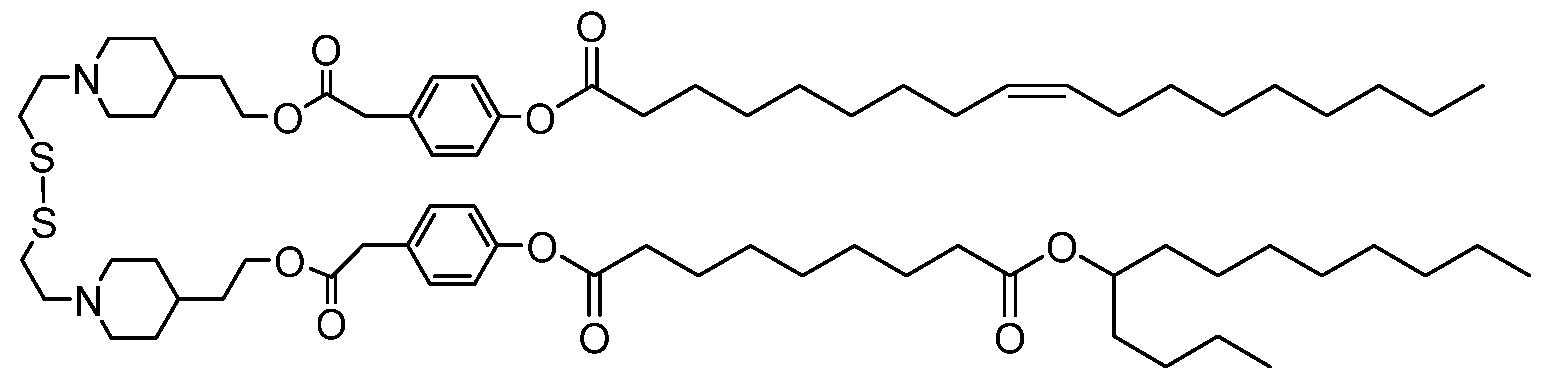

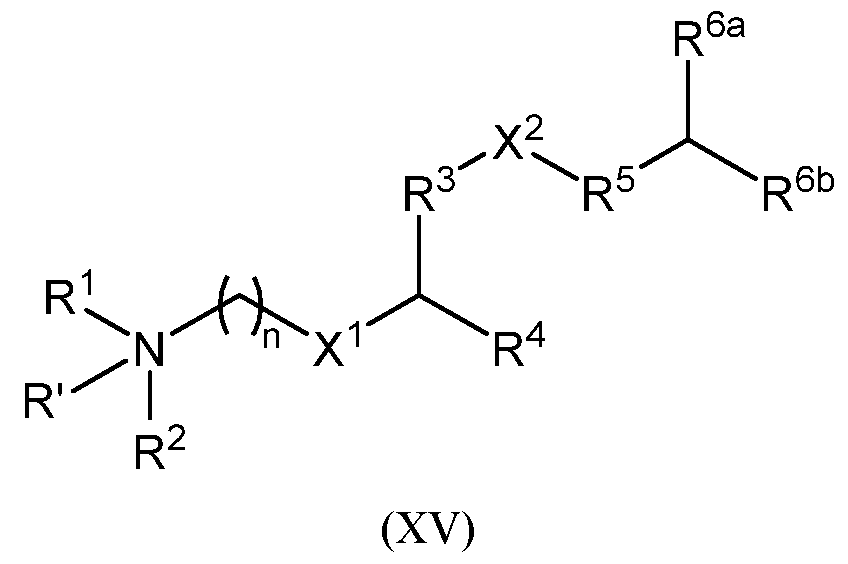


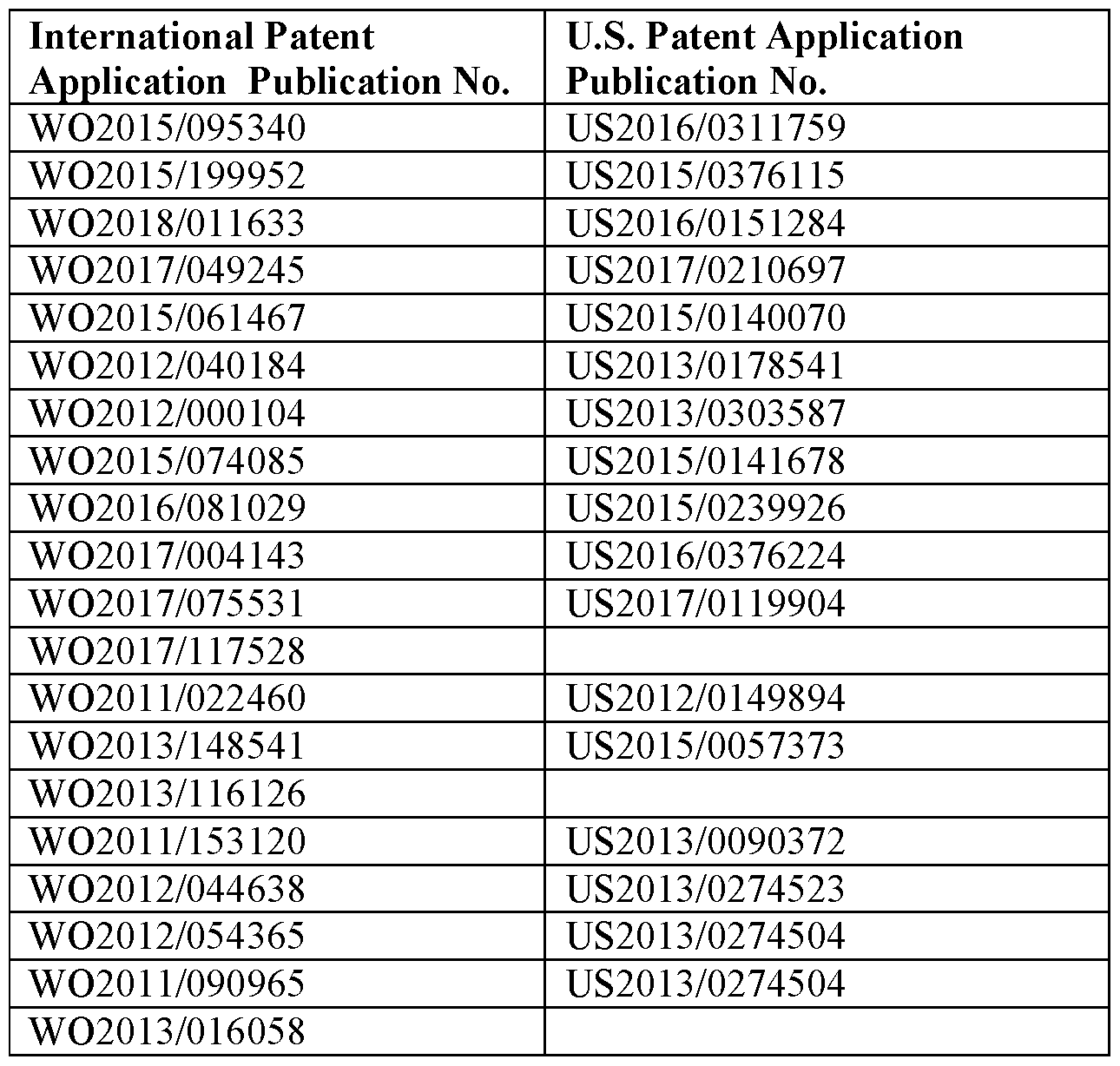


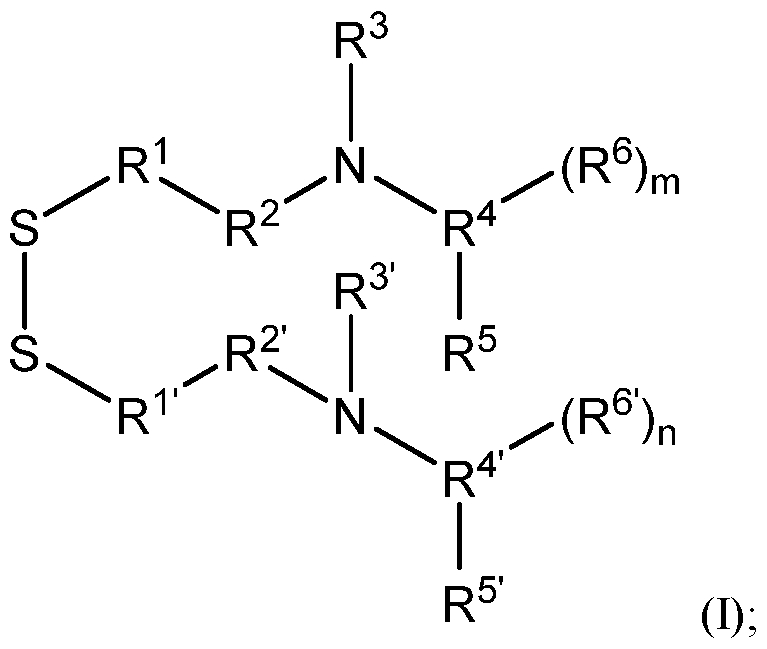


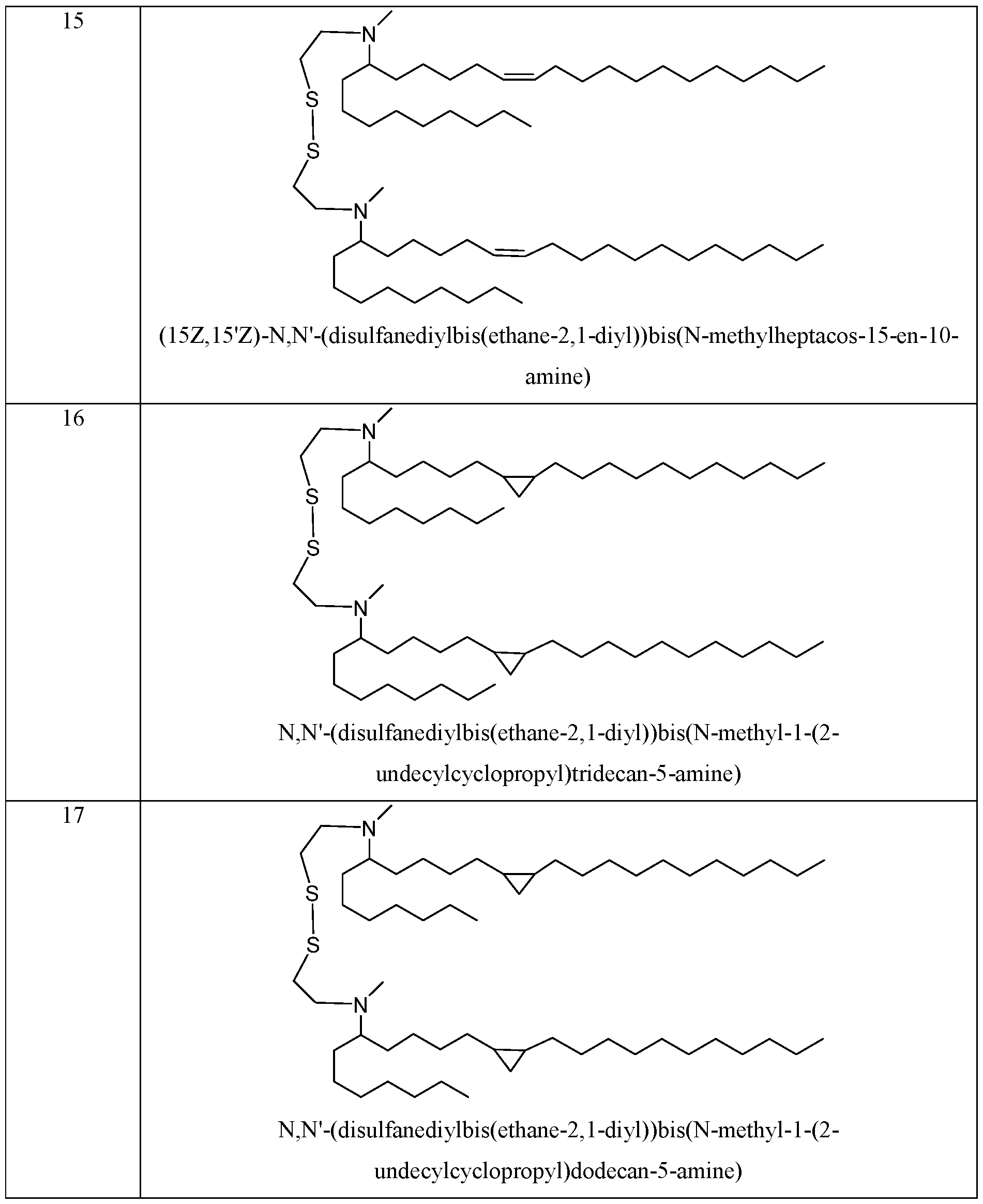


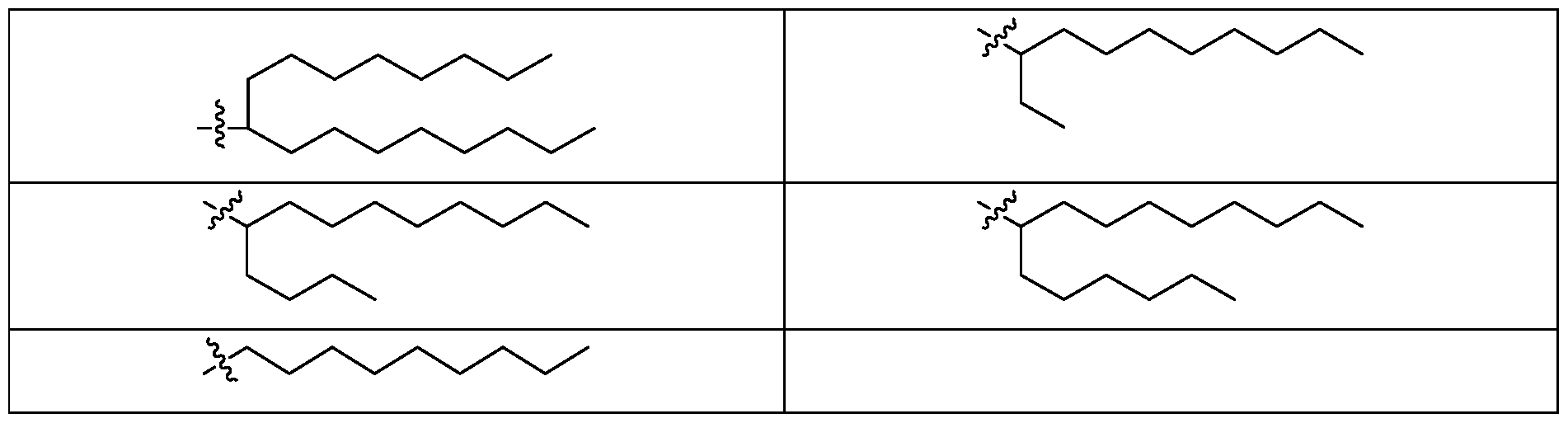


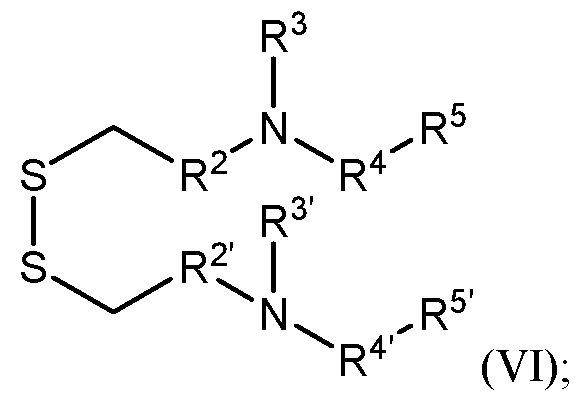


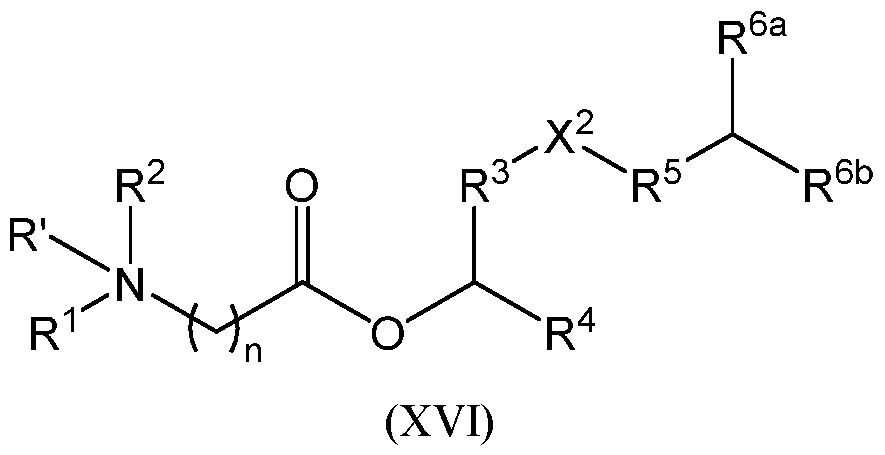


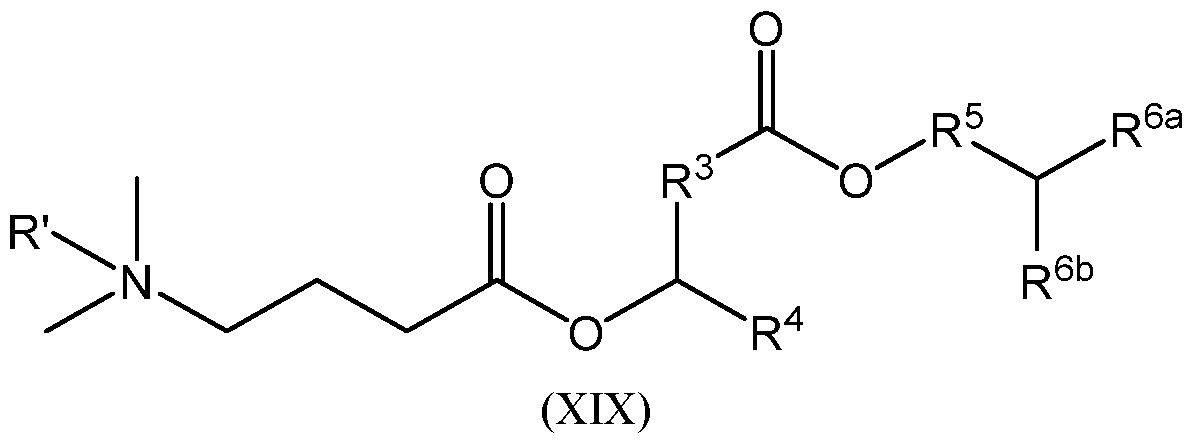

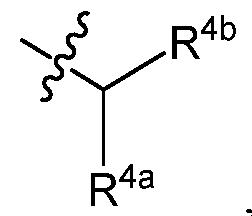


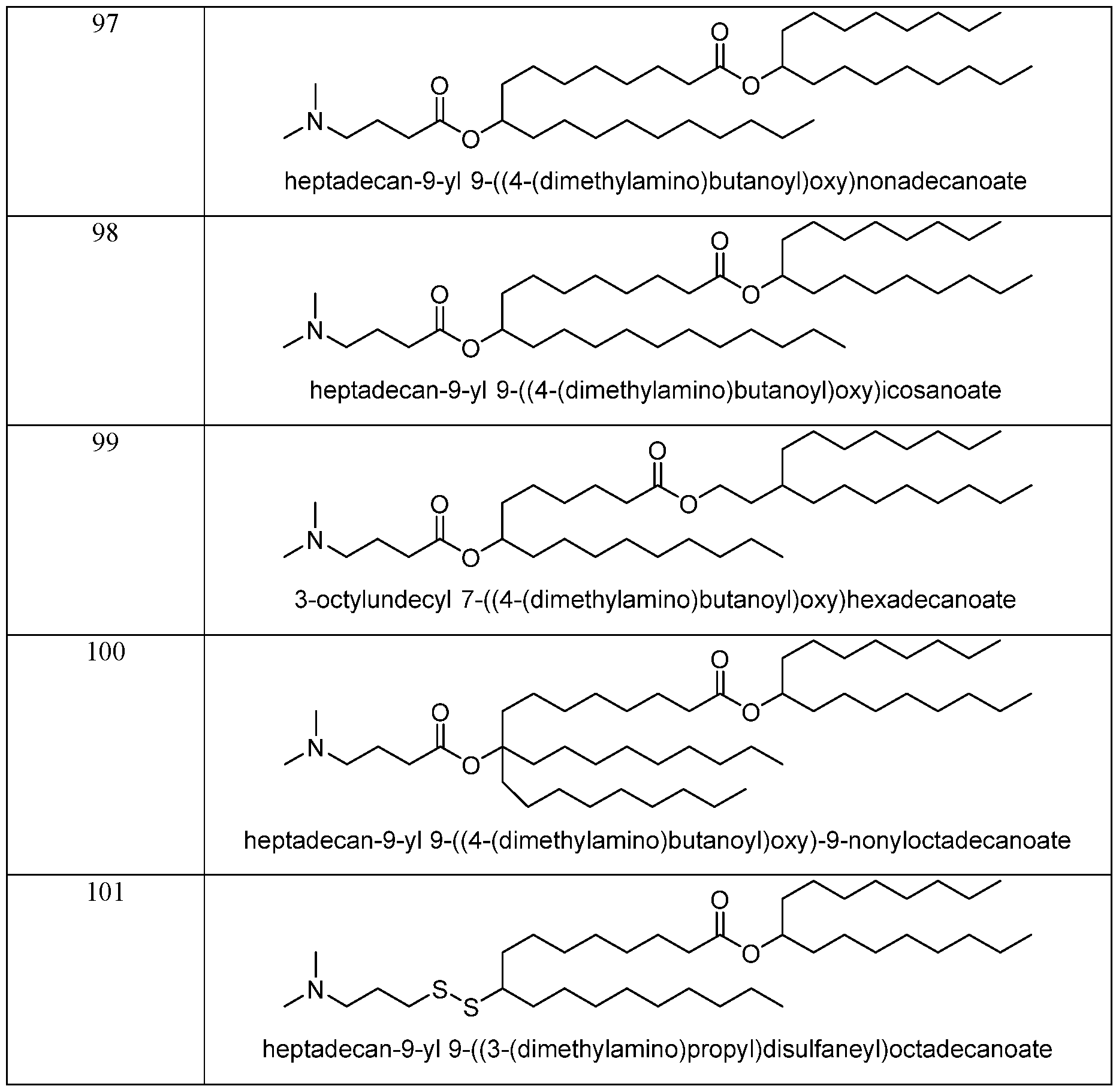


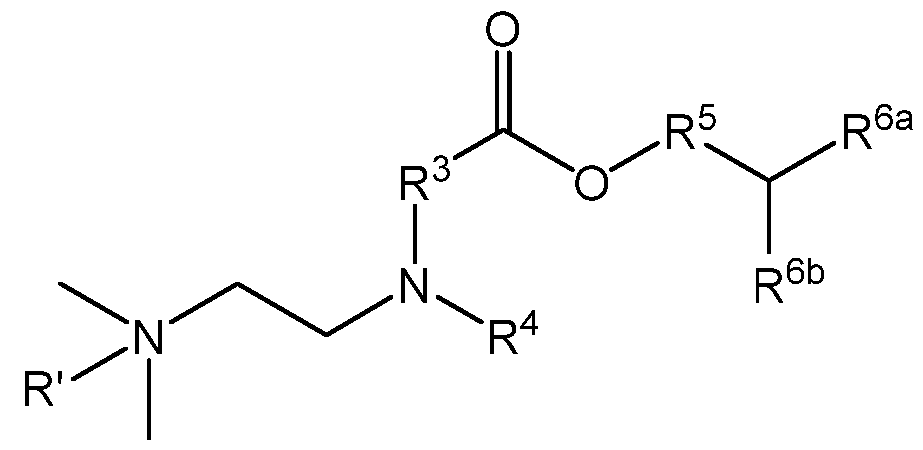
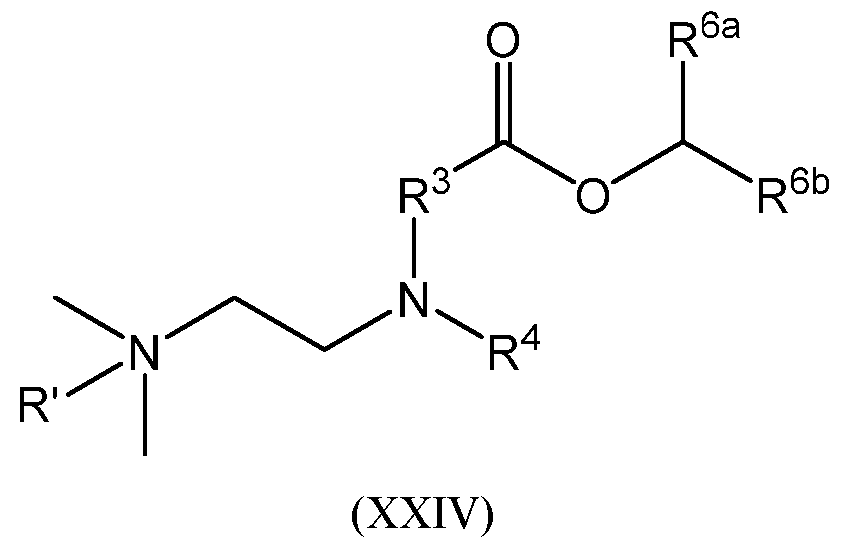
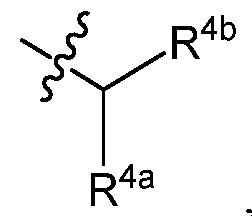


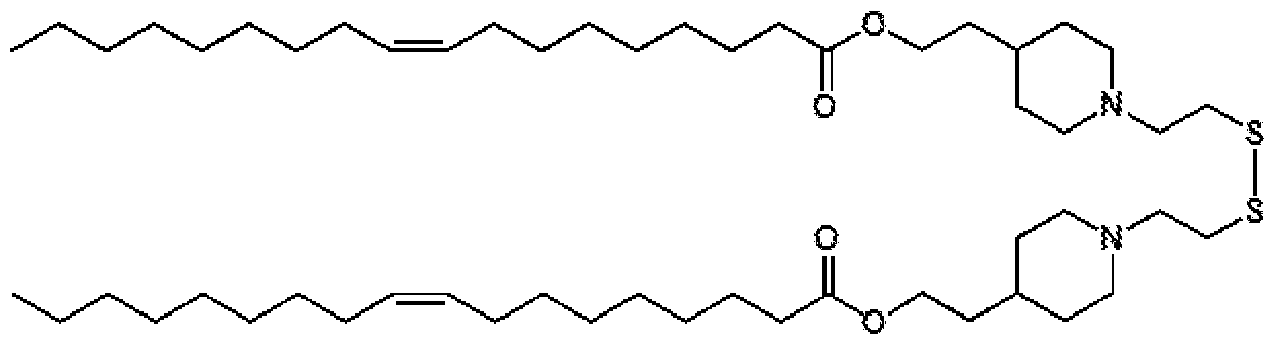


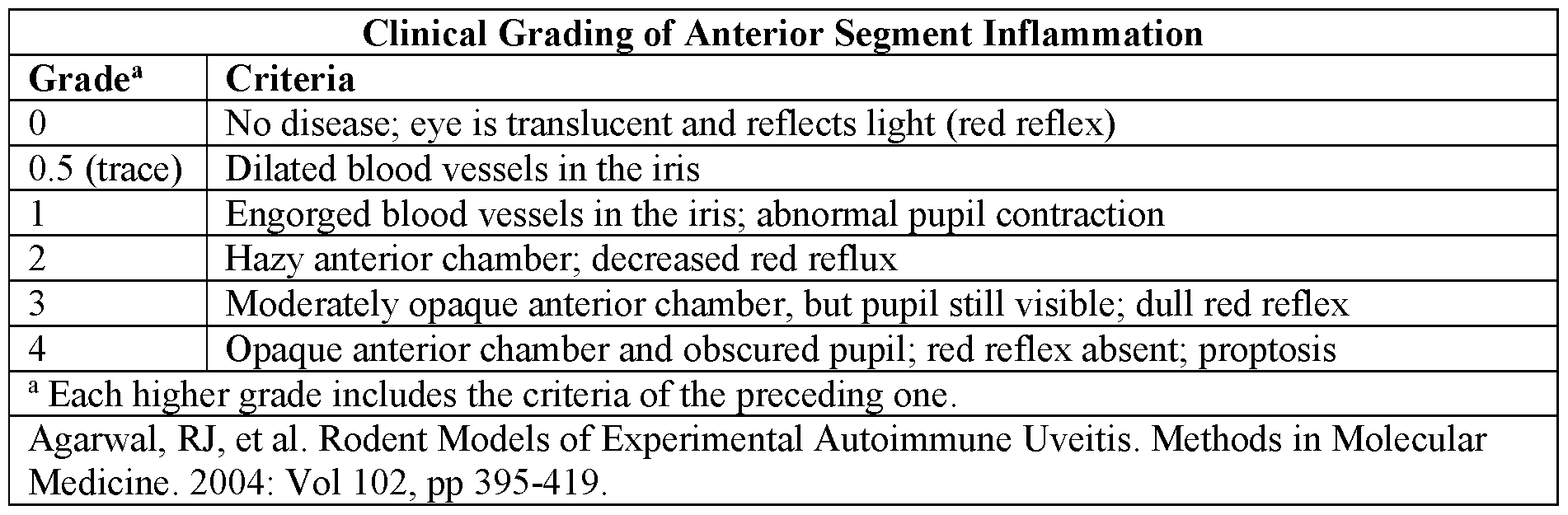


Claims

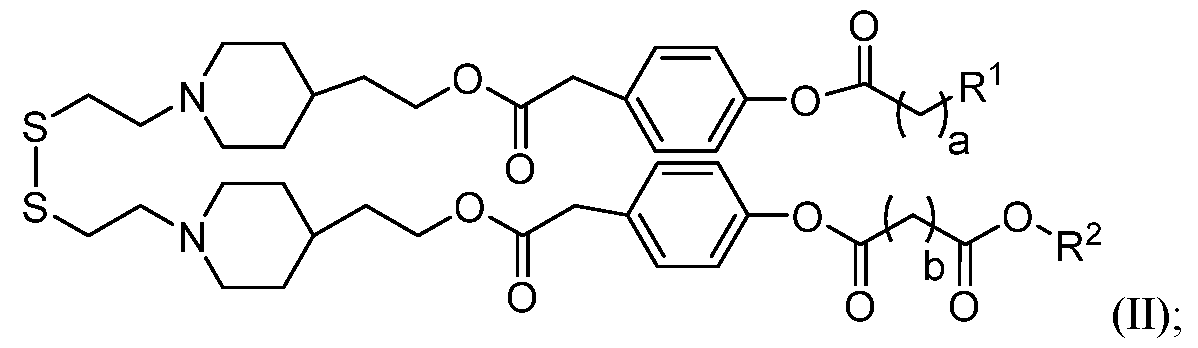


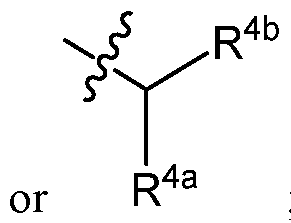
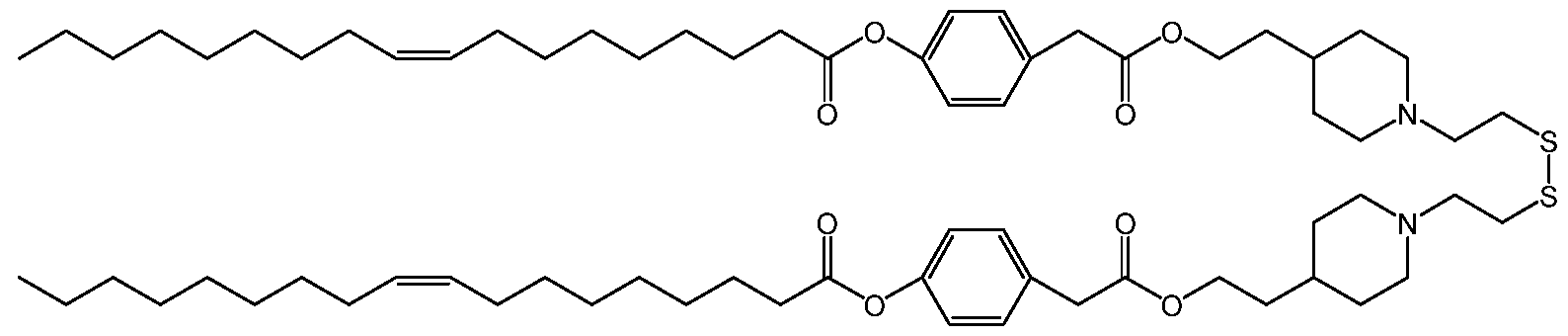

Priority Applications (4)
| Application Number | Priority Date | Filing Date | Title |
|---|---|---|---|
| EP23735925.2A EP4536197A1 (en) | 2022-06-07 | 2023-06-07 | Lipid nanoparticle compositions and uses thereof |
| US18/871,840 US20250352666A1 (en) | 2022-06-07 | 2023-06-07 | Lipid nanoparticle compositions and uses thereof |
| CA3258303A CA3258303A1 (en) | 2022-06-07 | 2023-06-07 | Lipid nanoparticle compositions and uses thereof |
| AU2023283348A AU2023283348A1 (en) | 2022-06-07 | 2023-06-07 | Lipid nanoparticle compositions and uses thereof |
Applications Claiming Priority (2)
| Application Number | Priority Date | Filing Date | Title |
|---|---|---|---|
| US202263349712P | 2022-06-07 | 2022-06-07 | |
| US63/349,712 | 2022-06-07 |
Publications (1)
| Publication Number | Publication Date |
|---|---|
| WO2023239756A1 true WO2023239756A1 (en) | 2023-12-14 |
Family
ID=87060614
Family Applications (1)
| Application Number | Title | Priority Date | Filing Date |
|---|---|---|---|
| PCT/US2023/024642 Ceased WO2023239756A1 (en) | 2022-06-07 | 2023-06-07 | Lipid nanoparticle compositions and uses thereof |
Country Status (5)
| Country | Link |
|---|---|
| US (1) | US20250352666A1 (en) |
| EP (1) | EP4536197A1 (en) |
| AU (1) | AU2023283348A1 (en) |
| CA (1) | CA3258303A1 (en) |
| WO (1) | WO2023239756A1 (en) |
Citations (85)
| Publication number | Priority date | Publication date | Assignee | Title |
|---|---|---|---|---|
| WO1996010392A1 (en) | 1994-09-30 | 1996-04-11 | The University Of British Columbia | Bilayer stabilizing components and their use in forming programmable fusogenic liposomes |
| WO1998051278A2 (en) | 1997-05-14 | 1998-11-19 | Inex Pharmaceuticals Corporation | High efficiency encapsulation of charged therapeutic agents in lipid vesicles |
| US6320017B1 (en) | 1997-12-23 | 2001-11-20 | Inex Pharmaceuticals Corp. | Polyamide oligomers |
| WO2002087541A1 (en) | 2001-04-30 | 2002-11-07 | Protiva Biotherapeutics Inc. | Lipid-based formulations for gene transfer |
| US20030022649A1 (en) | 2001-05-03 | 2003-01-30 | Mitsubishi Denki Kabushiki Kaisha | Signal reception method and device |
| US20040142025A1 (en) | 2002-06-28 | 2004-07-22 | Protiva Biotherapeutics Ltd. | Liposomal apparatus and manufacturing methods |
| WO2005026372A1 (en) | 2003-09-15 | 2005-03-24 | Protiva Biotherapeutics, Inc. | Polyethyleneglycol-modified lipid compounds and uses thereof |
| WO2005120152A2 (en) | 2004-06-07 | 2005-12-22 | Protiva Biotherapeutics, Inc. | Cationic lipids and methods of use |
| WO2005121348A1 (en) | 2004-06-07 | 2005-12-22 | Protiva Biotherapeutics, Inc. | Lipid encapsulated interfering rna |
| WO2006007712A1 (en) | 2004-07-19 | 2006-01-26 | Protiva Biotherapeutics, Inc. | Methods comprising polyethylene glycol-lipid conjugates for delivery of therapeutic agents |
| WO2006069782A2 (en) | 2004-12-27 | 2006-07-06 | Silence Therapeutics Ag. | Lipid complexes coated with peg and their use |
| US20060166919A1 (en) | 2004-12-23 | 2006-07-27 | Alcon, Inc. | RNAi inhibition of CTGF for treatment of ocular disorders |
| US20060172963A1 (en) | 2005-02-01 | 2006-08-03 | Alcon, Inc. | RNAi-mediated inhibition of ocular hypertension targets |
| US20060172961A1 (en) | 2004-12-23 | 2006-08-03 | Alcon, Inc. | RNAi inhibition of serum amyloid a for treatment of glaucoma |
| US20060223773A1 (en) | 2005-03-11 | 2006-10-05 | Alcon, Inc. | RNAi-mediated inhibition of Frizzled Related Protein-1 for treatment of glaucoma |
| US20070042031A1 (en) | 2005-07-27 | 2007-02-22 | Protiva Biotherapeutics, Inc. | Systems and methods for manufacturing liposomes |
| US20070149473A1 (en) | 2005-12-27 | 2007-06-28 | Alcon Manufacturing, Ltd. | RNAi-mediated inhibition of RHO kinase for treatment of ocular disorders |
| US20070155690A1 (en) | 2005-12-29 | 2007-07-05 | Alcon Manufacturing, Ltd. | RNAi-mediated inhibition of HIF1A for treatment of ocular angiogenesis |
| US20080020058A1 (en) | 2005-02-14 | 2008-01-24 | Sirna Therapeutics, Inc. | Lipid nanoparticle based compositions and methods for the delivery of biologically active molecules |
| WO2008042973A2 (en) | 2006-10-03 | 2008-04-10 | Alnylam Pharmaceuticals, Inc. | Lipid containing formulations |
| WO2009086558A1 (en) | 2008-01-02 | 2009-07-09 | Tekmira Pharmaceuticals Corporation | Improved compositions and methods for the delivery of nucleic acids |
| WO2009127060A1 (en) | 2008-04-15 | 2009-10-22 | Protiva Biotherapeutics, Inc. | Novel lipid formulations for nucleic acid delivery |
| WO2009132131A1 (en) | 2008-04-22 | 2009-10-29 | Alnylam Pharmaceuticals, Inc. | Amino lipid based improved lipid formulation |
| WO2010006282A2 (en) | 2008-07-10 | 2010-01-14 | Serina Therapeutics, Inc. | Polyoxazolines with inert terminating groups, polyoxazolines prepared from protected initiating groups and related compounds |
| US20100015218A1 (en) | 2007-02-16 | 2010-01-21 | Vasant Jadhav | Compositions and methods for potentiated activity of biologically active molecules |
| WO2010042877A1 (en) | 2008-10-09 | 2010-04-15 | Tekmira Pharmaceuticals Corporation | Improved amino lipids and methods for the delivery of nucleic acids |
| WO2010048536A2 (en) | 2008-10-23 | 2010-04-29 | Alnylam Pharmaceuticals, Inc. | Processes for preparing lipids |
| WO2010054384A1 (en) | 2008-11-10 | 2010-05-14 | Alnylam Pharmaceuticals, Inc. | Lipids and compositions for the delivery of therapeutics |
| WO2010054405A1 (en) | 2008-11-10 | 2010-05-14 | Alnylam Pharmaceuticals, Inc. | Novel lipids and compositions for the delivery of therapeutics |
| WO2010088537A2 (en) | 2009-01-29 | 2010-08-05 | Alnylam Pharmaceuticals, Inc. | Improved lipid formulation |
| WO2010129709A1 (en) | 2009-05-05 | 2010-11-11 | Alnylam Pharmaceuticals, Inc. | Lipid compositions |
| WO2010144740A1 (en) | 2009-06-10 | 2010-12-16 | Alnylam Pharmaceuticals, Inc. | Improved lipid formulation |
| WO2011000107A1 (en) | 2009-07-01 | 2011-01-06 | Protiva Biotherapeutics, Inc. | Novel lipid formulations for delivery of therapeutic agents to solid tumors |
| WO2011000106A1 (en) | 2009-07-01 | 2011-01-06 | Protiva Biotherapeutics, Inc. | Improved cationic lipids and methods for the delivery of therapeutic agents |
| WO2011022460A1 (en) | 2009-08-20 | 2011-02-24 | Merck Sharp & Dohme Corp. | Novel cationic lipids with various head groups for oligonucleotide delivery |
| WO2011038160A2 (en) | 2009-09-23 | 2011-03-31 | Protiva Biotherapeutics, Inc. | Compositions and methods for silencing genes expressed in cancer |
| WO2011066651A1 (en) | 2009-12-01 | 2011-06-09 | Protiva Biotherapeutics, Inc. | Snalp formulations containing antioxidants |
| WO2011071860A2 (en) | 2009-12-07 | 2011-06-16 | Alnylam Pharmaceuticals, Inc. | Compositions for nucleic acid delivery |
| WO2011090965A1 (en) | 2010-01-22 | 2011-07-28 | Merck Sharp & Dohme Corp. | Novel cationic lipids for oligonucleotide delivery |
| WO2011141704A1 (en) | 2010-05-12 | 2011-11-17 | Protiva Biotherapeutics, Inc | Novel cyclic cationic lipids and methods of use |
| WO2011141705A1 (en) | 2010-05-12 | 2011-11-17 | Protiva Biotherapeutics, Inc. | Novel cationic lipids and methods of use thereof |
| WO2011153120A1 (en) | 2010-06-04 | 2011-12-08 | Merck Sharp & Dohme Corp. | Novel low molecular weight cationic lipids for oligonucleotide delivery |
| WO2012000104A1 (en) | 2010-06-30 | 2012-01-05 | Protiva Biotherapeutics, Inc. | Non-liposomal systems for nucleic acid delivery |
| WO2012016184A2 (en) | 2010-07-30 | 2012-02-02 | Alnylam Pharmaceuticals, Inc. | Methods and compositions for delivery of active agents |
| WO2012031043A1 (en) | 2010-08-31 | 2012-03-08 | Novartis Ag | Pegylated liposomes for delivery of immunogen-encoding rna |
| WO2012040184A2 (en) | 2010-09-20 | 2012-03-29 | Merck Sharp & Dohme Corp. | Novel low molecular weight cationic lipids for oligonucleotide delivery |
| WO2012044638A1 (en) | 2010-09-30 | 2012-04-05 | Merck Sharp & Dohme Corp. | Low molecular weight cationic lipids for oligonucleotide delivery |
| WO2012054365A2 (en) | 2010-10-21 | 2012-04-26 | Merck Sharp & Dohme Corp. | Novel low molecular weight cationic lipids for oligonucleotide delivery |
| WO2012099755A1 (en) | 2011-01-11 | 2012-07-26 | Alnylam Pharmaceuticals, Inc. | Pegylated lipids and their use for drug delivery |
| US20120225129A1 (en) | 2010-08-20 | 2012-09-06 | Cerulean Pharma Inc. | Conjugates, particles, compositions, and related methods |
| WO2012162210A1 (en) | 2011-05-26 | 2012-11-29 | Merck Sharp & Dohme Corp. | Ring constrained cationic lipids for oligonucleotide delivery |
| WO2013006825A1 (en) | 2011-07-06 | 2013-01-10 | Novartis Ag | Liposomes having useful n:p ratio for delivery of rna molecules |
| WO2013016058A1 (en) | 2011-07-22 | 2013-01-31 | Merck Sharp & Dohme Corp. | Novel bis-nitrogen containing cationic lipids for oligonucleotide delivery |
| US20130037977A1 (en) | 2010-04-08 | 2013-02-14 | Paul A. Burke | Preparation of Lipid Nanoparticles |
| WO2013033563A1 (en) | 2011-08-31 | 2013-03-07 | Novartis Ag | Pegylated liposomes for delivery of immunogen-encoding rna |
| WO2013049328A1 (en) | 2011-09-27 | 2013-04-04 | Alnylam Pharmaceuticals, Inc. | Di-aliphatic substituted pegylated lipids |
| WO2013086373A1 (en) | 2011-12-07 | 2013-06-13 | Alnylam Pharmaceuticals, Inc. | Lipids for the delivery of active agents |
| WO2013086354A1 (en) | 2011-12-07 | 2013-06-13 | Alnylam Pharmaceuticals, Inc. | Biodegradable lipids for the delivery of active agents |
| WO2013086322A1 (en) | 2011-12-07 | 2013-06-13 | Alnylam Pharmaceuticals, Inc. | Branched alkyl and cycloalkyl terminated biodegradable lipids for the delivery of active agents |
| US20130156845A1 (en) | 2010-04-29 | 2013-06-20 | Alnylam Pharmaceuticals, Inc. | Lipid formulated single stranded rna |
| WO2013089151A1 (en) | 2011-12-12 | 2013-06-20 | 協和発酵キリン株式会社 | Lipid nanoparticles for drug delivery system containing cationic lipids |
| US20130164400A1 (en) | 2011-11-04 | 2013-06-27 | Nitto Denko Corporation | Single use system for sterilely producing lipid-nucleic acid particles |
| WO2013116126A1 (en) | 2012-02-01 | 2013-08-08 | Merck Sharp & Dohme Corp. | Novel low molecular weight, biodegradable cationic lipids for oligonucleotide delivery |
| WO2013126803A1 (en) | 2012-02-24 | 2013-08-29 | Protiva Biotherapeutics Inc. | Trialkyl cationic lipids and methods of use thereof |
| WO2013148541A1 (en) | 2012-03-27 | 2013-10-03 | Merck Sharp & Dohme Corp. | DIETHER BASED BIODEGRADABLE CATIONIC LIPIDS FOR siRNA DELIVERY |
| WO2015061467A1 (en) | 2013-10-22 | 2015-04-30 | Shire Human Genetic Therapies, Inc. | Lipid formulations for delivery of messenger rna |
| WO2015074085A1 (en) | 2013-11-18 | 2015-05-21 | Arcturus Therapeutics, Inc. | Ionizable cationic lipid for rna delivery |
| WO2015095340A1 (en) | 2013-12-19 | 2015-06-25 | Novartis Ag | Lipids and lipid compositions for the delivery of active agents |
| WO2015095346A1 (en) | 2013-12-19 | 2015-06-25 | Novartis Ag | Lipids and lipid compositions for the delivery of active agents |
| US20150239926A1 (en) | 2013-11-18 | 2015-08-27 | Arcturus Therapeutics, Inc. | Asymmetric ionizable cationic lipid for rna delivery |
| WO2015199952A1 (en) | 2014-06-25 | 2015-12-30 | Acuitas Therapeutics Inc. | Novel lipids and lipid nanoparticle formulations for delivery of nucleic acids |
| WO2016081029A1 (en) | 2014-11-18 | 2016-05-26 | Arcturus Therapeutics, Inc. | Ionizable cationic lipid for rna delivery |
| US20160151284A1 (en) | 2013-07-23 | 2016-06-02 | Protiva Biotherapeutics, Inc. | Compositions and methods for delivering messenger rna |
| US20160376224A1 (en) | 2015-06-29 | 2016-12-29 | Acuitas Therapeutics, Inc. | Lipids and lipid nanoparticle formulations for delivery of nucleic acids |
| WO2017049245A2 (en) | 2015-09-17 | 2017-03-23 | Modernatx, Inc. | Compounds and compositions for intracellular delivery of therapeutic agents |
| WO2017075531A1 (en) | 2015-10-28 | 2017-05-04 | Acuitas Therapeutics, Inc. | Novel lipids and lipid nanoparticle formulations for delivery of nucleic acids |
| WO2017099823A1 (en) | 2015-12-10 | 2017-06-15 | Modernatx, Inc. | Compositions and methods for delivery of therapeutic agents |
| WO2017117528A1 (en) | 2015-12-30 | 2017-07-06 | Acuitas Therapeutics, Inc. | Lipids and lipid nanoparticle formulations for delivery of nucleic acids |
| US9708628B2 (en) | 2011-11-18 | 2017-07-18 | Nof Corporation | Cationic lipid having improved intracellular kinetics |
| US20180005363A1 (en) | 2015-01-30 | 2018-01-04 | Hitachi High-Technologies Corporation | Pattern Matching Device and Computer Program for Pattern Matching |
| WO2018011633A1 (en) | 2016-07-13 | 2018-01-18 | Alcatel Lucent | Underlying recessed component placement |
| US10385030B2 (en) | 2015-01-30 | 2019-08-20 | Nof Corporation | Cationic lipid |
| WO2019188867A1 (en) | 2018-03-27 | 2019-10-03 | 日油株式会社 | Novel cationic lipid exhibiting improved intracellular dynamics |
| WO2020097511A2 (en) * | 2018-11-09 | 2020-05-14 | Translate Bio, Inc. | Messenger rna therapy for treatment of ocular diseases |
| WO2022016089A2 (en) * | 2020-07-17 | 2022-01-20 | Generation Bio Co. | Methods for encapsulating polynucleotides into reduced sizes of lipid nanoparticles and novel formulation thereof |
-
2023
- 2023-06-07 US US18/871,840 patent/US20250352666A1/en active Pending
- 2023-06-07 AU AU2023283348A patent/AU2023283348A1/en active Pending
- 2023-06-07 EP EP23735925.2A patent/EP4536197A1/en active Pending
- 2023-06-07 CA CA3258303A patent/CA3258303A1/en active Pending
- 2023-06-07 WO PCT/US2023/024642 patent/WO2023239756A1/en not_active Ceased
Patent Citations (142)
| Publication number | Priority date | Publication date | Assignee | Title |
|---|---|---|---|---|
| WO1996010392A1 (en) | 1994-09-30 | 1996-04-11 | The University Of British Columbia | Bilayer stabilizing components and their use in forming programmable fusogenic liposomes |
| US5885613A (en) | 1994-09-30 | 1999-03-23 | The University Of British Columbia | Bilayer stabilizing components and their use in forming programmable fusogenic liposomes |
| WO1998051278A2 (en) | 1997-05-14 | 1998-11-19 | Inex Pharmaceuticals Corporation | High efficiency encapsulation of charged therapeutic agents in lipid vesicles |
| US6287591B1 (en) | 1997-05-14 | 2001-09-11 | Inex Pharmaceuticals Corp. | Charged therapeutic agents encapsulated in lipid particles containing four lipid components |
| US6320017B1 (en) | 1997-12-23 | 2001-11-20 | Inex Pharmaceuticals Corp. | Polyamide oligomers |
| US6586559B2 (en) | 1997-12-23 | 2003-07-01 | Inex Pharmaceuticals Corporation | Polyamide oligomers |
| WO2002087541A1 (en) | 2001-04-30 | 2002-11-07 | Protiva Biotherapeutics Inc. | Lipid-based formulations for gene transfer |
| US20030077829A1 (en) | 2001-04-30 | 2003-04-24 | Protiva Biotherapeutics Inc.. | Lipid-based formulations |
| US20030022649A1 (en) | 2001-05-03 | 2003-01-30 | Mitsubishi Denki Kabushiki Kaisha | Signal reception method and device |
| US20040142025A1 (en) | 2002-06-28 | 2004-07-22 | Protiva Biotherapeutics Ltd. | Liposomal apparatus and manufacturing methods |
| WO2005026372A1 (en) | 2003-09-15 | 2005-03-24 | Protiva Biotherapeutics, Inc. | Polyethyleneglycol-modified lipid compounds and uses thereof |
| US20050175682A1 (en) | 2003-09-15 | 2005-08-11 | Protiva Biotherapeutics, Inc. | Polyethyleneglycol-modified lipid compounds and uses thereof |
| WO2005120152A2 (en) | 2004-06-07 | 2005-12-22 | Protiva Biotherapeutics, Inc. | Cationic lipids and methods of use |
| WO2005121348A1 (en) | 2004-06-07 | 2005-12-22 | Protiva Biotherapeutics, Inc. | Lipid encapsulated interfering rna |
| US20060008910A1 (en) | 2004-06-07 | 2006-01-12 | Protiva Biotherapeuties, Inc. | Lipid encapsulated interfering RNA |
| US20060083780A1 (en) | 2004-06-07 | 2006-04-20 | Protiva Biotherapeutics, Inc. | Cationic lipids and methods of use |
| WO2006007712A1 (en) | 2004-07-19 | 2006-01-26 | Protiva Biotherapeutics, Inc. | Methods comprising polyethylene glycol-lipid conjugates for delivery of therapeutic agents |
| US20060051405A1 (en) | 2004-07-19 | 2006-03-09 | Protiva Biotherapeutics, Inc. | Compositions for the delivery of therapeutic agents and uses thereof |
| US20060166919A1 (en) | 2004-12-23 | 2006-07-27 | Alcon, Inc. | RNAi inhibition of CTGF for treatment of ocular disorders |
| US20060172961A1 (en) | 2004-12-23 | 2006-08-03 | Alcon, Inc. | RNAi inhibition of serum amyloid a for treatment of glaucoma |
| WO2006069782A2 (en) | 2004-12-27 | 2006-07-06 | Silence Therapeutics Ag. | Lipid complexes coated with peg and their use |
| US20100062967A1 (en) | 2004-12-27 | 2010-03-11 | Silence Therapeutics Ag | Coated lipid complexes and their use |
| US20060172963A1 (en) | 2005-02-01 | 2006-08-03 | Alcon, Inc. | RNAi-mediated inhibition of ocular hypertension targets |
| US20060172965A1 (en) | 2005-02-01 | 2006-08-03 | Alcon, Inc. | RNAi-mediated inhibition of ocular targets |
| US20080020058A1 (en) | 2005-02-14 | 2008-01-24 | Sirna Therapeutics, Inc. | Lipid nanoparticle based compositions and methods for the delivery of biologically active molecules |
| US20060223773A1 (en) | 2005-03-11 | 2006-10-05 | Alcon, Inc. | RNAi-mediated inhibition of Frizzled Related Protein-1 for treatment of glaucoma |
| US20070042031A1 (en) | 2005-07-27 | 2007-02-22 | Protiva Biotherapeutics, Inc. | Systems and methods for manufacturing liposomes |
| US20070149473A1 (en) | 2005-12-27 | 2007-06-28 | Alcon Manufacturing, Ltd. | RNAi-mediated inhibition of RHO kinase for treatment of ocular disorders |
| US20070155690A1 (en) | 2005-12-29 | 2007-07-05 | Alcon Manufacturing, Ltd. | RNAi-mediated inhibition of HIF1A for treatment of ocular angiogenesis |
| WO2008042973A2 (en) | 2006-10-03 | 2008-04-10 | Alnylam Pharmaceuticals, Inc. | Lipid containing formulations |
| US20090023673A1 (en) | 2006-10-03 | 2009-01-22 | Muthiah Manoharan | Lipid containing formulations |
| US8034376B2 (en) | 2006-10-03 | 2011-10-11 | Alnylam Pharamaceticals, Inc. | Lipid containing formulations |
| WO2008147438A2 (en) | 2006-10-24 | 2008-12-04 | Sirna Therapeutics, Inc. | Lipid nanoparticle based compositions and methods for the delivery of biologically active molecules |
| US20100015218A1 (en) | 2007-02-16 | 2010-01-21 | Vasant Jadhav | Compositions and methods for potentiated activity of biologically active molecules |
| US20110117125A1 (en) | 2008-01-02 | 2011-05-19 | Tekmira Pharmaceuticals Corporation | Compositions and methods for the delivery of nucleic acids |
| WO2009086558A1 (en) | 2008-01-02 | 2009-07-09 | Tekmira Pharmaceuticals Corporation | Improved compositions and methods for the delivery of nucleic acids |
| WO2009127060A1 (en) | 2008-04-15 | 2009-10-22 | Protiva Biotherapeutics, Inc. | Novel lipid formulations for nucleic acid delivery |
| US20100130588A1 (en) | 2008-04-15 | 2010-05-27 | Protiva Biotherapeutics, Inc. | Novel lipid formulations for nucleic acid delivery |
| WO2009132131A1 (en) | 2008-04-22 | 2009-10-29 | Alnylam Pharmaceuticals, Inc. | Amino lipid based improved lipid formulation |
| WO2010006282A2 (en) | 2008-07-10 | 2010-01-14 | Serina Therapeutics, Inc. | Polyoxazolines with inert terminating groups, polyoxazolines prepared from protected initiating groups and related compounds |
| US20110123453A1 (en) | 2008-07-10 | 2011-05-26 | Serina Therapeutics, Inc. | Polyoxazolines with Inert Terminating Groups, Polyoxazolines Prepared from Protected Initiating Groups and Related Compounds |
| WO2010042877A1 (en) | 2008-10-09 | 2010-04-15 | Tekmira Pharmaceuticals Corporation | Improved amino lipids and methods for the delivery of nucleic acids |
| US20110256175A1 (en) | 2008-10-09 | 2011-10-20 | The University Of British Columbia | Amino lipids and methods for the delivery of nucleic acids |
| WO2010048536A2 (en) | 2008-10-23 | 2010-04-29 | Alnylam Pharmaceuticals, Inc. | Processes for preparing lipids |
| WO2010054405A1 (en) | 2008-11-10 | 2010-05-14 | Alnylam Pharmaceuticals, Inc. | Novel lipids and compositions for the delivery of therapeutics |
| US20120058144A1 (en) | 2008-11-10 | 2012-03-08 | Alnylam Pharmaceuticals, Inc. | Lipids and compositions for the delivery of therapeutics |
| US20120027796A1 (en) | 2008-11-10 | 2012-02-02 | Alnylam Pharmaceuticals, Inc. | Novel lipids and compositions for the delivery of therapeutics |
| WO2010054406A1 (en) | 2008-11-10 | 2010-05-14 | Alnylam Pharmaceuticals, Inc. | Novel lipids and compositions for the delivery of therapeutics |
| WO2010054401A1 (en) | 2008-11-10 | 2010-05-14 | Alnylam Pharmaceuticals, Inc. | Novel lipids and compositions for the delivery of therapeutics |
| WO2010054384A1 (en) | 2008-11-10 | 2010-05-14 | Alnylam Pharmaceuticals, Inc. | Lipids and compositions for the delivery of therapeutics |
| US20120101148A1 (en) | 2009-01-29 | 2012-04-26 | Alnylam Pharmaceuticals, Inc. | lipid formulation |
| WO2010088537A2 (en) | 2009-01-29 | 2010-08-05 | Alnylam Pharmaceuticals, Inc. | Improved lipid formulation |
| WO2010129709A1 (en) | 2009-05-05 | 2010-11-11 | Alnylam Pharmaceuticals, Inc. | Lipid compositions |
| US20120128760A1 (en) | 2009-05-05 | 2012-05-24 | Alnylam Pharmaceuticals, Inc. | Lipid compositions |
| US8158601B2 (en) | 2009-06-10 | 2012-04-17 | Alnylam Pharmaceuticals, Inc. | Lipid formulation |
| US20100324120A1 (en) | 2009-06-10 | 2010-12-23 | Jianxin Chen | Lipid formulation |
| WO2010144740A1 (en) | 2009-06-10 | 2010-12-16 | Alnylam Pharmaceuticals, Inc. | Improved lipid formulation |
| WO2011000106A1 (en) | 2009-07-01 | 2011-01-06 | Protiva Biotherapeutics, Inc. | Improved cationic lipids and methods for the delivery of therapeutic agents |
| WO2011000107A1 (en) | 2009-07-01 | 2011-01-06 | Protiva Biotherapeutics, Inc. | Novel lipid formulations for delivery of therapeutic agents to solid tumors |
| US20110076335A1 (en) | 2009-07-01 | 2011-03-31 | Protiva Biotherapeutics, Inc. | Novel lipid formulations for delivery of therapeutic agents to solid tumors |
| US20120202871A1 (en) | 2009-07-01 | 2012-08-09 | Protiva Biotherapeutics, Inc. | Cationic lipids and methods for the delivery of therapeutic agents |
| WO2011022460A1 (en) | 2009-08-20 | 2011-02-24 | Merck Sharp & Dohme Corp. | Novel cationic lipids with various head groups for oligonucleotide delivery |
| US20120149894A1 (en) | 2009-08-20 | 2012-06-14 | Mark Cameron | Novel cationic lipids with various head groups for oligonucleotide delivery |
| WO2011038160A2 (en) | 2009-09-23 | 2011-03-31 | Protiva Biotherapeutics, Inc. | Compositions and methods for silencing genes expressed in cancer |
| US20130065939A1 (en) | 2009-09-23 | 2013-03-14 | Protiva Biotherapeutics, Inc. | Compositions and methods for silencing genes expressed in cancer |
| WO2011066651A1 (en) | 2009-12-01 | 2011-06-09 | Protiva Biotherapeutics, Inc. | Snalp formulations containing antioxidants |
| WO2011071860A2 (en) | 2009-12-07 | 2011-06-16 | Alnylam Pharmaceuticals, Inc. | Compositions for nucleic acid delivery |
| US20130338210A1 (en) | 2009-12-07 | 2013-12-19 | Alnylam Pharmaceuticals, Inc. | Compositions for nucleic acid delivery |
| WO2011090965A1 (en) | 2010-01-22 | 2011-07-28 | Merck Sharp & Dohme Corp. | Novel cationic lipids for oligonucleotide delivery |
| US20130037977A1 (en) | 2010-04-08 | 2013-02-14 | Paul A. Burke | Preparation of Lipid Nanoparticles |
| US20130156845A1 (en) | 2010-04-29 | 2013-06-20 | Alnylam Pharmaceuticals, Inc. | Lipid formulated single stranded rna |
| US20130123338A1 (en) | 2010-05-12 | 2013-05-16 | Protiva Biotherapeutics, Inc. | Novel cationic lipids and methods of use thereof |
| US20130116307A1 (en) | 2010-05-12 | 2013-05-09 | Protiva Biotherapeutics Inc. | Novel cyclic cationic lipids and methods of use |
| WO2011141705A1 (en) | 2010-05-12 | 2011-11-17 | Protiva Biotherapeutics, Inc. | Novel cationic lipids and methods of use thereof |
| WO2011141704A1 (en) | 2010-05-12 | 2011-11-17 | Protiva Biotherapeutics, Inc | Novel cyclic cationic lipids and methods of use |
| WO2011153120A1 (en) | 2010-06-04 | 2011-12-08 | Merck Sharp & Dohme Corp. | Novel low molecular weight cationic lipids for oligonucleotide delivery |
| US20130090372A1 (en) | 2010-06-04 | 2013-04-11 | Brian W. Budzik | Novel Low Molecular Weight Cationic Lipids for Oligonucleotide Delivery |
| WO2012000104A1 (en) | 2010-06-30 | 2012-01-05 | Protiva Biotherapeutics, Inc. | Non-liposomal systems for nucleic acid delivery |
| US20130303587A1 (en) | 2010-06-30 | 2013-11-14 | Protiva Biotherapeutics, Inc. | Non-liposomal systems for nucleic acid delivery |
| WO2012016184A2 (en) | 2010-07-30 | 2012-02-02 | Alnylam Pharmaceuticals, Inc. | Methods and compositions for delivery of active agents |
| US20130323269A1 (en) | 2010-07-30 | 2013-12-05 | Muthiah Manoharan | Methods and compositions for delivery of active agents |
| US20120225129A1 (en) | 2010-08-20 | 2012-09-06 | Cerulean Pharma Inc. | Conjugates, particles, compositions, and related methods |
| US20130202684A1 (en) | 2010-08-31 | 2013-08-08 | Lichtstrasse | Pegylated liposomes for delivery of immunogen encoding rna |
| WO2012031043A1 (en) | 2010-08-31 | 2012-03-08 | Novartis Ag | Pegylated liposomes for delivery of immunogen-encoding rna |
| US20130178541A1 (en) | 2010-09-20 | 2013-07-11 | Matthew G. Stanton | Novel low molecular weight cationic lipids for oligonucleotide delivery |
| WO2012040184A2 (en) | 2010-09-20 | 2012-03-29 | Merck Sharp & Dohme Corp. | Novel low molecular weight cationic lipids for oligonucleotide delivery |
| US20130274523A1 (en) | 2010-09-30 | 2013-10-17 | John A. Bawiec, III | Low molecular weight cationic lipids for oligonucleotide delivery |
| WO2012044638A1 (en) | 2010-09-30 | 2012-04-05 | Merck Sharp & Dohme Corp. | Low molecular weight cationic lipids for oligonucleotide delivery |
| WO2012054365A2 (en) | 2010-10-21 | 2012-04-26 | Merck Sharp & Dohme Corp. | Novel low molecular weight cationic lipids for oligonucleotide delivery |
| US20130274504A1 (en) | 2010-10-21 | 2013-10-17 | Steven L. Colletti | Novel Low Molecular Weight Cationic Lipids For Oligonucleotide Delivery |
| US20140200257A1 (en) | 2011-01-11 | 2014-07-17 | Alnylam Pharmaceuticals, Inc. | Pegylated lipids and their use for drug delivery |
| WO2012099755A1 (en) | 2011-01-11 | 2012-07-26 | Alnylam Pharmaceuticals, Inc. | Pegylated lipids and their use for drug delivery |
| WO2012162210A1 (en) | 2011-05-26 | 2012-11-29 | Merck Sharp & Dohme Corp. | Ring constrained cationic lipids for oligonucleotide delivery |
| US20140141070A1 (en) | 2011-07-06 | 2014-05-22 | Andrew Geall | Liposomes having useful n:p ratio for delivery of rna molecules |
| WO2013006825A1 (en) | 2011-07-06 | 2013-01-10 | Novartis Ag | Liposomes having useful n:p ratio for delivery of rna molecules |
| WO2013016058A1 (en) | 2011-07-22 | 2013-01-31 | Merck Sharp & Dohme Corp. | Novel bis-nitrogen containing cationic lipids for oligonucleotide delivery |
| US20140255472A1 (en) | 2011-08-31 | 2014-09-11 | Andrew Geall | Pegylated liposomes for delivery of immunogen-encoding rna |
| WO2013033563A1 (en) | 2011-08-31 | 2013-03-07 | Novartis Ag | Pegylated liposomes for delivery of immunogen-encoding rna |
| WO2013049328A1 (en) | 2011-09-27 | 2013-04-04 | Alnylam Pharmaceuticals, Inc. | Di-aliphatic substituted pegylated lipids |
| US20150203446A1 (en) | 2011-09-27 | 2015-07-23 | Takeda Pharmaceutical Company Limited | Di-aliphatic substituted pegylated lipids |
| US20130164400A1 (en) | 2011-11-04 | 2013-06-27 | Nitto Denko Corporation | Single use system for sterilely producing lipid-nucleic acid particles |
| US9708628B2 (en) | 2011-11-18 | 2017-07-18 | Nof Corporation | Cationic lipid having improved intracellular kinetics |
| WO2013086354A1 (en) | 2011-12-07 | 2013-06-13 | Alnylam Pharmaceuticals, Inc. | Biodegradable lipids for the delivery of active agents |
| WO2013086373A1 (en) | 2011-12-07 | 2013-06-13 | Alnylam Pharmaceuticals, Inc. | Lipids for the delivery of active agents |
| US20130195920A1 (en) | 2011-12-07 | 2013-08-01 | Alnylam Pharmaceuticals, Inc. | Biodegradable lipids for the delivery of active agents |
| WO2013086322A1 (en) | 2011-12-07 | 2013-06-13 | Alnylam Pharmaceuticals, Inc. | Branched alkyl and cycloalkyl terminated biodegradable lipids for the delivery of active agents |
| US20140308304A1 (en) | 2011-12-07 | 2014-10-16 | Alnylam Pharmaceuticals, Inc. | Lipids for the delivery of active agents |
| US20140039032A1 (en) | 2011-12-12 | 2014-02-06 | Kyowa Hakko Kirin Co., Ltd. | Lipid nano particles comprising cationic lipid for drug delivery system |
| WO2013089151A1 (en) | 2011-12-12 | 2013-06-20 | 協和発酵キリン株式会社 | Lipid nanoparticles for drug delivery system containing cationic lipids |
| WO2013116126A1 (en) | 2012-02-01 | 2013-08-08 | Merck Sharp & Dohme Corp. | Novel low molecular weight, biodegradable cationic lipids for oligonucleotide delivery |
| US20150064242A1 (en) | 2012-02-24 | 2015-03-05 | Protiva Biotherapeutics, Inc. | Trialkyl cationic lipids and methods of use thereof |
| WO2013126803A1 (en) | 2012-02-24 | 2013-08-29 | Protiva Biotherapeutics Inc. | Trialkyl cationic lipids and methods of use thereof |
| WO2013148541A1 (en) | 2012-03-27 | 2013-10-03 | Merck Sharp & Dohme Corp. | DIETHER BASED BIODEGRADABLE CATIONIC LIPIDS FOR siRNA DELIVERY |
| US20150057373A1 (en) | 2012-03-27 | 2015-02-26 | Sirna Therapeutics, Inc | DIETHER BASED BIODEGRADABLE CATIONIC LIPIDS FOR siRNA DELIVERY |
| US20160151284A1 (en) | 2013-07-23 | 2016-06-02 | Protiva Biotherapeutics, Inc. | Compositions and methods for delivering messenger rna |
| US20150140070A1 (en) | 2013-10-22 | 2015-05-21 | Shire Human Genetic Therapies, Inc. | Lipid formulations for delivery of messenger rna |
| WO2015061467A1 (en) | 2013-10-22 | 2015-04-30 | Shire Human Genetic Therapies, Inc. | Lipid formulations for delivery of messenger rna |
| WO2015074085A1 (en) | 2013-11-18 | 2015-05-21 | Arcturus Therapeutics, Inc. | Ionizable cationic lipid for rna delivery |
| US20150141678A1 (en) | 2013-11-18 | 2015-05-21 | Arcturus Therapeutics, Inc. | Ionizable cationic lipid for rna delivery |
| US20150239926A1 (en) | 2013-11-18 | 2015-08-27 | Arcturus Therapeutics, Inc. | Asymmetric ionizable cationic lipid for rna delivery |
| US20160317458A1 (en) | 2013-12-19 | 2016-11-03 | Luis Brito | Lipids and Lipid Compositions for the Delivery of Active Agents |
| US20160311759A1 (en) | 2013-12-19 | 2016-10-27 | Luis Brito | Lipids and Lipid Compositions for the Delivery of Active Agents |
| WO2015095340A1 (en) | 2013-12-19 | 2015-06-25 | Novartis Ag | Lipids and lipid compositions for the delivery of active agents |
| WO2015095346A1 (en) | 2013-12-19 | 2015-06-25 | Novartis Ag | Lipids and lipid compositions for the delivery of active agents |
| US20150376115A1 (en) | 2014-06-25 | 2015-12-31 | Acuitas Therapeutics Inc. | Novel lipids and lipid nanoparticle formulations for delivery of nucleic acids |
| WO2015199952A1 (en) | 2014-06-25 | 2015-12-30 | Acuitas Therapeutics Inc. | Novel lipids and lipid nanoparticle formulations for delivery of nucleic acids |
| WO2016081029A1 (en) | 2014-11-18 | 2016-05-26 | Arcturus Therapeutics, Inc. | Ionizable cationic lipid for rna delivery |
| US10385030B2 (en) | 2015-01-30 | 2019-08-20 | Nof Corporation | Cationic lipid |
| US20180005363A1 (en) | 2015-01-30 | 2018-01-04 | Hitachi High-Technologies Corporation | Pattern Matching Device and Computer Program for Pattern Matching |
| US20160376224A1 (en) | 2015-06-29 | 2016-12-29 | Acuitas Therapeutics, Inc. | Lipids and lipid nanoparticle formulations for delivery of nucleic acids |
| WO2017004143A1 (en) | 2015-06-29 | 2017-01-05 | Acuitas Therapeutics Inc. | Lipids and lipid nanoparticle formulations for delivery of nucleic acids |
| US20170210697A1 (en) | 2015-09-17 | 2017-07-27 | Modernatx, Inc. | Compounds and compositions for intracellular delivery of therapeutic agents |
| WO2017049245A2 (en) | 2015-09-17 | 2017-03-23 | Modernatx, Inc. | Compounds and compositions for intracellular delivery of therapeutic agents |
| US20170119904A1 (en) | 2015-10-28 | 2017-05-04 | Acuitas Therapeutics, Inc. | Novel lipids and lipid nanoparticle formulations for delivery of nucleic acids |
| WO2017075531A1 (en) | 2015-10-28 | 2017-05-04 | Acuitas Therapeutics, Inc. | Novel lipids and lipid nanoparticle formulations for delivery of nucleic acids |
| WO2017099823A1 (en) | 2015-12-10 | 2017-06-15 | Modernatx, Inc. | Compositions and methods for delivery of therapeutic agents |
| US20180028664A1 (en) | 2015-12-10 | 2018-02-01 | Modernatx, Inc. | Compositions and methods for delivery of agents |
| WO2017117528A1 (en) | 2015-12-30 | 2017-07-06 | Acuitas Therapeutics, Inc. | Lipids and lipid nanoparticle formulations for delivery of nucleic acids |
| WO2018011633A1 (en) | 2016-07-13 | 2018-01-18 | Alcatel Lucent | Underlying recessed component placement |
| WO2019188867A1 (en) | 2018-03-27 | 2019-10-03 | 日油株式会社 | Novel cationic lipid exhibiting improved intracellular dynamics |
| WO2020097511A2 (en) * | 2018-11-09 | 2020-05-14 | Translate Bio, Inc. | Messenger rna therapy for treatment of ocular diseases |
| WO2022016089A2 (en) * | 2020-07-17 | 2022-01-20 | Generation Bio Co. | Methods for encapsulating polynucleotides into reduced sizes of lipid nanoparticles and novel formulation thereof |
Non-Patent Citations (23)
| Title |
|---|
| "Current Protocols in Immunology (CPI", 2003, JOHN WILEY AND SONS, INC. |
| "Current Protocols in Molecular Biology (CPMB", 2014, JONES & BARTLETT PUBLISHERS |
| "Current Protocols in Protein Science (CPPS", 2005, JOHN WILEY AND SONS, INC. |
| "Goodman and Gilman's The Pharmacological Basis of Therapeutics", 2001, MCGRAW-HILL |
| "Molecular Biology and Biotechnology: a Comprehensive Desk Reference", 1995, VCH PUBLISHERS, INC. |
| "The Chemistry of Heterocyclic Compounds, A Series of Monographs", vol. 13, 14, 16, 19, 28, 1950, JOHN WILEY & SONS |
| "The Encyclopedia of Molecular Cell Biology and Molecular Medicine", 1999, BLACKWELL SCIENCE LTD. |
| "The Merck Manual of Diagnosis and Therapy", 2011, MERCK SHARP & DOHME CORP. |
| BERGER W. ET AL., PROG. RETIN. EYE. RES., vol. 29, 2010, pages 335 - 375 |
| CHENG ET AL., SCIENCE, vol. 338, no. 6109, 16 November 2012 (2012-11-16), pages 903 - 10 |
| DAIGER, S.P. ET AL.: "The Retinal Information Network", 1996, THE UNIVERSITY OF TEXAS HEALTH SCIENCE CENTER AT HOUSTON |
| DONG ET AL., PROC. NATL. ACAD. SCI. U.S.A., vol. 111, 2014, pages 3955 - 3960 |
| J. AM. CHEM. SOC., vol. 82, 1960, pages 5566 |
| JAYARAMAN ET AL., ANGEW. CHEM. INT. ED ENGL., vol. 51, no. 34, 2012, pages 8529 - 8533 |
| JAYARAMAN ET AL., ANGEWANDTE CHEMIE, INTERNATIONAL EDITION, vol. 51, no. 34, 2012, pages 8529 - 8533 |
| LEE, L. ET AL., PLOS ONE, vol. 8, no. 8, 2013, pages e69879 |
| PAQUETTE, LEO A.: "Principles of Modern Heterocyclic Chemistry", 1968, W. A. BENJAMIN |
| PATEL ET AL., JOURNAL OF CONTROLLED RELEASE, vol. 303, 10 June 2019 (2019-06-10), pages 91 - 100 |
| SALVATI ET AL., NAT NANOTECHNOL, vol. 8, no. 2, February 2013 (2013-02-01), pages 137 - 43 |
| SEMPLE ET AL., NATURE BIOTECHNOLOGY, vol. 28, 2010, pages 172 - 176 |
| TOGASHI ET AL., JOURNAL OF CONTROLLED RELEASE, vol. 279, 2018, pages 262 - 270 |
| TOGASHI ET AL.: "A hepatic pDNA delivery system based on an intracellular environment sensitive vitamin E -scaffold lipid-like material with the aid of an anti-inflammatory drug", JOURNAL OF CONTROLLED RELEASE, vol. 279, 2018, pages 262 - 270, XP055577200, DOI: 10.1016/j.jconrel.2018.04.022 |
| WERNER LUTTMANN: "Immunology", 2006, ELSEVIER |
Also Published As
| Publication number | Publication date |
|---|---|
| AU2023283348A1 (en) | 2025-01-09 |
| US20250352666A1 (en) | 2025-11-20 |
| EP4536197A1 (en) | 2025-04-16 |
| CA3258303A1 (en) | 2023-12-14 |
Similar Documents
| Publication | Publication Date | Title |
|---|---|---|
| US20240299580A1 (en) | Apoe and apob modified lipid nanoparticle compositions and uses thereof | |
| US20230320993A1 (en) | Methods for encapsulating polynucleotides into reduced sizes of lipid nanoparticles and novel formulation thereof | |
| JP7746280B2 (en) | Novel lipids and their nanoparticle compositions | |
| AU2020342668B2 (en) | Lipid nanoparticle compositions comprising closed-ended DNA and cleavable lipids and methods of use thereof | |
| AU2020385378A1 (en) | Ionizable lipids and nanoparticle compositions thereof | |
| US20240382432A1 (en) | Single chain variable fragment (scfv) modified lipid nanoparticle compositions and uses thereof | |
| US20230181764A1 (en) | Novel lipids and nanoparticle compositions thereof | |
| US20250352666A1 (en) | Lipid nanoparticle compositions and uses thereof |
Legal Events
| Date | Code | Title | Description |
|---|---|---|---|
| 121 | Ep: the epo has been informed by wipo that ep was designated in this application |
Ref document number: 23735925 Country of ref document: EP Kind code of ref document: A1 |
|
| WWE | Wipo information: entry into national phase |
Ref document number: AU2023283348 Country of ref document: AU |
|
| WWE | Wipo information: entry into national phase |
Ref document number: 2023735925 Country of ref document: EP |
|
| NENP | Non-entry into the national phase |
Ref country code: DE |
|
| ENP | Entry into the national phase |
Ref document number: 2023283348 Country of ref document: AU Date of ref document: 20230607 Kind code of ref document: A |
|
| ENP | Entry into the national phase |
Ref document number: 2023735925 Country of ref document: EP Effective date: 20250107 |
|
| WWE | Wipo information: entry into national phase |
Ref document number: 11202408549X Country of ref document: SG |
|
| WWP | Wipo information: published in national office |
Ref document number: 2023735925 Country of ref document: EP |
|
| WWP | Wipo information: published in national office |
Ref document number: 18871840 Country of ref document: US |