WO2023183616A1 - Novel ionizable lipids and lipid nanoparticles and methods of using the same - Google Patents
Novel ionizable lipids and lipid nanoparticles and methods of using the same Download PDFInfo
- Publication number
- WO2023183616A1 WO2023183616A1 PCT/US2023/016300 US2023016300W WO2023183616A1 WO 2023183616 A1 WO2023183616 A1 WO 2023183616A1 US 2023016300 W US2023016300 W US 2023016300W WO 2023183616 A1 WO2023183616 A1 WO 2023183616A1
- Authority
- WO
- WIPO (PCT)
- Prior art keywords
- alkyl
- lipid
- independently
- compound
- unsubstituted
- Prior art date
- Legal status (The legal status is an assumption and is not a legal conclusion. Google has not performed a legal analysis and makes no representation as to the accuracy of the status listed.)
- Ceased
Links
Classifications
-
- A—HUMAN NECESSITIES
- A61—MEDICAL OR VETERINARY SCIENCE; HYGIENE
- A61K—PREPARATIONS FOR MEDICAL, DENTAL OR TOILETRY PURPOSES
- A61K9/00—Medicinal preparations characterised by special physical form
- A61K9/48—Preparations in capsules, e.g. of gelatin, of chocolate
- A61K9/50—Microcapsules having a gas, liquid or semi-solid filling; Solid microparticles or pellets surrounded by a distinct coating layer, e.g. coated microspheres, coated drug crystals
- A61K9/51—Nanocapsules; Nanoparticles
- A61K9/5107—Excipients; Inactive ingredients
- A61K9/5123—Organic compounds, e.g. fats, sugars
-
- A—HUMAN NECESSITIES
- A61—MEDICAL OR VETERINARY SCIENCE; HYGIENE
- A61K—PREPARATIONS FOR MEDICAL, DENTAL OR TOILETRY PURPOSES
- A61K31/00—Medicinal preparations containing organic active ingredients
- A61K31/70—Carbohydrates; Sugars; Derivatives thereof
- A61K31/7088—Compounds having three or more nucleosides or nucleotides
- A61K31/7105—Natural ribonucleic acids, i.e. containing only riboses attached to adenine, guanine, cytosine or uracil and having 3'-5' phosphodiester links
-
- A—HUMAN NECESSITIES
- A61—MEDICAL OR VETERINARY SCIENCE; HYGIENE
- A61K—PREPARATIONS FOR MEDICAL, DENTAL OR TOILETRY PURPOSES
- A61K47/00—Medicinal preparations characterised by the non-active ingredients used, e.g. carriers or inert additives; Targeting or modifying agents chemically bound to the active ingredient
- A61K47/06—Organic compounds, e.g. natural or synthetic hydrocarbons, polyolefins, mineral oil, petrolatum or ozokerite
- A61K47/22—Heterocyclic compounds, e.g. ascorbic acid, tocopherol or pyrrolidones
-
- A—HUMAN NECESSITIES
- A61—MEDICAL OR VETERINARY SCIENCE; HYGIENE
- A61K—PREPARATIONS FOR MEDICAL, DENTAL OR TOILETRY PURPOSES
- A61K48/00—Medicinal preparations containing genetic material which is inserted into cells of the living body to treat genetic diseases; Gene therapy
- A61K48/0008—Medicinal preparations containing genetic material which is inserted into cells of the living body to treat genetic diseases; Gene therapy characterised by an aspect of the 'non-active' part of the composition delivered, e.g. wherein such 'non-active' part is not delivered simultaneously with the 'active' part of the composition
- A61K48/0025—Medicinal preparations containing genetic material which is inserted into cells of the living body to treat genetic diseases; Gene therapy characterised by an aspect of the 'non-active' part of the composition delivered, e.g. wherein such 'non-active' part is not delivered simultaneously with the 'active' part of the composition wherein the non-active part clearly interacts with the delivered nucleic acid
- A61K48/0033—Medicinal preparations containing genetic material which is inserted into cells of the living body to treat genetic diseases; Gene therapy characterised by an aspect of the 'non-active' part of the composition delivered, e.g. wherein such 'non-active' part is not delivered simultaneously with the 'active' part of the composition wherein the non-active part clearly interacts with the delivered nucleic acid the non-active part being non-polymeric
-
- C—CHEMISTRY; METALLURGY
- C07—ORGANIC CHEMISTRY
- C07D—HETEROCYCLIC COMPOUNDS
- C07D207/00—Heterocyclic compounds containing five-membered rings not condensed with other rings, with one nitrogen atom as the only ring hetero atom
- C07D207/02—Heterocyclic compounds containing five-membered rings not condensed with other rings, with one nitrogen atom as the only ring hetero atom with only hydrogen or carbon atoms directly attached to the ring nitrogen atom
- C07D207/04—Heterocyclic compounds containing five-membered rings not condensed with other rings, with one nitrogen atom as the only ring hetero atom with only hydrogen or carbon atoms directly attached to the ring nitrogen atom having no double bonds between ring members or between ring members and non-ring members
- C07D207/10—Heterocyclic compounds containing five-membered rings not condensed with other rings, with one nitrogen atom as the only ring hetero atom with only hydrogen or carbon atoms directly attached to the ring nitrogen atom having no double bonds between ring members or between ring members and non-ring members with hetero atoms or with carbon atoms having three bonds to hetero atoms with at the most one bond to halogen, e.g. ester or nitrile radicals, directly attached to ring carbon atoms
- C07D207/12—Oxygen or sulfur atoms
-
- C—CHEMISTRY; METALLURGY
- C07—ORGANIC CHEMISTRY
- C07D—HETEROCYCLIC COMPOUNDS
- C07D207/00—Heterocyclic compounds containing five-membered rings not condensed with other rings, with one nitrogen atom as the only ring hetero atom
- C07D207/02—Heterocyclic compounds containing five-membered rings not condensed with other rings, with one nitrogen atom as the only ring hetero atom with only hydrogen or carbon atoms directly attached to the ring nitrogen atom
- C07D207/04—Heterocyclic compounds containing five-membered rings not condensed with other rings, with one nitrogen atom as the only ring hetero atom with only hydrogen or carbon atoms directly attached to the ring nitrogen atom having no double bonds between ring members or between ring members and non-ring members
- C07D207/10—Heterocyclic compounds containing five-membered rings not condensed with other rings, with one nitrogen atom as the only ring hetero atom with only hydrogen or carbon atoms directly attached to the ring nitrogen atom having no double bonds between ring members or between ring members and non-ring members with hetero atoms or with carbon atoms having three bonds to hetero atoms with at the most one bond to halogen, e.g. ester or nitrile radicals, directly attached to ring carbon atoms
- C07D207/16—Carbon atoms having three bonds to hetero atoms with at the most one bond to halogen, e.g. ester or nitrile radicals
-
- C—CHEMISTRY; METALLURGY
- C07—ORGANIC CHEMISTRY
- C07D—HETEROCYCLIC COMPOUNDS
- C07D211/00—Heterocyclic compounds containing hydrogenated pyridine rings, not condensed with other rings
- C07D211/04—Heterocyclic compounds containing hydrogenated pyridine rings, not condensed with other rings with only hydrogen or carbon atoms directly attached to the ring nitrogen atom
- C07D211/06—Heterocyclic compounds containing hydrogenated pyridine rings, not condensed with other rings with only hydrogen or carbon atoms directly attached to the ring nitrogen atom having no double bonds between ring members or between ring members and non-ring members
- C07D211/36—Heterocyclic compounds containing hydrogenated pyridine rings, not condensed with other rings with only hydrogen or carbon atoms directly attached to the ring nitrogen atom having no double bonds between ring members or between ring members and non-ring members with hetero atoms or with carbon atoms having three bonds to hetero atoms with at the most one bond to halogen, e.g. ester or nitrile radicals, directly attached to ring carbon atoms
- C07D211/60—Carbon atoms having three bonds to hetero atoms with at the most one bond to halogen, e.g. ester or nitrile radicals
-
- C—CHEMISTRY; METALLURGY
- C07—ORGANIC CHEMISTRY
- C07D—HETEROCYCLIC COMPOUNDS
- C07D403/00—Heterocyclic compounds containing two or more hetero rings, having nitrogen atoms as the only ring hetero atoms, not provided for by group C07D401/00
- C07D403/02—Heterocyclic compounds containing two or more hetero rings, having nitrogen atoms as the only ring hetero atoms, not provided for by group C07D401/00 containing two hetero rings
- C07D403/04—Heterocyclic compounds containing two or more hetero rings, having nitrogen atoms as the only ring hetero atoms, not provided for by group C07D401/00 containing two hetero rings directly linked by a ring-member-to-ring-member bond
-
- C—CHEMISTRY; METALLURGY
- C07—ORGANIC CHEMISTRY
- C07D—HETEROCYCLIC COMPOUNDS
- C07D403/00—Heterocyclic compounds containing two or more hetero rings, having nitrogen atoms as the only ring hetero atoms, not provided for by group C07D401/00
- C07D403/02—Heterocyclic compounds containing two or more hetero rings, having nitrogen atoms as the only ring hetero atoms, not provided for by group C07D401/00 containing two hetero rings
- C07D403/12—Heterocyclic compounds containing two or more hetero rings, having nitrogen atoms as the only ring hetero atoms, not provided for by group C07D401/00 containing two hetero rings linked by a chain containing hetero atoms as chain links
Definitions
- LNPs Lipid nanoparticles formed from ionizable amine-containing lipids can serve as therapeutic cargo vehicles for delivery of biologically active agents, such as coding RNAs (i.e., messenger RNAs (mRNAs), guide RNAs) and non-coding RNAs (i.e. antisense, siRNA), into cells.
- biologically active agents such as coding RNAs (i.e., messenger RNAs (mRNAs), guide RNAs) and non-coding RNAs (i.e. antisense, siRNA), into cells.
- LNPs can facilitate delivery of oligonucleotide agents across cell membranes and can be used to introduce components and compositions into living cells.
- Biologically active agents that are particularly difficult to deliver to cells include proteins, nucleic acid-based drugs, and derivatives thereof, particularly drugs that include relatively large oligonucleotides, such as mRNA or guide RNA.
- Compositions for delivery of promising mRNA therapy or editing technologies into cells, such as for delivery of CRISPR/Cas9 system components, have become of particular interest. With the advent of the recent pandemic, messenger RNA therapy has become an increasingly important option for treatment of various diseases, including for viral infectious diseases and for those associated with deficiency of one or more proteins.
- compositions with useful properties for in vitro and in vivo delivery that can stabilize and/or deliver RNA components, have also become of particular interest.
- novel lipid compounds to develop lipid nanoparticles or other lipid delivery mechanisms for therapeutics delivery.
- This invention answers that need.
- SUMMARY OF THE INVENTION Disclosed herein are novel ionizable lipids that can be used in combination with at least one other lipid component, such as neutral lipids, cholesterol, and polymer conjugated lipids, to form lipid nanoparticle compositions.
- the lipid nanoparticle compositions may be used to facilitate the intracellular delivery of therapeutic nucleic acids in vitro and/or in vivo.
- LNP compositions useful for formation of lipid nanoparticle compositions.
- Such LNP compositions may have properties advantageous for delivery of nucleic acid cargo, such as delivery of coding and non-coding RNAs to cells.
- Methods for treatment of various diseases or conditions, such as those caused by infectious entities and/or insufficiency of a protein, using the disclosed lipid nanoparticles are also provided.
- ionizable lipids of various formulas including, e.g., Formulas (I), (IA- 1), (IA-2), (IIA)-(IIC), (IIA-1), (IIIA)-(IIIIE), (IIIC-1), (IVA-1)-(IVA-3), (IVC-1)-(IVC-2), (VC-1)-(VC-6).
- One aspect of the invention relates to a compound of Formula (I): pharmaceutically acceptable salt thereof, or a stereoisomer of any of the foregoing, wherein: cyclic or heterocyclic moiety; Y is alkyl, hydroxy, hydroxyalkyl or ; A is absent, -O-, -N(R 7 )-, -O-alkylene-, -alkylene-O-, -OC(O)-, -C(O)O-, -N(R 7 )C(O)-, -C(O)N(R 7 )-, -N(R 7 )C(O)N(R 7 )-, -S-, -S-S-, or a bivalent heterocycle; each of X and Z is independently absent, -O-, -CO-, -N(R 7 )-, -O-alkylene-; -alkylene-O-, -OC(O)-, -C(O)O
- ionizable lipids of Formula (I) pharmaceutically acceptable salt thereof, or a stereoisomer of any of the foregoing, wherein: cyclic or heterocyclic moiety; Y is alkyl, hydroxy, hydroxyalkyl, A is absent, -O-, -N(R 7 )-, -O-alkylene-, -alkylene-O-, -OC(O)-, -C(O)O-, -N(R 7 )C(O)-, -C(O)N(R 7 )-, -N(R 7 )C(O)N(R 7 )-, -S-, -S-S-, or a bivalent heterocycle; each of X and Z is independently absent, -O-, -N(R 7 )-, -O-alkylene-; -alkylene-O-, -OC(O)-, -C(O)O-, -
- Y is hydroxyl, , .
- A is absent, -O-, -N(R 7 )-, -O-alkylene-, -alkylene-O-, -OC(O)-, -C(O)O-, -N(R 7 )C(O)-, -C(O)N(R 7 )-, N(R 7 )C(O)NH-, -S-, -S-S-, or a bivalent heterocycle;
- X is absent, -O-, -C(O), -N(R 7 )-, -O-alkylene-; -alkylene-O-, -OC(O)-, -C(O)O-, -N
- each of G 1 , G 2 , G 3 , G 4 , G 5 , G 6 , and G 7 is independently C(R’)(R’’), O, or N, provided that no more than two of G 1 -G 7 are O or N;
- R’ and R’’ are each independently absent, H, alkyl, or two R’ from the two neighboring G together form a second 5- to 7- membered cyclic or heterocylic ring; and n1 and n2 are each independently 0 or 1.
- X is absent, -O-, or –C(O)-.
- Z is –O-, –C(O)O-, or –OC(O)-.
- each of R 30 , R 40 , R 50 , and R 60 is H or C 1 -C 4 branched or unbranched alkyl. In some embodiments, each of R30, R40, R50, and R60 is H. In some embodiments, each of R 70 and R 80 is H; and R 90 is C 1 -C 15 branched or unbranched alkyl, C1-C15 branched or unbranched alkenyl, cycloalkyl or substituted cycloalkyl. In some embodiments, R90 is C1-C15 branched or unbranched alkyl, C1-C15 branched or unbranched alkenyl.
- R 90 is C 1 -C 15 branched or unbranched alkyl. In some embodiments R 90 is C 1 -C 12 branched or unbranched alkyl. Insome embodiments, R70 is H; and each of R80 and R90 is independently C1-C15 branched or unbranched alkyl, C1-C15 branched or unbranched alkenyl, or cycloalkyl or substituted cycloalkyl. In some embodiments, each of R 80 and R 90 is independently C 1 -C 15 branched or unbranched alkyl, C 1 -C 15 branched or unbranched alkenyl.
- each of R 80 and R 90 is independently C 1 -C 15 branched or unbranched alkyl. In some embodiments, each of R80 and R90 is independently C1-C12 branched or unbranched alkyl. In some embodiments, each of R80 and R90 is independently C1-C8 branched or unbranched alkyl. In some embodiments, R 100 is H; and each of R 110 and R 120 is independently C 1 -C 15 branched or unbranched alkyl, C 1 -C 15 branched or unbranched alkenyl, or cycloalkyl or substituted cycloalkyl.
- each of R110 and R120 is independently C1-C15 branched or unbranched alkyl, C1-C15 branched or unbranched alkenyl. In some embodiments, each of R 110 and R 120 is independently C 1 -C 15 branched or unbranched alkyl. In some embodiments, each of R 110 and R 120 is independently C 1 -C 12 branched or unbranched alkyl. In some embodiments, each of R 110 and R 120 is independently C 1 -C 8 branched or unbranched alkyl. In some embodiments, l is from 3 to 10, from 3 to 7, or from 4 to 7. In some embodiments, l is 4, 5, 6, 7, 8, 9 or 10. In some embodiments, l is 4, 5, 6, or 7.
- m is from 4 to 10, from 5 to 8, from 1 to 7, from 3 to 7, or from 1 to 5. In some embodiments, m is 4, 5, 6, 7, 8, 9 or 10. In some embodiments, m is 3, 4, or 5. In some embodiments, m is 5, 6, 7, or 8.
- M is -OC(O)-, -C(O)O-, -N(R 7 )C(O)-, -C(O)N(R 7 )-, -C(O-R 13 )-O-, -C(O)O(CH 2 ) r -, -C(O)N(R 7 ) (CH 2 ) r -, or -C(O-R 13 )-O-(CH 2 ) r -, wherein each R 7 is independently H, alkyl, alkenyl, cycloalkyl, hydroxyalkyl, or aminoalkyl; R13 is branched or unbranched C3-C10 alkyl; and r is 1, 2, 3, 4, or 5.
- lipid composition comprising a lipid compound of any formula as disclosed herein, e.g., any one of formula (I), (IA-1), (IA-2), (IIA)-(IIC), (IIA- 1), (IIIA)-(IIIIE), (IIIC-1), (IVA-1)-(IVA-3), (IVC-1)-(IVC-2), and (VC-1)-(VC-6), wherein the lipid composition is a lipid nanoparticle (LNP).
- the lipid composition further comprises a second lipid.
- the lipid composition comprises about a 1:1 ratio of the compound and the second lipid.
- the second lipid is cationic, anionic, ionizable, or zwitterionic lipid.
- pharmaceutical compositions comprising a pharmaceutically acceptable excipient and the lipid composition described herein, which comprises one or more lipid compounds chosen from ionizable lipids of Formula (I), (IA-1), (IA-2), (IIA)- (IIC), (IIA-1), (IIIA)-(IIIIE), (IIIC-1), (IVA-1)-(IVA-3), (IVC-1)-(IVC-2), and (VC-1)-(VC- 6).
- the pharmaceutical compositions may further comprise a therapeutic agent.
- the pharmaceutical compositions further comprise one or more components selected from neutral lipids, charged lipids, steroids, and polymer conjugated lipids. Such compositions may be useful for formation of lipid nanoparticles for delivery of a therapeutic agent.
- Another aspect of the present disclosure provides methods for delivering a therapeutic agent to a subject (e.g., a patient) in need thereof, comprising administering to said subject (e.g., patient) the pharmaceutical composition comprises a lipid nanoparticle composition comprising a lipid compound of Formula (I), (IA-1), (IA-2), (IIA)-(IIC), (IIA-1), (IIIA)- (IIIIE), (IVA-1)-(IVA-3), (IVC-1)-(IVC-2), and (VC-1)-(VC-6), a pharmaceutically acceptable salt thereof, and/or a stereoisomer of any of the foregoing, and the therapeutic agent.
- the method further comprises preparing a lipid nanoparticle composition comprising a lipid compound of Formula (I), (IA-1), (IA-2), (IIA)-(IIC), (IIA-1), and (IIIA)-(IIIIC), (IVA-1)-(IVA-3), (IVC-1)-(IVC-2), and (VC-1)-(VC-6), a pharmaceutically acceptable salt thereof, and/or a stereoisomer of any of the foregoing, and a therapeutic agent.
- a lipid nanoparticle composition comprising a lipid compound of Formula (I), (IA-1), (IA-2), (IIA)-(IIC), (IIA-1), and (IIIA)-(IIIIC), (IVA-1)-(IVA-3), (IVC-1)-(IVC-2), and (VC-1)-(VC-6), a pharmaceutically acceptable salt thereof, and/or a stereoisomer of any of the foregoing, and a therapeutic agent.
- Another aspect of the present disclosure provides for extrahepatic delivery of a therapeutic agent (e.g., to the pancreas, spleen, or the lung) to a subject, comprising administering to said subject the pharmaceutical composition comprises a lipid nanoparticle composition comprising a lipid compound of Formula (I), (IA-1), (IA-2), (IIA)-(IIC), (IIA-1), (IIIA)- (IIIIE), (IVA-1)-(IVA-3), (IVC-1)-(IVC-2), and (VC-1)-(VC-6), a pharmaceutically acceptable salt thereof, and/or a stereoisomer of any of the foregoing, and the therapeutic agent.
- a therapeutic agent e.g., to the pancreas, spleen, or the lung
- the pharmaceutical composition comprises a lipid nanoparticle composition comprising a lipid compound of Formula (I), (IA-1), (IA-2), (IIA)-(IIC), (IIA-1), (III
- the total therapeutic agent administered to the subject has a spleen to liver ratio of at least 0.5, 0.6, 0.7, 0.8, 0.9, 1.0, 1.1, 1.2, 1.3, 1.4, 1.5, 1.6, 1.7, 1.8, 1.9, 2, 3, 4, 5, 6, 7, 8, 9, or 10.
- the total therapeutic agent administered to the subject has a spleen to liver ratio of at least 1.
- the total therapeutic agent administered to the subject has spleen to liver ratio of at least 5.
- Fig.1 represents the spleen: liver ratio of average radiance (p/s/cm 2 /sr) of various exemplary lipid nanoparticle composition containing the exemplary lipid compounds (LNP 2230, LNP 2231), as compared to comparative lipid nanoparticle compositions containing C12-200 and MC3, respectively, based on the EPO levels determined by the in vivo bioluminescent imaging for each lipid nanoparticle composition, as described in Example 7.
- DETAILED DESCRIPTION OF THE INVENTION Definitions As used herein, the following terms have the meanings ascribed to them unless specified otherwise.
- test sample e.g., a sample of cells in culture expressing the desired protein
- a test mammal e.g., a mammal such as a human or an animal
- rodent e.g., mouse
- non-human primate e.g., monkey
- Expression of the desired protein in the test sample or test animal is compared to expression of the desired protein in a control sample (e.g., a sample of cells in culture expressing the desired protein) or a control mammal (e.g., a mammal such as a human or an animal) model such as a rodent (e.g., mouse) or non-human primate (e.g., monkey) model that is not contacted with or administered the nucleic acid.
- a control sample e.g., a sample of cells in culture expressing the desired protein
- a control mammal e.g., a mammal such as a human or an animal
- a rodent e.g., mouse
- non-human primate e.g., monkey
- inducing expression of a desired protein is achieved when the ratio of desired protein expression in the test sample or the test mammal to the level of desired protein expression in the control sample or the control mammal is greater than 1, for example, about 1.1, 1.5, 2.0.5.0 or 10.0.
- inducing expression of a desired protein is achieved when any measurable level of the desired protein in the test sample or the test mammal is detected.
- ⁇ assays to determine the level of protein expression in a sample, for example dot blots, northern blots, in situ hybridization, ELISA, immunoprecipitation, enzyme function, and phenotypic assays, or assays based on reporter proteins that can produce fluorescence or luminescence under appropriate conditions.
- the phrase "inhibiting expression of a target gene” refers to the ability of a nucleic acid to silence, reduce, or inhibit the expression of a target gene.
- test sample e.g., a sample of cells in culture expressing the target gene
- test mammal e.g., a mammal such as a human or an animal
- rodent e.g., mouse
- non-human primate e.g., monkey
- Expression of the target gene in the test sample or test animal is compared to expression of the target gene in a control sample (e.g., a sample of cells in culture expressing the target gene) or a control mammal (e.g., a mammal such as a human or an animal) model such as a rodent (e.g., mouse) or non-human primate (e.g., monkey) model that is not contacted with or administered the nucleic acid.
- a control sample e.g., a sample of cells in culture expressing the target gene
- a control mammal e.g., a mammal such as a human or an animal
- a rodent e.g., mouse
- non-human primate e.g., monkey
- silencing, inhibition, or reduction of expression of a target gene is achieved when the level of target gene expression in the test sample or the test mammal relative to the level of target gene expression in the control sample or the control mammal is about 95%, 90%, 85%, 80%, 75%, 70%, 65%, 60%, 55%, 50%, 45%, 40%, 35%, 30%, 25%, 20%, 15%, 10%, 5%, or 0%.
- the nucleic acids are capable of silencing, reducing, or inhibiting the expression of a target gene by at least about 5%, 10%, 15%, 20%, 25%, 30%, 35%, 40%, 45%, 50%, 55%, 60%, 65%, 70%, 75%, 80%, 85%, 90%, 95%, or 100% in a test sample or a test mammal relative to the level of target gene expression in a control sample or a control mammal not contacted with or administered the nucleic acid.
- Suitable assays for determining the level of target gene expression include, without limitation, examination of protein or mRNA levels using techniques known to those of skill in the art, such as, e.g., dot blots, northern blots, in situ hybridization, ELISA, immunoprecipitation, enzyme function, as well as phenotypic assays known to those of skill in the art.
- An "effective amount” or “therapeutically effective amount” of an active agent or therapeutic agent such as a therapeutic nucleic acid is an amount sufficient to produce the desired effect, e.g., an increase or inhibition of expression of a target sequence in comparison to the normal expression level detected in the absence of the nucleic acid.
- An increase in expression of a target sequence is achieved when any measurable level is detected in the case of an expression product that is not present in the absence of the nucleic acid.
- an in increase in expression is achieved when the fold increase in value obtained with a nucleic acid such as mRNA relative to control is about 1.05, 1.1, 1.2, 1.3, 1.4, 1.5, 1.75, 2, 2.5, 3, 4, 5, 6, 7, 8, 9, 10, 15, 20, 25, 30, 40, 50, 75, 100, 250, 500, 750, 1000, 5000, 10000 or greater.
- Inhibition of expression of a target gene or target sequence is achieved when the value obtained with a nucleic acid such as antisense oligonucleotide relative to the control is about 95%, 90%, 85%, 80%, 75%, 70%, 65%, 60%, 55%, 50%, 45%, 40%, 35%, 30%, 25%, 20%), 15%), 10%), 5%), or 0%.
- Suitable assays for measuring expression of a target gene or target sequence include, e.g., examination of protein or RNA levels using techniques known to those of skill in the art such as dot blots, northern blots, in situ hybridization, ELISA, immunoprecipitation, enzyme function, fluorescence or luminescence of suitable reporter proteins, as well as phenotypic assays known to those of skill in the art.
- nucleic acid refers to a polymer containing at least two deoxyribonucleotides or ribonucleotides in either single- or double-stranded form and includes DNA, RNA, and hybrids thereof.
- DNA may be in the form of antisense molecules, plasmid DNA, cDNA, PCR products, or vectors.
- RNA may be in the form of small hairpin RNA (shRNA), messenger RNA (mRNA), antisense RNA, miRNA, micRNA, multivalent RNA, dicer substrate RNA or viral RNA (vRNA), and combinations thereof.
- Nucleic acids include nucleic acids containing known nucleotide analogs or modified backbone residues or linkages, which are synthetic, naturally occurring, and non-naturally occurring, and which have similar binding properties as the reference nucleic acid.
- analogs include, without limitation, phosphorothioates, phosphoramidates, methyl phosphonates, chiral-methyl phosphonates, 2'-0-methyl ribonucleotides, and peptide-nucleic acids (PNAs).
- PNAs peptide-nucleic acids
- the term encompasses nucleic acids containing known analogues of natural nucleotides that have similar binding properties as the reference nucleic acid.
- a particular nucleic acid sequence also implicitly encompasses conservatively modified variants thereof (e.g., degenerate codon substitutions), alleles, orthologs, single nucleotide polymorphisms, and complementary sequences as well as the sequence explicitly indicated.
- degenerate codon substitutions may be achieved by generating sequences in which the third position of one or more selected (or all) codons is substituted with mixed-base and/or deoxyinosine residues (Batzer et al., Nucleic Acid Res., 19:5081 (1991); Ohtsuka et al., J. Biol. Chem., 260:2605-2608 (1985); Rossolini et al., Mol. Cell. Probes, 8:91-98 (1994)).
- "Nucleotides” contain a sugar deoxyribose (DNA) or ribose (RNA), a base, and a phosphate group. Nucleotides are linked together through the phosphate groups.
- Bases include purines and pyrimidines, which further include natural compounds adenine, thymine, guanine, cytosine, uracil, inosine, and natural analogs, and synthetic derivatives of purines and pyrimidines, which include, but are not limited to, modifications which place new reactive groups such as, but not limited to, amines, alcohols, thiols, carboxylates, and alkylhalides.
- the term “gene” refers to a nucleic acid (e.g., DNA or RNA) sequence that comprises partial length or entire length coding sequences necessary for the production of a polypeptide or precursor polypeptide.
- Gene product refers to a product of a gene such as an RNA transcript or a polypeptide.
- lipids refers to a group of organic compounds that include, but are not limited to, esters of fatty acids and are generally characterized by being poorly soluble in water, but soluble in many organic solvents. They are usually divided into at least three classes: (1) “simple lipids,” which include fats and oils as well as waxes; (2) “compound lipids,” which include phospholipids and glycolipids; and (3) “derived lipids” such as steroids.
- a “steroid” is a compound comprising the following carbon skeleton: . A non- limiting example of a steroid is cholesterol.
- the term “compound,” is meant to include all the isomers and isotopes of the structure depicted, all the pharmaceutically acceptable salts, solvates, or hydrates thereof, and all crystal forms (e.g., crystal polymorphs), crystal form mixtures, or anhydrides or hydrates thereof.
- “Isotopes” refers to atoms having the same atomic number but different mass numbers resulting from a different number of neutrons in the nuclei.
- isotopes of hydrogen include tritium (3H) and deuterium (2H).
- the compounds described herein or their pharmaceutically acceptable salts may include all isomers, such as geometrical isomers, optical isomers based on an asymmetrical carbon, stereoisomers, tautomers, and the like.
- the compounds can contain one or more stereocenters and may thus give rise to geometic isomers (e.g., double bond causing TR[YR ⁇ VP ;*K V_[YR ⁇ _%' RZNZ ⁇ V[YR ⁇ _' QVN_ ⁇ R ⁇ R[YR ⁇ _ $R)T)' RZNZ ⁇ V[YR ⁇ _ $V)R)' $&% [ ⁇ $n%% [ ⁇ cis/trans isomers), and other stereoisomeric configurations that may be defined, in terms of absolute stereochemistry, as (R)- or (S)- such as for sugar anomers, or as (D)- or (L)- such as for amino acids.
- Optically active (+) and (-), (R)- and (S)-, or (D)- and (L)- isomers may be prepared using chiral synthons or chiral reagents, or resolved using conventional techniques, for example, chromatography and fractional crystallization.
- Conventional techniques for the preparation/isolation of individual enantiomers include chiral synthesis from a suitable optically pure precursor or resolution of the racemate (or the racemate of a salt or derivative) using, for example, chiral high pressure liquid chromatography (HPLC).
- Enantiomeric and stereomeric mixtures of compounds and means of resolving them into their component enantiomers or stereoisomers are well-known.
- the compounds described herein contain olefinic double bonds or other centers of geometric asymmetry, and unless specified otherwise, it is intended that the compounds include both E and Z geometric isomers.
- all tautomeric forms are also intended to be included.
- crystal polymorphs”, “polymorphs” or “crystal forms” means crystal structures in which a compound (or a salt or solvate thereof) can crystallize in different crystal packing arrangements, all of which have the same elemental composition.
- Crystal forms usually have different X-ray diffraction patterns, infrared spectral, melting points, density hardness, crystal shape, optical and electrical properties, stability and solubility. Recrystallization solvent, rate of crystallization, storage temperature, and other factors may cause one crystal form to dominate. Crystal polymorphs of the compounds can be prepared by crystallization under different conditions. Crystallization of the compounds disclosed herein may produce a solvate. As used herein, the term “solvate” refers to an aggregate that comprises one or more molecules of an ionizable lipid of the disclosure with one or more molecules of solvent.
- the solvent may be water, in which case the solvate may be a hydrate, including a monohydrate, dihydrate, hemihydrate, sesquihydrate, trihydrate, tetrahydrate and the like.
- the solvent may be an organic solvent.
- ionizable lipid refers to a lipid capable of being charged.
- an ionizable lipid includes one or more positively charged amine groups.
- ionizable lipids are ionizable such that they can exist in a positively charged or neutral form depending on pH. The ionization of an ionizable lipid affects the surface charge of a lipid nanoparticle comprising the ionizable lipid under different pH conditions.
- the surface charge of the lipid nanoparticlein turn can influence its plasma protein absorption, blood clearance, and tissue distribution (Semple, S.C., et al., Adv. Drug Deliv Rev 32:3-17 (1998)) as well as its ability to form endosomolytic non-bilayer structures (Hafez, I.M., et al., Gene Ther 8: 1188-1196 (2001)) that can influence the intracellular delivery of nucleic acids.
- the term "polymer conjugated lipid” refers to a molecule comprising both a lipid portion and a polymer portion.
- a non-limiting example of a polymer conjugated lipid is a pegylated lipid.
- pegylated lipid refers to a molecule comprising both a lipid portion and a polyethylene glycol portion.
- Pegylated lipids are known in the art and include, for example, l- (monomethoxy-polyethyleneglycol)-2,3-dimyristoylglycerol (PEG-DMG) and the like.
- PEG-lipid and “PEGylated lipid” are interchangeable and refer to a lipid comprising a polyethylene glycol component.
- neutral lipid refers to any of a lipid that exists either in an uncharged or neutral zwitterionic form at a selected pH.
- such lipids include, but are not limited to, phosphotidylcholines such as 1,2-distearoyl-sn-glycero-3-phosphocholine (DSPC), 1,2-dipalmitoyl-5n-glycero-3-phosphocholine (DPPC), l,2-dimyristoyl-sn-glycero-3- phosphocholine (DMPC), 1-palmitoyl-2-oleoyl-sn-glycero-3-phosphocholine (POPC), l,2- dioleoyl-sn-glycero-3-phosphocholine (DOPC), phophatidylethanolamines such as l,2- dioleoyl-sn-glycero-3-phosphoethanolamine (DOPE), sphingomyelins (SM), ceramides, and steroids such as sterols and their derivatives.
- DSPC 1,2-distearoyl-sn-glycero-3-phosphocholine
- Neutral lipids may be synthetic or naturally derived.
- a “phospholipid” is a lipid that includes a phosphate moiety and one or more carbon chains, such as unsaturated fatty acid chains.
- a phospholipid may include one or more multiple (e.g., double or triple) bonds (e.g., one or more unsaturations).
- Particular phospholipids may facilitate fusion to a membrane.
- a cationic phospholipid may interact with one or more negatively charged phospholipids of a membrane (e.g., a cellular or intracellular membrane).
- Fusion of a phospholipid to a membrane may allow one or more elements of a lipid-containing composition to pass through the membrane permitting, e.g., delivery of the one or more elements to a cell.
- liposome refers to a composition comprising an outer lipid layer membrane (e.g., a single lipid bi-layer known as unilamellar liposomes or multiple lipid bi- layers known as multilamellar liposomes) surrounding an internal aqueous space which may contain a cargo. See, e.g., Cullis et ah, Biochim. Biophys Acta, 559: 399-420 (1987), which is incorporated herein by reference in its entirety.
- a unilamellar liposome generally has a diameter in the range of about 20 to about 400 nanometers (nm), about 50 to about 300 nm, about 100 to about 200 nm, or about 300 to about 400 nm.
- a multilamellar liposome usually has a diameter in the range of about 1 to about 10 ⁇ m and may comprise anywhere from 2 to hundreds of concentric lipid bilayers alternating with layers of an aqueous phase.
- the term "lipid nanoparticle” refers to a particle having at least one dimension on the order of nanometers (e.g., 1-1,000 nm) and comprising one or more compound of Formula (I) .
- lipid nanoparticles comprising one or more compounds of Formula (I), pharmaceutically acceptable salts thereof, and/or stereoisomers of any of the foregoing, are included in a composition that can be used to deliver a therapeutic agent, such as a nucleic acid (e.g., mRNA), to a target site of interest (e.g., cell, tissue, organ, tumor, and the like).
- a therapeutic agent such as a nucleic acid (e.g., mRNA)
- lipid nanoparticles comprise one or more compounds of Formula (I), pharmaceutically acceptable salts thereof, and/or stereoisomers of any of the foregoing, and a nucleic acid.
- lipid nanoparticles comprise one or more compounds of Formula (I), pharmaceutically acceptable salts thereof, and/or stereoisomers of any of the foregoing, and a nucleic acid. and one or more other lipids selected from neutral lipids, charged lipids, steroids, and polymer conjugated lipids.
- the therapeutic agent such as a nucleic acid, may be encapsulated in a lipid portion of the lipid nanoparticle or an aqueous space enveloped by some or all of a lipid portion of the lipid nanoparticle, thereby protecting it from enzymatic degradation or other undesirable effects induced by the mechanisms of the host organism or cells, e.g., an adverse immune response.
- the lipid nanoparticles have a mean diameter of from about 30 nm to about 150 nm, from about 40 nm to about 150 nm, from about 50 nm to about 150 nm, from about 60 nm to about 130 nm, from about 70 nm to about 110 nm, from about 70 nm to about 100 nm, from about 80 nm to about 100 nm, from about 90 nm to about 100 nm, from about 70 to about 90 nm, from about 80 nm to about 90 nm, from about 70 nm to about 80 nm, or about 30 nm, 35 nm, 40 nm, 45 nm, 50 nm, 55 nm, 60 nm, 65 nm, 70 nm, 75 nm, 80 nm, 85 nm, 90 nm, 95 nm, 100 nm, 105 nm, 110 nm, 115 nm, 120 n
- nucleic acids when present in the lipid nanoparticles, are resistant in aqueous solution to degradation with a nuclease.
- Lipid nanoparticles comprising nucleic acids and their method of preparation are disclosed in, e.g., U.S. Patent Publication Nos.2004/0142025, 2007/0042031 and PCT Pub. Nos. WO 2013/016058 and WO 2013/086373, 8,569,256, 5,965,542 and U.S.
- the term “size” refers to the hydrodynamic diameter of a lipid nanoparticle population.
- the measurement of the size of a lipid nanoformulation may be used to indicate the size and population distribution (polydispersity index, PDI) of the composition.
- the “polydispersity index” is a ratio between weight-average molar mass and Mn is the number-average molar mass that describes the homogeneity of the particle size distribution of a system.
- a small value e.g., less than 0.3, indicates a narrow particle size distribution.
- a polydispersity index may be used to indicate the homogeneity of a lipid composition (e.g., liposome or LNP), e.g., the particle size distribution of the liposome or LNP.
- a small (e.g., less than 0.3) polydispersity index generally indicates a narrow particle size distribution.
- a lipid composition may have a polydispersity index from about 0 to about 0.25, such as 0.01, 0.02, 0.03, 0.04, 0.05, 0.06, 0.07, 0.08, 0.09, 0.10, 0.11, 0.12, 0.13, 0.14, 0.15, 0.16, 0.17, 0.18, 0.19, 0.20, 0.21, 0.22, 0.23, 0.24, or 0.25.
- the polydispersity index of the lipid composition may be from about 0.10 to about 0.20.
- the term “apparent pKa” refers to the pH at which 50% of the lipid nanoformulation (e.g., LNP) is protonated.
- zeta potential refers to the electrokinetic potential of lipid, e.g., in a lipid nanoformulation (e.g., a LNP composition).
- the zeta potential may describe the surface charge of a LNP composition.
- Zeta potential is useful in predicting organ tropism and potential interaction with serum proteins.
- the zeta potential of a lipid composition e.g., liposome or LNP may be used to indicate the electrokinetic potential of the composition.
- the zeta potential may describe the surface charge of a liposome or LNP.
- Lipid compositions e.g., liposomes or LNP
- LNP Lipid compositions with relatively low charges, positive or negative, are generally desirable, as more highly charged species may interact undesirably with cells, tissues, and other elements in the body.
- the zeta potential of a liposome or LNP may be from about -10 mV to about +20 mV, from about -10 mV to about +15 mV, from about -10 mV to about +10 mV, from about -10 mV to about +5 mV, from about -10 mV to about 0 mV, from about -10 mV to about -5 mV, from about -5 mV to about +20 mV, from about -5 mV to about +15 mV, from about -5 mV to about +10 mV, from about -5 mV to about +5 mV, from about -5 mV to about 0 mV, from about 0 mV to about +20 mV, from about 0 mV to about +15 mV, from about 0 mV to about +10 mV, from about 0 mV to about +5 mV, from about 0 mV to about +20
- encapsulated by a lipid refers a therapeutic agent, such as a nucleic acid (e.g., mRNA), that is fully or partially encapsulated to by lipid nanoparticle.
- nucleic acid e.g., mRNA
- nucleic acid is fully encapsulated in a lipid nanoparticle.
- encapsulation efficiency or “entrapment efficiency” refers to the percentage of an encapsulated cargo (e.g., a therapeutic and/or prophylactic agent) that is successfully incorporated into (e.g., encapsulated or otherwise associated with) the lipid composition (e.g., a LNP or liposome), relative to the initial total amount of therapeutic and/or prophylactic agent provided. For example, if 97 mg of therapeutic and/or prophylactic agent are encapsulated in a lipid composition out of a total 100 mg of therapeutic and/or prophylactic agent initially provided, the encapsulation efficiency may be given as 97%.
- Encapsulation efficiency can be used to indicate the efficiency of an encapsulated cargo (e.g., a nucleic acid molecule) loading into the lipid composition using a particular formulation method and formulation recipe.
- the efficiency of encapsulation of a cargo such as a protein and/or nucleic acid, describes the amount of protein and/or nucleic acid that is encapsulated or otherwise associated with a lipid composition (e.g., liposome or LNP) after preparation, relative to the initial amount provided.
- the encapsulation efficiency is desirably high (e.g., at least 70%.80%.90%.95%, close to 100%).
- the encapsulation efficiency may be measured, for example, by comparing the amount of protein or nucleic acid in a solution containing the liposome or LNP before and after breaking up the liposome or LNP with one or more organic solvents or detergents.
- An anion exchange resin may be used to measure the amount of free protein or nucleic acid (e.g., RNA) in a solution.
- Fluorescence may be used to measure the amount of free protein and/or nucleic acid (e.g., RNA) in a solution.
- the encapsulation efficiency of a protein and/or nucleic acid may be at least 50%, for example 50%, 55%, 60%, 65%, 70%, 75%, 80%, 85%, 90%, 91%, 92%, 93%, 94%, 95%, 96%, 97%, 98%, 99%, or 100%.
- the encapsulation efficiency may be at least 80%.
- the encapsulation efficiency may be at least 90%.
- the encapsulation efficiency may be at least 95%.
- “Serum-stable” in relation to nucleic acid-lipid nanoparticles means that the nucleic acid is not significantly degraded after exposure to a serum or nuclease assay that would significantly degrade free DNA or RNA. Suitable assays include, for example, a standard serum assay, a DNAse assay, or an RNAse assay. Some techniques of administration can lead to systemic delivery of certain agents but not others. “Systemic delivery” means that a useful, such as a therapeutic, amount of an agent is delivered to most parts of the body. Systemic delivery of lipid nanoparticles can be by any means known in the art including, for example, intravenous, intraarterial, subcutaneous, and intraperitoneal delivery.
- systemic delivery of lipid nanoparticles is by intravenous delivery.
- Local delivery refers to delivery of an agent directly to a target site within an organism.
- an agent can be locally delivered by direct injection into a disease site such as a tumor, other target site such as a site of inflammation, or a target organ such as the liver, heart, pancreas, kidney, and the like.
- Local delivery can also include topical applications or localized injection techniques such as intramuscular, subcutaneous or intradermal injection. Local delivery does not preclude a systemic pharmacological effect.
- “methods of administration” may include both systemic delivery and local delivery.
- Systemic delivery means that a useful, such as a therapeutic, amount of an agent is delivered to most parts of the body.
- Systemic delivery of a liposome or LNP can be carried out by any means known in the art including, for example, intravenous, intraarterial, intramuscular, intradermal, subcutaneous, and intraperitoneal delivery.
- systemic delivery of lipid nanoparticles is by intravenous delivery.
- Local delivery refers to delivery of an agent directly to a target site within an organism.
- an agent can be locally delivered by direct injection into a disease site such as a tumor, other target site such as a site of inflammation, or a target organ such as the liver, heart, pancreas, kidney, and the like.
- Local delivery can also include topical applications or localized injection techniques such as intramuscular, subcutaneous or intradermal injection. Local delivery does not preclude a systemic pharmacological effect.
- polypeptide or “polypeptide of interest” refers to a polymer of amino acid residues typically joined by peptide bonds that can be produced naturally (e.g., isolated or purified) or synthetically.
- Nucleic acid is meant to define an oligonucleotide or polynucleotide sequence.
- Non- limiting examples of oligonucleotide or polynucleotides are DNA, plasmid DNA, self- amplifying RNA, mRNA, siRNA and tRNA.
- nucleic acid also encompasses nucleic acid analogs having other types of linkages or backbones (e.g., phosphoramide, phosphorothioate, phosphorodithioate, O- methylphosphoroamidate, morpholino, locked nucleic acid (LNA), glycerol nucleic acid (GNA), threose nucleic acid (TNA), and peptide nucleic acid (PNA) linkages or backbones, among others).
- LNA locked nucleic acid
- GNA glycerol nucleic acid
- TAA threose nucleic acid
- PNA peptide nucleic acid
- the nucleic acids may be single-stranded, double-stranded, or contain portions of both single-stranded and double-stranded sequence.
- a nucleic acid can contain any combination of deoxyribonucleotides and ribonucleotides, as well as any combination of bases, including, for example, adenine, thymine, cytosine, guanine, uracil, and modified or non-canonical bases (including, e.g., hypoxanthine, xanthine, 7-methylguanine, 5,6- dihydrouracil, 5-methylcytosine, and 5 hydroxymethylcytosine).
- an “RNA” refers to a ribonucleic acid that may be naturally or non-naturally occurring.
- an RNA may include modified and/or non-naturally occurring components such as one or more nucleobases, nucleosides, nucleotides, or linkers.
- An RNA may include a cap structure, a chain terminating nucleoside, a stem loop, a polyA sequence, and/or a polyadenylation signal.
- An RNA may have a nucleotide sequence encoding a polypeptide of interest.
- an RNA may be a messenger RNA (mRNA).
- RNAs may be selected from the non-limiting group consisting of small interfering RNA (siRNA), asymmetrical interfering RNA (aiRNA), microRNA (miRNA), Dicer-substrate RNA (dsRNA), small hairpin RNA (shRNA), mRNA, and mixtures thereof.
- siRNA small interfering RNA
- aiRNA asymmetrical interfering RNA
- miRNA microRNA
- dsRNA Dicer-substrate RNA
- shRNA small hairpin RNA
- mRNA small hairpin RNA
- Alkyl refers to a straight or branched hydrocarbon chain radical consisting solely of carbon and hydrogen atoms, having, for example, from one to twenty-four carbon atoms (C 1 - C24 alkyl), four to twenty carbon atoms (C4-C20 alkyl), six to sixteen carbon atoms (C6- C16 alkyl), six to nine carbon atoms (C6-C9 alkyl), one to fifteen carbon atoms (C1-C15 alkyl), one to twelve carbon atoms (C1-C12 alkyl), one to eight carbon atoms (C1-C8 alkyl) or one to six carbon atoms (C 1 -C 6 alkyl) and which is attached to the rest of the molecule by a single bond, e.g., methyl, ethyl, n-propyl, 1-methylethyl (isopropyl), n-butyl, n-pentyl, 1,1- dimethylethyl
- alkyl group is optionally substituted.
- "Alkylene” or “alkylene chain” refers to a straight or branched divalent hydrocarbon chain linking the rest of the molecule to a radical group, consisting solely of carbon and hydrogen, having, for example, from one to twenty-four carbon atoms (C1-C24 alkylene), one to fifteen carbon atoms (C1-C15 alkylene),one to twelve carbon atoms (C1-C12 alkylene), one to eight carbon atoms (C 1 -C 8 alkylene), one to six carbon atoms (C 1 -C 6 alkylene), two to four carbon atoms (C 2 -C 4 alkylene), one to two carbon atoms (C 1 -C 2 alkylene), e.g., methylene, ethylene, propylene, n-butylene, ethenylene, propenylene, n-butenylene, propynylene, n-but
- alkylene chain is attached to the rest of the molecule through a single or double bond and to the radical group through a single or double bond.
- the points of attachment of the alkylene chain to the rest of the molecule and to the radical group can be through one carbon or any two carbons within the chain.
- alkenyl refers to a straight or branched hydrocarbon chain having one or more double bonds. Unless otherwise indicated, “alkenyl” generally refers to C2-C8 alkenyl (e.g., C2-C6 alkenyl, C2-C4 alkenyl, or C2-C3 alkenyl).
- alkenyl examples include, but not limited to, allyl, propenyl, 2-butenyl, 3-hexenyl and 3-octenyl groups.
- alkynyl refers to a straight or branched hydrocarbon chain containing 2-8 carbon atoms and characterized in having one or more triple bonds. Unless otherwise indicated, “alkynyl” generally refers to C2-C8 alkynyl (e.g., C2-C6 alkynyl, C2-C4 alkynyl, or C2-C3 alkynyl). Some examples of a typical alkynyl are ethynyl, 2-propynyl, and 3-methylbutynyl, and propargyl.
- the sp 2 and sp 3 carbons may optionally serve as the point of attachment of the alkenyl and alkynyl groups, respectively.
- cycloalkyl or “cyclyl” as employed herein includes saturated and partially unsaturated, but not aromatic, cyclic hydrocarbon groups having 3 to 12 carbons, for example, 3 to 8 carbons, and, for example, 3 to 6 carbons, wherein the cycloalkyl group additionally may be optionally substituted.
- Cycloalkyl groups include, without limitation, cyclopropyl, cyclobutyl, cyclopentyl, cyclopentenyl, cyclohexyl, cyclohexenyl, cycloheptyl, and cyclooctyl.
- heteroaryl refers to an aromatic 5-8 membered monocyclic, 8-12 membered bicyclic, or 11-14 membered tricyclic ring system having 1-3 heteroatoms if monocyclic, 1-6 heteroatoms if bicyclic, or 1-9 heteroatoms if tricyclic, said heteroatoms selected from O, N, or S (e.g., carbon atoms and 1-3, 1-6, or 1-9 heteroatoms of N, O, or S if monocyclic, bicyclic, or tricyclic, respectively), wherein 0, 1, 2, 3, or 4 atoms of each ring may be substituted by a substituent.
- heteroaryl groups include pyrrolyl, pyridyl, pyridazinyl, pyrazolyl, triazolyl, tetrazolyl, oxazolyl, isoxazolyl, oxadiazolyl, furanyl, imidazolyl, benzimidazolyl, pyrimidinyl, pyrazinyl, indolizinyl, thiophenyl or thienyl, quinolinyl, indolyl, thiazolyl, isothiazolyl, thiadiazolyl, purinyl, naphthyridinyl, pteridinyl, isoindolyl, benzothienyl, benzofuranyl, di
- heterocyclyl refers to a 5-8 membered monocyclic, 8-12 membered bicyclic, or 11-14 membered tricyclic ring system having 1-3 heteroatoms if monocyclic, 1-6 heteroatoms if bicyclic, or 1-9 heteroatoms if tricyclic, said heteroatoms selected from O, N, or S (e.g., carbon atoms and 1-3, 1-6, or 1-9 heteroatoms of N, O, or S if monocyclic, bicyclic, or tricyclic, respectively), wherein 0, 1, 2 or 3 atoms of each ring may be substituted by a substituent.
- the term “nitrogen” includes a substituted nitrogen.
- the nitrogen may be N (as in 3,4-dihydro-2H-pyrrolyl), NH (as in pyrrolidinyl), or +NR (as in N- substituted pyrrolidinyl).
- heterocyclyl groups include trizolyl, tetrazolyl, piperazinyl, pyrrolidinyl, dioxanyl, dioxolanyl, diazepinyl, oxazepinyl, thiazepinyl, morpholinyl, tetrahydrofuranyl, tetrahydropyranyl, tetrahydrothiophenyl, pyrrolidinyl, piperidinyl, pyrrolinyl, tetrahydroquinolinyl, tetrahydroisoquinolinyl, decahydroquinolinyl, oxazolidinyl, quinuclidinyl, and the like.
- heterocyclyl groups also include those typical heteroaryl groups such as pyrrolyl, pyridyl, pyridazinyl, pyrazolyl, triazolyl, tetrazolyl, oxazolyl, isoxazolyl, oxadiazolyl, furanyl, imidazolyl, benzimidazolyl, pyrimidinyl, pyrazinyl, indolizinyl, thiophenyl or thienyl, quinolinyl, indolyl, thiazolyl, isothiazolyl, thiadiazolyl, purinyl, naphthyridinyl, pteridinyl, isoindolyl, benzothienyl, benzofuranyl, dibenzofuranyl, indazolyl, benzthiazolyl, quinolyl, isoquinolyl, cinnolinyl, phthalazinyl, quin
- a divalent radical of an alkyl, alkenyl, aryl, heteroaryl, cycloalkyl, heterocyclyl is formed by removal of a hydrogen atom from an alkyl, alkenyl, aryl, heteroaryl, cycloalkyl, and heterocyclyl radical, respectively (or by removal of two hydrogen atoms from an alkane, alkene, arene, heteroarene, cycloalkane, or heterocycle, respectively).
- bivalent heterocycle or “divalent heterocyle” refers to a divalent form of a heterocycle, i.e., a bivalent or divalent radical that is formed by removal of a hydrogen atom from a heterocyclyl radical (or by removal of two hydrogen atoms from a heterocycle).
- a bivalent or divalent form of a heterocycle is formed by removal of a hydrogen atom from each of two different atoms of the heterocycle ring.
- a bivalent or divalent form of a 1,2,3, triazole ( ) is formed by removal of a hydrogen atom from each of two different atoms of the triazole ring (from the carbon atom or nitrogen atom), and may have a structure , , , .
- alkoxy refers to an -O-alkyl radical.
- aminoalkyl refers to an alkyl substituted with an amino.
- alkylamino refers to an amino substituted with an alkyl.
- aminocarbonyl refers to an -C(O)-amino radical.
- substituents also include: - R ' S(O) X R; and -S(O) x RR’, wherein: R, R’, and R” is, at each occurrence, independently H, C1-C15 alkyl or cycloalkyl, heterocyclyl, or hereoaryl that can be optionally substituted, and x is 0, 1 or 2.
- the substituent is a C1-C12 alkyl group.
- the substituent is a cycloalkyl group.
- the substituent is a halo group, such as fluoro.
- the substituent is an oxo group.
- the substituent is a hydroxyl group.
- the substituent is a hydroxyalkylene group (-R-OH). In some embodiments, the substituent is an alkoxy group (- OR). In some embodiments, the substituent is a carboxyl group. In some embodiments, the substituent is an amino group (-NRR’).
- Halo or “halogen” refers to any radical of fluorine, chlorine, bromine or iodine.
- "Optional” or “optionally” means that the subsequently described event of circumstances may or may not occur, and that the description includes instances where said event or circumstance occurs and instances in which it does not.
- “optionally substituted alkyl” means that the alkyl radical may or may not be substituted and that the description includes both substituted alkyl radicals and alkyl radicals having no substitution.
- the present disclosure is also meant to encompass all pharmaceutically acceptable compounds of all the Formulas identified herein being isotopically-labelled by having one or more atoms replaced by an atom having a different atomic mass or mass number.
- isotopes that can be incorporated into the disclosed compounds include isotopes of hydrogen, carbon, nitrogen, oxygen, phosphorous, fluorine, chlorine, and iodine, such as 2 H, 3 H, 11 C, 13 C, 14 C, 13 N, 15 N, 15 O, 17 O, 18 O, 31 P, 32 P, 35 S, 18 F, 36 C1, 123 I, and 125 I, respectively.
- isotopically-labelled compounds could be useful to help determine or measure the effectiveness of the compounds, by characterizing, for example, the site or mode of action, or binding affinity to pharmacologically important site of action.
- isotopically-labelled compounds of structure (I), (IA) or (IB), for example, those incorporating a radioactive isotope are useful in drug and/or substrate tissue distribution studies.
- the radioactive isotopes tritium, i.e., 3 H, and carbon-14, i.e., 14 C, may be useful for this purpose in view of their ease of incorporation and ready means of detection.
- Substitution with heavier isotopes such as deuterium, i.e., 2 H, may afford certain therapeutic advantages resulting from greater metabolic stability, for example, increased in vivo half-life or reduced dosage requirements, and hence may be useful in some circumstances.
- Isotopically-labeled compounds of Formula (I) can generally be prepared by conventional techniques known to those skilled in the art or by processes analogous to those described in the Preparations and Examples as set out below using an appropriate isotopically-labeled reagent in place of the non-labeled reagent previously employed.
- the present disclosure is also meant to encompass the in vivo metabolic products of the disclosed compounds. Such products may result from, for example, the oxidation, reduction, hydrolysis, amidation, esterification, and the like of the administered compound, primarily due to enzymatic processes.
- embodiments of the disclosure include compounds produced by a process comprising administering an ionizable lipid of this disclosure to a mammal for a period of time sufficient to yield a metabolic product thereof.
- Such products are typically identified by administering a radiolabeled compound of the disclosure in a detectable dose to an animal, such as rat, mouse, guinea pig, monkey, or to human, allowing sufficient time for metabolism to occur, and isolating its conversion products from the urine, blood or other biological samples.
- “Pharmaceutically acceptable carrier, diluent or excipient” includes without limitation any adjuvant, carrier, excipient, glidant, sweetening agent, diluent, preservative, dye/colorant, flavor enhancer, surfactant, wetting agent, dispersing agent, suspending agent, stabilizer, isotonic agent, solvent, or emulsifier which has been approved by the United States Food and Drug Administration as being acceptable for use in humans or domestic animals.
- “Pharmaceutically acceptable salt” includes both acid and base addition salts.
- “Pharmaceutically acceptable acid addition salt” refers to those salts which retain the biological effectiveness and properties of the free bases, which are not biologically or otherwise undesirable, and which are formed with inorganic acids such as, but are not limited to, hydrochloric acid, hydrobromic acid, sulfuric acid, nitric acid, phosphoric acid and the like, and organic acids such as, but not limited to, acetic acid, 2,2-dichloroacetic acid, adipic acid, alginic acid, ascorbic acid, aspartic acid, benzenesulfonic acid, benzoic acid, 4- acetamidobenzoic acid, camphoric acid, camphor-10-sulfonic acid, capric acid, caproic acid, caprylic acid, carbonic acid, cinnamic acid, citric acid, cyclamic acid, dodecylsulfuric acid, ethane- 1,2-disulfonic acid, ethanesulfonic acid, 2-hydroxyethanesulf
- “Pharmaceutically acceptable base addition salt” refers to those salts which retain the biological effectiveness and properties of the free acids, which are not biologically or otherwise undesirable. These salts are prepared from addition of an inorganic base or an organic base to the free acid. Salts derived from inorganic bases include, but are not limited to, sodium, potassium, lithium, ammonium, calcium, magnesium, iron, zinc, copper, manganese, aluminum salts and the like. Non-limiting examples of inorganic salts are ammonium, sodium, potassium, calcium, and magnesium salts.
- Salts derived from organic bases include, but are not limited to, salts of primary, secondary, and tertiary amines, substituted amines including naturally occurring substituted amines, cyclic amines and basic ion exchange resins, such as ammonia, isopropylamine, trimethylamine, diethylamine, triethylamine, tripropylamine, diethanolamine, ethanolamine, deanol, 2- dimethylaminoethanol, 2-diethylaminoethanol, dicyclohexylamine, lysine, arginine, histidine, caffeine, procaine, hydrabamine, choline, betaine, benethamine, benzathine, ethylenediamine, glucosamine, methylglucamine, theobromine, triethanolamine, tromethamine, purines, piperazine, piperidine, N-ethylpiperidine, polyamine resins and the like.
- basic ion exchange resins such as am
- Non-limiting examples of organic bases are isopropylamine, diethylamine, ethanolamine, trimethylamine, dicyclohexylamine, choline and caffeine. Crystallization of ionizable lipid(s) disclosed herein may produce a solvate.
- solvate refers to an aggregate that comprises one or more molecules of an ionizable lipid of the disclosure with one or more molecules of solvent.
- the solvent may be water, in which case the solvate may be a hydrate.
- the solvent may be an organic solvent.
- the compounds of the present disclosure may exist as a hydrate, including a monohydrate, dihydrate, hemihydrate, sesquihydrate, trihydrate, tetrahydrate and the like, as well as the corresponding solvated forms.
- Solvates of compound of the disclosure may be true solvates, while in other cases, the compound of the disclosure may merely retain adventitious water or be a mixture of water plus some adventitious solvent.
- a "pharmaceutical composition” refers to a composition which may comprise an ionizable lipid of the disclosure and a medium generally accepted in the art for the delivery of the biologically active compound to mammals, e.g., humans. Such a medium includes pharmaceutically acceptable carriers, diluents or excipients therefor.
- Effective amount refers to that amount of an ionizable lipid of the disclosure which, when administered to a mammal, such as a human, is sufficient to effect treatment in the mammal, such as a human.
- the amount of a lipid nanoparticle of the disclosure which constitutes a “therapeutically effective amount” will vary depending on the compound, the condition and its severity, the manner of administration, and the age of the mammal to be treated, but can be determined routinely by one of ordinary skill in the art having regard to his own knowledge and to this disclosure.
- Treating covers the treatment of the disease or condition of interest in a mammal, such as a human, having the disease or condition of interest, and includes: (i) preventing the disease or condition from occurring in a mammal, in particular, when such mammal is predisposed to the condition but has not yet been diagnosed as having it; (ii) inhibiting the disease or condition, i.e., arresting its development; (iii) relieving the disease or condition, i.e., causing regression of the disease or condition; or (iv) relieving the symptoms resulting from the disease or condition, i.e., relieving pain without addressing the underlying disease or condition.
- the terms “disease” and “condition” may be used interchangeably or may be different in that the particular malady or condition may not have a known causative agent (so that etiology has not yet been worked out) and it is therefore not yet recognized as a disease but only as an undesirable condition or syndrome, wherein a more or less specific set of symptoms have been identified by clinicians.
- the compounds of the disclosure, or their pharmaceutically acceptable salts may contain one or more stereocenters and may thus give rise to enantiomers, diastereomers, and other stereoisomeric forms that may be defined, in terms of absolute stereochemistry, as (R)- or (S)- or, as (D)- or (L)- for amino acids.
- Optically active (+) and (- ), (R)- and (S)-, or (D)- and (L)- isomers may be prepared using chiral synthons or chiral reagents, or resolved using conventional techniques, for example, chromatography and fractional crystallization.
- Conventional techniques for the preparation/isolation of individual enantiomers include chiral synthesis from a suitable optically pure precursor or resolution of the racemate (or the racemate of a salt or derivative) using, for example, chiral high pressure liquid chromatography (HPLC).
- Ionizable Lipid Compounds One aspect of the invention relates to a compound of Formula (I): pharmaceutically acceptable salt thereof, or a stereoisomer of any of the foregoing, wherein: Y is alkyl, hydroxy, hydroxyalkyl or ; A is absent, -O-, -N(R 7 )-, -O-alkylene-, -alkylene-O-, -OC(O)-, -C(O)O-, -N(R 7 )C(O)-, -C(O)N(R 7 )-, -N(R 7 )C(O)N(R 7 )-, -S-, -S-S-, or a bivalent heterocycle; each of X and Z is independently absent, -O-, -CO-, -N(R 7 )-, -O-alkylene-; -alkyl
- ionizable lipids of Formula (I) pharmaceutically acceptable salt thereof, or a stereoisomer of any of the foregoing, wherein: cyclic or heterocyclic moiety; Y is alkyl, hydroxy, hydroxyalkyl, or , A is absent, -O-, -N(R 7 )-, -O-alkylene-, -alkylene-O-, -OC(O)-, -C(O)O-, -N(R 7 )C(O)-, -C(O)N(R 7 )-, -N(R 7 )C(O)N(R 7 )-, -S-, -S-S-; each of X and Z is independently absent, -O-, -N(R 7 )-, -O-alkylene-; -alkylene-O-, -OC(O)-, -C(O)O-, -N(R 7 )
- Q is -O- or -N(R 7 );
- R 6 is independently H, alkyl, hydroxyalkyl, amino, aminoalkyl, thiol, or thiolalkyl;
- each R 8 is independently H, alkyl, hydroxyalkyl, amino, aminoalkyl, thiol, or thiolalkyl, or two R 8 may form a ring;
- q is 0, 1, 2, 3, 4, or 5;
- p is 0, 1, 2, 3, 4, or 5.
- Y is hydroxyl, , .
- each of R70 and R80 is H; and R90 is C1-C15 branched or unbranched alkyl, C 1 -C 15 branched or unbranched alkenyl, cycloalkyl or substituted cycloalkyl.
- R 90 is C 1 -C 15 branched or unbranched alkyl, C 1 -C 15 branched or unbranched alkenyl.
- R 90 is C 1 -C 15 branched or unbranched alkyl.
- R90 is C1-C12 branched or unbranched alkyl.
- R 70 is H; and each of R 80 and R 90 is independently C 1 -C 15 branched or unbranched alkyl, C 1 -C 15 branched or unbranched alkenyl, or cycloalkyl or substituted cycloalkyl.
- each of R80 and R90 is independently C1-C15 branched or unbranched alkyl, C1-C15 branched or unbranched alkenyl.
- each of R80 and R90 is independently C1-C15 branched or unbranched alkyl.
- each of R 80 and R 90 is independently C 1 -C 12 branched or unbranched alkyl.
- each of R 80 and R 90 is independently C 1 -C 8 branched or unbranched alkyl.
- R100 is H; and each of R110 and R120 is independently C1-C15 branched or unbranched alkyl, C1-C15 branched or unbranched alkenyl, or cycloalkyl or substituted cycloalkyl.
- each of R 110 and R 120 is independently C 1 -C 15 branched or unbranched alkyl, C 1 -C 15 branched or unbranched alkenyl.
- each of R110 and R120 is independently C1-C15 branched or unbranched alkyl.
- each of R110 and R120 is independently C1-C12 branched or unbranched alkyl. In some embodiments, each of R110 and R120 is independently C1-C8 branched or unbranched alkyl.
- X is absent, -O-,
- any of the formulas described herein has a structure of formula wherein: each of G 1 , G 2 , G 3 , G 4 , G 5 , and G 6 , is independently C(R’)(R’’), O, or N, provided that no more than two of G 1 -G 6 are O or N; R’ and R’’ are each independently absent, H, alkyl, or two R’ from the two neighboring G together form a second 5- to 7- membered cyclic or heterocylic ring; and n1 and n2 are each independently 0 or 1.
- any of the formulas described herein selected from pyrrolidine, piperidine, piperazine, cyclohexane, cyclopentane, tetrahydrofuran, tetrahydropyran, morpholine, and dioxane.
- , . , monocyclic, heterocycle ring.
- A is -N(R 7 )-, wherein R 7 is H or C 1 -C 3 alkyl. In one embodiment, A is -OC(O)- or -C(O)O-. In one embodiment, in any of the formulas described herein, t1 is 0, 1, 2, 3 or 4; and t is 0, 1, or 2.
- W is hydroxyl, hydroxyalkyl, or one of the following moieties: each Q is independently absent, -O-, -C(O)-, -C(S)-, -C(O)O-, -C(R 7 )2-, - C(O)N(R 7 )-, -C(S)N(R 7 )-, or -N(R 7 )-; each R 6 is independently H, alkyl, hydroxyl, hydroxyalkyl, alkoxy, amino, aminoalkyl, alkylamino,thiol, thiolalkyl, or N + (R 7 )3–alkylene-Q-; each R 8 is independently H, alkyl, hydroxyalkyl, amino, aminoalkyl, thiol, or thiolalkyl, or two R 8 together with the nitrogen atom may form a ring; each q is independently 0, 1, 2, 3, 4, or 5; and
- W is OH, , , wherein: q is 0, each R 8 is independently H, C1-C3 alkyl, or hydroxyalkyl, or two R 8 together with the nitrogen atom form a 5-membered ring optionally substituted with one or more alkyl groups, each R 6 is independently H, hydroxyl, C1-C3 alkyl, or –Q-alkylene-N + (R 7 )3, each Q is independently absent, -O-, -C(O)-, -N(R 7 )-, -C(R 7 ) 2 -, -C(O)O-, -C(O)N(R 7 )-, or -C(S)N(R 7 )-, and each R 7 is independently H, C1-C3 alkyl, or hydroxyalkyl.
- W is OH. In some embodiments, W is , wherein q is 0, and each R 8 is independently H, C1-C3 alkyl, or hydroxyalkyl. In one embodiment, . In one embodiment, W is . R 8 N Q In some embodiments, W is R8 , wherein each R 8 is independently H, C1-C3 alkyl, or hydroxyalkyl, Q is -N(R 7 )-, -C(R 7 ) 2 -, -C(O)O-, -C(O)N(R 7 )-, or -C(S)N(R 7 )-; and each R 7 is independently H, C1-C3 alkyl, or hydroxyalkyl.
- W is . In one embodiment, . In some embodiments, W is , wherein each R 6 is independently H, C1-C3 alkyl, hydroxyl, hydroxyalkyl, alkoxy, amino, aminoalkyl, alkylamino, C1-C3 alkyl, or –Q- alkylene-N + (R 7 ) 3 . In one embodiment, ne embodiment, W is . In one embodiment, W is .
- W is .
- W hydroxyl, hydroxyalkyl, alkoxy, amino, aminoalkyl, alkylamino, thiol, thiolalkyl, or N + (R 7 ) 3 –alkylene- Q-; and each R 7 is independently H, C1-C3 alkyl, hydroxy, or hydroxyalkyl. ; each R 6 is independently H, alkyl, hydroxyl, hydroxyalkyl, alkoxy, amino, aminoalkyl, alkylamino, thiol, thiolalkyl, or N + (R 7 ) 3 –alkylene-Q-; and each R 7 is independently H, C 1 -C 3 alkyl, hydroxy, or hydroxyalkyl. In some embodiments, , wherein each R 7 is independently H, C 1 -C 3 alkyl. In one embodiment, W . .
- X is absent, -O-, or –C(O)-.
- Z is –O-, –C(O)O-, or – OC(O)-.
- each of R30, R40, R50, and R60 is H or C1-C4 branched or unbranched alkyl.
- each of R 30 , R 40 , R 50 , and R 60 is H.
- each of R70 and R80 is H; and R 90 is C 1 -C 15 branched or unbranched alkyl, C 1 -C 15 branched or unbranched alkenyl, cycloalkyl or substituted cycloalkyl.
- R 90 is C 1 -C 15 branched or unbranched alkyl, C 1 -C 15 branched or unbranched alkenyl.
- R 90 is C 1 - C15 branched or unbranched alkyl.
- R90 is C1-C12 branched or unbranched alkyl.
- R90 is C1-C8 branched or unbranched alkyl.
- R 70 is H; and each of R 80 and R 90 is independently H, C 1 -C 15 branched or unbranched alkyl, C 1 -C 15 branched or unbranched alkenyl, or cycloalkyl or substituted cycloalkyl, provided that at least one of R80 and R90 is not H.
- each of R80 and R90 is independently H, C1-C15 branched or unbranched alkyl, or C 1 -C 15 branched or unbranched alkenyl.
- each of R 80 and R 90 is independently H or C 1 -C 15 branched or unbranched alkyl. In some embodiments, each of R 80 and R 90 is independently H or C 1 -C 12 branched or unbranched alkyl. In some embodiments, each of R80 and R90 is independently H or C1-C8 branched or unbranched alkyl.
- R 100 is H; and each of R 110 and R 120 is independently H, C 1 -C 15 branched or unbranched alkyl, C 1 -C 15 branched or unbranched alkenyl, or cycloalkyl or substituted cycloalkyl, provided that at least one of R110 and R120 is not H.
- each of R110 and R120 is independently H or C1-C15 branched or unbranched alkyl, or C 1 -C 15 branched or unbranched alkenyl.
- each of R 110 and R 120 is independently H or C 1 -C 15 branched or unbranched alkyl.
- each of R 110 and R 120 is independently H or C 1 -C 12 branched or unbranched alkyl. In some embodiments, each of R110 and R120 is independently H or C1-C8 branched or unbranched alkyl. In any of the formulas described herein, in some embodiments, l is from 3 to 10, from 3 to 7, or from 4 to 7. In some embodiments, l is 4, 5, 6, 7, 8, 9 or 10. In some embodiments, l is 3, 4, 5, 6, or 7. In some embodiments, l is 4, 5, 6, or 7. In any of the formulas described herein, in some embodiments, m is from 4 to 10, from 5 to 8, from 1 to 7, from 3 to 7, or from 1 to 5.
- m is 4, 5, 6, 7, 8, 9 or 10. In some embodiments, m is 1, 2, 3, 4, or 5. In some embodiments, m is 3, 4, or 5. In some embodiments, m is 5, 6, 7, or 8.
- R 70 is H. In some embodiments, R 100 is H. In any of the formulas described herein, in some embodiments, is independently selected from: wherein t is 0, 1, 2, 3, 4, or 5.
- M is -OC(O)-, -C(O)O-, -N(R 7 )C(O)-, -C(O)N(R 7 )-, -C(O-R 13 )-O-, -C(O)O(CH 2 ) r -, -C(O)N(R 7 ) (CH 2 ) r -, or -C(O-R 13 )-O-(CH 2 ) r -, wherein each R 7 is independently H, alkyl, alkenyl, cycloalkyl, hydroxyalkyl, or aminoalkyl; R13 is branched or unbranched C3-C10 alkyl, and r is 1, 2, 3, 4, or 5.
- M is -OC(O)- or -C(O)O-.
- disclosed herein include the lipid compounds having the formula:
- each m1 is independently an integer from 3 to 6
- each l1 is independently an integer from 4 to 8
- m2 and l2 are each independently an integer from 0 to 3
- R80 and R90 are each independently unsubstituted C5-C8 alkyl
- R80 is H or unsubstituted C 1 -C 4 alkyl
- R 90 is unsubstituted C 5 -C 11 alkyl
- R 110 and R 120 are each independently unsubstituted C 5 -C 8 alkyl
- R 110 is H or unsubstituted C 1 -C 4 alkyl
- R 120 is unsubstituted C 5 -C 11 alkyl.
- R 80 is H or unsubstituted C 1 -C 2 alkyl
- R 90 is unsubstituted C 6 -C 10 alkyl
- R 110 and R 120 are each independently unsubstituted C 5 -C 8 alkyl
- R80, R90, R110, and R120 are each independently unsubstituted C5-C8 alkyl.
- disclosed herein include the lipid compounds having the formula:
- R80 is H or unsubstituted C1-C2 alkyl
- R90 is unsubstituted C6-C10 alkyl
- R110 and R120 are each independently unsubstituted C5-C8 alkyl
- R80, R 90 , R 110 , and R 120 are each independently unsubstituted C 5 -C 8 alkyl.
- disclosed herein include the lipid compounds having the formula: All the variables in this formula have been defined and exemplified as those described in the above embodiments.
- lipid compounds having the formula: m2 and l2 are each independently an integer from 0 to 3, R 80 and R 90 are each independently unsubstituted C 5 -C 8 alkyl; or R 80 is H or unsubstituted C 1 -C 4 alkyl, and R 90 is unsubstituted C 5 -C 11 alkyl; and R110 and R120 are each independently unsubstituted C5-C8 alkyl; or R110 is H or unsubstituted C1-C4 alkyl, and R120 is unsubstituted C5-C11 alkyl. All the other variables in these formulas have been defined and exemplified as those described in the above embodiments.
- R 80 is H or unsubstituted C 1 -C 2 alkyl
- R 90 is unsubstituted C 6 -C 10 alkyl
- R 110 and R 120 are each independently unsubstituted C5-C8 alkyl
- R80, R90, R110, and R120 are each independently unsubstituted C5-C8 alkyl.
- disclosed herein include the lipid compounds having the formula:
- R 80 is H or unsubstituted
- the disclosure relates to ionizable lipids of Formula (IIA): pharmaceutically acceptable salts thereof, and stereoisomers of any of the foregoing, wherein: A is absent, -O-, -N(R 7 )-, -O-alkylene-, -alkylene-O-, -OC(O)-, -C(O)O-, -NHC(O)-, -C(O)N(R 7 )-, -N(R 7 )C(O)N(R 7 )-, -S-, -S-S-; X is absent, -O-, -CO-, -N(R 7 )-, -O-alkylene-, -alkylene-O-, -OC(O)-, -C(O)O-, -NHC(O)-, -C(O)N(R 7 )-, or -S-; Z is absent, -O-
- the disclosure relates to ionizable lipids of Formula (IIIA): pharmaceutically acceptable salts thereof, and stereoisomers of any of the foregoing, wherein the definitions of the variables in (IIIA) are the same as those in (IIA). In some embodiments, the disclosure relates to ionizable lipids of Formula (IIB):
- A is absent, -O-, -N(R 7 )-, -O-alkylene-, -alkylene-O-, -OC(O)-, -C(O)O-, -NHC(O)-, -C(O)N(R 7 )-, -N(R 7 )C(O)N(R 7 )-, -S-, -S-S-;
- X is absent, -O-, -CO-, -N(R 7 )-, -O-alkylene-, -alkylene-O-, -OC(O)-, -C(O)O-, -NHC(O)-, -C(O)N(R 7 )-, or -S-;
- Z is absent, -O-, -N(R 7 )-, -O-alkylene-, -alkylene-, -alkylene-
- the disclosure relates to ionizable lipids of Formula (IIIB): pharmaceutically acceptable salts thereof, and stereoisomers of any of the foregoing, wherein the definitions of the variables in (IIIB) are the same as those in (IIB).
- the disclosure relates to ionizable lipids of Formula (IIC): pharmaceutically acceptable salts thereof, and stereoisomers of any of the foregoing, wherein: A is absent, -O-, -N(R 7 )-, -O-alkylene-, -alkylene-O-, -OC(O)-, -C(O)O-, -N(R 7 )C(O)- , -C(O)N(R’)-, N(R 7 )C(O)N(R 7 )-, -S-, -S-S-; each of R30, R40, R50, R60, R100, R110 and R120 is independently H, C1-C16 branched or unbranched alkyl or C1-C16 branched or unbranched alkenyl, optionally interrupted with heteroatom or substituted with OH, SH, or halogen; R 90 is C 1 -C 15 branched or unbranched
- the disclosure relates to ionizable lipids of Formula (IIIC): pharmaceutically acceptable salts thereof, and stereoisomers of any of the foregoing, wherein the definitions of the variables in (IIIA) are the same as those in (IIC).
- the disclosure relates to ionizable lipids of Formula (IIID): , pharmaceutically acceptable salts thereof, and stereoisomers of any of the foregoing, wherein the definitions of the variables in (IID) are the same as those defined above.
- the disclosure relates to ionizable lipids of Formula (IIIE): pharmaceutically acceptable salts thereof, and stereoisomers of any of the foregoing, wherein the definitions of the variables in (IID) are the same as those defined above.
- X is absent, -O-, or –C(O)-. In one embodiment, X is absent. In one embodiment, X is –O-. In one embodiment, X is –C(O)-.
- Z is –O-, –C(O)O-, or –OC(O)-. In one embodiment, Z is –O-. In one embodiment, Z is –C(O)O- or –OC(O)-.
- each of R30, R40, R50, and R60 is H or C1-C4 branched or unbranched alkyl. In some embodiments, each of R 30 , R 40 , R 50 , and R 60 is H. In some embodiments, each of R70 and R80 is H; and R90 is C1-C15 branched or unbranched alkyl, C 1 -C 15 branched or unbranched alkenyl.
- R 90 is C 1 -C 15 branched or unbranched alkyl. In some embodiments R 90 is C 1 -C 12 branched or unbranched alkyl. In some embodiments, R70 is H; and each of R80 and R90 is independently C1-C15 branched or unbranched alkyl, C1-C15 branched or unbranched alkenyl. In some embodiments, each of R 80 and R 90 is independently C 1 -C 15 branched or unbranched alkyl. In some embodiments, each of R 80 and R 90 is independently C 1 -C 12 branched or unbranched alkyl.
- each of R 80 and R 90 is independently C 1 -C 8 branched or unbranched alkyl.
- R100 is H; and each of R110 and R120 is independently C1-C15 branched or unbranched alkyl, C 1 -C 15 branched or unbranched alkenyl.
- each of R 110 and R 120 is independently C 1 -C 15 branched or unbranched alkyl.
- each of R 110 and R 120 is independently C 1 -C 12 branched or unbranched alkyl.
- each of R110 and R120 is independently C1-C8 branched or unbranched alkyl.
- l is from 3 to 10, from 3 to 7, or from 4 to 7. In some embodiments, l is 4, 5, 6, 7, 8, 9 or 10. In some embodiments, l is 4, 5, 6, or 7. In some embodiments, m is from 4 to 10, from 5 to 8, from 1 to 7, from 3 to 7, or from 1 to 5. In some embodiments, m is 4, 5, 6, 7, 8, 9 or 10. In some embodiments, m is 3, 4, or 5. In some embodiments, m is 5, 6, 7, or 8.
- M is -OC(O)-, -C(O)O-, -N(R 7 )C(O)-, -C(O)N(R 7 )-, -C(O-R 13 )-O-, -C(O)O(CH2)r-, -C(O)N(R 7 ) (CH2)r-, or -C(O-R13)-O-(CH2)r-, wherein each R 7 is independently H, alkyl, alkenyl, cycloalkyl, hydroxyalkyl, or aminoalkyl; R13 is branched or unbranched C 3 -C 10 alkyl, and r is 1, 2, 3, 4, or 5.
- M is -OC(O)- or -C(O)O-.
- the pKa of the protonated form of the ionizable lipid compound described herein is about 4.5 to about 8.0, for example, about 4.6 to about 7.8, about 4.6 to about 7.3, about 4.6 to about 6.8, about 4.6 to about 6.2, about 4.6 to about 6.0, about 4.6 to about 5.9, about 4.6 to about 5.8, about 4.6 to about 5.6, about 4.6 to 5.5, about 5.7 to about 6.5, about 5.7 to about 6.4, or from about 5.8 to about 6.2.
- the pKa of the protonated form of the ionizable lipid compound is about 4.6 to about 7.8. In some embodiments, the pKa of the protonated form of the ionizable lipid compound is about 4.6 to about 5.6. In some embodiments, the pKa of the protonated form of the ionizable lipid compound is about 5.5 to about 6.0. In some embodiments, the pKa of the protonated form of the ionizable lipid compound is about 6.1 to about 6.3. In some embodiments, the pKa of the protonated form of the ionizable lipid compound is about 4.7 to about 5.1.
- ionizable lipid compounds disclosed here are set forth in Table 1 below. Table 1. Exemplary ionizable lipid compounds.
- ionizable lipid compounds disclosed here are set forth in Table 2 below. Table 2. Exemplary ionizable lipid compounds.
- Lipid Composition The ionizable lipids disclosed herein may be used to form lipid compositions.
- another aspect of the invention relates to a lipid composition comprising a lipid compound as described herein in the above aspect of the invention relating to the novel ionizable lipid compounds.
- suitable lipid compounds to be used in the lipid composition include all the isomers and isotopes of the compounds described above, as well as all the pharmaceutically acceptable salts, solvates, or hydrates thereof, and all crystal forms, crystal form mixtures, and anhydrides or hydrates.
- the lipid composition contains one or more compounds described herein, or a pharmaceutically acceptable salt thereof.
- the lipid composition is a liposome or a lipid nanoparticle (LNP).
- the lipid composition is a LNP.
- the lipid composition may further include a second lipid.
- the disclosure relates to a lipid composition
- a lipid composition comprising (i) one or more lipid compounds chosen from the ionizable lipids of Formula (I), (IA-1), (IA-2), (IIA)-(IIC), (IIA-1), (IIIA)-(IIIIE), (IIIC-1), (IVA-1)-(IVA-3), (IVC-1)-(IVC- 2), and (VC-1)-(VC-6), pharmaceutically acceptable salts thereof, and stereoisomers of any of the foregoing and (ii) a second lipid.
- lipid compounds chosen from the ionizable lipids of Formula (I), (IA-1), (IA-2), (IIA)-(IIC), (IIA-1), (IIIA)-(IIIIE), (IIIC-1), (IVA-1)-(IVA-3), (IVC-1)-(IVC- 2), and (VC-1)-(VC-6), pharmaceutically acceptable salts thereof, and stereoisomers of
- the lipid composition comprises 5%, 10%, 15%, 20%, 25%, 30%, 35%, 40%, 45% ⁇ , 50%, 55%, 60%, 65%, 70%, 75%, 80%, 85%, 90%, or 95% of the one or more lipid compounds.
- the second lipid is cationic, non-cationic (e.g., neutral, anionic, or zwitterionic), or ionizable.
- the lipid composition comprises about a 1:1 ratio of the lipid compound and the second lipid (e.g., a helper lipid).
- the second lipid is a cationic lipid, anionic lipid, another ionizable lipid, or zwitterionic lipid.
- the disclosure relates to a lipid natoparticle composition
- a lipid natoparticle composition comprising (i) one or more ionizable lipid compounds as described herein and (ii) one or more lipid components.
- the one or more lipid components in the lipid composition comprise one or more helper lipids and one or more PEG lipids.
- the lipid component(s) comprise(s) one or more helper lipids, one or more PEG lipids, and one or more neutral lipids.
- the lipid composition may further comprise a sterol and a PEG lipid.
- the lipid composition may further comprise a sterol, a PEGylated lipid, a phospholipid, and/or a neutral lipid.
- one or more naturally occurring and/or synthetic lipid compounds may be used in the preparation of the lipid composition.
- the lipid composition may contain negatively charged lipids, positively charged lipids, or a combination thereof.
- T HE NON - IONIZABLE LIPID COMPONENTS Charged and neutral Lipids
- suitable negatively charged (anionic) lipids include, but are not limited to dimyrystoyl-, dipalmitoyl-, and distearoyl-phasphatidylglycerol; dimyrystoyl-, dipalmitoyl-, and dipalmitoyl-phosphatidic acid; dimyrystoyl-, dipalmitoyl-, and dipalmitoyl- phosphatidylethanolamine; and their unsaturated diacyl and mixed acyl chain counterparts as well as cardiolipin.
- positively charged (cationic) lipids include, but are not limited to, N,N'- dimethyl-N,N'-dioctacyl ammonium bromide (DDAB) and chloride DDAC), N-(l-(2,3- QV[XReX[de% ⁇ [ ⁇ eX%(C'C'C( ⁇ VYR ⁇ UeXNYY[ZVaY PUX[ ⁇ VQR $:DGB7%' .q(LC($C#'C#( dimethylaminoethyl)carbamoyl) cholesterol (DC-chol), 1,2-dioleoyloxy-3- [trimethylammonio]-propane (DOTAP), 1,2-dioctadecyloxy-3-[trimethylammonio]-propane (DSTAP), and 1,2-dioleoyloxypropyl-3-dimethyl-hydroxy ethyl ammonium chloride (DORI), and the cationic lipids described in
- Additional exemplary cationic lipids include, but are not limited to, N,N-dioleyl-N,N- dimethylammonium chloride (DODAC), N,N-distearyl-N,N-dimethylammonium bromide (DDAB), N-(1-(2,3-dioleoyloxy)propyl)-N,N,N-trimethylammonium chloride (DOTAP), N- (1-(2,3-dioleyloxy)propyl)-N,N,N-trimethylammonium chloride (DOTMA), N,N-dimethyl- 2,3-dioleyloxy)propylamine (DODMA), 1,2-Dioleoyl-3-Dimethylammonium-propane (DODAP), 1,2-Dioleoylcarbamyl-3-Dimethylammonium-propane (DOCD
- DODAC N,N-dioleyl-N,N- dimethylammonium chloride
- the neutral lipid can comprise dioleoylphosphatidylethanolamine (DOPE), palmitoyloleoylphosphatidylcholine (POPC), egg phosphatidylcholine (EPC), distearoylphosphatidylcholine (DSPC), and/or a mixture thereof.
- the lipid components comprise one or more neutral lipids.
- the neutral lipids may be one or more phospholipids, such as one or more (poly)unsaturated lipids. Phospholipids may assemble into one or more lipid bilayers. In general, phospholipids may include a phospholipid moiety and one or more fatty acid moieties.
- a phospholipid may be a lipid according to formula: , wherein R p represents a phospholipid moiety, and R A and R B represent fatty acid moieties with or without unsaturation that may be the same or different.
- a phospholipid moiety may be a phosphatidyl choline, phosphatidyl ethanolamine, phosphatidyl glycerol, phosphatidyl serine, phosphatidic acid, 2-lysophosphatidyl choline, or a sphingomyelin.
- a fatty acid moiety may be a lauric acid, myristic acid, myristoleic acid, palmitic acid, palmitoleic acid, stearic acid, oleic acid, linoleic acid, alpha-linolenic acid, erucic acid, phytanic acid, arachidic acid, arachidonic acid, eicosapentaenoic acid, behenic acid, docosapentaenoic acid, or docosahexaenoic acid.
- Non-natural species including natural species with modifications and substitutions including branching, oxidation, cyclization, and alkynes are also contemplated.
- a phospholipid may be functionalized with or cross-linked to one or more alkynes (e.g., an alkenyl group in which one or more double bonds is replaced with a triple bond).
- alkynes e.g., an alkenyl group in which one or more double bonds is replaced with a triple bond.
- an alkyne group may undergo a copper- catalyzed cycloaddition upon exposure to an azide.
- Such reactions may be useful in functionalizing a lipid bilayer of a lipid nanoparticle to facilitate membrane permeation or cellular recognition or in conjugating a lipid nanoparticle to a useful component such as a targeting or imaging moiety (e.g., a dye).
- the neutral lipids may be phospholipids such as distearoyl-sn-glycero- 3-phosphocholine (DSPC), 1,2- dioleoyl-sn-glycero-3-phosphoethanolamine (DOPE), 1,2- dilinoleoyl-sn-glycero-3- phosphocholine (DLPC), 1,2-dimyristoyl-sn-glycero- phosphocholine (DMPC), 1,2-dioleoyl- sn-glycero-3-phosphocholine (DOPC), 1,2- dipalmitoyl-sn-glycero-3-phosphocholine (DPPC), 1,2-diundecanoyl-sn-glycero- phosphocholine (DUPC), 1-palmitoyl-2-oleoyl-sn- glycero-3-phosphocholine (POPC), 1,2- di-O-octadecenyl-sn-glycero-3-phosphocholine (PO
- neutral lipids also include phospholipids such as lecithin, phosphatidylethanolamine, lysolecithin, lysophosphatidylethanolamine, phosphatidylserine, phosphatidylinositol, sphingomyelin, egg sphingomyelin (ESM), cephalin, cardiolipin, phosphatidic acid, cerebrosides, dicetylphosphate, distearoylphosphatidylcholine (DSPC), dioleoylphosphatidylcholine (DOPC), dipalmitoylphosphatidylcholine (DPPC), dioleoylphosphatidylglycerol (DOPG), dipalmitoylphosphatidylglycerol (DPPG), dioleoylphosphatidylethanolamine (DOPE), palmitoyloleoyl-phosphatidylcholine (POPC), palmitoyloleoleoleo
- acyl groups in these lipids may be acyl groups derived from fatty acids having C 10 -C 24 carbon chains, e.g., lauroyl, myristoyl, palmitoyl, stearoyl, or oleoyl.
- Steroids and other non-ionizable lipid components In some embodiments, the lipid components in the lipid composition comprise one or more steroids or analogues thereof. In some embodiments, the lipid components in the lipid composition comprise sterols such as cholesterol, sisterol and derivatives thereof.
- Non-limiting examples of cholesterol derivatives include polar analogues such as 5a-cholestanol, 5a-coprostanol, cholesteryl-(2'-hydroxy)- ethyl ether, cholesteryl-(4'- hydroxy)-butyl ether, and 6-ketocholestanol; non-polar analogues such as 5a-cholestane, cholestenone, 5a-cholestanone, 5a-cholestanone, and cholesteryl decanoate; and mixtures thereof.
- the cholesterol derivative is a polar analogue such as cholesteryl-(4'-hydroxy)-butyl ether.
- the non-ionizable lipid components comprises or consists of a mixture of one or more phospholipids and cholesterol or a derivative thereof. In some embodiments, the non-ionizable lipid components present in the lipid composition comprises or consists of one or more phospholipids, e.g., a cholesterol -free lipid particle formulation. In some embodiments, the non-ionizable lipid components present in the lipid composition comprises or consists of cholesterol or a derivative thereof, e.g. , a phospholipid-free lipid particle formulation. In some embodiments, the lipid components in the lipid composition (e.g., LNP composition) comprises a phytosterol or a combination of a phytosterol and cholesterol.
- the phytosterol is selected from the group consisting of b-sitosterol, stigmasterol, b-sitostanol, campesterol, brassicasterol, and combinations thereof. In some embodiments, the phytosterol is selected from the group consisting of b-sitosterol, b- sitostanol, campesterol, brassicasterol, Compound S-140, Compound S-151, Compound S- 156, Compound S-157, Compound S-159, Compound S-160, Compound S-164, Compound S-165, Compound S-170, Compound S-173, Compound S-175 and combinations thereof.
- the phytosterol is selected from the group consisting of Compound S- 140, Compound S-151, Compound S-156, Compound S-157, Compound S-159, Compound S-160, Compound S-164, Compound S-165, Compound S-170, Compound S-173, Compound S-175, and combinations thereof.
- the phytosterol is a combination of Compound S-141, Compound S-140, Compound S-143 and Compound S- 148.
- the phytosterol comprises a sitosterol or a salt or an ester thereof.
- the phytosterol comprises a stigmasterol or a salt or an ester thereof.
- the phytosterol is beta-sitosterol, , a salt thereof, or an ester thereof.
- the lipid composition (e.g., LNP composition) comprises a phytosterol, or a salt or ester thereof, and cholesterol or a salt thereof.
- the target delivery cell for the lipid composition is a cell described herein (e.g., a liver cell or a splenic cell), and the phytosterol or a salt or ester thereof is selected from the group consisting of b-sitosterol, b-sitostanol, campesterol, and brassicasterol, and combinations thereof.
- the phytosterol is b- sitosterol.
- the phytosterol is b-sitostanol. In some embodiments, the phytosterol is campesterol. In some embodiments, the phytosterol is brassicasterol. In some embodiments, the target delivery cell for the lipid composition is a cell described herein (e.g., a liver cell or a splenic cell), and the phytosterol or a salt or ester thereof is selected from the group consisting of b-sitosterol, and stigmasterol, and combinations thereof. In some embodiments, the phytosterol is b-sitosterol. In some embodiments, the phytosterol is stigmasterol. Other examples of non-ionizable lipid components include nonphosphorous containing lipids such as, e.g.
- stearylamine dodecylamine, hexadecylamine, acetyl palmitate, glycerol ricinoleate, hexadecyl stearate, isopropyl myristate, amphoteric acrylic polymers, triethanolamine-lauryl sulfate, alkyl-aryl sulfate polyethyloxylated fatty acid amides, dioctadecyldimethyl ammonium bromide, ceramide, and sphingomyelin.
- the non-ionizable lipid components are present from 10 mol % to 60 mol %, from 20 mol % to 55 mol %, from 20 mol % to 45 mol %, 20 mol % to 40 mol %, from 25 mol % to 50 mol %, from 25 mol % to 45 mol %, from 30 mol % to 50 mol %, from 30 mol % to 45 mol %, from 30 mol % to 40 mol %, from 35 mol % to 45 mol %, from 37 mol % to 42 mol %, or 35 mol %, 36 mol %, 37 mol %, 38 mol %, 39 mol %, 40 mol %, 41 mol %, 42 mol %, 43 mol %, 44 mol %, or 45 mol % (or any fraction thereof or range therein) of the total lipid present in the lipid composition.
- the mixture may be present up to 40 mol %, 45 mol %, 50 mol %, 55 mol %, or 60 mol % of the total lipid present in the lipid composition.
- the phospholipid component in the mixture may be present from 2 mol % to 20 mol %, from 2 mol % to 15 mol %, from 2 mol % to 12 mol %, from 4 mol % to 15 mol %, or from 4 mol % to 10 mol % (or any fraction thereof or range therein) of the total lipid present in the lipid composition.
- the phospholipid component in the mixture be present from 5 mol % to 10 mol %, from 5 mol % to 9 mol %, from 5 mol % to 8 mol %, from 6 mol % to 9 mol %, from 6 mol % to 8 mol %, or 5 mol %, 6 mol %, 7 mol %, 8 mol %, 9 mol %, or 10 mol % (or any fraction thereof or range therein) of the total lipid present in the lipid composition.
- the sterol component e.g.
- cholesterol component) in the mixture may be present from 25 mol % to 45 mol %, from 25 mol % to 40 mol %, from 30 mol % to 45 mol %, from 30 mol % to 40 mol %, from 27 mol % to 37 mol %, from 25 mol % to 30 mol %, or from 35 mol % to 40 mol % (or any fraction thereof or range therein) of the total lipid present in the lipid composition.
- the cholesterol component in the mixture be present from 25 mol % to 35 mol %, from 27 mol % to 35 mol %, from 29 mol % to 35 mol %, from 30 mol % to 35 mol %, from 30 mol % to 34 mol %, from 31 mol % to 33 mol %, or 30 mol %, 31 mol %, 32 mol %, 33 mol %, 34 mol %, or 35 mol % (or any fraction thereof or range therein) of the total lipid present in the lipid composition.
- the cholesterol or derivative thereof may be present up to 25 mol %, 30 mol %, 35 mol %, 40 mol %, 45 mol %, 50 mol %, 55 mol %, or 60 mol % of the total lipid present in the lipid composition.
- the sterol component e.g.
- cholesterol or derivative thereof) in the phospholipid-free lipid particle formulation may be present from 25 mol % to 45 mol %, from 25 mol % to 40 mol %, from 30 mol % to 45 mol %, from 30 mol % to 40 mol %, from 31 mol % to 39 mol %, from 32 mol % to 38 mol %, from 33 mol % to 37 mol %, from 35 mol % to 45 mol %, from 30 mol % to 35 mol %, from 35 mol % to 40 mol %, or 30 mol %, 31 mol %, 32 mol %, 33 mol %, 34 mol %, 35 mol %, 36 mol %, 37 mol %, 38 mol %, 39 mol %, or 40 mol % (or any fraction thereof or range therein) of the total lipids present in the lipid composition.
- the non-ionizable lipid components may be present from 5 mol % to 90 mol %, from 10 mol % to 85 mol %, from 20 mol % to 80 mol %, 10 mol % (e.g., phospholipid only), or 60 mol % (e.g., phospholipid and cholesterol or derivative thereof) (or any fraction thereof or range therein) of the total lipid present in the lipid composition.
- the percentage of non-ionizable lipid present in the lipid composition is a target amount, and that the actual amount of non-ionizable lipid present in the particle may vary, for example, by ⁇ 5 mol %.
- the lipid composition described herein may further comprise one or more lipid conjugates.
- a conjugated lipid may prevent the aggregation of particles.
- conjugated lipids include PEG-lipid conjugates, cationic polymer-lipid conjugates, and mixtures thereof.
- the lipid conjugate is a PEG-lipid or PEG-modified lipid (alternatively referred to as PEGylated lipid).
- a PEG lipid is a lipid modified with polyethylene glycol.
- PEG- lipids include, but are not limited to, PEG coupled to dialkyloxypropyls (PEG-DAA), PEG coupled to diacylglycerol (PEG-DAG), PEG-modified dialkylamines, PEG-modified diacylglycerols (PEG-DEG), PEG coupled to phospholipids such as phosphatidylethanolamine (PEG-PE), PEG-modified phosphatidic acids, PEG conjugated to ceramides (PEG-CER), PEG conjugated to cholesterol or a derivative thereof, and mixtures thereof.
- PEG-DAA dialkyloxypropyls
- PEG-DAG PEG coupled to diacylglycerol
- PEG-DEG PEG-modified dialkylamines
- PEG-DEG PEG coupled to phospholipids such as phosphatidylethanolamine (PEG-PE), PEG-modified phosphatidic acids, PEG conjugated to ceramides (PEG
- a PEG lipid may be PEG-c-DOMG, PEG-DMG, PEG-DLPE, PEG-DMPE, PEG-DPPC, or a PEG-DSPE lipid.
- the PEG-lipid is selected from the group consisting of a PEG- modified phosphatidylethanolamine, a PEG-modified phosphatidic acid, a PEG- modified ceramide, a PEG-modified dialkylamine, a PEG-modified diacylglycerol, and a PEG- modified dialkylglycerol.
- the PEG-lipid is selected from the group consisting of 1,2- dimyristoyl-sn-glycerol methoxypolyethylene glycol (PEG-DMG), 1,2-distearoyl-sn-glycero- 3-phosphoethanolamine-N-[amino(polyethylene glycol)] (PEG-DSPE), PEG-disteryl glycerol (PEG-DSG), PEG-dipalmetoleyl, PEG-dioleyl, PEG-distearyl, PEG-diacylglycamide (PEG- DAG), PEG-dipalmitoyl phosphatidylethanolamine (PEG-DPPE), or PEG-l,2- dimyristyloxlpropyl-3-amine (PEG-c-DMA).
- PEG-DMG 1,2- dimyristoyl-sn-glycerol methoxypolyethylene glycol
- PEG-DSPE 1,2-distearoyl-sn-g
- PEG is a linear, water-soluble polymer of ethylene PEG repeating units with two terminal hydroxyl groups.
- PEGs are classified by their molecular weights; and include the following: monomethoxypoly ethylene glycol (MePEG-OH), monomethoxypoly ethylene glycol- succinate (MePEG-S), monomethoxypoly ethylene glycol-succinimidyl succinate (MePEG- S-NHS), monomethoxypoly ethylene glycol-amine (MePEG-NH 2 ),monomethoxypoly ethylene glycol-tresylate (MePEG-TRES), monomethoxypoly ethylene glycol-imidazolyl- carbonyl (MePEG-IM), as well as such compounds containing a terminal hydroxyl group instead of a terminal methoxy group (e.g., HO-PEG-S, HO-PEG-S-NHS, HO-PEG-NH 2 ).
- the PEG moiety of the PEG-lipid conjugates described herein may comprise an average molecular weight ranging from 550 daltons to 10,000 daltons. In certain instances, the PEG moiety has an average molecular weight of from 750 daltons to 5,000 daltons (e.g. , from 1,000 daltons to 5,000 daltons, from 1,500 daltons to 3,000 daltons, from 750 daltons to 3,000 daltons, from 750 daltons to 2,000 daltons). In some embodiments, the PEG moiety has an average molecular weight of 2,000 daltons or 750 daltons. In certain instances, the PEG can be optionally substituted by an alkyl, alkoxy, acyl, or aryl group.
- the PEG can be conjugated directly to the lipid or may be linked to the lipid via a linker moiety.
- Any linker moiety suitable for coupling the PEG to a lipid can be used including, e.g., non-ester-containing linker moieties and ester-containing linker moieties.
- the linker moiety is a non-ester-containing linker moiety.
- Suitable non- ester-containing linker moieties include, but are not limited to, amido (-C(O)NH-), amino (- NR-), carbonyl (-C(O)-), carbamate (-NHC(O)O-), urea (-NHC(O)NH-), disulphide (-S-S-), ether (-O-), succinyl (-(O)CCH 2 CH 2 C(O)-), succinamidyl (-NHC(O)CH 2 CH 2 C(O)NH-), ether, disulphide, as well as combinations thereof (such as a linker containing both a carbamate linker moiety and an amido linker moiety).
- a carbamate linker is used to couple the PEG to the lipid.
- an ester-containing linker moiety is used to couple the PEG to the lipid.
- Suitable ester-containing linker moieties include, e.g. , carbonate (-OC(O)O-), succinoyl, phosphate esters (-O-(O)POH-O-), sulfonate esters, and combinations thereof.
- Phosphatidylethanolamines having a variety of acyl chain groups of varying chain lengths and degrees of saturation can be conjugated to PEG to form the lipid conjugate.
- phosphatidylethanolamines are commercially available, or can be isolated or synthesized using conventional techniques known to those of skill in the art.
- phosphatidylethanolamines contain saturated or unsaturated fatty acids with carbon chain lengths in the range of C10 to C20.
- Phosphatidylethanolamines with mono- or di-unsaturated fatty acids and mixtures of saturated and unsaturated fatty acids can also be used.
- Suitable phosphatidylethanolamines include, but are not limited to, dimyristoyl- phosphatidylethanolamine (DMPE), dipalmitoyl-phosphatidylethanolamine (DPPE), dioleoyl-phosphatidylethanolamine (DOPE), and distearoyl-phosphatidylethanolamine (DSPE).
- DMPE dimyristoyl- phosphatidylethanolamine
- DPPE dipalmitoyl-phosphatidylethanolamine
- DOPE dioleoyl-phosphatidylethanolamine
- DSPE distearoyl-phosphatidylethanolamine
- DAG diacylglycerol
- R1 and R2 both of which have independently between 2 and 30 carbons bonded to the 1- and 2- position of glycerol by ester linkages.
- the acyl groups can be saturated or have varying degrees of unsaturation.
- Suitable acyl groups include, but are not limited to, lauroyl (C12), myristoyl (CM), palmitoyl (C16), stearoyl (C18), and icosoyl (C20).
- R1 and R2 are the same, i.e. , R1 and R2 are both myristoyl (i.e. , dimyristoyl), R1 and R2 are both stearoyl (i.e. , distearoyl).
- dialkyloxy propyl or "DAA” includes a compound having 2 alkyl chains, R and R’, both of which have independently between 2 and 30 carbons.
- the alkyl groups can be saturated or have varying degrees of unsaturation.
- the PEG-DAA conjugate is a PEG-didecyloxypropyl (C10) conjugate, a PEG-dilauryloxypropyl (C12) conjugate, a PEG-dimyristyloxypropyl (C14) conjugate, a PEG-dipalmityloxy propyl (C16) conjugate, or a PEG-distearyloxy propyl (C18) conjugate.
- the PEG has an average molecular weight of 750 or 2,000 daltons.
- the terminal hydroxyl group of the PEG is substituted with a methyl group.
- hydrophilic polymers can be used in place of PEG.
- suitable polymers that can be used in place of PEG include, but are not limited to, polyvinylpyrrolidone, polymethyloxazoline, polyethyloxazoline, polyhydroxypropyl methacrylamide, polymethacrylamide and polydimethylacrylamide, polylactic acid, poly gly colic acid, and derivatized celluloses such as hydroxymethylcellulose or hydroxy ethylcellulose.
- the PEG-lipid is a compound of formula , or a salt thereof, wherein: R 3PL1 is –OR OPL1 ; R OPL1 is hydrogen, optionally substituted alkyl, or an oxygen protecting group; r PL1 is an integer between 1 and 100, inclusive; L 1 is optionally substituted C 1-10 alkylene, wherein at least one methylene of the optionally substituted C1-10 alkylene is independently replaced with optionally substituted carbocyclylene, optionally substituted heterocyclylene, optionally substituted arylene, optionally substituted heteroarylene, O, N(R NPL1 ), S, C(O), C(O)N(R NPL1 ), NR NPL1 C(O), - C(O)O, OC(O), OC(O)O, OC(O)N(R NPL1 ), NR NPL1 C(O)O, or NR NPL1 C(O)N(R NPL1 ); D is a moiety obtained
- the PEG-lipid is a compound of formula or a salt thereof, wherein r PL1 , L 1 , D, m PL1 , and A are as above defined.
- the PEG-lipid is a compound of formula or a salt or isomer thereof, wherein: R 3PEG is–OR O ; R O is hydrogen, C1-6 alkyl or an oxygen protecting group; r PEG is an integer between 1 and 100 (e.g., between 40 and 50, e.g., 45); R 5PEG is C10-40 alkyl (e.g., C17 alkyl), C10-40 alkenyl, or C10-40 alkynyl; and optionally one or more methylene groups of R 5PEG are independently replaced with C 3-10 carbocyclylene, 4 to 10 membered heterocyclylene, C6-10 arylene, 4 to 10 membered heteroarylene, –N(R NPEG )–, –O– , –S–
- the PEG-lipid is a compound of formula , wherein r PEG is an integer between 1 and 100 (e.g., between 40 and 50, e.g., 45). In some embodiments, the PEG-lipid is a compound of formula salt or isomer thereof, wherein s PL1 is an integer between 1 and 100 (e.g., between 40 and 50, e.g., 45).
- the PEG-lipid has the formula of , or a pharmaceutically acceptable salt, tautomer or stereoisomer thereof, wherein: R 8 and R 9 are each independently a straight or branched, saturated or unsaturated alkyl chain containing from 10 to 30 carbon atoms, wherein the alkyl chain is optionally interrupted by one or more ester bonds (e.g., R 8 and R 9 are each independently straight, saturated alkyl chains containing from 12 to 16 carbon atoms); and w has a mean value ranging from 30 to 60 (e.g., the average w is about 49).
- the incorporation of any of the above-discussed PEG-lipids in the lipid composition can improve the pharmacokinetics and/or biodistribution of the lipid composition.
- incorporation of any of the above-discussed PEG-lipids in the lipid composition can reduce the accelerated blood clearance (ABC) effect.
- the lipid composition may comprise one or more additional ionizable lipids, different than the ionizable lipids described herein.
- Exemplary ionizable lipids include, but are not limited to, tas Lipid 9, and Acuitas Lipid 10 (see WO 2017/004143A1, which is incorporated herein by reference in its entirety).
- the additional ionizable lipid is heptadecan-9-yl 8-((2-hydroxyethyl)(6- oxo-6-(undecyloxy)hexyl)amino)octanoate (SM-102); e.g., as described in Example 1 of US Patent No.9,867,888 (which is incorporated by reference herein in its entirety).
- the additional ionizable lipid is 9Z,12Z)-3-((4,4- bis(octyloxy)butanoyl)oxy)-2-((((3-(diethylamino)propoxy)carbonyl)oxy)methyl)propyl octadeca-9,12-dienoate (LP01), e.g., as synthesized in Example 13 of WO 2015/095340 (which is incorporated by reference herein in its entirety).
- the additional ionizable lipid is Di((Z)-non-2-en-1-yl) 9-((4- dimethylamino)butanoyl)oxy)heptadecanedioate (L319), e.g., as synthesized in Example 7, 8, or 9 of US 2012/0027803 (which is incorporated by reference herein in its entirety).
- the additional ionizable lipid is 1,1'-((2-(4-(2-((2-(Bis(2- hydroxydodecyl)amino)ethyl)(2-hydroxydodecyl) amino)ethyl)piperazin-1- yl)ethyl)azanediyl)bis(dodecan-2-ol) (C12-200), e.g., as synthesized in Examples 14 and 16 of WO 2010/053572 (which is incorporated by reference herein in its entirety).
- the additional ionizable lipid is Imidazole cholesterol ester (ICE) lipid (3S, 10R, 13R, 17R)-10, 13-dimethyl-17- ((R)-6-methylheptan-2-yl)-2, 3, 4, 7, 8, 9, 10, 11, 12, 13, 14, 15, 16, 17-tetradecahydro-lH- cyclopenta[a]phenanthren-3-yl 3-(1H-imidazol-4- yl)propanoate, e.g., Structure (I) from WO 2020/106946 (which is incorporated by reference herein in its entirety).
- ICE Imidazole cholesterol ester
- the additional ionizable lipid is MC3 (6Z,9Z,28Z,3 lZ)-heptatriaconta- 6,9,28,3 l-tetraen-l9-yl-4-(dimethylamino) butanoate (DLin-MC3-DMA or MC3), e.g., as described in Example 9 of WO 2019/051289A9, which is incorporated by reference herein in its entirety.
- the additional ionizable lipid is lipid ATX-002, e.g., as described in Example 10 of WO 2019/051289A9, which incorporated by reference herein in its entirety.
- the additional ionizable lipid is is (l3Z,l6Z)-A,A-dimethyl-3- nonyldocosa-l3, l6-dien-l-amine (Compound 32), e.g., as described in Example 11 of WO 2019/051289A9 (which is incorporated by reference herein in its entirety).
- the additional ionizable lipid is Compound 6 or Compound 22, e.g., as described in Example 12 of WO 2019/051289A9, which is incorporated by reference herein in its entirety.
- Examples of additional ionizable lipids useful in the lipid composition include those listed in Table 1 of WO 2019/051289, which is incorporated herein by reference.
- additional lipid compounds that may be used (e.g., in combination with the ionizable lipid compound described herein and other lipid components) to form the lipid composition include:
- the lipid composition further comprises the lipids in formula (i), (ii), (iii), (iv), (v), (vi), (vii), (viii), or (ix).
- the lipid composition further comprises one or more compounds of formula (x). Additional non-limiting examples of lipid compounds that may be further included in the lipid composition further comprises (e.g., in combination with the lipid compounds described herein and other lipid components):
- the lipid composition further comprises one or more compounds of formula (xi), (xii), (xiii), (xiv), (xv), (xvi), (xvii), (xviii) (e.g., (xviii)a, (xviii)b), or (xix).
- the lipid composition further comprises lipids formed by one of the following reactions:
- the lipid composition further comprises the lipid (e.g., in combination with the lipid compounds described herein and other lipid components) having the formula (xxi): (xxi), wherein: each n is independently an integer from 2-15; L 1 and L 3 are each independently -OC(O)-* or -C(O)O-*, wherein “ ” indicates the attachment point to R1 or R3; R1 and R3 are each independently a linear or branched C9-C20 alkyl or C9-C20 alkenyl, optionally substituted by one or more substituents selected from a group consisting of oxo, halo, hydroxy, cyano, alkyl, alkenyl, aldehyde, heterocyclylalkyl, hydroxyalkyl, dihydroxyalkyl, hydroxyalkylaminoalkyl, aminoalkyl, alkylaminoalkyl
- the compounds of formula (xxi) include those described by WO 2021/113777 (e.g., a lipid of Formula (1) such as a lipid of Table 1 of WO 2021/113777), which is incorporated herein by reference in its entirety.
- the lipid composition further comprises lipids (e.g., in combination with the lipid compound described herein and other lipid components) having the formula (xxii): (xxii), wherein: each n is independently an integer from 1-15; R1 and R2 are each independently selected from a group consisting of: R3 is selected from a group consisting of:
- the lipid composition further comprises one or more compounds of formula (xxii).
- the compounds of formula (xxii) include those described by WO 2021/113777 (e.g., a lipid of Formula (2) such as a lipid of Table 2 of WO 2021/113777), which is incorporated herein by reference in its entirety.
- the lipid composition further comprises lipids (e.g., in combination with the lipid compound described herein and other lipid components) having the formula (xxiii): , wherein X is selected from -O-, -S-, or -OC(O)-*, wherein * indicates the attachment point to R 1 ; R 1 is selected from a group consisting of:
- the lipid composition further comprises one or more compounds of formula (xxiii).
- the compounds of formula (xxiii) include those described by WO 2021/113777 (e.g., a lipid of Formula (3) such as a lipid of Table 3 of WO 2021/113777), which is incorporated herein by reference in its entirety.
- Examples of additional lipids that can be used in the lipid composition include, without limitation, one or more of the following formulas: X of US 2016/0311759; I of US 20150376115 or in US 2016/0376224; I, II or III of US 2016/0151284; I, IA, II, or IIA of US 2017/0210967; I-c of US 2015/0140070; A of US 2013/0178541; I of US 2013/0303587 or US 2013/0123338; I of US 2015/0141678; II, III, IV, or V of US 2015/0239926; I of US 2017/0119904; I or II of WO 2017/117528; A of US 2012/0149894; A of US 2015/0057373; A of WO 2013/116126; A of US 2013/0090372; A of US 2013/0274523; A of US 2013/0274504; A of US 2013/0053572; A of WO 2013/016058; A of WO
- the lipid conjugate (e.g. , PEG-lipid) is present from 0.1 mol % to 2 mol %, from 0.5 mol % to 2 mol %, from 1 mol % to 2 mol %, from 0.6 mol % to 1.9 mol %, from 0.7 mol % to 1.8 mol %, from 0.8 mol % to 1.7 mol %, from 0.9 mol % to 1.6 mol %, from 0.9 mol % to 1.8 mol %, from 1 mol % to 1.8 mol %, from 1 mol % to 1.7 mol %, from 1.2 mol % to 1.8 mol %, from 1.2 mol % to 1.7 mol %, from 1.2 mol % to 1.8 mol %, from 1.2 mol % to 1.7 mol %, from 1.3 mol % to 1.6 mol %, or from 1.4 mol % to 1.5 mol % (or
- the lipid conjugate (e.g., PEG-lipid) is present from 0 mol % to 20 mol %, from 0.5 mol % to 20 mol %, from 2 mol % to 20 mol %, from 1.5 mol % to 18 mol %, from 2 mol % to 15 mol %, from 4 mol % to 15 mol %, from 2 mol % to 12 mol %, from 5 mol % to 12 mol %, or 2 mol % (or any fraction thereof or range therein) of the total lipids present in the lipid composition.
- the lipid conjugate e.g.
- PEG-lipid lipid composition from 4 mol % to 10 mol %, from 5 mol % to 10 mol %, from 5 mol % to 9 mol %, from 5 mol % to 8 mol %, from 6 mol % to 9 mol %, from 6 mol % to 8 mol %, or 5 mol %, 6 mol %, 7 mol%, 8 mol %, 9 mol %, or 10 mol % (or any fraction thereof or range therein) of the total lipids present in the lipid composition.
- the percentage of lipid conjugate (e.g., PEG-lipid) present in the lipid composition of the disclosure is a target amount, and the actual amount of lipid conjugate present in the composition may vary, for example, by ⁇ 2 mol %.
- concentration of the lipid conjugate can be varied depending on the lipid conjugate employed and the rate at which the lipid particle is to become fusogenic. By controlling the composition and concentration of the lipid conjugate, one can control the rate at which the lipid conjugate exchanges out of the lipid composition and, in turn, the rate at which the lipid composition becomes fusogenic.
- the lipid composition containing a ionizable lipid compound may comprise 30-70% ionizable lipid compound, 0-60 % cholesterol, 0-30% phospholipid and 1- 10% polyethylene glycol (PEG).
- the lipid composition comprisess 30- 40% ionizable lipid compound, 40- 50% cholesterol, and 10-20% PEG. In some embodiments, the lipid composition comprises 50-75% ionizable lipid compound, 20-40% cholesterol, and 5-10% phospholipid, and 1-10% PEG. The lipid composition may contain 60-70% ionizable lipid compound, 25-35% cholesterol, and 5-10% PEG-lipid.
- the lipid component of the lipid composition includes about 30 mol% to about 60 mol% (e.g., about 35-55 mol%, or about 40-50 mol%) an ionizable lipid compound as described herein, about 0 mol% to about 30 mol% (e.g., 5-25 mol%, or 10-20 mol%) phospholipid, about 15 mol% to about 50 mol% (e.g., 18.5-48.5 mol%, or 30-40 mol%) sterol, and about 0 mol% to about 10 mol% (e.g., 1-5 mol%, or 1.5-2.5 mol%) PEGylated lipid, provided that the total mol% of the lipid component does not exceed 100%.
- an ionizable lipid compound as described herein about 0 mol% to about 30 mol% (e.g., 5-25 mol%, or 10-20 mol%) phospholipid, about 15 mol% to about 50 mol% (e.g., 18.5-48.5 mol
- the lipid composition may contain up to 90% ionizable lipid compound and 2-15% helper lipid.
- the lipid composition may be a lipid particle composition, for example containing 8-30% ionizable lipid compound, 5-30% helper lipid , and 0-20% cholesterol.
- the lipid nanoparticle composition contains 4-25% ionizable lipid, 4-25% helper lipid, 2- 25% cholesterol, 10- 35% cholesterol-PEG, and 5% cholesterol-amine.
- the lipid nanoparticle composition contains 2-30% ionizable lipid, 2-30% helper lipid, 1- 15% cholesterol, 2- 35% cholesterol-PEG, and 1-20% cholesterol-amine.
- the lipid nanoparticle composition contains up to 90% ionizable lipid and 2-10% helper lipids. In some embodiments, the lipid nanoparticle composition contains 100% ionizable lipids.
- the lipid nanoparticle composition may include one or more components in addition to those described above.
- a LNP composition may include one or more small hydrophobic molecules such as a vitamin (e.g., vitamin A or vitamin E) or a sterol.
- the lipid nanoparticle composition may also include one or more permeability enhancer molecules, carbohydrates, polymers, surface altering agents, or other components.
- Suitable carbohydrates may include simple sugars (e.g., glucose) and polysaccharides (e.g., glycogen and derivatives and analogs thereof).
- a polymer may be used to encapsulate or partially encapsulate a nanoparticle composition.
- the polymer may be biodegradable and/or biocompatible.
- Suitable polymers include, but are not limited to, polyamines, polyethers, polyamides, polyesters, polycarbamates, polyureas, polycarbonates, polystyrenes, polyimides, polysulfones, polyurethanes, polyacetylenes, polyethylenes, polyethyleneimines, polyisocyanates, polyacrylates, polymethacrylates, polyacrylonitriles, and polyarylates.
- a polymer may include poly(caprolactone) (PCL), ethylene vinyl acetate polymer (EVA), poly(lactic acid) (PLA), poly(L-lactic acid) (PLLA), poly(glycolic acid) (PGA), poly(lactic acid-co-glycolic acid) (PLGA), poly(L-lactic acid-co-glycolic acid) (PLLGA), poly(D,L-lactide) (PDLA), poly(L-lactide) (PLLA), poly(D,L-lactide-co-caprolactone), poly(D,L-lactide-co-caprolactone-co-glycolide), poly(D,L-lactide-co-PEO-co-D,L-lactide), poly(D,L-lactide-co-PPO-co-D,L-lactide), polyalkyl cyanoacrylate, polyurethane, poly-L- lysine (PLL), hydroxypropyl methacrylate (HP)
- Suitable surface altering agents include, but are not limited to, anionic proteins (e.g., bovine serum albumin), surfactants (e.g., cationic surfactants such as dimethyldioctadecyl- ammonium bromide), sugars or sugar derivatives (e.g., cyclodextrin), nucleic acids, polymers (e.g., heparin, polyethylene glycol, and poloxamer), mucolytic agents (e.g., acetylcysteine, mugwort, bromelain, papain, clerodendrum, bromhexine, carbocisteine, eprazinone, mesna, NYO ⁇ [d[X' _[O ⁇ R ⁇ [X' Q[YV[Q[X' XR ⁇ [_ ⁇ RVZR' _ ⁇ R ⁇ [ZVZ' ⁇ V[ ⁇ [ZVZ' TRX_[XVZ' ⁇ UeY[_VZ q
- a surface altering agent may be disposed within a lipid nanoparticle and/or on the surface of a lipid nanoparticle (e.g., by coating, adsorption, covalent linkage, or other process).
- the lipid nanoparticle composition may also comprise one or more functionalized lipids.
- a lipid may be functionalized with an alkyne group that, when exposed to an azide under appropriate reaction conditions, may undergo a cycloaddition reaction.
- a lipid bilayer may be functionalized in this fashion with one or more groups useful in facilitating membrane permeation, cellular recognition, or imaging.
- the surface of a lipid nanoparticle may also be conjugated with one or more useful antibodies.
- the lipid nanoparticle composition may include any substance useful in pharmaceutical compositions.
- the lipid nanoparticle composition may include one or more pharmaceutically acceptable excipients or accessory ingredients such as, but not limited to, one or more solvents, dispersion media, diluents, dispersion aids, suspension aids, granulating aids, disintegrants, fillers, glidants, liquid vehicles, binders, surface active agents, isotonic agents, thickening or emulsifying agents, buffering agents, lubricating agents, oils, preservatives, and other species.
- pharmaceutically acceptable excipients or accessory ingredients such as, but not limited to, one or more solvents, dispersion media, diluents, dispersion aids, suspension aids, granulating aids, disintegrants, fillers, glidants, liquid vehicles, binders, surface active agents, isotonic agents, thickening or emulsifying agents, buffering agents, lubricating agents, oils, preserv
- Excipients such as waxes, butters, coloring agents, coating agents, flavorings, and perfuming agents may also be included.
- Suitable diluents may include, but are not limited to, calcium carbonate, sodium carbonate, calcium phosphate, dicalcium phosphate, calcium sulfate, calcium hydrogen phosphate, sodium phosphate lactose, sucrose, cellulose, microcrystalline cellulose, kaolin, mannitol, sorbitol, inositol, sodium chloride, dry starch, cornstarch, powdered sugar, and/or combinations thereof.
- Granulating and dispersing agents may be selected from the non- limiting list consisting of potato starch, corn starch, tapioca starch, sodium starch glycolate, clays, alginic acid, guar gum, citrus pulp, agar, bentonite, cellulose and wood products, natural sponge, cation-exchange resins, calcium carbonate, silicates, sodium carbonate, cross- linked poly(vinyl-pyrrolidone) (crospovidone), sodium carboxymethyl starch (sodium starch glycolate), carboxymethyl cellulose, cross-linked sodium carboxymethyl cellulose (croscarmellose), methylcellulose, pregelatinized starch (starch 1500), microcrystalline starch, water insoluble starch, calcium carboxymethyl cellulose, magnesium aluminum silicate (VEEGUM®), sodium lauryl sulfate, quaternary ammonium compounds, and/or combinations thereof.
- crospovidone cross- linked poly(vinyl-pyrrolidone)
- crospovidone cross
- Suitable surface active agents and/or emulsifiers may include, but are not limited to, natural emulsifiers (e.g., acacia, agar, alginic acid, sodium alginate, tragacanth, chondrux, cholesterol, xanthan, pectin, gelatin, egg yolk, casein, wool fat, cholesterol, wax, and lecithin), colloidal clays (e.g. bentonite [aluminum silicate] and VEEGUM® [magnesium aluminum silicate]), long chain amino acid derivatives, high molecular weight alcohols (e.g.
- natural emulsifiers e.g., acacia, agar, alginic acid, sodium alginate, tragacanth, chondrux, cholesterol, xanthan, pectin, gelatin, egg yolk, casein, wool fat, cholesterol, wax, and lecithin
- colloidal clays e.g. bentonite [alumin
- stearyl alcohol cetyl alcohol, oleyl alcohol, triacetin monostearate, ethylene glycol distearate, glyceryl monostearate, and propylene glycol monostearate, polyvinyl alcohol), carbomers (e.g. carboxy polymethylene, polyacrylic acid, acrylic acid polymer, and carboxyvinyl polymer), carrageenan, cellulosic derivatives (e.g. carboxymethylcellulose sodium, powdered cellulose, hydroxymethyl cellulose, hydroxypropyl cellulose, hydroxypropyl methylcellulose, methylcellulose), sorbitan fatty acid esters (e.g.
- polyoxyethylene monostearate [MYRJ® 45], polyoxyethylene hydrogenated castor oil, polyethoxylated castor oil, polyoxymethylene stearate, and SOLUTOL®), sucrose fatty acid esters, polyethylene glycol fatty acid esters (e.g. CREMOPHOR®), polyoxyethylene ethers, (e.g.
- polyoxyethylene lauryl ether [BRIJ® 30]), poly(vinyl-pyrrolidone), diethylene glycol monolaurate, triethanolamine oleate, sodium oleate, potassium oleate, ethyl oleate, oleic acid, ethyl laurate, sodium lauryl sulfate, PLURONIC®F 68, POLOXAMER® 188, cetrimonium bromide, cetylpyridinium chloride, benzalkonium chloride, docusate sodium, and/or combinations thereof.
- Suitable binding agents may be starch (e.g. cornstarch and starch paste); gelatin; sugars (e.g.
- natural and synthetic gums e.g., acacia, sodium alginate, extract of Irish moss, panwar
- Suitable preservatives may include, but are not limited to, antioxidants, chelating agents, antimicrobial preservatives, antifungal preservatives, alcohol preservatives, acidic preservatives, and/or other preservatives.
- antioxidants include, but are not limited to, alpha tocopherol, ascorbic acid, acorbyl palmitate, butylated hydroxyanisole, butylated hydroxytoluene, monothioglycerol, potassium metabisulfite, propionic acid, propyl gallate, sodium ascorbate, sodium bisulfite, sodium metabisulfite, and/or sodium sulfite.
- chelating agents include ethylenediaminetetraacetic acid (EDTA), citric acid monohydrate, disodium edetate, dipotassium edetate, edetic acid, fumaric acid, malic acid, phosphoric acid, sodium edetate, tartaric acid, and/or trisodium edetate.
- EDTA ethylenediaminetetraacetic acid
- citric acid monohydrate disodium edetate
- dipotassium edetate dipotassium edetate
- edetic acid fumaric acid, malic acid, phosphoric acid, sodium edetate, tartaric acid, and/or trisodium edetate.
- antimicrobial preservatives include, but are not limited to, benzalkonium chloride, benzethonium chloride, benzyl alcohol, bronopol, cetrimide, cetylpyridinium chloride, chlorhexidine, chlorobutanol, chlorocresol, chloroxylenol, cresol, ethyl alcohol, glycerin, hexetidine, imidurea, phenol, phenoxyethanol, phenylethyl alcohol, phenylmercuric nitrate, propylene glycol, and/or thimerosal.
- antifungal preservatives include, but are not limited to, butyl paraben, methyl paraben, ethyl paraben, propyl paraben, benzoic acid, hydroxybenzoic acid, potassium benzoate, potassium sorbate, sodium benzoate, sodium propionate, and/or sorbic acid.
- alcohol preservatives include, but are not limited to, ethanol, polyethylene glycol, benzyl alcohol, phenol, phenolic compounds, bisphenol, chlorobutanol, hydroxybenzoate, and/or phenylethyl alcohol.
- acidic preservatives include, but are not limited to, vitamin A, vitamin C, vitamin E, beta-carotene, citric acid, acetic acid, dehydroascorbic acid, ascorbic acid, sorbic acid, and/or phytic acid.
- preservatives include, but are not limited to, tocopherol, tocopherol acetate, deteroxime mesylate, cetrimide, butylated hydroxyanisole (BHA), butylated hydroxytoluene (BHT), ethylenediamine, sodium lauryl sulfate (SLS), sodium lauryl ether sulfate (SLES), sodium bisulfite, sodium metabisulfite, potassium sulfite, potassium metabisulfite, GLYDANT PLUS®, PHENONIP®, methylparaben, GERMALL® 115, GERMABEN®II, NEOLONETM, KATHONTM, and/or EUXYL®.
- Suitable lubricating agents include, but are not limited to, magnesium stearate, calcium stearate, stearic acid, silica, talc, malt, glyceryl behenate, hydrogenated vegetable oils, polyethylene glycol, sodium benzoate, sodium acetate, sodium chloride, leucine, magnesium lauryl sulfate, sodium lauryl sulfate, and combinations thereof.
- Suitable oils include, but are not limited to, almond, apricot kernel, avocado, babassu, bergamot, black current seed, borage, cade, camomile, canola, caraway, carnauba, castor, cinnamon, cocoa butter, coconut, cod liver, coffee, corn, cotton seed, emu, eucalyptus, evening primrose, fish, flaxseed, geraniol, gourd, grape seed, hazel nut, hyssop, isopropyl myristate, jojoba, kukui nut, lavandin, lavender, lemon, litsea cubeba, macademia nut, mallow, mango seed, meadowfoam seed, mink, nutmeg, olive, orange, orange roughy, palm, palm kernel, peach kernel, peanut, poppy seed, pumpkin seed, rapeseed, rice bran, rosemary, safflower, sandalwood, sasquana, savour
- the lipid composition further comprises one or more cryoprotectants.
- Suitable cryoprotective agents include, but are not limited to, a polyol (e.g., a diol or a triol such as propylene glycol (i.e., 1,2-propanediol), 1,3-propanediol, glycerol, (+/- )-2-methyl- 2,4-pentanediol, 1,6-hexanediol, 1,2-butanediol, 2,3-butanediol, ethylene glycol, or diethylene glycol), a nondetergent sulfobetaine (e.g., NDSB-201 (3-(1-pyridino)-1-propane sulfonate), an osmolyte (e.g., L-proline or trimethylamine N-oxide dihydrate), a polymer (e.g., polyethylene glycol 200 (PEG 200),
- the cryoprotectant comprises sucrose. In some embodiments, the cryoprotectant and/or excipient is sucrose . In some embodiments, the cryoprotectant comprises sodium acetate. In some embodiments, the cryoprotectant and/or excipient is sodium acetate. In some embodiments, the cryoprotectant comprises sucrose and sodium acetate. In some embodiments, the composition further comprises one or more buffers.
- Suitable buffering agents include, but are not limited to, citrate buffer solutions, acetate buffer solutions, phosphate buffer solutions, ammonium chloride, calcium carbonate, calcium chloride, calcium citrate, calcium glubionate, calcium gluceptate, calcium gluconate, d- gluconic acid, calcium glycerophosphate, calcium lactate, calcium lactobionate, propanoic acid, calcium levulinate, pentanoic acid, dibasic calcium phosphate, phosphoric acid, tribasic calcium phosphate, calcium hydroxide phosphate, potassium acetate, potassium chloride, potassium gluconate, potassium mixtures, dibasic potassium phosphate, monobasic potassium phosphate, potassium phosphate mixtures, sodium acetate, sodium bicarbonate, sodium chloride, sodium citrate, sodium lactate, dibasic sodium phosphate, monobasic sodium phosphate, sodium phosphate mixtures, tromethamine, amino-sulfonate buffers (e.g., HEPES
- the buffer is an acetate buffer, a citrate buffer, a phosphate buffer, a tris buffer, or combinations thereof.
- the lipid composition further comprises one or more nucleic acids, ionizable lipids, amphiphiles, phospholipids, cholesterol, and/or PEG-linked cholesterol.
- compositions comprising the lipid composition as described herein, which comprises one or more lipid compounds chosen from an ionizable lipid compound described herein (e.g., those having a structura of of formula (I), (IA-1), (IA-2), (IIA)-(IIC), (IIA-1), (IIIA)-(IIIIE), (IIIC-1), (IVA-1)-(IVA-3), (IVC-1)-(IVC-2), and (VC-1)-(VC-6), and a pharmaceutically acceptable excipient.
- the pharmaceutical composition may further comprise a therapeutic agent.
- the ratio of total lipid components to the cargo can be varied as desired.
- the total lipid components to the cargo (mass or weight) ratio can be from about 10: 1 to about 30: 1.
- the total lipid components to the cargo ratio can be in the range of from about 1:1 to about 25:1, from about 10:1 to about 14:1, from about 3:1 to about 15:1, from about 4:1 to about 10:1, from about 5:1 to about 9:1, or about 6:1 to about 9:1.
- the amounts of total lipid components and the cargo can be adjusted to provide a desired N/P ratio, for example, N/P ratio of 3, 4, 5, 6, 7, 8, 9, 10, 11, 12, 13, 14, 15, 16, 17, 18, 19, 20, 21, 22, 23, 24, 25, 26, 27, 28, 29, 30, or higher.
- N/P ratio 3 4, 5, 6, 7, 8, 9, 10, 11, 12, 13, 14, 15, 16, 17, 18, 19, 20, 21, 22, 23, 24, 25, 26, 27, 28, 29, 30, or higher.
- the lipid composition ’s overall lipid content can range from about 5 mg/ml to about 30 mg/mL.
- THERAPEUTIC AGENTS Nucleic acid molecule In some embodiments, the lipid composition further comprises one or more nucleic acid molecule.
- the nucleic acid molecule may be a plasmid, an immunostimulatory oligonucleotide, an antisense oligonucleotide, an antagomir, an aptamer, a deoxyribozyme (DNAzyme), and a ribozyme.
- the lipid composition further comprises one or more RNA and/or DNA.
- the nucleic acid molecule is DNA.
- the DNA is linear DNA, circular DNA, single stranded DNA, or double stranded DNA.
- the nucleic acid molecule is RNA.
- the RNA is mRNA, miRNA, siRNA, RNA aptamer, linear RNA, circular RNA, single stranded RNA, double stranded RNA, tRNA, microRNA (miRNA) or miRNA precursor, a Dicer substrate small interfering RNA (dsiRNA), a short hairpin RNA (shRNA), an asymmetric interfering RNA (aiRNA), a guide RNA (gRNA), lncRNA, ncRNA, sncRNA, rRNA, snRNA, piRNA, snoRNA, snRNA, scaRNA, exRNA, scaRNA, Y RNA, or hnRNA.
- dsiRNA small interfering RNA
- shRNA short hairpin RNA
- aiRNA asymmetric interfering RNA
- gRNA guide RNA
- lncRNA ncRNA
- sncRNA sncRNA
- rRNA snRNA
- the RNA is mRNA. In one embodiment, the mRNA is a modified mRNA. In some embodiments, the nucleic acid molecule is an enzymatic nucleic acid molecule.
- the term “enzymatic nucleic acid molecule” refers to a nucleic acid molecule which has complementarity in a substrate binding region to a specified gene target, and also has an enzymatic activity which is active to specifically cleave target RNA. That is, the enzymatic nucleic acid molecule is able to intermolecularly cleave RNA and thereby inactivate a target RNA molecule.
- enzymatic nucleic acid is used interchangeably with phrases such as ribozymes, catalytic RNA, enzymatic RNA, catalytic DNA, aptazyme or aptamer-binding ribozyme, regulatable ribozyme, catalytic oligonucleotides, nucleozyme, DNAzyme, RNA enzyme, endoribonuclease, endonuclease, minizyme, leadzyme, oligozyme or DNA enzyme. All of these terminologies describe nucleic acid molecules with enzymatic activity.
- the nucleic acid molecule is an antisense nucleic acid.
- antisense nucleic acid refers to a non-enzymatic nucleic acid molecule that binds to target RNA by means of RNA-RNA or RNA-DNA or RNA-PNA (protein nucleic acid) interactions and alters the activity of the target RNA.
- the nucleic acid molecule may be a 2-5A antisense chimera.
- the nucleic acid molecule may be a triplex forming oligonucleotide.
- the term “triplex forming oligonucleotide” refers to an oligonucleotide that can bind to a double-stranded DNA in a sequence-specific manner to form a triple-strand helix.
- the nucleic acid molecule may be a decoy RNA.
- decoy RNA refers to a RNA molecule or aptamer that is designed to preferentially bind to a predetermined ligand. Such binding can result in the inhibition or activation of a target molecule.
- the nucleic acid molecule e.g., RNA or DNA
- the therapeutic peptide or polypeptide may be, e.g., a transcription factor; a chromatin remodeling factor; an antigen; a hormone; an enzyme (such as a nuclease, e.g., an endonuclease, e.g., a nuclease element of a CRISPR system, e.g., a Cas9, dCas9, aCas9-nickase, Cpf/Cas12a); a Crispr-linked enzyme, e.g., a base editor or prime editor; a mobile genetic element protein (e.g., a transposase, a retrotransposase, a recombinase, an integrase); a Gene Writer ; a polymerase; a methylase; a demethylase; an acetylase; a deacetylase; a kinase; a phosphat
- the nucleic acid molecule is RNA comprising a gRNA nucleic acid.
- the gRNA nucleic acid is a gRNA.
- the nucleic acid molecule is RNA comprising a Class 2 Cas nuclease mRNA and a gRNA.
- the gRNA nucleic acid is or encodes a dual-guide RNA (dgRNA).
- the gRNA nucleic acid is or encodes a single-guide RNA (sgRNA).
- the gRNA is a modified gRNA.
- the modified gRNA comprises a modification at one or more of the first five nucleotides at a 5’ end. In some embodiments, the modified gRNA comprises a modification at one or more of the last five nucleotides at a 3’ end.
- the nucleic acid molecule is RNA comprising an mRNA. In some embodiments, the RNA components comprise an RNA-guided DNA-binding agent, for example a Cas nuclease mRNA (such as a Class 2 Cas nuclease mRNA) or a Cas9 nuclease mRNA. All the nucleic acid molecules described herein can be chemically modified.
- the nucleic acid molecule comprises one or more modifications selected from the group consisting of pseudouridine, 5-bromouracil, 5-methylcytosine, peptide nucleic acid, xeno nucleic acid, morpholinos, locked nucleic acids, glycol nucleic acids, threose nucleic acids, dideoxynucleotides, cordycepin, 7-deaza-GTP, florophores (e.g.
- the antisense oligonucleotide may be a locked nucleic acid oligonucleotide (LNA).
- LNA locked nucleic acid oligonucleotide
- LNA locked nucleic acid
- the composition further comprises one or more template nucleic acids.
- the pharmaceutical composition can include a plurality of nucleic acid molecules, which may be the same or different types.
- Nucleic acids for use with embodiments of this disclosure may be prepared according to any available technique. For mRNA, the primary methodology of preparation is, but not limited to, enzymatic synthesis (also termed in vitro transcription) which currently represents the most efficient method to produce long sequence-specific mRNA.
- In vitro transcription describes a process of template-directed synthesis of RNA molecules from an engineered DNA template comprised of an upstream bacteriophage promoter sequence (e.g., including but not limited to that from the T7, T3 and SP6 coliphage) linked to a downstream sequence encoding the gene of interest.
- Template DNA can be prepared for in vitro transcription from a number of sources with appropriate techniques which are well known in the art including, but not limited to, plasmid DNA and polymerase chain reaction amplification (see Linpinsel, J.L and Conn, G.L., General protocols for preparation of plasmid DNA template and Bowman, J.C., Azizi, B., Lenz, T.K., Ray, P., and Williams, L.D.
- RNA in vitro transcription and RNA purification by denaturing PAGE in Recombinant and in vitro RNA syntheses Methods v.941 Conn G.L. (ed), New York, N.Y. Humana Press, 2012).
- Transcription of the RNA occurs in vitro using the linearized DNA template in the presence of the corresponding RNA polymerase and adenosine, guanosine, uridine and cytidine ribonucleoside triphosphates (rNTPs) under conditions that support polymerase activity while minimizing potential degradation of the resultant mRNA transcripts.
- rNTPs adenosine, guanosine, uridine and cytidine ribonucleoside triphosphates
- In vitro transcription can be performed using a variety of commercially available kits including, but not limited to RiboMax Large Scale RNA Production System (Promega), MegaScript Transcription kits (Life Technologies) as well as with commercially available reagents including RNA polymerases and rNTPs.
- the methodology for in vitro transcription of mRNA is well known in the art. (see, e.g. Losick, R., 1972, In vitro transcription, Ann Rev Biochem v.41409-46; Kamakaka, R. T. and Kraus, W. L.2001. In Vitro Transcription. Current Protocols in Cell Biology.2: 11.6: 11.6.1-11.6.17; Beckert, B.
- RNA by In Vitro Transcription in RNA in Methods in Molecular Biology v.703 (Neilson, H. Ed), New York, N.Y. Humana Press, 2010; Brunelle, J.L. and Green, R., 2013, Chapter Five - In vitro transcription from plasmid or PCR-amplified DNA, Methods in Enzymology v.530, 101-114; all of which are incorporated herein by reference).
- the desired in vitro transcribed mRNA may be purified from the undesired components of the transcription or associated reactions (including unincorporated rNTPs, protein enzyme, salts, short RNA oligos, etc.).
- Techniques for the isolation of the mRNA transcripts are well known in the art.
- Well known procedures include, for non-limiting examples, phenol/chloroform extraction or precipitation with either alcohol (ethanol, isopropanol) in the presence of monovalent cations or lithium chloride.
- Additional, non-limiting examples of purification procedures which can be used include size exclusion chromatography (Lukavsky, P.J.
- RNA-specific DNA can be synthesized using a variety of commercially available kits including, but not limited to SV Total Isolation System (Promega) and In Vitro Transcription Cleanup and Concentration Kit (Norgen Biotek).
- SV Total Isolation System Promega
- Norgen Biotek In Vitro Transcription Cleanup and Concentration Kit
- the products can contain a number of aberrant RNA impurities associated with undesired polymerase activity which may need to be removed from the full-length mRNA preparation. These include short RNAs that result from abortive transcription initiation as well as double- stranded RNA (dsRNA) generated by RNA-dependent RNA polymerase activity, RNA- primed transcription from RNA templates and self-complementary 3' extension.
- dsRNA double- stranded RNA
- HPLC purification eliminates immune activation and improves translation of nucleoside-modified, protein-encoding mRNA, Nucl Acid Res, v.39 el42; Weissman, D., Pardi, N., Muramatsu, H., and Kariko, K., HPLC Purification of in vitro transcribed long RNA in Synthetic Messenger RNA and Cell Metabolism Modulation in Methods in Molecular Biology v.969 (Rabinovich, P.H. Ed), 2013). HPLC purified mRNA has been reported to be translated at much greater levels, particularly in primary cells and in vivo.
- Endogenous eukaryotic mRNA typically contain a cap structure on the 5'-end of a mature molecule which plays an important role in mediating binding of the mRNA Cap Binding Protein (CBP), which is in turn responsible for enhancing mRNA stability in the cell and efficiency of mRNA translation. Therefore, highest levels of protein expression are achieved with capped mRNA transcripts.
- CBP mRNA Cap Binding Protein
- the 5'-cap contains a 5'-5'-triphosphate linkage between the 5'-most nucleotide and guanine nucleotide.
- the conjugated guanine nucleotide is methylated at the N7 position. Additional modifications include methylation of the ultimate and penultimate most 5'-nucleotides on the 2'-hydroxyl group.
- Multiple distinct cap structures can be used to generate the 5'-cap of in vitro transcribed synthetic mRNA.5'-capping of synthetic mRNA can be performed co-transcriptionally with chemical cap analogs (i.e., capping during in vitro transcription).
- the Anti - Reverse Cap Analog (ARC A) cap contains a 5'-5'-triphosphate guanine-guanine linkage where one guanine contains an N7 methyl group as well as a 3'-0-methyl group.
- synthetic cap analog is not identical to the 5'-cap structure of an authentic cellular mRNA, potentially reducing translatability and cellular stability.
- synthetic mRNA molecules may also be enzymatically capped post-transcriptionally. These may generate a more authentic 5'- cap structure that more closely mimics, either structurally or functionally, the endogenous 5'- cap which have enhanced binding of cap binding proteins, increased half-life and reduced susceptibility to 5' endonucleases and/or reduced 5' decapping.
- poly-A tail On the 3'-terminus, a long chain of adenine nucleotides (poly-A tail) is normally added to mRNA molecules during RNA processing. Immediately after transcription, the 3' end of the transcript is cleaved to free a 3' hydroxyl to which poly-A polymerase adds a chain of adenine nucleotides to the RNA in a process called polyadenylation.
- the poly-A tail has been extensively shown to enhance both translational efficiency and stability of mRNA (see Bernstein, P. and Ross, J., 1989, Poly (A), poly (A) binding protein and the regulation of mRNA stability, Trends Bio Sci v.14373-377; Guhaniyogi, J.
- Poly (A) tail of mRNAs Bodyguard in eukaryotes, scavenger in bacteria, Cell, v. I l, 611-613).
- Poly (A) tailing of in vitro transcribed mRNA can be achieved using various approaches including, but not limited to, cloning of a poly (T) tract into the DNA template or by post- transcriptional addition using Poly (A) polymerase.
- the first case allows in vitro transcription of mRNA with poly (A) tails of defined length, depending on the size of the poly (T) tract, but requires additional manipulation of the template.
- the latter case involves the enzymatic addition of a poly (A) tail to in vitro transcribed mRNA using poly (A) polymerase which catalyzes the incorporation of adenine residues onto the 3'-termini of RNA, requiring no additional manipulation of the DNA template, but results in mRNA with poly(A) tails of heterogeneous length.5'-capping and 3'-poly (A) tailing can be performed using a variety of commercially available kits including, but not limited to Poly (A) Polymerase Tailing kit (EpiCenter), mMESSAGE mMACHINE T7 Ultra kit and Poly (A) Tailing kit (Life Technologies) as well as with commercially available reagents, various ARCA caps, Poly (A) polymerase, etc.
- modified nucleosides into in vitro transcribed mRNA can be used to prevent recognition and activation of RNA sensors, thus mitigating this undesired immunostimulatory activity and enhancing translation capacity (see, e.g., Kariko, K.
- modified nucleosides and nucleotides used in the synthesis of modified RNAs can be prepared monitored and utilized using general methods and procedures known in the art.
- nucleoside modifications are available that may be incorporated alone or in combination with other modified nucleosides to some extent into the in vitro transcribed mRNA (see, e.g., US2012/0251618).
- In vitro synthesis of nucleoside-modified mRNA has been reported to have reduced ability to activate immune sensors with a concomitant enhanced translational capacity.
- Other components of mRNA which can be modified to provide benefit in terms of translatability and stability include the 5' and 3' untranslated regions (UTR).
- oligonucleotides For oligonucleotides, methods of preparation include but are not limited to chemical synthesis and enzymatic, chemical cleavage of a longer precursor, in vitro transcription as described above, etc. Methods of synthesizing DNA and RNA nucleotides are widely used and well known in the art (see, e.g., Gait, M. J. (ed.) Oligonucleotide synthesis: a practical approach, Oxford [Oxfordshire], Ishington, D.C.: IRL Press, 1984; and Herdewijn, P.
- plasmid DNA preparation for use with embodiments of this disclosure commonly utilizes, but is not limited to, expansion and isolation of the plasmid DNA in vitro in a liquid culture of bacteria containing the plasmid of interest.
- a gene in the plasmid of interest that encodes resistance to a particular antibiotic (penicillin, kanamycin, etc.) allows those bacteria containing the plasmid of interest to selectively grow in antibiotic- containing cultures.
- the lipid nanoparticle compositions are useful for expression of protein encoded by mRNA.
- the lipid composition has an N/P ratio of from about 1:1 to about 30:1, for instance, from about 3:1 to about 20:1, from about 3:1 to about 15:1, from about 3:1 to about 10:1, or from about 3:1 to about 6:1.
- the N/P ratio of the nucleic acid molecule-encapsulated lipid composition may be 6 ⁇ 1, or the N/P ratio of the nucleic acid molecule-encapsulated lipid composition may be 6 ⁇ 0.5.
- the N/P ratio of the nucleic acid molecule – encapsulated lipid composition ranges from about 3:1 to about 15:1.
- the N/P ratio of the nucleic acid molecule-encapsulated lipid composition is about 6.
- An N:P ratio refers to the molar ratio of the amines present in the lipid composition or lipid nanoformulation (e.g., the amines in the ionizable lipids) to the phosphates present in the nucleic acid molecule.
- the therapeutic agent can be a peptide or protein, a small molecule drug, encapsulated in the lipid composition.
- the pharmaceutical composition can contain two or more different therapeutic agents from the nucleic acid molecule, peptide or protein, and small molecule drug.
- the protein may be a peptide or polypeptide, e.g., a transcription factor; a chromatin remodeling factor; an antigen; a hormone; an enzyme (such as a nuclease, e.g., an endonuclease, e.g., a nuclease element of a CRISPR system, e.g., a Cas9, dCas9, aCas9-nickase, Cpf/Cas12a); a Crispr-linked enzyme, e.g., a base editor or prime editor; a mobile genetic element protein (e.g., a transposase, a retrotransposase, a recombinase, an integrase); a gene writer; a polymerase; a methylase; a demethylase; an acetylase; a deacetylase; a kinase;
- an enzyme
- the pharmaceutical composition can include a plurality of protein molecules, which may be the same or different types.
- the therapeutic agent is a small molecule drug, for instance, a small molecule drug approved for use in humans by an appropriate regulatory authority.
- the pharmaceutical composition can include a plurality of small molecule drugs, which may be the same or different types.
- the therapeutic agent is a vaccine.
- the vaccine is a RNA vaccine, such as a RNA cancer vaccine or RNA vaccine for infectious disease (e.g., an influenza virus vaccine or a corona virus vaccine (e.g., COVID-19 vaccine).
- Other Ingredients The pharmaceutical compositions may contain one or more pharmaceutically acceptable excipients.
- the pharmaceutically acceptable excipient is selected on the basis of the mode and route of administration. Suitable pharmaceutical carriers or excipients for use in pharmaceutical formulations are described in Remington: The Science and Practice of Pharmacy, 21 st Ed., Gennaro, Ed., Lippencott Williams & Wilkins (2005); Handbook of Pharmaceutical Excipients, 6 th Edition, Rowe et al., Eds., Pharmaceutical Press (2009); and the USP/NF (United States Pharmacopeia and the National Formulary), which are herein incorporated by reference in their entirety.
- the pharmaceutically acceptable excipient includes one or more of an antioxidant, binder, antiadherent, buffer, coloring agent, diluent (e.g., solid or liquid), disintegrant (e.g., coatings disintegrate), dispersing agent, dyestuff, filler, emulsifier, flavoring agent, lubricant, pH adjuster, pigment, preservative, stabilizer, solubilizing agent, solvent, suspending agent, sweetener, or wetting agent, or combination thereof.
- an antioxidant e.g., binder, antiadherent, buffer, coloring agent, diluent (e.g., solid or liquid), disintegrant (e.g., coatings disintegrate), dispersing agent, dyestuff, filler, emulsifier, flavoring agent, lubricant, pH adjuster, pigment, preservative, stabilizer, solubilizing agent, solvent, suspending agent, sweetener, or wetting agent, or combination thereof.
- diluent e
- excipients include, without limitation, acacia, alginate, calcium phosphate, calcium carbonate, calcium silicate, carbopol gel, carboxymethyl cellulose, carnauba wax, cellulose, crospovidone, dextrose, diacetylated monoglycerides, ethylcellulose, gelatin, glyceryl monostearate 40-50, gum acacia, gum arabic, hydroxyethyl cellulose, hydroxypropyl cellulose, hydroxypropylmethyl cellulose, hypromellose phthalate, hypromellose, lactose, lecithin, magnesium stearate, kaolin, methacrylic acid copolymer type C, mannitol, methyl cellulose, methylhydroxybenzoate, microcrystalline cellulose, povidone, polyethylene glycol, polysorbate 80, polyvinylpyrrolidone, propylhydroxybenzoate, sodium carboxymethyl cellulose sodium hydroxide, sodium stearyl fuma
- the pharmaceutical compositions can comprise pharmaceutically acceptable carriers, excipients, or stabilizers in the form of lyophilized formulations or aqueous solutions.
- Acceptable carriers, excipients, or stabilizers are nontoxic to recipients at the dosages and concentrations used, and may comprise buffers such as phosphate, citrate, and other organic acids; antioxidants including ascorbic acid and methionine; preservatives (such as octadecyldimethylbenzyl chloride; hexamethonium chloride; benzalkonium chloride, benzethonium chloride; phenol, butyl or benzyl alcohol; alkyl parabens such as methyl or propyl paraben; catechol; resorcinol; cyclohexanol; 3-pentanol; and m-cresol); low molecular weight (less than about 10 residues) polypeptide
- Suitable carriers or excipients for the pharmaceutical compositions may also include a substance that enhances the ability of the body of an individual to absorb the LNP or liposome. Suitable carriers and/or excipients also include any substance that can be used to bulk up formulations with a LNP or liposome, to allow for convenient and accurate dosage. In addition, carriers and/or excipients may be used in the manufacturing process to aid in the handling of a LNP or liposome. Depending on the route of administration, and form of medication, different carriers and/or excipients may be used. Carriers and/or excipients may also include vehicles and/or diluents.
- “Vehicles” indicates any of various media acting usually as solvents or carriers; “diluent” indicates a diluting agent which is issued to dilute an active ingredient of a composition; suitable diluent include any substance that can decrease the viscosity of a medicine.
- suitable pharmaceutical forms are liquid systems like solutions, infusions, suspensions; semisolid systems like colloids, gels, pastes or creams; solid systems like powders, granulates, tablets, capsules, pellets, microgranulates, minitablets, microcapsules, micropellets, suppositories; etc.
- compositions described herein can be prepared according to standard techniques, as well as those techniques described herein.
- the pharmaceutical compositions can be manufactured in a conventional manner, e.g., by conventional mixing, dissolving, granulating, dragee-making, levigating, emulsifying, encapsulating, entrapping, or lyophilizing processes. Methods well known in the art for making formulations are known in the art.
- the therapeutic agent may be encapsulated in the lipid composition, for instance, the therapeutic agent may be completely or partially located in the interior space of the LNPs, within the lipid layer/membrane, or associated with the exterior surface of the lipid layer/membrane.
- the lipid components to therapeutic agent ratio can range from about 1:1 to about 25:1, 10:1 to about 14:1, about 3:1 to about 15:1, about 4:1 to about 10:1, about 5:1 to about 9:1, or about 6:1 to about 9:1.
- the lipid composition or pharmaceutical composition may contain about 5 to about 95% by weight the therapeutic agent, based on the weight of the lipid composition or pharmaceutical composition. In some embodiments, the lipid composition or pharmaceutical composition contains about 5%, about 10%, about 20, about 30, about 40, about 50, about 60, about 70, about 80, about 90, or about 95% by weight, based on the weight of the LNP or pharmaceutical composition, of the therapeutic agent.
- the lipid composition or pharmaceutical composition contains the therapeutic agent in an amount about 5-95%, about 5-90%, about 5-80 %, about 5-70 %, about 5-60%, about 5-50%, about 5-40%, about 5-30%, about 5-20%, about 5-10%, about 10-95%, about 10-90%, about 10- 80%, about 10-70%, about 10-60%, about 10-50%, about 10-40%, about 10-30%, about 10- 20%, about 20-95%, about 20-90%, about 20-80%, about 20-70%, about 20-60%, about 20- 50%, about 20-40%, about 20-30%, about 30-95%, about 30-90%, about 30-80%, about 30- 70%, about 30-60%, about 30-50%, about 30-40%, about 40-95%, about 40-90%, about 40- 80%, about 40-70%, about 40-60%, about 40-50%, about 50-95%, about 50-90%, about 50- 80%, about 50-70%, about 50-60%, about 60-95%, about 60-90%,
- the lipid composition or pharmaceutical compositions can contain total lipids at an amount of about 5 to about 95% by weight, based on the weight of the lipid composition or pharmaceutical composition. In some embodiments, the lipid composition or pharmaceutical compositions contain total lipids at an amount of about 5-95%, about 5-90%, about 5-80 %, about 5-70 %, about 5-60%, about 5-50%, about 5-40%, about 5-30%, about 5-20%, about 5- 10%, about 10-95%, about 10-90%, about 10-80%, about 10-70%, about 10-60%, about 10- 50%, about 10-40%, about 10-30%, about 10-20%, about 20-95%, about 20-90%, about 20- 80%, about 20-70%, about 20-60%, about 20-50%, about 20-40%, about 20-30%, about 30- 95%, about 30-90%, about 30-80%, about 30-70%, about 30-60%, about 30-50%, about 30- 40%, about 40-95%, about 40-90%, about 40-80%, about 40-70%, about 40-60
- lipid compositions or pharmaceutical compositions of this disclosure may be administered by various routes, for example, to effect systemic delivery via intravenous, parenteral, intraperitoneal, intramuscular, intracanalicular or topical routes.
- a siRNA may be delivered intracellularly, for example, in cells of a target tissue such as lung or liver, or in inflamed tissues.
- this disclosure provides a method for delivery of siRNA in vivo.
- a nucleic acid-lipid composition may be administered intravenously, subcutaneously, or intraperitoneally to a subject.
- parenteral refers to routes of administration aside from enteral administration.
- parenteral administration examples include, without limitation, buccal, epicutaneous, epidural, extra-amniotic, intra-arterial, intra-articular, intracardiac, intracavernous, intracerebral, intracerebroventricular, intradermal, intralesional, intramuscular, intraocular, intraosseous infusion, intraperitoneal, intrapulmonary, intrathecal, intrauterine, intravaginal, intravenous, intravesical, intravitreal, nasal, perivascular, subcutaneous, sublingual, transdermal, topical, transepithelial, or transmucosal. Parenteral administration may be by continuous infusion over a selected period of time.
- compositions and methods of the disclosure may be administered to subjects by a variety of mucosal administration modes, including by oral, rectal, vaginal, intranasal, intrapulmonary, or transdermal or dermal delivery, or by topical delivery to the eyes, ears, skin, or other mucosal surfaces.
- the mucosal tissue layer includes an epithelial cell layer.
- the epithelial cell can be pulmonary, tracheal, bronchial, alveolar, nasal, buccal, epidermal, or gastrointestinal.
- Compositions of this disclosure can be administered using conventional actuators such as mechanical spray devices, as well as pressurized, electrically activated, or other types of actuators.
- compositions of this disclosure may be administered in an aqueous solution as a nasal or pulmonary spray and may be dispensed in spray form by a variety of methods known to those skilled in the art.
- Pulmonary delivery of a composition of this disclosure is achieved by administering the composition in the form of drops, particles, or spray, which can be, for example, aerosolized, atomized, or nebulized.
- Particles of the composition, spray, or aerosol can be in either a liquid or solid form.
- Non-limiting examples of systems for dispensing liquids as a nasal spray are disclosed in U.S. Pat. No.4,511,069.
- Such formulations may be conveniently prepared by dissolving compositions according to the present disclosure in water to produce an aqueous solution, and rendering said solution sterile.
- the formulations may be presented in multi-dose containers, for example in the sealed dispensing system disclosed in U.S. Pat. No.4,511,069.
- Other suitable nasal spray delivery systems have been described in TRANSDERMAL SYSTEMIC MEDICATION, Y. W. Chien ed., Elsevier Publishers, New York, 1985; and in U.S. Pat. No.4,778,810.
- Additional aerosol delivery forms may include, e.g. , compressed air-Jet-, ultrasonic-, and piezoelectric nebulizers, which deliver the biologically active agent dissolved or suspended in a pharmaceutical solvent, e.g., water, ethanol, or mixtures thereof.
- Nasal and pulmonary spray solutions of the present disclosure typically comprise the drug or drug to be delivered, optionally formulated with a surface active agent, such as a nonionic surfactant (e.g., polysorbate-80), and one or more buffers.
- a surface active agent such as a nonionic surfactant (e.g., polysorbate-80)
- the nasal spray solution further comprises a propellant.
- the pH of the nasal spray solution may be from pH 6.8 to 7.2.
- the pharmaceutical solvents employed can also be a slightly acidic aqueous buffer of pH 4-6.
- Other components may be added to enhance or maintain chemical stability, including preservatives, surfactants, dispersants, or gases.
- this disclosure is a pharmaceutical product which includes a solution containing a composition of this disclosure and an actuator for a pulmonary, mucosal, or intranasal spray or aerosol.
- a dosage form of the composition of this disclosure can be liquid, in the form of droplets or an emulsion, or in the form of an aerosol.
- a dosage form of the composition of this disclosure can be solid, which can be reconstituted in a liquid prior to administration. The solid can be administered as a powder. The solid can be in the form of a capsule, tablet, or gel.
- the biologically active agent can be combined with various pharmaceutically acceptable additives, as well as a base or carrier for dispersion of the active agent(s).
- additives include pH control agents such as arginine, sodium hydroxide, glycine, hydrochloric acid, citric acid, and mixtures thereof.
- Other additives include local anesthetics (e.g., benzyl alcohol), isotonizing agents (e.g. , sodium chloride, mannitol, sorbitol), adsorption inhibitors (e.g., Tween 80), solubility enhancing agents (e.g. , cyclodextrins and derivatives thereof), stabilizers (e.g., serum albumin), and reducing agents (e.g., glutathione).
- local anesthetics e.g., benzyl alcohol
- isotonizing agents e.g. , sodium chloride, mannitol, sorbitol
- adsorption inhibitors e.g., Tween 80
- solubility enhancing agents e.g. , cyclodextrins and derivative
- the tonicity of the composition is typically adjusted to a value at which no substantial, irreversible tissue damage will be induced in the mucosa at the site of administration.
- the tonicity of the solution is adjusted to a value of 1/3 to 3, more typically 1/2 to 2, and most often 3/4 to 1.7.
- the biologically active agent may be dispersed in a base or vehicle, which may comprise a hydrophilic compound having a capacity to disperse the active agent and any desired additives.
- the base may be selected from a wide range of suitable carriers, including but not limited to, copolymers of polycarboxylic acids or salts thereof, carboxylic anhydrides (e.g. , maleic anhydride) with other monomers (e.g., methyl(meth)acrylate, acrylic acid, etc.), hydrophilic vinyl polymers such as polyvinyl acetate, polyvinyl alcohol, polyvinylpyrrolidone, cellulose derivatives such as hydroxymethylcellulose, hydroxypropylcellulose, etc., and natural polymers such as chitosan, collagen, sodium alginate, gelatin, hyaluronic acid, and nontoxic metal salts thereof.
- suitable carriers including but not limited to, copolymers of polycarboxylic acids or salts thereof, carboxylic anhydrides (e.g. , maleic anhydride) with other monomers (e.g., methyl(meth)acrylate, acrylic acid, etc.), hydrophilic vinyl polymers such as polyvinyl
- a biodegradable polymer is selected as a base or carrier, for example, polylactic acid, poly(lactic acid-gly colic acid) copolymer, polyhydroxybutyric acid, poly(hydroxybutyric acid-gly colic acid) copolymer, and mixtures thereof.
- synthetic fatty acid esters such as polyglycerin fatty acid esters, sucrose fatty acid esters, etc., can be employed as carriers.
- Hydrophilic polymers and other carriers can be used alone or in combination, and enhanced structural integrity can be imparted to the carrier by partial crystallization, ionic bonding, crosslinking, and the like.
- the carrier can be provided in a variety of forms, including fluid or viscous solutions, gels, pastes, powders, microspheres, and films for direct application to the nasal mucosa.
- a selected carrier in this context may result in promotion of absorption of the biologically active agent.
- Compositions for mucosal, nasal, or pulmonary delivery may contain a hydrophilic low molecular weight compound as a base or excipient.
- Such hydrophilic low molecular weight compounds may provide a passage medium through which a water-soluble active agent, such as a physiologically active peptide or protein, may diffuse through the base to the body surface where the active agent is absorbed.
- the hydrophilic low molecular weight compound may optionally absorb moisture from the mucosa or the administration atmosphere and may dissolve the water-soluble active peptide.
- the molecular weight of the hydrophilic low molecular weight compound is less than or equal to 10,000, such as not more than 3,000.
- hydrophilic low molecular weight compounds include polyol compounds, such as oligo-, di- and monosaccharides including sucrose, mannitol, lactose, L- arabinose, D-erythrose, D-ribose, D-xylose, D-mannose, D-galactose, lactulose, cellobiose, gentibiose, glycerin, polyethylene glycol, and mixtures thereof.
- hydrophilic low molecular weight compounds include N-methylpyrrolidone, alcohols (e.g., oligovinyl alcohol, ethanol, ethylene glycol, propylene glycol, etc.), and mixtures thereof.
- compositions of this disclosure may alternatively contain as pharmaceutically acceptable carriers substances as required to approximate physiological conditions, such as pH adjusting and buffering agents, tonicity adjusting agents, and wetting agents, for example, sodium acetate, sodium lactate, sodium chloride, potassium chloride, calcium chloride, sorbitan monolaurate, triethanolamine oleate, and mixtures thereof.
- pharmaceutically acceptable carriers include, for example, pharmaceutical grades of mannitol, lactose, starch, magnesium stearate, sodium saccharin, talcum, cellulose, glucose, sucrose, magnesium carbonate, and the like.
- the biologically active agent may be administered in a time release formulation, for example in a composition which includes a slow release polymer.
- the active agent can be prepared with carriers that will protect against rapid release, for example a controlled release vehicle such as a polymer, microencapsulated delivery system, or bioadhesive gel. Prolonged delivery of the active agent, in various compositions of the disclosure can be brought about by including in the composition agents that delay absorption, for example, aluminum monosterate hydrogels and gelatin.
- the lipid composition, pharmaceutical compositions, or dosage units contain about 0.01 to about 1000 mg of one or more lipid compounds described herein.
- the lipid composition, pharmaceutical compositions, or dosage units contain about 0.01, about 0.1, about 0.5, about 1, about 5, about 10, about 25, about 50, about 75, about 100, about 125, about 150, about 175, about 200, about 225, 250, about 275, about 300, about 350, about 400, about 450, about 500, about 550, about 600, about 650, about 700, about 750, about 800, about 850, about 900, about 950, or about 1000 mg of one or more lipid compounds described herein.
- the lipid composition, pharmaceutical compositions, or dosage units contain about 0.01 to about 750 mg, about 0.01 to about 500 mg, about 0.01 to about 250 mg, about 0.01 to about 100 mg, about 0.01 to about 50 mg, about 0.01 to about 25 mg, about 0.01 to about 10 mg, about 0.01 to about 5 mg, about 0.01 to about 0.1 mg, about 0.1 to about 1000 mg, about 0.1 to about 750 mg, about 0.1 to about 500 mg, about 0.1 to about 250 mg, about 0.1 to about 100 mg, about 0.1 to about 50 mg, about 0.1 to about 25, about 0.1 to about 10 mg, about 0.1 to about 5 mg, about 0.1 to about 1 mg, about 1 to about 1000 mg, about 1 to about 750 mg, about 1 to about 500 mg, about 1 to about 250 mg, about 1 to about 100 mg, about 1 to about 50 mg, about 1 to about 25 mg, about 1 to about 10 mg, about 1 to about 5 mg, about 5 to about 1000 mg, about 1 to about 750 mg, about 1 to about 500 mg, about 1
- compositions for delivering a therapeutic agent to a subject (e.g., a patient) in need thereof, comprising administering to said subject (e.g., patient) the pharmaceutical composition comprises a lipid nanoparticle composition comprising a lipid compound of Formula (I), (IA-1), (IA-2), (IIA)-(IIC), (IIA-1), (IIIA)- (IIIE), (IVA-1)-(IVA-3), (IVC-1)-(IVC-2), and (VC-1)-(VC-6), a pharmaceutically acceptable salt thereof, and/or a stereoisomer of any of the foregoing, and the therapeutic agent.
- a lipid nanoparticle composition comprising a lipid compound of Formula (I), (IA-1), (IA-2), (IIA)-(IIC), (IIA-1), (IIIA)- (IIIE), (IVA-1)-(IVA-3), (IVC-1)-(IVC-2), and (VC-1)-(VC-6), a
- Another aspect of the present disclosure relates to a method of extrahepatic delivery of a therapeutic agent to at least one organ other than liver (e.g., the pancreas, one or both lungs, or the spleen) of a subject in need thereof with a minimum amount delivered elsewhere in body, such as in the liver, of the subject.
- organ other than liver e.g., the pancreas, one or both lungs, or the spleen
- the method comprises administering to said subject the pharmaceutical composition comprises a lipid nanoparticle composition comprising a lipid compound of Formula (I), (IA-1), (IA-2), (IIA)-(IIC), (IIA-1), (IIIA)-(IIIE), (IVA-1)- (IVA-3), (IVC-1)-(IVC-2), and (VC-1)-(VC-6), a pharmaceutically acceptable salt thereof, and/or a stereoisomer of any of the foregoing, and the therapeutic agent.
- the method delivers the therapeutic agent to the pancreas and/or one or both lungs a subject in need thereof with a minimum amount delivered elsewhere in body, such as in the liver, of the subject.
- less than 55%, 50%, 45%, 40%, 35%, 30%, 25%, 20%, 15%, 10%, 5% or 1% of the total therapeutic agent administered to the subject is delivered to the liver of the subject. In some embodiments, less than 6%, 7%, 8%, 10%, 11%, 12%, 13%, 14%, 15%, 16%, 17%, 18%, 19%, or 20% of the total therapeutic agent administered to the subject is delivered to the liver of the subject.
- more than 99%, 95%, 90%, 85%, 80%, 75%, 70%, 65%, 60%, 55%, 50%, 45%, 40%, 35%, 30%, 25%, 20%, 15%, or 10% of the total therapeutic agent administered to the subject is delivered to the pancreas, spleen, and/or one or both lungs of the subject. In some embodiments, more than 99%, 95%, 90%, 85%, 80%, 75%, 70%, 65%, 60%, 55%, 50%, 45%, 40%, 35%, 30%, 25%, 20%, 15%, or 10% of the total therapeutic agent administered to the subject is delivered to the pancreas of the subject.
- more than 99%, 95%, 90%, 85%, 80%, 75%, 70%, 65%, 60%, 55%, 50%, 45%, 40%, 35%, 30%, 25%, 20%, 15%, or 10% of the total therapeutic agent administered to the subject is delivered to the lungs of the subject. In some embodiments, more than 99%, 95%, 90%, 85%, 80%, 75%, 70%, 65%, 60%, 55%, 50%, 45%, 40%, 35%, 30%, 25%, 20%, 15%, or 10% of the total therapeutic agent administered to the subject is delivered to the spleen of the subject.
- the total therapeutic agent administered to the subject has a spleen to liver ratio of at least 0.5, 0.6, 0.7, 0.8, 0.9, 1.0, 1.1, 1.2, 1.3, 1.4, 1.5, 1.6, 1.7, 1.8, 1.9, 2, 3, 4, 5, 6, 7, 8, 9, or 10.
- the total therapeutic agent administered to the subject has a spleen to liver ratio of at least 15, 20, 25, 30, 35, 40, 45, 50, 55, 60, 65, 70, 75, 80, 85, 90, 95, 100, 105, 110, 115, 120, 125, 130, 135, 140, 145, or 150.
- the total therapeutic agent administered to the subject has a spleen to liver ratio of at least 1.
- the total therapeutic cargo administered to the subject has spleen to liver ratio of at least 5. In some embodiments, the total therapeutic agent administered to the subject has a spleen to liver ratio of at least 10. In some embodiments, the total therapeutic agent administered to the subject has a spleen to liver ratio of at least 25. In some embodiments, the total therapeutic agent administered to the subject has a spleen to liver ratio of at least 70. In some embodiments, the total therapeutic agent administered to the subject has a spleen to liver ratio of at least 75. In some embodiments, the total therapeutic agent administered to the subject has a spleen to liver ratio of at least 100. In some embodiments, the total therapeutic agent administered to the subject has a spleen to liver ratio of at least 110.
- the percent amount of the total therapeutic agent administered to the subject and delivered to a location in the subject is measured by the level of protein expression, or mRNA knockdown level.
- the method of delivering a therapeutic agent disclosed above comprises administering to a subject a lipid composition comprising therapeutic agent.
- the lipid nanoparticles in the lipid composition are formed from one or more compounds chosen from ionizable lipids of Formula (I), (IA-1), (IA-2), (IIA)-(IIC), (IIA-1), (IIIA)-(IIIIE), (IVA-1)-(IVA-3), (IVC-1)-(IVC-2), and (VC-1)-(VC-6), pharmaceutically acceptable salts thereof, and stereoisomers of any of the foregoing.
- the lipid nanoparticles are formed from one or more compounds chosen from ionizable lipids of Formula (I), (IA-1), or (IA-2), pharmaceutically acceptable salts thereof, and stereoisomers of any of the foregoing.
- the lipid nanoparticles are formed from one or more compounds chosen from ionizable lipids of Formula (IIA)-(IIC), pharmaceutically acceptable salts thereof, and stereoisomers of any of the foregoing. In some embodiments, the lipid nanoparticles are formed from one or more compounds chosen from ionizable lipids of Formula (IIA-1), pharmaceutically acceptable salts thereof, and stereoisomers of any of the foregoing. In some embodiments, the lipid nanoparticles are formed from one or more compounds chosen from ionizable lipids of Formula (IIIA)-(IIIIE), pharmaceutically acceptable salts thereof, and stereoisomers of any of the foregoing.
- the lipid nanoparticles are formed from one or more compounds chosen from ionizable lipids of Formula (IVA-1)-(IVA-3), pharmaceutically acceptable salts thereof, and stereoisomers of any of the foregoing. In some embodiments, the lipid nanoparticles are formed from one or more compounds chosen from ionizable lipids of Formula (IVC-1)-(IVC- 3), pharmaceutically acceptable salts thereof, and stereoisomers of any of the foregoing. In some embodiments, the lipid nanoparticles are formed from one or more compounds chosen from ionizable lipids of Formula (VC-1)-(VC-6), pharmaceutically acceptable salts thereof, and stereoisomers of any of the foregoing.
- the lipid compositions disclosed herein may be used for a variety of purposes, including delivery of encapsulated or associated (e.g., complexed) therapeutic agents such as nucleic acids to cells, in vitro and/or in vivo. Accordingly, in some embodiments, provided are methods of treating or preventing diseases or disorders in a subject in need thereof comprising administering to the subject a lipid composition.
- the lipid composition encapsulates or is associated with a suitable therapeutic agent, wherein the lipid composition comprises one or more of the novel ionizable lipids described herein, a pharmaceutically acceptable salt thereof, and/or a stereoisomer of any of the foregoing.
- the lipid compositions of the present disclosure are useful for delivery of therapeutic agent.
- the therapeutic agent is chosen from one or more nucleic acids, including, e.g., mRNA, antisense oligonucleotide, plasmid DNA, microRNA (miRNA), miRNA inhibitors (antagomirs/antimirs), messenger-RNA-interfering complementary RNA (micRNA), DNA, multivalent RNA, dicer substrate RNA, complementary DNA (cDNA), etc.
- nucleic acids including, e.g., mRNA, antisense oligonucleotide, plasmid DNA, microRNA (miRNA), miRNA inhibitors (antagomirs/antimirs), messenger-RNA-interfering complementary RNA (micRNA), DNA, multivalent RNA, dicer substrate RNA, complementary DNA (cDNA), etc.
- lipid composition comprising one or more novel ionizable lipids described herein, wherein the lipid nanoparticle encapsulates or is associated with a nucleic acid that is expressed to produce a desired protein (e.g., a messenger RNA or plasmid encoding the desired protein) or inhibit processes that terminate expression of mRNA (e.g., miRNA inhibitors).
- a desired protein e.g., a messenger RNA or plasmid encoding the desired protein
- miRNA inhibitors e.g., miRNA inhibitors
- disclosed herein are methods of decreasing expression of target genes and proteins in vitro and/or in vivo by contacting cells with a lipid composition comprising one or more novel ionizable lipids described herein, wherein the lipid nanoparticle encapsulates or is associated with a nucleic acid that reduces target gene expression (e.g., an antisense oligonucleotide or small interfering RNA (siRNA)).
- a nucleic acid that reduces target gene expression e.g., an antisense oligonucleotide or small interfering RNA (siRNA)
- methods for co-delivery of one or more nucleic acid e.g. mRNA and plasmid DNA. separately or in combination, such as may be useful to provide an effect requiring colocalization of different nucleic acids (e.g.
- the lipid compositions are useful for upregulation of endogenous protein expression by delivering miRNA inhibitors targeting one specific miRNA or a group of miRNA regulating one target mRNA or several mRNA.
- methods for upregulating endogenous protein expression comprising delivering miRNA inhibitors targeting one or more miRNA regulating one or more mRNA.
- the lipid compositions are useful for down-regulating (e.g., silencing) the protein levels and/or mRNA levels of target genes.
- the lipid composition are useful for delivery of mRNA and plasmids for expression of transgenes. In some embodiments, provided herein are methods for delivering mRNA and plasmids for expression of transgenes. In some embodiments, the lipid compositions are useful for inducing a pharmacological effect resulting from expression of a protein, e.g., increased production of red blood cells through the delivery of a suitable erythropoietin mRNA, or protection against infection through delivery of mRNA encoding for a suitable antigen or antibody.
- lipid compositions comprising the same, and their use to deliver agents (e.g., therapeutic agents, such as nucleic acids) and/or to modulate gene and/or protein expression are described in further detail below.
- agents e.g., therapeutic agents, such as nucleic acids
- the disclosure relates to a method of gene editing, comprising contacting a cell with the LNP composition.
- the disclosure relates to any method of gene editing described herein, comprising cleaving DNA. In some embodiments, the disclosure relates to a method of cleaving DNA, comprising contacting a cell with an LNP composition. In some embodiments, the disclosure relates to any method of cleaving DNA described herein, wherein the cleaving step comprises introducing a single stranded DNA nick. In some embodiments, the disclosure relates to any method of cleaving DNA described herein, wherein the cleaving step comprises introducing a double-stranded DNA break.
- the disclosure relates to any method of cleaving DNA described herein, wherein the LNP composition comprises a Class 2 Cas mRNA and a guide RNA nucleic acid. In some embodiments, the disclosure relates to any method of cleaving DNA described herein, further comprising introducing at least one template nucleic acid into the cell. In some embodiments, the disclosure relates to any method of cleaving DNA described herein, comprising contacting the cell with an LNP composition comprising a template nucleic acid. In some embodiments, the disclosure relates to any a method of gene editing described herein, wherein the method comprises administering the LNP composition to an animal, for example a human.
- the disclosure relates to any method of gene editing described herein, wherein the method comprises administering the LNP composition to a cell, such as a eukaryotic cell.
- the disclosure relates to any method of gene editing described herein, wherein the method comprises administering the mRNA formulated in a first LNP composition and a second LNP composition comprising one or more of an mRNA, a gRNA, a gRNA nucleic acid, and a template nucleic acid.
- the disclosure relates to any method of gene editing described herein, wherein the first and second LNP compositions are administered simultaneously.
- the disclosure relates to any method of gene editing described herein, wherein the first and second LNP compositions are administered sequentially. In some embodiments, the disclosure relates to any method of gene editing described herein, wherein the method comprises administering the mRNA and the guide RNA nucleic acid formulated in a single LNP composition. In some embodiments, the disclosure relates to any method of gene editing described herein, wherein the gene editing results in a gene knockout. In some embodiments, the disclosure relates to any method of gene editing described herein, wherein the gene editing results in a gene correction. In some embodiments, the disclosure relates to methods for in vivo delivery of interfering RNA to the lung of a mammalian subject.
- lipid composition of this disclosure relates to methods of treating a disease or disorder in a mammalian subject.
- these methods comprise administering a therapeutically effective amount of the lipid composition of this disclosure to a subject having a disease or disorder associated with expression or overexpression of a gene that can be reduced, decreased, downregulated, or silenced by the lipid composition.
- EXAMPLES The following examples are for illustrative purposes only and are not intended to limit, in any way, the scope of the present invention. Example 1.
- Step 2 To a solution of [5-(1-octylnonoxy)-5-oxo-pentyl] (2S)-4-hydroxy-1-(6-oxo-6-undecoxy- hexyl) pyrrolidine-2-carboxylate (100.00 mg, 135.48 ⁇ mol, 1 eq.), 3- (dimethylamino)propanoyl chloride (93.24 mg, 541.91 ⁇ mol, 4 eq., HCl) in DCM (3 mL), was added TEA (123.38 mg, 1.22 mmol, 169.71 ⁇ L, 9 eq.) at 0 °C.
- the combined organic phase was diluted with 200 mL EtOAc and washed with 600 mL water (200 mL ⁇ 3) and 400 mL brine (200 mL ⁇ 2), dried with anhydrous Na 2 SO 4 , filtered, and concentrated under reduced pressure to give a residue.
- Step 2 A mixture of (2S)-1-tert-butoxycarbonyl-4-hydroxy-pyrrolidine-2-carboxylic acid (2.30 g, 9.93 mmol, 1 eq.), 1-octylnonyl 5-bromopentanoate (5 g, 11.92 mmol, 1.2 eq.), Cs 2 CO 3 (7.12 g, 21.85 mmol, 2.2 eq.) in DMF (60 mL) was stirred at 20 °C for 12 hours under N2 atmosphere. The reaction mixture was quenched by adding 10 mL H2O at 0 °C.
- Step 3 To a solution of O1-tert-butyl O2-[5-(1-octylnonoxy)-5-oxo-pentyl] (2S)-4- hydroxypyrrolidine- 1,2-dicarboxylate (4.00 g, 7.02 mmol, 1 eq.) in DCM (50 mL), was added TFA (23.10 g, 202.60 mmol, 15.00 mL, 28.86 eq.). The mixture was stirred at 20 °C for 5 hours.
- Step 4 To a solution of [5-(1-octylnonoxy)-5-oxo-pentyl] (2S)-4-hydroxypyrrolidine-2-carboxylate (500.00 mg, 1.06 mmol, 1 eq.), undecyl 6-bromohexanoate (446.26 mg, 1.28 mmol, 1.2 eq.) in DMF (10 mL) was added K 2 CO 3 (441.37 mg, 3.19 mmol, 3 eq.). The mixture was stirred at 80 °C for 12 hours. The reaction mixture was diluted with 20 mL H 2 O and extracted with 60 mL EtOAc (20 mL ⁇ 3).
- Step 2 To a suspension of [8-(1-octylnonoxy)-8-oxo-octyl] (2S)-4-hydroxy-1-(6-oxo-6-undecoxy- hexyl) pyrrolidine-2-carboxylate (200 mg, 256.34 u ⁇ mol, 1 eq.), DMAP (6.26 mg, 51.27 ⁇ mol, 0.2 eq), TEA (207.51 mg, 2.05 mmol, 285.44 ⁇ L, 8 eq.) and 4A molecular sieve (100 mg) in DCM (15 mL), was added 3-(dimethylamino)propanoyl chloride (220.52 mg, 1.28 mmol, 5 eq., HCl) in DCM (10 mL) at 0 °C.
- Step 2 A mixture of (2S)-1-tert-butoxycarbonyl-4-hydroxy-pyrrolidine-2-carboxylic acid (3.34 g, 14.44 mmol, 1 eq.), 1-octylnonyl 8-bromooctanoate (8 g, 17.33 mmol, 1.2 eq.), Cs2CO3 (10.35 g, 31.78 mmol, 2.2 eq.) in DMF (60 mL) was stirred at 20 °C for 8 hours under N 2 atmosphere. The reaction mixture was quenched by adding 10 mL H 2 O at 0 °C.
- Step 3 To a solution of O1-tert-butyl O2-[8-(1-octylnonoxy)-8-oxo-octyl] (2S)-4- hydroxypyrrolidine- 1,2-dicarboxylate (5.5 g, 8.99 mmol, 1 eq.) in DCM (50 mL), was added TFA (23.10 g, 202.59 mmol, 15 mL, 22.54 eq.). The mixture was stirred at 20 °C for 5 hours.
- Step 4 To a solution of [8-(1-octylnonoxy)-8-oxo-octyl] (2S)-4-hydroxypyrrolidine-2-carboxylate (2 g, 3.91 mmol, 1 eq.), undecyl 6-bromohexanoate (1.64 g, 4.69 mmol, 1.2 eq.) in DMF (20 mL), was added K2CO3 (1.62 g, 11.72 mmol, 3 eq.). The mixture was stirred at 80 °C for 8 hours. The reaction mixture was diluted with 20 mL H 2 O and extracted with 60 mL EtOAc (20 mL ⁇ 3).
- Example 5 General reaction schemes for synthesis of exemplary ionizable lipid compounds
- General reaction schemes for synthesis of exemplary ionizable lipid compounds, containing heterocyclic core structure is shown in Scheme 1.
- Scheme 1 General reaction schemes for synthesis of exemplary ionizable lipid compounds, containing cycloalkyl core structure is shown in Scheme 2.
- the exemplary ionizable lipids used for each exemplary lipid nanoparticle composition were Compounds 2230, 2231, 2260, and 2270 (LNP 2230, LNP 2231, LNP 2260, LNP 2270).
- Lipids Molar ratios Exemplary ionizable lipid 50 DSPC 10 Cholesterol 38.5 DMPE-PEG2k 1.5
- the lipids according to the above chart were solubilized in ethanol, mixed at the above molar ratios, and diluted in ethanol (organic phase) to obtain total lipid concentration of 5.5 mM. Comparative lipid nanoparticle compositions.
- a lipid nanoparticle composition containing C12-200 (LNP C12-200), as control, was prepared to result in C12-200:DOPE:cholesterol (14:0): DMPE-PEG2k) at a molar ratio of 35:16:46.5:2.5, respectively.
- C12-200 was commercially available ionizable lipid and has a chemical name of 1,1'-((2-(4-(2-((2-(bis(2-hydroxydodecyl)amino)ethyl)(2-hydroxydodecyl) amino)ethyl)piperazin-1-yl)ethyl)azanediyl)bis(dodecan-2-ol).
- Lipids were solubilized in ethanol. These lipids are mixed at the above-indicated molar ratios and diluted in ethanol (organic phase) to obtain total lipid concentration of 5.5 mM.
- MC3 was commercially available ionizable lipid having a chemical name of (6Z,9Z,28Z,31Z)-heptatriacont-6,9,28,31-tetraene-19-yl 4- (dimethylamino)butanoate.
- Lipids are solubilized in ethanol.
- Lipids were solubilized in ethanol.
- These lipids are mixed at the above-indicated molar ratios and diluted in ethanol (organic phase) to obtain total lipid concentration of 5.5 mM.
- Lipid nanoparticle compositions encapsulating mRNA 6Z,9Z,28Z,31Z
- mRNA solution (aqueous phase, fluc:EPO mRNA) was prepared with RNAse-free water and 100 mM citrate buffer pH 3 for a final concentration of 50 mM citrate buffer and 0.167 mg/mL mRNA concentration (1:1 Fluc:EPO).
- the formulations were maintained at an ionizable lipid to mRNA at an ionizable lipid nitrogen:mRNA phosphate (N:P) ratio of 15:1 for the LNP C12-200 control, and at an ionizable lipid nitrogen:mRNA phosphate (N:P) ratio of 6:1 for the exemplary lipid nanoparticle compositions (LNP 2230, LNP 2231, LNP 2260, LNP 2270) and for the LNP MC3 control.
- the lipid mix and mRNA solution were mixed at a 1:3 ratio by volume, respectively, on a NanoAssemblr Ignite (Precision Nanosystems) at a total flow rate of 9 mL/min.
- compositions were then loaded into Slide-A-Lyzer G2 dialysis cassettes (10k MWCO) and dialyzed in 200 times sample volume of 1x PBS for 2 hours at room temperature with gentle stirring. The PBS was refreshed, and the compositions were further dialyzed for at least 14 hours at 4 °C with gentle stirring.
- the dialyzed compositions were then collected and concentrated by centrifugation at 2000xg using Amicon Ultra centrifugation filters (100k MWCO).
- the concentrated particles were characterized for size, polydispersity, and particle concentration using Zetasizer Ultra (Malvern Panalytical) and for mRNA encapsulation efficiency using Quant- iT RiboGreen RNA Assay Kit (ThermoFisher Scientific).
- pKa measurement a TNS assay was conducted according to those described in Sabnis et al., Molecular Therapy, 26(6):1509-19), which is incorporated herein by reference in its entirety. Briefly, 20 buffers (10 mM sodium phosphate, 10mM sodium borate, 10 mM sodium citrate, and 150 mM sodium chloride, in distilled Water) of unique pH values ranging from 3.0 -12.0 were prepared using 1M sodium hydroxide and 1M hydrochloric acid.
- Example 7 In vivo bioluminescent imaging The exemplary lipid nanoparticle composition (LNP 2230, LNP 2231, LNP 2260, LNP 2270) and comparative lipid nanoparticle composition (LNP C12-200 and LNP MC3) prepared according to Example 6, with encapsulating an mRNA (EPO), were used in this example. Bioluminescence screening. 8-9 week old female Balb/c mice were utilized for bioluminescence-based ionizable lipid screening efforts.
- mice were obtained from Jackson Laboratories (JAX Stock: 000651) and allowed to acclimate for one week prior to manipulations. Animals were placed under a heat lamp for a few minutes before introducing them to a restraining chamber. The tail was wiped with alcohol pads (Fisher Scientific) and, for each LNP composition descrbed above, 100 ⁇ L of a lipid nanoparticle composition containing 10 ⁇ g total mRNA (5 ⁇ g Fluc + 5 ⁇ g EPO) was injected intravenously using a 29G insulin syringe (Covidien).
- mice 4-6 hours post-dose, animals were injected with 200 ⁇ L of 15mg/mL D-Luciferin (GoldBio), and placed in set nose cones inside the IVIS Lumina LT imager (PerkinElmer). LivingImage software was utilized for imaging. Whole body bio-luminescence was captured at auto-exposure after which animals are removed from the IVIS and placed into a CO2 chamber for euthanasia. Cardiac puncture was performed on each animal after placing it in dorsal recumbency, and blood collection was performed using a 25G insulin syringe (BD).
- BD 25G insulin syringe
- the reagents used for measuring hEPO levels included: ⁇ MSD wash buffer (#R61AA-1) ⁇ MSD EPO Kit (#K151VXK-2) o MSD GOLD 96 Small Spot Streptavidin Plate o Diluent 100 o Diluent 3 o Diluent 43 o Calibrator 9 o Capture Ab o Detection Ab o MSD GOLD Read Buffer B General procedure. The Plate was coated.200 ⁇ L of biotinylated capture antibody was added to 3.3 mL of Diluent 100 and was mixed by vortexing. 25 ⁇ L of the above solution was added to each well of the provided MSD GOLD Small Spot Streptavidin Plate.
- the plate was sealed with an adhesive plate seal and incubated with shaking at room temperature for 1 U[a ⁇ [ ⁇ N ⁇ -i3m9 [bR ⁇ ZVTU ⁇ ) GUR ⁇ XN ⁇ R cN_ cN_URQ . ⁇ VYR_ cV ⁇ U N ⁇ XRN_ ⁇ ,0+ hA*cRXX [S ,J MSD Wash Buffer. Preparation of Calibrator Standards.
- the Calibrator vial(s) were brought to room temperature.
- Each vial of Calibrator was reconstituted by adding 250 ⁇ L of Diluent 43 to the glass vial, resulting in a 5 ⁇ concentrated stock of the Calibrator.
- Calibrator Standard 1 was prepared by adding 50 ⁇ L of the reconstituted Calibrator to 200 ⁇ L of Diluent 43 and vortexing.
- Calibrator Standard 2 was prepared by adding 75 ⁇ L of Calibrator Standard 1 to 225 ⁇ L of Diluent 43 and vortexing. The four-fold serial dilutions were repeated 5 additional times to generate a total of 7 Calibrator Standards. Mix by vortexing between each serial dilution. Diluent 43 was used as Calibrator Standard 8 (zero Calibrator). Samples and Calibrators additions.
- the plate was sealed with an adhesive plate seal, and incubated at room temperature with shaking for 1 hour Sample reading.
- the plate was washed 3 times with at least 150 ⁇ L/well of 1 ⁇ MSD Wash Buffer.
- 150 ⁇ L of MSD GOLD Read Buffer B was added to each well.
- the plate was analyzed on an MSD instrument to read the EPO level.
- the average radiance levels determined by the in-vivo bioluminescent imaging for each exemplary lipid nanoparticle compositions (LNP 2230, LNP 2231, LNP 2260, LNP 2270) are shown in the table below.
- the spleen: liver ratio of average radiance was determined for the exemplary lipid nanoparticle compositions (LNP 2230, LNP 2231), as compared to comparative lipid nanoparticle compositions (LNP C12-200, LNP MC3), and the results are shown in Figure 1.
- the exemplary lipid nanoparticle compositions (LNP 2230, LNP 2231) exhibited a significantly higher spleen to liver ratio than that of the comparative lipid nanoparticle compositions (LNP C12-200, LNP MC3) (>> 1 v.
- Example 8 Synthesis of exemplary ionizable lipid compounds.
- Step 1 To a solution of 8-bromooctanoic acid (4.35 g, 19.50 mmol, 1 eq) and heptadecan-9-ol (5 g, 19.50 mmol, 1 eq) in DCM (100 mL) was added EDCI (4.48 g, 23.39 mmol, 1.2 eq) and DMAP (1.19 g, 9.75 mmol, 0.5 eq). The mixture was stirred at 15 °C for 8 hours. The reaction mixture was quenched by addition of 200 mL H2O at 15 °C, and then extracted with 600 mL EtOAc (200 mL ⁇ 3).
- Step 2 A mixture of 1-octylnonyl 8-bromooctanoate (1 g, 2.17 mmol, 1.2 eq), (2S)-1-tert- butoxycarbonyl-4-hydroxy-pyrrolidine-2-carboxylic acid (417.51 mg, 1.81 mmol, 1 eq), Cs2CO3 (1.29 g, 3.97 mmol, 2.2 eq) in DMF (10 mL) was degassed and purged with N2 for 3 times, and then the mixture was stirred at 15 °C for 8 hours under N2 atmosphere.
- reaction mixture was quenched by addition of 50 mL H 2 O at 15 °C, and then extracted with 150 mL EtOAc (50mL ⁇ 3). The combined organic layers were washed with 100 mL brine (50mL ⁇ 2), dried over Na 2 SO 4 , filtered, and concentrated under reduced pressure to give a residue.
- Step 3 To a solution of O1-tert-butyl O2-[8-(1-octylnonoxy)-8-oxo-octyl] (2S)-4- hydroxypyrrolidine-1,2-dicarboxylate (4.5 g, 7.35 mmol, 1 eq) in DCM (30 mL) was added TFA (23.10 g, 202.59 mmol, 15 mL, 27.55 eq). The mixture was stirred at 15 °C for 3 hours. The reaction mixture was quenched by addition of 60 mL aqeous NaHCO 3 at 15 °C, and then extracted with 150 mL EtOAc (50mL ⁇ 3).
- Step 4 To a solution of [8-(1-octylnonoxy)-8-oxo-octyl] (2S)-4-hydroxypyrrolidine-2-carboxylate (2 g, 3.91 mmol, 1 eq) and undecyl 6-bromohexanoate (1.64 g, 4.69 mmol, 1.2 eq) in DMF (40 mL) was added K 2 CO 3 (1.62 g, 11.72 mmol, 3 eq) and KI (324.37 mg, 1.95 mmol, 0.5 eq). The mixture was stirred at 50 °C for 8 hours.
- reaction mixture was quenched by addition of 50 mL H 2 O at 15°C and extracted with 150mL EtOAc (50 mL ⁇ 3). The combined organic layers were washed with 100 mL brine (50mL ⁇ 2), dried over Na2SO4, filtered, and concentrated under reduced pressure to give a residue.
- Step 5 G[ N _[Xa ⁇ V[Z [S .( ⁇ e ⁇ [XVQVZ(,(eX ⁇ [ ⁇ NZ[VP NPVQ $,++ YT' 143)/, rY[X' , R]% VZ :9B $0 mL) was added (COCl)2 $//.)-.
- reaction mixture was quenched by addition of 10 mL saturated NaHCO 3 at 15 °C, and then extracted with 30 mL EtOAc (10 mL ⁇ 3). The combined organic layers were washed with 20 mL brine (10 mL ⁇ 2), dried over Na2SO4, filtered, and concentrated under reduced pressure to give a residue.
- Step 1 To the suspension of [8-(1-octylnonoxy)-8-oxo-octyl] (2S)-4-hydroxy-1-(6-oxo-6-undecoxy- hexyl)pyrrolidine-2-carboxylate (1 g, 1.28 mmol, 1 eq), TEA (648.47 mg, 6.41 mmol, 891.99 aA' 0 R]% NZQ :B7E $23)-4 YT' 1/+)30 rY[X' +)0 R]% VZ :9B $4 YA% cN_ NQQRQ Q ⁇ [ ⁇ cV_R N _[Xa ⁇ V[Z [S ⁇ [ ⁇ (-(RZ[eX PUX[ ⁇ VQR $/1/)+- YT' 0),.
- the mixture was degassed and purged with N2 for 3 times, and then stirred at 25 °C for 8 hours under N2 atmosphere.
- the reaction mixture was diluted with 50 mL H2O, extracted with 300 mL EtOAc (100 mL ⁇ 3). The combined organic layers were washed with 100 mL brine, dried over Na 2 SO 4 , filtered, and concentrated under reduced pressure to give a residue.
- Step 2 To a solution of O2-benzyl O1-tert-butyl (2S)-4-hydroxypyrrolidine-1,2-dicarboxylate (13 g, 40.45 mmol, 1 eq) in EtOAc (80 mL) was added dropwise HCl/EtOAc (4 M, 80 mL, 7.91 eq) at 20 °C. The mixture was stirred at 25 °C for 4 hours under N 2 atmosphere. The reaction mixture was filtered, and the residue was collected and concentrated under reduced pressure to give benzyl (2S)-4-hydroxypyrrolidine-2-carboxylate (9 g, 34.92 mmol, 86.33% yield, HCl) as a white solid.
- Step 3 To a solution of benzyl (2S)-4-hydroxypyrrolidine-2-carboxylate (1 g, 3.88 mmol, 1 eq, HCl) in DMF (70 mL) was added DIEA (1.00 g, 7.76 mmol, 1.35 mL, 2 eq) at 25 °C and stirred for 0.5 hour under N 2 atmosphere. The mixture was added undecyl 6-bromohexanoate (1.36 g, .)33 YY[X' , R]% NZQ @? $,-3)3.
- Step 4 A mixture of methyl 8-chloro-8-oxo-octanoate (3.22 g, 15.60 mmol, 2.21 mL, 1 eq), heptadecan-9-ol (4 g, 15.60 mmol, 1 eq) and pyridine (1.23 g, 15.60 mmol, 1.26 mL, 1 eq) in THF (20 mL) was stirred at 70 °C for 6 hours under N2 atmosphere. The reaction mixture was filtered and concentrated under reduced pressure to give a residue.
- Step 5 To a solution of O1-methyl O8-(1-octylnonyl) octanedioate (3.6 g, 8.44 mmol, 54.10% yield) as colourless oil.
- Step 5 To a solution of O1-methyl O8-(1-octylnonyl) octanedioate (3.6 g, 8.44 mmol, 1 eq) in THF (15 mL) was added dropwise LiOH.H2O (424.88 mg, 10.12 mmol, 1.2 eq) in H2O (1 mL) at 25 °C.
- Step 6 To a solution of 8-(1-octylnonoxy)-8-oxo-octanoic acid (2.1 g, 5.09 mmol, 1 eq) in DCM (25 mL) was added dropwise (COCl)2 (3.23 g, 25.45 mmol, 2.23 mL, 5 eq) and DMF (37.20 mg, 0+3)4, rY[X' .4),0 rA' +), R]% N ⁇ + g9) GUR YVd ⁇ a ⁇ R cN_ _ ⁇ V ⁇ RQ N ⁇ -0 g9 S[ ⁇ - U[a ⁇ _ aZQR ⁇ N 2 atmosphere.
- Step 7 A mixture of benzyl (2S)-4-hydroxy-1-(6-oxo-6-undecoxy-hexyl)pyrrolidine-2-carboxylate $+)/ T' 3,1)30 rY[X' , R]%' ,([P ⁇ eXZ[ZeX 3(PUX[ ⁇ [(3([d[([P ⁇ NZ[N ⁇ R $2+/)-2 YT' ,)1.
- Step 8 To a solution of Pd/C (500 mg, 10% purity) in EtOAc (400 mL) was added O1-[(5S)-5- benzyloxycarbonyl-1-(6-oxo-6-undecoxy-hexyl)pyrrolidin-3-yl] O8-(1-octylnonyl) [P ⁇ NZRQV[N ⁇ R $0++ YT' 010)/, rY[X' , R]%) GUR YVd ⁇ a ⁇ R cN_ _ ⁇ V ⁇ RQ N ⁇ -0 o C for 5 hours under H 2 under 15 Psi.
- Step 9 To a solution of (2S)-4-[8-(1-octylnonoxy)-8-oxo-octanoyl]oxy-1-(6-oxo-6-undecoxy-hexyl) ⁇ e ⁇ [XVQVZR(-(PN ⁇ O[deXVP NPVQ $-++ YT' -0,)3.
- Step 2 To a solution of (2S)-1-tert-butoxycarbonyl-4-hydroxy-pyrrolidine-2-carboxylic acid (950 mg, 4.11 mmol, 1 eq) and 1-octylnonyl 7-bromoheptanoate (2.02 g, 4.52 mmol, 1.1 eq) in DMF (50 mL) was added Cs2CO3 (2.94 g, 9.04 mmol, 2.2 eq). The mixture was stirred at 20 o C for 8 hours. The mixture was added into H2O (50 mL), extracted with EtOAc (20 mL ⁇ 3).
- Step 3 A solution of O1-tert-butyl O2-[9-(1-octylnonoxy)-9-oxo-nonyl] (2S)-4-hydroxypyrrolidine- 1,2-dicarboxylate (1.5 g, 2.40 mmol, 1 eq) in DCM (30 mL) and TFA (6.93 g, 60.78 mmol, 4.50 mL, 25.36 eq) was stirred at 20 o C for 2 hours. The mixture was concentrated under reduced pressure to get residue.
- Step 4 To a solution of [7-(1-octylnonoxy)-7-oxo-heptyl] (2S)-4-hydroxypyrrolidine-2-carboxylate (0.5 g, 1.00 mmol, 1 eq), K2CO3 (416.49 mg, 3.01 mmol, 3 eq) and KI (83.38 mg, 502.26 rY[X' +)0 R]% VZ :B ⁇ $-+ YA% cN_ NQQRQ aZQRPeX 1(O ⁇ [Y[URdNZ[N ⁇ R $.31)+- YT' ,),+ mmol, 1.1 eq). The mixture was stirred at 50 o C for 8 hours.
- Step 5 To a solution of 3-(dimethylamino)propanoic acid (300 mg, 1.95 mmol, 1 eq, HCl) in DCM (5 mL) was added (COCl)2 $44,)1+ YT' 2)3, YY[X' 13.)31 rA' / R]% NZQ :B ⁇ $,/)-2 YT' ,40).+ rY[X' ,0)+. rA' +), R]%' _ ⁇ V ⁇ RQ N ⁇ -+ o C for 2 hours.
- Step 6 To a solution of [7-(1-octylnonoxy)-7-oxo-heptyl] (2S)-4-hydroxy-1-(6-oxo-6-undecoxy- URdeX% ⁇ e ⁇ [XVQVZR(-(PN ⁇ O[deXN ⁇ R $-++ YT' -1,)+.
- Step 1 To a solution of heptadecan-9-ol (10 g, 38.99 mmol, 1 eq) and 9-bromononanoic acid (10 g, 42.17 mmol, 1.08 eq) in DCM (100 mL) was added DMAP (2.38 g, 19.50 mmol, 0.5 eq) and EDCI (8.97 g, 46.79 mmol, 1.2 eq). The mixture was stirred at 20 o C for 8 hours. The mixture was added into H 2 O (200 mL), and extracted with EtOAc (100 mL ⁇ 3). The organic layer was washed with brine (100 mL ⁇ 2), dried over Na2SO4, filtered, and concentrated under reduced pressure.
- Step 2 To a solution of (2S)-1-tert-butoxycarbonyl-4-hydroxy-pyrrolidine-2-carboxylic acid (5 g, 21.62 mmol, 1 eq) and 1-octylnonyl 9-bromononanoate (12.34 g, 25.95 mmol, 1.2 eq) in DMF (100 mL) was added Cs 2 CO 3 (15.50 g, 47.57 mmol, 2.2 eq). The mixture was stirred at 20 o C for 8 hours. The mixture was added into H2O (200 mL), and extracted with EtOAc (100 mL ⁇ 3).
- Step 3 A solution of O1-tert-butyl O2-[9-(1-octylnonoxy)-9-oxo-nonyl] (2S)-4-hydroxypyrrolidine- 1,2-dicarboxylate (10 g, 15.98 mmol, 1 eq) in DCM (60 mL) and TFA (57.75 g, 506.48 mmol, 37.50 mL, 31.70 eq) was stirred at 20 o C for 2 hours. The mixture was concentrated under reduced pressure to give a residue.
- Step 4 To a solution of [9-(1-octylnonoxy)-9-oxo-nonyl] (2S)-4-hydroxypyrrolidine-2-carboxylate (2 g, 3.80 mmol, 1 eq), K 2 CO 3 (1.58 g, 11.41 mmol, 3 eq) and KI (315.71 mg, 1.90 mmol, 0.5 eq) in DMF (100 mL) was added undecyl 6-bromohexanoate (1.59 g, 4.56 mmol, 1.2 eq). The mixture was stirred at 50 o C for 8 hours. The mixture was added into H2O (20 mL), and extracted with EtOAc (20 mL ⁇ 3).
- Step 5 G[ N _[Xa ⁇ V[Z [S .($QVYR ⁇ UeXNYVZ[% ⁇ [ ⁇ NZ[VP NPVQ $,++ YT' 10,)+, rY[X' , R]' >9X% VZ :9B (5 mL) was added (COCl)2 $..+)0.
- Step 2 To a solution of [8-(1-octylnonoxy)-8-oxo-octyl] (2S)-4-hydroxypyrrolidine-2-carboxylate (800 mg, 1.56 mmol, 1 eq) in DMF (10 mL) was added K2CO3 (648.13 mg, 4.69 mmol, 3 R]% NZQ @? $,-4)20 YT' 23,)04 rY[X' +)0 R]%) GURZ 0(O ⁇ [Y[ ⁇ RZ ⁇ eX Q[QRPNZ[N ⁇ R $1++)2+ YT' 1.72 mmol, 1.1 eq) was added to the mixture. The mixture was stirred at 50 °C for 8 hours.
- reaction mixture was quenched by addition of 20 mL H 2 O at 0°C, and then extracted with 60 mL EtOAc (20 mL ⁇ 3). The combined organic layers were washed with 60 mL saturated brine (20 mL ⁇ 3), dried over Na2SO4, filtered, and concentrated under reduced pressure to give a residue.
- Step 3 To a solution of 3-(dimethylamino)propanoic acid (400 mg, 2.60 mmol, 1 eq, HCl) in DCM $,+ YA% cN_ NQQRQ :B ⁇ $4)0- YT' ,.+)-+ rY[X' ,+)+- rA' +)+0 R]% NZQ $9D9X%2 (396.63 YT' .),- YY[X' -2.)0/ rA' ,)- R]% N ⁇ + g9) GUR YVd ⁇ a ⁇ R cN_ _ ⁇ V ⁇ RQ N ⁇ + g9 S[ ⁇ - U[a ⁇ _) GUR mixture was concentrated under reduced pressure to give 3-(dimethylamino)propanoyl chloride (450 mg, crude, HCl) as a white solid.
- Step 4 To a solution of [8-(1-octylnonoxy)-8-oxo-octyl] (2S)-1-(5-dodecanoyloxypentyl)-4- UeQ ⁇ [de( ⁇ e ⁇ [XVQVZR(-(PN ⁇ O[deXN ⁇ R $/++ YT' 0,-)13 rY[X' , R]% VZ :9B $,+ YA% cN_ NQQRQ G;7 $0,3)23 YT' 0),.
- the residue was purified by prep-HPLC (column: Phenomenex AaZN 9,3 ,++ o .+ YY o 0 rY6 Y[OVXR ⁇ UN_R5 LcN ⁇ R ⁇ $>9X%(79CM68"5 /0"(20"' ,+ minutes) to give a solution.
- Step 1 To a solution of 4-benzyloxybutanoic acid (2 g, 10.30 mmol, 1.82 mL, 1 eq) in DCM (20 YA% cN_ NQQRQ :B ⁇ $,0)+0 YT' -+0)40 rY[X' ,0)30 rA' +)+- R]% NZQ $9D9X%2 (1.57 g, 12.36 mmol, 1.08 mL, 1.2 eq) at 0 °C. The mixture was stirred at 0 °C for 2 hours. The mixture was concentrated under reduced pressure to give 4-benzyloxybutanoyl chloride (2.2 g, crude) as a white solid.
- Step 2 To a solution of [8-(1-octylnonoxy)-8-oxo-octyl] (2S)-4-hydroxy-1-(6-oxo-6-undecoxy- hexyl)pyrrolidine-2-carboxylate (1.5 g, 1.92 mmol, 1 eq) in DCM (20 mL) was added TEA (1.95 g, 19.23 mmol, 2.68 mL, 10 eq) and 4-benzyloxybutanoyl chloride (2.04 g, 9.61 mmol, 5 eq) at 0 °C. The mixture was stirred at 20 °C for 3 hours.
- reaction mixture was quenched by addition of 20 mL H2O at 0 °C, and then extracted with 60 mL EtOAc (20 mL ⁇ 3). The combined organic layers were washed with 60 mL brine (20 mL ⁇ 3), dried over Na 2 SO 4 , filtered, and concentrated under reduced pressure to give a residue.
- Step 3 To a solution of [8-(1-octylnonoxy)-8-oxo-octyl] (2S)-4-(4-benzyloxybutanoyloxy)-1-(6-oxo- 1(aZQRP[de(URdeX% ⁇ e ⁇ [XVQVZR(-(PN ⁇ O[deXN ⁇ R $1++ YT' 1-2)./ rY[X' , R]% VZ ; ⁇ D7P $,+ mL) was added Pd/C (0.3 g, 10% purity) and Pd(OH) 2 *9 $+).
- Step 1 To a solution of 7-bromoheptan-1-ol (3.60 g, 18.46 mmol, 1.05 eq) and 2-octyldecanoic acid (5 g, 17.58 mmol, 1 eq) in DCM (100 mL) was added DMAP (1.07g, 8.78 mmol, 0.5 eq) and EDCI (4.04 g, 21.10 mmol, 1.2 eq). The mixture was stirred at 20 o C for 8 hours. The mixture was added into H2O (200 mL), and extracted with EtOAc (200 mL ⁇ 3).
- Step 2 To a solution of (2S)-1-tert-butoxycarbonyl-4-hydroxy-pyrrolidine-2-carboxylic acid (3 g, 12.96 mmol, 1 eq) and 7-bromoheptyl 2-octyldecanoate (6.99 g, 15.18 mmol, 1.17 eq) in DMF (100 mL) was added Cs2CO3 (9.30 g, 28.53 mmol, 2.2 eq). The mixture was stirred at 20 o C for 8 hours. The mixture was added into H2O (20 mL), and extracted with EtOAc (20 mL ⁇ 3).
- Step 3 A solution of O1-tert-butyl O2-[7-(2-octyldecanoyloxy)heptyl] (2S)-4-hydroxypyrrolidine- 1,2-dicarboxylate (5 g, 8.18 mmol, 1 eq) in DCM (30 mL) and TFA (23.10 g, 101.30 mmol, 15.02 mL, 24.79 eq) was stirred at 20 o C for 2 hours. The mixture was concentrated under reduced pressure to get a residue, and the residue was dissolved with EtOAc (20 mL).
- Step 4 To a solution of 7-(2-octyldecanoyloxy)heptyl (2S)-4-hydroxypyrrolidine-2-carboxylate (2 g, 3.91 mmol, 1 eq), K2CO3 (1.62 g, 11.72 mmol, 3 eq) and KI (324.36 mg, 1.95 mmol, 0.5 eq) in DMF (20 mL) was added 5-bromopentyl dodecanoate (1.50 g, 4.30 mmol, 1.1 eq). The mixture was stirred at 50 o C for 8 hours. The mixture was added into H 2 O (20 mL), and extracted with EtOAc (20 mL ⁇ 3).
- Step 5 To a solution of 3-(dimethylamino)propanoic acid (300 mg, 1.95 mmol, 1 eq, HCl) in DCM (5 mL) was added (COCl)2 $44,)1+ YT' 2)3, YY[X' 13.)31 rA' / R]% NZQ :B ⁇ $,/)-2 YT' ,40).+ rY[X' ,0)+. rA' +), R]%) GUR YVd ⁇ a ⁇ R cN_ _ ⁇ V ⁇ RQ N ⁇ -+ o C for 2 hours.
- Step 6 To a solution of 7-(2-octyldecanoyloxy)heptyl (2S)-1-(5-dodecanoyloxypentyl)-4-hydroxy- ⁇ e ⁇ [XVQVZR(-(PN ⁇ O[deXN ⁇ R $.0+ YT' //3)1+ rY[X' , R]%' :B7E $-2)/+ YT' --/).+ rY[X' +)0 R]% NZQ G;7 $--1)42 YT' -)-/ YY[X' .,-)-+ rA' 0 R]% VZ :9B $,+ YA% cN_ NQQRQ .( (dimethylamino)propyl chloride (336 mg, 1.95 mmol, 99.99% yield, HCl) as a yellow solid.
- Step 6 To a solution of 7-(2-octyldecano
- Step 1 To a solution of undecan-1-ol (5 g, 29.02 mmol, 1 eq) and DMAP (3.55 g, 29.02 mmol, 1 eq) in DMF (10 mL) was added oxepane-2,7-dione (4.46 g, 34.82 mmol, 1.2 eq). The mixture was stirred at 20 o C for 8 hours. The mixture was added into H 2 O (20 mL), and extracted with EtOAc (20 mL ⁇ 3). The organic layer was washed with brine (20 mL ⁇ 2), dried over Na2SO4, filtered, and concentrated under reduced pressure.
- Step 2 To a solution of 6-oxo-6-undecoxy-hexanoic acid (2 g, 6.66 mmol, 1 eq) in DCM (10 mL) was added (COCl)2 $-)0. T' ,4)42 YY[X' ,)20 YA' . R]% NZQ :B ⁇ $/)32 YT' 11)02 rY[X' 0),- rA' +)+, R]%) GUR YVd ⁇ a ⁇ R cN_ _ ⁇ V ⁇ RQ N ⁇ -+ o C for 2 hours.
- Step 3 To a solution of [8-(1-octylnonoxy)-8-oxo-octyl] (2S)-4-hydroxypyrrolidine-2-carboxylate (3 g, 5.86 mmol, 1 eq), TEA (1.78 g, 17.59 mmol, 2.45 mL, 3 eq) and DMAP (71.61 mg, 586.20 rY[X' +), R]% VZ :9B $0 YA% cN_ NQQRQ aZQRPeX 1(PUX[ ⁇ [(1([d[(URdNZ[N ⁇ R $,)4, T' 0)44 mmol, 1.02 eq).
- Step 4 To a solution of 3-(dimethylamino)propanoic acid (400 mg, 2.60 mmol, 1 eq, HCl) in DCM (5 mL) was added (COCl) 2 $,).- T' ,+)/- YY[X' 4,,)3, rA' / R]% NZQ :B ⁇ $,4)+. YT' -1+)/+ rY[X' -+)+. rA' +), R]%) GUR YVd ⁇ a ⁇ R cN_ _ ⁇ V ⁇ RQ N ⁇ -+ o C for 2 hours.
- Step 5 To a solution of [8-(1-octylnonoxy)-8-oxo-octyl] (2S)-4-hydroxy-1-(6-oxo-6-undecoxy- URdNZ[eX% ⁇ e ⁇ [XVQVZR(-(PN ⁇ O[deXN ⁇ R $0++ YT' 1-4)02 rY[X' , R]%' G;7 $.,3)0.
- Step 1 A mixture of (2S,4R)-1-tert-butoxycarbonyl-4-hydroxy-pyrrolidine-2-carboxylic acid (835.02 mg, 3.61 mmol, 1 eq), 1-octylnonyl 8-bromooctanoate (2 g, 4.33 mmol, 1.2 eq), Cs 2 CO 3 (2.59 g, 7.94 mmol, 2.2 eq) in DMF (30 mL) was degassed and purged with N 2 for 3 times, and then the mixture was stirred at 15 °C for 8 hours under N2 atmosphere.
- reaction mixture was quenched by addition of 100 mL H2O at 15 °C, and then extracted with 300 mL EtOAc (100 mL ⁇ 3). The combined organic layers were washed with 200mL brine (100 mL ⁇ 2), dried over Na 2 SO 4 , filtered, and concentrated under reduced pressure to give a residue.
- Step 2 To a solution of O1-tert-butyl O2-[8-(1-octylnonoxy)-8-oxo-octyl] (2S,4R)-4- hydroxypyrrolidine-1,2-dicarboxylate (8 g, 13.07 mmol, 1 eq) in DCM (60 mL) was added TFA (46.20 g, 405.19 mmol, 30 mL, 30.99 eq). The mixture was stirred at 15 °C for 3 hours. The reaction mixture was quenched by addition of 50 mL NaHCO 3 at 15 °C, and then extracted with 150 mL EtOAc (50 mL ⁇ 3).
- Step 3 To a solution of undecyl 6-bromohexanoate (819.14 mg, 2.34 mmol, 1.2 eq) and [8-(1- octylnonoxy)-8-oxo-octyl] (2S,4R)-4-hydroxypyrrolidine-2-carboxylate (1 g, 1.95 mmol, 1 eq) in DMF (15 mL) was added K 2 CO 3 (810.18 mg, 5.86 mmol, 3 eq) and KI (162.18 mg, 421)44 rY[X' +)0 R]%) GUR YVd ⁇ a ⁇ R cN_ _ ⁇ V ⁇ RQ N ⁇ 0+ g9 S[ ⁇ 3 U[a ⁇ _) GUR ⁇ RNP ⁇ V[Z YVd ⁇ a ⁇ R was quenched by addition of 50 mL H 2 O at 15 °C, and then extracted with 150 mL EtOAc (50 mL ⁇ 3).
- Step 4 To a solution of 3-(dimethylamino)propanoic acid (300 mg, 1.95 mmol, 1 eq, HCl) in DCM (5 mL) was added (COCl) 2 $2/.)12 YT' 0)31 YY[X' 0,-)33 rA' . R]% NZQ :B ⁇ $,/)-3 YT' ,40).+ rY[X' ,0)+. rA' +), R]%) GUR YVd ⁇ a ⁇ R cN_ _ ⁇ V ⁇ RQ N ⁇ ,0 g9 S[ ⁇ .
- Step 1 To a solution of heptadecan-9-ol (5 g, 19.50 mmol, 1 eq) and 8-bromooctanoic acid (4.57 g, 20.47 mmol, 1.05 eq) in DCM (100 mL) was added DMAP (1.19 g, 9.75 mmol, 0.5 eq) and EDCI (4.48 g, 23.39 mmol, 1.2 eq). The mixture was stirred at 20 o C for 8 hours. The mixture was added into H 2 O (100 mL), and extracted with EtOAc (100 mL ⁇ 3).
- Step 2 A mixture of (2S,4S)-1-tert-butoxycarbonyl-4-hydroxy-pyrrolidine-2-carboxylic acid (4.55 g, 19.70 mmol, 1 eq), 1-octylnonyl 8-bromooctanoate (10 g, 21.67 mmol, 1.1 eq), Cs 2 CO 3 (14.12 g, 43.33 mmol, 2.2 eq) in DMF (100 mL) was stirred at 20 °C for 3 hours under N 2 atmosphere. The reaction mixture was quenched by addition of 100 mL H 2 O at 0 °C.
- T he mixture was extracted with EtOAc 300 mL (100 mL ⁇ 3) and the combined organic layers were dried over Na2SO4, filtered, and concentrated under reduced pressure to give a residue.
- Step 4 To a solution of undecyl 6-bromohexanoate (409.57 mg, 1.17 mmol, 1.2 eq) and [8-(1- [P ⁇ eXZ[Z[de%(3([d[([P ⁇ eXM $-F'/F%(/(UeQ ⁇ [de ⁇ e ⁇ [XVQVZR(-(PN ⁇ O[deXN ⁇ R $+)0 T' 421)44 rY[X' 1 eq) in DMF (20 mL) was added K2CO3 (405.09 mg, 2.93 mmol, 3 eq) and KI (81.09 mg, /33)0+ rY[X' +)0 R]%) GUR YVd ⁇ a ⁇ R cN_ _ ⁇ V ⁇ RQ N ⁇ 0+ g9 S[ ⁇ 3 U[a ⁇ _) GUR ⁇ RNP ⁇ V[Z YVd ⁇ a ⁇ R was quenched by addition of 50 mL H 2 O
- Step 5 To a solution of 3-(dimethylamino)propanoic acid (500 mg, 3.26 mmol, 1 eq, HCl) in DCM (5 mL) was added (COCl)2 $,)-/ T' 4)22 YY[X' 30/)3+ rA' .
- Step 6 To a solution of 3-(dimethylamino)propanoyl chloride (352.83 mg, 2.05 mmol, 4 eq, >9X% VZ :9B $,+ YA% cN_ NQQRQ G;7 $-04).4 YT' -)01 YY[X' .01)24 rA' 0 R]% NZQ :B7E $.,).- YT' -01)./ rY[X' +)0 R]% NZQ L3($,([P ⁇ eXZ[Z[de%(3([d[([P ⁇ eXM $-F'/F%(/(UeQ ⁇ [de(,( $1([d[(1(aZQRP[de(URdeX% ⁇ e ⁇ [XVQVZR(-(PN ⁇ O[deXN ⁇ R $/++)++ YT' 0,-)13 rY[X' , R]% N ⁇ +
- Step 1 To a solution of (2S,5R)-5-hydroxypiperidine-2-carboxylic acid (0.5 g, 2.75 mmol, 1 eq, HCl) in THF (25 mL) was added aq.NaOH (3.30 g, 8.26 mmol, 10% purity, 3 eq) and Boc2O $2-,)+, YT' .).+ YY[X' 203)41 rA' ,)- R]%) GUR YVd ⁇ a ⁇ R cN_ _ ⁇ V ⁇ RQ N ⁇ -+ o C for 8 hours. The mixture was added into H 2 O (20 mL), and extracted with EtOAc (10 mL ⁇ 3).
- Step 2 To a solution of (2S,5R)-1-tert-butoxycarbonyl-5-hydroxy-piperidine-2-carboxylic acid (500 mg, 2.04 mmol, 1 eq) and 1-octylnonyl 8-bromooctanoate (1.13 g, 2.45 mmol, 1.2 eq) in DMF (10 mL) was added Cs 2 CO 3 (1.46 g, 4.48 mmol, 2.2 eq). The mixture was stirred at 20 o C for 8 hours. The mixture was added into H 2 O (20 mL), and extracted with EtOAc (20 mL ⁇ 3).
- Step 3 To a solution of O1-tert-butyl O2-[8-(1-octylnonoxy)-8-oxo-octyl] (2S,5R)-5- UeQ ⁇ [de ⁇ V ⁇ R ⁇ VQVZR(,'-(QVPN ⁇ O[deXN ⁇ R $0++ YT' 243)3. rY[X' , R]% VZ :9B $,+ YA% cN_ added TFA (7.68 g, 67.31 mmol, 5 mL, 84.26 eq). The mixture was stirred at 20 o C for 2 hours. The mixture was concentrated under reduced pressure.
- Step 4 A solution of undecan-1-ol (6.04 g, 35.04 mmol, 2 eq), oxepan-2-one (2 g, 17.52 mmol, 1 eq) and H2SO4 $,2,)30 YT' ,)20 YY[X' 4.)/+ rA' +), R]% cN_ _ ⁇ V ⁇ RQ N ⁇ 2+ o C for 8 hours.
- the mixture was concentrated under reduced pressure.
- Step 5 To a solution of undecyl 6-hydroxyhexanoate (2.5 g, 8.73 mmol, 1 eq) and TEA (8.83 g, 87.28 mmol, 12.15 mL, 10 eq) in DCM (100 mL) was added a solution of SO 3 .Py (7.64 g, 48.00 mmol, 5.5 eq) in DMSO (25 mL) at 0 °C. The mixture was stirred at 20 °C for 3 hours. The reaction mixture was diluted with 100 mL 0.1 M HCl and extracted with EtOAc (20 mL ⁇ 3).
- Step 6 To a solution of [8-(1-octylnonoxy)-8-oxo-octyl] (2S,5R)-5-hydroxypiperidine-2-carboxylate $.0+ YT' 110)10 rY[X' , R]% NZQ aZQRPeX 1([d[URdNZ[N ⁇ R $--2)-+ YT' 243)23 rY[X' ,)- R]% in DCM (10 mL) was added NaBH(OAc)3 (423.24 mg, 2.00 mmol, 3 eq). The mixture was stirred at 20 o C for 8 hours.
- Step 7 To a solution of 3-(dimethylamino)propanoic acid (300 mg, 1.95 mmol, 1 eq, HCl) in DCM (5 mL) was added (COCl) 2 $44,)1+ YT' 2)3, YY[X' 13.)31 rA' / R]% NZQ :B ⁇ $,/)-2 YT' ,40).+ rY[X' ,0)+. rA' +), R]%) GUR YVd ⁇ a ⁇ R cN_ _ ⁇ V ⁇ RQ N ⁇ -+ o C for 3 hours.
- Step 2 To a solution of (2S,5S)-1-tert-butoxycarbonyl-5-hydroxy-piperidine-2-carboxylic acid (400 mg, 1.63 mmol, 1 eq) and 1-octylnonyl 8-bromooctanoate (828.00 mg, 1.79 mmol, 1.1 eq) in DMF (5 mL) was added Cs 2 CO 3 (797.04 mg, 2.45 mmol, 1.5 eq). The mixture was stirred at 25 o C for 8 hours. The mixture was added into H 2 O (20 mL), and extracted with EtOAc (20 mL ⁇ 3).
- Step 3 To a solution of O1-tert-butyl O2-[8-(1-octylnonoxy)-8-oxo-octyl] (2S,5S)-5- UeQ ⁇ [de ⁇ V ⁇ R ⁇ VQVZR(,'-(QVPN ⁇ O[deXN ⁇ R $0++ YT' 243)3. rY[X' , R]% VZ :9B $/ YA% cN_ NQQRQ TFA (3.08 g, 27.01 mmol, 2 mL, 33.81 eq). The mixture was stirred at 25 o C for 8 hours.
- Step 4 To a solution of [8-(1-octylnonoxy)-8-oxo-octyl] (2S,5S)-5-hydroxypiperidine-2-carboxylate $.0+ YT' 110)10 rY[X' , R]%' @ 2 CO 3 (276.00 mg, 2.00 mmol, 3 eq) and KI (22.10 mg, 133.13 rY[X' +)- R]% VZ :B ⁇ $-+ YA% cN_ NQQRQ aZQRPeX 1(O ⁇ [Y[URdNZ[N ⁇ R $.40).- YT' ,),. mmol, 1.7 eq).
- Step 5 To a solution of 3-(dimethylamino)propanoic acid (170 mg, 1.11 mmol, 1 eq, HCl) in DCM (5 mL) was added (COCl) 2 $01,)4+ YT' /)/. YY[X' .32)0- rA' / R]% NZQ :B ⁇ $3)+4 YT' ,,+)12 rY[X' 3)0, rA' +), R]%) GUR YVd ⁇ a ⁇ R cN_ _ ⁇ V ⁇ RQ N ⁇ -0 o C for 12 hours.
- Step 6 To a solution of [8-(1-octylnonoxy)-8-oxo-octyl] (2S,5S)-5-hydroxy-1-(6-oxo-6-undecoxy- URdeX% ⁇ V ⁇ R ⁇ VQVZR(-(PN ⁇ O[deXN ⁇ R $-++ YT' -0,)3, rY[X' , R]%' :B7E $,0).3 YT' ,-0)4, rY[X' +)0 R]% NZQ G;7 $,-2)/, YT' ,)-1 YY[X' ,20)-0 rA' 0 R]% VZ :9B $,+ YA% cN_ added 3-(dimethylamino)propanoyl chloride (380 mg, crude, HCl) as a yellow solid.
- Step 6 To a solution of [8-(1-octylnon
- Step 2 To a solution of (2S,4S)-1-tert-butoxycarbonyl-4-hydroxy-piperidine-2-carboxylic acid (1.8 g, 7.34 mmol, 1 eq) and 1-octylnonyl 8-bromooctanoate (4.06 g, 8.81 mmol, 1.2 eq) in DMF (30 mL) was added Cs 2 CO 3 (5.26 g, 16.15 mmol, 2.2 eq). The mixture was stirred at 20 °C for 8 hours. The reaction mixture was quenched by addition of 30 mL H 2 O at 0 °C, and then extracted with 60 mL EtOAc (20 mL ⁇ 3).
- Step 4 To a solution of [8-(1-octylnonoxy)-8-oxo-octyl] (2S,4S)-4-hydroxypiperidine-2-carboxylate (1 g, 1.90 mmol, 1 eq) and undecyl 6-oxohexanoate (649.14 mg, 2.28 mmol, 1.2 eq) in DCM (10 mL). The mixture was stirred at 20°C for 30 minutes. Then NaBH(OAc)3 (1.21 g, 5.71 mmol, 3 eq) was added to the mixture. The mixture was stirred at 20 °C for 8 hours. The mixture was concentrated under reduced pressure to give a residue.
- Step 5 To a solution of 3-(dimethylamino)propanoic acid (0.7 g, 4.56 mmol, 1 eq, HCl) in DCM (10 YA% cN_ NQQRQ :B ⁇ $,1)10 YT' --2)30 rY[X' ,2)0. rA' +)+0 eq) and (COCl)2 (694.10 mg, 0)/2 YY[X' /23)14 rA' ,)- eq). The mixture was stirred at 20 °C for 2 hours. The mixture was concentrated under reduced pressure to give 3-(dimethylamino)propanoyl chloride (780 mg, crude, HCl) as crude product.
- Step 2 To a solution of (2S,4R)-1-tert-butoxycarbonyl-4-hydroxy-piperidine-2-carboxylic acid (1.6 g, 6.52 mmol, 1 eq) and 1-octylnonyl 8-bromooctanoate (3.61 g, 7.83 mmol, 1.2 eq) in DMF (15 mL) was added Cs2CO3 (4.68 g, 14.35 mmol, 2.2 eq). The mixture was stirred at 25 °C for 8 hours. The reaction mixture was quenched by addition of 20 mL H2O at 0° C, and then extracted with 60 mL EtOAc (20 mL ⁇ 3).
- Step 5 To a solution of 3-(dimethylamino)propanoic acid (440 mg, 2.86 mmol, 1 eq, HCl) in DCM $0 YA% cN_ NQQRQ :B ⁇ $,+)/2 YT' ,/.)-- rY[X' ,,)+- rA' +)+0 eq) and oxalyl dichloride $/.1)-4 YT' .)// YY[X' .++)34 rA' ,)- eq). The mixture was stirred at 0 °C for 8 hours.
- Step 1 To a solution of 8-bromooctanoic acid (5 g, 22.41 mmol, 1.2 eq) in DCM (500 mL) was added EDCI (5.37 g, 28.01 mmol, 1.5 eq), DMAP (456.31 mg, 3.74 mmol, 0.2 eq), heptadecan-9-ol (4.79 g, 18.68 mmol, 1 eq) at 25 °C. The mixture was degassed and purged with N 2 for 3 times, and then stirred at 25 °C for 8 hours under N 2 atmosphere. The reaction mixture was concentrated under reduced pressure to give a residue.
- Step 2 To a solution of (2S)-1-tert-butoxycarbonyl-4-hydroxy-pyrrolidine-2-carboxylic acid (2.5 g, 10.81 mmol, 1 eq) and Cs2CO3 (7.75 g, 23.78 mmol, 2.2 eq) in DMF (30 mL) was added 1- octylnonyl 8-bromooctanoate (5.99 g, 12.97 mmol, 1.2 eq) at 25 °C under N2 atmosphere. The mixture was then stirred at 25 °C for 8 hours under N2 atmosphere. T he reaction mixture was diluted with 100 mL H 2 O and extracted with 60 mL EtOAc (20 mL ⁇ 3).
- Step 3 7 _[Xa ⁇ V[Z [S G ⁇ 7 $/10)31 YT' /)+4 YY[X' .+.)/4 rA' , R]% VZ :9B $,- YA% cN__ NQQRQ to O1-tert-butyl O2-[8-(1-octylnonoxy)-8-oxo-octyl] (2S)-4-hydroxypyrrolidine-1,2- dicarboxylate (2.5 g, 4.09 mmol, 1 eq) and purged with N 2 for 3 times, and then the mixture was stirred at 25 °C for 2 hours under N2 atmosphere. The reaction mixture was concentrated under reduced pressure to get a residue.
- Step 4 The solution of [8-(1-octylnonoxy)-8-oxo-octyl] (2S)-4-hydroxypyrrolidine-2-carboxylate (3.1 g, 6.06 mmol, 1 eq) and undecyl 6-oxohexanoate (2.07 g, 7.27 mmol, 1.2 eq) in DCM (30 mL) was stirred for 30 minutes at 25 °C and then NaBH(OAc)3 (3.85 g, 18.17 mmol, 3 eq) was added. The mixture was degassed and purged with N2 for 3 times, and then stirred at 25 °C for 7.5 hours under N 2 atmosphere.
- reaction mixture was diluted with 50 mL H 2 O and extracted with 60 mL DCM (20 mL ⁇ 3). Then the combined organic layers was washed with 90 mL brine (30 mL ⁇ 3), dried over Na 2 SO 4 , filtered, and concentrated under reduced pressure to give a residue.
- Step 6 Ethyl 3-(dimethylamino)butanoate (0.32 g, 2.01 mmol, 1 eq) was dissolved in aqoues HCl (4 M, 20.98 mL, 41.76 eq), and stirred for 7 hours at 60 °C under N 2 atmosphere. The reaction mixture was diluted with 20 mL water and extracted with 60 mL EtOAc (20 mL ⁇ 3), and then the aqueous phase was freeze-dried to give 3-(dimethylamino)butanoic acid (0.231 g, 1.76 mmol, 87.63% yield, HCl) as white solid.
- Step 7 7 YVd ⁇ a ⁇ R [S .($QVYR ⁇ UeXNYVZ[%Oa ⁇ NZ[VP NPVQ $+)-., T' ,)21 YY[X' -.,)++ rA' , R]% VZ :9B (20 mL) was added (COCl)2 $,),- T' 3)3, YY[X' 22+)22 rA' 0 R]% NZQ :B ⁇ $1)// YT' 33)+0 rY[X' 1)22 rA' +)+0 R]% N ⁇ -0 g9 aZQR ⁇ C2 atmosphere.
- Step 2 To a solution of [8-(1-octylnonoxy)-8-oxo-octyl] (2S)-4-hydroxy-1-(6-oxo-6-undecoxy- URdeX% ⁇ e ⁇ [XVQVZR(-(PN ⁇ O[deXN ⁇ R $1++ YT' 214)+. rY[X' , eq) in DCM (10 mL) was added TEA (778.17 mg, 7.69 mmol, 1.07 mL, 10 eq) and 2-pyrrolidin-1-ylacetyl chloride (567.55 mg, 3.85 mmol, 5 eq). The mixture was stirred at 0 °C for 2 hours.
- the mixture was concentrated under reduced pressure to give a residue.
- Step 1 To a solution of undecan-1-ol (5 g, 29.02 mmol, 1 eq) and 7-bromoheptanoic acid (6.07 g, 29.02 mmol, 1 eq) in DCM (100 mL) was added DMAP (1.77 g, 14.51 mmol, 0.5 eq) and EDCI (6.68 g, 34.82 mmol, 1.2 eq). The mixture was stirred at 25 o C for 8 hours. The mixture was added into H 2 O (200 mL), and extracted with EtOAc (200 mL ⁇ 3). The organic layer was washed with brine (200 mL ⁇ 2), dried over Na2SO4, filtered, and concentrated under reduced pressure.
- Step 2 To a solution of [8-(1-octylnonoxy)-8-oxo-octyl] (2S)-4-hydroxypyrrolidine-2-carboxylate $+)0 T' 421)44 rY[X' , R]% NZQ aZQRPeX 2(O ⁇ [Y[UR ⁇ NZ[N ⁇ R $/-1)+, YT' ,),2 YY[X' ,)- R]% VZ DMF (15 mL) was added K 2 CO 3 (405.09 mg, 2.93 mmol, 3 eq) and KI (81.09 mg, 488.50 rY[X' +)0 R]%) GUR YVd ⁇ a ⁇ R cN_ _ ⁇ V ⁇ RQ N ⁇ 0+ g9 S[ ⁇ 3 U[a ⁇ _) GUR ⁇ RNP ⁇ V[Z YVd ⁇ a ⁇ R cN_ quenched by addition H2O 20 mL at 25 °
- Step 3 To a solution of 3-(dimethylamino)propanoic acid (200 mg, 1.71 mmol, 1 eq) in DCM (5 mL) was added (COCl) 2 $,)+3 T' 3)0/ YY[X' 2/2)-1 rA' 0 R]% NZQ :B ⁇ $,-)/3 YT' ,2+)2.
- Step 4 To the suspension of [8-(1-octylnonoxy)-8-oxo-octyl] (2S)-4-hydroxy-1-(7-oxo-7-undecoxy- UR ⁇ eX% ⁇ e ⁇ [XVQVZR(-(PN ⁇ O[deXN ⁇ R $/++ YT' 0+.)1. rY[X' , R]%' G;7 $-0/)3, YT' -)0- YY[X' .0+)0+ rA' 0 R]% NZQ :B7E $.+)21 YT' -0,)3, rY[X' +)0 R]% VZ :9B $.
- the residue was purified by prep-HPLC (column: Phenomenex Luna C18100 o .+ YY o 0 rY6 Y[OVXR ⁇ UN_R5 LcN ⁇ R ⁇ $>9X%(79CM68"5 /+"(2+”' ,+ YVZa ⁇ R_% ⁇ [ TVbR ⁇ UR solution.
- Step 1 To a solution of undecan-1-ol (5 g, 29.02 mmol, 1 eq) and 5-bromopentanoic acid (5.25 g, 29.02 mmol, 1 eq) in DCM (100 mL) was added DMAP (1.77 g, 14.51 mmol, 0.5 eq) and EDCI (6.68 g, 34.82 mmol, 1.2 eq). The mixture was stirred at 25 o C for 8 hours. The mixture was added into H 2 O (200 mL), and extracted with EtOAc (100 mL ⁇ 3). The organic layer was washed with brine (100 mL ⁇ 2), dried over Na2SO4, filtered, and concentrated under reduced pressure.
- Step 2 To a solution of [8-(1-octylnonoxy)-8-oxo-octyl] (2S)-4-hydroxypyrrolidine-2-carboxylate $+)0 T' 421)44 rY[X' , R]% NZQ aZQRPeX 0(O ⁇ [Y[ ⁇ RZ ⁇ NZ[N ⁇ R $.4.),- YT' ,),2 YY[X' ,)- R]% VZ DMF (15 mL) was added K 2 CO 3 (405.09 mg, 2.93 mmol, 3 eq) and KI (81.09 mg, 488.50 rY[X' +)0 R]%) GUR YVd ⁇ a ⁇ R cN_ _ ⁇ V ⁇ RQ N ⁇ 0+ g9 S[ ⁇ 3 U[a ⁇ _) GUR ⁇ RNP ⁇ V[Z YVd ⁇ a ⁇ R cN_ quenched by addition of 20 mL H2O at
- Step 4 To the suspension of 3-(dimethylamino)propanoyl chloride (269.47 mg, 1.57 mmol, 3 eq, >9X%' G;7 $-1/),/ YT' -)1, YY[X' .1.).. rA' 0 R]% NZQ :B7E $.,)34 YT' -1,)+.
- Step 2 A mixture of [8-(1-octylnonoxy)-8-oxo-octyl] (2S)-1-(6-oxo-6-undecoxy-hexyl)-4-prop-2- RZ[eX[de( ⁇ e ⁇ [XVQVZR(-(PN ⁇ O[deXN ⁇ R $-++ YT' -.4)2. rY[X' , R]%' VYVQNf[XR $/3)41 YT' 2,4)-+ rY[X' . R]%' G;7 $-/)-1 YT' -.4)2.
- Step 2 To a solution of pentadecan-7-ol (5 g, 21.89 mmol, 1 eq) and 8-bromooctanoic acid (4.88 g, 21.89 mmol, 1 eq) in DCM (50 mL) was added EDCI (5.04 g, 26.27 mmol, 1.2 eq) and DMAP (1.34 g, 10.95 mmol, 0.5 eq). The mixture was stirred at 25 °C for 8 hours. The reaction mixture diluted with water 50 mL and extracted with EtOAc 60 mL (20 mL ⁇ 3).
- Step 3 To a solution of 1-hexylnonyl 8-bromooctanoate (3 g, 6.92 mmol, 1.2 eq) in DMF (30 mL) was added Cs 2 CO 3 (4.13 g, 12.69 mmol, 2.2 eq) and (2S)-1-tert-butoxycarbonyl-4- hydroxy-pyrrolidine-2-carboxylic acid (1.33 g, 5.77 mmol, 1 eq). The mixture was stirred at 25 °C for 8 hours. The reaction mixture was diluted with 50 mL water and extracted with 60 mL EtOAc (20 mL ⁇ 3).
- the mixture was stirred at 50 °C for 8 hours.
- the reaction mixture was diluted with 50 mL water and extracted with 60 mL EtOAc (20 mL ⁇ 3).
- the combined organic layers were washed with 30 mL saturated brine (15 mL ⁇ 2), dried over Na 2 SO 4 , filtered, and concentrated under reduced pressure to give a residue.
- Step 6 To a solution of 3-(dimethylamino)propanoic acid (500 mg, 3.26 mmol, 1 eq, HCl) in DCM $,+ YA% cN_ NQQRQ :B ⁇ $-.)24 YT' .-0)0, rY[X' -0)+/ rA' +), R]% NZQ $9D9X%2 (495.78 YT' .)4, YY[X' ./,)4- rA' ,)- R]%) GUR YVd ⁇ a ⁇ R cN_ _ ⁇ V ⁇ RQ N ⁇ -0 g9 S[ ⁇ - U[a ⁇ _) GUR reaction mixture was concentrated under reduced pressure to give 3-(dimethylamino) propanoyl chloride (560 mg, crude, HCl) as a white solid.
- Step 7 To a solution of [8-(1-hexylnonoxy)-8-oxo-octyl] (2S)-4-hydroxy-1-(6-oxo-6-undecoxy- URdeX% ⁇ e ⁇ [XVQVZR(-(PN ⁇ O[deXN ⁇ R $0++ YT' 11/)21 rY[X' , R]% VZ :9B $,+ YA% cN_ NQQRQ :B7E $,1)-/ YT' ,.-)40 rY[X' +)- R]% NZQ G;7 $12-)11 YT' 1)10 YY[X' 4-0)-0 rA' 10 eq) and 3-(dimethylamino)propanoyl chloride (554.71 mg, 3.22 mmol, 4.85 eq, HCl) at 0 °C.
- Step 2 To a solution of 1-hexylheptyl 8-bromooctanoate (7.28 g, 17.95 mmol, 1.2 eq) and (2S)-1- tert-butoxycarbonyl-4-hydroxy-pyrrolidine-2-carboxylic acid (3.46 g, 14.95 mmol, 1 eq) in DMF (200 mL) was added Cs 2 CO 3 (10.72 g, 32.90 mmol, 2.2 eq) at 25 °C. The mixture was degassed and purged with N2 for 3 times, and then stirred for 8 hours under N2 atmosphere.
- reaction mixture was diluted with 100 mL H2O, and extracted with 600 mL EtOAc (200 mL ⁇ 3). The combined organic layers were washed with 300 mL brine (300 ml ⁇ 2) mL, dried over Na 2 SO 4 , filtered, and concentrated under reduced pressure to give a residue.
- Step 4 To a solution of [8-(1-hexylheptoxy)-8-oxo-octyl] (2S)-4-hydroxypyrrolidine-2-carboxylate (4.36 g, 9.56 mmol, 1 eq) and undecyl 6-bromohexanoate (4.00 g, 11.48 mmol, 1.2 eq) in DMF (100 mL) was added K2CO3 (3.97 g, 28.72 mmol, 3 eq) at 25 °C. The mixture was degassed and purged with N2 for 3 times, and then stirred at 80 °C for 8 hours under N2 atmosphere.
- reaction mixture was filtered and diluted with 150 mL H 2 O, and extracted with 400 mL EtOAc (100 mL ⁇ 4). The combined organic layers were washed with 300 mL brine (150 ml ⁇ 2), dried over Na2SO4, filtered, and concentrated under reduced pressure to give a residue.
- Step 5 To a solution of 3-(dimethylamino)propanoic acid (600 mg, 3.91 mmol, 1 eq, HCl) in DCM (10 mL) was added oxalyl dichloride (2.48 g, 19.53 mmol, 1.71 mL, 5 eq) and DMF (19.00 YT' -04)4/ rY[X' +)+- YA' 1)10R(- R]% N ⁇ + g9) GUR YVd ⁇ a ⁇ R cN_ QRTN__RQ NZQ ⁇ a ⁇ TRQ cV ⁇ U N 2 for 3 times, and then warmed to 25 °C and stirred for 4 hours under N 2 atmosphere.
- Step 6 To a solution of [8-(1-hexylheptoxy)-8-oxo-octyl] (2S)-4-hydroxy-1-(6-oxo-6-undecoxy- URdeX% ⁇ e ⁇ [XVQVZR(-(PN ⁇ O[deXN ⁇ R $0++ YT' 14+)0, rY[X' , eq) and DMAP (8.44 mg, 69.05 rY[X' +), eq%' G;7 $143)2- YT' 1)4, YY[X' 41,),+ rA' ,+ eq) in DCM (10 mL) was added dropwise 3-(dimethylamino)propanoyl chloride (594.02 mg, 3.45
- the mixture was degassed and purged with N 2 for 3 times, and then stirred at 25 °C for 4 hours under N2 atmosphere.
- the reaction mixture was quenched by addition of 40 mL H2O , and extracted with 400 mL EtOAc (200 mL ⁇ 2). The combined organic layers were washed with brine 100 mL, dried over Na 2 SO 4 , filtered, and concentrated under reduced pressure to give a residue.
- Step 1 To a solution of Mg (3.84 g, 158.00 mmol, 1.19 eq) in THF (400 mL) was added I2 (168.04 YT' 11-)+1 rY[X' ,..).1 rA' +)++0 eq) and 1-bromo-3-methyl-butane (20 g, 132.42 mmol, 16.66 mL, 1 eq). The mixture was stirred at 25 °C for 1 hour under N 2 atmosphere.
- Step 2 To a solution of 9-methyldecan-1-ol (4 g, 23.21 mmol, 1 eq) and 6-bromohexanoic acid (4.53 g, 23.21 mmol, 1 eq) in DCM (30 mL) was added EDCI (5.34 g, 27.86 mmol, 1.2 eq) and DMAP (1.42 g, 11.61 mmol, 0.5 eq). The mixture was stirred at 25 °C for 8 hours. The reaction mixture was quenched by addition of 100 mL H 2 O at 0 °C, and then extracted with 150 mL EtOAc (50 mL ⁇ 3).
- Step 3 To a solution of 9-methyldecyl 6-bromohexanoate (1.50 g, 4.30 mmol, 1.1 eq) in DMF (20 mL) was added K 2 CO 3 (1.62 g, 11.72 mmol, 3 eq), KI (324.37 mg, 1.95 mmol, 0.5 eq) and [8-(1-octylnonoxy)-8-oxo-octyl] (2S)-4-hydroxypyrrolidine-2-carboxylate (2 g, 3.91 mmol, 1 eq). The mixture was stirred at 50 °C for 8 hours.
- reaction mixture was quenched by addition of 50 mL H2O at 0 °C, and then extracted with 90 mL EtOAc (30 mL ⁇ 3). The combined organic layers were washed with 90 mL brine (30 mL ⁇ 3), dried over Na2SO4, filtered, and concentrated under reduced pressure to give a residue.
- Step 4 To a solution of 3-(dimethylamino)propanoic acid (700 mg, 4.56 mmol, 1 eq, HCl) in DCM $,+ YA% cN_ NQQRQ :B ⁇ $..)., YT' /00)2, rY[X' .0)+1 rA' +), eq) and (COCl) 2 (694.10 YT' 0)/2 YY[X' /23)14 rA' ,)- eq). The mixture was stirred at 0 °C for 3 hours. The mixture was concentrated under reduced pressure to give 3-(dimethylamino)propanoyl chloride (780 mg, crude, HCl) as a white solid. Step 5:
- Step 2 To a solution of 1-octylnonyl 6-bromohexanoate (1.86 g, 4.30 mmol, 1.1 eq) in DMF (20 mL) was added K2CO3 (1.62 g, 11.72 mmol, 3 eq), KI (324.37 mg, 1.95 mmol, 0.5 eq) and [8-(1-octylnonoxy)-8-oxo-octyl] (2S)-4-hydroxypyrrolidine-2-carboxylate (2 g, 3.91 mmol, 1 eq). The mixture was stirred at 50 °C for 8 hours.
- reaction mixture was quenched by addition of 30 mL H 2 O at 0 °C, and then extracted with 60 mL EtOAc (20 mL ⁇ 3). The combined organic layers were washed with 60 mL brine (20 mL ⁇ 3), dried over Na 2 SO 4 , filtered, and concentrated under reduced pressure to give a residue.
- Step 3 To a solution of 3-(dimethylamino)propanoic acid (500 mg, 3.26 mmol, 1 eq, HCl) in DCM $,+ YA% cN_ NQQRQ :B ⁇ $-.2)4- YT' .)-1 YY[X' -0+)/0 rA' , eq) and (COCl)2 (495.78 mg, .)4, YY[X' ./,)4- rA' ,)- eq). The mixture was stirred at 0 °C for 2 hours.
- Step 4 To a solution of [8-(1-octylnonoxy)-8-oxo-octyl] (2S)-4-hydroxy-1-[6-(1-octylnonoxy)-6- [d[(URdeXM ⁇ e ⁇ [XVQVZR(-(PN ⁇ O[deXN ⁇ R $0++ YT' 023)/1 rY[X' , eq) in DCM (10 mL) was NQQRQ G;7 $030)./ YT' 0)23 YY[X' 3+0),/ rA' ,+ eq) and 3-(dimethylamino)propanoyl chloride (497.63 mg, 2.89 mmol, 5 eq, HCl).
- Step 2 To a solution of 1-hexylnonyl 6-bromohexanoate (950.69 mg, 2.34 mmol, 1.2 eq) and [8-(1- octylnonoxy)-8-oxo-octyl] (2S)-4-hydroxypyrrolidine-2-carboxylate (1 g, 1.95 mmol, 1 eq) in DMF (50 mL) was added K 2 CO 3 (810.18 mg, 5.86 mmol, 3 eq) and KI (162.18 mg, 976.99 rY[X' +)0 R]%) GUR YVd ⁇ a ⁇ R cN_ _ ⁇ V ⁇ RQ N ⁇ 0+ g9 S[ ⁇ 3 U[a ⁇ _) GUR ⁇ RNP ⁇ V[Z YVd ⁇ a ⁇ R cN_ quenched by addition of 50 mL H2O at 15 °C, and then extracted with EtOAc (50mL ⁇ 3).
- Step 3 To a solution of 3-(dimethylamino)propanoic acid (300 mg, 1.95 mmol, 1 eq, HCl) in DCM (5 mL) was added (COCl) 2 $,)-/ T' 4)22 YY[X' 30/)3- rA' 0 R]% NZQ :B ⁇ $,/)-2 YT' ,40).+ rY[X' ,0)+.
- Step 4 To the suspension of [8-(1-octylnonoxy)-8-oxo-octyl] (2S)-1-[6-(1-hexylnonoxy)-6-oxo- URdeXM(/(UeQ ⁇ [de( ⁇ e ⁇ [XVQVZR(-(PN ⁇ O[deXN ⁇ R $0++ YT' 042)31 rY[X' , R]%' :B7E $.1)0- YT' -43)4.
- Step 1 To a solution of tridecan-7-ol (5.14 g, 25.63 mmol, 1 eq) and 6-bromohexanoic acid (5 g, 25.63 mmol, 1 eq) in DCM (100 mL) was added EDCI (5.90 g, 30.76 mmol, 1.2 eq) and DMAP (1.57 g, 12.82 mmol, 0.5 eq) at 0 °C. The mixture was stirred at 25 °C for 8 hours. The reaction mixture was quenched by addition of 100 mL H2O at 0 °C, and then extracted with 300 mL EtOAc (100 mL> ⁇ 3).
- Step 2 To a solution of [8-(1-octylnonoxy)-8-oxo-octyl] (2S)-4-hydroxypyrrolidine-2-carboxylate (2 g, 3.91 mmol, 1 eq) in DMF (20 mL) was added K2CO3 (1.62 g, 11.72 mmol, 3 eq), KI (324.37 mg, 1.95 mmol, 0.5 eq) and 1-hexylheptyl 6-bromohexanoate (1.62 g, 4.30 mmol, 1.1 eq). The mixture was stirred at 50 °C for 8 hours.
- reaction mixture was quenched by addition of 50 mL H 2 O at 0 °C, and then extracted with 90 mL EtOAc (30 mL ⁇ 3). The combined organic layers were washed with 90 mL brine (30 mL ⁇ 3), dried over Na2SO4, filtered, and concentrated under reduced pressure to give a residue.
- Step 3 To a solution of 3-(dimethylamino)propanoic acid (500 mg, 3.26 mmol, 1 eq, HCl) in DCM $,+ YA% cN_ NQQRQ :B ⁇ $-.)24 YT' .-0)0, rY[X' -0)+/ rA' +), eq) and (COCl) 2 (495.78 YT' .)4, YY[X' ./,)4- rA' ,)- eq). The mixture was stirred at 0 °C for 2 hours.
- Step 4 To a solution of [8-(1-octylnonoxy)-8-oxo-octyl] (2S)-1-[6-(1-hexylheptoxy)-6-oxo-hexyl]-4- UeQ ⁇ [de( ⁇ e ⁇ [XVQVZR(-(PN ⁇ O[deXN ⁇ R $0++ YT' 1,3)1, rY[X' , eq) in DCM (10 mL) was NQQRQ G;7 $1-0)42 YT' 1),4 YY[X' 31,)+.
- Step 2 To a solution of 1-octylnonyl 8-bromooctanoate (5 g, 10.83 mmol, 1.2 eq) and (2S)-1-tert- butoxycarbonyl-4-hydroxy-pyrrolidine-2-carboxylic acid (2.09 g, 9.03 mmol, 1 eq) in DMF (70 mL) was added Cs 2 CO 3 (6.47 g, 19.86 mmol, 2.2 eq) at 20 °C. The mixture was degassed and purged with N 2 for 3 times, and then stirred at 20 °C for 8 hours under N2 atmosphere.
- reaction mixture was filtered and diluted with 50 mL H2O, and then extracted with 200 mL EtOAc (100 mL ⁇ 2). The combined organic layers were washed with 300 mL brine (150 mL ⁇ 2), dried over Na 2 SO 4 , filtered, and concentrated under reduced pressure to give a residue.
- Step 4 To a solution of [8-(1-octylnonoxy)-8-oxo-octyl] (2S)-4-hydroxypyrrolidine-2-carboxylate (7.14 g, 13.95 mmol, 1 eq) and undecyl 6-bromohexanoate (5.85 g, 16.74 mmol, 1.2 eq) in DMF (100 mL) was added K 2 CO 3 (5.78 g, 41.85 mmol, 3 eq) at 20 °C. The mixture was stirred at 80 °C for 8 hours. The reaction mixture was filtered and concentrated under reduced pressure to give a residue.
- Step 5 To a solution of 4-imidazol-1-ylbutanoic acid (0.35 g, 2.27 mmol, 1 eq) in DCM (10 mL) was NQQRQ [dNXeX QVPUX[ ⁇ VQR $,)// T' ,,).0 YY[X' 44.)10 rA' 0 eq) and DMF (19.00 mg, 259.94 rY[X' +)+- YA' ,),/R(, eq) at 0 °C. The mixture was degassed and purged with N2 for 3 times, and then stirred at 20 °C for 4 hours under N2 atmosphere.
- Step 1 A mixture of [8-(1-octylnonoxy)-8-oxo-octyl] (2S)-1-(6-oxo-6-undecoxy-hexyl)-4-prop-2- RZ[eX[de( ⁇ e ⁇ [XVQVZR(-(PN ⁇ O[deXN ⁇ R $+)/ T' /24)/2 rY[X' , R]% VZ G[X) $,+ YA% cN_ NQQRQ ⁇ URZeXYR ⁇ UNZNYVZR $0,.)21 YT' /)24 YY[X' 0--)10 rA' ,+ R]% NZQ ⁇ URZ cN_ QRTN__RQ NZQ purged with N 2 for 3 times.
- the mixture was stirred at 70 °C for 8 hours under N 2 atmosphere.
- the reaction mixture was diluted with 20 mL H2O and extracted with 60 mL EtOAc (20 mL ⁇ 3). The combined organic layers were dried over Na2SO4, filtered, and concentrated under reduced pressure to give a residue.
- Step 2 A solution of [8-(1-octylnonoxy)-8-oxo-octyl] (2S)-4-[3-(benzylamino)propanoyloxy]-1-(6- [d[(1(aZQRP[de(URdeX% ⁇ e ⁇ [XVQVZR(-(PN ⁇ O[deXN ⁇ R $+). T' .,3)12 rY[X' , R]% VZ ; ⁇ D7P $,+ mL) was added to a solution of Pd/C (0.3 g, 10% purity, 1 eq) in EtOAc (10 mL) under N2. The suspension was degassed under vacuum and purged with H 2 several times.
- Step 2 A mixture of 1-octylnonyl 5-bromopentanoate (2 g, 4.77 mmol, 1 eq), (2S,4S)-1-tert- butoxycarbonyl-4-hydroxy-pyrrolidine-2-carboxylic acid (1.32 g, 5.72 mmol, 1.2 eq), Cs 2 CO 3 (3.42 g, 10.49 mmol, 2.2 eq) in DMF (20 mL) was degassed and purged with N 2 for 3 times, and then the mixture was stirred at 25 °C for 12 hours under N2 atmosphere.
- Step 4 To a mixture of 6-bromohexanoic acid (22.64 g, 116.07 mmol, 1 eq) in DCM (1 mL) was added DMAP (2.84 g, 23.21 mmol, 0.2 eq), undecan-1-ol (20 g, 116.07 mmol, 1 eq), EDCI (22.25 g, 116.07 mmol, 1 eq). The mixture was stirred at 25 °C for 12 hours under N 2 atmosphere. The reaction mixture was diluted with 200 mL H 2 O and extracted with 600 mL EtOAc (200 mL ⁇ 3). The combined organic layers were dried over Na 2 SO 4 , filtered, and concentrated under reduced pressure to give a residue.
- Step 5 To a solution of [5-(1-octylnonoxy)-5-oxo-pentyl] (2S,4S)-4-hydroxypyrrolidine-2- carboxylate (1.00 g, 2.13 mmol, 1 eq), undecyl 6-bromohexanoate (892.52 mg, 2.55 mmol, 1.2 eq) in DMF (10 mL) was added K 2 CO 3 (882.74 mg, 6.39 mmol, 3 eq). The mixture was stirred at 80 °C for 12 hours.
- Step 6 To a solution of 3-(dimethylamino)propanoic acid (0.3 g, 1.95 mmol, 1 eq, HCl), oxalyl QVPUX[ ⁇ VQR $,)-/ T' 4)22 YY[X' 30/)3- rA' 0 R]%' /7 Y[XRPaXN ⁇ _VRbR $+)0 T% VZ :9B $,+ YA% cN_ NQQRQ ⁇ c[ Q ⁇ [ ⁇ _ [S :B ⁇ $,/)-2 YT' ,40).+ rY[X' ,0)+.
- Step 7 To a solution of [5-(1-octylnonoxy)-5-oxo-pentyl] (2S,4S)-4-hydroxy-1-(6-oxo-6-undecoxy- URdeX% ⁇ e ⁇ [XVQVZR(-(PN ⁇ O[deXN ⁇ R $+). T' /+1)/. rY[X' , R]%' G;7 $.2+),/ YT' .)11 YY[X' 0+4),. rA' 4 R]%' :B7E $/)42 YT' /+)1/ rY[X' +), R]% VZ :9B $.
- Step 2 A mixture of 1-octylnonyl 5-bromopentanoate (10.88 g, 25.95 mmol, 1.2 eq), Cs2CO3 (15.50 g, 47.57 mmol, 2.2 eq) and (2S,4R)-1-tert-butoxycarbonyl-4-hydroxy-pyrrolidine-2- carboxylic acid (5.00 g, 21.62 mmol, 1 eq) in DMF (100 mL) was degassed and purged with N 2 for 3 times, and then the mixture was stirred at 25 °C for 8 hours under N 2 atmosphere. The reaction mixture was added into H 2 O (200 mL) and extracted with 150 mL EtOAc (50 mL ⁇ 3).
- Step 3 A mixture of O1-tert-butyl O2-[5-(1-octylnonoxy)-5-oxo-pentyl] (2S,4R)-4- hydroxypyrrolidine-1,2-dicarboxylate (9.80 g, 17.20 mmol, 1 eq) in TFA (30.80 g, 270.12 mmol, 20.00 mL, 15.71 eq) and DCM (40 mL) was degassed and purged with N 2 for 3 times, and then the mixture was stirred at 25 °C for 2 hours under N 2 atmosphere. The crude product was concentrated under reduced pressure to get a residue.
- Step 4 [5-(1-octylnonoxy)-5-oxo-pentyl] (2S,4R)-4-hydroxypyrrolidine-2-carboxylate (6.8 g, 14.48 mmol, 1 eq) was dissolved in DMF (100 mL), KI (1.20 g, 7.24 mmol, 0.5 eq) and K 2 CO 3 (6.00 g, 43.43 mmol, 3 eq) were added to the mixture, and undecyl 6-bromohexanoate (5.56 g, 15.93 mmol, 1.1 eq) was added to the reaction mixture. The mixture was stirred for 8 hours at 50 °C.
- reaction mixture was diluted with 200 mL H2O and extracted with 270 mL EtOAc (90 mL ⁇ 3). Then the combined organic layers was washed with 90 mL brine (30 mL ⁇ 3). The combined organic layers were dried over Na 2 SO 4 , filtered, and concentrated under reduced pressure to give a residue.
- Step 5 A mixture of 3-(dimethylamino)propanoic acid (550 mg, 3.58 mmol, 1 eq, HCl) in DCM (100 mL) was added (COCl)2 (2.27 g, 17.90 mmol, 1.57 mL, 5 eq) and DMF (13.09 mg, ,24)+.
- the mixture was degassed and purged with N 2 for 3 times, and then stirred at 25 °C for 2 hours under N 2 atmosphere.
- Step 2 To a solution of 3-(dimethylamino)propanoic acid (430 mg, 2.80 mmol, 1 eq, HCl) in DCM (5 mL) was added (COCl)2 $,)/- T' ,,)-+ YY[X' 43+)-+ rA' / R]% NZQ :B ⁇ $-+)/1 YT' -24)4/ rY[X' -,)0/ rA' +), R]%) GUR YVd ⁇ a ⁇ R cN_ _ ⁇ V ⁇ RQ N ⁇ -0 o C for 2 hours.
- Step 1 To a mixture of 8-bromooctanoic acid (36.00 g, 161.36 mmol, 2.25 eq), EDCI (27.50 g, 143.43 mmol, 2 eq), DMAP (3.50 g, 28.69 mmol, 0.4 eq) in DCM (300 mL) was added heptadecan-9-ol (18.39 g, 71.71 mmol, 1 eq), and degassed and purged with N2 for 3 times, and then the mixture was stirred at 25 °C for 8 hours under N 2 atmosphere.
- Step 3 To a solution of (2S,4R)-4-azido-1-tert-butoxycarbonyl-pyrrolidine-2-carboxylic acid (1.9 g, 7.41 mmol, 1 eq) and 1-octylnonyl 8-bromooctanoate (4.11 g, 8.90 mmol, 1.2 eq) in DMF (100 mL) was added Cs 2 CO 3 (5.31 g, 16.31 mmol, 2.2 eq). The mixture was stirred at 25 o C for 8 hours. The mixture was added into H2O (200 mL), and extracted with EtOAc (200 mL ⁇ 3).
- Step 4 To a solution of O1-tert-butyl O2-[8-(1-octylnonoxy)-8-oxo-octyl] (2S,4R)-4- azidopyrrolidine-1,2-dicarboxylate (2 g, 3.14 mmol, 1 eq) in DCM (10 mL) was added TFA (30.80 g, 270.12 mmol, 20.00 mL, 86.02 eq). The mixture was stirred at 25 o C for 2 hours. The mixture was added into saturated NaHCO3 (200 mL), and extracted with EtOAc (100 mL ⁇ 3).
- Step 5 To a solution of [8-(1-octylnonoxy)-8-oxo-octyl] (2S,4R)-4-azidopyrrolidine-2-carboxylate (1.7 g, 3.17 mmol, 1 eq) and undecyl 6-oxohexanoate (1.08 g, 3.80 mmol, 1.2 eq) in DCM (20 mL) was added NaBH(OAc) 3 (2.01 g, 9.50 mmol, 3 eq). The mixture was stirred at 25 o C for 8 hours. The mixture was added into H2O (20 mL), and extracted with EtOAc (20 mL ⁇ 3).
- Step 6 To a solution of [8-(1-octylnonoxy)-8-oxo-octyl] (2S,4R)-4-azido-1-(6-oxo-6-undecoxy- URdeX% ⁇ e ⁇ [XVQVZR(-(PN ⁇ O[deXN ⁇ R $,0+ YT' ,31)-3 rY[X' , R]%' 9a? $.)00 YT' ,3)1. rY[X' +), R]% NZQ G;7 $,)33 YT' ,3)1.
- Step 2 To a solution of O1-tert-butyl O2-methyl (2S)-4-(3-pyrrolidin-1-ylpropoxy)pyrrolidine-1,2 dicarboxylate (2.1 g, 5.89 mmol, 1 eq) in THF (10 mL) was added LiOH.H 2 O (494.44 mg, 11.78 mmol, 2 eq) and H 2 O (10 mL). The mixture was stirred at 25 °C for 8 hours. The reaction mixture was diluted with 20 mL H 2 O and extracted with 30 mL EtOAc (10 mL ⁇ 3).
- Step 3 To a solution of heptadecan-9-ol (5 g, 19.50 mmol, 1 eq) in DCM (100 mL) was added EDCI (5.61 g, 29.24 mmol, 1.5 eq), DMAP (714.53 mg, 5.85 mmol, 0.3 eq) and 5-bromopentanoic acid (5.58 g, 30.80 mmol, 1.58 eq).
- Step 6 To a solution of [5-(1-octylnonoxy)-5-oxo-pentyl] (2S)-4-(3-pyrrolidin-1- eX ⁇ [ ⁇ [de% ⁇ e ⁇ [XVQVZR(-(PN ⁇ O[deXN ⁇ R $0++ YT' 31+)21 rY[X' , R]% VZ :9B $0 YA% cN_ added undecyl 6-oxohexanoate (293.80 mg, 1.03 mmol, 1.2 eq) and NaBH(OAc)3 (547.29 mg, 2.58 mmol, 3 eq). The mixture was stirred at 25 °C for 8 hours.
- reaction mixture was quenched by addition of 20 mL H2O at 0 °C, and then extracted with 60 mL EtOAc (20 mL ⁇ 3). The combined organic layers were dried over Na 2 SO 4 , filtered, and concentrated under reduced pressure to give a residue.
- Step 2 To a solution of O1-tert-butyl O2-methyl (2S)-4-allyloxypyrrolidine-1,2-dicarboxylate (10 g, 35.05 mmol, 1 eq) in THF (300 mL) was added a solution of BH3.THF (1 M, 12.62 mL, 0.36 eq) at 0 °C in N2 atmosphere. The reaction liquid was warmed to 25 °C and stirred for 8 hours. The mixture was cooled to 0 °C, and then aqueous saturated NH 4 Cl (100 mL) was added to the mixture under N 2 atmosphere. The mixture was stirred for 10 minutes, and then extracted with 300 mL EtOAc (100 mL ⁇ 3).
- Step 3 To a solution of O1-tert-butyl O2-methyl (2S)-4-(3-hydroxypropoxy)pyrrolidine-1,2- dicarboxylate (12 g, 39.56 mmol, 1 eq) in DCM (50 mL) was added DMAP (9.67 g, 79.12 mmol, 2 eq) and TosCl (11.31 g, 59.34 mmol, 1.5 eq).
- Step 4 To a solution of O1-tert-butyl O2-methyl (2S)-4-[3-(p-tolylsulfonyloxy)propoxy]pyrrolidine- 1,2-dicarboxylate (4 g, 8.74 mmol, 1 eq) in THF (30 mL) was added N-methylmethanamine (2 M, 26.67 mL, 6.10 eq, THF) at 25 °C. The resulting mixture was stirred at 70 °C for 8 hours.
- Step 5 To a solution of O1-tert-butyl O2-methyl (2S)-4-[3-(dimethylamino)propoxy]pyrrolidine-1,2- dicarboxylate (2 g, 6.05 mmol, 1 eq) in THF (5 mL) was added LiOH.H2O (289.91 mg, 12.11 mmol, 2 eq) in H 2 O (5 mL). The mixture was stirred at 25 °C for 8 hours.
- Step 6 A mixture of (2S)-1-tert-butoxycarbonyl-4-[3-(dimethylamino)propoxy]pyrrolidine-2- carboxylic acid (0.85 g, 2.69 mmol, 1 eq), 1-octylnonyl 8-bromooctanoate (1.49 g, 3.22 mmol, 1.2 eq), Cs 2 CO 3 (1.93 g, 5.91 mmol, 2.2 eq) in DMF (5 mL) was stirred at 25 °C for 8 hours under N 2 atmosphere.
- Step 7 To a solution of O1-tert-butyl O2-[8-(1-octylnonoxy)-8-oxo-octyl] (2S)-4-[3- (dimethylamino) propoxy]pyrrolidine-1,2-dicarboxylate (800.00 mg, 1.15 mmol, 1 eq) in DCM (5 mL) was added TFA (23.03 g, 201.93 mmol, 15 mL, 175.94 eq). The mixture was stirred at 25 °C for 2 hours.
- Step 8 A solution of [8-(1-octylnonoxy)-8-oxo-octyl] (2S)-4-[3- $QVYR ⁇ UeXNYVZ[% ⁇ [ ⁇ [deM ⁇ e ⁇ [XVQVZR(-(PN ⁇ O[deXN ⁇ R $+)- T' ..0)+0 rY[X' , R]%' aZQRPeX 1( [d[URdNZ[N ⁇ R $,/-)40 YT' 0+-)03 rY[X' ,)0 R]% VZ :9B $- YA% cN_ _ ⁇ V ⁇ RQ N ⁇ -0 g9 S[ ⁇ +)0 hour, and then NaBH(OAc)3 (213.03 mg, 1.01 mmol, 3 eq) was added at 25 °C.
- Step 1 To a solution of O1-tert-butyl O2-methyl (2S,4S)-4-azidopyrrolidine-1,2-dicarboxylate (2.00 g, 7.40 mmol, 1 eq) in THF (20 mL) and MeOH (10 mL) was added a solution of NaOH (1.78 g, 44.40 mmol, 6 eq) in H2O (7.39 g, 410.48 mmol, 7.39 mL, 55.47 eq). The mixture was stirred at 20 o C for 8 hours.
- Step 4 To a solution of O1-tert-butyl O2-[8-(1-hexylnonoxy)-8-oxo-octyl] (2S)-4- hydroxypyrrolidine-1,2-dicarboxylate (3.5 g, 5.99 mmol, 1 eq) in DCM (27 mL) was added TFA (13.82 g, 121.16 mmol, 9 mL, 20.21 eq). The mixture was stirred at 20 °C for 3 hours.
- Step 5 A mixture of 6-bromohexanoic acid (4.27 g, 21.89 mmol, 1 eq) in DCM (50 mL) was added EDCI (4.20 g, 21.89 mmol, 1 eq), pentadecan-7-ol (5 g, 21.89 mmol, 1 eq), DMAP (534.86 mg, 4.38 mmol, 0.2 eq) at 20 °C and was degassed and purged with N 2 for 3 times. The mixture was stirred at 20 °C for 8 hours under N 2 atmosphere. The reaction mixture was diluted with 100 mL H 2 O and extracted with 150 mL EtOAc (50 mL ⁇ 3).
- Step 6 To a solution of [8-(1-hexylnonoxy)-8-oxo-octyl] (2S)-4-hydroxypyrrolidine-2-carboxylate (1.3 g, 2.69 mmol, 1 eq), 1-hexylnonyl 6-bromohexanoate (1.31 g, 3.22 mmol, 1.2 eq) in DMF (20 mL) was added K 2 CO 3 (1.11 g, 8.06 mmol, 3 eq). The mixture was stirred at 80 °C for 8 hours. The reaction mixture was diluted with 50 mL H2O and extracted with 120 mL EtOAc (40 mL ⁇ 3).
- Step 7 A mixture of 3-(dimethylamino)propanoic acid (0.6 g, 3.91 mmol, 1 eq, HCl) in DCM (5 mL) was added (COCl) 2 $-)/3 T' ,4)0. YY[X' ,)2, YA' 0 R]%' :B ⁇ $-3)00 YT' .4+)1, rY[X' .+)+0 rA' +), R]% N ⁇ + g9) GUR YVd ⁇ a ⁇ R cN_ _ ⁇ V ⁇ RQ N ⁇ -+ g9 S[ ⁇ . U[a ⁇ _ aZQR ⁇ C 2 atmosphere.
- Step 1 To a solution of (2S,4S)-1-tert-butoxycarbonyl-4-hydroxy-pyrrolidine-2-carboxylic acid (2.2 g, 9.51 mmol, 1 eq) in DMF (30 mL) was added Cs 2 CO 3 (4.65 g, 14.27 mmol, 1.5 eq) and 1- octylnonyl 8-bromooctanoate (5.27 g, 11.42 mmol, 1.2 eq). The mixture was stirred at 20 °C for 8 hours. The reaction mixture was quenched by addition of 200 mL H2O at 0 °C, and then extracted with 300 mL EtOAc (100 mL ⁇ 3).
- Step 3 To a solution of 6-bromohexanoic acid (6.75 g, 34.59 mmol, 1.58 eq) in DCM (50 mL) was added EDCI (6.29 g, 32.84 mmol, 1.5 eq), DMAP (802.28 mg, 6.57 mmol, 0.3 eq) and pentadecan-7-ol (5 g, 21.89 mmol, 1 eq). The mixture was stirred at 20 °C for 8 hours. The reaction mixture was quenched by addition of 50 mL H2O at 0 °C, and then extracted with 90 mL EtOAc (30 mL ⁇ 3). The combined organic layers were dried over Na 2 SO 4 , filtered, and concentrated under reduced pressure to give 1 -hexylnonyl 6-bromohexanoate (8.88 g, crude) as colorless oil.
- reaction mixture was quenched by addition of 50 mL H 2 O at 0 °C, and then extracted with 150 mL EtOAc (50mLx3). The combined organic layers were dried over Na 2 SO 4 , filtered, and concentrated under reduced pressure to give a residue.
- reaction mixture was quenched by addition of 10 mL H 2 O at 0 °C, and then extracted with 30 mL EtOAc (10 mLx3). The combined organic layers were dried over Na 2 SO 4 , filtered, and concentrated under reduced pressure to give a residue.
- Exemplary lipid nanoparticle compositions are illustrated.
- Exemplary lipid nanoparticle compositions were prepared to result in an ionizable lipid: structural lipid:sterol:PEG-lipid at a molar ratio shown in the below charts.
- lipid components according to the above chart were solubilized in ethanol, mixed at the above-indicated molar ratios, and diluted in ethanol (organic phase) to obtain total lipid concentration of 5.5 mM.
- Lipid nanoparticle compositions encapsulating mRNA.
- the formulations were maintained at an ionizable lipid to mRNA at an ionizable lipid nitrogen:mRNA phosphate (N:P) ratio of 6:1.
- N:P ionizable lipid nitrogen:mRNA phosphate
- the lipid mix and mRNA solution were mixed at a 1:3 ratio by volume, respectively, on a NanoAssemblr Ignite (Precision Nanosystems) at a total flow rate of 9 mL/min.
- the resulting compositions were then loaded into Slide-A-Lyzer G2 dialysis cassettes (10k MWCO) and dialyzed in 200 times sample volume of 1x PBS for 2 hours at room temperature with gentle stirring. The PBS was refreshed, and the compositions were further dialyzed for at least 14 hours at 4 °C with gentle stirring.
- the dialyzed compositions were then collected and concentrated by centrifugation at 2000xg using Amicon Ultra centrifugation filters (100k MWCO).
- the concentrated particles were characterized for size, polydispersity, and particle concentration using Zetasizer Ultra (Malvern Panalytical) and for mRNA encapsulation efficiency using Quant- iT RiboGreen RNA Assay Kit (ThermoFisher Scientific).
- Zetasizer Ultra Malvern Panalytical
- Quant- iT RiboGreen RNA Assay Kit ThermoFisher Scientific.
- pKa measurement a TNS assay was conducted according to those described in Sabnis et al., Molecular Therapy, 26(6):1509-19), which is incorporated herein by reference in its entirety.
- 20 buffers (10 mM sodium phosphate, 10mM sodium borate, 10 mM sodium citrate, and 150 mM sodium chloride, in distilled Water) of unique pH values ranging from 3.0 -12.0 were prepared using 1M sodium hydroxide and 1M hydrochloric acid.
- 3.25 ⁇ L of a LNP composition (0.04 mg/mL mRNA, in PBS) was incubated with 2 ⁇ L of TNS reagent (0.3 mM, in DMSO) and 90 ⁇ L of buffer for each pH value (described above) in a 96-well black-walled plate. Each pH condition was performed in triplicate wells.
- the TNS fluorescence was measured using a Biotek Cytation Plate reader at excitation/emission wavelengths of 321/445 nm. The fluorescence values were then plotted and fit using a 4- parameter sigmoid curve. From the fit, the pH value yielding the half-maximal fluorescence was calculated and reported as the apparent LNP pKa value.
- the particle characterization data for each exemplary lipid nanoparticle composition, labeled by the same ionizable lipid number based on which it was prepared, are shown in the table below.
- Example 10 In-vivo bioluminescent imaging
- Bioluminescence screening 8-9 week old female Balb/c mice were utilized for bioluminescence-based ionizable lipid screening efforts. Mice were obtained from Jackson Laboratories (JAX Stock: 000651) and allowed to acclimate for one week prior to manipulations. Animals were placed under a heat lamp for a few minutes before introducing them to a restraining chamber.
- the tail was wiped with alcohol pads (Fisher Scientific) and, for each LNP composition descrbed above, 100uL of a lipid nanoparticle composition descrbed above containing 10 ⁇ g total mRNA (5 ⁇ g Fluc + 5 ⁇ g EPO) was injected intravenously using a 29G insulin syringe (Covidien).4-6 hours post-dose, animals were injected with 200 ⁇ L of 15mg/mL D-Luciferin (GoldBio), and placed in set nose cones inside the IVIS Lumina LT imager (PerkinElmer). LivingImage software was utilized for imaging. Whole body bio-luminescence was captured at auto- exposure after which animals are removed from the IVIS and placed into a CO2 chamber for euthanasia.
- EPO levels in plasma were determined using EPO MSD kit (Meso Scale Diagnostics). The hEPO MSD measurement protocol was the same as those described in Section hEPO MSD Measurement in Example 7. The average radiance levels determined by the in-vivo bioluminescent imaging for each lipid nanoparticle compositions are shown in the table below.
- the lipid nanoparticle compositions containing the novel ionizable lipid compounds demonstrate selective delivery of the therapeutic cargos outside the liver and, due to the lower lipid levels in the liver, lower liver toxicity is expected.
- the spleen: liver ratio of average radiance was determined for all the exemplary lipid nanoparticle compositions.
- the comparative lipid nanoparticle compositions (LNP C12-200, LNP MC3) had a very low spleen to liver ratio ( ⁇ 0.1), whereas all the exemplary lipid nanoparticle compositions had exhibited a significantly higher spleen to liver ratio than that of the comparative lipid nanoparticle compositions (LNP C12-200, LNP MC3), with a value > 0.1. Most exemplary lipid nanoparticle compositions (except 5) exhibited a spleen to liver ratio of > 1.
- a few exemplary lipid nanoparticle compositions (LNP 2231, LNP 2291, LNP 2293, LNP 2308, LNP 2339, LNP 2348, LNP 2375, LNP 2376, and LNP 2377) exhibited a spleen to liver ratio of > 10. These results indicate that instead of standard delivery mostly by liver exhibited for the comparative lipid nanoparticle compositions, the exemplary lipid nanoparticle compositions exhibited surprising high delivery to spleen delivery in addition to liver delivery. While this disclosure has been described in relation to some embodiments, and many details have been set forth for purposes of illustration, it will be apparent to those skilled in the art that this disclosure includes additional embodiments, and that some of the details described herein may be varied considerably without departing from this disclosure. This disclosure includes such additional embodiments, modifications, and equivalents. In particular, this disclosure includes any combination of the features, terms, or elements of the various illustrative components and examples.
Landscapes
- Chemical & Material Sciences (AREA)
- Organic Chemistry (AREA)
- Health & Medical Sciences (AREA)
- Life Sciences & Earth Sciences (AREA)
- Engineering & Computer Science (AREA)
- Medicinal Chemistry (AREA)
- Pharmacology & Pharmacy (AREA)
- Epidemiology (AREA)
- Animal Behavior & Ethology (AREA)
- General Health & Medical Sciences (AREA)
- Public Health (AREA)
- Veterinary Medicine (AREA)
- Bioinformatics & Cheminformatics (AREA)
- Biomedical Technology (AREA)
- Physics & Mathematics (AREA)
- Optics & Photonics (AREA)
- Nanotechnology (AREA)
- Molecular Biology (AREA)
- Biochemistry (AREA)
- Oil, Petroleum & Natural Gas (AREA)
- General Chemical & Material Sciences (AREA)
- Biotechnology (AREA)
- Chemical Kinetics & Catalysis (AREA)
- Genetics & Genomics (AREA)
- Pharmaceuticals Containing Other Organic And Inorganic Compounds (AREA)
- Steroid Compounds (AREA)
- Medicines Containing Antibodies Or Antigens For Use As Internal Diagnostic Agents (AREA)
- Medicinal Preparation (AREA)
- Medicines That Contain Protein Lipid Enzymes And Other Medicines (AREA)
Abstract
Description


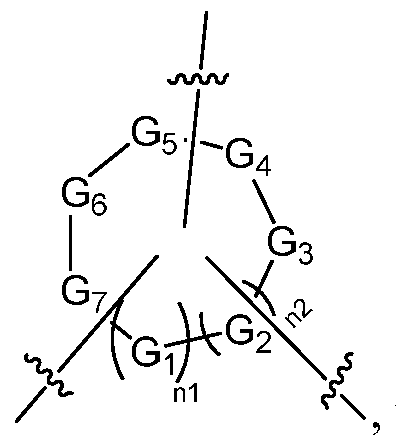




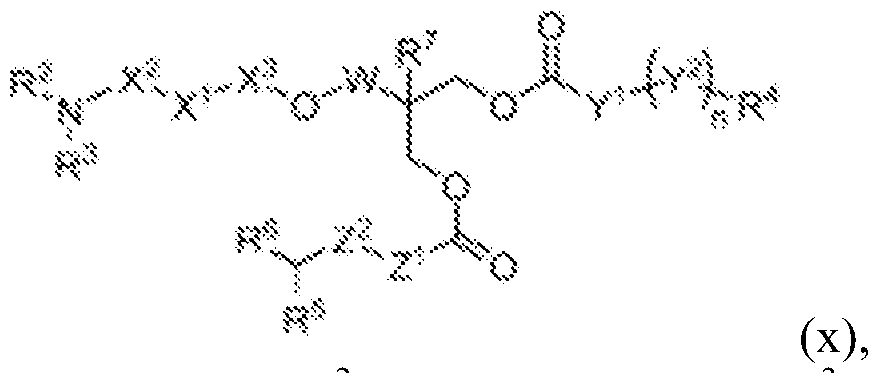


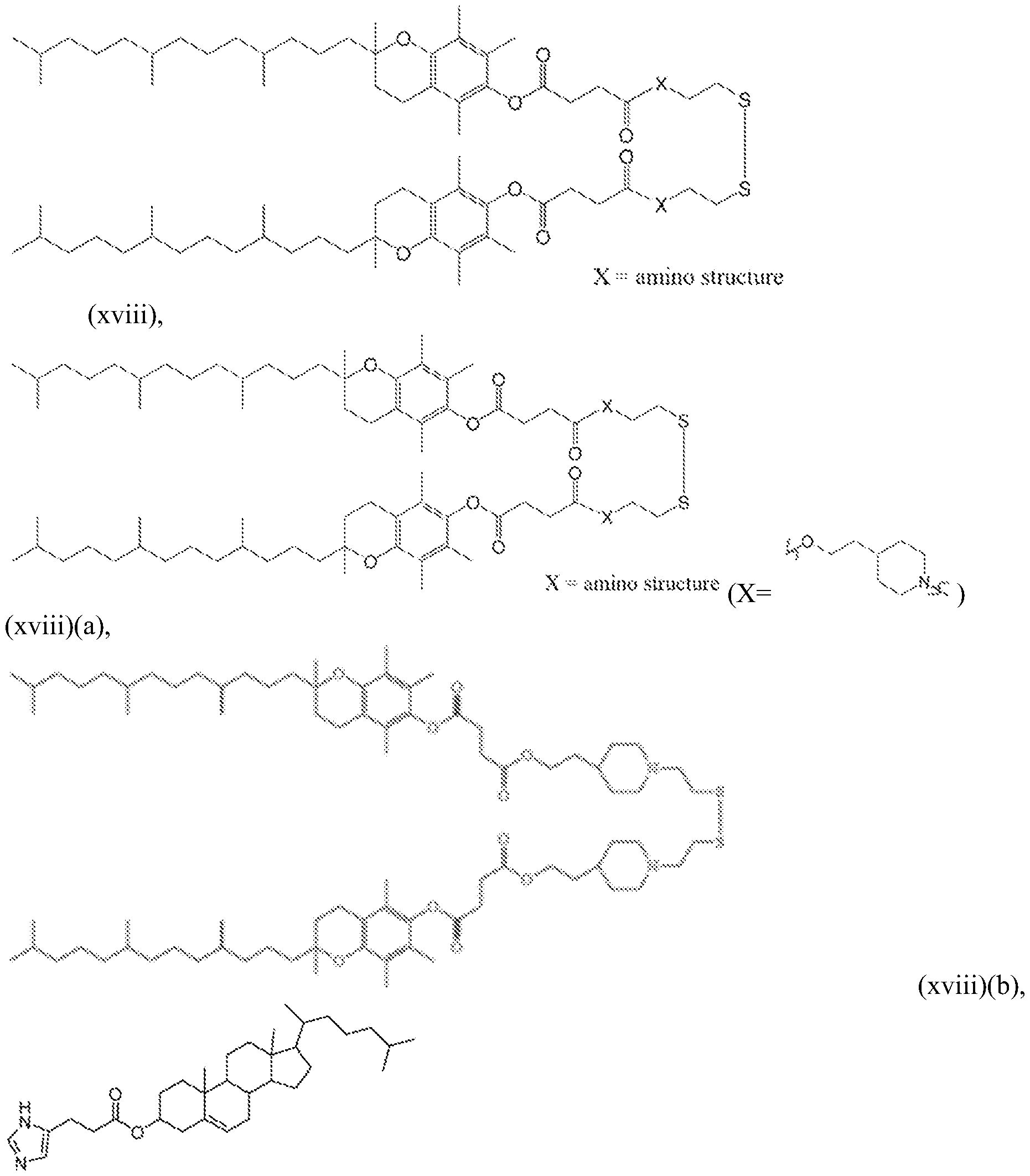


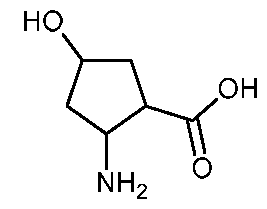


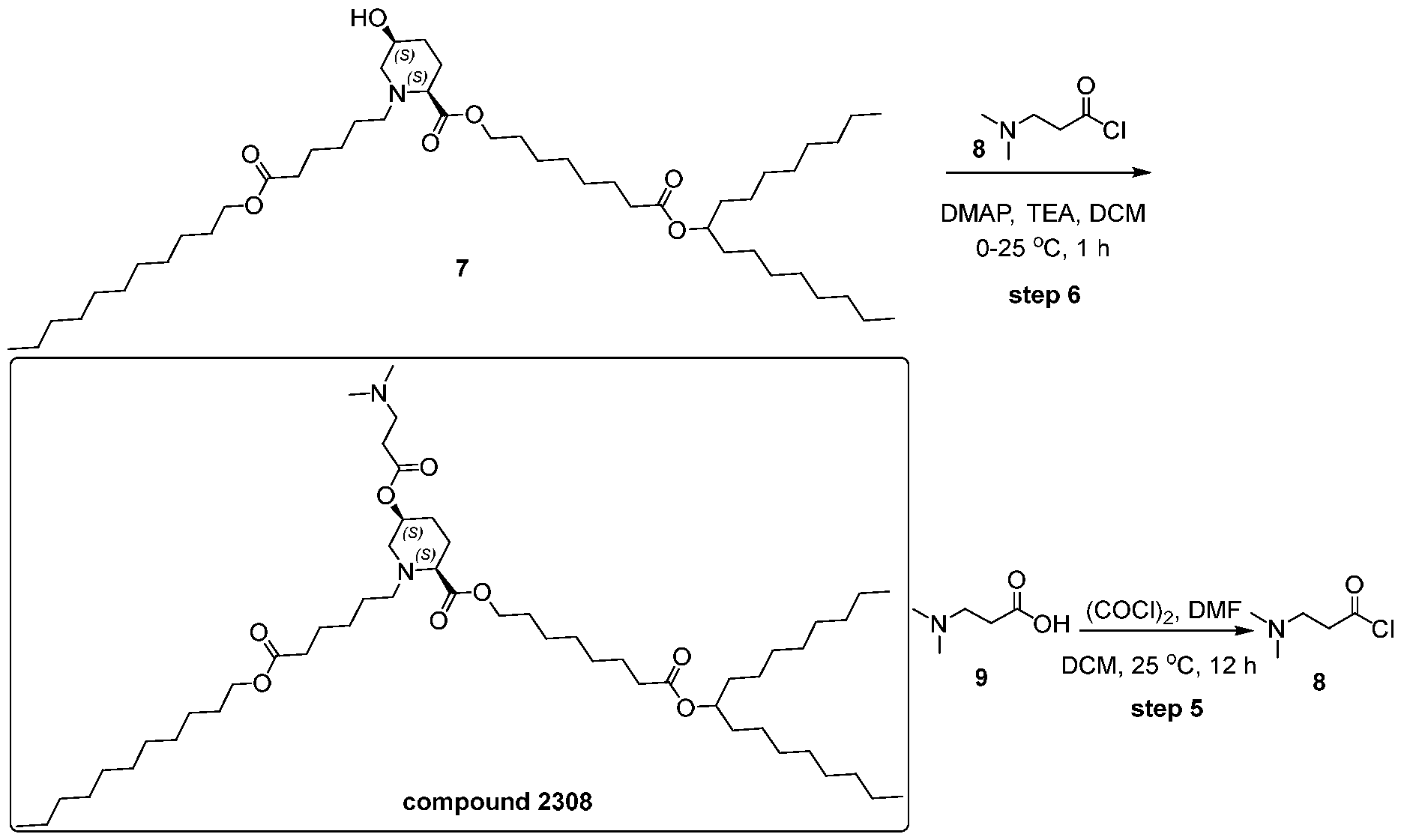


Claims


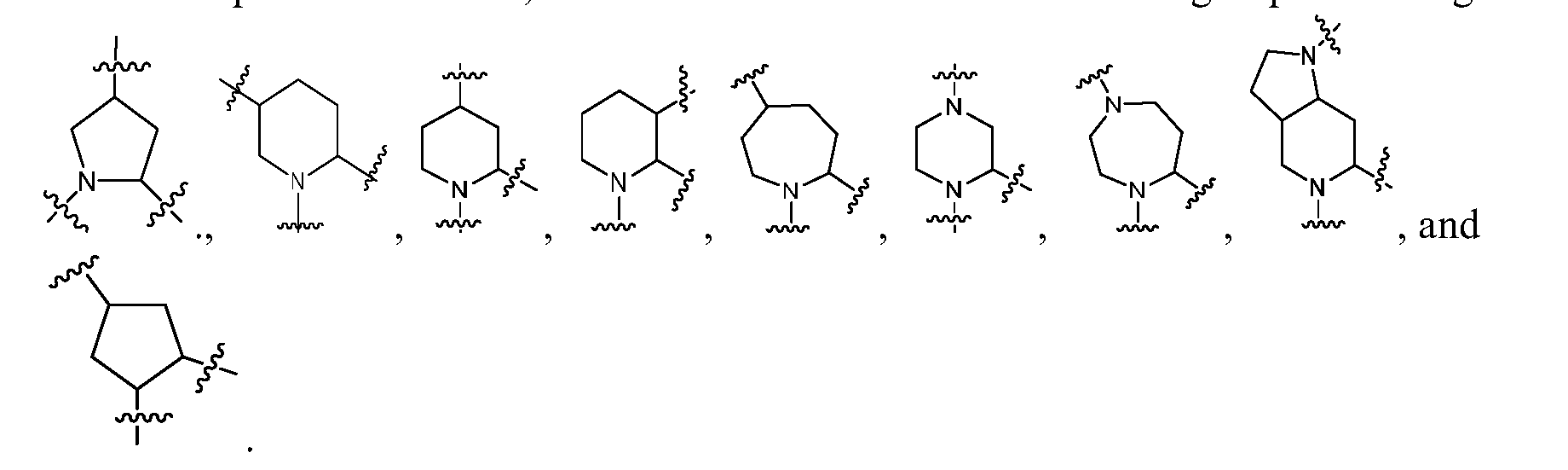


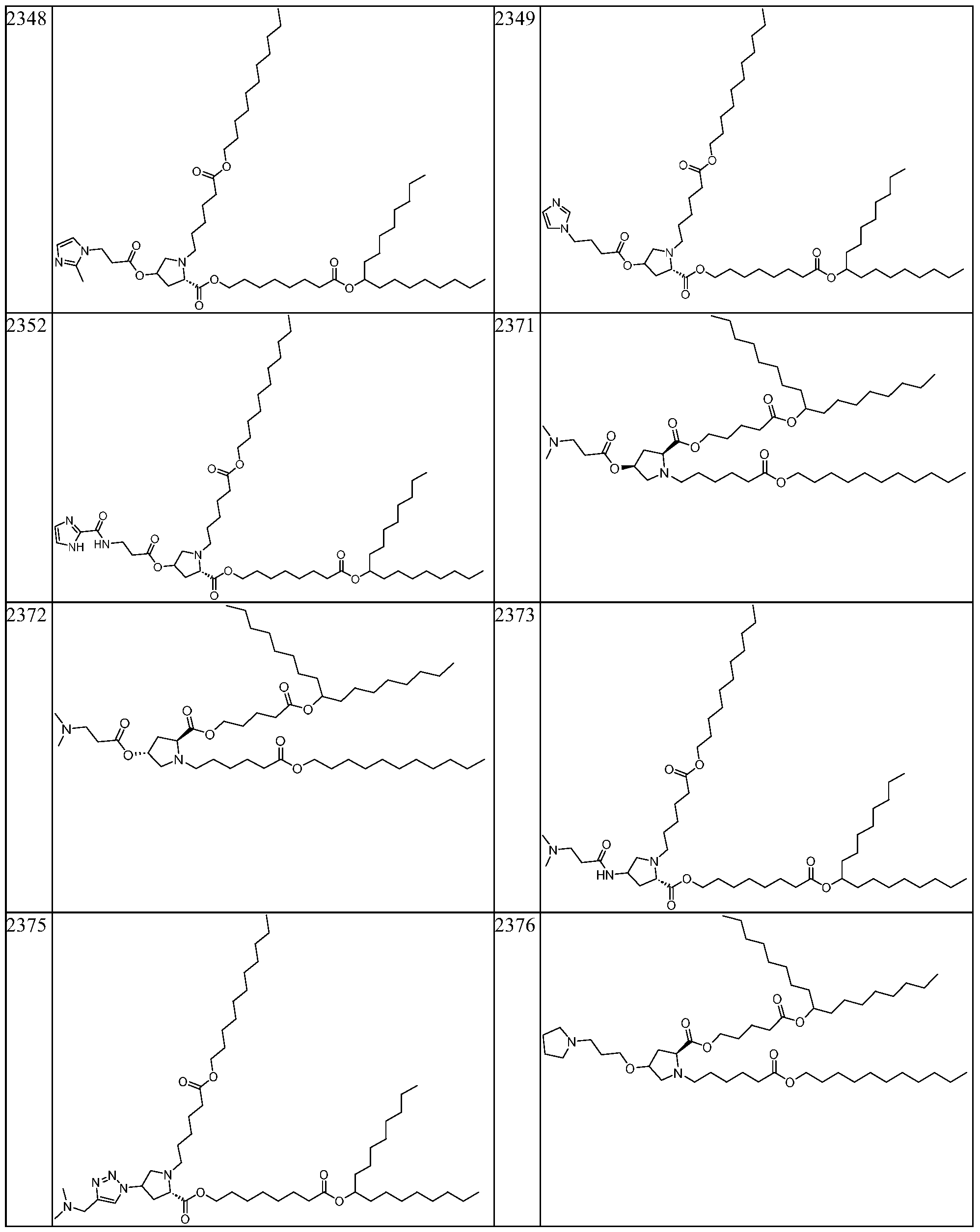


Priority Applications (8)
| Application Number | Priority Date | Filing Date | Title |
|---|---|---|---|
| CN202380035765.6A CN119072464A (en) | 2022-03-25 | 2023-03-24 | Novel ionizable lipids and lipid nanoparticles and methods of using the same |
| EP23720408.6A EP4499607A1 (en) | 2022-03-25 | 2023-03-24 | Novel ionizable lipids and lipid nanoparticles and methods of using the same |
| KR1020247035573A KR20240166554A (en) | 2022-03-25 | 2023-03-24 | Novel ionizable lipids and lipid nanoparticles, and methods of using the same |
| JP2024556647A JP2025510229A (en) | 2022-03-25 | 2023-03-24 | Novel ionized lipids and lipid nanoparticles and methods of using them |
| AU2023239151A AU2023239151A1 (en) | 2022-03-25 | 2023-03-24 | Novel ionizable lipids and lipid nanoparticles and methods of using the same |
| US18/850,325 US20250205167A1 (en) | 2022-03-25 | 2023-03-24 | Novel ionizable lipids and lipid nanoparticles and methods of using the same |
| CA3245624A CA3245624A1 (en) | 2022-03-25 | 2023-03-24 | Novel ionizable lipids and lipid nanoparticles and methods of using the same |
| MX2024011629A MX2024011629A (en) | 2022-03-25 | 2024-09-23 | NOVEL IONIZABLE LIPIDS AND LIPID NANOPARTICLES AND METHODS FOR USING THEM |
Applications Claiming Priority (2)
| Application Number | Priority Date | Filing Date | Title |
|---|---|---|---|
| US202263323948P | 2022-03-25 | 2022-03-25 | |
| US63/323,948 | 2022-03-25 |
Publications (1)
| Publication Number | Publication Date |
|---|---|
| WO2023183616A1 true WO2023183616A1 (en) | 2023-09-28 |
Family
ID=86272287
Family Applications (1)
| Application Number | Title | Priority Date | Filing Date |
|---|---|---|---|
| PCT/US2023/016300 Ceased WO2023183616A1 (en) | 2022-03-25 | 2023-03-24 | Novel ionizable lipids and lipid nanoparticles and methods of using the same |
Country Status (9)
| Country | Link |
|---|---|
| US (1) | US20250205167A1 (en) |
| EP (1) | EP4499607A1 (en) |
| JP (1) | JP2025510229A (en) |
| KR (1) | KR20240166554A (en) |
| CN (1) | CN119072464A (en) |
| AU (1) | AU2023239151A1 (en) |
| CA (1) | CA3245624A1 (en) |
| MX (1) | MX2024011629A (en) |
| WO (1) | WO2023183616A1 (en) |
Cited By (11)
| Publication number | Priority date | Publication date | Assignee | Title |
|---|---|---|---|---|
| WO2024159172A1 (en) * | 2023-01-27 | 2024-08-02 | Senda Biosciences, Inc. | A modified lipid composition and uses thereof |
| CN118512419A (en) * | 2024-06-14 | 2024-08-20 | 江西济民可信集团有限公司 | Jinshuibao micropill capsule and its preparation method |
| CN119193934A (en) * | 2024-11-29 | 2024-12-27 | 聚芯堂(成都)生物科技有限公司 | A one-pot high-risk HPV detection freeze-dried reagent, a kit and its use |
| EP4491615A1 (en) * | 2023-07-10 | 2025-01-15 | Taiwan Bio-Manufacturing Corporation | Lipids for active agent delivery |
| WO2025042786A1 (en) | 2023-08-18 | 2025-02-27 | Flagship Pioneering Innovations Vi, Llc | Compositions comprising circular polyribonucleotides and uses thereof |
| WO2025088570A1 (en) * | 2023-10-26 | 2025-05-01 | Crispr Therapeutics Ag | Ionizable lipids and ionizable lipid nanoparticles |
| US12311033B2 (en) | 2023-05-31 | 2025-05-27 | Capstan Therapeutics, Inc. | Lipid nanoparticle formulations and compositions |
| WO2025129201A1 (en) | 2023-12-15 | 2025-06-19 | Capstan Therapeutics, Inc. | Humanized anti-cd8 antibodies and uses thereof |
| WO2025134066A1 (en) * | 2023-12-21 | 2025-06-26 | Biontech Delivery Technologies Gmbh | Ionizable lipids |
| WO2025189064A1 (en) | 2024-03-08 | 2025-09-12 | Genzyme Corporation | Lipid nanoparticles |
| WO2025250729A1 (en) * | 2024-05-29 | 2025-12-04 | Liberate Bio, Inc. | Lipid compounds, compositions, and uses thereof |
Citations (99)
| Publication number | Priority date | Publication date | Assignee | Title |
|---|---|---|---|---|
| US553A (en) | 1838-01-09 | Machine eoe | ||
| US907699A (en) | 1906-04-24 | 1908-12-22 | William D Moore | Building-block. |
| US4511069A (en) | 1981-06-04 | 1985-04-16 | The Pharmasol Corporation | Dispensing system |
| US4778810A (en) | 1987-01-08 | 1988-10-18 | Nastech Pharmaceutical Co., Inc. | Nasal delivery of caffeine |
| WO1999039741A2 (en) | 1998-02-03 | 1999-08-12 | Inex Pharmaceuticals Corporation | Systemic delivery of serum stable plasmid lipid particles for cancer therapy |
| US5965542A (en) | 1997-03-18 | 1999-10-12 | Inex Pharmaceuticals Corp. | Use of temperature to control the size of cationic liposome/plasmid DNA complexes |
| WO2001007548A1 (en) | 1999-07-26 | 2001-02-01 | The Procter & Gamble Company | Cationic charge boosting systems |
| US20040142025A1 (en) | 2002-06-28 | 2004-07-22 | Protiva Biotherapeutics Ltd. | Liposomal apparatus and manufacturing methods |
| US20050017054A1 (en) | 2003-07-23 | 2005-01-27 | Tom Iverson | Flyback transformer wire attach method to printed circuit board |
| US20050064595A1 (en) | 2003-07-16 | 2005-03-24 | Protiva Biotherapeutics, Inc. | Lipid encapsulated interfering RNA |
| US20050118253A1 (en) | 1998-02-03 | 2005-06-02 | Protiva Biotherapeutics, Inc. | Systemic delivery of serum stable plasmid lipid particles for cancer therapy |
| US20050175682A1 (en) | 2003-09-15 | 2005-08-11 | Protiva Biotherapeutics, Inc. | Polyethyleneglycol-modified lipid compounds and uses thereof |
| US20060008378A1 (en) | 2004-04-30 | 2006-01-12 | Kunihiro Imai | Sterilization method |
| US20060008910A1 (en) | 2004-06-07 | 2006-01-12 | Protiva Biotherapeuties, Inc. | Lipid encapsulated interfering RNA |
| US20060083780A1 (en) | 2004-06-07 | 2006-04-20 | Protiva Biotherapeutics, Inc. | Cationic lipids and methods of use |
| US20070042031A1 (en) | 2005-07-27 | 2007-02-22 | Protiva Biotherapeutics, Inc. | Systems and methods for manufacturing liposomes |
| US20070065499A1 (en) | 1999-02-22 | 2007-03-22 | Georgetown University | Preparation of antibody or an antibody fragment-targeted immunoliposomes for systemic administration of therapeutic or diagnostic agents and uses thereof |
| US20080042973A1 (en) | 2006-07-10 | 2008-02-21 | Memsic, Inc. | System for sensing yaw rate using a magnetic field sensor and portable electronic devices using the same |
| WO2009132131A1 (en) | 2008-04-22 | 2009-10-29 | Alnylam Pharmaceuticals, Inc. | Amino lipid based improved lipid formulation |
| US20100062967A1 (en) | 2004-12-27 | 2010-03-11 | Silence Therapeutics Ag | Coated lipid complexes and their use |
| WO2010053572A2 (en) | 2008-11-07 | 2010-05-14 | Massachusetts Institute Of Technology | Aminoalcohol lipidoids and uses thereof |
| WO2010054406A1 (en) * | 2008-11-10 | 2010-05-14 | Alnylam Pharmaceuticals, Inc. | Novel lipids and compositions for the delivery of therapeutics |
| WO2010054384A1 (en) * | 2008-11-10 | 2010-05-14 | Alnylam Pharmaceuticals, Inc. | Lipids and compositions for the delivery of therapeutics |
| US20100130588A1 (en) | 2008-04-15 | 2010-05-27 | Protiva Biotherapeutics, Inc. | Novel lipid formulations for nucleic acid delivery |
| US7780882B2 (en) | 1999-02-22 | 2010-08-24 | Georgetown University | Simplified and improved method for preparing an antibody or an antibody fragment targeted immunoliposome for systemic administration of a therapeutic or diagnostic agent |
| US20110076335A1 (en) | 2009-07-01 | 2011-03-31 | Protiva Biotherapeutics, Inc. | Novel lipid formulations for delivery of therapeutic agents to solid tumors |
| US20110117125A1 (en) | 2008-01-02 | 2011-05-19 | Tekmira Pharmaceuticals Corporation | Compositions and methods for the delivery of nucleic acids |
| WO2011071860A2 (en) * | 2009-12-07 | 2011-06-16 | Alnylam Pharmaceuticals, Inc. | Compositions for nucleic acid delivery |
| WO2011075656A1 (en) * | 2009-12-18 | 2011-06-23 | The University Of British Columbia | Methods and compositions for delivery of nucleic acids |
| US20110256175A1 (en) | 2008-10-09 | 2011-10-20 | The University Of British Columbia | Amino lipids and methods for the delivery of nucleic acids |
| WO2011141705A1 (en) | 2010-05-12 | 2011-11-17 | Protiva Biotherapeutics, Inc. | Novel cationic lipids and methods of use thereof |
| US20120011478A1 (en) | 2005-02-24 | 2012-01-12 | Texas Instruments Incorporated | Merging sub-resolution assist features of a photolithographic mask |
| US20120027803A1 (en) | 2010-06-03 | 2012-02-02 | Alnylam Pharmaceuticals, Inc. | Biodegradable lipids for the delivery of active agents |
| WO2012061259A2 (en) * | 2010-11-05 | 2012-05-10 | Merck Sharp & Dohme Corp. | Novel low molecular weight cyclic amine containing cationic lipids for oligonucleotide delivery |
| US20120149894A1 (en) | 2009-08-20 | 2012-06-14 | Mark Cameron | Novel cationic lipids with various head groups for oligonucleotide delivery |
| US20120172411A1 (en) | 2010-09-17 | 2012-07-05 | Protiva Biotherapeutics, Inc. | Novel trialkyl cationic lipids and methods of use thereof |
| US20120202871A1 (en) | 2009-07-01 | 2012-08-09 | Protiva Biotherapeutics, Inc. | Cationic lipids and methods for the delivery of therapeutic agents |
| US20120251618A1 (en) | 2011-03-31 | 2012-10-04 | modeRNA Therapeutics | Delivery and formulation of engineered nucleic acids |
| US20120287670A1 (en) | 2010-04-09 | 2012-11-15 | Sharp Kabushiki Kaisha | Light source module and electronic apparatus provided with same |
| US20120295832A1 (en) | 2011-05-17 | 2012-11-22 | Arrowhead Research Corporation | Novel Lipids and Compositions for Intracellular Delivery of Biologically Active Compounds |
| WO2012162210A1 (en) | 2011-05-26 | 2012-11-29 | Merck Sharp & Dohme Corp. | Ring constrained cationic lipids for oligonucleotide delivery |
| US20130022649A1 (en) | 2009-12-01 | 2013-01-24 | Protiva Biotherapeutics, Inc. | Snalp formulations containing antioxidants |
| WO2013016058A1 (en) | 2011-07-22 | 2013-01-31 | Merck Sharp & Dohme Corp. | Novel bis-nitrogen containing cationic lipids for oligonucleotide delivery |
| US20130053572A1 (en) | 2010-01-22 | 2013-02-28 | Steven L. Colletti | Novel Cationic Lipids for Oligonucleotide Delivery |
| EP2567951A1 (en) * | 2010-04-28 | 2013-03-13 | Kyowa Hakko Kirin Co., Ltd. | Cationic lipid |
| US20130086373A1 (en) | 2011-09-29 | 2013-04-04 | Apple Inc. | Customized content for electronic devices |
| US20130090372A1 (en) | 2010-06-04 | 2013-04-11 | Brian W. Budzik | Novel Low Molecular Weight Cationic Lipids for Oligonucleotide Delivery |
| US20130116307A1 (en) | 2010-05-12 | 2013-05-09 | Protiva Biotherapeutics Inc. | Novel cyclic cationic lipids and methods of use |
| WO2013086373A1 (en) | 2011-12-07 | 2013-06-13 | Alnylam Pharmaceuticals, Inc. | Lipids for the delivery of active agents |
| WO2013086354A1 (en) * | 2011-12-07 | 2013-06-13 | Alnylam Pharmaceuticals, Inc. | Biodegradable lipids for the delivery of active agents |
| WO2013086322A1 (en) | 2011-12-07 | 2013-06-13 | Alnylam Pharmaceuticals, Inc. | Branched alkyl and cycloalkyl terminated biodegradable lipids for the delivery of active agents |
| US20130178541A1 (en) | 2010-09-20 | 2013-07-11 | Matthew G. Stanton | Novel low molecular weight cationic lipids for oligonucleotide delivery |
| US20130189351A1 (en) | 2010-08-31 | 2013-07-25 | Novartis Ag | Lipids suitable for liposomal delivery of protein coding rna |
| WO2013116126A1 (en) | 2012-02-01 | 2013-08-08 | Merck Sharp & Dohme Corp. | Novel low molecular weight, biodegradable cationic lipids for oligonucleotide delivery |
| US20130245107A1 (en) | 2011-12-16 | 2013-09-19 | modeRNA Therapeutics | Dlin-mc3-dma lipid nanoparticle delivery of modified polynucleotides |
| US20130274523A1 (en) | 2010-09-30 | 2013-10-17 | John A. Bawiec, III | Low molecular weight cationic lipids for oligonucleotide delivery |
| US20130274504A1 (en) | 2010-10-21 | 2013-10-17 | Steven L. Colletti | Novel Low Molecular Weight Cationic Lipids For Oligonucleotide Delivery |
| US20130303587A1 (en) | 2010-06-30 | 2013-11-14 | Protiva Biotherapeutics, Inc. | Non-liposomal systems for nucleic acid delivery |
| US20130323269A1 (en) | 2010-07-30 | 2013-12-05 | Muthiah Manoharan | Methods and compositions for delivery of active agents |
| WO2014008334A1 (en) | 2012-07-06 | 2014-01-09 | Alnylam Pharmaceuticals, Inc. | Stable non-aggregating nucleic acid lipid particle formulations |
| US20140039032A1 (en) | 2011-12-12 | 2014-02-06 | Kyowa Hakko Kirin Co., Ltd. | Lipid nano particles comprising cationic lipid for drug delivery system |
| US20140200257A1 (en) | 2011-01-11 | 2014-07-17 | Alnylam Pharmaceuticals, Inc. | Pegylated lipids and their use for drug delivery |
| WO2014136086A1 (en) * | 2013-03-08 | 2014-09-12 | Novartis Ag | Lipids and lipid compositions for the delivery of active agents |
| US20150057373A1 (en) | 2012-03-27 | 2015-02-26 | Sirna Therapeutics, Inc | DIETHER BASED BIODEGRADABLE CATIONIC LIPIDS FOR siRNA DELIVERY |
| US20150064242A1 (en) | 2012-02-24 | 2015-03-05 | Protiva Biotherapeutics, Inc. | Trialkyl cationic lipids and methods of use thereof |
| US20150141678A1 (en) | 2013-11-18 | 2015-05-21 | Arcturus Therapeutics, Inc. | Ionizable cationic lipid for rna delivery |
| US20150140070A1 (en) | 2013-10-22 | 2015-05-21 | Shire Human Genetic Therapies, Inc. | Lipid formulations for delivery of messenger rna |
| WO2015095340A1 (en) | 2013-12-19 | 2015-06-25 | Novartis Ag | Lipids and lipid compositions for the delivery of active agents |
| US20150203446A1 (en) | 2011-09-27 | 2015-07-23 | Takeda Pharmaceutical Company Limited | Di-aliphatic substituted pegylated lipids |
| US20150239926A1 (en) | 2013-11-18 | 2015-08-27 | Arcturus Therapeutics, Inc. | Asymmetric ionizable cationic lipid for rna delivery |
| WO2015199952A1 (en) | 2014-06-25 | 2015-12-30 | Acuitas Therapeutics Inc. | Novel lipids and lipid nanoparticle formulations for delivery of nucleic acids |
| WO2016037053A1 (en) * | 2014-09-05 | 2016-03-10 | Novartis Ag | Lipids and lipid compositions for the delivery of active agents |
| US20160151284A1 (en) | 2013-07-23 | 2016-06-02 | Protiva Biotherapeutics, Inc. | Compositions and methods for delivering messenger rna |
| WO2016176330A1 (en) * | 2015-04-27 | 2016-11-03 | The Trustees Of The University Of Pennsylvania | Nucleoside-modified rna for inducing an adaptive immune response |
| US20160317458A1 (en) | 2013-12-19 | 2016-11-03 | Luis Brito | Lipids and Lipid Compositions for the Delivery of Active Agents |
| US20160376224A1 (en) | 2015-06-29 | 2016-12-29 | Acuitas Therapeutics, Inc. | Lipids and lipid nanoparticle formulations for delivery of nucleic acids |
| US20170119904A1 (en) | 2015-10-28 | 2017-05-04 | Acuitas Therapeutics, Inc. | Novel lipids and lipid nanoparticle formulations for delivery of nucleic acids |
| WO2017112865A1 (en) * | 2015-12-22 | 2017-06-29 | Modernatx, Inc. | Compounds and compositions for intracellular delivery of agents |
| WO2017117528A1 (en) | 2015-12-30 | 2017-07-06 | Acuitas Therapeutics, Inc. | Lipids and lipid nanoparticle formulations for delivery of nucleic acids |
| US9708628B2 (en) | 2011-11-18 | 2017-07-18 | Nof Corporation | Cationic lipid having improved intracellular kinetics |
| US20170210967A1 (en) | 2010-12-06 | 2017-07-27 | Schlumberger Technology Corporation | Compositions and methods for well completions |
| WO2017180917A2 (en) * | 2016-04-13 | 2017-10-19 | Modernatx, Inc. | Lipid compositions and their uses for intratumoral polynucleotide delivery |
| WO2017201333A1 (en) * | 2016-05-18 | 2017-11-23 | Modernatx, Inc. | Polynucleotides encoding lipoprotein lipase for the treatment of hyperlipidemia |
| US9867888B2 (en) | 2015-09-17 | 2018-01-16 | Modernatx, Inc. | Compounds and compositions for intracellular delivery of therapeutic agents |
| US20180028664A1 (en) | 2015-12-10 | 2018-02-01 | Modernatx, Inc. | Compositions and methods for delivery of agents |
| WO2018081480A1 (en) | 2016-10-26 | 2018-05-03 | Acuitas Therapeutics, Inc. | Lipid nanoparticle formulations |
| US10086013B2 (en) | 2011-10-27 | 2018-10-02 | Massachusetts Institute Of Technology | Amino acid-, peptide- and polypeptide-lipids, isomers, compositions, and uses thereof |
| WO2018220553A1 (en) * | 2017-05-30 | 2018-12-06 | Glaxosmithkline Biologicals Sa | Methods for manufacturing a liposome encapsulated rna |
| WO2019051289A1 (en) | 2017-09-08 | 2019-03-14 | Generation Bio Co. | Lipid nanoparticle formulations of non-viral, capsid-free dna vectors |
| US20190136231A1 (en) | 2016-03-30 | 2019-05-09 | Intellia Therapeutics, Inc. | Lipid nanoparticle formulations for crispr/cas components |
| US20190240349A1 (en) | 2015-06-19 | 2019-08-08 | Massachusetts Institute Of Technology | Alkenyl substituted 2,5-piperazinediones, compositions, and uses thereof |
| WO2020081938A1 (en) | 2018-10-18 | 2020-04-23 | Acuitas Therapeutics, Inc. | Lipids for lipid nanoparticle delivery of active agents |
| WO2020106946A1 (en) | 2018-11-21 | 2020-05-28 | Translate Bio, Inc. | TREATMENT OF CYSTIC FIBROSIS BY DELIVERY OF NEBULIZED mRNA ENCODING CFTR |
| WO2020219876A1 (en) | 2019-04-25 | 2020-10-29 | Intellia Therapeutics, Inc. | Ionizable amine lipids and lipid nanoparticles |
| WO2021055833A1 (en) * | 2019-09-19 | 2021-03-25 | Modernatx, Inc. | Branched tail lipid compounds and compositions for intracellular delivery of therapeutic agents |
| WO2021113777A2 (en) | 2019-12-04 | 2021-06-10 | Orna Therapeutics, Inc. | Circular rna compositions and methods |
| WO2022037652A1 (en) * | 2020-08-20 | 2022-02-24 | Suzhou Abogen Biosciences Co., Ltd. | Lipid compounds and lipid nanoparticle compositions |
| WO2022166213A1 (en) * | 2021-02-05 | 2022-08-11 | 嘉晨西海(杭州)生物技术有限公司 | Ionizable lipid molecule, preparation method therefor, and application thereof in preparation of lipid nanoparticle |
| WO2023044333A1 (en) * | 2021-09-14 | 2023-03-23 | Renagade Therapeutics Management Inc. | Cyclic lipids and methods of use thereof |
-
2023
- 2023-03-24 KR KR1020247035573A patent/KR20240166554A/en active Pending
- 2023-03-24 WO PCT/US2023/016300 patent/WO2023183616A1/en not_active Ceased
- 2023-03-24 EP EP23720408.6A patent/EP4499607A1/en active Pending
- 2023-03-24 US US18/850,325 patent/US20250205167A1/en active Pending
- 2023-03-24 AU AU2023239151A patent/AU2023239151A1/en active Pending
- 2023-03-24 CN CN202380035765.6A patent/CN119072464A/en active Pending
- 2023-03-24 JP JP2024556647A patent/JP2025510229A/en active Pending
- 2023-03-24 CA CA3245624A patent/CA3245624A1/en active Pending
-
2024
- 2024-09-23 MX MX2024011629A patent/MX2024011629A/en unknown
Patent Citations (128)
| Publication number | Priority date | Publication date | Assignee | Title |
|---|---|---|---|---|
| US553A (en) | 1838-01-09 | Machine eoe | ||
| US907699A (en) | 1906-04-24 | 1908-12-22 | William D Moore | Building-block. |
| US4511069A (en) | 1981-06-04 | 1985-04-16 | The Pharmasol Corporation | Dispensing system |
| US4778810A (en) | 1987-01-08 | 1988-10-18 | Nastech Pharmaceutical Co., Inc. | Nasal delivery of caffeine |
| US5965542A (en) | 1997-03-18 | 1999-10-12 | Inex Pharmaceuticals Corp. | Use of temperature to control the size of cationic liposome/plasmid DNA complexes |
| US20050118253A1 (en) | 1998-02-03 | 2005-06-02 | Protiva Biotherapeutics, Inc. | Systemic delivery of serum stable plasmid lipid particles for cancer therapy |
| WO1999039741A2 (en) | 1998-02-03 | 1999-08-12 | Inex Pharmaceuticals Corporation | Systemic delivery of serum stable plasmid lipid particles for cancer therapy |
| US20070065499A1 (en) | 1999-02-22 | 2007-03-22 | Georgetown University | Preparation of antibody or an antibody fragment-targeted immunoliposomes for systemic administration of therapeutic or diagnostic agents and uses thereof |
| US7780882B2 (en) | 1999-02-22 | 2010-08-24 | Georgetown University | Simplified and improved method for preparing an antibody or an antibody fragment targeted immunoliposome for systemic administration of a therapeutic or diagnostic agent |
| WO2001007548A1 (en) | 1999-07-26 | 2001-02-01 | The Procter & Gamble Company | Cationic charge boosting systems |
| US20110216622A1 (en) | 2002-06-28 | 2011-09-08 | Protiva Biotherapeutics, Inc. | Liposomal apparatus and manufacturing method |
| US20040142025A1 (en) | 2002-06-28 | 2004-07-22 | Protiva Biotherapeutics Ltd. | Liposomal apparatus and manufacturing methods |
| US20050064595A1 (en) | 2003-07-16 | 2005-03-24 | Protiva Biotherapeutics, Inc. | Lipid encapsulated interfering RNA |
| US20120058188A1 (en) | 2003-07-16 | 2012-03-08 | Protiva Biotherapeutics, Inc. | Lipid encapsulated interfering rna |
| US20060240093A1 (en) | 2003-07-16 | 2006-10-26 | Protiva Biotherapeutics, Inc. | Lipid encapsulated interfering rna |
| US20050017054A1 (en) | 2003-07-23 | 2005-01-27 | Tom Iverson | Flyback transformer wire attach method to printed circuit board |
| US20110091525A1 (en) | 2003-09-15 | 2011-04-21 | Protiva Biotherapeutics, Inc. | Polyethyleneglycol-modified lipid compounds and uses thereof |
| US20050175682A1 (en) | 2003-09-15 | 2005-08-11 | Protiva Biotherapeutics, Inc. | Polyethyleneglycol-modified lipid compounds and uses thereof |
| US20060008378A1 (en) | 2004-04-30 | 2006-01-12 | Kunihiro Imai | Sterilization method |
| US20060083780A1 (en) | 2004-06-07 | 2006-04-20 | Protiva Biotherapeutics, Inc. | Cationic lipids and methods of use |
| US20110262527A1 (en) | 2004-06-07 | 2011-10-27 | Protiva Biotherapeutics, Inc. | Cationic lipids and methods of use |
| US20110060032A1 (en) | 2004-06-07 | 2011-03-10 | Protiva Biotherapeutics, Inc. | Lipid encapsulating interfering rna |
| US20060008910A1 (en) | 2004-06-07 | 2006-01-12 | Protiva Biotherapeuties, Inc. | Lipid encapsulated interfering RNA |
| US20100062967A1 (en) | 2004-12-27 | 2010-03-11 | Silence Therapeutics Ag | Coated lipid complexes and their use |
| US20120011478A1 (en) | 2005-02-24 | 2012-01-12 | Texas Instruments Incorporated | Merging sub-resolution assist features of a photolithographic mask |
| US20070042031A1 (en) | 2005-07-27 | 2007-02-22 | Protiva Biotherapeutics, Inc. | Systems and methods for manufacturing liposomes |
| US20080042973A1 (en) | 2006-07-10 | 2008-02-21 | Memsic, Inc. | System for sensing yaw rate using a magnetic field sensor and portable electronic devices using the same |
| US20110117125A1 (en) | 2008-01-02 | 2011-05-19 | Tekmira Pharmaceuticals Corporation | Compositions and methods for the delivery of nucleic acids |
| US20120183581A1 (en) | 2008-04-15 | 2012-07-19 | Protiva Biotherapeutics, Inc | Novel lipid formulations for nucleic acid delivery |
| US20100130588A1 (en) | 2008-04-15 | 2010-05-27 | Protiva Biotherapeutics, Inc. | Novel lipid formulations for nucleic acid delivery |
| WO2009132131A1 (en) | 2008-04-22 | 2009-10-29 | Alnylam Pharmaceuticals, Inc. | Amino lipid based improved lipid formulation |
| US20110256175A1 (en) | 2008-10-09 | 2011-10-20 | The University Of British Columbia | Amino lipids and methods for the delivery of nucleic acids |
| WO2010053572A2 (en) | 2008-11-07 | 2010-05-14 | Massachusetts Institute Of Technology | Aminoalcohol lipidoids and uses thereof |
| US20110311582A1 (en) | 2008-11-10 | 2011-12-22 | Muthiah Manoharan | Novel lipids and compositions for the delivery of therapeutics |
| US20120058144A1 (en) | 2008-11-10 | 2012-03-08 | Alnylam Pharmaceuticals, Inc. | Lipids and compositions for the delivery of therapeutics |
| WO2010054401A1 (en) * | 2008-11-10 | 2010-05-14 | Alnylam Pharmaceuticals, Inc. | Novel lipids and compositions for the delivery of therapeutics |
| US20150265708A1 (en) | 2008-11-10 | 2015-09-24 | Tekmira Pharmaceuticals Corporation | Novel lipids and compositions for the delivery of therapeutics |
| WO2010054406A1 (en) * | 2008-11-10 | 2010-05-14 | Alnylam Pharmaceuticals, Inc. | Novel lipids and compositions for the delivery of therapeutics |
| US20110311583A1 (en) | 2008-11-10 | 2011-12-22 | Alnylam Pharmaceuticals, Inc. | Novel lipids and compositions for the delivery of therapeutics |
| US20160199485A1 (en) | 2008-11-10 | 2016-07-14 | Tekmira Pharmaceuticals Corporation | Novel lipids and compositions for the delivery of therapeutics |
| US20120027796A1 (en) | 2008-11-10 | 2012-02-02 | Alnylam Pharmaceuticals, Inc. | Novel lipids and compositions for the delivery of therapeutics |
| WO2010054384A1 (en) * | 2008-11-10 | 2010-05-14 | Alnylam Pharmaceuticals, Inc. | Lipids and compositions for the delivery of therapeutics |
| US8569256B2 (en) | 2009-07-01 | 2013-10-29 | Protiva Biotherapeutics, Inc. | Cationic lipids and methods for the delivery of therapeutic agents |
| US20110076335A1 (en) | 2009-07-01 | 2011-03-31 | Protiva Biotherapeutics, Inc. | Novel lipid formulations for delivery of therapeutic agents to solid tumors |
| US20120202871A1 (en) | 2009-07-01 | 2012-08-09 | Protiva Biotherapeutics, Inc. | Cationic lipids and methods for the delivery of therapeutic agents |
| US20120149894A1 (en) | 2009-08-20 | 2012-06-14 | Mark Cameron | Novel cationic lipids with various head groups for oligonucleotide delivery |
| US20130022649A1 (en) | 2009-12-01 | 2013-01-24 | Protiva Biotherapeutics, Inc. | Snalp formulations containing antioxidants |
| US20130338210A1 (en) | 2009-12-07 | 2013-12-19 | Alnylam Pharmaceuticals, Inc. | Compositions for nucleic acid delivery |
| WO2011071860A2 (en) * | 2009-12-07 | 2011-06-16 | Alnylam Pharmaceuticals, Inc. | Compositions for nucleic acid delivery |
| US20130017223A1 (en) | 2009-12-18 | 2013-01-17 | The University Of British Columbia | Methods and compositions for delivery of nucleic acids |
| WO2011075656A1 (en) * | 2009-12-18 | 2011-06-23 | The University Of British Columbia | Methods and compositions for delivery of nucleic acids |
| US20130053572A1 (en) | 2010-01-22 | 2013-02-28 | Steven L. Colletti | Novel Cationic Lipids for Oligonucleotide Delivery |
| US20120287670A1 (en) | 2010-04-09 | 2012-11-15 | Sharp Kabushiki Kaisha | Light source module and electronic apparatus provided with same |
| EP2567951A1 (en) * | 2010-04-28 | 2013-03-13 | Kyowa Hakko Kirin Co., Ltd. | Cationic lipid |
| US20130116307A1 (en) | 2010-05-12 | 2013-05-09 | Protiva Biotherapeutics Inc. | Novel cyclic cationic lipids and methods of use |
| WO2011141705A1 (en) | 2010-05-12 | 2011-11-17 | Protiva Biotherapeutics, Inc. | Novel cationic lipids and methods of use thereof |
| US20130123338A1 (en) | 2010-05-12 | 2013-05-16 | Protiva Biotherapeutics, Inc. | Novel cationic lipids and methods of use thereof |
| US20160009637A1 (en) | 2010-06-03 | 2016-01-14 | Alnylam Pharmaceuticals, Inc. | Biodegradable lipids for the delivery of active agents |
| US20120027803A1 (en) | 2010-06-03 | 2012-02-02 | Alnylam Pharmaceuticals, Inc. | Biodegradable lipids for the delivery of active agents |
| US20130090372A1 (en) | 2010-06-04 | 2013-04-11 | Brian W. Budzik | Novel Low Molecular Weight Cationic Lipids for Oligonucleotide Delivery |
| US20130303587A1 (en) | 2010-06-30 | 2013-11-14 | Protiva Biotherapeutics, Inc. | Non-liposomal systems for nucleic acid delivery |
| US20130323269A1 (en) | 2010-07-30 | 2013-12-05 | Muthiah Manoharan | Methods and compositions for delivery of active agents |
| US20130189351A1 (en) | 2010-08-31 | 2013-07-25 | Novartis Ag | Lipids suitable for liposomal delivery of protein coding rna |
| US20120172411A1 (en) | 2010-09-17 | 2012-07-05 | Protiva Biotherapeutics, Inc. | Novel trialkyl cationic lipids and methods of use thereof |
| US20130178541A1 (en) | 2010-09-20 | 2013-07-11 | Matthew G. Stanton | Novel low molecular weight cationic lipids for oligonucleotide delivery |
| US20130274523A1 (en) | 2010-09-30 | 2013-10-17 | John A. Bawiec, III | Low molecular weight cationic lipids for oligonucleotide delivery |
| US20130274504A1 (en) | 2010-10-21 | 2013-10-17 | Steven L. Colletti | Novel Low Molecular Weight Cationic Lipids For Oligonucleotide Delivery |
| WO2012061259A2 (en) * | 2010-11-05 | 2012-05-10 | Merck Sharp & Dohme Corp. | Novel low molecular weight cyclic amine containing cationic lipids for oligonucleotide delivery |
| US20170210967A1 (en) | 2010-12-06 | 2017-07-27 | Schlumberger Technology Corporation | Compositions and methods for well completions |
| US20140200257A1 (en) | 2011-01-11 | 2014-07-17 | Alnylam Pharmaceuticals, Inc. | Pegylated lipids and their use for drug delivery |
| US20120251618A1 (en) | 2011-03-31 | 2012-10-04 | modeRNA Therapeutics | Delivery and formulation of engineered nucleic acids |
| US20120295832A1 (en) | 2011-05-17 | 2012-11-22 | Arrowhead Research Corporation | Novel Lipids and Compositions for Intracellular Delivery of Biologically Active Compounds |
| WO2012162210A1 (en) | 2011-05-26 | 2012-11-29 | Merck Sharp & Dohme Corp. | Ring constrained cationic lipids for oligonucleotide delivery |
| WO2013016058A1 (en) | 2011-07-22 | 2013-01-31 | Merck Sharp & Dohme Corp. | Novel bis-nitrogen containing cationic lipids for oligonucleotide delivery |
| US20150203446A1 (en) | 2011-09-27 | 2015-07-23 | Takeda Pharmaceutical Company Limited | Di-aliphatic substituted pegylated lipids |
| US20130086373A1 (en) | 2011-09-29 | 2013-04-04 | Apple Inc. | Customized content for electronic devices |
| US10086013B2 (en) | 2011-10-27 | 2018-10-02 | Massachusetts Institute Of Technology | Amino acid-, peptide- and polypeptide-lipids, isomers, compositions, and uses thereof |
| US9708628B2 (en) | 2011-11-18 | 2017-07-18 | Nof Corporation | Cationic lipid having improved intracellular kinetics |
| WO2013086354A1 (en) * | 2011-12-07 | 2013-06-13 | Alnylam Pharmaceuticals, Inc. | Biodegradable lipids for the delivery of active agents |
| WO2013086322A1 (en) | 2011-12-07 | 2013-06-13 | Alnylam Pharmaceuticals, Inc. | Branched alkyl and cycloalkyl terminated biodegradable lipids for the delivery of active agents |
| US20140308304A1 (en) | 2011-12-07 | 2014-10-16 | Alnylam Pharmaceuticals, Inc. | Lipids for the delivery of active agents |
| US20150005363A1 (en) | 2011-12-07 | 2015-01-01 | Alnylam Pharmaceuticals, Inc. | Branched Alkyl And Cycloalkyl Terminated Biodegradable Lipids For The Delivery Of Active Agents |
| US20130195920A1 (en) | 2011-12-07 | 2013-08-01 | Alnylam Pharmaceuticals, Inc. | Biodegradable lipids for the delivery of active agents |
| WO2013086373A1 (en) | 2011-12-07 | 2013-06-13 | Alnylam Pharmaceuticals, Inc. | Lipids for the delivery of active agents |
| US20150273068A1 (en) | 2011-12-07 | 2015-10-01 | Alnylam Pharmaceuticals, Inc. | Biodegradable lipids for the delivery of active agents |
| US20140039032A1 (en) | 2011-12-12 | 2014-02-06 | Kyowa Hakko Kirin Co., Ltd. | Lipid nano particles comprising cationic lipid for drug delivery system |
| US20130245107A1 (en) | 2011-12-16 | 2013-09-19 | modeRNA Therapeutics | Dlin-mc3-dma lipid nanoparticle delivery of modified polynucleotides |
| WO2013116126A1 (en) | 2012-02-01 | 2013-08-08 | Merck Sharp & Dohme Corp. | Novel low molecular weight, biodegradable cationic lipids for oligonucleotide delivery |
| US20150064242A1 (en) | 2012-02-24 | 2015-03-05 | Protiva Biotherapeutics, Inc. | Trialkyl cationic lipids and methods of use thereof |
| US20150057373A1 (en) | 2012-03-27 | 2015-02-26 | Sirna Therapeutics, Inc | DIETHER BASED BIODEGRADABLE CATIONIC LIPIDS FOR siRNA DELIVERY |
| WO2014008334A1 (en) | 2012-07-06 | 2014-01-09 | Alnylam Pharmaceuticals, Inc. | Stable non-aggregating nucleic acid lipid particle formulations |
| WO2014136086A1 (en) * | 2013-03-08 | 2014-09-12 | Novartis Ag | Lipids and lipid compositions for the delivery of active agents |
| US20160151284A1 (en) | 2013-07-23 | 2016-06-02 | Protiva Biotherapeutics, Inc. | Compositions and methods for delivering messenger rna |
| US20150140070A1 (en) | 2013-10-22 | 2015-05-21 | Shire Human Genetic Therapies, Inc. | Lipid formulations for delivery of messenger rna |
| US20150239926A1 (en) | 2013-11-18 | 2015-08-27 | Arcturus Therapeutics, Inc. | Asymmetric ionizable cationic lipid for rna delivery |
| US20150141678A1 (en) | 2013-11-18 | 2015-05-21 | Arcturus Therapeutics, Inc. | Ionizable cationic lipid for rna delivery |
| US20160311759A1 (en) | 2013-12-19 | 2016-10-27 | Luis Brito | Lipids and Lipid Compositions for the Delivery of Active Agents |
| US20160317458A1 (en) | 2013-12-19 | 2016-11-03 | Luis Brito | Lipids and Lipid Compositions for the Delivery of Active Agents |
| WO2015095340A1 (en) | 2013-12-19 | 2015-06-25 | Novartis Ag | Lipids and lipid compositions for the delivery of active agents |
| US20150376115A1 (en) | 2014-06-25 | 2015-12-31 | Acuitas Therapeutics Inc. | Novel lipids and lipid nanoparticle formulations for delivery of nucleic acids |
| WO2015199952A1 (en) | 2014-06-25 | 2015-12-30 | Acuitas Therapeutics Inc. | Novel lipids and lipid nanoparticle formulations for delivery of nucleic acids |
| WO2016037053A1 (en) * | 2014-09-05 | 2016-03-10 | Novartis Ag | Lipids and lipid compositions for the delivery of active agents |
| WO2016176330A1 (en) * | 2015-04-27 | 2016-11-03 | The Trustees Of The University Of Pennsylvania | Nucleoside-modified rna for inducing an adaptive immune response |
| US20190240349A1 (en) | 2015-06-19 | 2019-08-08 | Massachusetts Institute Of Technology | Alkenyl substituted 2,5-piperazinediones, compositions, and uses thereof |
| US10221127B2 (en) | 2015-06-29 | 2019-03-05 | Acuitas Therapeutics, Inc. | Lipids and lipid nanoparticle formulations for delivery of nucleic acids |
| WO2017004143A1 (en) | 2015-06-29 | 2017-01-05 | Acuitas Therapeutics Inc. | Lipids and lipid nanoparticle formulations for delivery of nucleic acids |
| US20160376224A1 (en) | 2015-06-29 | 2016-12-29 | Acuitas Therapeutics, Inc. | Lipids and lipid nanoparticle formulations for delivery of nucleic acids |
| US9867888B2 (en) | 2015-09-17 | 2018-01-16 | Modernatx, Inc. | Compounds and compositions for intracellular delivery of therapeutic agents |
| US20170119904A1 (en) | 2015-10-28 | 2017-05-04 | Acuitas Therapeutics, Inc. | Novel lipids and lipid nanoparticle formulations for delivery of nucleic acids |
| WO2017075531A1 (en) | 2015-10-28 | 2017-05-04 | Acuitas Therapeutics, Inc. | Novel lipids and lipid nanoparticle formulations for delivery of nucleic acids |
| US20180028664A1 (en) | 2015-12-10 | 2018-02-01 | Modernatx, Inc. | Compositions and methods for delivery of agents |
| WO2017112865A1 (en) * | 2015-12-22 | 2017-06-29 | Modernatx, Inc. | Compounds and compositions for intracellular delivery of agents |
| WO2017117528A1 (en) | 2015-12-30 | 2017-07-06 | Acuitas Therapeutics, Inc. | Lipids and lipid nanoparticle formulations for delivery of nucleic acids |
| US20190136231A1 (en) | 2016-03-30 | 2019-05-09 | Intellia Therapeutics, Inc. | Lipid nanoparticle formulations for crispr/cas components |
| WO2017180917A2 (en) * | 2016-04-13 | 2017-10-19 | Modernatx, Inc. | Lipid compositions and their uses for intratumoral polynucleotide delivery |
| WO2017201333A1 (en) * | 2016-05-18 | 2017-11-23 | Modernatx, Inc. | Polynucleotides encoding lipoprotein lipase for the treatment of hyperlipidemia |
| WO2018081480A1 (en) | 2016-10-26 | 2018-05-03 | Acuitas Therapeutics, Inc. | Lipid nanoparticle formulations |
| WO2018220553A1 (en) * | 2017-05-30 | 2018-12-06 | Glaxosmithkline Biologicals Sa | Methods for manufacturing a liposome encapsulated rna |
| WO2019051289A9 (en) | 2017-09-08 | 2019-05-23 | Generation Bio Co. | Lipid nanoparticle formulations of non-viral, capsid-free dna vectors |
| WO2019051289A1 (en) | 2017-09-08 | 2019-03-14 | Generation Bio Co. | Lipid nanoparticle formulations of non-viral, capsid-free dna vectors |
| WO2020081938A1 (en) | 2018-10-18 | 2020-04-23 | Acuitas Therapeutics, Inc. | Lipids for lipid nanoparticle delivery of active agents |
| WO2020106946A1 (en) | 2018-11-21 | 2020-05-28 | Translate Bio, Inc. | TREATMENT OF CYSTIC FIBROSIS BY DELIVERY OF NEBULIZED mRNA ENCODING CFTR |
| WO2020219876A1 (en) | 2019-04-25 | 2020-10-29 | Intellia Therapeutics, Inc. | Ionizable amine lipids and lipid nanoparticles |
| WO2021055833A1 (en) * | 2019-09-19 | 2021-03-25 | Modernatx, Inc. | Branched tail lipid compounds and compositions for intracellular delivery of therapeutic agents |
| WO2021113777A2 (en) | 2019-12-04 | 2021-06-10 | Orna Therapeutics, Inc. | Circular rna compositions and methods |
| WO2022037652A1 (en) * | 2020-08-20 | 2022-02-24 | Suzhou Abogen Biosciences Co., Ltd. | Lipid compounds and lipid nanoparticle compositions |
| WO2022166213A1 (en) * | 2021-02-05 | 2022-08-11 | 嘉晨西海(杭州)生物技术有限公司 | Ionizable lipid molecule, preparation method therefor, and application thereof in preparation of lipid nanoparticle |
| WO2023044333A1 (en) * | 2021-09-14 | 2023-03-23 | Renagade Therapeutics Management Inc. | Cyclic lipids and methods of use thereof |
Non-Patent Citations (32)
| Title |
|---|
| "Encyclopedia of Pharmaceutical Technology", 1988, MARCEL DEKKER |
| "Handbook of Pharmaceutical Excipients", 2009, PHARMACEUTICAL PRESS |
| "Methods in Molecular Biology", vol. 288, 2005, HUMANA PRESS, article "Oligonucleotide synthesis: methods and applications" |
| "Oligonucleotide synthesis: a practical approach", 1984, IRL PRESS |
| "Remington: The Science and Practice of Pharmacy", 2005, LIPPENCOTT WILLIAMS & WILKINS |
| "TRANSDERMAL SYSTEMIC MEDICATION", 1985, ELSEVIER PUBLISHERS |
| BATZER ET AL., NUCLEIC ACID RES., vol. 19, 1991, pages 5081 |
| BECKERT, B.MASQUIDA, B.: "Synthesis of RNA by In Vitro Transcription in RNA in Methods in Molecular Biology", vol. 703, 2010, HUMANA PRESS |
| BERNSTEIN, P.ROSS, J.: "Poly (A), poly (A) binding protein and the regulation of mRNA stability", TRENDS BIO SCI, vol. 14, 1989, pages 373 - 377, XP023669459, DOI: 10.1016/0968-0004(89)90011-X |
| BOWMAN, J.C.AZIZI, Σ3.LENZ, T.K.RAY, Σ'.WILLIAMS, L.D.: "RNA in vitro transcription and RNA purification by denaturing PAGE in Recombinant and in vitro RNA syntheses Methods", vol. 941, 2012, HUMANA PRESS |
| BRUNELLE, J.L.GREEN, R.: "In vitro transcription from plasmid or PCR-amplified DNA", METHODS IN ENZYMOLOGY, vol. 530, 2013, pages 101 - 114, XP009190475 |
| CULLIS, BIOCHIM. BIOPHYS ACTA, vol. 559, 1987, pages 399 - 420 |
| DREYFUS, M.REGNIER, P.: "The poly (A) tail of mRNAs: Body, uard in eukaryotes, scavenger in bacteria", CELL, vol. 11, 2002, pages 611 - 613 |
| GRUNWELLER AHARTMANN RK, BIODRUGS, vol. 21, no. 4, 2007, pages 235 - 243 |
| GUHANIYOGI, J.BREWER, G.: "Regulation of mRNA stability in mammalian cells", GENE, vol. 265, 2001, pages 11 - 23, XP004230718, DOI: 10.1016/S0378-1119(01)00350-X |
| HAFEZ, I.M. ET AL., GENE THER, vol. 8, 2001, pages 1188 - 1196 |
| HEILIG, .!.FLBING, K. L.BRENT, ΣZ.: "Large-Scale Preparation of Plasmid DNA", CURRENT PROTOCOLS IN MOLECULAR BIOLOGY, vol. 41, 2001, pages 7 - 16 |
| KAMAKAKA, R. T.KRAUS, W. L., CURRENT PROTOCOLS IN CELL BIOLOGY, vol. 2, 2001, pages 1 - 17 |
| KARIKO, K.MURAMATSU, H.LUDWIG, J.WEISSMAN, D.: "Generating the optimal mRNA for therapy: HPLC purification eliminates immune activation and improves translation of nucleoside-modified, protein-encoding mRNA", NUCL ACID RES, vol. 39, 2011, pages e142, XP002758752, DOI: 10.1093/nar/gkr695 |
| KARIKO, K.MURAMATSU, Σ3.WELSH, F.A.LUDWIG, J.KATO, H.AKIRA, S.WEISSMAN, D.: "Incorporation of Pseudotiridine Into mRNA Yields Superior Nonimmunogenic Vector With Increased Translational Capacity and Biological Stability", MOL THER, vol. 16, 2008, pages 1833 - 1840, XP055920956, DOI: 10.1038/mt.2008.200 |
| KARIKO, K.WEISSMAN, D.: "Naturally occurring nucleoside modifications suppress the immunostimulatory activity of RNA: implication for therapeutic RNA development", CURR OPIN DRUG DISCOV DEVEL, vol. 10, 2007, pages 523 - 532, XP009154595 |
| LINPINSEL, J.LCONN, G.L., GENERAL PROTOCOLS FOR PREPARATION OF PLASMID DNA TEMPLATE |
| LOSICK, R., ANTI REV BIOCHEM, vol. 41, 1972, pages 409 - 46 |
| LUKAVSKY, P.J.Σ'UGLISI, J.D.: "Large-scale preparation and purification of polyacrylamide-free RNA oligonucleotides", RNA, vol. 10, 2004, pages 889 - 893, XP055915880, DOI: 10.1261/rna.5264804 |
| MARTIN ET AL., CURRENT PHARMACEUTICAL DESIGN, pages 1 - 394 |
| OHTSUKA ET AL., J. BIOL. CHEM., vol. 260, 1985, pages 2605 - 2608 |
| PARDI, N., MURAMATSU, H., WEISSMAN, D., KARIKO, K., RNA AND CELL METABOLISM MODULATION IN METHODS IN MOLECULAR BIOLOGY, vol. 969, 2013 |
| PARDI, N.MURAMATSU, H.WEISSMAN, D.KARIKO, K., IN VITRO TRANSCRIPTION OF LONG RNA CONTAINING MODIFIED NUCLEOSIDES IN SYNTHETIC MESSENGER RNA AND CELL METABOLISM MODULATION IN METHODS IN MOLECULAR BIOLOGY, vol. 969, 2013 |
| ROSSOLINI ET AL., MOL. CELL. PROBES, vol. 8, 1994, pages 91 - 98 |
| ROZKOV, A.LARSSON, B.GILLSTROM, S.BJORNESTEDT, R.SCHMIDT, S. R.: "Large-scale production of endotoxin-free plasmids for transient expression in mammalian cell culture", BIOTECHNOL. BIOENG., vol. 99, 2008, pages 557 - 566, XP055734376, DOI: 10.1002/bit.21603 |
| SABNIS ET AL., MOLECULAR THERAPY, vol. 26, no. 6, pages 1509 - 19 |
| SEMPLE, S.C. ET AL., ADV. DRUG DELIV REV, vol. 32, 1998, pages 3 - 17 |
Cited By (11)
| Publication number | Priority date | Publication date | Assignee | Title |
|---|---|---|---|---|
| WO2024159172A1 (en) * | 2023-01-27 | 2024-08-02 | Senda Biosciences, Inc. | A modified lipid composition and uses thereof |
| US12311033B2 (en) | 2023-05-31 | 2025-05-27 | Capstan Therapeutics, Inc. | Lipid nanoparticle formulations and compositions |
| EP4491615A1 (en) * | 2023-07-10 | 2025-01-15 | Taiwan Bio-Manufacturing Corporation | Lipids for active agent delivery |
| WO2025042786A1 (en) | 2023-08-18 | 2025-02-27 | Flagship Pioneering Innovations Vi, Llc | Compositions comprising circular polyribonucleotides and uses thereof |
| WO2025088570A1 (en) * | 2023-10-26 | 2025-05-01 | Crispr Therapeutics Ag | Ionizable lipids and ionizable lipid nanoparticles |
| WO2025129201A1 (en) | 2023-12-15 | 2025-06-19 | Capstan Therapeutics, Inc. | Humanized anti-cd8 antibodies and uses thereof |
| WO2025134066A1 (en) * | 2023-12-21 | 2025-06-26 | Biontech Delivery Technologies Gmbh | Ionizable lipids |
| WO2025189064A1 (en) | 2024-03-08 | 2025-09-12 | Genzyme Corporation | Lipid nanoparticles |
| WO2025250729A1 (en) * | 2024-05-29 | 2025-12-04 | Liberate Bio, Inc. | Lipid compounds, compositions, and uses thereof |
| CN118512419A (en) * | 2024-06-14 | 2024-08-20 | 江西济民可信集团有限公司 | Jinshuibao micropill capsule and its preparation method |
| CN119193934A (en) * | 2024-11-29 | 2024-12-27 | 聚芯堂(成都)生物科技有限公司 | A one-pot high-risk HPV detection freeze-dried reagent, a kit and its use |
Also Published As
| Publication number | Publication date |
|---|---|
| KR20240166554A (en) | 2024-11-26 |
| EP4499607A1 (en) | 2025-02-05 |
| AU2023239151A1 (en) | 2024-10-03 |
| JP2025510229A (en) | 2025-04-14 |
| CN119072464A (en) | 2024-12-03 |
| US20250205167A1 (en) | 2025-06-26 |
| MX2024011629A (en) | 2024-12-06 |
| CA3245624A1 (en) | 2023-09-28 |
Similar Documents
| Publication | Publication Date | Title |
|---|---|---|
| US20250205167A1 (en) | Novel ionizable lipids and lipid nanoparticles and methods of using the same | |
| EP3394030B1 (en) | Compounds and compositions for intracellular delivery of agents | |
| WO2023091787A1 (en) | Novel ionizable lipids and lipid nanoparticles and methods of using the same | |
| EP4310075A2 (en) | Ionizable cationic lipid for rna delivery | |
| WO2018232120A1 (en) | Compounds and compositions for intracellular delivery of agents | |
| US20250049948A1 (en) | Novel ionizable lipids and lipid nanoparticles and methods of using the same | |
| WO2018119163A1 (en) | Ionizable cationic lipid for rna delivery | |
| TW202337498A (en) | Ionizable cationic lipids for rna delivery | |
| WO2024049979A2 (en) | Novel ionizable lipids and lipid nanoparticles and methods of using the same | |
| US20240293318A1 (en) | Cleavable linker-containing ionizable lipids and lipid carriers for therapeutic compositions | |
| CN118510498A (en) | Novel ionizable lipids and lipid nanoparticles and methods of use thereof | |
| HK40078722A (en) | Compounds and compositions for intracellular delivery of agents |
Legal Events
| Date | Code | Title | Description |
|---|---|---|---|
| 121 | Ep: the epo has been informed by wipo that ep was designated in this application |
Ref document number: 23720408 Country of ref document: EP Kind code of ref document: A1 |
|
| WWE | Wipo information: entry into national phase |
Ref document number: AU2023239151 Country of ref document: AU |
|
| WWE | Wipo information: entry into national phase |
Ref document number: MX/A/2024/011629 Country of ref document: MX |
|
| REG | Reference to national code |
Ref country code: BR Ref legal event code: B01A Ref document number: 112024018965 Country of ref document: BR |
|
| WWE | Wipo information: entry into national phase |
Ref document number: 18850325 Country of ref document: US |
|
| WWE | Wipo information: entry into national phase |
Ref document number: 2024556647 Country of ref document: JP |
|
| ENP | Entry into the national phase |
Ref document number: 2023239151 Country of ref document: AU Date of ref document: 20230324 Kind code of ref document: A |
|
| WWE | Wipo information: entry into national phase |
Ref document number: 202417077113 Country of ref document: IN |
|
| WWE | Wipo information: entry into national phase |
Ref document number: 202380035765.6 Country of ref document: CN |
|
| ENP | Entry into the national phase |
Ref document number: 20247035573 Country of ref document: KR Kind code of ref document: A |
|
| WWE | Wipo information: entry into national phase |
Ref document number: 1020247035573 Country of ref document: KR |
|
| WWE | Wipo information: entry into national phase |
Ref document number: 2023720408 Country of ref document: EP |
|
| NENP | Non-entry into the national phase |
Ref country code: DE |
|
| ENP | Entry into the national phase |
Ref document number: 2023720408 Country of ref document: EP Effective date: 20241025 |
|
| WWE | Wipo information: entry into national phase |
Ref document number: 11202406212Y Country of ref document: SG |
|
| ENP | Entry into the national phase |
Ref document number: 112024018965 Country of ref document: BR Kind code of ref document: A2 Effective date: 20240913 |
|
| WWP | Wipo information: published in national office |
Ref document number: 18850325 Country of ref document: US |