WO2023141684A1 - Method, apparatus and system for producing hydrogen and non-gaseous products for industrial applications, energy production, and associated electric power generation - Google Patents
Method, apparatus and system for producing hydrogen and non-gaseous products for industrial applications, energy production, and associated electric power generation Download PDFInfo
- Publication number
- WO2023141684A1 WO2023141684A1 PCT/AU2023/050060 AU2023050060W WO2023141684A1 WO 2023141684 A1 WO2023141684 A1 WO 2023141684A1 AU 2023050060 W AU2023050060 W AU 2023050060W WO 2023141684 A1 WO2023141684 A1 WO 2023141684A1
- Authority
- WO
- WIPO (PCT)
- Prior art keywords
- mixture
- combination
- catalyst
- hydrogen
- reacting
- Prior art date
- Legal status (The legal status is an assumption and is not a legal conclusion. Google has not performed a legal analysis and makes no representation as to the accuracy of the status listed.)
- Ceased
Links
Classifications
-
- C—CHEMISTRY; METALLURGY
- C10—PETROLEUM, GAS OR COKE INDUSTRIES; TECHNICAL GASES CONTAINING CARBON MONOXIDE; FUELS; LUBRICANTS; PEAT
- C10B—DESTRUCTIVE DISTILLATION OF CARBONACEOUS MATERIALS FOR PRODUCTION OF GAS, COKE, TAR, OR SIMILAR MATERIALS
- C10B57/00—Other carbonising or coking processes; Features of destructive distillation processes in general
- C10B57/04—Other carbonising or coking processes; Features of destructive distillation processes in general using charges of special composition
- C10B57/06—Other carbonising or coking processes; Features of destructive distillation processes in general using charges of special composition containing additives
-
- C—CHEMISTRY; METALLURGY
- C10—PETROLEUM, GAS OR COKE INDUSTRIES; TECHNICAL GASES CONTAINING CARBON MONOXIDE; FUELS; LUBRICANTS; PEAT
- C10J—PRODUCTION OF PRODUCER GAS, WATER-GAS, SYNTHESIS GAS FROM SOLID CARBONACEOUS MATERIAL, OR MIXTURES CONTAINING THESE GASES; CARBURETTING AIR OR OTHER GASES
- C10J3/00—Production of combustible gases containing carbon monoxide from solid carbonaceous fuels
-
- B—PERFORMING OPERATIONS; TRANSPORTING
- B01—PHYSICAL OR CHEMICAL PROCESSES OR APPARATUS IN GENERAL
- B01J—CHEMICAL OR PHYSICAL PROCESSES, e.g. CATALYSIS OR COLLOID CHEMISTRY; THEIR RELEVANT APPARATUS
- B01J23/00—Catalysts comprising metals or metal oxides or hydroxides, not provided for in group B01J21/00
- B01J23/70—Catalysts comprising metals or metal oxides or hydroxides, not provided for in group B01J21/00 of the iron group metals or copper
- B01J23/74—Iron group metals
- B01J23/745—Iron
-
- B—PERFORMING OPERATIONS; TRANSPORTING
- B01—PHYSICAL OR CHEMICAL PROCESSES OR APPARATUS IN GENERAL
- B01J—CHEMICAL OR PHYSICAL PROCESSES, e.g. CATALYSIS OR COLLOID CHEMISTRY; THEIR RELEVANT APPARATUS
- B01J35/00—Catalysts, in general, characterised by their form or physical properties
- B01J35/19—Catalysts containing parts with different compositions
-
- B—PERFORMING OPERATIONS; TRANSPORTING
- B01—PHYSICAL OR CHEMICAL PROCESSES OR APPARATUS IN GENERAL
- B01J—CHEMICAL OR PHYSICAL PROCESSES, e.g. CATALYSIS OR COLLOID CHEMISTRY; THEIR RELEVANT APPARATUS
- B01J37/00—Processes, in general, for preparing catalysts; Processes, in general, for activation of catalysts
- B01J37/0009—Use of binding agents; Moulding; Pressing; Powdering; Granulating; Addition of materials ameliorating the mechanical properties of the product catalyst
- B01J37/0063—Granulating
-
- B—PERFORMING OPERATIONS; TRANSPORTING
- B01—PHYSICAL OR CHEMICAL PROCESSES OR APPARATUS IN GENERAL
- B01J—CHEMICAL OR PHYSICAL PROCESSES, e.g. CATALYSIS OR COLLOID CHEMISTRY; THEIR RELEVANT APPARATUS
- B01J37/00—Processes, in general, for preparing catalysts; Processes, in general, for activation of catalysts
- B01J37/16—Reducing
-
- B—PERFORMING OPERATIONS; TRANSPORTING
- B01—PHYSICAL OR CHEMICAL PROCESSES OR APPARATUS IN GENERAL
- B01J—CHEMICAL OR PHYSICAL PROCESSES, e.g. CATALYSIS OR COLLOID CHEMISTRY; THEIR RELEVANT APPARATUS
- B01J6/00—Heat treatments such as Calcining; Fusing ; Pyrolysis
-
- B—PERFORMING OPERATIONS; TRANSPORTING
- B03—SEPARATION OF SOLID MATERIALS USING LIQUIDS OR USING PNEUMATIC TABLES OR JIGS; MAGNETIC OR ELECTROSTATIC SEPARATION OF SOLID MATERIALS FROM SOLID MATERIALS OR FLUIDS; SEPARATION BY HIGH-VOLTAGE ELECTRIC FIELDS
- B03C—MAGNETIC OR ELECTROSTATIC SEPARATION OF SOLID MATERIALS FROM SOLID MATERIALS OR FLUIDS; SEPARATION BY HIGH-VOLTAGE ELECTRIC FIELDS
- B03C1/00—Magnetic separation
- B03C1/02—Magnetic separation acting directly on the substance being separated
- B03C1/16—Magnetic separation acting directly on the substance being separated with material carriers in the form of belts
- B03C1/18—Magnetic separation acting directly on the substance being separated with material carriers in the form of belts with magnets moving during operation
-
- C—CHEMISTRY; METALLURGY
- C01—INORGANIC CHEMISTRY
- C01B—NON-METALLIC ELEMENTS; COMPOUNDS THEREOF; METALLOIDS OR COMPOUNDS THEREOF NOT COVERED BY SUBCLASS C01C
- C01B3/00—Hydrogen; Gaseous mixtures containing hydrogen; Separation of hydrogen from mixtures containing it; Purification of hydrogen
- C01B3/02—Production of hydrogen or of gaseous mixtures containing a substantial proportion of hydrogen
-
- C—CHEMISTRY; METALLURGY
- C01—INORGANIC CHEMISTRY
- C01B—NON-METALLIC ELEMENTS; COMPOUNDS THEREOF; METALLOIDS OR COMPOUNDS THEREOF NOT COVERED BY SUBCLASS C01C
- C01B3/00—Hydrogen; Gaseous mixtures containing hydrogen; Separation of hydrogen from mixtures containing it; Purification of hydrogen
- C01B3/50—Separation of hydrogen or hydrogen containing gases from gaseous mixtures, e.g. purification
-
- C—CHEMISTRY; METALLURGY
- C01—INORGANIC CHEMISTRY
- C01B—NON-METALLIC ELEMENTS; COMPOUNDS THEREOF; METALLOIDS OR COMPOUNDS THEREOF NOT COVERED BY SUBCLASS C01C
- C01B3/00—Hydrogen; Gaseous mixtures containing hydrogen; Separation of hydrogen from mixtures containing it; Purification of hydrogen
- C01B3/50—Separation of hydrogen or hydrogen containing gases from gaseous mixtures, e.g. purification
- C01B3/501—Separation of hydrogen or hydrogen containing gases from gaseous mixtures, e.g. purification by diffusion
-
- C—CHEMISTRY; METALLURGY
- C01—INORGANIC CHEMISTRY
- C01B—NON-METALLIC ELEMENTS; COMPOUNDS THEREOF; METALLOIDS OR COMPOUNDS THEREOF NOT COVERED BY SUBCLASS C01C
- C01B3/00—Hydrogen; Gaseous mixtures containing hydrogen; Separation of hydrogen from mixtures containing it; Purification of hydrogen
- C01B3/50—Separation of hydrogen or hydrogen containing gases from gaseous mixtures, e.g. purification
- C01B3/506—Separation of hydrogen or hydrogen containing gases from gaseous mixtures, e.g. purification at low temperatures
-
- C—CHEMISTRY; METALLURGY
- C10—PETROLEUM, GAS OR COKE INDUSTRIES; TECHNICAL GASES CONTAINING CARBON MONOXIDE; FUELS; LUBRICANTS; PEAT
- C10B—DESTRUCTIVE DISTILLATION OF CARBONACEOUS MATERIALS FOR PRODUCTION OF GAS, COKE, TAR, OR SIMILAR MATERIALS
- C10B53/00—Destructive distillation, specially adapted for particular solid raw materials or solid raw materials in special form
- C10B53/02—Destructive distillation, specially adapted for particular solid raw materials or solid raw materials in special form of cellulose-containing material
-
- C—CHEMISTRY; METALLURGY
- C10—PETROLEUM, GAS OR COKE INDUSTRIES; TECHNICAL GASES CONTAINING CARBON MONOXIDE; FUELS; LUBRICANTS; PEAT
- C10B—DESTRUCTIVE DISTILLATION OF CARBONACEOUS MATERIALS FOR PRODUCTION OF GAS, COKE, TAR, OR SIMILAR MATERIALS
- C10B53/00—Destructive distillation, specially adapted for particular solid raw materials or solid raw materials in special form
- C10B53/07—Destructive distillation, specially adapted for particular solid raw materials or solid raw materials in special form of solid raw materials consisting of synthetic polymeric materials, e.g. tyres
-
- C—CHEMISTRY; METALLURGY
- C10—PETROLEUM, GAS OR COKE INDUSTRIES; TECHNICAL GASES CONTAINING CARBON MONOXIDE; FUELS; LUBRICANTS; PEAT
- C10B—DESTRUCTIVE DISTILLATION OF CARBONACEOUS MATERIALS FOR PRODUCTION OF GAS, COKE, TAR, OR SIMILAR MATERIALS
- C10B53/00—Destructive distillation, specially adapted for particular solid raw materials or solid raw materials in special form
- C10B53/08—Destructive distillation, specially adapted for particular solid raw materials or solid raw materials in special form in the form of briquettes, lumps and the like
-
- C—CHEMISTRY; METALLURGY
- C10—PETROLEUM, GAS OR COKE INDUSTRIES; TECHNICAL GASES CONTAINING CARBON MONOXIDE; FUELS; LUBRICANTS; PEAT
- C10J—PRODUCTION OF PRODUCER GAS, WATER-GAS, SYNTHESIS GAS FROM SOLID CARBONACEOUS MATERIAL, OR MIXTURES CONTAINING THESE GASES; CARBURETTING AIR OR OTHER GASES
- C10J3/00—Production of combustible gases containing carbon monoxide from solid carbonaceous fuels
- C10J3/02—Fixed-bed gasification of lump fuel
- C10J3/20—Apparatus; Plants
-
- C—CHEMISTRY; METALLURGY
- C10—PETROLEUM, GAS OR COKE INDUSTRIES; TECHNICAL GASES CONTAINING CARBON MONOXIDE; FUELS; LUBRICANTS; PEAT
- C10J—PRODUCTION OF PRODUCER GAS, WATER-GAS, SYNTHESIS GAS FROM SOLID CARBONACEOUS MATERIAL, OR MIXTURES CONTAINING THESE GASES; CARBURETTING AIR OR OTHER GASES
- C10J3/00—Production of combustible gases containing carbon monoxide from solid carbonaceous fuels
- C10J3/72—Other features
- C10J3/723—Controlling or regulating the gasification process
-
- C—CHEMISTRY; METALLURGY
- C10—PETROLEUM, GAS OR COKE INDUSTRIES; TECHNICAL GASES CONTAINING CARBON MONOXIDE; FUELS; LUBRICANTS; PEAT
- C10J—PRODUCTION OF PRODUCER GAS, WATER-GAS, SYNTHESIS GAS FROM SOLID CARBONACEOUS MATERIAL, OR MIXTURES CONTAINING THESE GASES; CARBURETTING AIR OR OTHER GASES
- C10J3/00—Production of combustible gases containing carbon monoxide from solid carbonaceous fuels
- C10J3/72—Other features
- C10J3/725—Redox processes
-
- H—ELECTRICITY
- H02—GENERATION; CONVERSION OR DISTRIBUTION OF ELECTRIC POWER
- H02K—DYNAMO-ELECTRIC MACHINES
- H02K7/00—Arrangements for handling mechanical energy structurally associated with dynamo-electric machines, e.g. structural association with mechanical driving motors or auxiliary dynamo-electric machines
- H02K7/18—Structural association of electric generators with mechanical driving motors, e.g. with turbines
- H02K7/1807—Rotary generators
- H02K7/1823—Rotary generators structurally associated with turbines or similar engines
-
- B—PERFORMING OPERATIONS; TRANSPORTING
- B01—PHYSICAL OR CHEMICAL PROCESSES OR APPARATUS IN GENERAL
- B01D—SEPARATION
- B01D2256/00—Main component in the product gas stream after treatment
- B01D2256/16—Hydrogen
-
- B—PERFORMING OPERATIONS; TRANSPORTING
- B03—SEPARATION OF SOLID MATERIALS USING LIQUIDS OR USING PNEUMATIC TABLES OR JIGS; MAGNETIC OR ELECTROSTATIC SEPARATION OF SOLID MATERIALS FROM SOLID MATERIALS OR FLUIDS; SEPARATION BY HIGH-VOLTAGE ELECTRIC FIELDS
- B03C—MAGNETIC OR ELECTROSTATIC SEPARATION OF SOLID MATERIALS FROM SOLID MATERIALS OR FLUIDS; SEPARATION BY HIGH-VOLTAGE ELECTRIC FIELDS
- B03C2201/00—Details of magnetic or electrostatic separation
- B03C2201/20—Magnetic separation of bulk or dry particles in mixtures
-
- C—CHEMISTRY; METALLURGY
- C01—INORGANIC CHEMISTRY
- C01B—NON-METALLIC ELEMENTS; COMPOUNDS THEREOF; METALLOIDS OR COMPOUNDS THEREOF NOT COVERED BY SUBCLASS C01C
- C01B2203/00—Integrated processes for the production of hydrogen or synthesis gas
- C01B2203/04—Integrated processes for the production of hydrogen or synthesis gas containing a purification step for the hydrogen or the synthesis gas
-
- C—CHEMISTRY; METALLURGY
- C01—INORGANIC CHEMISTRY
- C01B—NON-METALLIC ELEMENTS; COMPOUNDS THEREOF; METALLOIDS OR COMPOUNDS THEREOF NOT COVERED BY SUBCLASS C01C
- C01B2203/00—Integrated processes for the production of hydrogen or synthesis gas
- C01B2203/04—Integrated processes for the production of hydrogen or synthesis gas containing a purification step for the hydrogen or the synthesis gas
- C01B2203/0405—Purification by membrane separation
-
- C—CHEMISTRY; METALLURGY
- C01—INORGANIC CHEMISTRY
- C01B—NON-METALLIC ELEMENTS; COMPOUNDS THEREOF; METALLOIDS OR COMPOUNDS THEREOF NOT COVERED BY SUBCLASS C01C
- C01B2203/00—Integrated processes for the production of hydrogen or synthesis gas
- C01B2203/04—Integrated processes for the production of hydrogen or synthesis gas containing a purification step for the hydrogen or the synthesis gas
- C01B2203/0435—Catalytic purification
-
- C—CHEMISTRY; METALLURGY
- C01—INORGANIC CHEMISTRY
- C01B—NON-METALLIC ELEMENTS; COMPOUNDS THEREOF; METALLOIDS OR COMPOUNDS THEREOF NOT COVERED BY SUBCLASS C01C
- C01B2203/00—Integrated processes for the production of hydrogen or synthesis gas
- C01B2203/04—Integrated processes for the production of hydrogen or synthesis gas containing a purification step for the hydrogen or the synthesis gas
- C01B2203/046—Purification by cryogenic separation
-
- C—CHEMISTRY; METALLURGY
- C01—INORGANIC CHEMISTRY
- C01B—NON-METALLIC ELEMENTS; COMPOUNDS THEREOF; METALLOIDS OR COMPOUNDS THEREOF NOT COVERED BY SUBCLASS C01C
- C01B2210/00—Purification or separation of specific gases
- C01B2210/0043—Impurity removed
- C01B2210/005—Carbon monoxide
-
- C—CHEMISTRY; METALLURGY
- C01—INORGANIC CHEMISTRY
- C01B—NON-METALLIC ELEMENTS; COMPOUNDS THEREOF; METALLOIDS OR COMPOUNDS THEREOF NOT COVERED BY SUBCLASS C01C
- C01B2210/00—Purification or separation of specific gases
- C01B2210/0043—Impurity removed
- C01B2210/0051—Carbon dioxide
-
- C—CHEMISTRY; METALLURGY
- C01—INORGANIC CHEMISTRY
- C01B—NON-METALLIC ELEMENTS; COMPOUNDS THEREOF; METALLOIDS OR COMPOUNDS THEREOF NOT COVERED BY SUBCLASS C01C
- C01B2210/00—Purification or separation of specific gases
- C01B2210/0043—Impurity removed
- C01B2210/0068—Organic compounds
- C01B2210/007—Hydrocarbons
-
- C—CHEMISTRY; METALLURGY
- C10—PETROLEUM, GAS OR COKE INDUSTRIES; TECHNICAL GASES CONTAINING CARBON MONOXIDE; FUELS; LUBRICANTS; PEAT
- C10J—PRODUCTION OF PRODUCER GAS, WATER-GAS, SYNTHESIS GAS FROM SOLID CARBONACEOUS MATERIAL, OR MIXTURES CONTAINING THESE GASES; CARBURETTING AIR OR OTHER GASES
- C10J2200/00—Details of gasification apparatus
- C10J2200/06—Catalysts as integral part of gasifiers
-
- C—CHEMISTRY; METALLURGY
- C10—PETROLEUM, GAS OR COKE INDUSTRIES; TECHNICAL GASES CONTAINING CARBON MONOXIDE; FUELS; LUBRICANTS; PEAT
- C10J—PRODUCTION OF PRODUCER GAS, WATER-GAS, SYNTHESIS GAS FROM SOLID CARBONACEOUS MATERIAL, OR MIXTURES CONTAINING THESE GASES; CARBURETTING AIR OR OTHER GASES
- C10J2300/00—Details of gasification processes
- C10J2300/09—Details of the feed, e.g. feeding of spent catalyst, inert gas or halogens
- C10J2300/0903—Feed preparation
-
- C—CHEMISTRY; METALLURGY
- C10—PETROLEUM, GAS OR COKE INDUSTRIES; TECHNICAL GASES CONTAINING CARBON MONOXIDE; FUELS; LUBRICANTS; PEAT
- C10J—PRODUCTION OF PRODUCER GAS, WATER-GAS, SYNTHESIS GAS FROM SOLID CARBONACEOUS MATERIAL, OR MIXTURES CONTAINING THESE GASES; CARBURETTING AIR OR OTHER GASES
- C10J2300/00—Details of gasification processes
- C10J2300/09—Details of the feed, e.g. feeding of spent catalyst, inert gas or halogens
- C10J2300/0903—Feed preparation
- C10J2300/0906—Physical processes, e.g. shredding, comminuting, chopping, sorting
-
- C—CHEMISTRY; METALLURGY
- C10—PETROLEUM, GAS OR COKE INDUSTRIES; TECHNICAL GASES CONTAINING CARBON MONOXIDE; FUELS; LUBRICANTS; PEAT
- C10J—PRODUCTION OF PRODUCER GAS, WATER-GAS, SYNTHESIS GAS FROM SOLID CARBONACEOUS MATERIAL, OR MIXTURES CONTAINING THESE GASES; CARBURETTING AIR OR OTHER GASES
- C10J2300/00—Details of gasification processes
- C10J2300/09—Details of the feed, e.g. feeding of spent catalyst, inert gas or halogens
- C10J2300/0903—Feed preparation
- C10J2300/0909—Drying
-
- C—CHEMISTRY; METALLURGY
- C10—PETROLEUM, GAS OR COKE INDUSTRIES; TECHNICAL GASES CONTAINING CARBON MONOXIDE; FUELS; LUBRICANTS; PEAT
- C10J—PRODUCTION OF PRODUCER GAS, WATER-GAS, SYNTHESIS GAS FROM SOLID CARBONACEOUS MATERIAL, OR MIXTURES CONTAINING THESE GASES; CARBURETTING AIR OR OTHER GASES
- C10J2300/00—Details of gasification processes
- C10J2300/09—Details of the feed, e.g. feeding of spent catalyst, inert gas or halogens
- C10J2300/0913—Carbonaceous raw material
-
- C—CHEMISTRY; METALLURGY
- C10—PETROLEUM, GAS OR COKE INDUSTRIES; TECHNICAL GASES CONTAINING CARBON MONOXIDE; FUELS; LUBRICANTS; PEAT
- C10J—PRODUCTION OF PRODUCER GAS, WATER-GAS, SYNTHESIS GAS FROM SOLID CARBONACEOUS MATERIAL, OR MIXTURES CONTAINING THESE GASES; CARBURETTING AIR OR OTHER GASES
- C10J2300/00—Details of gasification processes
- C10J2300/09—Details of the feed, e.g. feeding of spent catalyst, inert gas or halogens
- C10J2300/0913—Carbonaceous raw material
- C10J2300/0916—Biomass
-
- C—CHEMISTRY; METALLURGY
- C10—PETROLEUM, GAS OR COKE INDUSTRIES; TECHNICAL GASES CONTAINING CARBON MONOXIDE; FUELS; LUBRICANTS; PEAT
- C10J—PRODUCTION OF PRODUCER GAS, WATER-GAS, SYNTHESIS GAS FROM SOLID CARBONACEOUS MATERIAL, OR MIXTURES CONTAINING THESE GASES; CARBURETTING AIR OR OTHER GASES
- C10J2300/00—Details of gasification processes
- C10J2300/09—Details of the feed, e.g. feeding of spent catalyst, inert gas or halogens
- C10J2300/0913—Carbonaceous raw material
- C10J2300/0916—Biomass
- C10J2300/092—Wood, cellulose
-
- C—CHEMISTRY; METALLURGY
- C10—PETROLEUM, GAS OR COKE INDUSTRIES; TECHNICAL GASES CONTAINING CARBON MONOXIDE; FUELS; LUBRICANTS; PEAT
- C10J—PRODUCTION OF PRODUCER GAS, WATER-GAS, SYNTHESIS GAS FROM SOLID CARBONACEOUS MATERIAL, OR MIXTURES CONTAINING THESE GASES; CARBURETTING AIR OR OTHER GASES
- C10J2300/00—Details of gasification processes
- C10J2300/09—Details of the feed, e.g. feeding of spent catalyst, inert gas or halogens
- C10J2300/0913—Carbonaceous raw material
- C10J2300/0916—Biomass
- C10J2300/0923—Sludge, e.g. from water treatment plant
-
- C—CHEMISTRY; METALLURGY
- C10—PETROLEUM, GAS OR COKE INDUSTRIES; TECHNICAL GASES CONTAINING CARBON MONOXIDE; FUELS; LUBRICANTS; PEAT
- C10J—PRODUCTION OF PRODUCER GAS, WATER-GAS, SYNTHESIS GAS FROM SOLID CARBONACEOUS MATERIAL, OR MIXTURES CONTAINING THESE GASES; CARBURETTING AIR OR OTHER GASES
- C10J2300/00—Details of gasification processes
- C10J2300/09—Details of the feed, e.g. feeding of spent catalyst, inert gas or halogens
- C10J2300/0913—Carbonaceous raw material
- C10J2300/093—Coal
-
- C—CHEMISTRY; METALLURGY
- C10—PETROLEUM, GAS OR COKE INDUSTRIES; TECHNICAL GASES CONTAINING CARBON MONOXIDE; FUELS; LUBRICANTS; PEAT
- C10J—PRODUCTION OF PRODUCER GAS, WATER-GAS, SYNTHESIS GAS FROM SOLID CARBONACEOUS MATERIAL, OR MIXTURES CONTAINING THESE GASES; CARBURETTING AIR OR OTHER GASES
- C10J2300/00—Details of gasification processes
- C10J2300/09—Details of the feed, e.g. feeding of spent catalyst, inert gas or halogens
- C10J2300/0913—Carbonaceous raw material
- C10J2300/0946—Waste, e.g. MSW, tires, glass, tar sand, peat, paper, lignite, oil shale
-
- C—CHEMISTRY; METALLURGY
- C10—PETROLEUM, GAS OR COKE INDUSTRIES; TECHNICAL GASES CONTAINING CARBON MONOXIDE; FUELS; LUBRICANTS; PEAT
- C10J—PRODUCTION OF PRODUCER GAS, WATER-GAS, SYNTHESIS GAS FROM SOLID CARBONACEOUS MATERIAL, OR MIXTURES CONTAINING THESE GASES; CARBURETTING AIR OR OTHER GASES
- C10J2300/00—Details of gasification processes
- C10J2300/09—Details of the feed, e.g. feeding of spent catalyst, inert gas or halogens
- C10J2300/0983—Additives
- C10J2300/0986—Catalysts
-
- C—CHEMISTRY; METALLURGY
- C10—PETROLEUM, GAS OR COKE INDUSTRIES; TECHNICAL GASES CONTAINING CARBON MONOXIDE; FUELS; LUBRICANTS; PEAT
- C10J—PRODUCTION OF PRODUCER GAS, WATER-GAS, SYNTHESIS GAS FROM SOLID CARBONACEOUS MATERIAL, OR MIXTURES CONTAINING THESE GASES; CARBURETTING AIR OR OTHER GASES
- C10J2300/00—Details of gasification processes
- C10J2300/09—Details of the feed, e.g. feeding of spent catalyst, inert gas or halogens
- C10J2300/0983—Additives
- C10J2300/0993—Inert particles, e.g. as heat exchange medium in a fluidized or moving bed, heat carriers, sand
-
- C—CHEMISTRY; METALLURGY
- C10—PETROLEUM, GAS OR COKE INDUSTRIES; TECHNICAL GASES CONTAINING CARBON MONOXIDE; FUELS; LUBRICANTS; PEAT
- C10J—PRODUCTION OF PRODUCER GAS, WATER-GAS, SYNTHESIS GAS FROM SOLID CARBONACEOUS MATERIAL, OR MIXTURES CONTAINING THESE GASES; CARBURETTING AIR OR OTHER GASES
- C10J2300/00—Details of gasification processes
- C10J2300/12—Heating the gasifier
- C10J2300/1246—Heating the gasifier by external or indirect heating
-
- C—CHEMISTRY; METALLURGY
- C10—PETROLEUM, GAS OR COKE INDUSTRIES; TECHNICAL GASES CONTAINING CARBON MONOXIDE; FUELS; LUBRICANTS; PEAT
- C10J—PRODUCTION OF PRODUCER GAS, WATER-GAS, SYNTHESIS GAS FROM SOLID CARBONACEOUS MATERIAL, OR MIXTURES CONTAINING THESE GASES; CARBURETTING AIR OR OTHER GASES
- C10J2300/00—Details of gasification processes
- C10J2300/16—Integration of gasification processes with another plant or parts within the plant
- C10J2300/1603—Integration of gasification processes with another plant or parts within the plant with gas treatment
-
- C—CHEMISTRY; METALLURGY
- C10—PETROLEUM, GAS OR COKE INDUSTRIES; TECHNICAL GASES CONTAINING CARBON MONOXIDE; FUELS; LUBRICANTS; PEAT
- C10J—PRODUCTION OF PRODUCER GAS, WATER-GAS, SYNTHESIS GAS FROM SOLID CARBONACEOUS MATERIAL, OR MIXTURES CONTAINING THESE GASES; CARBURETTING AIR OR OTHER GASES
- C10J2300/00—Details of gasification processes
- C10J2300/16—Integration of gasification processes with another plant or parts within the plant
- C10J2300/1625—Integration of gasification processes with another plant or parts within the plant with solids treatment
-
- C—CHEMISTRY; METALLURGY
- C10—PETROLEUM, GAS OR COKE INDUSTRIES; TECHNICAL GASES CONTAINING CARBON MONOXIDE; FUELS; LUBRICANTS; PEAT
- C10J—PRODUCTION OF PRODUCER GAS, WATER-GAS, SYNTHESIS GAS FROM SOLID CARBONACEOUS MATERIAL, OR MIXTURES CONTAINING THESE GASES; CARBURETTING AIR OR OTHER GASES
- C10J2300/00—Details of gasification processes
- C10J2300/16—Integration of gasification processes with another plant or parts within the plant
- C10J2300/164—Integration of gasification processes with another plant or parts within the plant with conversion of synthesis gas
- C10J2300/1643—Conversion of synthesis gas to energy
- C10J2300/1653—Conversion of synthesis gas to energy integrated in a gasification combined cycle [IGCC]
-
- C—CHEMISTRY; METALLURGY
- C10—PETROLEUM, GAS OR COKE INDUSTRIES; TECHNICAL GASES CONTAINING CARBON MONOXIDE; FUELS; LUBRICANTS; PEAT
- C10J—PRODUCTION OF PRODUCER GAS, WATER-GAS, SYNTHESIS GAS FROM SOLID CARBONACEOUS MATERIAL, OR MIXTURES CONTAINING THESE GASES; CARBURETTING AIR OR OTHER GASES
- C10J2300/00—Details of gasification processes
- C10J2300/16—Integration of gasification processes with another plant or parts within the plant
- C10J2300/1671—Integration of gasification processes with another plant or parts within the plant with the production of electricity
- C10J2300/1675—Integration of gasification processes with another plant or parts within the plant with the production of electricity making use of a steam turbine
-
- C—CHEMISTRY; METALLURGY
- C10—PETROLEUM, GAS OR COKE INDUSTRIES; TECHNICAL GASES CONTAINING CARBON MONOXIDE; FUELS; LUBRICANTS; PEAT
- C10J—PRODUCTION OF PRODUCER GAS, WATER-GAS, SYNTHESIS GAS FROM SOLID CARBONACEOUS MATERIAL, OR MIXTURES CONTAINING THESE GASES; CARBURETTING AIR OR OTHER GASES
- C10J3/00—Production of combustible gases containing carbon monoxide from solid carbonaceous fuels
- C10J3/02—Fixed-bed gasification of lump fuel
- C10J3/04—Cyclic processes, e.g. alternate blast and run
Definitions
- the present invention relates to the processing of carbonaceous materials for, inter alia, hydrogen production.
- the invention relates to the production of hydrogen, for example, as input for industrial manufacturing applications or as a fuel source for the associated generation of electric power.
- an alpha phase iron catalyst comprising one or a combination of a ferrimagnetic oxide of iron and alpha ferrite, from which non-gaseous products and a number of gases are released, one of which is hydrogen for use as fuel gas.
- the present invention is not limited to that use, only.
- ‘Green’ hydrogen production methodologies involve electrolysis to produce hydrogen, which utilises an electric current to split water into hydrogen and oxygen. If the input electricity is produced by renewable sources, such as solar or wind, the resulting hydrogen will be considered renewable as well. It has been stated that the Green hydrogen market could generate revenues, at the very least, of $US12 trillion by 2050 — bigger than any industry we have now.”
- 1 ‘Grey/Brown’ hydrogen production comprises coal reforming/gasification in a process that converts brown coal into carbon monoxide (CO), hydrogen (H 2 ) and carbon dioxide (CO 2 ).
- Grey hydrogen production is essentially the same as ‘Blue’ hydrogen production except the CO 2 by-product is released into the atmosphere.
- ‘Blue’ hydrogen production typically involves natural gas reforming in which hydrogen is produced by reacting natural gas with high-temperature steam. This method is considered the cheapest, most efficient, and most common. Natural gas reforming accounts for no less than about 70% of the hydrogen currently produced.
- ‘Pink’ hydrogen production is similar to green hydrogen, as it is made via electrolysis, but uses nuclear energy as the source of power and, a further type of hydrogen made by electrolysis is ‘Yellow’ hydrogen, where electrolysis is achieved solely through solar power, unlike green which could use a combination of renewable energy sources such as wind or solar.
- Hydrogen is considered to be environmentally friendly, in particular, because its combustion by the end consumer does not produce any CO 2 emissions. However, it is to be noted that greenhouse gas emissions may be produced in the course of the production and supply of hydrogen.
- Hydrogen manufacture using current technology involves high capital expenditure (CAPEX), high operational expenditure (OPEX), high levels of CO 2 emissions, high temperatures (in the order of about >900°C-1,000°C) and high-power requirements per kg of hydrogen generated.
- CCS Carbon Capture & Sequestration
- Electrolysis systems require use of high volumes of specially treated water, which is an inefficient use of a valuable resource.
- Huffman 5 is a presentation that discusses H 2 production from C1 , i.e., single carbon atom-molecules, namely, methane (CH 4 ), carbon monoxide (CO), carbon dioxide (CO 2 ), and methanol (CH 3 OH).
- C1 i.e., single carbon atom-molecules, namely, methane (CH 4 ), carbon monoxide (CO), carbon dioxide (CO 2 ), and methanol (CH 3 OH).
- M Ni, Mo, or Pd
- gaseous alkanes that have shown excellent activity and lifetimes for non-oxidative dehydrogenation of the noted gaseous alkanes, yielding pure hydrogen in one step with no CO or CO 2 produced.
- the processes disclosed by Huffman fall well short of addressing an efficient method of producing H 2 from solid carbonaceous materials.
- Hazer Group 6 Conversion of natural gas into hydrogen is contemplated by Hazer Group 6 .
- the process disclosed by Hazer Group relates to the production of hydrogen from gaseous hydrocarbons using iron ore as a catalyst at high temperatures and does not address the need for producing H 2 from solid carbonaceous materials such as coal or waste organic materials and plastics etc.
- US patent application publication No. US20140163120 (Kyle) is directed to a method of converting carbon containing compounds such as coal, methane or other hydrocarbons into a liquid hydrocarbon fuel.
- the process disclosed by Kyle utilizes a high pressure, high temperature reactor which operates upon a blend of a carbon compound including CO 2 and a carbon source, a catalyst, and steam.
- Microwave power is directed into the reactor.
- the catalyst preferably magnetite, will act as a heating media for the microwave power and the temperature of the reactor will rise to a level to efficiently convert the carbon and steam into hydrogen and carbon monoxide.
- US patent application publication No. 2018/0195006 (Dayton et al.) is directed to a process for converting biomass into a hydrocarbon fuel using pyrolysis.
- Dayton et al. discloses processes for converting a biomass starting material (such as lignocellulosic materials) into a low oxygen containing, stable liquid intermediate that can be refined to make liquid hydrocarbon fuels. More specifically, the process can be a catalytic biomass pyrolysis process wherein an oxygen removing catalyst is employed in the reactor while the biomass is subjected to pyrolysis conditions.
- the stream exiting the pyrolysis reactor comprises bio-oil having a low oxygen content, and such stream may be subjected to further steps, such as separation and/or condensation to isolate the bio-oil.
- European patent application No. EP3138892 (Synthopetrol et al.) is directed to production of a liquid biofuel and discloses the use of a heterogeneous solid catalyst comprising or consisting of a metal complex linked by covalent bonds and I or by Van der Waals type interactions on a magnetic carrier for the implementation of a hydrotreatment reaction of gas derived from the pyrolysis of a substrate, the said hydrotreatment reaction being carried out with hydrogen and with said gas in the presence of said catalyst and leading to a gaseous phase, said gaseous phase leading by a step of cooling to the production of a liquid phase formed of liquid biofuel.
- Embodiments disclosed in Siriwardane et al. include delivering a metal ferrite oxygen carrier to a fuel reactor, wherein the metal ferrite oxygen carrier comprises MFe x O y where 1 ⁇ x ⁇ 3 and 3 ⁇ y ⁇ 5, and where M comprise a Group II alkali earth metals; and delivering a gaseous stream that contains methane to the metal ferrite oxygen carrier in the fuel reactor and maintaining the fuel reactor at a reducing temperature sufficient to reduce some portion of the metal ferrite oxygen carrier and oxidize some portion of the methane containing gas stream.
- Embodiments further include generating gaseous products containing H 2 and CO gas in the fuel reactor; withdrawing a product stream from the fuel reactor, where the gaseous products comprise the product stream, and where at least >50 vol. % of the product stream includes CO and H 2 ; oxidizing the reduced carrier in an oxidizing reactor by contacting the reduced carrier and an oxidizing gas at an oxidizing temperature, where the oxidizing gas is comprised of oxygen, and where the oxidizing temperature is sufficient to generate an oxidizing reaction, where the reactants of the oxidizing reaction comprise some portion of the oxygen, some portion of the M component, and some portion of the Fe c O d component, and further wherein the product of the oxidizing reaction is a re-oxidized carrier that comprises some portion of the MFe x O y ; and delivering heat generated in the oxidizing reactor to the fuel reactor for the reaction of metal ferrite with methane.
- CN101891149A (ENN Science and Technology Development Co Ltd) relates to a continuous method for preparing combustible gas from a high concentration slurry of a carbon-containing organic matter.
- the method can be continuously carried out by decompressing and continuously discharging a reaction product.
- the decompressing and continuous discharging operation is implemented by adopting at least two buffer tanks operated in parallel or at least one pressure-reducing valve.
- the disclosure of CN101891149A also relates to equipment for preparing the combustible gas from the high concentration slurry of the carbon-containing organic matter.
- a method for producing hydrogen and nano-carbon by catalytic decomposition of methane (CDM) is disclosed in Qian et. al.
- US patent No. 8,920,525 discloses processes and systems for converting biomass into high-carbon biogenic reagents in the form of pyrolyzed solids.
- An object of the present invention is to alleviate at least one disadvantage associated with the related art.
- the present invention provides a method of producing hydrogen comprising the step of: reacting a combination of solid carbonaceous material and a catalyst comprising alpha phase iron-based material adapted to produce an exothermic reaction with the solid carbonaceous material.
- the method may comprise the steps of: combining a mixture of the solid carbonaceous material and the catalyst; reacting the mixture by heating said mixture to a temperature of at least about 100°C.
- the catalyst comprises alpha ferrite.
- the catalyst may comprise one or a combination of: a ferrimagnetic oxide of iron; a ferrite; magnetite.
- the magnetite comprises Fe3O4 and the ferrite comprises FeO.
- the mixture of the solid carbonaceous material and the catalyst may comprise: about 90% by weight solid carbonaceous material and; about 10% by weight catalyst.
- the step of reacting the mixture may include heating said mixture to a temperature of up to about 1 ,000°C.
- the method may further comprise the step of: reacting the mixture of the solid carbonaceous material and the catalyst to produce a supply of alpha ferrite for further catalysing the reaction.
- the step of reacting may be performed within a furnace in a reaction chamber or a retort.
- the method may further comprise the step of: operating the furnace to a temperature of no more than about 1 ,000°C to sustain an exothermic reaction of the mixture of solid carbonaceous material and the catalyst.
- the method may further comprise the step of: drying the mixture before the step of reacting said mixture to produce an anhydrous combination comprising the carbonaceous material and the catalyst.
- the step of drying may be carried out at about 35°C.
- the method may further comprise one or more of the steps of: extruding the mixture before the step of drying to form the mixture into pellets moulding the mixture before the step of drying to form the mixture into moulded shapes for optimizing heat transfer.
- the solid carbonaceous material may comprise one or a combination of: a coal; sugar and/or sugar-cane; corn; plastic; rubber; waste pit sludge; and, waste materials.
- the plastic noted above may comprise one or a combination of: polyvinyl chloride (PVC); poly ethylene terephthalate (PET); low density polyethylene (LDPE), and; high density polyethylene (HDPE).
- PVC polyvinyl chloride
- PET poly ethylene terephthalate
- LDPE low density polyethylene
- HDPE high density polyethylene
- coal noted above may comprise one or a combination of:
- the waste materials noted above may comprise one or a combination of: rubber products; food and organic waste; and, plastic waste.
- the mixture further comprises about 2% by weight of a binder.
- the binder may comprises one or a combination of: cement; flour; sodium silicate; corn powder.
- the binder may be formed from an aqueous solution of sodium silicate comprising:
- Na2SiO4 mixed in a typical ratio of about 100g to 1 litre of water at about 60°C.
- the by-products of the step of reacting comprises hydrogen (H2) and at least one or a combination of: carbon monoxide (CO); carbon dioxide (CO2) methane (CH4); ethane (C2H6); and, carburizing coke.
- the method may further comprise the steps of: extracting the by-products of the step of reacting said mixture as syngas and a solids by-product, respectively; cooling the syngas; separating hydrogen from the syngas.
- the step of separating hydrogen from the syngas may comprise one or a combination of: a liquification technique; and, a membrane and filtering technique; a vapour and gas phase recovery technique; enrichment & separation techniques including chemicals to catalyze reactions.
- the step of combining may comprise; mixing the combination comprising the solid carbonaceous material, catalyst and binder until the combination has a thick paste-like consistency; extruding the combination with paste-like consistency into pellets, and/or, moulding the combination with paste-like consistency in to moulded shapes for optimizing heat transfer.
- the present invention also provides apparatus for producing hydrogen comprising: a reactor having a furnace and a reaction chamber adapted for reacting an anhydrous mixture of solid carbonaceous material and a catalyst comprising alpha phase iron based material adapted to produce an exothermic reaction with the solid carbonaceous material by heating the mixture to a temperature of at least about 100°C and up to about 1 ,000°C to produce a syngas and solids by-product; a cooling system for cooling the syngas; a collection system for separating hydrogen from the syngas and collecting the separated hydrogen.
- the catalyst preferably comprises alpha ferrite.
- the catalyst may comprise one or a combination of: a ferromagnetic oxide of iron; a ferrite; magnetite.
- the magnetite may comprise Fe 3 O 4 and the ferrite may comprise FeO.
- the mixture may comprise about 90% by weight solid carbonaceous material and; about 10% by weight catalyst.
- the apparatus may comprise a conveyor for processing the solids by-product wherein the conveyor includes a magnetized roller for separating magnetic particles from non-magnetic particles for one or a combination of: use as industrial components, and; their re-use as catalyst.
- the apparatus may further comprise a control system in operative connection with one or more of the reactor, the cooling system and the collection system wherein the control system includes: a furnace burner or heating element controller operatively connected to at least one temperature sensor located within the reaction chamber for controlling a reaction temperature of the anhydrous mixture of carbonaceous material and the catalyst; at least one temperature sensor located between the cooling system and the collection system for measuring the temperature of the syngas at a point of collection; at least one pressure gauge located within the collection system; and, a display for displaying operational parameters of the apparatus based on the measurements of one or a combination of the temperature sensors and the pressure gauge.
- the control system includes: a furnace burner or heating element controller operatively connected to at least one temperature sensor located within the reaction chamber for controlling a reaction temperature of the anhydrous mixture of carbonaceous material and the catalyst; at least one temperature sensor located between the cooling system and the collection system for measuring the temperature of the syngas at a point of collection; at least one pressure gauge located within the collection system; and, a display for displaying operational parameters of
- the present invention also provides an adaptation of a coal-fired electric power station where the coal-fired electric power station comprises an input coal fuel processing apparatus, an electric generator adapted for a first connection to a turbine to drive the electric generator and a second connection to an electricity distribution grid for distributing electricity generated by the electric generator, characterised in that: the adaptation comprises the apparatus of any one of claims 23, 27 or 28 in a first operative connection with the input coal fuel processing apparatus as a supply of the carbonaceous material and a second operative connection with the turbine for supplying the separated hydrogen.
- Embodiments of the present invention include control apparatus adapted to control the production of hydrogen, said apparatus including: processor means adapted to operate in accordance with a predetermined instruction set, said apparatus, in conjunction with said instruction set, being adapted to perform and control the method steps as disclosed herein.
- the control apparatus is preferably adapted to control one or a combination of the following: temperature of at least one of: the reacting mixture and; the furnace; the flow of gas products of the step of reacting; analysis of gas products of the step of reacting; pressure, and; mechanical speeds of plant equipment utilised to perform the method steps as disclosed herein.
- Embodiments may also include a computer program product including: a computer usable medium having computer readable program code and computer readable system code embodied on said medium for controlling the production of hydrogen within a data processing system, said computer program product including: computer readable code within said computer usable medium for performing the method steps as disclosed herein.
- the computer program product may be adapted to control one or a combination of the following: temperature of at least one of: the reacting mixture and; the furnace; the flow of gas products of the step of reacting; analysis of gas products of the step of reacting; pressure, and; mechanical speeds of plant equipment utilised to perform the method steps as disclosed herein.
- Further embodiments may provide a method of producing hydrogen comprising the steps of: combining a mixture of carbonaceous material and a catalyst comprising one or a combination of a ferrimagnetic oxide of iron and a ferrite; reacting the mixture by heating said mixture to a temperature of at least about 100°C.
- the step of reacting the mixture includes heating said mixture to a temperature of no more than between about 110°C to about 1 ,000°C.
- the catalyst includes one or a combination of magnetite and alpha ferrite.
- the magnetite may comprise Fe 3 O 4 and the alpha ferrite may comprise FeO.
- the mixture comprises about 90% by weight carbonaceous material and; about 10% by weight catalyst.
- the method may further comprise the step of reacting a mixture of the carbonaceous material and magnetite to produce a supply of the alpha ferrite.
- the step of reacting said mixture may be performed within a furnace in a reaction chamber or a retort.
- the furnace may be operated to a temperature of up to about 1 ,000°C.
- the reaction of the mixture becomes an exothermic reaction.
- Further embodiments of the invention comprise the step of drying the mixture before the step of reacting said mixture to produce an anhydrous combination comprising the carbonaceous material and catalyst.
- the step of drying may be carried out at about 35°C.
- the mixture is prepared or moulded into shapes to facilitate optimal heat transfer.
- the mixture is extruded before the step of drying to form the mixture into pellets.
- the mixture may be shredded and prepared for moulding into other shapes.
- the carbonaceous material comprises one or a combination of: a coal; sugar and/or sugar-cane; corn; plastic, for example, polyvinyl chloride (PVC), poly ethylene terephthalate (PET), low density polyethylene (LDPE) and high density polyethylene (HDPE); rubber; waste pit sludge; and, waste materials.
- plastic for example, polyvinyl chloride (PVC), poly ethylene terephthalate (PET), low density polyethylene (LDPE) and high density polyethylene (HDPE); rubber; waste pit sludge; and, waste materials.
- the waste materials may include food waste.
- the coal comprises one or a combination of Peat, Lignite; and, Sub-bituminous coal.
- the waste materials comprise one or a combination of: rubber products; food and organic waste; and, plastic waste.
- the mixture further comprises about 2% by weight of a binder.
- the binder may comprise one or a combination of: cement; flour; sodium silicate; corn powder.
- the binder is preferably formed from an aqueous solution of sodium silicate comprising Na 2 SiO 4 mixed in a typical ratio of about 100g to 1 litre ofwater at about 60°C.
- the products of the step of reacting said mixture may comprise hydrogen (H 2 ) and at least one or a combination of: water; carbon monoxide (CO); carbon dioxide (CO 2 ) methane (CH 4 ); ethane (C 2 H 6 ); and, carburizing coke.
- the methane produced in the course of the process may further react with the catalyst which breaks down the CH 4 molecule to produce hydrogen in addition to the primary reaction.
- the method may further comprise the steps of: extracting the products of the step of reacting said mixture as syngas and a solids by-product; cooling the syngas; separating hydrogen from the syngas.
- the step of separating hydrogen from the syngas may comprise one or a combination of: a liquification technique; and, a membrane and filtering technique; a vapour and gas phase recovery technique; enrichment & separation techniques including chemicals to catalyze reactions.
- the step of combining comprises; mixing the combination comprising the carbonaceous material, catalyst and binder until the combination has a thick paste-like consistency; extruding the combination with paste-like consistency into pellets.
- Embodiments of the present invention also provide apparatus for producing hydrogen comprising: a reactor having a furnace and a reaction chamber adapted for reacting an anhydrous mixture of carbonaceous material and a catalyst comprising one or a combination of a ferrimagnetic oxide of iron and a ferrite by heating the mixture to a temperature of at least about 100°C and no more than about 1 ,000°C to produce a syngas and solids by-product; a cooling system for cooling the syngas; a collection system for separating hydrogen from the syngas and collecting the separated hydrogen.
- the apparatus as disclosed is adapted to perform the method of embodiments of the invention as described herein.
- the apparatus comprises a conveyor for processing the solids by-product wherein the conveyor includes a magnetized roller for separating magnetic particles from non-magnetic particles for one or a combination of: use as industrial components, and; their re-use as catalyst.
- the apparatus may further comprise a control system in operative connection with one or more of the reactor, the cooling system and the collection system wherein the control system includes: a furnace burner controller operatively connected to at least one temperature sensor located within the reaction chamber for controlling a reaction temperature of the anhydrous mixture of carbonaceous material and the catalyst; at least one temperature sensor located between the cooling system and the collection system for measuring the temperature of the syngas at a point of collection; at least one pressure gauge located within the collection system; and, a display for displaying operational parameters of the apparatus based on the measurements of one or a combination of the temperature sensors and the pressure gauge.
- the control system includes: a furnace burner controller operatively connected to at least one temperature sensor located within the reaction chamber for controlling a reaction temperature of the anhydrous mixture of carbonaceous material and the catalyst; at least one temperature sensor located between the cooling system and the collection system for measuring the temperature of the syngas at a point of collection; at least one pressure gauge located within the collection system; and, a display for displaying operational parameters of the apparatus based on the
- Embodiments of the present invention may also provide an adaptation of a coal-fired electric power station where the coal-fired electric power station comprises an input coal fuel processing apparatus, an electric generator adapted for a first connection to a turbine to drive the electric generator and a second connection to an electricity distribution grid for distributing electricity generated by the electric generator, characterised in that: the adaptation comprises the apparatus of embodiments disclosed herein in a first operative connection with the input coal fuel processing apparatus as a supply of the carbonaceous material and a second operative connection with the turbine for supplying the separated hydrogen.
- Embodiments of the present invention provide a control apparatus adapted to control the production of hydrogen, said control apparatus including: processor means adapted to operate in accordance with a predetermined instruction set, said apparatus, in conjunction with said instruction set, being adapted to perform and control the method steps as disclosed herein.
- control apparatus is adapted to control one or a combination of the following: temperature of at least one of: the reacting mixture and; the furnace; the flow of gas products of the step of reacting; analysis of gas products of the step of reacting; pressure, and; mechanical speeds of plant equipment utilised to perform the method steps of any one of claims 1 to 22.
- Preferred embodiments also provide a computer program product including: a computer usable medium having computer readable program code and computer readable system code embodied on said medium for controlling the production of hydrogen within a data processing system, said computer program product including: computer readable code within said computer usable medium for performing the method steps as disclosed herein.
- the computer program product is adapted to control one or a combination of the following: temperature of at least one of: the reacting mixture and; the furnace; the flow of gas products of the step of reacting; analysis of gas products of the step of reacting; pressure, and; mechanical speeds of plant equipment utilised to perform the method steps as disclosed herein.
- embodiments of the present invention stem from the realization that an abundant supply of H 2 was observed evolving at low temperatures by selecting an alpha phase iron-based catalyst that promotes an exothermic reaction with carbonaceous materials.
- the inventor utilised a mixture of a range of coal types and a catalyst comprising a combination of one or more of at least a ferromagnetic oxide of iron and a ferrite, namely, alpha ferrite.
- Other aspects and preferred forms are disclosed in the specification and/or defined in the appended claims, forming a part of the description of the invention.
- Solids by-products may be used for improved industrial applications, for example, improved constituents for catalytic converters.
- Preferred embodiments involve a process that becomes exothermic reducing its own processing energy.
- Production rate can be upscaled to production volumes to match any known steam reforming and wind or solar system.
- Comparatively low amounts of energy are required for the production of hydrogen, for example, in the order of 5kW per kilogram of H 2 as compared to about 65kW per kilogram of H 2 required for ‘green, brown & blue hydrogen’ production.
- FIG. 1 is a process workflow chart illustrating a preferred embodiment of the present invention
- FIG. 2 is a schematic diagram of apparatus utilised in performing a preferred embodiment of the present invention
- FIG. 3 is a schematic diagram of the apparatus of FIG. 2 which includes control and monitoring equipment in accordance with a preferred embodiment of the present invention
- FIG. 4 is a schematic illustration of equipment utilised to recover catalyst and solid byproduct materials in accordance with a preferred embodiment of the present invention
- FIG. 5 is a schematic illustration of heat exchange equipment utilised to recover syngas products in accordance with a preferred embodiment of the present invention
- FIG. 6A is an illustration of existing electricity infrastructure in accordance with the prior art
- FIG. 6B is an illustration of an adaptation of existing electricity infrastructure in accordance with a preferred embodiment of the present invention.
- Embodiments of the present invention exploit the release of hydrogen from hydrocarbon compounds involving a chemical reaction enhanced by a catalyst at comparatively low temperatures in the order of about 110°C.
- the catalytic reaction produces solids including pure carbon and synthesis gases, which may be disassociated into, inter alia, hydrogen. As such, minor amounts of other gases are easily collected, such as methane CH 4 , carbon monoxide CO, carbon dioxide CO 2 and ethane C 2 H 4 .
- this separation of gases can be performed efficiently by one or a combination of: a liquification technique; a membrane and filtering technique; a vapour and gas phase recovery technique; and enrichment & separation techniques including additive elements such as for example, platinum, palladium, cobalt and nickel to catalyse reactions.
- the by-products of the process comprise ultra-pure water for some carbonaceous materials and coke.
- the term “ultra-pure water” is used with reference to a preferred embodiment utilising lignite as the feedstock carbonaceous material and refers to the water that is removed from the ancient lignite when drying and preparing for the catalytic process.
- the Ultra-pure water removed from the lignite has the highest levels of purity for all contaminant types, including organic and inorganic compounds; dissolved and particulate matter; volatile and non-volatile; reactive, and inert; hydrophilic and hydrophobic; and dissolved gases.
- preferred embodiments of the invention involve a thermochemical catalytic reaction of lignite as a preferred coal-derived carbonaceous material reactant for the production of hydrogen.
- preferred embodiments of the invention involve an helio-chemical catalytic reaction of plastics, rubber, freshly grown food stock like corn and sugar cane, and/or other organic waste as a preferred waste-derived carbonaceous material reactant for the production of hydrogen.
- a method of producing hydrogen gas is provided using coal, in particular lignite, where the method makes use of the chemical reactivity of the lignite.
- the process is preferably carried out at low temperatures using the chemical process which in turn uses an alpha phase iron-based catalyst, where the preferred catalysts may comprise one or a combination of alpha ferrite and at least a ferromagnetic oxide of iron or, a combination of a ferromagnetic oxide of iron and a ferrite to induce an exothermic reaction.
- This reaction produces hydrogen in large quantities.
- An increase of applied heat intensifies the catalytic process. Once the temperature of the carbonaceous material and catalyst is raised beyond about 110°C, the evolution of H 2 may reach optimum levels of production as heat increases, depending on the feedstock materials being used.
- preferred embodiments of the present invention make use of carbon-based precursors, catalysts other organic raw materials and recycled sources which are heated to start a reaction at temperatures in the range of about 110°C to about 115°C and then as the temperature of reacting material rises the process becomes exothermic generating H 2 continuously without the need for further energy input.
- This is in contrast to known methods of hydrogen production including Green, Grey/Brown and Blues methods of hydrogen production.
- CO 2 is produced at levels of between about 1% to about 10% and is able to be captured (e.g., bottled) for use as an industrial product.
- a preferred embodiment involves the reaction of lignite or other carbonaceous material with a catalyst in the production of hydrogen fuel gas where the catalyst comprises a combination of one or more of magnetite as a source of Fe 3 O 4 and a ferrite comprising FeO, or preferably alpha ferrite.
- Resultant by-products of the reaction in preferred embodiments of the invention include a residual of materials including carburised coke ‘coke’ in various densities and weights dependent on the feedstock carbonaceous materials used.
- the residue of materials is a coke material which is pure carbon and includes the remnants of the catalyst materials and some ash.
- This residual coke material can be used for carburising in a green steelmaking process, filtration media, motor vehicle catalytic converters and the like.
- the alpha ferrite component of this residual coke material can be isolated and used to replace platinum in catalytic converters.
- an improved catalytic converter utilising the alpha ferrite materials of the residual coke material will begin to react at a starting temperature of about 110°C rather than the current 300°C in the current incarnation of conventional catalytic converters.
- the alpha ferrite coke produced as a by-product is a much cheaper and viable alternative to the way motor vehicle catalytic converters are currently made and produced.
- Another component of the by-product residue is pure carbon, which can be used in steelmaking and filtration media as a cheaper alternative to present manufacturing processes.
- the manufacture of these carbon-based materials is performed without the CO 2 emissions of current methods of their manufacture. Typical NATA laboratory spectrometer analysis results on residue solids are inserted below in Table 1.
- raw input material in an exemplary composition of typically about 90% lignite together with an alpha phase iron-based catalyst of alpha ferrite making up typically about 10% of the ingredients are mixed with water and a binder.
- Other embodiments may involve an alpha phase iron-based catalyst that comprises a combination of magnetite and ferrite, namely, alpha ferrite.
- a preferred binder for this reaction is a compound of sodium silicate mixed with water in a composition that makes up about 2% of the total weight of the produced batch.
- compositions for binders have been trialed with compositions comprising, cement, flour, sodium silicates and corn powder.
- the preferred binder comprises a solution of hot water at about 60°C and a Sodium Silicate Na 2 SiO4 mix, in a ratio of 100 grams of Na2SiO4 to 1 litre of water. This water is used for adding to the mixing process, but not always used totally, only until the mix is homogeneous and firm giving an appropriate consistency for preparing the reactants.
- the lignite and catalyst components are weighed to achieve the respective percentages of the net weight of each process batch.
- This mixture is combined to form a homogeneous consistency using a paddle mixer or the like, by way of example, producing a consistency of about 60% moisture content for 1 hour per 5-ton load.
- the mixture will form a “dry-mix” such that, the mixture is ready when it can be formed into a homogeneous clay-like material that can be extruded through dies. At that consistency, the mixture is ready for further processing.
- the combined mixture is then extruded in an extruder to produce a pelletized material ready for drying and thermal processing.
- the product is extruded to provide pellets of the desired size.
- the mixture may be processed in an extruder at a rate of 1 ton/hour through a die that produces 8mm pellets.
- the combined mixture is then dried in an air recirculating drying cabinet or equivalent oven to an extent that it contains less than about 5% moisture.
- the palletized mixture is placed on a tray(s) with recirculating air at about 35°C until it contains less than about 5% moisture.
- the tray(s) are placed on shelves and designed to allow free-flowing warm air (about 35°C) to pass across the surface of the, or each tray.
- the dried mixture may be weighed again.
- the dried combined mixture is then thermally processed and may be placed in a furnace retort where the furnace is fired to a an operational setpoint between about 110°C and about 1000°C to control the optimal temperature for evolving the H 2 efficiently.
- the hydrogen-producing reaction will commence at a temperature of reactants of around 100°C.
- the retort is placed in the furnace and then the dried pellets are placed in the retort.
- a lid seal is then placed on a retort flange. The lid of the retort is then closed and bolted down firmly for a gas-tight finish.
- FIG. 2 illustrates a suitable furnace as shown.
- the furnace may be a steel structure insulated with a suitable form of refractory insulation.
- An exemplary insulation may be alumina-based ceramic fiber.
- a suitable form of such insulation is commercially available as FibrefraxTM insulation.
- the raw materials are placed in the retort.
- the gas-tight sealed retort is placed into the furnace.
- a gas burner then fires flame into the bottom of the furnace chamber.
- the catalyst comprises magnetite substantially consisting of Fe 3 O 4 and this may also be recoverable after the thermal process is complete.
- FIG. 4 shows an exemplary configuration of a conveyor that can be used to recover the catalyst utilising the properties of its constituent ferrimagnetic oxides of iron, where a preferred embodiment involves a magnetite catalyst. The magnetic particles are separated in and by the conveyor.
- FIG. 4 shows an exemplary configuration of a conveyor that can be used to recover the catalyst derived from the reaction. As shown, a magnetic roller is utilised to separate magnetic particles from non-magnetic particles fortheir re-use. The recovered iron mix is comprised of the ferrite-based catalyst.
- synthesized gaseous products namely, Syngas or fuel gas mixture comprising; o carbon monoxide CO; o carbon dioxide CO 2 ; o methane CH 4 ; o ethane C 2 H 6 , and; o hydrogen H 2 .
- the ratios of the various products may change with differing input reactants and conditions.
- Carbon monoxide, CO typically up to 10% of the products, and may be bottled and sold to industry.
- Carbon dioxide CO 2 typically, about 15%-24%, and also may be bottled and sold to industry.
- Methane CH4 typically, up to about 40%, and is produced pure to industrial standards and may be harvested and sold to industry.
- Ethane C 2 H 6 typically, up to about 8%, is also pure to industrial standards and may be harvested and sold to industry.
- Carburising coke typically, up to about 45% of the original mass, is also pure to industrial standards and may also be harvested and sold commercially.
- the solids by-product may have a number of industrial uses by virtue of its composition from the catalytic reaction.
- this ferrite material component may be a useful replacement for platinum in catalytic converters in automobiles.
- the solid by-product used in a catalytic converter will start reacting at 110°C to break down hydrocarbons in exhaust gases, compared to platinum, which starts to react at 300°C, allowing hydrocarbons to exhaust into the atmosphere until the engine of a vehicle warms up.
- the solids by -product can also be used as a carburiser in foundry and steelmaking operations, replacing existing carburisers.
- One of the benefits being that the by-product can be loaded safely into the furnace charge with electro-magnets. It can be used as a filtration compound in the water treatment and chemical manufacturing industry. It is also envisaged that the solids by-product may be useful as a source material for the manufacture of graphene.
- a gas burner or heat source of any known configuration may be utilised in the H 2 production process, according to preferred embodiments.
- a heat source utilising induction or electric elements could be suitable as alternatives to gas burners.
- the retort with reactant materials is then placed into the furnace.
- the lid of the furnace is bolted to a retort flange and sealed with a gasket.
- the burner combustion exhaust gases will exit at a flue as shown in FIG. 2.
- the following steps are performed in accordance with a preferred embodiment.
- thermocouple measures the temperature of the contents inside the retort as shown in FIG. 3. The thermocouple is in approximately the top centre of the seal plate, placed 100mm above the base of the retort. As the heat increases, the evolved gases are expelled from the retort and piped to a cooling system as shown in FIG. 2.
- An exemplary cooling system is shown in FIG. 5 in which syngas enters the cooling system at a gas inlet port and passes through a gas cooling chamber. Whilst in transit through the gas cooling chamber the syngas is cooled by cooling water passing through an outer cooling medium chamber where the cooling water enters the outer cooling medium chamber at a cooling water inlet port and exits the outer cooling medium chamber via a cooling water outlet port.
- the gases After being cooled the gases are passed through a hydroseal.
- the hydroseal acts as a backflow seal and a scrubber.
- a sampling of the gases produced may be carried out using aluminium foil gas collection bags, as would be appreciated by the person skilled in the art. Sampling has taken place during experimentation as per the following design sheet.
- ferrite-based catalysts may be produced by reacting a magnetite source of Fe 3 O 4 with a coal form of carbonaceous material, namely lignite. This
- Another preferred embodiment of the invention involves substituting lignite with the raw input of waste materials comprising one or a combination of food matter, tyres or plastic processing.
- this embodiment may also provide for extracting H 2 from plastic and tyres.
- hydrogen may be produced from food matter, tyres and plastic waste using a similar chemical reaction.
- This hydrogen production process also involves the input materials of one or a combination of waste food matter, tyres and plastic combined with a magnetite catalyst with an appropriate and different binder, which is better for the binding of the catalyst to food, tyres and plastic instead of coal.
- the preferred binder comprises a solution of hot water at about 60°C and a Sodium Silicate Na 2 SiO 4 mix, in a ratio of 100 grams of Na 2 SiO 4 to 1 litre of water. This water is used for adding to the mixing process, but not always used totally, only until the mix is homogeneous and firm giving an appropriate consistency for preparing the reactants.
- an envisaged adaptation of a coal-fired electric power station and its infrastructure may take the form of the coal-fired electric power station comprising an input coal fuel processing apparatus, a steam generating boiler adapted for a first connection to a steam turbine to drive the electric generator and a second connection to an electricity distribution grid for distributing electricity generated by the electric generator, where the adaptation is characterised in that the adaptation comprises the apparatus of FIG.s 2 and/or 3 in a first operative connection with the input coal fuel processing apparatus as a supply of the carbonaceous material and a second operative connection with the turbine for supplying the separated hydrogen.
- the adaptation of a coal-fired electric power station and its infrastructure exemplified in FIG.’s 6A and 6B may comprise the apparatus described herein for like industries which require to remain operational on a 24 /7 basis to help reduce the need for conventional modes of high carbon emitting fuels.
- An example of this includes but is not limited to industries such as galvanising plants, cement manufacturers, aluminium smelters, steel mills (glass furnaces).
- the process of converting carbonaceous materials to syngas or its by-products helps reduce the carbon footprint due to the hydrogen content of the syngas.
- the syngas can be either blended into the existing fuel supply or used exclusively with other plant and equipment as an alternative.
- the adaptive technology can be extended to include the installation of a hydrogen injection system into stationary and mobile Diesel engines.
- a hydrogen injection system into stationary and mobile Diesel engines.
- the emitted carbon will be reduced significantly (for example, by around 25%) compared to the straight diesel emissions.
- Certain embodiments of the present invention may enable existing coal mining infrastructure to be maintained as operational into the future where instead of burning coal in coal-fired boilers to make steam for a steam turbine, the boilers may be substituted for apparatus in accordance with a preferred embodiment to convert the input coal to its equivalent mass of hydrogen to be used in a hydrogen fired turbine to produce electricity.
- existing electrical power distribution infrastructure that currently extends from traditional coal-fired power stations may also be maintained as operational into the future.
- any meansplus-function clauses are intended to cover structures as performing the defined function and not only structural equivalents but also equivalent structures.
- a nail and a screw may not be structural equivalents in that a nail employs a cylindrical surface to secure wooden parts together, whereas a screw employs a helical surface to secure wooden parts together, in the environment of fastening wooden parts, a nail and a screw are equivalent structures.
- variation and modification to specific ratios of component input reactant materials of the present invention are envisaged to provide for optimum production of resultant products of the inventive processes in correspondence with varying conditions such as in relation to temperature and pressure, for example.
- process means any industrial process, algorithm, method or the like, unless expressly specified otherwise.
- anhydrous means with reference to any combination or mixture of materials disclosed herein an absence of water or moisture at least to a percentage weight of water of at least 5% or less.
- invention and the like mean “the one or more inventions disclosed in this specification” unless expressly specified otherwise.
- a reference to “another embodiment” in describing an embodiment does not imply that the referenced embodiment is mutually exclusive with another embodiment (e.g., an embodiment described before the referenced embodiment) unless expressly specified otherwise.
- the phrase “at least one of’, when such phrase modifies a plurality of things means any combination of one or more of those things unless expressly specified otherwise.
- the phrase “at least one of a widget, a car and a wheel” means either (i) a widget, (ii) a car, (iii) a wheel, (iv) a widget and a car, (v) a widget and a wheel, (vi) a car and a wheel, or (vii) a widget, a car and a wheel.
- the phrase “at least one of’, when such phrase modifies a plurality of things does not mean “one of each of’ the plurality of things.
- Numerical terms such as “one”, “two”, etc. when used as cardinal numbers to indicate the quantity of something mean the quantity indicated by that numerical term, but do not mean at least the quantity indicated by that numerical term.
- the phrase “one widget” does not mean “at least one widget”, and therefore the phrase “one widget” does not cover, e.g., two widgets.
- phrase “based on” does not mean “based only on”, unless expressly specified otherwise. In other words, the phrase “based on” describes both “based only on” and “based at least on”. The phrase “based at least on” is equivalent to the phrase “based at least in part on”.
- the term “e.g.” explains that “instructions” are an example of “data” that the computer may send over the Internet, and also explains that “a data structure” is an example of “data” that the computer may send over the Internet.
- both “instructions” and “a data structure” are merely examples of “data”, and other things besides “instructions” and “a data structure” can be “data”.
- any given numerical range shall include whole and fractions of numbers within the range.
- the range “1 to 10” shall be interpreted to specifically include whole numbers between 1 and 10 (e.g., 2, 3, 4, . . . 9) and non-whole numbers (e.g., 1.1 ,
- determining and grammatical variants thereof (e.g., to determine a price, determining a value, determine an object which meets a certain criterion) is used in an extremely broad sense.
- the term “determining” encompasses a wide variety of actions and therefore “determining” can include calculating, computing, processing, deriving, investigating, looking up (e.g., looking up in a table, a database or another data structure), ascertaining and the like.
- determining can include receiving (e.g., receiving information), accessing (e.g., accessing data in a memory) and the like.
- determining can include resolving, selecting, choosing, establishing, and the like.
- determining does not imply certainty or absolute precision, and therefore “determining” can include estimating, extrapolating, predicting, guessing and the like.
- determining does not imply that mathematical processing must be performed, and does not imply that numerical methods must be used, and does not imply that an algorithm or process is used.
- determining does not imply that any particular device must be used. For example, a computer need not necessarily perform the determining.
- the term “indication” is used in an extremely broad sense.
- the term “indication” may, among other things, encompass a sign, symptom, or token of something else.
- indication may be used to refer to any indicia and/or other information indicative of or associated with a subject, item, entity, and/or other object and/or idea.
- phrases “information indicative of’ and “indicia” may be used to refer to any information that represents, describes, and/or is otherwise associated with a related entity, subject, or object.
- Indicia of information may include, for example, a symbol, a code, a reference, a link, a signal, an identifier, and/or any combination thereof and/or any other informative representation associated with the information.
- indicia of information may be or include the information itself and/or any portion or component of the information.
- an indication may include a request, a solicitation, a broadcast, and/or any other form of information gathering and/or dissemination.
- a limitation of a first claim would cover one of a feature as well as more than one of a feature (e.g., a limitation such as “at least one widget” covers one widget as well as more than one widget), and where in a second claim that depends on the first claim, the second claim uses a definite article “the” to refer to the limitation (e.g., “the widget”), this does not imply that the first claim covers only one of the feature, and this does not imply that the second claim covers only one of the feature (e.g., “the widget” can cover both one widget and more than one widget).
- ordinal number such as “first”, “second”, “third” and so on
- that ordinal number is used (unless expressly specified otherwise) merely to indicate a particular feature, such as to distinguish that particular feature from another feature that is described by the same term or by a similar term.
- a “first widget” may be so named merely to distinguish it from, e.g., a “second widget”.
- the mere usage of the ordinal numbers “first” and “second” before the term “widget” does not indicate any other relationship between the two widgets, and likewise does not indicate any other characteristics of either or both widgets.
- the mere usage of the ordinal numbers “first” and “second” before the term “widget” (1) does not indicate that either widget comes before or after any other in order or location; (2) does not indicate that either widget occurs or acts before or after any other in time; and (3) does not indicate that either widget ranks above or below any other, as in importance or quality.
- the mere usage of ordinal numbers does not define a numerical limit to the features identified with the ordinal numbers.
- the mere usage of the ordinal numbers “first” and “second” before the term “widget” does not indicate that there must be no more than two widgets.
- a single device/article may alternatively be used in place of the more than one device or article that is described.
- a plurality of computer-based devices may be substituted with a single computer-based device.
- the various functionality that is described as being possessed by more than one device or article may alternatively be possessed by a single device/article.
- Devices that are described as in communication with each other need not be in continuous communication with each other, unless expressly specified otherwise. On the contrary, such devices need only transmit to each other as necessary or desirable, and may actually refrain from exchanging data or material most of the time. For example, a machine in communication with another machine via the Internet may not transmit data to the other machine for long period of time (e.g., weeks at a time).
- devices that are in communication with each other may communicate directly or indirectly through one or more intermediaries. The same may apply for industrial machinery and equipment.
- process may be described singly or without reference to other products or methods, in an embodiment the process may interact with other products or methods.
- interaction may include linking one business model to another business model.
- Such interaction may be provided to enhance the flexibility or desirability of the process.
- a product may be described as including a plurality of components, aspects, qualities, characteristics and/or features, that does not indicate that any or all of the plurality are preferred, essential or required.
- Various other embodiments within the scope of the described invention(s) include other products that omit some or all of the described plurality.
- An enumerated list of items does not imply that any or all of the items are mutually exclusive unless expressly specified otherwise.
- an enumerated list of items does not imply that any or all of the items are comprehensive of any category unless expressly specified otherwise.
- the enumerated list “a computer, a laptop, a PDA” does not imply that any or all of the three items of that list are mutually exclusive and does not imply that any or all of the three items of that list are comprehensive of any category.
- An enumerated list of items does not imply that any or all of the items are equivalent to each other or readily substituted for each other.
Landscapes
- Chemical & Material Sciences (AREA)
- Engineering & Computer Science (AREA)
- Organic Chemistry (AREA)
- Oil, Petroleum & Natural Gas (AREA)
- Materials Engineering (AREA)
- Combustion & Propulsion (AREA)
- Chemical Kinetics & Catalysis (AREA)
- Inorganic Chemistry (AREA)
- Power Engineering (AREA)
- Physics & Mathematics (AREA)
- Thermal Sciences (AREA)
- Catalysts (AREA)
- Hydrogen, Water And Hydrids (AREA)
- Coke Industry (AREA)
Abstract
Description


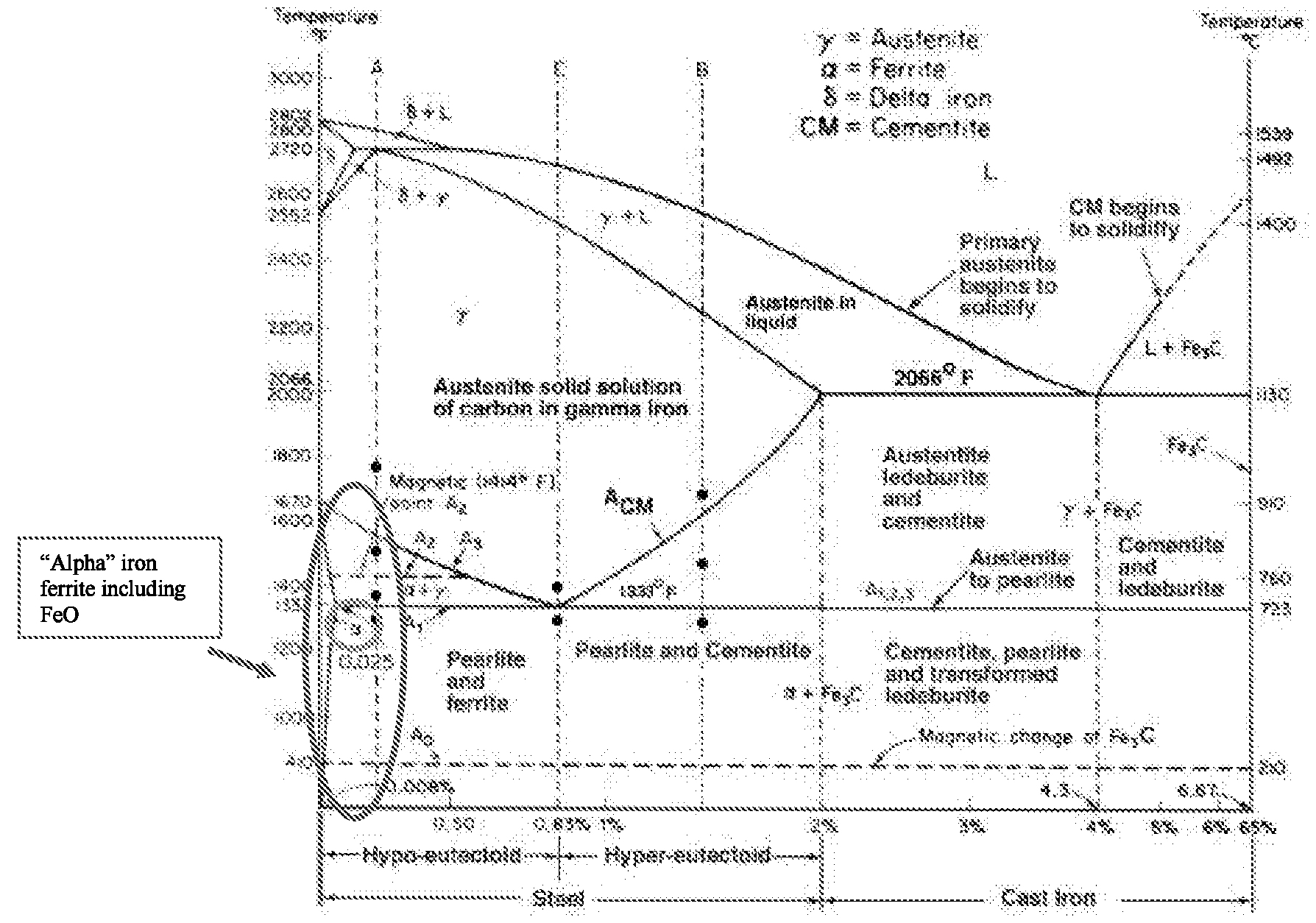


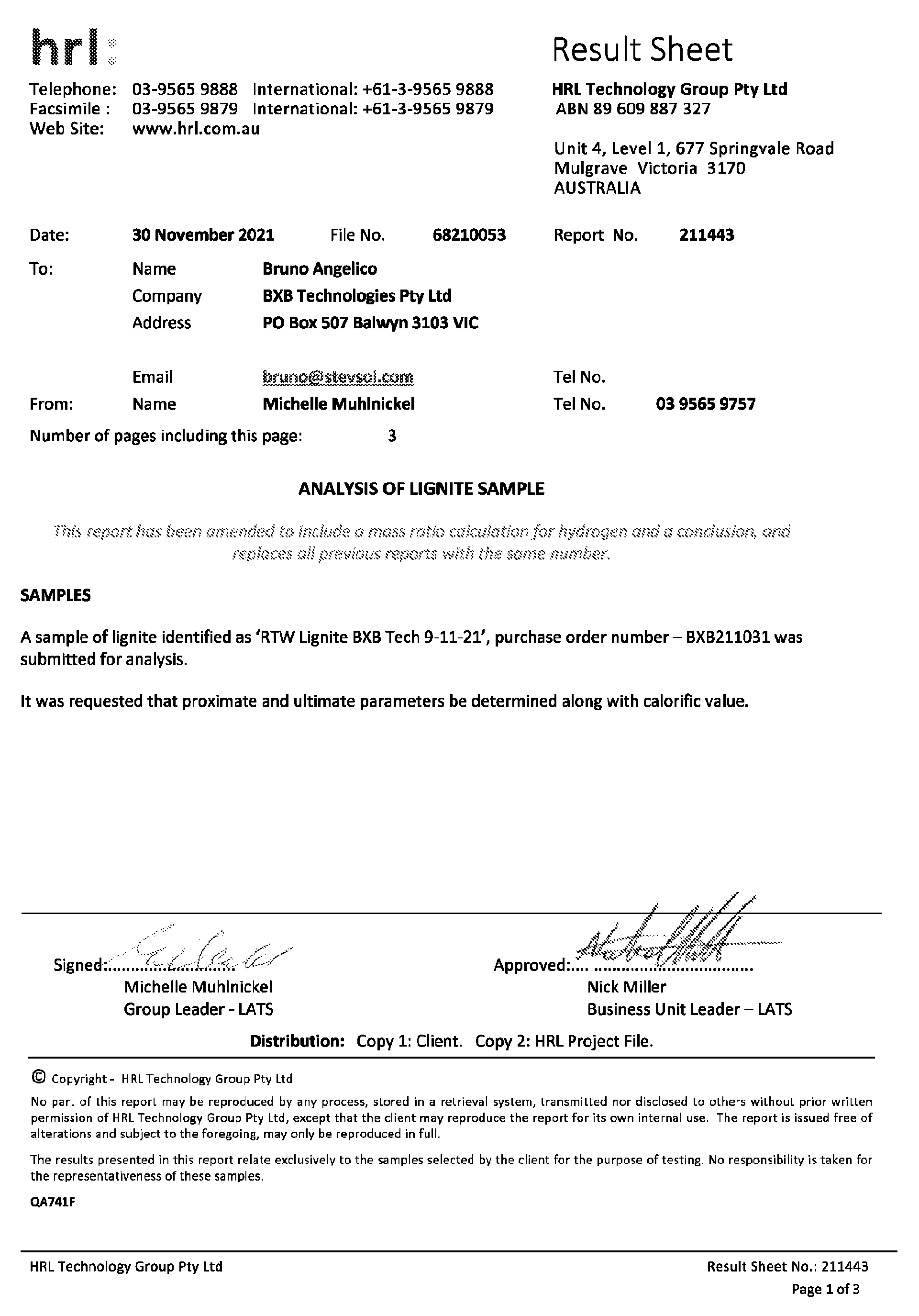


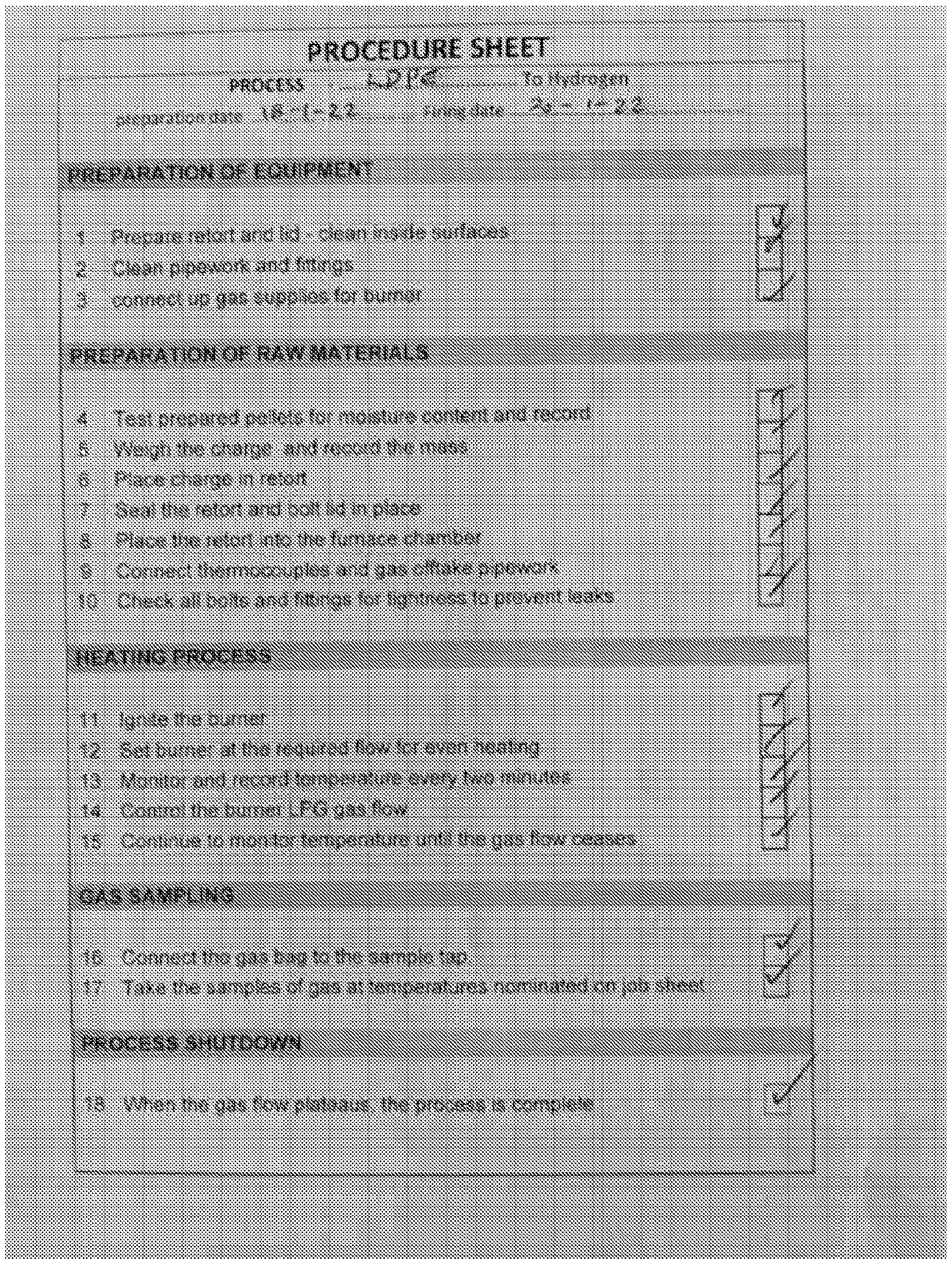

Claims

Priority Applications (7)
| Application Number | Priority Date | Filing Date | Title |
|---|---|---|---|
| US18/834,741 US20250382524A1 (en) | 2022-01-31 | 2023-01-31 | Method, apparatus and system for producing hydrogen and non-gaseous products for industrial applications, energy production, and associated electric power generation |
| AU2023210689A AU2023210689A1 (en) | 2022-01-31 | 2023-01-31 | Method, apparatus and system for producing hydrogen and non-gaseous products for industrial applications, energy production, and associated electric power generation |
| CN202380031979.6A CN119730957A (en) | 2022-01-31 | 2023-01-31 | Method, apparatus and system for producing hydrogen and non-gaseous products for industrial applications, energy production and related power generation |
| JP2024566701A JP2025506070A (en) | 2022-01-31 | 2023-01-31 | Methods, Apparatus, and Systems for Producing Hydrogen and Non-Gaseous Products for Industrial Applications, Energy Production, and Related Power Generation - Patent application |
| CA3265537A CA3265537A1 (en) | 2022-01-31 | 2023-01-31 | Method, apparatus and system for producing hydrogen and non-gaseous products for industrial applications, energy production, and associated electric power generation |
| KR1020247029525A KR20240169609A (en) | 2022-01-31 | 2023-01-31 | Methods, devices and systems for producing hydrogen and non-gaseous products for industrial applications, energy production and related power production |
| EP23745750.2A EP4472768A4 (en) | 2022-01-31 | 2023-01-31 | METHOD, DEVICE AND SYSTEM FOR THE PRODUCTION OF HYDROGEN AND NON-GASY PRODUCTS FOR INDUSTRIAL APPLICATIONS, ENERGY GENERATION AND ASSOCIATED ELECTRICITY GENERATION |
Applications Claiming Priority (6)
| Application Number | Priority Date | Filing Date | Title |
|---|---|---|---|
| AU2022900174 | 2022-01-31 | ||
| AU2022900174A AU2022900174A0 (en) | 2022-01-31 | Method, Apparatus and System for Producing Hydrogen and Non-Gaseous Products for Industrial Applications, Energy Production, and Associated Electric Power Generation | |
| AU2022901378A AU2022901378A0 (en) | 2022-05-23 | PAK450 Metallic Material | |
| AU2022901378 | 2022-05-23 | ||
| AU2022901396A AU2022901396A0 (en) | 2022-05-24 | Reduction of metallic ores | |
| AU2022901396 | 2022-05-24 |
Publications (1)
| Publication Number | Publication Date |
|---|---|
| WO2023141684A1 true WO2023141684A1 (en) | 2023-08-03 |
Family
ID=87469866
Family Applications (1)
| Application Number | Title | Priority Date | Filing Date |
|---|---|---|---|
| PCT/AU2023/050060 Ceased WO2023141684A1 (en) | 2022-01-31 | 2023-01-31 | Method, apparatus and system for producing hydrogen and non-gaseous products for industrial applications, energy production, and associated electric power generation |
Country Status (8)
| Country | Link |
|---|---|
| US (1) | US20250382524A1 (en) |
| EP (1) | EP4472768A4 (en) |
| JP (1) | JP2025506070A (en) |
| KR (1) | KR20240169609A (en) |
| CN (1) | CN119730957A (en) |
| AU (1) | AU2023210689A1 (en) |
| CA (1) | CA3265537A1 (en) |
| WO (1) | WO2023141684A1 (en) |
Citations (7)
| Publication number | Priority date | Publication date | Assignee | Title |
|---|---|---|---|---|
| CN101891149A (en) * | 2009-05-19 | 2010-11-24 | 新奥科技发展有限公司 | Continuous process for the production of combustible gases from highly concentrated slurries containing carbonaceous organic matter |
| US20110024687A1 (en) * | 2006-09-21 | 2011-02-03 | Eltron Research & Development, Inc. | Cyclic catalytic upgrading of chemical species using metal oxide materials |
| US20140163120A1 (en) * | 2010-09-08 | 2014-06-12 | Ecokap Technologies Llc | Method and apparatus for producing liquid hydrocarbon fuels |
| US8920525B2 (en) * | 2011-04-15 | 2014-12-30 | Biogenic Reagent Ventures, Llc | High-carbon biogenic reagents and uses thereof |
| EP3138892A1 (en) * | 2015-09-03 | 2017-03-08 | Synthopetrol | Use of multifunctional magnetic catalysts for the transformation of biomass |
| US20180195006A1 (en) * | 2012-03-07 | 2018-07-12 | Research Triangle Institute | Catalytic biomass pyrolysis process |
| US10106407B1 (en) * | 2017-04-26 | 2018-10-23 | U.S. Department Of Energy | Metal ferrite oxygen carriers/catalyst for partial oxidation of methane for production of synthesis gas |
Family Cites Families (1)
| Publication number | Priority date | Publication date | Assignee | Title |
|---|---|---|---|---|
| US20160039669A1 (en) * | 2013-03-29 | 2016-02-11 | Centre National De La Recherche Scientifique (Cnrs) | Method for Producing High-Purity Hydrogen Gas |
-
2023
- 2023-01-31 WO PCT/AU2023/050060 patent/WO2023141684A1/en not_active Ceased
- 2023-01-31 AU AU2023210689A patent/AU2023210689A1/en active Pending
- 2023-01-31 KR KR1020247029525A patent/KR20240169609A/en active Pending
- 2023-01-31 JP JP2024566701A patent/JP2025506070A/en active Pending
- 2023-01-31 US US18/834,741 patent/US20250382524A1/en active Pending
- 2023-01-31 EP EP23745750.2A patent/EP4472768A4/en active Pending
- 2023-01-31 CN CN202380031979.6A patent/CN119730957A/en active Pending
- 2023-01-31 CA CA3265537A patent/CA3265537A1/en active Pending
Patent Citations (7)
| Publication number | Priority date | Publication date | Assignee | Title |
|---|---|---|---|---|
| US20110024687A1 (en) * | 2006-09-21 | 2011-02-03 | Eltron Research & Development, Inc. | Cyclic catalytic upgrading of chemical species using metal oxide materials |
| CN101891149A (en) * | 2009-05-19 | 2010-11-24 | 新奥科技发展有限公司 | Continuous process for the production of combustible gases from highly concentrated slurries containing carbonaceous organic matter |
| US20140163120A1 (en) * | 2010-09-08 | 2014-06-12 | Ecokap Technologies Llc | Method and apparatus for producing liquid hydrocarbon fuels |
| US8920525B2 (en) * | 2011-04-15 | 2014-12-30 | Biogenic Reagent Ventures, Llc | High-carbon biogenic reagents and uses thereof |
| US20180195006A1 (en) * | 2012-03-07 | 2018-07-12 | Research Triangle Institute | Catalytic biomass pyrolysis process |
| EP3138892A1 (en) * | 2015-09-03 | 2017-03-08 | Synthopetrol | Use of multifunctional magnetic catalysts for the transformation of biomass |
| US10106407B1 (en) * | 2017-04-26 | 2018-10-23 | U.S. Department Of Energy | Metal ferrite oxygen carriers/catalyst for partial oxidation of methane for production of synthesis gas |
Non-Patent Citations (5)
| Title |
|---|
| Q IAN ET AL.: "Methane decomposition to produce COx-free hydrogen and nano-carbon over metal catalysts: A review", INTERNATIONAL JOURNAL OF HYDROGEN ENERGY, vol. 45, 2020, pages 7981 - 8001, XP086076966, ISSN: 0360-3199, DOI: https://doi.org/10.1016/j.ijhydene. 2020.01.05 2 * |
| See also references of EP4472768A4 * |
| STOLYARCHUK ET AL.: "FERRITES MFe204 (M = Mg, Mn, Fe, Zn) AS CATALYSTS FOR STEAM REFORMING OF ETHANOL", THEORETICAL AND EXPERIMENTAL CHEMISTRY, vol. 52, no. 4, 2016, pages 246 - 251, XP036073106, DOI: 10.1007/s11237-016-9475-5 * |
| TAKENAKA ET AL.: "Production of pure hydrogen from methane mediated by the redox of Ni- and Cr-added iron oxides", JOURNAL OF CATALYSIS, vol. 228, 2004, pages 405 - 416, XP004720684, DOI: 10.1016/jjcat.2004.09.015 * |
| ZHANG ET AL.: "Review of chemical looping process for carbonaceous feedstock Conversion: Rational design of oxygen carriers", FUEL, vol. 325, 2022, pages 1 - 14, XP087109616, ISSN: 0016-2361, DOI: https://doi.org/10. 10 16/j.fuel.2022.124964 * |
Also Published As
| Publication number | Publication date |
|---|---|
| KR20240169609A (en) | 2024-12-03 |
| AU2023210689A1 (en) | 2024-09-19 |
| EP4472768A4 (en) | 2026-01-28 |
| CA3265537A1 (en) | 2023-08-03 |
| CN119730957A (en) | 2025-03-28 |
| JP2025506070A (en) | 2025-03-05 |
| US20250382524A1 (en) | 2025-12-18 |
| EP4472768A1 (en) | 2024-12-11 |
Similar Documents
| Publication | Publication Date | Title |
|---|---|---|
| Buffi et al. | Energy and environmental assessment of hydrogen from biomass sources: Challenges and perspectives | |
| Dou et al. | Hydrogen production from the thermochemical conversion of biomass: issues and challenges | |
| Lin et al. | Review of biomass chemical looping gasification in China | |
| Udomsirichakorn et al. | Review of hydrogen-enriched gas production from steam gasification of biomass: the prospect of CaO-based chemical looping gasification | |
| Saxena et al. | Thermo-chemical routes for hydrogen rich gas from biomass: a review | |
| Xu et al. | Direct chemical looping gasification of pine sawdust using Fe2O3-rich sludge ash as an oxygen carrier: Thermal conversion characteristics, product distributions, and gasification performances | |
| Gong et al. | Direct reduction of iron oxides based on steam reforming of bio-oil: a highly efficient approach for production of DRI from bio-oil and iron ores | |
| US20110067376A1 (en) | Plasma-based waste-to-energy techniques | |
| Yao et al. | Kinetics of CO2 gasification of biomass char in granulated blast furnace slag | |
| US20150005399A1 (en) | Method and device for producing synthetic gas and method and device for synthesizing liquid fuel | |
| JP4719194B2 (en) | Tar reforming catalyst, method for producing the catalyst, and method for steam reforming tar using the catalyst | |
| Chanthakett et al. | Hydrogen production from municipal solid waste (MSW) for cleaner environment | |
| US20070049648A1 (en) | Manufacture of fuels by a co-generation cycle | |
| Lang et al. | Pyrolysis of wood waste to enhance hydrogen production on iron-based aluminum dross | |
| Muthukumar et al. | Hydrogen-rich syngas production from food waste via supercritical water gasification: Influence of gasification temperature and polyaniline and potassium carbonate (PANI-K2CO3) catalyst | |
| Saadeldin et al. | Biofuels and electrofuels as alternative green fuels for marine applications: a review | |
| US20250382524A1 (en) | Method, apparatus and system for producing hydrogen and non-gaseous products for industrial applications, energy production, and associated electric power generation | |
| Liu et al. | Potassium occurrence form in the deep reduction of potassium-modified iron-based oxygen carrier by coal char | |
| Liu et al. | Chemical looping gasification of vinegar residue with enhanced LD slag composite Ca-Fe oxygen carrier for syngas production | |
| Yang et al. | Catalytic steam gasification of pine sawdust for hydrogen-rich syngas production in a decoupled triple bed reaction system | |
| Hu et al. | A novel continuous reactor with shaftless spiral for chemical looping gasification and the control of operating parameters | |
| He et al. | Biomass direct chemical looping conversion in a fluidized bed reactor with natural hematite as an oxygen carrier | |
| JP2024504798A (en) | How to use energy from waste to produce hydrogen-containing product gas | |
| Singh et al. | Thermochemical hydrogen production | |
| Wu et al. | Competitive Reaction Mechanism Between Biomass Char and Reduced Oxygen Carrier during Chemical Looping Hydrogen Production |
Legal Events
| Date | Code | Title | Description |
|---|---|---|---|
| 121 | Ep: the epo has been informed by wipo that ep was designated in this application |
Ref document number: 23745750 Country of ref document: EP Kind code of ref document: A1 |
|
| WWE | Wipo information: entry into national phase |
Ref document number: 2024566701 Country of ref document: JP |
|
| WWE | Wipo information: entry into national phase |
Ref document number: 814196 Country of ref document: NZ |
|
| WWE | Wipo information: entry into national phase |
Ref document number: 2023745750 Country of ref document: EP |
|
| NENP | Non-entry into the national phase |
Ref country code: DE |
|
| ENP | Entry into the national phase |
Ref document number: 2023745750 Country of ref document: EP Effective date: 20240902 |
|
| ENP | Entry into the national phase |
Ref document number: 2023210689 Country of ref document: AU Date of ref document: 20230131 Kind code of ref document: A |
|
| WWE | Wipo information: entry into national phase |
Ref document number: 202380031979.6 Country of ref document: CN |
|
| WWP | Wipo information: published in national office |
Ref document number: 202380031979.6 Country of ref document: CN |