WO2023076589A1 - Pretreatment of lignocellulose using two stage alkali and mechanical refining processes - Google Patents
Pretreatment of lignocellulose using two stage alkali and mechanical refining processes Download PDFInfo
- Publication number
- WO2023076589A1 WO2023076589A1 PCT/US2022/048212 US2022048212W WO2023076589A1 WO 2023076589 A1 WO2023076589 A1 WO 2023076589A1 US 2022048212 W US2022048212 W US 2022048212W WO 2023076589 A1 WO2023076589 A1 WO 2023076589A1
- Authority
- WO
- WIPO (PCT)
- Prior art keywords
- alkali
- stage
- biomass
- solids
- lignocellulosic biomass
- Prior art date
- Legal status (The legal status is an assumption and is not a legal conclusion. Google has not performed a legal analysis and makes no representation as to the accuracy of the status listed.)
- Ceased
Links
Classifications
-
- C—CHEMISTRY; METALLURGY
- C08—ORGANIC MACROMOLECULAR COMPOUNDS; THEIR PREPARATION OR CHEMICAL WORKING-UP; COMPOSITIONS BASED THEREON
- C08H—DERIVATIVES OF NATURAL MACROMOLECULAR COMPOUNDS
- C08H8/00—Macromolecular compounds derived from lignocellulosic materials
-
- C—CHEMISTRY; METALLURGY
- C12—BIOCHEMISTRY; BEER; SPIRITS; WINE; VINEGAR; MICROBIOLOGY; ENZYMOLOGY; MUTATION OR GENETIC ENGINEERING
- C12P—FERMENTATION OR ENZYME-USING PROCESSES TO SYNTHESISE A DESIRED CHEMICAL COMPOUND OR COMPOSITION OR TO SEPARATE OPTICAL ISOMERS FROM A RACEMIC MIXTURE
- C12P19/00—Preparation of compounds containing saccharide radicals
- C12P19/02—Monosaccharides
-
- C—CHEMISTRY; METALLURGY
- C12—BIOCHEMISTRY; BEER; SPIRITS; WINE; VINEGAR; MICROBIOLOGY; ENZYMOLOGY; MUTATION OR GENETIC ENGINEERING
- C12P—FERMENTATION OR ENZYME-USING PROCESSES TO SYNTHESISE A DESIRED CHEMICAL COMPOUND OR COMPOSITION OR TO SEPARATE OPTICAL ISOMERS FROM A RACEMIC MIXTURE
- C12P19/00—Preparation of compounds containing saccharide radicals
- C12P19/14—Preparation of compounds containing saccharide radicals produced by the action of a carbohydrase (EC 3.2.x), e.g. by alpha-amylase, e.g. by cellulase, hemicellulase
-
- C—CHEMISTRY; METALLURGY
- C12—BIOCHEMISTRY; BEER; SPIRITS; WINE; VINEGAR; MICROBIOLOGY; ENZYMOLOGY; MUTATION OR GENETIC ENGINEERING
- C12P—FERMENTATION OR ENZYME-USING PROCESSES TO SYNTHESISE A DESIRED CHEMICAL COMPOUND OR COMPOSITION OR TO SEPARATE OPTICAL ISOMERS FROM A RACEMIC MIXTURE
- C12P7/00—Preparation of oxygen-containing organic compounds
- C12P7/02—Preparation of oxygen-containing organic compounds containing a hydroxy group
- C12P7/04—Preparation of oxygen-containing organic compounds containing a hydroxy group acyclic
- C12P7/06—Ethanol, i.e. non-beverage
- C12P7/08—Ethanol, i.e. non-beverage produced as by-product or from waste or cellulosic material substrate
- C12P7/10—Ethanol, i.e. non-beverage produced as by-product or from waste or cellulosic material substrate substrate containing cellulosic material
-
- C—CHEMISTRY; METALLURGY
- C12—BIOCHEMISTRY; BEER; SPIRITS; WINE; VINEGAR; MICROBIOLOGY; ENZYMOLOGY; MUTATION OR GENETIC ENGINEERING
- C12P—FERMENTATION OR ENZYME-USING PROCESSES TO SYNTHESISE A DESIRED CHEMICAL COMPOUND OR COMPOSITION OR TO SEPARATE OPTICAL ISOMERS FROM A RACEMIC MIXTURE
- C12P2201/00—Pretreatment of cellulosic or lignocellulosic material for subsequent enzymatic treatment or hydrolysis
-
- C—CHEMISTRY; METALLURGY
- C12—BIOCHEMISTRY; BEER; SPIRITS; WINE; VINEGAR; MICROBIOLOGY; ENZYMOLOGY; MUTATION OR GENETIC ENGINEERING
- C12P—FERMENTATION OR ENZYME-USING PROCESSES TO SYNTHESISE A DESIRED CHEMICAL COMPOUND OR COMPOSITION OR TO SEPARATE OPTICAL ISOMERS FROM A RACEMIC MIXTURE
- C12P2203/00—Fermentation products obtained from optionally pretreated or hydrolyzed cellulosic or lignocellulosic material as the carbon source
-
- Y—GENERAL TAGGING OF NEW TECHNOLOGICAL DEVELOPMENTS; GENERAL TAGGING OF CROSS-SECTIONAL TECHNOLOGIES SPANNING OVER SEVERAL SECTIONS OF THE IPC; TECHNICAL SUBJECTS COVERED BY FORMER USPC CROSS-REFERENCE ART COLLECTIONS [XRACs] AND DIGESTS
- Y02—TECHNOLOGIES OR APPLICATIONS FOR MITIGATION OR ADAPTATION AGAINST CLIMATE CHANGE
- Y02E—REDUCTION OF GREENHOUSE GAS [GHG] EMISSIONS, RELATED TO ENERGY GENERATION, TRANSMISSION OR DISTRIBUTION
- Y02E50/00—Technologies for the production of fuel of non-fossil origin
- Y02E50/10—Biofuels, e.g. bio-diesel
Definitions
- FIG. 1 depicts a diagram of an embodiment of the processes disclosed herein.
- FIG. 2 depicts a diagram of another embodiment of the processes disclosed herein.
- FIG. 3 depicts the effects of two-stage deacetylation severity on enzymatic hydrolysis sugar yields at 10 mg total protein (8 mg Novozymes CTec3 and 2 mg of HTec3) per gram of cellulose at 2% solids for 7 days.
- the numbers on the x-axis are for Na2CCh and NaOH loadings, with the number before showing Na2CCh loadings and the number after showing NaOH loadings with both units in kg/tonne, respectively.
- “40/42” means 40 kg Na2CO3/tonne of biomass used in 1 st stage deacetylation and 42 kg NaOH/tonne of biomass used in 2 nd stage deacetylation, all based on original biomass weight.
- FIG. 4 depicts the effect of two-stage deacetylation severity on enzymatic hydrolysis sugar yields at 10 mg total protein (8 mg of Novozymes CTec3 and 2 mg of HTec3 per gram of cellulose) at 20% solids for 7 days.
- the numbers on the x-axis are Na2CCh and NaOH loadings, with the number before “/” showing Na2CO3 loading and the number after “/” showing the NaOH loading with both units in kg/tonne, respectively.
- “40/42” means 40kg Na2CO3/tonne of biomass used in 1 st stage deacetylation and 42 kg NaOH/tonne of biomass used in 2 nd stage deacetylation, all based on original biomass weight.
- FIG. 5 depicts the effect of two-stage deacetylation severity on enzymatic hydrolysis sugar yields at 8 mg of Novozymes CTec3 and 2 mg of HTec3 per gram of cellulose at 22.5% solids for 7 days.
- the numbers on the x-axis are Na2CO3 and NaOH loadings, with the number before “/” showing Na2CO3 loading and the number after “/” showing the NaOH loading with both units in kg/tonne, respectively.
- “40/42” means 40 kg Na2CO3/tonne of biomass used in 1 st stage deacetylation and 42 kg NaOH/tonne of biomass used in 2 nd stage deacetylation, all based on original biomass weight.
- FIG. 6A depicts the effect of initial insoluble solids loadings of biomass in enzymatic hydrolysis on glucose yield.
- FIG. 6B depicts the effect of initial insoluble solids loadings of biomass in enzymatic hydrolysis on xylose yield.
- FIG. 7 depicts a representative GC-MS chromatogram of a lignin oil obtained from ethyl acetate extraction of hydrolysate obtained after ozone treatment of lignin isolated from corn stover DMR-EH residual solids.
- FIG. 8A depicts the effect of two-stage deacetylation severity on enzymatic hydrolysis sugar yields at (10 mg total protein (8 mg Novozymes CTec3 and 2 mg of HTec3) per gram of cellulose at 20% insoluble solids for 7 days.
- the numbers on the x-axis show Na2CO3, NaOH loadings, and ozonolysis reaction times.
- “40/42/15” means 40kg Na2CO3/tonne of biomass used in 1 st stage deacetylation, 42 kg NaOH/tonne of biomass used in 2 nd stage deacetylation and 15minutes of ozonolysis, all based on original biomass weight.
- FIG. 8A depicts the effect of two-stage deacetylation severity on enzymatic hydrolysis sugar yields at (10 mg total protein (8 mg Novozymes CTec3 and 2 mg of HTec3) per gram of cellulose at 20% insoluble solids for 7 days.
- the numbers on the x-axis show Na2CO3, NaOH loadings,
- 8B depicts the effect of two-stage deacetylation severity on enzymatic hydrolysis sugar yields at (10 mg total protein (8 mg Novozymes CTec3 and 2 mg of HTec3) per gram of cellulose at 22.5% insoluble solids for 7 days.
- the numbers on the x-axis show Na2CCh, NaOH loadings, and ozonolysis reaction times.
- “40/42/15” means 40kg Na2CO3/tonne of biomass used in 1 st stage deacetylation, 42 kg NaOH/tonne of biomass used in 2 nd stage deacetylation and 15minutes of ozonolysis, all based on original biomass weight.
- FIG. 9 depicts a representative GC-MS chromatogram of adducts obtained after Diels Alder reaction between 2,6 dimethoxybenzoquinone and isoprene using BF3Et2O as a Lewis acid catalyst at 0 °C for a reaction time of 30 min.
- Methods and systems disclosed herein provide a DMR process for pretreating lignocellulosic biomass so as to increase fermentable sugar yield, while reducing inhibitor production and hydrolytic enzyme loading requirements.
- the DMR process not only increases sugar yields/titers/fermentabilities relative to existing pretreatments, but also decreases operational costs, including chemical and energy costs.
- the inventors have found that dilute alkali deacetylation at very mild conditions saponifies acetyl groups from the xylan backbone of lignocellulosic biomass, which not only increases the fermentability of the sugar stream that is produced (particularly if acetic acid is carried away in the deacetylation black liquor) but also reduces the recalcitrance of the biomass.
- Methods disclosed herein may be implemented to achieve very high (> 80%) monomeric sugar yields from hydrolysis of DMR solids at low hydrolytic protein loading.
- the hydrolytic enzyme loading is from about 10 to 30 mg enzyme per gram cellulose content in the biomass feedstock.
- DMR comprises two-stage deacetylation followed by mechanical refining.
- the solvents used in the two-stage deacetylation are one or more theta solvents for lignin, such as alkaline solvents.
- Alkali may be referred to as a pseudo-theta solvent for plant cell wall lignin.
- a theta solvent dissolved polymers retain most of their native configuration (size and shape), are not chemically modified, and are fully solvated.
- acid pretreatments break bonds in sugars and cause lignin to selfsequester, forming small, hydrophobic micelles or droplets which remain in the hot solution.
- Organic solvent pretreatment also called organosolv, performs a similar function in solubilizing and removing lignin; however, these solvents are very costly and pose a hazardous working environment for the factory operators. Hazards include explosion, cancer, and teratogenesis. Most process engineers do not prefer organosolv based pretreatments for these reasons.
- the solvents used in the two-stage deacetylation comprise a first alkali used in a first stage followed by a second alkali used in a second stage.
- the first alkali is a weak alkali and the second alkali is a strong alkali.
- “Weak alkali” and “strong alkali” are defined here as bases able to produce in aqueous solution pH values of pH 10 to pH 12 and pH 12 and higher, respectively, at concentrations of 0.01 M to 0.1 M.
- the first alkali and the second alkali have substantially the same pH.
- the pH is from about 10 to about 12.
- the second alkali is the same as the first alkali.
- the first alkali and the second alkali comprise sodium carbonate.
- contacting with the second alkali comprises at least one of a higher temperature, a longer residence time, and a higher alkali concentration as compared to contacting with the first alkali.
- the feedstock 102 for the process can comprise lignocellulosic biomass such as corn stover, and anatomical fractions thereof, sorghum stover and anatomical fractions thereof, rice straw, wheat straw, cotton residue, sunflower straw, sugarcane bagasse, rice hulls, Miscanthus giganteus, switch grass, duckweed, kudzu, and perennial vines.
- the feedstock 102 may be prepared for use in the process, for example the feedstock 102 may be milled to obtain a particular particle size distribution profile.
- the feedstock is milled to particles having an average diameter of one-quarter of an inch to two inches.
- the feedstock is milled to particles having an average diameter of one-half of an inch to one inch.
- the feedstock can comprise corn stover milled to one half to three quarters inch particles.
- a first deacetylation stage 104 can comprise combining the feedstock 102 with an amount of a first stage extraction solvent 106.
- the first stage extraction solvent 106 comprises a first alkali.
- the first alkali results in an extraction and may be a weak alkali, i.e., producing an aqueous pH of about 10 to about 12.
- Alkalis that may be used in this stage include sodium carbonate, potassium carbonate, ammonium hydroxide, magnesium hydroxide, trimethylamine, or methylamine.
- the first stage extraction solvent 106 comprises sodium carbonate.
- the amount of first alkali in the first stage extraction solvent 106 can be from about 40 kg to about 100 kg per tonne of biomass.
- the amount of first alkali can be about 40 kg to about 70 kg, about 50 kg to about 90 kg, about 60 kg to about 80 kg, about 60 kg to about 90 kg, or about 70 kg to about 100 kg, each of the foregoing being per tonne of biomass.
- a horizonal paddle type high solids blender or reactor may be used in the methods disclosed herein.
- biomass particles from about 5% to 35% wt/wt range may be used in methods disclosed herein.
- ammonium hydroxide in the form of liquid ammonia (3 to 6 grams per liter of biomass slurry, for example) can be used as an extraction solvent in the first deacetylation stage 104.
- the solvent may be removed from the biomass slurry before subsequent process stages to avoid reversion of the liquid ammonia to its more toxic gaseous state.
- the first stage biomass 108 can then undergo dewatering 110 to produce two output streams: a first stage black liquor 112 and a first stage solids 114.
- a screw type solid-liquid separator such as an Andritz ImpressafinerTM
- Other solid-liquid separation equipment suitable for the biomass may be used.
- dewatering 110 may comprise one or more cycles of rinsing and dewatering.
- the first deacetylation stage 104 removes most of the ash content in biomass (which is significant in cereal grasses and maize family plants where it can be as high as 10% wt/wt) as well as removing acetate, xylooligomers and most of the soluble low MW phenolics.
- the first dewatering step of the DMR process as depicted in FIG. 1 results in a first stage black liquor 112 having removed 60-90% acetate and 60- 90% ash concentration, 5-15% lignin concentration, and ⁇ 5% xylooligomers; as well as from about 3 to about 30 wt% solids.
- the first stage solids 114 then undergo a second deacetylation stage 116 comprising combining the first stage solids 114 with a second stage extraction solvent 118 comprising an amount of a second alkali.
- the second alkali produces an extraction pH that is higher than that of the first alkali.
- the second alkali may be a strong alkali, i.e., having a pH equal to or greater than about pH 12, e.g., pH 12 to 13.
- Alkalis that may be used include sodium hydroxide, potassium hydroxide, barium hydroxide, calcium hydroxide, trisodium phosphate, and tripotassium phosphate.
- the strong alkali is sodium hydroxide.
- the amount of second alkali in the second stage extraction solvent 118 can be from about 10 kg to about 40 kg per tonne of biomass.
- the amount of second alkali per tonne of biomass can be about 10 kg to about 20 kg, about 20 kg to about 30 kg, about 30 kg to about 40 kg, about 25 kg to about 35 kg, or about 24 kg to about 59 kg.
- the second alkali loading may be based at least in part upon the loading of first alkali used in the first deacetylation stage 104. For example, a first deacetylation stage 104 with a higher first alkali loading may be followed with a second deacetylation stage 116 having a lower second alkali loading, or vice versa.
- the amount of first alkali can be about 60 kg to about 80 kg per tonne of lignocellulosic biomass and the amount of second alkali about 24 kg to about 40 kg per tonne of lignocellulosic biomass. In some embodiments, the amount of first alkali can be about 40 kg to about 60 kg per tonne of lignocellulosic biomass and the amount of second alkali about 40 kg to about 59 kg per tonne of lignocellulosic biomass. In an embodiment of the methods disclosed herein, horizonal paddle type high solids blenders or reactors rated to 10 psig may be used. In an embodiment, biomass particles from about 5% to about 35% wt/wt range may be used in methods disclosed herein.
- the deacetylated second stage biomass 120 can then undergo dewatering 122. Similar equipment may be used for this step as for dewatering 110.
- the second deacetylation stage 116 removes process ash and most of the lignin, which is recovered as higher molecular weight (MW) lignin than the lignin in the first stage black liquor 112.
- MW molecular weight
- the DMR process as depicted in FIG. 1 results in an output stream of a second stage solids 124 and also an output stream of second stage black liquor 126 having lignin concentrations in the range of 3-10g/L (30-60% of initial lignin content of biomass), 1-4 g/L of carbohydrate, and low (for example less than 20% of starting biomass) process ash.
- the DMR process as depicted in FIG. 1 removes lignin while preserving sufficient lignocellulosic structure (lignin-carbohydrate complexes) to allow better enzyme penetration that results in higher sugars yield.
- the DMR process as depicted in FIG. 1 removes about 5% to about 15%, or about 10%, lignin of the biomass at the stage 1 deacetylation.
- the DMR process as depicted in FIG. 1 removes about 20% to about 50% or about 30% to about 40% lignin of biomass at the stage 2 deacetylation. The particular levels of lignin removal may depend upon the biomass
- the DMR processes disclosed herein use two stages of alkali extractions performed under relatively mild conditions to prepare lignocellulosic biomass for hydrolytic enzyme treatment which liberates fermentable sugars.
- one or both deacetylation stages 104, 116 are performed at hot (but usually below boiling, for example from about 80 °C up to about 100 °C) temperatures and pressures at substantially near ambient pressure (for example, from about -10% to about +10% ambient pressure) or at slight pressurization (for example, about 10% above ambient pressure).
- ambient pressure is 101,325 pascals ⁇ 30%.
- This lignin fraction is substantially free from acetate and native biomass ash. Most other pretreatments do not accomplish this.
- the 2-stage deacetylation does not lead to significantly higher carbohydrate dissolution in black liquor as compared to single-stage NaOH only deacetylation.
- the 2-stage deacetylation is also a biomass fractionation process, which produces ash and some soluble lignin in the first black liquor and lignin with very little ash in the second black liquor fraction. These characteristics facilitate valorization of these two black liquor fractions.
- the two-stage deacetylation (extraction) can be followed by one or more stages of mechanical refining 128 of the second stage solids 124.
- Mechanical refining uses mechanical forces (e.g., grinding) to disrupt lignocellulosic structure and reduce average particle size within the biomass. As a result, the cellulose surface area available to enzymatic action is increased, thereby increasing hydrolytic efficiency.
- Mechanical refining can be performed using equipment such as a single disk mill, a double disk mill, a conical plate mill, a pin mill, a ball mill, a Szego type mill, an attrition mill, an ultrasonics-assisted mill, a stone-wheel grinding mill, or a homogenizer (such as a WaringTM blender).
- mechanical refining 128 comprises at least two successive stages, each of which may employ different equipment.
- mechanical refining 128 comprises use of a disk refiner followed by use of a Szego-type mill.
- multiple disk refiners are used in series, where at least two disk refiners are configured for different severities. Other mechanical refiners are also contemplated.
- the resulting DMR solids 134 can then undergo enzymatic hydrolysis 136, where an amount of hydrolytic and oxidative enzymes are added to the DMR solids 134 and allowed to react with cellulose to produce fermentable sugars, including glucose, xylose, and arabinose.
- the hydrolytic and oxidative enzymes are added to the DMR solids from about 5 to about 50 mg enzymes per gram of cellulose content in the biomass stream.
- hydrolytic enzymes used include, individually or in combination, cellulases, xylanases, amylases, debranching enzymes (e.g., xylan acetyl esterases, arabinofuranosidases, beta xylosidases), beta glucosidases, and lytic polysaccharide monooxygenases.
- debranching enzymes e.g., xylan acetyl esterases, arabinofuranosidases, beta xylosidases
- beta glucosidases lytic polysaccharide monooxygenases.
- commercial lignocellulosic biomass degrading enzyme formulations may be used for enzymatic hydrolysis. As noted above, the two-stage deacetylation process removes lignin while preserving sufficient lignocellulosic structure (lignin-carbohydrate complexes) to allow better enzyme penetration that results in higher sugars
- the amount of enzymes used in the enzymatic hydrolysis 136 is about 10 mg to about 50 mg per gram of cellulose.
- the sugars produced by enzymatic hydrolysis 136 may be converted to ethanol, either by biological processes such as microbial fermentation, or by use of non-biological chemical catalysts.
- the sugars may be isolated and processed to produce a powder or syrup that may be sold as a commodity or used as a chemical feedstock.
- corn stover milled to one half to three quarters inch particles can be subjected in a less than 15% solids slurry to sodium carbonate pH 10-12 and then sodium hydroxide with a pH of greater than pH 12 at low temperature and atmospheric pressure (e.g., less than 100 °C) deacetylation, with intermediate draining and washing, high consistency mechanical disk refining at pH 10, and low consistency mechanical disk refining at pH 10.
- low temperature and atmospheric pressure e.g., less than 100 °C
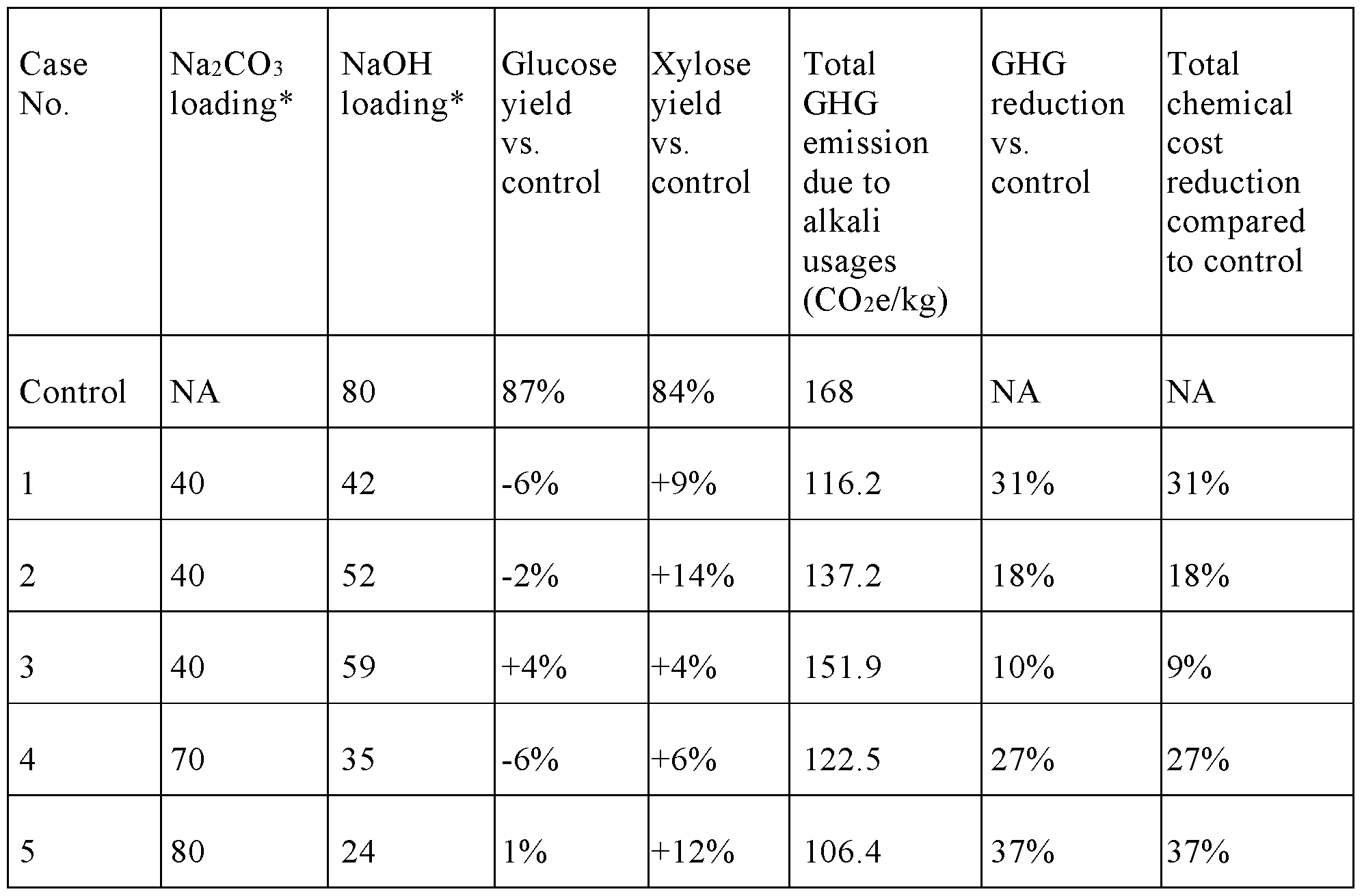
- the methods described herein can reduce or alleviate the GHG emissions burden driven by the high usage of the chemicals (especially sodium), as well as reduce operational costs for the biorefinery.
- Na2CCh is much less expensive than NaOH.
- Table 1 the production of Na2CO3 is much less energy intensive compared to NaOH, consuming only 1/6 of total energy used in NaOH production and producing 1/3 of GHG emissions.
- Na 2 CO3 can pre-neutralize acidic components liberated from the biomass, which may further reduce NaOH usage.
- a Na 2 CO3-NaOH two-stage deacetylation followed by mechanical refining can provide equivalent enzymatic hydrolysis sugar yields and lower minimum sugar selling price (MSSP) compared to a NaOH-only deacetylation/mechanical refining process.
- MSSP minimum sugar selling price
- ozone treatment can be combined with deacetylation and mechanical refining to further improve sugar yields and reduce the reliance on high alkali usage.
- ozonolysis oxidizes the P-carbon in the propyl side chain of lignin and phenolic rings in the lignin structure, making the oxidized products much more soluble.
- FIG. 2 depicts an embodiment of a DMR process 200 including ozonolysis.
- a feedstock 202 can be subjected to a first deacetylation stage 204 with dewatering 210, the resulting first stage solids 214 subjected to a second deacetylation stage 216 with dewatering 222, followed by mechanical refining 228 of the resulting second stage solids 224, yielding a deacetylated, mechanically refined biomass 230 which is further subjected to dewatering 232 to yield DMR solids 234 substantially as described above with respect to FIG. 1.
- the DMR solids 234 then undergoes ozonolysis 240 before enzymatic hydrolysis 236 of the ozone treated biomass 242.
- ozonolysis may be performed at other stages in the process, such as before or after one of the deacetylation stages.
- ozonolysis may be incorporated into, or replace, one of the deacetylation stages.
- Ozonolysis may be performed in a reaction vessel, e.g., a pressurized vessel.
- ozone treatment can improve the sugar yields by up to 10%, 9%, or 8% at higher solids enzymatic hydrolysis (e.g., solids at 20% to 25%) when using low severity deacetylated corn stover.
- Ozone pretreatment could further remove up to 50% of lignin from deacetylated corn stover and creating new reducing ends for the cellulose fiber, resulting in higher sugar yields.
- ozone treated DMR corn stover or other lignocellulosic biomass can be prepared with or without post-treatment washing.
- ozone treatment could also over-pretreat high severity deacetylated and mechanical refined corn stover by over oxidizing the sugars into sugar acids, leading to reduced sugar yields.
- such reduction in sugar yields could be caused by the following reasons: 1) collapse of the pore structures in biomass due to the high lignin removal during ozonolysis and 2) production of enzyme inhibitors and irreversible enzyme binding sites by lignin ring-opening reactions during lignin oxidation. Accordingly, the inclusion or omission of ozone treatment in processes described herein (and the parameters of such treatment) can be selected in combination with the other stages to accomplish a targeted degree of lignin breakdown based upon the particular feedstock being used.
- Black liquor streams can be processed to provide additional products.
- one or both black liquor streams can be processed for ethanol production, particularly, the black liquor(s) may be enzymatically hydrolyzed to yield fermentable sugars, which may in turn be converted to ethanol by a biocatalytic process or by a non-biological process.
- the black liquor produced by the DMR process may include solubilized lignin moi eties that can be upgraded for use in fuel production.
- solubilized lignin monomers from the black liquor may be mono- and dicyclohexane products, for example.
- second stage black liquor 220 may be oxidized to yield one or more quinones. The quinones can then be reacted with a diene via a Diels Alder reaction to yield one or more adducts that can be hydroxydeoxygenated (HDO) to yield cyclohexanes.
- HDO hydroxydeoxygenated
- Example 1 Production of Fermentable Sugars from Corn Stover using a DMR process
- Materials and Methods i. Feedstock Material
- the corn stover was knife milled (Jordan Reduction Solutions, Model 14 x 20, Birmingham, Alabama) to pass through a 19 mm (3/4-inch) round hole rejection screen and stored indoors in 200 kg lots in super sacks. Compositional analysis of the native corn stover used in this study is shown in Table 2.
- Two-stage deacetylation of the INL Lot#15 corn stover was carried out in a 90-L paddle type deacetylation reactor using 5.3 kg (5.0 kg dry) in a 10 wt.% slurry consisting of about 45 kg of Na2CCh or NaOH at different designated loadings.
- the 1 st deacetylation step was carried out using Na2CCh at the prescribed loading at 90°C for 2 h, thereafter the reactor was drained, and samples of the slurry were taken for analysis.
- the Na2CCh deacetylated solids were then dewatered using a Vincent press (Vincent Model 10) to about 40 wt.% solids and transferred to the 90-L reactor to perform the 2 nd deacetylation step.
- the target NaOH liquor loading was adjusted to achieve a final 10 wt.% solids loading in the reactor at the appropriate NaOH loading.
- the solids were treated again at the previous conditions for time and temperature, then dewatered, rinsed with water at 10 wt.% solids loading, then sampled and pressed using a Vincent screw press. iii. Disk Refining
- Bench-scale disk refining was carried out using a 12-inch laboratory disk refiner (Sprout Waldron Koppers model 12”) equipped with type C2976 NH plates on the stationary and rotating disks. The clearance between the rotating and stationary disks was O.Olinches (plates barely touching). The biomass was disk refined at 30% solids.
- Szego Milling [0041] A Szego SM-160 mill constructed using a 160 mm inside diameter, jacketed, heavywalled chamber, with three 60 mm diameter by 160 mm long steel rollers, was used for second stage refining. The rollers have helical grooves consisting of 5 mm ridges and 5 mm grooves with 10 mm pitch along the length of the cylindrical rollers.
- the deacetylated corn stover was first refined in the Sprout 12” disk refiner followed by an additional Szego milling step at a rotational speed of 1160 rpm.
- the biomass was refined through the Szego mill at 8% solids, then pressed to 40% solids using a Vincent press. v. Ozonolysis
- the ozone gas was first by-passed the reactor through simultaneous operation of the two three-way valve configuration and the ozone levels in the oxygen stream recorded by an ozone monitor (2B Technology, Model UV106-H), with data recorded through USB connections to a computer. Following baselining of the ozone concentration, the ozone gas was fed via a dip tube into the bottom of the Parr reactor by simultaneously changing the two three- way valve configurations to start the ozonolysis reactions. The residual ozone exiting the reactor was first cooled to condense the moisture produced by the ozonolysis reactions through a tube-in-shell type condenser, and then the residual ozone was measured/recorded and then was destroyed by an ozone destructor (Ozone Solutions, Model ODS-1). vi. High Solids Enzymatic Hydrolysis
- Enzymatic hydrolysis was performed in 125 mL wide-mouth polypropylene bottles (Thermo Fisher Scientific, Inc.) loaded with 30 g of neutralized slurry at 20 wt% TS (the actual solids was 22-23% accounting for the moisture loss during blending).
- the roller bottle saccharification reactors employ gravitational tumbling as a mixing mechanism to homogenize solids by horizontally rotating the reaction vessels containing 3 x 3/8” stainless steel balls at 4 rpm on a three-deck roller apparatus for mini bottles (Wheaton Industries Inc.). The roller apparatus was placed in a general -purpose incubator (Model 1545, VWR International, LLC) for temperature control at 50°C.
- Novozymes cellulase, Cellic CTec3, and hemicellulase, Cellic HTec3 were used at enzyme loadings of 8 mg CTec3 and 2 mg HTec3 (protein basis) per gram of cellulose.
- the protein concentrations of the two commercial enzyme preparations were measured by the BCA assay (Thermo Scientific Pierce Biotechnology) calibrated versus standard curves derived from bovine serum albumin (BSA) standards supplied with the kits.
- BSA bovine serum albumin
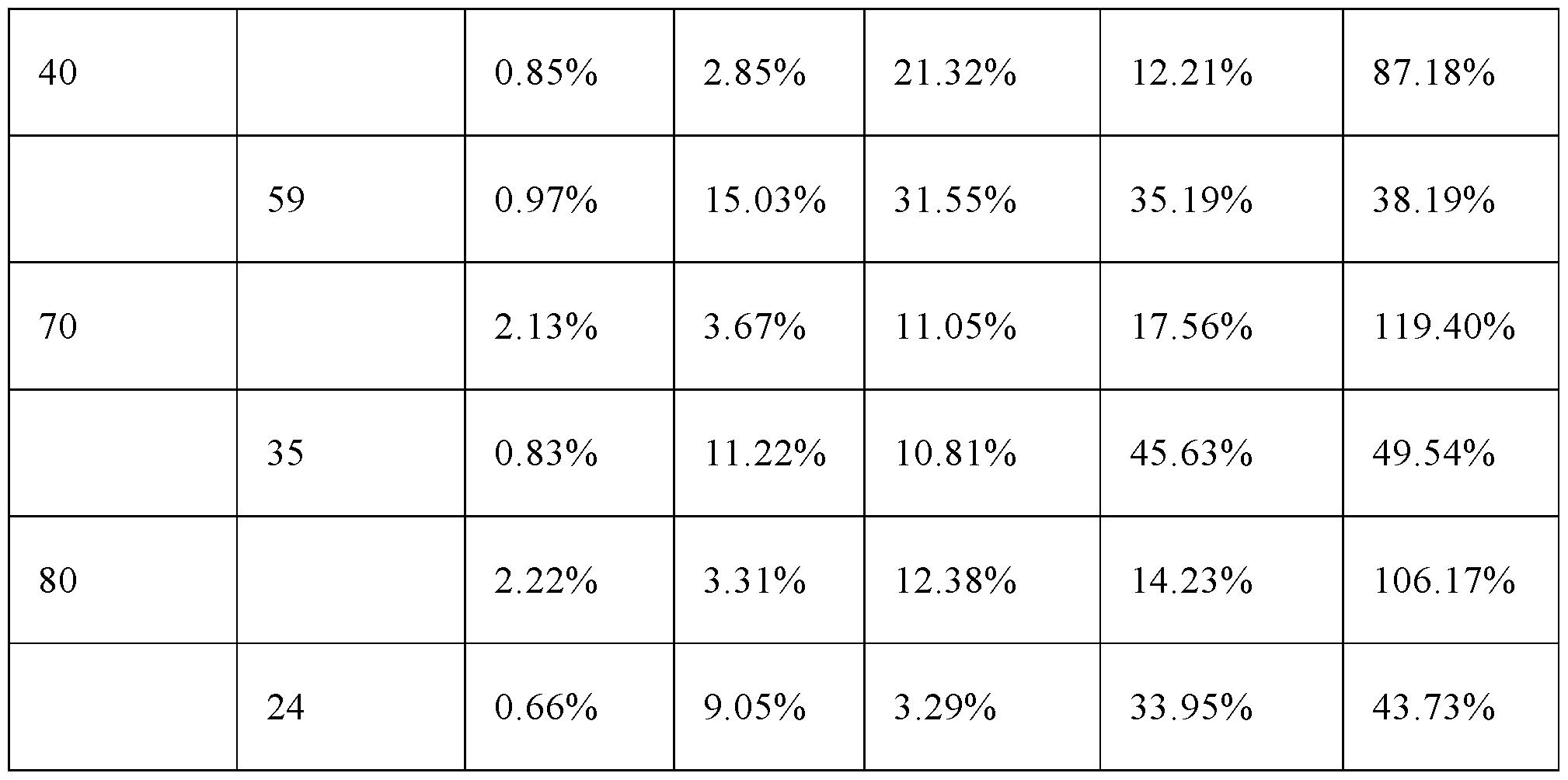
- Table 3 shows the effect of the control and two-stage deacetylation on the dissolution of biomass components in the black liquors.
- the results are in line with previous research showing similar sugar and acetate dissolutions during alkali extraction.
- the over 100% acetate yields suggests that there are small amounts of peeling reactions occurring during deacetylation that decomposes sugars into acetic acid, formic acid, and small amount dicarboxylic acids.
- FIG. 3 depicts the effects of the control and the two-stage deacetylation on enzymatic hydrolysis sugar yields at 10 mg total protein (8 mg CTec3 and 2 mg of HTec3 per gram of cellulose) at 2% solids for 7 days.
- the deacetylated biomass used was disk refined and Szego milled using similar conditions.
- the control batch deacetylated at 80 kg NaOH/tonne shows 88% glucose and 84% xylose yield, respectively.
- FIG. 4 discloses the effects of the control and the two-stage deacetylation on enzymatic hydrolysis sugar yields at 10 mg total protein (8 mg CTec3 and 2 mg of HTec3) per gram of cellulose at 20% solids for 7 days. Increasing solids to 20% does not decrease the sugar yields in many of the cases when compared to the 2% enzymatic hydrolysis experiments.
- the control sample shows similar sugar yields (87% glucose and 84% xylose) as compared to yields at 2% solids (88% glucose and 84% xylose).
- the 2-stage deacetylated and mechanical refined biomass also showed similar results.
- Ozone treated DMR corn stover was prepared with and without post washing. Ozonolysis oxidizes the P-carbon in the propyl side chain of lignin and phenolic rings in the lignin structure, making the oxidized products much more soluble.
- the solubilized lignin may cause inhibition of enzymes in the enzymatic hydrolysis step.
- complete washing of the ozonated DMR biomass would be ideal for downstream processing.
- washing will very likely increase the operational costs due to water and energy usages.
- we compared the sugar yields using nonwashed and partially washed two-stage deacetylation DMR corn stover with ozonolysis.
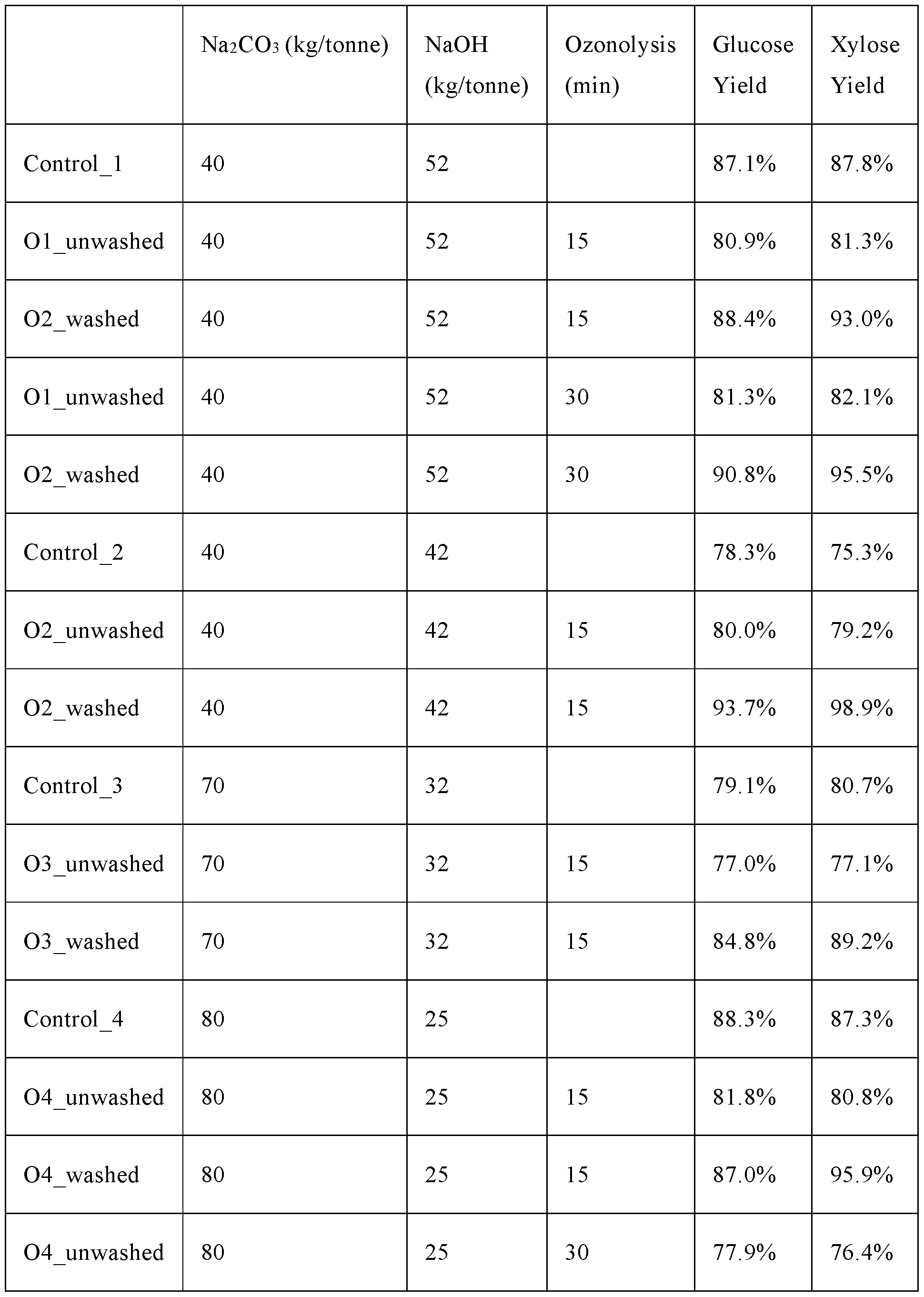
- Table 5 shows the effect of ozone treatment and post washing on enzymatic hydrolysis sugar yields at enzyme loading of 8 mg CTec3 and 2 mg of HTec3 per gram of cellulose at 2% solids for 7 days.
- the washed ozonated DMR corn stover shows higher glucose and xylose yields.
- the 40/42 (control_2) case showed improved glucose yield by almost 15% to 94% and xylose yield by 24% to 99% after ozonolysis and washing.
- the 70/32 sample case also increased glucose yield by 6% from 79% to 85% and xylose yield by 9% from 81% to nearly 90%.
- the 80/25 case does not show a significant glucose yield improvement after ozonolysis and washing as the control sample already achieved nearly 90% glucose yield. But the ozonolysis and washing does help improve the xylose yield by almost 9%.
- 10 mg total protein 8 mg CTec3 and 2 mg of HTec3
- FIG. 8B insoluble solids for 7 days.
- Example 2 Production of dicyclohexane and other value-added products from ozonated lignin moieties.
- the first step of the process involves oxidation of the monomers and low molecular weight (LMW) fractions produced with ozonated lignin moieties from deacetylation black liquor to a mixture of quinones, e.g., mono-methoxybenzoquionone (MMBQ) and dimethoxybenzoquionone (DMBQ).
- MMBQ mono-methoxybenzoquionone
- DMBQ dimethoxybenzoquionone
- the MMBQ/DMBQ mixture is then reacted with a diene such as isoprene or biomass derived 1,3-butadiene via Diels Alder reaction to yield di- or tri- cyclic adducts.
- a diene such as isoprene or biomass derived 1,3-butadiene via Diels Alder reaction to yield di- or tri- cyclic adducts.
- HDO hydrodeoxygenation
- Scheme 1 Schematic representation for the conversion of DMR derived lignin monomers to lignin-substructure-based di- or tri- cyclic hydrocarbons (Cn - Cie).
- GC-MS analyses of hydrolysates obtained after ozone treatment of DMR-CS showed six main lignin monomers, 4-hydroxybenzaldehyde, vanillin, 4-hydroxybenzoic acid, vanillic acid, 3-(4-hydroxyphenyl) propionic acid and 3-(4-hydroxy-3-methoxyphenyl) propionic acid.
- Benzoquinones may be produced via oxidation of lignin monomers.
- 4- hydroxybenzaldehyde, and 4-hydroxybenzoic acid are promising quinone precursors with the oxidation of syringic acid using Fremy’s salt producing 2,6-dimethoxybenzoquinone in near 100% yield.
- DMBQ 2,6 dimethoxybenzoquinone
- Scheme 2 Schematic representation for the conversion of DMR lignin derived lignin monomers to lignin-substructure-based di- or tri- cyclic hydrocarbons (Cn - Cie).
- FIG. 11 A The GC-MS analysis of the products for the Diels Alder reaction conducted between DMBQ and isoprene using SnCh and AlCh are depicted in FIG. 11.
- the reaction using SnCh as a catalyst resulted in a significant improvement in the product selectivity resulting in the production of both mono (MW - 204) and bis adducts (MW - 236) with the monoadduct being the major adduct formed (retention time, 21.5 min).
- the GCMS results for the reaction conducted using AlCh (FIG. 1 IB) are very similar to that obtained with SnCh except the bis adduct was formed in much smaller quantities.
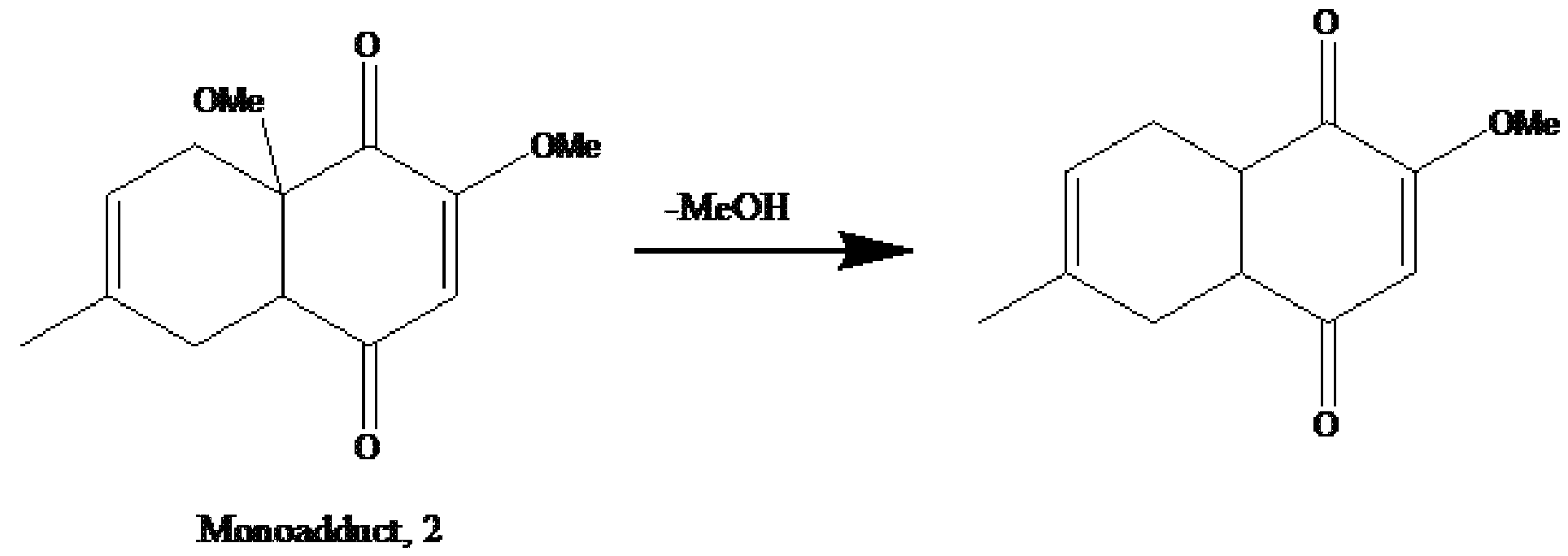
- the MW of the monoadduct formed was 204 (instead of 236) which suggests that it is formed via a loss of MeOH from the monoadduct, 2 as shown in Scheme 3.
- a peak at 10.0 min also appear which is identified to be the Diels Alder dimer of isoprene.
- the Diels Alder reaction conditions are amenable to optimization to increase the conversion of DMBQ and isolate the adducts for their quantification as well as their conversion to dicyclohexane molecules via HDO under mild conditions (250 °C) using noble metal catalysts (Pt/MCM 41).
- the lignin solubilized in the deacetylation steps can be upgraded to mono- and di-cyclohexane products suitable for high energy density jet fuel blend stocks to increase aircraft payloads and range.
- Lignin content of biomass shows complicated impacts on biomass digestibility. From previous research, high lignin content could be detrimental to enzymatic hydrolysis due to unproductive binding of the enzymes and thus result in lower sugar yields. From the 2-stage deacetylation and ozonolysis pretreatment, it was discovered that over delignification of biomass can also lead to lower sugar yields. Without being limited by theory, the extensive removal of lignin from biomass could potentially destroy the porous structure of biomass and reduce the enzyme accessibility. Thus, as disclosed herein, a “sweet spot’ of lignin content does exist for biomass, especially for corn stover, to achieve high sugar yields at low enzyme loadings.
Landscapes
- Chemical & Material Sciences (AREA)
- Organic Chemistry (AREA)
- Engineering & Computer Science (AREA)
- Life Sciences & Earth Sciences (AREA)
- Zoology (AREA)
- Wood Science & Technology (AREA)
- Biochemistry (AREA)
- Health & Medical Sciences (AREA)
- Chemical Kinetics & Catalysis (AREA)
- Biotechnology (AREA)
- General Chemical & Material Sciences (AREA)
- Microbiology (AREA)
- Bioinformatics & Cheminformatics (AREA)
- General Engineering & Computer Science (AREA)
- General Health & Medical Sciences (AREA)
- Genetics & Genomics (AREA)
- Polymers & Plastics (AREA)
- Medicinal Chemistry (AREA)
- Materials Engineering (AREA)
- Preparation Of Compounds By Using Micro-Organisms (AREA)
Abstract
Description






Claims
Priority Applications (1)
| Application Number | Priority Date | Filing Date | Title |
|---|---|---|---|
| CA3235239A CA3235239A1 (en) | 2021-10-29 | 2022-10-28 | Pretreatment of lignocellulose using two stage alkali and mechanical refining processes |
Applications Claiming Priority (2)
| Application Number | Priority Date | Filing Date | Title |
|---|---|---|---|
| US202163273804P | 2021-10-29 | 2021-10-29 | |
| US63/273,804 | 2021-10-29 |
Publications (1)
| Publication Number | Publication Date |
|---|---|
| WO2023076589A1 true WO2023076589A1 (en) | 2023-05-04 |
Family
ID=86158748
Family Applications (1)
| Application Number | Title | Priority Date | Filing Date |
|---|---|---|---|
| PCT/US2022/048212 Ceased WO2023076589A1 (en) | 2021-10-29 | 2022-10-28 | Pretreatment of lignocellulose using two stage alkali and mechanical refining processes |
Country Status (4)
| Country | Link |
|---|---|
| US (2) | US12129342B2 (en) |
| AR (1) | AR127493A1 (en) |
| CA (1) | CA3235239A1 (en) |
| WO (1) | WO2023076589A1 (en) |
Citations (6)
| Publication number | Priority date | Publication date | Assignee | Title |
|---|---|---|---|---|
| US20050241073A1 (en) * | 2003-01-13 | 2005-11-03 | North Carolina State University | Ionic cross-linking of ionic cotton with small molecular weight anionic or cationic molecules |
| WO2011059376A1 (en) * | 2009-11-11 | 2011-05-19 | Metso Paper, Inc. | Method of producing pulp from lignocellulosic material containing silica |
| US20110207177A1 (en) * | 2008-10-30 | 2011-08-25 | Oji Paper Co., Ltd. | Sugar production process and ethanol production process |
| US20130274455A1 (en) * | 2012-04-13 | 2013-10-17 | Sweetwater Energy, Inc. | Methods and systems for saccharification of biomass |
| US20140377812A1 (en) * | 2011-12-14 | 2014-12-25 | IFP Energies Nouvelles | Process for the production of optimised liquefied lignocellulosic substrate |
| WO2020152178A1 (en) * | 2019-01-22 | 2020-07-30 | Jena Trading Aps | Preparation of cellulose fibers |
Family Cites Families (9)
| Publication number | Priority date | Publication date | Assignee | Title |
|---|---|---|---|---|
| WO2016159334A1 (en) | 2015-04-03 | 2016-10-06 | 株式会社ダイセル | Method for producing porous cellulose medium |
| EP4279537B1 (en) | 2015-12-29 | 2026-02-04 | Galderma Holding SA | Carbohydrate crosslinker |
| EP3456410B1 (en) | 2016-05-13 | 2021-09-29 | Daicel Corporation | Method for producing porous cellulose medium |
| PT3623390T (en) | 2016-05-31 | 2023-10-27 | Galderma Sa | Carbohydrate crosslinker |
| WO2018069499A1 (en) | 2016-10-14 | 2018-04-19 | University Of Copenhagen | Method for processing lignocellulosic biomass |
| US10730958B2 (en) | 2017-03-08 | 2020-08-04 | Board Of Trustees Of Michigan State University | Pretreatment of densified biomass using liquid ammonia and systems and products related thereto |
| US11440999B2 (en) | 2017-07-07 | 2022-09-13 | Board Of Trustees Of Michigan State University | De-esterification of biomass prior to ammonia pretreatment |
| US11420992B2 (en) | 2019-07-18 | 2022-08-23 | Battelle Energy Alliance, Llc | Methods of recovering lignin and other products from biomass |
| TW202208614A (en) | 2020-05-12 | 2022-03-01 | 日商日產化學有限公司 | Liquid composition for functional enhancement of cells |
-
2022
- 2022-10-28 WO PCT/US2022/048212 patent/WO2023076589A1/en not_active Ceased
- 2022-10-28 CA CA3235239A patent/CA3235239A1/en active Pending
- 2022-10-28 AR ARP220102940A patent/AR127493A1/en unknown
- 2022-10-28 US US17/976,303 patent/US12129342B2/en active Active
-
2024
- 2024-07-18 US US18/777,137 patent/US20250011547A1/en active Pending
Patent Citations (6)
| Publication number | Priority date | Publication date | Assignee | Title |
|---|---|---|---|---|
| US20050241073A1 (en) * | 2003-01-13 | 2005-11-03 | North Carolina State University | Ionic cross-linking of ionic cotton with small molecular weight anionic or cationic molecules |
| US20110207177A1 (en) * | 2008-10-30 | 2011-08-25 | Oji Paper Co., Ltd. | Sugar production process and ethanol production process |
| WO2011059376A1 (en) * | 2009-11-11 | 2011-05-19 | Metso Paper, Inc. | Method of producing pulp from lignocellulosic material containing silica |
| US20140377812A1 (en) * | 2011-12-14 | 2014-12-25 | IFP Energies Nouvelles | Process for the production of optimised liquefied lignocellulosic substrate |
| US20130274455A1 (en) * | 2012-04-13 | 2013-10-17 | Sweetwater Energy, Inc. | Methods and systems for saccharification of biomass |
| WO2020152178A1 (en) * | 2019-01-22 | 2020-07-30 | Jena Trading Aps | Preparation of cellulose fibers |
Also Published As
| Publication number | Publication date |
|---|---|
| CA3235239A1 (en) | 2023-05-04 |
| US20250011547A1 (en) | 2025-01-09 |
| AR127493A1 (en) | 2024-01-31 |
| US20230145233A1 (en) | 2023-05-11 |
| US12129342B2 (en) | 2024-10-29 |
Similar Documents
| Publication | Publication Date | Title |
|---|---|---|
| Zheng et al. | Overview of biomass pretreatment for cellulosic ethanol production | |
| Guo et al. | Short-time deep eutectic solvent pretreatment for enhanced enzymatic saccharification and lignin valorization | |
| Jing et al. | Biohydrogen production by deep eutectic solvent delignification-driven enzymatic hydrolysis and photo-fermentation: Effect of liquid–solid ratio | |
| An et al. | Combined dilute hydrochloric acid and alkaline wet oxidation pretreatment to improve sugar recovery of corn stover | |
| Sun et al. | Characteristics of degraded hemicellulosic polymers obtained from steam exploded wheat straw | |
| Xie et al. | Lewis base enhanced neutral deep eutectic solvent pretreatment for enzymatic hydrolysis of corn straw and lignin characterization | |
| Hu et al. | Pretreatment and lignocellulosic chemistry | |
| US9631316B2 (en) | Biomass fractionation processes employing sulfur dioxide | |
| US20090098617A1 (en) | Enzymatic treatment under vacuum of lignocellulosic materials | |
| Sindhu et al. | Alkaline treatment | |
| US8173406B1 (en) | Deconstructing lignocellulosic biomass with a two-step method | |
| US20140170713A1 (en) | Biomass fractionation processes, apparatus, and products produced therefrom | |
| US20140182582A1 (en) | Processes for making cellulose with very low lignin content for glucose, high-purity cellulose, or cellulose derivatives | |
| Song et al. | Mild O2-aided alkaline pretreatment effectively improves fractionated efficiency and enzymatic digestibility of Napier grass stem towards a sustainable biorefinery | |
| WO2014106220A1 (en) | Processes for fractionating whole plants to produce fermentable sugars and co-products | |
| Kundu et al. | Extraction of arabinoxylan from corncob through modified alkaline method to improve xylooligosaccharides synthesis | |
| Wang et al. | Sustainable recycling of phenol-assisted deep eutectic solvent for efficient lignocellulose fractionation and enzymatic hydrolysis | |
| Cybulska et al. | Lignocellulosic thermochemical pretreatment processes | |
| CA2717995C (en) | A method of producing bioethanol from lignocellulose biomass | |
| Jiang et al. | Ethylene glycol inhibited oxalic acid non-derivatization pretreatment for enhanced wheat straw rapid saccharification and with high efficiency | |
| US20140187759A1 (en) | Biorefining processes and apparatus for separating cellulose hemicellulose, and lignin from biomass | |
| US12129342B2 (en) | Pretreatment of lignocellulose using two stage alkali and mechanical refining processes | |
| McIntosh et al. | Refining spent cotton gin trash following essential oil extraction for value added cellulosic sugars | |
| Zhuang et al. | Liquid hot water pretreatment for lignocellulosic biomass biorefinery | |
| WO2014105610A1 (en) | Methods for recovering and recycling salt byproducts in biorefinery processes |
Legal Events
| Date | Code | Title | Description |
|---|---|---|---|
| 121 | Ep: the epo has been informed by wipo that ep was designated in this application |
Ref document number: 22888239 Country of ref document: EP Kind code of ref document: A1 |
|
| WWE | Wipo information: entry into national phase |
Ref document number: 3235239 Country of ref document: CA |
|
| REG | Reference to national code |
Ref country code: BR Ref legal event code: B01A Ref document number: 112024007912 Country of ref document: BR |
|
| NENP | Non-entry into the national phase |
Ref country code: DE |
|
| ENP | Entry into the national phase |
Ref document number: 112024007912 Country of ref document: BR Kind code of ref document: A2 Effective date: 20240423 |
|
| 122 | Ep: pct application non-entry in european phase |
Ref document number: 22888239 Country of ref document: EP Kind code of ref document: A1 |