WO2023073333A1 - Error prone dna polymerase for organelle mutation - Google Patents
Error prone dna polymerase for organelle mutation Download PDFInfo
- Publication number
- WO2023073333A1 WO2023073333A1 PCT/GB2021/052823 GB2021052823W WO2023073333A1 WO 2023073333 A1 WO2023073333 A1 WO 2023073333A1 GB 2021052823 W GB2021052823 W GB 2021052823W WO 2023073333 A1 WO2023073333 A1 WO 2023073333A1
- Authority
- WO
- WIPO (PCT)
- Prior art keywords
- plant
- dna polymerase
- organelle
- organellar
- dna
- Prior art date
- Legal status (The legal status is an assumption and is not a legal conclusion. Google has not performed a legal analysis and makes no representation as to the accuracy of the status listed.)
- Ceased
Links
Classifications
-
- C—CHEMISTRY; METALLURGY
- C12—BIOCHEMISTRY; BEER; SPIRITS; WINE; VINEGAR; MICROBIOLOGY; ENZYMOLOGY; MUTATION OR GENETIC ENGINEERING
- C12N—MICROORGANISMS OR ENZYMES; COMPOSITIONS THEREOF; PROPAGATING, PRESERVING, OR MAINTAINING MICROORGANISMS; MUTATION OR GENETIC ENGINEERING; CULTURE MEDIA
- C12N9/00—Enzymes; Proenzymes; Compositions thereof; Processes for preparing, activating, inhibiting, separating or purifying enzymes
- C12N9/10—Transferases (2.)
- C12N9/12—Transferases (2.) transferring phosphorus containing groups, e.g. kinases (2.7)
- C12N9/1241—Nucleotidyltransferases (2.7.7)
- C12N9/1252—DNA-directed DNA polymerase (2.7.7.7), i.e. DNA replicase
-
- C—CHEMISTRY; METALLURGY
- C12—BIOCHEMISTRY; BEER; SPIRITS; WINE; VINEGAR; MICROBIOLOGY; ENZYMOLOGY; MUTATION OR GENETIC ENGINEERING
- C12N—MICROORGANISMS OR ENZYMES; COMPOSITIONS THEREOF; PROPAGATING, PRESERVING, OR MAINTAINING MICROORGANISMS; MUTATION OR GENETIC ENGINEERING; CULTURE MEDIA
- C12N15/00—Mutation or genetic engineering; DNA or RNA concerning genetic engineering, vectors, e.g. plasmids, or their isolation, preparation or purification; Use of hosts therefor
- C12N15/09—Recombinant DNA-technology
- C12N15/10—Processes for the isolation, preparation or purification of DNA or RNA
- C12N15/102—Mutagenizing nucleic acids
- C12N15/1024—In vivo mutagenesis using high mutation rate "mutator" host strains by inserting genetic material, e.g. encoding an error prone polymerase, disrupting a gene for mismatch repair
-
- C—CHEMISTRY; METALLURGY
- C12—BIOCHEMISTRY; BEER; SPIRITS; WINE; VINEGAR; MICROBIOLOGY; ENZYMOLOGY; MUTATION OR GENETIC ENGINEERING
- C12N—MICROORGANISMS OR ENZYMES; COMPOSITIONS THEREOF; PROPAGATING, PRESERVING, OR MAINTAINING MICROORGANISMS; MUTATION OR GENETIC ENGINEERING; CULTURE MEDIA
- C12N15/00—Mutation or genetic engineering; DNA or RNA concerning genetic engineering, vectors, e.g. plasmids, or their isolation, preparation or purification; Use of hosts therefor
- C12N15/09—Recombinant DNA-technology
- C12N15/63—Introduction of foreign genetic material using vectors; Vectors; Use of hosts therefor; Regulation of expression
- C12N15/79—Vectors or expression systems specially adapted for eukaryotic hosts
- C12N15/82—Vectors or expression systems specially adapted for eukaryotic hosts for plant cells, e.g. plant artificial chromosomes (PACs)
- C12N15/8241—Phenotypically and genetically modified plants via recombinant DNA technology
-
- C—CHEMISTRY; METALLURGY
- C12—BIOCHEMISTRY; BEER; SPIRITS; WINE; VINEGAR; MICROBIOLOGY; ENZYMOLOGY; MUTATION OR GENETIC ENGINEERING
- C12Y—ENZYMES
- C12Y207/00—Transferases transferring phosphorus-containing groups (2.7)
- C12Y207/07—Nucleotidyltransferases (2.7.7)
- C12Y207/07007—DNA-directed DNA polymerase (2.7.7.7), i.e. DNA replicase
Definitions
- the present invention relates to error prone DNA polymerases for organelle mutation, and to nucleic acids, expression vectors, a plant cell, plant or part thereof, a seed and a method of modifying a plant or part thereof.
- the invention also relates to a method of modifying organelle DNA of a plant, a modified organelle and a plant comprising a modified organelle.
- the invention further relates to a method of producing a plant having homoplastic modified organelle DNA.
- BACKGROUND Eukaryotic cells contain essential multi-copy organelle genomes in chloroplasts and mitochondria.
- Plant organelles contain a family of DNA polymerases, named Plant Organellar DNA Polymerases (POPs).
- POPs Plant Organellar DNA Polymerases
- the name POP now covers plant and protist organelle DNA polymerases to reflect the widespread distribution of POPs in a diverse range of algae and protozoans.
- POPs and gamma DNA polymerases are distantly related members of the DNA polymerase A family.
- POPs In common with other DNA polymerases, POPs contain 5’-3’ DNA polymerisation and 3’–5’ exonuclease (proof-reading) domains in a single polypeptide. POPs are considered to be the sole enzymes responsible for replication of the mitochondrial and chloroplast genomes in plants. They are highly processive enzymes with a novel combination of activities including strand- displacement, translesion synthesis, microhomology-mediated-end-joining and 5’ deoxyribose phosphate removal. Plant POPs are expressed from nuclear genes and targeted to organelles. There have been some efforts in the art to study mutations in plastid genomes of plants.
- Plastid DNA and the DNA maintenance proteins are packed as DNA- protein complexes called nucleoids. Plant mutants with depleted nucleoid proteins have provided material to study the functions of some proteins, such as Whirly (Marechal et al., 2009), gyrase (Wall et al., 2004), MSH1 (Virdi et al., 2016) and plant organelle DNA polymerase (POP) (Parent et al., 2011).
- Whirly Marechal et al., 2009
- gyrase Wall et al., 2004
- MSH1 Virtual et al., 2016
- POP plant organelle DNA polymerase
- spontaneous mutation is very rare in plastids, where the mutation rate is far lower than that in the nucleus (Smith, 2015).
- plastid/chloroplast mutator lines have also been created which have elevated mutation rate in ptDNA, such as Oenothera plastome mutator (pm) (Greiner, 2012) and barley chloroplast mutator (chm) (Prina, 1992, Landau et al., 2016) which are more frequently studied.
- pm Oenothera plastome mutator
- chm barley chloroplast mutator
- the mutator alleles in these lines have not been isolated, limiting their use as tools for plastome mutagenesis to generate useful plant mutants.
- There remains a need for a way to elevate mutagenesis in plastid DNA which produces plants having modified organelle DNA which is stable and which is retained in progeny.
- One or more aspects or embodiments of the present invention aim to provide novel error prone organelle DNA polymerases with elevated mutation rates in chloroplasts and mitochondria organelle DNA, and use thereof to produce and isolate plant mutants that carry advantageous traits such as herbicide resistance, male sterility, drought tolerance or higher yield.
- the invention provides an organellar DNA Polymerase enzyme comprising an amino acid sequence according to SEQ ID NO:1 or comprising an amino acid sequence having at least 35% identity thereto, or comprising a functional fragment thereof, wherein the amino acid sequence or functional fragment comprises a modification at or corresponding to position L903, and optionally one or more further modifications at the following positions: D390, E392, R862, E904, and N1065 of SEQ ID NO:1, or positions corresponding thereto.
- the organellar DNA polymerase comprises an amino acid sequence which is a variant of SEQ ID NO:1, or an amino acid sequence having at least 35% identity thereto, or a functional fragment thereof.
- the organellar DNA polymerase is an error prone organellar DNA polymerase.
- the organellar DNA polymerase is a modified organellar DNA polymerase.
- the organellar DNA polymerase is a mutated organellar DNA polymerase.
- the organellar DNA Polymerase enzyme comprises an amino acid sequence according to SEQ ID NO:1 comprising a modification at position L903, and optionally one or more further modifications at the following positions: D390, E392, R862, E904, and N1065 of SEQ ID NO:1.
- the organellar DNA Polymerase enzyme comprises an amino acid sequence according to SEQ ID NO:1 comprising a modification at position L903, and further modifications at the following positions: D390 and E392 of SEQ ID NO:1.
- the organellar DNA Polymerase enzyme comprises or consists of an amino acid sequence according to SEQ ID NO:2.
- organellar DNA Polymerase enzymes in accordance with the various aspects and embodiments of the invention will be referred to herein as “the organellar DNA polymerase” or “polymerases of the invention”.
- the invention provides an isolated nucleic acid molecule comprising a sequence encoding the organellar DNA polymerase according to the first aspect of the invention.
- the isolated nucleic acid molecule comprises a sequence according to SEQ ID NO:4. It will be appreciated that nucleic acids in accordance with the second aspect of the invention may be expressed to yield an organellar DNA Polymerase enzyme in accordance with the first aspect of the invention.
- the invention provides an expression vector comprising the isolated nucleic acid molecule according to the second aspect of the invention.
- the invention provides an organelle comprising the organellar DNA polymerase according to the first aspect, the isolated nucleic acid molecule according to the second aspect, or the expression vector according to the third aspect of the invention.
- the organelle may be regarded as a host organelle.
- the organelle is a plant organelle.
- the organelle is a plastid, suitably a chloroplast. In other embodiments the organelle is a mitochondria.
- the invention provides a cell comprising the organellar DNA polymerase according to the first aspect, the isolated nucleic acid molecule according to the second aspect, or the expression vector according to the third aspect, or the organelle according to the fourth aspect of the invention. I some embodiments the cell may be regarded as a host cell. In some embodiments, the cell is a plant cell.
- the invention provides a plant or part thereof comprising the organellar DNA polymerase according to the first aspect, the isolated nucleic acid molecule according to the second aspect, or the expression vector according to the third aspect, or the organelle according to the fourth aspect or the cell according to the fifth aspect of the invention.
- the invention provides a seed capable of producing a plant or part thereof comprising the organellar DNA polymerase according to the first aspect, the isolated nucleic acid molecule according to the second aspect, the expression vector according to the third aspect, the organelle of according to the fourth aspect, or the cell according to the fifth aspect of the invention.
- the invention provides a plant produced from the seed according to the seventh aspect of the invention.
- the invention provides a method of modifying a plant or part thereof, comprising: a. Introducing the organellar DNA polymerase according to the first aspect, the isolated nucleic acid molecule according to the second aspect, or the expression vector according to the third aspect of the invention into the plant or part thereof; b. Optionally inducing expression of the isolated nucleic acid molecule or expression vector in the plant or part thereof.
- introducing comprises transforming the organellar DNA polymerase according to the first aspect, the isolated nucleic acid molecule according to the second aspect, or the expression vector according to the third aspect of the invention into the plant or part thereof.
- transforming into an organelle of the plant or part thereof comprising: a. Introducing the organellar DNA polymerase according to the first aspect, the isolated nucleic acid molecule according to the second aspect, or the expression vector according to the third aspect of the invention into the plant or part thereof.
- the method is a method of modifying the organelle DNA of a plant or part thereof.
- the invention provides a modified plant or part thereof produced by the method according to the ninth aspect of the invention.
- the invention provides a method of modifying the organelle DNA of a plant or plant part, comprising, expressing in the plant or plant part, an organellar DNA polymerase according to the first aspect of the invention.
- the method of the eleventh aspect further comprises a step of introducing the organellar DNA polymerase according to the first aspect, the isolated nucleic acid molecule according to the second aspect, or the expression vector according to the third aspect of the invention into the plant or part thereof.
- the invention provides a method of modifying organelle DNA in vitro or in vivo comprising: a.
- the method is a method of introducing transversion or transition mutations into organelle DNA.
- the method is a method of introducing A-T transversion mutations, and A-G or C-T transition mutations into organelle DNA.
- the method is a method of introducing A-T transversion mutations into organelle DNA.
- the method of modifying organelle DNA is in vivo.
- the organelle is a plant organelle
- the method is method of modifying organelle DNA in a plant.
- the contacting comprises introducing the organellar DNA polymerase according to the first aspect, the isolated nucleic acid molecule according to the second aspect, or the expression vector according to the third aspect into the organelle, which is suitably a plant organelle, within a plant or plant part, and optionally inducing expression thereof in the organelle.
- the organelle is a plastid, suitably a chloroplast.
- the organelle is a mitochondria.
- the method of modifying organelle DNA is in vitro.
- the organelle is a plant organelle
- the method is method of modifying plant organelle DNA in vitro.
- in vitro it is meant outside of a plant or plant part.
- in vitro may mean in a cell free system, or in a plant cell which is ex vivo. Therefore the method may be conducted by contacting the organellar DNA polymerase with organelle DNA in a cell free system, or contacting the organellar DNA polymerase with organelle DNA within an organelle, in a cell free system, or contacting the organellar DNA polymerase with organelle DNA in a plant cell, ex vivo.
- the invention provides a modified organelle comprising modified organelle DNA produced by the method according to the twelfth aspect of the invention.
- the modified organelle comprises a modified organelle genome.
- the organelle is a plant organelle.
- the organelle is a plastid, suitably a chloroplast.
- the organelle is a mitochondria.
- the invention provides a plant or plant part comprising the modified organelle according to the thirteenth aspect of the invention.
- the invention provides a method of producing a plant having homoplasmic modified organelle DNA comprising; a.
- the error prone organellar DNA polymerase modifies the organelle DNA throughout the organelle genome, and is semi-dominant over endogenous organellar DNA polymerase present in the plant(s).
- the error prone organellar DNA polymerase is the organellar DNA polymerase according to the first aspect of the invention.
- the organelle DNA is endogenous organelle DNA.
- the organelle DNA is an organelle genome. In one embodiment, therefore the plant has homoplasmic modified organelle genomes.
- the organelle is a plastid, suitably a chloroplast. In other embodiments the organelle is a mitochondria.
- the selection agent which selects for modified organelle DNA is spectinomycin. In one embodiment, the further a selection agent which selects for a trait of interest is a herbicide, suitable examples of which are described herein.
- the error prone-organellar DNA polymerase makes modifications to the organelle DNA throughout the organelle genome. In one embodiment, the error prone-organellar DNA polymerase is dominant over endogenous organellar DNA polymerase present in the plant(s).
- the invention provides a plant having homoplasmic modified organelle DNA produced by the method according to the fifteenth aspect of the invention.
- the organelle DNA is an organelle genome. In one embodiment, therefore the plant has homoplasmic modified organelle genomes.
- the plant or part thereof referred to above is an agriculturally or economically significant species of plant or a part thereof. In one embodiment the plant or part thereof referred to above is a crop plant or part thereof. Suitably plant species are define hereinbelow.
- the articles "a” and “an” are used herein to refer to one or more than one (i.e., to at least one) of the grammatical object of the article.
- an element means one or more elements.
- a reference organellar DNA polymerase as referred to herein is a non- modified organellar DNA polymerase.
- the reference organellar DNA polymerase may be a wild type organellar DNA polymerase.
- a reference plant, plant part, as referred to herein is a non-modified, non-transgenic, untransformed plant, plant part, of the same species as the modified plant, plant part of the invention.
- the reference plant, plant part may be genetically equivalent to the modified plant, plant part, but unmodified.
- the reference plant, plant part may be a wild type plant, plant part, cell or protoplast of the same species as the modified plant, plant part, cell.
- Petunia axillaris (Peaxi162Scf00450g00842.1) was from the SOL Genomics Network. P. patens was used as the outgroup. Indicated are taxa containing a single POP or two divergent POP paralogs. Asterisks (*) indicate duplication events responsible for POP paralogs. Scale bar: amino acid substitutions per site.
- Figure 2. Is a scheme showing the organisation of NtPOP tom proteins. (A) NtPOP tom 1152 amino acid native protein (top) aligned with recombinant proteins (bottom).
- N-terminal presequence Pre
- disordered region locating D390A, E392 and L903F substitutions
- C-terminal Strep tag II C-terminal Strep tag II
- cleavage site preceding M283 arrowed
- region deleted in Pol– enzyme B
- E. coli DNA Pol I residues I709, D355 and E357 align with the substituted L903, D390 and E392 amino acids in NtPOP tom .
- Asterisks (*) indicate amino acids essential for function.
- Part (A) shows cations of base substitution and indels in the cI gene resulting in loss of repressor function for the WT, Exo- and Exo- L903F NtPOP tom enzymes. Domains for DNA binding, hinge region and dimerization are shown. Alpha helices 1- 5 ( ⁇ 1-5) and beta sheets (ß1-2) are indicated. Part (B) presents the distance between mutations in mutant cI genes replicated by the Exo- L903F NtPOP tom enzyme. Figure 6. Part (A) shows percentages of the different types of mutations associated with the WT, Exo- and Exo- L903F NtPOP tom enzymes.
- FIG. 8 Shows the constructs for expressing MuPOP and the protein structure of MuPOP.
- A Two DNA constructs for expressing MuPOP are presented. Two promoters, Native-P (1397 bp) and AtHSP70-P (260 bp) were used to regulate the expression of the MuPOP. Apart from the promoter region both constructs contained identical coding regions and 3’ UTR and termination regions.
- the substituted nucleotides for reducing the fidelity of NtPOP are labelled as A1178C, A1183C and G2718C, respectively.
- B The translational product from (A).
- the MuPOP (1169 aa) contains an N-terminal transit peptide (TP) for chloroplasts targeting and a C-terminal Streptag II linked with GS linker for expression analysis.
- the substituted amino acids D390A, E392A and L903F correspond to bases A1178C, A1183C and G2718C, respectively.
- the transit peptide (64 aa) for MuPOP contains the N-terminal full length (58 aa) of the transit peptide from petunia Rubisco small subunit 8 (SSU8) and 6 aa from the original transit peptide of NtPOP at C-terminus.
- B Confocal images showing the targeting properties of the transit peptide (TP) of Rubisco small subunit 8 using a scanning confocal laser microscope (Nikon SP8) The GFP protein is targeted to the chloroplasts of a mesophyll cell.
- FIG. 10 Shows detection of MuPOP transcripts using RT-PCR.
- EF-1alpha was used as the reference control (EF1alpha-F, EF1alpha-R).
- Primers were specific to the MuPOP sequence, including the coding region of Streptag II (forward) and partial AtHSP18.23’ UTR (reverse).
- MuPOP specific primers Two transgenic lines 1 and 6 were analysed for MuPOP regulated by the native promoter (Native-P).
- Figure 11. Shows MuPOP protein accumulation in WT (wild type) NT-MuPOP plants.
- MuPOP expression was regulated by the Native-POP Promoter and 5’UTR (A) Western blot detection of MuPOP using a Streptactin alkali phosphatase conjugate, which binds to Strep tag II present in MuPOP.
- FIG. 1 Three wild type tobacco plants and three plants from transgenic lines 1 and 6 were analysed.
- the expected molecular weight of MuPOP is 123 kDa.
- (B) Total proteins of the samples in (A) were visualised on 10% (W/V) polyacrylamide stain-free gel (Bio-Rad) suitable for SDS-PAGE. The large subunit of Rubisco (55kDa) is labelled.
- Figure 12. is an image showing T1 seedlings of transgenic tobacco lines expressing MuPOP (A) 2 week old variegated seedlings growing on 100 ⁇ g/ml kanamycin MS medium.
- (B-C) Magnified images of variegated seedlings under a dissection microscope.
- FIG. 16 Shows variegated MuPOP transgenic tobacco plants grown up in soil.
- A Top view of an 8 week old variegated MuPOP tobacco.
- B Top view of a three month old variegated MuPOP tobacco.
- C Side view of the plant in (B), which shows differences in the pattern of green-white variegation in different leaves. This plant is heteroplasmic and the random segregation, or sorting out, of plastids would give rise to this pattern of green/white sectoring in leaves.
- NT1(W) and NT6(Y) contained kanamycin resistant genes (nptII) in their nuclear genomes. Non- segregation of kanamycin resistance was consistent with these lines being homozygous for the nuclear located nptII genes.
- NT1(W) had large white sectors on leaves, which showed maternal inheritance.
- NT6(Y) had large yellow sectors on leaves, which were transmitted through eggs but not pollen.
- (C) 14C is a green transplastomic plant containing a plastic located bar gene (Iamtham and Day, 2000) conferring phosphinothricin (PTT) resistance.
- Figure 18. Shows and image of reciprocal crosses between 14C and NT1(W) and between 14C and NT6(Y). Wild type tobacco (a-d, 5) is used as control, which shows sensitivity to kanamycin, spectinomycin and PPT. The pigment phenotypes of the maternal line in the crosses are shown in (a, 1-4). All transgenic seedlings were resistant to kanamycin, as NT1(W) and NT6(Y) contain the kanamycin resistant gene and transmit this to the T1 seedlings (b, 1-4).
- the T1 hybrid seedlings were resistant to spectinomycin when NT1(W) or NT6(Y) was the mother ((c, 2) and (c, 4)), but the hybrids were sensitive to spectinomycin when 14C was the maternal parent (c, 1) and (c, 3)).
- White spectinomycin-resistant seedlings containing plastid mutations resulting in loss of chlorophyll cannot be distinguished by colour-phenotype from bleached wild type seedlings that are sensitive to the antibiotic.
- white resistant seedling developed true leaves on spectinomycin medium whereas bleached wild type plants were arrested at the cotyledon stage. The enlarged views of white seedlings are shown for column c.
- the white seedlings resistant to spectinomycin develop true leaves (c, 2&4), which are not observed in the seedlings sensitive to spectinomycin.
- the hybrid seedlings were resistant to PPT when 14C was the female parent (d, 1) and (d, 3)), but the hybrids were sensitive to PPT when NT1(W) or NT6(Y) was the mother ((d, 2) and (d, 4)).
- KANA200 kanamycin 200 ⁇ g/ml.
- SPEC200 spectinomycin 200 ⁇ g/ml.
- PTT phosphinothricin ammonium 15 ⁇ g/ml.
- Figure 19 Shows Southern blot analysis on DNA from wild type (WT), ⁇ rbcL, and white NT1 plants.
- Genomic DNA samples extracted from all plants were digested with EcoRV and then loaded on an agarose gel.
- the control probe is specific to nuclear 26S rDNA, which enables detection of the bands with sizes of 10 kb and 5.6 kb.
- the probe specific for plastid DNA hybridizes with sequences containing the atp ⁇ and rbcL genes, which allows detection of a 7.1 kb band.
- the rbcL gene has been removed from ⁇ rbcL plants resulting in the absence of the plastid 7.1 kb band in the ⁇ rbcL lane.
- FIG. 20 Map of the tobacco plastid genomes showing the locations of SNPs identified in green (G), white (W) and pale-green (PG) plants isolated following regeneration of MuPOP transgenic lines on spectinomycin medium. Homoplasmic and heteroplasmic SNPs were randomly distributed throughout the plastid genome. 16S rrn mutation conferring spectinomycin resistance was fixed in all samples, (indicated by arrow head in the inner circle.
- FIG. 23 Shows base substitutions introduced by the wild type POP or MuPOP.
- A Numbers of different types of base substitutions by comparing chloroplast genomes between N. tabacum and N. tomentosiformis.
- B Number of different types of base substitutions in G1, PG2 and W6 plants.
- C Number of different types of base substitutions generated by wild type NtPOP or NtPOP Exo- L903F in vitro Figure 24. Represents neighbour joining consensus tree of indicated POP sequences. Bootstrap values (1000 replicates) were 100% unless indicated at nodes. Physcomitrella patens was the outgroup.
- Error rate calculations require an estimate of detectable sites at which a base substitution gives rise to a detectable phenotype (Keith et al., 2013), which in this case is loss-of- repressor function giving rise to a tetracycline resistant phenotype. At each position the fraction of base substitutions giving rise to a loss of repressor function is indicated above the base shown. Amino acids amenable and not amenable to changes that retain repressor function have been documented in detail (Reidhaarolson and Sauer, 1990, Sauer, 2013). Positions at which all three potential base substitutions do not affect repressor function are scored as zero, whilst positions at which all three base substitutions result in loss of function are scored as one.
- Positions at which only one base substitution or two base substitutions results in loss of function are scored as 1/3 and 2/3, respectively.
- the sum of all the base substitutions giving rise to loss-of- function is the number of detectable sites within this coding region of 99 nucleotides. Indel mutations resulting in frameshift mutations would be detected at all 99 nucleotides.
- Figure 27 SDS-PAGE analyses of purified recombinant NtPOP tom enzymes.
- A Total protein visualised with Bio-Rad (Watford, UK) tri-halo compound-based stain-free method.
- Protein blot analysis with B) POP-specific polyclonal antibody, and
- C Strep tag specific monoclonal antibody.
- Pol- is an inactive recombinant protein and provided a negative control to verify the removal of bacterial DNA polymerases by our purification regime.
- Figure 28. Shows DNA Polymerase Specific Activity. Synthesis of double stranded DNA was from a 35 base oligonucleotide (M13-F) annealed to single-stranded M13mp18 DNA. The activity of the Exo- L903F enzyme was approximately 30% of the wild type enzyme (WT).
- Figure 29. Part A shows the percentage of mutant cI genes with single and multiple mutations for indicated NtPOP tom enzymes. Significant differences were found for the Exo- L903F enzyme relative to the WT and Exo – enzymes (p ⁇ 0.05).
- Organellar DNA Polymerase The present invention primarily relates to a modified organellar DNA polymerase enzyme with a high error rate such that it introduces a plurality of mutations to organelle DNA during replication. This is useful for the generation of plants with modified organelle genomes which may have desirable traits.
- DNA polymerase enzymes catalyse the replication of genomic DNA.
- An organellar DNA polymerase is a DNA polymerase enzyme which is nuclear encoded but is targeted to be expressed in the organelles of a cell. Organelles are defined herein below.
- Organellar DNA polymerase enzymes catalyse the replication of organelle DNA such as plastomes or mitogenomes.
- the organellar DNA polymerase is a modified organellar DNA polymerase.
- the organellar DNA polymerase is an error-prone organellar DNA polymerase.
- the organellar DNA polymerase is modified to be an error- prone organellar DNA polymerase.
- modified organellar DNA polymerase refers to an organellar DNA polymerase enzyme having a sequence that is mutated from a wild-type organellar DNA polymerase amino acid sequence and that confers an increased error rate to the polymerase.
- the organellar DNA polymerase is a plant organellar DNA polymerase (POP).
- POP plant organellar DNA polymerase
- the plant organellar DNA polymerase may be derived from any species of plant, algae or protozoan.
- the organellar DNA polymerase may be derived from the following species of plant, for example: Arabidopsis thaliana, Brassica rapa, Nicotiana tomentosiformis, Oryza sativa, Physcomitrella patens, Solanum lycopersiucm, Zea mays, Petunia axillaris, Nicotiana tabacum.
- the organellar DNA polymerase may be derived from a species of moss, for example from Physcomitrella patens.
- the organellar DNA polymerase is derived from Nicotiana tabacum.
- the amino acid sequence of the wild type organellar DNA polymerase from Nicotiana tabacum is shown in SEQ ID NO:1.
- SEQ ID NO:1 is a reference sequence in which the modifications to the organellar DNA polymerase are described herein, however the invention extends to other organelle DNA polymerase enzymes having the same corresponding mutations to those described herein.
- Other suitable organellar DNA polymerase sequences are described herein, for example the organellar DNA polymerase may comprise an amino acid sequence according to SEQ ID NO: 7, 8, 9, or 89. These sequences may equally be used as a reference sequence.
- the organellar DNA polymerase is derived from Zea Mays.
- the amino acid sequence of the wild type organellar DNA polymerase from Zea Mays is shown in SEQ ID NO:7.
- the organellar DNA polymerase is derived from Arabidopsis thaliana.
- the amino acid sequence of the wild type organellar DNA polymerase A from Arabidopsis thaliana is shown in SEQ ID NO:9.
- the amino acid sequence of the wild type organellar DNA polymerase B from Arabidopsis thaliana is shown in SEQ ID NO:8.
- the organellar DNA polymerase is derived from Physcomitrella patens.
- the amino acid sequence of the wild type organellar DNA polymerase from Physcomitrella patens is shown in SEQ ID NO:89.
- the organellar DNA polymerase comprises an amino acid sequence which is a variant of SEQ ID NO:1, 7, 8,9, or 89 or an amino acid sequence having at least 35% identity thereto, or a functional fragment thereof.
- variant it is meant that the reference sequence, such as SEQ ID NO:1, contains one or more modifications.
- modification by deletion or addition of one or more amino acids to the N-terminal and/or C-terminal end of the native protein; deletion or addition of one or more amino acids at one or more sites in the native protein; or substitution of one or more amino acids at one or more sites in the native protein.
- modified sequences may also be termed ‘derivatives’ of a reference sequence.
- the variant or derivative comprises one or more modifications listed above or corresponding thereto in a different reference sequence.
- the organellar DNA polymerase comprises an amino acid sequence having at least 35%, at least 40%, at least 45%, at least 50%, at least 55%, at least 60%, at least 65%, at least 70%, at least 75%, at least 80%, at least 85%, at least 90%, at least 95%, at least 96%, at least 97%, at least 98%, at least 99% identity to SEQ ID NO:1, or a functional fragment thereof.
- the organellar DNA polymerase comprises an amino acid sequence having at least 90%, at least 95%, at least 96%, at least 97%, at least 98%, at least 99% identity to SEQ ID NO:1, or a functional fragment thereof.
- homologous organellar DNA polymerase enzymes derived from plants other than Nicotiana tabacum will comprise at least 35%, at least 40%, at least 45%, at least 50%, at least 55%, at least 60%, at least 65%, at least 70%, at least 75%, at least 80%, at least 85%, at least 90%, at least 95%, at least 96%, at least 97%, at least 98%, at least 99% identity to SEQ ID NO:1.
- the organellar DNA polymerase comprises an amino acid sequence having at least 35%, at least 40%, at least 45%, at least 50%, at least 55%, at least 60%, at least 65%, at least 70%, at least 75%, at least 80%, at least 85%, at least 90%, at least 95%, at least 96%, at least 97%, at least 98%, at least 99% identity to SEQ ID NO:7, 8,9, or 89 or a functional fragment thereof.
- the organellar DNA polymerase comprises an amino acid sequence having at least 90%, at least 95%, at least 96%, at least 97%, at least 98%, at least 99% identity to SEQ ID NO:7, 8,9, or 89 or a functional fragment thereof.
- an organellar DNA polymerase from a different species may only have low sequence identity with SEQ ID NO:1 but can be modified at the corresponding positions and still produce a desired error prone polymerase with the increased error rate required for the invention.
- the organellar DNA polymerase from Physcomitrella patens has only 39.2% identity with the Nicotiana tabacum wild type POP (SEQ ID NO:1), however it performs the same function of being an error prone polymerase.
- Identity or “percent identity” refers to the degree of sequence variation between two given nucleic acid or amino acid sequences. For sequence comparison, typically one sequence acts as a reference sequence to which test sequences are compared.
- test and reference sequences are input into a computer, subsequence coordinates are designated if necessary, and sequence algorithm program parameters are designated.
- sequence comparison algorithm calculates the percent sequence identity for the test sequence(s) relative to the reference sequence, based on the designated program parameters.
- Optimal alignment of sequences for comparison can be conducted, e.g., by the local homology algorithm of (Smith and Waterman, 1981), by the homology alignment algorithm of (Needleman and Wunsch, 1970), by the search for similarity method of (Pearson and Lipman, 1988), by computerized implementations of these algorithms (GAP, BESTFIT, FASTA, and TFASTA in the Wisconsin Genetics Software Package, Genetics Computer Group, 575 Science Dr., Madison, WI), or by visual inspection.
- GAP Garnier et al., 1990.
- HSPs high scoring sequence pairs
- Cumulative scores are calculated using, for nucleotide sequences, the parameters M (reward score for a pair of matching residues; always > 0) and N (penalty score for mismatching residues; always ⁇ 0).
- M forward score for a pair of matching residues
- N penalty score for mismatching residues; always ⁇ 0.
- a scoring matrix is used to calculate the cumulative score. Extension of the word hits in each direction are halted when the cumulative alignment score falls off by the quantity X from its maximum achieved value, the cumulative score goes to zero or below due to the accumulation of one or more negative-scoring residue alignments, or the end of either sequence is reached.
- the BLAST algorithm parameters W, T, and X determine the sensitivity and speed of the alignment.
- W wordlength
- E expectation
- BLOSUM62 scoring matrix ((Henikoff and Henikoff, 1992).
- the BLAST algorithm also performs a statistical analysis of the similarity between two sequences (Karlin and Altschul, 1990).
- BLAST algorithm One measure of similarity provided by the BLAST algorithm is the smallest sum probability (P(N)), which provides an indication of the probability by which a match between two nucleotide or amino acid sequences would occur by chance.
- P(N) the smallest sum probability
- a test nucleic acid sequence is considered similar to a reference sequence if the smallest sum probability in a comparison of the test nucleic acid sequence to the reference nucleic acid sequence is less than about 0.1, more preferably less than about 0.01, and most preferably less than about 0.001.
- the organellar DNA polymerase comprises an amino acid sequence according to SEQ ID NO:1, 7, 8,9 or 89 or a functional fragment thereof.
- the organellar DNA polymerase comprises an amino acid sequence which is a variant of SEQ ID NO:1, 7, 8, 9 or 89 or a functional fragment thereof.
- a "functional fragment” refers to a protein fragment that retains the function of the full length protein.
- a functional fragment of an organellar DNA polymerase enzyme is a fragment, portion or part of such a protein that is capable of catalysing the replication of organellar DNA.
- the organellar DNA polymerase may comprise a functional fragment of an amino acid sequence according to SEQ ID NO:1, 7, 8, 9, or 89.
- the organellar DNA polymerase may comprise a functional fragment of an amino acid sequence having at least 35% identity to SEQ ID NO:1, 7, 8, 9 or 89.
- the organellar DNA polymerase comprises an amino acid sequence according to SEQ ID NO:1. In one embodiment, the organellar DNA polymerase consists of an amino acid sequence according to SEQ ID NO:1, 7, 8, 9 or 89. In one embodiment, the organellar DNA polymerase comprises an amino acid sequence which is a variant of SEQ ID NO:1. In one embodiment, the organellar DNA polymerase consists of an amino acid sequence which is a variant of SEQ ID NO:1, 7, 8, 9 or 89. Suitably the organellar DNA polymerase further comprises one or more modifications as defined herein. Suitably the organellar DNA polymerase further comprises one or more amino acid modifications as defined herein.
- the organellar DNA polymerase comprises a modification at position L903, and optionally one or more further modifications at the following positions: D390, E392, R862, E904, and N1065 of SEQ ID NO:1, or positions corresponding thereto.
- any combination of modifications at these positions of SEQ ID NO:1, or positions corresponding thereto may be present.
- the positions corresponding thereto in the organellar DNA polymerase from Zea mays are position L784, and optionally one or more further modifications at the following positions: D285, E287, R743, E785, N946.
- the invention provides an organellar DNA Polymerase enzyme comprising an amino acid sequence according to SEQ ID NO:7 or comprising an amino acid sequence having at least 35% identity thereto, or a functional fragment thereof, wherein the amino acid sequence or functional fragment comprises a modification at position L784, and optionally one or more further modifications at the following positions: D285, E287, R743, E785, N946 of SEQ ID NO:7.
- the positions corresponding thereto in the organellar DNA polymerase A from Arabidopsis thaliana are L803F, a nd optionally one or more further modifications at the following positions: D294A, E296A, R762, E804 and N963.
- the invention provides an organellar DNA Polymerase enzyme comprising an amino acid sequence according to SEQ ID NO:9 or comprising an amino acid sequence having at least 35% identity thereto, or a functional fragment thereof, wherein the amino acid sequence or functional fragment comprises a modification at position L803, and optionally one or more further modifications at the following positions: D294, E296, R762, E804 and N963 of SEQ ID NO:9.
- the positions corresponding thereto in the organellar DNA polymerase B from Arabidopsis thaliana are L802F, and optionally one or more further modifications at the following positions: D287A, E289A, R761A, E803A and N962A.
- the invention provides an organellar DNA Polymerase enzyme comprising an amino acid sequence according to SEQ ID NO:8 or comprising an amino acid sequence having at least 35% identity thereto, or a functional fragment thereof, wherein the amino acid sequence or functional fragment comprises a modification at position L802, and optionally one or more further modifications at the following positions: D287, E289 , R761, E803 and N962 of SEQ ID NO:8.
- the positions corresponding thereto in the organellar DNA polymerase from Physcomitrella patens are L1209, and optionally one or more further modifications at the following positions: D691, E693, R1168, E1210 and N1368.
- the invention provides an organellar DNA Polymerase enzyme comprising an amino acid sequence according to SEQ ID NO:89 or comprising an amino acid sequence having at least 35% identity thereto, or a functional fragment thereof, wherein the amino acid sequence or functional fragment comprises a modification at position L1209, and optionally one or more further modifications at the following positions: D691, E693, R1168, E1210 and N1368.
- the modification at position L903, or a corresponding position thereto is in the polymerase domain of the organellar DNA polymerase.
- the further optional modifications at positions R862, E904, and N1065, or positions corresponding thereto are also in the polymerase domain.
- the optional further modifications D390 and E392, or corresponding positions thereto are present in the exonuclease domain of the organellar DNA polymerase.
- the organellar DNA polymerase comprises a modification at position L903, or a corresponding position thereto, in the polymerase domain of the enzyme and at least one further modification in the exonuclease domain of the enzyme.
- the exonuclease domain spans from position 382 to 623 of SEQ ID NO:1.
- the modification in the exonuclease domain of the enzyme may be selected from D390 and/or E392, or corresponding positions thereto.
- the organellar DNA polymerase comprises a modification at position L903 and one or more further modifications selected from any of the following options: (i) D390; (ii) E392; (iii) R862; (iv) E904; (v) N1065; (vi) D390 and E392; (vii) D390 and R862; (viii) D390 and E904; (ix) D390 and N1065; (x) E392 and R862; (xi) E392 and E904; (xii) E392 and N1065; (xiii) R862 and E904; (xiv) R862 and N1065; (xv) D390, E392 and R862; (xvi) D390, E392 and E904; (xvii) D390, E392, and N1065; (xviii) E392, R862, and E904; (xix) E392, R
- the organellar DNA polymerase comprises a modification at position L903 and further modifications at the following positions: D390 and E392 of SEQ ID NO:1, or positions corresponding thereto.
- modification as used herein means a change in the amino acid sequence at the stated position with reference to SEQ ID NO:1 or the corresponding position in a different organellar DNA polymerase amino acid sequence, suitably the modification may be an insertion, deletion or substitution of the amino acid at the recited position.
- the modification is a substitution of the amino acid at the recited position, suitably with a different amino acid.
- any amino acid may be used for the substitution.
- any proteinogenic amino acid may be used for the substitution.
- substitution is a conservative substitution.
- conservative it is meant that an amino acid with similar characteristics may be used for the substitution.
- Conservative amino acid substitutions refer to the interchangeability of residues having similar side chains, and thus typically involves substitution of an amino acid in a polypeptide with amino acids within the same or similar defined class of amino acids.
- an amino acid with an aliphatic side chain may be substituted with another aliphatic amino acid, e.g., alanine, valine, leucine, and isoleucine; an amino acid with hydroxyl side chain may be substituted with another amino acid with a hydroxyl side chain, e.g., serine and threonine; an amino acids having aromatic side chains may be substituted with another amino acid having an aromatic side chain, e.g., phenylalanine, tyrosine, tryptophan, and histidine; an amino acid with a basic side chain may be substituted with another amino acid with a basic side chain, e.g., lysine and arginine; an amino acid with an acidic side chain may be substituted with another amino acid with an acidic side chain, e.g., aspartic acid or glutamic acid; and a hydrophobic or hydrophilic amino acid may be substituted with another hydrophobic or hydrophilic amino acid, respectively.
- the organellar DNA polymerase comprises a substitution at position L903, and optionally one or more further substitutions at the following positions: D390, E392, R862, E904, and N1065 of SEQ ID NO:1, or positions corresponding thereto.
- the organellar DNA polymerase comprises a conservative substitution at position L903, and optionally one or more further conservative substitutions at the following positions: D390, E392, R862, E904, and N1065 of SEQ ID NO:1, or positions corresponding thereto.
- position L903 or a position corresponding thereto is substituted with an amino acid selected from Methionine (M), Asparagine, Phenylalanine (F) and Alanine (A) .
- L903 or a position corresponding thereto is substituted with phenylalanine (F). Therefore the organellar DNA polymerase enzyme comprises the modification L903F, or the same modification at a corresponding position.
- positions D390 and E392 or a position corresponding thereto are substituted with an amino acid selected from alanine (A), valine (V), Leucine (L), Isoleucine (I).
- D390 or a position corresponding thereto is substituted with alanine (A). Therefore the organellar DNA polymerase enzyme comprises the modification D390A or the same modification at a corresponding position.
- E392 or a position corresponding thereto is substituted with alanine (A).
- the organellar DNA polymerase enzyme comprises the modification E392A or the same modification at a corresponding position.
- position R862 or a position corresponding thereto is substituted with alanine (A), serine (S) or leucine (L).
- position E904 or a position corresponding thereto is substituted with alanine (A), serine (S) or leucine (L).
- position N1065 or a position corresponding thereto is substituted with alanine (A), serine (S) or leucine (L).
- corresponding position means the same amino acid position in a different reference sequence, suitably in a different reference sequence to that of SEQ ID NO:1, suitably in a different organellar polymerase sequence. Therefore whilst the statements herein refer to SEQ ID NO:1, the invention is not restricted to the organellar DNA polymerase of SEQ ID NO:1, each modification may be located at a position corresponding to an amino acid position denoted above in another organellar DNA polymerase enzyme sequence, such as SEQ ID NOs 7, 8,9, 89. Therefore the invention equally refers to other organellar DNA polymerase enzymes having different amino acid sequences with the same modifications.
- sequence comparison it is possible to compare organellar DNA polymerase polypeptides by sequence comparison and locate conserved regions that correspond to the amino acid positions listed above. Sequence comparison to find corresponding positions may be carried out by aligning the amino acid sequences of two or more proteins, using an alignment program such as BLAST®. Methods for the alignment of sequences for comparison are well known in the art, such methods include GAP, BESTFIT, BLAST, FASTA and TFASTA. GAP uses the algorithm of Needleman and Wunsch ((1970) J Mol Biol 48: 443-453) to find the global (i.e. spanning the complete sequences) alignment of two sequences that maximizes the number of matches and minimizes the number of gaps. The BLAST algorithm (Altschul et al.
- a corresponding position in a different organellar DNA polymerase sequence may be found by aligning the amino acid sequence of said other organellar DNA polymerase with SEQ ID NO:1 and locating the same amino acid position as those listed.
- L903 in SEQ ID NO:1 corresponds to I709 in the amino acid sequence of E.coli DNA polymerase I.
- the reference sequence may comprise an amino acid sequence according to SEQ ID NO: 7, 8,9, or 89.
- these are the amino acid sequences of the wild type organellar DNA polymerase from Zea Mays, Arabidopsis thaliana POPB and POPA, and Physcomitrella patens respectively.
- the invention provides an organellar DNA Polymerase enzyme comprising an amino acid sequence according to SEQ ID NO:1 or comprising an amino acid sequence having at least 35% identity thereto, or a functional fragment thereof, wherein the amino acid sequence or functional fragment comprises a modification at position L903, and optionally one or more further modifications at the following positions: D390, E392, R862, E904, and N1065 of SEQ ID NO:1, or positions corresponding thereto in any one of the following amino acid sequences: SEQ ID NO:7, 8,9, or 89.
- the invention provides an organellar DNA Polymerase enzyme comprising an amino acid sequence according to SEQ ID NO: 1, 7, 8,9 or 89 or comprising an amino acid sequence having at least 35% identity thereto, or a functional fragment thereof, wherein the amino acid sequence or functional fragment comprises a modification at position L903, and optionally one or more further modifications at the following positions: D390, E392, R862, E904, and N1065 of SEQ ID NO:1, or positions corresponding thereto in SEQ ID NO: 7, 8,9 or 89.
- the organellar DNA polymerase enzyme comprises an amino acid sequence according to SEQ ID NO:1 wherein the amino acid sequence comprises the substitution L903F, and optionally one or more further substitutions selected from the following: D390A, E392A, R862A, E904A, and N1065A, or the same modifications at positions corresponding thereto.
- the organellar DNA polymerase enzyme comprises an amino acid sequence according to SEQ ID NO:1 wherein the amino acid sequence comprises one or more modifications, wherein the modifications consist of the substitution L903F, and optionally one or more substitutions selected from the following: D390A, E392A, R862A, E904A, and N1065A or the same modifications at positions corresponding thereto.
- the organellar DNA polymerase enzyme comprises an amino acid sequence according to SEQ ID NO:1 wherein the amino acid sequence comprises the substitution L903F, and optionally one or more further substitutions selected from the following: D390A, E392A, R862A, E904A, and N1065A, or the same modifications at positions corresponding thereto in any one of the following amino acid sequences: SEQ ID NO:7, 8, 9 or 89.
- the organellar DNA polymerase enzyme comprises an amino acid sequence according to SEQ ID NO:1 wherein the amino acid sequence comprises one or more modifications, wherein the modifications consist of the substitution L903F, and optionally one or more substitutions selected from the following: D390A, E392A, R862A, E904A, and N1065A or the same modifications at positions corresponding thereto in any one of the following amino acid sequences: SEQ ID NO:7, 8, 9 or 89.
- the organellar DNA polymerase enzyme comprises an amino acid sequence according to SEQ ID NO:1 wherein the amino acid sequence comprises the substitution L903F or the same modification at a position corresponding thereto.
- the organellar DNA polymerase enzyme comprises an amino acid sequence according to SEQ ID NO:1 wherein the amino acid sequence comprises one or more modifications, wherein the modifications consist of the substitution L903F or the same modification at a position corresponding thereto. In one embodiment, the organellar DNA polymerase enzyme comprises an amino acid sequence according to SEQ ID NO:1 wherein the amino acid sequence comprises the substitution L903F, and the further substitutions D390A and E392A, or the same modifications at positions corresponding thereto.
- the organellar DNA polymerase enzyme comprises an amino acid sequence according to SEQ ID NO:1 wherein the amino acid sequence comprises one or more modifications, wherein the modifications consist of the substitution L903F, and the further substitutions D390A and E392A, or the same modifications at positions corresponding thereto.
- the organellar DNA polymerase enzyme may comprise an amino acid sequence according to SEQ ID NO:2, or an amino acid sequence having at least 35%, at least 40%, at least 45%, at least 50%, at least 55%, at least 60%, at least 65%, 70%, at least 75%, at least 80%, at least 85%, at least 90%, at least 95%, at least 96%, at least 97%, at least 98%, at least 99% identity to SEQ ID NO:2, or a functional fragment thereof.
- the modification at position L903, or a position corresponding thereto is retained.
- the modifications at positions D390A and E392A, or positions corresponding thereto, if present, are retained.
- the organellar DNA polymerase enzyme comprises an amino acid sequence according to SEQ ID NO:2 or a functional fragment thereof.
- the organellar DNA polymerase enzyme comprises an amino acid sequence according to SEQ ID NO:2.
- the organellar DNA polymerase enzyme consists of an amino acid sequence according to SEQ ID NO:2 or a functional fragment thereof.
- the organellar DNA polymerase enzyme consists of an amino acid sequence according to SEQ ID NO:2
- the organellar DNA polymerase enzyme may comprise an amino acid sequence according to SEQ ID NO:10 or 11, or an amino acid sequence having at least 35%, at least 40%, at least 45%, at least 50%, at least 55%, at least 60%, at least 65%, 70%, at least 75%, at least 80%, at least 85%, at least 90%, at least 95%, at least 96%, at least 97%, at least 98%, at least 99% identity to SEQ ID NO:10 or 11, or a functional fragment thereof.
- the modification at position L903, or a position corresponding thereto, is retained.
- the organellar DNA polymerase enzyme comprises an amino acid sequence according to SEQ ID NO:10 or 11 or a functional fragment thereof.
- the organellar DNA polymerase enzyme comprises an amino acid sequence according to SEQ ID NO:10 or 11.
- the organellar DNA polymerase enzyme consists of an amino acid sequence according to SEQ ID NO:10 or 11 or a functional fragment thereof.
- the organellar DNA polymerase enzyme consists of an amino acid sequence according to SEQ ID NO:10 or 11
- the organellar DNA polymerase enzyme may be isolated or purified. That is to say it is substantially free of cellular material.
- a protein or enzyme that is substantially free of cellular material includes preparations of protein or enzyme having less than about 30%, 20%, 10%, 5%, or 1% (by dry weight) of contaminating protein.
- culture medium represents less than about 30%, 20%, 10%, 5%, or 1% (by dry weight) of chemical precursors or non-protein-of-interest chemicals.
- Organellar DNA Polymerase Activity As mentioned above, suitably the organellar DNA polymerase of the invention is error-prone which means that it introduces a plurality of mutations into organelle DNA during replication.
- the organellar DNA polymerase of the invention has an increased error rate compared to a reference wild type organellar DNA polymerase.
- the increased error rate is caused by the modifications to the amino acid sequence of the organellar DNA polymerase.
- the modifications to the amino acid sequence of the organellar DNA polymerase described herein reduce the exonuclease activity of the enzyme, otherwise known as the proofreading activity of the enzyme.
- errors made during replication by the polymerase are not corrected or are corrected to a lesser extent.
- the organellar DNA polymerase has reduced exonuclease activity compared to a reference wild type organellar DNA polymerase.
- the organellar DNA polymerase has reduced 3’-5’ exonuclease activity compared to a reference wild type organellar DNA polymerase.
- the polymerase activity of the organellar DNA polymerase enzyme is retained, suitably the polymerase activity of the organellar DNA polymerase is comparable to that of a reference wild type organellar DNA polymerase.
- the organellar DNA polymerase has an error rate which is 5 to 140 times greater than a reference wild type organellar DNA polymerase.
- the organellar DNA polymerase has an error rate which is at least 5, at least 6, at least 7, at least 8, at least 10, at least 20, at least 30, at least 40, at least 50, at least 60, at least 70, at least 80, at least 90, at least 100, at least 110, at least 120, at least 130, up to 140 times greater than a reference wild type organellar DNA polymerase.
- the organellar DNA polymerase has an error rate which is about 140 times greater than a reference wild type organellar DNA polymerase.
- the organellar DNA polymerase comprises the substitution L903F, and the further substitutions D390A and E392A, or the same modifications at corresponding positions.
- the organellar DNA polymerase has an error rate of between 1x10 -5 and 1x10- 2 mutations per base, suitably between 4x10 -5 and 8x10 -3 mutations per base.
- the organellar DNA polymerase has an error rate of between 1x10 -4 and 1x10 -2 mutations per base, suitably between 3x10 -4 and 8x10 -3 mutations per base.
- the organellar DNA polymerase has an error rate of between 1x10 -3 and 1x10 -2 mutations per base, suitably between 1x10 -3 and 8x10 -3 mutations per base. In one embodiment the organellar DNA polymerase has an error rate of between 1.2x10 -3 and 7.7x10 -3 mutations per base.
- the organellar DNA polymerase comprises the substitution L903F, and the further substitutions D390A and E392A, or the same modifications at corresponding positions.
- the organellar DNA polymerase introduces mutations into the organelle DNA.
- the mutations are single base substitutions, or single base indels.
- the organellar DNA polymerase introduces single base substitutions into the organelle DNA.
- the organellar DNA polymerase introduces transition mutations or transversion mutations into the organelle DNA.
- the organellar DNA polymerase introduces transversion mutations into the organelle DNA. Suitable transversion mutations include A-T, A-C, G-T, and G-C, or vice versa.
- the organellar DNA polymerase introduces transition mutations into the organelle DNA. Suitable transition mutations include A-G, and C-T or vice versa.
- the organellar DNA polymerase introduces A-T transversion mutations, and A-G or C-T transition mutations into organelle DNA.
- the organellar DNA polymerase introduces A-T transversion mutations.
- the organellar DNA polymerase introduces mutations into organelle DNA across the entire replication region.
- the replication region is the region of organelle DNA to be replicated by the enzyme.
- the enzyme when the enzyme is expressed within an organelle, the replication region may be the entire organelle genome, suitably in the case of plastids, this may be known as the ‘plastome’ or in the case of mitochondria the ‘mitogenome’.
- the organellar DNA polymerase introduces mutations across the plastome.
- the mutations are introduced randomly.
- the error prone organellar DNA polymerase introduces one or more mutations scattered across the organelle genome, suitably randomly across the organelle genome.
- these mutations may be spaced within a few hundred bases of each other or may be spaced as much as 75,000 bases apart.
- the error prone organellar DNA polymerase introduces a mutation into the organelle genome every 100-500 bases, suitably every 100-400 bases, suitably every 100-300 bases, suitably every 100-200 bases.
- the organellar DNA polymerase described herein will compete with a reference wild type organellar DNA polymerase when in the presence of organelle DNA.
- the organellar DNA polymerase described herein outcompetes reference wild type organellar DNA polymerases when in the presence of organelle DNA.
- the organellar DNA polymerase described herein is semi-dominant over reference wild type organellar DNA polymerases.
- the organellar DNA polymerase described herein is dominant over reference wild type organellar DNA polymerases.
- both an organellar DNA polymerase as described herein, and a wild type organellar DNA polymerase are in the presence of organelle DNA, if the mutation rate of the organelle DNA is still elevated, this demonstrates that the organellar DNA polymerase described herein dominates replication.
- organellar DNA polymerase of the invention may be encoded by a nucleic acid molecule, which nucleic acid molecule may be comprised upon an expression vector for expression in a cell.
- nucleic acid molecule may be comprised upon an expression vector for expression in a cell.
- an isolated nucleic acid molecule comprising a nucleotide sequence which encodes an organellar DNA polymerase described herein.
- polynucleotide(s) "nucleic acid sequence(s)”, “nucleotide sequence(s)”, “nucleic acid(s)”, “nucleic acid molecule” are used interchangeably herein and refer to nucleotides, either ribonucleotides or deoxyribonucleotides or a combination of both, in a polymeric unbranched form of any length.
- SEQ ID NO:4 provides the nucleic acid sequence of a modified Nicotiana tabacum organellar DNA polymerase of the invention.
- Suitable SEQ ID NOs:12 and 13 provide the nucleic acid sequence of a modified Arabidopsis thaliana organellar DNA polymerase A and B respectively also of the invention.
- the isolated nucleic acid molecule comprises a sequence according to SEQ ID NO:4, or a nucleic acid sequence having at least 35%, at least 40%, at least 45%., at least 50%, at least 55%, at least 60%, at least 65%, at least 70%, at least 75%, at least 80%, at least 85%, at least 90%, at least 95%, at least 96%, at least 97%, at least 98%, at least 99% identity thereto.
- the isolated nucleic acid molecule retains its ability to encode an organellar DNA polymerase according to the invention.
- the isolated nucleic acid molecule comprises a sequence according to SEQ ID NO:4.
- the isolated nucleic acid molecule consists of a sequence according to SEQ ID NO:4.
- the isolated nucleic acid molecule comprises a sequence according to SEQ ID NO:12 or 13, or a nucleic acid sequence having at least 35%, at least 40%, at least 45%., at least 50%, at least 55%, at least 60%, at least 65%, at least 70%, at least 75%, at least 80%, at least 85%, at least 90%, at least 95%, at least 96%, at least 97%, at least 98%, at least 99% identity thereto.
- the isolated nucleic acid molecule retains its ability to encode an organellar DNA polymerase according to the invention.
- the isolated nucleic acid molecule comprises a sequence according to SEQ ID NO:12 or 13.
- the isolated nucleic acid molecule consists of a sequence according to SEQ ID NO:12 or 13.
- SEQ ID NO:3 provides the nucleic acid sequence of the wild type Nicotiana tabacum organellar DNA polymerase of the invention.
- the isolated nucleic acid molecule comprises a sequence according to SEQ ID NO:3 or a nucleic acid sequence having at least 35% identity thereto, wherein the sequence comprises one or more nucleotide modifications at positions which give rise to a modification at or corresponding to position L903 of SEQ ID NO:1, and optionally one or more modifications at positions D390, E392, R862, E904, and N1065 of SEQ ID NO:1, or positions corresponding thereto.
- the isolated nucleic acid molecule comprises a sequence according to SEQ ID NO:3, or a nucleic acid sequence having at least 35%, at least 40%, at least 45%., at least 50%, at least 55%, at least 60%, at least 65%, at least 70%, at least 75%, at least 80%, at least 85%, at least 90%, at least 95%, at least 96%, at least 97%, at least 98%, at least 99% identity thereto.
- the isolated nucleic acid molecule retains its ability to encode an organellar DNA polymerase according to the invention.
- the isolated nucleic acid molecule comprises a sequence according to SEQ ID NO:3, or a nucleic acid sequence having at least 35% identity thereto, wherein the sequence comprises one or more nucleotide modifications at positions which give rise to a modification at or corresponding to position L903 of SEQ ID NO:1, and modifications at positions D390, and E392, of SEQ ID NO:1, or positions corresponding thereto.
- the nucleotide modifications are base substitutions. Suitable base substitutions are shown in the nucleotide sequences provided herein.
- the isolated nucleic acid molecule comprises a sequence according to SEQ ID NO:3, wherein the sequence comprises one or more nucleotide modifications at positions which give rise to a modification at position L903 of SEQ ID NO:1, and modifications at positions D390, and E392, of SEQ ID NO:1.
- the isolated nucleic acid molecule comprises a sequence according to SEQ ID NO:3, wherein the sequence comprises one or more nucleotide modifications at positions which give rise to a modification at position L903F of SEQ ID NO:1, and modifications at positions D390A, and E392A, of SEQ ID NO:1.
- nucleic acid molecule is substantially separated away from other nucleic acid sequences with which the nucleic acid is normally associated, such as, from the chromosomal or extrachromosomal DNA of a cell in which the nucleic acid naturally occurs.
- a nucleic acid molecule may be an isolated nucleic acid molecule when it comprises a transgene or part of a transgene present in the genome of another organism.
- the term also embraces nucleic acids that are biochemically purified so as to substantially remove contaminating nucleic acids and other cellular components.
- Isolated nucleic acids are substantially free of sequences (preferably protein encoding sequences) that naturally flank the nucleic acid (i.e., sequences located at the 5' and 3' ends of the nucleic acid) in the genomic DNA of the organism from which the nucleic acid is derived.
- the isolated nucleic acid molecule can contain less than about 5 kb, 4 kb, 3 kb, 2 kb, 1 kb, 0.5 kb, or 0.1 kb of nucleotide sequences that naturally flank the nucleic acid molecule in genomic DNA of the cell from which the nucleic acid is derived.
- the isolated nucleic acid molecule may be flanked by its native genomic sequences that control its expression in the cell, for example, the native promoter, or native 3 ' untranslated region.
- the isolated nucleic acid molecule may be comprised upon a vector, suitably an expression vector.
- Suitable expression vectors are those which are designed for expression in plant cells, suitably plant expression vectors.
- Such vectors may contain, in addition to the nucleic acid molecule of the invention, other heterologous nucleic acid sequences, which are nucleic acid sequences that are not naturally found adjacent to a sequence encoding an organellar DNA polymerase, and that may be derived from a species other than the species from which the sequence encoding an organellar DNA polymerase is derived.
- the vector can be either RNA or DNA, either prokaryotic or eukaryotic, and typically is a virus or a plasmid. In one embodiment the vector is a plasmid.
- plant expression vectors include, for example, one or more cloned plant genes under the transcriptional control of 5' and 3' regulatory sequences and a dominant selectable marker.
- the vector may be pBIN 19 (Bevan, 1984) pART7 or pART27 (Gleave, 1992).
- the expression vector may further comprise one or more regulatory elements to aid expression of the nucleic acid molecule.
- regulatory element or “regulatory sequence” as used herein refers to a nucleic acid that is capable of regulating the transcription and/or translation of an operably linked nucleic acid molecule. Regulatory elements include, but are not limited to, promoters, enhancers, introns, 5' UTRs, and 3' UTRs.
- the expression vector may contain a promoter regulatory region (e.g., a regulatory region controlling inducible or constitutive, environmentally- or developmentally- regulated, or cell- or tissue- specific expression), a transcription initiation start site, a ribosome binding site, an RNA processing signal, a transcription termination site, and/or a polyadenylation signal.
- a promoter regulatory region e.g., a regulatory region controlling inducible or constitutive, environmentally- or developmentally- regulated, or cell- or tissue- specific expression
- a transcription initiation start site e.g., a regulatory region controlling inducible or constitutive, environmentally- or developmentally- regulated, or cell- or tissue- specific expression
- a transcription initiation start site e.g., a regulatory region controlling inducible or constitutive, environmentally- or developmentally- regulated, or cell- or tissue- specific expression
- a transcription initiation start site e.g., a promoter promoter promoter promoter, a regulatory region controlling inducible or
- “Expression cassette” as used herein means a nucleic acid sequence capable of directing expression of a particular nucleic acid sequence in an appropriate host cell, comprising a promoter operably linked to the nucleic acid sequence of interest, in this case a nucleic acid molecule comprising a sequence encoding an organellar DNA polymerase, which is operably linked to termination signal sequences. It also typically comprises sequences required for proper translation of the nucleic acid sequence.
- the expression cassette comprising the nucleic acid sequence of interest may be chimeric, meaning that at least one of its components is heterologous with respect to at least one of its other components, which is already defined above.
- the expression cassette may also be one that is naturally occurring but has been obtained in a recombinant form useful for heterologous expression.
- the expression cassette is heterologous with respect to the host, i.e., the particular nucleic acid sequence of the expression cassette does not occur naturally in the host cell.
- the expression of the nucleic acid molecule in the expression cassette may be under the control of, for example, a constitutive promoter or of an inducible promoter that initiates transcription only when the host cell is exposed to some particular external stimulus.
- the promoter can also be specific to a particular tissue, or organ, or stage of development.
- Expression cassettes may include in the 5 '-3 ' direction of transcription, a transcriptional and translational initiation region (e.g., a promoter), a nucleic acid molecule comprising a sequence encoding an organellar DNA polymerase of the invention, and a transcriptional and translational termination region (e.g., termination region) functional in plants.
- the expression vector or expression cassette may comprise in the 5 '-3 ' direction of transcription, a 5’UTR, a promoter, a nucleic acid molecule comprising a sequence encoding an organellar DNA polymerase of the invention, and a 3’UTR.
- the 5’UTR, the promoter and the nucleic acid molecule comprising a sequence encoding an organellar DNA polymerase of the invention are operably linked.
- Any promoter can be used in the production of the expression cassettes and vectors including such expression cassettes as described herein.
- the promoter may be native or analogous, or foreign or heterologous, to the plant host and/or to the organellar DNA polymerase nucleic acid sequence. Additionally, the promoter may be a natural sequence or alternatively a synthetic sequence. Where the promoter is "foreign" or “heterologous" to the plant host, it is intended that the promoter is not found in the native plant into which the promoter is introduced.
- the promoter is "foreign" or “heterologous" to the organellar DNA polymerase nucleic acid molecule
- the promoter is not the native or naturally occurring promoter for the operably linked organellar DNA polymerase nucleic acid molecule.
- the native promoter sequences may be used in the preparation of the expression cassettes. Such expression cassettes may change expression levels of the organellar DNA polymerase enzyme in the plant or plant cell. Thus, the phenotype of the plant or plant cell is altered.
- any promoter can be used in the preparation of expression cassettes to control the expression of the nucleic acid molecule encoding the organellar DNA polymerase, such as promoters providing for constitutive, tissue-preferred, inducible, or other promoters for expression in plants.
- Constitutive promoters include, for example, the core promoter of the Rsyn7 promoter and other constitutive promoters disclosed in WO 99/43838 and U.S. Patent No.6,072,050; the core CaMV 35S promoter (Odell et al. (1985) Nature 313:810-812); rice actin (McElroy et al. (1990) Plant Cell 2:163- 171); ubiquitin (Christensen et al. (1989) Plant MoI.
- Tissue-preferred promoters can be utilized to direct expression of the organellar DNA polymerase enzyme within a particular plant tissue.
- tissue-preferred promoters include, but are not limited to, leaf-preferred promoters, root-preferred promoters, seed-preferred promoters, and stem-preferred promoters.
- Tissue-preferred promoters include those described in Yamamoto et ⁇ /. (1997) Plant J.12(2):255-265; Kawamata et ⁇ /. (1997) Plant Cell Physiol.38(7):792-803; Hansen et al. (1997) MoI Gen Genet.254(3):337-343; Russell et al.
- the promoter is the native promoter of the organellar DNA polymerase, suitably of the wild type organellar DNA polymerase from which the modified enzyme is derived.
- the organellar DNA polymerase comprises an amino acid sequence according to SEQ ID NO:1 with the modifications defined herein
- the promoter is the native Nicotiana tabacum organellar DNA polymerase promoter according to SEQ ID NO:15.
- Advantageously use of the native promoter ensures that the organellar DNA polymerase of the invention will be expressed together with the other enzymes required for DNA replication.
- the expression cassettes may also comprise transcription termination regions. Where transcription terminations regions are used, any termination region may be used in the preparation of the expression cassettes.
- the termination region may be native to the transcriptional initiation region, may be native to the operably linked nucleic acid molecule comprising a sequence encoding the organellar DNA polymerase, may be native to the plant host, or may be derived from another source (i.e., foreign or heterologous to the promoter, the nucleic acid molecule of the invention, the plant host, or any combination thereof).
- Examples of termination regions that are available for use in the expression cassettes and vectors of the present invention include those from the Ti-plasmid of A.
- tumefaciens such as the octopine synthase and nopaline synthase termination regions. See also Guerineau et al. (1991) MoI. Gen. Genet.262: 141-144; Sanfacon et al. (1991) Genes Dev.5:141-149; Mogen et al. (1990) Plant Cell 2:1261-1272; Munroe et al. (1990) Gene 91:151-158; Ballas et al. (1989) Nucleic Acids Res.17:7891-7903; and Joshi et al. (1987) Nucleic Acid Res.15:9627-9639.
- the nucleic acid molecule may be optimized for increased expression in a transformed plant.
- nucleic acids encoding the organellar DNA polymerase enzyme can be synthesized using plant-preferred codons for improved expression. See, for example, Campbell and Gowri (1990) Plant Physiol.92:1-11 for a discussion of host-preferred codon usage. Methods are available in the art for synthesizing plant-preferred genes. See, for example, U.S. Patent Nos.5,380,831, and 5,436,391, and Murray et al. (1989) Nucleic Acids Res.17:477-498.
- sequence modifications can be made to the nucleic acid molecules of the invention. For example, additional sequence modifications that are known to enhance gene expression in a cellular host.
- nucleic acid sequences may also be used in the preparation of the expression cassettes of the present invention, for example to enhance the expression of the nucleic acid molecule sequence.
- nucleic acid sequences include the introns of the maize Adhl, intronl gene (Callis et al.
- Expression cassettes may additionally contain 5' leader sequences.
- leader sequences can act to enhance translation.
- Translation leaders are known in the art and include: picornavirus leaders, for example, EMCV leader (Encephalomyocarditis 5' noncoding region) (Elroy- Stein et al. (1989) Proc. Natl. Acad.
- TEV leader tobacco Etch Virus
- MDMV leader Maize Dwarf Mosaic Virus
- CiP human immunoglobulin heavy-chain binding protein
- AMV RNA 4 untranslated leader from the coat protein mRNA of alfalfa mosaic virus
- TMV tobacco mosaic virus leader
- the various nucleic acid molecules may be manipulated, so as to provide for the nucleic acid molecules in the proper orientation and, as appropriate, in the proper reading frame.
- adapters or linkers may be employed to join the nucleic acid molecules or other manipulations may be involved to provide for convenient restriction sites, removal of superfluous nucleic acid molecules, removal of restriction sites, or the like.
- in vitro mutagenesis, primer repair, restriction, annealing, resubstitutions, e.g., transitions and transversions may be involved.
- the expression cassettes of the present invention can also include nucleic acid sequences capable of directing the expression of the organellar DNA polymerase to the chloroplast.
- nucleic acid sequences include chloroplast targeting sequences that encode a chloroplast transit peptide which directs the organellar DNA polymerase to plant cell chloroplasts.
- transgenic peptides are known in the art.
- "operably linked" means that the nucleic acid sequence encoding a transit peptide (i.e., the chloroplast-targeting sequence) is linked to the nucleic acid sequence encoding the organellar DNA polymerase such that the two sequences are contiguous and in the same reading frame.
- the organellar DNA polymerase of the invention may already comprise a native chloroplast transit peptide.
- any chloroplast transit peptide known in the art can be fused to the amino acid sequence of a mature organellar DNA polymerase of the invention by operably linking a choloroplast-targeting sequence to the 5 '-end of a nucleotide sequence encoding a mature organellar DNA polymerase enzyme of the invention.
- Chloroplast targeting sequences are known in the art and include the chloroplast small subunit of ribulose-l,5-bisphosphate carboxylase (Rubisco) (de Castro Silva Filho et al. (1996) Plant MoI. Biol.30:769-780; Schnell et al. (199I) JBiol. Chem. 266(5):3335-3342); 5- (enolpyruvyl)shikimate-3-phosphate synthase (EPSPS) (Archer et al. (1990) J. Bioenerg. Biomemb.22(6):789-810); tryptophan synthase (Zhao et al. (1995) J Biol.
- EPSPS 5- (enolpyruvyl)shikimate-3-phosphate synthase
- the expression cassette comprises a sequence encoding a transit peptide, suitably a chloroplast transit peptide.
- a chloroplast transit peptide may be a rubisco small subunit transit peptide.
- the expression cassette may optionally comprise a sequence encoding a tag for isolation of the protein, for example a strep tag.
- the Strep Tag may comprise a sequence according to SEQ ID NO:5.
- the tag may be attached to the organellar DNA polymerase of the invention by a linker.
- the expression cassette may optionally comprise a sequence encoding the linker, wherein the linker may comprise a sequence according to SEQ ID NO: 6.
- the expression cassette comprises a sequence encoding a rubisco small subunit transit peptide operably linked to a sequence encoding an organellar DNA polymerase of the invention.
- the expression cassette comprises a promoter according to SEQ ID NO:15 operably linked to a sequence encoding a rubisco small subunit transit peptide operably linked to a sequence encoding an organellar DNA polymerase of the invention .
- the organellar DNA polymerase is a N.tabacum organellar DNA polymerase.
- the expression cassette may further optionally be operably linked to a sequence encoding a strep tag according to SEQ ID NO:6 by a linker according to SEQ ID NO:5.
- the expression cassette may comprise a sequence encoding an amino acid sequence according to SEQ ID NO:14.
- the expression vector may comprise the expression cassette, therefore the expression vector may comprise a sequence encoding an amino acid sequence according to SEQ ID NO:14.
- the expression cassettes and vectors of the invention may be prepared to direct the expression of the nucleic acid molecule from the plant cell chloroplast.
- the nucleic acid molecule to be targeted to the chloroplast may be optimized for expression in the chloroplast to account for differences in codon usage between the plant nucleus and this organelle. In this manner, the nucleic acid molecule may be synthesized using chloroplast-preferred codons. See, for example, U.S. Patent No. 5,380,831.
- Expression vectors may include additional features. For example, they may include additional features such as selectable markers, e.g.
- the expression vector comprises a kanamycin resistance gene for selection of stably transformed plants or plant parts.
- operably linked refers to nucleotide sequences on a single nucleic acid molecule that are functionally associated.
- a first nucleotide sequence or nucleic acid molecule that is operably linked to a second nucleotide sequence or nucleic acid molecule means a situation when the first nucleotide sequence or nucleic acid molecule is placed in a functional relationship with the second nucleotide sequence or nucleic acid molecule.
- a promoter is operably associated with a nucleotide sequence or nucleic acid molecule if the promoter effects the transcription or expression of said nucleotide sequence or nucleic acid molecule.
- control sequences e.g., promoter
- the control sequences need not be contiguous with the nucleotide sequence or nucleic acid molecule to which it is operably associated, as long as the control sequences function to direct the expression thereof.
- intervening untranslated, yet transcribed, sequences can be present between a promoter and a nucleotide sequence or nucleic acid molecule, and the promoter can still be considered “operably linked” to or “operatively associated” with the nucleotide sequence or nucleic acid molecule.
- Organelle The organellar DNA polymerase of the invention may be expressed within an organelle, in order to modify the organelle genome.
- an organelle comprising and expressing the organellar DNA polymerase of the invention is envisaged, as are plants or plant cells comprising said organelles.
- the organelle may be a plastid or a mitochondria.
- Suitable plastids are chloroplasts, proplastids, etioplasts, chromoplasts, leucoplast, amyloplasts, gerontoplasts, elaioplasts, proteinoplasts, muroplasts, cyanoplasts, rhodoplasts, and apicoplasts.
- the organelle is a chloroplast.
- the organelle is a mitochondria.
- the entire organelle DNA within a plastid is a plastome.
- each plastid comprises multiple copies of the plastome.
- each plastid comprises between 5-100 copies of the plastome.
- the entire organelle DNA within a mitochondrion is a mitogenome.
- each mitochondrion comprises multiple copies of the mitogenome.
- each mitochondrion comprises between 2-10 copies of the mitogenome.
- the organellar DNA polymerase modifies the plastome of a plastid, or the mitogenome or a mitochondrion.
- the organellar DNA polymerase may modify one or more copies of the plastome within a plastid, or one or more copies of the mitogenome in a mitochondrion.
- organelle DNA by the organellar DNA polymerase
- Plant or Part Thereof Further provided herein is a plant or a part thereof comprising and suitably expressing the organellar DNA polymerase of the invention. Suitably, this is achieved by the plant or part thereof comprising an organelle which in turn comprises the organellar DNA polymerase of the invention. Suitably the plant or part thereof is modified to comprise and express the organellar DNA polymerase.
- aspects of the invention further define a method of modifying a plant or part thereof, by introducing into the plant or part thereof, the organellar DNA polymerase of the invention or a nucleic acid molecule or expression vector of the invention which comprise a sequence encoding the organellar DNA polymerase.
- the term "plant” is intended to mean a plant at any developmental stage, as well as any part or parts of a plant that may be attached to or separate from a whole intact plant.
- plant is used in its broadest sense as it pertains to organic material and is intended to encompass eukaryotic organisms that are members of the Kingdom Plantae, examples of which include but are not limited to vascular plants, vegetables, grains, flowers, trees, herbs, bushes, grasses, vines, ferns, mosses, fungi and algae, etc, as well as clones, offsets, and parts of plants used for asexual propagation.
- Such parts of a plant include, but are not limited to, organs, tissues, and cells of a plant including, plant calli, plant clumps, plant protoplasts and plant cell tissue cultures from which plants can be regenerated.
- Examples of particular plant parts include a stem, a leaf, a root, an inflorescence, a flower, a floret, a fruit, a pedicle, a peduncle, a stamen, an anther, a stigma, a style, an ovary, a petal, a sepal, a carpel, a root tip, a root cap, a root hair, a leaf hair, a seed hair, a pollen grain, a microspore, an embryos, an ovule, a cotyledon, a hypocotyl, an epicotyl, xylem, phloem, parenchyma, endosperm, a companion cell, a guard cell, and any other known organs, tissues, and cells of a plant.
- a seed is a plant part.
- progeny and “progeny plant” refer to a plant generated from a vegetative or sexual reproduction from one or more parent plants.
- a progeny plant may be obtained by cloning or selfing a single parent plant, or by crossing two parental plants.
- a "plant cell” is a structural and physiological unit of a plant, comprising a protoplast and a cell wall. The plant cell may be in the form of an isolated single cell or a cultured cell, or as a part of a higher organized unit such as, for example, plant tissue, a plant organ, or a whole plant.
- a "plant organ” is a distinct and visibly structured and differentiated part of a plant such as a root, stem, leaf, flower bud, or embryo.
- Suitable plants for use in the present invention may comprise any species of plant, suitably any agriculturally or economically significant plant species.
- Suitable agriculturally significant plant species may comprise crop plants.
- Suitable economically significant plant species may comprise species of plant which produce or which can be used to produce valuable products for purposes other than food.
- the plant is selected from the following species: corn or maize (Zea mays), Brassica sp. (e.g., B. napus, B. rapa, B.
- juncea including those Brassica species useful as sources of seed oil, alfalfa (Medicago sativa), rice (Oryza sativa), rye (Secale cereale), sorghum (Sorghum bicolor, Sorghum vulgare), millet (e.g., pearl millet (Pennisetum glaucum), proso millet (Panicum miliaceum), foxtail millet (Setaria italica), finger millet (Eleusine coracana)), sunflower (Helianthus annuus), safflower (Carthamus tinctorius), wheat (Triticum aestivum, T. Turgidum ssp.
- millet e.g., pearl millet (Pennisetum glaucum), proso millet (Panicum miliaceum), foxtail millet (Setaria italica), finger millet (Eleusine coracana)), sunflower (Helianthus an
- plants of the present invention are crop plants (for example, sunflower, Brassica sp., cotton, sugar, beet, soybean, peanut, alfalfa, safflower, tobacco, corn, rice, wheat, rye, barley triticale, sorghum, millet, etc.).
- the plant is tobacco (Nicotiana tabacum).
- Seeds The invention further relates to a seed capable of producing a plant or part thereof comprising the organellar DNA polymerase of the invention, or a nucleic acid molecule or expression vector of the invention which comprises a sequence encoding the organellar DNA polymerase.
- seed embraces seeds and plant propagules of all kinds including but not limited to true seeds, seed pieces, suckers, corms, bulbs, fruit, tubers, grains, cuttings, cut shoots and the like. Seeds may be treated or untreated seeds. For example, the seeds can be treated to improve germination, for example, by priming the seeds, or by disinfection to protect against seed-born pathogens. In another example, seeds can be coated with any available coating to improve, for example, plantability, seed emergence, and protection against seed-born pathogens. Seed coating can be any form of seed coating including, but not limited to pelleting, film coating, and encrustments. The seed may be germinated and used to produce or grow a plant or part thereof of the invention.
- a container including seeds of the invention may contain any number, weight or volume of seeds.
- a container can contain at least, or greater than, about 10, 25, 50, 75, 100, 200, 300, 400, 500, 600, 700, 800, 900, 1000, 1500, 2000, 2500, 3000, 3500, 4000, 4500, 5000 or more seeds.
- the container can contain at least, or greater than, about 1 ounce, 5 ounces, 10, ounces, 1 pound, 2 pounds, 3 pounds, 4 pounds, 5 pounds or more seeds.
- Containers of plant seeds may be any container available in the art.
- a container may be a box, a bag, a packet, a pouch, a tape roll, a pail, a foil, or a tube.
- Seeds contained in a containers may be treated or untreated seeds. At least 10% of seeds within a container may be seeds of the invention. For example, at least 10%, 20%, 30%, 40%, 50%, 60%, 70%, 80%, 90%, 95%, 99% or 100% of the seeds in the container may be seeds of the invention.
- Method of Modifying a Plant or Organelle The invention also includes methods for modifying plants or parts thereof to express an organellar DNA polymerase enzyme of the invention.
- Methods of modifying plants may include introducing a nucleic acid molecule according of the invention, or an expression vector according to the invention into a plant or part thereof and expressing the nucleic acid molecule to produce an organellar DNA polymerase enzyme of the invention in the plant or part thereof.
- a plant, or a plant part is transformed with a nucleic acid molecule or an expression vector of the invention.
- the method comprises step (b) of inducing expression of the nucleic acid molecule or expression vector in the plant or part thereof.
- expression may occur constitutively, suitable therefore no induction of expression is required.
- the methods as described herein may further comprise a step of inducing expression of the nucleic acid molecule or expression vector in the plant or part thereof.
- Inducing expression in a plant may be achieved by exposing the plant to an inducer.
- Suitable inducers include alcohol, tetracycline, dexamethasone, heat, cold, metals, pathogenesis related proteins.
- the nucleic acid molecule encoding organellar DNA polymerase enzyme of the invention is under the control of an inducible promoter.
- this step may comprise contacting the plant, plant part, cell or protoplast with an effective concentration of an inducer.
- an effective concentration is a concentration sufficient to induce expression of the organellar DNA polymerase.
- the inducer is capable of stimulating transcription from the inducible promoter, for example if the inducible promoter is an ethanol-inducible promoter, then the inducer used is ethanol.
- Transformation refers to a process of introducing an exogenous nucleic acid molecule (for example, a recombinant polynucleotide) into a cell or protoplast and that exogenous nucleic acid molecule is incorporated into a host cell genome or an organelle genome (for example, chloroplast or mitochondria) or is capable of autonomous replication.
- Transformed or “transgenic” refers to a cell, tissue, organ, or organism into which a foreign nucleic acid, such as an expression vector or nucleic acid molecule has been introduced.
- the nucleic acid molecule can be stably integrated into the genome of the host or the nucleic acid molecule can also be present as an extrachromosomal molecule. Such an extrachromosomal molecule can be auto-replicating.
- the nucleic acid molecule can also be introduced into the genome of the chloroplast or the mitochondria of a plant cell. Methods of transformation of plant cells or tissues include, but are not limited to Agrobacterium mediated transformation method and the Biolistics or particle-gun mediated transformation method.
- Suitable plant transformation vectors for the purpose of Agrobacterium mediated transformation include-those elements derived from a tumor inducing (Ti) plasmid of Agrobacterium tumefaciens, for example, right border (RB) regions and left border (LB) regions, and others disclosed by Herrera- Estrella et ak, Nature 303:209 (1983); Bevan, Nucleic Acids Res.12:8711-8721 (1984); Klee et ak, Bio-Technology 3(7):637-642 (1985).
- Tu tumor inducing
- RB right border
- LB left border
- Such methods may involve, but are not limited to, for example, the use of liposomes, electroporation, chemicals that increase free DNA uptake, free DNA delivery via microprojectile bombardment, and transformation using viruses or pollen.
- Methods for transformation of chloroplasts are known in the art. See, for example, Svab et al. (1990) Proc. Natl. Acad. Sci. USA 87:8526-8530; Svab and Maliga (1993) Proc. Natl. Acad. Sci. USA 90:913-917; Svab and Maliga (1993) EMBO J.12:601- 606.
- the method relies on particle gun delivery of DNA containing a selectable marker and targeting of the DNA to the plastid genome through homologous recombination. Additionally, plastid transformation can be accomplished by transactivation of a silent plastid-borne transgene by tissue-preferred expression of a nuclear-encoded and plastid-directed RNA polymerase. Such a system has been reported in McBride et al. (1994) Proc. Natl. Acad. Sci. USA 91 :7301-7305.
- Whole plants, plant material or plant parts may be stably or transiently transformed as desired, wherein stable transformation refers to polynucleotides which become incorporated into the plant host chromosomes such that the host genetic material may be permanently and heritably altered and the transformed cell may continue to express traits caused by this genetic material, even after several generations of cell divisions.
- the modified plant, plant part, cell or protoplast may be referred to as a transgenic plant, plant part, cell or protoplast.
- Transiently transformed plant cells refer to cells which contain heterologous DNA or RNA, and are capable of expressing the trait conferred by the heterologous genetic material, without having fully incorporated that genetic material into the cell's DNA.
- Heterologous genetic material may be incorporated into nuclear or plastid (chloroplastic or mitochondrial) genomes as required to suit the application of the invention.
- the modified plant, plant part, cell or protoplast may be referred to as a non-transgenic plant, plant part, cell or protoplast.
- plants are transformed with more than one polynucleotide it is envisaged that combinations of stable and transient transformations are possible.
- plant cells or cell groupings are selected for the presence of one or more markers which are encoded by plant-expressible genes co- transferred with the gene of interest, following which the transformed material is regenerated into a whole plant.
- the plant material obtained in the transformation is, as a rule, subjected to selective conditions so that transformed plants can be distinguished from untransformed plants.
- the seeds obtained in the above-described manner can be planted and, after an initial growing period, subjected to a suitable selection by spraying.
- a further possibility consists in growing the seeds, if appropriate after sterilization, on agar plates using a suitable selection agent so that only the transformed seeds can grow into plants.
- the transformed plants are screened for the presence of a selectable marker such as an antibiotic resistance marker, for example kanamycin resistance.
- putatively transformed plants may also be evaluated, for instance using Southern analysis, for the presence of the gene of interest, copy number and/or genomic organisation.
- expression levels of the newly introduced DNA may be monitored using Northern and/or Western analysis, both techniques being well known to persons having ordinary skill in the art.
- the generated transformed plants may be propagated by a variety of means, such as by clonal propagation or classical breeding techniques.
- a first generation (or T1 ) transformed plant may be selfed and homozygous second- generation (or T2) transformants selected, and the T2 plants may then further be propagated through classical breeding techniques.
- the generated transformed organisms may take a variety of forms.
- they may be chimeras of transformed cells and non-transformed cells; clonal transformants (e.g., all cells transformed to contain the expression cassette); grafts of transformed and untransformed tissues (e.g., in plants, a transformed rootstock grafted to an untransformed scion).
- clonal transformants e.g., all cells transformed to contain the expression cassette
- grafts of transformed and untransformed tissues e.g., in plants, a transformed rootstock grafted to an untransformed scion.
- the method of modifying a plant or part thereof produces a modified plant or part thereof.
- said modified plant or plant part may be a transgenic or transformed plant or plant part.
- a “transgenic” or “transformed” plant also includes progeny of the plant and progeny produced from a breeding program employing such a “transgenic” plant as a parent in a cross and exhibiting an altered phenotype resulting from the presence of the nucleic acid molecule encoding the organellar DNA polymerase.
- the transgenic plants may be homozygous for the nucleic acid molecule encoding an organellar DNA polymerase enzyme described herein (i.e. those that contain two added genes encoding an organellar DNA polymerase enzyme at the same position on each chromosome of the chromosome pair).
- Homozygous transgenic plants may be obtained by crossing (self-pollinating) independent transgenic plant isolates containing a single added gene, germinating some of the resulting seeds, and transforming the resulting plant with the nucleic acid molecule or expression vector of the invention.
- the modified plants of the present invention include both non-transgenic plants and transgenic plants.
- non-transgenic plant is intended to mean a plant lacking recombinant DNA in its genome, but containing the mutant nucleic acid molecule in the plant cell genome which has been mutated using mutagenic techniques, such as chemical mutagenesis or by those methods provided herein.
- Non-transgenic plants may encompass those plants having mutant sequences as a result of natural processes, such as plants including spontaneous organellar DNA polymerase enzymes that correspond to the organellar DNA polymerase enzymes of the invention.
- transgenic plant is intended to mean a plant comprising recombinant DNA in its genome. Such a transgenic plant can be produced by introducing recombinant DNA into the genome of the plant. When such recombinant DNA is incorporated into the genome of the transgenic plant, progeny of the plant can also comprise the recombinant DNA.
- a progeny plant that comprises at least a portion of the recombinant DNA of at least one progenitor transgenic plant is also a transgenic plant.
- the invention further relates to producing plants having homoplasmic modified organelle DNA by using an error prone DNA polymerase, such as that described herein, and a series of specific selection steps.
- a plant having homoplasmic modified organelle DNA is also part of the invention, suitably which is produced from the method.
- homoplasmic it is meant that the organelle DNA within the plant is the same in each organelle of the same type.
- the method comprises a first step of introducing an error prone organellar DNA polymerase or a nucleic acid molecule encoding said polymerase into a plant and optionally inducing expression thereof, so that the polymerase is expressed in the plant and modifies the organelle DNA.
- the polymerase replicates the organelle DNA in the plant and thereby introduces errors into the organelle DNA.
- this step may comprise introducing the polymerase, or nucleic acid molecule encoding said polymerase, into the plant to replicate the organelle DNA which thereby modifies the organelle DNA.
- error prone replication of the organelle DNA Suitable modifications introduced by the error prone polymerase are discussed elsewhere herein.
- the error prone organellar DNA polymerase may be any error prone organellar DNA polymerase. By ‘error prone’ it is meant that it introduces a plurality of mutations into organelle DNA during replication.
- the organellar DNA polymerase of the invention has an increased error rate compared to a reference organellar DNA polymerase.
- the organellar DNA polymerase has an increased error rate of mutations per base than a reference organellar DNA polymerase.
- a reference organellar DNA polymerase which may be a wild type organellar DNA polymerase, suitably a wild type endogenous organellar DNA polymerase from the plant to be modified. Suitable error rates for an error prone organellar DNA polymerase are discussed above.
- the error prone organellar DNA polymerase is a modified enzyme.
- the enzyme has been modified to increase its error rate.
- the modified error prone organellar DNA polymerase has an increased error rate compared to a reference organellar DNA polymerase.
- a reference organellar DNA polymerase which is not modified suitably which is a wild type organellar DNA polymerase from the same plant.
- the error prone organellar DNA polymerase has characteristics which contribute towards a generating a homoplasmic modified organelle DNA.
- the error prone-organellar DNA polymerase modifies organelle DNA throughout the organellar genome, and is semi-dominant to the endogenous organellar DNA polymerases present in the plant(s).
- the error prone-organellar DNA polymerase modifies organelle DNA throughout the organellar genome, suitable organelles and their corresponding genomes are defined elsewhere herein.
- the error prone organellar DNA polymerase introduces mutations into organelle DNA across the entire replication region.
- the replication region is the region of organelle DNA to be replicated by the enzyme.
- the replication region may be the entire organelle genome, suitably in the case of plastids, this may be known as the ‘plastome’.
- the error prone organellar DNA polymerase introduces one or more mutations scattered across the organelle genome, suitably randomly across the organelle genome.
- these mutations may be spaced within a few hundred bases of each other or may be spaced as much as 75,000 bases apart.
- the error prone organellar DNA polymerase introduces a mutation into the organelle genome every 100-500 bases, suitably every 100-400 bases, suitably every 100-300 bases, suitably every 100-200 bases.
- the error prone organellar DNA polymerase is semi-dominant to the endogenous organellar DNA polymerases present in the plant(s).
- the error prone organellar DNA polymerase competes with reference wild type organellar DNA polymerases.
- the error prone organellar DNA polymerase outcompetes reference wild type organellar DNA polymerases.
- the error prone organellar DNA polymerase is semi-dominant to reference wild type organellar DNA polymerases.
- the error prone organellar DNA polymerase is dominant to reference wild type organellar DNA polymerases.
- both the error prone organellar DNA polymerase is present in the plant to be modified, together with the wild type endogenous organellar DNA polymerases, the mutation rate of DNA is still elevated, thereby demonstrating that the error prone organellar DNA polymerase dominates replication.
- This may be determined by a gap-replication assay in which both the error prone organellar DNA polymerase to be tested, and a reference wild type organellar DNA polymerase, suitably endogenous to the plant to be modified, are present.
- a suitable gap replication assay is conducted in the examples herein.
- the error rate in the subsequently replicated strand can be determined and attributed to either polymerase. If the error rate is the same as the error rate of the error prone organellar DNA polymerase then the error pone organellar DNA polymerase is dominant.
- the error-prone DNA polymerase is semi-dominant. If the error rate is the same as the error rate of a reference wild type organellar DNA polymerase then the error prone organellar DNA polymerase is not dominant but is recessive to the wild type organellar DNA polymerase.
- the error prone organellar DNA polymerase is the error prone organellar DNA polymerase of the first aspect of the invention, as further described in detail herein.
- the error prone organellar DNA polymerase of the invention has the characteristics identified above.
- step (b) of the method comprises (i) taking an explant from the modified plant and culturing one or more shoots therefrom, or (ii) generating F1 seedlings from the plant.
- an explant is a cutting taken from the modified plant.
- the explant is a cutting taken from the leaf of the modified plant.
- the explant comprises a small number of cells, suitably between 1-10 cells of the modified plant.
- the explant comprises only 1 cell of the modified plant.
- each explant comprises a single cell from the leaf of a modified plant.
- the explant is cultured, suitably on growth media. Suitably this stimulates the growth of one or more shoots from the explant.
- the explant is cultured for 21 to 42 days.
- agar 0.6 to 0.8% W/V solidified shoot regeneration medium which may be comprised of MS medium (pH 5.8) (Murashige and Skoog, 1962) containing 2-(N-morpholino)ethanesulfonic acid, 3% (W/V sucrose and supplemented with 1 ⁇ g/mL 6-benzylaminopurine and 0.1 ⁇ g/ml naphthaleneacetic acid.
- each shoot is a modified shoot in that it comprises modified organelle DNA.
- F1 seedings may be generated from the modified plant.
- F1 seedlings are generated by crossing a modified plant produced from step (a) with a non-modified wild type plant, suitably of the same species.
- the female stigma of the modified plant from step (a) is contacted with male pollen from the non- modified plant.
- organelle DNA is typically maternally inherited, this ensures that the F1 progeny inherit the modified organelle DNA.
- F1 seeds are produced.
- the seeds may be grown into seedlings.
- the seedlings are grown under suitable conditions for the species of plant which will be known to the skilled person.
- N.tabacum seedlings may be grown in soil at a temperature of 25-28°C, for 12 to 16 hour days using a light intensity of 100 to 300 microEinsteins m -2 s -1 .
- each seedling comprises modified organelle DNA.
- Suitably comprising the same modified organelle DNA as the maternal plant of step (a) from which the seed was derived.
- step (c) of the method comprises exposing the shoots or seedlings to a selection agent which selects for modified organelle DNA.
- a selection agent is selected from one of the following: spectinomycin, atrazine, terbuthylazine, or any other herbicide which targets organelle functions.
- step (c) comprises exposing shoots or seedlings to spectinomycin.
- exposing the shoots or seedlings comprises contacted the shoots or seedlings with the selection agent.
- the selection agent is added at an effective concentration to select the resistant shoots or seedlings.
- a suitable effective concentration of the selection agent may be between 50ug/ml up to 500ug/ml, suitably between 100ug/ml up to 300ug/ml, suitably 200ug/ml.
- step (c) may simply comprise selecting the shoots or seedlings with modified organelle DNA.
- step (c) may comprise selecting shoots or seedlings having one or more bleached areas, suitably one or more bleached areas on one or more leaves.
- Suitably physical assessment may comprise selecting the shoots or seedlings on the basis of fluorescence.
- fluorescence changes in the shoots or seedlings may be observed by conducting fluorescence microscopy on one or more leaves.
- step (c) may comprise selecting shoots or seedlings having a change in leaf fluorescence relative to a non-modified reference plant of the same species.
- the method of producing a plant having homoplasmic modified organelle DNA comprising; (a) Introducing an error-prone organellar DNA polymerase, or a nucleic acid molecule encoding said polymerase, into one or more plants, and optionally inducing expression of the nucleic acid molecule in the or each plant, to modify the organelle DNA; (b) Taking an explant from said plant(s) and culturing one or more shoots therefrom, or generating one or more F1 seedling(s) from said plant(s); (c) Selecting the or each shoot or seedling with modified organelle DNA; (d) Optionally exposing the or each shoot or seedling to a further a selection agent which selects for a trait of interest; (e) Optionally selecting those shoots or seedlings having resistance to the further selection agent; (f) Regenerating the or each selected shoot or seedling into a plant; and (g) Optionally repeating steps (b) to (f) one or more times; wherein the error prone-organella
- steps (b) and (c) of the method may be combined, for example culturing the shoots or growing the seedlings may occur at the same time as exposing the shoots or seedlings to a selection agent which selects for modified organelle DNA and optionally a further selection agent which selects for a trait of interest.
- a selection agent which selects for modified organelle DNA
- a further selection agent which selects for a trait of interest.
- this may be achieved by directly culturing the shoots or growing the seedlings in media or soil containing an effective concentration of the selection agent as discussed above.
- step (d) comprises selecting those shoots or seedlings having resistance to the selection agent.
- the selection agent which selects for modified organelle DNA is an agent which would normally kill the shoot or seedling, unless it has a mutation in the organelle DNA which confers resistance to the agent.
- steps (c) and (e) may comprise exposing the shoots or seedlings to a further selection agent which selects for a trait of interest.
- the further selection agent may be any selection agent which would normally kill the shoot or seedling, unless it has a mutation which prevents this.
- step (c) may therefore comprise exposing the shoots or seedlings to a herbicide and step (e) may therefore comprise selecting those shoots or seedlings which have resistance to the herbicide.
- Suitable herbicides may be selected from those herbicides that target plastid gene products.
- suitable herbicides are the Triazine herbicides such as terbuthylazine.
- Advantageously herbicide resistant plants may be used in combination with a herbicide for the removal of unwanted plants such as weeds, whilst the plant of interest remains unaffected.
- exposing the shoots or seedlings comprises contacted the shoots or seedlings with the further selection agent.
- the further selection agent is added or sprayed at an effective concentration to select the resistant shoots or seedlings.
- a suitable effective concentration of the further selection agent may be between 50ug/ml up to 500ug/ml, suitably between 100ug/ml up to 300ug/ml, suitably 200ug/ml.
- Step (f) of the method comprises regenerating the shoots or seedlings into a mature plant. By regenerating it may simply mean growing the shoots or seedlings on appropriate growth media as discussed above.
- step (g) of the method the steps of taking an explant from the plant and culturing one or more shoots therefrom and then exposing the shoots to selection agents may be repeated one or more times, equally the steps of generating F1 seedlings from the plant and exposing the seedlings to selection agents may be repeated one or more times.
- the plants from step (f) are then used for taking explants or generating seedlings as described above.
- steps (b) to (e) of the method may be repeated between 1-10 times, suitably between 1-5 times, suitably between 1-3 times.
- each round of selection may increase the homoplasmy of the plant.
- steps (b) to (e) are repeated until the plant is homoplasmic.
- the present method achieves homoplasmy with one round of regeneration, such that step (g) is not required.
- Example 1 Introduction Phylogenetic analysis of POPs (Fig 1, Fig. 24) revealed two patterns of POP distribution in angiosperms.
- Dicot families such as the Solanaceae contain a single POP gene in diploid (2n) species such as Solanum lycopersicum, Nicotiana tomentosiformis and Petunia hybrida.
- the second group of plants contain two divergent POP genes whose products share 70-76% amino acid identity in taxonomically distant dicot and monocot families exemplified by the Brassicaceae and Poaceae families (Fig 1, Fig. 24).
- the gene duplications giving rise to these POP paralogs in the Brassicaceae and Poaceae took place after their divergence from a common ancestor.
- Plant POPs from Nicotiana tabacum (Solanaceae) and Arabidopsis thaliana (Brassicaceae) were shown to be dual targeted to both organelles (Ono et al., 2007, Christensen et al., 2005, Carrie et al., 2009).
- Single gene knockouts of POP genes are viable in A. thaliana (Parent et al., 2011) but not in Zea mays (Poaceae), where chloroplast DNA but not mitochondrial DNA was reduced to low lethal amounts (Han et al., 1993, Udy et al., 2012). This difference indicates redundancy of POP genes in A. thaliana but not in Zea mays.
- Solanaceous POP has the advantage of engineering the sole enzyme responsible for the DNA polymerase-related replication/repair activities in plant organelles.
- Nicotiana tabacum tobacco
- N. tabacum is allotetraploid (4n) resulting from a relatively recent fusion between diploid (2n) N. tomentosiformis and N. sylvestris parents (Sierro et al., 2014).
- the NtPOPtom WT cDNA was isolated from N. tabacum var Petit Havana.
- the amino acid substitutions in the exonuclease and polymerisation domains were introduced into the coding region using the Q5 site directed mutagenesis kit (New England Biolabs).
- the polymerisation domain was excised by replacing the internal Nde I and Pst I fragment in the NtPOPtom cDNA with annealed oligos delNdeIPstI-F and delNdeIPstI-R (Table4). Coding sequences were cloned into pET30b (Invitrogen) and expressed in Rosetta 2(DE3) cells (Novogen,Cambdridge, UK).
- Recombinant protein expression was induced with 1mM IPTG for 3 hours in cells grown in Terrific Broth (Sigma-Aldrich, Southampton, UK) containing 50 ⁇ g/ml kanamycin and 37 ⁇ g/ml chloramphenicol. All next steps were done on ice. Sedimented cells were resuspended in chilled buffer P (50 mM Bis-tris pH 8.0, 150 mM NaCl and 1 mM EDTA) supplemented with 0.1% Triton X100 w/v, 1 mg/ml lysozyme, protease inhibitor cocktail (Roche UK, Welwyn Garden City, UK) and lysed by sonication.
- chilled buffer P 50 mM Bis-tris pH 8.0, 150 mM NaCl and 1 mM EDTA
- RNase A (10 ⁇ g/ml) and DNase I (5 ⁇ g/ml) were added to the lysate and incubated for 15 min. The mixture was spun 21,000 x g for 15 min.
- the protein was purified using a Strep- Tactin®-XT purification column (IBA Life Sciences, Goettingen, Germany) and stored in buffer P containing 50% (V/V) glycerol and 1 mM dithiothreitol at -20°C.
- the five N- terminal amino acids of the purified 99 kDa NtPOPtom WT enzyme were determined by Edman degradation (AltaBioscience, Redditch, UK).
- reactions at 30°C were initiated by the addition of enzyme and terminated by adding EDTA to 8 mM and placing in ice.
- Each reaction in 30 ⁇ l contained 12 to 400 fmol of purified recombinant DNA polymerase with the primed M13mp18 template in excess apart from competition experiments using 600 fmol of WT enzyme when the template was saturated.
- Double stranded DNA was quantified using the Quantifluor One dsDNA fluorescence dye and a Synergy HI Multi-Mode Microplate Reader (BioTek Instruments) set at 504nmEx/531nmEm. Gapped DNA was prepared using the competing oligonucleotide-method (Jozwiakowski and Connolly, 2009)).
- pUN121 (Nilsson et al., 1983) was nicked with Nb.bpu10I (New England Biolabs) and mixed with three competing oligonucleotides (Table 4) corresponding to the nicked non-coding strand in 50-fold molar excess.
- Gapped plasmids were purified using benzoylated naphthoylated DEAE cellulose (Sigma-Aldrich, Poole) as described by Wang and Hays (2001)(Wang and Hays, 2001). Purified gapped plasmid was digested with Hind III before use in replication assays to linearize any double-stranded DNA contaminating the gapped plasmids. This step effectively removes contaminating double-stranded DNA from the bacterial colony screen because linear DNA is an ineffective transformation substrate in E. coli. The gapped plasmid was ready for use after removal of Hind III using a QIAquick purification column.
- Replication of gapped plasmid was for 15 minutes in 30 ⁇ L of buffer R at 30°C for recombinant POP enzymes and 72°C for Taq DNA Pol. Replication was verified using Hind III digestion Fig.25).
- the replicated plasmids were transformed into DH5 ⁇ competent cells (New England Biolabs). Transformed cells were plated on LB agar medium containing either 100 ⁇ g/ml ampicillin or 15 ⁇ g/ml tetracycline and incubated at 37 o C to visualise colonies. 1.5 Mutant frequency and error rate Mutant frequency was calculated by dividing the number of tetracycline-resistant colonies by the number of ampicillin resistant colonies after accounting for the difference in plating efficiency.
- ER error rate
- MF is the mutation frequency of tetracycline resistant colonies resulting from mutations in the alpha 1 and 5 coding regions
- D the number of detectable sites in this sequence stretch
- P the probability that a mutation in the newly synthesized strand will be expressed.
- P was determined experimentally.
- a 5’ phosphorylated oligonucleotide (pUN121_mut) with a 2-base deletion in the Hind III site was annealed and ligated to gapped pUN121. This heteroduplex region was then extended with Taq DNA polymerase in buffer W. A temperature of 30°C was used to prevent strand displacement activity.
- the replicated plasmid was purified using a QIAquick purification column and treated with Hind III to linearize any pUN121 lacking the heteroduplex at the Hind III site.
- the ratio of tetracycline to ampicillin colonies provided an estimate of the probability of expression, which was 2.5%.
- Estimation of detectable sites required identification of base changes at every position in the alpha 1 and 5 coding region that inactivate the CI repressor (Fig.26) using published data ((Reidhaarolson and Sauer, 1990, Sauer, 2013) .These include 51.3 base substitutions and 99 indels providing a total of 150.3 detectable sites in coding sequences for alpha helices 1 and 5.
- Proteins from SDS- PAGE gels were transferred using Turbo-Blot Turbo Mini 0.2 ⁇ m nitrocellulose transfer packs and the Trans-blot Turbo transfer system (Bio-Rad). Proteins were detected as previously described (Madesis et al., 2010). Primary antibodies used were a monoclonal antibody against Strep-tag II (IBA Lifesciences, Göttingen) and a rabbit polyclonal antibody raised against the peptide NTETGRLSARRPNLQ in the POP polymerisation domain, which was affinity-purified using the same peptide (Eurogentec, vide).
- NtPOPtom and NtPOPsylv correspond to the NtPol1-like 1 and NtPol1-like 2 proteins in Ono et al (2007), respectively.
- NtPOPtom (NtPol1-like 1) studied here shares 98% amino acid identity with its parental POP in N. tomentosiformis.
- the domain organisation of the 1152 amino acid NtPOPtom enzyme is shown schematically in Figure 2A.
- the protein contains a predicted 61 amino acid N-terminal organelle targeting sequence (Emanuelsson et al., 2007) followed by a disordered region of unknown function with low sequence conservation.
- the disordered regions from NtPOPtom and A. thaliana (AtPolB) POPs only share 18% amino acid identity whereas the regions containing the 3’-5’ exonuclease and polymerisation domains share 71% amino acid identity (not shown).
- the disordered region is not found in other members of the DNA polymerase A family, which includes the first characterised member of the group: Escherichia coli DNA Polymerase I (Pol I).
- Figure 2A locates exonuclease motifs Exo I-III, and polymerisation domain motifs A-C, on a schematic diagram of the NtPOPtom primary sequence.
- Figure 2B a highly conserved eight amino acid sequence DYSQIELR (Astatke et al., 1998) in motif A of the polymerisation domain in E.
- E. coli DNA Pol I is aligned with the corresponding region of NtPOPtom. Within this DYSQIELR motif in E. coli DNA Pol I, substitutions at isoleucine 709 gave rise to an efficient mutator DNA polymerase (Shinkai and Loeb, 2001). The equivalent L979F mutation in Saccharomyces cerevisiae DNA polymerase zeta also gave rise to a functional and highly error prone enzyme (Stone et al., 2009). Other amino acids that reduce E. coli DNA Pol I replication fidelity include R668, E710 and N845 (Minnick et al., 1999).
- NtPOPtom are conserved in NtPOPtom and represent additional residues that could be targeted to develop an error prone enzyme.
- Replacement of aspartic acid with alanine in the DYSQIELR motif in a rice POP destroyed DNA synthesis activity (Takeuchi et al., 2007).
- Four recombinant NtPOPtom proteins were expressed in E. coli. All lacked the first N- terminal 61 amino acids corresponding to the predicted organelle targeting sequence (Emanuelsson et al., 2007).
- the changes to the WT protein are summarised in the diagrammatic scheme of the 1107 amino acid recombinant protein in Fig.2A.
- the N- terminal 61 amino acids were replaced by an initiator methionine followed by a valine for expression in E. coli.
- WT wild type exonuclease and polymerisation domains
- the exonuclease deficient (Exo-) recombinant protein contained D390A and E392A substitutions in the Exo I motif (Figs.2A and 2B).
- the corresponding D355A and E357A substitutions in E. coli Pol I (Fig. 2B) destroy exonuclease activity (Bebenek et al., 1990).
- the Exo-L903F recombinant protein contained a L903F substitution in the polymerisation domain in addition to the D390A and E392A substitutions.
- the locations of changed amino acids on the 3D-model (56,57) are shown in Fig. 2C.
- Pol- was a defective recombinant enzyme lacking amino acids 696-1073 of the polymerisation domain (Fig 2A).
- a C- terminal strep-II tag (58) preceded by a GSGSGS linker facilitated purification.
- the purified recombinant NtPOPtom enzymes were fractionated by SDS-PAGE on stain- free gels (Bio-Rad) and studied by protein blot analyses using antibodies recognising the POP polymerisation domain and strep-tag-II (Fig.27). 1.10 DNA synthesis activity of recombinant NtPOPtom enzymes DNA synthesis by the four recombinant NtPOPtom enzymes (WT, Exo-, Exo- L903F and Pol-) was measured by replication of M13 single stranded DNA from an annealed 35-mer oligonucleotide.
- Figure 3A shows the synthesis of double-stranded DNA against time catalysed by the recombinant NtPOPtom enzymes.
- the replication activities of the WT and Exo- enzymes were indistinguishable. This confirmed that the amino acid substitutions introduced into the exonuclease domain (Fig 2B) did not affect polymerase activity, consistent with the E. coli DNA Pol I data (Derbyshire et al., 1991).
- DNA synthesis by the Exo-L903F enzyme was reduced by about 70% (Fig 3A, Fig.28) reflecting a detrimental effect of the polymerisation domain L903F amino substitution on DNA synthesis.
- Table 1 shows mutant frequencies and DNA polymerase error rates. Error rates in columns 5A and 5B were calculated from the data in columns 3 and 4 and Taq DNA error rates shown in brackets from: 1 the supplier (New England Biolabs) and 2 McInerney et al.2014 (McInerney et al., 2014). Column 5C error rates were from scoring mutations in the alpha 1 and 5 coding regions in the cI gene (this work). Columns 6D and 6E show relative error rates based on columns 5A and C respectively.
- the assay involved replication across the coding sequence of the lambda CI repressor in the positive selection vector pUN121 (Nilsson et al., 1983), which contains ampicillin (ampR) and tetracycline (tetR) resistance genes (Fig. 4).
- the CI repressor binds upstream of the tetR gene preventing its expression.
- Replication errors that inactivate the CI repressor gene in pUN121 allow tetR expression and survival of bacterial colonies on tetracycline medium.
- the presence of the ampR gene enables the total number of plasmid-containing colonies to be estimated on ampicillin plates.
- a single- stranded gap in the cI gene was prepared by removing 162 nucleotides of the non- coding strand using the nicking enzyme (Nb.Bpu10I) and the competitor oligonucleotide method (Jozwiakowski and Connolly, 2009, Wang and Hays, 2001).
- This single-stranded gap is complementary to bases 354 to 515 of the 714 nucleotide cI gene and encodes amino acids 119 to 172, which includes the hinge region and residues in the C-terminal domain of the repressor important for dimer formation and cooperative binding of two repressor molecules to two operator sites (Bell et al., 2000).
- Replication of the single-stranded gap was towards the N-terminal coding region of the cI gene (Fig 4).
- Continuation of replication beyond the 162 base gap requires strand displacement of the 353 bases to the ATG initiating codon and increases the region of the CI repressor gene replicated to 515 nucleotides.
- the complementary template strand encodes amino acids 1-118 of the N-terminal DNA binding domain of the CI repressor protein (Reidhaarolson and Sauer, 1990, Bell et al., 2000).
- the frequency of colonies containing plasmids with loss-of-function mutations in the cI gene was calculated by dividing the number of tetracycline resistant colonies by the number of ampicillin-resistant colonies (Table 1).
- the WT NtPOPtom enzyme gave rise to the lowest frequency of mutant tetracycline colonies, which was about five-fold lower than those obtained with the Exo- enzyme and Taq DNA polymerase.
- the Exo- L903F enzyme gave rise to the highest frequency of tetracycline resistant colonies, which was 63-fold higher than that obtained with the WT NtPOPtom enzyme. All plasmids sequenced from tetracycline-resistant colonies contained mutations in the cI gene verifying the absence of false positive colonies.
- Fig.29A Over 90% of mutant cI genes replicated using the WT and Exo- enzymes contained a single mutation ( FIG.29A). These were more common in the region encoding the N-terminal DNA binding region indicating the influence of sequence context on error frequencies and the location of codons essential for repressor function (Fig. 5A). Replication by the Exo-L903F NtPOPtom enzyme gave rise to multiple single base substitutions and/or single base indels at two to seven sites in about 50% of the cI genes sequenced (Fig. 29A-B). Exo-L903F mutations were distributed throughout the region replicated (Fig. 5A).
- Error rate values for the recombinant NtPOPtom enzymes based on mutations at detectable sites were in closer agreement with relative values calculated using the lower error rate of 4.3 x 10⁻⁵ reported for Taq DNA polymerase (Table 1, column 5B) (Keith et al., 2013, McInerney et al., 2014).
- the relative error rates for the NtPOPtom enzymes based on Taq DNA polymerase (Table 1, column 6D) and detectable sites in the cI gene (Table 1, column 6E) were in close agreement. The error rate was increased by five to eight-fold in the exonuclease deficient enzyme and by 140 fold in the Exo- L903F enzyme relative to the WT enzyme.
- the Exo- enzyme also gave rise to a high proportion of G:A mispairings (Fig.6B).
- Single base deletions were markedly more frequent than single base insertions for the Exo- and Exo-L903F enzymes (Fig 6A).
- complex mutations as deletions/insertions of more than one base or substitutions of two adjacent bases, multiple base substitutions at closely spaced sites and a mixture of these changes.
- mutant frequency increased in proportion to the amount of error-prone NtPOP Exo- L903F present.
- the mutation rate was elevated even when the WT enzyme was in 4- fold excess.
- the data suggests that the error-prone enzyme is semi-dominant to the WT enzyme.
- DISCUSSION Introducing amino acid substitutions into the exonuclease and polymerisation (L903F) domains of a tobacco POP produced a functional and highly error-prone enzyme.
- the WT NtPOPtom enzyme had an estimated error rate of between 6 x 10⁻⁵ to 5 x 10⁻⁶ mutations per base. This was raised by 140-fold in the Exo- L903F enzyme. Removal of exonuclease activity alone increased the error-rate by 5-8 fold.
- Error rates vary from 10-3 for low fidelity enzymes to 10-6 for high fidelity enzymes (Kunkel and Bebenek, 2000).
- the WT NtPOPtom with an error rate of 6 x 10⁻⁵ to 5 x 10⁻⁶ would appear to be a medium to high fidelity enzyme similar to the Klenow fragment of E. coli Pol I with an error rate of 6 x 10⁻⁶ (Bebenek et al., 1990).
- the error rate of the WT NtPOPtom enzyme was not too dissimilar from the error rate of 7.3 x10⁻⁵ reported for the A. thaliana POP AtPolA, which is proposed to be the main replicative enzyme in A. thaliana organelles (Ayala-Garcia et al., 2018).
- AtPolB paralog with a higher reported error rate of 5.45 x 10⁻⁴ is considered to have a predominant role in repair (Ayala-Garcia et al., 2018).
- Loss of 3’-5’ exonuclease activity increased the error rate of the NtPOPtom Exo- enzyme by 5-8 fold which was comparable to the 4 to 7 fold increase in error rates reported for 3’-5’ exonuclease-deficient derivatives of the Klenow fragment (Shinkai and Loeb, 2001, Bebenek et al., 1990). This was higher than the 1.3 to 1.7-fold increase in error rates reported for the 3’-5’ exonuclease deficient A.
- thaliana organellar DNA polymerases using lacZ as the template (Ayala-Garcia et al., 2018).
- the data may indicate variation in the importance of the exonuclease domain of POPs in different plant taxa.
- the limited impact of removing exonuclease activity on POP error rates contrasts with the much larger error rate increases observed for exonuclease deficient gamma DNA polymerases used as mitochondrial mutators (Foury and Vanderstraeten, 1992, Trifunovic et al., 2004, Longley et al., 2001). This reflects a fundamental difference between the DNA polymerases present in animal and fungal mitochondria versus those present in the organelles of other taxa.
- the native NtPOPtom enzyme contains a C-terminal lysine residue. All recombinant NtPOPtom enzymes contained this C-terminal lysine followed by a linker peptide (GSGSGS SEQ ID NO:5) and C-terminal strep-II tag (WSHPQFEK SEQ ID NO:6). The potential influence of the tag on activity was not investigated. In the distantly related bacteriophage T7 DNA polymerase, replacement of the C-terminal histidine with alanine reduces the activity of the enzyme (Kumar et al., 2001).
- POPs have been identified as translesion DNA polymerases (Baruch-Torres and Brieba, 2017)and the Exo-L903F enzyme is a highly error prone POP derivative. Whilst the frequency of two adjacent mutations made by the NtPOPtom Exo-L903F enzyme reduced with the length of the intervening sequence, 35% of the mutations were separated by over 100 nucleotides. The propensity of Exo- L903F to make multiple mutations in vitro may be a useful characteristic to monitor the action of mutagenesis by the enzyme in plant organelles.
- Sequencing mutant cI genes showed that seventy-eight percent of the mutations associated with the NtPOPtom Exo- L903F enzyme were base substitutions of which 68% were transversion mutations. Frequent A:A mispairings of template to dNMP were common to WT and error prone NtPOPtom enzymes (Table 3). This gave rise to T ⁇ A transversions in the synthesized strand. For the NtPOPtom Exo- L903F enzyme, A:A and T:T mispairings accounted for 58% of the total transversion mutations. T:T mispairings were also a feature of a mutant E.
- Table 4 shows oligonucleotides used (Sigma-Aldrich, Victoria).
- Example 2 INTRODUCTION The inventors have proposed the use of a recombinant POP targeted to plastids to use as a tool to mutagenize plastomes in plants.
- the POP has been shown to be the sole DNA polymerase essential for DNA replication in both plastids and mitochondria (Parent et al.2011; Udy et al.2012). Since this enzyme has also been found in protists, it is named Plant and Protists Organelle DNA Polymerase – POP (Moriyama et al. 2011).
- mutator POP NtPOP Exo- L903F
- mutator POP a mutator POP
- Synthetic biology would allow assembly of a construct expressing the plastid mutator POP (MuPOP) which is controllable and detectable in vivo.
- Applications of the error-prone DNA polymerases using 3’ – 5’ exonuclease deficient DNA polymerase gamma (Pol ⁇ ) involve elevating the mutation rate in mitochondrial DNA (mtDNA).
- the mutations produced by the proof-reading deficient Pol ⁇ are mainly point mutations in addition to occasional deletions (Szczepanowska and Trifunovic 2015).
- mutation rate in mtDNA elevated by proof-deficient Pol ⁇ resulting in increased production of petite colonies by 10 – 15-fold (Foury and Vanderstraeten 1992; Chan and Copeland 2009).
- These petite mutants lack functional mitochondrial DNA and cannot respire.
- a mouse harbouring homozygous proof- reading deficient Pol ⁇ exhibited a ⁇ 2500X higher mutation frequency (1 x 10 -3 per bp) in mitochondria than that in the wild type (6 x 10 -7 per bp) (Vermulst et al.
- a plastid-targeting peptide is required to deliver the MuPOP exclusively into plastids.
- Arabidopsis Arabidopsis
- AtPolB paralogous POPs in Arabidopsis
- the mutator NtPOP is expected to compete for DNA substrate with wild type NtPOPs.
- the plastome mutator tobacco Choper 6
- the mutated ptDNA might not be phenotypically detectable due to the efficient repair pathways.
- the phenotype in plastome mutator tobacco might also be influenced by the dosage of the mutator POP.
- the early ageing phenotype was only seen in homozygous Pol ⁇ deficient mice but not in heterozygous ones (Vermulst et al.2008).
- the expression of a phenotype due to dysfunctional mitochondria depends on the ‘threshold effect’ (Stewart et al. 2008). In animals, this term is explained as the bearable mutation frequency or heteroplasmy level of the mutant mitochondrial genome before causing respiratory chain dysfunction in a tissue or organ (Poulton et al.2010).
- the phenotypic threshold varies depending on the mutation type (Trifunovic and Larsson 2008). Usually, the phenotypic threshold is presented as percentage, indicating the chance for a gene containing at least one mutation in mitochondria.
- the threshold for point mutations (90%) is higher than indels (60%) (Edgar and Trifunovic 2009).
- the phenotypic threshold has not been tested for chloroplasts.
- a certain type of the mutated mtDNA can be enriched in a tissue or organ through random segregation of mtDNA into the daughter cells (Fayzulin et al.2015; Kauppila et al.2018).
- These mutant mitochondrial genomes can be isolated by fusing cells with rho zero cells lacking mtDNA (Wilkins et al.2014). They can be studied in vivo if they are transmitted into the germline and segregated to homoplasmy. Back- crossing with wild type would remove the mutator Pol ⁇ .
- mutator mitochondria fruit fly For the mutator mitochondria fruit fly, a method was developed using a nuclear expressed restriction enzyme (XhoI) targeted to a unique site in mtDNA, enabling targeted selection on the gene with an abolished XhoI site due to mutation (Xu et al. 2008). More recently, isolation of a mouse cell line harbouring homoplasmic mutant mtDNA has been possible, using an inducible mutator Pol ⁇ combined with an artificially introduced bottleneck (mtDNA copy number decreased by ethidium bromide) (Fayzulin et al.2015). Purifying selection has been suggested for ptDNA, especially photosynthesis related genes from phylogenetic studies (Zheng et al.2017).
- XhoI nuclear expressed restriction enzyme
- Elevated mutation rate in plastids provide a pool of mutant ptDNA, which could produce homoplasmic mutants through segregation.
- tobacco is more advantageous than the mouse and fruit fly in at least two aspects: 1) Spectinomycin resistance resulting from point mutations in 16S rDNA is easily scored and regenerating from cells (Fluhr et al.1985; Svab and Maliga 1991).2) Tobacco ptDNA in somatic leaf cells experience a bottleneck during regeneration from cells (Lutz and Maliga 2008). These features could enable isolation of homoplasmic plastome mutants resistant to spectinomycin.
- spectinomycin selection can be replaced or used in combination with other positive selection agents, allowing selections for other gain-of-function mutations, such as 1) atrazine resistance conferred by a point mutation in psbA, 2) enhanced photosynthesis conferred by alleles developed from photosynthetic related genes (rbcL pigment genes and PSI&II genes).
- This example will aim to elevate mutations rate in plastids using the following objectives: 1) Introduce mutator NtPOP (NtPOP Exo- L903F) into N. tabacum.2) Isolate transgenic lines expressing mutator NtPOP and studying their phenotypes.
- the plastid targeting sequence from the rbcS8 gene was PCR cloned from Petunia hybrida DNA.
- the Heat Shock Protein 18.2 3’ UTR and transcription termination region was PCR cloned from Arabidopsis thaliana DNA (Nagaya et al.2010).
- the complete expression cassettes of MuPOP comprised of the promoter, coding sequence and 3’ regulatory elements were assembled and cloned into the binary vector pART27 (Gleave 1992). All PCR primers are listed in Table 6 (see below).
- the coding region for the transit peptide of the petunia rbcS8 gene was fused to the N-terminus of a modified green fluorescent protein, GFP (Primavesi et al, 2008).
- the C-terminus of the GFP was linked to the reporter protein beta glucuronidase (GUS) using a LP4/2A peptide (Institut et al.2004).
- GUS reporter protein beta glucuronidase
- the plastid targeted GFP-GUS fusion protein is shown in Figure 9A. This allowed the screening of lines for GUS expression before visualising the subcellular location of GFP using confocal microscopy. Plant propagation Seeds from the wild type Nicotiana tabacum cv.
- Petit havana were sterilised with 100% ethanol for 1 min then 30% (w/v) bleach for 10 min.
- the sterilised seeds were germinated on 1 ⁇ 2 Murashige and Skoog (MS) medium (Murashige and Skoog, 1962). Seedlings were transferred to MS medium (Table 5) and grown ascetically in MagentaTM GA-7 vessels. Plants were incubated at 25 o C with 12-hour day/night cycle and were ready for transformation after 3-4 weeks.
- Agrobacterium mediated plant transformation Agrobacterium tumefaciens GV3101 (Holsters et al.1980) was transformed with the binary vector pART27 (Gleave 1992) containing expression cassettes containing the plastid mutator POP (MuPOP) or the GFP-GUS fusion protein. Transgenic antibiotic- resistant shoots were selected on medium containing 50 mg/L kanamycin. For stable expression of MuPOP, Nicotiana tabacum was transformed with Agrobacteria containing pART27::MuPOP, the procedures followed (Dandekar and Fisk 2005). Tobacco transformants were selected on regeneration medium containing 200 mg/L kanamycin.
- Stable transformants were isolated and grown on MS medium containing 200 mg/L kanamycin in MagentaTM GA-7 vessels to allow development of roots. The isolated shoots were grown to 4-week old before used for spectinomycin assay. Stable transgenic lines expressing the plastid targeted GFP under the regulation of the plastid organellar DNA polymerase promoter and 5’ UTR were examined using a Leica SP8 inverted confocal florescence microscope.
- Table 5 Composition of plant media Name Function Components MS or 1 ⁇ 2 MS seeds germination, 1x or 1 ⁇ 2x Murashige and Skoog (MS) basal salts and rooting and routine vitamins with 2.5 mM 2-(4-morpholino) culture ethanesulfonic acid (MES) and 3% w/v sucrose.
- MS Murashige and Skoog
- MES 2-(4-morpholino) culture ethanesulfonic acid
- Explants were cultured for 6 weeks before recording the number of spectinomycin resistant shoots present.
- the resistant shoots were isolated and transferred onto MS medium containing 200 mg/L spectinomycin and grown in MagentaTM GA-7 vessels to allow the development of roots.
- Photoautotrophic plants were transferred to soil and grown to maturity, whereas heterotrophic plants (e.g. white mutants) were maintained on MS medium containing 2% (w/v) sucrose and 200 mg/L spectinomycin.
- the phenotypes of spectinomycin resistant tobacco plants were determined following the formation of roots and leaves in young plantlets growing on MS medium containing 200 mg/L spectinomycin.
- the 14C lines contains a plastid-localised bar gene conferring PPT resistance.
- the 14C line is resistant to PPT but sensitive to spectinomycin (Iamtham and Day, 2000).
- Spectinomycin-resistant MuPOP and 14C lines were reciprocally crossed to each other. Anthers of the recipient flower were removed before pollen development. Pollen was collected from the donor flower and applied onto pistils of recipient flowers.
- RNA and RNA extraction Total DNA was extracted from plant young leaves using DNeasy® Plant Mini Kit (Qiagen, UK). Purified DNA samples were stored at -20 o C. Plant RNA was extracted from young leaves using the TRIzolTM Reagent according to the manufacturer’s instructions (Invitrogen, UK). Purified RNA samples were stored at -80 o C. Polymerase chain reaction (PCR) All primers used for PCR are listed in the table 6 below.
- DNA fragments promoter, presequence, coding sequence and 3’UTR
- MyTaqTM Red Mix Bioline, UK
- BioRad T100 thermal cycler BioRad, UK
- Mytaq polymerase was replaced with the high fidelity Q5 DNA polymerase (NEB, UK). Sequences of all PCR products were determined by Sanger sequencing (Eurofins Genomics Germany, Ebersberg). Oligonucleotides were ordered from Sigma-Aldrich, Poole. Table 6 Oligonucleotide primers for Example 2.
- RNA samples were reverse transcribed using GoScriptTM Reverse Transcription System (Promega, UK) in a BioRad T100 thermal cycler. Semi-quantification of MuPOP transcripts was by RT-PCR using primers specific for the Streptag II and 3’UTR region. Transcripts from the housekeeping gene EF-1 ⁇ were used as the reference control. RNA samples without reverse transcription did not give rise to PCR bands verifying the absence of DNA contamination in the RNA samples tested.
- PCR products were fractionated on 2% W/V agarose gels in Tris-Borate-EDTA buffer (Sambrook et al.,1989) Enrichment and amplification of plant organelle DNA As plant organelle genomes are not methylated whereas nuclear DNA is highly methylated (Feng et al. 2010), nuclear DNA can be captured by MBD2-Fc-bound magnetic beads (NEBNext® Microbiome DNA Enrichment Kit, NEB, UK). Removal of methylated DNA (nuclear DNA) results in the preparation of highly purified organelle DNA (Yigit et al., 2014). Organelle DNA purified using the NEBNext® Microbiome DNA Enrichment Kit followed the Manufacturer’s Instructions.
- organelle DNA Twenty to fifty nanograms of organelle DNA was purified from 1 microgram of total plant DNA. Ten to twenty nanograms of purified organelle DNA was amplified by Multiple strand Displacement Amplification (MDA) using the RPLI-g UltraFast Mini Kit (Qiagen, UK). Each amplifying reaction was carried out at 30 o C for 6 hours, then 65 o C for 3 min to inactive the Phi29 enzyme. The amplified DNA product was purified using 3x volumes of SPRI JetSeqTM Clean beads (Bioline, UK).
- MDA Multiple strand Displacement Amplification
- the purified amplified DNA was quantified using the Quantifour® ONE dsDNA fluorescent dye (Promega, UK) and a Synergy HI Multi-Mode Microplate Reader (BioTek Instruments) set at 504nmEx/531nmEm. Extraction of total plant protein Young leaf samples taken from plants grown in soil or in vitro were frozen in liquid nitrogen and then ground into a fine powder.100 mg powder was resuspended in four volumes of freshly prepared RIPA buffer (10 mM Tris-HCl pH 8.0, 150 mM NaCl, 1% NP40 (v/v) and 1% SDS (w/v).
- RIPA buffer 10 mM Tris-HCl pH 8.0, 150 mM NaCl, 1% NP40 (v/v) and 1% SDS (w/v).
- the protein suspension was placed for 10 min a boiling water bath before removing insoluble material by sedimentation by centrifugation at 14,000 rpm of 10 minutes in an Eppendorf Microfuge 5415c with a 18-place rotor for 1.5 ml microfuge tubes.
- Protein gel electrophoresis and protein blot analysis Total plant protein extracts were fractionated using a 10% (W/V) polyacrylamide stain- free gel (Bio-Rad, UK) by SDS-PAGE and then transferred to nitrocellulose membranes using a Trans-Blot® TurboTM (Bio-Rad, UK) transfer system. Successful transfer was confirmed by staining with Ponceau S solution (0.02% w/v).
- Strep-Tactin® alkaline phosphatase conjugate (IBA, Germany) was used with SuperSignalTM western blot enhancer (Thermo Scientific, UK) to detect the Streptag II fused to C-terminal MuPOP. The detailed procedures provided by the manufacturers were followed. Sanger sequencing Selected plastid genes were amplified using the PCR primers listed in Table 6 and sequenced by Sanger sequencing (Eurofins Genomics Germany, Ebersberg). Sequencing data were analysed using the Geneious Prime DNA analysis program (Biomatters, Auckland).
- the amplified organelle DNA from the MDA reaction has a hyper-branched structure, which was resolved into linear DNA using T7 endonuclease (NEB, UK) at 37 o C for 20 min. DNA clean-up and size-selection was performed using SPRI JetSeq® Clean beads (Bioline, UK) to select DNA with a size > 1 kbp for preparing the library.
- Organelle DNA from plant lines G1, PG2 and W6 were sequenced using the Illumina Hi-Seq platform and 150 base pair end reads by Novogene (Hongkong). Over 90% of the reads ⁇ Q30.
- W1 and W4 were sequenced in-house using Oxford Nanopore Technology (ONT, Oxford).
- the trimmed reads were passed through quality control (size > 1kb and > Q9) using NanoFilt (De Coster et al.2018). Extraction of plastid reads Plastid reads from Illumina HiSeq and Nanopore sequencing technologies were extracted by mapping to the linearised reference plastid genome, Nicotiana tabacum cv. BY4 (NCBI Z00044.2) using Geneious Prime 2020 (Biomatters, Auckland). Geneious Aligner (Geneious Prime 2020) was used on the Illumina HiSeq data with iterative mapping (5x). Minimum sequencing coverage was ⁇ 2000x. ONT reads were mapped to the reference genome using Minimap2 (Li 2018) using the default parameters. Minimum sequence coverage was 100x.
- SNPs single nucleotide polymorphisms
- the extracted plastid short reads (Illumina Hi-seq, 150 base PE) from each MuPOP sample were re-mapped to the reference genome (wild type plastid genome without IRB), using Geneious Aligner (up to 5 times iterative mapping, minimum mapping quality (MP) 90 ‘Trim paired read overhangs’ turned on and ‘accurately map reads with error to repeat regions’ turned on).
- SNPs were called using the Geneious program ‘find SNPs/variants’ function. SNPs were called if they represented over 25% of total reads for any given location on the plastid genome.
- the expression of the Native-P driven MuPOP is expected to be under the same regulation as that of the wild type NtPOP.
- AtHSP70-P was used as a heat shock inducible promoter to provide control over the expression of the MuPOP.
- the N-terminal transit peptide (TP) for targeting MuPOP to chloroplasts was the full-length transit peptide of petunia SSU8 plus six amino acids from the POP upstream of the predicted cleavage site (Fig 8B&C). The addition of 6 aa from the POP transit peptide was to ensure proper cleavage of the transit peptide.
- Figure 9B shows that the GFP fused to the SSU8 transit peptide is targeted to chloroplasts.
- the two expression constructs were cloned into a binary vector pART27 and transformed into wild type N. tabacum by Agrobacterium mediated transformation.
- the nptII conferred kanamycin resistance to the T0 generation of transgenic plants.
- the transformants with the Native-P or AtHSP70-P promoters were named NT or HS, respectively. More than 50 kanamycin resistant T0 plants were isolated for each type of transformant (NT or HS), from which the seeds were collected and stored. No obvious phenotype was observed in the T0 plants. Seeds from ⁇ 10 T0 plants were sown on kanamycin media.
- FIG 10 shows that MuPOP mRNA was not detectable in the wild type tobacco plants.
- NT1a, NT1b and NT6 the transcript of MuPOP was detected but at different levels.
- Two samples were taken from the same HS4 plant before (25 o C) and after heat shock treatment (40 o C). MuPOP RNA was barely detectable at 25 o C but increased after heat shock (Fig 10).
- the expression of the MuPOP protein was investigated by Western blot analysis. Streptactin was used to detect the strep tag II at the C-terminus of MuPOP.
- the variegated phenotype was lost in new leaves in plants grown to 6 weeks old (Fig 12D). This observation applied to variegated seedlings from both NT1 and NT6 lines.
- expression of the wild type POP relates to the proliferation of cells in rice and tobacco
- expression of the MuPOP driven by the native promoter and 5’ UTR of NtPOP should show the same pattern of expression.
- the loss of the white sectors during development of MuPOP plants indicates a mechanism, such as purifying selection, that removes plastid mutations. Removing mutations introduced by the mutator polymerase may have a genetic cost, which might have physiological consequences on MuPOP plants.
- NT1-SPR spectinomycin resistance
- a green plant from NT1 with spectinomycin resistance was also tested in this experiment. The generation of NT1-SPR plants will be discussed later (Result 2.4). The number of leaves and height of plants were recorded. Under normal light conditions (35 ⁇ mol photons/m 2 /s), all tested MuPOP plants were indistinguishable from the wild type plants in terms of their leaf numbers, heights and visual appearances (Fig 13A-C). Plants flowered and set seed more rapidly under high light. The plants were also shorter in high-light as previously observed (Feng et al.2019).
- the MuPOP most likely mutates the whole plastome randomly and generate both gain-of-function and loss-of- function mutations. Given that loss-of-functions such as white sectors could not be identified phenotypically in MuPOP plants, another assay was designed for screening gain-of-function mutations.
- Several point mutations in the chloroplast 16S rrn gene can confer spectinomycin resistance (Svab and Maliga 1991). Here the mutation rate is presented as shoots per explant to estimate relative differences in acquisition of spectinomycin resistance.
- FIG 31 shows that plastid mutation rate was elevated in the female germ lines of MuPOP plants. This resulted in the maternal transmission of spectinomycin-resistant plastids to seedling, which were visualized as green sectors that were resistant to the bleaching by spectinomycin. Because of a presumed bottle neck that reduces the copy number of plastid genomes in the female germ-line this method of screening seedlings provides an alternative method for fixing plastid mutations.
- the native POP promoter ensures the mutator POP is active in amplifying mutant plastid genomes following the bottle neck during the development of the egg and zygote following fertillisation.
- the phenotypes of spectinomycin resistant shoots could be categorized into green, variegated, pale-green and white leaves. The number of shoots corresponding to each type of phenotype varied.
- Fig 15A-E All the regenerated shoots could be isolated and grown up in vitro (Fig 15A-E). Additionally, a plant with an ‘ivory’ coloured appearance (Fig 15E) was identified at this stage as it was not distinguishable from white shoots at the earlier regeneration stage. Green plants could be transferred and grown in soil, showed no phenotypic difference from wild type plants (Fig 15A&F). The variegated plant could also survive in soil and give rise to sectorial, peripheral chimeric and mosaic leaves within one plant (Fig 16A-C). Such dynamic variegation within an individual plant indicates highly heteroplasmic plastid genomes in the shoot apical meristem (SAM).
- SAM shoot apical meristem
- the remaining plants (pale-green, white and ivory) were photosynthesis deficient, requiring sucrose supplemented medium to grow heterotrophically.
- the isolation of spectinomycin resistant shoots with different phenotypes from a single plant suggests a heteroplasmy of chloroplast genomes in the green MuPOP plants even before positive selection.
- the spectinomycin selection on these heteroplasmic genomes resulted in fixation of the gain-of-function mutation in the 16S rrn gene throughout all regenerated shoots regardless their different phenotypes. This result also shows that multiple mutations were present, even though only resistance to spectinomycin was selected.
- the emergence of photosynthesis deficient shoots indicates that detrimental mutations co-exist with the mutations responsible for spectinomycin resistance.
- NT1-SPR plant was named NT1(W) due to its large white (W) sectors (Fig 17A).
- NT6(Y) because of its large yellow (Y) sectors (Fig 17B).14C contained a phosphinothricin (PTT) resistant gene (bar) in the plastome, while its nuclear genome is wild type (Iamtham and Day 2000).
- PTT phosphinothricin
- FIG 18 shows the result of the reciprocal crosses.
- the hybrid F1 seedlings are spectinomycin resistant only when their mother is one of the NT1-SPR plants (Fig 18, column c), whereas the F1 hybrids are PTT resistant if only their mother was 14C (Fig 18, column d).
- the pigmentation trait is also maternally inherited.
- the chlorophyll deficient chloroplasts in the NT1(W) plant was uniformly and maternally transmitted to its progeny (Fig 182a and 2b).
- the mixed population of yellow, variegated and green progenies resulted from unfinished sorting-out of the chloroplast genomes in NT6(Y) maternally transmitted to its progeny (Fig 184a and 4b). Either phenotype from NT1(W) or NT6(Y) was not seen when they were the pollen donor to 14C plants (Fig 181a-b and 3a-b). In contrast to transmission of spectinomycin resistance and pale-green or white sectors which were inherited maternally, kanamycin resistance linked to the mutator was transmitted through pollen (Fig 18b). This shows that the mutations do not result from the activity of MuPOP in seedlings, which would inherit the nuclear localised copy of the gene from the paternal parent.
- the negative control does not contain the region binding to probe for ptDNA, resulting in no signal of ptDNA on the blot.
- W4 shows the intensity of the ptDNA signal is similar to that in the wild type, when they have the same level of nuclear DNA. This result indicates that, at least in W4, the white phenotype is not caused by reduced ptDNA copy number.
- the white NT1-SPR plant has been confirmed for its resistance to spectinomycin which is maternally inherited pigment-deficient mutations. Green NT1- SPR plants resistant to spectinomycin may also contain mutations unlinked to the mutations in the 16S rDNA genes (16S rrn gene).
- MuPOP can mutagenize chloroplast genome at random position MuPOP has been shown to mutagenize a 500 bp long sequence randomly at multiple bases in vitro (Chapter 5). In plastids, the MuPOP may act in a similar way as it does in vitro.
- Illumina next-generation sequencing technology was then used to investigate W6, PG2 and G1 lines. Data from both technologies were aligned to the reference chloroplast genome (NCBI Z00044.2).
- the heteroplasmic chloroplast genomes in W1, W4 and W6 implied that the NT-SPR plants are regenerated from explants containing heteroplasmic chloroplast genomes.
- the fixed chloroplast genomes in PG2 and G1 showed that a number of mutations could be fixed within a round of positive selection.
- Illumina next-generation sequencing was used for more comprehensive analysis on the SNPs in W6, PG2, and G1 samples. Given the reads had high accuracy (>99.9%), the variant frequency for calling SNPs was reduced to 30%. To avoid the possibility of false positives, SNPs were not called below 30%. The number of called SNPs in each tested sample increased to 72 (W6), 25 (PG2) and five (G1).
- SNPs included those located in homopolymeric tracts.
- Three single base deletions were identified in W6, which were not identified using ONT data. All SNPs identified in W6, PG2 and G1 were located on the reference genome and listed in Table 8. Despite the two SNPs within 16S rDNA which were responsible for spectinomycin resistance, G1 only contained a SNP in the coding sequence (CDS) of ycf4 gene. The SNP resulted in amino acid substitution K112I in ycf4. PG2 also contained a nearly fixed chloroplast genome. One of the SNPs resulted in an early stop codon in the rpoC2 gene near the end of its translational product, which may not affect enzyme function.
- W6 contains a highly heteroplasmic genome with a ratio of 10/72 (fixed/heteroplasmic SNPs). But its albino phenotypes might result from the dominant mutations. If the heteroplasmic SNPs and those located in non- coding regions are subtracted from the list, the fixed SNPs in rpoC1 and ropC2 are likely to be the reason for the albino phenotype in W6.
- the rpoC1 and rpoC2 mutants have been shown to have an albino phenotype due to diminution of transcription in plastids (Serino and Maliga 1998).
- Table 8 shows W6 SNPs analysis using Illumina next-generation sequencing. Mutations linked to albino phenotype are indicated with a single Asterix (*). Mutations linked to spectinomycin resistance are indicated with a double Asterix (**).
- the genes are arranged in ascending order by the position of identified mutations on the reference genome (NCBI Z00044.2).
- FX fixed mutation, variant reads coverage > 70% total coverage.
- HT heteroplasmic mutation, variant reads coverage between 40 – 70% total coverage.
- A-G and C-T are the most frequent types of polymorphisms, followed by A-C and G-T then A-T and G-C.
- This data provides information of SNPs found in chloroplast genomes over evolutionary time.
- the spectrum of substitutions made by the MuPOP in vivo showed a preference for A-T transversions due to drastically increased frequencies of A:A and T:T mispairings.
- the same mutation preferences were shown in the sequenced PG2 and W6 plastid genomes (Fig 23B). These preferences corresponded to those observed in vitro (Fig. 6C).
- the same mutation preferences were shown in the sequenced PG2 and W6 plants (Fig 23B). These preferences corresponded to those observed in vitro (Fig.6C).
- the mutated genes include those under strong purifying selection during evolution, such as matK (Young and DePamphilis 2000). SNP analysis also showed a wide spectrum of base substitutions, which was characterized by preferential A-T transversions compared to the naturally occurred polymorphisms between two tobacco species (N. tabacum and N. tomentosiformis) (Fig 23). The preference for A-T transversion could result from altered nucleotide discrimination in the polymerisation domain by L903F, as it was also found in vitro (Example 1) The variegated phenotype observed at the seedling stage in transgenic plants expressing MuPOP driven by the native promoter was transient.
- the relative impact of the mutator is likely to depend on its relative abundance with respect to wild type POP.
- Tobacco is tetraploid with four wild type POP genes compared to a single mutator POP gene. The ratio is reduced in T1 plants with two copies of the mutator POP genes.
- the phenotype correlates with the dosage of the mutator Pol ⁇ (Vermulst et al. 2007; Mull et al. 2018). Loss of variegation suggested the existence of purifying selection during plant development that removes mutant plastids.
- NT1 might cross the phenotypic threshold.
- the absence of a necrosis phenotype in NT6 might result from its lower mutation frequency, which was shown in the spectinomycin selection assay.
- a plastome with the minor population in the mixture with the major one could be enriched by the endogenous bottleneck, and hence the minor plastome could develop to an individual plant with homoplasmic plastome (Lutz and Maliga 2008).
- the bottleneck during explant regeneration is able to decrease the plastid number by 10-fold, from ⁇ 100 per somatic cell to ⁇ 10 per stematic cell (Shaver et al.2006).
- Spectinomycin allows positive selection on the point mutations in 16S rDNA gene in tobacco (Svab and Maliga 1991). These point mutations do not interfere with the function of 16S rRNA. Therefore, spectinomycin selection allows detection of the phenotypes caused by other mutations outside of 16S rDNA gene. Taking PG2 and W6 as examples, their chlorophyll deficient phenotypes were due to hitchhiker mutations unrelated to spectinomycin selection. The spectinomycin selection facilitated the uniform fixation of mutations in 16S rDNA in each mutator plant line (Fig 20).
- Example 3 The chloroplast mutator POP of the present invention (cmPOP) makes mutations in the female germ line providing a method to introduce chloroplast mutations into seedlings. Chloroplasts are inherited through the female germ line in many crops including tobacco, Brassicas and cereals such as maize, wheat and rice (Corriveau and Coleman, 1988). As a result plastid mutations made by the mutator plastid POP in the female germ line will be transmitted to the progeny. The number of chloroplast genomes undergoes a reduction in copy number during the development of egg cells (Christie and Beekman, 2017).
- chloroplast DNA replication is controlled by the native POP promoter for these processes. Expression of the chloroplast mutator DNA polymerase driven by the native POP promoter provides a powerful means to introduce mutations into the female germ line and zygote.
- Figs 31 A-D seedlings with green spectinomycin-resistant sectors were obtained following self-fertilisation of chloroplast mutator POP plants. On average, one seedling with green sectors was obtained for every 200 bleached seedlings. In contrast, no green sectors were present in wild-type seedlings germinated on spectinomycin medium (Figs 31 E-F), which was previously determined to be less than one green sector per 15,000 wild type seedlings (Ruf et al., 2007).
- Dual-domain, dual-targeting organellar protein presequences in Arabidopsis can use non-AUG start codons. Plant Cell, 17, 2805-2816. CHRISTIE, J. R. & BEEKMAN, M. 2017. Uniparental inheritance promotes adaptive evolution in cytoplasmic genomes. Mol Biol Evol, 34, 677-691. CORRIVEAU, J. L. & COLEMAN, A. W. 1988.
- NanoPack visualizing and processing long-read sequencing data. Bioinformatics, 34, 2666-2669. DELARUE, M., POCH, O., TORDO, N., MORAS, D. & ARGOS, P.1990. An attempt to unify the structure of polymerases. Protein Engineer, 3, 461-467. DERBYSHIRE, V., GRINDLEY, N. D. F. & JOYCE, C. M.1991. The 3'-5' exonuclease of DNA polymerase I of Escherichia coli: contribution of each amino-acid at the active-site to the reaction. EMBO J, 10, 17-24. DORRELL, R. G. & HOWE, C. J. 2012.
- GARC ⁇ A-MEDEL P. L., BARUCH-TORRES, N., PERALTA-CASTRO, A., TRASVI ⁇ A- ARENAS, C. H., TORRES-LARIOS, A. & BRIEBA, L. G.2019.
- Plant organellar DNA polymerases repair double-stranded breaks by microhomology-mediated end-joining. Nucl Acids Res, 47, 3028-3044.
- GLEAVE A. P.1992.
- GREINER S.2012. Plastome mutants of higher plants.
- HOLSTERS M., SILVA, B., VANVLIET, F., GENETELLO, C., DEBLOCK, M., DHAESE, P., DEPICKER, A., INZE, D., ENGLER, G., VILLARROEL, R., VANMONTAGU, M. & SCHELL, J. 1980.
- Plastid genomes in a regenerating tobacco shoot derive from a small number of copies selected through a stochastic process. Plant J, 56, 975-983.
- a hepatitis C virus core polypeptide expressed in chloroplasts detects anti-core antibodies in infected human sera. J Biotechnol, 145, 377-386.
- NtPolI-like1 and NtPolI-like2 bacterial DNA polymerase I homologs isolated from BY-2 cultured tobacco cells, encode DNA polymerases engaged in DNA replication in both plastids and mitochondria.
- REIDHAAROLSON J. F. & SAUER, R. T.1990. Functionally acceptable substitutions in 2 alpha-helical regions of lambda repressor. Proteins, 7, 306-316. RUF, S., KARCHER, D. & BOCK, R. 2007. Determining the transgene containment level provided by chloroplast transformation. Proc Natl Acad Sci USA, 104, 6998-7002. SAKAMOTO, W. & TAKAMI, T. 2018. Chloroplast DNA Dynamics: Copy Number, Quality Control and Degradation. Plant Cell Physiol, 59, 1120-1127. SAMBROOK, J., FRITSCH, E. F. & MANIATIS, T. 1989.
- TRIFUNOVIC A. & LARSSON, N. G.2008. Mitochondrial dysfunction as a cause of ageing. Journal of Internal Medicine, 263, 167-178.
- TRIFUNOVIC A., WREDENBERG, A., FALKENBERG, M., SPELBRINK, J. N., ROVIO, A. T., BRUDER, C. E., BOHLOOLY-Y, M., GIDLOF, S., OLDFORS, A., WIBOM, R., TORNELL, J., JACOBS, H. T. & LARSSON, N. G. 2004.
- Mitochondrial point mutations do not limit the natural lifespan of mice. Nature Genetics, 39, 540-543. VERMULST, M., WANAGAT, J., KUJOTH, G. C., BIELAS, J. H., RABINOVITCH, P. S., PROLLA, T. A. & LOEB, L. A. 2008. DNA deletions and clonal mutations drive premature aging in mitochondrial mutator mice. Nature Genet, 40, 392- 394. VIRDI, K. S., WAMBOLDT, Y., KUNDARIYA, H., LAURIE, J. D., KEREN, I., KUMAR, K. R.
- MSH1 Is a Plant Organellar DNA Binding and Thylakoid Protein under Precise Spatial Regulation to Alter Development. Mol Plant, 9, 245-260. WALL, M. K., MITCHENALL, L. A. & MAXWELL, A.2004. Arabidopsis thaliana DNA gyrase is targeted to chloroplasts and mitochondria.
- SWISS-MODEL homology modelling of protein structures and complexes. Nucl Acids Res, 46, W296-W303. WILKINS, H. M., CARL, S. M. & SWERDLOW, R. H.2014. Cytoplasmic hybrid (cybrid) cell lines as a practical model for mitochondriopathies.
- SEQ ID NO:2 Nicotiana tabacum modified POP amino acid sequence MAFLGFSVQS SPFKPTSYLW FSPHSFSSSR SFWASSGKAL HRREDCKTQS VENASSSLAV LGDSIKQISS HERKLFSSGL QHKIEEDSTY GWIAETNALK ASKAKSSYNS YKKISAANCN VSASTNRRVK DEFFDVPTEV NTRMMRERIT SSYSATTCIS GGNLSSKSKP PYNPAGGEKK VVGNWREYEN HLPQVSVGLT HSRVNGARSV NKVDGSNVSH YKPLSKGSHL NGQLSSKIME PKLEKVNKLR EGHASDQLRH SVNGTETKVV TVKAKGVIQE RAMNKMEKNV IQAVTADVMN GAEANAKGVI LERATNKMEK NAIESMATDV VNGTKTRIVN DEGTGVSQVS LRERLGAMYD KVHIVDNLSA AKEVVRKLTS QYRHLV
- SEQ ID NO:14 Nicotiana tabacum modified POP expression construct MASSVISSAA VATRTNVAQA SMVAPFNGLK SAVSFPVSSK QNLDITSIAS NGGRVQCMSS LAVLGDSIKQ ISSHERKLFS SGLQHKIEED STYGWIAETN ALKASKAKSS YNSYKKISAA NCNVSASTNR RVKDEFFDVP TEVNTRMMRE RITSSYSATT CISGGNLSSK SKPPYNPAGG EKKVVGNWRE YENHLPQVSV GLTHSRVNGA RSVNKVDGSN VSHYKPLSKG SHLNGQLSSK IMEPKLEKVN KLREGHASDQ LRHSVNGTET KVVTVKAKGV IQERAMNKME KNVIQAVTAD VMNGAEANAK GVILERATNK MEKNAIESMA TDVVNGTKTR IVNDEGTGVS QVSLRERLGA MYDKVHIVDN LSAAKEVVRK LTSQYR
- Amino acid sequences alignment between E. coli PolI and NtPOPtom in Figure 2B Amino acid sequences in Figure 8C: Upper sequence MASSVISSAAVATRTNVAQASMVAPFNGLKSAVSFPVSSKQNLDITSIASNGGRVQCMSSL AVL(SEQ ID NO: 75) Lower sequence MAFLGFSVQSSPFKPTSYLWFSPHSFSSSRSFWASSGKALHRREDCKTQSVENASSSLAV L(SEQ ID NO:76) Homoplasmic mutations confirmed by Sanger sequencing, nucleotide substitutions are highlighted in bold and underlined in Figure 21: A.
- W6 psbJ Partial wild type sequence (reverse complement) AAACCGATTACAAGAATACCAGCTACAGTACCTATTATCCAAAGAGGAATCCTTCCA GTAGTATCGGCCAT (SEQ ID NO:83) Partial mutant sequences (reverse complement) AAACCGATTACAAGAATACCAGCTACAGTACCTATTATCCAAAGAGGAATCCTTCCA GAAGTATCGGCCAT (SEQ ID NO:84) C.
Landscapes
- Health & Medical Sciences (AREA)
- Life Sciences & Earth Sciences (AREA)
- Genetics & Genomics (AREA)
- Chemical & Material Sciences (AREA)
- Engineering & Computer Science (AREA)
- Organic Chemistry (AREA)
- Bioinformatics & Cheminformatics (AREA)
- Wood Science & Technology (AREA)
- Zoology (AREA)
- Molecular Biology (AREA)
- General Engineering & Computer Science (AREA)
- Biomedical Technology (AREA)
- Biotechnology (AREA)
- Biochemistry (AREA)
- General Health & Medical Sciences (AREA)
- Microbiology (AREA)
- Biophysics (AREA)
- Physics & Mathematics (AREA)
- Plant Pathology (AREA)
- Cell Biology (AREA)
- Crystallography & Structural Chemistry (AREA)
- Medicinal Chemistry (AREA)
- Breeding Of Plants And Reproduction By Means Of Culturing (AREA)
- Micro-Organisms Or Cultivation Processes Thereof (AREA)
Abstract
Description


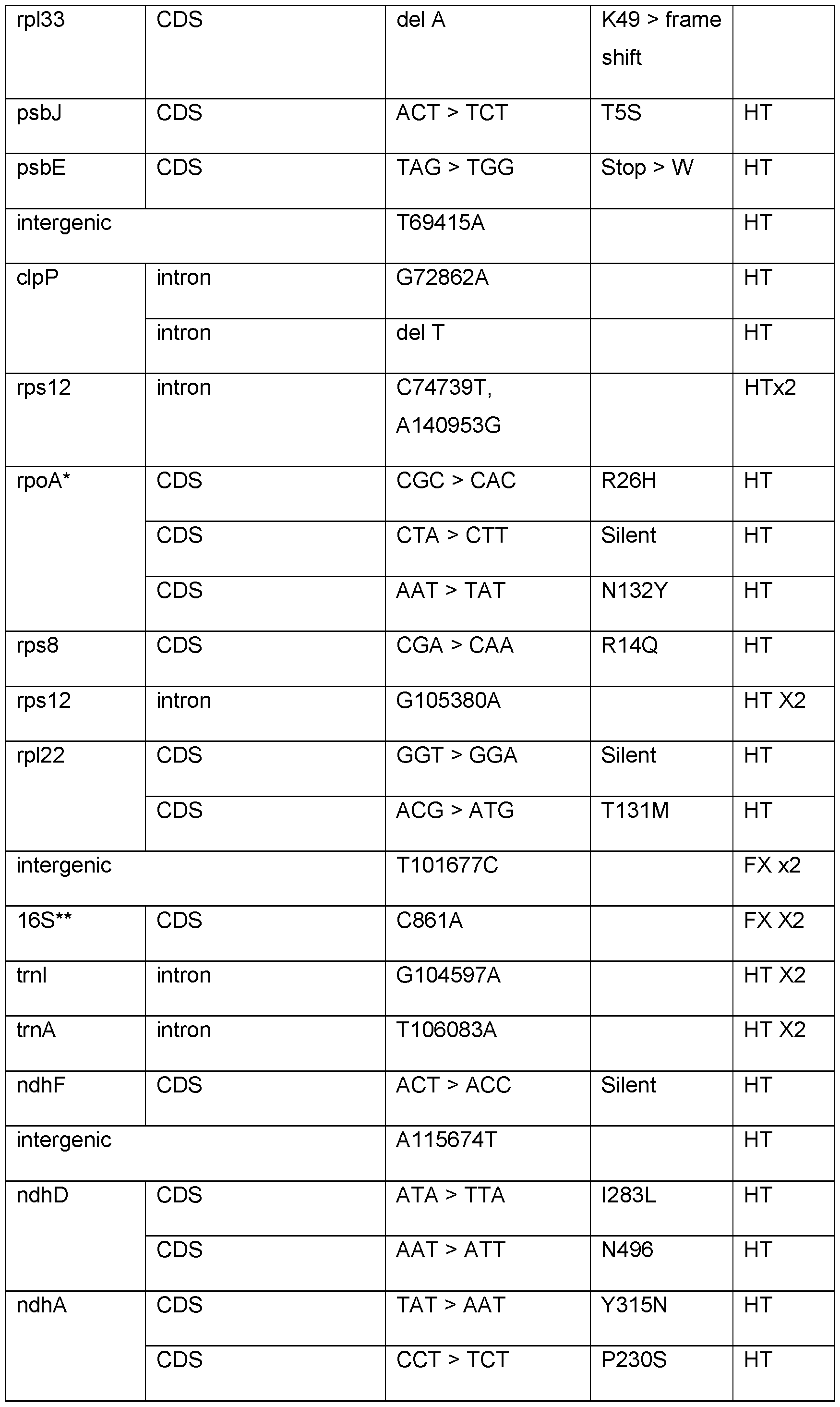


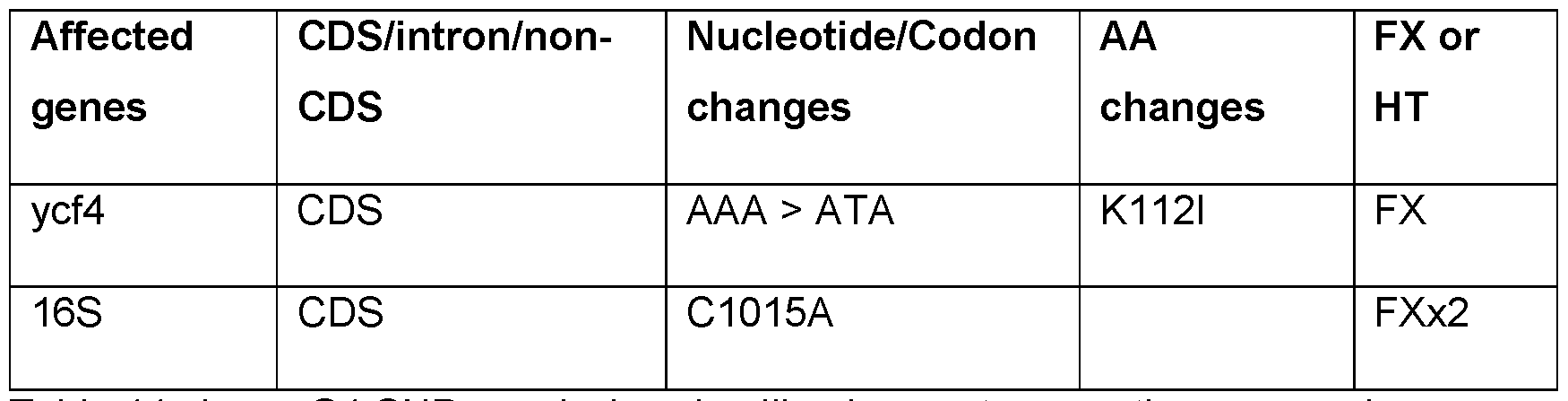


Claims
Priority Applications (6)
| Application Number | Priority Date | Filing Date | Title |
|---|---|---|---|
| CA3236641A CA3236641A1 (en) | 2021-11-01 | 2021-11-01 | Error prone dna polymerase for organelle mutation |
| PCT/GB2021/052823 WO2023073333A1 (en) | 2021-11-01 | 2021-11-01 | Error prone dna polymerase for organelle mutation |
| AU2021470884A AU2021470884A1 (en) | 2021-11-01 | 2021-11-01 | Error prone dna polymerase for organelle mutation |
| EP22801209.2A EP4426819A1 (en) | 2021-11-01 | 2022-10-31 | Error prone dna polymerase for organelle mutation |
| US18/706,219 US20240417703A1 (en) | 2021-11-01 | 2022-10-31 | Error prone dna polymerase for organelle mutation |
| PCT/GB2022/052751 WO2023073383A1 (en) | 2021-11-01 | 2022-10-31 | Error prone dna polymerase for organelle mutation |
Applications Claiming Priority (1)
| Application Number | Priority Date | Filing Date | Title |
|---|---|---|---|
| PCT/GB2021/052823 WO2023073333A1 (en) | 2021-11-01 | 2021-11-01 | Error prone dna polymerase for organelle mutation |
Publications (1)
| Publication Number | Publication Date |
|---|---|
| WO2023073333A1 true WO2023073333A1 (en) | 2023-05-04 |
Family
ID=78695727
Family Applications (2)
| Application Number | Title | Priority Date | Filing Date |
|---|---|---|---|
| PCT/GB2021/052823 Ceased WO2023073333A1 (en) | 2021-11-01 | 2021-11-01 | Error prone dna polymerase for organelle mutation |
| PCT/GB2022/052751 Ceased WO2023073383A1 (en) | 2021-11-01 | 2022-10-31 | Error prone dna polymerase for organelle mutation |
Family Applications After (1)
| Application Number | Title | Priority Date | Filing Date |
|---|---|---|---|
| PCT/GB2022/052751 Ceased WO2023073383A1 (en) | 2021-11-01 | 2022-10-31 | Error prone dna polymerase for organelle mutation |
Country Status (5)
| Country | Link |
|---|---|
| US (1) | US20240417703A1 (en) |
| EP (1) | EP4426819A1 (en) |
| AU (1) | AU2021470884A1 (en) |
| CA (1) | CA3236641A1 (en) |
| WO (2) | WO2023073333A1 (en) |
Cited By (2)
| Publication number | Priority date | Publication date | Assignee | Title |
|---|---|---|---|---|
| WO2024181386A1 (en) * | 2023-03-01 | 2024-09-06 | 国立大学法人 東京大学 | Method for introducing random mutation into genome |
| WO2025062150A1 (en) | 2023-09-22 | 2025-03-27 | The University Of Manchester | Methods of producing homoplasmic modified plants or parts thereof |
Citations (14)
| Publication number | Priority date | Publication date | Assignee | Title |
|---|---|---|---|---|
| US5268463A (en) | 1986-11-11 | 1993-12-07 | Jefferson Richard A | Plant promoter α-glucuronidase gene construct |
| US5380831A (en) | 1986-04-04 | 1995-01-10 | Mycogen Plant Science, Inc. | Synthetic insecticidal crystal protein gene |
| US5399680A (en) | 1991-05-22 | 1995-03-21 | The Salk Institute For Biological Studies | Rice chitinase promoter |
| US5424412A (en) | 1992-03-19 | 1995-06-13 | Monsanto Company | Enhanced expression in plants |
| US5436391A (en) | 1991-11-29 | 1995-07-25 | Mitsubishi Corporation | Synthetic insecticidal gene, plants of the genus oryza transformed with the gene, and production thereof |
| US5466785A (en) | 1990-04-12 | 1995-11-14 | Ciba-Geigy Corporation | Tissue-preferential promoters |
| US5569597A (en) | 1985-05-13 | 1996-10-29 | Ciba Geigy Corp. | Methods of inserting viral DNA into plant material |
| US5604121A (en) | 1991-08-27 | 1997-02-18 | Agricultural Genetics Company Limited | Proteins with insecticidal properties against homopteran insects and their use in plant protection |
| US5608144A (en) | 1994-08-12 | 1997-03-04 | Dna Plant Technology Corp. | Plant group 2 promoters and uses thereof |
| US5608149A (en) | 1990-06-18 | 1997-03-04 | Monsanto Company | Enhanced starch biosynthesis in tomatoes |
| US5608142A (en) | 1986-12-03 | 1997-03-04 | Agracetus, Inc. | Insecticidal cotton plants |
| US5659026A (en) | 1995-03-24 | 1997-08-19 | Pioneer Hi-Bred International | ALS3 promoter |
| WO1999043838A1 (en) | 1998-02-24 | 1999-09-02 | Pioneer Hi-Bred International, Inc. | Synthetic promoters |
| US6177611B1 (en) | 1998-02-26 | 2001-01-23 | Pioneer Hi-Bred International, Inc. | Maize promoters |
-
2021
- 2021-11-01 AU AU2021470884A patent/AU2021470884A1/en active Pending
- 2021-11-01 WO PCT/GB2021/052823 patent/WO2023073333A1/en not_active Ceased
- 2021-11-01 CA CA3236641A patent/CA3236641A1/en active Pending
-
2022
- 2022-10-31 US US18/706,219 patent/US20240417703A1/en active Pending
- 2022-10-31 WO PCT/GB2022/052751 patent/WO2023073383A1/en not_active Ceased
- 2022-10-31 EP EP22801209.2A patent/EP4426819A1/en active Pending
Patent Citations (16)
| Publication number | Priority date | Publication date | Assignee | Title |
|---|---|---|---|---|
| US5569597A (en) | 1985-05-13 | 1996-10-29 | Ciba Geigy Corp. | Methods of inserting viral DNA into plant material |
| US5380831A (en) | 1986-04-04 | 1995-01-10 | Mycogen Plant Science, Inc. | Synthetic insecticidal crystal protein gene |
| US5268463A (en) | 1986-11-11 | 1993-12-07 | Jefferson Richard A | Plant promoter α-glucuronidase gene construct |
| US5608142A (en) | 1986-12-03 | 1997-03-04 | Agracetus, Inc. | Insecticidal cotton plants |
| US5466785A (en) | 1990-04-12 | 1995-11-14 | Ciba-Geigy Corporation | Tissue-preferential promoters |
| US5608149A (en) | 1990-06-18 | 1997-03-04 | Monsanto Company | Enhanced starch biosynthesis in tomatoes |
| US5399680A (en) | 1991-05-22 | 1995-03-21 | The Salk Institute For Biological Studies | Rice chitinase promoter |
| US5604121A (en) | 1991-08-27 | 1997-02-18 | Agricultural Genetics Company Limited | Proteins with insecticidal properties against homopteran insects and their use in plant protection |
| US5436391A (en) | 1991-11-29 | 1995-07-25 | Mitsubishi Corporation | Synthetic insecticidal gene, plants of the genus oryza transformed with the gene, and production thereof |
| US5593874A (en) | 1992-03-19 | 1997-01-14 | Monsanto Company | Enhanced expression in plants |
| US5424412A (en) | 1992-03-19 | 1995-06-13 | Monsanto Company | Enhanced expression in plants |
| US5608144A (en) | 1994-08-12 | 1997-03-04 | Dna Plant Technology Corp. | Plant group 2 promoters and uses thereof |
| US5659026A (en) | 1995-03-24 | 1997-08-19 | Pioneer Hi-Bred International | ALS3 promoter |
| US6072050A (en) | 1996-06-11 | 2000-06-06 | Pioneer Hi-Bred International, Inc. | Synthetic promoters |
| WO1999043838A1 (en) | 1998-02-24 | 1999-09-02 | Pioneer Hi-Bred International, Inc. | Synthetic promoters |
| US6177611B1 (en) | 1998-02-26 | 2001-01-23 | Pioneer Hi-Bred International, Inc. | Maize promoters |
Non-Patent Citations (173)
| Title |
|---|
| "Encyclopedia of Forensic and Legal Medicine", 1 January 2016, ELSEVIER, US, ISBN: 978-0-12-800055-7, article GOODWIN W.H.: "DNA: Mitochondrial DNA", pages: 351 - 358, XP055944739, DOI: 10.1016/B978-0-12-800034-2.00155-5 * |
| "NCBI", Database accession no. XP_024364015 |
| ALTSCHUL, S. F.GISH, W.MILLER, W.MYERS, E. W.LIPMAN, D. J.: "Basic local alignment search tool", J MOL BIOL, vol. 215, 1990, pages 403 - 410, XP002949123, DOI: 10.1006/jmbi.1990.9999 |
| ANIL DAY ET AL: "The chloroplast transformation toolbox: selectable markers and marker removal : Markers for chloroplast transformation", PLANT BIOTECHNOLOGY JOURNAL, vol. 9, no. 5, 23 March 2011 (2011-03-23), GB, pages 540 - 553, XP055502836, ISSN: 1467-7644, DOI: 10.1111/j.1467-7652.2011.00604.x * |
| ARCHER ET AL., J. BIOENERG. BIOMEMB., vol. 22, no. 6, 1990, pages 789 - 810 |
| ASTATKE, M.GRINDLEY, N. D. F.JOYCE, C. M.: "How E. coli DNA polymerase I (Klenow fragment) distinguishes between deoxy- and dideoxynucleotides", J MOL BIOL, vol. 278, 1998, pages 147 - 165, XP004453984, DOI: 10.1006/jmbi.1998.1672 |
| AYALA-GARCIA, V. M.BARUCH-TORRES, N.GARCIA-MEDEL, P. L.BRIEBA, L. G.: "Plant organellar DNA polymerases paralogs exhibit dissimilar nucleotide incorporation fidelity", FEBS J, vol. 285, 2018, pages 4005 - 4018 |
| BARUCH-TORRES, N.BRIEBA, L. G.: "Plant organellar DNA polymerases are replicative and transiesion DNA synthesis polymerases", NUCL ACIDS RES, vol. 45, 2017, pages 10751 - 10763 |
| BEBENEK, K.JOYCE, C. M.FITZGERALD, M. P.KUNKEL, T. A.: "The fidelity of DNA synthesis catalyzed by derivatives of Escherichia coli DNA polymerase I", J BIOI CHEM, vol. 265, 1990, pages 13878 - 13887, XP002915509 |
| BEBENEK, K.KUNKEL, T.: "Analyzing fidelity of DNA polymerases", METH ENZYMOL, vol. 262, 1995, pages 217 - 232, XP008037585, DOI: 10.1016/0076-6879(95)62020-6 |
| BELL, C. E.FRESCURA, P.HOCHSCHILD, A.LEWIS, M.: "Crystal structure of the lambda repressor C-terminal domain provides a model for cooperative operator binding", CELL, vol. 101, 2000, pages 801 - 811 |
| BEVAN, M.: "Binary Agrobacterium vectors for plant transformation", NUCL ACIDS RES, vol. 12, 1984, pages 8711 - 8721 |
| BEVAN, NUCLEIC ACIDS RES, vol. 12, 1984, pages 8711 - 8721 |
| BURR, S. P.PEZET, M.CHINNERY, P. F.: "Mitochondrial DNA heteroplasmy and purifying selection in the mammalian female germ line", DEVELOP GROWTH DIFFEREN, vol. 60, 2018, pages 21 - 32, XP071193788, DOI: 10.1111/dgd.12420 |
| CALLIS ET AL., GENES AND DEVELOPMENT, vol. 1, 1987, pages 1183 - 1200 |
| CAMPANELLA ET AL., BMC BIOINFORMATICS, vol. 4, 10 July 2003 (2003-07-10), pages 29 |
| CAMPBELLGOWRI, PLANT PHYSIOL., vol. 92, 1990, pages 1 - 11 |
| CANEVASCINI ET AL., PLANT PHYSIOL., vol. 112, no. 2, 1996, pages 513 - 524 |
| CARRIE, C.KUHN, K.MURCHA, M. W.DUNCAN, O.SMALL, I. D.O'TOOLE, N.WHELAN, J.: "Approaches to defining dual-targeted proteins in Arabidopsis", PLANT J, vol. 57, 2009, pages 1128 - 1139 |
| CHAN, S. S. L.NAVIAUX, R. K.BASINGER, A. A.CASAS, K. A.COPELAND, W. C.: "De novo mutation in POLG leads to haplotype insufficiency and Alpers syndrome", MITOCHONDRION, vol. 9, 2009, pages 340 - 345, XP026602965, DOI: 10.1016/j.mito.2009.05.002 |
| CHRISTENSEN ET AL., PLANT MOL. BIOL., vol. 12, 1989, pages 619 - 632 |
| CHRISTENSEN ET AL., PLANT MOL. BIOL., vol. 18, 1992, pages 675 - 689 |
| CHRISTENSEN, A. C.LYZNIK, A.MOHAMMED, S.ELOWSKY, C. G.ELO, A.YULE, R.MACKENZIE, S. A.: "Dual-domain, dual-targeting organellar protein presequences in Arabidopsis can use non-AUG start codons", PLANT CELL, vol. 17, 2005, pages 2805 - 2816 |
| CHRISTIE, J. R.BEEKMAN, M.: "Uniparental inheritance promotes adaptive evolution in cytoplasmic genomes", MOL BIOL EVOL, vol. 34, 2017, pages 677 - 691 |
| CLARK ET AL., J BIOL. CHEM., vol. 264, 1989, pages 17544 - 17550 |
| CORRIVEAU, J. L.COLEMAN, A. W.: "Rapid screening method to detect potential biparental inheritance of plastid DNA and results for over 200 angiosperm species", AMERJ BOT, vol. 75, 1988, pages 1443 - 1458 |
| CSORGO, B.FEHER, T.TIMAR, E.BLATTNER, F. R.POSFAI, G.: "Low-mutation-rate, reduced-genome Escherichia coli: an improved host for faithful maintenance of engineered genetic constructs", MICROB CELL FACTORIES, vol. 11, 2012, pages e11 |
| CUPP, J. D.NIELSEN, B. L.: "Arabidopsis thaliana organellar DNA polymerase IB mutants exhibit reduced mtDNA levels with a decrease in mitochondrial area density", PHYSIOL PLANT, vol. 149, 2013, pages 91 - 103 |
| DANDEKAR, A.M.FISK, H.J.: "Transgenic Plants", 2005, HUMANA PRESS, article "Plant Transformation: Agrobacterium-mediated gene transfer", pages: 035 - 046 |
| DATABASE UniParc [online] 29 September 2011 (2011-09-29), ANONYMOUS: "UPI00023E3E5A | UniParc | UniProt", XP055944487, retrieved from https://www.uniprot.org/uniparc/UPI00023E3E5A/entry Database accession no. UPI00023E3E5A * |
| DAY, A.: "Adv. Photosynth. Resp.", vol. 35, 2012, article "Reverse Genetics in Flowering Plant Plastids", pages: 415 - 441 |
| DAYAN, F. E.DUKE, S. O.: "Natural compounds as next-generation herbicides", PLANT PHYSIOL, vol. 166, 2014, pages 1090 - 1105, XP055460356, DOI: 10.1104/pp.114.239061 |
| DE CASTRO SILVA FILHO ET AL., PLANT MOL. BIOL., vol. 30, 1996, pages 769 - 780 |
| DE COSTER, W.D'HERT, S.SCHULTZ, D. T.CRUTS, M.VAN BROECKHOVEN, C.: "NanoPack: visualizing and processing long-read sequencing data", BIOINFORMATICS, vol. 34, 2018, pages 2666 - 2669 |
| DELARUE, M.POCH, O.TORDO, N.MORAS, D.ARGOS, P.: "An attempt to unify the structure of polymerases", PROTEIN ENGINEER, vol. 3, 1990, pages 461 - 467 |
| DELLA- CIOPPA ET AL., PLANT PHYSIOL., vol. 84, 1987, pages 965 - 968 |
| DERBYSHIRE, V.GRINDLEY, N, D. F.JOYCE, C. M.: "The 3'-5' exonuclease of DNA polymerase I of Escherichia coli: contribution of each amino-acid at the active-site to the reaction", EMBO J, vol. 10, 1991, pages 17 - 24, XP002369423 |
| DORRELL, R. G.HOWE, C. J.: "What makes a chloroplast? Reconstructing the establishment of photosynthetic symbioses", J CELL SCI, vol. 125, 2012, pages 1865 - 1875 |
| DRESCHER, A.RUF, S.CALSA, T.CARRER, H.BOCK, R.: "The two largest chloroplast genome-encoded open reading frames of higher plants are essential genes", PLANT J, vol. 22, 2000, pages 97 - 104, XP002213805, DOI: 10.1046/j.1365-313x.2000.00722.x |
| EDGAR, D.TRIFUNOVIC, A.: "The mtDNA mutator mouse: Dissecting mitochondrial involvement in aging", AGING, vol. 1, 2009, pages 1028 - 1032 |
| ELROY- STEIN ET AL., PROC. NATL. ACAD. SCL USA, vol. 86, 1989, pages 6126 - 6130 |
| EMANUELSSON, O.BRUNAK, S.VON HEUNE, G.NIELSEN, H.: "Locating proteins in the cell using TargefP, SignalP and related tools", NATURE PROTOCOLS, vol. 2, 2007, pages 953 - 971, XP008097990, DOI: 10.1038/nprot.2007.131 |
| ENGLER, C.KANDZIA, R.MARILLONNET, S.: "A one pot, one step, precision cloning method with high throughput capability", PLOS ONE, vol. 3, 2008, pages e3647 |
| FAYZULIN, R. ZPEREZ, M.KOZHUKHAR, N.SPADAFORA, DWILSON, G. L.ALEXEYEV, M. F.: "A method for mutagenesis of mouse mtDNA and a resource of mouse mtDNA mutations for modeling human pathological conditions", NUCL ACIDS RES, vol. 43, 2015, pages e62 - e62 |
| FENG, L. Y.RAZA, M. A.LI, Z. C.CHEN, Y. K.BIN KHALID, M. H.DU, J. B.LIU, W. G.WU, X. L.SONG, C.YU, L.: "The Influence of light Intensity and leaf movement on photosynthesis characteristics and carbon balance of soybean", FRONT PLANT SCI, vol. 9, 2019, pages e1952 |
| FENG, S. H.COKUS, S. J.ZHANG, X. Y.CHEN, P. Y.BOSTICK, M.GOLL, M. G.HETZEL, J.JAIN, J.STRAUSS, S. H.HALPERN, M. E.: "Conservation and divergence of methylation patterning in plants and animals", PROC NATL ACAD SCI USA, vol. 107, 2010, pages 8689 - 8694 |
| FLOROS, V. I.PYLE, A.DIETMANN, S.WEI, W.TANG, W. W. C.IRIE, N.PAYNE, B.CAPALBO, A.NOLI, L.COXHEAD, J.: "Segregation of mitochondrial DNA heteroplasmy through a developmental genetic bottleneck in human embryos", NATURE CELL BIOL, vol. 20, 2018, pages 144 - 151, XP036483098, DOI: 10.1038/s41556-017-0017-8 |
| FLUHR, R.AVIV, D.GALUN, E.EDELMAN, M.: "Efficient induction and selection of chloroplast-encoded antibiotic-resistant mutants in Nicotiana", PROC NATL ACAD SCI USA, vol. 82, 1985, pages 1485 - 1489 |
| FOURY, F.VANDERSTRAETEN, S.: "Yeast mitochondrial DNA mutators with deficient proofreading exonucleolytic activity", EMBO J, vol. 11, 1992, pages 2717 - 2726, XP002143035 |
| FRANCOIS, I.VAN HEMELRIJCK, W.AERTS, A. M.WOUTERS, P. F. J.PROOST, P.BROEKAERT, W. F.CAMMUE, B. P, A.: "Processing in Arabidopsis thaliana of a heterologous polyprotein resulting in differential targeting of the individual plant defensins", PLANT SCI, vol. 166, 2004, pages 113 - 121, XP008110103, DOI: 10.1016/j.plantsci.2003.09.001 |
| GALLIE ET AL., NUCLEIC ACID RES., vol. 15, 1987, pages 8693 - 8711 |
| GALLIE ET AL., PLANT PHYSIOL., vol. 106, 1994, pages 929 - 939 |
| GALLIE, GENE, vol. 165, no. 2, 1995, pages 233 - 238 |
| GARCIA-MEDEL, P. L.BARUCH-TORRES, N.PERALTA-CASTRO, A.TRASVINA-ARENAS, C. H.TORRES-LARIOS, A.BRIEBA, L. G.: "Plant organellar DNA polymerases repair double-stranded breaks by microhomology-mediated end-joining", NUCL ACIDS RES, vol. 47, 2019, pages 3028 - 3044 |
| GLEAVE, A. P.: "A versatile binary vector system with a T-DNA organizational-structure conducive to efficient integration of cloned DNA into the plant genome", PLANT MOL BIOL, vol. 20, 1992, pages 1203 - 1207 |
| GREINER, S.: "Plastome mutants of higher plants", ADV PHOTOSYN RESP, vol. 35, 2012, pages 237 - 266 |
| GUERINEAU ET AL., MOL. GEN. GENET., vol. 262, 1991, pages 141 - 144 |
| GUEVARA-GARCIA ET AL., PLANT J, vol. 4, no. 3, 1993, pages 495 - 505 |
| HAN, C. D.PATRIE, W.POLACCO, M.COE, E. H.: "Aberrations in plastid transcripts and deficiency of plastid DNA in striped and albino mutants in maize", PIANTA, vol. 191, 1993, pages 552 - 563 |
| HANSEN ET AL., MOL GEN GENET., vol. 254, no. 3, 1997, pages 337 - 343 |
| HENIKOFF, S.HENIKOFF, J. G.: "Amino acid substitution matrices from protein blocks", PROC NATL ACAD SCI USA, vol. 89, 1992, pages 10915 - 10919, XP002599751, DOI: 10.1073/pnas.89.22.10915 |
| HERRERA-ESTRELLA, NATURE, vol. 303, 1983, pages 209 |
| HOLSTERS, M.SILVA B.VANVUET, F.GENETELLO, C.DEBLOCK, M.DHAESE, P.DEPICKER, A.INZE, D.ENGLER, G.VILLARROEL, R.: "The functional-organization of the nopaline A. tumefaciens plasmid pTIc58", PLASMID, vol. 3, 1980, pages 212 - 230, XP024868117, DOI: 10.1016/0147-619X(80)90110-9 |
| IAMTHAM, S.DAY, A.: "Removal of antibiotic resistance genes from transgenic tobacco plastids", NATURE BIOTECHNOL, vol. 18, 2000, pages 1172 - 1176, XP002180058, DOI: 10.1038/81161 |
| JI JUNWEI ET AL: "Construction of a highly error-prone DNA polymerase for developing organelle mutation systems", NUCLEIC ACIDS RESEARCH, vol. 48, no. 21, 2 November 2020 (2020-11-02), GB, pages 11868 - 11879, XP055944711, ISSN: 0305-1048, Retrieved from the Internet <URL:http://academic.oup.com/nar/article-pdf/48/21/11868/34658729/gkaa929.pdf> DOI: 10.1093/nar/gkaa929 * |
| JI JUNWEI ET AL: "Construction of a highly error-prone DNA polymerase for developing organelle mutation systems-Supplementary data", NUCLEIC ACIDS RESEARCH, 2 November 2020 (2020-11-02), pages 1 - 17, XP055944722, Retrieved from the Internet <URL:https://oup.silverchair-cdn.com/oup/backfile/Content_public/Journal/nar/48/21/10.1093_nar_gkaa929/1/gkaa929_supplemental_file.pdf?Expires=1661352297&Signature=bDm3l-WJAc5agB6dA10Czy~uth3o0F1-EpVPBh85mmhU7bKgN9ddS2sFHpatrPIT1NzUIEh5qJUTzWur0LXIlrqYGrQl6AMlI9S3v4PE4GItMVlctS1~bx9yuDrytKLJgom2JqVLkyD3w> [retrieved on 20220720] * |
| JOBLING ET AL., NATURE, vol. 325, 1987, pages 622 - 625 |
| JOZWIAKGWSKI, S. K.CONNOLLY, B. A.: "Plasmid-based lacZa assay for DNA polymerase fidelity: application to archaeal family-B DNA polymerase", NUCL ACIDS RES, vol. 37, 2009, pages e102, XP055602588, DOI: 10.1093/nar/gkp494 |
| KARLIN, S.ALTSCHUL, S. F.: "Methods for assessing the statistical significance of molecular sequence features by using general scoring schemes", PROC NATL ACAD SCI USA, vol. 87, 1990, pages 2264 - 2268, XP001030853, DOI: 10.1073/pnas.87.6.2264 |
| KAUPPILA, T. E. S.BRATIC, A.JENSEN, M, B.BAGGIO, F.PARTRIDGE, L.JASPER, H.GRONKE, S.LARSSON, N. G.: "Mutations of mitochondrial DNA are not major contributors to aging of fruit flies", PROC NATL ACAD SCI USA, vol. 115, 2018, pages E9620 - E9629 |
| KAWAMATA, PLANT CELL PHYSIOL, vol. 38, no. 7, 1997, pages 792 - 803 |
| KEITH, B. J.JOZWIAKOWSKI, S. K.CONNOLLY, B. A.: "A plasmid-based lacZa gene assay for DNA polymerase fidelity measurement", ANAL BIOCHEM, vol. 433, 2013, pages 153 - 161, XP055602583, DOI: 10.1016/j.ab.2012.10.019 |
| KLEE, BIO-TECHNOLOGY, vol. 3, no. 7, 1985, pages 637 - 642 |
| KLUCNIKA, A.MA, H.: "A battle for transmission: the cooperative and selfish animal mitochondrial genomes", OPEN BIOLOGY, vol. 9, 2019, pages 180267 |
| KUJOTH, G. C.HIONA, APUGH, T. D.SOMEYA, S.PANZER, K.WOHLGEMUTH, S. E.HOFER, T.SEO, A. Y.SULLIVAN, R.JOBLING, W. A.: "Mitochondrial DNA mutations, oxidative stress, and apoptosis in mammalian aging", SCIENCE, vol. 309, 2005, pages 481 - 484 |
| KUMAR, J. K.TABOR, S.RICHARDSON, C. C.: "Role of the C-termina! residue of the DNA polymerase of bacteriophage T7", J BIOL CHERN, vol. 276, 2001, pages 34905 - 34912, XP002454981, DOI: 10.1074/jbc.M104151200 |
| KUNKEL, T. A. & ALEXANDER, P. S.: "The base substitution fidelity of eucaryotic DNA polymerases: Mispairing frequencies, site preferences, insertion preferences, and base substitution by dislocation", J BIOL CHEM, vol. 261, 1986, pages 160 - 166 |
| KUNKEL, T. A.: "The mutational specificity of DNA polymerase beta during in vitro DNA synthesis: production of frameshift, base substitution, and deletion mutations", J BIOL CHEM, vol. 260, 1985, pages 5787 - 5796 |
| KUNKEL, T. A.BEBENEK, K: "DNA replication fidelity", ANN REV BIOCHEM, vol. 69, 2000, pages 497 - 529 |
| LAM, RESULTS PROBL. CELL DIFFER., vol. 20, 1994, pages 181 - 196 |
| LAMPPA ET AL., J BIOL. CHEM., vol. 263, 1988, pages 14996 - 14999 |
| LANDAU, A.LENCINA, F.PACHECO, M. G.PRINA, A. R.: "Plastome Mutations and recombination events in barley chloroplast mutator seedlings", J HERED, vol. 107, 2016, pages 266 - 273 |
| LAST ET AL., THEOR. APPL. GENET., vol. 81, 1991, pages 581 - 588 |
| LAWRENCE ET AL., J BIOL. CHEM., vol. 272, no. 33, 1997, pages 20357 - 20363 |
| LI, H.: "Minimap2: pairwise alignment for nucleotide sequences", BIOINFORMATICS, vol. 34, 2018, pages 3094 - 3100 |
| LI, X.: "Infiltration of Nicotiana benthamiana Protocol for Transient Expression via Agrobacterium", BIO-PROTOCOL, vol. 1, no. 14, 2011, pages e95 |
| LING, L. L.KEOHAVONG, P.DIAS, C.THILLY, W. G.: "Optimization of the polymerase chain reaction with regard to fidelity: modified T7, Taq, and vent DNA polymerases", GENOME RES, vol. 1, 1991, pages 63 - 69 |
| LOMMEL ET AL., VIROLOGY, vol. 154, 1991, pages 382 - 385 |
| LONGLEY, M. J.NGUYEN, D.KUNKEL, T. A.COPELAND, W. C.: "The fidelity of human DNA polymerase gamma with and without exonucleolytic proofreading and the p55 accessory subunit", J BIOL CHEM, vol. 276, 2001, pages 38555 - 38562, XP002661229, DOI: 10.1074/JBC.M105230200 |
| LUTZ, K.A.MALIGA, P.: "Plastid genomes in a regenerating tobacco shoot derive from a small number of copies selected through a stochastic process", PLANT J, vol. 56, 2008, pages 975 - 983 |
| MACEJAK ET AL., NATURE, vol. 353, 1991, pages 90 - 94 |
| MADESIS, P.OSATHANUNKUL, M.GEORGOPOULOU, U.GISBY, M. F.MUDD, E. A.NIANIOU, I.TSITOURA, P.MAVROMARA, P.TSAFTARIS, A.DAY, A.: "A hepatitis C virus core polypeptide expressed in chloroplasts detects anti-core antibodies in infected human sera", J BIOTECHNOL, vol. 145, 2010, pages 377 - 386, XP026892462, DOI: 10.1016/j.jbiotec.2009.12.001 |
| MAJERAN, W.FRISO, G.ASAKURA, Y.QU. X.HUANG, M. S.PONNALA, L.WATKINS, K. P.BARKAN, A.VAN WIJK, K. J.: "Nucleoid-Enriched Proteomes in developing plastids and chloroplasts from maize leaves: a new conceptual framework for nucleoid functions", PLANT PHYSIOLOGY, vol. 158, 2012, pages 156 - 189 |
| MAOR-SHOSHANI, A.REUVEN, N. B.TOMER, G.LIVNEH, Z.: "Highly mutagenic replication by DNA polymerase V (UmuC) provides a mechanistic basis for SOS untargeted mutagenesis", PROC NATL ACAD SCI USA, vol. 97, 2000, pages 565 - 570 |
| MARECHAL, A.PARENT, J. S.VERONNEAU-LAFORTUNE, F.JOYEUX, A.LANG, B. F.BRISSON, N.: "Whirly proteins maintain plastid genome stability in Arabidopsis", PROC NATL ACAD SCI USA, vol. 106, 2009, pages 14693 - 14698 |
| MATSUOKA ET AL., PROC NATL. ACAD. SCI. USA, vol. 90, no. 20, 1993, pages 9586 - 9590 |
| MCBRIDE ET AL., PROC. NATL. ACAD. SCI. USA, vol. 91, 1994, pages 7301 - 7305 |
| MCELROY ET AL., PLANT CELL, vol. 2, 1990, pages 1261 - 1272 |
| MCINERNEY, P., ADAMS, P. AND HADI, M. Z.: "Error rate comparison during polymerase chain reaction by DNA polymerase", MOL BIOL INT, vol. 2014, 2014, pages 1 - 8 |
| MCLNERNEY ET AL., POTAPOV AND ONG, 2014 |
| MINNICK, D. T.BEBENEK, K.OSHEROFF, W. P.TURNER, R. M.ASTATKE, M.LIU, L. X.KUNKEL, T. A.JOYCE, C. M.: "Side chains that influence fidelity at the polymerase active site of Escherichia coli DNA polymerase I (Klenow fragment", J BIOL CHEM, vol. 274, 1999, pages 3067 - 3075, XP002341285, DOI: 10.1074/jbc.274.5.3067 |
| MORI, Y.KIMURA, S.SAOTOME, A.KASAI, N.SAKAGUCHI, N.UCHIYAMA, Y.ISHIBASHI, T.YAMAMOTO, T.CHIKU, H.SAKAGUCHI, K.: "Plastid DNA polymerases from higher plants: Arabidopsis thaliana", BIOCHEM BIOPHYS RES COMMUN, vol. 334, 2005, pages 43 - 50, XP027230086, DOI: 10.1016/j.bbrc.2005.06.052 |
| MORIYAMA, T.TERASAWA, K.SATO, N.: "Conservation of POPs, the plant organellar DNA polymerases, in eukaryotes", PROTIST, vol. 162, 2011, pages 177 - 187, XP027576053 |
| MORLEY, S. A.AHMAD, N.NIELSEN, B. L.: "Plant organelle genome replication", PLANTS-BASEL, vol. 8, 2019, pages e358 |
| MUNROE, GENE, vol. 91, 1990, pages 151 - 158 |
| MURASHIGE, T.SKOOG, F.: "A revised medium for rapid growth and bioassays with tobacco tissue cultures", PHYSIOL PLANT, vol. 15, 1962, pages 473 - 497, XP002577845, DOI: 10.1111/j.1399-3054.1962.tb08052.x |
| MURRAY ET AL., NUCLEIC ACIDS RES., vol. 17, 1989, pages 7891 - 7903 |
| NAGAYA, S.KAWAMURA, K.SHINMYO, A.KATO, K.: "The HSP Terminator of Arabidopsis thaliana increases gene expression in plant cells", PLANT CELL PHYSIOL, vol. 51, 2010, pages 328 - 332, XP055140803, DOI: 10.1093/pcp/pcp188 |
| NEEDLEMAN, S. B.WUNSCH, C. D.: "A general method applicable to search for similarities in amino acid sequence of 2 proteins", J MOL BIOL, vol. 48, 1970, pages 443 - 453, XP024011703, DOI: 10.1016/0022-2836(70)90057-4 |
| NILSSON, B.UHLEN, M.JOSEPHSON, S.GATENBECK, S.PHILIPSON, L.: "An improved positive selection plasmid vector constructed by oligonucleotide mediated mutagenesis", NUCL ACIDS RES, vol. 11, 1983, pages 8019 - 8030, XP001314807 |
| ODELL ET AL., NATURE, vol. 313, 1985, pages 810 - 812 |
| ONO, Y.SAKAI, A.TAKECHI, K.TAKIO, S.TAKUSAGAWA, M.TAKANO, H.: "NtPolI-like1 and NtPolI-like2, bacterial DNA polymerase I homologs isolated from BY-2 cultured tobacco cells, encode DNA polymerases engaged in DNA replication in both plastids and mitochondria", PLANT CELL PHYSIOL, vol. 48, 2007, pages 1679 - 1692 |
| OROZCO ET AL., PLANT MOL BIOL, vol. 23, no. 6, 1993, pages 1129 - 1138 |
| PARENT, J, S.LEPAGE, E.BRISSON, N.: "Divergent roles for the two Pol I-like organelle DNA polymerases of Arabidopsis", PLANT PHYSIOL, vol. 156, 2011, pages 254 - 262 |
| PARK, C. B.LARSSON, N. G.: "Mitochondrial DNA mutations in disease and aging", J CELL BIOL, vol. 193, 2011, pages 809 - 818 |
| PEARSON, W. R.LIPMAN, D. J.: "Improved tools for biological sequence comparison", PROC NATL ACAD SCI USA, vol. 85, 1988, pages 2444 - 2448, XP002060460, DOI: 10.1073/pnas.85.8.2444 |
| POTAPOV, V.ONG, J. L.: "Examining sources of error in PCR by single molecule sequencing", PLOS ONE, vol. 12, 2017, pages e0169774 - e0169774, XP055800227, DOI: 10.1371/journal.pone.0169774 |
| POULTON, J.CHIARATTI, M. R.MEIRELLES, F. V.KENNEDY, S.WELLS, D.HOLT, I. J.: "Transmission of Mitochondrial DNA Diseases and Ways to Prevent Them", PLOS GENET, vol. 6, 2010, pages e1001066 |
| POUWELS ET AL., CLONING VECTORS: A LABORATORY MANUAL, 1985 |
| PRIMAVESI, L. F.WU, H. X.MUDD, E. A.DAY, A.JONES, H. D.: "Visualisation of plastids in endosperm, pollen and roots of transgenic wheat expressing modified GFP fused to transit peptides from wheat SSU RubisCO, rice FtsZ and maize ferredoxin III proteins", TRANSGENIC RES, vol. 17, 2008, pages 529 - 543, XP019616119 |
| PRINA, A. R.: "A mutator nuclear gene inducing a wide spectrum of cytoplasmically inherited chlorophyll deficiencies in barley", THEOR APPL GENET, 1992 |
| REIDHAAROLSON, J. F.SAUER, R. T., COMBINATORIAL CASSETTE MUTAGENESIS AS A PROBE OF THE INFORMATIONAL CONTENT OF PROTEIN SEQUENCES SCIENCE, vol. 241, 1988, pages 53 - 57 |
| REIDHAAROLSON, J. F.SAUER, R. T.: "Functionally acceptable substitutions in 2 alpha-helical regions of lambda repressor", PROTEINS, vol. 7, 1990, pages 306 - 316 |
| RINEHART ET AL., PLANT PHYSIOL, vol. 12, no. 3, 1996, pages 1331 - 1341 |
| ROMER ET AL., BIO CHEM. BIOPHYS. RES. COM., vol. 196, 1993, pages 1414 - 1421 |
| ROMER ET AL., BIOCHEM. BIOPHYS. RES. COMMUN., vol. 196, 1993, pages 1414 - 1421 |
| RUF, S.KARCHER, D.BOCK, R.: "Determining the transgene containment level provided by chloroplast transformation", PROC NATL ACAD SCI USA, vol. 104, 2007, pages 6998 - 7002 |
| RUSSELL ET AL., TRANSGENIC RES, vol. 6, no. 2, 1997, pages 157 - 168 |
| SAKAMOTO, W.TAKAMI, T.: "Chloroplast DNA Dynamics: Copy Number, Quality Control and Degradation", PLANT CELL PHYSIOL, vol. 59, 2018, pages 1120 - 1127 |
| SAMBROOK, J.FRITSCH, E. F.MANIATIS, T.: "Molecular Cloning: a laboratory manual", 1989, COLD SPRING HARBOR |
| SAMSTAG, C. L.HOEKSTRA, J. G.HUANG, C. H.CHAISSON. M. J.YOULE, R. J.KENNEDY, S. R.PALLANCK, L. J.: "Deleterious mitochondrial DNA point mutations are overrepresented in Drosophila expressing a proofreading-defective DNA polymerase gamma", P/OS GENETICS, vol. 14, 2018, pages e1007805 |
| SANFACON ET AL., GENES DEV., vol. 5, 1991, pages 141 - 149 |
| SAUER, R. T.: "Mutagenic dissection of the sequence determinants of protein folding, recognition, and machine function", PROTEIN SCI, vol. 22, 2013, pages 1675 - 1687 |
| SCHMIDT ET AL., J BIOL. CHEM., vol. 268, no. 36, 1993, pages 27447 - 27457 |
| SCHNELL ET AL., JBIOL. CHEM., vol. 266, no. 5, 1991, pages 3335 - 3342 |
| SERINO, G.MALIGA, P.: "A negative selection scheme based on the expression of cytosine deaminase in plastids", PLANT JOURNAL, vol. 12, 1997, pages 697 - 701 |
| SHAH ET AL., SCIENCE, vol. 233, no. Al, 1986, pages S-4SI - 481 |
| SHAVER, J. M.OLDENBURG, D. J.BENDICH, A. J.: "Changes in chloroplast DNA during development in tobacco, Medicago truncatula, pea, and maize", PLANTA, vol. 224, 2006, pages 72 - 82, XP019427432 |
| SHINKAI, A.LOEB, L. A.: "In vivo mutagenesis by Escherichia coli DNA polymerase I: Ile(709) in motif A functions in base selection", J BIOL CHEM, vol. 276, 2001, pages 46759 - 46764, XP002369421, DOI: 10.1074/jbc.M104780200 |
| SIERRO, N.BATTEY, J. N. D.OUADI, S.BAKAHER, N.BOVET, L.WILLIG, A.GOEPFERT, S.PEITSCH, M. C.IVANOV, N. V.: "The tobacco genome sequence and its comparison with those of tomato and potato", NATURE COMM, vol. 5, 2014, pages e3833 |
| SKUZESKI ET AL., PLANT MOL. BIOL., vol. 15, 1990, pages 65 - 79 |
| SMITH TFWATERMAN MS, J. MOL. BIOL, vol. 147, no. 1, 1981, pages 195 - 7 |
| SMITH, D. R.: "Mutation rates in plastid genomes: they are lower than you might think", GENOME BIOLOGY AND EVOLUTION, vol. 7, 2015, pages 1227 - 34 |
| SMITH, T. F.WATERMAN, M. S.: "Identification of common molecular subsequences", JOURNAL OF MOLECULAR BIOLOGY, vol. 147, 1981, pages 195 - 197, XP024015032, DOI: 10.1016/0022-2836(81)90087-5 |
| STEWART, J. B.FREYER, C.ELSON, J. L.WREDENBERG, A.CANSU, Z.TRIFUNOVIC, A.LARSSON, N. G.: "Strong purifying selection in transmission of mammalian mitochondrial DNA", PLOS BIOLOGY, vol. 6, 2008, pages 63 - 71 |
| STONE, J. E.KISSLING, G. E.LUJAN, S. A.ROGOZIN, I. B.STITH, C. M.BURGERS, P. M. J.KUNKEL, T, A.: "Low-fidelity DNA synthesis by the L979F mutator derivative of Saccharomyces cerevisiae DNA polymerase ζ", NUCL ACIDS RES, vol. 37, 2009, pages 3774 - 3787 |
| SVAB ET AL., PROC. NATL. ACAD. SCI. USA, vol. 87, 1990, pages 8526 - 8530 |
| SVAB, Z.MALIGA, P.: "Mutation proximal to the transfer RNA binding region of the Nicotiana plastid 16s ribosomal-RNA confers resistance to spectinomycin", MOL GEN GENET, vol. 228, 1991, pages 316 - 319 |
| SVABMALIGA, EMBO J., vol. 12, 1993, pages 601 - 606 |
| SVABMALIGA, PROC. NATL. ACAD. SCI. USA, vol. 90, 1993, pages 913 - 917 |
| SZCZEPANOWSKA, K.TRIFUNOVIC, A.: "Different faces of mitochondrial DNA mutators", BIOCHIM BIOPHYS ACTA-BIOENERGETICS, vol. 1847, 2015, pages 1362 - 1372 |
| TAKEUCHI, R.KIMURA, S.SAOTOME, A.SAKAGUCHI, K.: "Biochemical properties of a plastidial DNA polymerase of rice", PLANT MOL BIOL, vol. 64, 2007, pages 601 - 611, XP019507446, DOI: 10.1007/s11103-007-9179-2 |
| TRIFUNOVIC, A.LARSSON, N. G.: "Mitochondrial dysfunction as a cause of ageing", JOURNAL OF INTERNAL MEDICINE, vol. 263, 2008, pages 167 - 178 |
| TRIFUNOVIC, A.WREDENBERG, A.FALKENBERG, M.SPELBRINK, J. N.ROVIO, A. T.BRUDER, C. E.BOHLOOLY-Y, M.GIDLOF, S.OLDFORS, A.WIBOM, R.: "Premature ageing in mice expressing defective mitochondrial DNA polymerase", NATURE, vol. 429, 2004, pages 417 - 423 |
| TVEIT, H.KRISTENSEN, T.: "Fluorescence-based DNA polymerase assay", ANAL BIOCHEM, vol. 289, 2001, pages 96 - 98, XP055106837, DOI: 10.1006/abio.2000.4903 |
| UDY, D. B.BELCHER, S.WILLIAMS-CARRIER, R.GUALBERTO, J. MBARKAN, A.: "Effects of reduced chloroplast gene copy number on chloroplast gene expression in maize", PLANT PHYSIOL, vol. 160, 2012, pages 1420 - 1431 |
| VELTEN ET AL., EMBO J., vol. 3, 1984, pages 2723 - 2730 |
| VERMULST, M.BIELAS, J. H.KUJOTH, G. C.LADIGES, W. C.RABINOVITCH, P. S.PROLLA, T. A.LOEB, L. A.: "Mitochondrial point mutations do not limit the natural lifespan of mice", NATURE GENETICS, vol. 39, 2007, pages 540 - 543 |
| VERMULST, M.WANAGAT, J.KUJOTH, G. C.BIELAS, J. H.RABINOVITCH, P. S.PROLLA, T. A.LOEB, L. A.: "DNA deletions and clonal mutations drive premature aging in mitochondrial mutator mice", NATURE GENET, vol. 40, 2008, pages 392 - 394 |
| VIRDI, K. S.WAMBOLDT, Y.KUNDARIYA, H.LAURIE, J. D.KEREN, LKUMAR, K. R. S.BLOCK, A.BASSET, G.LUEBKER, S.ELOWSKY, C.: "MSH1 Is a Plant Organellar DNA Binding and Thylakoid Protein under Precise Spatial Regulation to Alter Development", MOL PLANT, vol. 9, 2016, pages 245 - 260, XP055516754, DOI: 10.1016/j.molp.2015.10.011 |
| VON HEIJNE ET AL., PLANT MOL. BIOL. REP., vol. 9, 1991, pages 104 - 126 |
| WALL. M. K.MITCHENALL, L. A.MAXWELL, A.: "Arabidopsis thaliana DNA gyrase is targeted to chloroplasts and mitochondria", PROC NATI ACAD SCI USA, vol. 101, 2004, pages 7821 - 7826, XP002365470, DOI: 10.1073/pnas.0400836101 |
| WANG S.HZHANG, S.MLIU, H.Y.SUN, N.GAO, S.C.WANG, X.Q.LIU, Z.: "Evolution of chloroplast 16S ribosome RNA dependent spectinomycin resistance and implications for chloroplast transformation", J PLANT STUDIES, vol. 3, 2014, pages 50 - 57 |
| WANG, H.HAYS, J. B.: "Simple and rapid preparation of gapped plasmid DNA for incorporation of oligomers containing specific DNA lesions", APPL BIOCHEM BIOTECHNOL, vol. 19, 2001, pages 133 - 140 |
| WATERHOUSE, A.BERTONI, M.BIENERT, S.STUDER, GTAURIELLO, G.GUMIENNY, R.HEER, F. T.DE BEER, T. A. P.REMPFER, C.BORDOU, L.: "SWISS-MODEL: homology modelling of protein structures and complexes", NUC.1 ACIDS RES, vol. 46, 2018, pages W296 - W303 |
| WILKINS, H. M.CARL, S. M.SWERDLOW, R. H.: "Cytoplasmic hybrid (cybrid) cell lines as a practical model for mitochondriopathies", REDOX BIOL, vol. 2, 2014, pages 619 - 631 |
| XU, H.DELUCA, S. Z.O'FARRELL, P. H.: "Manipulating the metazoan mitochondrial genome with targeted restriction enzymesu", SCIENCE, vol. 321, 2008, pages 575 - 577 |
| YAMAMOTO ET AL., PLANT CELL PHYSIOL, vol. 35, no. 5, 1994, pages 773 - 778 |
| YAMAMOTO, PLANT J, vol. 12, no. 2, 1997, pages 255 - 265 |
| YIGIT, E.HERNANDEZ, D. I.TRUJILLO, J. T.DIMALANTA, E.BAILEY, C. D.: "Genome and metagenome sequencing: using the human methyl-binding domain to partition genomic DNA derived from plant tissues", APPL PLANT SCI, vol. 2, 2014, pages e1400064 |
| YOUNG, N. D.DEPAMPHILIS, C. W.: "Purifying selection detected in the plastid gene matK and flanking ribozyme regions within a group II intron of nonphotosynthetic plants", MOL BIOL EVOL, vol. 17, 2000, pages 1933 - 1941 |
| ZHAO ET AL., J BIOL. CHEM., vol. 270, no. 1, 1995, pages 6081 - 6087 |
| ZHENG, X. M.WANG, J. RFENG, LPANG, H. B.QL, L.LL, J.SUN, YQLAO, W. H.ZHANG, L. F.CHENG, Y. L.: "Inferring the evolutionary mechanism of the chloroplast genome size by comparing whole chloroplast genome sequences in seed plants", SCIENTIFIC REP, vol. 7, 2017, pages e1555 |
Cited By (2)
| Publication number | Priority date | Publication date | Assignee | Title |
|---|---|---|---|---|
| WO2024181386A1 (en) * | 2023-03-01 | 2024-09-06 | 国立大学法人 東京大学 | Method for introducing random mutation into genome |
| WO2025062150A1 (en) | 2023-09-22 | 2025-03-27 | The University Of Manchester | Methods of producing homoplasmic modified plants or parts thereof |
Also Published As
| Publication number | Publication date |
|---|---|
| US20240417703A1 (en) | 2024-12-19 |
| AU2021470884A1 (en) | 2024-05-02 |
| WO2023073383A1 (en) | 2023-05-04 |
| CA3236641A1 (en) | 2023-05-04 |
| EP4426819A1 (en) | 2024-09-11 |
Similar Documents
| Publication | Publication Date | Title |
|---|---|---|
| RU2679510C2 (en) | Fluorescence activated cell sorting (facs) enrichment to generate plants | |
| EP1991567B1 (en) | Polynucleotide encoding a maize herbicide resistance gene and methods for use | |
| CN105671073B (en) | Engineered landing pads for gene targeting in plants | |
| US20140173781A1 (en) | Methods and compositions for producing and selecting transgenic wheat plants | |
| MX2013001191A (en) | Strains of agrobacterium modified to increase plant transformation frequency. | |
| BR112016003561B1 (en) | METHOD FOR THE PRODUCTION OF A GENETIC MODIFICATION, METHOD FOR THE INTRODUCTION OF A POLYNUCLEOTIDE OF INTEREST INTO A PLANT GENOME, METHOD FOR EDITING A SECOND GENE IN A PLANT GENOME AND METHOD FOR GENERATING A GLYPHOSATE-RESISTANT CORN PLANT | |
| CN101600800A (en) | Improved GRG23 EPSP synthase: compositions and methods of use | |
| WO2012021797A1 (en) | Methods and compositions for targeting sequences of interest to the chloroplast | |
| CN101932701A (en) | Directed evolution of GRG31 and GRG36 EPSP synthases | |
| CN116249780A (en) | Rapid transformation of monocot leaf explants | |
| WO2022055751A1 (en) | Plastid transformation by complementation of nuclear mutations | |
| US20240417703A1 (en) | Error prone dna polymerase for organelle mutation | |
| US6372961B1 (en) | Hemoglobin genes and their use | |
| CN116635522A (en) | Novel hydroxyphenylpyruvate dioxygenase polypeptides and methods of use thereof | |
| PL186980B1 (en) | Ozone-induced expression of genes in plants | |
| WO2018228348A1 (en) | Methods to improve plant agronomic trait using bcs1l gene and guide rna/cas endonuclease systems | |
| EP2566962A1 (en) | Maize acc synthase 3 gene and protein and uses thereof | |
| EP1747276B1 (en) | Carotenoid biosynthesis inhibitor resistance genes and methods of use in plants |
Legal Events
| Date | Code | Title | Description |
|---|---|---|---|
| 121 | Ep: the epo has been informed by wipo that ep was designated in this application |
Ref document number: 21810695 Country of ref document: EP Kind code of ref document: A1 |
|
| WWE | Wipo information: entry into national phase |
Ref document number: AU2021470884 Country of ref document: AU |
|
| WWE | Wipo information: entry into national phase |
Ref document number: 3236641 Country of ref document: CA |
|
| ENP | Entry into the national phase |
Ref document number: 2021470884 Country of ref document: AU Date of ref document: 20211101 Kind code of ref document: A |
|
| NENP | Non-entry into the national phase |
Ref country code: DE |
|
| 122 | Ep: pct application non-entry in european phase |
Ref document number: 21810695 Country of ref document: EP Kind code of ref document: A1 |