WO2023039442A1 - Broadly neutralizing antibody combination therapies for sars-cov-2 infection - Google Patents
Broadly neutralizing antibody combination therapies for sars-cov-2 infection Download PDFInfo
- Publication number
- WO2023039442A1 WO2023039442A1 PCT/US2022/076065 US2022076065W WO2023039442A1 WO 2023039442 A1 WO2023039442 A1 WO 2023039442A1 US 2022076065 W US2022076065 W US 2022076065W WO 2023039442 A1 WO2023039442 A1 WO 2023039442A1
- Authority
- WO
- WIPO (PCT)
- Prior art keywords
- cov
- sars
- antibody
- amino acid
- seq
- Prior art date
- Legal status (The legal status is an assumption and is not a legal conclusion. Google has not performed a legal analysis and makes no representation as to the accuracy of the status listed.)
- Ceased
Links
Classifications
-
- A—HUMAN NECESSITIES
- A61—MEDICAL OR VETERINARY SCIENCE; HYGIENE
- A61P—SPECIFIC THERAPEUTIC ACTIVITY OF CHEMICAL COMPOUNDS OR MEDICINAL PREPARATIONS
- A61P31/00—Antiinfectives, i.e. antibiotics, antiseptics, chemotherapeutics
- A61P31/12—Antivirals
- A61P31/14—Antivirals for RNA viruses
-
- C07K16/104—
-
- A—HUMAN NECESSITIES
- A61—MEDICAL OR VETERINARY SCIENCE; HYGIENE
- A61K—PREPARATIONS FOR MEDICAL, DENTAL OR TOILETRY PURPOSES
- A61K39/00—Medicinal preparations containing antigens or antibodies
- A61K2039/505—Medicinal preparations containing antigens or antibodies comprising antibodies
- A61K2039/507—Comprising a combination of two or more separate antibodies
-
- C—CHEMISTRY; METALLURGY
- C07—ORGANIC CHEMISTRY
- C07K—PEPTIDES
- C07K2317/00—Immunoglobulins specific features
- C07K2317/20—Immunoglobulins specific features characterized by taxonomic origin
- C07K2317/21—Immunoglobulins specific features characterized by taxonomic origin from primates, e.g. man
-
- C—CHEMISTRY; METALLURGY
- C07—ORGANIC CHEMISTRY
- C07K—PEPTIDES
- C07K2317/00—Immunoglobulins specific features
- C07K2317/30—Immunoglobulins specific features characterized by aspects of specificity or valency
- C07K2317/33—Crossreactivity, e.g. for species or epitope, or lack of said crossreactivity
-
- C—CHEMISTRY; METALLURGY
- C07—ORGANIC CHEMISTRY
- C07K—PEPTIDES
- C07K2317/00—Immunoglobulins specific features
- C07K2317/70—Immunoglobulins specific features characterized by effect upon binding to a cell or to an antigen
- C07K2317/73—Inducing cell death, e.g. apoptosis, necrosis or inhibition of cell proliferation
- C07K2317/732—Antibody-dependent cellular cytotoxicity [ADCC]
-
- C—CHEMISTRY; METALLURGY
- C07—ORGANIC CHEMISTRY
- C07K—PEPTIDES
- C07K2317/00—Immunoglobulins specific features
- C07K2317/70—Immunoglobulins specific features characterized by effect upon binding to a cell or to an antigen
- C07K2317/76—Antagonist effect on antigen, e.g. neutralization or inhibition of binding
Definitions
- the Sequence Listing associated with this application is provided in XML format in lieu of a paper copy, and is hereby incorporated by reference into the specification.
- the name of the XML file containing the Sequence Listing is 930585_43 lWO_SequenceListing.xml.
- the XML file is 74,383 bytes, was created on September 7, 2022, and is being submitted electronically via Patent Center.
- SARS-CoV-2 A novel betacoronavirus emerged in Wuhan, China, in late 2019. As of September 6, 2022, approximately 606 million cases of infection by this virus (termed, among other names, SARS-CoV-2) had occurred worldwide, resulting in over 6.5 million deaths. Therapies for SARS-CoV-2 infection are needed.
- Figures 1A-1C illustrate sotrovimab (aka VIR-7831) and bebtelovimab (aka LY- CoV1404) Fabs in complex with SARS-CoV2 RBD.
- Figures 1A and IB provide ribbon diagrams of the Fabs (1A) and Fabs with ACE2 (IB).
- the ACE2 footprint on RBD is indicated.
- Figure 1C provides a space-filling image of the Fabs.
- Bebtelovimab was identified from a human subject who recovered from SARS-CoV-2 infection, and binds to RBD with high affinity. Bebtelovimab neutralizes authentic SARS- CoV-2 with IC50 values ranging from 5-10 ng/mL.
- Figure 2 summarizes SARS-CoV-2 spike protein variants that were evaluated in a pseudovirus model of neutralization with sotrovimab (VIR-7831), bebtelovimab (LY- CoV1404), and combinations of sotrovimab and bebtelovimab.
- Figure 3 summarizes neutralization IC50 values achieved against SARS-CoV-2 variants in a pseudovirus model of infection using sotrovimab (VIR-7831), bebtelovimab (LY- CoV1404), and a combination of sotrovimab and bebtelovimab.
- Figures 4A-4E summarize neutralization of infection results against SARS-CoV-2 variants in a pseudovirus model achieved with sotrovimab (VIR-7831), bebtelovimab (LY- CoV1404), and a 1: 1 combination of sotrovimab and bebtelovimab.
- Figure 4A summarizes neutralization performance against B. l.1.7, B. 1.351, P.l, B.1.617.1, B.1.429, B.1.525, B.1.526, B.1.258, and N440K variants.
- Figure 4B summarizes neutralization performance against B.1.243.1, B1.2.258-K417N, A.21.1, R.l, P.2, R.2, B.l.
- Figure 4C summarizes neutralization performance against B.l.619, A.VOI.V2, B.l.618, and N440K-E484K variants.
- Figure 4D summarizes neutralization performance against B. l.617.2 and B. 1.1.298 variants.
- Figure 4E summarizes neutralization performance against C.37 (Lambda), B.1.617.2-AY.1, and B.1.617.2-AY.2 variants.
- Figure 5 shows neutralization of SARS-CoV-2 infection achieved with sotrovimab (VIR-7831), bebtelovimab (LY-CoV1404), or the combination of these, in a pseudovirus (VSV- pp) model of SARS-CoV-2.
- VSV- pp pseudovirus
- Wuhan-1-D614G VSV-pp on Vero-E6 cells
- N l, quadruplicates.
- First sheet summary of neutralization by antibody combinations at various concentrations
- second sheet neutralization curves (1: 1 sotrovimab :bebtelovimab (L), 3: 1 sotrovimab:bebtelovimab (R)). No antagonism was observed, but an additive effect in neutralization of pseudovirus was observed.
- Figure 8 illustrates the results of an experiment evaluating activation of FcyRIIa (H131) and FcyRIIIa (V158) by sotrovimab (VIR-7831), bebtelovimab (LY-CoV1404), and a combination (1 : 1) of sotrovimab and bebtelovimab.
- Activation of Jurkat-FcyRIIa (Hl 31) and Jurkat-FcyRIIIa (VI 58) following incubation of the monoclonal antibodies (mAbs) with CHO expressing SARS-CoV-2 spike protein. Concentrations represent the total concentration of antibody/antibodies. 1 : 1 ratio was used for the combination.
- GRLR Fc mutation abrogates binding to FcyRs. Shown is data from one representative experiment out of the two performed. Jurkat cells overexpressing the FcyRs and NFAT-driven luciferase (Promega) were used to measure activation.
- Figure 9 summarizes the results of an experiment evaluating effect of bebtelovimab (LY-CoV1404) on sotrovimab (VIR-7831) activation of FcyRIIa (H131).
- MAbs were either added at the same time or at different time points (15 munutes later). Concentrations represent concentration of individual antibodies.
- S309-GRLR used as negative control (GRLR abrogates binding to FcyRs). Shown is one representative experiment.
- Jurkat cells overexpressing the FcyRs and NFAT-driven luciferase (Promega) were used to measure activation.
- Figure 10 shows results from experiments evaluating antibody-dependent cellular cytotoxicity (ADCC) mediated by sotrovimab (VIR-7831), bebtelovimab (LY-CoV1404), or a combination of sotrovimab and bebtelovimab.
- ADCC antibody-dependent cellular cytotoxicity
- FIG 11 provides a schematic illustration of a SARS-CoV-2 infection neutralization assay used to evaluate sotrovimab (VIR-7831), bebtelovimab (LY-CoV1404), and combinations thereof.
- Figures 12A-12C illustrate neutralization of several SARS-CoV-2 viruses (Wuhan-Hu- 1 ("WT”) and several variants) in assays conducted according to Figure 11 (SARS-CoV-2 live virus variants, MOI 0.01, 24h infection, Vero cells, IFA readout) with sotrovimab (VIR-7831), bebtelovimab (LY-CoV1404), and a combination of sotrovimab and bebtelovimab.
- Figure 12A illustrates results obtained from a first assay run.
- Figure 12B illustrates results obtained from a second run of the assay. In the Figure 12B assay, a technical error with B. 1.351 arose with infected cell counts being more variable than expected.
- Figure 12C provides a summary of EC50, EC90, and fold-change values obtained in the assay runs illustrated in Figures 12A and 12B.
- the technical error in the Figure 12B assay affected EC50 averages with B.1.351; shift not reflective of expected results.
- FIG 13 illustrates neutralization of several SARS-CoV-2 viruses (Wuhan-Hu-1 ("WT”) and several variants) in an assay conducted according to Figure 11, except that Vero- TMPRSS2 cells (providing higher and more consistent spread as compared to Vero cells) were used in this assay (SARS-CoV-2 live virus variants, MOI 0.01, 24h infection, Vero-TMPRSS2 cells, IFA readout).
- the assay was conducted with sotrovimab (VIR-7831), bebtelovimab (LY- CoV1404), and a combination of sotrovimab and bebtelovimab.
- sotrovimab VIR-7831
- bebtelovimab LY- CoV1404
- sotrovimab and bebtelovimab broadly neutralizes live virus variants.
- Figure 14 provides a schematic description of an experimental layout used to identify SARS-CoV-2 escape variants against antibodies. Exemplary viral passages 1 and 2 are shown, but additional passages were performed for sotrovimab (3 passages) and the combination of sotrovimab with bebtelovimab (9 passages), as well as a no-mAb control (9 passages). Data are summarized in Figures 15-18B.
- Figure 15 summarizes the SARS-CoV-2 escape variants identified using the experimental layout summarized in Figure 14.
- FIG 16 summarizes SARS-CoV-2 escape variant results identified for sotrovimab (VIR-7831) alone. *, number in parentheses show counts of mutations out of the epitope.
- the A372T escape variant has only been found in VSV resistance studies (not live virus) and when assessed for ppVSV neutralization only shows loss of maximum neutralization (data not shown). Only 22 counts of the A372T variant had been found in GISAID as of July 25, 2021.
- Figure 17 summarizes SARS-CoV-2 escape variant results identified for bebtelovimab (LY-C0V1404) alone. *, number in parentheses show counts of mutations out of the epitope.
- Figures 18A-18B summarize results of replicate experiments run to identify SARS- CoV-2 escape variants for the combination of sotrovimab (VIR-7831) and bebtelovimab (LY- CoV1404). In both the first replicate ( Figure 18A) and the second replicate ( Figure 18B), no viral breakthrough was observed after nine passages. *, number in parentheses show counts of mutations out of the epitope of both mAbs. In contrast, breakthrough has been observed following 3 rounds of passage for a combination of two other known antibodies, while viral escape was observed for the individual antibodies in that combination following 2 rounds of passage.
- SARS-CoV-2 variants (L48S, W64R, S247R, A372T, P384L, K444E, K444D, K444N, V445D, A575S, R685S, D985G, M1050I, N1134T, Fl 156L, L48S + P384L + K444N, V445D + D985G + MI050I, V445D + MI050I, K444E/D/N + A372T, K444E/D/N + E340A/K) are evaluated in a ppVSV pseudovirus assay.
- VSV-based pseudovirus (replication-incompetent) are generated with these plasmids and neutralization with sotrovimab, LY-CoV1404 is assessed (estimated timeline: ⁇ 4 weeks). rRBD is produced for a subset of variants.
- Figure 19 summarizes naturally occurring mutations in the sotrovimab (VIR-7831) epitope on SARS-CoV-2, illustrating (y-axis, right side) percent conservation of various amino acid residues within the epitope and (y-axis, left side) counts of the indicated mutations per GISAID as of July 2, 2021, as well as the effect or lack of effect of the indicated mutation on neutralization by sotrovimab.
- * 5.9-fold shift in EC50, covered with 500 mg dose of sotrovimab.
- GISAID human spike protein seqs; ⁇ 10% Xs; >1018 aa (80% full length); ***some amino acids undergoing testing are not depicted in the figure. 11,710 counts of mutants are neutralized. 190 counts of mutants testing in progress. 132 counts of mutants are not neutralized (0.007%).
- Figure 20 summarizes naturally occurring mutations in the bebtelovimab (LY- CoV1404) epitope on SARS-CoV-2, illustrating (y-axis) counts of the indicated mutations per GISAID as of July 2, 2021, as well as the effect or lack of effect of the indicated mutation on neutralization by sotrovimab and (inset in graph, counts of mutants by month from March 2020).
- GISAID human spike protein seqs; ⁇ 10% Xs; >1018 aa (80% full length); **some amino acids undergoing testing are not depicted in the figure.
- Figures 21A-21D summarize efficacy of sotrovimab (VIR-7831) and bebtelovimab (LY-CoV1404) against SARS-CoV-2 with mutated epitope residues (numbers in parentheses indicate number of sequences in GISAID with noted change as of May 7, 2021).
- Figure 22 provides results from flow cytometry binding assays showing the rate of expression of SARS-CoV-2 variants comprising R509(P/I/T/S) mutations using CHO and ppVSV systems.
- Published data show that the R509 position is both a poor-expressing RBD and greatly impacts ACE2 binding.
- the flow cytometry assays showed no expression of R509 variants in the positive control condition using a mix of convalescent sera or, as shown in the graphs, with mAb. Poor expression across various systems and the very low counts of naturally-occurring variants in GISAID indicate decreased fitness of R509 variants.
- Figure 23 provides a graph illustrating the number of viruses potentially resistant to sotrovimab (VIR-7831) monotherapy, bebtelovimab (LY-CoV1404) monotherapy, and a combination therapy including both sotrovimab and bebtelovimab. The determination was made as of the July 2, GISAID (human spike protein seqs; ⁇ 10% Xs; >1018 aa (80% full length).
- GISAID human spike protein seqs; ⁇ 10% Xs; >1018 aa (80% full length).
- Figure 24 provides a summary of EC50, EC90, and fold-change values associated with various SARS-CoV-2 point mutants for sotrovimab (VIR-7831) alone, bebtelovimab (LY- CoV1404) alone, and a combination of both sotrovimab and bebtelovimab.
- Figures 25A and 25B provide graphs illustrating neutralization of different spike protein mutants as a function of concentration of sotrovimab (VIR-7831), bebtelovimab (LY- CoV1404), and a combination (1: 1) of both sotrovimab and bebtelovimab.
- Figure 26 summarizes an experiment evaluating efficacy and potential TE variants using antibodies alone and in combination in an in vivo animal model.
- Viral load PCR, TCID50
- histology mAb serum levels
- lung weights body weighs
- deep sequencing are assessed/performed.
- a method for treating a SARS-CoV-2 infection in a subject comprising administering to the subject an effective amount of: (a) an antibody that comprises complementarity determining region (CDRjHl, CDRH2, CDRH3, CDRL1, CDRL2, and CDRL3 amino acid sequences as set forth in SEQ ID NOs.:3-8, respectively, and is capable of specifically binding to SARS-CoV-2 S protein, and (b) an antibody that comprises CDRH1, CDRH2, CDRH3, CDRL1, CDRL2, and CDRL3 amino acid sequences as set forth in SEQ ID NOs.: 13-18, respectively, and is capable of specifically binding to SARS-CoV-2 S protein.
- CDRjHl complementarity determining region
- a method for treating a SARS-CoV-2 infection in a subject comprising administering to the subject an effective amount of (a) an antibody that comprises complementarity determining region (CDRjHl, CDRH2, CDRH3, CDRL1, CDRL2, and CDRL3 amino acid sequences as set forth in SEQ ID NOs.:3-8, respectively, and is capable of specifically binding to SARS-CoV-2 S protein, wherein the subject has received (b) an antibody that comprises CDRH1, CDRH2, CDRH3, CDRL1, CDRL2, and CDRL3 amino acid sequences as set forth in SEQ ID NOs.: 13-18, respectively, and is capable of specifically binding to SARS-CoV-2 S protein.
- CDRjHl complementarity determining region
- a method for treating a SARS-CoV-2 infection in a subject comprising administering to the subject an effective amount of (b) an antibody that comprises complementarity determining region (CDRjHl, CDRH2, CDRH3, CDRL1, CDRL2, and CDRL3 amino acid sequences as set forth in SEQ ID NOs.: 13-18, respectively, and is capable of specifically binding to SARS-CoV-2 S protein, wherein the subject has received (a) an antibody that comprises CDRH1, CDRH2, CDRH3, CDRL1, CDRL2, and CDRL3 amino acid sequences as set forth in SEQ ID NOs.:3-8, respectively, and is capable of specifically binding to SARS-CoV-2 S protein.
- CDRjHl complementarity determining region
- the present disclosure provides a composition
- a composition comprising: (a) an antibody that comprises complementarity determining region (CDRjHl, CDRH2, CDRH3, CDRL1, CDRL2, and CDRL3 amino acid sequences as set forth in SEQ ID NOs.:3-8, respectively, and is capable of specifically binding to SARS-CoV-2 S protein; and (b) an antibody that comprises CDRH1, CDRH2, CDRH3, CDRL1, CDRL2, and CDRL3 amino acid sequences as set forth in SEQ ID NOs.: 13-18, respectively, and is capable of specifically binding to SARS-CoV-2 S protein, and a pharmaceutically acceptable carrier, excipient, or diluent.
- CDRjHl complementarity determining region
- the present disclosure provides a combination comprising: (a) an antibody that comprises complementarity determining region (CDR)H1, CDRH2, CDRH3, CDRL1, CDRL2, and CDRL3 amino acid sequences as set forth in SEQ ID NOs.:3-8, respectively and is capable of specifically binding to SARS-CoV-2 S protein; and (b) an antibody that comprises CDRH1, CDRH2, CDRH3, CDRL1, CDRL2, and CDRL3 amino acid sequences as set forth in SEQ ID NOs.: 13-18, respectively and is capable of specifically binding to SARS-CoV-2 S protein, for use in method for treating a SARS CoV-2 infection in a subject.
- CDR complementarity determining region
- the present disclosure provides a combination comprising: (a) an antibody that comprises complementarity determining region (CDR)H1, CDRH2, CDRH3, CDRL1, CDRL2, and CDRL3 amino acid sequences as set forth in SEQ ID NOs.:3-8, respectively and is capable of specifically binding to SARS-CoV-2 S protein; and (b) an antibody that comprises CDRH1, CDRH2, CDRH3, CDRL1, CDRL2, and CDRL3 amino acid sequences as set forth in SEQ ID NOs.: 13-18, respectively and is capable of specifically binding to SARS-CoV-2 S protein, for use in the manufacture of a medicament for treating a SARS CoV-2 infection in a subject.
- CDR complementarity determining region
- antibody (a) can comprise VH and/or VL amino acid sequences as set forth in SEQ ID NOs.:9 and 10, respectively; and/or antibody (b) can comprise VH and/or VL amino acid sequences as set forth in SEQ ID NOs.: 19 and 20, respectively.
- antibody (a) comprises VH and VL amino acid sequences as set forth in SEQ ID NOs.:9 and 10, respectively.
- antibody (b) comprises VH and VL amino acid sequences as set forth in SEQ ID NOs.: 19 and 20, respectively.
- antibody (a) and antibody (b) can each comprise a human IgG isotype, such as an IgGl isotype.
- antibody (a) has an IgGlm3 allotype.
- antibody (b) has an IgGlml7 (e.g., IgGlml7, 1) allotype.
- antibody (b) comprises M428L and N434S mutations in the Fc (acceding to EU numbering). In some embodiments, antibody (b) comprises G236A, A330L, I332E, M428L, and N434S mutations in the Fc (acceding to EU numbering).
- antibody (a) can comprise heavy chain (HC) and/or light chain (LC) amino acid sequences as set forth in SEQ ID NOs.: 1 and 2, respectively; and/or antibody (b) can comprise HC and/or LC amino acid sequences as set forth in SEQ ID NOs.: 11 or 23 and 12, respectively.
- antibody (a) comprises heavy chain (HC) and light chain (LC) amino acid sequences as set forth in SEQ ID NOs.: 1 and 2, respectively.
- antibody (b) comprises HC and LC amino acid sequences as set forth in SEQ ID NOs.: 11 and 12, respectively.
- antibody (b) comprises HC and LC amino acid sequences as set forth in SEQ ID NOs.:23 and 12, respectively.
- exemplary antibodies according to antibody (a) and antibody (b), respectively bind to epitopes that are highly conserved across SARS-CoV-2 Wu-Hu-1 and known SARS-CoV-2 variants, with few observed mutations that occur in the respective epitopes and reduce neutralizing potency of the antibody/ies.
- SARS-CoV-2 also originally referred to as "Wuhan coronavirus", “Wuhan seafood market pneumonia virus”, or “Wuhan CoV”, “novel CoV”, or “nCoV”, or “2019 nCoV”, or “Wuhan nCoV”, or a variant thereof, is a betacoronavirus of lineage B (sarbeco virus). SARS-CoV-2 was first identified in Wuhan, Hubei province, China, in late 2019 and spread within China and to other parts of the world by early 2020.
- COVID- 19 SARS CoV -2 infection can result in a disease known as COVID- 19; symptoms of COVID- 19 include fever or chills, dry cough, dyspnea, fatigue, body aches, headache, new loss of taste or smell, sore throat, congestions or runny nose, nausea or vomiting, diarrhea, persistent pressure or pain in the chest, new confusion, inability to wake or stay awake, and bluish lips or face.
- SARS-CoV-2 comprises a "spike” or surface (“S") type I transmembrane glycoprotein containing a receptor binding domain (RBD).
- SARS-CoV-2 comprises a "spike” or surface (“S") type I transmembrane glycoprotein containing a receptor binding domain (RBD).
- RBD is believed to mediate entry of the lineage B SARS coronavirus to respiratory epithelial cells by binding to the cell surface receptor angiotensin-converting enzyme 2 (ACE2).
- ACE2 cell surface receptor angiotensin-converting enzyme 2
- RBM receptor binding motif
- the amino acid sequence of the Wuhan-Hu- 1 surface glycoprotein is provided in SEQ ID NO.:33.
- the amino acid sequence of the Wuhan-Hu-1 RBD is provided in SEQ ID NO.:34.
- Wuhan-Hu-1 S protein has approximately 73% amino acid sequence identity with SARS-CoV.
- the amino acid sequence of Wuhan-Hu-1 RBM is provided in SEQ ID NO.:35.
- SARS-CoV-2 variants There have been a number of emerging SARS-CoV-2 variants. Some SARS-CoV-2 variants contain an N439K mutation, which has enhanced binding affinity to the human ACE2 receptor (Thomson, E.C., et al., The circulating SARS-CoV-2 spike variant N439K maintains fitness while evading antibody-mediated immunity. bioRxiv, 2020). Some SARS-CoV-2 variants contain an N501Y mutation, which is associated with increased transmissibility, including the lineages B.
- B.1.351 also include two other mutations in the RBD domain of SARS-CoV2 spike protein, K417N and E484K (Tegally, H., et al., Emergence and rapid spread of a new severe acute respiratory syndrome- related coronavirus 2 (SARS-CoV-2) lineage with multiple spike mutations in South Africa. medRxiv, 2020: p. 2020.12.21.20248640).
- SARS-CoV-2 variants include the Lineage B.1.1.28, which was first reported in Brazil; the Variant P. 1, lineage B.1.
- SARS-CoV-2 variants include a SARS CoV-2 of clade 19A; SARS CoV-2 of clade 19B; a SARS CoV-2 of clade 20A; a SARS CoV-2 of clade 20B; a SARS CoV-2 of clade 20C; a SARS CoV-2 of clade 20D; a SARS CoV-2 of clade 20E (EU1); a SARS CoV-2 of clade 20F; a SARS CoV-2 of clade 20G; and SARS CoV-2 BL 1.207; and other SARS CoV-2 lineages described in Rambaut, A., et al., A dynamic nomenclature proposal for SARS-CoV-2 lineages to assist genomic epidemiology.
- Treating a SARS CoV- 2 infection in accordance with the present disclosure includes treating infection by any one or more of the aforementioned SARS-CoV-2 viruses.
- treating a SARS- CoV-2 infection comprises treating any one or more of: SARS CoV-2 Wuhan-Hu-1; a SARS- CoV-2 variant comprising a N439K mutation; a SARS-CoV-2 variant comprising a N501Y mutation; a SARS-CoV-2 variant comprising a K417N mutation and/or a E484K mutation; a SARS-CoV-2 comprising a L452R mutation; B.1.1.28; B.l. 1.7 (also referred-to as the "alpha” variant); B. 1.351 (also referred-to as the "beta” variant); P.l (also referred-to as the "gamma” variant); B.
- B.1.617.2-AY.2; C.37 also referred-to as the "lambda" variant
- any concentration range, percentage range, ratio range, or integer range is to be understood to include the value of any integer within the recited range and, when appropriate, fractions thereof (such as one tenth and one hundredth of an integer), unless otherwise indicated.
- any number range recited herein relating to any physical feature, such as polymer subunits, size or thickness are to be understood to include any integer within the recited range, unless otherwise indicated.
- the term “about” means ⁇ 20% of the indicated range, value, or structure, unless otherwise indicated. In particular embodiments, "about” comprises ⁇ 5%, ⁇ 10%, or ⁇ 15%.
- a protein domain, region, or module e.g., an antibody variable domain
- a protein "consists essentially of a particular amino acid sequence when the amino acid sequence of a domain, region, module, or protein includes extensions, deletions, mutations, or a combination thereof (e.g., amino acids at the amino- or carboxy-terminus or between domains) that, in combination, contribute to at most 20% (e.g., at most 15%, 10%, 8%, 6%, 5%, 4%, 3%, 2% or 1%) of the length of a domain, region, module, or protein and do not substantially affect (i.e., do not reduce the activity by more than 50%, such as no more than 40%, 30%, 25%, 20%, 15%, 10%, 5%, or 1%) the activity of the domain(s), region(s),
- amino acid refers to naturally occurring and synthetic amino acids, as well as amino acid analogs and amino acid mimetics that function in a manner similar to the naturally occurring amino acids.
- Naturally occurring amino acids are those encoded by the genetic code, as well as those amino acids that are later modified, e.g., hydroxyproline, y- carboxyglutamate, and O-phosphoserine.
- Amino acid analogs refer to compounds that have the same basic chemical structure as a naturally occurring amino acid, i.e., an a-carbon that is bound to a hydrogen, a carboxyl group, an amino group, and an R group, e.g.
- amino acid mimetics refer to chemical compounds that have a structure that is different from the general chemical structure of an amino acid, but that functions in a manner similar to a naturally occurring amino acid.
- mutation refers to a change in the sequence of a nucleic acid molecule or polypeptide molecule as compared to a reference or wild-type nucleic acid molecule or polypeptide molecule, respectively.
- a mutation can result in several different types of change in sequence, including substitution, insertion or deletion of nucleotide(s) or amino acid(s).
- a “conservative substitution” refers to amino acid substitutions that do not significantly affect or alter binding characteristics of a particular protein. Generally, conservative substitutions are ones in which a substituted amino acid residue is replaced with an amino acid residue having a similar side chain. Conservative substitutions include a substitution found in one of the following groups: Group 1: Alanine (Ala or A), Glycine (Gly or G), Serine (Ser or S), Threonine (Thr or T); Group 2: Aspartic acid (Asp or D), Glutamic acid (Glu or Z); Group 3: Asparagine (Asn or N), Glutamine (Gin or Q); Group 4: Arginine (Arg or R), Lysine (Lys or K), Histidine (His or H); Group 5: Isoleucine (He or I), Leucine (Leu or L), Methionine (Met or M), Valine (Vai or V); and Group 6: Phenylalanine (Phe or F), Tyrosine (Tyr or
- amino acids can be grouped into conservative substitution groups by similar function, chemical structure, or composition (e.g., acidic, basic, aliphatic, aromatic, or sulfur-containing).
- an aliphatic grouping may include, for purposes of substitution, Gly, Ala, Vai, Leu, and lie.
- Other conservative substitutions groups include: sulfur-containing: Met and Cysteine (Cys or C); acidic: Asp, Glu, Asn, and Gin; small aliphatic, nonpolar or slightly polar residues: Ala, Ser, Thr, Pro, and Gly; polar, negatively charged residues and their amides: Asp, Asn, Glu, and Gin; polar, positively charged residues: His, Arg, and Lys; large aliphatic, nonpolar residues: Met, Leu, He, Vai, and Cys; and large aromatic residues: Phe, Tyr, and Trp. Additional information can be found in Creighton (1984) Proteins, W.H. Freeman and Company.
- protein or “polypeptide” refers to a polymer of amino acid residues. Proteins apply to naturally occurring amino acid polymers, as well as to amino acid polymers in which one or more amino acid residue is an artificial chemical mimetic of a corresponding naturally occurring amino acid, and non-naturally occurring amino acid polymers.
- Nucleic acid molecule or polynucleotide or polynucleic acid refers to a polymeric compound including covalently linked nucleotides, which can be made up of natural subunits (e.g., purine or pyrimidine bases) or non-natural subunits (e.g., morpholine ring).
- Nucleic acid molecules include polyribonucleic acid (RNA), which includes mRNA, microRNA, siRNA, viral genomic RNA, and synthetic RNA, and polydeoxyribonucleic acid (DNA), which includes cDNA, genomic DNA, and synthetic DNA, either of which may be single or double stranded. If single -stranded, the nucleic acid molecule may be the coding strand or non-coding (anti-sense) strand.
- RNA polyribonucleic acid
- DNA polydeoxyribonucleic acid
- a nucleic acid molecule encoding an amino acid sequence includes all nucleotide sequences that encode the same amino acid sequence. Some versions of the nucleotide sequences may also include intron(s) to the extent that the intron(s) would be removed through co- or post-transcriptional mechanisms. In other words, different nucleotide sequences may encode the same amino acid sequence as the result of the redundancy or degeneracy of the genetic code, or by splicing.
- isolated means that the material is removed from its original environment (e.g., the natural environment if it is naturally occurring).
- a naturally occurring nucleic acid or polypeptide present in a living animal is not isolated, but the same nucleic acid or polypeptide, separated from some or all of the co-existing materials in the natural system, is isolated.
- nucleic acid could be part of a vector and/or such nucleic acid or polypeptide could be part of a composition (e.g., a cell lysate), and still be isolated in that such vector or composition is not part of the natural environment for the nucleic acid or polypeptide.
- gene means the segment of DNA or RNA involved in producing a polypeptide chain; in certain contexts, it includes regions preceding and following the coding region (e.g., 5’ untranslated region (UTR) and 3’ UTR) as well as intervening sequences (introns) between individual coding segments (exons).
- regions preceding and following the coding region e.g., 5’ untranslated region (UTR) and 3’ UTR
- intervening sequences introns between individual coding segments (exons).
- the term "engineered,” “recombinant,” or “non-natural” refers to an organism, microorganism, cell, nucleic acid molecule, or vector that includes at least one genetic alteration or has been modified by introduction of an exogenous or heterologous nucleic acid molecule, wherein such alterations or modifications are introduced by genetic engineering (i.e., human intervention).
- Genetic alterations include, for example, modifications introducing expressible nucleic acid molecules encoding functional RNA, proteins, fusion proteins or enzymes, or other nucleic acid molecule additions, deletions, substitutions, or other functional disruption of a cell’s genetic material. Additional modifications include, for example, noncoding regulatory regions in which the modifications alter expression of a polynucleotide, gene, or operon.
- expression refers to the process by which a polypeptide is produced based on the encoding sequence of a nucleic acid molecule, such as a gene.
- the process may include transcription, post-transcriptional control, post-transcriptional modification, translation, post-translational control, post-translational modification, or any combination thereof.
- An expressed nucleic acid molecule is typically operably linked to an expression control sequence (e.g., a promoter).
- operably linked refers to the association of two or more nucleic acid molecules on a single nucleic acid fragment so that the function of one is affected by the other.
- a promoter is operably linked with a coding sequence when it is capable of affecting the expression of that coding sequence (i.e., the coding sequence is under the transcriptional control of the promoter).
- Unlinked means that the associated genetic elements are not closely associated with one another and the function of one does not affect the other.
- more than one heterologous nucleic acid molecule can be introduced into a host cell as separate nucleic acid molecules, as a plurality of individually controlled genes, as a polycistronic nucleic acid molecule, as a single nucleic acid molecule encoding a protein (e.g., a heavy chain of an antibody), or any combination thereof.
- a protein e.g., a heavy chain of an antibody
- two or more heterologous nucleic acid molecules can be introduced as a single nucleic acid molecule (e.g., on a single vector), on separate vectors, integrated into the host chromosome at a single site or multiple sites, or any combination thereof.
- the number of referenced heterologous nucleic acid molecules or protein activities refers to the number of encoding nucleic acid molecules or the number of protein activities, not the number of separate nucleic acid molecules introduced into a host cell.
- a construct refers to any polynucleotide that contains a recombinant nucleic acid molecule.
- a (polynucleotide) construct may be present in a vector (e.g., a bacterial vector, a viral vector) or may be integrated into a genome.
- a vector is a nucleic acid molecule that is capable of transporting another nucleic acid molecule.
- Vectors may be, for example, plasmids, cosmids, viruses, a RNA vector or a linear or circular DNA or RNA molecule that may include chromosomal, non-chromosomal, semi-synthetic or synthetic nucleic acid molecules.
- Vectors of the present disclosure also include transposon systems (e.g., Sleeping Beauty, see, e.g., Geurts et al., Mol. Ther. 8: 108, 2003: Mates et al., Nat. Genet. 41G53, 2009).
- Exemplary vectors are those capable of autonomous replication (episomal vector), capable of delivering a polynucleotide to a cell genome (e.g., viral vector), or capable of expressing nucleic acid molecules to which they are linked (expression vectors).
- expression vector refers to a DNA construct containing a nucleic acid molecule that is operably linked to a suitable control sequence capable of effecting the expression of the nucleic acid molecule in a suitable host.
- control sequences include a promoter to effect transcription, an optional operator sequence to control such transcription, a sequence encoding suitable mRNA ribosome binding sites, and sequences which control termination of transcription and translation.
- the vector may be a plasmid, a phage particle, a virus, or simply a potential genomic insert.
- the vector may replicate and function independently of the host genome, or may, in some instances, integrate into the genome itself or deliver the polynucleotide contained in the vector into the genome without the vector sequence.
- plasmid "expression plasmid,” “virus,” and “vector” are often used interchangeably.
- the term "introduced” in the context of inserting a nucleic acid molecule into a cell means “transfection", “transformation,” or “transduction” and includes reference to the incorporation of a nucleic acid molecule into a eukaryotic or prokaryotic cell wherein the nucleic acid molecule may be incorporated into the genome of a cell (e.g., chromosome, plasmid, plastid, or mitochondrial DNA), converted into an autonomous replicon, or transiently expressed (e.g., transfected mRNA).
- a cell e.g., chromosome, plasmid, plastid, or mitochondrial DNA
- transiently expressed e.g., transfected mRNA
- a polynucleotide may be operatively linked to certain elements of a vector.
- polynucleotide sequences that are needed to effect the expression and processing of coding sequences to which they are ligated may be operatively linked.
- Expression control sequences may include appropriate transcription initiation, termination, promoter, and enhancer sequences; efficient RNA processing signals such as splicing and polyadenylation signals; sequences that stabilize cytoplasmic mRNA; sequences that enhance translation efficiency (i.e., Kozak consensus sequences); sequences that enhance protein stability; and possibly sequences that enhance protein secretion.
- Expression control sequences may be operatively linked if they are contiguous with the gene of interest and expression control sequences that act in trans or at a distance to control the gene of interest.
- a vector can comprise a plasmid vector or a viral vector (e.g., a lentiviral vector or a y- retroviral vector).
- Viral vectors include retrovirus, adenovirus, parvovirus (e.g., adeno- associated viruses), coronavirus, negative strand RNA viruses such as ortho-myxovirus (e.g., influenza virus), rhabdovirus (e.g., rabies and vesicular stomatitis virus), paramyxovirus (e.g., measles and Sendai), positive strand RNA viruses such as picomavirus and alphavirus, and double -stranded DNA viruses including adenovirus, herpesvirus (e.g., Herpes Simplex virus types 1 and 2, Epstein-Barr virus, cytomegalovirus), and poxvirus (e.g., vaccinia, fowlpox, and canarypox).
- herpesvirus e
- viruses include, for example, Norwalk virus, togavirus, flavivirus, reoviruses, papovavirus, hepadnavirus, and hepatitis virus.
- retroviruses include avian leukosis-sarcoma, mammalian C-type, B-type viruses, D type viruses, HTLV-BLV group, lentivirus, spumavirus (Coffin, J. M., Retroviridae: The viruses and their replication, In Fundamental Virology, Third Edition, B. N. Fields et al., Eds., Lippincott-Raven Publishers, Philadelphia, 1996).
- “Retroviruses” are viruses having an RNA genome, which is reverse-transcribed into DNA using a reverse transcriptase enzyme, the reverse-transcribed DNA is then incorporated into the host cell genome.
- “Gammaretrovirus” refers to a genus of the retroviridae family. Examples of gammaretroviruses include mouse stem cell virus, murine leukemia virus, feline leukemia virus, feline sarcoma virus, and avian reticuloendotheliosis viruses.
- Lentiviral vectors include HIV-based lentiviral vectors for gene delivery, which can be integrative or non-integrative, have relatively large packaging capacity, and can transduce a range of different cell types. Lentiviral vectors are usually generated following transient transfection of three (packaging, envelope, and transfer) or more plasmids into producer cells. Like HIV, lentiviral vectors enter the target cell through the interaction of viral surface glycoproteins with receptors on the cell surface. On entry, the viral RNA undergoes reverse transcription, which is mediated by the viral reverse transcriptase complex. The product of reverse transcription is a double -stranded linear viral DNA, which is the substrate for viral integration into the DNA of infected cells.
- a viral vector can be a gammaretrovirus, e.g., Moloney murine leukemia virus (MLV)- derived vectors.
- the viral vector can be a more complex retrovirus- derived vector, e.g., a lentivirus-derived vector.
- HIV- 1 -derived vectors belong to this category.
- Other examples include lentivirus vectors derived from HIV-2, FIV, equine infectious anemia virus, SIV, and Maedi-Visna virus (ovine lentivirus).
- Retroviral and lentiviral vector constructs and expression systems are also commercially available.
- Other viral vectors also can be used for polynucleotide delivery including DNA viral vectors, including, for example adenovirus-based vectors and adeno-associated virus (AAV)-based vectors; vectors derived from herpes simplex viruses (HSVs), including amplicon vectors, replication-defective HSV and attenuated HSV (Krisky et al., Gene Ther. 5: 1517, 1998).
- HSVs herpes simplex viruses
- vectors include those derived from baculoviruses and a-viruses. (Jolly, D J. 1999. Emerging Viral Vectors, pp 209-40 in Friedmann T. ed. The Development of Human Gene Therapy. New York: Cold Spring Harbor Lab), or plasmid vectors (such as sleeping beauty or other transposon vectors).
- the viral vector may also comprise additional sequences between the two (or more) transcripts allowing for bicistronic or multicistronic expression.
- sequences used in viral vectors include internal ribosome entry sites (IRES), furin cleavage sites, viral 2A peptide, or any combination thereof.
- the term "host” refers to a cell or microorganism targeted for genetic modification with a heterologous nucleic acid molecule to produce a polypeptide of interest (e.g., an antibody of the present disclosure).
- a host cell may include any individual cell or cell culture which may receive a vector or the incorporation of nucleic acids or express proteins. The term also encompasses progeny of the host cell, whether genetically or phenotypically the same or different. Suitable host cells may depend on the vector and may include mammalian cells, animal cells, human cells, simian cells, insect cells, yeast cells, and bacterial cells.
- These cells may be induced to incorporate the vector or other material by use of a viral vector, transformation via calcium phosphate precipitation, DEAE-dextran, electroporation, microinjection, or other methods. See, for example, Sambrook et al., Molecular Cloning: A Laboratory Manual 2d ed. (Cold Spring Harbor Laboratory, 1989).
- a "host” refers to a cell or a subject infected with SARS CoV-2.
- Antigen refers to an immunogenic molecule that provokes an immune response. This immune response may involve antibody production, activation of specific immunologically-competent cells, activation of complement, antibody dependent cytotoxicicity, or any combination thereof.
- An antigen immunogenic molecule
- An antigen may be, for example, a peptide, glycopeptide, polypeptide, glycopolypeptide, polynucleotide, polysaccharide, lipid, or the like. It is readily apparent that an antigen can be synthesized, produced recombinantly, or derived from a biological sample. Exemplary biological samples that can contain one or more antigens include tissue samples, stool samples, cells, biological fluids, or combinations thereof.
- Antigens can be produced by cells that have been modified or genetically engineered to express an antigen. Antigens can also be present in a SARS CoV-2 (e.g., a surface glycoprotein or portion thereof), such as present in a virion, or expressed or presented on the surface of a cell infected by the SARS CoV-2.
- SARS CoV-2 e.g., a surface glycoprotein or portion thereof
- epitope includes any molecule, structure, amino acid sequence, or protein determinant that is recognized and specifically bound by a cognate binding molecule, such as an immunoglobulin, or other binding molecule, domain, or protein.
- Epitopic determinants generally contain chemically active surface groupings of molecules, such as amino acids or sugar side chains, and can have specific three-dimensional structural characteristics, as well as specific charge characteristics.
- the epitope can be comprised of consecutive amino acids (e.g., a linear epitope), or can be comprised of amino acids from different parts, portions, areas, or regions of the protein that are brought into proximity by protein folding (e.g., a discontinuous or conformational epitope), or non-contiguous amino acids that are in close proximity irrespective of protein folding.
- presently disclosed antibody methods, compositions (and uses of the same), and combinations (and uses of the same) comprise one or more antibodies that are capable of specifically binding to SARS-CoV-2 S protein.
- the term “antibody” refers to an intact antibody comprising two heavy (H) chains and two light (L) chains inter-connected by disulfide bonds.
- the term “antibody” herein includes polyclonal and monoclonal antibodies, and intact or full-length antibodies, including antibodies of any class or sub-class, including IgG and sub-classes thereof (IgGl, IgG2, IgG3, IgG4), IgM, IgE, IgA, and IgD.
- any of the disclosed antibodies may be an IgGl isotype, such as a human IgGl isotype. It will be understood that an IgGl Fc comprising, for example, the amino acid mutations M428L and N434S is considered to be of the IgGl isotype.
- VL or “VL” and “VH” or “VH” refer to the variable binding region from an antibody light chain and an antibody heavy chain, respectively.
- a VL is a kappa (K) class (also “VK” herein).
- the variable binding regions comprise discrete, well-defined sub-regions known as “complementarity determining regions” (CDRs) and “framework regions” (FRs).
- CDR complementarity determining region
- HVR hypervariable region
- an antibody VH comprises four FRs and three CDRs arranged as follows: FR1-HCDR1-FR2- HCDR2-FR3-HCDR3-FR4; and an antibody VL comprises four FRs and three CDRs arranged as follows: FR1-LCDR1-FR2-LCDR2-FR3-LCDR3-FR4.
- the VH and the VL together form the antigen-binding site through their respective CDRs.
- Numbering of CDR and framework regions may be according to any known method or scheme, such as the Kabat, Chothia, EU, IMGT, Martin (Enhanced Chothia), AHo numbering schemes (see, e.g., Kabat et al., "Sequences of Proteins of Immunological Interest, US Dept. Health and Human Services, Public Health Service National Institutes of Health, 1991, 5 th ed.; Chothia and Lesk, J. Mol. Biol. 796:901-917 (1987)); Lefranc et al., Dev. Comp. Immunol. 27:55, 2003; Honegger and Pltickthun, J. Mol. Bio.
- Antibody methods, compositions (and uses thereof) and combinations (and uses thereof) according to the present disclosure include one, two, three, or more antibodies.
- antibody (a) and antibody (b) are two different antibodies that, while capable of competing for binding with one another to SARS- CoV-2 S protein (i.e., when one of antibody (a) or antibody (b) is bound to a SARS-CoV-2 S monomer, the other of antibody (b) or antibody (a), respectively, does not bind to the SARS- CoV-2 S monomer; i.e.
- antibody (b) and antibody (a) do not simultaneously bind to the same S proteim monomer), bind to distinct epitopes on SARS-CoV-2 S protein and can be combined for improved neutralization against SARS-CoV-2 (i.e., Wuhan Hu-1 and variants thereof).
- These antibodies may also be referred-to herein as "the antibody of (a)", and “the antibody of (b)", respectively.
- Antibody (a) comprises the three HCDRs of the VH amino acid sequence set forth in SEQ ID NO.:9, and the three LCDRs of the VL amino acid sequence set forth in SEQ ID NO.: 10. Using a hybrid of Kabat and North definitions, antibody (a) comprises CDRH1, CDRH2, CDRH3, CDRL1, CDRL2, and CDRL3 amino acid sequences as set forth in SEQ ID NOs.:3-8, respectively.
- antibody (a) comprises the VH amino acid sequence set forth in SEQ ID NO.:9 and the VL amino acid sequence set forth in SEQ ID NO.: 10.
- Antibody (b) comprises the three HCDRs of the VH amino acid sequence set forth in SEQ ID NO.: 19, and the three LCDRs of the VL amino acid sequence set forth in SEQ ID NO.:20. Using the IMGT definition, antibody (b) comprises CDRH1, CDRH2, CDRH3, CDRL1, CDRL2, and CDRL3 amino acid sequences as set forth in SEQ ID NOs.: 13-18, respectively.
- antibody (b) comprises the VH amino acid sequence set forth in SEQ ID NO.: 19 and the VL amino acid sequence set forth in SEQ ID NO.:20.
- CL refers to an "immunoglobulin light chain constant region” or a "light chain constant region,” i.e., a constant region from an antibody light chain.
- CH refers to an "immunoglobulin heavy chain constant region” or a "heavy chain constant region,” which is further divisible, depending on the antibody isotype into CHI, CH2, and CH3 (IgA, IgD, IgG), or CHI, CH2, CH3, and CH4 domains (IgE, IgM).
- the Fc region of an antibody heavy chain is described further herein.
- antibodies of the present disclosure further comprise a CL, a CHI, a CH2, and a CH3.
- the "Fc” fragment or Fc polypeptide comprises the carboxy -terminal portions (i.e., the CH2 and CH3 domains of IgG) of both antibody H chains held together by disulfides.
- Antibody effector functions refer to those biological activities attributable to the Fc region (a native sequence Fc region or amino acid sequence variant Fc region) of an antibody, and vary with the antibody isotype. Examples of antibody effector functions include: Clq binding and complement dependent cytotoxicity; Fc receptor binding (including FcRn binding); antibodydependent cell-mediated cytotoxicity (ADCC); phagocytosis; down regulation of cell surface receptors (e.g., B cell receptor); and B cell activation.
- antibody (b) comprises M428L and N434S Fc mutations to improve affinity of antibody (b) for human FcRn and improve in vivo half-life of antibody (b).
- antibody (b) comprises the heavy chain (HC) amino acid sequence set forth in SEQ ID NO.: 11 and the light chain (LC) amino acid sequence set forth in SEQ ID NO. : 12; such an antibody is also referred-to as sotrovimab or VIR-7831.
- antibody (b) comprises G236A, A330L, I332E, M428L, and N434S mutations in the Fc.
- antibody (b) comprises the heavy chain (HC) amino acid sequence set forth in SEQ ID NO.:23 and the light chain (LC) amino acid sequence set forth in SEQ ID NO.: 12; such an antibody is also referred-to as VIR-7832.
- antibody (a) comprises the heavy chain (HC) amino acid sequence set forth in SEQ ID NO.: 1 and the light chain (LC) amino acid sequence set forth in SEQ ID NO.:2; such an antibody is also referred-to as 1404 or LY-CoV1404 or bebtelovimab.
- production in a mammalian cell line can remove one or more C-terminal lysine of an antibody heavy chain (see, e.g., Liu et al. mAbs 6(5): 1145- 1154 (2014)).
- an antibody of the present disclosure can comprise a heavy chain, a CH1-CH3, a CH3, or an Fc polypeptide wherein a C-terminal lysine residue is present (e.g., as shown in SEQ ID NOs.: 1, 11, and 23) or is absent; in other words, encompassed are embodiments where the C-terminal residue of a heavy chain, a CH1- CH3, or an Fc polypeptide is not a lysine, and embodiments where a lysine is the C-terminal residue.
- a composition comprises a plurality of an antibody of the present disclosure, wherein one or more antibody does not comprise a lysine residue at the C- terminal end of the heavy chain, CH1-CH3, or Fc polypeptide, and wherein one or more antibody comprises a lysine residue at the C-terminal end of the heavy chain, CH1-CH3, or Fc polypeptide.
- affinity may be defined as an equilibrium dissociation constant (Kd) of a particular binding interaction with units of M (e.g., 10’ 5 M to 10’ 13 M).
- assays for identifying antibodies of the present disclosure that bind a particular target, as well as determining binding domain or binding protein affinities, such as Western blot, ELISA (e.g., direct, indirect, or sandwich), analytical ultracentrifiigation, spectroscopy, and surface plasmon resonance (Biacore®) analysis (see, e.g., Scatchard et al., Ann. N. Y. Acad. Sci. 51:660, 1949; Wilson, Science 295:2103, 2002; Wolff et al., Cancer Res. 53:2560, 1993; and U.S. Patent Nos. 5,283,173, 5,468,614, or the equivalent). Assays for assessing affinity or apparent affinity or relative affinity are also known.
- binding can be determined by recombinantly expressing a SARS- CoV-2 antigen in a host cell (e.g., by transfection) and immunostaining the (e.g., fixed, or fixed and permeabilized) host cell with antibody and analyzing binding by flow cytometry (e.g., using a ZE5 Cell Analyzer (BioRad®) and FlowJo software (Tree Star).
- positive binding can be defined by differential staining by antibody of SARS-CoV-2 -expressing cells versus control (e.g., mock) cells.
- a “neutralizing antibody” is one that can neutralize, i.e., prevent, inhibit, reduce, impede, or interfere with, the ability of a pathogen to initiate and/or perpetuate an infection in a host.
- the terms "neutralizing antibody” and “an antibody that neutralizes” or “antibodies that neutralize” are used interchangeably herein.
- a subject receiving treatment according to the present disclosure receives a (e.g. at least) sufficient amount of total antibody (e.g., the total amount of antibodies (a) and/or (b),) to neutralize a SARS-CoV-2 infection.
- mAb monoclonal antibody
- monoclonal antibody refers to an antibody obtained from a population of substantially homogeneous antibodies, i.e., individual antibodies comprising the population are identical except for possible naturally occurring mutations that may be present, in some cases in minor amounts.
- Monoclonal antibodies are highly specific, being directed against a single antigenic site.
- polyclonal antibody preparations that include different antibodies directed against different epitopes, each monoclonal antibody is directed against a single epitope of the antigen.
- the monoclonal antibodies are advantageous in that they may be synthesized uncontaminated by other antibodies.
- monoclonal antibodies useful in the present invention may be prepared by the hybridoma methodology first described by Kohler et al., Nature 256:495 (1975), or may be made using recombinant DNA methods in bacterial, eukaryotic animal, or plant cells (see, e.g., U.S. Pat. No. 4,816,567).
- Monoclonal antibodies may also be isolated from phage antibody libraries using the techniques described in Clackson et al., Nature, 352:624-628 (1991) and Marks et al., J. Mol. Biol., 222:581-597 (1991), for example.
- Monoclonal antibodies may also be obtained using methods disclosed in PCT Publication No. WO 2004/076677A2.
- human antibody is an antibody containing only sequences that are present in an antibody that is produced by a human.
- human antibodies may comprise residues or modifications not found in a naturally occurring human antibody (e.g., an antibody that is isolated from a human), including those modifications and variant sequences described herein. These are typically made to further refine or enhance antibody performance.
- human antibodies are produced by transgenic animals. For example, see U.S. Pat. Nos. 5,770,429; 6,596,541 and 7,049,426.
- an antibody of the present disclosure is human.
- Antibodies can be produced using host cells according to known methods.
- examples of such cells include but are not limited to, eukaryotic cells, e.g., yeast cells, animal cells, insect cells, plant cells; and prokaryotic cells, including E. colt.
- the cells are mammalian cells.
- the cells are a mammalian cell line such as CHO cells (e.g., DHFR- CHO cells (Urlaub et al., PNAS 77:4216 (1980)), human embryonic kidney cells (e.g., HEK293T cells), PER.C6 cells, Y0 cells, Sp2/0 cells.
- NS0 cells human liver cells, e.g.
- Hepa RG cells myeloma cells or hybridoma cells.
- mammalian host cell lines include mouse sertoli cells (e.g., TM4 cells); monkey kidney CV1 line transformed by SV40 (COS-7); baby hamster kidney cells (BHK); African green monkey kidney cells (VERO-76); monkey kidney cells (CV1); human cervical carcinoma cells (HELA); human lung cells (W138); human liver cells (Hep G2); canine kidney cells (MDCK; buffalo rat liver cells (BRL 3A); mouse mammary tumor (MMT 060562); TRI cells; MRC 5 cells; and FS4 cells.
- mouse sertoli cells e.g., TM4 cells
- COS-7 monkey kidney CV1 line transformed by SV40
- BHK baby hamster kidney cells
- VERO-76 African green monkey kidney cells
- CV1 monkey kidney cells
- HELA human cervical carcinoma cells
- W138 human lung cells
- Hep G2 human liver cells
- canine kidney cells MDCK; buffalo
- Mammalian host cell lines suitable for antibody production also include those described in, for example, Yazaki and Wu, Methods in Molecular Biology, Vol. 248 (B. K. C. Lo, ed., Humana Press, Totowa, N.J.), pp. 255-268 (2003).
- a host cell can be a prokaryotic cell, such as an E. coli.
- the expression of peptides in prokaryotic cells such as E. coli is well established (see, e.g., Pluckthun, A. Bio/Technology 9:545-551 (1991).
- prokaryotic cells such as E. coli
- antibodies may be produced in bacteria, in particular when glycosylation and Fc effector function are not needed.
- For expression of antibodies in bacteria see, e.g., U.S. Pat. Nos. 5,648,237; 5,789,199; and 5,840,523.
- a host cell may be transfected with a vector according to the present description with an expression vector.
- transfection refers to the introduction of nucleic acid molecules, such as DNA or RNA (e.g. mRNA) molecules, into cells, such as into eukaryotic cells.
- RNA e.g. mRNA
- transfection encompasses any method known to the skilled person for introducing nucleic acid molecules into cells, such as into eukaryotic cells, including into mammalian cells.
- Such methods encompass, for example, electroporation, lipofection, e.g., based on cationic lipids and/or liposomes, calcium phosphate precipitation, nanoparticle based transfection, virus based transfection, or transfection based on cationic polymers, such as DEAE-dextran or polyethylenimine, etc. Introduction can be non- viral.
- host cells may be transfected stably or transiently with a vector for expressing an antibody.
- Host cells may be stably transfected with the vector as described herein.
- cells may be transiently transfected with a vector according to the present disclosure encoding an antibody.
- Insect cells useful for expressing an antibody include, for example, Spodoptera frugipera Sf9 cells, Trichoplusia ni BTI-TN5B1-4 cells, and Spodoptera frugipera SfSWTOl “MimicTM” cells. See, e.g., Palmberger et al., J. Biotechnol. 753(3-4): 160-166 (2011). Numerous baculo viral strains have been identified which may be used in conjunction with insect cells, particularly for transfection of Spodoptera frugiperda cells.
- Eukaryotic microbes such as filamentous fungi or yeast are also suitable hosts for cloning or expressing protein-encoding vectors, and include fungi and yeast strains with "humanized” glycosylation pathways, resulting in the production of an antibody with a partially or fully human glycosylation patern. See Gemgross, Nat. Biotech. l 1409-1414 (2004); Li et al., Nat. Biotech. 24:210-215 (2006).
- Plant cells can also be utilized as hosts for expressing an antibody of the present disclosure.
- PLANTIBODIESTM technology (described in, for example, U.S. Pat. Nos. 5,959,177; 6,040,498; 6,420,548; 7,125,978; and 6,417,429) employs transgenic plants to produce antibodies.
- Particular host cells include mammalian cells, such as, for example, a CHO cell, a HEK293 cell, a PER.C6 cell, a Y0 cell, a Sp2/0 cell, a NS0 cell, a human liver cell, a myeloma cell, or a hybridoma cell.
- mammalian cells such as, for example, a CHO cell, a HEK293 cell, a PER.C6 cell, a Y0 cell, a Sp2/0 cell, a NS0 cell, a human liver cell, a myeloma cell, or a hybridoma cell.
- Methods useful for isolating and purifying recombinantly produced antibodies may include obtaining supernatants from suitable host cell/vector systems that secrete the recombinant antibody into culture media and then concentrating the media using a commercially available fdter. Following concentration, the concentrate may be applied to a single suitable purification matrix or to a series of suitable matrices, such as an affinity matrix or an ion exchange resin. One or more reverse phase HPLC steps may be employed to further purify a recombinant polypeptide. These purification methods may also be employed when isolating an immunogen from its natural environment.
- Methods for large scale production of one or more of the isolated/recombinant antibody described herein include batch cell culture, which is monitored and controlled to maintain appropriate culture conditions. Purification of soluble antibodies may be performed according to methods described herein and known in the art and that comport with laws and guidelines of domestic and foreign regulatory agencies.
- compositions that comprise antibodies (a) and (b), in accordance with the presently disclosed methods and uses.
- the compositions can further comprise a pharmaceutically acceptable carrier, excipient, or diluent. Carriers, excipients, and diluents are discussed in further detail herein.
- the present disclosure provides antibody-based methods, antibody compositions, and antibody combinations for use in treating a SARS-CoV-2 infection in a subject, or for use in the manufacture of a medicament for treating a SARS-CoV-2 infection in a subject.
- Treat, treatment, or ameliorate refers to medical management of a disease, disorder, or condition of a subject (e.g. , a human or non-human mammal, such as a primate, horse, cat, dog, goat, mouse, or rat).
- an appropriate dose or treatment regimen comprising an antibody, antibodies, or composition of the present disclosure is administered in an amount sufficient to elicit a therapeutic benefit.
- Therapeutic benefit includes improved clinical outcome; lessening or alleviation of symptoms associated with a disease; decreased occurrence of symptoms; improved quality of life; longer disease-free status; diminishment of extent of disease, stabilization of disease state; delay or prevention of disease progression; remission; survival; prolonged survival; or any combination thereof.
- therapeutic benefit includes reduction or prevention of hospitalization for treatment of a SARS- CoV-2 infection (i.e., in a statistically significant manner).
- therapeutic benefit includes a reduced duration of hospitalization for treatment of a SARS-CoV-2 infection (i.e., in a statistically significant manner).
- therapeutic benefit includes a reduced or abrogated need for respiratory intervention, such as intubation and/or the use of a respirator device.
- therapeutic benefit includes reversing a late-stage disease pathology and/or reducing mortality.
- a “therapeutically effective amount” or “effective amount” of an antibody, combination, or composition of this disclosure refers to an amount of the composition or molecule sufficient to result in a therapeutic effect, including improved clinical outcome; lessening or alleviation of symptoms associated with a disease; decreased occurrence of symptoms; improved quality of life; longer disease-free status; diminishment of extent of disease, stabilization of disease state; delay of disease progression; remission; survival; or prolonged survival in a statistically significant manner.
- an "effective amount” or a "therapeutically effective amount” of an individual antibody of the present disclosure refers to the effect(s) of the antibody in the context of the identified therapy or subject.
- an effective amount of antibody (a) is an amount sufficient to provide a therapeutic effect in that subject, and is not necessarily the same as an amount of antibody (a) that is sufficient to provide a therapeutic effect in a reference subject that has not been administered antibody (b).
- a therapeutically effective amount refers to the combined amount of the antibodies that is sufficient to result in a therapeutic effect, whether administered serially, sequentially, or simultaneously.
- a method can comprise administering an effective amount of (an antibody (a) and an antibody (b)).
- the effective amount administered is the combined amount of antibody (a) with antibody (b) that results in a therapeutic effect.
- a therapeutically effective amount of antibody (a) and/or a therapeutically effective amount of antibody (b) may be administered and/or present in a composition or combination.
- a method for treating a SARS-CoV-2 infection in a subject comprising administering to the subject an effective amount of: (a) an antibody that comprises complementarity determining region (CDR)H1, CDRH2, CDRH3, CDRL1, CDRL2, and CDRL3 amino acid sequences as set forth in SEQ ID NOs.:3-8, respectively, and is capable of specifically binding to SARS-CoV-2 S protein, and (b) an antibody that comprises CDRH1, CDRH2, CDRH3, CDRL1, CDRL2, and CDRL3 amino acid sequences as set forth in SEQ ID NOs.: 13-18, respectively, and is capable of specifically binding to SARS-CoV-2 S protein.
- CDR complementarity determining region
- a method for treating a SARS-CoV-2 infection in a subject comprising administering to the subject an effective amount of (a) an antibody that comprises complementarity determining region (CDR)H1, CDRH2, CDRH3, CDRL1, CDRL2, and CDRL3 amino acid sequences as set forth in SEQ ID NOs.:3-8, respectively, and is capable of specifically binding to SARS-CoV-2 S protein, wherein the subject has received (b) an antibody that comprises CDRH1, CDRH2, CDRH3, CDRL1, CDRL2, and CDRL3 amino acid sequences as set forth in SEQ ID NOs.: 13-18, respectively, and is capable of specifically binding to SARS-CoV-2 S protein.
- CDR complementarity determining region
- a method for treating a SARS-CoV-2 infection in a subject comprising administering to the subject an effective amount of (b) an antibody that comprises complementarity determining region (CDR)H1, CDRH2, CDRH3, CDRL1, CDRL2, and CDRL3 amino acid sequences as set forth in SEQ ID NOs.: 13-18, respectively, and is capable of specifically binding to SARS-CoV-2 S protein, wherein the subject has received (a) an antibody that comprises CDRH1, CDRH2, CDRH3, CDRL1, CDRL2, and CDRL3 amino acid sequences as set forth in SEQ ID NOs.:3-8, respectively, and is capable of specifically binding to SARS-CoV-2 S protein.
- CDR complementarity determining region
- the present disclosure provides a composition
- a composition comprising: (a) an antibody that comprises complementarity determining region (CDR)H1, CDRH2, CDRH3, CDRL1, CDRL2, and CDRL3 amino acid sequences as set forth in SEQ ID NOs.:3-8, respectively, and is capable of specifically binding to SARS-CoV-2 S protein; and (b) an antibody that comprises CDRH1, CDRH2, CDRH3, CDRL1, CDRL2, and CDRL3 amino acid sequences as set forth in SEQ ID NOs.: 13-18, respectively, and is capable of specifically binding to SARS-CoV-2 S protein, and a pharmaceutically acceptable carrier, excipient, or diluent.
- CDR complementarity determining region
- compositions to treat a SARS-CoV-2 infection in a subject, and/or in the manufacture of a medicament for treating a SARS-CoV-2 infection in a subject.
- a composition is formulated for intravenous administration. In certain embodiments, a composition is formulated for subcutaneous administration.
- a composition (e.g. comprising antibody (bj) further comprises: PBS pH 7.4 (KC1: 0.2g/L, NaCl: 8.0g/L, KH2PO4: 0.2g/L, Na2HPO4 12H2O: 2.9g/L).
- the present disclosure provides a combination comprising: (a) an antibody that comprises complementarity determining region (CDRjHl, CDRH2, CDRH3, CDRL1, CDRL2, and CDRL3 amino acid sequences as set forth in SEQ ID NOs.:3-8, respectively and is capable of specifically binding to SARS-CoV-2 S protein; and (b) an antibody that comprises CDRH1, CDRH2, CDRH3, CDRL1, CDRL2, and CDRL3 amino acid sequences as set forth in SEQ ID NOs.: 13-18, respectively, and is capable of specifically binding to SARS-CoV-2 S protein, for use in method for treating a SARS CoV-2 infection in a subject.
- CDRjHl complementarity determining region
- the present disclosure provides a combination comprising: (a) an antibody that comprises complementarity determining region (CDRjHl, CDRH2, CDRH3, CDRL1, CDRL2, and CDRL3 amino acid sequences as set forth in SEQ ID NOs.:3-8, respectively and is capable of specifically binding to SARS-CoV-2 S protein; and (b) an antibody that comprises CDRH1, CDRH2, CDRH3, CDRL1, CDRL2, and CDRL3 amino acid sequences as set forth in SEQ ID NOs.: 13-18, respectively, and is capable of specifically binding to SARS-CoV-2 S protein, for use in the manufacture of a medicament for treating a SARS CoV-2 infection in a subject.
- CDRjHl complementarity determining region
- antibody (a) can comprise VH and/or VL amino acid sequences as set forth in SEQ ID NOs.:9 and 10, respectively; and/or antibody (b) can comprise VH and/or VL amino acid sequences as set forth in SEQ ID NOs.: 19 and 20, respectively.
- antibody (a) comprises VH and VL amino acid sequences as set forth in SEQ ID NOs.:9 and 10, respectively.
- antibody (b) comprises VH and VL amino acid sequences as set forth in SEQ ID NOs.: 19 and 20, respectively.
- the antibody of (b) can comprise a M428L mutation and a N434S mutation, wherein positions 428 and 434 are according to the EU numbering system.
- antibody (a) can comprise heavy chain (HC) and/or light chain (LC) amino acid sequences as set forth in SEQ ID NOs.: 1 and 2, respectively; and/or antibody (b) can comprise HC and/or LC amino acid sequences as set forth in SEQ ID NOs.: 11 or 23 and 12, respectively.
- antibody (b) comprises the HC and LC amino acid sequences set forth in SEQ ID NOs.: 11 and 12, respectively.
- antibody (b) comprises the HC and LC amino acid sequences set forth in SEQ ID NOs.:23 and 12, respectively.
- antibody (a) comprises heavy chain (HC) and light chain (LC) amino acid sequences as set forth in SEQ ID NOs.: 1 and 2, respectively.
- antibody (b) comprises HC and LC amino acid sequences as set forth in SEQ ID NOs.: 11 or 23 and 12, respectively.
- the subject may be a human subject.
- the subject can be male or female and can be any suitable age, e.g. an infant, juvenile, adolescent, adult, or geriatric subject.
- a subject treated according to the present disclosure comprises one or more risk factors.
- a human subject treated according to the present disclosure is an infant, a child, a young adult, an adult of middle age, or an elderly person. In certain embodiments, a human subject treated according to the present disclosure is less than 1 year old, or is 1 to 5 years old, or is between 5 and 125 years old (e.g., 5, 10, 15, 20, 25, 30, 35, 40, 45, 50, 55, 60, 65, 70, 75, 80, 85, 90, 95, 100, 105, 110, 115, or 125 years old, including any and all ages therein or therebetween).
- a human subject treated according to the present disclosure is 0-19 years old, 20-44 years old, 45-54 years old, 55-64 years old, 65-74 years old, 75-84 years old, or 85 years old, or older. Persons of middle, and especially of elderly age are believed to be at particular risk.
- the human subject is 45-54 years old, 55-64 years old, 65-74 years old, 75-84 years old, or 85 years old, or older.
- the human subject is male.
- the human subject is female.
- a human subject treated according to the present disclosure is a resident of a nursing home or a long-term care facility, is a hospice care worker, is a healthcare provider or healthcare worker, is a first responder, is a family member or other close contact of a subject diagnosed with or suspected of having a SARS-CoV-2 infection, is overweight or clinically obese, is or has been a smoker, has or had chronic obstructive pulmonary disease (COPD), is asthmatic (e.g., having moderate to severe asthma), has an autoimmune disease or condition (e.g., diabetes), and/or has a compromised or depleted immune system (e.g., due to AIDS/HIV infection, a cancer such as a blood cancer, a lymphodepleting therapy such as a chemotherapy, a bone marrow or organ transplantation, or a genetic immune condition), has chronic liver disease, has cardiovascular disease, has a pulmonary or heart defect, works or otherwise spends tune in close proximity with others, such as in a factory, shipping center
- COPD
- a subject treated according to the present disclosure has received a vaccine for SARS-CoV-2 and the vaccine is determined to be ineffective, e.g., by post- vaccine infection or symptoms in the subject, by clinical diagnosis or scientific or regulatory criteria.
- treatment is administered to a subject (e.g., human subjects) with mild-to-moderate disease (e.g., mild-to-moderate COVID-19), which may be in an outpatient setting.
- a subject e.g., human subjects
- mild-to-moderate disease e.g., mild-to-moderate COVID-19
- human subjects with mild COVID-19 can include individuals who have any of various signs and symptoms, e.g., fever, cough, sore throat, malaise, headache, muscle pain, without shortness of breath, dyspnea, or abnormal imaging.
- Human subjects with moderate COVID-19 can include individuals who have evidence of lower respiratory disease by clinical assessment or imaging and a saturation of oxygen (SaO2) greater than (>)93 percent (%) on room air at sea level.
- the subject is at risk for contracting COVID-19.
- the subject has COVID-19, e.g., a subject who has a positive SARS-CoV-2 viral testing result.
- the human subject is at high risk for progressing to severe COVID-19 and/or hospitalization, e.g., the human subject (i) is 65 years of age or older (> 65); (ii) has a body mass index (BMI) of 35 or greater (> 35); (iii) has chronic kidney disease; (iv) has diabetes; (v) has immunosuppressive disease, (vi) is receiving immunosuppressive treatment; (vii) is 55 years of age or older (> 55) and has cardiovascular disease, hypertension, chronic obstructive pulmonary disease, or other chronic respiratory disease; or (viii) is 12 - 17 years of age and have a BMI >85% for their age and gender, or sickle cell disease, congenital or acquired heart disease, neurodevelopmental disorders (e.g., cerebral palsy), a medical-related technological dependence (e.g.,
- Typical routes of administering a presently disclosed antibody, antibodies, or compositions thus include, without limitation, parenteral routes.
- parenteral includes subcutaneous injections and intravenous, intramuscular, intrastemal, or intrathecal injection or infusion techniques.
- administering comprises administering by a route that is selected from intravenous, intragastnc, intrapleural, intrapulmonary, intrarectal, intradermal, intraperitoneal, intratumoral, subcutaneous, topical, transdermal, intracistemal, intrathecal, intranasal, and intramuscular.
- compositions according to certain embodiments of the present invention are formulated so as to allow the active ingredient or ingredients contained therein to be bioavailable upon administration of the composition to a subject.
- Compositions that will be administered to a subject or subject may take the form of one or more dosage units. Methods of preparing such dosage forms are known, or will be apparent, to those skilled in this art; for example, see Remington: The Science and Practice of Pharmacy, 20th Edition (Philadelphia College of Pharmacy and Science, 2000).
- the composition to be administered will, in any event, contain an effective amount of an antibody, antibodies, or composition of the present disclosure, for treatment of SARS-CoV-2 in accordance with teachings herein.
- a composition may be in the form of a solid or liquid.
- the carrier(s) are particulate, so that the compositions are, for example, in tablet or powder form.
- the carrier(s) may be liquid, with the compositions being, for example, an injectable liquid.
- the composition may be in the form of a liquid, for example, an elixir, syrup, solution, emulsion or suspension.
- the liquid may be for delivery by injection, as two examples.
- a surfactant, preservative, wetting agent, dispersing agent, suspending agent, buffer, stabilizer and isotonic agent may be included.
- Liquid pharmaceutical compositions may include one or more of the following adjuvants: sterile diluents such as water for injection, saline solution, preferably physiological saline, Ringer’s solution, isotonic sodium chloride, fixed oils such as synthetic mono or diglycerides which may serve as the solvent or suspending medium, polyethylene glycols, glycerin, propylene glycol or other solvents; antibacterial agents such as benzyl alcohol or methyl paraben; antioxidants such as ascorbic acid or sodium bisulfite; chelating agents such as ethylenediaminetetraacetic acid; buffers such as acetates, citrates or phosphates and agents for the adjustment of tonicity such as sodium chloride or dextrose.
- the parenteral preparation can be enclosed in ampoules, disposable syringes or multiple dose vials made of glass or plastic.
- Physiological saline is a preferred adjuvant.
- a liquid composition intended for parenteral administration should contain an amount of an antibody as herein disclosed such that a suitable dosage will be obtained. Typically, this amount is at least 0.01% of the antibody in the composition.
- pharmaceutical compositions and preparations according to the present invention are prepared so that a parenteral dosage unit contains between 0.01 to 10% by weight of antibody prior to dilution.
- a composition may include various materials which modify the physical form of a solid or liquid dosage unit.
- the composition may include materials that form a coating shell around the active ingredients.
- the materials that form the coating shell are typically inert, and may be selected from, for example, sugar, shellac, and other enteric coating agents.
- the active ingredients may be encased in a gelatin capsule.
- the composition in solid or liquid form may include an agent that binds to the antibody of the disclosure and thereby assists in the delivery of the compound. Suitable agents that may act in this capacity include monoclonal or polyclonal antibodies, one or more proteins or a liposome.
- compositions may be prepared by methodology well known in the pharmaceutical art.
- a composition intended to be administered by injection can be prepared by combining a composition that comprises an antibody or antibodies as described herein and optionally, one or more of salts, buffers and/or stabilizers, with sterile, distilled water so as to form a solution.
- a surfactant may be added to facilitate the formation of a homogeneous solution or suspension.
- Surfactants are compounds that non-covalently interact with the peptide composition so as to facilitate dissolution or homogeneous suspension of the antibody or antibodies in the aqueous delivery system.
- an appropriate dose and treatment regimen provide the composition(s) in an amount sufficient to provide therapeutic benefit (such as described herein, including an improved clinical outcome).
- Treatment benefit of the compositions administered according to the methods described herein can be determined by performing clinical studies and analyzing data obtained therefrom by appropriate statistical, biological, and clinical methods and techniques, all of which can readily be practiced by a person skilled in the art.
- Compositions are administered in an effective amount (e.g., to treat a SARS-CoV-2 infection), which will vary depending upon a variety of factors including the activity of the specific compound or compounds employed; the metabolic stability and length of action of the compound; the age, body weight, general health, sex, and diet of the subject; the mode and time of administration; the rate of excretion; the drug combination; the severity of the particular disorder or condition; and the subject undergoing therapy.
- an effective amount e.g., to treat a SARS-CoV-2 infection
- test subjects will exhibit about a 10% up to about a 99% reduction in one or more symptoms associated with the disease or disorder being treated as compared to placebo-treated or other suitable control subjects.
- the method comprises administering the antibody or antibodies, the composition, or the combination, respectively, to the subject by intravenous administration.
- the method comprises administering the antibody or antibodies, the composition, or the combination, respectively, to the subject by subcutaneous administration.
- the SARS CoV-2 infection comprises any one or more of: SARS CoV-2 Wuhan-Hu-1; a SARS-CoV-2 variant comprising aN439K mutation; a SARS-CoV-2 variant comprising a N501Y mutation, such as a SARS-CoV-2 of lineage B.l.1.7 (also known as 20I/501Y.V1 and VOC 202012/01) and/or B.1.351 (also known as 20H/501Y.V2); a SARS-CoV-2 variant comprising a K417N mutation and/or a E484K mutation, such as of lineage B.1.351a SARS-CoV-2 comprising a L452R mutation; a SARS- CoV-2 of lineage B.
- a SARS-CoV-2 variant P.l also known as 20J/501Y/V.3
- a SARS CoV-2 of clade 19A SARS CoV-2 of clade 19B
- a SARS CoV-2 of clade 20A SARS CoV-2 of clade 20B
- a SARS CoV-2 of clade 20C SARS CoV-2 of clade 20D
- a SARS CoV-2 of clade 20E EU1
- a SARS CoV-2 of clade 20F a SARS CoV-2 of clade 20G
- SARS CoV-2 Bl SARS CoV-2 Bl
- the subject having a SARS-CoV-2 infection has mild-to-moderate COVID- 19; is experiencing any one or more of: fever; cough; fatigue; shortness of breath or difficulty breathing; muscle aches; chills; sore throat; runny nose; headache; chest pain; loss of taste and/or smell; and pink eye (conjunctivitis); malaise; and abnormal imaging; has evidence of lower respiratory disease by clinical assessment or imaging and a saturation of oxygen (SaO2) greater than (>)93 percent (%) on room air at sea level, has a positive SARS-CoV-2 viral testing result, and/or (iii)(3) is at high risk for progressing to severe COVID-19 and/or hospitalization, e.g., the human subject (1) is 65 years of age or older (> 65); has a body mass index (BMI) of 35 or greater (> 35); has chronic kidney disease; has diabetes; (5) has immunosuppressive disease, is receiving immunosuppressive treatment; is 55 years of age or
- Two or more antibodies or antibody compositions may also be administered simultaneously with, prior to, or after administration of one or more other antibody or antibody composition.
- Such combination therapy may include administration of a single pharmaceutical dosage formulation which contains an antibody or antibodies of the disclosure and one or more additional active agents, as well as administration of separate compositions comprising an antibody of the disclosure and each active agent in its own separate dosage formulation.
- a first antibody as described herein and a second antibody as described herein can be administered to the subject together in a single parenteral dosage composition such as in a saline solution or other physiologically acceptable solution, or each agent administered in separate parenteral dosage formulations.
- compositions comprising a first antibody and one or more additional antibodies can be administered at essentially the same time, i.e., concurrently, or at separately staggered times, i.e., sequentially and in any order; combination therapy is understood to encompass all of these regimens.
- two or more antibodies of the present disclosure are administered simultaneously (e.g., over the course of 1, 3, 5, 10, 15, 20, 30, 60, or 90 minutes), or from 30 seconds to 5 minutes apart, or from 30 seconds to 15 minutes apart, or from 30 seconds to 30 minutes apart, or up to 1 hour apart, up to 2 hours apart, up to 6 hours apart, up to 12 hours apart, or up to 24 hours apart.
- the present disclosure also provides the following, non-limiting, enumerated Embodiments.
- Embodiment 1 A method for treating a SARS-CoV-2 infection in a subject, the method comprising administering to the subject an effective amount of:
- Embodiment 2 A method for treating a SARS-CoV-2 infection in a subject, the method comprising administering to the subject an effective amount of (a) an antibody that comprises complementarity determining region (CDR)H1, CDRH2, CDRH3, CDRL1, CDRL2, and CDRL3 amino acid sequences as set forth in SEQ ID NOs.:3-8, respectively, and is capable of specifically binding to SARS-CoV-2 S protein, wherein the subject has received (b) an antibody that comprises CDRH1, CDRH2, CDRH3, CDRL1, CDRL2, and CDRL3 amino acid sequences as set forth in SEQ ID NOs.: 13- 18, respectively, and is capable of specifically binding to SARS-CoV-2 S protein.
- CDR complementarity determining region
- Embodiment 3 A method for treating a SARS-CoV-2 infection in a subject, the method comprising administering to the subject an effective amount of (b) an antibody that comprises complementarity determining region (CDR)H1, CDRH2, CDRH3, CDRL1, CDRL2, and CDRL3 amino acid sequences as set forth in SEQ ID NOs.: 13-18, respectively, and is capable of specifically binding to SARS-CoV-2 S protein, wherein the subject has received (a) an antibody that comprises CDRH1, CDRH2, CDRH3, CDRL1, CDRL2, and CDRL3 amino acid sequences as set forth in SEQ ID NOs.:3-8, respectively, and is capable of specifically binding to SARS-CoV-2 S protein.
- CDR complementarity determining region
- Embodiment 4 A composition comprising:
- an antibody that comprises CDRH1, CDRH2, CDRH3, CDRL1, CDRL2, and CDRL3 amino acid sequences as set forth in SEQ ID NOs.: 13-18, respectively, and is capable of specifically binding to SARS-CoV-2 S protein, and a pharmaceutically acceptable carrier, excipient, or diluent.
- Embodiment 5 The composition of Embodiment 4 for use in a method for treating a SARS-CoV-2 infection in a subject.
- Embodiment 6 The composition of Embodiment 4 for use in the manufacture of a medicament for treating a SARS-CoV-2 infection in a subject.
- Embodiment 7 A combination comprising:
- an antibody that comprises CDRH1, CDRH2, CDRH3, CDRL1, CDRL2, and CDRL3 amino acid sequences as set forth in SEQ ID NOs.: 13-18, respectively, and is capable of specifically binding to SARS-CoV-2 S protein, for use in method for treating a SARS CoV-2 infection in a subject.
- Embodiment 8 A combination comprising:
- CDRjHl complementarity determining region
- Embodiment 9 The method of any one of Embodiments 1-3, the composition of Embodiment 4, the composition for use of Embodiment 5 or 6, or the combination for use of Embodiment 7 or 8, wherein:
- the antibody of (a) comprises the heavy chain variable domain (VH) amino acid sequence set forth in SEQ ID NO.: 9 and/or the light chain variable domain (VL) amino acid sequence set forth in SEQ ID NO.: 10; and/or
- the antibody of (b) comprises the VH amino acid sequence set forth in SEQ ID NO.: 19 and/or the VL amino acid sequence set forth in SEQ ID NO.:20.
- Embodiment 10 The method of Embodiment 9, the composition of Embodiment 9, the composition for use of Embodiment 9, or the combination for use of Embodiment 9, wherein:
- the antibody of (a) comprises the heavy chain variable domain (VH) amino acid sequence set forth in SEQ ID NO.: 9 and the light chain variable domain (VL) amino acid sequence set forth in SEQ ID NO.: 10; and
- the antibody of (b) comprises the VH amino acid sequence set forth in SEQ ID NO.: 19 and the VL amino acid sequence set forth in SEQ ID NO.:20.
- Embodiment 11 The method of any one of Embodiments 1-3, 9, and 10, the composition of Embodiment 4, 9, or 10, the composition for use of Embodiment 5, 6, 9, or 10, or the combination for use of any one of Embodiments 7-10, wherein the antibody of (b) comprises a M428L Fc mutation and aN434S Fc mutation, and optionally further comprises G236A, A330L, and I332E Fc mutations, wherein numbering of amino acids in the Fc is according to the EU numbering system.
- Embodiment 12 The method of any one of Embodiments 1-3 and 9-11, the composition of Embodiment 4, 9, 10, or 11, the composition for use of Embodiment 5, 6, 9, 10, or 11 , or the combination for use of any one of Embodiments 7-11, wherein: (i) the antibody of (a) comprises the heavy chain (HC) amino acid sequence set forth in SEQ ID NO.: 1 and/or the light chain (LC) amino acid sequence set forth in SEQ ID NO.: 2; and/or
- the antibody of (b) comprises the HC amino acid sequence set forth in SEQ ID NO.: 11 or SEQ ID NO.:23 and/or the LC amino acid sequence set forth in SEQ ID NO.: 12.
- Embodiment 13 The method of Embodiment 12, the composition of Embodiment 12, the composition for use of Embodiment 5, 6, 9, 10, 11, or 12, or the combination for use of any one of Embodiments 7-12, wherein:
- the antibody of (a) comprises the heavy chain (HC) amino acid sequence set forth in SEQ ID NO.: 1 and the light chain (LC) amino acid sequence set forth in SEQ ID NO.: 2; and
- the antibody of (b) comprises the HC amino acid sequence set forth in SEQ ID NO.: 11 or SEQ ID NO.:23 and the LC amino acid sequence set forth in SEQ ID NO.: 12.
- Embodiment 14 The method of any one of Embodiments 1-3 and 9-13, the composition for use of any one of Embodiments 5 and 9-13, or the combination for use of any one of Embodiments 7 and 9-13, wherein the method comprises administering the antibody or antibodies, the composition, or the combination, respectively, to the subject by intravenous administration.
- Embodiment 15 The method of any one of Embodiments 1-3 and 9-14, the composition for use of any one of Embodiments 5 and 9-14, or the combination for use of any one of Embodiments 7 and 9-14, wherein the method comprises administering the antibody or antibodies, the composition, or the combination, respectively, to the subject by subcutaneous administration.
- Embodiment 16 The method of any one of Embodiments 1-3 and 9-15, the composition for use of any one of Embodiments 5, 6, and 9-15, or the combination for use of any one of Embodiments 7-15, wherein the SARS CoV-2 infection comprises any one or more of: SARS CoV-2 Wuhan-Hu-1; a SARS-CoV-2 variant comprising a N439K mutation; a SARS-CoV-2 variant comprising a N501Y mutation; a SARS-CoV-2 variant comprising a K417N mutation and/or a E484K mutation; a SARS-CoV-2 comprising a L452R mutation; B.1.1.28; B.
- l.1.7 also referred-to as the "alpha” variant
- B.1.351 also referred-to as the "beta” variant
- P. l also referred-to as the gamma variant
- B.1.617.1 also referred-to as the "kappa” variant
- B.1.429 also referred-to as the "epsilon” variant
- B. 1.525 also referred-to as the "eta” variant
- B. 1.526 also referred-to as the "iota” variant
- B.1.258 a variant ofWuhan- Hu-1 comprising a N440K mutation; B. 1.243.1; B.1.258 with a K417N mutation; A.27.1; R.
- Embodiment 17 The method of any one of Embodiments 1-3 and 9-16, the composition for use of any one of Embodiments 5, 6, and 9-16, or the combination for use of any one of Embodiments 7-16,, wherein the subject having a SARS-CoV-2 infection:
- (iii) (iii)(l) has evidence of lower respiratory disease by clinical assessment or imaging and a saturation of oxygen (SaO2) greater than (>)93 percent (%) on room air at sea level, (iii)(2) has a positive SARS-CoV-2 viral testing result, and/or (iii)(3) is at high risk for progressing to severe COVID-19 and/or hospitalization, e.g., the human subject (1) is 65 years of age or older (> 65); (2) has a body mass index (BMI) of 35 or greater (> 35); (3) has chronic kidney disease; (4) has diabetes; (5) has immunosuppressive disease, (6) is receiving immunosuppressive treatment; (7) is 55 years of age or older (> 55) and has cardiovascular disease, hypertension, chronic obstructive pulmonary disease, or other chronic respiratory disease; and/or (8) is 12 - 17 years of age and has a BMI >85% fortheir age and gender, or sickle cell disease, congenital or acquired heart disease, neurodevelopmental disorders (e
- (iv) has recently been diagnosed with COVID-19 (e.g., within 1 day, 2 days, 3 days, 4 days, 5 days, 6 days, 7 days, 8 days, 9 days, 10 days, 11 days, 12 days, 13 days, or 14 days) and/or is within 10 days of symptom onset;
- Embodiment 18 The composition of Embodiment 4, 9, 10, 11, 12, or 13, or the composition for use of any one of Embodiments 5, 6, and 9-17, which is formulated for intravenous administration.
- Embodiment 19 The composition of Embodiment 4, 9, 10, 11, 12, or 13, or the composition for use of any one of Embodiments 5, 6, and 9-17, which is formulated for subcutaneous administration.
- Embodiment 20 The method of any one of Embodiments 1-3 and 9-17, or the combination for use of any one of Embodiments 7 and 9-17, wherein the subject receives antibody (a) and antibody (b) at a ratio of 1 : 1, or at a ratio of 1 :2, or at a ratio of 1 :3, or at a ratio of 1 : 4, or at a ratio of 1 : 5.
- Embodiment 21 The composition of any one of Embodiments 4, 9-13, 18, and 19, or the composition for use of any one of Embodiments 5, 6, and 8-19, comprising antibody (a) and antibody (b) at a ratio of 1: 1, or at a ratio of 1:2, or at a ratio of 1:3, or at a ratio of 1:4, or at a ratio of 1:5.
- Embodiment 22 The method of any one of Embodiments 1-3, 9-17, and 20, the composition of any one of Embodiments 4, 9-13, 18, 19, and 21, the composition for use of any one of Embodiments 5, 6, 18, 19, and 21, or the combination for use of any one of Embodiments 8-17 and 20, wherein:
- antibody (i) is capable of neutralizing live SARS-CoV-2 virus with an IC50 of from about 5 ng/mL to about 10 ng/mL; and/or (11) antibody (a) and antibody (b) together are capable of neutralizing infection by: SARS CoV-2 Wuhan-Hu- 1; a SARS-CoV-2 variant comprising a N439K mutation; a SARS- CoV-2 variant comprising a N501Y mutation; a SARS-CoV-2 variant comprising a K417N mutation and/or a E484K mutation; a SARS-CoV-2 comprising a L452R mutation; B.1.1.28; B.l.1.7 (also referred-to as the "alpha” variant); B.1.351 (also referred-to as the "beta” variant); P.
- B.1.258 a variant of Wuhan-Hu-1 comprising a N440K mutation; B.1.243.1; B. 1.258 with a K417N mutation; A.27.1; R.l; P.2; R.2; B.1.1.519; A.23.1; B.1.318; B.1.619; A.VOI.V2; B.
- 1.618 a variant ofWuhan-Hu-1 comprising N440K and E484K mutations; B.1.617.2 (also referred-to as the "delta” variant); B.1.1.298; B.1.617.2-AY.1; B.1.617.2-AY.2; C.37 (also referred-to as the "lambda” variant); a SARS CoV-2 of clade 19A; SARS CoV-2 of clade 19B; a SARS CoV-2 of clade 20A; a SARS CoV-2 of clade 20B; a SARS CoV-2 of clade 20C; a SARS CoV-2 of clade 20D; a SARS CoV- 2 of clade 20E (EU1); a SARS CoV-2 of clade 20F; and a SARS CoV-2 of clade 20G; or any combination thereof, optionally all thereof, further optionally with a neutralization IC50 of less than 20 ng/ml, less than 19
- antibody (a) and antibody (b) together are capable of neutralizing infection by: Wuhan-Hu-1; B.l.1.7; B.1.351; P.l; B.1.617.1; B.1.429; B.1.525; B.1.526; B.1.258; N440K; B.1.243.1; B.1.258-K417N; A.27.1; R.l; P.2; R.2; B.l. 1.519; A.23.1; B.1.318; B.1.619;
- antibody (a) and antibody (b) together are capable of: (v)(l) increased activation of human FcyRIIIA (e.g., V158) as compared to antibody (a) or antibody (b) alone; and/or (v)(2) increased antibody-dependent cellular cytoxicity (ADCC) of human FcyRIIIA (e.g., in the presence of peripheral blood mononuclear cells (PBMCs) expressing FcyRIIIA of V158/V158, F158/F158, or V158/F158) as compared to antibody (a) or antibody (b) alone; and/or
- PBMCs peripheral blood mononuclear cells
- antibody (a) and antibody (b) together are capable of neutralizing infection by: SARS-CoV-2 Wuhan-Hu- 1, SARS-CoV-2 B.l.1.7. SARS-CoV-2 B. 1.135, SARS-CoV-2 P. l, and SARS-CoV-2 B . 1.222.
- Sotrovimab aka VIR-7831 is an engineered IgGlK variant of a human monoclonal antibody ("S309") identified from a memory B cell obtained from a recovered SARS CoV (also called SARS-CoV-1) patient.
- S309 binds to immobilized SARS CoV-2 RBD and to the ectodomain trimer of the S glycoprotein with sub-picomolar and picomolar avidities, respectively (see Pinto D et al. "Cross-neutralization of SARS-CoV-2 by a human monoclonal SARS-CoV antibody” Nature 583 https://doi.org/10.1038/s41586-020-2349-y (2020)).
- S309 is cross-reactive to SARS-CoV and SARS-CoV-2, and potently neutralizes SARS-CoV-2 and SARS-CoV pseudoviruses as well as live SARS-CoV-2.
- VIR-7831 can block SARS-CoV-2 viral entry into healthy cells and clear infected cells, binds to an epitope that is conserved in SARS-CoV-1, and has potent effector function.
- VIR-7831 includes a N->Q mutation in CDRH2 (CDRH2 by IMGT), and M428L and N434S mutations in the Fc region to improve in vivo half-life (see e.g. Zalevsky J et al. "Enhanced antibody half-life improves in vivo activity.” Nat Biotechnol. 2010 Feb;28(2): 157-9. doi: 10.1038/nbt.l601. Epub 2010 Jan 17. PMID: 20081867; PMCID: PMC2855492.
- VIR-7831 is also referred-to as "S309_N55Q_MLNS" or "S309_N55Q_LS”.
- VIR-7831 amino acid sequences are as follows (with the CDRs defined according to IMGT):
- VIR-7832 is identical to VIR-7831 except in that VIR-7832 further comprises G236A, A330L, and I332E mutations in the Fc (EU numbering).
- VIR-7832 comprises the HC amino acid sequence set forth in SEQ ID NO.:23 and the LC amino acid sequence set forth in SEQ ID NO.:12.
- Bebtelovimab aka LY-CoV1404 was identified from a human subject who recovered from SARS-CoV-2 infection, and binds to RBD with high affinity. Bebtelovimab neutralizes authentic SARS-CoV-2 with IC50 values ranging from 5-10 ng/mL.
- LY-CoV1404 amino acid sequences are as follows (with the CDRs defined using a hybrid of the Kabat and North definitions):
- Sotrovimab aka VIR-7831 and bebtelovimab aka LY -CoV 1404 (alone and in combination) were assessed for binding to SARS-CoV-2 RBD, neutralization against SARS- CoV-2 (Wuhan-Hu- 1 and variants), effector function, and resistance to viral breakthrough. Data and methods are provided in Figures 1A-26 and the accompanying descriptions.
- sotrovimab and bebtelovimab are broadly neutralizing and compatible.
- the combination broadly neutralizes pseudovirus and live variants (including VOCs) at low ng/mL IC50s.
- the combination shows no antagonism and has additive effects in both pseudovirus and authentic virus (WT) neutralization checkerboard studies. This may be particularly important given binding competition between the two antibodies and their 10-fold difference in neutralization potency.
- WT authentic virus
- the combination shows reduced activation of FcyRIIA, but additive activation of FcyRIIIA.
- Sotrovimab and LY - CoV1404 mediate ADCC (VV, FF, VF); the combination shows additive ADCC.
- 293T cells were transfected with individual mutant spike expression plasmids, and 16 to 20 hours later, transfected cells were infected with VSV-G-pseudotyped AG-luciferase rVSV. 16 to 20 hours following infection, conditioned culture medium was harvested, clarified by centrifugation at 1320 x g for 10 minutes at 4°C, aliquoted, and stored frozen at -80°C.
- Relative luciferase reporter signal read-out was determined by luciferase assay (Promega Cat # E2650) of extracts from VeroE6 cells infected with serially diluted virus. Luciferase activity was measured on a PerkinElmer EnVision 2104 multilabel reader.
- Virus preparation volumes were normalized to equivalent signal output (RLU, relative light units) as determined by luciferase activity following infection with serially diluted virus.
- RLU relative light units
- Eleven-point, 3-fold titrations of Bebtelovimab, Sotrovimab, or a combination of two antibodies mixed at a 1:3 ratio (Bebtelovimab: Sotrovimab) were performed in 96-well plates in duplicate and pre-incubated with a fixed amount of pseudovirus for 20 minutes at 37°C.
- virus-antibody complexes were added to 20,000 VeroE6 cells/well in white, opaque, tissue culture-treated 96-well plates, and incubated 16 to 20 hours at 37°C. Control wells included virus only (no antibody, quadruplicate) and cells only (duplicate). Following infection, cells were lysed, and luciferase activity was measured.
- Percent neutralization concentration response curves were fit to a four-parameter logistic curve using the R statistical computing environment (R core team 2020) with the drc package (Ritz et al. 2015) and a logistic2 parametrization. The curve bottom parameter was fixed at 0% neutralization.
- Replicate log-scale absolute IC50 estimates and standard errors were used to estimate an overall IC50 and standard error using a random effects meta-analysis approach (Viechtbauer 2010). Fold-changes of variant IC50 values relative to WT were estimated using a within-run WT curve fit in order normalize for inter-run variability. Within- run fold-changes and standard errors were estimated using the IC50 estimates and standard errors from both the variant and the corresponding within-run WT.
- a Absolute IC50 estimates presented are a result of a meta-analysis of all QC passing replicate experiments. When no IC50 could be calculated the highest concentration of antibody evaluated was used.
- b Fold shift estimates were calculated by comparing IC50 of virus to that of the inexperiment Wuhan control and then a meta-analysis was performed on multiple experiments.
Landscapes
- Health & Medical Sciences (AREA)
- Life Sciences & Earth Sciences (AREA)
- Virology (AREA)
- General Chemical & Material Sciences (AREA)
- Nuclear Medicine, Radiotherapy & Molecular Imaging (AREA)
- Oncology (AREA)
- Chemical & Material Sciences (AREA)
- Chemical Kinetics & Catalysis (AREA)
- Molecular Biology (AREA)
- Medicinal Chemistry (AREA)
- Communicable Diseases (AREA)
- Organic Chemistry (AREA)
- Pharmacology & Pharmacy (AREA)
- Animal Behavior & Ethology (AREA)
- General Health & Medical Sciences (AREA)
- Public Health (AREA)
- Veterinary Medicine (AREA)
- Peptides Or Proteins (AREA)
- Medicines Containing Antibodies Or Antigens For Use As Internal Diagnostic Agents (AREA)
Abstract
The present disclosure provides antibody combinations and related methods for treating a SARS-CoV-2 infection in a subject or for manufacturing a medicament for the treatment of a SARS-CoV-2 infection. In some aspects, therapy comprises two antibodies that bind compete for binding to a SARS-CoV-2 surface (S) glycoprotein monomer. The antibody combinations can potently neutralize SARS-CoV-2, can broadly neutralize SARS-CoV-2 variants, and are resistant to viral breakthrough. Antibody compositions comprising such combinations are also provided.
Description
BROADLY NEUTRALIZING ANTIBODY COMBINATION THERAPIES
FOR SARS-COV-2 INFECTION
STATEMENT REGARDING SEQUENCE LISTING
The Sequence Listing associated with this application is provided in XML format in lieu of a paper copy, and is hereby incorporated by reference into the specification. The name of the XML file containing the Sequence Listing is 930585_43 lWO_SequenceListing.xml. The XML file is 74,383 bytes, was created on September 7, 2022, and is being submitted electronically via Patent Center.
BACKGROUND
A novel betacoronavirus emerged in Wuhan, China, in late 2019. As of September 6, 2022, approximately 606 million cases of infection by this virus (termed, among other names, SARS-CoV-2) had occurred worldwide, resulting in over 6.5 million deaths. Therapies for SARS-CoV-2 infection are needed.
BRIEF DESCRIPTION OF THE DRAWINGS
Figures 1A-1C illustrate sotrovimab (aka VIR-7831) and bebtelovimab (aka LY- CoV1404) Fabs in complex with SARS-CoV2 RBD. Figures 1A and IB provide ribbon diagrams of the Fabs (1A) and Fabs with ACE2 (IB). In Figures 1A and 1C, the ACE2 footprint on RBD is indicated. Figure 1C provides a space-filling image of the Fabs. Bebtelovimab was identified from a human subject who recovered from SARS-CoV-2 infection, and binds to RBD with high affinity. Bebtelovimab neutralizes authentic SARS- CoV-2 with IC50 values ranging from 5-10 ng/mL.
Figure 2 summarizes SARS-CoV-2 spike protein variants that were evaluated in a pseudovirus model of neutralization with sotrovimab (VIR-7831), bebtelovimab (LY- CoV1404), and combinations of sotrovimab and bebtelovimab.
Figure 3 summarizes neutralization IC50 values achieved against SARS-CoV-2 variants in a pseudovirus model of infection using sotrovimab (VIR-7831), bebtelovimab (LY- CoV1404), and a combination of sotrovimab and bebtelovimab.
Figures 4A-4E summarize neutralization of infection results against SARS-CoV-2 variants in a pseudovirus model achieved with sotrovimab (VIR-7831), bebtelovimab (LY- CoV1404), and a 1: 1 combination of sotrovimab and bebtelovimab. Figure 4A summarizes neutralization performance against B. l.1.7, B. 1.351, P.l, B.1.617.1, B.1.429, B.1.525, B.1.526, B.1.258, and N440K variants. Figure 4B summarizes neutralization performance against B.1.243.1, B1.2.258-K417N, A.21.1, R.l, P.2, R.2, B.l. 1.519, A.23.1, and B.1.318 variants. Figure 4C summarizes neutralization performance against B.l.619, A.VOI.V2, B.l.618, and N440K-E484K variants. Figure 4D summarizes neutralization performance against B. l.617.2 and B. 1.1.298 variants. Figure 4E summarizes neutralization performance against C.37 (Lambda), B.1.617.2-AY.1, and B.1.617.2-AY.2 variants.
Figure 5 shows neutralization of SARS-CoV-2 infection achieved with sotrovimab (VIR-7831), bebtelovimab (LY-CoV1404), or the combination of these, in a pseudovirus (VSV- pp) model of SARS-CoV-2. Wuhan-1-D614G VSV-pp (on Vero-E6 cells); N=l, quadruplicates. First sheet: summary of neutralization by antibody combinations at various concentrations; second sheet: neutralization curves (1: 1 sotrovimab :bebtelovimab (L), 3: 1 sotrovimab:bebtelovimab (R)). No antagonism was observed, but an additive effect in neutralization of pseudovirus was observed.
Figure 6 summarizes (left) neutralization achieved by the combination of sotrovimab (VIR-7831) and bebtelovimab (LY-CoV1404) in a pseudovirus (VSV-pp) model (SARS-CoV- 2-NLuc live virus variants, MOI 0.1; N=2 20h infection, Vero-E6 cells, luciferase readout) of SARS-CoV-2 infection and (right) synergy/antagonism analysis of antibody combinations at various combinations. No antagonism was observed, and an additive effect in neutralization of live virus was observed.
Figure 7 summarizes (left) neutralization achieved by the combination of sotrovimab (VIR-7831) and bebtelovimab (LY-CoV1404) in a pseudovirus (VSV-pp) model (SARS-CoV- 2-NLuc live virus variants, MOI 0.1; N=2 20h infection, Vero-E6 cells, luciferase readout) of SARS-CoV-2 infection and (right) synergy/antagonism analysis of antibody combinations at
various concentrations (further to the concentrations shown in Figure 6). No antagonism was observed, and an additive effect in neutralization of live virus was observed.
Figure 8 illustrates the results of an experiment evaluating activation of FcyRIIa (H131) and FcyRIIIa (V158) by sotrovimab (VIR-7831), bebtelovimab (LY-CoV1404), and a combination (1 : 1) of sotrovimab and bebtelovimab. Activation of Jurkat-FcyRIIa (Hl 31) and Jurkat-FcyRIIIa (VI 58) following incubation of the monoclonal antibodies (mAbs) with CHO expressing SARS-CoV-2 spike protein. Concentrations represent the total concentration of antibody/antibodies. 1 : 1 ratio was used for the combination. S309-GRLR used as negative control (GRLR Fc mutation abrogates binding to FcyRs). Shown is data from one representative experiment out of the two performed. Jurkat cells overexpressing the FcyRs and NFAT-driven luciferase (Promega) were used to measure activation.
Figure 9 summarizes the results of an experiment evaluating effect of bebtelovimab (LY-CoV1404) on sotrovimab (VIR-7831) activation of FcyRIIa (H131). Activation of Jurkat- FcyRIIa (Hl 31) following incubation of the mAbs with CHO expressing SARS-CoV-2 spike protein. MAbs were either added at the same time or at different time points (15 munutes later). Concentrations represent concentration of individual antibodies. S309-GRLR used as negative control (GRLR abrogates binding to FcyRs). Shown is one representative experiment. Jurkat cells overexpressing the FcyRs and NFAT-driven luciferase (Promega) were used to measure activation.
Figure 10 shows results from experiments evaluating antibody-dependent cellular cytotoxicity (ADCC) mediated by sotrovimab (VIR-7831), bebtelovimab (LY-CoV1404), or a combination of sotrovimab and bebtelovimab. Specific lysis using donor PBMCs of the indicated FcyRIIIA genotype (V158/V158, F158/F158, V158/F158) using CHO expressing SARS-CoV-2 spike protein at 4h (E:T 40: 1). Concentrations represent the total concentration of antibody/antibodies. 1: 1 ratio was used for the combination.
Figure 11 provides a schematic illustration of a SARS-CoV-2 infection neutralization assay used to evaluate sotrovimab (VIR-7831), bebtelovimab (LY-CoV1404), and combinations thereof.
Figures 12A-12C illustrate neutralization of several SARS-CoV-2 viruses (Wuhan-Hu- 1 ("WT") and several variants) in assays conducted according to Figure 11 (SARS-CoV-2 live
virus variants, MOI 0.01, 24h infection, Vero cells, IFA readout) with sotrovimab (VIR-7831), bebtelovimab (LY-CoV1404), and a combination of sotrovimab and bebtelovimab. Figure 12A illustrates results obtained from a first assay run. Figure 12B illustrates results obtained from a second run of the assay. In the Figure 12B assay, a technical error with B. 1.351 arose with infected cell counts being more variable than expected. Figure 12C provides a summary of EC50, EC90, and fold-change values obtained in the assay runs illustrated in Figures 12A and 12B. The technical error in the Figure 12B assay affected EC50 averages with B.1.351; shift not reflective of expected results.
Figure 13 illustrates neutralization of several SARS-CoV-2 viruses (Wuhan-Hu-1 ("WT") and several variants) in an assay conducted according to Figure 11, except that Vero- TMPRSS2 cells (providing higher and more consistent spread as compared to Vero cells) were used in this assay (SARS-CoV-2 live virus variants, MOI 0.01, 24h infection, Vero-TMPRSS2 cells, IFA readout). The assay was conducted with sotrovimab (VIR-7831), bebtelovimab (LY- CoV1404), and a combination of sotrovimab and bebtelovimab. Again, in the Vero-TMPRSS2 cells, the combination of sotrovimab and bebtelovimab broadly neutralizes live virus variants.
Figure 14 provides a schematic description of an experimental layout used to identify SARS-CoV-2 escape variants against antibodies. Exemplary viral passages 1 and 2 are shown, but additional passages were performed for sotrovimab (3 passages) and the combination of sotrovimab with bebtelovimab (9 passages), as well as a no-mAb control (9 passages). Data are summarized in Figures 15-18B.
Figure 15 summarizes the SARS-CoV-2 escape variants identified using the experimental layout summarized in Figure 14.
Figure 16 summarizes SARS-CoV-2 escape variant results identified for sotrovimab (VIR-7831) alone. *, number in parentheses show counts of mutations out of the epitope. The A372T escape variant has only been found in VSV resistance studies (not live virus) and when assessed for ppVSV neutralization only shows loss of maximum neutralization (data not shown). Only 22 counts of the A372T variant had been found in GISAID as of July 25, 2021.
Figure 17 summarizes SARS-CoV-2 escape variant results identified for bebtelovimab (LY-C0V1404) alone. *, number in parentheses show counts of mutations out of the epitope.
Figures 18A-18B summarize results of replicate experiments run to identify SARS- CoV-2 escape variants for the combination of sotrovimab (VIR-7831) and bebtelovimab (LY- CoV1404). In both the first replicate (Figure 18A) and the second replicate (Figure 18B), no viral breakthrough was observed after nine passages. *, number in parentheses show counts of mutations out of the epitope of both mAbs. In contrast, breakthrough has been observed following 3 rounds of passage for a combination of two other known antibodies, while viral escape was observed for the individual antibodies in that combination following 2 rounds of passage.
In a further experiment, SARS-CoV-2 variants (L48S, W64R, S247R, A372T, P384L, K444E, K444D, K444N, V445D, A575S, R685S, D985G, M1050I, N1134T, Fl 156L, L48S + P384L + K444N, V445D + D985G + MI050I, V445D + MI050I, K444E/D/N + A372T, K444E/D/N + E340A/K) are evaluated in a ppVSV pseudovirus assay. Briefly, VSV-based pseudovirus (replication-incompetent) are generated with these plasmids and neutralization with sotrovimab, LY-CoV1404 is assessed (estimated timeline: ~4 weeks). rRBD is produced for a subset of variants.
Figure 19 summarizes naturally occurring mutations in the sotrovimab (VIR-7831) epitope on SARS-CoV-2, illustrating (y-axis, right side) percent conservation of various amino acid residues within the epitope and (y-axis, left side) counts of the indicated mutations per GISAID as of July 2, 2021, as well as the effect or lack of effect of the indicated mutation on neutralization by sotrovimab. *, 5.9-fold shift in EC50, covered with 500 mg dose of sotrovimab. **, GISAID (human spike protein seqs; <10% Xs; >1018 aa (80% full length); ***some amino acids undergoing testing are not depicted in the figure. 11,710 counts of mutants are neutralized. 190 counts of mutants testing in progress. 132 counts of mutants are not neutralized (0.007%).
Figure 20 summarizes naturally occurring mutations in the bebtelovimab (LY- CoV1404) epitope on SARS-CoV-2, illustrating (y-axis) counts of the indicated mutations per GISAID as of July 2, 2021, as well as the effect or lack of effect of the indicated mutation on neutralization by sotrovimab and (inset in graph, counts of mutants by month from March 2020). *, GISAID (human spike protein seqs; <10% Xs; >1018 aa (80% full length); **some amino acids undergoing testing are not depicted in the figure. Cross - K444N (found in vitro as
an escape is not counted in this plot, n=230) — > total counts n=442, 0.02%. 1,030,084 counts of mutants are neutralized. 5,615 counts of mutants testing in progress. 212 counts of mutants are not neutralized (0.010%).
Figures 21A-21D summarize efficacy of sotrovimab (VIR-7831) and bebtelovimab (LY-CoV1404) against SARS-CoV-2 with mutated epitope residues (numbers in parentheses indicate number of sequences in GISAID with noted change as of May 7, 2021).
Figure 22 provides results from flow cytometry binding assays showing the rate of expression of SARS-CoV-2 variants comprising R509(P/I/T/S) mutations using CHO and ppVSV systems. Published data (Starr et al. 2020 Cell 182: 1295) show that the R509 position is both a poor-expressing RBD and greatly impacts ACE2 binding. The flow cytometry assays showed no expression of R509 variants in the positive control condition using a mix of convalescent sera or, as shown in the graphs, with mAb. Poor expression across various systems and the very low counts of naturally-occurring variants in GISAID indicate decreased fitness of R509 variants.
Figure 23 provides a graph illustrating the number of viruses potentially resistant to sotrovimab (VIR-7831) monotherapy, bebtelovimab (LY-CoV1404) monotherapy, and a combination therapy including both sotrovimab and bebtelovimab. The determination was made as of the July 2, GISAID (human spike protein seqs; <10% Xs; >1018 aa (80% full length).
Figure 24 provides a summary of EC50, EC90, and fold-change values associated with various SARS-CoV-2 point mutants for sotrovimab (VIR-7831) alone, bebtelovimab (LY- CoV1404) alone, and a combination of both sotrovimab and bebtelovimab.
Figures 25A and 25B provide graphs illustrating neutralization of different spike protein mutants as a function of concentration of sotrovimab (VIR-7831), bebtelovimab (LY- CoV1404), and a combination (1: 1) of both sotrovimab and bebtelovimab. VSV-SARS-CoV-2; VeroE6 used as target cells Mix: 1: 1 ratio; total concentration of antibody/antibodies.
Figure 26 summarizes an experiment evaluating efficacy and potential TE variants using antibodies alone and in combination in an in vivo animal model. Viral load (PCR, TCID50), histology, mAb serum levels, lung weights, body weighs, and deep sequencing are assessed/performed.
DETAILED DESCRIPTION
Provided herein are antibody combinations and uses of the same for treating a SARS CoV-2 infection, as well as for use in the preparation of a medicament for treating a SARS CoV-2 infection.
In certain embodiments, a method is provided for treating a SARS-CoV-2 infection in a subject, the method comprising administering to the subject an effective amount of: (a) an antibody that comprises complementarity determining region (CDRjHl, CDRH2, CDRH3, CDRL1, CDRL2, and CDRL3 amino acid sequences as set forth in SEQ ID NOs.:3-8, respectively, and is capable of specifically binding to SARS-CoV-2 S protein, and (b) an antibody that comprises CDRH1, CDRH2, CDRH3, CDRL1, CDRL2, and CDRL3 amino acid sequences as set forth in SEQ ID NOs.: 13-18, respectively, and is capable of specifically binding to SARS-CoV-2 S protein.
In certain embodiments, a method is provided for treating a SARS-CoV-2 infection in a subject, the method comprising administering to the subject an effective amount of (a) an antibody that comprises complementarity determining region (CDRjHl, CDRH2, CDRH3, CDRL1, CDRL2, and CDRL3 amino acid sequences as set forth in SEQ ID NOs.:3-8, respectively, and is capable of specifically binding to SARS-CoV-2 S protein, wherein the subject has received (b) an antibody that comprises CDRH1, CDRH2, CDRH3, CDRL1, CDRL2, and CDRL3 amino acid sequences as set forth in SEQ ID NOs.: 13-18, respectively, and is capable of specifically binding to SARS-CoV-2 S protein.
In certain embodiments, a method is provided for treating a SARS-CoV-2 infection in a subject, the method comprising administering to the subject an effective amount of (b) an antibody that comprises complementarity determining region (CDRjHl, CDRH2, CDRH3, CDRL1, CDRL2, and CDRL3 amino acid sequences as set forth in SEQ ID NOs.: 13-18, respectively, and is capable of specifically binding to SARS-CoV-2 S protein, wherein the subject has received (a) an antibody that comprises CDRH1, CDRH2, CDRH3, CDRL1, CDRL2, and CDRL3 amino acid sequences as set forth in SEQ ID NOs.:3-8, respectively, and is capable of specifically binding to SARS-CoV-2 S protein.
In certain embodiments, the present disclosure provides a composition comprising: (a) an antibody that comprises complementarity determining region (CDRjHl, CDRH2, CDRH3,
CDRL1, CDRL2, and CDRL3 amino acid sequences as set forth in SEQ ID NOs.:3-8, respectively, and is capable of specifically binding to SARS-CoV-2 S protein; and (b) an antibody that comprises CDRH1, CDRH2, CDRH3, CDRL1, CDRL2, and CDRL3 amino acid sequences as set forth in SEQ ID NOs.: 13-18, respectively, and is capable of specifically binding to SARS-CoV-2 S protein, and a pharmaceutically acceptable carrier, excipient, or diluent.
In certain embodiments, the present disclosure provides a combination comprising: (a) an antibody that comprises complementarity determining region (CDR)H1, CDRH2, CDRH3, CDRL1, CDRL2, and CDRL3 amino acid sequences as set forth in SEQ ID NOs.:3-8, respectively and is capable of specifically binding to SARS-CoV-2 S protein; and (b) an antibody that comprises CDRH1, CDRH2, CDRH3, CDRL1, CDRL2, and CDRL3 amino acid sequences as set forth in SEQ ID NOs.: 13-18, respectively and is capable of specifically binding to SARS-CoV-2 S protein, for use in method for treating a SARS CoV-2 infection in a subject.
In certain embodiments, the present disclosure provides a combination comprising: (a) an antibody that comprises complementarity determining region (CDR)H1, CDRH2, CDRH3, CDRL1, CDRL2, and CDRL3 amino acid sequences as set forth in SEQ ID NOs.:3-8, respectively and is capable of specifically binding to SARS-CoV-2 S protein; and (b) an antibody that comprises CDRH1, CDRH2, CDRH3, CDRL1, CDRL2, and CDRL3 amino acid sequences as set forth in SEQ ID NOs.: 13-18, respectively and is capable of specifically binding to SARS-CoV-2 S protein, for use in the manufacture of a medicament for treating a SARS CoV-2 infection in a subject.
In any of the presently disclosed embodiments: antibody (a) can comprise VH and/or VL amino acid sequences as set forth in SEQ ID NOs.:9 and 10, respectively; and/or antibody (b) can comprise VH and/or VL amino acid sequences as set forth in SEQ ID NOs.: 19 and 20, respectively.
In certain embodiments, antibody (a) comprises VH and VL amino acid sequences as set forth in SEQ ID NOs.:9 and 10, respectively. In certain embodiments, antibody (b) comprises VH and VL amino acid sequences as set forth in SEQ ID NOs.: 19 and 20, respectively.
In any of the presently disclosed embodiments, antibody (a) and antibody (b) can each comprise a human IgG isotype, such as an IgGl isotype. In some embodiments, antibody (a) has an IgGlm3 allotype. In some embodiments, antibody (b) has an IgGlml7 (e.g., IgGlml7, 1) allotype. In some embodiments, antibody (b) comprises M428L and N434S mutations in the Fc (acceding to EU numbering). In some embodiments, antibody (b) comprises G236A, A330L, I332E, M428L, and N434S mutations in the Fc (acceding to EU numbering).
In any of the presently disclosed embodiments: antibody (a) can comprise heavy chain (HC) and/or light chain (LC) amino acid sequences as set forth in SEQ ID NOs.: 1 and 2, respectively; and/or antibody (b) can comprise HC and/or LC amino acid sequences as set forth in SEQ ID NOs.: 11 or 23 and 12, respectively.
In certain embodiments, antibody (a) comprises heavy chain (HC) and light chain (LC) amino acid sequences as set forth in SEQ ID NOs.: 1 and 2, respectively. In certain embodiments, antibody (b) comprises HC and LC amino acid sequences as set forth in SEQ ID NOs.: 11 and 12, respectively. In certain embodiments, antibody (b) comprises HC and LC amino acid sequences as set forth in SEQ ID NOs.:23 and 12, respectively.
Presently disclosed antibody combinations, compositions, and combination therapies are capable of broadly neutralizing SARS-CoV-2 viruses. As disclosed herein, exemplary antibodies according to antibody (a) and antibody (b), respectively, bind to epitopes that are highly conserved across SARS-CoV-2 Wu-Hu-1 and known SARS-CoV-2 variants, with few observed mutations that occur in the respective epitopes and reduce neutralizing potency of the antibody/ies. In an in vitro model testing capacity for viral breakthrough, 9 rounds of viral passage in host cells did not achieve viral breakthrough against a combination of (1) an exemplary antibody according to antibody (a) and (2) an exemplary antibody according to antibody (b), while breakthrough occurred after 1 round of passage against the exemplary antibody according to antibody (a) alone and after 3 rounds of passage against the exemplary antibody according to antibody (b) alone. More specifically, virus was observed at the later passages (partial escape against the combination), but the virus did not become fully resistant to (i.e., did not achieve breakthrough/full escape in the presence of) the antibody combination at any of the tested concentrations of the antibody combination over the 9 rounds of passage. In contrast, breakthrough has been observed following 3 rounds of passage (data not shown) for a
combination of two other known antibodies (i.e., not according to antibody (a) or antibody (b)), while viral escape was observed for the individual antibodies in that combination following 2 rounds of passage.
Prior to setting forth this disclosure in more detail, it may be helpful to an understanding thereof to provide definitions of certain terms to be used herein. Additional definitions are set forth throughout this disclosure.
As used herein, "SARS-CoV-2", also originally referred to as "Wuhan coronavirus", "Wuhan seafood market pneumonia virus", or "Wuhan CoV", "novel CoV", or "nCoV", or "2019 nCoV", or "Wuhan nCoV", or a variant thereof, is a betacoronavirus of lineage B (sarbeco virus). SARS-CoV-2 was first identified in Wuhan, Hubei province, China, in late 2019 and spread within China and to other parts of the world by early 2020. SARS CoV -2 infection can result in a disease known as COVID- 19; symptoms of COVID- 19 include fever or chills, dry cough, dyspnea, fatigue, body aches, headache, new loss of taste or smell, sore throat, congestions or runny nose, nausea or vomiting, diarrhea, persistent pressure or pain in the chest, new confusion, inability to wake or stay awake, and bluish lips or face.
The genomic sequence of SARS-CoV-2 isolate Wuhan-Hu-1 is provided in SEQ ID NO.:31 (see also GenBank MN908947.3, January 23, 2020), and the amino acid translation of the genome is provided in SEQ ID NO.:32 (see also GenBank QHD43416.1, January 23, 2020). Like other coronaviruses (e.g., SARS-CoV), SARS-CoV-2 comprises a "spike" or surface ("S") type I transmembrane glycoprotein containing a receptor binding domain (RBD). RBD is believed to mediate entry of the lineage B SARS coronavirus to respiratory epithelial cells by binding to the cell surface receptor angiotensin-converting enzyme 2 (ACE2). In particular, a receptor binding motif (RBM) in the virus RBD is believed to interact with ACE2.
The amino acid sequence of the Wuhan-Hu- 1 surface glycoprotein is provided in SEQ ID NO.:33. The amino acid sequence of the Wuhan-Hu-1 RBD is provided in SEQ ID NO.:34. Wuhan-Hu-1 S protein has approximately 73% amino acid sequence identity with SARS-CoV. The amino acid sequence of Wuhan-Hu-1 RBM is provided in SEQ ID NO.:35.
There have been a number of emerging SARS-CoV-2 variants. Some SARS-CoV-2 variants contain an N439K mutation, which has enhanced binding affinity to the human ACE2 receptor (Thomson, E.C., et al., The circulating SARS-CoV-2 spike variant N439K maintains
fitness while evading antibody-mediated immunity. bioRxiv, 2020). Some SARS-CoV-2 variants contain an N501Y mutation, which is associated with increased transmissibility, including the lineages B. l.1.7 (also known as 20I/501Y.V1 and VOC 202012/01) and B.1.351 (also known as 20H/501Y.V2), which were discovered in the United Kingdom and South Africa, respectively (Tegally, H., et al., Emergence and rapid spread of a new severe acute respiratory syndrome -related coronavirus 2 (SARS-CoV-2) lineage with multiple spike mutations in South Africa. medRxiv, 2020: p. 2020.12.21.20248640; Leung, K., et al., Early empirical assessment of the N501Y mutant strains of SARS-CoV-2 in the United Kingdom, October to November 2020. medRxiv, 2020: p. 2020.12.20.20248581). B.1.351 also include two other mutations in the RBD domain of SARS-CoV2 spike protein, K417N and E484K (Tegally, H., et al., Emergence and rapid spread of a new severe acute respiratory syndrome- related coronavirus 2 (SARS-CoV-2) lineage with multiple spike mutations in South Africa. medRxiv, 2020: p. 2020.12.21.20248640). Other SARS-CoV-2 variants include the Lineage B.1.1.28, which was first reported in Brazil; the Variant P. 1, lineage B.1. 1.28 (also known as 20J/501Y.V3), which was first reported in Japan; Variant L452R, which was first reported in California in the United States (Pan American Health Organization, Epidemiological update: Occurrence of variants of SARS-CoV-2 in the Americas, January 20, 2021, available at https://reliefweb.int/sites/reliefweb.int/files/resources/2021-jan-20-phe-epi-update-SARS-CoV- 2.pdf). Other SARS-CoV-2 variants include a SARS CoV-2 of clade 19A; SARS CoV-2 of clade 19B; a SARS CoV-2 of clade 20A; a SARS CoV-2 of clade 20B; a SARS CoV-2 of clade 20C; a SARS CoV-2 of clade 20D; a SARS CoV-2 of clade 20E (EU1); a SARS CoV-2 of clade 20F; a SARS CoV-2 of clade 20G; and SARS CoV-2 BL 1.207; and other SARS CoV-2 lineages described in Rambaut, A., et al., A dynamic nomenclature proposal for SARS-CoV-2 lineages to assist genomic epidemiology. Nat Microbiol 5, 1403-1407 (2020). The Alpha (B.l.1.7), Beta (B.1.351, B.1.351.2, B.1.351.3), Delta (B. l.617.2, AY. l, AY.2, AY.3), and Gamma (P. 1, P. 1.1, P. 1.2) variants of SARS-CoV-2 circulating in the United States are classified as variants of concern by the U.S. Centers for Disease Control and Prevention (see https://www.cdc.gov/coronavirus/2019-ncov/variants/variant-info.html). Treating a SARS CoV- 2 infection in accordance with the present disclosure includes treating infection by any one or more of the aforementioned SARS-CoV-2 viruses. In certain embodiments, treating a SARS-
CoV-2 infection comprises treating any one or more of: SARS CoV-2 Wuhan-Hu-1; a SARS- CoV-2 variant comprising a N439K mutation; a SARS-CoV-2 variant comprising a N501Y mutation; a SARS-CoV-2 variant comprising a K417N mutation and/or a E484K mutation; a SARS-CoV-2 comprising a L452R mutation; B.1.1.28; B.l. 1.7 (also referred-to as the "alpha" variant); B. 1.351 (also referred-to as the "beta" variant); P.l (also referred-to as the "gamma" variant); B. 1.617.1 (also referred-to as the "kappa" variant); B. 1.429 (also referred-to as the "epsilon" variant); B. 1.525 (also referred-to as the "eta" variant); B. 1.526 (also referred-to as the "iota" variant); B. 1.258; a variant of Wuhan-Hu- 1 comprising a N440K mutation;
B.1.243.1; B. 1.258 with a K417N mutation; A.27.1; R.l; P.2; R.2; B. l.1.519; A.23.1; B.1.318; B.1.619; A.VOI.V2; B.l.618; a variant of Wuhan-Hu-1 comprising N440K and E484K mutations; B. 1.617.2 (also referred-to as the "delta" variant); B. l.1.298; B.1.617.2-AY.1;
B.1.617.2-AY.2; C.37 (also referred-to as the "lambda" variant); a SARS CoV-2 of clade 19A; SARS CoV-2 of clade 19B; a SARS CoV-2 of clade 20A; a SARS CoV-2 of clade 20B; a SARS CoV-2 of clade 20C; a SARS CoV-2 of clade 20D; a SARS CoV-2 of clade 20E (EU1); a SARS CoV-2 of clade 20F; and a SARS CoV-2 of clade 20G.
In the present description, any concentration range, percentage range, ratio range, or integer range is to be understood to include the value of any integer within the recited range and, when appropriate, fractions thereof (such as one tenth and one hundredth of an integer), unless otherwise indicated. Also, any number range recited herein relating to any physical feature, such as polymer subunits, size or thickness, are to be understood to include any integer within the recited range, unless otherwise indicated. As used herein, the term "about" means ± 20% of the indicated range, value, or structure, unless otherwise indicated. In particular embodiments, "about" comprises ± 5%, ± 10%, or ± 15%.
It should be understood that the terms "a" and "an" as used herein refer to "one or more" of the enumerated components. The use of the alternative (e.g., "or") should be understood to mean either one, both, or any combination thereof of the alternatives. As used herein, the terms "include," "have," and "comprise" are used synonymously, which terms and variants thereof are intended to be construed as non-limiting.
"Optional" or "optionally" means that the subsequently described element, component, event, or circumstance may or may not occur, and that the description includes instances in
which the element, component, event, or circumstance occurs and instances in which they do not.
In addition, it should be understood that the individual constructs, or groups of constructs, derived from the various combinations of the structures and subunits described herein, are disclosed by the present application to the same extent as if each construct or group of constructs was set forth individually. Thus, selection of particular structures or particular subunits is within the scope of the present disclosure.
The term "consisting essentially of is not equivalent to "comprising" and refers to the specified materials or steps of a claim, or to those that do not materially affect the basic characteristics of a claimed subject matter. For example, a protein domain, region, or module (e.g., an antibody variable domain) or a protein "consists essentially of a particular amino acid sequence when the amino acid sequence of a domain, region, module, or protein includes extensions, deletions, mutations, or a combination thereof (e.g., amino acids at the amino- or carboxy-terminus or between domains) that, in combination, contribute to at most 20% (e.g., at most 15%, 10%, 8%, 6%, 5%, 4%, 3%, 2% or 1%) of the length of a domain, region, module, or protein and do not substantially affect (i.e., do not reduce the activity by more than 50%, such as no more than 40%, 30%, 25%, 20%, 15%, 10%, 5%, or 1%) the activity of the domain(s), region(s), module(s), or protein (e.g., the target binding affinity of a binding protein).
As used herein, "amino acid" refers to naturally occurring and synthetic amino acids, as well as amino acid analogs and amino acid mimetics that function in a manner similar to the naturally occurring amino acids. Naturally occurring amino acids are those encoded by the genetic code, as well as those amino acids that are later modified, e.g., hydroxyproline, y- carboxyglutamate, and O-phosphoserine. Amino acid analogs refer to compounds that have the same basic chemical structure as a naturally occurring amino acid, i.e., an a-carbon that is bound to a hydrogen, a carboxyl group, an amino group, and an R group, e.g. , homoserine, norleucine, methionine sulfoxide, methionine methyl sulfonium. Such analogs have modified R groups (e.g., norleucine) or modified peptide backbones, but retain the same basic chemical structure as a naturally occurring amino acid. Amino acid mimetics refer to chemical
compounds that have a structure that is different from the general chemical structure of an amino acid, but that functions in a manner similar to a naturally occurring amino acid.
As used herein, "mutation" refers to a change in the sequence of a nucleic acid molecule or polypeptide molecule as compared to a reference or wild-type nucleic acid molecule or polypeptide molecule, respectively. A mutation can result in several different types of change in sequence, including substitution, insertion or deletion of nucleotide(s) or amino acid(s).
A "conservative substitution" refers to amino acid substitutions that do not significantly affect or alter binding characteristics of a particular protein. Generally, conservative substitutions are ones in which a substituted amino acid residue is replaced with an amino acid residue having a similar side chain. Conservative substitutions include a substitution found in one of the following groups: Group 1: Alanine (Ala or A), Glycine (Gly or G), Serine (Ser or S), Threonine (Thr or T); Group 2: Aspartic acid (Asp or D), Glutamic acid (Glu or Z); Group 3: Asparagine (Asn or N), Glutamine (Gin or Q); Group 4: Arginine (Arg or R), Lysine (Lys or K), Histidine (His or H); Group 5: Isoleucine (He or I), Leucine (Leu or L), Methionine (Met or M), Valine (Vai or V); and Group 6: Phenylalanine (Phe or F), Tyrosine (Tyr or Y), Tryptophan (Trp or W). Additionally or alternatively, amino acids can be grouped into conservative substitution groups by similar function, chemical structure, or composition (e.g., acidic, basic, aliphatic, aromatic, or sulfur-containing). For example, an aliphatic grouping may include, for purposes of substitution, Gly, Ala, Vai, Leu, and lie. Other conservative substitutions groups include: sulfur-containing: Met and Cysteine (Cys or C); acidic: Asp, Glu, Asn, and Gin; small aliphatic, nonpolar or slightly polar residues: Ala, Ser, Thr, Pro, and Gly; polar, negatively charged residues and their amides: Asp, Asn, Glu, and Gin; polar, positively charged residues: His, Arg, and Lys; large aliphatic, nonpolar residues: Met, Leu, He, Vai, and Cys; and large aromatic residues: Phe, Tyr, and Trp. Additional information can be found in Creighton (1984) Proteins, W.H. Freeman and Company.
As used herein, "protein" or "polypeptide" refers to a polymer of amino acid residues. Proteins apply to naturally occurring amino acid polymers, as well as to amino acid polymers in which one or more amino acid residue is an artificial chemical mimetic of a corresponding naturally occurring amino acid, and non-naturally occurring amino acid polymers.
Nucleic acid molecule or polynucleotide or polynucleic acid refers to a polymeric compound including covalently linked nucleotides, which can be made up of natural subunits (e.g., purine or pyrimidine bases) or non-natural subunits (e.g., morpholine ring). Purine bases include adenine, guanine, hypoxanthine, and xanthine, and pyrimidine bases include uracil, thymine, and cytosine. Nucleic acid molecules include polyribonucleic acid (RNA), which includes mRNA, microRNA, siRNA, viral genomic RNA, and synthetic RNA, and polydeoxyribonucleic acid (DNA), which includes cDNA, genomic DNA, and synthetic DNA, either of which may be single or double stranded. If single -stranded, the nucleic acid molecule may be the coding strand or non-coding (anti-sense) strand. A nucleic acid molecule encoding an amino acid sequence includes all nucleotide sequences that encode the same amino acid sequence. Some versions of the nucleotide sequences may also include intron(s) to the extent that the intron(s) would be removed through co- or post-transcriptional mechanisms. In other words, different nucleotide sequences may encode the same amino acid sequence as the result of the redundancy or degeneracy of the genetic code, or by splicing.
The term "isolated" means that the material is removed from its original environment (e.g., the natural environment if it is naturally occurring). For example, a naturally occurring nucleic acid or polypeptide present in a living animal is not isolated, but the same nucleic acid or polypeptide, separated from some or all of the co-existing materials in the natural system, is isolated. Such nucleic acid could be part of a vector and/or such nucleic acid or polypeptide could be part of a composition (e.g., a cell lysate), and still be isolated in that such vector or composition is not part of the natural environment for the nucleic acid or polypeptide.
The term "gene" means the segment of DNA or RNA involved in producing a polypeptide chain; in certain contexts, it includes regions preceding and following the coding region (e.g., 5’ untranslated region (UTR) and 3’ UTR) as well as intervening sequences (introns) between individual coding segments (exons).
As used herein, the term "engineered," "recombinant," or "non-natural" refers to an organism, microorganism, cell, nucleic acid molecule, or vector that includes at least one genetic alteration or has been modified by introduction of an exogenous or heterologous nucleic acid molecule, wherein such alterations or modifications are introduced by genetic engineering (i.e., human intervention). Genetic alterations include, for example, modifications introducing
expressible nucleic acid molecules encoding functional RNA, proteins, fusion proteins or enzymes, or other nucleic acid molecule additions, deletions, substitutions, or other functional disruption of a cell’s genetic material. Additional modifications include, for example, noncoding regulatory regions in which the modifications alter expression of a polynucleotide, gene, or operon.
The term "expression", as used herein, refers to the process by which a polypeptide is produced based on the encoding sequence of a nucleic acid molecule, such as a gene. The process may include transcription, post-transcriptional control, post-transcriptional modification, translation, post-translational control, post-translational modification, or any combination thereof. An expressed nucleic acid molecule is typically operably linked to an expression control sequence (e.g., a promoter).
The term "operably linked" refers to the association of two or more nucleic acid molecules on a single nucleic acid fragment so that the function of one is affected by the other. For example, a promoter is operably linked with a coding sequence when it is capable of affecting the expression of that coding sequence (i.e., the coding sequence is under the transcriptional control of the promoter). "Unlinked" means that the associated genetic elements are not closely associated with one another and the function of one does not affect the other.
As described herein, more than one heterologous nucleic acid molecule can be introduced into a host cell as separate nucleic acid molecules, as a plurality of individually controlled genes, as a polycistronic nucleic acid molecule, as a single nucleic acid molecule encoding a protein (e.g., a heavy chain of an antibody), or any combination thereof. When two or more heterologous nucleic acid molecules are introduced into a host cell, it is understood that the two or more heterologous nucleic acid molecules can be introduced as a single nucleic acid molecule (e.g., on a single vector), on separate vectors, integrated into the host chromosome at a single site or multiple sites, or any combination thereof. The number of referenced heterologous nucleic acid molecules or protein activities refers to the number of encoding nucleic acid molecules or the number of protein activities, not the number of separate nucleic acid molecules introduced into a host cell.
The term "construct" refers to any polynucleotide that contains a recombinant nucleic acid molecule. A (polynucleotide) construct may be present in a vector (e.g., a bacterial vector,
a viral vector) or may be integrated into a genome. A vector is a nucleic acid molecule that is capable of transporting another nucleic acid molecule. Vectors may be, for example, plasmids, cosmids, viruses, a RNA vector or a linear or circular DNA or RNA molecule that may include chromosomal, non-chromosomal, semi-synthetic or synthetic nucleic acid molecules. Vectors of the present disclosure also include transposon systems (e.g., Sleeping Beauty, see, e.g., Geurts et al., Mol. Ther. 8: 108, 2003: Mates et al., Nat. Genet. 41G53, 2009). Exemplary vectors are those capable of autonomous replication (episomal vector), capable of delivering a polynucleotide to a cell genome (e.g., viral vector), or capable of expressing nucleic acid molecules to which they are linked (expression vectors).
As used herein, "expression vector" or "vector" refers to a DNA construct containing a nucleic acid molecule that is operably linked to a suitable control sequence capable of effecting the expression of the nucleic acid molecule in a suitable host. Such control sequences include a promoter to effect transcription, an optional operator sequence to control such transcription, a sequence encoding suitable mRNA ribosome binding sites, and sequences which control termination of transcription and translation. The vector may be a plasmid, a phage particle, a virus, or simply a potential genomic insert. Once transformed into a suitable host, the vector may replicate and function independently of the host genome, or may, in some instances, integrate into the genome itself or deliver the polynucleotide contained in the vector into the genome without the vector sequence. In the present specification, "plasmid," "expression plasmid," "virus," and "vector" are often used interchangeably.
The term "introduced" in the context of inserting a nucleic acid molecule into a cell, means "transfection", "transformation," or "transduction" and includes reference to the incorporation of a nucleic acid molecule into a eukaryotic or prokaryotic cell wherein the nucleic acid molecule may be incorporated into the genome of a cell (e.g., chromosome, plasmid, plastid, or mitochondrial DNA), converted into an autonomous replicon, or transiently expressed (e.g., transfected mRNA).
In certain embodiments, a polynucleotide may be operatively linked to certain elements of a vector. For example, polynucleotide sequences that are needed to effect the expression and processing of coding sequences to which they are ligated may be operatively linked. Expression control sequences may include appropriate transcription initiation, termination,
promoter, and enhancer sequences; efficient RNA processing signals such as splicing and polyadenylation signals; sequences that stabilize cytoplasmic mRNA; sequences that enhance translation efficiency (i.e., Kozak consensus sequences); sequences that enhance protein stability; and possibly sequences that enhance protein secretion. Expression control sequences may be operatively linked if they are contiguous with the gene of interest and expression control sequences that act in trans or at a distance to control the gene of interest.
A vector can comprise a plasmid vector or a viral vector (e.g., a lentiviral vector or a y- retroviral vector). Viral vectors include retrovirus, adenovirus, parvovirus (e.g., adeno- associated viruses), coronavirus, negative strand RNA viruses such as ortho-myxovirus (e.g., influenza virus), rhabdovirus (e.g., rabies and vesicular stomatitis virus), paramyxovirus (e.g., measles and Sendai), positive strand RNA viruses such as picomavirus and alphavirus, and double -stranded DNA viruses including adenovirus, herpesvirus (e.g., Herpes Simplex virus types 1 and 2, Epstein-Barr virus, cytomegalovirus), and poxvirus (e.g., vaccinia, fowlpox, and canarypox). Other viruses include, for example, Norwalk virus, togavirus, flavivirus, reoviruses, papovavirus, hepadnavirus, and hepatitis virus. Examples of retroviruses include avian leukosis-sarcoma, mammalian C-type, B-type viruses, D type viruses, HTLV-BLV group, lentivirus, spumavirus (Coffin, J. M., Retroviridae: The viruses and their replication, In Fundamental Virology, Third Edition, B. N. Fields et al., Eds., Lippincott-Raven Publishers, Philadelphia, 1996).
"Retroviruses" are viruses having an RNA genome, which is reverse-transcribed into DNA using a reverse transcriptase enzyme, the reverse-transcribed DNA is then incorporated into the host cell genome. "Gammaretrovirus" refers to a genus of the retroviridae family. Examples of gammaretroviruses include mouse stem cell virus, murine leukemia virus, feline leukemia virus, feline sarcoma virus, and avian reticuloendotheliosis viruses.
"Lentiviral vectors" include HIV-based lentiviral vectors for gene delivery, which can be integrative or non-integrative, have relatively large packaging capacity, and can transduce a range of different cell types. Lentiviral vectors are usually generated following transient transfection of three (packaging, envelope, and transfer) or more plasmids into producer cells. Like HIV, lentiviral vectors enter the target cell through the interaction of viral surface glycoproteins with receptors on the cell surface. On entry, the viral RNA undergoes reverse
transcription, which is mediated by the viral reverse transcriptase complex. The product of reverse transcription is a double -stranded linear viral DNA, which is the substrate for viral integration into the DNA of infected cells.
A viral vector can be a gammaretrovirus, e.g., Moloney murine leukemia virus (MLV)- derived vectors. In other embodiments, the viral vector can be a more complex retrovirus- derived vector, e.g., a lentivirus-derived vector. HIV- 1 -derived vectors belong to this category. Other examples include lentivirus vectors derived from HIV-2, FIV, equine infectious anemia virus, SIV, and Maedi-Visna virus (ovine lentivirus). Methods of using retroviral and lentiviral viral vectors and packaging cells for transducing mammalian host cells with viral particles containing transgenes are known in the art and have been previous described, for example, in: U.S. Patent 8,119,772; Walchli et al., PLoS One 6:321930, 2011; Zhao et al., J. Immunol. 174:44 5, 2005; Engels et al., Hum. Gene Ther. 14. W55, 2003; Frecha et al., Mol. Ther. 75: 1748, 2010; and Verhoeyen et al., Methods Mol. Biol. 506:91, 2009. Retroviral and lentiviral vector constructs and expression systems are also commercially available. Other viral vectors also can be used for polynucleotide delivery including DNA viral vectors, including, for example adenovirus-based vectors and adeno-associated virus (AAV)-based vectors; vectors derived from herpes simplex viruses (HSVs), including amplicon vectors, replication-defective HSV and attenuated HSV (Krisky et al., Gene Ther. 5: 1517, 1998).
Other vectors include those derived from baculoviruses and a-viruses. (Jolly, D J. 1999. Emerging Viral Vectors, pp 209-40 in Friedmann T. ed. The Development of Human Gene Therapy. New York: Cold Spring Harbor Lab), or plasmid vectors (such as sleeping beauty or other transposon vectors).
When a viral vector genome comprises a plurality of polynucleotides to be expressed in a host cell as separate transcripts, the viral vector may also comprise additional sequences between the two (or more) transcripts allowing for bicistronic or multicistronic expression. Examples of such sequences used in viral vectors include internal ribosome entry sites (IRES), furin cleavage sites, viral 2A peptide, or any combination thereof.
As used herein, the term "host" refers to a cell or microorganism targeted for genetic modification with a heterologous nucleic acid molecule to produce a polypeptide of interest (e.g., an antibody of the present disclosure).
A host cell may include any individual cell or cell culture which may receive a vector or the incorporation of nucleic acids or express proteins. The term also encompasses progeny of the host cell, whether genetically or phenotypically the same or different. Suitable host cells may depend on the vector and may include mammalian cells, animal cells, human cells, simian cells, insect cells, yeast cells, and bacterial cells. These cells may be induced to incorporate the vector or other material by use of a viral vector, transformation via calcium phosphate precipitation, DEAE-dextran, electroporation, microinjection, or other methods. See, for example, Sambrook et al., Molecular Cloning: A Laboratory Manual 2d ed. (Cold Spring Harbor Laboratory, 1989).
In the context of a SARS CoV-2 infection, a "host" refers to a cell or a subject infected with SARS CoV-2.
"Antigen" or "Ag", as used herein, refers to an immunogenic molecule that provokes an immune response. This immune response may involve antibody production, activation of specific immunologically-competent cells, activation of complement, antibody dependent cytotoxicicity, or any combination thereof. An antigen (immunogenic molecule) may be, for example, a peptide, glycopeptide, polypeptide, glycopolypeptide, polynucleotide, polysaccharide, lipid, or the like. It is readily apparent that an antigen can be synthesized, produced recombinantly, or derived from a biological sample. Exemplary biological samples that can contain one or more antigens include tissue samples, stool samples, cells, biological fluids, or combinations thereof. Antigens can be produced by cells that have been modified or genetically engineered to express an antigen. Antigens can also be present in a SARS CoV-2 (e.g., a surface glycoprotein or portion thereof), such as present in a virion, or expressed or presented on the surface of a cell infected by the SARS CoV-2.
The term "epitope" or "antigenic epitope" includes any molecule, structure, amino acid sequence, or protein determinant that is recognized and specifically bound by a cognate binding molecule, such as an immunoglobulin, or other binding molecule, domain, or protein. Epitopic determinants generally contain chemically active surface groupings of molecules, such as amino acids or sugar side chains, and can have specific three-dimensional structural characteristics, as well as specific charge characteristics. Where an antigen is or comprises a peptide or protein, the epitope can be comprised of consecutive amino acids (e.g., a linear epitope), or can be
comprised of amino acids from different parts, portions, areas, or regions of the protein that are brought into proximity by protein folding (e.g., a discontinuous or conformational epitope), or non-contiguous amino acids that are in close proximity irrespective of protein folding.
Antibodies and Antibody Compositions
Presently disclosed antibody methods, compositions (and uses of the same), and combinations (and uses of the same) comprise one or more antibodies that are capable of specifically binding to SARS-CoV-2 S protein.
Terms understood by those in the art of antibody technology are each given the meaning acquired in the art, unless expressly defined differently herein. For example, the term "antibody" refers to an intact antibody comprising two heavy (H) chains and two light (L) chains inter-connected by disulfide bonds. The term "antibody" herein includes polyclonal and monoclonal antibodies, and intact or full-length antibodies, including antibodies of any class or sub-class, including IgG and sub-classes thereof (IgGl, IgG2, IgG3, IgG4), IgM, IgE, IgA, and IgD. In certain embodiments, any of the disclosed antibodies may be an IgGl isotype, such as a human IgGl isotype. It will be understood that an IgGl Fc comprising, for example, the amino acid mutations M428L and N434S is considered to be of the IgGl isotype.
The terms "VL" or "VL" and "VH" or "VH" refer to the variable binding region from an antibody light chain and an antibody heavy chain, respectively. In certain embodiments, a VL is a kappa (K) class (also "VK" herein). The variable binding regions comprise discrete, well-defined sub-regions known as "complementarity determining regions" (CDRs) and "framework regions" (FRs). The terms "complementarity determining region," and "CDR," are synonymous with "hypervariable region" or "HVR," and refer to sequences of amino acids within antibody variable regions, which, in general, together confer the antigen specificity and/or binding affinity of the antibody, wherein consecutive CDRs (i.e., CDR1 and CDR2, CDR2 and CDR3) are separated from one another in primary structure by a framework region. There are three CDRs in each variable region (HCDR1, HCDR2, HCDR3; LCDR1, LCDR2, LCDR3; also referred to as CDRHs and CDRLs, respectively). In certain embodiments, an antibody VH comprises four FRs and three CDRs arranged as follows: FR1-HCDR1-FR2- HCDR2-FR3-HCDR3-FR4; and an antibody VL comprises four FRs and three CDRs arranged
as follows: FR1-LCDR1-FR2-LCDR2-FR3-LCDR3-FR4. In general, the VH and the VL together form the antigen-binding site through their respective CDRs.
Numbering of CDR and framework regions may be according to any known method or scheme, such as the Kabat, Chothia, EU, IMGT, Martin (Enhanced Chothia), AHo numbering schemes (see, e.g., Kabat et al., "Sequences of Proteins of Immunological Interest, US Dept. Health and Human Services, Public Health Service National Institutes of Health, 1991, 5th ed.; Chothia and Lesk, J. Mol. Biol. 796:901-917 (1987)); Lefranc et al., Dev. Comp. Immunol. 27:55, 2003; Honegger and Pltickthun, J. Mol. Bio. 309:657-670 (2001)); the antibody numbering method developed by the Chemical Computing Group (CCG); e.g., using Molecular Operating Environment (MOE) software (www.chemcomp.com); and North et al., “A New Clustering of Antibody CDR Loop Conformations”, Journal of Molecular Biology, 406, 228- 256 (2011). Equivalent residue positions can be annotated and for different molecules to be compared using Antigen receptor Numbering And Receptor Classification (ANARCI) software tool (2016, Bioinformatics 15:298-300). Accordingly, identification of CDRs of an exemplary variable domain (VH or VL) sequence as provided herein according to one numbering scheme is not exclusive of an antibody comprising CDRs of the same variable domain as determined using a different numbering scheme.
Antibody methods, compositions (and uses thereof) and combinations (and uses thereof) according to the present disclosure include one, two, three, or more antibodies. In the following description, reference is made to "antibody (a)" and "antibody (b)", which are two different antibodies that, while capable of competing for binding with one another to SARS- CoV-2 S protein (i.e., when one of antibody (a) or antibody (b) is bound to a SARS-CoV-2 S monomer, the other of antibody (b) or antibody (a), respectively, does not bind to the SARS- CoV-2 S monomer; i.e. antibody (b) and antibody (a) do not simultaneously bind to the same S proteim monomer), bind to distinct epitopes on SARS-CoV-2 S protein and can be combined for improved neutralization against SARS-CoV-2 (i.e., Wuhan Hu-1 and variants thereof). These antibodies may also be referred-to herein as "the antibody of (a)", and "the antibody of (b)", respectively.
Antibody (a) comprises the three HCDRs of the VH amino acid sequence set forth in SEQ ID NO.:9, and the three LCDRs of the VL amino acid sequence set forth in SEQ ID
NO.: 10. Using a hybrid of Kabat and North definitions, antibody (a) comprises CDRH1, CDRH2, CDRH3, CDRL1, CDRL2, and CDRL3 amino acid sequences as set forth in SEQ ID NOs.:3-8, respectively.
In certain embodiments, antibody (a) comprises the VH amino acid sequence set forth in SEQ ID NO.:9 and the VL amino acid sequence set forth in SEQ ID NO.: 10.
Antibody (b) comprises the three HCDRs of the VH amino acid sequence set forth in SEQ ID NO.: 19, and the three LCDRs of the VL amino acid sequence set forth in SEQ ID NO.:20. Using the IMGT definition, antibody (b) comprises CDRH1, CDRH2, CDRH3, CDRL1, CDRL2, and CDRL3 amino acid sequences as set forth in SEQ ID NOs.: 13-18, respectively.
In certain embodiments, antibody (b) comprises the VH amino acid sequence set forth in SEQ ID NO.: 19 and the VL amino acid sequence set forth in SEQ ID NO.:20.
The term "CL" refers to an "immunoglobulin light chain constant region" or a "light chain constant region," i.e., a constant region from an antibody light chain. The term "CH" refers to an "immunoglobulin heavy chain constant region" or a "heavy chain constant region," which is further divisible, depending on the antibody isotype into CHI, CH2, and CH3 (IgA, IgD, IgG), or CHI, CH2, CH3, and CH4 domains (IgE, IgM). The Fc region of an antibody heavy chain is described further herein. In addition to a VH and a VL, antibodies of the the present disclosure further comprise a CL, a CHI, a CH2, and a CH3.
The "Fc" fragment or Fc polypeptide comprises the carboxy -terminal portions (i.e., the CH2 and CH3 domains of IgG) of both antibody H chains held together by disulfides. Antibody "effector functions" refer to those biological activities attributable to the Fc region (a native sequence Fc region or amino acid sequence variant Fc region) of an antibody, and vary with the antibody isotype. Examples of antibody effector functions include: Clq binding and complement dependent cytotoxicity; Fc receptor binding (including FcRn binding); antibodydependent cell-mediated cytotoxicity (ADCC); phagocytosis; down regulation of cell surface receptors (e.g., B cell receptor); and B cell activation.
In certain embodiments, antibody (b) comprises M428L and N434S Fc mutations to improve affinity of antibody (b) for human FcRn and improve in vivo half-life of antibody (b). Accordingly, in certain embodiments, antibody (b) comprises the heavy chain (HC) amino acid
sequence set forth in SEQ ID NO.: 11 and the light chain (LC) amino acid sequence set forth in SEQ ID NO. : 12; such an antibody is also referred-to as sotrovimab or VIR-7831. In certain embodiments, antibody (b) comprises G236A, A330L, I332E, M428L, and N434S mutations in the Fc. Accordingly, in certain embodiments, antibody (b) comprises the heavy chain (HC) amino acid sequence set forth in SEQ ID NO.:23 and the light chain (LC) amino acid sequence set forth in SEQ ID NO.: 12; such an antibody is also referred-to as VIR-7832.
In some embodiments, antibody (a) comprises the heavy chain (HC) amino acid sequence set forth in SEQ ID NO.: 1 and the light chain (LC) amino acid sequence set forth in SEQ ID NO.:2; such an antibody is also referred-to as 1404 or LY-CoV1404 or bebtelovimab.
It will be understood that, for example, production in a mammalian cell line can remove one or more C-terminal lysine of an antibody heavy chain (see, e.g., Liu et al. mAbs 6(5): 1145- 1154 (2014)). Accordingly, an antibody of the present disclosure can comprise a heavy chain, a CH1-CH3, a CH3, or an Fc polypeptide wherein a C-terminal lysine residue is present (e.g., as shown in SEQ ID NOs.: 1, 11, and 23) or is absent; in other words, encompassed are embodiments where the C-terminal residue of a heavy chain, a CH1- CH3, or an Fc polypeptide is not a lysine, and embodiments where a lysine is the C-terminal residue. In certain embodiments, a composition comprises a plurality of an antibody of the present disclosure, wherein one or more antibody does not comprise a lysine residue at the C- terminal end of the heavy chain, CH1-CH3, or Fc polypeptide, and wherein one or more antibody comprises a lysine residue at the C-terminal end of the heavy chain, CH1-CH3, or Fc polypeptide.
As noted herein, the presently disclosed antibodies are capable of specifically binding to SARS-CoV-2 S protein. As used herein, "specifically binds" refers to an association or union of an antibody to an antigen with an affinity or Ka (i.e., an equilibrium association constant of a particular binding interaction with units of 1/M) equal to or greater than 105 M 1 (which equals the ratio of the on-rate [Kon] to the off rate [KOff] for this association reaction), while not significantly associating or uniting with any other molecules or components in a sample. Alternatively, affinity may be defined as an equilibrium dissociation constant (Kd) of a particular binding interaction with units of M (e.g., 10’5 M to 10’13 M).
A variety of assays are known for identifying antibodies of the present disclosure that bind a particular target, as well as determining binding domain or binding protein affinities, such as Western blot, ELISA (e.g., direct, indirect, or sandwich), analytical ultracentrifiigation, spectroscopy, and surface plasmon resonance (Biacore®) analysis (see, e.g., Scatchard et al., Ann. N. Y. Acad. Sci. 51:660, 1949; Wilson, Science 295:2103, 2002; Wolff et al., Cancer Res. 53:2560, 1993; and U.S. Patent Nos. 5,283,173, 5,468,614, or the equivalent). Assays for assessing affinity or apparent affinity or relative affinity are also known.
In certain examples, binding can be determined by recombinantly expressing a SARS- CoV-2 antigen in a host cell (e.g., by transfection) and immunostaining the (e.g., fixed, or fixed and permeabilized) host cell with antibody and analyzing binding by flow cytometry (e.g., using a ZE5 Cell Analyzer (BioRad®) and FlowJo software (Tree Star). In some embodiments, positive binding can be defined by differential staining by antibody of SARS-CoV-2 -expressing cells versus control (e.g., mock) cells.
Presently disclosed antibody methods, combinations (and uses of the same) and compositions (and uses of the same) are capable of neutralizing infection by a SARS-CoV2. As used herein, a "neutralizing antibody" is one that can neutralize, i.e., prevent, inhibit, reduce, impede, or interfere with, the ability of a pathogen to initiate and/or perpetuate an infection in a host. The terms "neutralizing antibody" and "an antibody that neutralizes" or "antibodies that neutralize" are used interchangeably herein. A subject receiving treatment according to the present disclosure receives a (e.g. at least) sufficient amount of total antibody (e.g., the total amount of antibodies (a) and/or (b),) to neutralize a SARS-CoV-2 infection.
Presently disclosed antibodies can be monoclonal. The term "monoclonal antibody" (mAb) as used herein refers to an antibody obtained from a population of substantially homogeneous antibodies, i.e., individual antibodies comprising the population are identical except for possible naturally occurring mutations that may be present, in some cases in minor amounts. Monoclonal antibodies are highly specific, being directed against a single antigenic site. Furthermore, in contrast to polyclonal antibody preparations that include different antibodies directed against different epitopes, each monoclonal antibody is directed against a single epitope of the antigen. In addition to their specificity, the monoclonal antibodies are advantageous in that they may be synthesized uncontaminated by other antibodies. The term
monoclonal is not to be construed as requiring production of the antibody by any particular method. For example, monoclonal antibodies useful in the present invention may be prepared by the hybridoma methodology first described by Kohler et al., Nature 256:495 (1975), or may be made using recombinant DNA methods in bacterial, eukaryotic animal, or plant cells (see, e.g., U.S. Pat. No. 4,816,567). Monoclonal antibodies may also be isolated from phage antibody libraries using the techniques described in Clackson et al., Nature, 352:624-628 (1991) and Marks et al., J. Mol. Biol., 222:581-597 (1991), for example. Monoclonal antibodies may also be obtained using methods disclosed in PCT Publication No. WO 2004/076677A2.
A "human antibody" is an antibody containing only sequences that are present in an antibody that is produced by a human. However, as used herein, human antibodies may comprise residues or modifications not found in a naturally occurring human antibody (e.g., an antibody that is isolated from a human), including those modifications and variant sequences described herein. These are typically made to further refine or enhance antibody performance. In some instances, human antibodies are produced by transgenic animals. For example, see U.S. Pat. Nos. 5,770,429; 6,596,541 and 7,049,426.
In certain embodiments, an antibody of the present disclosure is human.
Antibodies can be produced using host cells according to known methods. Examples of such cells include but are not limited to, eukaryotic cells, e.g., yeast cells, animal cells, insect cells, plant cells; and prokaryotic cells, including E. colt. In some embodiments, the cells are mammalian cells. In certain such embodiments, the cells are a mammalian cell line such as CHO cells (e.g., DHFR- CHO cells (Urlaub et al., PNAS 77:4216 (1980)), human embryonic kidney cells (e.g., HEK293T cells), PER.C6 cells, Y0 cells, Sp2/0 cells. NS0 cells, human liver cells, e.g. Hepa RG cells, myeloma cells or hybridoma cells. Other examples of mammalian host cell lines include mouse sertoli cells (e.g., TM4 cells); monkey kidney CV1 line transformed by SV40 (COS-7); baby hamster kidney cells (BHK); African green monkey kidney cells (VERO-76); monkey kidney cells (CV1); human cervical carcinoma cells (HELA); human lung cells (W138); human liver cells (Hep G2); canine kidney cells (MDCK; buffalo rat liver cells (BRL 3A); mouse mammary tumor (MMT 060562); TRI cells; MRC 5 cells; and FS4 cells. Mammalian host cell lines suitable for antibody production also include those described
in, for example, Yazaki and Wu, Methods in Molecular Biology, Vol. 248 (B. K. C. Lo, ed., Humana Press, Totowa, N.J.), pp. 255-268 (2003).
A host cell can be a prokaryotic cell, such as an E. coli. The expression of peptides in prokaryotic cells such as E. coli is well established (see, e.g., Pluckthun, A. Bio/Technology 9:545-551 (1991). For example, antibodies may be produced in bacteria, in particular when glycosylation and Fc effector function are not needed. For expression of antibodies in bacteria, see, e.g., U.S. Pat. Nos. 5,648,237; 5,789,199; and 5,840,523.
A host cell may be transfected with a vector according to the present description with an expression vector. The term "transfection" refers to the introduction of nucleic acid molecules, such as DNA or RNA (e.g. mRNA) molecules, into cells, such as into eukaryotic cells. In the context of the present description, the term "transfection" encompasses any method known to the skilled person for introducing nucleic acid molecules into cells, such as into eukaryotic cells, including into mammalian cells. Such methods encompass, for example, electroporation, lipofection, e.g., based on cationic lipids and/or liposomes, calcium phosphate precipitation, nanoparticle based transfection, virus based transfection, or transfection based on cationic polymers, such as DEAE-dextran or polyethylenimine, etc. Introduction can be non- viral.
Moreover, host cells may be transfected stably or transiently with a vector for expressing an antibody. Host cells may be stably transfected with the vector as described herein. Alternatively, cells may be transiently transfected with a vector according to the present disclosure encoding an antibody.
Insect cells useful for expressing an antibody include, for example, Spodoptera frugipera Sf9 cells, Trichoplusia ni BTI-TN5B1-4 cells, and Spodoptera frugipera SfSWTOl “Mimic™” cells. See, e.g., Palmberger et al., J. Biotechnol. 753(3-4): 160-166 (2011). Numerous baculo viral strains have been identified which may be used in conjunction with insect cells, particularly for transfection of Spodoptera frugiperda cells.
Eukaryotic microbes such as filamentous fungi or yeast are also suitable hosts for cloning or expressing protein-encoding vectors, and include fungi and yeast strains with "humanized" glycosylation pathways, resulting in the production of an antibody with a partially
or fully human glycosylation patern. See Gemgross, Nat. Biotech. l 1409-1414 (2004); Li et al., Nat. Biotech. 24:210-215 (2006).
Plant cells can also be utilized as hosts for expressing an antibody of the present disclosure. For example, PLANTIBODIES™ technology (described in, for example, U.S. Pat. Nos. 5,959,177; 6,040,498; 6,420,548; 7,125,978; and 6,417,429) employs transgenic plants to produce antibodies.
Particular host cells include mammalian cells, such as, for example, a CHO cell, a HEK293 cell, a PER.C6 cell, a Y0 cell, a Sp2/0 cell, a NS0 cell, a human liver cell, a myeloma cell, or a hybridoma cell.
Methods useful for isolating and purifying recombinantly produced antibodies, by way of example, may include obtaining supernatants from suitable host cell/vector systems that secrete the recombinant antibody into culture media and then concentrating the media using a commercially available fdter. Following concentration, the concentrate may be applied to a single suitable purification matrix or to a series of suitable matrices, such as an affinity matrix or an ion exchange resin. One or more reverse phase HPLC steps may be employed to further purify a recombinant polypeptide. These purification methods may also be employed when isolating an immunogen from its natural environment. Methods for large scale production of one or more of the isolated/recombinant antibody described herein include batch cell culture, which is monitored and controlled to maintain appropriate culture conditions. Purification of soluble antibodies may be performed according to methods described herein and known in the art and that comport with laws and guidelines of domestic and foreign regulatory agencies.
Also provided herein are compositions that comprise antibodies (a) and (b), in accordance with the presently disclosed methods and uses. The compositions can further comprise a pharmaceutically acceptable carrier, excipient, or diluent. Carriers, excipients, and diluents are discussed in further detail herein.
Antibody Methods, Compositions, and Uses
The present disclosure provides antibody-based methods, antibody compositions, and antibody combinations for use in treating a SARS-CoV-2 infection in a subject, or for use in the manufacture of a medicament for treating a SARS-CoV-2 infection in a subject.
Treat, treatment, or ameliorate refers to medical management of a disease, disorder, or condition of a subject (e.g. , a human or non-human mammal, such as a primate, horse, cat, dog, goat, mouse, or rat). In general, an appropriate dose or treatment regimen comprising an antibody, antibodies, or composition of the present disclosure is administered in an amount sufficient to elicit a therapeutic benefit. Therapeutic benefit includes improved clinical outcome; lessening or alleviation of symptoms associated with a disease; decreased occurrence of symptoms; improved quality of life; longer disease-free status; diminishment of extent of disease, stabilization of disease state; delay or prevention of disease progression; remission; survival; prolonged survival; or any combination thereof. In certain embodiments, therapeutic benefit includes reduction or prevention of hospitalization for treatment of a SARS- CoV-2 infection (i.e., in a statistically significant manner). In certain embodiments, therapeutic benefit includes a reduced duration of hospitalization for treatment of a SARS-CoV-2 infection (i.e., in a statistically significant manner). In certain embodiments, therapeutic benefit includes a reduced or abrogated need for respiratory intervention, such as intubation and/or the use of a respirator device. In certain embodiments, therapeutic benefit includes reversing a late-stage disease pathology and/or reducing mortality.
A "therapeutically effective amount" or "effective amount" of an antibody, combination, or composition of this disclosure refers to an amount of the composition or molecule sufficient to result in a therapeutic effect, including improved clinical outcome; lessening or alleviation of symptoms associated with a disease; decreased occurrence of symptoms; improved quality of life; longer disease-free status; diminishment of extent of disease, stabilization of disease state; delay of disease progression; remission; survival; or prolonged survival in a statistically significant manner.
It will be understood that an "effective amount" or a "therapeutically effective amount" of an individual antibody of the present disclosure refers to the effect(s) of the antibody in the context of the identified therapy or subject. For example, if antibody (a) is administered to a subject who has been administered antibody (b), an effective amount of antibody (a) is an amount sufficient to provide a therapeutic effect in that subject, and is not necessarily the same as an amount of antibody (a) that is sufficient to provide a therapeutic effect in a reference subject that has not been administered antibody (b).
When referring to two or more antibodies used in combination, a therapeutically effective amount refers to the combined amount of the antibodies that is sufficient to result in a therapeutic effect, whether administered serially, sequentially, or simultaneously. As a nonlimiting illustration, a method can comprise administering an effective amount of (an antibody (a) and an antibody (b)). The effective amount administered is the combined amount of antibody (a) with antibody (b) that results in a therapeutic effect. Of course, a therapeutically effective amount of antibody (a) and/or a therapeutically effective amount of antibody (b) (z. e. , an amount of the indicated antibody that is sufficient for therapy when the antibody is administered as a monotherapy) may be administered and/or present in a composition or combination.
In certain embodiments, a method is provided for treating a SARS-CoV-2 infection in a subject, the method comprising administering to the subject an effective amount of: (a) an antibody that comprises complementarity determining region (CDR)H1, CDRH2, CDRH3, CDRL1, CDRL2, and CDRL3 amino acid sequences as set forth in SEQ ID NOs.:3-8, respectively, and is capable of specifically binding to SARS-CoV-2 S protein, and (b) an antibody that comprises CDRH1, CDRH2, CDRH3, CDRL1, CDRL2, and CDRL3 amino acid sequences as set forth in SEQ ID NOs.: 13-18, respectively, and is capable of specifically binding to SARS-CoV-2 S protein.
In certain embodiments, a method is provided for treating a SARS-CoV-2 infection in a subject, the method comprising administering to the subject an effective amount of (a) an antibody that comprises complementarity determining region (CDR)H1, CDRH2, CDRH3, CDRL1, CDRL2, and CDRL3 amino acid sequences as set forth in SEQ ID NOs.:3-8, respectively, and is capable of specifically binding to SARS-CoV-2 S protein, wherein the subject has received (b) an antibody that comprises CDRH1, CDRH2, CDRH3, CDRL1, CDRL2, and CDRL3 amino acid sequences as set forth in SEQ ID NOs.: 13-18, respectively, and is capable of specifically binding to SARS-CoV-2 S protein.
In certain embodiments, a method is provided for treating a SARS-CoV-2 infection in a subject, the method comprising administering to the subject an effective amount of (b) an antibody that comprises complementarity determining region (CDR)H1, CDRH2, CDRH3, CDRL1, CDRL2, and CDRL3 amino acid sequences as set forth in SEQ ID NOs.: 13-18,
respectively, and is capable of specifically binding to SARS-CoV-2 S protein, wherein the subject has received (a) an antibody that comprises CDRH1, CDRH2, CDRH3, CDRL1, CDRL2, and CDRL3 amino acid sequences as set forth in SEQ ID NOs.:3-8, respectively, and is capable of specifically binding to SARS-CoV-2 S protein.
In certain embodiments, the present disclosure provides a composition comprising: (a) an antibody that comprises complementarity determining region (CDR)H1, CDRH2, CDRH3, CDRL1, CDRL2, and CDRL3 amino acid sequences as set forth in SEQ ID NOs.:3-8, respectively, and is capable of specifically binding to SARS-CoV-2 S protein; and (b) an antibody that comprises CDRH1, CDRH2, CDRH3, CDRL1, CDRL2, and CDRL3 amino acid sequences as set forth in SEQ ID NOs.: 13-18, respectively, and is capable of specifically binding to SARS-CoV-2 S protein, and a pharmaceutically acceptable carrier, excipient, or diluent.
Also provided are uses of the presently disclosed compositions to treat a SARS-CoV-2 infection in a subject, and/or in the manufacture of a medicament for treating a SARS-CoV-2 infection in a subject.
In certain embodiments, a composition is formulated for intravenous administration. In certain embodiments, a composition is formulated for subcutaneous administration.
In certain embodiments, a composition (e.g. comprising antibody (bj) further comprises: PBS pH 7.4 (KC1: 0.2g/L, NaCl: 8.0g/L, KH2PO4: 0.2g/L, Na2HPO4 12H2O: 2.9g/L).
In certain embodiments, the present disclosure provides a combination comprising: (a) an antibody that comprises complementarity determining region (CDRjHl, CDRH2, CDRH3, CDRL1, CDRL2, and CDRL3 amino acid sequences as set forth in SEQ ID NOs.:3-8, respectively and is capable of specifically binding to SARS-CoV-2 S protein; and (b) an antibody that comprises CDRH1, CDRH2, CDRH3, CDRL1, CDRL2, and CDRL3 amino acid sequences as set forth in SEQ ID NOs.: 13-18, respectively, and is capable of specifically binding to SARS-CoV-2 S protein, for use in method for treating a SARS CoV-2 infection in a subject.
In certain embodiments, the present disclosure provides a combination comprising: (a) an antibody that comprises complementarity determining region (CDRjHl, CDRH2, CDRH3,
CDRL1, CDRL2, and CDRL3 amino acid sequences as set forth in SEQ ID NOs.:3-8, respectively and is capable of specifically binding to SARS-CoV-2 S protein; and (b) an antibody that comprises CDRH1, CDRH2, CDRH3, CDRL1, CDRL2, and CDRL3 amino acid sequences as set forth in SEQ ID NOs.: 13-18, respectively, and is capable of specifically binding to SARS-CoV-2 S protein, for use in the manufacture of a medicament for treating a SARS CoV-2 infection in a subject.
In any of the presently disclosed embodiments: antibody (a) can comprise VH and/or VL amino acid sequences as set forth in SEQ ID NOs.:9 and 10, respectively; and/or antibody (b) can comprise VH and/or VL amino acid sequences as set forth in SEQ ID NOs.: 19 and 20, respectively.
In certain embodiments, antibody (a) comprises VH and VL amino acid sequences as set forth in SEQ ID NOs.:9 and 10, respectively. In certain embodiments, antibody (b) comprises VH and VL amino acid sequences as set forth in SEQ ID NOs.: 19 and 20, respectively.
In any of the presently disclosed embodiments, the antibody of (b) can comprise a M428L mutation and a N434S mutation, wherein positions 428 and 434 are according to the EU numbering system.
In any of the presently disclosed embodiments: antibody (a) can comprise heavy chain (HC) and/or light chain (LC) amino acid sequences as set forth in SEQ ID NOs.: 1 and 2, respectively; and/or antibody (b) can comprise HC and/or LC amino acid sequences as set forth in SEQ ID NOs.: 11 or 23 and 12, respectively. In some embodiments, antibody (b) comprises the HC and LC amino acid sequences set forth in SEQ ID NOs.: 11 and 12, respectively. In some embodiments, antibody (b) comprises the HC and LC amino acid sequences set forth in SEQ ID NOs.:23 and 12, respectively.
In certain embodiments, antibody (a) comprises heavy chain (HC) and light chain (LC) amino acid sequences as set forth in SEQ ID NOs.: 1 and 2, respectively. In certain embodiments, antibody (b) comprises HC and LC amino acid sequences as set forth in SEQ ID NOs.: 11 or 23 and 12, respectively.
In any of the aforementioned embodiments, the subject may be a human subject. The subject can be male or female and can be any suitable age, e.g. an infant, juvenile, adolescent, adult, or geriatric subject.
A number of criteria are believed to contribute to high risk for severe symptoms or death associated with a SARS-CoV-2 infection. These include, but are not limited to, age, occupation, general health, pre-existing health conditions, and lifestyle habits. In some embodiments, a subject treated according to the present disclosure comprises one or more risk factors.
In certain embodiments, a human subject treated according to the present disclosure is an infant, a child, a young adult, an adult of middle age, or an elderly person. In certain embodiments, a human subject treated according to the present disclosure is less than 1 year old, or is 1 to 5 years old, or is between 5 and 125 years old (e.g., 5, 10, 15, 20, 25, 30, 35, 40, 45, 50, 55, 60, 65, 70, 75, 80, 85, 90, 95, 100, 105, 110, 115, or 125 years old, including any and all ages therein or therebetween). In certain embodiments, a human subject treated according to the present disclosure is 0-19 years old, 20-44 years old, 45-54 years old, 55-64 years old, 65-74 years old, 75-84 years old, or 85 years old, or older. Persons of middle, and especially of elderly age are believed to be at particular risk. In particular embodiments, the human subject is 45-54 years old, 55-64 years old, 65-74 years old, 75-84 years old, or 85 years old, or older. In some embodiments, the human subject is male. In some embodiments, the human subject is female.
In certain embodiments, a human subject treated according to the present disclosure is a resident of a nursing home or a long-term care facility, is a hospice care worker, is a healthcare provider or healthcare worker, is a first responder, is a family member or other close contact of a subject diagnosed with or suspected of having a SARS-CoV-2 infection, is overweight or clinically obese, is or has been a smoker, has or had chronic obstructive pulmonary disease (COPD), is asthmatic (e.g., having moderate to severe asthma), has an autoimmune disease or condition (e.g., diabetes), and/or has a compromised or depleted immune system (e.g., due to AIDS/HIV infection, a cancer such as a blood cancer, a lymphodepleting therapy such as a chemotherapy, a bone marrow or organ transplantation, or a genetic immune condition), has chronic liver disease, has cardiovascular disease, has a pulmonary or heart defect, works or
otherwise spends tune in close proximity with others, such as in a factory, shipping center, hospital setting, or the like.
In certain embodiments, a subject treated according to the present disclosure has received a vaccine for SARS-CoV-2 and the vaccine is determined to be ineffective, e.g., by post- vaccine infection or symptoms in the subject, by clinical diagnosis or scientific or regulatory criteria.
In certain embodiments, treatment is administered to a subject (e.g., human subjects) with mild-to-moderate disease (e.g., mild-to-moderate COVID-19), which may be in an outpatient setting. For example, human subjects with mild COVID-19 can include individuals who have any of various signs and symptoms, e.g., fever, cough, sore throat, malaise, headache, muscle pain, without shortness of breath, dyspnea, or abnormal imaging. Human subjects with moderate COVID-19 can include individuals who have evidence of lower respiratory disease by clinical assessment or imaging and a saturation of oxygen (SaO2) greater than (>)93 percent (%) on room air at sea level. In some embodiments, the subject is at risk for contracting COVID-19. In some embodiments, the subject has COVID-19, e.g., a subject who has a positive SARS-CoV-2 viral testing result. In some embodiments, the human subject is at high risk for progressing to severe COVID-19 and/or hospitalization, e.g., the human subject (i) is 65 years of age or older (> 65); (ii) has a body mass index (BMI) of 35 or greater (> 35); (iii) has chronic kidney disease; (iv) has diabetes; (v) has immunosuppressive disease, (vi) is receiving immunosuppressive treatment; (vii) is 55 years of age or older (> 55) and has cardiovascular disease, hypertension, chronic obstructive pulmonary disease, or other chronic respiratory disease; or (viii) is 12 - 17 years of age and have a BMI >85% for their age and gender, or sickle cell disease, congenital or acquired heart disease, neurodevelopmental disorders (e.g., cerebral palsy), a medical-related technological dependence (e.g., tracheostomy, gastrostomy, or positive pressure ventilation not related to COVID- 19), or asthma, reactive airway or other chronic respiratory disease that requires daily medication for control.
Typical routes of administering a presently disclosed antibody, antibodies, or compositions thus include, without limitation, parenteral routes. The term "parenteral", as used herein, includes subcutaneous injections and intravenous, intramuscular, intrastemal, or intrathecal injection or infusion techniques. In certain embodiments, administering comprises
administering by a route that is selected from intravenous, intragastnc, intrapleural, intrapulmonary, intrarectal, intradermal, intraperitoneal, intratumoral, subcutaneous, topical, transdermal, intracistemal, intrathecal, intranasal, and intramuscular.
Pharmaceutical compositions according to certain embodiments of the present invention are formulated so as to allow the active ingredient or ingredients contained therein to be bioavailable upon administration of the composition to a subject. Compositions that will be administered to a subject or subject may take the form of one or more dosage units. Methods of preparing such dosage forms are known, or will be apparent, to those skilled in this art; for example, see Remington: The Science and Practice of Pharmacy, 20th Edition (Philadelphia College of Pharmacy and Science, 2000). The composition to be administered will, in any event, contain an effective amount of an antibody, antibodies, or composition of the present disclosure, for treatment of SARS-CoV-2 in accordance with teachings herein.
A composition may be in the form of a solid or liquid. In some embodiments, the carrier(s) are particulate, so that the compositions are, for example, in tablet or powder form. The carrier(s) may be liquid, with the compositions being, for example, an injectable liquid.
The composition may be in the form of a liquid, for example, an elixir, syrup, solution, emulsion or suspension. The liquid may be for delivery by injection, as two examples. In a composition intended to be administered by injection, one or more of a surfactant, preservative, wetting agent, dispersing agent, suspending agent, buffer, stabilizer and isotonic agent may be included.
Liquid pharmaceutical compositions, whether they be solutions, suspensions or other like form, may include one or more of the following adjuvants: sterile diluents such as water for injection, saline solution, preferably physiological saline, Ringer’s solution, isotonic sodium chloride, fixed oils such as synthetic mono or diglycerides which may serve as the solvent or suspending medium, polyethylene glycols, glycerin, propylene glycol or other solvents; antibacterial agents such as benzyl alcohol or methyl paraben; antioxidants such as ascorbic acid or sodium bisulfite; chelating agents such as ethylenediaminetetraacetic acid; buffers such as acetates, citrates or phosphates and agents for the adjustment of tonicity such as sodium chloride or dextrose. The parenteral preparation can be enclosed in ampoules, disposable
syringes or multiple dose vials made of glass or plastic. Physiological saline is a preferred adjuvant. An injectable pharmaceutical composition is preferably sterile.
A liquid composition intended for parenteral administration should contain an amount of an antibody as herein disclosed such that a suitable dosage will be obtained. Typically, this amount is at least 0.01% of the antibody in the composition. In certain embodiments, pharmaceutical compositions and preparations according to the present invention are prepared so that a parenteral dosage unit contains between 0.01 to 10% by weight of antibody prior to dilution.
A composition may include various materials which modify the physical form of a solid or liquid dosage unit. For example, the composition may include materials that form a coating shell around the active ingredients. The materials that form the coating shell are typically inert, and may be selected from, for example, sugar, shellac, and other enteric coating agents. Alternatively, the active ingredients may be encased in a gelatin capsule. The composition in solid or liquid form may include an agent that binds to the antibody of the disclosure and thereby assists in the delivery of the compound. Suitable agents that may act in this capacity include monoclonal or polyclonal antibodies, one or more proteins or a liposome.
The pharmaceutical compositions may be prepared by methodology well known in the pharmaceutical art. For example, a composition intended to be administered by injection can be prepared by combining a composition that comprises an antibody or antibodies as described herein and optionally, one or more of salts, buffers and/or stabilizers, with sterile, distilled water so as to form a solution. A surfactant may be added to facilitate the formation of a homogeneous solution or suspension. Surfactants are compounds that non-covalently interact with the peptide composition so as to facilitate dissolution or homogeneous suspension of the antibody or antibodies in the aqueous delivery system.
In general, an appropriate dose and treatment regimen provide the composition(s) in an amount sufficient to provide therapeutic benefit (such as described herein, including an improved clinical outcome). Treatment benefit of the compositions administered according to the methods described herein can be determined by performing clinical studies and analyzing data obtained therefrom by appropriate statistical, biological, and clinical methods and techniques, all of which can readily be practiced by a person skilled in the art.
Compositions are administered in an effective amount (e.g., to treat a SARS-CoV-2 infection), which will vary depending upon a variety of factors including the activity of the specific compound or compounds employed; the metabolic stability and length of action of the compound; the age, body weight, general health, sex, and diet of the subject; the mode and time of administration; the rate of excretion; the drug combination; the severity of the particular disorder or condition; and the subject undergoing therapy. In certain embodiments, following administration of therapies according to the formulations and methods of this disclosure, test subjects will exhibit about a 10% up to about a 99% reduction in one or more symptoms associated with the disease or disorder being treated as compared to placebo-treated or other suitable control subjects.
In certain embodiments, the method comprises administering the antibody or antibodies, the composition, or the combination, respectively, to the subject by intravenous administration.
In certain embodiments, the method comprises administering the antibody or antibodies, the composition, or the combination, respectively, to the subject by subcutaneous administration.
In any of the presently disclosed embodiments, the SARS CoV-2 infection comprises any one or more of: SARS CoV-2 Wuhan-Hu-1; a SARS-CoV-2 variant comprising aN439K mutation; a SARS-CoV-2 variant comprising a N501Y mutation, such as a SARS-CoV-2 of lineage B.l.1.7 (also known as 20I/501Y.V1 and VOC 202012/01) and/or B.1.351 (also known as 20H/501Y.V2); a SARS-CoV-2 variant comprising a K417N mutation and/or a E484K mutation, such as of lineage B.1.351a SARS-CoV-2 comprising a L452R mutation; a SARS- CoV-2 of lineage B. 1.1.28; a SARS-CoV-2 variant P.l (also known as 20J/501Y/V.3); a SARS CoV-2 of clade 19A; SARS CoV-2 of clade 19B; a SARS CoV-2 of clade 20A; a SARS CoV-2 of clade 20B; a SARS CoV-2 of clade 20C; a SARS CoV-2 of clade 20D; a SARS CoV-2 of clade 20E (EU1); a SARS CoV-2 of clade 20F; a SARS CoV-2 of clade 20G; and SARS CoV-2 Bl. 1.207; and a SARS CoV-2 lineage described in Rambaut, A., et al., A dynamic nomenclature proposal for SARS-CoV-2 lineages to assist genomic epidemiology. Nat Microbiol 5, 1403-1407 (2020), which lineages are incorporated herein by reference.
In any of the presently disclosed embodiments, the subject having a SARS-CoV-2 infection: has mild-to-moderate COVID- 19; is experiencing any one or more of: fever; cough; fatigue; shortness of breath or difficulty breathing; muscle aches; chills; sore throat; runny nose; headache; chest pain; loss of taste and/or smell; and pink eye (conjunctivitis); malaise; and abnormal imaging; has evidence of lower respiratory disease by clinical assessment or imaging and a saturation of oxygen (SaO2) greater than (>)93 percent (%) on room air at sea level, has a positive SARS-CoV-2 viral testing result, and/or (iii)(3) is at high risk for progressing to severe COVID-19 and/or hospitalization, e.g., the human subject (1) is 65 years of age or older (> 65); has a body mass index (BMI) of 35 or greater (> 35); has chronic kidney disease; has diabetes; (5) has immunosuppressive disease, is receiving immunosuppressive treatment; is 55 years of age or older (> 55) and has cardiovascular disease, hypertension, chronic obstructive pulmonary disease, or other chronic respiratory disease; and/or is 12 - 17 years of age and has a BMI >85% fortheir age and gender, or sickle cell disease, congenital or acquired heart disease, neurodevelopmental disorders (e.g., cerebral palsy), a medical-related technological dependence (e.g., tracheostomy, gastrostomy, or positive pressure ventilation not related to COVID-19), or asthma, reactive airway or other chronic respiratory disease that requires daily medication for control; has recently been diagnosed (e.g., by PCRtest) with CO VID-19 (e.g., within 1 day, 2 days, 3 days, 4 days, 5 days, 6 days, 7 days, 8 days, 9 days, 10 days, 11 days, 12 days, 13 days, or 14 days) and/or is within 10 days of symptom onset; or has or is experiencing any combination of the foregoing.
Two or more antibodies or antibody compositions may also be administered simultaneously with, prior to, or after administration of one or more other antibody or antibody composition. Such combination therapy may include administration of a single pharmaceutical dosage formulation which contains an antibody or antibodies of the disclosure and one or more additional active agents, as well as administration of separate compositions comprising an antibody of the disclosure and each active agent in its own separate dosage formulation. For example, a first antibody as described herein and a second antibody as described herein can be administered to the subject together in a single parenteral dosage composition such as in a saline solution or other physiologically acceptable solution, or each agent administered in separate parenteral dosage formulations. Where separate dosage formulations are used, the
compositions comprising a first antibody and one or more additional antibodies can be administered at essentially the same time, i.e., concurrently, or at separately staggered times, i.e., sequentially and in any order; combination therapy is understood to encompass all of these regimens. In some embodiments, two or more antibodies of the present disclosure are administered simultaneously (e.g., over the course of 1, 3, 5, 10, 15, 20, 30, 60, or 90 minutes), or from 30 seconds to 5 minutes apart, or from 30 seconds to 15 minutes apart, or from 30 seconds to 30 minutes apart, or up to 1 hour apart, up to 2 hours apart, up to 6 hours apart, up to 12 hours apart, or up to 24 hours apart.
The present disclosure also provides the following, non-limiting, enumerated Embodiments.
Embodiment 1. A method for treating a SARS-CoV-2 infection in a subject, the method comprising administering to the subject an effective amount of:
(a) an antibody that comprises complementarity determining region (CDR)H1, CDRH2, CDRH3, CDRL1, CDRL2, and CDRL3 amino acid sequences as set forth in SEQ ID NOs.:3-8, respectively, and is capable of specifically binding to SARS-CoV-2 S protein; and
(b) an antibody that comprises CDRH1, CDRH2, CDRH3, CDRL1, CDRL2, and CDRL3 amino acid sequences as set forth in SEQ ID NOs.: 13-18, respectively, and is capable of specifically binding to SARS-CoV-2 S protein.
Embodiment 2. A method for treating a SARS-CoV-2 infection in a subject, the method comprising administering to the subject an effective amount of (a) an antibody that comprises complementarity determining region (CDR)H1, CDRH2, CDRH3, CDRL1, CDRL2, and CDRL3 amino acid sequences as set forth in SEQ ID NOs.:3-8, respectively, and is capable of specifically binding to SARS-CoV-2 S protein, wherein the subject has received (b) an antibody that comprises CDRH1, CDRH2, CDRH3, CDRL1, CDRL2, and CDRL3 amino acid sequences as set forth in SEQ ID NOs.: 13- 18, respectively, and is capable of specifically binding to SARS-CoV-2 S protein.
Embodiment 3. A method for treating a SARS-CoV-2 infection in a subject, the method comprising administering to the subject an effective amount of (b) an antibody that comprises complementarity determining region (CDR)H1, CDRH2, CDRH3, CDRL1, CDRL2,
and CDRL3 amino acid sequences as set forth in SEQ ID NOs.: 13-18, respectively, and is capable of specifically binding to SARS-CoV-2 S protein, wherein the subject has received (a) an antibody that comprises CDRH1, CDRH2, CDRH3, CDRL1, CDRL2, and CDRL3 amino acid sequences as set forth in SEQ ID NOs.:3-8, respectively, and is capable of specifically binding to SARS-CoV-2 S protein.
Embodiment 4. A composition comprising:
(a) an antibody that comprises complementarity determining region (CDR)H1, CDRH2, CDRH3, CDRL1, CDRL2, and CDRL3 amino acid sequences as set forth in SEQ ID NOs.:3-8, respectively, and is capable of specifically binding to SARS-CoV-2 S protein; and
(b) an antibody that comprises CDRH1, CDRH2, CDRH3, CDRL1, CDRL2, and CDRL3 amino acid sequences as set forth in SEQ ID NOs.: 13-18, respectively, and is capable of specifically binding to SARS-CoV-2 S protein, and a pharmaceutically acceptable carrier, excipient, or diluent.
Embodiment 5. The composition of Embodiment 4 for use in a method for treating a SARS-CoV-2 infection in a subject.
Embodiment 6. The composition of Embodiment 4 for use in the manufacture of a medicament for treating a SARS-CoV-2 infection in a subject.
Embodiment 7. A combination comprising:
(a) an antibody that comprises complementarity determining region (CDRjHl, CDRH2, CDRH3, CDRL1, CDRL2, and CDRL3 amino acid sequences as set forth in SEQ ID NOs.:3-8, respectively, and is capable of specifically binding to SARS-CoV-2 S protein; and
(b) an antibody that comprises CDRH1, CDRH2, CDRH3, CDRL1, CDRL2, and CDRL3 amino acid sequences as set forth in SEQ ID NOs.: 13-18, respectively, and is capable of specifically binding to SARS-CoV-2 S protein, for use in method for treating a SARS CoV-2 infection in a subject.
Embodiment 8. A combination comprising:
(a) an antibody that comprises complementarity determining region (CDRjHl, CDRH2, CDRH3, CDRL1, CDRL2, and CDRL3 amino acid sequences as set forth in SEQ ID NOs.:3-8, respectively, and is capable of specifically binding to SARS-CoV-2 S protein; and
(b) an antibody that comprises CDRH1, CDRH2, CDRH3, CDRL1, CDRL2, and CDRL3 amino acid sequences as set forth in SEQ ID NOs.: 13-18, respectively, and is capable of specifically binding to SARS-CoV-2 S protein, for use in the manufacture of a medicament for treating a SARS CoV-2 infection in a subject.
Embodiment 9. The method of any one of Embodiments 1-3, the composition of Embodiment 4, the composition for use of Embodiment 5 or 6, or the combination for use of Embodiment 7 or 8, wherein:
(i) the antibody of (a) comprises the heavy chain variable domain (VH) amino acid sequence set forth in SEQ ID NO.: 9 and/or the light chain variable domain (VL) amino acid sequence set forth in SEQ ID NO.: 10; and/or
(ii) the antibody of (b) comprises the VH amino acid sequence set forth in SEQ ID NO.: 19 and/or the VL amino acid sequence set forth in SEQ ID NO.:20.
Embodiment 10. The method of Embodiment 9, the composition of Embodiment 9, the composition for use of Embodiment 9, or the combination for use of Embodiment 9, wherein:
(i) the antibody of (a) comprises the heavy chain variable domain (VH) amino acid sequence set forth in SEQ ID NO.: 9 and the light chain variable domain (VL) amino acid sequence set forth in SEQ ID NO.: 10; and
(ii) the antibody of (b) comprises the VH amino acid sequence set forth in SEQ ID NO.: 19 and the VL amino acid sequence set forth in SEQ ID NO.:20.
Embodiment 11. The method of any one of Embodiments 1-3, 9, and 10, the composition of Embodiment 4, 9, or 10, the composition for use of Embodiment 5, 6, 9, or 10, or the combination for use of any one of Embodiments 7-10, wherein the antibody of (b) comprises a M428L Fc mutation and aN434S Fc mutation, and optionally further comprises G236A, A330L, and I332E Fc mutations, wherein numbering of amino acids in the Fc is according to the EU numbering system.
Embodiment 12. The method of any one of Embodiments 1-3 and 9-11, the composition of Embodiment 4, 9, 10, or 11, the composition for use of Embodiment 5, 6, 9, 10, or 11 , or the combination for use of any one of Embodiments 7-11, wherein:
(i) the antibody of (a) comprises the heavy chain (HC) amino acid sequence set forth in SEQ ID NO.: 1 and/or the light chain (LC) amino acid sequence set forth in SEQ ID NO.: 2; and/or
(ii) the antibody of (b) comprises the HC amino acid sequence set forth in SEQ ID NO.: 11 or SEQ ID NO.:23 and/or the LC amino acid sequence set forth in SEQ ID NO.: 12.
Embodiment 13. The method of Embodiment 12, the composition of Embodiment 12, the composition for use of Embodiment 5, 6, 9, 10, 11, or 12, or the combination for use of any one of Embodiments 7-12, wherein:
(i) the antibody of (a) comprises the heavy chain (HC) amino acid sequence set forth in SEQ ID NO.: 1 and the light chain (LC) amino acid sequence set forth in SEQ ID NO.: 2; and
(ii) the antibody of (b) comprises the HC amino acid sequence set forth in SEQ ID NO.: 11 or SEQ ID NO.:23 and the LC amino acid sequence set forth in SEQ ID NO.: 12.
Embodiment 14. The method of any one of Embodiments 1-3 and 9-13, the composition for use of any one of Embodiments 5 and 9-13, or the combination for use of any one of Embodiments 7 and 9-13, wherein the method comprises administering the antibody or antibodies, the composition, or the combination, respectively, to the subject by intravenous administration.
Embodiment 15. The method of any one of Embodiments 1-3 and 9-14, the composition for use of any one of Embodiments 5 and 9-14, or the combination for use of any one of Embodiments 7 and 9-14, wherein the method comprises administering the antibody or antibodies, the composition, or the combination, respectively, to the subject by subcutaneous administration.
Embodiment 16. The method of any one of Embodiments 1-3 and 9-15, the composition for use of any one of Embodiments 5, 6, and 9-15, or the combination for use of any one of Embodiments 7-15, wherein the SARS CoV-2 infection comprises any one or more of: SARS CoV-2 Wuhan-Hu-1; a SARS-CoV-2 variant comprising a N439K mutation; a SARS-CoV-2 variant comprising a N501Y mutation; a SARS-CoV-2 variant comprising a K417N mutation and/or a E484K mutation; a SARS-CoV-2 comprising a L452R mutation; B.1.1.28; B. l.1.7 (also referred-to as the "alpha" variant); B.1.351 (also referred-to as the "beta"
variant); P. l (also referred-to as the gamma variant); B.1.617.1 (also referred-to as the "kappa" variant); B.1.429 (also referred-to as the "epsilon" variant); B. 1.525 (also referred-to as the "eta" variant); B. 1.526 (also referred-to as the "iota" variant); B.1.258; a variant ofWuhan- Hu-1 comprising a N440K mutation; B. 1.243.1; B.1.258 with a K417N mutation; A.27.1; R. 1; P.2; R.2; B. 1.1.519; A.23.1; B. 1.318; B.1.619; A.V0I.V2; B. 1.618; a variant ofWuhan-Hu-1 comprising N440K and E484K mutations; B.1.617.2 (also referred-to as the "delta" variant); B.1.1.298; B.1.617.2-AY.1; B.1.617.2-AY.2; C.37 (also referred-to as the "lambda" variant); a SARS CoV-2 of clade 19A; SARS CoV-2 of clade 19B; a SARS CoV-2 of clade 20A; a SARS CoV-2 of clade 20B; a SARS CoV-2 of clade 20C; a SARS CoV-2 of clade 20D; a SARS CoV- 2 of clade 20E (EU1); a SARS CoV-2 of clade 20F; and a SARS CoV-2 of clade 20G.
Embodiment 17. The method of any one of Embodiments 1-3 and 9-16, the composition for use of any one of Embodiments 5, 6, and 9-16, or the combination for use of any one of Embodiments 7-16,, wherein the subject having a SARS-CoV-2 infection:
(i) has mild-to-moderate COVID- 19; and/or
(ii) is experiencing any one or more of: fever; cough; fatigue; shortness of breath or difficulty breathing; muscle aches; chills; sore throat; runny nose; headache; chest pain; loss of taste and/or smell; and pink eye (conjunctivitis); malaise; and abnormal imaging; and/or
(iii) (iii)(l) has evidence of lower respiratory disease by clinical assessment or imaging and a saturation of oxygen (SaO2) greater than (>)93 percent (%) on room air at sea level, (iii)(2) has a positive SARS-CoV-2 viral testing result, and/or (iii)(3) is at high risk for progressing to severe COVID-19 and/or hospitalization, e.g., the human subject (1) is 65 years of age or older (> 65); (2) has a body mass index (BMI) of 35 or greater (> 35); (3) has chronic kidney disease; (4) has diabetes; (5) has immunosuppressive disease, (6) is receiving immunosuppressive treatment; (7) is 55 years of age or older (> 55) and has cardiovascular disease, hypertension, chronic obstructive pulmonary disease, or other chronic respiratory disease; and/or (8) is 12 - 17 years of age and has a BMI >85% fortheir age and gender, or sickle cell disease, congenital or acquired heart disease, neurodevelopmental disorders (e.g., cerebral palsy), a medical-related technological dependence (e.g., tracheostomy, gastrostomy, or positive pressure ventilation not related to COVID- 19), or asthma, reactive airway or other
chronic respiratory disease that requires daily medication for control; is a pediatric subject; is 0- 18 years of age; is 0-12 years of age; and/or
(iv) has recently been diagnosed with COVID-19 (e.g., within 1 day, 2 days, 3 days, 4 days, 5 days, 6 days, 7 days, 8 days, 9 days, 10 days, 11 days, 12 days, 13 days, or 14 days) and/or is within 10 days of symptom onset;
(v) has severe COVID-19;
(vi) has previously received a vaccine (e.g. , single shot, two-shot regiment, or booster) against a SARS-CoV-2 infection;
(vii) has not previously received a vaccine against a SARS-CoV-2 infection; and/or
(viii) has previously experienced a SARS-CoV-2 infection.
Embodiment 18. The composition of Embodiment 4, 9, 10, 11, 12, or 13, or the composition for use of any one of Embodiments 5, 6, and 9-17, which is formulated for intravenous administration.
Embodiment 19. The composition of Embodiment 4, 9, 10, 11, 12, or 13, or the composition for use of any one of Embodiments 5, 6, and 9-17, which is formulated for subcutaneous administration.
Embodiment 20. The method of any one of Embodiments 1-3 and 9-17, or the combination for use of any one of Embodiments 7 and 9-17, wherein the subject receives antibody (a) and antibody (b) at a ratio of 1 : 1, or at a ratio of 1 :2, or at a ratio of 1 :3, or at a ratio of 1 : 4, or at a ratio of 1 : 5.
Embodiment 21. The composition of any one of Embodiments 4, 9-13, 18, and 19, or the composition for use of any one of Embodiments 5, 6, and 8-19, comprising antibody (a) and antibody (b) at a ratio of 1: 1, or at a ratio of 1:2, or at a ratio of 1:3, or at a ratio of 1:4, or at a ratio of 1:5.
Embodiment 22. The method of any one of Embodiments 1-3, 9-17, and 20, the composition of any one of Embodiments 4, 9-13, 18, 19, and 21, the composition for use of any one of Embodiments 5, 6, 18, 19, and 21, or the combination for use of any one of Embodiments 8-17 and 20, wherein:
(i) antibody (a) is capable of neutralizing live SARS-CoV-2 virus with an IC50 of from about 5 ng/mL to about 10 ng/mL; and/or
(11) antibody (a) and antibody (b) together are capable of neutralizing infection by: SARS CoV-2 Wuhan-Hu- 1; a SARS-CoV-2 variant comprising a N439K mutation; a SARS- CoV-2 variant comprising a N501Y mutation; a SARS-CoV-2 variant comprising a K417N mutation and/or a E484K mutation; a SARS-CoV-2 comprising a L452R mutation; B.1.1.28; B.l.1.7 (also referred-to as the "alpha" variant); B.1.351 (also referred-to as the "beta" variant); P. l (also referred-to as the "gamma" variant); B. 1.617.1 (also referred-to as the "kappa" variant); B. 1.429 (also referred-to as the "epsilon" variant); B.1.525 (also referred-to as the "eta" variant); B.1.526 (also referred-to as the "iota" variant); B.1.258; a variant of Wuhan-Hu-1 comprising a N440K mutation; B.1.243.1; B. 1.258 with a K417N mutation; A.27.1; R.l; P.2; R.2; B.1.1.519; A.23.1; B.1.318; B.1.619; A.VOI.V2; B. 1.618; a variant ofWuhan-Hu-1 comprising N440K and E484K mutations; B.1.617.2 (also referred-to as the "delta" variant); B.1.1.298; B.1.617.2-AY.1; B.1.617.2-AY.2; C.37 (also referred-to as the "lambda" variant); a SARS CoV-2 of clade 19A; SARS CoV-2 of clade 19B; a SARS CoV-2 of clade 20A; a SARS CoV-2 of clade 20B; a SARS CoV-2 of clade 20C; a SARS CoV-2 of clade 20D; a SARS CoV- 2 of clade 20E (EU1); a SARS CoV-2 of clade 20F; and a SARS CoV-2 of clade 20G; or any combination thereof, optionally all thereof, further optionally with a neutralization IC50 of less than 20 ng/ml, less than 19 ng/ml, less than 18 ng/ml, less than 17 ng/ml, less than 16 ng/ml, less than 15 ng/ml, less than 14 ng/ml, less than 13 ng/ml, less than 12 ng/ml, less than 11 ng/ml, less than 10 ng/ml, less than 9 ng/ml, less than 8 ng/ml, less than 7 ng/ml, less than 6 ng/ml, less than 5 ng/ml, or less than 4 ng/ml; and/or
(iii) antibody (a) and antibody (b) together are capable of neutralizing infection by: Wuhan-Hu-1; B.l.1.7; B.1.351; P.l; B.1.617.1; B.1.429; B.1.525; B.1.526; B.1.258; N440K; B.1.243.1; B.1.258-K417N; A.27.1; R.l; P.2; R.2; B.l. 1.519; A.23.1; B.1.318; B.1.619;
A.VOLV2; B. 1.618; a variant of Wuhan-Hu- 1 comprising N440K and E484K mutations;
B.1.617.2; B. l.1.298; C.37; B.1.617.2-AY.1; and B.1.617.2-AY.2; and/or
(v) antibody (a) and antibody (b) together are capable of: (v)(l) increased activation of human FcyRIIIA (e.g., V158) as compared to antibody (a) or antibody (b) alone; and/or (v)(2) increased antibody-dependent cellular cytoxicity (ADCC) of human FcyRIIIA (e.g., in the presence of peripheral blood mononuclear cells (PBMCs) expressing FcyRIIIA of
V158/V158, F158/F158, or V158/F158) as compared to antibody (a) or antibody (b) alone; and/or
(vi) antibody (a) and antibody (b) together are capable of neutralizing infection by: SARS-CoV-2 Wuhan-Hu- 1, SARS-CoV-2 B.l.1.7. SARS-CoV-2 B. 1.135, SARS-CoV-2 P. l, and SARS-CoV-2 B . 1.222.
Table 1. Sequences


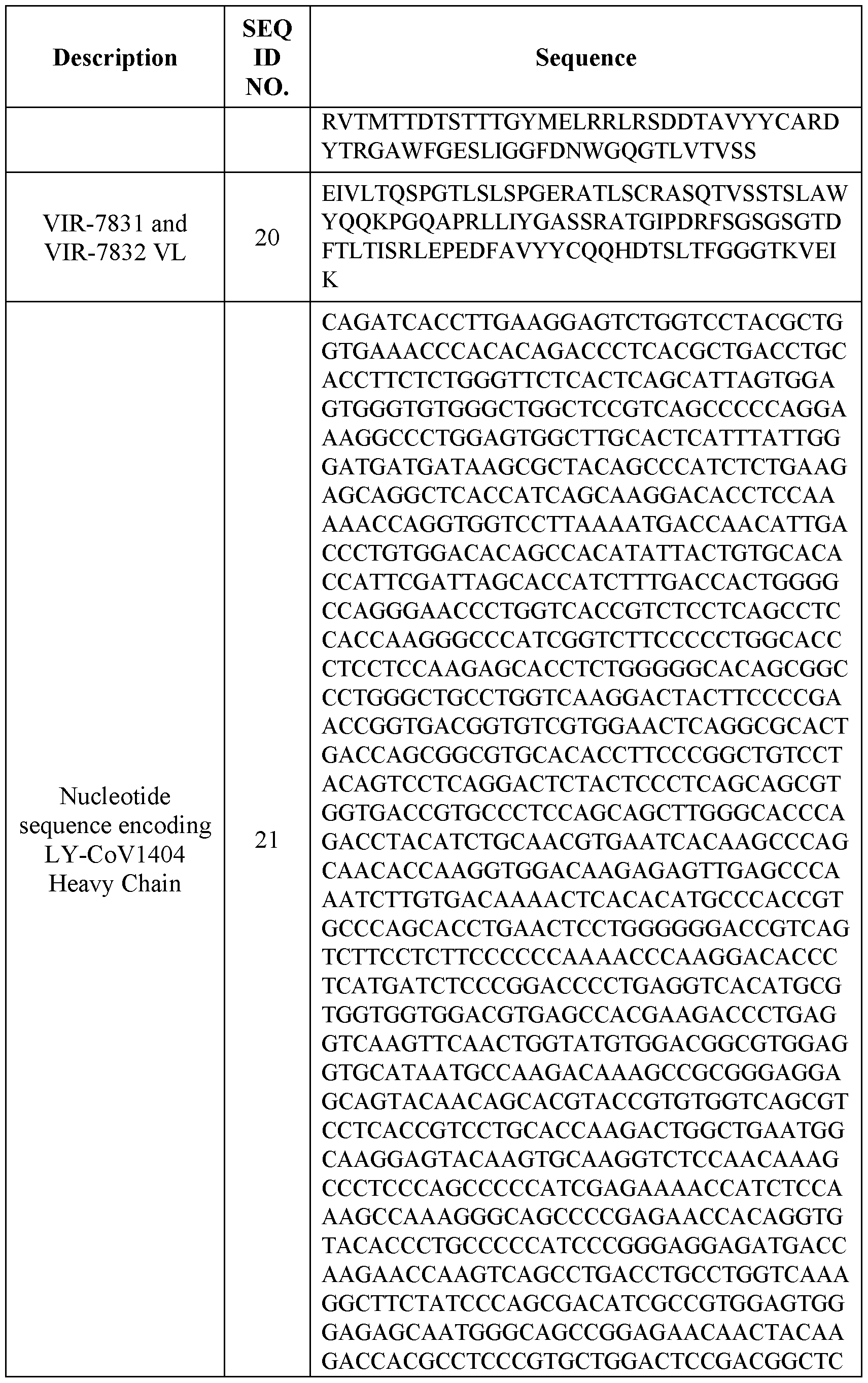


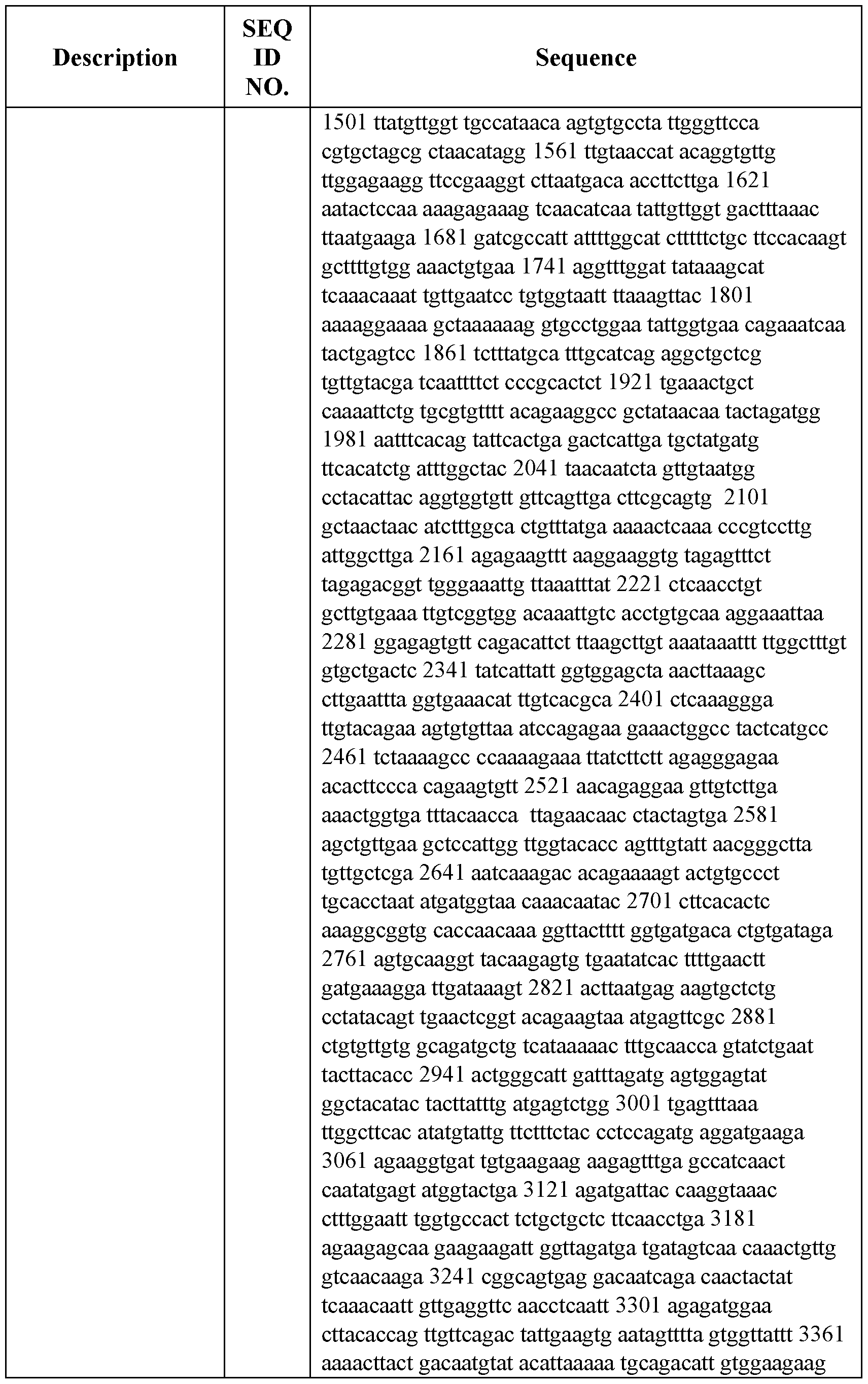


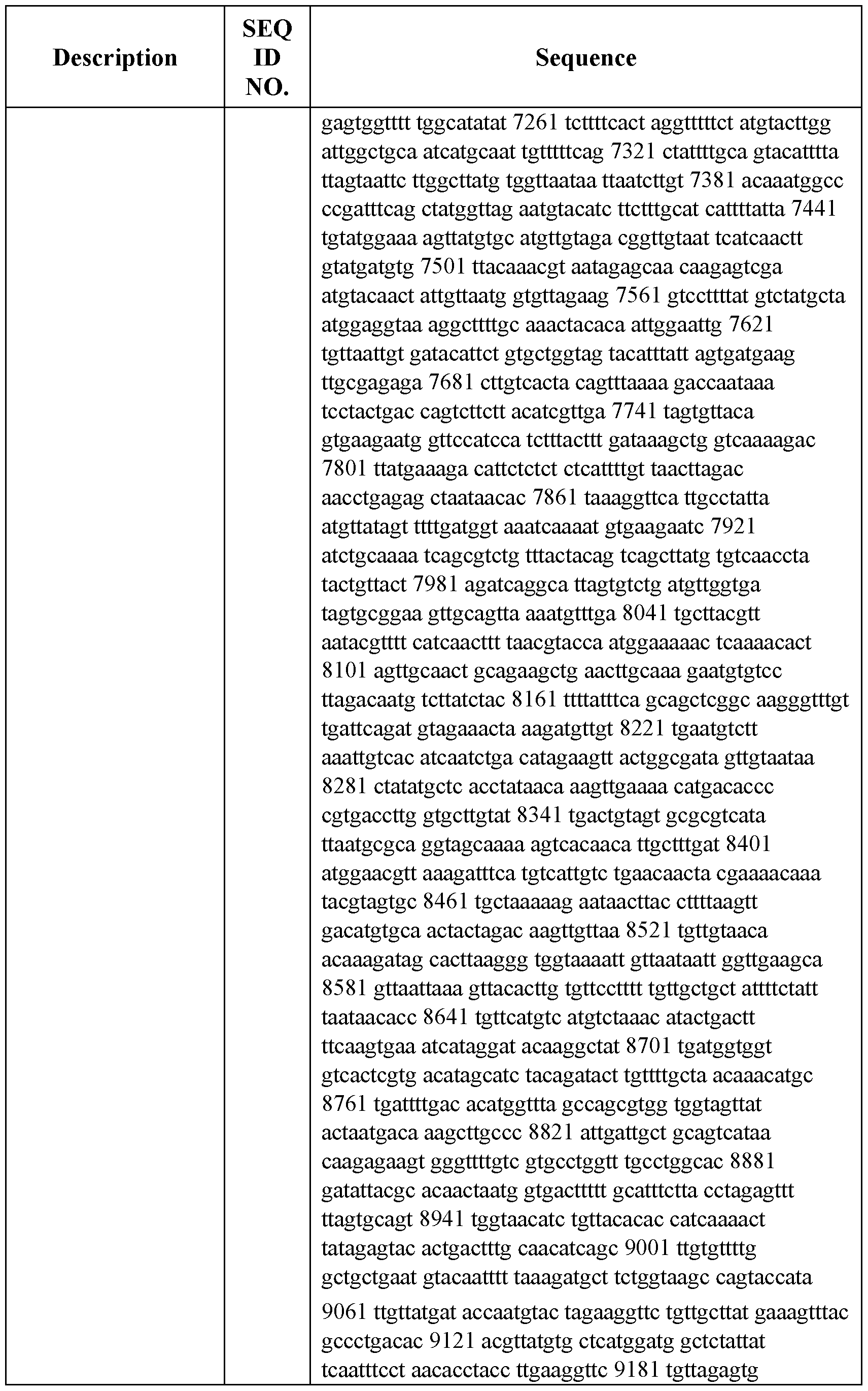


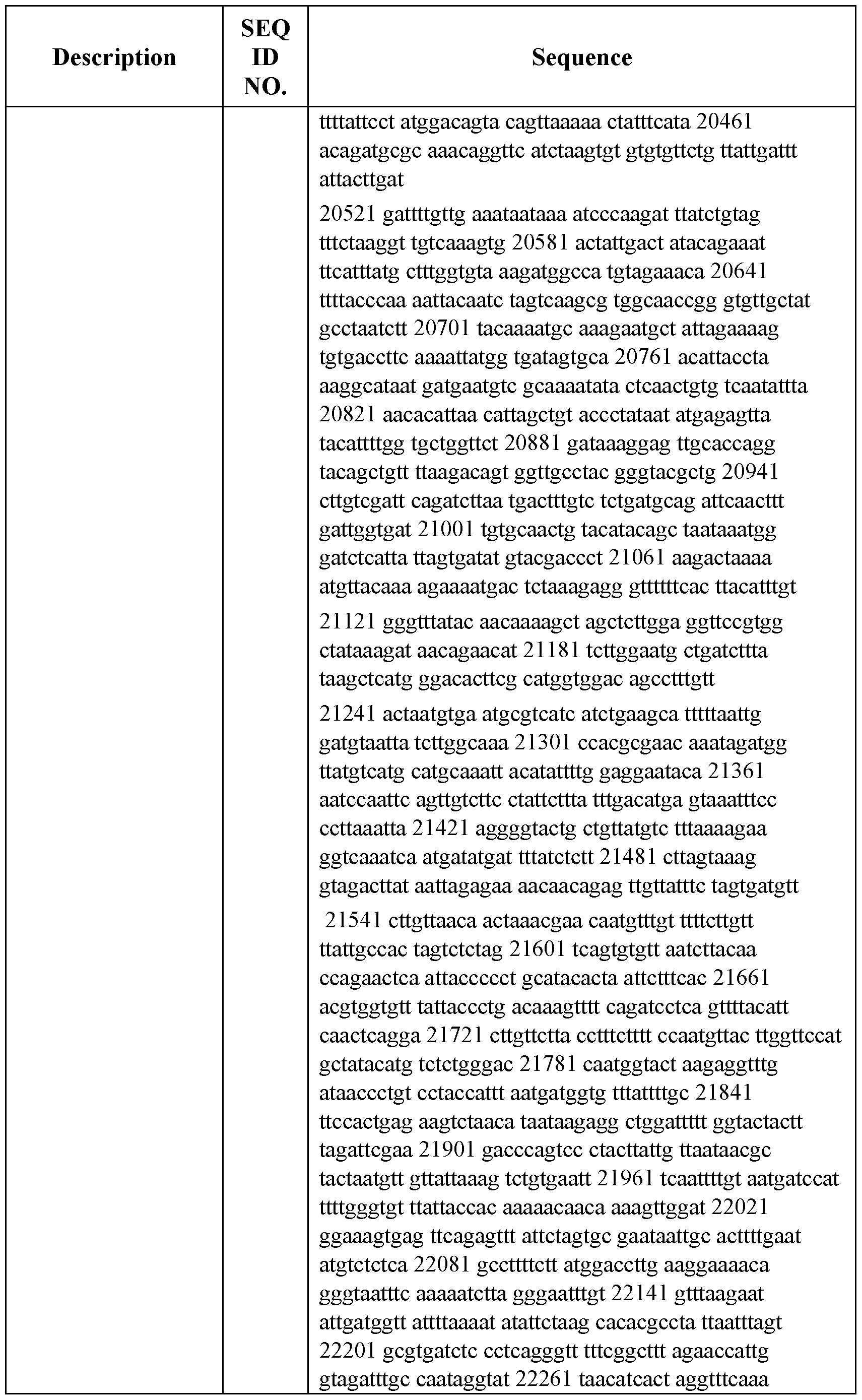


 EXAMPLES
EXAMPLE 1
TESTING OF ANTI-SARS-COV-2 MONOCLONAL ANTIBODIES AND COMBINATIONS OF THESE
Sotrovimab aka VIR-7831
Sotrovimab aka VIR-7831 is an engineered IgGlK variant of a human monoclonal antibody ("S309") identified from a memory B cell obtained from a recovered SARS CoV (also called SARS-CoV-1) patient. S309 binds to immobilized SARS CoV-2 RBD and to the ectodomain trimer of the S glycoprotein with sub-picomolar and picomolar avidities, respectively (see Pinto D et al. "Cross-neutralization of SARS-CoV-2 by a human monoclonal SARS-CoV antibody" Nature 583 https://doi.org/10.1038/s41586-020-2349-y (2020)). S309 is cross-reactive to SARS-CoV and SARS-CoV-2, and potently neutralizes SARS-CoV-2 and SARS-CoV pseudoviruses as well as live SARS-CoV-2. VIR-7831 can block SARS-CoV-2 viral entry into healthy cells and clear infected cells, binds to an epitope that is conserved in SARS-CoV-1, and has potent effector function.
VIR-7831 includes a N->Q mutation in CDRH2 (CDRH2 by IMGT), and M428L and N434S mutations in the Fc region to improve in vivo half-life (see e.g. Zalevsky J et al. "Enhanced antibody half-life improves in vivo activity." Nat Biotechnol. 2010 Feb;28(2): 157-9. doi: 10.1038/nbt.l601. Epub 2010 Jan 17. PMID: 20081867; PMCID: PMC2855492. VIR-7831 is also referred-to as "S309_N55Q_MLNS" or "S309_N55Q_LS".
VIR-7831 amino acid sequences are as follows (with the CDRs defined according to IMGT):


VIR-7832
VIR-7832 is identical to VIR-7831 except in that VIR-7832 further comprises G236A, A330L, and I332E mutations in the Fc (EU numbering). VIR-7832 comprises the HC amino acid sequence set forth in SEQ ID NO.:23 and the LC amino acid sequence set forth in SEQ ID NO.:12.
Bebtelovimab aka LY-CoV1404
Bebtelovimab aka LY-CoV1404 was identified from a human subject who recovered from SARS-CoV-2 infection, and binds to RBD with high affinity. Bebtelovimab neutralizes authentic SARS-CoV-2 with IC50 values ranging from 5-10 ng/mL. LY-CoV1404 amino acid sequences are as follows (with the CDRs defined using a hybrid of the Kabat and North definitions):


Sotrovimab aka VIR-7831 and bebtelovimab aka LY -CoV 1404 (alone and in combination) were assessed for binding to SARS-CoV-2 RBD, neutralization against SARS- CoV-2 (Wuhan-Hu- 1 and variants), effector function, and resistance to viral breakthrough. Data and methods are provided in Figures 1A-26 and the accompanying descriptions.
These studies show that the combination of sotrovimab and bebtelovimab is broadly neutralizing and compatible. The combination broadly neutralizes pseudovirus and live variants (including VOCs) at low ng/mL IC50s. The combination shows no antagonism and has additive effects in both pseudovirus and authentic virus (WT) neutralization checkerboard studies. This may be particularly important given binding competition between the two antibodies and their 10-fold difference in neutralization potency. The combination shows reduced activation of FcyRIIA, but additive activation of FcyRIIIA. Sotrovimab and LY - CoV1404 mediate ADCC (VV, FF, VF); the combination shows additive ADCC. rVSV resistance selection studies resulted in full escape from LY-CoV1404 at Pl, full escape from sotrovimab at P3 and partial escape at P9 with the combination. The theoretical presence of mutations escaping both mAbs in sequences present in the GISAID database is 0.
EXAMPLE 2
NEUTRALIZATION OF INFECTION USING SOTROVIMAB AND BEBTELOVIMAB IN A SARS-CoV-2 PSEUDOVIRUS SYSTEM
Neutralization of infection by sotrovimab and bebtelovimab was studied using a SARS- CoV-2 pseudovirus system. The following methods were used:
Assessment of Sotrovimab + Bebtelovimab Neutralization of SARS-CoV-2 Pseudovirus Infection
METHODS
Pseudovirus Production and Characterization
Mutagenesis reactions were performed using the QuickChange Lightning Site-Directed Mutagenesis Kit (Agilent Cat # 210519) using as template a spike mammalian expression vector based on the Wuhan sequence (Genbank MN908947.3) with a deletion of the C-terminal 19 amino acids. With the exception of the lineage variant B.1.617.2+K417N, all spike variant pseudoviruses tested contained mutations from within the Bebtelovimab epitope (Table 2). Pseudoviruses bearing mutant spike proteins were produced using the AG-luciferase recombinant vesicular stomatitis virus (rVSV) system (KeraFast EH1025-PM) (Whitt 2010). Briefly, 293T cells were transfected with individual mutant spike expression plasmids, and 16 to 20 hours later, transfected cells were infected with VSV-G-pseudotyped AG-luciferase rVSV. 16 to 20 hours following infection, conditioned culture medium was harvested, clarified by centrifugation at 1320 x g for 10 minutes at 4°C, aliquoted, and stored frozen at -80°C.
Relative luciferase reporter signal read-out was determined by luciferase assay (Promega Cat # E2650) of extracts from VeroE6 cells infected with serially diluted virus. Luciferase activity was measured on a PerkinElmer EnVision 2104 multilabel reader.
Pseudovirus Neutralization Assays
Neutralization assays were carried out as described (Nie et al. 2020). Virus preparation volumes were normalized to equivalent signal output (RLU, relative light units) as determined by luciferase activity following infection with serially diluted virus. Eleven-point, 3-fold titrations of Bebtelovimab, Sotrovimab, or a combination of two antibodies mixed at a 1:3 ratio (Bebtelovimab: Sotrovimab) were performed in 96-well plates in duplicate and pre-incubated with a fixed amount of pseudovirus for 20 minutes at 37°C. Following pre-incubation, the virus-antibody complexes were added to 20,000 VeroE6 cells/well in white, opaque, tissue culture-treated 96-well plates, and incubated 16 to 20 hours at 37°C. Control wells included virus only (no antibody, quadruplicate) and cells only (duplicate). Following infection, cells were lysed, and luciferase activity was measured.
Data Analysis
Percent neutralization concentration response curves were fit to a four-parameter logistic curve using the R statistical computing environment (R core team 2020) with the drc package (Ritz et al. 2015) and a logistic2 parametrization. The curve bottom parameter was
fixed at 0% neutralization. Replicate log-scale absolute IC50 estimates and standard errors were used to estimate an overall IC50 and standard error using a random effects meta-analysis approach (Viechtbauer 2010). Fold-changes of variant IC50 values relative to WT were estimated using a within-run WT curve fit in order normalize for inter-run variability. Within- run fold-changes and standard errors were estimated using the IC50 estimates and standard errors from both the variant and the corresponding within-run WT. Overall fold-change estimates and standard errors were estimated using a random effects meta-analysis approach using all replicate runs (Viechtbauer 2010). Runs were considered interpretable if the following three conditions were all met for the WT response curve: minimum neutralization < 50%, maximum neutralization > 50%, and pseudo-R2 of the fit > 0.40. Variant fold-changes were estimated and reported if all the following conditions were met: the within-run WT curve was interpretable based on the criteria above, an IC50 for the variant could be estimated from the fitting, the estimated variant IC50 < highest concentration tested, the maximum neutralization for the variant > 50%, and the pseudo-R2 of the variant fit was > 0.40. Variant curve fits not meeting all criteria were reported as “>highest_tested_concentration”. When all replicate runs had variant IC50 fold-changes in the “>highest_tested_concentration” category, the maximum among the replicates was reported. Otherwise, the meta-analysis consensus estimate of the variant IC50 fold-change replicates was reported.
RESULTS
All 4 of the single amino acid positions represented in Table 2 (K444, V445, G446 and P499) are conserved at >99.97% in the GISAID database and thus occur extremely rarely in circulation. As anticipated, 11 of the 13 mutations tested resulted in >5-fold loss in neutralization potency relative to the Wuhan reference virus for Bebtelovimab, with only K444R and V445I showing minimal or no loss in potency. VIR-7831 was not significantly impacted by any of the mutations tested. For the Bebtelovimab+Sotrovimab antibody combination, 5 of the 13 mutations tested showed potency losses ranging from 5.6-fold to 16.7- fold; these same 5 mutants showed potency losses ranging from 69.4-fold to >1901 -fold for Bebtelovimab alone. Neutralization potencies for both single antibodies as well as the combination were not impacted by the mutations present in the full spike "delta-plus" variant B.1.617.2+K417N.
 Abbreviations: A = alanine; Beb = Bebtelovnnab; CI = confidence interval; D = aspartate; F = phenylalanine; G = glycine; H = histidine; I = isoleucine; IC50 = concentration inhibiting maximal activity by 50%; K = lysine; N = asparagine; NA = not applicable; P = proline; Q = glutamine; R = arginine; S = serine; Sot = Sotrovimab; T = threonine; V = valine. a Absolute IC50 estimates presented are a result of a meta-analysis of all QC passing replicate experiments. When no IC50 could be calculated the highest concentration of antibody evaluated was used. b Fold shift estimates were calculated by comparing IC50 of virus to that of the inexperiment Wuhan control and then a meta-analysis was performed on multiple experiments.
CB.1.617.2+K417N Mutation Spectra (divergence from Wuhan SARS-CoV-2 S Genbank MN908947.3): T19R, G142D, 156-157del, R158G, K417N, L452R, T478K, D614G, P681R, D950N
REFERENCES
Nie J, Li Q, Wu J, Zhao C, Hao H, Liu H, Zhang L, Nie L, Qin H, Wang M, Lu Q, Li X, Sun Q, Liu J, Fan C, Huang W, Xu M, Wang Y. 2020. Establishment and validation of a pseudovirus neutralization assay for SARS-CoV-2. Emerging Microbes and Infections 9: 680- 686.
R Core Team. 2020. R: A language and environment for statistical computing. R Foundation for Statistical Computing, Vienna, Austria. URL https://www.R-project.org/.
Ritz C, Baty F, Streibig JC, Gerhard D. 2015. Dose-response analysis using R. PLOS ONE 10(12): e0146021.
Viechtbauer W. 2010. Conducting meta-analyses in R with the metafor package. Journal of Statistical Software 36(3): 1-48. https://www.jstatsoft.org/v36/i03/.
Whitt MA. 2010. Generation of VSV pseudotypes using recombinant AG-VSV for studies on virus entry, identification of entry inhibitors, and immune responses to vaccines. J Virol Meths 169: 365-374.
The various embodiments described above can be combined to provide further embodiments. All of the U.S. patents, U.S. patent application publications, U.S. patent applications, foreign patents, foreign patent applications and non-patent publications referred to in this specification and/or listed in the Application Data Sheet, including U.S. Provisional Application No. 63/241,987, filed on September 8, 2021 are incorporated herein by reference, in their entirety. Aspects of the embodiments can be modified, if necessary to employ concepts of the various patents, applications and publications to provide yet further embodiments.
These and other changes can be made to the embodiments in light of the above -detailed description. In general, in the following claims, the terms used should not be construed to limit the claims to the specific embodiments disclosed in the specification and the claims, but should be construed to include all possible embodiments along with the full scope of equivalents to which such claims are entitled. Accordingly, the claims are not limited by the disclosure.
Claims
1. A method for treating a SARS-CoV-2 infection in a subject, the method comprising administering to the subject an effective amount of:
(a) an antibody that comprises complementarity determining region (CDRjHl, CDRH2, CDRH3, CDRL1, CDRL2, and CDRL3 amino acid sequences as set forth in SEQ ID NOs.:3-8, respectively, and is capable of specifically binding to SARS-CoV-2 S protein; and
(b) an antibody that comprises CDRH1, CDRH2, CDRH3, CDRL1, CDRL2, and CDRL3 amino acid sequences as set forth in SEQ ID NOs.: 13-18, respectively, and is capable of specifically binding to SARS-CoV-2 S protein.
2. A method for treating a SARS-CoV-2 infection in a subject, the method comprising administering to the subject an effective amount of (a) an antibody that comprises complementarity determining region (CDRjHl, CDRH2, CDRH3, CDRL1, CDRL2, and CDRL3 amino acid sequences as set forth in SEQ ID NOs.:3-8, respectively, and is capable of specifically binding to SARS-CoV-2 S protein, wherein the subject has received (b) an antibody that comprises CDRH1, CDRH2, CDRH3, CDRL1, CDRL2, and CDRL3 amino acid sequences as set forth in SEQ ID NOs.: 13- 18, respectively, and is capable of specifically binding to SARS-CoV-2 S protein.
3. A method for treating a SARS-CoV-2 infection in a subject, the method comprising administering to the subject an effective amount of (b) an antibody that comprises complementarity determining region (CDRjHl, CDRH2, CDRH3, CDRL1, CDRL2, and CDRL3 amino acid sequences as set forth in SEQ ID NOs.: 13-18, respectively, and is capable of specifically binding to SARS-CoV-2 S protein, wherein the subject has received (a) an antibody that comprises CDRH1, CDRH2, CDRH3, CDRL1, CDRL2, and CDRL3 amino acid sequences as set forth in SEQ ID NOs.:3-8, respectively, and is capable of specifically binding to SARS-CoV-2 S protein.
4. A composition comprising:
(a) an antibody that comprises complementarity determining region (CDR)H1, CDRH2, CDRH3, CDRL1, CDRL2, and CDRL3 amino acid sequences as set forth in SEQ ID NOs.:3-8, respectively, and is capable of specifically binding to SARS-CoV-2 S protein; and
(b) an antibody that comprises CDRH1, CDRH2, CDRH3, CDRL1, CDRL2, and CDRL3 amino acid sequences as set forth in SEQ ID NOs.: 13-18, respectively, and is capable of specifically binding to SARS-CoV-2 S protein, and a pharmaceutically acceptable carrier, excipient, or diluent.
5. The composition of claim 4 for use in a method for treating a SARS-CoV-2 infection in a subject.
6. The composition of claim 4 for use in the manufacture of a medicament for treating a SARS-CoV-2 infection in a subject.
7. A combination comprising:
(a) an antibody that comprises complementarity determining region (CDRjHl, CDRH2, CDRH3, CDRL1, CDRL2, and CDRL3 amino acid sequences as set forth in SEQ ID NOs.:3-8, respectively, and is capable of specifically binding to SARS-CoV-2 S protein; and
(b) an antibody that comprises CDRH1, CDRH2, CDRH3, CDRL1, CDRL2, and CDRL3 amino acid sequences as set forth in SEQ ID NOs.: 13-18, respectively, and is capable of specifically binding to SARS-CoV-2 S protein, for use in method for treating a SARS CoV-2 infection in a subject.
8. A combination comprising:
(a) an antibody that comprises complementarity determining region (CDRjHl, CDRH2, CDRH3, CDRL1, CDRL2, and CDRL3 amino acid sequences as set forth in SEQ ID NOs.:3-8, respectively, and is capable of specifically binding to SARS-CoV-2 S protein; and
(b) an antibody that comprises CDRH1, CDRH2, CDRH3, CDRL1, CDRL2, and CDRL3 amino acid sequences as set forth in SEQ ID NOs.: 13-18, respectively, and is capable of specifically binding to SARS-CoV-2 S protein, for use in the manufacture of a medicament for treating a SARS CoV-2 infection in a subject.
9. The method of any one of claims 1-3, the composition of claim 4, the composition for use of claim 5 or 6, or the combination for use of claim 7 or 8, wherein:
(i) the antibody of (a) comprises the heavy chain variable domain (VH) amino acid sequence set forth in SEQ ID NO.: 9 and/or the light chain variable domain (VL) amino acid sequence set forth in SEQ ID NO.: 10; and/or
(ii) the antibody of (b) comprises the VH amino acid sequence set forth in SEQ ID NO.: 19 and/or the VL amino acid sequence set forth in SEQ ID NO.:20.
10. The method of claim 9, the composition of claim 9, the composition for use of claim 9, or the combination for use of claim 9, wherein:
(i) the antibody of (a) comprises the heavy chain variable domain (VH) amino acid sequence set forth in SEQ ID NO.: 9 and the light chain variable domain (VL) amino acid sequence set forth in SEQ ID NO.: 10; and
(ii) the antibody of (b) comprises the VH amino acid sequence set forth in SEQ ID NO.: 19 and the VL amino acid sequence set forth in SEQ ID NO.:20.
11. The method of any one of claims 1-3, 9, and 10, the composition of claim 4, 9, or 10, the composition for use of claim 5, 6, 9, or 10, or the combination for use of any one of claims 7-10, wherein the antibody of (b) comprises a M428L Fc mutation and a N434S Fc mutation, and optionally further comprises G236A, A330L, and I332E Fc mutations, wherein numbering of amino acids in the Fc is according to the EU numbering system.
12. The method of any one of claims 1-3 and 9-11, the composition of claim 4, 9,
10, or 11, the composition for use of claim 5, 6, 9, 10, or 11, or the combination for use of any one of claims 7-11, wherein:
(i) the antibody of (a) comprises the heavy chain (HC) amino acid sequence set forth in SEQ ID NO.: 1 and/or the light chain (LC) amino acid sequence set forth in SEQ ID NO.: 2; and/or
(ii) the antibody of (b) comprises the HC amino acid sequence set forth in SEQ ID NO.: 11 or SEQ ID NO.:23 and/or the LC amino acid sequence set forth in SEQ ID NO.: 12.
13. The method of claim 12, the composition of claim 12, the composition for use of claim 5, 6, 9, 10, 11, or 12, or the combination for use of any one of claims 7-12, wherein:
(i) the antibody of (a) comprises the heavy chain (HC) amino acid sequence set forth in SEQ ID NO.: 1 and the light chain (LC) amino acid sequence set forth in SEQ ID NO.: 2; and
(ii) the antibody of (b) comprises the HC amino acid sequence set forth in SEQ ID NO.: 11 or SEQ ID NO.:23 and the LC amino acid sequence set forth in SEQ ID NO.: 12.
14. The method of any one of claims 1-3 and 9-13, the composition for use of any one of claims 5 and 9-13, or the combination for use of any one of claims 7 and 9-13, wherein the method comprises administering the antibody or antibodies, the composition, or the combination, respectively, to the subject by intravenous administration.
15. The method of any one of claims 1-3 and 9-14, the composition for use of any one of claims 5 and 9-14, or the combination for use of any one of claims 7 and 9-14, wherein the method comprises administering the antibody or antibodies, the composition, or the combination, respectively, to the subject by subcutaneous administration.
16. The method of any one of claims 1-3 and 9-15, the composition for use of any one of claims 5, 6, and 9-15, or the combination for use of any one of claims 7-15, wherein the SARS CoV-2 infection comprises any one or more of: SARS CoV-2 Wuhan-Hu- 1; a SARS-
CoV-2 variant comprising a N439K mutation; a SARS-CoV-2 variant comprising a N501Y mutation; a SARS-CoV-2 variant comprising a K417N mutation and/or a E484K mutation; a SARS-CoV-2 comprising a L452R mutation; B.1.1.28; B.l. 1.7 (also referred-to as the "alpha" variant); B. 1.351 (also referred-to as the "beta" variant); P.l (also referred-to as the "gamma" variant); B. 1.617.1 (also referred-to as the "kappa" variant); B. 1.429 (also referred-to as the "epsilon" variant); B. 1.525 (also referred-to as the "eta" variant); B. 1.526 (also referred-to as the "iota" variant); B. 1.258; a variant of Wuhan-Hu- 1 comprising a N440K mutation;
B.1.243.1; B.1.258 with a K417N mutation; A.27.1; R.l; P.2; R.2; B. l.1.519; A.23.1; B.1.318;
B.1.619; A.VOI.V2; B.l.618; a variant of Wuhan-Hu-1 comprising N440K and E484K mutations; B. 1.617.2 (also referred-to as the "delta" variant); B. l.1.298; B.1.617.2-AY.1; B.1.617.2-AY.2; C.37 (also referred-to as the "lambda" variant); a SARS CoV-2 of clade 19A; SARS CoV-2 of clade 19B; a SARS CoV-2 of clade 20A; a SARS CoV-2 of clade 20B; a SARS CoV-2 of clade 20C; a SARS CoV-2 of clade 20D; a SARS CoV-2 of clade 20E (EU1); a SARS CoV-2 of clade 20F; and a SARS CoV-2 of clade 20G.
17. The method of any one of claims 1-3 and 9-16, the composition for use of any one of claims 5, 6, and 9-16, or the combination for use of any one of claims 7-16, wherein the subject having a SARS-CoV-2 infection:
(i) has mild-to-moderate COVID- 19; and/or
(ii) is experiencing any one or more of: fever; cough; fatigue; shortness of breath or difficulty breathing; muscle aches; chills; sore throat; runny nose; headache; chest pain; loss of taste and/or smell; and pink eye (conjunctivitis); malaise; and abnormal imaging; and/or
(iii) (iii)(l) has evidence of lower respiratory disease by clinical assessment or imaging and a saturation of oxygen (SaO2) greater than (>)93 percent (%) on room air at sea level, (iii)(2) has a positive SARS-CoV-2 viral testing result, and/or (iii)(3) is at high risk for progressing to severe COVID-19 and/or hospitalization, e.g., the human subject (1) is 65 years of age or older (> 65); (2) has a body mass index (BMI) of 35 or greater (> 35); (3) has chronic kidney disease; (4) has diabetes; (5) has immunosuppressive disease, (6) is receiving immunosuppressive treatment; (7) is 55 years of age or older (> 55) and has cardiovascular disease, hypertension, chronic obstructive pulmonary disease, or other chronic respiratory disease; and/or (8) is 12 - 17 years of age and has a BMI >85% fortheir age and gender, or
sickle cell disease, congenital or acquired heart disease, neurodevelopmental disorders (e.g., cerebral palsy), a medical-related technological dependence (e.g., tracheostomy, gastrostomy, or positive pressure ventilation not related to COVID- 19), or asthma, reactive airway or other chronic respiratory disease that requires daily medication for control; is a pediatric subject; is 0- 18 years of age; is 0-12 years of age; and/or
(iv) has recently been diagnosed with COVID-19 (e.g., within 1 day, 2 days, 3 days, 4 days, 5 days, 6 days, 7 days, 8 days, 9 days, 10 days, 11 days, 12 days, 13 days, or 14 days) and/or is within 10 days of symptom onset;
(v) has severe COVID-19;
(vi) has previously received a vaccine (e.g. , single shot, two-shot regiment, or booster) against a SARS-CoV-2 infection;
(vii) has not previously received a vaccine against a SARS-CoV-2 infection; and/or
(viii) has previously experienced a SARS-CoV-2 infection.
18. The composition of claim 4, 9, 10, 11, 12, or 13, or the composition for use of any one of claims 5, 6, and 9-17, which is formulated for intravenous administration.
19. The composition of claim 4, 9, 10, 11, 12, or 13, or the composition for use of any one of claims 5, 6, and 9-17, which is formulated for subcutaneous administration.
20. The method of any one of claims 1-3 and 9-17, or the combination for use of any one of claims 7 and 9-17, wherein the subject receives antibody (a) and antibody (b) at a ratio of 1: 1, or at a ratio of 1:2, or at a ratio of 1:3, or at a ratio of 1:4, or at a ratio of 1:5.
21. The composition of any one of claims 4, 9-13, 18, and 19, or the composition for use of any one of claims 5, 6, and 8-19, comprising antibody (a) and antibody (b) at a ratio of 1: 1, or at a ratio of 1:2, or at a ratio of 1:3, or at a ratio of 1:4, or at a ratio of 1:5.
22. The method of any one of claims 1-3, 9-17, and 20, the composition of any one of claims 4, 9-13, 18, 19, and 21, the composition for use of any one of claims 5, 6, 18, 19, and 21, or the combination for use of any one of claims 8-17 and 20, wherein:
(i) antibody (a) is capable of neutralizing live SARS-CoV-2 virus with an IC50 of from about 5 ng/mL to about 10 ng/mL; and/or
(ii) antibody (a) and antibody (b) together are capable of neutralizing infection by: SARS CoV-2 Wuhan-Hu- 1; a SARS-CoV-2 variant comprising a N439K mutation; a SARS- CoV-2 variant comprising a N501Y mutation; a SARS-CoV-2 variant comprising a K417N mutation and/or a E484K mutation; a SARS-CoV-2 comprising a L452R mutation; B.1.1.28; B.l.1.7 (also referred-to as the "alpha" variant); B.1.351 (also referred-to as the "beta" variant); P. l (also referred-to as the "gamma" variant); B. 1.617.1 (also referred-to as the "kappa" variant); B. 1.429 (also referred-to as the "epsilon" variant); B.1.525 (also referred-to as the "eta" variant); B.1.526 (also referred-to as the "iota" variant); B.1.258; a variant of Wuhan-Hu-1 comprising a N440K mutation; B.1.243.1; B. 1.258 with a K417N mutation; A.27.1; R.l; P.2; R.2; B.1.1.519; A.23.1; B.1.318; B.1.619; A.VOI.V2; B. 1.618; a variant ofWuhan-Hu-1 comprising N440K and E484K mutations; B.1.617.2 (also referred-to as the "delta" variant);
B.1.1.298; B.1.617.2-AY.1; B.1.617.2-AY.2; C.37 (also referred-to as the "lambda" variant); a SARS CoV-2 of clade 19A; SARS CoV-2 of clade 19B; a SARS CoV-2 of clade 20A; a SARS CoV-2 of clade 20B; a SARS CoV-2 of clade 20C; a SARS CoV-2 of clade 20D; a SARS CoV- 2 of clade 20E (EU1); a SARS CoV-2 of clade 20F; and a SARS CoV-2 of clade 20G; or any combination thereof, optionally all thereof, further optionally with a neutralization IC50 of less than 20 ng/ml, less than 19 ng/ml, less than 18 ng/ml, less than 17 ng/ml, less than 16 ng/ml, less than 15 ng/ml, less than 14 ng/ml, less than 13 ng/ml, less than 12 ng/ml, less than 11 ng/ml, less than 10 ng/ml, less than 9 ng/ml, less than 8 ng/ml, less than 7 ng/ml, less than 6 ng/ml, less than 5 ng/ml, or less than 4 ng/ml; and/or
(iii) antibody (a) and antibody (b) together are capable of neutralizing infection by: Wuhan-Hu-1; B.l.1.7; B.1.351; P.l; B.1.617.1; B.1.429; B.1.525; B.1.526; B.1.258; N440K; B.1.243.1; B.1.258-K417N; A.27.1; R.l; P.2; R.2; B.l. 1.519; A.23.1; B.1.318; B.1.619;
A.VOLV2; B. 1.618; a variant of Wuhan-Hu- 1 comprising N440K and E484K mutations;
B.1.617.2; B. l.1.298; C.37; B.1.617.2-AY.1; and B.1.617.2-AY.2; and/or
(v) antibody (a) and antibody (b) together are capable of: (v)(l) increased activation of human FcyRIIIA (e.g., V158) as compared to antibody (a) or antibody (b) alone; and/or (v)(2) increased antibody-dependent cellular cytoxicity (ADCC) of human FcyRIIIA (e.g., in the presence of peripheral blood mononuclear cells (PBMCs) expressing FcyRIIIA of V158/V158, F158/F158, or V158/F158) as compared to antibody (a) or antibody (b) alone; and/or
(vi) antibody (a) and antibody (b) together are capable of neutralizing infection by: SARS-CoV-2 Wuhan-Hu- 1, SARS-CoV-2 B.l.1.7. SARS-CoV-2 B. 1.135, SARS-CoV-2 P. l, and SARS-CoV-2 B. 1.222.
Applications Claiming Priority (2)
| Application Number | Priority Date | Filing Date | Title |
|---|---|---|---|
| US202163241987P | 2021-09-08 | 2021-09-08 | |
| US63/241,987 | 2021-09-08 |
Publications (2)
| Publication Number | Publication Date |
|---|---|
| WO2023039442A1 true WO2023039442A1 (en) | 2023-03-16 |
| WO2023039442A9 WO2023039442A9 (en) | 2024-01-18 |
Family
ID=83689654
Family Applications (1)
| Application Number | Title | Priority Date | Filing Date |
|---|---|---|---|
| PCT/US2022/076065 Ceased WO2023039442A1 (en) | 2021-09-08 | 2022-09-07 | Broadly neutralizing antibody combination therapies for sars-cov-2 infection |
Country Status (1)
| Country | Link |
|---|---|
| WO (1) | WO2023039442A1 (en) |
Citations (15)
| Publication number | Priority date | Publication date | Assignee | Title |
|---|---|---|---|---|
| US4816567A (en) | 1983-04-08 | 1989-03-28 | Genentech, Inc. | Recombinant immunoglobin preparations |
| US5283173A (en) | 1990-01-24 | 1994-02-01 | The Research Foundation Of State University Of New York | System to detect protein-protein interactions |
| US5648237A (en) | 1991-09-19 | 1997-07-15 | Genentech, Inc. | Expression of functional antibody fragments |
| US5770429A (en) | 1990-08-29 | 1998-06-23 | Genpharm International, Inc. | Transgenic non-human animals capable of producing heterologous antibodies |
| US5789199A (en) | 1994-11-03 | 1998-08-04 | Genentech, Inc. | Process for bacterial production of polypeptides |
| US5840523A (en) | 1995-03-01 | 1998-11-24 | Genetech, Inc. | Methods and compositions for secretion of heterologous polypeptides |
| US5959177A (en) | 1989-10-27 | 1999-09-28 | The Scripps Research Institute | Transgenic plants expressing assembled secretory antibodies |
| US6040498A (en) | 1998-08-11 | 2000-03-21 | North Caroline State University | Genetically engineered duckweed |
| US6420548B1 (en) | 1999-10-04 | 2002-07-16 | Medicago Inc. | Method for regulating transcription of foreign genes |
| US6596541B2 (en) | 2000-10-31 | 2003-07-22 | Regeneron Pharmaceuticals, Inc. | Methods of modifying eukaryotic cells |
| WO2004076677A2 (en) | 2003-02-26 | 2004-09-10 | Institute For Research In Biomedicine | Monoclonal antibody production by ebv transformation of b cells |
| US7049426B2 (en) | 1999-06-10 | 2006-05-23 | Abgenix, Inc. | Transgenic animals for producing specific isotypes of human antibodies via non-cognate switch regions |
| US7125978B1 (en) | 1999-10-04 | 2006-10-24 | Medicago Inc. | Promoter for regulating expression of foreign genes |
| US8119772B2 (en) | 2006-09-29 | 2012-02-21 | California Institute Of Technology | MART-1 T cell receptors |
| EP3872091A1 (en) * | 2020-02-26 | 2021-09-01 | VIR Biotechnology, Inc. | Antibodies against sars-cov-2 and methods of using the same |
-
2022
- 2022-09-07 WO PCT/US2022/076065 patent/WO2023039442A1/en not_active Ceased
Patent Citations (17)
| Publication number | Priority date | Publication date | Assignee | Title |
|---|---|---|---|---|
| US4816567A (en) | 1983-04-08 | 1989-03-28 | Genentech, Inc. | Recombinant immunoglobin preparations |
| US6417429B1 (en) | 1989-10-27 | 2002-07-09 | The Scripps Research Institute | Transgenic plants expressing assembled secretory antibodies |
| US5959177A (en) | 1989-10-27 | 1999-09-28 | The Scripps Research Institute | Transgenic plants expressing assembled secretory antibodies |
| US5283173A (en) | 1990-01-24 | 1994-02-01 | The Research Foundation Of State University Of New York | System to detect protein-protein interactions |
| US5468614A (en) | 1990-01-24 | 1995-11-21 | The Research Foundation Of State University Of New York | System to detect protein-protein interactions |
| US5770429A (en) | 1990-08-29 | 1998-06-23 | Genpharm International, Inc. | Transgenic non-human animals capable of producing heterologous antibodies |
| US5648237A (en) | 1991-09-19 | 1997-07-15 | Genentech, Inc. | Expression of functional antibody fragments |
| US5789199A (en) | 1994-11-03 | 1998-08-04 | Genentech, Inc. | Process for bacterial production of polypeptides |
| US5840523A (en) | 1995-03-01 | 1998-11-24 | Genetech, Inc. | Methods and compositions for secretion of heterologous polypeptides |
| US6040498A (en) | 1998-08-11 | 2000-03-21 | North Caroline State University | Genetically engineered duckweed |
| US7049426B2 (en) | 1999-06-10 | 2006-05-23 | Abgenix, Inc. | Transgenic animals for producing specific isotypes of human antibodies via non-cognate switch regions |
| US6420548B1 (en) | 1999-10-04 | 2002-07-16 | Medicago Inc. | Method for regulating transcription of foreign genes |
| US7125978B1 (en) | 1999-10-04 | 2006-10-24 | Medicago Inc. | Promoter for regulating expression of foreign genes |
| US6596541B2 (en) | 2000-10-31 | 2003-07-22 | Regeneron Pharmaceuticals, Inc. | Methods of modifying eukaryotic cells |
| WO2004076677A2 (en) | 2003-02-26 | 2004-09-10 | Institute For Research In Biomedicine | Monoclonal antibody production by ebv transformation of b cells |
| US8119772B2 (en) | 2006-09-29 | 2012-02-21 | California Institute Of Technology | MART-1 T cell receptors |
| EP3872091A1 (en) * | 2020-02-26 | 2021-09-01 | VIR Biotechnology, Inc. | Antibodies against sars-cov-2 and methods of using the same |
Non-Patent Citations (53)
| Title |
|---|
| "Genbank", Database accession no. MN908947.3 |
| "GenBank", Database accession no. QHD43416.1 |
| "Remington: The Science and Practice of Pharmacy", 2000, PHILADELPHIA COLLEGE OF PHARMACY AND SCIENCE |
| ANONYMOUS: "Lilly, Vir Biotechnology and GSK Announce Positive Topline Data from the Phase 2 BLAZE-4 Trial Evaluating Bamlanivimab with VIR-7831 in Low-Risk Adults with COVID-19", 29 March 2021 (2021-03-29), XP055913121, Retrieved from the Internet <URL:https://investor.lilly.com/node/44826/pdf> [retrieved on 20220414] * |
| BIOINFORMATICS, vol. 15, 2016, pages 298 - 300 |
| CHOTHIALESK, J. MOL. BIOL., vol. 196, 1987, pages 901 - 917 |
| CLACKSON ET AL., NATURE, vol. 352, 1991, pages 624 - 628 |
| COFFIN, J. M. ET AL.: "Fundamental Virology", 1996, LIPPINCOTT-RAVEN PUBLISHERS, article "Retroviridae: The viruses and their replication" |
| COPIN RICHARD ET AL: "The monoclonal antibody combination REGEN-COV protects against SARS-CoV-2 mutational escape in preclinical and human studies", CELL, ELSEVIER, AMSTERDAM NL, vol. 184, no. 15, 5 June 2021 (2021-06-05), pages 3949, XP086700962, ISSN: 0092-8674, [retrieved on 20210605], DOI: 10.1016/J.CELL.2021.06.002 * |
| CORTI DAVIDE ET AL: "Tackling COVID-19 with neutralizing monoclonal antibodies", CELL, ELSEVIER, AMSTERDAM NL, vol. 184, no. 12, 26 May 2021 (2021-05-26), pages 3086 - 3108, XP086614258, ISSN: 0092-8674, [retrieved on 20210526], DOI: 10.1016/J.CELL.2021.05.005 * |
| ENGELS ET AL., HUM. GENE THER., vol. 74, 2003, pages 1155 |
| FRECHA ET AL., MOL. THER., vol. 18, 2010, pages 1748 |
| GERNGROSS, NAT. BIOTECH., vol. 22, 2004, pages 1409 - 1414 |
| GEURTS ET AL., MOL. THER., vol. 8, 2003, pages 108 |
| HANSEN JOHANNA ET AL: "Studies in humanized mice and convalescent humans yield a SARS-CoV-2 antibody cocktail", SCIENCE, vol. 369, no. 6506, 21 August 2020 (2020-08-21), US, pages 1010 - 1014, XP055864281, ISSN: 0036-8075, Retrieved from the Internet <URL:https://www.science.org/doi/pdf/10.1126/science.abd0827?casa_token=nwcFDFSirxYAAAAA:gLprG5E4PhWD6flS0vrfFIRROvQu66E4Xx4ulVRklCrg7GxswfkjRmyrFpVLzNN3xZ6o-Sqlg2LAnQ> DOI: 10.1126/science.abd0827 * |
| HONEGGERPLIICKTHUN, J. MOL. BIO., vol. 309, 2001, pages 657 - 670 |
| JOLLY, D J: "The Development of Human Gene Therapy", 1999, COLD SPRING HARBOR LAB, article "Emerging Viral Vectors", pages: 209 - 40 |
| KOHLER ET AL., NATURE, vol. 256, 1975, pages 495 |
| KRISKY ET AL., GENE THER, vol. 5, 1998, pages 1517 |
| LEFRANC ET AL., DEV. COMP. IMMUNOL., vol. 27, 2003, pages 55 |
| LEUNG, K. ET AL.: "Early empirical assessment of the N501 Y mutant strains ofSARS-CoV-2 in the United Kingdom, October to November 2020", MEDRXIV, 2020, pages 2020 |
| LI ET AL., NAT. BIOTECH., vol. 24, 2006, pages 210 - 215 |
| LIU ET AL., MABS, vol. 6, no. 5, 2014, pages 1145 - 1154 |
| MARKS ET AL., J. MOL. BIOL., vol. 222, 1991, pages 581 - 597 |
| MATES ET AL., NAT. GENET., vol. 41, 2009, pages 753 |
| NIE JLI QWU JZHAO CHAO HLIU HZHANG LNIE LQIN HWANG M: "Establishment and validation of a pseudovirus neutralization assay for SARS-CoV-2", EMERGING MICROBES AND INFECTIONS, vol. 9, 2020, pages 680 - 686, XP055818011, DOI: 10.1080/22221751.2020.1743767 |
| NORTH ET AL.: "A New Clustering of Antibody CDR Loop Conformations", JOURNAL OF MOLECULAR BIOLOGY, vol. 406, 2011, pages 228 - 256, XP028129711, DOI: 10.1016/j.jmb.2010.10.030 |
| PALMBERGER ET AL., J. BIOTECHNOL., vol. 153, no. 3-4, 2011, pages 160 - 166 |
| PAN AMERICAN HEALTH ORGANIZATION, EPIDEMIOLOGICAL UPDATE: OCCURRENCE OF VARIANTS OFSARS-COV-2 IN THE AMERICAS, 20 January 2021 (2021-01-20), Retrieved from the Internet <URL:https://reliefweb.int/sites/reliefweb.int/files/resources/2021-jan-20-phe-epi-update-SARS-CoV-2.pdf> |
| PINTO D ET AL.: "Cross-neutralization of SARS-CoV-2 by a human monoclonal SARS-CoV antibody", NATURE, 2020, pages 583, Retrieved from the Internet <URL:https://doi.org/10.1038/s41586-020-2349-y> |
| PLUCKTHUN, A., BIO/TECHNOLOGY, vol. 9, 1991, pages 545 - 551 |
| R CORE TEAM: "R: A language and environment for statistical computing", 2020, R FOUNDATION FOR STATISTICAL COMPUTING |
| RAMBAUT, A. ET AL.: "A dynamic nomenclature proposal for SARS-CoV-2 lineages to assist genomic epidemiology", NAT MICROBIOL, vol. 5, 2020, pages 1403 - 1407, XP037277086, DOI: 10.1038/s41564-020-0770-5 |
| RITZ CBATY FSTREIBIG JCGERHARD D: "Dose-response analysis using R", PLOS ONE, vol. 10, no. 12, 2015, pages e0146021 |
| SAMBROOK ET AL.: "Molecular Cloning: A Laboratory Manual", 1989, COLD SPRING HARBOR LABORATORY |
| SCATCHARD ET AL., ANN. NY. ACAD. SCI., vol. 51, 1949, pages 660 |
| STARR ET AL., CELL, vol. 182, 2020, pages 1295 |
| SUN YAPING ET AL: "Emerging antibody-based therapeutics against SARS-CoV-2 during the global pandemic", ANTIBODY THERAPEUTICS, vol. 3, no. 4, 8 December 2020 (2020-12-08), pages 246 - 256, XP055857348, Retrieved from the Internet <URL:https://www.ncbi.nlm.nih.gov/pmc/articles/PMC7717131/pdf/tbaa025.pdf> DOI: 10.1093/abt/tbaa025 * |
| TEGALLY, H. ET AL.: "Emergence and rapid spread of a new severe acute respiratory syndrome-related coronavirus 2 (SARS-CoV-2) lineage with multiple spike mutations in South Africa", MEDRXIV, 2020, pages 2020 |
| THOMSON, E.C. ET AL.: "The circulating SARS-CoV-2 spike variant N439K maintains fitness while evading antibody-mediated immunity", BIORXIV, 2020 |
| TORTORICI M ALEJANDRA ET AL: "Ultrapotent human antibodies protect against SARS-CoV-2 challenge via multiple mechanisms", SCIENCE, 20 November 2020 (2020-11-20), United States, pages 950 - 957, XP055794998, Retrieved from the Internet <URL:https://science.sciencemag.org/content/sci/370/6519/950.full.pdf> [retrieved on 20210414], DOI: 10.1126/science.abe3354 * |
| TORTORICI M. ALEJANDRA ET AL: "Ultrapotent human antibodies protect against SARS-CoV-2 challenge via multiple mechanisms - Supplement", SCIENCE, vol. 370, no. 6519, 20 November 2020 (2020-11-20), US, pages 950 - 957, XP055880643, ISSN: 0036-8075, Retrieved from the Internet <URL:https://www.science.org/doi/suppl/10.1126/science.abe3354/suppl_file/abe3354-tortorici-sm.pdf> DOI: 10.1126/science.abe3354 * |
| URLAUB ET AL., PNAS, vol. 77, 1980, pages 4216 |
| VERHOEYEN ET AL., METHODS MOL. BIOL., vol. 506, 2009, pages 97 |
| VIECHTBAUER W: "Conducting meta-analyses in R with the metafor package", JOURNAL OF STATISTICAL SOFTWARE, vol. 36, no. 3, 2010, pages 1 - 48, Retrieved from the Internet <URL:https://www.jstatsoft.org/v36/i03> |
| WALCHLI ET AL., PLOS ONE, vol. 6, 2011, pages 327930 |
| WESTENDORF KATHRYN ET AL: "LY-CoV1404 potently neutralizes SARS-CoV-2 variants", BIORXIV, 4 May 2021 (2021-05-04), XP055817813, Retrieved from the Internet <URL:https://www.biorxiv.org/content/10.1101/2021.04.30.442182v3.full.pdf> [retrieved on 20210624], DOI: 10.1101/2021.04.30.442182 * |
| WHITT MA: "Generation of VSV pseudotypes using recombinant AG-VSV for studies on virus entry, identification of entry inhibitors, and immune responses to vaccines", J VIROL METHS, vol. 169, 2010, pages 365 - 374, XP027338746 |
| WILSON, SCIENCE, vol. 295, 2002, pages 2103 |
| WOLFF ET AL., CANCER RES, vol. 53, 1993, pages 2560 |
| YAZAKIWU: "Methods in Molecular Biology", vol. 248, 2003, HUMANA PRESS, pages: 255 - 268 |
| ZALEVSKY J ET AL.: "Enhanced antibody half-life improves in vivo activity", NAT BIOTECHNOL., vol. 28, no. 2, 17 January 2010 (2010-01-17), pages 157 - 9, XP055308991, DOI: 10.1038/nbt.1601 |
| ZHAO ET AL., J. IMMUNOL., vol. 174, 2005, pages 4415 |
Also Published As
| Publication number | Publication date |
|---|---|
| WO2023039442A9 (en) | 2024-01-18 |
Similar Documents
| Publication | Publication Date | Title |
|---|---|---|
| ES2954629T3 (en) | Antibodies against SARS-CoV-2 | |
| KR20230010676A (en) | Antibodies to SARS-COV-2 | |
| JP2023523549A (en) | Antibodies against SARS-CoV-2 and methods of using same | |
| US20250263467A1 (en) | Antibody therapies for sars-cov-2 infection | |
| WO2022204202A1 (en) | Antibodies that bind to multiple sarbecoviruses | |
| TW202315895A (en) | Engineered compositions | |
| CA3194162A1 (en) | Antibodies against sars-cov-2 | |
| WO2022159842A1 (en) | Antibody combination therapies for sars-cov-2 infection | |
| WO2023039442A1 (en) | Broadly neutralizing antibody combination therapies for sars-cov-2 infection | |
| US20240400652A1 (en) | Antibody therapies for sars-cov-2 infection in pediatric subjects | |
| TW202417477A (en) | Antibodies that bind to multiple sarbecoviruses | |
| CN118510798A (en) | Antibody therapy for SARS-COV-2 infection in pediatric subjects | |
| CN115087667A (en) | Antigen binding proteins that specifically bind to SARS-CoV-2 | |
| US20240101648A1 (en) | Antibodies against respiratory syncytial virus, human metapneumovirus and pneumonia virus of mice and methods of using the same | |
| US20240287160A1 (en) | Antibody cocktail for treatment of ebolavirus infections | |
| RU2832110C1 (en) | Polyvalent vector vaccine hvt | |
| WO2024086566A2 (en) | Pan-sarbecovirus neutralizing antibodies and methods of use thereof | |
| WO2023201256A1 (en) | High dose antibody therapies for sars-cov-2 infection | |
| WO2023034871A1 (en) | High concentration antibody therapies for sars-cov-2 infection | |
| AU2024255423A1 (en) | Antibodies that bind to multiple sarbecoviruses | |
| HK40053364A (en) | Antibodies against campylobacter species | |
| AU2019306543A1 (en) | Antibodies against campylobacter species |
Legal Events
| Date | Code | Title | Description |
|---|---|---|---|
| 121 | Ep: the epo has been informed by wipo that ep was designated in this application |
Ref document number: 22787117 Country of ref document: EP Kind code of ref document: A1 |
|
| NENP | Non-entry into the national phase |
Ref country code: DE |
|
| 122 | Ep: pct application non-entry in european phase |
Ref document number: 22787117 Country of ref document: EP Kind code of ref document: A1 |