WO2022247756A1 - Chimeric antigen receptor targeting gprc5d, and use thereof - Google Patents
Chimeric antigen receptor targeting gprc5d, and use thereof Download PDFInfo
- Publication number
- WO2022247756A1 WO2022247756A1 PCT/CN2022/094261 CN2022094261W WO2022247756A1 WO 2022247756 A1 WO2022247756 A1 WO 2022247756A1 CN 2022094261 W CN2022094261 W CN 2022094261W WO 2022247756 A1 WO2022247756 A1 WO 2022247756A1
- Authority
- WO
- WIPO (PCT)
- Prior art keywords
- seq
- gprc5d
- variable region
- chain variable
- chimeric antigen
- Prior art date
- Legal status (The legal status is an assumption and is not a legal conclusion. Google has not performed a legal analysis and makes no representation as to the accuracy of the status listed.)
- Ceased
Links
Images


Classifications
-
- A—HUMAN NECESSITIES
- A61—MEDICAL OR VETERINARY SCIENCE; HYGIENE
- A61K—PREPARATIONS FOR MEDICAL, DENTAL OR TOILETRY PURPOSES
- A61K39/00—Medicinal preparations containing antigens or antibodies
-
- A—HUMAN NECESSITIES
- A61—MEDICAL OR VETERINARY SCIENCE; HYGIENE
- A61K—PREPARATIONS FOR MEDICAL, DENTAL OR TOILETRY PURPOSES
- A61K39/00—Medicinal preparations containing antigens or antibodies
- A61K39/0005—Vertebrate antigens
- A61K39/0011—Cancer antigens
-
- A—HUMAN NECESSITIES
- A61—MEDICAL OR VETERINARY SCIENCE; HYGIENE
- A61K—PREPARATIONS FOR MEDICAL, DENTAL OR TOILETRY PURPOSES
- A61K40/00—Cellular immunotherapy
- A61K40/10—Cellular immunotherapy characterised by the cell type used
- A61K40/11—T-cells, e.g. tumour infiltrating lymphocytes [TIL] or regulatory T [Treg] cells; Lymphokine-activated killer [LAK] cells
-
- A—HUMAN NECESSITIES
- A61—MEDICAL OR VETERINARY SCIENCE; HYGIENE
- A61K—PREPARATIONS FOR MEDICAL, DENTAL OR TOILETRY PURPOSES
- A61K40/00—Cellular immunotherapy
- A61K40/30—Cellular immunotherapy characterised by the recombinant expression of specific molecules in the cells of the immune system
- A61K40/31—Chimeric antigen receptors [CAR]
-
- A—HUMAN NECESSITIES
- A61—MEDICAL OR VETERINARY SCIENCE; HYGIENE
- A61K—PREPARATIONS FOR MEDICAL, DENTAL OR TOILETRY PURPOSES
- A61K40/00—Cellular immunotherapy
- A61K40/40—Cellular immunotherapy characterised by antigens that are targeted or presented by cells of the immune system
- A61K40/41—Vertebrate antigens
- A61K40/42—Cancer antigens
- A61K40/4202—Receptors, cell surface antigens or cell surface determinants
-
- A—HUMAN NECESSITIES
- A61—MEDICAL OR VETERINARY SCIENCE; HYGIENE
- A61K—PREPARATIONS FOR MEDICAL, DENTAL OR TOILETRY PURPOSES
- A61K40/00—Cellular immunotherapy
- A61K40/40—Cellular immunotherapy characterised by antigens that are targeted or presented by cells of the immune system
- A61K40/41—Vertebrate antigens
- A61K40/42—Cancer antigens
- A61K40/4202—Receptors, cell surface antigens or cell surface determinants
- A61K40/421—Immunoglobulin superfamily
-
- A—HUMAN NECESSITIES
- A61—MEDICAL OR VETERINARY SCIENCE; HYGIENE
- A61P—SPECIFIC THERAPEUTIC ACTIVITY OF CHEMICAL COMPOUNDS OR MEDICINAL PREPARATIONS
- A61P35/00—Antineoplastic agents
-
- A—HUMAN NECESSITIES
- A61—MEDICAL OR VETERINARY SCIENCE; HYGIENE
- A61P—SPECIFIC THERAPEUTIC ACTIVITY OF CHEMICAL COMPOUNDS OR MEDICINAL PREPARATIONS
- A61P35/00—Antineoplastic agents
- A61P35/02—Antineoplastic agents specific for leukemia
-
- C—CHEMISTRY; METALLURGY
- C07—ORGANIC CHEMISTRY
- C07K—PEPTIDES
- C07K14/00—Peptides having more than 20 amino acids; Gastrins; Somatostatins; Melanotropins; Derivatives thereof
- C07K14/435—Peptides having more than 20 amino acids; Gastrins; Somatostatins; Melanotropins; Derivatives thereof from animals; from humans
- C07K14/705—Receptors; Cell surface antigens; Cell surface determinants
-
- C—CHEMISTRY; METALLURGY
- C07—ORGANIC CHEMISTRY
- C07K—PEPTIDES
- C07K14/00—Peptides having more than 20 amino acids; Gastrins; Somatostatins; Melanotropins; Derivatives thereof
- C07K14/435—Peptides having more than 20 amino acids; Gastrins; Somatostatins; Melanotropins; Derivatives thereof from animals; from humans
- C07K14/705—Receptors; Cell surface antigens; Cell surface determinants
- C07K14/70503—Immunoglobulin superfamily
- C07K14/7051—T-cell receptor (TcR)-CD3 complex
-
- C—CHEMISTRY; METALLURGY
- C07—ORGANIC CHEMISTRY
- C07K—PEPTIDES
- C07K16/00—Immunoglobulins [IGs], e.g. monoclonal or polyclonal antibodies
- C07K16/18—Immunoglobulins [IGs], e.g. monoclonal or polyclonal antibodies against material from animals or humans
- C07K16/28—Immunoglobulins [IGs], e.g. monoclonal or polyclonal antibodies against material from animals or humans against receptors, cell surface antigens or cell surface determinants
-
- C—CHEMISTRY; METALLURGY
- C07—ORGANIC CHEMISTRY
- C07K—PEPTIDES
- C07K19/00—Hybrid peptides, i.e. peptides covalently bound to nucleic acids, or non-covalently bound protein-protein complexes
-
- C—CHEMISTRY; METALLURGY
- C12—BIOCHEMISTRY; BEER; SPIRITS; WINE; VINEGAR; MICROBIOLOGY; ENZYMOLOGY; MUTATION OR GENETIC ENGINEERING
- C12N—MICROORGANISMS OR ENZYMES; COMPOSITIONS THEREOF; PROPAGATING, PRESERVING, OR MAINTAINING MICROORGANISMS; MUTATION OR GENETIC ENGINEERING; CULTURE MEDIA
- C12N15/00—Mutation or genetic engineering; DNA or RNA concerning genetic engineering, vectors, e.g. plasmids, or their isolation, preparation or purification; Use of hosts therefor
- C12N15/09—Recombinant DNA-technology
- C12N15/11—DNA or RNA fragments; Modified forms thereof; Non-coding nucleic acids having a biological activity
- C12N15/62—DNA sequences coding for fusion proteins
-
- C—CHEMISTRY; METALLURGY
- C12—BIOCHEMISTRY; BEER; SPIRITS; WINE; VINEGAR; MICROBIOLOGY; ENZYMOLOGY; MUTATION OR GENETIC ENGINEERING
- C12N—MICROORGANISMS OR ENZYMES; COMPOSITIONS THEREOF; PROPAGATING, PRESERVING, OR MAINTAINING MICROORGANISMS; MUTATION OR GENETIC ENGINEERING; CULTURE MEDIA
- C12N15/00—Mutation or genetic engineering; DNA or RNA concerning genetic engineering, vectors, e.g. plasmids, or their isolation, preparation or purification; Use of hosts therefor
- C12N15/09—Recombinant DNA-technology
- C12N15/63—Introduction of foreign genetic material using vectors; Vectors; Use of hosts therefor; Regulation of expression
- C12N15/79—Vectors or expression systems specially adapted for eukaryotic hosts
- C12N15/85—Vectors or expression systems specially adapted for eukaryotic hosts for animal cells
- C12N15/86—Viral vectors
-
- C—CHEMISTRY; METALLURGY
- C12—BIOCHEMISTRY; BEER; SPIRITS; WINE; VINEGAR; MICROBIOLOGY; ENZYMOLOGY; MUTATION OR GENETIC ENGINEERING
- C12N—MICROORGANISMS OR ENZYMES; COMPOSITIONS THEREOF; PROPAGATING, PRESERVING, OR MAINTAINING MICROORGANISMS; MUTATION OR GENETIC ENGINEERING; CULTURE MEDIA
- C12N15/00—Mutation or genetic engineering; DNA or RNA concerning genetic engineering, vectors, e.g. plasmids, or their isolation, preparation or purification; Use of hosts therefor
- C12N15/09—Recombinant DNA-technology
- C12N15/63—Introduction of foreign genetic material using vectors; Vectors; Use of hosts therefor; Regulation of expression
- C12N15/79—Vectors or expression systems specially adapted for eukaryotic hosts
- C12N15/85—Vectors or expression systems specially adapted for eukaryotic hosts for animal cells
- C12N15/86—Viral vectors
- C12N15/867—Retroviral vectors
-
- C—CHEMISTRY; METALLURGY
- C12—BIOCHEMISTRY; BEER; SPIRITS; WINE; VINEGAR; MICROBIOLOGY; ENZYMOLOGY; MUTATION OR GENETIC ENGINEERING
- C12N—MICROORGANISMS OR ENZYMES; COMPOSITIONS THEREOF; PROPAGATING, PRESERVING, OR MAINTAINING MICROORGANISMS; MUTATION OR GENETIC ENGINEERING; CULTURE MEDIA
- C12N5/00—Undifferentiated human, animal or plant cells, e.g. cell lines; Tissues; Cultivation or maintenance thereof; Culture media therefor
- C12N5/06—Animal cells or tissues; Human cells or tissues
- C12N5/0602—Vertebrate cells
- C12N5/0634—Cells from the blood or the immune system
- C12N5/0636—T lymphocytes
-
- C—CHEMISTRY; METALLURGY
- C12—BIOCHEMISTRY; BEER; SPIRITS; WINE; VINEGAR; MICROBIOLOGY; ENZYMOLOGY; MUTATION OR GENETIC ENGINEERING
- C12N—MICROORGANISMS OR ENZYMES; COMPOSITIONS THEREOF; PROPAGATING, PRESERVING, OR MAINTAINING MICROORGANISMS; MUTATION OR GENETIC ENGINEERING; CULTURE MEDIA
- C12N5/00—Undifferentiated human, animal or plant cells, e.g. cell lines; Tissues; Cultivation or maintenance thereof; Culture media therefor
- C12N5/10—Cells modified by introduction of foreign genetic material
-
- C—CHEMISTRY; METALLURGY
- C07—ORGANIC CHEMISTRY
- C07K—PEPTIDES
- C07K2317/00—Immunoglobulins specific features
- C07K2317/20—Immunoglobulins specific features characterized by taxonomic origin
- C07K2317/24—Immunoglobulins specific features characterized by taxonomic origin containing regions, domains or residues from different species, e.g. chimeric, humanized or veneered
-
- C—CHEMISTRY; METALLURGY
- C07—ORGANIC CHEMISTRY
- C07K—PEPTIDES
- C07K2317/00—Immunoglobulins specific features
- C07K2317/50—Immunoglobulins specific features characterized by immunoglobulin fragments
- C07K2317/56—Immunoglobulins specific features characterized by immunoglobulin fragments variable (Fv) region, i.e. VH and/or VL
-
- C—CHEMISTRY; METALLURGY
- C07—ORGANIC CHEMISTRY
- C07K—PEPTIDES
- C07K2317/00—Immunoglobulins specific features
- C07K2317/50—Immunoglobulins specific features characterized by immunoglobulin fragments
- C07K2317/56—Immunoglobulins specific features characterized by immunoglobulin fragments variable (Fv) region, i.e. VH and/or VL
- C07K2317/565—Complementarity determining region [CDR]
-
- C—CHEMISTRY; METALLURGY
- C07—ORGANIC CHEMISTRY
- C07K—PEPTIDES
- C07K2319/00—Fusion polypeptide
- C07K2319/01—Fusion polypeptide containing a localisation/targetting motif
- C07K2319/02—Fusion polypeptide containing a localisation/targetting motif containing a signal sequence
-
- C—CHEMISTRY; METALLURGY
- C07—ORGANIC CHEMISTRY
- C07K—PEPTIDES
- C07K2319/00—Fusion polypeptide
- C07K2319/01—Fusion polypeptide containing a localisation/targetting motif
- C07K2319/03—Fusion polypeptide containing a localisation/targetting motif containing a transmembrane segment
-
- C—CHEMISTRY; METALLURGY
- C07—ORGANIC CHEMISTRY
- C07K—PEPTIDES
- C07K2319/00—Fusion polypeptide
- C07K2319/33—Fusion polypeptide fusions for targeting to specific cell types, e.g. tissue specific targeting, targeting of a bacterial subspecies
-
- C—CHEMISTRY; METALLURGY
- C12—BIOCHEMISTRY; BEER; SPIRITS; WINE; VINEGAR; MICROBIOLOGY; ENZYMOLOGY; MUTATION OR GENETIC ENGINEERING
- C12N—MICROORGANISMS OR ENZYMES; COMPOSITIONS THEREOF; PROPAGATING, PRESERVING, OR MAINTAINING MICROORGANISMS; MUTATION OR GENETIC ENGINEERING; CULTURE MEDIA
- C12N2510/00—Genetically modified cells
-
- C—CHEMISTRY; METALLURGY
- C12—BIOCHEMISTRY; BEER; SPIRITS; WINE; VINEGAR; MICROBIOLOGY; ENZYMOLOGY; MUTATION OR GENETIC ENGINEERING
- C12N—MICROORGANISMS OR ENZYMES; COMPOSITIONS THEREOF; PROPAGATING, PRESERVING, OR MAINTAINING MICROORGANISMS; MUTATION OR GENETIC ENGINEERING; CULTURE MEDIA
- C12N2740/00—Reverse transcribing RNA viruses
- C12N2740/00011—Details
- C12N2740/10011—Retroviridae
- C12N2740/15011—Lentivirus, not HIV, e.g. FIV, SIV
- C12N2740/15041—Use of virus, viral particle or viral elements as a vector
- C12N2740/15043—Use of virus, viral particle or viral elements as a vector viral genome or elements thereof as genetic vector
Definitions
- the invention relates to the field of cell therapy, and further, the invention relates to a chimeric antigen receptor targeting G protein-coupled receptor C5 family subtype D (GPRC5D) and a preparation method and application thereof.
- GPRC5D G protein-coupled receptor C5 family subtype D
- Chimeric antigen receptor (chimeric antigen receptor, CAR) T cell therapy is to combine single-chain antibody (scFv) that recognizes tumor surface antigen with T cell activation domain, so that T cells express chimeric antigen receptor, so as to recognize and Bind to tumor surface antigens, induce T cell activation, secrete cytokines and kill tumor cells. It is effective in the treatment of B lymphocytoma and acute lymphoblastic leukemia [1].
- G protein-coupled receptor C5 family subtype D is the first orphan SARS class C GPCR identified in 2001 [2].
- GPRC5D is highly expressed in the plasma cells of multiple myeloma, basically not expressed in normal tissues, and only expressed in the hair follicle area with immune pardon [4].
- GPRC5D multiple myeloma
- CAR-T targeting GPRC5D showed good therapeutic effect in mouse multiple myeloma (MM) model. Since the expressions of GPRC5D and BCMA do not overlap, GPRC5D CAR-T still has a therapeutic effect on tumor recurrence models with BCMA loss [4].
- GPRC5D-positive mouse model of MM GPRC5D/CD3 bi-antibody recruited T cells and induced tumor regression [6].
- GPRC5D is a surface antigen that is expected to be used for MM immunotherapy, but most GPRC5D drugs are still in the clinical trial stage or research and development stage, and no cell-based drugs targeting GPRC5D have been marketed. Therefore, it is necessary to develop more active and therapeutic drugs.
- the GPRC5D cell drug with effective effect can be used for the treatment research and application of related diseases.
- Pillarisetti, K., et al. A T-cell-redirecting bispecific G-protein-coupled receptor class 5 member D x CD3 antibody to treat multiple myeloma. Blood, 2020.135(15): p.1232-1243.
- the first object of the present invention is to provide a chimeric antigen receptor comprising an extracellular antigen binding domain, the extracellular antigen binding domain comprising a GPRC5D antibody light chain variable region and a GPRC5D antibody heavy chain variable region , wherein, the light chain variable region of the GPRC5D antibody comprises any one of the following sequences: SEQ ID No: 4, SEQ ID No: 6, SEQ ID No: 8, SEQ ID No: 10, SEQ ID No: 12 , SEQ ID No:39, SEQ ID No:41 and SEQ ID No:43;
- the heavy chain variable region of the GPRC5D antibody comprises any one of the following sequences: SEQ ID No: 3, SEQ ID No: 5, SEQ ID No: 7, SEQ ID No: 9, SEQ ID No: 11, SEQ ID No:38, SEQ ID No:40 and SEQ ID No:42.
- the heavy chain variable region sequence of the GPRC5D antibody is SEQ ID No: 3 and the light chain variable region sequence of the GPRC5D antibody is SEQ ID No: 4, or the heavy chain variable region sequence of the GPRC5D antibody is The chain variable region sequence is SEQ ID No:5 and the GPRC5D antibody light chain variable region sequence is SEQ ID No:6, or the GPRC5D antibody heavy chain variable region sequence is SEQ ID No:7 and the GPRC5D antibody
- the antibody light chain variable region sequence is SEQ ID No: 8, or the GPRC5D antibody heavy chain variable region sequence is SEQ ID No: 9 and the GPRC5D antibody light chain variable region sequence is SEQ ID No: 10, or
- the GPRC5D antibody heavy chain variable region sequence is SEQ ID No: 11 and the GPRC5D antibody light chain variable region sequence is SEQ ID No: 12, or the GPRC5D antibody heavy chain variable region sequence is SEQ ID No: 38 and the GPRC5D antibody light chain variable region
- said chimeric antigen receptor further comprises a transmembrane domain and an intracellular domain.
- the heavy chain variable region of the GPRC5D antibody and the variable region of the light chain of the GPRC5D antibody comprise a linker, the linker is preferably a connecting peptide, and the sequence of the connecting peptide is preferably (GGGGS)n, wherein n is greater than or equal to 1, preferably 1, 2, 3, 4 or 5, more preferably n is 3;
- sequence of the linker is EGKSSGSGSESKVD, KESGSVSSEQLAQFRSLD, GGRRGGGS, LRQRDGERP, LRQKDGGGSERP or GSTSGSGKPGSGEGSTKG.
- the extracellular antigen-binding domain further comprises a leader peptide and a hinge region.
- the leader peptide sequence is IgG1 heavy chain signal polypeptide, granulocyte-macrophage colony-stimulating factor receptor 2 (GM-CSFR2) signal peptide or CD8 ⁇ signal peptide, and/or all
- the hinge region is CD8 ⁇ , CH2 and CH3 of IgG1 or IgG4, CD4, CD28 or CD7.
- the transmembrane domain is any one or more of the following group: ⁇ , ⁇ or ⁇ chain of T cell receptor, CD3 ⁇ , CD3 ⁇ , CD4, CD5, CD8 ⁇ , CD9, CD 16, CD22, CD27, CD28, CD33, CD37, CD45, CD64, CD80, CD86, CD 134, CD137, CD152, CD 154 and PD1, and/or the intracellular domain is any of the following group One or more: CARD11, CD2, CD7, CD27, CD28, CD30, CD40, CD54 (ICAM), CD83, CD134, CD137 (4-1BB), CD3 ⁇ , CD150 (SLAMF1), CD152 (CTLA4), CD223 ( LAG3), CD270(HVEM), CD273(PD-L2), CD274(PD-L1), CD278(ICOS), DAP10, LAT, NKD2C, SLP76, TRIM, and ZAP70.
- the chimeric antigen receptor comprises a leader peptide shown in SEQ ID No: 44, a GPRC5D antibody light chain variable region, a connecting peptide shown in SEQ ID No: 45, a GPRC5D anti- Body weight chain variable region, hinge region shown in SEQ ID No:46, CD8 ⁇ transmembrane domain shown in SEQ ID No:47, 4-1BB co-stimulatory signal transduction region shown in SEQ ID No:48 and SEQ ID CD3 ⁇ signaling domain shown in No:49.
- the intracellular domain of the chimeric antigen receptor described herein may comprise one or more co-stimulatory signaling domains, and the one or more co-stimulatory signaling domains may also be derived from A co-stimulatory molecule selected from the group consisting of: CARD11, CD2, CD3 ⁇ , CD7, CD27, CD28, CD30, CD40, CD54 (ICAM), CD83, CD134 (OX40), CD137 (4-1BB), CD150 (SLAMF1 ), CD152(CTLA4), CD223(LAG3), CD270(HVEM), CD273(PD-L2), CD274(PD-L1), CD278(ICOS), DAP10, LAT, NKD2C SLP76, TRIM and ZAP70.
- a co-stimulatory molecule selected from the group consisting of: CARD11, CD2, CD3 ⁇ , CD7, CD27, CD28, CD30, CD40, CD54 (ICAM), CD83, CD134 (OX40), CD137
- said one or more co-stimulatory signaling domains are from co-stimulatory molecules selected from the group consisting of CD28, CD134 and CD137.
- the one or more co-stimulatory signaling domains are from co-stimulatory molecules selected from the group consisting of CD137 and CD3 ⁇ .
- the one or more co-stimulatory signaling domains are from CD28.
- said one or more co-stimulatory signaling domains are from CD134.
- the one or more co-stimulatory signaling domains are from CD137.
- the present invention also provides the use of the aforementioned chimeric antigen receptor for preparing medicine or pharmaceutical composition.
- the medicament or pharmaceutical composition is used for the treatment of tumors.
- said tumor comprises multiple myeloma.
- the present invention also provides a polynucleotide encoding the aforementioned chimeric antigen receptor.
- a polynucleotide encoding a CAR contemplated herein comprises an optimized Kozac sequence.
- said promoter operably linked to a polynucleotide encoding a CAR contemplated herein is selected from the group consisting of: cytomegalovirus immediate early gene promoter (CMV), elongation factor 1 alpha promoter promoter (EF1- ⁇ ), phosphoglycerate kinase-1 promoter (PGK), ubiquitin-C promoter (UBQ-C), cytomegalovirus enhancer/chicken ⁇ -actin promoter (CAG), multiple Oncovirus enhancer/herpes simplex thymidine kinase promoter (MC1), ⁇ -actin promoter ( ⁇ -ACT), Simian virus 40 promoter (SV40) and myeloproliferative sarcoma virus enhancer, negative control region deleted, dl587rev primer binding site substituted (MND) promoter.
- CMV cytomegalovirus immediate early gene promoter
- EF1- ⁇ elongation factor 1 alpha promoter promoter
- the present invention also provides a vector comprising the aforementioned polynucleotide.
- the vector is an expression vector.
- the vector is an episomal vector.
- the vector is a viral vector.
- the vector is a retroviral vector.
- the vector is a lentiviral vector.
- the lentiviral vector is selected from the group consisting essentially of human immunodeficiency virus (HIV), human immunodeficiency virus 1 (HIV-1), human immunodeficiency virus 2 (HIV- 2), Visna-maedi virus (visna-maedi virus, VMV) virus, goat arthritis-encephalitis virus (CAEV), equine infectious anemia virus (EIAV), feline immunodeficiency virus (FIV), bovine immunization Deficiency Virus (BIV) and Simian Immunodeficiency Virus (SIV).
- HCV human immunodeficiency virus
- HMV-1 human immunodeficiency virus 1
- HMV-2 human immunodeficiency virus 2
- Visna-maedi virus visna-maedi virus
- CAEV goat arthritis-encephalitis virus
- EIAV equine infectious anemia virus
- FV feline immunodeficiency virus
- BIV bovine immunization
- the vector comprises a left (5') retroviral LTR, a Psi ( ⁇ ) packaging signal, a central polypurine tract/DNA flap (cPPT/FLAP), a retroviral export element, operably linked to a coding
- the promoter of the 5'LTR is replaced with a heterologous promoter.
- the heterologous promoter is a cytomegalovirus (CMV) promoter, a Rous Sarcoma Virus (RSV) promoter or a Simian Virus 40 (SV40) promoter.
- CMV cytomegalovirus
- RSV Rous Sarcoma Virus
- SV40 Simian Virus 40
- said 5'LTR or 3'LTR is a lentiviral LTR.
- said 3'LTR comprises one or more modifications.
- the 3'LTR comprises one or more deletions.
- the 3'LTR is a self-inactivating (SIN) LTR.
- the present invention also provides an immune effector cell comprising the aforementioned polynucleotide or the aforementioned vector.
- said immune effector cells are T cells.
- an immune effector cell comprising a vector contemplated herein.
- the immune effector cells are transduced with a vector contemplated herein.
- the immune effector cells are selected from the group consisting of T lymphocytes, macrophages, and natural killer (NK) cells.
- a method of generating an immune effector cell comprising a CAR contemplated herein comprising introducing into the immune effector cell a vector comprising a polynucleotide encoding the CAR.
- the immune effector cells are PD1 knockout cells.
- sgRNA targeting PD1, Cas9 protein, and double-stranded DNA containing the GPRC5D CAR sequence are introduced into the T cells by electroporation to achieve precise insertion of the CAR element at the PD1 gene site of the T cell, thereby Obtain targeted integration of CAR-T cells targeting GPRC5D non-viral PD1 to improve the effect of targeting and killing tumors.
- sgRNAs targeting other genes in T cells can also be introduced into the T cells through the above method to obtain CAR-T cells that target GPRC5D and integrate at other genes, and improve the effect of targeting and killing tumors .
- the present invention also provides a pharmaceutical composition, which comprises the aforementioned chimeric antigen receptor, polynucleotide, vector or host cell.
- the pharmaceutical composition further includes pharmaceutically acceptable excipients.
- the pharmaceutically acceptable adjuvant is citric acid, sodium hydroxide, sodium dihydrogen phosphate, disodium hydrogen phosphate, mannitol Tween 20, Tween 60, Tween 80, One or more of sodium chloride and water for injection.
- CAR comprises such as SEQ ID NO:3 and SEQ ID NO:4, or SEQ ID NO:5 and SEQ ID NO:6, or SEQ ID NO:7 and SEQ ID NO:8, or SEQ ID NO:9 and SEQ ID NO:10, or SEQ ID NO:11 and SEQ ID NO:12, or SEQ ID NO:38 and SEQ ID NO:39, or SEQ ID NO:40 and SEQ ID NO:41, or Amino acid sequences set forth in SEQ ID NO:42 and SEQ ID NO:43.
- a polynucleotide encoding a CAR contemplated herein is provided.
- a polynucleotide encoding a CAR wherein said polynucleotide sequence is set forth in SEQ ID NO:50 and SEQ ID NO:51, or SEQ ID NO:52 and SEQ ID NO :53, or SEQ ID NO:54 and SEQ ID NO:55, or SEQ ID NO:56 and SEQ ID NO:57, or SEQ ID NO:58 and SEQ ID NO:59, or SEQ ID NO:60 and SEQ ID NO:60 ID NO:61, or SEQ ID NO:62 and SEQ ID NO:63, or SEQ ID NO:64 and SEQ ID NO:65.
- a vector comprising a polynucleotide encoding a CAR contemplated herein or such as SEQ ID NO:50 and SEQ ID NO:51, or SEQ ID NO:52 and SEQ ID NO:53, or SEQ ID NO:54 and SEQ ID NO:55, or SEQ ID NO:56 and SEQ ID NO:57, or SEQ ID NO:58 and SEQ ID NO:59, or SEQ ID NO:60 and A polynucleotide set forth in SEQ ID NO:61, or SEQ ID NO:62 and SEQ ID NO:63, or SEQ ID NO:64 and SEQ ID NO:65.
- a method of treating a B cell-related condition in a subject in need thereof comprising administering to said subject a therapeutically effective amount of a composition comprising Contemplated GPRC5D CAR T cells and optionally a pharmaceutically acceptable excipient.
- the B-cell-associated condition is multiple myeloma, non-Hodgkin's lymphoma, B-cell proliferation of uncertain malignant potential, lymphomatoid granulomatosis, post-transplantation lymphoproliferative disorder, immunomodulatory Conditions, rheumatoid arthritis, myasthenia gravis, idiopathic thrombocytopenic purpura, antiphospholipid syndrome, Chagas' disease, Grave's disease, Wegener's meat Wegener's granulomatosis, polyarteritis nodosa, Sjogren's syndrome, pemphigus vulgaris, scleroderma, multiple sclerosis, antiphospholipid syndrome, ANCA-associated vasculitis , Goodpasture's disease, Kawasaki disease, autoimmune hemolytic anemia and rapidly progressive glomerulonephritis, heavy chain disease, primary or immune cell-associated amyloid Monoclonal gammopathy of degenerative or undetermined significance.
- said B cell-associated condition is a B cell malignancy.
- the B cell malignancy is multiple myeloma (MM) or non-Hodgkin's lymphoma (NHL).
- MM multiple myeloma
- NHL non-Hodgkin's lymphoma
- the MM is selected from the group consisting of overt multiple myeloma, smoldering multiple myeloma, plasma cell leukemia, nonsecretory myeloma, IgD myeloma, osteosclerotic myeloma , Solitary skeletal plasmacytoma and extramedullary plasmacytoma.
- the NHL is selected from the group consisting of Burkitt lymphoma (Burkittlymphoma), chronic lymphocytic leukemia/small lymphocytic lymphoma (CLL/SLL), diffuse large B-cell lymphoma lymphoma, follicular lymphoma, immunoblastic large cell lymphoma, precursor B lymphoblastic lymphoma, and mantle cell lymphoma.
- Burkitt lymphoma Burkitt lymphoma
- CLL/SLL chronic lymphocytic leukemia/small lymphocytic lymphoma
- diffuse large B-cell lymphoma lymphoma follicular lymphoma
- immunoblastic large cell lymphoma precursor B lymphoblastic lymphoma
- mantle cell lymphoma mantle cell lymphoma
- said B cell-associated condition is a plasma cell malignancy.
- said B cell-associated condition is an autoimmune disease.
- the autoimmune disease is systemic lupus erythematosus.
- the B cell-associated condition is rheumatoid arthritis.
- said B cell-associated condition is idiopathic thrombocytopenic purpura or myasthenia gravis or autoimmune hemolytic anemia.
- Figure 1 is a schematic diagram of a chimeric antigen receptor targeting a GPRC5D target in Example 4 of the present invention
- Figure 2 is a positive rate diagram of chimeric antigen receptor T cells targeting the GPRC5D target in Example 7 of the present invention
- Figure 3 is an in vitro anti-tumor effect diagram of murine chimeric antigen receptor T cells targeting the GPRC5D target in Example 8 of the present invention
- Figure 4 is an in vitro anti-tumor effect diagram of humanized chimeric antigen receptor T cells targeting the GPRC5D target in Example 9 of the present invention
- Fig. 5 is a result graph of in vitro expansion rate and survival rate of targeting GPRC5D chimeric antigen receptor T cells and positive control PD1-GPRC5D-CART (BMK) in Example 10 of the present invention;
- Fig. 6 is the flow cytogram of CAR positive rate of targeting GPRC5D chimeric antigen receptor T cells and positive control PD1-GPRC5D-CART (BMK) in Example 10 of the present invention
- Fig. 7 is a result graph of the cell killing rate of LDH killing targeting GPRC5D chimeric antigen receptor T cells and positive control PD1-GPRC5D-CART (BMK) in Example 10 of the present invention
- Example 8 is a graph showing the cell killing rate results of Luciferase killing targeting GPRC5D chimeric antigen receptor T cells and positive control PD1-GPRC5D-CART (BMK) in Example 10 of the present invention;
- Example 9 is a graph showing the release of cytokines targeting GPRC5D chimeric antigen receptor T cells and the positive control PD1-GPRC5D-CART (BMK) in Example 10 of the present invention.
- NM_018654.1 encoding the CDS region of the human GPRC5D gene from the NCBI database, design PCR primer 1 (SEQ ID NO: 1) and primer 2 (SEQ ID NO: 2), and select multiples with high expression of GPRC5D
- the myeloma cell line MM.1S purchased from Nanjing Institute of Model Animals
- the cDNA of NCI-H929 ATCC
- the PCR products and vectors were treated with restriction endonucleases, and T4 ligase was ligated and transfected.
- Escherichia coli DH5 ⁇ was transfected, and single clones were picked for sequencing.
- the correctness of the sequence was verified by sequencing.
- the successfully constructed bacterial strain expressing the target plasmid was cultivated in the culture medium and the plasmid DNA was extracted using a kit (purchased from Tiangen Biochemical Technology Co., Ltd.). 293T cells in the logarithmic growth phase in good growth state were selected, and the three plasmids psPAX2 (purchased from Clonetech), pMD2.G (purchased from Clonetech) and pLVX-huGPRC5D-IRES-ZSGreen1 plasmids of interest were co-transfected using the transfection reagent PEI.
- the medium was changed 48 hours after virus infection.
- the constructed cell line was detected by flow cytometry to detect the expression of hGPRC5D, and the stable expression cell line of hGPRC5D was successfully constructed.
- mice Reliable cloning of functional antibody variable domains from hybridomas and spleen cell repertoires employing a reengineered phage display system. Journal of immunological methods 201,35-55.) method to construct mouse immune phage library, in short, treat mice, take spleen and gently grind, collect cells, use After the cell lysate was lysed, the total RNA of the cells was extracted, reverse-transcribed to obtain cDNA, and the variable region gene of the antibody was amplified by using mouse-specific antibody heavy chain variable region primers and light chain variable region primers, and cloned into phage displayed on the carrier.
- the constructed phage display library was subjected to NGS sequencing, limited dilution method to count the library capacity, and PCR to detect the positive rate of clones to evaluate the diversity and effectiveness of the antibody library.
- Prepare phages from quality-controlled phage display libraries use cells stably expressing hGPRC5D to enrich and pan the pretreated phage supernatants, wash unbound phages with DPBS, and then elute them with 0.1M HCl-Glycine to bind to the cells
- the phages on the plate were then neutralized with Tris-HCl to neutralize the eluate, and the phages were used to infect Escherichia coli in the logarithmic growth phase, and the phages were prepared for the next round of panning.
- the Escherichia coli monoclonal clones infected with phages that terminated the panning were selected, inoculated in 96-well plates, induced by IPTG to prepare single-chain antibodies (scFv), and the combination of scFv and GPRC5D high-expression cell lines was detected by flow cytometry.
- scFv single-chain antibodies
- GPRC5D high-expression cell lines
- Antibody heavy chain CDR sequence list HCDR1 HCDR2 HCDR3 HTS0370 SEQ ID NO:13 SEQ ID NO:14 SEQ ID NO:15 HTS0372 SEQ ID NO:16 SEQ ID NO:17 SEQ ID NO:18 HTS0373 SEQ ID NO:19 SEQ ID NO:20 SEQ ID NO:21 HTS0374 SEQ ID NO:22 SEQ ID NO:23 SEQ ID NO:24 HTS0375 SEQ ID NO:25 SEQ ID NO:26 SEQ ID NO:27
- Antibody light chain CDR sequence list LCDR1 LCDR2 LCDR3 HTS0370 SEQ ID NO:28 YAS SEQ ID NO:29 HTS0372 SEQ ID NO: 30 SAS SEQ ID NO: 31 HTS0373 SEQ ID NO:32 AAS SEQ ID NO:33 HTS0374 SEQ ID NO:34 ATS SEQ ID NO:35 HTS0375 SEQ ID NO:36 SAS SEQ ID NO:37
- the murine antibodies HTS0370 and HTS0375 were humanized, that is, the VH and VK bases of the HTS0370 and HTS0375 antibodies were analyzed using the IMGT/V-QUEST tool (http://www.imgt.org/IMGT_vquest/input) Sequence to determine the CDR regions of the antibody light and heavy chains.
- the IgBlast tool https://www.ncbi.nlm.nih.gov/igblast/
- the most homologous human germline VH and VK sequences of the two antibodies were obtained.
- the CDRs of the HTS0370 and HTS0375 antibodies were grafted into the framework regions of selected VH and VK human germline sequences, which were humanized antibody sequences.
- the HTS0370 and HTS0375 humanized heavy chain sequences were synthesized and cloned into vectors containing the IgG1 heavy chain constant region base sequence by homologous recombination to obtain humanized antibody heavy chain expression plasmids; HTS0370 and HTS0375 After the whole gene synthesis of the humanized light chain sequence is cloned into the expression vector by means of homologous recombination, the plasmid is prepared by a conventional method.
- Mammalian cells in the logarithmic growth phase were inoculated into cell culture flasks for culture, PEI co-transfected humanized light chain plasmid and humanized heavy chain, collected the transfected cell supernatant, centrifuged and filtered with a filter, Protein Antibody was purified in medium A and replaced by dialysis into PBS pH7.2 buffer. The combination of the obtained humanized antibody with the GPRC5D overexpression cell line and endogenous expression cells was detected by flow cytometry. HTS0370 highly active humanized antibodies HTS0370Z22 and HTS0370Z23 were screened, and HTS0375 highly active humanized antibody HTS0375Z56 was obtained.
- the VH and VL sequences of the antibodies are as follows.
- Antibody name VH amino acid sequence VL amino acid sequence HTS0370Z22 SEQ ID NO:38 SEQ ID NO:39 HTS0370Z23 SEQ ID NO:40 SEQ ID NO:41 HTS0375Z56 SEQ ID NO:42 SEQ ID NO:43
- Antibody name VH nucleotide sequence VL nucleotide sequence HTS0370Z22 SEQ ID NO:60 SEQ ID NO:61 HTS0370Z23 SEQ ID NO:62 SEQ ID NO:63 HTS0375Z56 SEQ ID NO:64 SEQ ID NO:65
- a chimeric antigen expression vector was constructed for the highly active murine GPRC5D antibody and the corresponding humanized antibody.
- Whole gene synthesis leader peptide (Leader, SEQ ID NO:44), GPRC5D antibody light chain variable region, connecting peptide (Linker, SEQ ID NO:45), GPRC5D antibody heavy chain variable region, hinge region (Hinge, SEQ ID NO:46), CD8 ⁇ transmembrane domain (TM, SEQ ID NO:47), 4-1BB co-stimulatory signaling domain (SEQ ID NO:48) and CD3 ⁇ signaling domain (SEQ ID NO:49).
- chimeric antigen receptor expression cassettes named respectively: 0370 chimeric antigen receptor expression cassette, 0372 chimeric antigen receptor expression cassette, 0373 chimeric antigen receptor expression cassette, 0374 chimeric antigen receptor expression cassette 0375 chimeric antigen receptor expression cassette, 0370Z22 chimeric antigen receptor expression cassette, 0370Z23 chimeric antigen receptor expression cassette and 0375Z56 chimeric antigen receptor expression cassette.
- the structure of the expression cassette is shown in Figure 1.
- a Kozac sequence (sequence gccacc) was introduced at the front end of each expression cassette, and after the sequence of the chimeric antigen receptor expression cassette was synthesized, the empty vector pCDH-EF1-MSC-copGFP (purchased The chimeric antigen receptor expression vector was obtained from Changsha Youbao Biotechnology Co., Ltd., and it was verified to be correct by sequencing. Use a plasmid extraction kit (Beijing Tiangen Biochemical Technology Co., Ltd.
- the plasmid extraction method can be carried out according to the instructions.
- Cells were transfected by PEI method. Trypsinize 293T cells 24 hours before transfection, spread 4E6 293T cells in a 10cm cell culture dish, and culture the cells in DMEM medium containing 10% FBS, no more than 24 hours, when the cells reach 60-80% density can be transfected.
- pCDH-EF1-CAR-GPRC5D-0375Z56-copGFP 10 ⁇ g psPAX2, 5 ⁇ g pMD2.G, add DMEM to 500 ⁇ L, mix well, and stand at room temperature for 5 minutes;
- step (3) (4) Add the prepared PEI-DMEM solution of step (2) into the plasmid-containing DMEM obtained in step (3), mix well, and let stand at room temperature for 20 minutes; obtain a DNA/PEI mixture;
- Digest and count 293T cells make cell suspension with DMEM medium containing 10% FBS, adjust cell density to 4E5/mL, add 0.5 mL of cell suspension to each well of 24-well culture plate. After 8 hours of adherent cell culture, 1 ⁇ L, 10 ⁇ L, 20 ⁇ L, 30 ⁇ L, and 50 ⁇ L of virus solution diluted 100 times were infected, and the medium was changed after 24 hours, and the positive rate of 293T cells was detected by flow cytometry after 48 hours. After calculation, the virus titer was 1E8TU.
- an anticoagulant tube to collect about 25 mL of peripheral blood, add it to the lymphocyte separation medium at a volume ratio of 1:1, and centrifuge for 25 minutes in a gradient. After centrifugation, take the buffy coat cells and wash them twice with DPBS to obtain human peripheral blood mononuclear cells. PBMCs.
- Example 8 In vitro anti-tumor effect of murine chimeric antigen receptor T targeting GPRC5D
- T cells expressing murine GPRC5D chimeric antigen receptor and GPRC5D-positive myeloma cells NCI-H929 72 hours after infection, count and adjust the cell density to 1E6/mL, and co-culture according to the effect-to-target ratio of 5:1, namely: T cells 1x10 6 , NCI-H929 2x10 5 , and control cells were CD4 + CD8 + T cells without virus infection, which were designated as Ctrl cells.
- the mixed cultured cells were labeled with the antibody APC-conjugated Human BCMA Antibody, and the proportion of NCI-H929 cells in the total cells was detected by flow cytometry, 48 hours , the target cells in the HTS0370, HTS0372, HTS0373, HTS0374 and HTS0375 experimental groups were reduced to 4.00%, 1.64%, 2.93%, 5.56% and 4.40%, respectively, and the mouse-derived chimeric antigen receptor T cells had a significant anti-tumor effect in vitro, see the results image 3.
- Example 9 In vitro anti-tumor effect of humanized chimeric antigen receptor T targeting GPRC5D
- T cells expressing humanized GPRC5D chimeric antigen receptor 72 hours after infection and GPRC5D-positive myeloma cells NCI-H929 count and adjust the cell density to 1E6/mL, and co-culture according to the effect-to-target ratio of 1:2, that is : T cells 1x10 6 , NCI-H929 2x10 6 , control cells were CD4 + CD8 + T cells without virus infection treatment, which were recorded as Ctrl cells.
- the mixed cultured cells were labeled with the antibody APC-conjugated Human BCMA Antibody, and the proportion of NCI-H929 cells in the total cells was detected by flow cytometry.
- the target cells were in HTS0370, HTS0370Z22, HTS0370Z23, and HTS0375Z56 experimental groups were reduced to 5.33%, 6.95%, 9.85%, and 6.89%, respectively, and the anti-tumor effect of humanized chimeric antigen receptor T cells was remarkable in vitro, and the best effect was humanized sequence HTS0370Z22 and HTS0375Z56, the results are shown in Figure 4.
- Example 10 Preparation and functional evaluation of non-viral PD1 site-specific integration targeting GPRC5D chimeric antigen receptor T cells
- PD1-GPRC5D-CART Z22
- PD1-GPRC5D-CART Z22
- BMK uses the antibody sequence (VL amino acid sequence SEQ ID NO: 66; VH amino acid sequence SEQ ID NO: 67) in the US20210393689A1 patent as a positive control).
- the cells were collected on the 7th day after electroporation, and the CAR positive rates of PD1-GPRC5D-CART (BMK) and PD1-GPRC5D-CART (Z22) were detected by flow cytometry (Figure 6).
- the results in Figure 6 show that the integration rates of CAR elements in PD1-GPRC5D-CART (BMK) and PD1-GPRC5D-CART (Z22) were 5.08% and 7.09%, respectively.
- the Luciferase Killing Assay Kit (Bright-Glo TM Luciferase Assay System, Promega, E2620) was operated according to the instructions and the cell killing rate was calculated ( FIG. 8 ).
- the results in Figure 8 show that both PD1-GPRC5D-CART (BMK) and PD1-GPRC5D-CART (Z22) showed significant killing effects, and the anti-tumor effect of PD1-GPRC5D-CART (Z22) was better than that of the positive control PD1-GPRC5D- CART (BMK).
- PD1-GPRC5D-CART BMK
- PD1-GPRC5D-CART Z22
- untreated T cells Untreated T
- the human IL-2 ELISA detection kit ELISA MAXTM Deluxe Set Human IL-2, Biolegend, 431804
- the human TNF- ⁇ ELISA detection kit ELISA MAXTM Deluxe Set Human TNF - ⁇ , Biolegend, 430204
- human IFN- ⁇ ELISA detection kit ELISA MAXTM Deluxe Set Human IFN- ⁇ , Biolegend, 430104 instructions to operate and calculate the release of each cytokine (Figure 9).
Landscapes
- Health & Medical Sciences (AREA)
- Life Sciences & Earth Sciences (AREA)
- Chemical & Material Sciences (AREA)
- General Health & Medical Sciences (AREA)
- Organic Chemistry (AREA)
- Genetics & Genomics (AREA)
- Public Health (AREA)
- Veterinary Medicine (AREA)
- Animal Behavior & Ethology (AREA)
- Engineering & Computer Science (AREA)
- Epidemiology (AREA)
- Immunology (AREA)
- Medicinal Chemistry (AREA)
- Zoology (AREA)
- Biomedical Technology (AREA)
- Biochemistry (AREA)
- Wood Science & Technology (AREA)
- Bioinformatics & Cheminformatics (AREA)
- Biotechnology (AREA)
- Microbiology (AREA)
- Molecular Biology (AREA)
- General Engineering & Computer Science (AREA)
- Biophysics (AREA)
- Pharmacology & Pharmacy (AREA)
- Proteomics, Peptides & Aminoacids (AREA)
- Nuclear Medicine, Radiotherapy & Molecular Imaging (AREA)
- Cell Biology (AREA)
- Mycology (AREA)
- Chemical Kinetics & Catalysis (AREA)
- General Chemical & Material Sciences (AREA)
- Hematology (AREA)
- Oncology (AREA)
- Plant Pathology (AREA)
- Physics & Mathematics (AREA)
- Gastroenterology & Hepatology (AREA)
- Virology (AREA)
- Toxicology (AREA)
- Micro-Organisms Or Cultivation Processes Thereof (AREA)
Abstract
Description
本发明要求在2021年5月23日提交中国专利局、申请号为202110561829.9、申请名称为“靶向GPRC5D的嵌合抗原受体及其用途”的中国专利申请的优先权,其全部内容通过引用结合在本申请中。The present invention claims the priority of the Chinese patent application with the application number 202110561829.9 and the application title "Chimeric Antigen Receptor Targeting GPRC5D and Its Use" submitted to the China Patent Office on May 23, 2021, the entire contents of which are incorporated by reference incorporated in this application.
本发明涉及细胞治疗领域,进一步地,本发明涉及靶向G蛋白偶联受体C5家族亚型D(GPRC5D)的嵌合抗原受体及其制备方法和应用。The invention relates to the field of cell therapy, and further, the invention relates to a chimeric antigen receptor targeting G protein-coupled receptor C5 family subtype D (GPRC5D) and a preparation method and application thereof.
嵌合抗原受体(chimeric antigen receptor,CAR)T细胞疗法是将识别肿瘤表面抗原的单链抗体(scFv)与T细胞激活结构域相结合,使T细胞表达嵌合抗原受体,从而识别并结合肿瘤表面抗原,诱导T细胞活化、分泌细胞因子进而杀伤肿瘤细胞。在B淋巴细胞瘤与急性淋巴细胞白血病的治疗中疗效显著[1]。Chimeric antigen receptor (chimeric antigen receptor, CAR) T cell therapy is to combine single-chain antibody (scFv) that recognizes tumor surface antigen with T cell activation domain, so that T cells express chimeric antigen receptor, so as to recognize and Bind to tumor surface antigens, induce T cell activation, secrete cytokines and kill tumor cells. It is effective in the treatment of B lymphocytoma and acute lymphoblastic leukemia [1].
G蛋白偶联受体C5家族亚型D(GPRC5D)是最早于2001年鉴定出的孤儿非典C类GPCR[2]。GPCR家族C组5受体(GPRC5受体)共有4种亚型,即GPRC5A、GPRC5B、GPRC5C和GPRC5D,它们由视黄酸诱导表达,所以也称为视黄酸诱导的孤儿G蛋白偶联受体(RAIG)[3]。GPRC5D在多发性骨髓瘤的浆细胞中高表达,在正常组织中基本不表达,仅在具有免疫赦免性的毛囊区域有表达[4]。研究报道,GPRC5D的高表达与多发性骨髓瘤的不良预后相关[5]。靶向GPRC5D的CAR-T在小鼠多发性骨髓瘤(MM)模型中表现出良好的治疗效果。由于GPRC5D与BCMA的表达并不重合,对于BCMA丢失的肿瘤复发模型,GPRC5D CAR-T仍有治疗效果[4]。在GPRC5D阳性的小鼠MM模型中,GPRC5D/CD3双抗可招募T细胞并诱导肿瘤消退[6]。G protein-coupled receptor C5 family subtype D (GPRC5D) is the first orphan SARS class C GPCR identified in 2001 [2]. There are four subtypes of GPCR family C group 5 receptors (GPRC5 receptors), namely GPRC5A, GPRC5B, GPRC5C and GPRC5D, which are induced by retinoic acid, so they are also called retinoic acid-induced orphan G protein-coupled receptors. body (RAIG) [3]. GPRC5D is highly expressed in the plasma cells of multiple myeloma, basically not expressed in normal tissues, and only expressed in the hair follicle area with immune pardon [4]. Studies have reported that high expression of GPRC5D is associated with poor prognosis in multiple myeloma [5]. CAR-T targeting GPRC5D showed good therapeutic effect in mouse multiple myeloma (MM) model. Since the expressions of GPRC5D and BCMA do not overlap, GPRC5D CAR-T still has a therapeutic effect on tumor recurrence models with BCMA loss [4]. In a GPRC5D-positive mouse model of MM, GPRC5D/CD3 bi-antibody recruited T cells and induced tumor regression [6].
GPRC5D是一种有望用于MM免疫治疗的表面抗原,但目前大多数GPRC5D药物还处于临床试验阶段或者研发阶段,还没有靶向GPRC5D的细胞药物上市,因此,有必要开发具有更高活性和治疗效果的GPRC5D细胞药物,以进行相关疾病的治疗研究和应用。GPRC5D is a surface antigen that is expected to be used for MM immunotherapy, but most GPRC5D drugs are still in the clinical trial stage or research and development stage, and no cell-based drugs targeting GPRC5D have been marketed. Therefore, it is necessary to develop more active and therapeutic drugs. The GPRC5D cell drug with effective effect can be used for the treatment research and application of related diseases.
参考文献:references:
1.Romero,D.,Initial results with liso-cel.Nat Rev Clin Oncol,2020.17(11):654-654.1. Romero, D., Initial results with liso-cel. Nat Rev Clin Oncol, 2020.17(11):654-654.
2.Brauner-Osborne,H.,et al.,Cloning and characterization of a human orphan family C G-protein coupled receptor GPRC5D.Biochim Biophys Acta,2001.1518(3):p.237-48.2.Brauner-Osborne,H.,et al.,Cloning and characterization of a human orphan family C G-protein coupled receptor GPRC5D.Biochim Biophys Acta,2001.1518(3):p.237-48.
3.Inoue,S.,T.Nambu,and T.Shimomura,The RAIG family member,GPRC5D,is associated with hard-keratinized structures.Journal of Investigative Dermatology,2004.122(3):p.565-573.3. Inoue, S., T. Nambu, and T. Shimomura, The RAIG family member, GPRC5D, is associated with hard-keratinized structures. Journal of Investigative Dermatology, 2004.122(3): p.565-573.
4.Smith,E.L.,et al.,GPRC5D is a target for the immunotherapy of multiple myeloma with rationally designed CAR T cells.Science Translational Medicine,2019.11(485).4. Smith, E.L., et al., GPRC5D is a target for the immunotherapy of multiple myeloma with rationally designed CAR T cells. Science Translational Medicine, 2019.11(485).
5.Atamaniuk,J.,et al.,Overexpression of G protein-coupled receptor 5D in the bone marrow is associated with poor prognosis in patients with multiple myeloma.European Journal of Clinical Investigation,2012.42(9):p.953-960.5. Atamaniuk, J., et al., Overexpression of G protein-coupled receptor 5D in the bone marrow is associated with poor prognosis in patients with multiple myeloma. European Journal of Clinical Investigation, 2012.42(9) : p. .
6.Pillarisetti,K.,et al.,A T-cell-redirecting bispecific G-protein-coupled receptor class 5 member D x CD3 antibody to treat multiple myeloma.Blood,2020.135(15):p.1232-1243.6. Pillarisetti, K., et al., A T-cell-redirecting bispecific G-protein-coupled receptor class 5 member D x CD3 antibody to treat multiple myeloma. Blood, 2020.135(15): p.1232-1243.
发明内容Contents of the invention
本发明的第一个目的在于提供一种嵌合抗原受体,其包含细胞外抗原结合结构域,所述细胞外抗原结合结构域包含GPRC5D抗体轻链可变区与GPRC5D抗体重链可变区,其中,所述GPRC5D抗体轻链可变区包含下组序列中的任意一个:SEQ ID No:4、SEQ ID No:6、SEQ ID No:8、SEQ ID No:10、SEQ ID No:12、SEQ ID No:39、SEQ ID No:41和SEQ ID No:43;The first object of the present invention is to provide a chimeric antigen receptor comprising an extracellular antigen binding domain, the extracellular antigen binding domain comprising a GPRC5D antibody light chain variable region and a GPRC5D antibody heavy chain variable region , wherein, the light chain variable region of the GPRC5D antibody comprises any one of the following sequences: SEQ ID No: 4, SEQ ID No: 6, SEQ ID No: 8, SEQ ID No: 10, SEQ ID No: 12 , SEQ ID No:39, SEQ ID No:41 and SEQ ID No:43;
所述GPRC5D抗体重链可变区包含下组序列中的任意一个:SEQ ID No:3、SEQ ID No:5、SEQ ID No:7、SEQ ID No:9、SEQ ID No:11、SEQ ID No:38、SEQ ID No:40和SEQ ID No:42。The heavy chain variable region of the GPRC5D antibody comprises any one of the following sequences: SEQ ID No: 3, SEQ ID No: 5, SEQ ID No: 7, SEQ ID No: 9, SEQ ID No: 11, SEQ ID No:38, SEQ ID No:40 and SEQ ID No:42.
在本发明的一个具体实施方案中,所述GPRC5D抗体重链可变区序列为SEQ ID No:3且所述GPRC5D抗体轻链可变区序列为SEQ ID No:4,或所述GPRC5D抗体重链可变区序列为SEQ ID No:5且所述GPRC5D抗体轻链可变区序列为SEQ ID No:6,或所述GPRC5D抗体重链可变区序列为SEQ ID No:7且所述GPRC5D抗体轻链可变区序列为SEQ ID No:8,或所述GPRC5D抗体重链可变区序列为SEQ ID No:9且所述GPRC5D抗体轻链可变区序列为SEQ ID No:10,或所述GPRC5D抗体重链可变区序列为SEQ ID No:11且所述GPRC5D抗体轻链可变区序列为SEQ ID No:12,或所述GPRC5D抗体重链可变区序列为SEQ ID No:38且所述GPRC5D抗体轻链可变区序列为SEQ ID No:39,或所述GPRC5D抗体重链可变区序列为SEQ ID No:40且所述GPRC5D抗体轻链可变区序列为SEQ ID No:41,或所述GPRC5D抗体重链可变区序列为SEQ ID No:42且所述GPRC5D抗体轻链可变区序列为SEQ ID No:43。In a specific embodiment of the present invention, the heavy chain variable region sequence of the GPRC5D antibody is SEQ ID No: 3 and the light chain variable region sequence of the GPRC5D antibody is SEQ ID No: 4, or the heavy chain variable region sequence of the GPRC5D antibody is The chain variable region sequence is SEQ ID No:5 and the GPRC5D antibody light chain variable region sequence is SEQ ID No:6, or the GPRC5D antibody heavy chain variable region sequence is SEQ ID No:7 and the GPRC5D antibody The antibody light chain variable region sequence is SEQ ID No: 8, or the GPRC5D antibody heavy chain variable region sequence is SEQ ID No: 9 and the GPRC5D antibody light chain variable region sequence is SEQ ID No: 10, or The GPRC5D antibody heavy chain variable region sequence is SEQ ID No: 11 and the GPRC5D antibody light chain variable region sequence is SEQ ID No: 12, or the GPRC5D antibody heavy chain variable region sequence is SEQ ID No: 38 and the GPRC5D antibody light chain variable region sequence is SEQ ID No: 39, or the GPRC5D antibody heavy chain variable region sequence is SEQ ID No: 40 and the GPRC5D antibody light chain variable region sequence is SEQ ID No: 41, or the GPRC5D antibody heavy chain variable region sequence is SEQ ID No: 42 and the GPRC5D antibody light chain variable region sequence is SEQ ID No: 43.
在本发明的一个具体实施方案中,所述嵌合抗原受体还包含跨膜结构域和细胞内结构域。In a specific embodiment of the present invention, said chimeric antigen receptor further comprises a transmembrane domain and an intracellular domain.
在本发明的一个具体实施方案中,所述GPRC5D抗体重链可变区和所述GPRC5D抗体轻链可变区之间包含接头,所述接头优选为连接肽,所述连接肽的序列优选为(GGGGS)n,其中n大于或等于1,优选为1、2、3、4或5,更优选地,n为3;In a specific embodiment of the present invention, the heavy chain variable region of the GPRC5D antibody and the variable region of the light chain of the GPRC5D antibody comprise a linker, the linker is preferably a connecting peptide, and the sequence of the connecting peptide is preferably (GGGGS)n, wherein n is greater than or equal to 1, preferably 1, 2, 3, 4 or 5, more preferably n is 3;
或者,所述接头的序列为EGKSSGSGSESKVD、KESGSVSSEQLAQFRSLD、GGRRGGGS、LRQRDGERP、LRQKDGGGSERP或GSTSGSGKPGSGEGSTKG。Alternatively, the sequence of the linker is EGKSSGSGSESKVD, KESGSVSSEQLAQFRSLD, GGRRGGGS, LRQRDGERP, LRQKDGGGSERP or GSTSGSGKPGSGEGSTKG.
在本发明的一个具体实施方案中,所述细胞外抗原结合结构域还包含前导肽和铰链区。In a specific embodiment of the present invention, the extracellular antigen-binding domain further comprises a leader peptide and a hinge region.
在本发明的一个具体实施方案中,所述前导肽序列为IgG1重链信号多肽、粒细胞-巨噬细胞集落刺激因子受体2(GM-CSFR2)信号肽或CD8α信号肽,和/或所述铰链区为CD8α、IgG1或IgG4的CH2和CH3,CD4,CD28或CD7。In a specific embodiment of the present invention, the leader peptide sequence is IgG1 heavy chain signal polypeptide, granulocyte-macrophage colony-stimulating factor receptor 2 (GM-CSFR2) signal peptide or CD8α signal peptide, and/or all The hinge region is CD8α, CH2 and CH3 of IgG1 or IgG4, CD4, CD28 or CD7.
在本发明的一个具体实施方案中,所述跨膜结构域为下组中的任意一种或多种:T细胞受体的α、β或δ链、CD3ε、CD3δ、CD4、CD5、CD8α、CD9、CD 16、CD22、CD27、CD28、CD33、CD37、CD45、CD64、CD80、CD86、CD 134、CD137、CD152、CD 154和PD1,和/或所述细胞内结构域为下组中的任意一种或多种:CARD11、CD2、CD7、CD27、CD28、CD30、CD40、CD54(ICAM)、CD83、CD134、CD137(4-1BB)、CD3ζ、CD150(SLAMF1)、CD152(CTLA4)、CD223(LAG3)、CD270(HVEM)、CD273(PD-L2)、CD274(PD-L1)、CD278(ICOS)、DAP10、LAT、NKD2C、SLP76、TRIM和ZAP70。In a specific embodiment of the present invention, the transmembrane domain is any one or more of the following group: α, β or δ chain of T cell receptor, CD3ε, CD3δ, CD4, CD5, CD8α, CD9, CD 16, CD22, CD27, CD28, CD33, CD37, CD45, CD64, CD80, CD86, CD 134, CD137, CD152, CD 154 and PD1, and/or the intracellular domain is any of the following group One or more: CARD11, CD2, CD7, CD27, CD28, CD30, CD40, CD54 (ICAM), CD83, CD134, CD137 (4-1BB), CD3ζ, CD150 (SLAMF1), CD152 (CTLA4), CD223 ( LAG3), CD270(HVEM), CD273(PD-L2), CD274(PD-L1), CD278(ICOS), DAP10, LAT, NKD2C, SLP76, TRIM, and ZAP70.
在本发明的一个具体实施方案中,所述嵌合抗原受体包含SEQ ID No:44所示的前导肽、GPRC5D抗体轻链可变区、SEQ ID No:45所示的连接肽、GPRC5D抗体重链可变区、SEQ ID No:46所示的铰链区、SEQ ID No:47所示的CD8α跨膜结构域、SEQ ID No:48所示的4-1BB共刺激信号传导区以及SEQ ID No:49所示的CD3ζ信号传导结构域。In a specific embodiment of the present invention, the chimeric antigen receptor comprises a leader peptide shown in SEQ ID No: 44, a GPRC5D antibody light chain variable region, a connecting peptide shown in SEQ ID No: 45, a GPRC5D anti- Body weight chain variable region, hinge region shown in SEQ ID No:46, CD8α transmembrane domain shown in SEQ ID No:47, 4-1BB co-stimulatory signal transduction region shown in SEQ ID No:48 and SEQ ID CD3ζ signaling domain shown in No:49.
在某些实施方式中,本申请所述的嵌合抗原受体的胞内结构域可以包含一个或多个共刺激信号传导结构域,所述一个或多个共刺激信号传导结构域还可以来自选自由以下组成的群组的共刺激分子:CARD11、CD2、CD3ζ、CD7、CD27、 CD28、CD30、CD40、CD54(ICAM)、CD83、CD134(OX40)、CD137(4-1BB)、CD150(SLAMF1)、CD152(CTLA4)、CD223(LAG3)、CD270(HVEM)、CD273(PD-L2)、CD274(PD-L1)、CD278(ICOS)、DAP10、LAT、NKD2C SLP76、TRIM和ZAP70。In certain embodiments, the intracellular domain of the chimeric antigen receptor described herein may comprise one or more co-stimulatory signaling domains, and the one or more co-stimulatory signaling domains may also be derived from A co-stimulatory molecule selected from the group consisting of: CARD11, CD2, CD3ζ, CD7, CD27, CD28, CD30, CD40, CD54 (ICAM), CD83, CD134 (OX40), CD137 (4-1BB), CD150 (SLAMF1 ), CD152(CTLA4), CD223(LAG3), CD270(HVEM), CD273(PD-L2), CD274(PD-L1), CD278(ICOS), DAP10, LAT, NKD2C SLP76, TRIM and ZAP70.
在特定实施例中,所述一个或多个共刺激信号传导结构域来自选自由以下组成的群组的共刺激分子:CD28、CD134和CD137。In particular embodiments, said one or more co-stimulatory signaling domains are from co-stimulatory molecules selected from the group consisting of CD28, CD134 and CD137.
在另外的实施例中,所述一个或多个共刺激信号传导结构域来自选自由以下组成的群组的共刺激分子:CD137和CD3ζ。In further embodiments, the one or more co-stimulatory signaling domains are from co-stimulatory molecules selected from the group consisting of CD137 and CD3ζ.
在另外的实施例中,所述一个或多个共刺激信号传导结构域来自CD28。In additional embodiments, the one or more co-stimulatory signaling domains are from CD28.
在特定实施例中,所述一个或多个共刺激信号传导结构域来自CD134。In certain embodiments, said one or more co-stimulatory signaling domains are from CD134.
在其它实施例中,所述一个或多个共刺激信号传导结构域来自CD137。In other embodiments, the one or more co-stimulatory signaling domains are from CD137.
本发明还提供了前述嵌合抗原受体用于制备药物或药物组合物的用途。The present invention also provides the use of the aforementioned chimeric antigen receptor for preparing medicine or pharmaceutical composition.
在本发明的一个具体实施方案中,所述药物或药物组合物用于治疗肿瘤。In a specific embodiment of the invention, the medicament or pharmaceutical composition is used for the treatment of tumors.
在本发明的一个具体实施方案中,所述肿瘤包括多发性骨髓瘤。In a specific embodiment of the invention, said tumor comprises multiple myeloma.
本发明还提供了一种多核苷酸,其编码前述的嵌合抗原受体。The present invention also provides a polynucleotide encoding the aforementioned chimeric antigen receptor.
在一些具体实施例中,编码本文所涵盖的CAR的多核苷酸包含优化的Kozac序列。In some embodiments, a polynucleotide encoding a CAR contemplated herein comprises an optimized Kozac sequence.
在其它实施例中,可操作地连接到编码本文所涵盖的CAR的多核苷酸的所述启动子选自由以下组成的群组:巨细胞病毒立即早期基因启动子(CMV)、延伸因子1α启动子(EF1-α)、磷酸甘油酸激酶-1启动子(PGK)、泛素-C启动子(UBQ-C)、巨细胞病毒增强子/鸡β-肌动蛋白启动子(CAG)、多瘤病毒增强子/单纯疱疹胸苷激酶启动子(MC1)、β肌动蛋白启动子(β-ACT)、猿猴病毒40启动子(SV40)和骨髓增生肉瘤病毒增强子,阴性对照区缺失的、dl587rev引物结合位点取代的(MND)启动子。In other embodiments, said promoter operably linked to a polynucleotide encoding a CAR contemplated herein is selected from the group consisting of: cytomegalovirus immediate early gene promoter (CMV),
本发明还提供了一种载体,其包含前述的多核苷酸。The present invention also provides a vector comprising the aforementioned polynucleotide.
在某些实施例中,所述载体是表达载体。In certain embodiments, the vector is an expression vector.
在另外的实施例中,所述载体是游离型载体。In other embodiments, the vector is an episomal vector.
在特定实施例中,所述载体是病毒载体。In specific embodiments, the vector is a viral vector.
在其它实施例中,所述载体是逆转录病毒载体。In other embodiments, the vector is a retroviral vector.
在其它实施例中,所述载体是慢病毒载体。In other embodiments, the vector is a lentiviral vector.
在另外的实施例中,所述慢病毒载体选自基本上由以下组成的群组:人免疫缺陷病毒(HIV)、人免疫缺陷病毒1(HIV-1)、人免疫缺陷病毒2(HIV-2)、维斯纳-梅迪病毒(visna-maedi virus,VMV)病毒、山羊关节炎-脑炎病毒(CAEV)、马传染性贫血病毒(EIAV)、猫免疫缺陷病毒(FIV)、牛免疫缺陷病毒(BIV)和猿猴免疫缺陷病毒(SIV)。In additional embodiments, the lentiviral vector is selected from the group consisting essentially of human immunodeficiency virus (HIV), human immunodeficiency virus 1 (HIV-1), human immunodeficiency virus 2 (HIV- 2), Visna-maedi virus (visna-maedi virus, VMV) virus, goat arthritis-encephalitis virus (CAEV), equine infectious anemia virus (EIAV), feline immunodeficiency virus (FIV), bovine immunization Deficiency Virus (BIV) and Simian Immunodeficiency Virus (SIV).
在特定实施例中,载体包含左(5')逆转录病毒LTR、Psi(Ψ)包装信号、中心多嘌呤段/DNA瓣(cPPT/FLAP)、逆转录病毒导出元件、可操作地连接到编码本文所涵盖的CAR的多核苷酸的启动子和右(3')逆转录病毒LTR。In specific embodiments, the vector comprises a left (5') retroviral LTR, a Psi (Ψ) packaging signal, a central polypurine tract/DNA flap (cPPT/FLAP), a retroviral export element, operably linked to a coding The promoter and right (3') retroviral LTR of the polynucleotide of the CAR contemplated herein.
在某些实施例中,所述5'LTR的启动子经异源启动子置换。In certain embodiments, the promoter of the 5'LTR is replaced with a heterologous promoter.
在其它实施例中,所述异源启动子是巨细胞病毒(CMV)启动子、劳斯肉瘤病毒(Rous Sarcoma Virus,RSV)启动子或猿猴病毒40(SV40)启动子。In other embodiments, the heterologous promoter is a cytomegalovirus (CMV) promoter, a Rous Sarcoma Virus (RSV) promoter or a Simian Virus 40 (SV40) promoter.
在特定实施例中,所述5'LTR或3'LTR是慢病毒LTR。In certain embodiments, said 5'LTR or 3'LTR is a lentiviral LTR.
在特定实施例中,所述3'LTR包含一个或多个修饰。In certain embodiments, said 3'LTR comprises one or more modifications.
在一些实施例中,所述3'LTR包含一个或多个缺失。In some embodiments, the 3'LTR comprises one or more deletions.
在某些实施例中,所述3'LTR是自我失活(SIN)LTR。In certain embodiments, the 3'LTR is a self-inactivating (SIN) LTR.
本发明还提供了一种免疫效应细胞,其包含前述的多核苷酸或前述的载体。The present invention also provides an immune effector cell comprising the aforementioned polynucleotide or the aforementioned vector.
在本发明的一个具体实施方案中,所述免疫效应细胞为T细胞。In a specific embodiment of the present invention, said immune effector cells are T cells.
在各种实施例中,提供了一种免疫效应细胞,其包含本文所涵盖的载体。在各种实施例中,所述免疫效应细胞经本文所涵盖的载体转导。In various embodiments, there is provided an immune effector cell comprising a vector contemplated herein. In various embodiments, the immune effector cells are transduced with a vector contemplated herein.
在其它实施例中,所述免疫效应细胞选自由以下组成的群组:T淋巴细胞、巨噬细胞和自然杀伤(NK)细胞。In other embodiments, the immune effector cells are selected from the group consisting of T lymphocytes, macrophages, and natural killer (NK) cells.
在各种实施例中,提供了一种生成包含本文所涵盖的CAR的免疫效应细胞的方法,其包含将包含编码所述CAR的多核苷酸的载体引入到免疫效应细胞中。In various embodiments, there is provided a method of generating an immune effector cell comprising a CAR contemplated herein comprising introducing into the immune effector cell a vector comprising a polynucleotide encoding the CAR.
在其它实施例中,所述免疫效应细胞为PD1基因敲除的细胞。In other embodiments, the immune effector cells are PD1 knockout cells.
在某些实施例中,通过电转的方式在所述T细胞中导入靶向PD1的sgRNA、Cas9蛋白和含GPRC5D CAR序列的双链DNA实现CAR元件在T细胞PD1基因位点的精准插入,从而获得靶向GPRC5D非病毒PD1定点整合CAR-T细胞,提高靶向杀伤肿瘤的效果。In some embodiments, sgRNA targeting PD1, Cas9 protein, and double-stranded DNA containing the GPRC5D CAR sequence are introduced into the T cells by electroporation to achieve precise insertion of the CAR element at the PD1 gene site of the T cell, thereby Obtain targeted integration of CAR-T cells targeting GPRC5D non-viral PD1 to improve the effect of targeting and killing tumors.
需要说明的是,还可以通过以上方式在所述T细胞中导入靶向T细胞内其他基因的sgRNA,获得靶向GPRC5D在其他基因上定点整合的CAR-T细胞,提高靶向杀伤肿瘤的效果。It should be noted that sgRNAs targeting other genes in T cells can also be introduced into the T cells through the above method to obtain CAR-T cells that target GPRC5D and integrate at other genes, and improve the effect of targeting and killing tumors .
本发明还提供了一种药物组合物,其包含前所述的嵌合抗原受体、多核苷酸、载体或宿主细胞。The present invention also provides a pharmaceutical composition, which comprises the aforementioned chimeric antigen receptor, polynucleotide, vector or host cell.
在本发明的一个具体实施方案中,所述药物组合物还包括药学上可接受的辅料。In a specific embodiment of the present invention, the pharmaceutical composition further includes pharmaceutically acceptable excipients.
在本发明的一个具体实施方案中,所述药学上可接受的辅料为柠檬酸、氢氧化钠、磷酸二氢钠、磷酸氢二钠、甘露醇吐温20、吐温60、吐温80、氯化钠、和注射用水中的一种或多种。In a specific embodiment of the present invention, the pharmaceutically acceptable adjuvant is citric acid, sodium hydroxide, sodium dihydrogen phosphate, disodium hydrogen phosphate,
在一个实施例中,CAR包含如SEQ ID NO:3和SEQ ID NO:4,或SEQ ID NO:5和SEQ ID NO:6,或SEQ ID NO:7和SEQ ID NO:8,或SEQ ID NO:9和SEQ ID NO:10,或SEQ ID NO:11和SEQ ID NO:12,或SEQ ID NO:38和SEQ ID NO:39,或SEQ ID NO:40和SEQ ID NO:41,或SEQ ID NO:42和SEQ ID NO:43中所阐述的氨基酸序列。In one embodiment, CAR comprises such as SEQ ID NO:3 and SEQ ID NO:4, or SEQ ID NO:5 and SEQ ID NO:6, or SEQ ID NO:7 and SEQ ID NO:8, or SEQ ID NO:9 and SEQ ID NO:10, or SEQ ID NO:11 and SEQ ID NO:12, or SEQ ID NO:38 and SEQ ID NO:39, or SEQ ID NO:40 and SEQ ID NO:41, or Amino acid sequences set forth in SEQ ID NO:42 and SEQ ID NO:43.
在各种实施例中,提供了一种多核苷酸,其编码本文所涵盖的CAR。In various embodiments, a polynucleotide encoding a CAR contemplated herein is provided.
在各种特定实施例中,提供了一种编码CAR的多核苷酸,其中所述多核苷酸序列阐述于SEQ ID NO:50和SEQ ID NO:51,或SEQ ID NO:52和SEQ ID NO:53,或SEQ ID NO:54和SEQ ID NO:55,或SEQ ID NO:56和SEQ ID NO:57,或SEQ ID NO:58和SEQ ID NO:59,或SEQ ID NO:60和SEQ ID NO:61,或SEQ ID NO:62和SEQ ID NO:63,或SEQ ID NO:64和SEQ ID NO:65中。In various specific embodiments, there is provided a polynucleotide encoding a CAR, wherein said polynucleotide sequence is set forth in SEQ ID NO:50 and SEQ ID NO:51, or SEQ ID NO:52 and SEQ ID NO :53, or SEQ ID NO:54 and SEQ ID NO:55, or SEQ ID NO:56 and SEQ ID NO:57, or SEQ ID NO:58 and SEQ ID NO:59, or SEQ ID NO:60 and SEQ ID NO:60 ID NO:61, or SEQ ID NO:62 and SEQ ID NO:63, or SEQ ID NO:64 and SEQ ID NO:65.
在各种某些实施例中,提供了一种载体,其包含编码本文所涵盖的CAR的多核苷酸或如SEQ ID NO:50和SEQ ID NO:51,或SEQ ID NO:52和SEQ ID NO:53,或SEQ ID NO:54和SEQ ID NO:55,或SEQ ID NO:56和SEQ ID NO:57,或SEQ ID NO:58和SEQ ID NO:59,或SEQ ID NO:60和SEQ ID NO:61,或SEQ ID NO:62和SEQ ID NO:63,或SEQ ID NO:64和SEQ ID NO:65中所阐述的多核苷酸。In various certain embodiments, there is provided a vector comprising a polynucleotide encoding a CAR contemplated herein or such as SEQ ID NO:50 and SEQ ID NO:51, or SEQ ID NO:52 and SEQ ID NO:53, or SEQ ID NO:54 and SEQ ID NO:55, or SEQ ID NO:56 and SEQ ID NO:57, or SEQ ID NO:58 and SEQ ID NO:59, or SEQ ID NO:60 and A polynucleotide set forth in SEQ ID NO:61, or SEQ ID NO:62 and SEQ ID NO:63, or SEQ ID NO:64 and SEQ ID NO:65.
在各种实施例中,提供了一种治疗有需要的受试者的B细胞相关病况的方法,其包含向所述受试者施予治疗有效量的组合物,所述组合物包含本文所涵盖的 GPRC5D CAR T细胞和任选地药学上可接受的赋形剂。在其它实施例中,所述B细胞相关病况是多发性骨髓瘤、非霍奇金氏淋巴瘤、恶性潜能不确定的B细胞增殖、淋巴瘤样肉芽肿病、移植后淋巴增生病症、免疫调节病症、类风湿性关节炎、重症肌无力、特发性血小板减少性紫癜、抗磷脂综合征、恰加斯氏病(Chagas'disease)、格雷弗氏病(Grave's disease)、韦格纳氏肉牙肿病(Wegener'sgranulomatosis)、结节性多动脉炎、舍格伦氏综合征(Sjogren's syndrome)、寻常天疱疮、硬皮病、多发性硬化症、抗磷脂综合征、ANCA相关血管炎、古德帕斯丘氏病(Goodpasture'sdisease)、川崎病(Kawasaki disease)、自身免疫性溶血性贫血和快速进行性肾小球肾炎、重链病、原发性或免疫细胞相关的淀粉样变性或意义未确定的单克隆丙种球蛋白病。In various embodiments, there is provided a method of treating a B cell-related condition in a subject in need thereof, comprising administering to said subject a therapeutically effective amount of a composition comprising Contemplated GPRC5D CAR T cells and optionally a pharmaceutically acceptable excipient. In other embodiments, the B-cell-associated condition is multiple myeloma, non-Hodgkin's lymphoma, B-cell proliferation of uncertain malignant potential, lymphomatoid granulomatosis, post-transplantation lymphoproliferative disorder, immunomodulatory Conditions, rheumatoid arthritis, myasthenia gravis, idiopathic thrombocytopenic purpura, antiphospholipid syndrome, Chagas' disease, Grave's disease, Wegener's meat Wegener's granulomatosis, polyarteritis nodosa, Sjogren's syndrome, pemphigus vulgaris, scleroderma, multiple sclerosis, antiphospholipid syndrome, ANCA-associated vasculitis , Goodpasture's disease, Kawasaki disease, autoimmune hemolytic anemia and rapidly progressive glomerulonephritis, heavy chain disease, primary or immune cell-associated amyloid Monoclonal gammopathy of degenerative or undetermined significance.
在其它实施例中,所述B细胞相关病况是B细胞恶性肿瘤。In other embodiments, said B cell-associated condition is a B cell malignancy.
在某些实施例中,所述B细胞恶性肿瘤是多发性骨髓瘤(MM)或非霍奇金氏淋巴瘤(NHL)。In certain embodiments, the B cell malignancy is multiple myeloma (MM) or non-Hodgkin's lymphoma (NHL).
在某些实施例中,所述MM选自由以下组成的群组:明显多发性骨髓瘤、郁积性多发性骨髓瘤、浆细胞白血病、非分泌性骨髓瘤、IgD骨髓瘤、骨硬化性骨髓瘤、孤立性骨骼浆细胞瘤和髓外浆细胞瘤。In certain embodiments, the MM is selected from the group consisting of overt multiple myeloma, smoldering multiple myeloma, plasma cell leukemia, nonsecretory myeloma, IgD myeloma, osteosclerotic myeloma , Solitary skeletal plasmacytoma and extramedullary plasmacytoma.
在一些实施例中,所述NHL选自由以下组成的群组:伯基特淋巴瘤(Burkittlymphoma)、慢性淋巴细胞性白血病/小淋巴细胞性淋巴瘤(CLL/SLL)、弥漫性大B细胞淋巴瘤、滤泡性淋巴瘤、成免疫细胞性大细胞淋巴瘤、前体B成淋巴细胞性淋巴瘤和套细胞淋巴瘤。In some embodiments, the NHL is selected from the group consisting of Burkitt lymphoma (Burkittlymphoma), chronic lymphocytic leukemia/small lymphocytic lymphoma (CLL/SLL), diffuse large B-cell lymphoma lymphoma, follicular lymphoma, immunoblastic large cell lymphoma, precursor B lymphoblastic lymphoma, and mantle cell lymphoma.
在特定实施例中,所述B细胞相关病况是浆细胞恶性肿瘤。In specific embodiments, said B cell-associated condition is a plasma cell malignancy.
在其它实施例中,所述B细胞相关病况是自身免疫疾病。In other embodiments, said B cell-associated condition is an autoimmune disease.
在另外的实施例中,所述自身免疫疾病是全身性红斑狼疮。In additional embodiments, the autoimmune disease is systemic lupus erythematosus.
在某些实施例中,所述B细胞相关病况是类风湿性关节炎。In certain embodiments, the B cell-associated condition is rheumatoid arthritis.
在特定实施例中,所述B细胞相关病况是特发性血小板减少性紫癜或重症肌无力或自身免疫性溶血性贫血。In specific embodiments, said B cell-associated condition is idiopathic thrombocytopenic purpura or myasthenia gravis or autoimmune hemolytic anemia.
图1为本发明实施例4中靶向GPRC5D靶标的嵌合抗原受体示意图;Figure 1 is a schematic diagram of a chimeric antigen receptor targeting a GPRC5D target in Example 4 of the present invention;
图2为本发明实施例7中靶向GPRC5D靶标的嵌合抗原受体T细胞阳性率图;Figure 2 is a positive rate diagram of chimeric antigen receptor T cells targeting the GPRC5D target in Example 7 of the present invention;
图3为本发明实施例8中靶向GPRC5D靶标的鼠源嵌合抗原受体T细胞体外抗肿瘤效果图;Figure 3 is an in vitro anti-tumor effect diagram of murine chimeric antigen receptor T cells targeting the GPRC5D target in Example 8 of the present invention;
图4为本发明实施例9中靶向GPRC5D靶标的人源化嵌合抗原受体T细胞体外抗肿瘤效果图;Figure 4 is an in vitro anti-tumor effect diagram of humanized chimeric antigen receptor T cells targeting the GPRC5D target in Example 9 of the present invention;
图5为本发明实施例10中靶向GPRC5D嵌合抗原受体T细胞和阳性对照PD1-GPRC5D-CART(BMK)的体外扩增速率和存活率结果图;Fig. 5 is a result graph of in vitro expansion rate and survival rate of targeting GPRC5D chimeric antigen receptor T cells and positive control PD1-GPRC5D-CART (BMK) in Example 10 of the present invention;
图6为本发明实施例10中靶向GPRC5D嵌合抗原受体T细胞和阳性对照PD1-GPRC5D-CART(BMK)的CAR阳性率流式细胞图;Fig. 6 is the flow cytogram of CAR positive rate of targeting GPRC5D chimeric antigen receptor T cells and positive control PD1-GPRC5D-CART (BMK) in Example 10 of the present invention;
图7为本发明实施例10中靶向GPRC5D嵌合抗原受体T细胞和阳性对照PD1-GPRC5D-CART(BMK)的LDH杀伤的细胞杀伤率结果图;Fig. 7 is a result graph of the cell killing rate of LDH killing targeting GPRC5D chimeric antigen receptor T cells and positive control PD1-GPRC5D-CART (BMK) in Example 10 of the present invention;
图8为本发明实施例10中靶向GPRC5D嵌合抗原受体T细胞和阳性对照PD1-GPRC5D-CART(BMK)的Luciferase杀伤的细胞杀伤率结果图;8 is a graph showing the cell killing rate results of Luciferase killing targeting GPRC5D chimeric antigen receptor T cells and positive control PD1-GPRC5D-CART (BMK) in Example 10 of the present invention;
图9为本发明实施例10中靶向GPRC5D嵌合抗原受体T细胞和阳性对照PD1-GPRC5D-CART(BMK)的细胞因子的释放量结果图。9 is a graph showing the release of cytokines targeting GPRC5D chimeric antigen receptor T cells and the positive control PD1-GPRC5D-CART (BMK) in Example 10 of the present invention.
实施例1.人GPRC5D表达载体及稳转细胞株的制备Example 1. Preparation of human GPRC5D expression vector and stable transfection cell line
从NCBI数据库中获取编码人GPRC5D基因CDS区的碱基序列(NM_018654.1),设计PCR引物1(SEQ ID NO:1)和引物2(SEQ ID NO:2),选择高表达GPRC5D的多发性骨髓瘤细胞系MM.1S(购自南京模式动物研究所),和NCI-H929(ATCC)的cDNA作为模板进行PCR扩增,限制性内切酶处理PCR产物和载体,T4连接酶连接后转染大肠杆菌DH5α,挑取单克隆进行测序。经测序验证序列正确性。成功构建的表达目的质粒的菌株,在培养基中培养并使用试剂盒(购自天根生化科技有限公司)提取质粒DNA。选取生长状态良好的对数增长期的293T细胞,使用转染试剂PEI共转染三质粒psPAX2(购自Clonetech)、pMD2.G(购自Clonetech)和pLVX-huGPRC5D-IRES-ZSGreen1目的质粒。收集转染后48小时与72小时的病毒液,0.45μM针头滤器过滤病毒,按照MOI=10感染目的细胞。病毒感染48小时后换液。构建的细胞株通过流式细胞分析仪检测hGPRC5D表达情况,hGPRC5D稳定表达细胞株构建成功。Obtain the nucleotide sequence (NM_018654.1) encoding the CDS region of the human GPRC5D gene from the NCBI database, design PCR primer 1 (SEQ ID NO: 1) and primer 2 (SEQ ID NO: 2), and select multiples with high expression of GPRC5D The myeloma cell line MM.1S (purchased from Nanjing Institute of Model Animals), and the cDNA of NCI-H929 (ATCC) were used as templates for PCR amplification, and the PCR products and vectors were treated with restriction endonucleases, and T4 ligase was ligated and transfected. Escherichia coli DH5α was transfected, and single clones were picked for sequencing. The correctness of the sequence was verified by sequencing. The successfully constructed bacterial strain expressing the target plasmid was cultivated in the culture medium and the plasmid DNA was extracted using a kit (purchased from Tiangen Biochemical Technology Co., Ltd.). 293T cells in the logarithmic growth phase in good growth state were selected, and the three plasmids psPAX2 (purchased from Clonetech), pMD2.G (purchased from Clonetech) and pLVX-huGPRC5D-IRES-ZSGreen1 plasmids of interest were co-transfected using the transfection reagent PEI. The virus liquid was collected 48 hours and 72 hours after transfection, filtered through a 0.45 μM syringe filter, and infected with the target cells according to MOI=10. The medium was changed 48 hours after virus infection. The constructed cell line was detected by flow cytometry to detect the expression of hGPRC5D, and the stable expression cell line of hGPRC5D was successfully constructed.
实施例2.单克隆抗体的制备和抗体的筛选Example 2. Preparation of Monoclonal Antibodies and Screening of Antibodies
使用hGPRC5D稳定表达的细胞株免疫小鼠,对小鼠进行眼眦采血,通过流式细胞分析仪检测小鼠血清效价。挑选效价最高且连续两次免疫效价趋于平稳的小鼠,在构建抗体库前腹腔注射进行一次冲击免疫。参照文献(Krebber,A.,Bornhauser,S.,Burmester,J.,Honegger,A.,Willuda,J.,Bosshard,H.R.,and Plückthun,A.(1997).Reliable cloning of functional antibody variable domains from hybridomas and spleen cell repertoires employing a reengineered phage display system.Journal of immunological methods 201,35-55.)的方法构建小鼠免疫噬菌体库,简言之处理小鼠,取脾脏并轻轻研碎,收集细胞,利用细胞裂解液裂解后提取细胞的总RNA,反转录得到cDNA,利用小鼠特异性抗体重链可变区引物和轻链可变区引物,扩增抗体的可变区基因,并克隆到噬菌体展示载体上。对构建好的噬菌体展示库进行NGS测序、有限稀释法计数库容、PCR检测克隆阳性率等评价抗体库的多样性和有效性。对质控合格的噬菌体展示库制备噬菌体,使用hGPRC5D稳定表达的细胞对预处理过的噬菌体上清进行富集淘选,DPBS洗去未结合的噬菌体后0.1M的HCl-Glycine洗脱结合在细胞上的噬菌体,之后用Tris-HCl中和洗脱液,取噬菌体侵染对数生长期的大肠杆菌,制备噬菌体用于下一轮淘选。挑选终止淘选的噬菌体侵染的大肠杆菌单克隆,接种于96孔板中,IPTG诱导制备单链抗体(scFv),通过流式细胞分析仪检测scFv与GPRC5D高表达细胞系的结合情况。通过结合活性分析,优选了HTS0370、HTS0372、HTS0373、HTS0374和HTS0375scFv单链抗体进行后续的研究。经序列测定后,该5种抗体VH和VL序列及其CDR序列如下。Cell lines stably expressing hGPRC5D were used to immunize mice, blood was collected from the canthus of mice, and the serum titer of mice was detected by flow cytometry. Select the mouse with the highest titer and two consecutive immune titers that tend to be stable, and perform a shock immunization by intraperitoneal injection before building the antibody library. Reference literature (Krebber, A., Bornhauser, S., Burmester, J., Honegger, A., Willuda, J., Bosshard, H.R., and Plückthun, A. (1997). Reliable cloning of functional antibody variable domains from hybridomas and spleen cell repertoires employing a reengineered phage display system. Journal of immunological methods 201,35-55.) method to construct mouse immune phage library, in short, treat mice, take spleen and gently grind, collect cells, use After the cell lysate was lysed, the total RNA of the cells was extracted, reverse-transcribed to obtain cDNA, and the variable region gene of the antibody was amplified by using mouse-specific antibody heavy chain variable region primers and light chain variable region primers, and cloned into phage displayed on the carrier. The constructed phage display library was subjected to NGS sequencing, limited dilution method to count the library capacity, and PCR to detect the positive rate of clones to evaluate the diversity and effectiveness of the antibody library. Prepare phages from quality-controlled phage display libraries, use cells stably expressing hGPRC5D to enrich and pan the pretreated phage supernatants, wash unbound phages with DPBS, and then elute them with 0.1M HCl-Glycine to bind to the cells The phages on the plate were then neutralized with Tris-HCl to neutralize the eluate, and the phages were used to infect Escherichia coli in the logarithmic growth phase, and the phages were prepared for the next round of panning. The Escherichia coli monoclonal clones infected with phages that terminated the panning were selected, inoculated in 96-well plates, induced by IPTG to prepare single-chain antibodies (scFv), and the combination of scFv and GPRC5D high-expression cell lines was detected by flow cytometry. Through binding activity analysis, HTS0370, HTS0372, HTS0373, HTS0374 and HTS0375 scFv single chain antibodies were selected for subsequent research. After sequence determination, the VH and VL sequences of the five antibodies and their CDR sequences are as follows.


实施例3.鼠源GRPC5D抗体的人源化Example 3. Humanization of murine GRPC5D antibody
根据CDR移植方法对鼠源抗体HTS0370和HTS0375进行人源化改造,即使用IMGT/V-QUEST工具(http://www.imgt.org/IMGT_vquest/input)分析HTS0370和HTS0375抗体VH和VK碱基序列,确定抗体轻链和重链的CDR区。使用IgBlast tool工具(https://www.ncbi.nlm.nih.gov/igblast/)分析HTS0370和 HTS0375抗体的氨基酸序列,获得两种抗体的同源性最高的人种系VH和VK序列。将HTS0370和HTS0375抗体的CDR移植到选定的VH和VK人种系序列的框架区中,该序列即为人源化的抗体序列。将HTS0370和HTS0375人源化重链序列全基因合成后通过同源重组的方式分别克隆到含有IgG1重链恒定区碱基序列的载体中,获得人源化抗体重链表达质粒;将HTS0370和HTS0375人源化轻链序列全基因合成后通过同源重组的方式分别克隆到表达载体中,常规方法制备质粒。将对数增长期的哺乳动物细胞接种到细胞培养瓶中培养,PEI共转染人源化轻链质粒和人源化重链,收集转染后的细胞上清,离心并使用滤器过滤,Protein A介质纯化抗体并通过透析方法将抗体置换至PBS pH7.2缓冲液中。通过流式细胞分析仪检测获得的人源化抗体与GPRC5D过表达细胞系和内源表达细胞的结合情况。筛选得到HTS0370高活性人源化抗体HTS0370Z22和HTS0370Z23,得到HTS0375高活性人源化抗体HTS0375Z56,抗体VH和VL序列如下。According to the CDR transplantation method, the murine antibodies HTS0370 and HTS0375 were humanized, that is, the VH and VK bases of the HTS0370 and HTS0375 antibodies were analyzed using the IMGT/V-QUEST tool (http://www.imgt.org/IMGT_vquest/input) Sequence to determine the CDR regions of the antibody light and heavy chains. Using the IgBlast tool (https://www.ncbi.nlm.nih.gov/igblast/) to analyze the amino acid sequences of HTS0370 and HTS0375 antibodies, the most homologous human germline VH and VK sequences of the two antibodies were obtained. The CDRs of the HTS0370 and HTS0375 antibodies were grafted into the framework regions of selected VH and VK human germline sequences, which were humanized antibody sequences. The HTS0370 and HTS0375 humanized heavy chain sequences were synthesized and cloned into vectors containing the IgG1 heavy chain constant region base sequence by homologous recombination to obtain humanized antibody heavy chain expression plasmids; HTS0370 and HTS0375 After the whole gene synthesis of the humanized light chain sequence is cloned into the expression vector by means of homologous recombination, the plasmid is prepared by a conventional method. Mammalian cells in the logarithmic growth phase were inoculated into cell culture flasks for culture, PEI co-transfected humanized light chain plasmid and humanized heavy chain, collected the transfected cell supernatant, centrifuged and filtered with a filter, Protein Antibody was purified in medium A and replaced by dialysis into PBS pH7.2 buffer. The combination of the obtained humanized antibody with the GPRC5D overexpression cell line and endogenous expression cells was detected by flow cytometry. HTS0370 highly active humanized antibodies HTS0370Z22 and HTS0370Z23 were screened, and HTS0375 highly active humanized antibody HTS0375Z56 was obtained. The VH and VL sequences of the antibodies are as follows.
实施例4.靶向GPRC5D靶标的嵌合抗原受体载体的构建Example 4. Construction of chimeric antigen receptor vector targeting GPRC5D target
对高活性的鼠源GPRC5D抗体和对应的人源化抗体构建嵌合抗原表达载体。全基因合成前导肽(Leader,SEQ ID NO:44)、GPRC5D抗体轻链可变区、连接肽(Linker,SEQ ID NO:45)、GPRC5D抗体重链可变区、铰链区(Hinge,SEQ ID NO:46)、CD8α跨膜结构域(TM,SEQ ID NO:47)、4-1BB共刺激信号传导区(SEQ ID NO:48)以及CD3ζ信号传导结构域(SEQ ID NO:49)。将上述序列依次连接得到嵌合抗原受体表达盒,分别命名为:0370嵌合抗原受体表达盒、0372嵌合抗原受体表达盒、0373嵌合抗原受体表达盒、0374嵌合抗原受体表达盒、0375嵌合抗原受体表达盒、0370Z22嵌合抗原受体表达盒、0370Z23嵌合抗原受体表达盒和0375Z56嵌合抗原受体表达盒,表达盒结构如图1所示。在各表达盒最前端引入Kozac序列(序列为gccacc),全基因合成嵌合抗原受体表达盒的序列后,通过XbaI/SalI酶切位点连入空载体pCDH-EF1-MSC-copGFP(购自长沙优宝生物科技有限公司)上,得到嵌合抗原受体表达载体,经测序验证正确后。使用质粒抽提试剂盒(北京天根生化科技有限公司无内毒素质粒抽提试剂盒)抽提质粒,分别获得质粒pCDH-EF1-CAR-GPRC5D-0370-copGFP、pCDH-EF1-CAR-GPRC5D-0372-copGFP、pCDH-EF1-CAR-GPRC5D-0373-copGFP、pCDH-EF1-CAR-GPRC5D-0374-copGFP、pCDH-EF1-CAR-GPRC5D-0375-copGFP、pCDH-EF1-CAR-GPRC5D-0370Z22-copGFP、pCDH-EF1-CAR-GPRC5D-0370Z23-copGFP、pCDH-EF1-CAR-GPRC5D-0375Z56-copGFP,以备感染使用。质粒抽提方法按说明书进行即可。A chimeric antigen expression vector was constructed for the highly active murine GPRC5D antibody and the corresponding humanized antibody. Whole gene synthesis leader peptide (Leader, SEQ ID NO:44), GPRC5D antibody light chain variable region, connecting peptide (Linker, SEQ ID NO:45), GPRC5D antibody heavy chain variable region, hinge region (Hinge, SEQ ID NO:46), CD8α transmembrane domain (TM, SEQ ID NO:47), 4-1BB co-stimulatory signaling domain (SEQ ID NO:48) and CD3ζ signaling domain (SEQ ID NO:49). The above sequences were ligated sequentially to obtain chimeric antigen receptor expression cassettes, named respectively: 0370 chimeric antigen receptor expression cassette, 0372 chimeric antigen receptor expression cassette, 0373 chimeric antigen receptor expression cassette, 0374 chimeric antigen
实施例5.靶向GPRC5D靶标的嵌合抗原受体的病毒的制备和浓缩Example 5. Preparation and Concentration of Viruses Targeting GPRC5D Targeted Chimeric Antigen Receptors
PEI法转染细胞。转染前24小时胰酶消化293T细胞,4E6的293T细胞铺在一个10cm细胞培养皿中,细胞在含有10%FBS的DMEM培养基中培养,不超过24小时,当细胞达到60-80%密度时可转染。Cells were transfected by PEI method.
具体步骤如下:Specific steps are as follows:
(1)将质粒,PEI,DMEM培养基置于室温5min;(1) Place the plasmid, PEI, and DMEM medium at room temperature for 5 minutes;
(2)取DMEM 450μL于1.5mL EP管中,再加入50μL PEI(1μg/μL)混匀,室温静置5min;(2) Put 450 μL of DMEM into a 1.5 mL EP tube, then add 50 μL of PEI (1 μg/μL) to mix, and let stand at room temperature for 5 minutes;
(3)取10μg目的质粒(pCDH-EF1-CAR-GPRC5D-0370-copGFP、(3) Take 10 μg of the target plasmid (pCDH-EF1-CAR-GPRC5D-0370-copGFP,
pCDH-EF1-CAR-GPRC5D-0372-copGFP、pCDH-EF1-CAR-GPRC5D-0372-copGFP,
pCDH-EF1-CAR-GPRC5D-0373-copGFP、pCDH-EF1-CAR-GPRC5D-0373-copGFP,
pCDH-EF1-CAR-GPRC5D-0374-copGFP、pCDH-EF1-CAR-GPRC5D-0374-copGFP,
pCDH-EF1-CAR-GPRC5D-0375-copGFP、pCDH-EF1-CAR-GPRC5D-0375-copGFP,
pCDH-EF1-CAR-GPRC5D-0370Z22-copGFP、pCDH-EF1-CAR-GPRC5D-0370Z22-copGFP,
pCDH-EF1-CAR-GPRC5D-0370Z23-copGFP、pCDH-EF1-CAR-GPRC5D-0370Z23-copGFP,
或pCDH-EF1-CAR-GPRC5D-0375Z56-copGFP),10μg psPAX2,5μg pMD2.G,加入DMEM至500μL,混匀,室温静置5min;or pCDH-EF1-CAR-GPRC5D-0375Z56-copGFP), 10 μg psPAX2, 5 μg pMD2.G, add DMEM to 500 μL, mix well, and stand at room temperature for 5 minutes;
(4)将配好的步骤(2)的PEI-DMEM溶液加入到步骤(3)得到的含质粒的DMEM中,混匀,室温静置20min;得到DNA/PEI混合物;(4) Add the prepared PEI-DMEM solution of step (2) into the plasmid-containing DMEM obtained in step (3), mix well, and let stand at room temperature for 20 minutes; obtain a DNA/PEI mixture;
(5)将1mL DNA/PEI混合物慢慢滴入293T细胞培养皿中,轻轻混匀,37℃培养箱孵育6-8h小时;(5) Slowly drop 1mL DNA/PEI mixture into a 293T cell culture dish, mix gently, and incubate in a 37°C incubator for 6-8 hours;
(6)弃去原有培养基,更换新鲜培养基,放入37℃培养箱继续孵育;(6) Discard the original medium, replace with fresh medium, and put it into a 37°C incubator to continue incubation;
(7)更换培养基48小时后,收集培养基,之后每皿各添加10mL新鲜培养基继续培养,24h后再次收集上清,与48小时收集的上清混合;(7) After changing the medium for 48 hours, collect the medium, then add 10 mL of fresh medium to each dish to continue the culture, collect the supernatant again after 24 hours, and mix it with the supernatant collected for 48 hours;
(8)4℃,4000g离心10min,除去细胞碎片;(8) Centrifuge at 4000g for 10min at 4°C to remove cell debris;
(9)以0.45μm滤器过滤得到的上清;(9) supernatant obtained by filtering with a 0.45 μm filter;
(10)将过滤后的上清进行切向流过滤;(10) performing tangential flow filtration on the filtered supernatant;
(11)将切向流过滤后的病毒上清转入超速离心管中,25000rpm离心2小时,用无血清培养基对超离后得到的病毒沉淀进行重悬,轻轻吹打直至完全溶解,得到病毒液;(11) Transfer the virus supernatant after tangential flow filtration into an ultracentrifuge tube, centrifuge at 25,000 rpm for 2 hours, resuspend the virus pellet obtained after ultracentrifugation with serum-free medium, and gently blow until completely dissolved to obtain virus fluid;
(12)将各病毒液分装,置于-80℃冰箱保存。(12) Aliquot each virus solution and store in a -80°C refrigerator.
消化并计数293T细胞,用含10%FBS的DMEM培养基制成细胞悬液,调整细胞密度为4E5/mL,向24孔培养板的每孔中加入0.5mL细胞悬液。细胞贴壁培养8小时后,感染稀释100倍的病毒液1μL、10μL、20μL、30μL和50μL,24小时后换液,48小时后流式细胞分析仪检测293T细胞阳性率。经计算,病毒滴度在1E8TU。Digest and count 293T cells, make cell suspension with DMEM medium containing 10% FBS, adjust cell density to 4E5/mL, add 0.5 mL of cell suspension to each well of 24-well culture plate. After 8 hours of adherent cell culture, 1 μL, 10 μL, 20 μL, 30 μL, and 50 μL of virus solution diluted 100 times were infected, and the medium was changed after 24 hours, and the positive rate of 293T cells was detected by flow cytometry after 48 hours. After calculation, the virus titer was 1E8TU.
实施例6.靶向GPRC5D靶标的嵌合抗原受体T细胞制备Example 6. Preparation of chimeric antigen receptor T cells targeting GPRC5D target
使用抗凝管采集外周血约25mL,按照1:1的体积比加入到淋巴细胞分离液中,梯度离心25min,离心后取白膜层细胞,用DPBS洗两遍,得到人外周血单核细胞PBMC。重悬PBMC,调整密度为1E5/μL,按照50μL细胞悬液中加入CD4/CD8磁珠各10μL,通过磁极分离得到CD4 +CD8 +T细胞,加入含有10%FBS的AIM-V完 全培养基(购自Gibco)培养,用抗人CD3/CD28抗体(购自美天旎生物科技公司)活化PBMC,IL-2浓度为200IU/mL。活化24小时后换液,使用完全培养基继续培养。培养48小时后,调节T细胞密度为1E6/mL,按MOI=10病毒液感染,24小时后换液,得到可表达靶向人GPRC5D抗原的嵌合抗原受体的T细胞。 Use an anticoagulant tube to collect about 25 mL of peripheral blood, add it to the lymphocyte separation medium at a volume ratio of 1:1, and centrifuge for 25 minutes in a gradient. After centrifugation, take the buffy coat cells and wash them twice with DPBS to obtain human peripheral blood mononuclear cells. PBMCs. Resuspend PBMC, adjust the density to 1E5/μL, add 10 μL each of CD4/CD8 magnetic beads to 50 μL cell suspension, obtain CD4 + CD8 + T cells by magnetic pole separation, add AIM-V complete medium containing 10% FBS ( purchased from Gibco) and cultured, and activated PBMC with anti-human CD3/CD28 antibody (purchased from Miltenyi Biotechnology Co., Ltd.) with an IL-2 concentration of 200 IU/mL. After 24 hours of activation, the medium was changed, and the complete medium was used to continue culturing. After culturing for 48 hours, adjust the T cell density to 1E6/mL, infect with virus liquid at MOI=10, and change the liquid after 24 hours to obtain T cells expressing chimeric antigen receptors targeting human GPRC5D antigen.
实施例7.靶向GPRC5D靶标的嵌合抗原受体T细胞CAR表达阳性率检测Example 7. Detection of positive rate of CAR expression in chimeric antigen receptor T cells targeting GPRC5D
在培养过程中,取病毒感染后72小时的T细胞,离心、重悬并调节细胞密度为1E6/mL,按1:100的比例稀释anti-Fab抗体,冰上孵育30min后,DPBS清洗一次,重悬后流式细胞分析仪检测CAR-GPRC5D的阳性率。结果显示,CAR高效表达在T细胞表面,结果见图2。During the culture process, take the
实施例8.靶向GPRC5D靶标的鼠源嵌合抗原受体T体外抗肿瘤效果Example 8. In vitro anti-tumor effect of murine chimeric antigen receptor T targeting GPRC5D
取感染后72小时表达鼠源GPRC5D嵌合抗原受体的T细胞及GPRC5D阳性的骨髓瘤细胞NCI-H929,计数并调节细胞密度为1E6/mL,按照效靶比5:1共培养,即:T细胞1x10
6,NCI-H929 2x10
5,对照细胞为未经病毒感染处理的CD4
+CD8
+T细胞,记为Ctrl细胞。分别在0小时、24小时和48小时(0h、24h和48h)使用抗体APC-conjugated Human BCMA Antibody标记混合培养的细胞,流式分析细胞仪检测NCI-H929细胞在总细胞中的比例,48小时,靶细胞在HTS0370、HTS0372、HTS0373、HTS0374和HTS0375实验组分别降到4.00%、1.64%、2.93%、5.56%和4.40%,鼠源嵌合抗原受体T细胞体外抗肿瘤效果显著,结果见图3。
Take T cells expressing murine GPRC5D chimeric antigen receptor and GPRC5D-positive myeloma cells NCI-
实施例9.靶向GPRC5D靶标的人源化嵌合抗原受体T体外抗肿瘤效果Example 9. In vitro anti-tumor effect of humanized chimeric antigen receptor T targeting GPRC5D
取感染后72小时表达人源化GPRC5D嵌合抗原受体的T细胞及GPRC5D阳性的骨髓瘤细胞NCI-H929,计数并调节细胞密度为1E6/mL,按照效靶比1:2共培养,即:T细胞1x10
6,NCI-H929 2x10
6,对照细胞为未经病毒感染处理的CD4
+CD8
+T细胞,记为Ctrl细胞。分别在0小时、24小时、48小时和72小时使用抗体APC-conjugated Human BCMA Antibody标记混合培养的细胞,流式分析细胞仪检测NCI-H929细胞在总细胞中的比例,72小时,靶细胞在HTS0370、HTS0370Z22、HTS0370Z23、和HTS0375Z56实验组分别降到5.33%、6.95%、9.85%和6.89%,人源化嵌合抗原受体T细胞体外抗肿瘤效果显著,其中效果最优的为人源化序列HTS0370Z22和HTS0375Z56,结果见图4。
Take T cells expressing humanized GPRC5D
实施例10.非病毒PD1定点整合靶向GPRC5D嵌合抗原受体T细胞制备和功能评价Example 10. Preparation and functional evaluation of non-viral PD1 site-specific integration targeting GPRC5D chimeric antigen receptor T cells
本实施例通过电转的方式,制备了靶向GPRC5D非病毒PD1定点整合嵌合抗原受体T细胞(PD1-GPRC5D-CART(Z22)使用了本发明实施例3中提供的单链抗体序列HTS0370Z22,PD1-GPRC5D-CART(BMK)使用了US20210393689A1专利中的抗体序列(VL氨基酸序列SEQ ID NO:66;VH氨基酸序列SEQ ID NO:67)作为阳性对照)。参照Lonza电转试剂盒(V4XP-3024)说明书配制缓冲液并重悬T细胞,将靶向PD1的sgRNA(sgRNA的靶向序列SEQ ID NO:68)、Cas9蛋白和含靶向GPRC5D嵌合抗原受体元件的DNA模板共孵育后加入进行电转。电转后,将细胞放入培养箱继续培养。电转后第1天、第3天、第5天、第7天检测PD1-GPRC5D-CART(BMK)和PD1-GPRC5D-CART(Z22)的体外扩增速率和存活率(图5)。在电转后第7天收集细胞,流式分析仪检测PD1-GPRC5D-CART(BMK)和PD1-GPRC5D-CART(Z22)的CAR阳性率(图6)。图6结果显示PD1-GPRC5D-CART(BMK)和PD1-GPRC5D-CART(Z22)中CAR元件整合率分别为5.08%、7.09%。取电转后第7天的PD1-GPRC5D-CART(BMK)、PD1-GPRC5D-CART(Z22)和未处理T细胞(Untreated T)按效靶比1:9、1:3、1:1与过表达GPRC5D的肿瘤靶细胞K562-GPCR5D共培养,按照LDH杀伤检测试剂盒(CytoTox


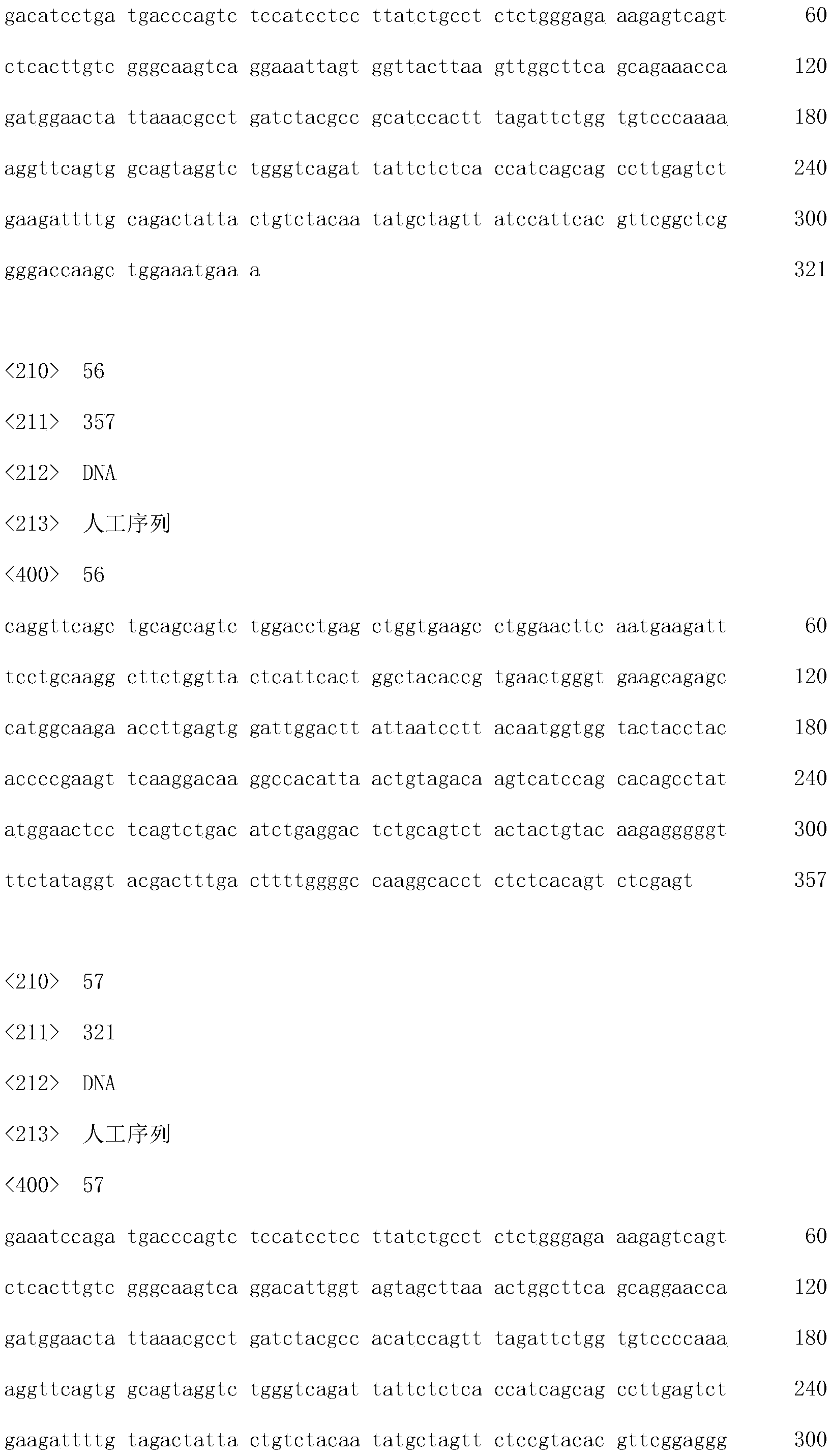


Claims (11)
Applications Claiming Priority (2)
| Application Number | Priority Date | Filing Date | Title |
|---|---|---|---|
| CN202110561829 | 2021-05-23 | ||
| CN202110561829.9 | 2021-05-23 |
Publications (1)
| Publication Number | Publication Date |
|---|---|
| WO2022247756A1 true WO2022247756A1 (en) | 2022-12-01 |
Family
ID=84115584
Family Applications (1)
| Application Number | Title | Priority Date | Filing Date |
|---|---|---|---|
| PCT/CN2022/094261 Ceased WO2022247756A1 (en) | 2021-05-23 | 2022-05-20 | Chimeric antigen receptor targeting gprc5d, and use thereof |
Country Status (1)
| Country | Link |
|---|---|
| WO (1) | WO2022247756A1 (en) |
Cited By (7)
| Publication number | Priority date | Publication date | Assignee | Title |
|---|---|---|---|---|
| WO2025076127A1 (en) | 2023-10-05 | 2025-04-10 | Capstan Therapeutics, Inc. | Constrained ionizable cationic lipids and lipid nanoparticles |
| WO2025076113A1 (en) | 2023-10-05 | 2025-04-10 | Capstan Therapeutics, Inc. | Ionizable cationic lipids with conserved spacing and lipid nanoparticles |
| WO2025096878A1 (en) | 2023-11-02 | 2025-05-08 | Capstan Therapeutics, Inc. | Rna for in vivo transfection with increased expression |
| CN120137041A (en) * | 2025-03-14 | 2025-06-13 | 深圳市欧安蒂生物科技有限公司 | An anti-GPRC5D antibody and its application in CAR-T |
| WO2025217454A2 (en) | 2024-04-11 | 2025-10-16 | Capstan Therapeutics, Inc. | Ionizable cationic lipids and lipid nanoparticles |
| WO2025217452A1 (en) | 2024-04-11 | 2025-10-16 | Capstan Therapeutics, Inc. | Constrained ionizable cationic lipids and lipid nanoparticles |
| US12545726B1 (en) | 2025-07-22 | 2026-02-10 | Integral Molecular, Inc. | Compositions and methods related to GPRC5D binding agents and variants thereof |
Citations (4)
| Publication number | Priority date | Publication date | Assignee | Title |
|---|---|---|---|---|
| CN107428829A (en) * | 2014-12-05 | 2017-12-01 | 纪念斯隆-凯特琳癌症中心 | Chimeric antigen receptors targeting G-protein coupled receptors and uses thereof |
| CN110462038A (en) * | 2017-02-07 | 2019-11-15 | 第一三共株式会社 | Anti-GPRC5D antibodies and molecules comprising the same |
| WO2020092854A2 (en) * | 2018-11-01 | 2020-05-07 | Juno Therapeutics, Inc. | Chimeric antigen receptors specific for g protein-coupled receptor class c group 5 member d (gprc5d) |
| WO2020148677A1 (en) * | 2019-01-18 | 2020-07-23 | Janssen Biotech, Inc. | Gprc5d chimeric antigen receptors and cells expressing the same |
-
2022
- 2022-05-20 WO PCT/CN2022/094261 patent/WO2022247756A1/en not_active Ceased
Patent Citations (4)
| Publication number | Priority date | Publication date | Assignee | Title |
|---|---|---|---|---|
| CN107428829A (en) * | 2014-12-05 | 2017-12-01 | 纪念斯隆-凯特琳癌症中心 | Chimeric antigen receptors targeting G-protein coupled receptors and uses thereof |
| CN110462038A (en) * | 2017-02-07 | 2019-11-15 | 第一三共株式会社 | Anti-GPRC5D antibodies and molecules comprising the same |
| WO2020092854A2 (en) * | 2018-11-01 | 2020-05-07 | Juno Therapeutics, Inc. | Chimeric antigen receptors specific for g protein-coupled receptor class c group 5 member d (gprc5d) |
| WO2020148677A1 (en) * | 2019-01-18 | 2020-07-23 | Janssen Biotech, Inc. | Gprc5d chimeric antigen receptors and cells expressing the same |
Non-Patent Citations (2)
| Title |
|---|
| E L SMITH, ET AL: "GPRC5D is a target for the immunotherapy of multiple myeloma with rationally designed CAR T cells", SCI. TRANSL. MED, vol. 11, no. 7746, 27 March 2019 (2019-03-27), pages 1 - 14, XP055665996, DOI: 10.1126/scitranslmed.aau7746 * |
| LARREA, C. F. ET AL.: "Defining an Optimal Dual-Targeted CAR T-cell Therapy Approach Simultaneously Targeting BCMA and GPRC5D to Prevent BCMA Escape-Driven Relapse in Multiple Myeloma", BLOOD CANCER DISCOVERY, vol. 1, 30 September 2020 (2020-09-30), XP055847845, DOI: 10.1158/2643-3230.BCD-20-0020 * |
Cited By (7)
| Publication number | Priority date | Publication date | Assignee | Title |
|---|---|---|---|---|
| WO2025076127A1 (en) | 2023-10-05 | 2025-04-10 | Capstan Therapeutics, Inc. | Constrained ionizable cationic lipids and lipid nanoparticles |
| WO2025076113A1 (en) | 2023-10-05 | 2025-04-10 | Capstan Therapeutics, Inc. | Ionizable cationic lipids with conserved spacing and lipid nanoparticles |
| WO2025096878A1 (en) | 2023-11-02 | 2025-05-08 | Capstan Therapeutics, Inc. | Rna for in vivo transfection with increased expression |
| WO2025217454A2 (en) | 2024-04-11 | 2025-10-16 | Capstan Therapeutics, Inc. | Ionizable cationic lipids and lipid nanoparticles |
| WO2025217452A1 (en) | 2024-04-11 | 2025-10-16 | Capstan Therapeutics, Inc. | Constrained ionizable cationic lipids and lipid nanoparticles |
| CN120137041A (en) * | 2025-03-14 | 2025-06-13 | 深圳市欧安蒂生物科技有限公司 | An anti-GPRC5D antibody and its application in CAR-T |
| US12545726B1 (en) | 2025-07-22 | 2026-02-10 | Integral Molecular, Inc. | Compositions and methods related to GPRC5D binding agents and variants thereof |
Also Published As
| Publication number | Publication date |
|---|---|
| CN115386010A (en) | 2022-11-25 |
Similar Documents
| Publication | Publication Date | Title |
|---|---|---|
| US20220135699A1 (en) | Chimeric antigen receptor comprising interleukin-15 intracellular domain and uses thereof | |
| CN114144430B (en) | CD7-CAR-T cell and preparation and application thereof | |
| CN113412117B (en) | Chimeric antigens and T cell receptors and methods of use | |
| WO2022247756A1 (en) | Chimeric antigen receptor targeting gprc5d, and use thereof | |
| JP7280828B2 (en) | Antibodies targeting BCMA and uses thereof | |
| CN112739721B (en) | A kind of single-domain antibody and chimeric antigen receptor comprising antibody structure | |
| US11220535B2 (en) | Anti-BCMA chimeric antigen receptors | |
| JP2021535756A (en) | BCMA chimeric antigen receptor based on single domain antibody and its use | |
| WO2020020359A1 (en) | Nef-containing t cells and methods of producing thereof | |
| US20220281994A1 (en) | Chimeric Antigen Receptors with MAGE-A4 Specificity and Uses Thereof | |
| TWI840766B (en) | Improving immune cell function | |
| JP2025536940A (en) | Novel CD19 binders, CAR-T constructs containing same, and methods of use thereof | |
| CN116162168A (en) | Combination of molecular switch regulation type chimeric antigen receptor cell and antibody and application thereof | |
| US20250230249A1 (en) | Humanized anti-gdnf family alpha-receptor 4 (grf-alpha-4) antibodies and chimeric antigen receptors | |
| WO2023009989A1 (en) | Split chimeric antigen receptors and methods of use | |
| CN118055944A (en) | Modulating Bcl-2 enhances the efficacy of chimeric antigen receptor cancer immunotherapy | |
| CN115386010B (en) | GPRC 5D-targeted chimeric antigen receptor and application thereof | |
| WO2025214498A1 (en) | Composition and method of cellular immunotherapy | |
| WO2023109941A1 (en) | Cell modification | |
| CN119798462A (en) | A chimeric antigen receptor targeting CLDN18.2 and its application |
Legal Events
| Date | Code | Title | Description |
|---|---|---|---|
| 121 | Ep: the epo has been informed by wipo that ep was designated in this application |
Ref document number: 22810482 Country of ref document: EP Kind code of ref document: A1 |
|
| NENP | Non-entry into the national phase |
Ref country code: DE |
|
| 122 | Ep: pct application non-entry in european phase |
Ref document number: 22810482 Country of ref document: EP Kind code of ref document: A1 |
|
| 122 | Ep: pct application non-entry in european phase |
Ref document number: 22810482 Country of ref document: EP Kind code of ref document: A1 |
|
| 32PN | Ep: public notification in the ep bulletin as address of the adressee cannot be established |
Free format text: NOTING OF LOSS OF RIGHTS PURSUANT TO RULE 112(1) EPC |