WO2022218535A1 - Hair-straightening-filler complex and compositions thereof - Google Patents
Hair-straightening-filler complex and compositions thereof Download PDFInfo
- Publication number
- WO2022218535A1 WO2022218535A1 PCT/EP2021/059840 EP2021059840W WO2022218535A1 WO 2022218535 A1 WO2022218535 A1 WO 2022218535A1 EP 2021059840 W EP2021059840 W EP 2021059840W WO 2022218535 A1 WO2022218535 A1 WO 2022218535A1
- Authority
- WO
- WIPO (PCT)
- Prior art keywords
- hair
- straightening
- acid
- filler complex
- filler
- Prior art date
- Legal status (The legal status is an assumption and is not a legal conclusion. Google has not performed a legal analysis and makes no representation as to the accuracy of the status listed.)
- Ceased
Links
Classifications
-
- A—HUMAN NECESSITIES
- A61—MEDICAL OR VETERINARY SCIENCE; HYGIENE
- A61Q—SPECIFIC USE OF COSMETICS OR SIMILAR TOILETRY PREPARATIONS
- A61Q5/00—Preparations for care of the hair
- A61Q5/06—Preparations for styling the hair, e.g. by temporary shaping or colouring
-
- A—HUMAN NECESSITIES
- A61—MEDICAL OR VETERINARY SCIENCE; HYGIENE
- A61K—PREPARATIONS FOR MEDICAL, DENTAL OR TOILETRY PURPOSES
- A61K8/00—Cosmetics or similar toiletry preparations
- A61K8/18—Cosmetics or similar toiletry preparations characterised by the composition
- A61K8/30—Cosmetics or similar toiletry preparations characterised by the composition containing organic compounds
- A61K8/33—Cosmetics or similar toiletry preparations characterised by the composition containing organic compounds containing oxygen
- A61K8/36—Carboxylic acids; Salts or anhydrides thereof
- A61K8/365—Hydroxycarboxylic acids; Ketocarboxylic acids
-
- A—HUMAN NECESSITIES
- A61—MEDICAL OR VETERINARY SCIENCE; HYGIENE
- A61K—PREPARATIONS FOR MEDICAL, DENTAL OR TOILETRY PURPOSES
- A61K8/00—Cosmetics or similar toiletry preparations
- A61K8/18—Cosmetics or similar toiletry preparations characterised by the composition
- A61K8/92—Oils, fats or waxes; Derivatives thereof, e.g. hydrogenation products thereof
- A61K8/922—Oils, fats or waxes; Derivatives thereof, e.g. hydrogenation products thereof of vegetable origin
Definitions
- the present invention is directed to methods of straightening human hair and hair conditioning fillers comprising the step of applying to the hair a composition comprising a hair-straightening- filler complex of actives consisting essentially of at least one, preferably more or a mixture of several of (i) a first organic acid preferably glyoxylic acid (ii) in combination with the oil obtained from hemp seeds by cold pressing, and/or (iii) optionally, a second organic compound as Carbocysteine and / or its salts and/or as Glyoxyloyl Carbocysteine, (iv) optionally, a glyoxyloyl derivative (in addition to glyoxylic acid and hemp seed oil), preferably alpha, beta or gamma amino acid derivative and/or an amino acid analogue, (v) optionally, at least one humectant, preferably a natural moisturizing factor, (vi) at least one emulsifying wax (vii) and at least one conditioning agent (viii).
- the hair is rinsed after a contact time (ix), the fibres are mechanically deformed under the action of heat either with blow dryer or flat iron (depending on the preferred method), minimizing the negative consequences of the transformation and in particular reducing the electrostatic charge and hydrophilization of the hair.
- the present invention relates to methods of straightening human hair and hair conditioning fillers comprising the step of applying to the hair a composition comprising a hair-straightening-filler complex of actives.
- the object of the invention is therefore (i) to provide a shaping method for keratin-containing fibres, in particular for human hair, which provides hair straightening effect or (ii) hair ‘botox’ effect (hair filler) while (iii) minimizing the electrostatic charge and hydrophilization of the hair, cares for the fibre and protects the structure of the fibre, without compromising the hair and scalp integrity; (iv) the treatments do not release formaldehyde, do not produce any bad fumes or smells - unlike ordinary keratin treatments-, which makes the application comfortable and completely safe; (v) the product is rinsed before the application of heat which makes it easier and quicker for the user, avoiding cumbersome processes involving sticky irons, avoiding potential hair or skin burns; (vi) resulting in:
- Figure 1 shows the structure of the human skin showing hair as an epidermal annex.
- Figure 2 is a schematic cross-section of a hair fibre showing medulla, cortex and cuticle cell layers.
- Figure 3 is a schematic representation of the human hair fibre structure and its insertion into the scalp.
- Figure 4 shows cuticles scales closed (A) and open (B).
- Figure 5 is a comparative image showing 4 main types of hair: 1 , 2, 3 and 4.
- Figure 6 is a before and after hair straightener treatment application comparison.
- Figure 7 shows hair desorption vs. time graphics of example formulations 13, 14, 15 and 16.
- hair fibres are composed of dead epidermal cells, when they emerge from the scalp, there is a huge variation in natural wave and the response to hair cosmetics.
- Important information such as the composition and structure of the hair fibres, and the composition of products and techniques available for hair straightening, must be taken into account so that the straightening process can be designed appropriately, avoiding undesirable side effects for hair fibre and for health.
- personal image as it relates to external beauty, has attracted much attention from the cosmetic industry, and capillary aesthetics is a leader in consumption in this area.
- hair fibres are composed of dead epidermal cells, when they emerge from the scalp, there is a huge variation in natural wave and the response to hair cosmetics.
- cosmetic products for good results in any hair treatment, it is essential to understand the mechanisms of the process.
- Important information such as the composition and structure of the hair fibres, and the composition of products and techniques available for hair straightening, must be considered so that the straightening process can be designed appropriately, avoiding undesirable side effects for hair fibre and for health.
- the hair is an appendage derived from the epidermis; it is a keratinized structure formed from the invagination of the epidermis into the dermis. From this invagination, small saccular structures called hair follicles originate. Thus, it can be divided into two major parts: the hair follicle and the hair shaft.
- the hair shaft extends from its root or bulb (located within the follicle), passing through the various layers of the epidermis, surpassing the stratum corneum and then continuing with a stem. Despite its shine, body, and texture, it is a dead structure ( Figure 1). Hair follicles are essential growth structures of hair, being strongly invaginated into the scalp tissue.
- hair fibre the primary component of hair fibre is keratin (about 65- 95%), the remaining constituents being represented by other proteins, water, lipids (structural or free), pigments and trace elements.
- Hair fibres (about 50-100 urn in diameter) are not continuous in their entire length, but rather the result of the combination of compact groups of cells within the follicle, from which originate three basic morphological components: (i) the cuticle, which is the outermost region covering the core of the fibres; (ii) the cortex, which comprises most of the hair volume (75%) and is responsible for sustaining the hair shaft; and (iii) the medulla, which is the central area of the hair and is not always present.
- the cuticle is composed primarily of keratin and displays a stepped structure with five to ten superimposed flat overlapping cells(scales) of 0.3-0.5 pm thick, which are stacked like shingles on a roof and are oriented towards the distal (tip) end of the fibre.
- the outer surface of the cuticle’s scale cells is coated by a thin mem-brane, the epicuticle, and each cuticle cell consists of three layers of protein: the A- layer, a resistant layer with high cystine content(>30%); the exocuticle, also rich in cystine (-15%); and the endocuticle, low in cystine content (-3%) (Figure 2).
- the cuticle encircles the cortex, which forms the most volume-nous part of the hair fibre and is comprised of macrofibrils, long filaments oriented parallel to the axis of the fibre.
- Each macrofibril consists of keratin intermediate filaments (IF), also known as micro-fibrils, and the matrix, constituted by keratin-associated proteins (KAP) ( Figure 3).
- IF keratin intermediate filaments
- KAP keratin-associated proteins
- the cortical cell is spindle-shaped, about 100 pm long and generally 1-6 pm thick.
- the medulla of human hair if present, generally makes up only a small percentage of the mass of the whole hair and is believed to contribute negligibly to the mechanical properties of human hair fibres.
- the hair appearance importantly depends on the health of the cuticle.
- Straightening consists of temporary or permanent breaks in the chemical bonds that maintain the three-dimensional structure of keratin protein in its original rigid form, followed by straightening and mechanical fixing of the new form. It is an effective treatment for hair, which alters almost all aspects of the hair fibre structure to accomplish its objective: to confer on the hairs a durable and different configuration from that which is present in its native form. Temporary straightening, using physicochemical techniques such as dryer, flat iron and the old hot comb, lasts only until the next wash. Hair must be pre-wetted, to break the hydrogen bonds of keratin, thus permitting temporary opening of its original structure. With this, the strand straightens. Rapid drying with the hair dryer maintains the flat shape of the strand.
- the application of a hot iron shapes the strand (scales), providing the desired end-look.
- the strand gets smooth and shiny, to reflect more light.
- More permanent straightening of hair is affected by altering the disulphide bonds of keratin. It can be achieved with alkaline creams containing up to 3.5% sodium hydroxide (lye-based straighteners), or else guanidine hydroxide, potassium hydroxide, or lithium hydroxide in place of sodium hydroxide (non-lye straighteners).
- Guanidine hydroxide needs to be activated by adding 4-7% calcium hydroxide to produce calcium carbonate and guanidine hydroxide, the active agent. The reagents cause lanthionization of hair and irreversible hair straightening.
- Chemical straightening can be also accomplished by ammonium or ethanolamine thioglycolate or bisulphite creams.
- the disulphide bonds are converted to sulfhydryl groups to allow the mechanical relaxation of the protein structure of hair fibres.
- free sulfhydryl groups are reoxidized (neutralized) to reform the disulphide bonds, thus looking in the desired conformation.
- the treatment can be seen as a combination of reverse and gradual redirection of these disulphide bonds processes, with softening of the keratin, moulding into the desired shape and stabilizing the newly given geometry.
- Glyoxylic acid is an organic acid with effects of straightening, smoothing, and conditioning the hair. Because of its low molecular size, it can deeply penetrate the cuticle layer into the hair cortex and bind to the keratin. Glyoxylic acid can break down the weak bonds that bind the polypeptide chains of keratin and form new crosslinks. Carboxylic and aldehyde groups of glyoxylic acid react with amine and sulphur-containing groups present in capillary keratin, resulting in the formation of stable bonds. This effect provides long-lasting smoothing and/or conditioning of hair fibres, improves manageability, tactile sensation, and appearance without causing hair damage and without scalp irritation typical of hydroxide or thioglycolate-based products. Glyoxylic acid and its derivatives are high-performance hair conditioning agents that allow efficient and safe hair straightening treatments with a relaxing effect on wavy, curly, or frizzy hair. O
- Hemp oil is a natural oil obtained by cold-pressed hempseeds; seeds of the plant species Cannabis sativa L. Hemp oil consists of beneficial properties for hair that enhance the smoothing properties, and hair conditioning provided by glyoxylic acid.
- the seed oil of Cannabis sativa L. is typically over 90% in unsaturated fats.
- Hempseed oil pressed from nondrug varieties of the Cannabis seed (“Industrial Hemp”), is an especially rich source of the two EFAs, linoleic acid (18:2 omega-6) and alpha-linolenic acid (18:3 omega-3), in addition to their respective biologic metabolites, gamma-linolenic acid (18:3 omega-6, ‘GUV) and stearidonic acid (18:4 omega-3, ‘SDA’).
- the fifteen fatty acids such as myristic, palmitic, palmitoleic, stearic, oleic, linoleic, gamma- linolenic, alpha linolenic, stearidonic, arachidic, gadoleic, eicosadienoic, behenic, erucic and lignoceric acid have been identified in the oil of the hempseeds.
- the principal saturated fatty acid in the hempseed samples was palmitic acid (C16:0), one of the most common saturated fatty acids found in animals and plants, ranging between 6.08% and 6.82%. It was followed by stearic acid (C18:0), varying from 2.34% to 2.67%.
- the amounts of the other saturated fatty acids were below 1%.
- Arachidic (ecosanoic) (0.60-0.76%), behenic (0.21-0.25%), lignoceric (0.06-0.12%) and myristic acid (0.03-0.04%) were saturated fatty acids found in trace amounts in all seed samples.
- the saturated fatty acid fraction represents 9.37-10.57% of the total fatty acids present in hempseeds.
- Acid Y-!inolenic acid 3-4 % polyunsaturated, omega-6 a-linolenic acid 25-50% polyunsaturated, omega-3
- the common side effect of all chemical straighteners is damage to the hair shaft.
- One of the damages that occur is the removal of the monomolecular layer of fatty acids covalently bound to the cuticle, including 18-methyl eicosanoic (18-MEA) acid.
- This hydrophobic layer retards water from wetting and penetrating the hair shaft and changing its physical properties.
- virgin hair can be stretched by 30% of their original length without damage; however, irreversible changes occur when hair is stretched between 30% and 70%. Stretching to 80% causes fracture. Removal of the fatty acid layer renders the fiber hydrophilic and decreases the brightness of the hair, making it more susceptible to static electricity and frizzing induced by humidity. Water absorption causes the hair shaft swelling.
- Hemp seed oil can mimic the hair natural lipid outer layer: 18-MEA, restore hydrophobicity, seal the cuticle, avoid, or minimize frizz and friction, and enhance shine, smoothness and manageability.
- Glyoxyloyl Carbocysteine is a reaction product of glycolic acid + acetic acid + acetic acid. It allows to weaken the hydrogen and salt bonds of the hair, and it allows the interconversion of the cysteine bonds of the hair fibres surface.
- US3654936A describes a composition for straightening human hair that comprises a two- stage process wherein the hair is first submitted to the action of a keratin softener and after removal of at least part of the softener from the hair is then treated with a swelling or penetration- promoting agent, while being straightened mechanically. The hair is finally subjected to the action of a fixation or neutralizing agent.
- the invention herein disclosed uses carboxylic acids and derivatives as active substances. Besides there is no need to use neutralizing agents as a final step.
- Patent document US4030512A discloses a formulation containing a copolymer as the active substance, which is different from the actives of current invention.
- patent application WO2012010351 relates to a treatment for human hair by means of solutions of Glyoxylic acid that, when used in combination with mechanical straightening by means of hair-straightening irons set at a temperature of approximately 200 °C +/- 30 °C, allow for semi permanently changing the shape of hair from curly and/or frizzy to straight for at least six consecutive washings with water and shampoo.
- current invention uses a different method of application as the product is rinsed before passing the iron. This difference is not obvious in light of W02012010351.
- Patent document US9463147 discloses a hair care composition comprising: a crosslinking component comprising an inorganic fluoride; and a conditioning component, wherein the composition has a ratio of crosslinking component to conditioning component in the range of about 10:90 to about 95:5.
- the inorganic fluoride is at least one selected from the group consisting of: sodium fluoride, potassium fluoride, ammonium fluoride, lithium fluoride, stannous fluoride, aluminum fluoride, zirconium fluoride, nickel fluoride, tin fluoride, ammonium hexafluorophosphate, sodium monofluorophosphate, stannous fluorozirconate, and stannous chlorofluoride.
- document US20050232882 relates to a hair fiber treating method comprising: applying to the hair fibers a composition comprising at least 5% by weight, relative to the total weight of the composition, at least one silicone chosen from aryl silicones and silicone gums, then heating the hair fibers with a heating flat iron having a temperature ranging from 150 to 250° C.
- the actives of the present invention are incorporated into a O/W emulsion — a hair-straightening- filler product — which can be in the form of a solution, a gel, a cream, a lotion, a paste or a mousse, and can be a single-phase (e.g., thickened aqueous dispersion or anhydrous gel) or multi-phase system (e.g., emulsion), where the phases are oil, water, and silicone.
- a single-phase e.g., thickened aqueous dispersion or anhydrous gel
- multi-phase system e.g., emulsion
- the term “consisting essentially of” means that in addition to the components of the inventive hair-straightening-filler complex, the hair straightening product may contain other ingredients suitable for application to human hair provided that such additional ingredient(s) does/do not generate formaldehyde at a level that exceeds 0.5 ppm on an 8-hour TWA basis.
- the hair-straightening-filler complex of the present invention, and hair-straightening-filler products containing the inventive hair-straightening-filler actives includes (i) preferably glyoxylic acid as a required component, (ii) preferably hemp seed oil, (iii) preferably Carbocysteine and / or its salts and/or as Glyoxyloyl Carbocysteine, (iv) optionally the reaction product of glyoxylic acid with at least one alpha, beta or gamma amino acid, or an analogue thereof, where the amino acid (or analogue thereof is preferably selected from the group of (a) essential amino acids, (b) non- essential amino acids, (c) conditional amino acids (Table 1).
- acetyl amino acid derivatives preferably but not limited to Alanine [Natural Amino Acid Derivatives], Amino Alcohols [Natural Amino Acid Derivatives], Amino Lactones [Natural Amino Acid Derivatives], Arginine [Natural Amino Acid Derivatives], Asparagine [Natural Amino Acid Derivatives], Aspartic Acid [Natural Amino Acid Derivatives], Cysteine/Cystine [Natural Amino Acid Derivatives], Fmoc-Amino Acids [N-Protected Amino Acids], Glutamic Acid [Natural Amino Acid Derivatives], Glutamine [Natural Amino Acid Derivatives], Glycine [Natural Amino Acid Derivatives], Histidine [Natural Amino Acid Derivatives], Hydroxy-L-proline [Natural Amino Acid Derivatives], Isoleucine
- glyoxyloyl derivative The reaction product of glyoxylic acid with at least one alpha, beta or gamma amino acid, or an analogue thereof, is referred to herein as a glyoxyloyl derivative.
- the term glyoxyloyl derivative is to be understood to include glyoxyloyl esters and glyoxyloylthioesters, and salts thereof.
- An organic acid is an organic chemical compound containing one or more carboxyl radicals.
- the hair-straightening-filler complex is comprised but not limited to glyoxylic acid and hemp seed oil, and/or Carbocysteine and / or its salts and/or Glyoxyloyl Carbocysteine, and preferably by glyoxyloyl derivatives formed by reacting glyoxylic acid with at least one of each of an essential amino acid, a non-essential amino acid, a conditional amino acid, and a n-acetyl amino acid.
- the hair-straightening-filler complex of the invention includes as a required component at least one organic acid, preferably glyoxylic acid.
- glyoxylic acid is the single organic acid that is part of the hair- straightening-filler complex
- glyoxylic acid is present at a concentration of from about 1.0% to about 60.0% wt/wt, based on the total weight of the hair-straightening-filler complex: preferably from about 5.0% to about 55.0% wt/wt, and more preferably from about 20.0% to about 50.0% wt/wt.
- glyoxylic acid is present at a concentration of from about 0.1% to about 40.0% wt/wt of the finished haircare product, and in more preferred embodiments from about 2% to about 35.0% wt/wt of the finished haircare product.
- the hair-straightening-filler complex of the invention includes as a required component hemp seed oil, as the oil obtained from cold pressing of the the hem seeds.
- Hempseed oil is a natural oil that can be obtained by cold pressing hemp seeds, which are seeds from the plant species Cannabis sativa.
- the oil from these seeds contains a mixture of natural fats (triesters of glycerol, also known as triglycerides).
- the hemp seed oil is a triester of the formula in which about 95% of the molecular weight of the molecule is the R groups, which are fatty acids selected from the group consisting of palmitic acid, stearic acid, arachidic acid, behenic acid, palmitoleic acid, oleic acid, linoleic acid and linolenic acid.
- This rich mixture of fatty acids includes several especially biologically important fatty acids, such as omega-6-linoleic acid (a polyunsaturated essential fatty acid), omega-6 linolenic acid, and omega-3 linolenic acid (a polyunsaturated essential fatty acid).
- Hempseed oil has an iodine value (measure of saturation) of 166, and a very low freezing point (-20° C) because of its high essential fatty acid content. Given the high content of essential fatty acids in hemp seed oil, attempts have been made to use hemp as an herbal treatment.
- the hemp seed oil is present at a concentration of from about 0.01% to about 20.0% wt/wt of the hair-straightening-filler complex.
- hemp seed oil is the single oil that is part of the hair-straightening-filler complex
- hemp seed oil is present at a concentration of from about 0.01% to about 20.0% wt/wt, based on the total weight of the hair-straightening-filler complex; preferably from about 0.1 % to about 15.0% wt/wt, and more preferably from about 0.5% to about 5.0% wt/wt.
- hemp seed oil is present at a concentration of from about 0.1% to about 20.0% wt/wt of the finished haircare product, and in more preferred embodiments from about 0.5% to about 5.0% wt/wt of the finished haircare product.
- the hair-straightening-filler complex of the invention includes glyoxylic acid and a second organic acid, preferably a hydroxy acid or a keto acid, having six or fewer carbon atoms.
- the second organic compound is preferably selected from the group consisting of Carbocysteine and / or its salts and/or Glyoxyloyl Carbocysteine.
- the second organic acid is selected from the group consisting of Glyoxyloyl Carbocysteine and/or Carbocysteine.
- the second organic compound is present at a concentration of from about 0.025% to about 35.0% wt/wt, based on the total weight of the hair-straightening-filler complex. In more preferred embodiments, the second organic compound is present a ta concentration of from about 0.5 to about 25.0% wt/wt, based on the total weight of the hair-straightening complex, and in even more preferred embodiments from about 1.0% to about 15.0% wt/wt, based on the total weight of the hair-straightening-filler complex.
- the third organic compound is preferably selected from the group consisting of glyoxyloyl derivative consists of at least one essential amino acid (or analogue thereof) that is selected from the group consisting of Carbocysteine, Histidine, Isoleucine, Leucine, Lysine, Methionine, Phenylalanine, Threonine, Tryptophan, and Valine.
- glyoxylic acid is reacted with at least one non-essential amino acid (or analogue thereof) that is selected from the group consisting of Alanine, Asparagine, Aspartic Acid, and Glutamic Acid.
- glyoxylic acid is reacted with at least one conditional amino acid (or analogue thereof) Selected from the group consisting of Arginine, Cysteine, Glutamine, Tyrosine, Glycine, Ornithine, Proline, and Serine.
- Selenocysteine is a cysteine analogue with a selenium-containing selenol group in place of the Sulphur-containing thiol group and is yet another preferred amino acid that can be reacted with glyoxylic acid to produce a glyoxyloyl derivative useful in the compositions and methods of the present invention.
- the third organic compound is present at a concentration of from about 0.01% to about 25.0% wt/wt, based on the total weight of the hair- straightening-filler complex. In more preferred embodiments, the third organic compound is present a ta concentration of from about 0.5 to about 15.0% wt/wt, based on the total weight of the hair-straightening-filler complex, and in even more preferred embodiments from about 1.0% to about 10.0% wt/wt, based on the total weight of the hair-straightening-filler complex.
- glyoxyloyl derivative consists of at least one essential amino acid (or analogue thereof) that is selected from the group consisting of Carbocysteine, Histidine, Isoleucine, Leucine, Lysine, Methionine, Phenylalanine, Threonine, Tryptophan, and Valine.
- glyoxylic acid is reacted with at least one non-essential amino acid (or analogue thereof) that is selected from the group consisting of Alanine, Asparagine, Aspartic Acid, and Glutamic Acid.
- glyoxylic acid is reacted with at least one conditional amino acid (or analogue thereof) selected from the group consisting of Arginine, Cysteine, Glutamine, Tyrosine, Glycine, Ornithine, Proline, and Serine.
- Selenocysteine is a cysteine analogue with a selenium-containing selenol group in place of the sulphur-containing thiol group and is yet another preferred amino acid that can be reacted with glyoxylic acid to produce a glyoxyloyl derivative useful in the compositions and methods of the present invention.
- the oil phase components are not limited in particular, and hydrocarbons, oil/fats, wax, higher fatty acids, higher fatty alcohols, ester oils, silicones, etc. can be used.
- fatty alcohols are suitable for use in the conditioner composition.
- the fatty alcohols useful herein are those having from about 14 to about 30 carbon atoms, from about 16 to about 22 carbon atoms. These fatty alcohols are saturated and can be straight or branched chain alcohols. Suitable fatty alcohols include, for example, cetyl alcohol, stearyl alcohol, behenyl alcohol, and mixtures thereof.
- High melting point fatty compounds of a single compound of high purity can be used.
- Single compounds of pure fatty alcohols selected from the group of pure cetyl alcohol, stearyl alcohol, and behenyl alcohol can also be used.
- pure herein, what is meant is that the compound has a purity of at least about 90%, and/or at least about 95%.
- the high melting point fatty compound can be included in the conditioner composition at a level of from about 0.1 % to about 20%, alternatively from about 1% to about 15%, and alternatively from about 1.5% to about 8% by weight of the composition, in view of providing improved conditioning benefits such as slippery feel during the application to wet hair, softness and moisturized feel on dry hair.
- examples of the polar oil added to the oil phase include ester oils.
- ester oils such as isopropyl myristate, cetyl octanoate, octyldodecyliyristate, isopropyl palmitate, butyl stearate, hexyl laurate, myristyl myristate, decyl oleate, hexyldecyl dimethyloctanoate, cetyl lactate, myristyl lactate, lanoline acetate, isocetyl stearate, isocetyl isostearate, cholesteryl 12-hydroxystearate, dipentaerythri to I fatty acid ester, n-alkylglycol monoisostearate, neopen 1525354045505560654 tylglycol dicaprate, isostearyl malate,
- higher alcohols which are in a liquid state at room temperatures, such as oleyl alcohol, isostearyl alcohol and octyldodecanol.
- the most preferable is to add stearyl alcohol to the oil phase.
- hydrocarbons, oil/fats, fatty acids and Silicones can be added in any amount as long as the emulsion stability is not affected.
- Suitable surfactants include fatty alcohol sulfates, ethoxylated fatty alcohol sulfates, alkylsulfonates, alkylbenzensulfonates, alkyltrimethylammonium salts, alkylbetaines, ethoxylated fatty alcohols, ethoxylated fatty acids, ethoxylated alkylphenols, block polymers of ethylene and/or propylene glycol, glycerol esters, phosphate esters, fatty acid alkanol amides and ethoxylated fatty acid esters, alkyl sulfates, ethoxylated alkyl sulfates, alkyl glyceryl
- sodium and ammonium alkyl sulfates sodium and ammonium ether sulfates having 1 to 3 ethylene oxide groups
- nonionic surfactants sold as Tergitols, e.g., C11-C15 Pareth-9, and Neodols, e.g., C12-C15 Pareth-3. They are included for various reasons, e.g., to assist in thickening, for forming emulsions, to help in wetting hair during application of the hair dye product composition, etc.
- Amphoteric surfactants include, for example, the asparagine derivatives as well betaines, sultaines, glycinates and propionates having an alkyl or alkylamido group of from about 10 to about 20 carbon atoms.
- amphoteric surfactants suitable for use in this invention include lauryl betaine, lauroamphoglycinate, lauroamphopropionate, lauryl sultaine, myristamidopropyl betaine, myristyl betaine, stearoamphopropylsulfonate, cocamidoethyl betaine, cocamidopropyl betaine, cocoamphoglycinate, cocoamphocarboxypropionate, cocoamphocarboxyglycinate, cocobetaine, and cocoamphopropionate.
- the amount of surfactants in the hair straightening-filler compositions is normally from about 0.1 % to 30% by weight, preferably 1% to 15% by weight.
- Suitable thickeners include such as higher fatty alcohols, starches, cellulose derivatives, petrolatum, paraffin oil, fatty acids and anionic and non-ionic polymeric thickeners based on polyacrylic and polyurethane polymers. Examples are hydroxyethyl cellulose, hydroxymethylcellulose and other cellulose derivatives, hydrophobically modified anionic polymers and non-ionic polymers, particularly such polymers having both hydrophilic and hydrophobic moieties (i.e. , amphiphilic polymers).
- Useful non-ionic polymers include polyurethane derivatives such as PEG-150/stearyl alcohol/SDMI copolymer.
- Suitable polyether urethanes are Aculyn® 22, Aculyn® 44, and Aculyn® 46 polymers sold by Rohm & Haas.
- Other useful amphiphilic polymers are disclosed in U.S. Pat. No. 6,010,541.
- anionic polymers that can be used as thickeners are acrylates copolymer, acryl ates/ceteth-20 methacrylates copolymer, acrylates/ceteth-20 itaconate copolymer, and acrylates/beheneth-25 acrylates copolymers.
- the polymer may be included in one of either the hair straightening-filler composition or the developer composition of the hair straightening-filler product and the surfactant material in the other.
- the requisite viscosity is obtained.
- the thickeners are provided in an amount to provide a suitably thick product as it is applied to the hair. Such products generally have a viscosity of from 1000 to 100000 cps, and often have a thixotropic rheology.
- the finished haircare product may optionally, and preferably does, contain one or more conditioning agent(s) that adhere(s) to and improve(s) the feel and manageability of the hair.
- the conditioning agent(s) may be present at a concentration of from about 0.01% to about 30% wt/wt, more preferably from about 0.05% to about 20% wt/wt, and even more preferably from about 0.1 % to 10% wt/wt, based on the total weight of the haircare product.
- Suitable conditioning materials include silicones and silicone derivatives; hydrocarbon oils; monomeric quaternary compounds, and quaternized polymers.
- Monomeric quaternary compounds are typically cationic compounds but may also include betaines and other amphoteric and zwitterionic materials that provide a conditioning effect.
- Suitable monomeric quaternary compounds include behentrialkonium chloride, behentrimonium chloride, benzalkonium bromide or chloride, benzyl triethyl ammonium chloride, bis-hydroxyethyl tallowmonium chloride, C12-18 dialkyldimonium chloride, cetalkonium chloride, ceteartrimonium bromide and chloride, cetrimonium bromide, chloride and methosulfate, cetylpyridonium chloride, cocamidoproypl ethyldimonium ethosulfate, cocamidopropyl ethosulfate, cocoethyldimonium ethosulfate, cocotrimonium chloride and ethosulfate, dibehenyl dimonium chloride, dicetyldimonium
- Quaternized polymers are typically cationic polymers but may also include amphoteric and zwitterionic polymers.
- Useful polymers are exemplified by polyquaternium-4, polyquaternium-6, polyquaternium-7, polyquaternium-8, polyquaternium-9, polyquaternium-10, polyquaternium-22, polyquaternium-32, polyquaternium-39, polyquaternium- 44 and polyquaternium-47.
- Silicones suitable to condition hair are dimethicone, amodimethicone, dimethicone copolyol and dimethiconol.
- Suitable hydrocarbon oils would include mineral oil.
- ingredients used in common hair treatment agents such as perfumes, pH, control agents, aromatic alcohols, preservatives, humectants, water Soluble thickeners, ultraviolet light absorbents, sequestering agents, etc. can be added to the W/O formulation, as long as the effect of the present invention is not affected.
- pH Modifying agents such as perfumes, pH, control agents, aromatic alcohols, preservatives, humectants, water Soluble thickeners, ultraviolet light absorbents, sequestering agents, etc.
- Suitable materials that are used to adjust pH of the hair straightening-filler compositions include alkalizers such alkali metal and ammonium hydroxides and carbonates, especially sodium hydroxide and ammonium carbonate, ammonia, organic amines including methylethanolamine, aminomethylpropanol, mono-, di-, and triethanolamine, and acidulents such as inorganic and inorganic acids, for example phosphoric acid, acetic acid, ascorbic acid, citric acid or tartaric acid, hydrochloric acid, etc.
- alkalizers such alkali metal and ammonium hydroxides and carbonates, especially sodium hydroxide and ammonium carbonate, ammonia, organic amines including methylethanolamine, aminomethylpropanol, mono-, di-, and triethanolamine
- acidulents such as inorganic and inorganic acids, for example phosphoric acid, acetic acid, ascorbic acid, citric acid or tartaric acid, hydrochloric acid, etc.
- proteins and protein derivatives and plant materials.
- Other adjuvants include polysaccharides, alkylpolyglycosides, buffers, chelating and sequestrant agents, antioxidants, and peroxide stabilizing agents.
- the adjuvants referred to above but not specifically identified that are suitable are listed in the International Cosmetics Ingredient Dictionary and Handbook, (Eighth Edition) published by The Cosmetics, Toiletry, and Fragrance Association. In particular, reference is made to Volume 2, Section 3 (Chemical Classes) and Section 4 (Functions) are useful in identifying a specific adjuvant to achieve a particular purpose or multipurpose.
- the surfactants used as wetting agents, associative agents, and emulsifiers are generally present in concentrations of from about 0.1 to 30 percent by weight
- the thickeners are useful in an amount of from about 0.1 to 25 percent by weight
- the hair care functional materials are typically used in concentrations of from about 0.01 to 5.0 percent by weight.
- the at least one humectant is selected from the group consisting of Pyrrolidone Carboxylic Acid (PC A) and its salts, trimethylglycine, lactic acid, sodium lactate, glycerin, polyols, and unreacted, preferably non-keratin, amino acids.
- a particularly preferred humectant is the sodium salt of PCA.
- the at least one (optional) humectant is preferably present at a concentration of from about 0.01% to about 5.0% wt/wt, based on the total weight of the finished haircare product; preferably from about 0.1% to about 2.5% wt/wt.
- Urea and/or hydroxyethyl urea are humectants that may be incorporated in the hair-straightening complex of the present invention, but at levels that do not generate formaldehyde above the U.S. Occupational and Safety Administration “action level” (8-hour time weighted average of 0.5 ppm).
- the hair-straightening complex of the present invention includes as fourth a required component from about 0.1 % to 10.0% of one or more penetration enhancers, non-limiting examples of which include monoalkyl or dialkyl ether of sorbitol, laurocapram, oleic acid, dimethyl isosorbide and diethyl isosorbide.
- penetration enhancers include monoalkyl or dialkyl ether of sorbitol, laurocapram, oleic acid, dimethyl isosorbide and diethyl isosorbide.
- the hair straightener composition described herein may optionally comprise one or more additional components known for use in hair care or personal care products, provided that the additional components are physically and chemically compatible with the essential components described herein, or do not otherwise unduly impair product stability, aesthetics or performance.
- additional components are most typically those described in reference books such as the CTFA Cosmetic Ingredient Handbook, Second Edition, The Cosmetic, Toiletries, and Fragrance Association, Inc. 1988, 1992. Individual concentrations of such additional components may range from about 0.001 wt % to about 10 wt % by weight of the hair care compositions.
- Suitable components include, but are not limited to, particles, colorants, anti-dandruff actives, perfume microcapsules, gel networks, and other insoluble skin or hair conditioning agents such as skin silicones, natural oils such as sunflower oil or castor oil.
- the hair care compositions of the present invention may be presented in typical hair care formulations. They may be in the form of solutions, dispersion, emulsions, gels, powders, talcs, encapsulated, spheres, spongers, foams, and other delivery mechanisms.
- the hair care compositions are generally prepared by conventional methods such as are known in the art of making the compositions. Such methods typically involve mixing of the ingredients in one or more steps to a relatively uniform state, with or without heating, cooling, application of vacuum, and the like.
- the compositions are prepared such as to optimize stability (physical stability, chemical stability, photostability) and/or delivery of the active materials.
- the hair care composition may be in a single phase or a single product, or the hair care composition may be in a separate phases or separate products. If two products are used, the products may be used together, at the same time or sequentially. Sequential use may occur in a short period of time, such as immediately after the use of one product, or it may occur over a period of hours or days.
- Finished haircare products of the present invention consist essentially of Applicants ' ’ inventive hair-straightening-filler complex as described above and have a pH of less than about 8.0, preferably a pH from about 0.5 to about 5.0, and still more preferably a pH of from about 1.0 to about 2.5.
- inventive method straightens human hair by treating the hair with a hair- straightening-filler composition of the present invention as described above, followed by blow drying the so-treated and already rinsed hair, and by applying force right afterwards generally perpendicular to the length of the hair, using a flat surface, for example a flat iron, having a surface temperature of from about 200°C. to about 230°C.
- An important inventive feature of the hair- straightening-filler complex of the present invention, and finished haircare formulas containing the same, is that, when used in a hair straightening procedure that involves application of heat (for example with a flat iron) no formaldehyde above the U.S. Occupational and Safety Administration “action level (8-hour time weighted average of 0.5 ppm) is detected.
- Hair straightener formulations i Hair filler formulations (Botox - like hair treatment):
- the hair-straightening-filler complex of the present invention can be used both to achieve longer- lasting hair straightening, or on another embodiment, a hair botox effect, for at least one month, preferably for a period of two to three months, as well as hair-straightening-filler for shorter time frames (e.g., several days).
- the hair straightening formulation will work progressively, higher straightening power would result from consecutively applications.
- the finished haircare composition (lotion, serum, gel) that is applied to coarse, curly or wavy hair contains a higher concentration of glyoxylic acid and/or glyoxyloyl derivative(s) from about 5.0% to about 50.0% wt/wt of the hair-straightening-filler complex.
- the finished haircare product is applied to hair, preferably dry hair, for a period at least 15 to 40 minutes, and thereafter rinsed, blow dried and contacted with a flat hair iron or similar heated hair-styling implement.
- Embodiments of the invention in which longer-lasting hair-straightening is desired are preferably practiced in a hair salon or similar environment by a hair stylist or other haircare professional.
- the finished haircare product is applied to hair, preferably hair that has been dried, for a period at least 15 to 40 minutes, and thereafter rinsed and blow dried until hair is completely dried.
- flat iron must be avoided.
- the volunteers were healthy women, who had not received any chemical treatment in the hair in at least 1 year. Parallelly, four formulations were developed with different percentages of the hair filler treatment - ‘botox’ like treatment - and were given to the participants randomly.
- Figure 5 is a comparative image showing 4 main types of hair: 1 , 2, 3 and 4; the hairs of the participants were classified according to these 4 large groups.
- the appearance of a hair is a qualitative property that evaluates aspects such as size, color, hairstyle, shine, manageability and volume. People who are experts in the area of hair cosmetics are able to define and evaluate the following parameters:
- Figure 6 shows before and after hair straightener treatment application in a participant from Group 3.
- T reatment is perceived to be safe and formaldehyde-free 5. T reatment does not cause bad fumes or odors
- Keis et al. studied the effect of oil films on moisture vapor on human hair to analyze the capability of oils to reduce the moisture pick up. Hemp seed oil increases the thickness of the oil layer (film layer) on the fibre surface which increases hair moisture. Healthy hair always contains certain amount of water and will contain different amount of water when exposed to different relatively humidity (RH) environments.
- RH relatively humidity
- the dynamics of the equilibration process can be studied by measuring time-series curves of associated water vapour flux. The total quantity of water lost was then calculated from such time-integrated flux curves.
Landscapes
- Health & Medical Sciences (AREA)
- Life Sciences & Earth Sciences (AREA)
- Animal Behavior & Ethology (AREA)
- General Health & Medical Sciences (AREA)
- Public Health (AREA)
- Veterinary Medicine (AREA)
- Birds (AREA)
- Epidemiology (AREA)
- Chemical & Material Sciences (AREA)
- Oil, Petroleum & Natural Gas (AREA)
- Emergency Medicine (AREA)
- Cosmetics (AREA)
Abstract
The present invention is directed to methods of straightening human hair and hair conditioning fillers comprising a hair-straightening-filler complex of actives consisting essentially of a first organic acid in combination with the oil obtained from hemp seeds by cold pressing, and/or optionally, a second organic compound, optionally, a glyoxyloyl derivative preferably alpha, beta or gamma amino acid derivative and/or an amino acid analogue, optionally, at least one humectant, preferably a natural moisturizing factor, at least one emulsifying wax and at least one conditioning agent.
Description
HAIR-STRAIGHTENING-FILLER COMPLEX AND COMPOSITIONS THEREOF
1. ABSTRACT
The present invention is directed to methods of straightening human hair and hair conditioning fillers comprising the step of applying to the hair a composition comprising a hair-straightening- filler complex of actives consisting essentially of at least one, preferably more or a mixture of several of (i) a first organic acid preferably glyoxylic acid (ii) in combination with the oil obtained from hemp seeds by cold pressing, and/or (iii) optionally, a second organic compound as Carbocysteine and / or its salts and/or as Glyoxyloyl Carbocysteine, (iv) optionally, a glyoxyloyl derivative (in addition to glyoxylic acid and hemp seed oil), preferably alpha, beta or gamma amino acid derivative and/or an amino acid analogue, (v) optionally, at least one humectant, preferably a natural moisturizing factor, (vi) at least one emulsifying wax (vii) and at least one conditioning agent (viii). Very importantly, the hair is rinsed after a contact time (ix), the fibres are mechanically deformed under the action of heat either with blow dryer or flat iron (depending on the preferred method), minimizing the negative consequences of the transformation and in particular reducing the electrostatic charge and hydrophilization of the hair.
2. FIELD OF THE INVENTION
The present invention relates to methods of straightening human hair and hair conditioning fillers comprising the step of applying to the hair a composition comprising a hair-straightening-filler complex of actives.
The object of the invention is therefore (i) to provide a shaping method for keratin-containing fibres, in particular for human hair, which provides hair straightening effect or (ii) hair ‘botox’ effect (hair filler) while (iii) minimizing the electrostatic charge and hydrophilization of the hair, cares for the fibre and protects the structure of the fibre, without compromising the hair and scalp integrity; (iv) the treatments do not release formaldehyde, do not produce any bad fumes or smells - unlike ordinary keratin treatments-, which makes the application comfortable and completely safe; (v) the product is rinsed before the application of heat which makes it easier and quicker for the user, avoiding cumbersome processes involving sticky irons, avoiding potential hair or skin burns; (vi) resulting in:
• Straight Hair/ Fuller Hair
• Reconstructed hair
• Shiny and Glossy Hair
Frizz-free hair
• Silky Hair
• Healthier and improved hair
3. BRIEF DESCRIPTION OF THE DRAWINGS
Figure 1 shows the structure of the human skin showing hair as an epidermal annex.
Figure 2 is a schematic cross-section of a hair fibre showing medulla, cortex and cuticle cell layers.
Figure 3 is a schematic representation of the human hair fibre structure and its insertion into the scalp.
Figure 4 shows cuticles scales closed (A) and open (B).
Figure 5 is a comparative image showing 4 main types of hair: 1 , 2, 3 and 4.
Figure 6 is a before and after hair straightener treatment application comparison.
Figure 7 shows hair desorption vs. time graphics of example formulations 13, 14, 15 and 16.
4. BACKGROUND
Personal image, as it relates to external beauty, has attracted much attention from the cosmetic industry, and capillary aesthetics is a leader in consumption in this area. There is a great diversity of products targeting both the treatment and beautification of hair. Among them, hair straighteners stand out with a high demand by costumers aiming at beauty, social acceptance and ease of daily hair maintenance. However, this kind of treatment affects the chemical structure of keratin and of the hair fibre, bringing up some safety concerns. Moreover, the development of hair is a dynamic and cyclic process, where the duration of growth cycles depends not only on where hair grows, but also on issues such as the individual’s age, dietary habits and hormonal factors. Thus, although hair fibres are composed of dead epidermal cells, when they emerge from the scalp, there is a huge variation in natural wave and the response to hair cosmetics. Although it is possible to give the hair a cosmetically favourable appearance through the use of cosmetic products, for good results in any hair treatment, it is essential to understand the mechanisms of the process. Important information, such as the composition and structure of the hair fibres, and the composition of products and techniques available for hair straightening, must be taken into account so that the straightening process can be designed appropriately, avoiding undesirable side effects for hair fibre and for health.
Personal image, as it relates to external beauty, has attracted much attention from the cosmetic industry, and capillary aesthetics is a leader in consumption in this area. There is a great diversity of products targeting both the treatment and beautification of hair. Among them, hair straighteners stand out with a high demand by customers aiming at beauty, social acceptance, and ease of daily hair maintenance. However, this kind of treatment affects the chemical structure of keratin and of the hair fibre, bringing up some safety concerns. Moreover, the development of hair is a dynamic and cyclic process, where the duration of growth cycles depends not only on where hair grows, but also on issues such as the individual’s age, dietary habits, and hormonal factors.
Thus, although hair fibres are composed of dead epidermal cells, when they emerge from the scalp, there is a huge variation in natural wave and the response to hair cosmetics. Although it is possible to give the hair a cosmetically favourable appearance using cosmetic products, for good results in any hair treatment, it is essential to understand the mechanisms of the process. Important information, such as the composition and structure of the hair fibres, and the composition of products and techniques available for hair straightening, must be considered so that the straightening process can be designed appropriately, avoiding undesirable side effects for hair fibre and for health.
Structure of the hair fibre
The hair is an appendage derived from the epidermis; it is a keratinized structure formed from the invagination of the epidermis into the dermis. From this invagination, small saccular structures called hair follicles originate. Thus, it can be divided into two major parts: the hair follicle and the hair shaft. The hair shaft extends from its root or bulb (located within the follicle), passing through the various layers of the epidermis, surpassing the stratum corneum and then continuing with a stem. Despite its shine, body, and texture, it is a dead structure (Figure 1). Hair follicles are essential growth structures of hair, being strongly invaginated into the scalp tissue. At the base of each hair follicle, cells proliferate in up flow. The complex and intertwined processes of protein synthesis, structural alignment and keratinization transform the cytoplasm of these cells into a fibrous material known as hair. Thus, the primary component of hair fibre is keratin (about 65- 95%), the remaining constituents being represented by other proteins, water, lipids (structural or free), pigments and trace elements. Hair fibres (about 50-100 urn in diameter) are not continuous in their entire length, but rather the result of the combination of compact groups of cells within the follicle, from which originate three basic morphological components: (i) the cuticle, which is the outermost region covering the core of the fibres; (ii) the cortex, which comprises most of the hair volume (75%) and is responsible for sustaining the hair shaft; and (iii) the medulla, which is the central area of the hair and is not always present. The cuticle is composed primarily of keratin and displays a stepped structure with five to ten superimposed flat overlapping cells(scales) of
0.3-0.5 pm thick, which are stacked like shingles on a roof and are oriented towards the distal (tip) end of the fibre. The outer surface of the cuticle’s scale cells is coated by a thin mem-brane, the epicuticle, and each cuticle cell consists of three layers of protein: the A- layer, a resistant layer with high cystine content(>30%); the exocuticle, also rich in cystine (-15%); and the endocuticle, low in cystine content (-3%) (Figure 2). The cuticle encircles the cortex, which forms the most volume-nous part of the hair fibre and is comprised of macrofibrils, long filaments oriented parallel to the axis of the fibre. Each macrofibril consists of keratin intermediate filaments (IF), also known as micro-fibrils, and the matrix, constituted by keratin-associated proteins (KAP) (Figure 3). The cortical cell is spindle-shaped, about 100 pm long and generally 1-6 pm thick. The medulla of human hair, if present, generally makes up only a small percentage of the mass of the whole hair and is believed to contribute negligibly to the mechanical properties of human hair fibres. The hair appearance importantly depends on the health of the cuticle. When the cuticle is strong and healthy, hair appears to be strong and healthy. Intact and closed cuticle act as a protective shield against harmful environmental elements; when cuticle scales are open (raised), substances can be deposited in their structure (Figure 4). Physical-chemical manipulation of the scales of the cuticle causes the appearance of hair to be changed, creating all kinds of different effects which can vary in softness, colour and even texture. Thus, from a cosmetic point of view, the cuticle is an especially important component of the hair fibre. The cortex also has a great cosmetic importance, as its optical properties strongly affect the colour and shine of hair fibre.
Evaluations of hair fail to demonstrate biochemical differences among ethnic groups, but some structural differences are seen: all kinds of hair present common features of morphology, chemical composition and molecular structure, but the shape of the hair varies greatly between different ethnic groups. Thus, categorizing different types of hair into three large groups - African, Caucasian, and Asian -makes it easier to recognize the specific characteristics of each type of hair including colour, curling and other parameters. Methods for categorizing hair based on its curvature, regardless of the ethnical origin, have been described elsewhere and are useful for the standardization of technical terms in hair science. As shown in, although there is a considerable variation within this set of data, the amino acid composition of hair fibres is always the same and the ranges of their concentration overlap and do not appear to vary greatly with ethnicity. Moreover, apart from their ethnicity, all hair fibres have a high content of cystine disulphide bonds, which contribute significantly to the stability of the fibre. What then does determine variations in the shape of hair? A definitive answer to this question has not yet been found, but appears to involve several factors, as explained below.
Products and techniques for hair straightening
Straightening consists of temporary or permanent breaks in the chemical bonds that maintain the three-dimensional structure of keratin protein in its original rigid form, followed by straightening
and mechanical fixing of the new form. It is an effective treatment for hair, which alters almost all aspects of the hair fibre structure to accomplish its objective: to confer on the hairs a durable and different configuration from that which is present in its native form. Temporary straightening, using physicochemical techniques such as dryer, flat iron and the old hot comb, lasts only until the next wash. Hair must be pre-wetted, to break the hydrogen bonds of keratin, thus permitting temporary opening of its original structure. With this, the strand straightens. Rapid drying with the hair dryer maintains the flat shape of the strand. The application of a hot iron shapes the strand (scales), providing the desired end-look. The strand gets smooth and shiny, to reflect more light. More permanent straightening of hair is affected by altering the disulphide bonds of keratin. It can be achieved with alkaline creams containing up to 3.5% sodium hydroxide (lye-based straighteners), or else guanidine hydroxide, potassium hydroxide, or lithium hydroxide in place of sodium hydroxide (non-lye straighteners). Guanidine hydroxide needs to be activated by adding 4-7% calcium hydroxide to produce calcium carbonate and guanidine hydroxide, the active agent. The reagents cause lanthionization of hair and irreversible hair straightening. Chemical straightening can be also accomplished by ammonium or ethanolamine thioglycolate or bisulphite creams. In the procedure with ammonium thioglycolate, the disulphide bonds are converted to sulfhydryl groups to allow the mechanical relaxation of the protein structure of hair fibres. After relaxation, free sulfhydryl groups are reoxidized (neutralized) to reform the disulphide bonds, thus looking in the desired conformation. In principle, the treatment can be seen as a combination of reverse and gradual redirection of these disulphide bonds processes, with softening of the keratin, moulding into the desired shape and stabilizing the newly given geometry.
ACTIVES
1. Glyoxylic acid and glyoxyloyl amino acid derivatives
Glyoxylic acid is an organic acid with effects of straightening, smoothing, and conditioning the hair. Because of its low molecular size, it can deeply penetrate the cuticle layer into the hair cortex and bind to the keratin. Glyoxylic acid can break down the weak bonds that bind the polypeptide chains of keratin and form new crosslinks. Carboxylic and aldehyde groups of glyoxylic acid react with amine and sulphur-containing groups present in capillary keratin, resulting in the formation of stable bonds. This effect provides long-lasting smoothing and/or conditioning of hair fibres, improves manageability, tactile sensation, and appearance without causing hair damage and without scalp irritation typical of hydroxide or thioglycolate-based products. Glyoxylic acid and its derivatives are high-performance hair conditioning agents that allow efficient and safe hair straightening treatments with a relaxing effect on wavy, curly, or frizzy hair.
O
OH
Glyoxylyc acid
2. Cannabis sativa L seed oil (hemp)
Hemp oil is a natural oil obtained by cold-pressed hempseeds; seeds of the plant species Cannabis sativa L. Hemp oil consists of beneficial properties for hair that enhance the smoothing properties, and hair conditioning provided by glyoxylic acid.
The seed oil of Cannabis sativa L. is typically over 90% in unsaturated fats. Hempseed oil, pressed from nondrug varieties of the Cannabis seed (“Industrial Hemp”), is an especially rich source of the two EFAs, linoleic acid (18:2 omega-6) and alpha-linolenic acid (18:3 omega-3), in addition to their respective biologic metabolites, gamma-linolenic acid (18:3 omega-6, ‘GUV) and stearidonic acid (18:4 omega-3, ‘SDA’).
The fifteen fatty acids such as myristic, palmitic, palmitoleic, stearic, oleic, linoleic, gamma- linolenic, alpha linolenic, stearidonic, arachidic, gadoleic, eicosadienoic, behenic, erucic and lignoceric acid have been identified in the oil of the hempseeds. The principal saturated fatty acid in the hempseed samples was palmitic acid (C16:0), one of the most common saturated fatty acids found in animals and plants, ranging between 6.08% and 6.82%. It was followed by stearic acid (C18:0), varying from 2.34% to 2.67%. The amounts of the other saturated fatty acids were below 1%. Arachidic (ecosanoic) (0.60-0.76%), behenic (0.21-0.25%), lignoceric (0.06-0.12%) and myristic acid (0.03-0.04%) were saturated fatty acids found in trace amounts in all seed samples. The saturated fatty acid fraction represents 9.37-10.57% of the total fatty acids present in hempseeds.
The particular chemical composition of some samples of hemp seed oil has been found to have a fatty acid content of approximately the following amounts:
Fatty acid Amount Type of fatty acid palmitic acid 6-9% Saturated stearic acid 2-3% Saturated arachidic acid 0,8-1 % Saturated
benzoic acid •0,3% Saturated palmitoleic acid 0.2% Monounsaturated oleic acid 10 16 Monounsaturated linoleic acid 50-70% polyunsaturated, omega-6
Acid Y-!inolenic acid 3-4 % polyunsaturated, omega-6 a-linolenic acid 25-50% polyunsaturated, omega-3
The common side effect of all chemical straighteners is damage to the hair shaft. One of the damages that occur is the removal of the monomolecular layer of fatty acids covalently bound to the cuticle, including 18-methyl eicosanoic (18-MEA) acid. This hydrophobic layer retards water from wetting and penetrating the hair shaft and changing its physical properties. When wet, virgin hair can be stretched by 30% of their original length without damage; however, irreversible changes occur when hair is stretched between 30% and 70%. Stretching to 80% causes fracture. Removal of the fatty acid layer renders the fiber hydrophilic and decreases the brightness of the hair, making it more susceptible to static electricity and frizzing induced by humidity. Water absorption causes the hair shaft swelling. Excessive or repeated chemical treatment, grooming habits, and environmental exposure produce changes in hair texture and if extreme can result in hair breakage. These changes can be seen microscopically as “weathering” of the hair shaft and contribute to tangling, and frizzing. Weathering is the progressive degeneration from the root to the tip of the hair. Normal weathering is due to daily grooming practices. When the hair is extremely weathered and chemically treated, there may be scaling of the cuticle layers, removal of the 18-MEA and cuticle crack. If the cuticle is removed, the exposure of the cortex and further cortex damage may lead to hair fiber fracture. The use of hair cosmetics may restore hair cuticle damage and prevent hair breakage by reducing friction and water pick up.
Hemp seed oil can mimic the hair natural lipid outer layer: 18-MEA, restore hydrophobicity, seal the cuticle, avoid, or minimize frizz and friction, and enhance shine, smoothness and manageability.
3- Carbocysteine and / or its salts and/or as Glyoxyloyl Carbocysteine
It is a dibasic amino acid, with molecular weight of 179.2 g mol 1 and molecular formula C5H9NO4S, which reduces hair volume by up to 90%, moisturizes and adds shine to hair. The primary objective of this brushing technique is not to straighten the hair. This to seal the cuticle of the strands, reconstruct the hair fibre, reduce frizz and assist in growth, but, if done gradually, gives the effect of straightening. Therefore, many hairdressers use this production processes such as ‘heat sealing’, ‘deep hydration’, ‘shielding’ and ‘plastic hair’. However, for the product to act, a
process of rearrangement of cystine bonds is indispensable, which can be obtained with the use of the iron (high temperatures) or with glyoxylic acid.
O
 o
o
Glyoxyloyl Carbocysteine Carbocysteine
Glyoxyloyl Carbocysteine is a reaction product of glycolic acid + acetic acid + acetic acid. It allows to weaken the hydrogen and salt bonds of the hair, and it allows the interconversion of the cysteine bonds of the hair fibres surface.
Products for straightening hair have been described in several patent documents which disclose different formulations to achieve smoothing of the hair, however, none has the novel combination of assets of the present invention.
Thus, US3654936A describes a composition for straightening human hair that comprises a two- stage process wherein the hair is first submitted to the action of a keratin softener and after removal of at least part of the softener from the hair is then treated with a swelling or penetration- promoting agent, while being straightened mechanically. The hair is finally subjected to the action of a fixation or neutralizing agent. However, the invention herein disclosed uses carboxylic acids and derivatives as active substances. Besides there is no need to use neutralizing agents as a final step.
Patent document US4030512A discloses a formulation containing a copolymer as the active substance, which is different from the actives of current invention.
Furthermore, patent application WO2012010351 relates to a treatment for human hair by means of solutions of Glyoxylic acid that, when used in combination with mechanical straightening by means of hair-straightening irons set at a temperature of approximately 200 °C +/- 30 °C, allow for semi permanently changing the shape of hair from curly and/or frizzy to straight for at least six consecutive washings with water and shampoo. However, even when one of the active ingredients is the same, current invention uses a different method of application as the product is rinsed before passing the iron. This difference is not obvious in light of W02012010351.
Another document is US20170143603 which provides a process for applying a preventive hair treatment with a buffering agent, in particular glyoxylic acid in combination with mechanical straightening with hair straightening iron at temperature of approximately 200° C.+/-500 C. Even when said document uses one of the active ingredients of current invention, the product herein described is rinsed before passing the iron.
Patent document US9463147 discloses a hair care composition comprising: a crosslinking component comprising an inorganic fluoride; and a conditioning component, wherein the composition has a ratio of crosslinking component to conditioning component in the range of about 10:90 to about 95:5. The inorganic fluoride is at least one selected from the group consisting of: sodium fluoride, potassium fluoride, ammonium fluoride, lithium fluoride, stannous fluoride, aluminum fluoride, zirconium fluoride, nickel fluoride, tin fluoride, ammonium hexafluorophosphate, sodium monofluorophosphate, stannous fluorozirconate, and stannous chlorofluoride.
For the last, document US20050232882 relates to a hair fiber treating method comprising: applying to the hair fibers a composition comprising at least 5% by weight, relative to the total weight of the composition, at least one silicone chosen from aryl silicones and silicone gums, then heating the hair fibers with a heating flat iron having a temperature ranging from 150 to 250° C.
The applicant has now surprisingly found that the combination of glyoxylic acid (ii) in combination with hemp seeds, and/or (iii) optionally Carbocysteine and / or its salts and/or as Glyoxyloyl Carbocysteine, (iv) optionally, a glyoxyloyl, (v) optionally, at least one humectant, preferably a natural moisturizing factor, (vi) at least one emulsifying wax (vii) and at least one conditioning agent (viii) results in an unexpected synergistic effect in the straightening of human hair.
DETAILED DESCRIPTION OF THE INVENTION
The actives of the present invention are incorporated into a O/W emulsion — a hair-straightening- filler product — which can be in the form of a solution, a gel, a cream, a lotion, a paste or a mousse, and can be a single-phase (e.g., thickened aqueous dispersion or anhydrous gel) or multi-phase system (e.g., emulsion), where the phases are oil, water, and silicone.
As used herein with respect to the ingredients in hair-straightening-filler products of the present invention, the term “consisting essentially of” means that in addition to the components of the inventive hair-straightening-filler complex, the hair straightening product may contain other ingredients suitable for application to human hair provided that such additional ingredient(s) does/do not generate formaldehyde at a level that exceeds 0.5 ppm on an 8-hour TWA basis.
The hair-straightening-filler complex of the present invention, and hair-straightening-filler products containing the inventive hair-straightening-filler actives includes (i) preferably glyoxylic acid as a required component, (ii) preferably hemp seed oil, (iii) preferably Carbocysteine and / or its salts and/or as Glyoxyloyl Carbocysteine, (iv) optionally the reaction product of glyoxylic acid with at
least one alpha, beta or gamma amino acid, or an analogue thereof, where the amino acid (or analogue thereof is preferably selected from the group of (a) essential amino acids, (b) non- essential amino acids, (c) conditional amino acids (Table 1). and (d) acetyl amino acid derivatives (preferably but not limited to Alanine [Natural Amino Acid Derivatives], Amino Alcohols [Natural Amino Acid Derivatives], Amino Lactones [Natural Amino Acid Derivatives], Arginine [Natural Amino Acid Derivatives], Asparagine [Natural Amino Acid Derivatives], Aspartic Acid [Natural Amino Acid Derivatives], Cysteine/Cystine [Natural Amino Acid Derivatives], Fmoc-Amino Acids [N-Protected Amino Acids], Glutamic Acid [Natural Amino Acid Derivatives], Glutamine [Natural Amino Acid Derivatives], Glycine [Natural Amino Acid Derivatives], Histidine [Natural Amino Acid Derivatives], Hydroxy-L-proline [Natural Amino Acid Derivatives], Isoleucine [Natural Amino Acid Derivatives], Leucine [Natural Amino Acid Derivatives], Lysine [Natural Amino Acid Derivatives], Methionine [Natural Amino Acid Derivatives], Ornithine [Natural Amino Acid Derivatives], Phenylalanine [Natural Amino Acid Derivatives], Proline [Natural Amino Acid Derivatives], Pyroglutamic Acid [Natural Amino Acid Derivatives], Serine [Natural Amino Acid Derivatives], Standard Fmoc-D-Amino Acids [Natural Amino Acid Derivatives], Threonine [Natural Amino Acid Derivatives], Tryptophan [Natural Amino Acid Derivatives], Tyrosine [Natural Amino Acid Derivatives], Valine [Natural Amino Acid Derivatives], tert-Leucine [Natural Amino Acid Derivatives])

Table 1 . (a) Essential amino acids, (b) non-essential amino acids, (c) conditional amino acids.
The reaction product of glyoxylic acid with at least one alpha, beta or gamma amino acid, or an analogue thereof, is referred to herein as a glyoxyloyl derivative. The term glyoxyloyl derivative is to be understood to include glyoxyloyl esters and glyoxyloylthioesters, and salts thereof. An organic acid is an organic chemical compound containing one or more carboxyl radicals.
FORMULATIONS
In another embodiment, the hair-straightening-filler complex is comprised but not limited to glyoxylic acid and hemp seed oil, and/or Carbocysteine and / or its salts and/or Glyoxyloyl Carbocysteine, and preferably by glyoxyloyl derivatives formed by reacting glyoxylic acid with at
least one of each of an essential amino acid, a non-essential amino acid, a conditional amino acid, and a n-acetyl amino acid.
The hair-straightening-filler complex of the invention includes as a required component at least one organic acid, preferably glyoxylic acid.
The glyoxylic acid and/or glyoxyloyl derivative(s) i s/a re present at a concentration of from about 0.5% to about 50.0% wt/wt of the hair-straightening-filler complex.
In certain preferred embodiments, where straightening of coarse, wavy or curly hair is desired over capillary filler effect, the glyoxylic acid and/or glyoxyloyl derivative(s) i s/a re present at a higher glyoxylic acid and/or glyoxyloyl derivative content from about 5.0% to about 50.0% wt/wt of the hair-straightening-filler complex.
In other preferred embodiments, where capillary filler effect is desired over straightening of coarse, wavy or curly hair, the glyoxylic acid and/or glyoxyloyl derivative i s/a re present at a lower concentration from about 2.0% to about 40.0% wt/wt of the hair-straightening-filler complex.
In embodiments where glyoxylic acid is the single organic acid that is part of the hair- straightening-filler complex, glyoxylic acid is present at a concentration of from about 1.0% to about 60.0% wt/wt, based on the total weight of the hair-straightening-filler complex: preferably from about 5.0% to about 55.0% wt/wt, and more preferably from about 20.0% to about 50.0% wt/wt.
In finished haircare products within the scope of this embodiment of the invention, glyoxylic acid is present at a concentration of from about 0.1% to about 40.0% wt/wt of the finished haircare product, and in more preferred embodiments from about 2% to about 35.0% wt/wt of the finished haircare product.
The hair-straightening-filler complex of the invention includes as a required component hemp seed oil, as the oil obtained from cold pressing of the the hem seeds. Hempseed oil is a natural oil that can be obtained by cold pressing hemp seeds, which are seeds from the plant species Cannabis sativa. The oil from these seeds contains a mixture of natural fats (triesters of glycerol, also known as triglycerides). In particular, the hemp seed oil is a triester of the formula in which about 95% of the molecular weight of the molecule is the R groups, which are fatty acids selected from the group consisting of palmitic acid, stearic acid, arachidic acid, behenic acid, palmitoleic acid, oleic acid, linoleic acid and linolenic acid. This rich mixture of fatty acids includes several especially biologically important fatty acids, such as omega-6-linoleic acid (a polyunsaturated
essential fatty acid), omega-6 linolenic acid, and omega-3 linolenic acid (a polyunsaturated essential fatty acid).
Hempseed oil has an iodine value (measure of saturation) of 166, and a very low freezing point (-20° C) because of its high essential fatty acid content. Given the high content of essential fatty acids in hemp seed oil, attempts have been made to use hemp as an herbal treatment.
The hemp seed oil is present at a concentration of from about 0.01% to about 20.0% wt/wt of the hair-straightening-filler complex.
In embodiments where hemp seed oil is the single oil that is part of the hair-straightening-filler complex, hemp seed oil is present at a concentration of from about 0.01% to about 20.0% wt/wt, based on the total weight of the hair-straightening-filler complex; preferably from about 0.1 % to about 15.0% wt/wt, and more preferably from about 0.5% to about 5.0% wt/wt.
In finished haircare products within the scope of this embodiment of the invention, hemp seed oil is present at a concentration of from about 0.1% to about 20.0% wt/wt of the finished haircare product, and in more preferred embodiments from about 0.5% to about 5.0% wt/wt of the finished haircare product.
In other embodiments, the hair-straightening-filler complex of the invention includes glyoxylic acid and a second organic acid, preferably a hydroxy acid or a keto acid, having six or fewer carbon atoms.
In embodiments containing a second organic compound (in addition to glyoxylic acid), the second organic compound is preferably selected from the group consisting of Carbocysteine and / or its salts and/or Glyoxyloyl Carbocysteine.
In even more preferred embodiments containing a second organic compound (in addition to glyoxylic acid), the second organic acid is selected from the group consisting of Glyoxyloyl Carbocysteine and/or Carbocysteine.
In embodiments containing a second organic compound, the second organic compound is present at a concentration of from about 0.025% to about 35.0% wt/wt, based on the total weight of the hair-straightening-filler complex. In more preferred embodiments, the second organic compound is present a ta concentration of from about 0.5 to about 25.0% wt/wt, based on the total weight of the hair-straightening complex, and in even more preferred embodiments from
about 1.0% to about 15.0% wt/wt, based on the total weight of the hair-straightening-filler complex.
In embodiments containing a third organic compound (in addition to glyoxylic acid), the third organic compound is preferably selected from the group consisting of glyoxyloyl derivative consists of at least one essential amino acid (or analogue thereof) that is selected from the group consisting of Carbocysteine, Histidine, Isoleucine, Leucine, Lysine, Methionine, Phenylalanine, Threonine, Tryptophan, and Valine. In other preferred embodiments of the present invention, glyoxylic acid is reacted with at least one non-essential amino acid (or analogue thereof) that is selected from the group consisting of Alanine, Asparagine, Aspartic Acid, and Glutamic Acid.
In still other preferred embodiments of the present invention, glyoxylic acid is reacted with at least one conditional amino acid (or analogue thereof) Selected from the group consisting of Arginine, Cysteine, Glutamine, Tyrosine, Glycine, Ornithine, Proline, and Serine. Selenocysteine is a cysteine analogue with a selenium-containing selenol group in place of the Sulphur-containing thiol group and is yet another preferred amino acid that can be reacted with glyoxylic acid to produce a glyoxyloyl derivative useful in the compositions and methods of the present invention.
In embodiments containing a third organic compound, the third organic compound is present at a concentration of from about 0.01% to about 25.0% wt/wt, based on the total weight of the hair- straightening-filler complex. In more preferred embodiments, the third organic compound is present a ta concentration of from about 0.5 to about 15.0% wt/wt, based on the total weight of the hair-straightening-filler complex, and in even more preferred embodiments from about 1.0% to about 10.0% wt/wt, based on the total weight of the hair-straightening-filler complex.
INGREDIENTS
In some preferred embodiments of the present invention, glyoxyloyl derivative consists of at least one essential amino acid (or analogue thereof) that is selected from the group consisting of Carbocysteine, Histidine, Isoleucine, Leucine, Lysine, Methionine, Phenylalanine, Threonine, Tryptophan, and Valine. In other preferred embodiments of the present invention, glyoxylic acid is reacted with at least one non-essential amino acid (or analogue thereof) that is selected from the group consisting of Alanine, Asparagine, Aspartic Acid, and Glutamic Acid. In still other preferred embodiments of the present invention, glyoxylic acid is reacted with at least one conditional amino acid (or analogue thereof) selected from the group consisting of Arginine, Cysteine, Glutamine, Tyrosine, Glycine, Ornithine, Proline, and Serine. Selenocysteine is a cysteine analogue with a selenium-containing selenol group in place of the sulphur-containing
thiol group and is yet another preferred amino acid that can be reacted with glyoxylic acid to produce a glyoxyloyl derivative useful in the compositions and methods of the present invention.
In the W/O type emulsion (formulation (I)) of the present invention, the oil phase components are not limited in particular, and hydrocarbons, oil/fats, wax, higher fatty acids, higher fatty alcohols, ester oils, silicones, etc. can be used.
Fatty compounds
Among a variety of high melting point fatty compounds, fatty alcohols are suitable for use in the conditioner composition. The fatty alcohols useful herein are those having from about 14 to about 30 carbon atoms, from about 16 to about 22 carbon atoms. These fatty alcohols are saturated and can be straight or branched chain alcohols. Suitable fatty alcohols include, for example, cetyl alcohol, stearyl alcohol, behenyl alcohol, and mixtures thereof.
High melting point fatty compounds of a single compound of high purity can be used. Single compounds of pure fatty alcohols selected from the group of pure cetyl alcohol, stearyl alcohol, and behenyl alcohol can also be used. By “pure” herein, what is meant is that the compound has a purity of at least about 90%, and/or at least about 95%. These single compounds of high purity provide good rinsability from the hair when the consumer rinses off the composition. The high melting point fatty compound can be included in the conditioner composition at a level of from about 0.1 % to about 20%, alternatively from about 1% to about 15%, and alternatively from about 1.5% to about 8% by weight of the composition, in view of providing improved conditioning benefits such as slippery feel during the application to wet hair, softness and moisturized feel on dry hair.
In the W/O type emulsion (formulation (I)) of the present invention, examples of the polar oil added to the oil phase include ester oils. Such as isopropyl myristate, cetyl octanoate, octyldodecyliyristate, isopropyl palmitate, butyl stearate, hexyl laurate, myristyl myristate, decyl oleate, hexyldecyl dimethyloctanoate, cetyl lactate, myristyl lactate, lanoline acetate, isocetyl stearate, isocetyl isostearate, cholesteryl 12-hydroxystearate, dipentaerythri to I fatty acid ester, n-alkylglycol monoisostearate, neopen 1525354045505560654 tylglycol dicaprate, isostearyl malate, di-2-ethylhexyl sebacate, di-2-hexyldecyl myristate, di-2-hexyldecyl palmitate, di-2- hexyldecyl adipate, diisopropyl sebacate, 2-ethylhexyl succinate, ethyl acetate, butyl acetate, amyl acetate and triethylcitrate, and higher alcohol such as lauryl alcohol, oetyl alcohol, stearyl alcohol, behenyl alcohol, myristyl alcohol, oleyl alcohol, cetostearyl alcohol, batyl alcohol, 2- decyltetradecinol, lanoline alcohol, cholesterol, phytosterol, hexyldodecanol, isostearyl alcohol and octyl dodecanol. particularly preferable are higher alcohols which are in a liquid state at room temperatures, such as oleyl alcohol, isostearyl alcohol and octyldodecanol. The most preferable
is to add stearyl alcohol to the oil phase. As for other oil components, hydrocarbons, oil/fats, fatty acids and Silicones can be added in any amount as long as the emulsion stability is not affected.
Surfactants
These materials are from the classes of anionic, cationic, amphoteric (including zwitterionic surfactants) or nonionic surfactant compounds. (Cationic surfactants, generally included as hair conditioning materials, are considered separately below.) Suitable surfactants, other than cationic surfactants, include fatty alcohol sulfates, ethoxylated fatty alcohol sulfates, alkylsulfonates, alkylbenzensulfonates, alkyltrimethylammonium salts, alkylbetaines, ethoxylated fatty alcohols, ethoxylated fatty acids, ethoxylated alkylphenols, block polymers of ethylene and/or propylene glycol, glycerol esters, phosphate esters, fatty acid alkanol amides and ethoxylated fatty acid esters, alkyl sulfates, ethoxylated alkyl sulfates, alkyl glyceryl ether sulfonates, methyl acyl tau rates, acyl isethionates, alkyl ethoxy carboxylates, fatty acid mono- and diethanolamides. Especially useful are sodium and ammonium alkyl sulfates, sodium and ammonium ether sulfates having 1 to 3 ethylene oxide groups, and nonionic surfactants sold as Tergitols, e.g., C11-C15 Pareth-9, and Neodols, e.g., C12-C15 Pareth-3. They are included for various reasons, e.g., to assist in thickening, for forming emulsions, to help in wetting hair during application of the hair dye product composition, etc. Amphoteric surfactants include, for example, the asparagine derivatives as well betaines, sultaines, glycinates and propionates having an alkyl or alkylamido group of from about 10 to about 20 carbon atoms. Typical amphoteric surfactants suitable for use in this invention include lauryl betaine, lauroamphoglycinate, lauroamphopropionate, lauryl sultaine, myristamidopropyl betaine, myristyl betaine, stearoamphopropylsulfonate, cocamidoethyl betaine, cocamidopropyl betaine, cocoamphoglycinate, cocoamphocarboxypropionate, cocoamphocarboxyglycinate, cocobetaine, and cocoamphopropionate.
The amount of surfactants in the hair straightening-filler compositions is normally from about 0.1 % to 30% by weight, preferably 1% to 15% by weight.
Thickeners
Suitable thickeners include such as higher fatty alcohols, starches, cellulose derivatives, petrolatum, paraffin oil, fatty acids and anionic and non-ionic polymeric thickeners based on polyacrylic and polyurethane polymers. Examples are hydroxyethyl cellulose, hydroxymethylcellulose and other cellulose derivatives, hydrophobically modified anionic polymers and non-ionic polymers, particularly such polymers having both hydrophilic and hydrophobic moieties (i.e. , amphiphilic polymers). Useful non-ionic polymers include polyurethane derivatives such as PEG-150/stearyl alcohol/SDMI copolymer. Suitable polyether urethanes are Aculyn® 22, Aculyn® 44, and Aculyn® 46 polymers sold by Rohm & Haas. Other
useful amphiphilic polymers are disclosed in U.S. Pat. No. 6,010,541. Examples of anionic polymers that can be used as thickeners are acrylates copolymer, acryl ates/ceteth-20 methacrylates copolymer, acrylates/ceteth-20 itaconate copolymer, and acrylates/beheneth-25 acrylates copolymers. In the case of the associative type of thickeners, e.g., Aculyns 22, 44 and 46, the polymer may be included in one of either the hair straightening-filler composition or the developer composition of the hair straightening-filler product and the surfactant material in the other. Thus, upon mixing of the hair straightening-filler and developer compositions, the requisite viscosity is obtained. The thickeners are provided in an amount to provide a suitably thick product as it is applied to the hair. Such products generally have a viscosity of from 1000 to 100000 cps, and often have a thixotropic rheology.
Conditioners
The finished haircare product may optionally, and preferably does, contain one or more conditioning agent(s) that adhere(s) to and improve(s) the feel and manageability of the hair. The conditioning agent(s) may be present at a concentration of from about 0.01% to about 30% wt/wt, more preferably from about 0.05% to about 20% wt/wt, and even more preferably from about 0.1 % to 10% wt/wt, based on the total weight of the haircare product. Suitable conditioning materials include silicones and silicone derivatives; hydrocarbon oils; monomeric quaternary compounds, and quaternized polymers. Monomeric quaternary compounds are typically cationic compounds but may also include betaines and other amphoteric and zwitterionic materials that provide a conditioning effect. Suitable monomeric quaternary compounds include behentrialkonium chloride, behentrimonium chloride, benzalkonium bromide or chloride, benzyl triethyl ammonium chloride, bis-hydroxyethyl tallowmonium chloride, C12-18 dialkyldimonium chloride, cetalkonium chloride, ceteartrimonium bromide and chloride, cetrimonium bromide, chloride and methosulfate, cetylpyridonium chloride, cocamidoproypl ethyldimonium ethosulfate, cocamidopropyl ethosulfate, cocoethyldimonium ethosulfate, cocotrimonium chloride and ethosulfate, dibehenyl dimonium chloride, dicetyldimonium chloride, dicocodimonium chloride, dilauryl dimonium chloride, disoydimonium chloride, ditallowdimonium chloride, hydrogenated tallow trimonium chloride, hydroxyethyl cetyl dimonium chloride, myristalkonium chloride, olealkonium chloride, soyethomonium ethosulfate, soytrimonium chloride, stearalkonium chloride, and many other compounds. Quaternized polymers are typically cationic polymers but may also include amphoteric and zwitterionic polymers. Useful polymers are exemplified by polyquaternium-4, polyquaternium-6, polyquaternium-7, polyquaternium-8, polyquaternium-9, polyquaternium-10, polyquaternium-22, polyquaternium-32, polyquaternium-39, polyquaternium- 44 and polyquaternium-47. Silicones suitable to condition hair are dimethicone, amodimethicone, dimethicone copolyol and dimethiconol. Suitable hydrocarbon oils would include mineral oil.
In the present invention, other ingredients used in common hair treatment agents such as perfumes, pH, control agents, aromatic alcohols, preservatives, humectants, water Soluble thickeners, ultraviolet light absorbents, sequestering agents, etc. can be added to the W/O formulation, as long as the effect of the present invention is not affected. pH Modifying agents
Suitable materials that are used to adjust pH of the hair straightening-filler compositions include alkalizers such alkali metal and ammonium hydroxides and carbonates, especially sodium hydroxide and ammonium carbonate, ammonia, organic amines including methylethanolamine, aminomethylpropanol, mono-, di-, and triethanolamine, and acidulents such as inorganic and inorganic acids, for example phosphoric acid, acetic acid, ascorbic acid, citric acid or tartaric acid, hydrochloric acid, etc.
Natural ingredients
For example, proteins and protein derivatives, and plant materials. Other adjuvants include polysaccharides, alkylpolyglycosides, buffers, chelating and sequestrant agents, antioxidants, and peroxide stabilizing agents.
The adjuvants referred to above but not specifically identified that are suitable are listed in the International Cosmetics Ingredient Dictionary and Handbook, (Eighth Edition) published by The Cosmetics, Toiletry, and Fragrance Association. In particular, reference is made to Volume 2, Section 3 (Chemical Classes) and Section 4 (Functions) are useful in identifying a specific adjuvant to achieve a particular purpose or multipurpose.
The above-mentioned conventional cosmetic ingredients are used in amounts suitable for their functional purposes. For example, the surfactants used as wetting agents, associative agents, and emulsifiers are generally present in concentrations of from about 0.1 to 30 percent by weight, the thickeners are useful in an amount of from about 0.1 to 25 percent by weight, and the hair care functional materials are typically used in concentrations of from about 0.01 to 5.0 percent by weight.
Humectants
In preferred embodiments, the at least one humectant is selected from the group consisting of Pyrrolidone Carboxylic Acid (PC A) and its salts, trimethylglycine, lactic acid, sodium lactate, glycerin, polyols, and unreacted, preferably non-keratin, amino acids. A particularly preferred humectant is the sodium salt of PCA.
The at least one (optional) humectant is preferably present at a concentration of from about 0.01% to about 5.0% wt/wt, based on the total weight of the finished haircare product; preferably from about 0.1% to about 2.5% wt/wt.
Urea and/or hydroxyethyl urea are humectants that may be incorporated in the hair-straightening complex of the present invention, but at levels that do not generate formaldehyde above the U.S. Occupational and Safety Administration “action level” (8-hour time weighted average of 0.5 ppm).
The hair-straightening complex of the present invention includes as fourth a required component from about 0.1 % to 10.0% of one or more penetration enhancers, non-limiting examples of which include monoalkyl or dialkyl ether of sorbitol, laurocapram, oleic acid, dimethyl isosorbide and diethyl isosorbide.
Additional Components
The hair straightener composition described herein may optionally comprise one or more additional components known for use in hair care or personal care products, provided that the additional components are physically and chemically compatible with the essential components described herein, or do not otherwise unduly impair product stability, aesthetics or performance. Such additional components are most typically those described in reference books such as the CTFA Cosmetic Ingredient Handbook, Second Edition, The Cosmetic, Toiletries, and Fragrance Association, Inc. 1988, 1992. Individual concentrations of such additional components may range from about 0.001 wt % to about 10 wt % by weight of the hair care compositions. Suitable components include, but are not limited to, particles, colorants, anti-dandruff actives, perfume microcapsules, gel networks, and other insoluble skin or hair conditioning agents such as skin silicones, natural oils such as sunflower oil or castor oil.
Hair Care Composition Forms
The hair care compositions of the present invention may be presented in typical hair care formulations. They may be in the form of solutions, dispersion, emulsions, gels, powders, talcs, encapsulated, spheres, spongers, foams, and other delivery mechanisms.
The hair care compositions are generally prepared by conventional methods such as are known in the art of making the compositions. Such methods typically involve mixing of the ingredients in one or more steps to a relatively uniform state, with or without heating, cooling, application of vacuum, and the like. The compositions are prepared such as to optimize stability (physical
stability, chemical stability, photostability) and/or delivery of the active materials. The hair care composition may be in a single phase or a single product, or the hair care composition may be in a separate phases or separate products. If two products are used, the products may be used together, at the same time or sequentially. Sequential use may occur in a short period of time, such as immediately after the use of one product, or it may occur over a period of hours or days.
Finished haircare products of the present invention consist essentially of Applicants'’ inventive hair-straightening-filler complex as described above and have a pH of less than about 8.0, preferably a pH from about 0.5 to about 5.0, and still more preferably a pH of from about 1.0 to about 2.5. Applicants’ inventive method straightens human hair by treating the hair with a hair- straightening-filler composition of the present invention as described above, followed by blow drying the so-treated and already rinsed hair, and by applying force right afterwards generally perpendicular to the length of the hair, using a flat surface, for example a flat iron, having a surface temperature of from about 200°C. to about 230°C. An important inventive feature of the hair- straightening-filler complex of the present invention, and finished haircare formulas containing the same, is that, when used in a hair straightening procedure that involves application of heat (for example with a flat iron) no formaldehyde above the U.S. Occupational and Safety Administration “action level (8-hour time weighted average of 0.5 ppm) is detected.
Hair straightener formulations:


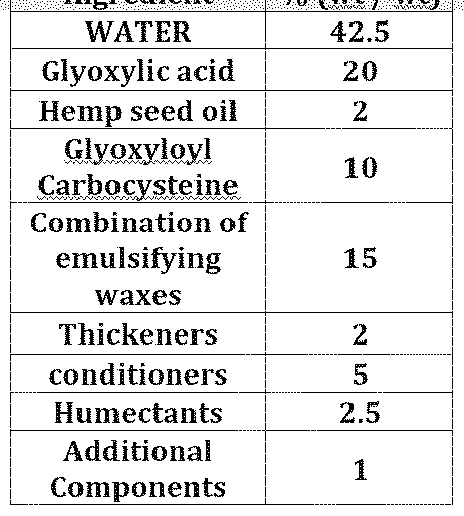
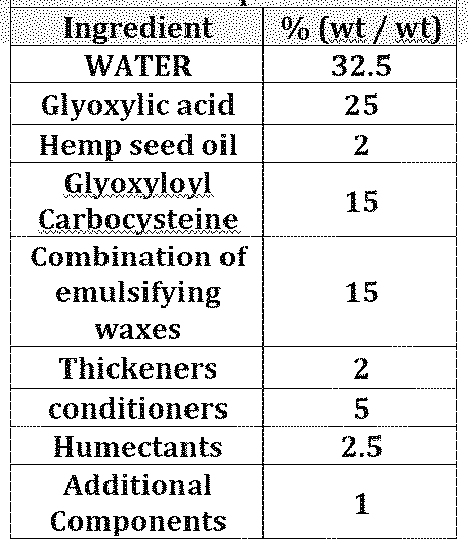
 i
i
 Hair filler formulations (Botox - like hair treatment):

MODE OF USE
The hair-straightening-filler complex of the present invention can be used both to achieve longer- lasting hair straightening, or on another embodiment, a hair botox effect, for at least one month, preferably for a period of two to three months, as well as hair-straightening-filler for shorter time frames (e.g., several days). In one set of embodiments, the hair straightening formulation will work progressively, higher straightening power would result from consecutively applications.
In another set of embodiments of hair-straightening-filler methods of the invention in which hair straightening is desired, the finished haircare composition (lotion, serum, gel) that is applied to coarse, curly or wavy hair contains a higher concentration of glyoxylic acid and/or glyoxyloyl derivative(s) from about 5.0% to about 50.0% wt/wt of the hair-straightening-filler complex. In these embodiments, the finished haircare product is applied to hair, preferably dry hair, for a period at least 15 to 40 minutes, and thereafter rinsed, blow dried and contacted with a flat hair iron or similar heated hair-styling implement. Embodiments of the invention in which longer-lasting hair-straightening is desired are preferably practiced in a hair salon or similar environment by a hair stylist or other haircare professional.
In other preferred embodiments, where capillary -hair- filler effect is desired over straightening of coarse, wavy or curly hair, the glyoxylic acid and/or glyoxyloyl derivative i s/a re present at a lower concentration from about 0.5% to about 20.0% wt/wt of the hair-straightening-filler complex. In these embodiments, the finished haircare product is applied to hair, preferably hair that has been dried, for a period at least 15 to 40 minutes, and thereafter rinsed and blow dried until hair is completely dried. Embodiments of the invention in which capillary filler effect is desired, flat iron must be avoided.
Clinical Evaluation and Assessment of Hair and Hair Shaft After T reatment with the Hair- Straightening Compositions of the Present Invention:
Thirty-eight healthy women, over the age of 15, of type III and IV hair, were subjected to full dermatological history taking and examination of the dermatological of the hair and scalp before and after the application of hair straightening.
The trials were completely randomized. Eight formulations were developed with different percentages of the hair straightening treatment and were given to the participants randomly. Three of the participants (Group 1) were assigned formulation 1 three other women (Group 2) received formulation 2, three of the participants (Group 3) were assigned formulation 3, three of the participants (Group 4) were assigned formulation 4, three of the participants (Group 5) were assigned formulation 5, three other women (Group 6) received formulation 6, three of the participants (Group 7) were assigned formulation 7, and three of the participants (Group 8) were assigned formulation 8. The volunteers were healthy women, who had not received any chemical treatment in the hair in at least 1 year. Parallelly, four formulations were developed with different percentages of the hair filler treatment - ‘botox’ like treatment - and were given to the participants randomly. Four of the participants (Group 1) were assigned formulation 1 four other women (Group 2) received formulation 2, three participants (Group 3) received formulation 3, and three participants (group 4) received formulation 4. The volunteers were healthy women, who had not received any chemical treatment in the hair in at least 1 year.
All subjects involved were advised for the benefits and possible side effects of chemical hair straightening treatment prior to application. Subjects who complain of hair loss or under chemotherapy treatment, pregnant or nursing women, using chemical hair straightener within three months before using treatment for hair with keratin, those with scalp infection, injury, or recent scalp surgery, and known hypersensitivity to hair straighteners were excluded from this study.
The thorough examination of the hair and scalp were carried out before and after the treatment application by a dermatologist and a hairdresser to evaluate changes in the physical characteristics of said hair and scalp.
Figure 5 is a comparative image showing 4 main types of hair: 1 , 2, 3 and 4; the hairs of the participants were classified according to these 4 large groups.
The appearance of a hair is a qualitative property that evaluates aspects such as size, color, hairstyle, shine, manageability and volume. People who are experts in the area of hair cosmetics are able to define and evaluate the following parameters:

Table 2. Visual parameters for appreciating the appearance of a person's hair. Source: Carrillo (2008).
Before and after hair straightening treatment, microscope analysis of the hair strands was performed. A PCE-DHM 30 LCD Microscope was used. The strands of hair that initially showed broken cuticle decreased significantly after treatment, while those with open tips remained unchanged.
Figure 6 shows before and after hair straightener treatment application in a participant from Group 3.
Hair diameter measurements:
Three sites on the scalp of all the participants of were then measured at 12, 24, and 30 cm from the glabella, similar to in Birnbaum et al.’s study, which were identified as the frontal, vertex, and occipital area, after 48 hs of the application of the hair filler treatment. The measurement point of the temporoparietal area was located 6 cm from the external ear canal on the side of the subject’s scalp. Trichoscopic pictures were taken by the Folliscope® (LeadM Corporation, Seoul, Korea) at these scalp sites. The hair density was evaluated at 50-fold magnification, while the hair diameter was evaluated from 00-fold magnification images. All hair parameters were determined by manual measurements.
Table 3. Comparisons of hair density and hair diameter with aging among different scalp sites.
Frontal Vertex Temporoparietal Occipital

Average measurement
80.7 ±5.2 80.4 ±5.2 79.9 ±5.1 79.8 ±5.5 before treatment
Average measurement
81.4 ±4.4 81.1 ±4.5 82.1 ±4.6 81.6 ±4.9 after treatment
Data are mean ± SD. P<0.05, statistically significant difference when compared with the results after the treatment
A statistically significant increase of the hair diameter was found after treatment with the hair filler.

Table 9. Participants poll.
In assessing the participants' position on the hair straightening treatment:
1. Hair straightener formulations can be easily performed
2. don't require many steps
3. which can effectively be done at home in a simple way.
4. T reatment is perceived to be safe and formaldehyde-free 5. T reatment does not cause bad fumes or odors
Evaluation of Hemp seed oil moisturizing effect:
In 2007 Keis et al. studied the effect of oil films on moisture vapor on human hair to analyze the capability of oils to reduce the moisture pick up. Hemp seed oil increases the thickness of the oil
layer (film layer) on the fibre surface which increases hair moisture. Healthy hair always contains certain amount of water and will contain different amount of water when exposed to different relatively humidity (RH) environments. We studied the water holding capacity of the hair by using the condenser-TEWL method through desorption process, in which small hair samples were placed inside the measurement chamber (22°C and 11.3% RH). These hair samples, treated with the hair straightener formulations and hair filler formulations showed different higher RH, will therefore lose water until they reach equilibrium with the chamber RH. The dynamics of the equilibration process can be studied by measuring time-series curves of associated water vapour flux. The total quantity of water lost was then calculated from such time-integrated flux curves. By fitting the normalized hair desorption data with the mathematical models, we got the water diffusion coefficient information, which can then be related to the water holding capability of the hair samples.
In hair desorption measurement, freshly hair samples cut from 4 healthy female volunteers with similar hair and scalp characteristics were taken. Each hair sample was bundled with a foil, and then placed in a measurement cup, placed on condenser-TEWL method probe, which measure the water vapour loss from hair continuously for a period of 4000 seconds. The hair will naturally loose his water content through drying process, e.g. desorption. Figure 7 shows hair desorption vs. time graphics of example formulations 13(red), 14 (green), 15 (blue) and 16 (yellow).


Formulation with Hemp seed oil shown higher hair water retain compared to the rest of the tested oils.
The results showed that the formulations analyzed are highly effective as hair straighteners and hair fillers respectively. The results of the study have shown that the treatments led to a significant decrease in the degree of curling and frizz of the hair and an increase in the softness and shine of the hair, without improving the split ends of the hair. These formulations prove to be an effective treatment that protects the hair while improving its natural shine and softness.
While the illustrative embodiments of the invention have been described with particularity, it will be understood that various other modifications will be apparent to and can be readily made by those skilled in the art without departing from the spirit and scope of the invention. Accordingly, it is not intended that the scope of the claims appended hereto be limited to the examples and descriptions set forth hereinabove but rather that the claims be construed as encompassing all the features of patentable novelty which reside in the present invention, including all features which would be treated as equivalents thereof.
Claims
1. A hair-straightening-filler complex comprising (i) glyoxylic acid, (ii) preferably hemp seed oil, (iii) preferably Carbocysteine and/or its salts, and /or Glyoxyloyl Carbocysteine, and (iv) optionally the reaction product of glyoxylic acid with at least one alpha, beta or gamma amino acid, or an analogue thereof.
2. The hair- straightening-filler complex of claim 1, wherein the glyoxylic acid and/or glyoxyloyl derivative(s) is/are present at a concentration of from about 0.5% to about 50.0% wt/wt of the hair-straightening-filler complex.
3. The hair- straightening-filler complex of claims 1 or 2, wherein the glyoxylic acid and/or glyoxyloyl derivative(s) is/are present at a concentration from about 5.0% to about 50.0% wt/wt of the hair-straightening-filler complex.
4. The hair- straightening-filler complex of claims 1 to 3 wherein the glyoxylic acid and/or glyoxyloyl derivative is/are present at a concentration from about 2.0% to about 40.0% wt/wt of the hair-straightening-filler complex.
5. The hair- straightening-filler complex of claims 1 to 4, wherein when glyoxylic acid is the single component of the hair-straightening-filler complex, it is present at a concentration of from about 1.0% to about 60.0% wt/wt, based on the total weight of the hair- straightening-filler complex; preferably from about 5.0% to about 55.0% wt/wt, and more preferably from about 20.0% to about 50.0% wt/wt.
6. The hair- straightening-filler complex of claims 1 to 5, wherein hemp seed oil is present at a concentration of from about 0.01% to about 20.0% wt/wt, preferably from about 0.1% to about 15.0% wt/wt, and more preferably from about 0.5% to about 5.0% wt/wt.
7. The hair-straightening-filler complex of claim 1 to 6, wherein Carbocysteine and / or its salts and/or Glyoxyloyl Carbocysteine is present at a concentration of from about 0.025% to about 35.0% wt/wt, based on the total weight of the hair-straightening-filler complex.
8. The hair-straightening-filler complex of claims 1 to 7, wherein Carbocysteine and / or its salts and/or Glyoxyloyl Carbocysteine is present at a concentration of from about 0.5 to about 25.0% wt/wt, based on the total weight of the hair-straightening complex.
9. The hair-straightening-filler complex of claims 1 to 8, wherein Carbocysteine and / or its salts and/or Glyoxyloyl Carbocysteine is present at a concentration of from about 1.0% to about 15.0% wt/wt, based on the total weight of the hair-straightening-filler complex.
10. The hair-straightening-filler complex of claim 1 to 9, wherein the alpha, beta or gamma amino acid are selected from the group of (a) essential amino acids, (b) non-essential amino acids, (c) conditional amino acids and (d) acetyl amino acid derivatives.
11. Use of the hair- straightening-filler complex of claims 1 to 10 for the formulation of a O/W emulsion selected from the group consisting of gel, cream, lotion, paste or mousse.
12. A finished haircare product containing the hair- straightening-filler complex of claims 1 to
11 , wherein glyoxylic acid is present at a concentration of from about 0.1% to about 40.0% wt/wt of the finished haircare product, more preferably from about 2% to about 35.0% wt/wt of the finished haircare product.
13. A finished haircare product containing the hair- straightening-filler complex of claims 1 to
12, wherein hemp seed oil is present at a concentration of from about 0.1% to about 20.0% wt/wt of the finished haircare product, more preferably from about 0.5% to about 5.0% wt/wt of the finished haircare product.
Priority Applications (1)
| Application Number | Priority Date | Filing Date | Title |
|---|---|---|---|
| PCT/EP2021/059840 WO2022218535A1 (en) | 2021-04-15 | 2021-04-15 | Hair-straightening-filler complex and compositions thereof |
Applications Claiming Priority (1)
| Application Number | Priority Date | Filing Date | Title |
|---|---|---|---|
| PCT/EP2021/059840 WO2022218535A1 (en) | 2021-04-15 | 2021-04-15 | Hair-straightening-filler complex and compositions thereof |
Publications (1)
| Publication Number | Publication Date |
|---|---|
| WO2022218535A1 true WO2022218535A1 (en) | 2022-10-20 |
Family
ID=75625541
Family Applications (1)
| Application Number | Title | Priority Date | Filing Date |
|---|---|---|---|
| PCT/EP2021/059840 Ceased WO2022218535A1 (en) | 2021-04-15 | 2021-04-15 | Hair-straightening-filler complex and compositions thereof |
Country Status (1)
| Country | Link |
|---|---|
| WO (1) | WO2022218535A1 (en) |
Cited By (1)
| Publication number | Priority date | Publication date | Assignee | Title |
|---|---|---|---|---|
| EP4382173A1 (en) * | 2022-12-07 | 2024-06-12 | Kao Germany GmbH | Aqueous composition for semi-permanent straightening keratin fibers especially human hair |
Citations (12)
| Publication number | Priority date | Publication date | Assignee | Title |
|---|---|---|---|---|
| US3654936A (en) | 1969-11-06 | 1972-04-11 | Wella Ag | Process for straightening human hair |
| US4030512A (en) | 1974-12-30 | 1977-06-21 | Societe Anonyme Dite: L'oreal | Hair lacquer or setting lotion containing bi- or tri-sequenced copolymer |
| US6010541A (en) | 1996-07-23 | 2000-01-04 | L'oreal | Oxidation dye composition for keratin fibers comprising a nonionic amphiphilic polymer |
| US20050232882A1 (en) | 2004-04-02 | 2005-10-20 | Cecile Bebot | Silicone composition-based hair fiber treating method |
| WO2012010351A2 (en) | 2010-07-20 | 2012-01-26 | Alderan S.A.S. Di D'ottavi Adele & C. | Process for semipermanent straightening of curly, frizzy or wavy hair. |
| US20140261517A1 (en) * | 2013-03-15 | 2014-09-18 | Coolway Inc. | Compositions and methods for treating keratin based fibers |
| US20160058683A1 (en) * | 2014-08-31 | 2016-03-03 | Cosphatech LLC | Hair-Straightening Compositions and Methods |
| US9463147B2 (en) | 2012-03-30 | 2016-10-11 | Zotos International, Inc. | Hair treatment and revitalizing composition and methods |
| US20170143603A1 (en) | 2010-02-24 | 2017-05-25 | Kao Corporation | Process for semi-permanent straightening of curly, frizzy or wavy hair |
| US10456341B2 (en) * | 2013-12-13 | 2019-10-29 | Alfa Parf Group S.P.A. | Compositions and methods for simultaneous reshaping and direct coloring of hair |
| ES1251680U (en) * | 2020-02-25 | 2020-08-24 | Ona Investig Sl | COMPOSITION OF A HAIR REGENERATOR (Machine-translation by Google Translate, not legally binding) |
| US10864150B2 (en) * | 2013-09-16 | 2020-12-15 | Kao Corporation | Hair treatment process |
-
2021
- 2021-04-15 WO PCT/EP2021/059840 patent/WO2022218535A1/en not_active Ceased
Patent Citations (12)
| Publication number | Priority date | Publication date | Assignee | Title |
|---|---|---|---|---|
| US3654936A (en) | 1969-11-06 | 1972-04-11 | Wella Ag | Process for straightening human hair |
| US4030512A (en) | 1974-12-30 | 1977-06-21 | Societe Anonyme Dite: L'oreal | Hair lacquer or setting lotion containing bi- or tri-sequenced copolymer |
| US6010541A (en) | 1996-07-23 | 2000-01-04 | L'oreal | Oxidation dye composition for keratin fibers comprising a nonionic amphiphilic polymer |
| US20050232882A1 (en) | 2004-04-02 | 2005-10-20 | Cecile Bebot | Silicone composition-based hair fiber treating method |
| US20170143603A1 (en) | 2010-02-24 | 2017-05-25 | Kao Corporation | Process for semi-permanent straightening of curly, frizzy or wavy hair |
| WO2012010351A2 (en) | 2010-07-20 | 2012-01-26 | Alderan S.A.S. Di D'ottavi Adele & C. | Process for semipermanent straightening of curly, frizzy or wavy hair. |
| US9463147B2 (en) | 2012-03-30 | 2016-10-11 | Zotos International, Inc. | Hair treatment and revitalizing composition and methods |
| US20140261517A1 (en) * | 2013-03-15 | 2014-09-18 | Coolway Inc. | Compositions and methods for treating keratin based fibers |
| US10864150B2 (en) * | 2013-09-16 | 2020-12-15 | Kao Corporation | Hair treatment process |
| US10456341B2 (en) * | 2013-12-13 | 2019-10-29 | Alfa Parf Group S.P.A. | Compositions and methods for simultaneous reshaping and direct coloring of hair |
| US20160058683A1 (en) * | 2014-08-31 | 2016-03-03 | Cosphatech LLC | Hair-Straightening Compositions and Methods |
| ES1251680U (en) * | 2020-02-25 | 2020-08-24 | Ona Investig Sl | COMPOSITION OF A HAIR REGENERATOR (Machine-translation by Google Translate, not legally binding) |
Non-Patent Citations (2)
| Title |
|---|
| "International Cosmetics Ingredient Dictionary and Handbook", 1988, THE COSMETIC, TOILETRIES, AND FRAGRANCE ASSOCIATION, INC. |
| DATABASE GNPD [online] MINTEL; 1 December 2017 (2017-12-01), ANONYMOUS: "Repolariser Intensive Hair Treatment", XP055811137, retrieved from https://www.gnpd.com/sinatra/recordpage/5270933/ Database accession no. 5270933 * |
Cited By (1)
| Publication number | Priority date | Publication date | Assignee | Title |
|---|---|---|---|---|
| EP4382173A1 (en) * | 2022-12-07 | 2024-06-12 | Kao Germany GmbH | Aqueous composition for semi-permanent straightening keratin fibers especially human hair |
Similar Documents
| Publication | Publication Date | Title |
|---|---|---|
| US6517822B1 (en) | Formulations and methods for straightening hair | |
| JP7213819B2 (en) | chemical composition | |
| EP2857003A1 (en) | Hair conditioning composition comprising ammonium thioglycolate and/or ammonium thiolactate | |
| KR20200056380A (en) | New composition for straightening hair | |
| CN103260593A (en) | Method for permanent reshaping and in particular for straightening, comprising a stage of straightening keratinous fibres employing a composition comprising at least 40 % by weight of non-ilicone fatty substances | |
| US20040180016A1 (en) | Formulations and methods for straightening hair | |
| JPH06102615B2 (en) | Hair cosmetics | |
| NZ591193A (en) | Hair styling method with a composition comprising citrate | |
| EP4248940B1 (en) | Composition for enhancing keratin fibers | |
| JP7309183B2 (en) | Hair treatment agent, acid/heat treatment method, and shampoo/treatment method | |
| WO2022218535A1 (en) | Hair-straightening-filler complex and compositions thereof | |
| KR20240007905A (en) | Hair treatment compositions and methods of use | |
| KR102084765B1 (en) | Hair cosmetic composition comprising an extract of Aphanizomenon Flos-Aquae | |
| JP2024092445A (en) | Iron perm method | |
| WO2019006453A1 (en) | Hair treatment compositions and methods of using the same | |
| JP7489597B2 (en) | Hair cosmetics | |
| CN111163754B (en) | Cosmetic composition for hair or scalp for enhancing fluffy feeling of hair | |
| Draelos | Nonmedicated grooming products and beauty treatments | |
| Dubief et al. | Hair care products | |
| CA3153564A1 (en) | Cosmetic compositions comprising chitosan and hydroxypropyl methylcellulose and their use for improving hair strength and related properties | |
| CN110769806A (en) | Hair conditioning composition for improved rinsing | |
| Dhanesh et al. | Revolutionizing Hair Care with Cosmetic Products | |
| JP2024151000A (en) | Hair cosmetics | |
| Sharad et al. | Hair Cosmeceuticals | |
| CN118453433A (en) | Shampoo with transparent appearance |
Legal Events
| Date | Code | Title | Description |
|---|---|---|---|
| 121 | Ep: the epo has been informed by wipo that ep was designated in this application |
Ref document number: 21720407 Country of ref document: EP Kind code of ref document: A1 |
|
| NENP | Non-entry into the national phase |
Ref country code: DE |
|
| 32PN | Ep: public notification in the ep bulletin as address of the adressee cannot be established |
Free format text: NOTING OF LOSS OF RIGHTS PURSUANT TO RULE 112(1) EPC (EPO FORM 1205A DATED 14/02/2024) |
|
| 122 | Ep: pct application non-entry in european phase |
Ref document number: 21720407 Country of ref document: EP Kind code of ref document: A1 |