WO2022090413A1 - Peptides for use in skin and hair pigmentation - Google Patents
Peptides for use in skin and hair pigmentation Download PDFInfo
- Publication number
- WO2022090413A1 WO2022090413A1 PCT/EP2021/080032 EP2021080032W WO2022090413A1 WO 2022090413 A1 WO2022090413 A1 WO 2022090413A1 EP 2021080032 W EP2021080032 W EP 2021080032W WO 2022090413 A1 WO2022090413 A1 WO 2022090413A1
- Authority
- WO
- WIPO (PCT)
- Prior art keywords
- peptide
- amino acid
- ala
- seq
- acid residues
- Prior art date
- Legal status (The legal status is an assumption and is not a legal conclusion. Google has not performed a legal analysis and makes no representation as to the accuracy of the status listed.)
- Ceased
Links
Classifications
-
- A—HUMAN NECESSITIES
- A61—MEDICAL OR VETERINARY SCIENCE; HYGIENE
- A61K—PREPARATIONS FOR MEDICAL, DENTAL OR TOILETRY PURPOSES
- A61K38/00—Medicinal preparations containing peptides
- A61K38/04—Peptides having up to 20 amino acids in a fully defined sequence; Derivatives thereof
- A61K38/06—Tripeptides
-
- C—CHEMISTRY; METALLURGY
- C07—ORGANIC CHEMISTRY
- C07K—PEPTIDES
- C07K5/00—Peptides containing up to four amino acids in a fully defined sequence; Derivatives thereof
- C07K5/04—Peptides containing up to four amino acids in a fully defined sequence; Derivatives thereof containing only normal peptide links
- C07K5/10—Tetrapeptides
- C07K5/1002—Tetrapeptides with the first amino acid being neutral
- C07K5/1005—Tetrapeptides with the first amino acid being neutral and aliphatic
- C07K5/101—Tetrapeptides with the first amino acid being neutral and aliphatic the side chain containing 2 to 4 carbon atoms, e.g. Val, Ile, Leu
-
- A—HUMAN NECESSITIES
- A61—MEDICAL OR VETERINARY SCIENCE; HYGIENE
- A61K—PREPARATIONS FOR MEDICAL, DENTAL OR TOILETRY PURPOSES
- A61K38/00—Medicinal preparations containing peptides
- A61K38/04—Peptides having up to 20 amino acids in a fully defined sequence; Derivatives thereof
- A61K38/07—Tetrapeptides
-
- A—HUMAN NECESSITIES
- A61—MEDICAL OR VETERINARY SCIENCE; HYGIENE
- A61K—PREPARATIONS FOR MEDICAL, DENTAL OR TOILETRY PURPOSES
- A61K8/00—Cosmetics or similar toiletry preparations
- A61K8/18—Cosmetics or similar toiletry preparations characterised by the composition
- A61K8/30—Cosmetics or similar toiletry preparations characterised by the composition containing organic compounds
- A61K8/31—Hydrocarbons
-
- A—HUMAN NECESSITIES
- A61—MEDICAL OR VETERINARY SCIENCE; HYGIENE
- A61K—PREPARATIONS FOR MEDICAL, DENTAL OR TOILETRY PURPOSES
- A61K8/00—Cosmetics or similar toiletry preparations
- A61K8/18—Cosmetics or similar toiletry preparations characterised by the composition
- A61K8/30—Cosmetics or similar toiletry preparations characterised by the composition containing organic compounds
- A61K8/33—Cosmetics or similar toiletry preparations characterised by the composition containing organic compounds containing oxygen
- A61K8/37—Esters of carboxylic acids
-
- A—HUMAN NECESSITIES
- A61—MEDICAL OR VETERINARY SCIENCE; HYGIENE
- A61K—PREPARATIONS FOR MEDICAL, DENTAL OR TOILETRY PURPOSES
- A61K8/00—Cosmetics or similar toiletry preparations
- A61K8/18—Cosmetics or similar toiletry preparations characterised by the composition
- A61K8/30—Cosmetics or similar toiletry preparations characterised by the composition containing organic compounds
- A61K8/49—Cosmetics or similar toiletry preparations characterised by the composition containing organic compounds containing heterocyclic compounds
- A61K8/4973—Cosmetics or similar toiletry preparations characterised by the composition containing organic compounds containing heterocyclic compounds with oxygen as the only hetero atom
-
- A—HUMAN NECESSITIES
- A61—MEDICAL OR VETERINARY SCIENCE; HYGIENE
- A61K—PREPARATIONS FOR MEDICAL, DENTAL OR TOILETRY PURPOSES
- A61K8/00—Cosmetics or similar toiletry preparations
- A61K8/18—Cosmetics or similar toiletry preparations characterised by the composition
- A61K8/30—Cosmetics or similar toiletry preparations characterised by the composition containing organic compounds
- A61K8/60—Sugars; Derivatives thereof
-
- A—HUMAN NECESSITIES
- A61—MEDICAL OR VETERINARY SCIENCE; HYGIENE
- A61K—PREPARATIONS FOR MEDICAL, DENTAL OR TOILETRY PURPOSES
- A61K8/00—Cosmetics or similar toiletry preparations
- A61K8/18—Cosmetics or similar toiletry preparations characterised by the composition
- A61K8/30—Cosmetics or similar toiletry preparations characterised by the composition containing organic compounds
- A61K8/64—Proteins; Peptides; Derivatives or degradation products thereof
-
- A—HUMAN NECESSITIES
- A61—MEDICAL OR VETERINARY SCIENCE; HYGIENE
- A61K—PREPARATIONS FOR MEDICAL, DENTAL OR TOILETRY PURPOSES
- A61K8/00—Cosmetics or similar toiletry preparations
- A61K8/18—Cosmetics or similar toiletry preparations characterised by the composition
- A61K8/92—Oils, fats or waxes; Derivatives thereof, e.g. hydrogenation products thereof
-
- A—HUMAN NECESSITIES
- A61—MEDICAL OR VETERINARY SCIENCE; HYGIENE
- A61K—PREPARATIONS FOR MEDICAL, DENTAL OR TOILETRY PURPOSES
- A61K8/00—Cosmetics or similar toiletry preparations
- A61K8/18—Cosmetics or similar toiletry preparations characterised by the composition
- A61K8/92—Oils, fats or waxes; Derivatives thereof, e.g. hydrogenation products thereof
- A61K8/922—Oils, fats or waxes; Derivatives thereof, e.g. hydrogenation products thereof of vegetable origin
-
- A—HUMAN NECESSITIES
- A61—MEDICAL OR VETERINARY SCIENCE; HYGIENE
- A61P—SPECIFIC THERAPEUTIC ACTIVITY OF CHEMICAL COMPOUNDS OR MEDICINAL PREPARATIONS
- A61P17/00—Drugs for dermatological disorders
-
- A—HUMAN NECESSITIES
- A61—MEDICAL OR VETERINARY SCIENCE; HYGIENE
- A61Q—SPECIFIC USE OF COSMETICS OR SIMILAR TOILETRY PREPARATIONS
- A61Q19/00—Preparations for care of the skin
- A61Q19/04—Preparations for care of the skin for chemically tanning the skin
-
- A—HUMAN NECESSITIES
- A61—MEDICAL OR VETERINARY SCIENCE; HYGIENE
- A61Q—SPECIFIC USE OF COSMETICS OR SIMILAR TOILETRY PREPARATIONS
- A61Q5/00—Preparations for care of the hair
- A61Q5/10—Preparations for permanently dyeing the hair
-
- C—CHEMISTRY; METALLURGY
- C07—ORGANIC CHEMISTRY
- C07K—PEPTIDES
- C07K5/00—Peptides containing up to four amino acids in a fully defined sequence; Derivatives thereof
- C07K5/04—Peptides containing up to four amino acids in a fully defined sequence; Derivatives thereof containing only normal peptide links
- C07K5/08—Tripeptides
- C07K5/0819—Tripeptides with the first amino acid being acidic
-
- C—CHEMISTRY; METALLURGY
- C07—ORGANIC CHEMISTRY
- C07K—PEPTIDES
- C07K5/00—Peptides containing up to four amino acids in a fully defined sequence; Derivatives thereof
- C07K5/04—Peptides containing up to four amino acids in a fully defined sequence; Derivatives thereof containing only normal peptide links
- C07K5/10—Tetrapeptides
- C07K5/1002—Tetrapeptides with the first amino acid being neutral
- C07K5/1005—Tetrapeptides with the first amino acid being neutral and aliphatic
- C07K5/1008—Tetrapeptides with the first amino acid being neutral and aliphatic the side chain containing 0 or 1 carbon atoms, i.e. Gly, Ala
-
- C—CHEMISTRY; METALLURGY
- C07—ORGANIC CHEMISTRY
- C07K—PEPTIDES
- C07K5/00—Peptides containing up to four amino acids in a fully defined sequence; Derivatives thereof
- C07K5/04—Peptides containing up to four amino acids in a fully defined sequence; Derivatives thereof containing only normal peptide links
- C07K5/10—Tetrapeptides
- C07K5/1021—Tetrapeptides with the first amino acid being acidic
Definitions
- the present invention relates to peptides and use of said peptides in skin and hair pigmentation. Further, the present invention relates to a composition comprising said peptides for topical delivery.
- skin pigmentation is modified via the topical administration route to avoid systemic effects.
- drug molecules larger than 600 Da normally have difficulties in permeating the skin.
- the problem is accentuated even if the molecular weight is below 600 Da, since amino acids in general are too polar to penetrate the stratum corneum in an appropriate way, which is why most peptide- or protein-based drug are administered by parenteral formulations, which is undesirable for many purposes including targeting of topical, e.g. dermal disorders and diseases.
- the polarity of many peptides is thus also problematic when attempting administration to hair follicles, e.g. for treating disorders or diseases associated with the hair follicle.
- the present inventors have identified a novel way of modulating melanin levels in human melanocytes. This involves mimicking some of the activity of a natural peptide that the inventors have previously reported to be involved in melanogenesis and melanin transfer.
- Skin darkening (such as tanning, age spots (solar lentigo) or in hyperpigmentation following hormonal stimulation or skin trauma) involves the activation of melanocytes (pigment-producing cells) in skin. This activation within melanocytes results in the synthesis of more melanin and more transfer of this melanin to surrounding skin cells (keratinocytes) in human epidermis. By modulating this process it may be possible to increase or decrease natural skin colour.
- the present invention offers a new and safer method of altering skin pigmentation, both by decreasing or increasing skin pigmentation.
- the present invention relates to use of a peptide or peptide derivative comprising the amino acid sequence of Asn-Ala-Xaa2-Met (SEQ ID NO: 1), wherein Xaa2 is His or Ala, and wherein the peptide or peptide derivative comprises no more than 8 amino acid residues, for non-therapeutic increase of melanin pigmentation of skin and/or hair of a subject.
- the present invention relates to a peptide or peptide derivative comprising the amino acid sequence of Asn-Ala-Xaa2-Met (SEQ ID NO: 1), wherein Xaa2 is His or Ala, and wherein the peptide or peptide derivative comprises no more than 8 amino acid residues, for use in the treatment a disease or disorder associated with hypopigmentation, such as selected from the group consisting of vitiligo, albinism, idiopathic guttate hypomelanosis, leprosy, leucism, phenylketonuria, pityriasis alba, Angelman syndrome, tinea versicolor, and yaws.
- a disease or disorder associated with hypopigmentation such as selected from the group consisting of vitiligo, albinism, idiopathic guttate hypomelanosis, leprosy, leucism, phenylketonuria, pityriasis alba, Angelman syndrome, tinea
- the present invention relates to a cosmetic method of darkening of skin and/or hair color, the method comprising administering to a subject a peptide or peptide derivative comprising the amino acid sequence of Asn-Ala-Xaa2-Met (SEQ ID NO: 1), wherein Xaa2 is His or Ala, and wherein the peptide or peptide derivative comprises no more than 8 amino acid residues.
- the present invention relates to a peptide or peptide derivative consisting of the amino acid sequence Asn-Ala-His-Met (SEQ ID NO: 2).
- the present invention relates to a composition
- a composition comprising: a. a peptide or peptide derivative comprising the amino acid sequence of Asn-Ala- Xaa2-Met (SEQ ID NO: 1), wherein Xaa2 is His or Ala, and wherein the peptide or peptide derivative comprises no more than 8 amino acid residues, b. a saccharide or modified saccharide; and c. a lipid.
- the present invention relates to a peptide or peptide derivative consisting of the amino acid sequence Ala-Ala-His-Met (SEQ ID NO: 3).
- the present invention relates to a composition
- a composition comprising: a. a peptide or peptide derivative comprising or consisting of the amino acid sequence of Ala-Ala-His-Met (SEQ ID NO: 3), wherein the peptide or peptide derivative comprises no more than 8 amino acid residues, b. a saccharide or modified saccharide; and c. a lipid.
- the present invention relates to ise of a peptide or peptide derivative comprising the amino acid sequence of Ala-Ala-His-Met (SEQ ID NO: 3), wherein the peptide or peptide derivative comprises no more than 8 amino acid residues, or of the composition comprising said peptide or peptide derivative as described herein for non- therapeutic decrease of melanin pigmentation of skin and/or hair of a subject.
- the present invention relates to a peptide or peptide derivative comprising the amino acid sequence of Ala-Ala-His-Met (SEQ ID NO: 3), wherein the peptide or peptide derivative comprises no more than 8 amino acid residues, or the composition comprising said peptide or peptide derivative as described herein, for use in the treatment of a disease or condition associated with hyperpigmentation, such as postinflammatory hyperpigmentation, chloasma, freckles, cafe au lait spots, and melanin hyperpigmentation, such as lentigo.
- a disease or condition associated with hyperpigmentation such as postinflammatory hyperpigmentation, chloasma, freckles, cafe au lait spots, and melanin hyperpigmentation, such as lentigo.
- the present invention relates to a cosmetic method of lightening of skin and/or hair color, the method comprising administering to a subject a peptide or peptide derivative comprising or consisting of the amino acid sequence of Ala-Ala-His-Met (SEQ ID NO: 3), wherein the peptide or peptide derivative comprises no more than 8 amino acid residues, or a composition comprising said peptide or peptide derivative as described herein.
- the present invention provides a method of manufacturing a composition as described herein, said method comprising the following steps: a) mixing the peptide or peptide derivative with a saccharide or modified saccharide; b) freeze drying the mixture of a); c) mixing b) with a lipid and a surfactant; d) grinding the mixture of c); and e) optionally mixing the mixture of d) with a lipid and a thickener.
- the total melanin content was determined in the skin equivalent samples (Example 3).
- Peptides 1 SEQ ID NO: 2), 3 (SEQ ID NO: 3) and 4 (SEQ ID NO:4) were analysed following topical treatment of the SEs.
- Skin equivalent samples were stained with Warthin Starry and hematoxylin&eosin (H&E) in order to visualize and quantify the melanin distribution in the skin sections and to ensure that the histology of the skin equivalents was normal.
- Warthin Starry staining of skin equivalents showing melanin distribution throughout layers of the epidermis in experiment 1 for the control vehicle, peptide 3 (SEQ ID NO: 3) and 4 (SEQ ID NO: 4)
- FQL-005 lyophilized powder was dissolved in phosphate/citrate buffer of pHs 5, 6, 7 or 7.6. Samples of each formulation were analysed for purity using high-pressure liquid chromatography after up to 3 months of storage at 25°C respectively. In addition, an essentially water-free formulation of FQL-005 was stored at 25°C and samples were analysed for purity after up to 12 months of storage.
- FOL-005 distribution in pig inner ear skin section treated with FOL-005/sucrose formulation with isopropyl myristate, petrolatum, Sorbitan laurate and glyceryl behenate was applied to the skin sample at 0 and 24 h. At 48 h the sample was frozen and subsequently sectioned and analysed using MALDI MSI. The concentration of FOL-005 is displayed in black-grey-white. White areas contain high concentration of FOL-005 and black areas contain low concentrations.
- A) Stability of peptides in a water-free formulation (see Example 11). Water-free formulations of six peptides of different size and amino acid sequence were prepared. The concentration of the peptides was 0.2% and the following excipients and concentrations (w/w %) were used: Sucrose 0.4%, Span204%, Glyceryl behenate 3%, Isopropyl myristate 50% and petrolatum 42.4%. The formulations were stored at 20 +/- 5°C and the peak purity was analysed using high pressure liquid chromatography at study start and after 1 , 2 and 4 weeks of storage. B) Stability of oxytocin in a water-free formulation and in a PBS solution (see Example 11).
- a water-free formulation of oxytocin was prepared. The following excipients and concentrations (w/w %) were used: Oxytocin 0.2%, Sucrose 0.4%, Span204%, Glyceryl behenate 3%, Isopropyl myristate 50% and petrolatum 42.4%. In addition, a 0.2% solution of Oxytocin in PBS, pH 7.4 was prepared. The formulation and the solution were stored at 20 +/- 5°C and the peak purity was analysed using high pressure liquid chromatography at study start and after 1, 2 and 4 weeks of storage. C) Stability of FOL-004 in a water-free formulation and in a PBS solution (see Example 11). A water-free formulation of FOL- 004 was prepared.
- FOL-004 0.2%, Sucrose 0.4%, Span204%, Glyceryl behenate 3%, Isopropyl myristate 50% and petrolatum 42.4%.
- a 0.2% solution of FOL-004 in PBS, pH 7.4 was prepared. The formulation and the solution were stored at 20 +/- 5°C and the peak purity was analysed using high pressure liquid chromatography at study start and after 1 , 2 and 4 weeks of storage.
- A) Purity of Peptide 1 (SEQ ID NO: 2) at 20°C in three variations of a water-free formulation see Example 12: A (peptide-sucrose dry powder mixed with premanufactured placebo and 0.4% peptide 1); B (suspension of peptide-sucrose dry powder and I PM mixed with ointment base containing 4% Span and 0.4%, 1% and 2% peptide 1); C (suspension of peptide-sucrose dry powder and I PM mixed with ointment base containing 2% Span and 0.4% peptide 1); and in a PBS solution D (peptide- sucrose dry powder dissolved in PBS. 0.4%, peptide 1).
- B Purity of Peptide 4 (SEQ ID NO: 4) at 20°C in three variations of a water-free formulation (see Example 12): A (peptide-sucrose dry powder mixed with premanufactured placebo and 0.4% peptide 4); B (suspension of peptide-sucrose dry powder and IPM mixed with ointment base containing 4% Span and 0.4%, 1% and 2% peptide 4); C (suspension of peptide- sucrose dry powder and IPM mixed with ointment base containing 2% Span and 0.4% peptide 4); and in a PBS solution D (peptide-sucrose dry powder dissolved in PBS. 0.4%, peptide 4).
- Figure 11 Selected images showing the effect of peptides 1 and 4 in formulation B when tested on Melanoderm skin equivalent samples
- the pigmentation of the epidermis in Example 13 was macroscopically assessed by capturing high resolution images using the Olympus microscope camera (*10 magnification).
- FIG. 12 Selected images of Warthin-Starry stained tissue sections showing the effect of peptides 1 and 4 in formulation B when tested on Melanoderm skin equivalent samples.
- Figure 13 Graph showing relative expression of PMEL in Melanoderms after treatment with peptides 1 and 4 in formulation B using qPCR analysis.
- peptide refers to a molecule comprising two or more amino acid residues joined to each other by peptide bonds.
- the terms ‘peptide’ and ‘polypeptide’ are used herein interchangeably throughout.
- the term ‘peptide’ also includes peptide derivatives.
- the present invention relates to a peptide or peptide denvate comprising the amino acid sequence of Ala-Xaa2-Met, wherein Xaa2 is His or Ala.
- the peptide or peptide derivative comprises the amino acid sequence of Xaa1-Ala-Xaa2-Met (SEQ ID NO: 13), wherein Xaa1 is Asn or Ala, and Xaa2 is His or Ala. In one embodiment, the peptide or peptide derivative comprises the amino acid sequence of Asn-Ala-Xaa2-Met (SEQ ID NO: 1), wherein Xaa2 is His or Ala.
- amino acid sequence of Asn-Ala-Xaa2-Met is Asn-Ala-His-Met (SEQ ID NO: 2). In one embodiment, the amino acid sequence of Asn-Ala-Xaa2-Met (SEQ ID NO: 1) is Asn-Ala-Ala-Met (SEQ ID NO: 4).
- the peptide or peptide derivative comprises the amino acid sequence Asn-Ala-His-Met (SEQ ID NO: 2). In one embodiment, the peptide consists of the amino acid sequence Asn-Ala-His-Met (SEQ ID NO: 2). In one embodiment, peptide derivative consists of the amino acid sequence Asn-Ala-His-Met (SEQ ID NO: 2), i.e. consisting of the sequence Asn-Ala-His-Met (SEQ ID NO: 2) which is modified or derivitized as disclosed herein. In one embodiment, the peptide or peptide derivative comprises the amino acid sequence Ala-Ala-His-Met (SEQ ID NO: 3).
- the peptide consists of the amino acid sequence Ala-Ala-His-Met (SEQ ID NO: 3). In one embodiment, the peptide derivative consists of the amino acid sequence Ala-Ala-His-Met (SEQ ID NO: 3), i.e. consisting of the sequence Ala-Ala-His- Met (SEQ ID NO: 3) which is modified or derivitized as disclosed herein. In one embodiment, the peptide or peptide derivative comprises the amino acid sequence Asn-Ala-Ala-Met (SEQ ID NO: 4). In one embodiment, the peptide consists of the amino acid sequence Asn-Ala-Ala-Met (SEQ ID NO: 4).
- the peptide derivative consists of the amino acid sequence Asn-Ala-Ala-Met (SEQ ID NO: 4) which is modified or derivitized as disclosed herein.
- the peptide comprises or consists of the amino acid sequence Ala-His-Met.
- peptide derivative as used herein relates to a peptide which is modified or derivatized.
- the peptide derivative is a peptide as disclosed herein which is conjugated to a moiety, such as a moiety selected from the group consisting of polyethylene glycol (PEG), monosaccharides, fluorophores, chromophores, radioactive compounds, and cell-penetrating peptides.
- PEG polyethylene glycol
- monosaccharides such as a moiety selected from the group consisting of polyethylene glycol (PEG), monosaccharides, fluorophores, chromophores, radioactive compounds, and cell-penetrating peptides.
- the peptide is glycosylated.
- the peptide derivative is a peptide as disclosed herein which is modified by being glycosylated or by PEGylation, amidation, esterification, acylation, acetylation and/or alkylation.
- the peptide derivative is a peptide as disclosed herein which is fused to another polypeptide, such as a polypeptide selected from the group consisting of glutathione-S-transferase (GST) and protein A, or to a tag.
- GST glutathione-S-transferase
- protein A protein A
- amino acid as used herein includes the standard twenty genetically-encoded amino acids and their corresponding stereoisomers in the ‘D’ form (as compared to the natural ‘i_’ form), omega-amino acids and other naturally-occurring amino acids, unconventional amino acids (e.g., a,a-disubstituted amino acids, N-alkyl amino acids, etc.) and chemically derivatised amino acids (see below).
- amino acid When an amino acid is being specifically enumerated, such as ‘alanine’ or ‘Ala’ or ‘A’, the term refers to both L-alanine and D-alanine unless explicitly stated otherwise.
- Other unconventional amino acids may also be suitable components for peptides of the present invention, as long as the desired functional property is retained by the peptide.
- each encoded amino acid residue where appropriate, is represented by a single letter designation, corresponding to the trivial name of the conventional amino acid.
- amino acid sequences disclosed herein are provided in the N-terminus to C-terminus direction.
- the peptide comprises no more than 20 amino acid residues, such as no more than 15 amino acid residues, such as no more than 14 amino acid residues, such as no more than 13 amino acid residues, such as no more than 12 amino acid residues, such as no more than 11 amino acid residues, such as no more than 10 amino acid residues, such as no more than 9 amino acid residues, such as no more than 8 amino acid residues, such as no more than 7 amino acid residues, such as no more than 6 amino acid residues, such as no more than 5 amino acid residues, such as no more than 4 ammo acid residues, such as no more than 3 ammo acid residues.
- the peptide comprises no more than 20 amino acid residues and the peptide is conjugated to a moiety as described above.
- the peptide is conjugated to a moiety comprising amino acid residues, such as a cellpenetrating peptide, and the peptide and the conjugated moiety may then in total comprise more than 20 amino acid residues.
- the peptide is fused to another polypeptide, such as a polypeptide selected from the group consisting of glutathione-S-transferase (GST) and protein A, or to a tag.
- GST glutathione-S-transferase
- the peptide is fused to another polypeptide, such as to an additional peptide as described herein below.
- the peptide and the polypeptide when the peptide is fused to another polypeptide, may in total comprise more than 20 amino acid residues. In one embodiment, the peptide and the conjugated moiety or polypeptide in total comprises no more than 100 amino acid residues, such as no more than 75 amino acid residues, such as no more than 50 amino acid residues, such as no more than 40 amino acid residues, such as no more than 30 amino acid residues, such as no more than 25 amino acid residues.
- the peptide comprises at least 4 amino acid residues, such as at least 5 amino acid residues, such as at least 6 amino acid residues, such as at least 7 amino acid residues, such as at least 8 amino acid residues, such as at least 9 amino acid residues, such as at least 10 amino acid residues, such as at least 11 amino acid residues, such as at least 12 amino acid residues, such as at least 15 amino acid residues.
- the peptide or peptide derivative consists of an amino acid sequence of 4 amino acid residues. In one embodiment, the peptide or peptide derivative consists of an amino acid sequence of 5 amino acid residues. In one embodiment, the peptide or peptide derivative consists of an amino acid sequence of 6 amino acid residues. In one embodiment, the peptide or peptide derivative consists of an amino acid sequence of 7 amino acid residues. In one embodiment, the peptide or peptide derivative consists of an amino acid sequence of 8 amino acid residues. In one embodiment, the peptide comprises or consists of tandem repeats. In one embodiment, the peptide is cyclic.
- the peptide is selected from the group consisting of Asn-Ala-His-Met (SEQ ID NO: 2), Ala-Ala-His-Met (SEQ ID NO: 3), Asn-Ala-Ala-Met (SEQ ID NO: 4) and Ala-His-Met.
- the peptide consists of an amino acid sequence selected from the group consisting of Asn-Ala-His-Met (SEQ ID NO: 2), Ala-Ala-His- Met (SEQ ID NO: 3), Asn-Ala-Ala-Met (SEQ ID NO: 4) and Ala-His-Met, and the peptide is conjugated to a moiety, such as a moiety selected from the group consisting of polyethylene glycol (PEG), monosaccharides, fluorophores, chromophores, radioactive compounds, and cell-penetrating peptides.
- PEG polyethylene glycol
- the peptide consists of an amino acid sequence selected from the group consisting of Asn-Ala-His- Met (SEQ ID NO: 2), Ala-Ala-His-Met (SEQ ID NO: 3), Asn-Ala-Ala-Met (SEQ ID NO: 4) and Ala-His-Met, and said peptide is modified by being glycosylated or by PEGylation, amidation, esterification, acylation, acetylation and/or alkylation.
- the peptide consists of an amino acid sequence selected from the group consisting of Asn-Ala-His-Met (SEQ ID NO: 2), Ala-Ala-His-Met (SEQ ID NO: 3), Asn- Ala-Ala-Met (SEQ ID NO: 4) and Ala-His-Met, and said peptide is fused to another polypeptide, such as a polypeptide selected from the group consisting of glutathione-S- transferase (GST) and protein A, or to a tag.
- GST glutathione-S- transferase
- the peptide or peptide derivative retains the same function as Asn- Ala-Ala-Met (SEQ ID NO: 4). In one embodiment, the peptide or peptide derivative retains the increasing melanin pigmentation activity of Asn-Ala-Ala-Met (SEQ ID NO: 4). In one embodiment, the peptide or peptide derivative retains the increasing melanin pigmentation activity of Asn-Ala-His-Met (SEQ ID NO: 2). In one embodiment, the peptide or peptide derivative retains the same function as Asn-Ala-His-Met (SEQ ID NO: 2).
- the peptide or peptide derivative retains the same function as Ala-Ala-His-Met (SEQ ID NO: 3). In one embodiment, the peptide or peptide derivative retains the decreasing melanin pigmentation activity of Ala-Ala-His-Met (SEQ ID NO: 3).
- composition of the present invention comprises at least one peptide or peptide derivative.
- the peptide or peptide derivative is the active agent.
- the present composition promotes penetration of the peptide or peptide derivative, and at the same time keeps the peptide or peptide derivative in the solid state to provide chemical stability during the shelf life of the product.
- Bone morphogenetic proteins are a family of proteins involved in the development of the heart, nervous system and skeleton, in addition to the regulation of skin development and cutaneous biology, such as affecting hair and skin melanogenesis and hair follicle growth.
- BMP-6 has been reported to be involved in the control and regulation of melanin transfer and melanogenesis.
- BMP-6 binds to the Alk6 receptor, thereby stimulating the formation of filopodia and subsequent release of melanin granules (melanosomes) from the donor melanocyte to the recipient skin keratinocyte, which leads to pigmentation of the skin.
- the inventors of the present invention subsequently produced four peptides derived from BMP-6 and tested their effect on pigmentation on human pigmented skin equivalents.
- two of these peptides (SEQ ID NO: 2 and SEQ ID NO: 4) were able to increase pigmentation of the tested skin equivalents, as shown by photographic analysis.
- these two peptides could also be seen to increase the total melanin content in the skin samples (see Examples 3 and 4).
- the composition exhibits the ability to modulate melanogenesis or melanin transfer.
- modulate refers to increasing or decreasing for example melanogenesis or melanin transfer.
- the present invention relates to a method of modulating pigmentation of skin and or hair, said method comprising administering a peptide or peptide derivative comprising the amino acid sequence of Xaa1-Ala-Xaa2-Met (SEQ ID NO: 13) wherein Xaa1 is Asn or Ala and Xaa2 is His or Ala, and wherein the peptide or peptide derivative comprises no more than 8 amino acid residues.
- the peptides according to the present invention may be prepared by any methods known in the art.
- the peptides as disclosed herein may be prepared by standard peptide-preparation techniques, such as solution synthesis or Merrifield-type solid phase synthesis.
- a peptide according to the invention is synthetically made or produced.
- the methods for synthetic production of peptides are well known in the art. Detailed descriptions as well as practical advice for producing synthetic peptides may be found in Synthetic Peptides: A User's Guide (Advances in Molecular Biology), Grant G. A. ed., Oxford University Press, 2002, or in: Pharmaceutical Formulation: Development of Peptides and Proteins, Frokjaer and Hovgaard eds., Taylor and Francis, 1999.
- the peptide or peptide sequences of the invention are produced synthetically, in particular, by the Sequence Assisted Peptide Synthesis (SAPS) method, by solution synthesis, by Solid-phase peptide synthesis (SPPS) such as Merrifield-type solid phase synthesis, by recombinant techniques (production by host cells comprising a first nucleic acid sequence encoding the peptide operably associated with a second nucleic acid capable of directing expression in said host cells) or enzymatic synthesis.
- SAPS Sequence Assisted Peptide Synthesis
- SPPS Solid-phase peptide synthesis
- SPPS Solid-phase peptide synthesis
- production by host cells comprising a first nucleic acid sequence encoding the peptide operably associated with a second nucleic acid capable of directing expression in said host cells
- enzymatic synthesis are well-known to the skilled person.
- the present invention relates to a nucleic acid construct encoding the peptide as defined herein.
- the present invention relates to a delivery vehicle comprising said nucleic acid construct.
- the delivery vehicle is a delivery vector, such as a viral vector.
- the delivery vehicle is selected from the group consisting of: RNA based vehicles, DNA based vehicles, lipid based vehicles, polymer based vehicles, colloidal gold particles, virally derived DNA or RNA vehicles, adenoviruses, recombinant adeno-associated viruses (rAAV), retroviruses, lentiviruses, adeno-associated viruses, herpesviruses, vaccinia viruses, foamy viruses, cytomegaloviruses, Semliki forest virus, poxviruses, RNA virus vector and DNA virus vector.
- rAAV recombinant adeno-associated viruses
- the present invention relates to a host cell comprising said nucleic acid construct or delivery vehicle.
- the host cell is a bacterial cell or mammalian cell, such as a human cell.
- the present invention relates to a composition comprising said peptide, peptide derivate, nucleic acid construct, delivery vehicle or host cell. In one embodiment, the present invention relates to a composition comprising said peptide or peptide derivative.
- the composition is a pharmaceutical composition. In one embodiment, the composition is a cosmetic composition. In on embodiment, the composition is a topical formulation. In one embodiment, the composition is a medicament for topical delivery.
- composition refers to the solid particle present in the formulation while “composition” refers to the composition of the intended product comprising peptide, peptide derivate, nucleic acid construct, delivery vehicle or host cell, particles and/or lipid vehicle.
- the composition comprises: a) the peptide or peptide derivative as defined herein; b) a saccharide or a modified saccharide; and c) a lipid.
- said composition comprises particles comprising, or consisting essentially of the peptide or peptide derivative and the saccharide or modified saccharide.
- said composition comprises 0.01 to 10 wt% particles, such as 0.1 to 5wt% particles, such as 0.1 to 2 wt% particles.
- said particles have an average particle diameter of between 1 and 5pm, such as between 5 and 10 pm, for example between 10 and 15 pm, such as between 15 and 20 pm, for example between 20 and 25 pm, such as between 25 and 30 pm, such as between 30 and 35 pm, for example between 35 and 40 pm, such as between 40 and 45 pm, for example between 45 and 50 pm.
- the particles have a diameter of less than 50 pm, for example less than 40 pm, such as less than 30 pm, for example less than 20 pm, such as less than 10 pm, such as less than 1 pm.
- the composition comprises at least 0.01 wt% peptide or peptide derivative, such as at least 0.1 wt%, such as at least 0.5 wt%, such as at least 1 wt%, such as at least 1.5 wt%, such as at least 2 wt%, such as at least 2.5 wt%, such as at least 3 wt%, such as at least 3.5 wt%, such as 4 wt%, such as 4.5 wt%, such as 5 wt%, such as 5.5 wt%, such as at least 6 wt%, such as at least 6.5 wt%, such as at least 7 wt%, such as at least 7.5 wt%, such as at least 8 wt%, such as at least 8.5 wt%, such as at least 9 wt%, such as at least 9.5 wt%, such as at least 10 wt%.
- at least 0.1 wt% such as at least 0.5 wt%, such as
- the composition comprises no more than 2 wt% peptide or peptide derivative, such as no more than 5 wt%, such as no more than 10 wt%, such as no more than 15 wt%, such as no more than 20 wt%.
- the composition comprises between 0.01 and 5 wt% peptide or peptide derivative, such as between 0.1 and 5 wt% peptide or peptide derivative, such as between 0.1 and 2 wt% peptide or peptide derivative, such as between 0.1 and 1 wt% peptide or peptide derivative, such as between 1 and 5 wt% peptide or peptide derivative, such as between 5 and 10 wt% peptide or peptide derivative, such as between 10 and 15 wt% peptide or peptide derivative, such as between 15 and 20 wt% peptide or peptide derivative.
- the composition comprises between 0.01 and 5 wt% peptide or peptide derivative, such as between such as between 0.01 and 2 wt% peptide or peptide derivative, such as between 0.1 and 1 wt% peptide or peptide derivative, such as between 1 and 5 wt% peptide or peptide derivative, such as between 5 and 10 wt% peptide or peptide derivative, such as between 10 and 15 wt% peptide or peptide derivative, such as between 15 and 20 wt% peptide or peptide derivative.
- the composition comprises at least 40 wt% lipid, such as at least 50 wt% lipid, such as at least 55 wt% lipid, such as at least 60 wt% lipid, such as at least 65 wt% lipid, such as at least 70 wt% lipid, such as at least 75 wt% lipid, such as at least 80 wt% lipid, such as at least 85 wt% lipid, such as at least 90 wt% lipid, such as at least 95 wt% lipid.
- wt% lipid such as at least 50 wt% lipid, such as at least 55 wt% lipid, such as at least 60 wt% lipid, such as at least 65 wt% lipid, such as at least 70 wt% lipid, such as at least 75 wt% lipid, such as at least 80 wt% lipid, such as at least 85 wt% lipid, such as at least 90 wt% lipid, such as at least 95
- the composition comprises no more than 55 wt% lipid, such as no more than 60 wt% lipid, such as no more than 65 wt% lipid, such as no more than 70 wt% lipid, such as no more than 75 wt% lipid, such as no more than 80 wt% lipid, such as no more than 85 wt% lipid, such as no more than 90 wt% lipid, such as no more than 95 wt% lipid.
- the composition comprises between 40 and 99 wt% lipid, such as between 40 and 60 wt% lipid, such as between 50 and 60 wt% lipid, such as between 60 and 70 wt% lipid, such as between 70 and 80 wt% lipid, such as between 80 and 90 wt% lipid, such as between 90 and 99.95 wt% lipid,
- the composition comprises at least 0.1 wt% saccharide, such as at least 0.5 wt% saccharide, such as at least 1 wt% saccharide, such as at least 1.5 wt% saccharide, such as at least 2 wt% saccharide, such as at least 2.5 wt% saccharide, such as at least 3 wt% saccharide, such as at least 3.5 wt% saccharide, such as 4 wt%, such as 4.5 wt%, such as 5 wt%, such as 5.5 wt%, such as at least 6 wt% saccharide, such as at least 6.5 wt % saccharide, such as at least 7 wt% saccharide, such as at least 7.5 wt% saccharide, such as at least 8wt% saccharide, such as at least 8.5 wt% saccharide, such as at least 9wt% saccharide, such as at least 9.5 wt% saccharide, such as
- the composition comprises no more than 2 wt% saccharide, such as no more than 5 wt% saccharide, such as no more than 10 wt% saccharide, such as no more than 15 wt% saccharide, such as no more than 20 wt% saccharide.
- the composition comprises between 0.01 and 5 wt% saccharide or modified saccharide, such as between 0.01 and 2 wt% saccharide or modified saccharide, such as between 0.1 and 2 wt% saccharide or modified saccharide, such as between 1 and 5 wt% saccharide, such as between 5 and 10 wt% saccharide or modified saccharide, such as between 10 and 15 wt% saccharide or modified saccharide, such as between 15 and 20 wt% saccharide or modified saccharide.
- the composition comprises between 0.01 and 0.1 and 1 wt% saccharide, such as between 1 and 5 wt% saccharide, such as between 5 and 10 wt% saccharide, such as between 10 and 15 wt% saccharide, such as between 15 and 20 wt% saccharide.
- the saccharide is sucrose and the lipid is isopropyl myristate.
- the composition further comprises petrolatum.
- the composition further comprises glyceryl behenate.
- the composition further comprises a surfactant.
- said surfactant is sorbitan laurate (also known as Sorbitan monolaurate or Span20, CAS no.
- the composition comprises or consists essentially of the peptide; sucrose; glyceryl behenate; petrolatum; isopropyl myristate; and sorbitan laurate.
- the composition comprises or consists essentially of about 0.01 to 1 wt% peptide or peptide derivative; 0.01 to 4 wt% saccharide or modified saccharide; 85 to 95 wt% lipid; and optionally 2 to 10 wt% surfactant.
- the present invention relates to a composition
- a composition comprising: a. 0.01 to 2 wt% peptide or peptide derivative; b. 0.01 to 4 wt% saccharide or modified saccharide; c. 35 to 50 wt% petrolatum; and d. 40 to 60 wt% isopropyl myristate, with the proviso that the sum of the components of the total composition does not exceed 100 wt%.
- the composition comprises or consists essentially of about: a) 0.01 to 1 wt% peptide or peptide derivative; b) 0.01 to 2 wt% saccharide or modified saccharide; c) 35 to 50 wt% petrolatum; and d) 40 to 60 wt% isopropyl myristate.
- the composition comprises or consists essentially of about: a) 0.01 to 1 wt% peptide or peptide derivative; b) 0.01 to 2 wt% saccharide or modified saccharide; c) 1 to 6 wt% glyceryl behenate; d) 35 to 45 wt% petrolatum; e) 40 to 60 wt% isopropyl myristate; and f) 2 to 10 wt% surfactant, such as sorbitan laurate.
- the composition comprises or consists essentially of about: a) 0.01 to 1 wt% peptide or peptide derivative; b) 0.01 to 2 wt% sucrose, mannitol or glucose; c) 1 to 8 wt% glyceryl behenate or carnauba wax; d) 35 to 45 wt% petrolatum; e) 40 to 60 wt% isopropyl myristate; and f) 2 to 10 wt% surfactant, such as sorbitan laurate.
- the composition comprises 40 to 60 wt% isopropylmyristate, 2 to 6 wt% Sorbitan laurate and 2 to 6 wt% glyceryl behenate In one embodiment, the composition comprises 50% isopropyl myristate, 0,2% Sorbitan laurate and 3% glyceryl behenate or 6% carnauba wax. In one embodiment, the lipid comprises isopropyl myristate, petrolatum and glyceryl behenate. In one embodiment, the composition comprises 50 wt% isopropylmyristate, 4 wt% Sorbitan laurate and 3 wt% glyceryl behenate.
- the composition comprises 50% isopropylmyristate, 0,2% Sorbitan laurate and 6% carnauba wax.
- the composition comprises or consists essentially of about: a. 0.01 to 1 wt% peptide or peptide derivative; b. 0.01 to 2 wt% sucrose; c. 1 to 6 wt% glyceryl behenate; d. 35 to 45 wt% petrolatum; e. 40 to 60 wt% isopropyl myristate; and f. 2 to 10 wt% sorbitan laurate.
- the composition comprises or consists essentially of about: a. 0.01 to 1 wt% peptide or peptide derivative; b. 0.01 to 1 wt% sucrose; c. 1 to 6 wt% glyceryl behenate; d. 35 to 45 wt% petrolatum; e. 40 to 60 wt% isopropyl myristate; and f. 2 to 6 wt% sorbitan laurate.
- the composition comprises or consists essentially of about: a. 0.2 wt% peptide; b. 0.4 wt% sucrose; c. 3 wt% glyceryl behenate; d. 42.4 wt% petrolatum; e. 50 wt% isopropyl myristate; and f. 4 wt% sorbitan laurate.
- the sum of the amounts in percent of the components does not exceed 100 %.
- the composition comprises or consists essentially of about: a) 1 wt% peptide; b) 2 wt% sucrose; c) 95 wt% lipid; and optionally d) 2 wt% Sorbitan laurate .
- the composition is essentially a water free composition.
- the composition is in the form of an ointment, a powder, a spray, a lotion, a gel, a foam, a cream or a make-up.
- the composition is in the form of a powder.
- the particles can be manufactured by standard techniques such as freeze drying, spray drying or freeze spraying, followed by operations to reduce particle size to submicron levels. Such reduction of size can be performed using standard grinding techniques such as ball milling. Other suitable techniques are emulsification and solvent evaporation and yet other techniques for generation of particles can use precipitation of the active agent/saccharide.
- the present invention provides a method of manufacturing a composition as described herein, comprising the following steps: a) mixing the peptide with a saccharide; b) freeze drying the mixture of a); c) mixing b) with a lipid and a surfactant; d) grinding the mixture of c); and e) optionally mixing the mixture of d) with a lipid and a thickener.
- Freeze-drying of the peptide together with sucrose may be performed to increase the dissolution of the peptide particles and to increase the chemical stability of the peptide.
- the method of manufacturing the composition as described herein comprises the following steps: a) mixing the peptide together with the saccharide, such as sucrose; b) lyophilizing the mixture of a); c) mixing the lipid, such as isopropyl myristate, with a surfactant, for example sorbitan laurate, to obtain a homogenous solution; d) adding the peptide-saccharide mixture of b) to the lipid-surfactant mixture in c) to obtain a suspension; e) grinding the mixture of d), for example by using a standardized bead, wetmilling method; f) mixing a lipid, such as petrolatum, with a surfactant, such as sorbitan laurate, and a thickener, such as glyceryl behenate; and g) mixing the mixture of e) with the mixture of f).
- the composition comprises at least one saccharide or modified saccharide.
- Saccharides are made up of n monosaccharide units linked to each other by a glycosidic bond, wherein n is an integer.
- the saccharide is selected from mono-, di- and trisaccharides. For monosaccharides, n is 1, for disaccharides, n is 2, and for trisaccharides, n is 3.
- the saccharide is essentially consisting of a mono-, di- or trisaccharide, such as the properties of the saccharide are essentially determined by the mono-, di- or trisaccharide moiety.
- the saccharide is a saccharide derivative or a modified saccharide, such as a sugar alcohol.
- the saccharide is a sugar.
- the melting point of a substance is the temperature at which it changes state from solid to liquid. At the melting point the solid and liquid phase exist in equilibrium.
- the saccharide has a melting temperature between 60 and 140°C.
- the saccharide has a melting temperature between 60 and 65°C, such as between 65 and 70°C, for example between 70 and 75°C, such as between 75 and 80°C, for example between 80 and 85°C, for example between 85 and 90°C, such as between 90 and 95°C, for example between 95 and 100°C, such as between 100 and 105°C, for example between 105 and 110°C, such as between 110 and 115°C, for example between 115 and 120°C, such as between 120 and 125°C, for example between 125 and 130°C, such as between 130 and 135°C, for example between 135 and 140°C.
- the saccharide is sucrose. In one embodiment, the saccharide is maltose. In one embodiment, the saccharide is trehalose. In one embodiment, the saccharide is raffinose. In on embodiment, the saccharide is maltotriose. In one embodiment, the saccharide is stachyose. In one embodiment, the saccharide is glucose. In one embodiment, the saccharide is dextran. In one embodiment, the saccharide is a sugar alcohol, such as mannitol.
- the weight ratio of saccharide and peptide or peptide derivative of the composition is 1 :9 to 9:1, such as 1 :9 or 9:1. In one embodiment, the weight ratio of saccharide and peptide or peptide derivative of the composition is 5:1 to 1:5, such as 2:1 or 1:1.
- the composition comprises at least 0.1 wt% saccharide, such as at least 0.5 wt% saccharide, such as at least 1 wt% saccharide, such as at least 1.5 wt% saccharide, such as at least 2 wt% saccharide, such as at least 2.5 wt% saccharide, such as at least 3 wt% saccharide, such as at least 3.5 wt% saccharide, such as at least 6 wt% saccharide, such as at least 6.5 wt% saccharide, such as at least 7 wt% saccharide, such as at least 7.5 wt% saccharide, such as at least 8 wt% saccharide, such as at least 8.5 wt% saccharide, such as at least 9 wt% saccharide, such as at least 9.5 wt% saccharide, such as at least 10 wt% saccharide.
- at least 0.5 wt% saccharide such as at least 1 wt% saccharide
- the composition comprises no more than 2 wt% saccharide, such as no more than 5 wt% saccharide, such as no more than 10 wt% saccharide, such as no more than 15 wt% saccharide, such as no more than 20 wt% saccharide.
- the composition comprises between 0.01 and 5 wt% saccharide or modified saccharide, such as between 0.01 and 2 wt% saccharide or modified saccharide, such as between 0.1 and 2 wt , such as between 0.1 and 1 wt% saccharide or modified saccharide, such as between 1 and 5 wt% saccharide or modified saccharide, such as between 5 and 10 wt% saccharide or modified saccharide, such as between 10 and 15 wt% saccharide or modified saccharide, such as between 15 and 20 wt% saccharide or modified saccharide.
- hydrophilic particles containing the active agent such as a peptide or peptide derivative, and a saccharide dispersed in a lipid based vehicle generate drug penetration into the skin or follicle and its surroundings. This way of presenting the active agent to the disease area is useful for the treatment of many skin disorders and diseases.
- Freeze-drying of the peptide together with sucrose may be performed to increase the dissolution of the peptide particles and to increase the chemical stability of the peptide.
- the peptide and the saccharide form particles, which are hydrophilic.
- the particles may be in a solid, glass or rubber state.
- the particles can be manufactured by standard techniques such as freeze drying, spray drying or freeze spraying, followed by operations to reduce particle size to submicron levels.
- At least 50% of the particles have an average particle diameter of between 0.1 and 10 pm , such as between 0.1 and 1 pm, such as between 1 and 5 pm, such as between 5 and 10 pm, for example between 10 and 15 pm, such as between 15 and 20 pm, for example between 20 and 25 pm, such as between 25 and 30 pm, such as between 30 and 35 pm, for example between 35 and 40 pm, such as between 40 and 45 pm, for example between 45 and 50 pm.
- At least 50% of the particles have an average particle diameter of between 0.1 and 50 pm, for example between 0.1 and 15 pm, such as between 0.1 and 10 pm, such as between 0.1 and 2 pm.
- the size of the particles is below 50 pm, for example below 40 pm, such as below 30 pm, for example below 20 pm, such as below 10 pm.
- the composition comprises 0.01 to 10 wt% particles, such as 0.1 to 5 wt% particles, such as 0.1 to 2 wt% particles.
- the particles dissolve rapidly once coming in contact with water. In one embodiment, the particles dissolve within a minute in water at 37 °C.
- the composition of the present invention comprises at least one lipid.
- the lipid function as a vehicle in the composition, i.e. serving as a medium for conveying the active ingredient.
- the lipid vehicle comprises one or more different lipids.
- the composition comprises one type of lipid. In one embodiment, the composition comprises two types of lipids.
- Non-limiting examples of suitable lipids are mono-, di- and tri-esters of fatty acids, C6 to C22, and alcohols such as propanol, butanol, propyleneglycol and glycerol, and mixtures of lipids such as white or yellow soft paraffin.
- the lipid is isopropyl myristate, In one embodiment, the lipid is isopropyl palmitate.
- the lipid is petrolatum. In one embodiment, the lipid is selected from the group consisting of petrolatum, isopropyl myristate and glyceryl behenate.
- petrolatum as used herein refers to a semi-solid mixture of hydrocarbons (CAS number 8009-03-8). Petrolatum is also known as ‘Petroleum jelly’, ‘white petrolatum’, and ‘soft paraffin’, or multi-hydrocarbon. Petrolatum is also sold as Vaselin ®.
- the lipid is a vaseline or a paraffin, such as paraffin oil.
- Paraffin oil or liquid paraffin oil is obtained in the process of petroleum distillation.
- the petroleum may be paraffin oil.
- isopropyl myristate is mixed with petrolatum 1 :1.
- the composition comprises isopropyl myristate and petrolatum.
- the composition comprises isopropyl myristate and petrolatum in the weight ratio of 2: 1 to 1 :2, such as 3:2 to 2:3, such as about 1:1.
- the composition comprises petrolatum, isopropyl myristate and glyceryl behenate.
- the lipid is dried. In one embodiment, the isopropyl myristate is dried.
- the lipid is used to facilitate the distribution to skin.
- the lipid is used to facilitate the distribution to hair follicles, i.e. a lipid vehicle that is compatible with the sebum content in the hair follicle and to increase the chemical stability of the peptide.
- the lipid is capable of solubilizing sebum.
- the lipid vehicle Upon distribution to hair follicles, the lipid vehicle is important as a carrier of the particles and to make contact with the content of the follicle.
- components of such vehicle are fluid (at room and body temperature) lipids that dissolve sebum.
- the amount of solid material in the suspension may vary depending on the dose required and on the size of the area to be covered. A person skilled in the art will be able to recommend what particle concentration to use case by case.
- the lipid has solubility characteristics similar to sebum. In practice, this means that a mixture of compounds having a Hildebrand solubility coefficient between 6.5 and 10 (cal/cm 3 ) 1/2 are suitable solvents for sebum.
- the composition comprises at least 50 wt% lipid, such as at least 55 wt% lipid, such as at least 60 wt% lipid, such as at least 65 wt% lipid, such as at least 70 wt% lipid, such as at least 75 wt% lipid, such as at least 80 wt% lipid, such as at least 85 wt% lipid, such as at least 90 wt% lipid, such as at least 95 wt% lipid.
- wt% lipid such as at least 55 wt% lipid, such as at least 60 wt% lipid, such as at least 65 wt% lipid, such as at least 70 wt% lipid, such as at least 75 wt% lipid, such as at least 80 wt% lipid, such as at least 85 wt% lipid, such as at least 90 wt% lipid, such as at least 95 wt% lipid.
- the composition comprises no more than 55 wt% lipid, such as no more than 60 wt% lipid, such as no more than 65 wt% lipid, such as no more than 70 wt% lipid, such as no more than 75wt% lipid, such as no more than 80 wt% lipid, such as no more than 85 wt% lipid, such as no more than 90 wt% lipid, such as no more than 95 wt% lipid.
- the composition comprises between 40 and 99 wt% lipid, such as between 40 and 60 wt% lipid, such as between 50 and 60wt% lipid, such as between 60 and 70 wt% lipid, such as between 70 and 80 wt% lipid, such as between 80 and 90 wt% lipid, such as between 90 and 99.95 wt% lipid.
- additional excipients are added to the composition.
- the composition further comprises a surfactant.
- the hydrophilic- lipophilic balance (HLB) of a surfactant is a measure of the degree to which it is hydrophilic or lipophilic. In one embodiment, the HLB of the surfactant is between 9 and 16.
- the surfactant such as sorbitan laurate
- the surfactant is added in order to prevent sedimentation of the particles, i.e. to maintain a homogenous suspension of the particles.
- the surfactant is selected form the group consisting of Sorbitan laurate, Span 80 and Brij 72. In one embodiment, the surfactant is Sorbitan laurate.
- the terms sorbitan laurate and span 20 are used herein interchangeably.
- the concentration of Sorbitan laurate is 1 %.
- the surfactant is sugar based.
- the sugar based surfactant is selected from the group consisting of sucrose cocoate, sorbitan laurate and polysorbate.
- the sugar based surfactant has an HLB value between 9 and 16.
- the particles described above are adjusted to have surface properties making formulation of homogenous suspension possible.
- the surface properties can be adjusted or optimized by the use of surfactants.
- the surfactant is selected from the group of nonionized surfactants that has a HLB, hydrophilic/lipophilic balance of 9 to 16.
- the composition comprises glycerol and/or propylene glycol.
- the composition further comprises a thickener.
- glyceryl behenate is added as a thickener to achieve an attractive texture.
- Other thickeners known in the art may be used.
- the thickener is glyceryl behenate or carnauba wax.
- the composition further comprises one or more additional active pharmaceutical ingredients, such as one or more additional peptides as defined below.
- traditional pharmaceutical compounds that increase viscosity, preservatives and buffers are added to the composition in order to improve physical characteristics of the composition.
- the composition comprises one or more so called “penetration enhancers”.
- peernetration enhancer refers to excipients that can accelerate the passage of API through the stratum corneum, for example by altering the state of the lipids in the stratum corneum or by increasing the solubility of the drug in the stratum corneum.
- penetration enhancers include 1- dodecylazacycloheptan-2-one, dimethyl sulfoxide, isopropyl myristate, decyl oleate, oleyl alcohol, octyldodecanol, propylene glycol, triacetin, and cocoyl caprylocaprate.
- the composition further comprises one or more additional components that absorbs or reflects some of the sun's ultraviolet (UV) radiation and thus helps protect against sunburn.
- the composition function as a sunscreen.
- active ingredients of sunscreens include, but are not limited to, organic chemical compounds that absorb ultraviolet light; inorganic particulates that reflect, scatter, and absorb UV light (such as titanium dioxide, zinc oxide, or a combination of both); and organic particulates that mostly absorb UV light like organic chemical compounds, but contain multiple chromophores that reflect and scatter a fraction of light like inorganic particulates.
- the composition further comprises one or more compounds selected from the group consisting of p-Aminobenzoic acid, Padimate O, Phenylbenzimidazole sulfonic acid, Cinoxate, Dioxybenzone, Oxybenzone, Homosalate, Menthyl anthranilate, Octocrylene, Octyl methoxycinnamate, Octyl salicylate, Sulisobenzone, Trolamine salicylate, Avobenzone, Ecamsule, Titanium dioxide, Zinc oxide, 4-Methylbenzylidene camphor, Bisoctrizole, Bemotrizinol, Tris-Biphenyl Triazine, bisimidazylate, Drometrizole Trisiloxane, Benzophenone-9, Octyl triazone, Diethylamino Hydroxybenzoyl Hexyl Benzoate, Iscotrizinol, Polysilicone-15 and lsopentyl-4-meth
- the composition further comprises one or more skin coloring agents, such as dihydroxyacetone and/or erythrulose.
- skin coloring agents such as dihydroxyacetone and/or erythrulose.
- the composition further comprises one or more additional peptides.
- the additional peptide may comprise or consist of an amino acid sequence selected from the group consisting of SEQ ID NO: 6 to 196.
- the peptide is VDTYDGDISVVYGLR (FOL-005, SEQ ID NO: 6).
- the additional peptide is derived from a naturally-occurring peptide such as an osteopontin protein (e.g. the peptide comprises an amino acid sequence corresponding to that of a modified, for example mutated, version of a naturally-occurring osteopontin protein).
- a characterising feature of the osteopontin-derived peptide in the compositions of the invention is that the RGD domain naturally present in osteopontin is inactivated such that it is non-functional (at least in part). For example, inactivation of the RGD domain may prevent the osteopontin-derived peptide from binding to one or more of the integrins which bind the naturally occurring osteopontin protein.
- modified osteopontin peptide we include peptides corresponding to a modified form of a naturally-occurring osteopontin protein in which the RGD domain is nonfunctional (at least in part), as well as fragments and variants thereof which retain a hairstimulatory property of the ‘full length’ modified osteopontin.
- the additional peptide comprises or consists of a fragment of the amino acid sequence of SEQ ID NO: 6 (FOL-005), or a variant thereof.
- fragment may include any fragment, preferably a biologically active fragment of an amino acid sequence described herein.
- the fragment is of at least 6 contiguous amino acids of the amino acid sequence of SEQ ID NO: 6, for example at least 7, 8, 9, 10, 11 , 12, 13, 14, 15, 16, 17, 18, 19, 20, 30, 40, 50, 100, 150, 200, 210, 220, 230, 240, 250, 255, 260, 265, 270, 275, 280, 285, 286, 287, 288, 289 290, 291 or 292 contiguous amino acids of SEQ ID NO: 6.
- the peptide does not share 100% amino acid sequence identity with SEQ ID NO: 6, i.e. one or more amino acids of SEQ ID NO: 6 must be mutated.
- the peptide may comprise or consist of an amino acid sequence with at least 50% identity to the amino acid sequence of SEQ ID NO: 6, more preferably at least 60%, 70% or 80% or 85% or 90% identity to said sequence, and most preferably at least 95%, 96%, 97%, 98% or 99% identity to said amino acid sequence.
- the variant peptide may also comprise one or more additional amino acids, inserted at the N- and/or C-terminus and/or internally within the amino acid sequence of SEQ ID NO: 6.
- the peptide may comprise or consist of at least 2, 3, 4, 5, 6, 7, 8, 9, 10, 15 or 20 additional amino acids at the N- and/or C-terminus and/or internally.
- the additional peptide shares amino acid sequence similarity with a sub-region of naturally occurring tenascin proteins.
- said additional peptide may be regarded as an active fragment of a naturally-occurring tenascin protein or a variant of such as a fragment.
- the additional peptide comprises or consists of: i) an amino acid sequence of the general formula:
- X2 is C, P or G
- X5 is E or G
- Xe is C, D or I
- X7 is D, I, S or G
- Xs is S, D or G
- X10 is E or G
- X12 is S or T; with the proviso that if X12 is T, the peptide comprises no more than 25 amino acid residues; and with the proviso that if X2 is P, X5 is E, Xe is I, X7 is D, Xs is S, X10 is E and X12 is S, the peptide comprises no more than 85 amino acid residues; ii) an amino acid sequence of the general formula:
- X10 is E or G
- X12 is S or T; with the proviso that if X12 is T, the peptide comprises no more than 25 amino acids; and with the proviso that if X10 is E and X12 is S, the peptide comprises no more than 85 amino acid residues; iii) an amino acid sequence of the general formula:
- VDVPZ5GDISLAYZ13LR (SEQ ID NO: 16) wherein:
- Z5 is E or N
- Z13 is R or G; iv) an amino acid sequence of the general formula:
- VDTYDGZ 7 Z 8 SWYGLR (SEQ ID NO: 17) wherein: Z? is D or G;
- Zs is I or G; v) an amino acid sequence of the general formula:
- Z5 is D or G
- Z7 is I or R
- Zs is G or absent
- Zg is D or absent; vi) an amino acid sequence of the general formula:
- X2 is C, P or G
- X5 is E or G
- Xe is C, I or absent
- X7 is D, G or absent
- Xs is S, G or absent
- X10 is E or G; vii) an amino acid sequence of the general formula:
- X2 is C, P or G
- X5 is E or G
- X10 is E or G; viii) an amino acid sequence of the general formula:
- Z7 is D or G
- Zs is I or G
- Z10 is V or L
- Z11 is V or A; or ix) an amino acid sequence of the general formula:
- VDZ3Z4Z5GZ7Z8SZ10Z11YGLR (SEQ ID NO: 22) wherein:
- Z3 is T or V
- Z4 is Y or P
- Z5 is D or N
- Z7 is D or G
- Zs is I or G
- Z10 is V or L
- Z11 is V or A.
- absent as used herein, e.g. “Xe is C, I or absent” is to be understood as that the amino acid residues directly adjacent to the absent amino acid are directly linked to each other by a conventional amide bond.
- the additional peptide comprises or consists of an amino acid sequence selected from the group consisting of GDPNDGRGDSVVYGLR (SEQ ID NO: 23), VDTYDGGISVVYGLR (SEQ ID NO: 24), and VDTYDGDGSVVYGLR (SEQ ID NO: 25), VDVPEGDISLAYGLR (SEQ ID NO: 26), LDGLVRAYDNISPVG (SEQ ID NO: 27), GDPNGDISVVYGLR (SEQ ID NO: 28), VDVPNGDISLAYRLR (SEQ ID NO: 29), and VDVPEGDISLAYRLR (SEQ ID NO: 30).
- the additional peptide comprises or consists of an amino acid sequence selected from the group consisting of GDPNDGRGDSVVYGLR (SEQ ID NO: 23), VDTYDGGISVVYGLR (SEQ ID NO: 24), and VDTYDGDGSVVYGLR (SEQ ID NO: 25), VDVPEGDISLAYGLR (SEQ ID NO: 26), LDGLVRAYDNISPVG (SEQ ID NO: 27), GDPNGDISVVYGLR (SEQ ID NO: 28), VDVPNGDISLAYRLR (SEQ ID NO: 29), VDVPEGDISLAYRLR (SEQ ID NO: 30), V(beta-D)TYDGDISVVYGLR (SEQ ID NO: 31), VDTY(beta-D)GDISVVYGLR (SEQ ID NO: 32), and VDTYDG(beta-D)ISVVYGLR (SEQ ID NO:33).
- the additional peptide comprise or consists of the amino acid sequence of VDTYDGDISVVYGLR (SEQ ID NO: 6; FQL-005) or a fragment/variant thereof. In one embodiment, the additional peptide comprises or consists of the ammo acid sequence of KPLAEIDSIELSYGIK (SEQ ID NO: 10, FOL-014) or a fragment/variant thereof.
- the additional peptide comprises or consists of the amino acid sequence of VDVPNGDISLAYGLR (SEQ ID NO: 9, FQL-004) or a fragment/variant thereof.
- the additional peptide comprises or consists of an amino acid sequence selected from the group consisting of KCLAECDSIELSYGIK (SEQ ID NO: 34), CLAEIDSC (SEQ ID NO: 35), CFKPLAEIDSIECSYGIK (SEQ ID NO: 36), KPLAEDISIELSYGIK (SEQ ID NO: 37), KPLAEIGDIELSYGIK (SEQ ID NO: 38), KPLAEGDIELSYGIK (SEQ ID NO: 39), KPLAEIELSYGIK (SEQ ID NO: 40), KPLAEIDSIELTYGIK (SEQ ID NO: 41), KPLAEIDGIELSYGIK (SEQ ID NO: 42), KPLAEIDGIELTYGIK (SEQ ID NO: 43), KPLAEIGSIELSYGIK (SEQ ID NO: 44), KGLAEIDSIELSYGIK (SEQ ID NO: 45), KPLAGIDSIGLSYGIK (SEQ ID NO: 46), KCLAEIDSC
- the additional peptide comprises or consists of an amino acid sequence selected from the group consisting of LAEIDSIELSYGIK (SEQ ID NO: 49), AEIDSIELSYGIK (SEQ ID NO: 50), EIDSIELSYGIK (SEQ ID NO: 51), IDSIELSYGIK (SEQ ID NO: 52), DSIELSYGIK (SEQ ID NO: 53), SIELSYGIK (SEQ ID NO: 54), IELSYGIK (SEQ ID NO: 55), or a variant or fragment thereof.
- the additional peptide comprises or consists of an amino acid sequence selected from the group consisting of KPLAEIDSIELSYGI (SEQ ID NO: 56), KPLAEIDSIELSYG (SEQ ID NO: 57), KPLAEIDSIELSY (SEQ ID NO: 58), KPLAEIDSIELS (SEQ ID NO: 59), KPLAEIDSIEL (SEQ ID NO: 60), KPLAEIDSIE (SEQ ID NO: 61), or a variant of fragment thereof.
- the additional peptide is selected from the group consisting of SEQ ID NO: 6, 10, 62, 63, 6, 65, 66, 67, 68, 69, 70, 71 , 72, 73, 74, 75, 76, 77, 178, 79, 80, 81 , 82, 83, 84, 85, 86, 87, 88, 89, 90, 91 , 92, 93, 94, 95, 96, 97, 98, 99, 100, 101 , 102, 103, 104, 105, 106, 107, 108, 109, 110, 111 , 112, 113, 114, 115, 116, 117, 118, 119, 120, 121 , 122, 123, 124, 125, 126, 9, 127, 128, 129, 130, 131 , 132, 133, 134, 135, 136, 137, 138, 139, 140, 141 , 142
- the additional peptidejs conjugated to a moiety such as a moiety selected from the group consisting of polyethylene glycol (PEG), monosaccharides, fluorophores, chromophores, radioactive compounds, and cell-penetrating peptides.
- PEG polyethylene glycol
- the additional peptide consists of an amino acid sequence selected from the group consisting of SEQ ID NO: 6, 8 to 12 and 14 to 196, and said peptide is modified by being glycosylated or by PEGylation, amidation, esterification, acylation, acetylation and/or alkylation.
- the peptide consists of an amino acid sequence selected from the group consisting of SEQ ID NO: 6, 8 to 12 and 14 to 196, and said peptide is fused to another polypeptide, such as a polypeptide selected from the group consisting of glutathione-S-transferase (GST) and protein A, or to a tag.
- GST glutathione-S-transferase
- the present invention relates to a composition suitable for topical delivery of one or more active agents, such as one or more peptides.
- the topical application site is on a skin surface of the patient. In one embodiment, the topical application site is on a tissue surface of a patient.
- the composition is suitable for delivery of one or more peptide or peptide derivative as defined herein into follicles.
- the follicular administration route presents an improvement over invasive administration forms.
- a drug is injected by subcutaneous or intradermal routes, the drug concentration at administration site decreases instantly, and within a few hours the local drug concentration is not sufficient for generation of a biological effect.
- parenteral administration is undesirable.
- a constant drug concentration during the treatment period is more favourable.
- Follicular delivery is one non-invasive way of overcoming this problem.
- follicular delivery allows for a depo effect as the drug load can be maximized.
- the present invention provides a method for topical delivery of the peptide or peptide derivative to a subject in need thereof, comprising applying an effective amount of a composition as described herein comprising said peptide or peptide derivative to a topical application site of the subject.
- the composition may be applied for several days, for example for several weeks, such as several months. In one embodiment, the composition is for longterm use.
- composition as described herein may also be used as cosmetic agents (in the sense that it does not provide any physical health improvement, as such, but merely provide an aesthetic benefit to the mammal).
- the peptide, peptide derivative or composition as defined herein is for use in self tanning.
- self tanning or “sunless tanning”, as used herein refers to increase in skin pigmentation without UV exposure.
- compositions of the invention may be used in vivo, ex vivo or in vitro.
- the composition is applied to a subject or a patient.
- the subject or patient is a mammal.
- the mammal is a human.
- the use is non-therapeutic.
- the present invention is related to the peptide, peptide derivative or composition as described herein for use as a medicament.
- the peptide of the pharmaceutical composition is the active ingredient, such as the active pharmaceutical ingredient.
- the pharmaceutical composition is suitable for use in the treatment of the indications, which the peptide or peptide derivative is effective against.
- the peptide, peptide derivative or composition as described herein is for use in the treatment of dermatological conditions.
- the dermatological condition is a hypo-pigmentary condition.
- the invention provides compositions for use in treating a medical condition associated with abnormal pigmentation of the skin.
- Such treatment may be curative, or it might be used in order to lessen symptoms.
- Diseases or medical conditions associated with altered pigmentation of the skin which could be treated include hyperpigmentation (e.g., melasma, chloasma, senile lentigo, solar lentigo, ephelides, post-inflammatory hyperpigmentation) and hypopigmentation (e.g. vitiligo, and post- inflammatory hypopigmentation) and pigmentation loss as a result of skin damage.
- the peptide, peptide derivative or composition as described herein is for use in the treatment of disorders of the skin and subcutaneous tissue.
- the disorder of the skin and subcutaneous tissue is selected from the group consisting of postinflammatory hyperpigmentation, chloasma, freckles, cafe au lait spots, and melanin hyperpigmentation, such as lentigo.
- Hypopigmentation may for example be seen in albinism, idiopathic guttate hypomelanosis, leprosy, leucism, phenylketonuria, pityriasis alba, vitiligo, Angelman syndrome, tinea versicolor, and yaws.
- the present invention relates to a peptide or peptide derivative comprising the amino acid sequence of Asn-Ala-Xaa2-Met (SEQ ID NO: 1), wherein Xaa2 is His or Ala, and wherein the peptide or peptide derivative comprises no more than 8 amino acid residues, for use in the treatment a disease or disorder associated with hypopigmentation, such as selected from the group consisting of vitiligo, albinism, idiopathic guttate hypomelanosis, leprosy, leucism, phenylketonuria, pityriasis alba, Angelman syndrome, tinea versicolor, and yaws.
- a disease or disorder associated with hypopigmentation such as selected from the group consisting of vitiligo, albinism, idiopathic guttate hypomelanosis, leprosy, leucism, phenylketonuria, pityriasis alba, Angelman syndrome, tinea
- the present invention relates to a peptide or peptide derivative comprising the amino acid sequence of Asn-Ala-Xaa2-Met (SEQ ID NO: 1), wherein Xaa2 is His or Ala, and wherein the peptide or peptide derivative comprises no more than 8 amino acid residues, for use in the treatment of hypopigmentation of the skin or for use in the treatment of vitiligo.
- the present invention relates to use of the peptide, peptide derivative or composition as described herein in the manufacture of a medicament for treatment or prevention of a disease or condition associated with depigmentation and/or hypopigmentation.
- the present invention relates to use of the composition as described herein in the manufacture of a medicament for treatment or prevention of a disease or condition associated with hyperpigmentation.
- the present invention relates to a peptide or peptide derivative comprising the amino acid sequence of Ala-Ala-His-Met (SEQ ID NO: 3), wherein the peptide or peptide derivative comprises no more than 8 amino acid residues, for use in the treatment of hypopigmentation of the skin or for use in the treatment of a disease or condition associated with hyperpigmentation, such as postinflammatory hyperpigmentation, chloasma, freckles, cafe au lait spots, and melanin hyperpigmentation, such as lentigo.
- a disease or condition associated with hyperpigmentation such as postinflammatory hyperpigmentation, chloasma, freckles, cafe au lait spots, and melanin hyperpigmentation, such as lentigo.
- an effective amount of the peptide, peptide derivative or composition is administered to the subject.
- the term 'effective' means adequate to accomplish a desired, expected, or intended result.
- an 'effective amount' or a 'cosmetically effective amount' or a 'therapeutically effective amount' means an amount that is adequate to accomplish a desired, expected or intended result.
- This is a predetermined quantity of active material calculated to produce the desired therapeutic effect.
- the amount of a compound may vary depending on its specific activity. Suitable dosage amounts may contain a predetermined quantity of active composition calculated to produce the desired therapeutic effect in association with the required diluent.
- a therapeutically effective amount of the active component is provided.
- a therapeutically effective amount can be determined by the ordinary skilled medical or veterinary worker based on patient characteristics, such as age, weight, sex, condition, complications, other diseases, etc., as is well known in the art.
- a therapeutically effective amount , or effective amount , or ‘therapeutically effective’ refers to that amount of active ingredient, which ameliorates the symptoms or condition.
- a ‘therapeutically effective amount’ refers to that amount which has the ability to modulate skin pigmentation.
- the present invention provides the use of the peptide, peptide derivative or composition for stimulating melanin pigmentation of the skin and/or hair in a subject, such as a mammal.
- the peptide, peptide derivative or composition is for use in stimulating melanin pigmentation of the skin in a mammal.
- the present invention relates to use of a peptide or peptide derivative comprising the amino acid sequence of Asn-Ala-Xaa2-Met (SEQ ID NO: 1), wherein Xaa2 is His or Ala, and wherein the peptide or peptide derivative comprises no more than 8 amino acid residues, for non-therapeutic increase of melanin pigmentation of skin and/or hair of a subject.
- said peptide or peptide derivative comprises or consists of an amino acid sequence Asn-Ala-Ala-Met (SEQ ID NO: 4).
- said peptide or peptide derivative comprises or consists of an amino acid sequence Asn-Ala-His-Met (SEQ ID NO: 2)
- the present invention provides the use of the peptide, peptide derivative or composition for decreasing melanin pigmentation of the skin and/or hair in a subject, such as a mammal.
- the peptide, peptide derivative or composition is for use in preventing or decreasing melanin pigmentation of the skin in a mammal.
- the present invention relates to use of a peptide or peptide derivative comprises or consists of the amino acid sequence of Ala-Ala-His-Met (SEQ ID NO: 3), wherein the peptide or peptide derivative comprises no more than 8 amino acid residues, for non-therapeutic decrease of melanin pigmentation of skin and/or hair of a subject.
- the present invention provides a method of modulating melanin pigmentation of the skin and/or hair, said method comprising administering to a subject in need thereof, an effective amount of the peptide, peptide derivative or composition.
- the present invention provides a method of treatment or prevention of a disease or condition associated with depigmentation and/or hypopigmentation, said method comprising administering to a subject in need thereof, an effective amount of the peptide, peptide derivative or composition.
- the present invention provides a method of treatment of prevention of a disease or condition associated with hyperpigmentation, said method comprising administering to a subject in need thereof, an effective amount of the peptide, peptide derivative or composition.
- the administration is topical.
- the subject is a mammal. In one embodiment, the mammal is a human.
- the peptide, peptide derivative or composition as described herein is for cosmetic use.
- the present invention relates to a cosmetic method of darkening of skin and/or hair color, the method comprising administering to a subject a peptide, peptide derivative or composition as defined herein.
- said peptide or peptide derivative comprises or consists of an amino acid sequence Asn-Ala-Ala-Met (SEQ ID NO: 4).
- said peptide or peptide derivative comprises or consists of an amino acid sequence Asn-Ala-His-Met (SEQ ID NO: 2).
- the darkening of skin and/or hair color is through increasing the level of melanin pigmentation of the hair and/or the skin.
- the present invention relates to a cosmetic method of lightening of skin and/or hair color, the method comprising administering to a subject a peptide, peptide derivative or composition as defined herein.
- said peptide or peptide derivative comprises or consists of an amino acid sequence of Ala-Ala-His-Met (SEQ ID NO: 3).
- the lightening of skin and/or hair color is through reducing the level of melanin pigmentation of the skin and/or hair.
- compositions of the invention may be used on their own or in combination with other therapeutic or cosmetic agents.
- the compositions of the invention may be used in a combination therapy with existing treatments to prevent and/or treat hypopigmentation or hyperpigmentation.
- the composition comprises one or more additional components that absorbs or reflects some of the sun's ultraviolet (UV) radiation and thus helps protect against sunburn.
- UV sun's ultraviolet
- the composition is a combined product functioning as a sunscreen while decreasing skin pigmentation, i.e. bleaching the skin.
- the composition is a combined product functioning as a sunscreen while increasing skin pigmentation, i.e. darkening the skin.
- the composition comprises one or more additional peptides as defined herein.
- the additional peptide stimulates hair growth.
- the composition is a combined product, which both increases the pigmentation of the hair and stimulates hair growth.
- a peptide or peptide derivative comprising the amino acid sequence of Ala- Xaa2-Met, wherein Xaa2 is His or Ala.
- peptide or peptide derivative according to item 1 wherein the peptide or peptide derivative comprises the amino acid sequence of Xaa1-Ala-Xaa2-Met (SEQ ID NO: 13), wherein Xaa1 is Asn or Ala, and Xaa2 is His or Ala.
- peptide or peptide derivative according to any one of the preceding items, wherein the peptide or peptide derivative comprises the amino acid sequence of Asn-Ala-Xaa2-Met (SEQ ID NO: 1), wherein Xaa2 is His or Ala.
- peptide or peptide derivative according to any one of the preceding items, wherein the peptide comprises or consists of an amino acid sequence Asn-Ala- His-Met (SEQ ID NO: 2).
- peptide or peptide derivative according to any one of the preceding items, wherein the peptide comprises no more than 20 amino acid residues, such as no more than 15 amino acid residues, such as no more than 14 amino acid residues, such as no more than 13 amino acid residues, such as no more than 12 amino acid residues, such as no more than 11 amino acid residues, such as no more than 10 amino acid residues, such as no more than 9 amino acid residues, such as no more than 8 amino acid residues, such as no more than 7 amino acid residues, such as no more than 6 amino acid residues, such as no more than 5 amino acid residues, such as no more than 4 amino acid residues, such as no more than 3 amino acid residues.
- amino acid residues such as no more than 15 amino acid residues, such as no more than 14 amino acid residues, such as no more than 13 amino acid residues, such as no more than 12 amino acid residues, such as no more than 11 amino acid residues, such as no more than 10 amino acid residues, such as no more than
- peptide or peptide derivative according to any one of the preceding items, wherein the peptide comprises at least 4 amino acid residues, such as at least 5 amino acid residues, such as at least 6 amino acid residues, such as at least 7 amino acid residues, such as at least 8 amino acid residues, such as at least 9 amino acid residues, such as at least 10 amino acid residues, such as at least 11 amino acid residues, such as at least 12 amino acid residues, such as at least 15 amino acid residues.
- peptide or peptide derivative according to any one of the preceding items, wherein the peptide derivative is a peptide which is conjugated to a moiety, such as a moiety selected from the group consisting of polyethylene glycol (PEG), monosaccharides, fluorophores, chromophores, radioactive compounds, and cell-penetrating peptides.
- PEG polyethylene glycol
- peptide or peptide derivative according to any one of the preceding items, wherein the peptide or peptide derivative is modified by being glycosylated or by PEGylation, amidation, esterification, acylation, acetylation and/or alkylation.
- peptide or peptide derivative according to any one of the preceding items, wherein the peptide or peptide derivative is a peptide which is fused to another polypeptide, such as a polypeptide selected from the group consisting of glutathione-S-transferase (GST) and protein A, or to a tag.
- GST glutathione-S-transferase
- a delivery vehicle comprising the nucleic acid construct according to any one of the preceding items.
- RNA based vehicles DNA based vehicles, lipid based vehicles, polymer based vehicles, colloidal gold particles, virally derived DNA or RNA vehicles, adenoviruses, recombinant adeno-associated viruses (rAAV), retroviruses, lentiviruses, adeno-associated viruses, herpesviruses, vaccinia viruses, foamy viruses, cytomegaloviruses, Semliki forest virus, poxviruses, RNA virus vector and DNA virus vector.
- rAAV recombinant adeno-associated viruses
- a host cell comprising the polynucleotide or the vector according to any one of the preceding items.
- the host cell according to any one of the preceding items, wherein the host cell is a bacterial cell or a mammalian cell, such as a human cell.
- composition comprising the peptide, the peptide derivative, the nucleic acid construct, the delivery vehicle or the host cell according to any one of the preceding items.
- composition comprising the peptide or peptide derivative according to any one of the preceding items.
- composition according to any one of the preceding items, wherein the composition comprises: a) the peptide or peptide derivative according to any one of the preceding items; b) a saccharide or a modified saccharide; and c) a lipid.
- composition according to any one of the preceding items, wherein composition comprises particles comprising, or consisting essentially of the peptide or peptide derivative and the saccharide or modified saccharide.
- composition according to any one of the preceding items wherein the composition comprises 0.01 to 10 wt% particles, such as 0.1 to 5 wt% particles, such as 0.1 to 2 wt% particles.
- at least 50% of the particles have an average particle diameter of between 1 and 5pm, such as between 5 and 10 pm, for example between 10 and 15 pm, such as between 15 and 20 pm, for example between 20 and 25 pm, such as between 25 and 30 pm, such as between 30 and 35 pm, for example between 35 and 40 pm, such as between 40 and 45 pm, for example between 45 and 50 pm.
- composition according to any one of the preceding items, wherein the composition comprises at least 0.01wt% peptide or peptide derivative, such as at least 0.5wt%, such as at least 0.1 wt%, 1wt%, such as at least 1.5wt%, such as at least 2wt%, such as at least 2.5wt%, such as at least 3wt%, such as at least 3.5wt%, such as at least 6wt%, such as at least 6.5 wt%, such as at least 7wt%, such as at least 7.5wt%, such as at least 8wt%, such as at least 8.5wt%, such as at least 9wt%, such as at least 9.5wt%, such as at least 10wt% peptide or peptide derivative.
- at least 0.01wt% peptide or peptide derivative such as at least 0.5wt%, such as at least 0.1 wt%, 1wt%, such as at least 1.5wt%, such as at least
- composition according to any one of the preceding items wherein the composition comprises no more than 2wt% peptide or peptide derivative, such as no more than 5wt%, such as no more than 10wt%, such as no more than 15wt%, such as no more than 20wt% peptide or peptide derivative.
- composition according to any one of the preceding items, wherein the composition comprises between 0.01 and 5 wt% peptide or peptide derivative, such as between 0.01 and 2 wt%, such as between 0.1 and 1 wt%, such as between 1 and 5 wt%, such as between 5 and 10 wt%, such as between 10 and 15 wt%, such as between 15 and 20 wt% peptide or peptide derivative.
- composition comprises at least 0.1 wt% saccharide, such as at least 0.5wt% saccharide, such as at least 1wt% saccharide, such as at least 1.5wt% saccharide, such as at least 2wt% saccharide, such as at least 2.5wt% saccharide, such as at least 3wt% saccharide, such as at least 3.5wt% saccharide, such as at least 6wt% saccharide, such as at least 6.5 wt% saccharide, such as at least 7wt% saccharide, such as at least 7.5wt% saccharide, such as at least 8wt% saccharide, such as at least 8.5wt% saccharide, such as at least 9wt% saccharide, such as at least 9.5wt% saccharide, such as at least 10wt% saccharide.
- at least 0.1 wt% saccharide such as at least 0.5wt% saccharide, such as at least 1wt% saccharide, such as at
- composition according to any one of the preceding items wherein the composition comprises no more than 2wt% saccharide, such as no more than 5wt% saccharide, such as no more than 10wt% saccharide, such as no more than 15wt% saccharide, such as no more than 20wt% saccharide.
- composition according to any one of the preceding items wherein the composition comprises between 0.01 and 5 wt% saccharide or modified saccharide, such as between 0.01 and 2 wt% saccharide or modified saccharide, such as between 0.1 and 2 wt , such as between 0.1 and 1 wt% saccharide or modified saccharide, such as between 1 and 5 wt% saccharide or modified saccharide, such as between 5 and 10 wt% saccharide or modified saccharide, such as between 10 and 15 wt% saccharide or modified saccharide, such as between 15 and 20 wt% saccharide or modified saccharide.
- composition according to any one of the preceding items, wherein the composition comprises at least 50wt% lipid, such as at least 55wt% lipid, such as at least 60wt% lipid, such as at least 65wt% lipid, such as at least 70wt% lipid, such as at least 75wt% lipid, such as at least 80wt% lipid, such as at least 85wt% lipid, such as at least 90wt% lipid, such as at least 95wt% lipid.
- at least 50wt% lipid such as at least 55wt% lipid, such as at least 60wt% lipid, such as at least 65wt% lipid, such as at least 70wt% lipid, such as at least 75wt% lipid, such as at least 80wt% lipid, such as at least 85wt% lipid, such as at least 90wt% lipid, such as at least 95wt% lipid.
- composition according to any one of the preceding items wherein the composition comprises no more than 55wt% lipid, such as no more than 60wt% lipid, such as no more than 65wt% lipid, such as no more than 70wt% lipid, such as no more than 75wt% lipid, such as no more than 80wt% lipid, such as no more than 85wt% lipid, such as no more than 90wt% lipid, such as no more than 95wt% lipid.
- 55wt% lipid such as no more than 60wt% lipid, such as no more than 65wt% lipid, such as no more than 70wt% lipid, such as no more than 75wt% lipid, such as no more than 80wt% lipid, such as no more than 85wt% lipid, such as no more than 90wt% lipid, such as no more than 95wt% lipid.
- composition according to any one of the preceding items wherein the composition comprises between 40 and 99 wt% lipid, such as between 40 and 60 wt% lipid, such as between 50 and 60wt% lipid, such as between 60 and 70 wt% lipid, such as between 70 and 80 wt% lipid, such as between 80 and 90 wt% lipid, such as between 90 and 99.95 wt% lipid.
- composition according to any one of the preceding items wherein the composition further comprises a thickener.
- the thickener is glyceryl behenate or carnauba wax.
- composition according to any one of the preceding items, wherein the composition further comprises a surfactant.
- composition according to any one of the preceding items, wherein the composition further comprises one or more additional components that absorbs or reflects some of the sun's ultraviolet (UV) radiation.
- UV sun's ultraviolet
- composition according to any one of the preceding items, wherein the composition further comprises an organic chemical compounds that absorb ultraviolet light; an inorganic particulates that reflect, scatter, and absorb UV light (such as titanium dioxide, zinc oxide, or a combination of both); and/or an organic particulates that mostly absorb UV light like organic chemical compounds, but contain multiple chromophores that reflect and scatter a fraction of light like inorganic particulates.
- an organic chemical compounds that absorb ultraviolet light
- an inorganic particulates that reflect, scatter, and absorb UV light (such as titanium dioxide, zinc oxide, or a combination of both)
- organic particulates that mostly absorb UV light like organic chemical compounds, but contain multiple chromophores that reflect and scatter a fraction of light like inorganic particulates.
- composition further comprises one or more compounds selected from the group consisting of p-Aminobenzoic acid, Padimate O, Phenylbenzimidazole sulfonic acid, Cinoxate, Dioxybenzone, Oxybenzone, Homosalate, Menthyl anthranilate, Octocrylene, Octyl methoxycinnamate, Octyl salicylate, Sulisobenzone, Trolamine salicylate, Avobenzone, Ecamsule, Titanium dioxide, Zinc oxide, 4- Methylbenzylidene camphor, Bisoctrizole, Bemotrizinol, Tris-Biphenyl Triazine, bisimidazylate, Drometrizole Trisiloxane, Benzophenone-9, Octyl triazone, Diethylamino Hydroxybenzoyl Hexyl Benzoate, Iscotrizinol, Polysilicone
- composition according to any one of the preceding items, wherein the composition comprises or consists essentially of about: a) 0.01 to 1 wt% peptide or peptide derivative; b) 0.01 to 2 wt% saccharide or modified saccharide; c) 35 to 50 wt% petrolatum; and d) 40 to 60 wt% isopropyl myristate.
- composition according to any one of the preceding items wherein the composition comprises 50 wt% isopropylmyristate, 0.2 wt% Sorbitan laurate and 3 wt% glyceryl behenate or 6 wt% carnauba wax
- composition according to any one of the preceding items wherein the composition comprises 40 to 60 wt% isopropylmyristate, 2 to 6 wt% Sorbitan laurate and 2 to 6 wt% glyceryl behenate.
- composition according to any one of the preceding items wherein the composition comprises 50 wt% isopropylmyristate, 0.2 wt% Sorbitan laurate and 6 wt% carnauba wax.
- composition according to any one of the preceding items, wherein the composition comprises or consists essentially of about: a) 0.01 to 1 wt% peptide or peptide derivative; b) 0.01 to 2 wt% saccharide or modified saccharide; c) 1 to 6 wt% glyceryl behenate; d) 35 to 45 wt% petrolatum; e) 40 to 60 wt% isopropyl myristate; and f) 2 to 10 wt% surfactant, such as sorbitan laurate.
- composition according to any one of the preceding items, wherein the composition comprises or consists essentially of about: a) 0.01 to 1 wt% peptide or peptide derivative; b) 0.01 to 2 wt% sucrose, mannitol or glucose; c) 1 to 8 wt% glyceryl behenate or carnauba wax; d) 35 to 45 wt% petrolatum; e) 40 to 60 wt% isopropyl myristate; and f) 2 to 10 wt% surfactant, such as sorbitan laurate. 66.
- composition according to any one of the preceding items, wherein the composition comprises or consists essentially of about: a) 0.01 to 1 wt% peptide or peptide derivative; b) 0.01 to 4 wt% saccharide or modified saccharide; c) 85 to 95 wt% lipid; and optionally d) 2 to 10 wt% surfactant.
- composition according to any one of the preceding items, wherein the composition comprises or consists essentially of the peptide; sucrose; glyceryl behenate; petrolatum; isopropyl myristate; and sorbitan laurate.
- composition according to any one of the preceding items, wherein the composition further comprises petrolatum.
- composition according to any one of the preceding items, wherein the composition further comprises glyceryl behenate.
- composition according to any one of the preceding items, wherein the composition further comprises sorbitan laurate.
- composition according to any one of the preceding items, wherein the composition comprises or consists essentially of about: a) 0.01 to 1 wt% peptide or peptide derivative; b) 0.01 to 2 wt% sucrose; c) 1 to 6 wt% glyceryl behenate; d) 35 to 45 wt% petrolatum; e) 40 to 60 wt% isopropyl myristate; and f) 2 to 10 wt% sorbitan laurate.
- composition according to any one of the preceding items, wherein the composition comprises or consists essentially of about: a) 0.01 to 1 wt% peptide or peptide derivative; b) 0.01 to 1 wt% sucrose; c) 1 to 6 wt% glyceryl behenate; d) 35 to 45 wt% petrolatum; e) 40 to 60 wt% isopropyl myristate; and f) 2 to 6 wt% sorbitan laurate. 75.
- composition according to any one of the preceding items, wherein the composition comprises or consists essentially of about: a) 0.2 wt% peptide or peptide derivative; b) 0.4 wt% sucrose; c) 3 wt% glyceryl behenate; d) 42.4 wt% petrolatum; e) 50 wt% isopropyl myristate; and f) 4 wt% sorbitan laurate.
- composition according to any one of the preceding items, wherein the composition comprises or consists essentially of about: a) 1 wt% peptide; b) 2 wt% sucrose; c) 95 wt% lipid; and optionally d) 2 wt% Sorbitan laurate.
- composition according to any one of the preceding items, wherein the composition is essentially water free.
- composition according to any one of the preceding items, wherein the composition comprises one or more further active pharmaceutical ingredients.
- composition according to any one of the preceding items, wherein the composition is in the form on an ointment, a powder, a spray, a lotion, a gel, a foam, a make-up or a cream.
- the peptide, peptide derivative or composition according to any one of the preceding items for use in stimulating melanin pigmentation of the skin in a mammal.
- the peptide, peptide derivative or composition according to any one of the preceding items for use in preventing or decreasing melanin pigmentation of the skin in a mammal.
- Use of the peptide, peptide derivative or composition according to any one of the preceding items in the manufacture of a medicament for treatment or prevention of a disease or condition associated with hyperpigmentation Use of a peptide, peptide derivative or composition according to any one of the preceding items for stimulating melanin pigmentation of the skin and/or hair in a mammal. Use of a peptide, peptide derivative or composition according to any one of the preceding items for decreasing melanin pigmentation of the skin and/or hair in a mammal. Use of a peptide, peptide derivative or composition according to any one of the preceding items for non-therapeutic increase of melanin pigmentation of skin and/or hair of a subject.
- a peptide, peptide derivative or composition according to any one of the preceding items wherein the mammal is a human.
- a method of modulating melanin pigmentation of the skin and/or hair comprising administering to a subject in need thereof, an effective amount of the peptide, peptide derivative or composition according to any one of the preceding items.
- a method of treatment or prevention of a disease or condition associated with depigmentation and/or hypopigmentation comprising administering to a subject in need thereof, an effective amount of the peptide, peptide derivative or composition according to any one of the preceding items.
- 98. A method of treatment or prevention of a disease or condition associated with hyperpigmentation, said method comprising administering to a subject in need thereof, an effective amount of the peptide, peptide derivative or composition according to any one of the preceding items.
- a cosmetic method of darkening of skin and/or hair color comprising administering to a subject a peptide, peptide derivative or composition according to any one of the preceding items.
- a cosmetic method of lightening of skin and/or hair color comprising administering to a subject a peptide, peptide derivative or composition according to any one of the preceding items.
- composition exhibits the ability to modulate melanogenesis or melanin transfer.
- a method of manufacturing a composition according to any one of the preceding items comprising the following steps: a) mixing the peptide with a saccharide; b) freeze drying the mixture of a); c) mixing b) with a lipid and a surfactant; d) grinding the mixture of c); and e) optionally mixing the mixture of d) with a lipid and a thickener.
- the aim of this study was to evaluate the effect of peptides 1 , 3 and 4 on pigmentation of skin samples by photographic assessment of pigmentation.
- Pigmented skin equivalents (SEs), Melanoderms Mel-300-A (Asian donor) and Mel- 300-C-2 (Caucasian donor) were obtained from Mattek Ltd together with the associated media EPI-100-NMM-113 and Sterile Stainless Steel Washers.
- the skin equivalent surface area was 63.6 mm 2 .
- Other equipment used included SMZ1000 Stereo Microscope (Nikon); LIC30 Microscope Camera (Olympus); Phosphate-Buffered Saline (PBS); 6-well Tissue Culture Plates (Sarstedt); Image J software (https://imagej.nih.gov); Paintshop Photo Pro Software (Corel).
- the Melanoderms were prepared by carefully removing the agarose with sterile forceps and placing them in pre-warmed culture medium (37°C) for an hour prior to treatment. The Melanoderms were then topically treated (without rubbing) with 25 pl of the various peptides, dissolved in dFW at 10 mg/ml. They were placed onto 2 stacked sterile washers in 6 well plates. 5 ml of culture medium was then added to each well and the SEs were maintained at 37°C, 5% CO2 in a humidified incubator. Generally the SEs were treated up to 5 times (including on day 0) over 0-20 days, with the culture medium being replaced every other day. The SEs were examined and removed from culture when skin darkening became visible.
- the pigmentation of the Melanoderms was macroscopically assessed by capturing high-resolution images using the Olympus microscope camera.
- the SEs were removed from the culture medium and washed with 1ml PBS. They were then placed into a 6- well plate containing 1 ml PBS/well and images captured at x8 magnification.
- the images were then processed using Image J & Paintshop Photo Pro software, to determine a quantifiable pixel area, which equated to the level of pigmentation present in the skin equivalent.
- the image brightness was normalised and the image gray- scaled using Paintshop Photo Pro, then Image J was used to threshold the image.
- the pigmentation was quantified by assessing total pixel area of pigmentation coverage in a fixed sample area. An ANOVA test (Dunnett's post-test) was used for the statistical analysis.
- SE Asian donor melanocytes
- peptide 3 and 4 were selected for experimental testing, on the basis that peptide 4 showed the greatest response in terms of melanin increase in experiment 1 , as well as peptide 3. Also in this experiment, peptide 4 showed an increase in pigmentation compared to the vehicle control samples (statistically significant) ( Figure 1 D). Peptide 3 showed a slight decrease in pigmentation but with a fairly large degree of error, hence not statistically significant (Figure 1 D).
- the aim of this study was to study the total melanin content in skin equivalents.
- the skin equivalents used in this study was from the same donors as in Example 2.
- the determination of the total melanin content of the skin equivalent was determined using a total melanin assay.
- the total melanin content of the SE was calculated by dissolving the SE in Soluene and reading the absorbance against a standard curve.
- the SEs were removed from culture on day 20 and washed with PBS. They were then transferred to a glass centrifuge tube and 500pl Soluene added. The tubes were then covered with PARAFILM®, gently vortexed and placed on the Thermomixer at 50°C for 1 hour. The tubes were then gently vortexed and 150 pl of the sample and synthetic melanin standards pipetted in triplicate into a glass 96 well plate. The absorbance was then measured at 490 nm on a Spectrophotometer. Results are presented in pg/ml against a standard curve. The change of melanin content is expressed as a percentage change versus vehicle control samples. An ANOVA (with Dunnett's post-test) was used for the statistical analysis.
- peptides 1 and 4 appears to lead to an increase in pigmentation, further supporting the pro-pigmentary effect of these peptides on skin samples.
- the aim of this study was to visualize and quantify the melanin distribution in the skin sections and to ensure that the histology of the SEs was normal.
- SEs skin equivalents
- the SEs were stained with Warthin Starry stain to visualise and quantify the melanin in sections.
- the SEs were removed from culture on day 20 and washed in PBS. They were then flash frozen in liquid nitrogen and mounted in OCT for sectioning. 10pm sections were cut using a cryostat, the sections collected on slides and fixed in Acetone for 10 mins. The OCT was removed from the section by washing in acidulated water for 20 mins. The slides were then incubated in 1% silver nitrate solution for 1 hour at 43°C. 41.5ml 2% silver nitrate, 103.5ml 5% gelatin & 55ml 0.15% hydroquinone was then mixed and warmed to 54°C.
- Coplin jars were also prepared containing the following: Tap Water, Scott’s Tap Water, 0.25% Eosin, 50% Ethanol, 70% Ethanol, 90% Ethanol, Ethanol and Histoclear.
- the slides were then placed into Haematoxylin for 2 mins, and then placed into tap water for 30 secs, Scott’s Tap Water for 1 min & Eosin for 2 mins.
- the slides were then dehydrated through the Ethanol (1 min each) then placed into Histoclear for 2 mins and mounted using Histomount. Brightfield images were captured using a Nikon Eclipse microscope.
- Aerosil was charged into a beaker. Paraffin oil was added, and the mixture was stirred until a homogenous viscous gel was formed. The gel was heated to 70°C under stirring, and homogenized at 70°C, until a homogenous gel was obtained. The homogenous gel was cooled to room temperature. Isopropyl myristate was added and the mixtured was stirred until a homogenous suspension was formed. The homogenous suspension was added into a beaker charged with FOL-005 sucrose particles and Sorbitan laurate, and the mixture was homogenized at 70°C, until a homogenous suspension was formed. Results
- Tables 2b-d show the purity of FOL-005. Data is also shown in Figures 4-6.
- Table 2c Purity of FOL-005 with different conditions of isopropyl myristate (I PM).
- Table 2d Purity of FOL-005 with or without sucrose at different temperatures.
- Mannitol Sodium hydroxide, HCI (37%), API, FOL-005 Ac-salt, Beta-Asp FOL-005 (degradation product), Deionized water, Paraffin oil, Glycerol, Propylene glycol, CithrolTMDPHS, Tween 60 BergaBest MCT oil 60/40.
- pH was determined to 7.1 before freeze drying.
- Vials were first stored at -35°C for 2 hours and then transferred quickly to the Freeze dryer. Vials were freeze dried under vacuum at -55°C for 24 hours.
- test items were analyzed using the HPLC-UV method Assay of FOL-005 in formulation by HPLC.
- concentration of FOL-005 was determined and beta-asp FOL-005 as well.
- Table 4b Results from HPLC analysis of freeze dried powder of FOL-005 (acetate salt) and mannitol in paraffin oil (formulation A), initial analysis and after 4 weeks storage at 2-8°C and room temperature.
- Table 4c Results from compatibility testing of freeze dried powder of FOL-005 (acetate salt) and mannitol in formulation B, initial analysis and after 4 weeks storage at 2-8°C and room temperature.
- the acetate salt of FOL-005 was successfully freeze dried with mannitol as stabilizer. Two different pH of the lyophilisation mixtures, 3.5 and 7.1, and two different ration between FOL-005 and mannitol, 1 :1 and 2:1 , were tested. No difference in the chemical stability of the freeze dried powders due to pH or ration between FOL-005 and mannitol could be seen when stored at 2-8°C for 4 weeks.
- the freeze dried powder of FOL-005 and mannitol was chemically stable when stored at 2-8°C for 4 weeks. When stored at room temperature for 4 weeks an increase in the sum of related substances could be seen from 5 to 6%.
- the freeze dried powder of FOL-005 was found to be chemically stable when dispersed in formulation A, containing 100% paraffin oil, and stored at 2-8 °C and room temperature for 4 weeks.
- the chemical stability was found to be poorer in formulation B, containing paraffin oil (16%), glycerol (45%), propylene glycol (30%), Cithrol (3%), Tween 60 (3%) and BergaBest MCT oil (4%).
- Example 7 Thickening of placebo formulations.
- Thickening agents were added to the formulations in order to increase the viscosity.
- 0.2% (w/w) Sorbitan laurate were added to the formulations as it has a stabilizing effect on FOL-005 particles.
- addition of Carnauba wax and Glyceryl behenate had positive effect on the formulations.
- compositions which were tested ex vivo are given in Table 10.
- Pig ear full thickness membranes were prepared in the following way:
- the pig ears were rinsed with lukewarm water to remove dirt, blood and wax.
- the ears were dreid using Kleenex and the bristles were removed with a beard trimmer.
- the inner ear skin was dermatomed into a thickness of approximately 600-700 pm and membranes from the dermatomed skin pieces were punched out. The thickness of the skin membranes was determined using a micrometer.
- the skin membranes were prepared the day before the ex vivo experiment and were stored, covered with aluminium foil, in a refrigerator until they were used.
- the skin membranes were put in the diffusion cell equipment and allowed to hydrate for one hour at the chosen temperature for the experiment. After one hour of hydration 100 mg per cell of each formulation was applied.
- the in vitro drug penetration experiment was performed in the following way: A 9 cell Frans cell equipment, Crown Glass Company, Inc., was used and, the volume of the cells were about 7 ml. Full thickness skin membranes were used for 48h experiment time with sampling at the end of the experiment. The temperature was 32°C in the Franz cells. Administration was performed two times, at 0 and 24 h. At each administration time, 100 mg of formulation was applied and gentle massage of the tissue was performed for 3 min using a glass rod. At termination of the experiment the skin samples are saved for analysis. In Table 10a and 10b the compositions for the formulations used in the ex vivo drug penetration experiments are given.
- the frozen skin samples were sectioned in the hair follicles plane and one section per sample was analyzed by 7T-MALDI-FTICR imaging to determine the bio-distribution of FOL-005.
- Adjacent sections were stained with hematoxylin and eosin and were combined with the molecular distribution of FOL-005 to confirm the specific localization of the compound.
- the compound concentration per histological region was calculated by quantitative mass spectrometry imaging (QMSI) based on the generated MALDI images.
- QMSI quantitative mass spectrometry imaging
- the content of FOL-005 was found to be 1 .33 % (w/w) in ISM 17209 and 1.13 % (w/w) in ISM 17216.
- the sum of related substances was 3.30 % in ISM 17209 and 3.39 % in ISM 17216, respectively.
- the measured particles size of the two formulations was about the same with an average size of 7.2 pm and 8.4 pm for FOL-005/sodium and FOL- 005/sucrose particles, respectively.
- the content of FOL-005 were found to be 1.35 % (w/w) in ISM 18097 and 0.47 % (w/w) in ISM18098.
- the sum of related substances was 1.65 % in ISM18097 and1.87 % in ISM 18098.
- the measured particles size of the two formulations was about the same with an average size of 7.2 pm and 8.4 pm for FOL-005/sodium and FOL-005/sucrose particles, respectively.
- the preferred MALDI matrix were DHB 40 mg/mL methanol/water and 0.1% TFA (v/v). The detection of FOL-005 in treated skin sections was also confirmed while no interfering peaks from the control tissue was detected.
- FOL-005 was detected in epidermis and dermis both in samples treated with FOL- 005/sucrose suspension and FOL-005/Na suspension. Furthermore, FOL-005 was detected in a hair follicle of treated skin.
- FOL-005 was detected in each treated skin while no signal was observed in the placebo treated sample. FOL-005 was mainly detected in epidermis with a decreasing gradient of FOL-005 from epidermis to dermis. This indicates that FOL-005 is transported by a trans-epidermal transport pathway in this experiment. However, some indications on a trans-follicular penetration could also be observed with some hair follicles having a larger signal intensity than the surrounding dermis.
- the concentration of FOL-005 in the tissues was registered for epidermis, dermis and as the global concentration.
- Table 12 the penetration depth of FOL-005 and concentrations in the tissues are shown.
- a slightly larger FOL-005 accumulation could be seen in FOL-005/sucrose treated skin (71.4 ⁇ 34.4 pg/g) compared to FOL-005/Na treated skin (35.7 ⁇ 24.1 pg/g).
- no difference in the penetration depth between FOL-005/sucrose suspension and FOL-005/Na suspension could be detected.
- Table 12. Quantification of FQL-005 in the treated skin samples Quantification of FQL-005 in the treated skin samples.
- the observed differences could be an effect of the difference in particle composition where one of the applied formulations contains particles with FOL-005 and sucrose while the particles in the other formulation only contains FOL-005.
- the measured particles size of the two formulations are about the same with an average size of 7.2 pm and 8.4 pm for FOL-005/sodium and FOL-005/sucrose particles, respectively.
- the amount of Sorbitan laurate differs between the formulations where the formulation with FOL- 005/sucrose particles contains 4% Sorbitan laurate and the formulation with FOL- 005/sodium particles contains 2 % Sorbitan laurate.
- FOL-005 was weakly and heterogeneously detected in the epidermis and/or in the deep dermis of the tissues treated with formulations 18098. A more intense detection was observed in the pig ear samples treated with formulation 18097 with similar distribution in epidermis and deep dermis. Moreover, a passive diffusion from the epidermis to the dermis was observed. The dermis penetration was quantified at about 530 pm (high biological variability calculated at 51.3%).
- a trans-follicular pathway was particularly highlighted in some of the tissues.
- global concentrations of FOL-005 were quantified at 144.0 pg/g of tissue with a low biological variability calculated at 8.1%.
- FQL-005 was successfully transported into the tissue. A difference was detected between tissue treated with FQL-005/sucrose particles and tissue treated with FOL- 005/sodium particles. Accumulation of FQL-005 was larger in tissues treated with FOL- 005/sucrose compared to tissue treated with FQL-005/sodium particles. The average dermal concentration of FQL-005 in the skin was 71.4 ⁇ 34.4 pg/g and 35.7 ⁇ 24.1 pg/g for tissue treated with FQL-005/sucrose and FQL-005/sodium particles respectively. FQL005 was found in follicles in all the treated tissues.
- FQL-005 was successfully transported into the tissue. A difference was detected between tissue treated with FQL-005/sucrose formulation and tissue treated with FOL- 005/sucrose suspension. Accumulation of FQL-005 was larger in tissues treated with FQL-005/sucrose suspension compared to tissue treated with FQL-005/sucrose formulation. This is at least partly explained by the lower FOL-005 concentration in the formulation as compared to suspension.
- the present study was conducted to evaluate the hair growth promotion efficacy of FOL-005 in C57BL/6 mouse model by topical route of administration.
- Male C57BL/6 mice in stable telogen phase (resting phase) of hair growth cycle were used.
- the hair on the dorsal back of the animals was clipped and the area was treated with FOL-005 topical formulation, placebo formulation or commercially available Minoxidil 5%.
- FOL-005 Three formulations of FOL-005 (High dose- 0.5 %, Medium dose- 0.05 % and Low dose- 0.005 %) along with placebo were screened for hair growth promotion efficacy by applying 50 pL/cm2 on the dorsal clipped skin of animals in the respective groups.
- the application regimen was total of 4 weeks (5 days/week) followed by 1 week of observation period.
- all the animals were observed for skin color change from pink skin (telogen) to black skin (anagen) and appearance of new hair regrowth. After completion of observation period, it was observed that FOL-005 formulation led to hair growth promotion efficacy in a dose response manner.
- Minoxidil solution (5%) was used as a control and was applied topically (50 pL/cm2) on the dorsal clipped skin of the mice.
- the application regimen was twice daily application for total of 4 weeks followed by 1 week of observation period. Anagen induction followed by hair growth was observed in 4/5 animals in this group. Visual melanogenesis was also observed in the peeled skin of 4/5 animals.
- FOL-005 Sodium salt was freeze dried together with sucrose.
- the freeze-dried particles were mixed with dried Isopropyl myristate and Sorbitan laurate and then a ball milling step was performed.
- the three excipients (Sorbitan laurate, Glyceryl behenate, Petrolatum) were added to the reactor at ambient temperature.
- the reactor was fitted with a stirrer.
- the excipients were mixed at room temperature until a homogenous viscous gel was formed.
- the reactor was then heated to 75°C under stirring and then cooled to room temperature. Thereafter the ball milled FOL-005/sucrose - Isopropyl myristate suspension was added to the reactor and the mixture was stirred until a homogeneous mixture was obtained.
- Example 11 Compositions comprising peptides
- compositions comprising a number of representative peptides (see table 14) were manufactured. Further, the compositions were stored for 4 weeks at 20°C to investigate the stability of the peptides in the compositions.
- Each peptide was lyophilized together with sucrose in a w/w-ratio 2:1 (Sucrose/Peptide) according to standard lyophilization methods.
- Span20 was mixed with I PM to obtain a 4% (w/w) homogenous solution.
- the peptide-sucrose was added to the Span20-IPM mixture to obtain a 0.4% suspension with regard to the peptide content. Using a standardized bead, wet-milling method the peptide-sucrose particles were micronized in the Span20-IPM suspension.
- An ointment base was produced by mixing 89.5% Petrolatum, 4.2% Span20 and 6.3 % Glyceryl behenate (w/w %). The mixture was heated to 75°C during stirring. The stirring was continued until glyceryl behenate was dissolved. Then the ointment base was cooled to room temperature under gentle stirring.
- Example 12 Compositions comprising peptides 1 and 4
- compositions comprising of peptides 1 and 4 were manufactured. Further, the compositions were stored for 12 weeks at 20°C to investigate the stability of the peptides in the compositions.
- Each peptide was lyophilized together with sucrose in a w/w-ratio 2:1 (Sucrose/Peptide) according to standard lyophilization methods.
- Span20 was mixed with I PM to obtain a 4% or 2% (w/w) homogenous solution.
- the peptide-sucrose was added to the Span20-IPM mixture to obtain a 0.4, 1 or 2% suspension with regard to the peptide content.
- the ointment base was produced by mixing either 89.1 % Petrolatum, 4.2% Span20 and 6.7 % Glyceryl behenate for formulation B or 91 .7% Petrolatum, 2.0% Span20 and 6.2 % Glyceryl behenate for formulation C (w/w %). The mixture was heated to 75°C during stirring. The stirring was continued until glyceryl behenate was dissolved. Then the ointment base was cooled to room temperature under gentle stirring.
- the ointment base When the ointment base had been cooled to room temperature, the ointment base was added to the separate peptide suspensions to obtain 0.4, 1 .0 and 2% ointments with regard to peptide concentration for formulation B and 0.4% ointments with regard to peptide concentration for formulation C. The mixture was stirred at ambient temperature for 2 hours. The total composition is given in table 15.
- formulation A was prepared by mixing 98.8% ready-made placebo formulation with 1.2% lyophilized Sucrose/Peptide dry powder (w/w-ratio 2:1) resulting in a 0.4% ointments with regard to peptide concentration.
- Table 16 Total composition.
- Samples of the separate formulations were stored at 20°C. Further, samples of PBS solutions of 0.4% peptide 1 and 4, were prepared and stored at 20°C.
- Peptides 1 and 4 were stable in the studied formulations A, B and C throughout the 12 weeks.
- the aim of this study was to evaluate the effect of peptides 1 and 4 in formulation on pigmentation of skin samples by photographic assessment of pigmentation.
- Pigmented skin equivalents SEs
- Melanoderms Mel-300-A Asian donor
- the skin equivalent surface area was 63.6 mm 2 .
- Other equipment used included SMZ1000 Stereo 10 Microscope (Nikon); LIC30 Microscope Camera (Olympus); Sterile Phosphate-Buffered Saline (PBS, Thermofisher, UK); 12-well Tissue Culture Plates (Sarstedt). All incubations were carried out in a humidified incubator maintained at 37°C with 5% CO2. Pure peptide (>99%) was obtained from Biomatik, USA as acetate salt.
- the Melanoderms were prepared by carefully removing the agarose with sterile forceps and placing in 5 ml pre-warmed culture medium in hanging plates and incubated overnight. The following day prior to treatment, SEs were rinsed gently in PBS, excess moisture was removed from the surface using a sterile cotton bud, then transferred to 12-well plates containing 1 ml PBS in each well (to avoid drying out) for imaging. The tissue surface was photographed using an Olympus camera system attached to an inverted microscope to record initial pigmentation levels. SEs were transferred back to hanging well plates containing 5 ml fresh media. Three SEs were removed to provide baseline day 0 controls for analysis using WS staining and qPCR analysis.
- SEs were maintained at 37°C, 5% CO2 in a humidified incubator with media refreshed every other day until the end of treatment.
- SEs were removed from culture and formulation carefully removed using a sterile microbiological loop and the surface rinsed in PBS then blotted dry with a sterile cotton bud.
- SEs were transferred to 12-well plates containing 1 ml PBS for imaging. The pigmentation of the Melanoderms was macroscopically assessed by capturing high-resolution images using the Olympus microscope camera. Results
- the aim of this study was to visualize and quantify the melanin distribution in the Melanoderm sections treated with three concentrations each of Peptides 1 and 4 in formulation B.
- Tissue from each Melanoderm of Example 13 was carefully cut from inserts using a sterile scalpel blade (no.11) and cut in half. One half was submerged overnight at - 20°C in RNAIater solution (Qiagen, UK) for RNA stabilization. The following day excess RNAIater solution was removed, and samples stored at -80°C until RNA extracted for qPCR. The second half of each tissue was fixed overnight in 10% neutral buffered formalin then processed for wax embedding, sectioning, and Warthin-Starry staining.
- RNAIater solution Qiagen, UK
- All reagents used were of research grade quality and obtained from Sigma, UK. For silver staining high purity photo-grade (>99%) Silver nitrate was used. All reagents were prepared in acidulated (citrulated) distilled water (approx. 1 ml/L of 1% Citric acid was added to distilled water to change the pH to 3.4). Other equipment used were two water baths pre-set at 43°C and 54°C, plastic staining tubs and slide racks for incubating slides, magnetic stirrers, and calibrated pH meter.
- Sections were impregnated in 1% (w/v) silver nitrate solution for 2 h at 43°C and transferred to freshly prepared developer solution (2% (w/v) silver nitrate solution, 5% (w/v) Gelatin, 0.15% (w/v) Hydroquinone) prewarmed at 54°C. Staining was viewed by observing under a microscope (between 30 sec-2 min). Slides were rinsed in hot running tap water for 3 min, distilled water for 2 min then transferred to 5% Sodium thiosulphate for 2 min.
- the aim of this study was to measure the relative gene expression of selected pigmentation markers (PM EL, TYRP-1 and TYR) in SEs treated with three concentrations of Peptides 1 and 4 in formulation B.
- RNA stabilized Melanoderm tissue from Example 13 was thawed on ice RNA extracted using the RNeasy extraction kit (Qiagen, UK) according to manufacturer’s instructions. To ensure efficient lysis, tissue was ground in lysis buffer in a RNase-free 1.5ml centrifuge tube using a sterile microbiological colony picker then passed through a Qiashredder column (Qiagen, UK) before lysate was purified. To prevent carry over of gDNA to qPCR, on-column digestion using 80 l of DNase enzyme was added (DNase on column digestion kit, Sigma, UK). RNA was eluted in a 50 pl volume of sterile elution buffer and stored at -80°C until use.
- RNeasy extraction kit Qiagen, UK
- Tyrosinase which catalyses the production of melanin and other pigments from tyrosine by oxidation, showed a similar increase in expression following treatments with peptide in formulation B compared to untreated controls.
Landscapes
- Health & Medical Sciences (AREA)
- Life Sciences & Earth Sciences (AREA)
- General Health & Medical Sciences (AREA)
- Animal Behavior & Ethology (AREA)
- Public Health (AREA)
- Veterinary Medicine (AREA)
- Epidemiology (AREA)
- Chemical & Material Sciences (AREA)
- Birds (AREA)
- Dermatology (AREA)
- Medicinal Chemistry (AREA)
- Organic Chemistry (AREA)
- Bioinformatics & Cheminformatics (AREA)
- Pharmacology & Pharmacy (AREA)
- Engineering & Computer Science (AREA)
- Proteomics, Peptides & Aminoacids (AREA)
- General Chemical & Material Sciences (AREA)
- Oil, Petroleum & Natural Gas (AREA)
- Chemical Kinetics & Catalysis (AREA)
- Nuclear Medicine, Radiotherapy & Molecular Imaging (AREA)
- Immunology (AREA)
- Gastroenterology & Hepatology (AREA)
- Biophysics (AREA)
- Molecular Biology (AREA)
- Genetics & Genomics (AREA)
- Biochemistry (AREA)
- Emergency Medicine (AREA)
- Peptides Or Proteins (AREA)
- Cosmetics (AREA)
- Medicines That Contain Protein Lipid Enzymes And Other Medicines (AREA)
Abstract
Description


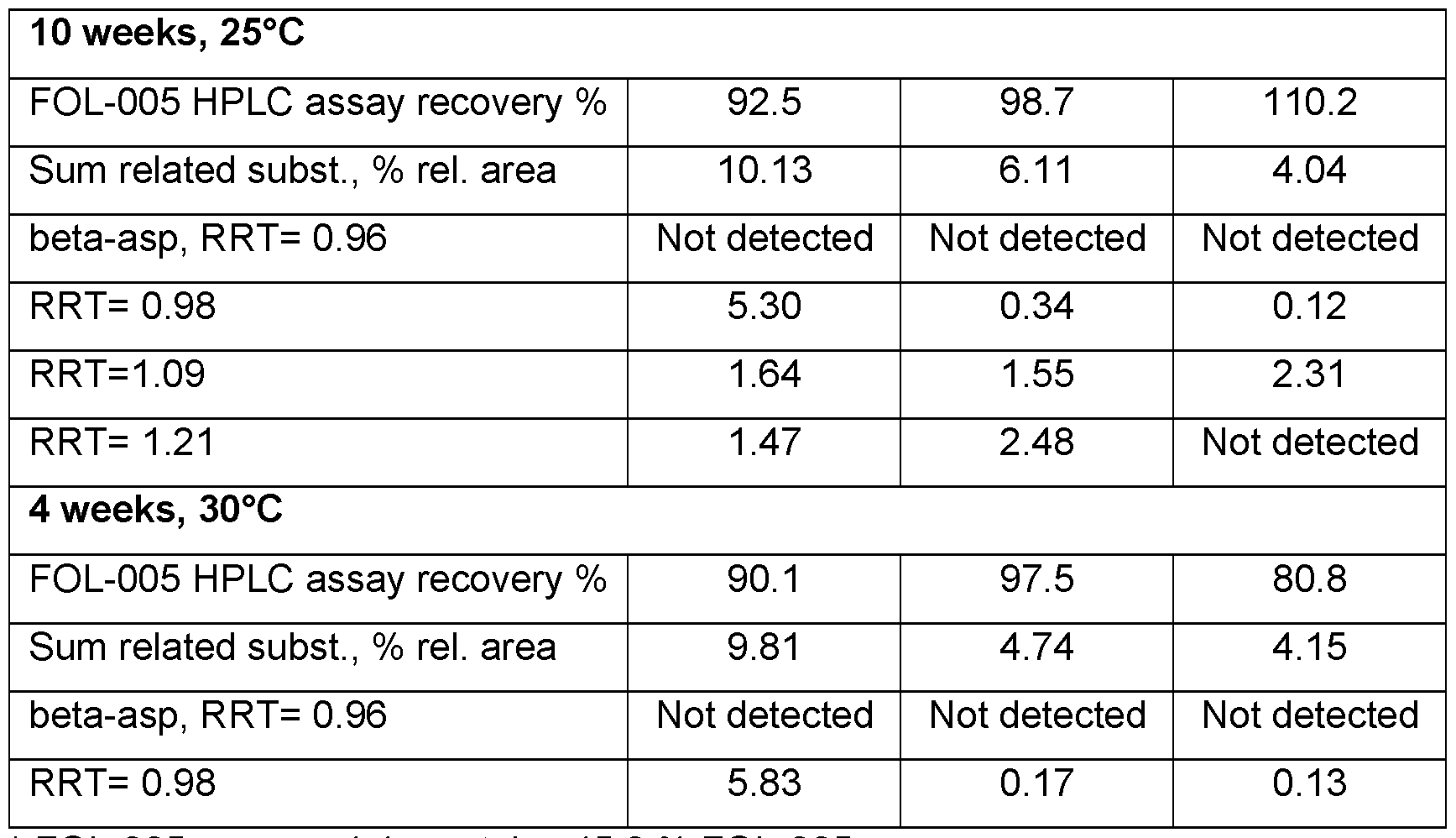


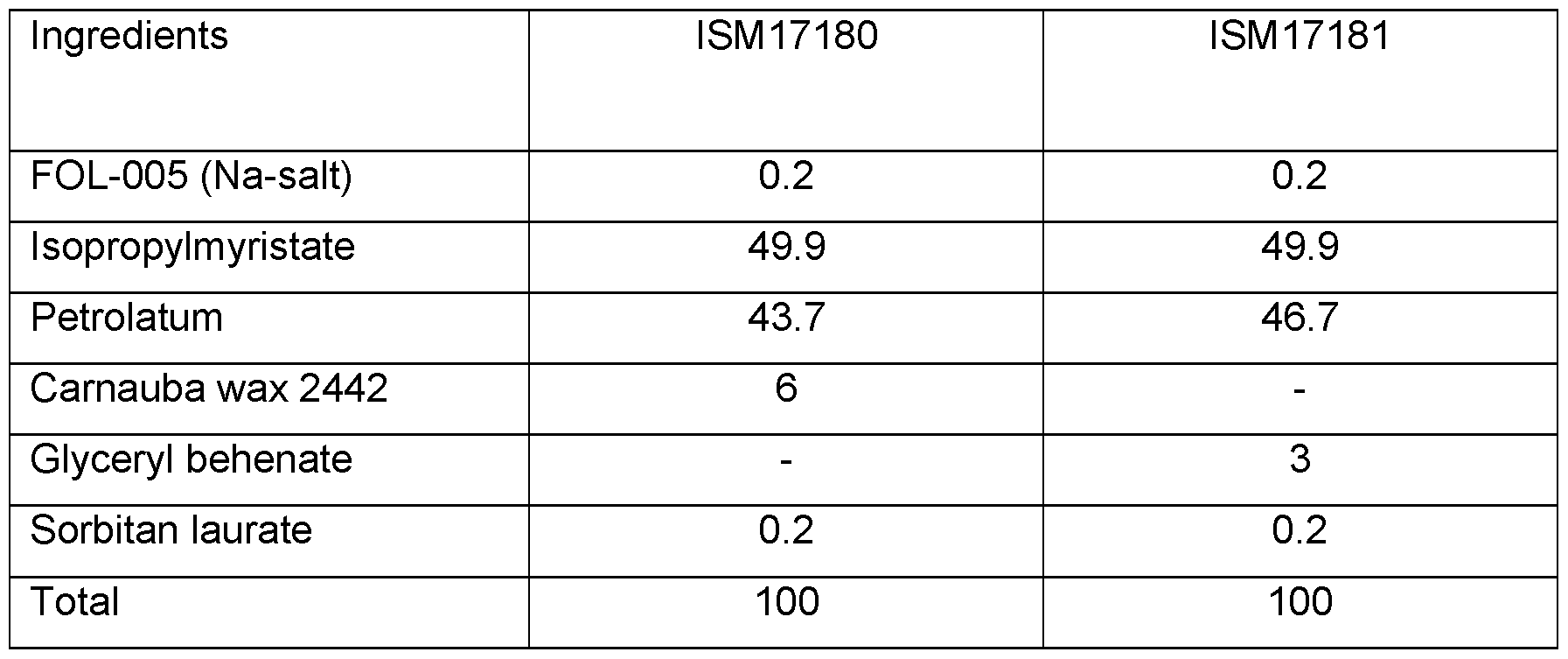





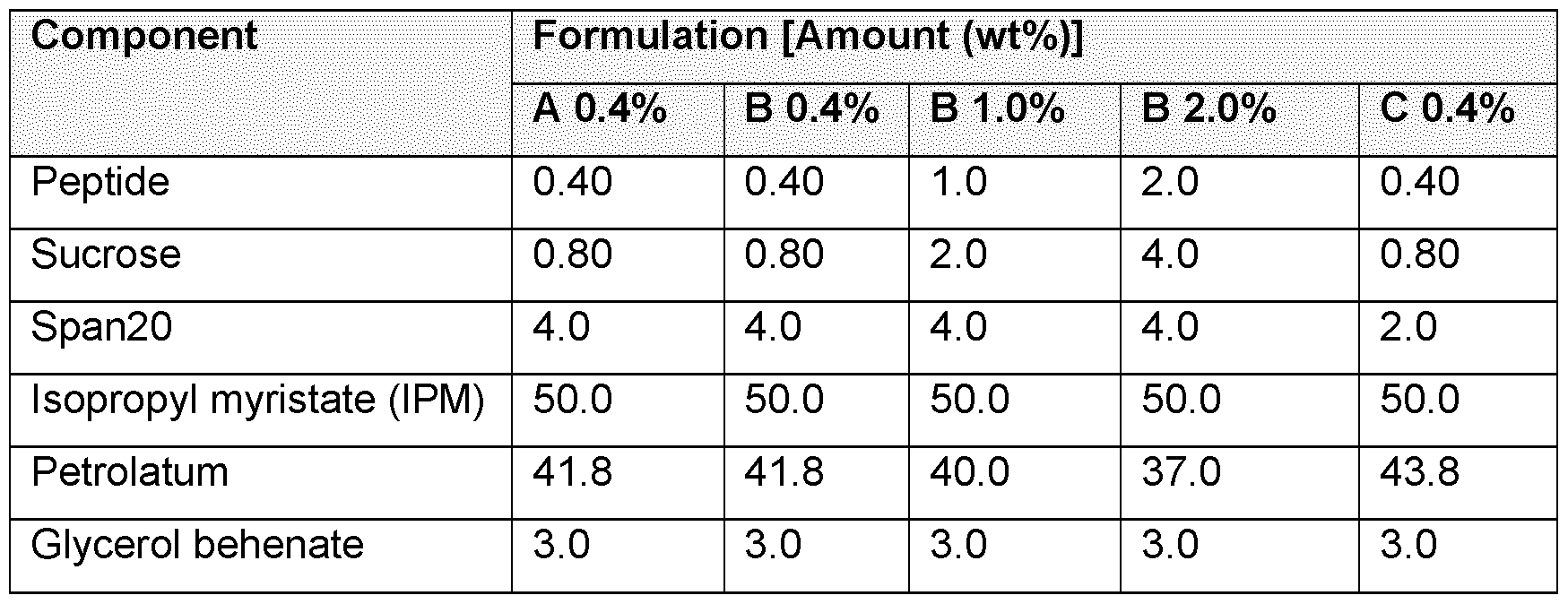
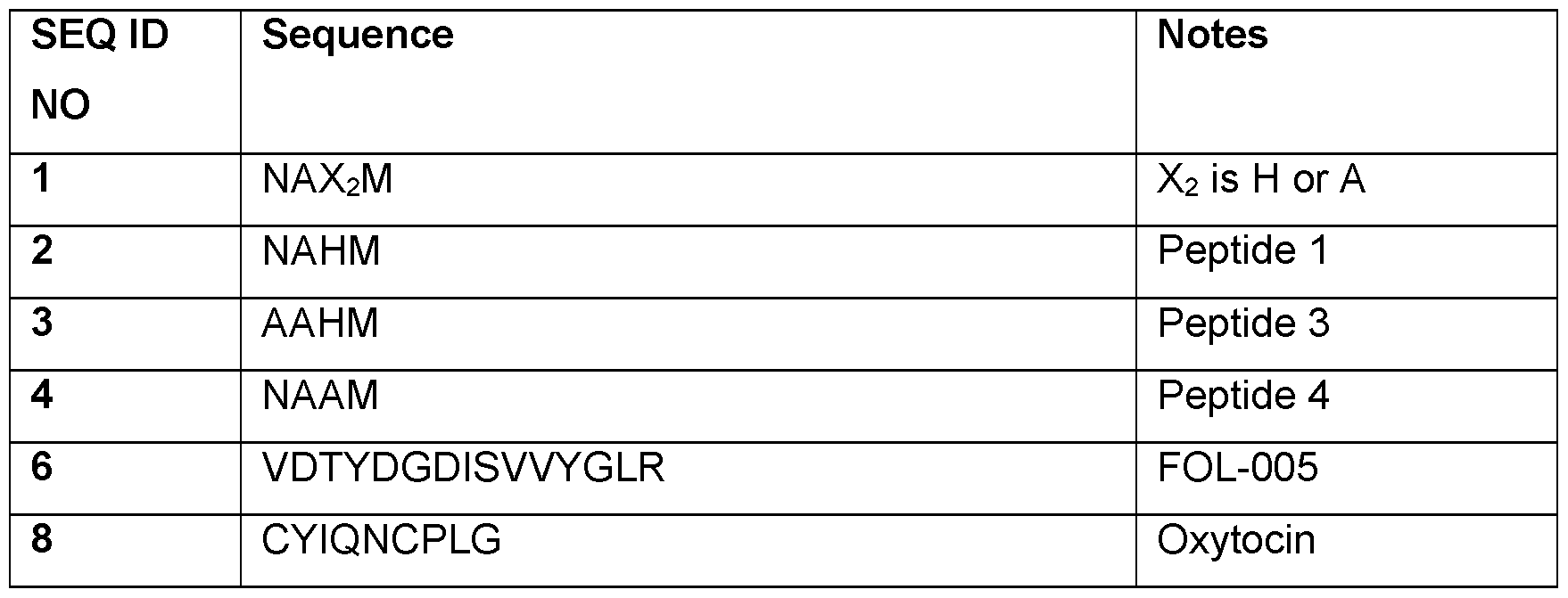


Claims
Priority Applications (4)
| Application Number | Priority Date | Filing Date | Title |
|---|---|---|---|
| CA3196679A CA3196679A1 (en) | 2020-10-28 | 2021-10-28 | Peptides for use in skin and hair pigmentation |
| EP21802298.6A EP4236981A1 (en) | 2020-10-28 | 2021-10-28 | Peptides for use in skin and hair pigmentation |
| US18/250,448 US20240228536A1 (en) | 2020-10-28 | 2021-10-28 | Peptides for use in skin and hair pigmentation |
| AU2021369462A AU2021369462A1 (en) | 2020-10-28 | 2021-10-28 | Peptides for use in skin and hair pigmentation |
Applications Claiming Priority (2)
| Application Number | Priority Date | Filing Date | Title |
|---|---|---|---|
| EP20204350 | 2020-10-28 | ||
| EP20204350.1 | 2020-10-28 |
Publications (1)
| Publication Number | Publication Date |
|---|---|
| WO2022090413A1 true WO2022090413A1 (en) | 2022-05-05 |
Family
ID=73037780
Family Applications (1)
| Application Number | Title | Priority Date | Filing Date |
|---|---|---|---|
| PCT/EP2021/080032 Ceased WO2022090413A1 (en) | 2020-10-28 | 2021-10-28 | Peptides for use in skin and hair pigmentation |
Country Status (5)
| Country | Link |
|---|---|
| US (1) | US20240228536A1 (en) |
| EP (1) | EP4236981A1 (en) |
| AU (1) | AU2021369462A1 (en) |
| CA (1) | CA3196679A1 (en) |
| WO (1) | WO2022090413A1 (en) |
Cited By (1)
| Publication number | Priority date | Publication date | Assignee | Title |
|---|---|---|---|---|
| WO2023218095A1 (en) * | 2022-05-13 | 2023-11-16 | Coegin Pharma Ab | Agents for stimulating tissue regeneration |
Citations (5)
| Publication number | Priority date | Publication date | Assignee | Title |
|---|---|---|---|---|
| US20070265431A1 (en) * | 2005-12-15 | 2007-11-15 | Cunningham Scott D | PMMA binding peptides and methods of use |
| WO2013077681A1 (en) * | 2011-11-23 | 2013-05-30 | 주식회사 프로셀제약 | Transdermal delivery system of bioactive molecules of skin using intracellular molecule delivery peptides |
| WO2014200910A2 (en) * | 2013-06-10 | 2014-12-18 | Iogenetics, Llc | Bioinformatic processes for determination of peptide binding |
| EP2955194A1 (en) * | 2014-06-12 | 2015-12-16 | Universidade do Porto - Reitoria | Neonatal vaccine |
| US20200069786A1 (en) * | 2018-09-04 | 2020-03-05 | Treos Bio Zrt. | Composition and process for preparing vaccine |
-
2021
- 2021-10-28 AU AU2021369462A patent/AU2021369462A1/en active Pending
- 2021-10-28 US US18/250,448 patent/US20240228536A1/en active Pending
- 2021-10-28 WO PCT/EP2021/080032 patent/WO2022090413A1/en not_active Ceased
- 2021-10-28 EP EP21802298.6A patent/EP4236981A1/en active Pending
- 2021-10-28 CA CA3196679A patent/CA3196679A1/en active Pending
Patent Citations (5)
| Publication number | Priority date | Publication date | Assignee | Title |
|---|---|---|---|---|
| US20070265431A1 (en) * | 2005-12-15 | 2007-11-15 | Cunningham Scott D | PMMA binding peptides and methods of use |
| WO2013077681A1 (en) * | 2011-11-23 | 2013-05-30 | 주식회사 프로셀제약 | Transdermal delivery system of bioactive molecules of skin using intracellular molecule delivery peptides |
| WO2014200910A2 (en) * | 2013-06-10 | 2014-12-18 | Iogenetics, Llc | Bioinformatic processes for determination of peptide binding |
| EP2955194A1 (en) * | 2014-06-12 | 2015-12-16 | Universidade do Porto - Reitoria | Neonatal vaccine |
| US20200069786A1 (en) * | 2018-09-04 | 2020-03-05 | Treos Bio Zrt. | Composition and process for preparing vaccine |
Non-Patent Citations (9)
| Title |
|---|
| "Advances in Molecular Biology", 2002, OXFORD UNIVERSITY PRESS, article "Synthetic Peptides: A User's Guide" |
| "CAS", Database accession no. 1338392 |
| "Pharmaceutical Formulation: Development of Peptides and Proteins", 1999, TAYLOR AND FRANCIS |
| JOLY-TONETTI, N., EXPERIMENTAL DERMATOLOGY., vol. 25, no. 7, 2016, pages 501 - 504 |
| SCHINDELIN, J. ET AL., NATURE METHODS, vol. 9, no. 7, 2012, pages 676 - 682 |
| SINGH S. K. ET AL: "Bone morphogenetic proteins differentially regulate pigmentation in human skin cells", vol. 125, no. 18, 28 May 2012 (2012-05-28), Cambridge, pages 4306 - 4319, XP055785302, ISSN: 0021-9533, Retrieved from the Internet <URL:https://jcs.biologists.org/content/joces/125/18/4306.full.pdf> DOI: 10.1242/jcs.102038 * |
| WARKEL, R. ET AL., AM. J. CLIN. PATH., vol. 73, no. 6, 1980, pages 812 - 5 |
| WARKEL, R. ET AL., AM. J. CLIN. PATH., vol. 73, no. 6, June 1980 (1980-06-01), pages 812 - 5 |
| WARTHIN, A. ET AL., AM. J. SYPH., vol. 4, 1920, pages 97 - 103 |
Cited By (1)
| Publication number | Priority date | Publication date | Assignee | Title |
|---|---|---|---|---|
| WO2023218095A1 (en) * | 2022-05-13 | 2023-11-16 | Coegin Pharma Ab | Agents for stimulating tissue regeneration |
Also Published As
| Publication number | Publication date |
|---|---|
| CA3196679A1 (en) | 2022-05-05 |
| AU2021369462A1 (en) | 2023-06-22 |
| US20240228536A1 (en) | 2024-07-11 |
| EP4236981A1 (en) | 2023-09-06 |
Similar Documents
| Publication | Publication Date | Title |
|---|---|---|
| JP2014159442A (en) | Oligopeptide tyrosinase inhibitors and uses thereof | |
| EP4004021B1 (en) | Polypeptides having anti-senescent effects and uses thereof | |
| CN102292126B (en) | Compositions and methods for treating hyperpigmentation | |
| JP2022513171A (en) | Polypeptides and methods for improving skin symptoms | |
| EP3281627A1 (en) | Soluble microneedle for delivering proteins or peptides | |
| CN116687780A (en) | Polypeptide-containing targeted osmotic composition and application thereof | |
| KR20200011499A (en) | Botulinum neurotoxin for the treatment of disorders associated with melanocyte hyperactivity and / or excess melanin | |
| US20240228536A1 (en) | Peptides for use in skin and hair pigmentation | |
| ES2748866T3 (en) | Topical preparation containing NGF to induce skin pigmentation and for the treatment of skin dyschromia and vitiligo | |
| EP3958835B1 (en) | Topical formulation | |
| KR20010024317A (en) | Method and composition for causing skin lightening | |
| Xiang et al. | Antiaging synergistic effect in noninvasive transdermal delivery of peptide loaded liposomes by low energy/frequency radiofrequency | |
| KR20180029413A (en) | Solid lipid nanoparticles composition for skin-whitening effect comprising MHY498 and preparation method thereof | |
| EP4048680B1 (en) | Peptides with cell damage protection activity and liposomial formulations | |
| HK40069540B (en) | Topical formulation | |
| HK40069540A (en) | Topical formulation | |
| RU2848291C2 (en) | Hexapeptide derivative and cosmetic composition or pharmaceutical composition and use thereof | |
| EP4613259A1 (en) | Pharmaceutical, dermatological or cosmetic compounds and compositions for reducing melanin synthesis, stimulating type i collagen production, skin depigmentation and/or promoting a skin anti-aging effect in an individual or animal, uses and methods | |
| WO2014037561A2 (en) | Skin anti-aging composition | |
| CA3155594C (en) | Topical anti-aging compositions comprising a tetrapeptide | |
| Khalid et al. | Anti-Aging topical peptides and proteins | |
| KR102203424B1 (en) | A zdhhc13-derived peptide, and uses thereof | |
| Fotini et al. | Functional Peptides for Skin Disorders | |
| CA3195661A1 (en) | Enhanced skin permeation of a novel peptide via structural modification, chemical enhancement, and microneedles |
Legal Events
| Date | Code | Title | Description |
|---|---|---|---|
| 121 | Ep: the epo has been informed by wipo that ep was designated in this application |
Ref document number: 21802298 Country of ref document: EP Kind code of ref document: A1 |
|
| ENP | Entry into the national phase |
Ref document number: 3196679 Country of ref document: CA |
|
| NENP | Non-entry into the national phase |
Ref country code: DE |
|
| ENP | Entry into the national phase |
Ref document number: 2021802298 Country of ref document: EP Effective date: 20230530 |
|
| ENP | Entry into the national phase |
Ref document number: 2021369462 Country of ref document: AU Date of ref document: 20211028 Kind code of ref document: A |