WO2022076853A1 - Immuno oncology combination therapy with il-2 conjugates and pembrolizumab - Google Patents
Immuno oncology combination therapy with il-2 conjugates and pembrolizumab Download PDFInfo
- Publication number
- WO2022076853A1 WO2022076853A1 PCT/US2021/054225 US2021054225W WO2022076853A1 WO 2022076853 A1 WO2022076853 A1 WO 2022076853A1 US 2021054225 W US2021054225 W US 2021054225W WO 2022076853 A1 WO2022076853 A1 WO 2022076853A1
- Authority
- WO
- WIPO (PCT)
- Prior art keywords
- conjugate
- subject
- formula
- cancer
- pembrolizumab
- Prior art date
- Legal status (The legal status is an assumption and is not a legal conclusion. Google has not performed a legal analysis and makes no representation as to the accuracy of the status listed.)
- Ceased
Links
Classifications
-
- A—HUMAN NECESSITIES
- A61—MEDICAL OR VETERINARY SCIENCE; HYGIENE
- A61K—PREPARATIONS FOR MEDICAL, DENTAL OR TOILETRY PURPOSES
- A61K47/00—Medicinal preparations characterised by the non-active ingredients used, e.g. carriers or inert additives; Targeting or modifying agents chemically bound to the active ingredient
- A61K47/50—Medicinal preparations characterised by the non-active ingredients used, e.g. carriers or inert additives; Targeting or modifying agents chemically bound to the active ingredient the non-active ingredient being chemically bound to the active ingredient, e.g. polymer-drug conjugates
- A61K47/51—Medicinal preparations characterised by the non-active ingredients used, e.g. carriers or inert additives; Targeting or modifying agents chemically bound to the active ingredient the non-active ingredient being chemically bound to the active ingredient, e.g. polymer-drug conjugates the non-active ingredient being a modifying agent
- A61K47/56—Medicinal preparations characterised by the non-active ingredients used, e.g. carriers or inert additives; Targeting or modifying agents chemically bound to the active ingredient the non-active ingredient being chemically bound to the active ingredient, e.g. polymer-drug conjugates the non-active ingredient being a modifying agent the modifying agent being an organic macromolecular compound, e.g. an oligomeric, polymeric or dendrimeric molecule
- A61K47/59—Medicinal preparations characterised by the non-active ingredients used, e.g. carriers or inert additives; Targeting or modifying agents chemically bound to the active ingredient the non-active ingredient being chemically bound to the active ingredient, e.g. polymer-drug conjugates the non-active ingredient being a modifying agent the modifying agent being an organic macromolecular compound, e.g. an oligomeric, polymeric or dendrimeric molecule obtained otherwise than by reactions only involving carbon-to-carbon unsaturated bonds, e.g. polyureas or polyurethanes
- A61K47/60—Medicinal preparations characterised by the non-active ingredients used, e.g. carriers or inert additives; Targeting or modifying agents chemically bound to the active ingredient the non-active ingredient being chemically bound to the active ingredient, e.g. polymer-drug conjugates the non-active ingredient being a modifying agent the modifying agent being an organic macromolecular compound, e.g. an oligomeric, polymeric or dendrimeric molecule obtained otherwise than by reactions only involving carbon-to-carbon unsaturated bonds, e.g. polyureas or polyurethanes the organic macromolecular compound being a polyoxyalkylene oligomer, polymer or dendrimer, e.g. PEG, PPG, PEO or polyglycerol
-
- A—HUMAN NECESSITIES
- A61—MEDICAL OR VETERINARY SCIENCE; HYGIENE
- A61K—PREPARATIONS FOR MEDICAL, DENTAL OR TOILETRY PURPOSES
- A61K38/00—Medicinal preparations containing peptides
- A61K38/16—Peptides having more than 20 amino acids; Gastrins; Somatostatins; Melanotropins; Derivatives thereof
- A61K38/17—Peptides having more than 20 amino acids; Gastrins; Somatostatins; Melanotropins; Derivatives thereof from animals; from humans
- A61K38/19—Cytokines; Lymphokines; Interferons
- A61K38/20—Interleukins [IL]
- A61K38/2013—IL-2
-
- A—HUMAN NECESSITIES
- A61—MEDICAL OR VETERINARY SCIENCE; HYGIENE
- A61K—PREPARATIONS FOR MEDICAL, DENTAL OR TOILETRY PURPOSES
- A61K39/00—Medicinal preparations containing antigens or antibodies
- A61K39/395—Antibodies; Immunoglobulins; Immune serum, e.g. antilymphocytic serum
- A61K39/39533—Antibodies; Immunoglobulins; Immune serum, e.g. antilymphocytic serum against materials from animals
- A61K39/39541—Antibodies; Immunoglobulins; Immune serum, e.g. antilymphocytic serum against materials from animals against normal tissues, cells
-
- A—HUMAN NECESSITIES
- A61—MEDICAL OR VETERINARY SCIENCE; HYGIENE
- A61K—PREPARATIONS FOR MEDICAL, DENTAL OR TOILETRY PURPOSES
- A61K47/00—Medicinal preparations characterised by the non-active ingredients used, e.g. carriers or inert additives; Targeting or modifying agents chemically bound to the active ingredient
- A61K47/50—Medicinal preparations characterised by the non-active ingredients used, e.g. carriers or inert additives; Targeting or modifying agents chemically bound to the active ingredient the non-active ingredient being chemically bound to the active ingredient, e.g. polymer-drug conjugates
- A61K47/51—Medicinal preparations characterised by the non-active ingredients used, e.g. carriers or inert additives; Targeting or modifying agents chemically bound to the active ingredient the non-active ingredient being chemically bound to the active ingredient, e.g. polymer-drug conjugates the non-active ingredient being a modifying agent
- A61K47/68—Medicinal preparations characterised by the non-active ingredients used, e.g. carriers or inert additives; Targeting or modifying agents chemically bound to the active ingredient the non-active ingredient being chemically bound to the active ingredient, e.g. polymer-drug conjugates the non-active ingredient being a modifying agent the modifying agent being an antibody, an immunoglobulin or a fragment thereof, e.g. an Fc-fragment
- A61K47/6801—Drug-antibody or immunoglobulin conjugates defined by the pharmacologically or therapeutically active agent
- A61K47/6803—Drugs conjugated to an antibody or immunoglobulin, e.g. cisplatin-antibody conjugates
- A61K47/6811—Drugs conjugated to an antibody or immunoglobulin, e.g. cisplatin-antibody conjugates the drug being a protein or peptide, e.g. transferrin or bleomycin
- A61K47/6813—Drugs conjugated to an antibody or immunoglobulin, e.g. cisplatin-antibody conjugates the drug being a protein or peptide, e.g. transferrin or bleomycin the drug being a peptidic cytokine, e.g. an interleukin or interferon
-
- A—HUMAN NECESSITIES
- A61—MEDICAL OR VETERINARY SCIENCE; HYGIENE
- A61P—SPECIFIC THERAPEUTIC ACTIVITY OF CHEMICAL COMPOUNDS OR MEDICINAL PREPARATIONS
- A61P35/00—Antineoplastic agents
-
- A—HUMAN NECESSITIES
- A61—MEDICAL OR VETERINARY SCIENCE; HYGIENE
- A61P—SPECIFIC THERAPEUTIC ACTIVITY OF CHEMICAL COMPOUNDS OR MEDICINAL PREPARATIONS
- A61P37/00—Drugs for immunological or allergic disorders
- A61P37/02—Immunomodulators
- A61P37/04—Immunostimulants
-
- C—CHEMISTRY; METALLURGY
- C07—ORGANIC CHEMISTRY
- C07K—PEPTIDES
- C07K16/00—Immunoglobulins [IGs], e.g. monoclonal or polyclonal antibodies
- C07K16/18—Immunoglobulins [IGs], e.g. monoclonal or polyclonal antibodies against material from animals or humans
- C07K16/28—Immunoglobulins [IGs], e.g. monoclonal or polyclonal antibodies against material from animals or humans against receptors, cell surface antigens or cell surface determinants
- C07K16/2803—Immunoglobulins [IGs], e.g. monoclonal or polyclonal antibodies against material from animals or humans against receptors, cell surface antigens or cell surface determinants against the immunoglobulin superfamily
- C07K16/2818—Immunoglobulins [IGs], e.g. monoclonal or polyclonal antibodies against material from animals or humans against receptors, cell surface antigens or cell surface determinants against the immunoglobulin superfamily against CD28 or CD152
-
- C—CHEMISTRY; METALLURGY
- C07—ORGANIC CHEMISTRY
- C07K—PEPTIDES
- C07K16/00—Immunoglobulins [IGs], e.g. monoclonal or polyclonal antibodies
- C07K16/18—Immunoglobulins [IGs], e.g. monoclonal or polyclonal antibodies against material from animals or humans
- C07K16/28—Immunoglobulins [IGs], e.g. monoclonal or polyclonal antibodies against material from animals or humans against receptors, cell surface antigens or cell surface determinants
- C07K16/2896—Immunoglobulins [IGs], e.g. monoclonal or polyclonal antibodies against material from animals or humans against receptors, cell surface antigens or cell surface determinants against molecules with a "CD"-designation, not provided for elsewhere
-
- A—HUMAN NECESSITIES
- A61—MEDICAL OR VETERINARY SCIENCE; HYGIENE
- A61K—PREPARATIONS FOR MEDICAL, DENTAL OR TOILETRY PURPOSES
- A61K39/00—Medicinal preparations containing antigens or antibodies
- A61K2039/505—Medicinal preparations containing antigens or antibodies comprising antibodies
-
- A—HUMAN NECESSITIES
- A61—MEDICAL OR VETERINARY SCIENCE; HYGIENE
- A61K—PREPARATIONS FOR MEDICAL, DENTAL OR TOILETRY PURPOSES
- A61K39/00—Medicinal preparations containing antigens or antibodies
- A61K2039/545—Medicinal preparations containing antigens or antibodies characterised by the dose, timing or administration schedule
-
- A—HUMAN NECESSITIES
- A61—MEDICAL OR VETERINARY SCIENCE; HYGIENE
- A61K—PREPARATIONS FOR MEDICAL, DENTAL OR TOILETRY PURPOSES
- A61K2300/00—Mixtures or combinations of active ingredients, wherein at least one active ingredient is fully defined in groups A61K31/00 - A61K41/00
-
- C—CHEMISTRY; METALLURGY
- C07—ORGANIC CHEMISTRY
- C07K—PEPTIDES
- C07K2317/00—Immunoglobulins specific features
- C07K2317/20—Immunoglobulins specific features characterized by taxonomic origin
- C07K2317/24—Immunoglobulins specific features characterized by taxonomic origin containing regions, domains or residues from different species, e.g. chimeric, humanized or veneered
Definitions
- Cytokines comprise a family of cell signaling proteins such as chemokines, interferons, interleukins, lymphokines, tumor necrosis factors, and other growth factors playing roles in innate and adaptive immune cell homeostasis. Cytokines are produced by immune cells such as macrophages, B lymphocytes, T lymphocytes and mast cells, endothelial cells, fibroblasts, and different stromal cells.
- cytokines modulate the balance between humoral and cell-based immune responses.
- Interleukins are signaling proteins that modulate the development and differentiation of T and B lymphocytes, cells of the monocytic lineage, neutrophils, basophils, eosinophils, megakaryocytes, and hematopoietic cells. Interleukins are produced by helper CD4+ T and B lymphocytes, monocytes, macrophages, endothelial cells, and other tissue residents.
- IL-2 interleukin 2
- Described herein are methods of treating cancer in a subject in need thereof, comprising administering to a subject (a) about 8 ⁇ g/kg, 16 ⁇ g/kg, 24 ⁇ g/kg, or 32 ⁇ g/kg of an IL-2 conjugate, and (b) pembrolizumab, wherein the IL-2 conjugate comprises the amino acid sequence of SEQ ID NO: 1 having an unnatural amino acid residue described herein at position 64, e.g., the amino acid sequence of SEQ ID NO: 2.
- Embodiment 1 A method of treating a cancer in a subject in need thereof, comprising administering to the subject (a) about 8 ⁇ g/kg, 16 ⁇ g/kg, 24 ⁇ g/kg, or 32 ⁇ g/kg of an IL-2 conjugate, and (b) pembrolizumab, wherein the IL-2 conjugate comprises the amino acid sequence of SEQ ID NO: 1 wherein the amino acid at position P64 is replaced by the structure of Formula (IA): wherein: Z is CH 2 and Y is Y is CH 2 and Z is Z is CH 2 and Y is Y is CH 2 and Z is W is a PEG group having an average molecular weight of about 25 kDa - 35 kDa; q is 1, 2, or 3; X is an L-amino acid having the structure: X-1 indicates the point of attachment to the preceding amino acid residue; and X+1 indicates the point of attachment to the following amino acid residue.
- Embodiment 2 An IL-2 conjugate for use in a method of treating a cancer in a subject in need thereof, the method comprising administering to the subject (a) about 8 ⁇ g/kg, 16 ⁇ g/kg, 24 ⁇ g/kg, or 32 ⁇ g/kg of the IL-2 conjugate, and (b) pembrolizumab, wherein the IL-2 conjugate comprises the amino acid sequence of SEQ ID NO: 1 wherein the amino acid at position P64 is replaced by the structure of Formula (IA): wherein: Z is CH 2 and Y is Y is CH 2 and Z is Z is CH 2 and Y is Y is CH 2 and Z is W is a PEG group having an average molecular weight of about 25 kDa - 35 kDa; q is 1, 2, or 3; X is an L-amino acid having the structure: X-1 indicates the point of attachment to the preceding amino acid residue; and X+1 indicates the point of attachment to the following amino acid residue.
- Embodiment 3 Use of an IL-2 conjugate for the manufacture of a medicament for a method of treating a cancer in a subject in need thereof, the method comprising administering to the subject (a) about 8 ⁇ g/kg 16 ⁇ g/kg 24 ⁇ g/kg or 32 ⁇ g/kg of the IL-2 conjugate and (b) pembrolizumab, wherein the IL-2 conjugate comprises the amino acid sequence of SEQ ID NO: 1 wherein the amino acid at position P64 is replaced by the structure of Formula (IA): wherein: Z is CH 2 and Y is Y is CH 2 and Z is ; Z is CH 2 and Y is Y is CH 2 and Z is W is a PEG group having an average molecular weight of about 25 kDa - 35 kDa; q is 1, 2, or 3; X is an L-amino acid having the structure: X-1 indicates the point of attachment to the preceding amino acid residue; and X+1 indicates the point of attachment to the following amino
- Embodiment 4 The method, IL-2 conjugate for use, or use of any one of embodiments 1-3, comprising administering to the subject about 8 ⁇ g/kg of the IL-2 conjugate.
- Embodiment 5. The method, IL-2 conjugate for use, or use of any one of embodiments 1-3, comprising administering to the subject about 16 ⁇ g/kg of the IL-2 conjugate.
- Embodiment 6. The method, IL-2 conjugate for use, or use of any one of embodiments 1-3 comprising administering to the subject about 24 ⁇ g/kg of the IL-2 conjugate.
- Embodiment 8 The method, IL-2 conjugate for use, or use of any one of embodiments 1-7, wherein in the IL-2 conjugate Z is CH 2 and Y is .
- Embodiment 9 The method, IL-2 conjugate for use, or use of any one of embodiments 1-7, wherein in the IL-2 conjugate Y is CH 2 and Z is [0017] Embodiment 10.
- Embodiment 11 The method, IL-2 conjugate for use, or use of any one of embodiments 1-7, wherein in the IL-2 conjugate Z is CH 2 and Y is [0018] Embodiment 11.
- Embodiment 16 The method, IL-2 conjugate for use, or use of any one of embodiments 1-14, wherein q is 2.
- Embodiment 17. The method, IL-2 conjugate for use, or use of any one of embodiments 1-14, wherein q is 3.
- Embodiment 18. The method, IL-2 conjugate for use, or use of any one of embodiments 1-17, wherein the subject has a solid tumor cancer.
- Embodiment 19 The method, IL-2 conjugate for use, or use of any one of embodiments 1-18, wherein the subject has a metastatic solid tumor.
- Embodiment 20 The method, IL-2 conjugate for use, or use of any one of embodiments 1-18, wherein the subject has a metastatic solid tumor.
- Embodiment 21 The method, IL-2 conjugate for use, or use of any one of embodiments 1-17, wherein the subject has a liquid tumor.
- Embodiment 22 The method, IL-2 conjugate for use, or use of any one of embodiments 1-21, wherein the subject has refractory cancer.
- Embodiment 23 The method, IL-2 conjugate for use, or use of any one of embodiments 1-22, wherein the subject has relapsed cancer.
- Embodiment 24 Embodiment 24.
- the cancer is selected from renal cell carcinoma (RCC), non-small cell lung cancer (NSCLC), head and neck squamous cell cancer (HNSCC), classical Hodgkin lymphoma (cHL), primary mediastinal large B-cell lymphoma (PMBCL), urothelial carcinoma, microsatellite unstable cancer, microsatellite stable cancer, gastric cancer, colon cancer, colorectal cancer (CRC), cervical cancer, hepatocellular carcinoma (HCC), Merkel cell carcinoma (MCC), melanoma, small cell lung cancer (SCLC), esophageal, esophageal squamous cell carcinoma (ESCC), glioblastoma, mesothelioma, breast cancer, triple-negative breast cancer, prostate cancer, castrate-resistant prostate cancer, metastatic castrate-resistant prostate cancer, or metastatic castrate-resistant prostate cancer having DNA damage response (DDR) defects, bladder
- RRCC renal cell carcinoma
- NSCLC non-small cell lung cancer
- Embodiment 25 The method, IL-2 conjugate for use, or use of any one of embodiments 1-24, wherein CD8+ cells are expanded at least 1.5-fold.
- Embodiment 26 The method, IL-2 conjugate for use, or use of any one of embodiments 1-25, wherein NK cells are expanded at least about 5-fold.
- Embodiment 27 The method, IL-2 conjugate for use, or use of any one of embodiments 1-26, wherein eosinophils are expanded no more than about 2-fold.
- Embodiment 28 The method, IL-2 conjugate for use, or use of any one of embodiments 1-27, wherein CD4+ cells are expanded no more than about 2-fold.
- Embodiment 29 The method, IL-2 conjugate for use, or use of any one of embodiments 1-28, wherein the expansion of CD8+ cells and/or NK cells is greater than the expansion of CD4+ cells and/or eosinophils.
- Embodiment 30 The method, IL-2 conjugate for use, or use of any one of embodiments 1-29, wherein the IL-2 conjugate does not cause dose-limiting toxicity.
- Embodiment 31 The method, IL-2 conjugate for use, or use of any one of embodiments 1-30, wherein the IL-2 conjugate does not cause severe cytokine release syndrome.
- Embodiment 32 Embodiment 32.
- Embodiment 33 The method, IL-2 conjugate for use, or use of any one of embodiments 1-32, wherein the IL-2 conjugate is administered to the subject about once every two weeks, about once every three weeks, or about once every 4 weeks.
- Embodiment 34 The method, IL-2 conjugate for use, or use of any one of embodiments 1-33, wherein the IL-2 conjugate and pembrolizumab are administered to the subject about once every two weeks, about once every three weeks, or about once every 4 weeks.
- Embodiment 35 Embodiment 35.
- Embodiment 36 The method, IL-2 conjugate for use, or use of any one of embodiments 1-35, wherein pembrolizumab is administered at a dose of about 200 mg every 3 weeks.
- Embodiment 37 The method, IL-2 conjugate for use, or use of any one of embodiments 1-36, wherein the IL-2 conjugate and pembrolizumab are administered separately.
- Embodiment 38 The method, IL-2 conjugate for use, or use of any one of embodiments 1-34, wherein the IL-2 conjugate is a pharmaceutically acceptable salt, solvate, or hydrate.
- Embodiment 39 The method, IL-2 conjugate for use, or use of embodiment 37 or 38, wherein the IL-2 conjugate is administered before pembrolizumab.
- Embodiment 40 The method, IL-2 conjugate for use, or use of embodiment 37 or 38, wherein the IL-2 conjugate is administered after pembrolizumab.
- Embodiment 41 The method, IL-2 conjugate for use, or use of any one of embodiments 1-40, wherein the IL-2 conjugate is administered to the subject by subcutaneous administration.
- Embodiment 42 The method, IL-2 conjugate for use, or use of any one of embodiments 1-40, wherein the IL-2 conjugate is administered to the subject by subcutaneous administration.
- Embodiment 43 The method, IL-2 conjugate for use, or use of any one of embodiments 1-40 and 42, wherein the IL-2 conjugate and pembrolizumab are administered to the subject by intravenous administration.
- Embodiment 44 The method, IL-2 conjugate for use, or use of any one of embodiments 1-43, wherein the subject has basal cell carcinoma.
- Embodiment 45 The method, IL-2 conjugate for use, or use of any one of embodiments 1-43, wherein the subject has basal cell carcinoma.
- Embodiment 46 The method, IL-2 conjugate for use, or use of any one of embodiments 1-43, wherein the subject has squamous cell carcinoma, optionally wherein the squamous cell carcinoma is head and neck squamous cell carcinoma.
- Embodiment 47 The method, IL-2 conjugate for use, or use of any one of embodiments 1-43, wherein the subject has colorectal cancer.
- Embodiment 47 The method, IL-2 conjugate for use, or use of any one of embodiments 1-43, wherein the subject has melanoma.
- Embodiment 48 Embodiment 48.
- FIG.1A shows the change in peripheral CD8+ T eff counts in the indicated subjects at specified times following administration of 8 ⁇ g/kg IL-2 conjugate and pembrolizumab.
- FIG.1D1 indicates the treatment cycle and day (e.g., treatment cycle 1, day 1).
- PRE indicates the baseline measurement before administration; 24HR indicates 24 hours after administration; and so on.
- FIG.1B shows the change in peak peripheral CD8+ T eff cell expansion following administration of the first dose of IL-2 conjugate and pembrolizumab. Data is normalized to pre- treatment (C1D1) CD8+ T cell count. Listed values indicate median fold changes.
- FIG.1C shows the change in peripheral CD8+ T eff counts in the indicated subjects at specified times following administration of 16 ⁇ g/kg IL-2 conjugate and pembrolizumab.
- FIG.2 shows the percentage of CD8+ T eff cells expressing Ki67 in the indicated subjects at specified times following administration of 8 ⁇ g/kg IL-2 conjugate and pembrolizumab.
- FIG.3A shows the change in peripheral natural killer (NK) cell counts in the indicated subjects at specified times following administration of 8 ⁇ g/kg IL-2 conjugate and pembrolizumab.
- FIG.3B shows the change in peak peripheral NK cell expansion following administration of the first dose of IL-2 conjugate and pembrolizumab. Data is normalized to pre- treatment (C1D1) NK cell count. Listed values indicate median fold changes.
- FIG.3C shows the change in peripheral natural killer (NK) cell counts in the indicated subjects at specified times following administration of 16 ⁇ g/kg IL-2 conjugate and pembrolizumab.
- FIG.4 shows the percentage of NK cells expressing Ki67 in the indicated subjects at specified times following administration of 8 ⁇ g/kg IL-2 conjugate and pembrolizumab.
- FIG.5A shows the change in peripheral CD4+ T reg counts in the indicated subjects at specified times following administration of 8 ⁇ g/kg IL-2 conjugate and pembrolizumab.
- FIG.5B shows the change in peak peripheral CD4+ T reg cell expansion following administration of the first dose of IL-2 conjugate and pembrolizumab.
- FIG.5C shows the change in peripheral CD4+ T reg counts in the indicated subjects at specified times following administration of 16 ⁇ g/kg IL-2 conjugate and pembrolizumab.
- FIG.6 shows the percentage of CD4+ T reg cells expressing Ki67 in the indicated subjects at specified times following administration of 8 ⁇ g/kg IL-2 conjugate and pembrolizumab.
- FIG.7A shows the change in eosinophil cell counts in the indicated subjects at specified times following administration of 8 ⁇ g/kg IL-2 conjugate and pembrolizumab.
- FIG.7B shows the change in peak peripheral eosinophil cell expansion following administration of the first dose of IL-2 conjugate and pembrolizumab. Data is normalized to pre- treatment (C1D1) eosinophil cell count. Listed values indicate median fold changes.
- FIG.7C shows the change in eosinophil cell counts in the indicated subjects at specified times following administration of 16 ⁇ g/kg IL-2 conjugate and pembrolizumab.
- FIG.8A shows serum levels of IFN- ⁇ , IL-5, and IL-6 in the indicated subjects at specified times following administration of 8 ⁇ g/kg IL-2 conjugate and pembrolizumab.
- FIG.8B shows the serum level of IL-5 following administration of 8 ⁇ g/kg IL-2 conjugate and pembrolizumab.
- BLQ below limit of quantification.
- Data is plotted as mean (range BLQ to maximum value).
- FIG.8C shows the serum level of IL-6 following administration of 8 ⁇ g/kg IL-2 conjugate and pembrolizumab.
- BLQ below limit of quantification.
- Data is plotted as mean (range BLQ to maximum value).
- FIG.8D shows serum levels of IFN- ⁇ , IL-5, and IL-6 in the indicated subjects at specified times following administration of 16 ⁇ g/kg IL-2 conjugate and pembrolizumab.
- FIG.9A and FIG.9B show mean concentrations of the IL-2 conjugate, administered at a dose of 8 ⁇ g/kg with pembrolizumab, after 1 and 2 cycles, respectively.
- FIG.9C and FIG.9D show mean concentrations of the IL-2 conjugate, administered at a dose of 16 ⁇ g/kg with pembrolizumab, after 1 and 2 cycles, respectively.
- FIG.10 shows the peripheral CD8+ T eff cell counts in the indicated subjects at specified times following administration of 24 ⁇ g/kg IL-2 conjugate and pembrolizumab.
- FIG.11 shows the peripheral NK cell counts in the indicated subjects at specified times following administration of 24 ⁇ g/kg IL-2 conjugate and pembrolizumab.
- FIG.12 shows the change in peripheral CD4+ T reg cell counts in the indicated subjects at specified times following administration of 24 ⁇ g/kg IL-2 conjugate and pembrolizumab.
- FIG.13 shows the peripheral eosinophil cell counts in the indicated subjects at specified times following administration of 24 ⁇ g/kg IL-2 conjugate and pembrolizumab.
- FIG.14A and FIG.14B show mean concentrations of the IL-2 conjugate, administered at a dose of 24 ⁇ g/kg with pembrolizumab, after 1 and 2 cycles, respectively.
- FIG.15 shows the levels of IFN- ⁇ , IL-6, and IL-5 in the indicated subjects treated with 24 ⁇ g/kg of the IL-2 conjugate and pembrolizumab at specified times following administration of the IL-2 conjugate.
- FIG.16 shows the change in peripheral CD8+ T eff cell counts in the indicated subjects at specified times following administration of 32 ⁇ g/kg IL-2 conjugate and pembrolizumab.
- FIG.17 shows the peripheral CD4+ T reg cell counts in the indicated subjects at specified times following administration of 32 ⁇ g/kg IL-2 conjugate and pembrolizumab.
- FIG.18A and FIG.18B show mean concentrations of the IL-2 conjugate, administered at a dose of 32 ⁇ g/kg with pembrolizumab, after 1 and 2 cycles, respectively.
- FIG.19 shows the levels of IFN- ⁇ , IL-6, and IL-5 in the indicated subjects treated with 32 ⁇ g/kg of the IL-2 conjugate and pembrolizumab at specified times following administration of the IL-2 conjugate.
- DETAILED DESCRIPTION OF THE DISCLOSURE Definitions [0088] Unless defined otherwise, all technical and scientific terms used herein have the same meaning as is commonly understood by one of skill in the art to which the claimed subject matter belongs.
- the terms “subject(s)” and “patient(s)” mean any mammal.
- the mammal is a human.
- the mammal is a non-human. None of the terms require or are limited to situations characterized by the supervision (e.g. constant or intermittent) of a health care worker (e.g. a doctor, a registered nurse, a nurse practitioner, a physician’s assistant, an orderly or a hospice worker).
- a health care worker e.g. a doctor, a registered nurse, a nurse practitioner, a physician’s assistant, an orderly or a hospice worker.
- unnatural amino acid refers to an amino acid other than one of the 20 naturally occurring amino acids. Exemplary unnatural amino acids are described in Young et al., “Beyond the canonical 20 amino acids: expanding the genetic lexicon,” J. of Biological Chemistry 285(15): 11039-11044 (2010), the disclosure of which is incorporated herein by reference.
- antibody herein is used in the broadest sense and encompasses various antibody structures, including but not limited to monoclonal antibodies, polyclonal antibodies, multispecific antibodies (e.g., bispecific antibodies), and antibody fragments so long as they exhibit the desired antigen-binding activity.
- antibody fragment refers to a molecule other than an intact antibody that comprises a portion of an intact antibody that binds the antigen to which the intact antibody binds.
- antibody fragments include but are not limited to Fv, Fab, Fab', Fab’-SH, F(ab') 2 ; diabodies; linear antibodies; single-chain antibody molecules (e.g. scFv); and multispecific antibodies formed from antibody fragments.
- nucleotide refers to a compound comprising a nucleoside moiety and a phosphate moiety.
- Exemplary natural nucleotides include, without limitation, adenosine triphosphate (ATP), uridine triphosphate (UTP), cytidine triphosphate (CTP), guanosine triphosphate (GTP), adenosine diphosphate (ADP), uridine diphosphate (UDP), cytidine diphosphate (CDP), guanosine diphosphate (GDP), adenosine monophosphate (AMP), uridine monophosphate (UMP), cytidine monophosphate (CMP), and guanosine monophosphate (GMP), deoxyadenosine triphosphate (dATP), deoxythymidine triphosphate (dTTP), deoxycytidine triphosphate (dCTP), deoxyguanosine triphosphate (dGTP), deoxyadenosine diphosphate (dADP), thymidine diphosphate (dTDP), deoxycytidine diphosphate (dCDP), deoxygua
- Exemplary natural deoxyribonucleotides which comprise a deoxyribose as the sugar moiety, include dATP, dTTP, dCTP, dGTP, dADP, dTDP, dCDP, dGDP, dAMP, dTMP, dCMP, and dGMP.
- Exemplary natural ribonucleotides, which comprise a ribose as the sugar moiety include ATP, UTP, CTP, GTP, ADP, UDP, CDP, GDP, AMP, UMP, CMP, and GMP.
- base refers to at least the nucleobase portion of a nucleoside or nucleotide (nucleoside and nucleotide encompass the ribo or deoxyribo variants), which may in some cases contain further modifications to the sugar portion of the nucleoside or nucleotide.
- base is also used to represent the entire nucleoside or nucleotide (for example, a “base” may be incorporated by a DNA polymerase into DNA, or by an RNA polymerase into RNA).
- base should not be interpreted as necessarily representing the entire nucleoside or nucleotide unless required by the context.
- the wavy line represents connection to a nucleoside or nucleotide, in which the sugar portion of the nucleoside or nucleotide may be further modified. In some embodiments, the wavy line represents attachment of the base or nucleobase to the sugar portion, such as a pentose, of the nucleoside or nucleotide.
- a nucleobase is generally the heterocyclic base portion of a nucleoside. Nucleobases may be naturally occurring, may be modified, may bear no similarity to natural bases, and/or may be synthesized, e.g., by organic synthesis. In certain embodiments, a nucleobase comprises any atom or group of atoms in a nucleoside or nucleotide, where the atom or group of atoms is capable of interacting with a base of another nucleic acid with or without the use of hydrogen bonds.
- an unnatural nucleobase is not derived from a natural nucleobase. It should be noted that unnatural nucleobases do not necessarily possess basic properties, however, they are referred to as nucleobases for simplicity. In some embodiments, when referring to a nucleobase, a “(d)” indicates that the nucleobase can be attached to a deoxyribose or a ribose, while “d” without parentheses indicates that the nucleobase is attached to deoxyribose. [0098] As used herein, a “nucleoside” is a compound comprising a nucleobase moiety and a sugar moiety.
- Nucleosides include, but are not limited to, naturally occurring nucleosides (as found in DNA and RNA), abasic nucleosides, modified nucleosides, and nucleosides having mimetic bases and/or sugar groups. Nucleosides include nucleosides comprising any variety of substituents.
- a nucleoside can be a glycoside compound formed through glycosidic linking between a nucleic acid base and a reducing group of a sugar.
- An “analog” of a chemical structure refers to a chemical structure that preserves substantial similarity with the parent structure, although it may not be readily derived synthetically from the parent structure.
- a nucleotide analog is an unnatural nucleotide.
- a nucleoside analog is an unnatural nucleoside.
- a related chemical structure that is readily derived synthetically from a parent chemical structure is referred to as a “derivative.”
- “dose-limiting toxicity” is defined as an adverse event occurring within Day 1 through Day 29 (inclusive) ⁇ 1 day of a treatment cycle that was not clearly or incontrovertibly solely related to an extraneous cause and that meets the criteria set forth in Example 2 for DLT.
- “severe cytokine release syndrome” refers to level 4 or 5 cytokine release syndrome as described in Teachey et al., Cancer Discov.2016; 6(6); 664–79, the disclosure of which is incorporated herein by reference.
- “pembrolizumab” refers to the humanized anti-PD-1 antibody marketed under the brand name “Keytruda” by Merck & Co.
- Interleukin 2 is a pleiotropic type-1 cytokine whose structure comprises a 15.5 kDa four ⁇ -helix bundle.
- the precursor form of IL-2 is 153 amino acid residues in length, with the first 20 amino acids forming a signal peptide and residues 21-153 forming the mature form.
- IL-2 is produced primarily by CD4+ T cells post antigen stimulation and to a lesser extent, by CD8+ cells, Natural Killer (NK) cells, and Natural killer T (NKT) cells, activated dendritic cells (DCs), and mast cells.
- IL-2 signaling occurs through interaction with specific combinations of IL-2 receptor (IL-2R) subunits, IL-2R ⁇ (also known as CD25), IL-2R ⁇ (also known as CD122), and IL-2R ⁇ (also known as CD132).
- IL-2R IL-2 receptor
- IL-2R ⁇ also known as CD25
- IL-2R ⁇ also known as CD122
- IL-2R ⁇ also known as CD132
- Interaction of IL-2 with the IL-2R ⁇ forms the “low- affinity” IL-2 receptor complex with a K d of about 10 -8 M.
- Interaction of IL-2 with IL-2R ⁇ and IL-2R ⁇ forms the “intermediate-affinity” IL-2 receptor complex with a K d of about 10 -9 M.
- IL-2 signaling via the “high-affinity” IL-2R ⁇ complex modulates the activation and proliferation of regulatory T cells.
- Regulatory T cells or CD4 + CD25 + Foxp3 + regulatory T (Treg) cells, mediate maintenance of immune homeostasis by suppression of effector cells such as CD4 + T cells, CD8 + T cells, B cells, NK cells, and NKT cells.
- Treg cells are generated from the thymus (tTreg cells) or are induced from na ⁇ ve T cells in the periphery (pTreg cells). In some cases, Treg cells are considered as the mediator of peripheral tolerance. Indeed, in one study, transfer of CD25-depleted peripheral CD4 + T cells produced a variety of autoimmune diseases in nude mice, whereas cotransfer of CD4 + CD25 + T cells suppressed the development of autoimmunity (Sakaguchi, et al., “Immunologic self- tolerance maintained by activated T cells expressing IL-2 receptor alpha-chains (CD25),” J. Immunol.155(3): 1151-1164 (1995), the disclosure of which is incorporated herein by reference).
- IL-2 signaling via the “intermediate-affinity” IL-2R ⁇ complex modulates the activation and proliferation of CD8 + effector T (Teff) cells, NK cells, and NKT cells.
- CD8 + Teff cells also known as cytotoxic T cells, Tc cells, cytotoxic T lymphocytes, CTLs, T-killer cells, cytolytic T cells, Tcon, or killer T cells
- Tc cells also known as cytotoxic T cells, Tc cells, cytotoxic T lymphocytes, CTLs, T-killer cells, cytolytic T cells, Tcon, or killer T cells
- NK and NKT cells are types of lymphocytes that, similar to CD8 + Teff cells, target cancerous cells and pathogen-infected cells.
- IL-2 signaling is utilized to modulate T cell responses and subsequently for treatment of a cancer.
- IL-2 is administered in a high-dose form to induce expansion of Teff cell populations for treatment of a cancer.
- high-dose IL-2 further leads to concomitant stimulation of Treg cells that dampen anti-tumor immune responses.
- IL-2 also induces toxic adverse events mediated by the engagement of IL- 2R alpha chain-expressing cells in the vasculature, including type 2 innate immune cells (ILC- 2), eosinophils and endothelial cells. This leads to eosinophilia, capillary leak and vascular leak syndrome (VLS).
- ILC- 2 type 2 innate immune cells
- VLS vascular leak syndrome
- Adoptive cell therapy enables physicians to effectively harness a patient’s own immune cells to fight diseases such as proliferative disease (e.g., cancer) as well as infectious disease.
- the effect of IL-2 signaling may be further enhanced by the presence of additional agents or methods in combination therapy.
- programmed cell death protein 1 also known as PD-1 or CD279, is a cell surface receptor expressed on T cells and pro-B cells which plays a role in regulating the immune system’s response to the cells of the human body.
- PD-1 down-regulates the immune system and promotes self-tolerance by suppressing T cell inflammatory activity. This prevents autoimmune diseases but can also prevent the immune system from killing cancer cells.
- PD-1 guards against autoimmunity through two mechanisms. First, PD-1 promotes apoptosis (programmed cell death) of antigen-specific T-cells in lymph nodes. Second, PD-1 reduces apoptosis in regulatory T cells (anti-inflammatory, suppressive T cells).
- Pembrolizumab is a humanized anti-PD-1 antibody that can block PD-1, activate the immune system to attack tumors, and is approved for treatment of certain cancers.
- methods of treating a cancer in a subject in need thereof comprising administering to the subject (a) about 8 ⁇ g/kg, 16 ⁇ g/kg, 24 ⁇ g/kg, or 32 ⁇ g/kg of an IL-2 conjugate, and (b) pembrolizumab.
- the IL-2 sequence comprises the sequence of SEQ ID NO: 1: (SEQ ID NO: 1) wherein the amino acid at position P64 is replaced by the structure of Formula (IA): wherein: Z is CH 2 and Y is Y is CH 2 and Z is Z is CH 2 and Y is Y is CH 2 and Z is W is a PEG group having an average molecular weight of about 25 kDa - 35 kDa; q is 1, 2, or 3; X is an L-amino acid having the structure: X-1 indicates the point of attachment to the preceding amino acid residue; and X+1 indicates the point of attachment to the following amino acid residue.
- SEQ ID NO: 1 wherein the amino acid at position P64 is replaced by the structure of Formula (IA): wherein: Z is CH 2 and Y is Y is CH 2 and Z is Z is CH 2 and Y is Y is CH 2 and Z is W is a PEG group having an average molecular weight of about 25 kDa - 35 kDa
- the IL-2 conjugate is a pharmaceutically acceptable salt, solvate, or hydrate. In some embodiments, the IL-2 conjugate is a pharmaceutically acceptable salt. In some embodiments, the IL-2 conjugate is a solvate. In some embodiments, the IL-2 conjugate is a hydrate. [0112] In some embodiments of Formula (IA), Z is CH 2 and Y is In some embodiments of Formula (IA), Y is CH 2 and Z is . In some embodiments of Formula (IA), Z is CH 2 and Y is In some embodiments of Formula (IA), Y is CH 2 and Z is .
- q is 1. In some embodiments of Formula (IA), q is 2 In some embodiments of Formula (IA) q is 3. [0114] In some embodiments of Formula (IA), W is a PEG group having an average molecular weight of about 25 kDa. In some embodiments of Formula (IA), W is a PEG group having an average molecular weight of about 30 kDa. In some embodiments of Formula (IA), W is a PEG group having an average molecular weight of about 35 kDa.
- the IL-2 sequence comprises the sequence of SEQ ID NO: 1: (SEQ ID NO: 1) wherein the amino acid at position P64 is replaced by the structure of Formula (I): wherein: Z is CH 2 and Y is ; Y is CH 2 and Z is ; Z is CH 2 and Y is Y is CH 2 and Z is W is a PEG group having an average molecular weight of about 25 kDa - 35 kDa; X is an L-amino acid having the structure: X-1 indicates the point of attachment to the preceding amino acid residue; and X+1 indicates the point of attachment to the following amino acid residue.
- the IL-2 conjugate is a pharmaceutically acceptable salt, solvate, or hydrate. In some embodiments, the IL-2 conjugate is a pharmaceutically acceptable salt. In some embodiments, the IL-2 conjugate is a solvate. In some embodiments, the IL-2 conjugate is a hydrate. [0117] In some embodiments of Formula (I), Z is CH 2 and Y is In some embodiments of Formula (I), Y is CH 2 and Z is In other embodiments of Formula (I), Z is CH 2 and Y is .
- the PEG group has an average molecular weight of about 30 kDa.
- the IL-2 conjugate comprises the sequence of SEQ ID NO: 2: (SEQ ID NO: 2) wherein [AzK_L1_PEG30kD] is N6-((2-azidoethoxy)-carbonyl)-L-lysine stably-conjugated to PEG via DBCO-mediated click chemistry to form a compound comprising a structure of Formula (IVA) or Formula (VA), wherein q is 1 (such as Formula (IV) or Formula (V)), wherein the PEG group has an average molecular weight of about 25-35 kiloDaltons (e.g., about 30 kDa), capped with a methoxy group.
- DBCO means a chemical moiety comprising a dibenzocyclooctyne group, such as comprising the mPEG-DBCO compound illustrated in Schemes 1 and 2 of Example 1.
- the ratio of regioisomers generated from the click reaction is about 1:1 or greater than 1:1.
- PEGs will typically comprise a number of (OCH 2 CH 2 ) monomers (or (CH 2 CH 2 O) monomers, depending on how the PEG is defined). In some embodiments, the number of (OCH 2 CH 2 ) monomers (or (CH 2 CH 2 O) monomers) is such that the average molecular weight of the PEG group is about 30 kDa.
- the PEG is an end-capped polymer, that is, a polymer having at least one terminus capped with a relatively inert group, such as a lower C 1-6 alkoxy group, or a hydroxyl group.
- the PEG group is a methoxy-PEG (commonly referred to as mPEG), which is a linear form of PEG wherein one terminus of the polymer is a methoxy (-OCH 3 ) group, and the other terminus is a hydroxyl or other functional group that can be optionally chemically modified.
- mPEG methoxy-PEG
- the PEG group is a linear or branched PEG group.
- the PEG group is a linear PEG group. In some embodiments, the PEG group is a branched PEG group. In some embodiments, the PEG group is a methoxy PEG group. In some embodiments, the PEG group is a linear or branched methoxy PEG group. In some embodiments, the PEG group is a linear methoxy PEG group. In some embodiments, the PEG group is a branched methoxy PEG group.
- IL-2 conjugates comprising a PEG group having a molecular weight of 30,000 Da ⁇ 3,000 Da, or 30,000 Da ⁇ 4,500 Da, or 30,000 Da ⁇ 5,000 Da.
- the IL-2 conjugate comprises the amino acid sequence of SEQ ID NO: 1 in which the amino acid residue P64 is replaced by the structure of Formula (IVA) or Formula (VA), or a mixture of Formula (IVA) and Formula (VA): wherein: W is a PEG group having an average molecular weight of about 25 kDa - 35kDa; q is 1, 2, or 3; and X has the structure: X-1 indicates the point of attachment to the preceding amino acid residue; and X+1 indicates the point of attachment to the following amino acid residue. [0125] In some embodiments of Formula (IVA) or Formula (VA), or a mixture of Formula (IVA) or Formula (VA), q is 1.
- Formula (IVA) or Formula (VA), or a mixture of Formula (IVA) or Formula (VA) q is 2. In some embodiments of Formula (IVA) or Formula (VA), or a mixture of Formula (IVA) or Formula (VA), q is 3. [0126] In some embodiments of Formula (IVA) or Formula (VA), or a mixture of Formula (IVA) or Formula (VA), W is a PEG group having an average molecular weight of about 25 kDa. In some embodiments of Formula (IVA) or Formula (VA), or a mixture of Formula (IVA) or Formula (VA), W is a PEG group having an average molecular weight of about 30 kDa.
- W is a PEG group having an average molecular weight of about 35 kDa.
- the structure of Formula (IA) has the structure of Formula (IVA) or Formula (VA), or is a mixture of Formula (IVA) and Formula (VA).
- the structure of Formula (IA) has the structure of Formula (IVA).
- the structure of Formula (IA) has the structure of Formula (VA).
- the structure of Formula (IA) is a mixture of Formula (IVA) and Formula (VA).
- the IL-2 conjugate comprises the amino acid sequence of SEQ ID NO: 1 in which the amino acid residue P64 is replaced by the structure of Formula (IV) or Formula (V), or a mixture of Formula (IV) and Formula (V): Formula (V); wherein: W is a PEG group having an average molecular weight of about 25 kDa - 35kDa; and X has the structure: X-1 indicates the point of attachment to the preceding amino acid residue; and X+1 indicates the point of attachment to the following amino acid residue. [0129] In some embodiments of Formula (IV) or Formula (V), or a mixture of Formula (IV) and Formula (V), the PEG group has an average molecular weight of about 30 kDa.
- the structure of Formula (IA) has the structure of Formula (IV) or Formula (V), or is a mixture of Formula (IV) and Formula (V).
- the structure of Formula (IA) has the structure of Formula (IV).
- the structure of Formula (IA) has the structure of Formula (V).
- the structure of Formula (IA) is a mixture of Formula (IV) and Formula (V).
- the IL-2 conjugate comprises the amino acid sequence of SEQ ID NO: 1 in which the amino acid residue P64 is replaced by the structure of Formula (XIIA) or Formula (XIIIA), or a mixture of Formula (XIIA) and Formula (XIIIA): wherein: n is is an integer such that -(OCH 2 CH 2 ) n -OCH 3 has a molecular weight of about 25 kDa - 35 kDa; q is 1, 2, or 3; and the wavy lines indicate convalent bonds to amino acid residues within SEQ ID NO: 1 that are not replaced.
- q is 1. In some embodiments of Formula (XIIA) or Formula (XIIIA), or a mixture of Formula (XIIA) and Formula (XIIIA), q is 2. In some embodiments of Formula (XIIA) or Formula (XIIIA), or a mixture of Formula (XIIA) and Formula (XIIIA), q is 3.
- n is is an integer such that -(OCH 2 CH 2 ) n -OCH 3 has a molecular weight of about 30 kDa.
- the structure of Formula (IA) has the structure of Formula (XIIA) or Formula (XIIIA), or is a mixture of Formula (XIIA) and Formula (XIIIA).
- the structure of Formula (IA) has the structure of Formula (XIIA).
- the structure of Formula (IA) has the structure of Formula (XIIIA).
- the structure of Formula (IA) is a mixture of Formula (XIIA) and Formula (XIIIA).
- the IL-2 conjugate comprises the amino acid sequence of SEQ ID NO: 1 in which the amino acid residue P64 is replaced by the structure of Formula (XII) or Formula (XIII), or a mixture of Formula (XII) and Formula (XIII): Formula (XIII); wherein: n is is an integer such that -(OCH 2 CH 2 ) n -OCH 3 has a molecular weight of about 25 kDa - 35 kDa; and the wavy lines indicate convalent bonds to amino acid residues within SEQ ID NO: 1 that are not replaced.
- n is is an integer such that -(OCH 2 CH 2 ) n -OCH 3 has a molecular weight of about 30 kDa.
- the structure of Formula (IA) has the structure of Formula (XII) or Formula (XIII), or is a mixture of Formula (XII) and Formula (XIII).
- the structure of Formula (IA) has the structure of Formula (XII).
- the structure of Formula (IA) has the structure of Formula (XIII).
- the structure of Formula (IA) is a mixture of Formula (XII) and Formula (XIII).
- the IL-2 conjugate comprises the amino acid sequence of SEQ ID NO: 1 in which the amino acid residue P64 is replaced by the structure of Formula (XIV) or Formula (XV), or a mixture of Formula (XIV) and Formula (XV): wherein: m is an integer from 0 to 20; p is an integer from 0 to 20; n is an integer such that the PEG group has an average molecular weight of about 25 kDa - 35 kDa; and the wavy lines indicate covalent bonds to amino acid residues within SEQ ID NO: 1 that are not replaced.
- n is an integer such that the PEG group has an average molecular weight of about 30 kDa. In some embodiments of Formula (XIV) or (XV), or a mixture of (XIV) and (XV), n is an integer such that the PEG group has an average molecular weight of about 25 kDa. In some embodiments of Formula (XIV) or (XV), or a mixture of (XIV) and (XV), n is an integer such that the PEG group has an average molecular weight of about 35 kDa. [0140] In some embodiments, m is an integer from 0 to 15.
- m is an integer from 0 to 10. In some embodiments, m is an integer from 0 to 5. In some embodiments, m is an integer from 1 to 3. In some embodiments, m is 1. In some embodiments, m is 2. In some embodiments, m is 3. In some embodiments, m is 4. In some embodiments, m is 5. In some embodiments, m is 6. In some embodiments, m is 7. In some embodiments, m is 8. In some embodiments, m is 9. In some embodiments, m is 10. [0141] In some embodiments, p is an integer from 0 to 15. In some embodiments, p is an integer from 0 to 10. In some embodiments, p is an integer from 0 to 5.
- p is an integer from 1 to 3. In some embodiments, p is 1. In some embodiments, p is 2. In some embodiments, p is 3. In some embodiments, p is 4. In some embodiments, p is 5. In some embodiments, p is 6. In some embodiments, p is 7. In some embodiments, p is 8. In some embodiments, p is 9. In some embodiments, p is 10. [0142] In any of the embodiments described herein, the structure of Formula (IA) has the structure of Formula (XIV) or Formula (XV), or is a mixture of Formula (XIV) and Formula (XV). In some embodiments, the structure of Formula (IA) has the structure of Formula (XIV).
- the structure of Formula (IA) has the structure of Formula (XV). In some embodiments, the structure of Formula (IA) is a mixture of Formula (XIV) and Formula (XV).
- the IL-2 conjugate comprises the amino acid sequence of SEQ ID NO: 1 in which the amino acid residue P64 is replaced by the structure of Formula (XVI) or Formula (XVII), or a mixture of Formula (XVI) and Formula (XVII): wherein: m is an integer from 0 to 20; n is an integer such that the PEG group has an average molecular weight of about 25 kDa - 35 kDa; and the wavy lines indicate covalent bonds to amino acid residues within SEQ ID NO: 1 that are not replaced.
- n is an integer such that the PEG group has an average molecular weight of about 30 kDa. In some embodiments of Formula (XVI) or Formula (XVII), or a mixture of Formula (XVI) and Formula (XVII), n is an integer such that the PEG group has an average molecular weight of about 25 kDa. In some embodiments of Formula (XVI) or Formula (XVII), or a mixture of Formula (XVI) and Formula (XVII), n is an integer such that the PEG group has an average molecular weight of about 35 kDa.
- m is an integer from 0 to 15. In some embodiments, m is an integer from 0 to 10. In some embodiments, m is an integer from 0 to 5. In some embodiments, m is an integer from 1 to 3. In some embodiments, m is 1. In some embodiments, m is 2. In some embodiments, m is 3. In some embodiments, m is 4. In some embodiments, m is 5. In some embodiments, m is 6. In some embodiments, m is 7. In some embodiments, m is 8. In some embodiments, m is 9. In some embodiments, m is 10.
- the structure of Formula (IA) has the structure of Formula (XVI) or Formula (XVII) or is a mixture of Formula (XVI) and Formula (XVII). In some embodiments, the structure of Formula (IA) has the structure of Formula (XVI). In some embodiments, the structure of Formula (IA) has the structure of Formula (XVII). In some embodiments, the structure of Formula (IA) is a mixture of Formula (XVI) and Formula (XVII). [0147] In some embodiments of Formula (IA) or any variation thereof, the IL-2 conjugate has an in vivo half-life of about 10 hours.
- the IL-2 conjugates described herein can be prepared by a conjugation reaction comprising a 1,3-dipolar cycloaddition reaction.
- the 1,3-dipolar cycloaddition reaction comprises reaction of an azide and an alkyne (“Click” reaction).
- a conjugation reaction described herein comprises the reaction outlined in Scheme I, wherein X is an unnatural amino acid at position P64 of SEQ ID NO: 1.
- Scheme I [0149]
- the conjugating moiety comprises a PEG group as described herein.
- a reactive group comprises an alkyne or azide.
- a conjugation reaction described herein comprises the reaction outlined in Scheme II, wherein X is an unnatural amino acid at position P64 of SEQ ID NO: 1.
- a conjugation reaction described herein comprises the reaction outlined in Scheme III, wherein X is an unnatural amino acid at position P64 of SEQ ID NO: 1.
- a conjugation reaction described herein comprises the reaction outlined in Scheme IV, wherein X is an unnatural amino acid at position P64 of SEQ ID NO: 1.
- a conjugation reaction described herein comprises a cycloaddition reaction between an azide moiety, such as that contained in a protein containing an amino acid residue derived from N6-((2-azidoethoxy)-carbonyl)-L-lysine (AzK), and a strained cycloalkyne, such as that derived from DBCO, which is a chemical moiety comprising a dibenzocyclooctyne group.
- PEG groups comprising a DBCO moiety are commercially available or may be prepared by methods known to those of ordinary skill in the art. Exemplary reactions are shown in Schemes V and VI.
- Conjugation reactions such as a click reaction described herein may generate a single regioisomer, or a mixture of regioisomers.
- the ratio of regioisomers is about 1:1. In some instances the ratio of regioisomers is about 2:1. In some instances the ratio of regioisomers is about 1.5:1. In some instances the ratio of regioisomers is about 1.2:1. In some instances the ratio of regioisomers is about 1.1:1. In some instances the ratio of regioisomers is greater than 1:1.
- IL-2 Polypeptide Production In some instances, the IL-2 conjugates described herein, either containing a natural amino acid mutation or an unnatural amino acid mutation, are generated recombinantly or are synthesized chemically. In some instances, IL-2 conjugates described herein are generated recombinantly, for example, either by a host cell system, or in a cell-free system. [0156] In some instances, IL-2 conjugates are generated recombinantly through a host cell system.
- the host cell is a eukaryotic cell (e.g., mammalian cell, insect cells, yeast cells or plant cell) or a prokaryotic cell (e.g., Gram-positive bacterium or a Gram-negative bacterium).
- a eukaryotic host cell is a mammalian host cell.
- a mammalian host cell is a stable cell line, or a cell line that has incorporated a genetic material of interest into its own genome and has the capability to express the product of the genetic material after many generations of cell division.
- a mammalian host cell is a transient cell line, or a cell line that has not incorporated a genetic material of interest into its own genome and does not have the capability to express the product of the genetic material after many generations of cell division.
- Exemplary mammalian host cells include 293T cell line, 293A cell line, 293FT cell line, 293F cells , 293 H cells, A549 cells, MDCK cells, CHO DG44 cells, CHO-S cells, CHO- K1 cells, Expi293FTM cells, Flp-InTM T-RExTM 293 cell line, Flp-InTM-293 cell line, Flp-InTM- 3T3 cell line, Flp-InTM-BHK cell line, Flp-InTM-CHO cell line, Flp-InTM-CV-1 cell line, Flp- InTM-Jurkat cell line, FreeStyleTM 293-F cells, FreeStyleTM CHO-S cells, GripTiteTM 293 MSR cell line, GS
- a eukaryotic host cell is an insect host cell.
- Exemplary insect host cells include Drosophila S2 cells, Sf9 cells, Sf21 cells, High FiveTM cells, and expresSF+® cells.
- a eukaryotic host cell is a yeast host cell.
- Exemplary yeast host cells include Pichia pastoris (K. phaffii) yeast strains such as GS115, KM71H, SMD1168, SMD1168H, and X-33, and Saccharomyces cerevisiae yeast strain such as INVSc1.
- a eukaryotic host cell is a plant host cell.
- the plant cells comprise a cell from algae.
- Exemplary plant cell lines include strains from Chlamydomonas reinhardtii 137c, or Synechococcus elongatus PPC 7942.
- a host cell is a prokaryotic host cell.
- Exemplary prokaryotic host cells include BL21, Mach1TM, DH10BTM, TOP10, DH5 ⁇ , DH10BacTM, OmniMaxTM, MegaXTM, DH12STM, INV110, TOP10F’, INV ⁇ F, TOP10/P3, ccdB Survival, PIR1, PIR2, Stbl2TM Stbl3TM Stbl4TM [0162]
- suitable polynucleic acid molecules or vectors for the production of an IL-2 polypeptide described herein include any suitable vectors derived from either a eukaryotic or prokaryotic source.
- Exemplary polynucleic acid molecules or vectors include vectors from bacteria (e.g., E.
- Bacterial vectors include, for example, pACYC177, pASK75, pBAD vector series, pBADM vector series, pET vector series, pETM vector series, pGEX vector series, pHAT, pHAT2, pMal-c2, pMal-p2, pQE vector series, pRSET A, pRSET B, pRSET C, pTrcHis2 series, pZA31-Luc, pZE21-MCS-1, pFLAG ATS, pFLAG CTS, pFLAG MAC, pFLAG Shift-12c, pTAC-MAT-1, pFLAG CTC, or pTAC-MAT-2.
- Insect vectors include, for example, pFastBac1, pFastBac DUAL, pFastBac ET, pFastBac HTa, pFastBac HTb, pFastBac HTc, pFastBac M30a, pFastBact M30b, pFastBac, M30c, pVL1392, pVL1393, pVL1393 M10, pVL1393 M11, pVL1393 M12, FLAG vectors such as pPolh-FLAG1 or pPolh-MAT 2, or MAT vectors such as pPolh-MAT1, or pPolh-MAT2.
- FLAG vectors such as pPolh-FLAG1 or pPolh-MAT 2
- MAT vectors such as pPolh-MAT1, or pPolh-MAT2.
- Yeast vectors include, for example, Gateway ® pDEST TM 14 vector, Gateway ® pDEST TM 15 vector, Gateway ® pDEST TM 17 vector, Gateway ® pDEST TM 24 vector, Gateway ® pYES- DEST52 vector, pBAD-DEST49 Gateway ® destination vector, pAO815 Pichia vector, pFLD1 Pichia pastoris (K. phaffii) vector, pGAPZA, B, & C Pichia pastoris (K.
- Algae vectors include, for example, pChlamy-4 vector or MCS vector.
- Mammalian vectors include, for example, transient expression vectors or stable expression vectors.
- Exemplary mammalian transient expression vectors include p3xFLAG-CMV 8, pFLAG-Myc-CMV 19, pFLAG-Myc-CMV 23, pFLAG-CMV 2, pFLAG-CMV 6a,b,c, pFLAG-CMV 5.1, pFLAG-CMV 5a,b,c, p3xFLAG-CMV 7.1, pFLAG-CMV 20, p3xFLAG- Myc-CMV 24, pCMV-FLAG-MAT1, pCMV-FLAG-MAT2, pBICEP-CMV 3, or pBICEP- CMV 4.
- Exemplary mammalian stable expression vectors include pFLAG-CMV 3, p3xFLAG- CMV 9, p3xFLAG-CMV 13, pFLAG-Myc-CMV 21, p3xFLAG-Myc-CMV 25, pFLAG-CMV 4, p3xFLAG-CMV 10, p3xFLAG-CMV 14, pFLAG-Myc-CMV 22, p3xFLAG-Myc-CMV 26, pBICEP-CMV 1, or pBICEP-CMV 2.
- a cell-free system is used for the production of an IL-2 polypeptide described herein.
- a cell-free system comprises a mixture of cytoplasmic and/or nuclear components from a cell and is suitable for in vitro nucleic acid synthesis.
- a cell-free system utilizes prokaryotic cell components.
- a cell-free system utilizes eukaryotic cell components.
- Nucleic acid synthesis is obtained in a cell-free system based on, for example, Drosophila cell, Xenopus egg, Archaea, or HeLa cells.
- Exemplary cell-free systems include E. coli S30 Extract system, E. coli T7 S30 system, or PURExpress®, XpressCF, and XpressCF+.
- Cell-free translation systems variously comprise components such as plasmids, mRNA, DNA, tRNAs, synthetases, release factors, ribosomes, chaperone proteins, translation initiation and elongation factors, natural and/or unnatural amino acids, and/or other components used for protein expression. Such components are optionally modified to improve yields, increase synthesis rate, increase protein product fidelity, or incorporate unnatural amino acids.
- cytokines described herein are synthesized using cell-free translation systems described in US 8,778,631; US 2017/0283469; US 2018/0051065; US 2014/0315245; or US 8,778,631, the disclosure of each of which is incorporated herein by reference.
- cell-free translation systems comprise modified release factors, or even removal of one or more release factors from the system.
- cell-free translation systems comprise a reduced protease concentration.
- cell-free translation systems comprise modified tRNAs with re-assigned codons used to code for unnatural amino acids.
- the synthetases described herein for the incorporation of unnatural amino acids are used in cell-free translation systems.
- tRNAs are pre- loaded with unnatural amino acids using enzymatic or chemical methods before being added to a cell-free translation system.
- components for a cell-free translation system are obtained from modified organisms, such as modified bacteria, yeast, or other organism.
- an IL-2 polypeptide is generated as a circularly permuted form, either via an expression host system or through a cell-free system.
- Production of Cytokine Polypeptide Comprising an Unnatural Amino Acid [0170]
- An orthogonal or expanded genetic code can be used in the present disclosure, in which one or more specific codons present in the nucleic acid sequence of an IL-2 polypeptide are allocated to encode the unnatural amino acid so that it can be genetically incorporated into the IL-2 by using an orthogonal tRNA synthetase/tRNA pair.
- the orthogonal tRNA synthetase/tRNA pair is capable of charging a tRNA with an unnatural amino acid and is capable of incorporating that unnatural amino acid into the polypeptide chain in response to the codon.
- the codon is the codon amber, ochre, opal or a quadruplet codon.
- the codon corresponds to the orthogonal tRNA which will be used to carry the unnatural amino acid.
- the codon is amber.
- the codon is an orthogonal codon.
- the codon is a quadruplet codon, which can be decoded by an orthogonal ribosome ribo-Q1.
- the quadruplet codon is as illustrated in Neumann, et al., “Encoding multiple unnatural amino acids via evolution of a quadruplet-decoding ribosome,” Nature, 464(7287): 441-444 (2010), the disclosure of which is incorporated herein by reference.
- a codon used in the present disclosure is a recoded codon, e.g., a synonymous codon or a rare codon that is replaced with alternative codon.
- the recoded codon is as described in Napolitano, et al., “Emergent rules for codon choice elucidated by editing rare arginine codons in Escherichia coli,” PNAS, 113(38): E5588-5597 (2016), the disclosure of which is incorporated herein by reference.
- the recoded codon is as described in Ostrov et al., “Design, synthesis, and testing toward a 57-codon genome,” Science 353(6301): 819-822 (2016), the disclosure of which is incorporated herein by reference.
- unnatural nucleic acids are utilized leading to incorporation of one or more unnatural amino acids into the IL-2.
- Exemplary unnatural nucleic acids include, but are not limited to, uracil-5-yl, hypoxanthin-9-yl (I), 2-aminoadenin-9-yl, 5-methylcytosine (5-me- C), 5-hydroxymethyl cytosine, xanthine, hypoxanthine, 2-aminoadenine, 6-methyl and other alkyl derivatives of adenine and guanine, 2-propyl and other alkyl derivatives of adenine and guanine, 2-thiouracil, 2-thiothymine and 2-thiocytosine, 5-halouracil and cytosine, 5-propynyl uracil and cytosine, 6-azo uracil, cytosine and thymine, 5-uracil (pseudouracil), 4-thiouracil, 8- halo, 8-amino, 8-thiol, 8-thioalkyl, 8-hydroxyl and other 8-substituted a
- Certain unnatural nucleic acids such as 5-substituted pyrimidines, 6-azapyrimidines and N-2 substituted purines, N-6 substituted purines, O-6 substituted purines, 2-aminopropyladenine, 5-propynyluracil, 5-propynylcytosine, 5-methylcytosine, those that increase the stability of duplex formation, universal nucleic acids, hydrophobic nucleic acids, promiscuous nucleic acids, size-expanded nucleic acids, fluorinated nucleic acids, 5-substituted pyrimidines, 6-azapyrimidines and N-2, N-6 and 0-6 substituted purines, including 2-aminopropyladenine, 5-propynyluracil and 5-propynylcytosine.5- methylcytosine (5-me-C), 5- hydroxymethyl cytosine, xanthine, hypoxanthine, 2-aminoadenine, 6-methyl, other alkyl derivatives of aden
- the heterocyclic base includes, in some cases, uracil-5-yl, cytosin-5-yl, adenin-7-yl, adenin-8-yl, guanin-7-yl, guanin-8-yl, 4- aminopyrrolo [2.3-d] pyrimidin-5-yl, 2-amino-4-oxopyrolo [2, 3-d] pyrimidin-5-yl, 2- amino-4-oxopyrrolo [2.3-d] pyrimidin-3-yl groups, where the purines are attached to the sugar moiety of the nucleic acid via the 9-position, the pyrimidines via the 1 -position, the pyrrolopyrimidines via the 7-position and the pyrazolopyrimidines via the 1-position.
- nucleotide analogs are also modified at the phosphate moiety.
- Modified phosphate moieties include, but are not limited to, those with modification at the linkage between two nucleotides and contains, for example, a phosphorothioate, chiral phosphorothioate, phosphorodithioate, phosphotriester, aminoalkylphosphotriester, methyl and other alkyl phosphonates including 3’-alkylene phosphonate and chiral phosphonates, phosphinates, phosphoramidates including 3’-amino phosphoramidate and aminoalkylphosphoramidates, thionophosphoramidates, thionoalkylphosphonates, thionoalkylphosphotriesters, and boranophosphates.
- these phosphate or modified phosphate linkage between two nucleotides are through a 3’-5’ linkage or a 2’-5’ linkage, and the linkage contains inverted polarity such as 3’-5’ to 5’-3’ or 2’-5’ to 5’-2’.
- Various salts, mixed salts and free acid forms are also included.
- nucleotides containing modified phosphates include but are not limited to, 3,687,808; 4,469,863; 4,476,301; 5,023,243; 5,177,196; 5,188,897; 5,264,423; 5,276,019; 5,278,302; 5,286,717; 5,321,131; 5,399,676; 5,405,939; 5,453,496; 5,455,233; 5,466,677; 5,476,925; 5,519,126; 5,536,821; 5,541,306; 5,550,111; 5,563,253; 5,571,799; 5,587,361; and 5,625,050; the disclosure of each of which is incorporated herein by reference.
- unnatural nucleic acids include 2’,3’-dideoxy-2’,3’-didehydro- nucleosides (PCT/US2002/006460), 5’-substituted DNA and RNA derivatives (PCT/US2011/033961; Saha et al., J.
- unnatural nucleic acids include modifications at the 5’-position and the 2’-position of the sugar ring (PCT/US94/02993), such as 5’-CH 2 -substituted 2’-O- protected nucleosides (Wu et al., Helvetica Chimica Acta, 2000, 83, 1127-1143 and Wu et al., Bioconjugate Chem.1999, 10, 921-924).
- unnatural nucleic acids include amide linked nucleoside dimers have been prepared for incorporation into oligonucleotides wherein the 3’ linked nucleoside in the dimer (5’ to 3’) comprises a 2’-OCH 3 and a 5’-(S)-CH 3 (Mesmaeker et al., Synlett, 1997, 1287-1290).
- Unnatural nucleic acids can include 2’-substituted 5’-CH 2 (or O) modified nucleosides (PCT/US92/01020).
- Unnatural nucleic acids can include 5’- methylenephosphonate DNA and RNA monomers, and dimers (Bohringer et al., Tet.
- Unnatural nucleic acids can include 5’-phosphonate monomers having a 2’-substitution (US2006/0074035) and other modified 5’-phosphonate monomers (WO1997/35869).
- Unnatural nucleic acids can include 5’-modified methylenephosphonate monomers (EP614907 and EP629633).
- Unnatural nucleic acids can include analogs of 5’ or 6’-phosphonate ribonucleosides comprising a hydroxyl group at the 5’ and/or 6’-position (Chen et al., Phosphorus, Sulfur and Silicon, 2002, 777, 1783-1786; Jung et al., Bioorg. Med. Chem., 2000, 8, 2501-2509; Gallier et al., Eur. J. Org. Chem., 2007, 925-933; and Hampton et al., J. Med. Chem., 1976, 19(8), 1029-1033).
- Unnatural nucleic acids can include 5’-phosphonate deoxyribonucleoside monomers and dimers having a 5’-phosphate group (Nawrot et al., Oligonucleotides, 2006, 16(1), 68-82).
- Unnatural nucleic acids can include nucleosides having a 6’-phosphonate group wherein the 5’ or/and 6’-position is unsubstituted or substituted with a thio-tert-butyl group (SC(CH 3 ) 3 ) (and analogs thereof); a methyleneamino group (CH 2 NH 2 ) (and analogs thereof) or a cyano group (CN) (and analogs thereof) (Fairhurst et al., Synlett, 2001, 4, 467-472; Kappler et al., J. Med. Chem., 1986, 29, 1030-1038; Kappler et al., J. Med.
- unnatural nucleic acids also include modifications of the sugar moiety.
- nucleic acids contain one or more nucleosides wherein the sugar group has been modified.
- nucleic acids comprise a chemically modified ribofuranose ring moiety.
- a modified nucleic acid comprises modified sugars or sugar analogs.
- the sugar moiety can be pentose, deoxypentose, hexose, deoxyhexose, glucose, arabinose, xylose, lyxose, or a sugar “analog” cyclopentyl group.
- the sugar can be in a pyranosyl or furanosyl form.
- the sugar moiety may be the furanoside of ribose, deoxyribose, arabinose or 2’-O-alkylribose, and the sugar can be attached to the respective heterocyclic bases either in [alpha] or [beta] anomeric configuration.
- Sugar modifications include, but are not limited to, 2’-alkoxy-RNA analogs, 2’-amino-RNA analogs, 2’-fluoro-DNA, and 2’-alkoxy- or amino-RNA/DNA chimeras.
- a sugar modification may include 2’-O-methyl-uridine or 2’-O-methyl-cytidine.
- Sugar modifications include 2’-O-alkyl-substituted deoxyribonucleosides and 2’-O-ethyleneglycol like ribonucleosides.
- the preparation of these sugars or sugar analogs and the respective “nucleosides” wherein such sugars or analogs are attached to a heterocyclic base (nucleic acid base) is known.
- Sugar modifications may also be made and combined with other modifications.
- Modifications to the sugar moiety include natural modifications of the ribose and deoxy ribose as well as unnatural modifications.
- Sugar modifications include, but are not limited to, the following modifications at the 2’ position: OH; F; O-, S-, or N-alkyl; O-, S-, or N- alkenyl; O-, S- or N-alkynyl; or O-alkyl-O-alkyl, wherein the alkyl, alkenyl and alkynyl may be substituted or unsubstituted C 1 to C 10 , alkyl or C 2 to C 10 alkenyl and alkynyl.2’ sugar modifications also include but are not limited to -O[(CH 2 ) n O] m CH 3 , -O(CH 2 ) n OCH 3 , - O(CH 2 ) n NH 2 , -O(CH 2 ) n CH 3 , -O(CH 2 ) n ONH 2 , and -O(CH 2 ) n ON[(CH 2 )n CH 3 )] 2 , where n and
- Modified sugars also include those that contain modifications at the bridging ring oxygen, such as CH 2 and S.
- Nucleotide sugar analogs may also have sugar mimetics such as cyclobutyl moieties in place of the pentofuranosyl sugar.
- nucleic acids having modified sugar moieties include, without limitation, nucleic acids comprising 5’-vinyl, 5’-methyl (R or S), 4’-S, 2’-F, 2’-OCH 3 , and 2’- O(CH 2 ) 2 OCH 3 substituent groups.
- nucleic acids described herein include one or more bicyclic nucleic acids.
- the bicyclic nucleic acid comprises a bridge between the 4’ and the 2’ ribosyl ring atoms.
- nucleic acids provided herein include one or more bicyclic nucleic acids wherein the bridge comprises a 4’ to 2’ bicyclic nucleic acid.
- Examples of such 4’ to 2’ bicyclic nucleic acids include, but are not limited to, one of the formulae: 4’-(CH 2 )-O-2’ (LNA); 4’-(CH 2 )-S-2’; 4’-(CH 2 ) 2 -O-2’ (ENA); 4’-CH(CH 3 )-O- 2’ and 4’-CH(CH 2 OCH 3 )-O-2’, and analogs thereof (see, U.S. Patent No.7,399,845); 4’- C(CH 3 )(CH 3 )-O-2’and analogs thereof, (see WO2009/006478, WO2008/150729, US2004/0171570, U.S.
- Patent No.7,427,672 Chattopadhyaya et al., J. Org. Chem., 209, 74, 118-134, and WO2008/154401). Also see, for example: Singh et al., Chem. Commun., 1998, 4, 455-456; Koshkin et al., Tetrahedron, 1998, 54, 3607-3630; Wahlestedt et al., Proc. Natl. Acad. Sci. U. S. A., 2000, 97, 5633-5638; Kumar et al., Bioorg. Med. Chem. Lett., 1998, 8, 2219- 2222; Singh et al., J. Org.
- nucleic acids comprise linked nucleic acids.
- Nucleic acids can be linked together using any inter nucleic acid linkage.
- the two main classes of inter nucleic acid linking groups are defined by the presence or absence of a phosphorus atom.
- Representative non-phosphorus containing inter nucleic acid linking groups include, but are not limited to, methylenemethylimino (-CH 2 -N(CH 3 )-O-CH 2 -), thiodiester (-O-C(O)-S-), thionocarbamate (-O-C(O)(NH)-S-); siloxane (-O-Si(H) 2 -O-); and N,N*-dimethylhydrazine (-CH 2 -N(CH 3 )-N(CH 3 )).
- inter nucleic acids linkages having a chiral atom can be prepared as a racemic mixture, as separate enantiomers, e.g., alkylphosphonates and phosphorothioates.
- Unnatural nucleic acids can contain a single modification.
- Unnatural nucleic acids can contain multiple modifications within one of the moieties or between different moieties.
- Backbone phosphate modifications to nucleic acid include, but are not limited to, methyl phosphonate, phosphorothioate, phosphoramidate (bridging or non-bridging), phosphotriester, phosphorodithioate, phosphodithioate, and boranophosphate, and may be used in any combination.
- phosphate linkages may also be used.
- backbone modifications e.g., methylphosphonate, phosphorothioate, phosphoroamidate and phosphorodithioate internucleotide linkages
- a phosphorous derivative or modified phosphate group is attached to the sugar or sugar analog moiety in and can be a monophosphate, diphosphate, triphosphate, alkylphosphonate, phosphorothioate, phosphorodithioate, phosphoramidate or the like.
- Exemplary polynucleotides containing modified phosphate linkages or non-phosphate linkages can be found in Peyrottes et al., 1996, Nucleic Acids Res.24: 1841-1848; Chaturvedi et al., 1996, Nucleic Acids Res.24:2318-2323; Schultz et al., (1996) Nucleic Acids Res.24:2966- 2973; Matteucci, 1997, “Oligonucleotide Analogs: an Overview” in Oligonucleotides as Therapeutic Agents, (Chadwick and Cardew, ed.) John Wiley and Sons, New York, NY; Zon, 1993, “Oligonucleoside Phosphorothioates” in Protocols for Oligonucleotides and Analogs, Synthesis and Properties, Humana Press, pp.165-190; Miller et al., 1971, JACS 93:6657-6665; Jager et al., 1988, Bio
- backbone modification comprises replacing the phosphodiester linkage with an alternative moiety such as an anionic, neutral or cationic group.
- modifications include: anionic internucleoside linkage; N3’ to P5’ phosphoramidate modification; boranophosphate DNA; prooligonucleotides; neutral internucleoside linkages such as methylphosphonates; amide linked DNA; methylene(methylimino) linkages; formacetal and thioformacetal linkages; backbones containing sulfonyl groups; morpholino oligos; peptide nucleic acids (PNA); and positively charged deoxyribonucleic guanidine (DNG) oligos (Micklefield, 2001, Current Medicinal Chemistry 8: 1157-1179, the disclosure of which is incorporated herein by reference).
- anionic internucleoside linkage N3’ to P5’ phosphoramidate modification
- boranophosphate DNA prooligonucleotides
- neutral internucleoside linkages such as methylphosphonates
- amide linked DNA methylene(methylimino) linkages
- a modified nucleic acid may comprise a chimeric or mixed backbone comprising one or more modifications, e.g. a combination of phosphate linkages such as a combination of phosphodiester and phosphorothioate linkages.
- phosphate linkages such as a combination of phosphodiester and phosphorothioate linkages.
- Substitutes for the phosphate include, for example, short chain alkyl or cycloalkyl internucleoside linkages, mixed heteroatom and alkyl or cycloalkyl internucleoside linkages, or one or more short chain heteroatomic or heterocyclic internucleoside linkages.
- morpholino linkages formed in part from the sugar portion of a nucleoside
- siloxane backbones sulfide, sulfoxide and sulfone backbones
- formacetyl and thioformacetyl backbones methylene formacetyl and thioformacetyl backbones
- alkene containing backbones sulfamate backbones
- sulfonate and sulfonamide backbones amide backbones; and others having mixed N, O, S and CH 2 component parts.
- nucleotide substitute that both the sugar and the phosphate moieties of the nucleotide can be replaced, by for example an amide type linkage (aminoethylglycine) (PNA).
- PNA aminoethylglycine
- United States Patent Nos.5,539,082; 5,714,331; and 5,719,262 teach how to make and use PNA molecules, each of which is herein incorporated by reference. See also Nielsen et al., Science, 1991, 254, 1497-1500. It is also possible to link other types of molecules (conjugates) to nucleotides or nucleotide analogs to enhance for example, cellular uptake.
- Conjugates can be chemically linked to the nucleotide or nucleotide analogs.
- Such conjugates include but are not limited to lipid moieties such as a cholesterol moiety (Letsinger et al., Proc. Natl. Acad. Sci. USA, 1989, 86, 6553-6556), cholic acid (Manoharan et al., Bioorg. Med. Chem. Let., 1994, 4, 1053-1060), a thioether, e.g., hexyl-S-tritylthiol (Manoharan et al., Ann. KY. Acad. Sci., 1992, 660, 306-309; Manoharan et al., Bioorg. Med.
- lipid moieties such as a cholesterol moiety (Letsinger et al., Proc. Natl. Acad. Sci. USA, 1989, 86, 6553-6556), cholic acid (Manoharan et
- a thiocholesterol (Oberhauser et al., Nucl. Acids Res., 1992, 20, 533-538), an aliphatic chain, e.g., dodecandiol or undecyl residues (Saison-Behmoaras et al., EM5OJ, 1991, 10, 1111-1118; Kabanov et al., FEBS Lett., 1990, 259, 327-330; Svinarchuk et al., Biochimie, 1993, 75, 49-54), a phospholipid, e.g., di-hexadecyl-rac-glycerol or triethylammonium l-di-O- hexadecyl-rac-glycero-S-H-phosphonate (Manoharan et al., Tetrahedron Lett., 1995, 36, 3651- 3654; Shea et
- Acids Res., 1990, 18, 3777-3783 a polyamine or a polyethylene glycol chain (Manoharan et al., Nucleosides & Nucleotides, 1995, 14, 969-973), or adamantane acetic acid (Manoharan et al., Tetrahedron Lett., 1995, 36, 3651-3654), a palmityl moiety (Mishra et al., Biochem. Biophys. Acta, 1995, 1264, 229-237), or an octadecylamine or hexylamino- carbonyl-oxycholesterol moiety (Crooke et al., J. Pharmacol. Exp.
- the unnatural nucleic acids further form unnatural base pairs.
- exemplary unnatural nucleotides capable of forming an unnatural DNA or RNA base pair (UBP) under conditions in vivo includes, but is not limited to, TAT1, dTAT1, 5FM, d5FM, TPT3, dTPT3, 5SICS, d5SICS, NaM, dNaM, CNMO, dCNMO, and combinations thereof.
- unnatural nucleotides include: Exemplary unnatural base pairs include: (d)TPT3-(d)NaM; (d)5SICS-(d)NaM; (d)CNMO- (d)TAT1; (d)NaM-(d)TAT1; (d)CNMO-(d)TPT3; and (d)5FM-(d)TAT1.
- unnatural nucleotides include: [0193]
- the unnatural nucleotides that may be used to prepare the IL-2 conjugates disclosed herein may be derived from a compound of the formula wherein R 2 is selected from the group consisting of hydrogen, alkyl, alkenyl, alkynyl, methoxy, methanethiol, methaneseleno, halogen, cyano, and azido; and the wavy line indicates a bond to a ribosyl or 2’-deoxyribosyl, wherein the 5’-hydroxy group of the ribosyl or 2’-deoxyribosyl moiety is in free form, is connected to a monophosphate, diphosphate, triphosphate, ⁇ -thiotriphosphate, ⁇ -thiotriphosphate, or ⁇ -thi
- the unnatural nucleotides that may be used to prepare the IL-2 conjugates disclosed herein may be derived from a compound of the Formula wherein: each X is independently carbon or nitrogen; R 2 is absent when X is nitrogen, and is present when X is carbon and is independently hydrogen, alkyl, alkenyl, alkynyl, methoxy, methanethiol, methaneseleno, halogen, cyano, or azide; Y is sulfur, oxygen, selenium, or secondary amine; E is oxygen, sulfur, or selenium; and the wavy line indicates a point of bonding to a ribosyl, deoxyribosyl, or dideoxyribosyl moiety or an analog thereof, wherein the ribosyl, deoxyribosyl, or dideoxyribosyl moiety or analog thereof is in free form, is connected to a mono-phosphate, diphosphate, triphosphate, ⁇ -
- each X is carbon. In some embodiments, at least one X is carbon. In some embodiments, one X is carbon. In some embodiments, at least two X are carbon. In some embodiments, two X are carbon. In some embodiments, at least one X is nitrogen. In some embodiments, one X is nitrogen. In some embodiments, at least two X are nitrogen. In some embodiments, two X are nitrogen. [0196] In some embodiments, Y is sulfur. In some embodiments, Y is oxygen. In some embodiments, Y is selenium. In some embodiments, Y is a secondary amine. [0197] In some embodiments, E is sulfur. In some embodiments, E is oxygen.
- E is selenium.
- R 2 is halogen, such as chloro, bromo, or fluoro. In some embodiments, R 2 is cyano. In some embodiments, R 2 is azide.
- E is sulfur, Y is sulfur, and each X is independently carbon or nitrogen. In some embodiments, E is sulfur, Y is sulfur, and each X is carbon.
- the unnatural nucleotides that may be used to prepare the IL-2 conjugates disclosed herein may be derived from In some embodiments, the unnatural nucleotides that may be used to prepare the IL-2 conjugates disclosed herein include
- an unnatural base pair generate an unnatural amino acid described in Dumas et al., “Designing logical codon reassignment – Expanding the chemistry in biology,” Chemical Science, 6: 50-69 (2015), the disclosure of which is incorporated herein by reference.
- the unnatural amino acid is incorporated into the cytokine (e.g., the IL polypeptide) by a synthetic codon comprising an unnatural nucleic acid.
- the unnatural amino acid is incorporated into the cytokine by an orthogonal, modified synthetase/tRNA pair.
- Such orthogonal pairs comprise an unnatural synthetase that is capable of charging the unnatural tRNA with the unnatural amino acid, while minimizing charging of a) other endogenous amino acids onto the unnatural tRNA and b) unnatural amino acids onto other endogenous tRNAs.
- Such orthogonal pairs comprise tRNAs that are capable of being charged by the unnatural synthetase, while avoiding being charged with a) other endogenous amino acids by endogenous synthetases.
- such pairs are identified from various organisms, such as bacteria, yeast, Archaea, or human sources.
- an orthogonal synthetase/tRNA pair comprises components from a single organism.
- an orthogonal synthetase/tRNA pair comprises components from two different organisms. In some embodiments, an orthogonal synthetase/tRNA pair comprising components that prior to modification, promote translation of two different amino acids. In some embodiments, an orthogonal synthetase is a modified alanine synthetase. In some embodiments, an orthogonal synthetase is a modified arginine synthetase. In some embodiments, an orthogonal synthetase is a modified asparagine synthetase. In some embodiments, an orthogonal synthetase is a modified aspartic acid synthetase.
- an orthogonal synthetase is a modified cysteine synthetase. In some embodiments, an orthogonal synthetase is a modified glutamine synthetase. In some embodiments, an orthogonal synthetase is a modified glutamic acid synthetase. In some embodiments, an orthogonal synthetase is a modified alanine glycine. In some embodiments, an orthogonal synthetase is a modified histidine synthetase. In some embodiments, an orthogonal synthetase is a modified leucine synthetase.
- an orthogonal synthetase is a modified isoleucine synthetase. In some embodiments, an orthogonal synthetase is a modified lysine synthetase. In some embodiments, an orthogonal synthetase is a modified methionine synthetase. In some embodiments, an orthogonal synthetase is a modified phenylalanine synthetase. In some embodiments, an orthogonal synthetase is a modified proline synthetase. In some embodiments, an orthogonal synthetase is a modified serine synthetase.
- an orthogonal synthetase is a modified threonine synthetase. In some embodiments, an orthogonal synthetase is a modified tryptophan synthetase. In some embodiments, an orthogonal synthetase is a modified tyrosine synthetase. In some embodiments, an orthogonal synthetase is a modified valine synthetase. In some embodiments, an orthogonal synthetase is a modified phosphoserine synthetase. In some embodiments, an orthogonal tRNA is a modified alanine tRNA.
- an orthogonal tRNA is a modified arginine tRNA. In some embodiments, an orthogonal tRNA is a modified asparagine tRNA. In some embodiments, an orthogonal tRNA is a modified aspartic acid tRNA. In some embodiments, an orthogonal tRNA is a modified cysteine tRNA. In some embodiments, an orthogonal tRNA is a modified glutamine tRNA. In some embodiments, an orthogonal tRNA is a modified glutamic acid tRNA. In some embodiments, an orthogonal tRNA is a modified alanine glycine. In some embodiments, an orthogonal tRNA is a modified histidine tRNA.
- an orthogonal tRNA is a modified leucine tRNA. In some embodiments, an orthogonal tRNA is a modified isoleucine tRNA. In some embodiments, an orthogonal tRNA is a modified lysine tRNA. In some embodiments, an orthogonal tRNA is a modified methionine tRNA. In some embodiments, an orthogonal tRNA is a modified phenylalanine tRNA. In some embodiments, an orthogonal tRNA is a modified proline tRNA. In some embodiments, an orthogonal tRNA is a modified serine tRNA. In some embodiments, an orthogonal tRNA is a modified threonine tRNA.
- an orthogonal tRNA is a modified tryptophan tRNA. In some embodiments, an orthogonal tRNA is a modified tyrosine tRNA. In some embodiments, an orthogonal tRNA is a modified valine tRNA. In some embodiments, an orthogonal tRNA is a modified phosphoserine tRNA. [0203] In some embodiments, the unnatural amino acid is incorporated into the cytokine (e.g., the IL polypeptide) by an aminoacyl (aaRS or RS)-tRNA synthetase-tRNA pair.
- aaRS or RS aminoacyl
- Exemplary aaRS-tRNA pairs include, but are not limited to, Methanococcus jannaschii (Mj-Tyr) aaRS/tRNA pairs, E. coli TyrRS (Ec-Tyr)/B. stearothermophilus tRNA CUA pairs, E. coli LeuRS (Ec-Leu)/B. stearothermophilus tRNA CUA pairs, and pyrrolysyl-tRNA pairs.
- the unnatural amino acid is incorporated into the cytokine (e.g., the IL polypeptide) by a Mj- TyrRS/tRNA pair.
- Exemplary UAAs that can be incorporated by a Mj-TyrRS/tRNA pair include, but are not limited to, para-substituted phenylalanine derivatives such as p- aminophenylalanine and p-methoyphenylalanine; meta-substituted tyrosine derivatives such as 3-aminotyrosine, 3-nitrotyrosine, 3,4-dihydroxyphenylalanine, and 3-iodotyrosine; phenylselenocysteine; p-boronophenylalanine; and o-nitrobenzyltyrosine.
- para-substituted phenylalanine derivatives such as p- aminophenylalanine and p-methoyphenylalanine
- meta-substituted tyrosine derivatives such as 3-aminotyrosine, 3-nitrotyrosine, 3,4-dihydroxyphenylalanine, and 3-iodoty
- the unnatural amino acid is incorporated into the cytokine (e.g., the IL polypeptide) by a Ec-Tyr/tRNA CUA or a Ec-Leu/tRNA CUA pair.
- exemplary UAAs that can be incorporated by a Ec-Tyr/tRNA CUA or a Ec-Leu/tRNA CUA pair include, but are not limited to, phenylalanine derivatives containing benzophenone, ketone, iodide, or azide substituents; O- propargyltyrosine; ⁇ -aminocaprylic acid, O-methyl tyrosine, O-nitrobenzyl cysteine; and 3- (naphthalene-2-ylamino)-2-amino-propanoic acid.
- the unnatural amino acid is incorporated into the cytokine (e.g., the IL polypeptide) by a pyrrolysyl-tRNA pair.
- the PylRS is obtained from an archaebacterial, e.g., from a methanogenic archaebacterial.
- the PylRS is obtained from Methanosarcina barkeri, Methanosarcina mazei, or Methanosarcina acetivorans.
- Exemplary UAAs that can be incorporated by a pyrrolysyl-tRNA pair include, but are not limited to, amide and carbamate substituted lysines such as 2-amino-6-((R)-tetrahydrofuran-2- carboxamido)hexanoic acid, N- ⁇ - D -prolyl- L -lysine, and N- ⁇ -cyclopentyloxycarbonyl- L -lysine; N- ⁇ -Acryloyl- L -lysine; N- ⁇ -[(1-(6-nitrobenzo[d][1,3]dioxol-5-yl)ethoxy)carbonyl]- L -lysine; and N- ⁇ -(1-methylcyclopro-2-enecarboxamido)lysine.
- amide and carbamate substituted lysines such as 2-amino-6-((R)-tetrahydrofuran-2- carboxamido
- the IL-2 conjugates disclosed herein may be prepared by use of M. mazei tRNA which is selectively charged with a non-natural amino acid such as N6-((2-azidoethoxy)-carbonyl)-L-lysine (AzK) by the M. barkeri pyrrolysyl-tRNA synthetase (Mb PylRS).
- M. mazei tRNA which is selectively charged with a non-natural amino acid such as N6-((2-azidoethoxy)-carbonyl)-L-lysine (AzK) by the M. barkeri pyrrolysyl-tRNA synthetase (Mb PylRS).
- Mb PylRS M. barkeri pyrrolysyl-tRNA synthetase
- an unnatural amino acid is incorporated into a cytokine described herein (e.g., the IL polypeptide) by a synthetase disclosed in US 9,988,619 and US 9,938,516, the disclosure of each of which is incorporated herein by reference.
- the host cell into which the constructs or vectors disclosed herein are introduced is cultured or maintained in a suitable medium such that the tRNA, the tRNA synthetase and the protein of interest are produced.
- the medium also comprises the unnatural amino acid(s) such that the protein of interest incorporates the unnatural amino acid(s).
- a nucleoside triphosphate transporter from bacteria, plant, or algae is also present in the host cell.
- the IL-2 conjugates disclosed herein are prepared by use of a host cell that expresses a NTT.
- the nucleotide nucleoside triphosphate transporter used in the host cell may be selected from TpNTT1, TpNTT2, TpNTT3, TpNTT4, TpNTT5, TpNTT6, TpNTT7, TpNTT8 (T. pseudonana), PtNTT1, PtNTT2, PtNTT3, PtNTT4, PtNTT5, PtNTT6 (P.
- the NTT is selected from PtNTT1, PtNTT2, PtNTT3, PtNTT4, PtNTT5, and PtNTT6. In some embodiments, the NTT is PtNTT1.
- the NTT is PtNTT2. In some embodiments, the NTT is PtNTT3. In some embodiments, the NTT is PtNTT4. In some embodiments, the NTT is PtNTT5. In some embodiments, the NTT is PtNTT6.
- Other NTTs that may be used are disclosed in Zhang et al., Nature 2017, 551(7682): 644-647; Malyshev et al. Nature 2014 (509(7500), 385-388; and Zhang et al. Proc Natl Acad Sci USA, 2017, 114:1317–1322.
- the orthogonal tRNA synthetase/tRNA pair charges a tRNA with an unnatural amino acid and incorporates the unnatural amino acid into the polypeptide chain in response to the codon.
- exemplary aaRS-tRNA pairs include, but are not limited to, Methanococcus jannaschii (Mj-Tyr) aaRS/tRNA pairs, E. coli TyrRS (Ec-Tyr)/B. stearothermophilus tRNA CUA pairs, E. coli LeuRS (Ec-Leu)/B. stearothermophilus tRNA CUA pairs, and pyrrolysyl-tRNA pairs.
- aaRS-tRNA pairs that may be used according to the present disclosure include those derived from M. mazei those described in Feldman et al., J Am Chem Soc., 2018140:1447–1454; and Zhang et al. Proc Natl Acad Sci USA, 2017, 114:1317–1322; the disclosure of each of which is incorporated herein by reference. [0209] In some embodiments are provided methods of preparing the IL-2 conjugates disclosed herein in a cellular system that expresses a NTT and a tRNA synthetase.
- the NTT is selected from PtNTT1, PtNTT2, PtNTT3, PtNTT4, PtNTT5, and PtNTT6, and the tRNA synthetase is selected from Methanococcus jannaschii, E. coli TyrRS (Ec-Tyr)/B. stearothermophilus, and M. mazei.
- the NTT is PtNTT1 and the tRNA synthetase is derived from Methanococcus jannaschii, E. coli TyrRS (Ec-Tyr)/B. stearothermophilus, or M. mazei.
- the NTT is PtNTT2 and the tRNA synthetase is derived from Methanococcus jannaschii, E. coli TyrRS (Ec-Tyr)/B. stearothermophilus, or M. mazei.
- the NTT is PtNTT3 and the tRNA synthetase is derived from Methanococcus jannaschii, E. coli TyrRS (Ec-Tyr)/B. stearothermophilus, or M. mazei.
- the NTT is PtNTT3 and the tRNA synthetase is derived from Methanococcus jannaschii, E.
- the NTT is PtNTT4 and the tRNA synthetase is derived from Methanococcus jannaschii, E. coli TyrRS (Ec-Tyr)/B. stearothermophilus, or M. mazei.
- the NTT is PtNTT5 and the tRNA synthetase is derived from Methanococcus jannaschii, E. coli TyrRS (Ec-Tyr)/B. stearothermophilus, or M. mazei.
- the NTT is PtNTT6 and the tRNA synthetase is derived from Methanococcus jannaschii, E. coli TyrRS (Ec-Tyr)/B. stearothermophilus, or M. mazei.
- the IL-2 conjugates disclosed herein may be prepared in a cell, such as E.
- nucleotide triphosphate transporter PtNTT2 including a truncated variant in which the first 65 amino acid residues of the full-length protein are deleted
- a plasmid comprising a double-stranded oligonucleotide that encodes an IL-2 variant having a desired amino acid sequence and that contains a unnatural base pair comprising a first unnatural nucleotide and a second unnatural nucleotide to provide a codon at the desired position at which an unnatural amino acid, such as N6-((2-azidoethoxy)-carbonyl)-L-lysine (AzK), will be incorporated, (c) a plasmid encoding a tRNA derived from M.
- PtNTT2 including a truncated variant in which the first 65 amino acid residues of the full-length protein are deleted
- a plasmid comprising a double-stranded oligonucleotide that encodes an IL
- the cell is further supplemented with deoxyribo triphosphates comprising one or more unnatural bases. In some embodiments, the cell is further supplemented with ribo triphosphates comprising one or more unnatural bases.
- the cells is further supplemented with one or more unnatural amino acids, such as N6-((2-azidoethoxy)-carbonyl)-L-lysine (AzK).
- the double- stranded oligonucleotide that encodes the amino acid sequence of the desired IL-2 variant contains a codon AXC at position 64 of the sequence that encodes the protein having SEQ ID NO: 1, wherein X is an unnatural nucleotide.
- the cell further comprises a plasmid, which may be the protein expression plasmid or another plasmid, that encodes an orthogonal tRNA gene from M.
- Y is an unnatural nucleotide that is complementary and may be the same or different as the unnatural nucleotide in the codon.
- the unnatural nucleotide in the codon is different than and complimentary to the unnatural nucleotide in the anti-codon.
- the unnatural nucleotide in the codon is the same as the unnatural nucleotide in the anti-codon.
- the first and second unnatural nucleotides comprising the unnatural base pair in the double-stranded oligonucleotide may be derived from In some embodiments, the first and second unnatural nucleotides comprising the unnatural base pair in the double-stranded oligonucleotide may be derived from In some embodiments, the triphosphates of the first and second unnatural nucleotides include,
- the triphosphates of the first and second unnatural nucleotides include, and or salts thereof.
- the mRNA derived the double-stranded oligonucleotide comprising a first unnatural nucleotide and a second unnatural nucleotide may comprise a codon comprising an unnatural nucleotide derived from
- the M. mazei tRNA may comprise an anti-codon comprising an unnatural nucleotide that recognizes the codon comprising the unnatural nucleotide of the mRNA. The anti-codon in the M.
- mazei tRNA may comprise an unnatural nucleotide derived from In some embodiments, the mRNA comprises an unnatural nucleotide derived from . In some embodiments, the mRNA comprises an unnatural nucleotide derived from In some embodiments, the mRNA comprises an unnatural nucleotide derived from In some embodiments, the mRNA comprises an unnatural nucleotide derived from In some embodiments, the mRNA comprises an unnatural nucleotide derived from In some embodiments, the mRNA comprises an unnatural nucleotide derived from In some embodiments, the tRNA comprises an unnatural nucleotide derived from In some embodiments, the tRNA comprises an unnatural nucleotide derived from In some embodiments, the tRNA comprises an unnatural nucleotide derived from In some embodiments, the tRNA comprises an unnatural nucleotide derived from In some embodiments, the tRNA comprises an unnatural nucleotide derived from In some
- the tRNA comprises an unnatural nucleotide derived from In some embodiments, the tRNA comprises an unnatural nucleotide derived from In some embodiments, the mRNA comprises an unnatural nucleotide derived from and the tRNA comprises an unnatural nucleotide derived from In some embodiments, the mRNA comprises an unnatural nucleotide derived from and the tRNA comprises an unnatural nucleotide derived from In some embodiments, the mRNA comprises an unnatural nucleotide derived from and the tRNA comprises an unnatural nucleotide derived from In some embodiments, the mRNA comprises an unnatural nucleotide derived from and the tRNA comprises an unnatural nucleotide derived from .
- the host cell is cultured in a medium containing appropriate nutrients, and is supplemented with (a) the triphosphates of the deoxyribo nucleosides comprising one or more unnatural bases that are necessary for replication of the plasmid(s) encoding the cytokine gene harboring the codon, (b) the triphosphates of the ribo nucleosides comprising one or more unnatural bases necessary for transcription of (i) the mRNA corresponding to the coding sequence of the cytokine and containing the codon comprising one or more unnatural bases, and (ii) the tRNA containing the anticodon comprising one or more unnatural bases, and (c) the unnatural amino acid(s) to be incorporated in to the polypeptide sequence of the cytokine of interest.
- the host cells are then maintained under conditions which permit expression of the protein of interest.
- the resulting AzK-containing protein that is expressed may be purified by methods known to those of ordinary skill in the art and may then be allowed to react with an alkyne, such as DBCO comprising a PEG chain having a desired average molecular weight as disclosed herein, under conditions known to those of ordinary skill in the art, to afford the IL-2 conjugates disclosed herein.
- an alkyne such as DBCO comprising a PEG chain having a desired average molecular weight as disclosed herein
- the resulting protein comprising the one or more unnatural amino acids, Azk for example, that is expressed may be purified by methods known to those of ordinary skill in the art and may then be allowed to react with an alkyne, such as DBCO comprising a PEG chain having a desired average molecular weight as disclosed herein, under conditions known to those of ordinary skill in the art, to afford the IL-2 conjugates disclosed herein.
- an alkyne such as DBCO comprising a PEG chain having a desired average molecular weight as disclosed herein
- an IL-2 polypeptide comprising an unnatural amino acid(s) is prepared by introducing the nucleic acid constructs described herein comprising the tRNA and aminoacyl tRNA synthetase and comprising a nucleic acid sequence of interest with one or more in-frame orthogonal (stop) codons into a host cell.
- the host cell is cultured in a medium containing appropriate nutrients, is supplemented with (a) the triphosphates of the deoxyribo nucleosides comprising one or more unnatural bases required for replication of the plasmid(s) encoding the cytokine gene harboring the new codon and anticodon, (b) the triphosphates of the ribo nucleosides required for transcription of the mRNA corresponding to (i) the cytokine sequence containing the codon, and (ii) the orthogonal tRNA containing the anticodon, and (c) the unnatural amino acid(s).
- the host cells are then maintained under conditions which permit expression of the protein of interest.
- the unnatural amino acid(s) is incorporated into the polypeptide chain in response to the unnatural codon.
- one or more unnatural amino acids are incorporated into the IL-2 polypeptide.
- two or more unnatural amino acids may be incorporated into the IL-2 polypeptide at two or more sites in the protein.
- Suitable host cells may include bacterial cells (e.g., E. coli, BL21(DE3)), but most suitably host cells are eukaryotic cells, for example insect cells (e.g. Drosophila such as Drosophila melanogaster), yeast cells, nematodes (e.g. C. elegans), mice (e.g.
- Mus musculus or mammalian cells (such as Chinese hamster ovary cells (CHO) or COS cells, human 293T cells, HeLa cells, NIH 3T3 cells, and mouse erythroleukemia (MEL) cells) or human cells or other eukaryotic cells.
- mammalian cells such as Chinese hamster ovary cells (CHO) or COS cells, human 293T cells, HeLa cells, NIH 3T3 cells, and mouse erythroleukemia (MEL) cells
- suitable host cells are known to those skilled in the art.
- the host cell is a mammalian cell - such as a human cell or an insect cell.
- the suitable host cells comprise E. coli.
- Other suitable host cells which may be used generally in the embodiments of the invention are those mentioned in the examples section. Vector DNA can be introduced into host cells via conventional transformation or transfection techniques.
- transformation and “transfection” are intended to refer to a variety of well-recognized techniques for introducing a foreign nucleic acid molecule (e.g., DNA) into a host cell, including calcium phosphate or calcium chloride co-precipitation, DEAE-dextran-mediated transfection, lipofection, or electroporation. Suitable methods for transforming or transfecting host cells are well known in the art. [0217] When creating cell lines, it is generally preferred that stable cell lines are prepared. For stable transfection of mammalian cells for example, it is known that, depending upon the expression vector and transfection technique used, only a small fraction of cells may integrate the foreign DNA into their genome.
- a gene that encodes a selectable marker is generally introduced into the host cells along with the gene of interest.
- Preferred selectable markers include those that confer resistance to drugs, such as G418, hygromycin, or methotrexate.
- Nucleic acid molecules encoding a selectable marker can be introduced into a host cell on the same vector or can be introduced on a separate vector. Cells stably transfected with the introduced nucleic acid molecule can be identified by drug selection (for example, cells that have incorporated the selectable marker gene will survive, while the other cells die).
- the constructs described herein are integrated into the genome of the host cell.
- constructs described herein are transfected into a host cell.
- An advantage of transfecting the constructs into the host cell is that protein yields may be maximized.
- a cell comprising the nucleic acid construct or the vector described herein.
- a method of treating a cancer in a subject in need thereof comprising administering to the subject (a) about 8 ⁇ g/kg, 16 ⁇ g/kg, 24 ⁇ g/kg, or 32 ⁇ g/kg of an IL-2 conjugate as described herein, and (b) pembrolizumab.
- the method of treating a cancer in a subject in need thereof comprises administering to the subject (a) about 8 ⁇ g/kg of an IL-2 conjugate as described herein, and (b) pembrolizumab.
- the method of treating a cancer in a subject in need thereof comprises administering to the subject (a) about 16 ⁇ g/kg of an IL-2 conjugate as described herein, and (b) pembrolizumab. In some embodiments, the method of treating a cancer in a subject in need thereof comprises administering to the subject (a) about 24 ⁇ g/kg of an IL-2 conjugate as described herein, and (b) pembrolizumab. In some embodiments, the method of treating a cancer in a subject in need thereof comprises administering to the subject (a) about 32 ⁇ g/kg of an IL-2 conjugate as described herein, and (b) pembrolizumab.
- an IL-2 conjugate for use in a method of treating a cancer in a subject in need thereof, the method comprising administering to the subject (a) about 8 ⁇ g/kg, 16 ⁇ g/kg, 24 ⁇ g/kg, or 32 ⁇ g/kg of an IL-2 conjugate as described herein, and (b) pembrolizumab.
- the method comprises administering to the subject (a) about 8 ⁇ g/kg of an IL-2 conjugate as described herein, and (b) pembrolizumab.
- the method comprises administering to the subject (a) about 16 ⁇ g/kg of an IL-2 conjugate as described herein, and (b) pembrolizumab. In some embodiments, the method comprises administering to the subject (a) about 24 ⁇ g/kg of an IL-2 conjugate as described herein, and (b) pembrolizumab. In some embodiments, the method comprises administering to the subject (a) about 32 ⁇ g/kg of an IL-2 conjugate as described herein, and (b) pembrolizumab.
- an IL-2 conjugate for the manufacture of a medicament for a method of treating a cancer in a subject in need thereof, the method comprising administering to the subject (a) about 8 ⁇ g/kg, 16 ⁇ g/kg, 24 ⁇ g/kg, or 32 ⁇ g/kg of an IL-2 conjugate as described herein, and (b) pembrolizumab.
- the method comprises administering to the subject (a) about 8 ⁇ g/kg of an IL-2 conjugate as described herein, and (b) pembrolizumab.
- the method comprises administering to the subject (a) about 16 ⁇ g/kg of an IL-2 conjugate as described herein, and (b) pembrolizumab. In some embodiments, the method comprises administering to the subject (a) about 24 ⁇ g/kg of an IL-2 conjugate as described herein, and (b) pembrolizumab. In some embodiments, the method comprises administering to the subject (a) about 32 ⁇ g/kg of an IL-2 conjugate as described herein, and (b) pembrolizumab.
- an IL-2 conjugate for stimulating CD8+ and/or NK cells in a subject in need thereof, the method comprising administering to the subject (a) about 8 ⁇ g/kg, 16 ⁇ g/kg, 24 ⁇ g/kg, or 32 ⁇ g/kg of an IL-2 conjugate as described herein, and (b) pembrolizumab.
- the method comprises administering to the subject (a) about 8 ⁇ g/kg of an IL-2 conjugate as described herein, and (b) pembrolizumab.
- the method comprises administering to the subject (a) about 16 ⁇ g/kg of an IL-2 conjugate as described herein, and (b) pembrolizumab. In some embodiments, the method comprises administering to the subject (a) about 24 ⁇ g/kg of an IL-2 conjugate as described herein, and (b) pembrolizumab. In some embodiments, the method comprises administering to the subject (a) about 32 ⁇ g/kg of an IL-2 conjugate as described herein, and (b) pembrolizumab.
- the cancer is selected from renal cell carcinoma (RCC), non- small cell lung cancer (NSCLC), head and neck squamous cell cancer (HNSCC), classical Hodgkin lymphoma (cHL), primary mediastinal large B-cell lymphoma (PMBCL), urothelial carcinoma, microsatellite unstable cancer, microsatellite stable cancer, gastric cancer, colon cancer, colorectal cancer (CRC), cervical cancer, hepatocellular carcinoma (HCC), Merkel cell carcinoma (MCC), melanoma, small cell lung cancer (SCLC), esophageal, esophageal squamous cell carcinoma (ESCC), glioblastoma, mesothelioma, breast cancer, triple-negative breast cancer, prostate cancer, castrate-resistant prostate cancer, metastatic castrate-resistant prostate cancer, or metastatic castrate-resistant prostate cancer having DNA damage response (DDR) defects, bladder cancer, ovarian cancer, tumors of moderate to
- the cancer in the subject is selected from renal cell carcinoma (RCC), non-small cell lung cancer (NSCLC), urothelial carcinoma, melanoma, Merkel cell carcinoma (MCC), and head and neck squamous cell cancer (HNSCC).
- the cancer is renal cell carcinoma (RCC).
- the cancer is non-small cell lung cancer (NSCLC).
- the cancer is urothelial carcinoma.
- the cancer is melanoma.
- the cancer is Merkel cell carcinoma (MCC).
- the cancer is head and neck squamous cell cancer (HNSCC).
- the cancer is in the form of a solid tumor. In some embodiments, the cancer is an advanced or metastatic solid tumor. In some embodiments, the cancer is in the form of a liquid tumor. In some embodiments, the cancer is refractory cancer. In some embodiments, the cancer is relapsed cancer.
- Administration [0226] In some embodiments, the IL-2 conjugate is administered to the subject by intravenous, subcutaneous, intramuscular, intracerebral, intranasal, intra-arterial, intra-articular, intradermal, intravitreal, intraosseous infusion, intraperitoneal, or intrathecal administration.
- the IL-2 conjugate is administered to the subject by intravenous, subcutaneous, or intramuscular administration. In some embodiments, the IL-2 conjugate is administered to the subject by subcutaneous or intravenous administration. In some embodiments, the IL-2 conjugate is administered to the subject by intravenous administration. In some embodiments, the IL-2 conjugate is administered to the subject by subcutaneous administration. In some embodiments, the IL-2 conjugate is administered to the subject by intramuscular administration. In some embodiments, the IL-2 conjugate and pembrolizumab are administered to the subject by intravenous administration. [0227] The IL-2 conjugate may be administered more than once, e.g., twice, three times, four times, five times, or more.
- the duration of the treatment is up to 24 months, such as 1 month, 2 months, 3 months, 6 months, 9 months, 12 months, 15 months, 18 months, 21 months or 24 months. In some embodiments, the duration of treatment is further extended by up to another 24 months.
- the IL-2 conjugate is administered to the subject separately from the administration of pembrolizumab. In some embodiments, the IL-2 conjugate and pembrolizumab are administered to the subject sequentially. In some embodiments, the IL-2 conjugate is administered to the subject prior to the administration to the subject of pembrolizumab. In some embodiments, the IL-2 conjugate is administered to the subject after the administration to the subject of pembrolizumab.
- the IL-2 conjugate and pembrolizumab are administered to the subject simultaneously.
- the IL-2 conjugate is administered to a subject in need thereof about once every two weeks, about once every three weeks, or about once every 4 weeks.
- the IL-2 conjugate is administered to a subject in need thereof once every two weeks.
- the IL-2 conjugate is administered to a subject in need thereof once every three weeks.
- the IL-2 conjugate is administered to a subject in need thereof once every 4 weeks.
- the IL-2 conjugate is administered about once every 14, 15, 16, 17, 18, 19, 20, or 21 days.
- pembrolizumab is administered to a subject in need thereof about once every two weeks, about once every three weeks, or about once every 4 weeks. In some embodiments, pembrolizumab is administered to a subject in need thereof once every two weeks. In some embodiments, pembrolizumab is administered to a subject in need thereof once every three weeks. In some embodiments, pembrolizumab is administered to a subject in need thereof once every 4 weeks. In some embodiments, pembrolizumab is administered about once every 14, 15, 16, 17, 18, 19, 20, or 21 days.
- the IL-2 conjugate and pembrolizumab are administered to a subject in need thereof about once every two weeks, about once every three weeks, or about once every 4 weeks. In some embodiments, the IL-2 conjugate and pembrolizumab are administered to a subject in need thereof once every two weeks. In some embodiments, the IL-2 conjugate and pembrolizumab are administered to a subject in need thereof once every three weeks. In some embodiments, the IL-2 conjugate and pembrolizumab are administered to a subject in need thereof once every 4 weeks. In some embodiments, the IL-2 conjugate and pembrolizumab are administered about once every 14, 15, 16, 17, 18, 19, 20, or 21 days.
- the desired doses are conveniently presented in a single dose or as divided doses administered simultaneously (or over a short period of time) or at appropriate intervals, for example as two, three, four or more sub-doses per day.
- pembrolizumab is administered at a dose of about 200 mg every 3 weeks.
- administration of the IL-2 conjugate and pembrolizumab is to an adult.
- the adult is a male.
- the adult is a female.
- the adult is at least age 20, 25, 30, 35, 40, 45, 50, 55, 60, 65, 70, 75, 80, 85, 90, or 95 years of age.
- administration of the IL-2 conjugate and pembrolizumab is to an infant, child, or adolescent.
- the subject is at least 1 month, 2 months, 3 months, 6 months, 9 months or 12 months of age.
- the subject is at least 1, 2, 3, 4, 5, 6, 7, 8, 9, 10, 11, 12, 13, 14, 15, 16, 17, 18, or 19 years of age.
- the subject has measurable disease (i.e., cancer) as determined by RECIST v1.1.
- the subject has been determined to have Eastern Cooperative Oncology Group (ECOG) performance status of 0 or 1.
- the subject has adequate cardiovascular, hematological, liver, and renal function, as determined by a physician.
- the subject has been determined (e.g., by a physician) to have a life expectancy greater than or equal to 12 weeks. In some embodiments, the subject has had prior anti-cancer therapy before administration of the first treatment dose.
- the subject has a solid tumor cancer. In some embodiments, the subject has a metastatic solid tumor. In some embodiments, the subject has an advanced solid tumor. In some embodiments, the subject has refractory cancer. In some embodiments, the subject has relapsed cancer. [0237] In some embodiments, the subject has no known hypersensitivity or contraindications to any of the IL-2 conjugates disclosed herein, PEG, pegylated drugs, or pembrolizumab.
- administration of the IL-2 conjugate and pembrolizumab provides a complete response, a partial response or stable disease.
- the subject experiences a response as measured by the Immune-related Response Evaluation Criteria in Solid Tumors (iRECIST).
- iRECIST Immune-related Response Evaluation Criteria in Solid Tumors
- the subject experiences an Objective Response Rate (ORR) according to RECIST version 1.1.
- ORR Objective Response Rate
- DOR Duration of Response
- the subject experiences Progression- Free Survival (PFS) according to RECIST version 1.1.
- PFS Progression- Free Survival
- the subject experiences Overall Survival according to RECIST version 1.1.
- TTR Time to Response
- DCR Disease Control Rate
- the subject’s experience is based on a physician’s review of a radiographic image taken of the subject.
- administration of the IL-2 conjugate and pembrolizumab to the subject does not cause vascular leak syndrome in the subject.
- administration of the IL-2 conjugate and pembrolizumab to the subject does not cause Grade 2, Grade 3, or Grade 4 vascular leak syndrome in the subject.
- administration of the IL-2 conjugate and pembrolizumab to the subject does not cause Grade 2 vascular leak syndrome in the subject.
- administration of the IL-2 conjugate and pembrolizumab to the subject does not cause Grade 3 vascular leak syndrome in the subject.
- administration of the IL-2 conjugate and pembrolizumab to the subject does not cause Grade 4 vascular leak syndrome in the subject. In some embodiments, administration of the IL-2 conjugate and pembrolizumab to the subject does not cause loss of vascular tone in the subject. [0241] In some embodiments, administration of the IL-2 conjugate and pembrolizumab to the subject does not cause extravasation of plasma proteins and fluid into the extravascular space in the subject. [0242] In some embodiments, administration of the IL-2 conjugate and pembrolizumab to the subject does not cause hypotension and reduced organ perfusion in the subject.
- administration of the IL-2 conjugate and pembrolizumab to the subject does not cause impaired neutrophil function in the subject. In some embodiments, administration of the IL-2 conjugate and pembrolizumab to the subject does not cause reduced chemotaxis in the subject. [0244] In some embodiments, administration of the IL-2 conjugate and pembrolizumab to the subject is not associated with an increased risk of disseminated infection in the subject. In some embodiments, the disseminated infection is sepsis or bacterial endocarditis. In some embodiments, the disseminated infection is sepsis. In some embodiments, the disseminated infection is bacterial endocarditis.
- the subject is treated for any preexisting bacterial infections prior to administration of the IL-2 conjugate and pembrolizumab.
- the subject is treated with an antibacterial agent selected from oxacillin, nafcillin, ciprofloxacin, and vancomycin prior to administration of the IL-2 conjugate and pembrolizumab.
- administration of the IL-2 conjugate and pembrolizumab to the subject does not exacerbate a pre-existing or initial presentation of an autoimmune disease or an inflammatory disorder in the subject.
- the administration of the IL-2 conjugate and pembrolizumab to the subject does not exacerbate a pre-existing or initial presentation of an autoimmune disease in the subject. In some embodiments, the administration of the IL-2 conjugate and pembrolizumab to the subject does not exacerbate a pre-existing or initial presentation of an inflammatory disorder in the subject.
- the autoimmune disease or inflammatory disorder in the subject is selected from Crohn’s disease, scleroderma, thyroiditis, inflammatory arthritis, diabetes mellitus, oculo-bulbar myasthenia gravis, crescentic IgA glomerulonephritis, cholecystitis, cerebral vasculitis, Stevens-Johnson syndrome and bullous pemphigoid.
- the autoimmune disease or inflammatory disorder in the subject is Crohn’s disease.
- the autoimmune disease or inflammatory disorder in the subject is scleroderma.
- the autoimmune disease or inflammatory disorder in the subject is thyroiditis.
- the autoimmune disease or inflammatory disorder in the subject is inflammatory arthritis.
- the autoimmune disease or inflammatory disorder in the subject is diabetes mellitus.
- the autoimmune disease or inflammatory disorder in the subject is oculo-bulbar myasthenia gravis.
- the autoimmune disease or inflammatory disorder in the subject is crescentic IgA glomerulonephritis.
- the autoimmune disease or inflammatory disorder in the subject is cholecystitis.
- the autoimmune disease or inflammatory disorder in the subject is cerebral vasculitis.
- the autoimmune disease or inflammatory disorder in the subject is Stevens-Johnson syndrome.
- the autoimmune disease or inflammatory disorder in the subject is bullous pemphigoid.
- administration of the IL-2 conjugate and pembrolizumab to the subject does not cause changes in mental status, speech difficulties, cortical blindness, limb or gait ataxia, hallucinations, agitation, obtundation, or coma in the subject.
- administration of the IL-2 conjugate and pembrolizumab to the subject does not cause seizures in the subject.
- administration of the IL-2 conjugate and pembrolizumab to the subject is not contraindicated in subjects having a known seizure disorder.
- administration of the IL-2 conjugate and pembrolizumab to the subject does not cause capillary leak syndrome in the subject. In some embodiments, administration of the IL-2 conjugate and pembrolizumab to the subject does not cause Grade 2, Grade 3, or Grade 4 capillary leak syndrome in the subject. In some embodiments, administration of the IL-2 conjugate and pembrolizumab to the subject does not cause Grade 2 capillary leak syndrome in the subject. In some embodiments, administration of the IL-2 conjugate and pembrolizumab to the subject does not cause Grade 3 capillary leak syndrome in the subject. In some embodiments, administration of the IL-2 conjugate and pembrolizumab to the subject does not cause Grade 4 capillary leak syndrome in the subject.
- administration of the IL-2 conjugate and pembrolizumab to the subject does not cause a drop in mean arterial blood pressure in the subject following administration. In some embodiments, administration of the IL-2 conjugate and pembrolizumab to the subject does cause hypotension in the subject. In some embodiments, administration of the IL-2 conjugate and pembrolizumab to the subject does not cause the subject to experience a systolic blood pressure below 90 mm Hg or a 20 mm Hg drop from baseline systolic pressure. [0249] In some embodiments, administration of the IL-2 conjugate and pembrolizumab to the subject does not cause edema or impairment of kidney or liver function in the subject.
- administration of the IL-2 conjugate and pembrolizumab to the subject does not cause eosinophilia in the subject. In some embodiments, administration of the IL-2 conjugate and pembrolizumab to the subject does not cause the eosinophil count in the peripheral blood of the subject to exceed 500 per ⁇ L. In some embodiments, administration of the IL-2 conjugate and pembrolizumab to the subject does not cause the eosinophil count in the peripheral blood of the subject to exceed 500 ⁇ L to 1500 per ⁇ L.
- administration of the IL-2 conjugate and pembrolizumab to the subject does not cause the eosinophil count in the peripheral blood of the subject to exceed 1500 per ⁇ L to 5000 per ⁇ L. In some embodiments, administration of the IL-2 conjugate and pembrolizumab to the subject does not cause the eosinophil count in the peripheral blood of the subject to exceed 5000 per ⁇ L. In some embodiments, administration of the IL-2 conjugate and pembrolizumab to the subject is not contraindicated in subjects on an existing regimen of psychotropic drugs.
- administration of the IL-2 conjugate and pembrolizumab to the subject is not contraindicated in subjects on an existing regimen of nephrotoxic, myelotoxic, cardiotoxic, or hepatotoxic drugs.
- administration of the IL-2 conjugate and pembrolizumab to the subject is not contraindicated in subjects on an existing regimen of aminoglycosides, cytotoxic chemotherapy, doxorubicin, methotrexate, or asparaginase.
- administration of the IL-2 conjugate and pembrolizumab to the subject is not contraindicated in subjects receiving combination regimens containing antineoplastic agents.
- the antineoplastic agent is selected from dacarbazine, cis-platinum, tamoxifen and interferon-alpha.
- administration of the IL-2 conjugate and pembrolizumab to the subject does not cause one or more Grade 4 adverse events in the subject following administration.
- Grade 4 adverse events are selected from hypothermia; shock; bradycardia; ventricular extrasystoles; myocardial ischemia; syncope; hemorrhage; atrial arrhythmia; phlebitis; AV block second degree; endocarditis; pericardial effusion; peripheral gangrene; thrombosis; coronary artery disorder; stomatitis; nausea and vomiting; liver function tests abnormal; gastrointestinal hemorrhage; hematemesis; bloody diarrhea; gastrointestinal disorder; intestinal perforation; pancreatitis; anemia; leukopenia; leukocytosis; hypocalcemia; alkaline phosphatase increase; blood urea nitrogen (BUN) increase; hyperuricemia; non-protein nitrogen (NPN) increase; respiratory acidosis; somnolence; agitation; neuropathy; paranoid reaction; convulsion; grand mal convulsion; delirium; asthma, lung edema; hypervent
- Grade 4 adverse events are selected from hypothermia; shock; bradycardia; ventricular extrasystoles; myocardial ischemia; syncope; hemorrhage; atrial arrhythmia; phlebitis; AV block second degree; endocarditis; pericardial effusion; peripheral gangrene; thrombosis; coronary artery disorder; stomatitis; nausea and vomiting; liver function tests abnormal; gastrointestinal hemorrhage; hematemesis; bloody diarrhea; gastrointestinal disorder; intestinal perforation; pancreatitis; anemia; leukopenia; leukocytosis; hypocalcemia; alkaline phosphatase increase; blood urea nitrogen (BUN) increase; hyperuricemia; non-protein nitrogen (NPN) increase;
- administration of the IL-2 conjugate and pembrolizumab to a group of subjects does not cause one or more adverse events in greater than 1% of the subjects following administration, wherein the one or more adverse events is selected from duodenal ulceration; bowel necrosis; myocarditis; supraventricular tachycardia; permanent or transient blindness secondary to optic neuritis; transient ischemic attacks; meningitis; cerebral edema; pericarditis; allergic interstitial nephritis; and tracheo-esophageal fistula.
- administration of the IL-2 conjugate and pembrolizumab to a group of subjects does not cause one or more adverse events in greater than 1% of the subjects following administration, wherein the one or more adverse events is selected from malignant hyperthermia; cardiac arrest; myocardial infarction; pulmonary emboli; stroke; intestinal perforation; liver or renal failure; severe depression leading to suicide; pulmonary edema; respiratory arrest; respiratory failure.
- administration of the IL-2 conjugate and pembrolizumab to the subject stimulates CD8+ cells in a subject.
- administration of the IL-2 conjugate and pembrolizumab to the subject stimulates NK cells in a subject.
- Stimulation may comprise an increase in the number of CD8+ cells in the subject, e.g., about 4, 5, 6, or 7 days after administration, or about 1, 2, 3, or 4 weeks after administration.
- the CD8+ cells comprise memory CD8+ cells.
- the CD8+ cells comprise effector CD8+ cells.
- Stimulation may comprise an increase in the proportion of CD8+ cells that are Ki67 positive in the subject, e.g., about 4, 5, 6, or 7 days after administration, or about 1, 2, 3, or 4 weeks after administration.
- Stimulation may comprise an increase in the number of NK cells in the subject, e.g., about 4, 5, 6, or 7 days after administration, or about 1, 2, 3, or 4 weeks after administration.
- CD8+ cells are expanded in the subject following administration of the IL-2 conjugate and pembrolizumab by at least 1.5-fold, such as by at least 1.6-fold, 1.7-fold, 1.8-fold, or 1.9-fold.
- NK cells are expanded in the subject following administration of the IL-2 conjugate and pembrolizumab by at least 5-fold, such as by at least 5.5-fold, 6-fold, or 6.5-fold.
- eosinophils are expanded in the subject following administration of the IL-2 conjugate and pembrolizumab by no more than about 2-fold, such as no more than about 1.5-fold, 1.4-fold, or 1.3-fold.
- CD4+ cells are expanded in the subject following administration of the IL-2 conjugate and pembrolizumab by no more than about 2-fold, such as no more than about 1.8- fold, 1.7-fold, or 1.6-fold.
- the expansion of CD8+ cells and/or NK cells in the subject following administration of the IL-2 conjugate and pembrolizumab is greater than the expansion of CD4+ cells and/or eosinophils.
- the expansion of CD8+ cells is greater than the expansion of CD4+ cells.
- the expansion of NK cells is greater than the expansion of CD4+ cells.
- the expansion of CD8+ cells is greater than the expansion of eosinophils.
- the expansion of NK cells is greater than the expansion of eosinophils.
- Fold expansion is determined relative to a baseline value measured before administration of the IL-2 conjugate. In some embodiments, fold expansion is determined at any of the times after administration, such as about 4, 5, 6, or 7 days after administration, or about 1, 2, 3, or 4 weeks after administration. [0257] In some embodiments, administration of the IL-2 conjugate and pembrolizumab to the subject increases the number of peripheral CD8+ T and NK cells in the subject without increasing the number of peripheral CD4+ regulatory T cells in the subject.
- administration of the IL-2 conjugate and pembrolizumab to the subject increases the number of peripheral CD8+ T and NK cells in the subject without increasing the number of peripheral eosinophils in the subject. In some embodiments, administration of the IL-2 conjugate and pembrolizumab to the subject increases the number of peripheral CD8+ T and NK cells in the subject without increasing the number of intratumoral CD8+ T and NK cells in the subject and without increasing the number of intratumoral CD4+ regulatory T cells in the subject. [0258] In some embodiments, administration of the IL-2 conjugate and pembrolizumab to the subject does not require the availability of an intensive care facility or skilled specialists in cardiopulmonary or intensive care medicine.
- administration of the IL-2 conjugate and pembrolizumab to the subject does not require the availability of an intensive care facility or skilled specialists in cardiopulmonary or intensive care medicine. In some embodiments, administration of the IL-2 conjugate and pembrolizumab to the subject does not require the availability of an intensive care facility. In some embodiments, administration of the IL-2 conjugate and pembrolizumab to the subject does not require the availability of skilled specialists in cardiopulmonary or intensive care medicine. [0259] In some embodiments, administration of the IL-2 conjugate and pembrolizumab does not cause dose-limiting toxicity. In some embodiments, administration of the IL-2 conjugate and pembrolizumab does not cause severe cytokine release syndrome.
- the IL- 2 conjugate does not induce anti-drug antibodies (ADAs), i.e., antibodies against the IL-2 conjugate.
- ADAs anti-drug antibodies
- a lack of induction of ADAs is determined by direct immunoassay for antibodies against PEG and/or ELISA for antibodies against the IL-2 conjugate.
- An IL-2 conjugate is considered not to induce ADAs if a measured level of ADAs is statistically indistinguishable from a baseline (pre-treatment) level or from a level in an untreated control.
- the methods further comprise administering to the subject a therapeutically effective amount of one or more chemotherapeutic agents, in addition to pembrolizumab.
- the one or more chemotherapeutic agents comprises one or more platinum-based chemotherapeutic agents. In some embodiments, the one or more chemotherapeutic agents comprises carboplatin and pemetrexed. In some embodiments, the one or more chemotherapeutic agents comprises carboplatin and nab-paclitaxel. In some embodiments, the one or more chemotherapeutic agents comprises carboplatin and docetaxel. In some embodiments, the cancer in the subject is non-small cell lung cancer (NSCLC). Kits/Article of Manufacture [0261] Disclosed herein, in certain embodiments, are kits and articles of manufacture for use with one or more methods and compositions described herein.
- NSCLC non-small cell lung cancer
- kits include a carrier, package, or container that is compartmentalized to receive one or more containers such as vials, tubes, and the like, each of the container(s) comprising one of the separate elements to be used in a method described herein.
- Suitable containers include, for example, bottles, vials, syringes, and test tubes.
- the containers are formed from a variety of materials such as glass or plastic.
- a kit typically includes labels listing contents and/or instructions for use, and package inserts with instructions for use A set of instructions will also typically be included [0263]
- a label is on or associated with the container.
- a label is on a container when letters, numbers or other characters forming the label are attached, molded or etched into the container itself, a label is associated with a container when it is present within a receptacle or carrier that also holds the container, e.g., as a package insert.
- a label is used to indicate that the contents are to be used for a specific therapeutic application.
- the label also indicates directions for use of the contents, such as in the methods described herein.
- the pharmaceutical compositions are presented in a pack or dispenser device which contains one or more unit dosage forms containing a compound provided herein.
- the pack for example, contains metal or plastic foil, such as a blister pack.
- the pack or dispenser device is accompanied by instructions for administration.
- the pack or dispenser is also accompanied with a notice associated with the container in form prescribed by a governmental agency regulating the manufacture, use, or sale of pharmaceuticals, which notice is reflective of approval by the agency of the form of the drug for human or veterinary administration.
- a notice associated with the container in form prescribed by a governmental agency regulating the manufacture, use, or sale of pharmaceuticals which notice is reflective of approval by the agency of the form of the drug for human or veterinary administration.
- Such notice for example, is the labeling approved by the U.S. Food and Drug Administration for drugs, or the approved product insert.
- compositions containing a compound provided herein formulated in a compatible pharmaceutical carrier are also prepared, placed in an appropriate container, and labeled for treatment of an indicated condition.
- IL-2 employed for bioconjugation was expressed as inclusion bodies in E. coli using methods disclosed herein, using: (a) an expression plasmid encoding (i) the protein with the desired amino acid sequence, which gene contains a first unnatural base pair to provide a codon at the desired position at which an unnatural amino acid N6-((2-azidoethoxy)-carbonyl)-L-lysine (AzK) was incorporated and (ii) a tRNA derived from M.
- mazei Pyl which gene comprises a second unnatural nucleotide to provide a matching anticodon in place of its native sequence; (b) a plasmid encoding a M. barkeri derived pyrrolysyl-tRNA synthetase (Mb PylRS), (c) N6-((2- azidoethoxy)-carbonyl)-L-lysine (AzK); and (d) a truncated variant of nucleotide triphosphate transporter PtNTT2 in which the first 65 amino acid residues of the full-length protein were deleted.
- Mb PylRS M. barkeri derived pyrrolysyl-tRNA synthetase
- AzK N6-((2- azidoethoxy)-carbonyl)-L-lysine
- the double-stranded oligonucleotide that encodes the amino acid sequence of the desired IL-2 variant contained a codon AXC as codon 64 of the sequence that encodes the protein having SEQ ID NO: 1 in which P64 is replaced with an unnatural amino acid described herein.
- the plasmid encoding an orthogonal tRNA gene from M. mazei comprised an AXC- matching anticodon GYT in place of its native sequence, wherein Y is an unnatural nucleotide as disclosed herein.
- X and Y were selected from unnatural nucleotides dTPT3 and dNaM as disclosed herein.
- the expressed protein was extracted from inclusion bodies and re-folded using standard procedures before site-specifically pegylating the AzK-containing IL-2 product using DBCO-mediated copper-free click chemistry to attach stable, covalent mPEG moieties to the AzK.
- Examplary reactions are shown in Schemes 1 and 2 (wherein n indicates the number of repeating PEG units).
- the reaction of the AzK moiety with the DBCO alkynyl moiety may afford one regioisomeric product or a mixture of regioisomeric products.
- Example 2 Clinical Study of Biomarker Effects Following IL-2 Conjugate and Pembrolizumab Administration.
- the IL-2 conjugate comprised SEQ ID NO: 2, wherein position 64 is AzK_L1_PEG30kD, where AzK L1 PEG30kD is defined as a structure of Formula (IV) or Formula (V), or a mixture of Formula (IV) and Formula (V), and a 30 kDa, linear mPEG chain.
- This IL-2 conjugate can also be described as an IL-2 conjugate comprising SEQ ID NO: 1, wherein position 64 is replaced by the structure of Formula (IV) or Formula (V), or a mixture of Formula (IV) and Formula (V), and a 30 kDa, linear mPEG chain.
- the IL-2 conjugate can also be described as an IL-2 conjugate comprising SEQ ID NO: 1, wherein position 64 is replaced by the structure of Formula (XII) or Formula (XIII), or a mixture of Formula (XII) and Formula (XIII), and a 30 kDa, linear mPEG chain.
- the compound was prepared as described in Example 1, i.e., using methods wherein a protein was first prepared having SEQ ID NO: 1 in which the proline at position 64 was replaced by N6-((2-azidoethoxy)-carbonyl)-L-lysine AzK.
- the AzK-containing protein was then allowed to react under click chemistry conditions with DBCO comprising a methoxy, linear PEG group having an average molecular weight of 30kDa, followed by purification and formulation employing standard procedures.
- DBCO comprising a methoxy, linear PEG group having an average molecular weight of 30kDa
- the IL-2 conjugate and pembrolizumab were administered via IV infusion for 30 minutes every 3 weeks [Q3W].
- Eosinophilia Elevated peripheral eosinophil count
- VLS vascular leak syndrome
- Interleukin 5 IL-5
- IL-6 Cytokine surrogate marker for IL-2 induced activation of type 2 innate lymphoid cells and release of this chemoattractant that leads to eosinophilia and potentially VLS
- Interleukin 6 IL-6
- CRS Cytokine surrogate marker for IL-2 induced cytokine release syndrome
- IFN- ⁇ Interferon ⁇
- Peripheral CD8+ Effector Cells Marker for IL-2-induced proliferation of these target cells in the periphery that upon infiltration become a surrogate marker of inducing a potentially latent therapeutic response
- Peripheral CD8+ Memory Cells Marker for IL-2-induced proliferation of these target cells in the periphery that upon infiltration become a surrogate marker of inducing a potentially durable latent therapeutic and maintenance of the memory population
- Peripheral NK Cells Marker for IL-2-induced proliferation of these target cells in the periphery that upon infiltration become a surrogate marker of inducing a potentially rapid therapeutic response
- Peripheral CD4+ Regulatory Cells Marker for IL-2-induced proliferation of these target cells in the periphery that upon infiltration become a surrogate marker of inducing an immunosuppressive TME and offsetting
- Subjects were human males or females aged ⁇ 18 years at screening. All subjects had been previously treated with an anti-cancer therapy and met at least one of the following: Treatment related toxicity resolved to grade 0 or 1 (alopecia excepted) according to NCI CTCAE v5.0; or Treatment related toxicity resolved to at least grade 2 according to NCI CTCAE v5.0 with prior approval of the Medical Monitor. The most common tumors included cervical cancer, head and neck squamous cell carcinoma, basal cell carcinoma, melanoma and non-small cell lung cancer. [0272] Subjects also met the following criteria: Provided informed consent. Eastern Cooperative Oncology Group (ECOG) performance status of 0 or 1. Life expectancy greater than or equal to 12 weeks as determined by the Investigator.
- ECOG Eastern Cooperative Oncology Group
- Adequate laboratory parameters including: Absolute lymphocyte count ⁇ 0.5 times lower limit of normal; Platelet count ⁇ 100 ⁇ 10 9 /L; Hemoglobin ⁇ 9.0 g/dL (absence of growth factors or transfusions within 2 weeks; 1-week washout for ESA and CSF administration is sufficient); Absolute neutrophil count ⁇ 1.5 ⁇ 10 9 /L (absence of growth factors within 2 weeks); Prothrombin time (PT) and partial thromboplastin time (PTT) ⁇ 1.5 times upper limit of normal (ULN); Aspartate aminotransferase (AST) and alanine aminotransferase (ALT) ⁇ 2.5 times ULN except if liver metastases are present may be ⁇ 5 times ULN; Total bilirubin ⁇ 1.5 ⁇ ULN.
- drug mass per kg subject refers to IL-2 mass exclusive of PEG and linker mass.
- the results below are for subjects receiving an 8 ⁇ g/kg dose IV Q3W and pembrolizumab (4 subjects) or 16 ⁇ g/kg dose IV Q3W and pembrolizumab (6 subjects), who received treatment for 2-19 cycles.
- Two subjects who received 8 ⁇ g/kg IL-2 conjugate and pembrolizumab had confirmed partial responses (PRs; 1 PD-1-na ⁇ ve basal cell carcinoma, 1 head and neck squamous cell carcinoma, who had received prior anti-PD-1) ongoing for 9+ months.
- Prolonged CD8+ expansion over baseline (e.g., greater than or equal to 1.5-fold change) was observed at 3 weeks after the previous dose in some subjects. The percentage of CD8+ T eff cells expressing Ki67 was also measured (FIG.2).
- Peripheral NK cell counts are shown in FIGS.3A-C. Prolonged NK cell expansion over baseline (e.g., greater than or equal to 2-fold change) was observed at 3 weeks after the previous dose in some subjects. The percentage of NK cells expressing Ki67 was also measured (FIG.4).
- Peripheral CD4+ T reg counts are shown in FIGS.5A-C. The percentage of CD4+ T reg cells expressing Ki67 was also measured (FIG.6).
- Eosinophil counts were measured (FIGS.7A-C). The measured values were consistently below the range of 2328-15958 eosinophils/ ⁇ L in patients with IL-2 induced eosinophilia as reported in Pisani et al., Blood 1991 Sep 15;78(6):1538-44. Levels of IFN- ⁇ , IL- 5, and IL-6 were also measured (FIGS.8A-D). The measured values show that IFN- ⁇ was induced, but low amounts of IL-5 and IL-6, cytokines associated with VLS and CRS, respectively, were induced.
- FIG.9A and FIG.9B Mean concentrations of the IL-2 conjugate, administered at a dose of 8 ⁇ g/kg, after 1 and 2 cycles are shown in FIG.9A and FIG.9B, respectively.
- ADAs Anti-drug Antibodies
- Samples from treated subjects were assayed after each dose cycle for anti-drug antibodies (ADAs).
- Anti-polyethylene glycol autoantibodies were detected by direct immunoassays (detection limit: 36 ng/mL).
- a bridging MesoScale Discovery ELISA was performed with a labeled form of the IL-2 conjugate, having a detection limit of 4.66 ng/mL. Additionally, a cell-based assay for neutralizing antibodies against the IL-2 conjugate was performed using the CTLL-2 cell line, with STAT5 phosphorylation as the readout (detection limit: 6.3 ⁇ g/mL). [0285] Samples were collected and analyzed after each dose cycle from four subjects where 2 patients received 2 cycles and the other two patients received 10 or 11 cycles. An assay-specific cut point was determined during assay qualification as a signal to negative ratio of 1.09 or higher for the IL-2 conjugate ADA assay and 2.08 for the PEG ADA assay.
- Samples that gave positive or inconclusive results in the IL-2 conjugate assay were subjected to confirmatory testing in which samples and controls were assayed in the presence and absence of confirmatory buffer (10 ⁇ g/mL IL-2 conjugate in blocking solution).
- Samples that gave positive or inconclusive results in the PEG assay were subjected to confirmatory testing in which samples and controls were assayed in the presence and absence of confirmatory buffer (10 ⁇ g/mL IL-2 conjugate in 6% horse serum). Samples will be considered “confirmed” if their absorbance signal is inhibited by equal to or greater than an assay-specific cut point determined during assay qualification (14.5% for the IL-2 conjugate or 42.4% for PEG) in the detection step.
- Dose-limiting toxicities were defined as an AE occurring within Day 1 through Day 29 (inclusive) ⁇ 1 day of a treatment cycle that was not clearly or incontrovertibly solely related to an extraneous cause and that met at least one of the following criteria: • Grade 3 neutropenia (absolute neutrophil count ⁇ 1000/mm 3 > 500/mm 3 ) lasting ⁇ 7 days, or Grade 4 neutropenia of any duration • Grade 3+ febrile neutropenia • Grade 4+ thrombocytopenia (platelet count ⁇ 25,000/mm 3 ) • Grade 3+ thrombocytopenia (platelet count ⁇ 50,000-25,000/mm 3 ) lasting ⁇ 5 days, or associated with clinically significant bleeding or requiring platelet transfusion • Failure to meet recovery criteria of an absolute neutrophil count of at least 1,000 cells/mm 3 and a platelet count of at least 75,000 cells/mm 3 within 10 days • Any other grade 4+ hematologic toxicity lasting ⁇ 5 days • Grade 3+ ALT or AST in combination with a
- Grade 3 infusion-related reaction that occurs with premedication
- Grade 4 infusion- related reaction • Grade 3 Vascular Leak Syndrome defined as hypotension associated with fluid retention and pulmonary edema • Grade 3+ anaphylaxis • Grade 3+ hypotension • Grade 3+ AE that does not resolve to grade ⁇ 2 within 7 days of starting accepted standard of care medical management • Grade 3+ cytokine release syndrome
- Grade 3 fatigue, nausea, vomiting, or diarrhea that resolves to grade ⁇ 2 with optimal medical management in ⁇ 3 days
- Grade 3 fever as defined by > 40°C for ⁇ 24 hours
- Grade 3 infusion-related reaction that occurs without premedication; subsequent doses should use premedication and if reaction recurs then it will be a DLT • Grade 3 arthralgia or rash that resolves to grade ⁇ 2 within 7 days of starting accepted standard of care medical management (e.g.
- a grade 3 elevation must also be ⁇ 3 times baseline and last > 7 days.
- Serious AEs were defined as any AE that results in any of the following outcomes: Death; Life-threatening AE; Inpatient hospitalization or prolongation of an existing hospitalization; A persistent or significant incapacity or substantial disruption of the ability to conduct normal life functions; or a congenital anomaly/birth defect. Important medical events that may not result in death, be life-threatening, or require hospitalization may be considered serious when, based upon appropriate medical judgment, they may jeopardize the subject and may require medical or surgical intervention to prevent one of the outcomes listed above.
- Examples of such medical events include allergic bronchospasm requiring intensive treatment in an emergency room or at home, blood dyscrasias or convulsions that do not result in inpatient hospitalization, or the development of drug dependency or drug abuse.
- TRAE treatment-related adverse events
- Two TRAEs led to dosage reduction.
- TRAEs by SOC included general disorders and administration conditions (9/10), investigations (6/10 subjects), metabolism and nutrition (4/10), nervous system disorders (4/10), respiratory, thoracic and mediastinal disorders (4/10), vascular disorders (3/10), skin and subcutaneous disorders (3/10), blood and lymphatic disorders, cardiac disorders, gastrointestinal disorders, immune sysmte disorders, infections and infestations, and musculoskeletal (2/10).
- TEAEs by preferred terms are detailed in Table 1. Table 1.
- Treatment-related AEs were transient and resolved with accepted standard of care. AEs of fever, hypotension, and hypoxia did not correlate with IL-5/IL-6 cytokine elevation. No cumulative toxicity, end organ toxicity, vascular leak syndrome, or eosinophilia was observed. IL-5 levels remained at or below the lowest level of detection.
- One subject had G2 hypotension which resolved with hydration.
- One subject had G3 cytokine release syndrome (fever + hypotension requiring pressors; subject had baseline orthostatic hypotension) resulting in dose reduction. There was no notable impact to vital signs, no QTc prolongation, or other cardiac toxicity.
- the IL-2 conjugate in combination with pembrolizumab demonstrated encouraging PD data and was generally well-tolerated with no discontinuations due to TRAE. It was determined that the in vivo half-life of the IL-2 conjugate was about 10 hours. Overall, the results are considered to support non-alpha preferential activity of the IL-2 conjugate, with a tolerable safety profile in combination with pembrolizumab as well as encouraging PD and preliminary evidence of activity in patients with immune-sensitive tumors.
- Each subject was treated with a) the IL-2 conjugate administered via IV infusion at a dose of 24 ⁇ g/kg for 30 minutes, and b) pembrolizumab administered at a dose of 200 mg IV sequentially Treatment was given every 3 weeks [Q3W] Effects on the same biomarkers described above for the 8 ⁇ g/kg and 16 ⁇ g/kg doses of the IL-2 conjugate were analyzed as surrogate predictors of safety and/or efficacy. Subjects in these studies met the same criteria as the subjects treated 8 ⁇ g/kg and 16 ⁇ g/kg doses.
- Peripheral CD8+ T eff cell counts were measured (FIG.10), and peripheral NK cell counts are shown in FIG.11.
- Peripheral CD4+ T reg cell counts are shown in FIG.12, and peripheral eosinophil cell counts are shown in FIG.13.
- Mean concentrations of the IL-2 conjugate after 1 and 2 cycles are shown in FIG.14A and FIG.14B, respectively.
- Cytokine levels are shown in FIG.15.
- the IL-2 conjugate in combination with pembrolizumab demonstrated encouraging PD data and was generally well-tolerated with no discontinuations due to TRAE.
- results are considered to support non-alpha preferential activity of the IL-2 conjugate, with a tolerable safety profile in combination with pembrolizumab as well as encouraging PD and preliminary evidence of activity in patients with immune-sensitive tumors.
- Cohort treated with 32 ⁇ g/kg dose [0301] Three individuals having advanced or metastatic solid tumors received the IL-2 conjugate at a 32 ⁇ g/kg dose Q3W. Tumor types included ovarian carcinoma.
- Each subject was treated with a) the IL-2 conjugate administered via IV infusion at a dose of 32 ⁇ g/kg for 30 minutes, and b) pembrolizumab administered at a dose of 200 mg IV sequentially. Treatment was given every 3 weeks [Q3W].
- Efficacy biomarkers Peripheral CD8+ T eff cell counts were measured (FIG.16). Peripheral CD4+ T reg cell counts are shown in FIG.17.
- Mean concentrations of the IL-2 conjugate after 1 and 2 cycles are shown in FIG.18A and FIG.18B, respectively.
- Cytokine levels are shown in FIG.19.
- the IL-2 conjugate in combination with pembrolizumab demonstrated encouraging PD data and was generally well-tolerated with no discontinuations due to TEAE. Overall, the results are considered to support non-alpha preferential activity of the IL-2 conjugate, with a tolerable safety profile in combination with pembrolizumab as well as encouraging PD and preliminary evidence of activity in patients with immune-sensitive tumors.
- While preferred embodiments of the present invention have been shown and described herein, it will be obvious to those skilled in the art that such embodiments are provided by way of example only. Numerous variations, changes, and substitutions will now occur to those skilled in the art without departing from the invention.
Landscapes
- Health & Medical Sciences (AREA)
- Life Sciences & Earth Sciences (AREA)
- Chemical & Material Sciences (AREA)
- Immunology (AREA)
- Medicinal Chemistry (AREA)
- General Health & Medical Sciences (AREA)
- Engineering & Computer Science (AREA)
- Bioinformatics & Cheminformatics (AREA)
- Pharmacology & Pharmacy (AREA)
- Animal Behavior & Ethology (AREA)
- Public Health (AREA)
- Veterinary Medicine (AREA)
- Organic Chemistry (AREA)
- Epidemiology (AREA)
- Proteomics, Peptides & Aminoacids (AREA)
- Nuclear Medicine, Radiotherapy & Molecular Imaging (AREA)
- General Chemical & Material Sciences (AREA)
- Chemical Kinetics & Catalysis (AREA)
- Molecular Biology (AREA)
- Zoology (AREA)
- Biochemistry (AREA)
- Biophysics (AREA)
- Genetics & Genomics (AREA)
- Gastroenterology & Hepatology (AREA)
- Mycology (AREA)
- Microbiology (AREA)
- Biomedical Technology (AREA)
- Medicinal Preparation (AREA)
- Pharmaceuticals Containing Other Organic And Inorganic Compounds (AREA)
- Medicines That Contain Protein Lipid Enzymes And Other Medicines (AREA)
- Medicines Containing Antibodies Or Antigens For Use As Internal Diagnostic Agents (AREA)
Abstract
Description


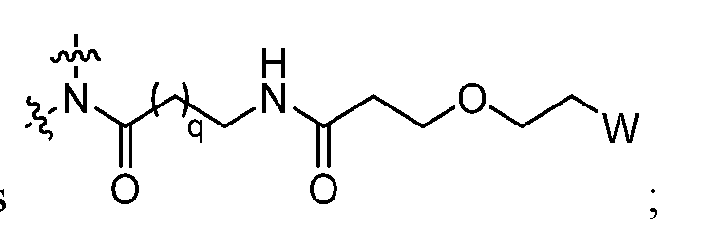
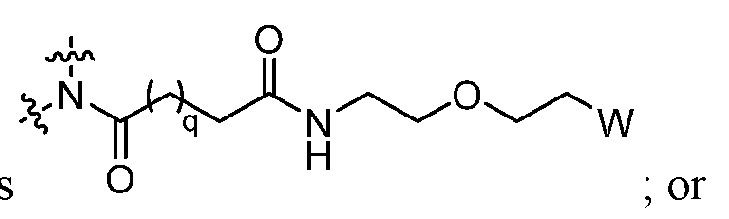
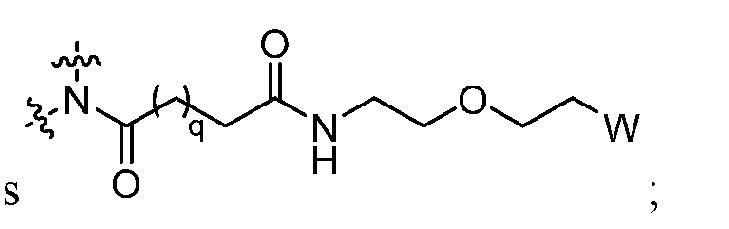
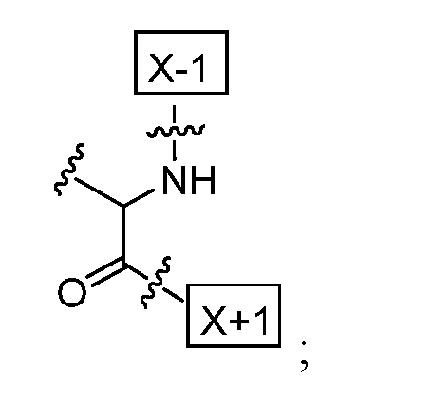


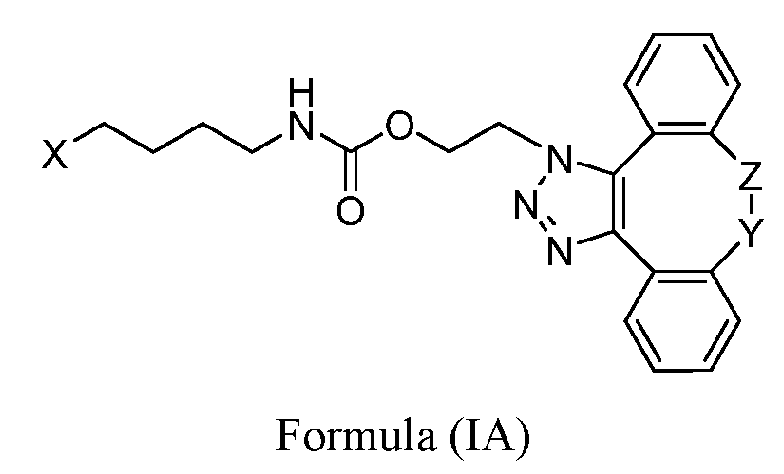


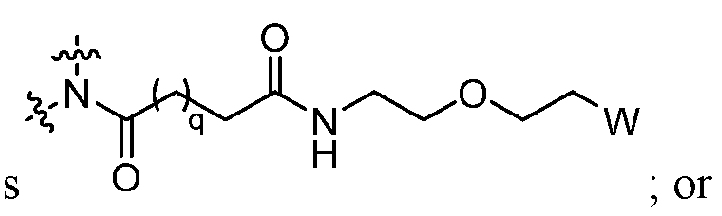
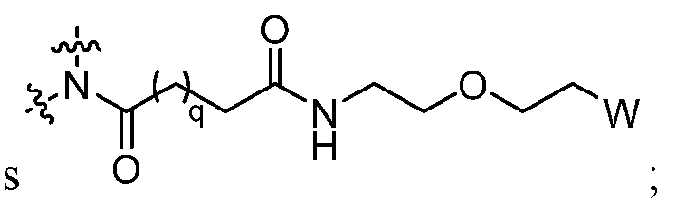

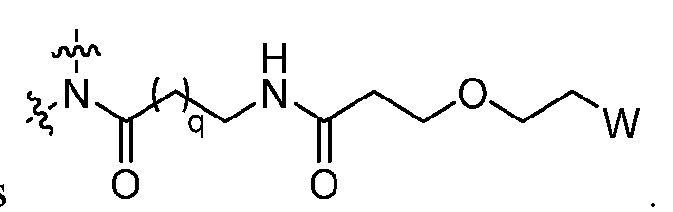


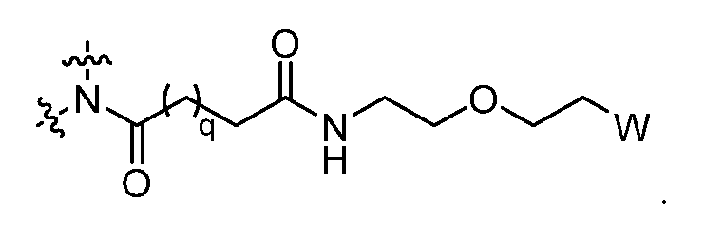

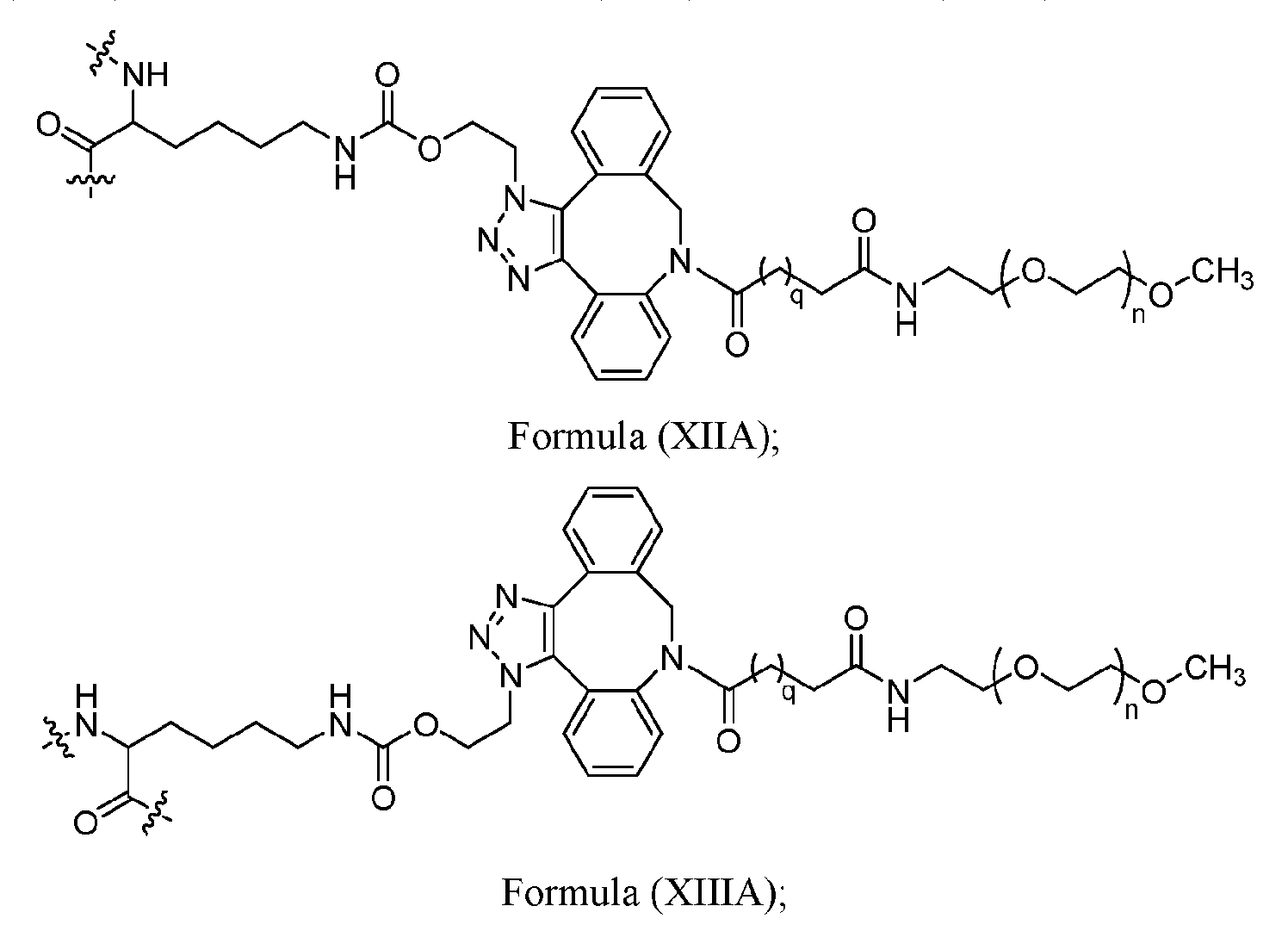


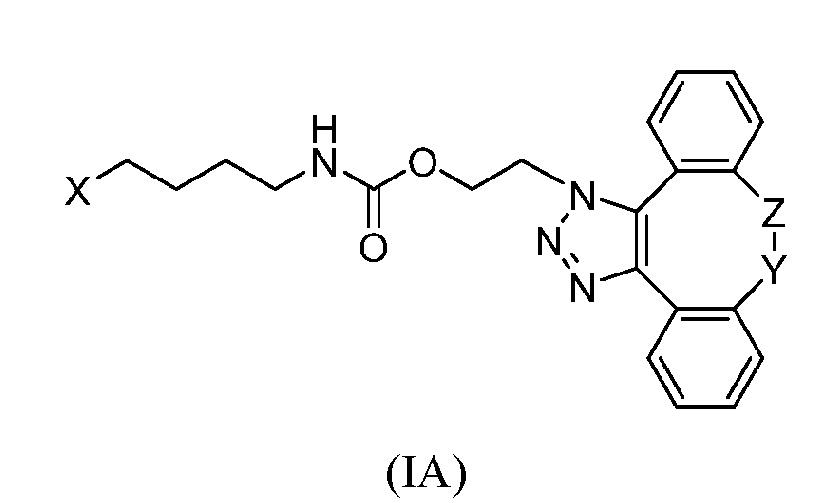
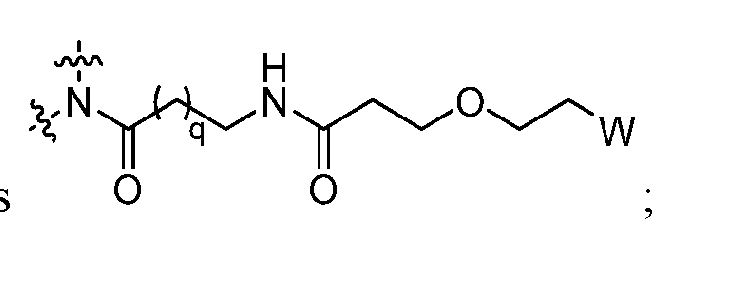


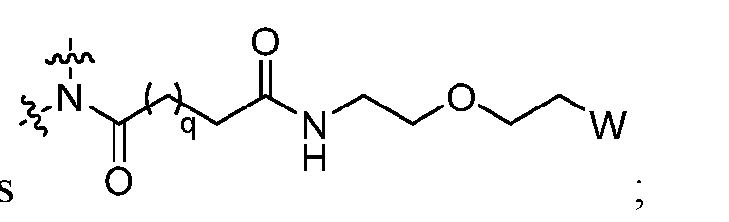
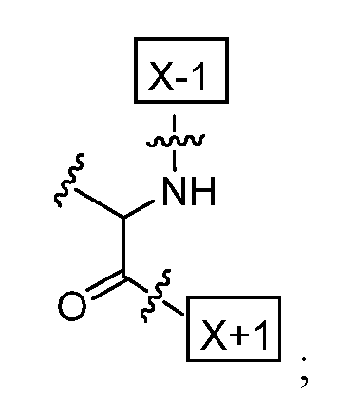


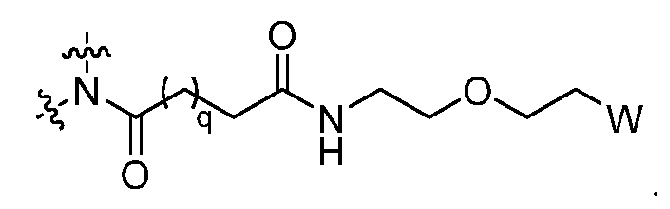
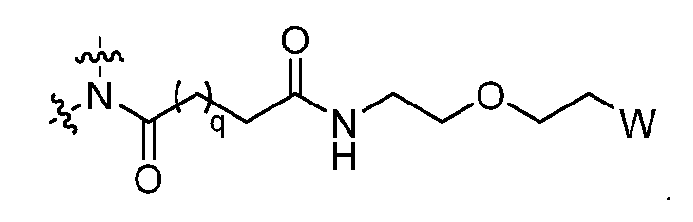


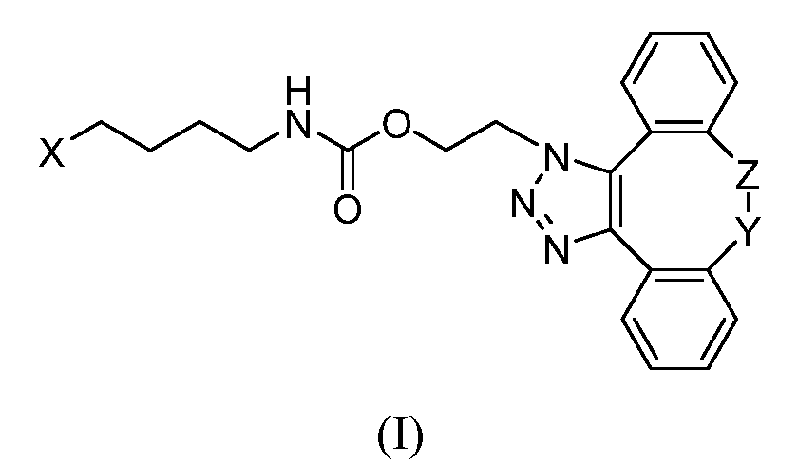


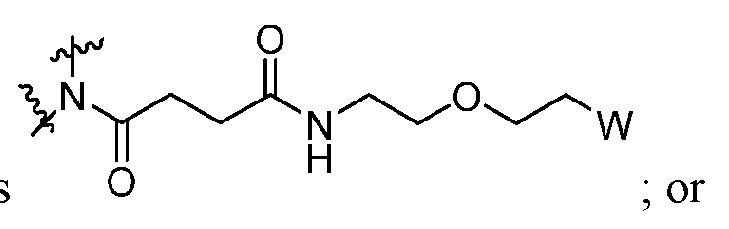

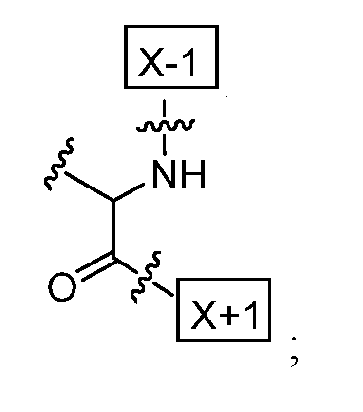


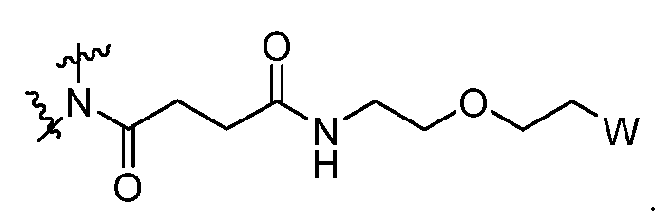


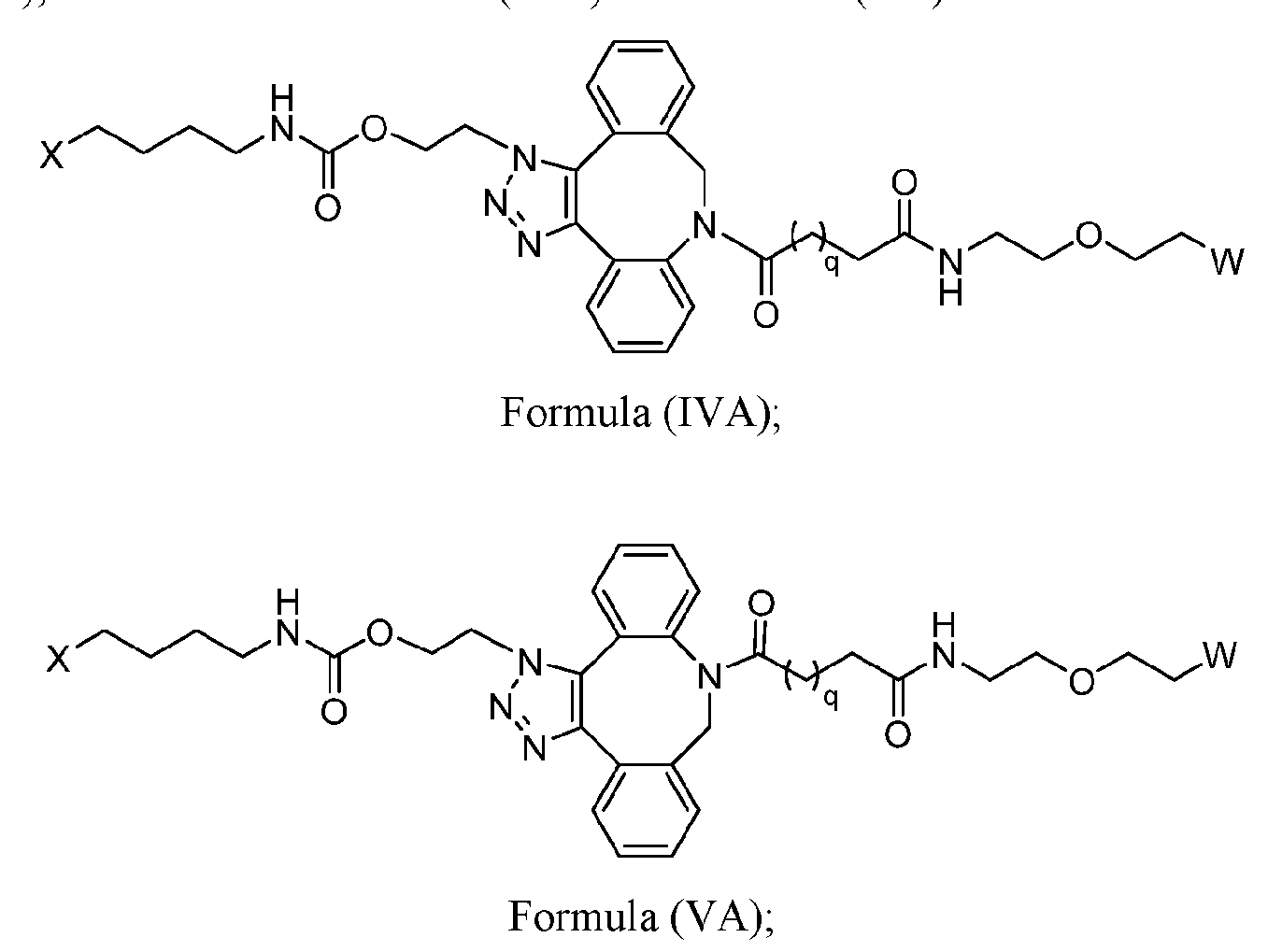
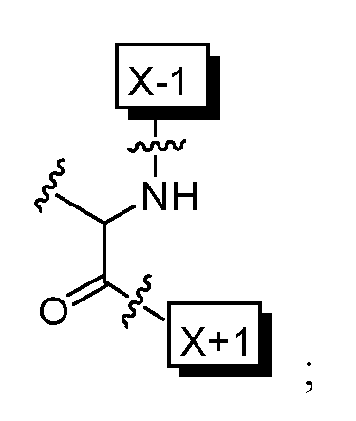

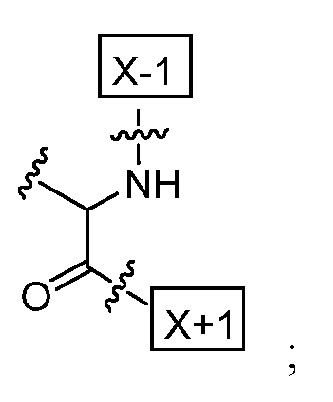
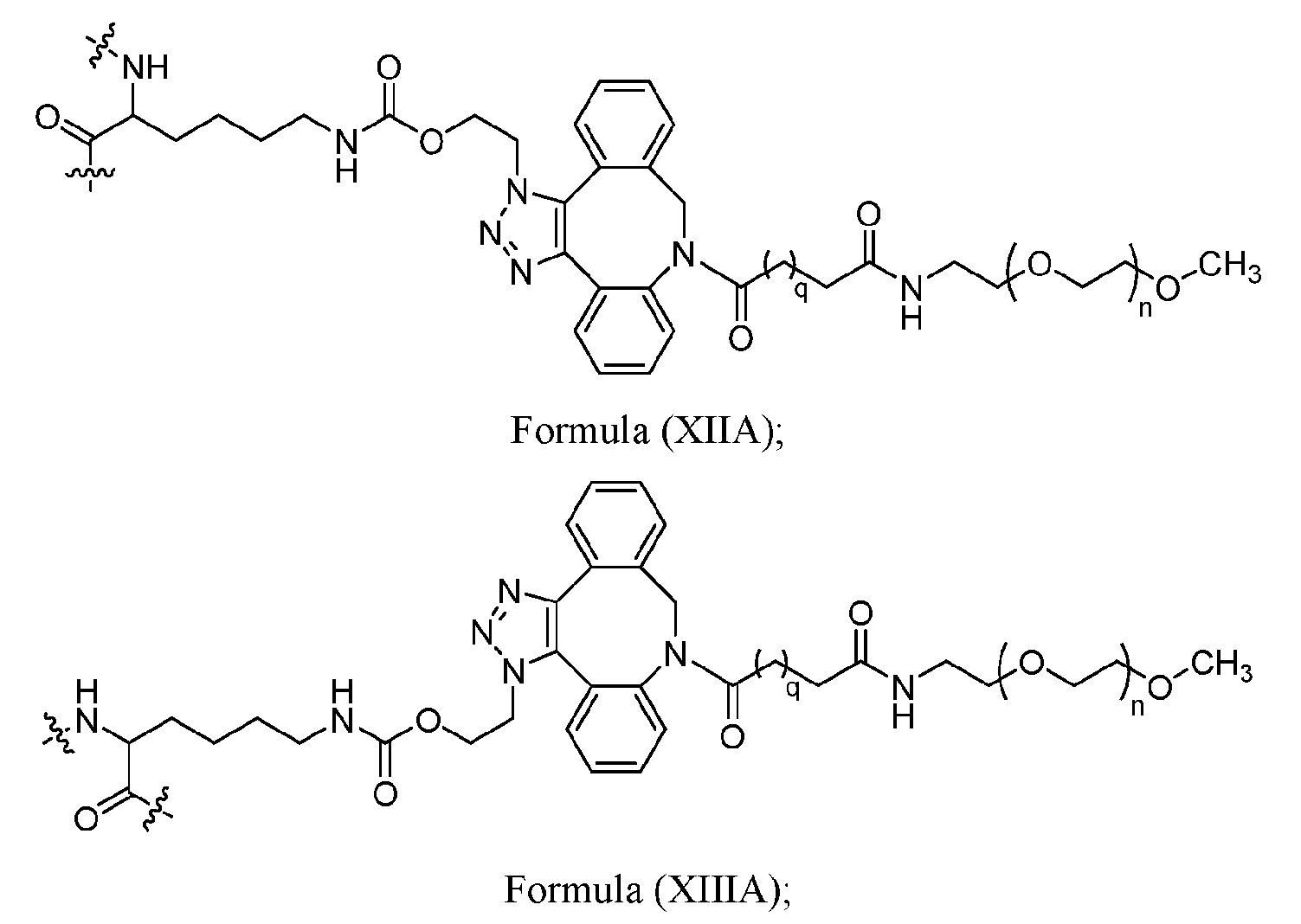
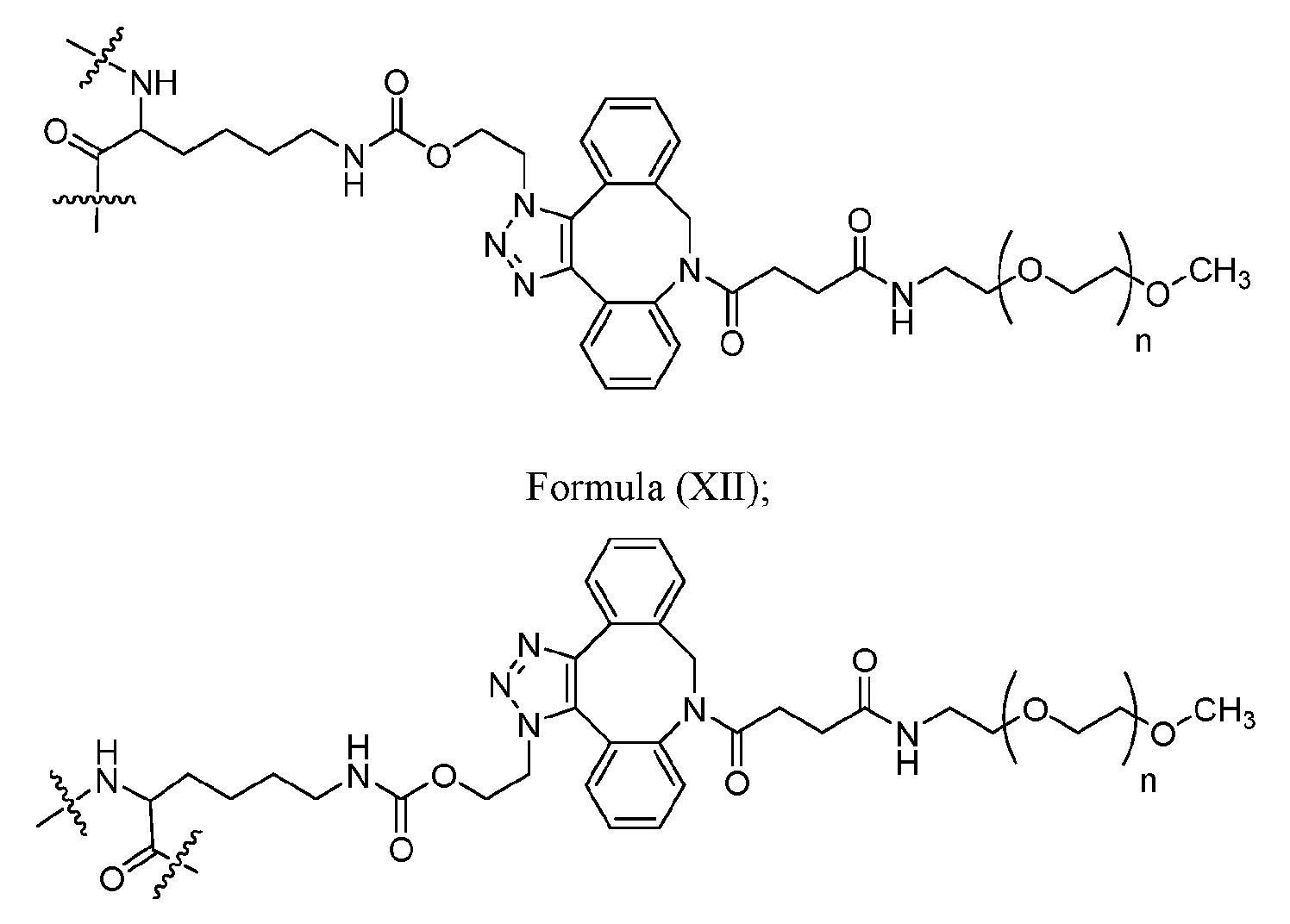
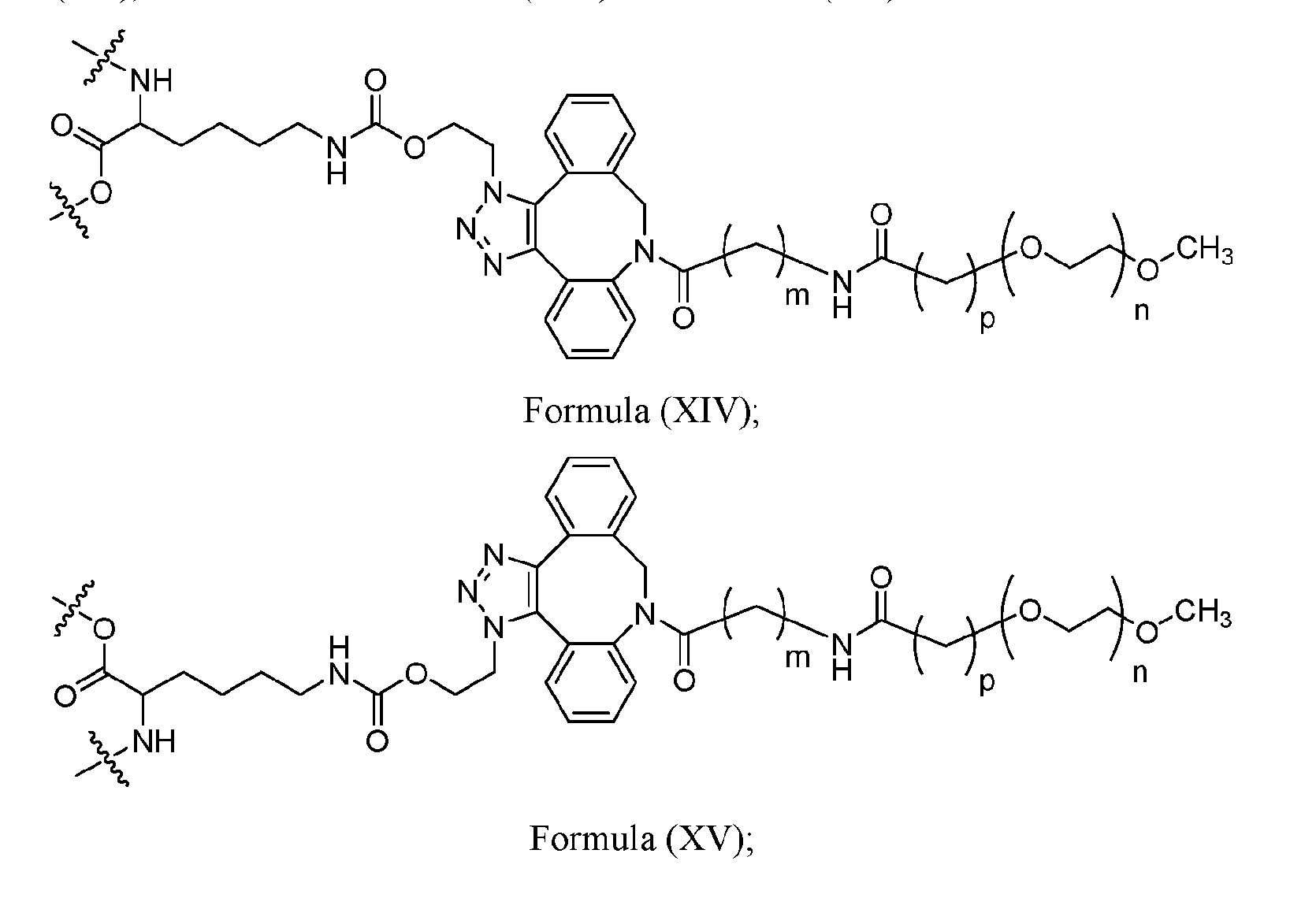
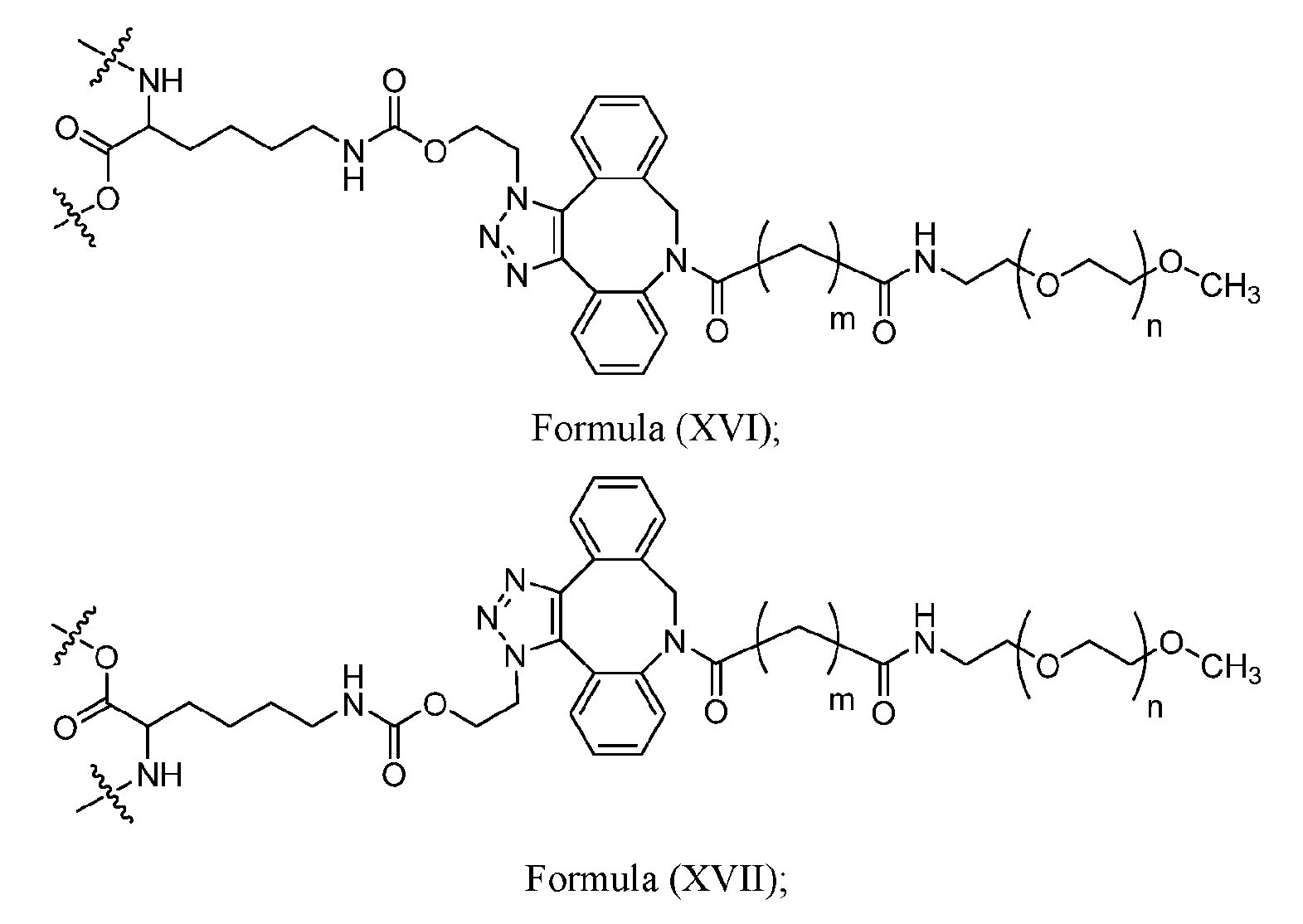


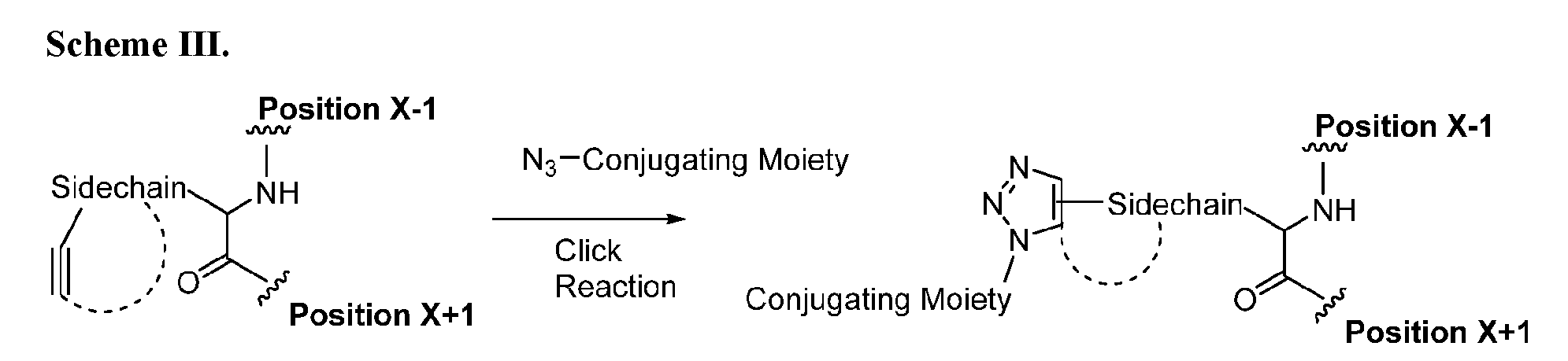

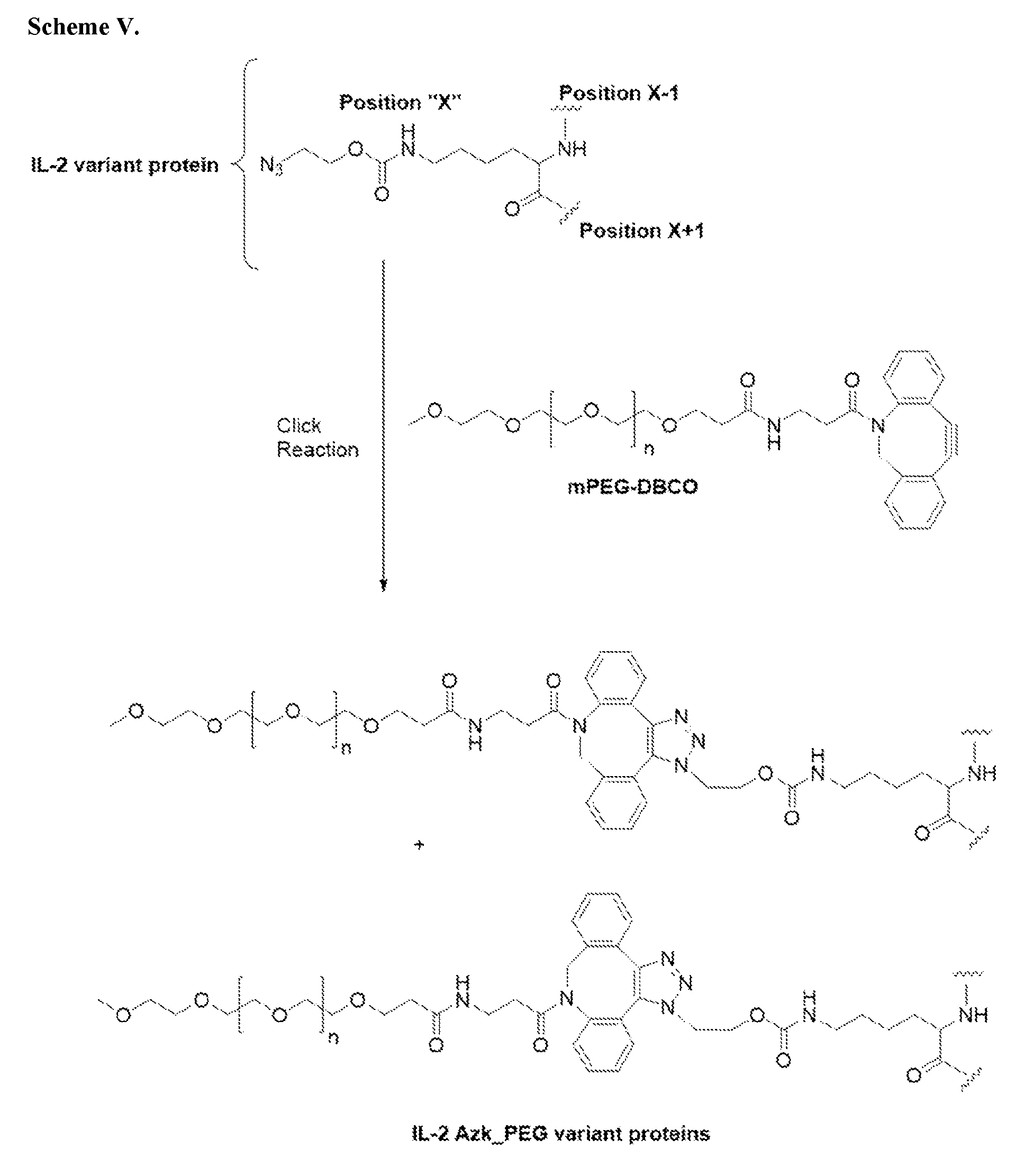

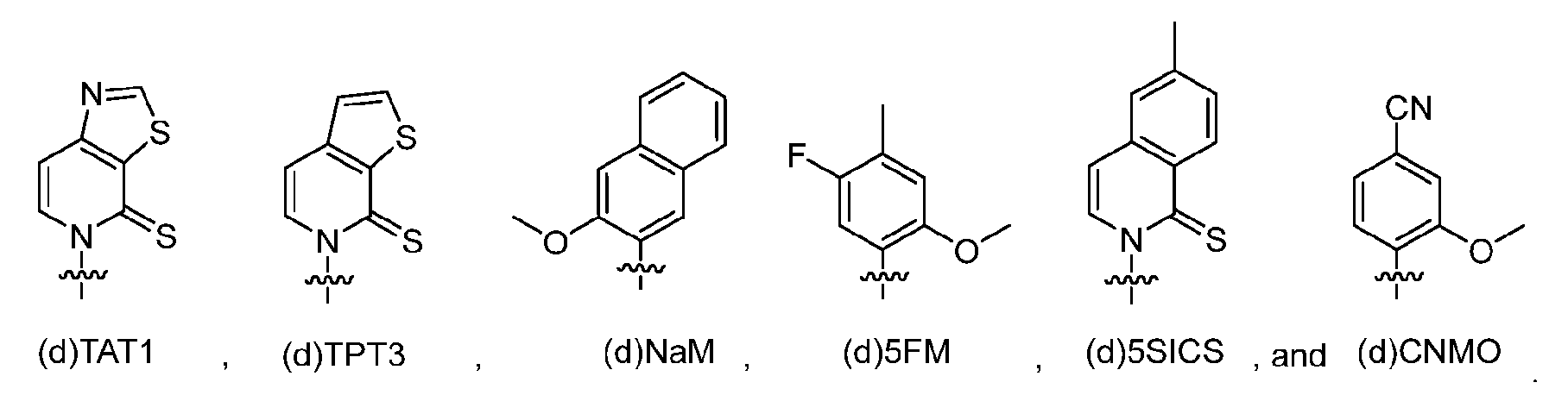

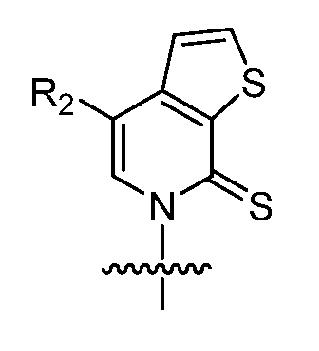
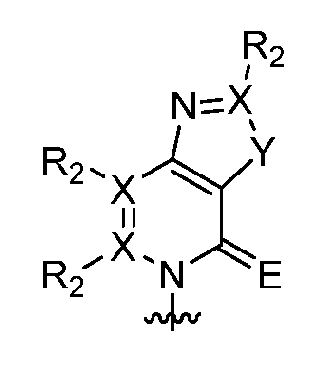
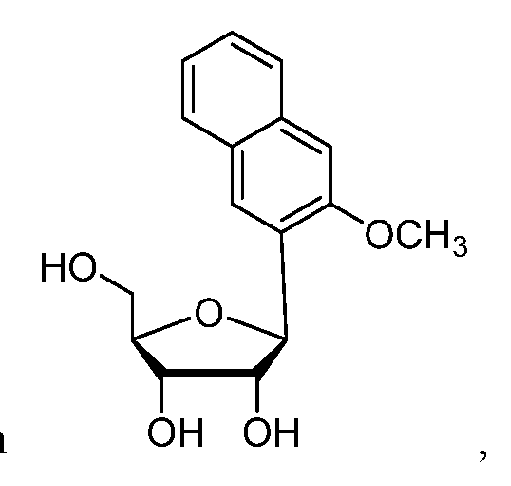


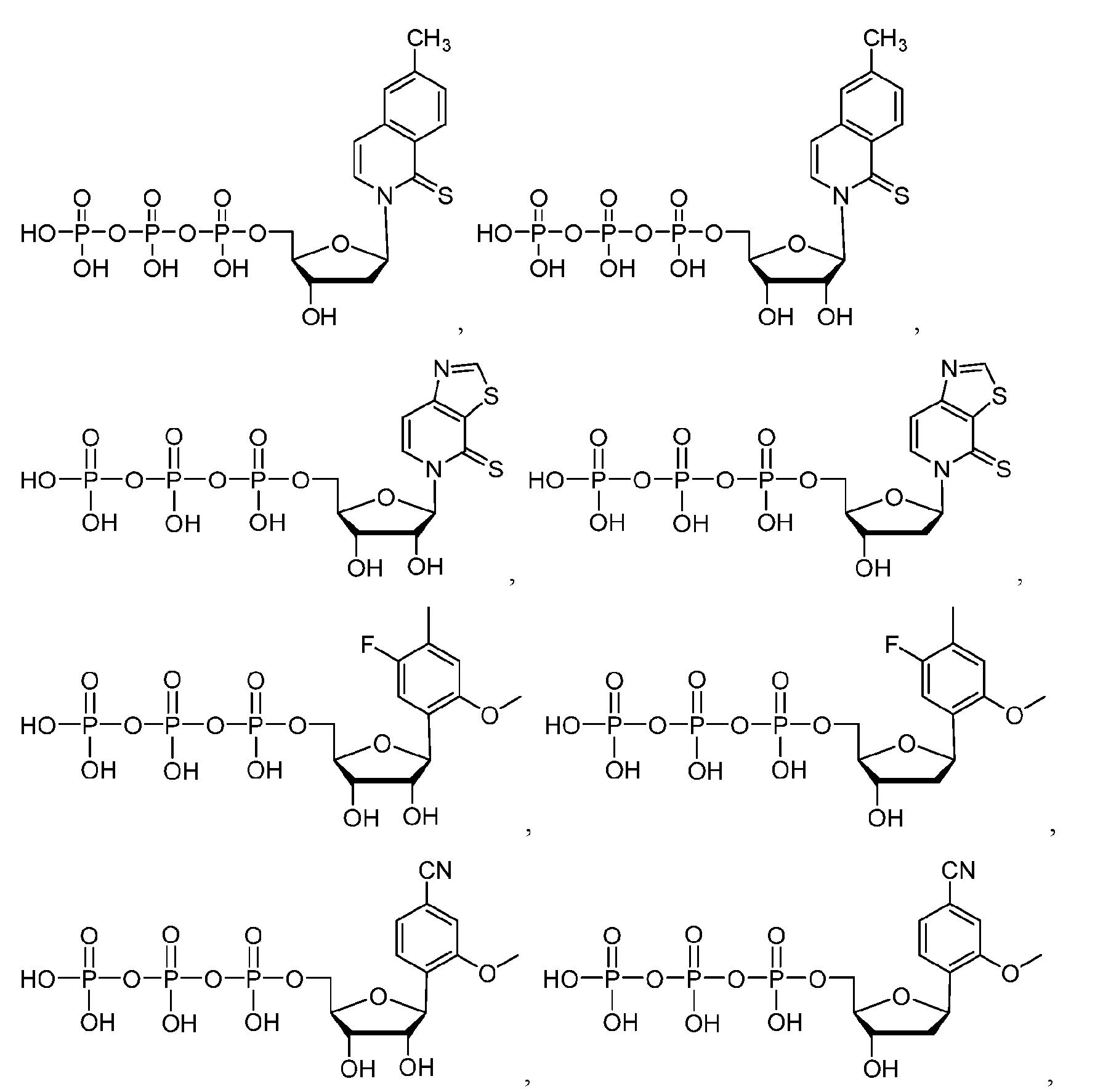


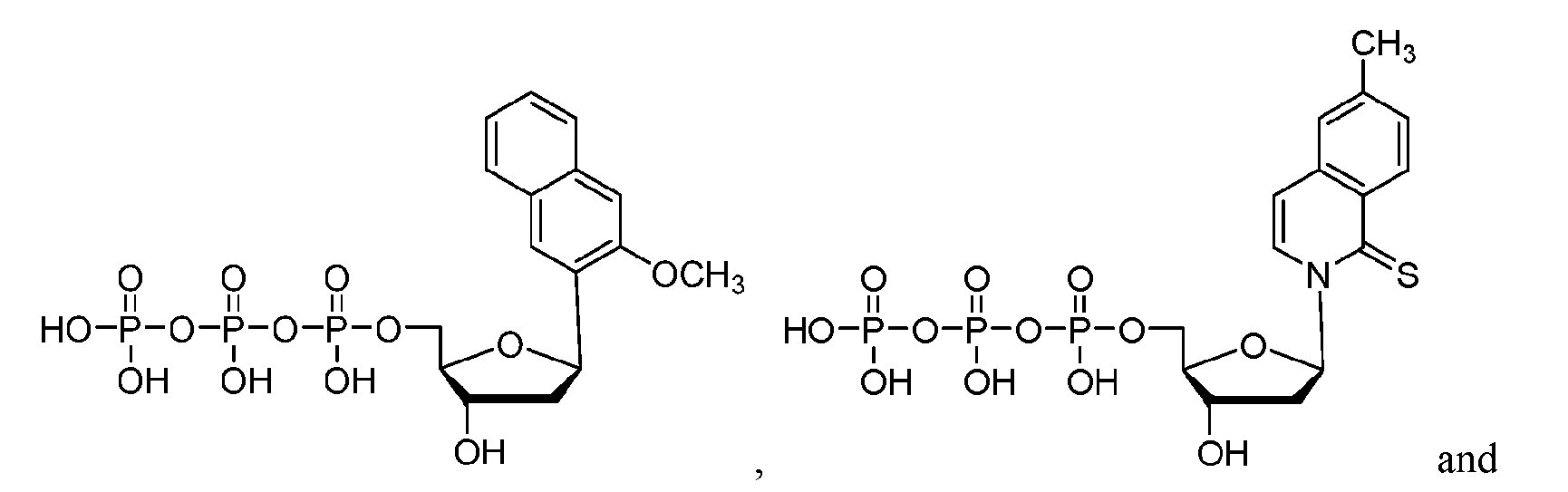

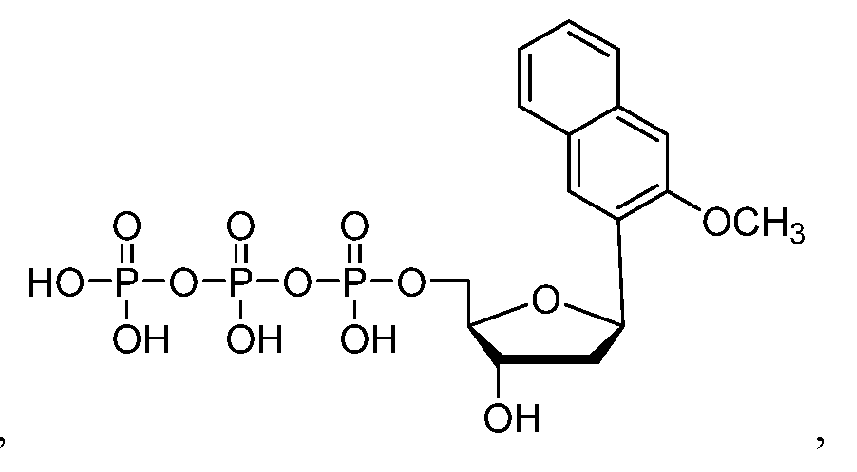


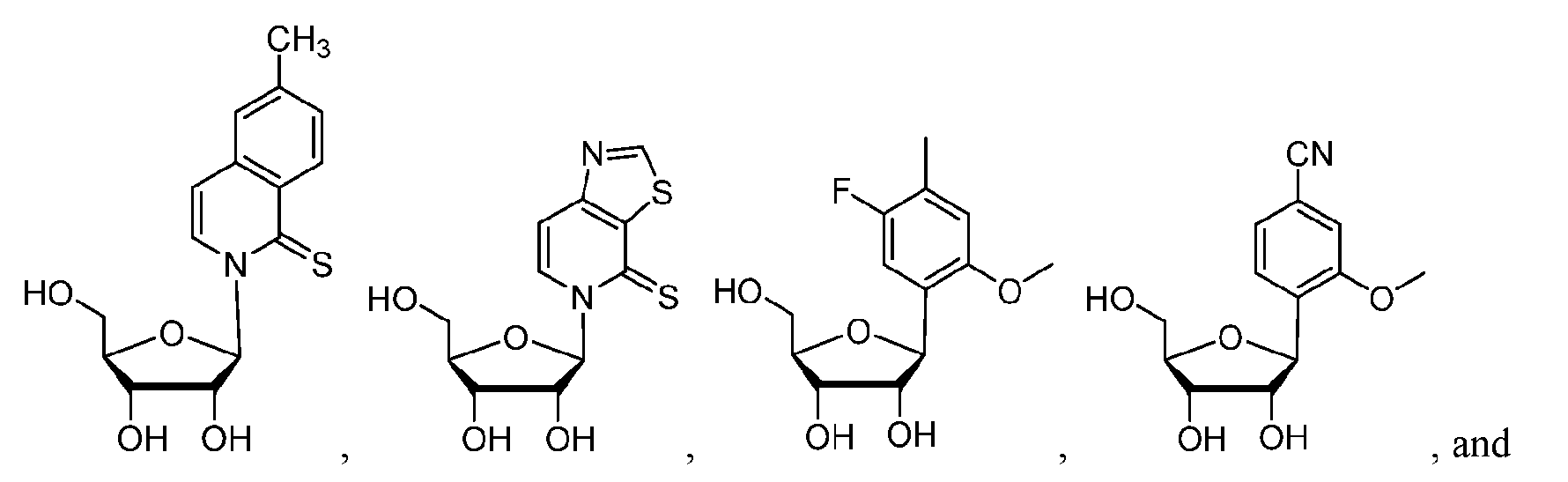
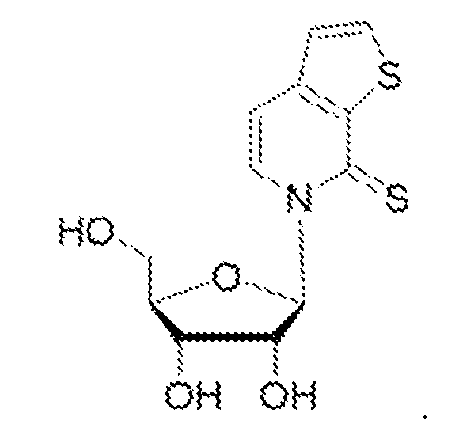


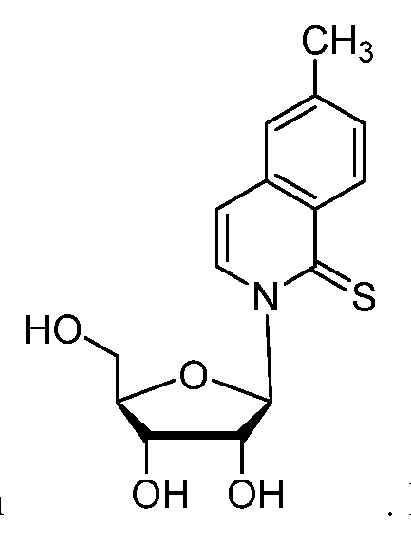


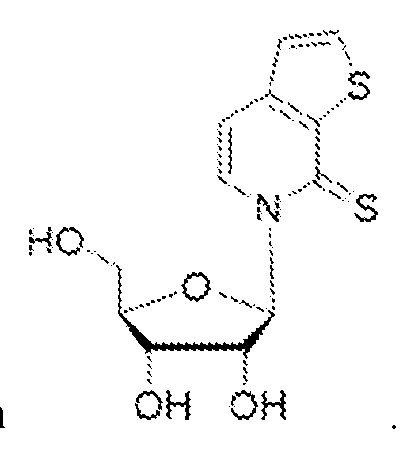


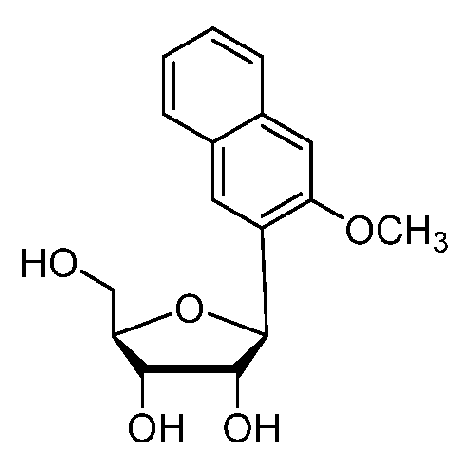

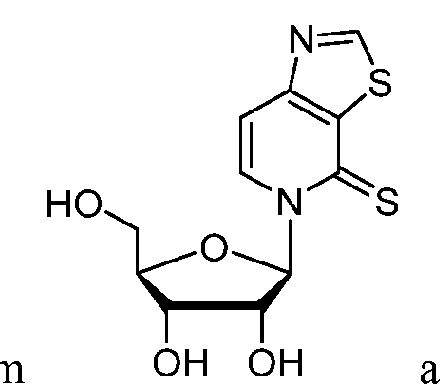
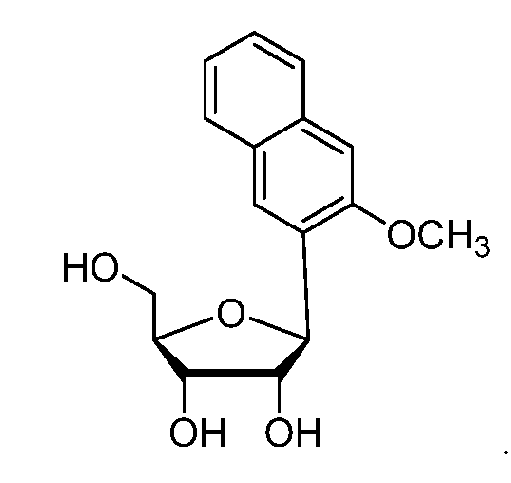
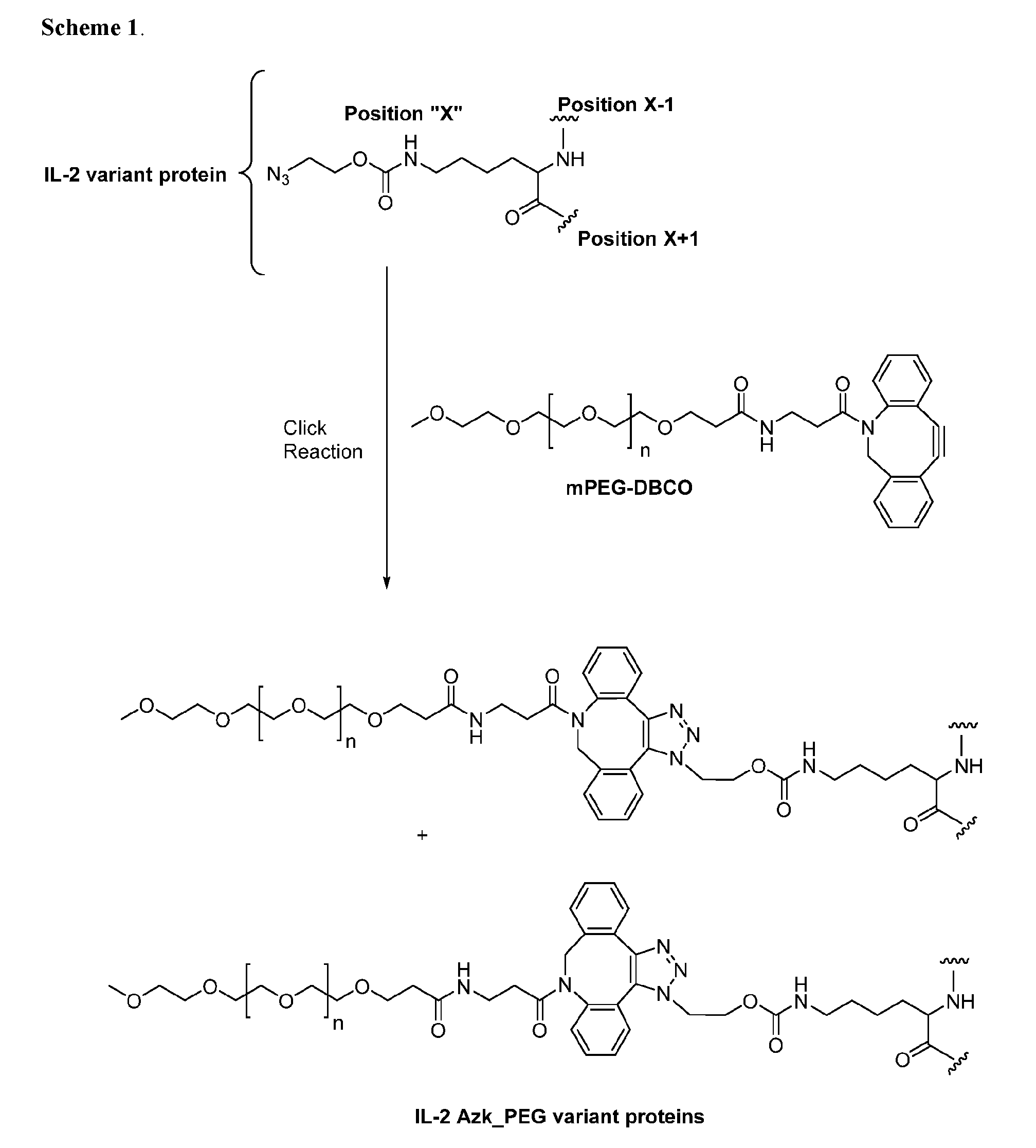


Claims


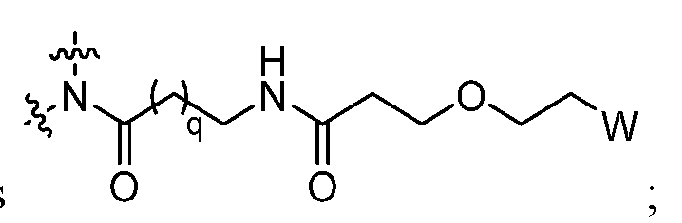
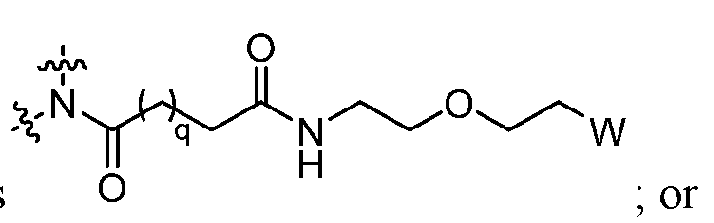
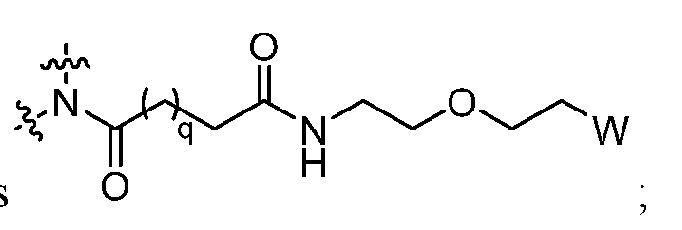
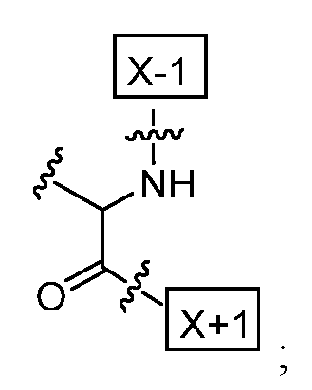
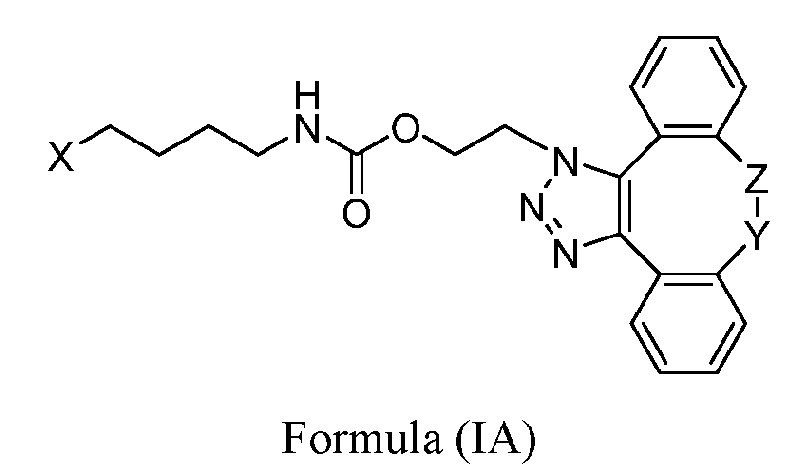

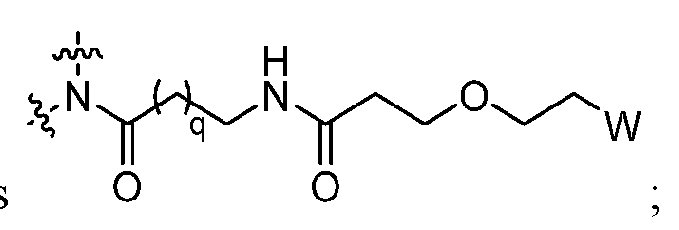
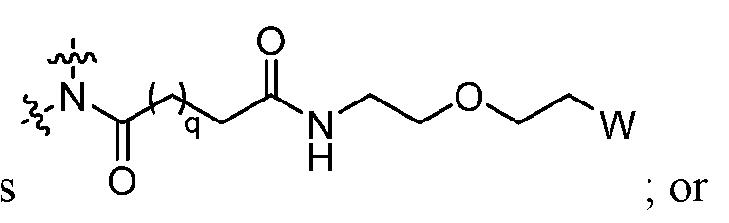

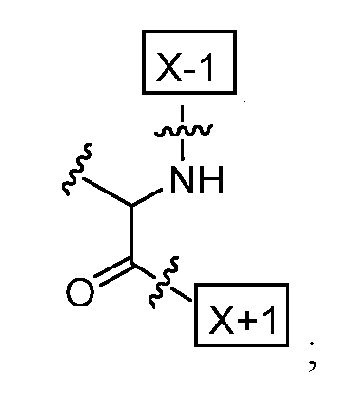
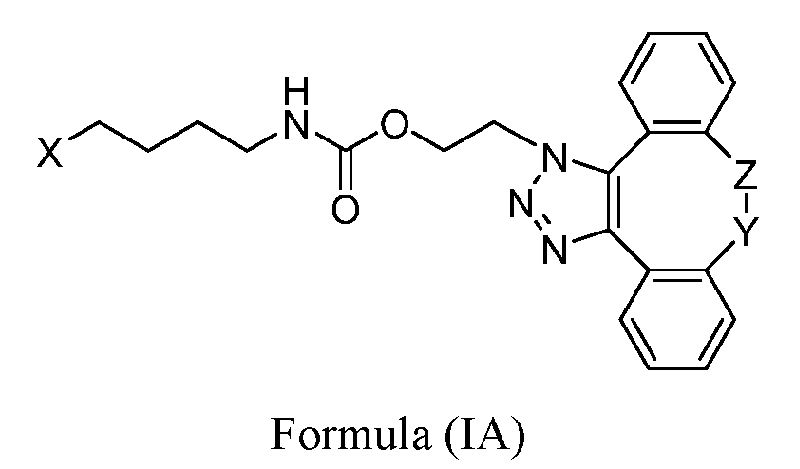


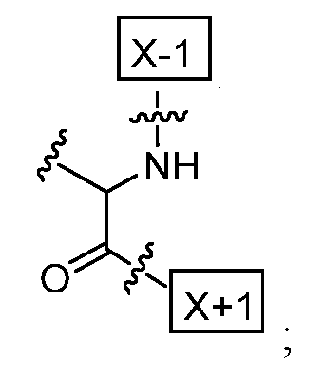
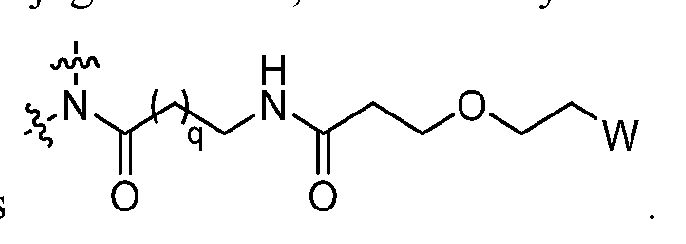
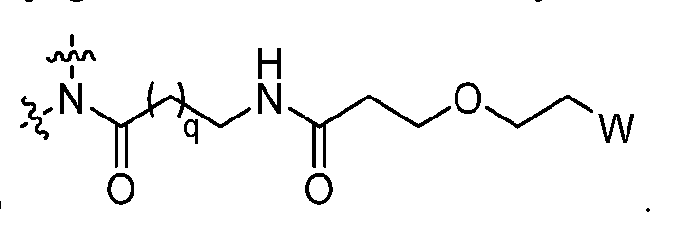

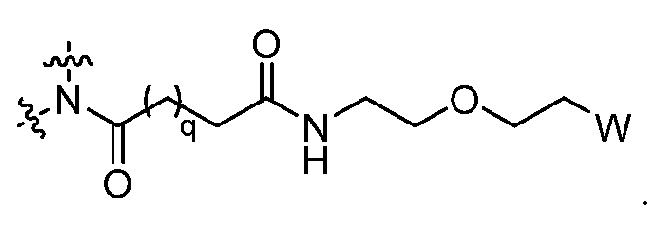

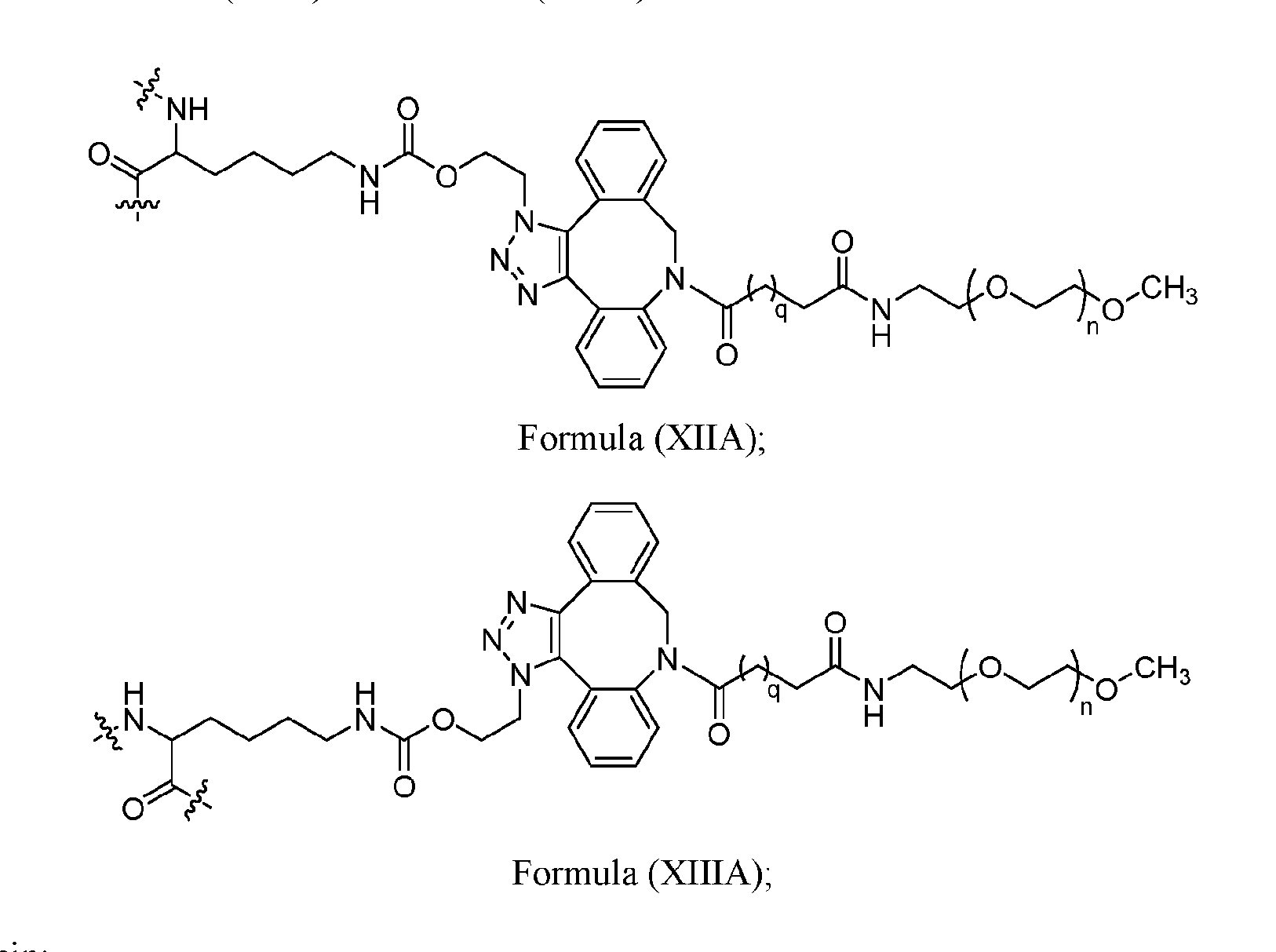
Priority Applications (10)
| Application Number | Priority Date | Filing Date | Title |
|---|---|---|---|
| CN202180078191.1A CN116615247A (en) | 2020-10-09 | 2021-10-08 | Combination therapy of immunooncology with IL-2 conjugates and pembrolizumab |
| MX2023004029A MX2023004029A (en) | 2020-10-09 | 2021-10-08 | Immuno oncology combination therapy with il-2 conjugates and pembrolizumab. |
| JP2023521311A JP2023546009A (en) | 2020-10-09 | 2021-10-08 | Immuno-oncology combination therapy with IL-2 conjugate and pembrolizumab |
| EP21810471.9A EP4225376A1 (en) | 2020-10-09 | 2021-10-08 | Immuno oncology combination therapy with il-2 conjugates and pembrolizumab |
| IL301611A IL301611A (en) | 2020-10-09 | 2021-10-08 | Combined immuno-oncology treatment with pairs of IL-2 and pembrolizumab |
| BR112023006364A BR112023006364A2 (en) | 2020-10-09 | 2021-10-08 | IMMUNO-ONCOLOGY COMBINATION THERAPY WITH IL-2 AND PEMBROLIZUMAB CONJUGATES |
| CA3194859A CA3194859A1 (en) | 2020-10-09 | 2021-10-08 | Immuno oncology combination therapy with il-2 conjugates and pembrolizumab |
| KR1020237014617A KR20230084203A (en) | 2020-10-09 | 2021-10-08 | Immuno-oncology Combination Therapy Using IL-2 Conjugates and Pembrolizumab |
| AU2021356693A AU2021356693A1 (en) | 2020-10-09 | 2021-10-08 | Immuno oncology combination therapy with il-2 conjugates and pembrolizumab |
| US18/296,710 US20230277627A1 (en) | 2020-10-09 | 2023-04-06 | Immuno oncology combination therapy with il-2 conjugates and pembrolizumab |
Applications Claiming Priority (6)
| Application Number | Priority Date | Filing Date | Title |
|---|---|---|---|
| US202063090033P | 2020-10-09 | 2020-10-09 | |
| US63/090,033 | 2020-10-09 | ||
| US202163158669P | 2021-03-09 | 2021-03-09 | |
| US63/158,669 | 2021-03-09 | ||
| US202163173114P | 2021-04-09 | 2021-04-09 | |
| US63/173,114 | 2021-04-09 |
Related Child Applications (1)
| Application Number | Title | Priority Date | Filing Date |
|---|---|---|---|
| US18/296,710 Continuation US20230277627A1 (en) | 2020-10-09 | 2023-04-06 | Immuno oncology combination therapy with il-2 conjugates and pembrolizumab |
Publications (1)
| Publication Number | Publication Date |
|---|---|
| WO2022076853A1 true WO2022076853A1 (en) | 2022-04-14 |
Family
ID=78676645
Family Applications (1)
| Application Number | Title | Priority Date | Filing Date |
|---|---|---|---|
| PCT/US2021/054225 Ceased WO2022076853A1 (en) | 2020-10-09 | 2021-10-08 | Immuno oncology combination therapy with il-2 conjugates and pembrolizumab |
Country Status (11)
| Country | Link |
|---|---|
| US (1) | US20230277627A1 (en) |
| EP (1) | EP4225376A1 (en) |
| JP (1) | JP2023546009A (en) |
| KR (1) | KR20230084203A (en) |
| AU (1) | AU2021356693A1 (en) |
| BR (1) | BR112023006364A2 (en) |
| CA (1) | CA3194859A1 (en) |
| IL (1) | IL301611A (en) |
| MX (1) | MX2023004029A (en) |
| TW (1) | TW202228785A (en) |
| WO (1) | WO2022076853A1 (en) |
Cited By (10)
| Publication number | Priority date | Publication date | Assignee | Title |
|---|---|---|---|---|
| WO2022174102A1 (en) * | 2021-02-12 | 2022-08-18 | Synthorx, Inc. | Lung cancer combination therapy with il-2 conjugates and an anti-pd-1 antibody or antigen-binding fragment thereof |
| WO2022256534A1 (en) * | 2021-06-03 | 2022-12-08 | Synthorx, Inc. | Head and neck cancer combination therapy comprising an il-2 conjugate and pembrolizumab |
| WO2023122573A1 (en) * | 2021-12-20 | 2023-06-29 | Synthorx, Inc. | Head and neck cancer combination therapy comprising an il-2 conjugate and pembrolizumab |
| US11701407B2 (en) | 2017-08-03 | 2023-07-18 | Synthorx, Inc. | Cytokine conjugates for the treatment of proliferative and infectious diseases |
| WO2024136899A1 (en) * | 2022-12-21 | 2024-06-27 | Synthorx, Inc. | Cancer therapy with il-2 conjugates and chimeric antigen receptor therapies |
| WO2024196937A1 (en) * | 2023-03-20 | 2024-09-26 | Synthorx, Inc. | Cancer therapy with il-2 peg conjugates |
| US12234271B2 (en) | 2019-09-10 | 2025-02-25 | Synthorx, Inc. | Il-2 conjugates and methods of use to treat autoimmune diseases |
| US12344648B2 (en) | 2019-08-23 | 2025-07-01 | Synthrox, Inc. | IL-15 conjugates and uses thereof |
| US12491254B2 (en) | 2018-11-08 | 2025-12-09 | Synthorx, Inc. | Interleukin 10 conjugates and uses thereof |
| US12521437B2 (en) | 2019-02-06 | 2026-01-13 | Synthorx, Inc. | IL-2 conjugates and methods of use thereof |
Families Citing this family (1)
| Publication number | Priority date | Publication date | Assignee | Title |
|---|---|---|---|---|
| KR102736300B1 (en) * | 2023-08-18 | 2024-11-29 | 주식회사 큐라클 | Combinations for interleukin-2 cancer immunotherapeutic agent |
Citations (169)
| Publication number | Priority date | Publication date | Assignee | Title |
|---|---|---|---|---|
| US3687808A (en) | 1969-08-14 | 1972-08-29 | Univ Leland Stanford Junior | Synthetic polynucleotides |
| US4469863A (en) | 1980-11-12 | 1984-09-04 | Ts O Paul O P | Nonionic nucleic acid alkyl and aryl phosphonates and processes for manufacture and use thereof |
| US4476301A (en) | 1982-04-29 | 1984-10-09 | Centre National De La Recherche Scientifique | Oligonucleotides, a process for preparing the same and their application as mediators of the action of interferon |
| US4587044A (en) | 1983-09-01 | 1986-05-06 | The Johns Hopkins University | Linkage of proteins to nucleic acids |
| US4605735A (en) | 1983-02-14 | 1986-08-12 | Wakunaga Seiyaku Kabushiki Kaisha | Oligonucleotide derivatives |
| US4667025A (en) | 1982-08-09 | 1987-05-19 | Wakunaga Seiyaku Kabushiki Kaisha | Oligonucleotide derivatives |
| US4762779A (en) | 1985-06-13 | 1988-08-09 | Amgen Inc. | Compositions and methods for functionalizing nucleic acids |
| US4824941A (en) | 1983-03-10 | 1989-04-25 | Julian Gordon | Specific antibody to the native form of 2'5'-oligonucleotides, the method of preparation and the use as reagents in immunoassays or for binding 2'5'-oligonucleotides in biological systems |
| US4828979A (en) | 1984-11-08 | 1989-05-09 | Life Technologies, Inc. | Nucleotide analogs for nucleic acid labeling and detection |
| US4835263A (en) | 1983-01-27 | 1989-05-30 | Centre National De La Recherche Scientifique | Novel compounds containing an oligonucleotide sequence bonded to an intercalating agent, a process for their synthesis and their use |
| US4845205A (en) | 1985-01-08 | 1989-07-04 | Institut Pasteur | 2,N6 -disubstituted and 2,N6 -trisubstituted adenosine-3'-phosphoramidites |
| US4849513A (en) | 1983-12-20 | 1989-07-18 | California Institute Of Technology | Deoxyribonucleoside phosphoramidites in which an aliphatic amino group is attached to the sugar ring and their use for the preparation of oligonucleotides containing aliphatic amino groups |
| US4876335A (en) | 1986-06-30 | 1989-10-24 | Wakunaga Seiyaku Kabushiki Kaisha | Poly-labelled oligonucleotide derivative |
| US4904582A (en) | 1987-06-11 | 1990-02-27 | Synthetic Genetics | Novel amphiphilic nucleic acid conjugates |
| US4948882A (en) | 1983-02-22 | 1990-08-14 | Syngene, Inc. | Single-stranded labelled oligonucleotides, reactive monomers and methods of synthesis |
| US4958013A (en) | 1989-06-06 | 1990-09-18 | Northwestern University | Cholesteryl modified oligonucleotides |
| US4981957A (en) | 1984-07-19 | 1991-01-01 | Centre National De La Recherche Scientifique | Oligonucleotides with modified phosphate and modified carbohydrate moieties at the respective chain termini |
| US5015733A (en) | 1983-12-20 | 1991-05-14 | California Institute Of Technology | Nucleosides possessing blocked aliphatic amino groups |
| US5023243A (en) | 1981-10-23 | 1991-06-11 | Molecular Biosystems, Inc. | Oligonucleotide therapeutic agent and method of making same |
| US5034506A (en) | 1985-03-15 | 1991-07-23 | Anti-Gene Development Group | Uncharged morpholino-based polymers having achiral intersubunit linkages |
| US5082830A (en) | 1988-02-26 | 1992-01-21 | Enzo Biochem, Inc. | End labeled nucleotide probe |
| US5109124A (en) | 1988-06-01 | 1992-04-28 | Biogen, Inc. | Nucleic acid probe linked to a label having a terminal cysteine |
| US5112963A (en) | 1987-11-12 | 1992-05-12 | Max-Planck-Gesellschaft Zur Foerderung Der Wissenschaften E.V. | Modified oligonucleotides |
| US5118802A (en) | 1983-12-20 | 1992-06-02 | California Institute Of Technology | DNA-reporter conjugates linked via the 2' or 5'-primary amino group of the 5'-terminal nucleoside |
| US5118800A (en) | 1983-12-20 | 1992-06-02 | California Institute Of Technology | Oligonucleotides possessing a primary amino group in the terminal nucleotide |
| US5130302A (en) | 1989-12-20 | 1992-07-14 | Boron Bilogicals, Inc. | Boronated nucleoside, nucleotide and oligonucleotide compounds, compositions and methods for using same |
| US5134066A (en) | 1989-08-29 | 1992-07-28 | Monsanto Company | Improved probes using nucleosides containing 3-dezauracil analogs |
| US5138045A (en) | 1990-07-27 | 1992-08-11 | Isis Pharmaceuticals | Polyamine conjugated oligonucleotides |
| US5166315A (en) | 1989-12-20 | 1992-11-24 | Anti-Gene Development Group | Sequence-specific binding polymers for duplex nucleic acids |
| US5175273A (en) | 1988-07-01 | 1992-12-29 | Genentech, Inc. | Nucleic acid intercalating agents |
| US5177196A (en) | 1990-08-16 | 1993-01-05 | Microprobe Corporation | Oligo (α-arabinofuranosyl nucleotides) and α-arabinofuranosyl precursors thereof |
| US5185444A (en) | 1985-03-15 | 1993-02-09 | Anti-Gene Deveopment Group | Uncharged morpolino-based polymers having phosphorous containing chiral intersubunit linkages |
| US5188897A (en) | 1987-10-22 | 1993-02-23 | Temple University Of The Commonwealth System Of Higher Education | Encapsulated 2',5'-phosphorothioate oligoadenylates |
| US5214134A (en) | 1990-09-12 | 1993-05-25 | Sterling Winthrop Inc. | Process of linking nucleosides with a siloxane bridge |
| US5214136A (en) | 1990-02-20 | 1993-05-25 | Gilead Sciences, Inc. | Anthraquinone-derivatives oligonucleotides |
| US5216141A (en) | 1988-06-06 | 1993-06-01 | Benner Steven A | Oligonucleotide analogs containing sulfur linkages |
| US5218105A (en) | 1990-07-27 | 1993-06-08 | Isis Pharmaceuticals | Polyamine conjugated oligonucleotides |
| US5235033A (en) | 1985-03-15 | 1993-08-10 | Anti-Gene Development Group | Alpha-morpholino ribonucleoside derivatives and polymers thereof |
| US5245022A (en) | 1990-08-03 | 1993-09-14 | Sterling Drug, Inc. | Exonuclease resistant terminally substituted oligonucleotides |
| US5254469A (en) | 1989-09-12 | 1993-10-19 | Eastman Kodak Company | Oligonucleotide-enzyme conjugate that can be used as a probe in hybridization assays and polymerase chain reaction procedures |
| US5258506A (en) | 1984-10-16 | 1993-11-02 | Chiron Corporation | Photolabile reagents for incorporation into oligonucleotide chains |
| US5262536A (en) | 1988-09-15 | 1993-11-16 | E. I. Du Pont De Nemours And Company | Reagents for the preparation of 5'-tagged oligonucleotides |
| US5264423A (en) | 1987-03-25 | 1993-11-23 | The United States Of America As Represented By The Department Of Health And Human Services | Inhibitors for replication of retroviruses and for the expression of oncogene products |
| US5264564A (en) | 1989-10-24 | 1993-11-23 | Gilead Sciences | Oligonucleotide analogs with novel linkages |
| US5264562A (en) | 1989-10-24 | 1993-11-23 | Gilead Sciences, Inc. | Oligonucleotide analogs with novel linkages |
| US5272250A (en) | 1992-07-10 | 1993-12-21 | Spielvogel Bernard F | Boronated phosphoramidate compounds |
| US5276019A (en) | 1987-03-25 | 1994-01-04 | The United States Of America As Represented By The Department Of Health And Human Services | Inhibitors for replication of retroviruses and for the expression of oncogene products |
| US5278302A (en) | 1988-05-26 | 1994-01-11 | University Patents, Inc. | Polynucleotide phosphorodithioates |
| US5292873A (en) | 1989-11-29 | 1994-03-08 | The Research Foundation Of State University Of New York | Nucleic acids labeled with naphthoquinone probe |
| US5317098A (en) | 1986-03-17 | 1994-05-31 | Hiroaki Shizuya | Non-radioisotope tagging of fragments |
| US5319080A (en) | 1991-10-17 | 1994-06-07 | Ciba-Geigy Corporation | Bicyclic nucleosides, oligonucleotides, process for their preparation and intermediates |
| US5321131A (en) | 1990-03-08 | 1994-06-14 | Hybridon, Inc. | Site-specific functionalization of oligodeoxynucleotides for non-radioactive labelling |
| WO1994014226A1 (en) | 1992-12-14 | 1994-06-23 | Honeywell Inc. | Motor system with individually controlled redundant windings |
| EP0614907A1 (en) | 1993-03-06 | 1994-09-14 | Ciba-Geigy Ag | Dinucleotide and oligonucleotide analogues |
| US5359044A (en) | 1991-12-13 | 1994-10-25 | Isis Pharmaceuticals | Cyclobutyl oligonucleotide surrogates |
| US5367066A (en) | 1984-10-16 | 1994-11-22 | Chiron Corporation | Oligonucleotides with selectably cleavable and/or abasic sites |
| US5371241A (en) | 1991-07-19 | 1994-12-06 | Pharmacia P-L Biochemicals Inc. | Fluorescein labelled phosphoramidites |
| EP0629633A2 (en) | 1993-06-05 | 1994-12-21 | Ciba-Geigy Ag | Dinucleotide analogues, intermediates therefor and oligonucleotides derived therefrom |
| US5391723A (en) | 1989-05-31 | 1995-02-21 | Neorx Corporation | Oligonucleotide conjugates |
| US5399676A (en) | 1989-10-23 | 1995-03-21 | Gilead Sciences | Oligonucleotides with inverted polarity |
| US5405939A (en) | 1987-10-22 | 1995-04-11 | Temple University Of The Commonwealth System Of Higher Education | 2',5'-phosphorothioate oligoadenylates and their covalent conjugates with polylysine |
| US5405938A (en) | 1989-12-20 | 1995-04-11 | Anti-Gene Development Group | Sequence-specific binding polymers for duplex nucleic acids |
| US5414077A (en) | 1990-02-20 | 1995-05-09 | Gilead Sciences | Non-nucleoside linkers for convenient attachment of labels to oligonucleotides using standard synthetic methods |
| US5432272A (en) | 1990-10-09 | 1995-07-11 | Benner; Steven A. | Method for incorporating into a DNA or RNA oligonucleotide using nucleotides bearing heterocyclic bases |
| US5434257A (en) | 1992-06-01 | 1995-07-18 | Gilead Sciences, Inc. | Binding compentent oligomers containing unsaturated 3',5' and 2',5' linkages |
| US5446137A (en) | 1993-12-09 | 1995-08-29 | Syntex (U.S.A.) Inc. | Oligonucleotides containing 4'-substituted nucleotides |
| US5451463A (en) | 1989-08-28 | 1995-09-19 | Clontech Laboratories, Inc. | Non-nucleoside 1,3-diol reagents for labeling synthetic oligonucleotides |
| US5455233A (en) | 1989-11-30 | 1995-10-03 | University Of North Carolina | Oligoribonucleoside and oligodeoxyribonucleoside boranophosphates |
| US5457187A (en) | 1993-12-08 | 1995-10-10 | Board Of Regents University Of Nebraska | Oligonucleotides containing 5-fluorouracil |
| US5459255A (en) | 1990-01-11 | 1995-10-17 | Isis Pharmaceuticals, Inc. | N-2 substituted purines |
| US5466786A (en) | 1989-10-24 | 1995-11-14 | Gilead Sciences | 2'modified nucleoside and nucleotide compounds |
| US5470967A (en) | 1990-04-10 | 1995-11-28 | The Dupont Merck Pharmaceutical Company | Oligonucleotide analogs with sulfamate linkages |
| US5476925A (en) | 1993-02-01 | 1995-12-19 | Northwestern University | Oligodeoxyribonucleotides including 3'-aminonucleoside-phosphoramidate linkages and terminal 3'-amino groups |
| US5484908A (en) | 1991-11-26 | 1996-01-16 | Gilead Sciences, Inc. | Oligonucleotides containing 5-propynyl pyrimidines |
| US5486603A (en) | 1990-01-08 | 1996-01-23 | Gilead Sciences, Inc. | Oligonucleotide having enhanced binding affinity |
| US5489677A (en) | 1990-07-27 | 1996-02-06 | Isis Pharmaceuticals, Inc. | Oligonucleoside linkages containing adjacent oxygen and nitrogen atoms |
| US5502177A (en) | 1993-09-17 | 1996-03-26 | Gilead Sciences, Inc. | Pyrimidine derivatives for labeled binding partners |
| US5510475A (en) | 1990-11-08 | 1996-04-23 | Hybridon, Inc. | Oligonucleotide multiple reporter precursors |
| US5512439A (en) | 1988-11-21 | 1996-04-30 | Dynal As | Oligonucleotide-linked magnetic particles and uses thereof |
| US5512667A (en) | 1990-08-28 | 1996-04-30 | Reed; Michael W. | Trifunctional intermediates for preparing 3'-tailed oligonucleotides |
| US5514785A (en) | 1990-05-11 | 1996-05-07 | Becton Dickinson And Company | Solid supports for nucleic acid hybridization assays |
| US5519134A (en) | 1994-01-11 | 1996-05-21 | Isis Pharmaceuticals, Inc. | Pyrrolidine-containing monomers and oligomers |
| US5519126A (en) | 1988-03-25 | 1996-05-21 | University Of Virginia Alumni Patents Foundation | Oligonucleotide N-alkylphosphoramidates |
| US5525465A (en) | 1987-10-28 | 1996-06-11 | Howard Florey Institute Of Experimental Physiology And Medicine | Oligonucleotide-polyamide conjugates and methods of production and applications of the same |
| US5525711A (en) | 1994-05-18 | 1996-06-11 | The United States Of America As Represented By The Secretary Of The Department Of Health And Human Services | Pteridine nucleotide analogs as fluorescent DNA probes |
| US5539082A (en) | 1993-04-26 | 1996-07-23 | Nielsen; Peter E. | Peptide nucleic acids |
| US5541307A (en) | 1990-07-27 | 1996-07-30 | Isis Pharmaceuticals, Inc. | Backbone modified oligonucleotide analogs and solid phase synthesis thereof |
| US5545730A (en) | 1984-10-16 | 1996-08-13 | Chiron Corporation | Multifunctional nucleic acid monomer |
| US5550111A (en) | 1984-07-11 | 1996-08-27 | Temple University-Of The Commonwealth System Of Higher Education | Dual action 2',5'-oligoadenylate antiviral derivatives and uses thereof |
| US5552540A (en) | 1987-06-24 | 1996-09-03 | Howard Florey Institute Of Experimental Physiology And Medicine | Nucleoside derivatives |
| US5561225A (en) | 1990-09-19 | 1996-10-01 | Southern Research Institute | Polynucleotide analogs containing sulfonate and sulfonamide internucleoside linkages |
| US5565552A (en) | 1992-01-21 | 1996-10-15 | Pharmacyclics, Inc. | Method of expanded porphyrin-oligonucleotide conjugate synthesis |
| US5567811A (en) | 1990-05-03 | 1996-10-22 | Amersham International Plc | Phosphoramidite derivatives, their preparation and the use thereof in the incorporation of reporter groups on synthetic oligonucleotides |
| US5571799A (en) | 1991-08-12 | 1996-11-05 | Basco, Ltd. | (2'-5') oligoadenylate analogues useful as inhibitors of host-v5.-graft response |
| US5574142A (en) | 1992-12-15 | 1996-11-12 | Microprobe Corporation | Peptide linkers for improved oligonucleotide delivery |
| US5576427A (en) | 1993-03-30 | 1996-11-19 | Sterling Winthrop, Inc. | Acyclic nucleoside analogs and oligonucleotide sequences containing them |
| US5578718A (en) | 1990-01-11 | 1996-11-26 | Isis Pharmaceuticals, Inc. | Thiol-derivatized nucleosides |
| US5580731A (en) | 1994-08-25 | 1996-12-03 | Chiron Corporation | N-4 modified pyrimidine deoxynucleotides and oligonucleotide probes synthesized therewith |
| US5585481A (en) | 1987-09-21 | 1996-12-17 | Gen-Probe Incorporated | Linking reagents for nucleotide probes |
| US5587371A (en) | 1992-01-21 | 1996-12-24 | Pharmacyclics, Inc. | Texaphyrin-oligonucleotide conjugates |
| US5587361A (en) | 1991-10-15 | 1996-12-24 | Isis Pharmaceuticals, Inc. | Oligonucleotides having phosphorothioate linkages of high chiral purity |
| US5591722A (en) | 1989-09-15 | 1997-01-07 | Southern Research Institute | 2'-deoxy-4'-thioribonucleosides and their antiviral activity |
| US5594121A (en) | 1991-11-07 | 1997-01-14 | Gilead Sciences, Inc. | Enhanced triple-helix and double-helix formation with oligomers containing modified purines |
| US5595726A (en) | 1992-01-21 | 1997-01-21 | Pharmacyclics, Inc. | Chromophore probe for detection of nucleic acid |
| US5596091A (en) | 1994-03-18 | 1997-01-21 | The Regents Of The University Of California | Antisense oligonucleotides comprising 5-aminoalkyl pyrimidine nucleotides |
| US5596086A (en) | 1990-09-20 | 1997-01-21 | Gilead Sciences, Inc. | Modified internucleoside linkages having one nitrogen and two carbon atoms |
| US5597696A (en) | 1994-07-18 | 1997-01-28 | Becton Dickinson And Company | Covalent cyanine dye oligonucleotide conjugates |
| US5597909A (en) | 1994-08-25 | 1997-01-28 | Chiron Corporation | Polynucleotide reagents containing modified deoxyribose moieties, and associated methods of synthesis and use |
| US5599923A (en) | 1989-03-06 | 1997-02-04 | Board Of Regents, University Of Tx | Texaphyrin metal complexes having improved functionalization |
| US5602240A (en) | 1990-07-27 | 1997-02-11 | Ciba Geigy Ag. | Backbone modified oligonucleotide analogs |
| US5608046A (en) | 1990-07-27 | 1997-03-04 | Isis Pharmaceuticals, Inc. | Conjugated 4'-desmethyl nucleoside analog compounds |
| US5610289A (en) | 1990-07-27 | 1997-03-11 | Isis Pharmaceuticals, Inc. | Backbone modified oligonucleotide analogues |
| US5610300A (en) | 1992-07-01 | 1997-03-11 | Ciba-Geigy Corporation | Carbocyclic nucleosides containing bicyclic rings, oligonucleotides therefrom, process for their preparation, their use and intermediates |
| US5614617A (en) | 1990-07-27 | 1997-03-25 | Isis Pharmaceuticals, Inc. | Nuclease resistant, pyrimidine modified oligonucleotides that detect and modulate gene expression |
| US5618704A (en) | 1990-07-27 | 1997-04-08 | Isis Pharmacueticals, Inc. | Backbone-modified oligonucleotide analogs and preparation thereof through radical coupling |
| US5623070A (en) | 1990-07-27 | 1997-04-22 | Isis Pharmaceuticals, Inc. | Heteroatomic oligonucleoside linkages |
| US5625050A (en) | 1994-03-31 | 1997-04-29 | Amgen Inc. | Modified oligonucleotides and intermediates useful in nucleic acid therapeutics |
| US5627053A (en) | 1994-03-29 | 1997-05-06 | Ribozyme Pharmaceuticals, Inc. | 2'deoxy-2'-alkylnucleotide containing nucleic acid |
| US5633360A (en) | 1992-04-14 | 1997-05-27 | Gilead Sciences, Inc. | Oligonucleotide analogs capable of passive cell membrane permeation |
| US5639873A (en) | 1992-02-05 | 1997-06-17 | Centre National De La Recherche Scientifique (Cnrs) | Oligothionucleotides |
| US5646265A (en) | 1990-01-11 | 1997-07-08 | Isis Pharmceuticals, Inc. | Process for the preparation of 2'-O-alkyl purine phosphoramidites |
| US5658873A (en) | 1993-04-10 | 1997-08-19 | Degussa Aktiengesellschaft | Coated sodium percarbonate particles, a process for their production and detergent, cleaning and bleaching compositions containing them |
| US5663312A (en) | 1993-03-31 | 1997-09-02 | Sanofi | Oligonucleotide dimers with amide linkages replacing phosphodiester linkages |
| US5670633A (en) | 1990-01-11 | 1997-09-23 | Isis Pharmaceuticals, Inc. | Sugar modified oligonucleotides that detect and modulate gene expression |
| WO1997035869A1 (en) | 1996-03-23 | 1997-10-02 | Novartis Ag | Dinucleotide and oligonucleotide analogues |
| US5677439A (en) | 1990-08-03 | 1997-10-14 | Sanofi | Oligonucleotide analogues containing phosphate diester linkage substitutes, compositions thereof, and precursor dinucleotide analogues |
| US5677437A (en) | 1990-07-27 | 1997-10-14 | Isis Pharmaceuticals, Inc. | Heteroatomic oligonucleoside linkages |
| US5681941A (en) | 1990-01-11 | 1997-10-28 | Isis Pharmaceuticals, Inc. | Substituted purines and oligonucleotide cross-linking |
| US5688941A (en) | 1990-07-27 | 1997-11-18 | Isis Pharmaceuticals, Inc. | Methods of making conjugated 4' desmethyl nucleoside analog compounds |
| US5714331A (en) | 1991-05-24 | 1998-02-03 | Buchardt, Deceased; Ole | Peptide nucleic acids having enhanced binding affinity, sequence specificity and solubility |
| US5719262A (en) | 1993-11-22 | 1998-02-17 | Buchardt, Deceased; Ole | Peptide nucleic acids having amino acid side chains |
| WO1999062923A2 (en) | 1998-06-05 | 1999-12-09 | Dynavax Technologies Corporation | Immunostimulatory oligonucleotides with modified bases and methods of use thereof |
| US6268490B1 (en) | 1997-03-07 | 2001-07-31 | Takeshi Imanishi | Bicyclonucleoside and oligonucleotide analogues |
| US6525191B1 (en) | 1999-05-11 | 2003-02-25 | Kanda S. Ramasamy | Conformationally constrained L-nucleosides |
| US6670461B1 (en) | 1997-09-12 | 2003-12-30 | Exiqon A/S | Oligonucleotide analogues |
| US6770748B2 (en) | 1997-03-07 | 2004-08-03 | Takeshi Imanishi | Bicyclonucleoside and oligonucleotide analogue |
| US20040171570A1 (en) | 2002-11-05 | 2004-09-02 | Charles Allerson | Polycyclic sugar surrogate-containing oligomeric compounds and compositions for use in gene modulation |
| WO2004106356A1 (en) | 2003-05-27 | 2004-12-09 | Syddansk Universitet | Functionalized nucleotide derivatives |
| WO2005021570A1 (en) | 2003-08-28 | 2005-03-10 | Gene Design, Inc. | Novel artificial nucleic acids of n-o bond crosslinkage type |
| US20050130923A1 (en) | 2003-09-18 | 2005-06-16 | Balkrishen Bhat | 4'-thionucleosides and oligomeric compounds |
| US20060074035A1 (en) | 2002-04-17 | 2006-04-06 | Zhi Hong | Dinucleotide inhibitors of de novo RNA polymerases for treatment or prevention of viral infections |
| US7053207B2 (en) | 1999-05-04 | 2006-05-30 | Exiqon A/S | L-ribo-LNA analogues |
| WO2007090071A2 (en) | 2006-01-27 | 2007-08-09 | Isis Pharmaceuticals, Inc. | 6-modified bicyclic nucleic acid analogs |
| WO2007134181A2 (en) | 2006-05-11 | 2007-11-22 | Isis Pharmaceuticals, Inc. | 5'-modified bicyclic nucleic acid analogs |
| US20080039618A1 (en) | 2002-11-05 | 2008-02-14 | Charles Allerson | Polycyclic sugar surrogate-containing oligomeric compounds and compositions for use in gene modulation |
| WO2008101157A1 (en) | 2007-02-15 | 2008-08-21 | Isis Pharmaceuticals, Inc. | 5'-substituted-2'-f modified nucleosides and oligomeric compounds prepared therefrom |
| WO2008150729A2 (en) | 2007-05-30 | 2008-12-11 | Isis Pharmaceuticals, Inc. | N-substituted-aminomethylene bridged bicyclic nucleic acid analogs |
| WO2008154401A2 (en) | 2007-06-08 | 2008-12-18 | Isis Pharmaceuticals, Inc. | Carbocyclic bicyclic nucleic acid analogs |
| WO2009006478A2 (en) | 2007-07-05 | 2009-01-08 | Isis Pharmaceuticals, Inc. | 6-disubstituted bicyclic nucleic acid analogs |
| US8778631B2 (en) | 2009-01-12 | 2014-07-15 | Sutro Biopharma, Inc. | Mono charging system for selectively introducing non-native amino acids into proteins using an in vitro protein synthesis system |
| US20140315245A1 (en) | 2013-04-19 | 2014-10-23 | Sutro Biopharma, Inc. | Expression of biologically active proteins in a bacterial cell-free synthesis system using bacterial cells transformed to exhibit elevated levels of chaperone expression |
| WO2015021432A1 (en) | 2013-08-08 | 2015-02-12 | The Scripps Research Institute | A method for the site-specific enzymatic labelling of nucleic acids in vitro by incorporation of unnatural nucleotides |
| WO2015157555A2 (en) | 2014-04-09 | 2015-10-15 | The Scripps Research Institute | Import of unnatural or modified nucleoside triphosphates into cells via nucleic acid triphosphate transporters |
| US9201020B2 (en) | 2011-10-25 | 2015-12-01 | Apogee Enterprises, Inc. | Specimen viewing device |
| WO2016115168A1 (en) | 2015-01-12 | 2016-07-21 | Synthorx, Inc. | Incorporation of unnatural nucleotides and methods thereof |
| US9402993B2 (en) | 2011-04-11 | 2016-08-02 | Boston Scientific Neuromodulation Corporation | Systems and methods for enhancing paddle lead placement |
| WO2017106767A1 (en) | 2015-12-18 | 2017-06-22 | The Scripps Research Institute | Production of unnatural nucleotides using a crispr/cas9 system |
| US20170283469A1 (en) | 2012-10-12 | 2017-10-05 | Sutro Biopharma, Inc. | Proteolytic inactivation of select proteins in bacterial extracts for improved expression |
| WO2017223528A1 (en) | 2016-06-24 | 2017-12-28 | The Scripps Research Institute | Novel nucleoside triphosphate transporter and uses thereof |
| US20180051065A1 (en) | 2014-12-19 | 2018-02-22 | Sutro Biopharma, Inc. | Codon optimization for titer and fidelity improvement |
| US9938516B2 (en) | 2013-10-11 | 2018-04-10 | Sutro Biopharma, Inc. | Non-natural amino acid tRNA synthetases for para-methylazido-L-phenylalanine |
| US9988619B2 (en) | 2013-10-11 | 2018-06-05 | Sutro Biopharma, Inc. | Non-natural amino acid tRNA synthetases for pyridyl tetrazine |
| WO2019014267A1 (en) | 2017-07-11 | 2019-01-17 | Synthorx, Inc. | Incorporation of unnatural nucleotides and methods thereof |
| WO2019014262A1 (en) | 2017-07-11 | 2019-01-17 | The Scripps Research Institute | Incorporation of unnatural nucleotides and methods of use in vivo thereof |
| WO2019028419A1 (en) | 2017-08-03 | 2019-02-07 | Synthorx, Inc. | Cytokine conjugates for the treatment of proliferative and infectious diseases |
| WO2019090330A1 (en) * | 2017-11-06 | 2019-05-09 | Bristol-Myers Squibb Company | Methods of treating a tumor |
| US20200246467A1 (en) * | 2019-02-06 | 2020-08-06 | Synthorx, Inc. | Il-2 conjugates and methods of use thereof |
| WO2021030706A1 (en) * | 2019-08-15 | 2021-02-18 | Synthorx, Inc. | Immuno oncology combination therapies with il-2 conjugates |
| WO2021050554A1 (en) * | 2019-09-10 | 2021-03-18 | Synthorx, Inc. | Il-2 conjugates and methods of use to treat autoimmune diseases |
Family Cites Families (1)
| Publication number | Priority date | Publication date | Assignee | Title |
|---|---|---|---|---|
| US10358496B2 (en) * | 2016-03-01 | 2019-07-23 | Ralf Kleef | Low dose immune checkpoint blockade in metastatic cancer |
-
2021
- 2021-10-08 TW TW110137586A patent/TW202228785A/en unknown
- 2021-10-08 IL IL301611A patent/IL301611A/en unknown
- 2021-10-08 MX MX2023004029A patent/MX2023004029A/en unknown
- 2021-10-08 KR KR1020237014617A patent/KR20230084203A/en active Pending
- 2021-10-08 JP JP2023521311A patent/JP2023546009A/en not_active Abandoned
- 2021-10-08 AU AU2021356693A patent/AU2021356693A1/en active Pending
- 2021-10-08 CA CA3194859A patent/CA3194859A1/en active Pending
- 2021-10-08 WO PCT/US2021/054225 patent/WO2022076853A1/en not_active Ceased
- 2021-10-08 BR BR112023006364A patent/BR112023006364A2/en unknown
- 2021-10-08 EP EP21810471.9A patent/EP4225376A1/en not_active Withdrawn
-
2023
- 2023-04-06 US US18/296,710 patent/US20230277627A1/en active Pending
Patent Citations (194)
| Publication number | Priority date | Publication date | Assignee | Title |
|---|---|---|---|---|
| US3687808A (en) | 1969-08-14 | 1972-08-29 | Univ Leland Stanford Junior | Synthetic polynucleotides |
| US4469863A (en) | 1980-11-12 | 1984-09-04 | Ts O Paul O P | Nonionic nucleic acid alkyl and aryl phosphonates and processes for manufacture and use thereof |
| US5023243A (en) | 1981-10-23 | 1991-06-11 | Molecular Biosystems, Inc. | Oligonucleotide therapeutic agent and method of making same |
| US4476301A (en) | 1982-04-29 | 1984-10-09 | Centre National De La Recherche Scientifique | Oligonucleotides, a process for preparing the same and their application as mediators of the action of interferon |
| US4667025A (en) | 1982-08-09 | 1987-05-19 | Wakunaga Seiyaku Kabushiki Kaisha | Oligonucleotide derivatives |
| US4789737A (en) | 1982-08-09 | 1988-12-06 | Wakunaga Seiyaku Kabushiki Kaisha | Oligonucleotide derivatives and production thereof |
| US4835263A (en) | 1983-01-27 | 1989-05-30 | Centre National De La Recherche Scientifique | Novel compounds containing an oligonucleotide sequence bonded to an intercalating agent, a process for their synthesis and their use |
| US4605735A (en) | 1983-02-14 | 1986-08-12 | Wakunaga Seiyaku Kabushiki Kaisha | Oligonucleotide derivatives |
| US4948882A (en) | 1983-02-22 | 1990-08-14 | Syngene, Inc. | Single-stranded labelled oligonucleotides, reactive monomers and methods of synthesis |
| US5541313A (en) | 1983-02-22 | 1996-07-30 | Molecular Biosystems, Inc. | Single-stranded labelled oligonucleotides of preselected sequence |
| US4824941A (en) | 1983-03-10 | 1989-04-25 | Julian Gordon | Specific antibody to the native form of 2'5'-oligonucleotides, the method of preparation and the use as reagents in immunoassays or for binding 2'5'-oligonucleotides in biological systems |
| US4587044A (en) | 1983-09-01 | 1986-05-06 | The Johns Hopkins University | Linkage of proteins to nucleic acids |
| US5118802A (en) | 1983-12-20 | 1992-06-02 | California Institute Of Technology | DNA-reporter conjugates linked via the 2' or 5'-primary amino group of the 5'-terminal nucleoside |
| US4849513A (en) | 1983-12-20 | 1989-07-18 | California Institute Of Technology | Deoxyribonucleoside phosphoramidites in which an aliphatic amino group is attached to the sugar ring and their use for the preparation of oligonucleotides containing aliphatic amino groups |
| US5118800A (en) | 1983-12-20 | 1992-06-02 | California Institute Of Technology | Oligonucleotides possessing a primary amino group in the terminal nucleotide |
| US5015733A (en) | 1983-12-20 | 1991-05-14 | California Institute Of Technology | Nucleosides possessing blocked aliphatic amino groups |
| US5550111A (en) | 1984-07-11 | 1996-08-27 | Temple University-Of The Commonwealth System Of Higher Education | Dual action 2',5'-oligoadenylate antiviral derivatives and uses thereof |
| US4981957A (en) | 1984-07-19 | 1991-01-01 | Centre National De La Recherche Scientifique | Oligonucleotides with modified phosphate and modified carbohydrate moieties at the respective chain termini |
| US5552538A (en) | 1984-10-16 | 1996-09-03 | Chiron Corporation | Oligonucleotides with cleavable sites |
| US5578717A (en) | 1984-10-16 | 1996-11-26 | Chiron Corporation | Nucleotides for introducing selectably cleavable and/or abasic sites into oligonucleotides |
| US5258506A (en) | 1984-10-16 | 1993-11-02 | Chiron Corporation | Photolabile reagents for incorporation into oligonucleotide chains |
| US5545730A (en) | 1984-10-16 | 1996-08-13 | Chiron Corporation | Multifunctional nucleic acid monomer |
| US5367066A (en) | 1984-10-16 | 1994-11-22 | Chiron Corporation | Oligonucleotides with selectably cleavable and/or abasic sites |
| US4828979A (en) | 1984-11-08 | 1989-05-09 | Life Technologies, Inc. | Nucleotide analogs for nucleic acid labeling and detection |
| US4845205A (en) | 1985-01-08 | 1989-07-04 | Institut Pasteur | 2,N6 -disubstituted and 2,N6 -trisubstituted adenosine-3'-phosphoramidites |
| US5034506A (en) | 1985-03-15 | 1991-07-23 | Anti-Gene Development Group | Uncharged morpholino-based polymers having achiral intersubunit linkages |
| US5185444A (en) | 1985-03-15 | 1993-02-09 | Anti-Gene Deveopment Group | Uncharged morpolino-based polymers having phosphorous containing chiral intersubunit linkages |
| US5235033A (en) | 1985-03-15 | 1993-08-10 | Anti-Gene Development Group | Alpha-morpholino ribonucleoside derivatives and polymers thereof |
| US4762779A (en) | 1985-06-13 | 1988-08-09 | Amgen Inc. | Compositions and methods for functionalizing nucleic acids |
| US5317098A (en) | 1986-03-17 | 1994-05-31 | Hiroaki Shizuya | Non-radioisotope tagging of fragments |
| US4876335A (en) | 1986-06-30 | 1989-10-24 | Wakunaga Seiyaku Kabushiki Kaisha | Poly-labelled oligonucleotide derivative |
| US5286717A (en) | 1987-03-25 | 1994-02-15 | The United States Of America As Represented By The Department Of Health And Human Services | Inhibitors for replication of retroviruses and for the expression of oncogene products |
| US5264423A (en) | 1987-03-25 | 1993-11-23 | The United States Of America As Represented By The Department Of Health And Human Services | Inhibitors for replication of retroviruses and for the expression of oncogene products |
| US5276019A (en) | 1987-03-25 | 1994-01-04 | The United States Of America As Represented By The Department Of Health And Human Services | Inhibitors for replication of retroviruses and for the expression of oncogene products |
| US4904582A (en) | 1987-06-11 | 1990-02-27 | Synthetic Genetics | Novel amphiphilic nucleic acid conjugates |
| US5552540A (en) | 1987-06-24 | 1996-09-03 | Howard Florey Institute Of Experimental Physiology And Medicine | Nucleoside derivatives |
| US5585481A (en) | 1987-09-21 | 1996-12-17 | Gen-Probe Incorporated | Linking reagents for nucleotide probes |
| US5405939A (en) | 1987-10-22 | 1995-04-11 | Temple University Of The Commonwealth System Of Higher Education | 2',5'-phosphorothioate oligoadenylates and their covalent conjugates with polylysine |
| US5188897A (en) | 1987-10-22 | 1993-02-23 | Temple University Of The Commonwealth System Of Higher Education | Encapsulated 2',5'-phosphorothioate oligoadenylates |
| US5525465A (en) | 1987-10-28 | 1996-06-11 | Howard Florey Institute Of Experimental Physiology And Medicine | Oligonucleotide-polyamide conjugates and methods of production and applications of the same |
| US5112963A (en) | 1987-11-12 | 1992-05-12 | Max-Planck-Gesellschaft Zur Foerderung Der Wissenschaften E.V. | Modified oligonucleotides |
| US5082830A (en) | 1988-02-26 | 1992-01-21 | Enzo Biochem, Inc. | End labeled nucleotide probe |
| US5519126A (en) | 1988-03-25 | 1996-05-21 | University Of Virginia Alumni Patents Foundation | Oligonucleotide N-alkylphosphoramidates |
| US5278302A (en) | 1988-05-26 | 1994-01-11 | University Patents, Inc. | Polynucleotide phosphorodithioates |
| US5453496A (en) | 1988-05-26 | 1995-09-26 | University Patents, Inc. | Polynucleotide phosphorodithioate |
| US5109124A (en) | 1988-06-01 | 1992-04-28 | Biogen, Inc. | Nucleic acid probe linked to a label having a terminal cysteine |
| US5216141A (en) | 1988-06-06 | 1993-06-01 | Benner Steven A | Oligonucleotide analogs containing sulfur linkages |
| US5175273A (en) | 1988-07-01 | 1992-12-29 | Genentech, Inc. | Nucleic acid intercalating agents |
| US5262536A (en) | 1988-09-15 | 1993-11-16 | E. I. Du Pont De Nemours And Company | Reagents for the preparation of 5'-tagged oligonucleotides |
| US5512439A (en) | 1988-11-21 | 1996-04-30 | Dynal As | Oligonucleotide-linked magnetic particles and uses thereof |
| US5599923A (en) | 1989-03-06 | 1997-02-04 | Board Of Regents, University Of Tx | Texaphyrin metal complexes having improved functionalization |
| US5391723A (en) | 1989-05-31 | 1995-02-21 | Neorx Corporation | Oligonucleotide conjugates |
| US4958013A (en) | 1989-06-06 | 1990-09-18 | Northwestern University | Cholesteryl modified oligonucleotides |
| US5416203A (en) | 1989-06-06 | 1995-05-16 | Northwestern University | Steroid modified oligonucleotides |
| US5451463A (en) | 1989-08-28 | 1995-09-19 | Clontech Laboratories, Inc. | Non-nucleoside 1,3-diol reagents for labeling synthetic oligonucleotides |
| US5134066A (en) | 1989-08-29 | 1992-07-28 | Monsanto Company | Improved probes using nucleosides containing 3-dezauracil analogs |
| US5254469A (en) | 1989-09-12 | 1993-10-19 | Eastman Kodak Company | Oligonucleotide-enzyme conjugate that can be used as a probe in hybridization assays and polymerase chain reaction procedures |
| US5591722A (en) | 1989-09-15 | 1997-01-07 | Southern Research Institute | 2'-deoxy-4'-thioribonucleosides and their antiviral activity |
| US5399676A (en) | 1989-10-23 | 1995-03-21 | Gilead Sciences | Oligonucleotides with inverted polarity |
| US5264564A (en) | 1989-10-24 | 1993-11-23 | Gilead Sciences | Oligonucleotide analogs with novel linkages |
| US5466786B1 (en) | 1989-10-24 | 1998-04-07 | Gilead Sciences | 2' Modified nucleoside and nucleotide compounds |
| US5466786A (en) | 1989-10-24 | 1995-11-14 | Gilead Sciences | 2'modified nucleoside and nucleotide compounds |
| US5264562A (en) | 1989-10-24 | 1993-11-23 | Gilead Sciences, Inc. | Oligonucleotide analogs with novel linkages |
| US5292873A (en) | 1989-11-29 | 1994-03-08 | The Research Foundation Of State University Of New York | Nucleic acids labeled with naphthoquinone probe |
| US5455233A (en) | 1989-11-30 | 1995-10-03 | University Of North Carolina | Oligoribonucleoside and oligodeoxyribonucleoside boranophosphates |
| US5405938A (en) | 1989-12-20 | 1995-04-11 | Anti-Gene Development Group | Sequence-specific binding polymers for duplex nucleic acids |
| US5130302A (en) | 1989-12-20 | 1992-07-14 | Boron Bilogicals, Inc. | Boronated nucleoside, nucleotide and oligonucleotide compounds, compositions and methods for using same |
| US5166315A (en) | 1989-12-20 | 1992-11-24 | Anti-Gene Development Group | Sequence-specific binding polymers for duplex nucleic acids |
| US5486603A (en) | 1990-01-08 | 1996-01-23 | Gilead Sciences, Inc. | Oligonucleotide having enhanced binding affinity |
| US5587469A (en) | 1990-01-11 | 1996-12-24 | Isis Pharmaceuticals, Inc. | Oligonucleotides containing N-2 substituted purines |
| US5670633A (en) | 1990-01-11 | 1997-09-23 | Isis Pharmaceuticals, Inc. | Sugar modified oligonucleotides that detect and modulate gene expression |
| US5578718A (en) | 1990-01-11 | 1996-11-26 | Isis Pharmaceuticals, Inc. | Thiol-derivatized nucleosides |
| US5646265A (en) | 1990-01-11 | 1997-07-08 | Isis Pharmceuticals, Inc. | Process for the preparation of 2'-O-alkyl purine phosphoramidites |
| US5681941A (en) | 1990-01-11 | 1997-10-28 | Isis Pharmaceuticals, Inc. | Substituted purines and oligonucleotide cross-linking |
| US5459255A (en) | 1990-01-11 | 1995-10-17 | Isis Pharmaceuticals, Inc. | N-2 substituted purines |
| US5414077A (en) | 1990-02-20 | 1995-05-09 | Gilead Sciences | Non-nucleoside linkers for convenient attachment of labels to oligonucleotides using standard synthetic methods |
| US5214136A (en) | 1990-02-20 | 1993-05-25 | Gilead Sciences, Inc. | Anthraquinone-derivatives oligonucleotides |
| US5563253A (en) | 1990-03-08 | 1996-10-08 | Worcester Foundation For Biomedical Research | Linear aminoalkylphosphoramidate oligonucleotide derivatives |
| US5321131A (en) | 1990-03-08 | 1994-06-14 | Hybridon, Inc. | Site-specific functionalization of oligodeoxynucleotides for non-radioactive labelling |
| US5541306A (en) | 1990-03-08 | 1996-07-30 | Worcester Foundation For Biomedical Research | Aminoalkylphosphotriester oligonucleotide derivatives |
| US5536821A (en) | 1990-03-08 | 1996-07-16 | Worcester Foundation For Biomedical Research | Aminoalkylphosphorothioamidate oligonucleotide deratives |
| US5470967A (en) | 1990-04-10 | 1995-11-28 | The Dupont Merck Pharmaceutical Company | Oligonucleotide analogs with sulfamate linkages |
| US5567811A (en) | 1990-05-03 | 1996-10-22 | Amersham International Plc | Phosphoramidite derivatives, their preparation and the use thereof in the incorporation of reporter groups on synthetic oligonucleotides |
| US5514785A (en) | 1990-05-11 | 1996-05-07 | Becton Dickinson And Company | Solid supports for nucleic acid hybridization assays |
| US5610289A (en) | 1990-07-27 | 1997-03-11 | Isis Pharmaceuticals, Inc. | Backbone modified oligonucleotide analogues |
| US5608046A (en) | 1990-07-27 | 1997-03-04 | Isis Pharmaceuticals, Inc. | Conjugated 4'-desmethyl nucleoside analog compounds |
| US5623070A (en) | 1990-07-27 | 1997-04-22 | Isis Pharmaceuticals, Inc. | Heteroatomic oligonucleoside linkages |
| US5618704A (en) | 1990-07-27 | 1997-04-08 | Isis Pharmacueticals, Inc. | Backbone-modified oligonucleotide analogs and preparation thereof through radical coupling |
| US5218105A (en) | 1990-07-27 | 1993-06-08 | Isis Pharmaceuticals | Polyamine conjugated oligonucleotides |
| US5677437A (en) | 1990-07-27 | 1997-10-14 | Isis Pharmaceuticals, Inc. | Heteroatomic oligonucleoside linkages |
| US5614617A (en) | 1990-07-27 | 1997-03-25 | Isis Pharmaceuticals, Inc. | Nuclease resistant, pyrimidine modified oligonucleotides that detect and modulate gene expression |
| US5138045A (en) | 1990-07-27 | 1992-08-11 | Isis Pharmaceuticals | Polyamine conjugated oligonucleotides |
| US5489677A (en) | 1990-07-27 | 1996-02-06 | Isis Pharmaceuticals, Inc. | Oligonucleoside linkages containing adjacent oxygen and nitrogen atoms |
| US5688941A (en) | 1990-07-27 | 1997-11-18 | Isis Pharmaceuticals, Inc. | Methods of making conjugated 4' desmethyl nucleoside analog compounds |
| US5541307A (en) | 1990-07-27 | 1996-07-30 | Isis Pharmaceuticals, Inc. | Backbone modified oligonucleotide analogs and solid phase synthesis thereof |
| US5602240A (en) | 1990-07-27 | 1997-02-11 | Ciba Geigy Ag. | Backbone modified oligonucleotide analogs |
| US5245022A (en) | 1990-08-03 | 1993-09-14 | Sterling Drug, Inc. | Exonuclease resistant terminally substituted oligonucleotides |
| US5677439A (en) | 1990-08-03 | 1997-10-14 | Sanofi | Oligonucleotide analogues containing phosphate diester linkage substitutes, compositions thereof, and precursor dinucleotide analogues |
| US5567810A (en) | 1990-08-03 | 1996-10-22 | Sterling Drug, Inc. | Nuclease resistant compounds |
| US5177196A (en) | 1990-08-16 | 1993-01-05 | Microprobe Corporation | Oligo (α-arabinofuranosyl nucleotides) and α-arabinofuranosyl precursors thereof |
| US5512667A (en) | 1990-08-28 | 1996-04-30 | Reed; Michael W. | Trifunctional intermediates for preparing 3'-tailed oligonucleotides |
| US5214134A (en) | 1990-09-12 | 1993-05-25 | Sterling Winthrop Inc. | Process of linking nucleosides with a siloxane bridge |
| US5561225A (en) | 1990-09-19 | 1996-10-01 | Southern Research Institute | Polynucleotide analogs containing sulfonate and sulfonamide internucleoside linkages |
| US5596086A (en) | 1990-09-20 | 1997-01-21 | Gilead Sciences, Inc. | Modified internucleoside linkages having one nitrogen and two carbon atoms |
| US5432272A (en) | 1990-10-09 | 1995-07-11 | Benner; Steven A. | Method for incorporating into a DNA or RNA oligonucleotide using nucleotides bearing heterocyclic bases |
| US5510475A (en) | 1990-11-08 | 1996-04-23 | Hybridon, Inc. | Oligonucleotide multiple reporter precursors |
| US5714331A (en) | 1991-05-24 | 1998-02-03 | Buchardt, Deceased; Ole | Peptide nucleic acids having enhanced binding affinity, sequence specificity and solubility |
| US5371241A (en) | 1991-07-19 | 1994-12-06 | Pharmacia P-L Biochemicals Inc. | Fluorescein labelled phosphoramidites |
| US5571799A (en) | 1991-08-12 | 1996-11-05 | Basco, Ltd. | (2'-5') oligoadenylate analogues useful as inhibitors of host-v5.-graft response |
| US5587361A (en) | 1991-10-15 | 1996-12-24 | Isis Pharmaceuticals, Inc. | Oligonucleotides having phosphorothioate linkages of high chiral purity |
| US5393878A (en) | 1991-10-17 | 1995-02-28 | Ciba-Geigy Corporation | Bicyclic nucleosides, oligonucleotides, process for their preparation and intermediates |
| US5319080A (en) | 1991-10-17 | 1994-06-07 | Ciba-Geigy Corporation | Bicyclic nucleosides, oligonucleotides, process for their preparation and intermediates |
| US5594121A (en) | 1991-11-07 | 1997-01-14 | Gilead Sciences, Inc. | Enhanced triple-helix and double-helix formation with oligomers containing modified purines |
| US5484908A (en) | 1991-11-26 | 1996-01-16 | Gilead Sciences, Inc. | Oligonucleotides containing 5-propynyl pyrimidines |
| US5359044A (en) | 1991-12-13 | 1994-10-25 | Isis Pharmaceuticals | Cyclobutyl oligonucleotide surrogates |
| US5587371A (en) | 1992-01-21 | 1996-12-24 | Pharmacyclics, Inc. | Texaphyrin-oligonucleotide conjugates |
| US5595726A (en) | 1992-01-21 | 1997-01-21 | Pharmacyclics, Inc. | Chromophore probe for detection of nucleic acid |
| US5565552A (en) | 1992-01-21 | 1996-10-15 | Pharmacyclics, Inc. | Method of expanded porphyrin-oligonucleotide conjugate synthesis |
| US5639873A (en) | 1992-02-05 | 1997-06-17 | Centre National De La Recherche Scientifique (Cnrs) | Oligothionucleotides |
| US5633360A (en) | 1992-04-14 | 1997-05-27 | Gilead Sciences, Inc. | Oligonucleotide analogs capable of passive cell membrane permeation |
| US5434257A (en) | 1992-06-01 | 1995-07-18 | Gilead Sciences, Inc. | Binding compentent oligomers containing unsaturated 3',5' and 2',5' linkages |
| US5700920A (en) | 1992-07-01 | 1997-12-23 | Novartis Corporation | Carbocyclic nucleosides containing bicyclic rings, oligonucleotides therefrom, process for their preparation, their use and intermediates |
| US5610300A (en) | 1992-07-01 | 1997-03-11 | Ciba-Geigy Corporation | Carbocyclic nucleosides containing bicyclic rings, oligonucleotides therefrom, process for their preparation, their use and intermediates |
| US5272250A (en) | 1992-07-10 | 1993-12-21 | Spielvogel Bernard F | Boronated phosphoramidate compounds |
| WO1994014226A1 (en) | 1992-12-14 | 1994-06-23 | Honeywell Inc. | Motor system with individually controlled redundant windings |
| US5574142A (en) | 1992-12-15 | 1996-11-12 | Microprobe Corporation | Peptide linkers for improved oligonucleotide delivery |
| US5476925A (en) | 1993-02-01 | 1995-12-19 | Northwestern University | Oligodeoxyribonucleotides including 3'-aminonucleoside-phosphoramidate linkages and terminal 3'-amino groups |
| US5466677A (en) | 1993-03-06 | 1995-11-14 | Ciba-Geigy Corporation | Dinucleoside phosphinates and their pharmaceutical compositions |
| EP0614907A1 (en) | 1993-03-06 | 1994-09-14 | Ciba-Geigy Ag | Dinucleotide and oligonucleotide analogues |
| US5576427A (en) | 1993-03-30 | 1996-11-19 | Sterling Winthrop, Inc. | Acyclic nucleoside analogs and oligonucleotide sequences containing them |
| US5663312A (en) | 1993-03-31 | 1997-09-02 | Sanofi | Oligonucleotide dimers with amide linkages replacing phosphodiester linkages |
| US5658873A (en) | 1993-04-10 | 1997-08-19 | Degussa Aktiengesellschaft | Coated sodium percarbonate particles, a process for their production and detergent, cleaning and bleaching compositions containing them |
| US5539082A (en) | 1993-04-26 | 1996-07-23 | Nielsen; Peter E. | Peptide nucleic acids |
| EP0629633A2 (en) | 1993-06-05 | 1994-12-21 | Ciba-Geigy Ag | Dinucleotide analogues, intermediates therefor and oligonucleotides derived therefrom |
| US5502177A (en) | 1993-09-17 | 1996-03-26 | Gilead Sciences, Inc. | Pyrimidine derivatives for labeled binding partners |
| US5719262A (en) | 1993-11-22 | 1998-02-17 | Buchardt, Deceased; Ole | Peptide nucleic acids having amino acid side chains |
| US5457187A (en) | 1993-12-08 | 1995-10-10 | Board Of Regents University Of Nebraska | Oligonucleotides containing 5-fluorouracil |
| US5446137A (en) | 1993-12-09 | 1995-08-29 | Syntex (U.S.A.) Inc. | Oligonucleotides containing 4'-substituted nucleotides |
| US5446137B1 (en) | 1993-12-09 | 1998-10-06 | Behringwerke Ag | Oligonucleotides containing 4'-substituted nucleotides |
| US5519134A (en) | 1994-01-11 | 1996-05-21 | Isis Pharmaceuticals, Inc. | Pyrrolidine-containing monomers and oligomers |
| US5599928A (en) | 1994-02-15 | 1997-02-04 | Pharmacyclics, Inc. | Texaphyrin compounds having improved functionalization |
| US5596091A (en) | 1994-03-18 | 1997-01-21 | The Regents Of The University Of California | Antisense oligonucleotides comprising 5-aminoalkyl pyrimidine nucleotides |
| US5627053A (en) | 1994-03-29 | 1997-05-06 | Ribozyme Pharmaceuticals, Inc. | 2'deoxy-2'-alkylnucleotide containing nucleic acid |
| US5625050A (en) | 1994-03-31 | 1997-04-29 | Amgen Inc. | Modified oligonucleotides and intermediates useful in nucleic acid therapeutics |
| US5525711A (en) | 1994-05-18 | 1996-06-11 | The United States Of America As Represented By The Secretary Of The Department Of Health And Human Services | Pteridine nucleotide analogs as fluorescent DNA probes |
| US5597696A (en) | 1994-07-18 | 1997-01-28 | Becton Dickinson And Company | Covalent cyanine dye oligonucleotide conjugates |
| US5597909A (en) | 1994-08-25 | 1997-01-28 | Chiron Corporation | Polynucleotide reagents containing modified deoxyribose moieties, and associated methods of synthesis and use |
| US5591584A (en) | 1994-08-25 | 1997-01-07 | Chiron Corporation | N-4 modified pyrimidine deoxynucleotides and oligonucleotide probes synthesized therewith |
| US5580731A (en) | 1994-08-25 | 1996-12-03 | Chiron Corporation | N-4 modified pyrimidine deoxynucleotides and oligonucleotide probes synthesized therewith |
| WO1997035869A1 (en) | 1996-03-23 | 1997-10-02 | Novartis Ag | Dinucleotide and oligonucleotide analogues |
| US6770748B2 (en) | 1997-03-07 | 2004-08-03 | Takeshi Imanishi | Bicyclonucleoside and oligonucleotide analogue |
| US6268490B1 (en) | 1997-03-07 | 2001-07-31 | Takeshi Imanishi | Bicyclonucleoside and oligonucleotide analogues |
| US6670461B1 (en) | 1997-09-12 | 2003-12-30 | Exiqon A/S | Oligonucleotide analogues |
| US6794499B2 (en) | 1997-09-12 | 2004-09-21 | Exiqon A/S | Oligonucleotide analogues |
| US7034133B2 (en) | 1997-09-12 | 2006-04-25 | Exiqon A/S | Oligonucleotide analogues |
| WO1999062923A2 (en) | 1998-06-05 | 1999-12-09 | Dynavax Technologies Corporation | Immunostimulatory oligonucleotides with modified bases and methods of use thereof |
| US7053207B2 (en) | 1999-05-04 | 2006-05-30 | Exiqon A/S | L-ribo-LNA analogues |
| US6525191B1 (en) | 1999-05-11 | 2003-02-25 | Kanda S. Ramasamy | Conformationally constrained L-nucleosides |
| US20060074035A1 (en) | 2002-04-17 | 2006-04-06 | Zhi Hong | Dinucleotide inhibitors of de novo RNA polymerases for treatment or prevention of viral infections |
| US20080039618A1 (en) | 2002-11-05 | 2008-02-14 | Charles Allerson | Polycyclic sugar surrogate-containing oligomeric compounds and compositions for use in gene modulation |
| US20040171570A1 (en) | 2002-11-05 | 2004-09-02 | Charles Allerson | Polycyclic sugar surrogate-containing oligomeric compounds and compositions for use in gene modulation |
| WO2004106356A1 (en) | 2003-05-27 | 2004-12-09 | Syddansk Universitet | Functionalized nucleotide derivatives |
| WO2005021570A1 (en) | 2003-08-28 | 2005-03-10 | Gene Design, Inc. | Novel artificial nucleic acids of n-o bond crosslinkage type |
| US7427672B2 (en) | 2003-08-28 | 2008-09-23 | Takeshi Imanishi | Artificial nucleic acids of n-o bond crosslinkage type |
| US20050130923A1 (en) | 2003-09-18 | 2005-06-16 | Balkrishen Bhat | 4'-thionucleosides and oligomeric compounds |
| US7399845B2 (en) | 2006-01-27 | 2008-07-15 | Isis Pharmaceuticals, Inc. | 6-modified bicyclic nucleic acid analogs |
| WO2007090071A2 (en) | 2006-01-27 | 2007-08-09 | Isis Pharmaceuticals, Inc. | 6-modified bicyclic nucleic acid analogs |
| WO2007134181A2 (en) | 2006-05-11 | 2007-11-22 | Isis Pharmaceuticals, Inc. | 5'-modified bicyclic nucleic acid analogs |
| US20070287831A1 (en) | 2006-05-11 | 2007-12-13 | Isis Pharmaceuticals, Inc | 5'-modified bicyclic nucleic acid analogs |
| WO2008101157A1 (en) | 2007-02-15 | 2008-08-21 | Isis Pharmaceuticals, Inc. | 5'-substituted-2'-f modified nucleosides and oligomeric compounds prepared therefrom |
| WO2008150729A2 (en) | 2007-05-30 | 2008-12-11 | Isis Pharmaceuticals, Inc. | N-substituted-aminomethylene bridged bicyclic nucleic acid analogs |
| WO2008154401A2 (en) | 2007-06-08 | 2008-12-18 | Isis Pharmaceuticals, Inc. | Carbocyclic bicyclic nucleic acid analogs |
| WO2009006478A2 (en) | 2007-07-05 | 2009-01-08 | Isis Pharmaceuticals, Inc. | 6-disubstituted bicyclic nucleic acid analogs |
| US8778631B2 (en) | 2009-01-12 | 2014-07-15 | Sutro Biopharma, Inc. | Mono charging system for selectively introducing non-native amino acids into proteins using an in vitro protein synthesis system |
| US9402993B2 (en) | 2011-04-11 | 2016-08-02 | Boston Scientific Neuromodulation Corporation | Systems and methods for enhancing paddle lead placement |
| US9201020B2 (en) | 2011-10-25 | 2015-12-01 | Apogee Enterprises, Inc. | Specimen viewing device |
| US20170283469A1 (en) | 2012-10-12 | 2017-10-05 | Sutro Biopharma, Inc. | Proteolytic inactivation of select proteins in bacterial extracts for improved expression |
| US20140315245A1 (en) | 2013-04-19 | 2014-10-23 | Sutro Biopharma, Inc. | Expression of biologically active proteins in a bacterial cell-free synthesis system using bacterial cells transformed to exhibit elevated levels of chaperone expression |
| WO2015021432A1 (en) | 2013-08-08 | 2015-02-12 | The Scripps Research Institute | A method for the site-specific enzymatic labelling of nucleic acids in vitro by incorporation of unnatural nucleotides |
| US9938516B2 (en) | 2013-10-11 | 2018-04-10 | Sutro Biopharma, Inc. | Non-natural amino acid tRNA synthetases for para-methylazido-L-phenylalanine |
| US9988619B2 (en) | 2013-10-11 | 2018-06-05 | Sutro Biopharma, Inc. | Non-natural amino acid tRNA synthetases for pyridyl tetrazine |
| WO2015157555A2 (en) | 2014-04-09 | 2015-10-15 | The Scripps Research Institute | Import of unnatural or modified nucleoside triphosphates into cells via nucleic acid triphosphate transporters |
| US20180051065A1 (en) | 2014-12-19 | 2018-02-22 | Sutro Biopharma, Inc. | Codon optimization for titer and fidelity improvement |
| WO2016115168A1 (en) | 2015-01-12 | 2016-07-21 | Synthorx, Inc. | Incorporation of unnatural nucleotides and methods thereof |
| WO2017106767A1 (en) | 2015-12-18 | 2017-06-22 | The Scripps Research Institute | Production of unnatural nucleotides using a crispr/cas9 system |
| WO2017223528A1 (en) | 2016-06-24 | 2017-12-28 | The Scripps Research Institute | Novel nucleoside triphosphate transporter and uses thereof |
| WO2019014267A1 (en) | 2017-07-11 | 2019-01-17 | Synthorx, Inc. | Incorporation of unnatural nucleotides and methods thereof |
| WO2019014262A1 (en) | 2017-07-11 | 2019-01-17 | The Scripps Research Institute | Incorporation of unnatural nucleotides and methods of use in vivo thereof |
| WO2019028419A1 (en) | 2017-08-03 | 2019-02-07 | Synthorx, Inc. | Cytokine conjugates for the treatment of proliferative and infectious diseases |
| WO2019028425A1 (en) | 2017-08-03 | 2019-02-07 | Synthorx, Inc. | Cytokine conjugates for the treatment of autoimmune diseases |
| WO2019090330A1 (en) * | 2017-11-06 | 2019-05-09 | Bristol-Myers Squibb Company | Methods of treating a tumor |
| US20200246467A1 (en) * | 2019-02-06 | 2020-08-06 | Synthorx, Inc. | Il-2 conjugates and methods of use thereof |
| WO2021030706A1 (en) * | 2019-08-15 | 2021-02-18 | Synthorx, Inc. | Immuno oncology combination therapies with il-2 conjugates |
| WO2021050554A1 (en) * | 2019-09-10 | 2021-03-18 | Synthorx, Inc. | Il-2 conjugates and methods of use to treat autoimmune diseases |
Non-Patent Citations (73)
| Title |
|---|
| BOHRINGER ET AL., TET. LETT., vol. 34, 1993, pages 2723 - 2726 |
| BRAASCH ET AL., CHEM. BIOL, vol. 8, 2001, pages 1 - 7 |
| CHATTOPADHYAYA ET AL., J. ORG. CHEM., vol. 209, no. 74, 1998, pages 10035 - 10039 |
| CHATURVEDI ET AL., NUCLEIC ACIDS RES., vol. 24, 1996, pages 2966 - 2973 |
| CHEN ET AL., PHOSPHORUS, SULFUR AND SILICON, vol. 777, 2002, pages 1783 - 1786 |
| COLLINGWOOD ET AL., SYNLETT, vol. 7, 1995, pages 703 - 705 |
| CROOKE ET AL., J. PHARMACOL. EXP. THER., vol. 277, 1996, pages 923 - 937 |
| DHAMI ET AL., NUCLEIC ACIDS RES., vol. 42, 2014, pages 10235 - 10244 |
| DUMAS ET AL.: "Designing logical codon reassignment - Expanding the chemistry in biology", CHEMICAL SCIENCE, vol. 6, 2015, pages 50 - 69, XP055490374, DOI: 10.1039/C4SC01534G |
| ELAYADI ET AL., CURR. OPINION INVENS. DRUGS, vol. 2, 2001, pages 558 - 561 |
| ENGLISCH ET AL., ANGEWANDTE CHEMIE, vol. 30, 1991, pages 613 |
| EPPACHER ET AL., HELVETICA CHIMICA ACTA, vol. 87, 2004, pages 3004 - 3020 |
| FAIRHURST ET AL., SYNLETT, vol. 4, 2001, pages 467 - 472 |
| FELDMAN ET AL., J AM CHEM SOC, vol. 139, 2017, pages 11427 - 11433 |
| GALLIER ET AL., EUR. J. ORG. CHEM., 2007, pages 925 - 933 |
| GEZE ET AL., J. AM. CHEM. SOC, vol. 105, no. 26, 1983, pages 7638 - 7640 |
| HAMPTON ET AL., J. AM. CHEM. SOC, vol. 95, no. 13, 1973, pages 4404 - 4414 |
| HAMPTON ET AL., J. MED. CHEM., vol. 19, no. 8, 1976, pages 1371 - 1377 |
| HUTTER ET AL., HELVETICA CHIMICA ACTA, vol. 85, 2002, pages 2777 - 2806 |
| JAGER ET AL., BIOCHEM., vol. 27, 1988, pages 7247 - 7246 |
| JANKU PHILIP ET AL: "THOR-707 (SAR444245), a novel not-alpha IL-2 as monotherapy and in combination with pembrolizumab in advanced/metastatic solid tumors: Interim results from HAMMER, an open-label, multicenter phase 1/2 Study", CANCER RESEARCH ANNUAL MEETING, vol. 81(S.13), 10 April 2021 (2021-04-10), XP055879300, Retrieved from the Internet <URL:https://cancerres.aacrjournals.org/content/81/13_Supplement/LB041> DOI: 10.1158/1538-7445.AM2021-LB041 * |
| JUNG ET AL., BIOORG. MED. CHEM., vol. 8, 2000, pages 2501 - 2509 |
| KABANOV ET AL., FEBS LETT, vol. 259, 1990, pages 327 - 330 |
| KANDIMALLA ET AL., BIOORG. MED. CHEM., vol. 9, 2001, pages 807 - 813 |
| KAPPLER ET AL., J. MED. CHEM., vol. 25, 1982, pages 1179 - 1184 |
| KAPPLER ET AL., J. MED. CHEM., vol. 29, 1986, pages 1030 - 1038 |
| KOSHKIN ET AL., TETRAHEDRON, vol. 54, 1998, pages 3607 - 3630 |
| KUMAR ET AL., BIOORG. MED. CHEM. LETT., vol. 8, 1998, pages 2219 - 2222 |
| LAVERGNE ET AL., J AM CHEM SOC., vol. 135, 2013, pages 18637 - 18643 |
| LEDBETTER ET AL., J AM CHEM SOC., vol. 140, 2018, pages 16115 - 16123 |
| LETSINGER ET AL., PROC. NATL. ACAD. SCI. USA, vol. 86, 1989, pages 6553 - 6556 |
| MALYSHEV ET AL., NATURE, vol. 509, 2014, pages 385 - 388 |
| MALYSHEV ET AL., NATURE, vol. 509, no. 7500, pages 385 - 388 |
| MALYSHEV ET AL., PROC NATL ACAD SCI USA, vol. 109, 2012, pages 12005 - 12010 |
| MANOHARAN ET AL., ANN. KY. ACAD. SCI., vol. 660, 1992, pages 306 - 309 |
| MANOHARAN ET AL., BIOORG. MED. CHEM. LET., vol. 3, 1993, pages 2765 - 2770 |
| MANOHARAN ET AL., BIOORG. MED. CHEM. LET., vol. 4, 1994, pages 1053 - 1060 |
| MANOHARAN ET AL., NUCLEOSIDES & NUCLEOTIDES, vol. 14, 1995, pages 969 - 973 |
| MANOHARAN ET AL., TETRAHEDRON LETT, vol. 36, 1995, pages 3651 - 3654 |
| MESMAEKER ET AL., SYNLETT, 1997, pages 1287 - 1290 |
| MICKLEFIELD, CURR. MED. CHEM., vol. 8, 2001, pages 1157 - 1179 |
| MICKLEFIELD, CURRENT MEDICINAL CHEMISTRY, vol. 8, 2001, pages 1157 - 1179 |
| MIKHAILOV ET AL., NUCLEOSIDES & NUCLEOTIDES, vol. 10, no. 1-3, 1991, pages 339 - 343 |
| MILLA M.E. ET AL: "THOR-707, a novel not-alpha IL-2, promotes all key immune system anti-tumoral actions of IL-2 without eliciting vascular leak syndrome (VLS)", ANNALS OF ONCOLOGY, vol. 30, no. S5, 1 October 2019 (2019-10-01), pages v501, XP055879116, Retrieved from the Internet <URL:https://www.annalsofoncology.org/article/S0923-7534(19)59437-6/pdf> DOI: 10.1093/annonc/mdz253 * |
| MILLER ET AL., JACS, vol. 93, 1971, pages 6657 - 6665 |
| MISHRA ET AL., BIOCHEM. BIOPHYS. ACTA, vol. 1264, 1995, pages 229 - 237 |
| NAPOLITANO ET AL.: "Emergent rules for codon choice elucidated by editing rare arginine codons in Escherichia coli", PNAS, vol. 113, no. 38, 2016, pages E5588 - 5597, XP055409571, DOI: 10.1073/pnas.1605856113 |
| NAWROT ET AL., OLIGONUCLEOTIDES, vol. 16, no. 1, 2006, pages 68 - 82 |
| NELSON ET AL., JOC, vol. 62, 1997, pages 7278 - 7287 |
| NEUMANN ET AL.: "Encoding multiple unnatural amino acids via evolution of a quadruplet-decoding ribosome", NATURE, vol. 464, no. 7287, 2010, pages 441 - 444 |
| NIELSEN ET AL., SCIENCE, vol. 254, 1991, pages 1497 - 1500 |
| OBERHAUSER ET AL., NUCL. ACIDS RES., vol. 20, 1992, pages 533 - 538 |
| ORAM ET AL., CURR. OPINION MOL. THER., vol. 3, 2001, pages 239 - 243 |
| OSTROV ET AL.: "Design, synthesis, and testing toward a 57-codon genome", SCIENCE, vol. 353, no. 6301, 2016, pages 819 - 822, XP055409587, DOI: 10.1126/science.aaf3639 |
| PISANI ET AL., BLOOD, vol. 78, no. 6, 15 September 1991 (1991-09-15), pages 1538 - 44 |
| SAHA ET AL., J. ORG CHEM., vol. 60, 1995, pages 788 - 789 |
| SAISON-BEHMOARAS ET AL., EM50J, vol. 10, 1991, pages 1111 - 1118 |
| SAKAGUCHI ET AL.: "Immunologic self-tolerance maintained by activated T cells expressing IL-2 receptor alpha-chains (CD25", J. IMMUNOL., vol. 155, no. 3, 1995, pages 1151 - 1164 |
| SHEA ET AL., NUCL. ACIDS RES., vol. 18, 1990, pages 3777 - 3783 |
| SINGH ET AL., CHEM. COMMUN., vol. 4, 1998, pages 455 - 456 |
| SRIVASTAVA ET AL., J. AM. CHEM. SOC., vol. 129, no. 26, 2007, pages 8362 - 8379 |
| SVINARCHUK ET AL., BIOCHIMIE, vol. 75, 1993, pages 49 - 54 |
| TEACHEY ET AL., CANCER DISCOV, vol. 6, no. 6, 2016, pages 664 - 79 |
| VRUDHULA ET AL., J. MED. CHEM., vol. 30, 1987, pages 888 - 894 |
| WAHLESTEDT ET AL., PROC. NATL. ACAD. SCI. U. S. A., vol. 97, 2000, pages 5633 - 5638 |
| WANG ET AL., BIOORGANIC & MEDICINAL CHEMISTRY LETTERS, vol. 9, 1999, pages 885 - 890 |
| WANG ET AL., NUCLEOSIDES NUCLEOTIDES & NUCLEIC ACIDS, vol. 23, no. 1, 2, 2004, pages 317 - 337 |
| WU ET AL., BIOCONJUGATE CHEM, vol. 10, 1999, pages 921 - 924 |
| WU ET AL., HELVETICA CHIMICA ACTA, vol. 83, 2000, pages 1127 - 1143 |
| YOUNG ET AL.: "Beyond the canonical 20 amino acids: expanding the genetic lexicon", J. OF BIOLOGICAL CHEMISTRY, vol. 285, no. 15, 2010, pages 11039 - 11044, XP055157080, DOI: 10.1074/jbc.R109.091306 |
| ZHANG ET AL., NATURE, vol. 551, no. 7682, 2017, pages 644 - 647 |
| ZHANG ET AL., PROC NATL ACAD SCI USA, vol. 114, 2017, pages 1317 - 1322 |
| ZON: "Protocols for Oligonucleotides and Analogs, Synthesis and Properties", 1993, HUMANA PRESS, article "Oligonucleoside Phosphorothioates", pages: 165 - 190 |
Cited By (13)
| Publication number | Priority date | Publication date | Assignee | Title |
|---|---|---|---|---|
| US12318431B2 (en) | 2017-08-03 | 2025-06-03 | Synthorx, Inc. | Cytokine conjugates for the treatment of proliferative and infectious diseases |
| US11701407B2 (en) | 2017-08-03 | 2023-07-18 | Synthorx, Inc. | Cytokine conjugates for the treatment of proliferative and infectious diseases |
| US12377131B2 (en) | 2017-08-03 | 2025-08-05 | Synthorx, Inc. | Cytokine conjugates for the treatment of autoimmune diseases |
| US12491254B2 (en) | 2018-11-08 | 2025-12-09 | Synthorx, Inc. | Interleukin 10 conjugates and uses thereof |
| US12521437B2 (en) | 2019-02-06 | 2026-01-13 | Synthorx, Inc. | IL-2 conjugates and methods of use thereof |
| US12344648B2 (en) | 2019-08-23 | 2025-07-01 | Synthrox, Inc. | IL-15 conjugates and uses thereof |
| US12234271B2 (en) | 2019-09-10 | 2025-02-25 | Synthorx, Inc. | Il-2 conjugates and methods of use to treat autoimmune diseases |
| WO2022174102A1 (en) * | 2021-02-12 | 2022-08-18 | Synthorx, Inc. | Lung cancer combination therapy with il-2 conjugates and an anti-pd-1 antibody or antigen-binding fragment thereof |
| WO2022256534A1 (en) * | 2021-06-03 | 2022-12-08 | Synthorx, Inc. | Head and neck cancer combination therapy comprising an il-2 conjugate and pembrolizumab |
| WO2023122573A1 (en) * | 2021-12-20 | 2023-06-29 | Synthorx, Inc. | Head and neck cancer combination therapy comprising an il-2 conjugate and pembrolizumab |
| WO2024137864A1 (en) * | 2022-12-21 | 2024-06-27 | Synthorx, Inc. | Cancer therapy with il-2 conjugates and chimeric antigen receptor therapies |
| WO2024136899A1 (en) * | 2022-12-21 | 2024-06-27 | Synthorx, Inc. | Cancer therapy with il-2 conjugates and chimeric antigen receptor therapies |
| WO2024196937A1 (en) * | 2023-03-20 | 2024-09-26 | Synthorx, Inc. | Cancer therapy with il-2 peg conjugates |
Also Published As
| Publication number | Publication date |
|---|---|
| MX2023004029A (en) | 2023-04-27 |
| KR20230084203A (en) | 2023-06-12 |
| IL301611A (en) | 2023-05-01 |
| US20230277627A1 (en) | 2023-09-07 |
| BR112023006364A2 (en) | 2023-05-09 |
| CA3194859A1 (en) | 2022-04-14 |
| JP2023546009A (en) | 2023-11-01 |
| AU2021356693A9 (en) | 2024-06-20 |
| TW202228785A (en) | 2022-08-01 |
| AU2021356693A1 (en) | 2023-06-15 |
| EP4225376A1 (en) | 2023-08-16 |
Similar Documents
| Publication | Publication Date | Title |
|---|---|---|
| US20230277627A1 (en) | Immuno oncology combination therapy with il-2 conjugates and pembrolizumab | |
| US20230416327A1 (en) | Immuno oncology therapies with il-2 conjugates | |
| US20240226309A1 (en) | Head and neck cancer combination therapy comprising an il-2 conjugate and cetuximab | |
| WO2021263026A1 (en) | Immuno oncology combination therapy with il-2 conjugates and anti-egfr antibodies | |
| US20220016252A1 (en) | Immuno oncology combination therapy with il-2 conjugates and anti-egfr antibodies | |
| WO2022174101A1 (en) | Skin cancer combination therapy with il-2 conjugates and cemiplimab | |
| US20230381335A1 (en) | Lung cancer combination therapy with il-2 conjugates and an anti-pd-1 antibody or antigen-binding fragment thereof | |
| WO2023122750A1 (en) | Cancer combination therapy with il-2 conjugates and cetuximab | |
| US20250302950A1 (en) | Head and neck cancer combination therapy comprising an il-2 conjugate and pembrolizumab | |
| WO2024137864A1 (en) | Cancer therapy with il-2 conjugates and chimeric antigen receptor therapies | |
| RU2843654C1 (en) | Immuno-oncological combination therapy using conjugates based on il-2 and antibodies to egfr | |
| EP4683671A1 (en) | Cancer therapy with il-2 peg conjugates | |
| CN116615247A (en) | Combination therapy of immunooncology with IL-2 conjugates and pembrolizumab | |
| CN116635061A (en) | Immuno-oncology therapy with IL-2 conjugates |
Legal Events
| Date | Code | Title | Description |
|---|---|---|---|
| 121 | Ep: the epo has been informed by wipo that ep was designated in this application |
Ref document number: 21810471 Country of ref document: EP Kind code of ref document: A1 |
|
| ENP | Entry into the national phase |
Ref document number: 3194859 Country of ref document: CA |
|
| WWE | Wipo information: entry into national phase |
Ref document number: 2023521311 Country of ref document: JP |
|
| REG | Reference to national code |
Ref country code: BR Ref legal event code: B01A Ref document number: 112023006364 Country of ref document: BR |
|
| ENP | Entry into the national phase |
Ref document number: 20237014617 Country of ref document: KR Kind code of ref document: A |
|
| WWE | Wipo information: entry into national phase |
Ref document number: DZP2023000463 Country of ref document: DZ |
|
| ENP | Entry into the national phase |
Ref document number: 112023006364 Country of ref document: BR Kind code of ref document: A2 Effective date: 20230405 |
|
| NENP | Non-entry into the national phase |
Ref country code: DE |
|
| ENP | Entry into the national phase |
Ref document number: 2021810471 Country of ref document: EP Effective date: 20230509 |
|
| WWE | Wipo information: entry into national phase |
Ref document number: 202180078191.1 Country of ref document: CN |
|
| ENP | Entry into the national phase |
Ref document number: 2021356693 Country of ref document: AU Date of ref document: 20211008 Kind code of ref document: A |
|
| WWE | Wipo information: entry into national phase |
Ref document number: 523440273 Country of ref document: SA |
|
| WWE | Wipo information: entry into national phase |
Ref document number: 523440273 Country of ref document: SA |
|
| WWE | Wipo information: entry into national phase |
Ref document number: 523440273 Country of ref document: SA |
|
| WWE | Wipo information: entry into national phase |
Ref document number: 523440273 Country of ref document: SA |
|
| WWW | Wipo information: withdrawn in national office |
Ref document number: 2021810471 Country of ref document: EP |
|
| WWW | Wipo information: withdrawn in national office |
Ref document number: 2023111505 Country of ref document: RU |
|
| WWR | Wipo information: refused in national office |
Ref document number: 523440273 Country of ref document: SA |