WO2021211854A1 - Inhalable formulation of a solution containing tiotropium bromide - Google Patents
Inhalable formulation of a solution containing tiotropium bromide Download PDFInfo
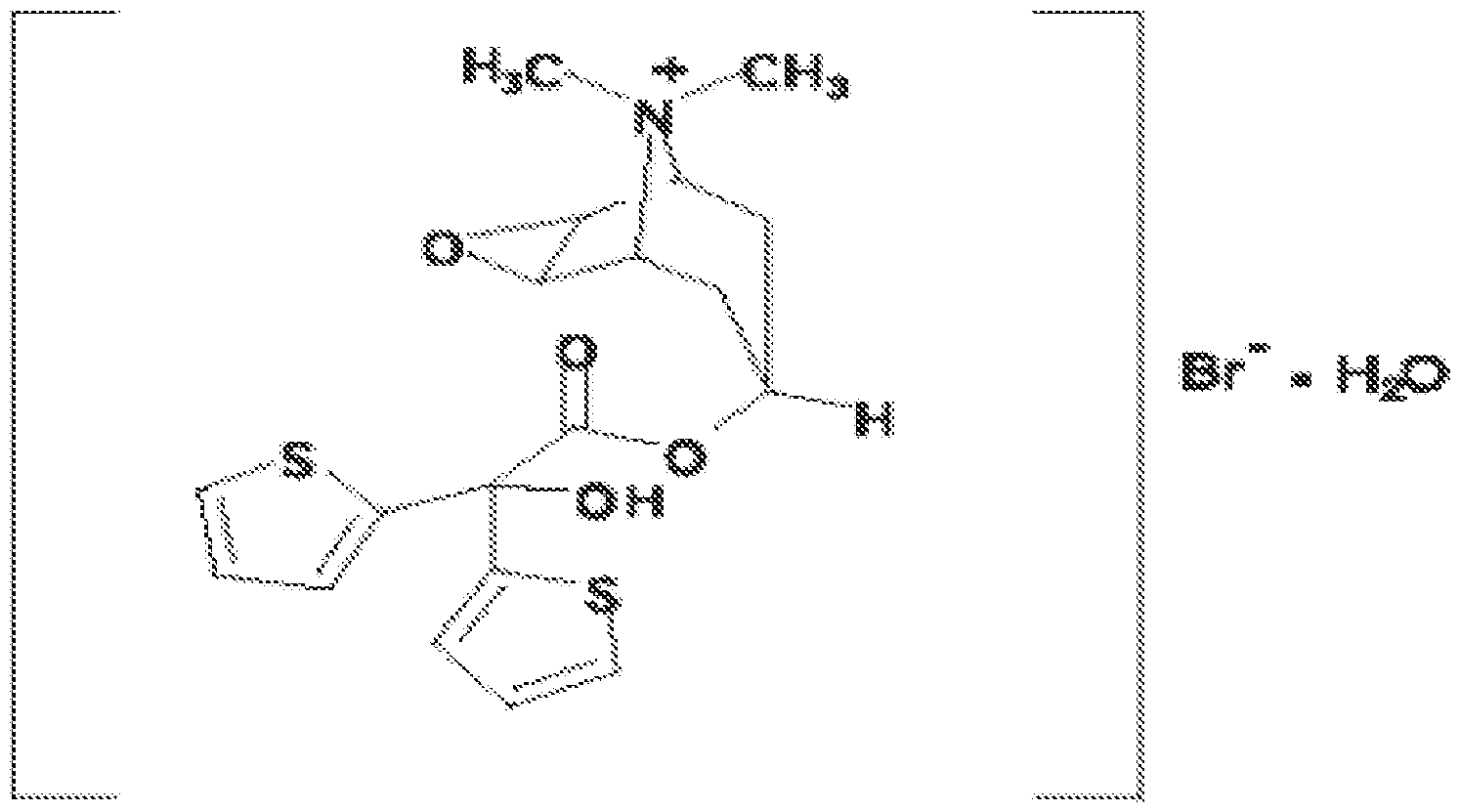
- Publication number
- WO2021211854A1 WO2021211854A1 PCT/US2021/027498 US2021027498W WO2021211854A1 WO 2021211854 A1 WO2021211854 A1 WO 2021211854A1 US 2021027498 W US2021027498 W US 2021027498W WO 2021211854 A1 WO2021211854 A1 WO 2021211854A1
- Authority
- WO
- WIPO (PCT)
- Prior art keywords
- formulation
- tiotropium
- tiotropium bromide
- ranging
- bromide monohydrate
- Prior art date
- Legal status (The legal status is an assumption and is not a legal conclusion. Google has not performed a legal analysis and makes no representation as to the accuracy of the status listed.)
- Ceased
Links
Classifications
-
- A—HUMAN NECESSITIES
- A61—MEDICAL OR VETERINARY SCIENCE; HYGIENE
- A61K—PREPARATIONS FOR MEDICAL, DENTAL OR TOILETRY PURPOSES
- A61K9/00—Medicinal preparations characterised by special physical form
- A61K9/0012—Galenical forms characterised by the site of application
- A61K9/007—Pulmonary tract; Aromatherapy
- A61K9/0073—Sprays or powders for inhalation; Aerolised or nebulised preparations generated by other means than thermal energy
- A61K9/0078—Sprays or powders for inhalation; Aerolised or nebulised preparations generated by other means than thermal energy for inhalation via a nebulizer such as a jet nebulizer, ultrasonic nebulizer, e.g. in the form of aqueous drug solutions or dispersions
-
- A—HUMAN NECESSITIES
- A61—MEDICAL OR VETERINARY SCIENCE; HYGIENE
- A61K—PREPARATIONS FOR MEDICAL, DENTAL OR TOILETRY PURPOSES
- A61K31/00—Medicinal preparations containing organic active ingredients
- A61K31/33—Heterocyclic compounds
- A61K31/395—Heterocyclic compounds having nitrogen as a ring hetero atom, e.g. guanethidine or rifamycins
- A61K31/435—Heterocyclic compounds having nitrogen as a ring hetero atom, e.g. guanethidine or rifamycins having six-membered rings with one nitrogen as the only ring hetero atom
- A61K31/4353—Heterocyclic compounds having nitrogen as a ring hetero atom, e.g. guanethidine or rifamycins having six-membered rings with one nitrogen as the only ring hetero atom ortho- or peri-condensed with heterocyclic ring systems
- A61K31/4375—Heterocyclic compounds having nitrogen as a ring hetero atom, e.g. guanethidine or rifamycins having six-membered rings with one nitrogen as the only ring hetero atom ortho- or peri-condensed with heterocyclic ring systems the heterocyclic ring system containing a six-membered ring having nitrogen as a ring heteroatom, e.g. quinolizines, naphthyridines, berberine, vincamine
-
- A—HUMAN NECESSITIES
- A61—MEDICAL OR VETERINARY SCIENCE; HYGIENE
- A61K—PREPARATIONS FOR MEDICAL, DENTAL OR TOILETRY PURPOSES
- A61K31/00—Medicinal preparations containing organic active ingredients
- A61K31/33—Heterocyclic compounds
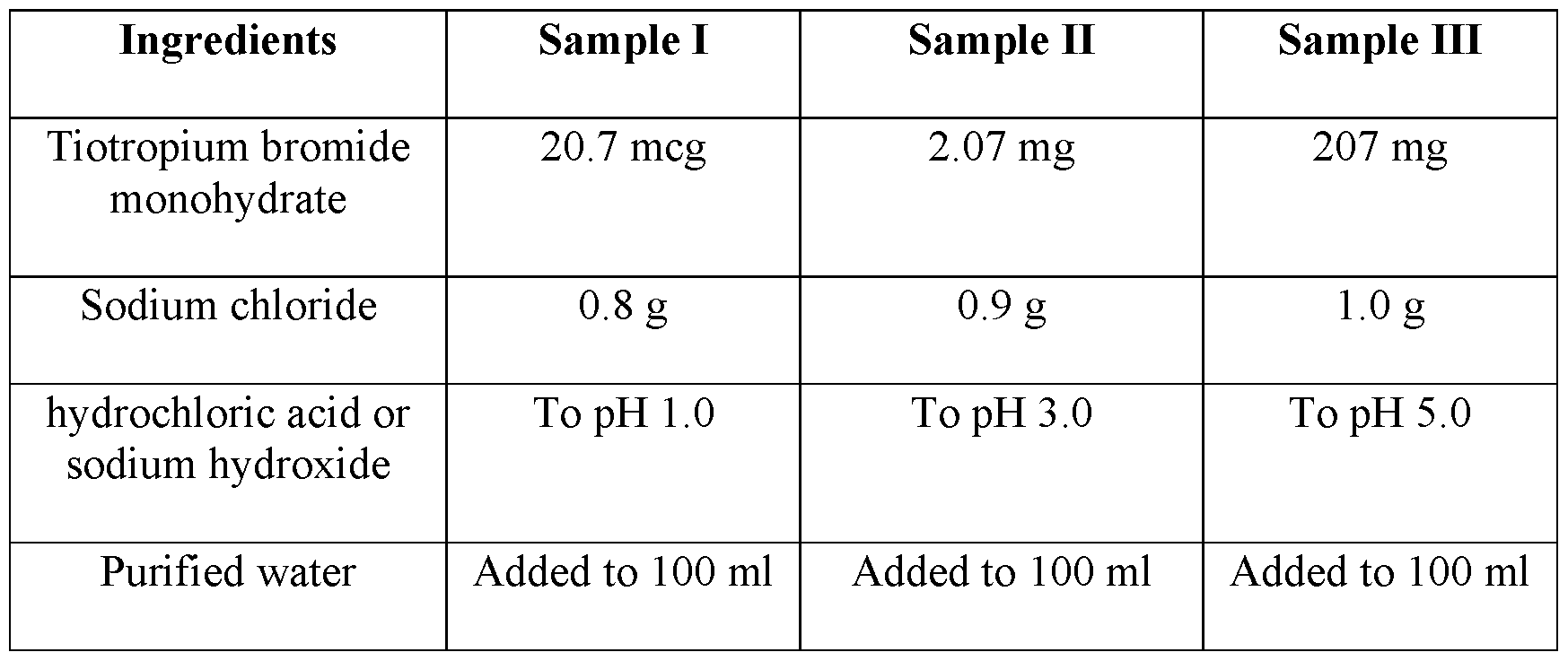
- A61K31/395—Heterocyclic compounds having nitrogen as a ring hetero atom, e.g. guanethidine or rifamycins
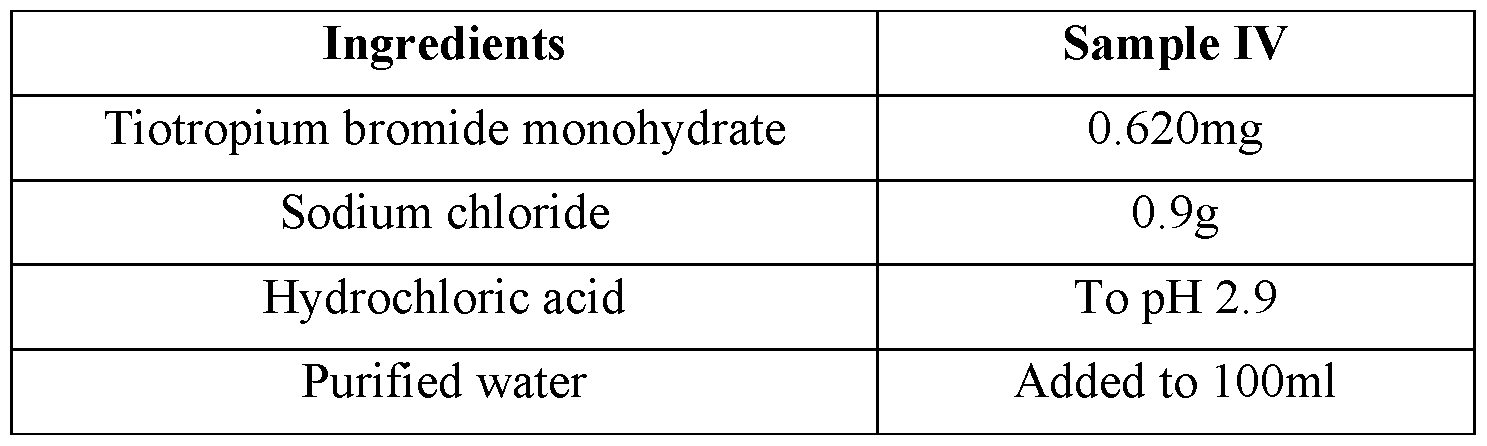
- A61K31/435—Heterocyclic compounds having nitrogen as a ring hetero atom, e.g. guanethidine or rifamycins having six-membered rings with one nitrogen as the only ring hetero atom
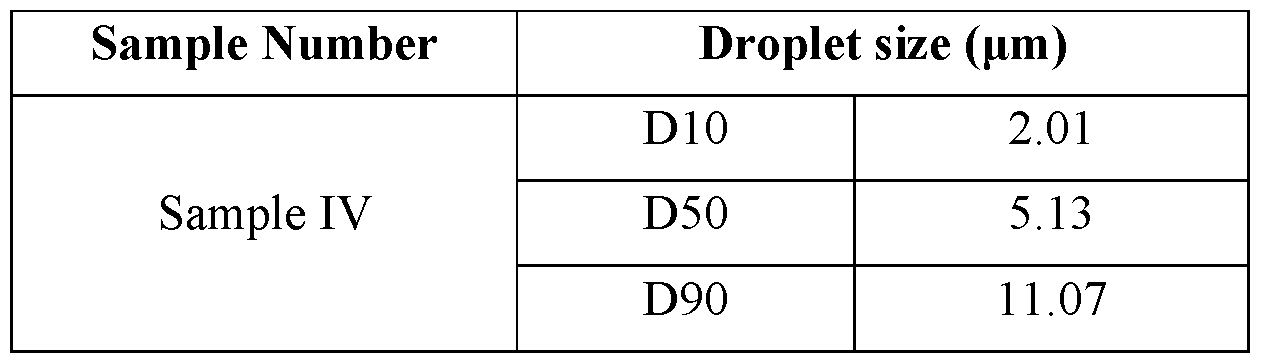
- A61K31/439—Heterocyclic compounds having nitrogen as a ring hetero atom, e.g. guanethidine or rifamycins having six-membered rings with one nitrogen as the only ring hetero atom the ring forming part of a bridged ring system, e.g. quinuclidine
-
- A—HUMAN NECESSITIES
- A61—MEDICAL OR VETERINARY SCIENCE; HYGIENE
- A61K—PREPARATIONS FOR MEDICAL, DENTAL OR TOILETRY PURPOSES
- A61K47/00—Medicinal preparations characterised by the non-active ingredients used, e.g. carriers or inert additives; Targeting or modifying agents chemically bound to the active ingredient
- A61K47/02—Inorganic compounds
-
- A—HUMAN NECESSITIES
- A61—MEDICAL OR VETERINARY SCIENCE; HYGIENE
- A61K—PREPARATIONS FOR MEDICAL, DENTAL OR TOILETRY PURPOSES
- A61K47/00—Medicinal preparations characterised by the non-active ingredients used, e.g. carriers or inert additives; Targeting or modifying agents chemically bound to the active ingredient
- A61K47/06—Organic compounds, e.g. natural or synthetic hydrocarbons, polyolefins, mineral oil, petrolatum or ozokerite
- A61K47/08—Organic compounds, e.g. natural or synthetic hydrocarbons, polyolefins, mineral oil, petrolatum or ozokerite containing oxygen, e.g. ethers, acetals, ketones, quinones, aldehydes, peroxides
- A61K47/10—Alcohols; Phenols; Salts thereof, e.g. glycerol; Polyethylene glycols [PEG]; Poloxamers; PEG/POE alkyl ethers
-
- A—HUMAN NECESSITIES
- A61—MEDICAL OR VETERINARY SCIENCE; HYGIENE
- A61K—PREPARATIONS FOR MEDICAL, DENTAL OR TOILETRY PURPOSES
- A61K47/00—Medicinal preparations characterised by the non-active ingredients used, e.g. carriers or inert additives; Targeting or modifying agents chemically bound to the active ingredient
- A61K47/06—Organic compounds, e.g. natural or synthetic hydrocarbons, polyolefins, mineral oil, petrolatum or ozokerite
- A61K47/08—Organic compounds, e.g. natural or synthetic hydrocarbons, polyolefins, mineral oil, petrolatum or ozokerite containing oxygen, e.g. ethers, acetals, ketones, quinones, aldehydes, peroxides
- A61K47/12—Carboxylic acids; Salts or anhydrides thereof
-
- A—HUMAN NECESSITIES
- A61—MEDICAL OR VETERINARY SCIENCE; HYGIENE
- A61K—PREPARATIONS FOR MEDICAL, DENTAL OR TOILETRY PURPOSES
- A61K47/00—Medicinal preparations characterised by the non-active ingredients used, e.g. carriers or inert additives; Targeting or modifying agents chemically bound to the active ingredient
- A61K47/06—Organic compounds, e.g. natural or synthetic hydrocarbons, polyolefins, mineral oil, petrolatum or ozokerite
- A61K47/08—Organic compounds, e.g. natural or synthetic hydrocarbons, polyolefins, mineral oil, petrolatum or ozokerite containing oxygen, e.g. ethers, acetals, ketones, quinones, aldehydes, peroxides
- A61K47/14—Esters of carboxylic acids, e.g. fatty acid monoglycerides, medium-chain triglycerides, parabens or PEG fatty acid esters
-
- A—HUMAN NECESSITIES
- A61—MEDICAL OR VETERINARY SCIENCE; HYGIENE
- A61K—PREPARATIONS FOR MEDICAL, DENTAL OR TOILETRY PURPOSES
- A61K47/00—Medicinal preparations characterised by the non-active ingredients used, e.g. carriers or inert additives; Targeting or modifying agents chemically bound to the active ingredient
- A61K47/06—Organic compounds, e.g. natural or synthetic hydrocarbons, polyolefins, mineral oil, petrolatum or ozokerite
- A61K47/16—Organic compounds, e.g. natural or synthetic hydrocarbons, polyolefins, mineral oil, petrolatum or ozokerite containing nitrogen, e.g. nitro-, nitroso-, azo-compounds, nitriles, cyanates
- A61K47/18—Amines; Amides; Ureas; Quaternary ammonium compounds; Amino acids; Oligopeptides having up to five amino acids
- A61K47/183—Amino acids, e.g. glycine, EDTA or aspartame
-
- A—HUMAN NECESSITIES
- A61—MEDICAL OR VETERINARY SCIENCE; HYGIENE
- A61K—PREPARATIONS FOR MEDICAL, DENTAL OR TOILETRY PURPOSES
- A61K47/00—Medicinal preparations characterised by the non-active ingredients used, e.g. carriers or inert additives; Targeting or modifying agents chemically bound to the active ingredient
- A61K47/06—Organic compounds, e.g. natural or synthetic hydrocarbons, polyolefins, mineral oil, petrolatum or ozokerite
- A61K47/16—Organic compounds, e.g. natural or synthetic hydrocarbons, polyolefins, mineral oil, petrolatum or ozokerite containing nitrogen, e.g. nitro-, nitroso-, azo-compounds, nitriles, cyanates
- A61K47/18—Amines; Amides; Ureas; Quaternary ammonium compounds; Amino acids; Oligopeptides having up to five amino acids
- A61K47/186—Quaternary ammonium compounds, e.g. benzalkonium chloride or cetrimide
-
- A—HUMAN NECESSITIES
- A61—MEDICAL OR VETERINARY SCIENCE; HYGIENE
- A61K—PREPARATIONS FOR MEDICAL, DENTAL OR TOILETRY PURPOSES
- A61K9/00—Medicinal preparations characterised by special physical form
- A61K9/0012—Galenical forms characterised by the site of application
- A61K9/0043—Nose
-
- A—HUMAN NECESSITIES
- A61—MEDICAL OR VETERINARY SCIENCE; HYGIENE
- A61K—PREPARATIONS FOR MEDICAL, DENTAL OR TOILETRY PURPOSES
- A61K9/00—Medicinal preparations characterised by special physical form
- A61K9/08—Solutions
-
- A—HUMAN NECESSITIES
- A61—MEDICAL OR VETERINARY SCIENCE; HYGIENE
- A61P—SPECIFIC THERAPEUTIC ACTIVITY OF CHEMICAL COMPOUNDS OR MEDICINAL PREPARATIONS
- A61P1/00—Drugs for disorders of the alimentary tract or the digestive system
Definitions
- Tiotropium bromide monohydrate is chemically described as (la, 2B, 4B, 5a, 7B)-7- [ (Hydroxy di-2-thienylacetyl)oxy]-9,9-dimethyl-3-oxa-9-azoniatricyclo[3.3. 1 0 24 ] nonane bromide monohydrate, and has the following chemical structure:
- Tiotropium is a long-acting, muscarinic antagonist which is often referred to as an anticholinergic. It has similar affinity for subtypes Ml to M5 of the muscarinic receptor. In the airways, it exhibits a pharmacological effect through inhibition of the M3 -receptors on the smooth muscle, leading to bronchodilation. The competitive and reversible nature of antagonism was shown with human and animal origin receptors and isolated organ preparations.
- Tiotropium can provide therapeutic benefit in the treatment of asthma or chronic obstructive pulmonary disease, including chronic bronchitis and emphysema.
- the present invention relates to a propellant-free inhalable formulation of a pharmaceutically acceptable salt of Tiotropium dissolved in water, in combination with inactive ingredients, preferably administered using a nebulization inhalation device, and the propellant- free inhalable aerosols resulting therefrom.
- the pharmaceutical formulations disclosed of the current invention are especially suitable for administration by nebulization inhalation, which provides much better lung deposition (typically up to 55-60%) compared to administration by drying powder inhalation or pMDI.
- the pharmaceutical formulations of the present invention are particularly suitable for administering the active substances by nebulization inhalation, especially for treating asthma and chronic obstructive pulmonary disease.
- the present invention relates to pharmaceutical formulations of Tiotropium and its pharmaceutically acceptable salts or solvates which can be administered by nebulization inhalation.
- the pharmaceutical formulations according to the invention meets high quality standards.
- One aspect of the present invention is to provide an aqueous pharmaceutical formulation containing Tiotropium, which meets the high standards needed in order to achieve optimal nebulization of a solution using the inhalers mentioned hereinbefore.
- the stability of the formulation is a storage time of some years. In one embodiment, the formulation is stable for at least one year. In one embodiment, the formulation is stable for at least three years.
- Another aspect of the invention is to provide propellant-free formulations that are solutions containing Tiotropium which are nebulized under pressure using an inhaler devise, preferably a nebulization inhaler device, wherein the composition is delivered as an aerosol that falls reproducibly within a specified range.
- Another aspect of the invention is to provide pharmaceutical formulations that are solutions comprising Tiotropium and other inactive excipients which can be administered by nebulization inhalation using an ultra-sonic based or air pressure based nebulizer/inhaler.
- the stability of the formulation is a storage time of a few months or years. In one embodiment, the formulation has a storage time of 1-6 months. In one embodiment, the formulation has a storage time of at least one year. In one embodiment, the formulation has a storage time of at least three years.
- another aspect is to provide a stable pharmaceutical formulation that is an aqueous solution containing Tiotropium and other excipients which can be administered by nebulization inhalation using an ultrasonic jet or mesh nebulizer.
- the inventive formulation has substantial long term stability.
- the formulations have a storage time of at least about 6-24 months at a temperature of from about 15°C to about 25°C.
- the pharmaceutical formulations of the invention are a solution that is converted into an aerosol in the nebulizer that is destined for the lungs.
- the pharmaceutical solution is sprayed with the nebulizer by high pressure.
- Nebulization devices useful with the pharmaceutical formulations of the present invention are those in which an amount of less than 8 milliliters of pharmaceutical solution can be nebulized in one puff, preferably less than 2 milliliters, most preferably less than 1 milliliter, so that the inhalable part of aerosol corresponds to the therapeutically effective quantity.
- the average particle size of the aerosol formed from one puff is less than about 15 microns. In one embodiment, the average particle size of the aerosol formed from one puff is less than about 10 microns.
- one aspect of the present invention is to provide an aqueous pharmaceutical formulation containing Tiotropium, which meets the high standards needed in order to achieve optimum nebulization of the solution using the inhalers mentioned hereinbefore.
- the active substances in the pharmaceutical formulation is stable, and has a storage time of some years. In one embodiment, the storage time is at least one year. In one embodiment, the storage time is at least three years.
- Another aspect of the current invention is to provide propellant-free formulations that are solutions containing Tiotropium which are nebulized under pressure using an inhaler, preferably a nebulization inhaler, to provide an aerosol, wherein the pharmaceutical formulation delivered by the aerosol falls reproducibly within a specified range.
- Another aspect of the invention is to provide an aqueous pharmaceutical formulation that is a solution containing Tiotropium and inactive excipients which can be administered by inhalation.
- any pharmaceutically acceptable salt or solvate of Tiotropium may be used for the formulation.
- Tiotropium salt or solvate it is to be taken as a reference to Tiotropium.
- the active substance is Tiotropium bromide.
- the active substance is Tiotropium bromide monohydrate.
- Tiotropium is dissolved in a solvent.
- a therapeutically effective dose of Tiotropium bromide monohydrate includes from about 3 pg to about 80 pg of Tiotropium bromide monohydrate. In one embodiment, a therapeutically effective dose includes from about 3 pg to about 50 pg of Tiotropium bromide monohydrate. In one embodiment, therapeutically effective dose includes from about 5 pg to about 30 pg of Tiotropium bromide monohydrate. [0027] The concentration of the Tiotropium bromide monohydrate in the finished pharmaceutical formulation depends on the therapeutic effects.
- the concentration of Tiotropium bromide monohydrate ranges from about 20.7mcg/100ml to about 207mg/100ml. In one embodiment, the concentration of Tiotropium bromide monohydrate ranges from about 207mcg/100ml to about 2.07mg/100ml.
- the pH can be adjusted by adding a pH adjusting agent to the formulation.
- the pH adjusting agent is hydrochloric acid and/or sodium hydroxide.
- pH adjusting agents include, but are not limited to, citric acid and/or its salts.
- the pH is selected to maintain stability of the active ingredients. In one embodiment, the pH ranges from about 1.0 to about 5.0. In one embodiment, the pH ranges from about 2.5 to about 3.5. In one embodiment, the pH ranges from about 2.7 to about 3.1.
- a stabilizer or complexing agent can be included in the formulations.
- Suitable stabilizers or complexing agents include, but are not limited to, edetic acid (EDTA) or one of the known salts thereof, e.g., disodium edetate or edetate disodium dihydrate.
- the formulation contains edetic acid and/or a salt thereof.
- Suitable stabilizers or complexing agents include, but are not limited to, citric acid, edetate di sodium, and edetate di sodium dihydrate.
- the phrase “complexing agent,” as used herein, means a molecule which is capable of entering into complex bonds. Preferably, these compounds have the effect of complexing cations.
- the concentration of the stabilizers or complexing agents ranges from about 1 mg/lOOml to about 500 mg/100 ml. In one embodiment, the concentration of the stabilizers or complexing agents ranges from about 10 mg/lOOml to about 200 mg/lOOml. In one embodiment, the stabilizer or complexing agent is edetate disodium dihydrate at a concentration ranging from about 1 mg/lOOml to about 500mg/100 ml.
- the isosmotic status of the formulation can be adjusted by adding an isosmotic adjusting agent, such as sodium chloride.
- an isosmotic adjusting agent such as sodium chloride.
- the isosmotic adjusting agent is sodium chloride.
- the quantity of sodium chloride is from about 0.8% (w/w) to about 1.0% w/w). In one embodiment, the quantity of sodium chloride is about 0.9% (w/w).
- the formulation can contain a preservative. In one embodiment, the preservative is selected from the group consisting of benzalkonium chloride, benzoic acid, sodium benzoate, and combinations thereof.
- the Tiotropium bromide is present in solution.
- all the ingredients of the formulation are present in solution.
- additive means any pharmacologically acceptable and therapeutically useful substance which is not an active substance, but can be formulated together with the active substances in a pharmacologically suitable solvent, in order to improve the qualities of the formulation. Preferably, these substances have no pharmacological effects or no appreciable pharmacological effects, or at least no undesirable pharmacological effects in the context of the desired therapy.
- Suitable additives include, but are not limited to, other stabilizers, complexing agents, antioxidants, surfactants, and/or preservatives which prolong the shelf life of the finished pharmaceutical formulation, vitamins, and/or other additives known in the art.
- the pharmaceutical formulation solution is converted by the nebulizer into aerosol destined for the lungs.
- the pharmaceutical solution is sprayed with the nebulizer by high pressure.
- BAC benzalkonium chloride
- Edetate disodium dehydrate is commercially available and may be purchased from purchased from Merck & Co.
- sample I, sample II, and sample III inhalation solutions are as follows: active and inactive ingredients according to the amounts provided in table 1 were dissolved in 90 ml of purified water and the pH adjusted to the target pH with hydrochloric acid or sodium hydroxide. Purified water was then added to a final volume of 100 ml. Table 1: Ingredient Contents of Sample I, Sample II, and Sample III of a 100 ml Inhalable Formulation
- sample IV inhalation solution is as follows: active and inactive ingredients according to the amounts provided in table 2 were dissolved in 90 ml of purified water and the pH of the solution adjusted to the target pH with hydrochloric acid or sodium hydroxide. Purified water was then added to a final volume of 100 ml.
- Sample IV was sprayed using a nebulization inhaler.
- a Malvern Spraytec (STP5311) was used to measure the particle size of the resulting droplets.
- the stability of the formulation is highly dependent on pH .
- Eight samples were prepared according to Table 5. 180 ml water were adjusted to a pH of 2.7, 3.0, 3.3, 3.6, 3.9, 4.2, and 4.5, respectively with HC1, obtain 7 different pH buffers. The pH of sample 8 was left unadjusted. Tiotropium bromide (referred to as TB) in the amounts provided in Table 5 was dissolved in thel80 ml of each buffer. The resulting mixtures were sonicated until completely dissolved. Purified water was then added to a final volume of 200 ml for each sample.
- TB Tiotropium bromide
- 50% benzalkonium chloride aqueous solution (referred to as 50%BAC) and edetate disodium dihydrate according to the amounts provided in Table 8 were dissolved in 180 ml of purified water. Samples 9-12 were adjusted to a pH of 2.85 with HC1. TB according to the amounts provided in Table 8 was added to each solution and the resulting mixtures sonicated until completely dissolved. Purified water was then added to a final volume of 200 ml for each sample.
- the Tiotropium bromide solution is stable in the EDTA concentration of Omg/lOOml to about 22mg/100ml.
- Sample 13 solution was prepared in the same way that samples 9-12 were prepared but using the amounts provided in Table 13.
- the aerodynamic particle size distribution was determined using an Andersen Scale Impactor (ACI).
- ACI Andersen Scale Impactor
- the inhalation device, named Respimat was purchased from Boehringer Ingelheim. The Respimat inhaler was held close to the ACI inlet until no aerosol was visible.
- the flow rate of the ACI was set to 28.3 L/minute and was operated under ambient temperature and a relative humidity (RH) of 90%.
- sample 13 was discharged into the ACI. Fractions of the dose were deposited at different stages of the ACI, in accordance with the particle size of the fraction. Each fraction was washed from the stage and analyzed using HPLC.
- Table 11 Single Dose Level Distribution and Aerodynamic Particle Size Distribution of TB Inhalation Formulation Sample 13 Administered by Respimat Inhalation
- Sample 14-16 were prepared in the same way that samples 9-12 were prepared, but using the amounts provided in Table 12.
- Samples 14-16 were stored at 40°C/75%RH for 0, 1, 2, 3, and 6 months.
- the impurity profile at each time point is provided below in Tables 13-14.
Landscapes
- Health & Medical Sciences (AREA)
- Chemical & Material Sciences (AREA)
- Life Sciences & Earth Sciences (AREA)
- Public Health (AREA)
- Pharmacology & Pharmacy (AREA)
- Animal Behavior & Ethology (AREA)
- General Health & Medical Sciences (AREA)
- Veterinary Medicine (AREA)
- Medicinal Chemistry (AREA)
- Epidemiology (AREA)
- Engineering & Computer Science (AREA)
- General Chemical & Material Sciences (AREA)
- Chemical Kinetics & Catalysis (AREA)
- Oil, Petroleum & Natural Gas (AREA)
- Bioinformatics & Cheminformatics (AREA)
- Otolaryngology (AREA)
- Dispersion Chemistry (AREA)
- Proteomics, Peptides & Aminoacids (AREA)
- Pulmonology (AREA)
- Inorganic Chemistry (AREA)
- Nuclear Medicine, Radiotherapy & Molecular Imaging (AREA)
- Organic Chemistry (AREA)
- Pharmaceuticals Containing Other Organic And Inorganic Compounds (AREA)
- Medicinal Preparation (AREA)
Abstract
The present invention relates to a liquid, propellant-free pharmaceutical formulation and a method for administering the pharmaceutical formulation by nebulizing the pharmaceutical formulation with an inhaler. The propellant-free pharmaceutical formulation comprises: (a) the active substance tiotropium bromide; (b) a solvent; (c) a pH adjusting agent, and optionally other pharmacologically acceptable additives.
Description
INHALABLE FORMULATION OF A SOLUTION CONTAINING TIOTROPIUM
BROMIDE
PRIORITY STATEMENT
[0001] This application claims the benefit of the filing date of U.S. Provisional Patent Application No. 63/011,224, filed on April 16, 2020, the contents of which are incorporated herein by reference in its entirety.
BACKGROUND OF THE INVENTION
[0002] Tiotropium bromide monohydrate is chemically described as (la, 2B, 4B, 5a, 7B)-7- [ (Hydroxy di-2-thienylacetyl)oxy]-9,9-dimethyl-3-oxa-9-azoniatricyclo[3.3. 1 024] nonane bromide monohydrate, and has the following chemical structure:
[0003] Tiotropium is a long-acting, muscarinic antagonist which is often referred to as an anticholinergic. It has similar affinity for subtypes Ml to M5 of the muscarinic receptor. In the airways, it exhibits a pharmacological effect through inhibition of the M3 -receptors on the smooth muscle, leading to bronchodilation. The competitive and reversible nature of antagonism was shown with human and animal origin receptors and isolated organ preparations.
[0004] Tiotropium can provide therapeutic benefit in the treatment of asthma or chronic obstructive pulmonary disease, including chronic bronchitis and emphysema.
[0005] The present invention relates to a propellant-free inhalable formulation of a pharmaceutically acceptable salt of Tiotropium dissolved in water, in combination with inactive
ingredients, preferably administered using a nebulization inhalation device, and the propellant- free inhalable aerosols resulting therefrom.
[0006] The pharmaceutical formulations disclosed of the current invention are especially suitable for administration by nebulization inhalation, which provides much better lung deposition (typically up to 55-60%) compared to administration by drying powder inhalation or pMDI.
[0007] The pharmaceutical formulations of the present invention are particularly suitable for administering the active substances by nebulization inhalation, especially for treating asthma and chronic obstructive pulmonary disease.
SUMMARY OF THU INVENTION
[0008] The present invention relates to pharmaceutical formulations of Tiotropium and its pharmaceutically acceptable salts or solvates which can be administered by nebulization inhalation. The pharmaceutical formulations according to the invention meets high quality standards.
[0009] One aspect of the present invention is to provide an aqueous pharmaceutical formulation containing Tiotropium, which meets the high standards needed in order to achieve optimal nebulization of a solution using the inhalers mentioned hereinbefore. The stability of the formulation is a storage time of some years. In one embodiment, the formulation is stable for at least one year. In one embodiment, the formulation is stable for at least three years.
[0010] Another aspect of the invention is to provide propellant-free formulations that are solutions containing Tiotropium which are nebulized under pressure using an inhaler devise, preferably a nebulization inhaler device, wherein the composition is delivered as an aerosol that falls reproducibly within a specified range.
[0011] Another aspect of the invention is to provide pharmaceutical formulations that are solutions comprising Tiotropium and other inactive excipients which can be administered by nebulization inhalation using an ultra-sonic based or air pressure based nebulizer/inhaler. The stability of the formulation is a storage time of a few months or years. In one embodiment, the formulation has a storage time of 1-6 months. In one embodiment, the formulation has a storage time of at least one year. In one embodiment, the formulation has a storage time of at least three years.
[0012] More specifically, another aspect is to provide a stable pharmaceutical formulation that is an aqueous solution containing Tiotropium and other excipients which can be administered by nebulization inhalation using an ultrasonic jet or mesh nebulizer. The inventive formulation has substantial long term stability. In one embodiment, the formulations have a storage time of at least about 6-24 months at a temperature of from about 15°C to about 25°C.
PET AIT, ED DESCRIPTION OF TUI INVENTION
[0013] It is advantageous to use a liquid formulation without a propellant gas to administer an active substance using a suitable inhaler, in order to achieve a better distribution of the active substance in the lung. Furthermore, it is very important to increase the lung deposition of drugs delivered by inhalation.
[0014] Currently, traditional pMDI or DPI (drying powder inhalation) can only delivery about 20-30% of the drug into the lung, resulting in a significant amount of drug being deposited on the month and throat, which can lead to drug entering the stomach and causing unwanted side effects and/or secondary absorption through the oral digestive system.
[0015] Therefore, there is a need to improve the inhalation drug delivery by significantly increasing lung deposition.
[0016] The pharmaceutical formulations of the invention are a solution that is converted into an aerosol in the nebulizer that is destined for the lungs. The pharmaceutical solution is sprayed with the nebulizer by high pressure.
[0017] Nebulization devices useful with the pharmaceutical formulations of the present invention are those in which an amount of less than 8 milliliters of pharmaceutical solution can be nebulized in one puff, preferably less than 2 milliliters, most preferably less than 1 milliliter, so that the inhalable part of aerosol corresponds to the therapeutically effective quantity. In one embodiment, the average particle size of the aerosol formed from one puff is less than about 15 microns. In one embodiment, the average particle size of the aerosol formed from one puff is less than about 10 microns.
[0018] The formulations must not contain any ingredients which might interact with the inhaler to affect the pharmaceutical quality of the formulation or of the aerosol produced. In addition, the active substances in the pharmaceutical formulations exhibit very good stability when stored and can be administered directly.
[0019] Therefore, one aspect of the present invention is to provide an aqueous pharmaceutical formulation containing Tiotropium, which meets the high standards needed in order to achieve optimum nebulization of the solution using the inhalers mentioned hereinbefore. Preferably the active substances in the pharmaceutical formulation is stable, and has a storage time of some years. In one embodiment, the storage time is at least one year. In one embodiment, the storage time is at least three years.
[0020] Another aspect of the current invention is to provide propellant-free formulations that are solutions containing Tiotropium which are nebulized under pressure using an inhaler, preferably a nebulization inhaler, to provide an aerosol, wherein the pharmaceutical formulation delivered by the aerosol falls reproducibly within a specified range.
[0021] Another aspect of the invention is to provide an aqueous pharmaceutical formulation that is a solution containing Tiotropium and inactive excipients which can be administered by inhalation.
[0022] According to the invention, any pharmaceutically acceptable salt or solvate of Tiotropium may be used for the formulation. When the phrase “Tiotropium salt or solvate” is used herein, it is to be taken as a reference to Tiotropium.
[0023] In one embodiment, the active substance is Tiotropium bromide.
[0024] In one embodiment, the active substance is Tiotropium bromide monohydrate.
[0025] In the formulations according to the invention, Tiotropium is dissolved in a solvent.
In one embodiment, the solvent comprises water. In one embodiment, the solvent is water. [0026] In one embodiment according to the invention, a therapeutically effective dose of Tiotropium bromide monohydrate includes from about 3 pg to about 80 pg of Tiotropium bromide monohydrate. In one embodiment, a therapeutically effective dose includes from about 3 pg to about 50 pg of Tiotropium bromide monohydrate. In one embodiment, therapeutically effective dose includes from about 5 pg to about 30 pg of Tiotropium bromide monohydrate. [0027] The concentration of the Tiotropium bromide monohydrate in the finished pharmaceutical formulation depends on the therapeutic effects. The concentration of Tiotropium bromide monohydrate ranges from about 20.7mcg/100ml to about 207mg/100ml. In one embodiment, the concentration of Tiotropium bromide monohydrate ranges from about 207mcg/100ml to about 2.07mg/100ml.
[0028] In the formulations according to the invention, if desired, the pH can be adjusted by adding a pH adjusting agent to the formulation. In one embodiment, the pH adjusting agent is hydrochloric acid and/or sodium hydroxide.
[0029] Other comparable pH adjusting agents include, but are not limited to, citric acid and/or its salts.
[0030] The pH is selected to maintain stability of the active ingredients. In one embodiment, the pH ranges from about 1.0 to about 5.0. In one embodiment, the pH ranges from about 2.5 to about 3.5. In one embodiment, the pH ranges from about 2.7 to about 3.1.
[0031] If desired, a stabilizer or complexing agent can be included in the formulations. Suitable stabilizers or complexing agents include, but are not limited to, edetic acid (EDTA) or one of the known salts thereof, e.g., disodium edetate or edetate disodium dihydrate. In one embodiment the formulation contains edetic acid and/or a salt thereof.
[0032] Other comparable stabilizers or complexing agents can be used in the present invention. Suitable stabilizers or complexing agents include, but are not limited to, citric acid, edetate di sodium, and edetate di sodium dihydrate.
[0033] The phrase “complexing agent,” as used herein, means a molecule which is capable of entering into complex bonds. Preferably, these compounds have the effect of complexing cations. The concentration of the stabilizers or complexing agents ranges from about 1 mg/lOOml to about 500 mg/100 ml. In one embodiment, the concentration of the stabilizers or complexing agents ranges from about 10 mg/lOOml to about 200 mg/lOOml. In one embodiment, the stabilizer or complexing agent is edetate disodium dihydrate at a concentration ranging from about 1 mg/lOOml to about 500mg/100 ml.
[0034] In the formulations according to the invention, if desired, the isosmotic status of the formulation can be adjusted by adding an isosmotic adjusting agent, such as sodium chloride. In one embodiment, the isosmotic adjusting agent is sodium chloride.
[0035] In one embodiment, the quantity of sodium chloride is from about 0.8% (w/w) to about 1.0% w/w). In one embodiment, the quantity of sodium chloride is about 0.9% (w/w). [0036] In the formulations according to the invention, the formulation can contain a preservative. In one embodiment, the preservative is selected from the group consisting of benzalkonium chloride, benzoic acid, sodium benzoate, and combinations thereof.
[0037] In one embodiment, the Tiotropium bromide is present in solution.
[0038] In one embodiment, all the ingredients of the formulation are present in solution. [0039] The term “additive,” as used herein means any pharmacologically acceptable and therapeutically useful substance which is not an active substance, but can be formulated together with the active substances in a pharmacologically suitable solvent, in order to improve the qualities of the formulation. Preferably, these substances have no pharmacological effects or no appreciable pharmacological effects, or at least no undesirable pharmacological effects in the context of the desired therapy.
[0040] Suitable additives include, but are not limited to, other stabilizers, complexing agents, antioxidants, surfactants, and/or preservatives which prolong the shelf life of the finished pharmaceutical formulation, vitamins, and/or other additives known in the art.
[0041] The pharmaceutical formulation solution is converted by the nebulizer into aerosol destined for the lungs. The pharmaceutical solution is sprayed with the nebulizer by high pressure.
EXAMPLES
[0042] Materials and reagents:
Tiotropium bromide monohydrate, from Anovent Pharmaceutical Co., Ltd. in Nanchang, China
Sodium chloride, from Merck Citric acid, from Merck
Sodium hydroxide, from Titan Reagents Co., Ltd. in Shanghai, China Hydrochloric acid, from Titan Reagents Co., Ltd. in Shanghai, China 50% benzalkonium chloride (referred to as BAC) aqueous solution is commercially available and may be purchased from Spectrum Pharmaceuticals Inc.
Edetate disodium dehydrate is commercially available and may be purchased from purchased from Merck & Co.
Example 1
[0043] The preparation of sample I, sample II, and sample III inhalation solutions is as follows: active and inactive ingredients according to the amounts provided in table 1 were dissolved in 90 ml of purified water and the pH adjusted to the target pH with hydrochloric acid or sodium hydroxide. Purified water was then added to a final volume of 100 ml.
Table 1: Ingredient Contents of Sample I, Sample II, and Sample III of a 100 ml Inhalable Formulation
Example 2
[0044] The preparation of sample IV inhalation solution is as follows: active and inactive ingredients according to the amounts provided in table 2 were dissolved in 90 ml of purified water and the pH of the solution adjusted to the target pH with hydrochloric acid or sodium hydroxide. Purified water was then added to a final volume of 100 ml.
Table 2: Ingredient Contents of Sample IV of a 100 ml Inhalable Formulation
Example 3
[0045] Sample IV was sprayed using a nebulization inhaler. A Malvern Spraytec (STP5311) was used to measure the particle size of the resulting droplets.
Table 3: Particle Size Distribution of Sample IV by Using a Nebulization Inhaler
Example 4
Table 4: Osmotic Pressure of Sample IV Inhalable Formulation

Example 5
[0046] Influence of pH on stability:
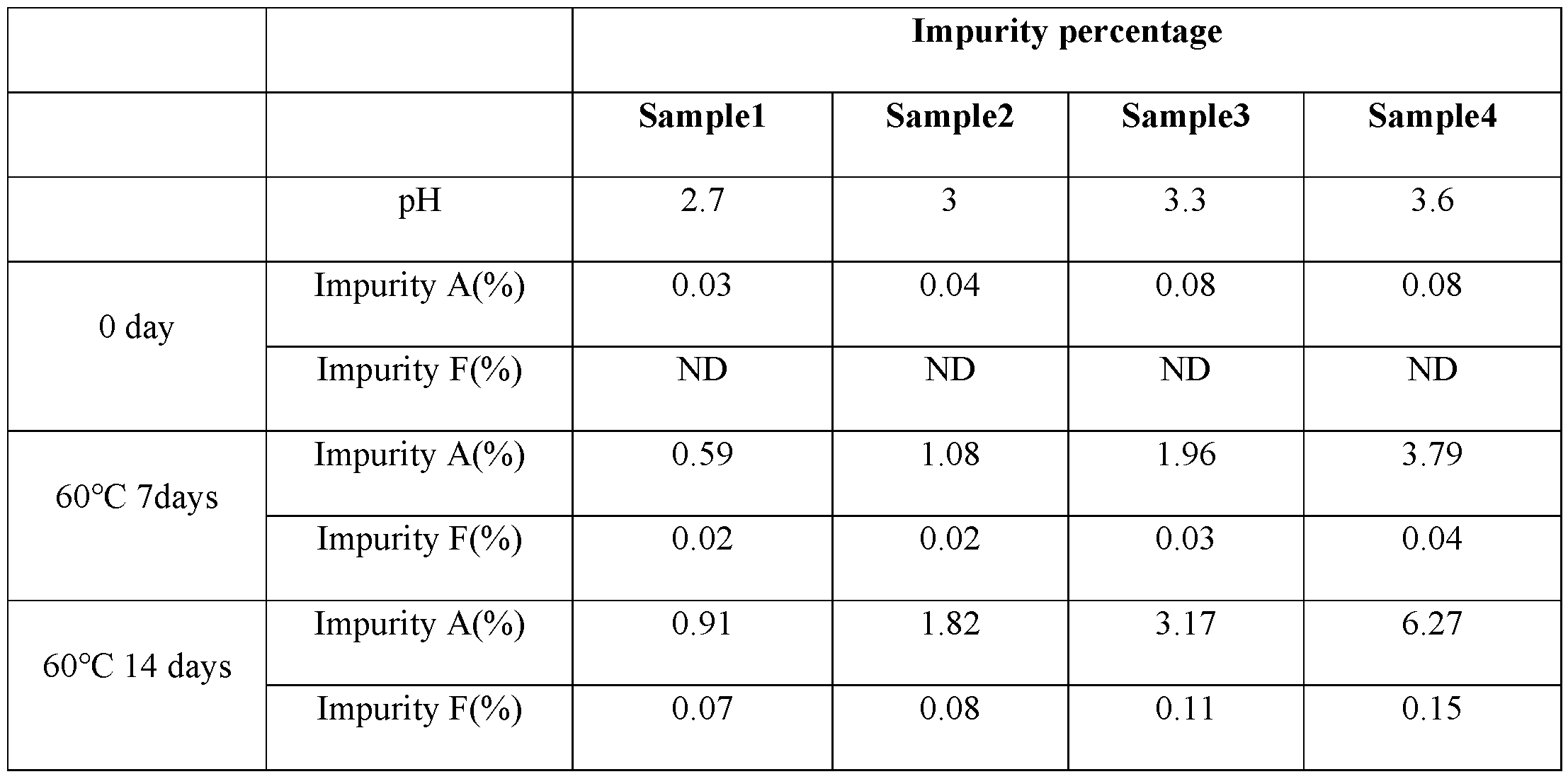
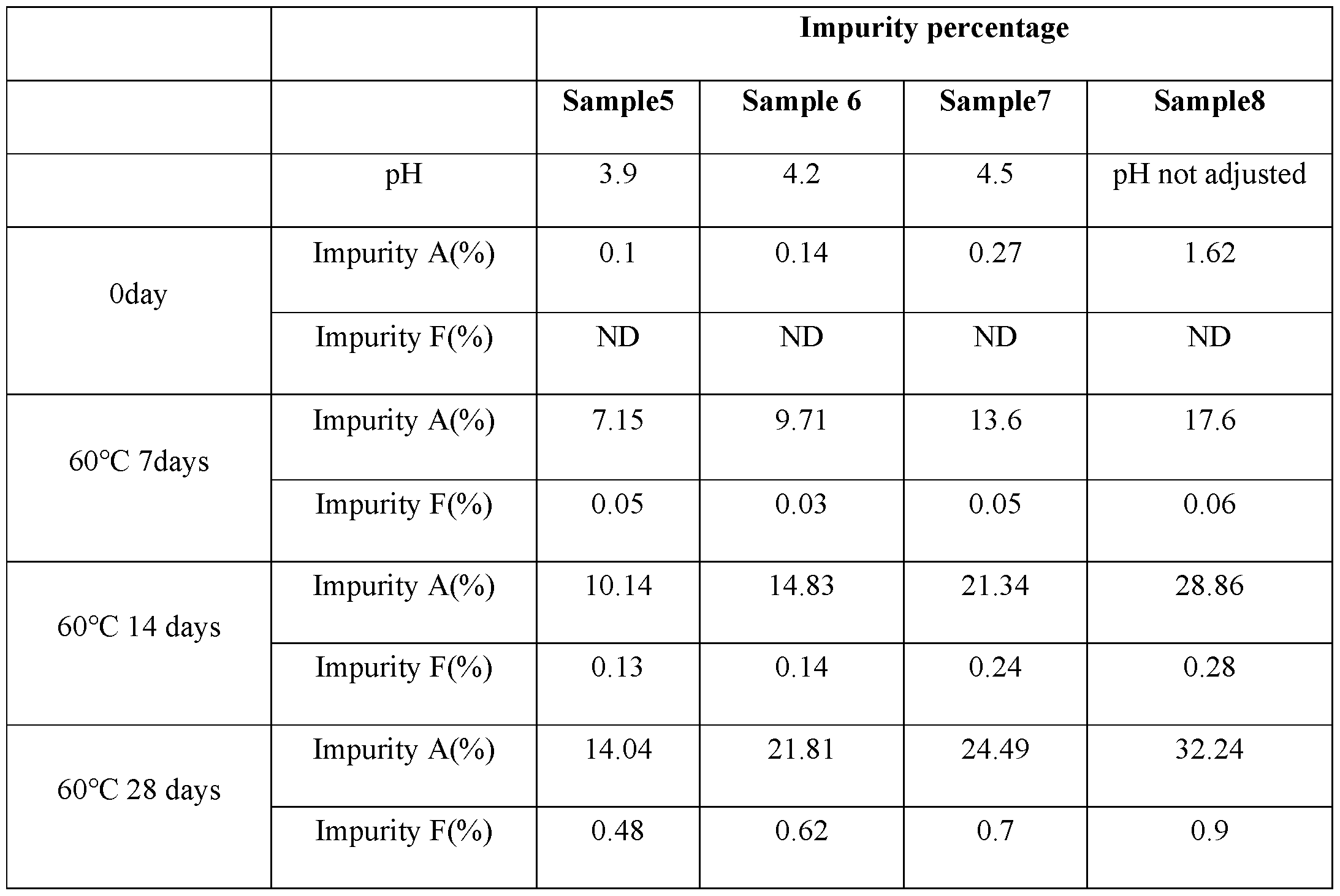
The stability of the formulation is highly dependent on pH . Eight samples were prepared according to Table 5. 180 ml water were adjusted to a pH of 2.7, 3.0, 3.3, 3.6, 3.9, 4.2, and 4.5, respectively with HC1, obtain 7 different pH buffers. The pH of sample 8 was left unadjusted. Tiotropium bromide (referred to as TB) in the amounts provided in Table 5 was dissolved in thel80 ml of each buffer. The resulting mixtures were sonicated until completely dissolved. Purified water was then added to a final volume of 200 ml for each sample.
[0047] The formula of samples 1-8 is shown in Table 5. Each Sample was stored at 60°C for 28 days. Experimental data for the stability of each sample is provided in Table 6-7.
Table 5: Formulation Design of TB Screening at Different pH Values

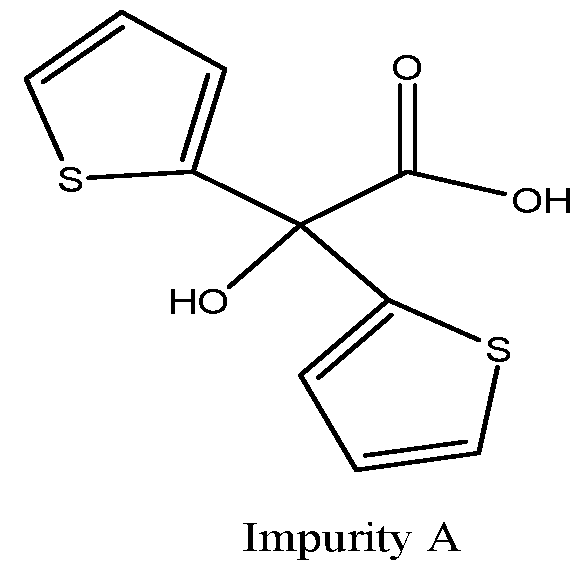
[0048] Impurity A, CAS number:4746-63-8
[0049] Impurity F, CAS number: 704-38-1

Impurity F
Table 6: Stability at Different pH Values

ND: not detected
Table 7: Stability at Different pH Values
ND: not detected
[0050] The above results demonstrate that the stability of the Tiotropium bromide solutions are highly dependent on the pH . As can be seen from Table 6 and 7, the Tiotropium bromide solution is stable at pH 2.7 to 3.3.
Example 6
[0051] Influence of EDTA concentration on stability:
Four samples were prepared according to Table 8. 50% benzalkonium chloride aqueous solution (referred to as 50%BAC) and edetate disodium dihydrate according to the amounts provided in
Table 8 were dissolved in 180 ml of purified water. Samples 9-12 were adjusted to a pH of 2.85 with HC1. TB according to the amounts provided in Table 8 was added to each solution and the resulting mixtures sonicated until completely dissolved. Purified water was then added to a final volume of 200 ml for each sample.
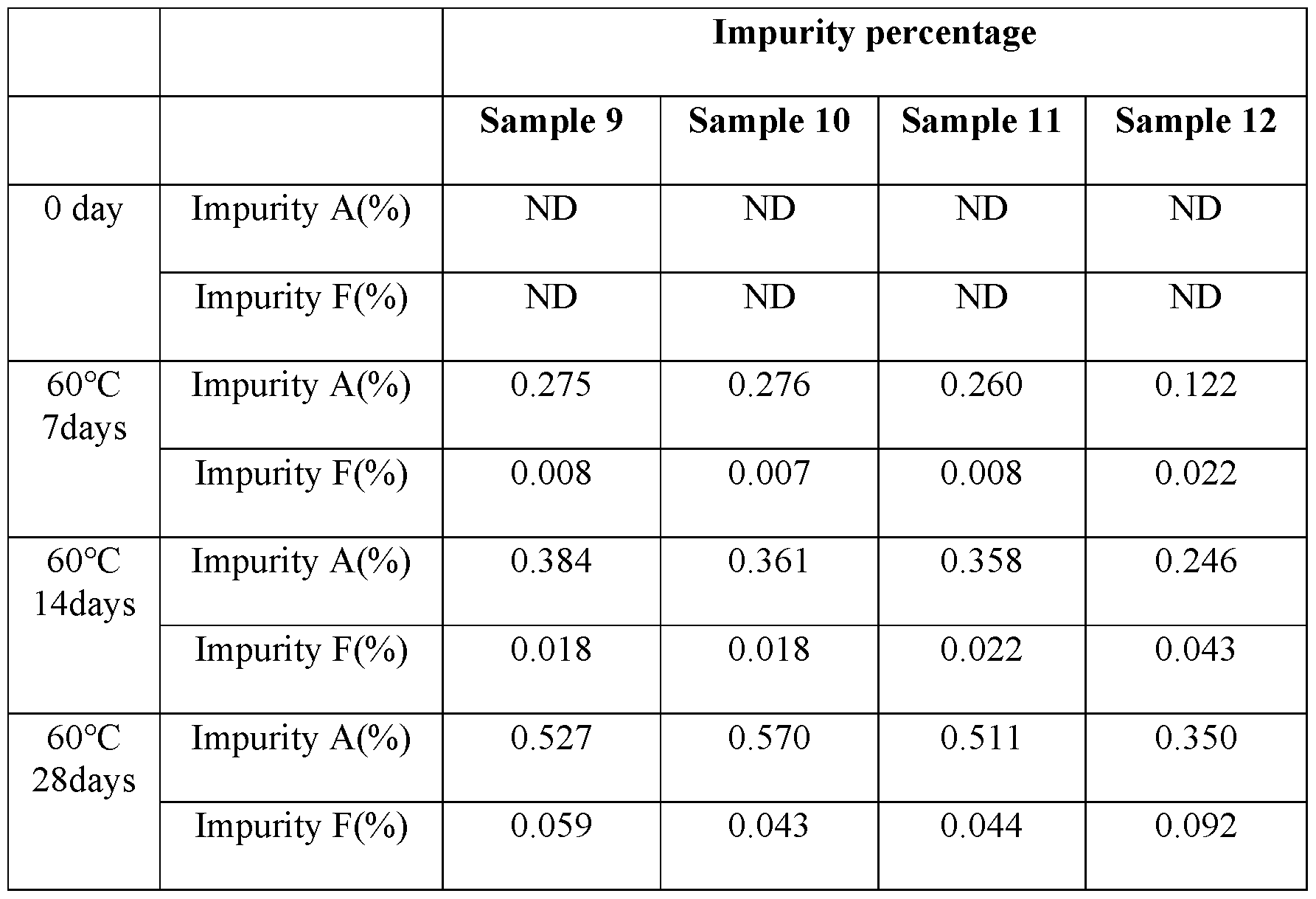
[0052] The formula for samples 9-12 are provided in Table 8. Each Sample was stored at 60°C for 28 days. Experimental data for the stability of each sample is provided in Table 9.
Table 8: Content of Formulation 9-12
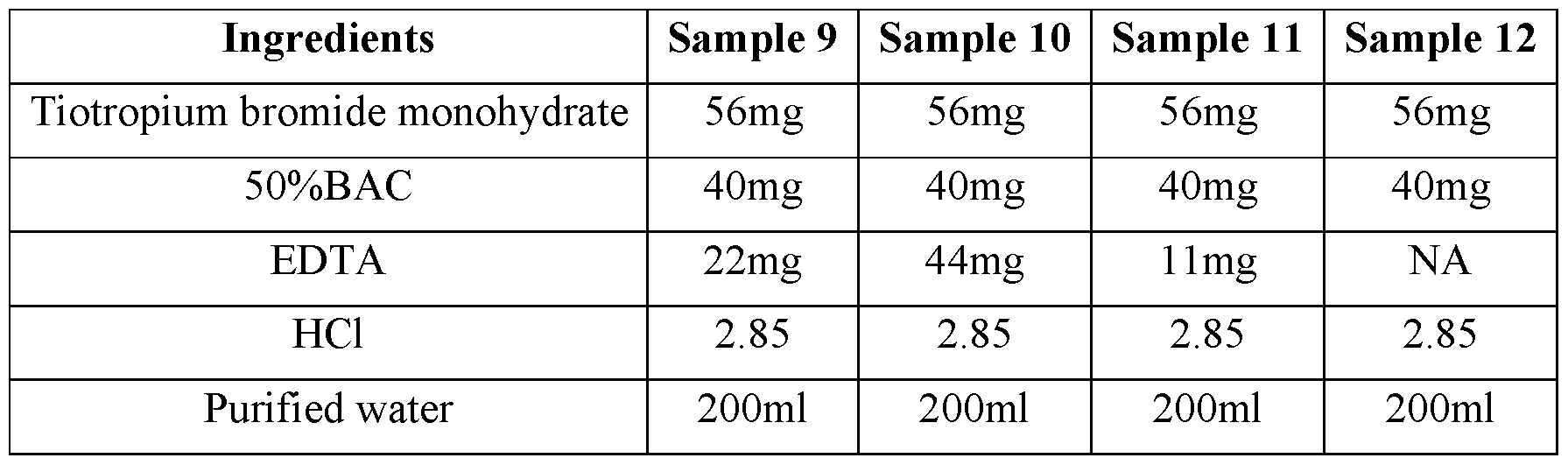
Table 9: Stability at Different Concentration of EDTA
ND: not detected
[0053] As can be seen from Table 9, the Tiotropium bromide solution is stable in the EDTA concentration of Omg/lOOml to about 22mg/100ml.
Example 7
[0054] Aerodynamic Particle Size Distribution:
Table 10: Ingredient Contents of Sample 13

[0055] Sample 13 solution was prepared in the same way that samples 9-12 were prepared but using the amounts provided in Table 13.
[0056] The aerodynamic particle size distribution was determined using an Andersen Scale Impactor (ACI). The inhalation device, named Respimat, was purchased from Boehringer Ingelheim. The Respimat inhaler was held close to the ACI inlet until no aerosol was visible. The flow rate of the ACI was set to 28.3 L/minute and was operated under ambient temperature and a relative humidity (RH) of 90%.
[0057] The solution of sample 13 was discharged into the ACI. Fractions of the dose were deposited at different stages of the ACI, in accordance with the particle size of the fraction. Each fraction was washed from the stage and analyzed using HPLC.
[0058] The results are provided below in Table 11.
Table 11: Single Dose Level Distribution and Aerodynamic Particle Size Distribution of TB Inhalation Formulation Sample 13 Administered by Respimat Inhalation

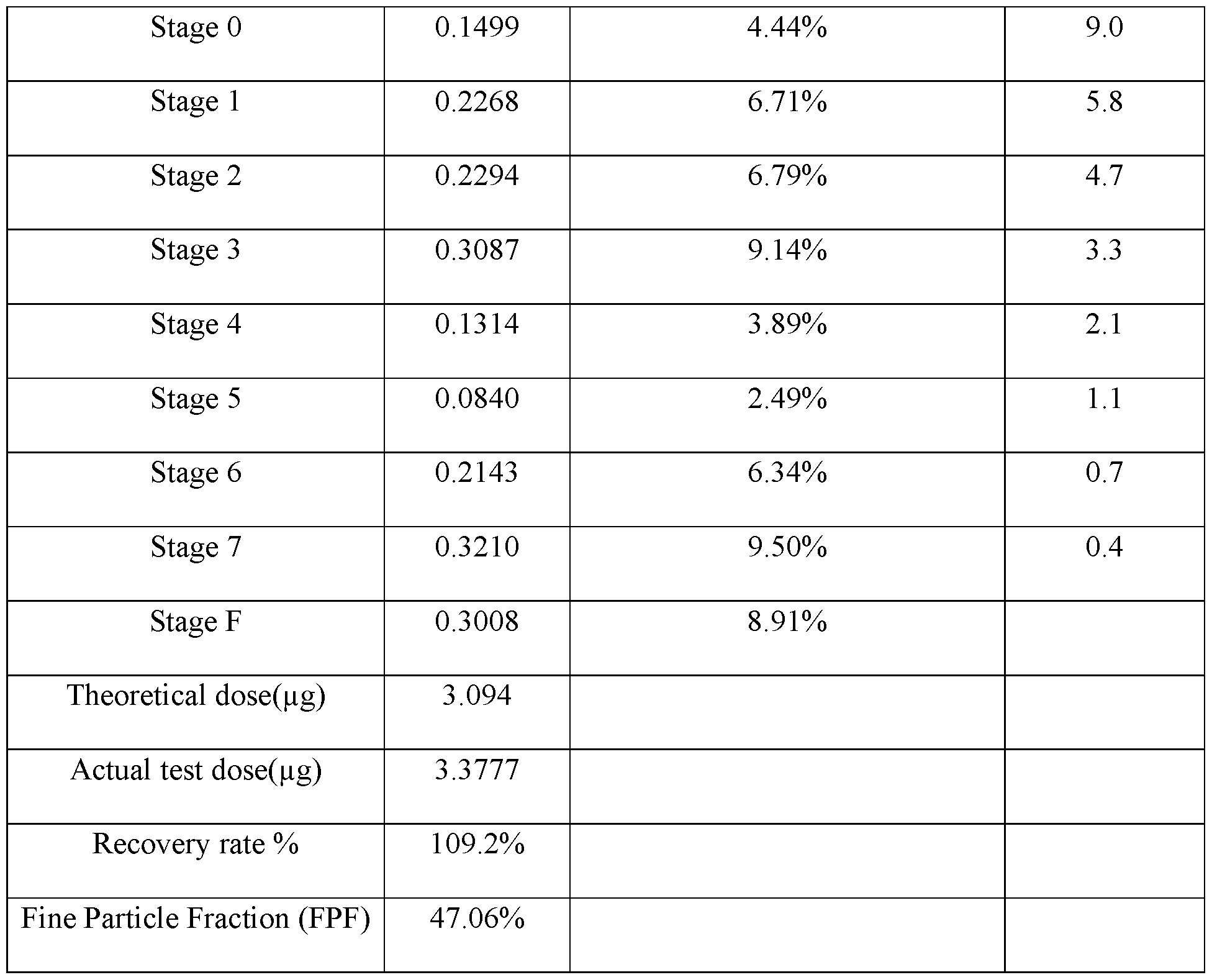
[0059] The larger the FPF value, the higher the atomization efficiency.
[0060] The above results demonstrate that the formulation of the present invention has a good atomization effect.
Example 8
[0061] Stability experiment.
Table 12: Ingredient Contents of Sample 14-16
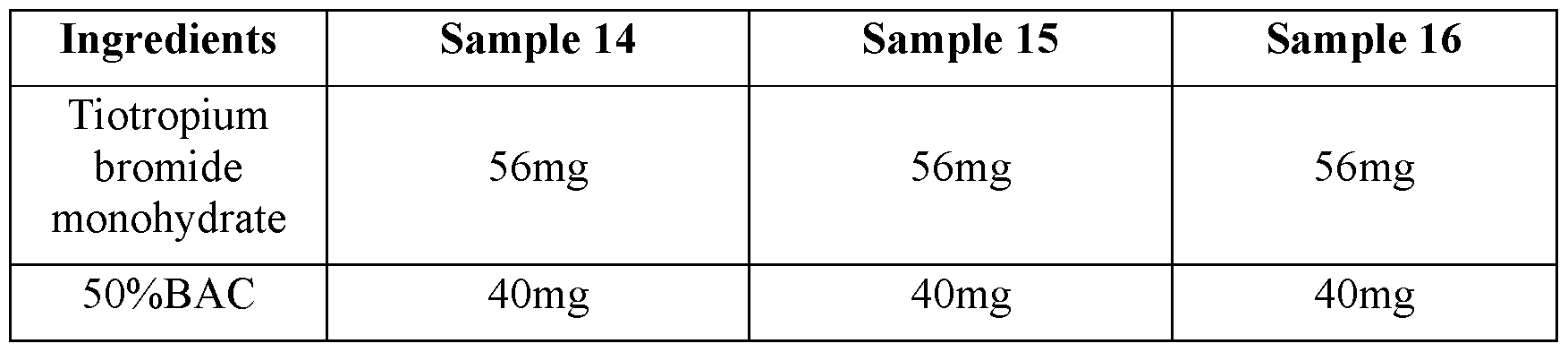

[0062] Sample 14-16 were prepared in the same way that samples 9-12 were prepared, but using the amounts provided in Table 12.
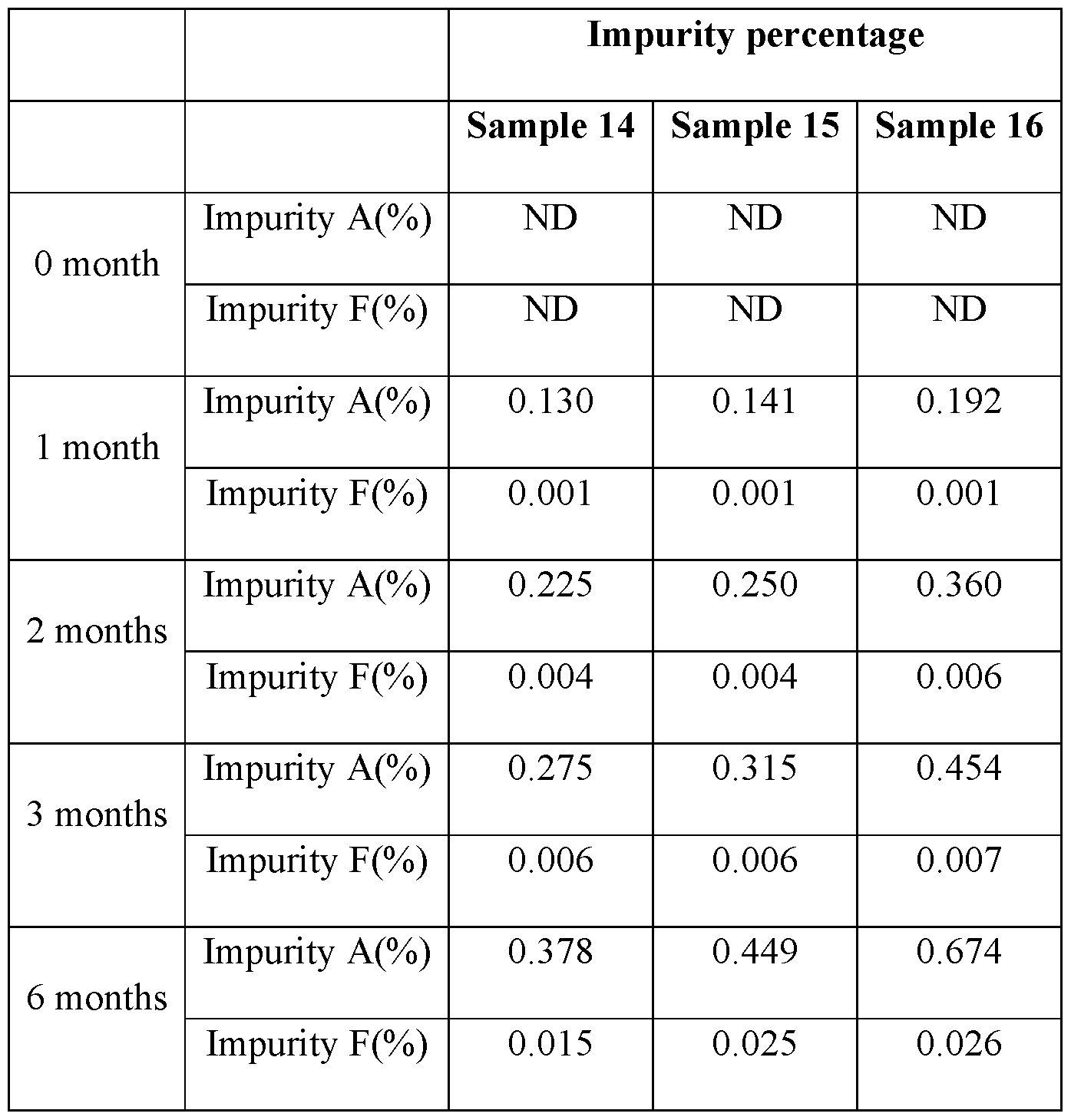
[0063] Samples 14-16 were stored at 40°C/75%RH for 0, 1, 2, 3, and 6 months. The impurity profile at each time point is provided below in Tables 13-14.
Table 13: Content result of Sample 14-16 (Conditions: 40 °C ± 2°C / 75% ± 5% RH)


Table 14: The Stability Results of Sample 14-16 (Conditions: 40 °C ± 2°C / 75% ± 5% RH)
ND: not detected
[0064] As shown in Tables 13-14, at pH 2.75-2.95 the TB solutions exhibited good stability. TB solutions ranging from a pH of about 2.75 to about 2.95 were stable for about 6 months at 40°C ± 2°C / 75% ± 5% RH.
[0065] While various embodiments of the present invention have been described above, it should be understood that they have been presented by way of example only, and not limitation. For example, the present invention is not limited to the physical arrangements or dimensions illustrated or described. Nor is the present invention limited to any particular design or materials of construction. As such, the breadth and scope of the present invention should not be limited to
any of the above-described exemplary embodiments, but should be defined only in accordance with the following claims and their equivalents.
Claims
1. A propellant-free inhalation formulation comprising Tiotropium or a salt or solvate thereof, a pH adjusting agent, and a pharmacologically acceptable additive dissolved in a solvent.
2. The formulation of claim 1, wherein the Tiotropium or a salt thereof is Tiotropium bromide.
3. The formulation of claim 1, wherein the Tiotropium or a salt or solvate thereof is Tiotropium bromide monohydrate.
4. The formulation according to claim 3, wherein Tiotropium bromide monohydrate is present in an amount ranging from about 20.7mcg/100ml to about 207mg/100ml.
5. The formulation of claim 1, further comprising an isosmotic adjusting agent selected from the group consisting of sodium chloride, glucose, mannitol, glucitol, and combinations thereof.
6. The formulation of claim 1, further comprising an isosmotic adjusting agent in an amount ranging from about 0.8% (w/w) to about 1% (w/w).
7. The formulation of claim 1, wherein the solvent comprises water.
8. The formulation of claim 1, wherein the solvent is water.
9. The formulation of claim 1, further comprising a pH adjusting agent selected from the group consisting of citric acid-citrate, citric acid, hydrochloric acid, and sodium hydroxide.
10. The formulation of claim 1, wherein the formulation has a pH ranging from about 1.0 to about 5.0.
11. The formulation of claim 1, wherein the formulation has a pH ranging from about 2.5 to about 3.5.
12. The formulation of claim 1, wherein the formulation has a pH ranging from about 2.7 to about 3.1.
13. The formulation of claim 1, wherein the pharmacologically acceptable additive is selected from the group consisting of edetic acid, edetate disodium dihydrate, edetate disodium, citric acid, and combinations thereof.
14. The formulation of claim 1, wherein the pharmacologically acceptable additive is selected from the group consisting of benzalkonium chloride, benzoic acid, sodium benzoate, and combinations thereof.
15. The formulation of claim 1, wherein the pharmacologically acceptable additive is present in an amount ranging from about lmg/lOOml to about 500mg/100ml.
16. The formulation of claim 1, wherein the formulation has an osmotic pressure ranging from about 100 mOsm to about 400 mOsm.
17. A method of treating asthma or COPD in a patient, comprising administering to the patient the pharmaceutical formulation of claim 1 by inhalation.
18. The method of claim 17, wherein the Tiotropium or a salt thereof is Tiotropium bromide monohydrate and the Tiotropium bromide monohydrate is administered at a dose ranging from about 3 pg to about 80 pg.
19. The method of claim 18, wherein the Tiotropium bromide monohydrate is administered at a dose ranging from about 5 pg to about 30 pg.
20. The method of claim 17, wherein the pharmaceutical formulation is administered using a nebulization inhalation device to provide an inhalable aerosol of the pharmaceutical formulation.
21. The method of claim 20, wherein the inhalable aerosol has a D50 that is less than about 10 pm.
22. The method of claim 20, wherein the inhalable aerosol has an average particle size of less than about 15 microns.
Applications Claiming Priority (2)
| Application Number | Priority Date | Filing Date | Title |
|---|---|---|---|
| US202063011224P | 2020-04-16 | 2020-04-16 | |
| US63/011,224 | 2020-04-16 |
Publications (1)
| Publication Number | Publication Date |
|---|---|
| WO2021211854A1 true WO2021211854A1 (en) | 2021-10-21 |
Family
ID=78080696
Family Applications (1)
| Application Number | Title | Priority Date | Filing Date |
|---|---|---|---|
| PCT/US2021/027498 Ceased WO2021211854A1 (en) | 2020-04-16 | 2021-04-15 | Inhalable formulation of a solution containing tiotropium bromide |
Country Status (2)
| Country | Link |
|---|---|
| US (1) | US20210322310A1 (en) |
| WO (1) | WO2021211854A1 (en) |
Citations (3)
| Publication number | Priority date | Publication date | Assignee | Title |
|---|---|---|---|---|
| US20040019073A1 (en) * | 2002-04-11 | 2004-01-29 | Boehringer Ingelheim Pharma Gmbh Co. Kg | Aerosol formulation for inhalation containing a tiotropium salt |
| US20180133151A1 (en) * | 2016-11-16 | 2018-05-17 | Glenmark Specialty S.A. | Nebulized tiotropium |
| US20190031730A1 (en) * | 2015-01-08 | 2019-01-31 | Moerae Matrix, Inc. | Formulation of mk2 inhibitor peptides |
-
2021
- 2021-04-15 US US17/231,777 patent/US20210322310A1/en not_active Abandoned
- 2021-04-15 WO PCT/US2021/027498 patent/WO2021211854A1/en not_active Ceased
Patent Citations (3)
| Publication number | Priority date | Publication date | Assignee | Title |
|---|---|---|---|---|
| US20040019073A1 (en) * | 2002-04-11 | 2004-01-29 | Boehringer Ingelheim Pharma Gmbh Co. Kg | Aerosol formulation for inhalation containing a tiotropium salt |
| US20190031730A1 (en) * | 2015-01-08 | 2019-01-31 | Moerae Matrix, Inc. | Formulation of mk2 inhibitor peptides |
| US20180133151A1 (en) * | 2016-11-16 | 2018-05-17 | Glenmark Specialty S.A. | Nebulized tiotropium |
Also Published As
| Publication number | Publication date |
|---|---|
| US20210322310A1 (en) | 2021-10-21 |
Similar Documents
| Publication | Publication Date | Title |
|---|---|---|
| US6455524B1 (en) | Medicament compositions based on anticholinergically-effective compounds and beta-mimetics | |
| EP3332767B1 (en) | Liquid inhalation formulation comprising rpl554 | |
| EP2600830B1 (en) | Dry powder formulation comprising a phosphodiesterase inhibitor | |
| EP1915129A2 (en) | Pharmaceutical formulations comprising a long-acting beta2-agonist for administration by nebulisation | |
| JP2020023537A (en) | Combinations of tiotropium bromide, formoterol and budesonide for treatment of copd | |
| WO2021211858A1 (en) | Inhalable formulation of a solution containing tiotropium bromide and olodaterol | |
| US20050004228A1 (en) | Long-acting drug combinations for the treatment of respiratory complaints | |
| US11304897B2 (en) | Pharmaceutical formulation containing umeclidinium bromide and vilanterol trifenatate | |
| WO2020141472A1 (en) | Nebulization composition comprising tiotropium and indacaterol | |
| ES3037198T3 (en) | Combination therapy for inhalation administration | |
| WO2021211854A1 (en) | Inhalable formulation of a solution containing tiotropium bromide | |
| CN115811978B (en) | Preparation of pharmaceutical composition comprising odaterol, tiotropium bromide and budesonide | |
| WO2021211850A1 (en) | Inhalable formulation of a solution containing olodaterol | |
| US20220031712A1 (en) | Preparation of a pharmaceutical composition of olodaterol and budesonide | |
| JP2025513460A (en) | Delivery of medicines by powder inhalation | |
| JP2006517214A (en) | Novel pharmaceutical composition based on novel anticholinergic agent and TNFα synthesis or action inhibitor |
Legal Events
| Date | Code | Title | Description |
|---|---|---|---|
| 121 | Ep: the epo has been informed by wipo that ep was designated in this application |
Ref document number: 21789305 Country of ref document: EP Kind code of ref document: A1 |
|
| NENP | Non-entry into the national phase |
Ref country code: DE |
|
| 32PN | Ep: public notification in the ep bulletin as address of the adressee cannot be established |
Free format text: NOTING OF LOSS OF RIGHTS PURSUANT TO RULE 112(1) EPC (EPO FORM 1205A DATED 10.02.2023) |
|
| 122 | Ep: pct application non-entry in european phase |
Ref document number: 21789305 Country of ref document: EP Kind code of ref document: A1 |