WO2021141996A1 - Single- and multi-chain polypeptides that bind specifically to cd3 epsilon - Google Patents
Single- and multi-chain polypeptides that bind specifically to cd3 epsilon Download PDFInfo
- Publication number
- WO2021141996A1 WO2021141996A1 PCT/US2021/012320 US2021012320W WO2021141996A1 WO 2021141996 A1 WO2021141996 A1 WO 2021141996A1 US 2021012320 W US2021012320 W US 2021012320W WO 2021141996 A1 WO2021141996 A1 WO 2021141996A1
- Authority
- WO
- WIPO (PCT)
- Prior art keywords
- seq
- variable domain
- chain variable
- polypeptide
- sequence
- Prior art date
- Legal status (The legal status is an assumption and is not a legal conclusion. Google has not performed a legal analysis and makes no representation as to the accuracy of the status listed.)
- Ceased
Links
Classifications
-
- C—CHEMISTRY; METALLURGY
- C07—ORGANIC CHEMISTRY
- C07K—PEPTIDES
- C07K16/00—Immunoglobulins [IGs], e.g. monoclonal or polyclonal antibodies
- C07K16/18—Immunoglobulins [IGs], e.g. monoclonal or polyclonal antibodies against material from animals or humans
- C07K16/28—Immunoglobulins [IGs], e.g. monoclonal or polyclonal antibodies against material from animals or humans against receptors, cell surface antigens or cell surface determinants
- C07K16/2803—Immunoglobulins [IGs], e.g. monoclonal or polyclonal antibodies against material from animals or humans against receptors, cell surface antigens or cell surface determinants against the immunoglobulin superfamily
- C07K16/2809—Immunoglobulins [IGs], e.g. monoclonal or polyclonal antibodies against material from animals or humans against receptors, cell surface antigens or cell surface determinants against the immunoglobulin superfamily against the T-cell receptor (TcR)-CD3 complex
-
- C—CHEMISTRY; METALLURGY
- C07—ORGANIC CHEMISTRY
- C07K—PEPTIDES
- C07K16/00—Immunoglobulins [IGs], e.g. monoclonal or polyclonal antibodies
- C07K16/42—Immunoglobulins [IGs], e.g. monoclonal or polyclonal antibodies against immunoglobulins
- C07K16/4208—Immunoglobulins [IGs], e.g. monoclonal or polyclonal antibodies against immunoglobulins against an idiotypic determinant on Ig
-
- C—CHEMISTRY; METALLURGY
- C07—ORGANIC CHEMISTRY
- C07K—PEPTIDES
- C07K16/00—Immunoglobulins [IGs], e.g. monoclonal or polyclonal antibodies
- C07K16/42—Immunoglobulins [IGs], e.g. monoclonal or polyclonal antibodies against immunoglobulins
- C07K16/4208—Immunoglobulins [IGs], e.g. monoclonal or polyclonal antibodies against immunoglobulins against an idiotypic determinant on Ig
- C07K16/4241—Immunoglobulins [IGs], e.g. monoclonal or polyclonal antibodies against immunoglobulins against an idiotypic determinant on Ig against anti-human or anti-animal Ig
-
- C—CHEMISTRY; METALLURGY
- C07—ORGANIC CHEMISTRY
- C07K—PEPTIDES
- C07K2317/00—Immunoglobulins specific features
- C07K2317/30—Immunoglobulins specific features characterized by aspects of specificity or valency
- C07K2317/33—Crossreactivity, e.g. for species or epitope, or lack of said crossreactivity
-
- C—CHEMISTRY; METALLURGY
- C07—ORGANIC CHEMISTRY
- C07K—PEPTIDES
- C07K2317/00—Immunoglobulins specific features
- C07K2317/30—Immunoglobulins specific features characterized by aspects of specificity or valency
- C07K2317/34—Identification of a linear epitope shorter than 20 amino acid residues or of a conformational epitope defined by amino acid residues
-
- C—CHEMISTRY; METALLURGY
- C07—ORGANIC CHEMISTRY
- C07K—PEPTIDES
- C07K2317/00—Immunoglobulins specific features
- C07K2317/50—Immunoglobulins specific features characterized by immunoglobulin fragments
- C07K2317/56—Immunoglobulins specific features characterized by immunoglobulin fragments variable (Fv) region, i.e. VH and/or VL
- C07K2317/565—Complementarity determining region [CDR]
-
- C—CHEMISTRY; METALLURGY
- C07—ORGANIC CHEMISTRY
- C07K—PEPTIDES
- C07K2317/00—Immunoglobulins specific features
- C07K2317/70—Immunoglobulins specific features characterized by effect upon binding to a cell or to an antigen
- C07K2317/74—Inducing cell proliferation
-
- C—CHEMISTRY; METALLURGY
- C07—ORGANIC CHEMISTRY
- C07K—PEPTIDES
- C07K2317/00—Immunoglobulins specific features
- C07K2317/90—Immunoglobulins specific features characterized by (pharmaco)kinetic aspects or by stability of the immunoglobulin
- C07K2317/92—Affinity (KD), association rate (Ka), dissociation rate (Kd) or EC50 value
Definitions
- the present disclosure relates to the field of biotechnology, and more specifically, to antigen-binding molecules.
- Anti-CD3 epsilon (CD3 ⁇ ) antibodies have been in use for several years and have been designed to function in a variety of roles and combat a number of diseases. Many of these anti-CD3 ⁇ antibodies are derived from only a few variants, including SP-34. In order to further develop the efficacy, safety, and manufacturability of anti-CD3 ⁇ antibodies, additional anti- CD3 ⁇ , antibodies are desired. There is a need for anti-CD3 ⁇ antibodies with different binding affinities to SP-34, in order to develop therapeutics with tailored binding affinities to treat specific diseases. These desired CD3 ⁇ antibodies improvements for therapeutic development need to have human and cynomolgus monkey cross-reactivity.
- polypeptides that include a light chain variable domain and a heavy- chain variable domain that form an antigen-binding domain that binds specifically to CD3 epsilson (CD3 ⁇ ).
- multi-chain polypeptides that include a light chain variable domain and a heavy chain variable domain that form an antigen-binding domain that binds specifically to CD3 ⁇ .
- single-chain polypeptides that include a light chain variable domain and a heavy chain variable domain that form an antigen-binding domain that binds specifically to CD3 ⁇ .
- anti -idiotypic antibodies that bind specifically to any of the antigen-binding domains described herein.
- nucleic acid(s) that encode any of the polypeptides described herein (e.g., any of the single- or multi- chain polypeptides described herein) or any of the anti-idiotypic antibodies described herein, cells containing any of these nucleic acid(s), and methods of making any of the polypeptides described herein (e.g., any of the single- and multi-chain polypeptides described herein) using these cells. Also provided herein are methods of treating a subject in need thereof that include administering any of the polypeptides described herein (e.g., any of the single- or multi -chain polypeptides described herein).
- polypeptides that, include: (a) a light chain variable domain comprising a sequence of SEQ ID NO: 1, and a heavy chain variable domain comprising a sequence of SEQ ID NO: 3; (b) a light chain variable domain comprising a sequence of SEQ ID NO: 8, and a heavy chain variable domain comprising a sequence of SEQ ID NO: 10; (c) a light chain variable domain comprising a sequence of SEQ ID NO: 12, and a heavy chain variable domain comprising a sequence of SEQ ID NO: 14; (d) a light chain variable domain comprising a sequence of SEQ ID NO: 26, and a heavy chain variable domain comprising a sequence of SEQ ID NO: 115; (e) a light chain variable domain comprising a sequence of SEQ ID NO: 1, and a heavy chain variable domain comprising a sequence of SEQ ID NO: 5; (f) a light chain variable domain comprising a sequence of SEQ ID NO: 1, and a heavy chain variable domain comprising a sequence of SEQ ID NO: 3
- multi-chain polypeptides that include: (a) a first polypeptide including a light chain variable domain including a sequence of SEQ ID NO: 1, and a second polypeptide including a heavy chain variable domain including a sequence of SEQ ID NO: 3; (b) a first polypeptide including a light chain variable domain including a sequence of SEQ) ID NO: 8, and a second polypeptide including a heavy chain variable domain including a sequence of SEQ ID NO: 10; (c) a first polypeptide including a light chain variable domain including a sequence of SEQ ID NO: 12, and a second polypeptide including a heavy chain variable domain including a sequence of SEQ ID NO: 14; (d) a first polypeptide including a light chain variable domain including a sequence of SEQ ID NO: 26, and a second polypeptide including a heavy chain variable domain including a sequence of SEQ ID NO: 115; (e) a light chain variable domain comprising a sequence of SEQ ID NO: 1, and
- the multi-chain polypeptide includes a first polypeptide including a light chain variable domain including a sequence of SEQ ID NO: 1, and a second polypeptide including a heavy chain variable domain including a sequence of SEQ ID NO: 3.
- the multi-chain polypeptide includes a first polypeptide including a light chain variable domain including a sequence of SEQ ID NO: 8, and a second polypeptide including a heavy chain variable domain including a sequence of SEQ ID NO: 10.
- the multi-chain polypeptide includes a first polypeptide including a light chain variable domain including a sequence of SEQ ID NO: 12, and a second polypeptide including a heavy chain variable domain including a sequence of SEQ ID NO: 14. [0011] In some embodiments, the multi-chain polypeptide includes a first polypeptide including a light chain variable domain including a sequence of SEQ ID NO: 26, and a second polypeptide including a heavy chain variable domain including a sequence of SEQ ID NO: 115.
- the multi-chain polypeptide includes a first polypeptide including a light chain variable domain including a sequence of SEQ ID NO: 1, and a second polypeptide including a heavy chain variable domain including a sequence of SEQ ID NO: 5. [0013] In some embodiments, the multi-chain polypeptide includes a first polypeptide including a light chain variable domain including a sequence of SEQ ID NO: 1, and a second polypeptide including a heavy chain variable domain including a sequence of SEQ ID NO: 6.
- the multi-chain polypeptide includes a first polypeptide including a light chain variable domain including a sequence of SEQ ID NO: 1, and a second polypeptide including a heavy chain variable domain including a sequence of SEQ ID NO: 7. [0015] In some embodiments, the multi-chain polypeptide includes a first polypeptide including a light chain variable domain including a sequence of SEQ ID NO: 16, and a second polypeptide including a heavy chain variable domain including a sequence of SEQ ID NO: 18. [0016] In some embodiments, the multi-chain polypeptide is selected from the group consisting of: a VHH-scAb, a VHH-Fab, a Dual scFal.
- a F(ab’)2 a diabody, a crossMab, a DAF (two-in- one), a DAF (four-in-one), a DutaMab, a DT-IgG, a knobs-in-holes common light chain, a knobs-in-holes assembly, a charge pair, a Fab-arm exchange, a SEEDbody, a LUZ-Y, a FcAb, a kl-body, an orthogonal Fab, a DVD-IgG, a igG(H) ⁇ scFv, a scFv ⁇ (H)IgG, IgG(L)-scFv, scFv- (L)IgG, IgG(L,H)-Fv, IgG(H)-V, V(H)-IgG, IgG(L)-V, V(L)-IgG, KIH IgG-sc
- the multi-chain polypeptide is an antibody that binds specifically to CD3 epsilon or an antigen-binding fragment thereof.
- the antibody is an IgG.
- the antibody is an IgGl, IgG2, IgG3, or an IgG4.
- the antibody is an IgG2a.
- the antibody is an IgM, IgA, or IgE.
- the antigen-binding fragment is a Fab, F(ab')2, Fab', or Fv.
- the multi-chain polypeptide includes an additional light chain variable domain and an additional heavy chain variable domain. In some embodiments, the multi-chain polypeptide is humanized. In some embodiments of the multi-chain polypeptide, at least one polypeptide of the multi-chain polypeptide is conjugated to a toxin, a radioisotope, a drug, or a small molecule via a cieavahle linker. In some embodiments of the multi-chain polypeptide, at least one polypeptide of the multi-chain polypeptide is conjugated to a toxin, a radioisotope, a drug, or a small molecule via a non-cleavable linker.
- compositions including any of the multi-chain polypeptides described herein.
- sets nucleic acids that together encode polypeptides that together make up any of the multi-chain polypeptides described herein.
- the set of nucleic acids is a pair of expression vectors.
- the set of nucleic acids are present in a single expression vector.
- nucleic acids that, encode polypeptides that together make up any of the multi-chain polypeptides described herein.
- the nucleic acid is an expression vector.
- host cells that include any of the sets nucleic acids described herein. Also provided herein are host cells that include any of the nucleic acids described herein. [0024] Also provided herein are methods of producing a multi-chain polypeptide including: (a) culturing any of cells described herein in a liquid culture medium under conditions that allow for the production of the multi-chain polypeptide, and (b) recovering the multi-chain polypeptide from the cell or the liquid culture medium. In some embodiments, the method further includes:
- the method further includes:
- kits including any of the multi-chain polypeptides described herein or any of the pharmaceutical compositions described herein.
- single-chain polypeptides that include: (a) a light chain variable domain including a sequence of SEQ ID NO: 1, and a heavy chain variable domain including a sequence of SEQ ID NO: 3; (b) a light chain variable domain including a sequence of SEQ ID NO: 8, and a heavy chain variable domain including a sequence of SEQ ID NO: 10; (c) a light chain variable domain including a sequence of SEQ ID NO: 12, and a heavy chain variable domain including a sequence of SEQ ID NO: 14, or (d) a light chain variable domain including a sequence of SEQ ID NO: 26, and a heavy chain variable domain including a sequence of SEQ ID NO: 115; (e) a light chain variable domain comprising a sequence of SEQ ID NO: 1, and a heavy chain variable domain comprising a sequence of SEQ ID NO: 5; (f) a light chain variable domain comprising a sequence of SEQ ID NO: 1, and a heavy chain variable domain comprising a sequence of SEQ ID NO:
- the single-chain polypeptide includes a light, chain variable domain including a sequence of SEQ ID NO: 1, and a heavy chain variable domain including a sequence of SEQ ID NO: 3.
- the single-chain polypeptide includes a light chain variable domain including a sequence of SEQ ID NO: 8, and a heavy chain variable domain including a sequence of SEQ ID NO: 10.
- the single-chain polypeptide includes a light chain variable domain including a sequence of SEQ ID NO: 12, and a heavy chain variable domain including a sequence of SEQ ID NO: 14.
- the single-chain polypeptide includes a light, chain variable domain including a sequence of SEQ ID NO: 26, and a heavy chain variable domain including a sequence of SEQ ID NO: 115.
- the single-chain polypeptide includes a light chain variable domain including a sequence of SEQ ID NO: 1, and a heavy chain variable domain including a sequence of SEQ ID NO: 5.
- the single-chain polypeptide includes a light chain variable domain including a sequence of SEQ ID NO: 1, and a heavy chain variable domain including a sequence of SEQ ID NO: 6.
- the single-chain polypeptide includes a light, chain variable domain including a sequence of SEQ ID NO: 1, and a heavy chain variable domain including a sequence of SEQ ID NO: 7, [0034] In some embodiments, the single-chain polypeptide includes a light chain variable domain including a sequence of SEQ ID NO: 16, and a heavy chain variable domain including a sequence of SEQ ID NO: 18.
- the antigen-binding domain is a scFv.
- the single-chain polypeptide is a BiTE, a (scFv)2, a nanobody, a nanobody-HSA, a DART, a TandAb, a scDiabody, a scDiabody-CH3, scFv-CH-CL-scFv, a HSAbody, scDiabody-HSA, or a tandem -scFv.
- the single-chain polypeptide includes an additional light chain variable domain and an additional heavy chain variable domain.
- the single-chain polypeptide is a chimeric antigen receptor
- the single-chain polypeptide is humanized.
- the single-chain polypeptide is conjugated to a toxin, a radioisotope, a drug, or a small molecule via a cleavable linker. In some embodiments, the single-chain polypeptide is conjugated to a toxin, a radioisotope, a drug, or a small molecule via a non-deavable linker.
- compositions that include any of the single-chain polypeptides described herein.
- nucleic acids that encode any of the single-chain polypeptides described herein.
- the nucleic acid is an expression vector.
- host cells described herein that include any of the nucleic acids that encode any of the single-chain polypeptides.
- kits including any of the single-chain polypeptides described herein or any of the pharmaceutical compositions described herein.
- an “antigen-binding domain” is one or more protein domain(s) (e.g., formed from amino acids from a single polypeptide or formed from amino acids from two or more polypeptides (e.g., the same or different polypeptides)) that is capable of specifically binding to an antigen.
- an antigen-binding domain can bind to an antigen or epitope with specificity and affinity similar to that of naturally-occurring antibodies.
- the antigen-binding domain can be an antibody or a fragment thereof.
- an antigen-binding domain can include an alternative scaffold. Non-limiting examples of antigen- binding domains are described herein. Additional examples of antigen-binding domains are known in the art.
- antibody is used herein in its broadest sense and includes certain types of immunoglobulin molecules that include one or more antigen-binding domains that specifically bind to an antigen or epitope.
- An antibody specifically includes, e.g., intact antibodies (e.g., intact immunoglobulins, e.g., human IgG (e.g., human IgG1, human IgG2, human IgG3, human IgG4, IgG2a (e.g., human igG2a))), antibody fragments, and multi-specific antibodies.
- an antigen-binding domain is an antigen-binding domain formed by a VH -VL dimer.
- an antigen-binding domain can be an scFv (e.g., an scFv having a heavy chain variable domain (VH) separated from a light chain variable domain (VL) by a peptide linker, or having a VL separated from a VH by a peptide linker).
- an antibody is an anti- idiotypic (anti-ID) antibody or an anti -idiotypic scFv. Additional examples of an antibody are described herein. Additional examples of an antibody are known in the art.
- affinity refers to the strength of the sum total of non-covalent interactions between an antigen-binding domain and its binding partner (e.g., an antigen or epitope).
- affinity refers to intrinsic binding affinity, which reflects a 1 : 1 interaction between members of an antigen-binding domain and an antigen or epitope.
- the affinity of a molecule X for its partner Y can be represented by the dissociation equilibrium constant (KD). Affinity can be measured by common methods known in the art, including those described herein.
- Affinity can be determined, for example, using surface plasmon resonance (SPR) technology (e.g., BIACORE®) or biolayer interferometry (e.g., FORTEBIO®). Additional methods for determining the affinity for an antigen-binding domain and its corresponding antigen or epitope are known in the art.
- SPR surface plasmon resonance
- FORTEBIO® biolayer interferometry
- epitopope means a portion of an antigen that is specifically bound by an antigen-binding domain through a set of physical interactions between: (i) all monomers (e.g. individual amino acid residues, sugar side chains, and post-translationally modified amino acid residues) on the portion of the antigen-binding domain that specifically binds the antigen and (ii) all monomers (e.g. individual amino acid residues, sugar side chains, post-translationally modified amino acid residues) on the portion of the antigen that is specifically bound by the antigen-binding domain.
- all monomers e.g. individual amino acid residues, sugar side chains, and post-translationally modified amino acid residues
- Epitopes can, e.g., consist of surface-accessible amino acid residues, sugar side chains, phosphory!ated amino acid residues, methylated amino acid residues, and/or acety!ated amino acid residues and may have specific three-dimensional structural characteristics, as well as specific charge characteristics. Conformational and non- conformational epitopes are distinguished in that binding to the former, but not the latter, may be lost in the presence of denaturing solvents. In some embodiments, an epitope is defined by a linear amino acid sequence of at least about 3 to 6 amino acids, or about 10 to 15 amino acids.
- an epitope refers to a portion of a full-length protein or a portion thereof that is defined by a three-dimensional structure (e.g., protein folding). In some embodiments, an epitope is defined by a discontinuous amino acid sequence that is brought together via protein folding. In some embodiments, an epitope is defined by a discontinuous amino acid sequence that is brought together by quaternary ' structure (e.g., a cleft formed by the interaction of two different polypeptide chains). The amino acid sequences between the residues that define the epitope may not be critical to three-dimensional structure of the epitope. A conformational epitope may be determined and screened using assays that compare binding of antigen-binding protein construct to a denatured version of the antigen, such that a linear epitope is generated.
- An epitope may include amino acid residues that are directly involved in the binding, and other amino acid residues, which are not. directly involved in the binding.
- Methods for identifying an epitope to which an antigen-binding domain specifically binds are known in the art, e.g., structure-based analysis (e.g. X-ray crystallography, NMR, and/or electron microscopy) (e.g. on the antigen and/or the antigen-antigen binding domain complex) and/or mutagenesis-based analysis (e.g. alanine scanning mutagenesis, glycine scanning mutagenesis, and homology scanning mutagenesis) wherein mutants are measured in a binding assay with a binding partner, many of which are known in the art.
- structure-based analysis e.g. X-ray crystallography, NMR, and/or electron microscopy
- mutagenesis-based analysis e.g. alanine scanning mutagenesis, glycine scanning mutagenesis, and homology scanning mutagenesis
- paratope means a portion of an antigen-binding domain that specifically binds to an antigen through a set of physical interactions between: (i) ail monomers (e.g. individual amino acid residues, sugar side chains, posttranslationally modified amino acid residues) on the portion of the antigen-binding domain that specifically binds the antigen and (ii) all monomers (e.g. individual amino acid residues, sugar side chains, positranslationally modified amino acid residues) on the portion of the antigen that is specifically bound by the antigen-binding domain.
- Paratopes can, e.g. consist of surface-accessible amino acid residues and may have specific three-dimensional structural characteristics, as well as specific charge characteristics.
- a paratope refers to a portion of a full-length antigen- binding domain or a portion thereof that is defined by a three-dimensional structure (e.g., protein folding).
- a paratope is defined by a discontinuous amino acid sequence that is brought together via protein folding.
- an epitope is defined by a discontinuous amino acid sequence that is brought together by quaternary structure (e.g., a cleft formed by the interacti on of two different polypeptide chains).
- the amino acid sequences between the residues that define the paratope may not be critical to three-dimensional structure of the paratope.
- a paratope may comprise amino acid residues that are directly involved in the binding, and other amino acid residues, which are not directly involved in the binding.
- Methods for identifying a paratope to which an antigen-binding domain specifically binds are known in the art, e.g,, structure-based analysis (e.g.. X-ray crystallography, NMR, and/or electron microscopy) (e.g. on the antigen-binding domain, and/or the antigen binding domain-antigen complex), and/or mutagenesis-based analysis (e.g., alanine scanning mutagenesis, glycine scanning mutagenesis, and homology scanning mutagenesis) wherein mutants are measured in a binding assay with a binding partner, many of which are known in the art.
- structure-based analysis e.g.. X-ray crystallography, NMR, and/or electron microscopy
- mutagenesis-based analysis e.g., alanine scanning mutagenesis, glycine scanning mutagenesis, and homology scanning mutagenesis
- the phrase “present on the surface of a mammalian cell” means an antigen that physically attached to or at least partially embedded in the plasma membrane of a mammalian cell (e.g., a transmembrane protein, a peripheral membrane protein, a lipid-anchored protein (e.g., a GPI-anchor), an N-myristolyated protein, or a 8-palmitoylated protein).
- a mammalian cell e.g., a transmembrane protein, a peripheral membrane protein, a lipid-anchored protein (e.g., a GPI-anchor), an N-myristolyated protein, or a 8-palmitoylated protein.
- Non-limiting methods for determining the presence of antigen on the surface of a mammalian cell include fluorescence-activated cell sorting (FACS), immunohistochemistry , cell-fractionation assays and Western blotting.
- FACS fluorescence-activated cell sorting
- anti-idiotypic antibody can mean or refer to antibodies which bind specifically to at least part of the paratope of any of the antigen-binding domains described herein.
- An anti-idiotypic antibody can be referred to with the acronyms “Id” or “ID” or “id” herein.
- target cell or “target mammalian cell” or “mammalian target cell” means a mammalian cell that has at least one CD3 ⁇ present on its surface.
- exogenous refers to any material introduced from or originating from outside a cell, a tissue, or an organism that is not produced by or does not originate from the same cell, tissue, or organism in which it is being introduced.
- transduced refers to a process by which an exogenous nucleic acid is introduced or transferred into a cell.
- a “transduced”, “transfected,” or “transformed” cell e.g., mammalian cell
- exogenous nucleic acid e.g., a vector
- nucleic acid refers to a deoxyribonucleic acid (DNA) or ribonucleic acid (RNA), or a combination thereof, in either a single- or double-stranded form. Unless specifically limited, the term encompasses nucleic acids containing known analogues of natural nucleotides that have similar binding properties as the reference nucleotides. Unless otherwise indicated, a particular nucleic acid sequence also implicitly encompasses complementary' sequences as well as the sequence explicitly indicated. In some embodiments of any of the nucleic acids described herein, the nucleic acid is DNA. In some embodiments of any of the nucleic acids described herein, the nucleic acid is RNA.
- Modifications can be introduced into a nucleotide sequence by standard techniques known in the art, such as site-directed mutagenesis and polymerase chain reaction (RGR )- mediated mutagenesis.
- Conservative amino acid substitutions are ones in which the amino acid residue is replaced with an amino acid residue having a similar side chain. Families of amino acid residues having similar side chains have been defined in the art.
- amino acids with acidic side chains e.g., aspartate and glutamate
- amino acids with basic side chains e.g., lysine, arginine, and histidine
- non-polar amino acids e.g., alanine, valine, leucine, isoleucine, proline, phenylalanine, methionine, and tryptophan
- uncharged polar amino acids e.g., glycine, asparagine, glutamine, cysteine, serine, threonine and tyrosine
- hydrophilic amino acids e.g., arginine, asparagine, aspartate, glutamine, glutamate, histidine, lysine, serine, and threonine
- hydrophobic amino acids e.g., alanine, cysteine, isoleucine, leucine, methionine, phenylalanine, proline, tryptophan, tyrosine
- amino acids include: aliphatic-hydroxy amino acids (e.g., serine and threonine), amide family (e.g., asparagine and glutamine), alphatic family (e.g., alanine, valine, leucine and isoleucine), aromatic family (e.g., phenylalanine, tryptophan, and tyrosine).
- aliphatic-hydroxy amino acids e.g., serine and threonine
- amide family e.g., asparagine and glutamine
- alphatic family e.g., alanine, valine, leucine and isoleucine
- aromatic family e.g., phenylalanine, tryptophan, and tyrosine.
- the phrase ‘"specifically binds” or “binds specifically” means that the antigen-binding domain binds one or more antigenic determinants of the desired target antigen and does not react with other polypeptides, or binds at much lower affinity, e.g., about or greater than 10 -6 M.
- Figure 1 is a graph showing the binding of different antibodies to human T cells.
- Figure 2 is a graph showing the binding of different antibodies to cynomolgus T cells.
- Figure 3 is a graph the response of human T cells following treatment with various concentrations of different plate-bound antibodies in a 4-day proliferation assay.
- Figure 4 is a graph depicting the response of human T cells following treatment with various concentrations of different soluble antibodies in a 4-day proliferation assay.
- Figure 5 is a graph the response of PBMC cells following treatment with various concentrations of different plate-bound antibodies in a 4-day proliferation assay.
- Figure 6 is a graph depicting the response of PBMC cells following treatment with various concentrations of different soluble antibodies in a 4-day proliferation assay.
- Figure 7 is a graph depicting the response of cynomolgus PBMCs following treatment with different bead-bound antibodies in a 6-day proliferation assay.
- Figures 8A-8E are a series of graphs showing the relative staining of different cells isolated from cynomolgus PBMC from multiple donors: CD3+ cells (Fig. 8A), CD4-CD8+ cells (Fig. 8B), CD4+CD8- cells (Fig. 8C), CD4+CD8+ cells (Fig. 8D), and CD4-CD8- cells (Fig. 8E).
- Figure 9 is a chart showing the relative ability of different antibodies to bind to the different sequences shown (sequences from top to bottom are SEQ ID NOs: 86-113). Higher numbers indicate higher level of binding than lorver numbers.
- Figure 10 is a graph showing the relative ability of 6d59 antibody to bind to human T cells in the presence of different concentrations of different anti -idiotypic antibodies. Binding is indicated by mean fluorescent intensity (MFI).
- MFI mean fluorescent intensity
- Figure 11 is a graph showing the relative ability of 6d59 antibody to human T cells following treatment different concentrations of different anti-idiotypic antibodies. Binding is indicated by % binding.
- polypeptides that include: (a) a light chain variable domain comprising a sequence of SEQ ID NO: 1, and a heavy chain variable domain comprising a sequence of SEQ ID NO: 3; (b) a light chain variable domain comprising a sequence of SEQ ID NO: 8, and a heavy chain variable domain comprising a sequence of SEQ ID NO: 10; (c) a light chain variable domain comprising a sequence of SEQ ID NO: 12, and a heavy chain variable domain comprising a sequence of SEQ ID NO: 14; (d) a light chain variable domain comprising a sequence of SEQ ID NO: 26, and a heavy chain variable domain comprising a sequence of SEQ ID NO: 115, (e) a light chain variable domain comprising a sequence of SEQ ID NO: 1, and a heavy chain variable domain comprising a sequence of SEQ ID NO: 5, (f) a light chain variable domain comprising a sequence of SEQ ID NO: 1, and a heavy chain variable domain comprising a sequence of SEQ ID NO: 1, and
- multi-chain polypeptides including: (a) a first polypeptide including a light chain variable domain including a sequence that is at least 80% identical to SEQ ID NO:
- single-chain polypeptides that include: (a) a first polypeptide including a light chain variable domain including a sequence that is at least 80% identical to SEQ ID NO: 1, and a second polypeptide including a heavy chain variable domain including a sequence that is at least 80% identical to SEQ ID NO: 3; (b) a first polypeptide including a light chain variable domain including a sequence that is at least 80% identical to SEQ ID NO: 8, and a second polypeptide including a heavy chain variable domain including a sequence that is at least 80% identical to SEQ ID NO: 10; (c) a first polypeptide including a light chain variable domain including a sequence that is at least 80% identical to SEQ ID NO: 12, and a second polypeptide including a heavy chain variable domain including a sequence that is at least 80% identical to SEQ ID NO: 14; or (d) a first polypeptide including a light chain variable domain including a sequence that is at least 80% identical to SEQ ID NO: 26,
- the antigen-binding domain is an scFv (e.g., where the light chain variable domain is N-terminal to the heavy chain variable domain, and the light chain variable domain is separated from the heavy chain variable domain by a peptide linker (e.g., a peptide linker of 1 amino acid to about 25 amino acids, 1 amino acid to about 20 amino acids, 1 amino acid to about 15 amino acids, 1 amino acid to about 10 amino acids, 1 amino acid to about 5 amino acids), or the heavy chain variable domain is N-terminal to the light chain variable domain, and the heavy chain variable domain is separated from the light chain variable domain by a peptide linker).
- a peptide linker e.g., a peptide linker of 1 amino acid to about 25 amino acids, 1 amino acid to about 20 amino acids, 1 amino acid to about 15 amino acids, 1 amino acid to about 10 amino acids, 1 amino acid to about 5 amino acids
- the single-chain or multi-chain polypeptide includes an antigen-binding domain that binds specifically to CD3 ⁇ that includes a light chain variable domain that includes a sequence that is at least 80% identical (e.g., at least 82%, at least 84%, at least 85%, at least 86%, at least 88%, at least 90%, at least 92%, at least 94%, at least 95%, at least 96%, at least 97%, at least 98%, at least 99%, or 100% identical) to SEQ ID NO: 1, 8, 12, 16, 20, 24, or 26.
- a light chain variable domain that includes a sequence that is at least 80% identical (e.g., at least 82%, at least 84%, at least 85%, at least 86%, at least 88%, at least 90%, at least 92%, at least 94%, at least 95%, at least 96%, at least 97%, at least 98%, at least 99%, or 100% identical) to SEQ ID NO: 1, 8, 12, 16, 20, 24, or 26.
- the single-chain or multi-chain polypeptide includes an antigen-binding domain that binds specifically to CD3 ⁇ that includes a heavy chain variable domain that includes a sequence that is at least 80% identical (e.g., at least 82%, at least 84%, at least 85%, at least 86%, at least 88%, at least 90%, at least 92%, at least 94%, at least 95%, at least 96%, at least 97%, at least 98%, at least 99%, or 100% identical) to SEQ ID NO: 3, 5, 6, 7, 10, 14, 18, 22 or 115.
- a heavy chain variable domain that includes a sequence that is at least 80% identical (e.g., at least 82%, at least 84%, at least 85%, at least 86%, at least 88%, at least 90%, at least 92%, at least 94%, at least 95%, at least 96%, at least 97%, at least 98%, at least 99%, or 100% identical) to SEQ ID NO: 3, 5, 6, 7, 10, 14, 18, 22 or 115.
- the single-chain or multi-chain polypeptide includes an antigen-binding domain that binds specifically to CD3 ⁇ that includes: (a) a heavy chain variable domain including a sequence that is at least 80% identical (e.g., at least 82%, at least 84%, at least 85%, at least 86%, at least
- a light chain variable domain including a sequence that is at least 80% identical (e.g., at least 82%, at least 84%, at least 85%, at least 86%, at least 88%, at least 90%, at least 92%, at least 94%, at least 95%, at least 96%, at least 97%, at least 98%, at least 99%, or 100% identical) to SEQ ID NO: 1; (b) a heavy chain variable domain including a sequence that is at least 80% identical (e.g., at least 82%, at least 84%, at least 85%, at least 86%, at least 88%, at least 90%, at least 92%, at least 94%, at least 95%, at least 96%, at least 97%, at least 98%, at least 99%, or 100% identical) to SEQ ID NO:
- a light chain variable domain including a sequence that is at least 80% identical (e.g., at least 82%, at least 84%, at least 85%, at least 86%, at least 88%, at least 90%, at least 92%, at least 94%, at least 95%, at least 96%, at least 97%, at least 98%, at least 99%, or 100% identical) to SEQ ID NO: 8; (c) a heavy chain variable domain including a sequence that is at least 80% identical (e.g., at least 82%, at least 84%, at least 85%, at least 86%, at least 88%, at least 90%, at least 92%, at least 94%, at least 95%, at least 96%, at least 97%, at least 98%, at least 99%, or 100% identical) to SEQ ID NO: 14, and a light chain variable domain including a sequence that is at least 80% identical (e.g., at least 82%, at least 84%, at least 85%, at least 86%, at least 88%, at least 90%, at
- the single-chain or multi-chain polypeptide includes a heavy chain variable domain comprising CDRs of SYGMH (SEQ ID NO: 54), IIWYDGSKRYYADSVKG (SEQ ID NO: 55), and DLITGTTDY (SEQ ID NO: 56), and a light chain variable domain comprising CDRs of RSSRSLVYSDGNTHLI (SEQ ID NO: 51), RVSNRVS (SEQ ID NO: 52), and LQGAHWPYT (SEQ ID NO: 53).
- the single-chain or multi-chain polypeptide includes a light chain variable domain comprising the three CDRs within a light chain variable domain of SEQ ID NO: 1, and a heavy chain variable domain comprising the three CDRs within a heavy chain variable domain of SEQ ID NO: 3.
- the single-chain or multi-chain polypeptide includes a light chain variable domain compri sing the three CDRs within a light chain variable domain of SEQ ID NO: 1, and a heavy chain variable domain comprising the three CDRs within a heavy chain variable domain of SEQ
- the single-chain or multi-chain polypeptide includes a light chain variable domain comprising the three CDRs within a light chain variable domain of SEQ ID NO: 1, and a heavy chain variable domain comprising the three CDRs within a heavy chain variable domain of SEQ ID NO: 6.
- the single-chain or multi-chain polypeptide includes a light chain variable domain comprising the three CDRs within a light chain variable domain of SEQ ID NO: 1, and a heavy chain variable domain comprising the three CDRs within a heavy chain variable domain of SEQ ID NO: 7.
- the single-chain or multi-chain polypeptide includes a light chain variable domain comprising the three CDRs within a light chain variable domain of SEQ ID NO: 8, and a heavy chain variable domain comprising the three CDRs within a heavy chain variable domain of SEQ ID NO: 10.
- the single-chain or multi-chain polypeptide includes a light chain variable domain comprising the three CDRs within a light chain variable domain of SEQ ID NO: 12, and a heavy chain variable domain comprising the three CDRs within a heavy chain variable domain of SEQ ID NO: 14.
- the single-chain or multi-chain polypeptide includes a light chain variable domain comprising the three CDRs within a light chain variable domain of SEQ ID NO: 26, and a heavy chain variable domain comprising the three CDRs within a heavy chain variable domain of 8EQ ID NO: 115.
- the single-chain or multi-chain polypeptide includes a light chain variable domain comprising the three CDRs within a light chain variable domain of SEQ ID NO: 16, and a heavy chain variable domain comprising the three CDRs within a heavy chain variable domain of SEQ
- the single-chain or multi-chain polypeptide includes a light chain variable domain comprising the three CDRs within a light chain variable domain of SEQ ID NO: 20, and a heavy chain variable domain comprising the three CDRs within a heavy chain variable domain of SEQ ID NO: 22.
- the single-chain or multi-chain polypeptide includes a light chain variable domain comprising the three CDRs within a light chain variable domain of SEQ ID NO: 24, and a heavy chain variable domain comprising the three CDRs within a heavy chain variable domain of SEQ ID NO: 22.
- the single-chain or multi-chain polypeptide includes an additional light chain variable domain and an additional heavy chain variable domain.
- a polypeptide of the multi-chain polypeptide is conjugated to a toxin, a radioisotope, a drug, or a small molecule via a cleavable linker or a non- cleavable linker.
- compositions including any of the single-chain polypeptides or multi-chain polypeptides described herein.
- methods of treating a subject in need thereof that include administering a therapeutically effective amount of any of the single-chain polypeptides or multi-chain polypeptides described herein, or any of the pharmaceutical compositions described herein, to the subject.
- the cluster of differentiation 3 -epsilon (CD3E) gene encodes the CD3 -epsilon (CD3 ⁇ or CDe) polypeptide. Together with CD3 -gamma, CD3 -delta, CD3-zeta, and the T- cell receptor alpha/beta and gamma/delta heterodimers, CD3 ⁇ forms the T-cell receptor-CD3 complex.
- the human CD3E gene is located on chromosome 11q23.3. It contains 9 exons (NCBI Accession No. NG_007383.1).
- SEQ ID NO: 50 is an exemplary' wild type human CD3 ⁇ protein.
- an antigen-binding domain that binds specifically to CD3 ⁇ can include a light chain variable domain that includes the following set of CDR sequences: (a) a CDR1 including RSSRSLVYSDGNTHLI (SEQ ID NO: 51), a CDR2 including RVSNRVS (SEQ ID NO: 52), and a ( DR 3 including LQGAHWPYT (SEQ ID NO: 53).
- the CDR sequences disclosed herein were identified in accordance with the definitions of Kabat,
- Non-limiting examples of antigen-binding domains that bind specifically to CD3 ⁇ can include a light chain variable domain that includes a sequence that is at least 80% identical (e.g., at least 82%, at least 84%, at least 85%, at least 86%, at least 88%, at least 90%, at least 92%, at least 94%, at least 95%, at least 96%, at least 97%, at least 98%, at least 99%, or 100% identical) to SEQ ID NO: 1, 8, 12, 16, 20, 24, or 26.
- an antigen-binding domain that binds specifically to CD3 ⁇ can include a heavy chain variable domain that includes the following set of CDR sequences: a CDR 1 including SYGMH (SEQ ID NO: 54), a CDR2 including IIWYDGSKRYYADSVKG (SEQ ID NO: 55), and a CDR3 including DLITGTTDY (SEQ ID NO: 56).
- the CDR sequences disclosed herein were identified in accordance with the definitions of Rabat, Sequences of Proteins of Immunological Interest. (National Institutes of Health, Bethesda, Md. (1987 and 1991).
- Non-limiting examples of antigen-binding domains that bind specifically to CD3 ⁇ can include a heavy chain variable domain that includes a sequence that is at least 80% identical (e.g., at least 82%, at least 84%, at least 85%, at least 86%, at least 88%, at least 90%, at least 92%, at least 94%, at least 95%, at least 96%, at least 97%, at least 98%, at least 99%, or 100% identical) to SEQ ID NO: 3, 5, 6, 7, 10, 14, 18, 22, or 115.
- an antigen-binding domain that binds specifically to CD3 ⁇ can include the three heavy chain CDRs of SYGMH (SEQ ID NO: 54), IIWYDGSKRYYADSVKG (SEQ ID NO: 55), and DLITGTTDY (SEQ ID NO: 56), and three light chain CDRs of RSSRSLVYSDGNTHLI (SEQ ID NO: 51), RVSNRVS (SEQ ID NO: 52), and the LQGAHWPYT (SEQ ID NO: 53).
- Non-limiting examples of antigen-binding domains that bind specifically to CD3 ⁇ can include:
- a heavy chain variable domain including a sequence that is at least 80% identical (e.g., at least 82%, at least 84%, at least 85%, at least 86%, at least 88%, at least 90%, at least 92%, at least 94%, at least 95%, at least 96%, at least 97%, at least 98%, at least 99%, or 100% identical) to SEQ ID NO: 3, and a light chain variable domain including a sequence that is at least 80% identical (e.g., at least 82%, at least 84%, at least 85%, at least 86%, at least 88%, at least 90%, at least 92%, at least 94%, at least 95%, at least 96%, at least 97%, at least 98%, at least 99%, or 100% identical) to SEQ ID NO: 1;
- a heavy chain variable domain including a sequence that is at least 80% identical (e.g., at least 82%, at least 84%, at least 85%, at least 86%, at least 88%, at least 90%, at least 92%, at least 94%, at least 95%, at least 96%, at least 97%, at least 98%, at least 99%, or 100% identical) to SEQ ID NO: 10, and a light chain variable domain including a sequence that is at least 80% identical (e.g,, at least 82%, at least 84%, at least 85%, at least 86%, at least 88%, at least 90%, at least 92%, at least 94%, at least 95%, at least 96%, at least 97%, at least 98%, at least 99%, or 100% identical) to SEQ ID NO: 8;
- a heavy chain variable domain including a sequence that is at least 80% identical (e.g., at least 82%, at least 84%, at least 85%, at least 86%, at least 88%, at least 90%, at least
- a heavy chain variable domain including a sequence that is at least 80% identical (e.g., at least 82%, at least 84%, at least 85%, at least 86%, at least 88%, at least 90%, at least 92%, at least 94%, at least 95%, at least 96%, at least 97%, at least 98%, at least 99%, or 100% identical) to SEQ ID NO: 5, and a light chain variable domain including a sequence that is at least 80% identical (e.g., at least 82%, at least 84%, at least 85%, at least 86%, at least 88%, at least 90%, at least 92%, at least 94%, at least 95%, at least 96%, at least 97%, at least 98%, at least 99%, or 100% identical) to SEQ ID NO: 1;
- a heavy chain variable domain including a sequence that is at least 80% identical (e.g., at least 82%, at least 84%, at least 85%, at least 86%, at least 88%, at least 90%, at least 92%, at least: 94%, at least 95%, at least 96%, at least 97%, at least 98%, at least 99%, or 100% identical) to SEQ ID NO: 6, and a light chain variable domain including a sequence that is at least 80% identical (e.g,, at least 82%, at least 84%, at least 85%, at least 86%, at least 88%, at least 90%, at least 92%, at least 94%, at least 95%, at least 96%, at least 97%, at least 98%, at least 99%, or 100% identical) to SEQ ID NO: 1;
- a heavy chain variable domain including a sequence that is at least 80% identical (e.g., at least 82%, at least 84%, at least 85%, at least 86%, at least 88%, at least 90%, at least 92%, at least 94%, at least 95%, at least 96%, at least 97%, at least 98%, at least 99%, or 100% identical) to SEQ ID NO: 7, and a light chain variable domain including a sequence that is at least 80% identical (e.g., at least 82%, at least 84%, at least 85%, at least 86%, at least 88%, at least 90%, at least 92%, at least 94%, at least 95%, at least 96%, at least 97%, at least 98%, at least 99%, or 100% identical) to SEQ ID NO: 1;
- a heavy chain variable domain including a sequence that is at least 80% identical (e.g., at least 82%, at least 84%, at least 85%, at least 86%, at least 88%, at least 90%, at least 92%, at least 94%, at least 95%, at least 96%, at least 97%, at least 98%, at least 99%, or 100% identical) to SEQ ID NO: 18, and a light chain variable domain including a sequence that is at least 80% identical (e.g,, at least 82%, at least 84%, at least 85%, at least 86%, at least 88%, at least 90%, at least 92%, at least 94%, at least 95%, at least 96%, at least 97%, at least 98%, at least 99%, or 100% identical) to SEQ ID NO: 16;
- a heavy chain variable domain including a sequence that is at least 80% identical (e.g., at least 82%, at least 84%, at least 85%, at least 86%, at least 88%, at least 90%, at least 92%, at least 94%, at least 95%, at least 96%, at least 97%, at least 98%, at least 99%, or 100% identical) to SEQ ID NO: 22, and a light chain variable domain including a sequence that is at least 80% identical (e.g,, at least 82%, at least 84%, at least 85%, at least 86%, at least 88%, at least 90%, at least 92%, at least 94%, at least 95%, at least 96%, at least 97%, at least 98%, at least 99%, or 100% identical) to SEQ ID NO: 20:
- a heavy chain variable domain including a sequence that is at least 80% identical (e.g., at least 82%, at least 84%, at least 85%, at least 86%, at least 88%, at least 90%, at least
- a heavy chain variable domain including a sequence that is at least 80% identical (e.g., at least 82%, at least 84%, at least 85%, at least 86%, at least 88%, at least 90%, at least
- the single-chain polypeptide or multi-chain polypeptide include an antigen-binding domain (e.g., one, two, three, or four antigen-binding domain) that binds to CD3 ⁇ with a binding constant (KD) of about 0.01 nM to about 500 nM (e.g., about 0.01 nM to about 450 nM, about 0.01 nM to about 400 nM, about 0.01 nM to about 350 nM, about 0.01 nM to about 300, about 0.01 nM to about 250 nM, about 0.01 nM: to about 200 nM, about 0.01 nM to about 150 nM, about 0.01 nM to about 100 nM, about 0.01 nM to about 80 nM, about 0.01 nM to about 60 nM, about 0.01 nM to about 50 nM, about 0.01
- KD binding constant
- nM 60 nM, about 5 nM: to about 50 nM, about 5 nM to about 40 nM, about 5 nM to about 25 nm, about 5 nM to about 20 nM, about 5 nM to about 15 nM, about 5 nM to about 10 nM, about 5 nM to about 8 nM, about 5 nM to about 6 nM, about 10 nM to about 500 nM, about 10 nM to about 450 nM, about 10 nM to about 400 nM, about 10 nM to about 350 nM, about 10 nM to about 300, about 10 nM: to about 250 nM, about 10 nM to about 200 nM, about 10 nM to about 150 nM, about 10 nM to about 100 nM, about 10 nM to about 80 nM, about 10 nM to about 60 nM, about 10 nM to about 50 nM:, about 10 nM
- multi-chain polypeptides that include a first polypeptide that includes a light chain variable domain (e g., any of the light chain variable domains described herein) and a second polypeptide that includes a heavy chain variable domain (e.g., any of the heavy chain variable domains described herein), where the light chain variable domain and the heavy chain variable domain form an antigen-binding domain that binds specifically to CD3 ⁇ .
- the multi-chain polypeptide includes:
- a first polypeptide including a light chain variable domain including a sequence that is at least 80% identical (e.g., at least 82%, at least 84%, at least 86%, at least 88%, at least 90%, at least 92%, at. least. 94%, at least 96%, at least 98%, at. least.
- SEQ ID NO: 1 SEQ ID NO: 1
- second polypeptide including a heavy chain variable domain including a sequence that is at least 80% identical (e.g., at least 82%, at least 84%, at least 86%, at least 88%, at least 90%, at least 92%, at least 94%, at least 96%, at least 98%, at least 99%, or 100% identical) to SEQ If) NO: 6;
- the multi-chain polypeptide includes:
- 80% identical e.g., at least 82%, at least 84%, at least 86%, at least 88%, at least 90%, at least 92%, at least 94%, at least 96%, at least 98%, at least 99%, or 100% identical
- SEQ ID NO: 35 a second polypeptide including a heavy chain variable domain encoded by a sequence that is at least 80% identical (e.g., at least 82%, at least 84%, at least 86%, at least 88%, at least 90%, at least 92%, at least 94%, at least 96%, at least 98%, at least 99%, or 100% identical) to SEQ ID NO: 116; where the light chain variable domain and the heavy chain variable domain form an antigen-binding domain that binds specifically to CD3 ⁇ .
- the multi-chain polypeptide is selected from a VHH-scAb, a VHH-Fab, a Dual scFab, a F(ab’)2, a diabody, a crossMab®, a DAF (two-in-one), a DAF (four- in-one), a DutaMab®, a DT-IgG, a knobs-in-holes common light chain, a knobs-in-holes assembly, a charge pair, a Fab-arm exchange, a SEEDbody, a LUZ-Y, a FcAb, a kl-body, an orthogonal Fab, a DVD-IgG, a IgG(H)-scFv, a scFv-(H)IgG, IgG(L)-scFv, scFv-(L)IgG, IgG(L,H)-Fv, Ig
- the multi-chain polypeptide is an antibody (e.g., any of the exemplary antibodies described herein) or an antigen-binding fragment (e.g., any of the exemplary antigen-binding fragments described herein).
- the multi-chain polypeptide is a humanized antibody (e.g., any of the exemplary antibodies described herein) or an antigen-binding fragment (e.g., any of the exemplary anti gen -binding fragments described herein).
- the multi-chain polypeptide is an IgG.
- the multi-chain polypeptide is an antibody where the antibody is IgGl, IgG2, IgG3, or an IgG4 (e.g., human IgG 1, human IgG2, human IgG3, or human IgG4).
- the multi-chain polypeptide is an antibody where the antibody is IgG2a (e.g., human IgG2a).
- the multi-chain polypeptide is an IgM, IgA, or IgE (e.g., a human IgM, human IgGA, or human IgGE).
- Non-limiting examples of an antigen-binding fragment of an antibody include an Fv fragment, a Fab fragment, a F(ab')2 fragment, and a Fab' fragment.
- Additional examples of an antigen-binding fragment of an antibody is an antigen-binding fragment of an IgG (e.g., an antigen-binding fragment of IgGl, IgG2, IgG3, or IgG4) (e.g., an antigen-binding fragment of a human or humanized IgG, e.g., human or humanized IgG 1, IgG2, IgG3, or IgG4); an antigen-binding fragment of an IgA (e.g., an antigen-binding fragment of IgAl or IgA2) (e.g., an antigen-binding fragment of a human or humanized IgA, e.g., a human or humanized IgA1 or lgA2); an antigen-binding fragment of an lgD (
- a “Fv” fragment includes a non-covalentiy-linked dimer of one heavy chain variable domain and one light chain variable domain.
- a “Fab” fragment includes the constant domain of the light chain and the first constant domain (CHI) of the heavy chain, in addition to the heavy and light chain variable domains of the Fv fragment.
- CHI first constant domain
- a “F(ab')2” fragment includes two Fab fragments joined, near the hinge region, by- disulfide bonds.
- a “dual variable domain immunoglobulin” or “DVD-Ig” refers to multivalent and multispecific binding proteins as described, e.g., in DiGiammarino et al., Methods Mol. Biol. 899:145-156, 2012, Jakob et al., MABs 5:358-363, 2013; and U.S, Patent Nos. 7,612,181; 8,258,268; 8,586,714; 8,716,450; 8,722,855; 8,735,546; and 8,822,645, each of which is incorporated by reference in its entirety.
- DARTs are described in, e.g., Garber, Nature Reviews Drug Discovery 13 : 799-801 , 2014.
- the multi-chain polypeptides includes an additional light chain variable domain and an additional heavy chain variable domain (e.g., wherein the additional light chain variable domain and the additional heavy chain variable domain form an additional antigen-binding domain that can specifically bind to CD3 ⁇ or a different antigen (e.g., a tumor antigen)).
- the additional light chain variable domain is identical to the first light chain variable domain.
- the additional heavy chain variable domain is identical to the first heavy chain variable domain.
- the additional light chain variable domain and the additional heavy chain variable domain form an additional antigen- binding domain.
- the antigen-binding domain and the additional antigen-binding domain can be identical or different from each other (and can specifically bind to the same or different antigens or epitopes).
- the antigen-binding domain and the additional antigen-binding domain can both be an Fv fragment, or at least one can be an Fv fragment.
- the antigen-binding domain and the additional antigen-binding domain can both be a Fab fragment, or at least one can be a Fab fragment.
- the antigen-binding domain and an additional antigen-binding domain can be a Fab' fragment, or at least one can be a Fab’ fragment.
- the multi-chain polypeptide can include two or more polypeptides (e.g., two, three, four, five, six, seven, eight, nine, or ten polypeptides). In some embodiments where the multi-chain polypeptide includes two or more polypeptides, two, three, four, five or six of the polypeptides of the two or more polypeptides can be identical.
- single-chain polypeptides that include a light chain variable domain and a heavy chain variable domain, where the light chain variable domain and the heavy chain variable domain form an antigen-binding domain that hinds specifically to CD3 ⁇ .
- a single chain polypeptide includes: [00143] (a) a light chain variable domain including a sequence that is at least 80% identical (e.g., at least 82%, at least 84%, at least 86%, at least 88%, at least 90%, at least 92%, at least 94%, at least 96%, at least 98%, at least 99%, or 100% identical) to SEQ ID NO: 1, and a heavy chain variable domain including a sequence that is at least 80% identical (e.g., at least 82%, at least 84%, at least 86%, at least 88%, at least 90%, at least 92%, at least 94%, at least 96%, at least 98%, at least 99%, or 100% identical) to SEQ ID NO: 3;
- a light chain variable domain including a sequence that is at least 80% identical (e.g., at least 82%, at least 84%, at least 86%, at least 88%, at least 90%, at least 92%, at least 94%, at least 96%, at least 98%, at least 99%, or 100% identical) to SEQ ID NO: 8
- a heavy chain variable domain including a sequence that is at. least. 80% identical (e.g., at least 82%, at least 84%, at least 86%, at least 88%, at least 90%, at least 92%, at least 94%, at least 96%, at least 98%, at least 99%, or 100% identical) to SEQ ID NO: 10;
- a light chain variable domain including a sequence that is at least 80% identical (e.g., at least 82%, at least 84%, at least 86%, at least 88%, at least 90%, at least 92%, at least 94%, at least 96%, at least 98%, at least 99%, or 100% identical) to SEQ ID NO: 12, and a heavy chain variable domain including a sequence that is at least 80% identical (e.g., at least 82%, at least 84%, at least 86%, at least 88%, at least 90%, at least 92%, at. least. 94%, at least 96%, at least 98%, at least 99%, or 100% identical) to SEQ ID NO: 14;
- a light, chain variable domain including a sequence that, is at least 80% identical (e.g., at least 82%, at least 84%, at least 86%, at least 88%, at least 90%, at least 92%, at least 94%, at least 96%, at least 98%, at least 99%, or 100% identical) to SEQ ID NO: 1, and a heavy chain variable domain including a sequence that is at least 80% identical (e.g., at least 82%, at least 84%, at least 86%, at least 88%, at least 90%, at least 92%, at least 94%, at least 96%, at least 98%, at least 99%, or 100% identical) to SEQ ID NO: 5;
- a light chain variable domain including a sequence that is at least 80% identical (e.g., at. least. 82%, at least 84%, at least 86%, at. least. 88%, at least 90%, at least 92%, at. least. 94%, at least 96%, at least 98%, at least 99%, or 100% identical) to SEQ ID NO: 1, and a heavy chain variable domain including a sequence that is at. least.
- a light chain variable domain including a sequence that is at least 80% identical (e.g., at least 82%, at least 84%, at least 86%, at least 88%, at least 90%, at least 92%, at least 94%, at least 96%, at least 98%, at least 99%, or 100% identical) to SEQ ID NO: 16, and a heavy chain variable domain including a sequence that is at. least. 80% identical (e.g., at least 82%, at least 84%, at least 86%, at least 88%, at least 90%, at least 92%, at least 94%, at least 96%, at least 98%, at least 99%, or 100% identical) to SEQ ID NO: 18;
- a light chain variable domain including a sequence that is at least 80% identical (e.g., at least 82%, at least 84%, at least 86%, at least 88%, at least 90%, at least 92%, at least 94%, at least 96%, at least 98%, at least 99%, or 100% identical) to SEQ ID NO: 20, and a heavy chain variable domain including a sequence that is at least 80% identical (e.g., at least 82%, at least 84%, at least 86%, at least 88%, at least 90%, at least 92%, at least 94%, at least 96%, at least 98%, at least 99%, or 100% identical) to SEQ ID NO: 22;
- a light chain variable domain including a sequence that is at least 80% identical (e.g., at least 82%, at least 84%, at least 86%, at least 88%, at least 90%, at least 92%, at least 94%, at least 96%, at least 98%, at least 99%, or 100% identical) to SEQ ID NO: 24, and a heavy chain variable domain including a sequence that is at least 80% identical (e.g., at least 82%, at least 84%, at least 86%, at least 88%, at least 90%, at least 92%, at least 94%, at least 96%, at least 98%, at least 99%, or 100% identical) to SEQ ID NO: 22; where the light chain variable domain and the heavy chain variable domain form an antigen-binding domain that binds specifically to CD3 ⁇ ; or
- a light chain variable domain including a sequence that is at least 80% identical (e.g., at least 82%, at least 84%, at least 86%, at least 88%, at least 90%, at least 92%, at least 94%, at least 96%, at.
- SEQ ID NO: 26 a heavy- chain variable domain including a sequence that is at least 80% identical (e.g., at least 82%, at least 84%, at least 86%, at least 88%, at least 90%, at least 92%, at least 94%, at least 96%, at least 98%, at least 99%, or 100% identical) to SEQ ID NO: 115; where the light chain variable domain and the heavy chain variable domain form an antigen-binding domain that binds specifically to CD3 ⁇ .
- a single chain polypeptide includes:
- the single-chain polypeptide includes an antigen-binding domain that is an scFv (e.g., VL-VH or VH-VL).
- an scFv can include a peptide linker (e.g., 1 amino acids to 25 amino acids) between the light chain variable domain (VL) and the heavy chain variable domain (VH).
- the single-chain polypeptide includes an antigen-binding domain selected from the group of: a VH domain, a VHH domain, a VNAR domain, and a scFv.
- the single-chain polypeptide can be a BiTE®, a (scFv)2, a nanobody, a nanobody-HSA, a DART, a TandAb, a scDiabody, a scDiabody-CH3, scFv-CH-CL-scFv, a HSAbody, scDiabody -HAS, a tandem-scFv, an Adnectin, a DAKPin, a fibronectin, and a DEP conjugate.
- the single-chain polypeptide can be a chimeric antigen receptor (CAR), e.g., a CAR that has one anti-CD3 ⁇ antigen-binding domain and an additional antigen-binding domain that binds to a different target antigen (e.g., a tumor antigen).
- CAR chimeric antigen receptor
- a VHH domain is a single monomeric variable antibody domain that can be found in came!ids.
- a VNAR domain is a single monomeric variable antibody domain that can be found in cartilaginous fi sh.
- Non-limiting aspects of VHH domains and VNAR domains are described in, e.g., Cromie et al., Curr. Top. Med. Chem. 15:2543-2557, 2016; De Genst et al. Dev. Comp. Immunol. 30:187-198, 2006; De Meyer et al, Trends Biotechnol 32:263-270, 2014; Kijanka et al., Nanomedicine 10:161-174, 2015; Kovaleva et al., Expert. Opin. Biol.
- the single-chain polypeptide can include an additional light chain variable domain and an additional heavy chain variable domain (e.g., an additional light chain variable domain and an additional heavy chain variable domain that forms an additional antigen-binding domains that binds to CD3 ⁇ or a different antigen (e.g., a tumor antigen)).
- an additional light chain variable domain and an additional heavy chain variable domain e.g., an additional light chain variable domain and an additional heavy chain variable domain that forms an additional antigen-binding domains that binds to CD3 ⁇ or a different antigen (e.g., a tumor antigen)
- the antigen-binding domain and the additional antigen-binding domain can be identical or different from each other (e.g., specifically bind to the same or different antigens or epitopes).
- both can be VHH domains, or at least one can be a VHH domain.
- both can be VNAR domains or at least one can be a VNAR domain.
- both can be a scFv or at least one can be a scFv.
- the antigen-binding domain and/or the additional binding domain can be an scFv (e.g., an scFv where the heavy chain variable domain is N-terminally positioned relative to the light chain variable domain, and optionally, there can be a peptide linker (e.g., 1 amino acid to about 25 amino acids, 1 amino acid to about 20 amino acids, 1 amino acid to about 15 amino acids, 1 amino acid to about 10 amino acids, 1 amino acid to about 5 amino acids) disposed between the heavy chain variable domain and the light chain variable domain, or an scFv where the light chain variable domain is N-terminally positioned relative to the heavy chain variable domain, and optionally, there can be a peptide linker disposed between the light chain variable domain and the heavy chain variable domain).
- a peptide linker e.g., 1 amino acid to about 25 amino acids, 1 amino acid to about 20 amino acids, 1 amino acid to about 15 amino acids, 1 amino acid to about 10 amino acids, 1 amino acid to about 5 amino acids
- an anti -idiotypic antibody is prepared by immunizing an animal of the same species and genetic type as the source of an anti-CD3 ⁇ monoclonal antibody (e.g., any of the exemplary anti-CD3 ⁇ antibodies described herein) with the monoclonal antibody to which an anti-idiotypic antibody is being prepared.
- the immunized animal typically can recognize and respond to the idiotypic determinants of the immunizing antibody by producing an antibody to these idiotypic determinants (the anti-idiotypic antibody).
- An anti-anti-idiotypic antibody may be epitopically identical to the original monoclonal antibody, which induced the anti-idiotypic antibody.
- Anti-idiotypic antibodies may be varied (thereby producing anti -idiotypic antibody variants) and/or derivatized by any suitable technique, such as those described elsewhere herein with respect to anti-CD3 ⁇ -specific antibodies of the present disclosure.
- an anti -indioty pic antibody can include: (a) a light chain variable domain comprising a sequence that is at least 80% identical (e.g., at least 82%, at least 84%, at least 86%, at least 88%, at least 90%, at least 92%, at least 94%, at least 96%, at least 98%, at least 99%, or 100% identical) to SEQ ID NO: 27, 31, 38, or 42, and (b) a heavy chain variable domain comprising a sequence that is at least 80% identical (e.g., at least 8:2%, at least 84%, at least 86%, at least 88%, at least 90%, at least 92%, at least 94%, at least 96%, at least 98%, at least 99%, or 100% identical) to SEQ ID NO: 29, 33, 36, 40, 44, 46 or 48.
- a light chain variable domain comprising a sequence that is at least 80% identical (e.g., at least 82%, at least 84%, at least 86%, at least 88%, at
- an anti-indiotypic antibody can be a polypeptide expressed by nucleic acid sequences: (a) a light chain variable domain comprising a sequence that is at least 80% identical (e.g., at least 82%, at least 84%, at least 86%, at least 88%, at least 90%, at least 92%, at least 94%, at least 96%, at least 98%, at least 99%, or 100% identical) to SEQ ID NO:
- a heavy chain variable domain comprising a sequence that is at least 80% identical (e.g., at least 82%, at least 84%, at least 86%, at least 88%, at least 90%, at least 92%, at least 94%, at least 96%, at least 98%, at least 99%, or 100% identical) to SEQ ID NO:
- the multi-chain polypeptide includes:
- the single-chain or multi-chain polypeptide includes a light chain variable domain comprising the three CDRs within a light chain variable domain of SEQ ID NO: 27, and a heavy chain variable domain comprising the three CDRs within a heavy chain variable domain of SEQ ID NO: 29;
- the single-chain or multi-chain polypeptide includes a light chain variable domain comprising the three CDRs within a light chain variable domain of SEQ ID NO: 31, and a heavy chain variable domain comprising the three CDRs within a heavy chain variable domain of SEQ ID NO: 33;
- the single-chain or multi-chain polypeptide includes a light chain variable domain comprising the three CDRs within a light chain variable domain of SEQ ID NO: 31, and a heavy chain variable domain comprising the three CDRs within a heavy chain variable domain of SEQ ID NO: 36;
- the single-chain or multi-chain polypeptide includes a light chain variable domain comprising the three CDRs within a light chain variable domain of SEQ ID NO: 38, and a heavy chain variable domain comprising the three CDRs within a heavy chain variable domain of SEQ ID NO: 40;
- the single-chain or multi-chain polypeptide includes a light chain variable domain comprising the three CDRs within a light chain variable domain of SEQ ID NO: 42, and a heavy chain variable domain comprising the three CDRs within a heavy chain variable domain of SEQ ID NO: 44;
- the single-chain or multi-chain polypeptide includes a light chain variable domain comprising the three CDRs within a light chain variable domain of SEQ ID NO: 42, and a heavy chain variable domain comprising the three CDRs within a heavy chain variable domain of SEQ ID NO: 46;
- the single-chain or multi-chain polypeptide includes a light chain variable domain comprising the three CDRs within a light chain variable domain of SEQ ID NO: 42, and a heavy chain variable domain comprising the three CDRs within a heavy chain variable domain of SEQ ID NO: 48.
- an anti-idiotypic antibody can include:
- a light chain variable domain comprising a sequence that is at least 80% identical (e.g., at least 82%, at least 84%, at least 86%, at least 88%, at least 90%, at least 92%, at least 94%, at least 96%, at least 98%, at least 99%, or 100% identical) to SEQ ID NO: 27, and a heavy chain variable domain encoded by a sequence that is at least 80% identical (e.g., at least 82%, at least 84%, at least 86%, at least 88%, at least 90%, at least 92%, at least 94%, at least 96%, at least 98%, at least 99%, or 100% identical) to SEQ ID NO: 29;
- a light chain variable domain comprising a sequence that is at least 80% identical (e.g., at least 82%, at least 84%, at least 86%, at least 88%, at least 90%, at least 92%, at least 94%, at least 96%, at least 98%, at least 99%, or 100% identical) to SEQ ID NO: 38, and a heavy chain variable domain encoded by a sequence that is at least 80% identical (e.g., at least 82%, at least 84%, at least 86%, at least 88%, at least 90%, at least 92%, at least 94%, at least 96%, at least 98%, at least 99%, or 100% identical) to SEQ ID NO: 40;
- a light chain variable domain comprising a sequence that is at least 80% identical (e.g., at least 82%, at least 84%, at least 86%, at least 88%, at least 90%, at least 92%, at least 94%, at least 96%, at least 98%, at least 99%, or 100% identical) to SEQ ID NO: 31, and a heavy chain variable domain encoded by a sequence that is at least 80% identical (e.g., at least 82%, at least 84%, at least 86%, at least 88%, at least 90%, at least 92%, at least 94%, at least 96%, at least 98%, at least 99%, or 100% identical) to SEQ ID NO: 33;
- a light chain variable domain comprising a sequence that is at least 80% identical (e.g., at least 82%, at least 84%, at least 86%, at least 88%, at least 90%, at least 92%, at least 94%, at least 96%, at least 98%, at least 99%, or 100% identical) to SEQ ID NO: 42, and a heavy chain variable domain encoded by a sequence that is at least 80% identical (e.g., at least 82%, at least 84%, at least 86%, at least 88%, at least 90%, at least 92%, at least 94%, at least 96%, at least 98%, at least 99%, or 100% identical) to SEQ ID NO: 44;
- a light chain variable domain comprising a sequence that is at least 80% identical (e.g., at least 82%, at least 84%, at least 86%, at least 88%, at least 90%, at least 92%, at least 94%, at least 96%, at least 98%, at least 99%, or 100% identical) to SEQ ID NO: 42, and a heavy chain variable domain encoded by a sequence that is at least 80% identical (e.g., at least 82%, at least 84%, at least 86%, at least 88%, at least 90%, at least 92%, at least 94%, at least 96%, at least 98%, at least 99%, or 100% identical) to SEQ ID NO: 48;
- a light chain variable domain comprising a sequence that is at least 80% identical (e.g., at least 82%, at least 84%, at least 86%, at least 88%, at least 90%, at least 92%, at least 94%, at least 96%, at least 98%, at least 99%, or 100% identical) to SEQ ID NO: 31, and a heavy chain variable domain encoded by a sequence that is at least 80% identical (e.g., at least 82%, at least 84%, at least 86%, at least 88%, at least 90%, at least 92%, at least 94%, at least 96%, at least 98%, at least 99%, or 100% identical) to SEQ ID NO: 36; or
- a light chain variable domain comprising a sequence that is at least 80% identical (e.g., at least 82%, at least 84%, at least 86%, at least 88%, at least 90%, at least 92%, at least 94%, at least 96%, at least 98%, at least 99%, or 100% identical) to SEQ ID NO: 42, and a heavy chain variable domain encoded by a sequence that is at least 80% identical (e.g., at least 82%, at least 84%, at least 86%, at least 88%, at least 90%, at least 92%, at least 94%, at least 96%, at least 98%, at least 99%, or 100% identical) to SEQ ID NO: 46.
- an anti-indiotypic antibody can include:
- a light chain variable domain encoded by a sequence that is at least 80% identical e.g., at least 82%, at least 84%, at least 86%, at least 88%, at least 90%, at least 92%, at least 94%, at least 96%, at least 98%, at least 99%, or 100% identical
- a heavy chain variable domain encoded by a sequence that is at least 80% identical e.g., at least 82%, at least 84%, at least 86%, at least 88%, at least 90%, at least 92%, at least 94%, at least 96%, at least 98%, at least 99%, or 100% identical
- This disclosure also provides methods and materials for including additional elements in any of the single-chain polypeptides or multi -chain polypeptides described herein including, for example, a targeting moiety to facilitate delivery ' to a cell or tissue of interest, an agent (e.g., a therapeutic agent, an antineoplastic agent, a drug, or a small molecule), a toxin, or a fragment thereof.
- a targeting moiety to facilitate delivery ' to a cell or tissue of interest
- an agent e.g., a therapeutic agent, an antineoplastic agent, a drug, or a small molecule
- the single-chain polypeptide or multi-chain polypeptides described herein can be conjugated to a cytotoxic agent, including, without limitation, a toxin (e.g., an enzymatically active toxin of bacterial, fungal, plant, or animal origin, or fragments thereof) or a radioactive isotope.
- a cytotoxic agent including, without limitation, a toxin (e.g., an enzymatically active toxin of bacterial, fungal, plant, or animal origin, or fragments thereof) or a radioactive isotope.
- the single-chain polypeptide or multi-chain polypeptide can be conjugated to a cytotoxic agent including, without limitation, a toxin (e.g., an enzymatically active toxin of bacteri al, fungal, plant, or animal origin, or fragments thereof), or a radioactive isotope.
- a cytotoxic agent including, without limitation, a toxin (e.g., an enzymatically active toxin of bacteri al, fungal, plant, or animal origin, or fragments thereof), or a radioactive isotope.
- Non-limiting exemplary cytotoxic agents that can be conjugated to any of the single- chain polypeptides or multi-chain polypeptides described herein include: dolastatins and derivatives thereof (e.g., auri statin E, AFP, monomethyl auristatin D (MMAD), monomethyl auri statin F (MMAF), monomethyl auristatin E (MMAE), desmethyl auristatin E (DMAE), auristatin F, desmethyl auristatin F (DMAF), dolastatin 16 (DmJ), dolastatin 16 (Dpv), auristatin derivatives (e.g., auristatin tyramine, auristatin quinolone), maytansinoid derivatives, duocarmycin, alpha-amanitin, turbostatin, phenstatin, bydroxypbenstatin, spongi statin 5, spongistatin 7, halistatin 1, halistatin 2,
- Non-limiting exemplar] ' enzymatically active toxins that can be conjugated to any of the single-chain polypeptides or multi-chain polypeptides described herein include: diphtheria toxin, exotoxin A chain from Pseudomonas aeruginosa, ricin A chain, abrin A chain, modeccin A chain, alpha-sarcin, Aleuriies fordii proteins, dianfhin proteins, Phytoiaca Americana proteins (e.g., PAP1, RARP, and PAP-8), momordica charantia inhibitor, curcin, crotirs, sapaonaria officinalis inhibitor, geionin, mitogeliin, restrictocin, pbenomycin, neomycin, and tricothecenes.
- diphtheria toxin exotoxin A chain from Pseudomonas aeruginosa
- ricin A chain abrin A chain
- Non-limiting exemplary' anti -neoplastics that can be conjugated to any of the single- chain polypeptides or multi-chain polypeptides described herein include: adriamycin, cerubidine, bleomycin, alkeran, velban, oncovin, fluorouracil, methotrexate, thiotepa, bisantrene, novantrone, thioguanine, procarabizine, and cytarabine.
- Non-limiting exemplary antivirals that can be conjugated to any of the single-chain polypeptides or multi-chain polypeptides described herein include: acyclovir, vira A, and Symmetrel.
- Non-limiting exemplars, ' antibacterial that can be conjugated to any of the single-chain polypeptides or multi-chain polypeptides described herein include: aminoglycosides, streptomycin, neomycin, kanamycin, amikacin, gentamicin, and tobramycin.
- Non-limiting exemplary 3 beta, 16beta, 17alpha-trihy droxycho!est-5-en-22-one 16-O-(2- 0-4-methoxybenzoyl-beta-D-xylopyranosyl)-(1— >3)-(2-0-aeetyl-alpha-L-arabinopyranoside) (OSW-1) that can be conjugated to any of the single-chain polypeptides or multi-chain polypeptides described herein include: s-nitrobenzyloxycarbonyl derivatives of 06- benzylguanine, topoisomerase inhibitors, hemiasterlin, cephalotaxine, homoharringtonine, pyrrol Whyzodiazepine dimers (PBDs), functionalized pyrrol Whyzodiazepenes, calicheamicins, podophylltoxins, taxanes, and vinca alkaloids.
- Non-limiting exemplary radiopharmaceuticals that can be conjugated to any of the single-chain polypeptides or multi-chain polypeptides described herein include: 1231, 89Zr, 1231, 1311, 99m Tc, 201T1, 62Cu, 18F, 68Ga, 13 N, 150, 38K, 82Rb, and 99mTc,
- Non-limiting exemplary heavy metals that can be conjugated to any of the single-chain polypeptides or multi-chain polypeptides described herein include: barium, gold, and platinum.
- Non-limiting exemplary ' anti-mycoplasmals that can be conjugated to any of the single- chain polypeptides or multi-chain polypeptides described herein include: lylosine, spectinomycin, streptomycin B, ampicillin, sulfanilamide, polymyxin, and chloramphenicol.
- any of the single-chain polypeptides or multi-chain polypeptides described herein e.g., any of the exemplary' single-chain polypeptides or multi-chain polypeptides that include at least an antigen-binding domain that specifically binds to CD3 ⁇ .
- Conjugation can include any chemical reaction that will bind the two molecules so long as the single-chain polypeptide or multi-chain polypeptide and the other moiety retain their respective activities.
- Conjugation can include many chemical mechanisms, e.g., covalent binding, affinity binding, intercalation, coordinate binding, and complexation. In some embodiments, the preferred binding is covalent binding.
- Covalent binding can be achieved either by direct condensation of existing side chains or by the incorporation of external bridging molecules.
- Many bivalent or polyvalent linking agents are useful in conjugating any of the single-chain polypeptides or multi- chain polypeptides described herein.
- conjugation can include organic compounds, such as thioesters, carbodiimides, succinimide esters, g!utaraldehyde, diazobenzenes, and hexamethylene diamines, ln some embodiments, the single-chain polypeptide or multi-chain polypeptide can include, or otherwise introduce, one or more non-natural amino acid residues to provide suitable sites for conjugation,
- an agent and/or conjugate is attached by disulfide bonds (e.g., disulfide bonds on a cysteine molecule) to the antigen-binding domain.
- disulfide bonds e.g., disulfide bonds on a cysteine molecule
- the conjugate when the conjugate binds to its target in the presence of complement within the target site (e.g., diseased tissue (e.g., cancerous tissue)), the amide or ester bond attaching the conjugate and/or agent to the linker is cleaved, resulting in the release of the conjugate and/or agent in its active form.
- the conjugates and/or agents when administered to a subject, will accomplish delivery and release of the conjugate and/or the agent at the target site (e.g., diseased tissue (e.g., cancerous tissue)).
- These conjugates and/or agents are particularly effective for the in vivo delivery of any of the conjugates and/or agents described herein.
- the linker is not cleavable by enzymes of the complement system.
- the conjugate and/or agent is released without complement activation since complement activation ultimately lyses the target cell.
- the conjugate and/or agent is to be delivered to the target cell (e.g., hormones, enzymes, corticosteroids, neurotransmiters, or genes).
- the linker is mildly susceptible to cleavage by serum proteases, and the conjugate and/or agent is released slowly at the target site.
- the conjugate and/or agent is designed such that, the conjugate and/or agent is delivered to the target site (e.g., disease tissue (e.g., cancerous tissue)) but the conjugate and/or agent is not released.
- the target site e.g., disease tissue (e.g., cancerous tissue)
- the conjugate and/or agent is not released.
- the conjugate and/or agent is attached to an antigen-binding domain either directly or via a non-cleavabie linker.
- exemplary non-cleavable linkers include amino acids (e.g., D-amino acids), peptides, or other organic compounds that may be modified to include functional groups that, can subsequently he utilized in attachment to antigen-binding domains by methods described herein.
- a single-chain polypeptide or multi-chain polypeptide includes at least one point of conjugation for an agent. In some embodiments, all possible points of conjugation are available for conjugation to an agent. In some embodiments, the one or more points of conjugation include, without limitation, sulfur atoms involved in disulfide bonds, sulfur atoms involved in interchain disulfide bonds, sulfur atoms involved in interchain sulfide bonds but not sulfur atoms involved in intrachain disulfide bonds, and/or sulfur atoms of cysteine or other amino acid residues containing a sulfur atom.
- residues may occur naturally in the single-chain or multi-chain polypeptide or may be incorporated into the single- or multi- chain polypeptide using methods including, without limitation, site-directed mutagenesis, chemical conversion, or mis-incorporation of non-natural amino acids.
- This disclosure also provides methods and materials for preparing a single-chain polypeptide or a multi-chain polypeptide for conjugation.
- a single-chain polypeptide or multi-chain polypeptide is modified to include one or more interchain disulfide bonds in the antigen-binding domain.
- disulfide bonds in the single-chain polypeptide or multi-chain polypeptide can undergo reduction following exposure to a reducing agent such as, without limitation, TCEP, DTT, or b-mercaptoethanol . in some cases, the reduction of the disulfide bonds is only partial.
- partial reduction refers to situations where a single-chain polypeptide or multi-chain polypeptide is contacted with a reducing agent and a fraction of all possible sites of conjugation undergo reduction (e.g., not all disulfide bonds are reduced).
- a single-chain polypeptide or multi-chain polypeptide is partially reduced following contact with a reducing agent if less than 99%, (e.g., less than 98%, 97%, 96%, 95%, 90%, 85%, 80%, 75%, 70%, 65%, 60%, 55%, 50%, 45%, 40%, 35%, 30%, 25%, 20%, 15%, 10% or less than 5%) of all possible sites of conjugation are reduced.
- the single-chain polypeptides or multi-chain polypeptides having a reduction in one or more interchain disulfide bonds in the antigen-binding domain and/or having a reduction in one or more intrachain disulfide bonds in the MM is conjugated to a drug reactive with free thiols.
- This disclosure also provides methods and materials for conjugating a therapeutic agent to a particular location on a single-chain polypeptide or multi-chain polypeptide.
- a single-chain polypeptide or multi-chain polypeptide is modified so that the therapeutic agents can be conjugated to the single-chain or multi-chain polypeptide at particular locations.
- a single-chain polypeptide or multi-chain polypeptide can be partially reduced in a manner that facilitates conjugation to the antigen-binding domain portion of the single-chain polypeptide or multi-chain polypeptide.
- the conjugation site(s) on the single-chain polypeptides or multi-chain polypeptides are selected to facilitate conjugation of an agent at a particular location.
- Various factors can influence the “level of reduction” of the single-chain polypeptide or multi-chain polypeptide upon treatment with a reducing agent.
- the ratio of reducing agent to the single-chain polypeptides or multi- chain polypeptides, length of incubation, incubation temperature, and/or pH of the reducing reaction solution can require optimization in order to achieve partial reduction consistent with the methods and materials described herein.
- any appropriate combination of factors e.g., ratio of reducing agent to single-chain polypeptide or multi-chain polypeptide, the length and temperature of incubation with reducing agent, and/or pH of reducing agent
- ratio of reducing agent to single-chain polypeptide or multi-chain polypeptide e.g., the length and temperature of incubation with reducing agent, and/or pH of reducing agent
- pH of reducing agent e.g., ratio of reducing agent to single-chain polypeptide or multi-chain polypeptide, the length and temperature of incubation with reducing agent, and/or pH of reducing agent
- a single-chain polypeptide or multi-chain polypeptide is contacted with a reducing agent (e.g., TCEP)
- a set of factors e.g., ratio of reducing agent to single-chain polypeptide or multi -chain polypeptide, the length and temperature of incubation with reducing agent, and/or pH of reducing agent
- the antigen-binding domain e.g., limited or no conjugation at non-antigen-binding domains of the single-chain polypeptides or multi-chain polypeptides.
- An effective ratio of reducing agent to single-chain polypeptide or multi-chain polypeptide can be any ratio that at least partially reduces the single-chain polypeptide or multi -chain polypeptide in a manner that allows conjugation to an agent (e.g., general reduction of possible conjugation sites or reduction at specific conjugation sites).
- the ratio of reducing agent to single-chain polypeptide or multi-chain polypeptide will be in a range from about 20: 1 to 1 :1, from about 10:1 to 1:1, from about 9:1 to 1 :1, from about 8:1 to 1 :1, from about 7:1 to 1:1, from about 6:1 to 1:1, from about 5:1 to 1:1, from about 4:1 to 1:1, from about 3:1 to 1:1, from about 2:1 to 1 :1, from about 20:1 to 1:1.5, from about 10:1 to 1:1.5, from about 9:1 to 1:1.5, from about.
- the ratio is in a range of from about 5 : 1 to 1 : 1. In some embodiments, the ratio is in a range of from about 5:1 to 1.5:1. In some embodiments, the ratio is in a range of from about 4:1 to 1:1. In some embodiments, the ratio is in a range from about 4:1 to 1.5:1. In some embodiments, the ratio is in a range from about 8 : 1 to about 1:1. In some embodiments, the ratio is in a range of from about 2.5:1 to 1:1.
- An effective incubation time and temperature for treating a single-chain polypeptide or multi-chain polypeptide can be any time and temperature that at least partially reduces the single- chain polypeptides or multi-chain polypeptides in a manner that allows conjugation of an agent to a single-chain polypeptide or multi-chain polypeptide (e.g., general reduction of possible conjugation sites or reduction at specific conjugation sites).
- the incubation time and temperature for treating a single-chain polypeptide or multi-chain polypeptide will be in a range from about 1 hour at 37 °C to about 12 hours at 37 °C (or any subranges therein).
- An effective pH for a reduction reaction for treating a single-chain polypeptide or multi-chain polypeptide with a reducing agent can be any pH that at least partially reduces the single-chain polypeptide or multi-chain polypeptide in a manner that allows conj ugation of the single-chain polypeptide or multi-chain polypeptide to an agent (e.g., general reduction of possible conjugation sites or reduction at specific conjugation sites).
- the multi-chain polypeptide is modified so that at least two interchain disulfide bonds located in an antigen- binding domain are reduced thereby facilitating conjugation of an agent to the antigen-binding domain of the multi-chain polypeptide.
- a multi-chain polypeptide can be contacted with a reducing agent in a manner that reduces interchain disulfide bonds to interchain thiols located in the antigen-binding domain.
- conjugation of the agent to the antigen-binding domain is facilitated by partially reducing the antigen-binding domain with a reducing agent to form at least two interchain thiols without forming all possible interchain thiols in the single- chain polypeptide or multi-chain polypeptide.
- a reducing agent to form at least two interchain thiols without forming all possible interchain thiols in the single- chain polypeptide or multi-chain polypeptide.
- the agent can conjugate to the interchain thiols in the antigen- binding domain.
- An agent can be modified in a manner to include thiols using a thiol-containing reagent (e.g., cysteine or N-acetyl cysteine).
- the antigen-binding domain of the multi-chain polypeptide can be partially reduced following incubation with reducing agent (e.g., TEPC) for about 1 hour at about 37 °C at a desired ratio of reducing agent to multi-chain polypeptide.
- reducing agent e.g., TEPC
- An effective ratio of reducing agent to multi-chain polypeptide can be any ratio that partially reduces at least two interchain disulfide bonds located in the antigen-binding domain in a manner that allows conjugation of a thiol-containing agent to the free thiol-containing antigen- binding domain (e.g., general reduction of possible conjugation sites or reduction at specific conjugation sites).
- a single-chain polypeptide or multi-chain polypeptide is reduced by a reducing agent in a manner that avoids reducing any intrachain disulfide bonds.
- a single-chain polypeptide or a multi-chain polypeptide can be contacted with a reducing agent in a manner that avoids reduction of one or more intrachain disulfide bonds of the antigen-binding domain.
- a single-chain polypeptide or a multi-chain polypeptide is reduced by a reducing agent in a manner that avoids reducing any intrachain disulfide bonds and reduces at least one interchain disulfide bond.
- the conjugated agent is a therapeutic agent.
- the conjugated agent e.g., agent conjugated to a single-chain polypeptide or multi-chain polypeptide
- the agent is or includes a radiolabeled amino acid, one or more biotinyl moieties that can be detected by marked avidin (e.g,, streptavidin containing a fluorescent marker or enzymatic activity that can be detected by optical or calorimetric methods), one or more radioisotopes or radionuclides, one or more fluorescent labels, one or more enzymatic labels, and/or one or more chemiluminescent agents.
- detectable moieties are attached by spacer molecules.
- the conjugated agent e.g., cytotoxic agent conjugated to a single-chain polypeptide or multi-chain polypeptide
- the conjugated agent is linked to the antigen-binding domain using a carbohydrate moiety, sulfhydryl group, amino group, or carboxyl ate group.
- the agent e.g., cytotoxic agent
- the agent is conjugated to the antigen-binding domain of a single- or multi-chain polypeptide via a linker.
- the agent e.g., cytotoxic agent conjugated to a single-chain polypeptide or multi-chain polypeptide
- the agent is conjugated to a cysteine or a lysine in the antigen-binding domain via a linker.
- the agent e.g., cytotoxic agent conjugated to a single-chain polypeptide or multi-chain polypeptide
- the linker is a thiol-containing linker.
- the linker is a cleavable linker.
- the linker is a non-deavable linker.
- the linker is selected from the group consisting of the linkers shown in Table 1.
- a variety of bifunctional protein-coupling agents can be used to conjugate the agent to the single-chain polypeptides or multi-chain polypeptides including, without limitation, N-suceinimidyI-3-(2-pyridyldithioI) propionate (SPDP), iminothio!ane (IT), bifunctional derivatives of irnidoesters (e.g., dimethyl adipimidate HCL), active esters (e.g., disuccinimidyl suberate), aldehydes (e.g., glutaraldehyde), bis-azido compounds (e.g., bis (p-azidobenzoyl) hexanediamine), bis-diazonium derivatives (e.g., bis-(p- diazomumbenzoyl) ⁇ ethy!ened
- SPDP N-suceinimidyI-3-(2-pyridyldithioI) propionate
- a ricin immunotoxin can be prepared as described in Vitetta et al. Science 238: 1098 (1987).
- a carbon- 14-1 abeied l-isothiocyanatobenzyl-3-methyldi ethylene triaminepentaacetic acid (MX-DTPA) chelating agent can be used to conjugate a radionucleotide to the single-chain polypeptide or multi-chain polypeptide.
- MX-DTPA abeied l-isothiocyanatobenzyl-3-methyldi ethylene triaminepentaacetic acid
- Non-limiting examples of pharmaceutical agents that may be conjugated to any of the single-chain polypeptides or multi-chain polypeptides described herein include, without limitation, the list of agents in Table 2.
- MMAD Monomethyl auristatin D
- MMAE Hydroxyphenstatin
- MMAF Monomethyl auristatin F
- DMAF Desmethyl auristatin F
- Auristatin derivatives e.g., amides thereof Modified Bryostatins
- Maytansinoids e.g. DM-1; DM-4
- Bryostatins Hemiasterlin Camptothecin Cephalotaxine Camptotheein derivatives Homoharringtonine 7-substituted Camptothecin Pyrrolobenzodiazepine dimers (PBDs) 10, 11- Pyrroiobenzodiazepenes
- Acyclovir REAGENTS Vira A Fluorescein and derivatives thereof Symmetrel Fluorescein isothiocyanate (FITC)
- an effective conjugation of an agent e.g., cytotoxic agent
- a single-chain polypeptide or a multi-chain polypeptide can be accomplished by any chemical reaction that will bind the agent to the single-chain polypeptide or multi-chain polypeptide while also allowing the agent and the single-chain polypeptide or multi-chain polypeptide to retain functionality (e.g., a cytotoxic agent remains cytotoxic and the single-chain polypeptide or multi-chain polypeptide remains capable of binding to CD3 ⁇ ).
- an agent in some embodiments of any of the single-chain polypeptides or multi-chain polypeptides, can be conjugated to the single-chain polypeptide or multi-chain polypeptide using a modifi ed amino acid sequence included in the amino acid sequence of the single-chain polypeptide or multi-chain polypeptide. Modification of a specific amino acid sequence that enables conjugation of the single-chain polypeptide or multi-chain polypeptide to an agent facilitates site-specific conjugation in the single-chain polypeptide or multi-chain polypeptide.
- the single- or multi-chain polypeptide can be designed for controlled placement and/or dosage of the conjugated agent (e.g., cytotoxic agent).
- the conjugated agent e.g., cytotoxic agent
- the single-chain polypeptide or multi- chain polypeptide can be modified to include a cysteine amino acid residue at positions on the first polypeptide, second polypeptide, and/or any additional polypeptide that provide reactive thiol groups and does not negatively impact protein folding and/or assembly and does not alter antigen-binding properties.
- the single-chain polypeptide or multi-chain polypeptide can he modified to include one or more non-natural amino acid residues within the amino acid sequence of the single-chain polypeptide or multi-chain polypeptide to provide suitable sites for conjugation.
- the single-chain polypeptide or multi-chain polypeptide can be modified to include enzymatically activatable peptide sequences within the amino acid sequence of the single-chain polypeptide or multi-chain poly peptide.
- Suitable linkers are described in the literature. (See, for example, Ramakrishnan, S. et al. Cancer Res, 44:201-208 (1984) describing use of MBS (M-maieimidobenzoyl-N- hydroxysuccinimide ester). See also, U.S. Patent No. 5,030,719, describing use of halogenated acetyl hydrazide derivative coupled to a polypeptide by way of an oligopeptide linker.
- MBS M-maieimidobenzoyl-N- hydroxysuccinimide ester
- suitable linkers include: (i) EDC (l-ethyl-3-(3-dimethylamino-propyl) carbodiimide hydrochloride: (ii) SMPT (4-succinimidyloxycarbonyl-alpha-methyl-alpha-(2- pridyl-dithio) ⁇ to!uene (Pierce Chem. Co., Cat. (21558G); (iii) SPDP (succinimidyl-6 [3-(2 ⁇ pyridyldithio) propionamido] hexanoate (Pierce Chem.
- Sulfo-LC-SPDP sulfosuccinimidyi 6 [3-(2-pyridyidithio)-propianamide] hexanoate
- suifo-NHS N-hydroxysu!fo-succinimide: Pierce Chem. Co., Cat. #24510 conjugated to EDC.
- Additional linkers include, but are not limited to, SMCC, sulfo-SMCC, SPDB, or sulfo-SPDB.
- the linkers described above contain components that have different attributes, thus leading to conjugates with differing physio-chemical properties.
- suifo-NHS esters of alkyl carboxylates are more stable than suifo-NHS esters of aromatic carboxylates.
- NHS-ester containing linkers are less soluble than suifo-NHS esters.
- the linker SMPT contains a sterically-hindered disulfide bond, and can form conjugates with increased stability.
- Disulfide linkages are in general, less stable than other linkages because the disulfide linkage is cleaved in vitro, resulting in less conjugate available.
- Suifo-NHS in particular, can enhance the stability of carbodimide couplings.
- Carbodimide couplings (such as EDC) when used in conjunction with suifo-NHS, forms esters that are more resistant to hydrolysis than the carbodimide coupling reaction alone.
- nucleic acids that include a sequence that encodes any of the polypeptides described herein. Also provided herein are nucleic acids including a sequence that encodes a single-chain polypeptide (e.g., any of the single-chain polypeptides described herein). Also provided herein are nucleic acids including sequences that together encode the polypeptides that make up a multi-chain polypeptide (e.g., any of the multi-chain polypeptides described herein). Also provided herein is a set of nucleic acids that together encode the polypeptides that make up the multi-chain polypeptide (e.g., any of the multi-chain polypeptides described herein).
- vectors and sets of vectors including any of the nucleic acids described herein.
- suitable vectors or sets of vectors e.g., expression vectors
- the vectors or sets of vectors to express any of the single-chain polypeptides or multi-chain polypeptides described herein.
- the cell in selecting a vector or a set of vectors, the cell must be considered because the vector(s) may need to be able to integrate into a chromosome of the cell and/or replicate in it.
- Exemplary vectors that can be used to produce a single-chain polypeptide or a multi-chain polypeptide are also described below.
- cells e.g., mammalian cells
- cells that include any of the nucleic acids, sets of nucleic acid, expression vectors, or sets of expression vectors described herein.
- the introducing step includes introducing into a cell an expression vector or a set of expression vectors that include nucleic acid encoding the polypeptides that make up the multi-chain chimeric polypeptide to produce the recombinant cell.
- the introducing step includes introducing into a cell an expression vector including a nucleic acid encoding the single-chain chimeric polypeptide to produce a recombinant cell.
- any of the polypeptides, single-chain polypeptides, or multi-chain polypeptides described herein can be produced by any cell, e.g., a eukaryotic cell or a prokaryotic cell.
- a eukaryotic cell refers to a cell having a distinct, membrane-bound nucleus. Such cells may include, for example, mammalian (e.g., rodent, non-human primate, or human), insect, fungal, or plant cells.
- the eukaryotic cell is a yeast cell, such as Saccharomyces cerevisiae.
- the eukaryotic cell is a higher eukaryote, such as mammalian, avian, plant, or insect cells.
- the term “prokaryotic cell” refers to a cell that does not have a distinct, membrane-bound nucleus.
- the prokaryotic cell is a bacterial cell.
- Cells can be maintained in vitro under conditions that favor proliferation, differentiation, and growth. Briefly, cells can be cultured by contacting a cell (e.g., any cell) with a cell culture medium that includes the necessary growth factors and supplements to support cell viability and growth.
- a cell e.g., any cell
- a cell culture medium that includes the necessary growth factors and supplements to support cell viability and growth.
- Methods of introducing nucleic acids and expression vectors into a cell are known in the art.
- Non-limiting examples of methods that can be used to introduce a nucleic acid into a cell include lipofection, transfection, electroporation, microinjection, calcium phosphate transfection, dendrimer-based transfection, cationic polymer transfection, cell squeezing, sonoporation, optical transfection, impalection, hydrodynamic delivery, magnetofection, viral transduction (e.g., adenoviral and lentiviral transduction), and nanoparticle transfection .
- methods that further include isolation of the polypeptides, the single-chain polypeptides, and multi-chain polypeptides from a cell (e.g., a eukaryotic cell) using techniques well-known in the art (e.g., ammonium sulfate precipitation, polyethylene glycol precipitation, ion-exchange chromatography (anion or cation), chromatography based on hydrophobic interaction, metal-affinity chromatography, ligand-affinity chromatography, and size exclusion chromatography).
- a cell e.g., a eukaryotic cell
- techniques well-known in the art e.g., ammonium sulfate precipitation, polyethylene glycol precipitation, ion-exchange chromatography (anion or cation), chromatography based on hydrophobic interaction, metal-affinity chromatography, ligand-affinity chromatography, and size exclusion chromatography.
- the method further includes formulating the isolated polypeptide, single-chain polypeptide, or multi-chain polypeptide into a pharmaceutical composition.
- a pharmaceutical composition e.g., a pharmaceutical composition.
- routes of administration e.g., intravenous, intratumoral, subcutaneous, intradermal, oral (e.g., inhalation), transdermal (e.g., topical), transmucosal, or intramuscular.
- kits for treating a subject in need thereof that include administering a therapeutically effective amount of any of the polypeptides, single-chain polypeptides, or multi-chain polypeptides described herein to the subject.
- the term “subject” refers to any mammal.
- the subject or “subject suitable for treatment” may be a canine (e.g., a dog), feline (e.g., a eat), equine (e.g., a horse), ovine, bovine, porcine, caprine, primate, e.g., a simian (e.g., a monkey (e.g., marmoset, baboon), or an ape (e.g., a gorilla, chimpanzee, orangutan, or gibbon) or a human; or rodent (e.g., a mouse, a guinea pig, a hamster, or a rat).
- a canine e.g., a dog
- feline e.g., a eat
- equine e.g., a horse
- ovine, bovine, porcine caprine
- primate
- the subject or “subject suitable for treatment” may be a non-human mammal, especially mammals that are conventionally used as models for demonstrating therapeutic efficacy in humans (e.g., murine, fapine, porcine, canine or primate animals) may be employed.
- the subject has been previously identified or diagnosed as having the disease (e.g., diabetes, allograft rejection, or cancer (e.g,, any of the cancers described herein)).
- the subject has been previously identified or diagnosed as being in need of treatment with any of the polypeptides, single-chain polypeptides, or multi-chain polypeptides described herein.
- the term “treat” includes reducing the severity, frequency or the number of one or more (e.g., 1, 2, 3, 4, or 5) symptoms or signs of a disease or a condition in the subject (e.g., any of the subjects described herein).
- treating results in reducing cancer growth, inhibiting cancer progression, inhibiting cancer metastasis, or reducing the risk of cancer recurrence in a subject having cancer.
- Also provided herein are methods of inducing cell death in a cancer cell in a subject that include: administering a therapeutically effective amount of any of the pharmaceutical compositions described herein or any of the polypeptides, single-chain polypeptides, or multi- chain polypeptides described herein to a subject identified as having a cancer.
- the cell death that is induced is necrosis.
- the cell death that is induced is apoptosis.
- the cancer is a primary' tumor. In some embodiments of any of the methods described herein, the cancer is a metastasis. [00242] Provided herein are methods of decreasing the risk of developing a metastasis or decreasing the risk of developing an additional metastasis in a subject having a cancer that include: administering a therapeutically effective amount of any of the pharmaceutical compositions of described herein or any of the polypeptides, single-chain polypeptides, or multi- chain polypeptides described herein to a subject identified as having a cancer.
- the risk of developing a metastasis or the risk of developing an additional metastasis is decreased (e.g., a detectable decrease) by at least 1%, by at least 2%, at least 3%, at least 4%, at least 5%, at least 6%, at least 8%, at least 10%, at least 12%, at least 14%, at least 16%, at least 18%, at least 20%, at least 25%, at least 30%, at least 35%, at least 40%, at least 45%, at least 50%, at least 55%, at least 60%, at least 65%, at least 70%, at least 75%, at least 80%, at least 85%, at least 90%, at least 95%, or at least 99% in the subject as compared to the risk of a subject having a similar cancer, but administered no treatment or a treatment that does not include the administration of any of the polypeptides, single-chain polypeptides, or multi- chain polypeptides described herein.
- treating includes reducing the number, frequency, or severity of one or more (e.g., two, three, four, or five) signs or symptoms of a disease (e.g., cancer) in a patient having a disease (e.g., cancer (e.g., any of the cancers described herein)).
- a disease e.g., cancer
- treatment can reduce cancer progression, reduce the severity of a cancer, or reduce the risk of re- occurrence of a cancer in a subject having cancer.
- Non-limiting examples of cancer include: acute lymphoblastic leukemia (ALL), acute myeloid leukemia (AML), adrenocortical carcinoma, anal cancer, appendix cancer, astrocytoma, basal cell carcinoma, brain tumor, bile duct cancer, bladder cancer, bone cancer, breast cancer, bronchial tumor, Burkitt Lymphoma, carcinoma of unknown primary origin, cardiac tumor, cervical cancer, chordoma, chronic lymphocytic leukemia (CLL), chronic myelogenous leukemia (CML), chronic myeloproliferative neoplasm, colon cancer, colorectal cancer, craniopharyngioma, cutaneous T-cell lymphoma, ductal carcinoma, embryonal tumor, endometrial cancer, ependymoma, esophageal cancer, esthesioneuroblastoma, fibrous histiocytoma, Ewing sarcoma, eye cancer, germ cell tumor, gallbla
- the patient is further administered one or more additional therapeutic agents (e.g., one or more of a chemotherapeutic agent, a recombinant cytokine or interleukin protein, a kinase inhibitor, and a checkpoint inhibitor).
- the one or more additional therapeutic agents is administered to the patient at approximately the same time as any of the polypeptides, single-chain polypeptides, or multi-chain polypeptides described herein are administered to the patient.
- the one or more additional therapeutic agents are administered to the patient after the administration of any of the polypeptides, single-chain polypeptides, or multi-chain polypeptides described herein to the patient.
- the one or more additional therapeutic agents are administered to the patient before the administration of any of the single-chain polypeptides or multi-chain polypeptides described herein to the patient.
- the cancer is a solid cancer (e.g., breast cancer, prostate cancer, or non-small cell lung cancer).
- Compositions e.g., breast cancer, prostate cancer, or non-small cell lung cancer.
- compositions including any of the polypeptides, single-chain polypeptides, or multi-chain polypeptides described herein and one or more (e.g., 1, 2, 3, 4, or 5) pharmaceutically acceptable carrier(s) (e.g., any of the pharmaceutically acceptable carriers described herein or known in the art), diluent(s), or excipient(s).
- pharmaceutically acceptable carrier(s) e.g., any of the pharmaceutically acceptable carriers described herein or known in the art
- diluent(s) e.g., diluent(s), or excipient(s).
- the phrase “pharmaceutically acceptable carrier' refers to any and all solvents, dispersion media, coatings, antibacterial agents, antimicrobial agents, isotonic and absorption delaying agents, and the like, compatible with pharmaceutical administration.
- Suitable carriers include, but are not limited to: water, saline, ringer's solutions, dextrose solution, and about 5% human serum albumin.
- any of the pharmaceutical compositions described herein can include one or more buffers (e.g., a neutral -buffered saline, a phosphate-buffered saline (PBS)), one or more proteins, polypeptides, or amino acids (e.g., glycine), one or more carbohydrates (e.g., glucose, mannose, sucrose, dextran, or mannitol), one or more antioxidants, one or more chelating agents (e.g., EDTA or glutathione), one or more preservatives, and/or a pharmaceutically acceptable carrier (e.g., bacteriostatic water, PBS, or saline).
- buffers e.g., a neutral -buffered saline, a phosphate-buffered saline (PBS)
- proteins e.g., glycine
- carbohydrates e.g., glucose, mannose, sucrose, dextran, or mannitol
- compositions e.g., pharmaceutical compositions
- the compositions are formulated for different routes of administration (e.g., intravenous, subcutaneous, intramuscular, or intratumoral).
- routes of administration e.g., intravenous, subcutaneous, intramuscular, or intratumoral.
- Single or multiple administrations of any of the pharmaceutical compositions described herein can be given to a subject depending on, for example: the dosage and frequency as required and tolerated by the patient.
- a dosage of the pharmaceutical composition should provide a sufficient quantity of the polypeptides, single-chain polypeptides, or multi-chain polypeptides to effectively treat or ameliorate conditions, diseases, or symptoms.
- compositions described herein are prepared with carriers that protect against rapid elimination from the body, e.g., sustained- and controiled-release formulations, including implants and microencapsulated deliver ⁇ ' systems.
- Biodegradable, biocompatible polymers can be used, e.g., ethylene vinyl acetate, polyanhydrides, polyglycolic acid, collage, polyorthoesters, and polylaetic acid. Methods for preparation of such pharmaceutical compositions and formulations are apparent to those skilled in the art.
- kits that include any of the polypeptides, single-chain polypeptides, multi-chain polypeptides, or anti-idiotypic antibodies described herein, any of the compositions described herein, or any of the pharmaceutical compositions described herein.
- the kits can include instructions for performing any of the methods described herein.
- the kits can include at least one dose of any of the compositions (e.g., pharmaceutical compositions) described herein.
- the kits can provide a syringe for administering any of the pharmaceutical compositions described herein.
- an anti-CD3 ⁇ antibody that include administering to a mammal (e.g., a non-human mammal) a protein comprising an antigenic portion of CD3 ⁇ consisting essentially of or consisting of a sequence of any one of SEQ ID NOs: 86-113 or QDGNEE (SEQ ID NO: 114), and harvesting B-cells (e.g,, memory' B-cells) from the mammal, and optionally, generating a hybridoma from a B-cell harvested from the mammal.
- the methods can further include screening for antibodies produced by the harvested B-cell or hybridoma for a specific binding affinity for human CD3 ⁇ or one or more other activities.
- Also provided herein are methods for screening for an anti-CD3 ⁇ antibody that include contacting an antibody with a protein comprising a portion of CD3 ⁇ consisting essentially of or consisting of a sequence of any one of SEQ ID NOs: 86-114.
- Embodiment 1 A multi-chain polypeptide comprising:
- a first polypeptide comprising a light chain variable domain comprising at least 92% identical to SEQ ID NO: 16, and a second polypeptide comprising a heavy chain variable domain comprising at least 90% identical to SEQ ID NO: 18; wherein the light chain variable domain and the heavy chain variable domain form an antigen- binding domain that binds specifically to CD3 epsilon.
- a multi-chain polypeptide comprising:
- Embodiment 3 The multi-chain polypeptide of embodiment 1 or 2, comprising (a) a first polypeptide comprising a light chain variable domain comprising a sequence of SEQ ID NO: 1, and a second polypeptide comprising a heavy chain variable domain comprising a sequence of SEQ ID NO: 3.
- Embodiment 4 The multi-chain polypeptide of embodiment 1 or 2, comprising (b) a first polypeptide comprising a light chain variable domain comprising a sequence of SEQ ID NO: 8, and a second polypeptide comprising a heavy chain variable domain comprising a sequence of SEQ ID NO: 10.
- Embodiment 5 The multi-chain polypeptide of embodiment 1 or 2, comprising (c) a first polypeptide comprising a light chain variable domain comprising a sequence of SEQ ID NO: 12, and a second polypeptide comprising a heavy chain variable domain comprising a sequence of SEQ ID NO: 14.
- Embodiment 6 The multi-chain polypeptide of embodiment I or 2, comprising (c) a first polypeptide comprising a light chain variable domain comprising a sequence of SEQ ID NO: 26, and a second polypeptide comprising a heavy chain variable domain comprising a sequence of SEQ ID NO: 115.
- Embodiment 7 The multi-chain polypeptide of embodiment 1 or 2, comprising (c) a first polypeptide comprising a light chain variable domain comprising a sequence of SEQ ID NO: 1, and a second polypeptide comprising a heavy chain variable domain comprising a sequence of SEQ ID NO : 5,
- Embodiment 8 The multi-chain polypeptide of embodiment 1 or 2, comprising (c) a first polypeptide comprising a light chain variable domain comprising a sequence of SEQ ID NO: 1, and a second polypeptide comprising a heavy chain variable domain comprising a sequence of SEQ ID NO: 6.
- Embodiment 9 The multi-chain polypeptide of embodiment 1 or 2, comprising (c) a first polypeptide comprising a light chain variable domain comprising a sequence of SEQ ID NO: 1, and a second polypeptide comprising a heavy chain variable domain comprising a sequence of SEQ ID NO: 7.
- Embodiment 10 The multi-chain polypeptide of embodiment i or 2, comprising (c) a first polypeptide comprising a light chain variable domain comprising a sequence of SEQ ID NO: 16, and a second polypeptide comprising a heavy chain variable domain comprising a sequence of SEQ ID NO: 18.
- Embodiment 11 The multi-chain polypeptide of embodiment 1 or 2, wherein the complementarity determining regions (CDRs) are selected from the group consisting of; (a) a light chain variable domain comprising CDRs of amino acid sequence RSSRSLVYSDGNTHLI (SEQ ID NO: 51), RVSNRVS (SEQ ID NO: 52), and LQGAHWPYT (SEQ ID NO: 53) and comprises a heavy chain variable domain comprising CDRs of amino acid sequence SYGMH (SEQ ID NO: 54), IIW YDGSKRYYADSVKG (SEQ ID NO: 55), and DLITGTTDY (SEQ ID NO: 56);
- CDRs complementarity determining regions
- a light chain variable domain comprising CDRs of amino acid sequence RSSRSLVYSDGNTHLI (SEQ ID NO: 51), RVSNRVS (SEQ ID NO: 52), and LQGAHWPYT (SEQ ID NO: 53) and comprises a heavy chain variable domain comprising CDRs of amino acid sequence SYGMH (SEQ ID NO: 54), IIW YDGSKRYYAD S VKG (SEQ ID NO: 55), and DLITGSIDY (SEQ ID NO: 128);
- a light chain variable domain comprising CDRs of amino acid sequence RSSRSLVYSDGNTHLI (SEQ ID NO: 51), RVSNRVS (SEQ ID NO: 52), and LQGAHWPYT (SEQ ID NO: 53) and comprises a heavy chain variable domain comprising CDRs of amino acid sequence SYGMH (SEQ ID NO: 54), II W YDGSKRYYAD SVK G (SEQ ID NO: 55), and DLITGDLDY (SEQ ID NO: 129);
- a light chain variable domain comprising CDRs of amino acid sequence RSSRSLVYSDGNTHLI (SEQ ID NO: 51), RVSNRVS (SEQ ID NO: 52), and LQGAHWPYT (SEQ ID NO: 53) and comprises a heavy chain variable domain comprising CDRs of amino acid sequence SYGMH (SEQ ID NO: 54), IIWYDGSKRYYAD SVK G (SEQ ID NO: 55), and DLITGAFDY (SEQ ID NO: 130);
- a light chain variable domain comprising CDRs of amino acid sequence RSSQSLVNSDGKTHLN (SEQ ID NO: 117), KVSNRDS (SEQ ID NO: 118), and MQGTHWPLT (SEQ ID NO: 119) and comprises a heavy chain variable domain comprising CDRs of amino acid sequence SYGMH (SEQ ID NO: 54), IIWYDGSNK YY GD S VKG (SEQ ID NO: 131), and LSVNDYYVLDV (SEQ ID NO: 132);
- a light chain variable domain comprising CDRs of amino acid sequence RASQSISNYLN (SEQ ID NO: 120), AASSLQS (SEQ ID NO: 121), and QQSFSTLYT (SEQ ID NO: 122) and comprises a heavy chain variable domain comprising CDRs of amino acid sequence SYSMN (SEQ ID NO: 133), YISRSSNYTYYADSVMG (SEQ ID NO: 134), and DRRGYSGYNHFDY (SEQ ID NO: 135); (g) a light chain variable domain comprising CDRs of amino acid sequence RS SQSLVN SDGKTHLN (SEQ ID NO: 117), KVSNRDS (SEQ ID NO: 118), and MQGTHWPLT (SEQ ID NO: 119) and comprises a heavy chain variable domain comprising CDRs of amino acid sequence SYGMH (SEQ ID NO: 54), IIWYDGSNK YYGDSVKG (SEQ ID NO: 131), and LSVNDY
- a light chain variable domain comprising CDRs of amino acid sequence QASQDIRKYLN (SEQ ID NO: 123), DASNLET (SEQ ID NO: 124), and QHYANLPPLFT (SEQ ID NO: 125) and comprises a heavy chain variable domain comprising CDRs of amino acid sequence SYEMN (SEQ ID NO: 136), YISSSSTTIYYAGSVKG (SEQ lD) NO: 137), and DRGALDY (SEQ ID NO: 138); and
- a light chain variable domain comprising CDRs of amino acid sequence QASQDI8NYLN (SEQ ID NO: 126), DASNLET (SEQ ID NO: 124), and QQYDNLPIT (SEQ ID NO: 127) and comprises a heavy chain variable domain comprising CDRs of amino acid sequence SYGMH (SEQ ID NO: 54), IIWYDG SKRYYADSVKG (SEQ ID NO: 55), and DLITGTTDY (SEQ ID NO: 56).
- Embodiment 12 The multi-chain polypeptide of any one of embodiments 1-11, wherein the multi-chain polypeptide is selected from the group consisting of: a VHH-scAb, a VHH-Fab, a Dual scFab, a F(ab’)2, a diabody, a crossMab, a DAF (two-in-one), a DAF (four-in- one), a DutaMab, a DT-IgG, a knobs-in-boles common light chain, a knobs-in-holes assembly, a charge pair, a Fab-arm exchange, a SEEDbody, a LUZ-Y, a FcAh, a kl-body, an orthogonal Fab, a DVD-IgG, a IgG(H)-scFv, a scFv-(H)IgG, IgG(L)-scFv, s
- Embodiment 13 The multi-chain polypeptide of any one of embodiments 1-11, wherein the multi-chain polypeptide is an antibody that binds specifically to CDS epsilon or an antigen-binding fragment thereof.
- Embodiment 14 The multi-chain polypeptide of any one of embodiments 1-11, wherein the multi-chain polypeptide is an IgG.
- Embodiment 15 The multi-chain polypeptide of embodiment 14, wherein the IgG is an IgGl, IgG2, IgG3, or an IgG4.
- Embodiment 16 The multi-chain polypeptide of embodiment 15, wherein the IgG is ig2.
- Embodiment 17 The multi-chain polypeptide of embodiment 13, wherein the antibody is an IgM, IgA, or IgE.
- Embodiment 18 The multi-chain polypeptide of embodiment 14, wherein the antigen- binding fragment is a Fab, F(ab')2, Fab', or Fv.
- Embodiment 19 The multi-chain polypeptide of any one of embodimentsl-18, wherein the multi-chain polypeptide comprises an additional light chain variable domain and an additional heavy chain variable domain.
- Embodiment 20 The multi-chain polypeptide of any one of embodiments 1-19, wherein the multi-chain polypeptide is humanized.
- Embodiment 21 The multi-chain polypeptide of any one of embodiments 1-20, wherein at least one polypeptide of the multi -chain polypeptide is conjugated to a toxin, a radioisotope, a drug, or a small molecule via a cleavable linker.
- Embodiment 22 The multi-chain polypeptide of any one of embodiments 1-20, wherein at least one polypeptide of the multi-chain polypeptide is conjugated to a toxin, a radioisotope, a drug, or a small molecule via a non-cleavab!e linker.
- Embodiment 23 A pharmaceutical composition including a multi-chain polypeptide of any one of embodiments 1-22.
- Embodiment 24 A method of treating a subject in need thereof comprising administering to the subject a multi-chain polypeptide of any one of embodiments 1-22 or a pharmaceutical composition of embodiment 22.
- Embodiment 25 A set of nucleic acids that together encode polypeptides that together make up the multi-chain polypeptide of any one of embodiments 1-22.
- Embodiment 26 The set of nucleic acids of embodiment 25, wherein the set of nucleic acids is a pair of expression vectors.
- Embodiment 27 The set of nucleic acids of embodiment 25, wherein the set. of nucleic acids are present in a single expression vector.
- Embodiment 28 A nucleic acid that encodes polypeptides that together make up the multi-chain polypeptide of any one of embodiments 1-22.
- Embodiment 29 The nucleic acid of embodiment 28, wherein the nucleic acid is an expression vector.
- Embodiment 30 A cell that comprises the set of nucleic acids of any one of embodiments 24-29.
- Embodiment 31 A cell that comprises the nucleic acid of embodiments 28 or 29.
- Embodiment 32 A method of producing a multi-chain polypeptide comprising:
- Embodiment 33 The method of embodiment 32, further compri sing:
- Embodiment 34 The method of embodiment 33, further comprising:
- Embodiment 35 A pharmaceutical composition produced by the method of embodiment 34.
- Embodiment 36 A method of treating a subject in need thereof comprising administering to the subject a multi-chain polypeptide of any one of embodiments 32-34 or a pharmaceutical composition of embodiment 35.
- Embodiment 37 A kit comprising a multi-chain polypeptide of any one of embodiment 1-22 or a pharmaceutical composition of embodiment 23 or 35.
- Embodiment 38 A single-chain polypeptide comprising:
- a light chain variable domain comprising an amino acid sequence at least 92% identical to SEQ ID NO: 16 and a heavy chain variable domain comprising an amino acid sequence at least 90% identical to SEQ ID NO: 18, wherein the light chain variable domain and the heavy chain variable domain form an antigen-binding domain that binds specifically to CD 3 epsilon.
- Embodiment 39 A single-chain polypeptide comprising:
- a light chain variable domain comprising an amino acid sequence of SEQ ID NO: 16
- a heavy chain variable domain comprising an amino acid sequence of SEQ ID NO: 18, wherein the light chain variable domain and the heavy chain variable domain form an antigen-binding domain that binds specifically to CDS epsilon.
- Embodiment 40 The single-chain polypeptide of embodiment 38 or 39, comprising a light chain variable domain comprising a sequence of SEQ ID NO: 1, and a heavy chain variable domain comprising a sequence of SEQ ID NO: 3.
- Embodiment 41 The single-chain polypeptide of embodiment 38 or 39, comprising a light chain variable domain comprising a sequence of SEQ ID NO: 8, and a heavy chain variable domain comprising a sequence of SEQ ID NO: 10.
- Embodiment 42 The single-chain polypeptide of embodiment 38 or 39, comprising a light chain variable domain comprising a sequence of SEQ ID NO: 12, and a heavy chain variable domain comprising a sequence of SEQ ID NO: 14.
- Embodiment 43 The single-chain polypeptide of embodiment 38 or 39, comprising a light chain variable domain comprising a sequence of SEQ ID NO: 26, and a heavy chain variable domain comprising a sequence of SEQ ID NO: 115.
- Embodiment 44 The single-chain polypeptide of embodiment 38 or 39, comprising a light chain variable domain comprising a sequence of SEQ ID NO: 1, and a heavy chain variable domain comprising a sequence of SEQ ID NO: 5.
- Embodiment 45 The single-chain polypeptide of embodiment 38 or 39, comprising a light chain variable domain comprising a sequence of SEQ ID NO: 1, and a heavy chain variable domain comprising a sequence of SEQ ID NO: 6.
- Embodiment 46 The single-chain polypeptide of embodiment 38 or 39, comprising a light chain variable domain comprising a sequence of SEQ ID NO: 1, and a heavy chain variable domain comprising a sequence of SEQ ID NO: 7.
- Embodiment 47 The single-chain polypeptide of embodiment 38 or 39, comprising a light chain variable domain comprising a sequence of SEQ ID NO: 16, and a heavy chain variable domain comprising a sequence of SEQ ID NO: 18.
- Embodiment 48 The single-chain polypeptide of any one of embodiments 38-47, wherein the single-chain polypeptide is an antibody that binds specifically to CD3 epsilon or an antigen-binding fragment thereof.
- Embodiment 49 The single-chain polypeptide of any one of embodiments 38-48, wherein the antigen-binding domain is a scFv.
- Embodiment 50 The single-chain polypeptide of any one of embodiments 38-48, wherein the single-chain polypeptide is a BiTE, a (scFv)2, a nanobody, a nanobody-HSA, a DART, a TandAb, a scDiabody, a scDiabody-CH3, scFv-CH-CL-scFv, a HSAbody, scDiabody- HSA, or a tandem-scFv.
- Embodiment 51 The single-chain polypeptide of any one of embodiments 38-50, wherein the single-chain polypeptide comprises an additional light chain variable domain and an additional heavy chain variable domain.
- Embodiment 52 The single-chain polypeptide of any one of embodiments 38-49 and 51, wherein the single-chain polypeptide is a chimeric antigen receptor (CAR).
- CAR chimeric antigen receptor
- Embodiment 53 The single-chain polypeptide of any one of embodiments 38-52, wherein the single-chain polypeptide is humanized.
- Embodiment 54 The single-chain polypeptide of any one of embodiments 38-53, wherein the single-chain polypeptide is conjugated to a toxin, a radioisotope, a drug, or a small molecule via a eleavab!e linker.
- Embodiment 55 The single-chain polypeptide of any one of embodiments 38-53, wherein the single-chain polypeptide is conjugated to a toxin, a radioisotope, a drug, or a small molecule via a non-cleavable linker.
- Embodiment 56 A pharmaceutical composition including a single-chain polypeptide of any one of embodiments 38-55.
- Embodiment 57 A method of treating a subject in need thereof comprising administering to the subject a single-chain polypeptide of any one of embodiments 38-55 or a pharmaceutical composition of embodiment 56.
- Embodiment 58 A nucleic acid that encodes a single-chain polypeptide of any one of embodiments 38-55.
- Embodiment 59 The nucleic acid of embodiment 58, wherein the nucleic acid is an expression vector.
- Embodiment 60 A cell that comprises the nucleic acid of embodiments 58 or 59.
- Embodiment 61 A method of producing a single-chain polypeptide comprising:
- Embodiment 62 The method of embodiment 61, further comprising:
- Embodiment 63 The method of embodiment 62, further comprising:
- Embodiment 64 A pharmaceutical composition produced by the method of embodiment 63.
- Embodiment 65 A method of treating a subject in need thereof compri sing administering to the subject a single-chain polypeptide of any one of embodiments 61-63 or a pharmaceutical composition of embodiment 64.
- Embodiment 66 A kit comprising a single-chain polypeptide of any one of embodiments 38-55 or a pharmaceutical composition of embodiment 56 or 64.
- Embodiment 67 An anti-idiotypic antibody comprising:
- a first polypeptide comprises a light chain variable domain comprising an amino acid sequence at least 96% identical to SEQ ID NO: 27, and a second polypeptide comprising a heavy chain variable domain comprising an amino acid sequence at least 90% identical to SEQ ID NO: 29;
- a first polypeptide comprises a light chain variable domain comprising an amino acid sequence at least 95% identical to SEQ ID NO: 38, and a second polypeptide comprising a heavy chain variable domain comprising an amino acid sequence at least 90% identical to SEQ ID NO: 40;
- a first polypeptide comprises a light chain variable domain comprising an amino acid sequence at least 95% identical to SEQ ID NO: 31, and a second polypeptide comprising a heavy chain variable domain comprising an amino acid sequence at least 90% identical to SEQ ID NO: 33;
- a first polypeptide comprises a light chain variable domain comprising an amino acid sequence at least 99% identical to SEQ ID NO: 42, and a second polypeptide comprising a heavy chain variable domain comprising an amino acid sequence at least 90% identical to SEQ ID NO: 44;
- a first polypeptide comprises a light chain variable domain comprising an amino acid sequence at least 99% identical to SEQ ID NO: 42, and a second polypeptide comprising a heavy chain variable domain comprising an amino acid sequence at least 90% identical to SEQ ID NO: 48;
- a first polypeptide comprises a light chain variable domain comprising an amino acid sequence at least 95% identical to SEQ ID NO: 31, and a second polypeptide comprising a heavy chain variable domain comprising an amino acid sequence at least 95% identical to SEQ ID NO: 36; or
- a first polypeptide comprises a light chain variable domain comprising an amino acid sequence at least 99% identical to SEQ ID NO: 42, and a second polypeptide comprising a heavy chain variable domain comprising an amino acid sequence at least 90% identical to SEQ ID NO: 46; wherein the light chain variable domain and the heavy chain variable domain form an antigen-binding domain that binds specifically to a CD3 epsilon antibody.
- Embodiment 68 An anti-idiotypic antibody comprising:
- Embodiment 69 The single-chain polypeptide of embodiment 67 or 68, comprising a light chain variable domain comprising a sequence of SEQ ID NO: 27, and a heavy chain variable domain comprising a sequence of SEQ ID NO: 29.
- Embodiment 70 The single-chain polypeptide of embodiment 67 or 68, comprising a light chain variable domain comprising a sequence of SEQ ID NO: 38, and a heavy chain variable domain comprising a sequence of SEQ ID NO: 40.
- Embodiment 71 The single-chain polypeptide of embodiment 67 or 68, comprising a light chain variable domain comprising a sequence of SEQ ID NO: 31, and a heavy chain variable domain comprising a sequence of SEQ ID NO: 33.
- Embodiment 72 The single-chain polypeptide of embodiment 67 or 68, comprising a light chain variable domain comprising a sequence of SEQ ID NO: 42, and a heavy chain variable domain comprising a sequence of SEQ ID NO: 44.
- Embodiment 73 The single-chain polypeptide of embodiment 67 or 68, comprising a light chain variable domain comprising a sequence of SEQ ID NO: 42, and a heavy chain variable domain comprising a sequence of SEQ ID NO: 48.
- Embodiment 74 The single-chain polypeptide of embodiment 67 or 68, comprising a light chain variable domain comprising a sequence of SEQ ID NO: 31, and a heavy chain variable domain comprising a sequence of SEQ ID NO: 36.
- Embodiment 75 The single-chain polypeptide of embodiment 67 or 68, comprising a light chain variable domain comprising a sequence of SEQ ID NO: 42, and a heavy chain variable domain comprising a sequence of SEQ ID NO: 46.
- Antibodies were generated that include two antigen-binding domains that bind specifically to CD3 ⁇ .
- the antibodies shown in Table 3 were constructed and tested.
- Variable Light Chain Amino Acid Sequence (SEQ ID NO: 1) same as above Variable Heavy Chain Amino Acid Sequence (SEQ ID NO: 5) ss
- Variable Light Chain Amino Acid Sequence (SEQ ID NO: 1) same as above Variable Heavy Chain Amino Acid Sequence (SEQ ID NO: 6)
- Variable Light Chain Amino Acid Sequence (SEQ ID NO: 1) same as above Variable Heavy Chain Amino Acid Sequence (SEQ ID NO: 7)
- Variable Heavy Chain Amino Acid Sequence SEQ ID NO: 22
- Variable Heavy Chain Nucleotide Sequence SEQ ID NO: 23
- Variable Light Chain Amino Acid Sequence 8EQ ID NO: 31
- Variable Light Chain Nucleotide Sequence SEQ ID NO: 32
- donor T cells from either human or cynomolgus donors were resuspended in FACS buffer containing 0.1% sodium azide and ali quoted in 100 mE volumes.
- 100 m.E aliquots of donor T cells were mixed with 50 m.E of antibodies diluted in FACS buffer containing 0.1% sodium azide.
- the cells were then washed twice with FACS buffer containing sodium azide.
- the bound antibody was detected by incubating cells for 60 minutes with a 1 :200 dilution of SAV-RPE (Invitrogen Cat No. SA 10044, Lot.
- Figures 1 shows that the anti-CD3 ⁇ antibodies, 6d58, 6d59, and 4b8, demonstrated concentration-dependent binding to human T cells with single digit pM EC50 values.
- Treatment with OKT3, SP34-2, and diL2K antibodies were used as positive controls for T cell binding.
- Figure 2 demonstrates that the anti-CD3 ⁇ antibodies, 6d58 and 6d59, also bound to cynomolgus T cells.
- Treatment with OKT3, SP34-2, and diL2K antibodies were used as controls for T cell binding with only SP34-2 binding to cynomolgus T cells, as expected.
- This example demonstrates the ability of the anti-CD3 ⁇ antibodies to stimulate primary T cell proliferation.
- T-ce!ls or PBMCs were incubated for 4 days in the presence of bound or soluble anti-CD3 ⁇ antibodies and assessed for proliferation.
- a 96-well fiat-bottom plate was treated with anti-CD3 ⁇ antibodies and isotype controls over a range of 9 doses starting at 20 ⁇ g/mL and decreasing by a 1 :4 dilution for each increment.
- 50,000 T cells from donor # W3137 13 034182
- 100,000 PBMCs from donor # W3137 13 032586
- a CellTiter- Glo Assay was used to assess the number of viable cells.
- Figure 3 and Figure 5 show that the plate-bound anti ⁇ CD3 ⁇ antibodies, 6d58 and 6d59, induced proliferation in T cells and PMBC, respectively.
- Figures 4 and Figure 6 show that soluble anti-CD3 ⁇ antibodies, 6d58 and 6d59, induced modest proliferation, as did soluble positive control anti-CD3 ⁇ antibodies, SP34-2 and diL2K. Soluble mLYSldl9.1 and mLYS1c3.1 anti-CD3 ⁇ antibodies failed to induce proliferation.
- the culture was supplemented with rhIL-2 at 100 U/mL and the culture continued for 3 days.
- the beads were coated with anti-CD3 ⁇ antibodies at concentrations of 10, 1, and 0.1 ⁇ g/mL.
- anti- CD28 and anti-CD2 antibodies the beads were coated at 10 ⁇ g/ ' mL.
- Figure 7 shows that bead- bound anti-CD3 ⁇ antibodies, 6d58 and 6d59, induced proliferation in PBMCs isolated from cynomolgus (donor CYN 140007). Treatment with SP34-2 also induced proliferation, as expected.
- FIG. 8A depicts the total CD3 positive cells in PBMCs from the three different donors.
- Figures 8B-8E show the percentage of CD3 positive cells displaying CD4-/CD8+, CD4+/CD8-, CD4+/CD8+, and CD4-/CD8- phenotypes, respectively.
- the anti-CD3 ⁇ antibodies 6d58 and 6d59 showed staining profiles similar to that of the positive control SP34-2 in all three cynomolgus donors demonstrating the cross-reactivity of the anti-CD3 ⁇ antibodies with cynomolgus CD3-epsilon.
- a set of experiments was performed to map the epitope recognized by the anti-CD3 ⁇ antibodies.
- the anti-CD3 ⁇ antibodies were assessed for binding to a collection of overlapping 15-mer peptides spanning amino acids 1-27 of human CD3 ⁇ protein using a Luminex bead assay.
- Control CD3 proteins, control peptides, or the test peptides were immobilized on Luminex beads and incubated with a panel of anti-CD3 antibodies. Binding of the anti ⁇ CD3 antibodies to the peptide/protein immobilized on the Luminex bead was detected by R-Phycoerythrin conjugated secondary antibody.
- Recombinant CD3 proteins human CD3d/e heterodimer and cynornolgus CD3-epsilon (Sinobio!ogical)
- control peptides #p1, #p2, and #p3
- the 15-mer test peptides were synthesized as biotinylated peptides at JPT Peptide Technologies Gmbh and were immobilized on streptavidin- conjugated Luminex beads that were made using standard EDC/Sulfo-NHS chemistry' and streptavidin (Invitrogen Cat. No. 434301 lot 1626028A).
- Luminex beads with immobilized peptides or reagents were incubated with 5Qu! of a panel of anti-CD3 antibodies (1ug/ml) for one hour at room temperature, washed two times, incubated with mixture of anti -human and anti- mouse IgG-RPE (Jackson Immunoresearch 109-116-097 and Southern Biotech 1030-09, respectively) for 3Qmins at RT, washed three times, and analyzed in the Luminex instrument to assess the level of bound anti-CD3 antibodies.
- Figure 9 shows that anti-CD3 ⁇ antibodies, 6d23.1 and 6d59.1, bind different epitopes on CD3 ⁇ . Both antibodies bound to vCD3 ⁇ #p1 peptide, which has a free N-terminal glutamine, VCD3-6d59.1 bound to biotinylated 15-mer peptides corresponding to CD3 ⁇ N-terminus, while VCD3-6d23.1 did not. The 15-mer peptides in the assay did not have a free N-terminai glutamine because the residue was bound to biotin through a linker.
- VCD3-6d59.1 bound the N-terminal 15-mer
- a series of alanine-scanning mutant versions of the biotinylated N-terminal 15-mer were used to fine-map the epitope for VCD36d59.1 antibody.
- Replacing the N-terminal glutamine with alanine enhanced the binding of VCD3 ⁇ 6d59.1 to the 15-mer peptides, while replacing CD3 ⁇ amino acids with alanine at positions 2, 3, 4, and 5 abrogated binding.
- Alanine substitution at position 6 resulted in half the binding as compared to the wild type sequence. Alanine substitution at positions 7 and beyond had no impact.
- binding w3 ⁇ 4s detected using an antibody designed to measure the Fc portion of human IgG heavy chain Jackson Immunoresearch, gxhlgG-Fc-PE, Cat No.109-116-098, Lot#120585).
- 96- well flat-bottom plates were coated with anti-ID 6d59 over a range of 10 doses starting at 30 ⁇ g/mL and decreasing by a 1 :3 dilution for each increment at a volume of 50 pL/well.
- AGS73.15 MS497
- AGS73.15 was added to the well in a 50 ⁇ L volume.
- the assay was then subjected to a primary incubation (4 °C for 2 hours in the dark), then washed twice with FACS buffer, and a secondary incubation (4 °C for 1 hour in the dark), and then washed twice with FACS buffer.
- Figure 10 demonstrates a dose-dependent inhibition of CD3 ⁇ binding on human T cells for all anti-ID 6d59 antibodies tested.
- Figure 11 demonstrates that for all anti-ID 6d59 antibodies tested, the EC50 values ranged from 0.2434-0.4436 nM.
Landscapes
- Health & Medical Sciences (AREA)
- Immunology (AREA)
- Chemical & Material Sciences (AREA)
- Organic Chemistry (AREA)
- General Health & Medical Sciences (AREA)
- Biophysics (AREA)
- Biochemistry (AREA)
- Genetics & Genomics (AREA)
- Medicinal Chemistry (AREA)
- Molecular Biology (AREA)
- Proteomics, Peptides & Aminoacids (AREA)
- Life Sciences & Earth Sciences (AREA)
- Peptides Or Proteins (AREA)
- Preparation Of Compounds By Using Micro-Organisms (AREA)
Abstract
Provided herein are single-chain polypeptides and multi-chain polypeptides that bind specifically to CD3 epsilon (CD3ε). Also provided herein are anti-idiotypic antibodies that bind specifically to any of the antigen-binding domains described herein.
Description
SINGLE- AND MULTI-CHAIN POLYPEPTIDES THAT BIND SPECIFICALLY TO
CD3 EPSILON
TECHNICAL FIELD
[0001] The present disclosure relates to the field of biotechnology, and more specifically, to antigen-binding molecules.
CROSS-REFERENCE TO RELATED APPLICATIONS [0002] This application claims the benefit of US Provisional Application No. 62/957,735, filed on January 6, 2020, pursuant. 35 U.S.C. § 119(e), each of which is incorporated herein by reference in its entirety.
REFERENCE TO SEQUENCE LISTING
[0003] The Sequence Listing submitted electronically concurrently herewith pursuant 37 C.F.R. § 1.821 in computer readable form (ASCII format) via EFS-Web as file name CYTX-067- PCT_ST25.txt is incorporated herein by reference. The ASCII copy of the Sequence Li sting was created on January 5, 2021 and is 62 kilobytes in size.
BACKGROUND
[0004] Anti-CD3 epsilon (CD3ε) antibodies have been in use for several years and have been designed to function in a variety of roles and combat a number of diseases. Many of these anti-CD3ε antibodies are derived from only a few variants, including SP-34. In order to further develop the efficacy, safety, and manufacturability of anti-CD3ε antibodies, additional anti- CD3ε, antibodies are desired. There is a need for anti-CD3ε antibodies with different binding affinities to SP-34, in order to develop therapeutics with tailored binding affinities to treat specific diseases. These desired CD3ε antibodies improvements for therapeutic development need to have human and cynomolgus monkey cross-reactivity.
SUMMARY
[0005] Provided herein are polypeptides that include a light chain variable domain and a heavy- chain variable domain that form an antigen-binding domain that binds specifically to CD3 epsilson (CD3ε). Provided herein are multi-chain polypeptides that include a light chain variable domain and a heavy chain variable domain that form an antigen-binding domain that binds
specifically to CD3ε. Also provided are single-chain polypeptides that include a light chain variable domain and a heavy chain variable domain that form an antigen-binding domain that binds specifically to CD3ε. Also provided herein are anti -idiotypic antibodies that bind specifically to any of the antigen-binding domains described herein. Also provided are nucleic acid(s) that encode any of the polypeptides described herein (e.g., any of the single- or multi- chain polypeptides described herein) or any of the anti-idiotypic antibodies described herein, cells containing any of these nucleic acid(s), and methods of making any of the polypeptides described herein (e.g., any of the single- and multi-chain polypeptides described herein) using these cells. Also provided herein are methods of treating a subject in need thereof that include administering any of the polypeptides described herein (e.g., any of the single- or multi -chain polypeptides described herein).
[0006] Provided herein are polypeptides that, include: (a) a light chain variable domain comprising a sequence of SEQ ID NO: 1, and a heavy chain variable domain comprising a sequence of SEQ ID NO: 3; (b) a light chain variable domain comprising a sequence of SEQ ID NO: 8, and a heavy chain variable domain comprising a sequence of SEQ ID NO: 10; (c) a light chain variable domain comprising a sequence of SEQ ID NO: 12, and a heavy chain variable domain comprising a sequence of SEQ ID NO: 14; (d) a light chain variable domain comprising a sequence of SEQ ID NO: 26, and a heavy chain variable domain comprising a sequence of SEQ ID NO: 115; (e) a light chain variable domain comprising a sequence of SEQ ID NO: 1, and a heavy chain variable domain comprising a sequence of SEQ ID NO: 5; (f) a light chain variable domain comprising a sequence of SEQ ID NO: 1, and a heavy chain variable domain comprising a sequence of SEQ ID NO: 6; (g) a light chain variable domain comprising a sequence of SEQ ID NO: 1 , and a heavy chain variable domain comprising a sequence of SEQ ID NO: 7, or (h) a light chain variable domain comprising a sequence of SEQ ID NO: 16, and a heavy chain variable domain comprising a sequence of SEQ ID NO: 18, where the light chain variable domain and the heavy chain variable domain form an antigen-binding domain that binds specifically to CD3ε.
[0007] Provided herein are multi-chain polypeptides that include: (a) a first polypeptide including a light chain variable domain including a sequence of SEQ ID NO: 1, and a second polypeptide including a heavy chain variable domain including a sequence of SEQ ID NO: 3; (b) a first polypeptide including a light chain variable domain including a sequence of SEQ) ID NO:
8, and a second polypeptide including a heavy chain variable domain including a sequence of SEQ ID NO: 10; (c) a first polypeptide including a light chain variable domain including a sequence of SEQ ID NO: 12, and a second polypeptide including a heavy chain variable domain including a sequence of SEQ ID NO: 14; (d) a first polypeptide including a light chain variable domain including a sequence of SEQ ID NO: 26, and a second polypeptide including a heavy chain variable domain including a sequence of SEQ ID NO: 115; (e) a light chain variable domain comprising a sequence of SEQ ID NO: 1, and a heavy chain variable domain comprising a sequence of SEQ ID NO: 5; (f) a light chain variable domain comprising a sequence of SEQ ID NO: 1, and a heavy chain variable domain comprising a sequence of SEQ ID NO: 6; (g) a light chain variable domain comprising a sequence of SEQ ID NO: 1, and a heavy chain variable domain comprising a sequence of SEQ ID NO: 7, or (h) a light chain variable domain comprising a sequence of SEQ ID NO: 16, and a heavy chain variable domain comprising a sequence of SEQ ID NO: 18, where the light chain variable domain and the heavy chain variable domain form an antigen-binding domain that binds specifically to CD3ε.
[0008] In some embodiments, the multi-chain polypeptide includes a first polypeptide including a light chain variable domain including a sequence of SEQ ID NO: 1, and a second polypeptide including a heavy chain variable domain including a sequence of SEQ ID NO: 3. [0009] In some embodiments, the multi-chain polypeptide includes a first polypeptide including a light chain variable domain including a sequence of SEQ ID NO: 8, and a second polypeptide including a heavy chain variable domain including a sequence of SEQ ID NO: 10. [0010] In some embodiments, the multi-chain polypeptide includes a first polypeptide including a light chain variable domain including a sequence of SEQ ID NO: 12, and a second polypeptide including a heavy chain variable domain including a sequence of SEQ ID NO: 14. [0011] In some embodiments, the multi-chain polypeptide includes a first polypeptide including a light chain variable domain including a sequence of SEQ ID NO: 26, and a second polypeptide including a heavy chain variable domain including a sequence of SEQ ID NO: 115. [0012] In some embodiments, the multi-chain polypeptide includes a first polypeptide including a light chain variable domain including a sequence of SEQ ID NO: 1, and a second polypeptide including a heavy chain variable domain including a sequence of SEQ ID NO: 5.
[0013] In some embodiments, the multi-chain polypeptide includes a first polypeptide including a light chain variable domain including a sequence of SEQ ID NO: 1, and a second polypeptide including a heavy chain variable domain including a sequence of SEQ ID NO: 6. [0014] In some embodiments, the multi-chain polypeptide includes a first polypeptide including a light chain variable domain including a sequence of SEQ ID NO: 1, and a second polypeptide including a heavy chain variable domain including a sequence of SEQ ID NO: 7. [0015] In some embodiments, the multi-chain polypeptide includes a first polypeptide including a light chain variable domain including a sequence of SEQ ID NO: 16, and a second polypeptide including a heavy chain variable domain including a sequence of SEQ ID NO: 18. [0016] In some embodiments, the multi-chain polypeptide is selected from the group consisting of: a VHH-scAb, a VHH-Fab, a Dual scFal. a F(ab’)2, a diabody, a crossMab, a DAF (two-in- one), a DAF (four-in-one), a DutaMab, a DT-IgG, a knobs-in-holes common light chain, a knobs-in-holes assembly, a charge pair, a Fab-arm exchange, a SEEDbody, a LUZ-Y, a FcAb, a kl-body, an orthogonal Fab, a DVD-IgG, a igG(H)~scFv, a scFv~(H)IgG, IgG(L)-scFv, scFv- (L)IgG, IgG(L,H)-Fv, IgG(H)-V, V(H)-IgG, IgG(L)-V, V(L)-IgG, KIH IgG-scFab, 2scFv-IgG, IgG-2scFv, scFv4-Ig, Zybody, DVI-igG, Diabody -CH3, a triple body, a miniantibody, a minibody, a TriBi minibody, scFv-CH3 KIH , Fab-scFv, a F(ab’)2-scFv2, a scFv- KIH , aFab- scFv-Fc, a tetravalent HCAb, a scDiabody-Fc, a Diabody-Fc, a tandem scFv-Fc, a VHH-Fc, a tandem VHH-Fc, a VHH-Fc KiH, a Fab- VHH-Fc, an Intrabody, a dock and lock, an ImmTAC, an IgG-IgG conjugate, a Cov-X-Body, a scFv 1 -PEG-scFv2, an Adnectin, a DARPin, a fibronectin, and a DEP conjugate.
[0017] In some embodiments, the multi-chain polypeptide is an antibody that binds specifically to CD3 epsilon or an antigen-binding fragment thereof. In some embodiments, the antibody is an IgG. In some embodiments, the antibody is an IgGl, IgG2, IgG3, or an IgG4. In some embodiments, the antibody is an IgG2a. In some embodiments, the antibody is an IgM, IgA, or IgE. In some embodiments, the antigen-binding fragment is a Fab, F(ab')2, Fab', or Fv.
[0018] In some embodiments, the multi-chain polypeptide includes an additional light chain variable domain and an additional heavy chain variable domain. In some embodiments, the multi-chain polypeptide is humanized. In some embodiments of the multi-chain polypeptide, at least one polypeptide of the multi-chain polypeptide is conjugated to a toxin, a radioisotope, a drug, or a small molecule via a cieavahle linker. In some embodiments of the multi-chain
polypeptide, at least one polypeptide of the multi-chain polypeptide is conjugated to a toxin, a radioisotope, a drug, or a small molecule via a non-cleavable linker.
[0019] Also provided herein are pharmaceutical compositions including any of the multi-chain polypeptides described herein.
[0020] Also provided herein are methods of treating a subject in need thereof including administering to the subject any of the multi-chain polypeptides described herein or any of the pharmaceutical compositions described herein,
[0021] Also provided herein are sets nucleic acids that together encode polypeptides that together make up any of the multi-chain polypeptides described herein. In some embodiments, the set of nucleic acids is a pair of expression vectors. In some embodiments, the set of nucleic acids are present in a single expression vector.
[0022] Also provided herein are nucleic acids that, encode polypeptides that together make up any of the multi-chain polypeptides described herein. In some embodiments, the nucleic acid is an expression vector.
[0023] Also provided herein are host cells that include any of the sets nucleic acids described herein. Also provided herein are host cells that include any of the nucleic acids described herein. [0024] Also provided herein are methods of producing a multi-chain polypeptide including: (a) culturing any of cells described herein in a liquid culture medium under conditions that allow for the production of the multi-chain polypeptide, and (b) recovering the multi-chain polypeptide from the cell or the liquid culture medium. In some embodiments, the method further includes:
(c) purifying the multi-chain polypeptide. In some embodiments, the method further includes:
(d) formulating the multi-chain polypeptide into a pharmaceutical composition.
[0025] Also provided herein are pharmaceutical compositions produced by any of the methods described herein. Also provided herein are kits including any of the multi-chain polypeptides described herein or any of the pharmaceutical compositions described herein.
[0026] Also provided herein are single-chain polypeptides that include: (a) a light chain variable domain including a sequence of SEQ ID NO: 1, and a heavy chain variable domain including a sequence of SEQ ID NO: 3; (b) a light chain variable domain including a sequence of SEQ ID NO: 8, and a heavy chain variable domain including a sequence of SEQ ID NO: 10; (c) a light chain variable domain including a sequence of SEQ ID NO: 12, and a heavy chain variable domain including a sequence of SEQ ID NO: 14, or (d) a light chain variable domain
including a sequence of SEQ ID NO: 26, and a heavy chain variable domain including a sequence of SEQ ID NO: 115; (e) a light chain variable domain comprising a sequence of SEQ ID NO: 1, and a heavy chain variable domain comprising a sequence of SEQ ID NO: 5; (f) a light chain variable domain comprising a sequence of SEQ ID NO: 1, and a heavy chain variable domain comprising a sequence of SEQ ID NO: 6, (g) a light chain variable domain comprising a sequence of SEQ ID NO: 1, and a heavy chain variable domain comprising a sequence of SEQ ID NO: 7, or (h) a light chain variable domain comprising a sequence of SEQ ID NO: 16, and a heavy chain variable domain comprising a sequence of SEQ ID NO: 18, where the light chain variable domain and the heavy chain variable domain form an antigen-binding domain that binds specifically to CD3ε.
[0027] In some embodiments, the single-chain polypeptide includes a light, chain variable domain including a sequence of SEQ ID NO: 1, and a heavy chain variable domain including a sequence of SEQ ID NO: 3.
[0028] In some embodiments, the single-chain polypeptide includes a light chain variable domain including a sequence of SEQ ID NO: 8, and a heavy chain variable domain including a sequence of SEQ ID NO: 10.
[0029] In some embodiments, the single-chain polypeptide includes a light chain variable domain including a sequence of SEQ ID NO: 12, and a heavy chain variable domain including a sequence of SEQ ID NO: 14.
[0030] In some embodiments, the single-chain polypeptide includes a light, chain variable domain including a sequence of SEQ ID NO: 26, and a heavy chain variable domain including a sequence of SEQ ID NO: 115.
[0031] In some embodiments, the single-chain polypeptide includes a light chain variable domain including a sequence of SEQ ID NO: 1, and a heavy chain variable domain including a sequence of SEQ ID NO: 5.
[0032] In some embodiments, the single-chain polypeptide includes a light chain variable domain including a sequence of SEQ ID NO: 1, and a heavy chain variable domain including a sequence of SEQ ID NO: 6.
[0033] In some embodiments, the single-chain polypeptide includes a light, chain variable domain including a sequence of SEQ ID NO: 1, and a heavy chain variable domain including a sequence of SEQ ID NO: 7,
[0034] In some embodiments, the single-chain polypeptide includes a light chain variable domain including a sequence of SEQ ID NO: 16, and a heavy chain variable domain including a sequence of SEQ ID NO: 18.
[0035] In some embodiments, the antigen-binding domain is a scFv.
[0036] In some embodiments, the single-chain polypeptide is a BiTE, a (scFv)2, a nanobody, a nanobody-HSA, a DART, a TandAb, a scDiabody, a scDiabody-CH3, scFv-CH-CL-scFv, a HSAbody, scDiabody-HSA, or a tandem -scFv.
[0037] In some embodiments, the single-chain polypeptide includes an additional light chain variable domain and an additional heavy chain variable domain.
[0038] In some embodiments, the single-chain polypeptide is a chimeric antigen receptor
(CAR).
[0039] In some embodiments, the single-chain polypeptide is humanized.
[0040] In some embodiments, the single-chain polypeptide is conjugated to a toxin, a radioisotope, a drug, or a small molecule via a cleavable linker. In some embodiments, the single-chain polypeptide is conjugated to a toxin, a radioisotope, a drug, or a small molecule via a non-deavable linker.
[0041] Also provided herein are pharmaceutical compositions that include any of the single- chain polypeptides described herein.
[0042] Also provided herein are methods of treating a subject in need thereof including administering to the subject any of the single-chain polypeptides described herein or any of the pharmaceutical compositions described herein,
[0043] Also provided herein a are nucleic acids that encode any of the single-chain polypeptides described herein. In some embodiments, the nucleic acid is an expression vector. [0044] Also provided herein are host cells described herein that include any of the nucleic acids that encode any of the single-chain polypeptides.
[0045] Also provided herein are methods of producing a single-chain polypeptide including: (a) culturing any of the host cells described herein in a liquid culture medium under conditions that allow for the production of the single-chain polypeptide; and (b) recovering the single-chain polypeptide from the cell or the liquid culture medium. In some embodiments, the method further includes (c) purifying the single-chain polypeptide. In some embodiments, the method further includes: (d) formulating the single-chain polypeptide into a pharmaceutical composition.
[0046] Also provided herein are pharmaceutical compositions produced by any of the methods described herein. Also provided herein are kits including any of the single-chain polypeptides described herein or any of the pharmaceutical compositions described herein.
[0047] An “antigen-binding domain” is one or more protein domain(s) (e.g., formed from amino acids from a single polypeptide or formed from amino acids from two or more polypeptides (e.g., the same or different polypeptides)) that is capable of specifically binding to an antigen. In some examples, an antigen-binding domain can bind to an antigen or epitope with specificity and affinity similar to that of naturally-occurring antibodies. In some embodiments, the antigen-binding domain can be an antibody or a fragment thereof. In some embodiments, an antigen-binding domain can include an alternative scaffold. Non-limiting examples of antigen- binding domains are described herein. Additional examples of antigen-binding domains are known in the art.
[0048] The term “antibody” is used herein in its broadest sense and includes certain types of immunoglobulin molecules that include one or more antigen-binding domains that specifically bind to an antigen or epitope. An antibody specifically includes, e.g., intact antibodies (e.g., intact immunoglobulins, e.g., human IgG (e.g., human IgG1, human IgG2, human IgG3, human IgG4, IgG2a (e.g., human igG2a))), antibody fragments, and multi-specific antibodies. One example of an antigen-binding domain is an antigen-binding domain formed by a VH -VL dimer. For example, an antigen-binding domain can be an scFv (e.g., an scFv having a heavy chain variable domain (VH) separated from a light chain variable domain (VL) by a peptide linker, or having a VL separated from a VH by a peptide linker). One example of an antibody is an anti- idiotypic (anti-ID) antibody or an anti -idiotypic scFv. Additional examples of an antibody are described herein. Additional examples of an antibody are known in the art.
[0049] “Affinity” refers to the strength of the sum total of non-covalent interactions between an antigen-binding domain and its binding partner (e.g., an antigen or epitope). Unless indicated otherwise, as used herein, “affinity” refers to intrinsic binding affinity, which reflects a 1 : 1 interaction between members of an antigen-binding domain and an antigen or epitope. The affinity of a molecule X for its partner Y can be represented by the dissociation equilibrium constant (KD). Affinity can be measured by common methods known in the art, including those described herein. Affinity can be determined, for example, using surface plasmon resonance (SPR) technology (e.g., BIACORE®) or biolayer interferometry (e.g., FORTEBIO®).
Additional methods for determining the affinity for an antigen-binding domain and its corresponding antigen or epitope are known in the art.
[0050] The term “epitope” means a portion of an antigen that is specifically bound by an antigen-binding domain through a set of physical interactions between: (i) all monomers (e.g. individual amino acid residues, sugar side chains, and post-translationally modified amino acid residues) on the portion of the antigen-binding domain that specifically binds the antigen and (ii) all monomers (e.g. individual amino acid residues, sugar side chains, post-translationally modified amino acid residues) on the portion of the antigen that is specifically bound by the antigen-binding domain. Epitopes can, e.g., consist of surface-accessible amino acid residues, sugar side chains, phosphory!ated amino acid residues, methylated amino acid residues, and/or acety!ated amino acid residues and may have specific three-dimensional structural characteristics, as well as specific charge characteristics. Conformational and non- conformational epitopes are distinguished in that binding to the former, but not the latter, may be lost in the presence of denaturing solvents. In some embodiments, an epitope is defined by a linear amino acid sequence of at least about 3 to 6 amino acids, or about 10 to 15 amino acids.
In some embodiments, an epitope refers to a portion of a full-length protein or a portion thereof that is defined by a three-dimensional structure (e.g., protein folding). In some embodiments, an epitope is defined by a discontinuous amino acid sequence that is brought together via protein folding. In some embodiments, an epitope is defined by a discontinuous amino acid sequence that is brought together by quaternary' structure (e.g., a cleft formed by the interaction of two different polypeptide chains). The amino acid sequences between the residues that define the epitope may not be critical to three-dimensional structure of the epitope. A conformational epitope may be determined and screened using assays that compare binding of antigen-binding protein construct to a denatured version of the antigen, such that a linear epitope is generated.
An epitope may include amino acid residues that are directly involved in the binding, and other amino acid residues, which are not. directly involved in the binding.
[0051] Methods for identifying an epitope to which an antigen-binding domain specifically binds are known in the art, e.g., structure-based analysis (e.g. X-ray crystallography, NMR, and/or electron microscopy) (e.g. on the antigen and/or the antigen-antigen binding domain complex) and/or mutagenesis-based analysis (e.g. alanine scanning mutagenesis, glycine
scanning mutagenesis, and homology scanning mutagenesis) wherein mutants are measured in a binding assay with a binding partner, many of which are known in the art.
[0052] The term “paratope” means a portion of an antigen-binding domain that specifically binds to an antigen through a set of physical interactions between: (i) ail monomers (e.g. individual amino acid residues, sugar side chains, posttranslationally modified amino acid residues) on the portion of the antigen-binding domain that specifically binds the antigen and (ii) all monomers (e.g. individual amino acid residues, sugar side chains, positranslationally modified amino acid residues) on the portion of the antigen that is specifically bound by the antigen-binding domain. Paratopes can, e.g. consist of surface-accessible amino acid residues and may have specific three-dimensional structural characteristics, as well as specific charge characteristics. In some embodiments, a paratope refers to a portion of a full-length antigen- binding domain or a portion thereof that is defined by a three-dimensional structure (e.g., protein folding). In some embodiments, a paratope is defined by a discontinuous amino acid sequence that is brought together via protein folding. In some embodiments, an epitope is defined by a discontinuous amino acid sequence that is brought together by quaternary structure (e.g., a cleft formed by the interacti on of two different polypeptide chains). The amino acid sequences between the residues that define the paratope may not be critical to three-dimensional structure of the paratope. A paratope may comprise amino acid residues that are directly involved in the binding, and other amino acid residues, which are not directly involved in the binding.
[0053] Methods for identifying a paratope to which an antigen-binding domain specifically binds are known in the art, e.g,, structure-based analysis (e.g.. X-ray crystallography, NMR, and/or electron microscopy) (e.g. on the antigen-binding domain, and/or the antigen binding domain-antigen complex), and/or mutagenesis-based analysis (e.g., alanine scanning mutagenesis, glycine scanning mutagenesis, and homology scanning mutagenesis) wherein mutants are measured in a binding assay with a binding partner, many of which are known in the art.
[0054] The phrase “present on the surface of a mammalian cell” means an antigen that physically attached to or at least partially embedded in the plasma membrane of a mammalian cell (e.g., a transmembrane protein, a peripheral membrane protein, a lipid-anchored protein (e.g., a GPI-anchor), an N-myristolyated protein, or a 8-palmitoylated protein). Non-limiting methods for determining the presence of antigen on the surface of a mammalian cell include
fluorescence-activated cell sorting (FACS), immunohistochemistry , cell-fractionation assays and Western blotting.
[0055] The term “anti-idiotypic antibody” can mean or refer to antibodies which bind specifically to at least part of the paratope of any of the antigen-binding domains described herein. An anti-idiotypic antibody can be referred to with the acronyms “Id” or “ID” or “id” herein.
[0056] The phrase “target cell” or “target mammalian cell” or “mammalian target cell” means a mammalian cell that has at least one CD3ε present on its surface.
[0057] The term “exogenous” refers to any material introduced from or originating from outside a cell, a tissue, or an organism that is not produced by or does not originate from the same cell, tissue, or organism in which it is being introduced.
[0058] The term “transduced”, “transfected”, or “transformed” refers to a process by which an exogenous nucleic acid is introduced or transferred into a cell. A “transduced”, “transfected,” or “transformed” cell (e.g., mammalian cell) is one that has been transduced, transfected, or transformed with exogenous nucleic acid (e.g., a vector) that includes an exogenous nucleic acid encoding any of the single-chain polypeptides or multi-chain polypeptides described herein. [0059] The term “nucleic acid” refers to a deoxyribonucleic acid (DNA) or ribonucleic acid (RNA), or a combination thereof, in either a single- or double-stranded form. Unless specifically limited, the term encompasses nucleic acids containing known analogues of natural nucleotides that have similar binding properties as the reference nucleotides. Unless otherwise indicated, a particular nucleic acid sequence also implicitly encompasses complementary' sequences as well as the sequence explicitly indicated. In some embodiments of any of the nucleic acids described herein, the nucleic acid is DNA. In some embodiments of any of the nucleic acids described herein, the nucleic acid is RNA.
[0060] Modifications can be introduced into a nucleotide sequence by standard techniques known in the art, such as site-directed mutagenesis and polymerase chain reaction (RGR )- mediated mutagenesis. Conservative amino acid substitutions are ones in which the amino acid residue is replaced with an amino acid residue having a similar side chain. Families of amino acid residues having similar side chains have been defined in the art. These families include: amino acids with acidic side chains (e.g., aspartate and glutamate), amino acids with basic side chains (e.g., lysine, arginine, and histidine), non-polar amino acids (e.g., alanine, valine, leucine,
isoleucine, proline, phenylalanine, methionine, and tryptophan), uncharged polar amino acids (e.g., glycine, asparagine, glutamine, cysteine, serine, threonine and tyrosine), hydrophilic amino acids (e.g., arginine, asparagine, aspartate, glutamine, glutamate, histidine, lysine, serine, and threonine), hydrophobic amino acids (e.g., alanine, cysteine, isoleucine, leucine, methionine, phenylalanine, proline, tryptophan, tyrosine, and valine). Other families of amino acids include: aliphatic-hydroxy amino acids (e.g., serine and threonine), amide family (e.g., asparagine and glutamine), alphatic family (e.g., alanine, valine, leucine and isoleucine), aromatic family (e.g., phenylalanine, tryptophan, and tyrosine).
[0061] As used herein the phrase ‘"specifically binds” or “binds specifically” means that the antigen-binding domain binds one or more antigenic determinants of the desired target antigen and does not react with other polypeptides, or binds at much lower affinity, e.g., about or greater than 10-6 M.
[0062] Unless otherwise defined, ail technical and scientific terms used herein have the same meaning as commonly understood by one of ordinary skill in the art to which this invention belongs. Methods and materials are described herein for use in the present invention; other, suitable methods and materials known in the art can also be used. The materials, methods, and examples are illustrative only and not intended to be limiting. All publications, patent applications, patents, sequences, database entries, and other references mentioned herein are incorporated by reference in their entirety. In case of conflict, the present specification, including definitions, will control.
[0063] Other features and advantages of the invention will be apparent from the following detailed description and figures, and from the claims.
BRIEF DESCRIPTION OF DRAWINGS
[0064] Figure 1 is a graph showing the binding of different antibodies to human T cells.
[0065] Figure 2 is a graph showing the binding of different antibodies to cynomolgus T cells. [0066] Figure 3 is a graph the response of human T cells following treatment with various concentrations of different plate-bound antibodies in a 4-day proliferation assay.
[0067] Figure 4 is a graph depicting the response of human T cells following treatment with various concentrations of different soluble antibodies in a 4-day proliferation assay.
[0068] Figure 5 is a graph the response of PBMC cells following treatment with various concentrations of different plate-bound antibodies in a 4-day proliferation assay.
[0069] Figure 6 is a graph depicting the response of PBMC cells following treatment with various concentrations of different soluble antibodies in a 4-day proliferation assay.
[0070] Figure 7 is a graph depicting the response of cynomolgus PBMCs following treatment with different bead-bound antibodies in a 6-day proliferation assay.
[0071] Figures 8A-8E are a series of graphs showing the relative staining of different cells isolated from cynomolgus PBMC from multiple donors: CD3+ cells (Fig. 8A), CD4-CD8+ cells (Fig. 8B), CD4+CD8- cells (Fig. 8C), CD4+CD8+ cells (Fig. 8D), and CD4-CD8- cells (Fig. 8E).
[0072] Figure 9 is a chart showing the relative ability of different antibodies to bind to the different sequences shown (sequences from top to bottom are SEQ ID NOs: 86-113). Higher numbers indicate higher level of binding than lorver numbers.
[0073] Figure 10 is a graph showing the relative ability of 6d59 antibody to bind to human T cells in the presence of different concentrations of different anti -idiotypic antibodies. Binding is indicated by mean fluorescent intensity (MFI).
[0074] Figure 11 is a graph showing the relative ability of 6d59 antibody to human T cells following treatment different concentrations of different anti-idiotypic antibodies. Binding is indicated by % binding.
DETAILED DESCRIPTION
[0075] Provided herein are polypeptides that include: (a) a light chain variable domain comprising a sequence of SEQ ID NO: 1, and a heavy chain variable domain comprising a sequence of SEQ ID NO: 3; (b) a light chain variable domain comprising a sequence of SEQ ID NO: 8, and a heavy chain variable domain comprising a sequence of SEQ ID NO: 10; (c) a light chain variable domain comprising a sequence of SEQ ID NO: 12, and a heavy chain variable domain comprising a sequence of SEQ ID NO: 14; (d) a light chain variable domain comprising a sequence of SEQ ID NO: 26, and a heavy chain variable domain comprising a sequence of SEQ ID NO: 115, (e) a light chain variable domain comprising a sequence of SEQ ID NO: 1, and a heavy chain variable domain comprising a sequence of SEQ ID NO: 5, (f) a light chain variable domain comprising a sequence of SEQ ID NO: 1, and a heavy chain variable domain comprising
a sequence of SEQ ID NO: 6, (g) a light chain variable domain comprising a sequence of SEQ ID NO: 1, and a heavy chain variable domain comprising a sequence of SEQ ID NO: 7, or (h) a light chain variable domain comprising a sequence of SEQ ID NO: 16, and a heavy chain variable domain comprising a sequence of SEQ ID NO: 18, where the light chain variable domain and the heavy chain variable domain form an antigen-binding domain that binds specifically to CD3ε.
[0076] Provided herein are multi-chain polypeptides including: (a) a first polypeptide including a light chain variable domain including a sequence that is at least 80% identical to SEQ ID NO:
1, and a second polypeptide including a heavy chain variable domain including a sequence that is at least 80% identical to SEQ ID NO: 3; (b) a first polypeptide including a light chain variable domain including a sequence that is at least 80% identical to SEQ ID NO: 8, and a second polypeptide including a heavy chain variable domain including a sequence that is at least 80% identical to SEQ ID NO: 10; (c) a first polypeptide including a light chain variable domain including a sequence that is at least 80% identical to SEQ ID NO: 12, and a second polypeptide including a heavy chain variable domain including a sequence that is at least 80% identical to SEQ ID NO: 14; or (d) a first polypeptide including a light chain variable domain including a sequence that is at least 80% identical to SEQ ID NO: 26, and a second polypeptide including a heavy chain variable domain including a sequence that is at least 80% identical to SEQ ID NO: 115; wherein the light chain variable domain and the heavy chain variable domain form an antigen-binding domain that binds specifically to CD3ε.
[0077] Also provided herein are single-chain polypeptides that include: (a) a first polypeptide including a light chain variable domain including a sequence that is at least 80% identical to SEQ ID NO: 1, and a second polypeptide including a heavy chain variable domain including a sequence that is at least 80% identical to SEQ ID NO: 3; (b) a first polypeptide including a light chain variable domain including a sequence that is at least 80% identical to SEQ ID NO: 8, and a second polypeptide including a heavy chain variable domain including a sequence that is at least 80% identical to SEQ ID NO: 10; (c) a first polypeptide including a light chain variable domain including a sequence that is at least 80% identical to SEQ ID NO: 12, and a second polypeptide including a heavy chain variable domain including a sequence that is at least 80% identical to SEQ ID NO: 14; or (d) a first polypeptide including a light chain variable domain including a sequence that is at least 80% identical to SEQ ID NO: 26, and a second polypeptide including a
heavy chain variable domain including a sequence that is at least 80% identical to SEQ ID NO: 115; where the light chain variable domain and the heavy chain variable domain form an antigen-binding domain that binds specifically to CD3ε. In some embodiments of any of the single-chain polypeptides described herein, the antigen-binding domain is an scFv (e.g., where the light chain variable domain is N-terminal to the heavy chain variable domain, and the light chain variable domain is separated from the heavy chain variable domain by a peptide linker (e.g., a peptide linker of 1 amino acid to about 25 amino acids, 1 amino acid to about 20 amino acids, 1 amino acid to about 15 amino acids, 1 amino acid to about 10 amino acids, 1 amino acid to about 5 amino acids), or the heavy chain variable domain is N-terminal to the light chain variable domain, and the heavy chain variable domain is separated from the light chain variable domain by a peptide linker).
[0078] In some embodiments of any of the single-chain or multi-chain polypeptides described herein, the single-chain or multi-chain polypeptide includes an antigen-binding domain that binds specifically to CD3ε that includes a light chain variable domain that includes a sequence that is at least 80% identical (e.g., at least 82%, at least 84%, at least 85%, at least 86%, at least 88%, at least 90%, at least 92%, at least 94%, at least 95%, at least 96%, at least 97%, at least 98%, at least 99%, or 100% identical) to SEQ ID NO: 1, 8, 12, 16, 20, 24, or 26. In some embodiment of any of the single-chain or multi-chain polypeptides described herein, the single- chain or multi-chain polypeptide includes an antigen-binding domain that binds specifically to CD3ε that includes a heavy chain variable domain that includes a sequence that is at least 80% identical (e.g., at least 82%, at least 84%, at least 85%, at least 86%, at least 88%, at least 90%, at least 92%, at least 94%, at least 95%, at least 96%, at least 97%, at least 98%, at least 99%, or 100% identical) to SEQ ID NO: 3, 5, 6, 7, 10, 14, 18, 22 or 115.
[0079] In some embodiments of any of the single-chain or multi-chain polypeptides described herein, the single-chain or multi-chain polypeptide includes an antigen-binding domain that binds specifically to CD3ε that includes: (a) a heavy chain variable domain including a sequence that is at least 80% identical (e.g., at least 82%, at least 84%, at least 85%, at least 86%, at least
88%o, at least 90%, at least 92%, at least 94%o, at least 95%, at least 96%, at least 97%, at least
98%, at least 99%, or 100% identical) to SEQ ID NO: 3, and a light chain variable domain including a sequence that is at least 80% identical (e.g., at least 82%, at least 84%, at least 85%, at least 86%, at least 88%, at least 90%, at least 92%, at least 94%, at least 95%, at least 96%, at
least 97%, at least 98%, at least 99%, or 100% identical) to SEQ ID NO: 1; (b) a heavy chain variable domain including a sequence that is at least 80% identical (e.g., at least 82%, at least 84%, at least 85%, at least 86%, at least 88%, at least 90%, at least 92%, at least 94%, at least 95%, at least 96%, at least 97%, at least 98%, at least 99%, or 100% identical) to SEQ ID NO:
10, and a light chain variable domain including a sequence that is at least 80% identical (e.g., at least 82%, at least 84%, at least 85%, at least 86%, at least 88%, at least 90%, at least 92%, at least 94%, at least 95%, at least 96%, at least 97%, at least 98%, at least 99%, or 100% identical) to SEQ ID NO: 8; (c) a heavy chain variable domain including a sequence that is at least 80% identical (e.g., at least 82%, at least 84%, at least 85%, at least 86%, at least 88%, at least 90%, at least 92%, at least 94%, at least 95%, at least 96%, at least 97%, at least 98%, at least 99%, or 100% identical) to SEQ ID NO: 14, and a light chain variable domain including a sequence that is at least 80% identical (e.g., at least 82%, at least 84%, at least 85%, at least 86%, at least 88%, at least 90%, at least 92%, at least 94%, at least 95%, at least 96%, at least 97%, at least 98%, at least 99%, or 100% identical) to SEQ ID NO: 12; or (d) a heavy chain variable domain including a sequence that is at least 80% identical (e.g., at least 82%, at least 84%, at least 85%, at least
86%, at least 88%, at least 90%, at least 92%, at least 94%, at least 95%, at least 96%, at least
97%, at least 98%, at least 99%, or 100% identical) to SEQ ID NO: 115, and a light chain variable domain including a sequence that is at least 80% identical (e.g., at least 82%, at least 84%, at least 85%, at least 86%, at least 88%, at least 90%, at least 92%, at least 94%, at least
95%, at least 96%, at least 97%, at least 98%, at least 99%, or 100% identical) to SEQ ID NO:
26.
[0080] In some embodiments of any of the single-chain or multi-chain polypeptides described herein, the single-chain or multi-chain polypeptide includes a heavy chain variable domain comprising CDRs of SYGMH (SEQ ID NO: 54), IIWYDGSKRYYADSVKG (SEQ ID NO: 55), and DLITGTTDY (SEQ ID NO: 56), and a light chain variable domain comprising CDRs of RSSRSLVYSDGNTHLI (SEQ ID NO: 51), RVSNRVS (SEQ ID NO: 52), and LQGAHWPYT (SEQ ID NO: 53).
[0081] In some embodiments of any of the single-chain or multi-chain polypeptides described herein, the single-chain or multi-chain polypeptide includes a light chain variable domain comprising the three CDRs within a light chain variable domain of SEQ ID NO: 1, and a heavy
chain variable domain comprising the three CDRs within a heavy chain variable domain of SEQ ID NO: 3.
[0082] In some embodiments of any of the single-chain or multi-chain polypeptides described herein, the single-chain or multi-chain polypeptide includes a light chain variable domain compri sing the three CDRs within a light chain variable domain of SEQ ID NO: 1, and a heavy chain variable domain comprising the three CDRs within a heavy chain variable domain of SEQ
ID NO: 5.
[0083] In some embodiments of any of the single-chain or multi-chain polypeptides described herein, the single-chain or multi-chain polypeptide includes a light chain variable domain comprising the three CDRs within a light chain variable domain of SEQ ID NO: 1, and a heavy chain variable domain comprising the three CDRs within a heavy chain variable domain of SEQ ID NO: 6.
[0084] In some embodiments of any of the single-chain or multi-chain polypeptides described herein, the single-chain or multi-chain polypeptide includes a light chain variable domain comprising the three CDRs within a light chain variable domain of SEQ ID NO: 1, and a heavy chain variable domain comprising the three CDRs within a heavy chain variable domain of SEQ ID NO: 7.
[0085] In some embodiments of any of the single-chain or multi-chain polypeptides described herein, the single-chain or multi-chain polypeptide includes a light chain variable domain comprising the three CDRs within a light chain variable domain of SEQ ID NO: 8, and a heavy chain variable domain comprising the three CDRs within a heavy chain variable domain of SEQ ID NO: 10.
[0086] In some embodiments of any of the single-chain or multi-chain polypeptides described herein, the single-chain or multi-chain polypeptide includes a light chain variable domain comprising the three CDRs within a light chain variable domain of SEQ ID NO: 12, and a heavy chain variable domain comprising the three CDRs within a heavy chain variable domain of SEQ ID NO: 14.
[0087] In some embodiments of any of the single-chain or multi-chain polypeptides described herein, the single-chain or multi-chain polypeptide includes a light chain variable domain comprising the three CDRs within a light chain variable domain of SEQ ID NO: 26, and a heavy
chain variable domain comprising the three CDRs within a heavy chain variable domain of 8EQ ID NO: 115.
[0088] In some embodiments of any of the single-chain or multi-chain polypeptides described herein, the single-chain or multi-chain polypeptide includes a light chain variable domain comprising the three CDRs within a light chain variable domain of SEQ ID NO: 16, and a heavy chain variable domain comprising the three CDRs within a heavy chain variable domain of SEQ
ID NO: 18.
[0089] In some embodiments of any of the single-chain or multi-chain polypeptides described herein, the single-chain or multi-chain polypeptide includes a light chain variable domain comprising the three CDRs within a light chain variable domain of SEQ ID NO: 20, and a heavy chain variable domain comprising the three CDRs within a heavy chain variable domain of SEQ ID NO: 22.
[0090] In some embodiments of any of the single-chain or multi-chain polypeptides described herein, the single-chain or multi-chain polypeptide includes a light chain variable domain comprising the three CDRs within a light chain variable domain of SEQ ID NO: 24, and a heavy chain variable domain comprising the three CDRs within a heavy chain variable domain of SEQ ID NO: 22.
[0091] In some embodiments of any of the single-chain or multi-chain polypeptides described herein, the single-chain or multi-chain polypeptide includes an additional light chain variable domain and an additional heavy chain variable domain. In some embodiments of any of the single-chain or multi-chain polypeptides described herein, a polypeptide of the multi-chain polypeptide is conjugated to a toxin, a radioisotope, a drug, or a small molecule via a cleavable linker or a non- cleavable linker.
[0092] Also provided herein are pharmaceutical compositions including any of the single-chain polypeptides or multi-chain polypeptides described herein. Also provided herein are methods of treating a subject in need thereof that include administering a therapeutically effective amount of any of the single-chain polypeptides or multi-chain polypeptides described herein, or any of the pharmaceutical compositions described herein, to the subject.
CD3ε or Epitope of CD3ε
[0093] The cluster of differentiation 3 -epsilon (CD3E) gene encodes the CD3 -epsilon (CD3ε or CDe) polypeptide. Together with CD3 -gamma, CD3 -delta, CD3-zeta, and the T- cell receptor alpha/beta and gamma/delta heterodimers, CD3ε forms the T-cell receptor-CD3 complex. The human CD3E gene is located on chromosome 11q23.3. It contains 9 exons (NCBI Accession No. NG_007383.1). SEQ ID NO: 50 is an exemplary' wild type human CD3ε protein.
Human Wild type CD3ε (NCBI Accession No. NP 000724.1) (SEQ ID NO: 50)

[0094] In some embodiments, an antigen-binding domain that binds specifically to CD3ε can include a light chain variable domain that includes the following set of CDR sequences: (a) a CDR1 including RSSRSLVYSDGNTHLI (SEQ ID NO: 51), a CDR2 including RVSNRVS (SEQ ID NO: 52), and a ( DR 3 including LQGAHWPYT (SEQ ID NO: 53). The CDR sequences disclosed herein were identified in accordance with the definitions of Kabat,
Sequences of Proteins of Immunological Interest (National Institutes of Health, Bethesda, Md. (1987 and 1991).
[0095] Non-limiting examples of antigen-binding domains that bind specifically to CD3ε can include a light chain variable domain that includes a sequence that is at least 80% identical (e.g., at least 82%, at least 84%, at least 85%, at least 86%, at least 88%, at least 90%, at least 92%, at least 94%, at least 95%, at least 96%, at least 97%, at least 98%, at least 99%, or 100% identical) to SEQ ID NO: 1, 8, 12, 16, 20, 24, or 26.
[0096] In some embodiments, an antigen-binding domain that binds specifically to CD3ε can include a heavy chain variable domain that includes the following set of CDR sequences: a CDR 1 including SYGMH (SEQ ID NO: 54), a CDR2 including IIWYDGSKRYYADSVKG (SEQ ID NO: 55), and a CDR3 including DLITGTTDY (SEQ ID NO: 56). The CDR sequences disclosed herein were identified in accordance with the definitions of Rabat, Sequences of
Proteins of Immunological Interest. (National Institutes of Health, Bethesda, Md. (1987 and 1991).
[0097] Non-limiting examples of antigen-binding domains that bind specifically to CD3ε can include a heavy chain variable domain that includes a sequence that is at least 80% identical (e.g., at least 82%, at least 84%, at least 85%, at least 86%, at least 88%, at least 90%, at least 92%, at least 94%, at least 95%, at least 96%, at least 97%, at least 98%, at least 99%, or 100% identical) to SEQ ID NO: 3, 5, 6, 7, 10, 14, 18, 22, or 115.
[0098] In some embodiments, an antigen-binding domain that binds specifically to CD3ε can include the three heavy chain CDRs of SYGMH (SEQ ID NO: 54), IIWYDGSKRYYADSVKG (SEQ ID NO: 55), and DLITGTTDY (SEQ ID NO: 56), and three light chain CDRs of RSSRSLVYSDGNTHLI (SEQ ID NO: 51), RVSNRVS (SEQ ID NO: 52), and the LQGAHWPYT (SEQ ID NO: 53).
[0099] Non-limiting examples of antigen-binding domains that bind specifically to CD3ε can include:
[00100] (a) a heavy chain variable domain including a sequence that is at least 80% identical (e.g., at least 82%, at least 84%, at least 85%, at least 86%, at least 88%, at least 90%, at least 92%, at least 94%, at least 95%, at least 96%, at least 97%, at least 98%, at least 99%, or 100% identical) to SEQ ID NO: 3, and a light chain variable domain including a sequence that is at least 80% identical (e.g., at least 82%, at least 84%, at least 85%, at least 86%, at least 88%, at least 90%, at least 92%, at least 94%, at least 95%, at least 96%, at least 97%, at least 98%, at least 99%, or 100% identical) to SEQ ID NO: 1;
[00101] (b) a heavy chain variable domain including a sequence that is at least 80% identical (e.g., at least 82%, at least 84%, at least 85%, at least 86%, at least 88%, at least 90%, at least 92%, at least 94%, at least 95%, at least 96%, at least 97%, at least 98%, at least 99%, or 100% identical) to SEQ ID NO: 10, and a light chain variable domain including a sequence that is at least 80% identical (e.g,, at least 82%, at least 84%, at least 85%, at least 86%, at least 88%, at least 90%, at least 92%, at least 94%, at least 95%, at least 96%, at least 97%, at least 98%, at least 99%, or 100% identical) to SEQ ID NO: 8;
[00102] (c) a heavy chain variable domain including a sequence that is at least 80% identical (e.g., at least 82%, at least 84%, at least 85%, at least 86%, at least 88%, at least 90%, at least
92%, at least 94%, at least 95%, at least 96%, at least 97%, at least 98%, at least 99%, or 100%
identical) to SEQ ID NO: 14, and a light chain variable domain including a sequence that, is at least 80% identical (e.g., at least 82%, at least 84%, at least 85%, at least 86%, at least 88%, at least 90%, at least 92%, at least 94%, at least 95%, at least 96%, at least 97%, at least 98%, at least 99%, or 100% identical) to SEQ ID NO: 12:
[00103] (d) a heavy chain variable domain including a sequence that is at least 80% identical (e.g., at least 82%, at least 84%, at least 85%, at least 86%, at least 88%, at least 90%, at least 92%, at least 94%, at least 95%, at least 96%, at least 97%, at least 98%, at least 99%, or 100% identical) to SEQ ID NO: 5, and a light chain variable domain including a sequence that is at least 80% identical (e.g., at least 82%, at least 84%, at least 85%, at least 86%, at least 88%, at least 90%, at least 92%, at least 94%, at least 95%, at least 96%, at least 97%, at least 98%, at least 99%, or 100% identical) to SEQ ID NO: 1;
[00104] (e) a heavy chain variable domain including a sequence that is at least 80% identical (e.g., at least 82%, at least 84%, at least 85%, at least 86%, at least 88%, at least 90%, at least 92%, at least: 94%, at least 95%, at least 96%, at least 97%, at least 98%, at least 99%, or 100% identical) to SEQ ID NO: 6, and a light chain variable domain including a sequence that is at least 80% identical (e.g,, at least 82%, at least 84%, at least 85%, at least 86%, at least 88%, at least 90%, at least 92%, at least 94%, at least 95%, at least 96%, at least 97%, at least 98%, at least 99%, or 100% identical) to SEQ ID NO: 1;
[00105] (f) a heavy chain variable domain including a sequence that is at least 80% identical (e.g., at least 82%, at least 84%, at least 85%, at least 86%, at least 88%, at least 90%, at least 92%, at least 94%, at least 95%, at least 96%, at least 97%, at least 98%, at least 99%, or 100% identical) to SEQ ID NO: 7, and a light chain variable domain including a sequence that is at least 80% identical (e.g., at least 82%, at least 84%, at least 85%, at least 86%, at least 88%, at least 90%, at least 92%, at least 94%, at least 95%, at least 96%, at least 97%, at least 98%, at least 99%, or 100% identical) to SEQ ID NO: 1;
[00106] (g) a heavy chain variable domain including a sequence that is at least 80% identical (e.g., at least 82%, at least 84%, at least 85%, at least 86%, at least 88%, at least 90%, at least 92%, at least 94%, at least 95%, at least 96%, at least 97%, at least 98%, at least 99%, or 100% identical) to SEQ ID NO: 18, and a light chain variable domain including a sequence that is at least 80% identical (e.g,, at least 82%, at least 84%, at least 85%, at least 86%, at least 88%, at
least 90%, at least 92%, at least 94%, at least 95%, at least 96%, at least 97%, at least 98%, at least 99%, or 100% identical) to SEQ ID NO: 16;
[00107] (h) a heavy chain variable domain including a sequence that is at least 80% identical (e.g., at least 82%, at least 84%, at least 85%, at least 86%, at least 88%, at least 90%, at least 92%, at least 94%, at least 95%, at least 96%, at least 97%, at least 98%, at least 99%, or 100% identical) to SEQ ID NO: 22, and a light chain variable domain including a sequence that is at least 80% identical (e.g,, at least 82%, at least 84%, at least 85%, at least 86%, at least 88%, at least 90%, at least 92%, at least 94%, at least 95%, at least 96%, at least 97%, at least 98%, at least 99%, or 100% identical) to SEQ ID NO: 20:
[00108] (i ) a heavy chain variable domain including a sequence that is at least 80% identical (e.g., at least 82%, at least 84%, at least 85%, at least 86%, at least 88%, at least 90%, at least
92%, at least 94%, at least 95%, at least 96%, at least 97%, at least 98%, at least 99%, or 100% identical) to SEQ ID NO: 22, and a light chain variable domain including a sequence that is at least 80% identical (e.g., at least 82%, at least 84%, at least 85%, at least 86%, at least 88%, at least 90%, at least 92%, at least 94%, at least 95%, at least 96%, at least 97%, at least 98%, at least 99%, or 100% identical) to SEQ ID NO: 24; or
[00109] (j) a heavy chain variable domain including a sequence that is at least 80% identical (e.g., at least 82%, at least 84%, at least 85%, at least 86%, at least 88%, at least 90%, at least
92%, at least 94%, at least 95%, at least 96%, at least 97%, at least 98%, at least 99%, or 100% identical) to SEQ ID NO: 26, and a light chain variable domain including a sequence that is at least 80% identical (e.g,, at least 82%, at least 84%, at least 85%, at least 86%, at least 88%, at least 90%, at least 92%, at least 94%, at least 95%, at least 96%, at least 97%, at least 98%, at least 99%, or 100% identical) to SEQ ID NO: 115,
[00110] In some embodiments of any of the single-chain polypeptides or multi-chain polypeptides described herein, the single-chain polypeptide or multi-chain polypeptide include an antigen-binding domain (e.g., one, two, three, or four antigen-binding domain) that binds to CD3ε with a binding constant (KD) of about 0.01 nM to about 500 nM (e.g., about 0.01 nM to about 450 nM, about 0.01 nM to about 400 nM, about 0.01 nM to about 350 nM, about 0.01 nM to about 300, about 0.01 nM to about 250 nM, about 0.01 nM: to about 200 nM, about 0.01 nM to about 150 nM, about 0.01 nM to about 100 nM, about 0.01 nM to about 80 nM, about 0.01 nM to about 60 nM, about 0.01 nM to about 50 nM, about 0.01 nM to about 40 nM, about 0.01 nM to
about 25 nm, about 0.01 n.M to about 20 nM, about 0.01 nM to about 15 nM, about 0.01 nM to about 10 nM, about 0.01 nM to about 8 nM, about 0.01 nM to about 6 nM, about 0.01 nM to about 5 nM, about 0.01 nM to about 4 nM, about 0.01 nM to about 3 nM, about 0.01 nM to about 2 nM, about 0.01 nM to about 1 nM, about 0.01 nM to about 0.8 nM, about 0.01 nM to about 0.6 nM, about 0.01 nM to about 0.4 nM, about 0.01 nM to about 0,2 nM, about 0.01 nM to about 0.1 nM, about 0.01 nM to about 0.05 nM, about 0.05 nM to about 500 nM, about 0.05 nM to about 450 nM, about 0.05 nM to about 400 nM, about 0.05 nM to about 350 nM, about 0.05 nM to about 300, about 0.05 nM to about 250 nM, about 0.05 nM to about 200 nM, about 0.05 nM to about 150 nM, about 0.05 nM to about 100 nM, about 0.05 nM to about 80 nM, about 0.05 nM to about 60 nM, about 0.05 nM to about 50 nM, about 0.05 nM to about 40 nM, about 0.05 nM to about 25 nm, about 0.05 nM to about 20 nM, about 0.05 nM to about 15 nM, about 0.05 nM to about 10 nM, about 0.05 nM to about 8 nM, about 0.05 nM to about 6 nM, about 0.05 nM to about 5 nM, about 0.05 nM to about 4 nM, about 0.05 nM to about 3 nM, about 0.05 nM to about 2 nM about 0.05 nM to about 1 nM, about 0.05 nM to about 0,8 nM, about 0.05 nM to about 0.6 nM, about 0.05 nM to about 0.4 nM, about 0.05 nM to about 0.2 nM, about 0.05 nM to about 0.1 nM, about 0. 1 nM to about 500 nM, about 0.1 nM to about 450 nM, about 0,1 nM to about 400 nM, about 0. 1 nM to about 350 nM, about 0.1 nM to about 300, about 0.1 nM to about 250 nM, about 0.1 nM to about 200 nM, about 0.1 nM to about 150 nM, about 0.1 nM to about 100 nM, about 0.1 nM to about 80 nM, about 0.1 nM to about 60 nM, about 0.1 nM to about 50 nM, about 0.1 nM to about 40 nM, about 0.1 nM to about 25 nm, about 0.1 nM to about 20 nM, about 0.1 nM to about 15 nM, about 0.1 nM to about 10 nM, about 0.1 nM to about 8 nM, about 0.1 nM to about 6 nM, about 0.1 nM to about 5 nM, about 0.1 nM to about 4 nM, about 0.1 nM to about 3 nM, about 0.1 nM to about 2 nM, about 0.1 nM to about 1 nM, about 0, 1 nM to about 0.8 nM, about 0.1 nM to about 0.6 nM, about 0.1 nM to about 0.4 nM, about 0.1 nM to about 0.2 nM, about 0.2 nM to about 500 nM, about 0.2 nM to about 450 nM, about 0.2 nM to about 400 nM, about 0.2 nM to about 350 nM, about 0.2 nM to about 300, about 0.2 nM to about 250 nM, about 0.2 nM to about 200 nM, about 0.2 nM to about 150 nM, about 0.2 nM to about 100 nM, about 0.2 n.M to about 80 nM, about 0.2 nM to about 60 nM, about 0.2 nM to about 50 n.M, about 0.2 nM to about 40 nM, about 0.2 nM to about 25 nm, about 0.2 nM to about 20 nM, about 0.2 nM to about 15 nM, about 0.2 nM to about 10 nM, about 0.2 nM to about 8 nM, about 0.2 nM to about 6 nM, about 0.2 nM to about 5 nM, about 0.2 nM to about 4 nM, about 0.2 nM to about 3
nM, about 0.2 nM to about. 2 n.M, about 0.2 nM to about 1 nM, about 0.2 nM to about 0.8 nM, about 0.2 nM to about 0.6 nM, about 0.2 nM to about 0.4 nM, about 0.4 nM to about 500 nM, about 0.4 nM to about 450 nM, about 0.4 nM to about 400 nM, about 0.4 nM: to about 350 nM:, about 0.4 nM to about 300, about 0.4 nM to about 250 nM, about 0.4 nM to about 200 nM, about 0.4 nM to about 150 nM, about 0.4 nM to about 100 nM, about 0.4 nM to about 80 nM, about 0.4 nM to about 60 nM, about 0.4 nM: to about 50 nM, about 0.4 nM to about 40 nM, about 0.4 nM to about 25 nm, about 0.4 nM to about 20 nM, about 0.4 nM to about 15 nM, about 0.4 nM to about 10 nM, about 0.4 nM to about 8 nM, about 0.4 nM to about 6 nM, about 0.4 nM to about 5 nM, about 0.4 nM to about 4 nM, about 0.4 nM to about 3 nM, about 0.4 nM to about 2 nM, about 0.4 nM to about 1 nM, about 0.4 nM to about 0.8 nM, about 0.4 n.M to about 0.6 nM, about 0.5 nM to about 500 nM, about 0.5 nM to about 450 nM, about 0.5 nM to about 400 nM, about 0.5 nM to about 350 nM, about 0.5 nM to about 300, about 0.5 nM to about 250 nM, about 0.5 nM to about 200 nM, about 0.5 nM to about 150 nM, about 0.5 nM to about 100 nM, about 0.5 nM to about 80 nM, about 0.5 nM to about 60 nM, about 0.5 nM to about 50 nM, about 0.5 nM to about 40 nM, about 0.5 nM to about 25 nm, about 0.5 nM to about 20 nM, about 0.5 nM to about 15 nM, about 0,5 nM to about 10 nM, about 0.5 nM to about 8 nM, about 0,5 nM to about 6 nM, about 0.5 nM to about 5 nM, about 0,5 nM to about 4 nM, about 0.5 nM: to about. 3 nM, about 0.5 nM to about 2 nM, about 0.5 nM to about 1 nM, about 0.5 nM to about 0.8 nM, about 0.5 n.M to about 0.6 nM, about 0.6 nM to about 500 nM, about 0.6 nM to about 450 nM, about 0.6 nM to about 400 nM, about 0.6 nM to about 350 nM, about 0.6 nM to about 300, about 0.6 nM to about 250 nM, about 0.6 nM to about 200 nM, about 0.6 nM to about 150 nM, about 0.6 nM to about 100 nM, about 0.6 nM to about 80 nM, about 0.6 nM to about 60 nM, about 0.6 nM to about 50 nM, about 0,6 nM to about 40 nM, about 0.6 nM to about 25 nm, about 0.6 nM to about 20 nM, about 0.6 nM to about 15 nM, about 0.6 nM to about 10 nM, about 0.6 nM to about 8 nM, about 0.6 nM to about 6 nM, about 0.6 nM to about 5 nM, about 0.6 nM to about 4 nM, about 0.6 nM to about 3 nM, about 0.6 nM: to about 2 nM, about. 0.6 nM to about 1 nM, about 0.6 nM to about 0.8 nM, about 1 nM to about 500 nM, about 1 nM to about 450 nM, about 1 nM to about 400 n.M, about 1 n.M to about 350 n.M, about 1 n.M to about 300, about 1 nM to about 250 nM, about 1 nM to about 200 nM, about 1 nM to about 150 nM, about 1 nM to about 100 nM, about 1 nM to about 80 nM, about 1 nM to about 60 nM, about 1 nM to about 50 nM, about 1 nM to about 40 nM, about 1 nM to about 25 nm, about 1 nM to about 20 nM, about 1 nM to
about 15 nM, about I nM to about 10 nM, about 1 nM to about 8 nM, about 1 nM to about 6 nM, about I nM to about 5 nM, about 1 nM to about 4 nM, about 1 nM to about 3 nM, about 1 nM to about 2 nM, about 2 nM: to about 500 nM, about 2 nM: to about 450 nM, about 2 nM to about 400 nM, about 2 nM to about 350 nM, about 2 nM to about 300, about 2 nM to about 250 nM, about 2 nM to about 200 nM, about 2 nM to about 150 nM, about 2 nM to about 100 nM, about 2 nM to about 80 nM, about 2 nM: to about 60 nM, about 2 nM: to about 50 nM, about 2 nM to about 40 nM, about 2 nM to about 25 nrn, about 2 nM to about 20 nM, about 2 nM to about 15 nM, about 2 nM to about 10 nM, about 2 nM to about 8 nM, about 2 nM to about 6 nM, about 2 nM: to about 5 nM, about 2 nM to about 4 nM, about 2 nM to about 3 nM, about 5 nM to about 500 nM, about 5 nM to about 450 nM, about 5 nM to about 400 nM, about 5 nM to about 350 nM, about 5 nM to about 300, about 5 nM to about 250 nM, about 5 nM to about 200 nM, about 5 nM to about 150 nM, about 5 nM to about 100 nM, about 5 nM to about 80 nM:, about 5 nM: to about. 60 nM, about 5 nM: to about 50 nM, about 5 nM to about 40 nM, about 5 nM to about 25 nm, about 5 nM to about 20 nM, about 5 nM to about 15 nM, about 5 nM to about 10 nM, about 5 nM to about 8 nM, about 5 nM to about 6 nM, about 10 nM to about 500 nM, about 10 nM to about 450 nM, about 10 nM to about 400 nM, about 10 nM to about 350 nM, about 10 nM to about 300, about 10 nM: to about 250 nM, about 10 nM to about 200 nM, about 10 nM to about 150 nM, about 10 nM to about 100 nM, about 10 nM to about 80 nM, about 10 nM to about 60 nM, about 10 nM to about 50 nM:, about 10 nM: to about 40 nM:, about 10 nM to about 25 nm, about 10 nM to about 20 nM, about 10 nM to about 15 nM, about 20 nM to about 500 nM, about 20 nM to about 450 nM, about 20 nM to about 400 nM, about 20 nM to about 350 nM, about 20 nM to about 300, about 20 nM to about 250 nM, about 20 nM to about 200 nM, about 20 nM to about 150 nM, about 20 nM to about 100 nM, about 20 nM to about 80 nM, about 20 nM to about 60 nM, about 20 nM to about 50 nM, about 20 nM to about 40 nM, about 50 nM to about 500 nM, about 50 nM to about 450 nM, about 50 nM to about 400 nM, about 50 nM to about 350 nM, about 50 nM: to about 300, about. 50 nM: to about. 250 nM:, about 50 nM: to about 200 nM:, about 50 nM to about 150 nM, about 50 nM to about 100 nM, about 50 nM to about 80 nM, about 100 nM to about 500 nM, about 100 nM to about 450 nM, about 100 nM to about 400 nM, about 100 nM to about 350 nM, about 100 nM to about 300, about 100 nM to about 250 nM, about 100 nM to about 200 nM, about 100 nM to about 150 nM, about 250 nM to about 500 nM, about 250 nM
to about 450 nM, about 250 nM to about 400 nM, about 250 nM to about 350 n.M, about 250 nM to about 300, about 400 nM to about 500 nM, or about 400 nM to about 450 nM).

[00111] Provided herein are multi-chain polypeptides that include a first polypeptide that includes a light chain variable domain (e g., any of the light chain variable domains described herein) and a second polypeptide that includes a heavy chain variable domain (e.g., any of the heavy chain variable domains described herein), where the light chain variable domain and the heavy chain variable domain form an antigen-binding domain that binds specifically to CD3ε. In some embodiments, the multi-chain polypeptide includes:
[00112] (a) a first polypeptide including a light, chain variable domain including a sequence that, is at least 80% identical (e.g., at least 82%, at least 84%, at least 86%, at least 88%, at least 90%, at least 92%, at least 94%, at least 96%, at. least. 98%, at least 99%, or 100% identical) to SEQ ID NO: 1, and a second polypeptide including a heavy chain variable domain including a sequence that is at least. 80% identical (e.g., at least 82%, at. least. 84%, at least 86%, at least 88%, at. least 90%, at least 92%, at least 94%, at least 96%, at least 98%, at least 99%, or 100% identical) to SEQ ID NO: 3,
[00113] (b) a first polypeptide including a light chain variable domain including a sequence that is at least 80% (e.g., at least 82%, at least 84%, at least 86%, at least 88%, at least 90%, at least 92%, at. least. 94%, at least 96%, at least 98%, at. least. 99%, or 100% identical) to SEQ ID NO: 8, and a second polypeptide including a heavy chain variable domain including a sequence that is at least 80% identical (e.g., at least 82%, at. least. 84%, at least 86%, at least 88%, at. least. 90%, at least 92%, at least 94%, at least 96%, at least 98%, at least 99%, or 100% identical) to SEQ ID NO: 10,
[00114] (c) a first polypeptide including a light chain variable domain including a sequence that is at least 80% identical (e.g., at least 82%, at least 84%, at least 86%, at least. 88%, at least 90%, at least 92%, at least 94%, at least 96%, at least 98%, at least 99%, or 100% identical) to SEQ ID NO: 12, and a second polypeptide including a heavy chain variable domain including a sequence that is at. least. 80% identical (e.g., at least 82%, at least 84%, at least 86%, at least 88%, at least 90%, at least 92%, at least 94%, at least 96%, at least 98%, at least 99%, or 100% identical) to SEQ ID NO: 14;
[00115] (d) a first polypeptide including a light chain variable domain including a sequence that is at least 80% identical (e.g., at least 82%, at least 84%, at least 86%, at least 88%, at least 90%, at least 92%, at least 94%, at least 96%, at least 98%, at least 99%, or 100% identical) to SEQ ID NO: 1, and a second polypeptide including a heavy chain variable domain including a sequence that is at least 80% identical (e.g., at least 82%, at least 84%, at least 86%, at least 88%, at least 90%, at least 92%, at least 94%, at least 96%, at least 98%, at least 99%, or 100% identical) to SEQ ID NO: 5,
[00116] (e) a first polypeptide including a light chain variable domain including a sequence that is at least 80% identical (e.g., at least 82%, at least 84%, at least 86%, at least 88%, at least 90%, at least 92%, at. least. 94%, at least 96%, at least 98%, at. least. 99%, or 100% identical) to SEQ ID NO: 1, and a second polypeptide including a heavy chain variable domain including a sequence that is at least 80% identical (e.g., at least 82%, at least 84%, at least 86%, at least 88%, at least 90%, at least 92%, at least 94%, at least 96%, at least 98%, at least 99%, or 100% identical) to SEQ If) NO: 6;
[00117] (f) a first polypeptide including a light chain variable domain including a sequence that is at least 80% identical (e.g., at least 82%, at least 84%, at least 86%, at least 88%, at least 90%, at least 92%, at least 94%, at least 96%, at least 98%, at least 99%, or 100% identical) to SEQ ID NO: L and a second polypeptide including a heavy chain variable domain including a sequence that is at least. 80% identical (e.g., at least 82%, at. least. 84%, at least 86%, at least 88%, at. least 90%, at least 92%, at least 94%, at least 96%, at least 98%, at least 99%, or 100% identical) to SEQ ID NO: 7,
[00118] (g) a first polypeptide including a light chain variable domain including a sequence that is at least 80% identical (e.g., at least 82%, at least 84%, at least 86%, at least 88%, at least 90%, at least 92%, at least 94%, at least 96%, at least 98%, at least 99%, or 100% identical) to SEQ ID NO: 16, and a second polypeptide including a heavy chain variable domain including a sequence that is at least 80% identical (e.g., at least 82%, at least 84%, at least 86%, at least 88%, at least 90%, at least 92%, at least 94%, at least 96%, at least 98%, at least 99%, or 100% identical) to SEQ ID NO: 18;
[00119] (h) a first polypeptide including a light chain variable domain including a sequence that is at least 80% identical (e.g., at least 82%, at least 84%, at least 86%, at least 88%, at least 90%, at least 92%, at least 94%, at least 96%, at least 98%, at least 99%, or 100% identical) to SEQ ID
NO: 20, and a second polypeptide including a heavy chain variable domain including a sequence that is at least 80% identical (e.g., at least 82%, at least 84%, at least 86%, at least 88%, at least 90%, at least 92%, at least 94%, at least 96%, at least 98%, at least 99%, or 100% identical) to SEQ ID NO: 22;
[00120] (i) a first polypeptide including a light chain variable domain including a sequence that is at least 80% identical (e.g., at least 82%, at least 84%, at least 86%, at least 88%, at least 90%, at least 92%, at least 94%, at least 96%, at least 98%, at least 99%, or 100% identical) to SEQ ID NO: 24, and a second polypeptide including a heavy chain variable domain including a sequence that is at least 80% identical (e.g., at least 82%, at least 84%, at least 86%, at least 88%, at least 90%, at least 92%, at least 94%, at least 96%, at least 98%, at least 99%, or 100% identical) to SEQ ID NO: 22; where the light chain variable domain and the heavy chain variable domain form an antigen-binding domain that binds specifically to CD3ε; or
[00121] (j) a first polypeptide including a light chain variable domain including a sequence that is at least 80% identical (e.g., at least 82%, at least 84%, at least 86%, at least 88%, at least 90%, at least 92%, at least 94%, at least 96%, at least 98%, at least 99%, or 100% identical) to SEQ ID NO: 26, and a second polypeptide including a heavy chain variable domain including a sequence that is at least 80% identical (e.g., at least 82%, at least 84%, at least 86%, at least 88%, at least 90%, at least 92%, at least 94%, at least 96%, at least 98%, at least 99%, or 100% identical) to SEQ ID NO: 115; where the light chain variable domain and the heavy chain variable domain form an antigen-binding domain that binds specifically to CD3ε.
[00122] In some embodiments, the multi-chain polypeptide includes:
[00123] (a) a first polypeptide including a light chain variable domain encoded by a sequence that is at least 80% identical (e.g., at least 82%, at least 84%, at least 86%, at least 88%, at least 90%, at least 92%, at least 94%, at least 96%, at least 98%, at least 99%, or 100% identical) to SEQ ID NO: 2, and a second polypeptide including a heavy chain variable domain encoded by a sequence that is at least 80% identical (e.g., at least 82%, at least 84%, at least 86%, at least 88%, at least 90%, at least 92%, at least 94%, at least 96%, at least 98%, at least 99%, or 100% identical) to SEQ ID NO: 4;
[00124] (b) a first polypeptide including a light chain variable domain encoded by a sequence that is at least 80% (e.g., at least 82%, at least 84%, at least 86%, at least 88%, at least 90%, at least 92%, at least 94%, at least 96%, at least 98%, at least 99%, or 100% identical) to SEQ ID
NO: 9, and a second polypeptide including a heavy chain variable domain encoded by a sequence that is at least 80% identical (e.g., at least 82%, at least 84%, at least 86%, at least 88%, at least 90%, at least 92%, at least 94%, at least 96%, at least 98%, at least 99%, or 100% identical) to SEQ ID NO: 11;
[00125] (c) a first polypeptide including a light chain variable domain encoded by a sequence that is at least 80% identical (e.g., at least 82%, at least 84%, at least 86%, at least 88%, at least 90%, at least 92%, at least 94%, at least 96%, at least 98%, at least 99%, or 100% identical) to SEQ ID NO: 13, and a second polypeptide including a heavy chain variable domain encoded by a sequence that is at least 80% identical (e.g., at least 82%, at least 84%, at least 86%, at least 88%, at least 90%, at least 92%, at least 94%, at least 96%, at least 98%, at least 99%, or 100% identical) to SEQ ID NO: 15;
[00126] (d) a first polypeptide including a light chain variable domain encoded by a sequence that is at least 80% identical (e.g., at least 82%, at least 84%, at least 86%, at least 88%, at least 90%, at least 92%, at least 94%, at least 96%, at least 98%, at least 99%, or 100% identical) to SEQ ID NO: 17, and a second polypeptide including a heavy chain variable domain encoded by a sequence that is at least 80% identical (e.g., at least 82%, at least 84%, at least 86%, at least 88%, at least 90%, at. least 92%, at least 94%, at least 96%, at. least 98%, at least 99%, or 100% identical) to SEQ ID NO: 19;
[00127] (e) a first polypeptide including a light chain variable domain encoded by a sequence that is at least 80% identical (e.g., at least 82%, at least 84%, at least 86%, at least 88%, at least 90%, at least 92%, at least 94%, at least 96%, at least 98%, at least 99%, or 100% identical) to SEQ ID NO: 21, and a second polypeptide including a heavy chain variable domain encoded by a sequence that is at least 80% identical (e.g,, at least 82%, at least 84%, at least 86%, at least 88%, at least 90%, at least 92%, at least 94%, at least 96%, at least 98%, at least 99%, or 100% identical) to SEQ ID NO: 23;
[00128] (f) a first polypeptide including a light chain variable domain encoded by a sequence that is at least 80% identical (e.g., at least 82%, at least 84%, at least 86%, at least 88%, at least 90%, at least 92%, at least 94%, at least 96%, at least 98%, at least 99%, or 100% identical) to SEQ ID NO: 25, and a second polypeptide including a heavy chain variable domain encoded by a sequence that is at least 80% identical (e.g., at least 82%, at least 84%, at least 86%, at least 88%, at least 90%, at least 92%, at least 94%, at least 96%, at least 98%, at least 99%, or 100%
identical) to SEQ ID NO: 23; where the light chain variable domain and the heavy chain variable domain form an antigen-binding domain that binds specifically to CD3ε; or [00129] (g) a first polypeptide including a light chain variable domain encoded by a sequence that is at least. 80% identical (e.g., at least 82%, at least 84%, at least 86%, at least 88%, at least 90%, at least 92%, at least 94%, at least 96%, at least 98%, at least 99%, or 100% identical) to SEQ ID NO: 35, and a second polypeptide including a heavy chain variable domain encoded by a sequence that is at least 80% identical (e.g., at least 82%, at least 84%, at least 86%, at least 88%, at least 90%, at least 92%, at least 94%, at least 96%, at least 98%, at least 99%, or 100% identical) to SEQ ID NO: 116; where the light chain variable domain and the heavy chain variable domain form an antigen-binding domain that binds specifically to CD3ε.
[00130] In some embodiments, the multi-chain polypeptide is selected from a VHH-scAb, a VHH-Fab, a Dual scFab, a F(ab’)2, a diabody, a crossMab®, a DAF (two-in-one), a DAF (four- in-one), a DutaMab®, a DT-IgG, a knobs-in-holes common light chain, a knobs-in-holes assembly, a charge pair, a Fab-arm exchange, a SEEDbody, a LUZ-Y, a FcAb, a kl-body, an orthogonal Fab, a DVD-IgG, a IgG(H)-scFv, a scFv-(H)IgG, IgG(L)-scFv, scFv-(L)IgG, IgG(L,H)-Fv, IgG(H)~V, V(H)~IgG, IgG(L)-V, V(L)-IgG, KIH IgG-scFab, 2scFv-IgG, IgG- 2scFv, scFv4-Ig, Zybody, DVI-IgG, Diabody-CH3, a triple body, a miniantibody, a minibody, a TriBi minibody, scFv-CH3 KlH, Fab-scFv, a F(ab’)2-scFv2, a scFv-KIH , a Fab-scFv-Fc, a tetravalent HCAb, a scDiabody-Fc, a Diabody-Fc, a tandem scFv-Fc, a VHH-Fc, a tandem VΉH-Fc, a VHH-Fc KiH, a Fab- VΉH-Fc, an Intrabody, a dock and lock, an ImmTAC, an IgG- IgG conjugate, a Cov-X-Body, a scFv 1 -PEG-scFv2, an Adnectin, a DARPin®, a fibronectin, and a DEP conjugate. See, e.g., Spiess et al., Mol. Immunol. 67:95-106, 2015, incorporated in its entirety herewith, for a description of these elements.
[00131] In some embodiments, the multi-chain polypeptide is an antibody (e.g., any of the exemplary antibodies described herein) or an antigen-binding fragment (e.g., any of the exemplary antigen-binding fragments described herein). In some embodiments, the multi-chain polypeptide is a humanized antibody (e.g., any of the exemplary antibodies described herein) or an antigen-binding fragment (e.g., any of the exemplary anti gen -binding fragments described herein). In some embodiments, the multi-chain polypeptide is an IgG. In some embodiments, the multi-chain polypeptide is an antibody where the antibody is IgGl, IgG2, IgG3, or an IgG4 (e.g., human IgG 1, human IgG2, human IgG3, or human IgG4). In some embodiments, the
multi-chain polypeptide is an antibody where the antibody is IgG2a (e.g., human IgG2a). in some embodiments, the multi-chain polypeptide is an IgM, IgA, or IgE (e.g., a human IgM, human IgGA, or human IgGE). Non-limiting examples of an antigen-binding fragment of an antibody include an Fv fragment, a Fab fragment, a F(ab')2 fragment, and a Fab' fragment. Additional examples of an antigen-binding fragment of an antibody is an antigen-binding fragment of an IgG (e.g., an antigen-binding fragment of IgGl, IgG2, IgG3, or IgG4) (e.g., an antigen-binding fragment of a human or humanized IgG, e.g., human or humanized IgG 1, IgG2, IgG3, or IgG4); an antigen-binding fragment of an IgA (e.g., an antigen-binding fragment of IgAl or IgA2) (e.g., an antigen-binding fragment of a human or humanized IgA, e.g., a human or humanized IgA1 or lgA2); an antigen-binding fragment of an lgD (e.g., an antigen-binding fragment of a human or humanized IgD); an antigen-binding fragment of an IgE (e.g., an antigen-binding fragment of a human or humanized IgE); or an antigen-binding fragment of an IgM (e.g., an antigen-binding fragment of a human or humanized IgM).
[00132] A “Fv” fragment includes a non-covalentiy-linked dimer of one heavy chain variable domain and one light chain variable domain.
[00133] A “Fab” fragment includes the constant domain of the light chain and the first constant domain (CHI) of the heavy chain, in addition to the heavy and light chain variable domains of the Fv fragment.
[00134] A “F(ab')2” fragment, includes two Fab fragments joined, near the hinge region, by- disulfide bonds.
[00135] A “dual variable domain immunoglobulin” or “DVD-Ig” refers to multivalent and multispecific binding proteins as described, e.g., in DiGiammarino et al., Methods Mol. Biol. 899:145-156, 2012, Jakob et al., MABs 5:358-363, 2013; and U.S, Patent Nos. 7,612,181; 8,258,268; 8,586,714; 8,716,450; 8,722,855; 8,735,546; and 8,822,645, each of which is incorporated by reference in its entirety.
[00136] DARTs are described in, e.g., Garber, Nature Reviews Drug Discovery 13 : 799-801 , 2014.
[00137] In some embodiments of any of the multi-chain polypeptides, the multi-chain polypeptides includes an additional light chain variable domain and an additional heavy chain variable domain (e.g., wherein the additional light chain variable domain and the additional heavy chain variable domain form an additional antigen-binding domain that can specifically
bind to CD3ε or a different antigen (e.g., a tumor antigen)). In some embodiments where the multi-chain polypeptide includes an additional light chain variable domain, the additional light chain variable domain is identical to the first light chain variable domain. In some embodiments where the multi-chain polypeptide includes an additional heavy chain variable domain, the additional heavy chain variable domain is identical to the first heavy chain variable domain. [00138] In some embodiments where the multi-chain polypeptide includes an additional light chain variable domain and an additional heavy chain variable domain, the additional light chain variable domain and the additional heavy chain variable domain form an additional antigen- binding domain. In some embodiments where the multi-chain polypeptide, the antigen-binding domain and the additional antigen-binding domain can be identical or different from each other (and can specifically bind to the same or different antigens or epitopes).
[00139] In some embodiments where the multi-chain polypeptide includes the antigen-binding domain and an additional antigen-binding domain, the antigen-binding domain and the additional antigen-binding domain can both be an Fv fragment, or at least one can be an Fv fragment. In some embodiments where the multi-chain polypeptide includes the antigen-binding domain and an additional antigen-binding domain, the antigen-binding domain and the additional antigen- binding domain can both be a Fab fragment, or at least one can be a Fab fragment. In some embodiments where the multi -chain polypeptide includes the antigen-binding domain and an additional antigen-binding domain, the antigen-binding domain and an additional antigen- binding domain can be a Fab' fragment, or at least one can be a Fab’ fragment.
[00140] In some embodiments, the multi-chain polypeptide can include two or more polypeptides (e.g., two, three, four, five, six, seven, eight, nine, or ten polypeptides). In some embodiments where the multi-chain polypeptide includes two or more polypeptides, two, three, four, five or six of the polypeptides of the two or more polypeptides can be identical.
Single-Chain Polypeptides
[00141] Also provided herein are single-chain polypeptides that include a light chain variable domain and a heavy chain variable domain, where the light chain variable domain and the heavy chain variable domain form an antigen-binding domain that hinds specifically to CD3ε.
[00142] In some embodiments, a single chain polypeptide includes:
[00143] (a) a light chain variable domain including a sequence that is at least 80% identical (e.g., at least 82%, at least 84%, at least 86%, at least 88%, at least 90%, at least 92%, at least 94%, at least 96%, at least 98%, at least 99%, or 100% identical) to SEQ ID NO: 1, and a heavy chain variable domain including a sequence that is at least 80% identical (e.g., at least 82%, at least 84%, at least 86%, at least 88%, at least 90%, at least 92%, at least 94%, at least 96%, at least 98%, at least 99%, or 100% identical) to SEQ ID NO: 3;
[00144] (b) a light chain variable domain including a sequence that is at least 80% identical (e.g., at least 82%, at least 84%, at least 86%, at least 88%, at least 90%, at least 92%, at least 94%, at least 96%, at least 98%, at least 99%, or 100% identical) to SEQ ID NO: 8, and a heavy chain variable domain including a sequence that is at. least. 80% identical (e.g., at least 82%, at least 84%, at least 86%, at least 88%, at least 90%, at least 92%, at least 94%, at least 96%, at least 98%, at least 99%, or 100% identical) to SEQ ID NO: 10;
[00145] (c) a light chain variable domain including a sequence that is at least 80% identical (e.g., at least 82%, at least 84%, at least 86%, at least 88%, at least 90%, at least 92%, at least 94%, at least 96%, at least 98%, at least 99%, or 100% identical) to SEQ ID NO: 12, and a heavy chain variable domain including a sequence that is at least 80% identical (e.g., at least 82%, at least 84%, at least 86%, at least 88%, at least 90%, at least 92%, at. least. 94%, at least 96%, at least 98%, at least 99%, or 100% identical) to SEQ ID NO: 14;
[00146] (d) a light, chain variable domain including a sequence that, is at least 80% identical (e.g., at least 82%, at least 84%, at least 86%, at least 88%, at least 90%, at least 92%, at least 94%, at least 96%, at least 98%, at least 99%, or 100% identical) to SEQ ID NO: 1, and a heavy chain variable domain including a sequence that is at least 80% identical (e.g., at least 82%, at least 84%, at least 86%, at least 88%, at least 90%, at least 92%, at least 94%, at least 96%, at least 98%, at least 99%, or 100% identical) to SEQ ID NO: 5;
[00147] (e) a light chain variable domain including a sequence that is at least 80% identical (e.g., at. least. 82%, at least 84%, at least 86%, at. least. 88%, at least 90%, at least 92%, at. least. 94%, at least 96%, at least 98%, at least 99%, or 100% identical) to SEQ ID NO: 1, and a heavy chain variable domain including a sequence that is at. least. 80% identical (e.g., at least 82%, at least 84%, at least 86%, at least 88%, at least 90%, at least 92%, at least 94%, at least 96%, at least 98%, at least 99%, or 100% identical) to SEQ ID NO: 6;
[00148] (f) a light, chain variable domain including a sequence that is at least 80% identical (e.g., at least 82%, at least 84%, at least 86%, at least 88%, at least 90%, at least 92%, at least 94%, at least 96%, at least 98%, at least 99%, or 100% identical) to SEQ ID NO: 1, and a heavy chain variable domain including a sequence that is at least 80% identical (e.g., at least 82%, at least 84%, at least 86%, at least 88%, at least 90%, at least 92%, at least 94%, at least 96%, at least 98%, at least 99%, or 100% identical) to SEQ ID NO: 7;
[00149] (g) a light chain variable domain including a sequence that is at least 80% identical (e.g., at least 82%, at least 84%, at least 86%, at least 88%, at least 90%, at least 92%, at least 94%, at least 96%, at least 98%, at least 99%, or 100% identical) to SEQ ID NO: 16, and a heavy chain variable domain including a sequence that is at. least. 80% identical (e.g., at least 82%, at least 84%, at least 86%, at least 88%, at least 90%, at least 92%, at least 94%, at least 96%, at least 98%, at least 99%, or 100% identical) to SEQ ID NO: 18;
[00150] (h) a light chain variable domain including a sequence that is at least 80% identical (e.g., at least 82%, at least 84%, at least 86%, at least 88%, at least 90%, at least 92%, at least 94%, at least 96%, at least 98%, at least 99%, or 100% identical) to SEQ ID NO: 20, and a heavy chain variable domain including a sequence that is at least 80% identical (e.g., at least 82%, at least 84%, at least 86%, at least 88%, at least 90%, at least 92%, at least 94%, at least 96%, at least 98%, at least 99%, or 100% identical) to SEQ ID NO: 22;
[00151] (i) a light chain variable domain including a sequence that is at least 80% identical (e.g., at least 82%, at least 84%, at least 86%, at least 88%, at least 90%, at least 92%, at least 94%, at least 96%, at least 98%, at least 99%, or 100% identical) to SEQ ID NO: 24, and a heavy chain variable domain including a sequence that is at least 80% identical (e.g., at least 82%, at least 84%, at least 86%, at least 88%, at least 90%, at least 92%, at least 94%, at least 96%, at least 98%, at least 99%, or 100% identical) to SEQ ID NO: 22; where the light chain variable domain and the heavy chain variable domain form an antigen-binding domain that binds specifically to CD3ε; or
[00152] (j) a light chain variable domain including a sequence that is at least 80% identical (e.g., at least 82%, at least 84%, at least 86%, at least 88%, at least 90%, at least 92%, at least 94%, at least 96%, at. least 98%, at least 99%, or 100% identical) to SEQ ID NO: 26, and a heavy- chain variable domain including a sequence that is at least 80% identical (e.g., at least 82%, at least 84%, at least 86%, at least 88%, at least 90%, at least 92%, at least 94%, at least 96%, at
least 98%, at least 99%, or 100% identical) to SEQ ID NO: 115; where the light chain variable domain and the heavy chain variable domain form an antigen-binding domain that binds specifically to CD3ε.
In some embodiments, a single chain polypeptide includes:
[00153] (a) a light chain variable domain encoded by a sequence that is at least 80% identical (e.g., at least 82%, at least 84%, at least 86%, at least 88%, at least 90%, at least 92%, at least 94%, at least 96%, at least 98%, at least 99%, or 100% identical) to SEQ ID NO: 2, and a heavy chain variable domain encoded by a sequence that is at least 80% identical (e.g., at least 82%, at least 84%, at least 86%, at least 88%, at least 90%, at least 92%, at least 94%, at least 96%, at least 98%, at least 99%, or 100% identical) to SEQ ID NO: 4;
[00154] (b) a light chain variable domain encoded by a sequence that is at least 80% identical (e.g., at least 82%, at least 84%, at least 86%, at least 88%, at least 90%, at least 92%, at least 94%, at least 96%, at least 98%, at least 99%, or 100% identical) to SEQ ID NO: 9, and a heavy chain variable domain encoded by a sequence that is at least 80% identical (e.g., at least 82%, at least 84%, at least 86%, at least 88%, at least 90%, at least 92%, at least 94%, at least 96%, at least 98%, at least 99%, or 100% identical) to SEQ ID NO: 11;
[00155] (c) a light chain variable domain encoded by a sequence that is at least 80% identical (e.g., at least 82%, at least 84%, at least 86%, at least 88%, at least 90%, at least 92%, at least 94%, at least 96%, at least 98%, at least 99%, or 100% identical) to SEQ ID NO: 13, and a heavy chain variable domain encoded by a sequence that is at least 80% identical (e.g., at least 82%, at least 84%, at least 86%, at least 88%, at least 90%, at least 92%, at least 94%, at least 96%, at least 98%, at least 99%, or 100% identical) to SEQ ID NO: 15;
[00156] (d) a light chain variable domain encoded by a sequence that is at least 80% identical (e.g., at least 82%, at least 84%, at least 86%, at least 88%, at least 90%, at least 92%, at least 94%, at least 96%, at least 98%, at least 99%, or 100% identical) to SEQ ID NO: 17, and a heavy chain variable domain encoded by a sequence that is at least 80% identical (e.g., at least 82%, at least 84%, at least 86%, at least 88%, at least 90%, at least 92%, at least 94%, at least 96%, at least 98%, at least 99%, or 100% identical) to SEQ) ID NO: 19;
[00157] (e) a light chain variable domain encoded by a sequence that is at least 80% identical (e.g., at least 82%, at least 84%, at least 86%, at least 88%, at least 90%, at least 92%, at least
94%, at least 96%, at least 98%, at least 99%, or 100% identical) to SEQ ID NO: 21, and a heavy chain variable domain encoded by a sequence that is at least 80% identical (e.g., at least 82%, at least 84%, at least 86%, at least 88%, at least 90%, at least 92%, at least 94%, at least 96%, at least 98%, at least 99%, or 100% identical) to SEQ ID NO: 23; or
[00158] (f) a light chain variable domain encoded by a sequence that is at least 80% identical (e.g., at least 82%, at least 84%, at least 86%, at least 88%, at least 90%, at least 92%, at least 94%, at least 96%, at least 98%, at least 99%, or 100% identical) to SEQ ID NO: 25, and a heavy chain variable domain encoded by a sequence that is at least 80% identical (e.g., at least 82%, at least 84%, at least 86%, at least 88%, at least 90%, at least 92%, at least 94%, at least 96%, at least 98%, at least 99%, or 100% identical) to SEQ) ID NO: 23; where the light chain variable domain and the heavy chain variable domain form an antigen-binding domain that binds specifically to CD3ε; or
[00159] (g) a light chain variable domain encoded by a sequence that is at least 80% identical (e.g., at least 82%, at least 84%, at least 86%, at least 88%, at least 90%, at least 92%, at least 94%, at least 96%, at least 98%, at least 99%, or 100% identical) to SEQ ID NO: 35, and a heavy chain variable domain encoded by a sequence that is at least 80% identical (e.g., at least 82%, at least 84%, at least 86%, at least 88%, at least 90%, at least 92%, at least 94%, at least 96%, at least 98%, at least 99%, or 100% identical) to SEQ) ID NO: 116; where the light chain variable domain and the heavy chain variable domain form an antigen-binding domain that binds specifically to CD3ε.
[00160] In some embodiments, the single-chain polypeptide includes an antigen-binding domain that is an scFv (e.g., VL-VH or VH-VL). As one skilled in the art will appreciate, an scFv can include a peptide linker (e.g., 1 amino acids to 25 amino acids) between the light chain variable domain (VL) and the heavy chain variable domain (VH).
[00161] In some embodiments, the single-chain polypeptide includes an antigen-binding domain selected from the group of: a VH domain, a VHH domain, a VNAR domain, and a scFv. In some embodiments, the single-chain polypeptide can be a BiTE®, a (scFv)2, a nanobody, a nanobody-HSA, a DART, a TandAb, a scDiabody, a scDiabody-CH3, scFv-CH-CL-scFv, a HSAbody, scDiabody -HAS, a tandem-scFv, an Adnectin, a DAKPin, a fibronectin, and a DEP conjugate.
[00162] in some embodiments, wherein the single-chain polypeptide can be a chimeric antigen receptor (CAR), e.g., a CAR that has one anti-CD3ε antigen-binding domain and an additional antigen-binding domain that binds to a different target antigen (e.g., a tumor antigen).
[00163] A VHH domain is a single monomeric variable antibody domain that can be found in came!ids. A VNAR domain is a single monomeric variable antibody domain that can be found in cartilaginous fi sh. Non-limiting aspects of VHH domains and VNAR domains are described in, e.g., Cromie et al., Curr. Top. Med. Chem. 15:2543-2557, 2016; De Genst et al. Dev. Comp. Immunol. 30:187-198, 2006; De Meyer et al, Trends Biotechnol 32:263-270, 2014; Kijanka et al., Nanomedicine 10:161-174, 2015; Kovaleva et al., Expert. Opin. Biol. Ther. 14: 1527-1539, 2014; Krah et al., Immunopharmacol. Immunotoxicol. 38:21-28, 2016; Mujic-Delic et al., Trends Pharmacol. Sci. 35:247-255, 2014; Muyldermans, J. Biotechnol. 74:277-302, 2001,
Muyldermans et al., Trends Biocheni. Sci. 26:230-235, 2001; Muyldermans, Ann. Rev.
Biochem. 82:775-797, 2013; Rahbarizadeh et al., Immunol, invest. 40:299-338, 2011; Van Audenhove et al., EBioMedicine 8:40-48, 2016; Van Bockstaele et al., Curr. Opin. Investig. Drugs 10:1212-1224, 2009; Vincke et al.. Methods Mol, Biol, 911:15-26, 2012; and Wesolowski et al. Med. Microbiol. Immunol. 198:157-174, 2009.
[00164] In some embodiments, the single-chain polypeptide can include an additional light chain variable domain and an additional heavy chain variable domain (e.g., an additional light chain variable domain and an additional heavy chain variable domain that forms an additional antigen-binding domains that binds to CD3ε or a different antigen (e.g., a tumor antigen)). In some embodiments, where the antigen-binding domain and the additional antigen-binding domain can be identical or different from each other (e.g., specifically bind to the same or different antigens or epitopes).
[00165] In some embodiments where the single-chain polypeptide includes the antigen-binding domain and an additional antigen-binding domain, both can be VHH domains, or at least one can be a VHH domain. In some embodiments where the single-chain polypeptide includes the antigen-binding domain or an additional antigen-binding domain, both can be VNAR domains or at least one can be a VNAR domain. In some embodiments where the single-chain polypeptide includes the antigen-binding domain and the additional antigen-binding domain, both can be a scFv or at least one can be a scFv. In some embodiments of any of the single-chain polypeptides described herein, the antigen-binding domain and/or the additional binding domain can be an
scFv (e.g., an scFv where the heavy chain variable domain is N-terminally positioned relative to the light chain variable domain, and optionally, there can be a peptide linker (e.g., 1 amino acid to about 25 amino acids, 1 amino acid to about 20 amino acids, 1 amino acid to about 15 amino acids, 1 amino acid to about 10 amino acids, 1 amino acid to about 5 amino acids) disposed between the heavy chain variable domain and the light chain variable domain, or an scFv where the light chain variable domain is N-terminally positioned relative to the heavy chain variable domain, and optionally, there can be a peptide linker disposed between the light chain variable domain and the heavy chain variable domain).
Anti-Idiotypic Antibodies
[00166] Also provided herein are anti-idiotypic antibodies and antigen-binding fragments thereof. In some embodiments, an anti -idiotypic antibody is prepared by immunizing an animal of the same species and genetic type as the source of an anti-CD3ε monoclonal antibody (e.g., any of the exemplary anti-CD3ε antibodies described herein) with the monoclonal antibody to which an anti-idiotypic antibody is being prepared. The immunized animal typically can recognize and respond to the idiotypic determinants of the immunizing antibody by producing an antibody to these idiotypic determinants (the anti-idiotypic antibody). An anti-anti-idiotypic antibody may be epitopically identical to the original monoclonal antibody, which induced the anti-idiotypic antibody. Thus, by using antibodies to the idiotypic determinants of a monoclonal antibody, it is possible to identify other clones expressing antibodies of identical specificity. Anti-idiotypic antibodies may be varied (thereby producing anti -idiotypic antibody variants) and/or derivatized by any suitable technique, such as those described elsewhere herein with respect to anti-CD3ε-specific antibodies of the present disclosure.
[00167] In some embodiments, an anti -indioty pic antibody can include: (a) a light chain variable domain comprising a sequence that is at least 80% identical (e.g., at least 82%, at least 84%, at least 86%, at least 88%, at least 90%, at least 92%, at least 94%, at least 96%, at least 98%, at least 99%, or 100% identical) to SEQ ID NO: 27, 31, 38, or 42, and (b) a heavy chain variable domain comprising a sequence that is at least 80% identical (e.g., at least 8:2%, at least 84%, at least 86%, at least 88%, at least 90%, at least 92%, at least 94%, at least 96%, at least 98%, at least 99%, or 100% identical) to SEQ ID NO: 29, 33, 36, 40, 44, 46 or 48.
[00168] In some embodiments, an anti-indiotypic antibody can be a polypeptide expressed by nucleic acid sequences: (a) a light chain variable domain comprising a sequence that is at least 80% identical (e.g., at least 82%, at least 84%, at least 86%, at least 88%, at least 90%, at least 92%, at least 94%, at least 96%, at least 98%, at least 99%, or 100% identical) to SEQ ID NO:
28, 32, 39, or 43, and (b) a heavy chain variable domain comprising a sequence that is at least 80% identical (e.g., at least 82%, at least 84%, at least 86%, at least 88%, at least 90%, at least 92%, at least 94%, at least 96%, at least 98%, at least 99%, or 100% identical) to SEQ ID NO:
30, 34, 37, 41, 45, or 47.
[00169] In some embodiments, the multi-chain polypeptide includes:
[00170] (a) In some embodiments of any of the single-chain or multi-chain polypeptides described herein, the single-chain or multi-chain polypeptide includes a light chain variable domain comprising the three CDRs within a light chain variable domain of SEQ ID NO: 27, and a heavy chain variable domain comprising the three CDRs within a heavy chain variable domain of SEQ ID NO: 29;
[00171] (b) In some embodiments of any of the single-chain or multi-chain polypeptides described herein, the single-chain or multi-chain polypeptide includes a light chain variable domain comprising the three CDRs within a light chain variable domain of SEQ ID NO: 31, and a heavy chain variable domain comprising the three CDRs within a heavy chain variable domain of SEQ ID NO: 33;
[00172] (c) In some embodiments of any of the single-chain or multi-chain polypeptides described herein, the single-chain or multi-chain polypeptide includes a light chain variable domain comprising the three CDRs within a light chain variable domain of SEQ ID NO: 31, and a heavy chain variable domain comprising the three CDRs within a heavy chain variable domain of SEQ ID NO: 36;
[00173] (d) In some embodiments of any of the single-chain or multi-chain polypeptides described herein, the single-chain or multi-chain polypeptide includes a light chain variable domain comprising the three CDRs within a light chain variable domain of SEQ ID NO: 38, and a heavy chain variable domain comprising the three CDRs within a heavy chain variable domain of SEQ ID NO: 40;
[00174] (e) In some embodiments of any of the single-chain or multi-chain polypepti des described herein, the single-chain or multi-chain polypeptide includes a light chain variable
domain comprising the three CDRs within a light chain variable domain of SEQ ID NO: 42, and a heavy chain variable domain comprising the three CDRs within a heavy chain variable domain of SEQ ID NO: 44;
[00175] (f) In some embodiments of any of the single-chain or multi-chain polypeptides described herein, the single-chain or multi-chain polypeptide includes a light chain variable domain comprising the three CDRs within a light chain variable domain of SEQ ID NO: 42, and a heavy chain variable domain comprising the three CDRs within a heavy chain variable domain of SEQ ID NO: 46;
[00176] (g) In some embodiments of any of the single-chain or multi-chain polypeptides described herein, the single-chain or multi-chain polypeptide includes a light chain variable domain comprising the three CDRs within a light chain variable domain of SEQ ID NO: 42, and a heavy chain variable domain comprising the three CDRs within a heavy chain variable domain of SEQ ID NO: 48.
In some embodiments, an anti-idiotypic antibody can include:
[00177] (a) a light chain variable domain comprising a sequence that is at least 80% identical (e.g., at least 82%, at least 84%, at least 86%, at least 88%, at least 90%, at least 92%, at least 94%, at least 96%, at least 98%, at least 99%, or 100% identical) to SEQ ID NO: 27, and a heavy chain variable domain encoded by a sequence that is at least 80% identical (e.g., at least 82%, at least 84%, at least 86%, at least 88%, at least 90%, at least 92%, at least 94%, at least 96%, at least 98%, at least 99%, or 100% identical) to SEQ ID NO: 29;
[00178] (b) a light chain variable domain comprising a sequence that is at least 80% identical (e.g., at least 82%, at least 84%, at least 86%, at least 88%, at least 90%, at least 92%, at least 94%, at least 96%, at least 98%, at least 99%, or 100% identical) to SEQ ID NO: 38, and a heavy chain variable domain encoded by a sequence that is at least 80% identical (e.g., at least 82%, at least 84%, at least 86%, at least 88%, at least 90%, at least 92%, at least 94%, at least 96%, at least 98%, at least 99%, or 100% identical) to SEQ ID NO: 40;
[00179] (c) a light chain variable domain comprising a sequence that is at least 80% identical (e.g., at least 82%, at least 84%, at least 86%, at least 88%, at least 90%, at least 92%, at least 94%, at least 96%, at least 98%, at least 99%, or 100% identical) to SEQ ID NO: 31, and a heavy chain variable domain encoded by a sequence that is at least 80% identical (e.g., at least 82%, at
least 84%, at least 86%, at least 88%, at least 90%, at least 92%, at least 94%, at least 96%, at least 98%, at least 99%, or 100% identical) to SEQ ID NO: 33;
[00180] (d) a light chain variable domain comprising a sequence that is at least 80% identical (e.g., at least 82%, at least 84%, at least 86%, at least 88%, at least 90%, at least 92%, at least 94%, at least 96%, at least 98%, at least 99%, or 100% identical) to SEQ ID NO: 42, and a heavy chain variable domain encoded by a sequence that is at least 80% identical (e.g., at least 82%, at least 84%, at least 86%, at least 88%, at least 90%, at least 92%, at least 94%, at least 96%, at least 98%, at least 99%, or 100% identical) to SEQ ID NO: 44;
[00181] (e) a light chain variable domain comprising a sequence that is at least 80% identical (e.g., at least 82%, at least 84%, at least 86%, at least 88%, at least 90%, at least 92%, at least 94%, at least 96%, at least 98%, at least 99%, or 100% identical) to SEQ ID NO: 42, and a heavy chain variable domain encoded by a sequence that is at least 80% identical (e.g., at least 82%, at least 84%, at least 86%, at least 88%, at least 90%, at least 92%, at least 94%, at least 96%, at least 98%, at least 99%, or 100% identical) to SEQ ID NO: 48;
[00182] (f) a light chain variable domain comprising a sequence that is at least 80% identical (e.g., at least 82%, at least 84%, at least 86%, at least 88%, at least 90%, at least 92%, at least 94%, at least 96%, at least 98%, at least 99%, or 100% identical) to SEQ ID NO: 31, and a heavy chain variable domain encoded by a sequence that is at least 80% identical (e.g., at least 82%, at least 84%, at least 86%, at least 88%, at least 90%, at least 92%, at least 94%, at least 96%, at least 98%, at least 99%, or 100% identical) to SEQ ID NO: 36; or
[00183] (g) a light chain variable domain comprising a sequence that is at least 80% identical (e.g., at least 82%, at least 84%, at least 86%, at least 88%, at least 90%, at least 92%, at least 94%, at least 96%, at least 98%, at least 99%, or 100% identical) to SEQ ID NO: 42, and a heavy chain variable domain encoded by a sequence that is at least 80% identical (e.g., at least 82%, at least 84%, at least 86%, at least 88%, at least 90%, at least 92%, at least 94%, at least 96%, at least 98%, at least 99%, or 100% identical) to SEQ ID NO: 46.
In some embodiments, an anti-indiotypic antibody can include:
[00184] (a) a light chain variable domain encoded by a sequence that is at least 80% identical (e.g., at least 82%, at least 84%, at least 86%, at least 88%, at least 90%, at least 92%, at least 94%, at least 96%, at least 98%, at least 99%, or 100% identical) to SEQ ID NO: 28, and a heavy
chain variable domain encoded by a sequence that is at least 80% identical (e.g., at least 82%, at least 84%, at least 86%, at least 88%, at least 90%, at least 92%, at least 94%, at least 96%, at least 98%, at least 99%, or 100% identical) to SEQ ID NO: 30;
[00185] (b) a light chain variable domain encoded by a sequence that is at least 80% identical (e.g., at least 82%, at least 84%, at least 86%, at least 88%, at least 90%, at least 92%, at least 94%, at least 96%, at least 98%, at least 99%, or 100% identical) to SEQ ID NO: 39, and a heavy chain variable domain encoded by a sequence that is at least 80% identical (e.g., at least 82%, at least 84%, at least 86%, at least 88%, at least 90%, at least 92%, at least 94%, at least 96%, at least 98%, at least 99%, or 100% identical) to SEQ ID NO: 41;
[00186] (c) a light chain variable domain encoded by a sequence that is at least 80% identical (e.g., at least 82%, at least 84%, at least 86%, at least 88%, at least 90%, at least 92%, at least 94%, at least 96%, at least 98%, at least 99%, or 100% identical) to SEQ ID NO: 32, and a heavy chain variable domain encoded by a sequence that is at least 80% identical (e.g., at least 82%, at least 84%, at least 86%, at least 88%, at least 90%, at least 92%, at least 94%, at least 96%, at least 98%, at least 99%, or 100% identical) to SEQ ID NO: 34;
[00187] (d) a light chain variable domain encoded by a sequence that is at least 80% identical (e.g., at. least. 82%, at least 84%, at least 86%, at. least. 88%, at least 90%, at least 92%, at. least. 94%, at least 96%, at least 98%, at least 99%, or 100% identical) to SEQ ID NO: 43, and a heavy chain variable domain encoded by a sequence that is at least 80% identical (e.g., at least 82%, at least 84%, at least 86%, at least 88%, at least 90%, at least 92%, at least 94%, at least 96%, at least 98%, at least 99%, or 100% identical) to SEQ ID NO: 45;
[00188] (e) a light chain variable domain encoded by a sequence that is at least 80% identical (e.g., at least 82%, at least 84%, at least 86%, at least 88%, at least 90%, at least 92%, at least 94%, at least 96%, at least 98%, at least 99%, or 100% identical) to SEQ ID NO: 43, and a heavy chain variable domain encoded by a sequence that is at least 80% identical (e.g., at least 82%, at least 84%, at least 86%, at least 88%, at least 90%, at least 92%, at. least. 94%, at least 96%, at least 98%, at least 99%, or 100% identical) to SEQ ID NO: 49;
[00189] (f) a light, chain variable domain encoded by a sequence that, is at least 80% identical (e.g., at least 82%, at least 84%, at least 86%, at least 88%, at least 90%, at least 92%, at least 94%, at least 96%, at least 98%, at least 99%, or 100% identical) to SEQ ID NO: 32, and a heavy chain variable domain encoded by a sequence that is at least 80% identical (e.g., at least 82%, at
least 84%, at least 86%, at least 88%, at least 90%, at least 92%, at least 94%, at least 96%, at least 98%, at least 99%, or 100% identical) to SEQ ID NO: 37; or
(g) a light chain variable domain encoded by a sequence that is at least 80% identical (e.g., at least 82%, at least 84%, at least 86%, at least 88%, at least 90%, at least 92%, at least 94%, at least 96%, at least 98%, at least 99%, or 100% identical) to SEQ ID NO: 43, and a heavy chain variable domain encoded by a sequence that is at least 80% identical (e.g., at least 82%, at least 84%, at least 86%, at least 88%, at least 90%, at least 92%, at least 94%, at least 96%, at least 98%, at least 99%, or 100% identical) to SEQ ID NO: 47.
Conjugation to Agents
[00190] This disclosure also provides methods and materials for including additional elements in any of the single-chain polypeptides or multi -chain polypeptides described herein including, for example, a targeting moiety to facilitate delivery' to a cell or tissue of interest, an agent (e.g., a therapeutic agent, an antineoplastic agent, a drug, or a small molecule), a toxin, or a fragment thereof.
[00191] In some embodiments of any of the single-chain polypeptides or multi-chain polypeptides described herein (e.g., any of the exemplary the single-chain polypeptide or multi- chain polypeptides that include at least an antigen-binding domain that specifically binds to CD3ε), the single-chain polypeptide or multi-chain polypeptide can be conjugated to a cytotoxic agent, including, without limitation, a toxin (e.g., an enzymatically active toxin of bacterial, fungal, plant, or animal origin, or fragments thereof) or a radioactive isotope. In some embodiments of any of the single-chain polypeptides or multi-chain polypeptides described herein, the single-chain polypeptide or multi-chain polypeptide can be conjugated to a cytotoxic agent including, without limitation, a toxin (e.g., an enzymatically active toxin of bacteri al, fungal, plant, or animal origin, or fragments thereof), or a radioactive isotope.
[00192] Non-limiting exemplary cytotoxic agents that can be conjugated to any of the single- chain polypeptides or multi-chain polypeptides described herein include: dolastatins and derivatives thereof (e.g., auri statin E, AFP, monomethyl auristatin D (MMAD), monomethyl auri statin F (MMAF), monomethyl auristatin E (MMAE), desmethyl auristatin E (DMAE), auristatin F, desmethyl auristatin F (DMAF), dolastatin 16 (DmJ), dolastatin 16 (Dpv), auristatin derivatives (e.g., auristatin tyramine, auristatin quinolone), maytansinoid derivatives,
duocarmycin, alpha-amanitin, turbostatin, phenstatin, bydroxypbenstatin, spongi statin 5, spongistatin 7, halistatin 1, halistatin 2, halistatin 3, halocomstatin, pyrrolobenzimidazoles (PBI), cibrostatmb, doxaliform, cemadotin analogue (CemCH2-SH), Pseudomonas toxin A (PES8) variant, Pseudomonase toxin A (ZZ-PE38) variant, ZJ-101, anthracycline, doxorubicin, daunorubicin, bryostatin, camptothecin, combretastatins, debrornoapiysiatoxin, KahaMide-F, discodermolide, and ecteinascidins.
[00193] Non-limiting exemplar],' enzymatically active toxins that can be conjugated to any of the single-chain polypeptides or multi-chain polypeptides described herein include: diphtheria toxin, exotoxin A chain from Pseudomonas aeruginosa, ricin A chain, abrin A chain, modeccin A chain, alpha-sarcin, Aleuriies fordii proteins, dianfhin proteins, Phytoiaca Americana proteins (e.g., PAP1, RARP, and PAP-8), momordica charantia inhibitor, curcin, crotirs, sapaonaria officinalis inhibitor, geionin, mitogeliin, restrictocin, pbenomycin, neomycin, and tricothecenes. [00194] Non-limiting exemplary' anti -neoplastics that can be conjugated to any of the single- chain polypeptides or multi-chain polypeptides described herein include: adriamycin, cerubidine, bleomycin, alkeran, velban, oncovin, fluorouracil, methotrexate, thiotepa, bisantrene, novantrone, thioguanine, procarabizine, and cytarabine.
[00195] Non-limiting exemplary antivirals that can be conjugated to any of the single-chain polypeptides or multi-chain polypeptides described herein include: acyclovir, vira A, and Symmetrel.
[00196] Non-limiting exemplars,' antibacterial that can be conjugated to any of the single-chain polypeptides or multi-chain polypeptides described herein include: aminoglycosides, streptomycin, neomycin, kanamycin, amikacin, gentamicin, and tobramycin.
[00197] Non-limiting exemplary 3 beta, 16beta, 17alpha-trihy droxycho!est-5-en-22-one 16-O-(2- 0-4-methoxybenzoyl-beta-D-xylopyranosyl)-(1— >3)-(2-0-aeetyl-alpha-L-arabinopyranoside) (OSW-1) that can be conjugated to any of the single-chain polypeptides or multi-chain polypeptides described herein include: s-nitrobenzyloxycarbonyl derivatives of 06- benzylguanine, topoisomerase inhibitors, hemiasterlin, cephalotaxine, homoharringtonine, pyrrol obenzodiazepine dimers (PBDs), functionalized pyrrol obenzodiazepenes, calicheamicins, podophylltoxins, taxanes, and vinca alkaloids.
[00198] Non-limiting exemplary radiopharmaceuticals that can be conjugated to any of the single-chain polypeptides or multi-chain polypeptides described herein include: 1231, 89Zr, 1231, 1311, 99m Tc, 201T1, 62Cu, 18F, 68Ga, 13 N, 150, 38K, 82Rb, and 99mTc,
[00199] Non-limiting exemplary heavy metals that can be conjugated to any of the single-chain polypeptides or multi-chain polypeptides described herein include: barium, gold, and platinum. [00200] Non-limiting exemplary' anti-mycoplasmals that can be conjugated to any of the single- chain polypeptides or multi-chain polypeptides described herein include: lylosine, spectinomycin, streptomycin B, ampicillin, sulfanilamide, polymyxin, and chloramphenicol. [00201] Those of ordinary skill in the art will recognize that a large variety of possible moieties can be conjugated to any of the single-chain polypeptides or multi-chain polypeptides described herein (e.g., any of the exemplary' single-chain polypeptides or multi-chain polypeptides that include at least an antigen-binding domain that specifically binds to CD3ε). Conjugation can include any chemical reaction that will bind the two molecules so long as the single-chain polypeptide or multi-chain polypeptide and the other moiety retain their respective activities. Conjugation can include many chemical mechanisms, e.g., covalent binding, affinity binding, intercalation, coordinate binding, and complexation. In some embodiments, the preferred binding is covalent binding. Covalent binding can be achieved either by direct condensation of existing side chains or by the incorporation of external bridging molecules. Many bivalent or polyvalent linking agents are useful in conjugating any of the single-chain polypeptides or multi- chain polypeptides described herein. For example, conjugation can include organic compounds, such as thioesters, carbodiimides, succinimide esters, g!utaraldehyde, diazobenzenes, and hexamethylene diamines, ln some embodiments, the single-chain polypeptide or multi-chain polypeptide can include, or otherwise introduce, one or more non-natural amino acid residues to provide suitable sites for conjugation,
[00202] In some embodiments of any of the single-chain polypeptides or multi-chain polypeptides described herein (e.g., any of the exemplary single-chain polypeptides or multi- chain polypeptides that include at least an antigen-binding domain that specifically binds toCD3ε), an agent and/or conjugate is attached by disulfide bonds (e.g., disulfide bonds on a cysteine molecule) to the antigen-binding domain. Since many cancers naturally release high levels of glutathione, a reducing agent, glutathione present in the cancerous tissue
microenvironment can reduce the disulfide bonds, and subsequently release the agent and/or the conjugate at the site of delivery.
[00203] In some embodiments of any of the single-chain polypeptides or multi-chain polypeptides described herein, when the conjugate binds to its target in the presence of complement within the target site (e.g., diseased tissue (e.g., cancerous tissue)), the amide or ester bond attaching the conjugate and/or agent to the linker is cleaved, resulting in the release of the conjugate and/or agent in its active form. These conjugates and/or agents when administered to a subject, will accomplish delivery and release of the conjugate and/or the agent at the target site (e.g., diseased tissue (e.g., cancerous tissue)). These conjugates and/or agents are particularly effective for the in vivo delivery of any of the conjugates and/or agents described herein.
[00204] In some embodiments, the linker is not cleavable by enzymes of the complement system. For example, the conjugate and/or agent is released without complement activation since complement activation ultimately lyses the target cell. In such embodiments, the conjugate and/or agent is to be delivered to the target cell (e.g., hormones, enzymes, corticosteroids, neurotransmiters, or genes). Furthermore, the linker is mildly susceptible to cleavage by serum proteases, and the conjugate and/or agent is released slowly at the target site.
[00205] In some embodiments of any of the single-chain polypeptides or multi-chain polypeptides described herein, the conjugate and/or agent is designed such that, the conjugate and/or agent is delivered to the target site (e.g., disease tissue (e.g., cancerous tissue)) but the conjugate and/or agent is not released.
[00206] In some embodiments of any of the single-chain polypeptides or multi-chain polypeptides described herein, the conjugate and/or agent is attached to an antigen-binding domain either directly or via a non-cleavabie linker. Exemplary non-cleavable linkers include amino acids (e.g., D-amino acids), peptides, or other organic compounds that may be modified to include functional groups that, can subsequently he utilized in attachment to antigen-binding domains by methods described herein.
[00207] In some embodiments of any of the single-chain polypeptides or multi-chain polypeptides described herein, a single-chain polypeptide or multi-chain polypeptide includes at least one point of conjugation for an agent. In some embodiments, all possible points of conjugation are available for conjugation to an agent. In some embodiments, the one or more
points of conjugation include, without limitation, sulfur atoms involved in disulfide bonds, sulfur atoms involved in interchain disulfide bonds, sulfur atoms involved in interchain sulfide bonds but not sulfur atoms involved in intrachain disulfide bonds, and/or sulfur atoms of cysteine or other amino acid residues containing a sulfur atom. In such cases, residues may occur naturally in the single-chain or multi-chain polypeptide or may be incorporated into the single- or multi- chain polypeptide using methods including, without limitation, site-directed mutagenesis, chemical conversion, or mis-incorporation of non-natural amino acids.
[00208] This disclosure also provides methods and materials for preparing a single-chain polypeptide or a multi-chain polypeptide for conjugation. In some embodiments of any of the single-chain polypeptides or multi-chain polypeptides described herein, a single-chain polypeptide or multi-chain polypeptide is modified to include one or more interchain disulfide bonds in the antigen-binding domain. For example, disulfide bonds in the single-chain polypeptide or multi-chain polypeptide can undergo reduction following exposure to a reducing agent such as, without limitation, TCEP, DTT, or b-mercaptoethanol . in some cases, the reduction of the disulfide bonds is only partial. As used herein, the term partial reduction refers to situations where a single-chain polypeptide or multi-chain polypeptide is contacted with a reducing agent and a fraction of all possible sites of conjugation undergo reduction (e.g., not all disulfide bonds are reduced). In some embodiments, a single-chain polypeptide or multi-chain polypeptide is partially reduced following contact with a reducing agent if less than 99%, (e.g., less than 98%, 97%, 96%, 95%, 90%, 85%, 80%, 75%, 70%, 65%, 60%, 55%, 50%, 45%, 40%, 35%, 30%, 25%, 20%, 15%, 10% or less than 5%) of all possible sites of conjugation are reduced. In some embodiments, the single-chain polypeptides or multi-chain polypeptides having a reduction in one or more interchain disulfide bonds in the antigen-binding domain and/or having a reduction in one or more intrachain disulfide bonds in the MM is conjugated to a drug reactive with free thiols.
[00209] This disclosure also provides methods and materials for conjugating a therapeutic agent to a particular location on a single-chain polypeptide or multi-chain polypeptide. In some embodiments of any of the single-chain polypeptides or multi-chain polypeptides described herein, a single-chain polypeptide or multi-chain polypeptide is modified so that the therapeutic agents can be conjugated to the single-chain or multi-chain polypeptide at particular locations. For example, a single-chain polypeptide or multi-chain polypeptide can be partially reduced in a
manner that facilitates conjugation to the antigen-binding domain portion of the single-chain polypeptide or multi-chain polypeptide. In some embodiments, the conjugation site(s) on the single-chain polypeptides or multi-chain polypeptides are selected to facilitate conjugation of an agent at a particular location. Various factors can influence the “level of reduction” of the single-chain polypeptide or multi-chain polypeptide upon treatment with a reducing agent. For example, without limitation, the ratio of reducing agent to the single-chain polypeptides or multi- chain polypeptides, length of incubation, incubation temperature, and/or pH of the reducing reaction solution can require optimization in order to achieve partial reduction consistent with the methods and materials described herein. Any appropriate combination of factors (e.g., ratio of reducing agent to single-chain polypeptide or multi-chain polypeptide, the length and temperature of incubation with reducing agent, and/or pH of reducing agent) can be used to achieve partial reduction of the single-chain polypeptides or multi-chain polypeptides (e.g., general reduction of possible conjugation sites or reduction at specific conjugation sites). For example, when a single-chain polypeptide or multi-chain polypeptide is contacted with a reducing agent (e.g., TCEP), a set of factors (e.g., ratio of reducing agent to single-chain polypeptide or multi -chain polypeptide, the length and temperature of incubation with reducing agent, and/or pH of reducing agent) facilitate conjugation at the antigen-binding domain (e.g., limited or no conjugation at non-antigen-binding domains of the single-chain polypeptides or multi-chain polypeptides).
[00210] An effective ratio of reducing agent to single-chain polypeptide or multi-chain polypeptide (e.g., any of the exemplary' single-chain polypeptides or multi-chain polypeptides that include at least an antigen-binding domain that specifically binds to CD3ε) can be any ratio that at least partially reduces the single-chain polypeptide or multi -chain polypeptide in a manner that allows conjugation to an agent (e.g., general reduction of possible conjugation sites or reduction at specific conjugation sites). In some embodiments, the ratio of reducing agent to single-chain polypeptide or multi-chain polypeptide will be in a range from about 20: 1 to 1 :1, from about 10:1 to 1:1, from about 9:1 to 1 :1, from about 8:1 to 1 :1, from about 7:1 to 1:1, from about 6:1 to 1:1, from about 5:1 to 1:1, from about 4:1 to 1:1, from about 3:1 to 1:1, from about 2:1 to 1 :1, from about 20:1 to 1:1.5, from about 10:1 to 1:1.5, from about 9:1 to 1:1.5, from about. 8:1 to 1:1.5, from about 7:1 to 1:1.5, from about 6:1 to 1:1.5, from about 5:1 to 1:1.5, from about 4 : 1 to 1:1.5, from ab out 3:1 to 1:1.5, from ab out 2:1 to 1:1.5, from ab out 1.5: 1 to 1:1.5, or from
about 1 :1 to 1:1.5- In some embodiments, the ratio is in a range of from about 5 : 1 to 1 : 1. In some embodiments, the ratio is in a range of from about 5:1 to 1.5:1. In some embodiments, the ratio is in a range of from about 4:1 to 1:1. In some embodiments, the ratio is in a range from about 4:1 to 1.5:1. In some embodiments, the ratio is in a range from about 8 : 1 to about 1:1. In some embodiments, the ratio is in a range of from about 2.5:1 to 1:1.
[00211] An effective incubation time and temperature for treating a single-chain polypeptide or multi-chain polypeptide (e.g., any of the exemplary single-chain polypeptides or multi-chain polypeptides that include at least an antigen-binding domain that specifically binds to CD3ε) with a reducing agent can be any time and temperature that at least partially reduces the single- chain polypeptides or multi-chain polypeptides in a manner that allows conjugation of an agent to a single-chain polypeptide or multi-chain polypeptide (e.g., general reduction of possible conjugation sites or reduction at specific conjugation sites). In some embodiments, the incubation time and temperature for treating a single-chain polypeptide or multi-chain polypeptide will be in a range from about 1 hour at 37 °C to about 12 hours at 37 °C (or any subranges therein).
[00212] An effective pH for a reduction reaction for treating a single-chain polypeptide or multi-chain polypeptide with a reducing agent can be any pH that at least partially reduces the single-chain polypeptide or multi-chain polypeptide in a manner that allows conj ugation of the single-chain polypeptide or multi-chain polypeptide to an agent (e.g., general reduction of possible conjugation sites or reduction at specific conjugation sites).
[00213] In some embodiments of any of the multi-chain polypeptides, the multi-chain polypeptide is modified so that at least two interchain disulfide bonds located in an antigen- binding domain are reduced thereby facilitating conjugation of an agent to the antigen-binding domain of the multi-chain polypeptide. A multi-chain polypeptide can be contacted with a reducing agent in a manner that reduces interchain disulfide bonds to interchain thiols located in the antigen-binding domain. In some cases, conjugation of the agent to the antigen-binding domain is facilitated by partially reducing the antigen-binding domain with a reducing agent to form at least two interchain thiols without forming all possible interchain thiols in the single- chain polypeptide or multi-chain polypeptide. When the multi-chain polypeptide is contacted with an agent containing thiols, the agent can conjugate to the interchain thiols in the antigen- binding domain. An agent can be modified in a manner to include thiols using a thiol-containing
reagent (e.g., cysteine or N-acetyl cysteine). For example, the antigen-binding domain of the multi-chain polypeptide can be partially reduced following incubation with reducing agent (e.g., TEPC) for about 1 hour at about 37 °C at a desired ratio of reducing agent to multi-chain polypeptide. An effective ratio of reducing agent to multi-chain polypeptide can be any ratio that partially reduces at least two interchain disulfide bonds located in the antigen-binding domain in a manner that allows conjugation of a thiol-containing agent to the free thiol-containing antigen- binding domain (e.g., general reduction of possible conjugation sites or reduction at specific conjugation sites).
[00214] In some embodiments of any of the single-chain polypeptides or multi-chain polypeptides described herein, a single-chain polypeptide or multi-chain polypeptide is reduced by a reducing agent in a manner that avoids reducing any intrachain disulfide bonds. In another example, a single-chain polypeptide or a multi-chain polypeptide can be contacted with a reducing agent in a manner that avoids reduction of one or more intrachain disulfide bonds of the antigen-binding domain. In some embodiments of any of the multi-chain polypepti des described herein, a single-chain polypeptide or a multi-chain polypeptide is reduced by a reducing agent in a manner that avoids reducing any intrachain disulfide bonds and reduces at least one interchain disulfide bond.
In some embodiments, the conjugated agent is a therapeutic agent.
[00215] In some embodiments, the conjugated agent (e.g., agent conjugated to a single-chain polypeptide or multi-chain polypeptide) is a detectable moiety such as, for example, a label or other marker. For example, the agent is or includes a radiolabeled amino acid, one or more biotinyl moieties that can be detected by marked avidin (e.g,, streptavidin containing a fluorescent marker or enzymatic activity that can be detected by optical or calorimetric methods), one or more radioisotopes or radionuclides, one or more fluorescent labels, one or more enzymatic labels, and/or one or more chemiluminescent agents. In some embodiments, detectable moieties are attached by spacer molecules.
[00216] In some embodiments, the conjugated agent (e.g., cytotoxic agent conjugated to a single-chain polypeptide or multi-chain polypeptide) is linked to the antigen-binding domain using a carbohydrate moiety, sulfhydryl group, amino group, or carboxyl ate group.
[00217] In some embodiments of any of the single-chain polypeptides or multi-chain polypeptides described herein conjugated to an agent, the agent (e.g., cytotoxic agent) is conjugated to the antigen-binding domain of a single- or multi-chain polypeptide via a linker. In some embodiments, the agent (e.g., cytotoxic agent conjugated to a single-chain polypeptide or multi-chain polypeptide) is conjugated to a cysteine or a lysine in the antigen-binding domain via a linker. In some embodiments, the agent (e.g., cytotoxic agent conjugated to a single-chain polypeptide or multi-chain polypeptide) is conjugated to another residue of the antigen-binding domain via a linker, such as those residues disclosed herein. In some embodiments, the linker is a thiol-containing linker. In some embodiments, the linker is a cleavable linker. In some embodiments, the linker is a non-deavable linker. In some embodiments, the linker is selected from the group consisting of the linkers shown in Table 1.
Table 1.


[00218] In some embodiments of any of the single-chain polypeptides or multi-chain polypeptides conjugated to an agent, a variety of bifunctional protein-coupling agents can be used to conjugate the agent to the single-chain polypeptides or multi-chain polypeptides including, without limitation, N-suceinimidyI-3-(2-pyridyldithioI) propionate (SPDP), iminothio!ane (IT), bifunctional derivatives of irnidoesters (e.g., dimethyl adipimidate HCL), active esters (e.g., disuccinimidyl suberate), aldehydes (e.g., glutaraldehyde), bis-azido compounds (e.g., bis (p-azidobenzoyl) hexanediamine), bis-diazonium derivatives (e.g., bis-(p- diazomumbenzoyl)~ethy!enediamine), diisocyanates (e.g., toluene 2,6-diisocyanate), and bis- active fluorine compounds (e.g., 1, 5-difluoro-2, 4-dinitrobenzene). For example, a ricin immunotoxin can be prepared as described in Vitetta et al. Science 238: 1098 (1987). In some embodiments, a carbon- 14-1 abeied l-isothiocyanatobenzyl-3-methyldi ethylene triaminepentaacetic acid (MX-DTPA) chelating agent can be used to conjugate a radionucleotide to the single-chain polypeptide or multi-chain polypeptide. (See, e.g., W094/11026).
[00219] Non-limiting examples of pharmaceutical agents that may be conjugated to any of the single-chain polypeptides or multi-chain polypeptides described herein include, without limitation, the list of agents in Table 2.
Table 2. Exemplary Pharmaceutical Agents for Conjugation
CYTOTOXIC AGENTS
Auristatins Turbostatin
Auri statin E Phen statins
Monomethyl auristatin D (MMAD) Hydroxyphenstatin Monomethyl auristatin E (MMAE) Spongi statin 5
Desm ethyl auristatin E (DMAE) Spongi statin 7
Auristatin F Hali statin 1
Monomethyl auristatin F (MMAF) Hali statin 2 Desmethyl auristatin F (DMAF) Halistatin 3
Auristatin derivatives, e.g., amides thereof Modified Bryostatins
Auristatin tyramine Halocomstatins
Auristatin quinoline Pyrrol obenzimi dazoles (PB I)
Dolastatins Cibrostatin6
Do!astatin derivatives Doxaliform
Dolastatin 16 DmJ Anthracyclins analogues
Dolastatin 16 Dpv
Maytansinoids, e.g. DM-1; DM-4
May tan si not d den: v ati ves Cemadotin analogue (CemCH2-SH)
Duocarmycin Pseudomonas toxin A (PE38) variant
Duocarmyein derivatives Pseudomonas toxin A (ZZ-PE38) variant
Alpha-amanitin ZJ-101
Anthracyclines osw-1
Doxorubicin 4-Nitrobenzyloxycarbony] Derivatives of 06-Benzylguanine
Daunorubicin Topoisomerase inhibitors
Bryostatins Hemiasterlin
Camptothecin Cephalotaxine Camptotheein derivatives Homoharringtonine 7-substituted Camptothecin Pyrrolobenzodiazepine dimers (PBDs) 10, 11- Pyrroiobenzodiazepenes
Difluorornethylenedioxycamptothecin
Combretastatins Functionalized pyrrolobenzodiazepene
Debromoaply siatoxi n Functionalized pyrrolobenzodiazepene dimers
Kahalalide-F Calicheamicins
Discodermo!ide Podopbyllotoxins
Ecteinascidins Taxanes Vinca alkaloids
ANTIVIRALS
CONJUGATABLE DETECTION
Acyclovir REAGENTS Vira A Fluorescein and derivatives thereof Symmetrel Fluorescein isothiocyanate (FITC)
ANTIFUNGALS RADIOPHARMACEUTICALS
Nystatin 1251 1311
ADDITIONAL ANTI-NEOPLASTIC S 89Zr
Adriamycin 111 in
Cerubidine 1231
Bleomycin 1311
Alkeran 99mTc
Velban 201T1
Oncovin 133Xe
Fluorouracil l lC
Methotrexate 62Cu
Thiotepa 18F
BisanIrene 68Ga
Novantrone 13N
Thioguanine 150
Procarabizine 38K
Cytarabine 82Rb
99mTc (Technetium)
ANTI-B AC TERIAL S
Aminoglycosides HEAVY METALS
Streptomycin Barium
Neomycin Gold
Kanamycin Platinum
Amikacin
Gentamicin ANTI-MYCOPLASMALS
Tobramycin Tylosine
Streptomycin B Spectinomycin
Spectinomycin
Ampicillin
Sulfanilamide
Polymyxin
Chloramphenicol
[00220] Those of ordinary skill in the art will recognize that a large variety of possible moieties can be coupled to the resultant single-chain polypeptides or multi-chain polypeptides of the disclosure. (See, for example, “Conjugate Vaccines”, Contributions to Microbiology and Immunology, J. M. Cruse and R. E. Lewis, Jr (eds), Carger Press, New York, (1989), the entire contents of which are incorporated herein by reference).
[00221] An effective conjugation of an agent (e.g., cytotoxic agent) to a single-chain polypeptide or a multi-chain polypeptide can be accomplished by any chemical reaction that will bind the agent to the single-chain polypeptide or multi-chain polypeptide while also allowing the
agent and the single-chain polypeptide or multi-chain polypeptide to retain functionality (e.g., a cytotoxic agent remains cytotoxic and the single-chain polypeptide or multi-chain polypeptide remains capable of binding to CD3ε).
[00222] in some embodiments of any of the single-chain polypeptides or multi-chain polypeptides, an agent can be conjugated to the single-chain polypeptide or multi-chain polypeptide using a modifi ed amino acid sequence included in the amino acid sequence of the single-chain polypeptide or multi-chain polypeptide. Modification of a specific amino acid sequence that enables conjugation of the single-chain polypeptide or multi-chain polypeptide to an agent facilitates site-specific conjugation in the single-chain polypeptide or multi-chain polypeptide. By inserting conjugation-enabled amino acids at specific locations within the amino acid sequence of the single-chain polypeptide or multi-chain polypeptide, the single- or multi-chain polypeptide can be designed for controlled placement and/or dosage of the conjugated agent (e.g., cytotoxic agent). For example, the single-chain polypeptide or multi- chain polypeptide can be modified to include a cysteine amino acid residue at positions on the first polypeptide, second polypeptide, and/or any additional polypeptide that provide reactive thiol groups and does not negatively impact protein folding and/or assembly and does not alter antigen-binding properties. In some embodiments, the single-chain polypeptide or multi-chain polypeptide can he modified to include one or more non-natural amino acid residues within the amino acid sequence of the single-chain polypeptide or multi-chain polypeptide to provide suitable sites for conjugation. In some embodiments, the single-chain polypeptide or multi-chain polypeptide can be modified to include enzymatically activatable peptide sequences within the amino acid sequence of the single-chain polypeptide or multi-chain poly peptide.
[00223] Suitable linkers are described in the literature. (See, for example, Ramakrishnan, S. et al. Cancer Res, 44:201-208 (1984) describing use of MBS (M-maieimidobenzoyl-N- hydroxysuccinimide ester). See also, U.S. Patent No. 5,030,719, describing use of halogenated acetyl hydrazide derivative coupled to a polypeptide by way of an oligopeptide linker. In some embodiments, suitable linkers include: (i) EDC (l-ethyl-3-(3-dimethylamino-propyl) carbodiimide hydrochloride: (ii) SMPT (4-succinimidyloxycarbonyl-alpha-methyl-alpha-(2- pridyl-dithio)~to!uene (Pierce Chem. Co., Cat. (21558G); (iii) SPDP (succinimidyl-6 [3-(2~ pyridyldithio) propionamido] hexanoate (Pierce Chem. Co., Cat #21651G); (iv) Sulfo-LC-SPDP (sulfosuccinimidyi 6 [3-(2-pyridyidithio)-propianamide] hexanoate (Pierce Chem. Co, Cat.
#2165-G); and (v) suifo-NHS (N-hydroxysu!fo-succinimide: Pierce Chem. Co., Cat. #24510) conjugated to EDC. Additional linkers include, but are not limited to, SMCC, sulfo-SMCC, SPDB, or sulfo-SPDB.
[00224] The linkers described above contain components that have different attributes, thus leading to conjugates with differing physio-chemical properties. For example, suifo-NHS esters of alkyl carboxylates are more stable than suifo-NHS esters of aromatic carboxylates. NHS-ester containing linkers are less soluble than suifo-NHS esters. Further, the linker SMPT contains a sterically-hindered disulfide bond, and can form conjugates with increased stability. Disulfide linkages, are in general, less stable than other linkages because the disulfide linkage is cleaved in vitro, resulting in less conjugate available. Suifo-NHS, in particular, can enhance the stability of carbodimide couplings. Carbodimide couplings (such as EDC) when used in conjunction with suifo-NHS, forms esters that are more resistant to hydrolysis than the carbodimide coupling reaction alone.
Nucleic Adds
[00225] Provided herein are nucleic acids that include a sequence that encodes any of the polypeptides described herein. Also provided herein are nucleic acids including a sequence that encodes a single-chain polypeptide (e.g., any of the single-chain polypeptides described herein). Also provided herein are nucleic acids including sequences that together encode the polypeptides that make up a multi-chain polypeptide (e.g., any of the multi-chain polypeptides described herein). Also provided herein is a set of nucleic acids that together encode the polypeptides that make up the multi-chain polypeptide (e.g., any of the multi-chain polypeptides described herein).
Vectors
[00226] Provided herein are vectors and sets of vectors including any of the nucleic acids described herein. One skilled in the art will be capable of selecting suitable vectors or sets of vectors (e.g., expression vectors) for making any of the single-chain polypeptides or multi-chain polypeptides described herein, and using the vectors or sets of vectors to express any of the single-chain polypeptides or multi-chain polypeptides described herein. For example, in selecting a vector or a set of vectors, the cell must be considered because the vector(s) may need to be able to integrate into a chromosome of the cell and/or replicate in it. Exemplary vectors
that can be used to produce a single-chain polypeptide or a multi-chain polypeptide are also described below.
[00227] Also provided herein are cells (e.g., mammalian cells) that include any of the nucleic acids, sets of nucleic acid, expression vectors, or sets of expression vectors described herein.
Expression of a Multi-Chain Polypeptide or Single-Chain Polypeptide in a Cell [00228] Also provided herein are methods of generating a recombinant cell that expresses any of the polypeptides described herein that include: introducing into a cell a nucleic acid encoding the polypeptide to produce a recombinant cell, and culturing the recombinant cell under conditions sufficient for the expression of the polypeptide.
[00229] Also provided herein are methods of generating a recombinant cell that expresses a multi-chain polypeptide (e.g., any of the exemplary multi-chain polypeptides described herein) that include: introducing into a cell nucleic acid encoding the polypeptides that make up the multi-chain polypeptide to produce a recombinant cell; and culturing the recombinant cell under conditions sufficient for the expression of the multi-chain polypeptide. In some embodiments, the introducing step includes introducing into a cell an expression vector or a set of expression vectors that include nucleic acid encoding the polypeptides that make up the multi-chain chimeric polypeptide to produce the recombinant cell.
[00230] Also provided herein are methods of generating a recombinant cell that expresses a single-chain polypeptide (e.g., any of the exemplary single-chain polypeptides described herein) that include: introducing into a cell a nucleic acid encoding the single-chain polypeptide to produce a recombinant cell; and culturing the recombinant cell under conditions sufficient for the expression of the single-chain polypeptide. In some embodiments, the introducing step includes introducing into a cell an expression vector including a nucleic acid encoding the single-chain chimeric polypeptide to produce a recombinant cell.
[00231] Any of the polypeptides, single-chain polypeptides, or multi-chain polypeptides described herein can be produced by any cell, e.g., a eukaryotic cell or a prokaryotic cell. As used herein, the term “eukaryotic cell” refers to a cell having a distinct, membrane-bound nucleus. Such cells may include, for example, mammalian (e.g., rodent, non-human primate, or human), insect, fungal, or plant cells. In some embodiments, the eukaryotic cell is a yeast cell, such as Saccharomyces cerevisiae. In some embodiments, the eukaryotic cell is a higher
eukaryote, such as mammalian, avian, plant, or insect cells. As used herein, the term “prokaryotic cell” refers to a cell that does not have a distinct, membrane-bound nucleus. In some embodiments, the prokaryotic cell is a bacterial cell.
[00232] Methods of culturing cells are well known in the art. Cells can be maintained in vitro under conditions that favor proliferation, differentiation, and growth. Briefly, cells can be cultured by contacting a cell (e.g., any cell) with a cell culture medium that includes the necessary growth factors and supplements to support cell viability and growth.
[00233] Methods of introducing nucleic acids and expression vectors into a cell (e.g., a eukaryotic cell) are known in the art. Non-limiting examples of methods that can be used to introduce a nucleic acid into a cell include lipofection, transfection, electroporation, microinjection, calcium phosphate transfection, dendrimer-based transfection, cationic polymer transfection, cell squeezing, sonoporation, optical transfection, impalection, hydrodynamic delivery, magnetofection, viral transduction (e.g., adenoviral and lentiviral transduction), and nanoparticle transfection .
[00234] Provided herein are methods that further include isolation of the polypeptides, the single-chain polypeptides, and multi-chain polypeptides from a cell (e.g., a eukaryotic cell) using techniques well-known in the art (e.g., ammonium sulfate precipitation, polyethylene glycol precipitation, ion-exchange chromatography (anion or cation), chromatography based on hydrophobic interaction, metal-affinity chromatography, ligand-affinity chromatography, and size exclusion chromatography).
[00235] In some embodiments of any of the methods described herein, the method further includes formulating the isolated polypeptide, single-chain polypeptide, or multi-chain polypeptide into a pharmaceutical composition. Various formulations are known in the art and are described herein. Any of the isolated polypeptides, single-chain polypeptides, or multi-chain polypeptides described herein can he formulated for any route of administration (e.g., intravenous, intratumoral, subcutaneous, intradermal, oral (e.g., inhalation), transdermal (e.g., topical), transmucosal, or intramuscular).
Methods of Treatment
[00236] Provided herein are methods of treating a subject in need thereof that include administering a therapeutically effective amount of any of the polypeptides, single-chain polypeptides, or multi-chain polypeptides described herein to the subject.
[00237] The term “subject” refers to any mammal. In some embodiments, the subject or “subject suitable for treatment” may be a canine (e.g., a dog), feline (e.g., a eat), equine (e.g., a horse), ovine, bovine, porcine, caprine, primate, e.g., a simian (e.g., a monkey (e.g., marmoset, baboon), or an ape (e.g., a gorilla, chimpanzee, orangutan, or gibbon) or a human; or rodent (e.g., a mouse, a guinea pig, a hamster, or a rat). In some embodiments, the subject or “subject suitable for treatment” may be a non-human mammal, especially mammals that are conventionally used as models for demonstrating therapeutic efficacy in humans (e.g., murine, fapine, porcine, canine or primate animals) may be employed. In some embodiments, the subject has been previously identified or diagnosed as having the disease (e.g., diabetes, allograft rejection, or cancer (e.g,, any of the cancers described herein)).
[00238] In some embodiments, the subject has been previously identified or diagnosed as being in need of treatment with any of the polypeptides, single-chain polypeptides, or multi-chain polypeptides described herein.
[00239] As used herein, the term “treat” includes reducing the severity, frequency or the number of one or more (e.g., 1, 2, 3, 4, or 5) symptoms or signs of a disease or a condition in the subject (e.g., any of the subjects described herein). In some embodiments where the disease is cancer, treating results in reducing cancer growth, inhibiting cancer progression, inhibiting cancer metastasis, or reducing the risk of cancer recurrence in a subject having cancer.
[00240] Also provided herein are methods of inducing cell death in a cancer cell in a subject that include: administering a therapeutically effective amount of any of the pharmaceutical compositions described herein or any of the polypeptides, single-chain polypeptides, or multi- chain polypeptides described herein to a subject identified as having a cancer. In some embodiments, the cell death that is induced is necrosis. In some embodiments, the cell death that is induced is apoptosis.
[00241] In some embodiments of any of the methods described herein, the cancer is a primary' tumor. In some embodiments of any of the methods described herein, the cancer is a metastasis.
[00242] Provided herein are methods of decreasing the risk of developing a metastasis or decreasing the risk of developing an additional metastasis in a subject having a cancer that include: administering a therapeutically effective amount of any of the pharmaceutical compositions of described herein or any of the polypeptides, single-chain polypeptides, or multi- chain polypeptides described herein to a subject identified as having a cancer. In some embodiments, the risk of developing a metastasis or the risk of developing an additional metastasis is decreased (e.g., a detectable decrease) by at least 1%, by at least 2%, at least 3%, at least 4%, at least 5%, at least 6%, at least 8%, at least 10%, at least 12%, at least 14%, at least 16%, at least 18%, at least 20%, at least 25%, at least 30%, at least 35%, at least 40%, at least 45%, at least 50%, at least 55%, at least 60%, at least 65%, at least 70%, at least 75%, at least 80%, at least 85%, at least 90%, at least 95%, or at least 99% in the subject as compared to the risk of a subject having a similar cancer, but administered no treatment or a treatment that does not include the administration of any of the polypeptides, single-chain polypeptides, or multi- chain polypeptides described herein.
[00243] As used herein, treating includes reducing the number, frequency, or severity of one or more (e.g., two, three, four, or five) signs or symptoms of a disease (e.g., cancer) in a patient having a disease (e.g., cancer (e.g., any of the cancers described herein)). For example, treatment can reduce cancer progression, reduce the severity of a cancer, or reduce the risk of re- occurrence of a cancer in a subject having cancer.
[00244] Non-limiting examples of cancer include: acute lymphoblastic leukemia (ALL), acute myeloid leukemia (AML), adrenocortical carcinoma, anal cancer, appendix cancer, astrocytoma, basal cell carcinoma, brain tumor, bile duct cancer, bladder cancer, bone cancer, breast cancer, bronchial tumor, Burkitt Lymphoma, carcinoma of unknown primary origin, cardiac tumor, cervical cancer, chordoma, chronic lymphocytic leukemia (CLL), chronic myelogenous leukemia (CML), chronic myeloproliferative neoplasm, colon cancer, colorectal cancer, craniopharyngioma, cutaneous T-cell lymphoma, ductal carcinoma, embryonal tumor, endometrial cancer, ependymoma, esophageal cancer, esthesioneuroblastoma, fibrous histiocytoma, Ewing sarcoma, eye cancer, germ cell tumor, gallbladder cancer, gastric cancer, gastrointestinal carcinoid tumor, gastrointestinal stromal tumor, gestational trophoblastic disease, glioma, head and neck cancer, hairy cell leukemia, hepatocellular cancer, histiocytosis, Hodgkin lymphoma, hypopharyngeal cancer, intraocular melanoma, islet cell tumor, Kaposi sarcoma,
kidney cancer, Langerhans cell histiocytosis, laryngeal cancer, leukemia, lip and oral cavity cancer, liver cancer, lobular carcinoma in situ, lung cancer, lymphoma, macroglobulinemia, malignant fibrous histiocytoma, melanoma, Merkel cell carcinoma, mesothelioma, metastatic squamous neck cancer with occult primary, midiine tract carcinoma involving NUT gene, mouth cancer, multiple endocrine neoplasia syndrome, multiple myeloma, mycosis fungoides, myelodysplastic syndrome, myelodysplastic/myeloproliferative neoplasm, nasal cavity and para- nasal sinus cancer, nasopharyngeal cancer, neuroblastoma, non-Hodgkin lymphoma, non-small cell lung cancer, oropharyngeal cancer, osteosarcoma, ovarian cancer, pancreatic cancer, papillomatosis, paraganglioma, parathyroid cancer, penile cancer, pharyngeal cancer, pheochroniocytomas, pituitary tumor, pleuropulmonary blastema, primary' central nervous system lymphoma, prostate cancer, rectal cancer, renal cell cancer, renal pelvis and ureter cancer, retinoblastoma, rhabdoid tumor, salivary gland cancer, Sezary syndrome, skin cancer, small cell lung cancer, small intestine cancer, soft tissue sarcoma, spinal cord tumor, stomach cancer, T- cell lymphoma, teratoid tumor, testicular cancer, throat cancer, thymoma and thymic carcinoma, thyroid cancer, urethral cancer, uterine cancer, vaginal cancer, vulvar cancer, and Wilms’ tumor. Additional examples of cancer are known in the art.
[00245] In some embodiments, the patient is further administered one or more additional therapeutic agents (e.g., one or more of a chemotherapeutic agent, a recombinant cytokine or interleukin protein, a kinase inhibitor, and a checkpoint inhibitor). In some embodiments, the one or more additional therapeutic agents is administered to the patient at approximately the same time as any of the polypeptides, single-chain polypeptides, or multi-chain polypeptides described herein are administered to the patient. In some embodiments, the one or more additional therapeutic agents are administered to the patient after the administration of any of the polypeptides, single-chain polypeptides, or multi-chain polypeptides described herein to the patient. In some embodiments, the one or more additional therapeutic agents are administered to the patient before the administration of any of the single-chain polypeptides or multi-chain polypeptides described herein to the patient.
[00246] In some embodiments of any of the methods described herein, the cancer is a solid cancer (e.g., breast cancer, prostate cancer, or non-small cell lung cancer).
Compositions
[00247] Also provided herein are compositions (e.g., pharmaceutical compositions) including any of the polypeptides, single-chain polypeptides, or multi-chain polypeptides described herein and one or more (e.g., 1, 2, 3, 4, or 5) pharmaceutically acceptable carrier(s) (e.g., any of the pharmaceutically acceptable carriers described herein or known in the art), diluent(s), or excipient(s).
[00248] As used herein, the phrase “pharmaceutically acceptable carrier' refers to any and all solvents, dispersion media, coatings, antibacterial agents, antimicrobial agents, isotonic and absorption delaying agents, and the like, compatible with pharmaceutical administration. Suitable carriers include, but are not limited to: water, saline, ringer's solutions, dextrose solution, and about 5% human serum albumin.
[00249] In some embodiments, any of the pharmaceutical compositions described herein can include one or more buffers (e.g., a neutral -buffered saline, a phosphate-buffered saline (PBS)), one or more proteins, polypeptides, or amino acids (e.g., glycine), one or more carbohydrates (e.g., glucose, mannose, sucrose, dextran, or mannitol), one or more antioxidants, one or more chelating agents (e.g., EDTA or glutathione), one or more preservatives, and/or a pharmaceutically acceptable carrier (e.g., bacteriostatic water, PBS, or saline).
[00250] In some embodiments, the compositions (e.g., pharmaceutical compositions) can be disposed in a sterile via! or a pre-loaded syringe.
[00251] In some embodiments, the compositions (e.g., pharmaceutical compositions) are formulated for different routes of administration (e.g., intravenous, subcutaneous, intramuscular, or intratumoral). Single or multiple administrations of any of the pharmaceutical compositions described herein can be given to a subject depending on, for example: the dosage and frequency as required and tolerated by the patient. A dosage of the pharmaceutical composition should provide a sufficient quantity of the polypeptides, single-chain polypeptides, or multi-chain polypeptides to effectively treat or ameliorate conditions, diseases, or symptoms.
[00252] Some embodiments of any of the pharmaceutical compositions described herein are prepared with carriers that protect against rapid elimination from the body, e.g., sustained- and controiled-release formulations, including implants and microencapsulated deliver}' systems. Biodegradable, biocompatible polymers can be used, e.g., ethylene vinyl acetate, polyanhydrides, polyglycolic acid, collage, polyorthoesters, and polylaetic acid. Methods for
preparation of such pharmaceutical compositions and formulations are apparent to those skilled in the art.
[00253] Also provided herein are methods of treating a subject in need thereof that include administering a therapeutically effective amount of at least one of any of the compositions or pharmaceutical compositions provided herein.
Kits
[00254] Also provided herein are kits that include any of the polypeptides, single-chain polypeptides, multi-chain polypeptides, or anti-idiotypic antibodies described herein, any of the compositions described herein, or any of the pharmaceutical compositions described herein. In some embodiments, the kits can include instructions for performing any of the methods described herein. In some embodiments, the kits can include at least one dose of any of the compositions (e.g., pharmaceutical compositions) described herein. In some embodiments, the kits can provide a syringe for administering any of the pharmaceutical compositions described herein.
Methods of Making or Screening for an Anti-CD3ε Antibody [00255] Also provided are methods for making an anti-CD3ε antibody that include administering to a mammal (e.g., a non-human mammal) a protein comprising an antigenic portion of CD3ε consisting essentially of or consisting of a sequence of any one of SEQ ID NOs: 86-113 or QDGNEE (SEQ ID NO: 114), and harvesting B-cells (e.g,, memory' B-cells) from the mammal, and optionally, generating a hybridoma from a B-cell harvested from the mammal. In some embodiments, the methods can further include screening for antibodies produced by the harvested B-cell or hybridoma for a specific binding affinity for human CD3ε or one or more other activities.
[00256] Also provided herein are methods for screening for an anti-CD3ε antibody that include contacting an antibody with a protein comprising a portion of CD3ε consisting essentially of or consisting of a sequence of any one of SEQ ID NOs: 86-114.
ILLUSTRATIVE EMBODIMENTS
[00257] The invention may be defined by reference to the following illustrative embodiments:
[00258] Embodiment 1. A multi-chain polypeptide comprising:
(a) a first polypeptide comprising a light chain variable domain comprising an amino acid sequence at least 95% identical to SEQ ID NO: 1, and a second polypeptide comprising a heavy chain variable domain comprising an amino acid sequence at least 92% identical to SEQ ID NO: 3;
(b) a first polypeptide comprising a light chain variable domain comprising an amino acid sequence at least 96% identical to SEQ ID NO: 8, and a second polypeptide comprising a heavy chain variable domain comprising an amino acid sequence at least 92% identical to SEQ ID NO: 10;
(c) a first polypeptide comprising a light chain variable domain comprising an amino acid sequence at least 96% identical to SEQ ID NO: 12, and a second polypeptide comprising a heavy chain variable domain comprising an amino acid sequence at. least 90% identical to SEQ ID NO: 14;
(d) a first polypeptide comprising a light chain variable domain comprising an amino acid sequence at least 95% identical to SEQ ID NO: 26, and a second polypeptide comprising a heavy chain variable domain comprising an amino acid sequence at least 95% identical to SEQ ID NO: 115;
(e) a first polypeptide comprising a light chain variable domain comprising at least 95% identical to SEQ ID NO: 1, and a second polypeptide comprising a heavy chain variable domain comprising at least 95% identical to SEQ ID NO: 5;
(f) a first polypeptide comprising a light chain variable domain comprising at least 95% identical to SEQ ID NO: 1, and a second polypeptide comprising a heavy chain variable domain comprising at least 95% identical to SEQ ID NO: 6,
(g) a first polypeptide comprising a light chain variable domain comprising at least 95% identical to SEQ ID NO: 1, and a second polypeptide comprising a heavy chain variable domain comprising at least 95% identical to SEQ ID NO: 7; or
(h) a first polypeptide comprising a light chain variable domain comprising at least 92% identical to SEQ ID NO: 16, and a second polypeptide comprising a heavy chain variable domain comprising at least 90% identical to SEQ ID NO: 18; wherein the light chain variable domain and the heavy chain variable domain form an antigen- binding domain that binds specifically to CD3 epsilon.
[00259] Embodiment 2. A multi-chain polypeptide comprising:
(a) a first polypeptide comprising a light chain variable domain comprising a sequence of SEQ ID NO: 1, and a second polypeptide comprising a heavy chain variable domain comprising a sequence of SEQ ID NO: 3;
(b) a first polypeptide comprising a light chain variable domain comprising a sequence of SEQ ID NO: 8, and a second polypeptide comprising a heavy chain variable domain comprising a sequence of SEQ ID NO: 10;
(c) a first polypeptide comprising a light chain variable domain comprising a sequence of SEQ ID NO: 12, and a second polypeptide comprising a heavy chain variable domain comprising a sequence of SEQ ID NO: 14;
(d) a first polypeptide comprising a light chain variable domain comprising a sequence of SEQ ID NO: 26, and a second polypeptide comprising a heavy chain variable domain comprising a sequence of SEQ ID NO: 115;
(e) a first polypeptide comprising a light chain variable domain comprising a sequence of SEQ ID NO: 1, and a second polypeptide comprising a heavy chain variable domain comprising a sequence of SEQ ID NO: 5;
(f) a first polypeptide comprising a light chain variable domain comprising a sequence of SEQ ID NO: 1, and a second polypeptide comprising a heavy chain variable domain comprising a sequence of SEQ ID NO: 6;
(g) a first polypeptide comprising a light chain variable domain comprising a sequence of SEQ ID NO: 1, and a second polypeptide comprising a heavy chain variable domain comprising a sequence of SEQ ID NO: 7; or
(h) a first polypeptide comprising a light chain variable domain comprising a sequence of SEQ ID NO: 16, and a second polypeptide comprising a heavy chain variable domain comprising a sequence of SEQ ID NO: 18; wherein the light chain variable domain and the heavy chain variable domain form an antigen-binding domain that binds specifically to CD3 epsilon.
[00260] Embodiment 3. The multi-chain polypeptide of embodiment 1 or 2, comprising (a) a first polypeptide comprising a light chain variable domain comprising a sequence of SEQ ID NO: 1, and a second polypeptide comprising a heavy chain variable domain comprising a sequence of SEQ ID NO: 3.
[00261] Embodiment 4. The multi-chain polypeptide of embodiment 1 or 2, comprising (b) a first polypeptide comprising a light chain variable domain comprising a sequence of SEQ ID NO: 8, and a second polypeptide comprising a heavy chain variable domain comprising a sequence of SEQ ID NO: 10.
[00262] Embodiment 5. The multi-chain polypeptide of embodiment 1 or 2, comprising (c) a first polypeptide comprising a light chain variable domain comprising a sequence of SEQ ID NO: 12, and a second polypeptide comprising a heavy chain variable domain comprising a sequence of SEQ ID NO: 14.
[00263] Embodiment 6. The multi-chain polypeptide of embodiment I or 2, comprising (c) a first polypeptide comprising a light chain variable domain comprising a sequence of SEQ ID NO: 26, and a second polypeptide comprising a heavy chain variable domain comprising a sequence of SEQ ID NO: 115.
[00264] Embodiment 7. The multi-chain polypeptide of embodiment 1 or 2, comprising (c) a first polypeptide comprising a light chain variable domain comprising a sequence of SEQ ID NO: 1, and a second polypeptide comprising a heavy chain variable domain comprising a sequence of SEQ ID NO : 5,
[00265] Embodiment 8. The multi-chain polypeptide of embodiment 1 or 2, comprising (c) a first polypeptide comprising a light chain variable domain comprising a sequence of SEQ ID NO: 1, and a second polypeptide comprising a heavy chain variable domain comprising a sequence of SEQ ID NO: 6.
[00266] Embodiment 9. The multi-chain polypeptide of embodiment 1 or 2, comprising (c) a first polypeptide comprising a light chain variable domain comprising a sequence of SEQ ID NO: 1, and a second polypeptide comprising a heavy chain variable domain comprising a sequence of SEQ ID NO: 7.
[00267] Embodiment 10. The multi-chain polypeptide of embodiment i or 2, comprising (c) a first polypeptide comprising a light chain variable domain comprising a sequence of SEQ ID NO: 16, and a second polypeptide comprising a heavy chain variable domain comprising a sequence of SEQ ID NO: 18.
[00268] Embodiment 11. The multi-chain polypeptide of embodiment 1 or 2, wherein the complementarity determining regions (CDRs) are selected from the group consisting of;
(a) a light chain variable domain comprising CDRs of amino acid sequence RSSRSLVYSDGNTHLI (SEQ ID NO: 51), RVSNRVS (SEQ ID NO: 52), and LQGAHWPYT (SEQ ID NO: 53) and comprises a heavy chain variable domain comprising CDRs of amino acid sequence SYGMH (SEQ ID NO: 54), IIW YDGSKRYYADSVKG (SEQ ID NO: 55), and DLITGTTDY (SEQ ID NO: 56);
(b) a light chain variable domain comprising CDRs of amino acid sequence RSSRSLVYSDGNTHLI (SEQ ID NO: 51), RVSNRVS (SEQ ID NO: 52), and LQGAHWPYT (SEQ ID NO: 53) and comprises a heavy chain variable domain comprising CDRs of amino acid sequence SYGMH (SEQ ID NO: 54), IIW YDGSKRYYAD S VKG (SEQ ID NO: 55), and DLITGSIDY (SEQ ID NO: 128);
(c) a light chain variable domain comprising CDRs of amino acid sequence RSSRSLVYSDGNTHLI (SEQ ID NO: 51), RVSNRVS (SEQ ID NO: 52), and LQGAHWPYT (SEQ ID NO: 53) and comprises a heavy chain variable domain comprising CDRs of amino acid sequence SYGMH (SEQ ID NO: 54), II W YDGSKRYYAD SVK G (SEQ ID NO: 55), and DLITGDLDY (SEQ ID NO: 129);
(d) a light chain variable domain comprising CDRs of amino acid sequence RSSRSLVYSDGNTHLI (SEQ ID NO: 51), RVSNRVS (SEQ ID NO: 52), and LQGAHWPYT (SEQ ID NO: 53) and comprises a heavy chain variable domain comprising CDRs of amino acid sequence SYGMH (SEQ ID NO: 54), IIWYDGSKRYYAD SVK G (SEQ ID NO: 55), and DLITGAFDY (SEQ ID NO: 130);
(e) a light chain variable domain comprising CDRs of amino acid sequence RSSQSLVNSDGKTHLN (SEQ ID NO: 117), KVSNRDS (SEQ ID NO: 118), and MQGTHWPLT (SEQ ID NO: 119) and comprises a heavy chain variable domain comprising CDRs of amino acid sequence SYGMH (SEQ ID NO: 54), IIWYDGSNK YY GD S VKG (SEQ ID NO: 131), and LSVNDYYVLDV (SEQ ID NO: 132);
(f) a light chain variable domain comprising CDRs of amino acid sequence RASQSISNYLN (SEQ ID NO: 120), AASSLQS (SEQ ID NO: 121), and QQSFSTLYT (SEQ ID NO: 122) and comprises a heavy chain variable domain comprising CDRs of amino acid sequence SYSMN (SEQ ID NO: 133), YISRSSNYTYYADSVMG (SEQ ID NO: 134), and DRRGYSGYNHFDY (SEQ ID NO: 135);
(g) a light chain variable domain comprising CDRs of amino acid sequence RS SQSLVN SDGKTHLN (SEQ ID NO: 117), KVSNRDS (SEQ ID NO: 118), and MQGTHWPLT (SEQ ID NO: 119) and comprises a heavy chain variable domain comprising CDRs of amino acid sequence SYGMH (SEQ ID NO: 54), IIWYDGSNK YYGDSVKG (SEQ ID NO: 131), and LSVNDYYVLDV (SEQ ID NO: 132);
(h) a light chain variable domain comprising CDRs of amino acid sequence QASQDIRKYLN (SEQ ID NO: 123), DASNLET (SEQ ID NO: 124), and QHYANLPPLFT (SEQ ID NO: 125) and comprises a heavy chain variable domain comprising CDRs of amino acid sequence SYEMN (SEQ ID NO: 136), YISSSSTTIYYAGSVKG (SEQ lD) NO: 137), and DRGALDY (SEQ ID NO: 138); and
(i) a light chain variable domain comprising CDRs of amino acid sequence QASQDI8NYLN (SEQ ID NO: 126), DASNLET (SEQ ID NO: 124), and QQYDNLPIT (SEQ ID NO: 127) and comprises a heavy chain variable domain comprising CDRs of amino acid sequence SYGMH (SEQ ID NO: 54), IIWYDG SKRYYADSVKG (SEQ ID NO: 55), and DLITGTTDY (SEQ ID NO: 56).
[00269] Embodiment 12, The multi-chain polypeptide of any one of embodiments 1-11, wherein the multi-chain polypeptide is selected from the group consisting of: a VHH-scAb, a VHH-Fab, a Dual scFab, a F(ab’)2, a diabody, a crossMab, a DAF (two-in-one), a DAF (four-in- one), a DutaMab, a DT-IgG, a knobs-in-boles common light chain, a knobs-in-holes assembly, a charge pair, a Fab-arm exchange, a SEEDbody, a LUZ-Y, a FcAh, a kl-body, an orthogonal Fab, a DVD-IgG, a IgG(H)-scFv, a scFv-(H)IgG, IgG(L)-scFv, scFv-(L)IgG, IgG(L,H)-Fv, IgG(H)-V, V(H)-IgG, IgG(L)-V, V(L)-IgG, Kil l IgG-scFab, 2scFv-IgG, IgG-2scFv, scFv4-Ig, Zybody, DVI-IgG, Diabody-CH3, a triple body, a miniantibody, a minibody, a TriBi minibody, scFv-CH3 KIH , Fab-scFv, a F(ab’)2-scFv2, a scFv-KIH , a Fab-scFv-Fc, a tetravalent HCAb, a scDiabody-Fc, a Diabody -Fc, a tandem scFv-Fc, a VHH-Fc, a tandem VHH-Fc, a VHH-Fc KiH, a Fab-VHH-Fc, an Intrabody, a dock and lock, an ImmTAC, an IgG-IgG conjugate, a Cov-X- Body, a scFvl-PEG-scFv2, an Adnectin, a DARPin, a fibronectin, and a DEP conjugate,
[00270] Embodiment 13. The multi-chain polypeptide of any one of embodiments 1-11, wherein the multi-chain polypeptide is an antibody that binds specifically to CDS epsilon or an antigen-binding fragment thereof.
[00271] Embodiment 14. The multi-chain polypeptide of any one of embodiments 1-11, wherein the multi-chain polypeptide is an IgG.
Embodiment 15. The multi-chain polypeptide of embodiment 14, wherein the IgG is an IgGl, IgG2, IgG3, or an IgG4.
[00272] Embodiment 16. The multi-chain polypeptide of embodiment 15, wherein the IgG is ig2.
[00273] Embodiment 17, The multi-chain polypeptide of embodiment 13, wherein the antibody is an IgM, IgA, or IgE.
[00274] Embodiment 18. The multi-chain polypeptide of embodiment 14, wherein the antigen- binding fragment is a Fab, F(ab')2, Fab', or Fv.
[00275] Embodiment 19. The multi-chain polypeptide of any one of embodimentsl-18, wherein the multi-chain polypeptide comprises an additional light chain variable domain and an additional heavy chain variable domain.
[00276] Embodiment 20. The multi-chain polypeptide of any one of embodiments 1-19, wherein the multi-chain polypeptide is humanized.
[00277] Embodiment 21. The multi-chain polypeptide of any one of embodiments 1-20, wherein at least one polypeptide of the multi -chain polypeptide is conjugated to a toxin, a radioisotope, a drug, or a small molecule via a cleavable linker.
[00278] Embodiment 22, The multi-chain polypeptide of any one of embodiments 1-20, wherein at least one polypeptide of the multi-chain polypeptide is conjugated to a toxin, a radioisotope, a drug, or a small molecule via a non-cleavab!e linker.
[00279] Embodiment 23. A pharmaceutical composition including a multi-chain polypeptide of any one of embodiments 1-22.
[00280] Embodiment 24. A method of treating a subject in need thereof comprising administering to the subject a multi-chain polypeptide of any one of embodiments 1-22 or a pharmaceutical composition of embodiment 22.
[00281] Embodiment 25. A set of nucleic acids that together encode polypeptides that together make up the multi-chain polypeptide of any one of embodiments 1-22.
[00282] Embodiment 26. The set of nucleic acids of embodiment 25, wherein the set of nucleic acids is a pair of expression vectors.
[00283] Embodiment 27. The set of nucleic acids of embodiment 25, wherein the set. of nucleic acids are present in a single expression vector.
[00284] Embodiment 28. A nucleic acid that encodes polypeptides that together make up the multi-chain polypeptide of any one of embodiments 1-22.
[00285] Embodiment 29. The nucleic acid of embodiment 28, wherein the nucleic acid is an expression vector.
[00286] Embodiment 30, A cell that comprises the set of nucleic acids of any one of embodiments 24-29.
[00287] Embodiment 31. A cell that comprises the nucleic acid of embodiments 28 or 29. [00288] Embodiment 32, A method of producing a multi-chain polypeptide comprising:
(a) culturing the cell of embodiment 30 or 31 in a liquid culture medium under conditions that allow for the production of the multi-chain polypeptide; and
(b) recovering the multi-chain polypeptide from the cell or the liquid culture medium.
[00289] Embodiment 33. The method of embodiment 32, further compri sing:
(c) purifying the multi-chain polypeptide.
[00290] Embodiment 34, The method of embodiment 33, further comprising:
(d) formulating the multi-chain polypeptide into a pharmaceutical composition.
[00291] Embodiment 35. A pharmaceutical composition produced by the method of embodiment 34.
[00292] Embodiment 36. A method of treating a subject in need thereof comprising administering to the subject a multi-chain polypeptide of any one of embodiments 32-34 or a pharmaceutical composition of embodiment 35.
[00293] Embodiment 37. A kit comprising a multi-chain polypeptide of any one of embodiment 1-22 or a pharmaceutical composition of embodiment 23 or 35.
[00294] Embodiment 38. A single-chain polypeptide comprising:
(a) a light chain variable domain comprising an amino acid sequence at least 95% identical to SEQ ID NO: 1, and a heavy chain variable domain comprising an amino acid sequence at least 92% identical to SEQ ID NO: 3;
(b) a light chain variable domain comprising an amino acid sequence at least 96% identical to SEQ ID NO: 8, and a heavy chain variable domain comprising an amino acid sequence at least 92% identical to SEQ ID NO: 10;
(c) a light chain variable domain comprising an amino acid sequence at. least 96% identical to SEQ ID NO: 12, and a heavy chain variable domain comprising an amino acid sequence at least 90% identical to SEQ ID NO: 14;
(d) a light chain variable domain comprising an amino acid sequence at least 95% identical to SEQ ID NO: 26, and an amino acid heavy chain variable domain comprising a sequence at least 95% identical to SEQ ID NO: 115,
(e) a light chain variable domain comprising an amino acid sequence at least 95% identical to SEQ ID NO: 1, and a heavy chain variable domain comprising an amino acid sequence at least 95% identical to SEQ ID NO: 5,
(f) a light chain variable domain comprising an amino acid sequence at least 95% identical to SEQ ID NO: 1, and a heavy chain variable domain comprising an amino acid sequence at least 95% identical to SEQ ID NO: 6,
(g) a light chain variable domain comprising an amino acid sequence at least 95% identical to SEQ ID NO: 1, and a heavy chain variable domain comprising an amino acid sequence at least 95% identical to SEQ ID NO: 7, or
(h) a light chain variable domain comprising an amino acid sequence at least 92% identical to SEQ ID NO: 16, and a heavy chain variable domain comprising an amino acid sequence at least 90% identical to SEQ ID NO: 18, wherein the light chain variable domain and the heavy chain variable domain form an antigen-binding domain that binds specifically to CD 3 epsilon.
[00295] Embodiment 39, A single-chain polypeptide comprising:
(a) a light chain variable domain comprising an amino acid sequence of SEQ ID NO: 1, and a heavy chain variable domain comprising an amino acid sequence of SEQ ID NO: 3;
(b) a light chain variable domain comprising an amino acid sequence of SEQ ID NO: 8, and a heavy chain variable domain comprising an amino acid sequence of SEQ ID NO: 10;
(e) a light chain variable domain comprising an amino acid sequence of SEQ ID NO: 12, and a heavy chain variable domain comprising an amino acid sequence of SEQ ID NO: 14;
(d) a light chain variable domain comprising an amino acid sequence of SEQ ID NO: 26, and a heavy chain variable domain comprising an amino acid sequence of SEQ ID NO: 115,
(e) a light chain variable domain comprising an amino acid sequence of SEQ ID NO: 1, and a heavy chain variable domain comprising an amino acid sequence of SEQ ID NO: 5,
(f) a light chain variable domain comprising an amino acid sequence of SEQ ID NO: 1, and a heavy chain variable domain comprising an amino acid sequence of SEQ ID NO: 6,
(g) a light chain variable domain comprising an amino acid sequence of SEQ ID NO: 1, and a heavy chain variable domain comprising an amino acid sequence of SEQ ID NO: 7, or
(h) a light chain variable domain comprising an amino acid sequence of SEQ ID NO: 16, and a heavy chain variable domain comprising an amino acid sequence of SEQ ID NO: 18, wherein the light chain variable domain and the heavy chain variable domain form an antigen-binding domain that binds specifically to CDS epsilon.
[00296] Embodiment 40. The single-chain polypeptide of embodiment 38 or 39, comprising a light chain variable domain comprising a sequence of SEQ ID NO: 1, and a heavy chain variable domain comprising a sequence of SEQ ID NO: 3.
[00297] Embodiment 41. The single-chain polypeptide of embodiment 38 or 39, comprising a light chain variable domain comprising a sequence of SEQ ID NO: 8, and a heavy chain variable domain comprising a sequence of SEQ ID NO: 10.
[00298] Embodiment 42. The single-chain polypeptide of embodiment 38 or 39, comprising a light chain variable domain comprising a sequence of SEQ ID NO: 12, and a heavy chain variable domain comprising a sequence of SEQ ID NO: 14.
[00299] Embodiment 43. The single-chain polypeptide of embodiment 38 or 39, comprising a light chain variable domain comprising a sequence of SEQ ID NO: 26, and a heavy chain variable domain comprising a sequence of SEQ ID NO: 115.
[00300] Embodiment 44, The single-chain polypeptide of embodiment 38 or 39, comprising a light chain variable domain comprising a sequence of SEQ ID NO: 1, and a heavy chain variable domain comprising a sequence of SEQ ID NO: 5.
[00301] Embodiment 45. The single-chain polypeptide of embodiment 38 or 39, comprising a light chain variable domain comprising a sequence of SEQ ID NO: 1, and a heavy chain variable domain comprising a sequence of SEQ ID NO: 6.
[00302] Embodiment 46. The single-chain polypeptide of embodiment 38 or 39, comprising a light chain variable domain comprising a sequence of SEQ ID NO: 1, and a heavy chain variable domain comprising a sequence of SEQ ID NO: 7.
[00303] Embodiment 47. The single-chain polypeptide of embodiment 38 or 39, comprising a light chain variable domain comprising a sequence of SEQ ID NO: 16, and a heavy chain variable domain comprising a sequence of SEQ ID NO: 18.
[00304] Embodiment 48. The single-chain polypeptide of any one of embodiments 38-47, wherein the single-chain polypeptide is an antibody that binds specifically to CD3 epsilon or an antigen-binding fragment thereof.
[00305] Embodiment 49, The single-chain polypeptide of any one of embodiments 38-48, wherein the antigen-binding domain is a scFv.
[00306] Embodiment 50. The single-chain polypeptide of any one of embodiments 38-48, wherein the single-chain polypeptide is a BiTE, a (scFv)2, a nanobody, a nanobody-HSA, a DART, a TandAb, a scDiabody, a scDiabody-CH3, scFv-CH-CL-scFv, a HSAbody, scDiabody- HSA, or a tandem-scFv.
[00307] Embodiment 51. The single-chain polypeptide of any one of embodiments 38-50, wherein the single-chain polypeptide comprises an additional light chain variable domain and an additional heavy chain variable domain.
[00308] Embodiment 52, The single-chain polypeptide of any one of embodiments 38-49 and 51, wherein the single-chain polypeptide is a chimeric antigen receptor (CAR).
[00309] Embodiment 53. The single-chain polypeptide of any one of embodiments 38-52, wherein the single-chain polypeptide is humanized.
[00310] Embodiment 54. The single-chain polypeptide of any one of embodiments 38-53, wherein the single-chain polypeptide is conjugated to a toxin, a radioisotope, a drug, or a small molecule via a eleavab!e linker.
[00311] Embodiment 55. The single-chain polypeptide of any one of embodiments 38-53, wherein the single-chain polypeptide is conjugated to a toxin, a radioisotope, a drug, or a small molecule via a non-cleavable linker.
[00312] Embodiment 56. A pharmaceutical composition including a single-chain polypeptide of any one of embodiments 38-55.
[00313] Embodiment 57. A method of treating a subject in need thereof comprising administering to the subject a single-chain polypeptide of any one of embodiments 38-55 or a pharmaceutical composition of embodiment 56.
[00314] Embodiment 58. A nucleic acid that encodes a single-chain polypeptide of any one of embodiments 38-55.
[00315] Embodiment 59. The nucleic acid of embodiment 58, wherein the nucleic acid is an expression vector.
[00316] Embodiment 60. A cell that comprises the nucleic acid of embodiments 58 or 59. [00317] Embodiment 61. A method of producing a single-chain polypeptide comprising:
(a) culturing the cell of embodiment 60 in a liquid culture medium under conditions that allow for the production of the single-chain polypeptide; and
(b) recovering the single-chain polypeptide from the cell or the liquid culture medium.
[00318] Embodiment 62, The method of embodiment 61, further comprising:
(c) purifying the single-chain polypeptide.
[00319] Embodiment 63. The method of embodiment 62, further comprising:
(d) formulating the single-chain polypeptide into a pharmaceutical composition.
[00320] Embodiment 64. A pharmaceutical composition produced by the method of embodiment 63.
[00321] Embodiment 65, A method of treating a subject in need thereof compri sing administering to the subject a single-chain polypeptide of any one of embodiments 61-63 or a pharmaceutical composition of embodiment 64.
[00322] Embodiment 66. A kit comprising a single-chain polypeptide of any one of embodiments 38-55 or a pharmaceutical composition of embodiment 56 or 64.
[00323] Embodiment 67, An anti-idiotypic antibody comprising:
(a) a first polypeptide comprises a light chain variable domain comprising an amino acid sequence at least 96% identical to SEQ ID NO: 27, and a second polypeptide comprising a heavy chain variable domain comprising an amino acid sequence at least 90% identical to SEQ ID NO: 29;
(b) a first polypeptide comprises a light chain variable domain comprising an amino acid sequence at least 95% identical to SEQ ID NO: 38, and a second polypeptide comprising a heavy chain variable domain comprising an amino acid sequence at least 90% identical to SEQ ID NO: 40;
(c) a first polypeptide comprises a light chain variable domain comprising an amino acid sequence at least 95% identical to SEQ ID NO: 31, and a second polypeptide comprising a
heavy chain variable domain comprising an amino acid sequence at least 90% identical to SEQ ID NO: 33;
(d) a first polypeptide comprises a light chain variable domain comprising an amino acid sequence at least 99% identical to SEQ ID NO: 42, and a second polypeptide comprising a heavy chain variable domain comprising an amino acid sequence at least 90% identical to SEQ ID NO: 44;
(e) a first polypeptide comprises a light chain variable domain comprising an amino acid sequence at least 99% identical to SEQ ID NO: 42, and a second polypeptide comprising a heavy chain variable domain comprising an amino acid sequence at least 90% identical to SEQ ID NO: 48;
(f) a first polypeptide comprises a light chain variable domain comprising an amino acid sequence at least 95% identical to SEQ ID NO: 31, and a second polypeptide comprising a heavy chain variable domain comprising an amino acid sequence at least 95% identical to SEQ ID NO: 36; or
(g) a first polypeptide comprises a light chain variable domain comprising an amino acid sequence at least 99% identical to SEQ ID NO: 42, and a second polypeptide comprising a heavy chain variable domain comprising an amino acid sequence at least 90% identical to SEQ ID NO: 46; wherein the light chain variable domain and the heavy chain variable domain form an antigen-binding domain that binds specifically to a CD3 epsilon antibody.
[00324] Embodiment 68, An anti-idiotypic antibody comprising:
(a) a first polypeptide comprising a light chain variable domain comprising a sequence of SEQ ID NO: 27, and a second polypeptide comprising a heavy chain variable domain comprising a sequence of SEQ ID NO: 29;
(b) a first polypeptide comprising a light chain variable domain comprising a sequence of SEQ ID NO: 38, and a second polypeptide comprising a heavy chain variable domain comprising a sequence of SEQ ID NO: 40;
(c) a first polypeptide comprising a light chain variable domain comprising a sequence of SEQ ID NO: 31, and a second polypeptide comprising a heavy chain variable domain comprising a sequence of SEQ ID NO: 33;
(d) a first polypeptide comprising a light chain variable domain comprising a sequence of SEQ ID NO: 42, and a second polypeptide comprising a heavy chain variable domain comprising a sequence of SEQ ID NO: 44;
(e) a first polypeptide comprising a light chain variable domain comprising a sequence of SEQ ID NO: 42, and a second polypeptide comprising a heavy chain variable domain comprising a sequence of SEQ ID NO: 48;
(f) a first polypeptide comprising a light chain variable domain comprising a sequence of SEQ ID NO: 31, and a second polypeptide comprising a heavy chain variable domain comprising a sequence of SEQ ID NO: 36; or
(g) a first polypeptide comprising a light chain variable domain comprising a sequence of SEQ ID NO: 42, and a second polypeptide comprising a heavy chain variable domain comprising a sequence of SEQ ID NO: 46; wherein the light chain variable domain and the heavy chain variable domain form an antigen-binding domain that binds specifically to a CD3 epsilon antibody.
[00325] Embodiment 69. The single-chain polypeptide of embodiment 67 or 68, comprising a light chain variable domain comprising a sequence of SEQ ID NO: 27, and a heavy chain variable domain comprising a sequence of SEQ ID NO: 29.
[00326] Embodiment 70. The single-chain polypeptide of embodiment 67 or 68, comprising a light chain variable domain comprising a sequence of SEQ ID NO: 38, and a heavy chain variable domain comprising a sequence of SEQ ID NO: 40.
[00327] Embodiment 71. The single-chain polypeptide of embodiment 67 or 68, comprising a light chain variable domain comprising a sequence of SEQ ID NO: 31, and a heavy chain variable domain comprising a sequence of SEQ ID NO: 33.
[00328] Embodiment 72. The single-chain polypeptide of embodiment 67 or 68, comprising a light chain variable domain comprising a sequence of SEQ ID NO: 42, and a heavy chain variable domain comprising a sequence of SEQ ID NO: 44.
[00329] Embodiment 73. The single-chain polypeptide of embodiment 67 or 68, comprising a light chain variable domain comprising a sequence of SEQ ID NO: 42, and a heavy chain variable domain comprising a sequence of SEQ ID NO: 48.
[00330] Embodiment 74. The single-chain polypeptide of embodiment 67 or 68, comprising a light chain variable domain comprising a sequence of SEQ ID NO: 31, and a heavy chain variable domain comprising a sequence of SEQ ID NO: 36.
[00331] Embodiment 75. The single-chain polypeptide of embodiment 67 or 68, comprising a light chain variable domain comprising a sequence of SEQ ID NO: 42, and a heavy chain variable domain comprising a sequence of SEQ ID NO: 46.
[00332] The invention is further described in the following examples, which do not limit the scope of the invention described in the claims.
EXAMPLES
Example 1. Generation of Antibodies
[00333] Antibodies were generated that include two antigen-binding domains that bind specifically to CD3ε. The antibodies shown in Table 3 were constructed and tested.
Table 3. Antibodies Constructed and Tested


Table 4
[00334] Table of light chain CDRs identified in accordance with the definitions of Kabat, Sequences of Proteins of Immunological Interest (National Institutes of Health, Bethesda, Md. (1987 and 1991).

Table 5
[00335] Table of heavy chain CDRs identified in accordance with the definitions of Kabat, Sequences of Proteins of Immunological Interest (National Institutes of Health, Bethesda, Md. (1987 and 1991).

6d59
Variable Light Chain Amino Acid Sequence (SEQ ID NO: 1)

Variable Light Chain Nucleotide Sequence (SEQ ID NO: 2)


Variable Heavy Chain Amino Acid Sequence (SEQ ID NO: 3)

Variable Heavy Chain Nucleotide Sequence (SEQ ID NO: 4)
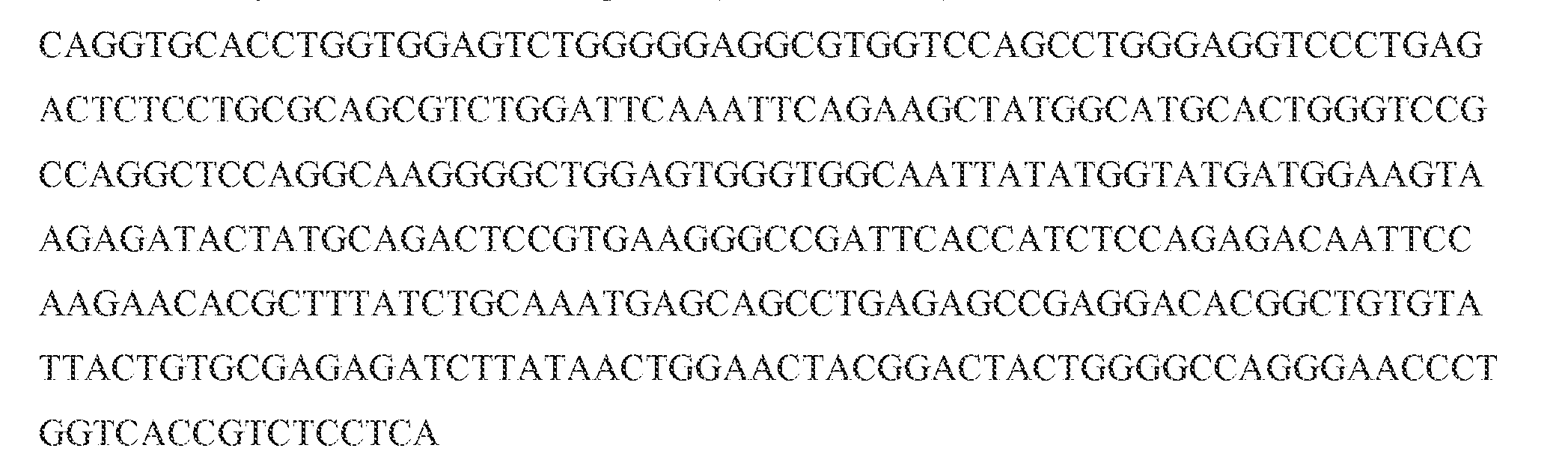
6d59 (Sl)
Variable Light Chain Amino Acid Sequence (SEQ ID NO: 1) same as above Variable Heavy Chain Amino Acid Sequence (SEQ ID NO: 5)
 ss
ss
6d59 (DL)
Variable Light Chain Amino Acid Sequence (SEQ ID NO: 1) same as above Variable Heavy Chain Amino Acid Sequence (SEQ ID NO: 6)

6d59 (AF)
Variable Light Chain Amino Acid Sequence (SEQ ID NO: 1) same as above Variable Heavy Chain Amino Acid Sequence (SEQ ID NO: 7)

6d23
Variable Light Chain Amino Acid Sequence (SEQ ID NO: 8)

Variable Light Chain Nucleotide Sequence (SEQ ID NO: 9)

Variable Heavy Chain Amino Acid Sequence (SEQ ID NO: 10)
 Variable Heavy Chain Nucleotide Sequence (SEQ ID NO: 1 1)

4b 8
Variable Light Chain Amino Acid Sequence (SEQ ID NO: 12)

Variable Light Chain Nucleotide Sequence (SEQ ID NO: 13)

Variable Heavy Chain Amino Acid Sequence (SEQ ID NO: 14)

Variable Heavy Chain Nucleotide Sequence (SEQ ID NO: 15)


4c83
Variable Light Chain Amino Acid Sequence (SEQ ID NO: 26)

Variable Light Chain Nucleotide Sequence (SEQ ID NO: 35)

Variable Heavy Chain Amino Acid Sequence (SEQ ID NO: 115)

Variable Heavy Chain Nucleotide Sequence (SEQ ID NO: 116)
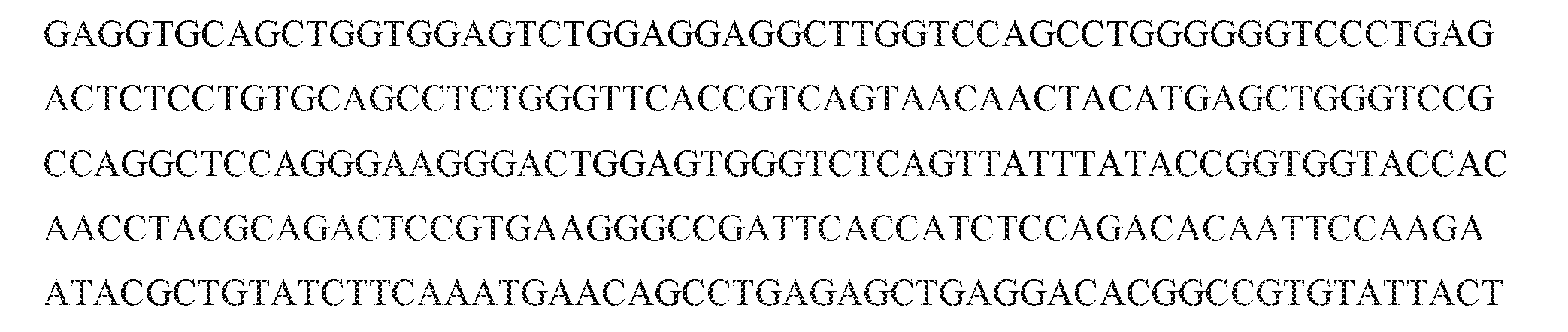

Variable Light Chain Amino Acid Sequence (SEQ ID NO: 16)

Variable Light Chain Nucleotide Sequence (SEQ ID NO: 17)

Variable Heavy Chain Amino Acid Sequence (SEQ ID NO: 18)

Variable Heavy Chain Nucleotide Sequence (SEQ ID NO: 19)
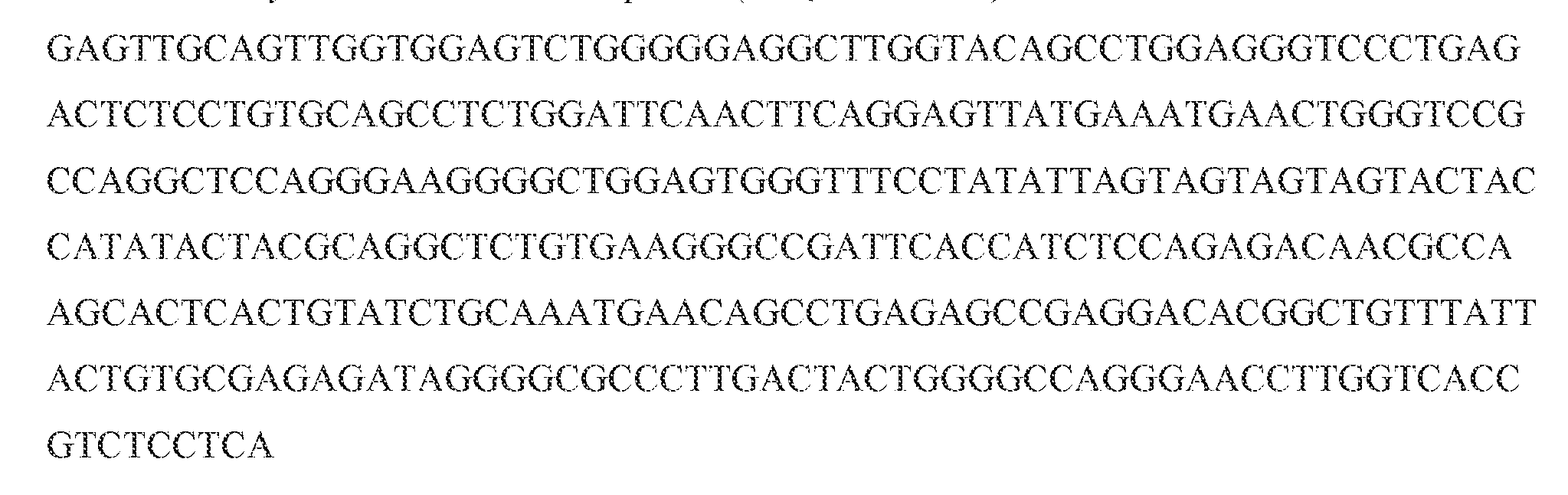
6d11-3
Variable Light Chain Amino Acid Sequence (SEQ ID NO: 20)

Variable Light Chain Nucleotide Sequence (SEQ ID NO: 21)

Variable Heavy Chain Amino Acid Sequence (SEQ ID NO: 22)

Variable Heavy Chain Nucleotide Sequence (SEQ ID NO: 23)
 GGTCACCGTCTCCTCA
6d11-5
Variable Light Chain Amino Acid Sequence (SEQ ID NO: 24)
 Variable Light Chain Nucleotide Sequence (SEQ ID NO: 25)

Variable Heavy Chain Amino Acid Sequence (SEQ ID NO: 22) same as above Variable Heavy Chain Nucleotide Sequence (SEQ ID NO: 23) same as above
6d59 id.lb18.1
Variable Light Chain Amino Acid Sequence (SEQ ID NO: 27)

Variable Light Chain Nucleotide Sequence (SEQ ID NO: 28)

Variable Heavy Chain Amino Acid Sequence (SEQ ID NO: 29)

Variable Heavy Chain Nucleotide Sequence (SEQ ID NO: 30)

6d 59. id . 1b 54.1
Variable Light Chain Amino Acid Sequence (SEQ ID NO: 31)

Variable Light Chain Nucleotide Sequence (SEQ ID NO: 32)

Variable Heavy Chain Amino Acid Sequence (SEQ ID NO: 33)

Variable Heavy Chain Nucleotide Sequence (SEQ ID NO: 34)


6d59.id. lb6U
Variable Light Chain Amino Acid Sequence (8EQ ID NO: 31) same as above Variable Light Chain Nucleotide Sequence (SEQ ID NO: 32) same as above
Variable Heavy Chain Amino Acid Sequence (SEQ ID NO: 36)

Variable Heavy Chain Nucleotide Sequence (SEQ ID NO: 37)

6d59.id.1b67.1
Variable Light Chain Amino Acid Sequence (SEQ ID NO: 38)

Variable Light Chain Nucleotide Sequence (SEQ ID NO: 39)

Variable Heavy Chain Amino Acid Sequence (SEQ ID NO: 40)

Variable Heavy Chain Nucleotide Sequence (SEQ ID NO: 41)

6d59.id.lb71.1
Variable Light Chain Amino Acid Sequence (SEQ ID NO: 42)

Variable Light Chain Nucleotide Sequence (SEQ ID NO: 43)


Variable Heavy Chain Amino Acid Sequence (SEQ ID NO: 44)

Variable Heavy Chain Nucleotide Sequence (SEQ ID NO: 45)

6d59.id.1b7b.1
Variable Light Chain Amino Acid Sequence (SEQ ID NO: 42) same as above Variable Light Chain Nucleotide Sequence (SEQ ID NO: 43) same as above
Variable Heavy Chain Amino Acid Sequence (SEQ ID NO: 46)

Variable Heavy Chain Nucleotide Sequence (SEQ ID NO: 47)


6d59.id.1b76.1
Variable Light Chain Amino Acid Sequence (SEQ ID NO: 42) same as above Variable Light Chain Nucleotide Sequence (SEQ ID NO: 43) same as above
Variable Heavy Chain Amino Acid Sequence (SEQ ID NO: 48)

Variable Heavy Chain Nucleotide Sequence (SEQ ID NO: 49)

Example 2. Human T Cell and Cynomolgus T Cell Binding Data
[00336] A set of experiments was performed to demonstrate the ability of the anti-CD3ε antibodies to bind human and cynomolgus (Cyno) T cells. In these experiments, human or cynomolgus T cells were incubated with an anti-CD3ε antibody and binding was assessed by flow cytometry.
[00337] Briefly, donor T cells from either human or cynomolgus donors were resuspended in FACS buffer containing 0.1% sodium azide and ali quoted in 100 mE volumes. For incubation,
100 m.E aliquots of donor T cells were mixed with 50 m.E of antibodies diluted in FACS buffer containing 0.1% sodium azide. The cells were then washed twice with FACS buffer containing sodium azide. The bound antibody was detected by incubating cells for 60 minutes with a 1 :200 dilution of SAV-RPE (Invitrogen Cat No. SA 10044, Lot. 1542820 A) or 1:100 dilution of goat- anti -Mouse Fcy-RPE (Jackson Cat, No. 115-116-071, Lot, 108668, diluted in 0.2% goat serum). The cells were washed, fixed, and analyzed with an Accuri Flow Cytometer.
[00338] Figures 1 shows that the anti-CD3ε antibodies, 6d58, 6d59, and 4b8, demonstrated concentration-dependent binding to human T cells with single digit pM EC50 values. Treatment with OKT3, SP34-2, and diL2K antibodies were used as positive controls for T cell binding. Figure 2 demonstrates that the anti-CD3ε antibodies, 6d58 and 6d59, also bound to cynomolgus T cells. Treatment with OKT3, SP34-2, and diL2K antibodies were used as controls for T cell binding with only SP34-2 binding to cynomolgus T cells, as expected.
Example 3. T Cell and PBMC Proliferation Assays
[00339] This example demonstrates the ability of the anti-CD3ε antibodies to stimulate primary T cell proliferation. In these experiments, T-ce!ls or PBMCs were incubated for 4 days in the presence of bound or soluble anti-CD3ε antibodies and assessed for proliferation.
[00340] Briefly, a 96-well fiat-bottom plate was treated with anti-CD3ε antibodies and isotype controls over a range of 9 doses starting at 20 μg/mL and decreasing by a 1 :4 dilution for each increment. Next, 50,000 T cells (from donor # W3137 13 034182) prepared in complete media supplemented with 40 U/mL rhIL-2 or 100,000 PBMCs (from donor # W3137 13 032586) prepared in complete media with no rhIL-2 were added per well. After four days, a CellTiter- Glo Assay (Promega Cat. No. G7573) was used to assess the number of viable cells.
[00341] Figure 3 and Figure 5 show that the plate-bound anti~CD3ε antibodies, 6d58 and 6d59, induced proliferation in T cells and PMBC, respectively. Treatment with plate-bound anti-CD3ε antibodies, SP34-2 and diL2K, also induced proliferation, while plate-bound mLYS1d19.1 and mLYS1c3.1 failed to induce proliferation in both T cell and PBMCs. Figures 4 and Figure 6 show that soluble anti-CD3ε antibodies, 6d58 and 6d59, induced modest proliferation, as did soluble positive control anti-CD3ε antibodies, SP34-2 and diL2K. Soluble mLYSldl9.1 and mLYS1c3.1 anti-CD3ε antibodies failed to induce proliferation.
[00342] Another set of experiments was performed to assess cynomolgus PBMC proliferation following treatment with the anti-CD3ε antibodies. In these experiments, PMBCs were cultured with beads coated with anti-CD3ε, anti-CD28, and anti-CD2. Briefly, 250,000 PBMCs (Donor CYN140007) were added per well to a 96- well flat-bottom plate. Next, beads coated with biotin-anti-CD3ε, biotin-anti-CD28, or biotin-anti-CD2 antibody were added to the well at a bead-to-eell ratio of 1 :2. The cells were cultured for 3 days. After 3 days, the culture was supplemented with rhIL-2 at 100 U/mL and the culture continued for 3 days. The beads were coated with anti-CD3ε antibodies at concentrations of 10, 1, and 0.1 μg/mL. For anti- CD28 and anti-CD2 antibodies, the beads were coated at 10 μg/'mL. Figure 7 shows that bead- bound anti-CD3ε antibodies, 6d58 and 6d59, induced proliferation in PBMCs isolated from cynomolgus (donor CYN 140007). Treatment with SP34-2 also induced proliferation, as expected.
Example 4. T Cell Staining Using Anti-CD3ε Antibodies
[00343] Cross-reactivity of anti-CD3ε antibodies to cynomolgus CD3 -epsilon was assessed by three-color phenotyping (CD3/CD4/CD8) using PBMCs from three different cynomolgus donors.
[00344] PBMCs from different cynomolgus donors were stained with anti-CD4, anti-CD8, and a panel of different anti-CD3 antibodies. For each anti-CD3 antibody, the CD 3 positive cells were gated and assessed for their CD4/CD8 phenotype. Figure 8A depicts the total CD3 positive cells in PBMCs from the three different donors. Figures 8B-8E show the percentage of CD3 positive cells displaying CD4-/CD8+, CD4+/CD8-, CD4+/CD8+, and CD4-/CD8- phenotypes, respectively. The anti-CD3ε antibodies 6d58 and 6d59 showed staining profiles similar to that of the positive control SP34-2 in all three cynomolgus donors demonstrating the cross-reactivity of the anti-CD3ε antibodies with cynomolgus CD3-epsilon.
Example 5. Epitope Mapping of 6d59 and 6d23
[00345] A set of experiments was performed to map the epitope recognized by the anti-CD3ε antibodies. In these experiments, the anti-CD3ε antibodies were assessed for binding to a collection of overlapping 15-mer peptides spanning amino acids 1-27 of human CD3ε protein
using a Luminex bead assay. Control CD3 proteins, control peptides, or the test peptides were immobilized on Luminex beads and incubated with a panel of anti-CD3 antibodies. Binding of the anti~CD3 antibodies to the peptide/protein immobilized on the Luminex bead was detected by R-Phycoerythrin conjugated secondary antibody.
[00346] Recombinant CD3 proteins (human CD3d/e heterodimer and cynornolgus CD3-epsilon (Sinobio!ogical)) and control peptides (#p1, #p2, and #p3) were conjugated to Luminex beads using standard EDC/Sulfo-NHS chemistry. The 15-mer test peptides were synthesized as biotinylated peptides at JPT Peptide Technologies Gmbh and were immobilized on streptavidin- conjugated Luminex beads that were made using standard EDC/Sulfo-NHS chemistry' and streptavidin (Invitrogen Cat. No. 434301 lot 1626028A). The Luminex beads with immobilized peptides or reagents were incubated with 5Qu! of a panel of anti-CD3 antibodies (1ug/ml) for one hour at room temperature, washed two times, incubated with mixture of anti -human and anti- mouse IgG-RPE (Jackson Immunoresearch 109-116-097 and Southern Biotech 1030-09, respectively) for 3Qmins at RT, washed three times, and analyzed in the Luminex instrument to assess the level of bound anti-CD3 antibodies.
[00347] Figure 9 shows that anti-CD3ε antibodies, 6d23.1 and 6d59.1, bind different epitopes on CD3ε. Both antibodies bound to vCD3ε #p1 peptide, which has a free N-terminal glutamine, VCD3-6d59.1 bound to biotinylated 15-mer peptides corresponding to CD3ε N-terminus, while VCD3-6d23.1 did not. The 15-mer peptides in the assay did not have a free N-terminai glutamine because the residue was bound to biotin through a linker. As the anti-CD3ε antibody VCD3-6d59.1 bound the N-terminal 15-mer, a series of alanine-scanning mutant versions of the biotinylated N-terminal 15-mer were used to fine-map the epitope for VCD36d59.1 antibody. Replacing the N-terminal glutamine with alanine enhanced the binding of VCD3~6d59.1 to the 15-mer peptides, while replacing CD3ε amino acids with alanine at positions 2, 3, 4, and 5 abrogated binding. Alanine substitution at position 6 resulted in half the binding as compared to the wild type sequence. Alanine substitution at positions 7 and beyond had no impact. These results strongly suggest that the epitope for VCD3-6d59.1 included amino acids 1-6.
Example 6. Anti -Idiotypic Antibodies
[00348] A set of experiments was performed to assess the ability of anti-ID 6d59 to block
AGS73.15 binding to human T cells. In these experiments, binding w¾s detected using an
antibody designed to measure the Fc portion of human IgG heavy chain (Jackson Immunoresearch, gxhlgG-Fc-PE, Cat No.109-116-098, Lot#120585). In this experiment, 96- well flat-bottom plates were coated with anti-ID 6d59 over a range of 10 doses starting at 30 μg/mL and decreasing by a 1 :3 dilution for each increment at a volume of 50 pL/well. Prior to the addition of 50,000 human T cells per well, the wells were incubated with AGS73.15 (MS497) at 600 ng/mL at room temperature for 20 minutes, where AGS73.15 was added to the well in a 50 μL volume. The assay was then subjected to a primary incubation (4 °C for 2 hours in the dark), then washed twice with FACS buffer, and a secondary incubation (4 °C for 1 hour in the dark), and then washed twice with FACS buffer.
[00349] Figure 10 demonstrates a dose-dependent inhibition of CD3ε binding on human T cells for all anti-ID 6d59 antibodies tested. Figure 11 demonstrates that for all anti-ID 6d59 antibodies tested, the EC50 values ranged from 0.2434-0.4436 nM.
OTHER EMBODIMENTS
[00350] It is to be understood that while the invention has been described in conjunction with the detailed description thereof, the foregoing description is intended to illustrate and not limit the scope of the invention, which is defined by the scope of the appended claims. Other aspects, advantages, and modifications are within the scope of the following claims.
Claims
1. A multi-chain polypeptide comprising:
(a) a first polypeptide comprising a light chain variable domain comprising an amino acid sequence at least 95% identical to SEQ ID NO: 1, and a second polypeptide comprising a heavy chain variable domain comprising an amino acid sequence at least 92% identical to SEQ ID NO: 3;
(b) a first polypeptide comprising a light chain variable domain comprising an amino acid sequence at least 96% identical to SEQ ID NO: 8, and a second polypeptide comprising a heavy chain variable domain comprising an amino acid sequence at least 92% identical to SEQ ID NO: 10;
(e) a first polypeptide comprising a light chain variable domain comprising an amino acid sequence at least 96% identical to SEQ ID NO: 12, and a second polypeptide comprising a heavy chain variable domain comprising an amino acid sequence at least 90% identical to SEQ ID NO: 14;
(d) a first polypeptide comprising a light chain variable domain comprising an amino acid sequence at least 95% identical to SEQ ID NO: 26, and a second polypeptide comprising a heavy chain variable domain comprising an amino acid sequence at least 95% identical to SEQ ID NO: 115;
(e) a first polypeptide comprising a light chain variable domain comprising at least 95% identical to SEQ ID NO: 1, and a second polypeptide comprising a heavy chain variable domain comprising at least 95% identical to SEQ ID NO: 5;
(f) a first polypeptide comprising a light: chain variable domain comprising at least 95% identical to SEQ ID NO: 1, and a second polypeptide comprising a heavy chain variable domain comprising at least 95% identical to SEQ ID NO: 6;
(g) a first polypeptide comprising a light chain variable domain comprising at least 95% identical to SEQ ID NO: 1, and a second polypeptide comprising a heavy chain variable domain comprising at least 95% identical to SEQ ID NO: 7, or
(h) a first polypeptide comprising a light chain variable domain comprising at least 92% identical to SEQ ID NO: 16, and a second polypeptide comprising a heavy chain variable domain comprising at least 90% identical to SEQ ID NO: 18;
wherein the light chain variable domain and the heavy chain variable domain form an antigen- binding domain that binds specifically to CD3 epsilon.
2. A multi-chain polypeptide comprising:
(a) a first polypeptide comprising a light chain variable domain comprising a sequence of SEQ ID NO: 1, and a second polypeptide comprising a heavy chain variable domain comprising a sequence of SEQ ID NO: 3;
(b) a first polypeptide comprising a light chain variable domain comprising a sequence of SEQ ID NO: 8, and a second polypeptide comprising a heavy chain variable domain comprising a sequence of SEQ ID NO: 10;
(c) a first polypeptide comprising a light chain variable domain comprising a sequence of SEQ ID NO: 12, and a second polypeptide comprising a heavy chain variable domain comprising a sequence of SEQ ID NO: 14;
(d) a first polypeptide comprising a light chain variable domain comprising a sequence of SEQ ID NO: 26, and a second polypeptide comprising a heavy chain variable domain comprising a sequence of SEQ ID NO: 115;
(e) a first polypeptide comprising a light chain variable domain comprising a sequence of SEQ ID NO: 1, and a second polypeptide comprising a heavy chain variable domain comprising a sequence of SEQ ID NO: 5;
(t) a first polypeptide comprising a light chain variable domain comprising a sequence of SEQ ID NO: 1, and a second polypeptide comprising a heavy chain variable domain comprising a sequence of SEQ ID NO: 6;
(g) a first polypeptide comprising a light chain variable domain comprising a sequence of SEQ ID NO: 1, and a second polypeptide comprising a heavy chain variable domain comprising a sequence of SEQ ID NO: 7; or
(h) a first polypeptide comprising a light chain variable domain comprising a sequence of SEQ ID NO: 16, and a second polypeptide comprising a heavy chain variable domain comprising a sequence of SEQ ID NO: 18; w'herein the light chain variable domain and the heavy chain variable domain form an antigen- binding domain that binds specifically to CD3 epsilon.
3. The multi-chain polypeptide of claim 1 or 2, comprising (a) a first polypeptide comprising a light chain variable domain comprising a sequence of SEQ ID NO: 1, and a second polypeptide comprising a heavy chain variable domain comprising a sequence of SEQ ID NO: 3.
4. The multi-chain polypeptide of claim 1 or 2, comprising (b) a first polypeptide comprising a light chain variable domain comprising a sequence of SEQ ID NO: 8, and a second polypeptide comprising a heavy chain variable domain comprising a sequence of SEQ ID NO:
10
5. The multi-chain polypeptide of claim 1 or 2, comprising (c) a first polypeptide comprising a light chain variable domain comprising a sequence of SEQ ID NO: 12, and a second polypeptide comprising a heavy chain variable domain comprising a sequence of SEQ ID NO: 14.
6. The multi-chain polypeptide of claim 1 or 2, comprising (c) a first polypeptide comprising a light chain variable domain comprising a sequence of SEQ ID NO: 26, and a second polypeptide comprising a heavy chain variable domain comprising a sequence of SEQ ID NO: 115.
7. The multi-chain polypeptide of claim 1 or 2, comprising (c) a first polypeptide comprising a light chain variable domain comprising a sequence of SEQ ID NO: 1 , and a second polypeptide comprising a heavy chain variable domain comprising a sequence of SEQ ID NO:5.
8. The multi-chain polypeptide of claim 1 or 2, comprising (c) a first polypeptide comprising a light chain variable domain comprising a sequence of SEQ ID NO: 1, and a second polypeptide comprising a heavy chain variable domain comprising a sequence of SEQ ID NO: 6.
9. The multi-chain polypeptide of claim 1 or 2, comprising (c) a first polypeptide comprising a light chain variable domain comprising a sequence of SEQ ID NO: 1, and a second polypeptide comprising a heavy chain variable domain comprising a sequence of SEQ ID NO: 7.
10. The multi-chain polypeptide of claim I or 2, comprising (c) a first polypeptide comprising a light chain variable domain comprising a sequence of SEQ ID NO: 16, and a second polypeptide comprising a heavy chain variable domain comprising a sequence of SEQ ID NO: 18.
11. The multi-chain polypeptide of claim 1 or 2, wherein the complementarity determining regions (CDRs) are selected from the group consisting of,
(a) a light chain variable domain comprising CDRs of amino acid sequence
RS SRSLVY SDGNTHLI (SEQ ID NO: 51), RVSNRVS (SEQ ID NO: 52), and LQGAHWPYT (SEQ ID NO: 53) and comprises a heavy chain variable domain comprising CDRs of amino acid sequence 8YGMH (SEQ ID NO: 54), IIWYDGSKRYYADSVKG (SEQ ID NO: 55), and DLITGTTDY (SEQ ID NO: 56);
(b) a light chain variable domain comprising CDRs of amino acid sequence RSSRSLVYSDGNTHLI (SEQ ID NO: 51), RVSNRVS (SEQ ID NO: 52), and LQGAHWPYT (SEQ ID NO: 53) and comprises a heavy chain variable domain comprising CDRs of amino acid sequence SYGMH (SEQ ID NO: 54), IIWYDGSKRYYADSVKG (SEQ ID NO: 55), and DLITGSIDY (SEQ ID NO: 128);
(c) a light chain variable domain comprising CDRs of amino acid sequence RSSRSLVYSDGNTHLI (SEQ ID NO: 51), RVSNRVS (SEQ ID NO: 52), and LQGAHWPYT (SEQ ID NO: 53) and comprises a heavy chain variable domain comprising CDRs of amino acid sequence SYGMH (SEQ ID NO: 54), IIWYDGSKRYYADSVKG (SEQ ID NO: 55), and DLITGDLDY (SEQ ID NO: 129);
(d) a light chain variable domain compri sing CDRs of amino acid sequence RSSRSLVYSDGNTHLI (SEQ ID NO: 51), RVSNRVS (SEQ ID NO: 52), and LQGAHWPYT (SEQ ID NO: 53) and comprises a heavy chain variable domain comprising CDRs of amino acid sequence SYGMH (SEQ ID NO: 54), IIWYDGSKRYYADSVKG (SEQ ID NO: 55), and DLITGAFDY (SEQ ID NO: 130);
(e) a light chain variable domain comprising CDRs of amino acid sequence RS S Q SL VN SDGKTHLN (SEQ ID NO: 117), KVSNRDS (SEQ ID NO: 118), and MQGTHWPLT (SEQ ID NO: 119) and comprises a heavy chain variable domain comprising
CDRs of amino acid sequence SYGMH (SEQ ID NO: 54), IIWYDGSNKYYGDSVKG (SEQ ID NO: 131), and LSVNDYYVLDV (SEQ ID NO: 132);
(f) a light chain variable domain comprising CDRs of amino acid sequence RASQSISNYLN (SEQ ID NO: 120), AASSLQS (SEQ ID NO: 121), and QQSFSTLYT (SEQ ID NO: 122) and comprises a heavy chain variable domain compri sing CDRs of amino acid sequence SYSMN (SEQ ID NO: 133), YISRSSNYTYYADSVMG (SEQ ID NO: 134), and DRRGYSGYNHFDY (SEQ ID NO: 135);
(g) a light chain variable domain comprising CDRs of amino acid sequence RSSQSLVNSDGKTHLN (SEQ ID NO: 117), KVSNRDS (SEQ ID NO: 118), and MQGTHWPLT (SEQ ID NO: 119) and comprises a heavy chain variable domain comprising CDRs of amino acid sequence SYGMH (SEQ ID NO: 54), IIWYDGSNKYYGDSVKG (SEQ ID NO: 131), and LSVNDYYVLDV (SEQ ID NO: 132);
(h) a light chain variable domain comprising CDRs of amino acid sequence QASQDIRKYLN (SEQ ID NO: 123), DASNLET (SEQ ID NO: 124), and QHYANLPPLFT (SEQ ID NO: 125) and comprises a heavy chain variable domain comprising CDRs of amino acid sequence SYEMN (SEQ ID NO: 136), YISSSSTTIYYAGSVKG (SEQ ID NO: 137), and DRGALDY (SEQ ID NO: 138); and
(i) a light chain variable domain comprising CDRs of amino acid sequence QASQDISNYLN (SEQ ID NO: 126), DASNLET (SEQ ID NO: 124), and QQYDNLPIT (SEQ ID NO: 127) and comprises a heavy chain variable domain comprising CDRs of amino acid sequence SYGMH (SEQ ID NO: 54), IIWYDGSKRYYAD SVKG (SEQ ID NO: 55), and DLITGTTDY (SEQ ID NO: 56).
12. The multi-chain polypeptide of any one of claims 1-11, wherein the multi-chain polypeptide is selected from the group consisting of: a VHH-scAb, a VHH-Fab, a Dual scFab, a F(ab’)2, a diabody, a crossMab, a DAF (two-in-one), a DAE (four-in-one), a DutaMab, a DT- IgG, a knobs-in-holes common light chain, a knobs-in-hoies assembly, a charge pair, a Fab-arm exchange, a SEEDbody, a LUZ-Y, a FcAb, a kl-body, an orthogonal Fab, a DVD-IgG, a IgG(H)-scFv, a scFv-(H)IgG, IgG(L)-scFv, scFv-(L)IgG, IgG(L,H)-Fv, IgG(H)-V, V(H)-IgG, IgG(L)-V, V(L)-IgG, KIH IgG-scFab, 2scFv-IgG, IgG-2scFv, scFv4-Ig, Zybody, DVI-IgG, Diabody-CH3, a triple body, a miniantibody, a minibody, a TriBi minibody, scFv-CH3 KIH ,
Fab-scFv, a F(ab’)2-scFv2, a scFv-KIΉ, a Fab-scFv-Fc, a tetravaient HCAb, a scDiabody-Fc, a Diabody-Fc, a tandem scFv-Fc, a VHH-Fc, a tandem VHH-Fc, a L'ΉH-Fc KiH, a Fab- VHH-Fc, an Intrabody, a dock and lock, an InmTAC, an IgG-IgG conjugate, a Cov-X-Body, a scFvl- PEG~scFv2, an Adnectin, a DARPin, a fibronectin, and a DEP conjugate.
13. The multi-chain polypeptide of any one of claims 1-11, wherein the multi-chain polypeptide is an antibody that binds specifically to CD3 epsilon or an antigen-binding fragment thereof.
14. The multi-chain polypeptide of any one of claims 1-11, wherein the multi-chain polypeptide is an IgG.
15. The multi-chain polypeptide of claim 14, wherein the IgG is an IgGl, IgG2, IgG3, or an IgG4.
16. The multi-chain polypeptide of claim 15, wherein the IgG is Ig2.
17. The multi-chain polypeptide of claim 13, wherein the antibody is an IgM, IgA, or IgE.
18. The multi-chain polypeptide of claim 14, wherein the antigen-binding fragment is a
Fab, F(ab’)2, Fab', or Fv.
19. The multi-chain polypeptide of any one of claims 1-18, wherein the multi-chain polypeptide comprises an additional light chain variable domain and an additional heavy chain variable domain.
20. The multi-chain polypeptide of any one of claims 1-19, wherein the multi-chain polypeptide is humanized.
21. The multi-chain polypeptide of any one of claims 1-20, wherein at least one polypeptide of the multi-chain polypeptide is conjugated to a toxin, a radioisotope, a drug, or a small molecule via a cleavable linker.
22. The multi-chain polypeptide of any one of claims 1-20, wherein at least one polypeptide of the multi-chain polypeptide is conjugated to a toxin, a radioisotope, a drug, or a small molecule via a non-cleavable linker.
23. A pharmaceutical composition including a multi-chain polypeptide of any one of claims 1-22.
24. A method of treating a subject in need thereof comprising administering to the subject a multi-chain polypeptide of any one of claims 1-22 or a pharmaceutical composition of claim 23.
25. A set of nucleic acids that together encode polypeptides that together make up the multi-chain polypeptide of any one of claims 1-22.
26. The set of nucleic acids of claim 25, wherein the set of nucleic acids is a pair of expression vectors.
27. The set of nucleic acids of claim 25, wherein the set of nucleic acids are present in a single expression vector.
28. A nucleic acid that encodes polypeptides that together make up the multi-chain polypeptide of any one of claims 1-22.
29. The nucleic acid of claim 28, wherein the nucleic acid is an expression vector.
30. A cell that comprises the set of nucleic acids of any one of claims 24-29.
31. A cell that comprises the nucleic acid of claims 28 or 29.
32. A method of producing a multi-chain polypeptide comprising:
(a) culturing the cell of claim 30 or 31 in a liquid culture medium under conditions that allow for the production of the multi-chain polypeptide; and
(b) recovering the multi-chain polypeptide from the cell or the liquid culture medium.
33. The method of claim 32, further compri sing;
(c) purifying the multi-chain polypeptide.
34. The method of claim 33, further comprising:
(d) formulating the multi-chain polypeptide into a pharmaceutical composition.
35. A pharmaceutical composition produced by the method of claim 34.
36. A method of treating a subject in need thereof comprising administering to the subject a multi-chain polypeptide of any one of claims 32.-34 or a pharmaceutical composition of claim 35.
37. A kit comprising a multi-chain polypeptide of any one of claims 1-22 or a pharmaceutical composition of claim 23 or 35.
38. A single-chain polypeptide comprising:
(a) a light chain variable domain comprising an amino acid sequence at least 95% identical to SEQ ID NO: 1, and a heavy chain variable domain comprising an amino acid sequence at least 92% identical to SEQ ID NO: 3;
(b) a light chain variable domain comprising an amino acid sequence at least 96% identical to SEQ ID NO: 8, and a heavy chain variable domain comprising an amino acid sequence at least 92% identical to SEQ ID NO: 10;
(c) a light chain variable domain comprising an amino acid sequence at least 96% identical to SEQ ID NO: 12, and a heavy chain variable domain comprising an amino acid sequence at least 90% identical to SEQ ID NO: 14;
(d) a light chain variable domain comprising an amino acid sequence at. least 95% identical to SEQ ID NO: 26, and an amino acid heavy chain variable domain comprising a sequence at least 95% identical to SEQ ID NO: 115,
(e) a light chain variable domain comprising an amino acid sequence at least 95% identical to SEQ ID NO: 1, and a heavy chain variable domain comprising an amino acid sequence at least 95% identical to SEQ ID NO: 5,
(f) a light chain variable domain comprising an amino acid sequence at least 95% identical to SEQ ID NO: 1, and a heavy chain variable domain comprising an amino acid sequence at least 95% identical to SEQ ID NO: 6,
(g) a light chain variable domain comprising an amino acid sequence at least 95% identical to SEQ ID NO: 1, and a heavy chain variable domain comprising an amino acid sequence at least 95% identical to SEQ ID NO: 7, or
(h) a light chain variable domain comprising an amino acid sequence at least 92% identical to SEQ ID NO: 16, and a heavy chain variable domain comprising an amino acid sequence at least 90% identical to SEQ ID NO: 18, wherein the light chain variable domain and the heavy chain variable domain form an antigen-binding domain that binds specifically to CD3 epsilon.
39. A single-chain polypeptide comprising:
(a) a light chain variable domain comprising an amino acid sequence of SEQ ID NO: 1, and a heavy chain variable domain comprising an amino acid sequence of SEQ ID NO: 3;
(h) a light chain variable domain comprising an amino acid sequence of SEQ ID NO: 8, and a heavy chain variable domain comprising an amino acid sequence of SEQ ID NO: 10;
(c) a light chain variable domain comprising an amino acid sequence of SEQ ID NO: 12, and a heavy chain variable domain comprising an amino acid sequence of SEQ ID NO: 14;
(d) a light chain variable domain comprising an amino acid sequence of SEQ ID NO: 26, and a heavy chain variable domain comprising an amino acid sequence of SEQ ID NO: 115,
(e) a light chain variable domain comprising an amino acid sequence of SEQ ID NO: 1, and a heavy chain variable domain comprising an amino acid sequence of SEQ ID NO: 5,
(f) a light chain variable domain comprising an amino acid sequence of SEQ ID NO: 1, and a heavy chain variable domain comprising an amino acid sequence of SEQ ID NO: 6,
(g) a light chain variable domain comprising an amino acid sequence of SEQ ID NO: 1, and a heavy chain variable domain comprising an amino acid sequence of SEQ ID NO: 7, or
(h) a light chain variable domain comprising an amino acid sequence of SEQ ID NO: 16, and a heavy chain variable domain comprising an amino acid sequence of SEQ ID NO: 18, wherein the light chain variable domain and the heavy chain variable domain form an antigen-binding domain that binds specifically to CD 3 epsilon.
40. The single-chain polypeptide of claim 38 or 39, comprising a light chain variable domain comprising a sequence of SEQ ID NO: 1, and a heavy chain variable domain comprising a sequence of SEQ ID NO: 3.
41. The single-chain polypeptide of claim 38 or 39, comprising a light chain variable domain comprising a sequence of SEQ ID NO: 8, and a heavy chain variable domain comprising a sequence of SEQ ID NO: 10.
42. The single-chain polypeptide of claim 38 or 39, comprising a light chain variable domain comprising a sequence of SEQ ID NO: 12, and a heavy chain variable domain comprising a sequence of SEQ ID NO: 14.
43. The single-chain polypeptide of claim 38 or 39, comprising a light chain variable domain comprising a sequence of SEQ ID NO: 26, and a heavy chain variable domain comprising a sequence of SEQ ID NO: 115.
44. The single-chain polypeptide of claim 38 or 39, comprising a light chain variable domain comprising a sequence of SEQ ID NO: 1, and a heavy chain variable domain comprising a sequence of SEQ ID NO: 5.
45. The single-chain polypeptide of claim 38 or 39, comprising a light chain variable domain comprising a sequence of SEQ ID NO: 1, and a heavy chain variable domain comprising a sequence of SEQ ID NO: 6,
46. The single-chain polypeptide of claim 38 or 39, comprising a light chain variable domain comprising a sequence of SEQ ID NO: 1, and a heavy chain variable domain comprising a sequence of SEQ ID NO: 7.
47. The single-chain polypeptide of claim 38 or 39, comprising a light chain variable domain comprising a sequence of SEQ ID NO: 16, and a heavy chain variable domain comprising a sequence of SEQ ID NO: 18.
48. The single-chain polypeptide of any one of claims 38-47, wherein the single-chain polypeptide is an antibody that binds specifically to CD3 epsilon or an antigen-binding fragment thereof
49. The single-chain polypeptide of any one of claims 38-48, wherein the antigen-binding domain is a scFv,
50. The single-chain polypeptide of any one of claims 38-48, wherein the single-chain polypeptide is a BiTE, a (scFv)2, a nanobody, a nanobody-HSA, a DART, a TandAb, a scDiabody, a scDiabody-CH3, scFv-CH-CL-scFv, aHSAbody, scDiabody-HSA, or a tandem- scFv.
51. The single-chain polypeptide of any one of claims 38-50, wherein the single-chain polypeptide comprises an additional light chain variable domain and an additional heavy chain variable domain.
52. The single-chain polypeptide of any one of claims 38-49 and 51, wherein the single- chain polypeptide is a chimeric antigen receptor (CAR).
53. The single-chain poly peptide of any one of claims 38-52, wherein the single-chain polypeptide is humanized.
54. The single-chain polypeptide of any one of claims 38-53, wherein the single-chain polypeptide is conjugated to a toxin, a radioisotope, a drug, or a small molecule via a cleavable linker.
55. The single-chain polypeptide of any one of claims 38-53, wherein the single-chain polypeptide is conjugated to a toxin, a radioisotope, a drug, or a small molecule via a non- cleavable linker,
56. A pharmaceutical composition including a single-chain polypeptide of any one of claims 38-55.
57. A method of treating a subject in need thereof comprising administering to the subject a single-chain polypeptide of any one of claims 38-55 or a pharmaceutical composition of claim 56,
58. A nucleic acid that encodes a single-chain polypeptide of any one of claims 38-55.
59. The nucleic acid of claim 58, wherein the nucleic acid is an expression vector.
60. A cell that comprises the nucleic acid of claims 58 or 59.
61. A method of producing a single-chain polypeptide comprising:
(a) culturing the cell of claim 60 in a liquid culture medium under conditions that aliow? for the production of the single-chain polypeptide; and
(b) recovering the single-chain polypeptide from the cell or the liquid culture medium.
62. The method of claim 61, further comprising: (c) purifying the single-chain polypeptide.
63. The method of claim 62, further comprising:
(d) formulating the single-chain polypeptide into a pharmaceutical composition.
64. A pharmaceutical composition produced by the method of claim 63.
65. A method of treating a subject in need thereof comprising administering to the subject a single-chain polypeptide of any one of claims 61-63 or a pharmaceutical composition of claim 64.
66. A kit comprising a single-chain polypeptide of any one of claims 38-55 or a pharmaceutical composition of claim 56 or 64.
67. An anti -idiotypic antibody comprising:
(a) a first polypeptide comprises a light chain variable domain comprising an amino acid sequence at least 96% identical to SEQ ID NO: 27, and a second polypeptide comprising a heavy chain variable domain comprising an amino acid sequence at least 90% identical to SEQ ID NO: 29;
(b) a first polypeptide comprises a light chain variable domain comprising an amino acid sequence at least 95% identical to SEQ ID NO: 38, and a second polypeptide comprising a heavy chain variable domain comprising an amino acid sequence at least 90% identical to SEQ ID NO: 40;
(c) a first polypeptide comprises a light chain variable domain comprising an amino acid sequence at least 95% identical to SEQ ID NO: 31, and a second polypeptide comprising a heavy chain variable domain comprising an amino acid sequence at least 90% identical to SEQ ID NO: 33:
(d) a first polypeptide comprises a light chain variable domain comprising an amino acid sequence at least 99% identical to SEQ ID NO: 42, and a second polypeptide comprising a heavy chain variable domain comprising an amino acid sequence at least 90% identical to SEQ ID NO: 44;
(e) a first polypeptide comprises a light chain variable domain comprising an amino acid sequence at least 99% identical to SEQ ID NO: 42, and a second polypeptide comprising a
heavy chain variable domain comprising an amino acid sequence at least 90% identical to SEQ ID NO: 48;
(f) a first polypeptide comprises a light chain variable domain comprising an amino acid sequence at least 95% identical to SEQ ID NO: 31, and a second polypeptide comprising a heavy chain variable domain comprising an amino acid sequence at least 95% identical to SEQ ID NO: 36; or
(g) a first polypeptide comprises a light chain variable domain comprising an amino acid sequence at least 99% identical to SEQ ID NO: 42, and a second polypeptide comprising a heavy chain variable domain comprising an amino acid sequence at least 90% identical to SEQ ID NO: 46; wherein the light chain variable domain and the heavy chain variable domain form an antigen-binding domain that binds specifically to a CD3 epsilon antibody .
68, An anti -idiotypic antibody comprising:
(a) a first polypeptide comprising a light chain variable domain comprising a sequence of SEQ ID NO: 27, and a second polypeptide comprising a heavy chain variable domain comprising a sequence of SEQ ID NO: 29;
(b) a first polypeptide comprising a light chain variable domain comprising a sequence of SEQ ID NO: 38, and a second polypeptide comprising a heavy chain variable domain comprising a sequence of SEQ ID NO: 40;
(c) a first polypeptide comprising a light chain variable domain comprising a sequence of SEQ ID NO: 31, and a second polypeptide comprising a heavy chain variable domain comprising a sequence of SEQ ID NO: 33;
(d) a first polypeptide comprising a light chain variable domain comprising a sequence of SEQ ID NO: 42, and a second polypeptide comprising a heavy chain variable domain comprising a sequence of SEQ ID NO: 44;
(e) a first polypeptide comprising a light chain variable domain comprising a sequence of SEQ ID NO: 42, and a second polypeptide comprising a heavy chain variable domain comprising a sequence of SEQ ID NO: 48;
(f) a first polypeptide comprising a light chain variable domain comprising a sequence of SEQ ID NO: 31, and a second polypeptide comprising a heavy chain variable domain comprising a sequence of SEQ ID NO: 36; or
(g) a first polypeptide comprising a light chain variable domain comprising a sequence of SEQ ID NO: 42, and a second polypeptide comprising a heavy chain variable domain comprising a sequence of SEQ ID NO: 46; wherein the light chain variable domain and the heavy chain variable domain form an antigen-binding domain that binds specifically to a CD3 epsilon antibody.
69. The single-chain polypeptide of claim 67 or 68, comprising a light chain variable domain comprising a sequence of SEQ ID NO: 27, and a heavy chain variable domain comprising a sequence of SEQ) ID NO: 29.
70. The single-chain polypeptide of claim 67 or 68, comprising a light chain variable domain comprising a sequence of SEQ ID NO: 38, and a heavy chain variable domain comprising a sequence of SEQ ID NO: 40.
71. The single-chain polypeptide of claim 67 or 68, comprising a light chain variable domain comprising a sequence of SEQ ID NO: 31, and a heavy chain variable domain comprising a sequence of SEQ ID NO: 33.
72. The single-chain polypeptide of claim 67 or 68, comprising a light chain variable domain comprising a sequence of SEQ ID NO: 42, and a heavy chain variable domain comprising a sequence of SEQ ID NO: 44.
73. The single-chain polypeptide of claim 67 or 68, comprising a light, chain variable domain comprising a sequence of SEQ ID NO: 42, and a heavy chain variable domain comprising a sequence of SEQ ID NO: 48.
74. The single-chain polypeptide of claim 67 or 68, comprising a light chain variable domain comprising a sequence of SEQ ID NO: 31, and a heavy chain variable domain comprising a sequence of SEQ) ID NO: 36.
75, The single-chain polypeptide of claim 67 or 68, comprising a light chain variable domain comprising a sequence of SEQ ID NO: 42, and a heavy chain variable domain comprising a sequence of SEQ ID NO: 46.
Priority Applications (1)
| Application Number | Priority Date | Filing Date | Title |
|---|---|---|---|
| US17/790,825 US12545731B2 (en) | 2021-01-06 | Single-and multi-chain polypeptides that bind specifically to CD3 epsilon |
Applications Claiming Priority (2)
| Application Number | Priority Date | Filing Date | Title |
|---|---|---|---|
| US202062957735P | 2020-01-06 | 2020-01-06 | |
| US62/957,735 | 2020-01-06 |
Publications (1)
| Publication Number | Publication Date |
|---|---|
| WO2021141996A1 true WO2021141996A1 (en) | 2021-07-15 |
Family
ID=74418540
Family Applications (1)
| Application Number | Title | Priority Date | Filing Date |
|---|---|---|---|
| PCT/US2021/012320 Ceased WO2021141996A1 (en) | 2020-01-06 | 2021-01-06 | Single- and multi-chain polypeptides that bind specifically to cd3 epsilon |
Country Status (1)
| Country | Link |
|---|---|
| WO (1) | WO2021141996A1 (en) |
Citations (13)
| Publication number | Priority date | Publication date | Assignee | Title |
|---|---|---|---|---|
| US5030719A (en) | 1986-08-28 | 1991-07-09 | Teijin Limited | Cytotoxic antibody conjugates and a process for preparation thereof |
| WO1994011026A2 (en) | 1992-11-13 | 1994-05-26 | Idec Pharmaceuticals Corporation | Therapeutic application of chimeric and radiolabeled antibodies to human b lymphocyte restricted differentiation antigen for treatment of b cell lymphoma |
| EP1400534A1 (en) * | 2002-09-10 | 2004-03-24 | Affimed Therapeutics AG | Human CD3-specific antibody with immunosuppressive properties |
| US7612181B2 (en) | 2005-08-19 | 2009-11-03 | Abbott Laboratories | Dual variable domain immunoglobulin and uses thereof |
| US8586714B2 (en) | 2009-09-01 | 2013-11-19 | Abbvie, Inc. | Dual variable domain immunoglobulins and uses thereof |
| WO2013186613A1 (en) * | 2012-06-14 | 2013-12-19 | Nasvax Ltd. | Humanized antibodies to cluster of differentiation 3 (cd3) |
| US8716450B2 (en) | 2009-10-15 | 2014-05-06 | Abbvie Inc. | Dual variable domain immunoglobulins and uses thereof |
| US8722855B2 (en) | 2009-10-28 | 2014-05-13 | Abbvie Inc. | Dual variable domain immunoglobulins and uses thereof |
| US8735546B2 (en) | 2010-08-03 | 2014-05-27 | Abbvie Inc. | Dual variable domain immunoglobulins and uses thereof |
| US8822645B2 (en) | 2008-07-08 | 2014-09-02 | Abbvie Inc. | Prostaglandin E2 dual variable domain immunoglobulins and uses thereof |
| WO2014191113A1 (en) * | 2013-05-28 | 2014-12-04 | Numab Ag | Novel antibodies |
| WO2015001085A1 (en) * | 2013-07-05 | 2015-01-08 | Genmab B.V. | Humanized or chimeric cd3 antibodies |
| WO2019034580A1 (en) * | 2017-08-14 | 2019-02-21 | Morphosys Ag | Humanized antibodies for cd3 |
-
2021
- 2021-01-06 WO PCT/US2021/012320 patent/WO2021141996A1/en not_active Ceased
Patent Citations (14)
| Publication number | Priority date | Publication date | Assignee | Title |
|---|---|---|---|---|
| US5030719A (en) | 1986-08-28 | 1991-07-09 | Teijin Limited | Cytotoxic antibody conjugates and a process for preparation thereof |
| WO1994011026A2 (en) | 1992-11-13 | 1994-05-26 | Idec Pharmaceuticals Corporation | Therapeutic application of chimeric and radiolabeled antibodies to human b lymphocyte restricted differentiation antigen for treatment of b cell lymphoma |
| EP1400534A1 (en) * | 2002-09-10 | 2004-03-24 | Affimed Therapeutics AG | Human CD3-specific antibody with immunosuppressive properties |
| US7612181B2 (en) | 2005-08-19 | 2009-11-03 | Abbott Laboratories | Dual variable domain immunoglobulin and uses thereof |
| US8258268B2 (en) | 2005-08-19 | 2012-09-04 | Abbott Laboratories | Dual variable domain immunoglobulin and uses thereof |
| US8822645B2 (en) | 2008-07-08 | 2014-09-02 | Abbvie Inc. | Prostaglandin E2 dual variable domain immunoglobulins and uses thereof |
| US8586714B2 (en) | 2009-09-01 | 2013-11-19 | Abbvie, Inc. | Dual variable domain immunoglobulins and uses thereof |
| US8716450B2 (en) | 2009-10-15 | 2014-05-06 | Abbvie Inc. | Dual variable domain immunoglobulins and uses thereof |
| US8722855B2 (en) | 2009-10-28 | 2014-05-13 | Abbvie Inc. | Dual variable domain immunoglobulins and uses thereof |
| US8735546B2 (en) | 2010-08-03 | 2014-05-27 | Abbvie Inc. | Dual variable domain immunoglobulins and uses thereof |
| WO2013186613A1 (en) * | 2012-06-14 | 2013-12-19 | Nasvax Ltd. | Humanized antibodies to cluster of differentiation 3 (cd3) |
| WO2014191113A1 (en) * | 2013-05-28 | 2014-12-04 | Numab Ag | Novel antibodies |
| WO2015001085A1 (en) * | 2013-07-05 | 2015-01-08 | Genmab B.V. | Humanized or chimeric cd3 antibodies |
| WO2019034580A1 (en) * | 2017-08-14 | 2019-02-21 | Morphosys Ag | Humanized antibodies for cd3 |
Non-Patent Citations (27)
| Title |
|---|
| "Contributions to Microbiology and Immunology", 1989, CARGER PRESS, article "Conjugate Vaccines" |
| "NCBI", Database accession no. NP_000724.1 |
| ANONYMOUS: "Anti-Teplizumab (Anti-Idiotype) Antibody", R&D SYSTEMS, 26 December 2019 (2019-12-26), XP055794516, Retrieved from the Internet <URL:https://resources.rndsystems.com/pdfs/datasheets/mab10245.pdf?v=20210412&_ga=2.124407754.1383685783.1618286999-1682234979.1612768452> * |
| CHANTAL KUHN ET AL: "Therapeutic anti-CD3 monoclonal antibodies: from bench to bedside", IMMUNOTHERAPY, vol. 8, no. 8, 1 July 2016 (2016-07-01), GB, pages 889 - 906, XP055581845, ISSN: 1750-743X, DOI: 10.2217/imt-2016-0049 * |
| CROMIE ET AL., CURR. TOP. MED. CHEM., vol. 15, 2016, pages 2543 - 2557 |
| DE GENST ET AL., DEV. COMP. IMMUNOL., vol. 30, 2006, pages 187 - 198 |
| DE MEYER ET AL., TRENDS BIOTECHNOL, vol. 32, 2014, pages 263 - 270 |
| DIGIAMMARINO ET AL., METHODS MOL. BIOL., vol. 899, 2012, pages 145 - 156 |
| GARBER, NATURE REVIEWS DRUG DISCOVERY, vol. 13, 2014, pages 799 - 801 |
| J. S. BRIDGEMAN ET AL: "CD3[zeta]-based chimeric antigen receptors mediate T cell activation via cis - and trans -signalling mechanisms: implications for optimization of receptor structure for adoptive cell therapy", CLINICAL AND EXPERIMENTAL IMMUNOLOGY, vol. 175, no. 2, 3 January 2014 (2014-01-03), GB, pages 258 - 267, XP055227505, ISSN: 0009-9104, DOI: 10.1111/cei.12216 * |
| JAKOB ET AL., MABS, vol. 5, 2013, pages 358 - 363 |
| KIJANKA ET AL., NANOMEDICINE, vol. 10, 2015, pages 161 - 174 |
| KOVALEVA ET AL., EXPERT. OPIN. BIOL. THER., vol. 14, 2014, pages 1527 - 1539 |
| KRAH ET AL., IMMUNOPHARMACOL. IMMUNOTOXICOL., vol. 38, 2016, pages 21 - 28 |
| MUJIC-DELIC ET AL., TRENDS PHARMACOL. SCI., vol. 35, 2014, pages 247 - 255 |
| MUYLDERMANS ET AL., TRENDS BIOCHEM. SCI., vol. 26, 2001, pages 230 - 235 |
| MUYLDERMANS, ANN. REV. BIOCHEM., vol. 82, 2013, pages 775 - 797 |
| MUYLDERMANS, J. BIOTECHNOL, vol. 74, 2001, pages 277 - 302 |
| RAHBARIZADEH ET AL., IMMUNOL. INVEST., vol. 40, 2011, pages 299 - 338 |
| RAMAKRISHNAN, S ET AL., CANCER RES, vol. 44, 1984, pages 201 - 208 |
| SILVA H M ET AL: "Novel humanized anti-CD3 antibodies induce a predominantly immunoregulatory profile in human peripheral blood mononuclear cells", IMMUNOLOGY LETTERS, ELSEVIER BV, NL, vol. 125, no. 2, 15 August 2009 (2009-08-15), pages 129 - 136, XP026445625, ISSN: 0165-2478, [retrieved on 20090630] * |
| SPIESS ET AL., MOL. IMMUNOL., vol. 67, 2015, pages 95 - 106 |
| VAN AUDENHOVE ET AL., EBIOMEDICINE, vol. 8, 2016, pages 40 - 48 |
| VAN BOCKSTAELE ET AL., CURR. OPIN. INVESTIG. DRUGS, vol. 10, 2009, pages 1212 - 1224 |
| VINCKE ET AL., METHODS MOL BIOL, vol. 911, 2012, pages 15 - 26 |
| VITETTA ET AL., SCIENCE, vol. 238, 1987, pages 1098 |
| WESOLOWSKI ET AL., MED. MICROBIOL. IMMUNOL., vol. 198, 2009, pages 157 - 174 |
Also Published As
| Publication number | Publication date |
|---|---|
| US20230057263A1 (en) | 2023-02-23 |
Similar Documents
| Publication | Publication Date | Title |
|---|---|---|
| US9828428B2 (en) | Anti-IL-13 receptor alpha 2 antibodies and antibody-drug conjugates | |
| CN105017420B (en) | Antibodies against integrin αvβ6 and use of the same in the treatment of cancer | |
| JP2022163013A (en) | Methods for Selecting Antibodies that Specifically Bind to Glycosylated Immune Checkpoint Proteins | |
| KR20230124037A (en) | Tumor-specific CLAUDIN 18.2 antibody-drug conjugates | |
| HK1245802A1 (en) | Multispecific antibodies, antibody analogs, compositions, and methods | |
| WO2019170131A1 (en) | Targeted cd73 antibody and antibody-drug conjugate, and preparation method therefor and uses thereof | |
| US20240181075A1 (en) | Anti-nectin-4 antibody amanitin conjugates | |
| CN114901694A (en) | anti-TROP 2 antibodies, antibody-drug conjugates, and uses thereof | |
| TW202146456A (en) | Anti-cd71 antibodies, activatable anti-cd71 antibodies, and methods of use thereof | |
| AU2010238723A1 (en) | Anti-human ROR1 antibodies | |
| TW201302795A (en) | Antibody-drug conjugate | |
| WO2022152289A1 (en) | An engineered antibody and antibody-drug conjugates comprisign same | |
| CN119013305A (en) | Monoclonal antibodies targeting GPC3 and antibody drug conjugates comprising such antibodies | |
| KR20220099103A (en) | Anti-FGFR3 Antibody and Use Thereof | |
| US12545731B2 (en) | Single-and multi-chain polypeptides that bind specifically to CD3 epsilon | |
| CA3142735A1 (en) | Antigen-binding protein constructs and uses thereof | |
| US20230057263A1 (en) | Single-and multi-chain polypeptides that bind specifically to cd3 epsilon | |
| US20240218055A1 (en) | Lassa virus-specific nanobodies and methods of their use | |
| US20250019430A1 (en) | Resistin-specific antibody and use thereof | |
| CN118324916B (en) | A monoclonal antibody against human GPRC5D and its preparation method and use | |
| WO2024250925A1 (en) | Anti-ceacam5 antibodies | |
| US20250092154A1 (en) | Anti-mesothelin antibodies and uses thereof | |
| TW202432186A (en) | Ligand-cytotoxicity drug conjugates and pharmaceutical uses thereof | |
| KR20250126941A (en) | Humanized antibody against mesothelin and the use thereof | |
| AU2023347922A1 (en) | Antibodies that bind cd228 |
Legal Events
| Date | Code | Title | Description |
|---|---|---|---|
| 121 | Ep: the epo has been informed by wipo that ep was designated in this application |
Ref document number: 21702555 Country of ref document: EP Kind code of ref document: A1 |
|
| NENP | Non-entry into the national phase |
Ref country code: DE |
|
| 122 | Ep: pct application non-entry in european phase |
Ref document number: 21702555 Country of ref document: EP Kind code of ref document: A1 |