[go: up one dir, main page]

WO2021087138A1 - Methods of treating cancer in biomarker-identified patients with inhibitors of cyclin-dependent kinase 7 (cdk7) - Google Patents

Methods of treating cancer in biomarker-identified patients with inhibitors of cyclin-dependent kinase 7 (cdk7) Download PDF

Info

Publication number
WO2021087138A1
WO2021087138A1 PCT/US2020/057998 US2020057998W WO2021087138A1 WO 2021087138 A1 WO2021087138 A1 WO 2021087138A1 US 2020057998 W US2020057998 W US 2020057998W WO 2021087138 A1 WO2021087138 A1 WO 2021087138A1
Authority
WO
WIPO (PCT)
Prior art keywords
alkylene
alkyl
cancer
compound
patient
Prior art date
Legal status (The legal status is an assumption and is not a legal conclusion. Google has not performed a legal analysis and makes no representation as to the accuracy of the status listed.)
Ceased
Application number
PCT/US2020/057998
Other languages
French (fr)
Inventor
J. Graeme HODGSON
Liv Helena Johannessen
Current Assignee (The listed assignees may be inaccurate. Google has not performed a legal analysis and makes no representation or warranty as to the accuracy of the list.)
Syros Pharmaceuticals Inc
Original Assignee
Syros Pharmaceuticals Inc
Priority date (The priority date is an assumption and is not a legal conclusion. Google has not performed a legal analysis and makes no representation as to the accuracy of the date listed.)
Filing date
Publication date
Application filed by Syros Pharmaceuticals Inc filed Critical Syros Pharmaceuticals Inc
Priority to EP20881339.4A priority Critical patent/EP4051282A4/en
Priority to CA3156610A priority patent/CA3156610A1/en
Priority to AU2020374961A priority patent/AU2020374961A1/en
Priority to JP2022525292A priority patent/JP2023501950A/en
Priority to IL292519A priority patent/IL292519A/en
Priority to US17/772,747 priority patent/US20230000870A1/en
Priority to CN202080090945.0A priority patent/CN114901284A/en
Publication of WO2021087138A1 publication Critical patent/WO2021087138A1/en
Anticipated expiration legal-status Critical
Ceased legal-status Critical Current

Links

Classifications

    • AHUMAN NECESSITIES
    • A61MEDICAL OR VETERINARY SCIENCE; HYGIENE
    • A61KPREPARATIONS FOR MEDICAL, DENTAL OR TOILETRY PURPOSES
    • A61K31/00Medicinal preparations containing organic active ingredients
    • A61K31/33Heterocyclic compounds
    • A61K31/395Heterocyclic compounds having nitrogen as a ring hetero atom, e.g. guanethidine or rifamycins
    • A61K31/495Heterocyclic compounds having nitrogen as a ring hetero atom, e.g. guanethidine or rifamycins having six-membered rings with two or more nitrogen atoms as the only ring heteroatoms, e.g. piperazine or tetrazines
    • A61K31/505Pyrimidines; Hydrogenated pyrimidines, e.g. trimethoprim
    • A61K31/519Pyrimidines; Hydrogenated pyrimidines, e.g. trimethoprim ortho- or peri-condensed with heterocyclic rings
    • AHUMAN NECESSITIES
    • A61MEDICAL OR VETERINARY SCIENCE; HYGIENE
    • A61KPREPARATIONS FOR MEDICAL, DENTAL OR TOILETRY PURPOSES
    • A61K31/00Medicinal preparations containing organic active ingredients
    • A61K31/33Heterocyclic compounds
    • A61K31/395Heterocyclic compounds having nitrogen as a ring hetero atom, e.g. guanethidine or rifamycins
    • A61K31/41Heterocyclic compounds having nitrogen as a ring hetero atom, e.g. guanethidine or rifamycins having five-membered rings with two or more ring hetero atoms, at least one of which being nitrogen, e.g. tetrazole
    • A61K31/4151,2-Diazoles
    • A61K31/41621,2-Diazoles condensed with heterocyclic ring systems
    • AHUMAN NECESSITIES
    • A61MEDICAL OR VETERINARY SCIENCE; HYGIENE
    • A61KPREPARATIONS FOR MEDICAL, DENTAL OR TOILETRY PURPOSES
    • A61K45/00Medicinal preparations containing active ingredients not provided for in groups A61K31/00 - A61K41/00
    • A61K45/06Mixtures of active ingredients without chemical characterisation, e.g. antiphlogistics and cardiaca
    • AHUMAN NECESSITIES
    • A61MEDICAL OR VETERINARY SCIENCE; HYGIENE
    • A61PSPECIFIC THERAPEUTIC ACTIVITY OF CHEMICAL COMPOUNDS OR MEDICINAL PREPARATIONS
    • A61P35/00Antineoplastic agents
    • AHUMAN NECESSITIES
    • A61MEDICAL OR VETERINARY SCIENCE; HYGIENE
    • A61KPREPARATIONS FOR MEDICAL, DENTAL OR TOILETRY PURPOSES
    • A61K2300/00Mixtures or combinations of active ingredients, wherein at least one active ingredient is fully defined in groups A61K31/00 - A61K41/00

Definitions

  • the present invention features, inter alia, diagnostic methods for identifying cancer patients for treatment with a CDK7 inhibitor described herein (/. e. , diagnostic methods for selecting a patient for treatment) and methods for treating identified patients with such an inhibitor, either alone or in combination with one or more additional therapeutic agents (e.g., a second anti-cancer agent), as described further below.
  • the diagnostic methods include a step of identifying a patient suffering from a cancer that is likely to respond well to treatment with a CDK7 inhibitor disclosed herein, as shown and described further below.
  • the treatment methods include a step of administering such a CDK7 inhibitor to an identified patient, whose response can be, for example, significant tumor growth inhibition (TGI; e.g. , more than about 80-90%
  • the present invention encompasses methods in which a patient is only diagnosed as being a good candidate for treatment (i.e., identified for treatment), methods in which a patient who has been determined to be a good candidate for treatment (e.g., previously identified) is treated, and methods requiring that a patient be both diagnosed and treated as described herein.
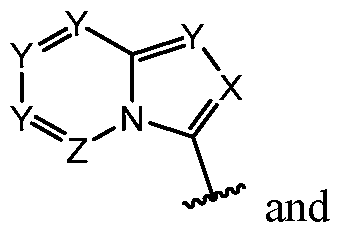
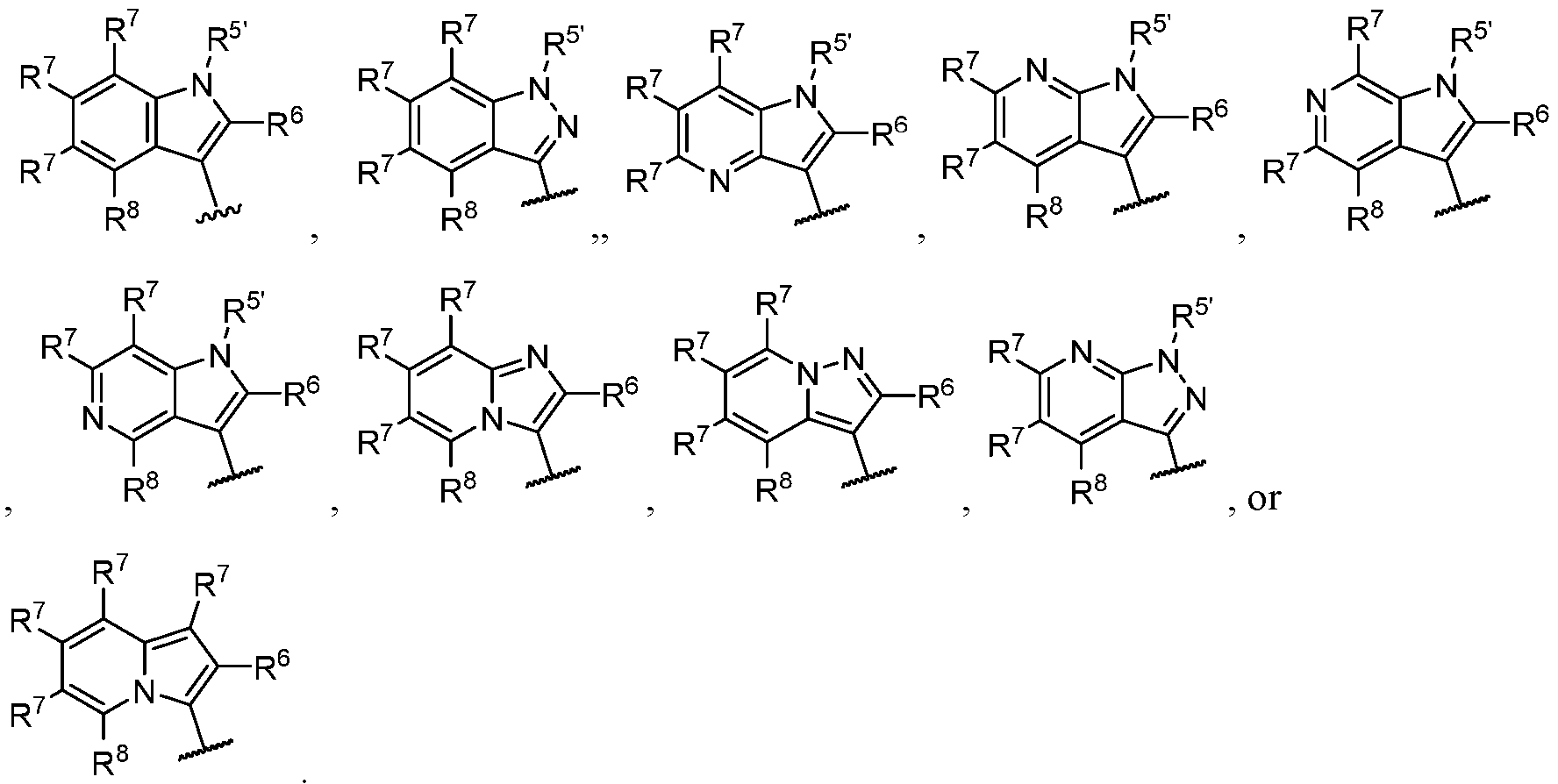
  • CDK7 inhibitor described herein we mean compounds including any one of those described herein, including compounds of Formula (I): pharmaceutically acceptable salt thereof, wherein ring A is abicyclic 6,5-ring system selected from: comprises no more than four ring nitrogen atoms;
  • X is N or C(R 6 ), wherein R 6 is hydrogen, -CN, -CH3, -CH2F, -CHF2 or -CF3; each Y is, independently, N or C(R 7 ), wherein R 7 is hydrogen or R 5 ;
  • Z is N or C(R 8 ), wherein R 8 is hydrogen or fluoro;
  • R 1 is hydrogen, -C1-C6 alkyl, -0-(Ci-C 6 -alkylene)-0-(Ci-C4-alkyl), -(C0-C6 alkylene)- (C3-C8 cycloalkyl), -(C1-C6 alkylene)-heterocyclyl, -(C1-C6 alkylene)-heteroaryl, -(C1-C6 alkylene)-N(R 1, )2, -(Ci-Ce alkylene)-NR 1, -S(0) 2 -(Ci-C4 alkyl), -(Ci-Ce alkylene)-NR 1, -S0 2 - N(R l5 )2, -(Ci-Ce alkylene)-S(0)2-(Ci-C4 alkyl), or -(Ci-Ce alkylene-S(0)2-N(R 1 ’)2, wherein any alkyl, alkylene, cycl
  • R 3 is hydrogen, halo, -CN, optionally substituted -C1-C6 alkyl, or optionally substituted C3-C8 cycloalkyl;
  • R 4 is halo, -CN, -Ci-Ce alkyl, -Ci-Ce alkenyl, Ci-Ce alkynyl, -O-Ci-Ce alkyl, -S-Ci-Ce alkyl, or a C3-C8 cycloalkyl, wherein any alkyl, alkenyl, or alkynyl portion of R 4 is optionally substituted; each R 5 is, independently, halo, -OH, -C1-C6 alkyl, -CN, -(C0-C6 alkylene)- C(0)OH, -(Co-Ce alkylene)-C(0)-(Ci-C4 alkyl), -(Co-Ce alkylene)-C(0)-N(R 1 ’)2, -(Co-Ce alkylene)-S(0)2-(Ci-C4 alkyl), -(Co-Ce alkylene)-S(0)2-N(R 1 ’)
  • R 5 ’ is hydrogen, -CN, -Ci-Ce alkyl, -(Co-Ce alkylene)-S(0) 2 -N(R l )2, -(Co-Ce alkylene)- (C3-C8 cycloalkyl), -(Co-Ce alkylene)-C(0)-N(R l )2, -(Co-Ce alkylene)-aryl, -(Co-Ce alkylene)- heterocyclyl, -(C0-C6 alkylene)-heteroaryl, -(Co-Cealkylene)-S(0)2-(Ci-C4 alkyl), -(C1-C6 alkylene)-0-(Ci-C3 alkylene)-C(0)-N(R 1 , )2, -(Ci-Cealkylene)-0-(Ci-C4alkylene)-P(0)(Ci-C4 alkyl) 2 , -(Ci-C
  • R 1 is -C(0)-0-(Ci-C 6 alkyl) or -(Co-C 6 alkylene)-carbocyclyl, wherein carbocyclyl is optionally substituted.
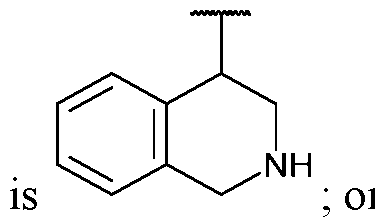
  • each R 2 if present, is -NH-C(0)-CI-C4 alkyl, -C(0)-NH-
  • R 3 is additionally selected from optionally substituted carbocyclyl.
  • R 4 is additionally selected from optionally substituted carbocyclyl.
  • each R 5 is additionally selected from -(C0-C6 alkylene)- carbocyclyl, -0-(Co-C 6 -alkylene)-carbocyclyl, phenyl, -(C2-C4 alkenylene)-phenyl, -S(0)-(Ci-C4 alkyl), -S-(Ci-C4 alkyl), -S(0)-0H, and -S(0)2-0H, wherein any alkyl, alkylene, alkenylene, carbocyclyl, or phenyl is optionally substituted.
  • R 5 ’ and any R 5 are taken together with the ring atoms to which they are bound to form an optionally substituted heterocyclyl, wherein each heterocyclyl is fused to ring A.
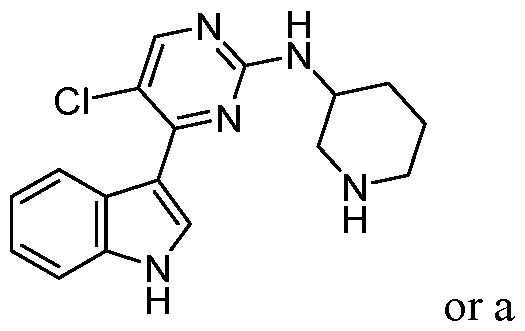
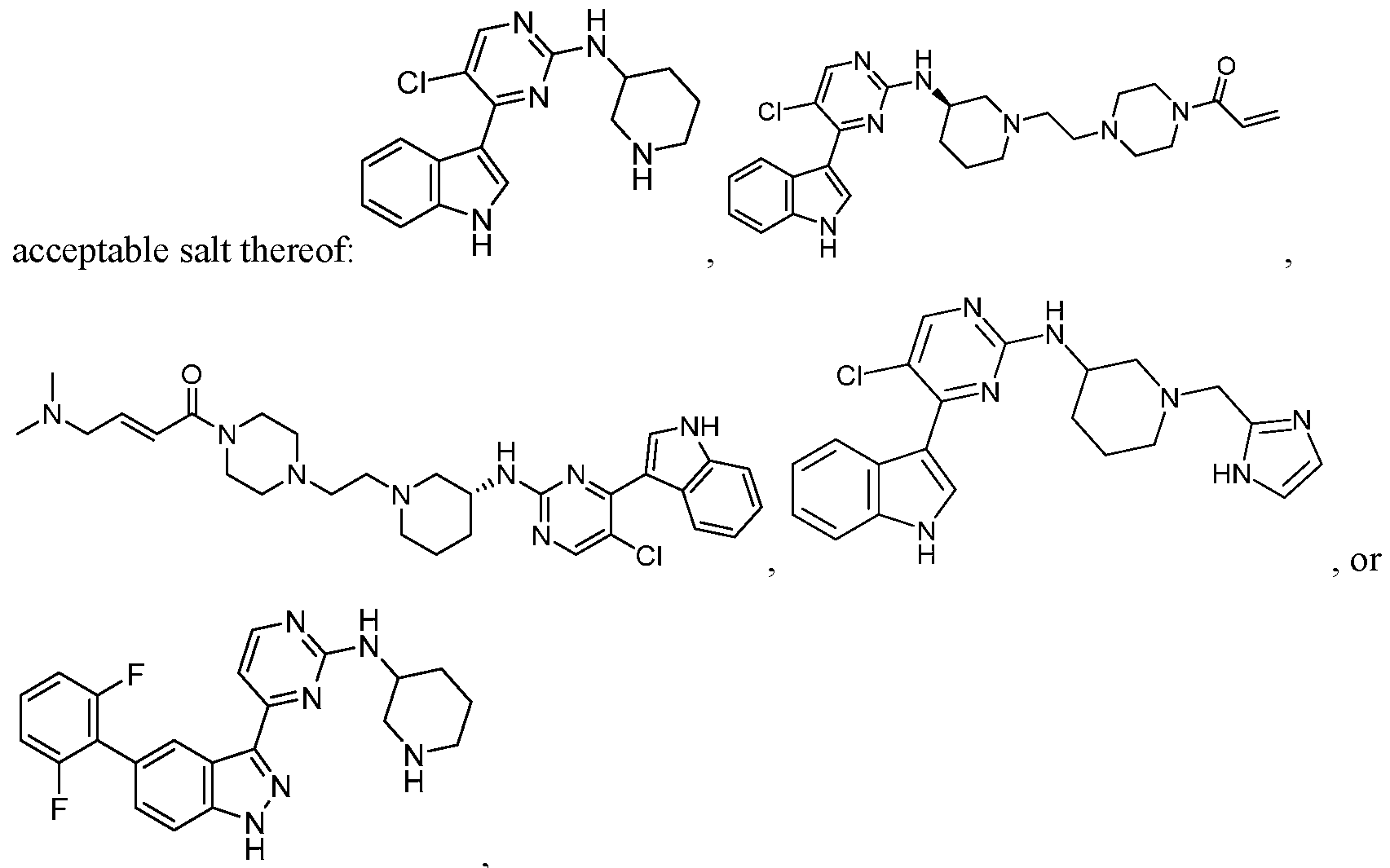
  • the compound of Formula (I) is not: pharmaceutical salt of the foregoing.
  • the compound of Formula (I) is not: acceptable salt of any of the foregoing.
  • ring A is: [14] In some embodiments, ring A is indol-3-yl or indazol-3-yl. In some embodiments, ring
  • ring A is indol-3-yl. In some embodiments, ring A is:
  • R 1 is hydrogen, -C1-C6 alkyl, -0-(Ci-C 6 -alkylene)-0-(Ci-C4- alkyl), -(Ci-Ce alkylene)-N(R 1 ’)2, -(Ci-Ce alkylene)-NR 1 ’-S(0) 2 -(Ci-C4 alkyl), -(Ci-Ce alkylene) -NR 1 ’ - SO2-N (R 1 ’ >2, -(Ci-Ce alkylene)-S(0) 2 -(Ci-C4 alkyl), -(Ci-Ce alkylene-S(0) 2 - N(R l )2, or -(C0-C6 alkylene)-(C3-C8 cycloalkyl), wherein any alkyl, or alkylene portion of R 1 is optionally substituted with one or more independently selected monovalent substituents, any cycloalkyl portion of R 1 is optionally substitute
  • R 1 is hydrogen, cyclopropyl, -CH3, -
  • R 1 is taken together with one R 2 and the ring atoms to which each are attached to form a bridged ring which, taken together with the ring to which R 1 and R 2 are bound, forms .
  • R 1 is hydrogen, -CH3, or -CH2CH2OCH3. In some embodiments, R 1 is hydrogen.
  • each alkyl in any R 1 ’ is optionally substituted with one or more substituents independently selected from fluorine, -OH and -CN.
  • any alkyl, alkylene, or aryl portion of R 2 is optionally substituted with one or more independently selected monovalent substituents.
  • any alkyl, alkylene, aryl, cycloalkyl, heterocyclyl or heteroaryl portion of R 2 , any ring formed by taking R 1 together with R 2 , or any ring formed by taking two R 2 together can be optionally substituted with one or more independently selected monovalent substituents.
  • each R 2 is independently selected from halo, -OH, -C1-C6 alkyl, - NHC(0)-(CI-C4 alkyl), -C(0)NH-CI-C4 alkyl, -C(0)-(optionally substituted heterocyclyl), optionally substituted aryl, and optionally substituted heteroaryl; or
  • each R 2 that is -C1-C4 alkyl or phenyl is optionally substituted with one or more independently selected monovalent substituents.
  • each R 2 if present, is, independently, halo or optionally substituted -C1-C4 alkyl.
  • each R 2 if present, is, independently, halo or -C1-C4 alkyl optionally substituted with one or more independently selected monovalent substituents.
  • each R 2 if present, is halo. In some embodiments, each R 2 , if present, is optionally substituted -C1-C4 alkyl. In some embodiments, each R 2 , if present, is -C1-C4 alkyl optionally substituted with one or more independently selected monovalent substituents.
  • n 0, 1, 2 or 3.
  • n 0, 1, 2 or 3
  • each R 2 if present, is, independently, fluoro, -CH3, -CH2CH3, -OH, or unsubstituted phenyl, or two R 2 are taken together to form oxo.
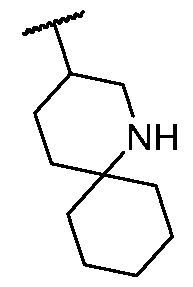
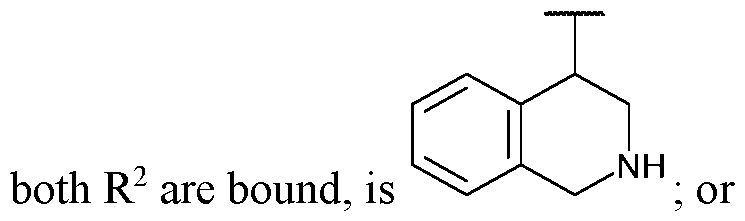
  • n is 0, 1, 2 or 3, and each R 2 , if present, is, independently, - CH(CH )2, -C(0)NHCH 3 , -NHC(0)CH 2 CH 3 , 3-methyl-l,2,4-oxadiazol-5-yl, l,2,4-triazolo[4,3- a]pyridin-3-yl, 8-(methylsulfonyl)-l,2,4-triazolo[4,3-a]pyridin-3-yl, pyrrolidin-l-ylcarbonyl, or 3-hydroxypyrrolidin-l-ylcarbonyl; or two R 2 on different atoms are taken together with the atoms to which they are bound and any intervening ring atoms to form a ring which, taken together with the piperidine ring to which both R 2 are bound, r two R 2 bound to the same ring atom are taken together with the atom to which they are bound to form a ring which, taken
  • each alkyl or cycloalkyl portion of R 3 is optionally and independently substituted with one or more fluorine.
  • R 3 is hydrogen
  • any alkyl, alkenyl, alkynyl, or cycloalkyl portion of R 4 is optionally and independently substituted with one or more substituents independently selected from -OH and fluorine.
  • R 4 is halo, -CN, optionally substituted C1-C4 alkyl, optionally substituted C2-C4 alkynyl, optionally substituted -O-C1-C4 alkyl, or optionally substituted C3-C6 cycloalkyl.
  • R 4 is halo, -CN, optionally substituted C1-C4 alkyl, or optionally substituted C1-C4 haloalkyl.
  • R 4 is halo, C1-C4 alkyl, or C1-C4 haloalkyl. In some embodiments, R 4 is C1-C4 alkyl. In some embodiments, R 4 is C1-C4 haloalkyl. In some embodiments, R 4 is halo.
  • R 4 is hydrogen or -C(0)-(optionally substituted C1-C4 alkyl).
  • R 4 is chloro, fluoro, bromo, iodo, cyclopropyl, -CN, -CF3, - CH2CF3, -CH3, -CH2CH3, -CH(CH )2, -CH 2 CH(CH )2, -OCH3, or -CoCH. In some embodiments, R 4 is chloro, fluoro, -CF3, -CH2CF3, -CH3, -CH2CH3, or -CoCH. In some embodiments, R 4 is chloro, -CF3, -CH3, or -CH2CH3. In some embodiments, R 4 is chloro or - CF3. In some embodiments, R 4 is chloro. In some embodiments, R 4 is -CF3.
  • one R 5 is an optionally substituted heteroaryl or an optionally substituted heterocyclyl.
  • the heteroaryl or heterocyclyl is pyrazol-4-yl, imidazol-1- yl, morpholin-4-yl, pyridin-4-yl, pyridazin-4-yl, lH-pyrrol-3-yl, pyridazin-4-yl, l,2,4-triazol-3- yl, or l,2,4-oxadiazol-3-yl; and is optionally substituted with one or two substituents selected from halo, -CN, C1-C6 alkyl,
  • each R 7 is, independently, hydrogen, halo, -C1-C6 alkyl, -CN, - C(0)OH, -C(0)-(Ci-C 4 alkyl), -C(0)-N(R l )2, -S(0) 2 -(Ci-C 4 alkyl), -P(0)(Ci-C 4 alkyl)-0-Ci-C 4 alkyl, -P(0)(0-(Ci-C 4 alky l ))i. heterocyclyl, or heteroaryl, wherein any alkyl, heterocyclyl or heteroaryl is optionally substituted.
  • each R 7 is, independently, -C(0)-heterocyclyl, -S(0)2N(R )2. - (Ci-C 4 alkylene)-S(0)2-(Ci-C 4 alkyl), carbocyclyl, -0-(Co-C6-alkylene)-carbocyclyl, phenyl, - (C 2 -C 4 alkenylene)-phenyl, -S(0)-(Ci-C 4 alkyl), -S-(Ci-C 4 alkyl), -S(0)-OH, or -S(0) 2 -OH, wherein any alkyl, alkylene, alkenylene, carbocyclyl, phenyl, or heterocyclyl is optionally substituted.
  • each R 7 is, independently, -P(0)-(CH 3 )2, -P(0)-(CH2CH 3 )2, - S(0) 2 N(CH 3 )2, -S(0)2CH(CH 3 )2, -S(0)2CH 2 F, -S(0) 2 CHF2, -SCHFI, -S(0)CHF 2 , -S(0)OH, - S(0) 2 OH, -S(0) 2 NHCH 3 , -(CH 2 ) 4 CH 3 , -CH 2 S(0) 2 CH 3 , -S(0) 2 -CH 2 CH 3 , lH-pyrazol-3-yl, 1- difluoromethyl-pyrazol-3-yl, l-difluoromethyl-pyrazol-4-yl, l-methylpyrazol-3-yl, 3 -methyl - lH-pyrazol-4-yl, 3 -methyl-3 -hydroxypyrrolidin- 1 -ylcarbonyl, 3 -
  • R 5 ’ is hydrogen, C1-C4 alkyl, -(C0-C 3 alkylene)-aryl or -(C1-C 3 alkylene)-0-(Ci-C4 alkyl).
  • R 5 ’ can be hydrogen, methyl, isopropyl, -CH2-O-CH 3 , - (CH 2 )2-0-CH 3 , or phenyl.
  • R 6 is hydrogen or methyl.
  • the compound of Formula (I) is a compound of Formula (I-a): pharmaceutically acceptable salt thereof, wherein each of ring A, R 1 , R 2 , R 3 , R 4 , and n is defined as for Formula (I).
  • the compound of Formula (I) is a compound of Formula (I-b): pharmaceutically acceptable salt thereof, wherein each of ring A, R 1 , R 2 , R 3 , R 4 , and n is defined as for Formula (I).
  • the compound of Formula (I) is a compound of Formula (I-c): pharmaceutically acceptable salt thereof, wherein each of X, R 2 , R 4 , R 5 ’, R 7 , R 8 , and n is defined as for Formula (I); Y 1 is N or C(R 7a ); Y 2 is N or C(R b ): and no more than one of X, Y 1 or Y 2 is N, wherein each of R 7a , R 711 and R 7c is independently selected from R 7 as defined as for Formula (I).
  • the compound of Formula (I-c) is a compound of Formula (I-cl): pharmaceutically acceptable salt thereof, wherein R 6 is also as defined as for Formula (I).
  • the compound of Formula (I-c) is a compound of Formula (I-c2): pharmaceutically acceptable salt thereof.
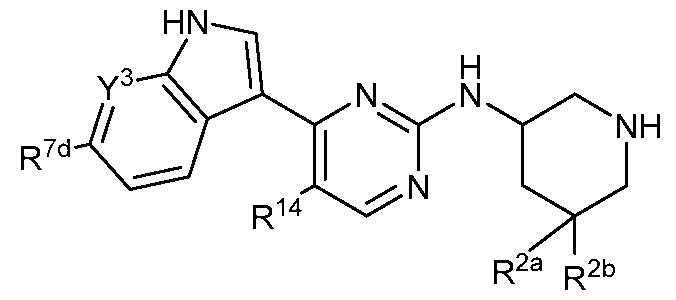
  • the compound of Formula (I) is a compound of Formula (II):
  • Y 3 is N or C(R 7e ); each of R 2a and R 2b is, independently, hydrogen or C 1 -C 3 alkyl; or R 2a and R 2b are taken together to form a cycloalkyl or a heterocycle spirofused to the piperidine ring, wherein the cycloalkyl or heterocycle is optionally substituted with one or more independently selected C1-C4 alkyl or C1-C4 haloalkyl;
  • R 7d is hydrogen, -C(0)-(Ci-C4 alkyl), -CN, or heteroaryl optionally substituted with one or more independently selected C1-C4 alkyl or C1-C4 haloalkyl;
  • R 7e if present, is hydrogen, halo, -S(0)2-(Ci-C4 alkyl), -P(0)(Ci-C4 alkyl)2, -C(0)NH- (C1-C4 alkyl), -C(0)N(Ci-C 4 alkyl) 2 , -S(0) 2 NH-(Ci-C 4 alkyl), -S(0) 2 N-(Ci-C 4 alkyl) 2 , or heteroaryl optionally substituted with one or more independently selected C1-C4 alkyl or C1-C4 haloalkyl; and R 14 is C1-C3 alkyl or C1-C3 haloalkyl.
  • the compound of Formula (II) is a compound of Formula (Ha):
  • the compound of Formula (II) is a compound of Formula (lib) : (lib), or a pharmaceutically acceptable salt thereof, wherein Y 3 , R 2a , R 2b , R 7d , R 7e , and R 14 are as defined in Formula (II).
  • the compound of Formula (I) is a compound of Formula (III):
  • the compound of Formula (III) is a compound of Formula (Ilia):
  • the compound of Formula (III) is a compound of Formula (Illb):
  • R 2a is hydrogen or -CFF
  • R 2b is hydrogen, -CFF, -CH2CH3, or -CH(CH3)2 or R 2a and R 2b are taken together to form oxetan-3-yl;
  • R 7d is hydrogen, -C(0)CH3, -CN, pyridin-3-yl, pyridin-4-yl, 1 -methyl-5 -cyanopyrrol-3- yl, l-methylpyrazol-4-yl, l-methylpyrazol-3-yl, lH-pyrazol-4-yl, lH-pyrazol-3-yl, lH-imidazol- 2-yl, l,3-dimethylpyrazol-4-yl, l,5-dimethylpyrazol-4-yl, l,5-dimethyl-l,2,4-triazol-3-yl, imidazol-l-yl, l-difluoromethylpyrazol-3-yl, l-difluoromethylpyrazol-4-yl, or thiazol-2-yl;
  • R 7e is hydrogen, fluoro, chloro, bromo, -CN, -P(0)(CH3)2, -S(0)2CH(CH3)2, - S(0) 2 CH 2 CH3, -S(0) 2 N(CH )2, -C(0)NHCH3, pyridin-4-yl, pyridazin-4-yl, 5-methyl-lH- pyrazol-4-yl, l-methylpyrazol-4-yl, 4-methyl- lH-imidazol-l-yl, lH-benzo[d]imidazol-5-yl, 6- (trifluoromethyl)-lH-pyrrolo[3,2-c]pyridin-3-yl, l-methyl-6-(trifluoromethyl)-lH-pyrrolo[3,2- c]pyridin-3-yl, isoquinolin-7-yl, isoquinolin-5-yl, pyrazin-2-yl, 2H-indazol-6-y
  • R 14 is -CH3, -CF3, -CH2CH3, -CH2CF3, -CH2CH2F, or -CH(CH )2.
  • R 2a is hydrogen or -CFF
  • R 2b is hydrogen or -CFF
  • R 7d is hydrogen, -CN, pyrazin-2-yl, thiazol-2-yl, or 3,5-dimethylisoxazol-4- yl
  • R 7e if present, is hydrogen, fluoro, -C(0)NHCH3, -P(0)(CH3)2, -S(0)2CH3, -S(0)2N(CH3)2, l,3-dimethylpyrazol-4-yl, or pyridazin-4-yl
  • R 14 is -CH2CH3 or -CF3.
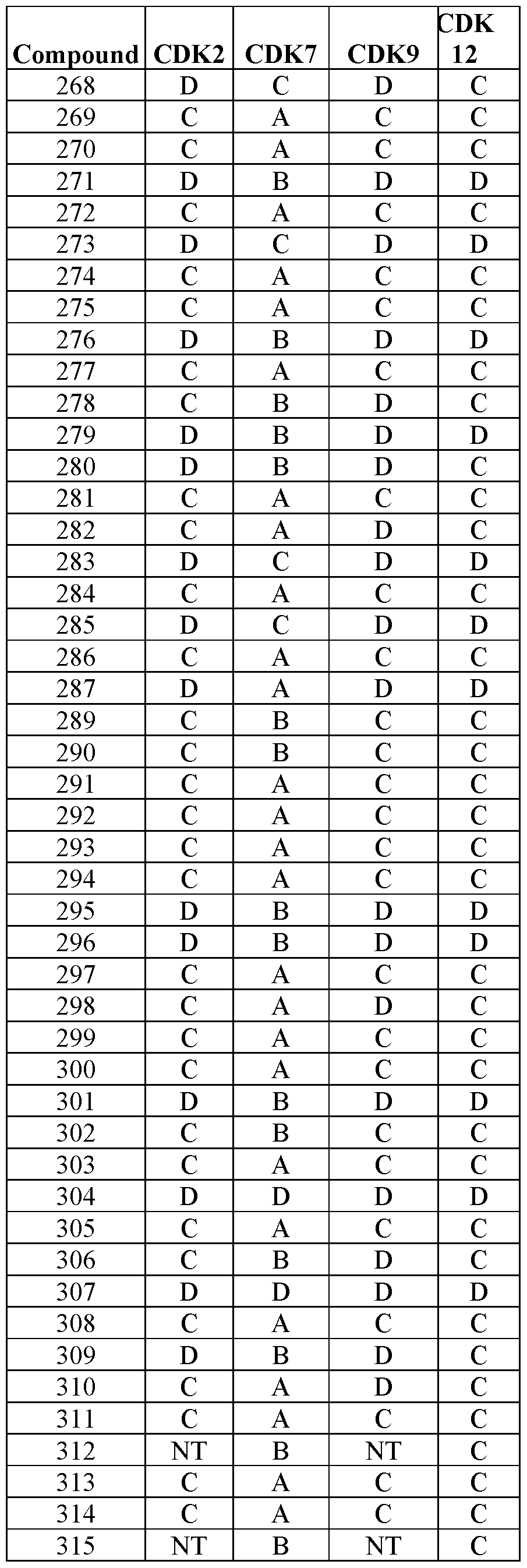
  • the compound of Formula (I) is any one of the compounds in the table of FIG. 1A-1X or is a pharmaceutically acceptable salt thereof.
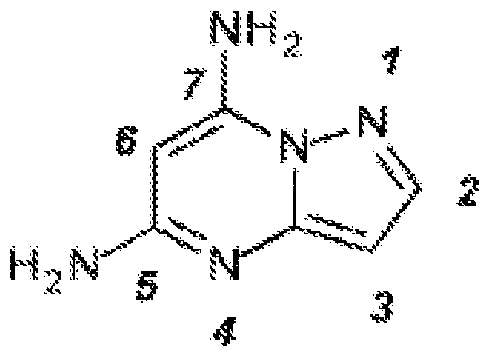
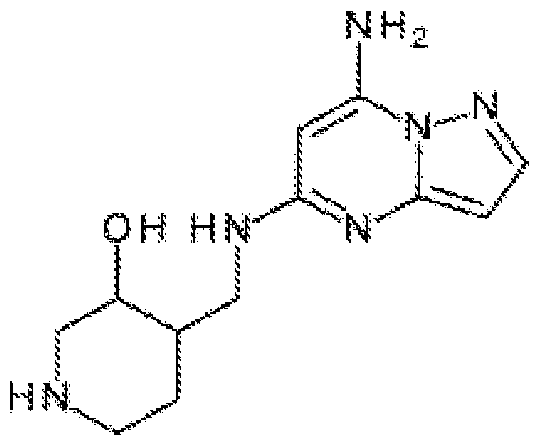
  • the diagnostic and therapeutic methods described herein can also employ compounds related to pyrazolo[l,5-a]pyrimidine-5, 7-diamine (i.e.. such compounds can be administered to a patient identified for treatment in a manner described herein): [58] and, to reiterate, all such compounds, including those of a subgenus described below, are encompassed by our references to “a CDK7 inhibitor described herein.” More specifically, related to 4-[[(7-aminopyrazolo[l,5-a]pyrimidin-5- yl)amino] methyl]piperidin-3 -ol : .
  • the compound employed is a certain substituted 4-[[(7-aminopyrazolo[l,5-a]pyrimidin-5-yl)amino]methyl]piperidin-3-ol of Formula (IV) that has the following structural formula, wherein R 15 , R 16 , and R 17 are as defined herein.
  • R 15 is hydrogen, Ci-C6-alkyl (e.g., methyl) or C 3 -C 6 -cycloalkyl, each optionally substituted by 1-3 (e.g., 1 or 2) halogens (e.g., fluoro);
  • R 16 is hydrogen, halogen, Ci-C6-alkyl, or Ci-C6-haloalkyl; and
  • R 17 is phenyl optionally substituted with 1-3 (e.g., 1 or 2) substituents selected from halogen (e.g., fluoro), -CN, Ci-C6-alkyl (e.g., methyl), C 3 -C 6 -cycloalkyl, and Ci-C 6 -haloalkyl.
  • R 15 is hydrogen, Ci-C6-alkyl or C 3 -C 6 -cycloalkyl. In some embodiments, R 15 is hydrogen, ethyl, isopropyl, or cyclopropyl. In some embodiments, R 16 is hydrogen or halogen. In some embodiments, R 17 is phenyl optionally substituted with 1 substituent selected from the group consisting of halogen, -CN, Ci-C6-alkyl, C 3 -C 6 -cycloalkyl, and Ci-C 6 -haloalkyl. In some embodiments, R 17 is phenyl optionally substituted with 1 substituent selected from halogen and -CN.
  • R 15 is hydrogen, Ci-C6-alkyl or C3-C6 -cycloalkyl;
  • R 16 is hydrogen or halogen; and
  • R 17 is phenyl optionally substituted with 1 substituent selected from halogen and -CN.
  • Exemplary/useful compounds are shown in Table X of FIG. 2.
  • the present diagnostic and/or therapeutic methods can be carried out with the following compound (ICEC0942), which is also “a CDK7 inhibitor described herein:”
  • the diagnostic and therapeutic methods described herein can also employ a compound of Formula (X) (/. e. , such compounds can be administered to a patient identified for treatment in a manner described herein): wherein: R A6 is C1-C6 alkyl; R A7 is C1-C 6 alkyl; R 2 is a bond; Q is an optionally substituted divalent heteroaryl; R 3 is C1-C4 alkylene; Z is a monocyclic heteroaryl; and R 4 is Formula (ii-1): wherein L 3 is a bond; Y is O, S, or N(R 6 ), wherein R 6 is hydrogen; R E1 is hydrogen; R E2 is hydrogen; and R E3 is CFhN(R 9 )2 wherein R 9 is hydrogen or unsubstituted alkyl.
  • R A6 is C1-C6 alkyl
  • R A7 is C1-C 6 alkyl
  • R 2 is a bond
  • Q is an optionally substituted divalent heteroary
  • R A6 is methyl
  • R A7 is a C 3 alkyl (e.g., a branched C 3 alkyl such as CH2(CH3)2)
  • Q is an unsubstituted divalent piperidine
  • R 3 is a C2 alkylene
  • Z is pyrrolyl
  • Y is O
  • R 9 is methyl.
  • R 3 is a C2 alkylene in which the first methylene unit is replaced with -O- and the second methylene unit is replaced with -C(O)-.
  • R A7 is a branched C3 alkyl (CH2(CH3)2) and R 3 is a C2 alkylene in which the first methylene unit is replaced with -O- and the second methylene unit is replaced with -C(O)-.
  • the compound/CDK7 inhibitor can be Other CDK7 inhibitors useful in the present methods are:
  • the diagnostic methods that identify a patient for treatment include a step of analyzing one or more of the biomarkers described herein in a biological sample obtained from the patient by determining, having determined, or receiving information concerning the state of the biomarker.
  • the state is assessed based on the presence, absence (e.g ., a genetic deletion), location (e.g., chromosomal translocation), or copy number of a biomarker gene in wild type or mutant form, the inclusion of epigenetic modifications, the association of a biomarker gene with a super-enhancer (SE) or a SE of a certain strength, prevalence rank, or ordinal rank, the level of expression of the biomarker gene (as evidenced by, for example, its level of RNA (e.g.
  • RNA sequence can be reverse transcribed to generate a complimentary DNA (cDNA), and any of the methods and uses described herein can be carried out with cDNA that has been generated from an RNA described herein (i.e.. a patient’s biomarker status may have been determined using cDNA rather than an RNA).
  • cDNA complimentary DNA
  • the state of a biomarker can be assessed in terms of any one or more of the features just listed regardless of the exact biomarker in use or the precise method or context in which the biomarker is being assessed.
  • the state of a given biomarker e.g., its copy number, associated enhancer, expression level, or activity
  • a biomarker selected from the genes BRAF, c-myc (also known as MYC), CDK1, CDK2, CDK4, CDK6, CDK17, CDK18, CDK19, CCNA1, CCNB1, CCNE1, ESR- 1, FGFR1, PIC3CA, and certain genes encoding an E2F pathway member (see the Table below), or the proteins encoded thereby, by determining, having determined, and/or receiving information that the state of such a biomarker is equal to or above (e.g. , above) a pre-determined threshold level (for RB1-E2F family members, see the Table below and the accompanying teaching).
  • biomarker selected from the genes BCL2-like 1, CDK7, CDK9, CDKN2A, and RB (also known as RBI or another E2F pathway member), and/or the proteins encoded thereby, by determining, having determined, and/or receiving information that the state of such biomarker is equal to or below (e.g. , below) a pre determined threshold level (for RB/E2F family members, see the Table below).
  • a biomarker(s) to utilize may depend, in part, on the particular cancer afflicting the patient, as well as other factors described herein.
  • CDK18 encodes CDK18
  • CDK19 encodes CDK19 (a component of the Mediator co-activator complex)
  • CCNE1 encodes cyclin El (see Koff el al, Cell 66: 1217-1228, 1991)
  • FGFR1 encodes FGFR1, a cell surface membrane receptor with tyrosine kinase activity
  • RB encodes pRB, which binds to the activator domain of activator E2F
  • BCL2-like 1 encodes BCF-xF, a transmembrane protein in mitochondria
  • CDK7 encodes CDK7
  • CDK9 encodes CDK9
  • CDKN2A encodes pl6 and pl4arf.
  • Aliases, chromosomal locations, splice variants, and homologs of the genes and proteins described herein as biomarkers, in species other than Homo sapiens, are known in the art.
  • the treatment methods of the invention and corresponding “uses” include administering, or the use of, a CDK7 inhibitor described herein (e.g. , a compound of Formula (I)), any of which may be included in a pharmaceutically acceptable composition and administered by a route and regimen (e.g., as described further herein), to a patient identified as described herein (e.g., as having a type of cancer described herein).
  • a CDK7 inhibitor described herein e.g. , a compound of Formula (I)
  • a route and regimen e.g., as described further herein
  • FIG. 1 A- IX is a table of exemplary/useful compounds of Formula (I).
  • FIG. 2 is a table (Table X) illustrating additional CDK7 inhibitors useful in the methods of the invention.
  • a dose of about 10 mg means any dose as low as 10% less than 10 mg (9 mg), any dose as high as 10% more than 10 mg (11 mg), and any dose or dosage range therebetween (e.g., 9-11 mg; 9.1-10.9 mg; 9.2-10.8 mg; and so on).
  • a prevalence rank in a population of about 80% means a prevalence rank of 72-88% (e.g., 79.2-80.8%). In case of doubt, “about X” can be “X” (e.g., about 80% can be 80%).
  • a stated value cannot be exceeded (e.g., 100%)
  • “about” signifies any value or range of values that is up to and including 10% less than the stated value (e.g., a purity of about 100% means 90%-100% pure (e.g., 95%-100% pure, 96%-100% pure, 97%-100% pure etc... )).
  • a purity of about 100% means 90%-100% pure (e.g., 95%-100% pure, 96%-100% pure, 97%-100% pure etc... )).
  • a given value will be about the same as a stated value when they are both within the margin of error for that instrument or technique.
  • administering refers to the administration of a CDK7 inhibitor described herein, including a compound conforming to a Formula disclosed herein or a pharmaceutically acceptable salt thereof, an additional/second agent, or a composition containing one or more of any such compounds to a subject (e.g, a human patient) or system (e.g. , a cell- or tissue-based system that is maintained ex vivo); as a result of the administration, the compound or composition containing the compound (e.g., a pharmaceutical composition) is introduced to the subject or system.
  • a subject e.g, a human patient
  • system e.g. , a cell- or tissue-based system that is maintained ex vivo
  • the compound or composition containing the compound e.g., a pharmaceutical composition
  • compositions of the invention and second agents useful in combination therapies can also be “administered.”
  • routes of administration can be oral (i.e., by swallowing a pharmaceutical composition) or may be parenteral.
  • the route of administration can be bronchial (e.g., by bronchial instillation), by mouth (i.e., oral), dermal (which may be or comprise topical application to the dermis or intradermal, interdermal, or transdermal administration), intragastric or enteral (i.e., directly to the stomach or intestine, respectively), intramedullary, intramuscular, intranasal, intraperitoneal, intrathecal, intratumoral, intravenous (or intra-arterial), intraventricular, by application to or injection into a specific organ (e.g., intrahepatic), mucosal (e.g., buccal, rectal, sublingual, or vaginal), subcutaneous, tracheal (e.g., by intratracheal instillation), or ocular (e.g., topical, subconjunctival, or intravitreal).
  • bronchial e.g., by bronchial instillation
  • mouth i.e., oral
  • Administration can involve intermittent dosing (i.e., doses separated by various times) and/or periodic dosing (i.e., doses separated by a common period of time (e.g., every so many hours, daily (e.g., once daily oral dosing), weekly, twice per week, etc.)). In other embodiments, administration may involve continuous dosing (e.g., perfusion) for a selected time (e.g., about 1-2 hours).
  • Two events, two entities, or an event and an entity are “associated” with one another if one or more features of the first (e.g., its presence, level and/or form) are correlated with a feature of the second.
  • a first entity e.g., an enzyme (e.g., CDK7)
  • gene expression profile i.e., a single or combined group of genes in a cell with a uniquely characteristic pattern of gene expression
  • metabolite, or event e.g., myeloid infiltration
  • an event e.g., the onset or progression of a particular disease
  • its presence, level and/or form correlates with the incidence of, severity of, and/or susceptibility to the disease (e.g., a cancer disclosed herein).
  • the biomarkers described herein are associated with an identified patient in the manner described herein (e.g., by virtue of their level of expression). Associations are typically assessed across a relevant population. Two or more entities are physically “associated” with one another if they interact, directly or indirectly, so that they are and/or remain in physical proximity with one another in a given circumstance (e.g. , within a cell maintained under physiological conditions (e.g., within cell culture) or within a pharmaceutical composition). Entities that are physically associated with one another can be covalently linked to one another or non-covalently associated by, for example, hydrogen bonds, van der Waals forces, hydrophobic interactions, magnetism, or combinations thereof.
  • a CDK7 inhibitor described herein or a pharmaceutically acceptable salt thereof can be non-covalently associated with CDK7.
  • biological sample refers to a sample obtained or derived from a biological source of interest (e.g. , a tissue or organism (e.g. , an animal or human patient) or cell culture).
  • a biological sample can be a sample obtained from an individual (e.g. , a patient or an animal model) suffering from a disease (or, in the case of an animal model, a simulation of that disease in a human patient) to be diagnosed and/or treated by the methods of this invention or from an individual serving in the capacity of a reference or control (or whose sample contributes to a reference standard or control population).
  • the biological sample can contain a biological cell, tissue or fluid or any combination thereof.
  • a biological sample can be or can include ascites; blood; blood cells; a bodily fluid, any of which may include or exclude cells (e.g., tumor cells (e.g., circulating tumor cells (CTCs) found in at least blood or lymph vessels)); bone marrow or a component thereof (e.g.
  • tumor cells e.g., circulating tumor cells (CTCs) found in at least blood or lymph vessels
  • bone marrow or a component thereof e.g.
  • CSF cerebrospinal fluid
  • feces hematopoietic cells, marrow adipose tissue, or stromal cells
  • CSF cerebrospinal fluid
  • feces free- floating nucleic acids (e.g., circulating tumor DNA); gynecological fluids; immune infdtrates; lymph; peritoneal fluid; plasma; saliva; sputum; surgically-obtained specimens; tissue scraped or swabbed from the skin or a mucus membrane (e.g., in the nose, mouth, or vagina); tissue or fine needle biopsy samples; urine; washings or lavages such as a ductal lavage or broncheoalveolar lavage; or other body fluids, tissues, secretions, and/or excretions.
  • CSF cerebrospinal fluid
  • feces free- floating nucleic acids (e.g., circulating tumor DNA); gynecological fluids; immune inf
  • Samples of, or samples obtained from, a bodily fluid may include tumor cells (e.g., CTCs) and/or free-floating or cell-free nucleic acids of the tumor.
  • Cells e.g., cancer cells
  • Samples used in the form in which they were obtained may be referred to as “primary” samples, and samples that have been further manipulated (e.g., by removing one or more components of the sample) may be referred to as “secondary” or “processed” samples.
  • Such processed samples may contain or be enriched for a particular cell type (e.g.
  • a CDK7- expressing cell which may be a tumor cell
  • cellular component e.g., a membrane fraction
  • cellular material e.g., one or more cellular proteins, including CDK7, DNA, or RNA (e.g., mRNA (e.g. , pre-mRNA or mature mRNA)), which may encode CDK7 and may be subjected to amplification).
  • RNA e.g., mRNA (e.g. , pre-mRNA or mature mRNA)
  • biomarker refers to an entity whose state correlates with a particular biological event so that it is considered to be a “marker” for that event (e.g. , the presence of a particular cancer and/or its susceptibility to a CDK7 inhibitor described herein or a pharmaceutically acceptable salt thereof).
  • a biomarker can be analyzed at the nucleic acid or protein level; at the nucleic acid level, one can analyze the presence (e.g., copy number alterations (CNAs)), absence, or chromosomal location of a gene in wild type or mutant form, epigenetic alterations (in, e.g., methylation), its association with a super-enhancer, and/or its level of expression (as evidenced, for example, by primary RNA transcript or mRNA (e.g., pre- mRNA or mature mRNA) levels).
  • CNAs copy number alterations
  • a biomarker may indicate a therapeutic outcome or likelihood (e.g., increased likelihood) thereof.
  • a biomarker can be predictive or prognostic and is therefore useful in methods of identifying or treating a patient as described herein.
  • cancer refers to a disease in which biological cells exhibit an aberrant growth phenotype characterized by loss of control of cell proliferation to an extent that will be detrimental to a patient having the disease.
  • a cancer can be classified by the type of tissue in which it originated (histological type) and/or by the primary site in the body in which the cancer first developed. Based on histological type, cancers are generally grouped into six major categories: carcinomas; sarcomas; myelomas; leukemias; lymphomas; and mixed types.
  • a cancer treated as described herein may be of any one of these types and may comprise cells that are precancerous (e.g., benign), malignant, pre-metastatic, metastatic, and/or non-metastatic.
  • a patient who has a malignancy or malignant lesion has a cancer.
  • the present disclosure specifically identifies certain cancers to which its teachings may be particularly relevant, and one or more of these cancers may be characterized by a solid tumor or by a hematologic tumor, which may also be known as a blood cancer (e.g., of a type described herein).
  • a blood cancer e.g., of a type described herein.
  • cancer cell and “tumor cell” interchangeably to refer to any malignant cell.
  • the term “combination therapy” refers to those situations in which a subject is exposed to two or more therapeutic regimens (e.g., two or more therapeutic agents) to treat a single disease (e.g., a cancer).
  • the two or more regimens/agents may be administered simultaneously or sequentially.
  • a dose of the first agent and a dose of the second agent are administered at about the same time, such that both agents exert an effect on the patient at the same time or, if the first agent is faster- or slower-acting than the second agent, during an overlapping period of time.
  • the doses of the first and second agents are separated in time, such that they may or may not exert an effect on the patient at the same time.
  • the first and second agents may be given within the same hour or same day, in which case the first agent would likely still be active when the second is administered.
  • a much longer period of time may elapse between administration of the first and second agents, such that the first agent is no longer active when the second is administered (e.g., all doses of a first regimen are administered prior to administration of any dose(s) of a second regimen by the same or a different route of administration, as may occur in treating a refractory cancer).
  • combination therapy does not require that two agents be administered together in a single composition or at the same time, although in some embodiments, two or more agents, including a CDK7 inhibitor described herein or a pharmaceutically acceptable salt thereof and a second agent described herein may be administered within the same period of time (e.g., within the same hour, day, week, or month).
  • cutoff and “cutoff value” mean a value measured in an assay that defines the dividing line between two subsets of a population (e.g., likely responders and non-responders (e.g., responders and non-responders to a CDK7 inhibitor described herein or a pharmaceutically acceptable salt thereof).
  • values that are equal to or above the cutoff value define one subset of the population, and values that are lower than the cutoff value define the other subset of the population.
  • values that are equal to or below the cutoff value define on subset of the population, and values above the cutoff value define the other.
  • the cutoff or cutoff value can define the threshold value.
  • diagnosis information is information that is useful in determining whether a patient has a disease and/or in classifying (stratifying) the disease into a genotypic or phenotypic category or any category having significance with regard to the prognosis of the disease or its likely response to treatment (either treatment in general or any particular treatment described herein).
  • diagnostic refers to obtaining or providing any type of diagnostic information, including, but not limited to, whether a patient is likely to have or develop a disease; whether that disease has or is likely to reach a certain state or stage or to exhibit a particular characteristic (e.g., resistance to a therapeutic agent); information related to the nature or classification of a tumor; information related to prognosis (which may also concern resistance); and/or information useful in selecting an appropriate treatment (e.g., selecting a CDK7 inhibitor described herein or a pharmaceutically acceptable salt thereof for a patient identified as having a cancer that is likely to respond to such an inhibitor or other treatment).
  • a particular characteristic e.g., resistance to a therapeutic agent
  • information related to the nature or classification of a tumor e.g., information related to prognosis (which may also concern resistance)
  • information useful in selecting an appropriate treatment e.g., selecting a CDK7 inhibitor described herein or a pharmaceutically acceptable salt thereof for a patient identified as having a cancer that is likely to respond to such
  • a patient classified (stratified) according to a method described herein and selected for treatment with a CDK7 inhibitor described herein or a pharmaceutically acceptable salt thereof is likely to respond well to the treatment, meaning that such a patient is more likely to be successfully treated than a patient with the same type of cancer who has not been so identified and is not in the same strata.
  • Available treatments include therapeutic agents and other treatment modalities such as surgery, radiation, etc., and selecting an appropriate treatment encompasses the choice of withholding a particular therapeutic agent; the choice of a dosing regimen; and the choice of employing a combination therapy.
  • Diagnostic information can be used to stratify patients and is thus useful in identifying and classifying a given patient according to, for example, biomarker status. Obtaining diagnostic information can constitute a step in any of the patient stratification methods described herein.
  • dosage form may be used to refer to a physically discrete unit of an active agent (e.g. , a therapeutic or diagnostic agent) for administration to a patient.
  • an active agent e.g. , a therapeutic or diagnostic agent
  • each such unit contains a predetermined quantity of active agent.
  • such quantity is a unit dosage amount (or a whole fraction thereof) appropriate for administration in accordance with a dosing regimen that has been determined to correlate with a desired or beneficial outcome when administered to a relevant population (i.e.. with a therapeutic dosing regimen).
  • the total amount of a therapeutic composition or agent administered to a particular patient is determined by one or more attending physicians and may involve administration of multiple dosage forms.
  • a dosing regimen may be used to refer to a set of unit doses (typically more than one) that are administered individually to a patient, separated by equal or unequal periods of time.
  • a given therapeutic agent typically has a recommended dosing regimen, which may involve one or more doses, each of which may contain the same unit dose amount or differing amounts.
  • a dosing regimen comprises a first dose in a first dose amount, followed by one or more additional doses in a second dose amount that is different from the first dose amount.
  • a dosing regimen is correlated with a desired or beneficial outcome when administered across a relevant population (i.e.. the regimen is a therapeutic dosing regimen).
  • an “effective amount” of an agent refers to an amount that produces or is expected to produce the desired effect for which it is administered.
  • the effective amount will vary depending on factors such as the desired biological endpoint, the pharmacokinetics of the compound administered, the condition being treated, the mode of administration, and characteristics of the patient, as discussed further below and recognized in the art.
  • the term can be applied to therapeutic and prophylactic methods.
  • a therapeutically effective amount is one that reduces the incidence and/or severity of one or more signs or symptoms of the disease.
  • an effective amount may reduce the tumor burden, inhibit tumor growth, inhibit metastasis or prolong patient survival.
  • a therapeutically effective amount is that amount that provides a particular desired pharmacological response in a significant number of patients when administered to patients in need of such treatment.
  • reference to a therapeutically effective amount may be a reference to an amount administered or an amount measured in one or more specific tissues (e.g., a tissue affected by the disease) or fluids (e.g., blood, saliva, serum, sweat, tears, urine, etc.).
  • Effective amounts may be formulated and/or administered in a single dose or in a plurality of doses (e.g., as part of a dosing regimen).
  • an “enhancer” is a region of genomic DNA that helps regulate the expression of genes up to 1 Mbp or so away.
  • An enhancer may overlap, but is often not composed of, gene coding regions.
  • An enhancer is often bound by transcription factors and designated by specific histone marks.
  • mRNA is a single -stranded RNA product synthesized by transcription of DNA that includes one or more of the coding sequences of a gene.
  • the mRNA may be in the form of a precursor (pre-mRNA) or may be further processed to a mature form of mRNA lacking introns.
  • patient refers to any organism that is or may be subjected to a diagnostic method described herein or to which a compound described herein or a pharmaceutically acceptable salt thereof, is or may be administered for, e.g., experimental, diagnostic, prophylactic, and/or therapeutic purposes.
  • Typical patients include animals (e.g., mammals such as mice, rats, rabbits, non-human primates, and humans; domesticated animals, such as dogs and cats; and livestock or any other animal of agricultural or commercial value).
  • animals e.g., mammals such as mice, rats, rabbits, non-human primates, and humans; domesticated animals, such as dogs and cats; and livestock or any other animal of agricultural or commercial value).
  • a patient may be suffering from or susceptible to (/. e. , have a higher than average risk of developing) a disease described herein and may display one or more signs or symptoms thereof.
  • composition e.g., a pharmaceutical composition
  • pharmaceutically acceptable when applied to a carrier used to formulate a composition disclosed herein (e.g., a pharmaceutical composition), means a carrier that is compatible with the other ingredients of the composition and not deleterious to a patient (e.g., it is non-toxic in the amount required and/or administered (e.g., in a unit dosage form)).
  • compositions described herein refers to a salt form of a compound that is, within the scope of sound medical judgment, suitable for use in contact with the tissues of humans (e.g., patients) and lower animals (including, but not limited to, mice and rats used in laboratory studies) without unacceptable toxicity, irritation, allergic response and the like, and that can be used in a manner commensurate with a reasonable benefit/risk ratio.
  • Many pharmaceutically acceptable salts are well known in the art (see, e.g., Berge el al., J. Pharm. Sci. 66: 1-19, 1977).
  • Pharmaceutically acceptable salts of the compounds described herein include those derived from suitable inorganic and organic acids and bases.
  • Examples of pharmaceutically acceptable, nontoxic acid addition salts are salts of an amino group formed with inorganic acids such as hydrochloric acid, hydrobromic acid, phosphoric acid, sulfuric acid, and perchloric acid or with organic acids such as acetic acid, oxalic acid, maleic acid, tartaric acid, citric acid, succinic acid, or malonic acid or by using other methods known in the art such as ion exchange.
  • inorganic acids such as hydrochloric acid, hydrobromic acid, phosphoric acid, sulfuric acid, and perchloric acid
  • organic acids such as acetic acid, oxalic acid, maleic acid, tartaric acid, citric acid, succinic acid, or malonic acid or by using other methods known in the art such as ion exchange.
  • salts include adipate, alginate, ascorbate, aspartate, benzenesulfonate, benzoate, bisulfate, borate, butyrate, camphorate, camphorsulfonate, citrate, cyclopentanepropionate, digluconate, dodecylsulfate, ethanesulfonate, formate, fumarate, glucoheptonate, glycerophosphate, gluconate, hemisulfate, heptanoate, hexanoate, hydroiodide, 2-hydroxy-ethanesulfonate, lactobionate, lactate, laurate, lauryl sulfate, MALATle, maleate, malonate, methanesulfonate, 2-naphthalenesulfonate, nicotinate, nitrate, oleate, oxalate, palmitate, pamoate, pect
  • Salts derived from appropriate bases include alkali metal, alkaline earth metal, ammonium and N + (CI-4 alkyl)4 salts.
  • Representative alkali or alkaline earth metal salts include sodium, lithium, potassium, calcium, magnesium, and the like.
  • Further pharmaceutically acceptable salts include, when appropriate, nontoxic ammonium, quaternary ammonium, and amine cations formed using counterions such as halide, hydroxide, carboxylate, sulfate, phosphate, nitrate, lower alkyl sulfonate, and aryl sulfonate.
  • the term “population” means some number of items (e.g. , at least 30, 40, 50, or more) sufficient to reasonably reflect the distribution, in a larger group, of the value being measured in the population.
  • the population can be a discrete group of humans, laboratory animals, or cells lines (for example) that are identified by at least one common characteristic for the purposes of data collection and analysis.
  • a “population of samples” refers to a plurality of samples that is large enough to reasonably reflect the distribution of a value (e.g. , a value related to the state of a biomarker) in a larger group of samples.
  • the items in the population may be biological samples, as described herein.
  • each sample in a population of samples may be cells of a cell line or a biological sample obtained from a patient or a xenograft (e.g., a tumor grown in a mouse by implanting a tumorigenic cell line or a patient sample into the mouse).
  • individuals within a population can be a discrete group identified by a common characteristic, which can be the same disease (e.g., the same type of cancer), whether the sample is obtained from living beings suffering from the same type of cancer or a cell line or xenograft representing that cancer.
  • prevalence cutoff means the prevalence rank that defines the dividing line between two subsets of a population (e.g., a subset of “responders” and a subset of “non-responders,” which, as the names imply include patients who are likely or unlikely, respectively, to experience a beneficial response to a therapeutic agent or agents).
  • a prevalence rank that is equal to or higher (e.g., a lower percentage value) than the prevalence cutoff defines one subset of the population; and a prevalence rank that is lower (e.g., a higher percentage value) than the prevalence cutoff defines the other subset of the population.
  • the term “prevalence rank” for a specified value means the percentage of a population that are equal to or greater than that specific value.
  • a 35% prevalence rank for the amount of mRNA (e.g. , pre-mRNA or mature mRNA) of a specific biomarker in a test cell means that 35% of the population have that level of biomarker mRNA or greater than the test cell.
  • a “primary RNA transcript” is a single-stranded ribonucleic acid (RNA) product synthesized by transcription of DNA and processed to yield various mature RNA products such as mRNAs, tRNAs, and rRNAs.
  • the primary RNA transcripts designated as mRNAs are transcribed from DNA sequences that include one or more gene coding regions (exons) and may include sequence transcribed from a regulatory region (e.g., an enhancer or super-enhancer) associated with the gene. These primary RNA transcripts are modified in preparation for translation.
  • a precursor mRNA is the first form of RNA created through transcription, and it is modified to become the mature mRNA that lacks introns.
  • prognostic information and “predictive information” are used to refer to any diagnostic information that may be used to indicate any aspect of the course of a disease or condition either in the absence or presence of treatment. Such information may include, but is not limited to, the average life expectancy of a patient, the likelihood that a patient will survive for a given amount of time (e.g., 6 months, 1 year, 5 years, etc.), the likelihood that a patient will be cured of a disease, the likelihood that a patient’s disease will respond to a particular therapy (wherein response may be defined in any of a variety of ways). Diagnostic information can be prognostic or predictive.
  • the term “rank ordering” means the ordering of values from highest to lowest or from lowest to highest.
  • the terms “RB-E2F pathway” and “RB-E2F family” refer to a set of genes and the proteins encoded thereby, as the context will make clear, whose expression or activity regulates the activity of the RB gene family and in turn regulates the activity of the E2F family of transcription factors that are required for entry into and progression through the cell cycle.
  • the table below contains a list of genes in the RB-E2F family, an indication of a currently understood function of the encoded proteins, and the status of these biomarkers in cancer.
  • a pre determined threshold for such activated or overexpressed RB-E2F family members can be determined by comparative analysis and is a level (e.g. , mRNA level (e.g.
  • pre-mRNA or mature mRNA pre-mRNA or mature mRNA
  • protein level gene copy number, strength of enhancer associated with the gene
  • a pre-determined threshold for such inactivated or underexpressed RB-E2F family members can be determined by comparative analysis and is a level (e.g., mRNA level, protein level, gene copy number, strength of enhancer associated with the gene) that, when unattained in a cancer patient, identifies that patient as a candidate for treatment as described herein.
  • a level e.g., mRNA level, protein level, gene copy number, strength of enhancer associated with the gene
  • a “reference” refers to a standard or control relative to which a comparison is performed. For example, an agent, patient, population, sample, sequence, or value of interest is compared with a reference agent, patient, population, sample, sequence or value.
  • the reference can be analyzed or determined substantially simultaneously with the analysis or determination of the item of interest or it may constitute a historical standard or control, determined at an earlier point in time and optionally embodied in a tangible medium.
  • One of ordinary skill in the art is well trained in selecting appropriate references, which are typically determined or characterized under conditions that are comparable to those encountered by the item of interest. One will appreciate when sufficient similarities are present to justify reliance on and/or comparison to a particular possible reference as a standard or control.
  • a “response” to treatment is any beneficial alteration in a patient’s condition that results from, or that correlates with, treatment.
  • the alteration may be stabilization of the condition (e.g., inhibition of deterioration that would have taken place in the absence of the treatment), amelioration of, delay of onset of, and/or reduction in frequency of one or more signs or symptoms of the condition, improvement in the prospects for cure of the condition, greater survival time, and etc.
  • a response may be a patient’s response or a tumor’s response.
  • the term “strength” when used to refer to a portion of an enhancer or a SE, it means the area under the curve of the number of H3K27Ac or other genomic marker reads plotted against the length of the genomic DNA segment analyzed. Thus, “strength” is an integration of the signal resulting from measuring the mark at a given base pair over the span of the base pairs defining the region being chosen to measure.
  • SE super-enhancer
  • SE refers to a subset of enhancers that contain a disproportionate share of histone marks and/or transcriptional proteins relative to other enhancers in a particular cell or cell type.
  • SEs Genes regulated by SEs are predicted to be of high importance to the function of a cell. SEs are typically determined by rank ordering all of the enhancers in a cell based on strength and determining, using available software such as ROSE (bitbucket.org/young_computation/rose), the subset of enhancers that have significantly higher strength than the median enhancer in the cell (see, e.g., U. S. Patent No. 9,181,580, which is hereby incorporated by reference herein in its entirety).
  • ROSE bitbucket.org/young_computation/rose
  • threshold and “threshold level” mean a level that defines the dividing line between two subsets of a population (e.g. , responders and non-responders).
  • a threshold or threshold level can define a prevalence cutoff or a cutoff value.
  • treatment refers to reversing, alleviating, delaying the onset of, and/or inhibiting the progress of a “pathological condition” (e.g., a disease, such as cancer) described herein.
  • pathological condition e.g., a disease, such as cancer
  • “treatment,” “treat,” and “treating” require that signs or symptoms of the disease have developed or have been observed.
  • treatment may be administered in the absence of signs or symptoms of the disease or condition (e.g. , in light of a history of symptoms and/or in light of genetic or other susceptibility factors). Treatment may also be continued after symptoms have resolved, for example, to delay or inhibit recurrence.
  • the terms “active agent,” “anti-cancer agent,” “pharmaceutical agent,” and “therapeutic agent” are used interchangeably (unless the context clearly indicates otherwise) and the CDK7 inhibitors described herein and pharmaceutically acceptable salts thereof would be understood by one of ordinary skill in the art as active, anti-cancer, pharmaceutical, or therapeutic agents.
  • the treatment methods and uses encompass combination therapies/uses in which a CDK7 inhibitor described herein or a pharmaceutically acceptable salt thereof is administered or used in combination with one or more additional agents (e.g., an additional anti-cancer therapeutic), as described herein.
  • additional agents e.g., an additional anti-cancer therapeutic
  • kits that include a CDK7 inhibitor as described herein or a pharmaceutically acceptable salt thereof and instructional materials that describe a suitable/identified patient, methods of identifying such a patient for treatment (e.g. , by any one of the diagnostic stratification methods described herein), and/or instructions for administering the CDK7 inhibitor alone or in combination with at least one other therapeutic agent (e.g. , an additional/second anti -cancer therapeutic).
  • the kits of the invention can also include a second agent (e.g., an anti-cancer agent), including any one or more of the second agents described herein and instructions for use in a population of patients identified as described.
  • each therapeutic method and any diagnostic method that employs a CDK7 inhibitor described herein or a pharmaceutically acceptable salt thereof may also be expressed in terms of use and vice versa.
  • the invention encompasses the use of a compound or composition described herein for the treatment of a disease described herein (e.g., cancer); a compound or composition for use in diagnosing and/or treating or a disease (e.g., cancer); and the use of the compound or composition for the preparation of a medicament for treating a disease described herein (e.g., cancer).
  • the methods of the invention that concern diagnosing and/or treating a cancer described herein may specifically exclude any one or more of the types of cancers described herein.
  • the invention features methods of treating cancer by administering a CDK7 inhibitor described herein or a pharmaceutically acceptable salt thereof with the proviso that the cancer is not a breast cancer; with the proviso that the cancer is not a breast cancer or a leukemia; with the proviso that the cancer is not a breast cancer, a leukemia, or an ovarian cancer; and so forth, with exclusions selected from any of the diseases listed herein and with the same notion of variable exclusion from lists of elements relevant to other aspects of the invention (e.g., chemical substituents of a compound described herein or components of kits and pharmaceutical compositions).
  • the invention features the use of a CDK7 inhibitor described herein or a pharmaceutically acceptable salt thereof in treating cancer in a patient who has been identified by virtue of having: (a) a level of BCL2-like 1 RNA (e.g., a primary RNA transcript or mRNA (e.g., pre-mRNA or mature mRNA) encoding BCL-xL) in a biological sample including cancer cells obtained from the patient, the level being equal to or below a pre-determined threshold; or (b) at least one gene in the RB-E2F pathway with an alteration in its DNA (e.g., a mutation), an epigenetic alteration, an alteration in the level of expression of RNA (e.g., mRNA (e.g., pre- mRNA or mature mRNA)) or an alteration in the level of expression or activity of the encoded protein.
  • BCL2-like 1 RNA e.g., a primary RNA transcript or mRNA (e.g., pre-mRNA or mature
  • Such a patient can be: treated with a platinum-based therapeutic agent (e.g., carboplatin or oxaliplatin) as a second agent; a patient whose cancer has developed resistance to a platinum- based therapeutic agent (e.g. , carboplatin or oxaliplatin); or a patient undergoing treatment with a CDK4/6 inhibitor used alone or in combination with one or more of an aromatase inhibitor, a selective estrogen receptor modulator or a selective estrogen receptor degrader.
  • a platinum-based therapeutic agent e.g., carboplatin or oxaliplatin
  • a patient undergoing treatment with a CDK4/6 inhibitor used alone or in combination with one or more of an aromatase inhibitor, a selective estrogen receptor modulator or a selective estrogen receptor degrader.
  • the patient’s cancer may have become resistant to the CDK4/6 inhibitor or at risk of becoming so.
  • the cancer can be a breast cancer (e.g. , a triple negative breast cancer (TNBC), an ovarian cancer, a lung cancer (e.g., non-small cell lung cancer), or a blood cancer (e.g., acute myeloid leukemia (AML)), any of which may be newly diagnosed (treatment naive) or relapsed or refractory to a prior treatment.
  • TNBC triple negative breast cancer
  • AML acute myeloid leukemia
  • the patient can be one who has undergone, is presently undergoing, or who will undergo (e.g., has been prescribed) treatment with a Bcl-2 inhibitor, such as venetoclax.
  • the patient can be selected by virtue of having one or more of: a) a level of CCNE1 gene copy number, mRNA (e.g., pre-mRNA or mature mRNA) or protein in the cancer equal to or above a pre-determined threshold; b) a level of RB 1 gene copy number, mRNA or protein in the cancer equal to or below a pre-determined threshold, or an absence of an expressed wild-type RBI gene; c) a level of CDK6 mRNA (e.g., pre-mRNA or mature mRNA) equal to or above a pre-determined threshold level; d) a level of CCND2 mRNA (e.g.
  • pre-mRNA or mature mRNA equal to or above a pre-determined threshold level; or e) a level of CDKN2A mRNA (e.g., pre-mRNA or mature mRNA) equal to or below a pre-determined threshold level.
  • the patient is selected by virtue of having a level of CCNE1 gene copy number, mRNA or protein in the cancer equal to or above a pre-determined threshold; a level of RBI gene copy number, mRNA or protein in the cancer equal to or below a pre-determined threshold; or an absence of an expressed wild-type RB 1 gene.
  • the patient can be suffering from ovarian cancer, breast cancer, TNBC, or hormone receptor-positive breast cancer, and the patient may be one who has undergone, is presently undergoing, or will undergo treatment with a selective estrogen receptor modulator such as tamoxifen, a selective estrogen receptor degrader such as fulvestrant, and/or a PARP inhibitor, such as olaparib or niraparib.
  • a selective estrogen receptor modulator such as tamoxifen
  • a selective estrogen receptor degrader such as fulvestrant
  • PARP inhibitor such as olaparib or niraparib.
  • the invention features the use of a CDK7 inhibitor described herein or a pharmaceutically acceptable salt thereof in treating a patient identified as described herein, with a combination therapy with an effective amount of a second agent in treating a patient who has cancer, wherein: (a) the cancer is TNBC, an estrogen receptor-positive (ER + ) breast cancer, pancreatic cancer, or a squamous cell cancer of the head or neck; and the second agent is a CDK4/6 inhibitor; (b) the cancer is a breast cancer, or an ovarian cancer; and the second agent is a PARP inhibitor; (c) the cancer is AML; and the second agent is a FLT3 inhibitor; (d) the cancer is an ovarian cancer; and the second agent is a platinum-based anti-cancer agent; (e) the cancer is TNBC, AML, Ewing’s sarcoma, or an osteosarcoma; and the second agent is a BET inhibitor; (f) the cancer is TNBC, AML, an
  • the cancer is AML (e.g., of a monocytic subtype, e.g., an M4 or M5 subtype of AML) and the second agent is a Bcl-2 inhibitor, such as venetoclax;
  • the cancer is an epithelial ovarian cancer, a fallopian tube cancer, a primary peritoneal cancer, a triple negative breast cancer or a Her2 + /ERVPR breast cancer and the second agent is a PARP inhibitor, such as olaparib or niraparib;
  • the cancer is an ovarian cancer and the second agent is a platinum-based anti-cancer agent, such as carboplatin or oxaliplatin.
  • the invention features methods of treating cancer, the methods including a step of administering an effective amount of a CDK7 inhibitor described herein or a pharmaceutically acceptable salt thereof to a patient (e.g. , a human patient) identified as having a level of B-cell lymphoma-extra large (BCL-xL) mRNA (e.g., pre-mRNA or mature mRNA) in the cancer (e.g., in a biological sample obtained from the patient to be treated) that is equal to or below a pre-determined threshold (i.e., an “identified patient”).
  • a patient e.g. , a human patient
  • BCL-xL B-cell lymphoma-extra large mRNA
  • pre-mRNA or mature mRNA e.g., pre-mRNA or mature mRNA
  • the methods can further include a step of determining the level of BCL-xL mRNA present in a sample of cancer cells from the patient, and this is generally true for the methods of treatment described herein; regardless of the biomarker analyzed or the type of cancer in question, a method of treatment can either be carried out on an identified patient without an explicit step of analyzing the biomarker or with an explicit step in which the biomarker is analyzed (e.g., by obtaining a biological sample from a patient).
  • the human patient may have been diagnosed as having a cancer sensitive to a CDK7 inhibitor responsive to the determination, and the state of the BCL-xL biomarker can be determined in any of the additional ways described herein.
  • the pre-determined threshold is a cutoff value or a prevalence cutoff.
  • a patient who is determined to have a cancer sensitive to a CDK7 inhibitor can additionally be administered a Bcl-2 inhibitor (e.g., venetoclax (available as Venclexta®)), and a patient selected as described here (through an analysis of the state of BCL- xL) can be suffering from a breast cancer, an ovarian cancer, a lung cancer, or a hematological cancer. More specifically, the patient can be suffering from TNBC, ovarian cancer, non-small cell lung cancer, or AML.
  • a Bcl-2 inhibitor e.g., venetoclax (available as Venclexta®)
  • a patient selected as described here through an analysis of the state of BCL- xL
  • the patient can be suffering from TNBC, ovarian cancer, non-small cell lung cancer, or AML.
  • the invention features methods of treating cancer (e.g., a breast cancer as described herein, including TNBC or a HR+ breast cancer), the methods including a step of administering an effective amount of a CDK7 inhibitor described herein or a pharmaceutically acceptable salt thereof to a patient (e.g. , a human patient) identified by a mutation, copy number alteration (CNA), chromosomal translocation, or transcriptional upregulation of c-myc (as evidenced, e.g., by RNA (e.g, mRNA (e.g..).
  • RNA e.g, mRNA
  • prc-mRNA or mature mRNA)) levels equal to or above a pre-determined threshold level
  • a c-myc SE or SE strength above a pre-determined threshold or an increase in the expression or activity of MY C ( see Kalkat et al, Genes 8(6): 151, 2017).
  • C-myc encodes at least two phosphoproteins with apparent molecular weights of 62,000 and 66,000 (see Ramsay et al.,Proc. Natl. Acad. Sci.
  • the method further includes a step of analyzing the SE (e.g., by determining its presence or absence and/or its strength) in a biological sample including cancer cells from the patient.
  • the human patient may have been diagnosed as having a cancer sensitive to a CDK7 inhibitor responsive to the determination.
  • a patient selected as described here (through an analysis of the state of MYC, CDK18, or FGFR1) can be suffering from a breast cancer (e.g., TNBC).
  • a diagnosing step that identifies a patient can be based on the presence (or absence) or the strength of a MYC SE or a CDK18 SE.
  • the patient can be suffering from ovarian cancer and the diagnosis can be based on the presence, absence, or strength of a MYC, CDK18, or an FGFR1 SE.
  • the invention features methods of diagnosing and treating a human patient having a cancer, the method including the steps of: (a) diagnosing whether the patient has a cancer sensitive to a CDK7 inhibitor based on the state of a biomarker selected from CDK7, CDK9, CDK18 and CDK19 (e.g, a level of CDK7, CDK9, CDK18, or CDK19 mRNA (e.g., pre-mRNA or mature mRNA)) previously determined by analyzing a sample of cancer cells from the patient; and (b) administering an effective amount of a CDK7 inhibitor described herein or a pharmaceutically acceptable salt thereof to a patient identified as having a cancer, wherein either: (i) the state of the CDK18 or CDK19 biomarker (e.g., the CDK18 or CDK19 mRNA (e.g.
  • pre-mRNA or mature mRNA level is equal to or above a pre-determined threshold, or (ii) the state of the CDK7 or CDK9 biomarker (e.g., the CDK7 or CDK9 mRNA level (e.g. , pre-mRNA or mature mRNA)) is equal to or below a pre-determined threshold (i.e. , the “selected subject”).
  • These methods can further include determining the state of a CDK biomarker selected from CDK7, CDK9, CDK18 and CDK19 in the cancer cells of the subject; determining by an active analytical step that may include obtaining a biological sample from a patient. The patient may have been diagnosed as having a cancer sensitive to a CDK7 inhibitor responsive to the determination.
  • the CDK7 inhibitor can be a CDK7 inhibitor described herein or a pharmaceutically acceptable salt thereof.
  • the biomarker is CDK7, CDK9, CDK18, or CDK19
  • the patient may have a lymphoma and the diagnosing/identifying step may more specifically be based on analysis of CDK7 (e.g., the level of CDK7 mRNA (e.g.
  • the patient may have a TNBC, with the diagnosing/identifying step more specifically based on CDK9 (e.g., the level of CDK9 mRNA (e.g., pre-mRNA or mature mRNA)); the patient may have a TNBC, with the diagnosing step more specifically based on CDK18 (e.g., the level of CDK18 mRNA (e.g., pre-mRNA or mature mRNA)); the patient may have a TNBC or a SCLC, with the diagnosing step more specifically be based CDK19 (e.g., on the level of CDK19 mRNA (e.g., pre-mRNA or mature mRNA)).
  • CDK9 e.g., the level of CDK9 mRNA (e.g., pre-mRNA or mature mRNA)
  • the patient may have a TNBC, with the diagnosing step more specifically based on CDK18 (e.g., pre-mRNA or mature mRNA)
  • CDK18 e.
  • a patient identified as described herein can be treated with a combination of a CDK7 inhibitor described herein or a pharmaceutically acceptable salt thereof and a second agent that can be, but is not limited to, a Bcl-2 inhibitor such as APG-1252, APG-2575, BP1002 (prexigebersen), the antisense oligonucleotide known as oblimersen (G3139), S55746/BCL201, or venetoclax (e.g., venetoclax tablets marketed as Venclexta®); a CDK9 inhibitor such as alvocidib/DSP-2033/flavopiridol, AT7519, AZD5576, BAY1251152, BAY1143572, CYC065, nanoflavopiridol, NVP2, seliciclib (CYC202), TG02, TP-1287, VS2-370 or voruciclib (formerly P1446A-05); a hormone receptor (e.
  • a platinum-based therapeutic agent such as cisplatin, oxaliplatin (e.g., marketed as Eloxatin®), nedaplatin, carboplatin (e.g., marketed as Paraplatin®), phenanthriplatin, picoplatin, satraplatin (JM216), ortriplatin tetranitrate; a CDK4/6 inhibitor such as BPI-1178, G1T38, palbociclib (e.g., marketed as Ibrance®), ribociclib (e.g., marketed as Kisqali®), ON 123300, trilaciclib, or abemacicbb (e.g., marketed as Verzenio®); a MEK inhibitor such as trametinib (e.g., marketed as Mekinist®); or a phosphoinositide 3 -
  • the PI3K inhibitor can be idelalisib (e.g., marketed as Zydelig®), copanbsib (e.g., marketed as Aliqopa®), duvelisib (e.g, marketed as Copiktra®), or alpebsib (e.g., marketed as Piqray®).
  • the additional/second agent can be capecitabine (e.g., marketed as Xeloda®).
  • APG-1252 is a dual Bcl-2/Bcl-xL inhibitor that has shown promise in early clinical trials when patients having SCLC or another solid tumor were dosed between 10-400 mg (e.g.,
  • APG-2575 is a Bcl-2 selective inhibitor that has shown promise in precbnical studies of FL and DLBCL in combination with ibrutinib (see Fang et al, AACR Annual Meeting 2019, Cancer Res. 79(13 Suppl):AbstractNo. 2058) and has begun clinical trials as a single-agent treatment for patients with blood cancers; in a dose escalation study, patients are given 20 mg, once daily, by mouth, for four consecutive weeks as one cycle.
  • BP1002 is an uncharged P-ethoxy antisense obgodeoxynucleotide targeted against Bcl-2 mRNA that may have fewer adverse effects than other antisense analogs and has shown promise in inhibiting the growth of human lymphoma cell lines inclubated with BP 1002 for four days and of CJ cells (transformed FF cells) implanted into SCID mice (see Ashizawa et al, AACR Annual Meeting 2017, Cancer Res. 77(13 Suppl):Abstract No. 5091).
  • BP1002 has also been administered in combination with cytarabine (FDAC) to patients having AMF (see ClinicalTrials.gov identifier NCT04072458).
  • FDAC cytarabine
  • S55746/BCF201 is an orally available, selective Bcl-2 inhibitor that, in mice, demonstrated anti -tumor efficacy in two blood cancer xenograft models (Casara et al. , Oncotarget 9(28):20075-88, 2018).
  • a phase I dose-escalation study was designed to administer film-coated tablets containing 50 or 100 mg of S55746, in doses up to 1500 mg, to patients with CFF or a B cell NHF including FF, MCE, DFBCF, SEE, MZF, and MM (see ClinicalTrials.gov identifier NCT02920697).
  • Venetoclax tablets have been approved for treating adult patients with CFF or SEE and, in combination with azacytidine, or decitabine, or low-dose cytarabine, for treating newly-diagnosed AMF in patients who are at least 75 years old or who have comorbidities that preclude the use of intensive induction chemotherapy.
  • BAY1251152 was the subject of a phase I clinical trial to characterize the MTD in patients with advanced blood cancers; the agent was infused weekly in 21 -day cycles (see ClinicalTrials.gov identifier NCT02745743; see also Luecking et al, AACR2017 Abstract No. 984).
  • Voruciclib is a clinical stage oral CDK9 inhibitor that represses MCL-1 and sensitizes high-risk DLBCL to BCL2 inhibition.
  • Dey et al. (Scientific Reports 7: 18007, 2017) suggest that the combination of voruciclib and venetoclax is promising for a subset of high-risk DLBCL patients (see also ClinicalTrials.gov identifier NCT03547115).
  • Fulvestrant has been approved for administration to postmenopausal women with advanced hormone receptor (HR)- positive, HER2 -negative breast cancer, with HR-positive metastatic breast cancer whose disease progressed after treatment with other anti -estrogen therapies, and in combination with palbociclib (Ibrance®). Fulvestrant is administered by intramuscular injection at 500 or 250 mg (the lower dose being recommended for patients with moderate hepatic impairment) on days 1, 15, and 29, and once monthly thereafter (see the product insert for additional information; see also US Patent Nos. 6,744,122; 7,456,160; 8,329,680; and 8,466,139, each of which are hereby incorporated by reference herein in their entireties).
  • Ponatinib has been administered in clinical trials to patients with CML or ALL (see ClinicalTrials.gov identifiers NCT0066092072,
  • the invention encompasses combination therapies that require a compound of the invention or a pharmaceutically acceptable salt thereof and any one or more additional/second agents, which may be administered at or below a dosage currently approved for single use (e.g., as described above), to a patient as described herein.
  • the patient can have a breast cancer (e.g., TNBC or an ER+ breast cancer), pancreatic cancer, lung cancer (e.g., SCLC or NSCLC), or squamous cell cancer of the head and neck;
  • a CDK9 inhibitor the patient can have a breast cancer and, more specifically, a Her2 + /ER /PR breast cancer;
  • a Flt3 inhibitor e.g., midostaurin
  • the patient can have a hematological cancer (e.g., AML);
  • a BET inhibitor the patient can have a hematological cancer (e.g., AML), a breast cancer (e.g., TNBC), an osteosarcoma or Ewing’s Sarcoma;
  • a Bcl-2 inhibitor e.g., venetoclax
  • the patient can have a breast cancer (e.g., TNBC), an ovarian cancer,
  • a patient is treated with a CDK7 inhibitor as described herein and a Bcl-2 inhibitor (e.g., venetoclax)
  • the patient can be treated with a third agent as well, selected from azacitidine, decitabine, and low-dose cytarabine.
  • kits for treating cancer comprising a CDK7 inhibitor described herein or a pharmaceutically acceptable salt thereof and, optionally, a second therapeutic agent selected from: (a) a Bcl-2 inhibitor, (b) a CDK9 inhibitor, (c) a Flt3 inhibitor, (d) a PARP inhibitor, (e) a BET inhibitor, and (f) a CDK4/6 inhibitor, any of which may be selected from those disclosed herein and administered as described herein or as directed by the manufacturer.
  • a second therapeutic agent selected from: (a) a Bcl-2 inhibitor, (b) a CDK9 inhibitor, (c) a Flt3 inhibitor, (d) a PARP inhibitor, (e) a BET inhibitor, and (f) a CDK4/6 inhibitor, any of which may be selected from those disclosed herein and administered as described herein or as directed by the manufacturer.
  • the kit can include optional instructions for: (a) reconstituting (if necessary) a CDK7 inhibitor described herein or a pharmaceutically acceptable salt thereof and/or the second therapeutic agent; (b) administering each of t a CDK7 inhibitor described herein or a pharmaceutically acceptable salt thereof and/or the second therapeutic agent; and/or (c) a list of specific cancers for which the kit is useful or diagnostic methods by which they may be determined.
  • the kit can also include any type of paraphernalia useful in administering the active agent(s) contained therein (e.g., tubing, syringes, needles, sterile dressings, tape, and the like).
  • the invention provides methods of treating a human patient having a cancer, the method comprising: administering to a patient identified as having in at least one of the genes involved in the RB-E2F pathway: (1) an alteration in the DNA (e.g. gene copy number, mutation, methylation); (2) an epigenetic alteration (e.g. histone methylation, histone acetylation); or (3) an alteration in the level of expression of RNA (e.g., mRNA (e.g., pre-mRNA or mature mRNA)) or protein, an effective amount of a CDK7 inhibitor described herein or a pharmaceutically acceptable salt thereof.
  • an alteration in the DNA e.g. gene copy number, mutation, methylation
  • an epigenetic alteration e.g. histone methylation, histone acetylation
  • an alteration in the level of expression of RNA e.g., mRNA (e.g., pre-mRNA or mature mRNA)
  • protein e.g.,
  • the patient is one identified (i.e., selected) as having an alteration in the level of mRNA (e.g., pre-mRNA or mature mRNA) expressed from at least one gene involved in the RB-E2F pathway.
  • the patient is determined to have either a level of RNA (e.g., mRNA (e.g., pre-mRNA or mature mRNA)) of the at least one gene involved the RbE2F pathway equal to or above a pre-determined threshold or a level of RNA (e.g. , mRNA (e.g.
  • pre- mRNA or mature mRNA) of the at least one gene involved the RB-E2F pathway equal to or below a pre-determined threshold, prior to administering to the patient an effective amount of a CDK7 inhibitor described herein or a pharmaceutically acceptable salt thereof.
  • those genes in the RB-E2F pathway that are inactivated or under-expressed in cancer one would select from those patients having (1) an alteration in the DNA encoding that gene that resulted in decreased expression or activity (e.g. reduced gene copy number, mutation that led to decreased activity or inactivity, change in methylation that led to decreased expression); (2) an epigenetic alteration associated with that gene that resulted in decreased expression (e.g. histone methylation or histone acetylation pattern that led to decreased expression); or (3) an decrease in the level of expression of mRNA (e.g., pre-mRNA or mature mRNA) or protein encoded by that gene.
  • an alteration in the DNA encoding that gene that resulted in decreased expression or activity e.g. reduced gene copy number, mutation that led to decreased activity or inactivity, change in methylation that led to decreased expression
  • an epigenetic alteration associated with that gene that resulted in decreased expression e.g. histone methylation or histone acetylation pattern that led
  • the invention provides a method of treating a human patient having a cancer, which comprises administering to a patient identified as having either (a) a level of CCNE1 mRNA (e.g., pre-mRNA or mature mRNA) or protein in the cancer equal to or above a pre-determined threshold; and/or (b) a level of RBI mRNA (e.g., pre-mRNA or mature mRNA) or protein in the cancer equal to or below a pre-determined threshold, an effective amount of a CDK7 inhibitor.
  • a level of CCNE1 mRNA e.g., pre-mRNA or mature mRNA
  • RBI mRNA e.g., pre-mRNA or mature mRNA
  • the human patient is diagnosed as having a cancer sensitive to a CDK7 inhibitor responsive to the determination; the human patient is suffering from ovarian cancer; and/or the human patient is suffering from a breast cancer.
  • the human patient is suffering from a triple negative breast cancer (TNBC) or a hormone-receptor positive (HR + (e.g., HR+/HER2-) breast cancer.
  • TNBC triple negative breast cancer
  • HR + hormone-receptor positive
  • the CDK7 inhibitor is a CDK7 inhibitor described herein or a pharmaceutically acceptable salt thereof, which inhibitor or its salt is optionally co-administered with a PARP inhibitor or a SERM or a SERF) such as tamoxifen or fulvestrant.
  • the cancer is refractory to palbociclib.
  • the invention provides a method of treating a cancer in a human patient by administering to the patient a combination of a CDK7 inhibitor and a platinum-based standard of care (SOC) anti-cancer agent for such cancer or a taxane.
  • the cancer can be an ovarian cancer; the SOC anti -cancer agent can be a platinum-based anti -cancer agent (e.g. , carboplatin, cisplatin, or oxaliplatin); and a CDK7 inhibitor described herein or a pharmaceutically acceptable salt thereof.
  • the human patient is, has been determined to be, or has become resistant (after some initial responsiveness) to the platinum-based anti-cancer agent when administered as either a monotherapy or in combination with an anti-cancer agent other than a CDK7 inhibitor. In some aspects of this embodiment, the human patient is determined to have become resistant to the platinum-based anti -cancer agent when administered as a monotherapy or in combination with an anti -cancer agent other than a CDK7 inhibitor after some initial efficacy of that prior treatment. In some aspects of this embodiment, the SOC anti-cancer agent is ataxane (e.g., paclitaxel).
  • ataxane e.g., paclitaxel
  • the invention provides a method of treating HR + breast cancer in a human patient selected on the basis of being resistant to treatment with a CDK4/6 inhibitor comprising the step of administering to the patient a CDK7 inhibitor described herein or a pharmaceutically acceptable salt thereof.
  • a CDK7 inhibitor described herein or a pharmaceutically acceptable salt thereof prior to administration of a CDK7 inhibitor described herein or a pharmaceutically acceptable salt thereof the patient is, has been determined to be, or has become resistant (after some initial responsiveness) to a prior treatment with a CDK4/6 inhibitor alone or in combination with another SOC agent for breast cancer other than a CDK7 inhibitor, such as an aromatase inhibitor (e.g., letrozole, anastrozole) or a SERM or SERD such as tamoxifen or fulvestrant.
  • an aromatase inhibitor e.g., letrozole, anastrozole
  • SERM or SERD such as tamoxifen or fulvestrant.
  • the identified patient is selected for treatment with a CDK7 inhibitor described herein or a pharmaceutically acceptable salt thereof on the basis of being resistant to prior treatment with a CDK4/6 inhibitor alone or in combination with another SOC agent for breast cancer other than a CDK7 inhibitor.
  • a CDK7 inhibitor described herein or a pharmaceutically acceptable salt thereof is co-administered with another SOC agent, such as an aromatase inhibitor (e.g. anastrozole, exemestane, or letrozole) or a SERM or SERD such as tamoxifen or fulvestrant, or a second line treatment after failure on an aromatase inhibitor or fulvestrant.
  • another SOC agent such as an aromatase inhibitor (e.g. anastrozole, exemestane, or letrozole) or a SERM or SERD such as tamoxifen or fulvestrant, or a second line treatment after failure on an aromatase inhibitor or fulvestrant.
  • a CDK7 inhibitor described herein or a pharmaceutically acceptable salt thereof prior to administration of a CDK7 inhibitor described herein or a pharmaceutically acceptable salt thereof the patient is, has been determined to be, or has become resistant (after some initial responsiveness) to treatment with a CDK4/6 inhibitor alone or in combination with another SOC agent for breast cancer other than a CDK7 inhibitor, such as an aromatase inhibitor (e.g., anastrozole, exemestane, or letrozole), or a SERM or SERD such as tamoxifen or fulvestrant; and a CDK7 inhibitor described herein or a pharmaceutically acceptable salt thereof is co-administered with a SOC agent for breast cancer (e.g., a second line treatment after failure of an aromatase inhibitor or a SERM or SERD such as tamoxifen or fulvestrant).
  • a SOC agent for breast cancer e.g., a second line treatment after failure of an aromatase
  • the invention provides a method of diagnosing and treating a human patient having a cancer, the method comprising: (a) diagnosing whether the patient has a cancer sensitive to a CDK7 inhibitor based on the level of FGFR1, CDK6, CCND2, or CDKNA2, or the absence of a wild-type RB 1 gene previously determined in a sample of cancer cells from the patient; and (b) administering an effective amount of a CDK7 inhibitor to a patient identified as having a cancer wherein: (a) the level of FGFR1, CDK6, or CCND2A mRNA (e.g.
  • pre-mRNA or mature mRNA is equal to or above a pre-determined threshold level; (b) the level of CDKN2A mRNA (e.g., pre-mRNA or mature mRNA) is equal to or below a pre-determined threshold level; or (c) the patient lacks the presence of a wild-type RBI gene.
  • the compound is a CDK7 inhibitor described herein or a pharmaceutically acceptable salt thereof.
  • the cancer is ovarian cancer.
  • the invention provides methods of treating cancer in a human patient selected on the basis of the cancer having one or more of: (a) a level of FGFR1 mRNA (e.g., pre-mRNA or mature mRNA) equal to or above a pre-determined threshold level; (b) a level of CDK6 mRNA (e.g., pre-mRNA or mature mRNA) equal to or above a pre-determined threshold level; (c) a level of CCND2 mRNA (e.g., pre-mRNA or mature mRNA) equal to or above a pre-determined threshold level; (d) a level of CDKN2A mRNA (e.g., pre-mRNA or mature mRNA) equal to or below a pre-determined threshold level; or (e) an absence of a wild- type RBI gene, wherein the selected patient is administered a CDK7 inhibitor described herein or a pharmaceutically acceptable salt thereof.
  • the cancer is ovarian cancer.
  • An enhancer or SE can be identified by various methods known in the art (see Hinsz et al, Cell, 155:934-947, 2013; McKeown et al, Cancer Discov., 7(10): 1136-53, 2017; and PCT/US2013/066957, each of which are hereby incorporated herein by reference in their entireties). Identifying a SE can be achieved by obtaining a biological sample from a patient (e.g., from a biopsy or other source, as described herein).
  • the important metrics for enhancer measurement occur in two dimensions: along the length of the DNA over which genomic markers (e.g., H3K27Ac) are contiguously detected and the compiled incidence of genomic marker at each base pair along that span of DNA, the compiled incidence constituting the magnitude.
  • genomic markers e.g., H3K27Ac
  • AUC area under the curve
  • CCNE1, ESR-1, FGFR1, PIC3CA, or certain genes encoding an E2F pathway member can be used to diagnose (stratify) a patient and thereby determine whether a patient is likely to respond well to a CDK7 inhibitor described herein or a pharmaceutically acceptable salt thereof.
  • CDK4, CDK6, CDK17, CDK18, CDK19, CCNA1, CCNB1, CCNE1, ESR-1, FGFR1, PIC3CA, or certain genes encoding an E2F pathway member (see the Table for those upregulated) SE in a cell can be normalized before comparing it to other samples. Normalization is achieved by comparison to a region in the same cell known to comprise a ubiquitous SE or enhancer that is present at similar levels in all cells.
  • a ubiquitous super-enhancer region is the MALAT1 super-enhancer locus (chrl 1:65263724-65266724) (genome build hgl9).
  • ChIP-seq is used to analyze protein interactions with DNA by combining chromatin immunoprecipitation (ChIP) with massively parallel DNA sequencing to identify the binding sites of DNA-associated proteins. It can be used to map global binding sites precisely for any protein of interest.
  • ChIP-on-chip was the most common technique utilized to study these protein-DNA relations. Successful ChIP-seq is dependent on many factors including sonication strength and method, buffer compositions, antibody quality, and cell number (see, e.g., Furey, Nature Reviews Genetics 13:840-852, 2012); Metzker, Nature Reviews Genetics 11:31-46, 2010; and Park, Nature Reviews Genetics 10:669-680, 2009).
  • Genomic markers other than H3K27Ac that can be used to identify SEs using ChIP-seq include P300, CBP, BRD2, BRD3, BRD4, components of the mediator complex (Loven etal, Cell, 153(2):320-334, 2013), histone 3 lysine 4 monomethylated (H3K4mel), and other tissue-specific enhancer tied transcription factors (Smith and Shilatifard, Nature Struct. Mol. Biol., 21(3):210-219, 2014; and Pott and Lieb, Nature Genetics, 47(1):8-12, 2015). Quantification of enhancer strength and identification of SEs can be determined using SE scores (McKeown el al., Cancer Discov.
  • H3K27Ac or other marker ChIP-seq data SE maps of the entire genome of a cell line or a patient sample already exist. One would then simply determine whether the strength, ordinal rank, or prevalence rank of the enhancer or SE in such maps at the chr8: 128628088-128778308 (genome build hgl9) locus was equal to or above the pre determined threshold level. In some embodiments, one would simply determine whether the strength, or ordinal rank of the enhancer or super-enhancer in such maps at the chrl:205399084- 205515396 (genome build hgl9) locus was equal to or above the pre-determined threshold level.
  • chromatin immunoprecipitation (Delmore etal, Cell, 146(6):904-917, 2011), chip array (ChIP-chip), and chromatin immunoprecipitation followed by qPCR (ChIP-qPCR) using the same immunoprecipitated genomic markers and oligonucleotide sequences that hybridize to the chr8: 128628088-128778308 (genome build hg 19) MfC locus or chrl:205399084-205515396 (genome build hgl9) CDK18 locus (for example).
  • the signal is typically detected by intensity fluorescence resulting from hybridization of a probe and input assay sample as with other array-based technologies.
  • a dye that becomes fluorescent after intercalating the double stranded DNA generated in the PCR reaction is used to measure amplification of the template.
  • determination of whether a cell has a BRAF, MYC, CDK1, CDK2, CDK4, CDK6, CDK17, CDK18, CDK19, CCNA1, CCNB1, CCNE1, ESR-1, FGFR1, PIC 3CA, or certain genes encoding an E2F pathway member (see the Table herein) SE strength equal to or above a requisite threshold level is achieved by comparing BRAF, MYC, CDK1, CDK2, CDK4, CDK6, CDK17, CDK18, CDK19, CCNA1, CCNB1, CCNE1, ESR-1, FGFR1, PIC3CA, or certain genes encoding an E2F pathway member (see the Table herein) enhancer strength in a test cell to the corresponding BRAF, MYC, CDK1, CDK2, CDK4, CDK6, CDK17, CDK18, CDK19,
  • a different source e.g., a different patient, a different cell line, a different xenograft
  • only primary tumor cell samples from patients are used to determine the threshold level.
  • At least some of the samples in the population will have been tested for responsiveness to a specific CDK7 inhibitor (e.g., a CDK7 inhibitor described herein or a pharmaceutically acceptable salt thereof) to establish: (a) the low est M BRAF MYC, CDK1, CDK2, CDK4, CDK6, CDK17, CDK18, CDK19, CCNA1, CCNB1, CCNE1, ESR-1, FGFR1, PIC3CA, or certain genes encoding an E2F pathway member (see the Table herein) enhancer strength of a sample in the population that responds to that specific compound (“lowest responder”); and, optionally, (b) the highest BRAF, MYC, CDK1, CDK2, CDK4, CDK6, CDK17, CDK18, CDK19, CCNA1, CCNB1, CCNE1, ESR-1, FGFR1, PIC3CA, or certain genes encoding an E2F pathway member ( see the Table herein) enhancer strength of a
  • a cutoff of BRAF, MYC, CDK1, CDK2, CDK4, CDK6, CDK17, CDK18, CDK19, CCNA1, CCNB1, CCNE1, ESR-1, FGFR1, PIC3CA, or certain genes encoding an E2F pathway member (see the Table herein) enhancer strength above which a test cell would be considered responsive to that specific compound is set: i) equal to or up to 5% above the BRAF, MYC, CDK1, CDK2, CDK4, CDK6, CDK17, CDK18, CDK19, CCNA1, CCNB1, CCNE1, ESR-1, FGFR1, PIC3CA, or certain genes encoding an E2F pathway member (see the Table herein) enhancer strength in the lowest responder in the population; or ii) equal to or up to 5% above the BRAF, MYC, CDK1, CDK2, CDK4, CDK6, CDK17, CDK18, CDK19, CCNA1, CC
  • not all of the samples in a population necessarily are to be tested for responsiveness to a specific CDK7 inhibitor (e.g., a CDK7 inhibitor described herein or a pharmaceutically acceptable salt thereof), but all samples are measured for BRAF, MYC, CDK1, CDK2, CDK4, CDK6, CDK17, CDK18, CDK19, CCNA1, CCNB1, CCNE1, ESR-1, FGFR1, PIC3CA, or certain genes encoding an E2F pathway member (see the Table herein) enhancer strength.
  • a specific CDK7 inhibitor e.g., a CDK7 inhibitor described herein or a pharmaceutically acceptable salt thereof
  • the samples are rank ordered based on M BRAF, MYC, CDK1, CDK2, CDK4, CDK6, CDK17, CDK18, CDK19, CCNA1, CCNB1, CCNE1, ESR- 1, FGFR1, PIC3CA, or certain genes encoding an E2F pathway member (see the Table herein) enhancer strength.
  • M BRAF MYC
  • E2F pathway member see the Table herein
  • the cutoff is typically set equal to or is up to 5% above the BRAF, MYC, CDK1,
  • the cutoff is typically set to a value in between the BRAF, MYC, CDK1, CDK2, CDK4, CDK6, CDK17, CDK18, CDK19, CCNA1, CCNB1, CCNE1, ESR-1, FGFR1, PIC3CA, or certain genes encoding an E2F pathway member (see the Table herein) enhancer strength
  • the cutoff is typically set to a value in between the BRAF, MYC, CDK1, CDK2, CDK4, CDK6, CDK17, CDK18, CDK19, CCNA1, CCNB1, CCNE1, ESR-1, FGFR1, PIC3CA, or certain genes encoding an E2F pathway member (see the Table herein) enhancer strength of the lowest responder and the highest non-responder. This cutoff minimizes the number of false positives.
  • the highest non-responder has a BRAF, MYC, CDK1, CDK2, CDK4, CDK6, CDK17, CDK18, CDK19, CCNA
  • the cutoff is typically set to a value equal to or up to 5% above the BRAF, MYC, CDK1, CDK2, CDK4, CDK6,
  • the methods discussed above can be employed to simply determine if a diseased cell (e.g., a cancer cell) from a patient has a SE associated with a biomarker as described herein (e.g., BRAF, MYC, CDK1, CDK2, CDK4, CDK6, CDK17, CDK18, CDK19, CCNA1, CCNB1, CCNE1, ESR-1, FGFR1, PIC3CA, or certain genes encoding an E2F pathway member ( see the Table herein) or a protein encoded thereby).
  • a diseased cell e.g., a cancer cell
  • a SE associated with a biomarker as described herein e.g., BRAF, MYC, CDK1, CDK2, CDK4, CDK6, CDK17, CDK18, CDK19, CCNA1, CCNB1, CCNE1, ESR-1, FGFR1, PIC3CA, or certain genes encoding an E2F pathway member ( see the Table herein) or a
  • the cell is determined to have a SE associated with the biomarker (e.g., BRAF, MYC, CDK1, CDK2, CDK4, CDK6, CDK17, CDK18, CDK19, CCNA1, CCNB1, CCNE1, ESR-1, FGFR1, PIC3CA, or certain genes encoding an E2F pathway member (see the Table herein) or a protein encoded thereby) when the enhancer has a strength that is equal to or above the enhancer associated with MALAT-1.
  • a SE associated with the biomarker e.g., BRAF, MYC, CDK1, CDK2, CDK4, CDK6, CDK17, CDK18, CDK19, CCNA1, CCNB1, CCNE1, ESR-1, FGFR1, PIC3CA, or certain genes encoding an E2F pathway member (see the Table herein) or a protein encoded thereby
  • the enhancer has a strength that is equal to or above the enhancer associated with MALAT-1.
  • the cell is determined to have a SE associated with BRAF, MYC, CDK1, CDK2, CDK4, CDK6, CDK17, CDK18, CDK19, CCNA1, CCNB1, CCNE1, ESR-1, FGFR1, PIC3CA, or certain genes encoding an E2F pathway member (see the Table herein) when the BRAF-, MYC-, CDK1-, CDK2-, CDK4-, CDK6-, CDK17-, CDK18-, CDK19-, CCNA1-, CCNB1-, CCNE1-, ESR-1-, FGFR1-, PIC3CA-, or certain genes encoding an E2F pathway member- (see the Table herein) associated enhancer has a strength that is at least 10-fold greater than the median strength of all of the enhancers in the cell.
  • the cell is determined to have a SE associated with an aforementioned gene when the gene-associated enhancer has a strength that is above the point where the slope of the tangent is 1 in a rank-ordered graph of strength of the enhancers in the cell.
  • the cutoff value for enhancer strength can be converted to a prevalence cutoff, which can then be applied to CDK18 mRNA (e.g., pre-mRNA or mature mRNA) levels to determine an mRNA cutoff value in a given mRNA assay.
  • CDK18 mRNA e.g., pre-mRNA or mature mRNA
  • a feature of a genetic biomarker described herein e.g., mRNA (e.g., pre-mRNA or mature mRNA) levels
  • mRNA e.g., pre-mRNA or mature mRNA
  • a pharmaceutically acceptable salt thereof are used to determine a patient’s sensitivity to a CDK7 inhibitor described herein or a pharmaceutically acceptable salt thereof.
  • gene of interest/biomarker mRNA levels in a patient are compared, using the same assay, to the same gene of interest/biomarker mRNA levels in a population of patients having the same disease or condition (or a disease or condition that is similar enough to allow for effective comparison) to identify likely responders to a CDK7 inhibitor described herein or a pharmaceutically acceptable salt thereof.
  • Analogous comparisons can be made when another feature of the biomarker is selected for analysis (e.g., its copy number, chromosomal location, primary RNA transcript level or mRNA (e.g., pre-mRNA or mature mRNA) level, or expressed protein level).
  • a biomarker e.g., CDK18, CDK19, and CCNE1 correlates with (e.g., is one whose expression (e.g., mRNA (e.g, pre-mRNA or mature mRNA) expression) correlates with) responsiveness to a compound of the invention
  • the inhibitor e.g., a CDK7 inhibitor described herein or a pharmaceutically acceptable salt thereof
  • mRNA level in a sample in the population that responds to that specific compound (“lowest mRNA responder”); and, optionally, (b) the highest level (e.g., highest mRNA level) in a sample in the population that does not respond to that specific compound (“highest mRNA non-responder”).
  • a cutoff of biomarker mRNA level above which a test cell would be considered responsive to that specific compound is set: i) equal to or up to 5% above the level (e.g. , the mRNA level) in the lowest mRNA responder in the population; or ii) equal to or up to 5% above the level (e.g.
  • the mRNA level in the highest mRNA non-responder in the population or iii) a value in between the level (e.g. , mRNA level) of the lowest responder (e.g. , lowest mRNA responder) and the highest responder (e.g. , highest mRNA) non-responder in the population.
  • mRNA e.g., pre-mRNA or mature mRNA
  • samples in a population need to be tested for responsiveness to the compound (or the salt), but all samples are measured for the gene of interest mRNA levels.
  • the samples are rank ordered based on gene of interest mRNA levels. The choice of which of the three methods set forth above to use to establish the cutoff will depend upon the difference in gene of interest mRNA levels between the lowest mRNA responder and the highest mRNA non-responder in the population and whether the cutoff is designed to minimize false positives or maximize the potential number of responders.
  • the cutoff is typically set equal to or up to 5% above the mRNA level in the lowest mRNA responder.
  • the cutoff is typically set to a value in between the mRNA levels of the lowest mRNA responder and the highest mRNA non responder.
  • the cutoff is typically set to a value equal to or up to 5% above the mRNA levels in the highest mRNA non-responder in the population.
  • a gene of interest/biomarker is one whose mRNA (e.g. , pre-mRNA or mature mRNA) expression inversely correlates with responsiveness to a CDK7 inhibitor described herein or a pharmaceutically acceptable salt thereof (i.e., BCL-xL, CDK7, CDK9, or an RB 1 family member)
  • a CDK7 inhibitor described herein or a pharmaceutically acceptable salt thereof i.e., BCL-xL, CDK7, CDK9, or an RB 1 family member
  • at least some of the samples in the population will have been tested for responsiveness to the compound in order to establish: (a) the highest mRNA level of a sample in the population that responds to that specific compound (“highest mRNA responder”); and, optionally, (b) the lowest mRNA level of a sample in the population that does not respond to that specific compound (“lowest mRNA non-responder”).
  • a cutoff of mRNA level above which a test cell would be considered responsive to that specific compound is set: i) equal to or up to 5% below the mRNA level in the highest mRNA responder in the population; or ii) equal to or up to 5% below the mRNA level in the lowest mRNA non-responder in the population; or iii) a value in between the mRNA level of the lowest mRNA non-responder and the highest mRNA responder and in the population.
  • mRNA e.g ., pre-mRNA or mature mRNA
  • samples in a population need to be tested for responsiveness to the compound, but all samples are measured for the gene of interest mRNA levels.
  • the samples are rank ordered based on gene of interest mRNA levels. The choice of which of the three methods set forth above to use to establish the cutoff will depend upon the difference in gene of interest mRNA levels between the highest mRNA responder and the lowest mRNA non-responder in the population and whether the cutoff is designed to minimize false positives or maximize the potential number of responders.
  • the cutoff is typically set equal to or up to 5% below the mRNA level in the highest mRNA responder.
  • the cutoff is typically set to a value in between the mRNA levels of the highest mRNA responder and the lowest mRNA non-responder.
  • the cutoff is typically set to a value equal to or up to 5% below the mRNA levels in the lowest mRNA non-responder in the population.
  • the cutoff for CDK18 mRNA may be determined using the prevalence cutoff established based on CDK18 enhancer strength, as described above.
  • a population is measured for mRNA levels and the prior determined prevalence cutoff is applied to that population to determine an mRNA cutoff level.
  • a rank-order standard curve of CDK18 mRNA levels in a population is created, and the pre- determined prevalence cutoff is applied to that standard curve to determine the CDK18 mRNA cutoff level.
  • the cutoff mRNA (e.g., pre-mRNA or mature mRNA) level value(s) obtained for the population is converted to a prevalence rank and the mRNA level cutoff is expressed as a percent of the population having the cutoff value or higher, e.g., a prevalence cutoff.
  • a patient can be identified as likely to respond well to a CDK7 inhibitor described herein or a pharmaceutically acceptable salt thereof if the state of BRAF, MYC, CDK1, CDK2, CDK4, CDK6, CDK17, CDK18, CDK19, CCNA1, CCNB1, CCNE1, ESR-1, FGFR1, PIC3CA, or certain genes encoding an E2F pathway member ( see the Table herein) as determined by, e.g., RNA (e.g., mRNA (e.g., pre-mRNA or mature mRNA) levels) in a biological sample from the patient) corresponds to (e.g.
  • RNA e.g., mRNA (e.g., pre-mRNA or mature mRNA) levels
  • a prevalence rank in a population of about 80%, 79%, 78%, 77%, 76%, 75%, 74%, 73%, 72%, 71%, 70%, 69%, 68%, 67%, 66%, 65%, 64%, 63%, 62%, 61%, 60%, 59%, 58%, 57%, 56%, 55%, 54%, 43%, 42%, 51%, 50%, 49%, 48%, 47%, 46%, 45%, 44%, 43%, 42%, 41%, 40%, 39%, 38%, 37%, 36%, 35%, 34%, 33%, 32%, 31%, 30%, 29%, 28%, 27%, 26%, 25%, 24%, 23%, 22%, 21%, or 20% as determined by the state of BRAF, MYC, CDK1, CDK2, CDK4, CDK6, CDK17, CDK18, CDK19, CCNA1, CCNB1, CCNE1, ESR-1, FGFR1, PIC3
  • a patient can be identified as likely to respond well to a CDK7 inhibitor described herein or a pharmaceutically acceptable salt thereof if the state of BCL2-like 1, CDK7, CDK9, CDKN2A, and RB (as determined by, e.g., RNA (e.g., mRNA (e.g., pre-mRNA or mature mRNA)) levels or corresponding protein levels in a biological sample from the patient) is below a prevalence rank in a population of about 80%, 79%, 78%, 77%, 76%, 75%, 74%, 73%, 72%, 71%, 70%, 69%, 68%, 67%, 66%, 65%, 64%, 63%, 62%, 61%, 60%, 59%, 58%, 57%, 56%, 55%, 54%, 43%, 42%, 51%, 50%, 49%, 48%, 47%, 46%, 45%, 44%, 43%, 42%, 41%, 40%, 39%, 38%, 37%, 36%, 3
  • the cutoff value or threshold is established based on the biomarker (e.g., mRNA) prevalence value.
  • a population may be divided into three groups: responders, partial responders and non-responders, and two cutoff values (or thresholds) or prevalence cutoffs are set or determined.
  • the partial responder group may include responders and non-responders as well as those patients whose response to a CDK7 inhibitor described herein or a pharmaceutically acceptable salt thereof was not as high as the responder group. This type of stratification may be particularly useful when, in a population, the highest non-responder has an value (e.g. , an mRNA (e.g.
  • pre-mRNA or mature mRNA level that is greater than that of the lowest responder (assessed for the same parameter (e.g., mRNA levels)).
  • the cutoff level or prevalence cutoff between responders and partial responders is set equal to or up to 5% above the CDK18 or CDK19 mRNA level of the highest CDK18 or CDK19 mRNA non-responder; and the cutoff level or prevalence cutoff between partial responders and non-responders is set equal to or up to 5% below the CDK18 or CDK19 mRNA level of the lowest CDK18 or CDK19 mRNA responder.
  • this type of stratification may be useful when the highest mRNA responder has a mRNA level that is lower than that of the lowest mRNA non-responder.
  • the cutoff level or prevalence cutoff between responders and partial responders is set equal to or up to 5% below the mRNA level of the lowest mRNA non-responder; and the cutoff level or prevalence cutoff between partial responders and non-responders is set equal to or up to 5% above the mRNA level of the highest mRNA responder.
  • the determination of whether partial responders should be administered a CDK7 inhibitor described herein or a pharmaceutically acceptable salt thereof will depend upon the judgment of the treating physician and/or approval by a regulatory agency.
  • RNA expression values for various genes in various cell types are publicly available (see, e.g., broadinstitute.org/ccle; and Barretina el al, Nature, 483:603-607, 2012).
  • the state of a biomarker (as assessed, for example, by the level of RNA transcripts) in both the test biological sample and the reference standard or all members of a population is normalized before comparison. Normalization involves adjusting the determined level of a primary RNA transcript by comparison to either another RNA transcript that is native to and present at equivalent levels in both of the cells (e.g. , GADPH mRNA, 18S RNA), or to a fixed level of exogenous RNA that is “spiked” into samples of each of the cells prior to super enhancer strength determination (Loven eta/., Cell, 151(3):476-82, 2012; Kanno el a/.. BMC Genomics 7:64, 2006; Van de Peppel et al, EMBO Rep., 4:387-93, 2003).
  • a patient e.g. , a human suffering from a cancer described herein and identified as described herein based on biomarker status may have been determined to be resistant (or to be acquiring resistance after some initial efficacy) to a therapeutic agent that was administered prior to a CDK7 inhibitor described herein or a pharmaceutically acceptable salt thereof and/or resistant to a previously administered chemotherapeutic agent (e.g., a Bcl-2 inhibitor such as venetoclax, a BET inhibitor, a CDK4/6 inhibitor such as palbociclib or ribociclib, a CDK9 inhibitor such as alvocidib, a FLT3 inhibitor, a MEK inhibitor such a trametinib, a PARP inhibitor, such as olaparib or niraparib, a PI3K inhibitor, such as alpelisib or capecitabine, a platinum-based therapeutic agent such as cisplatin, oxaliplatin, nedaplatin, carb
  • the methods encompass the use of or administration of a CDK7 inhibitor described herein or a pharmaceutically acceptable salt thereof in combination with a SERD, such as fulvestrant, to treat a cancer (e.g. , a breast cancer (e.g. , an ER+ breast cancer (e.g. , an HR+/HER2- cancer))) resistant to treatment with a CDK4/6 inhibitor such as palbociclib or ribociclib.
  • a cancer e.g. , a breast cancer (e.g. , an ER+ breast cancer (e.g. , an HR+/HER2- cancer)
  • a CDK4/6 inhibitor such as palbociclib or ribociclib.
  • the prior therapeutic agent may be a platinum-based anti-cancer agent administered as a monotherapy or in combination with a SOC agent.
  • Most cancer patients eventually develop resistance to platinum-based therapies by one or more of the following mechanisms: (i) molecular alterations in cell membrane transport proteins decrease uptake of the platinum agent; (ii) molecular alterations in apoptotic signaling pathways that prevent a cell from inducing cell death; (iii) molecular alterations of certain genes (e.g. BRCAl/2, CHEK1, CHEK2, RAD51) that restore the ability of the cell to repair platinum agent-induced DNA damage.
  • molecular alterations includes increased or decreased mRNA (e.g., pre-mRNA or mature mRNA) expression from the genes involved in these functions; increased or decreased expression of protein from such genes; and mutations in the mRNA/proteins expressed from those genes.
  • Resistance is typically determined by disease progression (e.g., an increase in tumor size and/or numbers) during treatment or a decrease in the rate of shrinkage of a tumor.
  • a patient will be considered to have become resistant to a platinum-based agent when the patient’s cancer responds or stabilizes while on treatment, but which progresses within 1-6 months following treatment with the agent. Resistance can occur after any number of treatments with platinum agents. In some instances, disease progression occurs during, or within 1 month of completing treatment.
  • the patient is considered to have never demonstrated a response to the agent. This is also referred to a being “refractory” to the treatment. Resistance may also be determined by a treating physician when the platinum agent is no longer considered to be an effective treatment for the cancer.
  • the patient is or has been determined to be resistant to treatment with a CDK4/6 inhibitor administered as a monotherapy or in combination with a SOC agent.
  • CDK4/6 inhibitors in cancer are known to block entry into S phase of the cell cycle by inducing G1 arrest.
  • Resistance to CDK4/6 inhibitors in cancer has been shown to be mediated, in part, by molecular alterations that: 1) enhance CDK4/6 activity, such as amplifications of CDK6, CCND1, or FGFR1 (Formisano et al., SABCS 2017, Publication Number GS6-05; Cruz et al., SABCS 2017 Publication Number PD4-05), or 2) reactivate cell cycle entry downstream of CDK4/6, such as RBI loss and CCNE1 amplification (Condorelli, Ann Oncol, PMID: 29236940, 2017; Herrera-Abreu, Cancer Research PMID: 27020857, 2016).
  • CDK4/6 inhibitors such as palbociclib, ribociclib or abemaciclib, are administered until disease progression is observed.
  • a patient will be considered to have become resistant to a CDK4/6 inhibitor when the patient’s cancer initially responds or stabilizes while on treatment, but which ultimately begins to progress while still on treatment.
  • a patient will be deemed resistant or refractory to treatment with a CDK4/6 inhibitor if the cancer progresses during treatment without demonstrating any significant response or stabilization. Resistance may also be determined by a treating physician when the CDK4/6 inhibitor is no longer considered to be an effective treatment for the cancer.
  • the methods of the present invention can employ pharmaceutical compositions that include a CDK7 inhibitor described herein or a pharmaceutically acceptable salt thereof and, optionally, a pharmaceutically acceptable carrier.
  • the pharmaceutical composition includes a compound of a Formula described herein (generically or specifically) or a pharmaceutically acceptable salt thereof.
  • a pharmaceutical composition can include one or more pharmaceutically acceptable carriers, and the active agent/ingredient can be provided therein in an effective amount (e.g., a therapeutically effective amount or a prophylactically effective amount).
  • any of the CDK7 inhibitors described herein or a pharmaceutically acceptable salt thereof can be included in a pharmaceutical composition of the invention and used in the diagnostic and treatment methods described herein.
  • compositions of the invention can be prepared by relevant methods known in the art of pharmacology.
  • preparatory methods include the steps of bringing a compound described herein, including a CDK7 inhibitor described herein or a pharmaceutically acceptable salt thereof, into association with a carrier and/or one or more other active ingredients (e.g., a second agent described herein) and/or accessory ingredients, and then, if necessary and/or desirable, shaping and/or packaging the product into a desired single-dose or multi -dose unit (e.g., for oral dosing).
  • the accessory ingredient may improve the bioavailability of a CDK7 inhibitor described herein or a pharmaceutically acceptable salt thereof, may reduce and/or modify its metabolism, may inhibit its excretion, and/or may modify its distribution within the body (e.g. , by targeting a diseased tissue (e.g. , a tumor).
  • the pharmaceutical compositions can be packaged in various ways, including in bulk containers and as single unit doses (containing, e.g. , discrete, predetermined amounts of the active agent) or a plurality thereof, and any such packaged or divided dosage forms are within the scope of the invention.
  • the amount of the active ingredient can be equal to the amount constituting a unit dosage or a convenient fraction of a dosage such as, for example, one-half or one-third of a dose.
  • Relative amounts of the active agent/ingredient, the pharmaceutically acceptable carrier(s), and/or any additional ingredients in a pharmaceutical composition of the invention can vary, depending upon the identity, size, and/or condition of the subject treated and further depending upon the route by which the composition is to be administered and the disease to be treated.
  • the composition may comprise between about 0.1% and 99.9% (w/w or w/v) of an active agent/ingredient.
  • compositions described herein are well known in the art of pharmaceutical formulation and include inert diluents, dispersing and/or granulating agents, surface active agents and/or emulsifiers, disintegrating agents, binding agents, preservatives, buffering agents, lubricating agents, and/or oils.
  • Pharmaceutically acceptable carriers useful in the manufacture of the pharmaceutical compositions described herein include, but are not limited to, ion exchangers, alumina, aluminum stearate, lecithin, serum proteins, such as human serum albumin, buffer substances such as phosphates, glycine, sorbic acid, potassium sorbate, partial glyceride mixtures of saturated vegetable fatty acids, water, salts or electrolytes, such as protamine sulfate, disodium hydrogen phosphate, potassium hydrogen phosphate, sodium chloride, zinc salts, colloidal silica, magnesium trisilicate, polyvinyl pyrrolidone, cellulose-based substances, polyethylene glycol, sodium carboxymethylcellulose, polyacrylates, waxes, polyethylene-polyoxypropylene-block polymers, polyethylene glycol and wool fat.
  • ion exchangers alumina, aluminum stearate, lecithin
  • serum proteins such as human serum albumin
  • buffer substances such as phosphates, glycine
  • compositions used as described herein may be administered orally.
  • Such orally acceptable dosage forms may be solid (e.g., a capsule, tablet, sachet, powder, granule, and orally dispersible fdm) or liquid (e.g, an ampoule, semi-solid, syrup, suspension, or solution (e.g., aqueous suspensions or dispersions and solutions).
  • carriers commonly used include lactose and com starch.
  • Lubricating agents such as magnesium stearate, can also be included.
  • useful diluents include lactose and dried cornstarch.
  • the active agent/ingredient can be combined with emulsifying and suspending agents.
  • sweetening, flavoring or coloring agents may also be added.
  • an oral formulation can be formulated for immediate release or sustained/delayed release and may be coated or uncoated.
  • a provided composition can also be micro-encapsulated.
  • compositions suitable for buccal or sublingual administration include tablets, lozenges and pastilles. Formulations can also be prepared for subcutaneous, intravenous, intramuscular, intraocular, intravitreal, intra-articular, intra-synovial, intrastemal, intrathecal, intrahepatic, intraperitoneal intralesional and by intracranial injection or infusion techniques. Preferably, the compositions are administered orally, subcutaneously, intraperitoneally or intravenously.
  • Sterile injectable forms of the compositions of this invention may be aqueous or oleaginous suspension. These suspensions may be formulated according to techniques known in the art using suitable dispersing or wetting agents and suspending agents.
  • the sterile injectable preparation may also be a sterile injectable solution or suspension in a non-toxic parenterally acceptable diluent or solvent, for example as a solution in 1,3-butanediol.
  • a non-toxic parenterally acceptable diluent or solvent for example as a solution in 1,3-butanediol.
  • acceptable vehicles and solvents that may be employed are water, Ringer’s solution and isotonic sodium chloride solution.
  • sterile, fixed oils are conventionally employed as a solvent or suspending medium.
  • compositions suitable for administration to humans are principally directed to pharmaceutical compositions which are suitable for administration to humans, it will be understood by one of ordinary skill in the art that such compositions are generally suitable for administration to animals of all sorts. Modification of pharmaceutical compositions suitable for administration to humans in order to render the compositions suitable for administration to various animals is well understood, and the ordinarily skilled veterinary pharmacologist can design and/or perform such modification.
  • Compounds described herein are typically formulated in dosage unit form, e.g. , single unit dosage form, for ease of administration and uniformity of dosage.
  • the specific therapeutically or prophylactically effective dose level for any particular subject or organism will depend upon a variety of factors including the disease being treated and the severity of the disorder; the activity of the specific active ingredient employed; the specific composition employed; the age, body weight, general health, sex and diet of the subject; the time of administration, route of administration, and rate of excretion of the specific active ingredient employed; the duration of the treatment; drugs used in combination or coincidental with the specific active ingredient employed; and like factors well known in the medical arts.
  • the exact amount of a compound required to achieve an effective amount can vary from subject to subject, depending, for example, on species, age, and general condition of a subject, severity of the side effects, disease to be treated, identity of the particular compound(s) to be administered, mode of administration, and the like.
  • the desired dosage can be delivered three times a day, two times a day, once a day, every other day, every third day, every week, every two weeks, every three weeks, or every four weeks.
  • the desired dosage can be delivered using multiple administrations (e.g., two, three, four, five, six, seven, eight, nine, ten, eleven, twelve, thirteen, fourteen, or more administrations).
  • an effective amount of a CDK7 inhibitor for administration one or more times a day (e.g, once) to an adult human (e.g., 70 kg) may comprise about 1-100 mg, about 1-50 mg, about 1-35 mg (e.g., about 1-5, 1-10, 1-15, 1-20, 1-25, or 1-30 mg), about 2-20 mg, about 3-15 mg or about 10-30 mg (e.g., 10-20 or 10-25 mg).
  • the end points are included.
  • the dosages provided here can be scaled for patients of differing weights or body surface and may be expressed per m 2 of the patient’s body surface.
  • compositions of the invention may be administered once per day.
  • the dosage of a CDK7 inhibitor described herein or a pharmaceutically acceptable salt thereof can be about 1-100 mg, about 1-50 mg, about 1-25 mg, about 2-20 mg, about 5-15 mg, about 10-15 mg, or about 13-14 mg.
  • a composition of the invention may be administered twice per day.
  • the dosage of a compound of Formula (I) or a subgenus or species thereof for each administration is about 0.5 mg to about 50 mg, about 0.5 mg to about 25 mg, about 0.5 mg to about 1 mg, about 1 mg to about 10 mg, about 1 mg to about 5 mg, about 3 mg to about 5 mg, or about 4 mg to about 5 mg.
  • a compound or other composition described herein e.g. , a pharmaceutical composition comprising a CDK7 inhibitor
  • can be administered in a combination therapy e.g., as defined and further described herein
  • a second agent described herein or a plurality thereof e.g., as defined and further described herein
  • the additional/second agent employed in a combination therapy is most likely to achieve a desired effect for the same disorder (e.g., the same cancer), however it may achieve different effects that aid the patient.
  • the invention features pharmaceutical compositions containing a CDK7 inhibitor described herein, or a pharmaceutically acceptable salt thereof, in a therapeutically effect amount; a second agent selected from a Bcl-2 inhibitor such as venetoclax, a PARP inhibitor such as olaparib or niraparib, a platinum-based anti -cancer agent such as carboplatin, cisplatin, or oxaliplatin, a taxane such as paclitaxel, a CDK4/6 inhibitor such as palbociclib, ribociclib, abemaciclib, or trilaciclib, a selective estrogen receptor modulator (SERM) such as tamoxifen (available under the brand names NolvadexTM and SoltamoxTM), raloxifene (available under the brand name EvistaTM),
  • An identified patient can be “newly diagnosed” and therefor previously unexposed to a second agent as described herein, in which case the patient may be defined as treatment naive.
  • the second therapeutic agent when employing a combination of a CDK7 inhibitor described herein or a pharmaceutically acceptable salt thereof and a second therapeutic agent in a method of the invention, can be administered concurrently with, prior to, or subsequent to a CDK7 inhibitor described herein or a pharmaceutically acceptable salt thereof.
  • the second therapeutic pharmaceutical agent may be administered at a dose and/or on a time schedule determined for that pharmaceutical agent.
  • the second therapeutic agent may also be administered together with a CDK7 inhibitor described herein or a pharmaceutically acceptable salt thereof, in a single dosage form or administered separately in different dosage forms.
  • the second therapeutic agents utilized in combination with a CDK7 inhibitor described herein or a pharmaceutically acceptable salt thereof will be utilized at levels that do not exceed the levels at which they are utilized individually. In some embodiments, the levels of the second therapeutic agent utilized in combination will be lower than those utilized in a monotherapy due to synergistic effects.
  • kits comprising each of the two active therapeutics (or more, e.g., further including a third agent) can be provided and is within the scope of the present invention.
  • the first and second agents will be in separate vessels (e.g., with the first agent confined to a first container and the second agent confined to a second container) and/or formulated in a pharmaceutically acceptable composition, optionally in unit dosage form, that includes the first agent, the second agent, and a pharmaceutically acceptable carrier.
  • kits include a written insert or label with instructions to use the two (or more) therapeutic agents in a patient suffering from a cancer (e.g., as described herein) and identified as amenable to treatment by a method described herein.
  • the instructions may be adhered or otherwise attached to a vessel or vessels comprising the therapeutic agents.
  • the instructions and the vessel(s) can be separate from one another but present together in a single kit, package, box, bag, or other type of container.
  • the instructions in the kit will typically be mandated or recommended by a governmental agency approving the therapeutic use of the combination (e.g., in a patient population identified as described herein).
  • the instructions may optionally comprise dosing information for each therapeutic agent, the types of cancer for which treatment of the combination was approved or may be prescribed, physicochemical information about each of the therapeutics, pharmacokinetic information about each of the therapeutics, drug-drug interaction information, or diagnostic information (e.g. , based on a biomarker or a method of identifying a patient for treatment as described herein).
  • the kits of the invention can also include reagents useful in the diagnostic methods described herein.
  • Example 1 Inhibition of CDK Kinase Activity.
  • Compounds of the invention were assayed for inhibition of CDK7, CDK9, CDK 12, and CDK2 activity at Biortus Biosciences (Jiangyin, Jiangsuzhou, P.R. of China) using kinase assays for each CDK developed with a Caliper/LabChip EZ Reader (Perkin Elmer, Waltham, MA).
  • test compounds (variable concentrations from 10 mM down to 0.508 nM in a series of 3-fold serial dilutions), active CDK kinase protein (with the indicated Cyclin, listed below for each CDK), ATP (2 mM), and substrate peptide (listed below) in the following buffer: 2-(N-morpholino)ethanesulfonate (MES buffer, 20 mM), pH 6.75, 0.01% (v/v) Tween 20 detergent, 0.05 mg/mL bovine serum albumin (BSA).
  • test compounds variant concentrations from 10 mM down to 0.508 nM in a series of 3-fold serial dilutions
  • active CDK kinase protein with the indicated Cyclin, listed below for each CDK
  • ATP 2 mM
  • substrate peptide listed below
  • buffer 2-(N-morpholino)ethanesulfonate
  • pH 6.75 pH 6.75
  • 0.01% (v/v) Tween 20 detergent 0.05 mg/
  • CDK7 inhibition assay used CDK7/Cyclin H/MAT1 complex (6 nM) and “5-FAM-CDK7tide” peptide substrate (2 pM, synthesized fluorophore -labeled peptide with the following sequence: 5-FAM-YSPTSPSYSPTSPSYSPTSPSKKKK (SEQ ID NO: l), where “5- FAM” means 5-carboxyfluorescein) with 6 mM MgCh in the buffer composition listed above.
  • the CDK9 inhibition assay used CDK9/Cyclin T1 complex (8 nM) and “5-FAM- CDK9tide” peptide substrate (2 pM, synthesized fluorophore-labeled peptide with the following sequence: 5-FAM-GSRTPMY-NH2 where 5-FAM is defined above and NH2 signifies a C- terminal amide) with 10 mM MgCh in the buffer composition listed above.
  • the CDK 12 inhibition assay used CDK12 (aa686-1082)/Cyclin K complex (50nM) and “5-FAM-CDK9tide” (2pM) as definied above, with 2mM MgCh in the buffer composition above.
  • the CDK2 inhibition assay used CDK2/Cyclin El complex (0.5 nM) and “5-FAM-CDK7tide” (2 pM) as defined above, with 2 mM MgCh in the buffer composition listed above.
  • A673 Cells are a cell line derived from human muscle Ewing’s sarcoma. Representative compounds of the invention were tested at different concentrations (from 4 mM to 126.4 pM; 0.5 log serial dilutions) for their ability to inhibit the proliferation of A673 cells.
  • HCC70 cells are a cell line derived from human triple negative breast cancer. Representative compounds of the invention were tested at different concentrations (from 4 mM tol26.4 pM; 0.5 log serial dilutions) for their ability to inhibit the proliferation of HCC70 cells.
  • CyQUANT® Direct Cell Proliferation Assay (Life Technologies, Chicago, IL USA) was used to assess the anti -proliferative effects of the compounds following manufacturer’s directions and utilizing the reagents supplied with the CyQUANT® Direct Cell kit.
  • A represents a calculated IC50 of less than 100 nM
  • B represents a calculated IC50 of between 100 nM and less than 1000 nM
  • C represents a calculated IC50 of between 1000 nM and less than 5 mM
  • D represents a calculated IC50 of greater than 5 pM.

Landscapes

  • Health & Medical Sciences (AREA)
  • Veterinary Medicine (AREA)
  • Chemical & Material Sciences (AREA)
  • Medicinal Chemistry (AREA)
  • Pharmacology & Pharmacy (AREA)
  • Life Sciences & Earth Sciences (AREA)
  • Animal Behavior & Ethology (AREA)
  • General Health & Medical Sciences (AREA)
  • Public Health (AREA)
  • Epidemiology (AREA)
  • Chemical Kinetics & Catalysis (AREA)
  • General Chemical & Material Sciences (AREA)
  • Nuclear Medicine, Radiotherapy & Molecular Imaging (AREA)
  • Organic Chemistry (AREA)
  • Pharmaceuticals Containing Other Organic And Inorganic Compounds (AREA)
  • Medicines That Contain Protein Lipid Enzymes And Other Medicines (AREA)

Abstract

The present invention relates to methods of identifying patients suffering from various types of cancer who are more likely to respond to treatment with a CDK7 inhibitor described herein, or a pharmaceutically acceptable salt thereof, either when administered or used alone or in combination with a second therapeutic agent (e.g., another anti-cancer therapy). Patients are identified based on one or more features (e.g., gene copy number or expression level) of certain biomarkers (e.g., RBI or another member of the E2F pathway). In addition, the present invention relates to methods of treating an identified patient with a CDK7 inhibitor described herein, or a pharmaceutically acceptable salt thereof, either alone or in combination with a second therapeutic agent. In another aspect, the present invention features kits including instructions for treating a patient identified as described herein.

Description
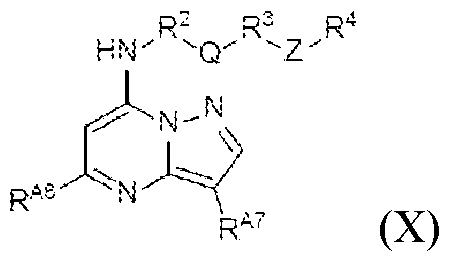
METHODS OF TREATING CANCER IN BIOMARKER-IDENTIFIED PATIENTS WITH INHIBITORS OF CYCLIN-DEPENDENT KINASE 7 (CDK7)
CROSS-REFERENCE TO RELATED APPLICATIONS
[1] This application claims the benefit of the filing date of U.S. provisional application No. 62/927,561, filed October 29, 2019, the content of which is hereby incorporated herein by reference in its entirety.
BACKGROUND OF THE INVENTION
[2] The long evolution of healthcare has reached a point in time where the promise of biomarker analysis is beginning to be realized. When physicians can stratify patients, even those who share many similar physiological traits and exhibit common symptoms of a given disease, into more specific groups, they can better tailor treatment and optimize the outcome for each patient. However, it is challenging to develop molecular diagnostics, and few are commercially available.
SUMMARY OF THE INVENTION
[3] The present invention features, inter alia, diagnostic methods for identifying cancer patients for treatment with a CDK7 inhibitor described herein (/. e. , diagnostic methods for selecting a patient for treatment) and methods for treating identified patients with such an inhibitor, either alone or in combination with one or more additional therapeutic agents (e.g., a second anti-cancer agent), as described further below. The diagnostic methods include a step of identifying a patient suffering from a cancer that is likely to respond well to treatment with a CDK7 inhibitor disclosed herein, as shown and described further below. The treatment methods include a step of administering such a CDK7 inhibitor to an identified patient, whose response can be, for example, significant tumor growth inhibition (TGI; e.g. , more than about 80-90%
TGI and/or continued tumor suppression even after cessation of treatment). Thus, the present invention encompasses methods in which a patient is only diagnosed as being a good candidate for treatment (i.e., identified for treatment), methods in which a patient who has been determined to be a good candidate for treatment (e.g., previously identified) is treated, and methods requiring that a patient be both diagnosed and treated as described herein.
[4] When we refer to “a CDK7 inhibitor described herein” we mean compounds including any one of those described herein, including compounds of Formula (I):
Figure imgf000003_0001
pharmaceutically acceptable salt thereof, wherein ring A is abicyclic 6,5-ring system selected from:
Figure imgf000003_0002
Figure imgf000003_0003
comprises no more than four ring nitrogen atoms;
X is N or C(R6), wherein R6 is hydrogen, -CN, -CH3, -CH2F, -CHF2 or -CF3; each Y is, independently, N or C(R7), wherein R7 is hydrogen or R5;
Z is N or C(R8), wherein R8 is hydrogen or fluoro;
R1 is hydrogen, -C1-C6 alkyl, -0-(Ci-C6-alkylene)-0-(Ci-C4-alkyl), -(C0-C6 alkylene)- (C3-C8 cycloalkyl), -(C1-C6 alkylene)-heterocyclyl, -(C1-C6 alkylene)-heteroaryl, -(C1-C6 alkylene)-N(R1,)2, -(Ci-Ce alkylene)-NR1,-S(0)2-(Ci-C4 alkyl), -(Ci-Ce alkylene)-NR1,-S02- N(Rl5)2, -(Ci-Ce alkylene)-S(0)2-(Ci-C4 alkyl), or -(Ci-Ce alkylene-S(0)2-N(R1’)2, wherein any alkyl, alkylene, cycloalkyl, heterocyclyl or heteroaryl portion of R1 is optionally substituted: each R1’ is, independently, hydrogen or optionally substituted C1-C6 alkyl, or two R1’ are optionally taken together with the nitrogen atom to which they are bound to form a 4-6 membered, optionally substituted heterocyclyl or heteroaryl ring comprising up to 2 additional heteroatoms selected from N, O, and S, wherein: each R2, if present, is, independently, halo, -OH, -CN, -C1-C6 alkyl, -(C0-C6 alkylene)- (C3-C8 cycloalkyl), -(C0-C6 alkylene)-heterocyclyl, -(C0-C6 alkylene)-heteroaryl, -(C0-C6 alkylene)-aryl, -(C0-C6 alkylene)-C(0)-heterocyclyl, -(C0-C6 alkylene)-C(0)-heteroaryl, -0-(Ci- Ce-alkyl); -0-(Ci-C6-alkylene)-0-(Ci-C4-alkyl); -0-(Ci-C4-alkylene)-(C3-C8 cycloalkyl), -O- (Ci-C6-alkylene)-heterocyclyl, -0-(Ci-C6-alkylene)-heteroaryl, or -0-(Ci-C6-alkylene)-aryl, or R1 and any R2 are taken together with the atoms to which they are bound to form an optionally substituted heterocyclyl or heteroaryl ring fused, spirofused or bridged to the piperidine ring, or two R2 are taken together to form oxo (=0), or taken together with the atom or atoms to which they are bound and any intervening ring atoms to form an optionally substituted aryl, cycloalkyl, heterocyclyl or heteroaryl ring fused, spirofused or bridged to the piperidine ring, wherein any alkyl, alkylene, cycloalkyl, heterocyclyl or heteroaryl portion of R2, any ring formed by taking R1 together with R2, or any ring formed by taking two R2 together is optionally substituted:
R3 is hydrogen, halo, -CN, optionally substituted -C1-C6 alkyl, or optionally substituted C3-C8 cycloalkyl;
R4 is halo, -CN, -Ci-Ce alkyl, -Ci-Ce alkenyl, Ci-Ce alkynyl, -O-Ci-Ce alkyl, -S-Ci-Ce alkyl, or a C3-C8 cycloalkyl, wherein any alkyl, alkenyl, or alkynyl portion of R4 is optionally substituted; each R5 is, independently, halo, -OH, -C1-C6 alkyl, -CN, -(C0-C6 alkylene)- C(0)OH, -(Co-Ce alkylene)-C(0)-(Ci-C4 alkyl), -(Co-Ce alkylene)-C(0)-N(R1’)2, -(Co-Ce alkylene)-S(0)2-(Ci-C4 alkyl), -(Co-Ce alkylene)-S(0)2-N(R1’)2, -(Co-Ce alkylene)-P(0)-0-(Ci- C4 alkyl)2, -(Co-Ce alkylene)-P(0)-(Ci-C4 alkyl)(0-Ci-C4 alkyl), -(Co-Ce alkylene)-P(0)(Ci-C4 alkyl)2, -(Co-Cealkylene)-(C3-C8 cycloalkyl), -(C0-C6 alkylene)-heterocyclyl, -(C0-C6 alkylene)- heteroaryl, -(C0-C6 alkylene)-C(0)-heterocyclyl, -(C0-C6 alkylene)-C(0)-heteroaryl, -0-(Ci-C6- alkyl), -0-(Ci-Ce-alkylene)-0-(Ci-C4-alkyl), -0-(Co-Ce-alkylene)-(C3-C8 cycloalkyl), -0-(Ci-Ce- alkylene)-heterocyclyl, or -0-(Ci-C6-alkylene)-heteroaryl, wherein any alkyl, alkylene, cycloalkyl, heterocyclyl and heteroaryl portion of R5 is optionally substituted; or two vicinal R5 are taken together with the ring atoms to which they are bound to form an optionally substituted cycloalkyl or optionally substituted heterocyclyl, wherein each cycloalkyl or heterocyclyl is fused to ring A;
R5’ is hydrogen, -CN, -Ci-Ce alkyl, -(Co-Ce alkylene)-S(0)2-N(Rl )2, -(Co-Ce alkylene)- (C3-C8 cycloalkyl), -(Co-Ce alkylene)-C(0)-N(Rl )2, -(Co-Ce alkylene)-aryl, -(Co-Ce alkylene)- heterocyclyl, -(C0-C6 alkylene)-heteroaryl, -(Co-Cealkylene)-S(0)2-(Ci-C4 alkyl), -(C1-C6 alkylene)-0-(Ci-C3 alkylene)-C(0)-N(R1 ,)2, -(Ci-Cealkylene)-0-(Ci-C4alkylene)-P(0)(Ci-C4 alkyl)2, -(Ci-Ce alkylene)-0-(Ci-C4 alkylene)-P(0)(Ci-C4 alkyl)-0-(Ci-C4 alkyl), -(Ci-Ce alkylene)-0-(Ci-C4 alkylene)-P(0)-(0-Ci-C4 alkyl)2, -(Ci-Ce alkylene)-0-(Ci-C4 alkylene)- S(0)2-(Ci-C4 alkyl), -(Ci-Ce alkylene)-0-(Ci-C4 alkylene)-S(0)2-N(R1’)2, -(Ci-Ce alkylene)-0- (C1-C4 alkyl), -(Ci-Cealkylene)-0-(C3-C8 cycloalkyl), -(C1-C6 alkylene)-0-heteroaryl, -(C1-C6 alkylene)-0-heterocyclyl, -(C1-C6 alkylene)-P(0)(Ci-C4 alkyl)2, -(C1-C6 alkylene)-P(0)(Ci-C4 alkyl)-0-(Ci-C4 alkyl), -(Ci-Ce alkylene)-P(0)-(0-Ci-C4 alkyl)2, -(Ci-Ce alkylene)-C(0)-(Ci-C4 alkyl), or -(C1-C6 alkylene)-C(0)OH, wherein any alkyl, alkylene, cycloalkyl, heterocyclyl or heteroaryl portion of R5’ is optionally substituted; and n is 0, 1, 2, 3, or 4. In case of doubt, each such compound is “a CDK7 inhibitor described herein,” as are each of the embodiments and distinct compounds described below.
[5] In various embodiments, R1 is -C(0)-0-(Ci-C6 alkyl) or -(Co-C6 alkylene)-carbocyclyl, wherein carbocyclyl is optionally substituted. [6] In various embodiments, each R2, if present, is -NH-C(0)-CI-C4 alkyl, -C(0)-NH-
(unsubstituted C1-C4 alkyl), -(C0-C6 alkylene)-carbocyclyl or -0-(Ci-C4-alkylene)-carbocyclyl, wherein each alkylene or carbocyclyl is optionally substituted.
[7] In some embodiments, R3 is additionally selected from optionally substituted carbocyclyl. [8] In some embodiments, R4 is additionally selected from optionally substituted carbocyclyl.
[9] In some embodiments, each R5 is additionally selected from -(C0-C6 alkylene)- carbocyclyl, -0-(Co-C6-alkylene)-carbocyclyl, phenyl, -(C2-C4 alkenylene)-phenyl, -S(0)-(Ci-C4 alkyl), -S-(Ci-C4 alkyl), -S(0)-0H, and -S(0)2-0H, wherein any alkyl, alkylene, alkenylene, carbocyclyl, or phenyl is optionally substituted.
[10] In some embodiments, R5’ and any R5 are taken together with the ring atoms to which they are bound to form an optionally substituted heterocyclyl, wherein each heterocyclyl is fused to ring A.
[11] In some embodiments, the compound of Formula (I) is not:
Figure imgf000005_0001
pharmaceutical salt of the foregoing.
[12] In some embodiments, the compound of Formula (I) is not:
Figure imgf000005_0002
acceptable salt of any of the foregoing. [13] In some embodiments, ring A is:
Figure imgf000006_0001
[14] In some embodiments, ring A is indol-3-yl or indazol-3-yl. In some embodiments, ring
A is indol-3-yl. In some embodiments, ring A is:
Figure imgf000006_0002
[15] In some embodiments, any alkyl or alkylene portion of R1 is optionally substituted with one or more independently selected monovalent substituents (e.g., such substituents do not include =0).
[16] In some embodiments, any heterocyclyl or heteroaryl portion of R1 is optionally and independently substituted with one or more substituents independently selected from halo, C1-C4 alkyl, Cs-Ce cycloalkyl, -OH, =0, -CN, -C(0)N(R1’)2, -S(0)2-(Ci-C4-alkyl), and -S(0)2-N(R1’)2; and any alkyl, alkylene, or cycloalkyl portion of R1 or a substituent thereon is optionally substituted with one or more substituents independently selected from fluorine, OH and CN.
[17] In some embodiments, R1 is hydrogen, -C1-C6 alkyl, -0-(Ci-C6-alkylene)-0-(Ci-C4- alkyl), -(Ci-Ce alkylene)-N(R1’)2, -(Ci-Ce alkylene)-NR1’-S(0)2-(Ci-C4 alkyl), -(Ci-Ce alkylene) -NR1 ’ - SO2-N (R1 ’ >2, -(Ci-Ce alkylene)-S(0)2-(Ci-C4 alkyl), -(Ci-Ce alkylene-S(0)2- N(Rl )2, or -(C0-C6 alkylene)-(C3-C8 cycloalkyl), wherein any alkyl, or alkylene portion of R1 is optionally substituted with one or more independently selected monovalent substituents, any cycloalkyl portion of R1 is optionally substituted with one or more independently selected substituents; and wherein each R1’ is, independently, hydrogen or optionally substituted C1-C6 alkyl (i.e., two R1’ cannot be taken together to form a ring).
[18] In some embodiments, R1 is hydrogen, cyclopropyl, -CH3, -
CH2CH3, -CH2CH2OCH3, -CH(CH )2, or -CH2CH(CH )2, or R1 is taken together with one R2 and the ring atoms to which each are attached to form a bridged ring which, taken together with the ring to which R1 and R2 are bound, forms
Figure imgf000007_0001
. In some embodiments, R1 is hydrogen, -CH3, or -CH2CH2OCH3. In some embodiments, R1 is hydrogen.
[19] In some embodiments, each alkyl in any R1’ is optionally substituted with one or more substituents independently selected from fluorine, -OH and -CN.
[20] In some embodiments, any heterocyclyl and heteroaryl rings formed from two R1 ’ are optionally substituted with one or more substituents independently selected from halo; C1-C4 alkyl; C3-C6 cycloalkyl optionally substituted with one or more substituents independently selected from fluorine, -OH and -CN; -OH; =0; -CN; -C(0)NH2; -C(0)NH(CI-C4 alkyl); -C(0)N(CI-C4 alkyl)2; -S(0)2-Ci-C4-alkyl; -S(0)2-NH2; -S(0)2-NH(CI-C4 alkyl); and -S(0)2-N(CI-C4 alkyl)2, wherein any alkyl portion of a substituent on any heterocyclyl and heteroaryl ring formed from two R1’ is optionally substituted with one or more further substituents independently selected from fluorine, -OH and -CN.
[21] In some embodiments, any alkyl, alkylene, or aryl portion of R2 is optionally substituted with one or more independently selected monovalent substituents. For example, any alkyl, alkylene, aryl, cycloalkyl, heterocyclyl or heteroaryl portion of R2, any ring formed by taking R1 together with R2, or any ring formed by taking two R2 together can be optionally substituted with one or more independently selected monovalent substituents.
[22] In some embodiments, any heterocyclyl and heteroaryl portion of R2 is optionally substituted with one or more substituents independently selected from halo, -C1-C4 alkyl, -OH, =0, -CN, -C(0)N(R1 ,)2, -C(0)0R1’, -C(0)0H, -S(0)2-(Ci-C4-alkyl), -S(0)2-N(R1’)2; and any alkyl, alkylene and cycloalkyl portion of R2 or a substituent thereon is optionally substituted with one or more substituents independently selected from fluorine, -OH and -CN.
[23] In some embodiments, when two R2 are taken together to form a ring, or R1 and R2 are taken together to form a ring, the resulting ring is optionally substituted with one or more substituents independently selected from halo, C1-C4 alkyl, -OH, =0, -CN, -C(0)NR' 2. -S(0)2-Ci-C4-alkyl, -S(0)2-N(R' R: and any alkyl portion of a substituent on a ring formed when two R2 are taken together to form a ring, or R1 and R2 are taken together is optionally substituted with one or more substituents independently selected from fluorine, -OH and -CN. In some embodiments, each R2, if present, is independently selected from halo, -OH, -C1-C6 alkyl, - NHC(0)-(CI-C4 alkyl), -C(0)NH-CI-C4 alkyl, -C(0)-(optionally substituted heterocyclyl), optionally substituted aryl, and optionally substituted heteroaryl; or
R1 and any R2 are taken together with the atoms to which they are bound to form an optionally substituted heterocyclyl or heteroaryl ring fused, spirofused or bridged to the piperidine ring, or two R2 are taken together to form oxo (=0), or taken together with the atom or atoms to which they are bound and any intervening ring atoms to form an optionally substituted aryl, cycloalkyl, heterocyclyl or heteroaryl ring fused, spirofused or bridged to the piperidine ring, wherein any alkyl or alkylene portion of R2, any ring formed by taking R1 together with R2, or any ring formed by taking two R2 together is optionally substituted with one or more independently selected monovalent substituents.
[24] In some embodiments, each R2, if present, is, independently, halo, =0, -OH, optionally substituted -C1-C4 alkyl, optionally substituted phenyl or an optionally substituted heteroaryl. In some embodiments, each R2 that is -C1-C4 alkyl or phenyl is optionally substituted with one or more independently selected monovalent substituents. In some embodiments, each R2, if present, is, independently, halo or optionally substituted -C1-C4 alkyl. In some embodiments, each R2, if present, is, independently, halo or -C1-C4 alkyl optionally substituted with one or more independently selected monovalent substituents. In some embodiments, each R2, if present, is halo. In some embodiments, each R2, if present, is optionally substituted -C1-C4 alkyl. In some embodiments, each R2, if present, is -C1-C4 alkyl optionally substituted with one or more independently selected monovalent substituents.
[25] In some embodiments, n is 0, 1, 2 or 3.
[26] In some embodiments, n is 0, 1, 2 or 3, and each R2, if present, is, independently, fluoro, -CH3, -CH2CH3, -OH, or unsubstituted phenyl, or two R2 are taken together to form oxo.
[27] In some embodiments, n is 0, 1, 2 or 3, and each R2, if present, is, independently, - CH(CH )2, -C(0)NHCH3, -NHC(0)CH2CH3, 3-methyl-l,2,4-oxadiazol-5-yl, l,2,4-triazolo[4,3- a]pyridin-3-yl, 8-(methylsulfonyl)-l,2,4-triazolo[4,3-a]pyridin-3-yl, pyrrolidin-l-ylcarbonyl, or 3-hydroxypyrrolidin-l-ylcarbonyl; or two R2 on different atoms are taken together with the atoms to which they are bound and any intervening ring atoms to form a ring which, taken together with the piperidine ring to which both R2 are bound,
Figure imgf000008_0001
r two R2 bound to the same ring atom are taken together with the atom to which they are bound to form a ring which, taken together with the piperidine ring to which both R2 are bound, is:
Figure imgf000009_0001
Figure imgf000009_0002
[28] In some embodiments, each alkyl or cycloalkyl portion of R3 is optionally and independently substituted with one or more fluorine.
[29] In some embodiments, R3 is hydrogen.
[30] In some embodiments, any alkyl, alkenyl, alkynyl, or cycloalkyl portion of R4 is optionally and independently substituted with one or more substituents independently selected from -OH and fluorine. [31] In some embodiments, R4 is halo, -CN, optionally substituted C1-C4 alkyl, optionally substituted C2-C4 alkynyl, optionally substituted -O-C1-C4 alkyl, or optionally substituted C3-C6 cycloalkyl. In some embodiments, R4 is halo, -CN, optionally substituted C1-C4 alkyl, or optionally substituted C1-C4 haloalkyl. In some embodiments, R4 is halo, C1-C4 alkyl, or C1-C4 haloalkyl. In some embodiments, R4 is C1-C4 alkyl. In some embodiments, R4 is C1-C4 haloalkyl. In some embodiments, R4 is halo.
[32] In some embodiments, R4 is hydrogen or -C(0)-(optionally substituted C1-C4 alkyl).
[33] In some embodiments, R4 is chloro, fluoro, bromo, iodo, cyclopropyl, -CN, -CF3, - CH2CF3, -CH3, -CH2CH3, -CH(CH )2, -CH2CH(CH )2, -OCH3, or -CºCH. In some embodiments, R4 is chloro, fluoro, -CF3, -CH2CF3, -CH3, -CH2CH3, or -CºCH. In some embodiments, R4 is chloro, -CF3, -CH3, or -CH2CH3. In some embodiments, R4 is chloro or - CF3. In some embodiments, R4 is chloro. In some embodiments, R4 is -CF3.
[34] In some embodiments, R4 is -CH2CH2F, -CH2CH2CH3, -CH(OH)CH , -CH=CH2, - C(0)CH , -OCHF2, -S-CH3, -S-CHF2, or -S-CF3.
[35] In some embodiments, any heterocyclyl or heteroaryl portion of each R5 or a ring formed when two vicinal R5 are taken together is optionally and independently substituted with one or two substituents independently selected from halo, -CN, C1-C6 alkyl, -OH, =0, -C(0)NRl52, or - SO2-NR1 '2: and any alkyl, alkylene and cycloalkyl portions of R5, a substituent on R5, or a substituent on a ring formed by taking together two R5 is optionally substituted with one or more substituents independently selected from fluorine, -OH and -CN. [36] In some embodiments, one R5 is an optionally substituted heteroaryl or an optionally substituted heterocyclyl. For example, the heteroaryl or heterocyclyl is pyrazol-4-yl, imidazol-1- yl, morpholin-4-yl, pyridin-4-yl, pyridazin-4-yl, lH-pyrrol-3-yl, pyridazin-4-yl, l,2,4-triazol-3- yl, or l,2,4-oxadiazol-3-yl; and is optionally substituted with one or two substituents selected from halo, -CN, C1-C6 alkyl,
Figure imgf000010_0001
[37] In some embodiments, each R7 is, independently, hydrogen, halo, -C1-C6 alkyl, -CN, - C(0)OH, -C(0)-(Ci-C4 alkyl), -C(0)-N(Rl )2, -S(0)2-(Ci-C4 alkyl), -P(0)(Ci-C4 alkyl)-0-Ci-C4 alkyl, -P(0)(0-(Ci-C4 alky l ))i. heterocyclyl, or heteroaryl, wherein any alkyl, heterocyclyl or heteroaryl is optionally substituted.
[38] In some embodiments, each R7 is, independently, -C(0)-heterocyclyl, -S(0)2N(R )2. - (Ci-C4 alkylene)-S(0)2-(Ci-C4 alkyl), carbocyclyl, -0-(Co-C6-alkylene)-carbocyclyl, phenyl, - (C2-C4 alkenylene)-phenyl, -S(0)-(Ci-C4 alkyl), -S-(Ci-C4 alkyl), -S(0)-OH, or -S(0)2-OH, wherein any alkyl, alkylene, alkenylene, carbocyclyl, phenyl, or heterocyclyl is optionally substituted.
[39] In some embodiments, each R7 is, independently, hydrogen, fluoro, chloro, bromo, -CN, -CH , -CH2CH2C(CH3)20H, -C(0)-CH3, -C(0)OH, -C(0)-NH-CH3, -P(=0)(0CH2CH3)2, - P(=0)(0CH2CH3)CH3, -S(0)2CH3, lH-pyrazol-4-yl, l-methylpyrazol-4-yl, 1,3-dimethyl- pyrazol-4-yl, 5 -methyl- lH-pyrazol-4-yl, 1 -methyl -2 -oxoimidazolidin-3-yl, 4-methylimidazol-l- yl, morpholin-4-yl, pyridin-4-yl, 4-hydroxy cyclohexyl, 4-hydroxy-4-methylcyclohexyl, 5- methyl-l,2,4-triazol-3-yl, 5-methyl-l,2,4-oxadiazol-3-yl, l,3-dimethylpyridazin-4-yl, 1,5- dimethylpyridazin-4-yl, 3-methyl-lH-pyridazin-4-yl, l-(2-methyl-2-hydroxypropyl)pyridazin-4- yl, imidazol-l-yl, 1 -methyl-5 -cyanopyrrol-3-yl, 5-cyano-lH-pyrrol-3-yl, or pyridazin-4-yl.
[40] In some embodiments, each R7 is, independently, -P(0)-(CH3)2, -P(0)-(CH2CH3)2, - S(0)2N(CH3)2, -S(0)2CH(CH3)2, -S(0)2CH2F, -S(0)2CHF2, -SCHFI, -S(0)CHF2, -S(0)OH, - S(0)2OH, -S(0)2NHCH3, -(CH2)4CH3, -CH2S(0)2CH3, -S(0)2-CH2CH3, lH-pyrazol-3-yl, 1- difluoromethyl-pyrazol-3-yl, l-difluoromethyl-pyrazol-4-yl, l-methylpyrazol-3-yl, 3 -methyl - lH-pyrazol-4-yl, 3 -methyl-3 -hydroxypyrrolidin- 1 -ylcarbonyl, 3 -hydroxypyrrolidin- 1 -ylcarbonyl, 4-hydroxy cyclohexyl, 4-hydroxycyclohex-l-enyl, l,l-dioxothiomorpholin-4-yl, 4-cyano-lH- imidazol-l-yl, 2,3-dimethyl-l,2,4-triazol-5-yl, 1,5 -dimethyl -pyrazol-4-yl, pyridin-3-yl, l-(2- methyl-2-hydroxypropan-l-yl)pyrazol-4-yl, pyrrolidin-l-yl, pyrrolidin-1 -ylcarbonyl, 1H- pyrazol-2-yl, 3 -hydroxy-3 -trifluoromethylpyrrolidin- 1 -ylcarbonyl, 3 -methoxypyrrolidin- 1 - ylcarbonyl, 3 -cyanopyrrolidin-1 -ylcarbonyl, 4-hydroxy-4-methylpiperindin- 1 -ylcarbonyl, 3- oxopyrrolidin-1 -ylcarbonyl, 3-(pyrrolidin-l-ylcarbonyl)phenyl, 3-phenoxyphenyl, thiazol-2-yl, pyrazin-2-yl, 2,4-dioxo-lH,3H-pyrimidin-5-yl, 3-methyl-3-hydroxypyrrolidin-l-ylsulfonyl, 5- flluoropyridin-3-yl, 2-hydroxpyridin-3-yl, 3,3-difluoro-4-hydroxy, 3,5-dimethyloxazol-4-yl, 3- fluorophenyl, 4-methylpyridin-3-yl, 2-hydroxymethylpyridin-3-yl, 6-hydroxymethylpyridin-2-yl, 5-hydroxymethylpyridin-3-yl, l-methyl-6-oxopyridin-3-yl, 4-aminosulfonylphenyl, 3- aminosulfonylphenyl, 3-hydroxy-3-ethylpyrrolidin-l-ylcarbonyl, 3-cyano-4-hydroxyphenyl, bcnzo| ri|thiazol-6-yl. 2H-indazol-6-yl, lH-benzoimidazol-5-yl, 2-oxo-3-cyano-4-methylpyridin- 5-yl, 2-aminobenzo[ri]thiazol-2-yl, 3-aminocarbonylphenyl, 6-trifluoromethyl-lH-pyrrolo[3,2- c]pyridin-3-yl, 2-aminoquinazolin-8-yl, styryl, 1 -methyl- lH-indazol-6-yl, 2,3- dihydrobenzo[b][l,4]dioxin-7-yl, 2-ethoxyphenyl, 3-(2-hydroxyethyl)phenyl, 3- (methylcarbonylaminomethyl)phenyl, l-methyl-6-trifluoromethyl-lH-pyrrolo[3,2-c]pyridin-3- yl, quinolin-4-yl, isoquinolin-5-yl, isoquinolin-7-yl, or 2-oxo-3,4-dihydroquinolin-7-yl.
[41] In some embodiments, each heterocyclyl and heteroaryl portion of R5’ is optionally substituted with one or more substituents independently selected from halo, C1-C4 alkyl, -OH, =0, -CN, -C(0)NRl 2, and -SOi-NR'ri. and each alkyl, alkylene and cycloalkyl portion of R5’ or a substituent of R5’ is optionally substituted with one or more substituents independently selected from fluorine, -OH and -CN.
[42] In some embodiments, R5’ is hydrogen, C1-C4 alkyl, -(C0-C3 alkylene)-aryl or -(C1-C3 alkylene)-0-(Ci-C4 alkyl). For example, R5’ can be hydrogen, methyl, isopropyl, -CH2-O-CH3, - (CH2)2-0-CH3, or phenyl. In some embodiments, R6 is hydrogen or methyl.
[43] In some embodiments, the compound of Formula (I) is a compound of Formula (I-a):
Figure imgf000011_0001
pharmaceutically acceptable salt thereof, wherein each of ring A, R1, R2, R3, R4, and n is defined as for Formula (I).
[44] In some embodiments, the compound of Formula (I) is a compound of Formula (I-b):
Figure imgf000011_0002
pharmaceutically acceptable salt thereof, wherein each of ring A, R1, R2, R3, R4, and n is defined as for Formula (I).
[45] In some embodiments, the compound of Formula (I) is a compound of Formula (I-c):
Figure imgf000012_0001
pharmaceutically acceptable salt thereof, wherein each of X, R2, R4, R5’, R7, R8, and n is defined as for Formula (I); Y1 is N or C(R7a); Y2 is N or C(R b): and no more than one of X, Y1 or Y2 is N, wherein each of R7a, R711 and R7c is independently selected from R7as defined as for Formula (I). [46] In some embodiments, the compound of Formula (I-c) is a compound of Formula (I-cl):
Figure imgf000012_0002
pharmaceutically acceptable salt thereof, wherein R6 is also as defined as for Formula (I).
[47] In some embodiments, the compound of Formula (I-c) is a compound of Formula (I-c2):
Figure imgf000012_0003
pharmaceutically acceptable salt thereof. [48] In some embodiments, the compound of Formula (I) is a compound of Formula (II):
Figure imgf000012_0004
(II), or a pharmaceutically acceptable salt thereof, wherein: Y3 is N or C(R7e); each of R2a and R2b is, independently, hydrogen or C1-C3 alkyl; or R2a and R2b are taken together to form a cycloalkyl or a heterocycle spirofused to the piperidine ring, wherein the cycloalkyl or heterocycle is optionally substituted with one or more independently selected C1-C4 alkyl or C1-C4 haloalkyl;
R7d is hydrogen, -C(0)-(Ci-C4 alkyl), -CN, or heteroaryl optionally substituted with one or more independently selected C1-C4 alkyl or C1-C4 haloalkyl; R7e, if present, is hydrogen, halo, -S(0)2-(Ci-C4 alkyl), -P(0)(Ci-C4 alkyl)2, -C(0)NH- (C1-C4 alkyl), -C(0)N(Ci-C4 alkyl)2, -S(0)2NH-(Ci-C4 alkyl), -S(0)2N-(Ci-C4 alkyl)2, or heteroaryl optionally substituted with one or more independently selected C1-C4 alkyl or C1-C4 haloalkyl; and R14 is C1-C3 alkyl or C1-C3 haloalkyl.
[49] In some embodiments, the compound of Formula (II) is a compound of Formula (Ha):
Figure imgf000013_0001
(Ila), or a pharmaceutically acceptable salt thereof, wherein Y3, R2a, R2b, R7d, R7e, and R14 are as defined in Formula (II).
[50] In some embodiments, the compound of Formula (II) is a compound of Formula (lib) :
Figure imgf000013_0002
(lib), or a pharmaceutically acceptable salt thereof, wherein Y3, R2a, R2b, R7d, R7e, and R14 are as defined in Formula (II).
[51] In some embodiments, the compound of Formula (I) is a compound of Formula (III):
Figure imgf000013_0003
(III), or a pharmaceutically acceptable salt thereof, wherein Y3, R2a, R2b, R7d, R7e, and R14 are as defined in Formula (II). [52] In some embodiments, the compound of Formula (III) is a compound of Formula (Ilia):
Figure imgf000013_0004
(Ilia), or a pharmaceutically acceptable salt thereof, wherein Y3, R2a, R2b, R7d, R7e, and R14 are as defined in Formula II. [53] In some embodiments, the compound of Formula (III) is a compound of Formula (Illb):
Figure imgf000014_0001
(Illb), or a pharmaceutically acceptable salt thereof, wherein Y3, R2a, R2b, R7d, R7e, and R14 are as defined in Formula (II).
[54] In some embodiments, in a compound of any one of Formulae (II), (Ha), (lib), (III),
(Ilia), or (Illb):
R2a is hydrogen or -CFF;
R2b is hydrogen, -CFF, -CH2CH3, or -CH(CH3)2 or R2a and R2b are taken together to form oxetan-3-yl;
R7d is hydrogen, -C(0)CH3, -CN, pyridin-3-yl, pyridin-4-yl, 1 -methyl-5 -cyanopyrrol-3- yl, l-methylpyrazol-4-yl, l-methylpyrazol-3-yl, lH-pyrazol-4-yl, lH-pyrazol-3-yl, lH-imidazol- 2-yl, l,3-dimethylpyrazol-4-yl, l,5-dimethylpyrazol-4-yl, l,5-dimethyl-l,2,4-triazol-3-yl, imidazol-l-yl, l-difluoromethylpyrazol-3-yl, l-difluoromethylpyrazol-4-yl, or thiazol-2-yl;
R7e, if present, is hydrogen, fluoro, chloro, bromo, -CN, -P(0)(CH3)2, -S(0)2CH(CH3)2, - S(0)2CH2CH3, -S(0)2N(CH )2, -C(0)NHCH3, pyridin-4-yl, pyridazin-4-yl, 5-methyl-lH- pyrazol-4-yl, l-methylpyrazol-4-yl, 4-methyl- lH-imidazol-l-yl, lH-benzo[d]imidazol-5-yl, 6- (trifluoromethyl)-lH-pyrrolo[3,2-c]pyridin-3-yl, l-methyl-6-(trifluoromethyl)-lH-pyrrolo[3,2- c]pyridin-3-yl, isoquinolin-7-yl, isoquinolin-5-yl, pyrazin-2-yl, 2H-indazol-6-yl, 3,5- dimethylisoxazol-4-yl, thiazol-2-yl, 4-methylpyridin-3-yl, l-methylindazol-6-yl, quinolin-4-yl, benzo[d]thiazol-6-yl, or l,3-dimethylpyrazol-4-yl; and
R14 is -CH3, -CF3, -CH2CH3, -CH2CF3, -CH2CH2F, or -CH(CH )2.
[55] In some embodiments, in a compound of Formula (II), R2a is hydrogen or -CFF; R2b is hydrogen or -CFF; R7d is hydrogen, -CN, pyrazin-2-yl, thiazol-2-yl, or 3,5-dimethylisoxazol-4- yl; R7e, if present, is hydrogen, fluoro, -C(0)NHCH3, -P(0)(CH3)2, -S(0)2CH3, -S(0)2N(CH3)2, l,3-dimethylpyrazol-4-yl, or pyridazin-4-yl; and R14 is -CH2CH3 or -CF3.
[56] In some embodiments, the compound of Formula (I) is any one of the compounds in the table of FIG. 1A-1X or is a pharmaceutically acceptable salt thereof.
[57] The diagnostic and therapeutic methods described herein can also employ compounds related to pyrazolo[l,5-a]pyrimidine-5, 7-diamine (i.e.. such compounds can be administered to a patient identified for treatment in a manner described herein): [58]
Figure imgf000015_0001
and, to reiterate, all such compounds, including those of a subgenus described below, are encompassed by our references to “a CDK7 inhibitor described herein.” More specifically, related to 4-[[(7-aminopyrazolo[l,5-a]pyrimidin-5- yl)amino] methyl]piperidin-3 -ol :
Figure imgf000015_0002
. Yet more specifically, the compound employed is a certain substituted 4-[[(7-aminopyrazolo[l,5-a]pyrimidin-5-yl)amino]methyl]piperidin-3-ol of Formula (IV) that has the following structural formula, wherein R15, R16, and R17 are as defined herein.
Figure imgf000015_0003
Formula (IV), wherein R15 is hydrogen, Ci-C6-alkyl (e.g., methyl) or C3-C6-cycloalkyl, each optionally substituted by 1-3 (e.g., 1 or 2) halogens (e.g., fluoro); R16 is hydrogen, halogen, Ci-C6-alkyl, or Ci-C6-haloalkyl; and R17 is phenyl optionally substituted with 1-3 (e.g., 1 or 2) substituents selected from halogen (e.g., fluoro), -CN, Ci-C6-alkyl (e.g., methyl), C3-C6-cycloalkyl, and Ci-C6-haloalkyl.
In some embodiments, R15 is hydrogen, Ci-C6-alkyl or C3-C6-cycloalkyl. In some embodiments, R15 is hydrogen, ethyl, isopropyl, or cyclopropyl. In some embodiments, R16 is hydrogen or halogen. In some embodiments, R17 is phenyl optionally substituted with 1 substituent selected from the group consisting of halogen, -CN, Ci-C6-alkyl, C3-C6-cycloalkyl, and Ci-C6-haloalkyl. In some embodiments, R17 is phenyl optionally substituted with 1 substituent selected from halogen and -CN. In some embodiments, R15 is hydrogen, Ci-C6-alkyl or C3-C6 -cycloalkyl; R16 is hydrogen or halogen; and R17 is phenyl optionally substituted with 1 substituent selected from halogen and -CN.
Exemplary/useful compounds are shown in Table X of FIG. 2. The present diagnostic and/or therapeutic methods can be carried out with the following compound (ICEC0942), which is also “a CDK7 inhibitor described herein:”
Figure imgf000016_0001
The diagnostic and therapeutic methods described herein can also employ a compound of Formula (X) (/. e. , such compounds can be administered to a patient identified for treatment in a manner described herein):
Figure imgf000016_0002
wherein: RA6 is C1-C6 alkyl; RA7 is C1-C6 alkyl; R2 is a bond; Q is an optionally substituted divalent heteroaryl; R3 is C1-C4 alkylene; Z is a monocyclic heteroaryl; and R4 is Formula (ii-1):
Figure imgf000016_0003
wherein L3 is a bond; Y is O, S, or N(R6), wherein R6 is hydrogen; RE1 is hydrogen; RE2 is hydrogen; and RE3 is CFhN(R9)2 wherein R9 is hydrogen or unsubstituted alkyl. In other embodiments, in a compound of Formula (X), RA6 is methyl; RA7 is a C3 alkyl (e.g., a branched C3 alkyl such as CH2(CH3)2); Q is an unsubstituted divalent piperidine; R3 is a C2 alkylene; Z is pyrrolyl; Y is O; and R9 is methyl. In one embodiment, R3 is a C2 alkylene in which the first methylene unit is replaced with -O- and the second methylene unit is replaced with -C(O)-. In one embodiment, RA7 is a branched C3 alkyl (CH2(CH3)2) and R3 is a C2 alkylene in which the first methylene unit is replaced with -O- and the second methylene unit is replaced with -C(O)-.
Figure imgf000017_0001
For example, the compound/CDK7 inhibitor can be Other CDK7 inhibitors useful in the present methods are:
Figure imgf000017_0002
. Information regarding the synthesis of YKL-5-124 and YKL-5-167 as well as other, similar compounds and guidance concerning, for example, dosages and indications, can be found in U.S. Application Publication No. 2019/0055248, the entire content of which is hereby incorporated by reference herein.
[59] The diagnostic methods that identify a patient for treatment include a step of analyzing one or more of the biomarkers described herein in a biological sample obtained from the patient by determining, having determined, or receiving information concerning the state of the biomarker. In various embodiments, the state is assessed based on the presence, absence ( e.g ., a genetic deletion), location (e.g., chromosomal translocation), or copy number of a biomarker gene in wild type or mutant form, the inclusion of epigenetic modifications, the association of a biomarker gene with a super-enhancer (SE) or a SE of a certain strength, prevalence rank, or ordinal rank, the level of expression of the biomarker gene (as evidenced by, for example, its level of RNA (e.g. , primary RNA transcripts or mRNA (e.g. , pre-mRNA or mature mRNA)) expression), and/or the level of expression or activity of the protein encoded by the biomarker gene, each of which is discussed further below. One of ordinary skill in the art will understand that an RNA sequence can be reverse transcribed to generate a complimentary DNA (cDNA), and any of the methods and uses described herein can be carried out with cDNA that has been generated from an RNA described herein (i.e.. a patient’s biomarker status may have been determined using cDNA rather than an RNA). The state of a biomarker can be assessed in terms of any one or more of the features just listed regardless of the exact biomarker in use or the precise method or context in which the biomarker is being assessed. The state of a given biomarker (e.g., its copy number, associated enhancer, expression level, or activity) may be equal to or above a pre-determined threshold level or cutoff or equal to or below a pre determined threshold level or cutoff, as described further below. In the methods of the present invention, one can analyze a biomarker selected from the genes BRAF, c-myc (also known as MYC), CDK1, CDK2, CDK4, CDK6, CDK17, CDK18, CDK19, CCNA1, CCNB1, CCNE1, ESR- 1, FGFR1, PIC3CA, and certain genes encoding an E2F pathway member (see the Table below), or the proteins encoded thereby, by determining, having determined, and/or receiving information that the state of such a biomarker is equal to or above (e.g. , above) a pre-determined threshold level (for RB1-E2F family members, see the Table below and the accompanying teaching). Alternatively, or in addition, one can analyze a biomarker selected from the genes BCL2-like 1, CDK7, CDK9, CDKN2A, and RB (also known as RBI or another E2F pathway member), and/or the proteins encoded thereby, by determining, having determined, and/or receiving information that the state of such biomarker is equal to or below (e.g. , below) a pre determined threshold level (for RB/E2F family members, see the Table below). The choice of which biomarker(s) to utilize may depend, in part, on the particular cancer afflicting the patient, as well as other factors described herein. CDK18 encodes CDK18, and CDK19 encodes CDK19 (a component of the Mediator co-activator complex); CCNE1 encodes cyclin El (see Koff el al, Cell 66: 1217-1228, 1991); FGFR1 encodes FGFR1, a cell surface membrane receptor with tyrosine kinase activity; RB encodes pRB, which binds to the activator domain of activator E2F; BCL2-like 1 encodes BCF-xF, a transmembrane protein in mitochondria; CDK7 encodes CDK7; CDK9 encodes CDK9; and CDKN2A encodes pl6 and pl4arf. Aliases, chromosomal locations, splice variants, and homologs of the genes and proteins described herein as biomarkers, in species other than Homo sapiens, are known in the art.
[60] The treatment methods of the invention and corresponding “uses” include administering, or the use of, a CDK7 inhibitor described herein (e.g. , a compound of Formula (I)), any of which may be included in a pharmaceutically acceptable composition and administered by a route and regimen (e.g., as described further herein), to a patient identified as described herein (e.g., as having a type of cancer described herein). BRIEF DESCRIPTION OF THE DRAWINGS
[61] FIG. 1 A- IX is a table of exemplary/useful compounds of Formula (I).
Additional exemplary/useful compounds are shown in Table X immediately below.
FIG. 2 is a table (Table X) illustrating additional CDK7 inhibitors useful in the methods of the invention.
DETAILED DESCRIPTION
[62] We believe the efficacy of a CDK7 inhibitor as described herein or a pharmaceutically acceptable salt thereof will be higher in patients that have certain genetic signatures (i.e. , one or more biomarkers in a particular state, as also described herein). Moreover, we believe the efficacy of these compounds and their salts may be enhanced when combined with other anti cancer therapies, as described herein, in patients, including those having a cancer described herein and/or identified by virtue of a biomarker as described herein.
[63] The following definitions apply to the compositions, methods, and uses described herein unless the context clearly indicates otherwise, and it is to be understood that the claims may be amended to include language within a definition as needed or desired. Moreover, the definitions apply to linguistic and grammatical variants of the defined terms (e.g., the singular and plural forms of a term), and some linguistic variants are particularly mentioned below (e.g., “administration” and “administering”). The chemical elements are identified in accordance with the Periodic Table of the Elements, CAS version, Handbook of Chemistry and Physics, 75th Ed. Additionally, general principles of organic chemistry are well established and one of ordinary skill in the art can consult, if desired, Organic Chemistry by Thomas Sorrell, University Science Books, Sausalito, 1999; Smith and March, March ’s Advanced Organic Chemistry, 5th Edition, John Wiley & Sons, Inc., New York, 2001; Larock, Comprehensive Organic Transformations, VCH Publishers, Inc., New York, 1989; and Carruthers, Some Modern Methods of Organic Synthesis, 3rd Edition, Cambridge University Press, Cambridge, 1987.
[64] The term “about,” when used in reference to a value, signifies any value or range of values that is plus-or-minus 10% of the stated value (e.g., within plus-or-minus 1%, 2%, 3%,
4%, 5%, 6%, 7%, 8%, 9% or 10% of the stated value). For example, a dose of about 10 mg means any dose as low as 10% less than 10 mg (9 mg), any dose as high as 10% more than 10 mg (11 mg), and any dose or dosage range therebetween (e.g., 9-11 mg; 9.1-10.9 mg; 9.2-10.8 mg; and so on). As another example, a prevalence rank in a population of about 80% means a prevalence rank of 72-88% (e.g., 79.2-80.8%). In case of doubt, “about X” can be “X” (e.g., about 80% can be 80%). Where a stated value cannot be exceeded (e.g., 100%), “about” signifies any value or range of values that is up to and including 10% less than the stated value (e.g., a purity of about 100% means 90%-100% pure (e.g., 95%-100% pure, 96%-100% pure, 97%-100% pure etc... )). In the event an instrument or technique measuring a value has a margin of error greater than 10%, a given value will be about the same as a stated value when they are both within the margin of error for that instrument or technique.
[65] The term “administration” and variants thereof, such as “administering,” refer to the administration of a CDK7 inhibitor described herein, including a compound conforming to a Formula disclosed herein or a pharmaceutically acceptable salt thereof, an additional/second agent, or a composition containing one or more of any such compounds to a subject (e.g, a human patient) or system (e.g. , a cell- or tissue-based system that is maintained ex vivo); as a result of the administration, the compound or composition containing the compound (e.g., a pharmaceutical composition) is introduced to the subject or system. In addition to compositions of the invention and second agents useful in combination therapies, items used as positive controls, negative controls, and placebos, any of which can also be a compound, can also be “administered.” One of ordinary skill in the art will be aware of a variety of routes that can, in appropriate circumstances, be utilized for administration to a subject or system. For example, the route of administration can be oral (i.e., by swallowing a pharmaceutical composition) or may be parenteral. More specifically, the route of administration can be bronchial (e.g., by bronchial instillation), by mouth (i.e., oral), dermal (which may be or comprise topical application to the dermis or intradermal, interdermal, or transdermal administration), intragastric or enteral (i.e., directly to the stomach or intestine, respectively), intramedullary, intramuscular, intranasal, intraperitoneal, intrathecal, intratumoral, intravenous (or intra-arterial), intraventricular, by application to or injection into a specific organ (e.g., intrahepatic), mucosal (e.g., buccal, rectal, sublingual, or vaginal), subcutaneous, tracheal (e.g., by intratracheal instillation), or ocular (e.g., topical, subconjunctival, or intravitreal). Administration can involve intermittent dosing (i.e., doses separated by various times) and/or periodic dosing (i.e., doses separated by a common period of time (e.g., every so many hours, daily (e.g., once daily oral dosing), weekly, twice per week, etc.)). In other embodiments, administration may involve continuous dosing (e.g., perfusion) for a selected time (e.g., about 1-2 hours).
[66] Two events, two entities, or an event and an entity are “associated” with one another if one or more features of the first (e.g., its presence, level and/or form) are correlated with a feature of the second. For example, a first entity (e.g., an enzyme (e.g., CDK7)), gene expression profile, genetic signature (i.e., a single or combined group of genes in a cell with a uniquely characteristic pattern of gene expression), metabolite, or event (e.g., myeloid infiltration)) is associated with an event (e.g., the onset or progression of a particular disease), if its presence, level and/or form correlates with the incidence of, severity of, and/or susceptibility to the disease (e.g., a cancer disclosed herein). The biomarkers described herein are associated with an identified patient in the manner described herein (e.g., by virtue of their level of expression). Associations are typically assessed across a relevant population. Two or more entities are physically “associated” with one another if they interact, directly or indirectly, so that they are and/or remain in physical proximity with one another in a given circumstance (e.g. , within a cell maintained under physiological conditions (e.g., within cell culture) or within a pharmaceutical composition). Entities that are physically associated with one another can be covalently linked to one another or non-covalently associated by, for example, hydrogen bonds, van der Waals forces, hydrophobic interactions, magnetism, or combinations thereof. A CDK7 inhibitor described herein or a pharmaceutically acceptable salt thereof can be non-covalently associated with CDK7.
[67] The term “biological sample” refers to a sample obtained or derived from a biological source of interest (e.g. , a tissue or organism (e.g. , an animal or human patient) or cell culture). For example, a biological sample can be a sample obtained from an individual (e.g. , a patient or an animal model) suffering from a disease (or, in the case of an animal model, a simulation of that disease in a human patient) to be diagnosed and/or treated by the methods of this invention or from an individual serving in the capacity of a reference or control (or whose sample contributes to a reference standard or control population). The biological sample can contain a biological cell, tissue or fluid or any combination thereof. For example, a biological sample can be or can include ascites; blood; blood cells; a bodily fluid, any of which may include or exclude cells (e.g., tumor cells (e.g., circulating tumor cells (CTCs) found in at least blood or lymph vessels)); bone marrow or a component thereof (e.g. , hematopoietic cells, marrow adipose tissue, or stromal cells); cerebrospinal fluid (CSF); feces; flexural fluid; free- floating nucleic acids (e.g., circulating tumor DNA); gynecological fluids; immune infdtrates; lymph; peritoneal fluid; plasma; saliva; sputum; surgically-obtained specimens; tissue scraped or swabbed from the skin or a mucus membrane (e.g., in the nose, mouth, or vagina); tissue or fine needle biopsy samples; urine; washings or lavages such as a ductal lavage or broncheoalveolar lavage; or other body fluids, tissues, secretions, and/or excretions. Samples of, or samples obtained from, a bodily fluid (e.g. , blood, CSF, lymph, plasma, or urine) may include tumor cells (e.g., CTCs) and/or free-floating or cell-free nucleic acids of the tumor. Cells (e.g., cancer cells) within the sample may have been obtained from an individual patient for whom a treatment is intended. Samples used in the form in which they were obtained may be referred to as “primary” samples, and samples that have been further manipulated (e.g., by removing one or more components of the sample) may be referred to as “secondary” or “processed” samples. Such processed samples may contain or be enriched for a particular cell type (e.g. , a CDK7- expressing cell, which may be a tumor cell), cellular component (e.g., a membrane fraction), or cellular material (e.g., one or more cellular proteins, including CDK7, DNA, or RNA (e.g., mRNA (e.g. , pre-mRNA or mature mRNA)), which may encode CDK7 and may be subjected to amplification). As used herein, the term “biomarker” refers to an entity whose state correlates with a particular biological event so that it is considered to be a “marker” for that event (e.g. , the presence of a particular cancer and/or its susceptibility to a CDK7 inhibitor described herein or a pharmaceutically acceptable salt thereof). A biomarker can be analyzed at the nucleic acid or protein level; at the nucleic acid level, one can analyze the presence (e.g., copy number alterations (CNAs)), absence, or chromosomal location of a gene in wild type or mutant form, epigenetic alterations (in, e.g., methylation), its association with a super-enhancer, and/or its level of expression (as evidenced, for example, by primary RNA transcript or mRNA (e.g., pre- mRNA or mature mRNA) levels). At the protein level, one can analyze the level of expression and/or activity of a protein encoded by a biomarker gene. A biomarker may indicate a therapeutic outcome or likelihood (e.g., increased likelihood) thereof. Thus, a biomarker can be predictive or prognostic and is therefore useful in methods of identifying or treating a patient as described herein.
[68] The term “cancer” refers to a disease in which biological cells exhibit an aberrant growth phenotype characterized by loss of control of cell proliferation to an extent that will be detrimental to a patient having the disease. A cancer can be classified by the type of tissue in which it originated (histological type) and/or by the primary site in the body in which the cancer first developed. Based on histological type, cancers are generally grouped into six major categories: carcinomas; sarcomas; myelomas; leukemias; lymphomas; and mixed types. A cancer treated as described herein may be of any one of these types and may comprise cells that are precancerous (e.g., benign), malignant, pre-metastatic, metastatic, and/or non-metastatic. A patient who has a malignancy or malignant lesion has a cancer. The present disclosure specifically identifies certain cancers to which its teachings may be particularly relevant, and one or more of these cancers may be characterized by a solid tumor or by a hematologic tumor, which may also be known as a blood cancer (e.g., of a type described herein). Although not all cancers manifest as solid tumors, we may use the terms “cancer cell” and “tumor cell” interchangeably to refer to any malignant cell.
[69] The term “combination therapy” refers to those situations in which a subject is exposed to two or more therapeutic regimens (e.g., two or more therapeutic agents) to treat a single disease (e.g., a cancer). The two or more regimens/agents may be administered simultaneously or sequentially. When administered simultaneously, a dose of the first agent and a dose of the second agent are administered at about the same time, such that both agents exert an effect on the patient at the same time or, if the first agent is faster- or slower-acting than the second agent, during an overlapping period of time. When administered sequentially, the doses of the first and second agents are separated in time, such that they may or may not exert an effect on the patient at the same time. For example, the first and second agents may be given within the same hour or same day, in which case the first agent would likely still be active when the second is administered. Alternatively, a much longer period of time may elapse between administration of the first and second agents, such that the first agent is no longer active when the second is administered (e.g., all doses of a first regimen are administered prior to administration of any dose(s) of a second regimen by the same or a different route of administration, as may occur in treating a refractory cancer). For clarity, combination therapy does not require that two agents be administered together in a single composition or at the same time, although in some embodiments, two or more agents, including a CDK7 inhibitor described herein or a pharmaceutically acceptable salt thereof and a second agent described herein may be administered within the same period of time (e.g., within the same hour, day, week, or month).
[70] The terms “cutoff’ and “cutoff value” mean a value measured in an assay that defines the dividing line between two subsets of a population (e.g., likely responders and non-responders (e.g., responders and non-responders to a CDK7 inhibitor described herein or a pharmaceutically acceptable salt thereof). In some instances, values that are equal to or above the cutoff value define one subset of the population, and values that are lower than the cutoff value define the other subset of the population. In other instances, values that are equal to or below the cutoff value define on subset of the population, and values above the cutoff value define the other. As described further below, the cutoff or cutoff value can define the threshold value.
[71] As used herein, “diagnostic information” is information that is useful in determining whether a patient has a disease and/or in classifying (stratifying) the disease into a genotypic or phenotypic category or any category having significance with regard to the prognosis of the disease or its likely response to treatment (either treatment in general or any particular treatment described herein). Similarly, “diagnosis” refers to obtaining or providing any type of diagnostic information, including, but not limited to, whether a patient is likely to have or develop a disease; whether that disease has or is likely to reach a certain state or stage or to exhibit a particular characteristic (e.g., resistance to a therapeutic agent); information related to the nature or classification of a tumor; information related to prognosis (which may also concern resistance); and/or information useful in selecting an appropriate treatment (e.g., selecting a CDK7 inhibitor described herein or a pharmaceutically acceptable salt thereof for a patient identified as having a cancer that is likely to respond to such an inhibitor or other treatment). A patient classified (stratified) according to a method described herein and selected for treatment with a CDK7 inhibitor described herein or a pharmaceutically acceptable salt thereof is likely to respond well to the treatment, meaning that such a patient is more likely to be successfully treated than a patient with the same type of cancer who has not been so identified and is not in the same strata. Available treatments include therapeutic agents and other treatment modalities such as surgery, radiation, etc., and selecting an appropriate treatment encompasses the choice of withholding a particular therapeutic agent; the choice of a dosing regimen; and the choice of employing a combination therapy. Diagnostic information can be used to stratify patients and is thus useful in identifying and classifying a given patient according to, for example, biomarker status. Obtaining diagnostic information can constitute a step in any of the patient stratification methods described herein.
[72] One of ordinary skill in the art will appreciate that the term “dosage form” may be used to refer to a physically discrete unit of an active agent (e.g. , a therapeutic or diagnostic agent) for administration to a patient. Typically, each such unit contains a predetermined quantity of active agent. In some embodiments, such quantity is a unit dosage amount (or a whole fraction thereof) appropriate for administration in accordance with a dosing regimen that has been determined to correlate with a desired or beneficial outcome when administered to a relevant population (i.e.. with a therapeutic dosing regimen). Those of ordinary skill in the art appreciate that the total amount of a therapeutic composition or agent administered to a particular patient is determined by one or more attending physicians and may involve administration of multiple dosage forms.
[73] One of ordinary skill in the art will appreciate that the term “dosing regimen” may be used to refer to a set of unit doses (typically more than one) that are administered individually to a patient, separated by equal or unequal periods of time. A given therapeutic agent typically has a recommended dosing regimen, which may involve one or more doses, each of which may contain the same unit dose amount or differing amounts. In some embodiments, a dosing regimen comprises a first dose in a first dose amount, followed by one or more additional doses in a second dose amount that is different from the first dose amount. In some embodiments, a dosing regimen is correlated with a desired or beneficial outcome when administered across a relevant population (i.e.. the regimen is a therapeutic dosing regimen).
[74] As used herein, an “effective amount” of an agent (e.g. , a chemical compound described herein), such as a compound of Formula (I) or other CDK7 inhibitor described herein, refers to an amount that produces or is expected to produce the desired effect for which it is administered. The effective amount will vary depending on factors such as the desired biological endpoint, the pharmacokinetics of the compound administered, the condition being treated, the mode of administration, and characteristics of the patient, as discussed further below and recognized in the art. The term can be applied to therapeutic and prophylactic methods. For example, a therapeutically effective amount is one that reduces the incidence and/or severity of one or more signs or symptoms of the disease. For example, in treating a cancer, an effective amount may reduce the tumor burden, inhibit tumor growth, inhibit metastasis or prolong patient survival.
One of ordinary skill in the art will appreciate that the term does not in fact require successful treatment be achieved in any particular individual. Rather, a therapeutically effective amount is that amount that provides a particular desired pharmacological response in a significant number of patients when administered to patients in need of such treatment. In some embodiments, reference to a therapeutically effective amount may be a reference to an amount administered or an amount measured in one or more specific tissues (e.g., a tissue affected by the disease) or fluids (e.g., blood, saliva, serum, sweat, tears, urine, etc.). Effective amounts may be formulated and/or administered in a single dose or in a plurality of doses (e.g., as part of a dosing regimen).
[75] As used herein, an “enhancer” is a region of genomic DNA that helps regulate the expression of genes up to 1 Mbp or so away. An enhancer may overlap, but is often not composed of, gene coding regions. An enhancer is often bound by transcription factors and designated by specific histone marks.
[76] An “mRNA” is a single -stranded RNA product synthesized by transcription of DNA that includes one or more of the coding sequences of a gene. The mRNA may be in the form of a precursor (pre-mRNA) or may be further processed to a mature form of mRNA lacking introns.
[77] The term “patient” refers to any organism that is or may be subjected to a diagnostic method described herein or to which a compound described herein or a pharmaceutically acceptable salt thereof, is or may be administered for, e.g., experimental, diagnostic, prophylactic, and/or therapeutic purposes. Typical patients include animals (e.g., mammals such as mice, rats, rabbits, non-human primates, and humans; domesticated animals, such as dogs and cats; and livestock or any other animal of agricultural or commercial value). A patient may be suffering from or susceptible to (/. e. , have a higher than average risk of developing) a disease described herein and may display one or more signs or symptoms thereof.
[78] The term “pharmaceutically acceptable,” when applied to a carrier used to formulate a composition disclosed herein (e.g., a pharmaceutical composition), means a carrier that is compatible with the other ingredients of the composition and not deleterious to a patient (e.g., it is non-toxic in the amount required and/or administered (e.g., in a unit dosage form)). [79] The term “pharmaceutically acceptable,” when applied to a salt, refers to a salt form of a compound that is, within the scope of sound medical judgment, suitable for use in contact with the tissues of humans (e.g., patients) and lower animals (including, but not limited to, mice and rats used in laboratory studies) without unacceptable toxicity, irritation, allergic response and the like, and that can be used in a manner commensurate with a reasonable benefit/risk ratio. Many pharmaceutically acceptable salts are well known in the art (see, e.g., Berge el al., J. Pharm. Sci. 66: 1-19, 1977). Pharmaceutically acceptable salts of the compounds described herein include those derived from suitable inorganic and organic acids and bases. Examples of pharmaceutically acceptable, nontoxic acid addition salts are salts of an amino group formed with inorganic acids such as hydrochloric acid, hydrobromic acid, phosphoric acid, sulfuric acid, and perchloric acid or with organic acids such as acetic acid, oxalic acid, maleic acid, tartaric acid, citric acid, succinic acid, or malonic acid or by using other methods known in the art such as ion exchange. Other pharmaceutically acceptable salts include adipate, alginate, ascorbate, aspartate, benzenesulfonate, benzoate, bisulfate, borate, butyrate, camphorate, camphorsulfonate, citrate, cyclopentanepropionate, digluconate, dodecylsulfate, ethanesulfonate, formate, fumarate, glucoheptonate, glycerophosphate, gluconate, hemisulfate, heptanoate, hexanoate, hydroiodide, 2-hydroxy-ethanesulfonate, lactobionate, lactate, laurate, lauryl sulfate, MALATle, maleate, malonate, methanesulfonate, 2-naphthalenesulfonate, nicotinate, nitrate, oleate, oxalate, palmitate, pamoate, pectinate, persulfate, 3-phenylpropionate, phosphate, picrate, pivalate, propionate, stearate, succinate, sulfate, tartrate, thiocyanate, p toluenesulfonate, undecanoate, valerate salts, and the like. Salts derived from appropriate bases include alkali metal, alkaline earth metal, ammonium and N+(CI-4 alkyl)4 salts. Representative alkali or alkaline earth metal salts include sodium, lithium, potassium, calcium, magnesium, and the like. Further pharmaceutically acceptable salts include, when appropriate, nontoxic ammonium, quaternary ammonium, and amine cations formed using counterions such as halide, hydroxide, carboxylate, sulfate, phosphate, nitrate, lower alkyl sulfonate, and aryl sulfonate.
[80] As used herein, the term “population” means some number of items (e.g. , at least 30, 40, 50, or more) sufficient to reasonably reflect the distribution, in a larger group, of the value being measured in the population. Within the context of the present invention, the population can be a discrete group of humans, laboratory animals, or cells lines (for example) that are identified by at least one common characteristic for the purposes of data collection and analysis. For example, a “population of samples” refers to a plurality of samples that is large enough to reasonably reflect the distribution of a value (e.g. , a value related to the state of a biomarker) in a larger group of samples. The items in the population may be biological samples, as described herein. For example, each sample in a population of samples may be cells of a cell line or a biological sample obtained from a patient or a xenograft (e.g., a tumor grown in a mouse by implanting a tumorigenic cell line or a patient sample into the mouse). As noted, individuals within a population can be a discrete group identified by a common characteristic, which can be the same disease (e.g., the same type of cancer), whether the sample is obtained from living beings suffering from the same type of cancer or a cell line or xenograft representing that cancer.
[81] The term “prevalence cutoff,” as used herein in reference to a specified value (e.g., the strength of a SE associated a biomarker disclosed herein) means the prevalence rank that defines the dividing line between two subsets of a population (e.g., a subset of “responders” and a subset of “non-responders,” which, as the names imply include patients who are likely or unlikely, respectively, to experience a beneficial response to a therapeutic agent or agents). Thus, a prevalence rank that is equal to or higher (e.g., a lower percentage value) than the prevalence cutoff defines one subset of the population; and a prevalence rank that is lower (e.g., a higher percentage value) than the prevalence cutoff defines the other subset of the population.
[82] As used herein, the term “prevalence rank” for a specified value (e.g. , the mRNA level of a specific biomarker) means the percentage of a population that are equal to or greater than that specific value. For example, a 35% prevalence rank for the amount of mRNA (e.g. , pre-mRNA or mature mRNA) of a specific biomarker in a test cell means that 35% of the population have that level of biomarker mRNA or greater than the test cell.
[83] A “primary RNA transcript” is a single-stranded ribonucleic acid (RNA) product synthesized by transcription of DNA and processed to yield various mature RNA products such as mRNAs, tRNAs, and rRNAs. The primary RNA transcripts designated as mRNAs are transcribed from DNA sequences that include one or more gene coding regions (exons) and may include sequence transcribed from a regulatory region (e.g., an enhancer or super-enhancer) associated with the gene. These primary RNA transcripts are modified in preparation for translation. A precursor mRNA (pre-mRNA) is the first form of RNA created through transcription, and it is modified to become the mature mRNA that lacks introns.
[84] As used herein, the terms “prognostic information” and “predictive information” are used to refer to any diagnostic information that may be used to indicate any aspect of the course of a disease or condition either in the absence or presence of treatment. Such information may include, but is not limited to, the average life expectancy of a patient, the likelihood that a patient will survive for a given amount of time (e.g., 6 months, 1 year, 5 years, etc.), the likelihood that a patient will be cured of a disease, the likelihood that a patient’s disease will respond to a particular therapy (wherein response may be defined in any of a variety of ways). Diagnostic information can be prognostic or predictive.
[85] As used herein, the term “rank ordering” means the ordering of values from highest to lowest or from lowest to highest. [86] As used herein, the terms “RB-E2F pathway” and “RB-E2F family” refer to a set of genes and the proteins encoded thereby, as the context will make clear, whose expression or activity regulates the activity of the RB gene family and in turn regulates the activity of the E2F family of transcription factors that are required for entry into and progression through the cell cycle.
The table below contains a list of genes in the RB-E2F family, an indication of a currently understood function of the encoded proteins, and the status of these biomarkers in cancer. We use the shorthand “activated or overexpressed” to indicate that an attribute of a gene (e.g., its copy number or level of expression) or the protein it encodes (e.g., its level of expression or activity) is higher in some patients with certain cancers than it is in healthy subjects. A pre determined threshold for such activated or overexpressed RB-E2F family members can be determined by comparative analysis and is a level (e.g. , mRNA level (e.g. , pre-mRNA or mature mRNA), protein level, gene copy number, strength of enhancer associated with the gene) that, when found or exceeded in a cancer patient, identifies that patient as a candidate for treatment as described herein. We use the shorthand “inactivated or underexpressed” to indicate that an attribute of a gene (e.g., its copy number, or level of expression) or a protein it encodes (e.g., its level of expression or activity) is lower in some patients with certain cancers than it is in healthy subjects. A pre-determined threshold for such inactivated or underexpressed RB-E2F family members can be determined by comparative analysis and is a level (e.g., mRNA level, protein level, gene copy number, strength of enhancer associated with the gene) that, when unattained in a cancer patient, identifies that patient as a candidate for treatment as described herein.
Figure imgf000028_0001
Figure imgf000029_0001
[87] As used herein, a “reference” refers to a standard or control relative to which a comparison is performed. For example, an agent, patient, population, sample, sequence, or value of interest is compared with a reference agent, patient, population, sample, sequence or value. The reference can be analyzed or determined substantially simultaneously with the analysis or determination of the item of interest or it may constitute a historical standard or control, determined at an earlier point in time and optionally embodied in a tangible medium. One of ordinary skill in the art is well trained in selecting appropriate references, which are typically determined or characterized under conditions that are comparable to those encountered by the item of interest. One will appreciate when sufficient similarities are present to justify reliance on and/or comparison to a particular possible reference as a standard or control.
[88] As used herein, a “response” to treatment is any beneficial alteration in a patient’s condition that results from, or that correlates with, treatment. The alteration may be stabilization of the condition (e.g., inhibition of deterioration that would have taken place in the absence of the treatment), amelioration of, delay of onset of, and/or reduction in frequency of one or more signs or symptoms of the condition, improvement in the prospects for cure of the condition, greater survival time, and etc. A response may be a patient’s response or a tumor’s response.
[89] As used herein, when the term “strength” is used to refer to a portion of an enhancer or a SE, it means the area under the curve of the number of H3K27Ac or other genomic marker reads plotted against the length of the genomic DNA segment analyzed. Thus, “strength” is an integration of the signal resulting from measuring the mark at a given base pair over the span of the base pairs defining the region being chosen to measure. [90] As used herein, the term “super-enhancer” (SE) refers to a subset of enhancers that contain a disproportionate share of histone marks and/or transcriptional proteins relative to other enhancers in a particular cell or cell type. Genes regulated by SEs are predicted to be of high importance to the function of a cell. SEs are typically determined by rank ordering all of the enhancers in a cell based on strength and determining, using available software such as ROSE (bitbucket.org/young_computation/rose), the subset of enhancers that have significantly higher strength than the median enhancer in the cell (see, e.g., U. S. Patent No. 9,181,580, which is hereby incorporated by reference herein in its entirety).
[91] The terms “threshold” and “threshold level” mean a level that defines the dividing line between two subsets of a population (e.g. , responders and non-responders). A threshold or threshold level can define a prevalence cutoff or a cutoff value.
[92] As used herein, the terms “treatment,” “treat,” and “treating” refer to reversing, alleviating, delaying the onset of, and/or inhibiting the progress of a “pathological condition” (e.g., a disease, such as cancer) described herein. In some embodiments, “treatment,” “treat,” and “treating” require that signs or symptoms of the disease have developed or have been observed. In other embodiments, treatment may be administered in the absence of signs or symptoms of the disease or condition (e.g. , in light of a history of symptoms and/or in light of genetic or other susceptibility factors). Treatment may also be continued after symptoms have resolved, for example, to delay or inhibit recurrence.
[93] As the invention relates to compositions and methods for diagnosing and treating patients who have cancer, the terms “active agent,” “anti-cancer agent,” “pharmaceutical agent,” and “therapeutic agent” are used interchangeably (unless the context clearly indicates otherwise) and the CDK7 inhibitors described herein and pharmaceutically acceptable salts thereof would be understood by one of ordinary skill in the art as active, anti-cancer, pharmaceutical, or therapeutic agents. As noted, the treatment methods and uses encompass combination therapies/uses in which a CDK7 inhibitor described herein or a pharmaceutically acceptable salt thereof is administered or used in combination with one or more additional agents (e.g., an additional anti-cancer therapeutic), as described herein. In keeping with convention, in any embodiment requiring two agents, we may refer to one as the “first” agent and to the other as the “second” agent to underscore that the first and second agents are distinct from one another.
[94] The invention also features kits that include a CDK7 inhibitor as described herein or a pharmaceutically acceptable salt thereof and instructional materials that describe a suitable/identified patient, methods of identifying such a patient for treatment (e.g. , by any one of the diagnostic stratification methods described herein), and/or instructions for administering the CDK7 inhibitor alone or in combination with at least one other therapeutic agent (e.g. , an additional/second anti -cancer therapeutic). The kits of the invention can also include a second agent (e.g., an anti-cancer agent), including any one or more of the second agents described herein and instructions for use in a population of patients identified as described.
[95] As indicated, each therapeutic method and any diagnostic method that employs a CDK7 inhibitor described herein or a pharmaceutically acceptable salt thereof may also be expressed in terms of use and vice versa. For example, the invention encompasses the use of a compound or composition described herein for the treatment of a disease described herein (e.g., cancer); a compound or composition for use in diagnosing and/or treating or a disease (e.g., cancer); and the use of the compound or composition for the preparation of a medicament for treating a disease described herein (e.g., cancer).
[96] The methods of the invention that concern diagnosing and/or treating a cancer described herein (or use of a CDK7 inhibitor for such purpose) may specifically exclude any one or more of the types of cancers described herein. For example, the invention features methods of treating cancer by administering a CDK7 inhibitor described herein or a pharmaceutically acceptable salt thereof with the proviso that the cancer is not a breast cancer; with the proviso that the cancer is not a breast cancer or a leukemia; with the proviso that the cancer is not a breast cancer, a leukemia, or an ovarian cancer; and so forth, with exclusions selected from any of the diseases listed herein and with the same notion of variable exclusion from lists of elements relevant to other aspects of the invention (e.g., chemical substituents of a compound described herein or components of kits and pharmaceutical compositions).
[97] In one aspect, the invention features the use of a CDK7 inhibitor described herein or a pharmaceutically acceptable salt thereof in treating cancer in a patient who has been identified by virtue of having: (a) a level of BCL2-like 1 RNA (e.g., a primary RNA transcript or mRNA (e.g., pre-mRNA or mature mRNA) encoding BCL-xL) in a biological sample including cancer cells obtained from the patient, the level being equal to or below a pre-determined threshold; or (b) at least one gene in the RB-E2F pathway with an alteration in its DNA (e.g., a mutation), an epigenetic alteration, an alteration in the level of expression of RNA (e.g., mRNA (e.g., pre- mRNA or mature mRNA)) or an alteration in the level of expression or activity of the encoded protein. Such a patient can be: treated with a platinum-based therapeutic agent (e.g., carboplatin or oxaliplatin) as a second agent; a patient whose cancer has developed resistance to a platinum- based therapeutic agent (e.g. , carboplatin or oxaliplatin); or a patient undergoing treatment with a CDK4/6 inhibitor used alone or in combination with one or more of an aromatase inhibitor, a selective estrogen receptor modulator or a selective estrogen receptor degrader. The patient’s cancer may have become resistant to the CDK4/6 inhibitor or at risk of becoming so. In the context of the uses described here (e.g., where the patient has been selected by virtue of having a level of BLC2-like 1 mRNA (e.g., pre-mRNA or mature mRNA) equal to or below the pre determined threshold level), the cancer can be a breast cancer (e.g. , a triple negative breast cancer (TNBC), an ovarian cancer, a lung cancer (e.g., non-small cell lung cancer), or a blood cancer (e.g., acute myeloid leukemia (AML)), any of which may be newly diagnosed (treatment naive) or relapsed or refractory to a prior treatment.
[98] The patient can be one who has undergone, is presently undergoing, or who will undergo (e.g., has been prescribed) treatment with a Bcl-2 inhibitor, such as venetoclax. In the context of this use, the patient can be selected by virtue of having one or more of: a) a level of CCNE1 gene copy number, mRNA (e.g., pre-mRNA or mature mRNA) or protein in the cancer equal to or above a pre-determined threshold; b) a level of RB 1 gene copy number, mRNA or protein in the cancer equal to or below a pre-determined threshold, or an absence of an expressed wild-type RBI gene; c) a level of CDK6 mRNA (e.g., pre-mRNA or mature mRNA) equal to or above a pre-determined threshold level; d) a level of CCND2 mRNA (e.g. , pre-mRNA or mature mRNA) equal to or above a pre-determined threshold level; or e) a level of CDKN2A mRNA (e.g., pre-mRNA or mature mRNA) equal to or below a pre-determined threshold level. In specific embodiments, the patient is selected by virtue of having a level of CCNE1 gene copy number, mRNA or protein in the cancer equal to or above a pre-determined threshold; a level of RBI gene copy number, mRNA or protein in the cancer equal to or below a pre-determined threshold; or an absence of an expressed wild-type RB 1 gene. In the context of this use, the patient can be suffering from ovarian cancer, breast cancer, TNBC, or hormone receptor-positive breast cancer, and the patient may be one who has undergone, is presently undergoing, or will undergo treatment with a selective estrogen receptor modulator such as tamoxifen, a selective estrogen receptor degrader such as fulvestrant, and/or a PARP inhibitor, such as olaparib or niraparib.
[99] In another aspect, the invention features the use of a CDK7 inhibitor described herein or a pharmaceutically acceptable salt thereof in treating a patient identified as described herein, with a combination therapy with an effective amount of a second agent in treating a patient who has cancer, wherein: (a) the cancer is TNBC, an estrogen receptor-positive (ER+) breast cancer, pancreatic cancer, or a squamous cell cancer of the head or neck; and the second agent is a CDK4/6 inhibitor; (b) the cancer is a breast cancer, or an ovarian cancer; and the second agent is a PARP inhibitor; (c) the cancer is AML; and the second agent is a FLT3 inhibitor; (d) the cancer is an ovarian cancer; and the second agent is a platinum-based anti-cancer agent; (e) the cancer is TNBC, AML, Ewing’s sarcoma, or an osteosarcoma; and the second agent is a BET inhibitor; (f) the cancer is TNBC, AML, an ovarian cancer, or non-small cell lung cancer; and the second agent is a Bcl-2 inhibitor. In particular embodiments, the cancer is AML (e.g., of a monocytic subtype, e.g., an M4 or M5 subtype of AML) and the second agent is a Bcl-2 inhibitor, such as venetoclax; the cancer is an epithelial ovarian cancer, a fallopian tube cancer, a primary peritoneal cancer, a triple negative breast cancer or a Her2+/ERVPR breast cancer and the second agent is a PARP inhibitor, such as olaparib or niraparib; the cancer is an ovarian cancer and the second agent is a platinum-based anti-cancer agent, such as carboplatin or oxaliplatin.
[100] In one embodiment, the invention features methods of treating cancer, the methods including a step of administering an effective amount of a CDK7 inhibitor described herein or a pharmaceutically acceptable salt thereof to a patient (e.g. , a human patient) identified as having a level of B-cell lymphoma-extra large (BCL-xL) mRNA (e.g., pre-mRNA or mature mRNA) in the cancer (e.g., in a biological sample obtained from the patient to be treated) that is equal to or below a pre-determined threshold (i.e., an “identified patient”). The methods can further include a step of determining the level of BCL-xL mRNA present in a sample of cancer cells from the patient, and this is generally true for the methods of treatment described herein; regardless of the biomarker analyzed or the type of cancer in question, a method of treatment can either be carried out on an identified patient without an explicit step of analyzing the biomarker or with an explicit step in which the biomarker is analyzed (e.g., by obtaining a biological sample from a patient). The human patient may have been diagnosed as having a cancer sensitive to a CDK7 inhibitor responsive to the determination, and the state of the BCL-xL biomarker can be determined in any of the additional ways described herein. The pre-determined threshold is a cutoff value or a prevalence cutoff. A patient who is determined to have a cancer sensitive to a CDK7 inhibitor can additionally be administered a Bcl-2 inhibitor (e.g., venetoclax (available as Venclexta®)), and a patient selected as described here (through an analysis of the state of BCL- xL) can be suffering from a breast cancer, an ovarian cancer, a lung cancer, or a hematological cancer. More specifically, the patient can be suffering from TNBC, ovarian cancer, non-small cell lung cancer, or AML.
[101] In one embodiment, the invention features methods of treating cancer (e.g., a breast cancer as described herein, including TNBC or a HR+ breast cancer), the methods including a step of administering an effective amount of a CDK7 inhibitor described herein or a pharmaceutically acceptable salt thereof to a patient (e.g. , a human patient) identified by a mutation, copy number alteration (CNA), chromosomal translocation, or transcriptional upregulation of c-myc (as evidenced, e.g., by RNA (e.g, mRNA (e.g.. prc-mRNA or mature mRNA)) levels equal to or above a pre-determined threshold level), a c-myc SE or SE strength above a pre-determined threshold, or an increase in the expression or activity of MY C ( see Kalkat et al, Genes 8(6): 151, 2017). C-myc encodes at least two phosphoproteins with apparent molecular weights of 62,000 and 66,000 (see Ramsay et al.,Proc. Natl. Acad. Sci. (USA) 81(24):7742-7746, 1984), and it has been determined through H3K27Ac ChIP-seq (ChlP- sequencing) methods that there is a SE locus associated with the MYC gene at chr8: 128628088- 128778308 (Gencode vl9 annotation of the human genome build hgl9/GRCh37).
[102] In the present methods, one can assess a CDK18 SE (identifying, for example, a CDK18 SE strength above a pre-determined threshold) or an FGFR1 SE (identifying, for example, an FGFR1 SE strength above a pre-determined threshold). In some embodiments, the method further includes a step of analyzing the SE (e.g., by determining its presence or absence and/or its strength) in a biological sample including cancer cells from the patient. The human patient may have been diagnosed as having a cancer sensitive to a CDK7 inhibitor responsive to the determination. A patient selected as described here (through an analysis of the state of MYC, CDK18, or FGFR1) can be suffering from a breast cancer (e.g., TNBC). A diagnosing step that identifies a patient can be based on the presence (or absence) or the strength of a MYC SE or a CDK18 SE. In these methods and others, the patient can be suffering from ovarian cancer and the diagnosis can be based on the presence, absence, or strength of a MYC, CDK18, or an FGFR1 SE.
[103] In one embodiment, the invention features methods of diagnosing and treating a human patient having a cancer, the method including the steps of: (a) diagnosing whether the patient has a cancer sensitive to a CDK7 inhibitor based on the state of a biomarker selected from CDK7, CDK9, CDK18 and CDK19 (e.g, a level of CDK7, CDK9, CDK18, or CDK19 mRNA (e.g., pre-mRNA or mature mRNA)) previously determined by analyzing a sample of cancer cells from the patient; and (b) administering an effective amount of a CDK7 inhibitor described herein or a pharmaceutically acceptable salt thereof to a patient identified as having a cancer, wherein either: (i) the state of the CDK18 or CDK19 biomarker (e.g., the CDK18 or CDK19 mRNA (e.g. , pre-mRNA or mature mRNA) level) is equal to or above a pre-determined threshold, or (ii) the state of the CDK7 or CDK9 biomarker (e.g., the CDK7 or CDK9 mRNA level (e.g. , pre-mRNA or mature mRNA)) is equal to or below a pre-determined threshold (i.e. , the “selected subject”). These methods can further include determining the state of a CDK biomarker selected from CDK7, CDK9, CDK18 and CDK19 in the cancer cells of the subject; determining by an active analytical step that may include obtaining a biological sample from a patient. The patient may have been diagnosed as having a cancer sensitive to a CDK7 inhibitor responsive to the determination. As in other embodiments, the CDK7 inhibitor can be a CDK7 inhibitor described herein or a pharmaceutically acceptable salt thereof. Where the biomarker is CDK7, CDK9, CDK18, or CDK19, the patient may have a lymphoma and the diagnosing/identifying step may more specifically be based on analysis of CDK7 (e.g., the level of CDK7 mRNA (e.g. , pre-mRNA or mature mRNA)); the patient may have a TNBC, with the diagnosing/identifying step more specifically based on CDK9 (e.g., the level of CDK9 mRNA (e.g., pre-mRNA or mature mRNA)); the patient may have a TNBC, with the diagnosing step more specifically based on CDK18 (e.g., the level of CDK18 mRNA (e.g., pre-mRNA or mature mRNA)); the patient may have a TNBC or a SCLC, with the diagnosing step more specifically be based CDK19 (e.g., on the level of CDK19 mRNA (e.g., pre-mRNA or mature mRNA)).
[104] With regard to combination therapies, a patient identified as described herein can be treated with a combination of a CDK7 inhibitor described herein or a pharmaceutically acceptable salt thereof and a second agent that can be, but is not limited to, a Bcl-2 inhibitor such as APG-1252, APG-2575, BP1002 (prexigebersen), the antisense oligonucleotide known as oblimersen (G3139), S55746/BCL201, or venetoclax (e.g., venetoclax tablets marketed as Venclexta®); a CDK9 inhibitor such as alvocidib/DSP-2033/flavopiridol, AT7519, AZD5576, BAY1251152, BAY1143572, CYC065, nanoflavopiridol, NVP2, seliciclib (CYC202), TG02, TP-1287, VS2-370 or voruciclib (formerly P1446A-05); a hormone receptor (e.g., estrogen receptor) degradation agent, such as fulvestrant (e.g., marketed as Faslodex® and others); a Flt3 (FMS-like tyrosine kinase 3) inhibitor such as CDX-301, CG'806, CT053PTSA, crenolanib (e.g., crenolanib besylate), ENMD-2076, FF-10101-01, FLYSYN, gilteritinib (ASP2215), HM43239, lestautinib, ponatinib (e.g, marketed as Iclusig®, previously AP24534), NMS-088, sorafenib (e.g., marketed as Nexavar®), sunitinib, pacritinib, pexidartinib/PLX3397, quizartinib, midostaurin (e.g., marketed as Rydapt®), SEL24, SKI-G-801, or SKLB1028; a PARP inhibitor such as olaparib (e.g., marketed as Lynparza®), rucaparib (e.g., marketed as Rubraca®), talazoparib (e.g., marketed as Talzenna®), veliparib (ABT-888), or niraparib (e.g., marketed as Zejula®); a BET inhibitor such as ABBV-075, BAY-299, BAY-1238097, BMS-986158, CPI- 0610, CPI-203, FT-1101, GS-5829, GSK-2820151, GSK-525762, 1-BET151, 1-BET762, INCB054329, JQ1, MS436, OTX015, PFI-1, PLX51107, RVX2135, TEN-010, ZEN-3694, or a compound disclosed in U.S Application No. 12/810,564 (now U.S. Patent No. 8,476,260), which is hereby incorporated herein by reference in its entirety; a platinum-based therapeutic agent such as cisplatin, oxaliplatin (e.g., marketed as Eloxatin®), nedaplatin, carboplatin (e.g., marketed as Paraplatin®), phenanthriplatin, picoplatin, satraplatin (JM216), ortriplatin tetranitrate; a CDK4/6 inhibitor such as BPI-1178, G1T38, palbociclib (e.g., marketed as Ibrance®), ribociclib (e.g., marketed as Kisqali®), ON 123300, trilaciclib, or abemacicbb (e.g., marketed as Verzenio®); a MEK inhibitor such as trametinib (e.g., marketed as Mekinist®); or a phosphoinositide 3 -kinase (PI3 kinase) inhibitor, optionally of Class I (e.g, Class IA) and/or optionally directed against a specific PI3K isoform. The PI3K inhibitor can be idelalisib (e.g., marketed as Zydelig®), copanbsib (e.g., marketed as Aliqopa®), duvelisib (e.g, marketed as Copiktra®), or alpebsib (e.g., marketed as Piqray®). In other embodiments, the additional/second agent can be capecitabine (e.g., marketed as Xeloda®).
[105] APG-1252 is a dual Bcl-2/Bcl-xL inhibitor that has shown promise in early clinical trials when patients having SCLC or another solid tumor were dosed between 10-400 mg (e.g.,
160 mg) intravenously twice weekly for three weeks in a 28-day cycle (see Lakhani el al. , J.
Clin. Oncol. 36:15_suppl, 2594, and ClinicalTrials.gov identifier NCT03080311). APG-2575 is a Bcl-2 selective inhibitor that has shown promise in precbnical studies of FL and DLBCL in combination with ibrutinib (see Fang et al, AACR Annual Meeting 2019, Cancer Res. 79(13 Suppl):AbstractNo. 2058) and has begun clinical trials as a single-agent treatment for patients with blood cancers; in a dose escalation study, patients are given 20 mg, once daily, by mouth, for four consecutive weeks as one cycle. Escalations to 50, 100, 200, 400, 600 and 800 mg are planned to identify the MTD (see ClinicalTrials.gov identifier NCT03537482). BP1002 is an uncharged P-ethoxy antisense obgodeoxynucleotide targeted against Bcl-2 mRNA that may have fewer adverse effects than other antisense analogs and has shown promise in inhibiting the growth of human lymphoma cell lines inclubated with BP 1002 for four days and of CJ cells (transformed FF cells) implanted into SCID mice (see Ashizawa et al, AACR Annual Meeting 2017, Cancer Res. 77(13 Suppl):Abstract No. 5091). BP1002 has also been administered in combination with cytarabine (FDAC) to patients having AMF (see ClinicalTrials.gov identifier NCT04072458). S55746/BCF201 is an orally available, selective Bcl-2 inhibitor that, in mice, demonstrated anti -tumor efficacy in two blood cancer xenograft models (Casara et al. , Oncotarget 9(28):20075-88, 2018). A phase I dose-escalation study was designed to administer film-coated tablets containing 50 or 100 mg of S55746, in doses up to 1500 mg, to patients with CFF or a B cell NHF including FF, MCE, DFBCF, SEE, MZF, and MM (see ClinicalTrials.gov identifier NCT02920697). Venetoclax tablets have been approved for treating adult patients with CFF or SEE and, in combination with azacytidine, or decitabine, or low-dose cytarabine, for treating newly-diagnosed AMF in patients who are at least 75 years old or who have comorbidities that preclude the use of intensive induction chemotherapy. Dosing for CFF/SFF can follow the five-week ramp-up schedule and dosing for AMF can follow the four-day ramp- up, both described in the product insert, together with other pertinent information (see also US Patent Nos. 8,546,399; 9,174,982; and 9,539,251, which are hereby incorporated by reference in their entireties). Alvocidib was studied in combination with cytarabine/mitoxantrone or cytarabine/daunorubicin in patients with AML, with the details of administration being available at ClinicalTrials.gov with the identifier NCT03563560 ( see also Yeh el al, Oncotarget 6(5):2667-2679, 2015, Morales et al., Cell Cycle 15(4):519-527, 2016, and Zeidner et al, Haematologica 100(9): 1172-1179, 2015). AT7519 has been administered in a dose escalation format to eligible patients having refractory solid tumors. While there was some evidence of clinical activity, the appearance of QTc prolongation precluded further development at the dose schedule described by Mahadevan et al. (J. Clin. Oncol. ASCO Abstract No. 3533; see also Santo et al, Oncogene 29:2325-2336, 2010, describing the preclinical activity of AT7519 in MM). AZD5576 induced apoptosis in breast and lung cancer cell lines at the nanomolar level (see Li et al, Bioorg. Med. Chem. Lett. 27(15):3231-3237, 2017) and has been examined alone and in combination with acalabrutinib for the treatment of NHL (see AACR 2017 Abstract No. 4295). BAY1251152 was the subject of a phase I clinical trial to characterize the MTD in patients with advanced blood cancers; the agent was infused weekly in 21 -day cycles (see ClinicalTrials.gov identifier NCT02745743; see also Luecking et al, AACR2017 Abstract No. 984). Voruciclib is a clinical stage oral CDK9 inhibitor that represses MCL-1 and sensitizes high-risk DLBCL to BCL2 inhibition. Dey et al. (Scientific Reports 7: 18007, 2017) suggest that the combination of voruciclib and venetoclax is promising for a subset of high-risk DLBCL patients (see also ClinicalTrials.gov identifier NCT03547115). Fulvestrant has been approved for administration to postmenopausal women with advanced hormone receptor (HR)- positive, HER2 -negative breast cancer, with HR-positive metastatic breast cancer whose disease progressed after treatment with other anti -estrogen therapies, and in combination with palbociclib (Ibrance®). Fulvestrant is administered by intramuscular injection at 500 or 250 mg (the lower dose being recommended for patients with moderate hepatic impairment) on days 1, 15, and 29, and once monthly thereafter (see the product insert for additional information; see also US Patent Nos. 6,744,122; 7,456,160; 8,329,680; and 8,466,139, each of which are hereby incorporated by reference herein in their entireties). Ponatinib has been administered in clinical trials to patients with CML or ALL (see ClinicalTrials.gov identifiers NCT0066092072,
NCT012074401973, NCT02467270, NCT03709017, NCT02448095, NCT03678454, and NCT02398825) as well as solid tumors, such as biliary cancer and NSCLC (NCT02265341, NCT02272998, NCT01813734, NCT02265341, NCT02272998, NCT01813734, NCT02265341, NCT02272998, NCT01813734, NCT01935336, NCT03171389, and NCT03704688; see also the review article by Tan etal, Onco. Targets Ther. 12:635-645, 2019). Additional information regarding the dosing regimen can be found in the product insert; see also US Patent Nos. 8,114,874; 9,029,533; and 9,493,470, each of which is hereby incorporated by reference herein in its entirety. Sorafenib has been approved for the treatment of kidney and liver cancers, AML, and radioactive iodine resistant advanced thyroid cancer, and a clinical trial was initiated in patients with desmoid-type fibromatosis (see ClinicalTrials.gov identifier NCT02066181). Information regarding dosage can be found in the product insert, which advises administration of two, 400 mg tablets twice daily; see also US Patent Nos. 7,235,576; 7,351,834; 7,897,623; 8,124,630; 8,618,141; 8,841,330; 8,877,933; and 9,737,488, each of which is hereby incorporated by reference herein in its entirety. Midostaurin has been administered to patients having AML, MDS, or systemic mastocytosis, and has been found to significantly prolong survival of FLT3 -mutated AML patients when combined with conventional induction and consolidation therapies ( see Stone etal., ASH 57th Annual Meeting, 2015 and Gallogly etal, Ther. Adv. Hematol. 8(9):245-251, 2017; clin see also the product insert, ClinicalTrials.gov identifier NCT03512197, and US Patent Nos. 7,973,031; 8,222,244; and 8,575,146, each of which is hereby incorporated by reference herein in its entirety. The information provided here and publicly available can be used to practice the methods and uses of the invention. In case of doubt, the invention encompasses combination therapies that require a compound of the invention or a pharmaceutically acceptable salt thereof and any one or more additional/second agents, which may be administered at or below a dosage currently approved for single use (e.g., as described above), to a patient as described herein.
[106] Where the combination therapy employs a CDK7 inhibitor as described herein and: a CDK4/6 inhibitor, the patient can have a breast cancer (e.g., TNBC or an ER+ breast cancer), pancreatic cancer, lung cancer (e.g., SCLC or NSCLC), or squamous cell cancer of the head and neck; a CDK9 inhibitor, the patient can have a breast cancer and, more specifically, a Her2+/ER /PR breast cancer; a Flt3 inhibitor (e.g., midostaurin), the patient can have a hematological cancer (e.g., AML); a BET inhibitor, the patient can have a hematological cancer (e.g., AML), a breast cancer (e.g., TNBC), an osteosarcoma or Ewing’s Sarcoma; a Bcl-2 inhibitor (e.g., venetoclax), the patient can have a breast cancer (e.g., TNBC), an ovarian cancer, a lung cancer (e.g., NSCLC) or a hematological cancer (e.g., AML (e.g., newly diagnosed AML), chronic lymphocytic leukemia (CLL) or small lymphocytic lymphoma (SLL), with or without 17p deletion); or a PARP inhibitor (e.g., niraparib or olaparib), the patient can have a breast cancer (e.g., TNBC or Her2+/ER/PR breast cancer), an ovarian cancer (e.g., an epithelial ovarian cancer), a fallopian tube cancer, or a primary peritoneal cancer. Where a patient is treated with a CDK7 inhibitor as described herein and a Bcl-2 inhibitor (e.g., venetoclax), the patient can be treated with a third agent as well, selected from azacitidine, decitabine, and low-dose cytarabine.
[107] The invention provides pharmaceutical kits for treating cancer comprising a CDK7 inhibitor described herein or a pharmaceutically acceptable salt thereof and, optionally, a second therapeutic agent selected from: (a) a Bcl-2 inhibitor, (b) a CDK9 inhibitor, (c) a Flt3 inhibitor, (d) a PARP inhibitor, (e) a BET inhibitor, and (f) a CDK4/6 inhibitor, any of which may be selected from those disclosed herein and administered as described herein or as directed by the manufacturer. The kit can include optional instructions for: (a) reconstituting (if necessary) a CDK7 inhibitor described herein or a pharmaceutically acceptable salt thereof and/or the second therapeutic agent; (b) administering each of t a CDK7 inhibitor described herein or a pharmaceutically acceptable salt thereof and/or the second therapeutic agent; and/or (c) a list of specific cancers for which the kit is useful or diagnostic methods by which they may be determined. The kit can also include any type of paraphernalia useful in administering the active agent(s) contained therein (e.g., tubing, syringes, needles, sterile dressings, tape, and the like).
[108] The invention provides methods of treating a human patient having a cancer, the method comprising: administering to a patient identified as having in at least one of the genes involved in the RB-E2F pathway: (1) an alteration in the DNA (e.g. gene copy number, mutation, methylation); (2) an epigenetic alteration (e.g. histone methylation, histone acetylation); or (3) an alteration in the level of expression of RNA (e.g., mRNA (e.g., pre-mRNA or mature mRNA)) or protein, an effective amount of a CDK7 inhibitor described herein or a pharmaceutically acceptable salt thereof. The patient is one identified (i.e., selected) as having an alteration in the level of mRNA (e.g., pre-mRNA or mature mRNA) expressed from at least one gene involved in the RB-E2F pathway. In this aspect, the patient is determined to have either a level of RNA (e.g., mRNA (e.g., pre-mRNA or mature mRNA)) of the at least one gene involved the RbE2F pathway equal to or above a pre-determined threshold or a level of RNA (e.g. , mRNA (e.g. , pre- mRNA or mature mRNA)) of the at least one gene involved the RB-E2F pathway equal to or below a pre-determined threshold, prior to administering to the patient an effective amount of a CDK7 inhibitor described herein or a pharmaceutically acceptable salt thereof.
[109] It will be readily apparent to one of ordinary skill in the art that for those genes in the RB- E2F pathway that are activated or overexpressed in cancer, one would select those patients having (1) an alteration in the DNA encoding such gene that resulted in increased expression (e.g. elevated gene copy number, mutation that led to increased activity, change in methylation that led to increased expression); (2) an epigenetic alteration associated with that gene that resulted in increased expression (e.g. histone methylation or histone acetylation pattern that led to increased expression); or (3) an increase in the level of expression of mRNA (e.g., pre-mRNA or mature mRNA) or protein encoded by that gene. For those genes in the RB-E2F pathway that are inactivated or under-expressed in cancer, one would select from those patients having (1) an alteration in the DNA encoding that gene that resulted in decreased expression or activity (e.g. reduced gene copy number, mutation that led to decreased activity or inactivity, change in methylation that led to decreased expression); (2) an epigenetic alteration associated with that gene that resulted in decreased expression (e.g. histone methylation or histone acetylation pattern that led to decreased expression); or (3) an decrease in the level of expression of mRNA (e.g., pre-mRNA or mature mRNA) or protein encoded by that gene.
[110] In some aspects relating to using RB-E2F pathway genes as biomarkers, the invention provides a method of treating a human patient having a cancer, which comprises administering to a patient identified as having either (a) a level of CCNE1 mRNA (e.g., pre-mRNA or mature mRNA) or protein in the cancer equal to or above a pre-determined threshold; and/or (b) a level of RBI mRNA (e.g., pre-mRNA or mature mRNA) or protein in the cancer equal to or below a pre-determined threshold, an effective amount of a CDK7 inhibitor. In some embodiments of these methods, one can also determine a level of RBI and/or CCNE1 mRNA (e.g., pre-mRNA or mature mRNA) or protein present in a sample of cancer cells from the patient. In some embodiments, the human patient is diagnosed as having a cancer sensitive to a CDK7 inhibitor responsive to the determination; the human patient is suffering from ovarian cancer; and/or the human patient is suffering from a breast cancer. In some embodiments, the human patient is suffering from a triple negative breast cancer (TNBC) or a hormone-receptor positive (HR+ (e.g., HR+/HER2-) breast cancer. In any of these embodiments, the CDK7 inhibitor is a CDK7 inhibitor described herein or a pharmaceutically acceptable salt thereof, which inhibitor or its salt is optionally co-administered with a PARP inhibitor or a SERM or a SERF) such as tamoxifen or fulvestrant. In some of these embodiments, the cancer is refractory to palbociclib.
[111] The invention provides a method of treating a cancer in a human patient by administering to the patient a combination of a CDK7 inhibitor and a platinum-based standard of care (SOC) anti-cancer agent for such cancer or a taxane. The cancer can be an ovarian cancer; the SOC anti -cancer agent can be a platinum-based anti -cancer agent (e.g. , carboplatin, cisplatin, or oxaliplatin); and a CDK7 inhibitor described herein or a pharmaceutically acceptable salt thereof. In some embodiments, the human patient is, has been determined to be, or has become resistant (after some initial responsiveness) to the platinum-based anti-cancer agent when administered as either a monotherapy or in combination with an anti-cancer agent other than a CDK7 inhibitor. In some aspects of this embodiment, the human patient is determined to have become resistant to the platinum-based anti -cancer agent when administered as a monotherapy or in combination with an anti -cancer agent other than a CDK7 inhibitor after some initial efficacy of that prior treatment. In some aspects of this embodiment, the SOC anti-cancer agent is ataxane (e.g., paclitaxel).
[112] The invention provides a method of treating HR+ breast cancer in a human patient selected on the basis of being resistant to treatment with a CDK4/6 inhibitor comprising the step of administering to the patient a CDK7 inhibitor described herein or a pharmaceutically acceptable salt thereof. In some embodiments, prior to administration of a CDK7 inhibitor described herein or a pharmaceutically acceptable salt thereof the patient is, has been determined to be, or has become resistant (after some initial responsiveness) to a prior treatment with a CDK4/6 inhibitor alone or in combination with another SOC agent for breast cancer other than a CDK7 inhibitor, such as an aromatase inhibitor (e.g., letrozole, anastrozole) or a SERM or SERD such as tamoxifen or fulvestrant. In other words, the identified patient is selected for treatment with a CDK7 inhibitor described herein or a pharmaceutically acceptable salt thereof on the basis of being resistant to prior treatment with a CDK4/6 inhibitor alone or in combination with another SOC agent for breast cancer other than a CDK7 inhibitor. In some embodiments, a CDK7 inhibitor described herein or a pharmaceutically acceptable salt thereof is co-administered with another SOC agent, such as an aromatase inhibitor (e.g. anastrozole, exemestane, or letrozole) or a SERM or SERD such as tamoxifen or fulvestrant, or a second line treatment after failure on an aromatase inhibitor or fulvestrant. In some embodiments, prior to administration of a CDK7 inhibitor described herein or a pharmaceutically acceptable salt thereof the patient is, has been determined to be, or has become resistant (after some initial responsiveness) to treatment with a CDK4/6 inhibitor alone or in combination with another SOC agent for breast cancer other than a CDK7 inhibitor, such as an aromatase inhibitor (e.g., anastrozole, exemestane, or letrozole), or a SERM or SERD such as tamoxifen or fulvestrant; and a CDK7 inhibitor described herein or a pharmaceutically acceptable salt thereof is co-administered with a SOC agent for breast cancer (e.g., a second line treatment after failure of an aromatase inhibitor or a SERM or SERD such as tamoxifen or fulvestrant).
[113] The invention provides a method of diagnosing and treating a human patient having a cancer, the method comprising: (a) diagnosing whether the patient has a cancer sensitive to a CDK7 inhibitor based on the level of FGFR1, CDK6, CCND2, or CDKNA2, or the absence of a wild-type RB 1 gene previously determined in a sample of cancer cells from the patient; and (b) administering an effective amount of a CDK7 inhibitor to a patient identified as having a cancer wherein: (a) the level of FGFR1, CDK6, or CCND2A mRNA (e.g. , pre-mRNA or mature mRNA) is equal to or above a pre-determined threshold level; (b) the level of CDKN2A mRNA (e.g., pre-mRNA or mature mRNA) is equal to or below a pre-determined threshold level; or (c) the patient lacks the presence of a wild-type RBI gene. In some aspects of these embodiments, the compound is a CDK7 inhibitor described herein or a pharmaceutically acceptable salt thereof. In some aspects of these embodiments, the cancer is ovarian cancer.
[114] In a related embodiment, the invention provides methods of treating cancer in a human patient selected on the basis of the cancer having one or more of: (a) a level of FGFR1 mRNA (e.g., pre-mRNA or mature mRNA) equal to or above a pre-determined threshold level; (b) a level of CDK6 mRNA (e.g., pre-mRNA or mature mRNA) equal to or above a pre-determined threshold level; (c) a level of CCND2 mRNA (e.g., pre-mRNA or mature mRNA) equal to or above a pre-determined threshold level; (d) a level of CDKN2A mRNA (e.g., pre-mRNA or mature mRNA) equal to or below a pre-determined threshold level; or (e) an absence of a wild- type RBI gene, wherein the selected patient is administered a CDK7 inhibitor described herein or a pharmaceutically acceptable salt thereof. In some embodiments, the cancer is ovarian cancer.
[115] An enhancer or SE can be identified by various methods known in the art (see Hinsz et al, Cell, 155:934-947, 2013; McKeown et al, Cancer Discov., 7(10): 1136-53, 2017; and PCT/US2013/066957, each of which are hereby incorporated herein by reference in their entireties). Identifying a SE can be achieved by obtaining a biological sample from a patient (e.g., from a biopsy or other source, as described herein). The important metrics for enhancer measurement occur in two dimensions: along the length of the DNA over which genomic markers (e.g., H3K27Ac) are contiguously detected and the compiled incidence of genomic marker at each base pair along that span of DNA, the compiled incidence constituting the magnitude. The measurement of the area under the curve (“AUC”) resulting from integration of length and magnitude analyses determines the strength of the enhancer. The strength of the BRAF, MYC, CDK1, CDK2, CDK4, CDK6, CDK17, CDK18, CDK19, CCNA1, CCNB1,
CCNE1, ESR-1, FGFR1, PIC3CA, or certain genes encoding an E2F pathway member (see the Table for those upregulated) SEs relative to an appropriate reference can be used to diagnose (stratify) a patient and thereby determine whether a patient is likely to respond well to a CDK7 inhibitor described herein or a pharmaceutically acceptable salt thereof. It will be readily apparent to one of ordinary skill in the art, particularly in view of the instant specification, that if the length of DNA over which the genomic markers is detected is the same for each of BRAF, MYC, CDK1, CDK2, CDK4, CDK6, CDK17, CDK18, CDK19, CCNA1, CCNB1, CCNE1, ESR- 1, FGFR1, PIC3CA, or certain genes encoding an E2F pathway member (see the Table for those upregulated) and the reference/control, then the ratio of the magnitude of the BRAF, MYC, CDK1, CDK2, CDK4, CDK6, CDK17, CDK18, CDK19, CCNA1, CCNB1, CCNE1, ESR-1, FGFR1, PIC3CA, or certain genes encoding an E2F pathway member (see the Table for those upregulated) SE relative to the control will be equivalent to the strength and may also be used to determine whether a patient will be responsive to a CDK7 inhibitor described herein or a pharmaceutically acceptable salt thereof. The strength of the BRAF, MYC, CDK1, CDK2,
CDK4, CDK6, CDK17, CDK18, CDK19, CCNA1, CCNB1, CCNE1, ESR-1, FGFR1, PIC3CA, or certain genes encoding an E2F pathway member (see the Table for those upregulated) SE in a cell can be normalized before comparing it to other samples. Normalization is achieved by comparison to a region in the same cell known to comprise a ubiquitous SE or enhancer that is present at similar levels in all cells. One example of such a ubiquitous super-enhancer region is the MALAT1 super-enhancer locus (chrl 1:65263724-65266724) (genome build hgl9).
[116] It has been determined through H3K27Ac ChIP-seq (ChIP-sequencing) methods that there is a SE locus associated with a SE locus associated with the CDK18 gene at chrl :205399084-205515396; a SE locus associated with the CDK19 gene at chr6: 110803523- 110896277; a SE locus associated with the CCNE1 gene at chrl9:30418503-30441450; and a SE locus associated with the FGFR1 gene at chr8:38233326-38595483. All loci are based on the Gencode vl9 annotation of the human genome build hgl9/GRCh37.
[117] ChIP-seq is used to analyze protein interactions with DNA by combining chromatin immunoprecipitation (ChIP) with massively parallel DNA sequencing to identify the binding sites of DNA-associated proteins. It can be used to map global binding sites precisely for any protein of interest. Previously, ChIP-on-chip was the most common technique utilized to study these protein-DNA relations. Successful ChIP-seq is dependent on many factors including sonication strength and method, buffer compositions, antibody quality, and cell number (see, e.g., Furey, Nature Reviews Genetics 13:840-852, 2012); Metzker, Nature Reviews Genetics 11:31-46, 2010; and Park, Nature Reviews Genetics 10:669-680, 2009). Genomic markers other than H3K27Ac that can be used to identify SEs using ChIP-seq include P300, CBP, BRD2, BRD3, BRD4, components of the mediator complex (Loven etal, Cell, 153(2):320-334, 2013), histone 3 lysine 4 monomethylated (H3K4mel), and other tissue-specific enhancer tied transcription factors (Smith and Shilatifard, Nature Struct. Mol. Biol., 21(3):210-219, 2014; and Pott and Lieb, Nature Genetics, 47(1):8-12, 2015). Quantification of enhancer strength and identification of SEs can be determined using SE scores (McKeown el al., Cancer Discov.
7(10): 1136-1153, 2017; DOI: 10.1158/2159-8290.CD-17-0399).
[118] In some instances, H3K27Ac or other marker ChIP-seq data SE maps of the entire genome of a cell line or a patient sample already exist. One would then simply determine whether the strength, ordinal rank, or prevalence rank of the enhancer or SE in such maps at the chr8: 128628088-128778308 (genome build hgl9) locus was equal to or above the pre determined threshold level. In some embodiments, one would simply determine whether the strength, or ordinal rank of the enhancer or super-enhancer in such maps at the chrl:205399084- 205515396 (genome build hgl9) locus was equal to or above the pre-determined threshold level.
[119] It should be understood that the specific chromosomal location of BRAF, MYC, CDK1, CDK2, CDK4, CDK6, CDK17, CDK18, CDK19, CCNA1, CCNB1, CCNE1, ESR-1, FGFR1, PIC3CA, or certain genes encoding an E2F pathway member (see the Table herein) and MALAT1 may differ for different genome builds and/or for different cell types. The same is true for BCL2-like 1, CDK7, CDK9, CDKN2A, and RB (also known as RBI or another E2F pathway member that is underexpressed in cancer ( see the Table herein). However, one of ordinary skill, particularly in view of the present teaching, can determine such different locations by locating in such other genome builds specific sequences corresponding to the loci in genome build hg 19.
[120] Other methods that can be used to identify SEs in the context of the present methods include chromatin immunoprecipitation (Delmore etal, Cell, 146(6):904-917, 2011), chip array (ChIP-chip), and chromatin immunoprecipitation followed by qPCR (ChIP-qPCR) using the same immunoprecipitated genomic markers and oligonucleotide sequences that hybridize to the chr8: 128628088-128778308 (genome build hg 19) MfC locus or chrl:205399084-205515396 (genome build hgl9) CDK18 locus (for example). In the case of ChIP-chip, the signal is typically detected by intensity fluorescence resulting from hybridization of a probe and input assay sample as with other array-based technologies. For ChIP-qPCR, a dye that becomes fluorescent after intercalating the double stranded DNA generated in the PCR reaction is used to measure amplification of the template.
[121] In some embodiments, determination of whether a cell has a BRAF, MYC, CDK1, CDK2, CDK4, CDK6, CDK17, CDK18, CDK19, CCNA1, CCNB1, CCNE1, ESR-1, FGFR1, PIC 3CA, or certain genes encoding an E2F pathway member (see the Table herein) SE strength equal to or above a requisite threshold level is achieved by comparing BRAF, MYC, CDK1, CDK2, CDK4, CDK6, CDK17, CDK18, CDK19, CCNA1, CCNB1, CCNE1, ESR-1, FGFR1, PIC3CA, or certain genes encoding an E2F pathway member (see the Table herein) enhancer strength in a test cell to the corresponding BRAF, MYC, CDK1, CDK2, CDK4, CDK6, CDK17, CDK18, CDK19,
CCNA1, CCNB1, CCNE1, ESR-1, FGFR1, PIC3CA, or certain genes encoding an E2F pathway member (see the Table herein) strength in a population of cell samples, wherein each of the cell samples is obtained from a different source (e.g., a different patient, a different cell line, a different xenograft) reflecting the same disease to be treated. In some embodiments, only primary tumor cell samples from patients are used to determine the threshold level. In some aspects of these embodiments, at least some of the samples in the population will have been tested for responsiveness to a specific CDK7 inhibitor (e.g., a CDK7 inhibitor described herein or a pharmaceutically acceptable salt thereof) to establish: (a) the low est M BRAF MYC, CDK1, CDK2, CDK4, CDK6, CDK17, CDK18, CDK19, CCNA1, CCNB1, CCNE1, ESR-1, FGFR1, PIC3CA, or certain genes encoding an E2F pathway member (see the Table herein) enhancer strength of a sample in the population that responds to that specific compound (“lowest responder”); and, optionally, (b) the highest BRAF, MYC, CDK1, CDK2, CDK4, CDK6, CDK17, CDK18, CDK19, CCNA1, CCNB1, CCNE1, ESR-1, FGFR1, PIC3CA, or certain genes encoding an E2F pathway member ( see the Table herein) enhancer strength of a sample in the population that does not respond to that specific compound (“highest non-responder”). In these embodiments, a cutoff of BRAF, MYC, CDK1, CDK2, CDK4, CDK6, CDK17, CDK18, CDK19, CCNA1, CCNB1, CCNE1, ESR-1, FGFR1, PIC3CA, or certain genes encoding an E2F pathway member (see the Table herein) enhancer strength above which a test cell would be considered responsive to that specific compound is set: i) equal to or up to 5% above the BRAF, MYC, CDK1, CDK2, CDK4, CDK6, CDK17, CDK18, CDK19, CCNA1, CCNB1, CCNE1, ESR-1, FGFR1, PIC3CA, or certain genes encoding an E2F pathway member (see the Table herein) enhancer strength in the lowest responder in the population; or ii) equal to or up to 5% above the BRAF, MYC, CDK1, CDK2, CDK4, CDK6, CDK17, CDK18, CDK19, CCNA1, CCNB1,
CCNE1, ESR-1, FGFR1, PIC3CA, or certain genes encoding an E2F pathway member (see the Table herein) enhancer strength in the highest non-responder in the population; or iii) a value in between the BRAF, MYC, CDK1, CDK2, CDK4, CDK6, CDK17, CDK18, CDK19, CCNA1, CCNB1, CCNE1, ESR-1, FGFR1, PIC3CA, or certain genes encoding an E2F pathway member (see the Table herein) enhancer strength of the lowest responder and the highest non-responder in the population.
[122] In the above embodiments, not all of the samples in a population necessarily are to be tested for responsiveness to a specific CDK7 inhibitor (e.g., a CDK7 inhibitor described herein or a pharmaceutically acceptable salt thereof), but all samples are measured for BRAF, MYC, CDK1, CDK2, CDK4, CDK6, CDK17, CDK18, CDK19, CCNA1, CCNB1, CCNE1, ESR-1, FGFR1, PIC3CA, or certain genes encoding an E2F pathway member (see the Table herein) enhancer strength. In some embodiments, the samples are rank ordered based on M BRAF, MYC, CDK1, CDK2, CDK4, CDK6, CDK17, CDK18, CDK19, CCNA1, CCNB1, CCNE1, ESR- 1, FGFR1, PIC3CA, or certain genes encoding an E2F pathway member (see the Table herein) enhancer strength. The choice of which of the three methods set forth above to use to establish the cutoff will depend upon the difference in BRAF, MYC, CDK1, CDK2, CDK4, CDK6,
CDK17, CDK18, CDK19, CCNA1, CCNB1, CCNE1, ESR-1, FGFR1, PIC3CA, or certain genes encoding an E2F pathway member (see the Table herein) enhancer strength between the lowest responder and the highest non-responder in the population and whether the goal is to minimize the number of false positives or to minimize the chance of missing a potentially responsive sample or patient. When the difference between the lowest responder and highest non-responder is large (e.g., when there are many samples not tested for responsiveness that fall between the lowest responder and the highest non-responder in a rank ordering of BRAF, MYC, CDK1,
CDK2, CDK4, CDK6, CDK17, CDK18, CDK19, CCNA1, CCNB1, CCNE1, ESR-1, FGFR1, PIC3CA, or certain genes encoding an E2F pathway member (see the Table herein) enhancer strength), the cutoff is typically set equal to or is up to 5% above the BRAF, MYC, CDK1,
CDK2, CDK4, CDK6, CDK17, CDK18, CDK19, CCNA1, CCNB1, CCNE1, ESR-1, FGFR1, PIC3CA, or certain genes encoding an E2F pathway member (see the Table herein) enhancer strength in the lowest responder in the population. This cutoff maximizes the number of potential responders. When this difference is small (e.g., when there are few or no samples untested for responsiveness that fall between the lowest responder and the highest non-responder in a rank ordering of BRAF, MYC, CDK1, CDK2, CDK4, CDK6, CDK17, CDK18, CDK19, CCNA1, CCNB1, CCNE1, ESR-1, FGFR1, PIC3CA, or certain genes encoding an E2F pathway member (see the Table herein) enhancer strength), the cutoff is typically set to a value in between the BRAF, MYC, CDK1, CDK2, CDK4, CDK6, CDK17, CDK18, CDK19, CCNA1, CCNB1, CCNE1, ESR-1, FGFR1, PIC3CA, or certain genes encoding an E2F pathway member (see the Table herein) enhancer strength of the lowest responder and the highest non-responder. This cutoff minimizes the number of false positives. When the highest non-responder has a BRAF, MYC, CDK1, CDK2, CDK4, CDK6, CDK17, CDK18, CDK19, CCNA1, CCNB1,
CCNE1, ESR-1, FGFR1, PIC3CA, or certain genes encoding an E2F pathway member (see the Table herein) enhancer strength that is greater than the lowest responder, the cutoff is typically set to a value equal to or up to 5% above the BRAF, MYC, CDK1, CDK2, CDK4, CDK6,
CDK17, CDK18, CDK19, CCNA1, CCNB1, CCNE1, ESR-1, FGFR1, PIC3CA, or certain genes encoding an E2F pathway member (see the Table herein) enhancer strength in the highest non responder in the population. This method also minimizes the number of false positives.
[123] In some embodiments, the methods discussed above can be employed to simply determine if a diseased cell (e.g., a cancer cell) from a patient has a SE associated with a biomarker as described herein (e.g., BRAF, MYC, CDK1, CDK2, CDK4, CDK6, CDK17, CDK18, CDK19, CCNA1, CCNB1, CCNE1, ESR-1, FGFR1, PIC3CA, or certain genes encoding an E2F pathway member ( see the Table herein) or a protein encoded thereby). The presence of the SE indicates that the patient is likely to respond well to a CDK7 inhibitor described herein or a pharmaceutically acceptable salt thereof. The cell is determined to have a SE associated with the biomarker (e.g., BRAF, MYC, CDK1, CDK2, CDK4, CDK6, CDK17, CDK18, CDK19, CCNA1, CCNB1, CCNE1, ESR-1, FGFR1, PIC3CA, or certain genes encoding an E2F pathway member (see the Table herein) or a protein encoded thereby) when the enhancer has a strength that is equal to or above the enhancer associated with MALAT-1. In alternate embodiments, the cell is determined to have a SE associated with BRAF, MYC, CDK1, CDK2, CDK4, CDK6, CDK17, CDK18, CDK19, CCNA1, CCNB1, CCNE1, ESR-1, FGFR1, PIC3CA, or certain genes encoding an E2F pathway member (see the Table herein) when the BRAF-, MYC-, CDK1-, CDK2-, CDK4-, CDK6-, CDK17-, CDK18-, CDK19-, CCNA1-, CCNB1-, CCNE1-, ESR-1-, FGFR1-, PIC3CA-, or certain genes encoding an E2F pathway member- (see the Table herein) associated enhancer has a strength that is at least 10-fold greater than the median strength of all of the enhancers in the cell. In other embodiments, the cell is determined to have a SE associated with an aforementioned gene when the gene-associated enhancer has a strength that is above the point where the slope of the tangent is 1 in a rank-ordered graph of strength of the enhancers in the cell.
[124] In embodiments involving CDK18, the cutoff value for enhancer strength can be converted to a prevalence cutoff, which can then be applied to CDK18 mRNA (e.g., pre-mRNA or mature mRNA) levels to determine an mRNA cutoff value in a given mRNA assay.
[125] In some embodiments, a feature of a genetic biomarker described herein (e.g., mRNA (e.g., pre-mRNA or mature mRNA) levels) are used to determine a patient’s sensitivity to a CDK7 inhibitor described herein or a pharmaceutically acceptable salt thereof.
[126] In some embodiments, gene of interest/biomarker mRNA levels in a patient (as assessed, e.g., in a biological sample obtained from the patient) are compared, using the same assay, to the same gene of interest/biomarker mRNA levels in a population of patients having the same disease or condition (or a disease or condition that is similar enough to allow for effective comparison) to identify likely responders to a CDK7 inhibitor described herein or a pharmaceutically acceptable salt thereof. Analogous comparisons can be made when another feature of the biomarker is selected for analysis (e.g., its copy number, chromosomal location, primary RNA transcript level or mRNA (e.g., pre-mRNA or mature mRNA) level, or expressed protein level). In embodiments where a biomarker (e.g., CDK18, CDK19, and CCNE1) correlates with (e.g., is one whose expression (e.g., mRNA (e.g, pre-mRNA or mature mRNA) expression) correlates with) responsiveness to a compound of the invention, at least some of the samples in the population will have been tested for responsiveness to the inhibitor (e.g., a CDK7 inhibitor described herein or a pharmaceutically acceptable salt thereof) to establish: (a) the lowest level (e.g. , mRNA level) in a sample in the population that responds to that specific compound (“lowest mRNA responder”); and, optionally, (b) the highest level (e.g., highest mRNA level) in a sample in the population that does not respond to that specific compound (“highest mRNA non-responder”). In these embodiments, a cutoff of biomarker mRNA level above which a test cell would be considered responsive to that specific compound is set: i) equal to or up to 5% above the level (e.g. , the mRNA level) in the lowest mRNA responder in the population; or ii) equal to or up to 5% above the level (e.g. , the mRNA level) in the highest mRNA non-responder in the population; or iii) a value in between the level (e.g. , mRNA level) of the lowest responder (e.g. , lowest mRNA responder) and the highest responder (e.g. , highest mRNA) non-responder in the population.
[127] In embodiments where mRNA (e.g., pre-mRNA or mature mRNA) levels positively correlate with sensitivity to a CDK7 inhibitor described herein or a pharmaceutically acceptable salt thereof, not all of the samples in a population need to be tested for responsiveness to the compound (or the salt), but all samples are measured for the gene of interest mRNA levels. In some embodiments, the samples are rank ordered based on gene of interest mRNA levels. The choice of which of the three methods set forth above to use to establish the cutoff will depend upon the difference in gene of interest mRNA levels between the lowest mRNA responder and the highest mRNA non-responder in the population and whether the cutoff is designed to minimize false positives or maximize the potential number of responders. When this difference is large (e.g., when there are many samples not tested for responsiveness that fall between the lowest mRNA responder and the highest mRNA non-responder in a rank ordering of mRNA levels), the cutoff is typically set equal to or up to 5% above the mRNA level in the lowest mRNA responder. When this difference is small (e.g., when there are few or no samples untested for responsiveness that fall between the lowest mRNA responder and the highest mRNA non-responder in a rank ordering of mRNA levels), the cutoff is typically set to a value in between the mRNA levels of the lowest mRNA responder and the highest mRNA non responder. When the highest mRNA non-responder has a mRNA level that is greater than the lowest mRNA responder, the cutoff is typically set to a value equal to or up to 5% above the mRNA levels in the highest mRNA non-responder in the population.
[128] In embodiments where a gene of interest/biomarker is one whose mRNA (e.g. , pre-mRNA or mature mRNA) expression inversely correlates with responsiveness to a CDK7 inhibitor described herein or a pharmaceutically acceptable salt thereof (i.e., BCL-xL, CDK7, CDK9, or an RB 1 family member), at least some of the samples in the population will have been tested for responsiveness to the compound in order to establish: (a) the highest mRNA level of a sample in the population that responds to that specific compound (“highest mRNA responder”); and, optionally, (b) the lowest mRNA level of a sample in the population that does not respond to that specific compound (“lowest mRNA non-responder”). In these embodiments, a cutoff of mRNA level above which a test cell would be considered responsive to that specific compound is set: i) equal to or up to 5% below the mRNA level in the highest mRNA responder in the population; or ii) equal to or up to 5% below the mRNA level in the lowest mRNA non-responder in the population; or iii) a value in between the mRNA level of the lowest mRNA non-responder and the highest mRNA responder and in the population.
[129] In embodiments where mRNA ( e.g ., pre-mRNA or mature mRNA) levels inversely correlate with sensitivity to a compound of the invention, not all of the samples in a population need to be tested for responsiveness to the compound, but all samples are measured for the gene of interest mRNA levels. In some embodiments, the samples are rank ordered based on gene of interest mRNA levels. The choice of which of the three methods set forth above to use to establish the cutoff will depend upon the difference in gene of interest mRNA levels between the highest mRNA responder and the lowest mRNA non-responder in the population and whether the cutoff is designed to minimize false positives or maximize the potential number of responders. When this difference is large (e.g., when there are many samples not tested for responsiveness that fall between the highest mRNA responder and the lowest mRNA non responder in a rank ordering of mRNA levels), the cutoff is typically set equal to or up to 5% below the mRNA level in the highest mRNA responder. When this difference is small (e.g., when there are few or no samples untested for responsiveness that fall between the highest mRNA responder and the lowest mRNA non-responder in a rank ordering of mRNA levels), the cutoff is typically set to a value in between the mRNA levels of the highest mRNA responder and the lowest mRNA non-responder. When the highest mRNA responder has a mRNA level that is lower than the lowest mRNA responder, the cutoff is typically set to a value equal to or up to 5% below the mRNA levels in the lowest mRNA non-responder in the population.
[130] In embodiments involving CDK18, the cutoff for CDK18 mRNA (e.g., pre-mRNA or mature mRNA) levels may be determined using the prevalence cutoff established based on CDK18 enhancer strength, as described above. In some aspects of these embodiments, a population is measured for mRNA levels and the prior determined prevalence cutoff is applied to that population to determine an mRNA cutoff level. In some aspects of these embodiments a rank-order standard curve of CDK18 mRNA levels in a population is created, and the pre- determined prevalence cutoff is applied to that standard curve to determine the CDK18 mRNA cutoff level.
[131] In some embodiments where a test cell or sample is compared to a population, the cutoff mRNA (e.g., pre-mRNA or mature mRNA) level value(s) obtained for the population is converted to a prevalence rank and the mRNA level cutoff is expressed as a percent of the population having the cutoff value or higher, e.g., a prevalence cutoff.
[132] Without being bound by theory, the Applicant believes the prevalence rank of a test sample and the prevalence cutoff in a population will be similar regardless of the methodology used to determine mRNA levels.
[133] A patient can be identified as likely to respond well to a CDK7 inhibitor described herein or a pharmaceutically acceptable salt thereof if the state of BRAF, MYC, CDK1, CDK2, CDK4, CDK6, CDK17, CDK18, CDK19, CCNA1, CCNB1, CCNE1, ESR-1, FGFR1, PIC3CA, or certain genes encoding an E2F pathway member ( see the Table herein) as determined by, e.g., RNA (e.g., mRNA (e.g., pre-mRNA or mature mRNA) levels) in a biological sample from the patient) corresponds to (e.g. , is equal to or greater than) a prevalence rank in a population of about 80%, 79%, 78%, 77%, 76%, 75%, 74%, 73%, 72%, 71%, 70%, 69%, 68%, 67%, 66%, 65%, 64%, 63%, 62%, 61%, 60%, 59%, 58%, 57%, 56%, 55%, 54%, 43%, 42%, 51%, 50%, 49%, 48%, 47%, 46%, 45%, 44%, 43%, 42%, 41%, 40%, 39%, 38%, 37%, 36%, 35%, 34%, 33%, 32%, 31%, 30%, 29%, 28%, 27%, 26%, 25%, 24%, 23%, 22%, 21%, or 20% as determined by the state of BRAF, MYC, CDK1, CDK2, CDK4, CDK6, CDK17, CDK18, CDK19, CCNA1, CCNB1, CCNE1, ESR-1, FGFR1, PIC3CA, or certain genes encoding an E2F pathway member (see the Table herein), respectively, determined by assessing the same parameter (e.g., mRNA level(s)) in the population. A patient can be identified as likely to respond well to a CDK7 inhibitor described herein or a pharmaceutically acceptable salt thereof if the state of BCL2-like 1, CDK7, CDK9, CDKN2A, and RB (as determined by, e.g., RNA (e.g., mRNA (e.g., pre-mRNA or mature mRNA)) levels or corresponding protein levels in a biological sample from the patient) is below a prevalence rank in a population of about 80%, 79%, 78%, 77%, 76%, 75%, 74%, 73%, 72%, 71%, 70%, 69%, 68%, 67%, 66%, 65%, 64%, 63%, 62%, 61%, 60%, 59%, 58%, 57%, 56%, 55%, 54%, 43%, 42%, 51%, 50%, 49%, 48%, 47%, 46%, 45%, 44%, 43%, 42%, 41%, 40%, 39%, 38%, 37%, 36%, 35%, 34%, 33%, 32%, 31%, 30%, 29%, 28%, 27%, 26%, 25%, 24%, 23%, 22%, 21%, or 20% as determined by the state of BCL2-like 1, CDK7, CDK9, CDKN2A, and RB, respectively, determined by assessing the same parameter (e.g., mRNA level(s)) in the population. In some embodiments, the cutoff value or threshold is established based on the biomarker (e.g., mRNA) prevalence value. [134] In some embodiments, a population may be divided into three groups: responders, partial responders and non-responders, and two cutoff values (or thresholds) or prevalence cutoffs are set or determined. The partial responder group may include responders and non-responders as well as those patients whose response to a CDK7 inhibitor described herein or a pharmaceutically acceptable salt thereof was not as high as the responder group. This type of stratification may be particularly useful when, in a population, the highest non-responder has an value (e.g. , an mRNA (e.g. , pre-mRNA or mature mRNA) level) that is greater than that of the lowest responder (assessed for the same parameter (e.g., mRNA levels)). In this scenario, for CDK18 or CDK19, the cutoff level or prevalence cutoff between responders and partial responders is set equal to or up to 5% above the CDK18 or CDK19 mRNA level of the highest CDK18 or CDK19 mRNA non-responder; and the cutoff level or prevalence cutoff between partial responders and non-responders is set equal to or up to 5% below the CDK18 or CDK19 mRNA level of the lowest CDK18 or CDK19 mRNA responder. For BCL-xL, CDK7 or CDK9, this type of stratification may be useful when the highest mRNA responder has a mRNA level that is lower than that of the lowest mRNA non-responder. In this scenario, for BCL-xL, CDK7 or CDK9, the cutoff level or prevalence cutoff between responders and partial responders is set equal to or up to 5% below the mRNA level of the lowest mRNA non-responder; and the cutoff level or prevalence cutoff between partial responders and non-responders is set equal to or up to 5% above the mRNA level of the highest mRNA responder. The determination of whether partial responders should be administered a CDK7 inhibitor described herein or a pharmaceutically acceptable salt thereof will depend upon the judgment of the treating physician and/or approval by a regulatory agency.
[135] Methods that can be used to quantify specific primary RNA transcripts in a biological sample are known in the art and include, but are not limited to, fluorescent hybridization such as utilized in services and products provided by NanoString Technologies, array based technology (Affymetrix), reverse transcriptase qPCR as with SYBR® Green (Life Technologies) or TaqMan® technology (Life Technologies), RNA sequencing (e.g., RNA-seq), RNA hybridization and signal amplification as utilized with RNAscope® (Advanced Cell Diagnostics), or Northern blot. In some cases, mRNA expression values for various genes in various cell types are publicly available (see, e.g., broadinstitute.org/ccle; and Barretina el al, Nature, 483:603-607, 2012).
[136] In some embodiments, the state of a biomarker (as assessed, for example, by the level of RNA transcripts) in both the test biological sample and the reference standard or all members of a population is normalized before comparison. Normalization involves adjusting the determined level of a primary RNA transcript by comparison to either another RNA transcript that is native to and present at equivalent levels in both of the cells (e.g. , GADPH mRNA, 18S RNA), or to a fixed level of exogenous RNA that is “spiked” into samples of each of the cells prior to super enhancer strength determination (Loven eta/., Cell, 151(3):476-82, 2012; Kanno el a/.. BMC Genomics 7:64, 2006; Van de Peppel et al, EMBO Rep., 4:387-93, 2003).
[137] A patient (e.g. , a human) suffering from a cancer described herein and identified as described herein based on biomarker status may have been determined to be resistant (or to be acquiring resistance after some initial efficacy) to a therapeutic agent that was administered prior to a CDK7 inhibitor described herein or a pharmaceutically acceptable salt thereof and/or resistant to a previously administered chemotherapeutic agent (e.g., a Bcl-2 inhibitor such as venetoclax, a BET inhibitor, a CDK4/6 inhibitor such as palbociclib or ribociclib, a CDK9 inhibitor such as alvocidib, a FLT3 inhibitor, a MEK inhibitor such a trametinib, a PARP inhibitor, such as olaparib or niraparib, a PI3K inhibitor, such as alpelisib or capecitabine, a platinum-based therapeutic agent such as cisplatin, oxaliplatin, nedaplatin, carboplatin, phenanthriplatin, picoplatin, satraplatin (JM216), or triplatin tetranitrate, a SERM, such as tamoxifen faloxifene, or toremifene, or a steroid receptor degrading agent (e.g. , a SERD, such as fulvestrant). Combination therapies including one or more of these agents (wherein administration is made to a patient selected as described herein or otherwise) are also within the scope of the invention and are discussed further herein. For example, in one embodiment, the methods encompass the use of or administration of a CDK7 inhibitor described herein or a pharmaceutically acceptable salt thereof in combination with a SERD, such as fulvestrant, to treat a cancer (e.g. , a breast cancer (e.g. , an ER+ breast cancer (e.g. , an HR+/HER2- cancer))) resistant to treatment with a CDK4/6 inhibitor such as palbociclib or ribociclib.
[138] In some embodiments, the prior therapeutic agent may be a platinum-based anti-cancer agent administered as a monotherapy or in combination with a SOC agent. Most cancer patients eventually develop resistance to platinum-based therapies by one or more of the following mechanisms: (i) molecular alterations in cell membrane transport proteins decrease uptake of the platinum agent; (ii) molecular alterations in apoptotic signaling pathways that prevent a cell from inducing cell death; (iii) molecular alterations of certain genes (e.g. BRCAl/2, CHEK1, CHEK2, RAD51) that restore the ability of the cell to repair platinum agent-induced DNA damage. K.N. Yamamoto et al, PloS ONE 9(8):el05724, 2014. The term “molecular alterations” includes increased or decreased mRNA (e.g., pre-mRNA or mature mRNA) expression from the genes involved in these functions; increased or decreased expression of protein from such genes; and mutations in the mRNA/proteins expressed from those genes. [139] Resistance is typically determined by disease progression (e.g., an increase in tumor size and/or numbers) during treatment or a decrease in the rate of shrinkage of a tumor. In some instances, a patient will be considered to have become resistant to a platinum-based agent when the patient’s cancer responds or stabilizes while on treatment, but which progresses within 1-6 months following treatment with the agent. Resistance can occur after any number of treatments with platinum agents. In some instances, disease progression occurs during, or within 1 month of completing treatment. In this case, the patient is considered to have never demonstrated a response to the agent. This is also referred to a being “refractory” to the treatment. Resistance may also be determined by a treating physician when the platinum agent is no longer considered to be an effective treatment for the cancer.
[140] In some embodiments, the patient is or has been determined to be resistant to treatment with a CDK4/6 inhibitor administered as a monotherapy or in combination with a SOC agent.
[141] CDK4/6 inhibitors in cancer (e.g., a HR+ breast cancer as described herein) are known to block entry into S phase of the cell cycle by inducing G1 arrest. Resistance to CDK4/6 inhibitors in cancer (e.g., HR+ metastatic breast cancer) has been shown to be mediated, in part, by molecular alterations that: 1) enhance CDK4/6 activity, such as amplifications of CDK6, CCND1, or FGFR1 (Formisano et al., SABCS 2017, Publication Number GS6-05; Cruz et al., SABCS 2017 Publication Number PD4-05), or 2) reactivate cell cycle entry downstream of CDK4/6, such as RBI loss and CCNE1 amplification (Condorelli, Ann Oncol, PMID: 29236940, 2017; Herrera-Abreu, Cancer Research PMID: 27020857, 2016).
[142] Unlike platinum-based agents which are typically administered for a period of time followed by a period without treatment, CDK4/6 inhibitors, such as palbociclib, ribociclib or abemaciclib, are administered until disease progression is observed. In some instances, a patient will be considered to have become resistant to a CDK4/6 inhibitor when the patient’s cancer initially responds or stabilizes while on treatment, but which ultimately begins to progress while still on treatment. In some instances, a patient will be deemed resistant or refractory to treatment with a CDK4/6 inhibitor if the cancer progresses during treatment without demonstrating any significant response or stabilization. Resistance may also be determined by a treating physician when the CDK4/6 inhibitor is no longer considered to be an effective treatment for the cancer.
[143] The methods of the present invention can employ pharmaceutical compositions that include a CDK7 inhibitor described herein or a pharmaceutically acceptable salt thereof and, optionally, a pharmaceutically acceptable carrier. In certain embodiments, the pharmaceutical composition includes a compound of a Formula described herein (generically or specifically) or a pharmaceutically acceptable salt thereof. As noted, a pharmaceutical composition can include one or more pharmaceutically acceptable carriers, and the active agent/ingredient can be provided therein in an effective amount (e.g., a therapeutically effective amount or a prophylactically effective amount). In case of any doubt, any of the CDK7 inhibitors described herein or a pharmaceutically acceptable salt thereof can be included in a pharmaceutical composition of the invention and used in the diagnostic and treatment methods described herein.
[144] Pharmaceutical compositions of the invention can be prepared by relevant methods known in the art of pharmacology. In general, such preparatory methods include the steps of bringing a compound described herein, including a CDK7 inhibitor described herein or a pharmaceutically acceptable salt thereof, into association with a carrier and/or one or more other active ingredients (e.g., a second agent described herein) and/or accessory ingredients, and then, if necessary and/or desirable, shaping and/or packaging the product into a desired single-dose or multi -dose unit (e.g., for oral dosing). The accessory ingredient may improve the bioavailability of a CDK7 inhibitor described herein or a pharmaceutically acceptable salt thereof, may reduce and/or modify its metabolism, may inhibit its excretion, and/or may modify its distribution within the body (e.g. , by targeting a diseased tissue (e.g. , a tumor). The pharmaceutical compositions can be packaged in various ways, including in bulk containers and as single unit doses (containing, e.g. , discrete, predetermined amounts of the active agent) or a plurality thereof, and any such packaged or divided dosage forms are within the scope of the invention. The amount of the active ingredient can be equal to the amount constituting a unit dosage or a convenient fraction of a dosage such as, for example, one-half or one-third of a dose.
[145] Relative amounts of the active agent/ingredient, the pharmaceutically acceptable carrier(s), and/or any additional ingredients in a pharmaceutical composition of the invention can vary, depending upon the identity, size, and/or condition of the subject treated and further depending upon the route by which the composition is to be administered and the disease to be treated. By way of example, the composition may comprise between about 0.1% and 99.9% (w/w or w/v) of an active agent/ingredient.
[146] Pharmaceutically acceptable carriers useful in the manufacture of the pharmaceutical compositions described herein are well known in the art of pharmaceutical formulation and include inert diluents, dispersing and/or granulating agents, surface active agents and/or emulsifiers, disintegrating agents, binding agents, preservatives, buffering agents, lubricating agents, and/or oils. Pharmaceutically acceptable carriers useful in the manufacture of the pharmaceutical compositions described herein include, but are not limited to, ion exchangers, alumina, aluminum stearate, lecithin, serum proteins, such as human serum albumin, buffer substances such as phosphates, glycine, sorbic acid, potassium sorbate, partial glyceride mixtures of saturated vegetable fatty acids, water, salts or electrolytes, such as protamine sulfate, disodium hydrogen phosphate, potassium hydrogen phosphate, sodium chloride, zinc salts, colloidal silica, magnesium trisilicate, polyvinyl pyrrolidone, cellulose-based substances, polyethylene glycol, sodium carboxymethylcellulose, polyacrylates, waxes, polyethylene-polyoxypropylene-block polymers, polyethylene glycol and wool fat.
[147] Pharmaceutical compositions used as described herein may be administered orally. Such orally acceptable dosage forms may be solid (e.g., a capsule, tablet, sachet, powder, granule, and orally dispersible fdm) or liquid (e.g, an ampoule, semi-solid, syrup, suspension, or solution (e.g., aqueous suspensions or dispersions and solutions). In the case of tablets, carriers commonly used include lactose and com starch. Lubricating agents, such as magnesium stearate, can also be included. In the case of capsules, useful diluents include lactose and dried cornstarch. When aqueous suspensions are formulated, the active agent/ingredient can be combined with emulsifying and suspending agents. In any oral formulation, sweetening, flavoring or coloring agents may also be added. In any of the various embodiments described herein, an oral formulation can be formulated for immediate release or sustained/delayed release and may be coated or uncoated. A provided composition can also be micro-encapsulated.
[148] Compositions suitable for buccal or sublingual administration include tablets, lozenges and pastilles. Formulations can also be prepared for subcutaneous, intravenous, intramuscular, intraocular, intravitreal, intra-articular, intra-synovial, intrastemal, intrathecal, intrahepatic, intraperitoneal intralesional and by intracranial injection or infusion techniques. Preferably, the compositions are administered orally, subcutaneously, intraperitoneally or intravenously. Sterile injectable forms of the compositions of this invention may be aqueous or oleaginous suspension. These suspensions may be formulated according to techniques known in the art using suitable dispersing or wetting agents and suspending agents. The sterile injectable preparation may also be a sterile injectable solution or suspension in a non-toxic parenterally acceptable diluent or solvent, for example as a solution in 1,3-butanediol. Among the acceptable vehicles and solvents that may be employed are water, Ringer’s solution and isotonic sodium chloride solution. In addition, sterile, fixed oils are conventionally employed as a solvent or suspending medium.
[149] Although the descriptions of pharmaceutical compositions provided herein are principally directed to pharmaceutical compositions which are suitable for administration to humans, it will be understood by one of ordinary skill in the art that such compositions are generally suitable for administration to animals of all sorts. Modification of pharmaceutical compositions suitable for administration to humans in order to render the compositions suitable for administration to various animals is well understood, and the ordinarily skilled veterinary pharmacologist can design and/or perform such modification.
[150] Compounds described herein are typically formulated in dosage unit form, e.g. , single unit dosage form, for ease of administration and uniformity of dosage. The specific therapeutically or prophylactically effective dose level for any particular subject or organism will depend upon a variety of factors including the disease being treated and the severity of the disorder; the activity of the specific active ingredient employed; the specific composition employed; the age, body weight, general health, sex and diet of the subject; the time of administration, route of administration, and rate of excretion of the specific active ingredient employed; the duration of the treatment; drugs used in combination or coincidental with the specific active ingredient employed; and like factors well known in the medical arts.
[151] The exact amount of a compound required to achieve an effective amount can vary from subject to subject, depending, for example, on species, age, and general condition of a subject, severity of the side effects, disease to be treated, identity of the particular compound(s) to be administered, mode of administration, and the like. The desired dosage can be delivered three times a day, two times a day, once a day, every other day, every third day, every week, every two weeks, every three weeks, or every four weeks. In certain embodiments, the desired dosage can be delivered using multiple administrations (e.g., two, three, four, five, six, seven, eight, nine, ten, eleven, twelve, thirteen, fourteen, or more administrations).
[152] In certain embodiments, an effective amount of a CDK7 inhibitor for administration one or more times a day (e.g, once) to an adult human (e.g., 70 kg) may comprise about 1-100 mg, about 1-50 mg, about 1-35 mg (e.g., about 1-5, 1-10, 1-15, 1-20, 1-25, or 1-30 mg), about 2-20 mg, about 3-15 mg or about 10-30 mg (e.g., 10-20 or 10-25 mg). Here, and wherever ranges are referenced, the end points are included. The dosages provided here can be scaled for patients of differing weights or body surface and may be expressed per m2 of the patient’s body surface.
[153] In certain embodiments, compositions of the invention may be administered once per day. The dosage of a CDK7 inhibitor described herein or a pharmaceutically acceptable salt thereof can be about 1-100 mg, about 1-50 mg, about 1-25 mg, about 2-20 mg, about 5-15 mg, about 10-15 mg, or about 13-14 mg.
[154] In certain embodiments, a composition of the invention may be administered twice per day. In some embodiments, the dosage of a compound of Formula (I) or a subgenus or species thereof for each administration is about 0.5 mg to about 50 mg, about 0.5 mg to about 25 mg, about 0.5 mg to about 1 mg, about 1 mg to about 10 mg, about 1 mg to about 5 mg, about 3 mg to about 5 mg, or about 4 mg to about 5 mg. [155] A compound or other composition described herein (e.g. , a pharmaceutical composition comprising a CDK7 inhibitor) can be administered in a combination therapy (e.g., as defined and further described herein) with a second agent described herein or a plurality thereof. The additional/second agent employed in a combination therapy is most likely to achieve a desired effect for the same disorder (e.g., the same cancer), however it may achieve different effects that aid the patient. Accordingly, the invention features pharmaceutical compositions containing a CDK7 inhibitor described herein, or a pharmaceutically acceptable salt thereof, in a therapeutically effect amount; a second agent selected from a Bcl-2 inhibitor such as venetoclax, a PARP inhibitor such as olaparib or niraparib, a platinum-based anti -cancer agent such as carboplatin, cisplatin, or oxaliplatin, a taxane such as paclitaxel, a CDK4/6 inhibitor such as palbociclib, ribociclib, abemaciclib, or trilaciclib, a selective estrogen receptor modulator (SERM) such as tamoxifen (available under the brand names Nolvadex™ and Soltamox™), raloxifene (available under the brand name Evista™), and toremifene (available as Fareston™) and a selective estrogen receptor degrader such as fulvestrant (available as Faslodex™), each in a therapeutically effective amount; and a pharmaceutically acceptable carrier.
[156] An identified patient can be “newly diagnosed” and therefor previously unexposed to a second agent as described herein, in which case the patient may be defined as treatment naive.
[157] Unless otherwise specified, when employing a combination of a CDK7 inhibitor described herein or a pharmaceutically acceptable salt thereof and a second therapeutic agent in a method of the invention, the second therapeutic agent can be administered concurrently with, prior to, or subsequent to a CDK7 inhibitor described herein or a pharmaceutically acceptable salt thereof. The second therapeutic pharmaceutical agent may be administered at a dose and/or on a time schedule determined for that pharmaceutical agent. The second therapeutic agent may also be administered together with a CDK7 inhibitor described herein or a pharmaceutically acceptable salt thereof, in a single dosage form or administered separately in different dosage forms. In general, it is expected that the second therapeutic agents utilized in combination with a CDK7 inhibitor described herein or a pharmaceutically acceptable salt thereof, will be utilized at levels that do not exceed the levels at which they are utilized individually. In some embodiments, the levels of the second therapeutic agent utilized in combination will be lower than those utilized in a monotherapy due to synergistic effects.
[158] For combinations of a CDK7 inhibitor described herein, or a pharmaceutically acceptable salt thereof, and an additional/second agent selected from any one of those described herein, a kit comprising each of the two active therapeutics (or more, e.g., further including a third agent) can be provided and is within the scope of the present invention. Such kits find utility in any of the diagnostic and treatment methods described herein. In some instances, the first and second agents will be in separate vessels (e.g., with the first agent confined to a first container and the second agent confined to a second container) and/or formulated in a pharmaceutically acceptable composition, optionally in unit dosage form, that includes the first agent, the second agent, and a pharmaceutically acceptable carrier. In some instances, the kits include a written insert or label with instructions to use the two (or more) therapeutic agents in a patient suffering from a cancer (e.g., as described herein) and identified as amenable to treatment by a method described herein. The instructions may be adhered or otherwise attached to a vessel or vessels comprising the therapeutic agents. Alternatively, the instructions and the vessel(s) can be separate from one another but present together in a single kit, package, box, bag, or other type of container. The instructions in the kit will typically be mandated or recommended by a governmental agency approving the therapeutic use of the combination (e.g., in a patient population identified as described herein). The instructions may optionally comprise dosing information for each therapeutic agent, the types of cancer for which treatment of the combination was approved or may be prescribed, physicochemical information about each of the therapeutics, pharmacokinetic information about each of the therapeutics, drug-drug interaction information, or diagnostic information (e.g. , based on a biomarker or a method of identifying a patient for treatment as described herein). The kits of the invention can also include reagents useful in the diagnostic methods described herein.
EXAMPLES
[159] In order that the invention described herein may be more fully understood, the following examples are set forth. The synthetic and biological examples described in this application are offered to illustrate the compounds, pharmaceutical compositions, and methods provided herein and are not to be construed in any way as limiting their scope.
[160] The compounds provided herein can be prepared from readily available starting materials using modifications to the specific synthesis protocols set forth below that would be well known to those of skill in the art. It will be appreciated that where typical or preferred process conditions (i.e., reaction temperatures, times, mole ratios of reactants, solvents, pressures, etc.) are given, other process conditions can also be used unless otherwise stated. Optimum reaction conditions may vary with the particular reactants or solvents used, but such conditions can be determined by those skilled in the art by routine optimization procedures.
[161] Additionally, as will be apparent to those skilled in the art, conventional protecting groups may be necessary to prevent certain functional groups from undergoing undesired reactions. The choice of a suitable protecting group for a particular functional group as well as suitable conditions for protection and deprotection are well known in the art. For example, numerous protecting groups, and their introduction and removal, are described in Greene et al, Protecting Groups in Organic Synthesis, Second Edition, Wiley, New York, 1991, and references cited therein.
[162] Syntheses of exemplary compounds from FIG. 1A-1X are described in WO2018/013867.
[163] Example 1: Inhibition of CDK Kinase Activity. Compounds of the invention were assayed for inhibition of CDK7, CDK9, CDK 12, and CDK2 activity at Biortus Biosciences (Jiangyin, Jiangsu Province, P.R. of China) using kinase assays for each CDK developed with a Caliper/LabChip EZ Reader (Perkin Elmer, Waltham, MA). These assays measure the amount of phosphorylated peptide substrate produced as a fraction of the total peptide following an incubation period at 27 °C with the following components: test compounds (variable concentrations from 10 mM down to 0.508 nM in a series of 3-fold serial dilutions), active CDK kinase protein (with the indicated Cyclin, listed below for each CDK), ATP (2 mM), and substrate peptide (listed below) in the following buffer: 2-(N-morpholino)ethanesulfonate (MES buffer, 20 mM), pH 6.75, 0.01% (v/v) Tween 20 detergent, 0.05 mg/mL bovine serum albumin (BSA).
[164] Specifically, the CDK7 inhibition assay used CDK7/Cyclin H/MAT1 complex (6 nM) and “5-FAM-CDK7tide” peptide substrate (2 pM, synthesized fluorophore -labeled peptide with the following sequence: 5-FAM-YSPTSPSYSPTSPSYSPTSPSKKKK (SEQ ID NO: l), where “5- FAM” means 5-carboxyfluorescein) with 6 mM MgCh in the buffer composition listed above. Furthermore, the CDK9 inhibition assay used CDK9/Cyclin T1 complex (8 nM) and “5-FAM- CDK9tide” peptide substrate (2 pM, synthesized fluorophore-labeled peptide with the following sequence: 5-FAM-GSRTPMY-NH2 where 5-FAM is defined above and NH2 signifies a C- terminal amide) with 10 mM MgCh in the buffer composition listed above. The CDK 12 inhibition assay used CDK12 (aa686-1082)/Cyclin K complex (50nM) and “5-FAM-CDK9tide” (2pM) as definied above, with 2mM MgCh in the buffer composition above. Additionally, the CDK2 inhibition assay used CDK2/Cyclin El complex (0.5 nM) and “5-FAM-CDK7tide” (2 pM) as defined above, with 2 mM MgCh in the buffer composition listed above.
[165] The incubation period at 27 °C for each CDK inhibition assay was chosen such that the fraction of phosphorylated peptide product produced in each assay, relative to the total peptide concentration, was approximately 20% (±5%) for the uninhibited kinase (35 min. for CDK7, 35 min. for CDK2, 3 hr. for CDK12, 15 min. for CDK9). In cases where the compound titrations were tested and resulted in inhibition of peptide product formation, these data were fit to produce best-fit IC50 values. The results of these assays are shown below in Table 1 where “A” represents a calculated IC50 of less than 20 nM; “B” represents a calculated IC50 of between 20 nM and less than 200 nM; “C” represents a calculated IC50 of between 200 nM and less than 5 mM; “D” represents a calculated IC50 of greater than or equal to 5 pM, and “NT” represents that the specified compound was not tested in the specified assay. [166] Table 1. Inhibitory Activity of Selected Compounds of the Invention Against CD K2,
CDK7, CDK9, and CDK12.
Figure imgf000060_0001
Figure imgf000060_0002
Figure imgf000061_0001
Figure imgf000061_0002
Figure imgf000062_0001
Figure imgf000062_0002
Figure imgf000063_0001
Figure imgf000063_0002
Example 2. Inhibition of Cell Proliferation.
[167] A673 Cells: A673 cells are a cell line derived from human muscle Ewing’s sarcoma. Representative compounds of the invention were tested at different concentrations (from 4 mM to 126.4 pM; 0.5 log serial dilutions) for their ability to inhibit the proliferation of A673 cells. Known CDK inhibitors dinaciclib or N-((lS,3R)-3-((5-chloro-4-(lH-indol-3-yl)pyrimidin- 2-yl)amino)cyclohexyl)-5-((E)-4-(dimethylamino)but-2-enamido)picolinamide and triptolide were used as positive controls. Cells were grown in Dulbecco's Modified Eagle's Medium, + 10% FBS +lmM Sodium Pyruvate. The cells were cultured at 37 °C in a humidified chamber in the presence of 5% CO2. Proliferation assays were conducted over a 72 hour time period. CyQUANT® (Life Technologies, Chicago, IL USA) was used to assess the anti proliferative effects of the compounds following manufacturer’s directions and utilizing the reagents supplied with the CyQUANT® kit. The results of the assay are shown below in Table 1 where “A” represents a calculated IC50 of less than 20 nM; “B” represents a calculated IC50 of between 20 nM and less than 200 nM; “C” represents a calculated IC50 of 200 nM and less than 5 mM; “D” represents a calculated IC50 of greater than 5 mM.
[168] HCC70 cells: HCC70 cells are a cell line derived from human triple negative breast cancer. Representative compounds of the invention were tested at different concentrations (from 4 mM tol26.4 pM; 0.5 log serial dilutions) for their ability to inhibit the proliferation of HCC70 cells. Known CDK inhibitors dinaciclib or N-((lS,3R)-3-((5-chloro-4-(lH-indol-3-yl) pyrimidin- 2-yl)amino)cyclohexyl)-5 -((E)-4-(dimethylamino)but-2-enamido)picolinamide and triptolide were used as positive controls. Cells were grown in ATCC-formulated RPMI-1640 Medium (ATCC 30-2001) + 10% FBS. The cells were cultured at 37 °C in a humidified chamber in the presence of 5% CO2. Proliferation assays were conducted over a 72 hour time period. CyQUANT® Direct Cell Proliferation Assay (Life Technologies, Chicago, IL USA) was used to assess the anti -proliferative effects of the compounds following manufacturer’s directions and utilizing the reagents supplied with the CyQUANT® Direct Cell kit. The results of the assay are shown below in Table 2 where “A” represents a calculated IC50 of less than 100 nM; “B” represents a calculated IC50 of between 100 nM and less than 1000 nM; “C” represents a calculated IC50 of between 1000 nM and less than 5 mM; “D” represents a calculated IC50 of greater than 5 pM.
[169] Table 2. Inhibition of Proliferation of A673 Cells and HCC70 Cells by Compounds of the Invention.
Figure imgf000064_0001
Figure imgf000064_0002
Figure imgf000065_0001
Figure imgf000065_0002
Figure imgf000066_0001
Figure imgf000066_0002
Figure imgf000067_0001

Claims

What is claimed is:
1. Use of a compound of structural Formula (I):
Figure imgf000068_0001
pharmaceutically acceptable salt thereof, wherein ring A is abicyclic 6,5-ring system selected from:
Figure imgf000068_0002
Figure imgf000068_0003
comprises no more than four ring nitrogen atoms;
X is N or C(R6); each Y is, independently, N or C(R7);
Z is N or C(R8);
R1 is hydrogen, -C1-C6 alkyl, -0-(Ci-C6-alkylene)-0-(Ci-C4-alkyl), -(C0-C6 alkylene)- carbocyclyl, -C(0)-0-(Ci-C6 alkylene), -(C1-C6 alkylene)-heterocyclyl, -(C1-C6 alkylene)- heteroaryl, -(Ci-Ce alkylene)-N(Rl )2, -(Ci-Ce alkylene)-NR1,-S(0)2-(Ci-C4 alkyl), -(Ci-Ce alkylene) -NR1 ’ - SO2-N (R1 ’ )2, -(Ci-Ce alkylene)-S(0)2-(Ci-C4 alkyl), or -(Ci-Ce alkylene)-S(0)2- N(Rl )2, wherein any carbocyclyl, heterocyclyl or heteroaryl portion of R1 is optionally substituted, and wherein any alkyl or alkylene portion of R1 is optionally substituted with one or more independently selected monovalent substituents; each R1’ is, independently, hydrogen or optionally substituted C1-C6 alkyl, or two R1’ are optionally taken together with the nitrogen atom to which they are bound to form a 4-6 membered, optionally substituted heterocyclyl or heteroaryl ring comprising up to 2 additional heteroatoms selected from N, O, and S, wherein: each R2, if present, is, independently, halo, -OH, -CN, -C1-C6 alkyl, -(C0-C6 alkylene)- carbocyclyl, -(C0-C6 alkylene)-heterocyclyl, -(C0-C6 alkylene)-heteroaryl, -(C0-C6 alkylene)-aryl, -(C0-C6 alkylene)-C(0)-heterocyclyl, -(C0-C6 alkylene)-C(0)-heteroaryl, -0-(Ci-C6-alkyl), -O- (Ci-C6-alkylene)-0-(Ci-C4-alkyl), -0-(Ci-C4-alkylene)-carbocyclyl, -0-(Ci-C6-alkylene)- heterocyclyl, -0-(Ci-C6-alkylene)-heteroaryl, -0-(Ci-C6-alkylene)-aryl, -NH-C(0)-CI-C4 alkyl, or -C(0)-NH-(unsubstituted C1-C4 alkyl), or
R1 and any R2 are taken together with the atoms to which they are bound to form an optionally substituted heterocyclyl or heteroaryl ring fused, spirofused or bridged to the piperidine ring, or two R2 are taken together to form oxo, or taken together with the atom or atoms to which they are bound and any intervening ring atoms to form an optionally substituted aryl, carbocyclyl, heterocyclyl or heteroaryl ring fused, spirofused or bridged to the piperidine ring, wherein any carbocyclyl, heterocyclyl, or heteroaryl portion of R2, any ring formed by taking R1 together with R2, or any ring formed by taking two R2 together is optionally substituted, and wherein any alkyl or alkylene portion of R2 is optionally substituted with one or more independently selected monovalent substituents unless otherwise specified;
R3 is hydrogen, halo, -CN, optionally substituted -C1-C6 alkyl, or optionally substituted carbocyclyl;
R4 is halo, -CN, -Ci-Ce alkyl, -C2-O, alkenyl, Ci-Ce alkynyl, -O-Ci-Ce alkyl, -S-Ci-Ce alkyl, or carbocyclyl, wherein any alkyl, alkenyl, alkynyl, or carbocyclyl portion of R4 is optionally substituted; each R5 is, independently, halo, -OH, -C1-C6 alkyl, -CN, -(C0-C6 alkylene)-C(0)OH, - (Co-Ce alkylene)-C(0)-(Ci-C4 alkyl), -(Co-Ce alkylene)-C(0)-N(Rl )2, -(Co-Ce alkylene)-S(0)2- (C1-C4 alkyl), -(Co-Ce alkylene)-S(0)2-N(R1’)2, -(Co-Ce alkylene)-P(0)-0-(Ci-C4 alkyl)2, -(Co-Ce alkylene)-P(0)-(Ci-C4 alkyl)(0-Ci-C4 alkyl), -(Co-Ce alkylene)-P(0)(Ci-C4 alkyl)2, -(Co-Ce alkylene)-carbocyclyl, -(C0-C6 alkylene)-heterocyclyl, -(C0-C6 alkylene)-heteroaryl, -(C0-C6 alkylene)-C(0)-heteroeyclyl, -(C0-C6 alkylene)-C(0)-heteroaryl, -O-(Ci-Ce-alkyl), -0-(Ci-C6- alkylene)-0-(Ci-C4-alkyl), -0-(Co-C6-alkylene)-carbocyclyl, -0-(Ci-C6-alkylene)-heterocyclyl, - 0-(Ci-C6-alkylene)-heteroaryl, phenyl, -(C2-C4 alkenylene)-phenyl, -S(0)-(Ci-C4 alkyl), -S-(Ci- C4 alkyl), -S(0)-OH, or -S(0)2-OH, wherein any alkyl, alkylene, alkenylene, carbocyclyl, heterocyclyl, phenyl, and heteroaryl portion of R5 is optionally substituted; or two vicinal R5 are taken together with the ring atoms to which they are bound to form an optionally substituted carbocyclyl or optionally substituted heterocyclyl, wherein each carbocyclyl or heterocyclyl is fused to ring A;
R5’ is hydrogen, -CN, -Ci-Ce alkyl, -(Co-Ce alkylene)-S(0)2-N(R1’)2, -(Co-Ce alkylene)- carbocyclyl, -(Co-C6alkylene)-C(0)-N(R1’)2, -(C0-C6 alkylene)-aryl, -(C0-C6 alkylene)- heterocyclyl, -(C0-C6 alkylene)-heteroaryl, -(Co-Cealkylene)-S(0)2-(Ci-C4 alkyl), -(C1-C6 alkylene)-0-(Ci-C3alkylene)-C(0)-N(R1,)2, -(Ci-Cealkylene)-0-(Ci-C4alkylene)-P(0)(Ci-C4 alkyl)2, -(Ci-Ce alkylene)-0-(Ci-C4 alkylene)-P(0)(Ci-C4 alkyl)-0-(Ci-C4 alkyl), -(Ci-Ce alkylene)-0-(Ci-C4 alkylene)-P(0)-(0-Ci-C4 alkyl)2, -(Ci-Ce alkylene)-0-(Ci-C4 alkylene)- S(0)2-(Ci-C4 alkyl), -(Ci-Ce alkylene)-0-(Ci-C4 alkylene)-S(0)2-N(R1’)2, -(Ci-Ce alkylene)-0- (Ci-C4 alkyl), -(C1-C6 alkylene)-0-carbocyclyl, -(Ci-C6alkylene)-0-heteroaryl, -(C1-C6 alkylene)-0-heterocyclyl, -(C1-C6 alkylene)-P(0)(Ci-C4 alkyl)2, -(C1-C6 alkylene)-P(0)(Ci-C4 alkyl)-0-(Ci-C4 alkyl), -(Ci-Ce alkylene)-P(0)-(0-Ci-C4 alkyl)2, -(Ci-Ce alkylene)-C(0)-(Ci-C4 alkyl), and -(C1-C6 alkylene)-C(0)0H, wherein any alkyl, alkylene, carbocyclyl, heterocyclyl and heteroaryl portion of R5’ is optionally substituted;
R5’ and any R5 are taken together with the ring atoms to which they are bound to form an optionally substituted heterocyclyl, wherein each heterocyclyl is fused to ring A;
R6 is hydrogen, -CN, -CH3, -CH2F, -CHF2 or -CF3; each R7 is, independently, hydrogen or R5;
R8 is hydrogen or fluoro; and n is 0, 1, 2, 3, or 4; wherein the compound is other than one of the following compounds or a pharmaceutically
Figure imgf000070_0001
in treating cancer in a selected patient, wherein the patient has been determined to have a cancer in which
(a) a gene selected from RBI, RBL1, RBL2, CDKN2A, CDKN2B, CDKN2C, CDKN2D, CDKN1A, CDKN1B CDKN1C, and FBWX7 is mutated, is genetically deleted, contains an epigenetic alteration, is translocated, is transcribed at a level equal to or below a pre- determined threshold, or encodes a protein that is translated at a level equal to or below a pre -determined threshold or has decreased activity relative to a reference standard;
(b) a gene selected from E2F1, E2F2, E2F3, E2F4, E2F5, E2F6, E2F7, E2F8, CDK1, CDK2, CDK4, CDK6, CCNA1, CCNB1, CCND1, CCND2, CCND3, CCNE1, and CCNE2 is mutated, is genetically gained or amplified, contains an epigenetic alteration, is translocated, transcribed at a level equal to or above a pre-determined threshold, or encodes a protein that is translated at a level equal to or above a pre-determined threshold or has increased activity relative to a reference standard; or
(c) the gene Bcl2-like 1 is mutated, contains an epigenetic alteration, is translocated, is transcribed at a level equal to or below a pre-determined threshold, or encodes a BCL-xL protein that is translated at a level equal to or below a pre-determined threshold or has decreased activity relative to a reference standard.
2. Use of the compound of claim 1 or the pharmaceutically acceptable salt thereof, wherein ring A is:
Figure imgf000071_0001
3. Use of the compound of claim 2 or the pharmaceutically acceptable salt thereof, wherein ring A is:
Figure imgf000071_0002
4. Use of the compound of any one of claims 1 to 3 or the pharmaceutically acceptable salt thereof, wherein R1 is hydrogen, cyclopropyl, -CH3, -GrkCHy -CH2CH20CH3, -CH(CH3)2, or -CH2CH(CH3)2, or R1 is taken together with one R2 and the atoms to which each are attached to form a bridged ring which, taken together with the ring to which R1 and R2 are bound, forms
Figure imgf000072_0001
5. Use of the compound of any one of claims 1 to 4 or the pharmaceutically acceptable salt thereof, wherein R1 is hydrogen.
6. Use of the compound of any one of claims 1 to 5 or the pharmaceutically acceptable salt thereof, wherein n is 0, 1, 2 or 3, and each R2, if present, is, independently, fluoro, -Cft, -CH2CH3, -OH, -CH(CH )2, -C(0)NHCH3, -NHC(0)CH2CH3, 3 -methyl- 1,2,4- oxadiazol-5-yl, l,2,4-triazolo[4,3-a]pyridin-3-yl, 8-methylsulfonyl-l,2,4-triazolo[4,3-a]pyridin- 3-yl, pyrrolidin-l-ylcarbonyl, 3-hydroxypyrrolidin-l-ylcarbonyl, or unsubstituted phenyl, or two R2 on different atoms are taken together with the atoms to which they are bound and any intervening ring atoms to form a ring which, taken together with the piperidine ring to which
Figure imgf000072_0002
two R2 bound to the same ring atom are taken together to form oxo, or taken together with the atom to which they are bound to form a ring which, taken together with the piperidine ring to which both R2 are bound, is:
Figure imgf000072_0003
7. Use of the compound of any one of claims 1 to 6 or the pharmaceutically acceptable salt thereof, wherein n is 0, 1, 2 or 3, and each R2, if present, is, independently, fluoro, -Cft, -C 2C 3, -OH, -CH(CH3)2, -C(0)NHCH3, -NHC(0)CH2CH3, 3 -methyl- 1,2,4- oxadiazol-5-yl, l,2,4-triazolo[4,3-a]pyridin-3-yl, 8-methylsulfonyl-l,2,4-triazolo[4,3-a]pyridin-3- yl, pyrrolidin-l-ylcarbonyl, 3-hydroxypyrrolidin-l-ylcarbonyl, or unsubstituted phenyl, or two R2 on different atoms are taken together with the atoms to which they are bound and any intervening ring atoms to form a ring which, taken together with the piperidine ring to which
Figure imgf000073_0001
two R2 bound to the same ring atom are taken together to form oxo, or taken together with the atom to which they are bound to form a ring which, taken together with the piperidine ring to which both R2 are bound, is:
Figure imgf000073_0002
,
8. Use of the compound of claim 2 or the pharmaceutically acceptable salt thereof, wherein n is 0.
9. Use of the compound of any one of claims 1 to 8 or the pharmaceutically acceptable salt thereof, wherein R3 is hydrogen.
10. Use of the compound of any one of claims 1 to 9 or the pharmaceutically acceptable salt thereof, wherein R4 is chloro, fluoro, bromo, iodo, cyclopropyl, -CN, -CF3, -CH2CF3, - CH2CH2F, -CH3, -CH2CH3, -CH2CH2CH3, -CH(CH3)2, -CH2CH(CH3)2, -OCH3, -CH(0H)CH , - CH=CH2, -C(0)CH3, -OCHF2, S-CFF, -S-CHF2, -S-CF3, or -CºCH.
11. Use of the compound of any one of claims 1 to 10 or the pharmaceutically acceptable salt thereof, wherein each R7 is hydrogen, fluoro, chloro, bromo, -CN, -CH3, - CH2CH2C(CH3)20H, -^c -eft, -C(0)OH, -C(0)-NH-CH , -P(=0)(0CH2CH )2, - P(=0)(0CH2CH )CH3, -S(0)2CH , -P(0)-(CH )2, -P(0)-(CH2CH )2, -S(0)2N(CH )2, - S(0)2CH(CH )2, -S(0)2CH2F, -S(0)2CHF2, -SCHF2, -S(0)CHF2, -S(0)OH, -S(0)2OH, - S(0)2NHCH3, -(CH2)4CH3, -CH2S(0)2CH3, -S(0)2-CH2CH3, lH-pyrazol-4-yl, l-methylpyrazol-4- yl, l,3-dimethyl-pyrazol-4-yl, 5-methyl-lH-pyrazol-4-yl, l-methyl-2-oxoimidazolidin-3-yl, 4- methylimidazol-l-yl, morpholin-4-yl, pyridin-4-yl, pyridazin-4-yl, 4-hydroxy cyclohexyl, 4- hydroxy-4-methylcyclohexyl, 5-methyl-l,2,4-triazol-3-yl, 5-methyl, l,2,4-oxadiazol-3-yl, 1,3- dimethylpyridazin-4-yl, l,5-dimethylpyridazin-4-yl, 3-methyl- lH-pyridazin-4-yl, 1 -(2 -methyl -2- hydroxypropyl)pyridazin-4-yl, imidazol-l-yl, 1 -methyl-5 -cyanopyrrol-3-yl, 5-cyano-lH-pyrrol-3- yl, and pyridazin-4-yl, lH-pyrazol-3-yl, l-difluoromethyl-pyrazol-3-yl, 1-difluoromethyl-pyrazol- 4-yl, l-methylpyrazol-3-yl, 3-methyl- lH-pyrazol-4-yl, 3 -methyl-3 -hydroxypyrrolidin-1- ylcarbonyl, 3-hydroxypyrrolidin-l-ylcarbonyl, 4-hydroxy cyclohexyl, 4-hydroxycyclohex-l-enyl, l,l-dioxothiomorpholin-4-yl, 4-cyano-lH-imidazol-l-yl, 2,3-dimethyl-l,2,4-triazol-5-yl, 1,5- dimethyl-pyrazol-4-yl, pyridin-3-yl, 1 -(2-methyl -2 -hydroxypropan-l-yl)pyrazol-4-yl, pyrrolidin-1- yl, pyrrolidin-l-ylcarbonyl, lH-pyrazol-2-yl, 3 -hydroxy-3 -trifluoromethylpyrrolidin-l-ylcarbonyl, 3 -methoxypyrrolidin- 1 -ylcarbonyl, 3 -cyanopyrrolidin- 1 -ylcarbonyl, 4-hydroxy-4- methylpiperindin- 1 -ylcarbonyl, 3 -oxopyrrolidin- 1 -ylcarbonyl, 3 -(pyrrolidin- 1 -ylcarbonyl)phenyl, 3-phenoxyphenyl, thiazol-2-yl, pyrazin-2-yl, 2,4-dioxo-lH,3H-pyrimidin-5-yl, 3-methyl-3- hydroxypyrrolidin-l-ylsulfonyl, 5-flluoropyridin-3-yl, 2-hydroxpyridin-3-yl, 3,3-difluoro-4- hydroxy, 3,5-dimethyloxazol-4-yl, 3 -fluorophenyl, 4-methylpyridin-3-yl, 2- hydroxymethylpyridin-3-yl, 6-hydroxymethylpyridin-2-yl, 5-hydroxymethylpyridin-3-yl, 1- methyl-6-oxopyridin-3-yl, 4-aminosulfonylphenyl, 3-aminosulfonylphenyl, 3 -hydroxy-3 - ethylpyrrolidin- 1 -ylcarbonyl, 3-cyano-4-hydroxyphenyl, benzo[<2]thiazol-6-yl, 2H-indazol-6-yl, lH-benzoimidazol-5-yl, 2-oxo-3-cyano-4-methylpyridin-5-yl, 2-aminobenzo|£/|thiazol-2-yl, 3- aminocarbonylphenyl, 6-trifluoromethyl- lH-pyrrolo[3,2-c]pyridin-3-yl, 2-aminoquinazolin-8-yl, styryl, 1 -methyl- lH-indazol-6-yl, 2,3-dihydrobenzo[b][l,4]dioxin-7-yl, 2-ethoxyphenyl, 3-(2- hydroxyethyl)phenyl, 3-(methylcarbonylaminomethyl)phenyl, l-methyl-6-trifluoromethyl-lH- pyrrolo[3,2-c]pyridin-3-yl, quinolin-4-yl, isoquinolin-5-yl, isoquinolin-7-yl, or 2-oxo-3,4- dihydroquinolin-7 -yl .
12. Use of the compound of any one of claims 1 to 11 or the pharmaceutically acceptable salt thereof, wherein R5’ is hydrogen, C1-C4 alkyl, -(C0-C3 alkylene)-aryl, or -(C1-C3 alkylene)-0- (C1-C4 alkyl).
13. Use of the compound of any one of claims 1 to 12 or the pharmaceutically acceptable salt thereof, wherein R6 is hydrogen or methyl.
14. Use of the compound of claim 1 or the pharmaceutically acceptable salt thereof, wherein the compound is a compound of Formula (II):
Figure imgf000075_0001
(II), or a pharmaceutically acceptable salt thereof, wherein:
Y3 is N or C(R7e); each of R2a and R2b is, independently, hydrogen or C1-C3 alkyl; or
R2a and R2b are taken together to form a cycloalkyl or a heterocycle spirofused to the piperidine ring, wherein said cycloalkyl or heterocycle is optionally substituted with one or more independently selected C1-C4 alkyl or C1-C4 haloalkyl;
R7d is hydrogen, -C(0)-(Ci-C4 alkyl), -CN, or heteroaryl optionally substituted with one or more independently selected C1-C4 alkyl or C1-C4 haloalkyl;
R7e, if present, is hydrogen, halo, -S(0)2-(Ci-C4 alkyl), -P(0)(Ci-C4 alkyl)2, -C(0)NH- (C1-C4 alkyl), -C(0)N(Ci-C4 alkyl)2, -S(0)2NH-(Ci-C4 alkyl), -S(0)2N-(Ci-C4 alkyl)2, or heteroaryl optionally substituted with one or more independently selected C1-C4 alkyl or C1-C4 haloalkyl; and
R14 is C1-C3 alkyl or C1-C3 haloalkyl.
15. Use of the compound of claim 14 or the pharmaceutically acceptable salt thereof, wherein
R2a is hydrogen or -CH3;
R2b is hydrogen or -CH3;
R7d is hydrogen, -CN, pyrazin-2-yl, thiazol-2-yl, or 3,5-dimethylisoxazol-4-yl;
R7e, if present, is hydrogen, fluoro, -C(0)NHCH3, -P(0)(CH3)2, -S(0)2CH3, - S(0)2N(CH )2, l,3-dimethylpyrazol-4-yl, or pyridazin-4-yl; and
R14 is -CH2CH3, or -CF3.
16. Use of a compound of structural Formula (IV):
Figure imgf000076_0001
pharmaceutically acceptable salt thereof, wherein R15 is hydrogen, Ci-C6-alkyl or C3-C6-cycloalkyl, each optionally substituted by 1-3 halogens; R16 is hydrogen, halogen, Ci-C6-alkyl, or Ci-C6-haloalkyl; and
R17 is phenyl optionally substituted with 1-3 substituents selected from the group consisting of halogen, -CN, Ci-C6-alkyl, C3-C6-cycloalkyl, and Ci-C6-haloalkyl, in treating cancer in a selected patient, wherein the patient has been determined to have a cancer in which
(a) a gene selected from RBI, RBL1, RBL2, CDKN2A, CDKN2B, CDKN2C, CDKN2D, CDKN1A, CDKN1B CDKN1C, and FBWX7 is mutated, is genetically deleted, contains an epigenetic alteration, is translocated, is transcribed at a level equal to or below a pre-determined threshold, or encodes a protein that is translated at a level equal to or below a pre-determined threshold or has decreased activity relative to a reference standard;
(b) a gene selected from E2F1, E2F2, E2F3, E2F4, E2F5, E2F6, E2F7, E2F8, CDK1, CDK2, CDK4, CDK6, CCNA1, CCNB1, CCND1, CCND2, CCND3, CCNE1, and CCNE2 is mutated, is genetically gained or amplified, contains an epigenetic alteration, is translocated, transcribed at a level equal to or above a pre-determined threshold, or encodes a protein that is translated at a level equal to or above a pre-determined threshold or has increased activity relative to a reference standard; or
(c) the gene Bcl2-like 1 is mutated, contains an epigenetic alteration, is translocated, is transcribed at a level equal to or below a pre-determined threshold, or encodes a BCL-xL protein that is translated at a level equal to or below a pre-determined threshold or has decreased activity relative to a reference standard.
17. Use of the compound of claim 16 or the pharmaceutically acceptable salt thereof, wherein R15 is hydrogen, Ci-C6-alkyl or C3-C6-cycloalkyl.
18. Use of the compound of claim 16 or claim 17 or the pharmaceutically acceptable salt thereof, wherein R16 is hydrogen or halogen.
19. Use of the compound of any of claims 16 to 18 or the pharmaceutically acceptable salt thereof, wherein R17 is phenyl optionally substituted with 1 substituent selected from the group consisting of halogen and -CN.
20. Use of the compound of claim 16 or the pharmaceutically acceptable salt thereof, wherein R15 is hydrogen, Ci-C6-alkyl or C3-C6-cycloalkyl; R16 is hydrogen or halogen; and R17 is phenyl optionally substituted with 1 substituent selected from the group consisting of halogen and -CN.
21. Use of the compound
Figure imgf000077_0001
A.
'“V or a pharmaceutically acceptable salt thereof in treating cancer in a selected patient, wherein the patient has been determined to have a cancer in which
(a) a gene selected from RBI, RBL1, RBL2, CDKN2A, CDKN2B, CDKN2C, CDKN2D, CDKN1A, CDKN1B CDKN1C, and FBWX7 is mutated, is genetically deleted, contains an epigenetic alteration, is translocated, is transcribed at a level equal to or below a pre determined threshold, or encodes a protein that is translated at a level equal to or below a pre -determined threshold or has decreased activity relative to a reference standard;
(b) a gene selected from E2F1, E2F2, E2F3, E2F4, E2F5, E2F6, E2F7, E2F8, CDK1,
CDK2, CDK4, CDK6, CCNA1, CCNB1, CCND1, CCND2, CCND3, CCNE1, and CCNE2 is mutated, is genetically gained or amplified, contains an epigenetic alteration, is translocated, transcribed at a level equal to or above a pre-determined threshold, or encodes a protein that is translated at a level equal to or above a pre-determined threshold or has increased activity relative to a reference standard; or (c) the gene Bcl2-like 1 is mutated, contains an epigenetic alteration, is translocated, is transcribed at a level equal to or below a pre-determined threshold, or encodes a BCL-xL protein that is translated at a level equal to or below a pre-determined threshold or has decreased activity relative to a reference standard.
22. Use of the compound
Figure imgf000078_0001
or a pharmaceutically acceptable salt of YKL-5-124 or YKL-5-167 in treating cancer in a selected patient, wherein the patient has been determined to have a cancer in which
(a) a gene selected from RBI, RBL1, RBL2, CDKN2A, CDKN2B, CDKN2C, CDKN2D, CDKN1A, CDKN1B CDKN1C, and FBWX7 is mutated, is genetically deleted, contains an epigenetic alteration, is translocated, is transcribed at a level equal to or below a pre determined threshold, or encodes a protein that is translated at a level equal to or below a pre-determined threshold or has decreased activity relative to a reference standard;
(b) a gene selected from E2F1, E2F2, E2F3, E2F4, E2F5, E2F6, E2F7, E2F8, CDK1, CDK2, CDK4, CDK6, CCNA1, CCNB1, CCND1, CCND2, CCND3, CCNE1, and CCNE2 is mutated, is genetically gained or amplified, contains an epigenetic alteration, is translocated, transcribed at a level equal to or above a pre-determined threshold, or encodes a protein that is translated at a level equal to or above a pre-determined threshold or has increased activity relative to a reference standard; or
(c) the gene Bcl2-like 1 is mutated, contains an epigenetic alteration, is translocated, is transcribed at a level equal to or below a pre-determined threshold, or encodes a BCL-xL protein that is translated at a level equal to or below a pre-determined threshold or has decreased activity relative to a reference standard.
23. Use of a compound of any preceding claim, optionally within a pharmaceutical composition, wherein the cancer is a blood cancer, preferably an acute myeloid leukemia (AMU), a breast cancer, preferably a triple negative breast cancer (TNBC) or hormone receptor positive (HR+) breast cancer, Ewing’s sarcoma, fallopian tube cancer, a GI tract cancer, preferably colorectal cancer, a glioma, a lung cancer, preferably non-small cell lung cancer, melanoma, an osteosarcoma, an ovarian cancer, preferably a high grade serous ovarian cancer, epithelial ovarian cancer, or clear cell ovarian cancer, a pancreatic cancer, a primary peritoneal cancer, prostate cancer, retinoblastoma, or a squamous cell cancer of the head or neck.
24. Use of a compound of claim 23, optionally within a pharmaceutical composition, wherein the patient has been determined to have a cancer in which the gene Bcl2-like 1 is mutated, contains an epigenetic alteration, is translocated, is transcribed at a level equal to or below a pre determined threshold, or encodes a BCL-xL protein that is translated at a level equal to or below a pre-determined threshold or has decreased activity relative to a reference standard, preferably wherein a level of Bcl2-like 1 mRNA in the cancer is equal to or below the pre-determined threshold level.
25. Use of a compound of claim 23 or claim 24, optionally within a pharmaceutical composition, wherein the patient has undergone, is presently undergoing, or is prescribed to undergo treatment with a Bcl-2 inhibitor, preferably APG-1252, APG-2575, BP1002 (prexigebersen), the antisense oligonucleotide known as oblimersen (G3139), S55746/BCU201, or venetoclax.
26. Use of a compound of claim 25, wherein the Bcl-2 inhibitor is venetoclax and/or wherein the patient has a breast cancer, preferably TNBC; a blood cancer, preferably AMU; an ovarian cancer; or a lung cancer, preferably non-small cell lung cancer.
27. Use of a compound of claim 23 or claim 24, wherein the patient has been determined to have a cancer in which
(a) RBI or CDKN2A is mutated, contains an epigenetic alteration, is translocated, is transcribed at a level equal to or below a pre-determined threshold, or encodes a protein that is translated at a level equal to or below a pre-determined threshold or has decreased activity relative to a reference standard, preferably wherein RBI or CDKN2A mRNA, preferably RBI mRNA, is equal to or below the pre-determined threshold; and/or
(b) CDK6, CCND2, or CCNE1 is mutated, has a copy number alteration, contains an epigenetic alteration, is translocated, transcribed at a level equal to or above a pre-determined threshold, or encodes a protein that is translated at a level equal to or above a pre-determined threshold or has increased activity relative to a reference standard, preferably wherein CDK6, CCND2, or CCNE1 mRNA, preferably CCNE1 mRNA, is equal to or above a pre-determined threshold level.
28. Use of a compound of claim 23 or claim 24, optionally within a pharmaceutical composition, wherein the patient has undergone, is presently undergoing, or is prescribed to undergo treatment with a selective estrogen receptor modulator (SERM), preferably tamoxifen, raloxifene, or toremifene; a selective estrogen receptor degrader (SERD), preferably fulvestrant; or a PARP inhibitor, preferably olaparib or niraparib; or a platinum-based therapeutic agent such as cisplatin, oxaliplatin, nedaplatin, carboplatin, phenanthriplatin, picoplatin, satraplatin (JM216), or triplatin tetranitrate, preferably carboplatin or oxaliplatin.
29. Use of a compound of claim 28, wherein the patient who has undergone, is presently undergoing, or is prescribed to undergo treatment: with a SERM or SERD has an HR+ breast cancer; with a PARP inhibitor has breast cancer, preferably a TNBC or a Her2+/ER7PR breast cancer, fallopian tube cancer, glioma, ovarian cancer, preferably an epithelial ovarian cancer, or primary peritoneal cancer; or with a platinum-based therapeutic agent has an ovarian cancer.
30. Use of a compound of claim 23 or claim 24, optionally within a pharmaceutical composition, wherein the patient has undergone, is presently undergoing, or is prescribed to undergo treatment with a BET inhibitor such as ABBV-075, BAY-299, BAY-1238097, BMS- 986158, CPI-0610, CPI-203, FT-1101, GS-5829, GSK-2820151, GSK-525762, 1-BET151, 1- BET762, INCB054329, JQ1, MS436, OTX015, PFI-1, PLX51107, RVX2135, TEN-010, ZEN- 3694, or a compound disclosed in U.S Application No. 12/810,564; with a CDK4/6 inhibitor such as BPI-1178, G1T38, palbociclib, ribociclib, ON 123300, trilaciclib, or abemaciclib, preferably palbociclib; with aFLT3 inhibitor such as CDX-301, CG'806, CT053PTSA, crenolanib (e.g., crenolanib besylate), ENMD-2076, FF-10101-01, FLYSYN, gilteritinib (ASP2215), HM43239, lestautinib, ponatinib, NMS-088, sorafenib, sunitinib, pacritinib, pexidartinib/PLX3397, quizartinib, midostaurin, SEL24, SKI-G-801, or SKLB1028, preferably crenolanib, gilteritinib, or midostaurin; or with a MEK inhibitor such as trametinib.
31. Use of a compound of claim 30, wherein the patient who has undergone, is presently undergoing, or is prescribed to undergo treatment: with a CDK4/6 inhibitor has a breast cancer, preferably a TNBC or an estrogen receptor-positive (ER+) breast cancer, a pancreatic cancer, or a squamous cell cancer of the head or neck; with a FLT3 inhibitor has a blood cancer, preferably AML; with a BET inhibitor has a breast cancer, preferably TNBC, a blood cancer, preferably AML, Ewing’s sarcoma, or an osteosarcoma.
32. Use of a compound of any one of claims 1 to 20, optionally within a pharmaceutical composition, wherein the patient has undergone, is presently undergoing, or is prescribed to undergo treatment with a second anti -cancer agent.
33. Use of a compound of claim 32, optionally within a pharmaceutical composition, wherein the second anti -cancer agent is a Bcl-2 inhibitor such as APG-1252, APG-2575, BP1002 (prexigebersen), the antisense oligonucleotide known as oblimersen (G3139), S55746/BCL201, or venetoclax; a CDK9 inhibitor such as alvocidib/DSP-2033/flavopiridol, AT7519, AZD5576, BAY1251152, BAY1143572, CYC065, nanoflavopiridol, NVP2, seliciclib (CYC202), TG02, TP- 1287, VS2-370 or voruciclib (formerly P1446A-05); a hormone receptor (e.g., estrogen receptor) degradation agent, such as fulvestrant; a Flt3 (FMS-like tyrosine kinase 3) inhibitor such as CDX- 301, CG'806, CT053PTSA, crenolanib (e.g., crenolanib besylate), ENMD-2076, FF-10101-01, FLYSYN, gilteritinib (ASP2215), HM43239, lestautinib, ponatinib, NMS-088, sorafenib, sunitinib, pacritinib, pexidartinib/PLX3397, quizartinib, midostaurin, SEL24, SKI-G-801, or SKLB1028; a PARP inhibitor such as olaparib, rucaparib, talazoparib, veliparib (ABT-888), or niraparib; a BET inhibitor such as ABBV-075, BAY-299, BAY-1238097, BMS-986158, CPI- 0610, CPI-203, FT-1101, GS-5829, GSK-2820151, GSK-525762, 1-BET151, 1-BET762, INCB054329, JQ1, MS436, OTX015, PFI-1, PLX51107, RVX2135, TEN-010, ZEN-3694, or a compound disclosed in U.S Application No. 12/810,564 (now U.S. Patent No. 8,476,260); a platinum-based therapeutic agent such as cisplatin, oxaliplatin, nedaplatin, carboplatin, phenanthriplatin, picoplatin, satraplatin (JM216), or triplatin tetranitrate; a CDK4/6 inhibitor such as BPI-1178, G1T38, palbociclib, ribociclib, ON 123300, trilaciclib, or abemaciclib; a MEK inhibitor such as trametinib; or a phosphoinositide 3-kinase (PI3 kinase) inhibitor, optionally of Class I (e.g., Class IA) and/or optionally directed against a specific PI3K isoform, such as idelalisib, copanlisib, duvelisib, or alpebsib; or capecitabine.
34. Use of a compound of claim 33, optionally within a pharmaceutical composition, wherein the second agent is a Bcl-2 inhibitor such as venetoclax, a PARP inhibitor such as olaparib or niraparib, a platinum-based anti -cancer agent such as carboplatin or oxaliplatin, a taxane such as paclitaxel, a CDK4/6 inhibitor such as palbociclib, ribociclib, abemaciclib, or trilaciclib, a selective estrogen receptor modulator such as tamoxifen, or a selective estrogen receptor degrader such as fulvestrant.
PCT/US2020/057998 2019-10-29 2020-10-29 Methods of treating cancer in biomarker-identified patients with inhibitors of cyclin-dependent kinase 7 (cdk7) Ceased WO2021087138A1 (en)

Priority Applications (7)

Application Number Priority Date Filing Date Title
EP20881339.4A EP4051282A4 (en) 2019-10-29 2020-10-29 Methods of treating cancer in biomarker-identified patients with inhibitors of cyclin-dependent kinase 7 (cdk7)
CA3156610A CA3156610A1 (en) 2019-10-29 2020-10-29 Methods of treating cancer in biomarker-identified patients with inhibitors of cyclin-dependent kinase 7 (cdk7)
AU2020374961A AU2020374961A1 (en) 2019-10-29 2020-10-29 Methods of treating cancer in biomarker-identified patients with inhibitors of cyclin-dependent kinase 7 (CDK7)
JP2022525292A JP2023501950A (en) 2019-10-29 2020-10-29 Methods of treating cancer in biomarker-identified patients using inhibitors of cyclin-dependent kinase 7 (CDK7)
IL292519A IL292519A (en) 2019-10-29 2020-10-29 Methods of treating cancer in biomarker-identified patients with inhibitors of cyclin-dependent kinase 7 (cdk7)
US17/772,747 US20230000870A1 (en) 2019-10-29 2020-10-29 Methods of treating cancer in biomarker-identified patients with inhibitors of cyclin-dependent kinase 7 (cdk7)
CN202080090945.0A CN114901284A (en) 2019-10-29 2020-10-29 Methods of treating cancer in patients identified by biomarkers with cyclin dependent kinase 7(CDK7) inhibitors

Applications Claiming Priority (2)

Application Number Priority Date Filing Date Title
US201962927561P 2019-10-29 2019-10-29
US62/927,561 2019-10-29

Publications (1)

Publication Number Publication Date
WO2021087138A1 true WO2021087138A1 (en) 2021-05-06

Family

ID=75714692

Family Applications (1)

Application Number Title Priority Date Filing Date
PCT/US2020/057998 Ceased WO2021087138A1 (en) 2019-10-29 2020-10-29 Methods of treating cancer in biomarker-identified patients with inhibitors of cyclin-dependent kinase 7 (cdk7)

Country Status (8)

Country Link
US (1) US20230000870A1 (en)
EP (1) EP4051282A4 (en)
JP (1) JP2023501950A (en)
CN (1) CN114901284A (en)
AU (1) AU2020374961A1 (en)
CA (1) CA3156610A1 (en)
IL (1) IL292519A (en)
WO (1) WO2021087138A1 (en)

Cited By (8)

* Cited by examiner, † Cited by third party
Publication number Priority date Publication date Assignee Title
CN113717157A (en) * 2020-07-24 2021-11-30 浙江同源康医药股份有限公司 Compounds useful as CDK7 kinase inhibitors and uses thereof
WO2022033552A1 (en) * 2020-08-12 2022-02-17 隆泰申医药科技(南京) 有限公司 Cdk kinase inhibitor, preparation method therefor, pharmaceutical composition, and application
WO2022089444A1 (en) * 2020-10-28 2022-05-05 恒元生物医药科技(苏州)有限公司 Nitrogen-containing heterocyclic compound and application thereof
WO2023109876A1 (en) * 2021-12-16 2023-06-22 Edigene Therapeutics (Beijing) Inc. Biomarkers for colorectal cancer treatment
US11945785B2 (en) 2021-12-30 2024-04-02 Biomea Fusion, Inc. Pyrazine compounds as inhibitors of FLT3
WO2023183528A3 (en) * 2022-03-24 2024-05-02 Memorial Sloan-Kettering Cancer Center Compositions including ifne and uses thereof
EP4366724A4 (en) * 2021-07-09 2025-06-18 CZ Biohub SF, LLC SELECTIVE CDK19 INHIBITORS AND METHODS OF USE THEREOF
WO2026021534A1 (en) * 2024-07-25 2026-01-29 浙江同源康医药股份有限公司 Solid form of pyrimidine derivative, and preparation method therefor and use thereof

Citations (3)

* Cited by examiner, † Cited by third party
Publication number Priority date Publication date Assignee Title
WO2016105528A2 (en) * 2014-12-23 2016-06-30 Dana-Farber Cancer Institute, Inc. Inhibitors of cyclin-dependent kinase 7 (cdk7)
WO2018013867A1 (en) * 2016-07-13 2018-01-18 Marineau Jason J Inhibitors of cyclin dependnt kinase 7 (cdk7)
WO2019099298A1 (en) * 2017-11-16 2019-05-23 Eli Lilly And Company Compounds useful for inhibiting cdk7

Family Cites Families (4)

* Cited by examiner, † Cited by third party
Publication number Priority date Publication date Assignee Title
GB201403093D0 (en) * 2014-02-21 2014-04-09 Cancer Rec Tech Ltd Therapeutic compounds and their use
JP7258748B2 (en) * 2016-11-22 2023-04-17 ダナ-ファーバー キャンサー インスティテュート, インコーポレイテッド Inhibitors of cyclin-dependent kinase 12 (CDK12) and uses thereof
AU2019209470A1 (en) * 2018-01-16 2020-08-13 Syros Pharmaceuticals, Inc. Inhibitors of cyclin-dependent kinase 7 (CDK7)
CN113677346A (en) * 2018-11-01 2021-11-19 希洛斯医药品股份有限公司 Inhibitors of cyclin dependent kinase 7(CDK7)

Patent Citations (3)

* Cited by examiner, † Cited by third party
Publication number Priority date Publication date Assignee Title
WO2016105528A2 (en) * 2014-12-23 2016-06-30 Dana-Farber Cancer Institute, Inc. Inhibitors of cyclin-dependent kinase 7 (cdk7)
WO2018013867A1 (en) * 2016-07-13 2018-01-18 Marineau Jason J Inhibitors of cyclin dependnt kinase 7 (cdk7)
WO2019099298A1 (en) * 2017-11-16 2019-05-23 Eli Lilly And Company Compounds useful for inhibiting cdk7

Non-Patent Citations (1)

* Cited by examiner, † Cited by third party
Title
See also references of EP4051282A4 *

Cited By (11)

* Cited by examiner, † Cited by third party
Publication number Priority date Publication date Assignee Title
CN113717157A (en) * 2020-07-24 2021-11-30 浙江同源康医药股份有限公司 Compounds useful as CDK7 kinase inhibitors and uses thereof
WO2022017533A1 (en) * 2020-07-24 2022-01-27 浙江同源康医药股份有限公司 Compound useful as cdk7 kinase inhibitor and use thereof
CN113717157B (en) * 2020-07-24 2024-08-16 浙江同源康医药股份有限公司 Compounds useful as CDK7 kinase inhibitors and uses thereof
WO2022033552A1 (en) * 2020-08-12 2022-02-17 隆泰申医药科技(南京) 有限公司 Cdk kinase inhibitor, preparation method therefor, pharmaceutical composition, and application
CN114075205A (en) * 2020-08-12 2022-02-22 隆泰申医药科技(南京)有限公司 CDK kinase inhibitor, preparation method, pharmaceutical composition and application thereof
WO2022089444A1 (en) * 2020-10-28 2022-05-05 恒元生物医药科技(苏州)有限公司 Nitrogen-containing heterocyclic compound and application thereof
EP4366724A4 (en) * 2021-07-09 2025-06-18 CZ Biohub SF, LLC SELECTIVE CDK19 INHIBITORS AND METHODS OF USE THEREOF
WO2023109876A1 (en) * 2021-12-16 2023-06-22 Edigene Therapeutics (Beijing) Inc. Biomarkers for colorectal cancer treatment
US11945785B2 (en) 2021-12-30 2024-04-02 Biomea Fusion, Inc. Pyrazine compounds as inhibitors of FLT3
WO2023183528A3 (en) * 2022-03-24 2024-05-02 Memorial Sloan-Kettering Cancer Center Compositions including ifne and uses thereof
WO2026021534A1 (en) * 2024-07-25 2026-01-29 浙江同源康医药股份有限公司 Solid form of pyrimidine derivative, and preparation method therefor and use thereof

Also Published As

Publication number Publication date
CA3156610A1 (en) 2021-05-06
CN114901284A (en) 2022-08-12
EP4051282A1 (en) 2022-09-07
JP2023501950A (en) 2023-01-20
US20230000870A1 (en) 2023-01-05
AU2020374961A1 (en) 2022-05-26
IL292519A (en) 2022-06-01
EP4051282A4 (en) 2023-12-13

Similar Documents

Publication Publication Date Title
US20210401859A1 (en) Methods of treating cancer in biomarker-identified patients with non-covalent inhibitors of cyclin-dependent kinase 7 (cdk7)
US20230000870A1 (en) Methods of treating cancer in biomarker-identified patients with inhibitors of cyclin-dependent kinase 7 (cdk7)
US20230210852A1 (en) Methods of treating cancer in patients with an anomalous kras gene or deletions within chromosome 9
US11426404B2 (en) Dosing of KRAS inhibitor for treatment of cancers
US20230028414A1 (en) Dosing regimen of kras g12c inhibitor
US20240139193A1 (en) Combination therapy of kras inhibitor and shp2 inhibitor for treatment of cancers
US10703735B2 (en) 4-phenyl-coumarin derivatives, processes for their preparation and uses thereof for the treatment of cancer
JP7413346B2 (en) Pyrrolopyrazole derivative
BR112020008767A2 (en) heterocyclic mitochondrial activity inhibitors and their uses
US20240034742A1 (en) Dosing regimens for cyclin-dependent kinase 7 (cdk7) inhibitors
EP4689660A1 (en) Kat6a as a predictive biomarker for treatment with a kat6a inhibitor and methods of treatment thereof
WO2024054951A1 (en) Methods of monitoring mutations in treatment of colorectal cancer
HK40126619A (en) Kat6a as a predictive biomarker for treatment with a kat6a inhibitor and methods of treatment thereof
CN115887657A (en) Application of JAK2/STAT3 inhibitors alone or in combination with carboplatin in the preparation of breast cancer therapeutic drugs

Legal Events

Date Code Title Description
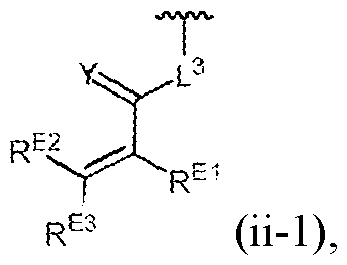
121 Ep: the epo has been informed by wipo that ep was designated in this application

Ref document number: 20881339

Country of ref document: EP

Kind code of ref document: A1

ENP Entry into the national phase

Ref document number: 2022525292

Country of ref document: JP

Kind code of ref document: A

Ref document number: 3156610

Country of ref document: CA

NENP Non-entry into the national phase

Ref country code: DE

ENP Entry into the national phase

Ref document number: 2020374961

Country of ref document: AU

Date of ref document: 20201029

Kind code of ref document: A

ENP Entry into the national phase

Ref document number: 2020881339

Country of ref document: EP

Effective date: 20220530

WWW Wipo information: withdrawn in national office
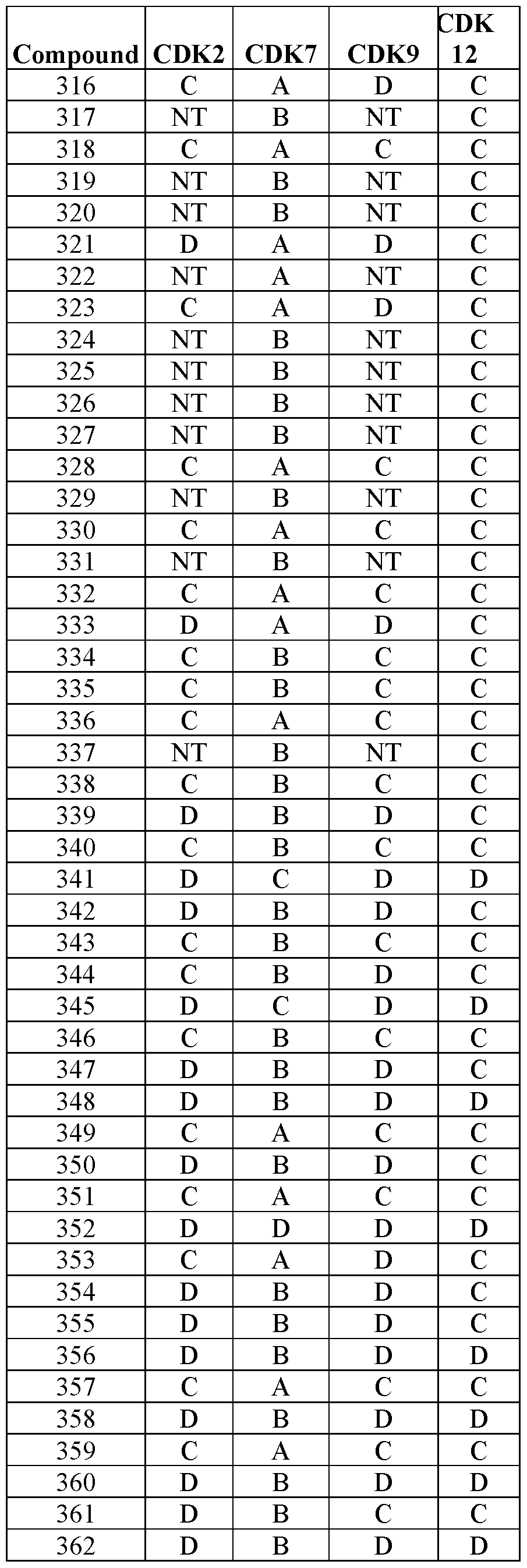
Ref document number: 292519

Country of ref document: IL