WO2021077411A1 - Chromosome instability detection method, system and test kit - Google Patents
Chromosome instability detection method, system and test kit Download PDFInfo
- Publication number
- WO2021077411A1 WO2021077411A1 PCT/CN2019/113332 CN2019113332W WO2021077411A1 WO 2021077411 A1 WO2021077411 A1 WO 2021077411A1 CN 2019113332 W CN2019113332 W CN 2019113332W WO 2021077411 A1 WO2021077411 A1 WO 2021077411A1
- Authority
- WO
- WIPO (PCT)
- Prior art keywords
- interval
- module
- dna sequence
- intervals
- normalized
- Prior art date
- Legal status (The legal status is an assumption and is not a legal conclusion. Google has not performed a legal analysis and makes no representation as to the accuracy of the status listed.)
- Ceased
Links
Images



Classifications
-
- C—CHEMISTRY; METALLURGY
- C12—BIOCHEMISTRY; BEER; SPIRITS; WINE; VINEGAR; MICROBIOLOGY; ENZYMOLOGY; MUTATION OR GENETIC ENGINEERING
- C12Q—MEASURING OR TESTING PROCESSES INVOLVING ENZYMES, NUCLEIC ACIDS OR MICROORGANISMS; COMPOSITIONS OR TEST PAPERS THEREFOR; PROCESSES OF PREPARING SUCH COMPOSITIONS; CONDITION-RESPONSIVE CONTROL IN MICROBIOLOGICAL OR ENZYMOLOGICAL PROCESSES
- C12Q1/00—Measuring or testing processes involving enzymes, nucleic acids or microorganisms; Compositions therefor; Processes of preparing such compositions
- C12Q1/68—Measuring or testing processes involving enzymes, nucleic acids or microorganisms; Compositions therefor; Processes of preparing such compositions involving nucleic acids
-
- G—PHYSICS
- G16—INFORMATION AND COMMUNICATION TECHNOLOGY [ICT] SPECIALLY ADAPTED FOR SPECIFIC APPLICATION FIELDS
- G16B—BIOINFORMATICS, i.e. INFORMATION AND COMMUNICATION TECHNOLOGY [ICT] SPECIALLY ADAPTED FOR GENETIC OR PROTEIN-RELATED DATA PROCESSING IN COMPUTATIONAL MOLECULAR BIOLOGY
- G16B40/00—ICT specially adapted for biostatistics; ICT specially adapted for bioinformatics-related machine learning or data mining, e.g. knowledge discovery or pattern finding
Definitions
- the invention relates to the technical field of chromosome instability, in particular to a chromosome instability detection method and system and a kit containing the chromosome instability detection system.
- Chromosomal instability is usually associated with tumors, specifically including the deletion or amplification of copies of entire chromosomes or chromosomal fragments.
- the amplification and deletion of chromosomes or chromosome fragments that are related to tumorigenesis are often unique to tumorigenesis.
- the detection of chromosomal unstable regions of tumors is very important for the study of tumorigenesis and the development of tumor diagnostic technology.
- the present invention provides a novel chromosome instability detection method, system and kit.
- the present invention provides a method for detecting chromosome instability, which is characterized in that it includes the following steps:
- step S6 is replaced by: performing interval combinations on n intervals to obtain k interval combinations, calculating the normalized number Sig r corresponding to each interval combination in the k interval combinations, and judging the normalization of the r-th interval combination Whether the normalized number Sig r is significantly higher than the normalized number of other k-1 interval combinations, if so, report the abnormality in the rth interval and report the normalized number Sig r at the same time, so as to obtain the sample in k intervals
- the normalized number corresponding to all interval combinations in which anomalies occur in the combination 1 ⁇ r ⁇ k, 1 ⁇ k ⁇ n;
- Step S7 is replaced with: obtaining the sample again, obtaining the normalized number corresponding to all the interval combinations in which the abnormality occurs in the k interval combinations for the second sample.
- the sample includes blood, biological tissue, exfoliated cells, intercellular fluid, pleural effusion, saliva or cerebrospinal fluid, and DNA sequence sequencing is performed using a DNA sequence sequencing system.
- the algorithm used for normalization is a GC content algorithm, a secondary structure algorithm, or other DNA sequence feature algorithm.
- the statistical method for judging whether the normalized number Sig i of the i -th interval is significantly higher than the normalized number of other n-1 intervals includes that Sig i deviates from other n-1 intervals
- the mean of the normalized number is not less than 2 times the variance.
- the statistical method for judging whether the normalized number Sig r of the r -th interval combination is significantly higher than the normalized number of other k-1 interval combinations includes a T-test algorithm.
- the statistical calculation method for calculating the similarity value of the two sample detection values before and after includes but not limited to Pearson correlation coefficient and rank correlation coefficient.
- the present invention also provides a chromosome instability detection system, which is characterized in that it includes a division module, an acquisition module, a comparison module, a counting module, a processing module, a judgment module, a calculation module and an output module;
- the dividing module is used to divide all segments of the reference DNA sequence into intervals to divide n intervals;
- the collection module is used to collect samples, extract the required DNA from the collected samples, and perform DNA sequence sequencing on the extracted DNA to obtain a set of DNA sequences containing multiple fragments, and perform fragment numbering on each fragment ;
- the comparison module is used to compare all the fragments of the obtained DNA sequence with the corresponding fragments of the reference DNA sequence one by one, and output the fragment numbers and fragments of all the fragments of the DNA sequence that are highly similar to the corresponding fragments of the reference DNA sequence.
- the start position, the end position of the fragment and the base of the fragment are compared one by one;
- the counting module is used to count the number C i of all highly similar fragments falling in the i-th interval of the reference DNA sequence, 1 ⁇ i ⁇ n;
- the processing module is used for normalizing the number C i to obtain the normalized number Sig i ;
- the judgment module is used to judge whether the normalized number Sig i of the i -th interval is significantly higher than the normalized number of other n-1 intervals, and if so, report that the i-th interval is abnormal and report the normalized number at the same time Sig i , so as to obtain the normalized number corresponding to all the intervals in which abnormality occurs in the n intervals of this sample;
- the calculation module is configured to calculate the similarity value of the detection value of the two samples before and after based on the normalized number corresponding to the two samples before and after;
- the output module is used to determine whether the similarity value is greater than the set value, and if so, output the chromosome instability detection result.
- the system further includes a combination module, which is used to combine n intervals to obtain k interval combinations, and calculate the normalized number Sig r corresponding to each interval combination in the k interval combinations. ;
- the judgment module is used to judge whether the normalized number Sig r of the r -th interval combination is significantly higher than the normalized number of other k-1 interval combinations, and if so, report an abnormality in the r-th interval and report the normalization at the same time Reduce the number Sig r , so as to obtain the normalized number corresponding to all the interval combinations in the k interval combinations of this sample, 1 ⁇ r ⁇ k, 1 ⁇ k ⁇ n;
- the acquisition module, the comparison module, the counting module, the processing module, the combination module, and the judgment module are called again to acquire the samples again to obtain the normalized numbers corresponding to all the interval combinations in which the re-samples are abnormal in the k interval combinations.
- the sample includes blood, biological tissue, exfoliated cells, intercellular fluid, pleural effusion, saliva, or cerebrospinal fluid, and DNA sequence sequencing is performed using a DNA sequence sequencing system.
- the algorithm used for normalization is a GC content algorithm, a secondary structure algorithm, or other DNA sequence feature algorithm.
- the judging module is used to judge whether the normalized number Sig i of the i -th interval is significantly higher than the normalized number of other n-1 intervals.
- the statistical method used includes the deviation of Sig i from other n-
- the mean value of the normalized number of an interval is not less than 2 times the variance.
- the statistical method used by the judging module for judging whether the normalized number Sig r of the r -th interval combination is significantly higher than the normalized number of other k-1 interval combinations includes a T-test algorithm.
- the statistical calculation method used by the calculation module to calculate the similarity value of the detection values of the two samples before and after includes but not limited to Pearson correlation coefficient and rank correlation coefficient.
- the present invention also provides a kit, which is characterized in that it includes the above-mentioned chromosome instability detection system.
- the invention collects samples, can accurately detect chromosomal unstable regions in the samples, and provides scientific basis for the next stage of clinical early diagnosis and formulation of individualized treatment plans.
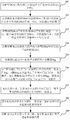
- Fig. 1 is a flowchart of a method for detecting chromosome instability according to Embodiment 1 of the present invention.
- FIG. 2 is a structural block diagram of the chromosome instability detection system according to Embodiment 1 of the present invention.
- Fig. 3 is a flow chart of the method for detecting chromosome instability according to Embodiment 2 of the present invention.
- Fig. 4 is a structural block diagram of a chromosome instability detection system according to Embodiment 2 of the present invention.
- this embodiment provides a method for detecting chromosome instability, which includes the following steps:
- Step 101 Perform interval division on all fragments of the reference DNA sequence to divide n intervals.
- Step 102 Obtain a sample, extract the required DNA from the obtained sample, perform DNA sequence sequencing on the extracted DNA to obtain a set of DNA sequences containing multiple fragments, and perform fragment numbering on each fragment;
- the sample includes blood, biological tissue, exfoliated cells, intercellular fluid, pleural effusion, saliva, or cerebrospinal fluid.
- DNA sequence sequencing is performed using a DNA sequence sequencing system, which includes but is not limited to Illumina HiSeq, NextSeq, Life Ion, BGISEQ200, BGISEQ500, BGISEQ2000, PacBio, MinIon, Nanopore, RocheSolid, etc.
- a DNA sequence sequencing system which includes but is not limited to Illumina HiSeq, NextSeq, Life Ion, BGISEQ200, BGISEQ500, BGISEQ2000, PacBio, MinIon, Nanopore, RocheSolid, etc.
- Step 103 Perform a base-by-base comparison of all the fragments of the obtained DNA sequence with the corresponding fragments of the reference DNA sequence, and output the fragment numbers and the starting positions of the fragments that are highly similar to the corresponding fragments of the reference DNA sequence. , Fragment termination position and fragment base one-by-one comparison result.
- Step 104 Count the number C i of all highly similar fragments that fall into the i-th interval of the reference DNA sequence, and 1 ⁇ i ⁇ n.
- Step 105 Perform normalization processing on the number C i to obtain a normalized number Sig i .
- the algorithm used for normalization is a GC content algorithm, a secondary structure algorithm, or other DNA sequence feature algorithm.
- Step 106 Determine whether the normalized number Sig i of the i -th interval is significantly higher than the normalized number of other n-1 intervals, and if so, report an abnormality in the i-th interval and report the normalized number Sig i at the same time, In this way, the normalized number corresponding to all the intervals in which abnormality occurs in the n intervals of the sub-sample is obtained.
- the statistical methods for judging whether the normalized number Sig i of the i -th interval is significantly higher than the normalized number of other n-1 intervals include, but are not limited to, the deviation of Sig i from other n-1 intervals.
- the mean of the normalized number is not less than 2 times the variance.
- Step 107 Obtain the samples again, and obtain the normalized numbers corresponding to all the intervals in which the abnormality occurs in the n intervals of the second sample.
- Step 108 Calculate the similarity value of the detection value of the two samples before and after based on the normalized number corresponding to the two samples before and after.
- step 108 statistical calculation methods for calculating the similarity values of the detection values of the two samples before and after include but are not limited to Pearson correlation coefficient and rank correlation coefficient.
- Step 109 Determine whether the similarity value is greater than the set value, and if so, output the chromosome instability detection result.
- this embodiment also provides a chromosome instability detection system, which includes a dividing module 11, an acquisition module 12, a comparison module 13, a counting module 14, a processing module 15, a judgment module 16, a calculation module 17, and Output module 18.
- the dividing module 11 is used to divide all segments of the reference DNA sequence to divide n intervals.
- the collection module 12 is used to collect samples, extract the required DNA from the collected samples, and perform DNA sequence sequencing on the extracted DNA to obtain a set of DNA sequences containing multiple fragments, and perform fragmentation on each fragment. Numbering. Samples include blood, biological tissues, exfoliated cells, intercellular fluid, pleural effusion, saliva or cerebrospinal fluid, and DNA sequence sequencing is performed using a DNA sequencing system.
- the comparison module 13 is used to compare all the fragments of the obtained DNA sequence with the corresponding fragments of the reference DNA sequence one by one, and output the fragment numbers of all the fragments of the DNA sequence that are highly similar to the corresponding fragments of the reference DNA sequence, Fragment start position, fragment end position and fragment base are compared one by one.
- the counting module 14 is used to count the number C i of all highly similar fragments falling in the i-th interval of the reference DNA sequence, 1 ⁇ i ⁇ n.
- the processing module 15 is used to normalize the number C i to obtain the normalized number Sig i , and the algorithm used for the normalization is a GC content algorithm, a secondary structure algorithm or other DNA sequence feature algorithms.
- the judgment module 16 is used to judge whether the normalized number Sig i of the i -th interval is significantly higher than the normalized number of other n-1 intervals, and if so, report the abnormality in the i-th interval and report the normalization at the same time The number Sig i , so as to obtain the normalized number corresponding to all the intervals in the n intervals in which the sample is abnormal.
- the judgment module 16 is used to judge whether the normalized number Sig i of the i -th interval is significantly higher than the normalized number of other n-1 intervals.
- the statistical method used includes the deviation of Sig i from other n-1 intervals.
- the mean of the normalized number is not less than 2 times the variance.
- the collection module 12, the comparison module 13, the counting module 14, the processing module 15 and the judgment module 16 are called again to collect the samples again, and obtain the normalized numbers corresponding to all the intervals in which the abnormality of the re-samples occurs in the n intervals.
- the calculation module 17 is configured to calculate the similarity value of the detection value of the two samples before and after based on the normalized number corresponding to the two samples before and after.
- the statistical calculation method used by the calculation module to calculate the similarity value of the detection value of the two samples before and after includes but not limited to the Pearson correlation coefficient and the rank correlation coefficient.
- the output module 18 is used to determine whether the similarity value is greater than the set value, and if so, output the chromosome instability detection result.
- This embodiment also provides a kit, which includes the above-mentioned chromosome instability detection system.
- this embodiment provides a method for detecting chromosome instability, which includes the following steps:
- Step 201 Perform interval division on all fragments of the reference DNA sequence to divide n intervals.
- Step 202 Obtain a sample, extract the required DNA from the obtained sample, perform DNA sequence sequencing on the extracted DNA to obtain a set of DNA sequences containing multiple fragments, and perform fragment numbering on each fragment;
- the sample includes blood, biological tissue, exfoliated cells, intercellular fluid, pleural effusion, saliva, or cerebrospinal fluid.
- DNA sequence sequencing is performed using a DNA sequence sequencing system, which includes but is not limited to Illumina HiSeq, NextSeq, Life Ion, BGISEQ200, BGISEQ500, BGISEQ2000, PacBio, MinIon, Nanopore, RocheSolid, etc.
- a DNA sequence sequencing system which includes but is not limited to Illumina HiSeq, NextSeq, Life Ion, BGISEQ200, BGISEQ500, BGISEQ2000, PacBio, MinIon, Nanopore, RocheSolid, etc.
- Step 203 Perform a base-by-base comparison of all the fragments of the obtained DNA sequence with the corresponding fragments of the reference DNA sequence, and output the fragment numbers and the starting positions of the fragments that are highly similar to the corresponding fragments of the reference DNA sequence. , Fragment termination position and fragment base one-by-one comparison result.
- Step 204 Count the number C i of all highly similar fragments that fall into the i-th interval of the reference DNA sequence, and 1 ⁇ i ⁇ n.
- Step 205 Perform normalization processing on the number C i to obtain a normalized number Sig i .
- the algorithm used for normalization is a GC content algorithm, a secondary structure algorithm, or other DNA sequence feature algorithm.
- Step 206 the n intervals for interval combinations to obtain k intervals combination, calculate the k on interval of each interval corresponding to a combination of a normalized number Sig r, determines the r th interval combinations normalized number Sig r whether Significantly higher than the normalized number of other k-1 interval combinations. If so, report the r-th interval with an abnormality and report the normalized number Sig r at the same time, so as to obtain all the abnormalities in the k interval combinations of this sample The normalized number corresponding to the interval combination, 1 ⁇ r ⁇ k, 1 ⁇ k ⁇ n.
- the statistical method for judging whether the normalized number Sig r of the r -th interval combination is significantly higher than the normalized number of other k-1 interval combinations includes, but is not limited to, the T-test algorithm.
- Step 207 Obtain the sample again, and obtain the normalized number corresponding to all the interval combinations in which the abnormality occurs in the k interval combinations for the second sample.
- Step 208 Calculate the similarity value of the detection value of the two samples before and after based on the normalized number corresponding to the two samples before and after.
- step 208 statistical calculation methods for calculating the similarity values of the detection values of the two samples before and after include but are not limited to Pearson correlation coefficient and rank correlation coefficient.
- Step 209 Determine whether the similarity value is greater than the set value, and if so, output the chromosome instability detection result.
- this embodiment also provides a chromosome instability detection system, which includes a dividing module 21, an acquisition module 22, a comparison module 23, a counting module 24, a processing module 25, a combination module 26, a judgment module 27, Calculation module 28 and output module 29.
- the dividing module 21 is used to divide all segments of the reference DNA sequence to divide n intervals.
- the collection module 22 is used to collect samples, extract the required DNA from the collected samples, and perform DNA sequence sequencing on the extracted DNA to obtain a set of DNA sequences containing multiple fragments, and perform fragmentation on each fragment. Numbering. Samples include blood, biological tissues, exfoliated cells, intercellular fluid, pleural effusion, saliva or cerebrospinal fluid, and DNA sequence sequencing is performed using a DNA sequencing system.
- the comparison module 23 is used to compare all the fragments of the obtained DNA sequence with the corresponding fragments of the reference DNA sequence one by one, and output the fragment numbers of all the fragments of the DNA sequence that are highly similar to the corresponding fragments of the reference DNA sequence. Fragment start position, fragment end position and fragment base are compared one by one.
- the counting module 24 is used to count the number C i of all highly similar fragments falling in the i-th interval of the reference DNA sequence, 1 ⁇ i ⁇ n.
- the processing module 25 is used to normalize the number C i to obtain the normalized number Sig i , and the algorithm used for the normalization is a GC content algorithm, a secondary structure algorithm or other DNA sequence feature algorithms.
- the combination module 26 is configured to perform interval combinations on n intervals to obtain k interval combinations, and calculate the normalized number Sig r corresponding to each interval combination in the k interval combinations.
- the judging module 27 is used to judge whether the normalized number Sig r of the rth interval combination is significantly higher than the normalized number of other k-1 interval combinations, and if so, report that the rth interval is abnormal and report the normalized number at the same time.
- the number Sig r is unified, so as to obtain the normalized number corresponding to all the interval combinations in the k interval combinations of the sample, 1 ⁇ r ⁇ k, 1 ⁇ k ⁇ n.
- the judging module 27 is used for judging whether the normalized number Sig r of the r -th interval combination is significantly higher than the normalized number of other k-1 interval combinations.
- the statistical methods used include but are not limited to the T-test algorithm.
- the collection module 22, the comparison module 23, the counting module 24, the processing module 25, the combination module 26, and the judgment module 27 are called again to collect the samples again to obtain the results corresponding to all the interval combinations in which the abnormality occurs in the k interval combinations. A number.
- the calculation module 28 is configured to calculate the similarity value of the detection value of the two samples before and after based on the normalized number corresponding to the two samples before and after.
- the statistical calculation method used by the calculation module to calculate the similarity value of the detection value of the two samples before and after includes but not limited to the Pearson correlation coefficient and the rank correlation coefficient.
- the output module 29 is used for judging whether the similarity value is greater than the set value, and if so, outputting the chromosome instability detection result.
- This embodiment also provides a kit, which includes the above-mentioned chromosome instability detection system.
Landscapes
- Life Sciences & Earth Sciences (AREA)
- Chemical & Material Sciences (AREA)
- Health & Medical Sciences (AREA)
- Engineering & Computer Science (AREA)
- Organic Chemistry (AREA)
- Physics & Mathematics (AREA)
- Zoology (AREA)
- Wood Science & Technology (AREA)
- Biophysics (AREA)
- Proteomics, Peptides & Aminoacids (AREA)
- Bioinformatics & Cheminformatics (AREA)
- General Health & Medical Sciences (AREA)
- Medical Informatics (AREA)
- Biotechnology (AREA)
- Evolutionary Biology (AREA)
- Immunology (AREA)
- Bioinformatics & Computational Biology (AREA)
- Public Health (AREA)
- Evolutionary Computation (AREA)
- Epidemiology (AREA)
- Spectroscopy & Molecular Physics (AREA)
- Theoretical Computer Science (AREA)
- Databases & Information Systems (AREA)
- Analytical Chemistry (AREA)
- Data Mining & Analysis (AREA)
- Software Systems (AREA)
- Microbiology (AREA)
- Molecular Biology (AREA)
- Computer Vision & Pattern Recognition (AREA)
- Bioethics (AREA)
- Artificial Intelligence (AREA)
- Biochemistry (AREA)
- General Engineering & Computer Science (AREA)
- Genetics & Genomics (AREA)
- Measuring Or Testing Involving Enzymes Or Micro-Organisms (AREA)
- Investigating Or Analysing Biological Materials (AREA)
Abstract
Description
本发明涉及染色体不稳定性技术领域,特别是涉及一种染色体不稳定性检测方法、系统及含有染色体不稳定性检测系统的试剂盒。The invention relates to the technical field of chromosome instability, in particular to a chromosome instability detection method and system and a kit containing the chromosome instability detection system.
染色体不稳定通常与肿瘤相关,具体包括整个染色体或者染色体片段拷贝的缺失或扩增。含有与肿瘤发生相关的染色体或者染色体片段的扩增和缺失经常是肿瘤发生所特有的,对肿瘤染色体不稳定区域的检测,对于研究肿瘤发生和开发肿瘤诊断技术都是至关重要。Chromosomal instability is usually associated with tumors, specifically including the deletion or amplification of copies of entire chromosomes or chromosomal fragments. The amplification and deletion of chromosomes or chromosome fragments that are related to tumorigenesis are often unique to tumorigenesis. The detection of chromosomal unstable regions of tumors is very important for the study of tumorigenesis and the development of tumor diagnostic technology.
发明内容Summary of the invention
本发明针对现有技术存在的问题和不足,提供一种新型的染色体不稳定性检测方法、系统及试剂盒。In view of the problems and deficiencies in the prior art, the present invention provides a novel chromosome instability detection method, system and kit.
本发明是通过下述技术方案来解决上述技术问题的:The present invention solves the above technical problems through the following technical solutions:
本发明提供一种染色体不稳定性检测方法,其特点在于,其包括以下步骤:The present invention provides a method for detecting chromosome instability, which is characterized in that it includes the following steps:
S1、对参考DNA序列的所有片段进行区间划分以划分出n个区间;S1. Perform interval division on all fragments of the reference DNA sequence to divide n intervals;
S2、获取样本,从获取的样本中提取出所需的DNA,并对提取出的DNA进行DNA序列测序以获得一组含有多个片段的DNA序列,对每一片段进行片段编号;S2. Obtain a sample, extract the required DNA from the obtained sample, perform DNA sequence sequencing on the extracted DNA to obtain a set of DNA sequences containing multiple fragments, and number each fragment;
S3、将获得的DNA序列的所有片段与参考DNA序列的对应片段进行碱基的一一对比,输出所有的DNA序列的片段与参考DNA序列的对应片 段高度相似的片段编号、片段起始位置、片段终止位置和片段碱基一一对比结果;S3. Compare all the fragments of the obtained DNA sequence with the corresponding fragments of the reference DNA sequence one by one, and output all the fragments of the DNA sequence that are highly similar to the corresponding fragments of the reference DNA sequence, the fragment number, the starting position of the fragment, The result of comparing the end position of the fragment and the base of the fragment one by one;
S4、计数所有高度相似的片段中落入参考DNA序列的第i个区间的数目C i,1≤i≤n; S4. Count the number C i of all highly similar fragments that fall into the i-th interval of the reference DNA sequence, 1≤i≤n;
S5、对数目C i进行归一化处理以获得归一化数目Sig i; S5. Perform normalization processing on the number C i to obtain a normalized number Sig i ;
S6、判断第i个区间的归一化数目Sig i是否显著高于其他n-1个区间的归一化数目,若是则报告第i个区间发生异常并同时报告归一化数目Sig i,从而获取该次样本在n个区间中发生异常的所有区间对应的归一化数目; S6. Determine whether the normalized number Sig i of the i -th interval is significantly higher than the normalized number of other n-1 intervals, and if so, report the abnormality in the i-th interval and report the normalized number Sig i at the same time, thereby Obtain the normalized number corresponding to all the intervals in which abnormality occurs in the n intervals of the sample;
S7、再次获取样本,获取再次样本在n个区间中发生异常的所有区间对应的归一化数目;S7. Obtain the sample again, and obtain the normalized number corresponding to all the intervals in which the abnormality of the second sample occurs in the n intervals;
S8、基于前后两次样本对应的归一化数目计算前后两次样本检测值的相似度值;S8. Calculate the similarity value of the detection values of the two samples before and after based on the normalized number corresponding to the two samples before and after;
S9、判断相似度值是否大于设定值,若是则输出染色体不稳定性检测结果。S9. Determine whether the similarity value is greater than the set value, and if so, output the chromosome instability detection result.
较佳地,步骤S6替换为:对n个区间进行区间组合以获得k个区间组合,计算k个区间组合中每一个区间组合对应的归一化数目Sig r,判断第r个区间组合的归一化数目Sig r是否显著高于其他k-1个区间组合的归一化数目,若是则报告第r个区间发生异常并同时报告归一化数目Sig r,从而获取该次样本在k个区间组合中发生异常的所有区间组合对应的归一化数目,1≤r≤k,1≤k≤n; Preferably, step S6 is replaced by: performing interval combinations on n intervals to obtain k interval combinations, calculating the normalized number Sig r corresponding to each interval combination in the k interval combinations, and judging the normalization of the r-th interval combination Whether the normalized number Sig r is significantly higher than the normalized number of other k-1 interval combinations, if so, report the abnormality in the rth interval and report the normalized number Sig r at the same time, so as to obtain the sample in k intervals The normalized number corresponding to all interval combinations in which anomalies occur in the combination, 1≤r≤k, 1≤k≤n;
步骤S7替换为:再次获取样本,获取再次样本在k个区间组合中发生异常的所有区间组合对应的归一化数目。Step S7 is replaced with: obtaining the sample again, obtaining the normalized number corresponding to all the interval combinations in which the abnormality occurs in the k interval combinations for the second sample.
较佳地,在步骤S2中,样本包括血液、生物组织、脱落细胞、细胞间隙液、胸腔积液、唾液或脑脊液,采用DNA序列测序系统进行DNA序列 测序。Preferably, in step S2, the sample includes blood, biological tissue, exfoliated cells, intercellular fluid, pleural effusion, saliva or cerebrospinal fluid, and DNA sequence sequencing is performed using a DNA sequence sequencing system.
较佳地,在步骤S5中,归一化采用的算法为GC含量算法、二级结构算法或其他DNA序列特征算法。Preferably, in step S5, the algorithm used for normalization is a GC content algorithm, a secondary structure algorithm, or other DNA sequence feature algorithm.
较佳地,在步骤S6中,判断第i个区间的归一化数目Sig i是否显著高于其他n-1个区间的归一化数目的统计学方法包括Sig i偏离其它n-1个区间的归一化数目的均值的不小于2倍方差。 Preferably, in step S6, the statistical method for judging whether the normalized number Sig i of the i -th interval is significantly higher than the normalized number of other n-1 intervals includes that Sig i deviates from other n-1 intervals The mean of the normalized number is not less than 2 times the variance.
较佳地,在步骤S6中,判断第r个区间组合的归一化数目Sig r是否显著高于其他k-1个区间组合的归一化数目的统计学方法包括T检验算法。 Preferably, in step S6, the statistical method for judging whether the normalized number Sig r of the r -th interval combination is significantly higher than the normalized number of other k-1 interval combinations includes a T-test algorithm.
较佳地,在步骤S8中,计算前后两次样本检测值的相似度值的统计学计算方法包括但不限于Pearson相关系数、秩相关系数。Preferably, in step S8, the statistical calculation method for calculating the similarity value of the two sample detection values before and after includes but not limited to Pearson correlation coefficient and rank correlation coefficient.
本发明还提供一种染色体不稳定性检测系统,其特点在于,其包括划分模块、采集模块、对比模块、计数模块、处理模块、判断模块、计算模块和输出模块;The present invention also provides a chromosome instability detection system, which is characterized in that it includes a division module, an acquisition module, a comparison module, a counting module, a processing module, a judgment module, a calculation module and an output module;
所述划分模块用于对参考DNA序列的所有片段进行区间划分以划分出n个区间;The dividing module is used to divide all segments of the reference DNA sequence into intervals to divide n intervals;
所述采集模块用于采集样本,从采集的样本中提取出所需的DNA,并对提取出的DNA进行DNA序列测序以获得一组含有多个片段的DNA序列,对每一片段进行片段编号;The collection module is used to collect samples, extract the required DNA from the collected samples, and perform DNA sequence sequencing on the extracted DNA to obtain a set of DNA sequences containing multiple fragments, and perform fragment numbering on each fragment ;
所述对比模块用于将获得的DNA序列的所有片段与参考DNA序列的对应片段进行碱基的一一对比,输出所有的DNA序列的片段与参考DNA序列的对应片段高度相似的片段编号、片段起始位置、片段终止位置和片段碱基一一对比结果;The comparison module is used to compare all the fragments of the obtained DNA sequence with the corresponding fragments of the reference DNA sequence one by one, and output the fragment numbers and fragments of all the fragments of the DNA sequence that are highly similar to the corresponding fragments of the reference DNA sequence. The start position, the end position of the fragment and the base of the fragment are compared one by one;
所述计数模块用于计数所有高度相似的片段中落入参考DNA序列的第i个区间的数目C i,1≤i≤n; The counting module is used to count the number C i of all highly similar fragments falling in the i-th interval of the reference DNA sequence, 1≤i≤n;
所述处理模块用于对数目C i进行归一化处理以获得归一化数目Sig i; The processing module is used for normalizing the number C i to obtain the normalized number Sig i ;
所述判断模块用于判断第i个区间的归一化数目Sig i是否显著高于其他n-1个区间的归一化数目,若是则报告第i个区间发生异常并同时报告归一化数目Sig i,从而获取该次样本在n个区间中发生异常的所有区间对应的归一化数目; The judgment module is used to judge whether the normalized number Sig i of the i -th interval is significantly higher than the normalized number of other n-1 intervals, and if so, report that the i-th interval is abnormal and report the normalized number at the same time Sig i , so as to obtain the normalized number corresponding to all the intervals in which abnormality occurs in the n intervals of this sample;
再次调用所述采集模块、对比模块、计数模块、处理模块和判断模块用于再次采集样本,获取再次样本在n个区间中发生异常的所有区间对应的归一化数目;Calling the acquisition module, comparison module, counting module, processing module, and judgment module again to collect samples again, and obtain the normalized numbers corresponding to all the intervals in which the abnormality of the re-sample occurs in the n intervals;
所述计算模块用于基于前后两次样本对应的归一化数目计算前后两次样本检测值的相似度值;The calculation module is configured to calculate the similarity value of the detection value of the two samples before and after based on the normalized number corresponding to the two samples before and after;
所述输出模块用于判断相似度值是否大于设定值,若是则输出染色体不稳定性检测结果。The output module is used to determine whether the similarity value is greater than the set value, and if so, output the chromosome instability detection result.
较佳地,所述系统还包括组合模块,所述组合模块用于对n个区间进行区间组合以获得k个区间组合,计算k个区间组合中每一个区间组合对应的归一化数目Sig r; Preferably, the system further includes a combination module, which is used to combine n intervals to obtain k interval combinations, and calculate the normalized number Sig r corresponding to each interval combination in the k interval combinations. ;
所述判断模块用于判断第r个区间组合的归一化数目Sig r是否显著高于其他k-1个区间组合的归一化数目,若是则报告第r个区间发生异常并同时报告归一化数目Sig r,从而获取该次样本在k个区间组合中发生异常的所有区间组合对应的归一化数目,1≤r≤k,1≤k≤n; The judgment module is used to judge whether the normalized number Sig r of the r -th interval combination is significantly higher than the normalized number of other k-1 interval combinations, and if so, report an abnormality in the r-th interval and report the normalization at the same time Reduce the number Sig r , so as to obtain the normalized number corresponding to all the interval combinations in the k interval combinations of this sample, 1≤r≤k, 1≤k≤n;
再次调用所述采集模块、对比模块、计数模块、处理模块、组合模块和判断模块用于再次采集样本获取再次样本在k个区间组合中发生异常的所有区间组合对应的归一化数目。The acquisition module, the comparison module, the counting module, the processing module, the combination module, and the judgment module are called again to acquire the samples again to obtain the normalized numbers corresponding to all the interval combinations in which the re-samples are abnormal in the k interval combinations.
较佳地,样本包括血液、生物组织、脱落细胞、细胞间隙液、胸腔积液、唾液或脑脊液,采用DNA序列测序系统进行DNA序列测序。Preferably, the sample includes blood, biological tissue, exfoliated cells, intercellular fluid, pleural effusion, saliva, or cerebrospinal fluid, and DNA sequence sequencing is performed using a DNA sequence sequencing system.
较佳地,归一化采用的算法为GC含量算法、二级结构算法或其他DNA序列特征算法。Preferably, the algorithm used for normalization is a GC content algorithm, a secondary structure algorithm, or other DNA sequence feature algorithm.
较佳地,所述判断模块用于判断第i个区间的归一化数目Sig i是否显著高于其他n-1个区间的归一化数目所采用的统计学方法包括Sig i偏离其它n-1个区间的归一化数目的均值的不小于2倍方差。 Preferably, the judging module is used to judge whether the normalized number Sig i of the i -th interval is significantly higher than the normalized number of other n-1 intervals. The statistical method used includes the deviation of Sig i from other n- The mean value of the normalized number of an interval is not less than 2 times the variance.
较佳地,所述判断模块用于判断第r个区间组合的归一化数目Sig r是否显著高于其他k-1个区间组合的归一化数目所采用的统计学方法包括T检验算法。 Preferably, the statistical method used by the judging module for judging whether the normalized number Sig r of the r -th interval combination is significantly higher than the normalized number of other k-1 interval combinations includes a T-test algorithm.
较佳地,所述计算模块用于计算前后两次样本检测值的相似度值的统计学计算方法包括但不限于Pearson相关系数、秩相关系数。Preferably, the statistical calculation method used by the calculation module to calculate the similarity value of the detection values of the two samples before and after includes but not limited to Pearson correlation coefficient and rank correlation coefficient.
本发明还提供一种试剂盒,其特点在于,其包括上述的染色体不稳定性检测系统。The present invention also provides a kit, which is characterized in that it includes the above-mentioned chromosome instability detection system.
在符合本领域常识的基础上,上述各优选条件,可任意组合,即得本发明各较佳实例。On the basis of conforming to common knowledge in the field, the above-mentioned preferred conditions can be combined arbitrarily to obtain preferred examples of the present invention.
本发明的积极进步效果在于:The positive and progressive effects of the present invention are:
本发明收集样本,能够精确地检测出样本中染色体不稳定区域,为下一步临床早期诊断和制定个体化治疗方案提供科学依据。The invention collects samples, can accurately detect chromosomal unstable regions in the samples, and provides scientific basis for the next stage of clinical early diagnosis and formulation of individualized treatment plans.
图1为本发明实施例1的染色体不稳定性检测方法的流程图。Fig. 1 is a flowchart of a method for detecting chromosome instability according to Embodiment 1 of the present invention.
图2为本发明实施例1的染色体不稳定性检测系统的结构框图。Figure 2 is a structural block diagram of the chromosome instability detection system according to Embodiment 1 of the present invention.
图3为本发明实施例2的染色体不稳定性检测方法的流程图。Fig. 3 is a flow chart of the method for detecting chromosome instability according to Embodiment 2 of the present invention.
图4为本发明实施例2的染色体不稳定性检测系统的结构框图。Fig. 4 is a structural block diagram of a chromosome instability detection system according to Embodiment 2 of the present invention.
为使本发明实施例的目的、技术方案和优点更加清楚,下面将结合本发明实施例中的附图,对本发明实施例中的技术方案进行清楚、完整地描述,显然,所描述的实施例是本发明一部分实施例,而不是全部的实施例。基于本发明中的实施例,本领域普通技术人员在没有做出创造性劳动的前提下所获得的所有其他实施例,都属于本发明保护的范围。In order to make the objectives, technical solutions, and advantages of the embodiments of the present invention clearer, the technical solutions in the embodiments of the present invention will be described clearly and completely in conjunction with the accompanying drawings in the embodiments of the present invention. Obviously, the described embodiments These are a part of the embodiments of the present invention, but not all of the embodiments. Based on the embodiments of the present invention, all other embodiments obtained by those of ordinary skill in the art without creative work shall fall within the protection scope of the present invention.
实施例1Example 1
如图1所示,本实施例提供一种染色体不稳定性检测方法,其包括以下步骤:As shown in Figure 1, this embodiment provides a method for detecting chromosome instability, which includes the following steps:
步骤101、对参考DNA序列的所有片段进行区间划分以划分出n个区间。Step 101: Perform interval division on all fragments of the reference DNA sequence to divide n intervals.
步骤102、获取样本,从获取的样本中提取出所需的DNA,并对提取出的DNA进行DNA序列测序以获得一组含有多个片段的DNA序列,对每一片段进行片段编号;Step 102: Obtain a sample, extract the required DNA from the obtained sample, perform DNA sequence sequencing on the extracted DNA to obtain a set of DNA sequences containing multiple fragments, and perform fragment numbering on each fragment;
在步骤102中,样本包括血液、生物组织、脱落细胞、细胞间隙液、胸腔积液、唾液或脑脊液。In
采用DNA序列测序系统进行DNA序列测序,DNA序列测序系统包括但不限于Illumina HiSeq、NextSeq、Life Ion、BGISEQ200、BGISEQ500、BGISEQ2000、PacBio、MinIon、Nanopore、Roche Solid等。DNA sequence sequencing is performed using a DNA sequence sequencing system, which includes but is not limited to Illumina HiSeq, NextSeq, Life Ion, BGISEQ200, BGISEQ500, BGISEQ2000, PacBio, MinIon, Nanopore, RocheSolid, etc.
步骤103、将获得的DNA序列的所有片段与参考DNA序列的对应片段进行碱基的一一对比,输出所有的DNA序列的片段与参考DNA序列的对应片段高度相似的片段编号、片段起始位置、片段终止位置和片段碱基一一对比结果。Step 103: Perform a base-by-base comparison of all the fragments of the obtained DNA sequence with the corresponding fragments of the reference DNA sequence, and output the fragment numbers and the starting positions of the fragments that are highly similar to the corresponding fragments of the reference DNA sequence. , Fragment termination position and fragment base one-by-one comparison result.
步骤104、计数所有高度相似的片段中落入参考DNA序列的第i个区间 的数目C i,1≤i≤n。 Step 104: Count the number C i of all highly similar fragments that fall into the i-th interval of the reference DNA sequence, and 1≤i≤n.
步骤105、对数目C i进行归一化处理以获得归一化数目Sig i。 Step 105: Perform normalization processing on the number C i to obtain a normalized number Sig i .
在步骤105中,归一化采用的算法为GC含量算法、二级结构算法或其他DNA序列特征算法。In
步骤106、判断第i个区间的归一化数目Sig i是否显著高于其他n-1个区间的归一化数目,若是则报告第i个区间发生异常并同时报告归一化数目Sig i,从而获取该次样本在n个区间中发生异常的所有区间对应的归一化数目。 Step 106: Determine whether the normalized number Sig i of the i -th interval is significantly higher than the normalized number of other n-1 intervals, and if so, report an abnormality in the i-th interval and report the normalized number Sig i at the same time, In this way, the normalized number corresponding to all the intervals in which abnormality occurs in the n intervals of the sub-sample is obtained.
在步骤106中,判断第i个区间的归一化数目Sig
i是否显著高于其他n-1个区间的归一化数目的统计学方法包括但不限于Sig
i偏离其它n-1个区间的归一化数目的均值的不小于2倍方差。
In
步骤107、再次获取样本,获取再次样本在n个区间中发生异常的所有区间对应的归一化数目。Step 107: Obtain the samples again, and obtain the normalized numbers corresponding to all the intervals in which the abnormality occurs in the n intervals of the second sample.
步骤108、基于前后两次样本对应的归一化数目计算前后两次样本检测值的相似度值。Step 108: Calculate the similarity value of the detection value of the two samples before and after based on the normalized number corresponding to the two samples before and after.
在步骤108中,计算前后两次样本检测值的相似度值的统计学计算方法包括但不限于Pearson相关系数、秩相关系数。In
步骤109、判断相似度值是否大于设定值,若是则输出染色体不稳定性检测结果。Step 109: Determine whether the similarity value is greater than the set value, and if so, output the chromosome instability detection result.
如图2所示,本实施例还提供一种染色体不稳定性检测系统,其包括划分模块11、采集模块12、对比模块13、计数模块14、处理模块15、判断模块16、计算模块17和输出模块18。As shown in Figure 2, this embodiment also provides a chromosome instability detection system, which includes a dividing module 11, an
所述划分模块11用于对参考DNA序列的所有片段进行区间划分以划分出n个区间。The dividing module 11 is used to divide all segments of the reference DNA sequence to divide n intervals.
所述采集模块12用于采集样本,从采集的样本中提取出所需的DNA,并对提取出的DNA进行DNA序列测序以获得一组含有多个片段的DNA序列,对每一片段进行片段编号。样本包括血液、生物组织、脱落细胞、细胞间隙液、胸腔积液、唾液或脑脊液,采用DNA序列测序系统进行DNA序列测序。The
所述对比模块13用于将获得的DNA序列的所有片段与参考DNA序列的对应片段进行碱基的一一对比,输出所有的DNA序列的片段与参考DNA序列的对应片段高度相似的片段编号、片段起始位置、片段终止位置和片段碱基一一对比结果。The
所述计数模块14用于计数所有高度相似的片段中落入参考DNA序列的第i个区间的数目C i,1≤i≤n。 The counting module 14 is used to count the number C i of all highly similar fragments falling in the i-th interval of the reference DNA sequence, 1≤i≤n.
所述处理模块15用于对数目C
i进行归一化处理以获得归一化数目Sig
i,归一化采用的算法为GC含量算法、二级结构算法或其他DNA序列特征算法。
The
所述判断模块16用于判断第i个区间的归一化数目Sig
i是否显著高于其他n-1个区间的归一化数目,若是则报告第i个区间发生异常并同时报告归一化数目Sig
i,从而获取该次样本在n个区间中发生异常的所有区间对应的归一化数目。
The
所述判断模块16用于判断第i个区间的归一化数目Sig
i是否显著高于其他n-1个区间的归一化数目所采用的统计学方法包括Sig
i偏离其它n-1个区间的归一化数目的均值的不小于2倍方差。
The
再次调用所述采集模块12、对比模块13、计数模块14、处理模块15和判断模块16用于再次采集样本,获取再次样本在n个区间中发生异常的所有区间对应的归一化数目。The
所述计算模块17用于基于前后两次样本对应的归一化数目计算前后两次样本检测值的相似度值。所述计算模块用于计算前后两次样本检测值的相似度值的统计学计算方法包括但不限于Pearson相关系数、秩相关系数。The calculation module 17 is configured to calculate the similarity value of the detection value of the two samples before and after based on the normalized number corresponding to the two samples before and after. The statistical calculation method used by the calculation module to calculate the similarity value of the detection value of the two samples before and after includes but not limited to the Pearson correlation coefficient and the rank correlation coefficient.
所述输出模块18用于判断相似度值是否大于设定值,若是则输出染色体不稳定性检测结果。The
本实施例还提供一种试剂盒,其包括上述的染色体不稳定性检测系统。This embodiment also provides a kit, which includes the above-mentioned chromosome instability detection system.
实施例2Example 2
如图3所示,本实施例提供一种染色体不稳定性检测方法,其包括以下步骤:As shown in FIG. 3, this embodiment provides a method for detecting chromosome instability, which includes the following steps:
步骤201、对参考DNA序列的所有片段进行区间划分以划分出n个区间。Step 201: Perform interval division on all fragments of the reference DNA sequence to divide n intervals.
步骤202、获取样本,从获取的样本中提取出所需的DNA,并对提取出的DNA进行DNA序列测序以获得一组含有多个片段的DNA序列,对每一片段进行片段编号;Step 202: Obtain a sample, extract the required DNA from the obtained sample, perform DNA sequence sequencing on the extracted DNA to obtain a set of DNA sequences containing multiple fragments, and perform fragment numbering on each fragment;
在步骤202中,样本包括血液、生物组织、脱落细胞、细胞间隙液、胸腔积液、唾液或脑脊液。In
采用DNA序列测序系统进行DNA序列测序,DNA序列测序系统包括但不限于Illumina HiSeq、NextSeq、Life Ion、BGISEQ200、BGISEQ500、BGISEQ2000、PacBio、MinIon、Nanopore、Roche Solid等。DNA sequence sequencing is performed using a DNA sequence sequencing system, which includes but is not limited to Illumina HiSeq, NextSeq, Life Ion, BGISEQ200, BGISEQ500, BGISEQ2000, PacBio, MinIon, Nanopore, RocheSolid, etc.
步骤203、将获得的DNA序列的所有片段与参考DNA序列的对应片段进行碱基的一一对比,输出所有的DNA序列的片段与参考DNA序列的对应片段高度相似的片段编号、片段起始位置、片段终止位置和片段碱基一一对比结果。Step 203: Perform a base-by-base comparison of all the fragments of the obtained DNA sequence with the corresponding fragments of the reference DNA sequence, and output the fragment numbers and the starting positions of the fragments that are highly similar to the corresponding fragments of the reference DNA sequence. , Fragment termination position and fragment base one-by-one comparison result.
步骤204、计数所有高度相似的片段中落入参考DNA序列的第i个区间 的数目C i,1≤i≤n。 Step 204: Count the number C i of all highly similar fragments that fall into the i-th interval of the reference DNA sequence, and 1≤i≤n.
步骤205、对数目C i进行归一化处理以获得归一化数目Sig i。 Step 205: Perform normalization processing on the number C i to obtain a normalized number Sig i .
在步骤205中,归一化采用的算法为GC含量算法、二级结构算法或其他DNA序列特征算法。In
步骤206、对n个区间进行区间组合以获得k个区间组合,计算k个区间组合中每一个区间组合对应的归一化数目Sig
r,判断第r个区间组合的归一化数目Sig
r是否显著高于其他k-1个区间组合的归一化数目,若是则报告第r个区间发生异常并同时报告归一化数目Sig
r,从而获取该次样本在k个区间组合中发生异常的所有区间组合对应的归一化数目,1≤r≤k,1≤k≤n。
在步骤206中,判断第r个区间组合的归一化数目Sig
r是否显著高于其他k-1个区间组合的归一化数目的统计学方法包括但不限于T检验算法。
In
步骤207、再次获取样本,获取再次样本在k个区间组合中发生异常的所有区间组合对应的归一化数目。Step 207: Obtain the sample again, and obtain the normalized number corresponding to all the interval combinations in which the abnormality occurs in the k interval combinations for the second sample.
步骤208、基于前后两次样本对应的归一化数目计算前后两次样本检测值的相似度值。Step 208: Calculate the similarity value of the detection value of the two samples before and after based on the normalized number corresponding to the two samples before and after.
在步骤208中,计算前后两次样本检测值的相似度值的统计学计算方法包括但不限于Pearson相关系数、秩相关系数。In
步骤209、判断相似度值是否大于设定值,若是则输出染色体不稳定性检测结果。Step 209: Determine whether the similarity value is greater than the set value, and if so, output the chromosome instability detection result.
如图4所示,本实施例还提供一种染色体不稳定性检测系统,其包括划分模块21、采集模块22、对比模块23、计数模块24、处理模块25、组合模块26、判断模块27、计算模块28和输出模块29。As shown in Figure 4, this embodiment also provides a chromosome instability detection system, which includes a dividing module 21, an
所述划分模块21用于对参考DNA序列的所有片段进行区间划分以划分 出n个区间。The dividing module 21 is used to divide all segments of the reference DNA sequence to divide n intervals.
所述采集模块22用于采集样本,从采集的样本中提取出所需的DNA,并对提取出的DNA进行DNA序列测序以获得一组含有多个片段的DNA序列,对每一片段进行片段编号。样本包括血液、生物组织、脱落细胞、细胞间隙液、胸腔积液、唾液或脑脊液,采用DNA序列测序系统进行DNA序列测序。The
所述对比模块23用于将获得的DNA序列的所有片段与参考DNA序列的对应片段进行碱基的一一对比,输出所有的DNA序列的片段与参考DNA序列的对应片段高度相似的片段编号、片段起始位置、片段终止位置和片段碱基一一对比结果。The
所述计数模块24用于计数所有高度相似的片段中落入参考DNA序列的第i个区间的数目C i,1≤i≤n。 The counting module 24 is used to count the number C i of all highly similar fragments falling in the i-th interval of the reference DNA sequence, 1≤i≤n.
所述处理模块25用于对数目C i进行归一化处理以获得归一化数目Sig i,归一化采用的算法为GC含量算法、二级结构算法或其他DNA序列特征算法。 The processing module 25 is used to normalize the number C i to obtain the normalized number Sig i , and the algorithm used for the normalization is a GC content algorithm, a secondary structure algorithm or other DNA sequence feature algorithms.
所述组合模块26用于对n个区间进行区间组合以获得k个区间组合,计算k个区间组合中每一个区间组合对应的归一化数目Sig
r。
The
所述判断模块27用于判断第r个区间组合的归一化数目Sig
r是否显著高于其他k-1个区间组合的归一化数目,若是则报告第r个区间发生异常并同时报告归一化数目Sig
r,从而获取该次样本在k个区间组合中发生异常的所有区间组合对应的归一化数目,1≤r≤k,1≤k≤n。
The judging
所述判断模块27用于判断第r个区间组合的归一化数目Sig
r是否显著高于其他k-1个区间组合的归一化数目所采用的统计学方法包括但不限于T检验算法。
The judging
再次调用所述采集模块22、对比模块23、计数模块24、处理模块25、组合模块26和判断模块27用于再次采集样本获取再次样本在k个区间组合中发生异常的所有区间组合对应的归一化数目。The
所述计算模块28用于基于前后两次样本对应的归一化数目计算前后两次样本检测值的相似度值。所述计算模块用于计算前后两次样本检测值的相似度值的统计学计算方法包括但不限于Pearson相关系数、秩相关系数。The
所述输出模块29用于判断相似度值是否大于设定值,若是则输出染色体不稳定性检测结果。The
本实施例还提供一种试剂盒,其包括上述的染色体不稳定性检测系统。This embodiment also provides a kit, which includes the above-mentioned chromosome instability detection system.
虽然以上描述了本发明的具体实施方式,但是本领域的技术人员应当理解,这些仅是举例说明,本发明的保护范围是由所附权利要求书限定的。本领域的技术人员在不背离本发明的原理和实质的前提下,可以对这些实施方式做出多种变更或修改,但这些变更和修改均落入本发明的保护范围。Although the specific embodiments of the present invention are described above, those skilled in the art should understand that these are only examples, and the protection scope of the present invention is defined by the appended claims. Those skilled in the art can make various changes or modifications to these embodiments without departing from the principle and essence of the present invention, but these changes and modifications all fall within the protection scope of the present invention.
Claims (15)
Priority Applications (1)
| Application Number | Priority Date | Filing Date | Title |
|---|---|---|---|
| PCT/CN2019/113332 WO2021077411A1 (en) | 2019-10-25 | 2019-10-25 | Chromosome instability detection method, system and test kit |
Applications Claiming Priority (1)
| Application Number | Priority Date | Filing Date | Title |
|---|---|---|---|
| PCT/CN2019/113332 WO2021077411A1 (en) | 2019-10-25 | 2019-10-25 | Chromosome instability detection method, system and test kit |
Publications (1)
| Publication Number | Publication Date |
|---|---|
| WO2021077411A1 true WO2021077411A1 (en) | 2021-04-29 |
Family
ID=75619253
Family Applications (1)
| Application Number | Title | Priority Date | Filing Date |
|---|---|---|---|
| PCT/CN2019/113332 Ceased WO2021077411A1 (en) | 2019-10-25 | 2019-10-25 | Chromosome instability detection method, system and test kit |
Country Status (1)
| Country | Link |
|---|---|
| WO (1) | WO2021077411A1 (en) |
Citations (7)
| Publication number | Priority date | Publication date | Assignee | Title |
|---|---|---|---|---|
| US20130023431A1 (en) * | 2011-07-20 | 2013-01-24 | Predictive Biosciences, Inc. | Methods of Assessing Chromosomal Instabilities |
| WO2013020058A1 (en) * | 2011-08-04 | 2013-02-07 | Georgetown University | Systems medicine platform for personalized oncology |
| CN104781421A (en) * | 2012-09-04 | 2015-07-15 | 夸登特健康公司 | Systems and methods for detecting rare mutations and copy number variations |
| CN105653898A (en) * | 2016-01-12 | 2016-06-08 | 江苏格致生命科技有限公司 | Cancer detection kit based on large-scale data mining and detection method |
| US20160333417A1 (en) * | 2012-09-04 | 2016-11-17 | Guardant Health, Inc. | Systems and methods to detect rare mutations and copy number variation |
| CN106701937A (en) * | 2016-12-20 | 2017-05-24 | 云南师范大学 | Method for detecting instability of human cell mitotic chromosomes in vitro |
| WO2019051812A1 (en) * | 2017-09-15 | 2019-03-21 | 深圳华大智造科技有限公司 | METHOD FOR DETERMINING PREDEFINED PRESERVED CHROMOSOME REGION, METHOD FOR DETERMINING PRESENCE OR ABSENCE OF NUMBER OF COPY VARIATIONS IN SAMPLE GENOME, AND COMPUTER-READABLE SYSTEM AND MEDIUM |
-
2019
- 2019-10-25 WO PCT/CN2019/113332 patent/WO2021077411A1/en not_active Ceased
Patent Citations (7)
| Publication number | Priority date | Publication date | Assignee | Title |
|---|---|---|---|---|
| US20130023431A1 (en) * | 2011-07-20 | 2013-01-24 | Predictive Biosciences, Inc. | Methods of Assessing Chromosomal Instabilities |
| WO2013020058A1 (en) * | 2011-08-04 | 2013-02-07 | Georgetown University | Systems medicine platform for personalized oncology |
| CN104781421A (en) * | 2012-09-04 | 2015-07-15 | 夸登特健康公司 | Systems and methods for detecting rare mutations and copy number variations |
| US20160333417A1 (en) * | 2012-09-04 | 2016-11-17 | Guardant Health, Inc. | Systems and methods to detect rare mutations and copy number variation |
| CN105653898A (en) * | 2016-01-12 | 2016-06-08 | 江苏格致生命科技有限公司 | Cancer detection kit based on large-scale data mining and detection method |
| CN106701937A (en) * | 2016-12-20 | 2017-05-24 | 云南师范大学 | Method for detecting instability of human cell mitotic chromosomes in vitro |
| WO2019051812A1 (en) * | 2017-09-15 | 2019-03-21 | 深圳华大智造科技有限公司 | METHOD FOR DETERMINING PREDEFINED PRESERVED CHROMOSOME REGION, METHOD FOR DETERMINING PRESENCE OR ABSENCE OF NUMBER OF COPY VARIATIONS IN SAMPLE GENOME, AND COMPUTER-READABLE SYSTEM AND MEDIUM |
Similar Documents
| Publication | Publication Date | Title |
|---|---|---|
| US20240304279A1 (en) | Methylation pattern analysis of tissues in a dna mixture | |
| US11004538B2 (en) | Method and device for detecting chromosomal structural abnormalities | |
| US20150267255A1 (en) | Method of detecting chromosomal abnormalities | |
| CN113270188B (en) | Method and device for constructing prognosis prediction model of patient after radical esophageal squamous carcinoma treatment | |
| CN105844116B (en) | The processing method and processing unit of sequencing data | |
| CN111326212A (en) | A method for detecting structural variation | |
| CN104133914A (en) | Method for removing GC deviations introduced by high throughout sequencing and detecting chromosome copy number variation | |
| EP3023504A1 (en) | Method and device for detecting chromosomal aneuploidy | |
| Suppiah et al. | The Modified Early Warning Score (MEWS): an instant physiological prognostic indicator of poor outcome in acute pancreatitis | |
| US10294518B2 (en) | Methods and systems for ultra-sensitive detection of genomic alterations | |
| CN110060733B (en) | Second-generation sequencing tumor somatic variation detection device based on single sample | |
| Demidov et al. | ClinCNV: novel method for allele-specific somatic copy-number alterations detection | |
| Song et al. | Quantitation of fetal DNA fraction in maternal plasma using circulating single molecule amplification and re-sequencing technology (cSMART) | |
| EP3729441A1 (en) | Microsatellite instabilty detection | |
| CN114613434B (en) | Method and system for detecting gene copy number variation based on deep information of population samples | |
| CN108595912A (en) | Method, device and system for detecting chromosomal aneuploidy | |
| WO2021077411A1 (en) | Chromosome instability detection method, system and test kit | |
| CN114067908B (en) | Method, device and storage medium for evaluating single-sample homologous recombination defects | |
| CN108475301A (en) | The method of copy number variation in sample for determining the mixture comprising nucleic acid | |
| CN107451420A (en) | The differential methylation parser of purity effect is considered based on DNA methylation data | |
| KR20190126930A (en) | SIGNATURE-HASH FOR MULTI-SEQUENCE FILES | |
| CN109390034B (en) | Method for detecting normal tissue content and tumor copy number in tumor tissue | |
| US20160265051A1 (en) | Methods for Detection of Fetal Chromosomal Abnormality Using High Throughput Sequencing | |
| CN117649873A (en) | Method and device for detecting copy number variation type of thalassemia patient | |
| KR20200079795A (en) | Method and system for predicting risk of periodontal disease and Computer readable medium storing a program of the same |
Legal Events
| Date | Code | Title | Description |
|---|---|---|---|
| 121 | Ep: the epo has been informed by wipo that ep was designated in this application |
Ref document number: 19950054 Country of ref document: EP Kind code of ref document: A1 |
|
| NENP | Non-entry into the national phase |
Ref country code: DE |
|
| 122 | Ep: pct application non-entry in european phase |
Ref document number: 19950054 Country of ref document: EP Kind code of ref document: A1 |