WO2021048626A1 - Compositions for the treatment of solid tumors - Google Patents
Compositions for the treatment of solid tumors Download PDFInfo
- Publication number
- WO2021048626A1 WO2021048626A1 PCT/IB2020/000745 IB2020000745W WO2021048626A1 WO 2021048626 A1 WO2021048626 A1 WO 2021048626A1 IB 2020000745 W IB2020000745 W IB 2020000745W WO 2021048626 A1 WO2021048626 A1 WO 2021048626A1
- Authority
- WO
- WIPO (PCT)
- Prior art keywords
- pharmaceutical composition
- weight
- formula
- composition comprises
- halogen
- Prior art date
- Legal status (The legal status is an assumption and is not a legal conclusion. Google has not performed a legal analysis and makes no representation as to the accuracy of the status listed.)
- Ceased
Links
- 0 *c1c(*)c(*)c(*)c2c1c1c(*)c(*)c(*)c(*)c1[n]2* Chemical compound *c1c(*)c(*)c(*)c2c1c1c(*)c(*)c(*)c(*)c1[n]2* 0.000 description 1
Classifications
-
- A—HUMAN NECESSITIES
- A61—MEDICAL OR VETERINARY SCIENCE; HYGIENE
- A61K—PREPARATIONS FOR MEDICAL, DENTAL OR TOILETRY PURPOSES
- A61K31/00—Medicinal preparations containing organic active ingredients
- A61K31/33—Heterocyclic compounds
- A61K31/395—Heterocyclic compounds having nitrogen as a ring hetero atom, e.g. guanethidine or rifamycins
- A61K31/40—Heterocyclic compounds having nitrogen as a ring hetero atom, e.g. guanethidine or rifamycins having five-membered rings with one nitrogen as the only ring hetero atom, e.g. sulpiride, succinimide, tolmetin, buflomedil
- A61K31/403—Heterocyclic compounds having nitrogen as a ring hetero atom, e.g. guanethidine or rifamycins having five-membered rings with one nitrogen as the only ring hetero atom, e.g. sulpiride, succinimide, tolmetin, buflomedil condensed with carbocyclic rings, e.g. carbazole
-
- A—HUMAN NECESSITIES
- A61—MEDICAL OR VETERINARY SCIENCE; HYGIENE
- A61K—PREPARATIONS FOR MEDICAL, DENTAL OR TOILETRY PURPOSES
- A61K45/00—Medicinal preparations containing active ingredients not provided for in groups A61K31/00 - A61K41/00
- A61K45/06—Mixtures of active ingredients without chemical characterisation, e.g. antiphlogistics and cardiaca
-
- A—HUMAN NECESSITIES
- A61—MEDICAL OR VETERINARY SCIENCE; HYGIENE
- A61K—PREPARATIONS FOR MEDICAL, DENTAL OR TOILETRY PURPOSES
- A61K9/00—Medicinal preparations characterised by special physical form
- A61K9/0012—Galenical forms characterised by the site of application
- A61K9/0019—Injectable compositions; Intramuscular, intravenous, arterial, subcutaneous administration; Compositions to be administered through the skin in an invasive manner
-
- A—HUMAN NECESSITIES
- A61—MEDICAL OR VETERINARY SCIENCE; HYGIENE
- A61P—SPECIFIC THERAPEUTIC ACTIVITY OF CHEMICAL COMPOUNDS OR MEDICINAL PREPARATIONS
- A61P35/00—Antineoplastic agents
Definitions
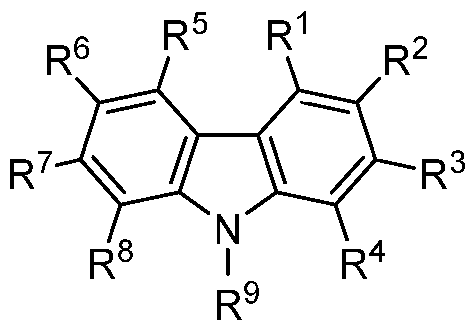
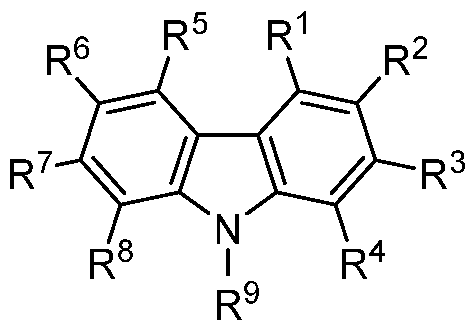
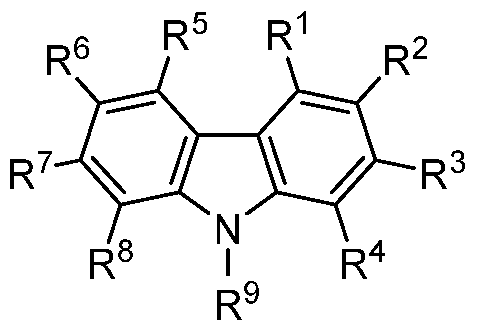
- a method of treating a solid tumor in a subject in need thereof comprising administering to the subject a pharmaceutical composition comprising a compound of Formula (I):
- R9 is Ci-9alkyl substituted with at least one quaternary amino group.
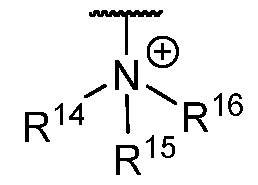
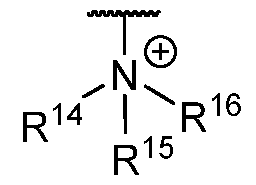
- the at least one quaternary amino group is of Formula (V):
- each of R 14 , R 15 , and R 16 is independently selected from Ci-9alkyl, C2-9alkenyl, and C2-9- alkynyl. In some embodiments, each of R 14 , R 15 , and R 16 is independently Ci-9alkyl.
- At least one of R 1 , R 2 , R 3 , and R 4 is halogen. In some embodiments, at least one of R 5 , R 6 , R 7 , and R 8 is halogen. In some embodiments, at least one of R 1 , R 2 , R 3 , and R 4 is halogen and at least one of R 5 , R 6 , R 7 , and R 8 is halogen. In some embodiments, the halogen is bromo.
- At least one of R 1 , R 2 , R 3 , and R 4 is OH. In some embodiments, at least one of R 5 , R 6 , R 7 , and R 8 is OH.
- At least one of R 1 , R 2 , R 3 , and R 4 is nitro and at least one of R 5 , R 6 , R 7 , and R 8 is nitro.
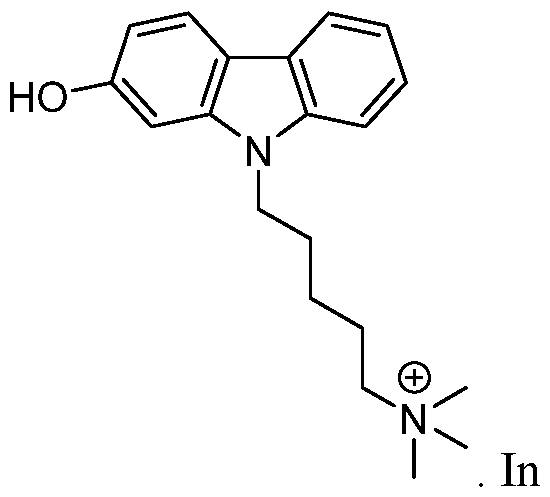
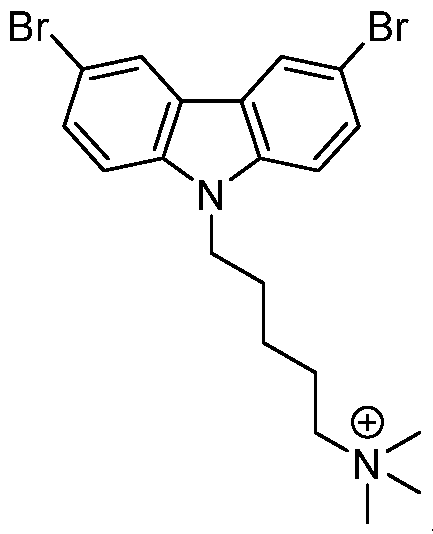
- the compound of Formula (I) is selected from: 3-(3,6-dibromo-9H-carbazol-9-yl)-N,N,N-trimethylpropan-l-aminium, 5-(9H-carbazol-9-yl)-N,N,N-trimethylpentan-l-aminium, 5-(2-hydroxy-9H-carbazol-9-yl)-N,N,N-trimethylpentan-l-aminium, and 5-(3,6-dibromo-9H-carbazol-9-yl)-N,N,N-trimethylpentan-l-aminium.
- the pharmaceutical composition comprises less than about 50% water by weight. In some embodiments, the pharmaceutical composition comprises less than about 30% water by weight. In some embodiments, the pharmaceutical composition comprises less than about 10% water by weight. In some embodiments, the pharmaceutical composition comprises from about 0% to about 30% water by weight.
- the pharmaceutical composition comprises at least about 0.1% by weight of the compound of Formula (I). In some embodiments, the pharmaceutical composition comprises between about 0.1% to about 10% by weight of the compound of Formula (I). In some embodiments, the pharmaceutical composition comprises between about 1% to about 5% by weight of the compound of Formula (I).
- the pharmaceutical composition further comprises at least one additional active agent.
- the additional active agent is a cytotoxic agent.
- the solid tumor is a liposarcoma.
- the subject has been diagnosed with lung cancer, breast cancer, colorectal cancer, prostate cancer, melanoma, stomach cancer, bladder cancer, endometrial cancer, kidney cancer, leukemia, liver cancer, lymphoma, pancreatic cancer, or thyroid cancer.
- the pharmaceutical composition is administered via parenteral administration. In some embodiments, the pharmaceutical composition is administered as an injection, a patch, a cream, a gel, or an ointment. In some embodiments, the pharmaceutical composition is administered as an injection. In some embodiments, the pharmaceutical composition is directly injected into the tumor.
- the method further comprises administering an additional pharmaceutical composition.
- the two pharmaceutical compositions are directly injected into the tumor with predetermined distances from one another.
- FIG. 1 shows the change in tumor volume over time for the various cohorts studied in Xenograft Study 1.
- FIG. 2 shows the change in body weight over time for the various cohorts studied in Xenograft Study 1.
- FIG. 3 shows the change in tumor volume over time for the various cohorts studied in Xenograft Study 2.
- FIG. 4 shows the change in body weight over time for the various cohorts studied in Xenograft Study 2.
- C x.y when used in conjunction with a chemical moiety, such as alkyl, alkenyl, or alkynyl is meant to include groups that contain from x to y carbons in the chain.
- Ci- 6 alkyl refers to substituted or unsubstituted saturated hydrocarbon groups, including straight-chain alkyl and branched-chain alkyl groups that contain from 1 to 6 carbons.
- - C x-y alkylene- refers to a substituted or unsubstituted alkyl ene chain with from x to y carbons in the alkylene chain.
- -Ci- 6 alkylene- may be selected from methylene, ethylene, propylene, butylene, pentyl ene, and hexylene, any one of which is optionally substituted.
- Alkyl refers to substituted or unsubstituted saturated hydrocarbon groups, including straight-chain alkyl and branched-chain alkyl groups.
- An alkyl group may contain from one to twelve carbon atoms (e.g ., Ci-12 alkyl), such as one to eight carbon atoms (Ci-x alkyl) or one to six carbon atoms (Ci- 6 alkyl).
- alkyl groups include methyl, ethyl, n-propyl, isopropyl, n- butyl, isobutyl, sec-butyl, /ert-butyl, pentyl, isopentyl, neopentyl, hexyl, septyl, octyl, nonyl, and decyl.
- An alkyl group is attached to the rest of the molecule by a single bond. Unless stated otherwise specifically in the specification, an alkyl group is optionally substituted by one or more substituents such as those substituents described herein.
- Haloalkyl refers to an alkyl group that is substituted by one or more halogens.
- exemplary haloalkyl groups include trifluoromethyl, difluoromethyl, trichloromethyl, 2,2,2-trifluoroethyl, 1,2-difluoroethyl, 3-bromo-2-fluoropropyl, and 1,2-dibromoethyl.
- alkenyl refers to substituted or unsubstituted hydrocarbon groups, including straight- chain or branched-chain alkenyl groups containing at least one double bond.
- An alkenyl group may contain from two to twelve carbon atoms (e.g., C2-12 alkenyl).
- Exemplary alkenyl groups include ethenyl (i.e., vinyl), prop-l-enyl, but-l-enyl, pent-l-enyl, penta-l,4-dienyl, and the like.
- an alkenyl group is optionally substituted by one or more substituents such as those substituents described herein.
- Alkynyl refers to substituted or unsubstituted hydrocarbon groups, including straight- chain or branched-chain alkynyl groups containing at least one triple bond.
- An alkynyl group may contain from two to twelve carbon atoms ( e.g ., C2-12 alkynyl).
- Exemplary alkynyl groups include ethynyl, propynyl, butynyl, pentynyl, hexynyl, and the like. Unless stated otherwise specifically in the specification, an alkynyl group is optionally substituted by one or more substituents such as those substituents described herein.
- Heteroalkyl refers to substituted or unsubstituted alkyl, alkenyl and alkynyl groups which respectively have one or more skeletal chain atoms selected from an atom other than carbon.
- Exemplary skeletal chain atoms selected from an atom other than carbon include, e.g., O, N, P, Si, S, or combinations thereof, wherein the nitrogen, phosphorus, and sulfur atoms may optionally be oxidized, and the nitrogen heteroatom may optionally be quatemized. If given, a numerical range refers to the chain length in total.
- a 3- to 8-membered heteroalkyl has a chain length of 3 to 8 atoms. Connection to the rest of the molecule may be through either a heteroatom or a carbon in the heteroalkyl, heteroalkenyl or heteroalkynyl chain. Unless stated otherwise specifically in the specification, a heteroalkyl, heteroalkenyl, or heteroalkynyl group is optionally substituted by one or more substituents such as those substituents described herein.
- Aryl refers to an aromatic ring wherein each of the atoms forming the ring is a carbon atom.
- Aryl groups can be optionally substituted.
- aryl groups include, but are not limited to, phenyl and naphthyl. In some embodiments, the aryl is phenyl.
- an aryl group can be a monoradical or a diradical (i.e., an arylene group).
- the term “aryl” or the prefix “ar-”(such as in “aralkyl”) is meant to include aryl radicals that are optionally substituted.
- Heteroaryl refers to a 3- to 12-membered aromatic ring that comprises at least one heteroatom wherein each heteroatom may be independently selected from N, O, and S.
- the heteroaryl ring may be selected from monocyclic or bicyclic and fused or bridged ring systems wherein at least one of the rings in the ring system is aromatic, i.e., it contains a cyclic, delocalized (4n+2) p-electron system in accordance with the Hiickel theory.
- the heteroatom(s) in the heteroaryl may be optionally oxidized.
- One or more nitrogen atoms, if present, are optionally quaternized.
- heteroaryl may be attached to the rest of the molecule through any atom of the heteroaryl, valence permitting, such as a carbon or nitrogen atom of the heteroaryl.
- heteroaryls include, but are not limited to, azepinyl, acridinyl, benzimidazolyl, benzindolyl, 1,3-benzodioxolyl, benzofuranyl, benzooxazolyl, benzo[d]thiazolyl, benzothiadiazolyl, benzo[£][l,4]dioxepinyl, benzo[b][l,4]oxazinyl, 1,4-benzodioxanyl, benzonaphthofuranyl, benzoxazolyl, benzodioxolyl, benzodioxinyl, benzopyranyl, benzopyranonyl, benzofuranyl, benzofuranonyl, benzothienyl (benz
- cycloalkyl refers to a monocyclic or polycyclic non-aromatic radical, wherein each of the atoms forming the ring ⁇ i.e. skeletal atoms) is a carbon atom.
- cycloalkyls are saturated or partially unsaturated.
- cycloalkyls are spirocyclic or bridged compounds.
- cycloalkyls are fused with an aromatic ring (in which case the cycloalkyl is bonded through a non-aromatic ring carbon atom).
- Cycloalkyl groups include groups having from 3 to 10 ring atoms.
- cycloalkyls include, but are not limited to, cycloalkyls having from three to ten carbon atoms, from three to eight carbon atoms, from three to six carbon atoms, or from three to five carbon atoms.
- Monocyclic cycloalkyl radicals include, for example, cyclopropyl, cyclobutyl, cyclopentyl, cyclohexyl, cycloheptyl, and cyclooctyl.
- Polycyclic radicals include, for example, adamantyl, 1,2-dihydronaphthalenyl, 1,4- dihydronaphthalenyl, tetrainyl, decalinyl, 3,4-dihydronaphthalenyl-l(2H)-one, spiro[2.2]pentyl, norbornyl and bicycle[l.l.l]pentyl. Unless otherwise stated specifically in the specification, a cycloalkyl group may be optionally substituted.
- heterocycloalkyl refers to a cycloalkyl group that includes at least one heteroatom selected from nitrogen, oxygen, and sulfur.
- the heterocycloalkyl radical may be a monocyclic, or bicyclic ring system, which may include fused (when fused with an aryl or a heteroaryl ring, the heterocycloalkyl is bonded through a non-aromatic ring atom) or bridged ring systems.
- the nitrogen, carbon or sulfur atoms in the heterocyclyl radical may be optionally oxidized.
- the nitrogen atom may be optionally quaternized.
- the heterocycloalkyl radical may be partially or fully saturated.
- heterocycloalkyl radicals include, but are not limited to, dioxolanyl, thienyl[l,3]dithianyl, tetrahydroquinolyl, tetrahydroisoquinolyl, decahydroquinolyl, decahydroisoquinolyl, imidazolinyl, imidazolidinyl, isothiazolidinyl, isoxazolidinyl, morpholinyl, octahydroindolyl, octahydroisoindolyl, 2-oxopiperazinyl, 2-oxopiperidinyl, 2-oxopyrrolidinyl, oxazolidinyl, piperidinyl, piperazinyl, 4-piperidonyl, pyrrolidinyl, pyrazolidinyl, quinuclidinyl, thiazolidinyl, tetrahydrofuryl, trithianyl,
- heterocycloalkyl also includes all ring forms of carbohydrates, including but not limited to monosaccharides, disaccharides and oligosaccharides. Unless otherwise noted, heterocycloalkyls have from 2 to 12 carbons in the ring.
- the number of carbon atoms in the heterocycloalkyl is not the same as the total number of atoms (including the heteroatoms) that make up the heterocycloalkyl ( i.e . skeletal atoms of the heterocycloalkyl ring). Unless stated otherwise specifically in the specification, a heterocycloalkyl group may be optionally substituted.
- substituted refers to moieties having substituents replacing a hydrogen on one or more carbons or heteroatoms of the structure. It will be understood that “substitution” or “substituted with” includes the implicit proviso that such substitution is in accordance with permitted valence of the substituted atom and the substituent, and that the substitution results in a stable compound, e.g ., which does not spontaneously undergo transformation such as by rearrangement, cyclization, elimination, etc. As used herein, the term “substituted” is contemplated to include all permissible substituents of organic compounds.
- the permissible substituents include acyclic and cyclic, branched and unbranched, carbocyclic and heterocyclic, aromatic and non-aromatic substituents of organic compounds.
- the permissible substituents can be one or more and the same or different for appropriate organic compounds.
- the heteroatoms such as nitrogen may have hydrogen substituents and/or any permissible substituents of organic compounds described herein which satisfy the valences of the heteroatoms.
- Substituents can include any substituents described herein, for example, a halogen, a hydroxyl, a carbonyl (such as a carboxyl, an alkoxycarbonyl, a formyl, or an acyl), a thiocarbonyl (such as a thioester, a thioacetate, or a thioformate), an alkoxyl, a phosphoryl, a phosphate, a phosphonate, a phosphinate, an amino, an amido, an amidine, an imine, a cyano, a nitro, an azido, a sulfhydryl, an alkylthio, a sulfate, a sulfonate, a sulfamoyl, a sulfonamido, a sulfonyl, a heterocyclyl, an aralkyl, a carbocycle, a hetero
- substituent groups are specified by their conventional chemical formulae, written from left to right, they equally encompass the chemically identical substituents that would result from writing the structure from right to left, e.g ., -CH2O- is equivalent to -OCH2-.
- “Optional” or “optionally” means that the subsequently described event of circumstances may or may not occur, and that the description includes instances where the event or circumstance occurs and instances in which it does not.
- “optionally substituted aryl” means that the aryl group may or may not be substituted and that the description includes both substituted aryl groups and aryl groups having no substitution.
- Compounds of the present disclosure also include crystalline and amorphous forms of those compounds, pharmaceutically acceptable salts, and active metabolites of these compounds having the same type of activity, including, for example, polymorphs, pseudopolymorphs, solvates, hydrates, unsolvated polymorphs (including anhydrates), conformational polymorphs, and amorphous forms of the compounds, as well as mixtures thereof.
- the compounds described herein may exhibit their natural isotopic abundance, or one or more of the atoms may be artificially enriched in a particular isotope having the same atomic number, but an atomic mass or mass number different from the atomic mass or mass number predominantly found in nature. All isotopic variations of the compounds of the present disclosure, whether radioactive or not, are encompassed within the scope of the present disclosure.
- hydrogen has three naturally occurring isotopes, denoted 3 ⁇ 4 (protium), 2 H (deuterium), and 3 H (tritium). Protium is the most abundant isotope of hydrogen in nature.
- Enriching for deuterium may afford certain therapeutic advantages, such as increased in vivo half-life and/or exposure, or may provide a compound useful for investigating in vivo routes of drug elimination and metabolism.
- Isotopically-enriched compounds may be prepared by conventional techniques well known to those skilled in the art.
- “Isomers” are different compounds that have the same molecular formula. “Stereoisomers” are isomers that differ only in the way the atoms are arranged in space. “Enantiomers” are a pair of stereoisomers that are non-superimposable mirror images of each other. A 1 : 1 mixture of a pair of enantiomers is a “racemic” mixture. The term “( ⁇ )” is used to designate a racemic mixture where appropriate. “Diastereoisomers” or “diastereomers” are stereoisomers that have at least two asymmetric atoms but are not mirror images of each other. The absolute stereochemistry is specified according to the Cahn-Ingold-Prelog R-S system.
- stereochemistry at each chiral carbon can be specified by either R or S.
- Resolved compounds whose absolute configuration is unknown can be designated (+) or (-) depending on the direction (dextro- or levorotatory) in which they rotate plane polarized light at the wavelength of the sodium D line.
- Certain compounds described herein contain one or more asymmetric centers and can thus give rise to enantiomers, diastereomers, and other stereoisomeric forms, the asymmetric centers of which can be defined, in terms of absolute stereochemistry, as (R)- or (S)-.
- Optically active (R)- and (S)-isomers can be prepared using chiral synthons or chiral reagents or resolved using conventional techniques.
- the optical activity of a compound can be analyzed via any suitable method, including but not limited to chiral chromatography and polarimetry, and the degree of predominance of one stereoisomer over the other isomer can be determined.
- Chemical entities having carbon-carbon double bonds or carbon-nitrogen double bonds may exist in Z- or E- form (or cis- or trans- form). Furthermore, some chemical entities may exist in various tautomeric forms. Unless otherwise specified, chemical entities described herein are intended to include all Z-, E- and tautomeric forms as well.
- Isolation and purification of the chemical entities and intermediates described herein can be effected, if desired, by any suitable separation or purification procedure such as, for example, filtration, extraction, crystallization, column chromatography, thin-layer chromatography or thick- layer chromatography, or a combination of these procedures. Specific illustrations of suitable separation and isolation procedures can be had by reference to the examples herein below.
- certain small molecules described herein include, but are not limited to, when possible, their isomers, such as enantiomers and diastereomers, mixtures of enantiomers, including racemates, mixtures of diastereomers, and other mixtures thereof, to the extent they can be made by one of ordinary skill in the art by routine experimentation.
- the single enantiomers or diastereomers, i.e., optically active forms can be obtained by asymmetric synthesis or by resolution of the racemates or mixtures of diastereomers.
- Racemates or mixtures of diastereomers can be accomplished, for example, by conventional methods such as crystallization in the presence of a resolving agent, or chromatography, using, for example, a chiral high-pressure liquid chromatography (HPLC) column.
- HPLC high-pressure liquid chromatography
- a mixture of two enantiomers enriched in one of the two can be purified to provide further optically enriched form of the major enantiomer by recrystallization and/or trituration.
- certain small molecules include Z- and in forms (or cis- and trans- forms) of certain small molecules with carbon-carbon double bonds or carbon-nitrogen double bonds.
- the term “certain small molecule” is intended to include all tautomeric forms of the certain small molecule.
- salt or “pharmaceutically acceptable salt” refers to salts derived from a variety of organic and inorganic counter ions well known in the art.
- Pharmaceutically acceptable acid addition salts can be formed with inorganic acids and organic acids.
- Inorganic acids from which salts can be derived include, for example, hydrochloric acid, hydrobromic acid, sulfuric acid, nitric acid, phosphoric acid, and the like.
- Organic acids from which salts can be derived include, for example, acetic acid, propionic acid, glycolic acid, pyruvic acid, oxalic acid, maleic acid, malonic acid, succinic acid, fumaric acid, tartaric acid, citric acid, benzoic acid, cinnamic acid, mandelic acid, methanesulfonic acid, ethanesulfonic acid, p-toluenesulfonic acid, salicylic acid, and the like.
- Pharmaceutically acceptable base addition salts can be formed with inorganic and organic bases.
- Inorganic bases from which salts can be derived include, for example, sodium, potassium, lithium, ammonium, calcium, magnesium, iron, zinc, copper, manganese, aluminum, and the like.
- Organic bases from which salts can be derived include, for example, primary, secondary, and tertiary amines, substituted amines including naturally occurring substituted amines, cyclic amines, basic ion exchange resins, and the like, specifically such as isopropylamine, trimethylamine, diethylamine, tri ethyl amine, tripropylamine, and ethanolamine.
- the pharmaceutically acceptable base addition salt is chosen from ammonium, potassium, sodium, calcium, and magnesium salts.
- phrases “pharmaceutically acceptable excipient” or “pharmaceutically acceptable carrier” as used herein means a pharmaceutically acceptable material, composition or vehicle, such as a liquid or solid filler, diluent, excipient, solvent or encapsulating material. Each carrier must be “acceptable” in the sense of being compatible with the other ingredients of the formulation and not injurious to the patient.
- materials which can serve as pharmaceutically acceptable carriers include: (1) sugars, such as lactose, glucose and sucrose; (2) starches, such as com starch and potato starch; (3) cellulose, and its derivatives, such as sodium carboxymethyl cellulose, ethyl cellulose and cellulose acetate; (4) powdered tragacanth; (5) malt; (6) gelatin; (7) talc; (8) excipients, such as cocoa butter and suppository waxes; (9) oils, such as peanut oil, cottonseed oil, safflower oil, sesame oil, olive oil, corn oil and soybean oil; (10) glycols, such as propylene glycol; (11) polyols, such as glycerin, sorbitol, mannitol and polyethylene glycol; (12) esters, such as ethyl oleate and ethyl laurate; (13) agar; (14) buffering agents, such as magnesium hydroxide and aluminum hydroxide
- the term “effective amount” or “therapeutically effective amount” refers to that amount of a compound described herein that is sufficient to affect the intended application, including but not limited to disease treatment, as defined below.
- the therapeutically effective amount may vary depending upon the intended treatment application ⁇ in vivo), or the subject and disease condition being treated, e.g., the weight and age of the subject, the severity of the disease condition, the manner of administration and the like, which can readily be determined by one of ordinary skill in the art.
- the term also applies to a dose that will induce a particular response in target cells, e.g, reduction of platelet adhesion and/or cell migration.
- the specific dose will vary depending on the particular compounds chosen, the dosing regimen to be followed, whether it is administered in combination with other compounds, timing of administration, the tissue to which it is administered, and the physical delivery system in which it is carried.
- treatment refers to an approach for obtaining beneficial or desired results with respect to a disease, disorder, or medical condition including but not limited to a therapeutic benefit and/or a prophylactic benefit.
- a therapeutic benefit can include, for example, the eradication or amelioration of the underlying disorder being treated.
- a therapeutic benefit can include, for example, the eradication or amelioration of one or more of the physiological symptoms associated with the underlying disorder such that an improvement is observed in the subject, notwithstanding that the subject may still be afflicted with the underlying disorder.
- the compositions are administered to a subject at risk of developing a particular disease, or to a subject reporting one or more of the physiological symptoms of a disease, even though a diagnosis of this disease may not have been made.
- a prophylactic effect includes delaying or eliminating the appearance of a disease or condition, delaying or eliminating the onset of symptoms of a disease or condition, slowing, halting, or reversing the progression of a disease or condition, or any combination thereof.
- solid tumor refers to any abnormal mass of tissue that does not contain cysts or liquid areas. Solid tumors may be benign or malignant. Different types of solid tumors are named for the type of cells of which they’re comprised. Examples of solid tumors include sarcomas (such as, for example, liposarcomas), carcinomas, and lymphomas.
- each of R 1 , R 2 , R 3 , R 4 , R 5 , R 6 , R 7 , and R 8 is independently selected from H, halogen, -CN, -N0 2 , -OR 10 , and -NR U R 12 .
- R 1 , R 2 , R 3 , and R 4 is halogen.
- R 1 is halogen.
- R 2 is halogen.
- R 3 is halogen.
- R 4 is halogen.
- at least one of R 5 , R 6 , R 7 , and R 8 is halogen.
- R 5 is halogen.
- R 6 is halogen.
- R 7 is halogen.
- R 8 is halogen.
- At least one of R 1 , R 2 , R 3 , and R 4 is halogen and at least one of R 5 , R 6 , R 7 , and R 8 is halogen.
- R 1 is halogen and R 5 is halogen.
- R 1 is halogen and R 6 is halogen.
- R 1 is halogen and R 7 is halogen.
- R 1 is halogen and R 8 is halogen.
- R 2 is halogen and R 5 is halogen.
- R 2 is halogen and R 6 is halogen.
- R 2 is halogen and R 7 is halogen.
- R 2 is halogen and R 8 is halogen.
- R 3 is halogen and R 5 is halogen.
- R 3 is halogen and R 6 is halogen.
- R 3 is halogen and R 7 is halogen.
- R 3 is halogen and R 8 is halogen.
- R 4 is halogen and R 5 is halogen.
- R 4 is halogen and R 6 is halogen.
- R 4 is halogen and R 7 is halogen.
- R 4 is halogen and R 8 is halogen.
- the halogen is bromo.
- the halogen is chloro.
- the halogen is fluoro.
- R 1 , R 2 , R 3 , and R 4 is OH.
- R 1 is OH.
- R 2 is OH.
- R 3 is OH.
- R 4 is OH.
- at least one of R 5 , R 6 , R 7 , and R 8 is OH.
- R 5 is OH.
- R 6 is OH.
- R 7 is OH.
- R 8 is OH.
- R 1 , R 2 , R 3 , and R 4 is nitro and at least one of R 5 , R 6 , R 7 , and R 8 is nitro.
- R 1 is nitro and R 5 is nitro.
- R 1 is nitro and R 6 is nitro.
- R 1 is nitro and R 7 is nitro.
- R 1 is nitro and R 8 is nitro.
- R 2 is halogen and R 5 is nitro.
- R 2 is nitro and R 6 is nitro.
- R 2 is halogen and R 7 is nitro.
- R 2 is nitro and R 8 is nitro.
- R 3 is halogen and R 5 is nitro.
- R 3 is nitro and R 6 is nitro.
- R 3 is halogen and R 7 is nitro.
- R 3 is nitro and R 8 is nitro.
- R 4 is halogen and R 5 is nitro.
- R 4 is nitro and R 6 is nitro.
- R 4 is halogen and R 7 is nitro.
- R 4 is nitro and R 8 is nitro.
- R 9 is selected from Ci-9alkyl, C2-9alkenyl, C2-9alkynyl, and 3- to 10- membered heterocycloalkyl; wherein R 9 is substituted with at least one quaternary amino group or phosphonium group. In some embodiments, R 9 is C2-9alkenyl substituted with at least one phosphonium group. In some embodiments, R 9 is C2-9alkenyl substituted with at least one quaternary amino group. In some embodiments, R 9 is C2-9alkynyl substituted with at least one phosphonium group. In some embodiments, R 9 is C2-9alkynyl substituted with at least one quaternary amino group.
- R 9 is a 3- to 10-membered heterocycloalkyl.
- R 9 is piperazinyl.
- R 9 is pyridinyl.
- R 9 is piperidinyl.
- R 9 is morpholinyl.
- R 9 is thiomorpholinyl.
- R 9 is Ci- 9 alkyl substituted with at least one phosphonium group.
- R 9 is Ci- 9 alkyl substituted with at least one quaternary amino group.
- R 9 is propyl substituted with at least one quaternary amino group.
- R 9 is pentyl substituted with at least one quaternary amino group. [0058]
- the at least one quaternary amino group is of Formula (V):
- each of R 14 , R 15 , and R 16 is independently selected from Ci- 9 alkyl, C 2-9 alkenyl, and C 2-9 - alkynyl. In some embodiments, each of R 14 , R 15 , and R 16 is independently C 2-9 alkenyl. In some embodiments, each of R 14 , R 15 , and R 16 is independently C 2-9 alkynyl. In some embodiments, each of R 14 , R 15 , and R 16 is independently Ci- 9 alkyl. In some embodiments, each of R 14 , R 15 , and R 16 is methyl.
- the at least one phosphonium group is of Formula (VI):
- each of R 17 , R 18 , and R 19 is independently selected from Ci- 9 alkyl, C 2-9 alkenyl, and C 2-9 - alkynyl. In some embodiments, each of R 17 , R 18 , and R 19 is independently C 2-9 alkenyl. In some embodiments, each of R 17 , R 18 , and R 19 is independently C 2-9 alkynyl. In some embodiments, each of R 17 , R 18 , and R 19 is independently Ci- 9 alkyl. In some embodiments, each of R 17 , R 18 , and R 19 is methyl.
- each R 10 is independently selected from H, Ci-salkyl, CVsalkenyl, C 2 - salkynyl, Ci-sheteroalkyl, Ci-shaloalkyl, and C 3-6 cycloalkyl. In some embodiments, each R 10 is independently selected from H, Ci-salkyl, Ci-sheteroalkyl, Ci-shaloalkyl, and C 3-6 cycloalkyl. In some embodiments, each R 10 is independently selected from H, Ci-salkyl, and C 3-6 cycloalkyl. In some embodiments, each R 10 is H. In some embodiments, each R 10 is independently Ci-salkyl.
- each R 10 is independently C 2-5 alkenyl. In some embodiments, each R 10 is independently C 2 -salkynyl. In some embodiments, each R 10 is independently Ci-sheteroalkyl. In some embodiments, each R 10 is independently Ci-shaloalkyl. In some embodiments, each R 10 is independently C 3-6 cycloalkyl.
- each R 11 and R 12 is independently selected from H, Ci-salkyl, C2-5- alkenyl, Ci alkynyl, Ci-sheteroalkyl, Ci-shaloalkyl, and C3-6cycloalkyl; or an R 12 and an R 13 may be taken together along with the nitrogen atom to which they are attached to form a 3- to 10- membered heterocycloalkyl.
- each R 11 and R 12 is independently selected from H, Ci-salkyl, Ci-salkenyl, Ci alkynyl, Ci-sheteroalkyl, Ci-shaloalkyl, and C3-6cycloalkyl.
- each R 11 and R 12 is independently selected from H, Ci-salkyl, C 1-5 heteroalkyl, Ci-5haloalkyl, and C3-6cycloalkyl. In some embodiments, each R 11 and R 12 is independently selected from H, Ci-salkyl, and C3-6cycloalkyl. In some embodiments, each R 11 and R 12 is H. In some embodiments, each R 11 and R 12 is independently Ci-salkyl. In some embodiments, each R 11 and R 12 is independently C2-5alkenyl. In some embodiments, each R 11 and R 12 is independently C2-5alkynyl. In some embodiments, each R 11 and R 12 is independently Ci-sheteroalkyl.
- each R 11 and R 12 is independently Ci-shaloalkyl. In some embodiments, each R 11 and R 12 is independently C3-6cycloalkyl. In some embodiments, an R 12 and an R 13 are taken together along with the nitrogen atom to which they are attached to form a 3- to 10-membered heterocycloalkyl. [0062] In some embodiments, each R 13 is independently selected from H, Ci-salkyl, C2-salkenyl, C2- salkynyl, Ci-sheteroalkyl, Ci-shaloalkyl, and C3-6cycloalkyl.
- each R 13 is independently selected from H, Ci-salkyl, Ci-sheteroalkyl, Ci-shaloalkyl, and C3-6cycloalkyl. In some embodiments, each R 13 is independently selected from H, Ci-salkyl, and C3-6cycloalkyl. In some embodiments, each R 13 is H. In some embodiments, each R 13 is independently Ci-salkyl. In some embodiments, each R 13 is independently C2-salkenyl. In some embodiments, each R 13 is independently C2-salkynyl. In some embodiments, each R 13 is independently Ci-sheteroalkyl. In some embodiments, each R 13 is independently Ci-shaloalkyl. In some embodiments, each R 13 is independently C3-6cycloalkyl.
- the compound of Formula (I) is selected from: 3-(3,6-dibromo-9H-carbazol-9-yl)-N,N,N-trimethylpropan-l-aminium, 5-(9H-carbazol-9-yl)-N,N,N-trimethylpentan-l-aminium, 5-(2-hydroxy-9H-carbazol-9-yl)-N,N,N-trimethylpentan-l-aminium, and 5-(3,6-dibromo-9H-carbazol-9-yl)-N,N,N-trimethylpentan-l-aminium.
- the compound of Formula (I) is 3-(3,6-dibromo-9H-carbazol-9-yl)- N,N,N-trimethylpropan-l-aminium. In some embodiments, the compound of Formula (I) is 5-(9H- carbazol-9-yl)-N,N,N-trimethylpentan-l-aminium. In some embodiments, the compound of Formula (I) is 5-(2-hydroxy-9H-carbazol-9-yl)-N,N,N-trimethylpentan-l-aminium.
- the compound of Formula (I) is 5-(3,6-dibromo-9H-carbazol-9-yl)-N,N,N- trimethylpentan- 1 -aminium .
- the compound of Formula (I) is represented by the structure: , d by the structure: some embodiments, the compound of Formula (I) is represented by the structure:
- a composition of the present disclosure may be formulated in any suitable pharmaceutical formulation.
- a pharmaceutical composition of the present disclosure typically contains an active ingredient (e.g ., a compound of Formula (I), or a pharmaceutically acceptable salt and/or coordination complex thereof), and one or more pharmaceutically acceptable excipients or carriers, including but not limited to: inert solid diluents and fillers, diluents, sterile aqueous solution and various organic solvents, permeation enhancers, solubilizers, and adjuvants.
- a composition of the present disclosure may be formulated in any suitable pharmaceutical formulation.
- Pharmaceutical compositions may be provided in any suitable form, which may depend on the route of administration.
- the pharmaceutical composition disclosed herein can be formulated in dosage form for administration to a subject.
- the pharmaceutical composition is formulated for parenteral, topical, transdermal, buccal, sublingual, subcutaneous, intramuscular, intravenous, intratumoral, and/or intraperitoneal administration.
- the pharmaceutical composition can be formulated as a unit dosage.
- an effective dosage may be in the range of about 0.001 to about 100 mg per kg body weight per day, in single or divided doses. In some instances, dosage levels below the lower limit of the aforesaid range may be more than adequate, while in other cases still larger doses may be employed without causing any harmful side effect, e.g ., by dividing such larger doses into several small doses for administration throughout the day. In some embodiments, an effective dosage may be provided in pulsed dosing (z.e., administration of the compound in consecutive days, followed by consecutive days of rest from administration).
- the composition is provided in one or more unit doses.
- the composition can be administered in 1, 2, 3, 4, 5, 6, 7, 14, 30, 60, or more doses.
- Such amount can be administered each day, for example in individual doses administered once, twice, or three or more times a day.
- dosages stated herein on a per day basis should not be construed to require administration of the daily dose each and every day.
- two or more daily dosage amounts can be administered at a lower frequency, e.g. , as a depot injection administered every second day to once a month or even longer.
- a pharmaceutical composition comprising a compound of Formula (I) can be administered once a day, for example in the morning, in the evening or during the day.
- the unit doses can be administered simultaneously or sequentially.
- the composition can be administered for an extended treatment period.
- the treatment period can be at least about one month, for example at least about 3 months, at least about 6 months or at least about 1 year. In some cases, administration can continue for substantially the remainder of the life of the subject.
- the pharmaceutical composition comprising the compound of Formula (I) can be administered as part of a therapeutic regimen that comprises administering one or more second agents (e.g. 1, 2, 3, 4, 5, or more second agents), either simultaneously or sequentially with the pharmaceutical composition comprising the compound of Formula (I).
- the pharmaceutical composition comprising the compound of Formula (I) may be administered before or after the one or more second agents.
- the pharmaceutical composition comprising the compound of Formula (I) and the one or more second agents may be administered by the same route (e.g . injections to the same location), by a different route (e.g. a tablet taken orally while receiving an intravenous infusion), or as part of the same combination (e.g. a solution comprising the pharmaceutical composition comprising the compound of Formula (I) and one or more second agents).
- a combination treatment according to the invention may be effective over a wide dosage range.
- dosages from 0.01 to 1000 mg, from 0.5 to 100 mg, from 1 to 50 mg per day, and from 5 to 40 mg per day are examples of dosages that may be used.
- the exact dosage will depend upon the agent selected, the route of administration, the form in which the compound is administered, the subject to be treated, the body weight of the subject to be treated, and the preference and experience of the attending physician.
- the pharmaceutical composition comprises one or more surfactants.
- surfactants which can be used to form pharmaceutical composition and dosage forms of the disclosure include, but are not limited to, hydrophilic surfactants, lipophilic surfactants, and mixtures thereof. That is, a mixture of hydrophilic surfactants may be employed, a mixture of lipophilic surfactants may be employed, or a mixture of at least one hydrophilic surfactant and at least one lipophilic surfactant may be employed.
- a suitable hydrophilic surfactant may generally have an HLB value of at least 10, while suitable lipophilic surfactants may generally have an HLB value of or less than about 10.
- An empirical parameter used to characterize the relative hydrophilicity and hydrophobicity of non ionic amphiphilic compounds is the hydrophilic-lipophilic balance (“HLB” value).
- HLB hydrophilic-lipophilic balance
- Surfactants with lower HLB values are more lipophilic or hydrophobic, and have greater solubility in oils, while surfactants with higher HLB values are more hydrophilic, and have greater solubility in aqueous solutions.
- Hydrophilic surfactants are generally considered to be those compounds having an HLB value greater than about 10, as well as anionic, cationic, or zwitterionic compounds for which the HLB scale is not generally applicable.
- lipophilic (i.e., hydrophobic) surfactants are compounds having an HLB value equal to or less than about 10.
- HLB value of a surfactant is merely a rough guide generally used to enable formulation of industrial, pharmaceutical and cosmetic emulsions.
- Hydrophilic surfactants may be either ionic or non-ionic. Suitable ionic surfactants include, but are not limited to, alkylammonium salts; fusidic acid salts; fatty acid derivatives of amino acids, oligopeptides, and polypeptides; glyceride derivatives of amino acids, oligopeptides, and polypeptides; lecithins and hydrogenated lecithins; lysolecithins and hydrogenated lysolecithins; phospholipids and derivatives thereof; lysophospholipids and derivatives thereof; carnitine fatty acid ester salts; salts of alkylsulfates; fatty acid salts; sodium docusate; acylactylates; mono- and di- acetylated tartaric acid esters of mono- and di-glycerides; succinylated mono- and di-glycerides; citric acid esters of mono- and di-glycerides
- ionic surfactants include, by way of example: lecithins, lysolecithin, phospholipids, lysophospholipids and derivatives thereof; carnitine fatty acid ester salts; salts of alkylsulfates; fatty acid salts; sodium docusate; acylactylates; mono- and di-acetylated tartaric acid esters of mono- and di-glycerides; succinylated mono- and di-glycerides; citric acid esters of mono- and di-glycerides; and mixtures thereof.
- Ionic surfactants may be the ionized forms of lecithin, lysolecithin, phosphatidylcholine, phosphatidylethanolamine, phosphatidylglycerol, phosphatidic acid, phosphatidylserine, lysophosphatidyl choline, lysophosphatidylethanolamine, lysophosphatidylglycerol, lysophosphatidic acid, lysophosphatidylserine, PEG-phosphatidylethanolamine, PVP- phosphatidylethanolamine, lactylic esters of fatty acids, stearoyl-2-lactylate, stearoyl lactylate, succinylated monoglycerides, mono/diacetylated tartaric acid esters of mono/diglycerides, citric acid esters of mono/diglycerides, cholylsarcosine, caproate, capry
- Hydrophilic non-ionic surfactants may include, but not limited to, alkylglucosides; alkylmaltosides; alkylthioglucosides; lauryl macrogolglycerides; polyoxyalkylene alkyl ethers such as polyethylene glycol alkyl ethers; polyoxyalkylene alkylphenols such as polyethylene glycol alkyl phenols; polyoxyalkylene alkyl phenol fatty acid esters such as polyethylene glycol fatty acids monoesters and polyethylene glycol fatty acids diesters; polyethylene glycol glycerol fatty acid esters; polyglycerol fatty acid esters; polyoxyalkylene sorbitan fatty acid esters such as polyethylene glycol sorbitan fatty acid esters; hydrophilic transesterification products of a polyol with at least one member of the group of glycerides, vegetable oils, hydrogenated vegetable oils, fatty acids, and sterols; polyoxyethylene sterols,
- hydrophilic-non-ionic surfactants include, without limitation, PEG- 10 laurate, PEG- 12 laurate, PEG-20 laurate, PEG-32 laurate, PEG-32 dilaurate, PEG-12 oleate, PEG-15 oleate, PEG-20 oleate, PEG-20 dioleate, PEG-32 oleate, PEG-200 oleate, PEG-400 oleate, PEG-15 stearate, PEG-32 distearate, PEG-40 stearate, PEG-100 stearate, PEG-20 dilaurate, PEG-25 glyceryl trioleate, PEG-32 dioleate, PEG-20 glyceryl laurate, PEG-30 glyceryl laurate, PEG-20 glyceryl stearate, PEG-20 glyceryl oleate, PEG-30 glyceryl oleate, PEG-30 glyceryl o
- Suitable lipophilic surfactants include, by way of example only: fatty alcohols; glycerol fatty acid esters; acetylated glycerol fatty acid esters; lower alcohol fatty acids esters; propylene glycol fatty acid esters; sorbitan fatty acid esters; polyethylene glycol sorbitan fatty acid esters; sterols and sterol derivatives; polyoxyethylated sterols and sterol derivatives; polyethylene glycol alkyl ethers; sugar esters; sugar ethers; lactic acid derivatives of mono- and di-glycerides; hydrophobic transesterification products of a polyol with at least one member of the group of glycerides, vegetable oils, hydrogenated vegetable oils, fatty acids and sterols; oil-soluble vitamins/vitamin derivatives; and mixtures thereof.
- preferred lipophilic surfactants include glycerol fatty acid esters, propylene glycol fatty acid esters, and mixtures thereof, or are hydrophobic transesterification products of a polyol with at least one member of the group of vegetable oils, hydrogenated vegetable oils, and triglycerides.
- the composition may include a solubilizer to ensure good solubilization and/or dissolution of the compound of the present disclosure and to minimize precipitation of the compound of the present disclosure. This can be especially important for injection.
- a solubilizer may also be added to increase the solubility of the hydrophilic drug and/or other components, such as surfactants, or to maintain the composition as a stable or homogeneous solution or dispersion.
- solubilizers include, but are not limited to, the following: alcohols and polyols, such as ethanol, isopropanol, butanol, benzyl alcohol, ethylene glycol, propylene glycol, butanediols and isomers thereof, glycerol, pentaerythritol, sorbitol, mannitol, transcutol, dimethyl isosorbide, polyethylene glycol, polypropylene glycol, polyvinylalcohol, hydroxypropyl methylcellulose and other cellulose derivatives, cyclodextrins and cyclodextrin derivatives; ethers of polyethylene glycols having an average molecular weight of about 200 to about 6000, such as tetrahydrofurfuryl alcohol PEG ether (glycofurol) or methoxy PE; amides and other nitrogen- containing compounds such as 2-pyrrolidone, 2-piperidone, e-
- solubilizers may also be used. Examples include, but not limited to, triacetin, tri ethyl citrate, ethyl oleate, ethyl caprylate, dimethylacetamide, N-methylpyrrolidone, N- hydroxyethylpyrrolidone, polyvinylpyrrolidone, hydroxypropyl methylcellulose, hydroxypropyl cyclodextrins, ethanol, polyethylene glycol 200-100, glycofurol, transcutol, propylene glycol, and dimethyl isosorbide. Particularly preferred solubilizers include sorbitol, glycerol, triacetin, ethyl alcohol, PEG-400, glycofurol and propylene glycol.
- the amount of solubilizer that can be included is not particularly limited.
- the amount of a given solubilizer may be limited to a bioacceptable amount, which may be readily determined by one of skill in the art. In some circumstances, it may be advantageous to include amounts of solubilizers far in excess of bioacceptable amounts, for example to maximize the concentration of the drug, with excess solubilizer removed prior to providing the composition to a patient using conventional techniques, such as distillation or evaporation.
- the solubilizer can be in a weight ratio of 10%, 25%, 50%, 100%, or up to about 200% by weight, based on the combined weight of the drug, and other excipients. If desired, very small amounts of solubilizer may also be used, such as 5%, 2%, 1% or even less. Typically, the solubilizer may be present in an amount of about 1% to about 100%, more typically about 5% to about 25% by weight.
- the composition can further include one or more pharmaceutically acceptable additives and excipients.
- additives and excipients include, without limitation, detackifiers, anti-foaming agents, buffering agents, polymers, antioxidants, preservatives, chelating agents, viscomodulators, tonicifiers, flavorants, colorants, odorants, opacifiers, suspending agents, binders, fillers, plasticizers, lubricants, and mixtures thereof.
- an acid or a base may be incorporated into the composition to facilitate processing, to enhance stability, or for other reasons.
- pharmaceutically acceptable bases include amino acids, amino acid esters, ammonium hydroxide, potassium hydroxide, sodium hydroxide, sodium hydrogen carbonate, aluminum hydroxide, calcium carbonate, magnesium hydroxide, magnesium aluminum silicate, synthetic aluminum silicate, synthetic hydrocalcite, magnesium aluminum hydroxide, diisopropylethylamine, ethanolamine, ethylenediamine, triethanolamine, triethylamine, triisopropanolamine, trimethylamine, tris(hydroxymethyl)aminom ethane (TRIS) and the like.
- bases that are salts of a pharmaceutically acceptable acid, such as acetic acid, acrylic acid, adipic acid, alginic acid, alkanesulfonic acid, amino acids, ascorbic acid, benzoic acid, boric acid, butyric acid, carbonic acid, citric acid, fatty acids, formic acid, fumaric acid, gluconic acid, hydroquinosulfonic acid, isoascorbic acid, lactic acid, maleic acid, oxalic acid, para-bromophenylsulfonic acid, propionic acid, p-toluenesulfonic acid, salicylic acid, stearic acid, succinic acid, tannic acid, tartaric acid, thioglycolic acid, toluenesulfonic acid, uric acid, and the like.
- a pharmaceutically acceptable acid such as acetic acid, acrylic acid, adipic acid, alginic acid, alkanesulfonic acid, amino acids
- Salts of polyprotic acids such as sodium phosphate, disodium hydrogen phosphate, and sodium dihydrogen phosphate can also be used.
- the cation can be any convenient and pharmaceutically acceptable cation, such as ammonium, alkali metals, alkaline earth metals, and the like.
- Example may include, but not limited to, sodium, potassium, lithium, magnesium, calcium and ammonium.
- Suitable acids are pharmaceutically acceptable organic or inorganic acids.
- suitable inorganic acids include hydrochloric acid, hydrobromic acid, hydriodic acid, sulfuric acid, nitric acid, boric acid, phosphoric acid, and the like.
- suitable organic acids include acetic acid, acrylic acid, adipic acid, alginic acid, alkanesulfonic acids, amino acids, ascorbic acid, benzoic acid, boric acid, butyric acid, carbonic acid, citric acid, fatty acids, formic acid, fumaric acid, gluconic acid, hydroquinosulfonic acid, isoascorbic acid, lactic acid, maleic acid, methanesulfonic acid, oxalic acid, para-bromophenylsulfonic acid, propionic acid, p- toluenesulfonic acid, salicylic acid, stearic acid, succinic acid, tannic acid, tartaric acid, thioglycolic acid, toluenesulfonic acid, uric acid and the like.
- composition comprising a compound of Formula (I):
- the pharmaceutical composition comprises less than about 50% water by weight. In some embodiments, the pharmaceutical composition comprises less than about 30% water by weight. In some embodiments, the pharmaceutical composition comprises less than about 10% water by weight. In some embodiments, the pharmaceutical composition comprises from about 0% to about 30% water by weight. In some embodiments, the pharmaceutical composition comprises from about 10% to about 30% water by weight. In some embodiments, the pharmaceutical composition comprises from about 15% to about 30% water by weight. In some embodiments, the pharmaceutical composition comprises from about 15% to about 25% water by weight. In some embodiments, the pharmaceutical composition comprises from about 20% to about 30% water by weight. In some embodiments, the pharmaceutical composition comprises from about 23% to about 27% water by weight.
- the pharmaceutical composition comprises from about 24% to about 26% water by weight. In some embodiments, the pharmaceutical composition comprises about 0% water by weight. In some embodiments, the pharmaceutical composition comprises about 1% water by weight. In some embodiments, the pharmaceutical composition comprises about 2% water by weight. In some embodiments, the pharmaceutical composition comprises about 3% water by weight. In some embodiments, the pharmaceutical composition comprises about 4% water by weight. In some embodiments, the pharmaceutical composition comprises about 5% water by weight. In some embodiments, the pharmaceutical composition comprises about 6% water by weight. In some embodiments, the pharmaceutical composition comprises about 7% water by weight. In some embodiments, the pharmaceutical composition comprises about 8% water by weight. In some embodiments, the pharmaceutical composition comprises about 9% water by weight.
- the pharmaceutical composition comprises about 10% water by weight. In some embodiments, the pharmaceutical composition comprises about 11% water by weight. In some embodiments, the pharmaceutical composition comprises about 12% water by weight. In some embodiments, the pharmaceutical composition comprises about 13% water by weight. In some embodiments, the pharmaceutical composition comprises about 14% water by weight. In some embodiments, the pharmaceutical composition comprises about 15% water by weight. In some embodiments, the pharmaceutical composition comprises about 16% water by weight. In some embodiments, the pharmaceutical composition comprises about 17% water by weight. In some embodiments, the pharmaceutical composition comprises about 18% water by weight. In some embodiments, the pharmaceutical composition comprises about 19% water by weight. In some embodiments, the pharmaceutical composition comprises about 20% water by weight. In some embodiments, the pharmaceutical composition comprises about 21% water by weight.
- the pharmaceutical composition comprises about 22% water by weight. In some embodiments, the pharmaceutical composition comprises about 23% water by weight. In some embodiments, the pharmaceutical composition comprises about 24% water by weight. In some embodiments, the pharmaceutical composition comprises about 25% water by weight. In some embodiments, the pharmaceutical composition comprises about 26% water by weight. In some embodiments, the pharmaceutical composition comprises about 27% water by weight. In some embodiments, the pharmaceutical composition comprises about 28% water by weight. In some embodiments, the pharmaceutical composition comprises about 29% water by weight. In some embodiments, the pharmaceutical composition comprises about 30% water by weight. [0090] In some embodiments, the pharmaceutical composition comprises at least about 0.1% by weight of the compound of Formula (I).
- the pharmaceutical composition comprises between about 0.1% to about 10% by weight of the compound of Formula (I). In some embodiments, the pharmaceutical composition comprises between about 1% to about 5% by weight of the compound of Formula (I). In some embodiments, the pharmaceutical composition comprises about 0.1% by weight of the compound of Formula (I). In some embodiments, the pharmaceutical composition comprises about 0.2% by weight of the compound of Formula (I). In some embodiments, the pharmaceutical composition comprises about 0.3% by weight of the compound of Formula (I). In some embodiments, the pharmaceutical composition comprises about 0.4% by weight of the compound of Formula (I). In some embodiments, the pharmaceutical composition comprises about 0.5% by weight of the compound of Formula (I). In some embodiments, the pharmaceutical composition comprises about 0.6% by weight of the compound of Formula (I).
- the pharmaceutical composition comprises about 0.7% by weight of the compound of Formula (I). In some embodiments, the pharmaceutical composition comprises about 0.8% by weight of the compound of Formula (I). In some embodiments, the pharmaceutical composition comprises about 0.9% by weight of the compound of Formula (I). In some embodiments, the pharmaceutical composition comprises about 1% by weight of the compound of Formula (I). In some embodiments, the pharmaceutical composition comprises about 1.5% by weight of the compound of Formula (I). In some embodiments, the pharmaceutical composition comprises about 2% by weight of the compound of Formula (I). In some embodiments, the pharmaceutical composition comprises about 2.5% by weight of the compound of Formula (I). In some embodiments, the pharmaceutical composition comprises about 3% by weight of the compound of Formula (I).
- the pharmaceutical composition comprises about 3.5% by weight of the compound of Formula (I). In some embodiments, the pharmaceutical composition comprises about 4% by weight of the compound of Formula (I). In some embodiments, the pharmaceutical composition comprises about 4.5% by weight of the compound of Formula (I). In some embodiments, the pharmaceutical composition comprises about 5% by weight of the compound of Formula (I). In some embodiments, the pharmaceutical composition comprises about 5.5% by weight of the compound of Formula (I). In some embodiments, the pharmaceutical composition comprises about 6% by weight of the compound of Formula (I). In some embodiments, the pharmaceutical composition comprises about 6.5% by weight of the compound of Formula (I). In some embodiments, the pharmaceutical composition comprises about 7% by weight of the compound of Formula (I).
- the pharmaceutical composition comprises about 7.5% by weight of the compound of Formula (I). In some embodiments, the pharmaceutical composition comprises about 8% by weight of the compound of Formula (I). In some embodiments, the pharmaceutical composition comprises about 8.5% by weight of the compound of Formula (I). In some embodiments, the pharmaceutical composition comprises about 9% by weight of the compound of Formula (I). In some embodiments, the pharmaceutical composition comprises about 9.5% by weight of the compound of Formula (I). In some embodiments, the pharmaceutical composition comprises about 10% by weight of the compound of Formula (I).
- the pharmaceutical composition further comprises at least one additional active agent.
- the additional active agent is a cytotoxic agent.
- the pharmaceutical composition is formulated for parenteral, topical, transdermal, buccal, sublingual, subcutaneous, intramuscular, intravenous, intratumoral, and/or intraperitoneal administration. In some embodiments, the pharmaceutical composition is formulated for parenteral administration. In some embodiments, the pharmaceutical composition is formulated for injection. In some embodiments, the pharmaceutical composition is formulated for intratumoral injection. In some embodiments, the pharmaceutical composition is formulated as an injection, a patch, a cream, a gel, or an ointment.
- the disclosure provides a pharmaceutical composition for injection containing a compound of Formula (I) and a pharmaceutical excipient suitable for injection.
- Components and amounts of agents in the composition are as described herein.
- Aqueous solutions in saline are also conventionally used for injection.
- Ethanol, glycerol, propylene glycol, liquid polyethylene glycol, and the like (and suitable mixtures thereof), cyclodextrin derivatives, and vegetable oils may also be employed.
- the proper fluidity can be maintained, for example, by the use of a coating, such as lecithin, for the maintenance of the required particle size in the case of dispersion and by the use of surfactants.
- the prevention of the action of microorganisms can be brought about by various antibacterial and antifungal agents, for example, parabens, chlorobutanol, phenol, sorbic acid, thimerosal, and the like.
- Sterile injectable solutions are prepared by incorporating the compound of the present disclosure in the required amount in the appropriate solvent with various other ingredients as enumerated above, as required, followed by filtered sterilization.
- dispersions are prepared by incorporating the various sterilized active ingredients into a sterile vehicle which contains the basic dispersion medium and the required other ingredients from those enumerated above.
- certain desirable methods of preparation are vacuum-drying and freeze-drying techniques which yield a powder of the active ingredient plus any additional desired ingredient from a previously sterile- filtered solution thereof.
- kits may include a pharmaceutical composition comprising a compound of Formula (I) and one or more additional agents in suitable packaging with written material that can include instructions for use, discussion of clinical studies, listing of side effects, and the like.
- kits may also include information, such as scientific literature references, package insert materials, clinical trial results, and/or summaries of these and the like, which indicate or establish the activities and/or advantages of the composition, and/or which describe dosing, administration, side effects, drug interactions, or other information useful to the health care provider. Such information may be based on the results of various studies, for example, studies using experimental animals involving in vivo models and studies based on human clinical trials.
- the kit may further contain another agent.
- the compound of the present invention and the agent are provided as separate compositions in separate containers within the kit. In some embodiments, the compound of the present invention and the agent are provided as a single composition within a container in the kit. Suitable packaging and additional articles for use e.g ., measuring cup for liquid preparations, foil wrapping to minimize exposure to air, and the like) are known in the art and may be included in the kit. Kits described herein can be provided, marketed and/or promoted to health providers, including physicians, nurses, pharmacists, formulary officials, and the like. Kits may also, in some embodiments, be marketed directly to the consumer. Methods of Use
- a method of treating a solid tumor in a subject in need thereof comprising administering to the subject a pharmaceutical composition comprising a compound of Formula (I):
- the compound of Formula (I) displays cytotoxic activity against solid tumor cells. In some embodiments, the compound of Formula (I) displays cytotoxic activity against solid tumor cells by disrupting the cell membrane integrity of the tumor cells. In some embodiments, the compound of Formula (I) displays cytotoxic activity against solid tumor cells regardless of cell type.
- the solid tumor is a liposarcoma.
- the solid tumor is a lung cancer, breast cancer, colorectal cancer, prostate cancer, melanoma, stomach cancer, bladder cancer, endometrial cancer, kidney cancer, liver cancer, pancreatic cancer, or thyroid cancer.
- the pharmaceutical composition is formulated for parenteral, topical, transdermal, buccal, sublingual, subcutaneous, intramuscular, intravenous, intratumoral, and/or intraperitoneal administration.
- the pharmaceutical composition is administered via parenteral administration.
- the pharmaceutical composition is administered as an injection, a patch, a cream, a gel, or an ointment.
- the pharmaceutical composition is administered as an injection.
- the pharmaceutical composition is directly injected into the tumor.
- the pharmaceutical composition is administered via a non-invasive ultrasound-directed injection.
- the volume of each injection is between about 25 to about 250 microliters. In some embodiments, the volume of each injection is between about 25 to about 150 microliters. In some embodiments, the volume of each injection is between about 50 to about 100 microliters. In some embodiments, the volume of each injection is about 25 microliters. In some embodiments, the volume of each injection is about 50 microliters. In some embodiments, the volume of each injection is about 75 microliters. In some embodiments, the volume of each injection is about 100 microliters. In some embodiments, the volume of each injection is about 125 microliters. In some embodiments, the volume of each injection is about 150 microliters. In some embodiments, the volume of each injection is about 175 microliters. In some embodiments, the volume of each injection is about 200 microliters. In some embodiments, the volume of each injection is about 225 microliters. In some embodiments, the volume of each injection is about 250 microliters.
- the concentration of the compound of Formula (I) in the pharmaceutical composition is between about 20 to about 100 milligrams per milliliter. In some embodiments, the concentration of the compound of Formula (I) in the pharmaceutical composition is between about 40 to about 70 milligrams per milliliter. In some embodiments, the concentration of the compound of Formula (I) in the pharmaceutical composition is about 10 milligrams per milliliter. In some embodiments, the concentration of the compound of Formula (I) in the pharmaceutical composition is about 20 milligrams per milliliter. In some embodiments, the concentration of the compound of Formula (I) in the pharmaceutical composition is about 30 milligrams per milliliter.
- the concentration of the compound of Formula (I) in the pharmaceutical composition is about 40 milligrams per milliliter. In some embodiments, the concentration of the compound of Formula (I) in the pharmaceutical composition is about 50 milligrams per milliliter. In some embodiments, the concentration of the compound of Formula (I) in the pharmaceutical composition is about 60 milligrams per milliliter. In some embodiments, the concentration of the compound of Formula (I) in the pharmaceutical composition is about 70 milligrams per milliliter. In some embodiments, the concentration of the compound of Formula (I) in the pharmaceutical composition is about 80 milligrams per milliliter. In some embodiments, the concentration of the compound of Formula (I) in the pharmaceutical composition is about 90 milligrams per milliliter. In some embodiments, the concentration of the compound of Formula (I) in the pharmaceutical composition is about 100 milligrams per milliliter.
- each injection comprises between about 1 milligram to about 25 milligrams of the compound of Formula (I). In some embodiments, each injection comprises between about 2.5 milligrams to about 15 milligrams of the compound of Formula (I). In some embodiments, each injection comprises between about 5 milligrams to about 10 milligrams of the compound of Formula (I). In some embodiments, each injection comprises about 1 milligram of the compound of Formula (I). In some embodiments, each injection comprises about 2.5 milligrams of the compound of Formula (I). In some embodiments, each injection comprises about 5 milligrams of the compound of Formula (I). In some embodiments, each injection comprises about 10 milligrams of the compound of Formula (I).
- each injection comprises about 15 milligrams of the compound of Formula (I). In some embodiments, each injection comprises about 20 milligrams of the compound of Formula (I). In some embodiments, each injection comprises about 25 milligrams of the compound of Formula (I).
- the method further comprises administering an additional pharmaceutical composition.
- the two pharmaceutical compositions are directly injected into the tumor with predetermined distances from one another.
- the two pharmaceutical compositions are directly injected into the tumor 1 cm from one another.
- the two pharmaceutical compositions are directly injected into the tumor 2 cm from one another.
- the two pharmaceutical compositions are directly injected into the tumor 3 cm from one another.
- the two pharmaceutical compositions are directly injected into the tumor 4 cm from one another.
- the two pharmaceutical compositions are directly injected into the tumor 5 cm from one another.
- the two pharmaceutical compositions are directly injected into the tumor 6 cm from one another.
- the two pharmaceutical compositions are directly injected into the tumor 7 cm from one another. In some embodiments, the two pharmaceutical compositions are directly injected into the tumor 8 cm from one another. In some embodiments, the two pharmaceutical compositions are directly injected into the tumor 9 cm from one another. In some embodiments, the two pharmaceutical compositions are directly injected into the tumor 10 cm from one another.
- the method further comprises at least one additional direct tumor treatment such as ablation, radiation, surgical removal of the tumor and margin, and any combinations thereof.
- Example 1 Xenograft Study 1
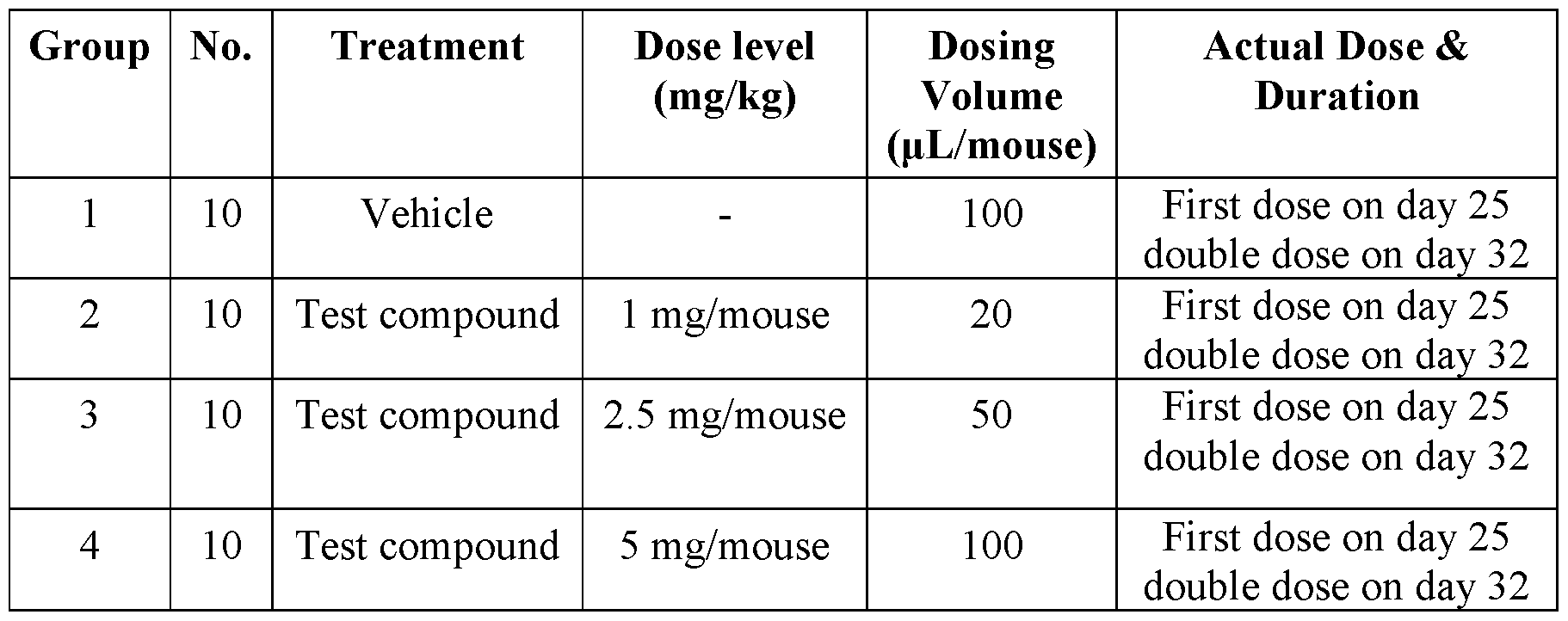
- A549 cells were injected subcutaneously to nude mice and allowed to grow to an estimated tumor volume of about 500 mm 3 as determined by caliper.
- tumor size was determined by caliper and tumor volume was calculated.
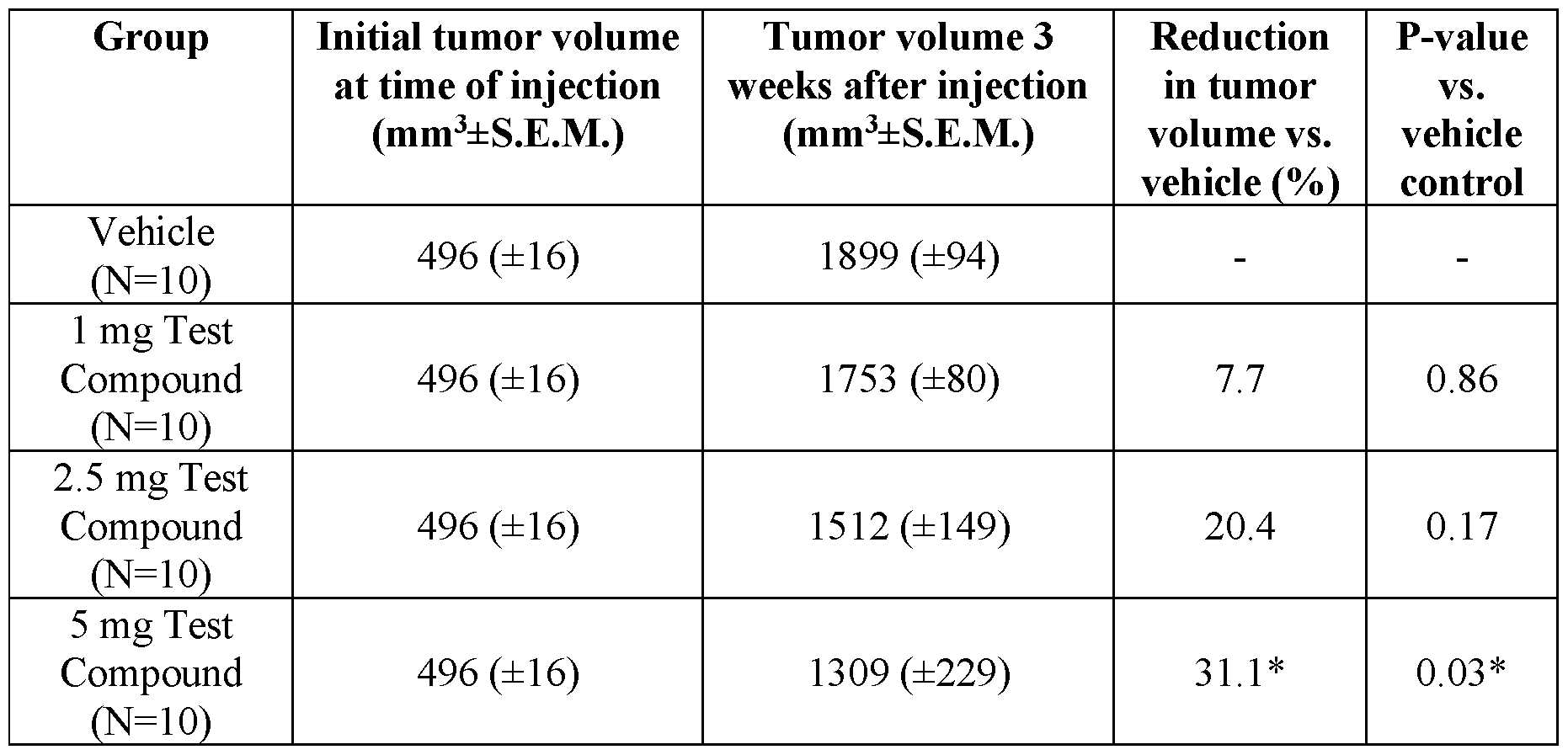
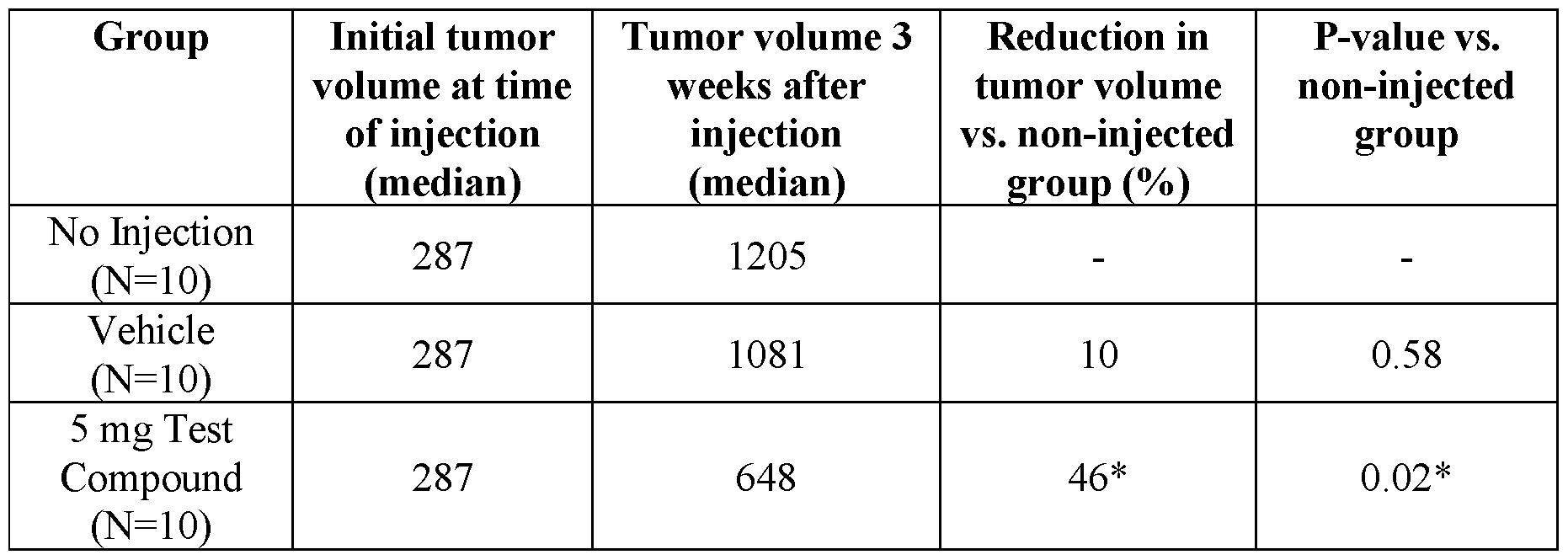
- Mean tumor volumes for the various cohorts are summarized in Table 2 below and graphically in FIG. 1 (arrows indicate treatment days), while the mice’s change in body weight is summarized in FIG. 2.
- Treatment with 5 mg of 5-(3,6-dibromo-9H-carbazol-9-yl)-N,N,N- trimethylpentan-l-aminium chloride significantly reduced tumor size and did not affect mouse body weight.
- Example 2 Xenograft Study 2
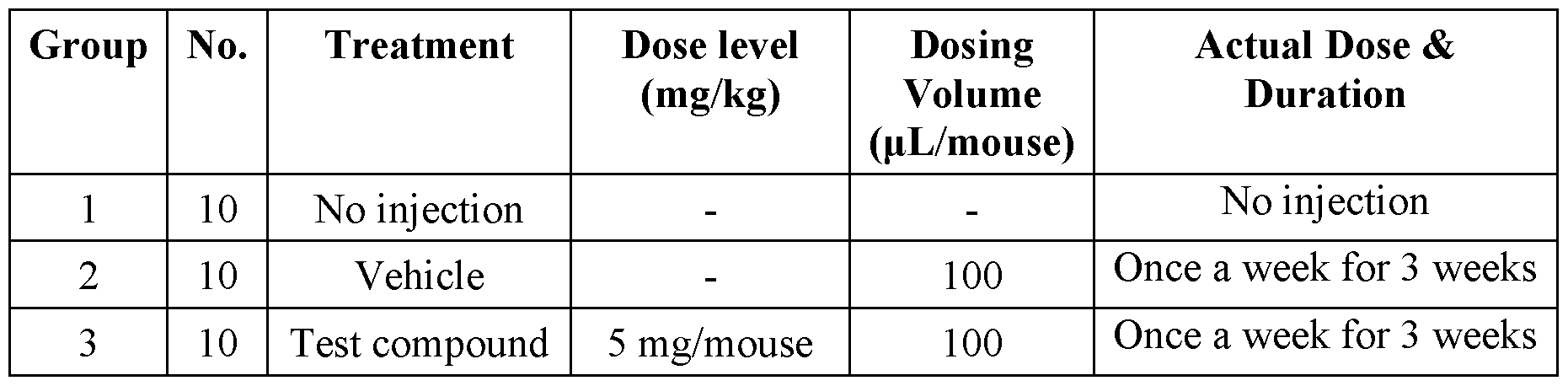
- A549 cells were injected subcutaneously to nude mice and allowed to grow to an estimated tumor volume of about 300 mm 3 as determined by caliper.
- tumor size was determined by caliper and tumor volume was calculated.
- Median tumor volumes for the various cohorts are summarized in Table 4 below and graphically in FIG. 3 (arrows indicate treatment days), while the mice’s change in body weight is summarized in FIG. 4.
- Treatment with 5-(3,6-dibromo-9H-carbazol-9-yl)-N,N,N-trimethylpentan- 1-aminium chloride significantly reduced tumor size and did not affect mouse body weight.
Landscapes
- Health & Medical Sciences (AREA)
- Veterinary Medicine (AREA)
- Chemical & Material Sciences (AREA)
- Medicinal Chemistry (AREA)
- Pharmacology & Pharmacy (AREA)
- Life Sciences & Earth Sciences (AREA)
- Animal Behavior & Ethology (AREA)
- General Health & Medical Sciences (AREA)
- Public Health (AREA)
- Epidemiology (AREA)
- Chemical Kinetics & Catalysis (AREA)
- General Chemical & Material Sciences (AREA)
- Nuclear Medicine, Radiotherapy & Molecular Imaging (AREA)
- Organic Chemistry (AREA)
- Dermatology (AREA)
- Pharmaceuticals Containing Other Organic And Inorganic Compounds (AREA)
Abstract
Description





Claims
Priority Applications (6)
| Application Number | Priority Date | Filing Date | Title |
|---|---|---|---|
| CN202080078495.3A CN115066241A (en) | 2019-09-15 | 2020-09-14 | Compositions for treating solid tumors |
| US17/642,153 US20220323411A1 (en) | 2019-09-15 | 2020-09-14 | Compositions for the treatment of solid tumors |
| AU2020347539A AU2020347539A1 (en) | 2019-09-15 | 2020-09-14 | Compositions for the treatment of solid tumors |
| JP2022515083A JP2023503769A (en) | 2019-09-15 | 2020-09-14 | Compositions for the treatment of solid tumors |
| EP20863979.9A EP4031130A4 (en) | 2019-09-15 | 2020-09-14 | Compositions for the treatment of solid tumors |
| IL291351A IL291351A (en) | 2019-09-15 | 2022-03-14 | Compositions for the treatment of solid tumors |
Applications Claiming Priority (2)
| Application Number | Priority Date | Filing Date | Title |
|---|---|---|---|
| US201962900557P | 2019-09-15 | 2019-09-15 | |
| US62/900,557 | 2019-09-15 |
Publications (1)
| Publication Number | Publication Date |
|---|---|
| WO2021048626A1 true WO2021048626A1 (en) | 2021-03-18 |
Family
ID=74866186
Family Applications (1)
| Application Number | Title | Priority Date | Filing Date |
|---|---|---|---|
| PCT/IB2020/000745 Ceased WO2021048626A1 (en) | 2019-09-15 | 2020-09-14 | Compositions for the treatment of solid tumors |
Country Status (7)
| Country | Link |
|---|---|
| US (1) | US20220323411A1 (en) |
| EP (1) | EP4031130A4 (en) |
| JP (1) | JP2023503769A (en) |
| CN (1) | CN115066241A (en) |
| AU (1) | AU2020347539A1 (en) |
| IL (1) | IL291351A (en) |
| WO (1) | WO2021048626A1 (en) |
Cited By (3)
| Publication number | Priority date | Publication date | Assignee | Title |
|---|---|---|---|---|
| WO2022234337A3 (en) * | 2021-05-06 | 2022-12-29 | Raziel Therapeutics Ltd. | Crystalline carbazole derivative |
| WO2024100533A1 (en) * | 2022-11-07 | 2024-05-16 | Raziel Therapeutics Ltd. | Crystalline carbazole derivative and methods of making thereof |
| US12097179B2 (en) | 2015-06-15 | 2024-09-24 | Raziel Therapeutics Ltd. | Carbazole derivatives for the treatment of fibrotic diseases and related symptoms, and conditions thereof |
Citations (3)
| Publication number | Priority date | Publication date | Assignee | Title |
|---|---|---|---|---|
| WO2004101579A2 (en) * | 2003-05-17 | 2004-11-25 | Queen Mary & Westfield College | Substituted phosphonate fluorescent sensors and use thereof |
| WO2013072915A1 (en) * | 2011-11-15 | 2013-05-23 | Yissum Research Development Company Of The Hebrew University Of Jerusalem Ltd. | Tricyclic compounds, compositions comprising them and uses thereof |
| WO2016203468A1 (en) * | 2015-06-15 | 2016-12-22 | Raziel Therapeutics Ltd. | Carbazole derivatives for the treatment of fibrotic diseases and related symptoms, and conditions thereof |
Family Cites Families (2)
| Publication number | Priority date | Publication date | Assignee | Title |
|---|---|---|---|---|
| UA107652C2 (en) * | 2008-10-06 | 2015-02-10 | Incuron Llc | Carbazole compounds and therapeutic uses of the compounds |
| EP4096653A4 (en) * | 2020-01-28 | 2024-02-28 | Raziel Therapeutics Ltd. | COMPOSITIONS FOR TREATING ANGIOLIPOMA |
-
2020
- 2020-09-14 JP JP2022515083A patent/JP2023503769A/en active Pending
- 2020-09-14 EP EP20863979.9A patent/EP4031130A4/en active Pending
- 2020-09-14 US US17/642,153 patent/US20220323411A1/en active Pending
- 2020-09-14 WO PCT/IB2020/000745 patent/WO2021048626A1/en not_active Ceased
- 2020-09-14 CN CN202080078495.3A patent/CN115066241A/en active Pending
- 2020-09-14 AU AU2020347539A patent/AU2020347539A1/en active Pending
-
2022
- 2022-03-14 IL IL291351A patent/IL291351A/en unknown
Patent Citations (3)
| Publication number | Priority date | Publication date | Assignee | Title |
|---|---|---|---|---|
| WO2004101579A2 (en) * | 2003-05-17 | 2004-11-25 | Queen Mary & Westfield College | Substituted phosphonate fluorescent sensors and use thereof |
| WO2013072915A1 (en) * | 2011-11-15 | 2013-05-23 | Yissum Research Development Company Of The Hebrew University Of Jerusalem Ltd. | Tricyclic compounds, compositions comprising them and uses thereof |
| WO2016203468A1 (en) * | 2015-06-15 | 2016-12-22 | Raziel Therapeutics Ltd. | Carbazole derivatives for the treatment of fibrotic diseases and related symptoms, and conditions thereof |
Non-Patent Citations (5)
| Title |
|---|
| CARUSO, A. ET AL.: "Carbazole derivatives: A promising scenario for breast cancer treatment", MINI-REVIEWS IN MEDICINAL CHEMISTRY, vol. 16, no. 8, 7 March 2016 (2016-03-07), pages 630 - 643, XP055804060, DOI: 10.2174/1389557515666150709111342 * |
| HU, LAIXING, ZHUO-RONG LI; YAN LI; JINRONG QU; YI-HE LING; JIAN-DONG JIANG; DAVID W BOYKIN: "Synthesis and structure-activity relationships of carbazole sulfonamides as a novel class of antimitotic agents against solid tumors", JOURNAL OF MEDICINAL CHEMISTRY, vol. 49, no. Issue 21, 14 September 2006 (2006-09-14), pages 6273 - 6282, XP055286175, Retrieved from the Internet <URL:https://booksc.org/book/21426791/17b431> DOI: 10.1021/jm060546h * |
| LIU, LAN-XIANG, WANG XUE-QUAN, ZHOU BEI, YANG LI-JUAN, LI YAN, ZHANG HONG-BIN, YANG XIAO-DONG: "Synthesis and antitumor activity of novel N-substituted carbazole imidazolium salt derivatives", SCIENTIFIC REPORTS, vol. 5, 19 August 2015 (2015-08-19), XP055804058, Retrieved from the Internet <URL:https://www.nature.com/articles/srepl3101> DOI: 10.1038/srep13101 * |
| See also references of EP4031130A4 * |
| TSUTSUMI LISSA S, GÜNDISCH DANIELA, SUN DIANQING: "Carbazole Scaffold in Medicinal Chemistry and Natural Products: A Review from 2010-2015", CURRENT TOPICS IN MEDICINAL CHEMISTRY, vol. 16, no. 11, 1 January 2016 (2016-01-01), pages 1290 - 1313, XP055901766, ISSN: 1873-5294, DOI: 10.2174/1568026615666150915112647 * |
Cited By (4)
| Publication number | Priority date | Publication date | Assignee | Title |
|---|---|---|---|---|
| US12097179B2 (en) | 2015-06-15 | 2024-09-24 | Raziel Therapeutics Ltd. | Carbazole derivatives for the treatment of fibrotic diseases and related symptoms, and conditions thereof |
| WO2022234337A3 (en) * | 2021-05-06 | 2022-12-29 | Raziel Therapeutics Ltd. | Crystalline carbazole derivative |
| JP2024517608A (en) * | 2021-05-06 | 2024-04-23 | ラジエル セラピューティクス エルティーディー. | Crystalline carbazole derivatives |
| WO2024100533A1 (en) * | 2022-11-07 | 2024-05-16 | Raziel Therapeutics Ltd. | Crystalline carbazole derivative and methods of making thereof |
Also Published As
| Publication number | Publication date |
|---|---|
| IL291351A (en) | 2022-05-01 |
| CN115066241A (en) | 2022-09-16 |
| AU2020347539A1 (en) | 2022-03-31 |
| EP4031130A4 (en) | 2023-10-11 |
| JP2023503769A (en) | 2023-02-01 |
| US20220323411A1 (en) | 2022-10-13 |
| EP4031130A1 (en) | 2022-07-27 |
Similar Documents
| Publication | Publication Date | Title |
|---|---|---|
| US20090325906A1 (en) | Methods and compositions for therapeutic treatment | |
| US20220323411A1 (en) | Compositions for the treatment of solid tumors | |
| US20230089484A1 (en) | Compositions for the treatment of angiolipoma | |
| US20220387434A1 (en) | Combination of a btk inhibitor and an mdm2 inhibitor for cancer treatment | |
| US20180318304A1 (en) | Methods of Using BTK Inhibitors to Treat Dermatoses | |
| US12264152B2 (en) | Certain chemical compositions and methods of use thereof | |
| AU2016255842A1 (en) | Therapeutic combinations of antiviral and anti-inflammatory therapies | |
| US20230355584A1 (en) | Compositions and methods for the treatment of lipid-related disorders | |
| WO2022058792A1 (en) | Compositions for the treatment of fat related conditions and disorders | |
| US20240335424A1 (en) | Compositions and methods for treating lipoma pain | |
| HK40077772A (en) | Compositions for the treatment of solid tumors | |
| US20230159569A1 (en) | Dual hdac6/proteasome inhibitors, and methods of use thereof | |
| WO2025231380A1 (en) | Proteolysis targeting chimeras and methods of use thereof |
Legal Events
| Date | Code | Title | Description |
|---|---|---|---|
| 121 | Ep: the epo has been informed by wipo that ep was designated in this application |
Ref document number: 20863979 Country of ref document: EP Kind code of ref document: A1 |
|
| ENP | Entry into the national phase |
Ref document number: 2022515083 Country of ref document: JP Kind code of ref document: A |
|
| NENP | Non-entry into the national phase |
Ref country code: DE |
|
| ENP | Entry into the national phase |
Ref document number: 2020347539 Country of ref document: AU Date of ref document: 20200914 Kind code of ref document: A |
|
| ENP | Entry into the national phase |
Ref document number: 2020863979 Country of ref document: EP Effective date: 20220419 |