WO2021025490A1 - Processor, processor operation method and electronic device comprising same - Google Patents
Processor, processor operation method and electronic device comprising same Download PDFInfo
- Publication number
- WO2021025490A1 WO2021025490A1 PCT/KR2020/010414 KR2020010414W WO2021025490A1 WO 2021025490 A1 WO2021025490 A1 WO 2021025490A1 KR 2020010414 W KR2020010414 W KR 2020010414W WO 2021025490 A1 WO2021025490 A1 WO 2021025490A1
- Authority
- WO
- WIPO (PCT)
- Prior art keywords
- processor
- operand
- address information
- instruction
- buffer
- Prior art date
- Legal status (The legal status is an assumption and is not a legal conclusion. Google has not performed a legal analysis and makes no representation as to the accuracy of the status listed.)
- Ceased
Links
Images


Classifications
-
- G—PHYSICS
- G06—COMPUTING OR CALCULATING; COUNTING
- G06F—ELECTRIC DIGITAL DATA PROCESSING
- G06F21/00—Security arrangements for protecting computers, components thereof, programs or data against unauthorised activity
- G06F21/70—Protecting specific internal or peripheral components, in which the protection of a component leads to protection of the entire computer
- G06F21/71—Protecting specific internal or peripheral components, in which the protection of a component leads to protection of the entire computer to assure secure computing or processing of information
- G06F21/72—Protecting specific internal or peripheral components, in which the protection of a component leads to protection of the entire computer to assure secure computing or processing of information in cryptographic circuits
-
- G—PHYSICS
- G06—COMPUTING OR CALCULATING; COUNTING
- G06F—ELECTRIC DIGITAL DATA PROCESSING
- G06F9/00—Arrangements for program control, e.g. control units
- G06F9/06—Arrangements for program control, e.g. control units using stored programs, i.e. using an internal store of processing equipment to receive or retain programs
- G06F9/30—Arrangements for executing machine instructions, e.g. instruction decode
- G06F9/30145—Instruction analysis, e.g. decoding, instruction word fields
-
- G—PHYSICS
- G06—COMPUTING OR CALCULATING; COUNTING
- G06F—ELECTRIC DIGITAL DATA PROCESSING
- G06F12/00—Accessing, addressing or allocating within memory systems or architectures
- G06F12/14—Protection against unauthorised use of memory or access to memory
-
- G—PHYSICS
- G06—COMPUTING OR CALCULATING; COUNTING
- G06F—ELECTRIC DIGITAL DATA PROCESSING
- G06F21/00—Security arrangements for protecting computers, components thereof, programs or data against unauthorised activity
- G06F21/50—Monitoring users, programs or devices to maintain the integrity of platforms, e.g. of processors, firmware or operating systems
- G06F21/52—Monitoring users, programs or devices to maintain the integrity of platforms, e.g. of processors, firmware or operating systems during program execution, e.g. stack integrity ; Preventing unwanted data erasure; Buffer overflow
-
- G—PHYSICS
- G06—COMPUTING OR CALCULATING; COUNTING
- G06F—ELECTRIC DIGITAL DATA PROCESSING
- G06F21/00—Security arrangements for protecting computers, components thereof, programs or data against unauthorised activity
- G06F21/60—Protecting data
- G06F21/602—Providing cryptographic facilities or services
-
- G—PHYSICS
- G06—COMPUTING OR CALCULATING; COUNTING
- G06F—ELECTRIC DIGITAL DATA PROCESSING
- G06F21/00—Security arrangements for protecting computers, components thereof, programs or data against unauthorised activity
- G06F21/60—Protecting data
- G06F21/62—Protecting access to data via a platform, e.g. using keys or access control rules
-
- G—PHYSICS
- G06—COMPUTING OR CALCULATING; COUNTING
- G06F—ELECTRIC DIGITAL DATA PROCESSING
- G06F21/00—Security arrangements for protecting computers, components thereof, programs or data against unauthorised activity
- G06F21/70—Protecting specific internal or peripheral components, in which the protection of a component leads to protection of the entire computer
- G06F21/71—Protecting specific internal or peripheral components, in which the protection of a component leads to protection of the entire computer to assure secure computing or processing of information
- G06F21/76—Protecting specific internal or peripheral components, in which the protection of a component leads to protection of the entire computer to assure secure computing or processing of information in application-specific integrated circuits [ASIC] or field-programmable devices, e.g. field-programmable gate arrays [FPGA] or programmable logic devices [PLD]
-
- G—PHYSICS
- G06—COMPUTING OR CALCULATING; COUNTING
- G06F—ELECTRIC DIGITAL DATA PROCESSING
- G06F9/00—Arrangements for program control, e.g. control units
- G06F9/06—Arrangements for program control, e.g. control units using stored programs, i.e. using an internal store of processing equipment to receive or retain programs
- G06F9/30—Arrangements for executing machine instructions, e.g. instruction decode
- G06F9/30098—Register arrangements
- G06F9/30105—Register structure
-
- G—PHYSICS
- G06—COMPUTING OR CALCULATING; COUNTING
- G06F—ELECTRIC DIGITAL DATA PROCESSING
- G06F9/00—Arrangements for program control, e.g. control units
- G06F9/06—Arrangements for program control, e.g. control units using stored programs, i.e. using an internal store of processing equipment to receive or retain programs
- G06F9/46—Multiprogramming arrangements
- G06F9/54—Interprogram communication
- G06F9/544—Buffers; Shared memory; Pipes
Definitions
- the following description relates to a processor, a method of operating the processor, and an electronic device including the same.
- Block cipher algorithms can be essential to provide basic security services such as confidentiality and integrity. These algorithms can be implemented in software or hardware. The former implementation method provides flexibility, while the latter method can support high performance. In order to achieve these benefits together, extensive research is being conducted on programmable processors for block ciphers.
- the first method may be to use a programmable cryptographic coprocessor such as CryptoManiac, Cryptonite, Cryptoraptor, and coprocessors proposed by SPARX.
- a programmable cryptographic coprocessor such as CryptoManiac, Cryptonite, Cryptoraptor, and coprocessors proposed by SPARX.
- These coprocessors not only execute block ciphers much faster with custom design and parallel processing, but they can also be programmed with their own instruction set architecture (ISA). However, these coprocessors require additional hardware resources such as control logic gates, register files, instruction memory and data memory, which can increase cost significantly.
- the second method may be to extend the existing CPU core to support cryptographic operations.
- expansion of CPU cores for block ciphers has been achieved by extending ISA.
- the ISA extension was first proposed in the idea that the CPU core provides additional instructions dedicated to multiple encryption algorithms. However, most of the supported algorithms are out of date and may be rarely used today.
- the CPU core may provide an instruction to perform SubBytes and MixColumns conversion of AES.
- the CryptoBlaze processor a commercial core of Xilinx, is an 8-bit microcontroller core and can support inversion and convolution of AES and RSA operations (eg, Galois fields (GFs)).
- a method of operating a processor includes the steps of: identifying an instruction for instructing to perform a first operation and address information of an operand corresponding to the instruction; And executing the instruction based on whether the address information of the operand satisfies a predetermined condition, and executing the instruction includes the instruction when the address information of the operand satisfies the predetermined condition. If the second operation set to is executed on the operand, and the address information of the operand does not satisfy the predetermined condition, the first operation is executed on the operand.
- the predetermined condition may correspond to whether the address information of the operand falls within a preset address range.
- the first operation may be an operation performed by the processor less than the second operation.
- an address range according to the predetermined condition may be registered in advance with the processor before the instruction is executed.
- the second operation may be an operation not included in the ISA of the processor.
- the operand is loaded from a memory connected to the processor and stored in a dedicated buffer in the processor, and address information of the operand may indicate an address in the dedicated buffer in which the operand is stored.
- the operand when the address information of the operand satisfies the predetermined condition, the operand is stored in a data-buffer in the processor, and the address information of the operand is It can be stored in a configuration-buffer in the processor.
- the configuration-buffer may be a memory mapped buffer.
- whether the address information of the operand satisfies the predetermined condition may be expressed by flag information connected to a general-purpose register in the processor.
- a round counter and a round-key pointer used in the operation of the processor are stored in the data-buffer in the processor
- Address information of the round counter and address information of the round-key pointer may be stored in a configuration-buffer in the processor.
- a processor includes a data-buffer for storing operands; A configuration-buffer for storing address information of the operand; And a processing unit that checks an instruction for instructing to perform a first operation and address information of the operand corresponding to the instruction, and executes the instruction based on whether the address information of the operand satisfies a predetermined condition. And, if the address information of the operand satisfies the predetermined condition, the processing unit executes a second operation set in the instruction for the operand, and if the address information of the operand does not satisfy the predetermined condition, The first operation is executed on the operand.
- the predetermined condition may correspond to whether the address information of the operand falls within a preset address range.
- the first operation may be an operation performed by the processor less than the second operation.
- the address range according to the predetermined condition may be registered in advance with the processor before the instruction is executed.
- the second operation may be an operation not included in the ISA of the processor.
- the operand is loaded from a memory connected to the processor and stored in a dedicated buffer in the processor, and the address information of the operand may indicate an address in the dedicated buffer in which the operand is stored.
- the operand when the address information of the operand satisfies the predetermined condition, the operand is stored in the data-buffer in the processor, and the address information of the operand is stored in the configuration-buffer in the processor. I can.
- the processor according to an embodiment may further include a dedicated operator that performs the second operation.
- An electronic device includes a memory for storing a command and an operand corresponding to the command; And a processor that executes the instruction, wherein the processor stores the operand received from the memory to execute the instruction and address information of the operand; And a processing unit that checks the instruction for instructing to perform a first operation and address information of the operand corresponding to the instruction, and executes the instruction based on whether the address information of the operand satisfies a predetermined condition. And, if the address information of the operand satisfies the predetermined condition, the processing unit executes a second operation set in the instruction for the operand, and if the address information of the operand does not satisfy the predetermined condition , Executes the first operation on the operand.
- a dedicated encryption buffer for block encryption to the CPU core, it is possible to greatly reduce memory accesses of load and storage, which occupy a large portion of the program.
- existing operations or newly defined cryptographic operations can be executed to obtain fewer lines of code and memory access, fast operation, and flexibility.
- Existing ISA and compiler frames Complex cryptographic operations can be accelerated without modifying the work.
- arithmetic operations may be executed faster than accesses to tables stored in memory, and conversion may be more simply expressed by overloaded arithmetic instructions.
- new AES code with instruction overloading can achieve faster execution speed and a smaller memory footprint.
- the overhead of memory loading can be effectively reduced by using the additional buffer.
- the ALU operation By extending the ALU operation and redefining the operation, it is possible to improve the speed of block encryption and provide flexibility to support the operation of various block encryption algorithms. Power analysis resistance can be improved through automatic masking.
- data in the dedicated encryption buffer is automatically masked, and the operation can be performed with the masked value. That is, even codes developed without considering power analysis resistance can be effectively protected from power analysis attacks under the same processing speed.
- FIG. 1 is a diagram illustrating an electronic device according to an embodiment.
- FIG. 2 is a diagram showing a processor according to an embodiment.
- FIG. 3 is a diagram illustrating a RISC-V core according to an embodiment.
- FIG. 4 is a diagram illustrating a buffer in a processor according to an embodiment.
- FIG. 5 is a diagram illustrating an example of arithmetic instruction overloading according to an embodiment.
- FIG. 6 is a diagram illustrating an example of a C expression for an overloaded instruction according to an embodiment.
- FIG. 7 is a diagram illustrating an example of transformation in an AES code through command overloading using a macro according to an embodiment.
- FIG. 8 is a diagram illustrating an example of a macro for AES conversion using an overloaded instruction according to an embodiment.
- FIG. 9 is a diagram illustrating an example of variable registration and releasing according to an embodiment.
- FIG. 10 is a diagram illustrating an example of inversion through masking according to an embodiment.
- FIG. 11 is a diagram illustrating a method of operating a processor according to an embodiment.
- first, second, A, B, (a) and (b) may be used. These terms are only used to distinguish the component from other components, and the nature, order, or order of the component is not limited by the term.
- FIG. 1 is a diagram illustrating an electronic device according to an embodiment.
- an electronic device 100 includes a memory 110 and a processor 120.
- the electronic device 100 is a variety of computing devices such as smart phones, tablets, laptops, personal computers, smart watches, various wearable devices such as smart glasses, smart speakers, smart TVs, various home appliances such as smart refrigerators, and smart cars. , Smart kiosks, Internet of Things (IoT) devices, drones, robots, and the like.
- IoT Internet of Things
- the memory 110 stores an instruction to be executed by the processor 120 and an operand corresponding to the instruction.
- the memory 110 may be a volatile memory or a nonvolatile memory.
- the processor 120 is a device that executes instructions or programs, or controls the electronic device 100, and may be, for example, a CPU (Central Processing Unit), a GPU (Graphic Processing Unit), a NPU (Neural Processing Unit), etc. I can.
- the processor 120 may read instructions and/or operands stored in the memory 110, store them in an internal buffer, and quickly perform an operation according to the instruction based on data stored in the internal buffer.
- instructions executable in the processor 120 are defined by an instruction set architecture (ISA).
- ISA instruction set architecture
- the processor 120 may execute a new instruction not defined in the ISA. If you add new instructions to ISA to do this, ISA extensions and compiler changes may be required. To avoid this, instead of adding new instructions to ISA, only the execution of existing instructions can be extended. In other words, the processor 120 may execute different operations for the same instruction according to the data address of the operand.
- this new concept of computer architecture may be referred to as instruction overloading.
- this new concept of computer architecture may be referred to as instruction overload
- FIG. 2 is a diagram showing a processor according to an embodiment.
- the processor 200 includes a buffer 210 and a processing unit 220.
- the buffer 210 may include a general-buffer 211, a configuration-buffer 213, and a data-buffer 215.
- the general-buffer 211 may be a general-purpose register (GPR) generally included in the processor 200, and the configuration-buffer 213 and the data-buffer 215 are dedicated for instruction overloading described above. It can be a buffer.
- the buffer 210 will be described in detail with reference to FIG. 4.
- the processing unit 220 is an apparatus that performs an operation according to an instruction, and may include, for example, a reduced instruction set computer-V (RISC-V) core.
- the processing unit 220 may also be referred to as a processing core.
- the processing unit 220 will be described in detail with reference to FIG. 3.
- the processor 200 among the operations performed by the processor 200, there may be operations that are frequently used and operations that are not. For example, when block ciphers are performed in the processor 200, multiplication , Division While some operations are rarely used, counterparts for finite fields such as convolution and multiplicative inversion are frequently used, whereas ISA corresponding to the processor 200 May not be defined in In this case, multiplication Or division Likewise, a new operation can be supported by the processor 200 without changing the ISA of the existing processor 200 by interpreting an instruction for instructing the execution of an operation that is not used frequently according to circumstances. Such command overloading can be distinguished from operator overloading in which an operator is interpreted as another operation according to the data type of the operand in object-oriented languages.
- the processor 200 may execute different operations for the same instruction according to the address information of the operand.
- the address of such a variable is registered in advance in the processor 200 so that a variable to be processed differently may be designated.
- the execution of the instruction in the processor 200 may differ depending on whether or not the address of the operand is registered.
- three different approaches for RISC-V core extension using instruction overloading may be used.
- the first method could be to extend the core to support specific block ciphers.
- AES extension Advanced Encryption Standard extension
- two types of instructions may be overloaded: a load/store instruction and an arithmetic instruction. These commands can provide the following functions for the registered variables.
- each routine operation on some variables can be processed as a single overloaded load instruction, thereby reducing the instruction count.
- the registered variable can be managed in a dedicated buffer (eg, configuration-buffer 213 and data-buffer 215) in the processor 200, and the registered variable is loaded and stored as an overloaded load and store instruction. Through this, the speed of access to the block cipher variable can be improved.
- a dedicated buffer eg, configuration-buffer 213 and data-buffer 215
- the overloaded arithmetic instruction may support cryptographic operation and conversion, but it may not be easy to process only an instruction generally provided by the processor 200. Transformations can usually be handled using large tables pre-computed in legacy software. However, overloaded arithmetic operations have a faster execution time than accessing tables stored in memory, and conversions can be expressed more simply with overloaded arithmetic instructions. As a result, compared to legacy AES software code, new AES code with instruction overloading can achieve faster execution speed and a smaller memory footprint.
- This AES extension can also be applied to XOR-based (ARX-based) block cipher addition/AND such as SIMON. SIMON, a lightweight block cipher, has almost the same memory footprint, but instruction overloading can be effective in reducing the execution time of SIMON code.
- a second approach to RISC-V core extension may be to provide general cryptographic operations and support block ciphers that perform operations through GF(2 8 ) such as convolution and multiplication inversion. This may mean that if necessary, various block ciphers including ciphers developed after distribution of the processor 200 can be effectively supported with less overhead compared to the first method.
- masking is one of the widely used countermeasures against power analysis attacks. This will be described in detail with reference to FIG. 10.
- FIG. 3 is a diagram illustrating a RISC-V core according to an embodiment.
- the operation of the RISC-V core may be divided into an instruction fetch (IF) stage, an instruction decode (ID) stage, a DP stage, an EXE (execute) stage, and a writeback (WB) stage.
- RISC-V can be used when designing a processor to which instruction overloading is applied.
- RISC-V may be an open source ISA based on RISC principles. For a wide range of applications, supporting small embedded systems, personal computers and super computers, both high performance and low power consumption can be considered.
- a custom CPU core can be designed that handles 32-bit integer-based instructions for integer multiplication and division (M extension).
- M extension is 32-bit. It may include an x8-bit multiplier and a 32-bit x1-bit divider.
- the gray area between steps in the 5-tier base core shown in FIG. 3 shows a newly proposed part for the proposed instruction overloading.
- Arithmetic instruction overloading requires a change in an arithmetic logic unit (ALU), a multiplier, and a divider, and load/store instruction overloading may require changes to a memory load and a storage device.
- ALU arithmetic logic unit
- multiplier a multiplier
- divider a divider
- load/store instruction overloading may require changes to a memory load and a storage device.
- some components such as a jump-and-branch unit and a re-order unit may be omitted.
- FIG. 4 is a diagram illustrating a buffer in a processor according to an embodiment.
- the configuration-buffer 420 may include srcFlags, TextAddr, TextNum, RndAddr, and KeyAddr.
- the data-buffer 430 may include Text0-Text7, Round, KeyPointer, and KeyConfig. Although it will be described in detail later, srcFlags, TextAddr, and TextNum can be used for arithmetic command overloading, and RndAddr, KeyAddr, Text0-Text7, Round, KeyPointer, and KeyConfig can be used for overloading load/store commands.
- the memory load unit 440 is a device that loads instructions and/or operands stored in a memory
- the memory storage unit 450 is a device that stores data of the GPR 410 in a memory and/or data-buffer 430. I can.
- Integer multiplication And integer division Arithmetic operations such as, may be rarely used in block ciphers. Therefore, instructions for these operations can be assigned to encryption conversions and operations such as SubByte and Convolution of Advanced Encryption Standard (AES). Also, a shift instruction (e.g. And ) Can be assigned to rotation, which can be used more often than shift operations in block ciphers.
- AES Advanced Encryption Standard
- the processor may include Config-Buffers including TextAddr, TextNum and srcFlags shown in FIG. 4.
- TextAddr can store the start address of an intermediate value variable to be registered, and TextNum can store the number of intermediate value variables.
- TextAddr and TextNum may each have 4-bit.
- srcFlags may be connected to a0-a7 (in other words, x10-x17) in the GPR 410 for storing function arguments or internal variables in the RISC-V core.
- each flag may be set to 1.
- srcFlags is a flag corresponding to one or more of a0-a7 storing the corresponding data when the operand is loaded into the GPR 410.
- srcFlags may have 1-bit x 8.
- FIG. 5 is a diagram illustrating an example of arithmetic instruction overloading according to an embodiment.
- the shift command can be interpreted as rotation. Therefore, the sign By using the word (word) can be rotated.
- the multiplication instruction can be interpreted as a parallel convolution of 4-bytes in the selected word.
- the corresponding C representation is:
- Equation 1 is the word from the registered variable, 0xA 1 A 0 is It is a polynomial to multiply each byte within, and 0x1B 1 B 0 may be a reduction polynomial for GF(2 8 ). In other words, 4 bytes from And When expressed as, Equation 1 is Can mean
- the overloaded instruction can be division.
- SubBytes or Inverse SubBytes can be performed simultaneously in 4-bytes of the selected word.
- the corresponding C representation is:
- the negative sign may represent inverse SubBytes for decoding.
- load/store instruction overloading will be described in detail.
- block ciphers can generally use round counters, round-key pointers, and intermediate value variables. Operations on these variables can also be common. Overloading load/store instructions for these variables can improve performance in two ways.
- the values of common block cipher variables can be accessed more quickly. If the data of the running program is in memory, the memory access can be very slow. If there is no memory latency on the base RISC-V core, one or two clock cycles may be required for one load instruction. However, depending on the system configuration, the number of cycles can increase to tens of cycles.
- the buffer can be used as a means for faster access with the aid of the proposed instruction overloading.
- the dedicated buffer may be referred to as a data-buffer.
- the address of the intermediate value variable is registered using TextAddr and TextNum, and this value can be used to set srcFlags for overloaded arithmetic instructions.
- These two Config-Buffers i.e. TextAddr and TextNum
- TextAddr and TextNum also load intermediate value variables from Text0-Text7, which are data-buffers for intermediate value variables, or load overloaded to store intermediate value variables in Text0-Text7.
- Other block cipher variables such as round counters and round-key pointers, can reside in data-buffers such as Round and KeyPointer, respectively, and their addresses are additional Config-buffers such as RndAddr and KeyAddr, respectively. ) Can be registered.
- the data-buffer can provide fast data access regardless of memory latency. This means that accessing each data-buffer may always require only one clock cycle. Other methods using the cache and register keywords may also provide faster data access, but since not all desired variables will always reside in the GPR or cache, these methods will not guarantee fast and constant data access. I can.
- RndAddr may store an address in which a round counter variable is stored
- KeyAddr may store an address in which a round-key pointer is stored.
- RndAddr and KeyAddr can each have 4-bits.
- Text0-Text7 stores intermediate value variables (eg, operands, etc.), and may have, for example, 32-bits each.
- Round stores a round counter
- KeyPointer stores a round-key pointer
- KeyConfig stores a KeyPointer increment (eg, 0, 1, -1, etc.).
- Round can have 8-bits
- KeyPointer can have 32-bits
- KeyConfig can have 2-bits.
- routine operations such as increment, decrement, and comparison can be automatically executed whenever data in the data-buffer is loaded. Specifically, when the round counter is read, its value is automatically decremented, and a result of comparing the updated round counter with 0 may be returned. When a round-key pointer is read, the specified value is returned instead of the pointer value, so the number of load instructions can be reduced by one. At the same time, the pointer can be incremented and decremented for encryption and decryption, respectively. A flag indicating the increase or decrease of the round-key pointer may be stored in KeyConfig which is an additional buffer. When an overloaded load instruction is executed, data-buffers such as Round and KeyPointer can be used for routine operations as well as fast data access.
- FIG. 6 is a diagram illustrating an example of a C expression for an overloaded instruction according to an embodiment.
- 16-byte intermediate values including input plain text can be treated as a (4 ⁇ 4)-byte array called state .
- state is May correspond to.
- Each round of AES can consist of transformations such as AddRoundKey, SubBytes, ShiftRows and MixColumns.
- AddRoundKey is a simple XOR with round key, and the other three transformations are:
- SubBytes SBs: SubByte( ) Is each byte Nonlinear substitutions can be made for. These nonlinear operations are generally defined as multiplication inversion, matrix multiplication with predefined vectors and XOR ( ) Can be followed by an affine transformation. However, matrix multiplication can be expressed as convolution by using the reduced polynomial 0x101. As a result, Can be
- ShiftRows (SRs): ShiftRow( ) Is each row Can be rotated left by j bytes.
- MixColumns (MCs): MixColumn( )silver You can mix the heat.
- MixColumn( Each byte of) can be defined as follows.
- AES transformation may require convolution and multiplication inversion for GF(2 8 ), XOR, and rotation.
- XOR is supported as a single instruction in a general processor, while other operations may require multiple instructions.
- convolution and multiplication inversion may be complicated to calculate, and may be byte-wise rather than word-wise.
- Macros can be defined as C expressions. Debugging can be supported by defining these macros rather than using extension operations such as *, / and ⁇ directly.
- the definition in the last column of FIG. 6 can be used for debugging using normal operations without command overload.
- the functions SB, invSB, and convolution may perform SubBytes, inverse SubBytes, and convolution for 4-bytes in the selected word, respectively.
- the macros ROL, MLT, and INV of FIG. 6 may be converted into shift, multiplication, and division instructions at the time of compilation. However, the processor can execute these instructions as rotation, convolution and SubBytes, respectively, if the operands are loaded from the data-buffer.
- FIG. 7 is a diagram illustrating an example of transformation in an AES code through command overloading using a macro according to an embodiment.
- RowCalc_SB 710
- RowCalc_SB_SR 730
- RowCalc_MC 730
- the AES encryption code using the aforementioned macro may be as follows.
- This code has three advantages: First, while maintaining the encryption speed as it is, a pre-calculated table may not be necessary. Column-level macros such as ColumnCalc and ColumnCalc_Last in lines 10-18 of the preceding code can be changed to row-level macros such as RowCalc_SB, RowCalc_SB_SR, and RowCalc_MC.
- Column-level macros such as ColumnCalc and ColumnCalc_Last in lines 10-18 of the preceding code can be changed to row-level macros such as RowCalc_SB, RowCalc_SB_SR, and RowCalc_MC.
- This macro may be defined as ROL, MLT, and INV as shown in FIG. 8 to be described below, and may be applied to each row of state as shown in FIG. 7. Instead of a column-wise arrangement, a row-wise arrangement may be considered. Through this, the advantages of the expansion operation can be fully utilized. For example, 3 ROL operations can complete ShiftRows in one round.
- the RowCalc_MC 730 may indicate that the same operand is multiplied by 4 bytes of a row using one MLT operation.
- FIG. 8 is a diagram illustrating an example of a macro for AES conversion using an overloaded instruction according to an embodiment.
- AES transformations can be performed quickly through extended operations such as ROL, MLT, and INV, without memory access to pre-computed tables.
- extended operations such as ROL, MLT, and INV
- each iteration of the while loop can correspond to a round.
- the C representation associated with the round counter and round-key pointer can be simplified.
- the macro LoadKey can only represent the load pointer rk in the C expression.
- the processor actually loads the round key indicated by rk, and may increase or decrease rk as shown in FIG. 6.
- the macro LoadRound can only indicate load rnd in C expression.
- block cipher variables can be faster due to the data-buffer. Although this does not appear in the C representation, block cipher variables such as rnd, rk, r0-r3, and rr0-rr3 can reside in data buffers instead of memory. This can provide a fast and constant speed of access to block cipher variables regardless of the memory configuration.
- FIG. 9 is a diagram illustrating an example of variable registration and releasing according to an embodiment.
- FIG. 9 an example of a macro for registering and distributing a variable according to an embodiment is shown.
- the configuration-buffer may be memory mapped buffers. Therefore, it can be accessed with predefined pointers such as TEXT_ADDR, TEXT_NUM, RND_ADDR, KEY_ADDR, and KEY_CONFIG. Pointers can be defined as volatile pointer types. For example TEXT_ADDR
- This method can be used to configure the processor or control peripheral devices of the device driver in general. For example, you can access the control and state registration of the RISC-V core and the system control block of the ARM core to read the state and change the configuration. A similar approach can be used.
- a macro using the five pointers mentioned above to register and release variables can be shown in FIG. 9.
- the macro SetText the starting address and number of intermediate value variables such as r0-r3 and rr0-rr3 of the preceding AES encryption code can be recorded in TextAddr and TextNum. These can be pointed by TEXT_ADDR and TEXT_NUM, respectively.
- the macros SetRound and SetKeyPointer can be used to register the addresses of the round counter and round-key pointer in RndAddr and KeyAddr to which RND_ADDR and KEY_ADDR point respectively.
- the round-key pointer automatically increases or decreases each time it is loaded, and the macro SetKeyPointer may include writing a flag indicating increase or decrease in the KeyConfig pointed by KEY_CONFIG.
- loading and saving of registered variables can only occur in the data buffer in the processor instead of in memory until these variables are released using the macro ReleaseAddr.
- the definition of these macros resets TEXT_NUM to 0 only, but the processor can actually release all registered variables.
- Some modern block ciphers such as SM4, SEED and ARIA, can be designed using GF(2 8 ) and higher operations.
- the main common operations of these ciphers can be convolution and multiplication inversion.
- the reduction polynomial may differ from cipher to cipher. Therefore, in order to support various block ciphers, multiplication reversal with an arbitrary reduction polynomial is required. These features can be particularly useful for flexible S-box implementations. In this way, command overload can be applied to support a wider range of block ciphers defined in GF(2 8 ).
- 0x1A 1 A 0 may be a reduction polynomial for GF(2 8 ).
- My 4 bytes When expressed as, Equation 5 is nonzero About Can mean zero Can be mapped on its own.
- the hardware logic gate for this operation may require three clock cycles for binary inversion, and the reduction polynomial for computation.
- the definition of the macro INV for debugging of FIG. 6 may have to be changed to multiplication inversion using the reduced polynomial n regardless of encryption or decryption.
- the overloaded multiplication instruction Equation 1 may already support arbitrary reduction polynomials.
- SubBytes of SM4 can be defined as follows.
- the inverse SubBytes of AES and SM4 can be similarly defined using multiplication inversion, ie, an overloaded division instruction may require the same multiplication inversion logic circuit for encryption and decryption.
- FIG. 10 is a diagram illustrating an example of inversion through masking according to an embodiment.
- the power analysis attack may be a technique for recovering a secret key by statistically analyzing power consumption tracking collected during an encryption operation related to a key.
- Masking can be a measure to protect block ciphers from such attacks.
- This may be a secret sharing technique in which a sensitive intermediate variable used for encryption operation is divided into sharing using randomizers called masks.
- Random number generator Buffers for mask values
- Extension of load and store units Extensions of ALU, multiplier and divider for masked operations.
- the mask value may be randomly set to be resistant to power analysis attacks.
- a true random number generator (TRNG) is used, and the generated random number sequence may pass through NIST (National Institute of Standards and Technology) random test suites.
- TRNG true random number generator
- NIST National Institute of Standards and Technology
- the 32-bit random number generated by 4 pairs of TRNGs and 8-bit linear feedback shift register (LFSR) is the new value when the normal word is first stored in Text0-Text7 and during the masked operation. When updated to, it can be used as the initial mask value.
- a buffer called Mask-Buffers including TextMask0-TextMask7 and GprMask0-GprMask7 connected to Text0-Text7 and a0-a7, respectively, in the GPR may be added.
- the mask value is stored in MaskBuffers, and if this value is used, the corresponding Text0-Text7 and a0-a7 values can be XOR-masked.
- load and store instructions can be redefined to support the transfer of mask values. That is, when transmitting a masked value between Text0-Text7 and a0-a7, the overloaded load and store command may transmit a corresponding mask between TextMask0-TextMask7 and GprMask0-GprMask7.
- the first modified instruction may be an overloaded division instruction, i.e., multiplication inversion.
- the masking method is shown in FIG. 10. here Is the mask value for the value a .
- XOR mask value Given is the multiplication and the new mask value Mask value multiplied by Can be converted to After the reciprocal is calculated, the result is XOR masked by further multiplication Can be converted to
- the second instruction to change could be AND.
- & may represent a bitwise AND operation.
- the two operands of the AND instruction are XOR masked.
- masking there is no need to change the operation of the ALU and multiplier for XOR, convolution and rotation.
- FIG. 11 is a diagram illustrating a method of operating a processor according to an embodiment.
- the processor checks an instruction for instructing to perform the first operation and address information of an operand corresponding to the instruction.
- the operand is loaded from a memory connected to the processor and stored in a dedicated buffer in the processor, and the address information of the operand may indicate an address in the dedicated buffer in which the operand is stored.
- the operand may be stored in a data-buffer in a processor, and address information of an operand may be stored in a configuration-buffer in a processor.
- the configuration-buffer may be a memory mapping buffer.
- step 1120 the processor executes an instruction based on whether the address information of the operand satisfies a predetermined condition. If the address information of the operand satisfies a predetermined condition, the processor executes the second operation set in the instruction for the operand, and if the address information of the operand does not satisfy the predetermined condition, the processor executes the first operation on the operand.
- the predetermined condition may correspond to whether the address information of the operand belongs to a preset address range.
- the first operation may be an operation performed by the processor less than the second operation.
- the address range according to the predetermined condition may be registered in advance in the processor before the instruction is executed.
- the second operation may be an operation not included in the ISA of the processor.
- Whether the address information of the operand satisfies a predetermined condition may be expressed by flag information connected to a general-purpose register in the processor.
- the round counter and round-key pointer used in the operation of the processor are stored in the data-buffer in the processor, and the address information of the round counter and the address information of the round-key pointer are In-processor configuration-can be stored in a buffer.
- FIGS. 1 to 10 Since the above-described matters through FIGS. 1 to 10 are applied to each of the steps shown in FIG. 11 as they are, a more detailed description will be omitted.
- the method according to the embodiment may be implemented in the form of program instructions that can be executed through various computer means and recorded in a computer-readable medium.
- the computer-readable medium may include program instructions, data files, data structures, etc. alone or in combination.
- the program instructions recorded on the medium may be specially designed and configured for the embodiment, or may be known and usable to those skilled in computer software.
- Examples of computer-readable recording media include magnetic media such as hard disks, floppy disks, and magnetic tapes, optical media such as CD-ROMs and DVDs, and magnetic media such as floptical disks.
- -A hardware device specially configured to store and execute program instructions such as magneto-optical media, and ROM, RAM, flash memory, and the like.
- Examples of program instructions include not only machine language codes such as those produced by a compiler but also high-level language codes that can be executed by a computer using an interpreter or the like.
- the hardware device described above may be configured to operate as one or more software modules to perform the operation of the embodiment, and vice versa.
- the software may include a computer program, code, instructions, or a combination of one or more of these, configuring the processing unit to behave as desired or processed independently or collectively. You can command the device.
- Software and/or data may be interpreted by a processing device or to provide instructions or data to a processing device, of any type of machine, component, physical device, virtual equipment, computer storage medium or device. , Or may be permanently or temporarily embodyed in a transmitted signal wave.
- the software may be distributed over networked computer systems and stored or executed in a distributed manner. Software and data may be stored on one or more computer-readable recording media.
Landscapes
- Engineering & Computer Science (AREA)
- Theoretical Computer Science (AREA)
- Physics & Mathematics (AREA)
- Software Systems (AREA)
- Computer Hardware Design (AREA)
- General Physics & Mathematics (AREA)
- General Engineering & Computer Science (AREA)
- Computer Security & Cryptography (AREA)
- Mathematical Physics (AREA)
- Health & Medical Sciences (AREA)
- Bioethics (AREA)
- General Health & Medical Sciences (AREA)
- Microelectronics & Electronic Packaging (AREA)
- Executing Machine-Instructions (AREA)
Abstract
Description
아래의 설명은 프로세서, 프로세서의 동작 방법 및 이를 포함한 전자 장치에 관한 것이다.The following description relates to a processor, a method of operating the processor, and an electronic device including the same.
블록 암호 알고리즘은 기밀성 및 무결성과 같은 기본 보안 서비스를 제공하는 데 필수적일 수 있다. 이러한 알고리즘은 소프트웨어 또는 하드웨어로 구현될 수 있다. 전자의 구현 방식은 유연성을 제공하는 반면, 후자의 방식은 고성능을 지원할 수 있다. 이러한 이점을 함께 달성하기 위해 블록 암호용 프로그래밍 가능 프로세서에 대한 광범위한 연구가 진행되고 있다.Block cipher algorithms can be essential to provide basic security services such as confidentiality and integrity. These algorithms can be implemented in software or hardware. The former implementation method provides flexibility, while the latter method can support high performance. In order to achieve these benefits together, extensive research is being conducted on programmable processors for block ciphers.
첫 번째 방법은 CryptoManiac, Cryptonite, Cryptoraptor, SPARX에서 제안된 코 프로세서(coprocessors)와 같은 프로그램 가능한 암호화 코 프로세서를 이용하는 것일 수 있다. 이러한 코 프로세서는 커스텀 설계 및 병렬 처리로 블록 암호를 훨씬 빠르게 실행할 뿐만 아니라 자체 명령어 세트 아키텍처(ISA; instruction set architecture)로 프로그래밍할 수 있다. 그러나 이러한 보조 프로세서에는 제어 논리 게이트, 레지스터 파일, 명령어 메모리 및 데이터 메모리와 같은 추가 하드웨어 리소스가 필요하므로 비용이 크게 증가할 수 있다.The first method may be to use a programmable cryptographic coprocessor such as CryptoManiac, Cryptonite, Cryptoraptor, and coprocessors proposed by SPARX. These coprocessors not only execute block ciphers much faster with custom design and parallel processing, but they can also be programmed with their own instruction set architecture (ISA). However, these coprocessors require additional hardware resources such as control logic gates, register files, instruction memory and data memory, which can increase cost significantly.
두 번째 방법은 기존 CPU 코어를 확장하여 암호화 연산을 지원하는 것일 수 있다. 일반적으로, 블록 암호를 위한 CPU 코어의 확장은 ISA를 확장함으로써 달성되었다. ISA 확장은 CPU 코어가 다중 암호화 알고리즘 전용 명령을 추가로 제공하는 사상에서 처음 제안되었다. 그러나 지원되는 대부분의 알고리즘은 구식이며 현재 거의 이용되지 않을 수 있다. CPU 코어는 AES의 SubBytes 및 MixColumns 변환을 수행하는 명령어를 제공할 수 있다. Xilinx의 상용 코어인 CryptoBlaze 프로세서는 8 비트 마이크로 컨트롤러 코어로, AES 및 RSA의 연산 (예컨대, 갈루아 필드(GFs; Galois fields))의 반전 및 컨볼루션을 지원할 수 있다.The second method may be to extend the existing CPU core to support cryptographic operations. In general, expansion of CPU cores for block ciphers has been achieved by extending ISA. The ISA extension was first proposed in the idea that the CPU core provides additional instructions dedicated to multiple encryption algorithms. However, most of the supported algorithms are out of date and may be rarely used today. The CPU core may provide an instruction to perform SubBytes and MixColumns conversion of AES. The CryptoBlaze processor, a commercial core of Xilinx, is an 8-bit microcontroller core and can support inversion and convolution of AES and RSA operations (eg, Galois fields (GFs)).
일실시예에 따른 프로세서의 동작 방법은 제1 연산의 수행을 명령하는 명령어와 상기 명령어에 대응하는 피연산자(operand)의 주소 정보를 확인(identify)하는 단계; 및 상기 피연산자의 주소 정보가 미리 정해진 조건을 만족하는지 여부에 기초하여 상기 명령어를 실행하는 단계를 포함하고, 상기 명령어를 실행하는 단계는 상기 피연산자의 주소 정보가 상기 미리 정해진 조건을 만족하면, 상기 명령어에 설정된 제2 연산을 상기 피연산자에 대해 실행하고, 상기 피연산자의 주소 정보가 상기 미리 정해진 조건을 만족하지 않는다면, 상기 제1 연산을 상기 피연산자에 대해 실행한다.A method of operating a processor according to an embodiment includes the steps of: identifying an instruction for instructing to perform a first operation and address information of an operand corresponding to the instruction; And executing the instruction based on whether the address information of the operand satisfies a predetermined condition, and executing the instruction includes the instruction when the address information of the operand satisfies the predetermined condition. If the second operation set to is executed on the operand, and the address information of the operand does not satisfy the predetermined condition, the first operation is executed on the operand.
일실시예에 따른 프로세서의 동작 방법에서 상기 미리 정해진 조건은 상기 피연산자의 주소 정보가 미리 설정된 주소 범위에 속하는지 여부에 대응할 수 있다.In the method of operating the processor according to an embodiment, the predetermined condition may correspond to whether the address information of the operand falls within a preset address range.
일실시예에 따른 프로세서의 동작 방법에서 상기 제1 연산은 상기 프로세서에서 상기 제2 연산보다 적게 실행되는 연산일 수 있다.In the method of operating a processor according to an embodiment, the first operation may be an operation performed by the processor less than the second operation.
일실시예에 따른 프로세서의 동작 방법에서 상기 미리 정해진 조건에 따른 주소 범위는 상기 명령어가 실행되기 전에 상기 프로세서에 미리 등록될 수 있다.In the method of operating a processor according to an embodiment, an address range according to the predetermined condition may be registered in advance with the processor before the instruction is executed.
일실시예에 따른 프로세서의 동작 방법에서 상기 제2 연산은 상기 프로세서의 ISA에 포함되지 않은 연산일 수 있다.In the method of operating the processor according to an embodiment, the second operation may be an operation not included in the ISA of the processor.
일실시예에 따른 프로세서의 동작 방법에서 상기 피연산자는 상기 프로세서에 연결된 메모리로부터 로딩되어 상기 프로세서 내 전용 버퍼에 저장되고, 상기 피연산자의 주소 정보는 상기 피연산자가 저장된 상기 전용 버퍼 내 주소를 나타낼 수 있다.In a method of operating a processor according to an embodiment, the operand is loaded from a memory connected to the processor and stored in a dedicated buffer in the processor, and address information of the operand may indicate an address in the dedicated buffer in which the operand is stored.
일실시예에 따른 프로세서의 동작 방법에서 상기 피연산자의 주소 정보가 상기 미리 정해진 조건을 만족하는 경우, 상기 피연산자는 상기 프로세서 내 데이터-버퍼(data-buffer)에 저장되고, 상기 피연산자의 주소 정보는 상기 프로세서 내 구성-버퍼(configuration-buffer)에 저장될 수 있다.In the method of operating a processor according to an embodiment, when the address information of the operand satisfies the predetermined condition, the operand is stored in a data-buffer in the processor, and the address information of the operand is It can be stored in a configuration-buffer in the processor.
일실시예에 따른 프로세서의 동작 방법에서 상기 구성-버퍼는 메모리 매핑 버퍼(memory mapped buffer)일 수 있다.In the method of operating a processor according to an embodiment, the configuration-buffer may be a memory mapped buffer.
일실시예에 따른 프로세서의 동작 방법에서 상기 피연산자의 주소 정보가 상기 미리 정해진 조건을 만족하는지 여부는 상기 프로세서 내 범용 레지스터에 연결된 플래그 정보로 표현될 수 있다.In the method of operating a processor according to an embodiment, whether the address information of the operand satisfies the predetermined condition may be expressed by flag information connected to a general-purpose register in the processor.
일실시예에 따른 프로세서의 동작 방법에서 상기 피연산자의 주소 정보가 상기 미리 정해진 조건을 만족하는 경우, 상기 프로세서의 동작에서 이용되는 라운드 카운터 및 라운드-키 포인터는 상기 프로세서 내 데이터-버퍼에 저장되고, 상기 라운드 카운터의 주소 정보 및 상기 라운드-키 포인터의 주소 정보는 상기 프로세서 내 구성-버퍼에 저장될 수 있다.In the method of operating a processor according to an embodiment, when address information of the operand satisfies the predetermined condition, a round counter and a round-key pointer used in the operation of the processor are stored in the data-buffer in the processor, Address information of the round counter and address information of the round-key pointer may be stored in a configuration-buffer in the processor.
일실시예에 따른 프로세서는 피연산자를 저장하는 데이터-버퍼(data-buffer); 상기 피연산자의 주소 정보를 저장하는 구성-버퍼(configuration-buffer); 및 제1 연산의 수행을 명령하는 명령어와 상기 명령어에 대응하는 상기 피연산자의 주소 정보를 확인하고, 상기 피연산자의 주소 정보가 미리 정해진 조건을 만족하는지 여부에 기초하여 상기 명령어를 실행하는 프로세싱 유닛을 포함하고, 상기 프로세싱 유닛은 상기 피연산자의 주소 정보가 상기 미리 정해진 조건을 만족하면, 상기 명령어에 설정된 제2 연산을 상기 피연산자에 대해 실행하고, 상기 피연산자의 주소 정보가 상기 미리 정해진 조건을 만족하지 않는다면, 상기 제1 연산을 상기 피연산자에 대해 실행한다.A processor according to an embodiment includes a data-buffer for storing operands; A configuration-buffer for storing address information of the operand; And a processing unit that checks an instruction for instructing to perform a first operation and address information of the operand corresponding to the instruction, and executes the instruction based on whether the address information of the operand satisfies a predetermined condition. And, if the address information of the operand satisfies the predetermined condition, the processing unit executes a second operation set in the instruction for the operand, and if the address information of the operand does not satisfy the predetermined condition, The first operation is executed on the operand.
일실시예에 따른 프로세서에서 상기 미리 정해진 조건은 상기 피연산자의 주소 정보가 미리 설정된 주소 범위에 속하는지 여부에 대응할 수 있다.In the processor according to an embodiment, the predetermined condition may correspond to whether the address information of the operand falls within a preset address range.
일실시예에 따른 프로세서에서 상기 제1 연산은 상기 프로세서에서 상기 제2 연산보다 적게 실행되는 연산일 수 있다.In the processor according to an embodiment, the first operation may be an operation performed by the processor less than the second operation.
일실시예에 따른 프로세서에서 상기 미리 정해진 조건에 따른 주소 범위는 상기 명령어가 실행되기 전에 상기 프로세서에 미리 등록될 수 있다.In the processor according to an embodiment, the address range according to the predetermined condition may be registered in advance with the processor before the instruction is executed.
일실시예에 따른 프로세서에서 상기 제2 연산은 상기 프로세서의 ISA에 포함되지 않은 연산일 수 있다.In the processor according to an embodiment, the second operation may be an operation not included in the ISA of the processor.
일실시예에 따른 프로세서에서 상기 피연산자는 상기 프로세서에 연결된 메모리로부터 로딩되어 상기 프로세서 내 전용 버퍼에 저장되고, 상기 피연산자의 주소 정보는 상기 피연산자가 저장된 상기 전용 버퍼 내 주소를 나타낼 수 있다.In the processor according to an embodiment, the operand is loaded from a memory connected to the processor and stored in a dedicated buffer in the processor, and the address information of the operand may indicate an address in the dedicated buffer in which the operand is stored.
일실시예에 따른 프로세서에서 상기 피연산자의 주소 정보가 상기 미리 정해진 조건을 만족하는 경우, 상기 피연산자는 상기 프로세서 내 데이터-버퍼에 저장되고, 상기 피연산자의 주소 정보는 상기 프로세서 내 구성-버퍼에 저장될 수 있다.In the processor according to an embodiment, when the address information of the operand satisfies the predetermined condition, the operand is stored in the data-buffer in the processor, and the address information of the operand is stored in the configuration-buffer in the processor. I can.
일실시예에 따른 프로세서에서 상기 제2 연산을 수행하는 전용 연산기를 더 포함할 수 있다.The processor according to an embodiment may further include a dedicated operator that performs the second operation.
일실시예에 따른 전자 장치는 명령어 및 상기 명령어에 대응하는 피연산자를 저장하는 메모리; 및 상기 명령어를 실행하는 프로세서를 포함하고, 상기 프로세서는 상기 명령어를 수행하기 위해 상기 메모리로부터 수신된 상기 피연산자 및 상기 피연산자의 주소 정보를 저장하는 버퍼; 및 제1 연산의 수행을 명령하는 상기 명령어와 상기 명령어에 대응하는 상기 피연산자의 주소 정보를 확인하고, 상기 피연산자의 주소 정보가 미리 정해진 조건을 만족하는지 여부에 기초하여 상기 명령어를 실행하는 프로세싱 유닛을 포함하고, 상기 프로세싱 유닛은 상기 피연산자의 주소 정보가 상기 미리 정해진 조건을 만족하면, 상기 명령어에 설정된 제2 연산을 상기 피연산자에 대해 실행하고, 상기 피연산자의 주소 정보가 상기 미리 정해진 조건을 만족하지 않는다면, 상기 제1 연산을 상기 피연산자에 대해 실행한다.An electronic device according to an embodiment includes a memory for storing a command and an operand corresponding to the command; And a processor that executes the instruction, wherein the processor stores the operand received from the memory to execute the instruction and address information of the operand; And a processing unit that checks the instruction for instructing to perform a first operation and address information of the operand corresponding to the instruction, and executes the instruction based on whether the address information of the operand satisfies a predetermined condition. And, if the address information of the operand satisfies the predetermined condition, the processing unit executes a second operation set in the instruction for the operand, and if the address information of the operand does not satisfy the predetermined condition , Executes the first operation on the operand.
일실시예에 따르면, 데이터 주소에 따라 동일한 명령어를 다르게 해석하여 그에 따른 상이한 연산을 수행함으로써, 기존 CPU 코어의 ISA 변경이나 컴파일러 변경 없이, 새로운 연산을 효과적으로 지원할 수 있다. 따라서, CPU 배포 후 개발된 암호 기법도 효율적이고 안전하게 구현할 수 있다. 새로운 연산은 CPU 코어 내의 해당 연산 전용의 연산기에서 수행됨으로써, 빠른 연산을 기대할 수 있다. According to an embodiment, by interpreting the same instruction differently according to a data address and performing a different operation accordingly, it is possible to effectively support a new operation without changing an ISA or a compiler of an existing CPU core. Therefore, encryption techniques developed after CPU distribution can be implemented efficiently and safely. A new operation is performed in an operation unit dedicated to the operation in the CPU core, so fast operation can be expected.
일실시예에 따르면, 블록 암호를 위한 전용 암호 버퍼를 CPU 코어에 추가함으로써, 프로그램에서 많은 부분을 차지하는 로드 및 저장의 메모리 액세스를 크게 감소시킬 수 있다. 피연산자가 전용 암호 버퍼에서 로딩되었는지 여부에 따라 기존의 연산을 실행하거나, 또는 새롭게 정의된 암호 연산을 실행함으로써, 적은 코드 라인과 메모리 액세스, 빠른 연산, 유연함을 얻을 수 있으며, 기존의 ISA와 컴파일러 프레임워크를 수정하지 않고도 복잡한 암호 연산을 가속화시킬 수 있다.According to an embodiment, by adding a dedicated encryption buffer for block encryption to the CPU core, it is possible to greatly reduce memory accesses of load and storage, which occupy a large portion of the program. Depending on whether operands are loaded from the dedicated cryptographic buffer, existing operations or newly defined cryptographic operations can be executed to obtain fewer lines of code and memory access, fast operation, and flexibility. Existing ISA and compiler frames Complex cryptographic operations can be accelerated without modifying the work.
일실시예에 따르면, 산술 연산이 메모리에 저장된 테이블에 대한 액세스보다 빠르게 실행될 수 있으며, 변환은 오버로드된 산술 명령어로 더 간단하게 표현될 수 있다. 결과적으로 레거시 AES 소프트웨어 코드와 비교하여, 명령어 오버로딩이 포함된 새로운 AES 코드가 더 빠른 실행 속도와 더 작은 메모리 풋프린트(smaller memory footprint)를 달성할 수 있다.According to one embodiment, arithmetic operations may be executed faster than accesses to tables stored in memory, and conversion may be more simply expressed by overloaded arithmetic instructions. As a result, compared to legacy AES software code, new AES code with instruction overloading can achieve faster execution speed and a smaller memory footprint.
일실시예에 따르면, 추가 버퍼를 이용하여 메모리 로딩의 오버헤드를 효과적으로 줄일 수 있다. ALU 연산의 확장과 연산의 재정의를 통해, 블록 암호의 속도를 향상시킬 수 있고, 다양한 블록 암호 알고리즘의 동작을 지원하는 유연성을 제공할 수 있다. 자동 마스킹을 통해 전력 분석 저항도를 향상시킬 수 있다.According to an embodiment, the overhead of memory loading can be effectively reduced by using the additional buffer. By extending the ALU operation and redefining the operation, it is possible to improve the speed of block encryption and provide flexibility to support the operation of various block encryption algorithms. Power analysis resistance can be improved through automatic masking.
일실시예에 따르면, 하드웨어 내부 CPU 코어에 마스킹 기술을 적용시킴으로써, 전용 암호 버퍼 내 데이터는 자동적으로 마스킹되고, 연산은 마스킹 된 값으로 실행될 수 있다. 즉, 전력 분석 저항성을 고려하지 않고 개발된 코드라도 동일한 처리 속도 하에서 효과적으로 전력분석공격으로부터 보호될 수 있다.According to an embodiment, by applying a masking technique to the CPU core inside the hardware, data in the dedicated encryption buffer is automatically masked, and the operation can be performed with the masked value. That is, even codes developed without considering power analysis resistance can be effectively protected from power analysis attacks under the same processing speed.
도 1은 일실시예에 따른 전자 장치를 나타낸 도면이다.1 is a diagram illustrating an electronic device according to an embodiment.
도 2는 일실시예에 따른 프로세서를 나타낸 도면이다.2 is a diagram showing a processor according to an embodiment.
도 3은 일실시예에 따른 RISC-V 코어를 설명하기 위한 도면이다.3 is a diagram illustrating a RISC-V core according to an embodiment.
도 4는 일실시예에 따른 프로세서 내 버퍼를 설명하기 위한 도면이다.4 is a diagram illustrating a buffer in a processor according to an embodiment.
도 5는 일실시예에 따른 산술 명령어 오버로딩의 예시를 나타낸 도면이다.5 is a diagram illustrating an example of arithmetic instruction overloading according to an embodiment.
도 6은 일실시예에 따른 오버로딩된 명령어에 대한 C 표현(expression)의 예시를 나타낸 도면이다.6 is a diagram illustrating an example of a C expression for an overloaded instruction according to an embodiment.
도 7은 일실시예에 따른 매크로를 이용한 명령어 오버로딩을 통해 AES 코드에서 변환(transformation)의 예시를 나타낸 도면이다.7 is a diagram illustrating an example of transformation in an AES code through command overloading using a macro according to an embodiment.
도 8은 일실시예에 따른 오버로딩된 명령어를 이용한 AES 변환에 대한 매크로의 예시를 나타낸 도면이다.8 is a diagram illustrating an example of a macro for AES conversion using an overloaded instruction according to an embodiment.
도 9는 일실시예에 따른 변수 등록(registration) 및 배포(releasing)의 예시를 나타낸 도면이다.9 is a diagram illustrating an example of variable registration and releasing according to an embodiment.
도 10은 일실시예에 따른 마스킹을 통한 역수(inversion)의 예시를 나타낸 도면이다.10 is a diagram illustrating an example of inversion through masking according to an embodiment.
도 11은 일실시예에 따른 프로세서의 동작 방법을 나타낸 도면이다.11 is a diagram illustrating a method of operating a processor according to an embodiment.
이하에서, 첨부된 도면을 참조하여 실시예들을 상세하게 설명한다. 그러나, 실시예들에는 다양한 변경이 가해질 수 있어서 특허출원의 권리 범위가 이러한 실시예들에 의해 제한되거나 한정되는 것은 아니다. 실시예들에 대한 모든 변경, 균등물 내지 대체물이 권리 범위에 포함되는 것으로 이해되어야 한다.Hereinafter, exemplary embodiments will be described in detail with reference to the accompanying drawings. However, since various changes may be made to the embodiments, the scope of the rights of the patent application is not limited or limited by these embodiments. It should be understood that all changes, equivalents, or substitutes to the embodiments are included in the scope of the rights.
실시예에서 사용한 용어는 단지 설명을 목적으로 사용된 것으로, 한정하려는 의도로 해석되어서는 안된다. 단수의 표현은 문맥상 명백하게 다르게 뜻하지 않는 한, 복수의 표현을 포함한다. 본 명세서에서, "포함하다" 또는 "가지다" 등의 용어는 명세서 상에 기재된 특징, 숫자, 단계, 동작, 구성요소, 부품 또는 이들을 조합한 것이 존재함을 지정하려는 것이지, 하나 또는 그 이상의 다른 특징들이나 숫자, 단계, 동작, 구성요소, 부품 또는 이들을 조합한 것들의 존재 또는 부가 가능성을 미리 배제하지 않는 것으로 이해되어야 한다.The terms used in the examples are used for illustrative purposes only and should not be interpreted as limiting. Singular expressions include plural expressions unless the context clearly indicates otherwise. In the present specification, terms such as "comprise" or "have" are intended to designate the presence of features, numbers, steps, actions, components, parts, or combinations thereof described in the specification, but one or more other features. It is to be understood that the presence or addition of elements or numbers, steps, actions, components, parts, or combinations thereof, does not preclude in advance.
다르게 정의되지 않는 한, 기술적이거나 과학적인 용어를 포함해서 여기서 사용되는 모든 용어들은 실시예가 속하는 기술 분야에서 통상의 지식을 가진 자에 의해 일반적으로 이해되는 것과 동일한 의미를 가지고 있다. 일반적으로 사용되는 사전에 정의되어 있는 것과 같은 용어들은 관련 기술의 문맥 상 가지는 의미와 일치하는 의미를 가지는 것으로 해석되어야 하며, 본 출원에서 명백하게 정의하지 않는 한, 이상적이거나 과도하게 형식적인 의미로 해석되지 않는다.Unless otherwise defined, all terms used herein, including technical or scientific terms, have the same meaning as commonly understood by one of ordinary skill in the art to which the embodiment belongs. Terms as defined in a commonly used dictionary should be interpreted as having a meaning consistent with the meaning in the context of the related technology, and should not be interpreted as an ideal or excessively formal meaning unless explicitly defined in this application. Does not.
또한, 첨부 도면을 참조하여 설명함에 있어, 도면 부호에 관계없이 동일한 구성 요소는 동일한 참조부호를 부여하고 이에 대한 중복되는 설명은 생략하기로 한다. 실시예를 설명함에 있어서 관련된 공지 기술에 대한 구체적인 설명이 실시예의 요지를 불필요하게 흐릴 수 있다고 판단되는 경우 그 상세한 설명을 생략한다.In addition, in the description with reference to the accompanying drawings, the same reference numerals are assigned to the same components regardless of the reference numerals, and redundant descriptions thereof will be omitted. In describing the embodiments, when it is determined that a detailed description of related known technologies may unnecessarily obscure the subject matter of the embodiments, the detailed description thereof will be omitted.
또한, 실시 예의 구성 요소를 설명하는 데 있어서, 제1, 제2, A, B, (a), (b) 등의 용어를 사용할 수 있다. 이러한 용어는 그 구성 요소를 다른 구성 요소와 구별하기 위한 것일 뿐, 그 용어에 의해 해당 구성 요소의 본질이나 차례 또는 순서 등이 한정되지 않는다. 어떤 구성 요소가 다른 구성요소에 "연결", "결합" 또는 "접속"된다고 기재된 경우, 그 구성 요소는 그 다른 구성요소에 직접적으로 연결되거나 접속될 수 있지만, 각 구성 요소 사이에 또 다른 구성 요소가 "연결", "결합" 또는 "접속"될 수도 있다고 이해되어야 할 것이다. In addition, in describing the constituent elements of the embodiment, terms such as first, second, A, B, (a) and (b) may be used. These terms are only used to distinguish the component from other components, and the nature, order, or order of the component is not limited by the term. When a component is described as being "connected", "coupled" or "connected" to another component, that component may be directly connected or connected to that other component, but another component between each component It should be understood that may be “connected”, “coupled” or “connected”.
어느 하나의 실시 예에 포함된 구성요소와, 공통적인 기능을 포함하는 구성요소는, 다른 실시 예에서 동일한 명칭을 사용하여 설명하기로 한다. 반대되는 기재가 없는 이상, 어느 하나의 실시 예에 기재한 설명은 다른 실시 예에도 적용될 수 있으며, 중복되는 범위에서 구체적인 설명은 생략하기로 한다.Components included in one embodiment and components including common functions will be described using the same name in other embodiments. Unless otherwise stated, the description in one embodiment may be applied to other embodiments, and a detailed description will be omitted in the overlapping range.
도 1은 일실시예에 따른 전자 장치를 나타낸 도면이다.1 is a diagram illustrating an electronic device according to an embodiment.
도 1을 참조하면, 일실시예에 따른 전자 장치(100)는 메모리(110) 및 프로세서(120)를 포함한다. 일실시예에서, 전자 장치(100)는 스마트 폰, 태블릿, 랩탑, 퍼스널 컴퓨터 등 다양한 컴퓨팅 장치, 스마트 시계, 스마트 안경 등 다양한 웨어러블 기기, 스마트 스피커, 스마트 TV, 스마트 냉장고 등 다양한 가전장치, 스마트 자동차, 스마트 키오스크, IoT(Internet of Things) 기기, 드론, 로봇 등을 포함할 수 있다.Referring to FIG. 1, an
메모리(110)는 프로세서(120)에서 실행하고자 하는 명령어 및 해당 명령어에 대응하는 피연산자를 저장한다. 예를 들어, 메모리(110)는 휘발성 메모리 또는 비휘발성 메모리일 수 있다.The
프로세서(120)는 명령어들, 혹은 프로그램들을 실행하거나, 전자 장치(100)를 제어하는 장치로서, 예를 들어, CPU(Central Processing Unit), GPU(Graphic Processing Unit), NPU(Neural Processing Unit) 등일 수 있다. 프로세서(120)는 메모리(110)에 저장된 명령어 및/또는 피연산자를 읽어서 내부 버퍼에 저장하고, 내부 버퍼에 저장된 데이터에 기반하여 명령어에 따른 연산을 빠르게 수행할 수 있다. 이처럼, 프로세서(120)에서 실행 가능한 명령어들은 ISA(instruction set architecture)에 의해 정의되는데, 다양한 경우에 의해 ISA에서 정의되지 않은 새로운 명령어를 프로세서(120)에서 수행하게 될 수 있다. 이를 위해 새로운 명령어를 ISA에 추가한다면, ISA 확장, 컴파일러 변경이 요구될 수 있다. 이를 방지하기 위해, 새로운 명령어를 ISA에 추가하는 대신 기존 명령어의 실행만 확장될 수 있다. 달리 표현하면, 프로세서(120)는 피연산자의 데이터 주소에 따라 동일한 명령에 대해 다른 연산을 실행할 수 있다. 본 명세서에서 이러한 새로운 컴퓨터 아키텍처 개념을 명령어 오버로딩(instruction overloading)이라고 지칭할 수 있다. 이하, 도면들을 통해 상세히 설명한다.The
도 2는 일실시예에 따른 프로세서를 나타낸 도면이다.2 is a diagram showing a processor according to an embodiment.
도 2를 참조하면, 프로세서(200)는 버퍼(210) 및 프로세싱 유닛(220)을 포함한다. 버퍼(210)는 일반-버퍼(211), 구성-버퍼(213), 데이터-버퍼(215)를 포함할 수 있다. 여기서, 일반-버퍼(211)는 프로세서(200)에 일반적으로 포함된 GPR(general-purpose register)일 수 있으며, 구성-버퍼(213)와 데이터-버퍼(215)는 앞서 설명한 명령어 오버로딩을 위한 전용 버퍼일 수 있다. 버퍼(210)에 대해서는 도 4를 통해 상세히 설명한다. 프로세싱 유닛(220)은 명령어에 따른 동작을 수행하는 장치로서, 예를 들어, RISC-V(reduced instruction set computer-V) 코어를 포함할 수 있다. 프로세싱 유닛(220)은 프로세싱 코어(processing core)로도 지칭될 수 있다. 프로세싱 유닛(220)에 대해서는 도 3을 통해 상세히 설명한다.Referring to FIG. 2, the
일실시예에서, 프로세서(200)에서 수행되는 연산들 중에는 자주 사용되는 연산과 그렇지 않은 연산이 존재할 수 있다. 예를 들어, 프로세서(200)에서 블록 암호(Block Ciphers)가 수행될 때, 곱셈


프로세서(200)는 동일한 명령어에 대해 피연산자의 주소 정보에 따라 상이한 연산을 실행할 수 있다. 이러한 변수(variable)의 주소는 프로세서(200)에 미리 등록(register)되어 다르게 처리해야 하는 변수가 지정될 수 있다. 달리 표현하면, 프로세서(200)에서 명령어 실행은 피연산자의 주소 등록 여부에 따라 상이할 수 있다.The
일실시예에서, 명령어 오버로딩을 이용한 RISC-V 코어 확장을 위한 세 가지 다른 접근법이 이용될 수 있다.In one embodiment, three different approaches for RISC-V core extension using instruction overloading may be used.
첫 번째 방법은 특정 블록 암호를 지원하도록 코어를 확장하는 것일 수 있다. 예를 들어, AES 확장(Advanced Encryption Standard extension)이 수행될 수 있다. 이를 위해, 로드/저장 명령어(load/store instruction)와 산술 명령어(arithmetic instruction)라는 두 가지 타입의 명령어가 오버로드될 수 있다. 이러한 명령어는 등록된 변수에 대해 다음 기능을 제공할 수 있다.The first method could be to extend the core to support specific block ciphers. For example, AES extension (Advanced Encryption Standard extension) may be performed. To this end, two types of instructions may be overloaded: a load/store instruction and an arithmetic instruction. These commands can provide the following functions for the registered variables.
- 단일 오버로드된 로드 명령(single overloaded load instruction)에 의해 일련의 루틴 연산 실행-Execution of a series of routine operations by a single overloaded load instruction
- CPU 코어 내의 변수 관리-Variable management in CPU core
- 암호화 연산 및 변환-Cryptographic operation and conversion
먼저, 라운드 카운터(round counter) 및 라운드-키 포인터(round-key pointer)와 같은 일부 변수에 대한 각 루틴 연산은 단일 오버로드된 로드 명령어로 처리될 수 있으며, 이를 통해 명령 카운트가 줄어들 수 있다.First, each routine operation on some variables, such as a round counter and a round-key pointer, can be processed as a single overloaded load instruction, thereby reducing the instruction count.
둘째, 등록된 변수는 프로세서(200) 내의 전용 버퍼(예컨대, 구성-버퍼(213) 및 데이터-버퍼(215)에서 관리될 수있으며, 등록된 변수는 오버로드된 로드 및 저장 명령어로 로드 및 저장될 수 있다. 이를 통해, 블록 암호 변수에 대한 액세스 속도가 향상될 수 있다.Second, the registered variable can be managed in a dedicated buffer (eg, configuration-
셋째, 오버로드된 산술 명령어(overloaded arithmetic instruction)는 암호화 연산 및 변환을 지원할 수 있으나, 프로세서(200)에서 일반적으로 제공되는 명령어만으로는 처리하기가 쉽지 않을 수 있다. 변환은 일반적으로 레거시 소프트웨어에서 사전 계산된 큰 테이블을 이용하여 처리될 수 있다. 그러나 오버로드된 산술 연산은 메모리에 저장된 테이블을 액세스하는 것보다 빠른 실행시간을 가지며, 변환은 오버로드된 산술 명령어로 더 간단하게 표현될 수 있다. 결과적으로 레거시 AES 소프트웨어 코드와 비교하여, 명령어 오버로딩이 포함된 새로운 AES 코드가 더 빠른 실행 속도와 더 작은 메모리 풋프린트(smaller memory footprint)를 달성할 수 있다. 이러한 AES 확장은 SIMON과 같은 XOR 기반 (ARX 기반) 블록 암호 추가/AND에도 적용될 수 있다. 가벼운 블록 암호인 SIMON의 메모리 풋 프린트는 거의 동일하지만 명령어 오버로딩은 SIMON 코드의 실행 시간을 줄이는 데 효과적일 수 있다.Third, the overloaded arithmetic instruction may support cryptographic operation and conversion, but it may not be easy to process only an instruction generally provided by the
RISC-V 코어 확장에 대한 두 번째 접근 방식은 일반적인 암호화 연산을 제공하고, 컨볼루션 및 곱셈 반전과 같은 GF(2
8)를 통해 연산을 수행하는 블록 암호를 지원하는 것일 수 있다. 이는 필요한 경우 첫 번째 방법과 비교하여 적은 오버헤드만으로 프로세서(200)의 배포 후 개발된 암호를 포함하여 다양한 블록 암호를 효과적으로 지원할 수 있음을 의미할 수 있다.A second approach to RISC-V core extension may be to provide general cryptographic operations and support block ciphers that perform operations through GF(2 8 ) such as convolution and multiplication inversion. This may mean that if necessary, various block ciphers including ciphers developed after distribution of the
세 번째 접근 방식에서는 두 번째 접근 방식에 하드웨어 마스킹이 추가로 적용될 수 있다. 여기서, 마스킹은 전력 분석 공격에 대한 널리 이용되는 대책 중 하나이다. 이에 대해서는 도 10을 통해 상세히 설명한다.In the third approach, hardware masking may be additionally applied to the second approach. Here, masking is one of the widely used countermeasures against power analysis attacks. This will be described in detail with reference to FIG. 10.
도 3은 일실시예에 따른 RISC-V 코어를 설명하기 위한 도면이다.3 is a diagram illustrating a RISC-V core according to an embodiment.
도 3을 참조하면, 일실시예에 따른 RISC-V 코어의 동작은 IF(instruction fetch) stage, ID(instruction decode) stage, DP stage, EX(execute) stage, WB(writeback) stage로 구분될 수 있다. 명령어 오버로딩이 적용된 프로세서를 설계할 때 RISC-V가 이용될 수 있다. RISC-V는 RISC 원리에 기반하는 오픈 소스 ISA일 수 있다. 광범위한 용도의 경우, 소형 임베디드 시스템, 개인용 컴퓨터 및 슈퍼 컴퓨터를 지원하는 것으로, 고성능 및 저전력 소비가 모두 고려될 수 있다.3, the operation of the RISC-V core according to an embodiment may be divided into an instruction fetch (IF) stage, an instruction decode (ID) stage, a DP stage, an EXE (execute) stage, and a writeback (WB) stage. have. RISC-V can be used when designing a processor to which instruction overloading is applied. RISC-V may be an open source ISA based on RISC principles. For a wide range of applications, supporting small embedded systems, personal computers and super computers, both high performance and low power consumption can be considered.
RISC-V RV32IM ISA를 기준으로 정수 곱셈 및 나눗셈(M extension)을 위한 32-비트 정수-기반 명령어를 처리하는 커스텀 CPU 코어가 설계될 수 있다. 세부적으로, 베이스 코어(base core)의 마이크로아키텍처(microarchitecture)는 단일 발행(single-issue), 비 순차적 실행(out-of-order execution) 및 AXI4-Lite 인터페이스를 지원하며, M extension은 32-비트x8-비트 곱셈기 및 32-비트x1-비트 제산기(divider)를 포함할 수 있다.Based on the RISC-V RV32IM ISA, a custom CPU core can be designed that handles 32-bit integer-based instructions for integer multiplication and division (M extension). Specifically, the microarchitecture of the base core supports single-issue, out-of-order execution, and AXI4-Lite interfaces, and the M extension is 32-bit. It may include an x8-bit multiplier and a 32-bit x1-bit divider.
도 3에 도시된 5-단 베이스 코어에서 단계 사이의 회색 영역은 제안된 명령어 오버로딩을 위해 새로 제안된 부분을 보여준다. 산술 명령어 오버로딩(Arithmetic instruction overloading)에는 산술 논리 장치(ALU; arithmetic logic unit), 곱셈기 및 제산기의 변경이 필요하며, 로드/저장 명령어 오버로딩에는 메모리 로드 및 저장 장치의 변경이 필요할 수 있다. 도 3에서는 jump-and-branch unit 및 re-order unit과 같은 일부 구성 요소가 생략될 수 있다.The gray area between steps in the 5-tier base core shown in FIG. 3 shows a newly proposed part for the proposed instruction overloading. Arithmetic instruction overloading requires a change in an arithmetic logic unit (ALU), a multiplier, and a divider, and load/store instruction overloading may require changes to a memory load and a storage device. In FIG. 3, some components such as a jump-and-branch unit and a re-order unit may be omitted.
도 4는 일실시예에 따른 프로세서 내 버퍼를 설명하기 위한 도면이다.4 is a diagram illustrating a buffer in a processor according to an embodiment.
도 4를 참조하면, 일실시예에 따른 프로세서에 포함된 GPR(410), 구성-버퍼(420) 및 데이터-버퍼(430)가 도시된다. 구성-버퍼(420)는 srcFlags, TextAddr, TextNum, RndAddr, KeyAddr를 포함할 수 있다. 데이터-버퍼(430)는 Text0-Text7, Round, KeyPointer, KeyConfig를 포함할 수 있다. 추후 상세히 설명되겠으나, 산술 명령어 오버로딩에는 srcFlags, TextAddr, TextNum가 이용될 수 있고, 로드/저장 명령어 오버로딩에는 RndAddr, KeyAddr, Text0-Text7, Round, KeyPointer, KeyConfig가 이용될 수 있다. 메모리 로드 유닛(440)는 메모리에 저장된 명령어 및/또는 피연산자를 로딩해오는 장치이고, 메모리 저장 유닛(450)은 GPR(410)의 데이터를 메모리 및/또는 데이터-버퍼(430)에 저장하는 장치일 수 있다.Referring to FIG. 4, a
산술 명령어 오버로딩Overloading arithmetic instructions
정수 곱셈


따라서 연산자


변수 등록을 위해, 프로세서는 도 4에 도시된 TextAddr, TextNum 및 srcFlags를 포함한 구성-버퍼(Config-Buffers)를 포함할 수 있다. TextAddr는 등록할 중간 값 변수(intermediate value variable)의 시작 주소를 저장하고, TextNum은 중간 값 변수의 개수를 저장할 수 있다. 예를 들어, TextAddr 및 TextNum는 각각 4-bit를 가질 수 있다.For variable registration, the processor may include Config-Buffers including TextAddr, TextNum and srcFlags shown in FIG. 4. TextAddr can store the start address of an intermediate value variable to be registered, and TextNum can store the number of intermediate value variables. For example, TextAddr and TextNum may each have 4-bit.
srcFlags는 RISC-V 코어에 함수 인수(function arguments) 또는 내부 변수(internal variables)를 저장하기 위한 GPR(410) 내 a0-a7(달리 표현하면, x10-x17)에 연결될 수 있다. 로드된 데이터의 주소가 TextAddr 및 TextNum의 주소 범위에 속하는 경우, 각 플래그는 1로 설정될 수 있다. 다시 말해, srcFlags는 피연산자가 저장된 데이터 주소가 [TextAddr, TextAddr+TextNum] 범위에 속한다면, 해당 피연산자를 GPR(410)에 로딩하였을 때, a0-a7 중에서 해당 데이터를 저장한 하나 이상에 대응하는 플래그가 1로 설정될 수 있다. 예를 들어, srcFlags는 1-bit x 8를 가질 수 있다.srcFlags may be connected to a0-a7 (in other words, x10-x17) in the
도 5는 일실시예에 따른 산술 명령어 오버로딩의 예시를 나타낸 도면이다.5 is a diagram illustrating an example of arithmetic instruction overloading according to an embodiment.
도 5를 참조하면, AES를 지원하기 위해 시프트(


먼저, 시프트 명령은 회전(rotation)으로 해석될 수 있다. 따라서, 기호

다음으로, 곱셈 명령어는 선택된 워드에서 4-바이트에 대한 병렬 컨볼루션으로 해석될 수 있다. 해당 C 표현은 다음과 같습니다.Next, the multiplication instruction can be interpreted as a parallel convolution of 4-bytes in the selected word. The corresponding C representation is:

여기서,


마지막, 오버로드된 명령어는 나눗셈일 수 있다. 나눗셈 명령어를 이용하면, 선택한 워드의 4-바이트에서 동시에 SubBytes 또는 Inverse SubBytes가 수행될 수 있다. 해당 C 표현은 다음과 같습니다. Finally, the overloaded instruction can be division. By using the division instruction, SubBytes or Inverse SubBytes can be performed simultaneously in 4-bytes of the selected word. The corresponding C representation is:
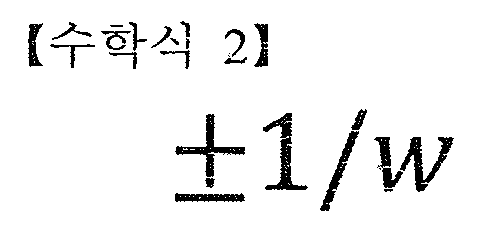
여기서, 음의 부호는 복호화를 위한 역 SubBytes를 나타낼 수 있다.Here, the negative sign may represent inverse SubBytes for decoding.
도 4로 돌아와서, 로드/저장 명령어 오버로딩에 대해 상세히 설명한다.Returning to FIG. 4, load/store instruction overloading will be described in detail.
로드/저장 명령어 오버로딩Load/store instruction overloading
앞서 설명한 것처럼, 블록 암호는 일반적으로 라운드 카운터, 라운드-키 포인터 및 중간 값 변수를 이용할 수 있다. 이러한 변수에 대한 연산도 일반적일 수 있다. 이러한 변수에 대한 로드/저장 명령어 오버로드는 두 가지 측면에서 성능을 향상시킬 수 있다.As explained above, block ciphers can generally use round counters, round-key pointers, and intermediate value variables. Operations on these variables can also be common. Overloading load/store instructions for these variables can improve performance in two ways.
먼저, 전용 버퍼(dedicated buffer)를 이용하여, 공통 블록 암호 변수(common block cipher variables)의 값에 더 빠르게 액세스할 수 있다. 실행 중인 프로그램의 데이터가 메모리에 있으면, 메모리 액세스가 매우 느릴 수 있다. 베이스 RISC-V 코어에는 메모리 대기 시간이 없는 경우 하나의 로드 명령에 대해 하나 또는 두 개의 클럭 사이클이 필요할 수 있다. 그러나 시스템 구성에 따라 사이클 수는 수십 사이클로 증가할 수 있다. 블록 암호 변수에 대한 전용 버퍼를 추가함으로써, 이 문제가 해결될 수 있다. 버퍼는 제안된 명령어 오버로딩의 도움으로 더 빠른 액세스를 위한 수단으로 이용될 수 있다. 여기서, 전용 버퍼를 데이터-버퍼라고 할 수 있다. First, by using a dedicated buffer, the values of common block cipher variables can be accessed more quickly. If the data of the running program is in memory, the memory access can be very slow. If there is no memory latency on the base RISC-V core, one or two clock cycles may be required for one load instruction. However, depending on the system configuration, the number of cycles can increase to tens of cycles. By adding a dedicated buffer for the block cipher variable, this problem can be solved. The buffer can be used as a means for faster access with the aid of the proposed instruction overloading. Here, the dedicated buffer may be referred to as a data-buffer.
앞서 설명한 것처럼, 중간 값 변수의 주소는 TextAddr 및 TextNum을 이용하여 등록되며, 이 값은 오버로드된 산술 명령어에 대한 srcFlags를 설정하는 데 이용될 수 있다. 이러한 두 Config-Buffer(다시 말해, TextAddr 및 TextNum)는 또한 중간 값 변수에 대한 데이터-버퍼인 Text0-Text7에서 중간 값 변수를 로드하거나, Text0-Text7에 중간 값 변수를 저장하기 위해 오버로드된 로드 및 저장 명령어에 이용될 수 있다. 라운드 카운터 및 라운드-키 포인터와 같은 다른 블록 암호 변수는 각각 Round 및 KeyPointer와 같은 데이터-버퍼에 상주(reside)할 수 있으며, 해당 주소는 각각 RndAddr 및 KeyAddr와 같은 추가 구성-버퍼(additional Config-Buffers)에 등록될 수 있다. 데이터-버퍼는 메모리 대기 시간에 관계없이 빠른 데이터 액세스를 제공할 수 있다. 즉, 각 데이터-버퍼에 액세스하려면 항상 하나의 클럭 사이클만 필요할 수 있다. 캐시(cache) 및 레지스터(register) 키워드를 이용하는 다른 방법도 더 빠른 데이터 액세스를 제공 할 수 있지만, 원하는 모든 변수가 항상 GPR 또는 캐시에 상주하는 것은 아니기에, 이러한 방법은 빠르고 일정한 데이터 액세스를 보장하지 않을 수 있다.As described above, the address of the intermediate value variable is registered using TextAddr and TextNum, and this value can be used to set srcFlags for overloaded arithmetic instructions. These two Config-Buffers (i.e. TextAddr and TextNum) also load intermediate value variables from Text0-Text7, which are data-buffers for intermediate value variables, or load overloaded to store intermediate value variables in Text0-Text7. And a store instruction. Other block cipher variables, such as round counters and round-key pointers, can reside in data-buffers such as Round and KeyPointer, respectively, and their addresses are additional Config-buffers such as RndAddr and KeyAddr, respectively. ) Can be registered. The data-buffer can provide fast data access regardless of memory latency. This means that accessing each data-buffer may always require only one clock cycle. Other methods using the cache and register keywords may also provide faster data access, but since not all desired variables will always reside in the GPR or cache, these methods will not guarantee fast and constant data access. I can.
일실시예에서, RndAddr는 라운드 카운터 변수가 저장된 주소를 저장하고, KeyAddr는 라운드-키 포인터가 저장된 주소를 저장할 수 있다. 예를 들어, RndAddr과 KeyAddr는 각각 4-비트를 가질 수 있다. 또한, Text0-Text7는 중간 값 변수(예컨대, 피연산자 등)를 저장하고, 예를 들어, 각각 32-비트를 가질 수 있다. Round는 라운드 카운터를 저장하고, KeyPointer는 라운트-키 포인터를 저장하고, KeyConfig는 KeyPointer의 증분(increment)(예컨대, 0, 1, -1 등)을 저장할 수 있다. 예를 들어, Round는 8-비트, KeyPointer는 32-비트, KeyConfig는 2-비트를 가질 수 있다.In one embodiment, RndAddr may store an address in which a round counter variable is stored, and KeyAddr may store an address in which a round-key pointer is stored. For example, RndAddr and KeyAddr can each have 4-bits. In addition, Text0-Text7 stores intermediate value variables (eg, operands, etc.), and may have, for example, 32-bits each. Round stores a round counter, KeyPointer stores a round-key pointer, and KeyConfig stores a KeyPointer increment (eg, 0, 1, -1, etc.). For example, Round can have 8-bits, KeyPointer can have 32-bits, and KeyConfig can have 2-bits.
둘째, 데이터-버퍼 내 데이터가 로드될 때마다 증분, 감소(decrement) 및 비교(comparison)와 같은 루틴한 연산이 자동으로 실행될 수 있다. 구체적으로는, 라운드 카운터가 읽히면 그 값은 자동으로 감소되고, 업데이트된 라운드 카운터와 0을 비교한 결과가 리턴될 수 있다. 라운드-키 포인터가 읽히면, 포인터 값 대신 지정된 값이 반환되어 로드 명령어의 개수가 1씩 줄어들 수 있다. 동시에, 포인터는 각각 암호화 및 복호화를 위해 증가 및 감소할 수 있다. 라운드-키 포인터의 증가 또는 감소를 나타내는 플래그는 추가 버퍼(additional buffer)인 KeyConfig에 저장될 수 있다. 오버로드된 로드 명령어가 실행되면, Round 및 KeyPointer와 같은 데이터-버퍼는 빠른 데이터 액세스뿐만 아니라 루틴한 연산에도 이용될 수 있다.Second, routine operations such as increment, decrement, and comparison can be automatically executed whenever data in the data-buffer is loaded. Specifically, when the round counter is read, its value is automatically decremented, and a result of comparing the updated round counter with 0 may be returned. When a round-key pointer is read, the specified value is returned instead of the pointer value, so the number of load instructions can be reduced by one. At the same time, the pointer can be incremented and decremented for encryption and decryption, respectively. A flag indicating the increase or decrease of the round-key pointer may be stored in KeyConfig which is an additional buffer. When an overloaded load instruction is executed, data-buffers such as Round and KeyPointer can be used for routine operations as well as fast data access.
도 6은 일실시예에 따른 오버로딩된 명령어에 대한 C 표현(expression)의 예시를 나타낸 도면이다.6 is a diagram illustrating an example of a C expression for an overloaded instruction according to an embodiment.
명령어 오버로딩을 이용한 AES 코드AES code using instruction overloading
AES에서 입력 일반 텍스트를 포함한 16-바이트 중간 값은
state라는 (4Х4)-바이트 배열로 처리될 수 있다.


AES의 각 라운드는 AddRoundKey, SubBytes, ShiftRows 및 MixColumns와 같은 변환으로 구성될 수 있다. AddRoundKey는 라운드 키가 있는 간단한 XOR이고, 나머지 세 가지 변환은 다음과 같다.Each round of AES can consist of transformations such as AddRoundKey, SubBytes, ShiftRows and MixColumns. AddRoundKey is a simple XOR with round key, and the other three transformations are:
SubBytes (SBs) : SubByte(


ShiftRows (SRs) : ShiftRow(


MixColumns (MCs) : MixColumn(


여기서,


정리하면, AES 변환에는 GF(2 8), XOR 및 회전에 대한 컨볼루션 및 곱셈 반전이 필요할 수 있다. 이러한 연산 중 XOR만 일반 프로세서에서 단일 명령으로 지원되는 반면, 다른 연산에는 여러 명령이 필요할 수 있다. 특히, 컨볼루션과 곱셈 반전은 계산하기가 복잡할 수 있으며, 워드-단위(word-wise)가 아닌 바이트-단위(byte-wise) 연산일 수 있다. 이러한 AES 코드에도 명령어 오버로딩을 적용시킴으로써 이런 문제들을 효과적으로 극복할 수 있다.In summary, AES transformation may require convolution and multiplication inversion for GF(2 8 ), XOR, and rotation. Of these operations, only XOR is supported as a single instruction in a general processor, while other operations may require multiple instructions. In particular, convolution and multiplication inversion may be complicated to calculate, and may be byte-wise rather than word-wise. These problems can be effectively overcome by applying instruction overloading to such AES code.
도 6을 참조하면, 일실시예에 따른 오버로드된 명령어의 확장 연산(extended operations)에 대한 매크로(macros)의 예시가 도시된다. 매크로는 C 표현(C expressions)으로 정의될 수 있다. *, / 및 <<와 같은 확장 연산을 직접 이용하기 보다 이러한 매크로를 정의함으로써, 디버깅을 지원할 수 있다. 도 6의 마지막 열에 있는 정의는 명령어 오버로드없이 일반 연산(normal operations)을 이용한 디버깅에 이용될 수 있다. 함수 SB, invSB 및 컨볼루션은 각각 선택된 워드에서 4-바이트에 대해 SubBytes, inverse SubBytes 및 컨볼루션을 수행할 수 있다. 도 6의 매크로 ROL, MLT 및 INV는 컴파일시 각각 시프트, 곱셈 및 나눗셈 명령어로 변환될 수 있다. 그러나 프로세서는 피연산자가 데이터-버퍼에서 로딩된 경우, 이러한 명령어를 각각 회전, 컨볼루션 및 SubBytes로 실행할 수 있다.Referring to FIG. 6, an example of a macro for extended operations of an overloaded instruction according to an embodiment is shown. Macros can be defined as C expressions. Debugging can be supported by defining these macros rather than using extension operations such as *, / and << directly. The definition in the last column of FIG. 6 can be used for debugging using normal operations without command overload. The functions SB, invSB, and convolution may perform SubBytes, inverse SubBytes, and convolution for 4-bytes in the selected word, respectively. The macros ROL, MLT, and INV of FIG. 6 may be converted into shift, multiplication, and division instructions at the time of compilation. However, the processor can execute these instructions as rotation, convolution and SubBytes, respectively, if the operands are loaded from the data-buffer.
도 7은 일실시예에 따른 매크로를 이용한 명령어 오버로딩을 통해 AES 코드에서 변환(transformation)의 예시를 나타낸 도면이다.7 is a diagram illustrating an example of transformation in an AES code through command overloading using a macro according to an embodiment.
도 7을 참조하면, 일실시예에 따른 매크로를 이용한 명령어 오버로딩으로 AES 코드 내 변환을 수행하는 예시로, RowCalc_SB(710), RowCalc_SB_SR(720), RowCalc_MC(730)가 도시된다.Referring to FIG. 7, as an example of performing conversion within an AES code by overloading a command using a macro according to an embodiment, RowCalc_SB (710), RowCalc_SB_SR (720), and RowCalc_MC (730) are shown.
앞서 설명한 매크로를 이용하는 AES 암호화 코드는 아래와 같을 수 있다. The AES encryption code using the aforementioned macro may be as follows.

이러한 코드는 다음과 같은 세 가지 장점이 있다. 첫째, 암호화 속도를 그대로 유지하면서 미리 계산된 테이블이 필요하지 않을 수 있다. 앞선 코드의 10~18행에서 ColumnCalc 및 ColumnCalc_Last와 같은 열 단위 매크로는 RowCalc_SB, RowCalc_SB_SR 및 RowCalc_MC와 같은 행 단위 매크로로 변경될 수 있다.This code has three advantages: First, while maintaining the encryption speed as it is, a pre-calculated table may not be necessary. Column-level macros such as ColumnCalc and ColumnCalc_Last in lines 10-18 of the preceding code can be changed to row-level macros such as RowCalc_SB, RowCalc_SB_SR, and RowCalc_MC.
이러한 매크로는 아래에서 설명할 도 8과 같이 ROL, MLT 및 INV로 정의될 수 있으며, 도 7에 도시된 것처럼
state의 각 행에 적용될 수 있다. 열-단위 배열(column-wise arrangement) 대신 행-단위 배열(row-wise arrangement)이 고려될 수 있다. 이를 통해, 확장 연산의 장점을 충분히 활용할 수 있다. 예를 들어, 3개의 ROL 연산이 한 라운드 동안 ShiftRows를 완성할 수 있다. 또한,
RowCalc_MC(730)는 하나의 MLT 연산을 이용하여 한 행의 4 바이트에 동일한 피연산자가 곱해지는 것을 나타낼 수 있다.This macro may be defined as ROL, MLT, and INV as shown in FIG. 8 to be described below, and may be applied to each row of state as shown in FIG. 7. Instead of a column-wise arrangement, a row-wise arrangement may be considered. Through this, the advantages of the expansion operation can be fully utilized. For example, 3 ROL operations can complete ShiftRows in one round. In addition, the
도 8은 일실시예에 따른 오버로딩된 명령어를 이용한 AES 변환에 대한 매크로의 예시를 나타낸 도면이다.8 is a diagram illustrating an example of a macro for AES conversion using an overloaded instruction according to an embodiment.
도 8을 참조하면, 일실시예에 따른 오버로드된 명령어를 이용한 AES 변환을 위한 매크로의 예시가 도시된다. 사전 계산된 테이블에 대한 메모리 액세스 없이도, ROL, MLT 및 INV와 같은 확장 연산을 통해 AES 변환이 빠르게 수행될 수 있다. 변환이 분리되면 while 루프의 각 반복이 한 라운드에 해당할 수 있다.Referring to FIG. 8, an example of a macro for AES conversion using an overloaded instruction according to an embodiment is shown. AES transformations can be performed quickly through extended operations such as ROL, MLT, and INV, without memory access to pre-computed tables. When the transformations are separated, each iteration of the while loop can correspond to a round.
둘째, 라운드 카운터 및 라운드-키 포인터와 관련된 C 표현이 단순화될 수 있다. 앞선 AES 암호화 코드의 5-8, 15-18 및 20-23행에서 매크로 LoadKey는 C 표현에서 로드 포인터 rk만 나타낼 수 있다. 그러나 프로세서는 실제로 rk가 가리키는 라운드 키를 로드하고, 도 6에 도시된 것 처럼 rk를 증가 또는 감소시킬 수 있다. 14행에서 매크로 LoadRound는 C 표현에서 로드 rnd만을 나타낼 수 있다. 그러나 프로세서는 실제로 rnd를 로드하고 rnd를 1씩 감소시키고, rnd = 0이면 1을 리턴할 수 있다.Second, the C representation associated with the round counter and round-key pointer can be simplified. In lines 5-8, 15-18 and 20-23 of the preceding AES encryption code, the macro LoadKey can only represent the load pointer rk in the C expression. However, the processor actually loads the round key indicated by rk, and may increase or decrease rk as shown in FIG. 6. In
셋째, 데이터-버퍼로 인해 블록 암호 변수에 대한 액세스가 빨라질 수 있다. 이것이 C 표현에는 나타나지 않지만, rnd, rk, r0-r3 및 rr0-rr3과 같은 블록 암호 변수는 메모리 대신 데이터 버퍼에 상주할 수 있다. 이것은 메모리 구성에 관계없이 블록 암호 변수에 대한 빠르고 일정한 액세스 속도를 제공할 수 있다.Third, access to block cipher variables can be faster due to the data-buffer. Although this does not appear in the C representation, block cipher variables such as rnd, rk, r0-r3, and rr0-rr3 can reside in data buffers instead of memory. This can provide a fast and constant speed of access to block cipher variables regardless of the memory configuration.
도 9는 일실시예에 따른 변수 등록(registration) 및 배포(releasing)의 예시를 나타낸 도면이다.9 is a diagram illustrating an example of variable registration and releasing according to an embodiment.
도 9를 참조하면, 일실시예에 따른 변수 등록 및 배포를 위한 매크로의 예시가 도시된다.Referring to FIG. 9, an example of a macro for registering and distributing a variable according to an embodiment is shown.
오버로드된 명령어를 이용하려면, 블록 암호 변수의 주소를 미리 구성-버퍼에 등록해야 한다. 구성-버퍼는 메모리 매핑 버퍼(memory mapped buffers)일 수 있다. 따라서 TEXT_ADDR, TEXT_NUM, RND_ADDR, KEY_ADDR 및 KEY_CONFIG와 같은 사전 정의된 포인터로 액세스될 수 있다. 포인터는 휘발성 포인터 타입으로 정의될 수 있다. 예를 들어 TEXT_ADDR은 To use the overloaded instruction, the address of the block cipher variable must be registered in the configuration-buffer in advance. The configuration-buffer may be memory mapped buffers. Therefore, it can be accessed with predefined pointers such as TEXT_ADDR, TEXT_NUM, RND_ADDR, KEY_ADDR, and KEY_CONFIG. Pointers can be defined as volatile pointer types. For example TEXT_ADDR
#define TEXT_ADDR (volatile u32 *) 0x10000000#define TEXT_ADDR (volatile u32 *) 0x10000000
으로 정의될 수 있다. 이러한 방법은 일반적으로 장치 드라이버의 주변 장치를 제어하거나 프로세서를 구성하는 데 이용될 수 있다. 예를 들어, RISC-V 코어의 제어 및 상태 등록과 ARM 코어의 시스템 제어 블록에 액세스하여 상태를 읽고 구성을 변경할 수 있다. 비슷한 접근법이 이용될 수 있다. 변수를 등록하고 해제하기 위해, 위에서 언급한 5개의 포인터를 이용하는 매크로가 도 9에 도시될 수 있다. 매크로 SetText를 이용하여 앞선 AES 암호화 코드의 r0-r3 및 rr0-rr3과 같은 중간 값 변수의 시작 주소 및 개수는 TextAddr 및 TextNum에 기록될 수 있다. 이들은 TEXT_ADDR 및 TEXT_NUM이 각각 포인팅할 수 있다. 마찬가지로, 매크로 SetRound 및 SetKeyPointer는 RND_ADDR 및 KEY_ADDR이 각각 포인팅하는 RndAddr 및 KeyAddr에 라운드 카운터 및 라운드-키 포인터의 주소를 등록하는 데 이용될 수 있다. 또한, 라운드-키 포인터는 로드될 때마다 자동으로 증가 또는 감소하며 매크로 SetKeyPointer에는 KEY_CONFIG가 포인팅하는 KeyConfig에 증가 또는 감소를 나타내는 플래그를 쓰는 것도 포함될 수 있다. 등록 후, 등록된 변수의 로드 및 저장은 매크로 ReleaseAddr을 이용하여 이러한 변수가 해제될 때까지 메모리 대신 프로세서 내의 데이터 버퍼에서만 발생할 수 있다. 이러한 매크로의 정의는 TEXT_NUM을 0으로만 재설정하지만, 프로세서는 실제로 등록된 모든 변수를 해제할 수 있다.Can be defined as This method can be used to configure the processor or control peripheral devices of the device driver in general. For example, you can access the control and state registration of the RISC-V core and the system control block of the ARM core to read the state and change the configuration. A similar approach can be used. A macro using the five pointers mentioned above to register and release variables can be shown in FIG. 9. Using the macro SetText, the starting address and number of intermediate value variables such as r0-r3 and rr0-rr3 of the preceding AES encryption code can be recorded in TextAddr and TextNum. These can be pointed by TEXT_ADDR and TEXT_NUM, respectively. Likewise, the macros SetRound and SetKeyPointer can be used to register the addresses of the round counter and round-key pointer in RndAddr and KeyAddr to which RND_ADDR and KEY_ADDR point respectively. In addition, the round-key pointer automatically increases or decreases each time it is loaded, and the macro SetKeyPointer may include writing a flag indicating increase or decrease in the KeyConfig pointed by KEY_CONFIG. After registration, loading and saving of registered variables can only occur in the data buffer in the processor instead of in memory until these variables are released using the macro ReleaseAddr. The definition of these macros resets TEXT_NUM to 0 only, but the processor can actually release all registered variables.
다중 블록 암호(Multiple Block Ciphers)를 위한 명령어 오버로딩Command overloading for multiple block ciphers
SM4, SEED 및 ARIA와 같은 몇 가지 최신 블록 암호는 GF(2 8) 이상의 연산을 이용하여 설계될 수 있다. 이러한 암호의 주요 공통 연산은 컨볼루션과 곱셈 반전일 수 있다. 그러나 축소 다항식은 암호마다 다를 수 있다. 따라서, 다양한 블록 암호를 지원하기 위해서는 임의의 축소 다항식(arbitrary reduction polynomial)을 가지는 곱셈 반전이 필요하다. 이러한 기능은 유연한 S-box 구현에 특히 유용할 수 있다. 이처럼 GF(2 8)에 정의된 더 넓은 범위의 블록 암호를 지원하기 위해 명령어 오버로드가 적용될 수 있다.Some modern block ciphers, such as SM4, SEED and ARIA, can be designed using GF(2 8 ) and higher operations. The main common operations of these ciphers can be convolution and multiplication inversion. However, the reduction polynomial may differ from cipher to cipher. Therefore, in order to support various block ciphers, multiplication reversal with an arbitrary reduction polynomial is required. These features can be particularly useful for flexible S-box implementations. In this way, command overload can be applied to support a wider range of block ciphers defined in GF(2 8 ).
피연산자의 srcFlag 비트가 1일 때 곱셈 반전을 수행할 수 있도록, 나누기(/) 명령어의 확장이 재정의될 수 있다. 곱셈 반전에 대한 해당 C 표현은 다음과 같다.When the srcFlag bit of the operand is 1, the extension of the division (/) instruction can be redefined so that multiplication inversion can be performed. The corresponding C expression for multiplication inversion is:

여기서, 0x1A
1A
0은 GF(2
8)에 대한 축소 다항식일 수 있다. 다시 말해,


재정의된 나눗셈 명령어의 경우, 도 6의 디버깅을 위한 매크로 INV의 정의는 암호화 또는 복호화에 관계없이 축소 다항식 n을 이용하여 곱셈 반전으로 변경되어야 할 수 있다. 수학식 1의 컨볼루션과 수학식 5의 곱셈 반전을 결합하여 도 8의 RowCalc_SB(r)은 ((0x11B/r)*A)^C)로 다시 정의되며, 여기서 A=0x1F101000이고 C=0x63636363일 수 있다. 이것은 수학식 2의 SubBytes를 4 바이트의 행에 적용하는 것과 같을 수 있다. 오버로드된 곱셈 명령어 수학식 1은 이미 임의 축소 다항식을 지원할 수 있다.In the case of the redefined division instruction, the definition of the macro INV for debugging of FIG. 6 may have to be changed to multiplication inversion using the reduced polynomial n regardless of encryption or decryption. By combining the convolution of
이제 SM4에 오버로드된 명령을 이용하는 예를 제시할 수 있다. SM4의 SubBytes는 다음과 같이 정의될 수 있다.Now, we can give an example of using the overloaded command in SM4. SubBytes of SM4 can be defined as follows.

여기서 0x1F5 및 0x101은 각각 곱셈 반전 및 컨볼루션에 대한 축소 다항식일 수 있다. 따라서 SM4에서 선택한 워드의 4 바이트에 대한 SubBytes는 ((((0x1F5/((r*A)^C))*A)^C)로 정의될 수 있다. 여기서 A=0xCB101000이고, C=0xD3D3D3D3일 수 있다. AES 및 SM4의 inverse SubBytes는 곱셈 반전을 이용하여 유사하게 정의될 수 있다. 즉, 오버로드된 나눗셈 명령어는 암호화 및 복호화에 동일한 곱셈 반전 논리 회로를 필요로 할 수 있다.Here, 0x1F5 and 0x101 may be reduced polynomials for multiplication inversion and convolution, respectively. Therefore, SubBytes for 4 bytes of the word selected in SM4 can be defined as ((((0x1F5/((r*A)^C))*A)^C), where A=0xCB101000 and C=0xD3D3D3D3 The inverse SubBytes of AES and SM4 can be similarly defined using multiplication inversion, ie, an overloaded division instruction may require the same multiplication inversion logic circuit for encryption and decryption.
도 10은 일실시예에 따른 마스킹을 통한 역수(inversion)의 예시를 나타낸 도면이다.10 is a diagram illustrating an example of inversion through masking according to an embodiment.
마스킹을 위한 명령어 오버로딩Instruction overloading for masking
전력 분석 공격은 키와 관련된 암호화 연산 중에 수집된 전력 소비 추적을 통계적으로 분석하여 비밀 키를 복구하는 기술일 수 있다. 마스킹은 이러한 공격으로부터 블록 암호를 보호하는 대책일 수 있다. 이는 암호화 연산에 이용되는 민감한 중간 변수를 마스크라고하는 랜덤마이저(randomizers)를 이용하여 공유로 나누는 비밀 공유 기법(secret sharing technique)일 수 있다.The power analysis attack may be a technique for recovering a secret key by statistically analyzing power consumption tracking collected during an encryption operation related to a key. Masking can be a measure to protect block ciphers from such attacks. This may be a secret sharing technique in which a sensitive intermediate variable used for encryption operation is divided into sharing using randomizers called masks.
하드웨어 마스킹 기능을 프로세서에 추가하기 위해, 다음 4 가지 요소가 고려될 수 있다. 난수 생성기(random number generator); 마스크 값을 위한 버퍼(buffers for mask values); 로딩 및 저장 장치의 확장(extension of load and store units); 마스킹된 연산을 위한 ALU, 곱셈기 및 제산기의 확장.To add hardware masking functionality to the processor, the following four factors can be considered. Random number generator; Buffers for mask values; Extension of load and store units; Extensions of ALU, multiplier and divider for masked operations.
먼저, 마스크 값이 무작위로 설정되어 전력 분석 공격에 강해야 할 수 있다. TRNG(true random number generator)가 이용되는데, 그 생성된 난수 시퀀스는 NIST(National Institute of Standards and Technology) random test suites를 통과할 수 있다. 4 쌍의 TRNG와 8-비트 선형 피드백 시프트 등록(LFSR; linear feedback shift register)에 의해 생성된 32 비트 난수는 일반 워드가 Text0-Text7에 처음 저장될 때 및 마스크된 연산 중 현재 마스크 값이 새로운 값으로 업데이트될 때 초기 마스크 값으로 이용될 수 있다.First, the mask value may be randomly set to be resistant to power analysis attacks. A true random number generator (TRNG) is used, and the generated random number sequence may pass through NIST (National Institute of Standards and Technology) random test suites. The 32-bit random number generated by 4 pairs of TRNGs and 8-bit linear feedback shift register (LFSR) is the new value when the normal word is first stored in Text0-Text7 and during the masked operation. When updated to, it can be used as the initial mask value.
둘째, 마스크 값을 유지하기 위해, GPR에서 Text0-Text7 및 a0-a7에 각각 연결된 TextMask0-TextMask7 및 GprMask0-GprMask7을 포함하는 Mask-Buffers라는 버퍼가 추가될 수 있다. 마스크 값은 MaskBuffers에 저장되며, 이 값을 이용하면 해당 Text0-Text7 및 a0-a7의 값이 XOR-마스크될 수 있다.Second, in order to maintain the mask value, a buffer called Mask-Buffers including TextMask0-TextMask7 and GprMask0-GprMask7 connected to Text0-Text7 and a0-a7, respectively, in the GPR may be added. The mask value is stored in MaskBuffers, and if this value is used, the corresponding Text0-Text7 and a0-a7 values can be XOR-masked.
셋째, 로드 및 저장 명령어가 마스크 값의 전송을 지원하도록 재정의될 수 있다. 즉, Text0-Text7과 a0-a7간에 마스킹된 값을 전송할 때, 오버로드된 로드 및 저장 명령은 TextMask0-TextMask7과 GprMask0-GprMask7간에 해당 마스크를 전송할 수 있다.Third, load and store instructions can be redefined to support the transfer of mask values. That is, when transmitting a masked value between Text0-Text7 and a0-a7, the overloaded load and store command may transmit a corresponding mask between TextMask0-TextMask7 and GprMask0-GprMask7.
마지막으로, AES, SM4 및 SIMON에 대한 마스킹된 연산을 지원하기 위해, 곱셈 반전(/), AND(&), 컨볼루션(*), 회전(<<) 및 XOR(^)의 5 가지 연산 실행이 수정될 수 있다. Finally, to support masked operations for AES, SM4 and SIMON, 5 operations are executed: multiplication inversion (/), AND (&), convolution (*), rotation (<<), and XOR(^). This can be modified.
첫 번째 수정된 명령어는 오버로드된 나누기 명령어, 즉 곱셈 반전일 수 있다. 마스킹 방법은 도 10에 도시된다. 여기서


변경할 두 번째 명령어는 AND일 수 있다.


도 11은 일실시예에 따른 프로세서의 동작 방법을 나타낸 도면이다.11 is a diagram illustrating a method of operating a processor according to an embodiment.
단계(1110)에서, 프로세서는 제1 연산의 수행을 명령하는 명령어와 명령어에 대응하는 피연산자의 주소 정보를 확인한다. 예를 들어, 피연산자는 프로세서에 연결된 메모리로부터 로딩되어 프로세서 내 전용 버퍼에 저장되고, 피연산자의 주소 정보는 피연산자가 저장된 전용 버퍼 내 주소를 나타낼 수 있다. 피연산자의 주소 정보가 미리 정해진 조건을 만족하는 경우, 피연산자는 프로세서 내 데이터-버퍼에 저장되고, 피연산자의 주소 정보는 프로세서 내 구성-버퍼에 저장될 수 있다. 구성-버퍼는 메모리 매핑 버퍼일 수 있다.In
단계(1120)에서, 프로세서는 피연산자의 주소 정보가 미리 정해진 조건을 만족하는지 여부에 기초하여 명령어를 실행한다. 프로세서는 피연산자의 주소 정보가 미리 정해진 조건을 만족하면 명령어에 설정된 제2 연산을 피연산자에 대해 실행하고, 피연산자의 주소 정보가 미리 정해진 조건을 만족하지 않는다면 제1 연산을 피연산자에 대해 실행한다. In
예를 들어, 미리 정해진 조건은 피연산자의 주소 정보가 미리 설정된 주소 범위에 속하는지 여부에 대응할 수 있다. 여기서, 제1 연산은 프로세서에서 제2 연산보다 적게 실행되는 연산일 수 있다. 미리 정해진 조건에 따른 주소 범위는 명령어가 실행되기 전에 프로세서에 미리 등록될 수 있다. 제2 연산은 프로세서의 ISA에 포함되지 않은 연산일 수 있다. For example, the predetermined condition may correspond to whether the address information of the operand belongs to a preset address range. Here, the first operation may be an operation performed by the processor less than the second operation. The address range according to the predetermined condition may be registered in advance in the processor before the instruction is executed. The second operation may be an operation not included in the ISA of the processor.
피연산자의 주소 정보가 미리 정해진 조건을 만족하는지 여부는 프로세서 내 범용 레지스터에 연결된 플래그 정보로 표현될 수 있다. 피연산자의 주소 정보가 미리 정해진 조건을 만족하는 경우, 프로세서의 동작에서 이용되는 라운드 카운터 및 라운드-키 포인터는 프로세서 내 데이터-버퍼에 저장되고, 라운드 카운터의 주소 정보 및 라운드-키 포인터의 주소 정보는 프로세서 내 구성-버퍼에 저장될 수 있다.Whether the address information of the operand satisfies a predetermined condition may be expressed by flag information connected to a general-purpose register in the processor. When the address information of the operand satisfies a predetermined condition, the round counter and round-key pointer used in the operation of the processor are stored in the data-buffer in the processor, and the address information of the round counter and the address information of the round-key pointer are In-processor configuration-can be stored in a buffer.
도 11에 도시된 각 단계들에는 도 1 내지 도 10을를 통하여 전술한 사항들이 그대로 적용되므로, 보다 상세한 설명은 생략한다.Since the above-described matters through FIGS. 1 to 10 are applied to each of the steps shown in FIG. 11 as they are, a more detailed description will be omitted.
실시예에 따른 방법은 다양한 컴퓨터 수단을 통하여 수행될 수 있는 프로그램 명령 형태로 구현되어 컴퓨터 판독 가능 매체에 기록될 수 있다. 상기 컴퓨터 판독 가능 매체는 프로그램 명령, 데이터 파일, 데이터 구조 등을 단독으로 또는 조합하여 포함할 수 있다. 상기 매체에 기록되는 프로그램 명령은 실시예를 위하여 특별히 설계되고 구성된 것들이거나 컴퓨터 소프트웨어 당업자에게 공지되어 사용 가능한 것일 수도 있다. 컴퓨터 판독 가능 기록 매체의 예에는 하드 디스크, 플로피 디스크 및 자기 테이프와 같은 자기 매체(magnetic media), CD-ROM, DVD와 같은 광기록 매체(optical media), 플롭티컬 디스크(floptical disk)와 같은 자기-광 매체(magneto-optical media), 및 롬(ROM), 램(RAM), 플래시 메모리 등과 같은 프로그램 명령을 저장하고 수행하도록 특별히 구성된 하드웨어 장치가 포함된다. 프로그램 명령의 예에는 컴파일러에 의해 만들어지는 것과 같은 기계어 코드뿐만 아니라 인터프리터 등을 사용해서 컴퓨터에 의해서 실행될 수 있는 고급 언어 코드를 포함한다. 상기된 하드웨어 장치는 실시예의 동작을 수행하기 위해 하나 이상의 소프트웨어 모듈로서 작동하도록 구성될 수 있으며, 그 역도 마찬가지이다.The method according to the embodiment may be implemented in the form of program instructions that can be executed through various computer means and recorded in a computer-readable medium. The computer-readable medium may include program instructions, data files, data structures, etc. alone or in combination. The program instructions recorded on the medium may be specially designed and configured for the embodiment, or may be known and usable to those skilled in computer software. Examples of computer-readable recording media include magnetic media such as hard disks, floppy disks, and magnetic tapes, optical media such as CD-ROMs and DVDs, and magnetic media such as floptical disks. -A hardware device specially configured to store and execute program instructions such as magneto-optical media, and ROM, RAM, flash memory, and the like. Examples of program instructions include not only machine language codes such as those produced by a compiler but also high-level language codes that can be executed by a computer using an interpreter or the like. The hardware device described above may be configured to operate as one or more software modules to perform the operation of the embodiment, and vice versa.
소프트웨어는 컴퓨터 프로그램(computer program), 코드(code), 명령(instruction), 또는 이들 중 하나 이상의 조합을 포함할 수 있으며, 원하는 대로 동작하도록 처리 장치를 구성하거나 독립적으로 또는 결합적으로(collectively) 처리 장치를 명령할 수 있다. 소프트웨어 및/또는 데이터는, 처리 장치에 의하여 해석되거나 처리 장치에 명령 또는 데이터를 제공하기 위하여, 어떤 유형의 기계, 구성요소(component), 물리적 장치, 가상 장치(virtual equipment), 컴퓨터 저장 매체 또는 장치, 또는 전송되는 신호 파(signal wave)에 영구적으로, 또는 일시적으로 구체화(embody)될 수 있다. 소프트웨어는 네트워크로 연결된 컴퓨터 시스템 상에 분산되어서, 분산된 방법으로 저장되거나 실행될 수도 있다. 소프트웨어 및 데이터는 하나 이상의 컴퓨터 판독 가능 기록 매체에 저장될 수 있다.The software may include a computer program, code, instructions, or a combination of one or more of these, configuring the processing unit to behave as desired or processed independently or collectively. You can command the device. Software and/or data may be interpreted by a processing device or to provide instructions or data to a processing device, of any type of machine, component, physical device, virtual equipment, computer storage medium or device. , Or may be permanently or temporarily embodyed in a transmitted signal wave. The software may be distributed over networked computer systems and stored or executed in a distributed manner. Software and data may be stored on one or more computer-readable recording media.
이상과 같이 실시예들이 비록 한정된 도면에 의해 설명되었으나, 해당 기술분야에서 통상의 지식을 가진 자라면 상기를 기초로 다양한 기술적 수정 및 변형을 적용할 수 있다. 예를 들어, 설명된 기술들이 설명된 방법과 다른 순서로 수행되거나, 및/또는 설명된 시스템, 구조, 장치, 회로 등의 구성요소들이 설명된 방법과 다른 형태로 결합 또는 조합되거나, 다른 구성요소 또는 균등물에 의하여 대치되거나 치환되더라도 적절한 결과가 달성될 수 있다.As described above, although the embodiments have been described by the limited drawings, a person of ordinary skill in the art can apply various technical modifications and variations based on the above. For example, the described techniques are performed in a different order from the described method, and/or components such as a system, structure, device, circuit, etc. described are combined or combined in a form different from the described method, or other components Alternatively, even if substituted or substituted by an equivalent, an appropriate result can be achieved.
그러므로, 다른 구현들, 다른 실시예들 및 특허청구범위와 균등한 것들도 후술하는 청구범위의 범위에 속한다.Therefore, other implementations, other embodiments and claims and equivalents fall within the scope of the following claims.
Claims (19)
Priority Applications (2)
| Application Number | Priority Date | Filing Date | Title |
|---|---|---|---|
| GB2202306.3A GB2601666B (en) | 2019-08-06 | 2020-08-06 | Processor, processor operation method and electronic device comprising same |
| US17/630,892 US11886879B2 (en) | 2019-08-06 | 2020-08-06 | Processor, processor operation method and electronic device comprising same for selective instruction execution based on operand address |
Applications Claiming Priority (6)
| Application Number | Priority Date | Filing Date | Title |
|---|---|---|---|
| KR20190095684 | 2019-08-06 | ||
| KR10-2019-0095684 | 2019-08-06 | ||
| KR10-2020-0006817 | 2020-01-07 | ||
| KR20200006817 | 2020-01-17 | ||
| KR10-2020-0098056 | 2020-08-05 | ||
| KR1020200098056A KR20210018130A (en) | 2019-08-06 | 2020-08-05 | Processor, method for operating the same, and electronic device including the same |
Publications (1)
| Publication Number | Publication Date |
|---|---|
| WO2021025490A1 true WO2021025490A1 (en) | 2021-02-11 |
Family
ID=74503523
Family Applications (1)
| Application Number | Title | Priority Date | Filing Date |
|---|---|---|---|
| PCT/KR2020/010414 Ceased WO2021025490A1 (en) | 2019-08-06 | 2020-08-06 | Processor, processor operation method and electronic device comprising same |
Country Status (3)
| Country | Link |
|---|---|
| US (1) | US11886879B2 (en) |
| GB (1) | GB2601666B (en) |
| WO (1) | WO2021025490A1 (en) |
Families Citing this family (1)
| Publication number | Priority date | Publication date | Assignee | Title |
|---|---|---|---|---|
| US12340222B2 (en) | 2023-09-27 | 2025-06-24 | Apple Inc. | Processor operand management using fusion buffer |
Citations (5)
| Publication number | Priority date | Publication date | Assignee | Title |
|---|---|---|---|---|
| KR20040101215A (en) * | 2002-01-31 | 2004-12-02 | 에이알씨 인터내셔널 | Configurable data processor with multi-length instruction set architecture |
| US7631166B1 (en) * | 2005-11-01 | 2009-12-08 | Zilog, Inc. | Processing instruction without operand by inferring related operation and operand address from previous instruction for extended precision computation |
| KR20100082748A (en) * | 2007-03-14 | 2010-07-19 | 인텔 코오퍼레이션 | Performing aes encryption or decryption in multiple modes with a single instruction |
| KR20160046149A (en) * | 2014-10-20 | 2016-04-28 | 삼성전자주식회사 | Method and apparatus for data processing |
| KR101867219B1 (en) * | 2017-02-22 | 2018-06-12 | 연세대학교 산학협력단 | Apparatus and method for processing differential memory operations based on dynamic memory interface |
Family Cites Families (13)
| Publication number | Priority date | Publication date | Assignee | Title |
|---|---|---|---|---|
| US8819399B1 (en) * | 2009-07-31 | 2014-08-26 | Google Inc. | Predicated control flow and store instructions for native code module security |
| CN104040510B (en) * | 2011-12-21 | 2017-05-17 | 英特尔公司 | Computing device with secure direct memory access and corresponding method |
| DE102013203365A1 (en) * | 2013-02-28 | 2014-08-28 | Siemens Aktiengesellschaft | Method and circuit arrangement for controlled accesses to slave units in a one-chip system |
| US9547493B2 (en) * | 2013-10-03 | 2017-01-17 | Synopsys, Inc. | Self-timed user-extension instructions for a processing device |
| US9514083B1 (en) * | 2015-12-07 | 2016-12-06 | International Business Machines Corporation | Topology specific replicated bus unit addressing in a data processing system |
| US11106464B2 (en) * | 2016-08-13 | 2021-08-31 | Intel Corporation | Apparatuses, methods, and systems for access synchronization in a shared memory |
| US10452288B2 (en) * | 2017-01-19 | 2019-10-22 | International Business Machines Corporation | Identifying processor attributes based on detecting a guarded storage event |
| JP2019095952A (en) * | 2017-11-21 | 2019-06-20 | ソニーセミコンダクタソリューションズ株式会社 | Processor, information processing device and processing method |
| US11580234B2 (en) * | 2019-06-29 | 2023-02-14 | Intel Corporation | Implicit integrity for cryptographic computing |
| US12282567B2 (en) * | 2019-06-29 | 2025-04-22 | Intel Corporation | Cryptographic computing using encrypted base addresses and used in multi-tenant environments |
| US11403234B2 (en) * | 2019-06-29 | 2022-08-02 | Intel Corporation | Cryptographic computing using encrypted base addresses and used in multi-tenant environments |
| US11580035B2 (en) * | 2020-12-26 | 2023-02-14 | Intel Corporation | Fine-grained stack protection using cryptographic computing |
| US11669625B2 (en) * | 2020-12-26 | 2023-06-06 | Intel Corporation | Data type based cryptographic computing |
-
2020
- 2020-08-06 WO PCT/KR2020/010414 patent/WO2021025490A1/en not_active Ceased
- 2020-08-06 US US17/630,892 patent/US11886879B2/en active Active
- 2020-08-06 GB GB2202306.3A patent/GB2601666B/en active Active
Patent Citations (5)
| Publication number | Priority date | Publication date | Assignee | Title |
|---|---|---|---|---|
| KR20040101215A (en) * | 2002-01-31 | 2004-12-02 | 에이알씨 인터내셔널 | Configurable data processor with multi-length instruction set architecture |
| US7631166B1 (en) * | 2005-11-01 | 2009-12-08 | Zilog, Inc. | Processing instruction without operand by inferring related operation and operand address from previous instruction for extended precision computation |
| KR20100082748A (en) * | 2007-03-14 | 2010-07-19 | 인텔 코오퍼레이션 | Performing aes encryption or decryption in multiple modes with a single instruction |
| KR20160046149A (en) * | 2014-10-20 | 2016-04-28 | 삼성전자주식회사 | Method and apparatus for data processing |
| KR101867219B1 (en) * | 2017-02-22 | 2018-06-12 | 연세대학교 산학협력단 | Apparatus and method for processing differential memory operations based on dynamic memory interface |
Also Published As
| Publication number | Publication date |
|---|---|
| GB202202306D0 (en) | 2022-04-06 |
| US11886879B2 (en) | 2024-01-30 |
| GB2601666B (en) | 2023-04-26 |
| GB2601666A (en) | 2022-06-08 |
| US20220283814A1 (en) | 2022-09-08 |
Similar Documents
| Publication | Publication Date | Title |
|---|---|---|
| US12261941B2 (en) | Creating, using, and managing protected cryptography keys | |
| US12238217B2 (en) | Apparatuses, methods, and systems for instructions for usage restrictions cryptographically tied with data | |
| US20200134234A1 (en) | Binding of cryptographic operations to context or speculative execution restrictions | |
| CN107851170B (en) | Supporting configurable security levels for memory address ranges | |
| US8103860B2 (en) | Optional function multi-function instruction | |
| EP3958160A1 (en) | Encoded inline capabilities | |
| CN113485752B (en) | Instructions and logic to provide SIMD SM4 cryptographic block cipher functionality | |
| RU2637463C2 (en) | Command and logic of providing functional capabilities of cipher protected hashing cycle | |
| CN112543095B (en) | System, device, method, processor, medium and electronic device for processing instructions | |
| EP4109312B1 (en) | Circuitry and methods for supporting encrypted remote direct memory access (erdma) for live migration of a virtual machine | |
| CN112149154A (en) | Cryptographic computation using encrypted base addresses and for multi-tenant environments | |
| US20220343029A1 (en) | Stateless and low-overhead domain isolation using cryptographic computing | |
| US20170063532A1 (en) | Efficient sharing of hardware encryption pipeline for multiple security solutions | |
| US12216922B2 (en) | Updating encrypted security context in stack pointers for exception handling and tight bounding of on-stack arguments | |
| CN105204820B (en) | Instructions and logic for providing generic GF(256) SIMD cryptographic arithmetic functions | |
| JP7615549B2 (en) | Processors with private pipelines | |
| CN112149118A (en) | Processor instruction support to mitigate managed channel and cache-based side channel attacks | |
| US12093432B2 (en) | Techniques and technologies to address malicious single-stepping and zero-stepping of trusted execution environments | |
| CN108027864A (en) | Biaffine-mapped s-box hardware accelerator | |
| TWI828934B (en) | Processor, method for operating the same, and electronic device including the same | |
| EP4020274A1 (en) | Apparatuses, methods, and systems for instructions to allow trusted execution environments to react to asynchronous exits | |
| US20250036751A1 (en) | Apparatus and method to prevent single- and zero-stepping of trusted execution environments | |
| WO2021025490A1 (en) | Processor, processor operation method and electronic device comprising same | |
| EP2889755A2 (en) | Systems, apparatuses, and methods for expand and compress | |
| US20240015004A1 (en) | Hardware-based key generation and storage for cryptographic function |
Legal Events
| Date | Code | Title | Description |
|---|---|---|---|
| 121 | Ep: the epo has been informed by wipo that ep was designated in this application |
Ref document number: 20850993 Country of ref document: EP Kind code of ref document: A1 |
|
| NENP | Non-entry into the national phase |
Ref country code: DE |
|
| ENP | Entry into the national phase |
Ref document number: 202202306 Country of ref document: GB Kind code of ref document: A Free format text: PCT FILING DATE = 20200806 |
|
| 122 | Ep: pct application non-entry in european phase |
Ref document number: 20850993 Country of ref document: EP Kind code of ref document: A1 |