WO2020206841A1 - Fruit and vegetable fresh-keeping process design method and application thereof - Google Patents
Fruit and vegetable fresh-keeping process design method and application thereof Download PDFInfo
- Publication number
- WO2020206841A1 WO2020206841A1 PCT/CN2019/092046 CN2019092046W WO2020206841A1 WO 2020206841 A1 WO2020206841 A1 WO 2020206841A1 CN 2019092046 W CN2019092046 W CN 2019092046W WO 2020206841 A1 WO2020206841 A1 WO 2020206841A1
- Authority
- WO
- WIPO (PCT)
- Prior art keywords
- preservation
- fruit
- vegetable
- design method
- process design
- Prior art date
- Legal status (The legal status is an assumption and is not a legal conclusion. Google has not performed a legal analysis and makes no representation as to the accuracy of the status listed.)
- Ceased
Links
Images


Classifications
-
- A—HUMAN NECESSITIES
- A23—FOODS OR FOODSTUFFS; TREATMENT THEREOF, NOT COVERED BY OTHER CLASSES
- A23B—PRESERVATION OF FOODS, FOODSTUFFS OR NON-ALCOHOLIC BEVERAGES; CHEMICAL RIPENING OF FRUIT OR VEGETABLES
- A23B7/00—Preservation of fruit or vegetables; Chemical ripening of fruit or vegetables
-
- A—HUMAN NECESSITIES
- A23—FOODS OR FOODSTUFFS; TREATMENT THEREOF, NOT COVERED BY OTHER CLASSES
- A23B—PRESERVATION OF FOODS, FOODSTUFFS OR NON-ALCOHOLIC BEVERAGES; CHEMICAL RIPENING OF FRUIT OR VEGETABLES
- A23B7/00—Preservation of fruit or vegetables; Chemical ripening of fruit or vegetables
- A23B7/14—Preserving or ripening with chemicals not covered by group A23B7/08 or A23B7/10
- A23B7/144—Preserving or ripening with chemicals not covered by group A23B7/08 or A23B7/10 in the form of gases, e.g. fumigation; Compositions or apparatus therefor
-
- G—PHYSICS
- G06—COMPUTING OR CALCULATING; COUNTING
- G06F—ELECTRIC DIGITAL DATA PROCESSING
- G06F30/00—Computer-aided design [CAD]
- G06F30/20—Design optimisation, verification or simulation
-
- G—PHYSICS
- G06—COMPUTING OR CALCULATING; COUNTING
- G06Q—INFORMATION AND COMMUNICATION TECHNOLOGY [ICT] SPECIALLY ADAPTED FOR ADMINISTRATIVE, COMMERCIAL, FINANCIAL, MANAGERIAL OR SUPERVISORY PURPOSES; SYSTEMS OR METHODS SPECIALLY ADAPTED FOR ADMINISTRATIVE, COMMERCIAL, FINANCIAL, MANAGERIAL OR SUPERVISORY PURPOSES, NOT OTHERWISE PROVIDED FOR
- G06Q50/00—Information and communication technology [ICT] specially adapted for implementation of business processes of specific business sectors, e.g. utilities or tourism
- G06Q50/02—Agriculture; Fishing; Forestry; Mining
Definitions
- the invention belongs to the technical field of fruit and vegetable preservation, and specifically relates to a fruit and vegetable preservation process design method, and further discloses the application of the design method in the field of preparing physical fruit and vegetable preservation materials.
- Fruits and vegetables are natural nutritious foods that contain a variety of nutrients needed for human life.
- fruit planting has strong seasonality and regionality, and due to the perishability of the fruit itself, this contradicts the diverse needs of consumers for fruit and the urgency of off-season regulation.
- the annual output loss of fruits is nearly 30%, causing a lot of economic losses.
- the harvested fruits and vegetables are still living organisms, they will still carry out complex life activities such as dormancy, water evaporation, respiration, etc., and still maintain the metabolism of O 2 consumption, CO 2 and C 2 H 4 emission.
- Fruit metabolism is a complex process of a series of enzymatic reactions such as glycolysis, tricarboxylic acid cycle (TCA) and electron transport chain. These activities are closely related to the preservation of fruits, and affect and restrict the storage life of fruits.
- the external factors that affect the metabolic activity and storage effect of fruits mainly include temperature, humidity, and gas composition.
- Temperature will affect the physical, biochemical and mutagenic reactions in fruit storage, and is an important factor in determining the quality of fruit storage. Low temperature can inhibit fruit respiration and some other metabolic processes, and can reduce the kinetic energy of water molecules, so that the evaporation rate of liquid water is reduced, thereby delaying aging and keeping the fruit fresh and full.
- the optimal storage temperature of different varieties of fruits shows great differences. For most fruits, under the premise of no chilling or freezing damage, using the lowest possible temperature can promote fruit storage stability and extend shelf life.
- Humidity As the process of absorbing water from the roots of the harvested fruit is terminated, the loss of water in the fruit can cause changes in structure, texture and surface. Therefore, reducing water loss plays a key role in maintaining the freshness and quality of the fruit. Reducing the water loss of fruit after harvesting mainly depends on the difference in water vapor pressure between the fruit and the surrounding environment and the resistance of the fruit surface and internal tissues to water evaporation. Relative humidity is an important factor affecting the quality of fruit storage, it will be affected by temperature and air flow rate. In addition, the control of humidity during storage must not only consider its impact on storage quality, but also its impact on microbial activities.
- Gas composition The metabolism of plant cells is mainly oxidation and reduction reactions. Among them, the utilization rate of oxygen determines the rate of metabolism, thereby affecting the quality of fruit storage. Changing the gas composition in the surrounding environment, such as reducing oxygen content and increasing carbon dioxide, can slow down metabolism. For the storage of fruits, there are antagonistic and synergistic effects between suitable temperature, carbon dioxide and oxygen, and the interaction between them is far stronger than the single effect of a certain factor.
- the technical methods adopted in the field of fruit preservation at home and abroad mainly include physical preservation and chemical preservation.
- each type of preservation technology relies on different preservation principles, it mainly adopts three major factors that play a key role in preservation quality.
- the elements are regulated: the first is to control the aging process, which is generally achieved through the control of respiration; the second is to control microorganisms, which is mainly achieved through the control of spoilage bacteria; the third is to control internal water evaporation, mainly through the relative humidity of the environment The control and the structuring of intercellular moisture are achieved.
- the more advanced preservation technologies mainly include critical low temperature and high humidity preservation, structured atmosphere preservation of intercellular water, ozone atmosphere preservation, low-dose radiation pretreatment preservation, high-pressure preservation, genetic engineering preservation, cell turbulence control preservation, coating Film preservation, modified atmosphere preservation, etc.
- critical low temperature and high humidity preservation structured atmosphere preservation of intercellular water
- ozone atmosphere preservation low-dose radiation pretreatment preservation
- high-pressure preservation high-pressure preservation
- genetic engineering preservation cell turbulence control preservation
- coating Film preservation modified atmosphere preservation, etc.
- the technical problem to be solved by the present invention is to provide a method for designing the fresh-keeping technology of fruits and vegetables to solve the problem of insufficient theoretical guidance on the fresh-keeping technology of fruits and vegetables in the prior art;
- the second technical problem to be solved by the present invention is to provide the application of the above design method in the field of preparing physical fresh-keeping materials for fruits and vegetables.
- the method for designing fresh-keeping processes for fruits and vegetables includes the steps of establishing fresh-keeping factor equations between activity data of different types of fruits and vegetables and various fresh-keeping factors, and based on the fresh-keeping factor equations Steps to calculate the optimal preservation factors and preservation parameters of different types of fruits and vegetables;
- the preservation factors include temperature, humidity, oxygen concentration, nitrogen concentration, carbon dioxide concentration, and/or ethylene concentration.
- the activity data includes respiration rate, respiration entropy and/or enzyme activity.
- the preservation factor equation is specifically:
- the invention also discloses the application of the fruit and vegetable preservation process design method in the technical field of fruit and vegetable preservation.
- the invention also discloses the application of the fruit and vegetable preservation process design method in the field of preparing physical fruit and vegetable preservation materials.
- the invention also discloses a fruit and vegetable preservation process, which includes the steps of obtaining optimal preservation factors and preservation parameters through the fruit and vegetable preservation process design method.
- the invention also discloses a physical fruit and vegetable preservation material, which is characterized in that the preservation material is prepared based on the optimal preservation factors and preservation parameters obtained by the fruit and vegetable preservation process design method.
- the material is a smart double-permeable membrane prepared based on the following thermodynamic equations using thermodynamic dialysis theory;
- F 2 f(T, P 1 , P 2 , P 3 ... H 2 O);
- F 3 f(M 1 , M 2 , M 3 , M 4 ,).
- the fruit and vegetable preservation process design method of the present invention creatively explores the quantitative relationship between the activity of different types of fruits and each preservation factor through a large number of data tests and mathematical statistics, and forms the theoretical basis for the fruit and vegetable preservation process design, which is different varieties and traits Finding the right way to preserve fresh fruits provides theoretical guidance, which has important guiding significance for the design of fruit and vegetable preservation technology.
- the fruit and vegetable preservation process design method of the present invention can also be used to guide the design and preparation of physical preservation materials.
- the physical preservation material designed and developed according to the fruit and vegetable preservation process design method of the present invention preferably has a cell-like membrane, intelligent adjustment, and physical preservation.
- the intelligent double-permeable membrane is suitable for the preservation of most fruits and vegetables.
- the products are completely physically preserved, and the quality of the fruit is guaranteed to meet the direction of consumer needs.
- the preservation material has a relatively long preservation period, which can greatly reduce loss and ensure fresh fruit Quality.
- Figure 1 is a morphological picture of Hangzhou cabbage after preservation treatment in Example 1;
- FIG. 2 is a picture of the morphology of the strawberry after the preservation treatment in Example 2.
- the fruit and vegetable preservation process design method of this embodiment is designed based on the preservation of Hangzhou cabbage.
- Hangzhou cabbage is also known as pakchoi, also known as green cabbage, oil cabbage and cabbage seedling.
- Hangzhou cabbage is a variant of Chinese cabbage in the cruciferous family. It has a soft texture and a delicate flavor. It is a popular vegetable.
- Hangzhou cabbage has a particularly high vitamin C content, which is suitable for stir-frying and tastes delicious. A common practice is to cook with dried shrimp and cabbage vermicelli.
- Nutritional value per 100 grams of fresh weight contains: calories 13 kcal, carbohydrates 2.7 grams, protein 1.5, dietary fiber 1.1 grams, vitamin A 280 micrograms, vitamin C 28 mg, vitamin E 0.7 mg, carotene 1680 micrograms, iron 1.9 mg , Zinc 0.51 mg, potassium 178 mg, phosphorus 36 mg, magnesium 18 mg, calcium 90 mg, sodium 73.5 mg, selenium 1.17 micrograms.
- the preservation conditions of Hangzhou cabbage are investigated in terms of temperature, humidity, oxygen concentration, nitrogen concentration, carbon dioxide concentration and ethylene concentration.
- the activity detection indicators for Hangzhou cabbage include respiration rate, respiration quotient and/or enzyme activity, and the specific enzyme activity is the average speed of the enzyme-catalyzed reaction.
- the testing methods and testing standards for respiratory rate are:
- Respiration rate measure the volume of carbon dioxide released per unit of fresh repetition within a certain period of time
- Enzyme activity Measure the average speed of enzyme catalyzed reaction.
- the detection conditions affected by the following parameters are, under normal conditions, in a confined space, an open experiment is carried out under a standard atmospheric pressure; and the detection of the influence of gas concentration is carried out at 25°C.
- the activity data in the following embodiments of the present invention is the value of the respiratory rate of the Chinese cabbage detected.
- the fresh-keeping parameters that are most suitable for Hangzhou cabbage are:
- Oxygen concentration 15% (under 1 standard atmospheric pressure);
- Nitrogen concentration 85% (under 1 standard atmosphere);
- Carbon dioxide concentration 0.23% (under 1 standard atmospheric pressure);
- Ethylene concentration 0.08% or less (under 1 standard atmosphere).
- the fruit and vegetable preservation process design method in this embodiment is designed based on the preservation of strawberries.
- the fresh-keeping conditions of strawberries are investigated in terms of temperature, humidity, oxygen concentration, nitrogen concentration, carbon dioxide concentration and ethylene concentration.
- the activity detection index for strawberries is the same as in embodiment 1.
- the detection conditions affected by the following parameters are, under normal conditions, in a confined space, an open experiment is carried out under a standard atmospheric pressure; and the detection of the influence of gas concentration is carried out at 25°C.
- the activity data in the following embodiments of the present invention is the value of the respiration rate of the detected strawberry.
- the fresh-keeping parameters that are most suitable for strawberries are:
- Oxygen concentration 14% (under 1 standard atmosphere);
- Nitrogen concentration 72% (under 1 standard atmosphere);
- Carbon dioxide concentration 0.21% (under 1 standard atmosphere);
Landscapes
- Engineering & Computer Science (AREA)
- Life Sciences & Earth Sciences (AREA)
- Chemical & Material Sciences (AREA)
- Physics & Mathematics (AREA)
- Theoretical Computer Science (AREA)
- Business, Economics & Management (AREA)
- Wood Science & Technology (AREA)
- Zoology (AREA)
- General Chemical & Material Sciences (AREA)
- Chemical Kinetics & Catalysis (AREA)
- Food Science & Technology (AREA)
- Polymers & Plastics (AREA)
- General Physics & Mathematics (AREA)
- Health & Medical Sciences (AREA)
- Mining & Mineral Resources (AREA)
- Strategic Management (AREA)
- General Business, Economics & Management (AREA)
- Primary Health Care (AREA)
- Marketing (AREA)
- Human Resources & Organizations (AREA)
- General Health & Medical Sciences (AREA)
- Economics (AREA)
- Tourism & Hospitality (AREA)
- Marine Sciences & Fisheries (AREA)
- Animal Husbandry (AREA)
- Agronomy & Crop Science (AREA)
- Computer Hardware Design (AREA)
- Evolutionary Computation (AREA)
- Geometry (AREA)
- General Engineering & Computer Science (AREA)
- Storage Of Fruits Or Vegetables (AREA)
Abstract
Description
本发明属于果蔬保鲜技术领域,具体涉及一种果蔬保鲜工艺设计方法,并进一步公开所述设计方法在制备物理果蔬保鲜材料领域的应用。The invention belongs to the technical field of fruit and vegetable preservation, and specifically relates to a fruit and vegetable preservation process design method, and further discloses the application of the design method in the field of preparing physical fruit and vegetable preservation materials.
水果和蔬菜是天然营养食品,含有人类生活所需要的多种营养物质。但是水果的种植存在着较强的季节性、区域性,并且由于水果本身的易腐性,这与广大消费者对水果的多样性需求及淡季调节的迫切性相矛盾。据统计,由于水果的贮藏力不足,以及保鲜技术不完善,导致水果的年产损失近30%,造成了大量的经济损失。Fruits and vegetables are natural nutritious foods that contain a variety of nutrients needed for human life. However, fruit planting has strong seasonality and regionality, and due to the perishability of the fruit itself, this contradicts the diverse needs of consumers for fruit and the urgency of off-season regulation. According to statistics, due to insufficient storage capacity of fruits and imperfect preservation technology, the annual output loss of fruits is nearly 30%, causing a lot of economic losses.
由于采收后的水果和蔬菜仍是一个生命的有机体,依然会进行休眠、水分蒸发、呼吸作用等复杂的生命活动,仍维持消耗O 2、排出CO 2和C 2H 4的新陈代谢。水果新陈代谢是糖酵解、三羧酸循环(TCA)和电子传递链等系列酶促反应的复杂过程。而这些活动都与水果的保鲜密切相关,并影响和制约着水果的贮藏寿命。据研究,影响水果新陈代谢活动及贮藏效果的外界因素主要包括温度、湿度、气体成分等。 Since the harvested fruits and vegetables are still living organisms, they will still carry out complex life activities such as dormancy, water evaporation, respiration, etc., and still maintain the metabolism of O 2 consumption, CO 2 and C 2 H 4 emission. Fruit metabolism is a complex process of a series of enzymatic reactions such as glycolysis, tricarboxylic acid cycle (TCA) and electron transport chain. These activities are closely related to the preservation of fruits, and affect and restrict the storage life of fruits. According to research, the external factors that affect the metabolic activity and storage effect of fruits mainly include temperature, humidity, and gas composition.
温度:温度会影响水果贮藏中的物理、生化及诱变反应,是决定水果贮藏质量的重要因素。低温可以抑制水果呼吸和其它一些代谢过程,并且能减少水分子的动能,使液态水的蒸发速率降低,从而延缓衰老,保持水果的新鲜与饱满。不同品种水果的最适贮藏温度表现出很大的差异,对于大多数水果来讲,在不发生冷害或冻害的前提下,采用尽可能低的温度可以促进水果贮藏稳定性,延长货架期。Temperature: Temperature will affect the physical, biochemical and mutagenic reactions in fruit storage, and is an important factor in determining the quality of fruit storage. Low temperature can inhibit fruit respiration and some other metabolic processes, and can reduce the kinetic energy of water molecules, so that the evaporation rate of liquid water is reduced, thereby delaying aging and keeping the fruit fresh and full. The optimal storage temperature of different varieties of fruits shows great differences. For most fruits, under the premise of no chilling or freezing damage, using the lowest possible temperature can promote fruit storage stability and extend shelf life.
湿度:由于采收后的水果其吸收植物根部水分的过程终止,水果中水分的损失可以引起结构、质地和表面的变化,因此减少水分损失对于保持水果新鲜度和质量起着关键的作用。减少采后水果水分的损失主要依靠水果和周围环境中水蒸气压差以及水果表面及内部组织对水分蒸发作用的抗性。相对湿度是影响水果贮藏质量的重要因素,它会受到温度和空气流速的影响。另外,贮藏过程中对湿度的控制,既要考虑它对贮藏质量的影响,又必须兼顾到它对微生物活动的影响。Humidity: As the process of absorbing water from the roots of the harvested fruit is terminated, the loss of water in the fruit can cause changes in structure, texture and surface. Therefore, reducing water loss plays a key role in maintaining the freshness and quality of the fruit. Reducing the water loss of fruit after harvesting mainly depends on the difference in water vapor pressure between the fruit and the surrounding environment and the resistance of the fruit surface and internal tissues to water evaporation. Relative humidity is an important factor affecting the quality of fruit storage, it will be affected by temperature and air flow rate. In addition, the control of humidity during storage must not only consider its impact on storage quality, but also its impact on microbial activities.
气体成分:植物细胞的代谢主要是氧化和还原反应,其中,氧气的利用率决定代谢的速度,从而影响水果贮藏的质量。改变周围环境中的气体组成,例如降低氧气含量,增加二氧化碳,可以减慢新陈代谢。对贮藏水果来讲,适宜的温度、二氧化碳和氧气之间存在着拮抗和增效作用,它们之间的相互配合作用远强于某个因素的单独作用。Gas composition: The metabolism of plant cells is mainly oxidation and reduction reactions. Among them, the utilization rate of oxygen determines the rate of metabolism, thereby affecting the quality of fruit storage. Changing the gas composition in the surrounding environment, such as reducing oxygen content and increasing carbon dioxide, can slow down metabolism. For the storage of fruits, there are antagonistic and synergistic effects between suitable temperature, carbon dioxide and oxygen, and the interaction between them is far stronger than the single effect of a certain factor.
目前,国内外在水果保鲜领域采用的技术手段主要有物理保鲜和化学保鲜两大类,每一类保鲜技术虽然各自依托不同的保鲜原理,但主要都是通过对保鲜品质起关键作用的三大要素进行调控:首先是控制其衰老进程,一般通过对呼吸作用的控制来实现;其次是控制微生物,主要通过对腐败菌的控制来实现;第三为控制内部水分蒸发,主要通过对环境相对湿度的控制和细胞间水分的结构化来实现。随着科学技术的不断发展,相信给人类常年提供新鲜、安全、高质量、品种多样的水果不是难题。At present, the technical methods adopted in the field of fruit preservation at home and abroad mainly include physical preservation and chemical preservation. Although each type of preservation technology relies on different preservation principles, it mainly adopts three major factors that play a key role in preservation quality. The elements are regulated: the first is to control the aging process, which is generally achieved through the control of respiration; the second is to control microorganisms, which is mainly achieved through the control of spoilage bacteria; the third is to control internal water evaporation, mainly through the relative humidity of the environment The control and the structuring of intercellular moisture are achieved. With the continuous development of science and technology, I believe that it is not a problem to provide mankind with fresh, safe, high-quality, and diverse fruits all year round.
目前,较先进的保鲜技术主要有临界低温高湿保鲜、细胞间水结构化气调保鲜、臭氧气调保鲜、低剂量辐射预处理保鲜、高压保鲜、基因工程保鲜、细胞膨压调控保鲜、涂膜保鲜、气调保鲜等。但无论是哪种方式的保鲜技术,其采用的几乎都是“大体上”合适的统一参数条件进行保鲜控制,导致在对于不同品种及状态的水果进行保鲜储藏时,往往存在着“控制过度”或“火候不足”的问题,导致水果保鲜力不足或者能量消耗过大。因此,为不同品种和性状的水果找到恰到好处的保鲜方式,对于果蔬的保 鲜领域具有积极的意义,而开发一种适宜于果蔬保鲜工艺的设计方法,对于果蔬的保鲜工艺更具有重要的指导意义。At present, the more advanced preservation technologies mainly include critical low temperature and high humidity preservation, structured atmosphere preservation of intercellular water, ozone atmosphere preservation, low-dose radiation pretreatment preservation, high-pressure preservation, genetic engineering preservation, cell turbulence control preservation, coating Film preservation, modified atmosphere preservation, etc. However, no matter what kind of fresh-keeping technology is adopted, almost all "substantially" suitable unified parameter conditions are adopted for fresh-keeping control, which leads to "over-control" when storing fruits of different varieties and states. Or the "insufficient heat" problem, resulting in insufficient fruit preservation or excessive energy consumption. Therefore, finding the right preservation method for fruits of different varieties and traits has positive significance for the field of fruit and vegetable preservation, and the development of a design method suitable for fruit and vegetable preservation technology has important guiding significance for fruit and vegetable preservation technology.
发明内容Summary of the invention
为此,本发明所要解决的技术问题在于提供一种果蔬保鲜工艺设计方法,以解决现有技术中果蔬保鲜技术理论指导不足的问题;For this reason, the technical problem to be solved by the present invention is to provide a method for designing the fresh-keeping technology of fruits and vegetables to solve the problem of insufficient theoretical guidance on the fresh-keeping technology of fruits and vegetables in the prior art;
本发明所要解决的第二个技术问题在于提供上述设计方法在制备物理果蔬保鲜材料领域的应用。The second technical problem to be solved by the present invention is to provide the application of the above design method in the field of preparing physical fresh-keeping materials for fruits and vegetables.
为解决上述技术问题,本发明所述的一种果蔬保鲜工艺设计方法,所述方法包括对不同种类果蔬的活性数据和各保鲜因素之间建立保鲜因子方程的步骤,以及基于所述保鲜因子方程对不同种类果蔬的最优保鲜因素和保鲜参数进行计算的步骤;In order to solve the above technical problems, the method for designing fresh-keeping processes for fruits and vegetables according to the present invention includes the steps of establishing fresh-keeping factor equations between activity data of different types of fruits and vegetables and various fresh-keeping factors, and based on the fresh-keeping factor equations Steps to calculate the optimal preservation factors and preservation parameters of different types of fruits and vegetables;
所述保鲜因子方程为F 1=f(T,O 2,N 2,CO 2,H 2O,H e,...); The fresh-keeping factor equation is F 1 =f(T,O 2 ,N 2 ,CO 2 ,H 2 O,H e ,...);


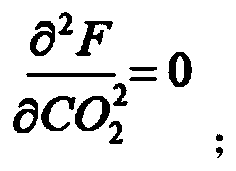
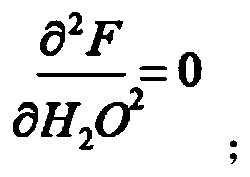

具体的,所述保鲜因素包括温度、湿度、氧气浓度、氮气浓度、二氧 化碳浓度和/或乙烯浓度。Specifically, the preservation factors include temperature, humidity, oxygen concentration, nitrogen concentration, carbon dioxide concentration, and/or ethylene concentration.
具体的,所述活性数据包括呼吸速率、呼吸熵和/或酶活性。Specifically, the activity data includes respiration rate, respiration entropy and/or enzyme activity.
具体的,所述保鲜因子方程具体为:Specifically, the preservation factor equation is specifically:

本发明还公开了所述果蔬保鲜工艺设计方法在果蔬保鲜技术领域中的应用。The invention also discloses the application of the fruit and vegetable preservation process design method in the technical field of fruit and vegetable preservation.
本发明还公开了所述的果蔬保鲜工艺设计方法在制备物理果蔬保鲜材料领域的应用。The invention also discloses the application of the fruit and vegetable preservation process design method in the field of preparing physical fruit and vegetable preservation materials.
本发明还公开了一种果蔬保鲜工艺,所述工艺包括通过所述的果蔬保鲜工艺设计方法获得最优保鲜因素和保鲜参数的步骤。The invention also discloses a fruit and vegetable preservation process, which includes the steps of obtaining optimal preservation factors and preservation parameters through the fruit and vegetable preservation process design method.
本发明还公开了一种物理果蔬保鲜材料,其特征在于,所述保鲜材料基于所述的果蔬保鲜工艺设计方法获得的最优保鲜因素和保鲜参数制得。The invention also discloses a physical fruit and vegetable preservation material, which is characterized in that the preservation material is prepared based on the optimal preservation factors and preservation parameters obtained by the fruit and vegetable preservation process design method.
进一步的,所述材料为采用热力学透析理论,基于如下热力学方程制备的智能双透膜;Further, the material is a smart double-permeable membrane prepared based on the following thermodynamic equations using thermodynamic dialysis theory;
F 2=f(T,P 1,P 2,P 3...H 2O); F 2 = f(T, P 1 , P 2 , P 3 ... H 2 O);
F 3=f(M 1,M 2,M 3,M 4,...)。 F 3 =f(M 1 , M 2 , M 3 , M 4 ,...).
本发明所述果蔬保鲜工艺设计方法,通过大量数据测试和数学统计,创造性的探索出不同种类水果活性和各个保鲜因素之间的定量关系,形成果蔬保鲜工艺设计的理论基础,为不同品种和性状的水果找到恰到好处的保鲜方式,提供了理论指导,对于果蔬保鲜工艺的设计具有重要的指导意 义。The fruit and vegetable preservation process design method of the present invention creatively explores the quantitative relationship between the activity of different types of fruits and each preservation factor through a large number of data tests and mathematical statistics, and forms the theoretical basis for the fruit and vegetable preservation process design, which is different varieties and traits Finding the right way to preserve fresh fruits provides theoretical guidance, which has important guiding significance for the design of fruit and vegetable preservation technology.
本发明所述果蔬保鲜工艺设计方法还可以用于指导物理保鲜材料的设计和制备,根据本发明所述果蔬保鲜工艺设计方法设计开发的物理保鲜材料,优选为具有仿细胞膜、智能调节、物理保鲜的智能双透膜,适用于大多数果蔬的保鲜,产品完全物理保鲜,对水果品质保障符合消费者需求的方向;同时保鲜材料具有相对超长的保鲜期,能够极大地降低损耗,保障保鲜水果的品质。The fruit and vegetable preservation process design method of the present invention can also be used to guide the design and preparation of physical preservation materials. The physical preservation material designed and developed according to the fruit and vegetable preservation process design method of the present invention preferably has a cell-like membrane, intelligent adjustment, and physical preservation. The intelligent double-permeable membrane is suitable for the preservation of most fruits and vegetables. The products are completely physically preserved, and the quality of the fruit is guaranteed to meet the direction of consumer needs. At the same time, the preservation material has a relatively long preservation period, which can greatly reduce loss and ensure fresh fruit Quality.
为了使本发明的内容更容易被清楚的理解,下面根据本发明的具体实施例并结合附图,对本发明作进一步详细的说明,其中,In order to make the content of the present invention easier to be understood clearly, the following further describes the present invention in detail according to specific embodiments of the present invention and in conjunction with the accompanying drawings.
图1为实施例1中保鲜处理后的杭白菜的形态图片;Figure 1 is a morphological picture of Hangzhou cabbage after preservation treatment in Example 1;
图2为实施例2中保鲜处理后的草莓的形态图片。2 is a picture of the morphology of the strawberry after the preservation treatment in Example 2. FIG.
实施例1Example 1
本实施例所述果蔬保鲜工艺设计方法基于杭白菜的保鲜进行设计。The fruit and vegetable preservation process design method of this embodiment is designed based on the preservation of Hangzhou cabbage.
杭白菜又名小白菜,别名青菜、油白菜、白菜秧。杭白菜是十字花科大白菜的变种,质地柔嫩,味道清香,为大众化蔬菜。杭白菜维生素C含量特别高,适合清炒,味道鲜,常见的做法有虾干白菜粉丝煲。营养价值为每百克鲜重含:热量13大卡、碳水化合物2.7克、蛋白质1.5、膳食纤维1.1克、维生素A280微克、维生素C28毫克、维生素E0.7毫克、胡萝卜素1680微克、铁1.9毫克、锌0.51毫克、钾178毫克、磷36毫克、镁18毫克、钙90毫克、钠73.5毫克、硒1.17微克。Hangzhou cabbage is also known as pakchoi, also known as green cabbage, oil cabbage and cabbage seedling. Hangzhou cabbage is a variant of Chinese cabbage in the cruciferous family. It has a soft texture and a delicate flavor. It is a popular vegetable. Hangzhou cabbage has a particularly high vitamin C content, which is suitable for stir-frying and tastes delicious. A common practice is to cook with dried shrimp and cabbage vermicelli. Nutritional value per 100 grams of fresh weight contains: calories 13 kcal, carbohydrates 2.7 grams, protein 1.5, dietary fiber 1.1 grams, vitamin A 280 micrograms, vitamin C 28 mg, vitamin E 0.7 mg, carotene 1680 micrograms, iron 1.9 mg , Zinc 0.51 mg, potassium 178 mg, phosphorus 36 mg, magnesium 18 mg, calcium 90 mg, sodium 73.5 mg, selenium 1.17 micrograms.
本实施例中通过对温度、湿度、氧气浓度、氮气浓度、二氧化碳浓度和乙烯浓度几个方面,对于杭白菜的保鲜条件进行考察。In this embodiment, the preservation conditions of Hangzhou cabbage are investigated in terms of temperature, humidity, oxygen concentration, nitrogen concentration, carbon dioxide concentration and ethylene concentration.
本实施例中,对于杭白菜的活性检测指标包括呼吸速率、呼吸商和/或酶活性,具体酶活性系酶催化反应的平均速度。In this embodiment, the activity detection indicators for Hangzhou cabbage include respiration rate, respiration quotient and/or enzyme activity, and the specific enzyme activity is the average speed of the enzyme-catalyzed reaction.
而对于呼吸速率(respiratory rate)、呼吸商(respiratory quotient RQ)和/或酶活性的检测方法和检测标准分别为:The testing methods and testing standards for respiratory rate (respiratory rate), respiratory quotient (respiratory quotient RQ) and/or enzyme activity are:
呼吸速率:测定一定时间内单位鲜重放出的二氧化碳体积;Respiration rate: measure the volume of carbon dioxide released per unit of fresh repetition within a certain period of time;
呼吸商:放出二氧化碳的mol/吸收的氧气的mol;Respiratory quotient: mol of carbon dioxide emitted/mol of oxygen absorbed;
酶活性:测定酶催化反应的平均速度。Enzyme activity: Measure the average speed of enzyme catalyzed reaction.
以下各个参数影响的检测条件为,在常态下,于密闭空间内,在一个大气压标准条件下,进行敞开实验;而对于气体浓度影响的检测均于25℃条件下进行敞开实验检测。The detection conditions affected by the following parameters are, under normal conditions, in a confined space, an open experiment is carried out under a standard atmospheric pressure; and the detection of the influence of gas concentration is carried out at 25°C.
本发明下述实施例中所述活性数据为检测杭白菜的呼吸速率值。The activity data in the following embodiments of the present invention is the value of the respiratory rate of the Chinese cabbage detected.
分别检测在不同温度、氧气浓度、氮气浓度、二氧化碳浓度、湿度和乙烯浓度下对于杭白菜保鲜活性的影响,各参数条件以及检测结果见下表1。The effects of different temperature, oxygen concentration, nitrogen concentration, carbon dioxide concentration, humidity and ethylene concentration on the fresh-keeping activity of Hangzhou cabbage were tested. The parameters and test results are shown in Table 1 below.
表1各参数条件以及检测结果Table 1 Various parameter conditions and test results
根据上述检测的数据,根据保鲜因子方程F 1=f(T,O 2,N 2,CO 2,H 2O,H e,...)拟定不同参数影响的回归方程: According to the above detected data, according to the freshness factor equation F 1 =f(T,O 2 ,N 2 ,CO 2 ,H 2 O,H e ,...), draw up the regression equations affected by different parameters:


具体的,所述保鲜因子方程计算式为:Specifically, the calculation formula of the preservation factor equation is:

本实施例中,得到最适宜于杭白菜的保鲜参数分别为:In this embodiment, the fresh-keeping parameters that are most suitable for Hangzhou cabbage are:
温度:-1~3℃;Temperature: -1~3℃;
氧气浓度:15%(1个标准大气压下);Oxygen concentration: 15% (under 1 standard atmospheric pressure);
氮气浓度:85%(1个标准大气压下);Nitrogen concentration: 85% (under 1 standard atmosphere);
二氧化碳浓度:0.23%(1个标准大气压下);Carbon dioxide concentration: 0.23% (under 1 standard atmospheric pressure);
湿度:76%(1个标准大气压下);Humidity: 76% (under 1 standard atmosphere);
乙烯浓度:0.08%以下(1个标准大气压下)。Ethylene concentration: 0.08% or less (under 1 standard atmosphere).
据此得到最适宜于杭白菜保鲜的工艺控制条件进行保鲜,实验证明,根据本发明设计方法的保鲜工艺,对于杭白菜的保鲜具有较好的效果,其保鲜期可以达到60天,按照上述工艺保鲜处理60天后的杭白菜形态如图1所示。According to this, the most suitable process control conditions for the preservation of Hangzhou cabbage are obtained. Experiments have shown that the preservation process designed according to the present invention has a good effect on the preservation of Hangzhou cabbage, and its preservation period can reach 60 days. According to the above process The morphology of Hangzhou cabbage after 60 days of preservation treatment is shown in Figure 1.
实施例2Example 2
本实施例所述果蔬保鲜工艺设计方法基于草莓的保鲜进行设计。The fruit and vegetable preservation process design method in this embodiment is designed based on the preservation of strawberries.
本实施例中通过对温度、湿度、氧气浓度、氮气浓度、二氧化碳浓度和乙烯浓度几个方面,对于草莓的保鲜条件进行考察。In this embodiment, the fresh-keeping conditions of strawberries are investigated in terms of temperature, humidity, oxygen concentration, nitrogen concentration, carbon dioxide concentration and ethylene concentration.
本实施例中,对于草莓的活性检测指标同实施例1。In this embodiment, the activity detection index for strawberries is the same as in embodiment 1.
以下各个参数影响的检测条件为,在常态下,于密闭空间内,在一个大气压标准条件下,进行敞开实验;而对于气体浓度影响的检测均于25℃条件下进行敞开实验检测。The detection conditions affected by the following parameters are, under normal conditions, in a confined space, an open experiment is carried out under a standard atmospheric pressure; and the detection of the influence of gas concentration is carried out at 25°C.
本发明下述实施例中所述活性数据为检测草莓的呼吸速率值。The activity data in the following embodiments of the present invention is the value of the respiration rate of the detected strawberry.
分别检测在不同温度、氧气浓度、氮气浓度、二氧化碳浓度、湿度和乙烯浓度下对于草莓保鲜活性的影响,各参数条件以及检测结果见下表2。The effects of different temperature, oxygen concentration, nitrogen concentration, carbon dioxide concentration, humidity and ethylene concentration on the fresh-keeping activity of strawberries were tested respectively. The parameters and test results are shown in Table 2 below.
表2各参数条件以及检测结果Table 2 Various parameter conditions and test results
同实施例1中相同的,根据上述检测的数据,根据保鲜因子方程F 1=f(T,O 2,N 2,CO 2,H 2O,H e,...)拟定不同参数影响的回归方程: Same as in Example 1, according to the above-mentioned detected data, according to the preservation factor equation F 1 =f (T,O 2 ,N 2 ,CO 2 ,H 2 O,H e ,...), draw up the influence of different parameters Regression equation:


具体的,所述保鲜因子方程计算式为:Specifically, the calculation formula of the preservation factor equation is:

本实施例中,得到最适宜于草莓的保鲜参数分别为:In this embodiment, the fresh-keeping parameters that are most suitable for strawberries are:
温度:1.5℃;Temperature: 1.5℃;
氧气浓度:14%(1个标准大气压下);Oxygen concentration: 14% (under 1 standard atmosphere);
氮气浓度:72%(1个标准大气压下);Nitrogen concentration: 72% (under 1 standard atmosphere);
二氧化碳浓度:0.21%(1个标准大气压下);Carbon dioxide concentration: 0.21% (under 1 standard atmosphere);
湿度:51%(1个标准大气压下);Humidity: 51% (under 1 standard atmosphere);
乙烯浓度:0(1个标准大气压下)。Ethylene concentration: 0 (under 1 standard atmosphere).
据此得到最适宜于草莓保鲜的工艺控制条件进行保鲜,实验证明,根据本发明设计方法的保鲜工艺,对于草莓的保鲜具有较好的效果,其保鲜期可以达到47天,按照上述工艺保鲜处理40天后的草莓形态如图2所示。显然,上述实施例仅仅是为清楚地说明所作的举例,而并非对实施方式的限定。对于所属领域的普通技术人员来说,在上述说明的基础上还可以做出其它不同形式的变化或变动。这里无需也无法对所有的实施方式予以穷举。而由此所引伸出的显而易见的变化或变动仍处于本发明创造的保护范围之中。According to this, the most suitable process control conditions for strawberry preservation are obtained. Experiments have shown that the preservation process designed according to the present invention has a good effect on the preservation of strawberries. Its preservation period can reach 47 days. According to the above-mentioned process preservation treatment The strawberry morphology after 40 days is shown in Figure 2. Obviously, the above-mentioned embodiments are merely examples for clear description, and are not intended to limit the implementation. For those of ordinary skill in the art, other changes or changes in different forms can be made on the basis of the above description. It is unnecessary and impossible to list all the implementation methods here. The obvious changes or modifications derived from this are still within the protection scope created by the present invention.
Claims (9)


Applications Claiming Priority (2)
| Application Number | Priority Date | Filing Date | Title |
|---|---|---|---|
| CN201910292540.4 | 2019-04-12 | ||
| CN201910292540.4A CN109997908A (en) | 2019-04-12 | 2019-04-12 | A kind of preserving fruit and vegetable utilizing process design method and its application |
Publications (1)
| Publication Number | Publication Date |
|---|---|
| WO2020206841A1 true WO2020206841A1 (en) | 2020-10-15 |
Family
ID=67171373
Family Applications (1)
| Application Number | Title | Priority Date | Filing Date |
|---|---|---|---|
| PCT/CN2019/092046 Ceased WO2020206841A1 (en) | 2019-04-12 | 2019-06-20 | Fruit and vegetable fresh-keeping process design method and application thereof |
Country Status (2)
| Country | Link |
|---|---|
| CN (1) | CN109997908A (en) |
| WO (1) | WO2020206841A1 (en) |
Cited By (1)
| Publication number | Priority date | Publication date | Assignee | Title |
|---|---|---|---|---|
| US12245549B2 (en) | 2022-01-11 | 2025-03-11 | Deere & Company | Predictive response map generation and control system |
Families Citing this family (1)
| Publication number | Priority date | Publication date | Assignee | Title |
|---|---|---|---|---|
| CN119908391A (en) * | 2025-04-01 | 2025-05-02 | 文水老胡供应链有限公司 | A method and device for storing fresh-cut vegetables based on gaseous ozone treatment |
Citations (4)
| Publication number | Priority date | Publication date | Assignee | Title |
|---|---|---|---|---|
| CN1806570A (en) * | 2006-02-22 | 2006-07-26 | 周志才 | Anti-staling method for preservation and transportation of sweet cherry |
| CN101156625A (en) * | 2007-09-19 | 2008-04-09 | 周志才 | Thin membrane gas-adjusting storage fresh-keeping method |
| CN101971874A (en) * | 2010-09-09 | 2011-02-16 | 华南农业大学 | Variable humidifying system for fruit and vegetable refreshing and conveying and realizing method thereof |
| CN108013128A (en) * | 2017-12-03 | 2018-05-11 | 谢峤 | A kind of grain storage method based on grain storage ambient condition parameter |
Family Cites Families (1)
| Publication number | Priority date | Publication date | Assignee | Title |
|---|---|---|---|---|
| CN101961990B (en) * | 2010-09-09 | 2012-07-18 | 华南农业大学 | Intelligent fruit and vegetable controlled atmosphere carrier vehicle and implementing method thereof |
-
2019
- 2019-04-12 CN CN201910292540.4A patent/CN109997908A/en active Pending
- 2019-06-20 WO PCT/CN2019/092046 patent/WO2020206841A1/en not_active Ceased
Patent Citations (4)
| Publication number | Priority date | Publication date | Assignee | Title |
|---|---|---|---|---|
| CN1806570A (en) * | 2006-02-22 | 2006-07-26 | 周志才 | Anti-staling method for preservation and transportation of sweet cherry |
| CN101156625A (en) * | 2007-09-19 | 2008-04-09 | 周志才 | Thin membrane gas-adjusting storage fresh-keeping method |
| CN101971874A (en) * | 2010-09-09 | 2011-02-16 | 华南农业大学 | Variable humidifying system for fruit and vegetable refreshing and conveying and realizing method thereof |
| CN108013128A (en) * | 2017-12-03 | 2018-05-11 | 谢峤 | A kind of grain storage method based on grain storage ambient condition parameter |
Cited By (1)
| Publication number | Priority date | Publication date | Assignee | Title |
|---|---|---|---|---|
| US12245549B2 (en) | 2022-01-11 | 2025-03-11 | Deere & Company | Predictive response map generation and control system |
Also Published As
| Publication number | Publication date |
|---|---|
| CN109997908A (en) | 2019-07-12 |
Similar Documents
| Publication | Publication Date | Title |
|---|---|---|
| Moradinezhad et al. | Effect of vacuum and modified atmosphere packaging on the quality attributes and sensory evaluation of fresh jujube fruit | |
| Kazimova et al. | Determining quality indicators of table grape varieties during storage in a refrigerating chamber in different variants | |
| CN104738791A (en) | Method for preserving steamed buns at normal temperature | |
| CN106135386A (en) | A kind of preservation method of Fructus Mori fresh fruit | |
| Gong et al. | Synergizing postharvest physiology and nanopackaging for edible mushroom preservation | |
| WO2020206841A1 (en) | Fruit and vegetable fresh-keeping process design method and application thereof | |
| CN110074178A (en) | A kind of controlled atmosphere method for preserving of instant pomegranate seed | |
| CN101856042A (en) | A kind of storage and preservation method of Agaricus bisporus | |
| CN101990933A (en) | Hot air and MeJa compounded treatment refreshing method of loquat fruit | |
| Tao et al. | Influence of different pre-cooling methods on the freshness preservation of bok choi (Brassica rapa var. chinensis) | |
| CN102940025A (en) | Combined-type irradiation preservation method of large cherries | |
| CN106689353A (en) | Method for fresh keeping of guava fruits by film coating with rhizoma kaempferiae essential oil, rhizoma alpiniae officinarum essential oil and fresh ginger essential oil | |
| CN106561808A (en) | Low-consumption storage method for waxy corn eaten fresh | |
| CN110226622A (en) | Lichee fresh-keeping storage practice based on space electric field | |
| Agüero et al. | Sensory and biochemical changes in Swiss chard (Beta vulgaris) during blanching | |
| CN101715805A (en) | Refrigerating method of Fuji apples based on 1-methylcyclopropene | |
| Xiao et al. | Effects of dry fog humidification on pericarp browning and quality of litchi fruit stored at low temperature | |
| Kan et al. | Experimental investigation of hypobaric storage effect on freshness-keeping of strawberries | |
| CN102885129B (en) | Pleurotus eryngii freshness retaining method | |
| CN106615082A (en) | Method for preserving mulberry fruits with coating film prepared from essential oil of three types of ginger | |
| CN109511730A (en) | A kind of preservation method of high temperature season cultivation leaf vegetables | |
| Mo et al. | Effect of drying process parameters on dehydrated cabbage enriched with selenium | |
| CN105594843A (en) | Fresh-keeping method of fresh Chinese wolfberry fruit | |
| CN112753757B (en) | Low-temperature sterilization and air-conditioning integrated fruit and vegetable fresh-keeping method | |
| CN105994609A (en) | Fresh fructus lycii preservation method |
Legal Events
| Date | Code | Title | Description |
|---|---|---|---|
| 121 | Ep: the epo has been informed by wipo that ep was designated in this application |
Ref document number: 19924366 Country of ref document: EP Kind code of ref document: A1 |
|
| NENP | Non-entry into the national phase |
Ref country code: DE |
|
| 32PN | Ep: public notification in the ep bulletin as address of the adressee cannot be established |
Free format text: NOTING OF LOSS OF RIGHTS PURSUANT TO RULE 112(1) EPC (EPO FORM 1205A DATED 20.01.2022) |
|
| 122 | Ep: pct application non-entry in european phase |
Ref document number: 19924366 Country of ref document: EP Kind code of ref document: A1 |