WO2020137128A1 - Laminate - Google Patents
Laminate Download PDFInfo
- Publication number
- WO2020137128A1 WO2020137128A1 PCT/JP2019/042000 JP2019042000W WO2020137128A1 WO 2020137128 A1 WO2020137128 A1 WO 2020137128A1 JP 2019042000 W JP2019042000 W JP 2019042000W WO 2020137128 A1 WO2020137128 A1 WO 2020137128A1
- Authority
- WO
- WIPO (PCT)
- Prior art keywords
- polyamide
- mass
- layer
- composition
- acid
- Prior art date
- Legal status (The legal status is an assumption and is not a legal conclusion. Google has not performed a legal analysis and makes no representation as to the accuracy of the status listed.)
- Ceased
Links
Classifications
-
- B—PERFORMING OPERATIONS; TRANSPORTING
- B32—LAYERED PRODUCTS
- B32B—LAYERED PRODUCTS, i.e. PRODUCTS BUILT-UP OF STRATA OF FLAT OR NON-FLAT, e.g. CELLULAR OR HONEYCOMB, FORM
- B32B27/00—Layered products comprising a layer of synthetic resin
- B32B27/34—Layered products comprising a layer of synthetic resin comprising polyamides
-
- B—PERFORMING OPERATIONS; TRANSPORTING
- B32—LAYERED PRODUCTS
- B32B—LAYERED PRODUCTS, i.e. PRODUCTS BUILT-UP OF STRATA OF FLAT OR NON-FLAT, e.g. CELLULAR OR HONEYCOMB, FORM
- B32B7/00—Layered products characterised by the relation between layers; Layered products characterised by the relative orientation of features between layers, or by the relative values of a measurable parameter between layers, i.e. products comprising layers having different physical, chemical or physicochemical properties; Layered products characterised by the interconnection of layers
- B32B7/04—Interconnection of layers
- B32B7/12—Interconnection of layers using interposed adhesives or interposed materials with bonding properties
-
- B—PERFORMING OPERATIONS; TRANSPORTING
- B32—LAYERED PRODUCTS
- B32B—LAYERED PRODUCTS, i.e. PRODUCTS BUILT-UP OF STRATA OF FLAT OR NON-FLAT, e.g. CELLULAR OR HONEYCOMB, FORM
- B32B1/00—Layered products having a non-planar shape
- B32B1/08—Tubular products
-
- B—PERFORMING OPERATIONS; TRANSPORTING
- B32—LAYERED PRODUCTS
- B32B—LAYERED PRODUCTS, i.e. PRODUCTS BUILT-UP OF STRATA OF FLAT OR NON-FLAT, e.g. CELLULAR OR HONEYCOMB, FORM
- B32B15/00—Layered products comprising a layer of metal
- B32B15/04—Layered products comprising a layer of metal comprising metal as the main or only constituent of a layer, which is next to another layer of the same or of a different material
- B32B15/06—Layered products comprising a layer of metal comprising metal as the main or only constituent of a layer, which is next to another layer of the same or of a different material of natural rubber or synthetic rubber
-
- B—PERFORMING OPERATIONS; TRANSPORTING
- B32—LAYERED PRODUCTS
- B32B—LAYERED PRODUCTS, i.e. PRODUCTS BUILT-UP OF STRATA OF FLAT OR NON-FLAT, e.g. CELLULAR OR HONEYCOMB, FORM
- B32B15/00—Layered products comprising a layer of metal
- B32B15/04—Layered products comprising a layer of metal comprising metal as the main or only constituent of a layer, which is next to another layer of the same or of a different material
- B32B15/08—Layered products comprising a layer of metal comprising metal as the main or only constituent of a layer, which is next to another layer of the same or of a different material of synthetic resin
- B32B15/082—Layered products comprising a layer of metal comprising metal as the main or only constituent of a layer, which is next to another layer of the same or of a different material of synthetic resin comprising vinyl resins; comprising acrylic resins
-
- B—PERFORMING OPERATIONS; TRANSPORTING
- B32—LAYERED PRODUCTS
- B32B—LAYERED PRODUCTS, i.e. PRODUCTS BUILT-UP OF STRATA OF FLAT OR NON-FLAT, e.g. CELLULAR OR HONEYCOMB, FORM
- B32B15/00—Layered products comprising a layer of metal
- B32B15/04—Layered products comprising a layer of metal comprising metal as the main or only constituent of a layer, which is next to another layer of the same or of a different material
- B32B15/08—Layered products comprising a layer of metal comprising metal as the main or only constituent of a layer, which is next to another layer of the same or of a different material of synthetic resin
- B32B15/085—Layered products comprising a layer of metal comprising metal as the main or only constituent of a layer, which is next to another layer of the same or of a different material of synthetic resin comprising polyolefins
-
- B—PERFORMING OPERATIONS; TRANSPORTING
- B32—LAYERED PRODUCTS
- B32B—LAYERED PRODUCTS, i.e. PRODUCTS BUILT-UP OF STRATA OF FLAT OR NON-FLAT, e.g. CELLULAR OR HONEYCOMB, FORM
- B32B15/00—Layered products comprising a layer of metal
- B32B15/04—Layered products comprising a layer of metal comprising metal as the main or only constituent of a layer, which is next to another layer of the same or of a different material
- B32B15/08—Layered products comprising a layer of metal comprising metal as the main or only constituent of a layer, which is next to another layer of the same or of a different material of synthetic resin
- B32B15/088—Layered products comprising a layer of metal comprising metal as the main or only constituent of a layer, which is next to another layer of the same or of a different material of synthetic resin comprising polyamides
-
- B—PERFORMING OPERATIONS; TRANSPORTING
- B32—LAYERED PRODUCTS
- B32B—LAYERED PRODUCTS, i.e. PRODUCTS BUILT-UP OF STRATA OF FLAT OR NON-FLAT, e.g. CELLULAR OR HONEYCOMB, FORM
- B32B15/00—Layered products comprising a layer of metal
- B32B15/04—Layered products comprising a layer of metal comprising metal as the main or only constituent of a layer, which is next to another layer of the same or of a different material
- B32B15/08—Layered products comprising a layer of metal comprising metal as the main or only constituent of a layer, which is next to another layer of the same or of a different material of synthetic resin
- B32B15/09—Layered products comprising a layer of metal comprising metal as the main or only constituent of a layer, which is next to another layer of the same or of a different material of synthetic resin comprising polyesters
-
- B—PERFORMING OPERATIONS; TRANSPORTING
- B32—LAYERED PRODUCTS
- B32B—LAYERED PRODUCTS, i.e. PRODUCTS BUILT-UP OF STRATA OF FLAT OR NON-FLAT, e.g. CELLULAR OR HONEYCOMB, FORM
- B32B15/00—Layered products comprising a layer of metal
- B32B15/04—Layered products comprising a layer of metal comprising metal as the main or only constituent of a layer, which is next to another layer of the same or of a different material
- B32B15/08—Layered products comprising a layer of metal comprising metal as the main or only constituent of a layer, which is next to another layer of the same or of a different material of synthetic resin
- B32B15/095—Layered products comprising a layer of metal comprising metal as the main or only constituent of a layer, which is next to another layer of the same or of a different material of synthetic resin comprising polyurethanes
-
- B—PERFORMING OPERATIONS; TRANSPORTING
- B32—LAYERED PRODUCTS
- B32B—LAYERED PRODUCTS, i.e. PRODUCTS BUILT-UP OF STRATA OF FLAT OR NON-FLAT, e.g. CELLULAR OR HONEYCOMB, FORM
- B32B15/00—Layered products comprising a layer of metal
- B32B15/18—Layered products comprising a layer of metal comprising iron or steel
-
- B—PERFORMING OPERATIONS; TRANSPORTING
- B32—LAYERED PRODUCTS
- B32B—LAYERED PRODUCTS, i.e. PRODUCTS BUILT-UP OF STRATA OF FLAT OR NON-FLAT, e.g. CELLULAR OR HONEYCOMB, FORM
- B32B15/00—Layered products comprising a layer of metal
- B32B15/20—Layered products comprising a layer of metal comprising aluminium or copper
-
- B—PERFORMING OPERATIONS; TRANSPORTING
- B32—LAYERED PRODUCTS
- B32B—LAYERED PRODUCTS, i.e. PRODUCTS BUILT-UP OF STRATA OF FLAT OR NON-FLAT, e.g. CELLULAR OR HONEYCOMB, FORM
- B32B21/00—Layered products comprising a layer of wood, e.g. wood board, veneer, wood particle board
- B32B21/04—Layered products comprising a layer of wood, e.g. wood board, veneer, wood particle board comprising wood as the main or only constituent of a layer, which is next to another layer of the same or of a different material
- B32B21/045—Layered products comprising a layer of wood, e.g. wood board, veneer, wood particle board comprising wood as the main or only constituent of a layer, which is next to another layer of the same or of a different material of natural rubber or synthetic rubber
-
- B—PERFORMING OPERATIONS; TRANSPORTING
- B32—LAYERED PRODUCTS
- B32B—LAYERED PRODUCTS, i.e. PRODUCTS BUILT-UP OF STRATA OF FLAT OR NON-FLAT, e.g. CELLULAR OR HONEYCOMB, FORM
- B32B21/00—Layered products comprising a layer of wood, e.g. wood board, veneer, wood particle board
- B32B21/04—Layered products comprising a layer of wood, e.g. wood board, veneer, wood particle board comprising wood as the main or only constituent of a layer, which is next to another layer of the same or of a different material
- B32B21/08—Layered products comprising a layer of wood, e.g. wood board, veneer, wood particle board comprising wood as the main or only constituent of a layer, which is next to another layer of the same or of a different material of synthetic resin
-
- B—PERFORMING OPERATIONS; TRANSPORTING
- B32—LAYERED PRODUCTS
- B32B—LAYERED PRODUCTS, i.e. PRODUCTS BUILT-UP OF STRATA OF FLAT OR NON-FLAT, e.g. CELLULAR OR HONEYCOMB, FORM
- B32B23/00—Layered products comprising a layer of cellulosic plastic substances, i.e. substances obtained by chemical modification of cellulose, e.g. cellulose ethers, cellulose esters, viscose
- B32B23/04—Layered products comprising a layer of cellulosic plastic substances, i.e. substances obtained by chemical modification of cellulose, e.g. cellulose ethers, cellulose esters, viscose comprising such cellulosic plastic substance as the main or only constituent of a layer, which is next to another layer of the same or of a different material
- B32B23/042—Layered products comprising a layer of cellulosic plastic substances, i.e. substances obtained by chemical modification of cellulose, e.g. cellulose ethers, cellulose esters, viscose comprising such cellulosic plastic substance as the main or only constituent of a layer, which is next to another layer of the same or of a different material of metal
-
- B—PERFORMING OPERATIONS; TRANSPORTING
- B32—LAYERED PRODUCTS
- B32B—LAYERED PRODUCTS, i.e. PRODUCTS BUILT-UP OF STRATA OF FLAT OR NON-FLAT, e.g. CELLULAR OR HONEYCOMB, FORM
- B32B23/00—Layered products comprising a layer of cellulosic plastic substances, i.e. substances obtained by chemical modification of cellulose, e.g. cellulose ethers, cellulose esters, viscose
- B32B23/04—Layered products comprising a layer of cellulosic plastic substances, i.e. substances obtained by chemical modification of cellulose, e.g. cellulose ethers, cellulose esters, viscose comprising such cellulosic plastic substance as the main or only constituent of a layer, which is next to another layer of the same or of a different material
- B32B23/044—Layered products comprising a layer of cellulosic plastic substances, i.e. substances obtained by chemical modification of cellulose, e.g. cellulose ethers, cellulose esters, viscose comprising such cellulosic plastic substance as the main or only constituent of a layer, which is next to another layer of the same or of a different material of wood
-
- B—PERFORMING OPERATIONS; TRANSPORTING
- B32—LAYERED PRODUCTS
- B32B—LAYERED PRODUCTS, i.e. PRODUCTS BUILT-UP OF STRATA OF FLAT OR NON-FLAT, e.g. CELLULAR OR HONEYCOMB, FORM
- B32B23/00—Layered products comprising a layer of cellulosic plastic substances, i.e. substances obtained by chemical modification of cellulose, e.g. cellulose ethers, cellulose esters, viscose
- B32B23/04—Layered products comprising a layer of cellulosic plastic substances, i.e. substances obtained by chemical modification of cellulose, e.g. cellulose ethers, cellulose esters, viscose comprising such cellulosic plastic substance as the main or only constituent of a layer, which is next to another layer of the same or of a different material
- B32B23/046—Layered products comprising a layer of cellulosic plastic substances, i.e. substances obtained by chemical modification of cellulose, e.g. cellulose ethers, cellulose esters, viscose comprising such cellulosic plastic substance as the main or only constituent of a layer, which is next to another layer of the same or of a different material of natural rubber or synthetic rubber
-
- B—PERFORMING OPERATIONS; TRANSPORTING
- B32—LAYERED PRODUCTS
- B32B—LAYERED PRODUCTS, i.e. PRODUCTS BUILT-UP OF STRATA OF FLAT OR NON-FLAT, e.g. CELLULAR OR HONEYCOMB, FORM
- B32B23/00—Layered products comprising a layer of cellulosic plastic substances, i.e. substances obtained by chemical modification of cellulose, e.g. cellulose ethers, cellulose esters, viscose
- B32B23/04—Layered products comprising a layer of cellulosic plastic substances, i.e. substances obtained by chemical modification of cellulose, e.g. cellulose ethers, cellulose esters, viscose comprising such cellulosic plastic substance as the main or only constituent of a layer, which is next to another layer of the same or of a different material
- B32B23/06—Layered products comprising a layer of cellulosic plastic substances, i.e. substances obtained by chemical modification of cellulose, e.g. cellulose ethers, cellulose esters, viscose comprising such cellulosic plastic substance as the main or only constituent of a layer, which is next to another layer of the same or of a different material of paper or cardboard
-
- B—PERFORMING OPERATIONS; TRANSPORTING
- B32—LAYERED PRODUCTS
- B32B—LAYERED PRODUCTS, i.e. PRODUCTS BUILT-UP OF STRATA OF FLAT OR NON-FLAT, e.g. CELLULAR OR HONEYCOMB, FORM
- B32B23/00—Layered products comprising a layer of cellulosic plastic substances, i.e. substances obtained by chemical modification of cellulose, e.g. cellulose ethers, cellulose esters, viscose
- B32B23/04—Layered products comprising a layer of cellulosic plastic substances, i.e. substances obtained by chemical modification of cellulose, e.g. cellulose ethers, cellulose esters, viscose comprising such cellulosic plastic substance as the main or only constituent of a layer, which is next to another layer of the same or of a different material
- B32B23/08—Layered products comprising a layer of cellulosic plastic substances, i.e. substances obtained by chemical modification of cellulose, e.g. cellulose ethers, cellulose esters, viscose comprising such cellulosic plastic substance as the main or only constituent of a layer, which is next to another layer of the same or of a different material of synthetic resin
-
- B—PERFORMING OPERATIONS; TRANSPORTING
- B32—LAYERED PRODUCTS
- B32B—LAYERED PRODUCTS, i.e. PRODUCTS BUILT-UP OF STRATA OF FLAT OR NON-FLAT, e.g. CELLULAR OR HONEYCOMB, FORM
- B32B23/00—Layered products comprising a layer of cellulosic plastic substances, i.e. substances obtained by chemical modification of cellulose, e.g. cellulose ethers, cellulose esters, viscose
- B32B23/10—Layered products comprising a layer of cellulosic plastic substances, i.e. substances obtained by chemical modification of cellulose, e.g. cellulose ethers, cellulose esters, viscose next to a fibrous or filamentary layer
-
- B—PERFORMING OPERATIONS; TRANSPORTING
- B32—LAYERED PRODUCTS
- B32B—LAYERED PRODUCTS, i.e. PRODUCTS BUILT-UP OF STRATA OF FLAT OR NON-FLAT, e.g. CELLULAR OR HONEYCOMB, FORM
- B32B23/00—Layered products comprising a layer of cellulosic plastic substances, i.e. substances obtained by chemical modification of cellulose, e.g. cellulose ethers, cellulose esters, viscose
- B32B23/20—Layered products comprising a layer of cellulosic plastic substances, i.e. substances obtained by chemical modification of cellulose, e.g. cellulose ethers, cellulose esters, viscose comprising esters
-
- B—PERFORMING OPERATIONS; TRANSPORTING
- B32—LAYERED PRODUCTS
- B32B—LAYERED PRODUCTS, i.e. PRODUCTS BUILT-UP OF STRATA OF FLAT OR NON-FLAT, e.g. CELLULAR OR HONEYCOMB, FORM
- B32B25/00—Layered products comprising a layer of natural or synthetic rubber
- B32B25/04—Layered products comprising a layer of natural or synthetic rubber comprising rubber as the main or only constituent of a layer, which is next to another layer of the same or of a different material
- B32B25/042—Layered products comprising a layer of natural or synthetic rubber comprising rubber as the main or only constituent of a layer, which is next to another layer of the same or of a different material of natural rubber or synthetic rubber
-
- B—PERFORMING OPERATIONS; TRANSPORTING
- B32—LAYERED PRODUCTS
- B32B—LAYERED PRODUCTS, i.e. PRODUCTS BUILT-UP OF STRATA OF FLAT OR NON-FLAT, e.g. CELLULAR OR HONEYCOMB, FORM
- B32B25/00—Layered products comprising a layer of natural or synthetic rubber
- B32B25/04—Layered products comprising a layer of natural or synthetic rubber comprising rubber as the main or only constituent of a layer, which is next to another layer of the same or of a different material
- B32B25/06—Layered products comprising a layer of natural or synthetic rubber comprising rubber as the main or only constituent of a layer, which is next to another layer of the same or of a different material of paper or cardboard
-
- B—PERFORMING OPERATIONS; TRANSPORTING
- B32—LAYERED PRODUCTS
- B32B—LAYERED PRODUCTS, i.e. PRODUCTS BUILT-UP OF STRATA OF FLAT OR NON-FLAT, e.g. CELLULAR OR HONEYCOMB, FORM
- B32B25/00—Layered products comprising a layer of natural or synthetic rubber
- B32B25/04—Layered products comprising a layer of natural or synthetic rubber comprising rubber as the main or only constituent of a layer, which is next to another layer of the same or of a different material
- B32B25/08—Layered products comprising a layer of natural or synthetic rubber comprising rubber as the main or only constituent of a layer, which is next to another layer of the same or of a different material of synthetic resin
-
- B—PERFORMING OPERATIONS; TRANSPORTING
- B32—LAYERED PRODUCTS
- B32B—LAYERED PRODUCTS, i.e. PRODUCTS BUILT-UP OF STRATA OF FLAT OR NON-FLAT, e.g. CELLULAR OR HONEYCOMB, FORM
- B32B25/00—Layered products comprising a layer of natural or synthetic rubber
- B32B25/10—Layered products comprising a layer of natural or synthetic rubber next to a fibrous or filamentary layer
-
- B—PERFORMING OPERATIONS; TRANSPORTING
- B32—LAYERED PRODUCTS
- B32B—LAYERED PRODUCTS, i.e. PRODUCTS BUILT-UP OF STRATA OF FLAT OR NON-FLAT, e.g. CELLULAR OR HONEYCOMB, FORM
- B32B25/00—Layered products comprising a layer of natural or synthetic rubber
- B32B25/12—Layered products comprising a layer of natural or synthetic rubber comprising natural rubber
-
- B—PERFORMING OPERATIONS; TRANSPORTING
- B32—LAYERED PRODUCTS
- B32B—LAYERED PRODUCTS, i.e. PRODUCTS BUILT-UP OF STRATA OF FLAT OR NON-FLAT, e.g. CELLULAR OR HONEYCOMB, FORM
- B32B25/00—Layered products comprising a layer of natural or synthetic rubber
- B32B25/14—Layered products comprising a layer of natural or synthetic rubber comprising synthetic rubber copolymers
-
- B—PERFORMING OPERATIONS; TRANSPORTING
- B32—LAYERED PRODUCTS
- B32B—LAYERED PRODUCTS, i.e. PRODUCTS BUILT-UP OF STRATA OF FLAT OR NON-FLAT, e.g. CELLULAR OR HONEYCOMB, FORM
- B32B25/00—Layered products comprising a layer of natural or synthetic rubber
- B32B25/16—Layered products comprising a layer of natural or synthetic rubber comprising polydienes homopolymers or poly-halodienes homopolymers
-
- B—PERFORMING OPERATIONS; TRANSPORTING
- B32—LAYERED PRODUCTS
- B32B—LAYERED PRODUCTS, i.e. PRODUCTS BUILT-UP OF STRATA OF FLAT OR NON-FLAT, e.g. CELLULAR OR HONEYCOMB, FORM
- B32B25/00—Layered products comprising a layer of natural or synthetic rubber
- B32B25/18—Layered products comprising a layer of natural or synthetic rubber comprising butyl or halobutyl rubber
-
- B—PERFORMING OPERATIONS; TRANSPORTING
- B32—LAYERED PRODUCTS
- B32B—LAYERED PRODUCTS, i.e. PRODUCTS BUILT-UP OF STRATA OF FLAT OR NON-FLAT, e.g. CELLULAR OR HONEYCOMB, FORM
- B32B25/00—Layered products comprising a layer of natural or synthetic rubber
- B32B25/20—Layered products comprising a layer of natural or synthetic rubber comprising silicone rubber
-
- B—PERFORMING OPERATIONS; TRANSPORTING
- B32—LAYERED PRODUCTS
- B32B—LAYERED PRODUCTS, i.e. PRODUCTS BUILT-UP OF STRATA OF FLAT OR NON-FLAT, e.g. CELLULAR OR HONEYCOMB, FORM
- B32B27/00—Layered products comprising a layer of synthetic resin
- B32B27/06—Layered products comprising a layer of synthetic resin as the main or only constituent of a layer, which is next to another layer of the same or of a different material
- B32B27/08—Layered products comprising a layer of synthetic resin as the main or only constituent of a layer, which is next to another layer of the same or of a different material of synthetic resin
-
- B—PERFORMING OPERATIONS; TRANSPORTING
- B32—LAYERED PRODUCTS
- B32B—LAYERED PRODUCTS, i.e. PRODUCTS BUILT-UP OF STRATA OF FLAT OR NON-FLAT, e.g. CELLULAR OR HONEYCOMB, FORM
- B32B27/00—Layered products comprising a layer of synthetic resin
- B32B27/06—Layered products comprising a layer of synthetic resin as the main or only constituent of a layer, which is next to another layer of the same or of a different material
- B32B27/10—Layered products comprising a layer of synthetic resin as the main or only constituent of a layer, which is next to another layer of the same or of a different material of paper or cardboard
-
- B—PERFORMING OPERATIONS; TRANSPORTING
- B32—LAYERED PRODUCTS
- B32B—LAYERED PRODUCTS, i.e. PRODUCTS BUILT-UP OF STRATA OF FLAT OR NON-FLAT, e.g. CELLULAR OR HONEYCOMB, FORM
- B32B27/00—Layered products comprising a layer of synthetic resin
- B32B27/12—Layered products comprising a layer of synthetic resin next to a fibrous or filamentary layer
-
- B—PERFORMING OPERATIONS; TRANSPORTING
- B32—LAYERED PRODUCTS
- B32B—LAYERED PRODUCTS, i.e. PRODUCTS BUILT-UP OF STRATA OF FLAT OR NON-FLAT, e.g. CELLULAR OR HONEYCOMB, FORM
- B32B27/00—Layered products comprising a layer of synthetic resin
- B32B27/18—Layered products comprising a layer of synthetic resin characterised by the use of special additives
- B32B27/20—Layered products comprising a layer of synthetic resin characterised by the use of special additives using fillers, pigments, thixotroping agents
-
- B—PERFORMING OPERATIONS; TRANSPORTING
- B32—LAYERED PRODUCTS
- B32B—LAYERED PRODUCTS, i.e. PRODUCTS BUILT-UP OF STRATA OF FLAT OR NON-FLAT, e.g. CELLULAR OR HONEYCOMB, FORM
- B32B27/00—Layered products comprising a layer of synthetic resin
- B32B27/28—Layered products comprising a layer of synthetic resin comprising synthetic resins not wholly covered by any one of the sub-groups B32B27/30 - B32B27/42
- B32B27/281—Layered products comprising a layer of synthetic resin comprising synthetic resins not wholly covered by any one of the sub-groups B32B27/30 - B32B27/42 comprising polyimides
-
- B—PERFORMING OPERATIONS; TRANSPORTING
- B32—LAYERED PRODUCTS
- B32B—LAYERED PRODUCTS, i.e. PRODUCTS BUILT-UP OF STRATA OF FLAT OR NON-FLAT, e.g. CELLULAR OR HONEYCOMB, FORM
- B32B27/00—Layered products comprising a layer of synthetic resin
- B32B27/28—Layered products comprising a layer of synthetic resin comprising synthetic resins not wholly covered by any one of the sub-groups B32B27/30 - B32B27/42
- B32B27/285—Layered products comprising a layer of synthetic resin comprising synthetic resins not wholly covered by any one of the sub-groups B32B27/30 - B32B27/42 comprising polyethers
-
- B—PERFORMING OPERATIONS; TRANSPORTING
- B32—LAYERED PRODUCTS
- B32B—LAYERED PRODUCTS, i.e. PRODUCTS BUILT-UP OF STRATA OF FLAT OR NON-FLAT, e.g. CELLULAR OR HONEYCOMB, FORM
- B32B27/00—Layered products comprising a layer of synthetic resin
- B32B27/28—Layered products comprising a layer of synthetic resin comprising synthetic resins not wholly covered by any one of the sub-groups B32B27/30 - B32B27/42
- B32B27/286—Layered products comprising a layer of synthetic resin comprising synthetic resins not wholly covered by any one of the sub-groups B32B27/30 - B32B27/42 comprising polysulphones; polysulfides
-
- B—PERFORMING OPERATIONS; TRANSPORTING
- B32—LAYERED PRODUCTS
- B32B—LAYERED PRODUCTS, i.e. PRODUCTS BUILT-UP OF STRATA OF FLAT OR NON-FLAT, e.g. CELLULAR OR HONEYCOMB, FORM
- B32B27/00—Layered products comprising a layer of synthetic resin
- B32B27/28—Layered products comprising a layer of synthetic resin comprising synthetic resins not wholly covered by any one of the sub-groups B32B27/30 - B32B27/42
- B32B27/288—Layered products comprising a layer of synthetic resin comprising synthetic resins not wholly covered by any one of the sub-groups B32B27/30 - B32B27/42 comprising polyketones
-
- B—PERFORMING OPERATIONS; TRANSPORTING
- B32—LAYERED PRODUCTS
- B32B—LAYERED PRODUCTS, i.e. PRODUCTS BUILT-UP OF STRATA OF FLAT OR NON-FLAT, e.g. CELLULAR OR HONEYCOMB, FORM
- B32B27/00—Layered products comprising a layer of synthetic resin
- B32B27/30—Layered products comprising a layer of synthetic resin comprising vinyl (co)polymers; comprising acrylic (co)polymers
- B32B27/302—Layered products comprising a layer of synthetic resin comprising vinyl (co)polymers; comprising acrylic (co)polymers comprising aromatic vinyl (co)polymers, e.g. styrenic (co)polymers
-
- B—PERFORMING OPERATIONS; TRANSPORTING
- B32—LAYERED PRODUCTS
- B32B—LAYERED PRODUCTS, i.e. PRODUCTS BUILT-UP OF STRATA OF FLAT OR NON-FLAT, e.g. CELLULAR OR HONEYCOMB, FORM
- B32B27/00—Layered products comprising a layer of synthetic resin
- B32B27/30—Layered products comprising a layer of synthetic resin comprising vinyl (co)polymers; comprising acrylic (co)polymers
- B32B27/304—Layered products comprising a layer of synthetic resin comprising vinyl (co)polymers; comprising acrylic (co)polymers comprising vinyl halide (co)polymers, e.g. PVC, PVDC, PVF, PVDF
-
- B—PERFORMING OPERATIONS; TRANSPORTING
- B32—LAYERED PRODUCTS
- B32B—LAYERED PRODUCTS, i.e. PRODUCTS BUILT-UP OF STRATA OF FLAT OR NON-FLAT, e.g. CELLULAR OR HONEYCOMB, FORM
- B32B27/00—Layered products comprising a layer of synthetic resin
- B32B27/30—Layered products comprising a layer of synthetic resin comprising vinyl (co)polymers; comprising acrylic (co)polymers
- B32B27/306—Layered products comprising a layer of synthetic resin comprising vinyl (co)polymers; comprising acrylic (co)polymers comprising vinyl acetate or vinyl alcohol (co)polymers
-
- B—PERFORMING OPERATIONS; TRANSPORTING
- B32—LAYERED PRODUCTS
- B32B—LAYERED PRODUCTS, i.e. PRODUCTS BUILT-UP OF STRATA OF FLAT OR NON-FLAT, e.g. CELLULAR OR HONEYCOMB, FORM
- B32B27/00—Layered products comprising a layer of synthetic resin
- B32B27/30—Layered products comprising a layer of synthetic resin comprising vinyl (co)polymers; comprising acrylic (co)polymers
- B32B27/308—Layered products comprising a layer of synthetic resin comprising vinyl (co)polymers; comprising acrylic (co)polymers comprising acrylic (co)polymers
-
- B—PERFORMING OPERATIONS; TRANSPORTING
- B32—LAYERED PRODUCTS
- B32B—LAYERED PRODUCTS, i.e. PRODUCTS BUILT-UP OF STRATA OF FLAT OR NON-FLAT, e.g. CELLULAR OR HONEYCOMB, FORM
- B32B27/00—Layered products comprising a layer of synthetic resin
- B32B27/32—Layered products comprising a layer of synthetic resin comprising polyolefins
-
- B—PERFORMING OPERATIONS; TRANSPORTING
- B32—LAYERED PRODUCTS
- B32B—LAYERED PRODUCTS, i.e. PRODUCTS BUILT-UP OF STRATA OF FLAT OR NON-FLAT, e.g. CELLULAR OR HONEYCOMB, FORM
- B32B27/00—Layered products comprising a layer of synthetic resin
- B32B27/32—Layered products comprising a layer of synthetic resin comprising polyolefins
- B32B27/322—Layered products comprising a layer of synthetic resin comprising polyolefins comprising halogenated polyolefins, e.g. PTFE
-
- B—PERFORMING OPERATIONS; TRANSPORTING
- B32—LAYERED PRODUCTS
- B32B—LAYERED PRODUCTS, i.e. PRODUCTS BUILT-UP OF STRATA OF FLAT OR NON-FLAT, e.g. CELLULAR OR HONEYCOMB, FORM
- B32B27/00—Layered products comprising a layer of synthetic resin
- B32B27/36—Layered products comprising a layer of synthetic resin comprising polyesters
-
- B—PERFORMING OPERATIONS; TRANSPORTING
- B32—LAYERED PRODUCTS
- B32B—LAYERED PRODUCTS, i.e. PRODUCTS BUILT-UP OF STRATA OF FLAT OR NON-FLAT, e.g. CELLULAR OR HONEYCOMB, FORM
- B32B27/00—Layered products comprising a layer of synthetic resin
- B32B27/36—Layered products comprising a layer of synthetic resin comprising polyesters
- B32B27/365—Layered products comprising a layer of synthetic resin comprising polyesters comprising polycarbonates
-
- B—PERFORMING OPERATIONS; TRANSPORTING
- B32—LAYERED PRODUCTS
- B32B—LAYERED PRODUCTS, i.e. PRODUCTS BUILT-UP OF STRATA OF FLAT OR NON-FLAT, e.g. CELLULAR OR HONEYCOMB, FORM
- B32B27/00—Layered products comprising a layer of synthetic resin
- B32B27/40—Layered products comprising a layer of synthetic resin comprising polyurethanes
-
- B—PERFORMING OPERATIONS; TRANSPORTING
- B32—LAYERED PRODUCTS
- B32B—LAYERED PRODUCTS, i.e. PRODUCTS BUILT-UP OF STRATA OF FLAT OR NON-FLAT, e.g. CELLULAR OR HONEYCOMB, FORM
- B32B3/00—Layered products comprising a layer with external or internal discontinuities or unevennesses, or a layer of non-planar shape; Layered products comprising a layer having particular features of form
- B32B3/26—Layered products comprising a layer with external or internal discontinuities or unevennesses, or a layer of non-planar shape; Layered products comprising a layer having particular features of form characterised by a particular shape of the outline of the cross-section of a continuous layer; characterised by a layer with cavities or internal voids ; characterised by an apertured layer
-
- C—CHEMISTRY; METALLURGY
- C08—ORGANIC MACROMOLECULAR COMPOUNDS; THEIR PREPARATION OR CHEMICAL WORKING-UP; COMPOSITIONS BASED THEREON
- C08L—COMPOSITIONS OF MACROMOLECULAR COMPOUNDS
- C08L77/00—Compositions of polyamides obtained by reactions forming a carboxylic amide link in the main chain; Compositions of derivatives of such polymers
- C08L77/02—Polyamides derived from omega-amino carboxylic acids or from lactams thereof
-
- C—CHEMISTRY; METALLURGY
- C08—ORGANIC MACROMOLECULAR COMPOUNDS; THEIR PREPARATION OR CHEMICAL WORKING-UP; COMPOSITIONS BASED THEREON
- C08L—COMPOSITIONS OF MACROMOLECULAR COMPOUNDS
- C08L77/00—Compositions of polyamides obtained by reactions forming a carboxylic amide link in the main chain; Compositions of derivatives of such polymers
- C08L77/06—Polyamides derived from polyamines and polycarboxylic acids
-
- C—CHEMISTRY; METALLURGY
- C09—DYES; PAINTS; POLISHES; NATURAL RESINS; ADHESIVES; COMPOSITIONS NOT OTHERWISE PROVIDED FOR; APPLICATIONS OF MATERIALS NOT OTHERWISE PROVIDED FOR
- C09D—COATING COMPOSITIONS, e.g. PAINTS, VARNISHES OR LACQUERS; FILLING PASTES; CHEMICAL PAINT OR INK REMOVERS; INKS; CORRECTING FLUIDS; WOODSTAINS; PASTES OR SOLIDS FOR COLOURING OR PRINTING; USE OF MATERIALS THEREFOR
- C09D177/00—Coating compositions based on polyamides obtained by reactions forming a carboxylic amide link in the main chain; Coating compositions based on derivatives of such polymers
- C09D177/02—Polyamides derived from omega-amino carboxylic acids or from lactams thereof
-
- F—MECHANICAL ENGINEERING; LIGHTING; HEATING; WEAPONS; BLASTING
- F16—ENGINEERING ELEMENTS AND UNITS; GENERAL MEASURES FOR PRODUCING AND MAINTAINING EFFECTIVE FUNCTIONING OF MACHINES OR INSTALLATIONS; THERMAL INSULATION IN GENERAL
- F16L—PIPES; JOINTS OR FITTINGS FOR PIPES; SUPPORTS FOR PIPES, CABLES OR PROTECTIVE TUBING; MEANS FOR THERMAL INSULATION IN GENERAL
- F16L11/00—Hoses, i.e. flexible pipes
- F16L11/04—Hoses, i.e. flexible pipes made of rubber or flexible plastics
-
- B—PERFORMING OPERATIONS; TRANSPORTING
- B32—LAYERED PRODUCTS
- B32B—LAYERED PRODUCTS, i.e. PRODUCTS BUILT-UP OF STRATA OF FLAT OR NON-FLAT, e.g. CELLULAR OR HONEYCOMB, FORM
- B32B2250/00—Layers arrangement
- B32B2250/03—3 layers
-
- B—PERFORMING OPERATIONS; TRANSPORTING
- B32—LAYERED PRODUCTS
- B32B—LAYERED PRODUCTS, i.e. PRODUCTS BUILT-UP OF STRATA OF FLAT OR NON-FLAT, e.g. CELLULAR OR HONEYCOMB, FORM
- B32B2250/00—Layers arrangement
- B32B2250/24—All layers being polymeric
-
- B—PERFORMING OPERATIONS; TRANSPORTING
- B32—LAYERED PRODUCTS
- B32B—LAYERED PRODUCTS, i.e. PRODUCTS BUILT-UP OF STRATA OF FLAT OR NON-FLAT, e.g. CELLULAR OR HONEYCOMB, FORM
- B32B2262/00—Composition or structural features of fibres which form a fibrous or filamentary layer or are present as additives
- B32B2262/10—Inorganic fibres
- B32B2262/101—Glass fibres
-
- B—PERFORMING OPERATIONS; TRANSPORTING
- B32—LAYERED PRODUCTS
- B32B—LAYERED PRODUCTS, i.e. PRODUCTS BUILT-UP OF STRATA OF FLAT OR NON-FLAT, e.g. CELLULAR OR HONEYCOMB, FORM
- B32B2262/00—Composition or structural features of fibres which form a fibrous or filamentary layer or are present as additives
- B32B2262/10—Inorganic fibres
- B32B2262/103—Metal fibres
-
- B—PERFORMING OPERATIONS; TRANSPORTING
- B32—LAYERED PRODUCTS
- B32B—LAYERED PRODUCTS, i.e. PRODUCTS BUILT-UP OF STRATA OF FLAT OR NON-FLAT, e.g. CELLULAR OR HONEYCOMB, FORM
- B32B2262/00—Composition or structural features of fibres which form a fibrous or filamentary layer or are present as additives
- B32B2262/10—Inorganic fibres
- B32B2262/105—Ceramic fibres
-
- B—PERFORMING OPERATIONS; TRANSPORTING
- B32—LAYERED PRODUCTS
- B32B—LAYERED PRODUCTS, i.e. PRODUCTS BUILT-UP OF STRATA OF FLAT OR NON-FLAT, e.g. CELLULAR OR HONEYCOMB, FORM
- B32B2262/00—Composition or structural features of fibres which form a fibrous or filamentary layer or are present as additives
- B32B2262/10—Inorganic fibres
- B32B2262/106—Carbon fibres, e.g. graphite fibres
-
- B—PERFORMING OPERATIONS; TRANSPORTING
- B32—LAYERED PRODUCTS
- B32B—LAYERED PRODUCTS, i.e. PRODUCTS BUILT-UP OF STRATA OF FLAT OR NON-FLAT, e.g. CELLULAR OR HONEYCOMB, FORM
- B32B2262/00—Composition or structural features of fibres which form a fibrous or filamentary layer or are present as additives
- B32B2262/14—Mixture of at least two fibres made of different materials
-
- B—PERFORMING OPERATIONS; TRANSPORTING
- B32—LAYERED PRODUCTS
- B32B—LAYERED PRODUCTS, i.e. PRODUCTS BUILT-UP OF STRATA OF FLAT OR NON-FLAT, e.g. CELLULAR OR HONEYCOMB, FORM
- B32B2264/00—Composition or properties of particles which form a particulate layer or are present as additives
- B32B2264/10—Inorganic particles
-
- B—PERFORMING OPERATIONS; TRANSPORTING
- B32—LAYERED PRODUCTS
- B32B—LAYERED PRODUCTS, i.e. PRODUCTS BUILT-UP OF STRATA OF FLAT OR NON-FLAT, e.g. CELLULAR OR HONEYCOMB, FORM
- B32B2264/00—Composition or properties of particles which form a particulate layer or are present as additives
- B32B2264/10—Inorganic particles
- B32B2264/105—Metal
-
- B—PERFORMING OPERATIONS; TRANSPORTING
- B32—LAYERED PRODUCTS
- B32B—LAYERED PRODUCTS, i.e. PRODUCTS BUILT-UP OF STRATA OF FLAT OR NON-FLAT, e.g. CELLULAR OR HONEYCOMB, FORM
- B32B2264/00—Composition or properties of particles which form a particulate layer or are present as additives
- B32B2264/10—Inorganic particles
- B32B2264/107—Ceramic
- B32B2264/108—Carbon, e.g. graphite particles
-
- B—PERFORMING OPERATIONS; TRANSPORTING
- B32—LAYERED PRODUCTS
- B32B—LAYERED PRODUCTS, i.e. PRODUCTS BUILT-UP OF STRATA OF FLAT OR NON-FLAT, e.g. CELLULAR OR HONEYCOMB, FORM
- B32B2264/00—Composition or properties of particles which form a particulate layer or are present as additives
- B32B2264/12—Mixture of at least two particles made of different materials
-
- B—PERFORMING OPERATIONS; TRANSPORTING
- B32—LAYERED PRODUCTS
- B32B—LAYERED PRODUCTS, i.e. PRODUCTS BUILT-UP OF STRATA OF FLAT OR NON-FLAT, e.g. CELLULAR OR HONEYCOMB, FORM
- B32B2270/00—Resin or rubber layer containing a blend of at least two different polymers
-
- B—PERFORMING OPERATIONS; TRANSPORTING
- B32—LAYERED PRODUCTS
- B32B—LAYERED PRODUCTS, i.e. PRODUCTS BUILT-UP OF STRATA OF FLAT OR NON-FLAT, e.g. CELLULAR OR HONEYCOMB, FORM
- B32B2274/00—Thermoplastic elastomer material
-
- B—PERFORMING OPERATIONS; TRANSPORTING
- B32—LAYERED PRODUCTS
- B32B—LAYERED PRODUCTS, i.e. PRODUCTS BUILT-UP OF STRATA OF FLAT OR NON-FLAT, e.g. CELLULAR OR HONEYCOMB, FORM
- B32B2307/00—Properties of the layers or laminate
- B32B2307/30—Properties of the layers or laminate having particular thermal properties
- B32B2307/306—Resistant to heat
-
- B—PERFORMING OPERATIONS; TRANSPORTING
- B32—LAYERED PRODUCTS
- B32B—LAYERED PRODUCTS, i.e. PRODUCTS BUILT-UP OF STRATA OF FLAT OR NON-FLAT, e.g. CELLULAR OR HONEYCOMB, FORM
- B32B2307/00—Properties of the layers or laminate
- B32B2307/70—Other properties
- B32B2307/714—Inert, i.e. inert to chemical degradation, corrosion
-
- B—PERFORMING OPERATIONS; TRANSPORTING
- B32—LAYERED PRODUCTS
- B32B—LAYERED PRODUCTS, i.e. PRODUCTS BUILT-UP OF STRATA OF FLAT OR NON-FLAT, e.g. CELLULAR OR HONEYCOMB, FORM
- B32B2307/00—Properties of the layers or laminate
- B32B2307/70—Other properties
- B32B2307/726—Permeability to liquids, absorption
- B32B2307/7265—Non-permeable
-
- B—PERFORMING OPERATIONS; TRANSPORTING
- B32—LAYERED PRODUCTS
- B32B—LAYERED PRODUCTS, i.e. PRODUCTS BUILT-UP OF STRATA OF FLAT OR NON-FLAT, e.g. CELLULAR OR HONEYCOMB, FORM
- B32B2307/00—Properties of the layers or laminate
- B32B2307/70—Other properties
- B32B2307/732—Dimensional properties
-
- B—PERFORMING OPERATIONS; TRANSPORTING
- B32—LAYERED PRODUCTS
- B32B—LAYERED PRODUCTS, i.e. PRODUCTS BUILT-UP OF STRATA OF FLAT OR NON-FLAT, e.g. CELLULAR OR HONEYCOMB, FORM
- B32B2307/00—Properties of the layers or laminate
- B32B2307/70—Other properties
- B32B2307/748—Releasability
-
- B—PERFORMING OPERATIONS; TRANSPORTING
- B32—LAYERED PRODUCTS
- B32B—LAYERED PRODUCTS, i.e. PRODUCTS BUILT-UP OF STRATA OF FLAT OR NON-FLAT, e.g. CELLULAR OR HONEYCOMB, FORM
- B32B2419/00—Buildings or parts thereof
-
- B—PERFORMING OPERATIONS; TRANSPORTING
- B32—LAYERED PRODUCTS
- B32B—LAYERED PRODUCTS, i.e. PRODUCTS BUILT-UP OF STRATA OF FLAT OR NON-FLAT, e.g. CELLULAR OR HONEYCOMB, FORM
- B32B2457/00—Electrical equipment
-
- B—PERFORMING OPERATIONS; TRANSPORTING
- B32—LAYERED PRODUCTS
- B32B—LAYERED PRODUCTS, i.e. PRODUCTS BUILT-UP OF STRATA OF FLAT OR NON-FLAT, e.g. CELLULAR OR HONEYCOMB, FORM
- B32B2479/00—Furniture
-
- B—PERFORMING OPERATIONS; TRANSPORTING
- B32—LAYERED PRODUCTS
- B32B—LAYERED PRODUCTS, i.e. PRODUCTS BUILT-UP OF STRATA OF FLAT OR NON-FLAT, e.g. CELLULAR OR HONEYCOMB, FORM
- B32B2535/00—Medical equipment, e.g. bandage, prostheses or catheter
-
- B—PERFORMING OPERATIONS; TRANSPORTING
- B32—LAYERED PRODUCTS
- B32B—LAYERED PRODUCTS, i.e. PRODUCTS BUILT-UP OF STRATA OF FLAT OR NON-FLAT, e.g. CELLULAR OR HONEYCOMB, FORM
- B32B2597/00—Tubular articles, e.g. hoses, pipes
-
- B—PERFORMING OPERATIONS; TRANSPORTING
- B32—LAYERED PRODUCTS
- B32B—LAYERED PRODUCTS, i.e. PRODUCTS BUILT-UP OF STRATA OF FLAT OR NON-FLAT, e.g. CELLULAR OR HONEYCOMB, FORM
- B32B2605/00—Vehicles
Definitions
- the present invention relates to a laminated body.
- long-chain aliphatic polyamides such as polyamide 612, polyamide 11 and polyamide 12 have good mechanical properties such as breaking pressure strength and low temperature impact resistance, and have resistance to stress crack formation, and It has excellent resistance to chemicals such as fuel, oil, and hydrocarbons, and excellent hydrolysis resistance.
- various studies have been conducted on adhesion with other low-priced polyamide other than the long-chain aliphatic polyamide, lamination and the like.
- the outermost layer made of polyamide 11 or polyamide 12 an adhesive layer made of modified polyolefin or polyamide 612, an inner layer made of impact-modified polyamide 6 having a flexural modulus at a high temperature of a specific value or more, and polyamide 11 or polyamide.
- Outermost layer consisting of 12 an adhesive layer consisting of modified polyolefin or polyamide 612, an intermediate layer consisting of impact-modified polyamide 6 or polyamide 66 whose flexural modulus at high temperature is a specific value or more, consisting of modified polyolefin or polyamide 612
- a laminated tube for an air brake having an adhesive layer and an innermost layer made of polyamide 11 or polyamide 12 has been proposed (see Patent Document 1).
- polyamide 11/12 copolymer a polyamide 11/12 copolymer, etc.
- Outermost layer consisting of chain aliphatic polyamide, polyamide, impact modified polyamide, polyamide elastomer, inner layer of mixture of polyamide and polyamide elastomer, and modified polyamide or polyamide copolymer mainly composed of polyamide 6/12 copolymer
- Patent Document 2 A laminated hose for compressed air having an adhesive layer has been proposed (see Patent Document 2).
- an outer layer having an average carbon atom number of 8 or more in the monomer unit, an intermediate layer made of polyamide 6, polyamide 66, and a polyamide 6/66 copolymer having no impact resistance improvement, an average carbon atom number of the monomer unit is A laminated tube for an air brake, which is composed of an inner layer composed of 8 or more, and in which the thickness of the intermediate layer is within a specific range is proposed (see Patent Document 3).
- the intermediate layer is composed of polyamide 6, polyamide 66, and polyamide 6/66 copolymer which are not impact-resistant.
- a polyamide 612 having an average number of carbon atoms of the monomer unit of 9 is used, and the polyamide 12, the polyamide 612, the polyamide 6, the polyamide 612, and the polyamide 12 are arranged in this order from the outside to the inside.
- a laminated tube is disclosed.
- the inventors of the present invention have conducted extensive studies and as a result, have an aliphatic polyamide composition that has at least two types of layers and constitutes one layer in a laminate in which both layers are adjacent.
- the present invention is A laminated body of two or more layers including a layer (a) and a layer (b), At least one set of the (a) layer and the (b) layer are arranged adjacent to each other,
- the (a) layer contains an aliphatic polyamide composition (A)
- the layer (b) contains an aliphatic polyamide composition (B)
- the aliphatic polyamide composition (A) contains a polyamide (A1), a polyamide (A2), and an elastomer polymer (A3)
- the polyamide (A1) is an aliphatic polyamide in which the ratio of the number of methylene groups to the number of amide groups is 8.0 or more, and the unit a derived from ⁇ -caprolactam or ⁇ -aminocaproic acid and aminododecanoic acid or ⁇ -
- the elastomer polymer (A3) is an elastomer polymer which may contain a constitutional unit derived from an unsaturated compound having a carboxyl group and/or an acid anhydride group, and the aliphatic polyamide composition (A 5% by mass to 30% by mass
- the aliphatic polyamide composition (B) contains a polyamide (B1) and an elastomer polymer (B2),
- the polyamide (B1) is an aliphatic polyamide having a ratio of the number of methylene groups to the number of amide groups of less than 8.0, and the aliphatic polyamide composition (B) contains 55% by mass or more and 95% by mass or less
- the elastomer polymer (B2) is an elastomer polymer containing a constitutional unit derived from an unsaturated compound having a carboxyl group and/or an acid anhydride group, and the aliphatic polyamide
- the polyamide (A1) is polyundecane amide (polyamide 11), polydodecane amide (polyamide 12), polyhexamethylene dodecamide (polyamide 612), polydecamethylene sebacamide (polyamide 1010), polydecamethylene dodecamide (polyamide).
- the elastomer polymer (A3) is an elastomer polymer containing a structural unit derived from an unsaturated compound having a carboxyl group and/or an acid anhydride group, and the elastomer polymer (A3) is 100% by mass.
- the polyamide (B1) is polycaproamide (polyamide 6), polyhexamethyleneadipamide (polyamide 66), polyhexamethyleneazeramide (polyamide 69), and polyhexamethylenesebacamide (polyamide 610).
- a laminate comprising at least one homopolymer selected from the group consisting of and/or at least one copolymer using two or more raw material monomers forming the same.
- the terminal amino group concentration ( ⁇ eq/g) and terminal carboxyl group concentration ( ⁇ eq/g) of the polyamide (A1) and the polyamide (A2) per gram of the aliphatic polyamide composition (A) are mixed mass [A]>[B]+5 when the terminal amino group concentration obtained by multiplying the ratio is [A] ( ⁇ eq/g) and the terminal carboxyl group concentration is [B] ( ⁇ eq/g). body.
- the layer (a) contains 40% by mass or more and 100% by mass or less of the aliphatic polyamide composition (A), and the layer (b) contains 60% by mass of the aliphatic polyamide composition (B).
- a laminated body having a hollow body [10] A laminate used as a drug solution and/or gas transfer tube. [11] A laminate having at least one layer (b) arranged inside the layer (a). [12] A laminate in which the layer (a), the layer (b), and the layer (a) are laminated in this order from the outside, and the layers are adjacent to each other.
- the laminated body includes at least one set of (a) layer and (b) layer, and is two or more layers.
- the (a) layer of the laminate contains the aliphatic polyamide composition (A). From the viewpoint of heat resistance, chemical resistance, and mechanical properties, the aliphatic polyamide composition (A) is preferably contained in the layer (a) in an amount of 40% by mass or more and 100% by mass or less, and 45% by mass or more and 100% by mass. % Or less is more preferable.
- the aliphatic polyamide composition (A) includes a polyamide (A1), a polyamide (A2) and an elastomer polymer (A3), and the polyamide (A1) is an aliphatic polyamide having a ratio of methylene groups to amide groups of 8.0 or more.
- An aliphatic polyamide which is a polyamide and does not contain a copolymer containing a unit a derived from ⁇ -caprolactam or ⁇ -aminocaproic acid and a unit b derived from aminododecanoic acid or ⁇ -laurolactam.
- the aliphatic polyamide composition (A) contains 30% by mass or more and 85% by mass or less, and the polyamide (A2) is a unit a derived from ⁇ -caprolactam or ⁇ -aminocaproic acid, and aminododecanoic acid or
- An elastomeric polymer which is an aliphatic polyamide containing a copolymer containing a unit b derived from ⁇ -laurolactam, and is contained in the aliphatic polyamide composition (A) in an amount of 10% by mass or more and 35% by mass or less.
- (A3) is an elastomer polymer which may contain a constitutional unit derived from an unsaturated compound having a carboxyl group and/or an acid anhydride group, and is 5 in the aliphatic polyamide composition (A). It is contained in an amount of 30% by mass or more and 30% by mass or less (hereinafter, it may be referred to as an aliphatic polyamide composition (A)). Further, it is preferable that the aliphatic polyamide composition (A) does not contain a plasticizer from the viewpoint of durability of interlayer adhesion after being contacted and dipped in fuel for a long time and/or after heat treatment for a short time.
- the polyamide (A1) contains an aliphatic group in a constitutional repeating unit, has an amide bond (—CONH—) in the main chain, and has a ratio of the number of methylene groups ([CH 2 ]) to the number of amide groups ([NHCO]).
- An aliphatic polyamide having a [CH 2 ]/[NHCO] (hereinafter, the ratio of the number of methylene groups to the number of amide groups may be referred to as [CH 2 ]/[NHCO]) of 8.0 or more, wherein ⁇ - An aliphatic polyamide other than a copolymer containing a unit a derived from caprolactam or ⁇ -aminocaproic acid and a unit b derived from aminododecanoic acid or ⁇ -laurolactam (hereinafter referred to as polyamide (A1)) Sometimes).
- [CH 2 ]/[NHCO] of the polyamide (A1) is preferably 9.0 or more, more preferably 9.5 or more, and further preferably 10.0 or more.
- the ratio of the number of methylene groups ([CH 2 ]) of the polyamide (A1) to the number of amide groups ([NHCO]) is less than the above value, the resulting laminate has poor mechanical properties and chemical resistance.
- the polyamide (A1) is a homopolymer of an aliphatic polyamide in which the ratio [CH 2 ]/[NHCO] of the number of methylene groups to the number of amide groups is 8.0 or more; the ratio of the number of methylene groups to the number of amide groups [CH 2 ]/[ NHCO] is 8.0 or more and a polyamide copolymer using at least two components of raw material monomers (constituting units) forming an aliphatic polyamide; and a ratio [CH 2 ]/[NHCO of the number of methylene groups to the number of amide groups ] At least 8.0 as a raw material monomer (constituting repeating unit) forming an aliphatic polyamide, and a ratio [CH 2 ]/[NHCO] of the number of methylene groups to the number of amide groups is less than 8.0 It is preferably a polyamide copolymer using at least one component of a raw material monomer (structural repeating unit) that forms
- the polyamide (A1) does not include a copolymer containing a unit a derived from ⁇ -caprolactam or ⁇ -aminocaproic acid and a unit b derived from aminododecanoic acid or ⁇ -laurolactam.
- An example of the preferred polyamide (A1) is an aliphatic polyamide homopolymer (A1X) having a ratio [CH 2 ]/[NHCO] of the number of methylene groups to the number of amide groups of 8.0 or more (hereinafter, referred to as polyamide (A1X) in some cases.
- A1XX Combined (A1XX) (hereinafter sometimes referred to as polyamide (A1XX)), and raw material unit amount for forming an aliphatic polyamide having a ratio of the number of methylene groups to the number of amide groups [CH 2 ]/[NHCO] of 8.0 or more Body (constituent repeating unit) as at least one component, and at least a raw material monomer (constituent repeating unit) forming an aliphatic polyamide in which the ratio [CH 2 ]/[NHCO] of the number of methylene groups to the number of amide groups is less than 8.0.
- the polyamide copolymer (A1Y) hereinafter sometimes referred to as polyamide (A1Y) used as one component will be described separately.
- a polyamide copolymer using only two or more raw material monomers (constituting constitutional units) forming an aliphatic polyamide having a ratio [CH 2 ]/[NHCO] of the number of methylene groups to the number of amide groups of 8.0 or more examples include copolymers using two or more raw material monomers forming at least one homopolymer of the polyamide (A1X). These can use 1 type(s) or 2 or more types.
- the ratio [CH 2 ]/[NHCO] of the number of methylene groups to the number of amide groups is such that the number of methylene groups in the homopolymer of the monomers that constitute the constitutional repeating unit of the copolymer. It can be determined by adding a value obtained by multiplying the ratio [CH 2 ]/[NHCO] to the amide group number by the molar ratio of the constituent repeating unit in the copolymer for all constituent repeating units.
- the ratio [CH 2 ]/[NHCO] of the number of methylene groups to the number of amide groups of the poly(dodecane amide/dodecamethylene dodecamide) copolymer (polyamide 12/1212) is Since the ratio [CH 2 ]/[NHCO] of the number of methylene groups of dodecamethylene dodecamide (polyamide 1212) to the number of amide groups is 11.0, the ratio of the number of methylene groups to the number of amide groups is irrespective of the molar ratio of constitutional repeating units.
- [CH 2 ]/[NHCO] is 11.0. Furthermore, the ratio [CH 2 ]/[NHCO] of the number of methylene groups to the number of amide groups of the poly(dodecane amide/undecane amide) copolymer (polyamide 12/11) varies depending on the molar ratio of the constitutional repeating units.
- the ratio [CH 2 ]/[NHCO] of the number of methylene groups of polydodecanamide (polyamide 12) to the number of amide groups is 11.0, and the ratio of the number of methylene groups of polyundecane amide (polyamide 11) to the number of amide groups [CH 2 ]/ Since [NHCO] is 10.0, it can be calculated if the molar ratio of constitutional repeating units is known, and dodecane amide unit/undecane amide unit of poly(dodecane amide/undecane amide) copolymer (polyamide 12/11) can be calculated.
- the number of amide groups of the number of methylene groups is The ratio [CH 2 ]/[NHCO] to the polyamide copolymer (A1XX) using only the raw material monomer (structural repeating unit) forming an aliphatic polyamide having a ratio of 8.0 or more is Regardless of the ratio, the ratio [CH 2 ]/[NHCO] of the number of methylene groups to the number of amide groups is 8.0 or more and is included in the polyamide (A1) of the present application.
- the polyamide (A1) has at least one component as a raw material monomer (structural repeating unit) that forms an aliphatic polyamide having a ratio [CH 2 ]/[NHCO] of the number of methylene groups to the number of amide groups of 8.0 or more, As will be described later, copolymerization using at least one component of a raw material monomer (structural repeating unit) that forms an aliphatic polyamide having a ratio [CH 2 ]/[NHCO] of the number of methylene groups to the number of amide groups of less than 8.0.
- the obtained polyamide copolymer (A1Y) is included in the polyamide (A1) of the present application as long as the ratio [CH 2 ]/[NHCO] of the number of methylene groups to the number of amide groups is 8.0 or more.
- the aliphatic polyamide having a ratio [CH 2 ]/[NHCO] of the number of methylene groups to the number of amide groups of less than 8.0 two or more raw material monomers for forming at least one homopolymer are used.
- the copolymers mentioned above are included. These can use 1 type(s) or 2 or more types.
- the ratio of the number of methylene groups to the number of amide groups [CH 2 ]/[NHCO] is 8.0 or more as a raw material monomer (constituting repeating unit) forming an aliphatic polyamide, and the ratio of the number of methylene groups to the number of amide groups is at least one component.
- CH 2] / [NHCO] raw material monomer (constituting the repeating unit) of a polyamide copolymer using at least one component to form a 8.0 below aliphatic polyamide (A1Y) [CH 2] / [NHCO] Is calculated as follows.
- the ratio [CH 2 ]/[NHCO] of the number of methylene groups to the number of amide groups of the poly(dodecane amide/capro amide) copolymer varies depending on the molar ratio of the constitutional repeating units.
- the ratio [CH 2 ]/[NHCO] of the number of methylene groups of polydodecanamide (polyamide 12) to the number of amide groups is 11.0, and the ratio of the number of methylene groups of polycaproamide (polyamide 6) to the number of amide groups [CH 2 ]/ Since [NHCO] is 5.0, it can be calculated by knowing the molar ratio of constitutional repeating units, and the poly(dodecane amide/capro amide) copolymer (polyamide 12/6) contains 50 units of dodecane amide units/capro amide units.
- a polyamide copolymer having a molar ratio of 0.0:50.0 to 99.5:0.5 has a ratio [CH 2 ]/[NHCO] of methylene groups to amide groups of 8.0 or more.
- poly(dodecane amide/capro amide) copolymer polyamide 12/6)
- poly dodecane amide poly(dodecane amide/capro amide) copolymer
- the ratio of units/caproamide units is higher than 99.5:0.5 (molar ratio)
- the ratio of dodecane amide units is treated as polydodecanamide (polyamide 12).
- the combined product has a ratio of the number of methylene groups to the number of amide groups [CH 2 ]/[NHCO] of 8.0 or more and is included in the polyamide (A1) of the present application.
- At least one raw material monomer (constituting repeating unit) forming an aliphatic polyamide having a ratio [CH 2 ]/[NHCO] of the number of methylene groups to the number of amide groups of 8.0 or more is used as an ingredient
- Amide of methylene group number in polyamide copolymer (A1Y) using at least one raw material monomer (constituting repeating unit) forming an aliphatic polyamide having a ratio [CH 2 ]/[NHCO] to the number of groups of less than 8.0 the ratio [CH 2] / [NHCO] is for radix can be calculated by the ratio [CH 2] / [NHCO] for amide groups methylene groups in a molar ratio with each configuration repeating units of the structure repeating units, amide methylene groups As long as the ratio [CH 2 ]/[NHCO] to the number of groups is 8.0 or more, it is included in the polyamide (A1) of the present application.
- the polyamide (A1) is a polyundecaneamide (A) from the viewpoint of sufficiently securing various physical properties such as mechanical properties, heat resistance and chemical resistance of the obtained laminate, and from the viewpoints of economical efficiency and availability.
- Polyamide 11 polydodecanamide (polyamide 12), polyhexamethylene dodecamide (polyamide 612), polyhexamethylene tetradecamide (polyamide 614), polynonamethylene azeramide (polyamide 99), polynonamethylene decamide (polyamide) 910), polynonamethylene dodecamide (polyamide 912), polydecamethylene sebacamide (polyamide 1010), polydecamethylene dodecamide (polyamide 1012), and polydodecamethylene dodecamide (polyamide 1212).
- polyamide 612 polyhexamethylene dodecamide
- polyamide 1010 polydecamethylene decamide
- polyamide 1012 polydecamethylene dodecamide
- Particularly preferred is at least one homopolymer and/or at least one copolymer using two or more raw material monomers forming them.
- the polyamide (A2) is an aliphatic polyamide containing a copolymer containing a unit a derived from ⁇ -caprolactam or ⁇ -aminocaproic acid and a unit b derived from aminododecanoic acid or ⁇ -laurolactam ( Hereinafter, it may be referred to as polyamide (A2).
- the polyamide (A2) contains a copolymer containing a unit a derived from ⁇ -caprolactam or ⁇ -aminocaproic acid and a unit b derived from aminododecanoic acid or ⁇ -laurolactam, and is an aliphatic polyamide. It only needs to be present, and is appropriately selected to satisfy this.
- the polyamide (A2) preferably contains 50% by mass or more of the unit a derived from ⁇ -caprolactam or ⁇ -aminocaproic acid.
- An aliphatic polyamide (A2) containing a copolymer containing a unit a derived from ⁇ -caprolactam or ⁇ -aminocaproic acid and a unit b derived from aminododecanoic acid or ⁇ -laurolactam is poly(caproamide).
- the polyamide (A2) contains a unit a derived from ⁇ -caprolactam or ⁇ -aminocaproic acid and a unit b derived from aminododecanoic acid or ⁇ -laurolactam. It is preferable that the aliphatic polyamide containing a polymer is appropriately selected so as to satisfy 50% by mass or more of the unit a derived from ⁇ -caprolactam or ⁇ -aminocaproic acid.
- Examples of the production apparatus for the polyamide (A1) and the polyamide (A2) include a batch reaction kettle, a single-tank or multi-tank continuous reaction apparatus, a tubular continuous reaction apparatus, a single-screw kneading extruder, and a twin-screw kneading extruder.
- Known polyamide production equipment such as the kneading reaction extruder of
- known methods such as melt polymerization, solution polymerization, solid phase polymerization and the like can be used, and polymerization can be carried out by repeating normal pressure, reduced pressure and pressure operations. These polymerization methods can be used alone or in an appropriate combination.
- the relative viscosities of polyamide (A1) and polyamide (A2) measured under the conditions of 96% sulfuric acid, polymer concentration 1%, and 25° C. according to JIS K-6920 are the mechanical properties of the obtained laminate. From the viewpoint of ensuring the viscosity and ensuring the desired moldability of the laminate by setting the viscosity at the time of melting to an appropriate range, it is preferably 1.5 or more and 5.0 or less, and 1.8 or more and 4.5 or less. Is more preferable.
- terminal amino group concentration per 1 g of polyamide (A1) is [A1] ( ⁇ eq/g) and the terminal carboxyl group concentration is [B1] ( ⁇ eq/g), interlayer adhesion of the resulting laminate and its durability
- [A1]>[B1]+5 is preferable
- [A1]>[B1]+10 is more preferable
- [A1]>[B1]+15 is further preferable.
- [A1]>20 is preferable, and 30 ⁇ [A1] ⁇ 120 is more preferable.
- terminal amino group concentration per 1 g of polyamide (A2) is [A2] ( ⁇ eq/g) and the terminal carboxyl group concentration is [B2] ( ⁇ eq/g)
- the interlayer adhesion of the resulting laminate and its From the viewpoint of ensuring sufficient durability, [A2]>[B2]+5 is more preferable, [A2]>[B1]+10 is further preferable, and [A2]>[B2]+15. Is particularly preferable.
- [A2]>20 is more preferable, and 30 ⁇ [A2] ⁇ 120 is further preferable.
- the terminal amino group concentration per 1 g of the aliphatic polyamide composition (A) is [A] ( ⁇ eq/g), terminal carboxyl
- the group concentration is [B] ( ⁇ eq/g)
- [A]>[B]+5 from the viewpoint of obtaining sufficient interlayer adhesiveness and durability of the obtained laminate.
- A]>[B]+10 it is particularly preferable that [A]>[B]+15.
- [A]>30 is more preferable, and 30 ⁇ [A] ⁇ 120 is further preferable.
- the terminal amino group concentration per 1 g of the aliphatic polyamide composition (A) is [A] ( ⁇ eq/g) and the terminal carboxyl group concentration is [B] ( ⁇ eq/g) are polyamide (A1) and polyamide
- the respective terminal amino group concentration ( ⁇ eq/g) and the terminal carboxyl group concentration ( ⁇ eq/g) of (A2) are multiplied by the respective mixing mass ratios to obtain a value obtained by adding both.
- the terminal amino group concentration ( ⁇ eq/g) can be measured by dissolving the polyamide in a phenol/methanol mixed solution and titrating with 0.05N hydrochloric acid.
- the terminal carboxyl group concentration ( ⁇ eq/g) can be measured by dissolving the polyamide in benzyl alcohol and titrating with a 0.05N sodium hydroxide solution.
- Polyamide (A1) and polyamide (A2) are produced by polymerizing or copolymerizing the polyamide raw material in the presence of amines by a known method such as melt polymerization, solution polymerization or solid phase polymerization. Alternatively, it is produced by melt-kneading in the presence of amines after polymerization. As described above, amines can be added at any stage during polymerization, or at any stage after melt-kneading after polymerization. It is preferable to add. Examples of the amines include monoamine, diamine, triamine, tetraamine, and polyamine.
- carboxylic acids such as monocarboxylic acids, dicarboxylic acids, and tricarboxylic acids may be added, if necessary, as long as they do not deviate from the above-mentioned terminal group concentration conditions. These amines and carboxylic acids may be added simultaneously or separately.
- the amines and carboxylic acids exemplified below may be used either individually or in combination of two or more.
- the monoamine added include methylamine, ethylamine, propylamine, butylamine, pentylamine, hexylamine, heptylamine, octylamine, 2-ethylhexylamine, nonylamine, decylamine, undecylamine, dodecylamine, tridecylamine.
- Aliphatic monoamines such as tetradecylamine, pentadecylamine, hexadecylamine, octadecylamine, octadecyleneamine, eicosylamine, docosylamine; cycloaliphatic amines such as cyclohexylamine and methylcyclohexylamine; benzylamine, ⁇ - Aromatic monoamines such as phenylmethylamine; N,N-dimethylamine, N,N-diethylamine, N,N-dipropylamine, N,N-dibutylamine, N,N-dihexylamine, N,N-dioctyl Symmetric secondary amines such as amines; N-methyl-N-ethylamine, N-methyl-N-butylamine, N-methyl-N-dodecylamine, N-methyl-N-octadecylamine,
- diamine to be added examples include 1,2-ethanediamine, 1,3-propanediamine, 1,4-butanediamine, 1,5-pentanediamine, 1,6-hexanediamine, 1,7-heptanediamine. , 1,8-octanediamine, 1,9-nonanediamine, 1,10-decanediamine, 1,11-undecanediamine, 1,12-dodecanediamine, 1,13-tridecanediamine, 1,14-tetradecanediamine, 1,15-pentadecanediamine, 1,16-hexadecanediamine, 1,17-heptadecanediamine, 1,18-octadecanediamine, 2-methyl-1,5-pentanediamine, 3-methyl-1,5-pentanediamine , 2-methyl-1,8-octanediamine, 2,2,4-trimethyl-1,6-hexanediamine, 2,4,4-trimethyl-1,6-hexanediamine, 5-methyl-1,9- Aliphatic diamines such as
- triamine and tetraamine to be added include 1,2,3-triaminopropane, 1,2,3-triamino-2-methylpropane, 1,2,4-triaminobutane, 1,2,3. 4-tetraminobutane, 1,3,5-triaminocyclohexane, 1,2,4-triaminocyclohexane, 1,2,3-triaminocyclohexane, 1,2,4,5-tetraminocyclohexane, 1,3 5-triaminobenzene, 1,2,4-triaminobenzene, 1,2,3-triaminobenzene, 1,2,4,5-tetraminobenzene, 1,2,4-triaminonaphthalene, 2,5 , 7-triaminonaphthalene, 2,4,6-triaminopyridine, 1,2,7,8-tetraminonaphthalene, 1,4,5,8-tetraminonaphthalene and the like. These can use 1 type(
- the polyamine to be added may be a compound having a plurality of primary amino groups (—NH 2 ) and/or secondary amino groups (—NH—), such as polyalkyleneimine, polyalkylenepolyamine, polyvinylamine, Examples include polyallylamine and the like. These can use 1 type(s) or 2 or more types. Amino groups with active hydrogen are the reactive sites for polyamines.
- Polyalkyleneimine is produced by a method of ionically polymerizing an alkyleneimine such as ethyleneimine or propyleneimine, or a method of polymerizing an alkyloxazoline and then partially or completely hydrolyzing the polymer.
- alkyleneimine such as ethyleneimine or propyleneimine
- polyalkylene polyamine include diethylene triamine, triethylene tetramine, pentaethylene hexamine, or a reaction product of ethylene diamine and a polyfunctional compound.
- Polyvinylamine is obtained, for example, by polymerizing N-vinylformamide to form poly(N-vinylformamide), and then partially or completely hydrolyzing the polymer with an acid such as hydrochloric acid.
- Polyallylamine is generally obtained by polymerizing a hydrochloride salt of an allylamine monomer and then removing hydrochloric acid.
- the polyalkyleneimine is one or two of alkyleneimines having 2 to 8 carbon atoms, such as ethyleneimine, propyleneimine, 1,2-butyleneimine, 2,3-butyleneimine and 1,1-dimethylethyleneimine.
- alkyleneimines having 2 to 8 carbon atoms
- ethyleneimine propyleneimine
- 1,2-butyleneimine 1,2-butyleneimine
- 2,3-butyleneimine 1,1-dimethylethyleneimine.
- Homopolymers and/or copolymers obtained by polymerizing one or more species by a conventional method can be mentioned. These can use 1 type(s) or 2 or more types. Among these, polyethyleneimine is more preferable.
- the polyalkyleneimine is prepared by polymerizing the branched polyalkyleneimine containing a primary amine, a secondary amine, and a tertiary amine obtained by ring-opening polymerization of the alkyleneimine as a raw material, or an alkyloxazoline as a raw material. Any of a linear polyalkyleneimine containing only the primary amine and the secondary amine obtained in this way, or a three-dimensionally crosslinked structure may be used.
- polyalkyleneimine is usually derived from the reactivity of the active hydrogen atom on the contained nitrogen atom, and in addition to the tertiary amino group, a primary amino group and/or a secondary amino group having an active hydrogen atom. (Imino group).
- the number of nitrogen atoms in the polyalkyleneimine is not particularly limited, but is preferably 4 or more and 3,000, more preferably 8 or more and 1,500 or less, and further preferably 11 or more and 500 or less. Further, the number average molecular weight of the polyalkyleneimine is preferably 100 or more and 20,000 or less, more preferably 200 or more and 10,000 or less, and further preferably 500 or more and 8,000 or less.
- the amount of amines to be added is appropriately determined by a known method in consideration of the terminal amino group concentration, terminal carboxyl group concentration and relative viscosity of the polyamide (A1) and polyamide (A2) to be produced.
- the amount of amines added is such that, with respect to 1 mol of the polyamide raw material (1 mol of the monomer constituting the repeating unit or 1 mol of the monomer unit), sufficient reactivity is obtained and a polyamide having a desired viscosity is used.
- it is preferably 0.5 meq/mol or more and 20 meq/mol or less, and more preferably 1 meq/mol or more and 10 meq/mol or less (equivalent (amino) of the amino group is a carboxyl group). And 1:1 (molar ratio) to react with each other to form an amide group.
- the polyamide (A1) and the polyamide (A2) it is preferable to add a diamine and/or a polyamine during the polymerization in order to satisfy the condition of the terminal group concentration among the amines exemplified above. From the viewpoint of suppressing gel generation, It is more preferable to add at least one selected from the group consisting of an aliphatic diamine, an alicyclic diamine, and a polyalkyleneimine at the time of polymerization, and it is more preferable to add a polyalkyleneimine at the time of polymerization.
- carboxylic acids to be added acetic acid, propionic acid, butyric acid, valeric acid, caproic acid, enanthic acid, caprylic acid, capric acid, pelargonic acid, undecanoic acid, lauric acid, tridecanoic acid, myristic acid, myristoleic acid, Aliphatic monocarboxylic acids such as palmitic acid, stearic acid, oleic acid, linoleic acid, arachidic acid, behenic acid, and erucic acid; alicyclic monocarboxylic acids such as cyclohexanecarboxylic acid and methylcyclohexanecarboxylic acid; benzoic acid and toluic acid , Aromatic monocarboxylic acids such as ethylbenzoic acid and phenylacetic acid; malonic acid, succinic acid, glutaric acid, adipic acid, pimelic acid, suberic acid, azela
- Aliphatic dicarboxylic acids such as 1,3-cyclohexanedicarboxylic acid, 1,4-cyclohexanedicarboxylic acid, norbornanedicarboxylic acid; terephthalic acid, isophthalic acid, phthalic acid, m-xylylenedicarboxylic acid, p- Aromatic dicarboxylic acids such as xylylenedicarboxylic acid, 1,4-naphthalenedicarboxylic acid, 2,6-naphthalenedicarboxylic acid and 2,7-naphthalenedicarboxylic acid; 1,2,4-butanetricarboxylic acid, 1,3,5 Examples include tricarboxylic acids such as pentanetricarboxylic acid, 1,2,6-hexanetricarboxylic acid, 1,3,6-hexanetricarboxylic acid, 1,3,5-cyclohexanetricarboxylic acid and trimesic acid
- the aliphatic polyamide composition (A) contains an elastomer polymer (A3) which may contain a constitutional unit derived from an unsaturated compound having a carboxyl group and/or an acid anhydride group (hereinafter, elastomer). It may be referred to as a polymer (A3).).
- an (ethylene and/or propylene)/ ⁇ -olefin copolymer containing a constitutional unit derived from an unsaturated compound having a carboxyl group and/or an acid anhydride group ( Having ethylene and/or propylene)/( ⁇ , ⁇ -unsaturated carboxylic acid ester) type copolymer, aromatic vinyl compound/conjugated diene compound type block copolymer, and carboxyl group and/or acid anhydride group
- examples thereof include polymers and aromatic vinyl compound/conjugated diene compound-based block copolymers, and these can be used alone or in combination of two or more.
- the elastomer polymer (A3) is obtained by converting the elastomer polymer containing a constitutional unit derived from an unsaturated compound having a carboxyl group and/or an acid anhydride group into the elastomer polymer ( A3) 60 mass% or more is preferably contained in 100 mass %, more preferably 75 mass% or more and 95 mass% or less.
- the (ethylene and/or propylene)/ ⁇ -olefin copolymer is a polymer obtained by copolymerizing ethylene and/or propylene and an ⁇ -olefin having 3 or more carbon atoms, and ⁇ having 3 or more carbon atoms.
- -Olefins include propylene, 1-butene, 1-pentene, 1-hexene, 1-heptene, 1-octene, 1-nonene, 1-decene, 1-undecene, 1-dodecene, 1-tridecene, 1-tetradecene.
- the (ethylene and/or propylene)/( ⁇ , ⁇ -unsaturated carboxylic acid ester)-based copolymer is a polymer obtained by copolymerizing ethylene and/or propylene with an ⁇ , ⁇ -unsaturated carboxylic acid ester monomer.
- the ⁇ , ⁇ -unsaturated carboxylic acid ester monomer which is a combination, is methyl acrylate, methyl methacrylate, ethyl acrylate, ethyl methacrylate, propyl acrylate, propyl methacrylate, butyl acrylate, butyl methacrylate.
- the aromatic vinyl compound/conjugated diene compound-based block copolymer is a block copolymer composed of an aromatic vinyl compound-based polymer block and a conjugated diene compound-based polymer block.
- a block copolymer having at least one united block and at least one conjugated diene compound-based polymer block is used.
- the unsaturated bond in the conjugated diene compound-based polymer block may be hydrogenated.
- the aromatic vinyl compound-based polymer block is a polymer block mainly composed of units derived from an aromatic vinyl compound.
- the aromatic vinyl compound in that case include styrene, o-methylstyrene, m-methylstyrene, p-methylstyrene, 1,5-dimethylstyrene, 2,4-dimethylstyrene, vinylnaphthalene, vinylanthracene and 4-propyl.
- aromatic vinyl compound-based polymer block may optionally have a unit containing a small amount of another unsaturated monomer.
- the conjugated diene compound-based polymer block includes 1,3-butadiene, chloroprene, isoprene, 2,3-dimethyl-1,3-butadiene, 1,3-pentadiene, 4-methyl-1,3-pentadiene, 1,3 A polymer block formed from one or more conjugated diene-based compounds such as hexadiene, and in the case of hydrogenated aromatic vinyl compound/conjugated diene compound-based block copolymer, the conjugated diene compound-based polymer A part or all of the unsaturated bond portions in the block are saturated bonds by hydrogenation.
- the molecular structure of the aromatic vinyl compound/conjugated diene compound block copolymer and the hydrogenated product thereof may be linear, branched, radial, or any combination thereof.
- the aromatic vinyl compound/conjugated diene compound-based block copolymer and/or hydrogenated product thereof one aromatic vinyl compound polymer block and one conjugated diene compound-based polymer block are linear chains.
- Linearly linked diblock copolymer, aromatic vinyl compound-based polymer block-conjugated diene compound-based polymer block-aromatic vinyl compound-based polymer block, and three polymer blocks are linked linearly in this order.
- One or two or more hydrogenated triblock copolymers and hydrogenated products thereof are preferably used.
- Examples of the unsaturated compound having a carboxyl group that may form the constituent unit of the elastomeric polymer (A3) include acrylic acid, methacrylic acid, maleic acid, fumaric acid, itaconic acid, crotonic acid, mesaconic acid, citraconic acid and glutacon.
- Unsaturated carboxylic acids are mentioned. These can use 1 type(s) or 2 or more types.
- Examples of the unsaturated compound having an acid anhydride group that may form the constituent unit of the elastomeric polymer (A3) include maleic anhydride, itaconic anhydride, citraconic anhydride, and endobicyclo-[2.2.1]-.
- Examples thereof include dicarboxylic acid anhydrides having an ⁇ , ⁇ -unsaturated bond such as 5-heptene-2,3-dicarboxylic acid anhydride. These can use 1 type(s) or 2 or more types. Among these, dicarboxylic acid anhydrides having an ⁇ , ⁇ -unsaturated bond are preferable, and maleic anhydride and itaconic anhydride are more preferable.
- the concentration of the carboxyl group and/or the acid anhydride group in the elastomer polymer (A3) is sufficient to obtain the effect of improving low temperature impact resistance, the interlayer adhesiveness with the aliphatic polyamide composition (B) described below, and its durability. From the viewpoint of the fluidity of the obtained aliphatic polyamide composition (A), it is preferably 25 ⁇ eq/g or more and 200 ⁇ eq/g or less, and more preferably 50 ⁇ eq/g or more and 150 ⁇ eq/g or less.
- the concentration of the carboxyl group and/or the acid anhydride group in the elastomer polymer (A3) was determined by dissolving the elastomer polymer in a toluene solution, and adding ethanol to prepare a sample solution of phenolphthalein. It can be measured by titrating with 0.1N KOH ethanol solution as an indicator.
- Content of polyamide (A1) in aliphatic polyamide composition (A) is 30 mass% or more and 85 mass% or less, and 35 mass% or more 80 with respect to 100 mass% of aliphatic polyamide composition (A). It is preferably not more than 40% by mass, more preferably not less than 40% by mass and not more than 70% by mass.
- content of the polyamide (A1) is less than the above value, the mechanical properties of the obtained laminate may be poor, while when it exceeds the above value, the low temperature impact resistance and the interlayer Adhesiveness and its durability may be inferior.
- the content of the polyamide (A2) in the aliphatic polyamide composition (A) is 10% by mass or more and 35% by mass or less, and 13% by mass or more 30% with respect to 100% by mass of the aliphatic polyamide composition (A).
- the content is preferably not more than 15% by mass, more preferably not less than 15% by mass and not more than 27% by mass.
- the content of the polyamide (A2) is less than the above value, the interlayer adhesion of the obtained laminate and its durability may be poor, while when it exceeds the above value, the chemical liquid barrier of the obtained laminate is obtained. Resistance and chemical resistance may be inferior.
- Content of elastomer polymer (A3) in aliphatic polyamide composition (A) is 5 mass% or more and 30 mass% or less with respect to 100 mass% of aliphatic polyamide composition (A), and is 7 mass%. It is preferably 27% by mass or more and more preferably 10% by mass or more and 25% by mass or less.
- the content of the elastomer polymer (A3) is less than the above value, the low temperature impact resistance, interlayer adhesion and durability of the obtained laminate may be poor, while when it exceeds the above value.
- the mechanical properties of the obtained laminate and the fluidity of the obtained aliphatic polyamide composition (A) may be poor.
- the method for mixing the polyamide (A1), the polyamide (A2), and the elastomer polymer (A3) is not particularly limited, and various additives are added as necessary, and various conventionally known methods are adopted. can do.
- a method in which the pellets of the polyamide (A1), the polyamide (A2), and the elastomer polymer (A3) are uniformly dry-blended with each other using a tumbler and/or a mixer so that the mixing ratio becomes the above-mentioned, Can be produced by a method such as dry-blending in advance with other components added as necessary at a concentration used at the time of molding and melt-kneading.
- the melt-kneading can be carried out using a kneading machine such as a single-screw extruder, a twin-screw extruder, a kneader, a Banbury mixer.
- the aliphatic polyamide composition (A) may be a mixture with other thermoplastic resin.
- the content of the other thermoplastic resin in the aliphatic polyamide composition (A) is preferably 20% by mass or less, and 15% by mass or less with respect to 100% by mass of the aliphatic polyamide composition (A). More preferably.
- thermoplastic resins to be mixed include high density polyethylene (HDPE), medium density polyethylene (MDPE), low density polyethylene (LDPE), linear low density polyethylene (LLDPE), ultra high molecular weight polyethylene (UHMWPE), polypropylene. (PP), polybutene (PB), polymethylpentene (TPX), saponified ethylene/vinyl acetate copolymer (EVOH), and other polyolefin resins; polystyrene (PS), syndiotactic polystyrene (SPS), methyl methacrylate /Styrene copolymers (MS), polystyrene-based resins such as methyl methacrylate/styrene/butadiene copolymer (MBS); the above containing functional groups such as carboxyl groups and salts thereof, acid anhydride groups and epoxy groups
- Polyolefin resin and polystyrene resin polybutylene terephthalate (PBT), polyethylene terephthalate
- the aliphatic polyamide composition (A) contains an antioxidant, a heat stabilizer, an ultraviolet absorber, a light stabilizer, a lubricant, an inorganic filler, an antistatic agent, a flame retardant, and crystallization. Accelerators, colorants and the like may be added.
- the (b) layer of the laminate contains the aliphatic polyamide composition (B).
- the aliphatic polyamide composition (B) is preferably contained in the layer (b) in an amount of 60% by mass or more and 100% by mass or less, and 70% by mass or more and 100% by mass or less. Is more preferable.
- the aliphatic polyamide composition (B) includes a polyamide (B1) and an elastomer polymer (B2), and the polyamide (B1) is an aliphatic polyamide having a ratio of methylene groups to amide groups of less than 8.0, 55 mass% or more and 95 mass% or less is contained in the polyamide composition (B), and the elastomer polymer (B2) contains a structural unit derived from an unsaturated compound having a carboxyl group and/or an acid anhydride group. 5% by mass or more and 30% by mass or less in the polyamide composition (B) (hereinafter, may be referred to as an aliphatic polyamide composition (B)).
- Polyamide (B1) is selected from the group consisting of polycaproamide (polyamide 6), polyhexamethylene adipamide (polyamide 66), polyhexamethylene azeramide (polyamide 69), and polyhexamethylene sebacamide (polyamide 610). It is at least one homopolymer selected and/or at least one copolymer using two or more raw material monomers forming these.
- the manufacturing method and manufacturing apparatus of the polyamide (B1) are the same as those of the polyamides (A1) and (A2).
- the relative viscosity of the polyamide (B1) measured under the conditions of 96% sulfuric acid, polymer concentration 1%, and 25° C. is to ensure the mechanical properties of the obtained laminate. From the viewpoint of ensuring the desired moldability of the laminate by setting the viscosity at the time of melting to an appropriate range, it is preferably 1.5 or more and 5.0 or less, and more preferably 1.8 or more and 4.5 or less.
- Content of the polyamide (B1) in the aliphatic polyamide composition (B) is 55% by mass or more and 95% by mass or less, and 60% by mass or more 93% with respect to 100% by mass of the aliphatic polyamide composition (B).
- the content is preferably not more than 70% by mass, more preferably not less than 70% by mass and not more than 90% by mass.
- the content of the aliphatic polyamide (B1) is less than the above value, the mechanical properties of the obtained laminate may be poor, while when it exceeds the above value, the low temperature impact resistance of the obtained laminated tube is low. And the chemical resistance may be poor.
- the aliphatic polyamide composition (B) contains an elastomer polymer (B2) containing a constitutional unit derived from an unsaturated compound having a carboxyl group and/or an acid anhydride group.
- an (ethylene and/or propylene)/ ⁇ -olefin copolymer containing a constitutional unit derived from an unsaturated compound having a carboxyl group and/or an acid anhydride group examples thereof include ethylene and/or propylene)/( ⁇ , ⁇ -unsaturated carboxylic acid ester) type copolymers, and aromatic vinyl compound/conjugated diene compound type block copolymers. These can use 1 type(s) or 2 or more types.
- the elastomer polymer (B2) may be the same as or different from the elastomer polymer (A3). These can use 1 type(s) or 2 or more types.
- Content of elastomer polymer (B2) in aliphatic polyamide composition (B) is 5 mass% or more and 30 mass% or less with respect to 100 mass% of aliphatic polyamide composition (B), and is 7 mass%. It is preferably 25% by mass or more and more preferably 10% by mass or more and 20% by mass or less.
- the resulting laminate may have poor low temperature impact resistance, interlayer adhesion, and durability, while if it exceeds the above values.
- the mechanical properties of the obtained laminate and the fluidity of the obtained aliphatic polyamide composition (B) may be poor.
- the aliphatic polyamide composition (B) may contain other thermoplastic resin.
- the other thermoplastic resin include the same resins as those used in the aliphatic polyamide composition (A). These can use 1 type(s) or 2 or more types.
- the content of the other thermoplastic resin in the aliphatic polyamide composition (B) is preferably 20% by mass or less, and 15% by mass or less with respect to 100% by mass of the aliphatic polyamide composition (B). More preferably.
- the aliphatic polyamide composition (B) contains an antioxidant, a heat stabilizer, an ultraviolet absorber, a light stabilizer, a lubricant, an inorganic filler, an antistatic agent, a flame retardant, and crystallization. Accelerators, colorants, lubricants, plasticizers and the like may be added.
- the aspect of the laminate includes at least two layers of (a) layer and (b) layer, and at least one set of (a) layer and (b) layer is arranged adjacent to each other.
- Examples of the laminated body include a laminated hollow body, a laminated film, and a laminated plate.
- Examples of the laminated hollow body include tubes and hoses.
- the layer (b) By including the layer (b), the low temperature impact resistance of the laminate after environmental stress loading is improved. Furthermore, by arranging the (a) layer and the (b) layer adjacent to each other, it is possible to obtain a laminate having excellent interlayer adhesion and durability.
- a preferred embodiment of the laminated hollow body has at least one layer (b) disposed inside the layer (a).
- the (b) layer disposed inside the (a) layer is adjacent to the (a) layer. May be disposed in the above, and another layer may be disposed between the (a) layer and the (b) layer.
- the layers (a) and (b) are arranged in this order from the outer side to the inner side of the laminated body.
- the layer (a) as the outer layer, a laminate having excellent chemical resistance can be obtained.
- the layer (b) inside, it becomes possible to suppress elution of low molecular weight components such as monomers and oligomers due to contact with alcohol-containing gasoline.
- the layers (a), (b), and (a) are arranged in this order from the outer side to the inner side of the laminated body, and the layers are adjacent to each other.
- the layer (a) is preferably 15% or more, and more preferably 20% or more of the layer thickness of the entire laminate from the viewpoint of molding stability and chemical resistance of the laminate. More preferably.
- a conductive layer containing the aliphatic polyamide composition (A) or the aliphatic polyamide composition (B) further containing a conductive filler is arranged as the innermost layer of the laminated hollow body.
- a conductive layer containing the aliphatic polyamide composition (A) or the aliphatic polyamide composition (B) further containing a conductive filler is arranged as the innermost layer of the laminated hollow body.
- a containing the aliphatic polyamide composition (A) or the aliphatic polyamide composition (B) having no conductivity is arranged outside the conductive layer, whereby low-temperature impact resistance and conductivity are improved. It is possible to achieve both properties and it is also economically advantageous.
- Conductivity means that, for example, when a flammable fluid such as gasoline continuously contacts an insulator such as resin, static electricity may accumulate and cause ignition. It has electrical characteristics. This makes it possible to prevent explosion due to static electricity generated when a fluid such as fuel is conveyed.
- the conductive filler includes all fillers added to impart conductive performance to the resin, and examples thereof include granular, flake, and fibrous fillers.
- Examples of the granular filler include carbon black and graphite.
- Examples of the flake filler include aluminum flakes, nickel flakes, nickel-coated mica and the like.
- Examples of the fibrous filler include carbon fibers, carbon-coated ceramic fibers, carbon whiskers, carbon nanotubes, aluminum fibers, copper fibers, brass fibers, metal fibers such as stainless fibers, and the like. These can use 1 type(s) or 2 or more types. Among these, carbon nanotubes and carbon black are preferable.
- Carbon nanotubes are referred to as hollow carbon fibrils, which have an outer region consisting of an essentially continuous multiplicity of regularly arranged carbon atoms and an inner hollow region, with each layer And the hollow region are essentially cylindrical fibrils arranged substantially concentrically around the cylinder axis of the fibril. Further, it is preferable that the regularly arranged carbon atoms in the outer region are graphitic and the diameter of the hollow region is 2 nm or more and 20 nm or less.
- the outer diameter of the carbon nanotube is preferably 3.5 nm or more and 70 nm or less, and more preferably 4 nm or more and 60 nm or less, from the viewpoint of providing sufficient dispersibility in the resin and good conductivity of the obtained resin molding. Is more preferable.
- the aspect ratio (ratio of length/outer diameter) of the carbon nanotube is preferably 5 or more, more preferably 100 or more, and further preferably 500 or more. By satisfying the aspect ratio, a conductive network can be easily formed, and excellent conductivity can be exhibited by adding a small amount.
- Carbon black includes all carbon blacks generally used for imparting conductivity, and preferable carbon blacks include acetylene black obtained by incomplete combustion of acetylene gas and furnace type incomplete combustion from crude oil.
- Furnace black such as Ketjen black, oil black, naphthalene black, thermal black, lamp black, channel black, roll black, disk black and the like produced by, but not limited to. These can use 1 type(s) or 2 or more types. Among these, acetylene black and furnace black are more preferable.
- carbon black various carbon powders having different characteristics such as particle size, surface area, DBP oil absorption amount, and ash content are manufactured.
- the characteristics of the carbon black are not limited, but those having a good chain structure and a large aggregation density are preferable. Blending a large amount of carbon black is not preferable from the viewpoint of impact resistance, and from the viewpoint of obtaining excellent electrical conductivity with a smaller amount, the average particle diameter is preferably 500 nm or less, and 5 nm or more and 100 nm or less.
- the surface area (BET method) is preferably 10 m 2 /g or more, more preferably 30 m 2 /g or more, and 50 m 2 /g or more.
- the DBP (dibutyl phthalate) oil absorption is preferably 50 ml/100 g or more, more preferably 100 ml/100 g, and further preferably 150 ml/100 g or more.
- the ash content is preferably 0.5% by mass or less, and more preferably 0.3% by mass or less.
- the DBP oil absorption amount here is a value measured by the method defined in ASTM D-2414.
- the volatile content of carbon black is preferably less than 1% by mass.
- These conductive fillers may be surface-treated with a surface-treating agent such as titanate-based, aluminum-based or silane-based. Further, it is also possible to use a granulated product in order to improve the workability of melt kneading.
- a surface-treating agent such as titanate-based, aluminum-based or silane-based.
- the aliphatic polyamide composition (A) In general, it is preferably 3 parts by mass or more and 30 parts by mass or less with respect to 100 parts by mass of the aliphatic polyamide composition (B).
- the conductive filler preferably has a surface specific resistance value of 10 8 ⁇ /square or less, more preferably 10 6 ⁇ /square or less. preferable.
- the addition of the conductive filler tends to cause deterioration in strength and fluidity. Therefore, it is desirable that the content of the conductive filler is as small as possible if the target conductivity level can be obtained.
- the thickness of each layer is not particularly limited, it can be adjusted according to the type of polymer constituting each layer, the total number of layers in the laminate, the application, etc., the thickness of each layer, It is determined in consideration of properties such as chemical solution barrier properties, low temperature impact resistance, and flexibility. Generally, it is preferable that the thickness of each of the (a) layer and the (b) layer is 3% or more and 90% or less with respect to the thickness of the entire laminate. Considering the balance between low temperature impact resistance and chemical solution barrier property, the thickness of the (b) layer is more preferably 20% or more and 80% or less, and 30% or more and 70% or less, with respect to the thickness of the entire laminate. The following is more preferable.
- the total number of layers in the laminate is not particularly limited as long as it is at least two layers including the (a) layer and the (b) layer.
- the laminate may further include a layer containing another thermoplastic resin in order to impart a further function or obtain an economically advantageous laminate. It may have a layer or two or more layers.
- the number of layers of the laminate is 2 or more, but it is preferably 8 or less, more preferably 3 or more and 7 or less as judged from the mechanism of the tube manufacturing apparatus.
- thermoplastic resin in the layer containing the other thermoplastic resin in the laminate examples include polyamide (A1), polyamide (A2), and polymeta-xylylene succinamide (polyamide MXD4) other than polyamide (B1) and poly-meta-xylylene glutamic acid.
- Polyamide MXD5 polymeta-xylylene adipamide
- polyamide MXD6 poly-meta-xylylene ceramide
- polyamide MXD8 poly-meta-xylylene azeramide
- polyamide MXD9 poly-meta-xylylene sebacamide
- polyamide MXD10 polymer Taxylylene dodecamide
- polyamide MXD12 polymetaxylylene terephthalamide
- polyamide MXDT polymetaxylylene isophthalamide
- polyamide MXDI polymetaxylylene hexahydroterephthalamide
- polyamide MXDN polymetaxylylene Naphthalamide
- polyamide PXDN polyparaxylylene succinamide
- polyamide PXD4 polyparaxylylene glutamide
- polyamide PXD6 polyparaxylylene adipamide
- polyamide PXD6 polyparaxylylene
- PVDF polyvinylidene fluoride
- PVF polyvinyl fluoride
- PTFE polytetrafluoroethylene
- PCTFE polychlorotrifluoroethylene
- FEP Tetrafluoroethylene/hexafluoropropylene copolymer
- EEP Tetrafluoroethylene/hexafluoropropylene copolymer
- EEP Tetrafluoroethylene/hexafluoropropylene copolymer
- ETFE ethylene/tetrafluoroethylene copolymer
- EEP ethylene/tetrafluoroethylene/ Hexafluoropropylene copolymer
- EEP ethylene/tetrafluoroethylene/ Hexafluoropropylene copolymer
- vinylidene fluoride/tetrafluoroethylene copolymer vinylidene fluoride/hexafluoropropylene copolymer
- EFEP vinylidene fluoride/perfluoro
- high density polyethylene HDPE
- medium density polyethylene MDPE
- low density polyethylene LDPE
- linear low density polyethylene LLDPE
- ultra high molecular weight polyethylene UHMWPE
- polypropylene PP
- polybutene PB
- Polymethylpentene TPX
- EPR ethylene/propylene copolymer
- EBR ethylene/butene copolymer
- EAA ethylene/acrylic acid copolymer
- EEMAA Ethylene/methacrylic acid copolymer
- EMA ethylene/methyl acrylate copolymer
- EMMA ethylene/methyl methacrylate copolymer
- EAA ethylene/acetic acid
- Polyolefin resin such as saponified vinyl copolymer (EVOH); polystyrene (PS), syndiotactic polystyrene (SPS), methyl methacrylate
- thermoplastic resins exemplified above, a polyester resin having a melting point of 290° C. or less, a polyamide resin, a polythioether resin, a polyolefin resin, And it is preferable to use a fluorine-containing polymer.
- any substrate other than the thermoplastic resin for example, paper, metal-based material, unstretched, uniaxially or biaxially stretched plastic film or sheet, woven cloth, nonwoven cloth, metallic cotton, wood, etc.
- the metal-based material include metals such as aluminum, iron, copper, nickel, gold, silver, titanium, molybdenum, magnesium, manganese, lead, tin, chromium, beryllium, tungsten and cobalt, metal compounds, and two or more of these.
- Examples include alloy steels such as stainless steel, aluminum alloys, copper alloys such as brass and bronze, and alloys such as nickel alloys. These can use 1 type(s) or 2 or more types.
- a method for producing a laminate a method of melt-extruding using an extruder corresponding to the number of layers or the number of materials and laminating at the same time inside or outside the die (coextrusion molding method), or once using a single-layer tube
- a method (coating method) in which a laminated body manufactured by the above-described method is manufactured in advance, and the resin is integrated and laminated sequentially on the outside by using an adhesive if necessary may be mentioned.
- the laminate is preferably produced by a coextrusion molding method in which various materials are coextruded in a molten state, both are heat-sealed (melt-bonded), and a tube having a laminated structure is produced in one step. That is, the method for producing the laminate preferably includes coextrusion molding.
- the obtained laminate has a complicated shape, or when the molded product is subjected to heat bending after molding, in order to remove the residual strain of the molded product, after forming the laminate, It is also possible to obtain a target molded article by heat-treating for 0.01 hours or more and 10 hours or less at a temperature lower than the lowest melting point of the resins constituting the tube.
- the laminated body may have a corrugated region.
- the corrugated region is a region formed in a corrugated shape, a bellows shape, an accordion shape, a corrugated shape, or the like.
- the corrugated region is not limited to one having the entire length of the laminated body, and may have one portion in an appropriate region on the way.
- the corrugated region can be easily formed by first molding a straight tubular laminate and then molding it into a predetermined corrugated shape or the like. By having such a corrugated region, it has shock absorbing properties and facilitates attachment. Furthermore, for example, it is possible to add L or U shape by adding necessary parts such as a connector or bending.
- the whole or part of the outer periphery of the laminate molded in this manner has natural rubber (NR), butadiene rubber (BR), isoprene rubber (IR) in consideration of stone splash, abrasion with other parts, and flame resistance.
- NR natural rubber
- BR butadiene rubber
- IR isoprene rubber
- butyl rubber (IIR) chloroprene rubber
- XBR carboxylated butadiene rubber
- XCR carboxylated chloroprene rubber
- ECO epichlorohydrin rubber
- ECO acrylonitrile butadiene rubber
- HNBR hydrogenated acrylonitrile butadiene rubber
- HNBR hydrogenated acrylonitrile butadiene rubber
- XNBR Carboxylated acrylonitrile butadiene rubber
- mixture of NBR and polyvinyl chloride acrylonitrile isoprene rubber (NIR), chlorinated polyethylene rubber (CM), chlorosulfonated
- the protective member may be a sponge-like porous body by a known method. By using a porous body, it is possible to form a lightweight and highly heat-insulating protective portion. Also, the material cost can be reduced. Alternatively, glass fiber or the like may be added to improve its strength.
- the shape of the protective member is not particularly limited, but is usually a tubular member or a block-shaped member having a recess for receiving a laminated tube which is one mode of the laminated body. In the case of a tubular member, a laminated tube can be inserted into a previously produced tubular member, or the tubular member can be coated and extruded onto the laminated tube so that they are in close contact with each other.
- an adhesive is applied to the inner surface of the protective member or the concave surface as necessary, and the laminated tube is inserted or fitted into the adhesive, and the both are adhered to each other, whereby the laminated tube and the protective member are integrated. To form a damaged structure. It is also possible to reinforce with metal or the like.
- the outer diameter of the laminated tube considers the flow rate of the chemical solution (for example, fuel such as alcohol-containing gasoline), and the wall thickness is such that the permeability of the chemical solution does not increase and the normal tube breaking pressure can be maintained.
- the tube is designed to have such a thickness as to maintain the flexibility of the tube assembling workability and the vibration resistance at the time of use, but the invention is not limited thereto. It is preferable that the outer diameter is 4 mm or more and 300 mm or less, the inner diameter is 3 mm or more and 250 mm or less, and the wall thickness is 0.5 mm or more and 25 mm or less.
- the laminated body of the present embodiment includes automobile parts, internal combustion engine applications, mechanical parts such as electric tool housings, industrial materials, industrial materials, electric/electronic parts, medical care, food, household/office supplies, building material-related parts, It can be used for various purposes such as furniture parts.
- the laminated body is suitable as a drug and/or gas transfer tube.
- the chemical liquid include aromatic hydrocarbon solvents such as benzene, toluene, xylene, and alkylbenzenes; methanol, ethanol, propanol, butanol, pentanol, ethylene glycol, propylene glycol, diethylene glycol, phenol, cresol, polyethylene glycol, polypropylene glycol.
- Alcohols such as polyalkylene glycol; phenol solvents; ether solvents such as dimethyl ether, dipropyl ether, methyl-t-butyl ether, ethyl-t-butyl ether, dioxane, tetrahydrofuran, polyol esters, polyvinyl ethers; Ketone solvents such as acetone, methyl ethyl ketone, diethyl ketone, acetophenone; mineral oils, silicone oils, natural paraffins, naphthenes, synthetic paraffins, polyalphaolefins, gasoline, kerosene, diesel gasoline, rapeseed oil methyl ester, Soybean oil methyl ester, palm oil methyl ester, coconut oil methyl ester, gas liquefied oil (Gas To Liquid: GTL), coal liquefied oil (Coal To Liquid: CTL), biomass liquefied oil (Biomass To Liquid: BTL), Alcohol
- Hydrocarbons such as oxygen, ozone, nitrogen, air, ammonia, methane, ethane, propane, isobutane, n-butane; unsaturated such as acetylene, ethylene, propylene, 1-butene, 2-butene, isobutene, styrene and butadiene.
- Hydrocarbons HFC-23 (trifluoromethane), HFC-32 (difluoromethane), HFC-41 (fluoromethane), HFC-123 (2,2-dichloro-1,1,1-trifluoroethane), HFC- 125 (1,1,1,2,2-pentafluoroethane), HFC-134 (1,1,2,2-tetrafluoroethane), HFC-134a (1,1,1,2-tetrafluoroethane) , HFC-143 (1,1,2-trifluoroethane), HFC-143a (1,1,1-trifluoroethane), HFC-152 (1,2-difluoroethane), HFC-152a (1,1- Difluoroethane), HFC-161 (fluoroethane), HFC-227ea (1,1,1,2,3,3,3-heptafluoropropane), HFC-227ca (1,1,2,2,3,3,3) 3-heptafluoropropane), H
- the laminate is suitable as a tube for carrying the chemical liquid and/or gas, and specifically, a feed tube, a return tube, an evaporation tube, a fuel filler tube, an ORVR tube, a reserve tube, a fuel tube such as a vent tube, Hydrogen transport tube for fuel cell, oil tube, oil drilling tube, air pressure, hydraulic tube, clutch tube, brake tube, brake negative pressure tube, suspension tube, air tube, turbo air tube, air duct tube, blow-by tube, EGR valve control tube, window washer fluid tube, engine cooling fluid (LLC) tube, reservoir tank tube, urea solution transport tube, cooling water, cooler tube for refrigerant, air conditioner refrigerant tube, heater tube, radiator tube, load heater Ting tube, floor heating tube, infrastructure supply tube, fire extinguisher and fire extinguisher equipment tube, medical cooling equipment tube, ink, paint spray tube, and other chemical solution tubes.
- a fuel tube such as a vent tube
- Hydrogen transport tube for fuel cell oil tube, oil drilling tube, air pressure, hydraulic
- the properties of polyamide were measured by the following methods. [Relative viscosity] According to JIS K-6920, it was measured in 96% sulfuric acid in a polyamide concentration of 1% and a temperature of 25°C.
- Terminal amino group concentration of polyamide (A1), polyamide (A2) Place a predetermined amount of polyamide sample in an Erlenmeyer flask with stopcock, add 40 mL of the solvent phenol/methanol (volume ratio 9/1) adjusted beforehand, dissolve with stirring with a magnetic stirrer, and use thymol blue as an indicator. Titrated with 0.05 N hydrochloric acid to determine the terminal amino group concentration.
- Terminal carboxyl group concentration of polyamide (A1), polyamide (A2) A predetermined amount of polyamide sample is placed in a three-necked pear-shaped flask, 40 mL of benzyl alcohol is added, and then immersed in an oil bath set at 180° C. under a nitrogen stream. The mixture was stirred and dissolved by a stirring motor attached to the upper portion, and titrated with a 0.05N sodium hydroxide solution using phenolphthalein as an indicator to determine the terminal carboxyl group concentration.
- Total Concentration of Carboxyl Group and Acid Anhydride Group of Elastomer Polymer (A3) A predetermined amount of elastomer polymer sample was placed in a three-necked pear-shaped flask, dissolved in 170 mL of toluene, and 30 mL of ethanol was further added to the prepared sample solution to use phenolphthalein as an indicator and 0.1 N KOH. Titration was performed with an ethanol solution to determine the total concentration of carboxyl groups and acid anhydride groups.
- Polyamide (A1) Manufacture of Polyamide 12 (A1-1)
- a pressure resistant reaction vessel with an internal volume of 70 liters equipped with a stirrer
- 19.73 kg (100.0 mol) of dodecane lactam, 5-amino-1,3,3-trimethylcyclohexanemethylamine 45. 0 g (0.264 mol) and 0.5 L of distilled water were charged, the inside of the polymerization tank was replaced with nitrogen, and the mixture was heated to 180° C. and stirred at this temperature so that the inside of the reaction system became uniform.
- the temperature in the polymerization tank was raised to 270° C., and the polymerization was performed under stirring for 2 hours while adjusting the pressure in the tank to 3.5 MPa. Thereafter, the pressure was released to normal pressure over about 2 hours, then the pressure was reduced to 53 kPa, and the polymerization was performed under reduced pressure for 5 hours. Then, nitrogen was introduced into the autoclave, the pressure was restored to normal pressure, and the product was extracted as a strand from the lower nozzle of the reaction vessel and cut to obtain pellets.
- polyamide 12 having a relative viscosity of 2.10, a terminal amino group concentration of 48 ⁇ eq/g, and a terminal carboxyl group concentration of 24 ⁇ eq/g (hereinafter, this polyamide 12 is referred to as (A1-1)).
- the ratio [CH 2 ]/[NHCO] of the number of methylene groups of polyamide 12 (A1-1) to the number of amide groups is 11.0, which satisfies 8.0 or more.
- Polyamide (A2) Production of Polyamide 6/12 (A2-1) Caprolactam 9.90 kg (87.5 mol), 12-aminododecanoic acid 2.69 kg (12.5 mol) were placed in a pressure resistant reactor equipped with a stirrer and having an internal volume of 70 liters. Add 20.0 g (0.12 mol) of 5-amino-1,3,3-trimethylcyclohexanemethylamine and 2.0 L of distilled water and heat to 100° C. to make the reaction system uniform at this temperature. It was stirred so that Subsequently, the temperature was further raised to 260° C., and the mixture was stirred under a pressure of 2.5 MPa for 1 hour.
- the pressure was released and the water was volatilized from the reaction vessel to carry out a polymerization reaction under normal pressure at 260° C. for 2 hours, and further under a reduced pressure of 260° C. and 53 kPa for 4 hours.
- the reaction product taken out in a strand form from the lower nozzle of the reaction container was introduced into a water tank, cooled, and cut to obtain pellets.
- the pellets were immersed in hot water to remove unreacted monomers, and then dried under reduced pressure to obtain polyamide 6/having a relative viscosity of 2.63, a terminal amino group concentration of 54 ⁇ eq/g, and a terminal carboxyl group concentration of 40 ⁇ eq/g.
- the ratio [CH 2 ]/[NHCO] of the number of methylene groups of polyamide 6/12 (A2-1) to the number of amide groups is 5.75, which is less than 8.0.
- Polyamide (B1) Production of Polyamide 6 (B1-1) In the production of Polyamide 6/12 (A2-1), 9.90 kg (87.5 mol) of caprolactam and 2.69 kg (12.5 mol) of 12-aminododecanoic acid were used as caprolactam 11 Except that the amount was changed to 0.32 kg (100.0 mol) and the amount of 5-amino-1,3,3-trimethylcyclohexanemethylamine was changed from 20.0 g (0.12 mol) to 80.0 g (0.47 mol).
- Polyamide 6 having a relative viscosity of 2.50, a terminal amino group concentration of 112 ⁇ eq/g, and a terminal carboxyl group concentration of 33 ⁇ eq/g was obtained in the same manner as in the production of polyamide 6/12 (A2-1) (hereinafter, referred to as Polyamide 6 is referred to as (B1-1)).
- the ratio [CH 2 ]/[NHCO] of the number of methylene groups of polyamide 6 (B1-1) to the number of amide groups is 5.0, which is less than 8.0.
- Elastomer polymer (A3) containing and/or not containing a structural unit derived from an unsaturated compound having a carboxyl group and/or an acid anhydride group
- Maleic anhydride modified ethylene/1-butene copolymer (A3-1) (manufactured by Mitsui Chemicals, Inc., Tufmer MH5010, acid anhydride group concentration: 50 ⁇ eq/g)
- Maleic anhydride-modified ethylene/1-butene copolymer (A3-2) manufactured by Mitsui Chemicals, Inc., Tufmer MH5020, acid anhydride group concentration: 100 ⁇ eq/g)
- Aliphatic polyamide composition (A) Production of Polyamide 12 Composition (A-1) Polyamide 12 (A1-1) with Polyamide 6/12 (A2-1), Maleic Anhydride Modified Ethylene/1-Butene Copolymer (A3-1), Antioxidant As triethylene glycol-bis[3-(3-t-butyl-5-methyl-4-hydroxyphenyl)propionate] (IRGANOX245, manufactured by BASF Japan Ltd.), and tris(2,4-di) as a phosphorus-based processing stabilizer.
- the terminal amino group concentration [A] ( ⁇ eq/g) and the terminal carboxyl group concentration [B] ( ⁇ eq/g) of the polyamide 12 composition (A-1) (per 1 g of the aliphatic polyamide composition (A)) The values calculated from the respective terminal amino group concentrations ( ⁇ eq/g) and terminal carboxyl group concentrations ( ⁇ eq/g) of the polyamide (A1) and the polyamide (A2) and the respective mixing mass ratios thereof are the aliphatic polyamide composition (A
- the concentration of the terminal amino group [A] ( ⁇ eq/g) and the concentration of the terminal carboxyl group [B] ( ⁇ eq/g) per 1 g of the above) satisfy the following: [A]>[B]+5.
- Polyamide 12 Composition (A-2) In the production of polyamide 12 composition (A-1), except that the addition amounts of polyamide 12 (A1-1) and polyamide 6/12 (A2-1) were changed.
- Polyamide 12 (A1-1)/polyamide 6/12 (A2-1)/maleic anhydride-modified elastomer polymer (A3-1) 65 in the same manner as in the production of the polyamide 12 composition (A-1).
- Pellets of polyamide 12 composition consisting of 0.8 parts by mass of antioxidant and 0.2 parts by mass of phosphorus-based processing stabilizer per 100 parts by mass of 0.0/15.0/20.0 (mass %) in total. was obtained (hereinafter, this polyamide 12 composition is referred to as (A-2)).
- the terminal amino group concentration [A] ( ⁇ eq/g) and the terminal carboxyl group concentration [B] ( ⁇ eq/g) of the polyamide 12 composition (A-2) satisfy [A]>[B]+5.
- Polyamide 12 composition (A-3) In the production of polyamide 12 composition (A-1), except that the addition amounts of polyamide 12 (A1-1) and polyamide 6/12 (A2-1) were changed.
- Polyamide 12 (A1-1)/polyamide 6/12 (A2-1)/maleic anhydride modified elastomer polymer (A3-1) 60 by the same method as in the production of polyamide 12 composition (A-1).
- Pellets of polyamide 12 composition consisting of 0.8 parts by mass of antioxidant and 0.2 parts by mass of phosphorus-based processing stabilizer per 100 parts by mass of 0.0/20.0/20.0 (mass %).
- this polyamide 12 composition is referred to as (A-3)).
- the terminal amino group concentration [A] ( ⁇ eq/g) and the terminal carboxyl group concentration [B] ( ⁇ eq/g) of the polyamide 12 composition (A-3) satisfy [A]>[B]+5.
- Polyamide 12 Composition (A-5) In the production of Polyamide 12 Composition (A-1), polyamide 6/12 (A2-1) was not used, and plasticization was performed from the middle of the cylinder of the biaxial melt kneader.
- Polyamide 12 (A1-1)/maleic anhydride-modified elastomer polymer (A3) was produced in the same manner as in the production of polyamide 12 composition (A-1) except that benzene sulfonic acid butylamide was injected as the agent by a metering pump.
- this polyamide 12 composition is referred to as (A-5)).
- the terminal amino group concentration [A] ( ⁇ eq/g) and the terminal carboxyl group concentration [B] ( ⁇ eq/g) of the polyamide 12 composition (A-5) satisfy [A]>[B]+5.
- the terminal amino group concentration [A] ( ⁇ eq/g) and the terminal carboxyl group concentration [B] ( ⁇ eq/g) of the polyamide 12 composition (A-11) satisfy [A]>[B]+5.
- Polyamide composition (B) Production of Polyamide 6 Composition (B-1)
- Polyamide 12 (A1-1) was changed to Polyamide 6 (B1-1) to produce Polyamide 6/12
- Pellets of a polyamide 6 composition comprising 0.8 parts by mass of an antioxidant and 0.2 parts by mass of a phosphorus-based processing stabilizer were obtained per 100 parts by mass of 0.0/15.0 (mass %) ( Hereinafter, this polyamide 6 composition is referred to as (B-1)).
- Polyamide 6 Composition (B-2) Polyamide 6 Composition (B-1) was prepared in the same manner as in Production of Polyamide 6 Composition (B-1) except that benzenesulfonic acid butyramide was injected as a plasticizer by a metering pump.
- a polyamide composed of polyamide 6 (B1-1)/maleic anhydride-modified elastomer polymer (A3-1)/plasticizer 75.0/10.0/15.0 (% by mass) in the same manner as in the production. Pellets of 6 composition were obtained (hereinafter, this polyamide 6 composition is referred to as (B-2)).
- Example 1 Using the polyamide 12 composition (A-1) and the polyamide 6 composition (B-1) shown above, the (A-1) was extruded using a PAL32 (manufactured by Milefar) two-layer tube molding machine. 260° C. and (B-1) were separately melted at an extrusion temperature of 260° C., and the discharged molten resins were joined by an adapter to form a laminated tubular body.
- PAL32 manufactured by Milefar
- Example 2 A laminated tube having the layer constitution shown in Table 1 was prepared in the same manner as in Example 1 except that the polyamide 12 composition (A-1) used in the outermost layer in Example 1 was changed to (A-2).
- Got Table 1 shows the results of measuring the physical properties of the laminated tube.
- Example 3 A laminated tube having the layer constitution shown in Table 1 was prepared in the same manner as in Example 1 except that the polyamide 12 composition (A-1) used in the outermost layer in Example 1 was changed to (A-3).
- Got Table 1 shows the results of measuring the physical properties of the laminated tube.
- Example 4 A laminated tube having the layer constitution shown in Table 1 was prepared in the same manner as in Example 1 except that the polyamide 12 composition (A-1) used in the outermost layer in Example 1 was changed to (A-4).
- Got Table 1 shows the results of measuring the physical properties of the laminated tube.
- Example 5 The layers shown in Table 1 were prepared in the same manner as in Example 1 except that the polyamide 6 composition (B-1) used in the innermost layer in Example 3 was changed to the polyamide 6 composition (B-2). A laminated tube having the constitution was obtained. Table 1 shows the results of measuring the physical properties of the laminated tube.
- Example 6 In Example 3, the polyamide 6 composition (B-1) used in the innermost layer was changed to the polyamide 6 composition (B-3), and the extrusion temperature of (B-3) was changed from 260°C to 280°C.
- a laminated tube having the layer constitution shown in Table 1 was obtained in the same manner as in Example 1 except for the above. Table 1 shows the results of measuring the physical properties of the laminated tube. Further, the conductivity of the laminated tube was measured according to SAE J-2260, and it was 10 6 ⁇ /square or less, and it was confirmed that the static electricity removal performance was excellent.
- Example 7 Using the polyamide 12 composition (A-1) and the polyamide 6 composition (B-1) shown above, extrude (A-1) with a PAL32 (manufactured by Milefar) three-layer tube molding machine. A temperature of 260° C. and (B-1) were separately melted at an extrusion temperature of 260° C., and the discharged molten resins were joined by an adapter to form a laminated tubular body.
- PAL32 manufactured by Milefar
- Example 8 In the same manner as in Example 7, except that the polyamide 12 composition (A-1) used for the outermost layer and the innermost layer in Example 7 was changed to the polyamide 12 composition (A-2), Table 2 A laminated tube having the layer constitution shown in was obtained. Table 2 shows the results of measuring the physical properties of the laminated tube.
- Example 9 In the same manner as in Example 7, except that the polyamide 12 composition (A-1) used in the outermost layer and the innermost layer in Example 7 was changed to the polyamide 12 composition (A-3), Table 2 A laminated tube having the layer constitution shown in was obtained. Table 2 shows the results of measuring the physical properties of the laminated tube.
- Example 10 In the same manner as in Example 7, except that the polyamide 12 composition (A-1) used in the outermost layer and the innermost layer in Example 7 was changed to the polyamide 12 composition (A-4), Table 2 A laminated tube having the layer constitution shown in was obtained. Table 2 shows the results of measuring the physical properties of the laminated tube.
- Example 11 A laminated tube having the layer constitution shown in Table 2 was obtained in the same manner as in Example 9 except that the polyamide 6 composition (B-1) was changed to (B-2) in Example 9. Table 2 shows the results of measuring the physical properties of the laminated tube.
- Comparative Example 1 A laminated tube having the layer constitution shown in Table 1 was prepared in the same manner as in Example 1 except that the polyamide 12 composition (A-1) used in the outermost layer was changed to (A-5) in Example 1.
- Got Table 1 shows the results of measuring the physical properties of the laminated tube.
- Comparative example 2 A laminated tube having the layer constitution shown in Table 1 was prepared in the same manner as in Example 1 except that the polyamide 12 composition (A-1) used in the outermost layer in Example 1 was changed to (A-6).
- Got Table 1 shows the results of measuring the physical properties of the laminated tube.
- Comparative Example 3 In the same manner as in Example 7, except that the polyamide 12 composition (A-1) used in the outermost layer and the innermost layer in Example 7 was changed to (A-5), the layer constitution shown in Table 1 was obtained. A laminated tube of was obtained. Table 2 shows the results of measuring the physical properties of the laminated tube.
- Comparative Example 4 In the same manner as in Example 7, except that the polyamide 12 composition (A-1) used in the outermost layer and the innermost layer in Example 7 was changed to (A-6), the layer constitution shown in Table 1 was obtained. A laminated tube of was obtained. Table 2 shows the results of measuring the physical properties of the laminated tube.
- the laminated tubes of Comparative Examples 1, 2, 3 and 4 having the (a) layer which does not use the polyamide (A2) specified in the present invention have interlayer adhesiveness and It was inferior in durability.
- the laminated tubes of Examples 1 to 11 satisfying the conditions specified in the present invention have good properties such as interlayer adhesion and durability.
Landscapes
- Engineering & Computer Science (AREA)
- Chemical & Material Sciences (AREA)
- Wood Science & Technology (AREA)
- Life Sciences & Earth Sciences (AREA)
- Mechanical Engineering (AREA)
- Chemical Kinetics & Catalysis (AREA)
- Organic Chemistry (AREA)
- General Engineering & Computer Science (AREA)
- Polymers & Plastics (AREA)
- Health & Medical Sciences (AREA)
- Medicinal Chemistry (AREA)
- Materials Engineering (AREA)
- Laminated Bodies (AREA)
- Polyamides (AREA)
- Rigid Pipes And Flexible Pipes (AREA)
- Compositions Of Macromolecular Compounds (AREA)
Abstract
Description
本発明は、積層体に関する。 The present invention relates to a laminated body.
一般産業用向け動力伝達用の油圧チューブや自動車用エアブレーキ用等の空圧チューブをはじめとする自動車配管用薬液及び/又はガス搬送チューブにおいては、軽量化や作業性(組付け性)の観点から、その主要素材は、金属から、防錆性に優れ軽量な樹脂への代替が進みつつある。通常、薬液及び/又はガス搬送チューブの材料として、強度、靭性、耐薬品性、柔軟性等に優れるポリアミド11又はポリアミド12が使用されている。
一方、薬液及び/又はガス搬送チューブ用材料として、熱可塑性ポリウレタンを使用することもある。これらは、ポリアミド11又はポリアミド12より廉価であるが、機械的強度及び耐薬品性に劣る。
From the viewpoint of weight reduction and workability (installability) for chemical and/or gas transfer tubes for automobile piping, including hydraulic tubes for power transmission for general industries and pneumatic tubes for air brakes for automobiles. Therefore, the main material is being replaced by metal, which is lightweight and has excellent rust resistance. Generally, polyamide 11 or polyamide 12, which is excellent in strength, toughness, chemical resistance, flexibility, etc., is used as the material of the chemical liquid and/or gas conveying tube.
On the other hand, thermoplastic polyurethane may be used as a material for the drug solution and/or gas carrying tube. These are cheaper than polyamide 11 or polyamide 12, but are inferior in mechanical strength and chemical resistance.
例えば、ポリアミド612、ポリアミド11、ポリアミド12等の長鎖脂肪族ポリアミドは、破壊圧強度、低温耐衝撃性等の機械的特性が良好で、応力亀裂形成に対して耐性を有しており、かつ燃料、オイル、及び炭化水素等の薬品に対する耐性や耐加水分解性に優れている。長鎖脂肪族ポリアミドのこれら特性を最大限に生かし、コストを低減すべく、長鎖脂肪族ポリアミド以外の他の廉価ポリアミドとの接着、積層化等の検討が種々行なわれている。 For example, long-chain aliphatic polyamides such as polyamide 612, polyamide 11 and polyamide 12 have good mechanical properties such as breaking pressure strength and low temperature impact resistance, and have resistance to stress crack formation, and It has excellent resistance to chemicals such as fuel, oil, and hydrocarbons, and excellent hydrolysis resistance. In order to make the best use of these characteristics of the long-chain aliphatic polyamide and to reduce the cost, various studies have been conducted on adhesion with other low-priced polyamide other than the long-chain aliphatic polyamide, lamination and the like.
例えば、ポリアミド11又はポリアミド12よりなる最外層、変性ポリオレフィン又はポリアミド612よりなる接着層、高温時における曲げ弾性率が特定の値以上である耐衝撃性改良ポリアミド6よりなる内層、及びポリアミド11又はポリアミド12よりなる最外層、変性ポリオレフィン又はポリアミド612よりなる接着層、高温時における曲げ弾性率が特定の値以上である耐衝撃性改良ポリアミド6又はポリアミド66よりなる中間層、変性ポリオレフィン又はポリアミド612よりなる接着層、ポリアミド11又はポリアミド12よりなる最内層を有するエアーブレーキ用積層チューブが提案されている(特許文献1参照)。
また、ポリアミド11、ポリアミド12、炭素原子数が6以上12以下の脂肪族ジアミンと炭素原子数が9以上 12以下の脂肪族ジカルボン酸よりなる脂肪族ポリアミド、ポリアミド11/12共重合体等の長鎖脂肪族ポリアミドよりなる最外層、ポリアミド、耐衝撃性改良ポリアミド、ポリアミドエラストマー、ポリアミド及びポリアミドエラストマーの混合物を内層し、変性ポリオレフィン又はポリアミド6/12共重合体を主体とするポリアミド共重合体よりなる接着層を有する圧縮空気用積層ホースが提案されている(特許文献2参照)。
更に、モノマー単位の平均炭素原子数が8以上のよりなる外層、耐衝撃性改良されていないポリアミド6、ポリアミド66、ポリアミド6/66共重合体よりなる中間層、モノマー単位の平均炭素原子数が8以上のよりなるよりなる内層から構成され、中間層の厚みが特定範囲の比率であるエアーブレーキ用積層チューブが提案されている(特許文献3参照)。該技術は、外層材料としてモノマー単位の平均炭素原子数が8以上のポリアミドとしてポリアミド12を使用する場合、耐衝撃性改良されていないポリアミド6、ポリアミド66、ポリアミド6/66共重合体よりなる中間層の間に、モノマー単位の平均炭素原子数が9のポリアミド612が使用されており、外側から内側に向かって、ポリアミド12、ポリアミド612、ポリアミド6、ポリアミド612、ポリアミド12の順で配置されている積層チューブが開示されている。
For example, the outermost layer made of polyamide 11 or polyamide 12, an adhesive layer made of modified polyolefin or polyamide 612, an inner layer made of impact-modified polyamide 6 having a flexural modulus at a high temperature of a specific value or more, and polyamide 11 or polyamide. Outermost layer consisting of 12, an adhesive layer consisting of modified polyolefin or polyamide 612, an intermediate layer consisting of impact-modified polyamide 6 or polyamide 66 whose flexural modulus at high temperature is a specific value or more, consisting of modified polyolefin or polyamide 612 A laminated tube for an air brake having an adhesive layer and an innermost layer made of polyamide 11 or polyamide 12 has been proposed (see Patent Document 1).
In addition, polyamide 11, polyamide 12, an aliphatic diamine having 6 to 12 carbon atoms and an aliphatic dicarboxylic acid having 9 to 12 carbon atoms, a polyamide 11/12 copolymer, etc. Outermost layer consisting of chain aliphatic polyamide, polyamide, impact modified polyamide, polyamide elastomer, inner layer of mixture of polyamide and polyamide elastomer, and modified polyamide or polyamide copolymer mainly composed of polyamide 6/12 copolymer A laminated hose for compressed air having an adhesive layer has been proposed (see Patent Document 2).
Furthermore, an outer layer having an average carbon atom number of 8 or more in the monomer unit, an intermediate layer made of polyamide 6, polyamide 66, and a polyamide 6/66 copolymer having no impact resistance improvement, an average carbon atom number of the monomer unit is A laminated tube for an air brake, which is composed of an inner layer composed of 8 or more, and in which the thickness of the intermediate layer is within a specific range is proposed (see Patent Document 3). When the polyamide 12 is used as the polyamide having an average number of carbon atoms of 8 or more in the monomer unit as the outer layer material, the intermediate layer is composed of polyamide 6, polyamide 66, and polyamide 6/66 copolymer which are not impact-resistant. Between the layers, a polyamide 612 having an average number of carbon atoms of the monomer unit of 9 is used, and the polyamide 12, the polyamide 612, the polyamide 6, the polyamide 612, and the polyamide 12 are arranged in this order from the outside to the inside. A laminated tube is disclosed.
これら積層チューブにおいて、長時間燃料に接触・浸漬した後や熱処理後の層間接着性(層間接着性の耐久性)のみならず、初期の層間接着性に関しても具体的な技術データの開示は無く、後記に示す通り、特許文献1から3の積層チューブは、初期の層間接着性はある程度十分であるものの、長時間燃料に接触・浸漬した後や熱処理後等において、層間接着性の耐久性については改善の余地があることが判明した。
そこで、本発明は、接着層を用いなくても、層間接着性、及びその耐久性に優れる積層体を提供することを課題とする。
In these laminated tubes, there is no disclosure of specific technical data regarding not only the interlaminar adhesiveness (durability of interlaminar adhesiveness) after initial contact and immersion in fuel or after heat treatment but also initial interlaminar adhesiveness. As will be described later, although the laminated tubes of Patent Documents 1 to 3 have a sufficient initial interlayer adhesiveness, the durability of the interlayer adhesiveness after contacting/immersing in fuel for a long time, after heat treatment, etc. It turned out that there is room for improvement.
Then, this invention makes it a subject to provide the laminated body which is excellent in interlayer adhesiveness and its durability, even if it does not use an adhesive layer.
本発明者らは、前記問題点を解決するために、鋭意検討した結果、少なくとも2種の層を有し、該両層が隣接する積層体において、一方の層を構成する脂肪族ポリアミド組成物が、メチレン基数のアミド基数に対する比が特定の値以上の脂肪族ポリアミドと特定のモノマー種からなる共重合体であるポリアミド、並びにカルボキシル基及び/又は酸無水物基を有する不飽和化合物から誘導される構成単位を含有してもよいエラストマー重合体を含むことにより、接着層を用いなくても、層間接着性、及びその耐久性に優れる積層体が得られることを見出した。 In order to solve the above-mentioned problems, the inventors of the present invention have conducted extensive studies and as a result, have an aliphatic polyamide composition that has at least two types of layers and constitutes one layer in a laminate in which both layers are adjacent. Is derived from an aliphatic polyamide having a ratio of the number of methylene groups to the number of amide groups of a specific value or more and a polyamide which is a copolymer of specific monomer species, and an unsaturated compound having a carboxyl group and/or an acid anhydride group. It has been found that by including an elastomeric polymer which may contain a constitutional unit, a laminate having excellent interlayer adhesiveness and its durability can be obtained without using an adhesive layer.
即ち、本発明は、
(a)層と(b)層とを含む2層以上の積層体であって、
少なくとも1組の前記(a)層と前記(b)層とは、隣接して配置され、
前記(a)層は、脂肪族ポリアミド組成物(A)を含み、
前記(b)層は、脂肪族ポリアミド組成物(B)を含み、
前記脂肪族ポリアミド組成物(A)は、ポリアミド(A1)、ポリアミド(A2)、及びエラストマー重合体(A3)を含み、
前記ポリアミド(A1)は、メチレン基数のアミド基数に対する比が8.0以上の脂肪族ポリアミドであって、かつε-カプロラクタム又はε-アミノカプロン酸から誘導される単位aと、アミノドデカン酸又はω-ラウロラクタムから誘導される単位bとを含む共重合体を含まない脂肪族ポリアミドであり、前記脂肪族ポリアミド組成物(A)中に、30質量%以上85質量%以下含まれ、
前記ポリアミド(A2)は、ε-カプロラクタム又はε-アミノカプロン酸から誘導される単位aと、アミノドデカン酸又はω-ラウロラクタムから誘導される単位bとを含む共重合体からなる脂肪族ポリアミドであり、前記脂肪族ポリアミド組成物(A)中に、10質量%以上35質量%以下含まれ、
前記エラストマー重合体(A3)は、カルボキシル基及び/又は酸無水物基を有する不飽和化合物から誘導される構成単位を含有していてもよいエラストマー重合体であり、前記脂肪族ポリアミド組成物(A)中に、5質量%以上30質量%以下含まれ、
前記脂肪族ポリアミド組成物(B)は、ポリアミド(B1)及びエラストマー重合体(B2)を含み、
前記ポリアミド(B1)は、メチレン基数のアミド基数に対する比が8.0未満の脂肪族ポリアミドであり、前記脂肪族ポリアミド組成物(B)に、55質量%以上95質量%以下含まれ、
前記エラストマー重合体(B2)は、カルボキシル基及び/又は酸無水物基を有する不飽和化合物から誘導される構成単位を含有するエラストマー重合体であり、前記脂肪族ポリアミド組成物(B)に、5質量%以上30質量%以下含まれる積層体に関する。
That is, the present invention is
A laminated body of two or more layers including a layer (a) and a layer (b),
At least one set of the (a) layer and the (b) layer are arranged adjacent to each other,
The (a) layer contains an aliphatic polyamide composition (A),
The layer (b) contains an aliphatic polyamide composition (B),
The aliphatic polyamide composition (A) contains a polyamide (A1), a polyamide (A2), and an elastomer polymer (A3),
The polyamide (A1) is an aliphatic polyamide in which the ratio of the number of methylene groups to the number of amide groups is 8.0 or more, and the unit a derived from ε-caprolactam or ε-aminocaproic acid and aminododecanoic acid or ω- An aliphatic polyamide that does not contain a copolymer containing a unit b derived from laurolactam, and the aliphatic polyamide composition (A) contains 30% by mass or more and 85% by mass or less of
The polyamide (A2) is an aliphatic polyamide composed of a copolymer containing a unit a derived from ε-caprolactam or ε-aminocaproic acid and a unit b derived from aminododecanoic acid or ω-laurolactam. In the aliphatic polyamide composition (A), 10 mass% or more and 35 mass% or less are contained,
The elastomer polymer (A3) is an elastomer polymer which may contain a constitutional unit derived from an unsaturated compound having a carboxyl group and/or an acid anhydride group, and the aliphatic polyamide composition (A 5% by mass to 30% by mass,
The aliphatic polyamide composition (B) contains a polyamide (B1) and an elastomer polymer (B2),
The polyamide (B1) is an aliphatic polyamide having a ratio of the number of methylene groups to the number of amide groups of less than 8.0, and the aliphatic polyamide composition (B) contains 55% by mass or more and 95% by mass or less,
The elastomer polymer (B2) is an elastomer polymer containing a constitutional unit derived from an unsaturated compound having a carboxyl group and/or an acid anhydride group, and the aliphatic polyamide composition (B) contains 5 The present invention relates to a laminate containing at least 30% by mass and not more than 30% by mass.
積層体の好ましい態様を以下に示す。好ましい態様は複数組み合わせることができる。
[1]
前記ポリアミド(A1)が、ポリウンデカンアミド(ポリアミド11)、ポリドデカンアミド(ポリアミド12)、ポリヘキサメチレンドデカミド(ポリアミド612)、ポリデカメチレンセバカミド(ポリアミド1010)、ポリデカメチレンドデカミド(ポリアミド1012)、及びポリドデカメチレンドデカミド(ポリアミド1212)からなる群より選ばれる少なくとも1種の単独重合体、並びに/又はこれらを形成する原料単量体を2種以上用いた少なくとも1種の共重合体である積層体。
[2]前記ポリアミド(A2)が、ポリアミド6/12、ポリアミド6/66/12から選ばれる共重合体である積層体。
[3]前記ポリアミド(A2)が、ε-カプロラクタム又はε-アミノカプロン酸から誘導される単位aを50質量%以上含む積層体。
[4]前記エラストマー重合体(A3)は、カルボキシル基及び/又は酸無水物基を有する不飽和化合物から誘導される構成単位を含有するエラストマー重合体を、前記エラストマー重合体(A3)100質量%中に60質量%以上含む積層体。
[5]前記ポリアミド(B1)が、ポリカプロアミド(ポリアミド6)、ポリヘキサメチレンアジパミド(ポリアミド66)、ポリヘキサメチレンアゼラミド(ポリアミド69)、及びポリヘキサメチレンセバカミド(ポリアミド610)からなる群より選ばれる少なくとも1種の単独重合体、並びに/若しくはこれらを形成する原料単量体を2種以上用いた少なくとも1種の共重合体である積層体。
[6]脂肪族ポリアミド組成物(A)の1gあたりのポリアミド(A1)及びポリアミド(A2)のそれぞれの末端アミノ基濃度(μeq/g)、末端カルボキシル基濃度(μeq/g)にその混合質量比を乗じた値を合計した末端アミノ基濃度を[A](μeq/g)、末端カルボキシル基濃度を[B](μeq/g)とした時、[A]>[B]+5である積層体。
[7]前記(a)層が、前記脂肪族ポリアミド組成物(A)を40質量%以上100質量%以下含み、前記(b)層が、前記脂肪族ポリアミド組成物(B)を60質量%以上100質量%以下含む積層体。
[8]共押出成形により製造される積層体。
[9]形状が中空体である、積層体。
[10]薬液及び/又はガス搬送チューブとして使用される積層体。
[11]前記(a)層に対して内側に配置される少なくとも1層の前記(b)層を有する積層体。
[12]外側から前記(a)層、前記(b)層、前記(a)層の順に積層し、かつそれぞれが隣接している積層体。
Preferred embodiments of the laminate are shown below. Plural preferable modes can be combined.
[1]
The polyamide (A1) is polyundecane amide (polyamide 11), polydodecane amide (polyamide 12), polyhexamethylene dodecamide (polyamide 612), polydecamethylene sebacamide (polyamide 1010), polydecamethylene dodecamide (polyamide). Polyamide 1012) and at least one homopolymer selected from the group consisting of polydodecamethylene dodecamide (polyamide 1212), and/or at least one copolymer using two or more raw material monomers forming them. A laminate that is a polymer.
[2] A laminate in which the polyamide (A2) is a copolymer selected from polyamide 6/12 and polyamide 6/66/12.
[3] A laminate in which the polyamide (A2) contains 50% by mass or more of a unit a derived from ε-caprolactam or ε-aminocaproic acid.
[4] The elastomer polymer (A3) is an elastomer polymer containing a structural unit derived from an unsaturated compound having a carboxyl group and/or an acid anhydride group, and the elastomer polymer (A3) is 100% by mass. A laminate containing 60% by mass or more.
[5] The polyamide (B1) is polycaproamide (polyamide 6), polyhexamethyleneadipamide (polyamide 66), polyhexamethyleneazeramide (polyamide 69), and polyhexamethylenesebacamide (polyamide 610). A laminate comprising at least one homopolymer selected from the group consisting of and/or at least one copolymer using two or more raw material monomers forming the same.
[6] The terminal amino group concentration (μeq/g) and terminal carboxyl group concentration (μeq/g) of the polyamide (A1) and the polyamide (A2) per gram of the aliphatic polyamide composition (A) are mixed mass [A]>[B]+5 when the terminal amino group concentration obtained by multiplying the ratio is [A] (μeq/g) and the terminal carboxyl group concentration is [B] (μeq/g). body.
[7] The layer (a) contains 40% by mass or more and 100% by mass or less of the aliphatic polyamide composition (A), and the layer (b) contains 60% by mass of the aliphatic polyamide composition (B). A laminate containing at least 100% by mass.
[8] A laminate produced by coextrusion molding.
[9] A laminated body having a hollow body.
[10] A laminate used as a drug solution and/or gas transfer tube.
[11] A laminate having at least one layer (b) arranged inside the layer (a).
[12] A laminate in which the layer (a), the layer (b), and the layer (a) are laminated in this order from the outside, and the layers are adjacent to each other.
本発明によれば、接着層を用いなくても、層間接着性、及びその耐久性に優れた積層体を提供することができる。 According to the present invention, it is possible to provide a laminate having excellent interlayer adhesion and durability without using an adhesive layer.
積層体は、少なくとも1組の(a)層及び(b)層を含み、2層以上である。
1.(a)層
積層体の(a)層は、脂肪族ポリアミド組成物(A)を含む。耐熱性、耐薬品性、機械物性の観点から、脂肪族ポリアミド組成物(A)は、(a)層中に、40質量%以上100質量%以下含まれるのが好ましく、45質量%以上100質量%以下含まれるのがより好ましい。
The laminated body includes at least one set of (a) layer and (b) layer, and is two or more layers.
1. (A) Layer The (a) layer of the laminate contains the aliphatic polyamide composition (A). From the viewpoint of heat resistance, chemical resistance, and mechanical properties, the aliphatic polyamide composition (A) is preferably contained in the layer (a) in an amount of 40% by mass or more and 100% by mass or less, and 45% by mass or more and 100% by mass. % Or less is more preferable.
[脂肪族ポリアミド組成物(A)]
脂肪族ポリアミド組成物(A)は、ポリアミド(A1)、ポリアミド(A2)及びエラストマー重合体(A3)を含み、ポリアミド(A1)は、メチレン基数のアミド基数に対する比が8.0以上の脂肪族ポリアミドであって、かつε-カプロラクタム又はε-アミノカプロン酸から誘導される単位aと、アミノドデカン酸又はω-ラウロラクタムから誘導される単位bとを含む共重合体を含まない脂肪族ポリアミドであり、脂肪族ポリアミド組成物(A)中に、30質量%以上85質量%以下含まれ、前記ポリアミド(A2)は、ε-カプロラクタム又はε-アミノカプロン酸から誘導される単位aと、アミノドデカン酸又はω-ラウロラクタムから誘導される単位bとを含む共重合体を含む脂肪族ポリアミドであり、前記脂肪族ポリアミド組成物(A)中に、10質量%以上35質量%以下含まれ、エラストマー重合体(A3)は、カルボキシル基及び/又は酸無水物基を有する不飽和化合物から誘導される構成単位を含有していてもよいエラストマー重合体であり、脂肪族ポリアミド組成物(A)中に、5質量%以上30質量%以下含まれる(以下、脂肪族ポリアミド組成物(A)と称する場合がある。)。また、脂肪族ポリアミド組成物(A)は、長時間燃料に接触・浸漬した後及び/又は短時間の熱処理後における層間接着性の耐久性の観点から可塑剤を含有しないことが好ましい。
[Aliphatic Polyamide Composition (A)]
The aliphatic polyamide composition (A) includes a polyamide (A1), a polyamide (A2) and an elastomer polymer (A3), and the polyamide (A1) is an aliphatic polyamide having a ratio of methylene groups to amide groups of 8.0 or more. An aliphatic polyamide which is a polyamide and does not contain a copolymer containing a unit a derived from ε-caprolactam or ε-aminocaproic acid and a unit b derived from aminododecanoic acid or ω-laurolactam. The aliphatic polyamide composition (A) contains 30% by mass or more and 85% by mass or less, and the polyamide (A2) is a unit a derived from ε-caprolactam or ε-aminocaproic acid, and aminododecanoic acid or An elastomeric polymer, which is an aliphatic polyamide containing a copolymer containing a unit b derived from ω-laurolactam, and is contained in the aliphatic polyamide composition (A) in an amount of 10% by mass or more and 35% by mass or less. (A3) is an elastomer polymer which may contain a constitutional unit derived from an unsaturated compound having a carboxyl group and/or an acid anhydride group, and is 5 in the aliphatic polyamide composition (A). It is contained in an amount of 30% by mass or more and 30% by mass or less (hereinafter, it may be referred to as an aliphatic polyamide composition (A)). Further, it is preferable that the aliphatic polyamide composition (A) does not contain a plasticizer from the viewpoint of durability of interlayer adhesion after being contacted and dipped in fuel for a long time and/or after heat treatment for a short time.
[ポリアミド(A1)]
ポリアミド(A1)は、脂肪族基を構成繰り返し単位中に含み、主鎖中にアミド結合(-CONH-)を有し、メチレン基数([CH2])のアミド基数([NHCO])に対する比[CH2]/[NHCO](以下、メチレン基数のアミド基数に対する比を[CH2]/[NHCO]と称する場合がある。)が8.0以上である脂肪族ポリアミドであって、ε-カプロラクタム又はε-アミノカプロン酸から誘導される単位aと、アミノドデカン酸又はω-ラウロラクタムから誘導される単位bとを含む共重合体以外の脂肪族ポリアミドである(以下、ポリアミド(A1)と称する場合がある)。ポリアミド(A1)の[CH2]/[NHCO]は、9.0以上であることが好ましく、9.5以上であることがより好ましく、10.0以上であることが更に好ましい。ポリアミド(A1)のメチレン基数([CH2])のアミド基数([NHCO])に対する比が前記の値未満であると、得られる積層体の機械的特性及び耐薬品性が劣る。
[Polyamide (A1)]
The polyamide (A1) contains an aliphatic group in a constitutional repeating unit, has an amide bond (—CONH—) in the main chain, and has a ratio of the number of methylene groups ([CH 2 ]) to the number of amide groups ([NHCO]). An aliphatic polyamide having a [CH 2 ]/[NHCO] (hereinafter, the ratio of the number of methylene groups to the number of amide groups may be referred to as [CH 2 ]/[NHCO]) of 8.0 or more, wherein ε- An aliphatic polyamide other than a copolymer containing a unit a derived from caprolactam or ε-aminocaproic acid and a unit b derived from aminododecanoic acid or ω-laurolactam (hereinafter referred to as polyamide (A1)) Sometimes). [CH 2 ]/[NHCO] of the polyamide (A1) is preferably 9.0 or more, more preferably 9.5 or more, and further preferably 10.0 or more. When the ratio of the number of methylene groups ([CH 2 ]) of the polyamide (A1) to the number of amide groups ([NHCO]) is less than the above value, the resulting laminate has poor mechanical properties and chemical resistance.
尚、ポリアミド(A1)は、メチレン基数のアミド基数に対する比[CH2]/[NHCO]が8.0以上の脂肪族ポリアミドの単独重合体;メチレン基数のアミド基数に対する比[CH2]/[NHCO]が8.0以上の脂肪族ポリアミドを形成する原料単量体(構成繰り返し単位)のみを少なくとも2成分用いたポリアミド共重合体;及びメチレン基数のアミド基数に対する比[CH2]/[NHCO]が8.0以上の脂肪族ポリアミドを形成する原料単量体(構成繰り返し単位)を少なくとも一成分とし、メチレン基数のアミド基数に対する比[CH2]/[NHCO]が8.0未満の脂肪族ポリアミドを形成する原料単量体(構成繰り返し単位)を少なくとも一成分用いたポリアミド共重合体であることが好ましい。ポリアミド(A1)は、ε-カプロラクタム又はε-アミノカプロン酸から誘導される単位aと、アミノドデカン酸又はω-ラウロラクタムから誘導される単位bとを含む共重合体を含まない。
好ましいポリアミド(A1)の例を、メチレン基数のアミド基数に対する比[CH2]/[NHCO]が8.0以上の脂肪族ポリアミド単独重合体(A1X)(以下、ポリアミド(A1X)と称する場合がある。)、メチレン基数のアミド基数に対する比[CH2]/[NHCO]が8.0以上の脂肪族ポリアミドを形成する原料単量体(構成繰り返し単位)のみを2種以上用いたポリアミド共重合体(A1XX)(以下、ポリアミド(A1XX)と称する場合がある。)、及びメチレン基数のアミド基数に対する比[CH2]/[NHCO]が8.0以上の脂肪族ポリアミドを形成する原料単量体(構成繰り返し単位)を少なくとも一成分とし、メチレン基数のアミド基数に対する比[CH2]/[NHCO]が8.0未満の脂肪族ポリアミドを形成する原料単量体(構成繰り返し単位)を少なくとも一成分用いたポリアミド共重合体(A1Y)(以下、ポリアミド(A1Y)と称する場合がある。)とに分けて説明する。
The polyamide (A1) is a homopolymer of an aliphatic polyamide in which the ratio [CH 2 ]/[NHCO] of the number of methylene groups to the number of amide groups is 8.0 or more; the ratio of the number of methylene groups to the number of amide groups [CH 2 ]/[ NHCO] is 8.0 or more and a polyamide copolymer using at least two components of raw material monomers (constituting units) forming an aliphatic polyamide; and a ratio [CH 2 ]/[NHCO of the number of methylene groups to the number of amide groups ] At least 8.0 as a raw material monomer (constituting repeating unit) forming an aliphatic polyamide, and a ratio [CH 2 ]/[NHCO] of the number of methylene groups to the number of amide groups is less than 8.0 It is preferably a polyamide copolymer using at least one component of a raw material monomer (structural repeating unit) that forms a group polyamide. The polyamide (A1) does not include a copolymer containing a unit a derived from ε-caprolactam or ε-aminocaproic acid and a unit b derived from aminododecanoic acid or ω-laurolactam.
An example of the preferred polyamide (A1) is an aliphatic polyamide homopolymer (A1X) having a ratio [CH 2 ]/[NHCO] of the number of methylene groups to the number of amide groups of 8.0 or more (hereinafter, referred to as polyamide (A1X) in some cases. ), a polyamide copolymerization using only two or more raw material monomers (structural repeating units) forming an aliphatic polyamide having a ratio [CH 2 ]/[NHCO] of the number of methylene groups to the number of amide groups of 8.0 or more. Combined (A1XX) (hereinafter sometimes referred to as polyamide (A1XX)), and raw material unit amount for forming an aliphatic polyamide having a ratio of the number of methylene groups to the number of amide groups [CH 2 ]/[NHCO] of 8.0 or more Body (constituent repeating unit) as at least one component, and at least a raw material monomer (constituent repeating unit) forming an aliphatic polyamide in which the ratio [CH 2 ]/[NHCO] of the number of methylene groups to the number of amide groups is less than 8.0. The polyamide copolymer (A1Y) (hereinafter sometimes referred to as polyamide (A1Y)) used as one component will be described separately.
メチレン基数のアミド基数に対する比[CH2]/[NHCO]が8.0以上のポリアミド(A1X)としては、ポリウンデカンアミド(ポリアミド11):[CH2]/[NHCO]=10.0、ポリドデカンアミド(ポリアミド12):[CH2]/[NHCO]=11.0、ポリヘキサメチレンドデカミド(ポリアミド612):[CH2]/[NHCO]=8.0、ポリヘキサメチレンテトラデカミド(ポリアミド614):[CH2]/[NHCO]=9.0、ポリヘキサメチレンヘキサデカミド(ポリアミド616):[CH2]/[NHCO]=10.0、ポリヘキサメチレンオクタデカミド(ポリアミド618):[CH2]/[NHCO]=11.0、ポリオクタメチレンセバカミド(ポリアミド810):[CH2]/[NHCO]=8.0、ポリオクタメチレンドデカミド(ポリアミド812):[CH2]/[NHCO]=9.0、ポリノナメチレンアゼラミド(ポリアミド99):[CH2]/[NHCO]=8.0、ポリノナメチレンデカミド(ポリアミド910):[CH2]/[NHCO]=8.5、ポリノナメチレンドデカミド(ポリアミド912):[CH2]/[NHCO]=9.5、ポリデカメチレンスベラミド(ポリアミド108):[CH2]/[NHCO]=8.0、ポリデカメチレンアゼラミド(ポリアミド109):[CH2]/[NHCO]=8.5、ポリデカメチレンセバカミド(ポリアミド1010):[CH2]/[NHCO]=9.0、ポリデカメチレンドデカミド(ポリアミド1012):[CH2]/[NHCO]=10.0、ポリドデカメチレンアジパミド(ポリアミド126):[CH2]/[NHCO]=8.0、ポリドデカメチレンスベラミド(ポリアミド128):[CH2]/[NHCO]=9.0、ポリドデカメチレンアゼラミド(ポリアミド129):[CH2]/[NHCO]=9.5、ポリドデカメチレンセバカミド(ポリアミド1210):[CH2]/[NHCO]=10.0、ポリドデカメチレンドデカミド(ポリアミド1212):[CH2]/[NHCO]=11.0等が挙げられる。これらは1種又は2種以上を用いることができる。 As a polyamide (A1X) having a ratio [CH 2 ]/[NHCO] of methylene groups to the number of amide groups of 8.0 or more, polyundecane amide (polyamide 11): [CH 2 ]/[NHCO]=10.0, poly Dodecane amide (polyamide 12): [CH 2 ]/[NHCO]=11.0, polyhexamethylene dodecamide (polyamide 612): [CH 2 ]/[NHCO]=8.0, polyhexamethylene tetradecamide ( Polyamide 614): [CH 2 ]/[NHCO]=9.0, polyhexamethylene hexadecamide (polyamide 616): [CH 2 ]/[NHCO]=10.0, polyhexamethylene octadecamide (polyamide 618) ): [CH 2 ]/[NHCO]=11.0, polyoctamethylene sebacamide (polyamide 810): [CH 2 ]/[NHCO]=8.0, polyoctamethylene dodecamide (polyamide 812):[ CH 2 ]/[NHCO]=9.0, polynonamethylene azamide (polyamide 99): [CH 2 ]/[NHCO]=8.0, polynonamethylene decamide (polyamide 910): [CH 2 ]/ [NHCO]=8.5, polynonamethylene dodecamide (polyamide 912):[CH 2 ]/[NHCO]=9.5, polydecamethylene suberamide (polyamide 108):[CH 2 ]/[NHCO]= 8.0, polydecamethylene azamide (polyamide 109): [CH 2 ]/[NHCO]=8.5, polydecamethylene sebacamide (polyamide 1010): [CH 2 ]/[NHCO]=9.0 , Polydecamethylene dodecamide (polyamide 1012): [CH 2 ]/[NHCO]=10.0, polydodecamethylene adipamide (polyamide 126): [CH 2 ]/[NHCO]=8.0, polydodeca Methylenesveramide (polyamide 128): [CH 2 ]/[NHCO]=9.0, polydodecamethylene azamide (polyamide 129): [CH 2 ]/[NHCO]=9.5, polydodecamethylene sebacamide (Polyamide 1210):[CH 2 ]/[NHCO]=10.0, polydodecamethylene dodecamide (polyamide 1212):[CH 2 ]/[NHCO]=11.0 and the like. These can use 1 type(s) or 2 or more types.
また、メチレン基数のアミド基数に対する比[CH2]/[NHCO]が8.0以上の脂肪族ポリアミドを形成する原料単量体(構成繰り返し単位)のみを2種以上用いたポリアミド共重合体(A1XX)としては、前記ポリアミド(A1X)の少なくとも1種の単独重合体を形成する原料単量体を2種以上用いた共重合体が挙げられる。これらは1種又は2種以上を用いることができる。 Further, a polyamide copolymer using only two or more raw material monomers (constituting constitutional units) forming an aliphatic polyamide having a ratio [CH 2 ]/[NHCO] of the number of methylene groups to the number of amide groups of 8.0 or more ( Examples of A1XX) include copolymers using two or more raw material monomers forming at least one homopolymer of the polyamide (A1X). These can use 1 type(s) or 2 or more types.
ポリアミド(A1)が共重合体である場合、そのメチレン基数のアミド基数に対する比[CH2]/[NHCO]は、共重合体の構成繰り返し単位を構成する単量体の単独重合体におけるメチレン基数のアミド基数に対する比[CH2]/[NHCO]に、その構成繰り返し単位の共重合体中のモル比を乗じた値を、すべての構成繰り返し単位について加え合わせることで求めることができる。 When the polyamide (A1) is a copolymer, the ratio [CH 2 ]/[NHCO] of the number of methylene groups to the number of amide groups is such that the number of methylene groups in the homopolymer of the monomers that constitute the constitutional repeating unit of the copolymer. It can be determined by adding a value obtained by multiplying the ratio [CH 2 ]/[NHCO] to the amide group number by the molar ratio of the constituent repeating unit in the copolymer for all constituent repeating units.
メチレン基数のアミド基数に対する比[CH2]/[NHCO]が8.0以上の脂肪族ポリアミドを形成する原料単量体(構成繰り返し単位)のみを2種以上用いたポリアミド共重合体(A1XX)として、例えば、ポリ(ドデカンアミド/ドデカメチレンドデカミド)共重合体(ポリアミド12/1212)のメチレン基数のアミド基数に対する比[CH2]/[NHCO]は、ポリドデカンアミド(ポリアミド12)及びポリドデカメチレンドデカミド(ポリアミド1212)のメチレン基数のアミド基数に対する比[CH2]/[NHCO]は11.0であることから、構成繰り返し単位のモル比にかかわらず、メチレン基数のアミド基数に対する比[CH2]/[NHCO]は11.0となる。
更に、ポリ(ドデカンアミド/ウンデカンアミド)共重合体(ポリアミド12/11)のメチレン基数のアミド基数に対する比[CH2]/[NHCO]は、構成繰り返し単位のモル比により変わる。ポリドデカンアミド(ポリアミド12)のメチレン基数のアミド基数に対する比[CH2]/[NHCO]は11.0であり、ポリウンデカンアミド(ポリアミド11)のメチレン基数のアミド基数に対する比[CH2]/[NHCO]は10.0であることから、構成繰り返し単位のモル比が分かれば算出可能で、ポリ(ドデカンアミド/ウンデカンアミド)共重合体(ポリアミド12/11)のドデカンアミド単位/ウンデカンアミド単位が80:20(モル比)の場合、メチレン基数のアミド基数に対する比[CH2]/[NHCO]は、11.0×0.80+10.0×0.20=10.8となる。ウンデカンアミド単位のモル比が増加すれば、メチレン基数のアミド基数に対する比[CH2]/[NHCO]は減少するが、少なくともメチレン基数のアミド基数に対する比[CH2]/[NHCO]は10.0を下回ることはない。
このように、ポリ(ドデカンアミド/ドデカメチレンドデカミド)共重合体(ポリアミド12/1212)及びポリ(ドデカンアミド/ウンデカンアミド)共重合体(ポリアミド12/11)のように、メチレン基数のアミド基数に対する比[CH2]/[NHCO]が8.0以上の脂肪族ポリアミドを形成する原料単量体(構成繰り返し単位)のみを用いたポリアミド共重合体(A1XX)は、その構成繰り返し単位のモル比によらず、メチレン基数のアミド基数に対する比[CH2]/[NHCO]は8.0以上となり、本願のポリアミド(A1)に包含される。
Polyamide copolymer (A1XX) using only two or more raw material monomers (structural repeating units) that form an aliphatic polyamide having a ratio [CH 2 ]/[NHCO] of 8.0 or more of methylene groups to the number of amide groups For example, the ratio [CH 2 ]/[NHCO] of the number of methylene groups to the number of amide groups of the poly(dodecane amide/dodecamethylene dodecamide) copolymer (polyamide 12/1212) is Since the ratio [CH 2 ]/[NHCO] of the number of methylene groups of dodecamethylene dodecamide (polyamide 1212) to the number of amide groups is 11.0, the ratio of the number of methylene groups to the number of amide groups is irrespective of the molar ratio of constitutional repeating units. [CH 2 ]/[NHCO] is 11.0.
Furthermore, the ratio [CH 2 ]/[NHCO] of the number of methylene groups to the number of amide groups of the poly(dodecane amide/undecane amide) copolymer (polyamide 12/11) varies depending on the molar ratio of the constitutional repeating units. The ratio [CH 2 ]/[NHCO] of the number of methylene groups of polydodecanamide (polyamide 12) to the number of amide groups is 11.0, and the ratio of the number of methylene groups of polyundecane amide (polyamide 11) to the number of amide groups [CH 2 ]/ Since [NHCO] is 10.0, it can be calculated if the molar ratio of constitutional repeating units is known, and dodecane amide unit/undecane amide unit of poly(dodecane amide/undecane amide) copolymer (polyamide 12/11) can be calculated. Is 80:20 (molar ratio), the ratio [CH 2 ]/[NHCO] of the number of methylene groups to the number of amide groups is 11.0×0.80+10.0×0.20=10.8. If the molar ratio of undecane amide units increases, the ratio [CH 2 ]/[NHCO] of the number of methylene groups to the number of amide groups decreases, but at least the ratio [CH 2 ]/[NHCO] of the number of methylene groups to the number of amide groups is 10. It never goes below zero.
Thus, like poly(dodecane amide/dodecamethylene dodecamide) copolymer (polyamide 12/1212) and poly(dodecane amide/undecane amide) copolymer (polyamide 12/11), the number of amide groups of the number of methylene groups is The ratio [CH 2 ]/[NHCO] to the polyamide copolymer (A1XX) using only the raw material monomer (structural repeating unit) forming an aliphatic polyamide having a ratio of 8.0 or more is Regardless of the ratio, the ratio [CH 2 ]/[NHCO] of the number of methylene groups to the number of amide groups is 8.0 or more and is included in the polyamide (A1) of the present application.
一方、ポリアミド(A1)は、メチレン基数のアミド基数に対する比[CH2]/[NHCO]が8.0以上の脂肪族ポリアミドを形成する原料単量体(構成繰り返し単位)を少なくとも一成分とし、後記の通り、メチレン基数のアミド基数に対する比[CH2]/[NHCO]が8.0未満の脂肪族ポリアミドを形成する原料単量体(構成繰り返し単位)を少なくとも一成分用いて共重合することも可能で、得られるポリアミド共重合体(A1Y)は、メチレン基数のアミド基数に対する比[CH2]/[NHCO]が8.0以上である限り、本願のポリアミド(A1)に包含される。
メチレン基数のアミド基数に対する比[CH2]/[NHCO]が8.0未満の脂肪族ポリアミドとしては、ポリカプロアミド(ポリアミド6):[CH2]/[NHCO]=5.0、ポリエチレンアジパミド(ポリアミド26):[CH2]/[NHCO]=3.0、ポリテトラメチレンスクシナミド(ポリアミド44):[CH2]/[NHCO]=3.0、ポリテトラメチレングルタミド(ポリアミド45):[CH2]/[NHCO]=3.5、ポリテトラメチレンアジパミド(ポリアミド46):[CH2]/[NHCO]=4.0、ポリテトラメチレンスベラミド(ポリアミド48):[CH2]/[NHCO]=5.0、ポリテトラメチレンアゼラミド(ポリアミド49):[CH2]/[NHCO]=5.5、ポリテトラメチレンセバカミド(ポリアミド410):[CH2]/[NHCO]=6.0、ポリテトラメチレンドデカミド(ポリアミド412):[CH2]/[NHCO]=7.0、ポリペンタメチレンスクシナミド(ポリアミド54):[CH2]/[NHCO]=3.5、ポリペンタメチレングルタミド(ポリアミド55):[CH2]/[NHCO]=4.0、ポリペンタメチレンアジパミド(ポリアミド56):[CH2]/[NHCO]=4.5、ポリペンタメチレンスベラミド(ポリアミド58):[CH2]/[NHCO]=5.5、ポリペンタメチレンアゼラミド(ポリアミド59):[CH2]/[NHCO]=6.0、ポリペンタメチレンセバカミド(ポリアミド510):[CH2]/[NHCO]=6.5、ポリペンタメチレンドデカミド(ポリアミド512):[CH2]/[NHCO]=7.5、ポリヘキサメチレンスクシナミド(ポリアミド64):[CH2]/[NHCO]=4.0、ポリヘキサメチレングルタミド(ポリアミド65):[CH2]/[NHCO]=4.5、ポリヘキサメチレンアジパミド(ポリアミド66):[CH2]/[NHCO]=5.5、ポリヘキサメチレンスベラミド(ポリアミド68):[CH2]/[NHCO]=6.0、ポリヘキサメチレンアゼラミド(ポリアミド69):[CH2]/[NHCO]=6.5、ポリヘキサメチレンセバカミド(ポリアミド610):[CH2]/[NHCO]=7.0、ポリノナメチレンアジパミド(ポリアミド96):[CH2]/[NHCO]=6.5、ポリノナメチレンスベラミド(ポリアミド98):[CH2]/[NHCO]=7.5、ポリデカメチレングルタミド(ポリアミド105):[CH2]/[NHCO]=6.5、ポリデカメチレンアジパミド(ポリアミド106):[CH2]/[NHCO]=7.0、ポリドデカメチレングルタミド(ポリアミド125):[CH2]/[NHCO]=7.5等が挙げられる。また、メチレン基数のアミド基数に対する比[CH2]/[NHCO]が8.0未満の脂肪族ポリアミドとしては、前記の少なくとも1種の単独重合体を形成する原料単量体を2種以上用いた共重合体が挙げられる。これらは1種又は2種以上を用いることができる。
On the other hand, the polyamide (A1) has at least one component as a raw material monomer (structural repeating unit) that forms an aliphatic polyamide having a ratio [CH 2 ]/[NHCO] of the number of methylene groups to the number of amide groups of 8.0 or more, As will be described later, copolymerization using at least one component of a raw material monomer (structural repeating unit) that forms an aliphatic polyamide having a ratio [CH 2 ]/[NHCO] of the number of methylene groups to the number of amide groups of less than 8.0. The obtained polyamide copolymer (A1Y) is included in the polyamide (A1) of the present application as long as the ratio [CH 2 ]/[NHCO] of the number of methylene groups to the number of amide groups is 8.0 or more.
Examples of the aliphatic polyamide having a ratio [CH 2 ]/[NHCO] of methylene groups to the number of amide groups of less than 8.0 include polycaproamide (polyamide 6): [CH 2 ]/[NHCO]=5.0, polyethylene azide. Pamide (polyamide 26): [CH 2 ]/[NHCO]=3.0, polytetramethylene succinamide (polyamide 44): [CH 2 ]/[NHCO]=3.0, polytetramethylene glutamide ( Polyamide 45): [CH 2 ]/[NHCO]=3.5, polytetramethylene adipamide (polyamide 46): [CH 2 ]/[NHCO]=4.0, polytetramethylene sveramide (polyamide 48) : [CH 2 ]/[NHCO]=5.0, polytetramethylene azamide (polyamide 49): [CH 2 ]/[NHCO]=5.5, polytetramethylene sebacamide (polyamide 410): [CH 2 ]/[NHCO]=6.0, polytetramethylene dodecamide (polyamide 412):[CH 2 ]/[NHCO]=7.0, polypentamethylene succinamide (polyamide 54):[CH 2 ]/ [NHCO]=3.5, polypentamethylene glutamide (polyamide 55): [CH 2 ]/[NHCO]=4.0, polypentamethylene adipamide (polyamide 56): [CH 2 ]/[NHCO] =4.5, polypentamethylenesveramide (polyamide 58): [CH 2 ]/[NHCO]=5.5, polypentamethylene azamide (polyamide 59): [CH 2 ]/[NHCO]=6.0 , Polypentamethylene sebacamide (polyamide 510): [CH 2 ]/[NHCO]=6.5, polypentamethylene dodecamide (polyamide 512): [CH 2 ]/[NHCO]=7.5, polyhexa Methylenesuccinamide (polyamide 64): [CH 2 ]/[NHCO]=4.0, polyhexamethylene glutamide (polyamide 65): [CH 2 ]/[NHCO]=4.5, polyhexamethylene adipa Mido (polyamide 66): [CH 2 ]/[NHCO]=5.5, polyhexamethylene sveramide (polyamide 68): [CH 2 ]/[NHCO]=6.0, polyhexamethylene azeramide (polyamide 69) ): [CH 2 ]/[NHCO]=6.5, polyhexamethylene sebacamide (polyamide 610): [CH 2 ]/[NHCO]=7.0, polyname Tylene adipamide (polyamide 96): [CH 2 ]/[NHCO]=6.5, polynonamethylenesveramide (polyamide 98): [CH 2 ]/[NHCO]=7.5, polydecamethylene glutamide (polyamide 105) ): [CH 2 ]/[NHCO]=6.5, polydecamethylene adipamide (polyamide 106): [CH 2 ]/[NHCO]=7.0, polydodecamethylene glutamide (polyamide 125):[ CH 2 ]/[NHCO]=7.5 and the like. Further, as the aliphatic polyamide having a ratio [CH 2 ]/[NHCO] of the number of methylene groups to the number of amide groups of less than 8.0, two or more raw material monomers for forming at least one homopolymer are used. The copolymers mentioned above are included. These can use 1 type(s) or 2 or more types.
メチレン基数のアミド基数に対する比[CH2]/[NHCO]が8.0以上の脂肪族ポリアミドを形成する原料単量体(構成繰り返し単位)を少なくとも一成分とし、メチレン基数のアミド基数に対する比[CH2]/[NHCO]が8.0未満の脂肪族ポリアミドを形成する原料単量体(構成繰り返し単位)を少なくとも一成分用いたポリアミド共重合体(A1Y)の[CH2]/[NHCO]は以下のように求められる。例えば、ポリ(ドデカンアミド/カプロアミド)共重合体(ポリアミド12/6)のメチレン基数のアミド基数に対する比[CH2]/[NHCO]は、構成繰り返し単位のモル比により変わる。ポリドデカンアミド(ポリアミド12)のメチレン基数のアミド基数に対する比[CH2]/[NHCO]は11.0であり、ポリカプロアミド(ポリアミド6)のメチレン基数のアミド基数に対する比[CH2]/[NHCO]は5.0であることから、構成繰り返し単位のモル比が分かれば算出可能で、ポリ(ドデカンアミド/カプロアミド)共重合体(ポリアミド12/6)のドデカンアミド単位/カプロアミド単位が50.0:50.0~99.5:0.5(モル比)であるポリアミド共重合体は、メチレン基数のアミド基数に対する比[CH2]/[NHCO]が8.0以上となる。但し、ポリ(ドデカンアミド/カプロアミド)共重合体(ポリアミド12/6)とポリドデカンアミド(ポリアミド12)を区別するため、ポリ(ドデカンアミド/カプロアミド)共重合体(ポリアミド12/6)のドデカンアミド単位/カプロアミド単位が99.5:0.5(モル比)よりも、ドデカンアミド単位の割合が高い場合は、ポリドデカンアミド(ポリアミド12)として取り扱う。以下、単独重合体と共重合体は同様の扱いとする。
即ち、ポリ(ドデカンアミド/カプロアミド)共重合体(ポリアミド12/6)のドデカンアミド単位/カプロアミド単位が50.0:50.0~99.5:0.5(モル比)であるポリアミド共重合体は、メチレン基数のアミド基数に対する比[CH2]/[NHCO]が8.0以上となり、本願のポリアミド(A1)に包含される。
このように、メチレン基数のアミド基数に対する比[CH2]/[NHCO]が8.0以上の脂肪族ポリアミドを形成する原料単量体(構成繰り返し単位)を少なくとも一成分とし、メチレン基数のアミド基数に対する比[CH2]/[NHCO]が8.0未満の脂肪族ポリアミドを形成する原料単量体(構成繰り返し単位)を少なくとも一成分用いたポリアミド共重合体(A1Y)におけるメチレン基数のアミド基数に対する比[CH2]/[NHCO]は、構成繰り返し単位のモル比とそれぞれの構成繰り返し単位のメチレン基数のアミド基数に対する比[CH2]/[NHCO]により計算可能で、メチレン基数のアミド基数に対する比[CH2]/[NHCO]が8.0以上である限り、本願のポリアミド(A1)に包含される。
The ratio of the number of methylene groups to the number of amide groups [CH 2 ]/[NHCO] is 8.0 or more as a raw material monomer (constituting repeating unit) forming an aliphatic polyamide, and the ratio of the number of methylene groups to the number of amide groups is at least one component. CH 2] / [NHCO] raw material monomer (constituting the repeating unit) of a polyamide copolymer using at least one component to form a 8.0 below aliphatic polyamide (A1Y) [CH 2] / [NHCO] Is calculated as follows. For example, the ratio [CH 2 ]/[NHCO] of the number of methylene groups to the number of amide groups of the poly(dodecane amide/capro amide) copolymer (polyamide 12/6) varies depending on the molar ratio of the constitutional repeating units. The ratio [CH 2 ]/[NHCO] of the number of methylene groups of polydodecanamide (polyamide 12) to the number of amide groups is 11.0, and the ratio of the number of methylene groups of polycaproamide (polyamide 6) to the number of amide groups [CH 2 ]/ Since [NHCO] is 5.0, it can be calculated by knowing the molar ratio of constitutional repeating units, and the poly(dodecane amide/capro amide) copolymer (polyamide 12/6) contains 50 units of dodecane amide units/capro amide units. A polyamide copolymer having a molar ratio of 0.0:50.0 to 99.5:0.5 has a ratio [CH 2 ]/[NHCO] of methylene groups to amide groups of 8.0 or more. However, in order to distinguish poly(dodecane amide/capro amide) copolymer (polyamide 12/6) and poly dodecane amide (polyamide 12), dodecane amide of poly(dodecane amide/capro amide) copolymer (polyamide 12/6) When the ratio of units/caproamide units is higher than 99.5:0.5 (molar ratio), the ratio of dodecane amide units is treated as polydodecanamide (polyamide 12). Hereinafter, the homopolymer and the copolymer are treated in the same manner.
That is, a polyamide copolymer in which the poly(dodecane amide/capro amide) copolymer (polyamide 12/6) has a dodecane amide unit/capro amide unit of 50.0:50.0 to 99.5:0.5 (molar ratio). The combined product has a ratio of the number of methylene groups to the number of amide groups [CH 2 ]/[NHCO] of 8.0 or more and is included in the polyamide (A1) of the present application.
Thus, at least one raw material monomer (constituting repeating unit) forming an aliphatic polyamide having a ratio [CH 2 ]/[NHCO] of the number of methylene groups to the number of amide groups of 8.0 or more is used as an ingredient, and Amide of methylene group number in polyamide copolymer (A1Y) using at least one raw material monomer (constituting repeating unit) forming an aliphatic polyamide having a ratio [CH 2 ]/[NHCO] to the number of groups of less than 8.0 the ratio [CH 2] / [NHCO] is for radix, can be calculated by the ratio [CH 2] / [NHCO] for amide groups methylene groups in a molar ratio with each configuration repeating units of the structure repeating units, amide methylene groups As long as the ratio [CH 2 ]/[NHCO] to the number of groups is 8.0 or more, it is included in the polyamide (A1) of the present application.
これらの中でも、得られる積層体の機械的特性、耐熱性、耐薬品性等の諸物性を十分に確保し、経済性及び入手の容易さの観点から、ポリアミド(A1)は、ポリウンデカンアミド(ポリアミド11)、ポリドデカンアミド(ポリアミド12)、ポリヘキサメチレンドデカミド(ポリアミド612)、ポリヘキサメチレンテトラデカミド(ポリアミド614)、ポリノナメチレンアゼラミド(ポリアミド99)、ポリノナメチレンデカミド(ポリアミド910)、ポリノナメチレンドデカミド(ポリアミド912)、ポリデカメチレンセバカミド(ポリアミド1010)、ポリデカメチレンドデカミド(ポリアミド1012)、及びポリドデカメチレンドデカミド(ポリアミド1212)からなる群より選ばれる少なくとも1種の単独重合体、並びに/又はこれらを形成する原料を2種以上用いた少なくとも1種の共重合体等がより好ましく、ポリウンデカンアミド(ポリアミド11)、ポリドデカンアミド(ポリアミド12)、ポリヘキサメチレンドデカミド(ポリアミド612)、ポリデカメチレンセバカミド(ポリアミド1010)、ポリデカメチレンドデカミド(ポリアミド1012)、及びポリドデカメチレンドデカミド(ポリアミド1212)からなる群より選ばれる少なくとも1種の単独重合体、並びに/又はこれらを形成する原料単量体を2種以上用いた少なくとも1種の共重合体が更に好ましい。
また、モノマー、オリゴマーの耐溶出性の観点から、ポリヘキサメチレンドデカミド(ポリアミド612)、ポリデカメチレンデカミド(ポリアミド1010)及び/若しくはポリデカメチレンドデカミド(ポリアミド1012)からなる群より選ばれる少なくとも1種の単独重合体、並びに/又はこれらを形成する原料単量体を2種以上用いた少なくとも1種共重合体が特に好ましい。
Among them, the polyamide (A1) is a polyundecaneamide (A) from the viewpoint of sufficiently securing various physical properties such as mechanical properties, heat resistance and chemical resistance of the obtained laminate, and from the viewpoints of economical efficiency and availability. Polyamide 11), polydodecanamide (polyamide 12), polyhexamethylene dodecamide (polyamide 612), polyhexamethylene tetradecamide (polyamide 614), polynonamethylene azeramide (polyamide 99), polynonamethylene decamide (polyamide) 910), polynonamethylene dodecamide (polyamide 912), polydecamethylene sebacamide (polyamide 1010), polydecamethylene dodecamide (polyamide 1012), and polydodecamethylene dodecamide (polyamide 1212). More preferred is at least one homopolymer, and/or at least one copolymer using two or more raw materials forming these, polyundecane amide (polyamide 11), polydodecane amide (polyamide 12), At least one selected from the group consisting of polyhexamethylene dodecamide (polyamide 612), polydecamethylene sebacamide (polyamide 1010), polydecamethylene dodecamide (polyamide 1012), and polydodecamethylene dodecamide (polyamide 1212). More preferably, the homopolymer of, and/or at least one copolymer using two or more raw material monomers forming the same.
In addition, from the viewpoint of elution resistance of the monomer and oligomer, it is selected from the group consisting of polyhexamethylene dodecamide (polyamide 612), polydecamethylene decamide (polyamide 1010) and/or polydecamethylene dodecamide (polyamide 1012). Particularly preferred is at least one homopolymer and/or at least one copolymer using two or more raw material monomers forming them.
[ポリアミド(A2)]
ポリアミド(A2)は、ε-カプロラクタム又はε-アミノカプロン酸から誘導される単位aと、アミノドデカン酸又はω-ラウロラクタムから誘導される単位bとを含む共重合体を含む脂肪族ポリアミドである(以下、ポリアミド(A2)と称する場合がある。)。
[Polyamide (A2)]
The polyamide (A2) is an aliphatic polyamide containing a copolymer containing a unit a derived from ε-caprolactam or ε-aminocaproic acid and a unit b derived from aminododecanoic acid or ω-laurolactam ( Hereinafter, it may be referred to as polyamide (A2).
ポリアミド(A2)は、ε-カプロラクタム又はε-アミノカプロン酸から誘導される単位aと、アミノドデカン酸又はω-ラウロラクタムから誘導される単位bとを含む共重合体を含み、かつ脂肪族ポリアミドであればよく、これを満たすように適宜選択される。尚、ポリアミド(A2)は、ε-カプロラクタム又はε-アミノカプロン酸から誘導される単位aを50質量%以上含むことが好ましい。 The polyamide (A2) contains a copolymer containing a unit a derived from ε-caprolactam or ε-aminocaproic acid and a unit b derived from aminododecanoic acid or ω-laurolactam, and is an aliphatic polyamide. It only needs to be present, and is appropriately selected to satisfy this. The polyamide (A2) preferably contains 50% by mass or more of the unit a derived from ε-caprolactam or ε-aminocaproic acid.
ε-カプロラクタム又はε-アミノカプロン酸から誘導される単位aと、アミノドデカン酸又はω-ラウロラクタムから誘導される単位bとを含む共重合体を含む脂肪族ポリアミド(A2)としては、 ポリ(カプロアミド/ドデカンアミド)共重合体(ポリアミド6/12)、ポリ(カプロアミド/ヘキサメチレンアジパミド/ドデカンアミド)共重合体(ポリアミド6/66/12)、ポリ(カプロアミド/ヘキサメチレンセバカミド/ドデカンアミド)共重合体(ポリアミド6/610/12)、ポリ(カプロアミド/ヘキサメチレンドデカミド/ドデカンアミド)共重合体(ポリアミド6/612/12)、及びこれらの混合物が好ましく、ポリ(カプロアミド/ドデカンアミド)共重合体(ポリアミド6/12)及び/又はポリ(カプロアミド/ヘキサメチレンアジパミド/ドデカンアミド)共重合体(ポリアミド6/66/12)がより好ましい。 An aliphatic polyamide (A2) containing a copolymer containing a unit a derived from ε-caprolactam or ε-aminocaproic acid and a unit b derived from aminododecanoic acid or ω-laurolactam is poly(caproamide). /Dodecane amide) copolymer (polyamide 6/12), poly(caproamide/hexamethylene adipamide/dodecane amide) copolymer (polyamide 6/66/12), poly(caproamide/hexamethylene sebacamide/dodecane Amide) copolymer (polyamide 6/610/12), poly(caproamide/hexamethylene dodecamide/dodecane amide) copolymer (polyamide 6/612/12), and mixtures thereof are preferred, and poly(caproamide/dodecane). More preferred are amide) copolymers (polyamide 6/12) and/or poly(caproamide/hexamethylene adipamide/dodecane amide) copolymers (polyamide 6/66/12).
入手の容易さ、経済性、得られる積層体の機械的特性、耐薬品性、柔軟性等の諸物性を十分に確保することと、前記脂肪族ポリアミド組成物(A)との層間接着性及びその耐久性を十分に得る観点から、ポリアミド(A2)は、ε-カプロラクタム又はε-アミノカプロン酸から誘導される単位aと、アミノドデカン酸又はω-ラウロラクタムから誘導される単位bとを含む共重合体を含む脂肪族ポリアミドから、ε-カプロラクタム又はε-アミノカプロン酸から誘導される単位a50質量%以上を満たすように適宜選択されることが好ましい。 Sufficient acquisition of physical properties such as availability, economy, mechanical properties, chemical resistance, and flexibility of the obtained laminate, and interlayer adhesion with the aliphatic polyamide composition (A) and From the viewpoint of sufficiently obtaining its durability, the polyamide (A2) contains a unit a derived from ε-caprolactam or ε-aminocaproic acid and a unit b derived from aminododecanoic acid or ω-laurolactam. It is preferable that the aliphatic polyamide containing a polymer is appropriately selected so as to satisfy 50% by mass or more of the unit a derived from ε-caprolactam or ε-aminocaproic acid.
ポリアミド(A1)及びポリアミド(A2)の製造装置としては、バッチ式反応釜、一槽式ないし多槽式の連続反応装置、管状連続反応装置、一軸型混練押出機、二軸型混練押出機等の混練反応押出機等、公知のポリアミド製造装置が挙げられる。重合方法としては、溶融重合、溶液重合、固相重合等の公知の方法を用い、常圧、減圧、加圧操作を繰り返して重合することができる。これらの重合方法は、単独で、あるいは適宜、組合せて用いることができる。 Examples of the production apparatus for the polyamide (A1) and the polyamide (A2) include a batch reaction kettle, a single-tank or multi-tank continuous reaction apparatus, a tubular continuous reaction apparatus, a single-screw kneading extruder, and a twin-screw kneading extruder. Known polyamide production equipment such as the kneading reaction extruder of As the polymerization method, known methods such as melt polymerization, solution polymerization, solid phase polymerization and the like can be used, and polymerization can be carried out by repeating normal pressure, reduced pressure and pressure operations. These polymerization methods can be used alone or in an appropriate combination.
JIS K-6920に準拠して、96%硫酸、ポリマー濃度1%、25℃の条件下にて測定したポリアミド(A1)及びポリアミド(A2)の相対粘度は、得られる積層体の機械的性質を確保することと、溶融時の粘度を適正範囲にして積層体の望ましい成形性を確保する観点から、1.5以上5.0以下であることが好ましく、1.8以上4.5以下であることがより好ましい。 The relative viscosities of polyamide (A1) and polyamide (A2) measured under the conditions of 96% sulfuric acid, polymer concentration 1%, and 25° C. according to JIS K-6920 are the mechanical properties of the obtained laminate. From the viewpoint of ensuring the viscosity and ensuring the desired moldability of the laminate by setting the viscosity at the time of melting to an appropriate range, it is preferably 1.5 or more and 5.0 or less, and 1.8 or more and 4.5 or less. Is more preferable.
ポリアミド(A1)1gあたりの末端アミノ基濃度を[A1](μeq/g)、末端カルボキシル基濃度を[B1](μeq/g)とした時、得られる積層体の層間接着性及びその耐久性を十分に確保する観点から、[A1]>[B1]+5であることが好ましく、[A1]>[B1]+10であることがより好ましく、[A1]>[B1]+15であることが更に好ましい。更に、ポリアミドの溶融安定性及びゲル状物発生抑制の観点から、[A1]>20であることが好ましく、30<[A1]<120であることがより好ましい。
また、ポリアミド(A2)1gあたりの末端アミノ基濃度を[A2](μeq/g)、末端カルボキシル基濃度を[B2](μeq/g)とした時、得られる積層体の層間接着性及びその耐久性を十分に確保する観点から、[A2]>[B2]+5であることがより好ましく、[A2]>[B1]+10であることが更に好ましく、[A2]>[B2]+15であることが特に好ましい。更に、ポリアミドの溶融安定性及びゲル状物発生抑制の観点から、[A2]>20であることがより好ましく、30<[A2]<120であることが更に好ましい。
ポリアミド(A1)及びポリアミド(A2)を含む脂肪族ポリアミド組成物(A)においては、脂肪族ポリアミド組成物(A)の1gあたりの末端アミノ基濃度を[A](μeq/g)、末端カルボキシル基濃度を[B](μeq/g)とした時、得られる積層体の層間接着性及びその耐久性を十分に得る観点から、[A]>[B]+5であることがより好ましく、[A]>[B]+10であることが更に好ましく、[A]>[B]+15であることが特に好ましい。更に、ポリアミドの溶融安定性及びゲル状物発生抑制の観点から、[A]>30であることがより好ましく、30<[A]<120であることが更に好ましい。
When the terminal amino group concentration per 1 g of polyamide (A1) is [A1] (μeq/g) and the terminal carboxyl group concentration is [B1] (μeq/g), interlayer adhesion of the resulting laminate and its durability From the viewpoint of sufficiently securing the above, [A1]>[B1]+5 is preferable, [A1]>[B1]+10 is more preferable, and [A1]>[B1]+15 is further preferable. preferable. Further, from the viewpoint of melt stability of the polyamide and suppression of gelled material generation, [A1]>20 is preferable, and 30<[A1]<120 is more preferable.
Also, when the terminal amino group concentration per 1 g of polyamide (A2) is [A2] (μeq/g) and the terminal carboxyl group concentration is [B2] (μeq/g), the interlayer adhesion of the resulting laminate and its From the viewpoint of ensuring sufficient durability, [A2]>[B2]+5 is more preferable, [A2]>[B1]+10 is further preferable, and [A2]>[B2]+15. Is particularly preferable. Further, from the viewpoint of the melt stability of the polyamide and the suppression of gelled substance generation, [A2]>20 is more preferable, and 30<[A2]<120 is further preferable.
In the aliphatic polyamide composition (A) containing the polyamide (A1) and the polyamide (A2), the terminal amino group concentration per 1 g of the aliphatic polyamide composition (A) is [A] (μeq/g), terminal carboxyl When the group concentration is [B] (μeq/g), it is more preferable that [A]>[B]+5, from the viewpoint of obtaining sufficient interlayer adhesiveness and durability of the obtained laminate. It is more preferable that A]>[B]+10, and it is particularly preferable that [A]>[B]+15. Further, from the viewpoints of melt stability of the polyamide and suppression of gelled material generation, [A]>30 is more preferable, and 30<[A]<120 is further preferable.
ここで、脂肪族ポリアミド組成物(A)の1gあたりの末端アミノ基濃度を[A](μeq/g)、末端カルボキシル基濃度を[B](μeq/g)は、ポリアミド(A1)及びポリアミド(A2)のそれぞれの末端アミノ基濃度(μeq/g)、末端カルボキシル基濃度(μeq/g)にそれぞれの混合質量比を乗じ、両者を加えた値とする。
尚、末端アミノ基濃度(μeq/g)は、該ポリアミドをフェノール/メタノール混合溶液に溶解し、0.05Nの塩酸で滴定して測定することができる。末端カルボキシル基濃度(μeq/g)は、該ポリアミドをベンジルアルコールに溶解し、0.05Nの水酸化ナトリウム溶液で滴定して測定することができる。
Here, the terminal amino group concentration per 1 g of the aliphatic polyamide composition (A) is [A] (μeq/g) and the terminal carboxyl group concentration is [B] (μeq/g) are polyamide (A1) and polyamide The respective terminal amino group concentration (μeq/g) and the terminal carboxyl group concentration (μeq/g) of (A2) are multiplied by the respective mixing mass ratios to obtain a value obtained by adding both.
The terminal amino group concentration (μeq/g) can be measured by dissolving the polyamide in a phenol/methanol mixed solution and titrating with 0.05N hydrochloric acid. The terminal carboxyl group concentration (μeq/g) can be measured by dissolving the polyamide in benzyl alcohol and titrating with a 0.05N sodium hydroxide solution.
ポリアミド(A1)及びポリアミド(A2)は、前記ポリアミド原料を、アミン類の存在下に、溶融重合、溶液重合、固相重合等の公知の方法で、重合又は共重合することにより製造される。あるいは、重合後、アミン類の存在下に、溶融混練することにより製造される。このように、アミン類は、重合時の任意の段階、あるいは、重合後、溶融混練時の任意の段階において添加できるが、得られる積層体の層間接着性を考慮した場合、重合時の段階で添加することが好ましい。
前記アミン類としては、モノアミン、ジアミン、トリアミン、テトラアミン、及びポリアミンが挙げられる。また、アミン類の他に、前記の末端基濃度条件の範囲を外れない限り、必要に応じて、モノカルボン酸、ジカルボン酸、トリカルボン酸等のカルボン酸類を添加しても良い。これら、アミン類、カルボン酸類は、同時に添加しても、別々に添加しても良い。また、後記例示のアミン類、カルボン酸類は、1種又は2種以上を用いることができる。
Polyamide (A1) and polyamide (A2) are produced by polymerizing or copolymerizing the polyamide raw material in the presence of amines by a known method such as melt polymerization, solution polymerization or solid phase polymerization. Alternatively, it is produced by melt-kneading in the presence of amines after polymerization. As described above, amines can be added at any stage during polymerization, or at any stage after melt-kneading after polymerization. It is preferable to add.
Examples of the amines include monoamine, diamine, triamine, tetraamine, and polyamine. In addition to amines, carboxylic acids such as monocarboxylic acids, dicarboxylic acids, and tricarboxylic acids may be added, if necessary, as long as they do not deviate from the above-mentioned terminal group concentration conditions. These amines and carboxylic acids may be added simultaneously or separately. The amines and carboxylic acids exemplified below may be used either individually or in combination of two or more.
添加するモノアミンの具体例としては、メチルアミン、エチルアミン、プロピルアミン、ブチルアミン、ペンチルアミン、ヘキシルアミン、ヘプチルアミン、オクチルアミン、2-エチルヘキシルアミン、ノニルアミン、デシルアミン、ウンデシルアミン、ドデシルアミン、トリデシルアミン、テトラデシルアミン、ペンタデシルアミン、ヘキサデシルアミン、オクタデシルアミン、オクタデシレンアミン、エイコシルアミン、ドコシルアミン等の脂肪族モノアミン;シクロヘキシルアミン、メチルシクロヘキシルアミン等の脂環式モノアミン;ベンジルアミン、β-フエニルメチルアミン等の芳香族モノアミン;N,N-ジメチルアミン、N,N-ジエチルアミン、N,N-ジプロピルアミン、N,N-ジブチルアミン、N,N-ジヘキシルアミン、N,N-ジオクチルアミン等の対称第二アミン;N-メチル-N-エチルアミン、N-メチル-N-ブチルアミン、N-メチル-N-ドデシルアミン、N-メチル-N-オクタデシルアミン、N-エチル-N-ヘキサデシルアミン、N-エチル-N-オクタデシルアミン、N-プロピル-N-ヘキサデシルアミン、N-プロピル-N-ベンジルアミン等の混成第二アミンが挙げられる。これらは1種又は2種以上を用いることができる。 Specific examples of the monoamine added include methylamine, ethylamine, propylamine, butylamine, pentylamine, hexylamine, heptylamine, octylamine, 2-ethylhexylamine, nonylamine, decylamine, undecylamine, dodecylamine, tridecylamine. , Aliphatic monoamines such as tetradecylamine, pentadecylamine, hexadecylamine, octadecylamine, octadecyleneamine, eicosylamine, docosylamine; cycloaliphatic amines such as cyclohexylamine and methylcyclohexylamine; benzylamine, β- Aromatic monoamines such as phenylmethylamine; N,N-dimethylamine, N,N-diethylamine, N,N-dipropylamine, N,N-dibutylamine, N,N-dihexylamine, N,N-dioctyl Symmetric secondary amines such as amines; N-methyl-N-ethylamine, N-methyl-N-butylamine, N-methyl-N-dodecylamine, N-methyl-N-octadecylamine, N-ethyl-N-hexadecyl Examples include mixed secondary amines such as amines, N-ethyl-N-octadecylamine, N-propyl-N-hexadecylamine, and N-propyl-N-benzylamine. These can use 1 type(s) or 2 or more types.
添加するジアミンの具体例としては、1,2-エタンジアミン、1,3-プロパンジアミン、1,4-ブタンジアミン、1,5-ペンタンジアミン、1,6-ヘキサンジアミン、1,7-ヘプタンジアミン、1,8-オクタンジアミン、1,9-ノナンジアミン、1,10-デカンジアミン、1,11-ウンデカンジアミン、1,12-ドデカンジアミン、1,13-トリデカンジアミン、1,14-テトラデカンジアミン、1,15-ペンタデカンジアミン、1,16-ヘキサデカンジアミン、1,17-ヘプタデカンジアミン、1,18-オクタデカンジアミン、2-メチル-1,5-ペンタンジアミン、3-メチル-1,5-ペンタンジアミン、2-メチル-1,8-オクタンジアミン、2,2,4-トリメチル-1,6-ヘキサンジアミン、2,4,4-トリメチル-1,6-ヘキサンジアミン、5-メチル-1,9-ノナンジアミン等の脂肪族ジアミン;1,3-ビス(アミノメチル)シクロヘキサン、1,4-ビス(アミノメチル)シクロヘキサン、ビス(4-アミノシクロヘキシル)メタン、2,2-ビス(4-アミノシクロヘキシル)プロパン、ビス(3-メチル-4-アミノシクロヘキシル)メタン、2,2-ビス(3-メチル-4-アミノシクロヘキシル)プロパン、5-アミノ-2,2,4-トリメチル-1-シクロペンタンメチルアミン、5-アミノ-1,3,3-トリメチルシクロヘキサンメチルアミン、ビス(アミノプロピル)ピペラジン、ビス(アミノエチル)ピペラジン、2,5-ビス(アミノメチル)ノルボルナン、2,6-ビス(アミノメチル)ノルボルナン、3,8-ビス(アミノメチル)トリシクロデカン、4,9-ビス(アミノメチル)トリシクロデカン等の脂環式ジアミン;m-キシリレンジアミン、p-キシリレンジアミン等の芳香族ジアミンが挙げられる。これらは1種又は2種以上を用いることができる。 Specific examples of the diamine to be added include 1,2-ethanediamine, 1,3-propanediamine, 1,4-butanediamine, 1,5-pentanediamine, 1,6-hexanediamine, 1,7-heptanediamine. , 1,8-octanediamine, 1,9-nonanediamine, 1,10-decanediamine, 1,11-undecanediamine, 1,12-dodecanediamine, 1,13-tridecanediamine, 1,14-tetradecanediamine, 1,15-pentadecanediamine, 1,16-hexadecanediamine, 1,17-heptadecanediamine, 1,18-octadecanediamine, 2-methyl-1,5-pentanediamine, 3-methyl-1,5-pentanediamine , 2-methyl-1,8-octanediamine, 2,2,4-trimethyl-1,6-hexanediamine, 2,4,4-trimethyl-1,6-hexanediamine, 5-methyl-1,9- Aliphatic diamines such as nonanediamine; 1,3-bis(aminomethyl)cyclohexane, 1,4-bis(aminomethyl)cyclohexane, bis(4-aminocyclohexyl)methane, 2,2-bis(4-aminocyclohexyl)propane , Bis(3-methyl-4-aminocyclohexyl)methane, 2,2-bis(3-methyl-4-aminocyclohexyl)propane, 5-amino-2,2,4-trimethyl-1-cyclopentanemethylamine, 5-amino-1,3,3-trimethylcyclohexanemethylamine, bis(aminopropyl)piperazine, bis(aminoethyl)piperazine, 2,5-bis(aminomethyl)norbornane, 2,6-bis(aminomethyl)norbornane Alicyclic diamines such as 3,8-bis(aminomethyl)tricyclodecane and 4,9-bis(aminomethyl)tricyclodecane; aromatic diamines such as m-xylylenediamine and p-xylylenediamine Can be mentioned. These can use 1 type(s) or 2 or more types.
添加するトリアミン及びテトラアミンの具体例としては、1,2,3-トリアミノプロパン、1,2,3-トリアミノ-2-メチルプロパン、1,2,4-トリアミノブタン、1,2,3,4-テトラミノブタン、1,3,5-トリアミノシクロヘキサン、1,2,4-トリアミノシクロヘキサン、1,2,3-トリアミノシクロヘキサン、1,2,4,5-テトラミノシクロヘキサン、1,3,5-トリアミノベンゼン、1,2,4-トリアミノベンゼン、1,2,3-トリアミノベンゼン、1,2,4,5-テトラミノベンゼン、1,2,4-トリアミノナフタレン、2,5,7-トリアミノナフタレン、2,4,6-トリアミノピリジン、1,2,7,8-テトラミノナフタレン、1,4,5,8-テトラミノナフタレン等が挙げられる。これらは1種又は2種以上を用いることができる。 Specific examples of triamine and tetraamine to be added include 1,2,3-triaminopropane, 1,2,3-triamino-2-methylpropane, 1,2,4-triaminobutane, 1,2,3. 4-tetraminobutane, 1,3,5-triaminocyclohexane, 1,2,4-triaminocyclohexane, 1,2,3-triaminocyclohexane, 1,2,4,5-tetraminocyclohexane, 1,3 5-triaminobenzene, 1,2,4-triaminobenzene, 1,2,3-triaminobenzene, 1,2,4,5-tetraminobenzene, 1,2,4-triaminonaphthalene, 2,5 , 7-triaminonaphthalene, 2,4,6-triaminopyridine, 1,2,7,8-tetraminonaphthalene, 1,4,5,8-tetraminonaphthalene and the like. These can use 1 type(s) or 2 or more types.
添加するポリアミンは、第1級アミノ基(-NH2)及び/又は第2級アミノ基(-NH-)を複数有する化合物であればよく、例えば、ポリアルキレンイミン、ポリアルキレンポリアミン、ポリビニルアミン、ポリアリルアミン等が挙げられる。これらは1種又は2種以上を用いることができる。活性水素を備えたアミノ基は、ポリアミンの反応点である。 The polyamine to be added may be a compound having a plurality of primary amino groups (—NH 2 ) and/or secondary amino groups (—NH—), such as polyalkyleneimine, polyalkylenepolyamine, polyvinylamine, Examples include polyallylamine and the like. These can use 1 type(s) or 2 or more types. Amino groups with active hydrogen are the reactive sites for polyamines.
ポリアルキレンイミンは、エチレンイミン、プロピレンイミン等のアルキレンイミンをイオン重合させる方法、或いは、アルキルオキサゾリンを重合させた後、該重合体を部分加水分解又は完全加水分解させる方法等で製造される。ポリアルキレンポリアミンとしては、例えば、ジエチレントリアミン、トリエチレンテトラミン、ペンタエチレンヘキサミン、或いは、エチレンジアミンと多官能化合物との反応物等が挙げられる。ポリビニルアミンは、例えば、N-ビニルホルムアミドを重合させてポリ(N-ビニルホルムアミド)とした後、該重合体を塩酸等の酸で部分加水分解又は完全加水分解することにより得られる。ポリアリルアミンは、一般に、アリルアミンモノマーの塩酸塩を重合させた後、塩酸を除去することにより得られる。 Polyalkyleneimine is produced by a method of ionically polymerizing an alkyleneimine such as ethyleneimine or propyleneimine, or a method of polymerizing an alkyloxazoline and then partially or completely hydrolyzing the polymer. Examples of the polyalkylene polyamine include diethylene triamine, triethylene tetramine, pentaethylene hexamine, or a reaction product of ethylene diamine and a polyfunctional compound. Polyvinylamine is obtained, for example, by polymerizing N-vinylformamide to form poly(N-vinylformamide), and then partially or completely hydrolyzing the polymer with an acid such as hydrochloric acid. Polyallylamine is generally obtained by polymerizing a hydrochloride salt of an allylamine monomer and then removing hydrochloric acid.
ポリアルキレンイミンとしては、エチレンイミン、プロピレンイミン、1,2-ブチレンイミン、2,3-ブチレンイミン、1,1-ジメチルエチレンイミン等の炭素原子数2以上8以下のアルキレンイミンの1種又は2種以上を常法により重合して得られる単独重合体及び/又は共重合体が挙げられる。これらは1種又は2種以上を用いることができる。これらの中でも、ポリエチレンイミンがより好ましい。ポリアルキレンイミンは、アルキレンイミンを原料として、これを開環重合させて得られる1級アミン、2級アミン、及び3級アミンを含む分岐型ポリアルキレンイミン、あるいはアルキルオキサゾリンを原料とし、これを重合させて得られる1級アミンと2級アミンのみを含む直鎖型ポリアルキレンイミン、三次元状に架橋された構造のいずれであってもよい。更に、エチレンジアミン、プロピレンジアミン、ジエチレントリアミン、トリエチレンテトラミン、テトラエチレンペンタミン、ジプロピレントリアミン、トリプロピレンテトラミン、ジヘキサメチレントリアミン、アミノプロピルエチレンジアミン、ビスアミノプロピルエチレンジアミン等を含むものであってもよい。ポリアルキレンイミンは、通常、含まれる窒素原子上の活性水素原子の反応性に由来して、第3級アミノ基の他、活性水素原子をもつ第1級アミノ基及び/又は第2級アミノ基(イミノ基)を有する。 The polyalkyleneimine is one or two of alkyleneimines having 2 to 8 carbon atoms, such as ethyleneimine, propyleneimine, 1,2-butyleneimine, 2,3-butyleneimine and 1,1-dimethylethyleneimine. Homopolymers and/or copolymers obtained by polymerizing one or more species by a conventional method can be mentioned. These can use 1 type(s) or 2 or more types. Among these, polyethyleneimine is more preferable. The polyalkyleneimine is prepared by polymerizing the branched polyalkyleneimine containing a primary amine, a secondary amine, and a tertiary amine obtained by ring-opening polymerization of the alkyleneimine as a raw material, or an alkyloxazoline as a raw material. Any of a linear polyalkyleneimine containing only the primary amine and the secondary amine obtained in this way, or a three-dimensionally crosslinked structure may be used. Further, it may contain ethylenediamine, propylenediamine, diethylenetriamine, triethylenetetramine, tetraethylenepentamine, dipropylenetriamine, tripropylenetetramine, dihexamethylenetriamine, aminopropylethylenediamine, bisaminopropylethylenediamine. The polyalkyleneimine is usually derived from the reactivity of the active hydrogen atom on the contained nitrogen atom, and in addition to the tertiary amino group, a primary amino group and/or a secondary amino group having an active hydrogen atom. (Imino group).
ポリアルキレンイミン中の窒素原子数は特に制限されず、4以上3,000であることが好ましく、8以上1,500以下であることがより好ましく、11以上500以下であることが更に好ましい。また、ポリアルキレンイミンの数平均分子量は、100以上20,000以下であることが好ましく、200以上10,000以下であることがより好ましく、500以上8,000以下であることが更に好ましい。 The number of nitrogen atoms in the polyalkyleneimine is not particularly limited, but is preferably 4 or more and 3,000, more preferably 8 or more and 1,500 or less, and further preferably 11 or more and 500 or less. Further, the number average molecular weight of the polyalkyleneimine is preferably 100 or more and 20,000 or less, more preferably 200 or more and 10,000 or less, and further preferably 500 or more and 8,000 or less.
添加されるアミン類の使用量は、製造しようとするポリアミド(A1)及びポリアミド(A2)の末端アミノ基濃度、末端カルボキシル基濃度、及び相対粘度を考慮して、公知の方法により適宜決められる。通常、ポリアミド原料1モルに対して(繰り返し単位を構成する単量体又は単量体ユニット1モル)、アミン類の添加量は、十分な反応性を得ることと、所望の粘度を有するポリアミドの製造を容易とする観点から、0.5meq/モル以上20meq/モル以下であることが好ましく、1meq/モル以上10meq/モル以下であることがより好ましい(アミノ基の当量(eq)は、カルボキシル基と1:1(モル比)で反応してアミド基を形成するアミノ基の量を1当量とする。)。 The amount of amines to be added is appropriately determined by a known method in consideration of the terminal amino group concentration, terminal carboxyl group concentration and relative viscosity of the polyamide (A1) and polyamide (A2) to be produced. Usually, the amount of amines added is such that, with respect to 1 mol of the polyamide raw material (1 mol of the monomer constituting the repeating unit or 1 mol of the monomer unit), sufficient reactivity is obtained and a polyamide having a desired viscosity is used. From the viewpoint of facilitating the production, it is preferably 0.5 meq/mol or more and 20 meq/mol or less, and more preferably 1 meq/mol or more and 10 meq/mol or less (equivalent (amino) of the amino group is a carboxyl group). And 1:1 (molar ratio) to react with each other to form an amide group.
ポリアミド(A1)及びポリアミド(A2)において、前記例示のアミン類のうち、末端基濃度の条件を満たすために、ジアミン及び/又はポリアミンを重合時に添加することが好ましく、ゲル発生抑制という観点から、脂肪族ジアミン、脂環式ジアミン、及びポリアルキレンイミンからなる群より選ばれる少なくとも1種を重合時に添加することがより好ましく、ポリアルキレンイミンを重合時に添加することがさらに好ましい。 In the polyamide (A1) and the polyamide (A2), it is preferable to add a diamine and/or a polyamine during the polymerization in order to satisfy the condition of the terminal group concentration among the amines exemplified above. From the viewpoint of suppressing gel generation, It is more preferable to add at least one selected from the group consisting of an aliphatic diamine, an alicyclic diamine, and a polyalkyleneimine at the time of polymerization, and it is more preferable to add a polyalkyleneimine at the time of polymerization.
一方、添加するカルボン酸類としては、酢酸、プロピオン酸、酪酸、吉草酸、カプロン酸、エナント酸、カプリル酸、カプリン酸、ペラルゴン酸、ウンデカン酸、ラウリル酸、トリデカン酸、ミリスチン酸、ミリストレイン酸、パルミチン酸、ステアリン酸、オレイン酸、リノール酸、アラキン酸、ベヘン酸、エルカ酸等の脂肪族モノカルボン酸;シクロヘキサンカルボン酸、メチルシクロヘキサンカルボン酸等の脂環式モノカルボン酸;安息香酸、トルイン酸、エチル安息香酸、フェニル酢酸等の芳香族モノカルボン酸;マロン酸、コハク酸、グルタル酸、アジピン酸、ピメリン酸、スベリン酸、アゼライン酸、セバシン酸、ウンデカン二酸、ドデカン二酸、ヘキサデカン二酸、ヘキサデセン二酸、オクタデカン二酸、オクタデセン二酸、エイコサン二酸、エイコセン二酸、ドコサン二酸、ジグリコール酸、2,2,4-トリメチルアジピン酸、2,4,4-トリメチルアジピン酸等の脂肪族ジカルボン酸;1,3-シクロヘキサンジカルボン酸、1,4-シクロヘキサンジカルボン酸、ノルボルナンジカルボン酸等の脂環式ジカルボン酸;テレフタル酸、イソフタル酸、フタル酸、m-キシリレンジカルボン酸、p-キシリレンジカルボン酸、1,4-ナフタレンジカルボン酸、2,6-ナフタレンジカルボン酸、2,7-ナフタレンジカルボン酸等の芳香族ジカルボン酸;1,2,4-ブタントリカルボン酸、1,3,5-ペンタントリカルボン酸、1,2,6-ヘキサントリカルボン酸、1,3,6-ヘキサントリカルボン酸、1,3,5-シクロヘキサントリカルボン酸、トリメシン酸等のトリカルボン酸が挙げられる。これらは1種又は2種以上を用いることができる。 On the other hand, as the carboxylic acids to be added, acetic acid, propionic acid, butyric acid, valeric acid, caproic acid, enanthic acid, caprylic acid, capric acid, pelargonic acid, undecanoic acid, lauric acid, tridecanoic acid, myristic acid, myristoleic acid, Aliphatic monocarboxylic acids such as palmitic acid, stearic acid, oleic acid, linoleic acid, arachidic acid, behenic acid, and erucic acid; alicyclic monocarboxylic acids such as cyclohexanecarboxylic acid and methylcyclohexanecarboxylic acid; benzoic acid and toluic acid , Aromatic monocarboxylic acids such as ethylbenzoic acid and phenylacetic acid; malonic acid, succinic acid, glutaric acid, adipic acid, pimelic acid, suberic acid, azelaic acid, sebacic acid, undecanedioic acid, dodecanedioic acid, hexadecanedioic acid , Hexadecenedioic acid, octadecanedioic acid, octadecenedioic acid, eicosanedioic acid, eicosenedioic acid, docosanedioic acid, diglycolic acid, 2,2,4-trimethyladipic acid, 2,4,4-trimethyladipic acid, etc. Aliphatic dicarboxylic acids; alicyclic dicarboxylic acids such as 1,3-cyclohexanedicarboxylic acid, 1,4-cyclohexanedicarboxylic acid, norbornanedicarboxylic acid; terephthalic acid, isophthalic acid, phthalic acid, m-xylylenedicarboxylic acid, p- Aromatic dicarboxylic acids such as xylylenedicarboxylic acid, 1,4-naphthalenedicarboxylic acid, 2,6-naphthalenedicarboxylic acid and 2,7-naphthalenedicarboxylic acid; 1,2,4-butanetricarboxylic acid, 1,3,5 Examples include tricarboxylic acids such as pentanetricarboxylic acid, 1,2,6-hexanetricarboxylic acid, 1,3,6-hexanetricarboxylic acid, 1,3,5-cyclohexanetricarboxylic acid and trimesic acid. These can use 1 type(s) or 2 or more types.
[エラストマー重合体(A3)]
脂肪族ポリアミド組成物(A)は、カルボキシル基及び/又は酸無水物基を有する不飽和化合物から誘導される構成単位を含有していてもよいエラストマー重合体(A3)を含有する(以下、エラストマー重合体(A3)と称する場合がある。)。
エラストマー重合体(A3)としては、カルボキシル基及び/又は酸無水物基を有する不飽和化合物から誘導される構成単位を含有する、(エチレン及び/又はプロピレン)/α-オレフィン系共重合体、(エチレン及び/又はプロピレン)/(α,β-不飽和カルボン酸エステル)系共重合体、及び芳香族ビニル化合物/共役ジエン化合物系ブロック共重合体、並びにカルボキシル基及び/又は酸無水物基を有する不飽和化合物から誘導される構成単位を含有しない、(エチレン及び/又はプロピレン)/α-オレフィン系共重合体、(エチレン及び/又はプロピレン)/(α,β-不飽和カルボン酸エステル)系共重合体、及び芳香族ビニル化合物/共役ジエン化合物系ブロック共重合体が挙げられ、これらは1種又は2種以上を用いることができる。
[Elastomer polymer (A3)]
The aliphatic polyamide composition (A) contains an elastomer polymer (A3) which may contain a constitutional unit derived from an unsaturated compound having a carboxyl group and/or an acid anhydride group (hereinafter, elastomer). It may be referred to as a polymer (A3).).
As the elastomer polymer (A3), an (ethylene and/or propylene)/α-olefin copolymer containing a constitutional unit derived from an unsaturated compound having a carboxyl group and/or an acid anhydride group, ( Having ethylene and/or propylene)/(α,β-unsaturated carboxylic acid ester) type copolymer, aromatic vinyl compound/conjugated diene compound type block copolymer, and carboxyl group and/or acid anhydride group (Ethylene and/or propylene)/α-olefin copolymer, (ethylene and/or propylene)/(α,β-unsaturated carboxylic acid ester) copolymer, which does not contain a structural unit derived from an unsaturated compound Examples thereof include polymers and aromatic vinyl compound/conjugated diene compound-based block copolymers, and these can be used alone or in combination of two or more.
エラストマー重合体(A3)は、機械物性、流動性の観点から、カルボキシル基及び/又は酸無水物基を有する不飽和化合物から誘導される構成単位を含有するエラストマー重合体を、前記エラストマー重合体(A3)100質量%中に60質量%以上含むことが好ましく、75質量%以上95質量%以下含むことがより好ましい。 From the viewpoint of mechanical properties and fluidity, the elastomer polymer (A3) is obtained by converting the elastomer polymer containing a constitutional unit derived from an unsaturated compound having a carboxyl group and/or an acid anhydride group into the elastomer polymer ( A3) 60 mass% or more is preferably contained in 100 mass %, more preferably 75 mass% or more and 95 mass% or less.
前記(エチレン及び/又はプロピレン)/α-オレフィン系共重合体は、エチレン及び/又はプロピレンと炭素原子数3以上のα-オレフィンとを共重合した重合体であり、炭素原子数3以上のα-オレフィンとしては、プロピレン、1-ブテン、1-ペンテン、1-ヘキセン、1-ヘプテン、1-オクテン、1-ノネン、1-デセン、1-ウンデセン、1-ドデセン、1-トリデセン、1-テトラデセン、1-ペンタデセン、1-ヘキサデセン、1-ヘプタデセン、1-オクタデセン、1-ノナデセン、1-エイコセン、3-メチル-1-ブテン、3-メチル-1-ペンテン、3-エチル-1-ペンテン、4-メチル-1-ペンテン、4-メチル-1-ヘキセン、4,4-ジメチル-1-ヘキセン、4,4-ジメチル-1-ペンテン、4-エチル-1-ヘキセン、3-エチル-1-ヘキセン、9-メチル-1-デセン、11-メチル-1-ドデセン、12-エチル-1-テトラデセン等が挙げられる。これらは1種又は2種以上を用いることができる。また、1,4-ペンタジエン、1,4-ヘキサジエン、1,5-ヘキサジエン、1,4-オクタジエン、1,5-オクタジエン、1,6-オクタジエン、1,7-オクタジエン、2-メチル-1,5-ヘキサジエン、6-メチル-1,5-ヘプタジエン、7-メチル-1,6-オクタジエン、4-エチリデン-8-メチル-1,7-ノナジエン、4,8-ジメチル-1,4,8-デカトリエン(DMDT)、ジシクロペンタジエン、シクロヘキサジエン、シクロオクタジエン、5-ビニルノルボルネン、5-エチリデン-2-ノルボルネン、5-メチレン-2-ノルボルネン、5-イソプロピリデン-2-ノルボルネン、6-クロロメチル-5-イソプロペニル-2-ノルボルネン、2,3-ジイソプロピリデン-5-ノルボルネン、2-エチリデン-3-イソプロピリデン-5-ノルボルネン、2-プロペニル-2,5-ノルボルナジエン等の非共役ジエンのポリエンを共重合してもよい。これらは1種又は2種以上を用いることができる。 The (ethylene and/or propylene)/α-olefin copolymer is a polymer obtained by copolymerizing ethylene and/or propylene and an α-olefin having 3 or more carbon atoms, and α having 3 or more carbon atoms. -Olefins include propylene, 1-butene, 1-pentene, 1-hexene, 1-heptene, 1-octene, 1-nonene, 1-decene, 1-undecene, 1-dodecene, 1-tridecene, 1-tetradecene. , 1-pentadecene, 1-hexadecene, 1-heptadecene, 1-octadecene, 1-nonadecene, 1-eicosene, 3-methyl-1-butene, 3-methyl-1-pentene, 3-ethyl-1-pentene, 4 -Methyl-1-pentene, 4-methyl-1-hexene, 4,4-dimethyl-1-hexene, 4,4-dimethyl-1-pentene, 4-ethyl-1-hexene, 3-ethyl-1-hexene , 9-methyl-1-decene, 11-methyl-1-dodecene, 12-ethyl-1-tetradecene and the like. These can use 1 type(s) or 2 or more types. Further, 1,4-pentadiene, 1,4-hexadiene, 1,5-hexadiene, 1,4-octadiene, 1,5-octadiene, 1,6-octadiene, 1,7-octadiene, 2-methyl-1, 5-hexadiene, 6-methyl-1,5-heptadiene, 7-methyl-1,6-octadiene, 4-ethylidene-8-methyl-1,7-nonadiene, 4,8-dimethyl-1,4,8- Decatriene (DMDT), dicyclopentadiene, cyclohexadiene, cyclooctadiene, 5-vinylnorbornene, 5-ethylidene-2-norbornene, 5-methylene-2-norbornene, 5-isopropylidene-2-norbornene, 6-chloromethyl Of non-conjugated dienes such as -5-isopropenyl-2-norbornene, 2,3-diisopropylidene-5-norbornene, 2-ethylidene-3-isopropylidene-5-norbornene and 2-propenyl-2,5-norbornadiene. Polyenes may be copolymerized. These can use 1 type(s) or 2 or more types.
前記(エチレン及び/又はプロピレン)/(α,β-不飽和カルボン酸エステル)系共重合体は、エチレン及び/又はプロピレンとα,β-不飽和カルボン酸エステル単量体とを共重合した重合体であり、α,β-不飽和カルボン酸エステル単量体としては、アクリル酸メチル、メタクリル酸メチル、アクリル酸エチル、メタクリル酸エチル、アクリル酸プロピル、メタクリル酸プロピル、アクリル酸ブチル、メタクリル酸ブチル、アクリル酸ペンチル、メタクリル酸ペンチル、アクリル酸ヘキシル、メタクリル酸ヘキシル、アクリル酸ヘプチル、メタクリル酸ヘプチル、アクリル酸オクチル、メタクリル酸オクチル、アクリル酸ノニル、メタクリル酸ノニル、アクリル酸デシル、メタクリル酸デシル、アクリル酸2-エチルヘキシル、メタクリル酸2-エチルヘキシル、アクリル酸ヒドロキシエチル、メタクリル酸ヒドロキシエチル、マレイン酸モノメチル、イタコン酸モノメチル、マレイン酸ジメチル、イタコン酸ジメチル等が挙げられる。これらは1種又は2種以上を用いることができる。 The (ethylene and/or propylene)/(α,β-unsaturated carboxylic acid ester)-based copolymer is a polymer obtained by copolymerizing ethylene and/or propylene with an α,β-unsaturated carboxylic acid ester monomer. The α,β-unsaturated carboxylic acid ester monomer, which is a combination, is methyl acrylate, methyl methacrylate, ethyl acrylate, ethyl methacrylate, propyl acrylate, propyl methacrylate, butyl acrylate, butyl methacrylate. , Pentyl acrylate, pentyl methacrylate, hexyl acrylate, hexyl methacrylate, heptyl acrylate, heptyl methacrylate, octyl acrylate, octyl methacrylate, nonyl acrylate, nonyl methacrylate, decyl acrylate, decyl methacrylate, acrylic Examples thereof include 2-ethylhexyl acid, 2-ethylhexyl methacrylate, hydroxyethyl acrylate, hydroxyethyl methacrylate, monomethyl maleate, monomethyl itaconate, dimethyl maleate and dimethyl itaconate. These can use 1 type(s) or 2 or more types.
また、前記芳香族ビニル化合物/共役ジエン化合物系ブロック共重合体は、芳香族ビニル化合物系重合体ブロックと共役ジエン化合物系重合体ブロックとからなるブロック共重合体であり、芳香族ビニル化合物系重合体ブロックを少なくとも1個と、共役ジエン化合物系重合体ブロックを少なくとも1個とを有するブロック共重合体が用いられる。前記ブロック共重合体では、共役ジエン化合物系重合体ブロックにおける不飽和結合が水素添加されていてもよい。 The aromatic vinyl compound/conjugated diene compound-based block copolymer is a block copolymer composed of an aromatic vinyl compound-based polymer block and a conjugated diene compound-based polymer block. A block copolymer having at least one united block and at least one conjugated diene compound-based polymer block is used. In the block copolymer, the unsaturated bond in the conjugated diene compound-based polymer block may be hydrogenated.
芳香族ビニル化合物系重合体ブロックは、芳香族ビニル化合物に由来する単位から主としてなる重合体ブロックである。その場合の芳香族ビニル化合物としては、スチレン、o-メチルスチレン、m-メチルスチレン、p-メチルスチレン、1,5-ジメチルスチレン、2,4-ジメチルスチレン、ビニルナフタレン、ビニルアントラセン、4-プロピルスチレン、4-シクロヘキシルスチレン、4-ドデシルスチレン、2-エチル-4-ベンジルスチレン、4-(フェニルブチル)スチレン等が挙げられ、これらは1種又は2種以上を用いることができる。また、芳香族ビニル化合物系重合体ブロックは、場合により少量の他の不飽和単量体からなる単位を有していてもよい。 The aromatic vinyl compound-based polymer block is a polymer block mainly composed of units derived from an aromatic vinyl compound. Examples of the aromatic vinyl compound in that case include styrene, o-methylstyrene, m-methylstyrene, p-methylstyrene, 1,5-dimethylstyrene, 2,4-dimethylstyrene, vinylnaphthalene, vinylanthracene and 4-propyl. Examples thereof include styrene, 4-cyclohexylstyrene, 4-dodecylstyrene, 2-ethyl-4-benzylstyrene, 4-(phenylbutyl)styrene, and these may be used alone or in combination of two or more. In addition, the aromatic vinyl compound-based polymer block may optionally have a unit containing a small amount of another unsaturated monomer.
共役ジエン化合物系重合体ブロックは、1,3-ブタジエン、クロロプレン、イソプレン、2,3-ジメチル-1,3-ブタジエン、1,3-ペンタジエン、4-メチル-1,3-ペンタジエン、1,3-ヘキサジエン等の共役ジエン系化合物の1種又は2種以上から形成された重合体ブロックであり、水素添加した芳香族ビニル化合物/共役ジエン化合物系ブロック共重合体では、その共役ジエン化合物系重合体ブロックにおける不飽和結合部分の一部又は全部が水素添加により飽和結合になっている。
芳香族ビニル化合物/共役ジエン化合物系ブロック共重合体及びその水素添加物の分子構造は、直鎖状、分岐状、放射状、又はそれら任意の組み合わせのいずれであってもよい。これらの中でも、芳香族ビニル化合物/共役ジエン化合物系ブロック共重合体及び/又はその水素添加物として、1個の芳香族ビニル化合物重合体ブロックと1個の共役ジエン化合物系重合体ブロックが直鎖状に結合したジブロック共重合体、芳香族ビニル化合物系重合体ブロック-共役ジエン化合物系重合体ブロック-芳香族ビニル化合物系重合体ブロックの順に3つの重合体ブロックが直鎖状に結合しているトリブロック共重合体、及びそれらの水素添加物の1種又は2種以上が好ましく用いられ、未水添又は水添スチレン/ブタジエンブロック共重合体、未水添又は水添スチレン/イソプレンブロック共重合体、未水添又は水添スチレン/ブタジエン/スチレンブロック共重合体、未水添又は水添スチレン/イソプレン/スチレンブロック共重合体、未水添又は水添スチレン/(エチレン/ブタジエン)/スチレンブロック共重合体、未水添又は水添スチレン/(イソプレン/ブタジエン)/スチレンブロック共重合体等が挙げられる。これらは1種又は2種以上を用いることができる。
The conjugated diene compound-based polymer block includes 1,3-butadiene, chloroprene, isoprene, 2,3-dimethyl-1,3-butadiene, 1,3-pentadiene, 4-methyl-1,3-pentadiene, 1,3 A polymer block formed from one or more conjugated diene-based compounds such as hexadiene, and in the case of hydrogenated aromatic vinyl compound/conjugated diene compound-based block copolymer, the conjugated diene compound-based polymer A part or all of the unsaturated bond portions in the block are saturated bonds by hydrogenation.
The molecular structure of the aromatic vinyl compound/conjugated diene compound block copolymer and the hydrogenated product thereof may be linear, branched, radial, or any combination thereof. Among these, as the aromatic vinyl compound/conjugated diene compound-based block copolymer and/or hydrogenated product thereof, one aromatic vinyl compound polymer block and one conjugated diene compound-based polymer block are linear chains. Linearly linked diblock copolymer, aromatic vinyl compound-based polymer block-conjugated diene compound-based polymer block-aromatic vinyl compound-based polymer block, and three polymer blocks are linked linearly in this order. One or two or more hydrogenated triblock copolymers and hydrogenated products thereof are preferably used. Unhydrogenated or hydrogenated styrene/butadiene block copolymer, unhydrogenated or hydrogenated styrene/isoprene block copolymer Polymer, unhydrogenated or hydrogenated styrene/butadiene/styrene block copolymer, unhydrogenated or hydrogenated styrene/isoprene/styrene block copolymer, unhydrogenated or hydrogenated styrene/(ethylene/butadiene)/styrene Examples thereof include block copolymers, unhydrogenated or hydrogenated styrene/(isoprene/butadiene)/styrene block copolymers. These can use 1 type(s) or 2 or more types.
エラストマー重合体(A3)の構成単位を形成してもよいカルボキシル基を有する不飽和化合物としては、アクリル酸、メタクリル酸、マレイン酸、フマル酸、イタコン酸、クロトン酸、メサコン酸、シトラコン酸、グルタコン酸、シス-4-シクロヘキセン-1,2-ジカルボン酸、エンドビシクロ-[2.2.1]-5-ヘプテン-2,3-ジカルボン酸、及びこれらカルボン酸の金属塩等のα,β-不飽和カルボン酸が挙げられる。これらは1種又は2種以上を用いることができる。エラストマー重合体(A3)の構成単位を形成してもよい酸無水物基を有する不飽和化合物としては、無水マレイン酸、無水イタコン酸、無水シトラコン酸、エンドビシクロ-[2.2.1]-5-ヘプテン-2,3-ジカルボン酸無水物等のα,β-不飽和結合を有するジカルボン酸無水物が挙げられる。これらは1種又は2種以上を用いることができる。これらの中でも、α,β-不飽和結合を有するジカルボン酸無水物が好ましく、無水マレイン酸、無水イタコン酸がより好ましい。 Examples of the unsaturated compound having a carboxyl group that may form the constituent unit of the elastomeric polymer (A3) include acrylic acid, methacrylic acid, maleic acid, fumaric acid, itaconic acid, crotonic acid, mesaconic acid, citraconic acid and glutacon. Α,β- of acids, cis-4-cyclohexene-1,2-dicarboxylic acid, endobicyclo-[2.2.1]-5-heptene-2,3-dicarboxylic acid, and metal salts of these carboxylic acids Unsaturated carboxylic acids are mentioned. These can use 1 type(s) or 2 or more types. Examples of the unsaturated compound having an acid anhydride group that may form the constituent unit of the elastomeric polymer (A3) include maleic anhydride, itaconic anhydride, citraconic anhydride, and endobicyclo-[2.2.1]-. Examples thereof include dicarboxylic acid anhydrides having an α,β-unsaturated bond such as 5-heptene-2,3-dicarboxylic acid anhydride. These can use 1 type(s) or 2 or more types. Among these, dicarboxylic acid anhydrides having an α,β-unsaturated bond are preferable, and maleic anhydride and itaconic anhydride are more preferable.
エラストマー重合体(A3)におけるカルボキシル基及び/又は酸無水物基濃度は、低温耐衝撃性の改良効果、後記脂肪族ポリアミド組成物(B)との層間接着性及びその耐久性を十分に得るとともに、得られる脂肪族ポリアミド組成物(A)の流動性の観点から、25μeq/g以上200μeq/g以下であることが好ましく、50μeq/g以上150μeq/g以下であることがより好ましい。 The concentration of the carboxyl group and/or the acid anhydride group in the elastomer polymer (A3) is sufficient to obtain the effect of improving low temperature impact resistance, the interlayer adhesiveness with the aliphatic polyamide composition (B) described below, and its durability. From the viewpoint of the fluidity of the obtained aliphatic polyamide composition (A), it is preferably 25 μeq/g or more and 200 μeq/g or less, and more preferably 50 μeq/g or more and 150 μeq/g or less.
尚、エラストマー重合体(A3)におけるカルボキシル基及び/又は酸無水物基濃度は、該エラストマー重合体をトルエン溶液に溶解し、更に、エタノールを加えて調製した試料溶液を用いて、フェノールフタレインを指示薬とし、0.1NのKOHエタノール溶液で滴定して測定することができる。 The concentration of the carboxyl group and/or the acid anhydride group in the elastomer polymer (A3) was determined by dissolving the elastomer polymer in a toluene solution, and adding ethanol to prepare a sample solution of phenolphthalein. It can be measured by titrating with 0.1N KOH ethanol solution as an indicator.
脂肪族ポリアミド組成物(A)中のポリアミド(A1)の含有量は、脂肪族ポリアミド組成物(A)100質量%に対して、30質量%以上85質量%以下であり、35質量%以上80質量%以下であることが好ましく、40質量%以上70質量%以下であることがより好ましい。ポリアミド(A1)の含有量が前記の値未満であると、得られる積層体の機械的特性が劣る場合があり、一方、前記の値を超えると、得られる積層体の低温耐衝撃性、層間接着性、及びその耐久性が劣る場合がある。 Content of polyamide (A1) in aliphatic polyamide composition (A) is 30 mass% or more and 85 mass% or less, and 35 mass% or more 80 with respect to 100 mass% of aliphatic polyamide composition (A). It is preferably not more than 40% by mass, more preferably not less than 40% by mass and not more than 70% by mass. When the content of the polyamide (A1) is less than the above value, the mechanical properties of the obtained laminate may be poor, while when it exceeds the above value, the low temperature impact resistance and the interlayer Adhesiveness and its durability may be inferior.
脂肪族ポリアミド組成物(A)中のポリアミド(A2)の含有量は、脂肪族ポリアミド組成物(A)100質量%に対して、10質量%以上35質量%以下であり、13質量%以上30質量%以下であることが好ましく、15質量%以上27質量%以下であることがより好ましい。ポリアミド(A2)の含有量が前記の値未満であると、得られる積層体の層間接着性及びその耐久性が劣ることがあり、一方、前記の値を超えると、得られる積層体の薬液バリア性及び耐薬品性が劣ることがある。 The content of the polyamide (A2) in the aliphatic polyamide composition (A) is 10% by mass or more and 35% by mass or less, and 13% by mass or more 30% with respect to 100% by mass of the aliphatic polyamide composition (A). The content is preferably not more than 15% by mass, more preferably not less than 15% by mass and not more than 27% by mass. When the content of the polyamide (A2) is less than the above value, the interlayer adhesion of the obtained laminate and its durability may be poor, while when it exceeds the above value, the chemical liquid barrier of the obtained laminate is obtained. Resistance and chemical resistance may be inferior.
脂肪族ポリアミド組成物(A)中のエラストマー重合体(A3)の含有量は、脂肪族ポリアミド組成物(A)100質量%に対して、5質量%以上30質量%以下であり、7質量%以上27質量%以下であることが好ましく、10質量%以上25質量%以下であることがより好ましい。エラストマー重合体(A3)の含有量が前記の値未満であると、得られる積層体の低温耐衝撃性、層間接着性、及びその耐久性が劣る場合があり、一方、前記の値を超えると、得られる積層体の機械的特性及び得られる脂肪族ポリアミド組成物(A)の流動性が劣る場合がある。 Content of elastomer polymer (A3) in aliphatic polyamide composition (A) is 5 mass% or more and 30 mass% or less with respect to 100 mass% of aliphatic polyamide composition (A), and is 7 mass%. It is preferably 27% by mass or more and more preferably 10% by mass or more and 25% by mass or less. When the content of the elastomer polymer (A3) is less than the above value, the low temperature impact resistance, interlayer adhesion and durability of the obtained laminate may be poor, while when it exceeds the above value. However, the mechanical properties of the obtained laminate and the fluidity of the obtained aliphatic polyamide composition (A) may be poor.
ポリアミド(A1)、ポリアミド(A2)、及びエラストマー重合体(A3)を混合する方法は、特に制限されず、必要に応じて各種添加剤を配合し、従来から知られている各種の方法を採用することができる。例えば、両者をタンブラー及び/又はミキサーを用いて、ポリアミド(A1)、ポリアミド(A2)、及びエラストマー重合体(A3)のペレット同士を前記の混合割合になるように均一にドライブレンドする方法、両者を必要に応じて添加される他の成分と共に、成形時に使用する濃度で予めドライブレンドし、溶融混練する方法等により製造することができる。溶融混練は、単軸押出機、二軸押出機、ニーダー、バンバリーミキサー等の混練機を使用して行うことができる。 The method for mixing the polyamide (A1), the polyamide (A2), and the elastomer polymer (A3) is not particularly limited, and various additives are added as necessary, and various conventionally known methods are adopted. can do. For example, a method in which the pellets of the polyamide (A1), the polyamide (A2), and the elastomer polymer (A3) are uniformly dry-blended with each other using a tumbler and/or a mixer so that the mixing ratio becomes the above-mentioned, Can be produced by a method such as dry-blending in advance with other components added as necessary at a concentration used at the time of molding and melt-kneading. The melt-kneading can be carried out using a kneading machine such as a single-screw extruder, a twin-screw extruder, a kneader, a Banbury mixer.
脂肪族ポリアミド組成物(A)は、その他の熱可塑性樹脂との混合物であってもよい。脂肪族ポリアミド組成物(A)中のその他の熱可塑性樹脂の含有量は、脂肪族ポリアミド組成物(A)100質量%に対して、20質量%以下であることが好ましく、15質量%以下であることがより好ましい。 The aliphatic polyamide composition (A) may be a mixture with other thermoplastic resin. The content of the other thermoplastic resin in the aliphatic polyamide composition (A) is preferably 20% by mass or less, and 15% by mass or less with respect to 100% by mass of the aliphatic polyamide composition (A). More preferably.
混合するその他の熱可塑性樹脂としては、高密度ポリエチレン(HDPE)、中密度ポリエチレン(MDPE)、低密度ポリエチレン(LDPE)、直鎖状低密度ポリエチレン(LLDPE)、超高分子量ポリエチレン(UHMWPE)、ポリプロピレン(PP)、ポリブテン(PB)、ポリメチルペンテン(TPX)、エチレン/酢酸ビニル共重合体ケン化物(EVOH)等のポリオレフィン系樹脂;ポリスチレン(PS)、シンジオタクチックポリスチレン(SPS)、メタクリル酸メチル/スチレン共重合体(MS)、メタクリル酸メチル/スチレン/ブタジエン共重合体(MBS)等のポリスチレン系樹脂;カルボキシル基及びその塩、酸無水物基、エポキシ基等の官能基が含有された前記ポリオレフィン系樹脂及びポリスチレン系樹脂;ポリブチレンテレフタレート(PBT)、ポリエチレンテレフタレート(PET)、ポリエチレンイソフタレート(PEI)、ポリ(エチレンテレフタレート/エチレンイソフタレート)共重合体(PET/PEI)、ポリトリメチレンテレフタレート(PTT)、ポリシクロヘキサンジメチレンテレフタレート(PCT)、ポリエチレンナフタレート(PEN)、ポリブチレンナフタレート(PBN)、ポリアリレート(PAR)、液晶ポリエステル(LCP)、ポリ乳酸(PLA)、ポリグリコール酸(PGA)等のポリエステル系樹脂;ポリアセタール(POM)、ポリフェニレンエーテル(PPO)等のポリエーテル系樹脂;ポリサルホン(PSU)、ポリエーテルスルホン(PESU)、ポリフェニルサルホン(PPSU)等のポリサルホン系樹脂;ポリフェニレンスルフィド(PPS)、ポリチオエーテルサルホン(PTES)等のポリチオエーテル系樹脂;ポリケトン(PK)、ポリエーテルケトン(PEK)、ポリエーテルエーテルケトン(PEEK)、ポリエーテルケトンケトン(PEKK)、ポリエーテルエーテルエーテルケトン(PEEEK)、ポリエーテルエーテルケトンケトン(PEEKK)、ポリエーテルケトンケトンケトン(PEKKK)、ポリエーテルケトンエーテルケトンケトン(PEKEKK)等のポリケトン系樹脂;ポリアクリロニトリル(PAN)、ポリメタクリロニトリル、アクリロニトリル/スチレン共重合体(AS)、メタクリロニトリル/スチレン共重合体、アクリロニトリル/ブタジエン/スチレン共重合体(ABS)、アクリロニトリル/ブタジエン共重合体(NBR)等のポリニトリル系樹脂;ポリメタクリル酸メチル(PMMA)、ポリメタクリル酸エチル(PEMA)等のポリメタクリレート系樹脂;ポリビニルアルコール(PVA)、ポリ塩化ビニリデン(PVDC)、ポリ塩化ビニル(PVC)、塩化ビニル/塩化ビニリデン共重合体、塩化ビニリデン/アクリル酸メチル共重合体等のポリビニル系樹脂;酢酸セルロース、酪酸セルロース等のセルロース系樹脂;ポリカーボネート(PC)等のポリカーボネート系樹脂;熱可塑性ポリイミド(TPI)、ポリエーテルイミド、ポリエステルイミド、ポリアミドイミド(PAI)、ポリエステルアミドイミド等のポリイミド系樹脂;熱可塑性ポリウレタン系樹脂;ポリアミドエラストマー、ポリウレタンエラストマー、ポリエステルエラストマー、ポリフッ化ビニリデン(PVDF)、ポリフッ化ビニル(PVF)、ポリテトラフルオロエチレン(PTFE)、ポリクロルフルオロエチレン(PCTFE)、テトラフルオロエチレン/エチレン共重合体(ETFE)、エチレン/クロロトリフルオロエチレン共重合体(ECTFE)、テトラフルオロエチレン/ヘキサフルオロプロピレン共重合体(FEP)、テトラフルオロエチレン/ヘキサフルオロプロピレン/ビニリデンフルオライド共重合体(THV)、テトラフルオロエチレン/ヘキサフルオロプロピレン/フッ化ビニリデン/パーフルオロ(アルキルビニルエーテル)共重合体、テトラフルオロエチレン/パーフルオロ(アルキルビニルエーテル)共重合体(PFA)、テトラフルオロエチレン/ヘキサフルオロプロピレン/パーフルオロ(アルキルビニルエーテル)共重合体、クロロトリフルオロエチレン/パーフルオロ(アルキルビニルエーテル)/テトラフルオロエチレン共重合体(CPT)等の含フッ素系重合体、アミノ基に対して反応性を有する官能基を含有する前記含フッ素系重合体が挙げられる。これらは1種又は2種以上を用いることができる。 Other thermoplastic resins to be mixed include high density polyethylene (HDPE), medium density polyethylene (MDPE), low density polyethylene (LDPE), linear low density polyethylene (LLDPE), ultra high molecular weight polyethylene (UHMWPE), polypropylene. (PP), polybutene (PB), polymethylpentene (TPX), saponified ethylene/vinyl acetate copolymer (EVOH), and other polyolefin resins; polystyrene (PS), syndiotactic polystyrene (SPS), methyl methacrylate /Styrene copolymers (MS), polystyrene-based resins such as methyl methacrylate/styrene/butadiene copolymer (MBS); the above containing functional groups such as carboxyl groups and salts thereof, acid anhydride groups and epoxy groups Polyolefin resin and polystyrene resin: polybutylene terephthalate (PBT), polyethylene terephthalate (PET), polyethylene isophthalate (PEI), poly(ethylene terephthalate/ethylene isophthalate) copolymer (PET/PEI), polytrimethylene terephthalate (PTT), polycyclohexanedimethylene terephthalate (PCT), polyethylene naphthalate (PEN), polybutylene naphthalate (PBN), polyarylate (PAR), liquid crystal polyester (LCP), polylactic acid (PLA), polyglycolic acid ( Polyester resin such as PGA); Polyether resin such as polyacetal (POM) and polyphenylene ether (PPO); Polysulfone resin such as polysulfone (PSU), polyethersulfone (PESU) and polyphenylsulfone (PPSU); Polythioether resins such as polyphenylene sulfide (PPS) and polythioether sulfone (PTES); polyketone (PK), polyetherketone (PEK), polyetheretherketone (PEEK), polyetherketoneketone (PEKK), polyether Polyketone resins such as ether ether ketone (PEEEK), polyether ether ketone ketone (PEEKK), polyether ketone ketone ketone (PEKKK), and polyether ketone ether ketone ketone (PEKEKK); polyacrylonitrile (PAN), polymethacrylonitrile , Acrylonitrile/styrene copolymer (AS), methacrylonitrile/styrene copolymer, acrylonitrile/butadiene/styrene copolymer (ABS) , Acrylonitrile/butadiene copolymer (NBR) and other polynitrile resins; polymethyl methacrylate (PMMA), polyethyl methacrylate (PEMA) and other polymethacrylate resins; polyvinyl alcohol (PVA), polyvinylidene chloride (PVDC) Polyvinyl resins such as polyvinyl chloride (PVC), vinyl chloride/vinylidene chloride copolymers, vinylidene chloride/methyl acrylate copolymers; cellulose resins such as cellulose acetate and cellulose butyrate; polycarbonates such as polycarbonate (PC) Resins; Polyimide resins such as thermoplastic polyimide (TPI), polyetherimide, polyesterimide, polyamideimide (PAI), polyesteramideimide; thermoplastic polyurethane resins; polyamide elastomers, polyurethane elastomers, polyester elastomers, polyvinylidene fluoride (PVDF), polyvinyl fluoride (PVF), polytetrafluoroethylene (PTFE), polychlorofluoroethylene (PCTFE), tetrafluoroethylene/ethylene copolymer (ETFE), ethylene/chlorotrifluoroethylene copolymer (ECTFE) ), tetrafluoroethylene/hexafluoropropylene copolymer (FEP), tetrafluoroethylene/hexafluoropropylene/vinylidene fluoride copolymer (THV), tetrafluoroethylene/hexafluoropropylene/vinylidene fluoride/perfluoro(alkyl) Vinyl ether) copolymer, tetrafluoroethylene/perfluoro(alkyl vinyl ether) copolymer (PFA), tetrafluoroethylene/hexafluoropropylene/perfluoro(alkyl vinyl ether) copolymer, chlorotrifluoroethylene/perfluoro(alkyl) Fluorine-containing polymers such as vinyl ether)/tetrafluoroethylene copolymer (CPT) and the above-mentioned fluorine-containing polymers having a functional group reactive with an amino group. These can use 1 type(s) or 2 or more types.
更に、脂肪族ポリアミド組成物(A)には、必要に応じて、酸化防止剤、熱安定剤、紫外線吸収剤、光安定化剤、滑剤、無機充填剤、帯電防止剤、難燃剤、結晶化促進剤、着色剤等を添加してもよい。 Furthermore, if necessary, the aliphatic polyamide composition (A) contains an antioxidant, a heat stabilizer, an ultraviolet absorber, a light stabilizer, a lubricant, an inorganic filler, an antistatic agent, a flame retardant, and crystallization. Accelerators, colorants and the like may be added.
2.(b)層
積層体の(b)層は、脂肪族ポリアミド組成物(B)を含む。耐熱性、機械物性の観点から、(b)層中、脂肪族ポリアミド組成物(B)は、60質量%以上100質量%以下含まれるのが好ましく、70質量%以上100質量%以下含まれるのがより好ましい。
2. (B) Layer The (b) layer of the laminate contains the aliphatic polyamide composition (B). From the viewpoint of heat resistance and mechanical properties, the aliphatic polyamide composition (B) is preferably contained in the layer (b) in an amount of 60% by mass or more and 100% by mass or less, and 70% by mass or more and 100% by mass or less. Is more preferable.
前記脂肪族ポリアミド組成物(B)は、ポリアミド(B1)及びエラストマー重合体(B2)を含み、ポリアミド(B1)は、メチレン基数のアミド基数に対する比が8.0未満の脂肪族ポリアミドであり、前記ポリアミド組成物(B)中に55質量%以上95質量%以下含まれ、エラストマー重合体(B2)は、カルボキシル基及び/又は酸無水物基を有する不飽和化合物から誘導される構成単位を含有するエラストマー重合体であり、前記ポリアミド組成物(B)中に5質量%以上30質量%以下含まれる(以下、脂肪族ポリアミド組成物(B)と称する場合がある)。 The aliphatic polyamide composition (B) includes a polyamide (B1) and an elastomer polymer (B2), and the polyamide (B1) is an aliphatic polyamide having a ratio of methylene groups to amide groups of less than 8.0, 55 mass% or more and 95 mass% or less is contained in the polyamide composition (B), and the elastomer polymer (B2) contains a structural unit derived from an unsaturated compound having a carboxyl group and/or an acid anhydride group. 5% by mass or more and 30% by mass or less in the polyamide composition (B) (hereinafter, may be referred to as an aliphatic polyamide composition (B)).
ポリアミド(B1)は、ポリカプロアミド(ポリアミド6)、ポリヘキサメチレンアジパミド(ポリアミド66)、ポリヘキサメチレンアゼラミド(ポリアミド69)、及びポリヘキサメチレンセバカミド(ポリアミド610)からなる群より選ばれる少なくとも1種の単独重合体、並びに/若しくはこれらを形成する原料単量体を2種以上用いた少なくとも1種の共重合体である。 Polyamide (B1) is selected from the group consisting of polycaproamide (polyamide 6), polyhexamethylene adipamide (polyamide 66), polyhexamethylene azeramide (polyamide 69), and polyhexamethylene sebacamide (polyamide 610). It is at least one homopolymer selected and/or at least one copolymer using two or more raw material monomers forming these.
ポリアミド(B1)の製造方法及び製造装置は、ポリアミド(A1)及び(A2)と同様である。
JIS K-6920に準拠して、96%硫酸、ポリマー濃度1%、25℃の条件下にて測定したポリアミド(B1)の相対粘度は、得られる積層体の機械的性質を確保することと、溶融時の粘度を適正範囲にして積層体の望ましい成形性を確保する観点から、1.5以上5.0以下であることが好ましく、1.8以上4.5以下であることがより好ましい。
The manufacturing method and manufacturing apparatus of the polyamide (B1) are the same as those of the polyamides (A1) and (A2).
According to JIS K-6920, the relative viscosity of the polyamide (B1) measured under the conditions of 96% sulfuric acid, polymer concentration 1%, and 25° C. is to ensure the mechanical properties of the obtained laminate, From the viewpoint of ensuring the desired moldability of the laminate by setting the viscosity at the time of melting to an appropriate range, it is preferably 1.5 or more and 5.0 or less, and more preferably 1.8 or more and 4.5 or less.
脂肪族ポリアミド組成物(B)中のポリアミド(B1)の含有量は、脂肪族ポリアミド組成物(B)100質量%に対して、55質量%以上95質量%以下であり、60質量%以上93質量%以下であることが好ましく、70質量%以上90質量%以下であることがより好ましい。脂肪族ポリアミド(B1)の含有量が前記の値未満であると、得られる積層体の機械的物性が劣ることがあり、一方、前記の値を超えると、得られる積層チューブの低温耐衝撃性及び耐薬品性が劣ることがある。 Content of the polyamide (B1) in the aliphatic polyamide composition (B) is 55% by mass or more and 95% by mass or less, and 60% by mass or more 93% with respect to 100% by mass of the aliphatic polyamide composition (B). The content is preferably not more than 70% by mass, more preferably not less than 70% by mass and not more than 90% by mass. When the content of the aliphatic polyamide (B1) is less than the above value, the mechanical properties of the obtained laminate may be poor, while when it exceeds the above value, the low temperature impact resistance of the obtained laminated tube is low. And the chemical resistance may be poor.
前記脂肪族ポリアミド組成物(B)は、カルボキシル基及び/又は酸無水物基を有する不飽和化合物から誘導される構成単位を含有するエラストマー重合体(B2)を含む。
エラストマー重合体(B2)としては、カルボキシル基及び/又は酸無水物基を有する不飽和化合物から誘導される構成単位を含有する、(エチレン及び/又はプロピレン)/α-オレフィン系共重合体、(エチレン及び/又はプロピレン)/(α,β-不飽和カルボン酸エステル)系共重合体、及び芳香族ビニル化合物/共役ジエン化合物系ブロック共重合体が挙げられる。これらは1種又は2種以上を用いることができる。
これらの例示としては、エラストマー重合体(A3)として例示したものと同様のものが挙げられる。エラストマー重合体(B2)としては、エラストマー重合体(A3)と同じものを用いてもよく、異なるものを用いてもよい。これらは1種又は2種以上を用いることができる。
The aliphatic polyamide composition (B) contains an elastomer polymer (B2) containing a constitutional unit derived from an unsaturated compound having a carboxyl group and/or an acid anhydride group.
As the elastomer polymer (B2), an (ethylene and/or propylene)/α-olefin copolymer containing a constitutional unit derived from an unsaturated compound having a carboxyl group and/or an acid anhydride group, ( Examples thereof include ethylene and/or propylene)/(α,β-unsaturated carboxylic acid ester) type copolymers, and aromatic vinyl compound/conjugated diene compound type block copolymers. These can use 1 type(s) or 2 or more types.
Examples of these are the same as those exemplified as the elastomer polymer (A3). The elastomer polymer (B2) may be the same as or different from the elastomer polymer (A3). These can use 1 type(s) or 2 or more types.
脂肪族ポリアミド組成物(B)中のエラストマー重合体(B2)の含有量は、脂肪族ポリアミド組成物(B)100質量%に対して、5質量%以上30質量%以下であり、7質量%以上25質量%以下であることが好ましく、10質量%以上20質量%以下であることがより好ましい。エラストマー重合体(B2)の含有量が前記の値未満であると、得られる積層体の低温耐衝撃性、層間接着性、及びその耐久性が劣ることがあり、一方、前記の値を超えると、得られる積層体の機械的特性及び得られる脂肪族ポリアミド組成物(B)の流動性が劣ることがある。 Content of elastomer polymer (B2) in aliphatic polyamide composition (B) is 5 mass% or more and 30 mass% or less with respect to 100 mass% of aliphatic polyamide composition (B), and is 7 mass%. It is preferably 25% by mass or more and more preferably 10% by mass or more and 20% by mass or less. When the content of the elastomer polymer (B2) is less than the above value, the resulting laminate may have poor low temperature impact resistance, interlayer adhesion, and durability, while if it exceeds the above values. However, the mechanical properties of the obtained laminate and the fluidity of the obtained aliphatic polyamide composition (B) may be poor.
ポリアミド(B1)及びエラストマー重合体(B2)を混合する方法は、前記脂肪族ポリアミド組成物(A)の説明で記載した公知の方法が挙げられる。 As a method of mixing the polyamide (B1) and the elastomer polymer (B2), the known method described in the description of the aliphatic polyamide composition (A) can be mentioned.
脂肪族ポリアミド組成物(B)は、その他の熱可塑性樹脂を含有していてもよい。その他の熱可塑性樹脂としては、前記脂肪族ポリアミド組成物(A)の場合と同様の樹脂が挙げられる。これらは1種又は2種以上を用いることができる。脂肪族ポリアミド組成物(B)中のその他の熱可塑性樹脂の含有量は、脂肪族ポリアミド組成物(B)100質量%に対して、20質量%以下であることが好ましく、15質量%以下であることがより好ましい。 The aliphatic polyamide composition (B) may contain other thermoplastic resin. Examples of the other thermoplastic resin include the same resins as those used in the aliphatic polyamide composition (A). These can use 1 type(s) or 2 or more types. The content of the other thermoplastic resin in the aliphatic polyamide composition (B) is preferably 20% by mass or less, and 15% by mass or less with respect to 100% by mass of the aliphatic polyamide composition (B). More preferably.
更に、脂肪族ポリアミド組成物(B)には、必要に応じて、酸化防止剤、熱安定剤、紫外線吸収剤、光安定化剤、滑剤、無機質充填剤、帯電防止剤、難燃剤、結晶化促進剤、着色剤、潤滑剤、可塑剤等を添加してもよい。 Furthermore, if necessary, the aliphatic polyamide composition (B) contains an antioxidant, a heat stabilizer, an ultraviolet absorber, a light stabilizer, a lubricant, an inorganic filler, an antistatic agent, a flame retardant, and crystallization. Accelerators, colorants, lubricants, plasticizers and the like may be added.
[積層体] 積層体の態様は、(a)層及び(b)層の少なくとも2層を含み、少なくとも1組の(a)層と(b)層とが隣接して配置される。
積層体としては、積層中空体、積層フィルム、積層板があげられる。
積層中空体としては、チューブやホースがあげられる。
[Laminate] The aspect of the laminate includes at least two layers of (a) layer and (b) layer, and at least one set of (a) layer and (b) layer is arranged adjacent to each other.
Examples of the laminated body include a laminated hollow body, a laminated film, and a laminated plate.
Examples of the laminated hollow body include tubes and hoses.
(b)層を含むことにより、積層体の環境応力負荷後の低温耐衝撃性が良好となる。更に、(a)層と(b)層とが隣接して配置されることにより、層間接着性及びその耐久性に優れた積層体を得ることが可能となる。 By including the layer (b), the low temperature impact resistance of the laminate after environmental stress loading is improved. Furthermore, by arranging the (a) layer and the (b) layer adjacent to each other, it is possible to obtain a laminate having excellent interlayer adhesion and durability.
好ましい積層中空体の実施態様としては、(a)層に対して内側に配置される少なくとも1層の(b)層を有する。この場合、少なくとも1組の(a)層と(b)層とが隣接している限り、(a)層に対して内側に配置される(b)層は、(a)層と隣接するように配置されていてもよく、(a)層と(b)層の間に他の層が配置されていてもよい。例えば、最外層(a)層及び最内層(a)層との間に中間層(b)層を1層含んだ3層構造の場合、隣接した(a)層及び(b)層としては、最外層(a)層と中間層(b)層との組み合わせと、最内層(a)層と中間層(b)層との組み合わせがあるが、2つの組み合わせの中で、少なくとも一方において、(b)層は、(a)層に対して内側に配置されているため、前記要件を満たす。 A preferred embodiment of the laminated hollow body has at least one layer (b) disposed inside the layer (a). In this case, as long as at least one set of (a) layer and (b) layer are adjacent to each other, the (b) layer disposed inside the (a) layer is adjacent to the (a) layer. May be disposed in the above, and another layer may be disposed between the (a) layer and the (b) layer. For example, in the case of a three-layer structure including one intermediate layer (b) layer between the outermost layer (a) layer and the innermost layer (a) layer, as the adjacent (a) layer and (b) layer, There are a combination of the outermost layer (a) layer and the intermediate layer (b) layer, and a combination of the innermost layer (a) layer and the intermediate layer (b) layer. At least one of the two combinations (( The layer b) is arranged inside the layer a, and therefore satisfies the above requirements.
より好ましい積層中空体の実施態様としては、積層体の外側から内側に向かって、(a)層、(b)層の順に配置される。(a)層が外層に配置されることにより、耐薬品性に優れる積層体が得ることが可能となる。(b)層が内側に配置されることにより、含アルコールガソリンとの接触によるモノマー、オリゴマー等低分子量成分の溶出を抑制することが可能となる。 As a more preferable embodiment of the laminated hollow body, the layers (a) and (b) are arranged in this order from the outer side to the inner side of the laminated body. By arranging the layer (a) as the outer layer, a laminate having excellent chemical resistance can be obtained. By arranging the layer (b) inside, it becomes possible to suppress elution of low molecular weight components such as monomers and oligomers due to contact with alcohol-containing gasoline.
更に好ましい積層中空体の実施態様としては、積層体の外側から内側に向かって、(a)層、(b)層、(a)層の順に配置され、かつそれぞれが隣接している。(a)層が外層及び内層に配置されることにより、耐薬品性及び柔軟性に優れた積層体を得ることが可能となる。
この層構成において、積層体の成形安定性、耐薬品性の観点から、外層の(a)層は、積層体全体の層厚みに対して、15%以上であることが好ましく、20%以上であることがより好ましい。
As a more preferable embodiment of the laminated hollow body, the layers (a), (b), and (a) are arranged in this order from the outer side to the inner side of the laminated body, and the layers are adjacent to each other. By arranging the layer (a) in the outer layer and the inner layer, it becomes possible to obtain a laminate having excellent chemical resistance and flexibility.
In this layer structure, the outer layer (a) is preferably 15% or more, and more preferably 20% or more of the layer thickness of the entire laminate from the viewpoint of molding stability and chemical resistance of the laminate. More preferably.
また、前記積層中空体において、更に導電性フィラーを含有させた脂肪族ポリアミド組成物(A)又は脂肪族ポリアミド組成物(B)を含む導電層が、積層中空体の最内層に配置されると、耐劣化燃料性に優れるとともに、燃料配管チューブとして使用された場合、配管内を循環する燃料の内部摩擦あるいは管壁との摩擦によって発生したスパークが燃料に引火することを防止することが可能となる。その際、導電性を有しない脂肪族ポリアミド組成物(A)又は脂肪族ポリアミド組成物(B)を含む層が、前記導電層に対して外側に配置されることにより、低温耐衝撃性と導電性を両立することが可能であり、また、経済的にも有利である。 Further, in the laminated hollow body, when a conductive layer containing the aliphatic polyamide composition (A) or the aliphatic polyamide composition (B) further containing a conductive filler is arranged as the innermost layer of the laminated hollow body. In addition to being excellent in deterioration fuel resistance, when used as a fuel piping tube, it is possible to prevent sparks generated by internal friction of fuel circulating in the piping or friction with the pipe wall from catching fire. Become. At that time, a layer containing the aliphatic polyamide composition (A) or the aliphatic polyamide composition (B) having no conductivity is arranged outside the conductive layer, whereby low-temperature impact resistance and conductivity are improved. It is possible to achieve both properties and it is also economically advantageous.
導電性とは、例えば、ガソリンのような引火性の流体が樹脂のような絶縁体に連続的に接触した場合、静電気が蓄積して引火する可能性があるが、この静電気が蓄積しない程度の電気特性を有することを言う。これにより、燃料等の流体の搬送時に発生する静電気による爆発防止が可能となる。
導電性フィラーは、樹脂に導電性能を付与するために添加されるすべての充填剤が包含され、粒状、フレーク状、繊維状フィラー等が挙げられる。
Conductivity means that, for example, when a flammable fluid such as gasoline continuously contacts an insulator such as resin, static electricity may accumulate and cause ignition. It has electrical characteristics. This makes it possible to prevent explosion due to static electricity generated when a fluid such as fuel is conveyed.
The conductive filler includes all fillers added to impart conductive performance to the resin, and examples thereof include granular, flake, and fibrous fillers.
粒状フィラーとしては、カーボンブラック、グラファイト等が挙げられる。フレーク状フィラーとしては、アルミフレーク、ニッケルフレーク、ニッケルコートマイカ等が挙げられる。また、繊維状フィラーとしては、炭素繊維、炭素被覆セラミック繊維、カーボンウィスカー、カーボンナノチューブ、アルミ繊維、銅繊維、黄銅繊維、ステンレス繊維等の金属繊維等が挙げられる。これらは1種又は2種以上を用いることができる。これらの中でも、カーボンナノチューブ、カーボンブラックが好ましい。 Examples of the granular filler include carbon black and graphite. Examples of the flake filler include aluminum flakes, nickel flakes, nickel-coated mica and the like. Examples of the fibrous filler include carbon fibers, carbon-coated ceramic fibers, carbon whiskers, carbon nanotubes, aluminum fibers, copper fibers, brass fibers, metal fibers such as stainless fibers, and the like. These can use 1 type(s) or 2 or more types. Among these, carbon nanotubes and carbon black are preferable.
カーボンナノチューブは、中空炭素フィブリルと称されるものであり、該フィブリルは、規則的に配列した炭素原子の本質的に連続的な多数層からなる外側領域と、内部中空領域とを有し、各層と中空領域とが該フィブリルの円柱軸の周囲に実質的に同心に配置されている本質的に円柱状のフィブリルである。更に、前記外側領域の規則的に配列した炭素原子が黒鉛状であり、前記中空領域の直径が2nm以上20nm以下であることが好ましい。カーボンナノチューブの外径は、樹脂中への十分な分散性及び得られる樹脂成形体の良好な導電性を付与する観点から、3.5nm以上70nm以下であることが好ましく、4nm以上60nm以下であることがより好ましい。カーボンナノチューブのアスペクト比(長さ/外径の比)は、5以上であることが好ましく、100以上であることがより好ましく、500以上であることが更に好ましい。該アスペクト比を満たすことにより、導電性ネットワークを形成しやすく、少量添加で優れた導電性を発現することができる。 Carbon nanotubes are referred to as hollow carbon fibrils, which have an outer region consisting of an essentially continuous multiplicity of regularly arranged carbon atoms and an inner hollow region, with each layer And the hollow region are essentially cylindrical fibrils arranged substantially concentrically around the cylinder axis of the fibril. Further, it is preferable that the regularly arranged carbon atoms in the outer region are graphitic and the diameter of the hollow region is 2 nm or more and 20 nm or less. The outer diameter of the carbon nanotube is preferably 3.5 nm or more and 70 nm or less, and more preferably 4 nm or more and 60 nm or less, from the viewpoint of providing sufficient dispersibility in the resin and good conductivity of the obtained resin molding. Is more preferable. The aspect ratio (ratio of length/outer diameter) of the carbon nanotube is preferably 5 or more, more preferably 100 or more, and further preferably 500 or more. By satisfying the aspect ratio, a conductive network can be easily formed, and excellent conductivity can be exhibited by adding a small amount.
カーボンブラックは、導電性付与に一般的に使用されているカーボンブラックがすべて包含され、好ましいカーボンブラックとしては、アセチレンガスを不完全燃焼して得られるアセチレンブラック、原油を原料にファーネス式不完全燃焼によって製造されるケッチェンブラック等のファーネスブラック、オイルブラック、ナフタリンブラック、サーマルブラック、ランプブラック、チャンネルブラック、ロールブラック、ディスクブラック等が挙げられるが、これらに限定されるものではない。これらは1種又は2種以上を用いることができる。これらの中でも、アセチレンブラック、ファーネスブラックがより好ましい。 Carbon black includes all carbon blacks generally used for imparting conductivity, and preferable carbon blacks include acetylene black obtained by incomplete combustion of acetylene gas and furnace type incomplete combustion from crude oil. Furnace black such as Ketjen black, oil black, naphthalene black, thermal black, lamp black, channel black, roll black, disk black and the like produced by, but not limited to. These can use 1 type(s) or 2 or more types. Among these, acetylene black and furnace black are more preferable.
また、カーボンブラックは、その粒子径、表面積、DBP吸油量、灰分等の特性の異なる種々のカーボン粉末が製造されている。該カーボンブラックの特性に制限は無いが、良好な鎖状構造を有し、凝集密度の大きいものが好ましい。カーボンブラックの多量配合は、耐衝撃性の観点から好ましくなく、より少量で優れた電気伝導度を得る観点から、平均粒径は、500nm以下であることが好ましく、5nm以上100nm以下であることがより好ましく、10nm以上70nm以下であることが更に好ましく、表面積(BET法)は、10m2/g以上であることが好ましく、30m2/g以上であることがより好ましく、50m2/g以上であることが更に好ましく、更に、DBP(ジブチルフタレート)吸油量は、50ml/100g以上であることが好ましく、100ml/100gであることがより好ましく、150ml/100g以上であることが更に好ましい。灰分は、0.5質量%以下であることが好ましく、0.3質量%以下であることがより好ましい。ここでいうDBP吸油量は、ASTM D-2414に定められた方法で測定した値である。また、カーボンブラックの揮発分含量は、1質量%未満であることが好ましい。
これら、導電性フィラーはチタネート系、アルミ系、シラン系等の表面処理剤で表面処理を施されていてもよい。更に、溶融混練作業性を向上させるために造粒されたものを用いることも可能である。
As carbon black, various carbon powders having different characteristics such as particle size, surface area, DBP oil absorption amount, and ash content are manufactured. The characteristics of the carbon black are not limited, but those having a good chain structure and a large aggregation density are preferable. Blending a large amount of carbon black is not preferable from the viewpoint of impact resistance, and from the viewpoint of obtaining excellent electrical conductivity with a smaller amount, the average particle diameter is preferably 500 nm or less, and 5 nm or more and 100 nm or less. It is more preferably 10 nm or more and 70 nm or less, and the surface area (BET method) is preferably 10 m 2 /g or more, more preferably 30 m 2 /g or more, and 50 m 2 /g or more. More preferably, the DBP (dibutyl phthalate) oil absorption is preferably 50 ml/100 g or more, more preferably 100 ml/100 g, and further preferably 150 ml/100 g or more. The ash content is preferably 0.5% by mass or less, and more preferably 0.3% by mass or less. The DBP oil absorption amount here is a value measured by the method defined in ASTM D-2414. The volatile content of carbon black is preferably less than 1% by mass.
These conductive fillers may be surface-treated with a surface-treating agent such as titanate-based, aluminum-based or silane-based. Further, it is also possible to use a granulated product in order to improve the workability of melt kneading.
導電性フィラーの含有量は、用いる導電性フィラーの種類により異なるため、一概に規定はできないが、導電性、流動性、機械的強度等とのバランスの観点から、脂肪族ポリアミド組成物(A)及び脂肪族ポリアミド組成物(B)100質量部に対して、一般に、3質量部以上30質量部以下であることが好ましい。
また、かかる導電性フィラーは、十分な帯電防止性能を得る観点から、溶融押出物の表面固有抵抗値が108Ω/square以下であることが好ましく、106Ω/square以下であることがより好ましい。但し、前記導電性フィラーの添加は、強度、流動性の悪化を招きやすい。そのため、目標とする導電レベルが得られれば、前記導電性フィラーの含有量はできるだけ少ない方が望ましい。
Since the content of the conductive filler varies depending on the type of the conductive filler used, it cannot be unconditionally specified, but from the viewpoint of balance with conductivity, fluidity, mechanical strength, etc., the aliphatic polyamide composition (A) In general, it is preferably 3 parts by mass or more and 30 parts by mass or less with respect to 100 parts by mass of the aliphatic polyamide composition (B).
From the viewpoint of obtaining sufficient antistatic performance, the conductive filler preferably has a surface specific resistance value of 10 8 Ω/square or less, more preferably 10 6 Ω/square or less. preferable. However, the addition of the conductive filler tends to cause deterioration in strength and fluidity. Therefore, it is desirable that the content of the conductive filler is as small as possible if the target conductivity level can be obtained.
積層体では、各層の厚みは特に制限されず、各層を構成する重合体の種類、積層体における全体の層数、用途等に応じて調節し得るが、それぞれの層の厚みは、積層体の薬液バリア性、低温耐衝撃性、柔軟性等の特性を考慮して決定される。一般には、(a)層及び(b)層の厚みは、積層体全体の厚みに対して、それぞれ3%以上90%以下であることが好ましい。低温耐衝撃性及び薬液バリア性のバランスを考慮して、(b)層の厚みは、積層体全体の厚みに対して、20%以上80%以下であることがより好ましく、30%以上70%以下であることが更に好ましい。 In the laminate, the thickness of each layer is not particularly limited, it can be adjusted according to the type of polymer constituting each layer, the total number of layers in the laminate, the application, etc., the thickness of each layer, It is determined in consideration of properties such as chemical solution barrier properties, low temperature impact resistance, and flexibility. Generally, it is preferable that the thickness of each of the (a) layer and the (b) layer is 3% or more and 90% or less with respect to the thickness of the entire laminate. Considering the balance between low temperature impact resistance and chemical solution barrier property, the thickness of the (b) layer is more preferably 20% or more and 80% or less, and 30% or more and 70% or less, with respect to the thickness of the entire laminate. The following is more preferable.
また、積層体における全体の層数は、(a)層及び(b)層を有する、少なくとも2層である限り、特に限定されない。更に、積層体は、(a)層及び(b)層の2層以外に、更なる機能を付与、あるいは経済的に有利な積層体を得るために、他の熱可塑性樹脂を含む層を1層又は2層以上を有していてもよい。積層体の層数は2層以上であるが、チューブ製造装置の機構から判断して8層以下であることが好ましく、3層以上7層以下であることがより好ましい。 Further, the total number of layers in the laminate is not particularly limited as long as it is at least two layers including the (a) layer and the (b) layer. In addition to the two layers of (a) layer and (b) layer, the laminate may further include a layer containing another thermoplastic resin in order to impart a further function or obtain an economically advantageous laminate. It may have a layer or two or more layers. The number of layers of the laminate is 2 or more, but it is preferably 8 or less, more preferably 3 or more and 7 or less as judged from the mechanism of the tube manufacturing apparatus.
積層体における他の熱可塑性樹脂を含む層における熱可塑性樹脂としては、ポリアミド(A1)、ポリアミド(A2)、及びポリアミド(B1)以外のポリメタキシリレンスクシナミド(ポリアミドMXD4)、ポリメタキシリレングルタミド(ポリアミドMXD5)、ポリメタキシリレンアジパミド(ポリアミドMXD6)、ポリメタキシリレンスベラミド(ポリアミドMXD8)、ポリメタキシリレンアゼラミド(ポリアミドMXD9)、ポリメタキシリレンセバカミド(ポリアミドMXD10)、ポリメタキシリレンドデカミド(ポリアミドMXD12)、ポリメタキシリレンテレフタラミド(ポリアミドMXDT)、ポリメタキシリレンイソフタラミド(ポリアミドMXDI)、ポリメタキシリレンヘキサヒドロテレフタラミド(ポリアミドMXDT(H))、ポリメタキシリレンナフタラミド(ポリアミドMXDN)、ポリパラキシリレンスクシナミド(ポリアミドPXD4)、ポリパラキシリレングルタミド(ポリアミドPXD5)、ポリパラキシリレンアジパミド(ポリアミドPXD6)、ポリパラキシリレンスベラミド(ポリアミドPXD8)、ポリパラキシリレンアゼラミド(ポリアミドPXD9)、ポリパラキシリレンセバカミド(ポリアミドPXD10)、ポリパラキシリレンドデカミド(ポリアミドPXD12)、ポリパラキシリレンテレフタラミド(ポリアミドPXDT)、ポリパラキシリレンイソフタラミド(ポリアミドPXDI)、ポリパラキシリレンヘキサヒドロテレフタラミド(ポリアミドPXDT(H))、ポリパラキシリレンナフタラミド(ポリアミドPXDN)、
ポリパラフェニレンテレフタラミド(PPTA)、ポリパラフェニレンイソフタラミド(PPIA)、ポリメタフェニレンテレフタラミド(PMTA)、ポリメタフェニレンイソフタラミド(PMIA)、ポリ(2,6-ナフタレンジメチレンスクシナミド)(ポリアミド2,6-BAN4)、ポリ(2,6-ナフタレンジメチレングルタミド)(ポリアミド2,6-BAN5)、ポリ(2,6-ナフタレンジメチレンアジパミド)(ポリアミド2,6-BAN6)、ポリ(2,6-ナフタレンジメチレンスベラミド)(ポリアミド2,6-BAN8)、ポリ(2,6-ナフタレンジメチレンアゼラミド)(ポリアミド2,6-BAN9)、ポリ(2,6-ナフタレンジメチレンセバカミド)(ポリアミド2,6-BAN10)、ポリ(2,6-ナフタレンジメチレンドデカミド)(ポリアミド2,6-BAN12)、ポリ(2,6-ナフタレンジメチレンテレフタラミド)(ポリアミド2,6-BANT)、ポリ(2,6-ナフタレンジメチレンイソフタラミド)(ポリアミド2,6-BANI)、ポリ(2,6-ナフタレンジメチレンヘキサヒドロテレフタラミド)(ポリアミド2,6-BANT(H))、ポリ(2,6-ナフタレンジメチレンナフタラミド)(ポリアミド2,6-BANN)、ポリ(2,5-フランジメチレンスクシナミド)(ポリアミド2,5-F4)、ポリ(2,5-フランジメチレングルタミド)(ポリアミド2,5-F5)、ポリ(2,5-フランジメチレンアジパミド)(ポリアミド2,5-F6)、ポリ(2,5-フランジメチレンスベラミド)(ポリアミド2,5-F8)、
ポリ(2,5-フランジメチレンアゼラミド)(ポリアミド2,5-F9)、ポリ(2,5-フランジメチレンセバカミド)(ポリアミド2,5-F10)、ポリ(2,5-フランジメチレンドデカミド)(ポリアミド2,5-F12)、ポリ(2,5-フランジメチレンテレフタラミド)(ポリアミド2,5-FT)、ポリ(2,5-フランジメチレンイソフタラミド)(ポリアミド2,5-FI)、ポリ(2,5-フランジメチレンヘキサヒドロテレフタラミド)(ポリアミド2,5-FT(H))、ポリ(2,5-フランジメチレンナフタラミド)(ポリアミド2,5-FN)、ポリ(1,3-シクロヘキサンジメチレンアジパミド)(ポリアミド1,3-BAC6)、ポリ(1,3-シクロヘキサンジメチレンスベラミド(ポリアミド1,3-BAC8)、ポリ(1,3-シクロヘキサンジメチレンアゼラミド)(ポリアミド1,3-BAC9)、ポリ(1,3-シクロヘキサンジメチレンセバカミド)(ポリアミド1,3-BAC10)、ポリ(1,3-シクロヘキサンジメチレンドデカミド)(ポリアミド1,3-BAC12)、ポリ(1,3-シクロヘキサンジメチレンテレフタラミド)(ポリアミド1,3-BACT)、ポリ(1,3-シクロヘキサンジメチレンイソフタラミド)(ポリアミド1,3-BACI)、
ポリ(1,3-シクロヘキサンジメチレンヘキサヒドロテレフタラミド)(ポリアミド1,3-BACT(H))、ポリ(1,3-シクロヘキサンジメチレンナフタラミド)(ポリアミド1,3-BACN)、ポリ(1,4-シクロヘキサンジメチレンアジパミド)(ポリアミド1,4-BAC6)、ポリ(1,4-シクロヘキサンジメチレンスベラミド)(ポリアミド1,4-BAC8)、ポリ(1,4-シクロヘキサンジメチレンアゼラミド)(ポリアミド1,4-BAC9)、ポリ(1,4-シクロヘキサンジメチレンセバカミド)(ポリアミド1,4-BAC10)、ポリ(1,4-シクロヘキサンジメチレンドデカミド)(ポリアミド1,4-BAC12)、ポリ(1,4-シクロヘキサンジメチレンテレフタラミド)(ポリアミド1,4-BACT)、ポリ(1,4-シクロヘキサンジメチレンイソフタラミド)(ポリアミド1,4-BACI)、ポリ(1,4-シクロヘキサンジメチレンヘキサヒドロテレフタラミド)(ポリアミド1,4-BACT(H))、ポリ(1,4-シクロヘキサンジメチレンナフタラミド)(ポリアミド1,4-BACN)、ポリ(4,4’-メチレンビスシクロヘキシレンアジパミド)(ポリアミドPACM6)、ポリ(4,4’-メチレンビスシクロヘキシレンスベラミド)(ポリアミドPACM8)、ポリ(4,4’-メチレンビスシクロヘキシレンアゼラミド)(ポリアミドPACM9)、
ポリ(4,4’-メチレンビスシクロヘキシレンセバカミド)(ポリアミドPACM10)、ポリ(4,4’-メチレンビスシクロヘキシレンドデカミド)(ポリアミドPACM12)、ポリ(4,4’-メチレンビスシクロヘキシレンテトラデカミド)(ポリアミドPACM14)、ポリ(4,4’-メチレンビスシクロヘキシレンヘキサデカミド)(ポリアミドPACM16)、ポリ(4,4’-メチレンビスシクロヘキシレンオクタデカミド)(ポリアミドPACM18)、ポリ(4,4’-メチレンビスシクロヘキシレンテレフタラミド)(ポリアミドPACMT)、ポリ(4,4’-メチレンビスシクロヘキシレンイソフタラミド)(ポリアミドPACMI)、ポリ(4,4’-メチレンビスシクロヘキシレンヘキサヒドロテレフタラミド)(ポリアミドPACMT(H))、ポリ(4,4’-メチレンビスシクロヘキシレンナフタラミド)(ポリアミドPACMN)、
ポリ(4,4’-メチレンビス(2-メチル-シクロヘキシレン)アジパミド)(ポリアミドMACM6)、ポリ(4,4’-メチレンビス(2-メチル-シクロヘキシレン)スベラミド)(ポリアミドMACM8)、ポリ(4,4’-メチレンビス(2-メチル-シクロヘキシレン)アゼラミド)(ポリアミドMACM9)、ポリ(4,4’-メチレンビス(2-メチル-シクロヘキシレン)セバカミド)(ポリアミドMACM10)、ポリ(4,4’-メチレンビス(2-メチル-シクロヘキシレン)ドデカミド)(ポリアミドMACM12)、ポリ(4,4’-メチレンビス(2-メチル-シクロヘキシレン)テトラデカミド)(ポリアミドMACM14)、ポリ(4,4’-メチレンビス(2-メチル-シクロヘキシレン)ヘキサデカミド)(ポリアミドMACM16)、ポリ(4,4’-メチレンビス(2-メチル-シクロヘキシレン)オクタデカミド)(ポリアミドMACM18)、ポリ(4,4’-メチレンビス(2-メチル-シクロヘキシレン)テレフタラミド)(ポリアミドMACMT)、ポリ(4,4’-メチレンビス(2-メチル-シクロヘキシレン)イソフタラミド)(ポリアミドMACMI)、ポリ(4,4’-メチレンビス(2-メチル-シクロヘキシレン)ヘキサヒドロテレフタラミド)(ポリアミドMACMT(H))、
ポリ(4,4’-メチレンビス(2-メチル-シクロヘキシレン)ナフタラミド)(ポリアミドMACMN)、ポリ(4,4’-プロピレンビスシクロヘキシレンアジパミド)(ポリアミドPACP6)、ポリ(4,4’-プロピレンビスシクロヘキシレンスベラミド)(ポリアミドPACP8)、ポリ(4,4’-プロピレンビスシクロヘキシレンアゼラミド)(ポリアミドPACP9)、ポリ(4,4’-プロピレンビスシクロヘキシレンセバカミド)(ポリアミドPACP10)、ポリ(4,4’-プロピレンビスシクロヘキシレンドデカミド)(ポリアミドPACP12)、ポリ(4,4’-プロピレンビスシクロヘキシレンテトラデカミド)(ポリアミドPACP14)、ポリ(4,4’-プロピレンビスシクロヘキシレンヘキサデカミド)(ポリアミドPACP16)、ポリ(4,4’-プロピレンビスシクロヘキシレンオクタデカミド)(ポリアミドPACP18)、ポリ(4,4’-プロピレンビスシクロヘキシレンテレフタラミド)(ポリアミドPACPT)、ポリ(4,4’-プロピレンビスシクロヘキシレンイソフタラミド)(ポリアミドPACPI)、ポリ(4,4’-プロピレンビスシクロヘキシレンヘキサヒドロテレフタラミド)(ポリアミドPACPT(H))、ポリ(4,4’-プロピレンビスシクロヘキシレンナフタラミド)(ポリアミドPACPN)、ポリイソホロンアジパミド(ポリアミドIPD6)、ポリイソホロンスベラミド(ポリアミドIPD8)、ポリイソホロンアゼラミド(ポリアミドIPD9)、ポリイソホロンセバカミド(ポリアミドIPD10)、
ポリイソホロンドデカミド(ポリアミドIPD12)、ポリイソホロンテレフタラミド(ポリアミドIPDT)、ポリイソホロンイソフタラミド(ポリアミドIPDI)、ポリイソホロンヘキサヒドロテレフタラミド(ポリアミドIPDT(H))、ポリイソホロンナフタラミド(ポリアミドIPDN)、ポリ(2,5-テトラヒドロフランジメチレンスクシナミド)(ポリアミド2,5-F(H)4)、ポリ(2,5-テトラヒドロフランジメチレングルタミド)(ポリアミド2,5-F(H)5)、ポリ(2,5-テトラヒドロフランジメチレンアジパミド)(ポリアミド2,5-F(H)6)、ポリ(2,5-テトラヒドロフランジメチレンスベラミド)(ポリアミド2,5-F(H)8)、ポリ(2,5-テトラヒドロフランジメチレンアゼラミド)(ポリアミド2,5-F(H)9)、ポリ(2,5-テトラヒドロフランジメチレンセバカミド)(ポリアミド2,5-F(H)10)、ポリ(2,5-テトラヒドロフランジメチレンドデカミド)(ポリアミド2,5-F(H)12)、ポリ(2,5-テトラヒドロフランジメチレンテレフタラミド)(ポリアミド2,5-F(H)T)、ポリ(2,5-テトラヒドロフランジメチレンイソフタラミド)(ポリアミド2,5-F(H)I)、ポリ(2,5-テトラヒドロフランジメチレンヘキサヒドロテレフタラミド)(ポリアミド2,5-F(H)T(H))、ポリ(2,5-テトラヒドロフランジメチレンナフタラミド)(ポリアミド2,5-F(H)N)、ポリテトラメチレンテレフタラミド(ポリアミド4T)、ポリテトラメチレンイソフタラミド(ポリアミド4I)、ポリテトラメチレンナフタラミド(ポリアミド4N)、ポリテトラメチレンヘキサヒドロテレフタラミド(ポリアミド4T(H))、ポリペンタメチレンテレフタラミド(ポリアミド5T)、ポリペンタメチレンイソフタラミド(ポリアミド5I)、ポリペンタメチレンナフタラミド(ポリアミド5N)、ポリペンタメチレンヘキサヒドロテレフタラミド(ポリアミド5T(H))、ポリヘキサメチレンテレフタラミド(ポリアミド6T)、ポリヘキサメチレンイソフタラミド(ポリアミド6I)、ポリヘキサメチレンナフタラミド(ポリアミド6N)、ポリヘキサメチレンヘキサヒドロテレフタラミド(ポリアミド6T(H))、ポリ(2-メチルペンタメチレンテレフタラミド)(ポリアミドM5T)、ポリ(2-メチルペンタメチレンイソフタラミド)(ポリアミドM5I)、ポリ(2-メチルペンタメチレンナフタラミド(ポリアミドM5N)、
ポリ(2-メチルペンタメチレンヘキサヒドロテレフタラミド)(ポリアミドM5T(H))、ポリノナメチレンテレフタラミド(ポリアミド9T)、ポリノナメチレンイソフタラミド(ポリアミド9I)、ポリノナメチレンナフタラミド(ポリアミド9N)、ポリノナメチレンヘキサヒドロテレフタラミド(ポリアミド9T(H))、ポリ(2-メチルオクタメチレンテレフタラミド)(ポリアミドM8T)、ポリ(2-メチルオクタメチレンイソフタラミド)(ポリアミドM8I)、ポリ(2-メチルオクタメチレンナフタラミド)(ポリアミドM8N)、ポリ(2-メチルオクタメチレンヘキサヒドロテレフタラミド)(ポリアミドM8T(H))、ポリトリメチルヘキサメチレンテレフタラミド(ポリアミドTMHT)、ポリトリメチルヘキサメチレンイソフタラミド(ポリアミドTMHI)、ポリトリメチルヘキサメチレンナフタラミド(ポリアミドTMHN)、ポリトリメチルヘキサメチレンヘキサヒドロテレフタラミド(ポリアミドTMHT(H))、ポリデカメチレンテレフタラミド(ポリアミド10T)、ポリデカメチレンイソフタラミド(ポリアミド10I)、ポリデカメチレンナフタラミド(ポリアミド10N)、ポリデカメチレンヘキサヒドロテレフタラミド(ポリアミド10T(H))、ポリウンデカメチレンテレフタラミド(ポリアミド11T)、ポリウンデカメチレンイソフタラミド(ポリアミド11I)、
ポリウンデカメチレンナフタラミド(ポリアミド11N)、ポリウンデカメチレンヘキサヒドロテレフタラミド(ポリアミド11T(H))、ポリドデカメチレンテレフタラミド(ポリアミド12T)、ポリドデカメチレンイソフタラミド(ポリアミド12I)、ポリドデカメチレンナフタラミド(ポリアミド12N)、ポリドデカメチレンヘキサヒドロテレフタラミド(ポリアミド12T(H))、ポリ(テトラメチレン-2,5-フランジカルボキシアミド)(ポリアミド4F)、ポリ(ペンタメチレン-2,5-フランジカルボキシアミド)(ポリアミド5F)、ポリ(ヘキサメチレン-2,5-フランジカルボキシアミド)(ポリアミド6F)、ポリ(2-メチルペンタメチレン-2,5-フランジカルボキシアミド)(ポリアミドM5F)、ポリ(ノナメチレン-2,5-フランジカルボキシアミド)(ポリアミド9F)、ポリ(2-メチルオクタメチレン-2,5-フランジカルボキシアミド)(ポリアミドM8F)、ポリ(トリメチルヘキサメチレン-2,5-フランジカルボキシアミド)(ポリアミドTMHF)、ポリ(デカメチレン-2,5-フランジカルボキシアミド)(ポリアミド10F)、ポリ(ウンデカメチレン-2,5-フランジカルボキシアミド)(ポリアミド11F)、ポリ(ドデカメチレン-2,5-フランジカルボキシアミド)(ポリアミド12F)、ポリ(テトラメチレン-2,5-テトラヒドロフランジカルボキシアミド)(ポリアミド4F(H))、
ポリ(ペンタメチレン-2,5-テトラヒドロフランジカルボキシアミド)(ポリアミド5F(H))、ポリ(ヘキサメチレン-2,5-テトラヒドロフランジカルボキシアミド)(ポリアミド6F(H))、ポリ(2-メチルペンタメチレン-2,5-テトラヒドロフランジカルボキシアミド)(ポリアミドM5F(H))、ポリ(ノナメチレン-2,5-テトラヒドロフランジカルボキシアミド)(ポリアミド9F(H))、ポリ(2-メチルオクタメチレン-2,5-テトラヒドロフランジカルボキシアミド)(ポリアミドM8F(H))、ポリ(トリメチルヘキサメチレン-2,5-テトラヒドロフランジカルボキシアミド)(ポリアミドTMHF(H))、ポリ(デカメチレン-2,5-テトラヒドロフランジカルボキシアミド)(ポリアミド10F(H))、ポリ(ウンデカメチレン-2,5-テトラヒドロフランジカルボキシアミド)(ポリアミド11F(H))、ポリ(ドデカメチレン-2,5-テトラヒドロフランジカルボキシアミド)(ポリアミド12F(H))、及びこれらポリアミドの原料単量体、並びに/又は前記ポリアミド(A1)、ポリアミド(A2)、及びポリアミド(B1)からなる群より選ばれる少なくとも1種の単独重合体を形成する原料単量体を2種以上用いた共重合体等のポリアミド系樹脂が挙げられる。これらは1種又は2種以上を用いることができる。
Examples of the thermoplastic resin in the layer containing the other thermoplastic resin in the laminate include polyamide (A1), polyamide (A2), and polymeta-xylylene succinamide (polyamide MXD4) other than polyamide (B1) and poly-meta-xylylene glutamic acid. (Polyamide MXD5), polymeta-xylylene adipamide (polyamide MXD6), poly-meta-xylylene ceramide (polyamide MXD8), poly-meta-xylylene azeramide (polyamide MXD9), poly-meta-xylylene sebacamide (polyamide MXD10), polymer Taxylylene dodecamide (polyamide MXD12), polymetaxylylene terephthalamide (polyamide MXDT), polymetaxylylene isophthalamide (polyamide MXDI), polymetaxylylene hexahydroterephthalamide (polyamide MXDT(H)), polymetaxylylene Naphthalamide (polyamide MXDN), polyparaxylylene succinamide (polyamide PXD4), polyparaxylylene glutamide (polyamide PXD5), polyparaxylylene adipamide (polyamide PXD6), polyparaxylylene sveramide (polyamide PXD8) ), polyparaxylyleneazeramide (polyamide PXD9), polyparaxylylene sebacamide (polyamide PXD10), polyparaxylylene dodecamide (polyamide PXD12), polyparaxylylene terephthalamide (polyamide PXDT), polypara Xylylene isophthalamide (polyamide PXDI), polyparaxylylene hexahydroterephthalamide (polyamide PXDT(H)), polyparaxylylene naphthalamide (polyamide PXDN),
Polyparaphenylene terephthalamide (PPTA), polyparaphenylene isophthalamide (PPIA), polymetaphenylene terephthalamide (PMTA), polymetaphenylene isophthalamide (PMIA), poly(2,6-naphthalene diethylene methylene succina Mido) (polyamide 2,6-BAN4), poly(2,6-naphthalene dimethylene glutamide) (polyamide 2,6-BAN5), poly(2,6-naphthalene dimethylene adipamide) (polyamide 2,6 -BAN6), poly(2,6-naphthalene dimethylene suberamide) (polyamide 2,6-BAN8), poly(2,6-naphthalene dimethylene azamide) (polyamide 2,6-BAN9), poly(2, 6-naphthalene dimethylene sebacamide) (polyamide 2,6-BAN10), poly(2,6-naphthalene dimethylene dodecamide) (polyamide 2,6-BAN12), poly(2,6-naphthalene dimethylene terephthalate) Amide) (polyamide 2,6-BANT), poly(2,6-naphthalene dimethylene isophthalamide) (polyamide 2,6-BANI), poly(2,6-naphthalene dimethylene hexahydroterephthalamide) (polyamide 2,6-BANT(H)), poly(2,6-naphthalene dimethylene naphthalamide) (polyamide 2,6-BANN), poly(2,5-furandmethylene succinamide) (polyamide 2,5-F4) ), poly(2,5-flange methylene glutamide) (polyamide 2,5-F5), poly(2,5-flange methylene adipamide) (polyamide 2,5-F6), poly(2,5-flange) Methylene suberamide) (polyamide 2,5-F8),
Poly (2,5-furandmethylene azeramide) (polyamide 2,5-F9), poly (2,5-furandmethylene sebacamide) (polyamide 2,5-F10), poly (2,5-furandmethylene dodeca) Mido) (polyamide 2,5-F12), poly (2,5-furandmethylene terephthalamide) (polyamide 2,5-FT), poly (2,5-furandmethylene isophthalamide) (polyamide 2,5- FI), poly (2,5-furandmethylene hexahydroterephthalamide) (polyamide 2,5-FT(H)), poly (2,5-furandmethylene naphthalamide) (polyamide 2,5-FN), poly (1,3-Cyclohexanedimethylene adipamide) (polyamide 1,3-BAC6), poly(1,3-cyclohexanedimethylene suberamide (polyamide 1,3-BAC8), poly(1,3-cyclohexanedimethylene) Azelamide) (polyamide 1,3-BAC9), poly(1,3-cyclohexanedimethylene sebacamide) (polyamide 1,3-BAC10), poly(1,3-cyclohexanedimethylene dodecamide) (polyamide 1, 3-BAC12), poly(1,3-cyclohexanedimethylene terephthalamide) (polyamide 1,3-BACT), poly(1,3-cyclohexanedimethyleneisophthalamide) (polyamide 1,3-BACI),
Poly(1,3-cyclohexanedimethylenehexahydroterephthalamide) (polyamide 1,3-BACT(H)), poly(1,3-cyclohexanedimethylenenaphthalamide) (polyamide 1,3-BACN), poly( 1,4-Cyclohexane dimethylene adipamide) (polyamide 1,4-BAC6), poly(1,4-cyclohexane dimethylene suberamide) (polyamide 1,4-BAC8), poly(1,4-cyclohexane dimethylene) Azelamide) (polyamide 1,4-BAC9), poly(1,4-cyclohexanedimethylene sebacamide) (polyamide 1,4-BAC10), poly(1,4-cyclohexanedimethylene dodecamide) (polyamide 1, 4-BAC12), poly(1,4-cyclohexanedimethylene terephthalamide) (polyamide 1,4-BACT), poly(1,4-cyclohexanedimethyleneisophthalamide) (polyamide 1,4-BACI), poly (1,4-cyclohexane dimethylene hexahydroterephthalamide) (polyamide 1,4-BACT(H)), poly(1,4-cyclohexane dimethylene naphthalamide) (polyamide 1,4-BACN), poly(4 ,4'-methylenebiscyclohexylene adipamide) (polyamide PACM6), poly(4,4'-methylenebiscyclohexylene sveramide) (polyamide PACM8), poly(4,4'-methylenebiscyclohexylene azamide) (Polyamide PACM9),
Poly(4,4'-methylenebiscyclohexylene sebacamide) (polyamide PACM10), poly(4,4'-methylenebiscyclohexylene dodecamide) (polyamide PACM12), poly(4,4'-methylenebiscyclohexylene) Tetradecamide) (polyamide PACM14), poly(4,4'-methylenebiscyclohexylene hexadecamide) (polyamide PACM16), poly(4,4'-methylenebiscyclohexylene octadecamide) (polyamide PACM18), poly (4,4'-methylenebiscyclohexylene terephthalamide) (polyamide PACMT), poly(4,4'-methylenebiscyclohexylene isophthalamide) (polyamide PACMI), poly(4,4'-methylenebiscyclohexylene) Hexahydroterephthalamide) (polyamide PACMT(H)), poly(4,4′-methylenebiscyclohexylene naphthalamide) (polyamide PACMN),
Poly(4,4'-methylenebis(2-methyl-cyclohexylene)adipamide) (polyamide MACM6), Poly(4,4'-methylenebis(2-methyl-cyclohexylene)suberamide) (polyamide MACM8), Poly(4 4'-methylenebis(2-methyl-cyclohexylene)azeramide) (polyamide MACM9), poly(4,4'-methylenebis(2-methyl-cyclohexylene)sebacamide) (polyamide MACM10), poly(4,4'-methylenebis (2-Methyl-cyclohexylene)dodecamide) (polyamide MACM12), poly(4,4′-methylenebis(2-methyl-cyclohexylene)tetradecamide) (polyamide MACM14), poly(4,4′-methylenebis(2-methyl) -Cyclohexylene) hexadecamide) (polyamide MACM16), poly(4,4'-methylenebis(2-methyl-cyclohexylene) octadecamide) (polyamide MACM18), poly(4,4'-methylenebis(2-methyl-cyclohexylene) Terephthalamide) (polyamide MACMT), poly(4,4'-methylenebis(2-methyl-cyclohexylene)isophthalamide) (polyamide MACMI), poly(4,4'-methylenebis(2-methyl-cyclohexylene)hexahydroterephthalate Lamid) (polyamide MACMT(H)),
Poly(4,4'-methylenebis(2-methyl-cyclohexylene)naphthalamide) (polyamide MACMN), poly(4,4'-propylenebiscyclohexylene adipamide) (polyamide PACP6), poly(4,4'- Propylene biscyclohexylene sveramide) (polyamide PACP8), poly(4,4'-propylenebiscyclohexylene azelamide) (polyamide PACP9), poly(4,4'-propylenebiscyclohexylene sebacamide) (polyamide PACP10) , Poly(4,4'-propylenebiscyclohexylene dodecamide) (polyamide PACP12), poly(4,4'-propylenebiscyclohexylene tetradecamide) (polyamide PACP14), poly(4,4'-propylenebiscyclohexe) Silen hexadecamide) (polyamide PACP16), poly(4,4′-propylenebiscyclohexylene octadecamide) (polyamide PACP18), poly(4,4′-propylenebiscyclohexylene terephthalamide) (polyamide PACPT), Poly(4,4′-propylenebiscyclohexylene isophthalamide) (polyamide PACPI), Poly(4,4′-propylenebiscyclohexylene hexahydroterephthalamide) (polyamide PACPT(H)), Poly(4,4 '-Propylenebiscyclohexylenenaphthalamide) (polyamide PACPN), polyisophorone adipamide (polyamide IPD6), polyisophorone suberamide (polyamide IPD8), polyisophorone azeramide (polyamide IPD9), polyisophorone sebacamide (polyamide IPD10) ),
Polyisophorone dodecamide (polyamide IPD12), polyisophorone terephthalamide (polyamide IPDT), polyisophorone isophthalamide (polyamide IPDI), polyisophorone hexahydroterephthalamide (polyamide IPDT(H)), polyisophorone naphthalamide (polyamide) IPDN), poly(2,5-tetrahydrofuran dimethylene succinamide) (polyamide 2,5-F(H)4), poly(2,5-tetrahydrofuran dimethylene glutamide) (polyamide 2,5-F(H) 5), poly(2,5-tetrahydrofuran dimethylene adipamide) (polyamide 2,5-F(H)6), poly(2,5-tetrahydrofuran dimethylene suberamide) (polyamide 2,5-F(H) )8), poly(2,5-tetrahydrofuran dimethylene azamide) (polyamide 2,5-F(H)9), poly(2,5-tetrahydrofuran dimethylene sebacamide) (polyamide 2,5-F( H)10), poly(2,5-tetrahydrofuran dimethylene dodecamide) (polyamide 2,5-F(H)12), poly(2,5-tetrahydrofuran dimethylene terephthalamide) (polyamide 2,5-F) (H)T), poly(2,5-tetrahydrofuran dimethylene isophthalamide) (polyamide 2,5-F(H)I), poly(2,5-tetrahydrofuran dimethylene hexahydroterephthalamide) (polyamide 2 ,5-F(H)T(H)), poly(2,5-tetrahydrofuran dimethylene naphthalamide) (polyamide 2,5-F(H)N), polytetramethylene terephthalamide (polyamide 4T), poly Tetramethylene isophthalamide (polyamide 4I), polytetramethylene naphthalamide (polyamide 4N), polytetramethylene hexahydroterephthalamide (polyamide 4T(H)), polypentamethylene terephthalamide (polyamide 5T), polypentamethylene Isophthalamide (polyamide 5I), polypentamethylene naphthalamide (polyamide 5N), polypentamethylene hexahydroterephthalamide (polyamide 5T(H)), polyhexamethylene terephthalamide (polyamide 6T), polyhexamethylene isophthalate Amide (polyamide 6I), polyhexamethylene naphthalamide (polyamide 6N), polyhexamethylene hexahydroterephthalamide (polyamide 6T(H)), poly(2-methylpentamethylene terephthalamide) ( Polyamide M5T), poly(2-methylpentamethyleneisophthalamide) (polyamide M5I), poly(2-methylpentamethylenenaphthalamide (polyamide M5N),
Poly(2-methylpentamethylene hexahydroterephthalamide) (polyamide M5T(H)), polynonamethyleneterephthalamide (polyamide 9T), polynonamethyleneisophthalamide (polyamide 9I), polynonamethylenenaphthalamide (polyamide) 9N), polynonamethylene hexahydroterephthalamide (polyamide 9T(H)), poly(2-methyloctamethyleneterephthalamide) (polyamide M8T), poly(2-methyloctamethyleneisophthalamide) (polyamide M8I) , Poly(2-methyloctamethylenenaphthalamide) (polyamide M8N), poly(2-methyloctamethylenehexahydroterephthalamide) (polyamide M8T(H)), polytrimethylhexamethyleneterephthalamide (polyamide TMHT), poly Trimethylhexamethylene isophthalamide (polyamide TMHI), polytrimethylhexamethylene naphthalamide (polyamide TMHN), polytrimethylhexamethylene hexahydroterephthalamide (polyamide TMHT(H)), polydecamethylene terephthalamide (polyamide 10T), Polydecamethylene isophthalamide (polyamide 10I), polydecamethylene naphthalamide (polyamide 10N), polydecamethylene hexahydroterephthalamide (polyamide 10T(H)), polyundecamethylene terephthalamide (polyamide 11T), poly Undecamethylene isophthalamide (polyamide 11I),
Polyundecamethylene naphthalamide (polyamide 11N), polyundecamethylene hexahydroterephthalamide (polyamide 11T(H)), polydodecamethylene terephthalamide (polyamide 12T), polydodecamethylene isophthalamide (polyamide 12I), Polydodecamethylene naphthalamide (polyamide 12N), polydodecamethylene hexahydroterephthalamide (polyamide 12T(H)), poly(tetramethylene-2,5-furandicarboxamide) (polyamide 4F), poly(pentamethylene-2) ,5-furandicarboxamide) (polyamide 5F), poly(hexamethylene-2,5-furandicarboxamide) (polyamide 6F), poly(2-methylpentamethylene-2,5-furandicarboxamide) (polyamide M5F) , Poly(nonamethylene-2,5-furandicarboxamide) (polyamide 9F), poly(2-methyloctamethylene-2,5-furandicarboxamide) (polyamide M8F), poly(trimethylhexamethylene-2,5-flange) Carboxamide) (polyamide TMHF), poly(decamethylene-2,5-furandicarboxamide) (polyamide 10F), poly(undecamethylene-2,5-furandicarboxamide) (polyamide 11F), poly(dodecamethylene-2) , 5-furandicarboxamide) (polyamide 12F), poly(tetramethylene-2,5-tetrahydrofuran dicarboxamide) (polyamide 4F(H)),
Poly(pentamethylene-2,5-tetrahydrofuran dicarboxamide) (polyamide 5F(H)), poly(hexamethylene-2,5-tetrahydrofuran dicarboxamide) (polyamide 6F(H)), poly(2-methylpenta) Methylene-2,5-tetrahydrofurandicarboxamide) (polyamide M5F(H)), poly(nonamethylene-2,5-tetrahydrofurandicarboxamide) (polyamide 9F(H)), poly(2-methyloctamethylene-2, 5-tetrahydrofurandicarboxamide) (polyamide M8F(H)), poly(trimethylhexamethylene-2,5-tetrahydrofurandicarboxamide) (polyamide TMHF(H)), poly(decamethylene-2,5-tetrahydrofurandicarboxamide) ) (Polyamide 10F(H)), poly(undecamethylene-2,5-tetrahydrofuran dicarboxamide) (polyamide 11F(H)), poly(dodecamethylene-2,5-tetrahydrofuran dicarboxamide) (polyamide 12F( H)), and raw material monomers of these polyamides, and/or raw material monomers for forming at least one homopolymer selected from the group consisting of the above polyamide (A1), polyamide (A2), and polyamide (B1). Examples thereof include polyamide resins such as copolymers using two or more kinds of monomers. These can use 1 type(s) or 2 or more types.
また、ポリフッ化ビニリデン(PVDF)、ポリフッ化ビニル(PVF)、ポリテトラフルオロエチレン(PTFE)、ポリクロロトリフルオロエチレン(PCTFE)、テトラフルオロエチレン/パーフルオロ(アルキルビニルエーテル)共重合体(PFA)、テトラフルオロエチレン/ヘキサフルオロプロピレン共重合体(FEP)、テトラフルオロエチレン/パーフルオロ(アルキルビニルエーテル)/ヘキサフルオロプロピレン共重合体、エチレン/テトラフルオロエチレン共重合体(ETFE)、エチレン/テトラフルオロエチレン/ヘキサフルオロプロピレン共重合体(EFEP)、フッ化ビニリデン/テトラフルオロエチレン共重合体、フッ化ビニリデン/ヘキサフルオロプロピレン共重合体、フッ化ビニリデン/パーフルオロ(アルキルビニルエーテル)共重合体、テトラフルオロエチレン/ヘキサフルオロプロピレン/フッ化ビニリデン共重合体(THV)、フッ化ビニリデン/パーフルオロ(アルキルビニルエーテル)/テトラフルオロエチレン共重合体、テトラフルオロエチレン/ヘキサフルオロプロピレン/フッ化ビニリデン/パーフルオロ(アルキルビニルエーテル)共重合体、エチレン/クロロトリフルオロエチレン共重合体(ECTFE)、クロロトリフルオロエチレン/テトラフルオロエチレン共重合体、フッ化ビニリデン/クロロトリフルオロエチレン共重合体、クロロトリフルオロエチレン/パーフルオロ(アルキルビニルエーテル)共重合体、クロロトリフルオロエチレン/ヘキサフルオロプロピレン共重合体、クロロトリフルオロエチレン/テトラフルオロエチレン/ヘキサフルオロプロピレン共重合体、クロロトリフルオロエチレン/テトラフルオロエチレン/フッ化ビニリデン共重合体、クロロトリフルオロエチレン/パーフルオロ(アルキルビニルエーテル)/テトラフルオロエチレン共重合体(CPT)、クロロトリフルオロエチレン/パーフルオロ(アルキルビニルエーテル)/ヘキサフルオロプロピレン共重合体、クロロトリフルオロエチレン/テトラフルオロエチレン/ヘキサフルオロプロピレン/パーフルオロ(アルキルビニルエーテル)共重合体、クロロトリフルオロエチレン/テトラフルオロエチレン/フッ化ビニリデン/パーフルオロ(アルキルビニルエーテル)共重合体、クロロトリフルオロエチレン/テトラフルオロエチレン/フッ化ビニリデン/ヘキサフルオロプロピレン共重合体、クロロトリフルオロエチレン/テトラフルオロエチレン/フッ化ビニリデン/パーフルオロ(アルキルビニルエーテル)/ヘキサフルオロプロピレン共重合体等の含フッ素系重合体、アミノ基に対して反応性を有する官能基を含有する前記含フッ素系重合体が挙げられる。これらは1種又は2種以上を用いることができる。 Further, polyvinylidene fluoride (PVDF), polyvinyl fluoride (PVF), polytetrafluoroethylene (PTFE), polychlorotrifluoroethylene (PCTFE), tetrafluoroethylene/perfluoro(alkyl vinyl ether) copolymer (PFA), Tetrafluoroethylene/hexafluoropropylene copolymer (FEP), tetrafluoroethylene/perfluoro(alkyl vinyl ether)/hexafluoropropylene copolymer, ethylene/tetrafluoroethylene copolymer (ETFE), ethylene/tetrafluoroethylene/ Hexafluoropropylene copolymer (EFEP), vinylidene fluoride/tetrafluoroethylene copolymer, vinylidene fluoride/hexafluoropropylene copolymer, vinylidene fluoride/perfluoro(alkyl vinyl ether) copolymer, tetrafluoroethylene/ Hexafluoropropylene/vinylidene fluoride copolymer (THV), vinylidene fluoride/perfluoro(alkyl vinyl ether)/tetrafluoroethylene copolymer, tetrafluoroethylene/hexafluoropropylene/vinylidene fluoride/perfluoro(alkyl vinyl ether) Copolymer, ethylene/chlorotrifluoroethylene copolymer (ECTFE), chlorotrifluoroethylene/tetrafluoroethylene copolymer, vinylidene fluoride/chlorotrifluoroethylene copolymer, chlorotrifluoroethylene/perfluoro(alkyl Vinyl ether) copolymer, chlorotrifluoroethylene/hexafluoropropylene copolymer, chlorotrifluoroethylene/tetrafluoroethylene/hexafluoropropylene copolymer, chlorotrifluoroethylene/tetrafluoroethylene/vinylidene fluoride copolymer, Chlorotrifluoroethylene/perfluoro(alkyl vinyl ether)/tetrafluoroethylene copolymer (CPT), chlorotrifluoroethylene/perfluoro(alkyl vinyl ether)/hexafluoropropylene copolymer, chlorotrifluoroethylene/tetrafluoroethylene/ Hexafluoropropylene/perfluoro(alkyl vinyl ether) copolymer, chlorotrifluoroethylene/tetrafluoroethylene/vinylidene fluoride/perfluoro(alkyl vinyl ether) copolymer, chlorotrifluoroethylene/tetrafluoroethylene/vinylidene fluoride/ Fluorine-containing polymers such as hexafluoropropylene copolymer, chlorotrifluoroethylene/tetrafluoroethylene/vinylidene fluoride/perfluoro(alkyl vinyl ether)/hexafluoropropylene copolymer, and having reactivity with amino groups The above-mentioned fluorine-containing polymer having a functional group may be mentioned. These can use 1 type(s) or 2 or more types.
更に、高密度ポリエチレン(HDPE)、中密度ポリエチレン(MDPE)、低密度ポリエチレン(LDPE)、直鎖状低密度ポリエチレン(LLDPE)、超高分子量ポリエチレン(UHMWPE)、ポリプロピレン(PP)、ポリブテン(PB)、ポリメチルペンテン(TPX)、エチレン/プロピレン共重合体(EPR)、エチレン/ブテン共重合体(EBR)、エチレン/酢酸ビニル共重合体(EVA)、エチレン/アクリル酸共重合体(EAA)、エチレン/メタクリル酸共重合体(EMAA)、エチレン/アクリル酸メチル共重合体(EMA)、エチレン/メタクリル酸メチル共重合体(EMMA)、エチレン/アクリル酸エチル共重合体(EEA)、エチレン/酢酸ビニル共重合体ケン化物(EVOH)等のポリオレフィン系樹脂;ポリスチレン(PS)、シンジオタクチックポリスチレン(SPS)、メタクリル酸メチル/スチレン共重合体(MS)、メタクリル酸メチル/スチレン/ブタジエン共重合体(MBS)、スチレン/ブタジエン共重合体(SBR)、スチレン/イソプレン共重合体(SIR)、スチレン/イソプレン/ブタジエン共重合体(SIBR)、スチレン/ブタジエン/スチレン共重合体(SBS)、スチレン/イソプレン/スチレン共重合体(SIS)、スチレン/エチレン/ブチレン/スチレン共重合体(SEBS)、スチレン/エチレン/プロピレン/スチレン共重合体(SEPS)等のポリスチレン系樹脂;アクリル酸、メタクリル酸、マレイン酸、フマル酸、イタコン酸、クロトン酸、メサコン酸、シトラコン酸、グルタコン酸、シス-4-シクロヘキセン-1,2-ジカルボン酸、エンドビシクロ-[2.2.1]-5-ヘプテン-2,3-ジカルボン酸等のカルボキシル基、及びその金属塩(Na、Zn、K、Ca、Mg)、無水マレイン酸、無水イタコン酸、無水シトラコン酸、エンドビシクロ-[2.2.1]-5-ヘプテン-2,3-ジカルボン酸無水物等の酸無水物基;アクリル酸グリシジル、メタクリル酸グリシジル、エタクリル酸グリシジル、イタコン酸グリシジル、シトラコン酸グリシジル等のエポキシ基等の官能基が含有された前記ポリオレフィン系樹脂及びポリスチレン系樹脂;ポリブチレンテレフタレート(PBT)、ポリエチレンテレフタレート(PET)、ポリエチレンイソフタレート(PEI)、ポリ(エチレンテレフタレート/エチレンイソフタレート)共重合体(PET/PEI)、ポリトリメチレンテレフタレート(PTT)、ポリシクロヘキサンジメチレンテレフタレート(PCT)、ポリエチレンナフタレート(PEN)、ポリブチレンナフタレート(PBN)、ポリアリレート(PAR)、液晶ポリエステル(LCP)、ポリ乳酸(PLA)、ポリグリコール酸(PGA)等のポリエステル系樹脂;ポリアセタール(POM)、ポリフェニレンエーテル(PPO)等のポリエーテル系樹脂;ポリサルホン(PSU)、ポリエーテルスルホン(PESU)、ポリフェニルサルホン(PPSU)等のポリサルホン系樹脂;ポリフェニレンスルフィド(PPS)、ポリチオエーテルサルホン(PTES)等のポリチオエーテル系樹脂;ポリケトン(PK)、ポリエーテルケトン(PEK)、ポリエーテルエーテルケトン(PEEK)、ポリエーテルケトンケトン(PEKK)、ポリエーテルエーテルエーテルケトン(PEEEK)、ポリエーテルエーテルケトンケトン(PEEKK)、ポリエーテルケトンケトンケトン(PEKKK)、ポリエーテルケトンエーテルケトンケトン(PEKEKK)等のポリケトン系樹脂;ポリアクリロニトリル(PAN)、ポリメタクリロニトリル、アクリロニトリル/スチレン共重合体(AS)、メタクリロニトリル/スチレン共重合体、アクリロニトリル/ブタジエン/スチレン共重合体(ABS)、アクリロニトリル/ブタジエン共重合体(NBR)等のポリニトリル系樹脂;ポリメタクリル酸メチル(PMMA)、ポリメタクリル酸エチル(PEMA)等のポリメタクリレート系樹脂;ポリ酢酸ビニル(PVAc)等のポリビニルエステル系樹脂;ポリ塩化ビニリデン(PVDC)、ポリ塩化ビニル(PVC)、塩化ビニル/塩化ビニリデン共重合体、塩化ビニリデン/アクリル酸メチル共重合体等のポリ塩化ビニル系樹脂;酢酸セルロース、酪酸セルロース等のセルロース系樹脂;ポリカーボネート(PC)等のポリカーボネート系樹脂;熱可塑性ポリイミド(TPI)、ポリエーテルイミド、ポリエステルイミド、ポリアミドイミド(PAI)、ポリエステルアミドイミド等のポリイミド系樹脂;熱可塑性ポリウレタン系樹脂;ポリアミドエラストマー、ポリウレタンエラストマー、ポリエステルエラストマー等が挙げられる。これらは1種又は2種以上を用いることができる。 Furthermore, high density polyethylene (HDPE), medium density polyethylene (MDPE), low density polyethylene (LDPE), linear low density polyethylene (LLDPE), ultra high molecular weight polyethylene (UHMWPE), polypropylene (PP), polybutene (PB) , Polymethylpentene (TPX), ethylene/propylene copolymer (EPR), ethylene/butene copolymer (EBR), ethylene/vinyl acetate copolymer (EVA), ethylene/acrylic acid copolymer (EAA), Ethylene/methacrylic acid copolymer (EMAA), ethylene/methyl acrylate copolymer (EMA), ethylene/methyl methacrylate copolymer (EMMA), ethylene/ethyl acrylate copolymer (EEA), ethylene/acetic acid Polyolefin resin such as saponified vinyl copolymer (EVOH); polystyrene (PS), syndiotactic polystyrene (SPS), methyl methacrylate/styrene copolymer (MS), methyl methacrylate/styrene/butadiene copolymer (MBS), styrene/butadiene copolymer (SBR), styrene/isoprene copolymer (SIR), styrene/isoprene/butadiene copolymer (SIBR), styrene/butadiene/styrene copolymer (SBS), styrene/ Polystyrene resins such as isoprene/styrene copolymer (SIS), styrene/ethylene/butylene/styrene copolymer (SEBS), styrene/ethylene/propylene/styrene copolymer (SEPS); acrylic acid, methacrylic acid, maleic acid Acid, fumaric acid, itaconic acid, crotonic acid, mesaconic acid, citraconic acid, glutaconic acid, cis-4-cyclohexene-1,2-dicarboxylic acid, endobicyclo-[2.2.1]-5-heptene-2, Carboxyl groups such as 3-dicarboxylic acid and metal salts thereof (Na, Zn, K, Ca, Mg), maleic anhydride, itaconic anhydride, citraconic anhydride, endobicyclo-[2.2.1]-5 Acid anhydride groups such as heptene-2,3-dicarboxylic acid anhydride; Polyolefins containing functional groups such as epoxy groups such as glycidyl acrylate, glycidyl methacrylate, glycidyl ethacrylate, glycidyl itaconate and glycidyl citracone -Based resins and polystyrene-based resins; polybutylene terephthalate (PBT), polyethylene terephthalate (PET), polyethylene isophthalate (PEI), poly(ethylene terephthalate/ethylene) (Isophthalate) copolymer (PET/PEI), polytrimethylene terephthalate (PTT), polycyclohexane dimethylene terephthalate (PCT), polyethylene naphthalate (PEN), polybutylene naphthalate (PBN), polyarylate (PAR) Polyester resins such as liquid crystal polyester (LCP), polylactic acid (PLA) and polyglycolic acid (PGA); polyether resins such as polyacetal (POM) and polyphenylene ether (PPO); polysulfone (PSU) and polyether sulfone (PESU), polyphenylsulfone (PPSU) and other polysulfone resins; polyphenylene sulfide (PPS), polythioether sulfone (PTES) and other polythioether resins; polyketone (PK), polyetherketone (PEK), poly Etheretherketone (PEEK), polyetherketoneketone (PEKK), polyetheretheretherketone (PEEEK), polyetheretherketoneketone (PEEKK), polyetherketoneketoneketone (PEKKK), polyetherketoneetherketoneketone (PEKEKK) ) And other polyketone resins; polyacrylonitrile (PAN), polymethacrylonitrile, acrylonitrile/styrene copolymer (AS), methacrylonitrile/styrene copolymer, acrylonitrile/butadiene/styrene copolymer (ABS), acrylonitrile /Polybutadiene-based resin such as butadiene copolymer (NBR); Polymethacrylate-based resin such as polymethyl methacrylate (PMMA) and polyethyl methacrylate (PEMA); Polyvinyl ester-based resin such as polyvinyl acetate (PVAc); Poly Polyvinyl chloride resins such as vinylidene chloride (PVDC), polyvinyl chloride (PVC), vinyl chloride/vinylidene chloride copolymers, vinylidene chloride/methyl acrylate copolymers; cellulose resins such as cellulose acetate and cellulose butyrate; Polycarbonate resin such as polycarbonate (PC); Polyimide resin such as thermoplastic polyimide (TPI), polyetherimide, polyesterimide, polyamideimide (PAI), polyesteramideimide; thermoplastic polyurethane resin; polyamide elastomer, polyurethane elastomer , Polyester elastomer and the like. These can use 1 type(s) or 2 or more types.
尚、積層体においては、溶融安定性及び成形安定性の観点から、前記例示の熱可塑性樹脂のうち、融点が290℃以下のポリエステル系樹脂、ポリアミド系樹脂、ポリチオエーテル系樹脂、ポリオレフィン系樹脂、及び含フッ素系重合体を使用することが好ましい。 In the laminate, from the viewpoint of melt stability and molding stability, among the thermoplastic resins exemplified above, a polyester resin having a melting point of 290° C. or less, a polyamide resin, a polythioether resin, a polyolefin resin, And it is preferable to use a fluorine-containing polymer.
また、熱可塑性樹脂以外の任意の基材、例えば、紙、金属系材料、無延伸、一軸又は二軸延伸プラスチックフィルム又はシート、織布、不織布、金属綿、木材等を積層することも可能である。金属系材料としては、アルミニウム、鉄、銅、ニッケル、金、銀、チタン、モリブデン、マグネシウム、マンガン、鉛、錫、クロム、ベリリウム、タングステン、コバルト等の金属、金属化合物、及びこれら2種類以上からなるステンレス鋼等の合金鋼、アルミニウム合金、黄銅、青銅等の銅合金、ニッケル合金等の合金類等が挙げられる。これらは1種又は2種以上を用いることができる。 It is also possible to laminate any substrate other than the thermoplastic resin, for example, paper, metal-based material, unstretched, uniaxially or biaxially stretched plastic film or sheet, woven cloth, nonwoven cloth, metallic cotton, wood, etc. is there. Examples of the metal-based material include metals such as aluminum, iron, copper, nickel, gold, silver, titanium, molybdenum, magnesium, manganese, lead, tin, chromium, beryllium, tungsten and cobalt, metal compounds, and two or more of these. Examples include alloy steels such as stainless steel, aluminum alloys, copper alloys such as brass and bronze, and alloys such as nickel alloys. These can use 1 type(s) or 2 or more types.
積層体製造法としては、層の数又は材料の数に対応する押出機を用いて、溶融押出し、ダイ内あるいは外において、同時に積層する方法(共押出成形法)、あるいは、一旦、単層チューブあるいは、前記の方法により製造された積層体を予め製造しておき、外側に順次、必要に応じては接着剤を使用し、樹脂を一体化せしめ積層する方法(コーティング法)が挙げられる。積層体は、各種材料を溶融状態で共押出し、両者を熱融着(溶融接着)し、一段階で積層構造のチューブを製造する共押出成形法により製造されることが好ましい。即ち、積層体の製造方法は、共押出成形することを含むことが好ましい。 As a method for producing a laminate, a method of melt-extruding using an extruder corresponding to the number of layers or the number of materials and laminating at the same time inside or outside the die (coextrusion molding method), or once using a single-layer tube Alternatively, a method (coating method) in which a laminated body manufactured by the above-described method is manufactured in advance, and the resin is integrated and laminated sequentially on the outside by using an adhesive if necessary, may be mentioned. The laminate is preferably produced by a coextrusion molding method in which various materials are coextruded in a molten state, both are heat-sealed (melt-bonded), and a tube having a laminated structure is produced in one step. That is, the method for producing the laminate preferably includes coextrusion molding.
また、得られる積層体が複雑な形状である場合や、成形後に加熱曲げ加工を施して成形品とする場合は、成形品の残留歪みを除去するために、前記の積層体を形成した後、前記チューブを構成する樹脂の融点のうち最も低い融点未満の温度で、0.01時間以上10時間以下熱処理して、目的の成形品を得る事も可能である。 Further, in the case where the obtained laminate has a complicated shape, or when the molded product is subjected to heat bending after molding, in order to remove the residual strain of the molded product, after forming the laminate, It is also possible to obtain a target molded article by heat-treating for 0.01 hours or more and 10 hours or less at a temperature lower than the lowest melting point of the resins constituting the tube.
積層体においては、波形領域を有するものであってもよい。波形領域とは、波形形状、蛇腹形状、アコーディオン形状、又はコルゲート形状等に形成した領域である。波形領域は、積層体全長にわたり有するものだけではなく、途中の適宜の領域に部分的に有するものであってもよい。波形領域は、まず直管状の積層体を成形した後に、引き続いてモールド成形し、所定の波形形状等とすることにより容易に形成することができる。かかる波形領域を有することにより、衝撃吸収性を有し、取り付け性が容易となる。更に、例えば、コネクタ等の必要な部品を付加したり、曲げ加工したりすることによりL字、U字の形状等にすることが可能である。 The laminated body may have a corrugated region. The corrugated region is a region formed in a corrugated shape, a bellows shape, an accordion shape, a corrugated shape, or the like. The corrugated region is not limited to one having the entire length of the laminated body, and may have one portion in an appropriate region on the way. The corrugated region can be easily formed by first molding a straight tubular laminate and then molding it into a predetermined corrugated shape or the like. By having such a corrugated region, it has shock absorbing properties and facilitates attachment. Furthermore, for example, it is possible to add L or U shape by adding necessary parts such as a connector or bending.
このように成形した積層体の外周の全部又は一部には、石ハネ、他部品との摩耗、及び耐炎性を考慮して、天然ゴム(NR)、ブタジエンゴム(BR)、イソプレンゴム(IR)、ブチルゴム(IIR)、クロロプレンゴム(CR)、カルボキシル化ブタジエンゴム(XBR)、カルボキシル化クロロプレンゴム(XCR)、エピクロルヒドリンゴム(ECO)、アクリロニトリルブタジエンゴム(NBR)、水素化アクリロニトリルブタジエンゴム(HNBR)、カルボキシル化アクリロニトリルブタジエンゴム(XNBR)、NBRとポリ塩化ビニルの混合物、アクリロニトリルイソプレンゴム(NIR)、塩素化ポリエチレンゴム(CM)、クロロスルホン化ポリエチレンゴム(CSM)、エチレンプロピレンゴム(EPR)、エチレンプロピレンジエンゴム(EPDM)、エチレン酢酸ビニルゴム(EVM)、NBRとEPDMの混合物ゴム、アクリルゴム(ACM)、エチレンアクリルゴム(AEM)、アクリレートブタジエンゴム(ABR)、スチレンブタジエンゴム(SBR)、カルボキシル化スチレンブタジエンゴム(XSBR)、スチレンイソプレンゴム(SIR)、スチレンイソプレンブタジエンゴム(SIBR)、ウレタンゴム、シリコーンゴム(MQ,VMQ)、フッ素ゴム(FKM,FFKM)、フルオロシリコーンゴム(FVMQ)、塩化ビニル系、オレフィン系、エステル系、ウレタン系、アミド系等の熱可塑性エラストマー等から構成するソリッド又はスポンジ状の保護部材(プロテクタ)を配設することができる。保護部材は、既知の手法によりスポンジ状の多孔体としてもよい。多孔体とすることにより、軽量で断熱性に優れた保護部を形成できる。また、材料コストも低減できる。あるいは、ガラス繊維等を添加して、その強度を改善してもよい。保護部材の形状は特に限定されないが、通常は、筒状部材又は積層体の一態様である積層チューブを受け入れる凹部を有するブロック状部材である。筒状部材の場合は、予め作製した筒状部材に積層チューブを後で挿入したり、あるいは積層チューブの上に筒状部材を被覆押出しし、両者を密着して作ることができる。両者を接着させるには、保護部材内面あるいは前記凹面に必要に応じ接着剤を塗布し、これに積層チューブを挿入又は嵌着し、両者を密着することにより、積層チューブと保護部材の一体化された構造体を形成する。また、金属等で補強することも可能である。 The whole or part of the outer periphery of the laminate molded in this manner has natural rubber (NR), butadiene rubber (BR), isoprene rubber (IR) in consideration of stone splash, abrasion with other parts, and flame resistance. ), butyl rubber (IIR), chloroprene rubber (CR), carboxylated butadiene rubber (XBR), carboxylated chloroprene rubber (XCR), epichlorohydrin rubber (ECO), acrylonitrile butadiene rubber (NBR), hydrogenated acrylonitrile butadiene rubber (HNBR) , Carboxylated acrylonitrile butadiene rubber (XNBR), mixture of NBR and polyvinyl chloride, acrylonitrile isoprene rubber (NIR), chlorinated polyethylene rubber (CM), chlorosulfonated polyethylene rubber (CSM), ethylene propylene rubber (EPR), ethylene Propylene diene rubber (EPDM), ethylene vinyl acetate rubber (EVM), mixed rubber of NBR and EPDM, acrylic rubber (ACM), ethylene acrylic rubber (AEM), acrylate butadiene rubber (ABR), styrene butadiene rubber (SBR), carboxylated Styrene butadiene rubber (XSBR), styrene isoprene rubber (SIR), styrene isoprene butadiene rubber (SIBR), urethane rubber, silicone rubber (MQ, VMQ), fluororubber (FKM, FFKM), fluorosilicone rubber (FVMQ), vinyl chloride A solid or sponge-like protective member (protector) made of a thermoplastic elastomer such as a olefin-based, olefin-based, ester-based, urethane-based, or amide-based resin can be provided. The protective member may be a sponge-like porous body by a known method. By using a porous body, it is possible to form a lightweight and highly heat-insulating protective portion. Also, the material cost can be reduced. Alternatively, glass fiber or the like may be added to improve its strength. The shape of the protective member is not particularly limited, but is usually a tubular member or a block-shaped member having a recess for receiving a laminated tube which is one mode of the laminated body. In the case of a tubular member, a laminated tube can be inserted into a previously produced tubular member, or the tubular member can be coated and extruded onto the laminated tube so that they are in close contact with each other. To bond the two, an adhesive is applied to the inner surface of the protective member or the concave surface as necessary, and the laminated tube is inserted or fitted into the adhesive, and the both are adhered to each other, whereby the laminated tube and the protective member are integrated. To form a damaged structure. It is also possible to reinforce with metal or the like.
積層チューブの外径は、薬液(例えば、含アルコールガソリン等の燃料)等の流量を考慮し、肉厚は薬液の透過性が増大せず、また、通常のチューブの破壊圧力を維持できる厚みで、かつ、チューブの組み付け作業容易性及び使用時の耐振動性が良好な程度の柔軟性を維持することができる厚みに設計されるが、限定されるものではない。外径は4mm以上300mm以下、内径は3mm以上250mm以下、肉厚は0.5mm以上25mm以下であることが好ましい。 The outer diameter of the laminated tube considers the flow rate of the chemical solution (for example, fuel such as alcohol-containing gasoline), and the wall thickness is such that the permeability of the chemical solution does not increase and the normal tube breaking pressure can be maintained. In addition, the tube is designed to have such a thickness as to maintain the flexibility of the tube assembling workability and the vibration resistance at the time of use, but the invention is not limited thereto. It is preferable that the outer diameter is 4 mm or more and 300 mm or less, the inner diameter is 3 mm or more and 250 mm or less, and the wall thickness is 0.5 mm or more and 25 mm or less.
本実施形態の積層体は、自動車部品、内燃機関用途、電動工具ハウジング類等の機械部品を始め、工業材料、産業資材、電気・電子部品、医療、食品、家庭・事務用品、建材関係部品、家具用部品等各種用途に使用することが可能である。 The laminated body of the present embodiment includes automobile parts, internal combustion engine applications, mechanical parts such as electric tool housings, industrial materials, industrial materials, electric/electronic parts, medical care, food, household/office supplies, building material-related parts, It can be used for various purposes such as furniture parts.
また、積層体は、薬液及び/又はガス搬送チューブとして好適である。薬液としては、例えば、ベンゼン、トルエン、キシレン、アルキルベンゼン類等の芳香族炭化水素溶媒;メタノール、エタノール、プロパノール、ブタノール、ペンタノール、エチレングリコール、プロピレングリコール、ジエチレングリコール、フェノール、クレゾール、ポリエチレングリコール、ポリプロピレングリコール、ポリアルキレングリコ-ル等のアルコール;フェノール溶媒;ジメチルエーテル、ジプロピルエーテル、メチル-t-ブチルエーテル、エチル-t-ブチルエーテル、ジオキサン、テトラヒドロフラン、ポリオ-ルエステル類、ポリビニルエ-テル類等のエーテル溶媒;アセトン、メチルエチルケトン、ジエチルケトン、アセトフェノン等のケトン溶媒;鉱油類、シリコ-ン油類、天然パラフィン類、ナフテン類、合成パラフィン類、ポリアルファオレフィン類等、ガソリン、灯油、ディーゼルガソリン、菜種油メチルエステル、大豆油メチルエステル、パ-ム油メチルエステル、ココナツ油メチルエステル、ガス液化油(Gas To Liquid:GTL)、石炭液化油(Coal To Liquid:CTL)、バイオマス液化油(Biomass To Liquid: BTL)、含アルコールガソリン、エチル-t-ブチルエーテルブレンド含酸素ガソリン、含アミンガソリン、サワーガソリン、圧縮天然ガス(CNG)、液化石油ガス(LPG)、液化炭化水素ガス(LHG)、液化天然ガス(LNG)、燃料用ジメチルエーテル(DME)、ひまし油ベースブレーキ液、グリコールエーテル系ブレーキ液、ホウ酸エステル系ブレーキ液、極寒地用ブレーキ液、シリコーン油系ブレーキ液、鉱油系ブレーキ液、パワーステアリングオイル、含硫化水素オイル、ウインドウオッシャー液、エンジン冷却液、尿素溶液、医薬剤、インク、塗料等が挙げられる。 Also, the laminated body is suitable as a drug and/or gas transfer tube. Examples of the chemical liquid include aromatic hydrocarbon solvents such as benzene, toluene, xylene, and alkylbenzenes; methanol, ethanol, propanol, butanol, pentanol, ethylene glycol, propylene glycol, diethylene glycol, phenol, cresol, polyethylene glycol, polypropylene glycol. , Alcohols such as polyalkylene glycol; phenol solvents; ether solvents such as dimethyl ether, dipropyl ether, methyl-t-butyl ether, ethyl-t-butyl ether, dioxane, tetrahydrofuran, polyol esters, polyvinyl ethers; Ketone solvents such as acetone, methyl ethyl ketone, diethyl ketone, acetophenone; mineral oils, silicone oils, natural paraffins, naphthenes, synthetic paraffins, polyalphaolefins, gasoline, kerosene, diesel gasoline, rapeseed oil methyl ester, Soybean oil methyl ester, palm oil methyl ester, coconut oil methyl ester, gas liquefied oil (Gas To Liquid: GTL), coal liquefied oil (Coal To Liquid: CTL), biomass liquefied oil (Biomass To Liquid: BTL), Alcohol-containing gasoline, ethyl-t-butyl ether blend oxygen-containing gasoline, amine-containing gasoline, sour gasoline, compressed natural gas (CNG), liquefied petroleum gas (LPG), liquefied hydrocarbon gas (LHG), liquefied natural gas (LNG), Dimethyl ether (DME) for fuel, castor oil-based brake fluid, glycol ether-based brake fluid, borate ester-based brake fluid, cold-weather brake fluid, silicone oil-based brake fluid, mineral oil-based brake fluid, power steering oil, sulfur-containing hydrogen oil , Window washer liquid, engine cooling liquid, urea solution, pharmaceutical agent, ink, paint and the like.
ガスとしては、水素、ヘリウム、アルゴン、キセノン、クリプトン、ネオン、フッ素、塩素、臭素、ヨウ素、一酸化炭素、二酸化炭素、硫化水素、硫化カルボニル、硫黄酸化物(SOx)、窒素酸化物(NOx)、酸素、オゾン、窒素、空気、アンモニア、メタン、エタン、プロパン、イソブタン、n-ブタン等の炭化水素;アセチレン、エチレン、プロピレン、1-ブテン、2-ブテン、イソブテン、スチレン及びブタジエン等の不飽和炭化水素;HFC-23(トリフルオロメタン)、HFC-32(ジフルオロメタン)、HFC-41(フルオロメタン)、HFC-123(2,2-ジクロロ-1,1,1-トリフルオロエタン)、HFC-125(1,1,1,2,2-ペンタフルオロエタン)、HFC-134(1,1,2,2-テトラフルオロエタン)、HFC-134a(1,1,1,2-テトラフルオロエタン)、HFC-143(1,1,2-トリフルオロエタン)、HFC-143a(1,1,1-トリフルオロエタン)、HFC-152(1,2-ジフルオロエタン)、HFC-152a(1,1-ジフルオロエタン)、HFC-161(フルオロエタン)、HFC-227ea(1,1,1,2,3,3,3-ヘプタフルオロプロパン)、HFC-227ca(1,1,2,2,3,3,3-ヘプタフルオロプロパン)、HFC-236fa(1,1,1,3,3,3-ヘキサフルオロプロパン)、HFC-236ea(1,1,1,2,3,3-ヘキサフルオロプロパン)、HFC-236cb(1,1,1,2,2,3-ヘキサフルオロプロパン)、HFC-236ca(1,1,2,2,3,3-ヘキサフルオロプロパン)、HFC-245ca(1,1,2,2,3-ペンタフルオロプロパン)、HFC-245ea(1,1,2,3,3-ペンタフルオロプロパン)、HFC-245eb(1,1,1,2,3-ペンタフルオロプロパン)、HFC-245fa(1,1,1,3,3-ペンタフルオロプロパン)、HFC-245cb(1,1,1,2,2-ペンタフルオロプロパン)、HFC-254eb(1,1,1,2-テトラフルオロプロパン)、HFC-254cb(1,1,2,2-テトラフルオロプロパン)、HFC-254ca(1,2,2,3-テトラフルオロプロパン)、
HFC-263fb(1,1,1-トリフルオロプロパン)、HFC-263ca(1,2,2-トリフルオロプロパン)、HFC-272fb(1,1-ジフルオロプロパン)、HFC-272ea(1,2-ジフルオロプロパン)、HFC-272fa(1,3-ジフルオロプロパン)、HFC-272ca(2,2-ジフルオロプロパン)、HFC-281fa(1-フルオロプロパン)、HFC-281ea(2-フルオロプロパン)、HFC-329p(1,1,1,2,2,3,3,4,4-ノナフルオロブタン)、HFC-329mmz(1,1,1,3,3,3-ヘキサフルオロ-2-(トリフルオロ)プロパン)、HFC-338mf(1,1,1,3,3,4,4,4-オクタフルオロブタン)、HFC-338mcc(1,1,1,2,2,3,4,4-オクタフルオロブタン)、HFC-338pcc(1,1,2,2,3,3,4,4-オクタフルオロブタン)、HFC-347s(1,1,1,2,2,3,3-ヘプタフルオロブタン)、HFC-365mfc(1,1,1,3,3-ペンタフルオロブタン)、HFC-4310mee(1,1,1,2,3,4,4,5,5,5-デカフルオロペンタン)、HFC-1123(トリフルオロエチレン)、HFC-1132a(1,2-ジフルオロエチレン)、FC-1216(ヘキサフルオロ-1-プロペン)、HFC-1223(3,3,3-トリフルオロ-1-プロペン)、HFC-1225zc(1,1,3,3,3-ペンタフルオロ-1-プロペン)、HFC-1225ye(1,2,3,3,3-ペンタフルオロ-1-プロペン)、HFC-1225yc(1,1,2,3,3-ペンタフルオロ-1-プロペン)、HFC-1232xf(3,3-ジフルオロ-1-プロペン)、
HFC-1234ye(1,2,3,3-テトラフルオロ-1-プロペン)、HFC-1234ze(1,3,3,3-テトラフルオロ-1-プロペン)、HFC-1234yf(2,3,3,3-テトラフルオロ-1-プロペン)、HFC-1234yc(1,1,2,3-テトラフルオロ-1-プロペン)、HFC-1234zc(1,1,3,3-テトラフルオロ-1-プロペン)、HFC-1243yf(2,3,3-トリフルオロ-1-プロペン)、HFC-1243zc(1,1,3-トリフルオロ-1-プロペン)、HFC-1243ye(1,2,3-トリフルオロ-1-プロペン)、HFC-1243ze(1,3,3-トリフルオロ-1-プロペン)、HFC-1243zf(3,3,3-トリフルオロ-1-プロペン)、HFC-1243yc(1,1,2-トリフルオロ-1-プロペン)、HFC-1261yf(2-フルオロプロペン)、FC-1318my(1,1,1,2,3,4,4,4-オクタフルオロ-2-ブテン)、FC-1318cy(1,1,2,3,3,4,4,4-オクタフルオロ-1-ブテン)、HFC-1327my(1,1,1,2,4,4,4-ヘプタフルオロ-2-ブテン)、HFC-1327ye(1,2,3,3,4,4,4-ヘプタフルオロ-1-ブテン)、HFC-1327py(1,1,1,2,3,4,4-ヘプタフルオロ-2-ブテン)、HFC-1327et(1,3,3,3-テトラフルオロ-2-(トリフルオロメチル)-1-プロペン)、
HFC-1327cz(1,1,3,3,4,4,4-ヘプタフルオロ-1-ブテン)、HFC-1327cye(1,1,2,3,4,4,4-ヘプタフルオロ-1-ブテン)、HFC-1327cyc(1,1,2,3,3,4,4-ヘプタフルオロ-1-ブテン)、HFC-1336yf(2,3,3,4,4,4-ヘキサフルオロ-1-ブテン)、HFC-1336ze(1,3,3,4,4,4-ヘキサフルオロ-1-ブテン)、HFC-1336eye(1,2,3,4,4,4-ヘキサフルオロ-1-ブテン)、HFC-1336eyc(1,2,3,3,4,4-ヘキサフルオロ-1-ブテン)、HFC-1336pyy(1,1,2,3,4,4-ヘキサフルオロ-2-ブテン)、HFC-1336pz(1,1,1,2,4,4-ヘキサフルオロ-2-ブテン)、HFC-1336mzy(1,1,1,3,4,4-ヘキサフルオロ-2-ブテン)、HFC-1336mzz(1,1,1,4,4,4-ヘキサフルオロ-2-ブテン)、HFC-1336qc(1,1,2,3,3,4-ヘキサフルオロ-1-ブテン)、HFC-1336pe(1,1,2,3,4,4-ヘキサフルオロ-1-ブテン)、HFC-1336ft(3,3,3-トリフルオロ-2-(トリフルオロメチル)-1-プロペン)、HFC-1345qz(1,1,1,2,4-ペンタフルオロ-2-ブテン)、HFC-1345mzy(1,1,1,3,4-ペンタフルオロ-2-ブテン)、HFC-1345fz(3,3,4,4,4-ペンタフルオロ-1-ブテン)、HFC-1345mzz(1,1,1,4,4-ペンタフルオロ-2-ブテン)、HFC-1345sy(1,1,1,2,3-ペンタフルオロ-2-ブテン)、HFC-1345fyc(2,3,3,4,4-ペンタフルオロ-1-ブテン)、HFC-1345pyz(1,1,2,4,4-ペンタフルオロ-2-ブテン)、HFC-1345cyc(1,1,2,3,3-ペンタフルオロ-1-ブテン)、HFC-1345pyy(1,1,2,3,4-ペンタフルオロ-2-ブテン)、
HFC-1345eyc(1,2,3,3,4-ペンタフルオロ-1-ブテン)、HFC-1345ctm(1,1,3,3,3-ペンタフルオロ-2-メチル-1-プロペン)、HFC-1345ftp(2-(ジフルオロメチル)-3,3,3-トリフルオロ-1-プロペン)、HFC1345fye(2,3,4,4,4-ペンタフルオロ-1-ブテン)、HFC-1345eyf(1,2,4,4,4-ペンタフルオロ-1-ブテン)、HFC-1345eze(1,3,4,4,4-ペンタフルオロ-1-ブテン)、HFC-1345ezc(1,3,3,4,4-ペンタフルオロ-1-ブテン)、HFC-1345eye(1,2,3,4,4-ペンタフルオロ-1-ブテン)、HFC-1354fzc(3,3,4,4-テトラフルオロ-1-ブテン)、HFC-1354ctp(1,1,3,3-テトラフルオロ-2-メチル-1-プロペン)、HFC-1354etm(1,3,3,3-テトラフルオロ-2-メチル-1-プロペン)、HFC-1354tfp(2-(ジフルオロメチル)-3,3-ジフルオロ-1-プロペン)、HFC-1354my(1,1,1,2-テトラフルオロ-2-ブテン)、HFC-1354mzy(1,1,1,3-テトラフルオロ-2-ブテン)、FC-141-10myy(1,1,1,2,3,4,4,5,5,5-デカフルオロ-2-ペンテン)、FC-141-10cy(1,1,2,3,3,4,4,5,5,5-デカフルオロ-1-ペンテン)HFC-1429mzt(1,1,1,4,4,4-ヘキサフルオロ-2-(トリフルオロメチル)-2-ブテン)、HFC-1429myz(1,1,1,2,4,4,5,5,5-ノナフルオロ-2-ペンテン)、HFC-1429mzy(1,1,1,3,4,4,5,5,5-ノナフルオロ-2-ペンテン)、HFC-1429eyc(1,2,3,3,4,4,5,5,5-ノナフルオロ-1-ペンテン)、HFC-1429czc(1,1,3,3,4,4,5,5,5-ノナフルオロ-1-ペンテン)、HFC-1429cycc(1,1,2,3,3,4,4,5,5-ノナフルオロ-1-ペンテン)、
HFC-1429pyy(1,1,2,3,4,4,5,5,5-ノナフルオロ-2-ペンテン)、HFC-1429myyc(1,1,1,2,3,4,4,5,5-ノナフルオロ-2-ペンテン)、HFC-1429myye(1,1,1,2,3,4,5,5,5-ノナフルオロ-2-ペンテン)、HFC-1429eyym(1,2,3,4,4,4-ヘキサフルオロ-3-(トリフルオロメチル)-1-ブテン)、HFC-1429cyzm(1,1,2,4,4,4-ヘキサフルオロ-3-(トリフルオロメチル)-1-ブテン)、HFC-1429mzt(1,1,1,4,4,4-ヘキサフルオロ-2-(トリフルオロメチル)-2-ブテン)、HFC-1429czym(1,1,3,4,4,4-ヘキサフルオロ-3-(トリフルオロメチル)-1-ブテン)、HFC-1438fy(2,3,3,4,4,5,5,5-オクタフルオロ-1-ペンテン)、HFC-1438eycc(1,2,3,3,4,4,5,5-オクタフルオロ-1-ペンテン)、HFC-1438ftmc(3,3,4,4,4-ペンタフルオロ-2-(トリフルオロメチル)-1-ブテン)、HFC-1438czzm(1,1,4,4,4-ペンタフルオロ-3-(トリフルオロメチル)-1-ブテン)、HFC-1438ezym(1,3,4,4,4-ペンタフルオロ-3-(トリフルオロメチル)-1-ブテン)、HFC-1438ctmf(1,1,4,4,4-ペンタフルオロ-2-(トリフルオロメチル)-1-ブテン)、
HFC-1447fzy(3,4,4,4-テトラフルオロ-3-(トリフルオロメチル)-1-ブテン)、HFC-1447fz(3,3,4,4,5,5,5-プタフルオロ-1-ペンテン)、HFC-1447fycc(2,3,3,4,4,5,5-ヘプタフルオロ-1-ペンテン)、HFC-1447cz(1,1,3,3,5,5,5-ヘプタフルオロ-1-ペンテン)、HFC-1447mytm(1,1,1,2,4,4,4ヘプタフルオロ-3-メチル-2-ブテン)、HFC-1447fyz(2,4,4,4-テトラフルオロ-3-(トリフルオロメチル)-1-ブテン)、HFC-1447ezz(1,4,4,4-テトラフルオロ-3-(トリフルオロメチル)-1-ブテン)、HFC-1447qzt(1,4,4,4-テトラフルオロ-2-(トリフルオロメチル)-2-ブテン)、HFC-1447syt(2,4,4,4-テトラフルオロ-2-(トリフルオロメチル)-2-ブテン)、HFC-1456szt(3-(トリフルオロメチル)-4,4,4-トリフルオロ-2-ブテン)、HFC-1456szy(3,4,4,5,5,5ヘキサフルオロ-2-ペンテン)、HFC-1456mstz(1,1,1,4,4,4-ヘキサフルオロ-2-メチル-2-ブテン)、HFC-1456fzce(3,3,4,5,5,5-ヘキサフルオロ-1-ペンテン)、HFC-1456ftmf(4,4,4-トリフルオロ-2-(トリフルオロメチル)-1-ブテン)、FC-151-12c(1,1,2,3,3,4,4,5,5,6,6,6-ドデカ-1-ヘキセン、
ペルフルオロ-1-ヘキセン)、FC-151-12mcy(1,1,1,2,2,3,4,5,5,6,6,6-ドデカ-3-ヘキセン、ペルフルオロ-3-ヘキセン)、FC-151-12mmtt(1,1,1,4,4,4-ヘキサフルオロ-2,3-ビス(トリフルオロメチル)-2-ブテン)、FC-151-12mmzz(1,1,1,2,3,4,5,5,5-ノナフルオロ-4-(トリフルオロメチル)-2-ペンテン)、HFC-152-11mmtz(1,1,1,4,4,5,5,5-オクタフルオロ-2-(トリフルオロメチル)-2-ペンテン)、HFC-152-11mmyyz(1,1,1,3,4,5,5,5-オクタフルオロ-4-(トリフルオロメチル)-2-ペンテン)、HFC-152-11mmyyz(1,1,1,3,4,5,5,5-オクタフルオロ-4-(トリフルオロメチル)-2-ペンテン)、HFC-1549fz(PFBE)(3,3,4,4,5,5,6,6,6-ノナフルオロ-1-ヘキセン、パ-フルオロブチル)、HFC-1549fztmm(4,4,4-トリフルオロ-3,3-ビス(トリフルオロメチル)-1-ブテン)、HFC-1549mmtts(1,1,1,4,4,4-ヘキサフルオロ-3-メチル-2-(トリフルオロメチル)-2-ブテン)、
HFC-1549fycz(2,3,3,5,5,5-ヘキサフルオロ-4-(トリフルオロメチル)-1-ペンテン)、HFC-1549myts(1,1,1,2,4,4,5,5,5-ノナフルオロ-3-メチル-2-ペンテン)、HFC-1549mzzz(1,1,1,5,5,5-ヘキサフルオロ-4-(トリフルオロメチル)-2-ペンテン)、HFC-1558szy(3,4,4,5,5,6,6,6-オクタフルオロ-2-ヘキセン)、HFC-1558fzccc(3,3,4,4,5,5,6,6-オクタフルオロ-2-ヘキセン)、HFC-1558mmtzc(1,1,1,4,4-ペンタフルオロ-2-(トリフルオロメチル)-2-ペンテン)、HFC-1558ftmf(4,4,5,5,5-ペンタフルオロ-2-(トリフルオロメチル)-1-ペンテン)、HFC-1567fts(3,3,4,4,5,5,5-ヘプタフルオロ-2-メチル-1-ペンテン)、HFC-1567szz(4,4,5,5,6,6,6-ヘプタフルオロ-2-ヘキセン)、HFC-1567fzfc(4,4,5,5,6,6,6-ヘプタフルオロ-1-ヘキセン)、HFC-1567sfyy(1,1,1,2,2,3,4-ヘプタフルオロ-3-ヘキセン)、HFC-1567fzfy(4,5,5,5-テトラフルオロ-4-(トリフルオロメチル)-1-ペンテン)、HFC-1567myzzm(1,1,1,2,5,5,5-ヘプタフルオロ-4-メチル-2-ペンテン)、HFC-1567mmtyf(1,1,1,3-テトラフルオロ-2-(トリフルオロメチル)-2-ペンテン)、FC-161-14myy(1,1,1,2,3,4,4,5,5,6,6,7,7,7-テトラデカフルオロ-2-ヘプテン)、FC-161-14mcyy(1,1,1,2,2,3,4,5,5,6,6,7,7,7-テトラデカフルオロ-2-ヘプテン)、HFC-162-13mzy(1,1,1,3,4,4,5,5,6,6,7,7,7-トリデカフルオロ-2-ヘプテン)、HFC162-13myz(1,1,1,2,4,4,5,5,6,6,7,7,7-トリデカフルオロ-2-ヘプテン)、
HFC-162-13mczy(1,1,1,2,2,4,5,5,6,6,7,7,7-トリデカフルオロ-3-ヘプテン)、HFC-162-13mcyz(1,1,1,2,2,3,5,5,6,6,7,7,7-トリデカフルオロ-3-ヘプテン)、CFC-11(フルオロトリクロロメタン)、CFC-12(ジクロロジフルオロメタン)、CFC-114(1,1,2,2-テトラフルオロ-1,2-ジクロロエタン)、CFC-114a(1,1,1,2-テトラフルオロ-2,2-ジクロロエタン)、CFC-115(1,1,1,2,2-ペンタフルオロ-2-ジクロロエタン)、HCFC-21(ジクロロフルオロメタン)、HCFC-22(クロロジフルオロメタン)、HCFC-122(1,1,2-トリクロロ-2,2-ジフルオロエタン)、HCFC-123(1,1,1-トリフルオロ-2,2-ジクロロエタン)、HCFC-124(1,1,1,2-テトラフルオロ-2-クロロエタン)、HCFC-124a(1,1,2,2-テトラフルオロ-2-クロロエタン)、HCFC-132(ジクロロジフルオロエタン)、HCFC-133a(1,1,1-トリフルオロ-2-クロロエタン)、HCFC-141b(1,1-ジクロロ-1-フルオロエタン)、HCFC-142(1,1-ジフルオロ-2-クロロエタン)、HCFC-142b(1,1-ジフルオロ-1-クロロエタン)、HCFC-225ca(3,3-ジクロロ-1,1,1,2,2-ペンタフルオロプロパン)、
HCFC-225cb(1,3-ジクロロ-1,1,2,2,3-ペンタフルオロプロパン)、HCFC-240db(1,1,1,2,3-ペンタクロロプロパン)、HCFC-243db(1,1,1-トリフルオロ-2,3-ジクロロプロパン)、HCFC-243ab(1,1,1-トリフルオロ-2,2-ジクロロプロパン)、HCFC-244eb(1,1,1,2-テトラフルオロ-3-クロロプロパン)、HCFC-244bb(1,1,1,2-テトラフルオロ-2-クロロプロパン)、HCFC-244db(1,1,1,3-テトラフルオロ-2-クロロプロパン)、HCFC-1111(1,1,2-トリクロロ-2-フルオロエチレン)、HCFC-1113(1,1,2-トリフルオロ-2-クロロエチレン)、HCFC-1223xd(3,3,3-トリフルオロ-1,2-ジクロロプロペン)、HCFC-1224xe(1,3,3,3-テトラフルオロ-2-クロロプロペン)、HCFC-1232xf(3,3-ジフルオロ-1,3-ジクロロプロペン)、HCFC-1233xf(3,3,3-トリフルオロ-2-クロロプロペン)、HCFC-1233zd(3,3,3-トリフルオロ-1-クロロプロペン)、及びこれらの混合物等のハロオレフィン類等が挙げられる。
As the gas, hydrogen, helium, argon, xenon, krypton, neon, fluorine, chlorine, bromine, iodine, carbon monoxide, carbon dioxide, hydrogen sulfide, carbonyl sulfide, sulfur oxide (SOx), nitrogen oxide (NOx). Hydrocarbons such as oxygen, ozone, nitrogen, air, ammonia, methane, ethane, propane, isobutane, n-butane; unsaturated such as acetylene, ethylene, propylene, 1-butene, 2-butene, isobutene, styrene and butadiene. Hydrocarbons: HFC-23 (trifluoromethane), HFC-32 (difluoromethane), HFC-41 (fluoromethane), HFC-123 (2,2-dichloro-1,1,1-trifluoroethane), HFC- 125 (1,1,1,2,2-pentafluoroethane), HFC-134 (1,1,2,2-tetrafluoroethane), HFC-134a (1,1,1,2-tetrafluoroethane) , HFC-143 (1,1,2-trifluoroethane), HFC-143a (1,1,1-trifluoroethane), HFC-152 (1,2-difluoroethane), HFC-152a (1,1- Difluoroethane), HFC-161 (fluoroethane), HFC-227ea (1,1,1,2,3,3,3-heptafluoropropane), HFC-227ca (1,1,2,2,3,3,3) 3-heptafluoropropane), HFC-236fa (1,1,1,3,3,3-hexafluoropropane), HFC-236ea (1,1,1,2,3,3-hexafluoropropane), HFC -236cb (1,1,1,2,2,3-hexafluoropropane), HFC-236ca (1,1,2,2,3,3-hexafluoropropane), HFC-245ca (1,1,2) , 2,3-pentafluoropropane), HFC-245ea (1,1,2,3,3-pentafluoropropane), HFC-245eb (1,1,1,2,3-pentafluoropropane), HFC- 245fa (1,1,1,3,3-pentafluoropropane), HFC-245cb (1,1,1,2,2-pentafluoropropane), HFC-254eb (1,1,1,2-tetrafluoro) Propane), HFC-254cb (1,1,2,2-tetrafluoropropane), HFC-254ca (1,2,2,3-tetrafluoropropane),
HFC-263fb (1,1,1-trifluoropropane), HFC-263ca (1,2,2-trifluoropropane), HFC-272fb (1,1-difluoropropane), HFC-272ea (1,2- Difluoropropane), HFC-272fa (1,3-difluoropropane), HFC-272ca (2,2-difluoropropane), HFC-281fa (1-fluoropropane), HFC-281ea (2-fluoropropane), HFC- 329p (1,1,1,2,2,3,3,4,4-nonafluorobutane), HFC-329mmz (1,1,1,3,3,3-hexafluoro-2-(trifluoro)) Propane), HFC-338mf (1,1,1,3,3,4,4,4-octafluorobutane), HFC-338mcc (1,1,1,2,2,3,4,4-octafluoro) Butane), HFC-338pcc (1,1,2,2,3,3,4,4-octafluorobutane), HFC-347s (1,1,1,2,2,3,3-heptafluorobutane) , HFC-365mfc (1,1,1,3,3-pentafluorobutane), HFC-4310mee (1,1,1,2,3,4,5,5,5-decafluoropentane), HFC -1123 (trifluoroethylene), HFC-1132a (1,2-difluoroethylene), FC-1216 (hexafluoro-1-propene), HFC-1223 (3,3,3-trifluoro-1-propene), HFC-1225zc (1,1,3,3,3-pentafluoro-1-propene), HFC-1225ye (1,2,3,3,3-pentafluoro-1-propene), HFC-1225yc(1, 1,2,3,3-pentafluoro-1-propene), HFC-1232xf (3,3-difluoro-1-propene),
HFC-1234ye (1,2,3,3-tetrafluoro-1-propene), HFC-1234ze (1,3,3,3-tetrafluoro-1-propene), HFC-1234yf (2,3,3,3) 3-tetrafluoro-1-propene), HFC-1234yc (1,1,2,3-tetrafluoro-1-propene), HFC-1234zc (1,1,3,3-tetrafluoro-1-propene), HFC-1243yf (2,3,3-trifluoro-1-propene), HFC-1243zc (1,1,3-trifluoro-1-propene), HFC-1243ye (1,2,3-trifluoro-1) -Propene), HFC-1243ze (1,3,3-trifluoro-1-propene), HFC-1243zf (3,3,3-trifluoro-1-propene), HFC-1243yc (1,1,2- Trifluoro-1-propene), HFC-1261yf (2-fluoropropene), FC-1318my (1,1,1,2,3,4,4,4-octafluoro-2-butene), FC-1318cy ( 1,1,2,3,3,4,4,4-octafluoro-1-butene), HFC-1327my (1,1,1,2,4,4,4-heptafluoro-2-butene), HFC-1327ye (1,2,3,3,4,4,4-heptafluoro-1-butene), HFC-1327py (1,1,1,2,3,4,4-heptafluoro-2-butene) ), HFC-1327et (1,3,3,3-tetrafluoro-2-(trifluoromethyl)-1-propene),
HFC-1327cz (1,1,3,3,4,4,4-heptafluoro-1-butene), HFC-1327cye (1,1,2,3,4,4,4-heptafluoro-1-butene) ), HFC-1327cyc (1,1,2,3,3,4,4-heptafluoro-1-butene), HFC-1336yf (2,3,3,4,4,4-hexafluoro-1-butene) ), HFC-1336ze (1,3,3,4,4,4-hexafluoro-1-butene), HFC-1336eye (1,2,3,4,4,4-hexafluoro-1-butene), HFC-1336eyc (1,2,3,3,4,4-hexafluoro-1-butene), HFC-1336pyy (1,1,2,3,4,4-hexafluoro-2-butene), HFC- 1336pz (1,1,1,2,4,4-hexafluoro-2-butene), HFC-1336mzy (1,1,1,3,4,4-hexafluoro-2-butene), HFC-1336mzz ( 1,1,1,4,4,4-hexafluoro-2-butene), HFC-1336qc (1,1,2,3,3,4-hexafluoro-1-butene), HFC-1336pe (1, 1,2,3,4,4-hexafluoro-1-butene), HFC-1336ft (3,3,3-trifluoro-2-(trifluoromethyl)-1-propene), HFC-1345qz (1, 1,1,2,4-pentafluoro-2-butene), HFC-1345mzy (1,1,1,3,4-pentafluoro-2-butene), HFC-1345fz (3,3,4,4) 4-pentafluoro-1-butene), HFC-1345mzz (1,1,1,4,4-pentafluoro-2-butene), HFC-1345sy (1,1,1,2,3-pentafluoro-2) -Butene), HFC-1345fyc (2,3,3,4,4-pentafluoro-1-butene), HFC-1345pyz (1,1,2,4,4-pentafluoro-2-butene), HFC- 1345cyc (1,1,2,3,3-pentafluoro-1-butene), HFC-1345pyy (1,1,2,3,4-pentafluoro-2-butene),
HFC-1345eyc (1,2,3,3,4-pentafluoro-1-butene), HFC-1345ctm (1,1,3,3,3-pentafluoro-2-methyl-1-propene), HFC- 1345ftp (2-(difluoromethyl)-3,3,3-trifluoro-1-propene), HFC1345fye (2,3,4,4,4-pentafluoro-1-butene), HFC-1345eyf (1,2 , 4,4,4-pentafluoro-1-butene), HFC-1345eze (1,3,4,4,4-pentafluoro-1-butene), HFC-1345ezc (1,3,3,4,4) -Pentafluoro-1-butene), HFC-1345eye (1,2,3,4,4-pentafluoro-1-butene), HFC-1354fzc (3,3,4,4-tetrafluoro-1-butene) , HFC-1354ctp (1,1,3,3-tetrafluoro-2-methyl-1-propene), HFC-1354etm (1,3,3,3-tetrafluoro-2-methyl-1-propene), HFC -1354tfp (2-(difluoromethyl)-3,3-difluoro-1-propene), HFC-1354my (1,1,1,2-tetrafluoro-2-butene), HFC-1354mzy (1,1,1 ,3-Tetrafluoro-2-butene), FC-141-10myy (1,1,1,2,3,4,5,5,5-decafluoro-2-pentene), FC-141-10cy (1,1,2,3,3,4,4,5,5,5-decafluoro-1-pentene) HFC-1429mzt (1,1,1,4,4,4-hexafluoro-2-( Trifluoromethyl)-2-butene), HFC-1429myz (1,1,1,2,4,4,5,5,5-nonafluoro-2-pentene), HFC-1429mzy (1,1,1,3) , 4,4,5,5,5-nonafluoro-2-pentene), HFC-1429eyc (1,2,3,3,4,4,5,5,5-nonafluoro-1-pentene), HFC-1429czc (1,1,3,3,4,4,5,5,5-nonafluoro-1-pentene), HFC-1429cycc (1,1,2,3,3,4,5,5-nonafluoro- 1-pentene),
HFC-1429pyy (1,1,2,3,4,4,5,5,5-nonafluoro-2-pentene), HFC-1429myc (1,1,1,2,3,4,4,5,5) -Nonafluoro-2-pentene), HFC-1429myye (1,1,1,2,3,4,5,5,5-nonafluoro-2-pentene), HFC-1429eyym (1,2,3,4,4) ,4-hexafluoro-3-(trifluoromethyl)-1-butene), HFC-1429cyzm (1,1,2,4,4,4-hexafluoro-3-(trifluoromethyl)-1-butene) , HFC-1429mzt (1,1,1,4,4,4-hexafluoro-2-(trifluoromethyl)-2-butene), HFC-1429czym (1,1,3,4,4,4-hexa) Fluoro-3-(trifluoromethyl)-1-butene), HFC-1438fy (2,3,3,4,4,5,5,5-octafluoro-1-pentene), HFC-1438eycc (1,2) , 3,3,4,4,5,5-octafluoro-1-pentene), HFC-1438ftmc (3,3,4,4,4-pentafluoro-2-(trifluoromethyl)-1-butene) , HFC-1438czzm (1,1,4,4,4-pentafluoro-3-(trifluoromethyl)-1-butene), HFC-1438ezym (1,3,4,4,4-pentafluoro-3- (Trifluoromethyl)-1-butene), HFC-1438ctmf (1,1,4,4,4-pentafluoro-2-(trifluoromethyl)-1-butene),
HFC-1447fzy (3,4,4,4-tetrafluoro-3-(trifluoromethyl)-1-butene), HFC-1447fz (3,3,4,4,5,5,5-pentafluoro-1- Pentene), HFC-1447fycc (2,3,3,4,5,5-heptafluoro-1-pentene), HFC-1447cz (1,1,3,3,5,5,5-heptafluoro- 1-pentene), HFC-1447mytm (1,1,1,2,4,4,4 heptafluoro-3-methyl-2-butene), HFC-1447fyz (2,4,4,4-tetrafluoro-3) -(Trifluoromethyl)-1-butene), HFC-1447ezzz (1,4,4,4-tetrafluoro-3-(trifluoromethyl)-1-butene), HFC-1447qzt (1,4,4,4) 4-tetrafluoro-2-(trifluoromethyl)-2-butene), HFC-1447syt (2,4,4,4-tetrafluoro-2-(trifluoromethyl)-2-butene), HFC-1456szt( 3-(trifluoromethyl)-4,4,4-trifluoro-2-butene), HFC-1456szy (3,4,4,5,5,5 hexafluoro-2-pentene), HFC-1456mstz(1 , 1,1,4,4,4-hexafluoro-2-methyl-2-butene), HFC-1456fzce (3,3,4,5,5,5-hexafluoro-1-pentene), HFC-1456ftmf (4,4,4-trifluoro-2-(trifluoromethyl)-1-butene), FC-151-12c (1,1,2,3,3,4,4,5,5,6,6) , 6-dodeca-1-hexene,
Perfluoro-1-hexene), FC-151-12mcy (1,1,1,2,2,3,4,5,5,6,6,6-dodeca-3-hexene, perfluoro-3-hexene), FC-151-12mmtt (1,1,1,4,4,4-hexafluoro-2,3-bis(trifluoromethyl)-2-butene), FC-151-12mmzz (1,1,1,2 , 3,4,5,5,5-nonafluoro-4-(trifluoromethyl)-2-pentene), HFC-152-11mmtz (1,1,1,4,4,5,5,5-octafluoro) -2-(trifluoromethyl)-2-pentene), HFC-152-11mmyyz(1,1,1,3,4,5,5,5-octafluoro-4-(trifluoromethyl)-2-pentene) ), HFC-152-11mmyyz (1,1,1,3,4,5,5,5-octafluoro-4-(trifluoromethyl)-2-pentene), HFC-1549fz(PFBE)(3,3 , 4,4,5,5,6,6,6-nonafluoro-1-hexene, perfluorobutyl), HFC-1549fztmm (4,4,4-trifluoro-3,3-bis(trifluoromethyl)) -1-butene), HFC-1549mmtts (1,1,1,4,4,4-hexafluoro-3-methyl-2-(trifluoromethyl)-2-butene),
HFC-1549fycz (2,3,3,5,5,5-hexafluoro-4-(trifluoromethyl)-1-pentene), HFC-1549myts (1,1,1,2,4,4,5,5) 5,5-nonafluoro-3-methyl-2-pentene), HFC-1549mzzzz (1,1,1,5,5,5-hexafluoro-4-(trifluoromethyl)-2-pentene), HFC-1558szy (3,4,4,5,5,6,6,6-octafluoro-2-hexene), HFC-1558fzccc (3,3,4,4,5,5,6,6-octafluoro-2- Hexene), HFC-1558mmtzc (1,1,1,4,4-pentafluoro-2-(trifluoromethyl)-2-pentene), HFC-1558ftmf (4,4,5,5,5-pentafluoro- 2-(trifluoromethyl)-1-pentene), HFC-1567fts (3,3,4,4,5,5,5-heptafluoro-2-methyl-1-pentene), HFC-1567szz (4,4) , 5,5,6,6,6-Heptafluoro-2-hexene), HFC-1567fzfc (4,4,5,5,6,6,6-heptafluoro-1-hexene), HFC-1567sfyy(1 , 1,1,2,2,3,4-heptafluoro-3-hexene), HFC-1567fzfy (4,5,5,5-tetrafluoro-4-(trifluoromethyl)-1-pentene), HFC -1567myzzm (1,1,1,2,5,5,5-heptafluoro-4-methyl-2-pentene), HFC-1567mmtyf (1,1,1,3-tetrafluoro-2-(trifluoromethyl )-2-Pentene), FC-161-14myy (1,1,1,2,3,4,4,5,5,6,6,7,7,7-tetradecafluoro-2-heptene), FC-161-14mcyy (1,1,1,2,2,3,4,5,5,6,6,7,7,7-tetradecafluoro-2-heptene), HFC-162-13mzy (1 , 1,1,3,4,4,5,5,6,6,7,7,7-tridecafluoro-2-heptene), HFC162-13myz (1,1,1,2,4,4,4) 5,5,6,6,7,7,7-tridecafluoro-2-heptene),
HFC-162-13mczy (1,1,1,2,2,4,5,5,6,6,7,7,7-tridecafluoro-3-heptene), HFC-162-13mczy(1,1 , 1,2,2,3,5,5,6,6,7,7,7-tridecafluoro-3-heptene), CFC-11 (fluorotrichloromethane), CFC-12 (dichlorodifluoromethane), CFC-114 (1,1,2,2-tetrafluoro-1,2-dichloroethane), CFC-114a (1,1,1,2-tetrafluoro-2,2-dichloroethane), CFC-115 (1, 1,1,2,2-Pentafluoro-2-dichloroethane), HCFC-21 (dichlorofluoromethane), HCFC-22 (chlorodifluoromethane), HCFC-122 (1,1,2-trichloro-2,2-) Difluoroethane), HCFC-123 (1,1,1-trifluoro-2,2-dichloroethane), HCFC-124 (1,1,1,2-tetrafluoro-2-chloroethane), HCFC-124a (1,1 ,2,2-Tetrafluoro-2-chloroethane), HCFC-132 (dichlorodifluoroethane), HCFC-133a (1,1,1-trifluoro-2-chloroethane), HCFC-141b (1,1-dichloro-1) -Fluoroethane), HCFC-142 (1,1-difluoro-2-chloroethane), HCFC-142b (1,1-difluoro-1-chloroethane), HCFC-225ca (3,3-dichloro-1,1,1) , 2,2-Pentafluoropropane),
HCFC-225cb (1,3-dichloro-1,1,2,2,3-pentafluoropropane), HCFC-240db (1,1,1,2,3-pentachloropropane), HCFC-243db (1,1 ,1-trifluoro-2,3-dichloropropane), HCFC-243ab (1,1,1-trifluoro-2,2-dichloropropane), HCFC-244eb (1,1,1,2-tetrafluoro-) 3-chloropropane), HCFC-244bb (1,1,1,2-tetrafluoro-2-chloropropane), HCFC-244db (1,1,1,3-tetrafluoro-2-chloropropane), HCFC-1111(1 ,1,2-Trichloro-2-fluoroethylene), HCFC-1113 (1,1,2-trifluoro-2-chloroethylene), HCFC-1223xd (3,3,3-trifluoro-1,2-dichloro) Propene), HCFC-1224xe (1,3,3,3-tetrafluoro-2-chloropropene), HCFC-1232xf (3,3-difluoro-1,3-dichloropropene), HCFC-1233xf (3,3,3) 3-trifluoro-2-chloropropene), HCFC-1233zd (3,3,3-trifluoro-1-chloropropene), and haloolefins such as a mixture thereof.
積層体は、前記薬液及び/又はガスを搬送するチューブとして好適であり、具体的には、フィードチューブ、リターンチューブ、エバポチューブ、フューエルフィラーチューブ、ORVRチューブ、リザーブチューブ、ベントチューブ等の燃料チューブ、燃料電池用水素搬送チュ-ブ、オイルチューブ、石油掘削チューブ、空圧、油圧チューブ、クラッチチューブ、ブレーキチューブ、ブレーキ負圧チューブ、サスペンションチューブ、エアーチューブ、ターボエアーチューブ、エアーダクトチューブ、ブローバイチューブ、EGRバルブコントロールチューブ、ウインドウオッシャー液用チューブ、エンジン冷却液(LLC)チューブ、リザーバータンクチューブ、尿素溶液搬送チューブ、冷却水、冷媒等用クーラーチューブ、エアコン冷媒用チューブ、ヒーターチューブ、ラジエータチューブ、ロードヒーティングチューブ、床暖房チューブ、インフラ供給用チューブ、消火器及び消火設備用チューブ、医療用冷却機材用チューブ、インク、塗料散布チューブ、その他薬液チューブが挙げられる。特に、燃料チューブとして好適である。即ち、本発明は、前記積層体の燃料チューブとしての使用を包含する。 The laminate is suitable as a tube for carrying the chemical liquid and/or gas, and specifically, a feed tube, a return tube, an evaporation tube, a fuel filler tube, an ORVR tube, a reserve tube, a fuel tube such as a vent tube, Hydrogen transport tube for fuel cell, oil tube, oil drilling tube, air pressure, hydraulic tube, clutch tube, brake tube, brake negative pressure tube, suspension tube, air tube, turbo air tube, air duct tube, blow-by tube, EGR valve control tube, window washer fluid tube, engine cooling fluid (LLC) tube, reservoir tank tube, urea solution transport tube, cooling water, cooler tube for refrigerant, air conditioner refrigerant tube, heater tube, radiator tube, load heater Ting tube, floor heating tube, infrastructure supply tube, fire extinguisher and fire extinguisher equipment tube, medical cooling equipment tube, ink, paint spray tube, and other chemical solution tubes. In particular, it is suitable as a fuel tube. That is, the present invention includes the use of the laminate as a fuel tube.
以下に、実施例及び比較例を示し、本発明を具体的に説明するが、本発明は、これに限定されるものではない。 The present invention will be specifically described below by showing Examples and Comparative Examples, but the present invention is not limited thereto.
尚、実施例及び比較例における分析及び物性の測定方法、並びに実施例及び比較例に用いた材料を示す。 The analytical and physical property measuring methods in Examples and Comparative Examples, and the materials used in Examples and Comparative Examples are shown below.
ポリアミドの特性は、以下の方法で測定した。
[相対粘度]
JIS K-6920に準じて、96%の硫酸中、ポリアミド濃度1%、温度25℃の条件下で測定した。
The properties of polyamide were measured by the following methods.
[Relative viscosity]
According to JIS K-6920, it was measured in 96% sulfuric acid in a polyamide concentration of 1% and a temperature of 25°C.
[ポリアミド(A1)、ポリアミド(A2)の末端アミノ基濃度]
活栓付三角フラスコに所定量のポリアミド試料を入れ、あらかじめ調整しておいた溶媒フェノール/メタノール(体積比9/1)の40mLを加えた後、マグネットスターラで攪拌溶解し、指示薬にチモールブルーを用いて0.05Nの塩酸で滴定を行い、末端アミノ基濃度を求めた。
[Terminal amino group concentration of polyamide (A1), polyamide (A2)]
Place a predetermined amount of polyamide sample in an Erlenmeyer flask with stopcock, add 40 mL of the solvent phenol/methanol (volume ratio 9/1) adjusted beforehand, dissolve with stirring with a magnetic stirrer, and use thymol blue as an indicator. Titrated with 0.05 N hydrochloric acid to determine the terminal amino group concentration.
[ポリアミド(A1)、ポリアミド(A2)の末端カルボキシル基濃度]
三つ口ナシ型フラスコに所定量のポリアミド試料を入れ、ベンジルアルコール40mLを加えた後、窒素気流下、180℃に設定したオイルバスに浸漬する。上部に取り付けた攪拌モータにより攪拌溶解し、指示薬にフェノールフタレインを用いて0.05Nの水酸化ナトリウム溶液で滴定を行い、末端カルボキシル基濃度を求めた。
[Terminal carboxyl group concentration of polyamide (A1), polyamide (A2)]
A predetermined amount of polyamide sample is placed in a three-necked pear-shaped flask, 40 mL of benzyl alcohol is added, and then immersed in an oil bath set at 180° C. under a nitrogen stream. The mixture was stirred and dissolved by a stirring motor attached to the upper portion, and titrated with a 0.05N sodium hydroxide solution using phenolphthalein as an indicator to determine the terminal carboxyl group concentration.
[エラストマー重合体(A3)のカルボキシル基及び酸無水物基の合計濃度]
三つ口ナシ型フラスコに所定量のエラストマー重合体試料を入れ、トルエン170mLに溶解し、更に、エタノールを30mL加えて調製した試料溶液を用いて、フェノールフタレインを指示薬とし、0.1NのKOHエタノール溶液で滴定を行い、カルボキシル基及び酸無水物基の合計濃度を求めた。
[Total Concentration of Carboxyl Group and Acid Anhydride Group of Elastomer Polymer (A3)]
A predetermined amount of elastomer polymer sample was placed in a three-necked pear-shaped flask, dissolved in 170 mL of toluene, and 30 mL of ethanol was further added to the prepared sample solution to use phenolphthalein as an indicator and 0.1 N KOH. Titration was performed with an ethanol solution to determine the total concentration of carboxyl groups and acid anhydride groups.
積層チューブの各物性は、以下の方法で測定した。 Each physical property of the laminated tube was measured by the following methods.
[層間接着性(初期剥離強度)]
200mmにカットしたチューブを更に、スパイラル状に半分にカットし、テストピースを作成した。万能材料試験機(オリエンテック社製、テンシロンUTMIII-200)を用い、50mm/minの引張速度にて90°剥離試験を実施した。S-Sカーブの極大点から剥離強度を読み取り、層間接着性を評価した。
[Interlayer adhesion (initial peel strength)]
The tube cut to 200 mm was further cut in half in a spiral shape to prepare a test piece. A 90° peel test was performed at a tensile speed of 50 mm/min using a universal material tester (Tensilon UTMIII-200 manufactured by Orientec Co., Ltd.). The peel strength was read from the maximum point of the SS curve to evaluate the interlayer adhesion.
[層間接着性の耐久性(熱処理後剥離強度)]
200mmにカットしたチューブを160℃のオーブンに入れ、30分処理した。取り出したチューブの層間接着性を前記の方法に従い評価した。熱処理後の剥離強度が2.0N/mm以上の場合、層間接着性の耐久性に優れていると判断した。
[Durability of interlayer adhesion (peel strength after heat treatment)]
The tube cut into 200 mm was placed in an oven at 160° C. and treated for 30 minutes. The interlayer adhesion of the taken-out tube was evaluated according to the above method. When the peel strength after heat treatment was 2.0 N/mm or more, it was judged that the durability of interlayer adhesion was excellent.
[実施例及び比較例で用いた材料]
ポリアミド(A1)
ポリアミド12(A1-1)の製造
内容積70リットルの攪拌機付き耐圧力反応容器に、ドデカンラクタム19.73kg(100.0モル)、5-アミノ-1,3,3-トリメチルシクロヘキサンメチルアミン45.0g(0.264モル)、及び蒸留水0.5Lを仕込み、重合槽内を窒素置換した後、180℃まで加熱し、この温度で反応系内が均一な状態になるように攪拌した。次いで重合槽内温度を270℃まで昇温させ、槽内圧力を3.5MPaに調圧しながら、2時間攪拌下に重合した。その後、約2時間かけて常圧に放圧し、次いで、53kPaまで減圧し、減圧下において5時間重合を行なった。次いで、窒素をオートクレーブ内に導入し、常圧に復圧後、反応容器の下部ノズルからストランドとして抜き出し、カッティングしてペレットを得た。このペレットを減圧乾燥し、相対粘度2.10、末端アミノ基濃度48μeq/g、末端カルボキシル基濃度24μeq/gのポリアミド12を得た(以下、このポリアミド12を(A1-1)という。)。ポリアミド12(A1-1)のメチレン基数のアミド基数に対する比[CH2]/[NHCO]は11.0であり、8.0以上を満たす。
[Materials used in Examples and Comparative Examples]
Polyamide (A1)
Manufacture of Polyamide 12 (A1-1) In a pressure resistant reaction vessel with an internal volume of 70 liters equipped with a stirrer, 19.73 kg (100.0 mol) of dodecane lactam, 5-amino-1,3,3-trimethylcyclohexanemethylamine 45. 0 g (0.264 mol) and 0.5 L of distilled water were charged, the inside of the polymerization tank was replaced with nitrogen, and the mixture was heated to 180° C. and stirred at this temperature so that the inside of the reaction system became uniform. Next, the temperature in the polymerization tank was raised to 270° C., and the polymerization was performed under stirring for 2 hours while adjusting the pressure in the tank to 3.5 MPa. Thereafter, the pressure was released to normal pressure over about 2 hours, then the pressure was reduced to 53 kPa, and the polymerization was performed under reduced pressure for 5 hours. Then, nitrogen was introduced into the autoclave, the pressure was restored to normal pressure, and the product was extracted as a strand from the lower nozzle of the reaction vessel and cut to obtain pellets. The pellets were dried under reduced pressure to obtain a polyamide 12 having a relative viscosity of 2.10, a terminal amino group concentration of 48 μeq/g, and a terminal carboxyl group concentration of 24 μeq/g (hereinafter, this polyamide 12 is referred to as (A1-1)). The ratio [CH 2 ]/[NHCO] of the number of methylene groups of polyamide 12 (A1-1) to the number of amide groups is 11.0, which satisfies 8.0 or more.
ポリアミド(A2)
ポリアミド6/12(A2-1)の製造
内容積70リットルの攪拌機付き耐圧力反応容器に、カプロラクタム9.90kg(87.5モル)、12-アミノドデカン酸2.69kg(12.5モル)、5-アミノ-1,3,3-トリメチルシクロヘキサンメチルアミン20.0g(0.12モル)、及び蒸留水2.0Lを入れ、100℃に加熱し、この温度で反応系内が均一な状態になるように攪拌した。引き続き、更に、温度を260℃まで昇温させ、2.5MPaの圧力下で1時間攪拌した。その後、放圧して水分を反応容器から揮散させながら常圧下、260℃で2時間重合反応を行い、更に、260℃、53kPaの減圧下で4時間重合反応させた。反応終了後、反応容器の下部ノズルからストランド状に取り出した反応物を水槽に導入して冷却し、カッティングして、ペレットを得た。このペレットを熱水中に浸漬し、未反応モノマーを抽出して除去した後、減圧乾燥し、相対粘度2.63、末端アミノ基濃度54μeq/g、末端カルボキシル基濃度40μeq/gのポリアミド6/12(カプロアミド単位/ドデカンアミド単位=87.5/12.5モル%)を得た(以下、このポリアミド6/12を(A2-1)という。)。ポリアミド6/12(A2-1)のメチレン基数のアミド基数に対する比[CH2]/[NHCO]は5.75であり、8.0未満である。
Polyamide (A2)
Production of Polyamide 6/12 (A2-1) Caprolactam 9.90 kg (87.5 mol), 12-aminododecanoic acid 2.69 kg (12.5 mol) were placed in a pressure resistant reactor equipped with a stirrer and having an internal volume of 70 liters. Add 20.0 g (0.12 mol) of 5-amino-1,3,3-trimethylcyclohexanemethylamine and 2.0 L of distilled water and heat to 100° C. to make the reaction system uniform at this temperature. It was stirred so that Subsequently, the temperature was further raised to 260° C., and the mixture was stirred under a pressure of 2.5 MPa for 1 hour. After that, the pressure was released and the water was volatilized from the reaction vessel to carry out a polymerization reaction under normal pressure at 260° C. for 2 hours, and further under a reduced pressure of 260° C. and 53 kPa for 4 hours. After completion of the reaction, the reaction product taken out in a strand form from the lower nozzle of the reaction container was introduced into a water tank, cooled, and cut to obtain pellets. The pellets were immersed in hot water to remove unreacted monomers, and then dried under reduced pressure to obtain polyamide 6/having a relative viscosity of 2.63, a terminal amino group concentration of 54 μeq/g, and a terminal carboxyl group concentration of 40 μeq/g. 12 (caproamide unit/dodecanamide unit=87.5/12.5 mol %) was obtained (hereinafter, this polyamide 6/12 is referred to as (A2-1)). The ratio [CH 2 ]/[NHCO] of the number of methylene groups of polyamide 6/12 (A2-1) to the number of amide groups is 5.75, which is less than 8.0.
ポリアミド(B1)
ポリアミド6(B1-1)の製造
ポリアミド6/12(A2-1)の製造において、カプロラクタム9.90kg(87.5モル)、12-アミノドデカン酸2.69kg(12.5モル)をカプロラクタム11.32kg(100.0モル)に変更し、5-アミノ-1,3,3-トリメチルシクロヘキサンメチルアミン20.0g(0.12モル)を80.0g(0.47モル)に変更した以外は、ポリアミド6/12(A2-1)の製造と同様の方法にて、相対粘度2.50、末端アミノ基濃度112μeq/g、末端カルボキシル基濃度33μeq/gのポリアミド6を得た(以下、このポリアミド6を(B1-1)という。)。ポリアミド6(B1-1)のメチレン基数のアミド基数に対する比[CH2]/[NHCO]は5.0であり、8.0未満である。
Polyamide (B1)
Production of Polyamide 6 (B1-1) In the production of Polyamide 6/12 (A2-1), 9.90 kg (87.5 mol) of caprolactam and 2.69 kg (12.5 mol) of 12-aminododecanoic acid were used as caprolactam 11 Except that the amount was changed to 0.32 kg (100.0 mol) and the amount of 5-amino-1,3,3-trimethylcyclohexanemethylamine was changed from 20.0 g (0.12 mol) to 80.0 g (0.47 mol). Polyamide 6 having a relative viscosity of 2.50, a terminal amino group concentration of 112 μeq/g, and a terminal carboxyl group concentration of 33 μeq/g was obtained in the same manner as in the production of polyamide 6/12 (A2-1) (hereinafter, referred to as Polyamide 6 is referred to as (B1-1)). The ratio [CH 2 ]/[NHCO] of the number of methylene groups of polyamide 6 (B1-1) to the number of amide groups is 5.0, which is less than 8.0.
カルボキシル基及び/又は酸無水物基を有する不飽和化合物から誘導される構成単位を含有する及び/又は含有しないエラストマー重合体(A3)
無水マレイン酸変性エチレン/1-ブテン共重合体(A3-1)(三井化学(株)製、タフマーMH5010、酸無水物基濃度:50μeq/g)
無水マレイン酸変性エチレン/1-ブテン共重合体(A3-2)(三井化学(株)製、タフマーMH5020、酸無水物基濃度:100μeq/g)
Elastomer polymer (A3) containing and/or not containing a structural unit derived from an unsaturated compound having a carboxyl group and/or an acid anhydride group
Maleic anhydride modified ethylene/1-butene copolymer (A3-1) (manufactured by Mitsui Chemicals, Inc., Tufmer MH5010, acid anhydride group concentration: 50 μeq/g)
Maleic anhydride-modified ethylene/1-butene copolymer (A3-2) (manufactured by Mitsui Chemicals, Inc., Tufmer MH5020, acid anhydride group concentration: 100 μeq/g)
脂肪族ポリアミド組成物(A)
ポリアミド12組成物(A-1)の製造
ポリアミド12(A1-1)にポリアミド6/12(A2-1)、無水マレイン酸変性エチレン/1-ブテン共重合体(A3-1)、酸化防止剤としてトリエチレングリコール-ビス[3-(3-t-ブチル-5-メチル-4-ヒドロキシフェニル)プロピオネート](BASFジャパン社製、IRGANOX245)、及びリン系加工安定剤としてトリス(2,4-ジ-t-ブチルフェニル)ホスファイト(BASFジャパン社製、IRGAFOS168)をあらかじめ混合し、二軸溶融混練機((株)日本製鋼所製、型式:TEX44)に供給し、シリンダ温度180℃から270℃で溶融混練し、溶融樹脂をストランド状に押出した後、これを水槽に導入し、冷却、カット、真空乾燥して、ポリアミド12(A1-1)/ポリアミド6/12(A2-1)/無水マレイン酸変性エラストマー重合体(A3-1)=55.0/25.0/20.0(質量%)の合計100質量部に対して、酸化防止剤0.8質量部、リン系加工安定剤0.2質量部よりなるポリアミド12組成物のペレットを得た(以下、このポリアミド12組成物を(A-1)という。)。また、ポリアミド12組成物(A-1)の末端アミノ基濃度[A](μeq/g)、末端カルボキシル基濃度[B](μeq/g)(脂肪族ポリアミド組成物(A)の1gあたりのポリアミド(A1)及びポリアミド(A2)のそれぞれの末端アミノ基濃度(μeq/g)、末端カルボキシル基濃度(μeq/g)とそれぞれの混合質量比から算出される値を脂肪族ポリアミド組成物(A)の1gあたりの末端アミノ基濃度[A](μeq/g)、末端カルボキシル基濃度[B](μeq/g)とする。以下同様。)は、[A]>[B]+5を満たす。
Aliphatic polyamide composition (A)
Production of Polyamide 12 Composition (A-1) Polyamide 12 (A1-1) with Polyamide 6/12 (A2-1), Maleic Anhydride Modified Ethylene/1-Butene Copolymer (A3-1), Antioxidant As triethylene glycol-bis[3-(3-t-butyl-5-methyl-4-hydroxyphenyl)propionate] (IRGANOX245, manufactured by BASF Japan Ltd.), and tris(2,4-di) as a phosphorus-based processing stabilizer. -T-Butylphenyl)phosphite (IRGAFOS168 manufactured by BASF Japan Ltd.) was mixed in advance and supplied to a twin-screw melt kneader (manufactured by Nippon Steel Works, Ltd., model: TEX44), and the cylinder temperature was 180°C to 270°C. After melt-kneading with, and extruding the molten resin into a strand, this is introduced into a water tank, cooled, cut, and vacuum dried to obtain polyamide 12 (A1-1)/polyamide 6/12 (A2-1)/anhydrous. Maleic acid-modified elastomer polymer (A3-1)=55.0/25.0/20.0 (mass %) in total 100 parts by mass, antioxidant 0.8 parts by mass, phosphorus-based processing stabilizer 0.2 parts by mass of polyamide 12 composition pellets were obtained (hereinafter, this polyamide 12 composition is referred to as (A-1)). Further, the terminal amino group concentration [A] (μeq/g) and the terminal carboxyl group concentration [B] (μeq/g) of the polyamide 12 composition (A-1) (per 1 g of the aliphatic polyamide composition (A)) The values calculated from the respective terminal amino group concentrations (μeq/g) and terminal carboxyl group concentrations (μeq/g) of the polyamide (A1) and the polyamide (A2) and the respective mixing mass ratios thereof are the aliphatic polyamide composition (A The concentration of the terminal amino group [A] (μeq/g) and the concentration of the terminal carboxyl group [B] (μeq/g) per 1 g of the above) satisfy the following: [A]>[B]+5.
ポリアミド12組成物(A-2)の製造
ポリアミド12組成物(A-1)の製造において、ポリアミド12(A1-1)及びポリアミド6/12(A2-1)の添加量を変更した以外は、ポリアミド12組成物(A-1)の製造と同様の方法にて、ポリアミド12(A1-1)/ポリアミド6/12(A2-1)/無水マレイン酸変性エラストマー重合体(A3-1)=65.0/15.0/20.0(質量%)の合計100質量部に対して、酸化防止剤0.8質量部、リン系加工安定剤0.2質量部よりなるポリアミド12組成物のペレットを得た(以下、このポリアミド12組成物を(A-2)という。)。また、ポリアミド12組成物(A-2)の末端アミノ基濃度[A](μeq/g)、末端カルボキシル基濃度[B](μeq/g)は、[A]>[B]+5を満たす。
Production of Polyamide 12 Composition (A-2) In the production of polyamide 12 composition (A-1), except that the addition amounts of polyamide 12 (A1-1) and polyamide 6/12 (A2-1) were changed. Polyamide 12 (A1-1)/polyamide 6/12 (A2-1)/maleic anhydride-modified elastomer polymer (A3-1)=65 in the same manner as in the production of the polyamide 12 composition (A-1). Pellets of polyamide 12 composition consisting of 0.8 parts by mass of antioxidant and 0.2 parts by mass of phosphorus-based processing stabilizer per 100 parts by mass of 0.0/15.0/20.0 (mass %) in total. Was obtained (hereinafter, this polyamide 12 composition is referred to as (A-2)). The terminal amino group concentration [A] (μeq/g) and the terminal carboxyl group concentration [B] (μeq/g) of the polyamide 12 composition (A-2) satisfy [A]>[B]+5.
ポリアミド12組成物(A-3)の製造
ポリアミド12組成物(A-1)の製造において、ポリアミド12(A1-1)及びポリアミド6/12(A2-1)の添加量を変更した以外は、ポリアミド12組成物(A-1)の製造と同様の方法にて、ポリアミド12(A1-1)/ポリアミド6/12(A2-1)/無水マレイン酸変性エラストマー重合体(A3-1)=60.0/20.0/20.0(質量%)の合計100質量部に対して、酸化防止剤0.8質量部、リン系加工安定剤0.2質量部よりなるポリアミド12組成物のペレットを得た(以下、このポリアミド12組成物を(A-3)という。)。また、ポリアミド12組成物(A-3)の末端アミノ基濃度[A](μeq/g)、末端カルボキシル基濃度[B](μeq/g)は、[A]>[B]+5を満たす。
Production of Polyamide 12 Composition (A-3) In the production of polyamide 12 composition (A-1), except that the addition amounts of polyamide 12 (A1-1) and polyamide 6/12 (A2-1) were changed. Polyamide 12 (A1-1)/polyamide 6/12 (A2-1)/maleic anhydride modified elastomer polymer (A3-1)=60 by the same method as in the production of polyamide 12 composition (A-1). Pellets of polyamide 12 composition consisting of 0.8 parts by mass of antioxidant and 0.2 parts by mass of phosphorus-based processing stabilizer per 100 parts by mass of 0.0/20.0/20.0 (mass %). Was obtained (hereinafter, this polyamide 12 composition is referred to as (A-3)). The terminal amino group concentration [A] (μeq/g) and the terminal carboxyl group concentration [B] (μeq/g) of the polyamide 12 composition (A-3) satisfy [A]>[B]+5.
ポリアミド12組成物(A-4)の製造
ポリアミド12組成物(A-1)の製造において、無水マレイン酸変性エチレン/1-ブテン共重合体(A3-1)を(A3-2)に変更した以外は、ポリアミド12組成物(A-1)の製造と同様の方法にて、ポリアミド12(A1-1)/ポリアミド6/12(A2-1)/エラストマー重合体(A3-2)=55.0/25.0/20.0(質量%)の合計100質量部に対して、酸化防止剤0.8質量部、リン系加工安定剤0.2質量部よりなるポリアミド12組成物のペレットを得た(以下、このポリアミド12組成物を(A-5)という。)。また、ポリアミド12組成物(A-4)の末端アミノ基濃度[A](μeq/g)、末端カルボキシル基濃度[B](μeq/g)は、[A]>[B]+5を満たす。
Production of Polyamide 12 Composition (A-4) In the production of the polyamide 12 composition (A-1), the maleic anhydride modified ethylene/1-butene copolymer (A3-1) was changed to (A3-2). Except for the above, in the same manner as in the production of the polyamide 12 composition (A-1), polyamide 12 (A1-1)/polyamide 6/12 (A2-1)/elastomer polymer (A3-2)=55. Pellets of polyamide 12 composition consisting of 0.8 parts by mass of antioxidant and 0.2 parts by mass of phosphorus-based processing stabilizer based on 100 parts by mass of 0/25.0/20.0 (mass %). Thus obtained (hereinafter, this polyamide 12 composition is referred to as (A-5)). The terminal amino group concentration [A] (μeq/g) and the terminal carboxyl group concentration [B] (μeq/g) of the polyamide 12 composition (A-4) satisfy [A]>[B]+5.
ポリアミド12組成物(A-5)の製造
ポリアミド12組成物(A-1)の製造において、ポリアミド6/12(A2-1)を使用せず、二軸溶融混練機のシリンダの途中から、可塑剤としてベンゼンスルホン酸ブチルアミドを定量ポンプにより注入した以外は、ポリアミド12組成物(A-1)の製造と同様の方法にて、ポリアミド12(A1-1)/無水マレイン酸変性エラストマー重合体(A3-1)/可塑剤=87.5/10.0/2.5(質量%)の合計100質量部に対して、酸化防止剤0.8質量部、リン系加工安定剤0.2質量部よりなるポリアミド12組成物のペレットを得た(以下、このポリアミド12組成物を(A-5)という。)。また、ポリアミド12組成物(A-5)の末端アミノ基濃度[A](μeq/g)、末端カルボキシル基濃度[B](μeq/g)は、[A]>[B]+5を満たす。
Production of Polyamide 12 Composition (A-5) In the production of Polyamide 12 Composition (A-1), polyamide 6/12 (A2-1) was not used, and plasticization was performed from the middle of the cylinder of the biaxial melt kneader. Polyamide 12 (A1-1)/maleic anhydride-modified elastomer polymer (A3) was produced in the same manner as in the production of polyamide 12 composition (A-1) except that benzene sulfonic acid butylamide was injected as the agent by a metering pump. -1)/Plasticizer=87.5/10.0/2.5 (mass %) Total 100 parts by mass Antioxidant 0.8 parts by mass, Phosphorus processing stabilizer 0.2 parts by mass A pellet of the polyamide 12 composition was obtained (hereinafter, this polyamide 12 composition is referred to as (A-5)). The terminal amino group concentration [A] (μeq/g) and the terminal carboxyl group concentration [B] (μeq/g) of the polyamide 12 composition (A-5) satisfy [A]>[B]+5.
ポリアミド12組成物(A-6)の製造
ポリアミド12組成物(A-1)の製造において、ポリアミド6/12(A2-1)を使用しないこと以外は、ポリアミド12組成物(A-1)の製造と同様の方法にて、ポリアミド12(A1-1)/無水マレイン酸変性エラストマー重合体(A3-1)=80.0/20.0(質量%)の合計100質量部に対して、酸化防止剤0.8質量部、リン系加工安定剤0.2質量部よりなるポリアミド12組成物のペレットを得た(以下、このポリアミド12組成物を(A-6)という。)。また、ポリアミド12組成物(A-11)の末端アミノ基濃度[A](μeq/g)、末端カルボキシル基濃度[B](μeq/g)は、[A]>[B]+5を満たす。
Production of Polyamide 12 Composition (A-6) Polyamide 12 Composition (A-1) except that Polyamide 6/12 (A2-1) is not used in the production of Polyamide 12 Composition (A-1). Oxidation was carried out in the same manner as in the production with respect to a total of 100 parts by mass of polyamide 12 (A1-1)/maleic anhydride-modified elastomer polymer (A3-1)=80.0/20.0 (mass %). Pellets of a polyamide 12 composition comprising 0.8 parts by mass of an inhibitor and 0.2 parts by mass of a phosphorus-based processing stabilizer were obtained (hereinafter, this polyamide 12 composition is referred to as (A-6)). The terminal amino group concentration [A] (μeq/g) and the terminal carboxyl group concentration [B] (μeq/g) of the polyamide 12 composition (A-11) satisfy [A]>[B]+5.
ポリアミド組成物(B)
ポリアミド6組成物(B-1)の製造
ポリアミド12組成物(A-1)の製造において、ポリアミド12(A1-1)をポリアミド6(B1-1)に変更し、ポリアミド6/12(A2-1)を使用を使用しない以外は、ポリアミド12組成物(A-1)の製造と同様の方法にて、ポリアミド6(B1-1)/無水マレイン酸変性エラストマー重合体(A3-1)=85.0/15.0(質量%)の合計100質量部に対して、酸化防止剤0.8質量部、リン系加工安定剤0.2質量部よりなるポリアミド6組成物のペレットを得た(以下、このポリアミド6組成物を(B-1)という。)。
Polyamide composition (B)
Production of Polyamide 6 Composition (B-1) In the production of Polyamide 12 composition (A-1), Polyamide 12 (A1-1) was changed to Polyamide 6 (B1-1) to produce Polyamide 6/12 (A2- Polyamide 6 (B1-1)/maleic anhydride modified elastomer polymer (A3-1)=85 was prepared in the same manner as in the production of polyamide 12 composition (A-1) except that 1) was not used. Pellets of a polyamide 6 composition comprising 0.8 parts by mass of an antioxidant and 0.2 parts by mass of a phosphorus-based processing stabilizer were obtained per 100 parts by mass of 0.0/15.0 (mass %) ( Hereinafter, this polyamide 6 composition is referred to as (B-1)).
ポリアミド6組成物(B-2)の製造
ポリアミド6組成物(B-1)の製造において、可塑剤としてベンゼンスルホン酸ブチルアミドを定量ポンプにより注入した以外は、ポリアミド6組成物(B-1)の製造と同様の方法にて、ポリアミド6(B1-1)/無水マレイン酸変性エラストマー重合体(A3-1)/可塑剤=75.0/10.0/15.0(質量%)よりなるポリアミド6組成物のペレットを得た(以下、このポリアミド6組成物を(B-2)という。)。
Production of Polyamide 6 Composition (B-2) Polyamide 6 Composition (B-1) was prepared in the same manner as in Production of Polyamide 6 Composition (B-1) except that benzenesulfonic acid butyramide was injected as a plasticizer by a metering pump. A polyamide composed of polyamide 6 (B1-1)/maleic anhydride-modified elastomer polymer (A3-1)/plasticizer=75.0/10.0/15.0 (% by mass) in the same manner as in the production. Pellets of 6 composition were obtained (hereinafter, this polyamide 6 composition is referred to as (B-2)).
導電性ポリアミド6組成物(B-3)の製造
ポリアミド6組成物(B-1)の製造において、導電性フィラーとしてカーボンブラック(キャボット社製、バルカンXC-72)を用い、シリンダ温度を270℃から300℃に変更した以外は、ポリアミド6組成物(B-1)の製造と同様の方法にて、ポリアミド6(B1-1)/無水マレイン酸変性エラストマー重合体(A3-1)/導電性フィラー=60.0/20.0/20.0(質量%)よりなる導電性ポリアミド6組成物のペレットを得た(以下、この導電性ポリアミド6組成物を(B-3)という。)。
Production of Conductive Polyamide 6 Composition (B-3) In the production of Polyamide 6 Composition (B-1), carbon black (Valcan XC-72, manufactured by Cabot Corp.) was used as the conductive filler, and the cylinder temperature was 270° C. Was changed to 300° C. in the same manner as in the production of the polyamide 6 composition (B-1), polyamide 6 (B1-1)/maleic anhydride modified elastomer polymer (A3-1)/conductivity Pellets of the conductive polyamide 6 composition composed of filler=60.0/20.0/20.0 (mass %) were obtained (hereinafter, this conductive polyamide 6 composition is referred to as (B-3)).
実施例1
前記に示すポリアミド12組成物(A-1)、ポリアミド6組成物(B-1)を使用して、PAL32(マイルファー社製)2層チューブ成形機にて、(A-1)を押出温度260℃、(B-1)を押出温度260℃にて別々に溶融させ、吐出された溶融樹脂をアダプタによって合流させ、積層管状体に成形した。引き続き、寸法制御するサイジングダイにより冷却し、引き取りを行い、(A-1)からなる(a)層(最外層)、(B-1)からなる(b)層(最内層)としたとき、層構成が(a)/(b)=0.70/0.30mmで内径6.0mm、外径8.0mmの積層チューブを得た。当該積層チューブの物性測定結果を表1に示す。
Example 1
Using the polyamide 12 composition (A-1) and the polyamide 6 composition (B-1) shown above, the (A-1) was extruded using a PAL32 (manufactured by Milefar) two-layer tube molding machine. 260° C. and (B-1) were separately melted at an extrusion temperature of 260° C., and the discharged molten resins were joined by an adapter to form a laminated tubular body. Subsequently, when cooled by a sizing die for controlling dimensions and taken out to form a (a) layer (outermost layer) made of (A-1) and a (b) layer (innermost layer) made of (B-1), A laminated tube having a layer structure of (a)/(b)=0.70/0.30 mm and an inner diameter of 6.0 mm and an outer diameter of 8.0 mm was obtained. Table 1 shows the results of measuring the physical properties of the laminated tube.
実施例2
実施例1において、最外層に使用したポリアミド12組成物(A-1)を(A-2)に変更した以外は、実施例1と同様の方法にて、表1に示す層構成の積層チューブを得た。当該積層チューブの物性測定結果を表1に示す。
Example 2
A laminated tube having the layer constitution shown in Table 1 was prepared in the same manner as in Example 1 except that the polyamide 12 composition (A-1) used in the outermost layer in Example 1 was changed to (A-2). Got Table 1 shows the results of measuring the physical properties of the laminated tube.
実施例3
実施例1において、最外層に使用したポリアミド12組成物(A-1)を(A-3)に変更した以外は、実施例1と同様の方法にて、表1に示す層構成の積層チューブを得た。当該積層チューブの物性測定結果を表1に示す。
Example 3
A laminated tube having the layer constitution shown in Table 1 was prepared in the same manner as in Example 1 except that the polyamide 12 composition (A-1) used in the outermost layer in Example 1 was changed to (A-3). Got Table 1 shows the results of measuring the physical properties of the laminated tube.
実施例4
実施例1において、最外層に使用したポリアミド12組成物(A-1)を(A-4)に変更した以外は、実施例1と同様の方法にて、表1に示す層構成の積層チューブを得た。当該積層チューブの物性測定結果を表1に示す。
Example 4
A laminated tube having the layer constitution shown in Table 1 was prepared in the same manner as in Example 1 except that the polyamide 12 composition (A-1) used in the outermost layer in Example 1 was changed to (A-4). Got Table 1 shows the results of measuring the physical properties of the laminated tube.
実施例5
実施例3において、最内層に使用したポリアミド6組成物(B-1)をポリアミド6組成物(B-2)に変更した以外は、実施例1と同様の方法にて、表1に示す層構成の積層チューブを得た。当該積層チューブの物性測定結果を表1に示す。
Example 5
The layers shown in Table 1 were prepared in the same manner as in Example 1 except that the polyamide 6 composition (B-1) used in the innermost layer in Example 3 was changed to the polyamide 6 composition (B-2). A laminated tube having the constitution was obtained. Table 1 shows the results of measuring the physical properties of the laminated tube.
実施例6
実施例3において、最内層に使用したポリアミド6組成物(B-1)をポリアミド6組成物(B-3)に変更し,(B-3)の押出温度を260℃から280℃に変更した以外は、実施例1と同様の方法にて、表1に示す層構成の積層チューブを得た。当該積層チューブの物性測定結果を表1に示す。また、当該積層チューブの導電性をSAE J-2260に準拠して測定したところ、106Ω/square以下であり、静電気除去性能に優れていることを確認した。
Example 6
In Example 3, the polyamide 6 composition (B-1) used in the innermost layer was changed to the polyamide 6 composition (B-3), and the extrusion temperature of (B-3) was changed from 260°C to 280°C. A laminated tube having the layer constitution shown in Table 1 was obtained in the same manner as in Example 1 except for the above. Table 1 shows the results of measuring the physical properties of the laminated tube. Further, the conductivity of the laminated tube was measured according to SAE J-2260, and it was 10 6 Ω/square or less, and it was confirmed that the static electricity removal performance was excellent.
実施例7
前記に示すポリアミド12組成物(A-1)、及びポリアミド6組成物(B-1)を使用して、PAL32(マイルファー社製)3層チューブ成形機にて、(A-1)を押出温度260℃、(B-1)を押出温度260℃にて別々に溶融させ、吐出された溶融樹脂をアダプタによって合流させ、積層管状体に成形した。引き続き、寸法制御するサイジングダイにより冷却し、引き取りを行い、(A-1)からなる(a)層(最外層)、(B-1)からなる(b)層(中間層)、(A-1)からなる(a’)層(最内層)としたとき、層構成が(a)/(b)/(a’)=0.30/0.50/0.20mmで内径6.0mm、外径8.0mmの積層チューブを得た。当該積層チューブの物性測定結果を表2に示す。
Example 7
Using the polyamide 12 composition (A-1) and the polyamide 6 composition (B-1) shown above, extrude (A-1) with a PAL32 (manufactured by Milefar) three-layer tube molding machine. A temperature of 260° C. and (B-1) were separately melted at an extrusion temperature of 260° C., and the discharged molten resins were joined by an adapter to form a laminated tubular body. Subsequently, it is cooled by a sizing die whose size is controlled and then taken off to form (a) layer (outermost layer) consisting of (A-1), (b) layer (intermediate layer) consisting of (B-1), (A- When the (a′) layer (innermost layer) consisting of 1) is used, the layer constitution is (a)/(b)/(a′)=0.30/0.50/0.20 mm and the inner diameter is 6.0 mm, A laminated tube having an outer diameter of 8.0 mm was obtained. Table 2 shows the results of measuring the physical properties of the laminated tube.
実施例8
実施例7において、最外層及び最内層に使用したポリアミド12組成物(A-1)をポリアミド12組成物(A-2)に変更した以外は、実施例7と同様の方法にて、表2に示す層構成の積層チューブを得た。当該積層チューブの物性測定結果を表2に示す。
Example 8
In the same manner as in Example 7, except that the polyamide 12 composition (A-1) used for the outermost layer and the innermost layer in Example 7 was changed to the polyamide 12 composition (A-2), Table 2 A laminated tube having the layer constitution shown in was obtained. Table 2 shows the results of measuring the physical properties of the laminated tube.
実施例9
実施例7において、最外層及び最内層に使用したポリアミド12組成物(A-1)をポリアミド12組成物(A-3)に変更した以外は、実施例7と同様の方法にて、表2に示す層構成の積層チューブを得た。当該積層チューブの物性測定結果を表2に示す。
Example 9
In the same manner as in Example 7, except that the polyamide 12 composition (A-1) used in the outermost layer and the innermost layer in Example 7 was changed to the polyamide 12 composition (A-3), Table 2 A laminated tube having the layer constitution shown in was obtained. Table 2 shows the results of measuring the physical properties of the laminated tube.
実施例10
実施例7において、最外層及び最内層に使用したポリアミド12組成物(A-1)をポリアミド12組成物(A-4)に変更した以外は、実施例7と同様の方法にて、表2に示す層構成の積層チューブを得た。当該積層チューブの物性測定結果を表2に示す。
Example 10
In the same manner as in Example 7, except that the polyamide 12 composition (A-1) used in the outermost layer and the innermost layer in Example 7 was changed to the polyamide 12 composition (A-4), Table 2 A laminated tube having the layer constitution shown in was obtained. Table 2 shows the results of measuring the physical properties of the laminated tube.
実施例11
実施例9において、ポリアミド6組成物(B-1)を(B-2)に変更した以外は、実施例9と同様の方法にて、表2に示す層構成の積層チューブを得た。当該積層チューブの物性測定結果を表2に示す。
Example 11
A laminated tube having the layer constitution shown in Table 2 was obtained in the same manner as in Example 9 except that the polyamide 6 composition (B-1) was changed to (B-2) in Example 9. Table 2 shows the results of measuring the physical properties of the laminated tube.
比較例1
実施例1において、最外層に使用したポリアミド12組成物(A-1)を(A-5)に変更した以外は、実施例1と同様の方法にて、表1に示す層構成の積層チューブを得た。当該積層チューブの物性測定結果を表1に示す。
Comparative Example 1
A laminated tube having the layer constitution shown in Table 1 was prepared in the same manner as in Example 1 except that the polyamide 12 composition (A-1) used in the outermost layer was changed to (A-5) in Example 1. Got Table 1 shows the results of measuring the physical properties of the laminated tube.
比較例2
実施例1において、最外層に使用したポリアミド12組成物(A-1)を(A-6)に変更した以外は、実施例1と同様の方法にて、表1に示す層構成の積層チューブを得た。当該積層チューブの物性測定結果を表1に示す。
Comparative example 2
A laminated tube having the layer constitution shown in Table 1 was prepared in the same manner as in Example 1 except that the polyamide 12 composition (A-1) used in the outermost layer in Example 1 was changed to (A-6). Got Table 1 shows the results of measuring the physical properties of the laminated tube.
比較例3
実施例7において、最外層及び最内層に使用したポリアミド12組成物(A-1)を(A-5)に変更した以外は、実施例7と同様の方法にて、表1に示す層構成の積層チューブを得た。当該積層チューブの物性測定結果を表2に示す。
Comparative Example 3
In the same manner as in Example 7, except that the polyamide 12 composition (A-1) used in the outermost layer and the innermost layer in Example 7 was changed to (A-5), the layer constitution shown in Table 1 was obtained. A laminated tube of was obtained. Table 2 shows the results of measuring the physical properties of the laminated tube.
比較例4
実施例7において、最外層及び最内層に使用したポリアミド12組成物(A-1)を(A-6)に変更した以外は、実施例7と同様の方法にて、表1に示す層構成の積層チューブを得た。当該積層チューブの物性測定結果を表2に示す。
Comparative Example 4
In the same manner as in Example 7, except that the polyamide 12 composition (A-1) used in the outermost layer and the innermost layer in Example 7 was changed to (A-6), the layer constitution shown in Table 1 was obtained. A laminated tube of was obtained. Table 2 shows the results of measuring the physical properties of the laminated tube.
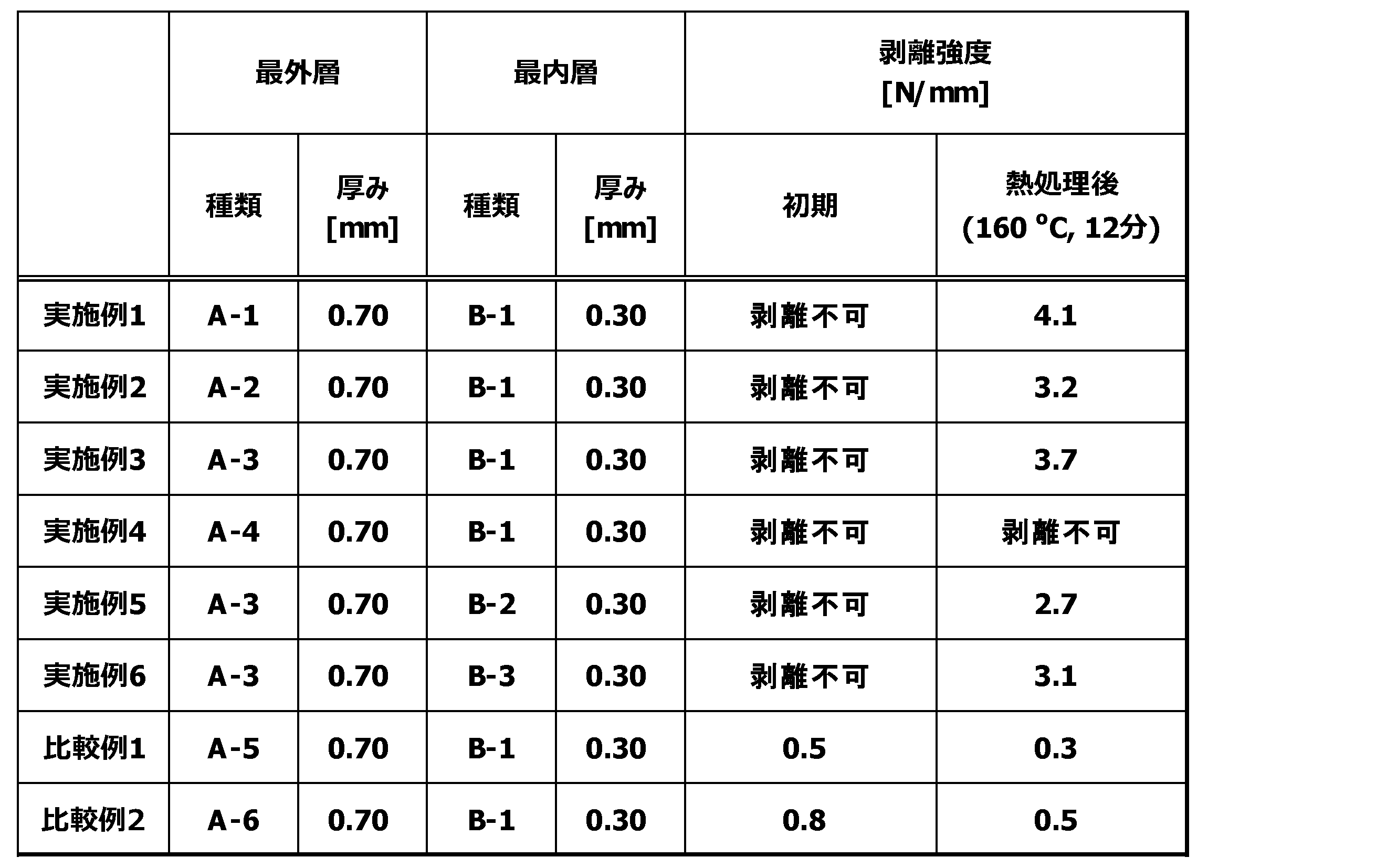
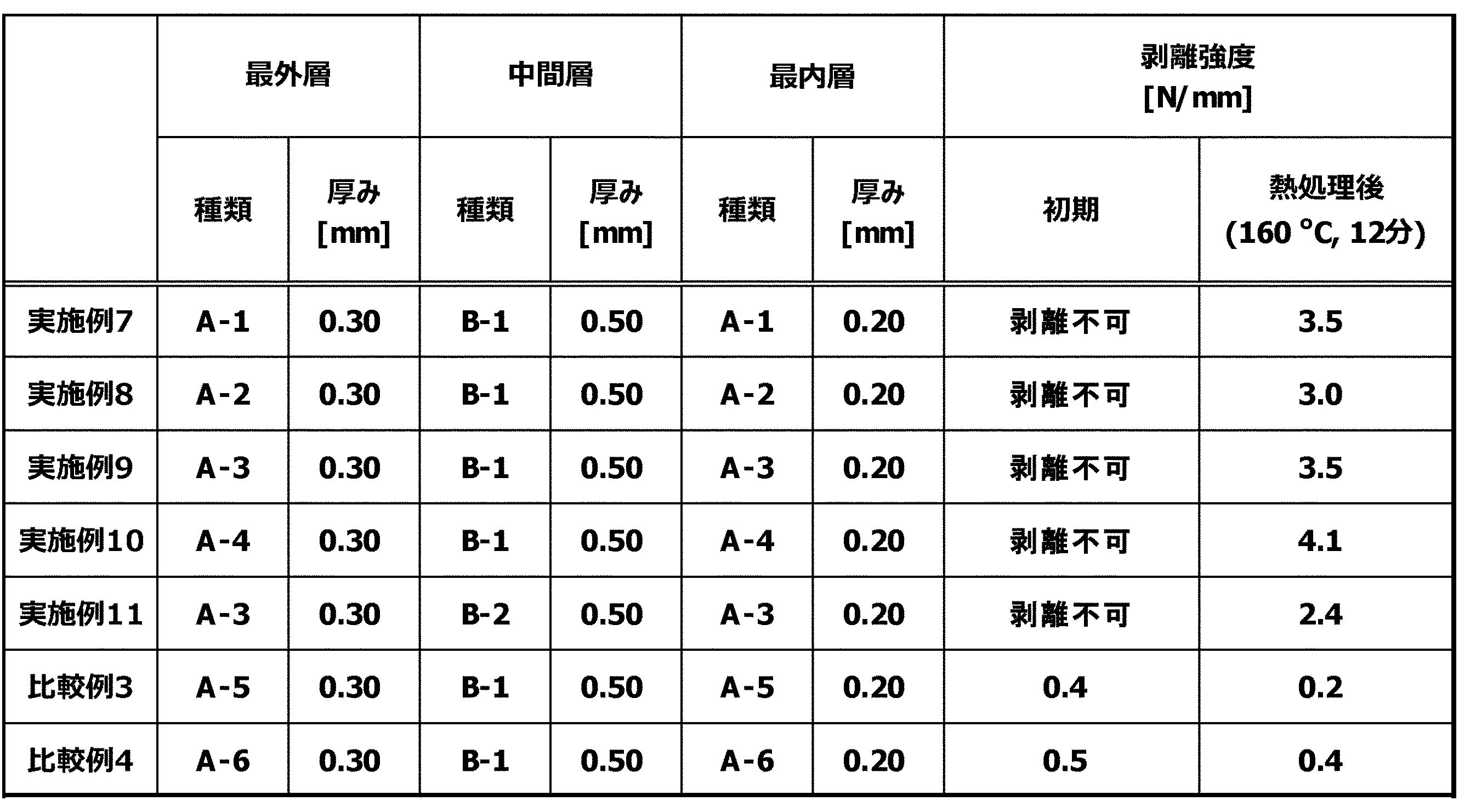
表1及び2から明らかなように、本発明に規定のポリアミド(A2)を使用していない(a)層を有する比較例1、2、3、及び4の積層チューブは、層間接着性及びその耐久性に劣っていた。一方、本発明に規定されている条件を満たす実施例1から11の積層チューブは、層間接着性、及びその耐久性等の諸特性が良好であることは明らかである。 As is clear from Tables 1 and 2, the laminated tubes of Comparative Examples 1, 2, 3 and 4 having the (a) layer which does not use the polyamide (A2) specified in the present invention have interlayer adhesiveness and It was inferior in durability. On the other hand, it is clear that the laminated tubes of Examples 1 to 11 satisfying the conditions specified in the present invention have good properties such as interlayer adhesion and durability.
Claims (13)
少なくとも1組の前記(a)層と前記(b)層とは、隣接して配置され、
前記(a)層は、脂肪族ポリアミド組成物(A)を含み、
前記(b)層は、脂肪族ポリアミド組成物(B)を含み、
前記脂肪族ポリアミド組成物(A)は、ポリアミド(A1)、ポリアミド(A2)、及びエラストマー重合体(A3)を含み、
前記ポリアミド(A1)は、メチレン基数のアミド基数に対する比が8.0以上の脂肪族ポリアミドであって、かつε-カプロラクタム又はε-アミノカプロン酸から誘導される単位aと、アミノドデカン酸又はω-ラウロラクタムから誘導される単位bとを含む共重合体を含まない脂肪族ポリアミドであり、前記脂肪族ポリアミド組成物(A)中に、30質量%以上85質量%以下含まれ、
前記ポリアミド(A2)は、ε-カプロラクタム又はε-アミノカプロン酸から誘導される単位aと、アミノドデカン酸又はω-ラウロラクタムから誘導される単位bとを含む共重合体を含む脂肪族ポリアミドであり、前記脂肪族ポリアミド組成物(A)中に、10質量%以上35質量%以下含まれ、
前記エラストマー重合体(A3)は、カルボキシル基及び/又は酸無水物基を有する不飽和化合物から誘導される構成単位を含有していてもよいエラストマー重合体であり、前記脂肪族ポリアミド組成物(A)中に、5質量%以上30質量%以下含まれ、
前記脂肪族ポリアミド組成物(B)は、ポリアミド(B1)及びエラストマー重合体(B2)を含み、
前記ポリアミド(B1)は、メチレン基数のアミド基数に対する比が8.0未満の脂肪族ポリアミドであり、前記脂肪族ポリアミド組成物(B)に、55質量%以上95質量%以下含まれ、
前記エラストマー重合体(B2)は、カルボキシル基及び/又は酸無水物基を有する不飽和化合物から誘導される構成単位を含有するエラストマー重合体であり、前記脂肪族ポリアミド組成物(B)に、5質量%以上30質量%以下含まれる積層体。 A laminated body of two or more layers including a layer (a) and a layer (b),
At least one set of the (a) layer and the (b) layer are arranged adjacent to each other,
The (a) layer contains an aliphatic polyamide composition (A),
The layer (b) contains an aliphatic polyamide composition (B),
The aliphatic polyamide composition (A) contains a polyamide (A1), a polyamide (A2), and an elastomer polymer (A3),
The polyamide (A1) is an aliphatic polyamide in which the ratio of the number of methylene groups to the number of amide groups is 8.0 or more, and the unit a derived from ε-caprolactam or ε-aminocaproic acid and aminododecanoic acid or ω- An aliphatic polyamide that does not contain a copolymer containing a unit b derived from laurolactam, and the aliphatic polyamide composition (A) contains 30% by mass or more and 85% by mass or less of
The polyamide (A2) is an aliphatic polyamide containing a copolymer containing a unit a derived from ε-caprolactam or ε-aminocaproic acid and a unit b derived from aminododecanoic acid or ω-laurolactam. In the aliphatic polyamide composition (A), 10 mass% or more and 35 mass% or less are contained,
The elastomer polymer (A3) is an elastomer polymer which may contain a constitutional unit derived from an unsaturated compound having a carboxyl group and/or an acid anhydride group, and the aliphatic polyamide composition (A 5% by mass to 30% by mass,
The aliphatic polyamide composition (B) contains a polyamide (B1) and an elastomer polymer (B2),
The polyamide (B1) is an aliphatic polyamide having a ratio of the number of methylene groups to the number of amide groups of less than 8.0, and the aliphatic polyamide composition (B) contains 55% by mass or more and 95% by mass or less,
The elastomer polymer (B2) is an elastomer polymer containing a constitutional unit derived from an unsaturated compound having a carboxyl group and/or an acid anhydride group, and the aliphatic polyamide composition (B) contains 5 A laminate containing from 30% by mass to 30% by mass.
Priority Applications (4)
| Application Number | Priority Date | Filing Date | Title |
|---|---|---|---|
| CN201980086288.XA CN113226763B (en) | 2018-12-27 | 2019-10-25 | Laminate body |
| US17/418,631 US11518155B2 (en) | 2018-12-27 | 2019-10-25 | Multilayer tube |
| EP19903372.1A EP3907077A4 (en) | 2018-12-27 | 2019-10-25 | LAMINATE |
| JP2020562856A JP7384174B2 (en) | 2018-12-27 | 2019-10-25 | laminate |
Applications Claiming Priority (2)
| Application Number | Priority Date | Filing Date | Title |
|---|---|---|---|
| JP2018245633 | 2018-12-27 | ||
| JP2018-245633 | 2018-12-27 |
Publications (1)
| Publication Number | Publication Date |
|---|---|
| WO2020137128A1 true WO2020137128A1 (en) | 2020-07-02 |
Family
ID=71128937
Family Applications (1)
| Application Number | Title | Priority Date | Filing Date |
|---|---|---|---|
| PCT/JP2019/042000 Ceased WO2020137128A1 (en) | 2018-12-27 | 2019-10-25 | Laminate |
Country Status (5)
| Country | Link |
|---|---|
| US (1) | US11518155B2 (en) |
| EP (1) | EP3907077A4 (en) |
| JP (1) | JP7384174B2 (en) |
| CN (1) | CN113226763B (en) |
| WO (1) | WO2020137128A1 (en) |
Cited By (1)
| Publication number | Priority date | Publication date | Assignee | Title |
|---|---|---|---|---|
| WO2024024330A1 (en) * | 2022-07-25 | 2024-02-01 | 三菱瓦斯化学株式会社 | Resin composition and molded article |
Families Citing this family (2)
| Publication number | Priority date | Publication date | Assignee | Title |
|---|---|---|---|---|
| EP4249232A1 (en) * | 2022-03-23 | 2023-09-27 | Cooper-Standard Automotive, Inc. | Multilayer tube for automotive applications |
| CN116838863A (en) * | 2022-03-23 | 2023-10-03 | 库珀标准汽车公司 | Multilayer tubes for automotive applications |
Citations (9)
| Publication number | Priority date | Publication date | Assignee | Title |
|---|---|---|---|---|
| JP2000238218A (en) * | 1999-02-18 | 2000-09-05 | Toyobo Co Ltd | Easy-to-adhere polyamide film |
| US6670004B1 (en) | 2000-08-02 | 2003-12-30 | Saint-Gobain Performance Plastics Corporation | Laminated nylon air brake tubing |
| JP2004034705A (en) | 2002-07-01 | 2004-02-05 | Atofina | Polyamide hose for compressed air |
| JP2010507501A (en) | 2006-10-23 | 2010-03-11 | エボニック デグサ ゲーエムベーハー | Air brake piping |
| JP2014104691A (en) * | 2012-11-29 | 2014-06-09 | Toyoda Gosei Co Ltd | Fuel tube, and production method thereof |
| JP2014240139A (en) * | 2013-06-11 | 2014-12-25 | 宇部興産株式会社 | Laminate tube |
| WO2016009769A1 (en) * | 2014-07-14 | 2016-01-21 | 東洋紡株式会社 | Laminated biaxially-stretched polyamide film and packaging bag |
| JP2016130273A (en) * | 2015-01-13 | 2016-07-21 | 宇部興産株式会社 | Polyamide resin composition and laminated tube formed using the same |
| JP2019059059A (en) * | 2017-09-25 | 2019-04-18 | 三井化学株式会社 | Laminated structure |
Family Cites Families (6)
| Publication number | Priority date | Publication date | Assignee | Title |
|---|---|---|---|---|
| JP4544129B2 (en) * | 2005-10-25 | 2010-09-15 | 東海ゴム工業株式会社 | Low-permeability resin hose and manufacturing method thereof |
| JP6474952B2 (en) * | 2013-06-11 | 2019-02-27 | 宇部興産株式会社 | Laminated structure |
| JP6455075B2 (en) * | 2014-10-29 | 2019-01-23 | 宇部興産株式会社 | Laminated tube |
| EP3385074B1 (en) * | 2015-11-30 | 2021-03-24 | Mitsubishi Gas Chemical Company, Inc. | Multi-layer structure |
| EP3437850B1 (en) | 2016-03-31 | 2021-05-12 | UBE Industries, Ltd. | Multilayer tube |
| JP6895063B2 (en) * | 2017-05-23 | 2021-06-30 | 宇部興産株式会社 | Laminated tube |
-
2019
- 2019-10-25 WO PCT/JP2019/042000 patent/WO2020137128A1/en not_active Ceased
- 2019-10-25 JP JP2020562856A patent/JP7384174B2/en active Active
- 2019-10-25 CN CN201980086288.XA patent/CN113226763B/en active Active
- 2019-10-25 US US17/418,631 patent/US11518155B2/en active Active
- 2019-10-25 EP EP19903372.1A patent/EP3907077A4/en active Pending
Patent Citations (9)
| Publication number | Priority date | Publication date | Assignee | Title |
|---|---|---|---|---|
| JP2000238218A (en) * | 1999-02-18 | 2000-09-05 | Toyobo Co Ltd | Easy-to-adhere polyamide film |
| US6670004B1 (en) | 2000-08-02 | 2003-12-30 | Saint-Gobain Performance Plastics Corporation | Laminated nylon air brake tubing |
| JP2004034705A (en) | 2002-07-01 | 2004-02-05 | Atofina | Polyamide hose for compressed air |
| JP2010507501A (en) | 2006-10-23 | 2010-03-11 | エボニック デグサ ゲーエムベーハー | Air brake piping |
| JP2014104691A (en) * | 2012-11-29 | 2014-06-09 | Toyoda Gosei Co Ltd | Fuel tube, and production method thereof |
| JP2014240139A (en) * | 2013-06-11 | 2014-12-25 | 宇部興産株式会社 | Laminate tube |
| WO2016009769A1 (en) * | 2014-07-14 | 2016-01-21 | 東洋紡株式会社 | Laminated biaxially-stretched polyamide film and packaging bag |
| JP2016130273A (en) * | 2015-01-13 | 2016-07-21 | 宇部興産株式会社 | Polyamide resin composition and laminated tube formed using the same |
| JP2019059059A (en) * | 2017-09-25 | 2019-04-18 | 三井化学株式会社 | Laminated structure |
Non-Patent Citations (1)
| Title |
|---|
| See also references of EP3907077A4 |
Cited By (1)
| Publication number | Priority date | Publication date | Assignee | Title |
|---|---|---|---|---|
| WO2024024330A1 (en) * | 2022-07-25 | 2024-02-01 | 三菱瓦斯化学株式会社 | Resin composition and molded article |
Also Published As
| Publication number | Publication date |
|---|---|
| JPWO2020137128A1 (en) | 2021-11-04 |
| US11518155B2 (en) | 2022-12-06 |
| EP3907077A1 (en) | 2021-11-10 |
| CN113226763A (en) | 2021-08-06 |
| US20220063255A1 (en) | 2022-03-03 |
| JP7384174B2 (en) | 2023-11-21 |
| CN113226763B (en) | 2023-04-18 |
| EP3907077A4 (en) | 2022-08-17 |
Similar Documents
| Publication | Publication Date | Title |
|---|---|---|
| JP6610838B1 (en) | Laminated tube | |
| JP6658854B2 (en) | Laminated tube | |
| JP7157394B2 (en) | laminated tube | |
| JP6970371B2 (en) | Laminated tube | |
| JP7384174B2 (en) | laminate | |
| JP7331365B2 (en) | laminated tube | |
| KR102490728B1 (en) | laminated tube | |
| JP6455649B1 (en) | Laminated tube | |
| US11951718B2 (en) | Laminate | |
| JP6455648B1 (en) | Laminated tube | |
| JP7124331B2 (en) | laminated tube | |
| JP6856889B2 (en) | Laminated tube | |
| JP2019137012A (en) | Laminate tube |
Legal Events
| Date | Code | Title | Description |
|---|---|---|---|
| 121 | Ep: the epo has been informed by wipo that ep was designated in this application |
Ref document number: 19903372 Country of ref document: EP Kind code of ref document: A1 |
|
| ENP | Entry into the national phase |
Ref document number: 2020562856 Country of ref document: JP Kind code of ref document: A |
|
| NENP | Non-entry into the national phase |
Ref country code: DE |
|
| ENP | Entry into the national phase |
Ref document number: 2019903372 Country of ref document: EP Effective date: 20210727 |