WO2020122034A1 - Combination of antibody-drug conjugate with parp inhibitor - Google Patents
Combination of antibody-drug conjugate with parp inhibitor Download PDFInfo
- Publication number
- WO2020122034A1 WO2020122034A1 PCT/JP2019/048171 JP2019048171W WO2020122034A1 WO 2020122034 A1 WO2020122034 A1 WO 2020122034A1 JP 2019048171 W JP2019048171 W JP 2019048171W WO 2020122034 A1 WO2020122034 A1 WO 2020122034A1
- Authority
- WO
- WIPO (PCT)
- Prior art keywords
- antibody
- amino acid
- pharmaceutical composition
- composition according
- seq
- Prior art date
- Legal status (The legal status is an assumption and is not a legal conclusion. Google has not performed a legal analysis and makes no representation as to the accuracy of the status listed.)
- Ceased
Links
- 0 CCC(CC)(C(CC(*1CCCCCC(*CC(*CC(C(C)=*)=O)=O)=O)=O)C1=O)N(C)C Chemical compound CCC(CC)(C(CC(*1CCCCCC(*CC(*CC(C(C)=*)=O)=O)=O)=O)C1=O)N(C)C 0.000 description 4
- YLXONTDGAVEMDL-FOKFVJFQSA-N Cc(c(F)c1)c(CC[C@@H](c2c3CN45)NC(COCNC(CNC([C@H](Cc6ccccc6)NC(CNC(CNC(CCCCCN(C(C=C6)O)C6=O)=O)=O)=O)=O)=O)=O)c2c1nc3C4=CC([C@@H](C(OC1)=O)O)=C1C5=O Chemical compound Cc(c(F)c1)c(CC[C@@H](c2c3CN45)NC(COCNC(CNC([C@H](Cc6ccccc6)NC(CNC(CNC(CCCCCN(C(C=C6)O)C6=O)=O)=O)=O)=O)=O)=O)c2c1nc3C4=CC([C@@H](C(OC1)=O)O)=C1C5=O YLXONTDGAVEMDL-FOKFVJFQSA-N 0.000 description 1
Images


Classifications
-
- A—HUMAN NECESSITIES
- A61—MEDICAL OR VETERINARY SCIENCE; HYGIENE
- A61K—PREPARATIONS FOR MEDICAL, DENTAL OR TOILETRY PURPOSES
- A61K47/00—Medicinal preparations characterised by the non-active ingredients used, e.g. carriers or inert additives; Targeting or modifying agents chemically bound to the active ingredient
- A61K47/50—Medicinal preparations characterised by the non-active ingredients used, e.g. carriers or inert additives; Targeting or modifying agents chemically bound to the active ingredient the non-active ingredient being chemically bound to the active ingredient, e.g. polymer-drug conjugates
- A61K47/51—Medicinal preparations characterised by the non-active ingredients used, e.g. carriers or inert additives; Targeting or modifying agents chemically bound to the active ingredient the non-active ingredient being chemically bound to the active ingredient, e.g. polymer-drug conjugates the non-active ingredient being a modifying agent
- A61K47/68—Medicinal preparations characterised by the non-active ingredients used, e.g. carriers or inert additives; Targeting or modifying agents chemically bound to the active ingredient the non-active ingredient being chemically bound to the active ingredient, e.g. polymer-drug conjugates the non-active ingredient being a modifying agent the modifying agent being an antibody, an immunoglobulin or a fragment thereof, e.g. an Fc-fragment
- A61K47/6801—Drug-antibody or immunoglobulin conjugates defined by the pharmacologically or therapeutically active agent
- A61K47/6803—Drugs conjugated to an antibody or immunoglobulin, e.g. cisplatin-antibody conjugates
-
- A—HUMAN NECESSITIES
- A61—MEDICAL OR VETERINARY SCIENCE; HYGIENE
- A61K—PREPARATIONS FOR MEDICAL, DENTAL OR TOILETRY PURPOSES
- A61K39/00—Medicinal preparations containing antigens or antibodies
- A61K39/395—Antibodies; Immunoglobulins; Immune serum, e.g. antilymphocytic serum
- A61K39/39533—Antibodies; Immunoglobulins; Immune serum, e.g. antilymphocytic serum against materials from animals
- A61K39/39558—Antibodies; Immunoglobulins; Immune serum, e.g. antilymphocytic serum against materials from animals against tumor tissues, cells, antigens
-
- A—HUMAN NECESSITIES
- A61—MEDICAL OR VETERINARY SCIENCE; HYGIENE
- A61K—PREPARATIONS FOR MEDICAL, DENTAL OR TOILETRY PURPOSES
- A61K31/00—Medicinal preparations containing organic active ingredients
- A61K31/33—Heterocyclic compounds
- A61K31/395—Heterocyclic compounds having nitrogen as a ring hetero atom, e.g. guanethidine or rifamycins
- A61K31/41—Heterocyclic compounds having nitrogen as a ring hetero atom, e.g. guanethidine or rifamycins having five-membered rings with two or more ring hetero atoms, at least one of which being nitrogen, e.g. tetrazole
- A61K31/4164—1,3-Diazoles
- A61K31/4184—1,3-Diazoles condensed with carbocyclic rings, e.g. benzimidazoles
-
- A—HUMAN NECESSITIES
- A61—MEDICAL OR VETERINARY SCIENCE; HYGIENE
- A61K—PREPARATIONS FOR MEDICAL, DENTAL OR TOILETRY PURPOSES
- A61K31/00—Medicinal preparations containing organic active ingredients
- A61K31/33—Heterocyclic compounds
- A61K31/395—Heterocyclic compounds having nitrogen as a ring hetero atom, e.g. guanethidine or rifamycins
- A61K31/435—Heterocyclic compounds having nitrogen as a ring hetero atom, e.g. guanethidine or rifamycins having six-membered rings with one nitrogen as the only ring hetero atom
- A61K31/44—Non condensed pyridines; Hydrogenated derivatives thereof
- A61K31/445—Non condensed piperidines, e.g. piperocaine
- A61K31/4523—Non condensed piperidines, e.g. piperocaine containing further heterocyclic ring systems
- A61K31/454—Non condensed piperidines, e.g. piperocaine containing further heterocyclic ring systems containing a five-membered ring with nitrogen as a ring hetero atom, e.g. pimozide, domperidone
-
- A—HUMAN NECESSITIES
- A61—MEDICAL OR VETERINARY SCIENCE; HYGIENE
- A61K—PREPARATIONS FOR MEDICAL, DENTAL OR TOILETRY PURPOSES
- A61K31/00—Medicinal preparations containing organic active ingredients
- A61K31/33—Heterocyclic compounds
- A61K31/395—Heterocyclic compounds having nitrogen as a ring hetero atom, e.g. guanethidine or rifamycins
- A61K31/435—Heterocyclic compounds having nitrogen as a ring hetero atom, e.g. guanethidine or rifamycins having six-membered rings with one nitrogen as the only ring hetero atom
- A61K31/47—Quinolines; Isoquinolines
- A61K31/4738—Quinolines; Isoquinolines ortho- or peri-condensed with heterocyclic ring systems
- A61K31/4745—Quinolines; Isoquinolines ortho- or peri-condensed with heterocyclic ring systems condensed with ring systems having nitrogen as a ring hetero atom, e.g. phenantrolines
-
- A—HUMAN NECESSITIES
- A61—MEDICAL OR VETERINARY SCIENCE; HYGIENE
- A61K—PREPARATIONS FOR MEDICAL, DENTAL OR TOILETRY PURPOSES
- A61K31/00—Medicinal preparations containing organic active ingredients
- A61K31/33—Heterocyclic compounds
- A61K31/395—Heterocyclic compounds having nitrogen as a ring hetero atom, e.g. guanethidine or rifamycins
- A61K31/495—Heterocyclic compounds having nitrogen as a ring hetero atom, e.g. guanethidine or rifamycins having six-membered rings with two or more nitrogen atoms as the only ring heteroatoms, e.g. piperazine or tetrazines
- A61K31/50—Pyridazines; Hydrogenated pyridazines
- A61K31/502—Pyridazines; Hydrogenated pyridazines ortho- or peri-condensed with carbocyclic ring systems, e.g. cinnoline, phthalazine
-
- A—HUMAN NECESSITIES
- A61—MEDICAL OR VETERINARY SCIENCE; HYGIENE
- A61K—PREPARATIONS FOR MEDICAL, DENTAL OR TOILETRY PURPOSES
- A61K31/00—Medicinal preparations containing organic active ingredients
- A61K31/33—Heterocyclic compounds
- A61K31/395—Heterocyclic compounds having nitrogen as a ring hetero atom, e.g. guanethidine or rifamycins
- A61K31/495—Heterocyclic compounds having nitrogen as a ring hetero atom, e.g. guanethidine or rifamycins having six-membered rings with two or more nitrogen atoms as the only ring heteroatoms, e.g. piperazine or tetrazines
- A61K31/50—Pyridazines; Hydrogenated pyridazines
- A61K31/5025—Pyridazines; Hydrogenated pyridazines ortho- or peri-condensed with heterocyclic ring systems
-
- A—HUMAN NECESSITIES
- A61—MEDICAL OR VETERINARY SCIENCE; HYGIENE
- A61K—PREPARATIONS FOR MEDICAL, DENTAL OR TOILETRY PURPOSES
- A61K31/00—Medicinal preparations containing organic active ingredients
- A61K31/33—Heterocyclic compounds
- A61K31/395—Heterocyclic compounds having nitrogen as a ring hetero atom, e.g. guanethidine or rifamycins
- A61K31/55—Heterocyclic compounds having nitrogen as a ring hetero atom, e.g. guanethidine or rifamycins having seven-membered rings, e.g. azelastine, pentylenetetrazole
-
- A—HUMAN NECESSITIES
- A61—MEDICAL OR VETERINARY SCIENCE; HYGIENE
- A61K—PREPARATIONS FOR MEDICAL, DENTAL OR TOILETRY PURPOSES
- A61K45/00—Medicinal preparations containing active ingredients not provided for in groups A61K31/00 - A61K41/00
- A61K45/06—Mixtures of active ingredients without chemical characterisation, e.g. antiphlogistics and cardiaca
-
- A—HUMAN NECESSITIES
- A61—MEDICAL OR VETERINARY SCIENCE; HYGIENE
- A61K—PREPARATIONS FOR MEDICAL, DENTAL OR TOILETRY PURPOSES
- A61K47/00—Medicinal preparations characterised by the non-active ingredients used, e.g. carriers or inert additives; Targeting or modifying agents chemically bound to the active ingredient
- A61K47/50—Medicinal preparations characterised by the non-active ingredients used, e.g. carriers or inert additives; Targeting or modifying agents chemically bound to the active ingredient the non-active ingredient being chemically bound to the active ingredient, e.g. polymer-drug conjugates
- A61K47/51—Medicinal preparations characterised by the non-active ingredients used, e.g. carriers or inert additives; Targeting or modifying agents chemically bound to the active ingredient the non-active ingredient being chemically bound to the active ingredient, e.g. polymer-drug conjugates the non-active ingredient being a modifying agent
- A61K47/68—Medicinal preparations characterised by the non-active ingredients used, e.g. carriers or inert additives; Targeting or modifying agents chemically bound to the active ingredient the non-active ingredient being chemically bound to the active ingredient, e.g. polymer-drug conjugates the non-active ingredient being a modifying agent the modifying agent being an antibody, an immunoglobulin or a fragment thereof, e.g. an Fc-fragment
- A61K47/6801—Drug-antibody or immunoglobulin conjugates defined by the pharmacologically or therapeutically active agent
- A61K47/6803—Drugs conjugated to an antibody or immunoglobulin, e.g. cisplatin-antibody conjugates
- A61K47/68037—Drugs conjugated to an antibody or immunoglobulin, e.g. cisplatin-antibody conjugates the drug being a camptothecin [CPT] or derivatives
-
- A—HUMAN NECESSITIES
- A61—MEDICAL OR VETERINARY SCIENCE; HYGIENE
- A61K—PREPARATIONS FOR MEDICAL, DENTAL OR TOILETRY PURPOSES
- A61K47/00—Medicinal preparations characterised by the non-active ingredients used, e.g. carriers or inert additives; Targeting or modifying agents chemically bound to the active ingredient
- A61K47/50—Medicinal preparations characterised by the non-active ingredients used, e.g. carriers or inert additives; Targeting or modifying agents chemically bound to the active ingredient the non-active ingredient being chemically bound to the active ingredient, e.g. polymer-drug conjugates
- A61K47/51—Medicinal preparations characterised by the non-active ingredients used, e.g. carriers or inert additives; Targeting or modifying agents chemically bound to the active ingredient the non-active ingredient being chemically bound to the active ingredient, e.g. polymer-drug conjugates the non-active ingredient being a modifying agent
- A61K47/68—Medicinal preparations characterised by the non-active ingredients used, e.g. carriers or inert additives; Targeting or modifying agents chemically bound to the active ingredient the non-active ingredient being chemically bound to the active ingredient, e.g. polymer-drug conjugates the non-active ingredient being a modifying agent the modifying agent being an antibody, an immunoglobulin or a fragment thereof, e.g. an Fc-fragment
- A61K47/6835—Medicinal preparations characterised by the non-active ingredients used, e.g. carriers or inert additives; Targeting or modifying agents chemically bound to the active ingredient the non-active ingredient being chemically bound to the active ingredient, e.g. polymer-drug conjugates the non-active ingredient being a modifying agent the modifying agent being an antibody, an immunoglobulin or a fragment thereof, e.g. an Fc-fragment the modifying agent being an antibody or an immunoglobulin bearing at least one antigen-binding site
- A61K47/6849—Medicinal preparations characterised by the non-active ingredients used, e.g. carriers or inert additives; Targeting or modifying agents chemically bound to the active ingredient the non-active ingredient being chemically bound to the active ingredient, e.g. polymer-drug conjugates the non-active ingredient being a modifying agent the modifying agent being an antibody, an immunoglobulin or a fragment thereof, e.g. an Fc-fragment the modifying agent being an antibody or an immunoglobulin bearing at least one antigen-binding site the antibody targeting a receptor, a cell surface antigen or a cell surface determinant
-
- A—HUMAN NECESSITIES
- A61—MEDICAL OR VETERINARY SCIENCE; HYGIENE
- A61K—PREPARATIONS FOR MEDICAL, DENTAL OR TOILETRY PURPOSES
- A61K47/00—Medicinal preparations characterised by the non-active ingredients used, e.g. carriers or inert additives; Targeting or modifying agents chemically bound to the active ingredient
- A61K47/50—Medicinal preparations characterised by the non-active ingredients used, e.g. carriers or inert additives; Targeting or modifying agents chemically bound to the active ingredient the non-active ingredient being chemically bound to the active ingredient, e.g. polymer-drug conjugates
- A61K47/51—Medicinal preparations characterised by the non-active ingredients used, e.g. carriers or inert additives; Targeting or modifying agents chemically bound to the active ingredient the non-active ingredient being chemically bound to the active ingredient, e.g. polymer-drug conjugates the non-active ingredient being a modifying agent
- A61K47/68—Medicinal preparations characterised by the non-active ingredients used, e.g. carriers or inert additives; Targeting or modifying agents chemically bound to the active ingredient the non-active ingredient being chemically bound to the active ingredient, e.g. polymer-drug conjugates the non-active ingredient being a modifying agent the modifying agent being an antibody, an immunoglobulin or a fragment thereof, e.g. an Fc-fragment
- A61K47/6835—Medicinal preparations characterised by the non-active ingredients used, e.g. carriers or inert additives; Targeting or modifying agents chemically bound to the active ingredient the non-active ingredient being chemically bound to the active ingredient, e.g. polymer-drug conjugates the non-active ingredient being a modifying agent the modifying agent being an antibody, an immunoglobulin or a fragment thereof, e.g. an Fc-fragment the modifying agent being an antibody or an immunoglobulin bearing at least one antigen-binding site
- A61K47/6851—Medicinal preparations characterised by the non-active ingredients used, e.g. carriers or inert additives; Targeting or modifying agents chemically bound to the active ingredient the non-active ingredient being chemically bound to the active ingredient, e.g. polymer-drug conjugates the non-active ingredient being a modifying agent the modifying agent being an antibody, an immunoglobulin or a fragment thereof, e.g. an Fc-fragment the modifying agent being an antibody or an immunoglobulin bearing at least one antigen-binding site the antibody targeting a determinant of a tumour cell
-
- A—HUMAN NECESSITIES
- A61—MEDICAL OR VETERINARY SCIENCE; HYGIENE
- A61K—PREPARATIONS FOR MEDICAL, DENTAL OR TOILETRY PURPOSES
- A61K47/00—Medicinal preparations characterised by the non-active ingredients used, e.g. carriers or inert additives; Targeting or modifying agents chemically bound to the active ingredient
- A61K47/50—Medicinal preparations characterised by the non-active ingredients used, e.g. carriers or inert additives; Targeting or modifying agents chemically bound to the active ingredient the non-active ingredient being chemically bound to the active ingredient, e.g. polymer-drug conjugates
- A61K47/51—Medicinal preparations characterised by the non-active ingredients used, e.g. carriers or inert additives; Targeting or modifying agents chemically bound to the active ingredient the non-active ingredient being chemically bound to the active ingredient, e.g. polymer-drug conjugates the non-active ingredient being a modifying agent
- A61K47/68—Medicinal preparations characterised by the non-active ingredients used, e.g. carriers or inert additives; Targeting or modifying agents chemically bound to the active ingredient the non-active ingredient being chemically bound to the active ingredient, e.g. polymer-drug conjugates the non-active ingredient being a modifying agent the modifying agent being an antibody, an immunoglobulin or a fragment thereof, e.g. an Fc-fragment
- A61K47/6835—Medicinal preparations characterised by the non-active ingredients used, e.g. carriers or inert additives; Targeting or modifying agents chemically bound to the active ingredient the non-active ingredient being chemically bound to the active ingredient, e.g. polymer-drug conjugates the non-active ingredient being a modifying agent the modifying agent being an antibody, an immunoglobulin or a fragment thereof, e.g. an Fc-fragment the modifying agent being an antibody or an immunoglobulin bearing at least one antigen-binding site
- A61K47/6851—Medicinal preparations characterised by the non-active ingredients used, e.g. carriers or inert additives; Targeting or modifying agents chemically bound to the active ingredient the non-active ingredient being chemically bound to the active ingredient, e.g. polymer-drug conjugates the non-active ingredient being a modifying agent the modifying agent being an antibody, an immunoglobulin or a fragment thereof, e.g. an Fc-fragment the modifying agent being an antibody or an immunoglobulin bearing at least one antigen-binding site the antibody targeting a determinant of a tumour cell
- A61K47/6855—Medicinal preparations characterised by the non-active ingredients used, e.g. carriers or inert additives; Targeting or modifying agents chemically bound to the active ingredient the non-active ingredient being chemically bound to the active ingredient, e.g. polymer-drug conjugates the non-active ingredient being a modifying agent the modifying agent being an antibody, an immunoglobulin or a fragment thereof, e.g. an Fc-fragment the modifying agent being an antibody or an immunoglobulin bearing at least one antigen-binding site the antibody targeting a determinant of a tumour cell the tumour determinant being from breast cancer cell
-
- A—HUMAN NECESSITIES
- A61—MEDICAL OR VETERINARY SCIENCE; HYGIENE
- A61K—PREPARATIONS FOR MEDICAL, DENTAL OR TOILETRY PURPOSES
- A61K47/00—Medicinal preparations characterised by the non-active ingredients used, e.g. carriers or inert additives; Targeting or modifying agents chemically bound to the active ingredient
- A61K47/50—Medicinal preparations characterised by the non-active ingredients used, e.g. carriers or inert additives; Targeting or modifying agents chemically bound to the active ingredient the non-active ingredient being chemically bound to the active ingredient, e.g. polymer-drug conjugates
- A61K47/51—Medicinal preparations characterised by the non-active ingredients used, e.g. carriers or inert additives; Targeting or modifying agents chemically bound to the active ingredient the non-active ingredient being chemically bound to the active ingredient, e.g. polymer-drug conjugates the non-active ingredient being a modifying agent
- A61K47/68—Medicinal preparations characterised by the non-active ingredients used, e.g. carriers or inert additives; Targeting or modifying agents chemically bound to the active ingredient the non-active ingredient being chemically bound to the active ingredient, e.g. polymer-drug conjugates the non-active ingredient being a modifying agent the modifying agent being an antibody, an immunoglobulin or a fragment thereof, e.g. an Fc-fragment
- A61K47/6889—Conjugates wherein the antibody being the modifying agent and wherein the linker, binder or spacer confers particular properties to the conjugates, e.g. peptidic enzyme-labile linkers or acid-labile linkers, providing for an acid-labile immuno conjugate wherein the drug may be released from its antibody conjugated part in an acidic, e.g. tumoural or environment
-
- A—HUMAN NECESSITIES
- A61—MEDICAL OR VETERINARY SCIENCE; HYGIENE
- A61P—SPECIFIC THERAPEUTIC ACTIVITY OF CHEMICAL COMPOUNDS OR MEDICINAL PREPARATIONS
- A61P35/00—Antineoplastic agents
-
- A—HUMAN NECESSITIES
- A61—MEDICAL OR VETERINARY SCIENCE; HYGIENE
- A61P—SPECIFIC THERAPEUTIC ACTIVITY OF CHEMICAL COMPOUNDS OR MEDICINAL PREPARATIONS
- A61P43/00—Drugs for specific purposes, not provided for in groups A61P1/00-A61P41/00
-
- C—CHEMISTRY; METALLURGY
- C07—ORGANIC CHEMISTRY
- C07K—PEPTIDES
- C07K16/00—Immunoglobulins [IGs], e.g. monoclonal or polyclonal antibodies
- C07K16/18—Immunoglobulins [IGs], e.g. monoclonal or polyclonal antibodies against material from animals or humans
- C07K16/28—Immunoglobulins [IGs], e.g. monoclonal or polyclonal antibodies against material from animals or humans against receptors, cell surface antigens or cell surface determinants
-
- A—HUMAN NECESSITIES
- A61—MEDICAL OR VETERINARY SCIENCE; HYGIENE
- A61K—PREPARATIONS FOR MEDICAL, DENTAL OR TOILETRY PURPOSES
- A61K2300/00—Mixtures or combinations of active ingredients, wherein at least one active ingredient is fully defined in groups A61K31/00 - A61K41/00
-
- C—CHEMISTRY; METALLURGY
- C07—ORGANIC CHEMISTRY
- C07K—PEPTIDES
- C07K16/00—Immunoglobulins [IGs], e.g. monoclonal or polyclonal antibodies
- C07K16/18—Immunoglobulins [IGs], e.g. monoclonal or polyclonal antibodies against material from animals or humans
- C07K16/28—Immunoglobulins [IGs], e.g. monoclonal or polyclonal antibodies against material from animals or humans against receptors, cell surface antigens or cell surface determinants
- C07K16/30—Immunoglobulins [IGs], e.g. monoclonal or polyclonal antibodies against material from animals or humans against receptors, cell surface antigens or cell surface determinants from tumour cells
-
- C—CHEMISTRY; METALLURGY
- C07—ORGANIC CHEMISTRY
- C07K—PEPTIDES
- C07K16/00—Immunoglobulins [IGs], e.g. monoclonal or polyclonal antibodies
- C07K16/18—Immunoglobulins [IGs], e.g. monoclonal or polyclonal antibodies against material from animals or humans
- C07K16/32—Immunoglobulins [IGs], e.g. monoclonal or polyclonal antibodies against material from animals or humans against translation products of oncogenes
Definitions
- the present invention provides a pharmaceutical composition characterized in that a specific antibody-drug conjugate and a PARP inhibitor are administered in combination, and/or a specific antibody-drug conjugate and a PARP inhibitor are combined.
- the present invention relates to a therapeutic method characterized by being administered to an individual.
- Single-strand breaks and double-strand breaks are known as types of DNA damage, and each has its own repair mechanism.
- PARP polyadenosine 5'niphosphate (ADP) ribose polymerase
- ADP polyadenosine 5'niphosphate
- ribose polymerase acts mainly to perform repair by base excision repair.
- repair by homologous recombination repair is performed mainly by the action of BRCA, ATM, RAD51, etc.
- a PARP inhibitor is a drug having a function of inhibiting repair of single-strand break by inhibiting PARP (particularly PARP-1 and PARP-2). It is known that repair of double-strand breaks is abnormal in some cancers such as breast cancer and ovarian cancer, and PARP inhibitors have an antitumor effect due to synthetic lethality against these cancers. It is recognized (Non-patent documents 2 to 5).
- PARP inhibitors examples include Olaparib (Non-patent document 6), Rucaparib (Non-patent document 7), Niraparib (Non-patent document 8), and Talazoparib (Non-patent document 9). Etc. are known.
- Non-Patent Document 10 it is known that an effect similar to synthetic lethality can be obtained by using a PARP inhibitor in combination with another anticancer agent.
- Non-Patent Document 10 it is known that the combined use of a PARP inhibitor and a topoisomerase I inhibitor is effective even for cancers in which repair of double-strand breaks is not abnormal. ..
- Non-patent Document 17 clinical studies have also reported that there is a problem in the balance between tolerability and efficacy (Non-patent Document 17), and it has not yet been established as a standard therapy.
- An antibody-drug conjugate in which a drug having cytotoxicity is bound to an antibody that binds to an antigen that is expressed on the surface of cancer cells and can be internalized in cells is selected for cancer cells. By being able to deliver the drug selectively, it can be expected to accumulate the drug in the cancer cells and kill the cancer cells (Non-patent Documents 18 to 22).
- antibody-drug conjugates comprising an antibody and a derivative of exatecan, which is a topoisomerase I inhibitor, are known (Patent Documents 1 to 9 and Non-Patent Documents 23 to 27). ..
- the antibody-drug conjugate (antibody-drug conjugate having an exatecan derivative as a constituent) used in the present invention exhibits an excellent antitumor effect even as a single agent.
- the present invention provides a pharmaceutical composition characterized in that a specific antibody-drug conjugate and a PARP inhibitor are administered in combination, and/or a specific antibody-drug conjugate and a PARP inhibitor are combined. It is an object of the present invention to provide a therapeutic method characterized by being administered to an individual.
- the inventors of the present invention have conducted extensive studies to solve the above-mentioned problems, and found that a specific antibody-drug conjugate and a PARP inhibitor are administered in combination to exhibit excellent combined effects.
- the present invention has been completed.
- the present invention provides the following [1] to [368].
- [1] A pharmaceutical composition, characterized in that the antibody-drug conjugate and PARP inhibitor are administered in combination,
- the antibody-drug conjugate has the formula
- a pharmaceutical composition which is an antibody-drug conjugate in which the drug linker represented by: and the antibody are bound by a thioether bond.
- the antibody in the antibody-drug conjugate is an anti-HER2 antibody, anti-HER3 antibody, anti-TROP2 antibody, anti-B7-H3 antibody, anti-GPR20 antibody, or anti-CDH6 antibody.
- the antibody in the antibody-drug conjugate is an anti-HER2 antibody.
- the anti-HER2 antibody comprises CDRH1 consisting of the amino acid sequences of amino acid numbers 26 to 33 in SEQ ID NO: 1, CDRH2 consisting of the amino acid sequence of amino acid numbers 51 to 58 in SEQ ID NO: 1, and amino acid numbers 97 to 97 in SEQ ID NO: 1.
- the pharmaceutical composition according to [3] which is an antibody comprising CDRL2 and a light chain comprising CDRL3 consisting of the amino acid sequences of amino acid numbers 89 to 97 in SEQ ID NO:2.
- the anti-HER2 antibody comprises a heavy chain containing a heavy chain variable region consisting of the amino acid sequences of amino acid numbers 1 to 120 in SEQ ID NO: 1, and a light chain variable consisting of the amino acid sequence of amino acid numbers 1 to 107 in SEQ ID NO: 2.
- the pharmaceutical composition according to [3] which is an antibody comprising a light chain containing a region.
- the anti-HER2 antibody is an antibody comprising a heavy chain consisting of the amino acid sequence represented by SEQ ID NO: 1 and a light chain consisting of the amino acid sequence represented by SEQ ID NO: 2.
- the anti-HER2 antibody is an antibody comprising a heavy chain consisting of the amino acid sequences of amino acid numbers 1 to 449 in SEQ ID NO: 1 and a light chain consisting of the amino acid sequence of amino acid numbers 1 to 214 in SEQ ID NO: 2.
- anti-HER3 antibody is an antibody comprising a heavy chain consisting of the amino acid sequence set forth in SEQ ID NO:3 and a light chain consisting of the amino acid sequence set forth in SEQ ID NO:4.
- the anti-TROP2 antibody is an antibody comprising a heavy chain consisting of the amino acid sequences of amino acid numbers 20 to 470 in SEQ ID NO:5 and a light chain consisting of the amino acid sequences of amino acid numbers 21 to 234 in SEQ ID NO:6, The pharmaceutical composition according to [13].
- the anti-B7-H3 antibody is an antibody comprising a heavy chain consisting of the amino acid sequences of amino acid numbers 20 to 471 in SEQ ID NO: 7 and a light chain consisting of the amino acid sequences of amino acid numbers 21 to 233 in SEQ ID NO: 8.
- the anti-GPR20 antibody is an antibody comprising a heavy chain consisting of the amino acid sequences of amino acid numbers 20 to 472 in SEQ ID NO: 9 and a light chain consisting of the amino acid sequences of amino acid numbers 21 to 234 in SEQ ID NO: 10.
- the anti-CDH6 antibody is an antibody comprising a heavy chain consisting of the amino acid sequences of amino acid numbers 20 to 471 in SEQ ID NO: 11 and a light chain consisting of the amino acid sequences of amino acid numbers 21 to 233 in SEQ ID NO: 12.
- [36] Breast cancer, gastric cancer, colon cancer, lung cancer, esophageal cancer, head and neck cancer, gastroesophageal junction adenocarcinoma, biliary tract cancer, Paget's disease, pancreatic cancer, ovarian cancer, bladder cancer, prostate cancer
- the pharmaceutical composition according to [36] for treating breast cancer.
- the pharmaceutical composition according to [37] which is used for treatment of HER2-low-expressing breast cancer.
- the pharmaceutical composition according to [36] for treating gastric cancer.
- the pharmaceutical composition according to [36] for treating ovarian cancer.
- the antibody-drug conjugate has the formula
- a therapeutic method wherein the drug linker represented by the formula (4) and the antibody are antibody-drug conjugates linked by a thioether bond.
- the antibody in the antibody-drug conjugate is an anti-HER2 antibody, anti-HER3 antibody, anti-TROP2 antibody, anti-B7-H3 antibody, anti-GPR20 antibody, or anti-CDH6 antibody.
- the antibody in the antibody-drug conjugate is an anti-HER2 antibody.
- the anti-HER2 antibody comprises CDRH1 consisting of the amino acid sequences of amino acid numbers 26 to 33 in SEQ ID NO: 1, CDRH2 consisting of the amino acid sequence of amino acid numbers 51 to 58 in SEQ ID NO: 1, and amino acid numbers 97 to 97 in SEQ ID NO: 1.
- the treatment method according to [45] which is an antibody comprising CDRL2 and a light chain comprising CDRL3 consisting of the amino acid sequences of amino acid numbers 89 to 97 in SEQ ID NO:2.
- the anti-HER2 antibody comprises a heavy chain containing a heavy chain variable region consisting of the amino acid sequences of amino acid numbers 1 to 120 in SEQ ID NO: 1, and a light chain variable consisting of the amino acid sequence of amino acid numbers 1 to 107 in SEQ ID NO: 2.
- the treatment method according to [45] which is an antibody comprising a light chain containing a region.
- the anti-HER2 antibody is an antibody comprising a heavy chain consisting of the amino acid sequence set forth in SEQ ID NO: 1 and a light chain consisting of the amino acid sequence set forth in SEQ ID NO: 2.
- the anti-HER2 antibody is an antibody comprising a heavy chain consisting of the amino acid sequences of amino acid numbers 1 to 449 in SEQ ID NO: 1 and a light chain consisting of the amino acid sequence of amino acid numbers 1 to 214 in SEQ ID NO: 2.
- the treatment method according to [44], wherein the antibody in the antibody-drug conjugate is an anti-HER3 antibody.
- the treatment method according to [51], wherein the anti-HER3 antibody is an antibody comprising a heavy chain consisting of the amino acid sequence set forth in SEQ ID NO:3 and a light chain consisting of the amino acid sequence set forth in SEQ ID NO:4.
- the treatment method according to [44], wherein the antibody in the antibody-drug conjugate is an anti-TROP2 antibody.
- the anti-TROP2 antibody is an antibody comprising a heavy chain consisting of the amino acid sequences of amino acid numbers 20 to 470 in SEQ ID NO:5 and a light chain consisting of the amino acid sequences of amino acid numbers 21 to 234 in SEQ ID NO:6, The treatment method according to [55]. [57] The treatment method according to [56], wherein the heavy chain carboxyl terminal lysine residue of the anti-TROP2 antibody is deleted. [58] The treatment method according to any one of [55] to [57], wherein the average number of drug linkers bound per antibody in the antibody-drug conjugate is in the range of 3.5 to 4.5.
- the treatment method according to [44], wherein the antibody in the antibody-drug conjugate is an anti-B7-H3 antibody.
- the anti-B7-H3 antibody is an antibody comprising a heavy chain consisting of the amino acid sequences of amino acid numbers 20 to 471 in SEQ ID NO: 7 and a light chain consisting of the amino acid sequences of amino acid numbers 21 to 233 in SEQ ID NO: 8. The treatment method according to [59].
- the anti-GPR20 antibody is an antibody comprising a heavy chain consisting of the amino acid sequences of amino acid numbers 20 to 472 in SEQ ID NO: 9 and a light chain consisting of the amino acid sequences of amino acid numbers 21 to 234 in SEQ ID NO: 10.
- the anti-CDH6 antibody is an antibody comprising a heavy chain consisting of the amino acid sequences of amino acid numbers 20 to 471 in SEQ ID NO: 11 and a light chain consisting of the amino acid sequences of amino acid numbers 21 to 233 in SEQ ID NO: 12.
- [78] Breast cancer, gastric cancer, colon cancer, lung cancer, esophageal cancer, head and neck cancer, gastroesophageal junction adenocarcinoma, biliary tract cancer, Paget's disease, pancreatic cancer, ovarian cancer, bladder cancer, prostate cancer
- the treatment method according to [78] for treating breast cancer.
- the treatment method according to [79] which is used for treatment of HER2-low-expressing breast cancer.
- A represents the binding position to the antibody
- the anti-HER2 antibody comprises CDRH1 consisting of the amino acid sequences of amino acid numbers 26 to 33 in SEQ ID NO: 1, CDRH2 consisting of the amino acid sequence of amino acid numbers 51 to 58 in SEQ ID NO: 1, and amino acid numbers 97 to 97 in SEQ ID NO: 1.
- the antibody-drug conjugate according to [87] which is an antibody comprising CDRL2 and a light chain comprising CDRL3 consisting of the amino acid sequences of amino acid numbers 89 to 97 in SEQ ID NO:2.
- the anti-HER2 antibody comprises a heavy chain containing a heavy chain variable region consisting of the amino acid sequences of amino acid numbers 1 to 120 in SEQ ID NO: 1, and a light chain variable consisting of the amino acid sequence of amino acid numbers 1 to 107 in SEQ ID NO: 2.
- the antibody-drug conjugate according to [87] which is an antibody comprising a light chain comprising a region.
- the anti-HER2 antibody is an antibody comprising a heavy chain consisting of the amino acid sequence of SEQ ID NO: 1 and a light chain consisting of the amino acid sequence of SEQ ID NO: 2.
- the anti-HER2 antibody is an antibody comprising a heavy chain consisting of the amino acid sequences of amino acid numbers 1 to 449 in SEQ ID NO: 1 and a light chain consisting of the amino acid sequence of amino acid numbers 1 to 214 in SEQ ID NO: 2.
- the antibody-drug conjugate according to [86] wherein the antibody in the antibody-drug conjugate is an anti-HER3 antibody.
- the anti-TROP2 antibody is an antibody comprising a heavy chain consisting of the amino acid sequences of amino acid numbers 20 to 470 in SEQ ID NO:5 and a light chain consisting of the amino acid sequences of amino acid numbers 21 to 234 in SEQ ID NO:6, The antibody-drug conjugate according to [97].
- the anti-B7-H3 antibody is an antibody comprising a heavy chain consisting of the amino acid sequences of amino acid numbers 20 to 471 in SEQ ID NO: 7 and a light chain consisting of the amino acid sequences of amino acid numbers 21 to 233 in SEQ ID NO: 8.
- the anti-GPR20 antibody is an antibody comprising a heavy chain consisting of the amino acid sequences of amino acid numbers 20 to 472 in SEQ ID NO: 9 and a light chain consisting of the amino acid sequences of amino acid numbers 21 to 234 in SEQ ID NO: 10.
- the antibody-drug conjugate according to [106] wherein the heavy chain carboxyl terminal lysine residue of the anti-GPR20 antibody is deleted.
- the anti-CDH6 antibody is an antibody comprising a heavy chain consisting of the amino acid sequences of amino acid numbers 20 to 471 in SEQ ID NO: 11 and a light chain consisting of the amino acid sequences of amino acid numbers 21 to 233 in SEQ ID NO: 12. The antibody-drug conjugate according to [109].
- [111] The antibody-drug conjugate according to [110], wherein the heavy chain carboxyl terminal lysine residue of the anti-CDH6 antibody is deleted.
- [112] The antibody-drug conjugate according to any one of [109] to [111], wherein the average number of drug linkers bound per antibody in the antibody-drug conjugate is in the range of 7 to 8.
- [113] The antibody-drug conjugate according to any one of [85] to [112], wherein the PARP inhibitor is olaparib, lucaparib, niraparib, tarazoparib, or beriparib, or a pharmaceutically acceptable salt thereof.
- the antibody according to any one of [85] to [119] for at least one treatment selected from the group consisting of: uterine carcinosarcoma, gastrointestinal stromal tumor, renal cancer, and sarcoma. Drug conjugate.
- A represents the binding position to the antibody
- an antibody-drug conjugate in which the drug linker represented by and the antibody are bound by a thioether bond [128] The use according to [127], wherein the antibody in the antibody-drug conjugate is an anti-HER2 antibody, anti-HER3 antibody, anti-TROP2 antibody, anti-B7-H3 antibody, anti-GPR20 antibody, or anti-CDH6 antibody. [129] The use according to [128], wherein the antibody in the antibody-drug conjugate is an anti-HER2 antibody.
- the anti-HER2 antibody comprises CDRH1 consisting of the amino acid sequences of amino acid numbers 26 to 33 in SEQ ID NO: 1, CDRH2 consisting of the amino acid sequence of amino acid numbers 51 to 58 in SEQ ID NO: 1, and amino acid numbers 97 to 97 in SEQ ID NO: 1.
- the use according to [129] which is an antibody comprising CDRL2 and a light chain comprising CDRL3 consisting of the amino acid sequences of amino acid numbers 89 to 97 in SEQ ID NO:2.
- the anti-HER2 antibody comprises a heavy chain containing a heavy chain variable region consisting of the amino acid sequences of amino acid numbers 1 to 120 in SEQ ID NO: 1, and a light chain variable consisting of the amino acid sequence of amino acid numbers 1 to 107 in SEQ ID NO: 2.
- the anti-HER2 antibody is an antibody comprising a heavy chain consisting of the amino acid sequence set forth in SEQ ID NO: 1 and a light chain consisting of the amino acid sequence set forth in SEQ ID NO: 2.
- the anti-HER2 antibody is an antibody comprising a heavy chain consisting of the amino acid sequences of amino acid numbers 1 to 449 in SEQ ID NO: 1 and a light chain consisting of the amino acid sequence of amino acid numbers 1 to 214 in SEQ ID NO: 2.
- the anti-HER3 antibody is an antibody comprising a heavy chain consisting of the amino acid sequence set forth in SEQ ID NO:3 and a light chain consisting of the amino acid sequence set forth in SEQ ID NO:4.
- the heavy chain carboxyl terminal lysine residue of the anti-HER3 antibody is deleted.
- the anti-TROP2 antibody is an antibody comprising a heavy chain consisting of the amino acid sequences of amino acid numbers 20 to 470 in SEQ ID NO: 5 and a light chain consisting of the amino acid sequences of amino acid numbers 21 to 234 in SEQ ID NO: 6, Use according to [139].
- [141] Use according to [140], wherein the heavy chain carboxyl terminal lysine residue of the anti-TROP2 antibody is deleted.
- [142] The use according to any one of [139] to [141], wherein the average number of drug linker bonds per antibody in the antibody-drug conjugate is in the range of 3.5 to 4.5.
- the anti-B7-H3 antibody is an antibody comprising a heavy chain consisting of the amino acid sequences of amino acid numbers 20 to 471 in SEQ ID NO: 7 and a light chain consisting of the amino acid sequences of amino acid numbers 21 to 233 in SEQ ID NO: 8. The use according to [143].
- [145] Use according to [144], wherein the heavy chain carboxyl-terminal lysine residue of the anti-B7-H3 antibody is deleted.
- the anti-GPR20 antibody is an antibody comprising a heavy chain consisting of the amino acid sequences of amino acid numbers 20 to 472 in SEQ ID NO: 9 and a light chain consisting of the amino acid sequences of amino acid numbers 21 to 234 in SEQ ID NO: 10. Use according to [147].
- Use according to [148] wherein the heavy chain carboxyl terminal lysine residue of the anti-GPR20 antibody is deleted.
- the anti-CDH6 antibody is an antibody comprising a heavy chain consisting of the amino acid sequences of amino acid numbers 20 to 471 in SEQ ID NO: 11 and a light chain consisting of the amino acid sequences of amino acid numbers 21 to 233 in SEQ ID NO: 12. Use according to [151].
- [161] any one of [127] to [160], characterized in that the antibody-drug conjugate and the PARP inhibitor are contained as different active ingredients in different formulations and are administered simultaneously or at different times.
- [162] Breast cancer, gastric cancer, colon cancer, lung cancer, esophageal cancer, head and neck cancer, gastroesophageal junction adenocarcinoma, biliary tract cancer, Paget's disease, pancreatic cancer, ovarian cancer, bladder cancer, prostate cancer
- [163] Use according to [162] for the treatment of breast cancer.
- [164] Use according to [163], for the treatment of HER2-low expressing breast cancer.
- [165] Use according to [162], for the treatment of gastric cancer.
- a pharmaceutical composition characterized in that the antibody-drug conjugate and PARP inhibitor are administered in combination,
- the antibody-drug conjugate has the formula
- the anti-HER2 antibody comprises CDRH1 consisting of the amino acid sequences of amino acid numbers 26 to 33 in SEQ ID NO: 1, CDRH2 consisting of the amino acid sequence of amino acid numbers 51 to 58 in SEQ ID NO: 1, and amino acid numbers 97 to 97 in SEQ ID NO: 1.
- the anti-HER2 antibody comprises a heavy chain containing a heavy chain variable region consisting of the amino acid sequences of amino acid numbers 1 to 120 in SEQ ID NO: 1, and a light chain variable consisting of the amino acid sequence of amino acid numbers 1 to 107 in SEQ ID NO: 2.
- the anti-HER2 antibody is an antibody comprising a heavy chain consisting of the amino acid sequence of SEQ ID NO: 1 and a light chain consisting of the amino acid sequence of SEQ ID NO: 2.
- the anti-HER2 antibody is an antibody comprising a heavy chain consisting of the amino acid sequences of amino acid numbers 1 to 449 in SEQ ID NO: 1 and a light chain consisting of the amino acid sequence of amino acid numbers 1 to 214 in SEQ ID NO: 2.
- the anti-TROP2 antibody is an antibody comprising a heavy chain consisting of the amino acid sequences of amino acid numbers 20 to 470 in SEQ ID NO:5 and a light chain consisting of the amino acid sequences of amino acid numbers 21 to 234 in SEQ ID NO:6, The pharmaceutical composition according to [181].
- the pharmaceutical composition according to [182] wherein the heavy chain carboxyl terminal lysine residue of the anti-TROP2 antibody is deleted.
- the anti-B7-H3 antibody is an antibody comprising a heavy chain consisting of the amino acid sequences of amino acid numbers 20 to 471 in SEQ ID NO: 7 and a light chain consisting of the amino acid sequences of amino acid numbers 21 to 233 in SEQ ID NO: 8.
- the pharmaceutical composition according to [186] wherein the heavy chain carboxyl-terminal lysine residue of the anti-B7-H3 antibody is deleted.
- the pharmaceutical composition according to [170], wherein the antibody in the antibody-drug conjugate is an anti-GPR20 antibody.
- the anti-GPR20 antibody is an antibody comprising a heavy chain consisting of the amino acid sequences of amino acid numbers 20 to 472 in SEQ ID NO: 9 and a light chain consisting of the amino acid sequences of amino acid numbers 21 to 234 in SEQ ID NO: 10.
- the anti-CDH6 antibody is an antibody comprising a heavy chain consisting of the amino acid sequences of amino acid numbers 20 to 471 in SEQ ID NO: 11 and a light chain consisting of the amino acid sequences of amino acid numbers 21 to 233 in SEQ ID NO: 12.
- the pharmaceutical composition according to [204] for treating breast cancer.
- a method of treatment characterized in that the antibody-drug conjugate and PARP inhibitor are administered in combination to an individual in need thereof.
- the antibody-drug conjugate has the formula
- a therapeutic method which is an antibody-drug conjugate represented by: [212] The treatment method according to [211], wherein the antibody in the antibody-drug conjugate is an anti-HER2 antibody, anti-HER3 antibody, anti-TROP2 antibody, anti-B7-H3 antibody, anti-GPR20 antibody, or anti-CDH6 antibody. [213] The treatment method according to [212], wherein the antibody in the antibody-drug conjugate is an anti-HER2 antibody.
- the anti-HER2 antibody comprises CDRH1 consisting of the amino acid sequences of amino acid numbers 26 to 33 in SEQ ID NO: 1, CDRH2 consisting of the amino acid sequence of amino acid numbers 51 to 58 in SEQ ID NO: 1, and amino acid numbers 97 to 97 in SEQ ID NO: 1.
- the anti-HER2 antibody comprises a heavy chain containing a heavy chain variable region consisting of the amino acid sequences of amino acid numbers 1 to 120 in SEQ ID NO: 1, and a light chain variable consisting of the amino acid sequence of amino acid numbers 1 to 107 in SEQ ID NO: 2.
- the anti-HER2 antibody is an antibody comprising a heavy chain consisting of the amino acid sequence set forth in SEQ ID NO: 1 and a light chain consisting of the amino acid sequence set forth in SEQ ID NO: 2.
- the anti-HER2 antibody is an antibody comprising a heavy chain consisting of the amino acid sequences of amino acid numbers 1 to 449 in SEQ ID NO: 1 and a light chain consisting of the amino acid sequence of amino acid numbers 1 to 214 in SEQ ID NO: 2.
- the anti-TROP2 antibody is an antibody comprising a heavy chain consisting of the amino acid sequences of amino acid numbers 20 to 470 in SEQ ID NO: 5 and a light chain consisting of the amino acid sequences of amino acid numbers 21 to 234 in SEQ ID NO: 6, The treatment method according to [223].
- the anti-B7-H3 antibody is an antibody comprising a heavy chain consisting of the amino acid sequences of amino acid numbers 20 to 471 in SEQ ID NO: 7 and a light chain consisting of the amino acid sequences of amino acid numbers 21 to 233 in SEQ ID NO: 8.
- the treatment method according to [212], wherein the antibody in the antibody-drug conjugate is an anti-GPR20 antibody.
- the anti-GPR20 antibody is an antibody comprising a heavy chain consisting of the amino acid sequences of amino acid numbers 20 to 472 in SEQ ID NO: 9 and a light chain consisting of the amino acid sequences of amino acid numbers 21 to 234 in SEQ ID NO: 10.
- the treatment method according to [231] is deleted.
- the anti-CDH6 antibody is an antibody comprising a heavy chain consisting of the amino acid sequences of amino acid numbers 20 to 471 in SEQ ID NO: 11 and a light chain consisting of the amino acid sequences of amino acid numbers 21 to 233 in SEQ ID NO: 12.
- the therapeutic method according to [236] wherein the heavy chain carboxyl terminal lysine residue of the anti-CDH6 antibody is deleted.
- [246] Breast cancer, gastric cancer, colon cancer, lung cancer, esophageal cancer, head and neck cancer, gastroesophageal junction adenocarcinoma, biliary tract cancer, Paget's disease, pancreatic cancer, ovarian cancer, bladder cancer, prostate cancer
- the treatment method according to [247] which is used for treatment of HER2-low-expressing breast cancer.
- the treatment method according to [246] for treating gastric cancer.
- An antibody-drug conjugate represented by: [254] The antibody-drug conjugate according to [253], wherein the antibody in the antibody-drug conjugate is an anti-HER2 antibody, anti-HER3 antibody, anti-TROP2 antibody, anti-B7-H3 antibody, anti-GPR20 antibody, or anti-CDH6 antibody. [255] The antibody-drug conjugate according to [254], wherein the antibody in the antibody-drug conjugate is an anti-HER2 antibody.
- the anti-HER2 antibody comprises CDRH1 consisting of the amino acid sequences of amino acid numbers 26 to 33 in SEQ ID NO: 1, CDRH2 consisting of the amino acid sequence of amino acid numbers 51 to 58 in SEQ ID NO: 1, and amino acid numbers 97 to 97 in SEQ ID NO: 1.
- the antibody-drug conjugate according to [255] which is an antibody comprising CDRL2 and a light chain comprising CDRL3 consisting of the amino acid sequences of amino acid numbers 89 to 97 in SEQ ID NO:2.
- the anti-HER2 antibody comprises a heavy chain containing a heavy chain variable region consisting of the amino acid sequences of amino acid numbers 1 to 120 in SEQ ID NO: 1, and a light chain variable consisting of the amino acid sequence of amino acid numbers 1 to 107 in SEQ ID NO: 2.
- the antibody-drug conjugate of [255] which is an antibody comprising a light chain comprising a region.
- the antibody-drug conjugate according to [255], wherein the anti-HER2 antibody is an antibody comprising a heavy chain consisting of the amino acid sequence of SEQ ID NO: 1 and a light chain consisting of the amino acid sequence of SEQ ID NO: 2.
- the anti-HER2 antibody is an antibody comprising a heavy chain consisting of the amino acid sequences of amino acid numbers 1 to 449 in SEQ ID NO: 1 and a light chain consisting of the amino acid sequence of amino acid numbers 1 to 214 in SEQ ID NO: 2.
- the antibody-drug conjugate according to [255].
- the antibody-drug conjugate according to any one of [255] to [259], wherein the average number of drug linkers bound per antibody in the antibody-drug conjugate is in the range of 7 to 8.
- [261] The antibody-drug conjugate according to [254], wherein the antibody in the antibody-drug conjugate is an anti-HER3 antibody.
- [263] The antibody-drug conjugate according to [262], wherein the heavy chain carboxyl terminal lysine residue of the anti-HER3 antibody is deleted.
- the anti-TROP2 antibody is an antibody comprising a heavy chain consisting of the amino acid sequences of amino acid numbers 20 to 470 in SEQ ID NO:5 and a light chain consisting of the amino acid sequences of amino acid numbers 21 to 234 in SEQ ID NO:6, The antibody-drug conjugate according to [265].
- the antibody-drug conjugate according to [266] wherein the heavy chain carboxyl terminal lysine residue of the anti-TROP2 antibody is deleted.
- the anti-B7-H3 antibody is an antibody comprising a heavy chain consisting of the amino acid sequences of amino acid numbers 20 to 471 in SEQ ID NO: 7 and a light chain consisting of the amino acid sequences of amino acid numbers 21 to 233 in SEQ ID NO: 8.
- [271] The antibody-drug conjugate according to [270], wherein the heavy chain carboxyl-terminal lysine residue of the anti-B7-H3 antibody is deleted.
- [272] The antibody-drug conjugate according to any one of [269] to [271], wherein the average number of linked drug linkers per antibody in the antibody-drug conjugate is in the range of 3.5 to 4.5. ..
- [273] The antibody-drug conjugate according to [254], wherein the antibody in the antibody-drug conjugate is an anti-GPR20 antibody.
- the anti-GPR20 antibody is an antibody comprising a heavy chain consisting of the amino acid sequences of amino acid numbers 20 to 472 in SEQ ID NO: 9 and a light chain consisting of the amino acid sequences of amino acid numbers 21 to 234 in SEQ ID NO: 10.
- the anti-CDH6 antibody is an antibody comprising a heavy chain consisting of the amino acid sequences of amino acid numbers 20 to 471 in SEQ ID NO: 11 and a light chain consisting of the amino acid sequences of amino acid numbers 21 to 233 in SEQ ID NO: 12.
- the antibody according to any one of [253] to [287], for the treatment of at least one selected from the group consisting of: uterine carcinosarcoma, gastrointestinal stromal tumor, renal cancer, and sarcoma.
- Drug conjugate [289] The antibody-drug conjugate of [288] for the treatment of breast cancer.
- the anti-HER2 antibody comprises CDRH1 consisting of the amino acid sequences of amino acid numbers 26 to 33 in SEQ ID NO: 1, CDRH2 consisting of the amino acid sequence of amino acid numbers 51 to 58 in SEQ ID NO: 1, and amino acid numbers 97 to 97 in SEQ ID NO: 1.
- the anti-HER2 antibody comprises a heavy chain containing a heavy chain variable region consisting of the amino acid sequences of amino acid numbers 1 to 120 in SEQ ID NO: 1, and a light chain variable consisting of the amino acid sequence of amino acid numbers 1 to 107 in SEQ ID NO: 2.
- the anti-HER2 antibody is an antibody comprising a heavy chain consisting of the amino acid sequences of amino acid numbers 1 to 449 in SEQ ID NO: 1 and a light chain consisting of the amino acid sequence of amino acid numbers 1 to 214 in SEQ ID NO: 2.
- anti-HER3 antibody is an antibody comprising a heavy chain consisting of the amino acid sequence set forth in SEQ ID NO:3 and a light chain consisting of the amino acid sequence set forth in SEQ ID NO:4.
- the anti-TROP2 antibody is an antibody comprising a heavy chain consisting of the amino acid sequences of amino acid numbers 20 to 470 in SEQ ID NO:5 and a light chain consisting of the amino acid sequences of amino acid numbers 21 to 234 in SEQ ID NO:6, Use according to [307].
- the anti-B7-H3 antibody is an antibody comprising a heavy chain consisting of the amino acid sequences of amino acid numbers 20 to 471 in SEQ ID NO: 7 and a light chain consisting of the amino acid sequences of amino acid numbers 21 to 233 in SEQ ID NO: 8. The use according to [311].
- the anti-GPR20 antibody is an antibody comprising a heavy chain consisting of the amino acid sequences of amino acid numbers 20 to 472 in SEQ ID NO: 9 and a light chain consisting of the amino acid sequences of amino acid numbers 21 to 234 in SEQ ID NO: 10. Use according to [315].
- [317] Use according to [316], wherein the heavy chain carboxyl terminal lysine residue of the anti-GPR20 antibody is deleted.
- the anti-CDH6 antibody is an antibody comprising a heavy chain consisting of the amino acid sequences of amino acid numbers 20 to 471 in SEQ ID NO: 11 and a light chain consisting of the amino acid sequences of amino acid numbers 21 to 233 in SEQ ID NO: 12. Use according to [319].
- [321] Use according to [320], wherein the heavy chain carboxyl terminal lysine residue of the anti-CDH6 antibody is deleted. [322] The use according to any one of [319] to [321], wherein the average number of linked drug linkers per antibody in the antibody-drug conjugate is in the range of 7 to 8. [323] The use according to any one of [295] to [322], wherein the PARP inhibitor is olaparib, lucaparib, niraparib, tarazoparib, or beriparib, or a pharmaceutically acceptable salt thereof. [324] The use according to [323], wherein the PARP inhibitor is olaparib, or a pharmaceutically acceptable salt thereof. [325] The use according to [323], wherein the PARP inhibitor is rucaparib, or a pharmaceutically acceptable salt thereof.
- [331] Use according to [330] for the treatment of breast cancer.
- [332] Use according to [331] for the treatment of HER2-low expressing breast cancer.
- [333] Use according to [330] for the treatment of gastric cancer.
- [334] Use according to [330] for the treatment of ovarian cancer.
- [335] Use according to [330] for the treatment of lung cancer.
- the PARP inhibitor is rucaparib or a pharmacologically acceptable salt thereof.
- a therapeutic method comprising administering an anticancer agent characterized by releasing the drug shown in (3) in a tumor and a PARP inhibitor in combination to an individual in need of treatment.
- the PARP inhibitor is olaparib or a pharmacologically acceptable salt thereof.
- the anti-cancer agent according to any one of [353] to [359] for the treatment of at least one selected from the group consisting of: uterine carcinosarcoma, gastrointestinal stromal tumor, renal cancer, and sarcoma. Drug.
- an anti-cancer agent characterized by releasing the drug represented by [362]
- [364] The use according to [362], wherein the PARP inhibitor is rucaparib, or a pharmaceutically acceptable salt thereof.
- [368] Breast cancer, gastric cancer, colon cancer, lung cancer, esophageal cancer, head and neck cancer, gastroesophageal junction adenocarcinoma, biliary tract cancer, Paget's disease, pancreatic cancer, ovarian cancer, bladder cancer, prostate cancer
- a specific antibody-drug conjugate and a PARP inhibitor are administered in combination, and/or a specific antibody-drug conjugate and a PARP inhibitor are combined. It is possible to provide a therapeutic method characterized by being administered to an individual.
- FIG. 8 is a view showing an amino acid sequence (SEQ ID NO: 7) of the anti-B7-H3 antibody heavy chain. It is the figure which showed the amino acid sequence of an anti-B7-H3 antibody light chain (sequence number 8). It is the figure which showed the amino acid sequence (sequence number 9) of an anti-GPR20 antibody heavy chain. It is the figure which showed the amino acid sequence (sequence number 10) of the anti-GPR20 antibody light chain. It is the figure which showed the amino acid sequence (sequence number 11) of an anti-CDH6 antibody heavy chain. It is the figure which showed the amino acid sequence of an anti-CDH6 antibody light chain (sequence number 12).
- SEQ ID NO: 7 amino acid sequence of the anti-B7-H3 antibody heavy chain. It is the figure which showed the amino acid sequence of an anti-B7-H3 antibody light chain (sequence number 8). It is the figure which showed the amino acid sequence (sequence number 9) of an anti-
- FIG. 2 is a graph showing the tumor growth inhibitory effects of a single agent administration group of HER2-ADC(1) and olaparib, and a combined administration group of HER2-ADC(1) and olaparib in mice into which KPL-4 cells were subcutaneously transplanted. is there.
- FIG. 3 is a graph showing the tumor growth inhibitory effects of a single-dose administration group of HER2-ADC(1) and tarazoparib, and a combined administration group of HER2-ADC(1) and tarazoparib in mice into which KPL-4 cells were subcutaneously transplanted. is there.
- FIG. 3 is a graph showing the tumor growth inhibitory effects of a single-dose administration group of HER2-ADC(1) and tarazoparib, and a combined administration group of HER2-ADC(1) and tarazoparib in mice into which KPL-4 cells were subcutaneously transplanted. is there.
- FIG. 3 is a graph showing the tumor growth inhibitory effect of a single-drug administration group of HER2-ADC(1) and niraparib, and a combined administration group of HER2-ADC(1) and niraparib in mice into which KPL-4 cells were subcutaneously transplanted. is there.
- FIG. 3 is a graph showing the tumor growth inhibitory effect of a single agent administration group of HER2-ADC(1) and lucaparib, and a combined administration group of HER2-ADC(1) and lucaparib in mice into which KPL-4 cells were subcutaneously transplanted. is there.
- FIG. 3 is a graph showing the tumor growth inhibitory effect of a single agent administration group of HER2-ADC(1) and lucaparib, and a combined administration group of HER2-ADC(1) and lucaparib in mice into which KPL-4 cells were subcutaneously transplanted. is there.
- FIG. 3 is a graph showing the tumor growth inhibitory effect of a single agent administration group of HER2-ADC(1) and olaparib, and a combined administration group of HER2-ADC(1) and olaparib in mice subcutaneously transplanted with JIMT-1 cells. is there.
- FIG. 3 is a graph showing the tumor growth inhibitory effect of a single agent administration group of HER2-ADC(1) and tarazoparib, and a combined administration group of HER2-ADC(1) and tarazoparib in mice subcutaneously transplanted with JIMT-1 cells. is there.
- FIG. 3 is a graph showing the tumor growth inhibitory effect of a single agent administration group of HER2-ADC(1) and tarazoparib, and a combined administration group of HER2-ADC(1) and tarazoparib in mice subcutaneously transplanted with JIMT-1 cells. is there.
- FIG. 2 is a graph showing the tumor growth inhibitory effect of a single agent administration group of HER2-ADC(1) and lucaparib, and a combined administration group of HER2-ADC(1) and lucaparib in mice subcutaneously transplanted with JIMT-1 cells. is there.
- FIG. 3 is a graph showing the tumor growth inhibitory effects of a single agent administration group of HER2-ADC(1) and olaparib, and a combined administration group of HER2-ADC(1) and olaparib in mice subcutaneously transplanted with NCI-N87 cells. is there.
- FIG. 3 is a graph showing the tumor growth inhibitory effects of a single agent administration group of HER2-ADC(1) and olaparib, and a combined administration group of HER2-ADC(1) and olaparib in mice subcutaneously transplanted with NCI-N87 cells. is there.
- FIG. 3 is a graph showing the tumor growth inhibitory effects of a single agent administration group of HER2-ADC(1) and tarazoparib, and a combined administration group of HER2-ADC(1) and tarazopalib in mice subcutaneously transplanted with NCI-N87 cells. is there.
- the tumor growth inhibitory effects of the HER2-ADC(1) and olaparib single agent administration groups and the HER2-ADC(1) and olaparib combination administration group were shown in mice subcutaneously transplanted with SK-OV-3 cells. It is a figure.
- FIG. 2 is a graph showing the tumor growth inhibitory effect of a single agent administration group of HER2-ADC(1) and olaparib, and a combined administration group of HER2-ADC(1) and olaparib in mice subcutaneously transplanted with MX-1 cells. is there.
- FIG. 2 is a graph showing the tumor growth inhibitory effect of a single agent administration group of HER2-ADC(1) and olaparib, and a combined administration group of HER2-ADC(1) and olaparib in mice subcutaneously transplanted with MX-1 cells. is there.
- FIG. 3 is a graph showing the tumor growth inhibitory effect of a single agent administration group of HER2-ADC(1) and tarazoparib, and a combined administration group of HER2-ADC(1) and tarazoparib in mice subcutaneously transplanted with MX-1 cells. is there.
- FIG. 3 is a graph showing the tumor growth inhibitory effects of a single agent administration group of HER3-ADC(1) and olaparib, and a combined administration group of HER3-ADC(1) and olaparib in mice subcutaneously implanted with MX-1 cells. is there.
- FIG. 3 is a graph showing the tumor growth inhibitory effects of a single agent administration group of HER3-ADC(1) and olaparib, and a combined administration group of HER3-ADC(1) and olaparib in mice subcutaneously implanted with MX-1 cells. is there.
- FIG. 3 is a graph showing the tumor growth inhibitory effects of a single agent administration group of HER3-ADC(1) and tarazoparib, and a combined administration group of HER3-ADC(1) and tarazoparib in mice subcutaneously transplanted with MX-1 cells. is there.
- FIG. 6 is a diagram showing the tumor growth inhibitory effects of a single agent administration group of HER3-ADC(1) and olaparib, and a combined administration group of HER3-ADC(1) and olaparib in mice subcutaneously transplanted with HCC70 cells.
- FIG. 3 is a graph showing the tumor growth inhibitory effects of a single agent administration group of HER3-ADC(1) and tarazoparib, and a combined administration group of HER3-ADC(1) and tarazoparib in mice subcutaneously transplanted with HCC70 cells.
- FIG. 3 is a graph showing the tumor growth inhibitory effect of a single-dose administration group of TROP2-ADC(1) and olaparib, and a combined administration group of TROP2-ADC(1) and olaparib in mice subcutaneously transplanted with HCC1806 cells.
- FIG. 3 is a graph showing the tumor growth inhibitory effect of a single-dose administration group of TROP2-ADC(1) and olaparib, and a combined administration group of TROP2-ADC(1) and olaparib in mice subcutaneously transplanted with HCC1806 cells.
- FIG. 3 is a graph showing the tumor growth inhibitory effects of TROP2-ADC(1) and lucaparib single agent administration groups, and TROP2-ADC(1) and rucaparib combination administration groups in mice subcutaneously transplanted with HCC1806 cells.
- FIG. 3 is a graph showing the tumor growth inhibitory effects of TROP2-ADC(1) and tarazoparib single agent administration groups and TROP2-ADC(1) and tarazoparib combination administration groups in mice subcutaneously transplanted with HCC1806 cells.
- FIG. 2 is a graph showing the tumor growth inhibitory effects of a single agent administration group of CDH6-ADC(1) and tarazoparib, and a combined administration group of CDH6-ADC(1) and tarazoparib in mice transplanted with OV-90 cells subcutaneously. is there.
- FIG. 2 is a graph showing the tumor growth inhibitory effects of a single agent administration group of CDH6-ADC(1) and lucaparib, and a combined administration group of CDH6-ADC(1) and lucaparib in mice subcutaneously transplanted with OV-90 cells. is there.
- FIG. 1 is a graph showing the tumor growth inhibitory effects of a single agent administration group of CDH6-ADC(1) and lucaparib, and a combined administration group of CDH6-ADC(1) and lucaparib in mice subcutaneously transplanted with OV-90 cells. is there.
- FIG. 3 is a graph showing the tumor growth inhibitory effects of CDH6-ADC(1) and nilaparib single agent administration groups, and CDH6-ADC(1) and nilaparib combination administration groups in mice subcutaneously transplanted with OV-90 cells. is there.
- FIG. 2 is a graph showing the tumor growth inhibitory effect of a single agent administration group of CDH6-ADC(1) and veriparib, and a combined administration group of CDH6-ADC(1) and veriparib in mice transplanted with OV-90 cells subcutaneously. is there.
- FIG. 2 is a graph showing the tumor growth inhibitory effect of a single agent administration group of CDH6-ADC(1) and veriparib, and a combined administration group of CDH6-ADC(1) and veriparib in mice transplanted with OV-90 cells subcutaneously. is there.
- FIG. 3 is a graph showing the tumor growth inhibitory effects of a single agent administration group of CDH6-ADC(1) and olaparib, and a combined administration group of CDH6-ADC(1) and olaparib in mice transplanted with OV-90 cells subcutaneously. is there.
- Antibody-Drug Conjugate The antibody-drug conjugate used in the present invention has the formula
- A represents the binding position to the antibody
- a partial structure consisting of a linker and a drug is referred to as a “drug linker”.
- This drug linker is a thiol group (in other words, a sulfur atom of a cysteine residue) generated in the disulfide bond site between antibody chains (between two heavy chains and heavy chains and between two heavy chains and light chains). Are bound to.
- the drug linker of the present invention is a topoisomerase I inhibitor exatecan (IUPAC name: (1S,9S)-1-amino-9-ethyl-5-fluoro-1,2,3,9,12,15-hexahydro- 9-hydroxy-4-methyl-10H,13H-benzo[de]pyrano[3',4':6,7]indolidino[1,2-b]quinoline-10,13-dione, (chemical name: (1S ,9S)-1-Amino-9-ethyl-5-fluoro-2,3-dihydro-9-hydroxy-4-methyl-1H,12H-benzo[de]pyrano[3′,4′:6,7] Indolidino[1,2-b]quinoline-10,13(9H,15H)-dione)) is a component.
- Exatecan is a formula
- the antibody-drug conjugate used in the present invention can also be represented by the following formula.
- n has the same meaning as the so-called average drug bond number (DAR; Drug-to-Antibody Ratio), and represents the average number of drug linker bonds per antibody.
- DAR Drug-to-Antibody Ratio
- the compound represented by is released.
- the above compound is considered to be the main body of the antitumor activity of the antibody-drug conjugate used in the present invention, and has been confirmed to have topoisomerase I inhibitory activity (OgitaniY. et al., Clinical Cancer Research). ,,2016, Oct15;22(20):5097-5108, Epub2016 Mar29).
- antibody-drug conjugate used in the present invention is also known to have a bystander effect (Ogitani Y. et al., Cancer Science (2016)107, 1039-1046).
- This bystander effect is due to the fact that the antibody-drug conjugate used in the present invention is internalized in the target-expressing cancer cells, and then the above-mentioned compound is released to the nearby cancer cells that do not express the target. Is also exerted by exerting an antitumor effect.
- This bystander effect is exerted as an excellent antitumor effect even when the antibody-drug conjugate according to the present invention is used in combination with a PARP inhibitor.
- the antibody in the antibody-drug conjugate used in the present invention may be derived from any species, but is preferably an antibody derived from human, rat, mouse and rabbit. is there. If the antibody is from a species other than human, it is preferably chimerized or humanized using well known techniques.
- the antibody of the present invention may be a polyclonal antibody or a monoclonal antibody, but a monoclonal antibody is preferred.
- the antibody in the antibody-drug conjugate used in the present invention preferably has the property of targeting cancer cells, and has the property of recognizing cancer cells, the property of being able to bind to cancer cells, and cancer. Those having the property of being taken up into cells and being internalized, and/or the cytocidal activity against cancer cells are preferable.
- the binding of antibodies to cancer cells can be confirmed using flow cytometry.
- the uptake of antibody into cancer cells is as follows: (1) Cell death and differentiation (2008), which visualizes the uptake of antibody into cells using a secondary antibody (fluorescent label) that binds to the therapeutic antibody. ), 15, 751-761), (2) Assay for measuring the amount of fluorescence taken up into cells using a secondary antibody (fluorescent label) that binds to a therapeutic antibody (Molecular Biology, of the Cell, Vol. 15, 5268- 5282, December 2004), or (3) Mab-ZAP assay (BioTechniques 28:162-) in which immunotoxin that binds to a therapeutic antibody is used to release toxin and suppress cell proliferation when taken up into cells. 165, January 2000).
- a recombinant complex protein of the catalytic region of diphtheria toxin and protein G can also be used.
- the antitumor activity of the antibody can be confirmed in vitro by measuring the cell growth inhibitory activity.
- a cancer cell line overexpressing an antibody target protein can be cultured, and the antibody can be added to the culture system at various concentrations to measure the inhibitory activity against focus formation, colony formation and spheroid proliferation.
- the antitumor activity can be confirmed by, for example, administering the antibody to a nude mouse transplanted with a cancer cell line that highly expresses the target protein and measuring the change in the cancer cell.
- the antibody itself has an antitumor effect, but since the antibody-drug conjugate is bound to a compound that exerts an antitumor effect, the antitumor effect of the antibody itself is not essential.
- the antibody has the property of internalizing and translocating into the cancer cells.
- the antibody in the antibody-drug conjugate used in the present invention can be obtained by known means. For example, it can be obtained by immunizing an animal with a polypeptide serving as an antigen and collecting and purifying an antibody produced in vivo, using a method usually practiced in this field.
- the origin of the antigens is not limited to humans, and animals can be immunized with antigens derived from nonhuman animals such as mice and rats.
- the antibodies applicable to human diseases can be selected by testing the cross-reactivity between the obtained antibody that binds to the heterologous antigen and the human antigen.
- a monoclonal antibody can also be obtained by fusing an antibody-producing cell that produces an antibody against an antigen and a myeloma cell to establish a hybridoma.
- the antigen can be obtained by causing a host cell to produce a gene encoding an antigen protein by genetic engineering. Specifically, a vector capable of expressing the antigen gene may be prepared, introduced into a host cell to express the gene, and the expressed antigen may be purified. Antibodies can also be obtained by using the method of immunizing animals with the above-described genetically engineered antigen-expressing cells or cell lines expressing antigens.
- the antibody in the antibody-drug conjugate used in the present invention is a recombinant antibody that is artificially modified for the purpose of reducing xenoantigenicity to humans, such as a chimeric antibody, a humanized ( Humanized antibody is preferred, or an antibody having only the gene sequence of a human-derived antibody, that is, a human antibody is preferred.
- a humanized antibody Humanized antibody is preferred, or an antibody having only the gene sequence of a human-derived antibody, that is, a human antibody is preferred.
- These antibodies can be produced using known methods.
- chimeric antibody examples include an antibody in which the variable region and constant region of the antibody are heterologous to each other, for example, a chimeric antibody in which the variable region of a mouse or rat-derived antibody is joined to a human-derived constant region (Proc. Natl. Acad. .Sci.USA, 81, 6851-6855, (1984)).
- humanized antibody an antibody in which only the complementarity determining region (CDR; complementarity determining region) of a heterologous antibody is incorporated into a human-derived antibody (Nature (1986), 321, pp.522-525), and a heterologous CDR method is used.
- CDR complementarity determining region
- some framework amino acid residues of the heterologous antibody were also transplanted into human antibodies (WO 90/07861), gene conversion mutagenesis strategy.
- An example of a humanized antibody (US Pat. No. 5,821,337) can be mentioned.
- human antibody an antibody prepared by using a human antibody-producing mouse having a human chromosomal fragment containing genes for heavy and light chains of a human antibody (Tomizuka, K. et al., Nature Genetics (1997) 16, p. 133-143;Kuroiwa, Y. et. al., Nucl. Acids Res.(1998) 26, p.3447-3448;Yoshida, H. et. al., Animal Cell Technology:Basic and AppliedAspects vol.10, p.69-73 (Kitagawa, Y., Matsuda, T. and Iijima, S. eds.), Kluwer Academic Publishers, 1999;Tomizuka, K.
- antibodies obtained by phage display selected from a human antibody library (Wormstone, I. M. et. al, Investigative Ophthalmology & Visual Science. (2002)43 (7), p.2301-2308; Mé, S. et. al., Briefings in FunctionalGenomics and Proteomics(2002), 1(2), p.189-203; Siriwardena, D. et. al., Ophthalmology(2002)109(3), p.427-431 etc. See also).
- the antibody in the antibody-drug conjugate used in the present invention also includes a modified form of the antibody.
- the modified product means a product obtained by chemically or biologically modifying the antibody of the present invention.
- Chemical modifications include chemical modifications having a chemical moiety attached to the amino acid backbone, an N-linked or an O-linked carbohydrate chain attached to the chemical moiety, and the like.
- Biological modifications include post-translational modifications (eg, addition of N-linked or O-linked sugar chains, N-terminal or C-terminal processing, deamidation, aspartic acid isomerization, methionine oxidation, etc.). ), a methionine residue added to the N-terminal by expression using a prokaryotic host cell, and the like.
- modified products for example, enzyme labels, fluorescent labels, and affinity labels are also included in the meaning of such modified products.
- modified form of the antibody according to the present invention is useful for improving antibody stability and blood retention, reducing antigenicity, detecting or isolating antibody or antigen, and the like.
- the antibody-dependent cytotoxic activity by regulating the modification of the sugar chain bound to the antibody of the present invention (glycosylation, defucose, etc.).
- examples of techniques for controlling sugar chain modification of an antibody include WO 99/54342, WO 00/61739, WO 02/31140, WO 2007/133855, and WO 2013/120066.
- the present invention is not limited to these.
- the antibody according to the present invention also includes an antibody whose sugar chain modification is regulated.
- the antibody according to the present invention also includes the modified antibody and a functional fragment of the antibody, and has a deletion product in which one or two amino acids are deleted at the carboxyl terminus of the heavy chain, and an amidated product.
- the deletion product for example, a heavy chain in which a proline residue at the carboxyl terminal site is amidated
- the deletion product at the carboxyl terminus of the heavy chain of the antibody of the present invention is not limited to the above types.
- the two heavy chains constituting the antibody according to the present invention may be any one of the heavy chains selected from the group consisting of full-length and the above-mentioned deletions, or a combination of any two of them. It may be one. Although the quantitative ratio of each deletion may be influenced by the type of cultured mammalian cells producing the antibody of the present invention and the culture conditions, the antibody of the present invention preferably contains carboxyl groups at both of the two heavy chains. One of the amino acid residues is deleted.
- Examples of the isotype of the antibody according to the present invention include IgG (IgG1, IgG2, IgG3, IgG4) and the like, preferably IgG1 or IgG2.
- the antibody in the antibody-drug conjugate used in the present invention is not particularly limited, and examples thereof include anti-HER2 antibody, anti-HER3 antibody, anti-TROP2 antibody, anti-B7-H3 antibody, anti-GPR20 antibody, anti-CDH6 antibody and anti-CDH6 antibody.
- the “anti-HER2 antibody” is an activity that specifically binds to HER2 (Human Epidermal Growth Factor Receptor Type 2; ErbB-2), and is preferably an activity that is internalized in HER2-expressing cells by binding to HER2. Is shown.
- trastuzumab (Trastuzumab) (US Pat. No. 5,821,337) and pertuzumab (Pertuzumab) (International Publication No. 01/00245), preferably trastuzumab.
- the “anti-HER3 antibody” specifically binds to HER3 (Human Epidermal Growth Factor Receptor Type 3; ErbB-3), and preferably the activity of internalizing HER3 expressing cells by binding to HER3. Is shown.
- HER3 Human Epidermal Growth Factor Receptor Type 3; ErbB-3
- anti-HER3 antibody examples include Patritumab (U3-1287), U1-59 (International Publication No. 2007/0777028), MM-121 (Seribantumab), International Publication No. 2008/100624, and RG. -7116 (Lumretuzumab), and LJM-716 (Elgemtumab) can be mentioned, and preferably Patritumab and U1-59 can be mentioned.
- the "anti-TROP2 antibody” is specifically bound to TROP2 (TACSTD2: Tumor-associated calcium signal transducer 2; EGP-1), and preferably internalized in a TROP2-expressing cell by binding to TROP2.
- TROP2 Tumor-associated calcium signal transducer 2; EGP-1
- anti-TROP2 antibody examples include hTINA1-H1L1 (International Publication No. 2015/098099).
- the "anti-B7-H3 antibody” is specifically bound to B7-H3 (B cell antigen #7 homolog 3; PD-L3; CD276), preferably by binding to B7-H3.
- B7-H3 B cell antigen #7 homolog 3; PD-L3; CD276
- 3 shows an antibody having an activity of internalizing in B7-H3 expressing cells.
- anti-B7-H3 antibodies examples include M30-H1-L4 (International Publication No. 2014/057687).
- the “anti-GPR20 antibody” refers to an antibody that specifically binds to GPR20 (G Protein-coupled receptor 20) and preferably has the activity of internalizing in GPR20-expressing cells by binding to GPR20. ..
- anti-GPR20 antibody examples include h046-H4e/L7 (International Publication No. 2018/135501).
- anti-CDH6 antibody refers to an antibody that specifically binds to CDH6 (Cadherin-6), and preferably has the activity of being internalized in CDH6-expressing cells by binding to CDH6.
- anti-CDH6 antibody examples include H01L02 (International Publication No. 2018/212136).
- a drug linker intermediate used in the production of the antibody-drug conjugate according to the present invention is represented by the following formula.
- the above drug linker intermediate is N-[6-(2,5-dioxo-2,5-dihydro-1H-pyrrol-1-yl)hexanoyl]glycylglycyl-L-phenylalanyl-N-[(2- ⁇ [(1S,9S)-9-Ethyl-5-fluoro-9-hydroxy-4-methyl-10,13-dioxo-2,3,9,10,13,15-hexahydro-1H,12H-benzo[ de]pyrano[3′,4′:6,7]indolidino[1,2-b]quinolin-1-yl]amino ⁇ -2-oxoethoxy)methyl]glycinamide, It may be produced with reference to the descriptions of International Publication No. 2014/057687, International Publication No. 2015/098099, International Publication No. 2015/115091, International Publication No. 2015/155998, International Publication No. 2019/044947 and the like. it can.
- the antibody-drug conjugate used in the present invention can be produced by reacting the aforementioned drug linker intermediate with an antibody having a thiol group (or also referred to as sulfhydryl group).
- An antibody having a sulfhydryl group can be obtained by a method known to those skilled in the art (Hermanson, G. T, Bioconjugate Techniques, pp.56-136, pp.456-493, Academic Press (1996)).
- a reducing agent such as tris(2-carboxyethyl)phosphine hydrochloride (TCEP) is used in an amount of 0.3 to 3 molar equivalents for each intrachain disulfide in the antibody, and a chelate such as ethylenediaminetetraacetic acid (EDTA) is used.
- TCEP tris(2-carboxyethyl)phosphine hydrochloride
- EDTA ethylenediaminetetraacetic acid
- 2 to 20 molar equivalents of the drug linker intermediate per antibody having a sulfhydryl group may be used to produce an antibody-drug conjugate having 2 to 8 drugs bound per antibody. it can.
- the average number of drug bonds per antibody molecule of the produced antibody-drug conjugate is calculated, for example, by measuring the UV absorbance of the antibody-drug conjugate and its conjugate precursor at two wavelengths of 280 nm and 370 nm.
- Method UV method
- HPLC method a method of quantifying and calculating each fragment obtained by treating the antibody-drug conjugate with a reducing agent
- anti-HER2 antibody-drug conjugate refers to an antibody-drug conjugate in which the antibody in the antibody-drug conjugate according to the present invention is an anti-HER2 antibody.
- the anti-HER2 antibody is preferably CDRH1 consisting of the amino acid sequences of amino acid numbers 26 to 33 in SEQ ID NO: 1, CDRH2 consisting of the amino acid sequence of amino acid numbers 51 to 58 in SEQ ID NO: 1, and SEQ ID NO: 1.
- the average number of drug linker bonds per antibody of the anti-HER2 antibody-drug conjugate is preferably 2 to 8, more preferably 3 to 8, and even more preferably 7 to 8, Even more preferably 7.5 to 8 and even more preferably about 8.
- the anti-HER2 antibody-drug conjugate can be produced with reference to the description in International Publication No. 2015/115091 and the like.
- anti-HER3 antibody-drug conjugate means an antibody-drug conjugate in which the antibody in the antibody-drug conjugate according to the present invention is an anti-HER3 antibody.
- the anti-HER3 antibody is preferably CDRH1 consisting of the amino acid sequences of amino acid numbers 26 to 35 in SEQ ID NO: 3, CDRH2 consisting of the amino acid sequence of amino acid numbers 50 to 65 in SEQ ID NO: 3, and SEQ ID NO: 3.
- the average number of drug linker bonds per antibody of the anti-HER3 antibody-drug conjugate is preferably 2 to 8, more preferably 3 to 8, and even more preferably 7 to 8. Even more preferably 7.5 to 8 and even more preferably about 8.
- the anti-HER3 antibody-drug conjugate can be produced with reference to the description in WO 2015/155998 and the like.
- anti-TROP2 antibody-drug conjugate means an antibody-drug conjugate in which the antibody in the antibody-drug conjugate according to the present invention is an anti-TROP2 antibody.
- the anti-TROP2 antibody is preferably CDRH1 consisting of the amino acid sequences of amino acid numbers 50 to 54 in SEQ ID NO: 5, CDRH2 consisting of the amino acid sequence of amino acid numbers 69 to 85 in SEQ ID NO: 5, and SEQ ID NO: 5.
- the average number of drug linker bonds per antibody of the anti-TROP2 antibody-drug conjugate is preferably 2 to 8, more preferably 3 to 5, and even more preferably 3.5 to 4. 5 and even more preferably about 4.
- the anti-TROP2 antibody-drug conjugate can be produced with reference to the descriptions in International Publication No. 2015/098099 and International Publication No. 2017/002776.
- anti-B7-H3 antibody-drug conjugate refers to an antibody-drug conjugate in which the antibody in the antibody-drug conjugate according to the present invention is an anti-B7-H3 antibody.
- the anti-B7-H3 antibody is preferably CDRH1 consisting of the amino acid sequences of amino acid numbers 50 to 54 in SEQ ID NO: 7, CDRH2 consisting of the amino acid sequence of amino acid numbers 69 to 85 in SEQ ID NO: 7, and SEQ ID NO: 7, a heavy chain containing CDRH3 consisting of the amino acid sequence of amino acid numbers 118 to 130; and a CDRL1 consisting of the amino acid sequence of amino acid numbers 44 to 53 in SEQ ID NO:8; and amino acid numbers 69 to 75 of SEQ ID NO:8.
- An antibody comprising a light chain comprising a region Even more preferably, an antibody comprising a heavy chain consisting of the amino acid sequences of amino acid numbers 20 to 471 in SEQ ID NO:7 and a light chain consisting of the amino acid sequences of amino acid numbers 21 to 233 in SEQ ID NO:8, or The antibody in which the lysine residue at the carboxyl terminal of the heavy chain of the antibody is deleted.
- the average number of drug linker bonds per antibody of the anti-B7-H3 antibody-drug conjugate is preferably from 2 to 8, more preferably from 3 to 5, and even more preferably from 3.5. 4.5, and even more preferably about 4.
- the anti-B7-H3 antibody-drug conjugate used in the present invention can be produced with reference to the descriptions in International Publication No. 2014/057687, International Publication No. 2017/002776 and the like.
- anti-GPR20 antibody-drug conjugate refers to an antibody-drug conjugate in which the antibody in the antibody-drug conjugate is an anti-GPR20 antibody.
- the anti-GPR20 antibody is preferably CDRH1 consisting of the amino acid sequences of amino acid numbers 45 to 54 in SEQ ID NO: 9, CDRH2 consisting of the amino acid sequence of amino acid numbers 69 to 78 in SEQ ID NO: 9, and SEQ ID NO: 9.
- a heavy chain comprising CDRH3 consisting of the amino acid sequence of amino acid numbers 118 to 131; and CDRL1 consisting of the amino acid sequence of amino acid numbers 44 to 54 of SEQ ID NO: 10, and amino acid numbers of 70 to 76 of SEQ ID NO: 10.
- the average number of drug linkers bonded per antibody of the anti-GPR20 antibody-drug conjugate used in the present invention is preferably 2 to 8, more preferably 3 to 8, and even more preferably 7 to 8, even more preferably 7.5 to 8, and even more preferably about 8.
- the anti-GPR20 antibody-drug conjugate used in the present invention can be produced by referring to the description in International Publication No. 2018/135501 and the like.
- anti-CDH6 antibody-drug conjugate refers to an antibody-drug conjugate in which the antibody in the antibody-drug conjugate is an anti-CDH6 antibody.
- the anti-CDH6 antibody is preferably CDRH1 consisting of the amino acid sequences of amino acid numbers 45 to 54 in SEQ ID NO: 11, CDRH2 consisting of the amino acid sequence of amino acid numbers 69 to 78 in SEQ ID NO: 11, and SEQ ID NO: 11.
- the average number of drug linker bonds per antibody of the anti-CDH6 antibody-drug conjugate used in the present invention is preferably 2 to 8, more preferably 3 to 8, and even more preferably 7 to 8, even more preferably 7.5 to 8, and even more preferably about 8.
- the anti-CDH6 antibody-drug conjugate used in the present invention can be produced by referring to the description in International Publication No. 2018/212136 and the like.
- the “PARP inhibitor” is a drug having a function of inhibiting repair of single-strand break by inhibiting PARP (polyadenosine 5′ diphosphate (ADP) ribose polymerase) (Benafif S, et al., Onco. Targets Ther. (2015) 8, 519-528.) (Fong PC, et al., N. Engl. J. Med. (2009) 361, 123-134.) (Gelmon KA , et al., Lancet Oncol. (2011) 12, 852-861.).
- PARP inhibitor of the present invention preferably inhibits PARP-1 and PARP-2.
- the PARP inhibitor in the present invention is not limited as long as it is a drug having a function of inhibiting repair of single-strand break by inhibiting PARP, but is preferably Olaparib (Menear KA, et al. , J. Med. Chem. (2008) 51, 6581-6591.), Rucaparib (Gillmore AT, et al., Org. Process Res. Dev. (2012) 16, 1897-1904.), Niraparib ( Niraparib) (Jones P, et al., J. Med. Chem. (2009) 52, 7170-7185.), Talazoparib (Shen Y, et al., Clin. Cancer Res. (2013) 19(18).
- veliparib pamiparib, and fluzoparib, and pharmaceutically acceptable salts thereof, more preferably olaparib, lucaparib, niraparib, Mention may be made of tarazoparib, and beriparib and their pharmaceutically acceptable salts.
- the “pharmacologically acceptable salt” of the PARP inhibitor in the present invention may be either an acid addition salt or a base addition salt, but is preferably an acid addition salt, for example, a cansylate salt (camphor sulfone).
- Acid salt methanesulfonate, trifluoromethanesulfonate, and lower alkanesulfonate such as ethanesulfonate; tosylate (p-toluenesulfonate), and arylsulfonate such as benzenesulfonate Salts:
- Inorganic acid salts such as phosphates, nitrates, perchlorates, and sulfates; Hydrohalides such as hydrochlorides, hydrobromides, hydroiodes, and hydrofluorides
- Organic acids such as acetates, malates, fumarates, succinates, citrates, tartrates, oxalates, and maleates; and ornithates,
- the PARP inhibitor and its pharmacologically acceptable salt may exist as solvates, and these solvates are also included in the PARP inhibitor and its pharmacologically acceptable salts in the present invention.
- the PARP inhibitor or the pharmacologically acceptable salt thereof used in the present invention may exist as a solvate, and these solvates also include the PARP inhibitor used in the present invention or a pharmacologically acceptable salt thereof. Included in the salt.
- Olarapib is a ceremony
- the pharmacologically acceptable salt of rucaparib is preferably cansylate (Rucaparib camsylate) or phosphate (Rucaparib phosphate).
- Tarazoparib is a ceremony
- the pharmacologically acceptable salt of tarazoparib is preferably a tosylate salt (Talazoparib tosylate (sometimes referred to as Talazoparib tosilate)).
- the pharmacologically acceptable salt of beriparib is preferably the dihydrochloride (Veliparib dihydrochloride).
- the pharmaceutical composition and therapeutic method of the present invention are characterized in that the antibody-drug conjugate and the PARP inhibitor are contained as active ingredients in different formulations and are administered simultaneously or at different times.
- the antibody-drug conjugate and the PARP inhibitor may be contained in a single preparation as active ingredients and administered.
- the pharmaceutical composition and treatment method of the present invention can be used for treating cancer, and preferably breast cancer (including triple negative breast cancer and luminal breast cancer), gastric cancer (also referred to as gastric adenocarcinoma).
- Colorectal cancer sometimes called colorectal cancer, including colon cancer and rectal cancer
- lung cancer including small cell lung cancer and non-small cell lung cancer
- esophageal cancer head and neck cancer (Including salivary gland cancer and pharyngeal cancer), gastroesophageal junction adenocarcinoma, biliary tract cancer (including bile duct cancer), Paget's disease, pancreatic cancer, ovarian cancer, uterine carcinosarcoma, urinary tract Skin cancer, prostate cancer, bladder cancer, gastrointestinal stromal tumor, cervical cancer, squamous cell carcinoma, peritoneal cancer, liver cancer, hepatocellular carcinoma, endometrial cancer, renal cancer, At least one treatment selected from the group consisting of vulvar cancer, thyroid cancer, penile cancer
- antibody-drug conjugates used in the present invention what kind of antibody-drug conjugate is particularly suitable is determined by examining the type of cancer and tumor marker. You can For example, when the expression of HER2 is confirmed in the cancer, the anti-HER2 antibody-drug conjugate can be preferably used, and when the expression of HER3 is confirmed in the cancer, the anti-HER3 antibody-drug conjugate is used.
- the gate can be preferably used and the expression of TROP2 is confirmed in the cancer
- the anti-TROP2 antibody-drug conjugate can be preferably used, and the expression of B7-H3 is confirmed in the cancer. If the expression of GPR20 is confirmed in cancer, the anti-B7-H3 antibody-drug conjugate can be preferably used.
- the anti-CDH6 antibody-drug conjugate can be preferably used.
- the presence or absence of HER2, HER3, TROP2, B7-H3, GPR20, and CDH6 and other tumor markers can be determined by, for example, collecting tumor tissue from a cancer patient and using a formalin-fixed paraffin-embedded specimen (FFPE) as an immune tissue. Testing at the gene product (protein) level by chemical (IHC) method, flow cytometer, western blot method, etc., or in situ hybridization method (ISH), quantitative PCR method (q-PCR), microarray analysis, etc. It can be confirmed by the test at the transcription level of the gene by or by collecting the cell-free circulating tumor DNA (ctDNA) from the cancer patient and using the method such as the next-generation sequence (NGS). You can also do it.
- FFPE formalin-fixed paraffin-embedded specimen
- the antibody-drug conjugate used in the present invention is an anti-HER2 antibody-drug conjugate, not only for HER2-overexpressing cancer but also for HER2-low expressing cancer and HER2 mutant cancer.
- the pharmaceutical composition and treatment method of the present invention can be preferably used.
- HER2 overexpressing cancer is not particularly limited as long as it is recognized as a HER2 overexpressing cancer by those skilled in the art, but preferably, HER2 expression is 3+ by immunohistochemistry. Examples include cancers that have been determined, or cancers that have been determined to have HER2 expression of 2+ by immunohistochemistry and positive for HER2 expression by in situ hybridization.
- the in situ hybridization method of the present invention includes a fluorescence in situ hybridization method (FISH) and a Dual Color in situ hybridization method (DISH).
- HER2 low expression cancer is not particularly limited as long as it is recognized as a HER2 low expression cancer by a person skilled in the art, but preferably, HER2 expression is 2+ by immunohistochemistry. Examples include cancers that have been judged to be negative for HER2 expression by the in situ hybridization method, or cancers for which HER2 expression has been judged to be 1+ by immunohistochemistry.
- the method for determining the HER2 expression level by immunohistochemistry and the method for determining positive or negative HER2 expression by the in situ hybridization method are not particularly limited as long as they are recognized by those skilled in the art. Examination Guide Breast Cancer Edition 4th Edition (Breast Cancer HER2 Examination Pathology Subcommittee) can be mentioned.
- the HER2-low expression cancer for which the pharmaceutical composition and treatment method of the present invention can be used is preferably HER2-low expression breast cancer, HER2-low expression gastric cancer, HER2-low expression colon cancer, or HER2-low expression non-small cell.
- Lung cancer more preferably HER2-low expression breast cancer.
- the pharmaceutical composition and treatment method of the present invention can be preferably used for mammals, and more preferably for humans.
- the antitumor effect of the pharmaceutical composition and the treatment method of the present invention includes, for example, reduction of tumor volume by preparing a model in which cancer cells are transplanted to a test animal and applying the pharmaceutical composition and the treatment method of the present invention. It can be confirmed by measuring the life prolonging effect. Then, the combined effect of the antibody-drug conjugate and PARP inhibitor used in the present invention is compared with the antitumor effect of single administration of the antibody-drug conjugate and PARP inhibitor used in the present invention. Can be confirmed.
- the antitumor effect of the pharmaceutical composition and treatment method of the present invention was confirmed in clinical trials by Response Evaluation Criteria in Solid Tumors (RECIST) evaluation method, WHO evaluation method, Macdonald evaluation method, weight measurement, and other methods.
- Hate-free survival Progression-Free Survival; PFS), overall survival (OS), etc.
- the pharmaceutical composition and treatment method of the present invention can delay the growth of cancer cells, suppress proliferation, and further destroy cancer cells. By these actions, in cancer patients, it is possible to achieve release from symptoms due to cancer and improvement of QOL, and to maintain the life of cancer patients and achieve therapeutic effects. Even when cancer cells are not destroyed, it is possible to achieve higher QOL in cancer patients and achieve longer-term survival by suppressing or controlling the growth of cancer cells.
- the pharmaceutical composition of the present invention can be applied as a systemic therapy to a patient, and can be locally applied to a cancer tissue to expect a therapeutic effect.
- the pharmaceutical composition of the invention may be administered containing one or more pharmaceutically compatible ingredients.
- the pharmaceutically compatible component is appropriately selected from the formulation additives and the like commonly used in this field according to the dose and concentration of the antibody-drug conjugate and PARP inhibitor used in the present invention.
- the antibody-drug conjugate used in the present invention is administered as a pharmaceutical composition comprising a buffer such as histidine buffer, an excipient such as sucrose or trehalose, and a surfactant such as polysorbate 80 or 20. obtain.
- the pharmaceutical composition containing the antibody-drug conjugate used in the present invention can be preferably used as an injection, more preferably as an aqueous injection or a lyophilized injection. Even more preferably, it can be used as a lyophilized injection.
- the pharmaceutical composition containing the antibody-drug conjugate used in the present invention is an aqueous injection, it is preferably diluted with a suitable diluent and then intravenously administered by infusion.
- suitable diluent include glucose solution, physiological saline solution, etc., preferably glucose solution, and more preferably 5% glucose solution.
- the pharmaceutical composition containing the antibody-drug conjugate used in the present invention is a lyophilized injection, it is preferably dissolved in water for injection, and then the necessary amount is diluted with an appropriate diluent and then intravenously. Can be administered by infusion.
- the diluent include glucose solution, physiological saline solution, etc., preferably glucose solution, and more preferably 5% glucose solution.
- Introductory routes that may be used to administer the pharmaceutical compositions of the present invention include, for example, intravenous, intradermal, subcutaneous, intramuscular, and intraperitoneal routes, preferably intravenous. You can name the route.
- the antibody-drug conjugate used in the present invention can be administered to a human at an interval of once every 1 to 180 days, and preferably 1 week, 2 weeks, 3 weeks, or 4 weeks. Can be administered once every 3 weeks, and even more preferably, once every 3 weeks. Further, the antibody-drug conjugate used in the present invention can be administered at a dose of about 0.001 to 100 mg/kg per administration, preferably 0.8 to 12.4 mg per administration. It can be administered at a dose of /kg. When the antibody-drug conjugate used in the present invention is an anti-HER2 antibody-drug conjugate, it is preferably 0.8 mg/kg, 1.6 mg/kg, 3.2 mg/kg, 5 per dose.
- Doses of 0.4 mg/kg, 6.4 mg/kg, 7.4 mg/kg, or 8 mg/kg can be administered once every 3 weeks.
- the antibody-drug conjugate used in the present invention is an anti-HER3 antibody-drug conjugate, preferably 1.6 mg/kg, 3.2 mg/kg, 4.8 mg/kg, 5 times per dose.
- Dosages of 0.6 mg/kg, 6.4 mg/kg, 8.0 mg/kg, 9.6 mg/kg, or 12.8 mg/kg can be administered once every 3 weeks.
- the antibody-drug conjugate used in the present invention is an anti-TROP2 antibody-drug conjugate, it is preferably 0.27 mg/kg, 0.5 mg/kg, 1.0 mg/kg, 2 per dose.
- a dose of 0.0 mg/kg, 4.0 mg/kg, 6.0 mg/kg, or 8.0 mg/kg can be administered once every 3 weeks.
- the PARP inhibitor according to the present invention can be administered to humans at an interval of 1 to 2 times on 1 to 7 days, preferably once a day or twice a day. Can be administered at. Further, the PARP inhibitor used in the present invention can be administered at a dose of 0.1 mg to 3000 mg per dose, and preferably at a dose of 0.25 mg to 600 mg per dose. You can
- the PARP inhibitor used in the present invention is olaparib or a pharmacologically acceptable salt thereof, it is preferable that a dose of 100 mg, 150 mg, 200 mg, or 300 mg be administered at an interval of twice a day. Can be administered orally.
- the PARP inhibitor used in the present invention is rucaparib or a pharmacologically acceptable salt thereof, it is preferable that a dose of 200 mg, 250 mg, 300 mg, 400 mg, 500 mg or 600 mg be administered twice a day. It can be administered orally at intervals.
- the PARP inhibitor used in the present invention is nilaparib or a pharmacologically acceptable salt thereof, it is preferable that the dose of 100 mg, 200 mg, or 300 mg be orally administered once a day at an interval. Can be administered.
- the dose of 0.25 mg, 0.5 mg, 0.75 mg, or 1 mg per dose is 1 It can be administered orally once daily.
- the pharmaceutical composition and treatment method of the present invention may further contain a cancer therapeutic agent other than the antibody-drug conjugate and PARP inhibitor of the present invention.
- the pharmaceutical composition and treatment method of the present invention can also be administered in combination with other therapeutic agents for cancer, whereby the antitumor effect can be enhanced.
- Other cancer therapeutic agents used for such purposes may be administered to an individual simultaneously or separately with the pharmaceutical composition of the present invention, or may be administered at different administration intervals. May be done.
- Such a therapeutic agent for cancer is not limited as long as it has antitumor activity, and examples thereof include irinotecan (CPT-11), cisplatin, carboplatin, and oxaliplatin.
- the pharmaceutical composition and treatment method of the present invention can also be used in combination with radiation therapy.
- cancer patients receive radiation therapy before and/or after treatment with the pharmaceutical composition of the present invention, or at the same time.
- the pharmaceutical composition and treatment method of the present invention can also be used as adjuvant chemotherapy in combination with surgery.
- the pharmaceutical composition of the present invention may be administered prior to surgery for the purpose of reducing tumor size (referred to as preoperative adjuvant chemotherapy or neoadjuvant therapy), and to prevent tumor recurrence after surgery. It may be administered for the purpose (referred to as postoperative adjuvant chemotherapy or adjuvant therapy).
- Example 1 Preparation of anti-HER2 antibody-drug conjugate (1)
- the anti-HER2 antibody (a heavy chain consisting of the amino acid sequence of amino acid numbers 1 to 449 in SEQ ID NO: 1 and the amino acid sequence of amino acid numbers 1 to 214 in SEQ ID NO: 2) is used.
- Antibody comprising a light chain consisting of a sequence
- HER2-ADC(1) anti-HER2 antibody-drug conjugate in which the drug linker represented by and the anti-HER2 antibody were bound by a thioether bond was produced.
- the DAR of HER2-ADC(1) is 7.7 or 7.8.
- Example 2 Preparation of anti-TROP2 antibody-drug conjugate (1)
- an anti-TROP2 antibody (a heavy chain consisting of the amino acid sequences of amino acid numbers 20 to 470 in SEQ ID NO: 5 and the amino acid number in SEQ ID NO: 6) is used. 21) to an antibody comprising a light chain consisting of the amino acid sequence of 234).
- A represents the binding position to the antibody
- An anti-TROP2 antibody-drug conjugate (hereinafter referred to as "TROP2-ADC(1)") in which the drug linker represented by and the anti-TROP2 antibody were bound by a thioether bond was produced.
- the DAR of TROP2-ADC(1) is 3.5 to 4.5.
- Example 3 Production of compound (1) According to the production method described in International Publication No. 2014/057687 and International Publication No. 2015/115091, a compound of formula
- Compound (1) A compound represented by (hereinafter, referred to as “Compound (1)”) was produced.
- Example 4 Cell growth inhibition test (1) Human gastric cancer cell line NCI-N87 obtained from ATCC (American Type Culture Collection) was used for evaluation. To the 1536-well cell culture plate, olaparib, tarazoparib, phosphate, nilaparib, or DMSO prepared at 2 mM, 400 ⁇ M, 80 ⁇ M, 16 ⁇ M, 3.2 ⁇ M, and 640 nM with dimethyl sulfoxide (DMSO) were added at 25 nL/well, respectively. did.
- DMSO dimethyl sulfoxide
- Compound (1) or 32 nM prepared with RPMI1640 Medium (Thermo Fisher Scientific) containing 10% fetal bovine serum (GE Healthcare) to 60 nM, 24 nM, 9.6 nM, 3.8 nM, 1.5 nM, 0.61 nM.
- TROP2-ADC (1) adjusted to 11 nM, 3.6 nM, 1.2 nM, 0.40 nM, 0.13 nM, or 8.0 nM, 2.7 nM, 0.89 nM, 0.30 nM, 0.10 nM, 0. HER2-ADC (1) adjusted to 033 nM was added at 2.5 ⁇ L/well, respectively.
- NCI-N87 cells suspended in RPMI1640 Medium containing 10% fetal bovine serum at 4 ⁇ 10 4 cells/mL were seeded at 2.5 ⁇ L/well and cultured at 37° C. under 5% CO 2 for 6 days. did.
- the cell growth inhibition rate (%) under each condition was calculated using the following formula.
- Cell growth inhibition rate (%) 100 ⁇ (TB)/(CB)-100
- T average luminescence intensity of wells added with each specimen
- B average luminescence intensity of wells added with DMSO
- medium C average luminescence intensity of wells added with DMSO and cells
- Table 1 shows the Synergy Score for each combination.
- Compound (1), HER2-ADC (1), and TROP2-ADC (1) synergize in all combinations with olaparib, tarazoparib, lucaparib, and niraparib in a cell growth inhibition assay against NCI-N87 cell line. Indicated.
- Example 5 Cell growth inhibition test (2) Human breast cancer cell line KPL-4 (British Journal of Cancer, (1999) 79(5/6).707-717) obtained from Dr. Junichi Koubayashi of Kawasaki Medical School was used for evaluation. To the 1536-well cell culture plate, 25 mM or more of olaparib, tarazoparib, phosphatate, nilaparib, or DMSO prepared at 2 mM, 400 ⁇ M, 80 ⁇ M, 16 ⁇ M, 3.2 ⁇ M, or 640 nM with DMSO were added, respectively.
- Compound (1) prepared to 36 nM, 20 nM, 11 nM, 6.2 nM, 3.4 nM, 1.9 nM in RPMI1640 Medium containing 10% fetal bovine serum, or 40 nM, 13 nM, 4.4 nM, 1.5 nM, 0. TROP2-ADC (1) prepared to .49 nM and 0.16 nM or HER2-ADC (1) prepared to 3.7 nM, 1.3 nM, 0.48 nM, 0.17 nM, 0.061 nM and 0.022 nM. , 2.5 ⁇ L/well, respectively.
- KPL-4 cells suspended in RPMI1640 Medium containing 10% fetal bovine serum at 1 ⁇ 10 4 cells/mL were seeded at 2.5 ⁇ L/well and cultured at 37° C. under 5% CO 2 for 6 days. did.
- a solution prepared by diluting CellTiter-Glo 2.0 Assay with an equal amount of Glo Lysis buffer, 1 ⁇ was added at 2 ⁇ L/well, and the luminescence intensity of each well was measured after incubation at room temperature for 1 hour.
- Table 2 shows the Synergy Score for each combination.
- Compound (1), HER2-ADC (1), and TROP2-ADC (1) synergize in all combinations with olaparib, tarazoparib, lucaparib, and niraparib in a cell growth inhibition test against KPL-4 cell line. Indicated.
- Example 6 Cell growth inhibition test (3) Human lung cancer cell line EBC-1 obtained from Human Science Research Resource Bank (currently Japan Collection of Research Bioresources (JCRB) cell bank) was used for evaluation. To the 1536-well cell culture plate, 25 mM each of olaparib, tarazoparib, phosphophabe, nilaparib, or DMSO prepared in DMSO at 2 mM, 400 ⁇ M, 80 ⁇ M, 16 ⁇ M, 3.2 ⁇ M, or 640 nM was added.
- Compound (1) prepared to 16 nM, 8.0 nM, 4.0 nM, 2.0 nM, 1.0 nM, 0.50 nM in RPMI1640 Medium containing 10% fetal bovine serum, or 40 nM, 13 nM, 4.4 nM, 1 TROP2-ADC (1) adjusted to 0.5 nM, 0.49 nM, and 0.16 nM was added at 2.5 ⁇ L/well, respectively.
- EBC-1 cells suspended at 2 ⁇ 10 4 cells/mL in RPMI1640 Medium containing 10% fetal bovine serum were seeded at 2.5 ⁇ L/well and cultured at 37° C. under 5% CO 2 for 6 days. did.
- Example 7 Cell growth inhibition test (4) Human breast cancer cell line HCC70 obtained from ATCC was used for evaluation.
- 25 mM each of olaparib, tarazoparib, phosphophabe, nilaparib, or DMSO prepared in DMSO at 2 mM, 400 ⁇ M, 80 ⁇ M, 16 ⁇ M, 3.2 ⁇ M, or 640 nM was added.
- Compound (1) prepared to 800 nM, 200 nM, 50 nM, 13 nM, 3.1 nM, 0.78 nM in RPMI1640 Medium containing 10% fetal bovine serum, or 5.6 nM, 2.0 nM, 0.71 nM, 0.26 nM.
- HCC70 cells suspended in RPMI1640 Medium containing 10% fetal bovine serum at 4 ⁇ 10 4 cells/mL were seeded at 2.5 ⁇ L/well and cultured at 37° C. under 5% CO 2 for 6 days. After culturing, a solution obtained by diluting CellTiter-Glo 2.0 Assay with an equal amount of Glo Lysis buffer, 1 ⁇ was added at 2 ⁇ L/well, and the luminescence intensity of each well was measured after incubation at room temperature for 1 hour.
- Example 8 Cell growth inhibition test (5) The human pancreatic cancer cell line BxPC-3 obtained from ATCC was used for evaluation. To the 1536-well cell culture plate, 25 mM each of olaparib, tarazoparib, phosphophabe, nilaparib, or DMSO prepared in DMSO at 2 mM, 400 ⁇ M, 80 ⁇ M, 16 ⁇ M, 3.2 ⁇ M, or 640 nM was added.
- Compound (1) adjusted to 80 nM, 32 nM, 13 nM, 5.1 nM, 2.0 nM, 0.82 nM with RPMI1640 Medium containing 10% fetal bovine serum, or 16 nM, 5.3 nM, 1.8 nM, 0.59 nM. , 0.20 nM, 0.066 nM, and TROP2-ADC (1) were added at 2.5 ⁇ L/well, respectively.
- BxPC-3 cells suspended in RPMI1640 Medium containing 10% fetal bovine serum at 4 ⁇ 10 4 cells/mL were seeded at 2.5 ⁇ L/well and cultured at 37° C. under 5% CO 2 for 6 days. did.
- Example 9 Antitumor test (1) Mice: Female BALB/c nude mice (Charles River Japan, Inc.) aged 5-6 weeks were used for the experiment.
- Olaparib was dissolved in Dimethyl sulfoxide (DMSO), diluted with 10% 2-hydroxy-propyl- ⁇ -cyclodextrin/Dulbecco's Phosphate-Buffered Saline, and then intraperitoneally administered at a volume of 10 mL/kg.
- Tarazoparib was dissolved in DMSO, diluted with 0.5% hydroxypropyl methylcellulose, and orally administered at a liquid volume of 10 mL/kg.
- Lucaparib (camsylate) and niraparib were dissolved in DMSO, diluted with 0.5% methylcellulose, and orally administered at a volume of 10 mL/kg. The above method is common to Examples 9 to 12.
- Human breast cancer cell line KPL-4 cells (British Journal of Cancer,(1999)79(5/6).707-717), obtained from Dr. Junichi Koubayashi of Kawasaki Medical School, were suspended in physiological saline to give 1.5.
- X10 7 cells were subcutaneously transplanted to the right side of a female nude mouse, and 17 days after the transplantation, random grouping was performed (Day 0).
- HER2-ADC (1) was administered to Day 0 by tail vein administration at a dose of 7.5 mg/kg.
- the PARP inhibitor was administered once a day, 5 times a week for 2 weeks, at a dose of 50 mg/kg for olaparib and nilaparib, 0.4 mg/kg for tarazopalib, and 150 mg/kg for lucaparib.
- a single agent and a combined administration group and a solvent administration group were set as a control group.
- Fig. 13 shows the combined use results of HER2-ADC (1) and olaparib.
- the tumor growth inhibitory rate (Tumor Growth Inhibition, TGI) on the last day of the study of single-dose administration of olaparib was 21%. TGI after single-dose administration of HER2-ADC (1) was 83%.
- TGI Tumor Growth Inhibition
- the horizontal axis represents the number of days after cell transplantation and the vertical axis represents the tumor volume.
- no remarkable findings such as weight loss were observed in any of the single agent and combined administration groups.
- the test is carried out by the method used in this evaluation example.
- FIG. 14 shows the combined results of HER2-ADC (1) and tarazoparib.
- TGI after administration of tarazoparib alone was 31%.
- TGI after single-dose administration of HER2-ADC (1) was 83%.
- the combined administration of HER2-ADC (1) and tarazoparib was found to have a tumor growth inhibitory effect that was significantly superior to the single agent administration of tarazoparib (P ⁇ 0.0001). Further, the tumor growth inhibitory rate was higher than that of HER2-ADC(1) single agent administration (TGI, 99%), and a strong combination effect was observed. No significant findings such as weight loss were observed in any of the single agent and combined administration groups.
- Fig. 15 shows the combined use results of HER2-ADC (1) and niraparib.
- the TGI after single-dose nilaparib administration was 39%.
- TGI after single-dose administration of HER2-ADC (1) was 83%.
- the tumor growth inhibitory rate was higher than that of HER2-ADC (1) single agent administration (TGI, 97%), and a strong combination effect was observed. No significant findings such as weight loss were observed in any of the single agent and combined administration groups.
- FIG. 16 shows the combined use results of HER2-ADC (1) and Lukaparib.
- TGI after single-dose administration of rucaparib was 42%.
- TGI after single-dose administration of HER2-ADC (1) was 83%.
- the combined administration of HER2-ADC (1) and rucaparib was found to have a significantly superior tumor growth inhibitory effect as compared to the single-agent administration of rucaparib (P ⁇ 0.0001). Further, the tumor growth inhibitory rate was higher than that of HER2-ADC (1) single agent administration (TGI, 100%), and a strong combination effect was observed. No significant findings such as weight loss were observed in any of the single agent and combined administration groups.
- Example 10 Antitumor test (2) Human breast cancer cell line JIMT-1 cells purchased from DSMZ (Deutsche Sammlung von Mikroorganismen und Zellkulturen GmbH) were suspended in physiological saline and 5 ⁇ 10 6 cells were subcutaneously transplanted to the right lateral part of the female nude mouse, and 10 days after transplantation. Grouping was performed randomly (Day 0). HER2-ADC(1) was administered to Day 0 by tail vein administration at a dose of 10 mg/kg. The PARP inhibitor was administered once a day, 5 times a week for 3 weeks, olaparib at a dose of 50 mg/kg, tarazoparib at a dose of 0.4 mg/kg, and rucaparib at a dose of 150 mg/kg. A single agent and a combined administration group and a solvent administration group were set as a control group.
- FIG. 17 shows the combined use results of HER2-ADC (1) and olaparib.
- the TGI after single administration of olaparib was 26%.
- TGI after single-dose administration of HER2-ADC (1) was 80%.
- a significantly superior tumor growth inhibitory effect was observed as compared with the single agent administration of olaparib (P ⁇ 0.0001).
- the tumor growth inhibition rate was higher than that of HER2-ADC(1) single agent administration (TGI, 84%). No significant findings such as weight loss were observed in any of the single agent and combined administration groups.
- FIG. 18 shows the combined use results of HER2-ADC (1) and tarazoparib.
- the TGI after single-dose administration of tarazoparib was 13%.
- TGI after single-dose administration of HER2-ADC (1) was 80%.
- the combined administration of HER2-ADC (1) and tarazoparib was found to have a tumor growth inhibitory effect that was significantly superior to the single agent administration of tarazoparib (P ⁇ 0.0001). Further, the tumor growth inhibitory rate was higher than that of HER2-ADC (1) single agent administration (TGI, 93%), and a strong combination effect was observed. No significant findings such as weight loss were observed in any of the single agent and combined administration groups.
- FIG. 19 shows the combined use results of HER2-ADC (1) and Lukaparib.
- the TGI after single-dose administration of rucaparib was 30%.
- TGI after single-dose administration of HER2-ADC (1) was 80%.
- the tumor growth inhibition rate was higher than that of HER2-ADC(1) single agent administration (TGI, 84%). No significant findings such as weight loss were observed in any of the single agent and combined administration groups.
- Example 11 Antitumor test (3) Human gastric cancer line NCI-N87 cells purchased from ATCC (American Type Culture Collection) were suspended in physiological saline, and 1 ⁇ 10 7 cells were subcutaneously transplanted to the right lateral part of a female nude mouse, and randomly 6 days after the transplantation. Grouping was performed (Day 0). HER2-ADC(1) was administered to Day 0 by tail vein administration at a dose of 1 mg/kg. The PARP inhibitor was administered once a day, 5 times a week for 2 weeks, olaparib at a dose of 50 mg/kg and tarazoparib at a dose of 0.4 mg/kg. A single agent and a combined administration group and a solvent administration group were set as a control group. In addition, no remarkable findings such as weight loss were observed in any of the single agent and combined administration groups.
- Fig. 20 shows the combined use results of HER2-ADC (1) and olaparib.
- the TGI after single administration of olaparib was 26%.
- TGI after single-dose administration of HER2-ADC (1) was 45%.
- the combined administration of HER2-ADC(1) and olaparib had a higher tumor growth inhibitory rate than the administration of olaparib alone or the administration of HER2-ADC(1) alone (TGI, 48%). No significant findings such as weight loss were observed in any of the single agent and combined administration groups.
- FIG. 21 shows the combined use results of HER2-ADC (1) and tarazoparib.
- TGI after single-dose administration of tarazoparib was -2%.
- TGI after single-dose administration of HER2-ADC (1) was 45%.
- Example 12 Antitumor test (4) Human ovarian cancer cell line SK-OV-3 cells purchased from ATCC (American Type Culture Collection) were maintained by transplantation into nude mice, and tumor pieces of solid tumors (3 x 3 x 3 mm) were placed on the right flank of female nude mice. Subcutaneous transplantation was carried out, and 19 days after the transplantation, random grouping was carried out (Day 0). HER2-ADC (1) was administered to Day 0 and Day 14 by tail vein at a dose of 3 mg/kg. The PARP inhibitor was administered once a day, 5 times a week for 3 weeks, at a dose of 60 mg/kg for olaparib and 0.4 mg/kg for tarazopalib. A single agent and a combined administration group and a solvent administration group were set as a control group. In addition, no remarkable findings such as weight loss were observed in any of the single agent and combined administration groups.
- FIG. 22 shows the combined use results of HER2-ADC (1) and olaparib.
- the TGI after single administration of olaparib was 15%.
- TGI after single-dose administration of HER2-ADC (1) was 39%.
- the tumor growth inhibition rate was higher than that of HER2-ADC(1) single agent administration (TGI, 61%). No significant findings such as weight loss were observed in any of the single agent and combined administration groups.
- FIG. 23 shows the combined results of HER2-ADC (1) and tarazoparib.
- TGI after administration of tarazoparib alone was 12%.
- TGI after single-dose administration of HER2-ADC (1) was 39%.
- Example 13 Preparation of anti-HER3 antibody-drug conjugate (1)
- an anti-HER3 antibody an antibody comprising a heavy chain consisting of the amino acid sequence of SEQ ID NO:3 and a light chain consisting of the amino acid sequence of SEQ ID NO:4 is prepared. Using the formula
- HER3-ADC(1) anti-HER3 antibody-drug conjugate in which the drug linker represented by and the anti-HER3 antibody were bound by a thioether bond was produced.
- the DAR of HER3-ADC(1) is 7.6.
- Example 14 Preparation of anti-CDH6 antibody-drug conjugate (1)
- an anti-CDH6 antibody (a heavy chain consisting of the amino acid sequence of amino acid numbers 20 to 471 in SEQ ID NO: 11 and the amino acid sequences of amino acid numbers 21 to 233 in SEQ ID NO: 12) is used.
- Antibody comprising a light chain consisting of a sequence
- CDH6-ADC(1) anti-CDH6 antibody-drug conjugate in which the drug linker represented by and the anti-CDH6 antibody were bound by a thioether bond was produced.
- the DAR of CDH6-ADC(1) is 7.8.
- Example 15 Antitumor test (5) In Examples 15 to 17, olaparib was suspended in 0.5% hydroxypropyl methylcellulose, 0.1% Tween 80 and orally administered at a liquid volume of 10 mL/kg. Tarazoparib was dissolved in dimethylacetamide, diluted with 5% Kolliphor HS15/Dulbecco's phosphate-buffered saline, and then orally administered at a volume of 10 mL/kg.
- Human breast cancer cell line MX-1 cells purchased from CLS (Cell Lines Service) were suspended in 50% Matrigel matrix and 5 ⁇ 10 6 cells were subcutaneously transplanted to the right lateral part of a female nude mouse, and randomized 13 days after the transplantation. Grouping was performed (Day 0).
- HER2-ADC(1) was administered to Day 0 by tail vein administration at a dose of 3 mg/kg.
- the PARP inhibitor was administered once a day, 5 times a week for 2 weeks, at a dose of 100 mg/kg for olaparib and 0.4 mg/kg for tarazoparib.
- a single agent and a combined administration group and a solvent administration group were set as a control group.
- FIG. 24 shows the combined use results of HER2-ADC (1) and olaparib.
- TGI after single-dose administration of olaparib was 44%.
- TGI after single-dose administration of HER2-ADC (1) was 78%.
- the tumor growth inhibitory effect P ⁇ 0.0001
- TGI was 97%.
- Fig. 25 shows the combined use results of HER2-ADC (1) and tarazoparib.
- TGI after administration of tarazoparib alone was 47%.
- TGI after single-dose administration of HER2-ADC (1) was 78%.
- the tumor growth inhibitory effect (P ⁇ 0.0001) which was significantly superior to the administration of tarazoparib alone, and the administration of HER2-ADC (1) alone
- Example 16 Antitumor test (6)
- HER3-ADC (1) was diluted with ABS buffer (10 mM acetate buffer (pH 5.5), 5% sorbitol), and a volume of 10 mL/kg was intravenously administered to the tail vein.
- Human breast cancer strain MX-1 cells were suspended in 50% Matrigel matrix and 5 ⁇ 10 6 cells were subcutaneously transplanted to the right side of female nude mice, and random grouping was performed 13 days after the transplantation (Day 0).
- HER3-ADC (1) was intravenously administered to Day0, Day7, and Day15 at a dose of 3 mg/kg.
- the PARP inhibitor was administered once a day, 5 times a week for 2 weeks, at a dose of 100 mg/kg for olaparib and 0.4 mg/kg for tarazoparib.
- a single agent and a combined administration group and a solvent administration group were set as a control group.
- FIG. 26 shows the combined use results of HER3-ADC (1) and olaparib.
- TGI after single-dose administration of olaparib was 23%.
- TGI after single-dose administration of HER3-ADC (1) was 59%.
- the tumor growth inhibitory effect P ⁇ 0.0001
- Fig. 27 shows the combined use results of HER3-ADC (1) and tarazoparib.
- TGI after single-dose administration of tarazoparib was 49%.
- TGI after single-dose administration of HER3-ADC (1) was 59%.
- the tumor growth inhibitory effect (P ⁇ 0.0001) which was significantly superior to the single-agent administration of tarazoparib, and the single-agent administration of HER3-ADC (1)
- a significantly superior tumor growth inhibitory effect (P ⁇ 0.0001) was observed, and the TGI was 99%. No significant findings such as weight loss were observed in any of the single agent and combined administration groups.
- Example 17 Antitumor test (7) Human breast cancer cell line HCC70 cells were suspended in physiological saline and 1 ⁇ 10 7 cells were subcutaneously transplanted into the right lateral part of female nude mice, and random grouping was carried out 13 days after the transplantation (Day 0).
- HER3-ADC(1) was intravenously administered to Day0, Day7, and Day14 at a dose of 10 mg/kg.
- the PARP inhibitor was administered once a day, 5 times a week for 2 weeks, at a dose of 100 mg/kg for olaparib and 0.4 mg/kg for tarazoparib.
- a single agent and a combined administration group and a solvent administration group were set as a control group.
- FIG. 28 shows the combined use results of HER3-ADC (1) and olaparib.
- the TGI after single administration of olaparib was 18%.
- TGI after single-dose administration of HER3-ADC (1) was 86%.
- a tumor growth inhibitory effect P ⁇ 0.0001 significantly superior to that of olaparib alone was observed, and TGI was 97%.
- FIG. 29 shows the combined use results of HER3-ADC (1) and tarazoparib.
- TGI after single-dose administration of tarazoparib was 19%.
- TGI after single-dose administration of HER3-ADC (1) was 86%.
- a tumor growth inhibitory effect P ⁇ 0.0001 which was significantly superior to the single agent administration of tarazoparib was observed, and TGI was 97%. .. No significant findings such as weight loss were observed in any of the single agent and combined administration groups.
- Example 18 Antitumor test (8) Mice: Female BALB/c nude mice (Charles River Japan, Inc.) aged 5-6 weeks were used for the experiment.
- TGI Tumor Growth Inhibition
- Tumor growth inhibition rate (%) 100 x (1-T/C)
- T Average tumor volume of test substance administration group mice
- C Average tumor volume of control group mice
- TROP2-ADC (1) was diluted with ABS buffer, and a liquid volume of 10 mL/kg was intravenously administered to the tail vein.
- Olaparib was dissolved in DMSO, diluted with 10% 2-hydroxy-propyl- ⁇ -cyclodextrin/Dulbecco's Phosphate-Buffered Saline, and then intraperitoneally administered at a volume of 10 mL/kg.
- Lucaparib (camsylate) was dissolved in DMSO, diluted with physiological saline, and orally administered at a liquid volume of 10 mL/kg.
- Tarazoparib was dissolved in DMSO, diluted with 10% N,N-Dimethylacetamide/5% Kolliphor HS 15/Dulbecco's Phosphate-Buffered Saline, and orally administered at a volume of 10 mL/kg.
- FIG. 30 shows the combined use results of TROP2-ADC (1) and olaparib.
- the TGI after single administration of olaparib was -9%, and the TGI after single administration of TROP2-ADC(1) was 82%.
- the TGI by the combined administration of TROP2-ADC(1) and olaparib was 93%, which was significantly superior to the administration of olaparib alone as a tumor growth inhibitory effect (P ⁇ 0.0001; Dunnett's It was calculated by test. The same shall apply hereinafter), and the tumor growth inhibition rate was higher than that of TROP2-ADC (1) single agent administration.
- FIG. 31 shows the combined use results of TROP2-ADC (1) and Lukaparib.
- TGI after single-dose administration of rucaparib was 9%, and TGI after single-dose administration of TROP2-ADC(1) was 82%.
- TGI by co-administration of HER2-ADC (1) and rucaparib was 97%, showing significantly superior tumor growth inhibitory effect (P ⁇ 0.0001), and TROP2.
- the tumor growth inhibition rate was higher than that of ADC (1) single agent administration.
- FIG. 32 shows the combined use results of TROP2-ADC (1) and tarazoparib.
- TGI after single-dose administration of tarazoparib was 27%
- TGI after single-dose administration of TROP2-ADC(1) was 82%.
- Example 19 Antitumor test (9) Mice: Female BALB/c nude mice (Charles River Japan, Inc.) aged 5-6 weeks were used for the experiment.
- TGI Tumor Growth Inhibition
- CDH6-ADC (1) was diluted with ABS buffer, and a liquid volume of 10 mL/kg was intravenously administered to the tail vein.
- Olaparib was dissolved in DMSO, diluted with 10% 2-hydroxy-propyl- ⁇ -cyclodextrin/Dulbecco's Phosphate-Buffered Saline, and then intraperitoneally administered at a volume of 10 mL/kg.
- Tarazoparib was dissolved in DMSO, diluted with 0.5% hydroxypropyl methylcellulose, and orally administered at a liquid volume of 10 mL/kg.
- Lucaparib (camsylate) and niraparib were dissolved in DMSO, diluted with 0.5% methylcellulose, and orally administered at a volume of 10 mL/kg.
- Veliparib was dissolved in a 0.05 M CH 3 COOH solution, and a liquid volume of 10 mL/kg was orally administered.
- Human ovarian cancer cell line OV-90 cells purchased from ATCC were suspended in physiological saline, and 1 ⁇ 10 7 cells were subcutaneously transplanted into the right lateral part of female nude mice, and random grouping was performed 14 days after the transplantation. (Day 0).
- CDH6-ADC(1) was administered to Day 0 by tail vein administration at a dose of 1 mg/kg.
- PARP inhibitor once daily, 5 times a week for 2 weeks, 50 mg/kg for olaparib, 0.4 mg/kg for tarazoparib, 150 mg/kg for lucaparib, 50 mg/kg for niraparib, 100 mg/kg for beriparib was administered.
- a single agent and a combined administration group and a solvent administration group were set as a control group.
- Fig. 33 shows the combined use results of CDH6-ADC (1) and tarazoparib.
- TGI after administration of tarazoparib alone was 12%.
- the TGI after single-dose administration of CDH6-ADC(1) was 66%.
- FIG. 34 shows the combined use results of CDH6-ADC (1) and Lukaparib.
- the TGI after single administration of rucaparib was 6%.
- the TGI after single-dose administration of CDH6-ADC(1) was 66%.
- FIG. 35 shows the combined use results of CDH6-ADC (1) and niraparib.
- the TGI after administration of nilaparib alone was 10%.
- the TGI after single-dose administration of CDH6-ADC(1) was 66%.
- the tumor growth inhibitory rate was higher than that of the single agent administration of CDH6-ADC (1) (TGI, 76%), and a strong combination effect was observed.
- FIG. 36 shows the combined results of CDH6-ADC (1) and veliparib.
- TGI after administration of veliparib alone was 4.4%.
- the TGI after single-dose administration of CDH6-ADC(1) was 66%.
- FIG. 37 shows the combined use results of CDH6-ADC (1) and olaparib.
- the TGI after single administration of olaparib was 10%.
- the TGI after single-dose administration of CDH6-ADC(1) was 66%.
- the tumor growth inhibitory rate was higher than that of the single agent administration of CDH6-ADC (1) (TGI, 79%), and a strong combination effect was observed.
- SEQ ID NO: 1 amino acid sequence of anti-HER2 antibody heavy chain
- SEQ ID NO: 2 amino acid sequence of anti-HER2 antibody light chain
- SEQ ID NO: 3 amino acid sequence of anti-HER3 antibody heavy chain
- SEQ ID NO: 4 amino acid sequence of anti-HER3 antibody light chain
- SEQ ID NO: 5 Amino acid sequence of anti-TROP2 antibody heavy chain
- SEQ ID NO: 6 Amino acid sequence of anti-TROP2 antibody light chain
- SEQ ID NO: 8 Amino acid sequence of anti-B7-H3 antibody light chain
- SEQ ID NO: 10 Amino acid sequence of anti-GPR20 antibody light chain
- SEQ ID NO: 11 Amino acid sequence of anti-CDH6 antibody heavy chain
- SEQ ID NO: 12 Amino acid sequence of anti-CDH6 antibody light chain
Landscapes
- Health & Medical Sciences (AREA)
- Life Sciences & Earth Sciences (AREA)
- Chemical & Material Sciences (AREA)
- Medicinal Chemistry (AREA)
- General Health & Medical Sciences (AREA)
- Animal Behavior & Ethology (AREA)
- Veterinary Medicine (AREA)
- Pharmacology & Pharmacy (AREA)
- Public Health (AREA)
- Epidemiology (AREA)
- Engineering & Computer Science (AREA)
- Bioinformatics & Cheminformatics (AREA)
- Immunology (AREA)
- Cell Biology (AREA)
- Organic Chemistry (AREA)
- General Chemical & Material Sciences (AREA)
- Nuclear Medicine, Radiotherapy & Molecular Imaging (AREA)
- Chemical Kinetics & Catalysis (AREA)
- Oncology (AREA)
- Mycology (AREA)
- Microbiology (AREA)
- Biomedical Technology (AREA)
- Biochemistry (AREA)
- Biophysics (AREA)
- Genetics & Genomics (AREA)
- Molecular Biology (AREA)
- Proteomics, Peptides & Aminoacids (AREA)
- Peptides Or Proteins (AREA)
- Medicines Containing Antibodies Or Antigens For Use As Internal Diagnostic Agents (AREA)
- Medicinal Preparation (AREA)
- Pharmaceuticals Containing Other Organic And Inorganic Compounds (AREA)
- Medicines That Contain Protein Lipid Enzymes And Other Medicines (AREA)
Abstract
Description
本発明は、特定の抗体-薬物コンジュゲートとPARP阻害剤が、組み合わされて投与されることを特徴とする医薬組成物、及び/又は、特定の抗体-薬物コンジュゲートとPARP阻害剤が組み合わされて個体に投与されることを特徴とする治療方法に関する。 The present invention provides a pharmaceutical composition characterized in that a specific antibody-drug conjugate and a PARP inhibitor are administered in combination, and/or a specific antibody-drug conjugate and a PARP inhibitor are combined. The present invention relates to a therapeutic method characterized by being administered to an individual.
DNA損傷のタイプとして、一本鎖切断と二本鎖切断が知られており、それぞれに修復機構が存在する。DNA損傷のタイプが一本鎖切断の場合には、主にPARP(ポリアデノシン5’ニリン酸(ADP)リボースポリメラーゼ)が作用することにより、塩基除去修復による修復が行われる。DNA損傷のタイプが二本鎖切断の場合には、主にBRCA、ATM、RAD51等が作用することにより、相同組換え修復による修復が行われる(非特許文献1)。 Single-strand breaks and double-strand breaks are known as types of DNA damage, and each has its own repair mechanism. When the type of DNA damage is single-strand break, PARP (polyadenosine 5'niphosphate (ADP) ribose polymerase) acts mainly to perform repair by base excision repair. When the type of DNA damage is double-strand break, repair by homologous recombination repair is performed mainly by the action of BRCA, ATM, RAD51, etc. (Non-Patent Document 1).
PARP阻害剤は、PARP(特にPARP-1及びPARP-2)を阻害することにより、一本鎖切断の修復を妨げる機能を有する薬剤である。乳がんや卵巣がん等の一部のがんでは、二本鎖切断の修復に異常があることが知られており、PARP阻害剤は、これらのがんに対し、合成致死による抗腫瘍効果が認められている(非特許文献2~5)。 A PARP inhibitor is a drug having a function of inhibiting repair of single-strand break by inhibiting PARP (particularly PARP-1 and PARP-2). It is known that repair of double-strand breaks is abnormal in some cancers such as breast cancer and ovarian cancer, and PARP inhibitors have an antitumor effect due to synthetic lethality against these cancers. It is recognized (Non-patent documents 2 to 5).
PARP阻害剤としては、オラパリブ(Olaparib)(非特許文献6)、ルカパリブ(Rucaparib)(非特許文献7)、ニラパリブ(Niraparib)(非特許文献8)、及びタラゾパリブ(Talazoparib)(非特許文献9)等が知られている。 Examples of PARP inhibitors include Olaparib (Non-patent document 6), Rucaparib (Non-patent document 7), Niraparib (Non-patent document 8), and Talazoparib (Non-patent document 9). Etc. are known.
PARP阻害剤と他の抗がん剤を併用することにより、合成致死に類似した効果を得られることも知られている(非特許文献10)。例えば、PARP阻害剤とトポイソメラーゼI阻害剤を併用することにより、二本鎖切断の修復に異常がないがんに対しても有効性を示すことが知られている(非特許文献11~16)。しかし、臨床試験では、認容性と有効性のバランスにおいて課題があることも報告されており(非特許文献17)、標準療法としては未だに確立していない。 It is also known that an effect similar to synthetic lethality can be obtained by using a PARP inhibitor in combination with another anticancer agent (Non-Patent Document 10). For example, it is known that the combined use of a PARP inhibitor and a topoisomerase I inhibitor is effective even for cancers in which repair of double-strand breaks is not abnormal (Non-patent Documents 11 to 16). .. However, clinical studies have also reported that there is a problem in the balance between tolerability and efficacy (Non-patent Document 17), and it has not yet been established as a standard therapy.
がん細胞表面に発現し、かつ細胞に内在化できる抗原に結合する抗体に、細胞毒性を有する薬物を結合させた抗体-薬物コンジュゲート(Antibody-Drug Conjugate; ADC)は、がん細胞に選択的に薬物を送達できることによって、がん細胞内に薬物を蓄積させ、がん細胞を死滅させることが期待できる(非特許文献18~22)。 An antibody-drug conjugate (ADC) in which a drug having cytotoxicity is bound to an antibody that binds to an antigen that is expressed on the surface of cancer cells and can be internalized in cells is selected for cancer cells. By being able to deliver the drug selectively, it can be expected to accumulate the drug in the cancer cells and kill the cancer cells (Non-patent Documents 18 to 22).
抗体-薬物コンジュゲートの一つとして、抗体とトポイソメラーゼI阻害剤であるエキサテカンの誘導体を構成要素とする抗体-薬物コンジュゲートが知られている(特許文献1~9、非特許文献23~27)。
As one of antibody-drug conjugates, antibody-drug conjugates comprising an antibody and a derivative of exatecan, which is a topoisomerase I inhibitor, are known (
上記の抗体-薬物コンジュゲートとPARP阻害剤の併用効果を示した試験結果や、その試験結果を示唆するような科学的根拠は知られていない。 The test results showing the combined effect of the above antibody-drug conjugate and PARP inhibitor and the scientific basis for suggesting the test results are not known.
本発明で使用される抗体-薬物コンジュゲート(エキサテカンの誘導体を構成要素とする抗体-薬物コンジュゲート)は、単剤でも優れた抗腫瘍効果を示すことが確認されている。しかし、作用メカニズムの異なる他の抗がん剤と組み合わせて使用することにより、がん細胞の増殖を複合的に抑制し、より優れた抗腫瘍効果を発揮し得る治療法の獲得が望まれる。 It has been confirmed that the antibody-drug conjugate (antibody-drug conjugate having an exatecan derivative as a constituent) used in the present invention exhibits an excellent antitumor effect even as a single agent. However, it is desired to obtain a therapeutic method which can suppress the proliferation of cancer cells in a combined manner and exert a superior antitumor effect by using it in combination with other anticancer agents having different action mechanisms.
本発明は、特定の抗体-薬物コンジュゲートとPARP阻害剤が、組み合わされて投与されることを特徴とする医薬組成物、及び/又は、特定の抗体-薬物コンジュゲートとPARP阻害剤が組み合わされて個体に投与されることを特徴とする治療方法を提供することを課題とする。 The present invention provides a pharmaceutical composition characterized in that a specific antibody-drug conjugate and a PARP inhibitor are administered in combination, and/or a specific antibody-drug conjugate and a PARP inhibitor are combined. It is an object of the present invention to provide a therapeutic method characterized by being administered to an individual.
本発明者らは、上記課題を解決するために鋭意検討を行ったところ、特定の抗体-薬物コンジュゲートとPARP阻害剤が組み合わされて投与されることにより、優れた併用効果を示すことを見出し、本発明を完成した。 The inventors of the present invention have conducted extensive studies to solve the above-mentioned problems, and found that a specific antibody-drug conjugate and a PARP inhibitor are administered in combination to exhibit excellent combined effects. The present invention has been completed.
すなわち、本発明は、以下の[1]~[368]を提供する。
[1]
抗体-薬物コンジュゲートと、PARP阻害剤が、組み合わされて投与されることを特徴とする医薬組成物であって、
該抗体-薬物コンジュゲートは、式
That is, the present invention provides the following [1] to [368].
[1]
A pharmaceutical composition, characterized in that the antibody-drug conjugate and PARP inhibitor are administered in combination,
The antibody-drug conjugate has the formula

(式中、Aは抗体との結合位置を示す)
で示される薬物リンカーと、抗体とがチオエーテル結合によって結合した抗体-薬物コンジュゲートである、医薬組成物。
[2]
抗体-薬物コンジュゲートにおける抗体が、抗HER2抗体、抗HER3抗体、抗TROP2抗体、抗B7-H3抗体、抗GPR20抗体、又は抗CDH6抗体である、[1]に記載の医薬組成物。
[3]
抗体-薬物コンジュゲートにおける抗体が、抗HER2抗体である、[2]に記載の医薬組成物。
[4]
抗HER2抗体が、配列番号1においてアミノ酸番号26乃至33に記載のアミノ酸配列からなるCDRH1、配列番号1においてアミノ酸番号51乃至58に記載のアミノ酸配列からなるCDRH2、及び配列番号1においてアミノ酸番号97乃至109に記載のアミノ酸配列からなるCDRH3を含む重鎖、並びに、配列番号2においてアミノ酸番号27乃至32に記載のアミノ酸配列からなるCDRL1、配列番号2においてアミノ酸番号50乃至52に記載のアミノ酸配列からなるCDRL2、及び配列番号2においてアミノ酸番号89乃至97に記載のアミノ酸配列からなるCDRL3を含む軽鎖、を含んでなる抗体である、[3]に記載の医薬組成物。
(In the formula, A represents the binding position to the antibody)
A pharmaceutical composition, which is an antibody-drug conjugate in which the drug linker represented by: and the antibody are bound by a thioether bond.
[2]
The pharmaceutical composition according to [1], wherein the antibody in the antibody-drug conjugate is an anti-HER2 antibody, anti-HER3 antibody, anti-TROP2 antibody, anti-B7-H3 antibody, anti-GPR20 antibody, or anti-CDH6 antibody.
[3]
The pharmaceutical composition according to [2], wherein the antibody in the antibody-drug conjugate is an anti-HER2 antibody.
[4]
The anti-HER2 antibody comprises CDRH1 consisting of the amino acid sequences of amino acid numbers 26 to 33 in SEQ ID NO: 1, CDRH2 consisting of the amino acid sequence of amino acid numbers 51 to 58 in SEQ ID NO: 1, and amino acid numbers 97 to 97 in SEQ ID NO: 1. A heavy chain containing CDRH3 consisting of the amino acid sequence of 109, and CDRL1 consisting of the amino acid sequences of amino acid numbers 27 to 32 in SEQ ID NO:2, and an amino acid sequence of amino acid numbers 50 to 52 in SEQ ID NO:2. The pharmaceutical composition according to [3], which is an antibody comprising CDRL2 and a light chain comprising CDRL3 consisting of the amino acid sequences of amino acid numbers 89 to 97 in SEQ ID NO:2.
[5]
抗HER2抗体が、配列番号1においてアミノ酸番号1乃至120に記載のアミノ酸配列からなる重鎖可変領域を含む重鎖、及び配列番号2においてアミノ酸番号1乃至107に記載のアミノ酸配列からなる軽鎖可変領域を含む軽鎖、を含んでなる抗体である、[3]に記載の医薬組成物。
[6]
抗HER2抗体が、配列番号1に記載のアミノ酸配列からなる重鎖及び配列番号2に記載のアミノ酸配列からなる軽鎖を含んでなる抗体である、[3]に記載の医薬組成物。
[7]
抗HER2抗体が、配列番号1においてアミノ酸番号1乃至449に記載のアミノ酸配列からなる重鎖及び配列番号2においてアミノ酸番号1乃至214に記載のアミノ酸配列からなる軽鎖を含んでなる抗体である、[3]に記載の医薬組成物。
[8]
抗体-薬物コンジュゲートにおける1抗体あたりの薬物リンカーの平均結合数が7から8個の範囲である、[3]から[7]のいずれか1項に記載の医薬組成物。
[9]
抗体-薬物コンジュゲートにおける抗体が、抗HER3抗体である、[2]に記載の医薬組成物。
[10]
抗HER3抗体が、配列番号3に記載のアミノ酸配列からなる重鎖及び配列番号4に記載のアミノ酸配列からなる軽鎖を含んでなる抗体である、[9]に記載の医薬組成物。
[5]
The anti-HER2 antibody comprises a heavy chain containing a heavy chain variable region consisting of the amino acid sequences of
[6]
The pharmaceutical composition according to [3], wherein the anti-HER2 antibody is an antibody comprising a heavy chain consisting of the amino acid sequence represented by SEQ ID NO: 1 and a light chain consisting of the amino acid sequence represented by SEQ ID NO: 2.
[7]
The anti-HER2 antibody is an antibody comprising a heavy chain consisting of the amino acid sequences of
[8]
The pharmaceutical composition according to any one of [3] to [7], wherein the average number of linked drug linkers per antibody in the antibody-drug conjugate is in the range of 7 to 8.
[9]
The pharmaceutical composition according to [2], wherein the antibody in the antibody-drug conjugate is an anti-HER3 antibody.
[10]
The pharmaceutical composition according to [9], wherein the anti-HER3 antibody is an antibody comprising a heavy chain consisting of the amino acid sequence set forth in SEQ ID NO:3 and a light chain consisting of the amino acid sequence set forth in SEQ ID NO:4.
[11]
抗HER3抗体の、重鎖カルボキシル末端のリシン残基が欠失している、[10]に記載の医薬組成物。
[12]
抗体-薬物コンジュゲートにおける1抗体あたりの薬物リンカーの平均結合数が7から8個の範囲である、[9]から[11]のいずれか1項に記載の医薬組成物。
[13]
抗体-薬物コンジュゲートにおける抗体が、抗TROP2抗体である、[2]に記載の医薬組成物。
[14]
抗TROP2抗体が、配列番号5においてアミノ酸番号20乃至470に記載のアミノ酸配列からなる重鎖及び配列番号6においてアミノ酸番号21乃至234に記載のアミノ酸配列からなる軽鎖を含んでなる抗体である、[13]に記載の医薬組成物。
[15]
抗TROP2抗体の、重鎖カルボキシル末端のリシン残基が欠失している、[14]に記載の医薬組成物。
[11]
The pharmaceutical composition according to [10], wherein the heavy chain carboxyl terminal lysine residue of the anti-HER3 antibody is deleted.
[12]
The pharmaceutical composition according to any one of [9] to [11], wherein the average number of linked drug linkers per antibody in the antibody-drug conjugate is in the range of 7 to 8.
[13]
The pharmaceutical composition according to [2], wherein the antibody in the antibody-drug conjugate is an anti-TROP2 antibody.
[14]
The anti-TROP2 antibody is an antibody comprising a heavy chain consisting of the amino acid sequences of
[15]
The pharmaceutical composition according to [14], wherein the heavy chain carboxyl terminal lysine residue of the anti-TROP2 antibody is deleted.
[16]
抗体-薬物コンジュゲートにおける1抗体あたりの薬物リンカーの平均結合数が3.5から4.5個の範囲である、[13]から[15]のいずれか1項に記載の医薬組成物。
[17]
抗体-薬物コンジュゲートにおける抗体が、抗B7-H3抗体である、[2]に記載の医薬組成物。
[18]
抗B7-H3抗体が、配列番号7においてアミノ酸番号20乃至471に記載のアミノ酸配列からなる重鎖及び配列番号8においてアミノ酸番号21乃至233に記載のアミノ酸配列からなる軽鎖を含んでなる抗体である、[17]に記載の医薬組成物。
[19]
抗B7-H3抗体の、重鎖カルボキシル末端のリシン残基が欠失している、[18]に記載の医薬組成物。
[20]
抗体-薬物コンジュゲートにおける1抗体あたりの薬物リンカーの平均結合数が3.5から4.5個の範囲である、[17]から[19]のいずれか1項に記載の医薬組成物。
[16]
The pharmaceutical composition according to any one of [13] to [15], wherein the average number of linked drug linkers per antibody in the antibody-drug conjugate is in the range of 3.5 to 4.5.
[17]
The pharmaceutical composition according to [2], wherein the antibody in the antibody-drug conjugate is an anti-B7-H3 antibody.
[18]
The anti-B7-H3 antibody is an antibody comprising a heavy chain consisting of the amino acid sequences of
[19]
The pharmaceutical composition according to [18], wherein the heavy chain carboxyl-terminal lysine residue of the anti-B7-H3 antibody is deleted.
[20]
The pharmaceutical composition according to any one of [17] to [19], wherein the average number of drug linkers bound per antibody in the antibody-drug conjugate is in the range of 3.5 to 4.5.
[21]
抗体-薬物コンジュゲートにおける抗体が、抗GPR20抗体である、[2]に記載の医薬組成物。
[22]
抗GPR20抗体が、配列番号9においてアミノ酸番号20乃至472に記載のアミノ酸配列からなる重鎖及び配列番号10においてアミノ酸番号21乃至234に記載のアミノ酸配列からなる軽鎖を含んでなる抗体である、[21]に記載の医薬組成物。
[23]
抗GPR20抗体の、重鎖カルボキシル末端のリシン残基が欠失している、[22]に記載の医薬組成物。
[24]
抗体-薬物コンジュゲートにおける1抗体あたりの薬物リンカーの平均結合数が7から8個の範囲である、[21]から[23]のいずれか1項に記載の医薬組成物。
[25]
抗体-薬物コンジュゲートにおける抗体が、抗CDH6抗体である、[2]に記載の医薬組成物。
[21]
The pharmaceutical composition according to [2], wherein the antibody in the antibody-drug conjugate is an anti-GPR20 antibody.
[22]
The anti-GPR20 antibody is an antibody comprising a heavy chain consisting of the amino acid sequences of
[23]
The pharmaceutical composition according to [22], wherein the heavy chain carboxyl terminal lysine residue of the anti-GPR20 antibody is deleted.
[24]
The pharmaceutical composition according to any one of [21] to [23], wherein the average number of linked drug linkers per antibody in the antibody-drug conjugate is in the range of 7 to 8.
[25]
The pharmaceutical composition according to [2], wherein the antibody in the antibody-drug conjugate is an anti-CDH6 antibody.
[26]
抗CDH6抗体が、配列番号11においてアミノ酸番号20乃至471に記載のアミノ酸配列からなる重鎖及び配列番号12においてアミノ酸番号21乃至233に記載のアミノ酸配列からなる軽鎖を含んでなる抗体である、[25]に記載の医薬組成物。
[27]
抗CDH6抗体の、重鎖カルボキシル末端のリシン残基が欠失している、[26]に記載の医薬組成物。
[28]
抗体-薬物コンジュゲートにおける1抗体あたりの薬物リンカーの平均結合数が7から8個の範囲である、[25]から[27]のいずれか1項に記載の医薬組成物。
[29]
PARP阻害剤が、オラパリブ、ルカパリブ、ニラパリブ、タラゾパリブ、若しくはベリパリブ、又はそれらの薬理上許容される塩である、[1]から[28]のいずれか1項に記載の医薬組成物。
[30]
PARP阻害剤が、オラパリブ、又はその薬理上許容される塩である、[29]に記載の医薬組成物。
[26]
The anti-CDH6 antibody is an antibody comprising a heavy chain consisting of the amino acid sequences of
[27]
The pharmaceutical composition according to [26], wherein the heavy chain carboxyl terminal lysine residue of the anti-CDH6 antibody is deleted.
[28]
The pharmaceutical composition according to any one of [25] to [27], wherein the average number of linked drug linkers per antibody in the antibody-drug conjugate is in the range of 7 to 8.
[29]
The pharmaceutical composition according to any one of [1] to [28], wherein the PARP inhibitor is olaparib, lucaparib, niraparib, tarazoparib, or beriparib, or a pharmacologically acceptable salt thereof.
[30]
The pharmaceutical composition according to [29], wherein the PARP inhibitor is olaparib or a pharmacologically acceptable salt thereof.
[31]
PARP阻害剤が、ルカパリブ、又はその薬理上許容される塩である、[29]に記載の医薬組成物。
[32]
PARP阻害剤が、ニラパリブ、又はその薬理上許容される塩である、[29]に記載の医薬組成物。
[33]
PARP阻害剤が、タラゾパリブ、又はその薬理上許容される塩である、[29]に記載の医薬組成物。
[34]
PARP阻害剤が、ベリパリブ、又はその薬理上許容される塩である、[29]に記載の医薬組成物。
[35]
抗体-薬物コンジュゲートと、PARP阻害剤が、それぞれ別異の製剤に有効成分として含有され、同時に又は異なる時間に投与されることを特徴とする、[1]から[34]のいずれか1項に記載の医薬組成物。
[31]
The pharmaceutical composition according to [29], wherein the PARP inhibitor is rucaparib or a pharmacologically acceptable salt thereof.
[32]
The pharmaceutical composition according to [29], wherein the PARP inhibitor is nilaparib or a pharmacologically acceptable salt thereof.
[33]
The pharmaceutical composition according to [29], wherein the PARP inhibitor is tarazoparib or a pharmacologically acceptable salt thereof.
[34]
The pharmaceutical composition according to [29], wherein the PARP inhibitor is beliparib or a pharmacologically acceptable salt thereof.
[35]
[1] to [34], wherein the antibody-drug conjugate and the PARP inhibitor are contained as active ingredients in different formulations and are administered simultaneously or at different times. 8. The pharmaceutical composition according to.
[36]
乳がん、胃がん、大腸がん、肺がん、食道がん、頭頚部がん、胃食道接合部腺がん、胆道がん、ページェット病、膵臓がん、卵巣がん、膀胱がん、前立腺がん、子宮がん肉腫、消化管間質腫瘍、腎がん、及び肉腫からなる群より選択される少なくとも一つの治療のための、[1]から[35]のいずれか1項に記載の医薬組成物。
[37]
乳がんの治療のための、[36]に記載の医薬組成物。
[38]
HER2低発現乳がんの治療のための、[37]に記載の医薬組成物。
[39]
胃がんの治療のための、[36]に記載の医薬組成物。
[40]
卵巣がんの治療のための、[36]に記載の医薬組成物。
[36]
Breast cancer, gastric cancer, colon cancer, lung cancer, esophageal cancer, head and neck cancer, gastroesophageal junction adenocarcinoma, biliary tract cancer, Paget's disease, pancreatic cancer, ovarian cancer, bladder cancer, prostate cancer The pharmaceutical composition according to any one of [1] to [35] for the treatment of at least one selected from the group consisting of: uterine carcinosarcoma, gastrointestinal stromal tumor, renal cancer, and sarcoma. Stuff.
[37]
The pharmaceutical composition according to [36], for treating breast cancer.
[38]
The pharmaceutical composition according to [37], which is used for treatment of HER2-low-expressing breast cancer.
[39]
The pharmaceutical composition according to [36], for treating gastric cancer.
[40]
The pharmaceutical composition according to [36], for treating ovarian cancer.
[41]
肺がんの治療のための、[36]に記載の医薬組成物。
[42]
膵臓がんの治療のための、[36]に記載の医薬組成物。
[43]
抗体-薬物コンジュゲートと、PARP阻害剤が、組み合わされて治療を必要とする個体に投与されることを特徴とする治療方法であって、
該抗体-薬物コンジュゲートは、式
[41]
The pharmaceutical composition according to [36], for treating lung cancer.
[42]
The pharmaceutical composition according to [36], for treating pancreatic cancer.
[43]
A method of treatment, characterized in that the antibody-drug conjugate and PARP inhibitor are administered in combination to an individual in need thereof.
The antibody-drug conjugate has the formula

(式中、Aは抗体との結合位置を示す)
で示される薬物リンカーと、抗体とがチオエーテル結合によって結合した抗体-薬物コンジュゲートである、治療方法。
[44]
抗体-薬物コンジュゲートにおける抗体が、抗HER2抗体、抗HER3抗体、抗TROP2抗体、抗B7-H3抗体、抗GPR20抗体、又は抗CDH6抗体である、[43]に記載の治療方法。
[45]
抗体-薬物コンジュゲートにおける抗体が、抗HER2抗体である、[44]に記載の治療方法。
(In the formula, A represents the binding position to the antibody)
A therapeutic method, wherein the drug linker represented by the formula (4) and the antibody are antibody-drug conjugates linked by a thioether bond.
[44]
The treatment method according to [43], wherein the antibody in the antibody-drug conjugate is an anti-HER2 antibody, anti-HER3 antibody, anti-TROP2 antibody, anti-B7-H3 antibody, anti-GPR20 antibody, or anti-CDH6 antibody.
[45]
The treatment method according to [44], wherein the antibody in the antibody-drug conjugate is an anti-HER2 antibody.
[46]
抗HER2抗体が、配列番号1においてアミノ酸番号26乃至33に記載のアミノ酸配列からなるCDRH1、配列番号1においてアミノ酸番号51乃至58に記載のアミノ酸配列からなるCDRH2、及び配列番号1においてアミノ酸番号97乃至109に記載のアミノ酸配列からなるCDRH3を含む重鎖、並びに、配列番号2においてアミノ酸番号27乃至32に記載のアミノ酸配列からなるCDRL1、配列番号2においてアミノ酸番号50乃至52に記載のアミノ酸配列からなるCDRL2、及び配列番号2においてアミノ酸番号89乃至97に記載のアミノ酸配列からなるCDRL3を含む軽鎖、を含んでなる抗体である、[45]に記載の治療方法。
[47]
抗HER2抗体が、配列番号1においてアミノ酸番号1乃至120に記載のアミノ酸配列からなる重鎖可変領域を含む重鎖、及び配列番号2においてアミノ酸番号1乃至107に記載のアミノ酸配列からなる軽鎖可変領域を含む軽鎖、を含んでなる抗体である、[45]に記載の治療方法。
[48]
抗HER2抗体が、配列番号1に記載のアミノ酸配列からなる重鎖及び配列番号2に記載のアミノ酸配列からなる軽鎖を含んでなる抗体である、[45]に記載の治療方法。
[49]
抗HER2抗体が、配列番号1においてアミノ酸番号1乃至449に記載のアミノ酸配列からなる重鎖及び配列番号2においてアミノ酸番号1乃至214に記載のアミノ酸配列からなる軽鎖を含んでなる抗体である、[45]に記載の治療方法。
[50]
抗体-薬物コンジュゲートにおける1抗体あたりの薬物リンカーの平均結合数が7から8個の範囲である、[45]から[49]のいずれか1項に記載の治療方法。
[46]
The anti-HER2 antibody comprises CDRH1 consisting of the amino acid sequences of amino acid numbers 26 to 33 in SEQ ID NO: 1, CDRH2 consisting of the amino acid sequence of amino acid numbers 51 to 58 in SEQ ID NO: 1, and amino acid numbers 97 to 97 in SEQ ID NO: 1. A heavy chain containing CDRH3 consisting of the amino acid sequence of 109, and CDRL1 consisting of the amino acid sequences of amino acid numbers 27 to 32 in SEQ ID NO:2, and an amino acid sequence of amino acid numbers 50 to 52 in SEQ ID NO:2. The treatment method according to [45], which is an antibody comprising CDRL2 and a light chain comprising CDRL3 consisting of the amino acid sequences of amino acid numbers 89 to 97 in SEQ ID NO:2.
[47]
The anti-HER2 antibody comprises a heavy chain containing a heavy chain variable region consisting of the amino acid sequences of
[48]
The treatment method according to [45], wherein the anti-HER2 antibody is an antibody comprising a heavy chain consisting of the amino acid sequence set forth in SEQ ID NO: 1 and a light chain consisting of the amino acid sequence set forth in SEQ ID NO: 2.
[49]
The anti-HER2 antibody is an antibody comprising a heavy chain consisting of the amino acid sequences of
[50]
The treatment method according to any one of [45] to [49], wherein the average number of drug linkers bound per antibody in the antibody-drug conjugate is in the range of 7 to 8.
[51]
抗体-薬物コンジュゲートにおける抗体が、抗HER3抗体である、[44]に記載の治療方法。
[52]
抗HER3抗体が、配列番号3に記載のアミノ酸配列からなる重鎖及び配列番号4に記載のアミノ酸配列からなる軽鎖を含んでなる抗体である、[51]に記載の治療方法。
[53]
抗HER3抗体の、重鎖カルボキシル末端のリシン残基が欠失している、[52]に記載の治療方法。
[54]
抗体-薬物コンジュゲートにおける1抗体あたりの薬物リンカーの平均結合数が7から8個の範囲である、[51]から[53]のいずれか1項に記載の治療方法。
[55]
抗体-薬物コンジュゲートにおける抗体が、抗TROP2抗体である、[44]に記載の治療方法。
[51]
The treatment method according to [44], wherein the antibody in the antibody-drug conjugate is an anti-HER3 antibody.
[52]
The treatment method according to [51], wherein the anti-HER3 antibody is an antibody comprising a heavy chain consisting of the amino acid sequence set forth in SEQ ID NO:3 and a light chain consisting of the amino acid sequence set forth in SEQ ID NO:4.
[53]
The therapeutic method according to [52], wherein the heavy chain carboxyl terminal lysine residue of the anti-HER3 antibody is deleted.
[54]
The treatment method according to any one of [51] to [53], wherein the average number of linked drug linkers per antibody in the antibody-drug conjugate is in the range of 7 to 8.
[55]
The treatment method according to [44], wherein the antibody in the antibody-drug conjugate is an anti-TROP2 antibody.
[56]
抗TROP2抗体が、配列番号5においてアミノ酸番号20乃至470に記載のアミノ酸配列からなる重鎖及び配列番号6においてアミノ酸番号21乃至234に記載のアミノ酸配列からなる軽鎖を含んでなる抗体である、[55]に記載の治療方法。
[57]
抗TROP2抗体の、重鎖カルボキシル末端のリシン残基が欠失している、[56]に記載の治療方法。
[58]
抗体-薬物コンジュゲートにおける1抗体あたりの薬物リンカーの平均結合数が3.5から4.5個の範囲である、[55]から[57]のいずれか1項に記載の治療方法。
[59]
抗体-薬物コンジュゲートにおける抗体が、抗B7-H3抗体である、[44]に記載の治療方法。
[60]
抗B7-H3抗体が、配列番号7においてアミノ酸番号20乃至471に記載のアミノ酸配列からなる重鎖及び配列番号8においてアミノ酸番号21乃至233に記載のアミノ酸配列からなる軽鎖を含んでなる抗体である、[59]に記載の治療方法。
[56]
The anti-TROP2 antibody is an antibody comprising a heavy chain consisting of the amino acid sequences of
[57]
The treatment method according to [56], wherein the heavy chain carboxyl terminal lysine residue of the anti-TROP2 antibody is deleted.
[58]
The treatment method according to any one of [55] to [57], wherein the average number of drug linkers bound per antibody in the antibody-drug conjugate is in the range of 3.5 to 4.5.
[59]
The treatment method according to [44], wherein the antibody in the antibody-drug conjugate is an anti-B7-H3 antibody.
[60]
The anti-B7-H3 antibody is an antibody comprising a heavy chain consisting of the amino acid sequences of
[61]
抗B7-H3抗体の、重鎖カルボキシル末端のリシン残基が欠失している、[60]に記載の治療方法。
[62]
抗体-薬物コンジュゲートにおける1抗体あたりの薬物リンカーの平均結合数が3.5から4.5個の範囲である、[59]から[61]のいずれか1項に記載の治療方法。
[63]
抗体-薬物コンジュゲートにおける抗体が、抗GPR20抗体である、[44]に記載の治療方法。
[64]
抗GPR20抗体が、配列番号9においてアミノ酸番号20乃至472に記載のアミノ酸配列からなる重鎖及び配列番号10においてアミノ酸番号21乃至234に記載のアミノ酸配列からなる軽鎖を含んでなる抗体である、[63]に記載の治療方法。
[65]
抗GPR20抗体の、重鎖カルボキシル末端のリシン残基が欠失している、[64]に記載の治療方法。
[61]
The treatment method according to [60], wherein the lysine residue at the carboxyl terminal of the heavy chain of the anti-B7-H3 antibody is deleted.
[62]
The treatment method according to any one of [59] to [61], wherein the average number of drug linker bonds per antibody in the antibody-drug conjugate is in the range of 3.5 to 4.5.
[63]
The treatment method according to [44], wherein the antibody in the antibody-drug conjugate is an anti-GPR20 antibody.
[64]
The anti-GPR20 antibody is an antibody comprising a heavy chain consisting of the amino acid sequences of
[65]
The treatment method according to [64], wherein the heavy chain carboxyl terminal lysine residue of the anti-GPR20 antibody is deleted.
[66]
抗体-薬物コンジュゲートにおける1抗体あたりの薬物リンカーの平均結合数が7から8個の範囲である、[63]から[65]のいずれか1項に記載の治療方法。
[67]
抗体-薬物コンジュゲートにおける抗体が、抗CDH6抗体である、[44]に記載の治療方法。
[68]
抗CDH6抗体が、配列番号11においてアミノ酸番号20乃至471に記載のアミノ酸配列からなる重鎖及び配列番号12においてアミノ酸番号21乃至233に記載のアミノ酸配列からなる軽鎖を含んでなる抗体である、[67]に記載の治療方法。
[69]
抗CDH6抗体の、重鎖カルボキシル末端のリシン残基が欠失している、[68]に記載の治療方法。
[70]
抗体-薬物コンジュゲートにおける1抗体あたりの薬物リンカーの平均結合数が7から8個の範囲である、[67]から[69]のいずれか1項に記載の治療方法。
[66]
The treatment method according to any one of [63] to [65], wherein the average number of drug linkers bound per antibody in the antibody-drug conjugate is in the range of 7 to 8.
[67]
The treatment method according to [44], wherein the antibody in the antibody-drug conjugate is an anti-CDH6 antibody.
[68]
The anti-CDH6 antibody is an antibody comprising a heavy chain consisting of the amino acid sequences of
[69]
The therapeutic method according to [68], wherein the heavy chain carboxyl terminal lysine residue of the anti-CDH6 antibody is deleted.
[70]
The treatment method according to any one of [67] to [69], wherein the average number of drug linkers bonded per antibody in the antibody-drug conjugate is in the range of 7 to 8.
[71]
PARP阻害剤が、オラパリブ、ルカパリブ、ニラパリブ、タラゾパリブ、若しくはベリパリブ、又はそれらの薬理上許容される塩である、[43]から[70]のいずれか1項に記載の治療方法。
[72]
PARP阻害剤が、オラパリブ、又はその薬理上許容される塩である、[71]に記載の治療方法。
[73]
PARP阻害剤が、ルカパリブ、又はその薬理上許容される塩である、[71]に記載の治療方法。
[74]
PARP阻害剤が、ニラパリブ、又はその薬理上許容される塩である、[71]に記載の治療方法。
[75]
PARP阻害剤が、タラゾパリブ、又はその薬理上許容される塩である、[71]に記載の治療方法。
[71]
The treatment method according to any one of [43] to [70], wherein the PARP inhibitor is olaparib, lucaparib, niraparib, tarazoparib, or beriparib, or a pharmacologically acceptable salt thereof.
[72]
The treatment method according to [71], wherein the PARP inhibitor is olaparib or a pharmacologically acceptable salt thereof.
[73]
The treatment method according to [71], wherein the PARP inhibitor is rucaparib or a pharmacologically acceptable salt thereof.
[74]
The treatment method according to [71], wherein the PARP inhibitor is nilaparib or a pharmacologically acceptable salt thereof.
[75]
The treatment method according to [71], wherein the PARP inhibitor is tarazoparib or a pharmacologically acceptable salt thereof.
[76]
PARP阻害剤が、ベリパリブ、又はその薬理上許容される塩である、[71]に記載の治療方法。
[77]
抗体-薬物コンジュゲートと、PARP阻害剤が、それぞれ別異の製剤に有効成分として含有され、同時に又は異なる時間に投与されることを特徴とする、[43]から[76]のいずれか1項に記載の治療方法。
[78]
乳がん、胃がん、大腸がん、肺がん、食道がん、頭頚部がん、胃食道接合部腺がん、胆道がん、ページェット病、膵臓がん、卵巣がん、膀胱がん、前立腺がん、子宮がん肉腫、消化管間質腫瘍、腎がん、及び肉腫からなる群より選択される少なくとも一つの治療のための、[43]から[77]のいずれか1項に記載の治療方法。
[79]
乳がんの治療のための、[78]に記載の治療方法。
[80]
HER2低発現乳がんの治療のための、[79]に記載の治療方法。
[76]
The treatment method according to [71], wherein the PARP inhibitor is beliparib or a pharmacologically acceptable salt thereof.
[77]
[43] to [76], wherein the antibody-drug conjugate and the PARP inhibitor are contained as different active ingredients in different formulations and are administered simultaneously or at different times. The treatment method according to.
[78]
Breast cancer, gastric cancer, colon cancer, lung cancer, esophageal cancer, head and neck cancer, gastroesophageal junction adenocarcinoma, biliary tract cancer, Paget's disease, pancreatic cancer, ovarian cancer, bladder cancer, prostate cancer The treatment method according to any one of [43] to [77] for at least one treatment selected from the group consisting of: uterine carcinosarcoma, gastrointestinal stromal tumor, renal cancer, and sarcoma. ..
[79]
The treatment method according to [78], for treating breast cancer.
[80]
The treatment method according to [79], which is used for treatment of HER2-low-expressing breast cancer.
[81]
胃がんの治療のための、[78]に記載の治療方法。
[82]
卵巣がんの治療のための、[78]に記載の治療方法。
[83]
肺がんの治療のための、[78]に記載の治療方法。
[84]
膵臓がんの治療のための、[78]に記載の治療方法。
[85]
PARP阻害剤と、組み合わされて投与されることにより、疾患を治療するための
式
[81]
The treatment method according to [78], for treating gastric cancer.
[82]
The treatment method according to [78], for treating ovarian cancer.
[83]
The treatment method according to [78], for treating lung cancer.
[84]
The treatment method according to [78], for the treatment of pancreatic cancer.
[85]
Formulas for treating diseases by being administered in combination with PARP inhibitors

(式中、Aは抗体との結合位置を示す)
で示される薬物リンカーと、抗体とがチオエーテル結合によって結合した抗体-薬物コンジュゲート。
(In the formula, A represents the binding position to the antibody)
An antibody-drug conjugate in which the drug linker represented by and the antibody are bound by a thioether bond.
[86]
抗体-薬物コンジュゲートにおける抗体が、抗HER2抗体、抗HER3抗体、抗TROP2抗体、抗B7-H3抗体、抗GPR20抗体、又は抗CDH6抗体である、[85]に記載の抗体-薬物コンジュゲート。
[87]
抗体-薬物コンジュゲートにおける抗体が、抗HER2抗体である、[86]に記載の抗体-薬物コンジュゲート。
[88]
抗HER2抗体が、配列番号1においてアミノ酸番号26乃至33に記載のアミノ酸配列からなるCDRH1、配列番号1においてアミノ酸番号51乃至58に記載のアミノ酸配列からなるCDRH2、及び配列番号1においてアミノ酸番号97乃至109に記載のアミノ酸配列からなるCDRH3を含む重鎖、並びに、配列番号2においてアミノ酸番号27乃至32に記載のアミノ酸配列からなるCDRL1、配列番号2においてアミノ酸番号50乃至52に記載のアミノ酸配列からなるCDRL2、及び配列番号2においてアミノ酸番号89乃至97に記載のアミノ酸配列からなるCDRL3を含む軽鎖、を含んでなる抗体である、[87]に記載の抗体-薬物コンジュゲート。
[89]
抗HER2抗体が、配列番号1においてアミノ酸番号1乃至120に記載のアミノ酸配列からなる重鎖可変領域を含む重鎖、及び配列番号2においてアミノ酸番号1乃至107に記載のアミノ酸配列からなる軽鎖可変領域を含む軽鎖、を含んでなる抗体である、[87]に記載の抗体-薬物コンジュゲート。
[90]
抗HER2抗体が、配列番号1に記載のアミノ酸配列からなる重鎖及び配列番号2に記載のアミノ酸配列からなる軽鎖を含んでなる抗体である、[87]に記載の抗体-薬物コンジュゲート。
[86]
The antibody-drug conjugate according to [85], wherein the antibody in the antibody-drug conjugate is an anti-HER2 antibody, anti-HER3 antibody, anti-TROP2 antibody, anti-B7-H3 antibody, anti-GPR20 antibody, or anti-CDH6 antibody.
[87]
The antibody-drug conjugate according to [86], wherein the antibody in the antibody-drug conjugate is an anti-HER2 antibody.
[88]
The anti-HER2 antibody comprises CDRH1 consisting of the amino acid sequences of amino acid numbers 26 to 33 in SEQ ID NO: 1, CDRH2 consisting of the amino acid sequence of amino acid numbers 51 to 58 in SEQ ID NO: 1, and amino acid numbers 97 to 97 in SEQ ID NO: 1. A heavy chain containing CDRH3 consisting of the amino acid sequence of 109, and CDRL1 consisting of the amino acid sequences of amino acid numbers 27 to 32 in SEQ ID NO:2, and an amino acid sequence of amino acid numbers 50 to 52 in SEQ ID NO:2 The antibody-drug conjugate according to [87], which is an antibody comprising CDRL2 and a light chain comprising CDRL3 consisting of the amino acid sequences of amino acid numbers 89 to 97 in SEQ ID NO:2.
[89]
The anti-HER2 antibody comprises a heavy chain containing a heavy chain variable region consisting of the amino acid sequences of
[90]
The antibody-drug conjugate according to [87], wherein the anti-HER2 antibody is an antibody comprising a heavy chain consisting of the amino acid sequence of SEQ ID NO: 1 and a light chain consisting of the amino acid sequence of SEQ ID NO: 2.
[91]
抗HER2抗体が、配列番号1においてアミノ酸番号1乃至449に記載のアミノ酸配列からなる重鎖及び配列番号2においてアミノ酸番号1乃至214に記載のアミノ酸配列からなる軽鎖を含んでなる抗体である、[87]に記載の抗体-薬物コンジュゲート。
[92]
抗体-薬物コンジュゲートにおける1抗体あたりの薬物リンカーの平均結合数が7から8個の範囲である、[87]から[91]のいずれか1項に記載の抗体-薬物コンジュゲート。
[93]
抗体-薬物コンジュゲートにおける抗体が、抗HER3抗体である、[86]に記載の抗体-薬物コンジュゲート。
[94]
抗HER3抗体が、配列番号3に記載のアミノ酸配列からなる重鎖及び配列番号4に記載のアミノ酸配列からなる軽鎖を含んでなる抗体である、[93]に記載の抗体-薬物コンジュゲート。
[95]
抗HER3抗体の、重鎖カルボキシル末端のリシン残基が欠失している、[94]に記載の抗体-薬物コンジュゲート。
[91]
The anti-HER2 antibody is an antibody comprising a heavy chain consisting of the amino acid sequences of
[92]
The antibody-drug conjugate according to any one of [87] to [91], wherein the average number of drug linkers bound per antibody in the antibody-drug conjugate is in the range of 7 to 8.
[93]
The antibody-drug conjugate according to [86], wherein the antibody in the antibody-drug conjugate is an anti-HER3 antibody.
[94]
The antibody-drug conjugate according to [93], wherein the anti-HER3 antibody is an antibody comprising a heavy chain consisting of the amino acid sequence set forth in SEQ ID NO:3 and a light chain consisting of the amino acid sequence set forth in SEQ ID NO:4.
[95]
The antibody-drug conjugate according to [94], wherein the heavy chain carboxyl-terminal lysine residue of the anti-HER3 antibody is deleted.
[96]
抗体-薬物コンジュゲートにおける1抗体あたりの薬物リンカーの平均結合数が7から8個の範囲である、[93]から[95]のいずれか1項に記載の抗体-薬物コンジュゲート。
[97]
抗体-薬物コンジュゲートにおける抗体が、抗TROP2抗体である、[86]に記載の抗体-薬物コンジュゲート。
[98]
抗TROP2抗体が、配列番号5においてアミノ酸番号20乃至470に記載のアミノ酸配列からなる重鎖及び配列番号6においてアミノ酸番号21乃至234に記載のアミノ酸配列からなる軽鎖を含んでなる抗体である、[97]に記載の抗体-薬物コンジュゲート。
[99]
抗TROP2抗体の、重鎖カルボキシル末端のリシン残基が欠失している、[98]に記載の抗体-薬物コンジュゲート。
[100]
抗体-薬物コンジュゲートにおける1抗体あたりの薬物リンカーの平均結合数が3.5から4.5個の範囲である、[97]から[99]のいずれか1項に記載の抗体-薬物コンジュゲート。
[96]
The antibody-drug conjugate according to any one of [93] to [95], wherein the average number of linked drug linkers per antibody in the antibody-drug conjugate is in the range of 7 to 8.
[97]
The antibody-drug conjugate according to [86], wherein the antibody in the antibody-drug conjugate is an anti-TROP2 antibody.
[98]
The anti-TROP2 antibody is an antibody comprising a heavy chain consisting of the amino acid sequences of
[99]
The antibody-drug conjugate according to [98], wherein the heavy chain carboxyl-terminal lysine residue of the anti-TROP2 antibody is deleted.
[100]
The antibody-drug conjugate according to any one of [97] to [99], wherein the average number of drug linkers bonded per antibody in the antibody-drug conjugate is in the range of 3.5 to 4.5. ..
[101]
抗体-薬物コンジュゲートにおける抗体が、抗B7-H3抗体である、[86]に記載の抗体-薬物コンジュゲート。
[102]
抗B7-H3抗体が、配列番号7においてアミノ酸番号20乃至471に記載のアミノ酸配列からなる重鎖及び配列番号8においてアミノ酸番号21乃至233に記載のアミノ酸配列からなる軽鎖を含んでなる抗体である、[101]に記載の抗体-薬物コンジュゲート。
[103]
抗B7-H3抗体の、重鎖カルボキシル末端のリシン残基が欠失している、[102]に記載の抗体-薬物コンジュゲート。
[104]
抗体-薬物コンジュゲートにおける1抗体あたりの薬物リンカーの平均結合数が3.5から4.5個の範囲である、[101]から[103]のいずれか1項に記載の抗体-薬物コンジュゲート。
[105]
抗体-薬物コンジュゲートにおける抗体が、抗GPR20抗体である、[86]に記載の抗体-薬物コンジュゲート。
[101]
The antibody-drug conjugate according to [86], wherein the antibody in the antibody-drug conjugate is an anti-B7-H3 antibody.
[102]
The anti-B7-H3 antibody is an antibody comprising a heavy chain consisting of the amino acid sequences of
[103]
The antibody-drug conjugate according to [102], wherein the heavy chain carboxyl-terminal lysine residue of the anti-B7-H3 antibody is deleted.
[104]
The antibody-drug conjugate according to any one of [101] to [103], wherein the average number of drug linkers bound per antibody in the antibody-drug conjugate is in the range of 3.5 to 4.5. ..
[105]
The antibody-drug conjugate according to [86], wherein the antibody in the antibody-drug conjugate is an anti-GPR20 antibody.
[106]
抗GPR20抗体が、配列番号9においてアミノ酸番号20乃至472に記載のアミノ酸配列からなる重鎖及び配列番号10においてアミノ酸番号21乃至234に記載のアミノ酸配列からなる軽鎖を含んでなる抗体である、[105]に記載の抗体-薬物コンジュゲート。
[107]
抗GPR20抗体の、重鎖カルボキシル末端のリシン残基が欠失している、[106]に記載の抗体-薬物コンジュゲート。
[108]
抗体-薬物コンジュゲートにおける1抗体あたりの薬物リンカーの平均結合数が7から8個の範囲である、[105]から[107]のいずれか1項に記載の抗体-薬物コンジュゲート。
[109]
抗体-薬物コンジュゲートにおける抗体が、抗CDH6抗体である、[86]に記載の抗体-薬物コンジュゲート。
[110]
抗CDH6抗体が、配列番号11においてアミノ酸番号20乃至471に記載のアミノ酸配列からなる重鎖及び配列番号12においてアミノ酸番号21乃至233に記載のアミノ酸配列からなる軽鎖を含んでなる抗体である、[109]に記載の抗体-薬物コンジュゲート。
[106]
The anti-GPR20 antibody is an antibody comprising a heavy chain consisting of the amino acid sequences of
[107]
The antibody-drug conjugate according to [106], wherein the heavy chain carboxyl terminal lysine residue of the anti-GPR20 antibody is deleted.
[108]
The antibody-drug conjugate according to any one of [105] to [107], wherein the average number of linked drug linkers per antibody in the antibody-drug conjugate is in the range of 7 to 8.
[109]
The antibody-drug conjugate according to [86], wherein the antibody in the antibody-drug conjugate is an anti-CDH6 antibody.
[110]
The anti-CDH6 antibody is an antibody comprising a heavy chain consisting of the amino acid sequences of
[111]
抗CDH6抗体の、重鎖カルボキシル末端のリシン残基が欠失している、[110]に記載の抗体-薬物コンジュゲート。
[112]
抗体-薬物コンジュゲートにおける1抗体あたりの薬物リンカーの平均結合数が7から8個の範囲である、[109]から[111]のいずれか1項に記載の抗体-薬物コンジュゲート。
[113]
PARP阻害剤が、オラパリブ、ルカパリブ、ニラパリブ、タラゾパリブ、若しくはベリパリブ、又はそれらの薬理上許容される塩である、[85]から[112]のいずれか1項に記載の抗体-薬物コンジュゲート。
[114]
PARP阻害剤が、オラパリブ、又はその薬理上許容される塩である、[113]に記載の抗体-薬物コンジュゲート。
[115]
PARP阻害剤が、ルカパリブ、又はその薬理上許容される塩である、[113]に記載の抗体-薬物コンジュゲート。
[111]
The antibody-drug conjugate according to [110], wherein the heavy chain carboxyl terminal lysine residue of the anti-CDH6 antibody is deleted.
[112]
The antibody-drug conjugate according to any one of [109] to [111], wherein the average number of drug linkers bound per antibody in the antibody-drug conjugate is in the range of 7 to 8.
[113]
The antibody-drug conjugate according to any one of [85] to [112], wherein the PARP inhibitor is olaparib, lucaparib, niraparib, tarazoparib, or beriparib, or a pharmaceutically acceptable salt thereof.
[114]
The antibody-drug conjugate according to [113], wherein the PARP inhibitor is olaparib, or a pharmacologically acceptable salt thereof.
[115]
The antibody-drug conjugate according to [113], wherein the PARP inhibitor is rucaparib, or a pharmacologically acceptable salt thereof.
[116]
PARP阻害剤が、ニラパリブ、又はその薬理上許容される塩である、[113]に記載の抗体-薬物コンジュゲート。
[117]
PARP阻害剤が、タラゾパリブ、又はその薬理上許容される塩である、[113]に記載の抗体-薬物コンジュゲート。
[118]
PARP阻害剤が、ベリパリブ、又はその薬理上許容される塩である、[113]に記載の抗体-薬物コンジュゲート。
[119]
抗体-薬物コンジュゲートと、PARP阻害剤が、それぞれ別異の製剤に有効成分として含有され、同時に又は異なる時間に投与されることを特徴とする、[85]から[118]のいずれか1項に記載の抗体-薬物コンジュゲート。
[120]
乳がん、胃がん、大腸がん、肺がん、食道がん、頭頚部がん、胃食道接合部腺がん、胆道がん、ページェット病、膵臓がん、卵巣がん、膀胱がん、前立腺がん、子宮がん肉腫、消化管間質腫瘍、腎がん、及び肉腫からなる群より選択される少なくとも一つの治療のための、[85]から[119]のいずれか1項に記載の抗体-薬物コンジュゲート。
[116]
The antibody-drug conjugate according to [113], wherein the PARP inhibitor is niraparib, or a pharmacologically acceptable salt thereof.
[117]
The antibody-drug conjugate according to [113], wherein the PARP inhibitor is tarazoparib, or a pharmacologically acceptable salt thereof.
[118]
The antibody-drug conjugate according to [113], wherein the PARP inhibitor is beliparib, or a pharmacologically acceptable salt thereof.
[119]
[85] to [118], wherein the antibody-drug conjugate and the PARP inhibitor are contained as active ingredients in different formulations and are administered simultaneously or at different times. An antibody-drug conjugate according to
[120]
Breast cancer, gastric cancer, colon cancer, lung cancer, esophageal cancer, head and neck cancer, gastroesophageal junction adenocarcinoma, biliary tract cancer, Paget's disease, pancreatic cancer, ovarian cancer, bladder cancer, prostate cancer The antibody according to any one of [85] to [119] for at least one treatment selected from the group consisting of: uterine carcinosarcoma, gastrointestinal stromal tumor, renal cancer, and sarcoma. Drug conjugate.
[121]
乳がんの治療のための、[120]に記載の抗体-薬物コンジュゲート。
[122]
HER2低発現乳がんの治療のための、[121]に記載の抗体-薬物コンジュゲート。
[123]
胃がんの治療のための、[120]に記載の抗体-薬物コンジュゲート。
[124]
卵巣がんの治療のための、[120]に記載の抗体-薬物コンジュゲート。
[125]
肺がんの治療のための、[120]に記載の抗体-薬物コンジュゲート。
[121]
The antibody-drug conjugate according to [120], for the treatment of breast cancer.
[122]
The antibody-drug conjugate according to [121], for the treatment of HER2-low expressing breast cancer.
[123]
The antibody-drug conjugate according to [120], for the treatment of gastric cancer.
[124]
The antibody-drug conjugate according to [120], for the treatment of ovarian cancer.
[125]
The antibody-drug conjugate according to [120], for the treatment of lung cancer.
[126]
膵臓がんの治療のための、[120]に記載の抗体-薬物コンジュゲート。
[127]
PARP阻害剤と、組み合わされて投与されることにより、疾患を治療するための医薬の製造のための
式
[126]
The antibody-drug conjugate according to [120], for the treatment of pancreatic cancer.
[127]
Formula for the manufacture of a medicament for the treatment of a disease when administered in combination with a PARP inhibitor

(式中、Aは抗体との結合位置を示す)
で示される薬物リンカーと、抗体とがチオエーテル結合によって結合した抗体-薬物コンジュゲートの使用。
[128]
抗体-薬物コンジュゲートにおける抗体が、抗HER2抗体、抗HER3抗体、抗TROP2抗体、抗B7-H3抗体、抗GPR20抗体、又は抗CDH6抗体である、[127]に記載の使用。
[129]
抗体-薬物コンジュゲートにおける抗体が、抗HER2抗体である、[128]に記載の使用。
[130]
抗HER2抗体が、配列番号1においてアミノ酸番号26乃至33に記載のアミノ酸配列からなるCDRH1、配列番号1においてアミノ酸番号51乃至58に記載のアミノ酸配列からなるCDRH2、及び配列番号1においてアミノ酸番号97乃至109に記載のアミノ酸配列からなるCDRH3を含む重鎖、並びに、配列番号2においてアミノ酸番号27乃至32に記載のアミノ酸配列からなるCDRL1、配列番号2においてアミノ酸番号50乃至52に記載のアミノ酸配列からなるCDRL2、及び配列番号2においてアミノ酸番号89乃至97に記載のアミノ酸配列からなるCDRL3を含む軽鎖、を含んでなる抗体である、[129]に記載の使用。
(In the formula, A represents the binding position to the antibody)
The use of an antibody-drug conjugate in which the drug linker represented by and the antibody are bound by a thioether bond.
[128]
The use according to [127], wherein the antibody in the antibody-drug conjugate is an anti-HER2 antibody, anti-HER3 antibody, anti-TROP2 antibody, anti-B7-H3 antibody, anti-GPR20 antibody, or anti-CDH6 antibody.
[129]
The use according to [128], wherein the antibody in the antibody-drug conjugate is an anti-HER2 antibody.
[130]
The anti-HER2 antibody comprises CDRH1 consisting of the amino acid sequences of amino acid numbers 26 to 33 in SEQ ID NO: 1, CDRH2 consisting of the amino acid sequence of amino acid numbers 51 to 58 in SEQ ID NO: 1, and amino acid numbers 97 to 97 in SEQ ID NO: 1. A heavy chain containing CDRH3 consisting of the amino acid sequence of 109, and CDRL1 consisting of the amino acid sequences of amino acid numbers 27 to 32 in SEQ ID NO:2, and an amino acid sequence of amino acid numbers 50 to 52 in SEQ ID NO:2. The use according to [129], which is an antibody comprising CDRL2 and a light chain comprising CDRL3 consisting of the amino acid sequences of amino acid numbers 89 to 97 in SEQ ID NO:2.
[131]
抗HER2抗体が、配列番号1においてアミノ酸番号1乃至120に記載のアミノ酸配列からなる重鎖可変領域を含む重鎖、及び配列番号2においてアミノ酸番号1乃至107に記載のアミノ酸配列からなる軽鎖可変領域を含む軽鎖、を含んでなる抗体である、[129]に記載の使用。
[132]
抗HER2抗体が、配列番号1に記載のアミノ酸配列からなる重鎖及び配列番号2に記載のアミノ酸配列からなる軽鎖を含んでなる抗体である、[129]に記載の使用。
[133]
抗HER2抗体が、配列番号1においてアミノ酸番号1乃至449に記載のアミノ酸配列からなる重鎖及び配列番号2においてアミノ酸番号1乃至214に記載のアミノ酸配列からなる軽鎖を含んでなる抗体である、[129]に記載の使用。
[134]
抗体-薬物コンジュゲートにおける1抗体あたりの薬物リンカーの平均結合数が7から8個の範囲である、[129]から[133]のいずれか1項に記載の使用。
[135]
抗体-薬物コンジュゲートにおける抗体が、抗HER3抗体である、[128]に記載の使用。
[131]
The anti-HER2 antibody comprises a heavy chain containing a heavy chain variable region consisting of the amino acid sequences of
[132]
The use according to [129], wherein the anti-HER2 antibody is an antibody comprising a heavy chain consisting of the amino acid sequence set forth in SEQ ID NO: 1 and a light chain consisting of the amino acid sequence set forth in SEQ ID NO: 2.
[133]
The anti-HER2 antibody is an antibody comprising a heavy chain consisting of the amino acid sequences of
[134]
The use according to any one of [129] to [133], wherein the average number of drug linkers bound per antibody in the antibody-drug conjugate is in the range of 7 to 8.
[135]
The use according to [128], wherein the antibody in the antibody-drug conjugate is an anti-HER3 antibody.
[136]
抗HER3抗体が、配列番号3に記載のアミノ酸配列からなる重鎖及び配列番号4に記載のアミノ酸配列からなる軽鎖を含んでなる抗体である、[135]に記載の使用。
[137]
抗HER3抗体の、重鎖カルボキシル末端のリシン残基が欠失している、[136]に記載の使用。
[138]
抗体-薬物コンジュゲートにおける1抗体あたりの薬物リンカーの平均結合数が7から8個の範囲である、[135]から[137]のいずれか1項に記載の使用。
[139]
抗体-薬物コンジュゲートにおける抗体が、抗TROP2抗体である、[128]に記載の使用。
[140]
抗TROP2抗体が、配列番号5においてアミノ酸番号20乃至470に記載のアミノ酸配列からなる重鎖及び配列番号6においてアミノ酸番号21乃至234に記載のアミノ酸配列からなる軽鎖を含んでなる抗体である、[139]に記載の使用。
[136]
Use according to [135], wherein the anti-HER3 antibody is an antibody comprising a heavy chain consisting of the amino acid sequence set forth in SEQ ID NO:3 and a light chain consisting of the amino acid sequence set forth in SEQ ID NO:4.
[137]
Use according to [136], wherein the heavy chain carboxyl terminal lysine residue of the anti-HER3 antibody is deleted.
[138]
The use according to any one of [135] to [137], wherein the average number of drug linker bonds per antibody in the antibody-drug conjugate is in the range of 7 to 8.
[139]
The use according to [128], wherein the antibody in the antibody-drug conjugate is an anti-TROP2 antibody.
[140]
The anti-TROP2 antibody is an antibody comprising a heavy chain consisting of the amino acid sequences of
[141]
抗TROP2抗体の、重鎖カルボキシル末端のリシン残基が欠失している、[140]に記載の使用。
[142]
抗体-薬物コンジュゲートにおける1抗体あたりの薬物リンカーの平均結合数が3.5から4.5個の範囲である、[139]から[141]のいずれか1項に記載の使用。
[143]
抗体-薬物コンジュゲートにおける抗体が、抗B7-H3抗体である、[128]に記載の使用。
[144]
抗B7-H3抗体が、配列番号7においてアミノ酸番号20乃至471に記載のアミノ酸配列からなる重鎖及び配列番号8においてアミノ酸番号21乃至233に記載のアミノ酸配列からなる軽鎖を含んでなる抗体である、[143]に記載の使用。
[145]
抗B7-H3抗体の、重鎖カルボキシル末端のリシン残基が欠失している、[144]に記載の使用。
[141]
Use according to [140], wherein the heavy chain carboxyl terminal lysine residue of the anti-TROP2 antibody is deleted.
[142]
The use according to any one of [139] to [141], wherein the average number of drug linker bonds per antibody in the antibody-drug conjugate is in the range of 3.5 to 4.5.
[143]
The use according to [128], wherein the antibody in the antibody-drug conjugate is an anti-B7-H3 antibody.
[144]
The anti-B7-H3 antibody is an antibody comprising a heavy chain consisting of the amino acid sequences of
[145]
Use according to [144], wherein the heavy chain carboxyl-terminal lysine residue of the anti-B7-H3 antibody is deleted.
[146]
抗体-薬物コンジュゲートにおける1抗体あたりの薬物リンカーの平均結合数が3.5から4.5個の範囲である、[143]から[145]のいずれか1項に記載の使用。
[147]
抗体-薬物コンジュゲートにおける抗体が、抗GPR20抗体である、[128]に記載の使用。
[148]
抗GPR20抗体が、配列番号9においてアミノ酸番号20乃至472に記載のアミノ酸配列からなる重鎖及び配列番号10においてアミノ酸番号21乃至234に記載のアミノ酸配列からなる軽鎖を含んでなる抗体である、[147]に記載の使用。
[149]
抗GPR20抗体の、重鎖カルボキシル末端のリシン残基が欠失している、[148]に記載の使用。
[150]
抗体-薬物コンジュゲートにおける1抗体あたりの薬物リンカーの平均結合数が7から8個の範囲である、[147]から[149]のいずれか1項に記載の使用。
[146]
The use according to any one of [143] to [145], wherein the average number of drug linker bonds per antibody in the antibody-drug conjugate is in the range of 3.5 to 4.5.
[147]
The use according to [128], wherein the antibody in the antibody-drug conjugate is an anti-GPR20 antibody.
[148]
The anti-GPR20 antibody is an antibody comprising a heavy chain consisting of the amino acid sequences of
[149]
Use according to [148], wherein the heavy chain carboxyl terminal lysine residue of the anti-GPR20 antibody is deleted.
[150]
The use according to any one of [147] to [149], wherein the average number of linked drug linkers per antibody in the antibody-drug conjugate is in the range of 7 to 8.
[151]
抗体-薬物コンジュゲートにおける抗体が、抗CDH6抗体である、[128]に記載の使用。
[152]
抗CDH6抗体が、配列番号11においてアミノ酸番号20乃至471に記載のアミノ酸配列からなる重鎖及び配列番号12においてアミノ酸番号21乃至233に記載のアミノ酸配列からなる軽鎖を含んでなる抗体である、[151]に記載の使用。
[153]
抗CDH6抗体の、重鎖カルボキシル末端のリシン残基が欠失している、[152]に記載の使用。
[154]
抗体-薬物コンジュゲートにおける1抗体あたりの薬物リンカーの平均結合数が7から8個の範囲である、[151]から[153]のいずれか1項に記載の使用。
[155]
PARP阻害剤が、オラパリブ、ルカパリブ、ニラパリブ、タラゾパリブ、若しくはベリパリブ、又はそれらの薬理上許容される塩である、[127]から[154]のいずれか1項に記載の使用。
[151]
The use according to [128], wherein the antibody in the antibody-drug conjugate is an anti-CDH6 antibody.
[152]
The anti-CDH6 antibody is an antibody comprising a heavy chain consisting of the amino acid sequences of
[153]
The use according to [152], wherein the heavy chain carboxyl terminal lysine residue of the anti-CDH6 antibody is deleted.
[154]
The use according to any one of [151] to [153], wherein the average number of linked drug linkers per antibody in the antibody-drug conjugate is in the range of 7 to 8.
[155]
The use according to any one of [127] to [154], wherein the PARP inhibitor is olaparib, lucaparib, niraparib, tarazoparib, or beriparib, or a pharmaceutically acceptable salt thereof.
[156]
PARP阻害剤が、オラパリブ、又はその薬理上許容される塩である、[155]に記載の使用。
[157]
PARP阻害剤が、ルカパリブ、又はその薬理上許容される塩である、[155]に記載の使用。
[158]
PARP阻害剤が、ニラパリブ、又はその薬理上許容される塩である、[155]に記載の使用。
[159]
PARP阻害剤が、タラゾパリブ、又はその薬理上許容される塩である、[155]に記載の使用。
[160]
PARP阻害剤が、ベリパリブ、又はその薬理上許容される塩である、[155]に記載の使用。
[156]
The use according to [155], wherein the PARP inhibitor is olaparib, or a pharmaceutically acceptable salt thereof.
[157]
The use according to [155], wherein the PARP inhibitor is rucaparib, or a pharmaceutically acceptable salt thereof.
[158]
The use according to [155], wherein the PARP inhibitor is nilaparib, or a pharmaceutically acceptable salt thereof.
[159]
The use according to [155], wherein the PARP inhibitor is tarazoparib, or a pharmaceutically acceptable salt thereof.
[160]
The use according to [155], wherein the PARP inhibitor is beliparib, or a pharmaceutically acceptable salt thereof.
[161]
抗体-薬物コンジュゲートと、PARP阻害剤が、それぞれ別異の製剤に有効成分として含有され、同時に又は異なる時間に投与されることを特徴とする、[127]から[160]のいずれか1項に記載の使用。
[162]
乳がん、胃がん、大腸がん、肺がん、食道がん、頭頚部がん、胃食道接合部腺がん、胆道がん、ページェット病、膵臓がん、卵巣がん、膀胱がん、前立腺がん、子宮がん肉腫、消化管間質腫瘍、腎がん、及び肉腫からなる群より選択される少なくとも一つの治療のための、[127]から[161]のいずれか1項に記載の使用。
[163]
乳がんの治療のための、[162]に記載の使用。
[164]
HER2低発現乳がんの治療のための、[163]に記載の使用。
[165]
胃がんの治療のための、[162]に記載の使用。
[161]
[127] any one of [127] to [160], characterized in that the antibody-drug conjugate and the PARP inhibitor are contained as different active ingredients in different formulations and are administered simultaneously or at different times. Use as described in.
[162]
Breast cancer, gastric cancer, colon cancer, lung cancer, esophageal cancer, head and neck cancer, gastroesophageal junction adenocarcinoma, biliary tract cancer, Paget's disease, pancreatic cancer, ovarian cancer, bladder cancer, prostate cancer The use according to any one of [127] to [161], for the treatment of at least one selected from the group consisting of uterine carcinosarcoma, gastrointestinal stromal tumor, renal cancer, and sarcoma.
[163]
Use according to [162] for the treatment of breast cancer.
[164]
Use according to [163], for the treatment of HER2-low expressing breast cancer.
[165]
Use according to [162], for the treatment of gastric cancer.
[166]
卵巣がんの治療のための、[162]に記載の使用。
[167]
肺がんの治療のための、[162]に記載の使用。
[168]
膵臓がんの治療のための、[162]に記載の使用。
[169]
抗体-薬物コンジュゲートと、PARP阻害剤が、組み合わされて投与されることを特徴とする医薬組成物であって、
該抗体-薬物コンジュゲートは、式
[166]
Use according to [162] for the treatment of ovarian cancer.
[167]
Use according to [162] for the treatment of lung cancer.
[168]
Use according to [162] for the treatment of pancreatic cancer.
[169]
A pharmaceutical composition, characterized in that the antibody-drug conjugate and PARP inhibitor are administered in combination,
The antibody-drug conjugate has the formula

(式中、薬物リンカーは抗体とチオエーテル結合によって結合しており、nは1抗体あたりの薬物リンカーの平均結合数を示す)
で示される抗体-薬物コンジュゲートである、医薬組成物。
[170]
抗体-薬物コンジュゲートにおける抗体が、抗HER2抗体、抗HER3抗体、抗TROP2抗体、抗B7-H3抗体、抗GPR20抗体、又は抗CDH6抗体である、[169]に記載の医薬組成物。
(In the formula, the drug linker is bonded to the antibody by a thioether bond, and n represents the average number of bonds of the drug linker per antibody)
A pharmaceutical composition which is an antibody-drug conjugate represented by:
[170]
The pharmaceutical composition according to [169], wherein the antibody in the antibody-drug conjugate is an anti-HER2 antibody, an anti-HER3 antibody, an anti-TROP2 antibody, an anti-B7-H3 antibody, an anti-GPR20 antibody, or an anti-CDH6 antibody.
[171]
抗体-薬物コンジュゲートにおける抗体が、抗HER2抗体である、[170]に記載の医薬組成物。
[172]
抗HER2抗体が、配列番号1においてアミノ酸番号26乃至33に記載のアミノ酸配列からなるCDRH1、配列番号1においてアミノ酸番号51乃至58に記載のアミノ酸配列からなるCDRH2、及び配列番号1においてアミノ酸番号97乃至109に記載のアミノ酸配列からなるCDRH3を含む重鎖、並びに、配列番号2においてアミノ酸番号27乃至32に記載のアミノ酸配列からなるCDRL1、配列番号2においてアミノ酸番号50乃至52に記載のアミノ酸配列からなるCDRL2、及び配列番号2においてアミノ酸番号89乃至97に記載のアミノ酸配列からなるCDRL3を含む軽鎖、を含んでなる抗体である、[171]に記載の医薬組成物。
[173]
抗HER2抗体が、配列番号1においてアミノ酸番号1乃至120に記載のアミノ酸配列からなる重鎖可変領域を含む重鎖、及び配列番号2においてアミノ酸番号1乃至107に記載のアミノ酸配列からなる軽鎖可変領域を含む軽鎖、を含んでなる抗体である、[171]に記載の医薬組成物。
[174]
抗HER2抗体が、配列番号1に記載のアミノ酸配列からなる重鎖及び配列番号2に記載のアミノ酸配列からなる軽鎖を含んでなる抗体である、[171]に記載の医薬組成物。
[175]
抗HER2抗体が、配列番号1においてアミノ酸番号1乃至449に記載のアミノ酸配列からなる重鎖及び配列番号2においてアミノ酸番号1乃至214に記載のアミノ酸配列からなる軽鎖を含んでなる抗体である、[171]に記載の医薬組成物。
[171]
The pharmaceutical composition according to [170], wherein the antibody in the antibody-drug conjugate is an anti-HER2 antibody.
[172]
The anti-HER2 antibody comprises CDRH1 consisting of the amino acid sequences of amino acid numbers 26 to 33 in SEQ ID NO: 1, CDRH2 consisting of the amino acid sequence of amino acid numbers 51 to 58 in SEQ ID NO: 1, and amino acid numbers 97 to 97 in SEQ ID NO: 1. A heavy chain containing CDRH3 consisting of the amino acid sequence of 109, and CDRL1 consisting of the amino acid sequences of amino acid numbers 27 to 32 in SEQ ID NO:2, and an amino acid sequence of amino acid numbers 50 to 52 in SEQ ID NO:2 The pharmaceutical composition according to [171], which is an antibody comprising CDRL2 and a light chain comprising CDRL3 consisting of the amino acid sequences of amino acid numbers 89 to 97 in SEQ ID NO:2.
[173]
The anti-HER2 antibody comprises a heavy chain containing a heavy chain variable region consisting of the amino acid sequences of
[174]
The pharmaceutical composition according to [171], wherein the anti-HER2 antibody is an antibody comprising a heavy chain consisting of the amino acid sequence of SEQ ID NO: 1 and a light chain consisting of the amino acid sequence of SEQ ID NO: 2.
[175]
The anti-HER2 antibody is an antibody comprising a heavy chain consisting of the amino acid sequences of
[176]
抗体-薬物コンジュゲートにおける1抗体あたりの薬物リンカーの平均結合数が7から8個の範囲である、[171]から[175]のいずれか1項に記載の医薬組成物。
[177]
抗体-薬物コンジュゲートにおける抗体が、抗HER3抗体である、[170]に記載の医薬組成物。
[178]
抗HER3抗体が、配列番号3に記載のアミノ酸配列からなる重鎖及び配列番号4に記載のアミノ酸配列からなる軽鎖を含んでなる抗体である、[177]に記載の医薬組成物。
[179]
抗HER3抗体の、重鎖カルボキシル末端のリシン残基が欠失している、[178]に記載の医薬組成物。
[180]
抗体-薬物コンジュゲートにおける1抗体あたりの薬物リンカーの平均結合数が7から8個の範囲である、[177]から[179]のいずれか1項に記載の医薬組成物。
[176]
The pharmaceutical composition according to any one of [171] to [175], wherein the average number of linked drug linkers per antibody in the antibody-drug conjugate is in the range of 7 to 8.
[177]
The pharmaceutical composition according to [170], wherein the antibody in the antibody-drug conjugate is an anti-HER3 antibody.
[178]
The pharmaceutical composition according to [177], wherein the anti-HER3 antibody is an antibody comprising a heavy chain consisting of the amino acid sequence set forth in SEQ ID NO:3 and a light chain consisting of the amino acid sequence set forth in SEQ ID NO:4.
[179]
The pharmaceutical composition according to [178], wherein the heavy chain carboxyl terminal lysine residue of the anti-HER3 antibody is deleted.
[180]
The pharmaceutical composition according to any one of [177] to [179], wherein the average number of linked drug linkers per antibody in the antibody-drug conjugate is in the range of 7 to 8.
[181]
抗体-薬物コンジュゲートにおける抗体が、抗TROP2抗体である、[170]に記載の医薬組成物。
[182]
抗TROP2抗体が、配列番号5においてアミノ酸番号20乃至470に記載のアミノ酸配列からなる重鎖及び配列番号6においてアミノ酸番号21乃至234に記載のアミノ酸配列からなる軽鎖を含んでなる抗体である、[181]に記載の医薬組成物。
[183]
抗TROP2抗体の、重鎖カルボキシル末端のリシン残基が欠失している、[182]に記載の医薬組成物。
[184]
抗体-薬物コンジュゲートにおける1抗体あたりの薬物リンカーの平均結合数が3.5から4.5個の範囲である、[181]から[183]のいずれか1項に記載の医薬組成物。
[185]
抗体-薬物コンジュゲートにおける抗体が、抗B7-H3抗体である、[170]に記載の医薬組成物。
[181]
The pharmaceutical composition according to [170], wherein the antibody in the antibody-drug conjugate is an anti-TROP2 antibody.
[182]
The anti-TROP2 antibody is an antibody comprising a heavy chain consisting of the amino acid sequences of
[183]
The pharmaceutical composition according to [182], wherein the heavy chain carboxyl terminal lysine residue of the anti-TROP2 antibody is deleted.
[184]
The pharmaceutical composition according to any one of [181] to [183], wherein the average number of drug linkers bound per antibody in the antibody-drug conjugate is in the range of 3.5 to 4.5.
[185]
The pharmaceutical composition according to [170], wherein the antibody in the antibody-drug conjugate is an anti-B7-H3 antibody.
[186]
抗B7-H3抗体が、配列番号7においてアミノ酸番号20乃至471に記載のアミノ酸配列からなる重鎖及び配列番号8においてアミノ酸番号21乃至233に記載のアミノ酸配列からなる軽鎖を含んでなる抗体である、[185]に記載の医薬組成物。
[187]
抗B7-H3抗体の、重鎖カルボキシル末端のリシン残基が欠失している、[186]に記載の医薬組成物。
[188]
抗体-薬物コンジュゲートにおける1抗体あたりの薬物リンカーの平均結合数が3.5から4.5個の範囲である、[185]から[187]のいずれか1項に記載の医薬組成物。
[189]
抗体-薬物コンジュゲートにおける抗体が、抗GPR20抗体である、[170]に記載の医薬組成物。
[190]
抗GPR20抗体が、配列番号9においてアミノ酸番号20乃至472に記載のアミノ酸配列からなる重鎖及び配列番号10においてアミノ酸番号21乃至234に記載のアミノ酸配列からなる軽鎖を含んでなる抗体である、[189]に記載の医薬組成物。
[186]
The anti-B7-H3 antibody is an antibody comprising a heavy chain consisting of the amino acid sequences of
[187]
The pharmaceutical composition according to [186], wherein the heavy chain carboxyl-terminal lysine residue of the anti-B7-H3 antibody is deleted.
[188]
The pharmaceutical composition according to any one of [185] to [187], wherein the average number of linked drug linkers per antibody in the antibody-drug conjugate is in the range of 3.5 to 4.5.
[189]
The pharmaceutical composition according to [170], wherein the antibody in the antibody-drug conjugate is an anti-GPR20 antibody.
[190]
The anti-GPR20 antibody is an antibody comprising a heavy chain consisting of the amino acid sequences of
[191]
抗GPR20抗体の、重鎖カルボキシル末端のリシン残基が欠失している、[190]に記載の医薬組成物。
[192]
抗体-薬物コンジュゲートにおける1抗体あたりの薬物リンカーの平均結合数が7から8個の範囲である、[189]から[191]のいずれか1項に記載の医薬組成物。
[193]
抗体-薬物コンジュゲートにおける抗体が、抗CDH6抗体である、[170]に記載の医薬組成物。
[194]
抗CDH6抗体が、配列番号11においてアミノ酸番号20乃至471に記載のアミノ酸配列からなる重鎖及び配列番号12においてアミノ酸番号21乃至233に記載のアミノ酸配列からなる軽鎖を含んでなる抗体である、[193]に記載の医薬組成物。
[195]
抗CDH6抗体の、重鎖カルボキシル末端のリシン残基が欠失している、[194]に記載の医薬組成物。
[191]
The pharmaceutical composition according to [190], wherein the heavy chain carboxyl terminal lysine residue of the anti-GPR20 antibody is deleted.
[192]
The pharmaceutical composition according to any one of [189] to [191], wherein the average number of linked drug linkers per antibody in the antibody-drug conjugate is in the range of 7 to 8.
[193]
The pharmaceutical composition according to [170], wherein the antibody in the antibody-drug conjugate is an anti-CDH6 antibody.
[194]
The anti-CDH6 antibody is an antibody comprising a heavy chain consisting of the amino acid sequences of
[195]
The pharmaceutical composition according to [194], wherein the heavy chain carboxyl-terminal lysine residue of the anti-CDH6 antibody is deleted.
[196]
抗体-薬物コンジュゲートにおける1抗体あたりの薬物リンカーの平均結合数が7から8個の範囲である、[193]から[195]のいずれか1項に記載の医薬組成物。
[197]
PARP阻害剤が、オラパリブ、ルカパリブ、ニラパリブ、タラゾパリブ、若しくはベリパリブ、又はそれらの薬理上許容される塩である、[169]から[196]のいずれか1項に記載の医薬組成物。
[198]
PARP阻害剤が、オラパリブ、又はその薬理上許容される塩である、[197]に記載の医薬組成物。
[199]
PARP阻害剤が、ルカパリブ、又はその薬理上許容される塩である、[197]に記載の医薬組成物。
[200]
PARP阻害剤が、ニラパリブ、又はその薬理上許容される塩である、[197]に記載の医薬組成物。
[196]
The pharmaceutical composition according to any one of [193] to [195], wherein the average number of linked drug linkers per antibody in the antibody-drug conjugate is in the range of 7 to 8.
[197]
The pharmaceutical composition according to any one of [169] to [196], wherein the PARP inhibitor is olaparib, lucaparib, niraparib, tarazoparib, or beriparib, or a pharmacologically acceptable salt thereof.
[198]
The pharmaceutical composition according to [197], wherein the PARP inhibitor is olaparib or a pharmacologically acceptable salt thereof.
[199]
The pharmaceutical composition according to [197], wherein the PARP inhibitor is rucaparib or a pharmacologically acceptable salt thereof.
[200]
The pharmaceutical composition according to [197], wherein the PARP inhibitor is nilaparib or a pharmacologically acceptable salt thereof.
[201]
PARP阻害剤が、タラゾパリブ、又はその薬理上許容される塩である、[197]に記載の医薬組成物。
[202]
PARP阻害剤が、ベリパリブ、又はその薬理上許容される塩である、[197]に記載の医薬組成物。
[203]
抗体-薬物コンジュゲートと、PARP阻害剤が、それぞれ別異の製剤に有効成分として含有され、同時に又は異なる時間に投与されることを特徴とする、[169]から[202]のいずれか1項に記載の医薬組成物。
[204]
乳がん、胃がん、大腸がん、肺がん、食道がん、頭頚部がん、胃食道接合部腺がん、胆道がん、ページェット病、膵臓がん、卵巣がん、膀胱がん、前立腺がん、子宮がん肉腫、消化管間質腫瘍、腎がん、及び肉腫からなる群より選択される少なくとも一つの治療のための、[169]から[203]のいずれか1項に記載の医薬組成物。
[205]
乳がんの治療のための、[204]に記載の医薬組成物。
[201]
The pharmaceutical composition according to [197], wherein the PARP inhibitor is tarazoparib, or a pharmacologically acceptable salt thereof.
[202]
The pharmaceutical composition according to [197], wherein the PARP inhibitor is beliparib, or a pharmacologically acceptable salt thereof.
[203]
[169] to [202], wherein the antibody-drug conjugate and the PARP inhibitor are contained in different formulations as active ingredients and are administered at the same time or at different times. 8. The pharmaceutical composition according to.
[204]
Breast cancer, gastric cancer, colon cancer, lung cancer, esophageal cancer, head and neck cancer, gastroesophageal junction adenocarcinoma, biliary tract cancer, Paget's disease, pancreatic cancer, ovarian cancer, bladder cancer, prostate cancer The pharmaceutical composition according to any one of [169] to [203] for the treatment of at least one selected from the group consisting of, uterine carcinosarcoma, gastrointestinal stromal tumor, renal cancer, and sarcoma. Stuff.
[205]
The pharmaceutical composition according to [204], for treating breast cancer.
[206]
HER2低発現乳がんの治療のための、[205]に記載の医薬組成物。
[207]
胃がんの治療のための、[204]に記載の医薬組成物。
[208]
卵巣がんの治療のための、[204]に記載の医薬組成物。
[209]
肺がんの治療のための、[204]に記載の医薬組成物。
[210]
膵臓がんの治療のための、[204]に記載の医薬組成物。
[206]
The pharmaceutical composition according to [205], for the treatment of HER2-low-expressing breast cancer.
[207]
The pharmaceutical composition according to [204], for treating gastric cancer.
[208]
The pharmaceutical composition according to [204], for treating ovarian cancer.
[209]
The pharmaceutical composition according to [204], for treating lung cancer.
[210]
The pharmaceutical composition according to [204], for treating pancreatic cancer.
[211]
抗体-薬物コンジュゲートと、PARP阻害剤が、組み合わされて治療を必要とする個体に投与されることを特徴とする治療方法であって、
該抗体-薬物コンジュゲートは、式
[211]
A method of treatment, characterized in that the antibody-drug conjugate and PARP inhibitor are administered in combination to an individual in need thereof.
The antibody-drug conjugate has the formula

(式中、薬物リンカーは抗体とチオエーテル結合によって結合しており、nは1抗体あたりの薬物リンカーの平均結合数を示す)
で示される抗体-薬物コンジュゲートである、治療方法。
[212]
抗体-薬物コンジュゲートにおける抗体が、抗HER2抗体、抗HER3抗体、抗TROP2抗体、抗B7-H3抗体、抗GPR20抗体、又は抗CDH6抗体である、[211]に記載の治療方法。
[213]
抗体-薬物コンジュゲートにおける抗体が、抗HER2抗体である、[212]に記載の治療方法。
[214]
抗HER2抗体が、配列番号1においてアミノ酸番号26乃至33に記載のアミノ酸配列からなるCDRH1、配列番号1においてアミノ酸番号51乃至58に記載のアミノ酸配列からなるCDRH2、及び配列番号1においてアミノ酸番号97乃至109に記載のアミノ酸配列からなるCDRH3を含む重鎖、並びに、配列番号2においてアミノ酸番号27乃至32に記載のアミノ酸配列からなるCDRL1、配列番号2においてアミノ酸番号50乃至52に記載のアミノ酸配列からなるCDRL2、及び配列番号2においてアミノ酸番号89乃至97に記載のアミノ酸配列からなるCDRL3を含む軽鎖、を含んでなる抗体である、[213]に記載の治療方法。
[215]
抗HER2抗体が、配列番号1においてアミノ酸番号1乃至120に記載のアミノ酸配列からなる重鎖可変領域を含む重鎖、及び配列番号2においてアミノ酸番号1乃至107に記載のアミノ酸配列からなる軽鎖可変領域を含む軽鎖、を含んでなる抗体である、[213]に記載の治療方法。
(In the formula, the drug linker is bonded to the antibody by a thioether bond, and n represents the average number of bonds of the drug linker per antibody)
A therapeutic method, which is an antibody-drug conjugate represented by:
[212]
The treatment method according to [211], wherein the antibody in the antibody-drug conjugate is an anti-HER2 antibody, anti-HER3 antibody, anti-TROP2 antibody, anti-B7-H3 antibody, anti-GPR20 antibody, or anti-CDH6 antibody.
[213]
The treatment method according to [212], wherein the antibody in the antibody-drug conjugate is an anti-HER2 antibody.
[214]
The anti-HER2 antibody comprises CDRH1 consisting of the amino acid sequences of amino acid numbers 26 to 33 in SEQ ID NO: 1, CDRH2 consisting of the amino acid sequence of amino acid numbers 51 to 58 in SEQ ID NO: 1, and amino acid numbers 97 to 97 in SEQ ID NO: 1. A heavy chain containing CDRH3 consisting of the amino acid sequence of 109, and CDRL1 consisting of the amino acid sequences of amino acid numbers 27 to 32 in SEQ ID NO:2, and an amino acid sequence of amino acid numbers 50 to 52 in SEQ ID NO:2 [213] The method of treatment according to [213], which is an antibody comprising CDRL2 and a light chain comprising CDRL3 consisting of the amino acid sequences of amino acid numbers 89 to 97 in SEQ ID NO:2.
[215]
The anti-HER2 antibody comprises a heavy chain containing a heavy chain variable region consisting of the amino acid sequences of
[216]
抗HER2抗体が、配列番号1に記載のアミノ酸配列からなる重鎖及び配列番号2に記載のアミノ酸配列からなる軽鎖を含んでなる抗体である、[213]に記載の治療方法。
[217]
抗HER2抗体が、配列番号1においてアミノ酸番号1乃至449に記載のアミノ酸配列からなる重鎖及び配列番号2においてアミノ酸番号1乃至214に記載のアミノ酸配列からなる軽鎖を含んでなる抗体である、[213]に記載の治療方法。
[218]
抗体-薬物コンジュゲートにおける1抗体あたりの薬物リンカーの平均結合数が7から8個の範囲である、[213]から[217]のいずれか1項に記載の治療方法。
[219]
抗体-薬物コンジュゲートにおける抗体が、抗HER3抗体である、[212]に記載の治療方法。
[220]
抗HER3抗体が、配列番号3に記載のアミノ酸配列からなる重鎖及び配列番号4に記載のアミノ酸配列からなる軽鎖を含んでなる抗体である、[219]に記載の治療方法。
[216]
The treatment method according to [213], wherein the anti-HER2 antibody is an antibody comprising a heavy chain consisting of the amino acid sequence set forth in SEQ ID NO: 1 and a light chain consisting of the amino acid sequence set forth in SEQ ID NO: 2.
[217]
The anti-HER2 antibody is an antibody comprising a heavy chain consisting of the amino acid sequences of
[218]
The treatment method according to any one of [213] to [217], wherein the average number of linked drug linkers per antibody in the antibody-drug conjugate is in the range of 7 to 8.
[219]
The treatment method according to [212], wherein the antibody in the antibody-drug conjugate is an anti-HER3 antibody.
[220]
The therapeutic method according to [219], wherein the anti-HER3 antibody is an antibody comprising a heavy chain consisting of the amino acid sequence set forth in SEQ ID NO:3 and a light chain consisting of the amino acid sequence set forth in SEQ ID NO:4.
[221]
抗HER3抗体の、重鎖カルボキシル末端のリシン残基が欠失している、[220]に記載の治療方法。
[222]
抗体-薬物コンジュゲートにおける1抗体あたりの薬物リンカーの平均結合数が7から8個の範囲である、[219]から[221]のいずれか1項に記載の治療方法。
[223]
抗体-薬物コンジュゲートにおける抗体が、抗TROP2抗体である、[212]に記載の治療方法。
[224]
抗TROP2抗体が、配列番号5においてアミノ酸番号20乃至470に記載のアミノ酸配列からなる重鎖及び配列番号6においてアミノ酸番号21乃至234に記載のアミノ酸配列からなる軽鎖を含んでなる抗体である、[223]に記載の治療方法。
[225]
抗TROP2抗体の、重鎖カルボキシル末端のリシン残基が欠失している、[224]に記載の治療方法。
[221]
The treatment method according to [220], wherein the heavy chain carboxyl terminal lysine residue of the anti-HER3 antibody is deleted.
[222]
The treatment method according to any one of [219] to [221], wherein the average number of drug linkers bound per antibody in the antibody-drug conjugate is in the range of 7 to 8.
[223]
The treatment method according to [212], wherein the antibody in the antibody-drug conjugate is an anti-TROP2 antibody.
[224]
The anti-TROP2 antibody is an antibody comprising a heavy chain consisting of the amino acid sequences of
[225]
The treatment method according to [224], wherein the heavy chain carboxyl terminal lysine residue of the anti-TROP2 antibody is deleted.
[226]
抗体-薬物コンジュゲートにおける1抗体あたりの薬物リンカーの平均結合数が3.5から4.5個の範囲である、[223]から[225]のいずれか1項に記載の治療方法。
[227]
抗体-薬物コンジュゲートにおける抗体が、抗B7-H3抗体である、[212]に記載の治療方法。
[228]
抗B7-H3抗体が、配列番号7においてアミノ酸番号20乃至471に記載のアミノ酸配列からなる重鎖及び配列番号8においてアミノ酸番号21乃至233に記載のアミノ酸配列からなる軽鎖を含んでなる抗体である、[227]に記載の治療方法。
[229]
抗B7-H3抗体の、重鎖カルボキシル末端のリシン残基が欠失している、[228]に記載の治療方法。
[230]
抗体-薬物コンジュゲートにおける1抗体あたりの薬物リンカーの平均結合数が3.5から4.5個の範囲である、[227]から[229]のいずれか1項に記載の治療方法。
[226]
The treatment method according to any one of [223] to [225], wherein the average number of linked drug linkers per antibody in the antibody-drug conjugate is in the range of 3.5 to 4.5.
[227]
The therapeutic method according to [212], wherein the antibody in the antibody-drug conjugate is an anti-B7-H3 antibody.
[228]
The anti-B7-H3 antibody is an antibody comprising a heavy chain consisting of the amino acid sequences of
[229]
The therapeutic method according to [228], wherein the heavy chain carboxyl terminal lysine residue of the anti-B7-H3 antibody is deleted.
[230]
The treatment method according to any one of [227] to [229], wherein the average number of drug linker bonds per antibody in the antibody-drug conjugate is in the range of 3.5 to 4.5.
[231]
抗体-薬物コンジュゲートにおける抗体が、抗GPR20抗体である、[212]に記載の治療方法。
[232]
抗GPR20抗体が、配列番号9においてアミノ酸番号20乃至472に記載のアミノ酸配列からなる重鎖及び配列番号10においてアミノ酸番号21乃至234に記載のアミノ酸配列からなる軽鎖を含んでなる抗体である、[231]に記載の治療方法。
[233]
抗GPR20抗体の、重鎖カルボキシル末端のリシン残基が欠失している、[232]に記載の治療方法。
[234]
抗体-薬物コンジュゲートにおける1抗体あたりの薬物リンカーの平均結合数が7から8個の範囲である、[231]から[233]のいずれか1項に記載の治療方法。
[235]
抗体-薬物コンジュゲートにおける抗体が、抗CDH6抗体である、[212]に記載の治療方法。
[231]
The treatment method according to [212], wherein the antibody in the antibody-drug conjugate is an anti-GPR20 antibody.
[232]
The anti-GPR20 antibody is an antibody comprising a heavy chain consisting of the amino acid sequences of
[233]
The treatment method according to [232], wherein the heavy chain carboxyl terminal lysine residue of the anti-GPR20 antibody is deleted.
[234]
The treatment method according to any one of [231] to [233], wherein the average number of drug linkers bonded per antibody in the antibody-drug conjugate is in the range of 7 to 8.
[235]
The treatment method according to [212], wherein the antibody in the antibody-drug conjugate is an anti-CDH6 antibody.
[236]
抗CDH6抗体が、配列番号11においてアミノ酸番号20乃至471に記載のアミノ酸配列からなる重鎖及び配列番号12においてアミノ酸番号21乃至233に記載のアミノ酸配列からなる軽鎖を含んでなる抗体である、[235]に記載の治療方法。
[237]
抗CDH6抗体の、重鎖カルボキシル末端のリシン残基が欠失している、[236]に記載の治療方法。
[238]
抗体-薬物コンジュゲートにおける1抗体あたりの薬物リンカーの平均結合数が7から8個の範囲である、[235]から[237]のいずれか1項に記載の治療方法。
[239]
PARP阻害剤が、オラパリブ、ルカパリブ、ニラパリブ、タラゾパリブ、若しくはベリパリブ、又はそれらの薬理上許容される塩である、[211]から[238]のいずれか1項に記載の治療方法。
[240]
PARP阻害剤が、オラパリブ、又はその薬理上許容される塩である、[239]に記載の治療方法。
[236]
The anti-CDH6 antibody is an antibody comprising a heavy chain consisting of the amino acid sequences of
[237]
The therapeutic method according to [236], wherein the heavy chain carboxyl terminal lysine residue of the anti-CDH6 antibody is deleted.
[238]
The treatment method according to any one of [235] to [237], wherein the average number of drug linkers bound per antibody in the antibody-drug conjugate is in the range of 7 to 8.
[239]
The treatment method according to any one of [211] to [238], wherein the PARP inhibitor is olaparib, rucaparib, niraparib, tarazoparib, or beriparib, or a pharmacologically acceptable salt thereof.
[240]
The treatment method according to [239], wherein the PARP inhibitor is olaparib or a pharmacologically acceptable salt thereof.
[241]
PARP阻害剤が、ルカパリブ、又はその薬理上許容される塩である、[239]に記載の治療方法。
[242]
PARP阻害剤が、ニラパリブ、又はその薬理上許容される塩である、[239]に記載の治療方法。
[243]
PARP阻害剤が、タラゾパリブ、又はその薬理上許容される塩である、[239]に記載の治療方法。
[244]
PARP阻害剤が、ベリパリブ、又はその薬理上許容される塩である、[239]に記載の医薬組成物。
[245]
抗体-薬物コンジュゲートと、PARP阻害剤が、それぞれ別異の製剤に有効成分として含有され、同時に又は異なる時間に投与されることを特徴とする、[211]から[244]のいずれか1項に記載の治療方法。
[241]
The treatment method according to [239], wherein the PARP inhibitor is rucaparib or a pharmacologically acceptable salt thereof.
[242]
The treatment method according to [239], wherein the PARP inhibitor is nilaparib or a pharmacologically acceptable salt thereof.
[243]
The treatment method according to [239], wherein the PARP inhibitor is tarazoparib or a pharmacologically acceptable salt thereof.
[244]
The pharmaceutical composition according to [239], wherein the PARP inhibitor is beliparib or a pharmacologically acceptable salt thereof.
[245]
[211] to [244], wherein the antibody-drug conjugate and the PARP inhibitor are contained in different formulations as active ingredients and are administered simultaneously or at different times. The treatment method according to.
[246]
乳がん、胃がん、大腸がん、肺がん、食道がん、頭頚部がん、胃食道接合部腺がん、胆道がん、ページェット病、膵臓がん、卵巣がん、膀胱がん、前立腺がん、子宮がん肉腫、消化管間質腫瘍、腎がん、及び肉腫からなる群より選択される少なくとも一つの治療のための、[211]から[245]のいずれか1項に記載の治療方法。
[247]
乳がんの治療のための、[246]に記載の治療方法。
[248]
HER2低発現乳がんの治療のための、[247]に記載の治療方法。
[249]
胃がんの治療のための、[246]に記載の治療方法。
[250]
卵巣がんの治療のための、[246]に記載の治療方法。
[246]
Breast cancer, gastric cancer, colon cancer, lung cancer, esophageal cancer, head and neck cancer, gastroesophageal junction adenocarcinoma, biliary tract cancer, Paget's disease, pancreatic cancer, ovarian cancer, bladder cancer, prostate cancer The treatment method according to any one of [211] to [245], for at least one treatment selected from the group consisting of: uterine carcinosarcoma, gastrointestinal stromal tumor, renal cancer, and sarcoma. ..
[247]
The treatment method according to [246], for treatment of breast cancer.
[248]
The treatment method according to [247], which is used for treatment of HER2-low-expressing breast cancer.
[249]
The treatment method according to [246], for treating gastric cancer.
[250]
The treatment method according to [246], for the treatment of ovarian cancer.
[251]
肺がんの治療のための、[246]に記載の治療方法。
[252]
膵臓がんの治療のための、[246]に記載の治療方法。
[253]
PARP阻害剤と、組み合わされて投与されることにより、疾患を治療するための
式
[251]
The treatment method according to [246], for treating lung cancer.
[252]
The treatment method according to [246], for treating pancreatic cancer.
[253]
Formulas for treating diseases by being administered in combination with PARP inhibitors

(式中、薬物リンカーは抗体とチオエーテル結合によって結合しており、nは1抗体あたりの薬物リンカーの平均結合数を示す)
で示される抗体-薬物コンジュゲート。
[254]
抗体-薬物コンジュゲートにおける抗体が、抗HER2抗体、抗HER3抗体、抗TROP2抗体、抗B7-H3抗体、抗GPR20抗体、又は抗CDH6抗体である、[253]に記載の抗体-薬物コンジュゲート。
[255]
抗体-薬物コンジュゲートにおける抗体が、抗HER2抗体である、[254]に記載の抗体-薬物コンジュゲート。
(In the formula, the drug linker is bonded to the antibody by a thioether bond, and n represents the average number of bonds of the drug linker per antibody)
An antibody-drug conjugate represented by:
[254]
The antibody-drug conjugate according to [253], wherein the antibody in the antibody-drug conjugate is an anti-HER2 antibody, anti-HER3 antibody, anti-TROP2 antibody, anti-B7-H3 antibody, anti-GPR20 antibody, or anti-CDH6 antibody.
[255]
The antibody-drug conjugate according to [254], wherein the antibody in the antibody-drug conjugate is an anti-HER2 antibody.
[256]
抗HER2抗体が、配列番号1においてアミノ酸番号26乃至33に記載のアミノ酸配列からなるCDRH1、配列番号1においてアミノ酸番号51乃至58に記載のアミノ酸配列からなるCDRH2、及び配列番号1においてアミノ酸番号97乃至109に記載のアミノ酸配列からなるCDRH3を含む重鎖、並びに、配列番号2においてアミノ酸番号27乃至32に記載のアミノ酸配列からなるCDRL1、配列番号2においてアミノ酸番号50乃至52に記載のアミノ酸配列からなるCDRL2、及び配列番号2においてアミノ酸番号89乃至97に記載のアミノ酸配列からなるCDRL3を含む軽鎖、を含んでなる抗体である、[255]に記載の抗体-薬物コンジュゲート。
[257]
抗HER2抗体が、配列番号1においてアミノ酸番号1乃至120に記載のアミノ酸配列からなる重鎖可変領域を含む重鎖、及び配列番号2においてアミノ酸番号1乃至107に記載のアミノ酸配列からなる軽鎖可変領域を含む軽鎖、を含んでなる抗体である、[255]に記載の抗体-薬物コンジュゲート。
[258]
抗HER2抗体が、配列番号1に記載のアミノ酸配列からなる重鎖及び配列番号2に記載のアミノ酸配列からなる軽鎖を含んでなる抗体である、[255]に記載の抗体-薬物コンジュゲート。
[259]
抗HER2抗体が、配列番号1においてアミノ酸番号1乃至449に記載のアミノ酸配列からなる重鎖及び配列番号2においてアミノ酸番号1乃至214に記載のアミノ酸配列からなる軽鎖を含んでなる抗体である、[255]に記載の抗体-薬物コンジュゲート。
[260]
抗体-薬物コンジュゲートにおける1抗体あたりの薬物リンカーの平均結合数が7から8個の範囲である、[255]から[259]のいずれか1項に記載の抗体-薬物コンジュゲート。
[256]
The anti-HER2 antibody comprises CDRH1 consisting of the amino acid sequences of amino acid numbers 26 to 33 in SEQ ID NO: 1, CDRH2 consisting of the amino acid sequence of amino acid numbers 51 to 58 in SEQ ID NO: 1, and amino acid numbers 97 to 97 in SEQ ID NO: 1. A heavy chain containing CDRH3 consisting of the amino acid sequence of 109, and CDRL1 consisting of the amino acid sequences of amino acid numbers 27 to 32 in SEQ ID NO:2, and an amino acid sequence of amino acid numbers 50 to 52 in SEQ ID NO:2 The antibody-drug conjugate according to [255], which is an antibody comprising CDRL2 and a light chain comprising CDRL3 consisting of the amino acid sequences of amino acid numbers 89 to 97 in SEQ ID NO:2.
[257]
The anti-HER2 antibody comprises a heavy chain containing a heavy chain variable region consisting of the amino acid sequences of
[258]
The antibody-drug conjugate according to [255], wherein the anti-HER2 antibody is an antibody comprising a heavy chain consisting of the amino acid sequence of SEQ ID NO: 1 and a light chain consisting of the amino acid sequence of SEQ ID NO: 2.
[259]
The anti-HER2 antibody is an antibody comprising a heavy chain consisting of the amino acid sequences of
[260]
The antibody-drug conjugate according to any one of [255] to [259], wherein the average number of drug linkers bound per antibody in the antibody-drug conjugate is in the range of 7 to 8.
[261]
抗体-薬物コンジュゲートにおける抗体が、抗HER3抗体である、[254]に記載の抗体-薬物コンジュゲート。
[262]
抗HER3抗体が、配列番号3に記載のアミノ酸配列からなる重鎖及び配列番号4に記載のアミノ酸配列からなる軽鎖を含んでなる抗体である、[261]に記載の抗体-薬物コンジュゲート。
[263]
抗HER3抗体の、重鎖カルボキシル末端のリシン残基が欠失している、[262]に記載の抗体-薬物コンジュゲート。
[264]
抗体-薬物コンジュゲートにおける1抗体あたりの薬物リンカーの平均結合数が7から8個の範囲である、[261]から[263]のいずれか1項に記載の抗体-薬物コンジュゲート。
[265]
抗体-薬物コンジュゲートにおける抗体が、抗TROP2抗体である、[254]に記載の抗体-薬物コンジュゲート。
[261]
The antibody-drug conjugate according to [254], wherein the antibody in the antibody-drug conjugate is an anti-HER3 antibody.
[262]
The antibody-drug conjugate according to [261], wherein the anti-HER3 antibody is an antibody comprising a heavy chain consisting of the amino acid sequence set forth in SEQ ID NO:3 and a light chain consisting of the amino acid sequence set forth in SEQ ID NO:4.
[263]
The antibody-drug conjugate according to [262], wherein the heavy chain carboxyl terminal lysine residue of the anti-HER3 antibody is deleted.
[264]
The antibody-drug conjugate according to any one of [261] to [263], wherein the average number of linked drug linkers per antibody in the antibody-drug conjugate is in the range of 7 to 8.
[265]
The antibody-drug conjugate according to [254], wherein the antibody in the antibody-drug conjugate is an anti-TROP2 antibody.
[266]
抗TROP2抗体が、配列番号5においてアミノ酸番号20乃至470に記載のアミノ酸配列からなる重鎖及び配列番号6においてアミノ酸番号21乃至234に記載のアミノ酸配列からなる軽鎖を含んでなる抗体である、[265]に記載の抗体-薬物コンジュゲート。
[267]
抗TROP2抗体の、重鎖カルボキシル末端のリシン残基が欠失している、[266]に記載の抗体-薬物コンジュゲート。
[268]
抗体-薬物コンジュゲートにおける1抗体あたりの薬物リンカーの平均結合数が3.5から4.5個の範囲である、[265]から[267]のいずれか1項に記載の抗体-薬物コンジュゲート。
[269]
抗体-薬物コンジュゲートにおける抗体が、抗B7-H3抗体である、[254]に記載の抗体-薬物コンジュゲート。
[270]
抗B7-H3抗体が、配列番号7においてアミノ酸番号20乃至471に記載のアミノ酸配列からなる重鎖及び配列番号8においてアミノ酸番号21乃至233に記載のアミノ酸配列からなる軽鎖を含んでなる抗体である、[269]に記載の抗体-薬物コンジュゲート。
[266]
The anti-TROP2 antibody is an antibody comprising a heavy chain consisting of the amino acid sequences of
[267]
The antibody-drug conjugate according to [266], wherein the heavy chain carboxyl terminal lysine residue of the anti-TROP2 antibody is deleted.
[268]
The antibody-drug conjugate according to any one of [265] to [267], wherein the average number of linked drug linkers per antibody in the antibody-drug conjugate is in the range of 3.5 to 4.5. .
[269]
The antibody-drug conjugate according to [254], wherein the antibody in the antibody-drug conjugate is an anti-B7-H3 antibody.
[270]
The anti-B7-H3 antibody is an antibody comprising a heavy chain consisting of the amino acid sequences of
[271]
抗B7-H3抗体の、重鎖カルボキシル末端のリシン残基が欠失している、[270]に記載の抗体-薬物コンジュゲート。
[272]
抗体-薬物コンジュゲートにおける1抗体あたりの薬物リンカーの平均結合数が3.5から4.5個の範囲である、[269]から[271]のいずれか1項に記載の抗体-薬物コンジュゲート。
[273]
抗体-薬物コンジュゲートにおける抗体が、抗GPR20抗体である、[254]に記載の抗体-薬物コンジュゲート。
[274]
抗GPR20抗体が、配列番号9においてアミノ酸番号20乃至472に記載のアミノ酸配列からなる重鎖及び配列番号10においてアミノ酸番号21乃至234に記載のアミノ酸配列からなる軽鎖を含んでなる抗体である、[273]に記載の抗体-薬物コンジュゲート。
[275]
抗GPR20抗体の、重鎖カルボキシル末端のリシン残基が欠失している、[274]に記載の抗体-薬物コンジュゲート。
[271]
The antibody-drug conjugate according to [270], wherein the heavy chain carboxyl-terminal lysine residue of the anti-B7-H3 antibody is deleted.
[272]
The antibody-drug conjugate according to any one of [269] to [271], wherein the average number of linked drug linkers per antibody in the antibody-drug conjugate is in the range of 3.5 to 4.5. ..
[273]
The antibody-drug conjugate according to [254], wherein the antibody in the antibody-drug conjugate is an anti-GPR20 antibody.
[274]
The anti-GPR20 antibody is an antibody comprising a heavy chain consisting of the amino acid sequences of
[275]
The antibody-drug conjugate according to [274], wherein the heavy chain carboxyl terminal lysine residue of the anti-GPR20 antibody is deleted.
[276]
抗体-薬物コンジュゲートにおける1抗体あたりの薬物リンカーの平均結合数が7から8個の範囲である、[273]から[275]のいずれか1項に記載の抗体-薬物コンジュゲート。
[277]
抗体-薬物コンジュゲートにおける抗体が、抗CDH6抗体である、[254]に記載の抗体-薬物コンジュゲート。
[278]
抗CDH6抗体が、配列番号11においてアミノ酸番号20乃至471に記載のアミノ酸配列からなる重鎖及び配列番号12においてアミノ酸番号21乃至233に記載のアミノ酸配列からなる軽鎖を含んでなる抗体である、[277]に記載の抗体-薬物コンジュゲート。
[279]
抗CDH6抗体の、重鎖カルボキシル末端のリシン残基が欠失している、[278]に記載の抗体-薬物コンジュゲート。
[280]
抗体-薬物コンジュゲートにおける1抗体あたりの薬物リンカーの平均結合数が7から8個の範囲である、[277]から[279]のいずれか1項に記載の抗体-薬物コンジュゲート。
[276]
The antibody-drug conjugate according to any one of [273] to [275], wherein the average number of linked drug linkers per antibody in the antibody-drug conjugate is in the range of 7 to 8.
[277]
The antibody-drug conjugate according to [254], wherein the antibody in the antibody-drug conjugate is an anti-CDH6 antibody.
[278]
The anti-CDH6 antibody is an antibody comprising a heavy chain consisting of the amino acid sequences of
[279]
The antibody-drug conjugate according to [278], wherein the heavy chain carboxyl-terminal lysine residue of the anti-CDH6 antibody is deleted.
[280]
The antibody-drug conjugate according to any one of [277] to [279], wherein the average number of drug linkers bound per antibody in the antibody-drug conjugate is in the range of 7 to 8.
[281]
PARP阻害剤が、オラパリブ、ルカパリブ、ニラパリブ、タラゾパリブ、若しくはベリパリブ、又はそれらの薬理上許容される塩である、[253]から[280]のいずれか1項に記載の抗体-薬物コンジュゲート。
[282]
PARP阻害剤が、オラパリブ、又はその薬理上許容される塩である、[281]に記載の抗体-薬物コンジュゲート。
[283]
PARP阻害剤が、ルカパリブ、又はその薬理上許容される塩である、[281]に記載の抗体-薬物コンジュゲート。
[284]
PARP阻害剤が、ニラパリブ、又はその薬理上許容される塩である、[281]に記載の抗体-薬物コンジュゲート。
[285]
PARP阻害剤が、タラゾパリブ、又はその薬理上許容される塩である、[281]に記載の抗体-薬物コンジュゲート。
[281]
The antibody-drug conjugate according to any one of [253] to [280], wherein the PARP inhibitor is olaparib, lucaparib, niraparib, tarazoparib, or beriparib, or a pharmaceutically acceptable salt thereof.
[282]
The antibody-drug conjugate according to [281], wherein the PARP inhibitor is olaparib or a pharmacologically acceptable salt thereof.
[283]
The antibody-drug conjugate according to [281], wherein the PARP inhibitor is rucaparib or a pharmacologically acceptable salt thereof.
[284]
The antibody-drug conjugate according to [281], wherein the PARP inhibitor is niraparib or a pharmacologically acceptable salt thereof.
[285]
The antibody-drug conjugate according to [281], wherein the PARP inhibitor is tarazoparib, or a pharmacologically acceptable salt thereof.
[286]
PARP阻害剤が、ベリパリブ、又はその薬理上許容される塩である、[281]に記載の抗体-薬物コンジュゲート。
[287]
抗体-薬物コンジュゲートと、PARP阻害剤が、それぞれ別異の製剤に有効成分として含有され、同時に又は異なる時間に投与されることを特徴とする、[253]から[286]のいずれか1項に記載の抗体-薬物コンジュゲート。
[288]
乳がん、胃がん、大腸がん、肺がん、食道がん、頭頚部がん、胃食道接合部腺がん、胆道がん、ページェット病、膵臓がん、卵巣がん、膀胱がん、前立腺がん、子宮がん肉腫、消化管間質腫瘍、腎がん、及び肉腫からなる群より選択される少なくとも一つの治療のための、[253]から[287]のいずれか1項に記載の抗体-薬物コンジュゲート。
[289]
乳がんの治療のための、[288]に記載の抗体-薬物コンジュゲート。
[290]
HER2低発現乳がんの治療のための、[289]に記載の抗体-薬物コンジュゲート。
[286]
The antibody-drug conjugate according to [281], wherein the PARP inhibitor is beliparib or a pharmacologically acceptable salt thereof.
[287]
[253] to [286], wherein the antibody-drug conjugate and the PARP inhibitor are contained as active ingredients in different formulations and are administered simultaneously or at different times. An antibody-drug conjugate according to
[288]
Breast cancer, gastric cancer, colon cancer, lung cancer, esophageal cancer, head and neck cancer, gastroesophageal junction adenocarcinoma, biliary tract cancer, Paget's disease, pancreatic cancer, ovarian cancer, bladder cancer, prostate cancer The antibody according to any one of [253] to [287], for the treatment of at least one selected from the group consisting of: uterine carcinosarcoma, gastrointestinal stromal tumor, renal cancer, and sarcoma. Drug conjugate.
[289]
The antibody-drug conjugate of [288] for the treatment of breast cancer.
[290]
The antibody-drug conjugate according to [289], for the treatment of HER2-underexpressed breast cancer.
[291]
胃がんの治療のための、[288]に記載の抗体-薬物コンジュゲート。
[292]
卵巣がんの治療のための、[288]に記載の抗体-薬物コンジュゲート。
[293]
肺がんの治療のための、[288]に記載の抗体-薬物コンジュゲート。
[294]
膵臓がんの治療のための、[288]に記載の抗体-薬物コンジュゲート。
[295]
PARP阻害剤と、組み合わされて投与されることにより、疾患を治療するための医薬の製造のための
式
[291]
The antibody-drug conjugate of [288] for the treatment of gastric cancer.
[292]
The antibody-drug conjugate of [288] for the treatment of ovarian cancer.
[293]
The antibody-drug conjugate of [288] for the treatment of lung cancer.
[294]
The antibody-drug conjugate according to [288], for the treatment of pancreatic cancer.
[295]
Formula for the manufacture of a medicament for the treatment of a disease when administered in combination with a PARP inhibitor

(式中、薬物リンカーは抗体とチオエーテル結合によって結合しており、nは1抗体あたりの薬物リンカーの平均結合数を示す)
で示される抗体-薬物コンジュゲートの使用。
(In the formula, the drug linker is bonded to the antibody by a thioether bond, and n represents the average number of bonds of the drug linker per antibody)
The use of the antibody-drug conjugate represented by:
[296]
抗体-薬物コンジュゲートにおける抗体が、抗HER2抗体、抗HER3抗体、抗TROP2抗体、抗B7-H3抗体、抗GPR20抗体、又は抗CDH6抗体である、[295]に記載の使用。
[297]
抗体-薬物コンジュゲートにおける抗体が、抗HER2抗体である、[296]に記載の使用。
[298]
抗HER2抗体が、配列番号1においてアミノ酸番号26乃至33に記載のアミノ酸配列からなるCDRH1、配列番号1においてアミノ酸番号51乃至58に記載のアミノ酸配列からなるCDRH2、及び配列番号1においてアミノ酸番号97乃至109に記載のアミノ酸配列からなるCDRH3を含む重鎖、並びに、配列番号2においてアミノ酸番号27乃至32に記載のアミノ酸配列からなるCDRL1、配列番号2においてアミノ酸番号50乃至52に記載のアミノ酸配列からなるCDRL2、及び配列番号2においてアミノ酸番号89乃至97に記載のアミノ酸配列からなるCDRL3を含む軽鎖、を含んでなる抗体である、[297]に記載の使用。
[299]
抗HER2抗体が、配列番号1においてアミノ酸番号1乃至120に記載のアミノ酸配列からなる重鎖可変領域を含む重鎖、及び配列番号2においてアミノ酸番号1乃至107に記載のアミノ酸配列からなる軽鎖可変領域を含む軽鎖、を含んでなる抗体である、[297]に記載の使用。
[300]
抗HER2抗体が、配列番号1に記載のアミノ酸配列からなる重鎖及び配列番号2に記載のアミノ酸配列からなる軽鎖を含んでなる抗体である、[297]に記載の使用。
[296]
The use according to [295], wherein the antibody in the antibody-drug conjugate is an anti-HER2 antibody, anti-HER3 antibody, anti-TROP2 antibody, anti-B7-H3 antibody, anti-GPR20 antibody, or anti-CDH6 antibody.
[297]
The use according to [296], wherein the antibody in the antibody-drug conjugate is an anti-HER2 antibody.
[298]
The anti-HER2 antibody comprises CDRH1 consisting of the amino acid sequences of amino acid numbers 26 to 33 in SEQ ID NO: 1, CDRH2 consisting of the amino acid sequence of amino acid numbers 51 to 58 in SEQ ID NO: 1, and amino acid numbers 97 to 97 in SEQ ID NO: 1. A heavy chain containing CDRH3 consisting of the amino acid sequence of 109, and CDRL1 consisting of the amino acid sequences of amino acid numbers 27 to 32 in SEQ ID NO:2, and an amino acid sequence of amino acid numbers 50 to 52 in SEQ ID NO:2. The use according to [297], which is an antibody comprising CDRL2 and a light chain comprising CDRL3 consisting of the amino acid sequences of amino acid numbers 89 to 97 in SEQ ID NO:2.
[299]
The anti-HER2 antibody comprises a heavy chain containing a heavy chain variable region consisting of the amino acid sequences of
[300]
The use according to [297], wherein the anti-HER2 antibody is an antibody comprising a heavy chain consisting of the amino acid sequence shown in SEQ ID NO: 1 and a light chain consisting of the amino acid sequence shown in SEQ ID NO: 2.
[301]
抗HER2抗体が、配列番号1においてアミノ酸番号1乃至449に記載のアミノ酸配列からなる重鎖及び配列番号2においてアミノ酸番号1乃至214に記載のアミノ酸配列からなる軽鎖を含んでなる抗体である、[297]に記載の使用。
[302]
抗体-薬物コンジュゲートにおける1抗体あたりの薬物リンカーの平均結合数が7から8個の範囲である、[297]から[301]のいずれか1項に記載の使用。
[303]
抗体-薬物コンジュゲートにおける抗体が、抗HER3抗体である、[296]に記載の使用。
[304]
抗HER3抗体が、配列番号3に記載のアミノ酸配列からなる重鎖及び配列番号4に記載のアミノ酸配列からなる軽鎖を含んでなる抗体である、[303]に記載の使用。
[305]
抗HER3抗体の、重鎖カルボキシル末端のリシン残基が欠失している、[304]に記載の使用。
[301]
The anti-HER2 antibody is an antibody comprising a heavy chain consisting of the amino acid sequences of
[302]
The use according to any one of [297] to [301], wherein the average number of linked drug linkers per antibody in the antibody-drug conjugate is in the range of 7 to 8.
[303]
The use according to [296], wherein the antibody in the antibody-drug conjugate is an anti-HER3 antibody.
[304]
The use according to [303], wherein the anti-HER3 antibody is an antibody comprising a heavy chain consisting of the amino acid sequence set forth in SEQ ID NO:3 and a light chain consisting of the amino acid sequence set forth in SEQ ID NO:4.
[305]
Use according to [304], wherein the heavy chain carboxyl terminal lysine residue of the anti-HER3 antibody is deleted.
[306]
抗体-薬物コンジュゲートにおける1抗体あたりの薬物リンカーの平均結合数が7から8個の範囲である、[303]から[305]のいずれか1項に記載の使用。
[307]
抗体-薬物コンジュゲートにおける抗体が、抗TROP2抗体である、[296]に記載の使用。
[308]
抗TROP2抗体が、配列番号5においてアミノ酸番号20乃至470に記載のアミノ酸配列からなる重鎖及び配列番号6においてアミノ酸番号21乃至234に記載のアミノ酸配列からなる軽鎖を含んでなる抗体である、[307]に記載の使用。
[309]
抗TROP2抗体の、重鎖カルボキシル末端のリシン残基が欠失している、[308]に記載の使用。
[310]
抗体-薬物コンジュゲートにおける1抗体あたりの薬物リンカーの平均結合数が3.5から4.5個の範囲である、[307]から[309]のいずれか1項に記載の使用。
[306]
The use according to any one of [303] to [305], wherein the average number of drug linker bonds per antibody in the antibody-drug conjugate is in the range of 7 to 8.
[307]
The use according to [296], wherein the antibody in the antibody-drug conjugate is an anti-TROP2 antibody.
[308]
The anti-TROP2 antibody is an antibody comprising a heavy chain consisting of the amino acid sequences of
[309]
Use according to [308], wherein the heavy chain carboxyl terminal lysine residue of the anti-TROP2 antibody is deleted.
[310]
The use according to any one of [307] to [309], wherein the average number of drug linker bonds per antibody in the antibody-drug conjugate is in the range of 3.5 to 4.5.
[311]
抗体-薬物コンジュゲートにおける抗体が、抗B7-H3抗体である、[296]に記載の使用。
[312]
抗B7-H3抗体が、配列番号7においてアミノ酸番号20乃至471に記載のアミノ酸配列からなる重鎖及び配列番号8においてアミノ酸番号21乃至233に記載のアミノ酸配列からなる軽鎖を含んでなる抗体である、[311]に記載の使用。
[313]
抗B7-H3抗体の、重鎖カルボキシル末端のリシン残基が欠失している、[312]に記載の使用。
[314]
抗体-薬物コンジュゲートにおける1抗体あたりの薬物リンカーの平均結合数が3.5から4.5個の範囲である、[311]から[313]のいずれか1項に記載の使用。
[315]
抗体-薬物コンジュゲートにおける抗体が、抗GPR20抗体である、[296]に記載の使用。
[311]
The use according to [296], wherein the antibody in the antibody-drug conjugate is an anti-B7-H3 antibody.
[312]
The anti-B7-H3 antibody is an antibody comprising a heavy chain consisting of the amino acid sequences of
[313]
Use according to [312], wherein the heavy chain carboxyl terminal lysine residue of the anti-B7-H3 antibody is deleted.
[314]
The use according to any one of [311] to [313], wherein the average number of linked drug linkers per antibody in the antibody-drug conjugate is in the range of 3.5 to 4.5.
[315]
The use according to [296], wherein the antibody in the antibody-drug conjugate is an anti-GPR20 antibody.
[316]
抗GPR20抗体が、配列番号9においてアミノ酸番号20乃至472に記載のアミノ酸配列からなる重鎖及び配列番号10においてアミノ酸番号21乃至234に記載のアミノ酸配列からなる軽鎖を含んでなる抗体である、[315]に記載の使用。
[317]
抗GPR20抗体の、重鎖カルボキシル末端のリシン残基が欠失している、[316]に記載の使用。
[318]
抗体-薬物コンジュゲートにおける1抗体あたりの薬物リンカーの平均結合数が7から8個の範囲である、[315]から[317]のいずれか1項に記載の使用。
[319]
抗体-薬物コンジュゲートにおける抗体が、抗CDH6抗体である、[296]に記載の使用。
[320]
抗CDH6抗体が、配列番号11においてアミノ酸番号20乃至471に記載のアミノ酸配列からなる重鎖及び配列番号12においてアミノ酸番号21乃至233に記載のアミノ酸配列からなる軽鎖を含んでなる抗体である、[319]に記載の使用。
[316]
The anti-GPR20 antibody is an antibody comprising a heavy chain consisting of the amino acid sequences of
[317]
Use according to [316], wherein the heavy chain carboxyl terminal lysine residue of the anti-GPR20 antibody is deleted.
[318]
The use according to any one of [315] to [317], wherein the average number of linked drug linkers per antibody in the antibody-drug conjugate is in the range of 7 to 8.
[319]
The use according to [296], wherein the antibody in the antibody-drug conjugate is an anti-CDH6 antibody.
[320]
The anti-CDH6 antibody is an antibody comprising a heavy chain consisting of the amino acid sequences of
[321]
抗CDH6抗体の、重鎖カルボキシル末端のリシン残基が欠失している、[320]に記載の使用。
[322]
抗体-薬物コンジュゲートにおける1抗体あたりの薬物リンカーの平均結合数が7から8個の範囲である、[319]から[321]のいずれか1項に記載の使用。
[323]
PARP阻害剤が、オラパリブ、ルカパリブ、ニラパリブ、タラゾパリブ、若しくはベリパリブ、又はそれらの薬理上許容される塩である、[295]から[322]のいずれか1項に記載の使用。
[324]
PARP阻害剤が、オラパリブ、又はその薬理上許容される塩である、[323]に記載の使用。
[325]
PARP阻害剤が、ルカパリブ、又はその薬理上許容される塩である、[323]に記載の使用。
[321]
Use according to [320], wherein the heavy chain carboxyl terminal lysine residue of the anti-CDH6 antibody is deleted.
[322]
The use according to any one of [319] to [321], wherein the average number of linked drug linkers per antibody in the antibody-drug conjugate is in the range of 7 to 8.
[323]
The use according to any one of [295] to [322], wherein the PARP inhibitor is olaparib, lucaparib, niraparib, tarazoparib, or beriparib, or a pharmaceutically acceptable salt thereof.
[324]
The use according to [323], wherein the PARP inhibitor is olaparib, or a pharmaceutically acceptable salt thereof.
[325]
The use according to [323], wherein the PARP inhibitor is rucaparib, or a pharmaceutically acceptable salt thereof.
[326]
PARP阻害剤が、ニラパリブ、又はその薬理上許容される塩である、[323]に記載の使用。
[327]
PARP阻害剤が、タラゾパリブ、又はその薬理上許容される塩である、[323]に記載の使用。
[328]
PARP阻害剤が、ベリパリブ、又はその薬理上許容される塩である、[323]に記載の使用。
[329]
抗体-薬物コンジュゲートと、PARP阻害剤が、それぞれ別異の製剤に有効成分として含有され、同時に又は異なる時間に投与されることを特徴とする、[295]から[328]のいずれか1項に記載の使用。
[330]
乳がん、胃がん、大腸がん、肺がん、食道がん、頭頚部がん、胃食道接合部腺がん、胆道がん、ページェット病、膵臓がん、卵巣がん、膀胱がん、前立腺がん、子宮がん肉腫、消化管間質腫瘍、腎がん、及び肉腫からなる群より選択される少なくとも一つの治療のための、[295]から[329]のいずれか1項に記載の使用。
[326]
The use according to [323], wherein the PARP inhibitor is nilaparib, or a pharmaceutically acceptable salt thereof.
[327]
The use according to [323], wherein the PARP inhibitor is tarazoparib, or a pharmaceutically acceptable salt thereof.
[328]
The use according to [323], wherein the PARP inhibitor is beliparib, or a pharmaceutically acceptable salt thereof.
[329]
[295] to [328], wherein the antibody-drug conjugate and the PARP inhibitor are contained as active ingredients in different formulations, and are administered simultaneously or at different times. Use as described in.
[330]
Breast cancer, gastric cancer, colon cancer, lung cancer, esophageal cancer, head and neck cancer, gastroesophageal junction adenocarcinoma, biliary tract cancer, Paget's disease, pancreatic cancer, ovarian cancer, bladder cancer, prostate cancer The use according to any one of [295] to [329] for at least one treatment selected from the group consisting of: uterine carcinosarcoma, gastrointestinal stromal tumor, renal cancer, and sarcoma.
[331]
乳がんの治療のための、[330]に記載の使用。
[332]
HER2低発現乳がんの治療のための、[331]に記載の使用。
[333]
胃がんの治療のための、[330]に記載の使用。
[334]
卵巣がんの治療のための、[330]に記載の使用。
[335]
肺がんの治療のための、[330]に記載の使用。
[331]
Use according to [330] for the treatment of breast cancer.
[332]
Use according to [331] for the treatment of HER2-low expressing breast cancer.
[333]
Use according to [330] for the treatment of gastric cancer.
[334]
Use according to [330] for the treatment of ovarian cancer.
[335]
Use according to [330] for the treatment of lung cancer.
[336]
膵臓がんの治療のための、[330]に記載の使用。
[337]
式
[336]
Use according to [330] for the treatment of pancreatic cancer.
[337]
formula

で示される薬物を腫瘍内で遊離することを特徴とする抗がん剤と、PARP阻害剤が、組み合わされて投与されることを特徴とする医薬組成物。
[338]
PARP阻害剤が、オラパリブ、ルカパリブ、ニラパリブ、タラゾパリブ、若しくはベリパリブ、又はそれらの薬理上許容される塩である、[337]に記載の医薬組成物。
[339]
PARP阻害剤が、オラパリブ、又はその薬理上許容される塩である、[338]に記載の医薬組成物。
[340]
PARP阻害剤が、ルカパリブ、又はその薬理上許容される塩である、[338]に記載の医薬組成物。
A pharmaceutical composition characterized in that an anticancer agent characterized by releasing the drug shown in (3) in a tumor and a PARP inhibitor are administered in combination.
[338]
The pharmaceutical composition according to [337], wherein the PARP inhibitor is olaparib, lucaparib, niraparib, tarazoparib, or beriparib, or a pharmacologically acceptable salt thereof.
[339]
The pharmaceutical composition according to [338], wherein the PARP inhibitor is olaparib or a pharmacologically acceptable salt thereof.
[340]
The pharmaceutical composition according to [338], wherein the PARP inhibitor is rucaparib or a pharmacologically acceptable salt thereof.
[341]
PARP阻害剤が、ニラパリブ、又はその薬理上許容される塩である、[338]に記載の医薬組成物。
[342]
PARP阻害剤が、タラゾパリブ、又はその薬理上許容される塩である、[338]に記載の医薬組成物。
[343]
PARP阻害剤が、ベリパリブ、又はその薬理上許容される塩である、[338]に記載の医薬組成物。
[344]
乳がん、胃がん、大腸がん、肺がん、食道がん、頭頚部がん、胃食道接合部腺がん、胆道がん、ページェット病、膵臓がん、卵巣がん、膀胱がん、前立腺がん、子宮がん肉腫、消化管間質腫瘍、腎がん、及び肉腫からなる群より選択される少なくとも一つの治療のための、[337]から[343]のいずれか1項に記載の医薬組成物。
[345]
式
[341]
The pharmaceutical composition according to [338], wherein the PARP inhibitor is nilaparib or a pharmacologically acceptable salt thereof.
[342]
The pharmaceutical composition according to [338], wherein the PARP inhibitor is tarazoparib, or a pharmacologically acceptable salt thereof.
[343]
The pharmaceutical composition according to [338], wherein the PARP inhibitor is beliparib or a pharmacologically acceptable salt thereof.
[344]
Breast cancer, gastric cancer, colon cancer, lung cancer, esophageal cancer, head and neck cancer, gastroesophageal junction adenocarcinoma, biliary tract cancer, Paget's disease, pancreatic cancer, ovarian cancer, bladder cancer, prostate cancer The pharmaceutical composition according to any one of [337] to [343], for the treatment of at least one selected from the group consisting of: uterine carcinosarcoma, gastrointestinal stromal tumor, renal cancer, and sarcoma. Stuff.
[345]
formula

で示される薬物を腫瘍内で遊離することを特徴とする抗がん剤と、PARP阻害剤が、組み合わされて治療を必要とする個体に投与されることを特徴とする治療方法。 A therapeutic method comprising administering an anticancer agent characterized by releasing the drug shown in (3) in a tumor and a PARP inhibitor in combination to an individual in need of treatment.
[346]
PARP阻害剤が、オラパリブ、ルカパリブ、ニラパリブ、タラゾパリブ、若しくはベリパリブ、又はそれらの薬理上許容される塩である、[345]に記載の治療方法。
[347]
PARP阻害剤が、オラパリブ、又はその薬理上許容される塩である、[346]に記載の治療方法。
[348]
PARP阻害剤が、ルカパリブ、又はその薬理上許容される塩である、[346]に記載の治療方法。
[349]
PARP阻害剤が、ニラパリブ、又はその薬理上許容される塩である、[346]に記載の治療方法。
[350]
PARP阻害剤が、タラゾパリブ、又はその薬理上許容される塩である、[346]に記載の治療方法。
[346]
The treatment method according to [345], wherein the PARP inhibitor is olaparib, lucaparib, niraparib, tarazopalib, or beriparib, or a pharmacologically acceptable salt thereof.
[347]
The treatment method according to [346], wherein the PARP inhibitor is olaparib or a pharmacologically acceptable salt thereof.
[348]
The treatment method according to [346], wherein the PARP inhibitor is rucaparib or a pharmacologically acceptable salt thereof.
[349]
The treatment method according to [346], wherein the PARP inhibitor is nilaparib or a pharmacologically acceptable salt thereof.
[350]
The treatment method according to [346], wherein the PARP inhibitor is tarazoparib or a pharmacologically acceptable salt thereof.
[351]
PARP阻害剤が、ベリパリブ、又はその薬理上許容される塩である、[346]に記載の治療方法。
[352]
乳がん、胃がん、大腸がん、肺がん、食道がん、頭頚部がん、胃食道接合部腺がん、胆道がん、ページェット病、膵臓がん、卵巣がん、膀胱がん、前立腺がん、子宮がん肉腫、消化管間質腫瘍、腎がん、及び肉腫からなる群より選択される少なくとも一つの治療のための、[345]から[351]のいずれか1項に記載の治療方法。
[353]
PARP阻害剤と、組み合わされて投与されることにより、疾患を治療するための
式
[351]
The treatment method according to [346], wherein the PARP inhibitor is beliparib or a pharmacologically acceptable salt thereof.
[352]
Breast cancer, gastric cancer, colon cancer, lung cancer, esophageal cancer, head and neck cancer, gastroesophageal junction adenocarcinoma, biliary tract cancer, Paget's disease, pancreatic cancer, ovarian cancer, bladder cancer, prostate cancer The treatment method according to any one of [345] to [351], for at least one treatment selected from the group consisting of: uterine carcinosarcoma, gastrointestinal stromal tumor, renal cancer, and sarcoma. ..
[353]
Formulas for treating diseases by being administered in combination with PARP inhibitors

で示される薬物を腫瘍内で遊離することを特徴とする抗がん剤。
[354]
PARP阻害剤が、オラパリブ、ルカパリブ、ニラパリブ、タラゾパリブ、若しくはベリパリブ、又はそれらの薬理上許容される塩である、[353]に記載の抗がん剤。
[355]
PARP阻害剤が、オラパリブ、又はその薬理上許容される塩である、[354]に記載の抗がん剤。
An anticancer agent characterized by releasing the drug represented by
[354]
The anticancer agent according to [353], wherein the PARP inhibitor is olaparib, lucaparib, niraparib, tarazoparib, or beriparib, or a pharmacologically acceptable salt thereof.
[355]
The anticancer agent according to [354], wherein the PARP inhibitor is olaparib or a pharmacologically acceptable salt thereof.
[356]
PARP阻害剤が、ルカパリブ、又はその薬理上許容される塩である、[354]に記載の抗がん剤。
[357]
PARP阻害剤が、ニラパリブ、又はその薬理上許容される塩である、[354]に記載の抗がん剤。
[358]
PARP阻害剤が、タラゾパリブ、又はその薬理上許容される塩である、[354]に記載の抗がん剤。
[359]
PARP阻害剤が、ベリパリブ、又はその薬理上許容される塩である、[354]に記載の抗がん剤。
[360]
乳がん、胃がん、大腸がん、肺がん、食道がん、頭頚部がん、胃食道接合部腺がん、胆道がん、ページェット病、膵臓がん、卵巣がん、膀胱がん、前立腺がん、子宮がん肉腫、消化管間質腫瘍、腎がん、及び肉腫からなる群より選択される少なくとも一つの治療のための、[353]から[359]のいずれか1項に記載の抗がん剤。
[356]
The anticancer agent according to [354], wherein the PARP inhibitor is rucaparib or a pharmacologically acceptable salt thereof.
[357]
The anticancer agent according to [354], wherein the PARP inhibitor is nilaparib or a pharmacologically acceptable salt thereof.
[358]
The anticancer agent according to [354], wherein the PARP inhibitor is tarazoparib or a pharmacologically acceptable salt thereof.
[359]
The anticancer agent according to [354], wherein the PARP inhibitor is beliparib or a pharmacologically acceptable salt thereof.
[360]
Breast cancer, gastric cancer, colon cancer, lung cancer, esophageal cancer, head and neck cancer, gastroesophageal junction adenocarcinoma, biliary tract cancer, Paget's disease, pancreatic cancer, ovarian cancer, bladder cancer, prostate cancer The anti-cancer agent according to any one of [353] to [359] for the treatment of at least one selected from the group consisting of: uterine carcinosarcoma, gastrointestinal stromal tumor, renal cancer, and sarcoma. Drug.
[361]
PARP阻害剤と、組み合わされて投与されることにより、疾患を治療するための医薬の製造のための
式
[361]
Formulation for the manufacture of a medicament for treating a disease when administered in combination with a PARP inhibitor

で示される薬物を腫瘍内で遊離することを特徴とする抗がん剤の使用。
[362]
PARP阻害剤が、オラパリブ、ルカパリブ、ニラパリブ、タラゾパリブ、若しくはベリパリブ、又はそれらの薬理上許容される塩である、[361]に記載の使用。
[363]
PARP阻害剤が、オラパリブ、又はその薬理上許容される塩である、[362]に記載の使用。
[364]
PARP阻害剤が、ルカパリブ、又はその薬理上許容される塩である、[362]に記載の使用。
[365]
PARP阻害剤が、ニラパリブ、又はその薬理上許容される塩である、[362]に記載の使用。
Use of an anti-cancer agent characterized by releasing the drug represented by
[362]
The use according to [361], wherein the PARP inhibitor is olaparib, lucaparib, niraparib, tarazoparib, or beriparib, or a pharmaceutically acceptable salt thereof.
[363]
The use according to [362], wherein the PARP inhibitor is olaparib, or a pharmaceutically acceptable salt thereof.
[364]
The use according to [362], wherein the PARP inhibitor is rucaparib, or a pharmaceutically acceptable salt thereof.
[365]
The use according to [362], wherein the PARP inhibitor is nilaparib, or a pharmaceutically acceptable salt thereof.
[366]
PARP阻害剤が、タラゾパリブ、又はその薬理上許容される塩である、[362]に記載の使用。
[367]
PARP阻害剤が、ベリパリブ、又はその薬理上許容される塩である、[362]に記載の使用。
[368]
乳がん、胃がん、大腸がん、肺がん、食道がん、頭頚部がん、胃食道接合部腺がん、胆道がん、ページェット病、膵臓がん、卵巣がん、膀胱がん、前立腺がん、子宮がん肉腫、消化管間質腫瘍、腎がん、及び肉腫からなる群より選択される少なくとも一つの治療のための、[361]から[367]のいずれか1項に記載の使用。
[366]
The use according to [362], wherein the PARP inhibitor is tarazoparib, or a pharmaceutically acceptable salt thereof.
[367]
The use according to [362], wherein the PARP inhibitor is beliparib, or a pharmaceutically acceptable salt thereof.
[368]
Breast cancer, gastric cancer, colon cancer, lung cancer, esophageal cancer, head and neck cancer, gastroesophageal junction adenocarcinoma, biliary tract cancer, Paget's disease, pancreatic cancer, ovarian cancer, bladder cancer, prostate cancer The use according to any one of [361] to [367] for at least one treatment selected from the group consisting of: uterine carcinosarcoma, gastrointestinal stromal tumor, renal cancer, and sarcoma.
本発明により、特定の抗体-薬物コンジュゲートとPARP阻害剤が、組み合わされて投与されることを特徴とする医薬組成物、及び/又は、特定の抗体-薬物コンジュゲートとPARP阻害剤が組み合わされて個体に投与されることを特徴とする治療方法を提供することができる。 According to the present invention, a specific antibody-drug conjugate and a PARP inhibitor are administered in combination, and/or a specific antibody-drug conjugate and a PARP inhibitor are combined. It is possible to provide a therapeutic method characterized by being administered to an individual.
以下、本発明を実施するための好適な形態について説明する。なお、以下に説明する実施形態は、本発明の代表的な実施形態の一例を示したものであり、これによって本発明の範囲が狭く解釈されることはない。 Hereinafter, preferred modes for carrying out the present invention will be described. The embodiments described below are examples of typical embodiments of the present invention, and the scope of the present invention should not be construed narrowly.
1.抗体-薬物コンジュゲート
本発明において使用される抗体-薬物コンジュゲートは、式
1. Antibody-Drug Conjugate The antibody-drug conjugate used in the present invention has the formula

(式中、Aは抗体との結合位置を示す)
で示される薬物リンカーと、抗体とがチオエーテル結合によって結合した抗体-薬物コンジュゲートである。
(In the formula, A represents the binding position to the antibody)
Is an antibody-drug conjugate in which the drug linker represented by and the antibody are bound by a thioether bond.
本発明においては、抗体-薬物コンジュゲートのうち、リンカー及び薬物からなる部分構造を「薬物リンカー」と称する。この薬物リンカーは抗体の鎖間のジスルフィド結合部位(2箇所の重鎖-重鎖間、及び2箇所の重鎖-軽鎖間)において生じたチオール基(言い換えれば、システイン残基の硫黄原子)に結合している。 In the present invention, in the antibody-drug conjugate, a partial structure consisting of a linker and a drug is referred to as a “drug linker”. This drug linker is a thiol group (in other words, a sulfur atom of a cysteine residue) generated in the disulfide bond site between antibody chains (between two heavy chains and heavy chains and between two heavy chains and light chains). Are bound to.
本発明の薬物リンカーは、トポイソメラーゼI阻害剤であるエキサテカン(IUPAC名:(1S,9S)-1-アミノ-9-エチル-5-フルオロ-1,2,3,9,12,15-ヘキサヒドロ-9-ヒドロキシ-4-メチル-10H,13H-ベンゾ[de]ピラノ[3’,4’:6,7]インドリジノ[1,2-b]キノリン-10,13-ジオン、(化学名:(1S,9S)-1-アミノ-9-エチル-5-フルオロ-2,3-ジヒドロ-9-ヒドロキシ-4-メチル-1H,12H-ベンゾ[de]ピラノ[3’,4’:6,7]インドリジノ[1,2-b]キノリン-10,13(9H,15H)-ジオンとして表すこともできる))を構成要素としている。エキサテカンは、式 The drug linker of the present invention is a topoisomerase I inhibitor exatecan (IUPAC name: (1S,9S)-1-amino-9-ethyl-5-fluoro-1,2,3,9,12,15-hexahydro- 9-hydroxy-4-methyl-10H,13H-benzo[de]pyrano[3',4':6,7]indolidino[1,2-b]quinoline-10,13-dione, (chemical name: (1S ,9S)-1-Amino-9-ethyl-5-fluoro-2,3-dihydro-9-hydroxy-4-methyl-1H,12H-benzo[de]pyrano[3′,4′:6,7] Indolidino[1,2-b]quinoline-10,13(9H,15H)-dione)) is a component. Exatecan is a formula

で示される、抗腫瘍効果を有するカンプトテシン誘導体である。 Is a camptothecin derivative having an antitumor effect.
本発明において使用される抗体-薬物コンジュゲートは、次式で示すこともできる。 The antibody-drug conjugate used in the present invention can also be represented by the following formula.

ここで、薬物リンカーは抗体とチオエーテル結合によって結合している。また、nはいわゆる平均薬物結合数(DAR; Drug-to-Antibody Ratio)と同義であり、1抗体あたりの薬物リンカーの平均結合数を示す。
本発明で使用される抗体-薬物コンジュゲートは、がん細胞内に移行した後にリンカー部分が切断され、
式
Here, the drug linker is linked to the antibody by a thioether bond. Further, n has the same meaning as the so-called average drug bond number (DAR; Drug-to-Antibody Ratio), and represents the average number of drug linker bonds per antibody.
In the antibody-drug conjugate used in the present invention, the linker moiety is cleaved after transfer into cancer cells,
formula

で表される化合物を遊離する。 The compound represented by is released.
上記化合物は、本発明で使用される抗体-薬物コンジュゲートの抗腫瘍活性の本体であると考えられ、トポイソメラーゼI阻害作用を有することが確認されている(Ogitani Y. et al., Clinical Cancer Research, 2016, Oct 15;22(20):5097-5108, Epub 2016 Mar 29)。 The above compound is considered to be the main body of the antitumor activity of the antibody-drug conjugate used in the present invention, and has been confirmed to have topoisomerase I inhibitory activity (OgitaniY. et al., Clinical Cancer Research). ,,2016, Oct15;22(20):5097-5108, Epub2016 Mar29).
なお、本発明で使用される抗体-薬物コンジュゲートは、バイスタンダー効果を有することも知られている(Ogitani Y. et al., Cancer Science (2016) 107, 1039-1046)。 It should be noted that the antibody-drug conjugate used in the present invention is also known to have a bystander effect (Ogitani Y. et al., Cancer Science (2016)107, 1039-1046).
このバイスタンダー効果は、本発明で使用される抗体-薬物コンジュゲートが、標的発現がん細胞に内在化した後、上記化合物が遊離され、標的を発現していない近傍のがん細胞に対しても抗腫瘍効果を及ぼすことにより発揮される。 This bystander effect is due to the fact that the antibody-drug conjugate used in the present invention is internalized in the target-expressing cancer cells, and then the above-mentioned compound is released to the nearby cancer cells that do not express the target. Is also exerted by exerting an antitumor effect.
このバイスタンダー効果は、本発明にかかる抗体-薬物コンジュゲートが、PARP阻害剤と組み合わせて使用される場合においても、優れた抗腫瘍効果として発揮される。 This bystander effect is exerted as an excellent antitumor effect even when the antibody-drug conjugate according to the present invention is used in combination with a PARP inhibitor.
2.抗体-薬物コンジュゲートにおける抗体
本発明で使用される抗体-薬物コンジュゲートにおける抗体は、いずれの種に由来してもよいが、好適には、ヒト、ラット、マウス、及びウサギに由来する抗体である。抗体がヒト以外の種に由来する場合は、周知の技術を用いて、キメラ化又はヒト化することが好ましい。本発明の抗体は、ポリクローナル抗体であっても、モノクローナル抗体であってもよいが、モノクローナル抗体が好ましい。
2. Antibody in Antibody-Drug Conjugate The antibody in the antibody-drug conjugate used in the present invention may be derived from any species, but is preferably an antibody derived from human, rat, mouse and rabbit. is there. If the antibody is from a species other than human, it is preferably chimerized or humanized using well known techniques. The antibody of the present invention may be a polyclonal antibody or a monoclonal antibody, but a monoclonal antibody is preferred.
本発明で使用される抗体-薬物コンジュゲートにおける抗体は、好適にはがん細胞を標的にできる性質を有するものであり、がん細胞を認識できる特性、がん細胞に結合できる特性、がん細胞内に取り込まれて内在化する特性、及び/又はがん細胞に対する殺細胞活性等を備えているものが好ましい。 The antibody in the antibody-drug conjugate used in the present invention preferably has the property of targeting cancer cells, and has the property of recognizing cancer cells, the property of being able to bind to cancer cells, and cancer. Those having the property of being taken up into cells and being internalized, and/or the cytocidal activity against cancer cells are preferable.
抗体のがん細胞への結合性は、フローサイトメトリーを用いて確認できる。がん細胞内への抗体の取り込みは、(1)治療抗体に結合する二次抗体(蛍光標識)を用いて細胞内に取り込まれた抗体を蛍光顕微鏡で可視化するアッセイ(Cell Death and Differentiation (2008) 15, 751-761)、(2)治療抗体に結合する二次抗体(蛍光標識)を用いて細胞内に取り込まれた蛍光量を測定するアッセイ(Molecular Biology of the Cell Vol. 15, 5268-5282, December 2004)、又は(3)治療抗体に結合するイムノトキシンを用いて、細胞内に取り込まれると毒素が放出されて細胞増殖が抑制されるというMab-ZAPアッセイ(Bio Techniques 28:162-165, January 2000)を用いて確認できる。イムノトキシンとしては、ジフテリア毒素の触媒領域とプロテインGとのリコンビナント複合蛋白質も使用可能である。 The binding of antibodies to cancer cells can be confirmed using flow cytometry. The uptake of antibody into cancer cells is as follows: (1) Cell death and differentiation (2008), which visualizes the uptake of antibody into cells using a secondary antibody (fluorescent label) that binds to the therapeutic antibody. ), 15, 751-761), (2) Assay for measuring the amount of fluorescence taken up into cells using a secondary antibody (fluorescent label) that binds to a therapeutic antibody (Molecular Biology, of the Cell, Vol. 15, 5268- 5282, December 2004), or (3) Mab-ZAP assay (BioTechniques 28:162-) in which immunotoxin that binds to a therapeutic antibody is used to release toxin and suppress cell proliferation when taken up into cells. 165, January 2000). As the immunotoxin, a recombinant complex protein of the catalytic region of diphtheria toxin and protein G can also be used.
抗体の抗腫瘍活性は、in vitroでは、細胞の増殖の抑制活性を測定することで確認できる。例えば、抗体の標的蛋白質を過剰発現しているがん細胞株を培養し、培養系に種々の濃度で抗体を添加し、フォーカス形成、コロニー形成及びスフェロイド増殖に対する抑制活性を測定することができる。in vivoでは、例えば、標的蛋白質を高発現しているがん細胞株を移植したヌードマウスに抗体を投与し、がん細胞の変化を測定することによって、抗腫瘍活性を確認できる。 The antitumor activity of the antibody can be confirmed in vitro by measuring the cell growth inhibitory activity. For example, a cancer cell line overexpressing an antibody target protein can be cultured, and the antibody can be added to the culture system at various concentrations to measure the inhibitory activity against focus formation, colony formation and spheroid proliferation. In vivo, the antitumor activity can be confirmed by, for example, administering the antibody to a nude mouse transplanted with a cancer cell line that highly expresses the target protein and measuring the change in the cancer cell.
抗体自体が抗腫瘍効果を有することは、好ましいが、抗体-薬物コンジュゲートは抗腫瘍効果を発揮する化合物を結合させてあるので、抗体自体の抗腫瘍効果は必須ではない。抗腫瘍性化合物の細胞障害性をがん細胞において特異的・選択的に発揮させる目的からは、抗体が内在化してがん細胞内に移行する性質のあることが重要であり、好ましい。 It is preferable that the antibody itself has an antitumor effect, but since the antibody-drug conjugate is bound to a compound that exerts an antitumor effect, the antitumor effect of the antibody itself is not essential. For the purpose of specifically and selectively exerting the cytotoxicity of the antitumor compound in cancer cells, it is important and preferable that the antibody has the property of internalizing and translocating into the cancer cells.
本発明で使用される抗体-薬物コンジュゲートにおける抗体は、公知の手段によって取得することができる。例えば、この分野で通常実施される方法を用いて、抗原となるポリペプチドを動物に免疫し、生体内に産生される抗体を採取、精製することによって得ることができる。抗原の由来はヒトに限定されず、マウス、ラット等のヒト以外の動物に由来する抗原を動物に免疫することもできる。この場合には、取得された異種抗原に結合する抗体とヒト抗原との交差性を試験することによって、ヒトの疾患に適用可能な抗体を選別できる。 The antibody in the antibody-drug conjugate used in the present invention can be obtained by known means. For example, it can be obtained by immunizing an animal with a polypeptide serving as an antigen and collecting and purifying an antibody produced in vivo, using a method usually practiced in this field. The origin of the antigens is not limited to humans, and animals can be immunized with antigens derived from nonhuman animals such as mice and rats. In this case, the antibodies applicable to human diseases can be selected by testing the cross-reactivity between the obtained antibody that binds to the heterologous antigen and the human antigen.
また、公知の方法(例えば、Kohler and Milstein, Nature (1975) 256, p.495-497;Kennet, R. ed., Monoclonal Antibodies, p.365-367, Plenum Press, N.Y.(1980))に従って、抗原に対する抗体を産生する抗体産生細胞とミエローマ細胞とを融合させることによってハイブリドーマを樹立し、モノクローナル抗体を得ることもできる。 In addition, according to known methods (for example, Kohler and Milstein, Nature (1975)256, p.495-497; Kennet, R. ed., Monoclonal Antibodies, p.365-367, Plenum Press, NY(1980)) A monoclonal antibody can also be obtained by fusing an antibody-producing cell that produces an antibody against an antigen and a myeloma cell to establish a hybridoma.
なお、抗原は抗原蛋白質をコードする遺伝子を遺伝子操作によって宿主細胞に産生させることによって得ることができる。具体的には、抗原遺伝子を発現可能なベクターを作製し、これを宿主細胞に導入して該遺伝子を発現させ、発現した抗原を精製すればよい。上記の遺伝子操作による抗原発現細胞、或は抗原を発現している細胞株、を動物に免疫する方法を用いることによっても抗体を取得できる。 The antigen can be obtained by causing a host cell to produce a gene encoding an antigen protein by genetic engineering. Specifically, a vector capable of expressing the antigen gene may be prepared, introduced into a host cell to express the gene, and the expressed antigen may be purified. Antibodies can also be obtained by using the method of immunizing animals with the above-described genetically engineered antigen-expressing cells or cell lines expressing antigens.
本発明で使用される抗体-薬物コンジュゲートにおける抗体は、ヒトに対する異種抗原性を低下させること等を目的として人為的に改変した遺伝子組換え型抗体、例えば、キメラ(Chimeric)抗体、ヒト化(Humanized)抗体であることが好ましく、又はヒト由来の抗体の遺伝子配列のみを有する抗体、すなわちヒト抗体であることが好ましい。これらの抗体は、既知の方法を用いて製造することができる。 The antibody in the antibody-drug conjugate used in the present invention is a recombinant antibody that is artificially modified for the purpose of reducing xenoantigenicity to humans, such as a chimeric antibody, a humanized ( Humanized antibody is preferred, or an antibody having only the gene sequence of a human-derived antibody, that is, a human antibody is preferred. These antibodies can be produced using known methods.
キメラ抗体としては、抗体の可変領域と定常領域が互いに異種である抗体、例えばマウス又はラット由来抗体の可変領域をヒト由来の定常領域に接合したキメラ抗体を挙げることができる(Proc. Natl. Acad. Sci. U.S.A., 81, 6851-6855,(1984))。 Examples of the chimeric antibody include an antibody in which the variable region and constant region of the antibody are heterologous to each other, for example, a chimeric antibody in which the variable region of a mouse or rat-derived antibody is joined to a human-derived constant region (Proc. Natl. Acad. .Sci.USA, 81, 6851-6855, (1984)).
ヒト化抗体としては、異種抗体の相補性決定領域(CDR;complementarity determining region)のみをヒト由来の抗体に組み込んだ抗体(Nature(1986) 321, p.522-525)、CDR移植法によって、異種抗体のCDRの配列に加えて、異種抗体の一部のフレームワークのアミノ酸残基もヒト抗体に移植した抗体(国際公開第90/07861号)、遺伝子変換突然変異誘発(gene conversion mutagenesis)ストラテジーを用いてヒト化した抗体(米国特許第5821337号)を挙げることができる。 As a humanized antibody, an antibody in which only the complementarity determining region (CDR; complementarity determining region) of a heterologous antibody is incorporated into a human-derived antibody (Nature (1986), 321, pp.522-525), and a heterologous CDR method is used. In addition to the CDR sequences of the antibody, some framework amino acid residues of the heterologous antibody were also transplanted into human antibodies (WO 90/07861), gene conversion mutagenesis strategy. An example of a humanized antibody (US Pat. No. 5,821,337) can be mentioned.
ヒト抗体としては、ヒト抗体の重鎖と軽鎖の遺伝子を含むヒト染色体断片を有するヒト抗体産生マウスを用いて作成した抗体(Tomizuka, K. et al., Nature Genetics(1997) 16, p.133-143;Kuroiwa, Y. et. al., Nucl. Acids Res.(1998) 26, p.3447-3448;Yoshida, H. et. al., Animal Cell Technology:Basic and Applied Aspects vol.10, p.69-73(Kitagawa, Y., Matsuda, T. and Iijima, S. eds.), Kluwer Academic Publishers, 1999;Tomizuka, K. et. al., Proc. Natl. Acad. Sci. USA(2000) 97, p.722-727等を参照。)を挙げることができる。或いは、ヒト抗体ライブラリーより選別したファージディスプレイにより取得した抗体(Wormstone, I. M. et. al, Investigative Ophthalmology & Visual Science. (2002)43 (7), p.2301-2308;Carmen, S. et. al., Briefings in Functional Genomics and Proteomics(2002), 1(2), p.189-203;Siriwardena, D. et. al., Ophthalmology(2002) 109(3), p.427-431等参照。)も挙げることができる。 As a human antibody, an antibody prepared by using a human antibody-producing mouse having a human chromosomal fragment containing genes for heavy and light chains of a human antibody (Tomizuka, K. et al., Nature Genetics (1997) 16, p. 133-143;Kuroiwa, Y. et. al., Nucl. Acids Res.(1998) 26, p.3447-3448;Yoshida, H. et. al., Animal Cell Technology:Basic and AppliedAspects vol.10, p.69-73 (Kitagawa, Y., Matsuda, T. and Iijima, S. eds.), Kluwer Academic Publishers, 1999;Tomizuka, K. et. al., Proc. Natl. Acad. Sci. USA(2000 ), page 97, 722-727, etc.). Alternatively, antibodies obtained by phage display selected from a human antibody library (Wormstone, I. M. et. al, Investigative Ophthalmology & Visual Science. (2002)43 (7), p.2301-2308; Carmen, S. et. al., Briefings in FunctionalGenomics and Proteomics(2002), 1(2), p.189-203; Siriwardena, D. et. al., Ophthalmology(2002)109(3), p.427-431 etc. See also).
本発明で使用される抗体-薬物コンジュゲートにおける抗体には、抗体の修飾体も含まれる。当該修飾体とは、本発明に係る抗体に化学的又は生物学的な修飾が施されてなるものを意味する。化学的な修飾体には、アミノ酸骨格への化学部分の結合、N-結合又はO-結合炭水化物鎖への化学部分の結合を有する化学修飾体等が含まれる。生物学的な修飾体には、翻訳後修飾(例えば、N-結合又はO-結合型糖鎖の付加、N末端又はC末端のプロセッシング、脱アミド化、アスパラギン酸の異性化、メチオニンの酸化等)されたもの、原核生物宿主細胞を用いて発現させることによってN末端にメチオニン残基が付加されたもの等が含まれる。また、本発明に係る抗体又は抗原の検出又は単離を可能にするために標識されたもの、例えば、酵素標識体、蛍光標識体、アフィニティ標識体もかかる修飾体の意味に含まれる。この様な本発明に係る抗体の修飾体は、抗体の安定性及び血中滞留性の改善、抗原性の低減、抗体又は抗原の検出又は単離等に有用である。 The antibody in the antibody-drug conjugate used in the present invention also includes a modified form of the antibody. The modified product means a product obtained by chemically or biologically modifying the antibody of the present invention. Chemical modifications include chemical modifications having a chemical moiety attached to the amino acid backbone, an N-linked or an O-linked carbohydrate chain attached to the chemical moiety, and the like. Biological modifications include post-translational modifications (eg, addition of N-linked or O-linked sugar chains, N-terminal or C-terminal processing, deamidation, aspartic acid isomerization, methionine oxidation, etc.). ), a methionine residue added to the N-terminal by expression using a prokaryotic host cell, and the like. In addition, those labeled to enable the detection or isolation of the antibody or antigen according to the present invention, for example, enzyme labels, fluorescent labels, and affinity labels are also included in the meaning of such modified products. Such a modified form of the antibody according to the present invention is useful for improving antibody stability and blood retention, reducing antigenicity, detecting or isolating antibody or antigen, and the like.
また、本発明に係る抗体に結合している糖鎖修飾を調節すること(グリコシル化、脱フコース化等)によって、抗体依存性細胞傷害活性を増強することが可能である。抗体の糖鎖修飾の調節技術としては、国際公開第99/54342号、国際公開第00/61739号、国際公開第02/31140号、国際公開第2007/133855号、国際公開第2013/120066号等が知られているが、これらに限定されるものではない。本発明に係る抗体には当該糖鎖修飾が調節された抗体も含まれる。 Further, it is possible to enhance the antibody-dependent cytotoxic activity by regulating the modification of the sugar chain bound to the antibody of the present invention (glycosylation, defucose, etc.). Examples of techniques for controlling sugar chain modification of an antibody include WO 99/54342, WO 00/61739, WO 02/31140, WO 2007/133855, and WO 2013/120066. However, the present invention is not limited to these. The antibody according to the present invention also includes an antibody whose sugar chain modification is regulated.
なお、哺乳類培養細胞で生産される抗体では、その重鎖のカルボキシル末端のリシン残基が欠失することが知られており(Journal of Chromatography A, 705: 129-134(1995))、また、同じく重鎖カルボキシル末端のグリシン、リシンの2アミノ酸残基が欠失し、新たにカルボキシル末端に位置するプロリン残基がアミド化されることが知られている(Analytical Biochemistry, 360: 75-83(2007))。しかし、これらの重鎖配列の欠失及び修飾は、抗体の抗原結合能及びエフェクター機能(補体の活性化や抗体依存性細胞障害作用等)には影響を及ぼさない。したがって、本発明に係る抗体には、当該修飾を受けた抗体及び当該抗体の機能性断片も含まれ、重鎖カルボキシル末端において1又は2のアミノ酸が欠失した欠失体、及びアミド化された当該欠失体(例えば、カルボキシル末端部位のプロリン残基がアミド化された重鎖)等も包含される。但し、抗原結合能及びエフェクター機能が保たれている限り、本発明に係る抗体の重鎖のカルボキシル末端の欠失体は上記の種類に限定されない。本発明に係る抗体を構成する2本の重鎖は、完全長及び上記の欠失体からなる群から選択される重鎖のいずれか一種であってもよいし、いずれか二種を組み合わせたものであってもよい。各欠失体の量比は本発明に係る抗体を産生する哺乳類培養細胞の種類及び培養条件に影響を受け得るが、本発明に係る抗体は、好ましくは2本の重鎖の双方でカルボキシル末端のひとつのアミノ酸残基が欠失しているものを挙げることができる。 It is known that antibodies produced in cultured mammalian cells lack the lysine residue at the carboxyl terminus of its heavy chain (Journal of Chromatography A, 705: 129-134 (1995)). Similarly, it is known that two amino acid residues of glycine and lysine at the carboxyl end of the heavy chain are deleted, and a new proline residue at the carboxyl end is amidated (Analytical Biochemistry, 360: 75-83( 2007)). However, the deletion and modification of these heavy chain sequences do not affect the antigen-binding ability and effector function of the antibody (such as complement activation and antibody-dependent cellular cytotoxicity). Therefore, the antibody according to the present invention also includes the modified antibody and a functional fragment of the antibody, and has a deletion product in which one or two amino acids are deleted at the carboxyl terminus of the heavy chain, and an amidated product. The deletion product (for example, a heavy chain in which a proline residue at the carboxyl terminal site is amidated) and the like are also included. However, as long as the antigen-binding ability and the effector function are maintained, the deletion product at the carboxyl terminus of the heavy chain of the antibody of the present invention is not limited to the above types. The two heavy chains constituting the antibody according to the present invention may be any one of the heavy chains selected from the group consisting of full-length and the above-mentioned deletions, or a combination of any two of them. It may be one. Although the quantitative ratio of each deletion may be influenced by the type of cultured mammalian cells producing the antibody of the present invention and the culture conditions, the antibody of the present invention preferably contains carboxyl groups at both of the two heavy chains. One of the amino acid residues is deleted.
本発明に係る抗体のアイソタイプとしては、例えばIgG(IgG1、IgG2、IgG3、IgG4)等を挙げることができるが、好ましくはIgG1又はIgG2を挙げることができる。 Examples of the isotype of the antibody according to the present invention include IgG (IgG1, IgG2, IgG3, IgG4) and the like, preferably IgG1 or IgG2.
本発明で使用される抗体-薬物コンジュゲートにおける抗体は、特に制限はないが、例えば、抗HER2抗体、抗HER3抗体、抗TROP2抗体、抗B7-H3抗体、抗GPR20抗体、抗CDH6抗体、抗CD3抗体、抗CD30抗体、抗CD33抗体、抗CD37抗体、抗CD56抗体、抗CD98抗体、抗DR5抗体、抗EGFR抗体、抗EPHA2抗体、抗FGFR2抗体、抗FGFR4抗体、抗FOLR1抗体、抗VEGF抗体、抗CD20抗体、抗CD22抗体、抗CD70抗体、抗PSMA抗体、抗CEA抗体、抗Mesothelin抗体、抗A33抗体、抗CanAg抗体、抗Cripto抗体、抗G250抗体、抗MUC1抗体、抗GPNMB抗体、抗Integrin抗体、抗Tenascin-C抗体、及び抗SLC44A4抗体を挙げることができ、好適には、抗HER2抗体、抗HER3抗体、抗TROP2抗体、抗B7-H3抗体、抗GPR20抗体、及び抗CDH6抗体を挙げることができる。 The antibody in the antibody-drug conjugate used in the present invention is not particularly limited, and examples thereof include anti-HER2 antibody, anti-HER3 antibody, anti-TROP2 antibody, anti-B7-H3 antibody, anti-GPR20 antibody, anti-CDH6 antibody and anti-CDH6 antibody. CD3 antibody, anti-CD30 antibody, anti-CD33 antibody, anti-CD37 antibody, anti-CD56 antibody, anti-CD98 antibody, anti-DR5 antibody, anti-EGFR antibody, anti-EPHA2 antibody, anti-FGFR2 antibody, anti-FGFR4 antibody, anti-FOLR1 antibody, anti-VEGF antibody , Anti-CD20 antibody, anti-CD22 antibody, anti-CD70 antibody, anti-PSMA antibody, anti-CEA antibody, anti-Mesothelin antibody, anti-A33 antibody, anti-CanAg antibody, anti-Cripto antibody, anti-G250 antibody, anti-MUC1 antibody, anti-GPNMB antibody, anti-antibody Integrin antibody, anti-Tenascin-C antibody, and anti-SLC44A4 antibody can be mentioned, and preferably, anti-HER2 antibody, anti-HER3 antibody, anti-TROP2 antibody, anti-B7-H3 antibody, anti-GPR20 antibody, and anti-CDH6 antibody are used. Can be mentioned.
本発明において、「抗HER2抗体」とは、HER2(Human Epidermal Growth Factor Receptor Type 2; ErbB-2)に特異的に結合し、好ましくは、HER2と結合することによってHER2発現細胞に内在化する活性を有する抗体を示す。 In the present invention, the “anti-HER2 antibody” is an activity that specifically binds to HER2 (Human Epidermal Growth Factor Receptor Type 2; ErbB-2), and is preferably an activity that is internalized in HER2-expressing cells by binding to HER2. Is shown.
抗HER2抗体としては、例えば、トラスツズマブ(Trastuzumab)(米国特許第5821337号)、ペルツズマブ(Pertuzumab)(国際公開第01/00245号)を挙げることができ、好適にはトラスツズマブを挙げることができる。 Examples of the anti-HER2 antibody include trastuzumab (Trastuzumab) (US Pat. No. 5,821,337) and pertuzumab (Pertuzumab) (International Publication No. 01/00245), preferably trastuzumab.
本発明において、「抗HER3抗体」とは、HER3(Human Epidermal Growth Factor Receptor Type 3; ErbB-3)に特異的に結合し、好ましくは、HER3と結合することによってHER3発現細胞に内在化する活性を有する抗体を示す。 In the present invention, the “anti-HER3 antibody” specifically binds to HER3 (Human Epidermal Growth Factor Receptor Type 3; ErbB-3), and preferably the activity of internalizing HER3 expressing cells by binding to HER3. Is shown.
抗HER3抗体としては、例えば、パトリツマブ(Patritumab; U3-1287)、U1-59(国際公開第2007/077028号)、MM-121(Seribantumab)、国際公開2008/100624号記載の抗ERBB3抗体、RG-7116(Lumretuzumab)、及びLJM-716(Elgemtumab)を挙げることができ、好適には、パトリツマブ、及びU1-59を挙げることができる。 Examples of the anti-HER3 antibody include Patritumab (U3-1287), U1-59 (International Publication No. 2007/0777028), MM-121 (Seribantumab), International Publication No. 2008/100624, and RG. -7116 (Lumretuzumab), and LJM-716 (Elgemtumab) can be mentioned, and preferably Patritumab and U1-59 can be mentioned.
本発明において、「抗TROP2抗体」とは、TROP2(TACSTD2:Tumor-associated calcium signal transducer 2; EGP-1)に特異的に結合し、好ましくは、TROP2と結合することによってTROP2発現細胞に内在化する活性を有する抗体を示す。 In the present invention, the "anti-TROP2 antibody" is specifically bound to TROP2 (TACSTD2: Tumor-associated calcium signal transducer 2; EGP-1), and preferably internalized in a TROP2-expressing cell by binding to TROP2. An antibody having the activity of
抗TROP2抗体としては、例えば、hTINA1-H1L1(国際公開第2015/098099号)を挙げることができる。 Examples of the anti-TROP2 antibody include hTINA1-H1L1 (International Publication No. 2015/098099).
本発明において、「抗B7-H3抗体」とは、B7-H3(B cell antigen #7 homolog 3; PD-L3; CD276)に特異的に結合し、好ましくは、B7-H3と結合することによってB7-H3発現細胞に内在化する活性を有する抗体を示す。
In the present invention, the "anti-B7-H3 antibody" is specifically bound to B7-H3 (B
抗B7-H3抗体としては、例えば、M30-H1-L4(国際公開第2014/057687号)を挙げることができる。 Examples of anti-B7-H3 antibodies include M30-H1-L4 (International Publication No. 2014/057687).
本発明において、「抗GPR20抗体」とは、GPR20(G Protein-coupled receptor 20)に特異的に結合し、好ましくは、GPR20と結合することによってGPR20発現細胞に内在化する活性を有する抗体を示す。 In the present invention, the “anti-GPR20 antibody” refers to an antibody that specifically binds to GPR20 (G Protein-coupled receptor 20) and preferably has the activity of internalizing in GPR20-expressing cells by binding to GPR20. ..
抗GPR20抗体としては、例えば、h046-H4e/L7(国際公開第2018/135501号)を挙げることができる。 Examples of the anti-GPR20 antibody include h046-H4e/L7 (International Publication No. 2018/135501).
本発明において、「抗CDH6抗体」とは、CDH6(Cadherin-6)に特異的に結合し、好ましくは、CDH6と結合することによってCDH6発現細胞に内在化する活性を有する抗体を示す。 In the present invention, “anti-CDH6 antibody” refers to an antibody that specifically binds to CDH6 (Cadherin-6), and preferably has the activity of being internalized in CDH6-expressing cells by binding to CDH6.
抗CDH6抗体としては、例えば、H01L02(国際公開第2018/212136号)を挙げることができる。 Examples of the anti-CDH6 antibody include H01L02 (International Publication No. 2018/212136).
3.抗体-薬物コンジュゲートの製造
本発明に係る抗体-薬物コンジュゲートの製造に使用される薬物リンカー中間体は、次式で示される。
3. Production of Antibody-Drug Conjugate A drug linker intermediate used in the production of the antibody-drug conjugate according to the present invention is represented by the following formula.

上記の薬物リンカー中間体は、N-[6-(2,5-ジオキソ-2,5-ジヒドロ-1H-ピロール-1-イル)ヘキサノイル]グリシルグリシル-L-フェニルアラニル-N-[(2-{[(1S,9S)-9-エチル-5-フルオロ-9-ヒドロキシ-4-メチル-10,13-ジオキソ-2,3,9,10,13,15-ヘキサヒドロ-1H,12H-ベンゾ[de]ピラノ[3’,4’:6,7]インドリジノ[1,2-b]キノリン-1-イル]アミノ}-2-オキソエトキシ)メチル]グリシンアミド、という化学名で表すことができ、国際公開第2014/057687号、国際公開第2015/098099号、国際公開第2015/115091号、国際公開第2015/155998号、及び国際公開第2019/044947号等の記載を参考に製造することができる。 The above drug linker intermediate is N-[6-(2,5-dioxo-2,5-dihydro-1H-pyrrol-1-yl)hexanoyl]glycylglycyl-L-phenylalanyl-N-[(2- {[(1S,9S)-9-Ethyl-5-fluoro-9-hydroxy-4-methyl-10,13-dioxo-2,3,9,10,13,15-hexahydro-1H,12H-benzo[ de]pyrano[3′,4′:6,7]indolidino[1,2-b]quinolin-1-yl]amino}-2-oxoethoxy)methyl]glycinamide, It may be produced with reference to the descriptions of International Publication No. 2014/057687, International Publication No. 2015/098099, International Publication No. 2015/115091, International Publication No. 2015/155998, International Publication No. 2019/044947 and the like. it can.
本発明で使用される抗体-薬物コンジュゲートは、前述の薬物リンカー中間体と、チオール基(又はスルフヒドリル基とも言う)を有する抗体を反応させることによって製造することができる。 The antibody-drug conjugate used in the present invention can be produced by reacting the aforementioned drug linker intermediate with an antibody having a thiol group (or also referred to as sulfhydryl group).
スルフヒドリル基を有する抗体は、当業者周知の方法で得ることができる(Hermanson, G. T, Bioconjugate Techniques, pp.56-136, pp.456-493, Academic Press(1996))。例えば、トリス(2-カルボキシエチル)ホスフィン塩酸塩(TCEP)等の還元剤を、抗体内鎖間ジスルフィド1個当たりに対して0.3乃至3モル当量用い、エチレンジアミン四酢酸(EDTA)等のキレート剤を含む緩衝液中で、抗体と反応させることで、抗体内鎖間ジスルフィドが部分的若しくは完全に還元されたスルフヒドリル基を有する抗体を得ることができる。 An antibody having a sulfhydryl group can be obtained by a method known to those skilled in the art (Hermanson, G. T, Bioconjugate Techniques, pp.56-136, pp.456-493, Academic Press (1996)). For example, a reducing agent such as tris(2-carboxyethyl)phosphine hydrochloride (TCEP) is used in an amount of 0.3 to 3 molar equivalents for each intrachain disulfide in the antibody, and a chelate such as ethylenediaminetetraacetic acid (EDTA) is used. By reacting with an antibody in a buffer containing an agent, an antibody having a sulfhydryl group in which the interchain disulfide in the antibody is partially or completely reduced can be obtained.
さらに、スルフヒドリル基を有する抗体1個あたり、2乃至20モル当量の薬物リンカー中間体を使用して、抗体1個当たり2個乃至8個の薬物が結合した抗体―薬物コンジュゲートを製造することができる。 In addition, 2 to 20 molar equivalents of the drug linker intermediate per antibody having a sulfhydryl group may be used to produce an antibody-drug conjugate having 2 to 8 drugs bound per antibody. it can.
製造した抗体-薬物コンジュゲートの抗体一分子あたりの平均薬物結合数の算出は、例えば、280nm及び370nmの二波長における抗体-薬物コンジュゲートとそのコンジュゲーション前駆体のUV吸光度を測定することにより算出する方法(UV法)や、抗体-薬物コンジュゲートを還元剤で処理し得られた各フラグメントをHPLC測定により定量し算出する方法(HPLC法)により行うことができる。 The average number of drug bonds per antibody molecule of the produced antibody-drug conjugate is calculated, for example, by measuring the UV absorbance of the antibody-drug conjugate and its conjugate precursor at two wavelengths of 280 nm and 370 nm. Method (UV method) or a method of quantifying and calculating each fragment obtained by treating the antibody-drug conjugate with a reducing agent (HPLC method).
抗体と薬物リンカー中間体のコンジュゲーション、及び抗体-薬物コンジュゲートの抗体一分子あたりの平均薬物結合数の算出は、国際公開第2014/057687号、国際公開第2015/098099号、国際公開第2015/115091号、国際公開第2015/155998号、国際公開第2018/135501号、及び国際公開第2018/212136号等の記載を参考に実施することができる。 The conjugation of an antibody and a drug linker intermediate, and the calculation of the average number of drug bonds per antibody molecule of the antibody-drug conjugate are described in WO 2014/057687, WO 2015/098099, and WO 2015. /115001, International Publication No. 2015/155998, International Publication No. 2018/135501, International Publication No. 2018/212136, etc. can be referred to and described.
本発明において、「抗HER2抗体-薬物コンジュゲート」とは、本発明に係る抗体-薬物コンジュゲートにおける抗体が抗HER2抗体である抗体-薬物コンジュゲートを示す。 In the present invention, “anti-HER2 antibody-drug conjugate” refers to an antibody-drug conjugate in which the antibody in the antibody-drug conjugate according to the present invention is an anti-HER2 antibody.
抗HER2抗体は、好適には、配列番号1においてアミノ酸番号26乃至33に記載のアミノ酸配列からなるCDRH1、配列番号1においてアミノ酸番号51乃至58に記載のアミノ酸配列からなるCDRH2、及び配列番号1においてアミノ酸番号97乃至109に記載のアミノ酸配列からなるCDRH3を含む重鎖、並びに、配列番号2においてアミノ酸番号27乃至32に記載のアミノ酸配列からなるCDRL1、配列番号2においてアミノ酸番号50乃至52に記載のアミノ酸配列からなるCDRL2、及び配列番号2においてアミノ酸番号89乃至97に記載のアミノ酸配列からなるCDRL3を含む軽鎖、を含んでなる抗体であり、
より好適には、配列番号1においてアミノ酸番号1乃至120に記載のアミノ酸配列からなる重鎖可変領域を含む重鎖、及び配列番号2においてアミノ酸番号1乃至107に記載のアミノ酸配列からなる軽鎖可変領域を含む軽鎖、を含んでなる抗体であり、
更により好適には、配列番号1に記載のアミノ酸配列からなる重鎖及び配列番号2に記載のアミノ酸配列からなる軽鎖を含んでなる抗体、又は、配列番号1においてアミノ酸番号1乃至449に記載のアミノ酸配列からなる重鎖及び配列番号2においてアミノ酸番号1乃至214に記載のアミノ酸配列からなる軽鎖を含んでなる抗体である。
The anti-HER2 antibody is preferably CDRH1 consisting of the amino acid sequences of amino acid numbers 26 to 33 in SEQ ID NO: 1, CDRH2 consisting of the amino acid sequence of amino acid numbers 51 to 58 in SEQ ID NO: 1, and SEQ ID NO: 1. A heavy chain containing CDRH3 consisting of the amino acid sequence of amino acid numbers 97 to 109; and CDRL1 consisting of the amino acid sequence of amino acid numbers 27 to 32 of SEQ ID NO:2, and amino acid numbers of 50 to 52 of SEQ ID NO:2 An antibody comprising CDRL2 consisting of an amino acid sequence and a light chain containing CDRL3 consisting of the amino acid sequences of amino acid numbers 89 to 97 in SEQ ID NO:2,
More preferably, a heavy chain containing a heavy chain variable region consisting of the amino acid sequences of
Even more preferably, an antibody comprising a heavy chain consisting of the amino acid sequence set forth in SEQ ID NO: 1 and a light chain consisting of the amino acid sequence set forth in SEQ ID NO: 2, or set forth in
抗HER2抗体-薬物コンジュゲートの1抗体あたりの薬物リンカーの平均結合数は、好適には2から8であり、より好適には3から8であり、更により好適には7から8であり、更により好適には7.5から8であり、更により好適には約8である。 The average number of drug linker bonds per antibody of the anti-HER2 antibody-drug conjugate is preferably 2 to 8, more preferably 3 to 8, and even more preferably 7 to 8, Even more preferably 7.5 to 8 and even more preferably about 8.
抗HER2抗体-薬物コンジュゲートは、国際公開第2015/115091号等の記載を参考に製造することができる。 The anti-HER2 antibody-drug conjugate can be produced with reference to the description in International Publication No. 2015/115091 and the like.
本発明において、「抗HER3抗体-薬物コンジュゲート」とは、本発明に係る抗体-薬物コンジュゲートにおける抗体が抗HER3抗体である抗体-薬物コンジュゲートを示す。 In the present invention, “anti-HER3 antibody-drug conjugate” means an antibody-drug conjugate in which the antibody in the antibody-drug conjugate according to the present invention is an anti-HER3 antibody.
抗HER3抗体は、好適には、配列番号3においてアミノ酸番号26乃至35に記載のアミノ酸配列からなるCDRH1、配列番号3においてアミノ酸番号50乃至65に記載のアミノ酸配列からなるCDRH2、及び配列番号3においてアミノ酸番号98乃至106に記載のアミノ酸配列からなるCDRH3を含む重鎖、並びに、配列番号4においてアミノ酸番号24乃至39に記載のアミノ酸配列からなるCDRL1、配列番号4においてアミノ酸番号56乃至62に記載のアミノ酸配列からなるCDRL2、及び配列番号4においてアミノ酸番号95乃至103に記載のアミノ酸配列からなるCDRL3を含む軽鎖、を含んでなる抗体であり、
より好適には、配列番号3においてアミノ酸番号1乃至117に記載のアミノ酸配列からなる重鎖可変領域を含む重鎖、及び配列番号4においてアミノ酸番号1乃至113に記載のアミノ酸配列からなる軽鎖可変領域を含む軽鎖、を含んでなる抗体であり、
更により好適には、配列番号3に記載のアミノ酸配列からなる重鎖及び配列番号4に記載のアミノ酸配列からなる軽鎖を含んでなる抗体、又は、該抗体の重鎖カルボキシル末端のリシン残基が欠失している抗体である。
The anti-HER3 antibody is preferably CDRH1 consisting of the amino acid sequences of amino acid numbers 26 to 35 in SEQ ID NO: 3, CDRH2 consisting of the amino acid sequence of amino acid numbers 50 to 65 in SEQ ID NO: 3, and SEQ ID NO: 3. A heavy chain containing CDRH3 consisting of the amino acid sequence of amino acid numbers 98 to 106, and CDRL1 consisting of the amino acid sequence of amino acid numbers 24 to 39 of SEQ ID NO: 4, and amino acid numbers of 56 to 62 of SEQ ID NO: 4. An antibody comprising CDRL2 consisting of an amino acid sequence and a light chain containing CDRL3 consisting of the amino acid sequence of amino acid numbers 95 to 103 in SEQ ID NO:4,
More preferably, a heavy chain containing a heavy chain variable region consisting of the amino acid sequences of
Even more preferably, an antibody comprising a heavy chain consisting of the amino acid sequence of SEQ ID NO:3 and a light chain consisting of the amino acid sequence of SEQ ID NO:4, or a lysine residue at the carboxyl terminal of the heavy chain of the antibody Is an antibody lacking.
抗HER3抗体-薬物コンジュゲートの1抗体あたりの薬物リンカーの平均結合数は、好適には2から8であり、より好適には3から8であり、更により好適には7から8であり、更により好適には7.5から8であり、更により好適には約8である。 The average number of drug linker bonds per antibody of the anti-HER3 antibody-drug conjugate is preferably 2 to 8, more preferably 3 to 8, and even more preferably 7 to 8. Even more preferably 7.5 to 8 and even more preferably about 8.
抗HER3抗体-薬物コンジュゲートは、国際公開第2015/155998号等の記載を参考に製造することができる。 The anti-HER3 antibody-drug conjugate can be produced with reference to the description in WO 2015/155998 and the like.
本発明において、「抗TROP2抗体-薬物コンジュゲート」とは、本発明に係る抗体-薬物コンジュゲートにおける抗体が抗TROP2抗体である抗体-薬物コンジュゲートを示す。 In the present invention, “anti-TROP2 antibody-drug conjugate” means an antibody-drug conjugate in which the antibody in the antibody-drug conjugate according to the present invention is an anti-TROP2 antibody.
抗TROP2抗体は、好適には、配列番号5においてアミノ酸番号50乃至54に記載のアミノ酸配列からなるCDRH1、配列番号5においてアミノ酸番号69乃至85に記載のアミノ酸配列からなるCDRH2、及び配列番号5においてアミノ酸番号118乃至129に記載のアミノ酸配列からなるCDRH3を含む重鎖、並びに、配列番号6においてアミノ酸番号44乃至54に記載のアミノ酸配列からなるCDRL1、配列番号6においてアミノ酸番号70乃至76に記載のアミノ酸配列からなるCDRL2、及び配列番号6においてアミノ酸番号109乃至117に記載のアミノ酸配列からなるCDRL3を含む軽鎖、を含んでなる抗体であり、
より好適には、配列番号5においてアミノ酸番号20乃至140に記載のアミノ酸配列からなる重鎖可変領域を含む重鎖、及び配列番号6においてアミノ酸番号21乃至129に記載のアミノ酸配列からなる軽鎖可変領域を含む軽鎖、を含んでなる抗体であり、
更により好適には、配列番号5においてアミノ酸番号20乃至470に記載のアミノ酸配列からなる重鎖及び配列番号6においてアミノ酸番号21乃至234に記載のアミノ酸配列からなる軽鎖を含んでなる抗体、又は、該抗体の重鎖カルボキシル末端のリシン残基が欠失している抗体である。
The anti-TROP2 antibody is preferably CDRH1 consisting of the amino acid sequences of amino acid numbers 50 to 54 in SEQ ID NO: 5, CDRH2 consisting of the amino acid sequence of amino acid numbers 69 to 85 in SEQ ID NO: 5, and SEQ ID NO: 5. A heavy chain containing CDRH3 consisting of the amino acid sequence of amino acid numbers 118 to 129; and CDRL1 consisting of the amino acid sequence of amino acid numbers 44 to 54 of SEQ ID NO: 6, and amino acid numbers of 70 to 76 of SEQ ID NO: 6 An antibody comprising CDRL2 consisting of an amino acid sequence and a light chain containing CDRL3 consisting of the amino acid sequence of amino acid numbers 109 to 117 in SEQ ID NO:6,
More preferably, a heavy chain containing a heavy chain variable region consisting of the amino acid sequences of
Even more preferably, an antibody comprising a heavy chain consisting of the amino acid sequences of
抗TROP2抗体-薬物コンジュゲートの1抗体あたりの薬物リンカーの平均結合数は、好適には2から8であり、より好適には3から5であり、更により好適には3.5から4.5であり、更により好適には約4である。 The average number of drug linker bonds per antibody of the anti-TROP2 antibody-drug conjugate is preferably 2 to 8, more preferably 3 to 5, and even more preferably 3.5 to 4. 5 and even more preferably about 4.
抗TROP2抗体-薬物コンジュゲートは、国際公開第2015/098099号、及び国際公開第2017/002776号等の記載を参考に製造することができる。 The anti-TROP2 antibody-drug conjugate can be produced with reference to the descriptions in International Publication No. 2015/098099 and International Publication No. 2017/002776.
本発明において、「抗B7-H3抗体-薬物コンジュゲート」とは、本発明に係る抗体-薬物コンジュゲートにおける抗体が抗B7-H3抗体である抗体-薬物コンジュゲートを示す。 In the present invention, “anti-B7-H3 antibody-drug conjugate” refers to an antibody-drug conjugate in which the antibody in the antibody-drug conjugate according to the present invention is an anti-B7-H3 antibody.
抗B7-H3抗体は、好適には、配列番号7においてアミノ酸番号50乃至54に記載のアミノ酸配列からなるCDRH1、配列番号7においてアミノ酸番号69乃至85に記載のアミノ酸配列からなるCDRH2、及び配列番号7においてアミノ酸番号118乃至130に記載のアミノ酸配列からなるCDRH3を含む重鎖、並びに、配列番号8においてアミノ酸番号44乃至53に記載のアミノ酸配列からなるCDRL1、配列番号8においてアミノ酸番号69乃至75に記載のアミノ酸配列からなるCDRL2、及び配列番号8においてアミノ酸番号108乃至116に記載のアミノ酸配列からなるCDRL3を含む軽鎖、を含んでなる抗体であり、
より好適には、配列番号7においてアミノ酸番号20乃至141に記載のアミノ酸配列からなる重鎖可変領域を含む重鎖、及び配列番号8においてアミノ酸番号21乃至128に記載のアミノ酸配列からなる軽鎖可変領域を含む軽鎖、を含んでなる抗体であり、
更により好適には、配列番号7においてアミノ酸番号20乃至471に記載のアミノ酸配列からなる重鎖及び配列番号8においてアミノ酸番号21乃至233に記載のアミノ酸配列からなる軽鎖を含んでなる抗体、又は、該抗体の重鎖カルボキシル末端のリシン残基が欠失している抗体である。
The anti-B7-H3 antibody is preferably CDRH1 consisting of the amino acid sequences of amino acid numbers 50 to 54 in SEQ ID NO: 7, CDRH2 consisting of the amino acid sequence of amino acid numbers 69 to 85 in SEQ ID NO: 7, and SEQ ID NO: 7, a heavy chain containing CDRH3 consisting of the amino acid sequence of amino acid numbers 118 to 130; and a CDRL1 consisting of the amino acid sequence of amino acid numbers 44 to 53 in SEQ ID NO:8; and amino acid numbers 69 to 75 of SEQ ID NO:8. An antibody comprising CDRL2 consisting of the amino acid sequence described and a light chain containing CDRL3 consisting of the amino acid sequence of amino acid numbers 108 to 116 in SEQ ID NO:8,
More preferably, a heavy chain containing a heavy chain variable region consisting of the amino acid sequences of
Even more preferably, an antibody comprising a heavy chain consisting of the amino acid sequences of
抗B7-H3抗体-薬物コンジュゲートの1抗体あたりの薬物リンカーの平均結合数は、好適には2から8であり、より好適には3から5であり、更により好適には3.5から4.5であり、更により好適には約4である。 The average number of drug linker bonds per antibody of the anti-B7-H3 antibody-drug conjugate is preferably from 2 to 8, more preferably from 3 to 5, and even more preferably from 3.5. 4.5, and even more preferably about 4.
本発明において使用される抗B7-H3抗体-薬物コンジュゲートは、国際公開第2014/057687号、及び国際公開第2017/002776号等の記載を参考に製造することができる。 The anti-B7-H3 antibody-drug conjugate used in the present invention can be produced with reference to the descriptions in International Publication No. 2014/057687, International Publication No. 2017/002776 and the like.
本発明において、「抗GPR20抗体-薬物コンジュゲート」とは、抗体-薬物コンジュゲートにおける抗体が抗GPR20抗体である抗体-薬物コンジュゲートを示す。 In the present invention, “anti-GPR20 antibody-drug conjugate” refers to an antibody-drug conjugate in which the antibody in the antibody-drug conjugate is an anti-GPR20 antibody.
抗GPR20抗体は、好適には、配列番号9においてアミノ酸番号45乃至54に記載のアミノ酸配列からなるCDRH1、配列番号9においてアミノ酸番号69乃至78に記載のアミノ酸配列からなるCDRH2、及び配列番号9においてアミノ酸番号118乃至131に記載のアミノ酸配列からなるCDRH3を含む重鎖、並びに、配列番号10においてアミノ酸番号44乃至54に記載のアミノ酸配列からなるCDRL1、配列番号10においてアミノ酸番号70乃至76に記載のアミノ酸配列からなるCDRL2、及び配列番号10においてアミノ酸番号109乃至117に記載のアミノ酸配列からなるCDRL3を含む軽鎖、を含んでなる抗体であり、
より好適には、配列番号9においてアミノ酸番号20乃至142に記載のアミノ酸配列からなる重鎖可変領域を含む重鎖、及び配列番号10においてアミノ酸番号21乃至129に記載のアミノ酸配列からなる軽鎖可変領域を含む軽鎖、を含んでなる抗体であり、
更により好適には、配列番号9においてアミノ酸番号20乃至472に記載のアミノ酸配列からなる重鎖及び配列番号10においてアミノ酸番号21乃至234に記載のアミノ酸配列からなる軽鎖を含んでなる抗体、又は、該抗体の重鎖カルボキシル末端のリシン残基が欠失している抗体である。
The anti-GPR20 antibody is preferably CDRH1 consisting of the amino acid sequences of amino acid numbers 45 to 54 in SEQ ID NO: 9, CDRH2 consisting of the amino acid sequence of amino acid numbers 69 to 78 in SEQ ID NO: 9, and SEQ ID NO: 9. A heavy chain comprising CDRH3 consisting of the amino acid sequence of amino acid numbers 118 to 131; and CDRL1 consisting of the amino acid sequence of amino acid numbers 44 to 54 of SEQ ID NO: 10, and amino acid numbers of 70 to 76 of SEQ ID NO: 10. An antibody comprising CDRL2 consisting of an amino acid sequence and a light chain containing CDRL3 consisting of the amino acid sequence of amino acid numbers 109 to 117 in SEQ ID NO: 10,
More preferably, a heavy chain containing a heavy chain variable region consisting of the amino acid sequences of
Even more preferably, an antibody comprising a heavy chain consisting of the amino acid sequences of
本発明において使用される抗GPR20抗体-薬物コンジュゲートの1抗体あたりの薬物リンカーの平均結合数は、好適には2から8であり、より好適には3から8であり、更により好適には7から8であり、更により好適には7.5から8であり、更により好適には約8である。 The average number of drug linkers bonded per antibody of the anti-GPR20 antibody-drug conjugate used in the present invention is preferably 2 to 8, more preferably 3 to 8, and even more preferably 7 to 8, even more preferably 7.5 to 8, and even more preferably about 8.
本発明において使用される抗GPR20抗体-薬物コンジュゲートは、国際公開第2018/135501号等の記載を参考に製造することができる。 The anti-GPR20 antibody-drug conjugate used in the present invention can be produced by referring to the description in International Publication No. 2018/135501 and the like.
本発明において、「抗CDH6抗体-薬物コンジュゲート」とは、抗体-薬物コンジュゲートにおける抗体が抗CDH6抗体である抗体-薬物コンジュゲートを示す。 In the present invention, “anti-CDH6 antibody-drug conjugate” refers to an antibody-drug conjugate in which the antibody in the antibody-drug conjugate is an anti-CDH6 antibody.
抗CDH6抗体は、好適には、配列番号11においてアミノ酸番号45乃至54に記載のアミノ酸配列からなるCDRH1、配列番号11においてアミノ酸番号69乃至78に記載のアミノ酸配列からなるCDRH2、及び配列番号11においてアミノ酸番号118乃至130に記載のアミノ酸配列からなるCDRH3を含む重鎖、並びに、配列番号12においてアミノ酸番号44乃至54に記載のアミノ酸配列からなるCDRL1、配列番号12においてアミノ酸番号70乃至76に記載のアミノ酸配列からなるCDRL2、及び配列番号12においてアミノ酸番号109乃至116に記載のアミノ酸配列からなるCDRL3を含む軽鎖、を含んでなる抗体であり、
より好適には、配列番号11においてアミノ酸番号20乃至141に記載のアミノ酸配列からなる重鎖可変領域を含む重鎖、及び配列番号12においてアミノ酸番号21乃至128に記載のアミノ酸配列からなる軽鎖可変領域を含む軽鎖、を含んでなる抗体であり、
更により好適には、配列番号11においてアミノ酸番号20乃至471に記載のアミノ酸配列からなる重鎖及び配列番号12においてアミノ酸番号21乃至233に記載のアミノ酸配列からなる軽鎖を含んでなる抗体、又は、該抗体の重鎖カルボキシル末端のリシン残基が欠失している抗体である。
The anti-CDH6 antibody is preferably CDRH1 consisting of the amino acid sequences of amino acid numbers 45 to 54 in SEQ ID NO: 11, CDRH2 consisting of the amino acid sequence of amino acid numbers 69 to 78 in SEQ ID NO: 11, and SEQ ID NO: 11. A heavy chain containing CDRH3 consisting of the amino acid sequence of amino acid numbers 118 to 130; and CDRL1 consisting of the amino acid sequence of amino acid numbers 44 to 54 of SEQ ID NO: 12, and amino acid numbers of 70 to 76 of SEQ ID NO: 12. An antibody comprising CDRL2 consisting of an amino acid sequence and a light chain containing CDRL3 consisting of the amino acid sequence of amino acid numbers 109 to 116 in SEQ ID NO: 12,
More preferably, a heavy chain containing a heavy chain variable region consisting of the amino acid sequences of
Even more preferably, an antibody comprising a heavy chain consisting of the amino acid sequences of
本発明において使用される抗CDH6抗体-薬物コンジュゲートの1抗体あたりの薬物リンカーの平均結合数は、好適には2から8であり、より好適には3から8であり、更により好適には7から8であり、更により好適には7.5から8であり、更により好適には約8である。 The average number of drug linker bonds per antibody of the anti-CDH6 antibody-drug conjugate used in the present invention is preferably 2 to 8, more preferably 3 to 8, and even more preferably 7 to 8, even more preferably 7.5 to 8, and even more preferably about 8.
本発明において使用される抗CDH6抗体-薬物コンジュゲートは、国際公開第2018/212136号等の記載を参考に製造することができる。 The anti-CDH6 antibody-drug conjugate used in the present invention can be produced by referring to the description in International Publication No. 2018/212136 and the like.
4.PARP阻害剤
本発明において「PARP阻害剤」とは、PARP(ポリアデノシン5’ニリン酸(ADP)リボースポリメラーゼ)を阻害することにより、一本鎖切断の修復を妨げる機能を有する薬剤である(Benafif S, et al., Onco. Targets Ther. (2015) 8, 519-528.)(Fong PC, et al., N. Engl. J. Med. (2009) 361, 123-134.)(Gelmon KA, et al., Lancet Oncol. (2011) 12, 852-861.)。PARPには複数のサブタイプが存在するが、本発明におけるPARP阻害剤は、好適には、PARP-1及びPARP-2を阻害する。本発明におけるPARP阻害剤は、PARPを阻害することにより、一本鎖切断の修復を妨げる機能を有する薬剤であれば限定はされないが、好適には、オラパリブ(Olaparib)(Menear KA, et al., J. Med. Chem. (2008) 51, 6581-6591.)、ルカパリブ(Rucaparib)(Gillmore AT, et al., Org. Process Res. Dev. (2012) 16, 1897-1904.)、ニラパリブ(Niraparib)(Jones P, et al., J. Med. Chem. (2009) 52, 7170-7185.)、タラゾパリブ(Talazoparib)(Shen Y, et al., Clin. Cancer Res. (2013) 19(18), 5003-15.)、ベリパリブ(Veliparib)、パミパリブ(Pamiparib)、及びフルゾパリブ(Fluzoparib)、並びにそれらの薬理上許容される塩を挙げることができ、より好適には、オラパリブ、ルカパリブ、ニラパリブ、タラゾパリブ、及びベリパリブ並びにそれらの薬理上許容される塩を挙げることができる。
4. PARP Inhibitor In the present invention, the “PARP inhibitor” is a drug having a function of inhibiting repair of single-strand break by inhibiting PARP (
本発明におけるPARP阻害剤の「薬理上許容される塩」は、酸付加塩と塩基付加塩のどちらであってもよいが、好適には酸付加塩であり、例えば、カンシル酸塩(カンファースルホン酸塩)、メタンスルホン酸塩、トリフルオロメタンスルホン酸塩、及びエタンスルホン酸塩等の低級アルカンスルホン酸塩;トシル酸塩(p-トルエンスルホン酸塩)、及びベンゼンスルホン酸塩等のアリールスルホン酸塩;リン酸塩、硝酸塩、過塩素酸塩、及び硫酸塩等の無機酸塩;塩酸塩、臭化水素酸塩、ヨウ化水素酸塩、及びフッ化水素酸塩等のハロゲン化水素酸塩;酢酸塩、りんご酸塩、フマル酸塩、コハク酸塩、クエン酸塩、酒石酸塩、蓚酸塩、及びマレイン酸塩等の有機酸塩;並びにオルニチン酸塩、グルタミン酸塩、及びアスパラギン酸塩等のアミノ酸塩を挙げることができる。 The “pharmacologically acceptable salt” of the PARP inhibitor in the present invention may be either an acid addition salt or a base addition salt, but is preferably an acid addition salt, for example, a cansylate salt (camphor sulfone). Acid salt), methanesulfonate, trifluoromethanesulfonate, and lower alkanesulfonate such as ethanesulfonate; tosylate (p-toluenesulfonate), and arylsulfonate such as benzenesulfonate Salts: Inorganic acid salts such as phosphates, nitrates, perchlorates, and sulfates; Hydrohalides such as hydrochlorides, hydrobromides, hydroiodes, and hydrofluorides Organic acids such as acetates, malates, fumarates, succinates, citrates, tartrates, oxalates, and maleates; and ornithates, glutamate, and aspartates Amino acid salts may be mentioned.
また、PARP阻害剤及びその薬理上許容される塩は、溶媒和物として存在することもあり、これらの溶媒和物も本発明におけるPARP阻害剤及びその薬理上許容される塩に含まれる。 The PARP inhibitor and its pharmacologically acceptable salt may exist as solvates, and these solvates are also included in the PARP inhibitor and its pharmacologically acceptable salts in the present invention.
さらに、本発明において使用されるPARP阻害剤又はその薬理上許容される塩は溶媒和物として存在することもあり、これらの溶媒和物も本発明において使用されるPARP阻害剤又はその薬理上許容される塩に含まれる。 Further, the PARP inhibitor or the pharmacologically acceptable salt thereof used in the present invention may exist as a solvate, and these solvates also include the PARP inhibitor used in the present invention or a pharmacologically acceptable salt thereof. Included in the salt.
オラパリブは、式 Olarapib is a ceremony

で示される化合物である。 Is a compound represented by.
ルカパリブは、式 Lukaparive is a ceremony

で示される化合物である。ルカパリブの薬理上許容される塩は、好適には、カンシル酸塩(Rucaparib camsylate)、又はリン酸塩(Rucaparib phosphate)である。 Is a compound represented by. The pharmacologically acceptable salt of rucaparib is preferably cansylate (Rucaparib camsylate) or phosphate (Rucaparib phosphate).
ニラパリブは、式 Nilaparibu is a ceremony

で示される化合物である。 Is a compound represented by.
タラゾパリブは、式 Tarazoparib is a ceremony
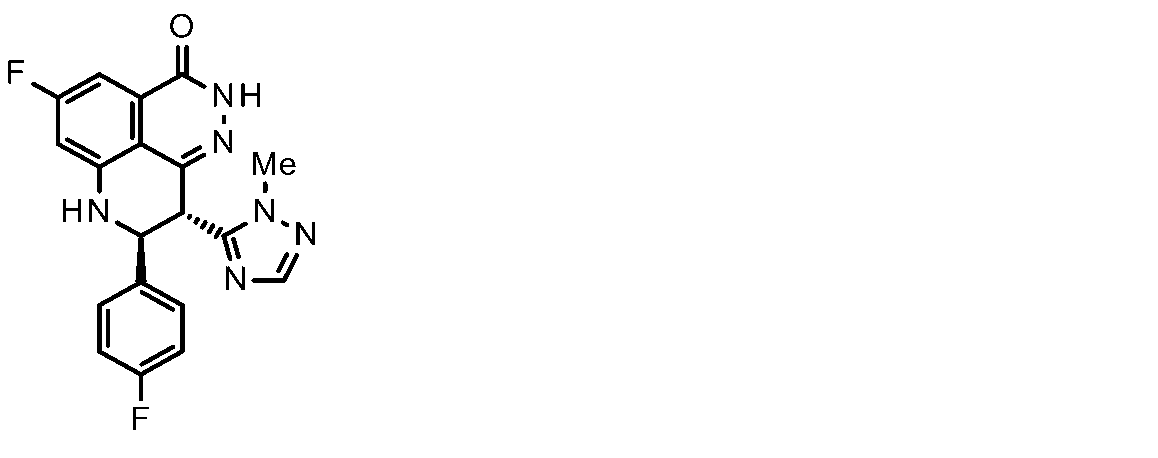
で示される化合物である。タラゾパリブの薬理上許容される塩は、好適には、トシル酸塩(Talazoparib tosylate(Talazoparib tosilateと呼ばれることもある))である。 Is a compound represented by. The pharmacologically acceptable salt of tarazoparib is preferably a tosylate salt (Talazoparib tosylate (sometimes referred to as Talazoparib tosilate)).
ベリパリブは、式 Veriparive is a ceremony

で示される化合物である。ベリパリブの薬理上許容される塩は、好適には、2塩酸塩(Veliparib dihydrochrolide)である。 Is a compound represented by. The pharmacologically acceptable salt of beriparib is preferably the dihydrochloride (Veliparib dihydrochloride).
5.医薬
以下、本発明に係る抗体-薬物コンジュゲートとPARP阻害剤が組み合わされて投与されることを特徴とする医薬組成物及び治療方法について説明する。
5. Pharmaceuticals Hereinafter, a pharmaceutical composition and a therapeutic method, which are characterized in that an antibody-drug conjugate according to the present invention and a PARP inhibitor are administered in combination, will be described.
本発明の医薬組成物及び治療方法は、抗体-薬物コンジュゲートと、PARP阻害剤が、それぞれ別異の製剤に有効成分として含有され、同時に又は異なる時間に投与されることを特徴とするものであってもよいし、抗体-薬物コンジュゲートと、PARP阻害剤が、単一の製剤に有効成分として含有され、投与されることを特徴とするものであってもよい。 The pharmaceutical composition and therapeutic method of the present invention are characterized in that the antibody-drug conjugate and the PARP inhibitor are contained as active ingredients in different formulations and are administered simultaneously or at different times. Alternatively, the antibody-drug conjugate and the PARP inhibitor may be contained in a single preparation as active ingredients and administered.
本発明の医薬組成物及び治療方法は、がんの治療のために使用することができ、好適には、乳がん(トリプルネガティブ乳がん、及びルミナール乳がんを含む)、胃がん(胃腺がんと呼ぶこともある)、大腸がん(結腸直腸がんと呼ぶこともあり、結腸がん及び直腸がんを含む)、肺がん(小細胞肺がん及び非小細胞肺がんを含む)、食道がん、頭頚部がん(唾液腺がん及び咽頭がんを含む)、胃食道接合部腺がん、胆道がん(胆管がんを含む)、ページェット病、膵臓がん、卵巣がん、子宮がん肉腫、尿路上皮がん、前立腺がん、膀胱がん、消化管間質腫瘍、子宮頸がん、扁平上皮がん、腹膜がん、肝臓がん、肝細胞がん、子宮体がん、腎がん、外陰部がん、甲状腺がん、陰茎がん、白血病、悪性リンパ腫、形質細胞腫、骨髄腫、多型神経膠芽腫、肉腫、骨肉腫、及びメラノーマからなる群より選択される少なくとも一つの治療のために使用することができ、より好適には、乳がん、胃がん、大腸がん、肺がん、食道がん、頭頚部がん、胃食道接合部腺がん、胆道がん、ページェット病、膵臓がん、卵巣がん、膀胱がん、前立腺がん、子宮がん肉腫、消化管間質腫瘍、腎がん、及び肉腫からなる群より選択される少なくとも一つのがんの治療のために使用することができる。 The pharmaceutical composition and treatment method of the present invention can be used for treating cancer, and preferably breast cancer (including triple negative breast cancer and luminal breast cancer), gastric cancer (also referred to as gastric adenocarcinoma). Colorectal cancer (sometimes called colorectal cancer, including colon cancer and rectal cancer), lung cancer (including small cell lung cancer and non-small cell lung cancer), esophageal cancer, head and neck cancer (Including salivary gland cancer and pharyngeal cancer), gastroesophageal junction adenocarcinoma, biliary tract cancer (including bile duct cancer), Paget's disease, pancreatic cancer, ovarian cancer, uterine carcinosarcoma, urinary tract Skin cancer, prostate cancer, bladder cancer, gastrointestinal stromal tumor, cervical cancer, squamous cell carcinoma, peritoneal cancer, liver cancer, hepatocellular carcinoma, endometrial cancer, renal cancer, At least one treatment selected from the group consisting of vulvar cancer, thyroid cancer, penile cancer, leukemia, malignant lymphoma, plasmacytoma, myeloma, glioblastoma multiforme, sarcoma, osteosarcoma, and melanoma Can be used for, more preferably breast cancer, gastric cancer, colon cancer, lung cancer, esophageal cancer, head and neck cancer, gastroesophageal junction adenocarcinoma, biliary tract cancer, Paget's disease, pancreas Used for the treatment of at least one cancer selected from the group consisting of cancer, ovarian cancer, bladder cancer, prostate cancer, uterine carcinosarcoma, gastrointestinal stromal tumor, renal cancer, and sarcoma can do.
本発明で使用される抗体-薬物コンジュゲートのうち、特にどのような抗体を有する抗体-薬物コンジュゲートが好適であるかは、がんの種類や、腫瘍マーカーを検査することにより、決定することができる。例えば、がんにHER2の発現が確認された場合は、抗HER2抗体-薬物コンジュゲートを好適に使用することができ、がんにHER3の発現が確認された場合は、抗HER3抗体-薬物コンジュゲートを好適に使用することができ、がんにTROP2の発現が確認された場合は、抗TROP2抗体-薬物コンジュゲートを好適に使用することができ、がんにB7-H3の発現が確認された場合は、抗B7-H3抗体-薬物コンジュゲートを好適に使用することができ、がんにGPR20の発現が確認された場合は、抗GPR20抗体-薬物コンジュゲートを好適に使用することができ、がんにCDH6の発現が確認された場合は、抗CDH6抗体-薬物コンジュゲートを好適に使用することができる。 Of the antibody-drug conjugates used in the present invention, what kind of antibody-drug conjugate is particularly suitable is determined by examining the type of cancer and tumor marker. You can For example, when the expression of HER2 is confirmed in the cancer, the anti-HER2 antibody-drug conjugate can be preferably used, and when the expression of HER3 is confirmed in the cancer, the anti-HER3 antibody-drug conjugate is used. When the gate can be preferably used and the expression of TROP2 is confirmed in the cancer, the anti-TROP2 antibody-drug conjugate can be preferably used, and the expression of B7-H3 is confirmed in the cancer. If the expression of GPR20 is confirmed in cancer, the anti-B7-H3 antibody-drug conjugate can be preferably used. When the expression of CDH6 is confirmed in cancer, the anti-CDH6 antibody-drug conjugate can be preferably used.
HER2、HER3、TROP2、B7-H3、GPR20、及びCDH6並びにその他の腫瘍マーカーの有無は、例えば、がん患者から腫瘍組織を採取し、ホルマリン固定パラフィン包埋された検体(FFPE)を、免疫組織化学(IHC)法や、フローサイトメーター、western blot法等による遺伝子産物(蛋白質)レベルでの検査、又は、in situ ハイブリダイゼーション法(ISH)や定量的PCR法(q-PCR)、マイクロアレイ解析等による遺伝子の転写レベルでの検査により確認することができ、あるいは、がん患者から無細胞血中循環腫瘍DNA(ctDNA)を採取し、次世代シークエンス(NGS)等の方法を用いた検査により確認することもできる。 The presence or absence of HER2, HER3, TROP2, B7-H3, GPR20, and CDH6 and other tumor markers can be determined by, for example, collecting tumor tissue from a cancer patient and using a formalin-fixed paraffin-embedded specimen (FFPE) as an immune tissue. Testing at the gene product (protein) level by chemical (IHC) method, flow cytometer, western blot method, etc., or in situ hybridization method (ISH), quantitative PCR method (q-PCR), microarray analysis, etc. It can be confirmed by the test at the transcription level of the gene by or by collecting the cell-free circulating tumor DNA (ctDNA) from the cancer patient and using the method such as the next-generation sequence (NGS). You can also do it.
なお、本発明で使用される抗体-薬物コンジュゲートが抗HER2抗体-薬物コンジュゲートである場合、HER2過剰発現がんのみならず、HER2低発現がん、及びHER2変異がんに対しても、本発明の医薬組成物及び治療方法を好適に使用することができる。 When the antibody-drug conjugate used in the present invention is an anti-HER2 antibody-drug conjugate, not only for HER2-overexpressing cancer but also for HER2-low expressing cancer and HER2 mutant cancer, The pharmaceutical composition and treatment method of the present invention can be preferably used.
本発明において「HER2過剰発現がん」とは、当業者においてHER2過剰発現がんと認識されるものであれば特に制限はないが、好適には、免疫組織化学法によりHER2の発現が3+と判定されたがん、又は、免疫組織化学法によりHER2の発現が2+と判定され、且つin situハイブリダイゼーション法によりHER2の発現が陽性と判定されたがんを挙げることができる。なお、本発明のin situハイブリダイゼーション法には、蛍光in situハイブリダイゼーション法(FISH)と、Dual Color in situハイブリダイゼーション法(DISH)が含まれる。 In the present invention, “HER2 overexpressing cancer” is not particularly limited as long as it is recognized as a HER2 overexpressing cancer by those skilled in the art, but preferably, HER2 expression is 3+ by immunohistochemistry. Examples include cancers that have been determined, or cancers that have been determined to have HER2 expression of 2+ by immunohistochemistry and positive for HER2 expression by in situ hybridization. The in situ hybridization method of the present invention includes a fluorescence in situ hybridization method (FISH) and a Dual Color in situ hybridization method (DISH).
本発明において「HER2低発現がん」とは、当業者においてHER2低発現がんと認識されるものであれば特に制限はないが、好適には、免疫組織化学法によりHER2の発現が2+と判定され、且つin situ ハイブリダイゼーション法によりHER2の発現が陰性と判定されたがん、又は、免疫組織化学法によりHER2の発現が1+と判定されたがんを挙げることができる。 In the present invention, “HER2 low expression cancer” is not particularly limited as long as it is recognized as a HER2 low expression cancer by a person skilled in the art, but preferably, HER2 expression is 2+ by immunohistochemistry. Examples include cancers that have been judged to be negative for HER2 expression by the in situ hybridization method, or cancers for which HER2 expression has been judged to be 1+ by immunohistochemistry.
免疫組織化学法によるHER2発現度の判定方法や、in situ ハイブリダイゼーション法によるHER2発現の陽性又は陰性の判定方法は、当業者において認識されているものであれば特に制限はないが、例えば、HER2検査ガイド 乳癌編 第四版(乳癌HER2検査病理部会作成)を挙げることができる。 The method for determining the HER2 expression level by immunohistochemistry and the method for determining positive or negative HER2 expression by the in situ hybridization method are not particularly limited as long as they are recognized by those skilled in the art. Examination Guide Breast Cancer Edition 4th Edition (Breast Cancer HER2 Examination Pathology Subcommittee) can be mentioned.
本発明の医薬組成物及び治療方法を使用することができるHER2低発現がんは、好適には、HER2低発現乳がん、HER2低発現胃がん、HER2低発現大腸がん、又はHER2低発現非小細胞肺がんであり、より好適には、HER2低発現乳がんである。 The HER2-low expression cancer for which the pharmaceutical composition and treatment method of the present invention can be used is preferably HER2-low expression breast cancer, HER2-low expression gastric cancer, HER2-low expression colon cancer, or HER2-low expression non-small cell. Lung cancer, more preferably HER2-low expression breast cancer.
本発明の医薬組成物及び治療方法は、哺乳動物に対して好適に使用することができるが、より好適にはヒトに対して使用することができる。 The pharmaceutical composition and treatment method of the present invention can be preferably used for mammals, and more preferably for humans.
本発明の医薬組成物及び治療方法の抗腫瘍効果は、例えば、がん細胞を被検動物に移植したモデルを作成し、本発明の医薬組成物及び治療方法を施すことによる腫瘍体積の減少や延命効果を測定することにより確認することができる。そして、本発明で使用される抗体-薬物コンジュゲート及びPARP阻害剤それぞれの単独投与での抗腫瘍効果と比較することにより、本発明で使用される抗体-薬物コンジュゲート及びPARP阻害剤の併用効果を確認することができる。 The antitumor effect of the pharmaceutical composition and the treatment method of the present invention includes, for example, reduction of tumor volume by preparing a model in which cancer cells are transplanted to a test animal and applying the pharmaceutical composition and the treatment method of the present invention. It can be confirmed by measuring the life prolonging effect. Then, the combined effect of the antibody-drug conjugate and PARP inhibitor used in the present invention is compared with the antitumor effect of single administration of the antibody-drug conjugate and PARP inhibitor used in the present invention. Can be confirmed.
また、本発明の医薬組成物及び治療方法の抗腫瘍効果は、臨床試験において、Response Evaluation Criteria in Solid Tumors(RECIST)評価法、WHO評価法、Macdonald評価法、体重測定、及びその他の手法により確認することができ、完全奏効(Complete response;CR)、部分奏効(Partial response;PR)、進行(Progressive disease;PD)、奏効率(Objective Response Rate;ORR)、奏効期間(Duration of response;DoR)、無憎悪生存期間(Progression-Free Survival;PFS)、全生存期間(Overall Survival;OS)等の指標により判定することができる。 In addition, the antitumor effect of the pharmaceutical composition and treatment method of the present invention was confirmed in clinical trials by Response Evaluation Criteria in Solid Tumors (RECIST) evaluation method, WHO evaluation method, Macdonald evaluation method, weight measurement, and other methods. Complete response (CR), partial response (PR), progress (Progressive disease; PD), response rate (Objective Response Rate; ORR), duration of response (Duration of Response). , Hate-free survival (Progression-Free Survival; PFS), overall survival (OS), etc.
上述の方法により、本発明の医薬組成物及び治療方法の抗腫瘍効果について、既存のがん治療用医薬組成物及び治療方法に対する優位性を確認することができる。 By the above-mentioned method, it is possible to confirm the superiority of the antitumor effect of the pharmaceutical composition and treatment method of the present invention to the existing pharmaceutical composition and treatment method for cancer treatment.
本発明の医薬組成物及び治療方法は、がん細胞の成長を遅らせ、増殖を抑え、さらにはがん細胞を破壊することができる。これらの作用によって、がん患者において、がんによる症状からの解放や、QOLの改善を達成でき、がん患者の生命を保って治療効果が達成される。がん細胞の破壊には至らない場合であっても、がん細胞の増殖の抑制やコントロールによってがん患者においてより高いQOLを達成しつつより長期の生存を達成させることができる。 The pharmaceutical composition and treatment method of the present invention can delay the growth of cancer cells, suppress proliferation, and further destroy cancer cells. By these actions, in cancer patients, it is possible to achieve release from symptoms due to cancer and improvement of QOL, and to maintain the life of cancer patients and achieve therapeutic effects. Even when cancer cells are not destroyed, it is possible to achieve higher QOL in cancer patients and achieve longer-term survival by suppressing or controlling the growth of cancer cells.
本発明の医薬組成物は、患者に対しては全身療法として適用する他、がん組織に局所的に適用して治療効果を期待することができる。 The pharmaceutical composition of the present invention can be applied as a systemic therapy to a patient, and can be locally applied to a cancer tissue to expect a therapeutic effect.
本発明の医薬組成物は、1種以上の薬学的に適合性の成分を含み投与され得る。薬学的に適合性の成分は、本発明で使用される抗体-薬物コンジュゲート及びPARP阻害剤の投与量や投与濃度等に応じて、この分野において通常使用される製剤添加物その他から適宜選択して適用することができる。例えば、本発明で使用される抗体-薬物コンジュゲートは、ヒスチジン緩衝剤等の緩衝剤、スクロース又はトレハロース等の賦形剤、並びにポリソルベート80又は20等の界面活性剤を含む医薬組成物として投与され得る。本発明で使用される抗体-薬物コンジュゲートを含む医薬組成物は、好適には、注射剤として使用することができ、より好適には、水性注射剤又は凍結乾燥注射剤として使用することができ、更により好適には、凍結乾燥注射剤として使用することができる。
The pharmaceutical composition of the invention may be administered containing one or more pharmaceutically compatible ingredients. The pharmaceutically compatible component is appropriately selected from the formulation additives and the like commonly used in this field according to the dose and concentration of the antibody-drug conjugate and PARP inhibitor used in the present invention. Can be applied. For example, the antibody-drug conjugate used in the present invention is administered as a pharmaceutical composition comprising a buffer such as histidine buffer, an excipient such as sucrose or trehalose, and a surfactant such as
本発明で使用される抗体-薬物コンジュゲートを含む医薬組成物が水性注射剤である場合、好適には、適切な希釈液で希釈した後、静脈内に点滴投与することができる。希釈液としては、ブドウ糖溶液や、生理食塩液、等を挙げることができ、好適には、ブドウ糖溶液を挙げることができ、より好適には5%ブドウ糖溶液を挙げることができる。 When the pharmaceutical composition containing the antibody-drug conjugate used in the present invention is an aqueous injection, it is preferably diluted with a suitable diluent and then intravenously administered by infusion. Examples of the diluent include glucose solution, physiological saline solution, etc., preferably glucose solution, and more preferably 5% glucose solution.
本発明で使用される抗体-薬物コンジュゲートを含む医薬組成物が凍結乾燥注射剤である場合、好適には、注射用水により溶解した後、必要量を適切な希釈液で希釈した後、静脈内に点滴投与することができる。希釈液としては、ブドウ糖溶液や、生理食塩液、等を挙げることができ、好適には、ブドウ糖溶液を挙げることができ、より好適には5%ブドウ糖溶液を挙げることができる。 When the pharmaceutical composition containing the antibody-drug conjugate used in the present invention is a lyophilized injection, it is preferably dissolved in water for injection, and then the necessary amount is diluted with an appropriate diluent and then intravenously. Can be administered by infusion. Examples of the diluent include glucose solution, physiological saline solution, etc., preferably glucose solution, and more preferably 5% glucose solution.
本発明の医薬組成物を投与するために使用され得る導入経路としては、例えば、静脈内、皮内、皮下、筋肉内、及び腹腔内の経路を挙げることができ、好適には、静脈内の経路を挙げることができる。 Introductory routes that may be used to administer the pharmaceutical compositions of the present invention include, for example, intravenous, intradermal, subcutaneous, intramuscular, and intraperitoneal routes, preferably intravenous. You can name the route.
本発明で使用される抗体-薬物コンジュゲートは、ヒトに対して、1~180日に1回の間隔で投与することができ、好適には、1週、2週、3週、又は4週に1回の間隔で投与することができ、さらにより好適には、3週に1回の間隔で投与することができる。また、本発明で使用される抗体-薬物コンジュゲートは、1回あたり約0.001~100mg/kgの投与量で投与することができ、好適には、1回あたり0.8~12.4mg/kgの投与量で投与することができる。本発明で使用される抗体-薬物コンジュゲートが抗HER2抗体-薬物コンジュゲートである場合、好適には、1回あたり、0.8mg/kg、1.6mg/kg、3.2mg/kg、5.4mg/kg、6.4mg/kg、7.4mg/kg、又は8mg/kgの投与量を3週に1回の間隔で投与することができる。本発明で使用される抗体-薬物コンジュゲートが抗HER3抗体-薬物コンジュゲートである場合、好適には、1回あたり、1.6mg/kg、3.2mg/kg、4.8mg/kg、5.6mg/kg、6.4mg/kg、8.0mg/kg、9.6mg/kg、又は12.8mg/kgの投与量を3週に1回の間隔で投与することができる。本発明で使用される抗体-薬物コンジュゲートが抗TROP2抗体-薬物コンジュゲートである場合、好適には、1回あたり、0.27mg/kg、0.5mg/kg、1.0mg/kg、2.0mg/kg、4.0mg/kg、6.0mg/kg、又は8.0mg/kgの投与量を3週に1回の間隔で投与することができる。 The antibody-drug conjugate used in the present invention can be administered to a human at an interval of once every 1 to 180 days, and preferably 1 week, 2 weeks, 3 weeks, or 4 weeks. Can be administered once every 3 weeks, and even more preferably, once every 3 weeks. Further, the antibody-drug conjugate used in the present invention can be administered at a dose of about 0.001 to 100 mg/kg per administration, preferably 0.8 to 12.4 mg per administration. It can be administered at a dose of /kg. When the antibody-drug conjugate used in the present invention is an anti-HER2 antibody-drug conjugate, it is preferably 0.8 mg/kg, 1.6 mg/kg, 3.2 mg/kg, 5 per dose. Doses of 0.4 mg/kg, 6.4 mg/kg, 7.4 mg/kg, or 8 mg/kg can be administered once every 3 weeks. When the antibody-drug conjugate used in the present invention is an anti-HER3 antibody-drug conjugate, preferably 1.6 mg/kg, 3.2 mg/kg, 4.8 mg/kg, 5 times per dose. Dosages of 0.6 mg/kg, 6.4 mg/kg, 8.0 mg/kg, 9.6 mg/kg, or 12.8 mg/kg can be administered once every 3 weeks. When the antibody-drug conjugate used in the present invention is an anti-TROP2 antibody-drug conjugate, it is preferably 0.27 mg/kg, 0.5 mg/kg, 1.0 mg/kg, 2 per dose. A dose of 0.0 mg/kg, 4.0 mg/kg, 6.0 mg/kg, or 8.0 mg/kg can be administered once every 3 weeks.
本発明に係るPARP阻害剤は、ヒトに対して、1~7日に1~2回の間隔で投与することができ、好適には、1日に1回、又は1日に2回の間隔で投与することができる。また、本発明で使用されるPARP阻害剤は、1回あたり0.1mg~3000mgの投与量で投与することができ、好適には、1回あたり0.25mg~600mgの投与量で投与することができる。 The PARP inhibitor according to the present invention can be administered to humans at an interval of 1 to 2 times on 1 to 7 days, preferably once a day or twice a day. Can be administered at. Further, the PARP inhibitor used in the present invention can be administered at a dose of 0.1 mg to 3000 mg per dose, and preferably at a dose of 0.25 mg to 600 mg per dose. You can
本発明で使用されるPARP阻害剤がオラパリブ又はその薬理上許容される塩である場合、好適には、1回あたり、100mg、150mg、200mg、又は300mgの投与量を1日に2回の間隔で経口投与することができる。 When the PARP inhibitor used in the present invention is olaparib or a pharmacologically acceptable salt thereof, it is preferable that a dose of 100 mg, 150 mg, 200 mg, or 300 mg be administered at an interval of twice a day. Can be administered orally.
本発明で使用されるPARP阻害剤がルカパリブ又はその薬理上許容される塩である場合、好適には、1回あたり、200mg、250mg、300mg、400mg、500mg又は600mgの投与量を1日に2回の間隔で経口投与することができる。 When the PARP inhibitor used in the present invention is rucaparib or a pharmacologically acceptable salt thereof, it is preferable that a dose of 200 mg, 250 mg, 300 mg, 400 mg, 500 mg or 600 mg be administered twice a day. It can be administered orally at intervals.
本発明で使用されるPARP阻害剤がニラパリブ又はその薬理上許容される塩である場合、好適には、1回あたり、100mg、200mg、又は300mgの投与量を1日に1回の間隔で経口投与することができる。 When the PARP inhibitor used in the present invention is nilaparib or a pharmacologically acceptable salt thereof, it is preferable that the dose of 100 mg, 200 mg, or 300 mg be orally administered once a day at an interval. Can be administered.
本発明で使用されるPARP阻害剤がタラゾパリブ又はその薬理上許容される塩である場合、好適には、1回あたり、0.25mg、0.5mg、0.75mg、又は1mgの投与量を1日に1回の間隔で経口投与することができる。 When the PARP inhibitor used in the present invention is tarazoparib or a pharmacologically acceptable salt thereof, preferably, the dose of 0.25 mg, 0.5 mg, 0.75 mg, or 1 mg per dose is 1 It can be administered orally once daily.
本発明の医薬組成物及び治療方法は、本発明に係る抗体-薬物コンジュゲート及びPARP阻害剤以外のがん治療剤を更に含んでいてもよい。本発明の医薬組成物及び治療方法は、他のがん治療剤と併用して投与することもでき、これによって抗腫瘍効果を増強させることができる。この様な目的で使用される他のがん治療剤は、本発明の医薬組成物と同時に、別々に、或は連続して個体に投与されてもよいし、それぞれの投与間隔を変えて投与されてもよい。この様ながん治療剤としては、抗腫瘍活性を有する薬剤であれば限定されることはないが、例えば、イリノテカン(Irinotecan、CPT-11)、シスプラチン(Cisplatin)、カルボプラチン(Carboplatin)、オキサリプラチン(Oxaliplatin)、フルオロウラシル(Fluorouracil、5-FU)、ゲムシタビン(Gemcitabine)、カペシタビン(Capecitabine)、パクリタキセル(Paclitaxel)、ドセタキセル(Docetaxel)、ドキソルビシン(Doxorubicin)、エピルビシン(Epirubicin)、シクロフォスファミド(Cyclophosphamide)、マイトマイシンC(Mitomycin C)、テガフール(Tegafur)・ギメラシル(Gimeracil)・オテラシル(Oteracil)配合剤、セツキシマブ(Cetuximab)、パニツムマブ(Panitumumab)、ベバシズマブ(Bevacizumab)、ラムシルマブ(Ramucirumab)、レゴラフェニブ(Regorafenib)、トリフルリジン(Trifluridine)・チピラシル(Tipiracil)配合剤、ゲフィチニブ(Gefitinib)、エルロチニブ(Erlotinib)、アファチニブ(Afatinib)、メトトレキサート(Methotrexate)、ペメトレキセド(Pemetrexed)、タモキシフェン(Tamoxifen)、トレミフェン(Toremifene)、フルベストラント(Fulvestrant)、リュープロレリン(Leuprorelin)、ゴセレリン(Goserelin)、レトロゾール(Letrozole)、アナストロゾール(Anastrozole)、プロゲステロン製剤(Progesterone formulation)、トラスツズマブ、ペルツズマブ、及びラパチニブからなる群より選択される少なくとも一つを挙げることができる。 The pharmaceutical composition and treatment method of the present invention may further contain a cancer therapeutic agent other than the antibody-drug conjugate and PARP inhibitor of the present invention. The pharmaceutical composition and treatment method of the present invention can also be administered in combination with other therapeutic agents for cancer, whereby the antitumor effect can be enhanced. Other cancer therapeutic agents used for such purposes may be administered to an individual simultaneously or separately with the pharmaceutical composition of the present invention, or may be administered at different administration intervals. May be done. Such a therapeutic agent for cancer is not limited as long as it has antitumor activity, and examples thereof include irinotecan (CPT-11), cisplatin, carboplatin, and oxaliplatin. (Oxaliplatin), Fluorouracil (Fluorouracil, 5-FU), Gemcitabine (Gemcitabine), Capecitabine (Capecitabine), Paclitaxel (Paculitaxic) epitaxy (Pacclitaxel), Paclitaxel (Pacclitaxel), Paclitaxel (Peculitaxic), Paclitaxel (Peculitaxi), Paclitaxel (Peculitaxi), Paclitaxel (Peculitaxi), Paclitaxel (Pecalitaxel) , mitomycin C (mitomycin C), tegafur (tegafur) · gimeracil (gimeracil) · Oterashiru (Oteracil) formulation, cetuximab (cetuximab), panitumumab (panitumumab), bevacizumab (bevacizumab), Ramucirumab (Ramucirumab), REGORAFENIB (Regorafenib), Trifluridine/Tipiracil combination drug, Gefitinib, Erlotinib, Afatinib or Meftrexate, Methotrexate, Methotrexate, Methotrexate, Pemetrexate, Pemetrexate, Pemetrexate, Pemetrexed Fulvestrant, Leuprorelin, Goserelin, Letrozole, Anastrozole, Progesterone formulation (Progesterone formulation, trastuzumab, pertuzumab, and pertuzumab). At least one can be mentioned.
本発明の医薬組成物及び治療方法は、放射線療法と組み合わせて使用することもできる。例えば、がん患者は、本発明の医薬組成物による治療を受ける前及び/又は後、あるいは同時に放射線療法を受ける。 The pharmaceutical composition and treatment method of the present invention can also be used in combination with radiation therapy. For example, cancer patients receive radiation therapy before and/or after treatment with the pharmaceutical composition of the present invention, or at the same time.
本発明の医薬組成物及び治療方法は、外科手術と組み合わせた補助化学療法として使用することもできる。本発明の医薬組成物は外科手術の前に腫瘍の大きさを減じさせる目的で投与されてもよい(術前補助化学療法、又はネオアジュバント療法という)し、外科手術後に、腫瘍の再発を防ぐ目的で投与されてもよい(術後補助化学療法、又はアジュバント療法という)。 The pharmaceutical composition and treatment method of the present invention can also be used as adjuvant chemotherapy in combination with surgery. The pharmaceutical composition of the present invention may be administered prior to surgery for the purpose of reducing tumor size (referred to as preoperative adjuvant chemotherapy or neoadjuvant therapy), and to prevent tumor recurrence after surgery. It may be administered for the purpose (referred to as postoperative adjuvant chemotherapy or adjuvant therapy).
以下に示す例によって本発明を具体的に説明するが、本発明はこれらに限定されるものではない。また、これらはいかなる意味においても限定的に解釈されるものではない。 The present invention will be specifically described by the following examples, but the present invention is not limited to these. In addition, these are not to be limitedly interpreted in any sense.
実施例1:抗HER2抗体-薬物コンジュゲートの製造(1)
国際公開第2015/115091号に記載の製造方法に従って、抗HER2抗体(配列番号1においてアミノ酸番号1乃至449に記載のアミノ酸配列からなる重鎖及び配列番号2においてアミノ酸番号1乃至214に記載のアミノ酸配列からなる軽鎖を含んでなる抗体)を用いて、式
Example 1: Preparation of anti-HER2 antibody-drug conjugate (1)
According to the production method described in WO 2015/115109, the anti-HER2 antibody (a heavy chain consisting of the amino acid sequence of

(式中、Aは抗体との結合位置を示す)
で示される薬物リンカーと、抗HER2抗体とがチオエーテル結合によって結合した抗HER2抗体-薬物コンジュゲート(以下、「HER2-ADC(1)」と称する)を製造した。HER2-ADC(1)のDARは7.7又は7.8である。
(In the formula, A represents the binding position to the antibody)
An anti-HER2 antibody-drug conjugate (hereinafter referred to as "HER2-ADC(1)") in which the drug linker represented by and the anti-HER2 antibody were bound by a thioether bond was produced. The DAR of HER2-ADC(1) is 7.7 or 7.8.
実施例2:抗TROP2抗体-薬物コンジュゲートの製造(1)
国際公開第2015/098099号及び国際公報第2017/002776に記載の製造方法に従って、抗TROP2抗体(配列番号5においてアミノ酸番号20乃至470に記載のアミノ酸配列からなる重鎖及び配列番号6においてアミノ酸番号21乃至234に記載のアミノ酸配列からなる軽鎖を含んでなる抗体)を用いて、式
Example 2: Preparation of anti-TROP2 antibody-drug conjugate (1)
According to the production method described in International Publication No. 2015/098099 and International Publication No. 2017/002776, an anti-TROP2 antibody (a heavy chain consisting of the amino acid sequences of

(式中、Aは抗体との結合位置を示す)
で示される薬物リンカーと、抗TROP2抗体とがチオエーテル結合によって結合した抗TROP2抗体-薬物コンジュゲート(以下、「TROP2-ADC(1)」と称する)を製造した。TROP2-ADC(1)のDARは3.5~4.5である。
(In the formula, A represents the binding position to the antibody)
An anti-TROP2 antibody-drug conjugate (hereinafter referred to as "TROP2-ADC(1)") in which the drug linker represented by and the anti-TROP2 antibody were bound by a thioether bond was produced. The DAR of TROP2-ADC(1) is 3.5 to 4.5.
実施例3:化合物(1)の製造
国際公開第2014/057687号及び国際公報第2015/115091に記載の製造方法に従って、式
Example 3: Production of compound (1) According to the production method described in International Publication No. 2014/057687 and International Publication No. 2015/115091, a compound of formula

で示される化合物(以下、「Compound(1)」と称する)を製造した。 A compound represented by (hereinafter, referred to as “Compound (1)”) was produced.
実施例4:細胞増殖阻害試験(1)
ATCC(American Type Culture Collection)より入手したヒト胃がん細胞株NCI-N87を評価に使用した。1536ウェル細胞培養用プレートに、Dimethyl sulfoxide(DMSO)で2mM、400μM、80μM、16μM、3.2μM、640nMに調製したオラパリブ、タラゾパリブ、ルカパリブ(phosphate)、ニラパリブ、もしくはDMSOをそれぞれ25nL/wellで添加した。さらに10%ウシ胎児血清(GE Healthcare)を含むRPMI1640 Medium(Thermo Fisher Scientific)で60nM、24nM、9.6nM、3.8nM、1.5nM、0.61nMに調製したCompound(1)、もしくは32nM、11nM、3.6nM、1.2nM、0.40nM、0.13nMに調製したTROP2-ADC(1)、もしくは8.0nM、2.7nM、0.89nM、0.30nM、0.10nM、0.033nMに調製したHER2-ADC(1)を、それぞれ2.5μL/wellで添加した。次に10%ウシ胎児血清を含むRPMI1640 Mediumで4×10⁴cells/mLに懸濁したNCI-N87細胞を、2.5μL/wellで播種し、37℃、5%CO2下で6日間培養した。
Example 4: Cell growth inhibition test (1)
Human gastric cancer cell line NCI-N87 obtained from ATCC (American Type Culture Collection) was used for evaluation. To the 1536-well cell culture plate, olaparib, tarazoparib, phosphate, nilaparib, or DMSO prepared at 2 mM, 400 μM, 80 μM, 16 μM, 3.2 μM, and 640 nM with dimethyl sulfoxide (DMSO) were added at 25 nL/well, respectively. did. Further, Compound (1) or 32 nM prepared with RPMI1640 Medium (Thermo Fisher Scientific) containing 10% fetal bovine serum (GE Healthcare) to 60 nM, 24 nM, 9.6 nM, 3.8 nM, 1.5 nM, 0.61 nM. TROP2-ADC (1) adjusted to 11 nM, 3.6 nM, 1.2 nM, 0.40 nM, 0.13 nM, or 8.0 nM, 2.7 nM, 0.89 nM, 0.30 nM, 0.10 nM, 0. HER2-ADC (1) adjusted to 033 nM was added at 2.5 μL/well, respectively. Next, NCI-N87 cells suspended in RPMI1640 Medium containing 10% fetal bovine serum at 4×10 4 cells/mL were seeded at 2.5 μL/well and cultured at 37° C. under 5% CO 2 for 6 days. did.
培養後、CellTiter-Glo 2.0 Assay(Promega)を等量のGlo Lysis buffer, 1×(Promega)で希釈した溶液を2μL/wellで添加し、室温で1時間インキュベーション後に各wellの発光強度を測定した。 After culturing, CellTiter-Glo 2.0 Assay (Promega) diluted with an equal amount of Glo Lysis buffer, 1x (Promega) was added at 2 μL/well, and the luminescence intensity of each well was incubated at room temperature for 1 hour. It was measured.
各条件における細胞増殖阻害率(%)は、以下の計算式を用いて算出した。
細胞増殖阻害率(%)=100×(T-B)/(C-B)-100
T:各検体添加ウェルの平均発光強度
B:DMSO及び培地を添加したウェルの平均発光強度
C:DMSO及び細胞を添加したウェルの平均発光強度
The cell growth inhibition rate (%) under each condition was calculated using the following formula.
Cell growth inhibition rate (%)=100×(TB)/(CB)-100
T: average luminescence intensity of wells added with each specimen B: average luminescence intensity of wells added with DMSO and medium C: average luminescence intensity of wells added with DMSO and cells
また各併用条件における濃度依存的な細胞増殖阻害率の推移について、Genedata Screener Analyzer Version 14(Genedata,以下Screener)を用いてシグモイドフィッティングを実施した。 Regarding the transition of the concentration-dependent cell growth inhibition rate under each combination condition, sigmoid fitting was performed using Genedata Screener Analyzer Version 14 (Genedata, hereinafter Screener).
併用効果については、Loeweモデル(Greco WR. et al., Pharmacol. Rev. 1995 Jun;47(2):331-85)による相加効果の推定値とシグモイドフィッティングした細胞増殖阻害率(%)との差を行列化し、その行列成分から文献(Lehar J. et al., Nat Biotechnol. 2009 Jul;27(7):659-66)に示される手法を用いてSynergy scoreを算出した。なお、Synergy Score=0で相加作用、Synergy Score>0で相乗作用、Synergy Score<0で拮抗作用を示す指標となる。 Regarding the combined effect, the additive effect estimated by the Loewe model (Greco WR. et al., Pharmacol. Rev. 1995 Jun;47(2):331-85) and the cell growth inhibition rate (%) by sigmoid fitting , And the Synergy score was calculated from the matrix component using the method described in the literature (Lehar J. et al., Nat Biotechnol. 2009 Jul;27(7):659-66). In addition, SynergyScore=0 gives an additive effect, SynergyScore>0 gives a synergistic effect, and SynergyScore<0 gives an antagonistic effect.
各組み合わせにおけるSynergy Scoreを表1に示す。NCI-N87細胞株に対する細胞増殖阻害試験において、Compound(1)、HER2-ADC(1)、及びTROP2-ADC(1)は、オラパリブ、タラゾパリブ、ルカパリブ、及びニラパリブとの全ての組み合わせで相乗作用を示した。 Table 1 shows the Synergy Score for each combination. Compound (1), HER2-ADC (1), and TROP2-ADC (1) synergize in all combinations with olaparib, tarazoparib, lucaparib, and niraparib in a cell growth inhibition assay against NCI-N87 cell line. Indicated.

実施例5:細胞増殖阻害試験(2)
川崎医科大学・紅林淳一先生より入手したヒト乳がん細胞株KPL-4(British Journal of Cancer,(1999)79(5/6).707-717)を評価に使用した。1536ウェル細胞培養用プレートに、DMSOで2mM、400μM、80μM、16μM、3.2μM、640nMに調製したオラパリブ、タラゾパリブ、ルカパリブ(phosphate)、ニラパリブ、もしくはDMSOをそれぞれ25nL/wellで添加した。さらに10%ウシ胎児血清を含むRPMI1640 Mediumで36nM、20nM、11nM、6.2nM、3.4nM、1.9nMに調製したCompound(1)、もしくは40nM、13nM、4.4nM、1.5nM、0.49nM、0.16nMに調製したTROP2-ADC(1)、もしくは3.7nM、1.3nM、0.48nM、0.17nM、0.061nM、0.022nMに調製したHER2-ADC(1)を、それぞれ2.5μL/wellで添加した。次に10%ウシ胎児血清を含むRPMI1640 Mediumで1×10⁴cells/mLに懸濁したKPL-4細胞を、2.5μL/wellで播種し、37℃、5%CO2下で6日間培養した。培養後、CellTiter-Glo 2.0 Assayを等量のGlo Lysis buffer, 1×で希釈した溶液を2μL/wellで添加し、室温で1時間インキュベーション後に各wellの発光強度を測定した。
Example 5: Cell growth inhibition test (2)
Human breast cancer cell line KPL-4 (British Journal of Cancer, (1999) 79(5/6).707-717) obtained from Dr. Junichi Koubayashi of Kawasaki Medical School was used for evaluation. To the 1536-well cell culture plate, 25 mM or more of olaparib, tarazoparib, phosphatate, nilaparib, or DMSO prepared at 2 mM, 400 μM, 80 μM, 16 μM, 3.2 μM, or 640 nM with DMSO were added, respectively. Further, Compound (1) prepared to 36 nM, 20 nM, 11 nM, 6.2 nM, 3.4 nM, 1.9 nM in RPMI1640 Medium containing 10% fetal bovine serum, or 40 nM, 13 nM, 4.4 nM, 1.5 nM, 0. TROP2-ADC (1) prepared to .49 nM and 0.16 nM or HER2-ADC (1) prepared to 3.7 nM, 1.3 nM, 0.48 nM, 0.17 nM, 0.061 nM and 0.022 nM. , 2.5 μL/well, respectively. Next, KPL-4 cells suspended in RPMI1640 Medium containing 10% fetal bovine serum at 1×10 4 cells/mL were seeded at 2.5 μL/well and cultured at 37° C. under 5% CO 2 for 6 days. did. After culturing, a solution prepared by diluting CellTiter-Glo 2.0 Assay with an equal amount of Glo Lysis buffer, 1× was added at 2 μL/well, and the luminescence intensity of each well was measured after incubation at room temperature for 1 hour.
各条件における細胞増殖阻害率(%)及び併用効果の解析は実施例4と同様に実施した。 Analysis of cell growth inhibition rate (%) and combined effect under each condition was performed in the same manner as in Example 4.
各組み合わせにおけるSynergy Scoreを表2に示す。KPL-4細胞株に対する細胞増殖阻害試験において、Compound(1)、HER2-ADC(1)、及びTROP2-ADC(1)は、オラパリブ、タラゾパリブ、ルカパリブ、及びニラパリブとの全ての組み合わせで相乗作用を示した。 Table 2 shows the Synergy Score for each combination. Compound (1), HER2-ADC (1), and TROP2-ADC (1) synergize in all combinations with olaparib, tarazoparib, lucaparib, and niraparib in a cell growth inhibition test against KPL-4 cell line. Indicated.

実施例6:細胞増殖阻害試験(3)
ヒューマンサイエンス研究資源バンク(現Japanese Collection of Research Bioresources(JCRB)細胞バンク)より入手したヒト肺がん細胞株EBC-1を評価に使用した。1536ウェル細胞培養用プレートに、DMSOで2mM、400μM、80μM、16μM、3.2μM、640nMに調製したオラパリブ、タラゾパリブ、ルカパリブ(phosphate)、ニラパリブ、もしくはDMSOをそれぞれ25nL/wellで添加した。さらに10%ウシ胎児血清を含むRPMI1640 Mediumで16nM、8.0nM、4.0nM、2.0nM、1.0nM、0.50nMに調製したCompound(1)、もしくは40nM、13nM、4.4nM、1.5nM、0.49nM、0.16nMに調製したTROP2-ADC(1)を、それぞれ2.5μL/wellで添加した。次に10%ウシ胎児血清を含むRPMI1640 Mediumで2×10⁴cells/mLに懸濁したEBC-1細胞を、2.5μL/wellで播種し、37℃、5%CO2下で6日間培養した。培養後、CellTiter-Glo 2.0 Assayを等量のGlo Lysis buffer, 1×で希釈した溶液を2μL/wellで添加し、室温で1時間インキュベーション後に各wellの発光強度を測定した。
Example 6: Cell growth inhibition test (3)
Human lung cancer cell line EBC-1 obtained from Human Science Research Resource Bank (currently Japan Collection of Research Bioresources (JCRB) cell bank) was used for evaluation. To the 1536-well cell culture plate, 25 mM each of olaparib, tarazoparib, phosphophabe, nilaparib, or DMSO prepared in DMSO at 2 mM, 400 μM, 80 μM, 16 μM, 3.2 μM, or 640 nM was added. Compound (1) prepared to 16 nM, 8.0 nM, 4.0 nM, 2.0 nM, 1.0 nM, 0.50 nM in RPMI1640 Medium containing 10% fetal bovine serum, or 40 nM, 13 nM, 4.4 nM, 1 TROP2-ADC (1) adjusted to 0.5 nM, 0.49 nM, and 0.16 nM was added at 2.5 μL/well, respectively. Next, EBC-1 cells suspended at 2×10 4 cells/mL in RPMI1640 Medium containing 10% fetal bovine serum were seeded at 2.5 μL/well and cultured at 37° C. under 5% CO 2 for 6 days. did. After culturing, a solution obtained by diluting CellTiter-Glo 2.0 Assay with an equal amount of Glo Lysis buffer, 1× was added at 2 μL/well, and the luminescence intensity of each well was measured after incubation at room temperature for 1 hour.
各条件における細胞増殖阻害率(%)及び併用効果の解析は実施例4と同様に実施した。各組み合わせにおけるSynergy Scoreを表3に示す。EBC-1細胞株に対する細胞増殖阻害試験において、Compound(1)及びTROP2-ADC(1)は、オラパリブ、タラゾパリブ、ルカパリブ、及びニラパリブとの全ての組み合わせで相乗作用を示した。 Analysis of cell growth inhibition rate (%) and combined effect under each condition was performed in the same manner as in Example 4. Table 3 shows the Synergy Score for each combination. In a cell growth inhibition test against the EBC-1 cell line, Compound (1) and TROP2-ADC (1) showed synergism in all combinations with olaparib, tarazoparib, rucaparib, and niraparib.

実施例7:細胞増殖阻害試験(4)
ATCCより入手したヒト乳がん細胞株HCC70を評価に使用した。1536ウェル細胞培養用プレートに、DMSOで2mM、400μM、80μM、16μM、3.2μM、640nMに調製したオラパリブ、タラゾパリブ、ルカパリブ(phosphate)、ニラパリブ、もしくはDMSOをそれぞれ25nL/wellで添加した。さらに10%ウシ胎児血清を含むRPMI1640 Mediumで800nM、200nM、50nM、13nM、3.1nM、0.78nMに調製したCompound(1)、もしくは5.6nM、2.0nM、0.71nM、0.26nM、0.091nM、0.033nMに調製したTROP2-ADC(1)を、それぞれ2.5μL/wellで添加した。次に10%ウシ胎児血清を含むRPMI1640 Mediumで4×10⁴cells/mLに懸濁したHCC70細胞を、2.5μL/wellで播種し、37℃、5%CO2下で6日間培養した。培養後、CellTiter-Glo 2.0 Assayを等量のGlo Lysis buffer, 1×で希釈した溶液を2μL/wellで添加し、室温で1時間インキュベーション後に各wellの発光強度を測定した。
Example 7: Cell growth inhibition test (4)
Human breast cancer cell line HCC70 obtained from ATCC was used for evaluation. To the 1536-well cell culture plate, 25 mM each of olaparib, tarazoparib, phosphophabe, nilaparib, or DMSO prepared in DMSO at 2 mM, 400 μM, 80 μM, 16 μM, 3.2 μM, or 640 nM was added. Compound (1) prepared to 800 nM, 200 nM, 50 nM, 13 nM, 3.1 nM, 0.78 nM in RPMI1640 Medium containing 10% fetal bovine serum, or 5.6 nM, 2.0 nM, 0.71 nM, 0.26 nM. , 0.091 nM, 0.033 nM and TROP2-ADC (1) were added at 2.5 μL/well, respectively. Next, HCC70 cells suspended in RPMI1640 Medium containing 10% fetal bovine serum at 4×10 4 cells/mL were seeded at 2.5 μL/well and cultured at 37° C. under 5% CO 2 for 6 days. After culturing, a solution obtained by diluting CellTiter-Glo 2.0 Assay with an equal amount of Glo Lysis buffer, 1× was added at 2 μL/well, and the luminescence intensity of each well was measured after incubation at room temperature for 1 hour.
各条件における細胞増殖阻害率(%)及び併用効果の解析は実施例4と同様に実施した。各組み合わせにおけるSynergy Scoreを表4に示す。HCC70細胞株に対する細胞増殖阻害試験において、Compound(1)及びTROP2-ADC(1)は、オラパリブ、タラゾパリブ、ルカパリブ、及びニラパリブとの全ての組み合わせで相乗作用を示した。 Analysis of cell growth inhibition rate (%) and combined effect under each condition was performed in the same manner as in Example 4. Table 4 shows the Synergy Score for each combination. In a cell growth inhibition test against the HCC70 cell line, Compound (1) and TROP2-ADC (1) showed synergism in all combinations with olaparib, tarazoparib, rucaparib, and niraparib.

実施例8:細胞増殖阻害試験(5)
ATCCより入手したヒト膵臓がん細胞株BxPC-3を評価に使用した。1536ウェル細胞培養用プレートに、DMSOで2mM、400μM、80μM、16μM、3.2μM、640nMに調製したオラパリブ、タラゾパリブ、ルカパリブ(phosphate)、ニラパリブ、もしくはDMSOをそれぞれ25nL/wellで添加した。さらに10%ウシ胎児血清を含むRPMI1640 Mediumで80nM、32nM、13nM、5.1nM、2.0nM、0.82nMに調製したCompound(1)、もしくは16nM、5.3nM、1.8nM、0.59nM、0.20nM、0.066nMに調製したTROP2-ADC(1)を、それぞれ2.5μL/wellで添加した。次に10%ウシ胎児血清を含むRPMI1640 Mediumで4×10⁴cells/mLに懸濁したBxPC-3細胞を、2.5μL/wellで播種し、37℃、5%CO2下で6日間培養した。培養後、CellTiter-Glo 2.0 Assay(Promega)を等量のGlo Lysis buffer, 1×(Promega)で希釈した溶液を2μL/wellで添加し、室温で1時間インキュベーション後に各wellの発光強度を測定した。
Example 8: Cell growth inhibition test (5)
The human pancreatic cancer cell line BxPC-3 obtained from ATCC was used for evaluation. To the 1536-well cell culture plate, 25 mM each of olaparib, tarazoparib, phosphophabe, nilaparib, or DMSO prepared in DMSO at 2 mM, 400 μM, 80 μM, 16 μM, 3.2 μM, or 640 nM was added. Further, Compound (1) adjusted to 80 nM, 32 nM, 13 nM, 5.1 nM, 2.0 nM, 0.82 nM with RPMI1640 Medium containing 10% fetal bovine serum, or 16 nM, 5.3 nM, 1.8 nM, 0.59 nM. , 0.20 nM, 0.066 nM, and TROP2-ADC (1) were added at 2.5 μL/well, respectively. Next, BxPC-3 cells suspended in RPMI1640 Medium containing 10% fetal bovine serum at 4×10 4 cells/mL were seeded at 2.5 μL/well and cultured at 37° C. under 5% CO 2 for 6 days. did. After culturing, CellTiter-Glo 2.0 Assay (Promega) was diluted with an equal amount of Glo Lysis buffer, 1×(Promega) at a concentration of 2 μL/well, and the luminescence intensity of each well was increased after incubation at room temperature for 1 hour. It was measured.
各条件における細胞増殖阻害率(%)及び併用効果の解析は実施例4と同様に実施した。各組み合わせにおけるSynergy Scoreを表5に示す。BxPC-3細胞株に対する細胞増殖阻害試験において、Compound(1)及びTROP2-ADC(1)は、オラパリブ、タラゾパリブ、ルカパリブ、及びニラパリブとの全ての組み合わせで相乗作用を示した。 Analysis of cell growth inhibition rate (%) and combined effect under each condition was performed in the same manner as in Example 4. Table 5 shows the Synergy Score for each combination. In a cell growth inhibition assay against BxPC-3 cell line, Compound (1) and TROP2-ADC (1) showed synergism in all combinations with olaparib, tarazoparib, rucaparib and niraparib.

実施例9:抗腫瘍試験(1)
マウス:5-6週齢の雌BALB/c ヌードマウス(日本チャールス・リバー社)を実験に供した。
Example 9: Antitumor test (1)
Mice: Female BALB/c nude mice (Charles River Japan, Inc.) aged 5-6 weeks were used for the experiment.
測定・計算式:全ての研究において、腫瘍の長径及び短径を電子式デジタルキャリパー(CD-15CX,Mitutoyo Corp.)で1週間に2回測定し、腫瘍体積(mm3)を計算した。計算式は以下に示す通り。
腫瘍体積(mm3)=1/2×長径(mm)×[短径(mm)]2
HER2-ADC(1)はABS buffer (10mM酢酸緩衝液 (pH5.5), 5%ソルビトール)で希釈し、10mL/kgの液量を尾静脈内投与した。オラパリブはDimethyl sulfoxide(DMSO)で溶解し、10% 2-hydroxy-propyl-β-cyclodextrin/Dulbecco‘s Phosphate-Buffered Salineで希釈した後に10mL/kgの液量を腹腔内投与した。タラゾパリブはDMSOで溶解し、0.5% hydroxypropyl methylcelluloseで希釈し、10mL/kgの液量を経口投与した。ルカパリブ(camsylate)とニラパリブはDMSOで溶解し、0.5% methylcelluloseで希釈し、10mL/kgの液量を経口投与した。以上の方法は、実施例9~12で共通である。
Measurement/Calculation Formula: In all studies, the major axis and minor axis of the tumor were measured twice a week by an electronic digital caliper (CD-15CX, Mitutoyo Corp.), and the tumor volume (mm 3 ) was calculated. The calculation formula is as shown below.
Tumor volume (mm 3 )=1/2×major axis (mm)×[minor axis (mm)] 2
HER2-ADC (1) was diluted with ABS buffer (10 mM acetate buffer (pH 5.5), 5% sorbitol), and the volume of 10 mL/kg was intravenously administered to the tail vein. Olaparib was dissolved in Dimethyl sulfoxide (DMSO), diluted with 10% 2-hydroxy-propyl-β-cyclodextrin/Dulbecco's Phosphate-Buffered Saline, and then intraperitoneally administered at a volume of 10 mL/kg. Tarazoparib was dissolved in DMSO, diluted with 0.5% hydroxypropyl methylcellulose, and orally administered at a liquid volume of 10 mL/kg. Lucaparib (camsylate) and niraparib were dissolved in DMSO, diluted with 0.5% methylcellulose, and orally administered at a volume of 10 mL/kg. The above method is common to Examples 9 to 12.
川崎医科大学・紅林淳一先生より入手したヒト乳がん株であるKPL-4細胞(British Journal of Cancer,(1999)79(5/6).707-717)を生理食塩水に懸濁し、1.5×107cellsを雌ヌードマウスの右体側部に皮下移植し、移植17日後に無作為に群分けを実施した(Day0)。HER2-ADC(1)はDay0に7.5mg/kgの用量で尾静脈内投与した。PARP阻害剤は1日1回、週に5回、2週間、オラパリブとニラパリブは50mg/kg、タラゾパリブは0.4mg/kg、ルカパリブは150mg/kgの用量で投与した。それぞれの単剤と併用投与群、およびコントロール群として溶媒投与群を設定した。
Human breast cancer cell line KPL-4 cells (British Journal of Cancer,(1999)79(5/6).707-717), obtained from Dr. Junichi Koubayashi of Kawasaki Medical School, were suspended in physiological saline to give 1.5. X10 7 cells were subcutaneously transplanted to the right side of a female nude mouse, and 17 days after the transplantation, random grouping was performed (Day 0). HER2-ADC (1) was administered to
HER2-ADC(1)とオラパリブとの併用結果を図13に示す。オラパリブ単剤投与の試験最終日における腫瘍増殖抑制率(Tumor Growth Inhibition,TGI)は21%であった。HER2-ADC(1)の単剤投与によるTGIは83%であった。一方、HER2-ADC(1)とオラパリブとの併用投与では、オラパリブの単剤投与よりも有意に優れた腫瘍増殖抑制効果が認められた(P<0.0001(Dunnett‘s testにより算出。以下同様。))。また、HER2-ADC(1)の単剤投与よりも腫瘍増殖抑制率は高く(TGI,95%)、強い併用効果が認められた。なお、図中、横軸は細胞移植後の日数、縦軸は腫瘍体積を示す。また、いずれの単剤および併用投与群において、体重減少等の特に目立った所見は認められなかった。なお、以下の抗腫瘍試験に関する評価例において、特に記載のない場合、本評価例で使用した手法で試験が実施されている。 Fig. 13 shows the combined use results of HER2-ADC (1) and olaparib. The tumor growth inhibitory rate (Tumor Growth Inhibition, TGI) on the last day of the study of single-dose administration of olaparib was 21%. TGI after single-dose administration of HER2-ADC (1) was 83%. On the other hand, in the combined administration of HER2-ADC (1) and olaparib, a significantly superior tumor growth inhibitory effect was observed as compared with the single agent administration of olaparib (P<0.0001 (calculated by Dunnett's test. The same.)). Further, the tumor growth inhibitory rate was higher than that of HER2-ADC (1) single agent administration (TGI, 95%), and a strong combination effect was observed. In the figure, the horizontal axis represents the number of days after cell transplantation and the vertical axis represents the tumor volume. In addition, no remarkable findings such as weight loss were observed in any of the single agent and combined administration groups. In addition, in the following evaluation examples relating to the antitumor test, unless otherwise specified, the test is carried out by the method used in this evaluation example.
HER2-ADC(1)とタラゾパリブとの併用結果を図14に示す。タラゾパリブ単剤投与によるTGIは31%であった。HER2-ADC(1)の単剤投与によるTGIは83%であった。一方、HER2-ADC(1)とタラゾパリブとの併用投与では、タラゾパリブの単剤投与よりも有意に優れた腫瘍増殖抑制効果が認められた(P<0.0001)。また、HER2-ADC(1)の単剤投与よりも腫瘍増殖抑制率は高く(TGI,99%)、強い併用効果が認められた。いずれの単剤および併用投与群において、体重減少等の特に目立った所見は認められなかった。 FIG. 14 shows the combined results of HER2-ADC (1) and tarazoparib. TGI after administration of tarazoparib alone was 31%. TGI after single-dose administration of HER2-ADC (1) was 83%. On the other hand, the combined administration of HER2-ADC (1) and tarazoparib was found to have a tumor growth inhibitory effect that was significantly superior to the single agent administration of tarazoparib (P<0.0001). Further, the tumor growth inhibitory rate was higher than that of HER2-ADC(1) single agent administration (TGI, 99%), and a strong combination effect was observed. No significant findings such as weight loss were observed in any of the single agent and combined administration groups.
HER2-ADC(1)とニラパリブとの併用結果を図15に示す。ニラパリブ単剤投与によるTGIは39%であった。HER2-ADC(1)の単剤投与によるTGIは83%であった。一方、HER2-ADC(1)とニラパリブとの併用投与では、ニラパリブの単剤投与よりも有意に優れた腫瘍増殖抑制効果が認められた(P=0.0001)。また、HER2-ADC(1)の単剤投与よりも腫瘍増殖抑制率は高く(TGI,97%)、強い併用効果が認められた。いずれの単剤および併用投与群において、体重減少等の特に目立った所見は認められなかった。 Fig. 15 shows the combined use results of HER2-ADC (1) and niraparib. The TGI after single-dose nilaparib administration was 39%. TGI after single-dose administration of HER2-ADC (1) was 83%. On the other hand, the combined administration of HER2-ADC (1) and nilaparib was found to have a tumor growth inhibitory effect that was significantly superior to the administration of niraparib alone (P=0.0001). In addition, the tumor growth inhibitory rate was higher than that of HER2-ADC (1) single agent administration (TGI, 97%), and a strong combination effect was observed. No significant findings such as weight loss were observed in any of the single agent and combined administration groups.
HER2-ADC(1)とルカパリブとの併用結果を図16に示す。ルカパリブ単剤投与によるTGIは42%であった。HER2-ADC(1)の単剤投与によるTGIは83%であった。一方、HER2-ADC(1)とルカパリブとの併用投与では、ルカパリブの単剤投与よりも有意に優れた腫瘍増殖抑制効果が認められた(P<0.0001)。また、HER2-ADC(1)の単剤投与よりも腫瘍増殖抑制率は高く(TGI,100%)、強い併用効果が認められた。いずれの単剤および併用投与群において、体重減少等の特に目立った所見は認められなかった。 FIG. 16 shows the combined use results of HER2-ADC (1) and Lukaparib. TGI after single-dose administration of rucaparib was 42%. TGI after single-dose administration of HER2-ADC (1) was 83%. On the other hand, the combined administration of HER2-ADC (1) and rucaparib was found to have a significantly superior tumor growth inhibitory effect as compared to the single-agent administration of rucaparib (P<0.0001). Further, the tumor growth inhibitory rate was higher than that of HER2-ADC (1) single agent administration (TGI, 100%), and a strong combination effect was observed. No significant findings such as weight loss were observed in any of the single agent and combined administration groups.
実施例10:抗腫瘍試験(2)
DSMZ(Deutsche Sammlung von Mikroorganismen und Zellkulturen GmbH)から購入したヒト乳がん株JIMT-1細胞を生理食塩水に懸濁して5×10⁶cellsを雌ヌードマウスの右体側部に皮下移植し、移植10日後に無作為に群分けを実施した(Day0)。HER2-ADC(1)はDay0に10mg/kgの用量で尾静脈内投与した。PARP阻害剤は1日1回、週に5回、3週間、オラパリブは50mg/kg、タラゾパリブは0.4mg/kg、ルカパリブは150mg/kgの用量で投与した。それぞれの単剤と併用投与群、およびコントロール群として溶媒投与群を設定した。
Example 10: Antitumor test (2)
Human breast cancer cell line JIMT-1 cells purchased from DSMZ (Deutsche Sammlung von Mikroorganismen und Zellkulturen GmbH) were suspended in physiological saline and 5×10 6 cells were subcutaneously transplanted to the right lateral part of the female nude mouse, and 10 days after transplantation. Grouping was performed randomly (Day 0). HER2-ADC(1) was administered to
HER2-ADC(1)とオラパリブとの併用結果を図17に示す。オラパリブ単剤投与によるTGIは26%であった。HER2-ADC(1)の単剤投与によるTGIは80%であった。一方、HER2-ADC(1)とオラパリブとの併用投与では、オラパリブの単剤投与よりも有意に優れた腫瘍増殖抑制効果が認められた(P<0.0001)。また、HER2-ADC(1)の単剤投与よりも腫瘍増殖抑制率は高かった(TGI,84%)。いずれの単剤および併用投与群において、体重減少等の特に目立った所見は認められなかった。 FIG. 17 shows the combined use results of HER2-ADC (1) and olaparib. The TGI after single administration of olaparib was 26%. TGI after single-dose administration of HER2-ADC (1) was 80%. On the other hand, in the combined administration of HER2-ADC (1) and olaparib, a significantly superior tumor growth inhibitory effect was observed as compared with the single agent administration of olaparib (P<0.0001). The tumor growth inhibition rate was higher than that of HER2-ADC(1) single agent administration (TGI, 84%). No significant findings such as weight loss were observed in any of the single agent and combined administration groups.
HER2-ADC(1)とタラゾパリブとの併用結果を図18に示す。タラゾパリブ単剤投与によるTGIは13%であった。HER2-ADC(1)の単剤投与によるTGIは80%であった。一方、HER2-ADC(1)とタラゾパリブとの併用投与では、タラゾパリブの単剤投与よりも有意に優れた腫瘍増殖抑制効果が認められた(P<0.0001)。また、HER2-ADC(1)の単剤投与よりも腫瘍増殖抑制率は高く(TGI,93%)、強い併用効果が認められた。いずれの単剤および併用投与群において、体重減少等の特に目立った所見は認められなかった。 FIG. 18 shows the combined use results of HER2-ADC (1) and tarazoparib. The TGI after single-dose administration of tarazoparib was 13%. TGI after single-dose administration of HER2-ADC (1) was 80%. On the other hand, the combined administration of HER2-ADC (1) and tarazoparib was found to have a tumor growth inhibitory effect that was significantly superior to the single agent administration of tarazoparib (P<0.0001). Further, the tumor growth inhibitory rate was higher than that of HER2-ADC (1) single agent administration (TGI, 93%), and a strong combination effect was observed. No significant findings such as weight loss were observed in any of the single agent and combined administration groups.
HER2-ADC(1)とルカパリブとの併用結果を図19に示す。ルカパリブ単剤投与によるTGIは30%であった。HER2-ADC(1)の単剤投与によるTGIは80%であった。一方、HER2-ADC(1)とルカパリブとの併用投与では、ルカパリブの単剤投与よりも有意に優れた腫瘍増殖抑制効果が認められた(P=0.0002)。また、HER2-ADC(1)の単剤投与よりも腫瘍増殖抑制率は高かった(TGI,84%)。いずれの単剤および併用投与群において、体重減少等の特に目立った所見は認められなかった。 FIG. 19 shows the combined use results of HER2-ADC (1) and Lukaparib. The TGI after single-dose administration of rucaparib was 30%. TGI after single-dose administration of HER2-ADC (1) was 80%. On the other hand, in the combined administration of HER2-ADC (1) and rucaparib, a significantly superior tumor growth inhibitory effect was observed as compared to the single agent administration of rucaparib (P=0.0002). The tumor growth inhibition rate was higher than that of HER2-ADC(1) single agent administration (TGI, 84%). No significant findings such as weight loss were observed in any of the single agent and combined administration groups.
実施例11:抗腫瘍試験(3)
ATCC(American Type Culture Collection)から購入したヒト胃がん株NCI-N87細胞を、生理食塩水に懸濁し1×10⁷cellsを雌ヌードマウスの右体側部に皮下移植し、移植6日後に無作為に群分けを実施した(Day0)。HER2-ADC(1)はDay0に1mg/kgの用量で尾静脈内投与した。PARP阻害剤は1日1回、週に5回、2週間、オラパリブは50mg/kg、タラゾパリブは0.4mg/kgの用量で投与した。それぞれの単剤と併用投与群、およびコントロール群として溶媒投与群を設定した。また、いずれの単剤および併用投与群において、体重減少等の特に目立った所見は認められなかった。
Example 11: Antitumor test (3)
Human gastric cancer line NCI-N87 cells purchased from ATCC (American Type Culture Collection) were suspended in physiological saline, and 1×10 7 cells were subcutaneously transplanted to the right lateral part of a female nude mouse, and randomly 6 days after the transplantation. Grouping was performed (Day 0). HER2-ADC(1) was administered to
HER2-ADC(1)とオラパリブとの併用結果を図20に示す。オラパリブ単剤投与によるTGIは26%であった。HER2-ADC(1)の単剤投与によるTGIは45%であった。一方、HER2-ADC(1)とオラパリブとの併用投与では、オラパリブの単剤投与あるいはHER2-ADC(1)の単剤投与よりも腫瘍増殖抑制率は高かった(TGI,48%)。いずれの単剤および併用投与群において、体重減少等の特に目立った所見は認められなかった。 Fig. 20 shows the combined use results of HER2-ADC (1) and olaparib. The TGI after single administration of olaparib was 26%. TGI after single-dose administration of HER2-ADC (1) was 45%. On the other hand, the combined administration of HER2-ADC(1) and olaparib had a higher tumor growth inhibitory rate than the administration of olaparib alone or the administration of HER2-ADC(1) alone (TGI, 48%). No significant findings such as weight loss were observed in any of the single agent and combined administration groups.
HER2-ADC(1)とタラゾパリブとの併用結果を図21に示す。タラゾパリブ単剤投与によるTGIは-2%であった。HER2-ADC(1)の単剤投与によるTGIは45%であった。一方、HER2-ADC(1)とタラゾパリブとの併用投与では、タラゾパリブの単剤投与よりも有意に優れた腫瘍増殖抑制効果が認められた(P<0.0001)。また、HER2-ADC(1)の単剤投与よりも腫瘍増殖抑制率は高く(TGI,67%)、有意に優れた併用効果が認められた(P=0.0103)。いずれの単剤および併用投与群において、体重減少等の特に目立った所見は認められなかった。 FIG. 21 shows the combined use results of HER2-ADC (1) and tarazoparib. TGI after single-dose administration of tarazoparib was -2%. TGI after single-dose administration of HER2-ADC (1) was 45%. On the other hand, the combined administration of HER2-ADC (1) and tarazoparib was found to have a tumor growth inhibitory effect that was significantly superior to the single agent administration of tarazoparib (P<0.0001). Further, the tumor growth inhibitory rate was higher than that of HER2-ADC (1) single agent administration (TGI, 67%), and a significantly superior combination effect was observed (P=0.0103). No significant findings such as weight loss were observed in any of the single agent and combined administration groups.
実施例12:抗腫瘍試験(4)
ATCC(American Type Culture Collection)から購入したヒト卵巣がん株SK-OV-3細胞を、ヌードマウス移植により維持し、固形腫瘍の腫瘍片(3 × 3 × 3 mm)を雌性ヌードマウスの右側腹部に皮下移植し、移植19日後に無作為に群分けを実施した(Day0)。HER2-ADC(1)はDay0とDay14に3mg/kgの用量で尾静脈内投与した。PARP阻害剤は1日1回、週に5回、3週間、オラパリブは60mg/kg、タラゾパリブは0.4mg/kgの用量で投与した。それぞれの単剤と併用投与群、およびコントロール群として溶媒投与群を設定した。また、いずれの単剤および併用投与群において、体重減少等の特に目立った所見は認められなかった。
Example 12: Antitumor test (4)
Human ovarian cancer cell line SK-OV-3 cells purchased from ATCC (American Type Culture Collection) were maintained by transplantation into nude mice, and tumor pieces of solid tumors (3 x 3 x 3 mm) were placed on the right flank of female nude mice. Subcutaneous transplantation was carried out, and 19 days after the transplantation, random grouping was carried out (Day 0). HER2-ADC (1) was administered to
HER2-ADC(1)とオラパリブとの併用結果を図22に示す。オラパリブ単剤投与によるTGIは15%であった。HER2-ADC(1)の単剤投与によるTGIは39%であった。一方、HER2-ADC(1)とオラパリブとの併用投与では、オラパリブの単剤投与よりも有意に優れた腫瘍増殖抑制効果が認められた(P=0.016)。また、HER2-ADC(1)の単剤投与よりも腫瘍増殖抑制率は高かった(TGI,61%)。いずれの単剤および併用投与群において、体重減少等の特に目立った所見は認められなかった。 FIG. 22 shows the combined use results of HER2-ADC (1) and olaparib. The TGI after single administration of olaparib was 15%. TGI after single-dose administration of HER2-ADC (1) was 39%. On the other hand, in the combined administration of HER2-ADC (1) and olaparib, a significantly superior tumor growth inhibitory effect was observed as compared with the single-agent administration of olaparib (P=0.016). In addition, the tumor growth inhibition rate was higher than that of HER2-ADC(1) single agent administration (TGI, 61%). No significant findings such as weight loss were observed in any of the single agent and combined administration groups.
HER2-ADC(1)とタラゾパリブとの併用結果を図23に示す。タラゾパリブ単剤投与によるTGIは12%であった。HER2-ADC(1)の単剤投与によるTGIは39%であった。一方、HER2-ADC(1)とタラゾパリブとの併用投与では、タラゾパリブの単剤投与よりも有意に優れた腫瘍増殖抑制効果が認められた(P=0.0004)。また、HER2-ADC(1)の単剤投与よりも腫瘍増殖抑制率は高く(TGI,88%)、有意に優れた併用効果が認められた(P=0.0136)。いずれの単剤および併用投与群において、体重減少等の特に目立った所見は認められなかった。 FIG. 23 shows the combined results of HER2-ADC (1) and tarazoparib. TGI after administration of tarazoparib alone was 12%. TGI after single-dose administration of HER2-ADC (1) was 39%. On the other hand, the combined administration of HER2-ADC (1) and tarazoparib was found to have a significantly superior tumor growth inhibitory effect as compared to the single-agent administration of tarazoparib (P=0.0004). Further, the tumor growth inhibitory rate was higher than that of HER2-ADC(1) single agent administration (TGI, 88%), and a significantly superior combination effect was observed (P=0.136). No significant findings such as weight loss were observed in any of the single agent and combined administration groups.
実施例13:抗HER3抗体-薬物コンジュゲートの製造(1)
国際公開第2015/155998号に記載の製造方法に従って、抗HER3抗体(配列番号3に記載のアミノ酸配列からなる重鎖及び配列番号4に記載のアミノ酸配列からなる軽鎖を含んでなる抗体)を用いて、式
Example 13: Preparation of anti-HER3 antibody-drug conjugate (1)
According to the production method described in WO 2015/155998, an anti-HER3 antibody (an antibody comprising a heavy chain consisting of the amino acid sequence of SEQ ID NO:3 and a light chain consisting of the amino acid sequence of SEQ ID NO:4) is prepared. Using the formula

(式中、Aは抗体との結合位置を示す)
で示される薬物リンカーと、抗HER3抗体とがチオエーテル結合によって結合した抗HER3抗体-薬物コンジュゲート(以下、「HER3-ADC(1)」と称する)を製造した。HER3-ADC(1)のDARは7.6である。
(In the formula, A represents the binding position to the antibody)
An anti-HER3 antibody-drug conjugate (hereinafter referred to as "HER3-ADC(1)") in which the drug linker represented by and the anti-HER3 antibody were bound by a thioether bond was produced. The DAR of HER3-ADC(1) is 7.6.
実施例14:抗CDH6抗体-薬物コンジュゲートの製造(1)
国際公開第2018/212136号に記載の製造方法に従って、抗CDH6抗体(配列番号11においてアミノ酸番号20乃至471に記載のアミノ酸配列からなる重鎖及び配列番号12においてアミノ酸番号21乃至233に記載のアミノ酸配列からなる軽鎖を含んでなる抗体)を用いて、式
Example 14: Preparation of anti-CDH6 antibody-drug conjugate (1)
According to the production method described in International Publication No. 2018/212136, an anti-CDH6 antibody (a heavy chain consisting of the amino acid sequence of

(式中、Aは抗体との結合位置を示す)
で示される薬物リンカーと、抗CDH6抗体とがチオエーテル結合によって結合した抗CDH6抗体-薬物コンジュゲート(以下、「CDH6-ADC(1)」と称する)を製造した。CDH6-ADC(1)のDARは7.8である。
(In the formula, A represents the binding position to the antibody)
An anti-CDH6 antibody-drug conjugate (hereinafter, referred to as "CDH6-ADC(1)") in which the drug linker represented by and the anti-CDH6 antibody were bound by a thioether bond was produced. The DAR of CDH6-ADC(1) is 7.8.
実施例15:抗腫瘍試験(5)
実施例15~17において、オラパリブは0.5% hydroxypropyl methylcellulose,0.1% Tween80に懸濁し、10mL/kgの液量を経口投与した。タラゾパリブはdimethyl acetamideで溶解し、5% Kolliphor HS15/Dulbecco‘s phosphate-buffered salineで希釈した後に10mL/kgの液量を経口投与した。
Example 15: Antitumor test (5)
In Examples 15 to 17, olaparib was suspended in 0.5% hydroxypropyl methylcellulose, 0.1% Tween 80 and orally administered at a liquid volume of 10 mL/kg. Tarazoparib was dissolved in dimethylacetamide, diluted with 5% Kolliphor HS15/Dulbecco's phosphate-buffered saline, and then orally administered at a volume of 10 mL/kg.
CLS(Cell Lines Service)から購入したヒト乳がん株MX-1細胞を、50% Matrigel matrixに懸濁し5×10⁶cellsを雌ヌードマウスの右体側部に皮下移植し、移植13日後に無作為に群分けを実施した(Day0)。HER2-ADC(1)はDay0に3mg/kgの用量で尾静脈内投与した。PARP阻害剤は1日1回、週に5回、2週間、オラパリブは100mg/kg、タラゾパリブは0.4mg/kgの用量で投与した。それぞれの単剤と併用投与群、およびコントロール群として溶媒投与群を設定した。
Human breast cancer cell line MX-1 cells purchased from CLS (Cell Lines Service) were suspended in 50% Matrigel matrix and 5×10 6 cells were subcutaneously transplanted to the right lateral part of a female nude mouse, and randomized 13 days after the transplantation. Grouping was performed (Day 0). HER2-ADC(1) was administered to
HER2-ADC(1)とオラパリブとの併用結果を図24に示す。オラパリブ単剤投与によるTGIは44%であった。HER2-ADC(1)の単剤投与によるTGIは78%であった。一方、HER2-ADC(1)とオラパリブとの併用投与では、オラパリブの単剤投与よりも有意に優れた腫瘍増殖抑制効果(P<0.0001)、およびHER2-ADC(1)の単剤投与よりも有意に優れた腫瘍増殖抑制効果が認められ(P=0.0001)、TGIは97%であった。 FIG. 24 shows the combined use results of HER2-ADC (1) and olaparib. TGI after single-dose administration of olaparib was 44%. TGI after single-dose administration of HER2-ADC (1) was 78%. On the other hand, in the combined administration of HER2-ADC (1) and olaparib, the tumor growth inhibitory effect (P<0.0001), which was significantly superior to the administration of olaparib alone, and the single-agent administration of HER2-ADC (1) A significantly superior tumor growth inhibitory effect was recognized (P=0.0001), and TGI was 97%.
HER2-ADC(1)とタラゾパリブとの併用結果を図25に示す。タラゾパリブ単剤投与によるTGIは47%であった。HER2-ADC(1)の単剤投与によるTGIは78%であった。一方、HER2-ADC(1)とタラゾパリブとの併用投与では、タラゾパリブの単剤投与よりも有意に優れた腫瘍増殖抑制効果(P<0.0001)、およびHER2-ADC(1)の単剤投与よりも有意に優れた腫瘍増殖抑制効果(P=0.0001)が認められ、TGIは100%であった。いずれの単剤および併用投与群において、体重減少等の特に目立った所見は認められなかった。 Fig. 25 shows the combined use results of HER2-ADC (1) and tarazoparib. TGI after administration of tarazoparib alone was 47%. TGI after single-dose administration of HER2-ADC (1) was 78%. On the other hand, in the combined administration of HER2-ADC (1) and tarazoparib, the tumor growth inhibitory effect (P<0.0001), which was significantly superior to the administration of tarazoparib alone, and the administration of HER2-ADC (1) alone A significantly superior tumor growth inhibitory effect (P=0.0001) was observed, and the TGI was 100%. No significant findings such as weight loss were observed in any of the single agent and combined administration groups.
実施例16:抗腫瘍試験(6)
実施例16~17において、HER3-ADC(1)はABS buffer (10mM酢酸緩衝液 (pH5.5)、 5%ソルビトール)で希釈し、10mL/kgの液量を尾静脈内投与した。
Example 16: Antitumor test (6)
In Examples 16 to 17, HER3-ADC (1) was diluted with ABS buffer (10 mM acetate buffer (pH 5.5), 5% sorbitol), and a volume of 10 mL/kg was intravenously administered to the tail vein.
ヒト乳がん株MX-1細胞を、50% Matrigel matrixに懸濁し5×10⁶cellsを雌ヌードマウスの右体側部に皮下移植し、移植13日後に無作為に群分けを実施した(Day0)。HER3-ADC(1)はDay0、Day7、Day15に3mg/kgの用量で尾静脈内投与した。PARP阻害剤は1日1回、週に5回、2週間、オラパリブは100mg/kg、タラゾパリブは0.4mg/kgの用量で投与した。それぞれの単剤と併用投与群、およびコントロール群として溶媒投与群を設定した。 Human breast cancer strain MX-1 cells were suspended in 50% Matrigel matrix and 5×10 6 cells were subcutaneously transplanted to the right side of female nude mice, and random grouping was performed 13 days after the transplantation (Day 0). HER3-ADC (1) was intravenously administered to Day0, Day7, and Day15 at a dose of 3 mg/kg. The PARP inhibitor was administered once a day, 5 times a week for 2 weeks, at a dose of 100 mg/kg for olaparib and 0.4 mg/kg for tarazoparib. A single agent and a combined administration group and a solvent administration group were set as a control group.
HER3-ADC(1)とオラパリブとの併用結果を図26に示す。オラパリブ単剤投与によるTGIは23%であった。HER3-ADC(1)の単剤投与によるTGIは59%であった。一方、HER3-ADC(1)とオラパリブとの併用投与では、オラパリブの単剤投与よりも有意に優れた腫瘍増殖抑制効果(P<0.0001)、およびHER3-ADC(1)の単剤投与よりも有意に優れた腫瘍増殖抑制効果が認められ(P=0.0018)、TGIは94%であった。 FIG. 26 shows the combined use results of HER3-ADC (1) and olaparib. TGI after single-dose administration of olaparib was 23%. TGI after single-dose administration of HER3-ADC (1) was 59%. On the other hand, in the combined administration of HER3-ADC (1) and olaparib, the tumor growth inhibitory effect (P<0.0001), which was significantly superior to the administration of olaparib alone, and the single-agent administration of HER3-ADC (1) A significantly superior tumor growth inhibitory effect was recognized (P=0.0018), and the TGI was 94%.
HER3-ADC(1)とタラゾパリブとの併用結果を図27に示す。タラゾパリブ単剤投与によるTGIは49%であった。HER3-ADC(1)の単剤投与によるTGIは59%であった。一方、HER3-ADC(1)とタラゾパリブとの併用投与では、タラゾパリブの単剤投与よりも有意に優れた腫瘍増殖抑制効果(P<0.0001)、およびHER3-ADC(1)の単剤投与よりも有意に優れた腫瘍増殖抑制効果(P<0.0001)が認められ、TGIは99%であった。いずれの単剤および併用投与群において、体重減少等の特に目立った所見は認められなかった。 Fig. 27 shows the combined use results of HER3-ADC (1) and tarazoparib. TGI after single-dose administration of tarazoparib was 49%. TGI after single-dose administration of HER3-ADC (1) was 59%. On the other hand, in the combined administration of HER3-ADC (1) and tarazoparib, the tumor growth inhibitory effect (P <0.0001), which was significantly superior to the single-agent administration of tarazoparib, and the single-agent administration of HER3-ADC (1) A significantly superior tumor growth inhibitory effect (P<0.0001) was observed, and the TGI was 99%. No significant findings such as weight loss were observed in any of the single agent and combined administration groups.
実施例17:抗腫瘍試験(7)
ヒト乳がん株HCC70細胞を、生理食塩水に懸濁し1×10⁷cellsを雌ヌードマウスの右体側部に皮下移植し、移植13日後に無作為に群分けを実施した(Day0)。HER3-ADC(1)はDay0、Day7、Day14に10mg/kgの用量で尾静脈内投与した。PARP阻害剤は1日1回、週に5回、2週間、オラパリブは100mg/kg、タラゾパリブは0.4mg/kgの用量で投与した。それぞれの単剤と併用投与群、およびコントロール群として溶媒投与群を設定した。
Example 17: Antitumor test (7)
Human breast cancer cell line HCC70 cells were suspended in physiological saline and 1×10 7 cells were subcutaneously transplanted into the right lateral part of female nude mice, and random grouping was carried out 13 days after the transplantation (Day 0). HER3-ADC(1) was intravenously administered to Day0, Day7, and Day14 at a dose of 10 mg/kg. The PARP inhibitor was administered once a day, 5 times a week for 2 weeks, at a dose of 100 mg/kg for olaparib and 0.4 mg/kg for tarazoparib. A single agent and a combined administration group and a solvent administration group were set as a control group.
HER3-ADC(1)とオラパリブとの併用結果を図28に示す。オラパリブ単剤投与によるTGIは18%であった。HER3-ADC(1)の単剤投与によるTGIは86%であった。一方、HER3-ADC(1)とオラパリブとの併用投与では、オラパリブの単剤投与よりも有意に優れた腫瘍増殖抑制効果(P<0.0001)が認められ、TGIは97%であった。 FIG. 28 shows the combined use results of HER3-ADC (1) and olaparib. The TGI after single administration of olaparib was 18%. TGI after single-dose administration of HER3-ADC (1) was 86%. On the other hand, in the combined administration of HER3-ADC (1) and olaparib, a tumor growth inhibitory effect (P<0.0001) significantly superior to that of olaparib alone was observed, and TGI was 97%.
HER3-ADC(1)とタラゾパリブとの併用結果を図29に示す。タラゾパリブ単剤投与によるTGIは19%であった。HER3-ADC(1)の単剤投与によるTGIは86%であった。一方、HER3-ADC(1)とタラゾパリブとの併用投与では、タラゾパリブの単剤投与よりも有意に優れた腫瘍増殖抑制効果(P<0.0001)、が認められ、TGIは97%であった。いずれの単剤および併用投与群において、体重減少等の特に目立った所見は認められなかった。 FIG. 29 shows the combined use results of HER3-ADC (1) and tarazoparib. TGI after single-dose administration of tarazoparib was 19%. TGI after single-dose administration of HER3-ADC (1) was 86%. On the other hand, in the combined administration of HER3-ADC (1) and tarazoparib, a tumor growth inhibitory effect (P<0.0001) which was significantly superior to the single agent administration of tarazoparib was observed, and TGI was 97%. .. No significant findings such as weight loss were observed in any of the single agent and combined administration groups.
実施例18:抗腫瘍試験(8)
マウス:5-6週齢の雌BALB/c ヌードマウス(日本チャールス・リバー社)を実験に供した。
Example 18: Antitumor test (8)
Mice: Female BALB/c nude mice (Charles River Japan, Inc.) aged 5-6 weeks were used for the experiment.
測定・計算式:全ての研究において、腫瘍の長径及び短径を電子式デジタルキャリパー(CD-15CX,Mitutoyo Corp.)で1週間に2回測定し、腫瘍体積(mm3)を計算した。計算式は以下に示す通り。
腫瘍体積(mm3)=1/2×長径(mm)×[短径(mm)]2
また腫瘍増殖抑制率(Tumor Growth Inhibition,TGI)は以下の計算式に従い算出した。
腫瘍増殖抑制率(%)=100×(1-T/C)
T:被験物質投与群マウスの平均腫瘍体積
C:コントロール群マウスの平均腫瘍体積
TROP2-ADC(1)はABS bufferで希釈し、10mL/kgの液量を尾静脈内投与した。オラパリブはDMSOで溶解し、10% 2-hydroxy-propyl-β-cyclodextrin/Dulbecco‘s Phosphate-Buffered Salineで希釈した後に10mL/kgの液量を腹腔内投与した。ルカパリブ(camsylate)はDMSOで溶解し、生理食塩水で希釈し、10mL/kgの液量を経口投与した。タラゾパリブはDMSOで溶解し、10% N,N-Dimethylacetamide/5% Kolliphor HS 15/Dulbecco‘s Phosphate-Buffered Salineで希釈し、10mL/kgの液量を経口投与した。
Measurement/Calculation Formula: In all studies, the major axis and minor axis of the tumor were measured twice a week by an electronic digital caliper (CD-15CX, Mitutoyo Corp.), and the tumor volume (mm 3 ) was calculated. The calculation formula is as shown below.
Tumor volume (mm 3 )=1/2×major axis (mm)×[minor axis (mm)] 2
The tumor growth inhibition rate (Tumor Growth Inhibition, TGI) was calculated according to the following formula.
Tumor growth inhibition rate (%) = 100 x (1-T/C)
T: Average tumor volume of test substance administration group mice C: Average tumor volume of control group mice TROP2-ADC (1) was diluted with ABS buffer, and a liquid volume of 10 mL/kg was intravenously administered to the tail vein. Olaparib was dissolved in DMSO, diluted with 10% 2-hydroxy-propyl-β-cyclodextrin/Dulbecco's Phosphate-Buffered Saline, and then intraperitoneally administered at a volume of 10 mL/kg. Lucaparib (camsylate) was dissolved in DMSO, diluted with physiological saline, and orally administered at a liquid volume of 10 mL/kg. Tarazoparib was dissolved in DMSO, diluted with 10% N,N-Dimethylacetamide/5
ATCCから購入したヒト乳がん株HCC1806細胞を、生理食塩水に懸濁し1×10⁶cellsを雌ヌードマウスの右体側部に皮下移植し、移植10日後に無作為に群分けを実施した(Day0)。TROP2-ADC(1)はDay0に3mg/kgの用量で投与した。PARP阻害剤は1日1回、週に5回、2週間、オラパリブは50mg/kg、ルカパリブは150mg/kg、タラゾパリブは0.8mg/kgの用量で投与した。それぞれの単剤と併用投与群、およびコントロール群として溶媒投与群を設定し、Day21における腫瘍増殖抑制率(TGI)を算出した。また、いずれの単剤および併用投与群において、体重減少等の特に目立った所見は認められなかった。
Human breast cancer cell line HCC1806 cells purchased from ATCC were suspended in physiological saline, and 1×10 6 cells were subcutaneously transplanted to the right lateral part of female nude mice, and random grouping was carried out 10 days after the transplantation (Day 0). .. TROP2-ADC(1) was administered to Day0 at a dose of 3 mg/kg. The PARP inhibitor was administered once a day, 5 times a week for 2 weeks, olaparib at a dose of 50 mg/kg, rucaparib at a dose of 150 mg/kg, and tarazopalib at a dose of 0.8 mg/kg. Each single agent and a combination administration group and a solvent administration group were set as a control group, and the tumor growth inhibitory rate (TGI) in
TROP2-ADC(1)とオラパリブとの併用結果を図30に示す。オラパリブ単剤投与によるTGIは-9%、TROP2-ADC(1)の単剤投与によるTGIは82%であった。一方、TROP2-ADC(1)とオラパリブとの併用投与によるTGIは93%であり、オラパリブの単剤投与よりも有意に優れた腫瘍増殖抑制効果が認められ(P<0.0001;Dunnett‘s testにより算出。以下同様。)、且つTROP2-ADC(1)の単剤投与よりも腫瘍増殖抑制率は高かった。 FIG. 30 shows the combined use results of TROP2-ADC (1) and olaparib. The TGI after single administration of olaparib was -9%, and the TGI after single administration of TROP2-ADC(1) was 82%. On the other hand, the TGI by the combined administration of TROP2-ADC(1) and olaparib was 93%, which was significantly superior to the administration of olaparib alone as a tumor growth inhibitory effect (P<0.0001; Dunnett's It was calculated by test. The same shall apply hereinafter), and the tumor growth inhibition rate was higher than that of TROP2-ADC (1) single agent administration.
TROP2-ADC(1)とルカパリブとの併用結果を図31に示す。ルカパリブ単剤投与によるTGIは9%、TROP2-ADC(1)の単剤投与によるTGIは82%であった。一方、HER2-ADC(1)とルカパリブとの併用投与によるTGIは97%であり、ルカパリブの単剤投与よりも有意に優れた腫瘍増殖抑制効果が認められ(P<0.0001)、且つTROP2-ADC(1)の単剤投与よりも腫瘍増殖抑制率は高かった。 FIG. 31 shows the combined use results of TROP2-ADC (1) and Lukaparib. TGI after single-dose administration of rucaparib was 9%, and TGI after single-dose administration of TROP2-ADC(1) was 82%. On the other hand, TGI by co-administration of HER2-ADC (1) and rucaparib was 97%, showing significantly superior tumor growth inhibitory effect (P<0.0001), and TROP2. -The tumor growth inhibition rate was higher than that of ADC (1) single agent administration.
TROP2-ADC(1)とタラゾパリブとの併用結果を図32に示す。タラゾパリブ単剤投与によるTGIは27%、TROP2-ADC(1)の単剤投与によるTGIは82%であった。一方、TROP2-ADC(1)とタラゾパリブとの併用投与によるTGIは98%であり、タラゾパリブの単剤投与よりも有意に優れた腫瘍増殖抑制効果が認められ(P<0.0001)、且つTROP2-ADC(1)の単剤投与よりも有意に優れた腫瘍抑制効果が認められた(P=0.0209)。 FIG. 32 shows the combined use results of TROP2-ADC (1) and tarazoparib. TGI after single-dose administration of tarazoparib was 27%, and TGI after single-dose administration of TROP2-ADC(1) was 82%. On the other hand, TGI by the combined administration of TROP2-ADC(1) and tarazoparib was 98%, and the tumor growth inhibitory effect which was significantly superior to the single administration of tarazoparib was recognized (P<0.0001), and TROP2 A significantly superior tumor suppressive effect was observed as compared to the single-dose administration of ADC(1) (P=0.0209).
実施例19:抗腫瘍試験(9)
マウス:5-6週齢の雌BALB/c ヌードマウス(日本チャールス・リバー社)を実験に供した。
Example 19: Antitumor test (9)
Mice: Female BALB/c nude mice (Charles River Japan, Inc.) aged 5-6 weeks were used for the experiment.
測定・計算式:全ての研究において、腫瘍の長径及び短径を電子式デジタルキャリパー(CD-15CX,Mitutoyo Corp.)で1週間に2回測定し、腫瘍体積(mm3)を計算した。計算式は以下に示す通り。
腫瘍体積(mm3)=1/2×長径(mm)×[短径(mm)]2
また腫瘍増殖抑制率(Tumor Growth Inhibition,TGI)は以下の計算式に従い算出した。
腫瘍増殖抑制率(%)=100×(1-T/C)
T:被験物質投与群マウスの平均腫瘍体積
C:コントロール群マウスの平均腫瘍体積
Measurement/Calculation Formula: In all studies, the major axis and minor axis of the tumor were measured twice a week by an electronic digital caliper (CD-15CX, Mitutoyo Corp.), and the tumor volume (mm 3 ) was calculated. The calculation formula is as shown below.
Tumor volume (mm 3 )=1/2×major axis (mm)×[minor axis (mm)] 2
The tumor growth inhibition rate (Tumor Growth Inhibition, TGI) was calculated according to the following formula.
Tumor growth inhibition rate (%)=100×(1-T/C)
T: Average tumor volume of test substance administration group mice C: Average tumor volume of control group mice
CDH6-ADC(1)はABS bufferで希釈し、10mL/kgの液量を尾静脈内投与した。オラパリブはDMSOで溶解し、10% 2-hydroxy-propyl-β-cyclodextrin/Dulbecco‘s Phosphate-Buffered Salineで希釈した後に10mL/kgの液量を腹腔内投与した。タラゾパリブはDMSOで溶解し、0.5% hydroxypropyl methylcelluloseで希釈し、10mL/kgの液量を経口投与した。ルカパリブ(camsylate)とニラパリブはDMSOで溶解し、0.5% methylcelluloseで希釈し、10mL/kgの液量を経口投与した。ベリパリブは0.05M CH3COOH溶液で溶解し、10mL/kgの液量を経口投与した。 CDH6-ADC (1) was diluted with ABS buffer, and a liquid volume of 10 mL/kg was intravenously administered to the tail vein. Olaparib was dissolved in DMSO, diluted with 10% 2-hydroxy-propyl-β-cyclodextrin/Dulbecco's Phosphate-Buffered Saline, and then intraperitoneally administered at a volume of 10 mL/kg. Tarazoparib was dissolved in DMSO, diluted with 0.5% hydroxypropyl methylcellulose, and orally administered at a liquid volume of 10 mL/kg. Lucaparib (camsylate) and niraparib were dissolved in DMSO, diluted with 0.5% methylcellulose, and orally administered at a volume of 10 mL/kg. Veliparib was dissolved in a 0.05 M CH 3 COOH solution, and a liquid volume of 10 mL/kg was orally administered.
ATCCから購入したヒト卵巣がん株OV-90細胞を、生理食塩水に懸濁し1×10⁷cellsを雌ヌードマウスの右体側部に皮下移植し、移植14日後に無作為に群分けを実施した(Day0)。CDH6-ADC(1)はDay0に1mg/kgの用量で尾静脈内投与した。PARP阻害剤は1日1回、週に5回、2週間、オラパリブは50mg/kg、タラゾパリブは0.4mg/kg、ルカパリブは150mg/kg、ニラパリブは50mg/kg、ベリパリブは100mg/kgの用量で投与した。それぞれの単剤と併用投与群、およびコントロール群として溶媒投与群を設定した。OV-90モデルは腫瘍サイズが1500mm3を越えるとカヘキシア様の体重減少を呈する個体が出現するため、投与後Day17の時点でコントロール群が6例中2例、ルカパリブ単剤群が6例中1例、ニラパリブ単剤群が6例中1例のマウスを体重減少のため安楽殺した。CDH6-ADC投与群は単剤群、併用群いずれも体重減少や安楽殺を実施した個体は無かった。
Human ovarian cancer cell line OV-90 cells purchased from ATCC were suspended in physiological saline, and 1×10 7 cells were subcutaneously transplanted into the right lateral part of female nude mice, and random grouping was performed 14 days after the transplantation. (Day 0). CDH6-ADC(1) was administered to
CDH6-ADC(1)とタラゾパリブとの併用結果を図33に示す。タラゾパリブ単剤投与によるTGIは12%であった。CDH6-ADC(1)の単剤投与によるTGIは66%であった。一方、CDH6-ADC(1)とタラゾパリブとの併用投与では、タラゾパリブの単剤投与よりも有意に優れた腫瘍増殖抑制効果が認められた(P=0.0004;Dunnett‘s testにより算出。以下同様。)。また、CDH6-ADC(1)の単剤投与よりも腫瘍増殖抑制率は高く(TGI,88%)、強い併用効果が認められた。 Fig. 33 shows the combined use results of CDH6-ADC (1) and tarazoparib. TGI after administration of tarazoparib alone was 12%. The TGI after single-dose administration of CDH6-ADC(1) was 66%. On the other hand, in the combined administration of CDH6-ADC (1) and tarazoparib, a significantly superior tumor growth inhibitory effect was observed as compared to the single agent administration of tarazoparib (P=0.0004; calculated by Dunnett's test. The same.). Further, the tumor growth inhibitory rate was higher than that of the single agent administration of CDH6-ADC (1) (TGI, 88%), and a strong combination effect was observed.
CDH6-ADC(1)とルカパリブとの併用結果を図34に示す。ルカパリブ単剤投与によるTGIは6%であった。CDH6-ADC(1)の単剤投与によるTGIは66%であった。一方、CDH6-ADC(1)とルカパリブとの併用投与では、ルカパリブの単剤投与よりも有意に優れた腫瘍増殖抑制効果が認められた(P=0.004)。また、CDH6-ADC(1)の単剤投与よりも腫瘍増殖抑制率は高く(TGI,83%)、強い併用効果が認められた。 FIG. 34 shows the combined use results of CDH6-ADC (1) and Lukaparib. The TGI after single administration of rucaparib was 6%. The TGI after single-dose administration of CDH6-ADC(1) was 66%. On the other hand, the combined administration of CDH6-ADC (1) and rucaparib was found to have a significantly superior tumor growth inhibitory effect as compared to the single agent administration of rucaparib (P=0.004). Further, the tumor growth inhibitory rate was higher than that of the single agent administration of CDH6-ADC (1) (TGI, 83%), and a strong combination effect was observed.
CDH6-ADC(1)とニラパリブとの併用結果を図35に示す。ニラパリブ単剤投与によるTGIは10%であった。CDH6-ADC(1)の単剤投与によるTGIは66%であった。一方、CDH6-ADC(1)とニラパリブとの併用投与では、ニラパリブの単剤投与よりも有意に優れた腫瘍増殖抑制効果が認められた(P=0.0025)。また、CDH6-ADC(1)の単剤投与よりも腫瘍増殖抑制率は高く(TGI,76%)、強い併用効果が認められた。 FIG. 35 shows the combined use results of CDH6-ADC (1) and niraparib. The TGI after administration of nilaparib alone was 10%. The TGI after single-dose administration of CDH6-ADC(1) was 66%. On the other hand, the combined administration of CDH6-ADC (1) and nilaparib was found to have a tumor growth inhibitory effect that was significantly superior to the administration of niraparib alone (P=0.0025). Moreover, the tumor growth inhibitory rate was higher than that of the single agent administration of CDH6-ADC (1) (TGI, 76%), and a strong combination effect was observed.
CDH6-ADC(1)とベリパリブとの併用結果を図36に示す。ベリパリブ単剤投与によるTGIは4.4%であった。CDH6-ADC(1)の単剤投与によるTGIは66%であった。一方、CDH6-ADC(1)とベリパリブとの併用投与では、ベリパリブの単剤投与よりも有意に優れた腫瘍増殖抑制効果が認められた(P=0.0013)。また、CDH6-ADC(1)の単剤投与よりも腫瘍増殖抑制率は高く(TGI,82%)、強い併用効果が認められた。 FIG. 36 shows the combined results of CDH6-ADC (1) and veliparib. TGI after administration of veliparib alone was 4.4%. The TGI after single-dose administration of CDH6-ADC(1) was 66%. On the other hand, the combined administration of CDH6-ADC (1) and veliparib was found to have a significantly better tumor growth inhibitory effect than the single agent administration of veliparib (P=0.0013). Further, the tumor growth inhibitory rate was higher than that of the single agent administration of CDH6-ADC (1) (TGI, 82%), and a strong combination effect was observed.
CDH6-ADC(1)とオラパリブとの併用結果を図37に示す。オラパリブ単剤投与によるTGIは10%であった。CDH6-ADC(1)の単剤投与によるTGIは66%であった。一方、CDH6-ADC(1)とオラパリブとの併用投与では、オラパリブの単剤投与よりも有意に優れた腫瘍増殖抑制効果が認められた(P=0.0025)。また、CDH6-ADC(1)の単剤投与よりも腫瘍増殖抑制率は高く(TGI,79%)、強い併用効果が認められた。 FIG. 37 shows the combined use results of CDH6-ADC (1) and olaparib. The TGI after single administration of olaparib was 10%. The TGI after single-dose administration of CDH6-ADC(1) was 66%. On the other hand, in the combined administration of CDH6-ADC (1) and olaparib, a significantly superior tumor growth inhibitory effect was observed as compared with the single agent administration of olaparib (P=0.0025). Moreover, the tumor growth inhibitory rate was higher than that of the single agent administration of CDH6-ADC (1) (TGI, 79%), and a strong combination effect was observed.
配列番号1:抗HER2抗体重鎖のアミノ酸配列
配列番号2:抗HER2抗体軽鎖のアミノ酸配列
配列番号3:抗HER3抗体重鎖のアミノ酸配列
配列番号4:抗HER3抗体軽鎖のアミノ酸配列
配列番号5:抗TROP2抗体重鎖のアミノ酸配列
配列番号6:抗TROP2抗体軽鎖のアミノ酸配列
配列番号7:抗B7-H3抗体重鎖のアミノ酸配列
配列番号8:抗B7-H3抗体軽鎖のアミノ酸配列
配列番号9:抗GPR20抗体重鎖のアミノ酸配列
配列番号10:抗GPR20抗体軽鎖のアミノ酸配列
配列番号11:抗CDH6抗体重鎖のアミノ酸配列
配列番号12:抗CDH6抗体軽鎖のアミノ酸配列
SEQ ID NO: 1: amino acid sequence of anti-HER2 antibody heavy chain SEQ ID NO: 2: amino acid sequence of anti-HER2 antibody light chain SEQ ID NO: 3: amino acid sequence of anti-HER3 antibody heavy chain SEQ ID NO: 4: amino acid sequence of anti-HER3 antibody light chain SEQ ID NO: 5: Amino acid sequence of anti-TROP2 antibody heavy chain SEQ ID NO: 6: Amino acid sequence of anti-TROP2 antibody light chain SEQ ID NO: 7: Amino acid sequence of anti-B7-H3 antibody heavy chain SEQ ID NO: 8: Amino acid sequence of anti-B7-H3 antibody light chain SEQ ID NO: 9: Amino acid sequence of anti-GPR20 antibody heavy chain SEQ ID NO: 10: Amino acid sequence of anti-GPR20 antibody light chain SEQ ID NO: 11: Amino acid sequence of anti-CDH6 antibody heavy chain SEQ ID NO: 12: Amino acid sequence of anti-CDH6 antibody light chain
Claims (84)
該抗体-薬物コンジュゲートは、式

で示される薬物リンカーと、抗体とがチオエーテル結合によって結合した抗体-薬物コンジュゲートである、医薬組成物。 A pharmaceutical composition, characterized in that the antibody-drug conjugate and PARP inhibitor are administered in combination,
The antibody-drug conjugate has the formula
A pharmaceutical composition, which is an antibody-drug conjugate in which the drug linker represented by: and the antibody are bound by a thioether bond.
該抗体-薬物コンジュゲートは、式

で示される抗体-薬物コンジュゲートである、医薬組成物。 A pharmaceutical composition, characterized in that the antibody-drug conjugate and PARP inhibitor are administered in combination,
The antibody-drug conjugate has the formula
A pharmaceutical composition which is an antibody-drug conjugate represented by:
Priority Applications (11)
| Application Number | Priority Date | Filing Date | Title |
|---|---|---|---|
| EP19895941.3A EP3909580A4 (en) | 2018-12-11 | 2019-12-10 | COMBINATION OF ANTIBODY-DRUG CONJUGATE AND PARP INHIBITOR |
| SG11202106248XA SG11202106248XA (en) | 2018-12-11 | 2019-12-10 | Combination of antibody-drug conjugate with parp inhibitor |
| JP2020560106A JP7608164B2 (en) | 2018-12-11 | 2019-12-10 | Combination of antibody-drug conjugates with PARP inhibitors |
| BR112021011119A BR112021011119A2 (en) | 2018-12-11 | 2019-12-10 | pharmaceutical composition |
| CN201980082698.7A CN113271942A (en) | 2018-12-11 | 2019-12-10 | Combination of antibody-drug conjugates with PARP inhibitors |
| KR1020217021368A KR102905497B1 (en) | 2018-12-11 | 2019-12-10 | Combination of antibody-drug conjugates and PARP inhibitors |
| US17/312,084 US20220023436A1 (en) | 2018-12-11 | 2019-12-10 | Combination of antibody-drug conjugate with parp inhibitor |
| CA3122946A CA3122946C (en) | 2018-12-11 | 2019-12-10 | Combination of antibody-drug conjugate with parp inhibitor |
| EA202191641A EA202191641A1 (en) | 2018-12-11 | 2019-12-10 | ANTIBODY-DRUG CONJUGATE COMBINATION WITH PARP INHIBITOR |
| AU2019396895A AU2019396895B2 (en) | 2018-12-11 | 2019-12-10 | Combination of antibody-drug conjugate with PARP inhibitor |
| JP2024221344A JP2025041725A (en) | 2018-12-11 | 2024-12-18 | Combination of antibody-drug conjugates with PARP inhibitors |
Applications Claiming Priority (2)
| Application Number | Priority Date | Filing Date | Title |
|---|---|---|---|
| JP2018231948 | 2018-12-11 | ||
| JP2018-231948 | 2018-12-11 |
Publications (1)
| Publication Number | Publication Date |
|---|---|
| WO2020122034A1 true WO2020122034A1 (en) | 2020-06-18 |
Family
ID=71076370
Family Applications (1)
| Application Number | Title | Priority Date | Filing Date |
|---|---|---|---|
| PCT/JP2019/048171 Ceased WO2020122034A1 (en) | 2018-12-11 | 2019-12-10 | Combination of antibody-drug conjugate with parp inhibitor |
Country Status (11)
| Country | Link |
|---|---|
| US (1) | US20220023436A1 (en) |
| EP (1) | EP3909580A4 (en) |
| JP (2) | JP7608164B2 (en) |
| KR (1) | KR102905497B1 (en) |
| CN (1) | CN113271942A (en) |
| AU (1) | AU2019396895B2 (en) |
| BR (1) | BR112021011119A2 (en) |
| EA (1) | EA202191641A1 (en) |
| SG (1) | SG11202106248XA (en) |
| TW (1) | TW202034959A (en) |
| WO (1) | WO2020122034A1 (en) |
Cited By (21)
| Publication number | Priority date | Publication date | Assignee | Title |
|---|---|---|---|---|
| WO2020240467A1 (en) * | 2019-05-29 | 2020-12-03 | Daiichi Sankyo Company, Limited | Dosage of an antibody-drug conjugate |
| WO2022248268A1 (en) * | 2021-05-28 | 2022-12-01 | Adc Therapeutics Sa | Combination therapy |
| WO2023089527A1 (en) | 2021-11-18 | 2023-05-25 | Astrazeneca Uk Limited | Combination of antibody-drug conjugate and parp1 selective inhibitor |
| CN116348115A (en) * | 2020-10-09 | 2023-06-27 | 阿斯利康(英国)有限公司 | Combinations of Antibody-Drug Conjugates and PARP1 Selective Inhibitors |
| US11806405B1 (en) | 2021-07-19 | 2023-11-07 | Zeno Management, Inc. | Immunoconjugates and methods |
| WO2024190815A1 (en) * | 2023-03-14 | 2024-09-19 | 第一三共株式会社 | Combination of anti-cdh6 antibody-drug conjugate with vegf inhibitor |
| WO2024204679A1 (en) * | 2023-03-31 | 2024-10-03 | 第一三共株式会社 | Combination of anti-cdh6 antibody-drug conjugate and hif-2a inhibitor |
| WO2024229406A1 (en) | 2023-05-04 | 2024-11-07 | Revolution Medicines, Inc. | Combination therapy for a ras related disease or disorder |
| WO2025034702A1 (en) | 2023-08-07 | 2025-02-13 | Revolution Medicines, Inc. | Rmc-6291 for use in the treatment of ras protein-related disease or disorder |
| WO2025080946A2 (en) | 2023-10-12 | 2025-04-17 | Revolution Medicines, Inc. | Ras inhibitors |
| WO2025171296A1 (en) | 2024-02-09 | 2025-08-14 | Revolution Medicines, Inc. | Ras inhibitors |
| WO2025217307A1 (en) | 2024-04-09 | 2025-10-16 | Revolution Medicines, Inc. | Methods for predicting response to a ras(on) inhibitor and combination therapies |
| WO2025240847A1 (en) | 2024-05-17 | 2025-11-20 | Revolution Medicines, Inc. | Ras inhibitors |
| WO2025255438A1 (en) | 2024-06-07 | 2025-12-11 | Revolution Medicines, Inc. | Methods of treating a ras protein-related disease or disorder |
| WO2025265060A1 (en) | 2024-06-21 | 2025-12-26 | Revolution Medicines, Inc. | Therapeutic compositions and methods for managing treatment-related effects |
| WO2026006747A1 (en) | 2024-06-28 | 2026-01-02 | Revolution Medicines, Inc. | Ras inhibitors |
| WO2026015825A1 (en) | 2024-07-12 | 2026-01-15 | Revolution Medicines, Inc. | Use of ras inhibitor for treating pancreatic cancer |
| WO2026015801A1 (en) | 2024-07-12 | 2026-01-15 | Revolution Medicines, Inc. | Methods of treating a ras related disease or disorder |
| WO2026015790A1 (en) | 2024-07-12 | 2026-01-15 | Revolution Medicines, Inc. | Methods of treating a ras related disease or disorder |
| WO2026015796A1 (en) | 2024-07-12 | 2026-01-15 | Revolution Medicines, Inc. | Methods of treating a ras related disease or disorder |
| US12545716B2 (en) | 2022-07-15 | 2026-02-10 | Immunome, Inc. | Immunoconjugates and methods |
Families Citing this family (4)
| Publication number | Priority date | Publication date | Assignee | Title |
|---|---|---|---|---|
| CN119317447A (en) | 2022-04-12 | 2025-01-14 | 米纳瓦生物技术公司 | Anti-variable MUC1* antibodies and their uses |
| KR20250012631A (en) * | 2022-05-24 | 2025-01-24 | 다이이찌 산쿄 가부시키가이샤 | Dosing of anti-CDH6 antibody-drug conjugates |
| EP4495003A1 (en) | 2023-07-20 | 2025-01-22 | AIRBUS HELICOPTERS DEUTSCHLAND GmbH | An external cargo adapter for use with a rotorcraft |
| WO2026019375A1 (en) * | 2024-07-19 | 2026-01-22 | Hummingbird Bioscience Pte. Ltd. | B7h3-binding molecules |
Citations (21)
| Publication number | Priority date | Publication date | Assignee | Title |
|---|---|---|---|---|
| WO1990007861A1 (en) | 1988-12-28 | 1990-07-26 | Protein Design Labs, Inc. | CHIMERIC IMMUNOGLOBULINS SPECIFIC FOR p55 TAC PROTEIN OF THE IL-2 RECEPTOR |
| US5821337A (en) | 1991-06-14 | 1998-10-13 | Genentech, Inc. | Immunoglobulin variants |
| WO1999054342A1 (en) | 1998-04-20 | 1999-10-28 | Pablo Umana | Glycosylation engineering of antibodies for improving antibody-dependent cellular cytotoxicity |
| WO2000061739A1 (en) | 1999-04-09 | 2000-10-19 | Kyowa Hakko Kogyo Co., Ltd. | Method for controlling the activity of immunologically functional molecule |
| WO2001000245A2 (en) | 1999-06-25 | 2001-01-04 | Genentech, Inc. | HUMANIZED ANTI-ErbB2 ANTIBODIES AND TREATMENT WITH ANTI-ErbB2 ANTIBODIES |
| WO2002031140A1 (en) | 2000-10-06 | 2002-04-18 | Kyowa Hakko Kogyo Co., Ltd. | Cells producing antibody compositions |
| WO2007077028A2 (en) | 2005-12-30 | 2007-07-12 | U3 Pharma Ag | Antibodies directed to her-3 and uses thereof |
| WO2007133855A2 (en) | 2006-03-27 | 2007-11-22 | University Of Maryland Biotechnology Institute | Glycoprotein synthesis and remodeling by enzymatic transglycosylation |
| WO2008100624A2 (en) | 2007-02-16 | 2008-08-21 | Merrimack Pharmaceuticals, Inc. | Antibodies against erbb3 and uses thereof |
| WO2013120066A1 (en) | 2012-02-10 | 2013-08-15 | University Of Maryland, Baltimore | Chemoenzymatic glycoengineering of antibodies and fc fragments thereof |
| WO2014057687A1 (en) | 2012-10-11 | 2014-04-17 | 第一三共株式会社 | Antibody-drug conjugate |
| WO2014061277A1 (en) | 2012-10-19 | 2014-04-24 | 第一三共株式会社 | Antibody-drug conjugate produced by binding through linker having hydrophilic structure |
| WO2015098099A1 (en) | 2013-12-25 | 2015-07-02 | 第一三共株式会社 | Anti-trop2 antibody-drug conjugate |
| WO2015115091A1 (en) | 2014-01-31 | 2015-08-06 | 第一三共株式会社 | Anti-her2 antibody-drug conjugate |
| WO2015146132A1 (en) | 2014-03-26 | 2015-10-01 | 第一三共株式会社 | Anti-cd98 antibody-drug conjugate |
| WO2015155998A1 (en) | 2014-04-10 | 2015-10-15 | Daiichi Sankyo Company, Limited | Anti-her3 antibody-drug conjugate |
| WO2015155976A1 (en) | 2014-04-10 | 2015-10-15 | 第一三共株式会社 | (anti-her2 antibody)-drug conjugate |
| WO2017002776A1 (en) | 2015-06-29 | 2017-01-05 | 第一三共株式会社 | Method for selectively manufacturing antibody-drug conjugate |
| WO2018135501A1 (en) | 2017-01-17 | 2018-07-26 | 第一三共株式会社 | Anti-gpr20 antibody and anti-gpr20 antibody-drug conjugate |
| WO2018212136A1 (en) | 2017-05-15 | 2018-11-22 | 第一三共株式会社 | Anti-cdh6 antibody and anti-cdh6 antibody-drug conjugate |
| WO2019044947A1 (en) | 2017-08-31 | 2019-03-07 | 第一三共株式会社 | Improved method for producing antibody-drug conjugate |
Family Cites Families (1)
| Publication number | Priority date | Publication date | Assignee | Title |
|---|---|---|---|---|
| US10195175B2 (en) * | 2015-06-25 | 2019-02-05 | Immunomedics, Inc. | Synergistic effect of anti-Trop-2 antibody-drug conjugate in combination therapy for triple-negative breast cancer when used with microtubule inhibitors or PARP inhibitors |
-
2019
- 2019-12-10 EA EA202191641A patent/EA202191641A1/en unknown
- 2019-12-10 KR KR1020217021368A patent/KR102905497B1/en active Active
- 2019-12-10 WO PCT/JP2019/048171 patent/WO2020122034A1/en not_active Ceased
- 2019-12-10 JP JP2020560106A patent/JP7608164B2/en active Active
- 2019-12-10 BR BR112021011119A patent/BR112021011119A2/en unknown
- 2019-12-10 CN CN201980082698.7A patent/CN113271942A/en active Pending
- 2019-12-10 AU AU2019396895A patent/AU2019396895B2/en active Active
- 2019-12-10 TW TW108145171A patent/TW202034959A/en unknown
- 2019-12-10 EP EP19895941.3A patent/EP3909580A4/en active Pending
- 2019-12-10 SG SG11202106248XA patent/SG11202106248XA/en unknown
- 2019-12-10 US US17/312,084 patent/US20220023436A1/en active Pending
-
2024
- 2024-12-18 JP JP2024221344A patent/JP2025041725A/en active Pending
Patent Citations (21)
| Publication number | Priority date | Publication date | Assignee | Title |
|---|---|---|---|---|
| WO1990007861A1 (en) | 1988-12-28 | 1990-07-26 | Protein Design Labs, Inc. | CHIMERIC IMMUNOGLOBULINS SPECIFIC FOR p55 TAC PROTEIN OF THE IL-2 RECEPTOR |
| US5821337A (en) | 1991-06-14 | 1998-10-13 | Genentech, Inc. | Immunoglobulin variants |
| WO1999054342A1 (en) | 1998-04-20 | 1999-10-28 | Pablo Umana | Glycosylation engineering of antibodies for improving antibody-dependent cellular cytotoxicity |
| WO2000061739A1 (en) | 1999-04-09 | 2000-10-19 | Kyowa Hakko Kogyo Co., Ltd. | Method for controlling the activity of immunologically functional molecule |
| WO2001000245A2 (en) | 1999-06-25 | 2001-01-04 | Genentech, Inc. | HUMANIZED ANTI-ErbB2 ANTIBODIES AND TREATMENT WITH ANTI-ErbB2 ANTIBODIES |
| WO2002031140A1 (en) | 2000-10-06 | 2002-04-18 | Kyowa Hakko Kogyo Co., Ltd. | Cells producing antibody compositions |
| WO2007077028A2 (en) | 2005-12-30 | 2007-07-12 | U3 Pharma Ag | Antibodies directed to her-3 and uses thereof |
| WO2007133855A2 (en) | 2006-03-27 | 2007-11-22 | University Of Maryland Biotechnology Institute | Glycoprotein synthesis and remodeling by enzymatic transglycosylation |
| WO2008100624A2 (en) | 2007-02-16 | 2008-08-21 | Merrimack Pharmaceuticals, Inc. | Antibodies against erbb3 and uses thereof |
| WO2013120066A1 (en) | 2012-02-10 | 2013-08-15 | University Of Maryland, Baltimore | Chemoenzymatic glycoengineering of antibodies and fc fragments thereof |
| WO2014057687A1 (en) | 2012-10-11 | 2014-04-17 | 第一三共株式会社 | Antibody-drug conjugate |
| WO2014061277A1 (en) | 2012-10-19 | 2014-04-24 | 第一三共株式会社 | Antibody-drug conjugate produced by binding through linker having hydrophilic structure |
| WO2015098099A1 (en) | 2013-12-25 | 2015-07-02 | 第一三共株式会社 | Anti-trop2 antibody-drug conjugate |
| WO2015115091A1 (en) | 2014-01-31 | 2015-08-06 | 第一三共株式会社 | Anti-her2 antibody-drug conjugate |
| WO2015146132A1 (en) | 2014-03-26 | 2015-10-01 | 第一三共株式会社 | Anti-cd98 antibody-drug conjugate |
| WO2015155998A1 (en) | 2014-04-10 | 2015-10-15 | Daiichi Sankyo Company, Limited | Anti-her3 antibody-drug conjugate |
| WO2015155976A1 (en) | 2014-04-10 | 2015-10-15 | 第一三共株式会社 | (anti-her2 antibody)-drug conjugate |
| WO2017002776A1 (en) | 2015-06-29 | 2017-01-05 | 第一三共株式会社 | Method for selectively manufacturing antibody-drug conjugate |
| WO2018135501A1 (en) | 2017-01-17 | 2018-07-26 | 第一三共株式会社 | Anti-gpr20 antibody and anti-gpr20 antibody-drug conjugate |
| WO2018212136A1 (en) | 2017-05-15 | 2018-11-22 | 第一三共株式会社 | Anti-cdh6 antibody and anti-cdh6 antibody-drug conjugate |
| WO2019044947A1 (en) | 2017-08-31 | 2019-03-07 | 第一三共株式会社 | Improved method for producing antibody-drug conjugate |
Non-Patent Citations (49)
| Title |
|---|
| "Monoclonal Antibodies", 1980, PLENUM PRESS, pages: 365 - 367 |
| ALLEY, S. C. ET AL., CURRENT OPINION IN CHEMICAL BIOLOGY, vol. 14, 2010, pages 529 - 537 |
| ANALYTICAL BIOCHEMISTRY, vol. 360, 2007, pages 75 - 83 |
| BENAFIF S ET AL., ONCO. TARGETS THER., vol. 8, 2015, pages 519 - 528 |
| BERETTA, G. L. ET AL.: "Camptothecin Resistance in Cancer: Insights into the molecular mechanisms of a DNA-damaging drug", CURRENT MEDICINAL CHEMISTRY, vol. 20, 2013, pages 1541 - 1565, XP055815366 * |
| BIO TECHNIQUES, vol. 28, January 2000 (2000-01-01), pages 162 - 165 |
| BRITISH JOURNAL OF CANCER, vol. 79, no. 5/6, 1999, pages 707 - 717 |
| BURRIS HA ET AL., J. CLIN. ONCOL., vol. 29, no. 4, 2011, pages 398 - 405 |
| CALABRESE CR ET AL., J. NATL. CANCER INST., vol. 96, 2004, pages 56 - 67 |
| CARDILLO TM ET AL., CLIN. CANCER RES., vol. 13, 2017, pages 3405 - 3415 |
| CARDILLO, THOMAS M. ET AL.: "Synthetic Lethality Exploitation by an Anti-Trop-2-SN-38 Antibody-Drug Conjugate, IMMU-132, Plus PARP Inhibitors in BRCA1/2 -wild-type Triple-Negative Breast Cancer", CLINICAL CANCER RESEARCH, vol. 23, no. 13, 2017, pages 3405 - 3415, XP055441910, DOI: 10.1158/1078-0432.CCR-16-2401 * |
| CARMEN, S., BRIEFINGS IN FUNCTIONAL GENOMICS AND PROTEOMICS, vol. 1, no. 2, 2002, pages 189 - 203 |
| CELL DEATH AND DIFFERENTIATION, vol. 15, 2008, pages 751 - 761 |
| CHEN EX, INVEST. NEW DRUGS, vol. 4, 2016, pages 450 - 457 |
| DAMLE N. K., EXPERT OPIN. BIOL. THER., vol. 4, 2004, pages 1445 - 1452 |
| DOI T ET AL., LANCET ONCOL., vol. 18, 2017, pages 1512 - 22 |
| DUCRY, L. ET AL., BIOCONJUGATE CHEM., vol. 21, 2010, pages 5 - 13 |
| FONG PC ET AL., J. CLIN. ONCOL., vol. 28, 2010, pages 2512 - 2519 |
| FONG PC ET AL., N. ENGL. J. MED., vol. 361, 2009, pages 123 - 134 |
| GELMON KA ET AL., LANCET ONCOL., vol. 12, 2011, pages 852 - 861 |
| GENTHER WILLIAMS SM ET AL., CANCER CELL INT., vol. 15, 2015, pages 14 |
| GILLMORE AT ET AL., ORG. PROCESS RES. DEV., vol. 16, 2012, pages 1897 - 1904 |
| GRECO WR. ET AL., PHARMACOL. REV., vol. 47, no. 2, June 1995 (1995-06-01), pages 331 - 85 |
| HERMANSON, G. T: "Bioconjugate Techniques", 1996, ACADEMIC PRESS, pages: 56 - 136,456-493 |
| JONES P ET AL., J. MED. CHEM., vol. 52, 2009, pages 7170 - 7185 |
| JOURNAL OF CHROMATOGRAPHY A, vol. 705, 1995, pages 129 - 134 |
| KOHLERMILSTEIN, NATURE, vol. 256, 1975, pages 495 - 497 |
| KUROIWA, Y., NUCL. ACIDS RES., vol. 26, 1998, pages 3447 - 3448 |
| LEHAR J. ET AL., NAT BIOTECHNOL., vol. 27, no. 7, July 2009 (2009-07-01), pages 659 - 66 |
| LORD CJ ET AL., NATURE, vol. 481, 2012, pages 287 - 294 |
| MENEAR KA ET AL., J. MED. CHEM., vol. 51, 2008, pages 6581 - 6591 |
| MIKNYOCZKI S ET AL., MOL. CANCER THER., vol. 6, 2007, pages 2290 - 2302 |
| MOLECULAR BIOLOGY OF THE CELL, vol. 15, December 2004 (2004-12-01), pages 5268 - 5282 |
| NATURE, vol. 321, 1986, pages 522 - 525 |
| OGITANI Y. ET AL., CANCER SCIENCE, vol. 107, 2016, pages 1039 - 1046 |
| OGITANI Y. ET AL., CLINICAL CANCER RESEARCH, vol. 22, no. 20, 15 October 2016 (2016-10-15), pages 5097 - 5108 |
| OGITANI Y. ET AL., CLINICAL CANCER RESEARCH, vol. 22, no. 20, 2016, pages 5097 - 5108 |
| OZA AM ET AL., LANCET ONCOL., vol. 16, 2015, pages 87 - 97 |
| PROC. NATL. ACAD. SCI. USA, vol. 81, 1984, pages 6851 - 6855 |
| SENTER P. D. ET AL., NATURE BIOTECHNOLOGY, vol. 30, 2012, pages 631 - 637 |
| SHEN Y ET AL., CLIN. CANCER RES., vol. 19, no. 18, 2013, pages 5003 - 15 |
| SIRIWARDENA, D., OPHTHALMOLOGY, vol. 109, no. 3, 2002, pages 427 - 431 |
| SMITH LM ET AL., CLIN. CANCER RES., vol. 11, 2005, pages 8449 - 8457 |
| TAHARA M ET AL., MOL. CANCER THER., vol. 13, 2014, pages 1170 - 1180 |
| TAKEGAWA N ET AL., INT. J. CANCER, vol. 141, 2017, pages 1682 - 1689 |
| TOMIZUKA, K. ET AL., NATURE GENETICS, vol. 16, 1997, pages 133 - 143 |
| TOMIZUKA, K., PROC. NATL. ACAD. SCI. USA, vol. 97, 2000, pages 722 - 727 |
| WORMSTONE, I. M., INVESTIGATIVE OPHTHALMOLOGY & VISUAL SCIENCE, vol. 43, no. 7, 2002, pages 2301 - 2308 |
| YONESAKA K ET AL., INT. ONCOGENE, vol. 141, 2017, pages 1682 - 1689 |
Cited By (27)
| Publication number | Priority date | Publication date | Assignee | Title |
|---|---|---|---|---|
| IL288485B1 (en) * | 2019-05-29 | 2025-12-01 | Daiichi Sankyo Co Ltd | Anti-trop2 antibody-drug conjugates for use in cancer treatment |
| WO2020240467A1 (en) * | 2019-05-29 | 2020-12-03 | Daiichi Sankyo Company, Limited | Dosage of an antibody-drug conjugate |
| CN116348115A (en) * | 2020-10-09 | 2023-06-27 | 阿斯利康(英国)有限公司 | Combinations of Antibody-Drug Conjugates and PARP1 Selective Inhibitors |
| WO2022248268A1 (en) * | 2021-05-28 | 2022-12-01 | Adc Therapeutics Sa | Combination therapy |
| US11806405B1 (en) | 2021-07-19 | 2023-11-07 | Zeno Management, Inc. | Immunoconjugates and methods |
| US12186403B2 (en) | 2021-07-19 | 2025-01-07 | Immunome, Inc. | Immunoconjugates and methods |
| US12280121B2 (en) | 2021-07-19 | 2025-04-22 | Immunome, Inc. | Immunoconjugates and methods |
| US12268750B2 (en) | 2021-07-19 | 2025-04-08 | Immunome, Inc. | Immunoconjugates and methods |
| US12274754B2 (en) | 2021-07-19 | 2025-04-15 | Immunome, Inc. | Immunoconjugates and methods |
| US12285492B2 (en) | 2021-07-19 | 2025-04-29 | Immunome, Inc. | Immunoconjugates and methods |
| WO2023089527A1 (en) | 2021-11-18 | 2023-05-25 | Astrazeneca Uk Limited | Combination of antibody-drug conjugate and parp1 selective inhibitor |
| US12545716B2 (en) | 2022-07-15 | 2026-02-10 | Immunome, Inc. | Immunoconjugates and methods |
| WO2024190815A1 (en) * | 2023-03-14 | 2024-09-19 | 第一三共株式会社 | Combination of anti-cdh6 antibody-drug conjugate with vegf inhibitor |
| WO2024204679A1 (en) * | 2023-03-31 | 2024-10-03 | 第一三共株式会社 | Combination of anti-cdh6 antibody-drug conjugate and hif-2a inhibitor |
| WO2024229406A1 (en) | 2023-05-04 | 2024-11-07 | Revolution Medicines, Inc. | Combination therapy for a ras related disease or disorder |
| WO2025034702A1 (en) | 2023-08-07 | 2025-02-13 | Revolution Medicines, Inc. | Rmc-6291 for use in the treatment of ras protein-related disease or disorder |
| WO2025080946A2 (en) | 2023-10-12 | 2025-04-17 | Revolution Medicines, Inc. | Ras inhibitors |
| WO2025171296A1 (en) | 2024-02-09 | 2025-08-14 | Revolution Medicines, Inc. | Ras inhibitors |
| WO2025217307A1 (en) | 2024-04-09 | 2025-10-16 | Revolution Medicines, Inc. | Methods for predicting response to a ras(on) inhibitor and combination therapies |
| WO2025240847A1 (en) | 2024-05-17 | 2025-11-20 | Revolution Medicines, Inc. | Ras inhibitors |
| WO2025255438A1 (en) | 2024-06-07 | 2025-12-11 | Revolution Medicines, Inc. | Methods of treating a ras protein-related disease or disorder |
| WO2025265060A1 (en) | 2024-06-21 | 2025-12-26 | Revolution Medicines, Inc. | Therapeutic compositions and methods for managing treatment-related effects |
| WO2026006747A1 (en) | 2024-06-28 | 2026-01-02 | Revolution Medicines, Inc. | Ras inhibitors |
| WO2026015825A1 (en) | 2024-07-12 | 2026-01-15 | Revolution Medicines, Inc. | Use of ras inhibitor for treating pancreatic cancer |
| WO2026015801A1 (en) | 2024-07-12 | 2026-01-15 | Revolution Medicines, Inc. | Methods of treating a ras related disease or disorder |
| WO2026015790A1 (en) | 2024-07-12 | 2026-01-15 | Revolution Medicines, Inc. | Methods of treating a ras related disease or disorder |
| WO2026015796A1 (en) | 2024-07-12 | 2026-01-15 | Revolution Medicines, Inc. | Methods of treating a ras related disease or disorder |
Also Published As
| Publication number | Publication date |
|---|---|
| KR20210102341A (en) | 2021-08-19 |
| CN113271942A (en) | 2021-08-17 |
| TW202034959A (en) | 2020-10-01 |
| US20220023436A1 (en) | 2022-01-27 |
| EP3909580A4 (en) | 2022-09-07 |
| EP3909580A1 (en) | 2021-11-17 |
| JP7608164B2 (en) | 2025-01-06 |
| CA3122946A1 (en) | 2020-06-18 |
| JP2025041725A (en) | 2025-03-26 |
| SG11202106248XA (en) | 2021-07-29 |
| EA202191641A1 (en) | 2021-09-13 |
| AU2019396895B2 (en) | 2025-09-11 |
| KR102905497B1 (en) | 2025-12-30 |
| BR112021011119A2 (en) | 2022-01-25 |
| JPWO2020122034A1 (en) | 2021-10-28 |
| AU2019396895A1 (en) | 2021-07-08 |
Similar Documents
| Publication | Publication Date | Title |
|---|---|---|
| KR102905497B1 (en) | Combination of antibody-drug conjugates and PARP inhibitors | |
| JP7458981B2 (en) | Combination of antibody-drug conjugate and tubulin inhibitor | |
| US20220040324A1 (en) | Combination of antibody-drug conjugate and kinase inhibitor | |
| JP7769032B2 (en) | Treatment of metastatic brain tumors by administration of antibody-drug conjugates | |
| TW202446421A (en) | Combination of anti-b7-h3 antibody-drug conjugate and atr inhibitor or atm inhibitor | |
| CA3122946C (en) | Combination of antibody-drug conjugate with parp inhibitor | |
| HK40064358A (en) | Combination of antibody-drug conjugate with parp inhibitor | |
| WO2024204679A1 (en) | Combination of anti-cdh6 antibody-drug conjugate and hif-2a inhibitor | |
| WO2024190815A1 (en) | Combination of anti-cdh6 antibody-drug conjugate with vegf inhibitor | |
| KR20250004821A (en) | Combination of antibody-drug conjugates with EZH1 and/or EZH2 inhibitors | |
| TW202216214A (en) | Combination of anti-her2 antibody-drug conjugate and her dimerization inhibitor | |
| HK40054690A (en) | Combination of antibody-drug conjugate and kinase inhibitor | |
| HK40043732A (en) | Combination of antibody-drug conjugate and tubulin inhibitor |
Legal Events
| Date | Code | Title | Description |
|---|---|---|---|
| 121 | Ep: the epo has been informed by wipo that ep was designated in this application |
Ref document number: 19895941 Country of ref document: EP Kind code of ref document: A1 |
|
| ENP | Entry into the national phase |
Ref document number: 2020560106 Country of ref document: JP Kind code of ref document: A |
|
| ENP | Entry into the national phase |
Ref document number: 3122946 Country of ref document: CA |
|
| NENP | Non-entry into the national phase |
Ref country code: DE |
|
| REG | Reference to national code |
Ref country code: BR Ref legal event code: B01A Ref document number: 112021011119 Country of ref document: BR |
|
| ENP | Entry into the national phase |
Ref document number: 20217021368 Country of ref document: KR Kind code of ref document: A |
|
| ENP | Entry into the national phase |
Ref document number: 2019396895 Country of ref document: AU Date of ref document: 20191210 Kind code of ref document: A |
|
| ENP | Entry into the national phase |
Ref document number: 2019895941 Country of ref document: EP Effective date: 20210712 |
|
| REG | Reference to national code |
Ref country code: BR Ref legal event code: B01E Ref document number: 112021011119 Country of ref document: BR Free format text: COM BASE NA PORTARIA 405 DE 21/12/2020, SOLICITA-SE QUE SEJA APRESENTADO, EM ATE 60 (SESSENTA) DIAS, NOVO CONTEUDO DE LISTAGEM DE SEQUENCIA INCLUINDO O CAMPO 140 / 141 UMA VEZ QUE O DEPOSITANTE JA POSSUI O NUMERO DO PEDIDO NO BRASIL. |
|
| ENP | Entry into the national phase |
Ref document number: 112021011119 Country of ref document: BR Kind code of ref document: A2 Effective date: 20210609 |