WO2020014132A2 - Antibodies binding to ilt4 - Google Patents
Antibodies binding to ilt4 Download PDFInfo
- Publication number
- WO2020014132A2 WO2020014132A2 PCT/US2019/040820 US2019040820W WO2020014132A2 WO 2020014132 A2 WO2020014132 A2 WO 2020014132A2 US 2019040820 W US2019040820 W US 2019040820W WO 2020014132 A2 WO2020014132 A2 WO 2020014132A2
- Authority
- WO
- WIPO (PCT)
- Prior art keywords
- seq
- amino acid
- acid sequence
- nos
- antibody
- Prior art date
- Legal status (The legal status is an assumption and is not a legal conclusion. Google has not performed a legal analysis and makes no representation as to the accuracy of the status listed.)
- Ceased
Links
Classifications
-
- C—CHEMISTRY; METALLURGY
- C07—ORGANIC CHEMISTRY
- C07K—PEPTIDES
- C07K16/00—Immunoglobulins [IGs], e.g. monoclonal or polyclonal antibodies
- C07K16/18—Immunoglobulins [IGs], e.g. monoclonal or polyclonal antibodies against material from animals or humans
- C07K16/28—Immunoglobulins [IGs], e.g. monoclonal or polyclonal antibodies against material from animals or humans against receptors, cell surface antigens or cell surface determinants
- C07K16/2803—Immunoglobulins [IGs], e.g. monoclonal or polyclonal antibodies against material from animals or humans against receptors, cell surface antigens or cell surface determinants against the immunoglobulin superfamily
-
- A—HUMAN NECESSITIES
- A61—MEDICAL OR VETERINARY SCIENCE; HYGIENE
- A61K—PREPARATIONS FOR MEDICAL, DENTAL OR TOILETRY PURPOSES
- A61K39/00—Medicinal preparations containing antigens or antibodies
- A61K39/395—Antibodies; Immunoglobulins; Immune serum, e.g. antilymphocytic serum
- A61K39/39533—Antibodies; Immunoglobulins; Immune serum, e.g. antilymphocytic serum against materials from animals
- A61K39/3955—Antibodies; Immunoglobulins; Immune serum, e.g. antilymphocytic serum against materials from animals against proteinaceous materials, e.g. enzymes, hormones, lymphokines
-
- A—HUMAN NECESSITIES
- A61—MEDICAL OR VETERINARY SCIENCE; HYGIENE
- A61K—PREPARATIONS FOR MEDICAL, DENTAL OR TOILETRY PURPOSES
- A61K45/00—Medicinal preparations containing active ingredients not provided for in groups A61K31/00 - A61K41/00
- A61K45/06—Mixtures of active ingredients without chemical characterisation, e.g. antiphlogistics and cardiaca
-
- A—HUMAN NECESSITIES
- A61—MEDICAL OR VETERINARY SCIENCE; HYGIENE
- A61K—PREPARATIONS FOR MEDICAL, DENTAL OR TOILETRY PURPOSES
- A61K47/00—Medicinal preparations characterised by the non-active ingredients used, e.g. carriers or inert additives; Targeting or modifying agents chemically bound to the active ingredient
- A61K47/50—Medicinal preparations characterised by the non-active ingredients used, e.g. carriers or inert additives; Targeting or modifying agents chemically bound to the active ingredient the non-active ingredient being chemically bound to the active ingredient, e.g. polymer-drug conjugates
- A61K47/51—Medicinal preparations characterised by the non-active ingredients used, e.g. carriers or inert additives; Targeting or modifying agents chemically bound to the active ingredient the non-active ingredient being chemically bound to the active ingredient, e.g. polymer-drug conjugates the non-active ingredient being a modifying agent
- A61K47/68—Medicinal preparations characterised by the non-active ingredients used, e.g. carriers or inert additives; Targeting or modifying agents chemically bound to the active ingredient the non-active ingredient being chemically bound to the active ingredient, e.g. polymer-drug conjugates the non-active ingredient being a modifying agent the modifying agent being an antibody, an immunoglobulin or a fragment thereof, e.g. an Fc-fragment
- A61K47/6801—Drug-antibody or immunoglobulin conjugates defined by the pharmacologically or therapeutically active agent
- A61K47/6803—Drugs conjugated to an antibody or immunoglobulin, e.g. cisplatin-antibody conjugates
-
- A—HUMAN NECESSITIES
- A61—MEDICAL OR VETERINARY SCIENCE; HYGIENE
- A61P—SPECIFIC THERAPEUTIC ACTIVITY OF CHEMICAL COMPOUNDS OR MEDICINAL PREPARATIONS
- A61P35/00—Antineoplastic agents
-
- C—CHEMISTRY; METALLURGY
- C07—ORGANIC CHEMISTRY
- C07K—PEPTIDES
- C07K16/00—Immunoglobulins [IGs], e.g. monoclonal or polyclonal antibodies
- C07K16/18—Immunoglobulins [IGs], e.g. monoclonal or polyclonal antibodies against material from animals or humans
- C07K16/28—Immunoglobulins [IGs], e.g. monoclonal or polyclonal antibodies against material from animals or humans against receptors, cell surface antigens or cell surface determinants
- C07K16/2803—Immunoglobulins [IGs], e.g. monoclonal or polyclonal antibodies against material from animals or humans against receptors, cell surface antigens or cell surface determinants against the immunoglobulin superfamily
- C07K16/2827—Immunoglobulins [IGs], e.g. monoclonal or polyclonal antibodies against material from animals or humans against receptors, cell surface antigens or cell surface determinants against the immunoglobulin superfamily against B7 molecules, e.g. CD80, CD86
-
- G—PHYSICS
- G01—MEASURING; TESTING
- G01N—INVESTIGATING OR ANALYSING MATERIALS BY DETERMINING THEIR CHEMICAL OR PHYSICAL PROPERTIES
- G01N33/00—Investigating or analysing materials by specific methods not covered by groups G01N1/00 - G01N31/00
- G01N33/48—Biological material, e.g. blood, urine; Haemocytometers
- G01N33/50—Chemical analysis of biological material, e.g. blood, urine; Testing involving biospecific ligand binding methods; Immunological testing
- G01N33/53—Immunoassay; Biospecific binding assay; Materials therefor
- G01N33/563—Immunoassay; Biospecific binding assay; Materials therefor involving antibody fragments
-
- G—PHYSICS
- G01—MEASURING; TESTING
- G01N—INVESTIGATING OR ANALYSING MATERIALS BY DETERMINING THEIR CHEMICAL OR PHYSICAL PROPERTIES
- G01N33/00—Investigating or analysing materials by specific methods not covered by groups G01N1/00 - G01N31/00
- G01N33/48—Biological material, e.g. blood, urine; Haemocytometers
- G01N33/50—Chemical analysis of biological material, e.g. blood, urine; Testing involving biospecific ligand binding methods; Immunological testing
- G01N33/53—Immunoassay; Biospecific binding assay; Materials therefor
- G01N33/577—Immunoassay; Biospecific binding assay; Materials therefor involving monoclonal antibodies binding reaction mechanisms characterised by the use of monoclonal antibodies; monoclonal antibodies per se are classified with their corresponding antigens
-
- A—HUMAN NECESSITIES
- A61—MEDICAL OR VETERINARY SCIENCE; HYGIENE
- A61K—PREPARATIONS FOR MEDICAL, DENTAL OR TOILETRY PURPOSES
- A61K39/00—Medicinal preparations containing antigens or antibodies
- A61K2039/505—Medicinal preparations containing antigens or antibodies comprising antibodies
-
- C—CHEMISTRY; METALLURGY
- C07—ORGANIC CHEMISTRY
- C07K—PEPTIDES
- C07K2317/00—Immunoglobulins specific features
- C07K2317/20—Immunoglobulins specific features characterized by taxonomic origin
- C07K2317/21—Immunoglobulins specific features characterized by taxonomic origin from primates, e.g. man
-
- C—CHEMISTRY; METALLURGY
- C07—ORGANIC CHEMISTRY
- C07K—PEPTIDES
- C07K2317/00—Immunoglobulins specific features
- C07K2317/30—Immunoglobulins specific features characterized by aspects of specificity or valency
- C07K2317/33—Crossreactivity, e.g. for species or epitope, or lack of said crossreactivity
-
- C—CHEMISTRY; METALLURGY
- C07—ORGANIC CHEMISTRY
- C07K—PEPTIDES
- C07K2317/00—Immunoglobulins specific features
- C07K2317/30—Immunoglobulins specific features characterized by aspects of specificity or valency
- C07K2317/34—Identification of a linear epitope shorter than 20 amino acid residues or of a conformational epitope defined by amino acid residues
-
- C—CHEMISTRY; METALLURGY
- C07—ORGANIC CHEMISTRY
- C07K—PEPTIDES
- C07K2317/00—Immunoglobulins specific features
- C07K2317/40—Immunoglobulins specific features characterized by post-translational modification
-
- C—CHEMISTRY; METALLURGY
- C07—ORGANIC CHEMISTRY
- C07K—PEPTIDES
- C07K2317/00—Immunoglobulins specific features
- C07K2317/50—Immunoglobulins specific features characterized by immunoglobulin fragments
- C07K2317/52—Constant or Fc region; Isotype
-
- C—CHEMISTRY; METALLURGY
- C07—ORGANIC CHEMISTRY
- C07K—PEPTIDES
- C07K2317/00—Immunoglobulins specific features
- C07K2317/50—Immunoglobulins specific features characterized by immunoglobulin fragments
- C07K2317/55—Fab or Fab'
-
- C—CHEMISTRY; METALLURGY
- C07—ORGANIC CHEMISTRY
- C07K—PEPTIDES
- C07K2317/00—Immunoglobulins specific features
- C07K2317/50—Immunoglobulins specific features characterized by immunoglobulin fragments
- C07K2317/56—Immunoglobulins specific features characterized by immunoglobulin fragments variable (Fv) region, i.e. VH and/or VL
- C07K2317/565—Complementarity determining region [CDR]
-
- C—CHEMISTRY; METALLURGY
- C07—ORGANIC CHEMISTRY
- C07K—PEPTIDES
- C07K2317/00—Immunoglobulins specific features
- C07K2317/50—Immunoglobulins specific features characterized by immunoglobulin fragments
- C07K2317/56—Immunoglobulins specific features characterized by immunoglobulin fragments variable (Fv) region, i.e. VH and/or VL
- C07K2317/567—Framework region [FR]
-
- C—CHEMISTRY; METALLURGY
- C07—ORGANIC CHEMISTRY
- C07K—PEPTIDES
- C07K2317/00—Immunoglobulins specific features
- C07K2317/70—Immunoglobulins specific features characterized by effect upon binding to a cell or to an antigen
- C07K2317/71—Decreased effector function due to an Fc-modification
-
- C—CHEMISTRY; METALLURGY
- C07—ORGANIC CHEMISTRY
- C07K—PEPTIDES
- C07K2317/00—Immunoglobulins specific features
- C07K2317/70—Immunoglobulins specific features characterized by effect upon binding to a cell or to an antigen
- C07K2317/74—Inducing cell proliferation
-
- C—CHEMISTRY; METALLURGY
- C07—ORGANIC CHEMISTRY
- C07K—PEPTIDES
- C07K2317/00—Immunoglobulins specific features
- C07K2317/70—Immunoglobulins specific features characterized by effect upon binding to a cell or to an antigen
- C07K2317/76—Antagonist effect on antigen, e.g. neutralization or inhibition of binding
-
- C—CHEMISTRY; METALLURGY
- C07—ORGANIC CHEMISTRY
- C07K—PEPTIDES
- C07K2317/00—Immunoglobulins specific features
- C07K2317/90—Immunoglobulins specific features characterized by (pharmaco)kinetic aspects or by stability of the immunoglobulin
- C07K2317/92—Affinity (KD), association rate (Ka), dissociation rate (Kd) or EC50 value
-
- C—CHEMISTRY; METALLURGY
- C07—ORGANIC CHEMISTRY
- C07K—PEPTIDES
- C07K2317/00—Immunoglobulins specific features
- C07K2317/90—Immunoglobulins specific features characterized by (pharmaco)kinetic aspects or by stability of the immunoglobulin
- C07K2317/94—Stability, e.g. half-life, pH, temperature or enzyme-resistance
Definitions
- the present application relates to antibodies specifically binding to and inhibiting ILT4, and their use in cancer treatment.
- ILT4 immunoglobulin-like transcript 4; also known as LILRB2, LIR2, MIRlO, and CD85d
- LILRB2, LIR2, MIRlO, and CD85d myeloid cells, such as monocytes, macrophages, and dendritic cells.
- ILT4 is part of a family of structurally-related receptors that also includes the proteins LILRA1, LILRA2, LILRA3, LILRA4, LILRA5, LILRA6, ILT2, ILT3, ILT5, and LIR8.
- the extracellular domains of proteins in this family contain several immunoglobulin-like repeats, while their cytoplasmic tails contain several tyrosine-based inhibitory motifs (ITIMs), which recruit tyrosine phosphatases.
- ITIMs tyrosine-based inhibitory motifs
- Figure 1 shows the nucleotide and amino acid sequences of the heavy chain variable region (“VH”) of anti-hILT4 antibody 9G4, indicating the location of the VH Cmdrs.
- VH heavy chain variable region
- Figure 2 shows the nucleotide and amino acid sequences of the light chain variable region (“VL”) of anti-hILT4 antibody 9G4, indicating the location of the VL CDRs.
- VL light chain variable region
- Figure 3 shows the nucleotide and amino acid sequences of the VH of anti- hILT4 antibody 9C8, indicating the location of the VH CDRs.
- Figure 4 shows the nucleotide and amino acid sequences of the VL of anti- hILT4 antibody 9C8, indicating the location of the VL CDRs.
- Figure 5 shows the nucleotide and amino acid sequences of the VH of anti- hILT4 antibody 2H2, indicating the location of the VH CDRs.
- Figure 6 shows the nucleotide and amino acid sequences of the VL of anti- hILT4 antibody 2H2, indicating the location of the VL CDRs.
- Figure 7 shows the nucleotide and amino acid sequences of the VH of anti- hILT4 antibody 2E5, indicating the location of the VH CDRs.
- Figure 8 shows the nucleotide and amino acid sequences of the VL of anti- hILT4 antibody 2E5, indicating the location of the VL CDRs.
- Figure 9 shows the nucleotide and amino acid sequences of the VH of anti- hILT4 antibody 24E5, indicating the location of the VH CDRs.
- Figure 10 shows the nucleotide and amino acid sequences of the VL of anti- hILT4 antibody 24E5, indicating the location of the VL CDRs.
- Figure 11 shows the nucleotide and amino acid sequences of the VH of anti- hILT4 antibody 21D9, indicating the location of the VH CDRs.
- Figure 12 shows the nucleotide and amino acid sequences of the VL of anti- hILT4 antibody 21D9, indicating the location of the VL CDRs.
- Figures 13A and 13C show alignments of the amino acid sequences of the variable domains of the heavy (VH) (Fig. 13A) and light (VH) (Fig. 13C) chains of ILT4 antibody 21D9 with germline immunoglobulin sequences hIGHV3-23*0l and hIGKV3- 20*01, respectively. Arrows point to germline mutations. AbM VH CDR1 and Rabat VH CDR2, VH CDR3, and VL CDR1-3 sequences are shown in light text.
- Figure 13B shows the VH amino acid sequences of the four germline reversion mutants 2lD9.b, 21D9.C, 2lD9.d and 2lD9.e, with an IgGl.3 heavy chain constant region (i.e. 2lD9.b-.e hIgGl.3).
- Amino acid residues represented in upper case in Fig. 13B are germline reversion substitutions.
- Figures 14A and 14B show alignments of the amino acid sequences of the variable domains of the heavy and light chains of ILT4 antibody 21 A5 with germline immunoglobulin sequences hIGHVl-46*0l (Fig. 14A) and hIGKV3-20*0l (Fig. 14B), respectively.
- AbM VH CDR1 and Kabat VH CDR2, VH CDR3, and VL CDR1-3 sequences are shown in light text. Arrows point to germline reversion mutations.
- Figure 15 shows alignments of the amino acid sequences of variable domains of the heavy and light chains of ILT4 antibody 10F10 with germline immunoglobulin sequences hIGHV3-30*0l (top 3 lines) and hIGKVl-l3*02 (bottom 3 lines), respectively.
- AbM VH CDR1 and Kabat VH CDR2, VH CDR3, and VL CDR1-3 sequences are shown in light text. Arrows point to germline reversion mutations.
- Figure 16 shows sensorgrams of binding of the indicated anti-hILT4 antibodies to hILT4. A schematic of the method used is shown above the sensorgram panels.
- Figure 17 shows binding of anti-hILT4 antibodies 2H2, 10F10 wildtype (WT, i.e., parent antibody), 2lA5.a, 21A5 WT, 21D9 WT, 2lD9e and isotype control hIgGl.3 to hILT4 transfected CHO cells, as a function of antibody concentration, and as determined by flow cytometry.
- WT wildtype
- 2lA5.a 21A5 WT
- 21D9 WT 21D9 WT
- 2lD9e isotype control hIgGl.3
- Figure 18A shows binding of the specified anti-hILT4 antibodies and isotype controls to hILT4 transfected CHO cells, as a function of antibody concentration, and as determined by flow cytometry. EC50 values are provided to the right of the binding data graph.
- Figure 18B shows binding of anti-hILT4 antibodies to human monocytes isolated from a normal healthy donor’s peripheral blood. The antibody species are listed next to the graph and the EC50 values are provided in the tables just below the graph.
- Figure 19A shows flow cytometry diagrams of binding of anti-hILT4 antibodies 21D9, 2lD9.e, 21A5, 2lA5.a, 10F10 and 2H2 (left to right) to human
- Figure 19B shows flow cytometry diagrams of binding of anti-hILT4 antibodies 21 A5 and germline reversion mutant 21 A5.a to human LIRA1, LIRA3 and ILT4.
- Figures 20A and B show the percentage of maximum binding of the specified antibodies 21D9 (“21D9 IgGl. l”) and 2lD9.e (Fig. 20A) and 21 A5
- 21A5WT 2lA5.a
- Fig. 20B 2lA5.a to the specified human LILRA/LILRB family members, LILRA5, ILT4 in Fig. 20A and LILRA1, LILRA3, and ILT4 in Fig. 20B, as a function of antibody concentration, indicating that the anti-ILT4 antibodies 21D9,
- FIG. 21A shows T cell activity of anti-hILT4 antibodies.
- FIG. 21A is a histogram of 3 H thymidine incorporation of T co-cells cultured with CHO cells transfected with hILT4 and OKT3 incubated with (from left to right on x-axis) no antibody, isotype control hIgGl.3 antibody, and antibodies 21D9 (“21D9 WT”), 2lD9.e, 21A5 (“21A5 WT”), 2lA5.a and 10F10 (‘T0F10 WT”) as a function of antibody concentration (20, 4, 0.8, 0.16, 0.032, and 0.0064 pg/ml).
- Fig. 21B provides the associated EC50 values.
- Fig. 21C shows T cell activity of anti-hILT4 antibodies.
- 21 C is a histogram of IFNy production of T cells co-cultured with CHO cells transfected with hILT4 and OKT3 incubated with (from left to right on x-axis) no antibody, isotype control hIgGl.3 antibody, and antibodies 21D9 (“21D9 WT”), 2lD9.e, 21 A5 (“21 A5 WT”), 2lA5.a and 10F10 (“10F10 WT”) as a function of antibody concentration (20, 4, 0.8, 0.16, 0.032, and 0.0064 pg/ml).
- Fig. 21D provides the associated EC50 values.
- Figures 22A-D show proliferation (Figs. 22A and 22C) and IFNy production (Figs. 22B and 22D) of T cells in an allo-MLR (mixed lymphocyte reaction) of monocyte-derived dendritic cells (MoDC) co-cultured with T cells.
- Anti-hILT4 antibody 2lA5.a or 2lD9.e Figs. 22A and 22B
- 2H2 or 21D9 Figs. 22C and 22D
- isotype control or no antibody were added during monocyte differentiation to MoDC and each antibody was not added during the allo-MLR assay.
- Figures 23A-D show expression levels of CD83 and CD86 on monocyte- derived dendritic cells (MoDC).
- Anti-hILT4 antibodies 2lD9.e, 2lA5.a (Fig. 23A)
- FIG. 24A and B show the level of TNF-alpha secreted from in vitro differentiated macrophages activated by lipopolysaccharide (LPS) (FIG. 24A) or STING agonist 2’3’-cGAMP (FIG. 24B).
- LPS lipopolysaccharide
- FIG. 24B STING agonist 2’3’-cGAMP
- Anti-ILT4 antibodies 21D9, 2lD9.e, 21A5, 2lA5.a, 2H2 and 1 OF 10 or isotype control were included during activation.
- FIG. 25A and B show the percentage of CD4 T cell proliferation (FIG.
- FIG. 25A shows the percentage of CD4 T cell proliferation by FACS analysis based on CFSE dilution
- Fig. 25B shows IFNy production measured by Alphalisa, both as a function of the ILT4 antibodies or controls.
- FIGS 26A and B show that the combination of anti-ILT4 antibody
- Fig. 26A shows one experiment from one macrophage : CD4 T allogenic pair.
- Fig. 26B shows responses from multiple allogeneic pairs, wherein each line denotes one experiment from one allogeneic pair.
- Statistical analyses were performed using the non- parametric one-way Anova multiple comparison (Friedman test). *p ⁇ 0.05, **p ⁇ 0.0l, ***p ⁇ 0.00l, ****p ⁇ 0.000l.
- Figures 27A, B and C show HDX epitope mapping of anti-hILT4 Abs 21D9 and 2H2 Fabs.
- Figure 27A shows the hILT4 sequence coverage by Pepsin.
- Figure 27B shows differential HDX of the 21D9 and 2H2 Fabs. Of the sequence portions delineated in the figure, those that are underlined have less HDX protection than those that are not underlined, as also noted below the figure drawing.
- Figure 27C shows the HDX epitopes of the two Fabs mapped to the linear sequence of hILT4.
- the epitope of antibody 21D9 is shown by a single underline.
- the epitope of antibody 2H2 is shown in the double underline and shaded/hatched underline portions of the sequence.
- Figures 28A, B, C, and D show inhibition of binding of hILT4 to HLA-A and HLA-B by antibodies 21D9 (Fig. 28A), 2H2 (Fig. 28B), 10F10 (Fig. 28C) and 21A5 (Fig. 28D).
- FIGs 29A-D show that 2lD9e.IgGl.3 enhances both IFN-g and TNF-a secretion by CD4+ and CD8+ T cells, as determined by intracellular IFN-g and TNF-a staining.
- Figure 29A shows IFN-g secretion in CD4+ T cells
- Figure 29B shows TNF-a secretion in CD4+ T cells
- Figure 29C shows IFN-g secretion in CD8+ T cells.
- Figure 29D shows TNF-a secretion in CD8+ T cells.
- FIG 30 shows that anti-ILT4 antibodies 21D9, 21A5, 21D9 Fab enhance IFN-g secretion upon antigen stimulation in a CMV Lysate Assay.
- Nivolumab was used as a positive control and the absence of antibody (“no Ab”) and isotype control were used as negative controls.
- the concentrations of anti-ILT4 antibodies are, from left to right: 0.00128; 0.0064; 0.032; 0.16; 0.8; 4; and 20 pg/ml (a bar for each concentration is shown in the histogram).
- the antibodies and controls are shown from left to right in the same order as shown on the right of the histogram (e.g.,“No Ab” corresponds to the bar on the left and“Nivo” corresponds to the bar on the right).
- Figure 31 shows that anti-ILT4 antibodies 2H2 and 21D9, either as IgGl. lf or as Fab, enhance T cell proliferation (measured by 3 ⁇ 4 incorporation) in a monocyte : T allo-MLR.
- FIGs 32A-C show that anti-ILT4 antibodies 2lD9e.IgGl.3 (“ILT4.8” in the figure) and 9G4.IgGl.3 (“ILT4.1”) (see Table 1 for nomenclature of antibodies) promote expression of the costimulatory molecules CD86 (Fig. 32A) and CD80 (Fig. 32B) and the dendritic cell activation marker CD83 (Fig. 32C) on cynomolgus monocyte-derived dendritic cells in vitro. Each antibody was added during cynomolgus monocyte differentiation to monocyte-derived dendritic cells (DC).
- DC monocyte-derived dendritic cells
- FIG. 33A and B show the level of TNF-alpha secreted from in vitro differentiated macrophages activated by lipopolysaccharide (LPS) (FIG. 33A) or STING agonist 2’3’cGAMP (FIG. 33B).
- LPS lipopolysaccharide
- FIG. 33B STING agonist 2’3’cGAMP
- Anti-ILT4 antibodies 2lD9.e and 10F10.4 or isotype control were included during activation.
- Figure 34 shows that the level of TNF-alpha secreted by in vitro differentiated macrophages incubated with 2lD9.e in the context of IgGl, IgG4 or IgGl.3 is similar.
- Figure 35 shows the percentage of monomer, high molecular weight (HMW) species and low molecular weight (LMW) species of 2lD9.e.IgGl.3 after 0, 1, 2 and 3 months at 25 °C or 40 °C.
- the momoner, HMW and LMW species correspond to the bottom, middle and top portions of each of the bars, respectively, in the histogram.
- Figure 36 shows the percentage of activated basophils of a total of 8 donors after incubation with 2lD9e.IgGl.3 (“ILT4.8” in the figure) , 2lA5.a.IgGl.3 (“ILT4.9”), an isotype control antibody“anti-DT”, anti-FcFRI or N-formylmethionine-leucyl- phenyalanine (fMLP), showing a lack of basophil activation by 2lD9e.IgGl.3 (ILT4.8) and 2lA5.a.IgGl.3 (“ILT4.9”).
- Figures 37A-D show results from experiments to determine the epitopes of certain antibodies.
- Figures 37A and B show competition (or cross-blocking) assay results of 2H2 (Fig. 37A) and 21D9 (Fig. 37B) by 10F10 and 21A5 antibodies of hILT4 expressed on the surface of CHO cells.
- Figure 37C is a diagram showing a three- dimensional representation of hILT4 with the location of Ig-like domains 1 and 2, and indicating the areas of hILT4 to which antibodies 21D9, 29A5, 2H2 and 10F10 bind.
- Figure 37D shows a further three-dimensional representation of hILT4 with the location of Ig-like domains 1 and 2, and indicating the areas of hILT4 to which antibodies 21D9, 21A5, and lOFlO bind.
- Embodiment 1 An isolated antibody that binds specifically to human ILT4 (hILT4 or ILT4), the antibody comprising a heavy chain and a light chain, and further comprising one or more of the following characteristics:
- hILT4 e.g. comprising the amino acid sequence of SEQ ID NO: 108, 109, 111, 112, or 119
- a Ko of 10 8 M or less, or of l0 9 M or less e.g., with a Ko of 10 8 M or less, or of l0 9 M or less
- MLR mixed lymphocyte reaction
- MLR allo-mixed lymphocyte reaction
- hILT4 human ILT4
- ILT4 binding partner such as an ILT4 binding partner
- MHC class I molecule such as HLA-A and HLA-B (for example, inhibits binding of hILT4 to both HLA-A and HLA-B);
- hILT4 binds to the following regions of hILT4: (i) 70 ITRIRPEL 77 (SEQ ID NO: 120) and/or 78 VKNGQFHIPSITWEHTGRYGCQY 100 (SEQ ID NO: 121); (ii) 7 0 ITRIRPELVKN GQFHIP S ITWEHTGRY GCQ Y 100 (SEQ ID NO: 122); or (iii)
- ILCKEGEEEHPQCLN S QPH ARGS SRAIF 181 (SEQ ID NO: 123) and/or 4 25 SSPPPTGPIS 434 (SEQ ID NO: 124), and, if binding to (i) or (ii), then optionally, not binding significantly to other regions of the extracellular domain of ILT4, such as regions or residues located N-terminal to amino acid 170, wherein the amino acid numbering of hILT4 is that of immature hILT4 (i.e., ILT4 comprising its native signal sequence); and interacts with one or more (or all of) amino acid residues Lys43, Ile49, Thr50 and Arg5l of mature hILT4 or interacts with one or more (or all of) amino acid residues Glyf f7, Valf f 9, Tiyi20, Leuf 34, Lysf 36, Glnf49, Prof 50, Ilel59, Serl61, Valf 62 ,Glyf 63, Prof 64
- Embodiment 2 The isolated antibody of embodiment 1, comprising a heavy chain and a light chain, wherein the heavy chain comprises VH CDR1, CDR2 and CDR3 of anti-ILT4 antibody 9G4 (SEQ ID Nos: 125-127), 9C8 (SEQ ID Nos: 131-133), 2H2 (SEQ ID Nos: 137-139), 2E5 (SEQ ID Nos: 143-145), 24E5 (SEQ ID Nos: 149-151), 21D9 (SEQ ID Nos: 155-157), 21A5 (SEQ ID Nos: 161-163), or 10F10 (SEQ ID Nos: 167-169).
- 9G4 SEQ ID Nos: 125-127
- 9C8 SEQ ID Nos: 131-133
- 2H2 SEQ ID Nos: 137-139
- 2E5 SEQ ID Nos: 143-145
- 24E5 SEQ ID Nos: 149-151
- 21D9 SEQ ID Nos
- Embodiment 3 The isolated antibody of embodiment 1 or 2, comprising a heavy chain and a light chain, wherein the light chain comprises VL CDR1, CDR2 and CDR3 of anti-ILT4 antibody 9G4 (SEQ ID Nos: 128-130), 9C8 (SEQ ID Nos: 134-136), 2H2 (SEQ ID Nos: 140-142), 2E5 (SEQ ID Nos: 146-148), 24E5 (SEQ ID Nos: 152- 154), 21D9 (SEQ ID Nos: 158-160), 21A5 (SEQ ID Nos: 164-166), or 10F10 (SEQ ID Nos: 170-172).
- 9G4 SEQ ID Nos: 128-130
- 9C8 SEQ ID Nos: 134-136
- 2H2 SEQ ID Nos: 140-142
- 2E5 SEQ ID Nos: 146-148
- 24E5 SEQ ID Nos: 152- 154
- 21D9 SEQ ID No
- Embodiment 4 The isolated antibody of embodiment 2, wherein the heavy chain comprises VH CDR1, CDR2 and CDR3 and VL CDR1, CDR2 and CDR3 of anti- ILT4 antibody 9G4 (SEQ ID Nos: 143-148), 24E5 (SEQ ID Nos: 149-154), 21D9 (SEQ ID Nos: 155-160), 21A5 (SEQ ID Nos: 161-166), or 10F10 (SEQ ID Nos: 167-172).
- 9G4 SEQ ID Nos: 143-148
- 24E5 SEQ ID Nos: 149-154
- 21D9 SEQ ID Nos: 155-160
- 21A5 SEQ ID Nos: 161-166
- 10F10 SEQ ID Nos: 167-172.
- Embodiment 5 The isolated antibody of any one of embodiments 1-4, which comprises:
- VH comprising the amino acid sequence of the VH CDR1, CDR2 and CDR3 of 9G4 (SEQ ID Nos: 125-127) and a VL comprising the amino acid sequence of the VL CDR1, CDR2 and CDR3 of 9G4 (SEQ ID Nos: 128-130); a VH comprising the amino acid sequence of the VH CDR1, CDR2 and CDR3 of 9C8 (SEQ ID Nos: 131-133) and a VL comprising the amino acid sequence of the VL CDR1, CDR2 and CDR3 of 9C8 (SEQ ID Nos: 134-136); a VH comprising the amino acid sequence of the VH CDR1, CDR2 and CDR3 of 2H2 (SEQ ID Nos: 137-139) and a VL comprising the VL CDR1, CDR2 and CDR3 of 2H2 (SEQ ID Nos: 140-142);
- VH comprising the amino acid sequence of the VH CDR1, CDR2 and CDR3 of 2E5 (SEQ ID Nos: 143-145) and a VL comprising the amino acid sequence of the VL CDR1, CDR2 and CDR3 of 2E5 (SEQ ID Nos: 146-148); a VH comprising the amino acid sequence of the VH CDR1, CDR2 and CDR3 of 24E5 (SEQ ID Nos: 149-151) and a VL comprising the amino acid sequence of the VL CDR1, CDR2 and CDR3 of 24E5 (SEQ ID Nos: 152-154); a VH comprising the amino acid sequence of the VH CDR1, CDR2 and CDR3 of 21D9 (SEQ ID Nos: 155-157) and a VL comprising the amino acid sequence of the VL CDR1, CDR2 and CDR3 of 21D9 (SEQ ID Nos: 158-160); a VH comprising the amino acid sequence of the VH CDR1,
- VH comprising the amino acid sequence of the VH CDR1, CDR2 and CDR3 of 21D9.C (SEQ ID Nos: 155-157) and a VL comprising the amino acid sequence of the VL CDR1, CDR2 and CDR3 of 21D9.C (SEQ ID Nos: 158- 160);
- VH comprising the amino acid sequence of the VH CDR1, CDR2 and CDR3 of 2lD9.d
- VL comprising the amino acid sequence of the VL CDR1, CDR2 and CDR3 of 2lD9.d
- VH comprising the amino acid sequence of the VH CDR1, CDR2 and CDR3 of 2lD9.e (SEQ ID Nos: 155-157) and a VL comprising the amino acid sequence of the VL CDR1, CDR2 and CDR3 of 2lD9.e (SEQ ID Nos: 158- 160);
- VH comprising the amino acid sequence of the VH CDR1, CDR2 and CDR3 of 21A5 (SEQ ID Nos: 161-163) and a VL comprising the amino acid sequence of the VL CDR1, CDR2 and CDR3 of 21A5 (SEQ ID Nos: 164-166); a VH comprising the amino acid sequence of the VH CDR1, CDR2 and CDR3 of 21 A5.a (SEQ ID Nos: 161-163) and a VL comprising the amino acid sequence of the VL CDR1, CDR2 and CDR3 of 2lA5.a (SEQ ID Nos: 164- 166);
- VH comprising the amino acid sequence of the VH CDR1, CDR2 and CDR3 of 10F10 (SEQ ID Nos: 167-169) and a VL comprising the amino acid sequence of the VL CDR1, CDR2 and CDR3 of 1 OF 10 (SEQ ID Nos: 170-172); a VH comprising the amino acid sequence of the VH CDR1, CDR2 and CDR3 of 1 OF 10.1 (SEQ ID Nos: 167-169) and a VL comprising the amino acid sequence of VL CDR1, CDR2 and CDR3 of 10F10.1 (SEQ ID Nos: 170-172); a VH comprising the amino acid sequence of the VH CDR1, CDR2 and CDR3 of 1 OF 10.3 (SEQ ID Nos: 167-169) and a VL comprising the amino acid sequence of the VL CDR1, CDR2 and CDR3 of 10F10.3 (SEQ ID Nos: 170- 172); or
- VH comprising the amino acid sequence of the VH CDR1, CDR2 and CDR3 of 10F10.4 (SEQ ID Nos: 167-169) and a VL comprising the amino acid sequence of the VL CDR1, CDR2 and CDR3 of 10F10.4 (SEQ ID Nos: 170- 172).
- Embodiment 6 The isolated antibody of any one of embodiments 1-5, wherein the antibody heavy chain comprises a VH with an amino acid sequence at least 95%, at least 96%, at least 97%, at least 98%, or at least 99% identical to the amino acid sequence of the VH of 9G4 (SEQ ID NO: 51, amino acids 20-135), 9C8 (SEQ ID NO: 55), 2H2 (SEQ ID NO: 58), 2E5 (SEQ ID NO: 63), 24E5 (SEQ ID NO: 67), 21D9 (SEQ ID NO: 71), 2lD9.b (SEQ ID NO: 74), 21D9.C (SEQ ID NO: 75), 2lD9.d (SEQ ID NO: 78), 2lD9.e (SEQ ID NO: 80), 21A5 (SEQ ID NO: 83), 2lA5.a (SEQ ID NO: 87), 10F10 (SEQ ID NO: 91), 10F10.1 (SEQ ID NO: 91), 10F
- Embodiment 7 The isolated antibody of any one of embodiments 1-6, wherein the antibody light chain comprises a VL with an amino acid sequence at least 95%, at least 96%, at least 97%, at least 98%, or at least 99% identical to the amino acid sequence of the VL of 9G4 (SEQ ID NO: 50, amino acids 19-125), 9C8 (SEQ ID NO: 54), 2H2 (SEQ ID NO: 59), 2E5 (SEQ ID NO: 62), 24E5 (SEQ ID NO: 66), 21D9 (SEQ ID NO: 70), 2lD9.b (SEQ ID NO: 70), 21D9.C (SEQ ID NO: 70), 2lD9.d (SEQ ID NO: 70), 2lD9.e (SEQ ID NO: 70), 21A5 (SEQ ID NO: 82), 2lA5.a (SEQ ID NO: 86), 10F10 (SEQ ID NO: 90), 10F10.1 (SEQ ID NO: 94), 10F10.3 (SEQ ID NO:
- Embodiment 8 The isolated antibody of any one of embodiments 1-7, wherein the antibody heavy chain comprises a VH with an amino acid sequence comprising 1, 2, 3, 4, or 5 amino acid substitutions, conservative substitutions, or reversion substitutions compared to the amino acid sequence of the VH of 9G4 (SEQ ID NO: 51, amino acids 20-135), 9C8 (SEQ ID NO: 55), 2H2 (SEQ ID NO: 58), 2E5 (SEQ ID NO: 63), 24E5 (SEQ ID NO: 67), 21D9 (SEQ ID NO: 71), 2lD9.b (SEQ ID NO: 74), 21D9.C (SEQ ID NO: 75), 2lD9.d (SEQ ID NO: 78), 2lD9.e (SEQ ID NO: 80), 21A5 (SEQ ID NO: 83), 2lA5.a (SEQ ID NO: 87), 10F10 (SEQ ID NO: 91), 10F10.1 (SEQ ID NO: 91), 10F10.
- Embodiment 9 The isolated antibody of any one of embodiments 1-8, wherein the antibody light chain comprises a VL with an amino acid sequence comprising 1, 2, 3, 4, or 5 amino acid substitutions, conservative substitutions, or reversion substitutions compared to the amino acid sequence of the VL of 9G4 (SEQ ID NO: 50, amino acids 19-125), 9C8 (SEQ ID NO: 54), 2H2 (SEQ ID NO: 59), 2E5 (SEQ ID NO:
- Embodiment 10 The isolated antibody of any one of embodiments 1-9, wherein the heavy chain comprises the VH of anti-ILT4 antibody 9G4 (SEQ ID NO: 51, amino acids 20-135), 9C8 (SEQ ID NO: 55), 2H2 (SEQ ID NO: 58), 2E5 (SEQ ID NO:
- Embodiment 11 The isolated antibody of any one of embodiments 1-10, wherein the light chain comprises the VL of anti-ILT4 antibody 9G4 (SEQ ID NO: 50, amino acids 19-125), 9C8 (SEQ ID NO: 54), 2H2 (SEQ ID NO: 59), 2E5 (SEQ ID NO: 62), 24E5 (SEQ ID NO: 66), 21D9 (SEQ ID NO: 70), 2lD9.b (SEQ ID NO: 70), 21D9.C (SEQ ID NO: 70), 2lD9.d (SEQ ID NO: 70), 2lD9.e (SEQ ID NO: 70), 21 A5 (SEQ ID NO: 82), 2lA5.a (SEQ ID NO: 86), 10F10 (SEQ ID NO: 90), 10F10.1 (SEQ ID NO: 94), 10F10.3 (SEQ ID NO: 96), or 10F10.4 (SEQ ID NO: 114).
- 9G4 SEQ ID NO: 50, amino acids 19-125
- Embodiment 12 The isolated antibody of any one of embodiments 1-11, which comprises VH and VL of anti-ILT4 antibody 9G4 (SEQ ID NO: 51, amino acids 20-135 and SEQ ID NO: 50, amino acids 19-125), 9C8 (SEQ ID NO: 55 and SEQ ID NO: 54), 2H2 (SEQ ID NO: 58 and SEQ ID NO: 59), 2E5 (SEQ ID NO: 63 and SEQ ID NO: 62), 24E5 (SEQ ID NO: 67 and SEQ ID NO: 66), 21D9 (SEQ ID NO: 71 and SEQ ID NO: 70), 2lD9.b (SEQ ID NO: 74 and SEQ ID NO: 70), 21D9.C (SEQ ID NO: 75 and SEQ ID NO: 70), 2lD9.d (SEQ ID NO: 78 and SEQ ID NO: 70), 2lD9.e (SEQ ID NO:
- Embodiment 13 The isolated antibody of any one of embodiments 1-11, which comprises:
- VH comprising the VH CDRs of the VH of 9G4 (SEQ ID Nos: 125-127), and a VL comprising the VL CDRs of 9G4 (SEQ ID Nos: 128-130), and VH and VL amino acid sequences that are at least 90%, at least 91%, at least 92%, at least 93%, at least 94%, at least 95%, at least 96%, at least 97%, at least 98%, or at least 99% identical to the VH and VL of 9G4 (SEQ ID NO: 51, amino acids 20-135 and SEQ ID NO: 50, amino acids 19-125);
- VH comprising the VH CDRs of the VH of 9C8 (SEQ ID Nos: 131-133), and a VL comprising the VL CDRs of 9C8 (SEQ ID Nos: 134-136), and VH and VL amino acid sequences that are at least 90%, at least 91%, at least 92%, at least 93%, at least 94%, at least 95%, at least 96%, at least 97%, at least 98%, or at least 99% identical to the VH and VL of 9C8 (SEQ ID NO: 55 and SEQ ID NO: 54);
- VH comprising the VH CDRs of the VH of 2H2 (SEQ ID Nos: 137-139), and a VL comprising the VL CDRs of 2H2 (SEQ ID Nos: 140-142), and VH and VL amino acid sequences that are at least 90%, at least 91%, at least 92%, at least 93%, at least 94%, at least 95%, at least 96%, at least 97%, at least 98%, or at least 99% identical to the VH and VL of 2H2 (SEQ ID NO: 58 and SEQ ID NO: 59);
- VH comprising the VH CDRs of the VH of 2E5 (SEQ ID Nos: 143-145), and a VL comprising the VL CDRs of 2E5 (SEQ ID Nos: 146-148), and VH and VL amino acid sequences that are at least 90%, at least 91%, at least 92%, at least 93%, at least 94%, at least 95%, at least 96%, at least 97%, at least 98%, or at least 99% identical to the VH and VL of 2E5 (SEQ ID NO: 63 and SEQ ID NO: 62);
- VH comprising the VH CDRs of the VH of 24E5 (SEQ ID Nos: 149-151), and a VL comprising the VL CDRs of 24E5 (SEQ ID Nos: 152-154), and VH and VL amino acid sequences that are at least 90%, at least 91%, at least 92%, at least 93%, at least 94%, at least 95%, at least 96%, at least 97%, at least 98%, or at least 99% identical to the VH and VL of 24E5 (SEQ ID NO: 67 and SEQ ID NO: 66);
- VH comprising the VH CDRs of the VH of 21D9 (SEQ ID Nos: 155- 157), and a VL comprising the VL CDRs of 21D9 (SEQ ID Nos: 158-160), and VH and VL amino acid sequences that are at least 90%, at least 91%, at least 92%, at least 93%, at least 94%, at least 95%, at least 96%, at least 97%, at least 98%, or at least 99% identical to the VH and VL of 21D9 (SEQ ID NO: 71 and SEQ ID NO: 70);
- VH comprising the VH CDRs of the VH of 2lD9.b (SEQ ID Nos: 155- 157), and a VL comprising the VL CDRs of 2lD9.b (SEQ ID Nos: 158-160), and VH and VL amino acid sequences that are at least 90%, at least 91%, at least 92%, at least 93%, at least 94%, at least 95%, at least 96%, at least 97%, at least 98%, or at least 99% identical to the VH and VL of 2lD9.b (SEQ ID NO:
- VH comprising the VH CDRs of the VH of 21D9.C (SEQ ID Nos: 155- 157), and a VL comprising the VL CDRs of 21D9.C (SEQ ID Nos: 158-160), and VH and VL amino acid sequences that are at least 90%, at least 91%, at least 92%, at least 93%, at least 94%, at least 95%, at least 96%, at least 97%, at least 98%, or at least 99% identical to the VH and VL of 21D9.C (SEQ ID NO:
- VH comprising the VH CDRs of the VH of 2lD9.d
- VL comprising the VL CDRs of 2lD9.d
- VH and VL amino acid sequences that are at least 90%, at least 91%, at least 92%, at least 93%, at least 94%, at least 95%, at least 96%, at least 97%, at least 98%, or at least 99% identical to the VH and VL of 2lD9.d (SEQ ID NO: 78 and SEQ ID NO: 70);
- VH comprising the VH CDRs of the VH of 2lD9.e (SEQ ID Nos: 155- 157), and a VL comprising the VL CDRs of 2lD9.e (SEQ ID Nos: 158-160), and VH and VL amino acid sequences that are at least 90%, at least 91%, at least 92%, at least 93%, at least 94%, at least 95%, at least 96%, at least 97%, at least 98%, or at least 99% identical to the VH and VL of 2lD9.e (SEQ ID NO: 80 and SEQ ID NO: 70);
- VH comprising the VH CDRs of the VH of 21A5 (SEQ ID Nos: 161-163), and a VL comprising the VL CDRs of 21 A5 (SEQ ID Nos: 164-166), and VH and VL amino acid sequences that are at least 90%, at least 91%, at least 92%, at least 93%, at least 94%, at least 95%, at least 96%, at least 97%, at least 98%, or at least 99% identical to the VH and VL of 21 A5 (SEQ ID NO: 83 and SEQ ID NO: 82);
- VH comprising the VH CDRs of the VH of 2lA5.a (SEQ ID Nos: 161- 163), and a VL comprising the VL CDRs of 2lA5.a (SEQ ID Nos: 164-166), and VH and VL amino acid sequences that are at least 90%, at least 91%, at least 92%, at least 93%, at least 94%, at least 95%, at least 96%, at least 97%, at least 98%, or at least 99% identical to the VH and VL of 2lA5.a (SEQ ID NO: 87 and SEQ ID NO: 86);
- VH comprising the VH CDRs of the VH of 10F10 (SEQ ID Nos: 167- 169), and a VL comprising the VL CDRs of 1 OF 10 (SEQ ID Nos: 170-172), and VH and VL amino acid sequences that are at least 90%, at least 91%, at least 92%, at least 93%, at least 94%, at least 95%, at least 96%, at least 97%, at least 98%, or at least 99% identical to the VH and VL of 10F10 (SEQ ID NO: 91 and SEQ ID NO: 90);
- VH comprising the VH CDRs of the VH of 1 OF 10.1 (SEQ ID Nos: 167- 169), and a VL comprising the VL CDRs of 1 OF 10.1 (SEQ ID Nos: 170-172), and VH and VL amino acid sequences that are at least 90%, at least 91%, at least 92%, at least 93%, at least 94%, at least 95%, at least 96%, at least 97%, at least 98%, or at least 99% identical to the VH and VL of 10F10.1 (SEQ ID NO: 91 and SEQ ID NO: 94);
- VH comprising the VH CDRs of the VH of 1 OF 10.3 (SEQ ID Nos: 167- 169), and a VL comprising the VL CDRs of 1 OF 10.3 (SEQ ID Nos: 170-172), and VH and VL amino acid sequences that are at least 90%, at least 91%, at least 92%, at least 93%, at least 94%, at least 95%, at least 96%, at least 97%, at least 98%, or at least 99% identical to the VH and VL of 10F10.3 (SEQ ID NO: 91 and SEQ ID NO: 96); or
- VH comprising the VH CDRs of the VH of 10F10.4 (SEQ ID Nos: 167- 169), and a VL comprising the VL CDRs of 10F10.4 (SEQ ID Nos: 170-172), and VH and VL amino acid sequences that are at least 90%, at least 91%, at least 92%, at least 93%, at least 94%, at least 95%, at least 96%, at least 97%, at least 98%, or at least 99% identical to the VH and VL of 10F10.4 (SEQ ID NO: 91 and SEQ ID NO: 114).
- Embodiment 14 The isolated antibody of any one of embodiments 1-13, which comprises:
- VH comprising the amino acid sequence of the VH of 9G4 (SEQ ID NO: 51 residues 20-135) and a VL comprising the amino acid sequence of the VL of 9G4 (SEQ ID NO: 50 residues 19-125);
- VH comprising the amino acid sequence of the VH of 9C8 and a VL comprising the amino acid sequence of the VL of 9C8 (SEQ ID NO: 55 and SEQ ID NO: 54);
- VH comprising the amino acid sequence of the VH of 2H2 and a VL comprising the amino acid sequence of the VL of 2H2 (SEQ ID NO: 58 and SEQ ID NO: 59);
- VH comprising the amino acid sequence of the VH of 2E5 and a VL comprising the amino acid sequence of the VL of 2E5 (SEQ ID NO: 63 and SEQ ID NO: 62);
- VH comprising the amino acid sequence of the VH of 24E5 and a VL comprising the amino acid sequence of the VL of 24E5 (SEQ ID NO: 67 and SEQ ID NO: 66);
- VH comprising the amino acid sequence of the VH of 21D9 and a VL comprising the amino acid sequence of the VL of 21D9 (SEQ ID NO: 71 and SEQ ID NO: 70);
- VH comprising the amino acid sequence of the VH of 2lD9.b and a VL comprising the amino acid sequence of the VL of 2lD9.b (SEQ ID NO: 74 and SEQ ID NO: 70);
- VH comprising the amino acid sequence of the VH of 21D9.C and a VL comprising the amino acid sequence of the VL of 21D9.C (SEQ ID NO: 75 and SEQ ID NO: 70);
- VH comprising the amino acid sequence of the VH of 2lD9.d and a VL comprising the amino acid sequence of the VL of 2lD9.d (SEQ ID NO: 78 and SEQ ID NO: 70);
- VH comprising the amino acid sequence of the VH of 2lD9.e and a VL comprising the amino acid sequence of the VL of 2lD9.e (SEQ ID NO: 80 and SEQ ID NO: 70);
- VH comprising the amino acid sequence of the VH of 21 A5 and a VL comprising the amino acid sequence of the VL of 21A5
- VH comprising the amino acid sequence of the VH of 21 A5.a and a VL comprising the amino acid sequence of the VL of 21 A5.a
- SEQ ID NO: 87 and SEQ ID NO: 86 amino acid sequence of the VL of 21 A5.a
- VH comprising the amino acid sequence of the VH of 1 OF 10 and a VL comprising the amino acid sequence of the VL of 10F10 (SEQ ID NO: 91 and SEQ ID NO: 90);
- VH comprising the amino acid sequence of the VH of 1 OF 10.1 and a VL comprising the amino acid sequence of the VL of 10F10.1 (SEQ ID NO: 91 and SEQ ID NO: 94);
- VH comprising the amino acid sequence of the VH of 1 OF 10.3 and a VL comprising the amino acid sequence of the VL of 1 OF 10.3 (SEQ ID NO: 91 and SEQ ID NO: 96); or
- VH comprising the amino acid sequence of the VH of 1 OF 10.4 and a VL comprising the amino acid sequence of the VL of 10F10.4 (SEQ ID NO: 91 and SEQ ID NO: 114).
- Embodiment 15 The isolated antibody of any one of embodiments 1-14, which is an IgG antibody.
- Embodiment 16 The isolated antibody of embodiment 15, which is an IgGl, IgG2 or IgG4 antibody, wherein the IgG4 optionally comprises an S228P substitution (EU numbering).
- Embodiment 17 The isolated antibody of any one of embodiments 1-16, wherein the antibody is an effectorless antibody.
- Embodiment 18 The isolated antibody of embodiment 17, wherein the heavy chain constant region comprises 1, 2, 3, 4, or 5 mutations in an otherwise wild type human heavy chain constant region that reduce the effector function of the antibody compared to an antibody without the 1, 2, 3, 4, or 5 mutations but otherwise with the same amino acid sequence.
- Embodiment 19 The isolated antibody of any one of embodiments 1-18, wherein the heavy chain constant region of the antibody comprises an IgGl.3 heavy chain constant region, an IgGl.l heavy chain constant region, or an IgGl heavy chain constant region with a P238K (EU numbering) substitution, or an IgGl heavy chain constant region comprising the amino acid sequence of any one of SEQ ID Nos: 98, 100, 102, 103, or 104.
- the heavy chain constant region of the antibody comprises an IgGl.3 heavy chain constant region, an IgGl.l heavy chain constant region, or an IgGl heavy chain constant region with a P238K (EU numbering) substitution, or an IgGl heavy chain constant region comprising the amino acid sequence of any one of SEQ ID Nos: 98, 100, 102, 103, or 104.
- Embodiment 20 The isolated antibody of any one of embodiments 1-16 or 19, wherein the antibody has effector function.
- Embodiment 21 The isolated antibody of embodiment 20, wherein the antibody is afucosylated (e.g., an afucosylated IgGl antibody).
- Embodiment 22 The isolated antibody of embodiment 20 or 21, wherein the heavy chain constant region comprises 1, 2, 3, 4, or 5 mutations in an otherwise wild type human heavy chain constant region that enhance the effector function of the antibody compared to an antibody without the 1, 2, 3, 4, or 5 mutations but otherwise with the same amino acid sequence.
- Embodiment 23 The isolated antibody of any one of embodiments 1-22, which comprises the HC of anti-ILT4 antibody 9G4, 9C8, 2H2, 2E5, 24E5, 21D9,
- IgGl e.g. 9G4.IgGl, etc.
- IgGl.3 e.g. 9G4.IgGl.3, etc.
- IgGlf e.g. 9G4.IgGl. lf, etc.
- IgG4
- Embodiment 24 The isolated antibody of embodiment 23, wherein the antibody comprises a HC amino acid sequence as follows:
- IgGlfa.P238K (e.g., 9G4.IgGlfa.P238K, etc.) 9G4 (SEQ ID NO: 51, amino acids 20-135, and SEQ ID NO: 104), 9C8 (SEQ ID NO: 55 and SEQ ID NO: 104), 2H2 (SEQ ID NO: 58 and SEQ ID NO: 104), 2E5 (SEQ ID NO: 63 and SEQ ID NO: 104), 24E5 (SEQ ID NO: 67 and SEQ ID NO: 104), 21D9 (SEQ ID NO: 71 and SEQ ID NO: 104), 2lD9.b (SEQ ID NO: 74 and SEQ ID NO: 104), 21D9.C (SEQ ID NO: 75 and SEQ ID NO: 104), 2lD9.d (SEQ ID NO: 78 and SEQ ID NO: 104), 2lD9.e (SEQ ID NO: 80 and SEQ ID NO: 104), 21A5 (SEQ ID NO: 51
- IgG4 S228P (e.g. 9G4.IgG4 S228P, etc.), 9G4 (SEQ ID NO: 51, amino acids 20-135, and SEQ ID NO: 179), 9C8 (SEQ ID NO: 55 and SEQ ID NO: 179), 2H2 (SEQ ID NO: 58 and SEQ ID NO: 179), 2E5 (SEQ ID NO: 63 and SEQ ID NO: 179), 24E5 (SEQ ID NO: 67 and SEQ ID NO: 179), 21D9 (SEQ ID NO: 71 and SEQ ID NO: 179), 2lD9.b (SEQ ID NO: 74 and SEQ ID NO: 179), 21D9.C (SEQ ID NO: 75 and SEQ ID NO: 179), 2lD9.d (SEQ ID NO: 78 and SEQ ID NO: 179), 2lD9.e (SEQ ID NO: 80 and SEQ ID NO: 179), 21A5 (SEQ ID NO: 83 and SEQ ID NO:
- Embodiment 25 The isolated antibody of embodiment 23, wherein the HC of the antibody lacks a C-terminal lysine residue.
- Embodiment 26 The isolated antibody of embodiment 23, wherein the HC of the antibody comprises the heavy chain constant region amino acid sequence of any one of SEQ ID Nos: 98, 100, 102, 103, 104, or 179.
- Embodiment 27 The isolated antibody of any one of embodiments 1-26, which comprises the LC of anti-ILT4 antibody 9G4, 9C8, 2H2, 2E5, 24E5, 21D9,
- Embodiment 28 The isolated antibody of embodiment 27, wherein the light chain constant region is a human Kappa light chain constant region.
- Embodiment 29 The isolated antibody of embodiment 27, wherein the LC comprises the sequence of: 9G4 (SEQ ID NO: 1), 9C8 (SEQ ID NO: 3), 2H2 (SEQ ID NO: 5), 2E5 (SEQ ID NO: 7), 24E5 (SEQ ID NO: 9), 21D9 (SEQ ID NO: 11), 2lD9.b, 21D9.C, 2lD9.d, 2lD9.e, 21A5 (SEQ ID NO: 14), 2lA5.a (SEQ ID NO: 16), 10F10 (SEQ ID NO: 18), 10F10.1 (SEQ ID NO: 20), 1 OF 10.3 (SEQ ID NO: 21), or 10F10.4 (SEQ ID NO: 116).
- 9G4 SEQ ID NO: 1
- 9C8 SEQ ID NO: 3
- 2H2 SEQ ID NO: 5
- 2E5 SEQ ID NO: 7
- 24E5 SEQ ID NO: 9
- 21D9 SEQ ID NO: 11
- Embodiment 30 The isolated antibody of any one of embodiments 1-29, which comprises HC and LC of anti-ILT4 antibody 9G4, 9C8, 2H2, 2E5, 24E5, 21D9, 2lD9.b, 21D9.C, 2lD9.d, 2lD9.e, 21A5, 2lA5.a, 10F10, 10F10.1, 10F10.3, or 10F10.4, wherein the constant region of the HC is IgGl (e.g. 9G4.IgGl, etc.), IgGl.3 (e.g.
- IgG4.IgGl.3, etc. IgGl. lf (e.g. 9G4.IgGl.lf, etc.), IgG4 (e.g., 9G4.IgG4, etc.), or IgG4 S228P (EU numbering) (e.g., 9G4.IgG4_S228P).
- Embodiment 31 The isolated antibody of embodiment 30, which comprises:
- HC heavy chain
- LC light chain
- a heavy chain comprising the amino acid sequence of the heavy chain of 9C8 ((i) SEQ ID NO: 4 or (ii) SEQ ID NOs: 55 and one of SEQ ID NO: 98, 100, 102, 103, 104, or 179) and a light chain comprising the light chain amino acid sequence of 9C8 (SEQ ID NO: 3);
- a heavy chain comprising the amino acid sequence of the heavy chain of 2H2 ((i) SEQ ID NO: 6 or (ii) SEQ ID NOs: 58 and one of SEQ ID NO: 98,
- a heavy chain comprising the amino acid sequence of the heavy chain of 2E5 ((i) SEQ ID NO: 8 or (ii) SEQ ID NOs: 63 and one of SEQ ID NO: 98, 100,
- a heavy chain comprising the amino acid sequence of the heavy chain of 24E5 ((i) SEQ ID NO: 10 or (ii) SEQ ID NOs: 67 and one of SEQ ID NO: 98, 100, 102, 103, 104, or 179) and a light chain comprising the light chain amino acid sequence of 24E5 (SEQ ID NO: 9); a heavy chain comprising the amino acid sequence of the heavy chain of 21D9 ((i) SEQ ID NO: 12 or 113, or (ii) SEQ ID NOs: 71 and one of SEQ ID NO: 98, 100, 102, 103, 104, or 179) and a light chain comprising the light chain amino acid sequence of 21D9 (SEQ ID NO: 11);
- a heavy chain comprising the amino acid sequence of the heavy chain of 2lD9.b (SEQ ID NOs: 74 and one of SEQ ID NO: 98, 100, 102, 103, 104, or 179) and a light chain comprising the light chain amino acid sequence of 2lD9.b (SEQ ID NO: 11);
- a heavy chain comprising the amino acid sequence of the heavy chain of 21D9.C (SEQ ID NOs: 75 and one of SEQ ID NO: 98, 100, 102, 103, 104, or 179) and a light chain comprising the light chain amino acid sequence of 21D9.C (SEQ ID NO: 11);
- a heavy chain comprising the amino acid sequence of the heavy chain of 2lD9.d (SEQ ID NOs: 78 and one of SEQ ID NO: 98, 100, 102, 103, 104, or 179) and a light chain comprising the light chain amino acid sequence of 2lD9.d (SEQ ID NO: 11);
- a heavy chain comprising the amino acid sequence of the heavy chain of 2lD9.e ((i) SEQ ID NO: 13, 176, 177, or 178; or (ii) SEQ ID NOs: 80 and one of SEQ ID NO: 98, 100, 102, 103, 104, or 179) and a light chain comprising the light chain amino acid sequence of 2lD9.e (SEQ ID NO: 11);
- a heavy chain comprising the amino acid sequence of the heavy chain of 21 A5 ((i) SEQ ID NO: 15 or (ii) SEQ ID NOs: 83 and one of SEQ ID NO: 98, 100, 102, 103, 104, or 179) and a light chain comprising the light chain amino acid sequence of 21 A5 (SEQ ID NO: 14);
- a heavy chain comprising the amino acid sequence of the heavy chain of 2lA5.a (i) SEQ ID NO: 17 or (ii) SEQ ID NOs: 87 and one of SEQ ID NO: 98, 100, 102, 103, 104, or 179) and a light chain comprising the light chain amino acid sequence of 2lA5.a (SEQ ID NO: 16);
- a heavy chain comprising the amino acid sequence of the heavy chain of 10F10 ((i) SEQ ID NO: 19 or (ii) SEQ ID NOs: 91 and one of SEQ ID NO: 98, 100, 102, 103, 104, or 179) and a light chain comprising the light chain amino acid sequence of 1 OF 10 (SEQ ID NO: 18);
- a heavy chain comprising the amino acid sequence of the heavy chain of 10F10.1 (i) SEQ ID NO: 19 or (ii) SEQ ID NOs: 91 and one of SEQ ID NO: 98, 100, 102, 103, 104, or 179) and a light chain comprising the light chain amino acid sequence of 10F10.1 (SEQ ID NO: 20);
- a heavy chain comprising the amino acid sequence of the heavy chain of 1 OF 10.3 ((i) SEQ ID NO: 19 or (ii) SEQ ID NOs: 91 and one of SEQ ID NO:
- a heavy chain comprising the amino acid sequence of the heavy chain of 1 OF 10.4 ((i) SEQ ID NO: 19 or (ii) SEQ ID NOs: 91 and one of SEQ ID NO:
- Embodiment 32 An isolated antibody that binds specifically to human ILT4, comprising a heavy chain comprising the amino acid sequence of SEQ ID NO: 13 and a light chain comprising the light chain amino acid sequence of SEQ ID NO: 11.
- Embodiment 33 An isolated antibody that binds specifically to human ILT4, comprising a heavy chain comprising the amino acid sequence of SEQ ID NO: 176 and a light chain comprising the light chain amino acid sequence of SEQ ID NO: 11.
- Embodiment 34 An isolated antibody that binds specifically to human ILT4, comprising a heavy chain comprising the amino acid sequence of SEQ ID NO: 177 and a light chain comprising the light chain amino acid sequence of SEQ ID NO: 11.
- Embodiment 35 An isolated antibody that binds specifically to human ILT4, comprising a heavy chain comprising the amino acid sequence of SEQ ID NO: 178 and a light chain comprising the light chain amino acid sequence of SEQ ID NO: 11.
- Embodiment 36 The isolated antibody of any one of embodiments 32-35, wherein the antibody has one or more of the properties of the antibodies of embodiment 1
- Embodiment 37 The isolated antibody of any one of embodiments 1-36, which is a full length antibody.
- Embodiment 38 The isolated antibody of any one of embodiments 1-14, which is an antibody fragment.
- Embodiment 39 The isolated antibody of any one of embodiments 1-38, which is a multimeric (e.g., dimeric or trimeric) antibody.
- Embodiment 40 The isolated antibody of any one of embodiments 1-39, which is linked (e.g., covalently) to another molecule.
- Embodiment 41 The isolated antibody of embodiment 40, wherein the other molecule is a label.
- Embodiment 42 The isolated antibody of embodiment 40, wherein the other molecule is a peptide.
- Embodiment 43 The isolated antibody of embodiment 40, which is an antibody drug conjugate (ADC).
- ADC antibody drug conjugate
- Embodiment 44 An isolated nucleic acid encoding an antibody of any one of embodiments 1-43.
- Embodiment 45 An isolated nucleic acid encoding the heavy chain and/or the light chain of an antibody of any one of embodiments 1-43.
- Embodiment 46 A set of at least two isolated nucleic acids encoding the heavy chain and the light chain of an antibody of any one of embodiments 1-43.
- Embodiment 47 A composition comprising a nucleic acid encoding the heavy chain of an antibody of any one of embodiments 1-43 and a nucleic acid encoding the light chain of the antibody of any one of embodiments 1-43.
- Embodiment 48 A cell comprising the isolated nucleic acid of any one of embodiments 44-46 or the composition of embodiment 47.
- Embodiment 49 A method of preparing an antibody, comprising culturing the cell of embodiment 48 in conditions under which the antibody is expressed.
- Embodiment 50 A composition comprising an isolated antibody, nucleic acid, composition or cell of any one of embodiments 1-49 and a pharmaceutically acceptable carrier.
- Embodiment 51 The composition of embodiment 50, comprising a second therapeutic agent.
- Embodiment 52 The composition of embodiment 51, wherein the second therapeutic agent is an immunostimulatory agent.
- Embodiment 53 The composition of embodiment 52, wherein the immunostimulating agent is an antagonist of an immunosuppressive molecule, e.g., the PD-1/PD-L1, a CTLA-4 and LAG-3, or an agonist of an immunostimulating molecule, e.g., GITR and 0X40.
- an immunosuppressive molecule e.g., the PD-1/PD-L1, a CTLA-4 and LAG-3
- an agonist of an immunostimulating molecule e.g., GITR and 0X40.
- Embodiment 54 A method of treating a subject having cancer, comprising administering to the subject a therapeutically effective amount of a composition of any one of embodiments 50-53 or isolated antibody of any one of embodiments 1-43 that stimulates an immune response and/or is an ILT-4 antagonist.
- Embodiment 55 The method of embodiment 54, wherein the method further comprises administering a second therapy.
- Embodiment 56 The method of embodiment 55, wherein the second therapy is radiotherapy, surgery or administration of a second agent.
- Embodiment 57 The method of embodiment 55, wherein the second therapy is a second agent and the second agent is an immunostimulatory agent.
- Embodiment 58 The method of embodiment 57, wherein the
- immunostimulatory agent is an antagonist of an immunosuppressive molecule, e.g., the PD-1/PD-L1, an CTLA-4 and LAG-3, or an agonist of an immunostimulating molecule, e.g., GITR and 0X40.
- an immunosuppressive molecule e.g., the PD-1/PD-L1, an CTLA-4 and LAG-3
- an agonist of an immunostimulating molecule e.g., GITR and 0X40.
- Embodiment 60 A method of treating an infectious disease (e.g., viral disease) in a subject, comprising administering to the subject a therapeutically effective amount of a composition of any one of embodiments 50-53 or isolated antibody of any one of embodiments 1-43 that stimulates an immune response and/or is an ILT4 antagonist.
- infectious disease e.g., viral disease
- Embodiment 61 A method of detecting ILT4 in a sample, comprising contacting the sample with an ILT4 antibody of any one of embodiments 1-43.
- Embodiment 62 The isolated antibody of any one of embodiments 1-43, having the following characteristics: a. specific binding to hILT4 (e.g. comprising the amino acid sequence of SEQ ID NO: 108, 109, 111, 112, or 119), e.g., with a Ko of 10 8 M or less, or of 10 9 M or less;
- hILT4 e.g. comprising the amino acid sequence of SEQ ID NO: 108, 109, 111, 112, or 119
- b. stimulates differentiation or activation of monocytes into macrophages, e.g., stimulates differentiation of monocytes into pro-inflammatory macrophages, e.g., as shown in an assay described in the Examples;
- c. has a binding profile as shown in Fig 27;
- hILT4 binds to the Ig-like domains 1, 2 or 1 and 2 of hILT4, such as comprising the following regions of hILT4: (i) 70 ITRIRPEL 77 (SEQ ID NO: 120) and/or 78 VKNGQFHIPSITWEHTGRYGCQY 100 (SEQ ID NO: 121); (ii) 7 0 ITRIRPEL VKN GQFHIP SITWEHT GRY GC Q Y 100 (SEQ ID NO: 122); or (iii) 154 ILCKEGEEEHP QCLN S QPH ARGS S RAIF 181 (SEQ ID NO:
- Embodiment 63 The isolated antibody of any one of embodiments 1-43, having the following characteristics:
- hILT4 e.g. comprising the amino acid sequence of SEQ ID NO: 108, 109, 111, 112, or 119
- a Ko of 10 8 M or less, or of 10 9 M or less e.g., with a Ko of 10 8 M or less, or of 10 9 M or less
- T cell activation e.g., in a mixed lymphocyte reaction (MLR) assay, as measured by increased T cell proliferation or IFN-gamma secretion, e.g., as shown in an assay described in the Examples;
- MLR mixed lymphocyte reaction
- e. stimulates differentiation or activation of monocytes into macrophages, e.g., stimulates differentiation of monocytes into pro-inflammatory macrophages, e.g., as shown in an assay described in the Examples; f. inhibits binding of hILT4 to HLA-A and HLA-B;
- g. has a binding profile as shown in Fig 27;
- h. binds to the Ig-like domains 1, 2 or 1 and 2 of hILT4, such as comprising the following regions of hILT4: (i) 70 ITRIRPEL 77 (SEQ ID NO: 120) and/or 78 VKNGQFHIPSITWEHTGRYGCQY 100 (SEQ ID NO: 121); (ii) 7 0 ITRIRPEL VKN GQFHIP SITWEHT GRY GC Q Y 100 (SEQ ID NO: 122), and does not bind significantly to other regions of the extracellular domain of ILT4, such as regions or residues that located N-terminal to amino acid 170; wherein the amino acid numbering of hILT4 is that of immature hILT4 (i.e., ILT4 with its signal sequence).
- k. comprises less than 5% of high and low molecular weight species after 3 months incubation at 25°C and/or less than 10% of high and low molecular weight species after 3 months incubation at 40°C.
- Embodiment 64 The isolated antibody of any one of embodiments 1-43, having the following characteristics:
- Mo-iDC human monocyte derived immature dendritic cells
- CMV cytomegalovirus
- MLR allo-mixed lymphocyte reaction
- Ig-like domains 1, 2 or 1 and 2 of hILT4 binds to Ig-like domains 1, 2 or 1 and 2 of hILT4, such as to a region comprising (i) 70 ITRIRPEL 77 (SEQ ID NO: 120) and/or
- VKNGQFHIPSITWEHTGRYGCQY 100 (SEQ ID NO: 121); (ii) 7 0 ITRIRPEL VKN GQFHIP SITWEHT GRY GC Q Y 100 (SEQ ID NO: 122); or (iii) 154 ILCKEGEEEHP QCLN S QPH ARGS S RAIF 181 (SEQ ID NO:
- SSPPPTGPIS 434 SEQ ID NO: 124
- HDX hydrogen deuterium exchange
- f. interacts with one or more (or all of) amino acid residues Lys43, Ile49, Thr50 and Arg5l of mature hILT4 or interacts with one or more (or all of) amino acid residues Glyi i7, Vali i9, Try f 20, Leui34, Lysi36, Glni49, Prol50, Ilel 59, Serf 6f , Valf 62 ,Glyf 63, Proi64, Prof 67, Hisf 73, Tiyi78, Prof 83 and Tyri84 of mature hILT4 or interacts with one or more (or all of) amino acid residues Glu42, Lys43, Gly76, Cys77, Leu88, Pro9f,
- g. competes for binding to hILT4 with an antibody described herein; and h. binds specifically to a cyno ILT4 comprising SEQ ID NO: 118, e.g., as shown in a binding assay described in the Examples.
- an“isolated” molecule is a molecule that has been removed from its natural milieu.
- the term“isolated” does not necessarily reflect the extent to which the molecule has been purified.
- polypeptide refers to a polymer of amino acid residues, and is not limited to a minimum length.
- A“protein” may comprise one or more polypeptides.
- Such polymers of amino acid residues may contain natural or non-natural amino acid residues, and include, but are not limited to, peptides, oligopeptides, dimers, trimers, and multimers of amino acid residues. Both full-length proteins and fragments thereof are encompassed by the definition.
- the terms also include post-expression modifications of the polypeptide, for example, glycosylation, sialylation, acetylation, phosphorylation, and the like.
- a“polypeptide” or“protein” refers to a polypeptide or protein, respectively, which includes modifications, such as deletions, additions, and substitutions (generally conservative in nature), to the native sequence, as long as the protein maintains the desired activity. These modifications may be deliberate, as through site-directed mutagenesis, or may be accidental, such as through mutations of hosts that produce the proteins or errors due to PCR amplification.
- a protein may comprise two or more polypeptides.
- the letter“h” in front of a protein name denotes a native, human protein herein, e.g.“hILT4.”
- the terms“ILT4,”“human ILT4,”“WLT4,”“immunoglobulin-like transcript 4,”“Ig-like transcript 4,”“leukocyte immunoglobulin-like receptor B2,” “LIR2,”“LILRB2,”“MIR10,” and“CD85d” are all used interchangeably and refer to a native, human ILT4, unless otherwise specifically indicated (e.g. mouse ILT4, cynomolgus ILT4, etc.).
- the term includes full-length, unprocessed ILT4 as well as any form of ILT4 that results from processing in the cell.
- the term encompasses naturally occurring variants of human ILT4, e.g., splice variants or allelic variants.
- ILT4 comprises or consists of an amino acid sequence of SEQ ID NO: 107 (precursor, with signal peptide) or SEQ ID NO: 108 (mature, without signal peptide). In some embodiments, ILT4 comprises an amino acid sequence of SEQ ID NO: 110 (precursor, with signal peptide) or SEQ ID NO: 111 (mature, without signal peptide).
- the term“ILT4 fragment” refers to ILT4 having one or more residues deleted from the N- and/or C-terminus of the full-length ILT4.
- the ILT4 fragment may or may not include an N-terminal signal peptide but that retains the ability to bind to T cells.
- the term“ILT4 variant” refers to ILT4 that contains naturally occurring amino acid additions, deletions, and substitutions but that retains the ability to bind to T cells.
- the term“antagonist” is used in the broadest sense, and includes any molecule that partially or fully inhibits or neutralizes a biological activity of a polypeptide, such as ILT4. Exemplary antagonist molecules include antagonist antibodies.
- ILT4 antagonist refers to a molecule that inhibits or blocks the biological activity of ILT4, by, e.g., blocking or inhibiting the interaction between ILT4 and a target cell, e.g., a T cell, and/or a target molecule.
- exemplary ILT4 antagonists include antibodies that block binding of ILT4 to a target cell, e.g., a T cell, and/or a target molecule.
- An ILT4 antagonist is considered to“block binding of ILT4 to target cells or target molecules” when it reduces the amount of detectable binding to at least one of ILT4 to a target cell, e.g., a T cell, and/or a target molecule by at least 50% in a cell binding assay.
- an ILT4 antagonist reduces the amount of detectable binding by at least 60%, at least 70%, at least 80%, or at least 90%.
- the antagonist is said to block ligand binding by at least 50%, at least 60%, at least 70%, etc.
- Blocking of binding of ILT4 to target cells, e.g., T cells may be demonstrated, e.g., by binding of cells transfected with ILT4, e.g., ILT4 ECD and transmembrane domain, or recombinant ILT4 Fc fusion protein e.g., recombinant ILT4 ECD Fc fusion proteins on cells, such as T cells, in the presence or absence of the antagonist.
- the terms“inhibition” or“inhibit” refer to a decrease, reduction, or cessation of any phenotypic characteristic or to the decrease, reduction, or cessation in the incidence, degree, or likelihood of that characteristic.
- by“reduce” or“inhibit” is meant the ability to cause a decrease of 20% or greater.
- by“reduce” or“inhibit” is meant the ability to cause a decrease of 50% or greater.
- by“reduce” or“inhibit” is meant the ability to cause an overall decrease of 75%, 85%, 90%, 95%, or greater.
- enhancing T cell activity or“enhancement of T cell activity” refer to an enhancement or increase of at least one of T cell activation, cytokine secretion, such as interferon-gamma (IFN-g) secretion, or T cell proliferation in a subject.
- cytokine secretion such as interferon-gamma (IFN-g) secretion
- T cell proliferation in a subject.
- Enhancing T cell activity can be by using an agent that is an agonist of T cell activity, and/or an agent that is an antagonist of (i.e., inhibits or blocks) a mechanism that inhibits T cell activity. Changes in T cell activity may be measured by, e.g., T cell proliferation assay or an IFN-g ELISA, e.g., as described in the Examples.
- the extent of binding of an ILT4 antibody to an unrelated, non-ILT4 protein is less than 10% of the binding of the antibody to ILT4 as measured, e.g., by SPR (Biacore®) or in a radioimmunoassay (RIA).
- the extent of binding of an ILT4 antibody to other ILT family proteins, such as LILRA is less than 20%, less than 10%, less than 5% of the binding of the antibody to ILT4 as measured, e.g., by SPR or in a radioimmunoassay (RIA).
- an ILT4 antibody binds ILT4 but does not bind at least one protein selected from ILT2, ILT3, and ILT5.
- leader peptide or“leader sequence” or“signal peptide” or “signal sequence” refers to a peptide or sequence of amino acid residues located at the N terminus of a polypeptide that facilitates secretion of a polypeptide from a mammalian cell.
- a leader sequence may be cleaved upon export of the polypeptide from the mammalian cell, forming a mature protein.
- Leader sequences may be natural or synthetic, and they may be heterologous or homologous to the protein to which they are attached.
- antibody or“Ab” herein is used in the broadest sense and encompasses various antibody structures, including but not limited to monoclonal antibodies, polyclonal antibodies, multispecific antibodies (e.g., bispecific antibodies), and antibody fragments so long as they exhibit the desired antigen-binding activity.
- the term refers to a molecule comprising at least complementarity determining region (CDR) 1, CDR2, and CDR3 of a heavy chain and at least CDR1, CDR2, and CDR3 of a light chain, wherein the molecule is capable of binding to antigen.
- CDR complementarity determining region
- antibody also includes, but is not limited to, chimeric antibodies, humanized antibodies, human antibodies, and antibodies of various species such as mouse, cynomolgus monkey, etc.
- antibody fragment includes, but is not limited to, fragments that are capable of binding antigen, such as Fv, single-chain Fv (scFv), Fab, Fab’, and (Fab’)2.
- the term“heavy chain” or“HC” refers to a polypeptide comprising at least a heavy chain variable region, with or without a leader sequence.
- a heavy chain comprises at least a portion of a heavy chain constant region.
- the term“full- length heavy chain” refers to a polypeptide comprising a heavy chain variable region and a heavy chain constant region, with or without a leader sequence, and with or without a C-terminal lysine (K).
- the term“mature full-length heavy chain” refers to a polypeptide comprising a heavy chain variable region and a heavy chain constant region, without a leader sequence, and with or without a C-terminal lysine (K).
- the term“heavy chain variable region” or“VH” refers to a region comprising a heavy chain complementary determining region (CDR) 1, framework region (FR) 2, CDR2, FR3, and CDR3 of the heavy chain.
- a heavy chain variable region also comprises at least a portion of an FR1 and/or at least a portion of an FR4.
- the heavy chain CDRs are as specified herein, such as in the sequence table below or in Figures 1-12.
- the VH CDR1, CDR2, and CDR3 are Rabat CDRs as provided in Figures 1-12, for example.
- the term“light chain” or“LC” refers to a polypeptide comprising at least a light chain variable region, with or without a leader sequence.
- a light chain comprises at least a portion of a light chain constant region.
- full- length light chain refers to a polypeptide comprising a light chain variable region and a light chain constant region, with or without a leader sequence.
- mature full- length light chain refers to a polypeptide comprising a light chain variable region and a light chain constant region, without a leader sequence.
- the term“light chain variable region” or“VL” refers to a region comprising a light chain CDR1, FR2, HVR2, FR3, and HVR3.
- a light chain variable region also comprises an FR1 and/or an FR4.
- the light chain CDRs are as specified herein such as in the sequence table or in Figures 1-12.
- the VL CDR1, CDR2, and CDR3 are Rabat CDRs as provided in Figures 1- 12, for example.
- A“chimeric antibody” refers to an antibody in which a portion of the heavy and/or light chain is derived from a particular source or species, while the remainder of the heavy and/or light chain is derived from a different source or species.
- a chimeric antibody refers to an antibody comprising at least one variable region from a first species (such as mouse, rat, cynomolgus monkey, etc) and at least one constant region from a second species (such as human, cynomolgus monkey, etc).
- a chimeric antibody comprises at least one mouse variable region and at least one human constant region.
- a chimeric antibody comprises at least one cynomolgus variable region and at least one human constant region. In some embodiments, all of the variable regions of a chimeric antibody are from a first species and all of the constant regions of the chimeric antibody are from a second species.
- A“humanized antibody” refers to an antibody in which at least one amino acid in a framework region of a non-human variable region has been replaced with the corresponding amino acid from a human variable region.
- a humanized antibody comprises at least one human constant region or fragment thereof.
- a humanized antibody is an Fab, an scFv, a (Fab')2, etc.
- A“human antibody” as used herein refers to antibodies produced in humans, antibodies produced in non-human animals that comprise human immunoglobulin genes, such as XenoMouse®, and antibodies selected using in vitro methods, such as phage display, wherein the antibody repertoire is based on a human immunoglobulin sequences.
- an antibody herein may contain one or more
- Constant amino acid substitutions herein refer to substitutions of an amino acid residue with an amino acid residue having a similar side chain.
- Families of amino acid residues having similar side chains include amino acids with basic side chains (e.g ., lysine, arginine, histidine), acidic side chains (e.g., aspartic acid, glutamic acid), uncharged polar side chains (e.g., glycine, asparagine, glutamine, serine, threonine, tyrosine, cysteine, tryptophan), nonpolar side chains (e.g., alanine, valine, leucine, isoleucine, proline, phenylalanine, methionine), beta-branched side chains (e.g., threonine, valine, isoleucine) and aromatic side chains (e.g., tyrosine, phenylalanine, tryptophan, histidine).
- basic side chains e.g .,
- a predicted nonessential amino acid residue in an antibody herein is replaced with another amino acid residue from the same side chain family (e.g., basic, acidic, beta-branched, aromatic, uncharged polar).
- side chain family e.g., basic, acidic, beta-branched, aromatic, uncharged polar.
- an antibody herein may contain one or more
- Reversion substitutions Examples are depicted in Figs. 13-15 herein. Reversion substitutions are mutations back to a germ line amino acid sequence from which an antibody heavy chain or light chain was derived.
- A“K D ” or“dissociation constant” for binding of an antibody to a protein, e.g., ILT4, is a measure of the affinity or specific binding of the antibody to the protein, e.g., ILT4.
- a lower KD indicates improved binding or affinity over a higher KD.
- a KD is composed of a ratio between an“off-rate” or k 0ff or kd and an“on-rate” or kon or k a for the antibody and polypeptide.
- the terms“specific binding” or“specifically binds” or like terms signify that the KD for the binding of two polypeptides, such as an antibody and its polypeptide target, is less than would be the case between two random polypeptides existing under the same conditions. In other words, the KD is less than that due to nonspecific aggregation of polypeptides in the system.
- A“tumor model,” as used herein, refers to an in vivo preclinical assay, which may be used for studying the biological activity of an ILT4 antibody, and includes xenograft or native mouse tumor assay systems.
- a tumor model may allow for tracking of tumor size or growth upon treatment with the antibody, and/or tracking of the presence of immune cells in the tumor, such as specific types of T-cells or NK cells, in order to determine whether an antibody has triggered or enhanced an immune response.
- the term“immune stimulating agent” as used herein refers to a molecule that stimulates the immune system by either acting as an agonist of an immune- stimulatory molecule, including a co-stimulatory molecule, or acting as an antagonist of an immune inhibitory molecule, including a co-inhibitory molecule.
- the immune- stimulatory molecule or immune inhibitory molecule may be an immune checkpoint regulator, such as a checkpoint inhibitor or checkpoint stimulator.
- An immune stimulating agent may be a biologic, such as an antibody or antibody fragment, other protein, or vaccine, or may be a small molecule drug.
- An“immune stimulatory molecule” includes a receptor or ligand that acts to enhance, stimulate, induce, or otherwise“turn-on” an immune response.
- Immune stimulatory molecules as defined herein include co-stimulatory molecules.
- An“immune inhibitory molecule” includes a receptor or ligand that acts to reduce, inhibit, suppress, or otherwise“turn-off’ an immune response.
- Immune inhibitory molecules as defined herein include co-inhibitory molecules.
- Such immune stimulatory and immune inhibitory molecules may be, for example, receptors or ligands found on immune cells such as a T cells, or found on cells involved in innate immunity such as NK cells.
- Percent (%) amino acid sequence identity,” % identity,”“percent amino acid sequence homology,” and“% homology” with respect to a peptide, polypeptide or antibody sequence mean the percentage of amino acid residues in a candidate sequence that are identical with the amino acid residues in the specific peptide or polypeptide sequence, after aligning the sequences and introducing gaps, if necessary, to achieve the maximum percent sequence identity, and not considering any conservative substitutions as part of the sequence identity. Alignment for purposes of determining percent amino acid sequence identity can be achieved in various ways that are within the skill in the art, for instance, using publicly available computer software such as BLAST, BLAST-2, ALIGN or MEGALIGNTM (DNASTAR) software. Those skilled in the art can determine appropriate parameters for measuring alignment, including any algorithms needed to achieve maximal alignment over the full length of the sequences being compared.
- Treatment covers any administration or application of a therapeutic for disease in a human, and includes inhibiting disease progression of the disease or one or more disease symptoms, slowing the disease or its progression or one or more of its symptoms, arresting its development, partially or fully relieving the disease or one or more of its symptoms, or preventing a recurrence of one or more symptoms of the disease.
- the terms“subject” and“patient” are used interchangeably herein to refer to a human unless specifically stated otherwise.
- an effective amount refers to an amount of a drug effective for treatment of a disease or disorder in a subject, such as to partially or fully relieve one or more symptoms.
- an effective amount refers to an amount effective, at dosages and for periods of time necessary, to achieve the desired therapeutic or prophylactic result.
- cancer is used herein to refer to a group of cells that exhibit abnormally high levels of proliferation and growth.
- a cancer may be benign (also referred to as a benign tumor), pre-malignant, or malignant.
- Cancer cells may be solid cancer cells or leukemic cancer cells.
- tumor growth is used herein to refer to proliferation or growth by a cell or cells that comprise a cancer that leads to a corresponding increase in the size or extent of the cancer.
- cancers applicable to methods of treatment herein include but are not limited to, carcinoma, lymphoma, blastoma, sarcoma, and leukemia. More particular nonlimiting examples of such cancers include squamous cell cancer, small-cell lung cancer, pituitary cancer, esophageal cancer, astrocytoma, soft tissue sarcoma, non small cell lung cancer (including squamous cell non-small cell lung cancer),
- adenocarcinoma of the lung squamous carcinoma of the lung, cancer of the peritoneum, hepatocellular cancer, gastrointestinal cancer, pancreatic cancer, glioblastoma, cervical cancer, ovarian cancer, liver cancer, bladder cancer, hepatoma, breast cancer, colon cancer, colorectal cancer, endometrial or uterine carcinoma, salivary gland carcinoma, kidney cancer, renal cell carcinoma, liver cancer, prostate cancer, vulval cancer, thyroid cancer, hepatic carcinoma, brain cancer, endometrial cancer, testis cancer,
- cholangiocarcinoma cholangiocarcinoma, gallbladder carcinoma, gastric cancer, melanoma, and various types of head and neck cancer (including squamous cell carcinoma of the head and neck).
- Administration“in combination with” one or more further therapeutic agents includes simultaneous (concurrent) and consecutive (sequential) administration in any order.
- A“pharmaceutically acceptable carrier” refers to a non-toxic solid, semisolid, or liquid filler, diluent, encapsulating material, formulation auxiliary, or carrier conventional in the art for use with a therapeutic agent that together comprise a “pharmaceutical composition” for administration to a subject.
- a pharmaceutically acceptable carrier is non-toxic to recipients at the dosages and concentrations employed and is compatible with other ingredients of the formulation.
- the pharmaceutically acceptable carrier is appropriate for the formulation employed.
- the carrier may be a gel capsule. If the therapeutic agent is to be administered subcutaneously, the carrier ideally is not irritable to the skin and does not cause injection site reaction.
- A“chemotherapeutic agent” is a chemical compound useful in the treatment of cancer.
- chemotherapeutic agents that can be administered in methods herein include, but are not limited to, alkylating agents such as thiotepa and Cytoxan ® cyclosphosphamide; alkyl sulfonates such as busulfan, improsulfan and piposulfan; aziridines such as benzodopa, carboquone, meturedopa, and uredopa; ethylenimines and methylamelamines including altretamine, triethylenemelamine, trietylenephosphoramide, triethiylenethiophosphoramide and trimethylolomelamine; acetogenins (especially bullatacin and bullatacinone); a camptothecin (including the synthetic analogue topotecan); bryostatin; callystatin; CC-1065 (including its adozelesin, car
- dynemicin including dynemicin A; bisphosphonates, such as clodronate; an esperamicin; as well as neocarzinostatin chromophore and related chromoprotein enediyne antiobiotic chromophores), aclacinomysins, actinomycin, authramycin, azaserine, bleomycins, cactinomycin, carabicin, carminomycin, carzinophilin, chromomycinis, dactinomycin, daunorubicin, detorubicin, 6-diazo-5-oxo-L-norleucine, Adriamycin ® doxorubicin (including morpholino-doxorubicin, cyanomorpholino- doxorubicin, 2-pyrrolino-doxorubicin and deoxydoxorubicin), epirubicin,
- aldophosphamide glycoside aminolevulinic acid; eniluracil; amsacrine; bestrabucil; bisantrene; edatraxate; defofamine; demecolcine; diaziquone; elfomithine; elliptinium acetate; an epothilone; etoglucid; gallium nitrate; hydroxyurea; lentinan; lonidainine; maytansinoids such as maytansine and ansamitocins; mitoguazone; mitoxantrone;
- Taxol ® paclitaxel Bristol- Myers Squibb Oncology, Princeton, N.J.
- Abraxane ® Cremophor-free albumin-engineered nanoparticle formulation of paclitaxel (American Pharmaceutical Partners, Schaumberg, Illinois)
- Taxotere ® doxetaxel Rhone- Poulenc Rorer, Antony, France
- chloranbucil Gemzar ® gemcitabine
- 6-thioguanine mercaptopurine
- methotrexate platinum analogs such as cisplatin, oxaliplatin and carboplatin; vinblastine; platinum; etoposide (VP- 16);
- irinotecan Camptosar, CPT- 11 (including the treatment regimen of irinotecan with 5-FU and leucovorin); topoisomerase inhibitor RFS 2000; difluorometlhylomithine (DMFO); retinoids such as retinoic acid; capecitabine; combretastatin; leucovorin (LV); oxabplatin, including the oxaliplatin treatment regimen (FOLFOX); inhibitors of PKC-alpha, Raf, H-Ras, EGFR (e.g., erlotinib (Tarceva ® )) and VEGF-A that reduce cell proliferation and
- chemotherapeutic agents that can be administered in methods herein include anti-hormonal agents that act to regulate or inhibit hormone action on cancers such as anti-estrogens and selective estrogen receptor modulators (SERMs), including, for example, tamoxifen (including Nolvadex ® tamoxifen), raloxifene, droloxifene, 4-hydroxytamoxifen, trioxifene, keoxifene,
- SERMs selective estrogen receptor modulators
- aromatase inhibitors that inhibit the enzyme aromatase, which regulates estrogen production in the adrenal glands, such as, for example, 4(5)-imidazoles, aminoglutethimide, Megase ® megestrol acetate, Aromasin ® exemestane, formestanie, fadrozole, Rivisor ® vorozole, Femara ® letrozole, and
- an“anti-angiogenesis agent” or“angiogenesis inhibitor” refers to a small molecular weight substance, a polynucleotide (including, e.g., an inhibitory RNA (RNAi or siRNA)), a polypeptide, an isolated protein, a recombinant protein, an antibody, or conjugates or fusion proteins thereof, that inhibits angiogenesis, vasculogenesis, or undesirable vascular permeability, either directly or indirectly.
- RNAi or siRNA inhibitory RNA
- the anti-angiogenesis agent includes those agents that bind and block the angiogenic activity of the angiogenic factor or its receptor.
- an anti-angiogenesis agent that can be administered in methods herein can include an antibody or other antagonist to an angiogenic agent, e.g., antibodies to VEGF-A (e.g., bevacizumab (Avastin ® )) or to the VEGF-A receptor (e.g., KDR receptor or Flt-l receptor), anti-PDGFR inhibitors such as Gleevec ® (Imatinib Mesylate), small molecules that block VEGF receptor signaling (e.g., PTK787/ZK2284, SU6668, Sutent ® /SUl 1248 (sunitinib malate), AMG706, or those described in, e.g., international patent application WO 2004/113304).
- an antibody or other antagonist to an angiogenic agent e.g., antibodies to VEGF-A (e.g., bevacizumab (Avastin ® )) or to the VEGF-A receptor (e.g.
- Anti-angiogensis agents also include native angiogenesis inhibitors, e.g., angiostatin, endostatin, etc. See, e.g., Klagsbrun and D’Amore ( 1991 ) Annu. Rev. Physiol. 53:217-39; Streit and Detmar (2003) Oncogene 22:3172-3179 (e.g., Table 3 listing anti-angiogenic therapy in malignant melanoma); Ferrara & Alitalo (1999) Nature Medicine 5(12): 1359-1364;
- Tonini et al. (2003) Oncogene 22:6549-6556 (e.g., Table 2 listing known anti-angiogenic factors); and, Sato (2003) Int. J. Clin. Oncol. 8:200-206 (e.g., Table 1 listing anti- angiogenic agents used in clinical trials).
- A“growth inhibitory agent” as used herein refers to a compound or composition that inhibits growth of a cell (such as a cell expressing VEGF) either in vitro or in vivo.
- the growth inhibitory agent that can be administered in methods herein may be one that significantly reduces the percentage of cells (such as a cell expressing VEGF) in S phase.
- growth inhibitory agents include, but are not limited to, agents that block cell cycle progression (at a place other than S phase), such as agents that induce Gl arrest and M-phase arrest.
- Classical M-phase blockers include the vincas (vincristine and vinblastine), taxanes, and topoisomerase II inhibitors such as
- doxorubicin doxorubicin
- epirubicin daunorubicin
- daunorubicin etoposide
- bleomycin Those agents that arrest Gl also spill over into S-phase arrest, for example, DNA alkylating agents such as tamoxifen, prednisone, dacarbazine, mechlorethamine, cisplatin, methotrexate, 5- fluorouracil, and ara-C. Further information can be found in Mendelsohn and Israel, eds., The Molecular Basis of Cancer, Chapter 1, entitled "Cell cycle regulation, oncogenes, and antineoplastic drugs" by Murakami et al. (W.B. Saunders, Philadelphia, 1995), e.g., p. 13.
- the taxanes are anticancer drugs both derived from the yew tree.
- Docetaxel (Taxotere ® , Rhone-Poulenc Rorer), derived from the European yew, is a semisynthetic analogue of paclitaxel (Taxol ® , Bristol-Myers Squibb). Paclitaxel and docetaxel promote the assembly of microtubules from tubulin dimers and stabilize microtubules by preventing depolymerization, which results in the inhibition of mitosis in cells.
- anti-neoplastic composition refers to a composition useful in treating cancer comprising at least one active therapeutic agent.
- therapeutic agents include, but are not limited to, e.g., chemotherapeutic agents, growth inhibitory agents, cytotoxic agents, agents used in radiation therapy, anti-angiogenesis agents, cancer immunotherapeutic agents, apoptotic agents, anti-tubulin agents, and other-agents to treat cancer, such as anti-HER-2 antibodies, anti-CD20 antibodies, an epidermal growth factor receptor (EGFR) antagonist (e.g., a tyrosine kinase inhibitor), HER1/EGFR inhibitor (e.g., erlotinib (Tarceva ® ), platelet derived growth factor inhibitors (e.g., Gleevec ® (Imatinib Mesylate)), a COX-2 inhibitor (e.g., celecoxib), interferons, CTLA4 inhibitors (e.g., anti-CTLA antibody
- TIM3 inhibitors e.g., anti-TIM3 antibodies
- LAG-3 inhibitors e.g., cytokines
- antagonists e.g., neutralizing antibodies
- the extracellular domain comprises the amino acid residues shown in SEQ ID Nos: 109 and 112.
- An exemplary ECD coupled to a His-Avi tag comprises the amino acid sequence of SEQ ID NO: 119.
- Anti-ITL4 antibodies may specifically bind to the ILT4-ECD or fragments thereof (see SEQ ID Nos: 109 and 112, as well as 119).
- Determining how well an Ab binds to an ILT4 protein can be conducted using several different methods. For example, by surface plasmon resonance (SPR), such as by BIACORE® assays.
- SPR surface plasmon resonance
- An exemplary SPR assay comprises capturing one or several antibodies on a CM4 sensor chip with immobilized capture reagent (e .g., using Biacore® anti -human Fc capture kit, GE Healthcare catalog # BR- 1008-39, or Biacore® anti-mouse capture kit, GE Healthcare catalog #BR-l008-39), and flowing ILT4 antigen (e.g. ILT4 ECD) as analyte in a concentration series to determine binding kinetics and affinities in a running buffer.
- immobilized capture reagent e .g., using Biacore® anti -human Fc capture kit, GE Healthcare catalog # BR- 1008-39, or Biacore® anti-mouse capture kit, GE Healthcare catalog #BR-l008-39
- ILT4 antigen e.g. ILT4 ECD
- ILT4 is injected at two to five concentrations in the range of 0.1 nM to 500 nM (e.g., 0.1 nM, 1 nM, 10 nM, 100 nM, 500 nM) with a flow rate of 30 uL/min, up to four minutes association time and up to ten minutes dissociation time. Between binding cycles, the capture surface is regenerated following the manufacturer’s instructions for the respective capture kit. All data are double-referenced using a reference flow cell and a blank injection. Data with simple 1 : 1 kinetics are fitted to a Langmuir binding model with mass transfer using the Biacore® T200 evaluation software. The SPR methods described in the Examples may also be used.
- the affinity of an Ab for an ILT4 ECD polypeptide may be determined using cells expressing an ILT4 polypeptide on their surface, which method comprises flow cytometry.
- An exemplary flow cytometry assay comprises the following: T cells or other cells ectopically expressing ILT4 are re-suspended in a buffer in which the Ab has been serially diluted from approximately 20 pg/mLand incubated with the re-suspended cells for 30 minutes at 4 °C. Cells are then washed twice with the same buffers, maintaining the desired buffer conditions, and incubated with a fluorophore-conjugated secondary antibody that recognizes the primary antibody (e.g., human IgG). Cells are then washed as before and acquired immediately, without fixation, on a BD Fortessa® or other flow cytometer.
- the affinity of an Ab for an ILT4 polypeptide may be determined as described in the Examples.
- Abs that bind to ILT4 block binding of ILT4 to target cells, such as T cells. Inhibition or blocking may be 100% or at least 99%, 95%, 90%, 85%, 80%, 75%, or 50%.
- Inhibition of binding between ILT4 and ILT4-binding cells such as T cells can be determined by measuring the inhibition of binding of cells to which ILT4 binds in the presence and absence of the antibody.
- An exemplary experiment that can be used to determine if an antibody inhibits the binding of ILT4 to ILT4-binding cells is a flow cytometry assay, e.g., an assay that comprises the following: human peripheral blood mononuclear cells from donor blood, buffy coat, or leukopak are re-suspended in a buffer consisting of HBSS + 1% BSA.
- the cells are then incubated for 30 minutes at 4 °C with 20 pg/mL of, for example, ILT4 ECD or an ILT4 ECD fusion protein fused to human IgGl Fc and with varying concentrations of candidate ILT4 blocking antibodies or control antibodies.
- Cells are then washed twice in the same buffers and incubated for another 30 minutes at 4 °C with a fluorophore-conjugated secondary antibody that recognizes ILT4, but not the candidate blocking antibodies or control antibodies.
- Cells are then washed as before and acquired immediately, without fixation, on a BD Fortessa® or other flow cytometer. Inhibition of binding can also be determined, e.g., as described in the Examples.
- Abs that bind specifically to ILT4, e.g., to ILT4 ECD.
- an ILT4 Ab comprises a heavy chain variable region (“VH”) comprising VH CDR1, CDR2 and/or CDR3 of any of the ILT4 Abs provided herein.
- VH CDRs herein are Rabat CDRs as shown in Figures 1, 3, 5, 7, 9, and 11 herein, unless specified otherwise (e.g. an AbM CDR1, etc.)
- an ILT4 Ab comprises a VH comprising the VH CDR1, CDR2 and CDR3 of any of the ILT4 Abs provided herein.
- an ILT4 Ab comprises a VH comprising VH CDR1, CDR2 and/or CDR3 of any one of 9G4, 9C8, 2H2, 2E5, 24E5, 21D9, 2lD9.b, 21D9.C, 2lD9.d, 2lD9.e, 21A5, 2lA5.a, 10F10, 10F10.1, 10F10.3, or 10F10.4, (i.e., any one of 9G4 (SEQ ID Nos: 125-127), 9C8 (SEQ ID Nos: 131-133), 2H2 (SEQ ID Nos: 137-139), 2E5 (SEQ ID Nos: 143-145), 24E5 (SEQ ID Nos: 149-151), 21D9 (SEQ ID Nos: 155-157), 2lD9.b (SEQ ID Nos: 155-157), 21D9.C (SEQ ID Nos: 155-157), 2lD9.d (SEQ ID Nos: 155-157), 2lDD9.d (
- an ILT4 Ab comprises a VH comprising VH CDR1, CDR2 and CDR3 of any of the ILT4 Abs provided herein.
- an ILT4 Ab comprises a VH comprising VH CDR1, CDR2 and CDR3 of any one of 9G4, 9C8, 2H2, 25E5, 24E5, 21D9, 2lD9.b, 21D9.C, 2lD9.d, 2lD9.e, 21A5, 2lA5.a, 10F10, 10F10.1, 10F10.3, or 10F10.4.
- an ILT4 Ab comprises a VH comprising VH CDR1, CDR2 and/or CDR3 of any of the ILT4 Abs provided herein and a VL comprising CDR1, CDR2 and/or CDR3 of any of the ILT4 Abs provided herein.
- VL CDRs herein are Rabat CDRs as shown in Figures 2, 4, 6, 8, 10, and 12 herein, unless specified otherwise (e.g. an AbM CDR1, etc.)
- an ILT4 Ab comprises a VH comprising VH CDR1, CDR2 and CDR3 of any of the ILT4 Abs provided herein and a VL comprising CDR1, CDR2 and CDR3 of any of the ILT4 Abs provided herein.
- an ILT4 Ab comprises a VH comprising VH CDR1, CDR2 and/or CDR3 of any one of 9G4, 9C8, 2H2, 25E5, 24E5, 21D9, 2lD9.b, 21D9.C, 2lD9.d, 2lD9.e,
- an ILT4 Ab may comprise:
- VH comprising the amino acid sequence of the VH CDR1, CDR2 and CDR3 of 9G4 and a VL comprising the VL CDR1, CDR2 and CDR3 of 9G4;
- VH comprising the amino acid sequence of the VH CDR1, CDR2 and CDR3 of 9C8 and a VL comprising the VL CDR1, CDR2 and CDR3 of 9C8;
- VH comprising the amino acid sequence of the VH CDR1, CDR2 and CDR3 of 2H2 and a VL comprising the VL CDR1, CDR2 and CDR3 of 2H2
- VH comprising the amino acid sequence of the VH CDR1, CDR2 and CDR3 of 25E5 and a VL comprising the VL CDR1, CDR2 and CDR3 of 25E5;
- VH comprising the amino acid sequence of the VH CDR1, CDR2 and CDR3 of 24E5 and a VL comprising the VL CDR1, CDR2 and CDR3 of 24E5;
- VH comprising the amino acid sequence of the VH CDR1, CDR2 and CDR3 of 21D9 and a VL comprising the VL CDR1, CDR2 and CDR3 of 21D9;
- VH comprising the amino acid sequence of the VH CDR1, CDR2 and CDR3 of 2lD9.b and a VL comprising the VL CDR1, CDR2 and CDR3 of 2lD9.b;
- VH comprising the amino acid sequence of the VH CDR1, CDR2 and CDR3 of 21D9.C and a VL comprising the VL CDR1, CDR2 and CDR3 of 2lD9.c;
- VH comprising the amino acid sequence of the VH CDR1, CDR2 and CDR3 of 2lD9.d and a VL comprising the VL CDR1, CDR2 and CDR3 of 2lD9.d;
- VH comprising the amino acid sequence of the VH CDR1, CDR2 and CDR3 of 2lD9.e and a VL comprising the VL CDR1, CDR2 and CDR3 of 2lD9.e;
- VH comprising the amino acid sequence of the VH CDR1, CDR2 and CDR3 of 21A5 and a VL comprising the VL CDR1, CDR2 and CDR3 of 21A5;
- VH comprising the amino acid sequence of the VH CDR1, CDR2 and CDR3 of 21 A5.a and a VL comprising the VL CDR1, CDR2 and CDR3 of 21 A5.a;
- VH comprising the amino acid sequence of the VH CDR1, CDR2 and CDR3 of 10F10 and a VL comprising the VL CDR1, CDR2 and CDR3 of 10F10;
- VH comprising the amino acid sequence of the VH CDR1, CDR2 and CDR3 of 1 OF 10.1 and a VL comprising the VL CDR1, CDR2 and CDR3 of 1 OF 10.1;
- VH comprising the amino acid sequence of the VH CDR1, CDR2 and CDR3 of 1 OF 10.3 and a VL comprising the VL CDR1, CDR2 and CDR3 of 1 OF 10.3; or
- VH comprising the amino acid sequence of the VH CDR1, CDR2 and CDR3 of 10F10.4 and a VL comprising the VL CDR1, CDR2 and CDR3 of 10F10.4.
- an ILT4 Ab comprises a VH comprising the amino acid sequence of the VH of any of the ILT4 Abs provided herein.
- the individual VH sequences for particular antibody species provided herein are listed in the Sequence Table.
- an ILT4 Ab comprises a VH comprising the amino acid sequence of the VH of any one of 9G4, 9C8, 2H2, 25E5, 24E5, 21D9, 2lD9.b, 21D9.C, 2lD9.d, 2lD9.e, 21A5, 2lA5.a, 10F10, 10F10.1, 10F10.3, or 10F10.4, (i.e., any one of 9G4 (SEQ ID NO: 51, amino acids 20-135), 9C8 (SEQ ID NO: 55), 2H2 (SEQ ID NO: 58), 2E5 (SEQ ID NO: 63), 24E5 (SEQ ID NO: 67), 21D9 (SEQ ID NO: 71), 2lD9.b (SEQ ID NO: 74), 21D9.C (SEQ ID NO: 75), 2lD9.d (SEQ ID NO: 78), 2lD9.e (SEQ ID NO: 80), 21A5 (SEQ ID NO: 83), 2lA5.a (SEQ
- an ILT4 Ab comprises the VH of any of any one of 9G4, 9C8, 2H2, 25E5, 24E5, 21D9, 2lD9.b, 21D9.C, 2lD9.d, 2lD9.e, 21A5, 2lA5.a, 10F10, 1 OF 10.1, 1 OF 10.3, or 1 OF 10.4, but with 1, 2, 3, 4, or 5 amino acid substitutions in the framework regions of the VH sequence, such as 1, 2, 3, 4, or 5 conservative substitutions.
- an ILT4 Ab comprises the VH of any of any one of 9G4, 9C8, 2H2, 25E5, 24E5, 21D9, 2lD9.b, 21D9.C, 2lD9.d, 2lD9.e, 21A5, 2lA5.a, 10F10, 1 OF 10.1, 1 OF 10.3, or 1 OF 10.4, but with 1, 2, 3, 4, or 5 reversion substitutions in the framework regions of the VH sequence.
- an ILT4 Ab comprises the VH and VL CDRs of any of the ILT4 Abs described herein, wherein the CDRs comprise 1, 2 or 3 amino acid additions, substitutions (e.g., conservative substitutions), or deletion among all of the CDRs.
- an ILT4 Ab comprises a VH CDR1, CDR2, and CDR3 comprising the amino acid sequences of the VH CDRs of any of the ILT4 Abs provided herein and comprises a VH that is at least 90%, at least 91%, at least 92%, at least 93%, at least 94%, at least 95%, at least 96%, at least 97%, at least 98%, or at least 99% identical to the VH of any of the ILT4 Abs provided herein.
- an ILT4 Ab comprises a VH comprising an amino acid sequence that is at least 90%, at least 91%, at least 92%, at least 93%, at least 94%, at least 95%, at least 96%, at least 97%, at least 98%, or at least 99% identical to the amino acid sequence of the VH of any one of 9G4, 9C8, 2H2, 25E5, 24E5, 21D9, 2lD9.b, 21D9.C, 2lD9.d, 2lD9.e, 21A5, 2lA5.a, 10F10, 10F10.1, 10F10.3, or 10F10.4.
- the VH of the antibody differs from that of the VH sequences shown in the Sequence Table due to 1, 2, 3, 4, or 5 amino acid substitutions in the framework regions of the VH sequence, such as 1, 2, 3, 4, or 5 conservative substitutions. In certain embodiments, the VH of the antibody differs from that of the VH sequences shown in the Sequence Table due to 1, 2, 3, 4, or 5 reversion substitutions in the framework regions of the VH sequence.
- an ILT4 Ab comprises a VH consisting of the amino acid sequence of the VH of any of the ILT4 Abs provided herein.
- an ILT4 Ab comprises a VH that consists of the amino acid sequence of the VH of any one of 9G4, 9C8, 2H2, 25E5, 24E5, 21D9, 2lD9.b, 21D9.C, 2lD9.d, 2lD9.e, 21A5, 2lA5.a, 10F10, 10F10.1, 10F10.3, or 10F10.4.
- an ILT4 Ab comprises a VL comprising the amino acid sequence of the VL of any of the ILT4 Abs provided herein.
- an ILT4 Ab comprises a VL comprising the amino acid sequence of the VL of any one of 9G4, 9C8, 2H2, 25E5, 24E5, 21D9, 2lD9.b, 21D9.C, 2lD9.d, 2lD9.e, 21A5, 2lA5.a, 10F10, 10F10.1, 10F10.3, or 10F10.4, (i.e., 9G4 (SEQ ID NO: 50, amino acids 19-125), 9C8 (SEQ ID NO: 54), 2H2 (SEQ ID NO: 59), 2E5 (SEQ ID NO: 62), 24E5 (SEQ ID NO: 66), 21D9 (SEQ ID NO: 70), 2lD9.b (SEQ ID NO: 70), 21D9.C (SEQ ID NO: 70), 2lD9.d (SEQ ID NO: 70), 2lD9.e (SEQ ID NO: 70), 21 A5 (SEQ ID NO: 82), 2lA5.a (SEQ ID NO: 86), 10F
- an ILT4 Ab comprises a VL CDR1, CDR2, and CDR3 comprising the amino acid sequences of the VL CDRs of any of the ILT4 Abs provided herein and comprises a VL that is at least 90%, at least 91%, at least 92%, at least 93%, at least 94%, at least 95%, at least 96%, at least 97%, at least 98%, or at least 99% identical to the VL of any of the ILT4 Abs provided herein.
- an ILT4 Ab comprises a VL comprising an amino acid sequence that is at least 90%, at least 91%, at least 92%, at least 93%, at least 94%, at least 95%, at least 96%, at least 97%, at least 98%, or at least 99% identical to the amino acid sequence of the VL of any one of 9G4, 9C8, 2H2, 25E5, 24E5, 21D9, 2lD9.b, 21D9.C, 2lD9.d, 2lD9.e, 21A5, 2lA5.a, 10F10, 10F10.1, 10F10.3, or 10F10.4.
- the VL of the antibody differs from that of the VL sequences shown in the Sequence Table due to 1, 2, 3, 4, or 5 amino acid substitutions in the framework regions of the VL sequence, such as 1, 2, 3, 4, or 5 conservative substitutions. In certain embodiments, the VL of the antibody differs from that of the VL sequences shown in the Sequence Table due to 1, 2, 3, 4, or 5 reversion substitutions.
- an ILT4 Ab comprises a VL consisting of the amino acid sequence of the VL of any of the ILT4 Abs provided herein.
- an ILT4 Ab comprises a VL that consists of the amino acid sequence of the VL of any one of 9G4, 9C8, 2H2, 25E5, 24E5, 21D9, 2lD9.b, 21D9.C, 2lD9.d, 2lD9.e, 21A5, 2lA5.a, 10F10, 10F10.1, 10F10.3, or 10F10.4.
- an ILT4 Ab comprises a VH comprising the amino acid sequence of the VH of any of the ILT4 Abs provided herein and comprises a VL comprising the amino acid sequence of the VL of any of the ILT4 Abs provided herein.
- an ILT4 Ab comprises a VH comprising the amino acid sequence of the VH of any one of 9G4, 9C8, 2H2, 25E5, 24E5, 21D9, 2lD9.b, 21D9.C, 2lD9.d, 2lD9.e, 21A5, 2lA5.a, 10F10, 10F10.1, 10F10.3, or 10F10.4 and a VL comprising the amino acid sequence of the VL of any one of 9G4, 9C8, 2H2, 25E5, 24E5, 21D9, 2lD9.b, 21D9.C, 2lD9.d, 2lD9.e, 21A5, 2lA5.a, 10F10, 10F10.1, 10F10.3, or 10F10.4.
- the VH of the antibody is that of any one of 9G4, 9C8, 2H2, 25E5, 24E5, 21D9, 2lD9.b, 21D9.C, 2lD9.d, 2lD9.e, 21A5, 2lA5.a, 10F10, 10F10.1, 10F10.3, or 10F10.4, but with 1, 2, 3, 4, or 5 amino acid substitutions in the framework regions of the VH sequence, such as 1, 2, 3, 4, or 5 conservative substitutions, and the VL is that of any one of the same species from the list above.
- the VH of the antibody is that of any one of 9G4, 9C8, 2H2, 25E5, 24E5, 21D9, 2lD9.b, 21D9.C, 2lD9.d, 2lD9.e, 21A5, 2lA5.a, 10F10, 10F10.1, 10F10.3, or 10F10.4, but with 1, 2, 3, 4, or 5 reversion substitutions in the framework regions of the VH sequence.
- an ILT4 Ab comprises a VH and a VL comprising the amino acid sequences of the VH and VL of any one of 9G4, 9C8, 2H2, 25E5, 24E5, 21D9, 2lD9.b, 21D9.C, 2lD9.d, 2lD9.e, 21A5, 2lA5.a, 10F10, 10F10.1, 10F10.3, or 10F10.4.
- an ILT4 Ab comprises a VH CDR1, CDR2, and CDR3 comprising the amino acid sequences of the VH CDRs of any of the ILT4 Abs provided herein as well as a VL CDR1, CDR2, and CDR3 comprising the amino acid sequences of the VL CDRs of any of the ILT4 Abs provided herein, and also comprises a VH and a VL that are each at least 90%, at least 91%, at least 92%, at least 93%, at least 94%, at least 95%, at least 96%, at least 97%, at least 98%, or at least 99% identical to the corresponding VH and VL of any of the ILT4 Abs provided herein.
- the VH and the VL of the antibody differ from the VH and VL sequences shown in the Sequence Table due to 1, 2, 3, 4, or 5 amino acid substitutions in the framework regions of the sequences, such as 1, 2, 3, 4, or 5 conservative substitutions, or such as 1, 2, 3, 4 or 5 reversion substitutions.
- an ILT4 Ab comprises a VH and a VL consisting of the amino acid sequence of the VH and VL of any of the ILT4 Abs provided herein.
- an ILT4 Ab comprises a VH and a VL that each consist of the amino acid sequences of the VH and VL of any one of 9G4, 9C8, 2H2, 25E5, 24E5,
- An ILT4 Ab may comprise:
- VH comprising the amino acid sequence of the VH of 25E5 and a VL
- VH comprising the amino acid sequence of the VH of 24E5 and a VL
- VL of 24E5 comprising the amino acid sequence of the VL of 24E5;
- VH comprising the amino acid sequence of the VH of 21D9 and a VL comprising the amino acid sequence of the VL of 21D9;
- VH comprising the amino acid sequence of the VH of 2lD9.d and a VL
- VH comprising the amino acid sequence of the VH of 10F10.3 and a VL
- An ILT4 Ab may comprise:
- VH comprising the VH CDRs of the VH of 9G4, and a VL comprising the VL CDRs of 9G4, and VH and VL amino acid sequences that are at least 90%, at least 91%, at least 92%, at least 93%, at least 94%, at least 95%, at least 96%, at least 97%, at least 98%, or at least 99% identical to the VH and VL of 9G4;
- VH comprising the VH CDRs of the VH of 9C8, and a VL comprising the VL CDRs of 9C8, and VH and VL amino acid sequences that are at least 90%, at least 91%, at least 92%, at least 93%, at least 94%, at least 95%, at least 96%, at least 97%, at least 98%, or at least 99% identical to the VH and VL of 9C8;
- VH comprising the VH CDRs of the VH of 2H2, and a VL comprising the VL CDRs of 2H2, and VH and VL amino acid sequences that are at least 90%, at least 91%, at least 92%, at least 93%, at least 94%, at least 95%, at least 96%, at least 97%, at least 98%, or at least 99% identical to the VH and VL of 2H2;
- VH comprising the VH CDRs of the VH of 25E5, and a VL comprising the VL CDRs of 25E5, and VH and VL amino acid sequences that are at least 90%, at least 91%, at least 92%, at least 93%, at least 94%, at least 95%, at least 96%, at least 97%, at least 98%, or at least 99% identical to the VH and VL of 25E5;
- VH comprising the VH CDRs of the VH of 24E5, and a VL comprising the VL CDRs of 24E5, and VH and VL amino acid sequences that are at least 90%, at least 91%, at least 92%, at least 93%, at least 94%, at least 95%, at least 96%, at least 97%, at least 98%, or at least 99% identical to the VH and VL of 24E5;
- VH comprising the VH CDRs of the VH of 21D9
- VL comprising the VL CDRs of 21D9
- VH and VL amino acid sequences that are at least 90%, at least 91%, at least 92%, at least 93%, at least 94%, at least 95%, at least 96%, at least 97%, at least 98%, or at least 99% identical to the VH and VL of 21D9;
- VH comprising the VH CDRs of the VH of 2lD9.b
- VL comprising the VL CDRs of 2lD9.b
- VH and VL amino acid sequences that are at least 90%, at least 91%, at least 92%, at least 93%, at least 94%, at least 95%, at least 96%, at least 97%, at least 98%, or at least 99% identical to the VH and VL of 2lD9.b;
- VH comprising the VH CDRs of the VH of 21D9.C
- VL comprising the VL CDRs of 21D9.C
- VH and VL amino acid sequences that are at least 90%, at least 91%, at least 92%, at least 93%, at least 94%, at least 95%, at least 96%, at least 97%, at least 98%, or at least 99% identical to the VH and VL of 2lD9.c;
- a VH comprising the VH CDRs of the VH of 2lD9.d, and a VL comprising the VL CDRs of 2lD9.d, and VH and VL amino acid sequences that are at least 90%, at least 91%, at least 92%, at least 93%, at least 94%, at least 95%, at least 96%, at least 97%, at least 98%, or at least 99% identical to the VH and VL of 2lD9.d; (j) a VH comprising the VH CDRs of the VH of 2lD9.e, and a VL comprising the VL CDRs of 2lD9.e, and VH and VL amino acid sequences that are at least 90%, at least 91%, at least 92%, at least 93%, at least 94%, at least 95%, at least 96%, at least 97%, at least 98%, or at least 99% identical to the VH and VL of 2lD9.e;
- VH comprising the VH CDRs of the VH of 21 A5, and a VL comprising the VL CDRs of 21A5, and VH and VL amino acid sequences that are at least 90%, at least 91%, at least 92%, at least 93%, at least 94%, at least 95%, at least 96%, at least 97%, at least 98%, or at least 99% identical to the VH and VL of 21A5;
- VH comprising the VH CDRs of the VH of 10F10, and a VL comprising the VL CDRs of 1 OF 10, and VH and VL amino acid sequences that are at least 90%, at least 91%, at least 92%, at least 93%, at least 94%, at least 95%, at least 96%, at least 97%, at least 98%, or at least 99% identical to the VH and VL of 10F10;
- VH comprising the VH CDRs of the VH of 1 OF 10.1, and a VL comprising the VL CDRs of 1 OF 10.1, and VH and VL amino acid sequences that are at least 90%, at least 91%, at least 92%, at least 93%, at least 94%, at least 95%, at least 96%, at least 97%, at least 98%, or at least 99% identical to the VH and VL of 10F10.1;
- VH comprising the VH CDRs of the VH of 1 OF 10.3, and a VL comprising the VL CDRs of 1 OF 10.3, and VH and VL amino acid sequences that are at least 90%, at least 91%, at least 92%, at least 93%, at least 94%, at least 95%, at least 96%, at least 97%, at least 98%, or at least 99% identical to the VH and VL of 10F10.3; or
- VH and VL may differ from the sequence of each of the species (a) to (p) by the presence of 1, 2, 3, 4, or 5 amino acid substitutions, such as 1, 2, 3, 4, or 5 conservative substitutions.
- the VH may comprise 1, 2, 3, 4, or 5 reversion substitutions.
- An ILT4 Ab may comprise:
- VH consisting of the amino acid sequence of the VH of 9G4 and a VL
- VH consisting of the amino acid sequence of the VH of 2H2 and a VL
- VH consisting of the amino acid sequence of the VH of 25E5 and a VL
- VH consisting of the amino acid sequence of the VH of 24E5 and a VL
- VH consisting of the amino acid sequence of the VH of 2lD9.d and a VL
- (l) a VH consisting of the amino acid sequence of the VH of 2lA5.a and a VL
- VL of 21 A5.a consisting of the VL of 21 A5.a;
- VH consisting of the amino acid sequence of the VH of 1 OF 10 and a VL consisting of the VL of 10F10;
- an ILT4 Ab comprises any of the variable regions and/or variable region CDRs 1-3 of the antibodies described above and elsewhere herein, such as:
- the VL and the VH with the exception of 1, 2, 3, 4, or 5 reversion or conservative substitutions in the VH and/or VL of: 9G4, 9C8, 2H2, 25E5, 24E5, 21D9, 2lD9.b, 21D9.C, 2lD9.d, 2lD9.e, 21A5, 2lA5.a, 10F10, 10F10.1, 10F10.3, or 10F10.4; and the ILT4 Ab is also an IgG antibody, such as IgGl, IgG2, IgG3 or IgG4 antibody or a modified form thereof as described in the section below.
- the constant region has effector function, and in some embodiments, the constant region is effectorless.
- the constant region is that of IgGl.3 or IgGl.lf or another constant region described herein, e.g., IgGl and IgGl.238K.
- an ILT4 Ab comprises any of the variable regions and/or variable region CDRs 1-3 of the antibodies described above and elsewhere herein, such as:
- hILT4 specific binding to hILT4, e.g., with a KD of 10 8 M, 10 9 M or less;
- T cell activation e.g., in an MLR
- T cell proliferation e.g., as shown in an assay described in the Examples;
- monocytes into macrophages stimulates differentiation or activation of monocytes into macrophages, e.g., stimulates differentiation of monocytes into pro-inflammatory macrophages, e.g., as shown in an assay described in the Examples;
- Mo-iDC human monocyte derived immature dendritic cells
- allo-MLR allo-mixed lymphocyte reaction
- - has a binding profile to hILT4 as shown in Fig. 27 or Fig. 37C;
- Ig-like domains 1, 2 or 1 and 2 of hILT4 which correspond to amino acids 27-110 and 111-229 of SEQ ID NO: 107, respectively
- hILT4 which correspond to amino acids 27-110 and 111-229 of SEQ ID NO: 107, respectively
- a region comprising (i) 70 ITRIRPEL 77 (SEQ ID NO: 120) and/or
- ILCKEGEEEHPQCLN S QPH ARGS SRAIF 181 (SEQ ID NO: 123) and/or 4 25 SSPPPTGPIS 434 (SEQ ID NO: 124), as determined by hydrogen deuterium exchange (HDX), e.g., as shown in an HDX assay described in the Examples; does not bind significantly to other regions of the extracellular domain of ILT4, such as regions or residues that located N-terminal to amino acid 170; wherein the amino acid numbering of hILT4 is that of immature hILT4 (i.e., ILT4 with its signal sequence);
- HDX hydrogen deuterium exchange
- cyno ILT4 comprising SEQ ID NO: 118, e.g., as shown in a binding assay described in the Examples;
- an ILT4 Ab comprises a heavy chain (HC) comprising the amino acid sequence of the heavy chain of any of the ILT4 Abs provided herein.
- an ILT4 Ab comprises a heavy chain comprising the amino acid sequence of the heavy chain of any one of 9G4, 9C8, 2H2, 25E5, 24E5, 21D9, 2lD9.b, 21D9.C, 2lD9.d, 2lD9.e, 21A5, 2lA5.a, 10F10, 10F10.1, 10F10.3, or 10F10.4, as shown below in the Sequence Table (i.e., a complete HC sequence as provided in the Table, or a composite of a VH sequence for the antibody with an HC constant region sequence such as SEQ ID NO: 98, 100, 102, 103, 104, or 179, as provided in the Table).
- the antibody may comprise a HC amino acid sequence of one of the types below, comprising an amino acid sequence as follows:
- IgGl e g. 9G4.IgGl, 9G4 (SEQ ID NO: 2), 9C8 (SEQ ID NO: 4), 2H2 (SEQ ID NO: 6), 2E5 (SEQ ID NO: 8), 24E5 (SEQ ID NO: 10), 21D9 (SEQ ID NO: 12), 2lD9.b (SEQ ID NO: 74 and SEQ ID NO: 98), 21D9.C (SEQ ID NO: 75 and SEQ ID NO: 98), 2lD9.d (SEQ ID NO: 78 and SEQ ID NO: 98), 2lD9.e (SEQ ID NO: 80 and SEQ ID NO: 98), 21A5 (SEQ ID NO: 83 and SEQ ID NO: 98), 2lA5.a (SEQ ID NO: 87 and SEQ ID NO: 98), 10F10 (SEQ ID NO: 91 and SEQ ID NO: 98), 10F10.1 (SEQ ID NO: 91 and SEQ ID NO: 98), 10F10.1 (
- IgGl e.g. 9G4.IgGl, 9G4 (SEQ ID NO: 51, amino acids 20-135, and SEQ ID NO: 102), 9C8 (SEQ ID NO: 55 and SEQ ID NO: 102), 2H2 (SEQ ID NO: 58 and SEQ ID NO: 102), 2E5 (SEQ ID NO: 63 and SEQ ID NO: 102), 24E5 (SEQ ID NO: 67 and SEQ ID NO: 102), 21D9 (SEQ ID NO:
- IgGl.3 e.g. 9G4.IgGl.3, etc.
- 9G4 SEQ ID NO: 51, amino acids 20-135, and SEQ ID NO: 100
- 9C8 SEQ ID NO: 55 and SEQ ID NO: 100
- 2H2 SEQ ID NO: 58 and SEQ ID NO: 100
- 2E5 SEQ ID NO: 63 and SEQ ID NO: 100
- 24E5 SEQ ID NO: 67 and SEQ ID NO: 100
- 21D9 ((i) SEQ ID NO: 113, or (ii) SEQ ID NO: 71 and SEQ ID NO: 100), 2lD9.b (SEQ ID NO: 36), 21D9.C (SEQ ID NO: 38), 2lD9.d (SEQ ID NO: 40), 2lD9.e (SEQ ID NO: 13), 21A5 (SEQ ID NO: 15), 2lA5.a (SEQ ID NO: 17), 10F10 (SEQ ID NO: 19), 10F10.1 (SEQ ID NO:
- IgGl.lf e.g. 9G4.IgGl.lf, etc.
- 9G4 SEQ ID NO: 51, amino acids 20- 135, and SEQ ID NO: 103
- 9C8 SEQ ID NO: 55 and SEQ ID NO: 103
- 2H2 SEQ ID NO: 58 and SEQ ID NO: 103
- 2E5 SEQ ID NO: 63 and SEQ ID NO: 103
- 24E5 SEQ ID NO: 67 and SEQ ID NO: 103
- 21D9 SEQ ID NO: 71 and SEQ ID NO: 103), 2lD9.b
- 21D9.C SEQ ID NO: 75 and SEQ ID NO: 103
- 2lD9.d SEQ ID NO: 78 and SEQ ID NO: 103
- 2lD9.e SEQ ID NO: 80 and SEQ ID NO: 103
- 21A5 SEQ ID NO: 83 and SEQ ID NO:
- IgGlfa.P238K (e.g., 9G4.IgGlfa.P238K, etc.) 9G4 (SEQ ID NO: 51, amino acids 20-135, and SEQ ID NO: 104), 9C8 (SEQ ID NO: 55 and SEQ ID NO: 104), 2H2 (SEQ ID NO: 58 and SEQ ID NO: 104), 2E5 (SEQ ID NO: 63 and SEQ ID NO: 104), 24E5 (SEQ ID NO: 67 and SEQ ID NO: 104), 21D9 (SEQ ID NO: 71 and SEQ ID NO: 104), 2lD9.b (SEQ ID NO: 74 and SEQ ID NO: 104), 21D9.C (SEQ ID NO: 75 and SEQ ID NO: 104), 2lD9.d (SEQ ID NO: 78 and SEQ ID NO: 104), 2lD9.e (SEQ ID NO: 80 and SEQ ID NO: 104), 21A5 (SEQ ID NO: 51
- IgG4 S228P e.g. 9G4.IgG4 S228P, etc.
- 9G4 SEQ ID NO: 51, amino acids 20-135, and SEQ ID NO: 179
- 9C8 SEQ ID NO: 55 and SEQ ID NO: 179
- 2H2 SEQ ID NO: 58 and SEQ ID NO: 179
- 2E5 SEQ ID NO: 63 and SEQ ID NO: 179
- 24E5 SEQ ID NO: 67 and SEQ ID NO: 179
- 21D9 SEQ ID NO: 71 and SEQ ID NO: 179), 2lD9.b
- SEQ ID NO: 74 and SEQ ID NO: 179 21D9.C
- 2lD9.d SEQ ID NO: 78 and SEQ ID NO: 179
- 21A5 SEQ ID NO: 83 and SEQ ID
- an ILT4 Ab comprises a heavy chain comprising the amino acid sequence of the heavy chain of any of the ILT4 Abs provided herein, which comprise an IgGl.3 heavy chain constant region, and the amino acid sequence of the light chain of any of the ILT4 Abs provided herein.
- an ILT4 Ab comprises a heavy chain comprising the amino acid sequence of the VH any one of 9G4, 9C8, 2H2, 25E5, 24E5, 21D9, 2lD9.b, 21D9.C, 2lD9.d, 2lD9.e, 21A5, 2lA5.a, 10F10, 10F10.1, 10F10.3, or 10F10.4, which comprise an IgGl.3 HC constant region (which is denoted by the nomenclature 9G4.IgGl.3, etc.); and a light chain comprising the amino acid sequence of the light chain of any one of 9G4, 9C8, 2H2, 25E5, 24E5, 21D9, 2lD9.b, 21D9.C, 2lD9.d, 2lD9.e, 21A5, 2lA5.a, 10F10, 10F10.1, 10F10.3, or 10F10.4.
- the light chain is a Kappa light chain comprising an amino acid sequence as follows: 9G4 (SEQ ID NO: 1), 9C8 (SEQ ID NO: 3), 2H2 (SEQ ID NO: 5), 2E5 (SEQ ID NO: 7), 24E5 (SEQ ID NO: 9), 21D9 (SEQ ID NO: 11),
- An ILT4 Ab may comprise:
- An ILT4 Ab may comprise:
- a heavy chain comprising the HC CDRs of the HC of 9G4 and a light chain (LC) comprising the LC CDRs of 9G4 and HC and LC amino acid sequences that are at least 90%, at least 91%, at least 92%, at least 93%, at least 94%, at least 95%, at least 96%, at least 97%, at least 98%, or at least 99% identical to the HC and LC of 9G4, respectively;
- a HC comprising the HC CDRs of the HC of 9C8, and a light chain (LC)
- LC CDRs of 9C8 and HC and LC amino acid sequences that are at least 90%, at least 91%, at least 92%, at least 93%, at least 94%, at least 95%, at least 96%, at least 97%, at least 98%, or at least 99% identical to the HC and LC of 9C8, respectively;
- a HC comprising the HC CDRs of the HC of 2H2, and a light chain (LC)
- LC CDRs of 2H2 and HC and LC amino acid sequences comprising the LC CDRs of 2H2 and HC and LC amino acid sequences that are at least 90%, at least 91%, at least 92%, at least 93%, at least 94%, at least 95%, at least 96%, at least 97%, at least 98%, or at least 99% identical to the HC and LC of 2H2, respectively;
- a HC comprising the HC CDRs of the HC of 25E5, and a light chain (LC) comprising the LC CDRs of 25E5 and HC and LC amino acid sequences that are at least 90%, at least 91%, at least 92%, at least 93%, at least 94%, at least 95%, at least 96%, at least 97%, at least 98%, or at least 99% identical to the HC and LC of 25E5, respectively;
- a HC comprising the HC CDRs of the HC of 24E5, and a light chain (LC)
- LC CDRs of 24E5 and HC and LC amino acid sequences that are at least 90%, at least 91%, at least 92%, at least 93%, at least 94%, at least 95%, at least 96%, at least 97%, at least 98%, or at least 99% identical to the HC and LC of 24E5, respectively;
- a HC comprising the HC CDRs of the HC of 21D9, and a light chain (LC)
- LC CDRs of 21D9 and HC and LC amino acid sequences that are at least 90%, at least 91%, at least 92%, at least 93%, at least 94%, at least 95%, at least 96%, at least 97%, at least 98%, or at least 99% identical to the HC and LC of 21D9, respectively;
- LC CDRs of 2lD9.b comprising the LC CDRs of 2lD9.b and HC and LC amino acid sequences that are at least 90%, at least 91%, at least 92%, at least 93%, at least 94%, at least 95%, at least 96%, at least 97%, at least 98%, or at least 99% identical to the HC and LC of 2lD9.b, respectively;
- a HC comprising the HC CDRs of the HC of 21D9.C, and a light chain (LC)
- LC CDRs of 21D9.C and HC and LC amino acid sequences that are at least 90%, at least 91%, at least 92%, at least 93%, at least 94%, at least 95%, at least 96%, at least 97%, at least 98%, or at least 99% identical to the HC and LC of 21D9.C, respectively;
- a HC comprising the HC CDRs of the HC of 2lD9.d, and a light chain (LC)
- HC and LC amino acid sequences comprising the LC CDRs of 2lD9.d and HC and LC amino acid sequences that are at least 90%, at least 91%, at least 92%, at least 93%, at least 94%, at least 95%, at least 96%, at least 97%, at least 98%, or at least 99% identical to the HC and LC of 2lD9.d, respectively;
- a HC comprising the HC CDRs of the HC of 2lD9.e
- a light chain (LC) comprising the LC CDRs of 2lD9.e and HC and LC amino acid sequences that are at least 90%, at least 91%, at least 92%, at least 93%, at least 94%, at least 95%, at least 96%, at least 97%, at least 98%, or at least 99% identical to the HC and LC of 2lD9.e, respectively;
- LC CDRs of 21 A5 and HC and LC amino acid sequences that are at least 90%, at least 91%, at least 92%, at least 93%, at least 94%, at least 95%, at least 96%, at least 97%, at least 98%, or at least 99% identical to the HC and LC of 21 A5, respectively;
- a HC comprising the HC CDRs of the HC of 21 A5.a, and a light chain (LC)
- LC CDRs of 21 A5.a and HC and LC amino acid sequences that are at least 90%, at least 91%, at least 92%, at least 93%, at least 94%, at least 95%, at least 96%, at least 97%, at least 98%, or at least 99% identical to the HC and LC of 2lA5.a, respectively;
- LC CDRs of 1 OF 10 and HC and LC amino acid sequences that are at least 90%, at least 91%, at least 92%, at least 93%, at least 94%, at least 95%, at least 96%, at least 97%, at least 98%, or at least 99% identical to the HC and LC of 10F10, respectively;
- a HC comprising the HC CDRs of the HC of 1 OF 10.1, and a light chain (LC) comprising the LC CDRs of 1 OF 10.1 and HC and LC amino acid sequences that are at least 90%, at least 91%, at least 92%, at least 93%, at least 94%, at least 95%, at least 96%, at least 97%, at least 98%, or at least 99% identical to the HC and LC of 10F10.1, respectively;
- a HC comprising the HC CDRs of the HC of 1 OF 10.3, and a light chain (LC) comprising the LC CDRs of 1 OF 10.3 and HC and LC amino acid sequences that are at least 90%, at least 91%, at least 92%, at least 93%, at least 94%, at least 95%, at least 96%, at least 97%, at least 98%, or at least 99% identical to the HC and LC of 10F10.3, respectively; or (leader) a HC comprising the HC CDRs of the HC of 1 OF 10.3, and a light chain (LC) comprising the LC CDRs of 1 OF 10.4 and HC and LC amino acid sequences that are at least 90%, at least 91%, at least 92%, at least 93%, at least 94%, at least 95%, at least 96%, at least 97%, at least 98%, or at least 99% identical to the HC and LC of 10F10.4, respectively.
- the HC and/or LC may differ from the sequence of each of the species (a) to (p) by the presence of 1, 2, 3, 4, or 5 amino acid substitutions, such as 1, 2, 3, 4, or 5 conservative substitutions. In some of the above embodiments, the HC and/or LC may differ from the sequence of each of the species (a) to (p) by the presence of 1, 2, 3, 4, or 5 amino acid substitutions, such as 1, 2, 3, 4, or 5 reversion substitutions.
- an ILT4 Ab may comprise:
- (l) a heavy chain consisting of the amino acid sequence of the heavy chain of 21 A5.a and a light chain consisting of the amino acid sequence of the light chain of 2lA5.a;
- an ILT4 Ab may comprise a heavy chain amino acid sequence comprising the VH amino acid sequence of the antibody species herein, but rather than an IgGl.3 heavy chain constant region, as provided in the HC sequences in the Sequence Table herein (and see SEQ ID NO: 100), the antibody may comprise a different heavy chain constant region sequence, such as a human wild-type IgGl constant region such as those provided in SEQ ID Nos: 98 and 102-104, or an IgG4 heavy chain constant region, or an IgG4 constant region with an S228P substitution (EU numbering), or any of the other heavy chain constant regions described in the section on constant regions that follows below.
- a human wild-type IgGl constant region such as those provided in SEQ ID Nos: 98 and 102-104
- an IgG4 heavy chain constant region or an IgG4 constant region with an S228P substitution (EU numbering)
- such modified ILT4 Abs possess one or more of the following characteristics:
- hILT4 specific binding to hILT4, e.g., with a KD of 10 8 M or less, or of 10 9 M or less; lack of specific binding to one, two, or all three of hILT2, hILT3, hILT5;
- T cell activation e.g., in an MLR assay, as measured by increased T cell proliferation or IFN-gamma secretion;
- the antibody binds to Ig-like domains 1, 2 or 1 and 2 of hILT4, which correspond to amino acids 27-110 on the sequence of SEQ ID NO: 107 (domain 1) and 111-229 on that sequence (domain 2), at the locations comprising 70 ITRIRPEL 77 (SEQ ID NO: 120) and/or 78 VKNGQFHIPSITWEHTGRYGCQY 100 (SEQ ID NO: 121); (ii) 70 ITRIRPELVKNGQFHIPSITWEHTGRYGCQY 100 (SEQ ID NO:
- an antibody described herein comprises one or more human constant regions.
- the human heavy chain constant region is of an isotype selected from IgA, IgG, and IgD.
- the human light chain constant region is of an isotype selected from k and l.
- an antibody described herein comprises a human IgG constant region, such as an IgGl,
- an antibody described herein comprises a human IgG4 heavy chain constant region. In some such embodiments, an antibody described herein comprises an S241P mutation in the human IgG4 constant region. In some embodiments, an antibody described herein comprises a human IgG4 constant region and a human k light chain. [00184] The choice of heavy chain constant region can determine whether or not an antibody will have effector function in vivo. Such effector function, in some
- cell killing may be desirable, for example, when the antibody binds to a cell that supports the maintenance or growth of the tumor.
- Exemplary cells that may support the maintenance or growth of a tumor include, but are not limited to, tumor cells themselves, cells that aid in the recruitment of vasculature to the tumor, and cells that provide ligands, growth factors, or counter-receptors that support or promote tumor growth or tumor survival.
- an antibody comprising a human IgGl heavy chain or a human IgG3 heavy chain is selected.
- an antibody provided herein is altered to increase or decrease the extent to which the antibody is glycosylated.
- Addition or deletion of glycosylation sites to an antibody may be conveniently accomplished by altering the amino acid sequence such that one or more glycosylation sites is created or removed.
- the carbohydrate attached thereto may be altered.
- Native antibodies produced by mammalian cells typically comprise a branched, biantennary oligosaccharide that is generally attached by an N-linkage to Asn297 of the CH2 domain of the Fc region. See, e.g., Wright et al. TIBTECH 15:26-32 (1997).
- the oligosaccharide may include various carbohydrates, e.g., mannose, N-acetyl glucosamine (GlcNAc), galactose, and sialic acid, as well as a fucose attached to a GlcNAc in the“stem” of the biantennary oligosaccharide structure.
- various carbohydrates e.g., mannose, N-acetyl glucosamine (GlcNAc), galactose, and sialic acid, as well as a fucose attached to a GlcNAc in the“stem” of the biantennary oligosaccharide structure.
- modifications of the oligosaccharide in an antibody of the invention may be made in order to create antibodies with certain improved properties.
- an antibody may be afucosylated, for example, by mutating residues such as Asn297 that are normally glycosylated with fucose-containing glycosylations, or through other means.
- antibodies herein may comprise an afucosylated human IgGl constant region.
- Antibodies are further provided with bisected oligosaccharides, e.g., in which a biantennary oligosaccharide attached to the Fc region of the antibody is bisected by GlcNAc. Such antibodies may have reduced fucosylation and/or improved ADCC function. Examples of such antibodies are described, e.g., in WO 2003/011878 (Jean- Mairet et al.) US Patent No. 6,602,684 (Umana et al.) and US 2005/0123546 (Umana et al.). Antibodies with at least one galactose residue in the oligosaccharide attached to the Fc region are also provided. Such antibodies may have improved CDC function. Such antibodies are described, e.g., in WO 1997/30087 (Patel et al.) WO 1998/58964 (Raju, S.); and WO 1999/22764 (Raju, S.).
- Antibodies are also provided with amino-terminal leader extensions.
- amino-terminal leader extensions For example, one or more amino acid residues of the amino-terminal leader sequence are present at the amino-terminus of any one or more heavy or light chains of an antibody.
- An exemplary amino-terminal leader extension comprises or consists of three amino acid residues, VHS, present on one or both light chains of an antibody.
- the in vivo or serum half-life of human FcRn high affinity binding polypeptides can be assayed, e.g., in transgenic mice, in humans, or in non-human primates to which the polypeptides with a variant Fc region are administered. See also, e.g., Petkova et al. International Immunology 18(12): 1759-1769 (2006).
- an afucosylated antibody mediates ADCC in the presence of human effector cells more effectively than a parent antibody that comprises fucose
- ADCC activity may be determined using the in vitro ADCC assay as herein disclosed, but other assays or methods for determining ADCC activity, e.g. in an animal model etc., are contemplated.
- the Fc region is altered by replacing at least one amino acid residue with a different amino acid residue to alter the effector function(s) of the antibody.
- one or more amino acids selected from amino acid residues 234, 235, 236, 237, 297, 318, 320, 322, 330, and/or 331 can be replaced with a different amino acid residue such that the antibody has an altered affinity for an effector ligand but retains the antigen-binding ability of the parent antibody.
- the effector ligand to which affinity is altered can be, for example, an Fc receptor or the Cl component of complement. This approach is described in further detail in U.S. Patent Nos. 5,624,821 and 5,648,260, both by Winter et al.
- one or more amino acids selected from amino acid residues 329, 331 and 322 can be replaced with a different amino acid residue such that the antibody has altered Clq binding and/or reduced or abolished complement dependent cytotoxicity (CDC). This approach is described in further detail in U.S. Patent Nos.
- one or more amino acid residues within amino acid positions 231 and 239 are altered to thereby alter the ability of the antibody to fix complement. This approach is described further in PCT Publication WO 94/29351 by Bodmer et al.
- the Fc region can be modified to decrease antibody dependent cellular cytotoxicity (ADCC) and/or to decrease the affinity for an Fey receptor by modifying one or more amino acids at the following positions: 234, 235, 236, 238,
- Exemplaiy variants include 239D/332E, 236A/332E, 236A/239D/332E, 268F/324T, 267E/268F, 267E/324T, and 267E/268F/324T.
- Other Fc modifications that can be made to Fes are those for reducing or ablating binding to FcyR and/or complement proteins, thereby reducing or ablating Fc-mediated effector functions such as ADCC, ADCP, and CDC.
- Exemplary modifications include but are not limited substitutions, insertions, and deletions at positions 234, 235, 236, 237, 267, 269, 325, 328, 330, and/or 331 (e.g, 330 and 331), wherein numbering is according to the EU index.
- Exemplary substitutions include but are not limited to 234A, 235E, 236R, 237A, 267R, 269R, 325L, 328R, 330S, and 331S (e.g., 330S, and 331S), wherein numbering is according to the EU index.
- An Fc variant can comprise 236R/328R.
- the IgGl. lf comprises L234A, L235E, G237A, A330S, and P331S substitutions.
- Fc variants that enhance affinity for an inhibitory receptor FcyRIIb can also be used. Such variants can provide an Fc fusion protein with immunomodulatory activities related to FcyRIIb cells, including for example B cells and monocytes.
- FcyRIIb cells including for example B cells and monocytes.
- the Fc variants provide selectively enhanced affinity to FcyRIIb relative to one or more activating receptors.
- Modifications for altering binding to FcyRIIb include one or more modifications at a position selected from the group consisting of 234, 235, 236, 237, 239, 266, 267, 268, 325, 326, 327, 328, 330, 331, and 332, according to the EU index.
- Exemplary substitutions for enhancing FcyRllb affinity include but are not limited to 234A, 234D, 234E, 234F, 234W, 235D, 235E, 235F, 235R, 235Y, 236D, 236N, 237A, 237D, 237N, 239D, 239E, 266M, 267D, 267E, 268D, 268E, 327D, 327E, 328F, 328W, 328Y, 330S, 331S, and 332E.
- Exemplary substitutions include 235Y, 236D, 239D, 266M, 267E, 268D, 268E, 328F, 328W, and 328Y.
- Other Fc variants for enhancing binding to FcyRIIb include 235Y/267E, 236D/267E, 239D/268D, 239D/267E, 267E/268D,
- Fc modifications that increase binding to an Fey receptor include amino acid modifications at any one or more of amino acid positions 238, 239, 248, 249, 252, 254, 255, 256, 258, 265, 267, 268, 269, 270, 272, 279, 280, 283, 285, 298, 289, 290, 292, 293,
- the Fc region can comprise a non-naturally occurring amino acid residue at additional and/or alternative positions known to one skilled in the art (see, e.g., U.S. Pat. Nos.
- the affinities and binding properties of an Fc region for its ligand can be determined by a variety of in vitro assay methods (biochemical or immunological based assays) known in the art including but not limited to, equilibrium methods (e.g., enzyme- linked immunoabsorbent assay (ELISA), or radioimmunoassay (RIA)), or kinetics (e.g., BIACORE analysis), and other methods such as indirect binding assays, competitive inhibition assays, fluorescence resonance energy transfer (FRET), gel electrophoresis and chromatography (e.g., gel filtration).
- in vitro assay methods biochemical or immunological based assays
- equilibrium methods e.g., enzyme- linked immunoabsorbent assay (ELISA), or radioimmunoassay (RIA)
- kinetics e.g., BIACORE analysis
- indirect binding assays e.g., competitive inhibition assays, fluorescence resonance energy transfer (FRET), gel electrophore
- the antibody is modified to increase its biological half-life.
- this can be done by increasing the binding affinity of the Fc region for FcRn,
- one or more of more of following residues can be mutated: 252, 254, 256, 433, 435, 436, as described in U.S. Pat. No. 6,277,375.
- Specific exemplary substitutions include one or more of the following: T252L, T254S, and/or T256F.
- the antibody can be altered within the CH1 or CL region to contain a salvage receptor binding epitope taken from two loops of a CH2 domain of an Fc region of an IgG, as described in U.S.
- Other exemplary variants that increase binding to FcRn and/or improve pharmacokinetic properties include substitutions at positions 259, 308, 428, and 434, including for example 2591, 308F, 428L, 428M, 434S, 4341 1. 434F, 434Y, and 434X1.
- Other variants that increase Fc binding to FcRn include: 250E, 250Q, 428 L, 428F, 250Q/428L (Hinton et al. 2004, J. Biol. Chem. 279(8): 6213-6216, Hinton et al.
- hybrid IgG isotypes with particular biological characteristics can be used.
- an IgGl/IgG3 hybrid variant can be constructed by substituting IgGl positions in the CH2 and/or CH3 region with the amino acids from IgG3 at positions where the two isotypes differ.
- a hybrid variant IgG antibody can be constructed that comprises one or more substitutions, e.g., 274Q, 276K, 300F, 339T, 356E, 358M, 384S, 392N, 397M, 4221, 435R, and 436F.
- an IgGl/IgG2 hybrid variant can be constructed by substituting IgG2 positions in the CH2 and/or CH3 region with amino acids from IgGl at positions where the two isotypes differ.
- a hybrid variant IgG antibody can be constructed that comprises one or more substitutions, e.g., one or more of the following amino acid substitutions: 233E, 234L, 235L, -236G (referring to an insertion of a glycine at position 236), and 327 A.
- T256A/S298A, S298A/E333A, S298A/K224A and S298A/E333A/K334A which has been shown to exhibit enhanced FcyRIIIa binding and ADCC activity (Shields et al, 2001).
- Other IgGl variants with strongly enhanced binding to FcyRIIIa have been identified, including variants with S239D/I332E and S239D/I332E/A330L mutations which showed the greatest increase in affinity for FcyRIIIa, a decrease in FcyRIIb binding, and strong cytotoxic activity in cynomolgus monkeys (Lazar et al, 2006).
- IgGl mutants containing L235V, F243L, R292P, Y300L and P396L mutations which exhibited enhanced binding to FcyRIIIa and concomitantly enhanced ADCC activity in transgenic mice expressing human FcyRIIIa in models of B cell malignancies and breast cancer have been identified (Stavenhagen et ah, 2007;
- Fc mutants include:
- an Fc is chosen that has reduced binding to FcyRs.
- An exemplary Fc e.g., IgGl Fc, with reduced FcyR binding comprises the following three amino acid substitutions: L234A, L235E and G237A.
- an Fc is chosen that has reduced complement fixation.
- An exemplary Fc e.g., IgGl Fc, with reduced complement fixation has the following two amino acid substitutions: A330S and P331S.
- an Fc is chosen that has essentially no effector function, i.e., it has reduced binding to FcyRs and reduced complement fixation.
- An exemplary Fc, e.g., IgGl Fc, that is effectorless comprises the following five mutations: L234A, L235E, G237A, A330S and P331S.
- IgG4 constant domain when using an IgG4 constant domain, it can include the substitution S228P, which mimics the hinge sequence in IgGl and thereby stabilizes IgG4 molecules.
- the glycosylation of an antibody is modified.
- an agly coslated antibody can be made (i.e., the antibody lacks glycosylation).
- Glycosylation can be altered to, for example, increase the affinity of the antibody for antigen.
- carbohydrate modifications can be accomplished by, for example, altering one or more sites of glycosylation within the antibody sequence.
- one or more amino acid substitutions can be made that result in elimination of one or more variable region framework glycosylation sites to thereby eliminate glycosylation at that site.
- Such aglycosylation can increase the affinity of the antibody for antigen.
- Such an approach is described in further detail in U.S. Patent Nos. 5,714,350 and 6,350,861 by Co et al.
- Glycosylation of the constant region on N297 can be prevented by mutating the N297 residue to another residue, e.g., N297A, and/or by mutating an adjacent amino acid, e.g., 298 to thereby reduce glycosylation on N297.
- an antibody can be made that has an altered type of glycosylation, such as a hypofucosylated antibody having reduced amounts of fucosyl residues or an antibody having increased bisecting GlcNac structures.
- Such altered glycosylation patterns have been demonstrated to increase the ADCC ability of antibodies.
- carbohydrate modifications can be accomplished by, for example, expressing the antibody in a host cell with altered glycosylation machinery.
- Cells with altered glycosylation machinery have been described in the art and can be used as host cells in which to express recombinant antibodies described herein to thereby produce an antibody with altered glycosylation.
- EP 1,176,195 by Hanai et al. describes a cell line with a functionally disrupted FUT8 gene, which encodes a fucosyl transferase, such that antibodies expressed in such a cell line exhibit hypofucosylation.
- glycoprotein-modifying glycosyl transferases ⁇ e.g., beta(l,4)-N-acetylglucosaminyltransferase III (GnTIII)
- GnTIII glycoprotein-modifying glycosyl transferases
- An antibody can be pegylated to, for example, increase the biological (e.g., serum) half-life of the antibody.
- the antibody, or fragment thereof typically is reacted with polyethylene glycol (PEG), such as a reactive ester or aldehyde derivative of PEG, under conditions in which one or more PEG groups become attached to the antibody or antibody fragment.
- PEG polyethylene glycol
- the pegylation is carried out via an acylation reaction or an alkylation reaction with a reactive PEG molecule (or an analogous reactive water-soluble polymer).
- polyethylene glycol is intended to encompass any of the forms of PEG that have been used to derivatize other proteins, such as mono (CI-CIO) alkoxy- or aryloxy-polyethylene glycol or polyethylene glycol-maleimide.
- the antibody to be pegylated is an aglycosylated antibody. Methods for pegylating proteins are known in the art and can be applied to the antibodies described herein. See for example, EP 0 154 316 by Nishimura et al. and EP 0 401 384 by Ishikawa et al.
- Embodiment 1 An isolated antibody (“Ab”) that binds to human ILT4 (hILT4), wherein the Ab comprises a heavy chain and a light chain, wherein (i) the heavy chain comprises VH CDR1, CDR2 and CDR3 comprising SEQ ID Nos: 155, 156, and 157, respectively, and the light chain comprises VL CDR1, CDR2 and CDR3 comprising SEQ ID Nos: 158, 159 and 160, respectively, and/or (ii) the heavy chain comprises VH comprising SEQ ID NO: 80 and the light chain comprises VL comprising SEQ ID NO:
- Embodiment 2 An isolated antibody that binds to human ILT4, wherein the Ab comprises a heavy chain and a light chain, wherein (i) the heavy chain comprises VH CDR1, CDR2 and CDR3 comprising SEQ ID Nos: 155, 156, and 157, respectively, and the light chain comprises VL CDR1, CDR2 and CDR3 comprising SEQ ID Nos: 158, 159 and 160, respectively, and/or (ii) the heavy chain comprises VH comprising SEQ ID NO: 80 and the light chain comprises VL comprising SEQ ID NO: 70, wherein the antibody stimulates T cell activation (or potentiates a T cell response), e.g., (i) in a mixed lymphocyte reaction (MLR) assay, as evidenced, e.g., by enhanced T cell proliferation or IFN -gamma secretion or TNF-alpha production, or (ii) in a T cell: CHO-OKT3-ILT4 assay (e.
- MLR
- Embodiment 3 An isolated antibody that binds to human ILT4 (hILT4), wherein the Ab comprises a heavy chain and a light chain, wherein (i) the heavy chain comprises VH CDR1, CDR2 and CDR3 comprising SEQ ID Nos: 155, 156, and 157, respectively, and the light chain comprises VL CDR1, CDR2 and CDR3 comprising SEQ ID Nos: 158, 159 and 160, respectively, and/or (ii) the heavy chain comprises VH comprising SEQ ID NO: 80 and the light chain comprises VL comprising SEQ ID NO:
- Embodiment 4 An isolated antibody that binds to human ILT4 (hILT4), wherein the Ab comprises a heavy chain and a light chain, wherein (i) the heavy chain comprises VH CDR1, CDR2 and CDR3 comprising SEQ ID Nos: 155, 156, and 157, respectively, and the light chain comprises VL CDR1, CDR2 and CDR3 comprising SEQ ID Nos: 158, 159 and 160, respectively, and/or (ii) the heavy chain comprises VH comprising SEQ ID NO: 80 and the light chain comprises VL comprising SEQ ID NO:
- the Ab enhances IFN-gamma secretion from PBMCs upon antigen stimulation in a cytomegalovirus (CMV) lysate assay.
- CMV cytomegalovirus
- Embodiment 5 An isolated antibody that binds to human ILT4, wherein the Ab comprises a heavy chain and a light chain, wherein (i) the heavy chain comprises VH CDR1, CDR2 and CDR3 comprising SEQ ID Nos: 155, 156, and 157, respectively, and the light chain comprises VL CDR1, CDR2 and CDR3 comprising SEQ ID Nos: 158, 159 and 160, respectively, and/or (ii) the heavy chain comprises VH comprising SEQ ID NO: 80 and the light chain comprises VL comprising SEQ ID NO: 70, wherein the antibody potentiates TNF-alpha secretion from macrophages, e.g., differentiated macrophages.
- the Ab comprises a heavy chain and a light chain
- the heavy chain comprises VH CDR1, CDR2 and CDR3 comprising SEQ ID Nos: 155, 156, and 157, respectively
- the light chain comprises VL CDR1, CDR2 and CDR3 comprising SEQ ID
- Embodiment 6 An isolated antibody that binds to human ILT4 (hILT4), wherein the Ab comprises a heavy chain and a light chain, wherein (i) the heavy chain comprises VH CDR1, CDR2 and CDR3 comprising SEQ ID Nos: 155, 156, and 157, respectively, and the light chain comprises VL CDR1, CDR2 and CDR3 comprising SEQ ID Nos: 158, 159 and 160, respectively, and/or (ii) the heavy chain comprises VH comprising SEQ ID NO: 80 and the light chain comprises VL comprising SEQ ID NO:
- Embodiment 7 An isolated antibody that binds to human ILT4, wherein the Ab comprises a heavy chain and a light chain, wherein (i) the heavy chain comprises VH CDR1, CDR2 and CDR3 comprising SEQ ID Nos: 155, 156, and 157, respectively, and the light chain comprises VL CDR1, CDR2 and CDR3 comprising SEQ ID Nos: 158, 159 and 160, respectively, and/or (ii) the heavy chain comprises VH comprising SEQ ID NO: 80 and the light chain comprises VL comprising SEQ ID NO: 70, wherein the antibody inhibits binding of hILT4 to a T cell and/or to a binding partner, e.g., HLA-A and/or HLA-B.
- a binding partner e.g., HLA-A and/or HLA-B.
- Embodiment 8 An isolated antibody that binds to human ILT4 (hILT4), wherein the Ab comprises a heavy chain and a light chain, wherein (i) the heavy chain comprises VH CDR1, CDR2 and CDR3 comprising SEQ ID Nos: 155, 156, and 157, respectively, and the light chain comprises VL CDR1, CDR2 and CDR3 comprising SEQ ID Nos: 158, 159 and 160, respectively, and/or (ii) the heavy chain comprises VH comprising SEQ ID NO: 80 and the light chain comprises VL comprising SEQ ID NO:
- the Ab (a) binds to the Ig-like domain 1 of hILT4 and/or the region of hILT4 comprising 70 ITRIRPEL 77 (SEQ ID NO: 120) and/or
- ITRIRPELVKNGQFHIPSITWEHTGRYGCQY 100 (SEQ ID NO: 122), as determined by HDX; and/or (b) interacts with one or more (or all of) amino acid residues Lys43, Ile49, Thr50 and Arg5l of mature hILT4, as determined by carbene foot-printing.
- Embodiment 9 An isolated antibody that binds to human ILT4 (hILT4), wherein the Ab comprises a heavy chain and a light chain, wherein (i) the heavy chain comprises VH CDR1, CDR2 and CDR3 comprising SEQ ID Nos: 155, 156, and 157, respectively, and the light chain comprises VL CDR1, CDR2 and CDR3 comprising SEQ ID Nos: 158, 159 and 160, respectively, and/or (ii) the heavy chain comprises VH comprising SEQ ID NO: 80 and the light chain comprises VL comprising SEQ ID NO:
- the Ab inhibits binding of (or competes with) an antibody comprising a HC comprising SEQ ID NO: 12 or 13 and a light chain comprising SEQ ID NO: 11 and/or inhibits binding of an antibody comprising VH and VL of 2lD9.IgGl.lf and/or
- Embodiment 10 An isolated antibody that binds to human ILT4 (hILT4), wherein the Ab comprises a heavy chain and a light chain, wherein (i) the heavy chain comprises VH CDR1, CDR2 and CDR3 comprising SEQ ID Nos: 155, 156, and 157, respectively, and the light chain comprises VL CDR1, CDR2 and CDR3 comprising SEQ ID Nos: 158, 159 and 160, respectively, and/or (ii) the heavy chain comprises VH comprising SEQ ID NO: 80 and the light chain comprises VL comprising SEQ ID NO: 70, wherein the Ab binds to hILT4 with a KD of 10 8 M or 10 9 M or less.
- Embodiment 11 An isolated antibody that binds to human ILT4 (hILT4), wherein the Ab comprises a heavy chain and a light chain, wherein (i) the heavy chain comprises VH CDR1, CDR2 and CDR3 comprising SEQ ID Nos: 155, 156, and 157, respectively, and the light chain comprises VL CDR1, CDR2 and CDR3 comprising SEQ ID Nos: 158, 159 and 160, respectively, and/or (ii) the heavy chain comprises VH comprising SEQ ID NO: 80 and the light chain comprises VL comprising SEQ ID NO: 70, wherein the Ab binds to cyno ILT4 with a KD of 10 7 M or 10 8 M or less and/or promote expression of CD80, CD83 and/or CD86 on cyno monocyte derived dendritic cells.
- hILT4 human ILT4
- Embodiment 12 An isolated antibody that binds to human ILT4 (hILT4), wherein the Ab comprises a heavy chain and a light chain, wherein (i) the heavy chain comprises VH CDR1, CDR2 and CDR3 comprising SEQ ID Nos: 155, 156, and 157, respectively, and the light chain comprises VL CDR1, CDR2 and CDR3 comprising SEQ ID Nos: 158, 159 and 160, respectively, and/or (ii) the heavy chain comprises VH comprising SEQ ID NO: 80 and the light chain comprises VL comprising SEQ ID NO: 70, wherein the Ab does not significantly bind to the human proteins LILRA1, LILRA2, LILRA3, LILRA4, LILRA6, ILT2, ILT3, ILT5 or LIR8.
- hILT4 human ILT4
- Embodiment 13 An isolated antibody that binds to human ILT4 (hILT4), wherein the Ab comprises a heavy chain and a light chain, wherein (i) the heavy chain comprises VH CDR1, CDR2 and CDR3 comprising SEQ ID Nos: 155, 156, and 157, respectively, and the light chain comprises VL CDR1, CDR2 and CDR3 comprising SEQ ID Nos: 158, 159 and 160, respectively, and/or (ii) the heavy chain comprises VH comprising SEQ ID NO: 80 and the light chain comprises VL comprising SEQ ID NO: 70, wherein the Ab promotes pro-inflammatory polarization of macrophages towards Ml macrophages.
- hILT4 human ILT4
- Embodiment 14 An isolated antibody that binds to human ILT4 (hILT4), wherein the Ab comprises a heavy chain and a light chain, wherein (i) the heavy chain comprises VH CDR1, CDR2 and CDR3 comprising SEQ ID Nos: 155, 156, and 157, respectively, and the light chain comprises VL CDR1, CDR2 and CDR3 comprising SEQ ID Nos: 158, 159 and 160, respectively, and/or (ii) the heavy chain comprises VH comprising SEQ ID NO: 80 and the light chain comprises VL comprising SEQ ID NO: 70, wherein the Ab does not induce (or trigger) basophil activation.
- hILT4 human ILT4
- Embodiment 15 An isolated antibody that binds to human ILT4 (hILT4), wherein the Ab comprises a heavy chain and a light chain, wherein (i) the heavy chain comprises VH CDR1, CDR2 and CDR3 comprising SEQ ID Nos: 155, 156, and 157, respectively, and the light chain comprises VL CDR1, CDR2 and CDR3 comprising SEQ ID Nos: 158, 159 and 160, respectively, and/or (ii) the heavy chain comprises VH comprising SEQ ID NO: 80 and the light chain comprises VL comprising SEQ ID NO: 70, wherein a composition comprising the Ab comprises less than 5% of high and low molecular weight species after 3 months incubation at 25°C and/or less than 10% of high and low molecular weight species after 3 months incubation at 40°C.
- hILT4 human ILT4
- Embodiment 17 An isolated antibody that binds to hILT4, wherein the Ab comprises a heavy chain comprising SEQ ID NO: 13 and a light chain comprising SEQ ID NO: 11, wherein, optionally, the heavy chain comprises a C-terminal lysine.
- Embodiment 18 An isolated antibody that binds to hILT4, wherein the Ab comprises two heavy chains, each heavy chain comprising SEQ ID NO: 13, and two light chains, each light chain comprising SEQ ID NO: 11, wherein, optionally one or both of the heavy chains comprise a C-terminal lysine.
- Embodiment 19 isolated antibody that binds to hILT4, wherein the Ab comprises a heavy chain comprising SEQ ID NO: 13 and a light chain comprising SEQ ID NO: 11, wherein, optionally the heavy chain comprises a C-terminal lysine, and wherein the Ab comprises at least one disulfide bond linking the heavy chains.
- Embodiment 20 An isolated antibody that binds to hILT4, wherein the Ab comprises a heavy chain comprising SEQ ID NO: 176 and a light chain comprising SEQ ID NO: 11, wherein, optionally the heavy chain comprises a C-terminal lysine.
- Embodiment 21 An isolated antibody that binds to hILT4, wherein the Ab comprises a heavy chain comprising SEQ ID NO: 177 and a light chain comprising SEQ ID NO: 11, wherein, optionally the heavy chain comprises a C-terminal lysine.
- Embodiment 22 An isolated antibody that binds to hILT4, wherein the Ab comprises a heavy chain comprising SEQ ID NO: 178 and a light chain comprising SEQ ID NO: 11, wherein, optionally the heavy chain comprises a C-terminal lysine.
- Embodiment 23 An isolated nucleic acid or set of nucleic acids encoding the antibody of any one of Embodiments 1-22.
- Embodiment 24 A host cell for producing any one of the antibodies of Embodiments 1-22, for example comprising the isolated nucleic acid or set of nucleic acids of Embodiment 23.
- Embodiment 25 A method of treating cancer in a subject, comprising administering to the subject a therapeutically effective dose of the antibody of any one of Embodiments 1-22, or of an antibody that binds to human ILT4 (hILT4), wherein the Ab comprises a heavy chain and a light chain, wherein (i) the heavy chain comprises VH CDR1, CDR2 and CDR3 comprising SEQ ID Nos: 155, 156, and 157, respectively, and the light chain comprises VL CDR1, CDR2 and CDR3 comprising SEQ ID Nos: 158, 159 and 160, respectively; (ii) the heavy chain comprises VH comprising SEQ ID NO: 80 and the light chain comprises VL comprising SEQ ID NO: 70 and/or (iii) the heavy chain comprises SEQ ID NO: 13 and the light chain comprises SEQ ID NO: 11. [00236] Embodiment 26: A method of treating cancer in a subject, comprising administering to the subject a therapeutically effective dose of:
- the light chain comprises VL CDR1, CDR2 and CDR3 comprising SEQ ID Nos: 158, 159 and 160, respectively;
- the heavy chain comprises VH comprising SEQ ID NO: 80 and the light chain comprises VL comprising SEQ ID NO: 70 and/or
- the heavy chain comprises SEQ ID NO: 13 and the light chain comprises SEQ ID NO: 11, and
- an antagonist of PD-l or PD-L1 such as an antagonist antibody binding to human PD-l or human PD-L1, e.g., nivolumab, pembrolizumab, cemiplimab, toripalimab, sintilimab, atezolizumab, durvalumab or avelumab.
- Embodiment 27 A composition comprising:
- the light chain comprises VL CDR1, CDR2 and CDR3 comprising SEQ ID Nos: 158, 159 and 160, respectively;
- the heavy chain comprises VH comprising SEQ ID NO: 80 and the light chain comprises VL comprising SEQ ID NO: 70 and/or
- the heavy chain comprises SEQ ID NO: 13 and the light chain comprises SEQ ID NO: 11 and
- an antagonist of PD-l or PD-L1 such as an antagonist antibody binding to human PD-l or human PD-L1, e.g., nivolumab, pembrolizumab, cemiplimab, toripalimab, sintilimab, atezolizumab, durvalumab or avelumab.
- Embodiment 1 An isolated antibody that binds to human ILT4 (hILT4), wherein the Ab comprises a heavy chain and a light chain, wherein (i) the heavy chain comprises VH CDR1, CDR2 and CDR3 comprising SEQ ID Nos: 161, 162 and 163, respectively, and the light chain comprises VL CDR1, CDR2 and CDR3 comprising SEQ ID Nos: 164, 165 and 166, respectively, and/or (ii) the heavy chain comprises VH comprising SEQ ID NO: 87 and the light chain comprises VL comprising SEQ ID NO: 86
- Embodiment 2 An isolated antibody that binds to human ILT4 (hILT4), wherein the Ab comprises a heavy chain and a light chain, wherein (i) the heavy chain comprises VH CDR1, CDR2 and CDR3 comprising SEQ ID Nos: 161, 162 and 163, respectively, and the light chain comprises VL CDR1, CDR2 and CDR3 comprising SEQ ID Nos: 164, 165 and 166, respectively, and/or (ii) the heavy chain comprises VH comprising SEQ ID NO: 87 and the light chain comprises VL comprising SEQ ID NO: 86, wherein the antibody stimulates T cell activation (or potentiates a T cell response), e.g., (i) in a mixed lymphocyte reaction (MLR) assay, as evidenced, e.g., by enhanced T cell proliferation or IFN-gamma secretion or TNF-alpha production, or (ii) in a T cell: CHO-OKT3-ILT4
- MLR
- Embodiment 3 An isolated antibody that binds to human ILT4 (hILT4), wherein the Ab comprises a heavy chain and a light chain, wherein (i) the heavy chain comprises VH CDR1, CDR2 and CDR3 comprising SEQ ID Nos: 161, 162 and 163, respectively, and the light chain comprises VL CDR1, CDR2 and CDR3 comprising SEQ ID Nos: 164, 165 and 166, respectively, and/or (ii) the heavy chain comprises VH comprising SEQ ID NO: 87 and the light chain comprises VL comprising SEQ ID NO: 86, wherein the Ab enhances T cell activation in a monocyte:T cell allo-MLR.
- hILT4 human ILT4
- Embodiment 4 An isolated antibody that binds to human ILT4 (hILT4), wherein the Ab comprises a heavy chain and a light chain, wherein (i) the heavy chain comprises VH CDR1, CDR2 and CDR3 comprising SEQ ID Nos: 161, 162 and 163, respectively, and the light chain comprises VL CDR1, CDR2 and CDR3 comprising SEQ ID Nos: 164, 165 and 166, respectively, and/or (ii) the heavy chain comprises VH comprising SEQ ID NO: 87 and the light chain comprises VL comprising SEQ ID NO: 86, wherein the Ab enhances IFN-gamma secretion from PBMCs upon antigen stimulation in a CMV lysate assay.
- hILT4 human ILT4
- Embodiment 5 An isolated antibody that binds to human ILT4 (hILT4), wherein the Ab comprises a heavy chain and a light chain, wherein (i) the heavy chain comprises VH CDR1, CDR2 and CDR3 comprising SEQ ID Nos: 161, 162 and 163, respectively, and the light chain comprises VL CDR1, CDR2 and CDR3 comprising SEQ ID Nos: 164, 165 and 166, respectively, and/or (ii) the heavy chain comprises VH comprising SEQ ID NO: 87 and the light chain comprises VL comprising SEQ ID NO: 86, wherein the antibody potentiates TNF-alpha secretion from macrophages, e.g., differentiated macrophages.
- hILT4 human ILT4
- Embodiment 6 An isolated antibody that binds to human ILT4 (hILT4), wherein the Ab comprises a heavy chain and a light chain, wherein (i) the heavy chain comprises VH CDR1, CDR2 and CDR3 comprising SEQ ID Nos: 161, 162 and 163, respectively, and the light chain comprises VL CDR1, CDR2 and CDR3 comprising SEQ ID Nos: 164, 165 and 166, respectively, and/or (ii) the heavy chain comprises VH comprising SEQ ID NO: 87 and the light chain comprises VL comprising SEQ ID NO: 86, wherein the antibody increases expression of CD83 and/or CD86 on monocyte- derived dendritic cells (Mo-DCs).
- hILT4 human ILT4
- Embodiment 7 An isolated antibody that binds to human ILT4 (hILT4), wherein the Ab comprises a heavy chain and a light chain, wherein (i) the heavy chain comprises VH CDR1, CDR2 and CDR3 comprising SEQ ID Nos: 161, 162 and 163, respectively, and the light chain comprises VL CDR1, CDR2 and CDR3 comprising SEQ ID Nos: 164, 165 and 166, respectively, and/or (ii) the heavy chain comprises VH comprising SEQ ID NO: 87 and the light chain comprises VL comprising SEQ ID NO: 86, wherein the antibody inhibits binding of hILT4 to a T cell and/or to a binding partner, e g., HLA-A and/or HLA-B.
- a binding partner e g., HLA-A and/or HLA-B.
- Embodiment 8 An isolated antibody that binds to human ILT4 (hILT4), wherein the Ab comprises a heavy chain and a light chain, wherein (i) the heavy chain comprises VH CDR1, CDR2 and CDR3 comprising SEQ ID Nos: 161, 162 and 163, respectively, and the light chain comprises VL CDR1, CDR2 and CDR3 comprising SEQ ID Nos: 164, 165 and 166, respectively, and/or (ii) the heavy chain comprises VH comprising SEQ ID NO: 87 and the light chain comprises VL comprising SEQ ID NO: 86, wherein the Ab (a) binds to the Ig-like 2 domain of hILT4 and/or the region of hILT4 comprising : 154 ILCKEGEEEHPQCLNSQPHARGSSRAIF 181 (SEQ ID NO: 123) and/or 425 SSPPPTGPIS 434 (SEQ ID NO: 124) , as determined by HDX; and/
- Embodiment 9 An isolated antibody that binds to human ILT4 (hILT4), wherein the Ab comprises a heavy chain and a light chain, wherein (i) the heavy chain comprises VH CDR1, CDR2 and CDR3 comprising SEQ ID Nos: 161, 162 and 163, respectively, and the light chain comprises VL CDR1, CDR2 and CDR3 comprising SEQ ID Nos: 164, 165 and 166, respectively, and/or (ii) the heavy chain comprises VH comprising SEQ ID NO: 87 and the light chain comprises VL comprising SEQ ID NO: 86, wherein the Ab inhibits binding of (or competes with) an antibody comprising a HC comprising SEQ ID NO: 15 or 17 and a light chain comprising SEQ ID NO: 14 or 16, respectively, and/or inhibits binding of an antibody comprising VH and VL of 21D5 or 2lD5.a, to hILT4.
- the Ab comprises a heavy chain and a light chain
- the heavy chain comprises V
- Embodiment 10 An isolated antibody that binds to human ILT4 (hILT4), wherein the Ab comprises a heavy chain and a light chain, wherein (i) the heavy chain comprises VH CDR1, CDR2 and CDR3 comprising SEQ ID Nos: 161, 162 and 163, respectively, and the light chain comprises VL CDR1, CDR2 and CDR3 comprising SEQ ID Nos: 164, 165 and 166, respectively, and/or (ii) the heavy chain comprises VH comprising SEQ ID NO: 87 and the light chain comprises VL comprising SEQ ID NO: 86, wherein the Ab binds to hILT4 with a KD of 10 8 M or 10 9 M or less.
- hILT4 human ILT4
- Embodiment 11 An isolated antibody that binds to human ILT4 (hILT4), wherein the Ab comprises a heavy chain and a light chain, wherein (i) the heavy chain comprises VH CDR1, CDR2 and CDR3 comprising SEQ ID Nos: 161, 162 and 163, respectively, and the light chain comprises VL CDR1, CDR2 and CDR3 comprising SEQ ID Nos: 164, 165 and 166, respectively, and/or (ii) the heavy chain comprises VH comprising SEQ ID NO: 87 and the light chain comprises VL comprising SEQ ID NO: 86, wherein the Ab binds to cyno ILT4 with a KD of 10 7 M or 10 8 M or less and/or promote expression of CD80, CD83 and/or CD86 on cyno monocyte derived dendritic cells.
- hILT4 human ILT4
- Embodiment 12 An isolated antibody that binds to human ILT4 (hILT4), wherein the Ab comprises a heavy chain and a light chain, wherein (i) the heavy chain comprises VH CDR1, CDR2 and CDR3 comprising SEQ ID Nos: 161, 162 and 163, respectively, and the light chain comprises VL CDR1, CDR2 and CDR3 comprising SEQ ID Nos: 164, 165 and 166, respectively, and/or (ii) the heavy chain comprises VH comprising SEQ ID NO: 87 and the light chain comprises VL comprising SEQ ID NO: 86, wherein the Ab does not significantly bind to the human proteins LILRA1, LILRA2, LILRA4, LILRA5, LILRA6, ILT2, ILT3, ILT5 or LIR8.
- hILT4 human ILT4
- Embodiment 13 An isolated antibody that binds to human ILT4 (hILT4), wherein the Ab comprises a heavy chain and a light chain, wherein (i) the heavy chain comprises VH CDR1, CDR2 and CDR3 comprising SEQ ID Nos: 161, 162 and 163, respectively, and the light chain comprises VL CDR1, CDR2 and CDR3 comprising SEQ ID Nos: 164, 165 and 166, respectively, and/or (ii) the heavy chain comprises VH comprising SEQ ID NO: 87 and the light chain comprises VL comprising SEQ ID NO: 86, wherein the Ab promotes pro-inflammatory polarization of macrophages towards Ml macrophages.
- hILT4 human ILT4
- Embodiment 14 An isolated antibody that binds to human ILT4 (hILT4), wherein the Ab comprises a heavy chain and a light chain, wherein (i) the heavy chain comprises VH CDR1, CDR2 and CDR3 comprising SEQ ID Nos: 161, 162 and 163, respectively, and the light chain comprises VL CDR1, CDR2 and CDR3 comprising SEQ ID Nos: 164, 165 and 166, respectively, and/or (ii) the heavy chain comprises VH comprising SEQ ID NO: 87 and the light chain comprises VL comprising SEQ ID NO: 86, wherein the Ab does not induce (or trigger) basophil activation.
- hILT4 human ILT4
- Embodiment 15 An isolated antibody that binds to human ILT4 (hILT4), wherein the Ab comprises a heavy chain and a light chain, wherein (i) the heavy chain comprises VH CDR1, CDR2 and CDR3 comprising SEQ ID Nos: 161, 162 and 163, respectively, and the light chain comprises VL CDR1, CDR2 and CDR3 comprising SEQ ID Nos: 164, 165 and 166, respectively, and/or (ii) the heavy chain comprises VH comprising SEQ ID NO: 87 and the light chain comprises VL comprising SEQ ID NO: 86, wherein a composition comprising the Ab comprises less than 5% of high and low molecular weight species after 3 months incubation at 25°C and/or less than 10% of high and low molecular weight species after 3 months incubation at 40°C.
- hILT4 human ILT4
- Embodiment 16 An isolated antibody that binds to human ILT4 (hILT4), wherein the Ab comprises a heavy chain and a light chain, wherein (i) the heavy chain comprises VH CDR1, CDR2 and CDR3 comprising SEQ ID Nos: 161, 162 and 163, respectively, and the light chain comprises VL CDR1, CDR2 and CDR3 comprising SEQ ID Nos: 164, 165 and 166, respectively, and/or (ii) the heavy chain comprises VH comprising SEQ ID NO: 87 and the light chain comprises VL comprising SEQ ID NO:
- the Ab comprises an IgG heavy chain constant region, e.g., an IgGl (e.g., SEQ ID NO: 98 or 102), IgGl. lf (SEQ ID NO: 103), IgGl.3 (SEQ ID NO: 100), IgGP238K (SEQ ID NO: 104), IgG4 or IgG4.S228P (SEQ ID NO: 179).
- an IgGl e.g., SEQ ID NO: 98 or 102
- IgGl. lf SEQ ID NO: 103
- IgGl.3 SEQ ID NO: 100
- IgGP238K SEQ ID NO: 104
- IgG4 or IgG4.S228P SEQ ID NO: 179.
- Embodiment 17 An isolated antibody that binds to hILT4, wherein the Ab comprises a heavy chain comprising SEQ ID NO: 17 and a light chain comprising SEQ ID NO: 16, wherein, optionally the heavy chain comprises a C-terminal lysine.
- Embodiment 18 An isolated antibody that binds to hILT4, wherein the Ab comprises two heavy chains, each heavy chain comprising SEQ ID NO: 17, and two light chains, each light chain comprising SEQ ID NO: 16, wherein, optionally one or both of the heavy chains comprise a C-terminal lysine.
- Embodiment 19 An isolated antibody that binds to hILT4, wherein the Ab comprises a heavy chain comprising SEQ ID NO: 17 and a light chain comprising SEQ ID NO: 16, wherein, optionally the heavy chain comprises a C-terminal lysine, and wherein the Ab comprises at least one disulfide bond linking the heavy chains.
- Embodiment 20 An isolated antibody that binds to hILT4, wherein the Ab comprises a heavy chain comprising SEQ ID NO: 15 and a light chain comprising SEQ ID NO: 14, wherein, optionally the heavy chain comprises a C-terminal lysine.
- Embodiment 21 An isolated antibody that binds to hILT4, wherein the Ab comprises a heavy chain comprising SEQ ID NO: 17 and a light chain comprising SEQ ID NO: 16, wherein, optionally the heavy chain comprises a C-terminal lysine.
- Embodiment 22 An isolated antibody that binds to hILT4, wherein the Ab comprises a heavy chain comprising SEQ ID NO: 15 or 17 and a light chain comprising SEQ ID NO: 14 or 16, wherein, optionally the heavy chain comprises a C-terminal lysine.
- Embodiment 23 An isolated nucleic acid or set of nucleic acids encoding the antibody of any one of Embodiments 1-22.
- Embodiment 24 A host cell for producing any one of the antibodies of Embodiments 1-22, for example comprising the isolated nucleic acid or set of nucleic acids of Embodiment 23.
- Embodiment 25 A method of treating cancer in a subject, comprising administering to the subject a therapeutically effective dose of an antibody that binds to human ILT4 (hILT4), wherein the Ab comprises a heavy chain and a light chain, wherein (i) the heavy chain comprises VH CDR1, CDR2 and CDR3 comprising SEQ ID Nos:
- the light chain comprises VL CDR1, CDR2 and CDR3 comprising SEQ ID Nos: 164, 165 and 166, respectively, and/or (ii) the heavy chain comprises VH comprising SEQ ID NO: 87 and the light chain comprises VL comprising SEQ ID NO: 86 and/or (iii) the heavy chain comprises SEQ ID NO: 17 and the light chain comprises SEQ ID NO: 16.
- Embodiment 26 A method of treating cancer in a subject, comprising administering to the subject a therapeutically effective dose of (A) an antibody that binds to human ILT4 (hILT4), wherein the Ab comprises a heavy chain and a light chain, wherein (i) the heavy chain comprises VH CDR1, CDR2 and CDR3 comprising SEQ ID Nos: 161, 162 and 163, respectively, and the light chain comprises VL CDR1, CDR2 and CDR3 comprising SEQ ID Nos: 164, 165 and 166, respectively, and/or (ii) the heavy chain comprises VH comprising SEQ ID NO: 87 and the light chain comprises VL comprising SEQ ID NO: 86 and/or (iii) the heavy chain comprises SEQ ID NO: 17 and the light chain comprises SEQ ID NO: 16, and (B) an antagonist of PD-l or PD-L1, such as an antagonist antibody binding to human PD-l or human PD-L1, e.g., ni
- Embodiment 27 A composition comprising (A) an antibody that binds to human ILT4 (hILT4), wherein the Ab comprises a heavy chain and a light chain, wherein (i) the heavy chain comprises VH CDR1, CDR2 and CDR3 comprising SEQ ID Nos:
- the light chain comprises VL CDR1, CDR2 and CDR3 comprising SEQ ID Nos: 164, 165 and 166, respectively, and/or (ii) the heavy chain comprises VH comprising SEQ ID NO: 87 and the light chain comprises VL comprising SEQ ID NO: 86 and/or (iii) the heavy chain comprises SEQ ID NO: 17 and the light chain comprises SEQ ID NO: 16, and (B) an antagonist of PD-l or PD-L1, such as an antagonist antibody binding to human PD-l or human PD-L1, e.g., nivolumab, pembrolizumab, cemiplimab, toripalimab, sintilimab, atezolizumab, durvalumab or avelumab.
- an antagonist of PD-l or PD-L1 such as an antagonist antibody binding to human PD-l or human PD-L1, e.g., nivolumab, pembrolizuma
- Embodiment 1 An isolated antibody that binds to human ILT4 (hILT4), wherein the Ab comprises a heavy chain and a light chain, wherein (i) the heavy chain comprises VH CDR1, CDR2 and CDR3 comprising SEQ ID Nos: 167, 168 and 169, respectively, and the light chain comprises VL CDR1, CDR2 and CDR3 comprising SEQ ID Nos: 170, 171 and 172, respectively, and/or (ii) the heavy chain comprises VH comprising SEQ ID NO: 91 and the light chain comprises VL comprising SEQ ID NO:
- Embodiment 2 An isolated antibody that binds to human ILT4 (hILT4), wherein the Ab comprises a heavy chain and a light chain, wherein (i) the heavy chain comprises VH CDR1, CDR2 and CDR3 comprising SEQ ID Nos: 167, 168 and 169, respectively, and the light chain comprises VL CDR1, CDR2 and CDR3 comprising SEQ ID Nos: 170, 171 and 172, respectively, and/or (ii) the heavy chain comprises VH comprising SEQ ID NO: 91 and the light chain comprises VL comprising SEQ ID NO:
- the antibody stimulates T cell activation (or potentiates a T cell response), e.g., (i) in a mixed lymphocyte reaction (MLR) assay, as evidenced, e.g., by enhanced T cell proliferation or IFN-gamma secretion or TNF-alpha production, or (ii) in a T cell: CHO-OKT3-ILT4 assay (e.g., as described in Example 5).
- MLR mixed lymphocyte reaction
- Embodiment 3 An isolated antibody that binds to human ILT4 (hILT4), wherein the Ab comprises a heavy chain and a light chain, wherein (i) the heavy chain comprises VH CDR1, CDR2 and CDR3 comprising SEQ ID Nos: 167, 168 and 169, respectively, and the light chain comprises VL CDR1, CDR2 and CDR3 comprising SEQ ID Nos: 170, 171 and 172, respectively, and/or (ii) the heavy chain comprises VH comprising SEQ ID NO: 91 and the light chain comprises VL comprising SEQ ID NO:
- Embodiment 4 An isolated antibody that binds to human ILT4 (hILT4), wherein the Ab comprises a heavy chain and a light chain, wherein (i) the heavy chain comprises VH CDR1, CDR2 and CDR3 comprising SEQ ID Nos: 167, 168 and 169, respectively, and the light chain comprises VL CDR1, CDR2 and CDR3 comprising SEQ ID Nos: 170, 171 and 172, respectively, and/or (ii) the heavy chain comprises VH comprising SEQ ID NO: 91 and the light chain comprises VL comprising SEQ ID NO:
- Embodiment 5 An isolated antibody that binds to human ILT4 (hILT4), wherein the Ab comprises a heavy chain and a light chain, wherein (i) the heavy chain comprises VH CDR1, CDR2 and CDR3 comprising SEQ ID Nos: 167, 168 and 169, respectively, and the light chain comprises VL CDR1, CDR2 and CDR3 comprising SEQ ID Nos: 170, 171 and 172, respectively, and/or (ii) the heavy chain comprises VH comprising SEQ ID NO: 91 and the light chain comprises VL comprising SEQ ID NO:
- hILT4 hILT4 to a T cell and/or to a binding partner, e.g., HLA-A and/or HLA-B.
- a binding partner e.g., HLA-A and/or HLA-B.
- Embodiment 6 An isolated antibody that binds to human ILT4 (hILT4), wherein the Ab comprises a heavy chain and a light chain, wherein (i) the heavy chain comprises VH CDR1, CDR2 and CDR3 comprising SEQ ID Nos: 167, 168 and 169, respectively, and the light chain comprises VL CDR1, CDR2 and CDR3 comprising SEQ ID Nos: 170, 171 and 172, respectively, and/or (ii) the heavy chain comprises VH comprising SEQ ID NO: 91 and the light chain comprises VL comprising SEQ ID NO:
- macrophages e.g., differentiated macrophages.
- Embodiment 7 An isolated antibody that binds to human ILT4 (hILT4), wherein the Ab comprises a heavy chain and a light chain, wherein (i) the heavy chain comprises VH CDR1, CDR2 and CDR3 comprising SEQ ID Nos: 167, 168 and 169, respectively, and the light chain comprises VL CDR1, CDR2 and CDR3 comprising SEQ ID Nos: 170, 171 and 172, respectively, and/or (ii) the heavy chain comprises VH comprising SEQ ID NO: 91 and the light chain comprises VL comprising SEQ ID NO: 90, 94, 96 or 114, wherein the antibody increases expression of CD83 and/or CD86 on monocyte-derived dendritic cells (MoDCs).
- MoDCs monocyte-derived dendritic cells
- Embodiment 8 An isolated antibody that binds to human ILT4 (hILT4), wherein the Ab comprises a heavy chain and a light chain, wherein (i) the heavy chain comprises VH CDR1, CDR2 and CDR3 comprising SEQ ID Nos: 167, 168 and 169, respectively, and the light chain comprises VL CDR1, CDR2 and CDR3 comprising SEQ ID Nos: 170, 171 and 172, respectively, and/or (ii) the heavy chain comprises VH comprising SEQ ID NO: 91 and the light chain comprises VL comprising SEQ ID NO: 90, 94, 96 or 114, wherein the Ab (i) binds to the Ig-like domain 2 of hILT4, close to the Ig-like domain 1, and/or (ii) interacts with one or more (or all of) amino acid residues Glu42, Lys43, Gly76, Cys77, Leu88, Pro9l, Prol83 and Tyrl84 of mature
- Embodiment 9 An isolated antibody that binds to human ILT4 (hILT4), wherein the Ab comprises a heavy chain and a light chain, wherein (i) the heavy chain comprises VH CDR1, CDR2 and CDR3 comprising SEQ ID Nos: 167, 168 and 169, respectively, and the light chain comprises VL CDR1, CDR2 and CDR3 comprising SEQ ID Nos: 170, 171 and 172, respectively, and/or (ii) the heavy chain comprises VH comprising SEQ ID NO: 91 and the light chain comprises VL comprising SEQ ID NO: 90, 94, 96 or 114, wherein the Ab inhibits binding of (or competes with) an antibody comprising a HC comprising SEQ ID NO: 19 and a light chain comprising SEQ ID NO: 18, 20, 21, or 116, respectively, and/or inhibits binding of an antibody comprising VH and VL of lOFlO, 10F10.1, 10F10.3 and/or 10F10.
- Embodiment 10 An isolated antibody that binds to human ILT4 (hILT4), wherein the Ab comprises a heavy chain and a light chain, wherein (i) the heavy chain comprises VH CDR1, CDR2 and CDR3 comprising SEQ ID Nos: 167, 168 and 169, respectively, and the light chain comprises VL CDR1, CDR2 and CDR3 comprising SEQ ID Nos: 170, 171 and 172, respectively, and/or (ii) the heavy chain comprises VH comprising SEQ ID NO: 91 and the light chain comprises VL comprising SEQ ID NO: 90, 94, 96 or 114, wherein the Ab binds to hILT4 with a KD of 10 8 M or 10 9 M or less.
- hILT4 human ILT4
- Embodiment 11 An isolated antibody that binds to human ILT4 (hILT4), wherein the Ab comprises a heavy chain and a light chain, wherein (i) the heavy chain comprises VH CDR1, CDR2 and CDR3 comprising SEQ ID Nos: 167, 168 and 169, respectively, and the light chain comprises VL CDR1, CDR2 and CDR3 comprising SEQ ID Nos: 170, 171 and 172, respectively, and/or (ii) the heavy chain comprises VH comprising SEQ ID NO: 91 and the light chain comprises VL comprising SEQ ID NO: 90, 94, 96 or 114, wherein the Ab binds to cyno ILT4 with a KD of 10 7 M or 10 8 M or less and/or promote expression of CD80, CD83 and/or CD86 on cyno monocyte derived dendritic cells.
- hILT4 human ILT4
- Embodiment 12 An isolated antibody that binds to human ILT4 (hILT4), wherein the Ab comprises a heavy chain and a light chain, wherein (i) the heavy chain comprises VH CDR1, CDR2 and CDR3 comprising SEQ ID Nos: 167, 168 and 169, respectively, and the light chain comprises VL CDR1, CDR2 and CDR3 comprising SEQ ID Nos: 170, 171 and 172, respectively, and/or (ii) the heavy chain comprises VH comprising SEQ ID NO: 91 and the light chain comprises VL comprising SEQ ID NO: 90, 94, 96 or 114, wherein the Ab promotes pro-inflammatory polarization of macrophages towards Ml macrophages.
- hILT4 human ILT4
- Embodiment 13 An isolated antibody that binds to human ILT4 (hILT4), wherein the Ab comprises a heavy chain and a light chain, wherein (i) the heavy chain comprises VH CDR1, CDR2 and CDR3 comprising SEQ ID Nos: 167, 168 and 169, respectively, and the light chain comprises VL CDR1, CDR2 and CDR3 comprising SEQ ID Nos: 170, 171 and 172, respectively, and/or (ii) the heavy chain comprises VH comprising SEQ ID NO: 91 and the light chain comprises VL comprising SEQ ID NO: 90, 94, 96 or 114, wherein the Ab does not induce (or trigger) basophil activation.
- hILT4 human ILT4
- Embodiment 14 An isolated antibody that binds to human ILT4 (hILT4), wherein the Ab comprises a heavy chain and a light chain, wherein (i) the heavy chain comprises VH CDR1, CDR2 and CDR3 comprising SEQ ID Nos: 167, 168 and 169, respectively, and the light chain comprises VL CDR1, CDR2 and CDR3 comprising SEQ ID Nos: 170, 171 and 172, respectively, and/or (ii) the heavy chain comprises VH comprising SEQ ID NO: 91 and the light chain comprises VL comprising SEQ ID NO: 90, 94, 96 or 114, wherein a composition comprising the Ab comprises less than 5% of high and low molecular weight species after 3 months incubation at 25°C and/or less than 10% of high and low molecular weight species after 3 months incubation at 40°C.
- hILT4 human ILT4
- Embodiment 15 An isolated antibody that binds to human ILT4 (hILT4), wherein the Ab comprises a heavy chain and a light chain, wherein (i) the heavy chain comprises VH CDR1, CDR2 and CDR3 comprising SEQ ID Nos: 167, 168 and 169, respectively, and the light chain comprises VL CDR1, CDR2 and CDR3 comprising SEQ ID Nos: 170, 171 and 172, respectively, and/or (ii) the heavy chain comprises VH comprising SEQ ID NO: 91 and the light chain comprises VL comprising SEQ ID NO: 90, 94, 96 or 114, wherein the Ab does not significantly bind to the human proteins LILRA1, LILRA2, LILRA3, LILRA4, LILRA5, LILRA6, ILT2, ILT3, ILT5 or LIR8.
- hILT4 human ILT4
- Embodiment 16 An isolated antibody that binds to human ILT4 (hILT4), wherein the Ab comprises a heavy chain and a light chain, wherein (i) the heavy chain comprises VH CDR1, CDR2 and CDR3 comprising SEQ ID Nos: 167, 168 and 169, respectively, and the light chain comprises VL CDR1, CDR2 and CDR3 comprising SEQ ID Nos: 170, 171 and 172, respectively, and/or (ii) the heavy chain comprises VH comprising SEQ ID NO: 91 and the light chain comprises VL comprising SEQ ID NO: 90, 94, 96 or 114, wherein the Ab comprises an IgG heavy chain constant region, e.g., an IgGl (e.g., SEQ ID NO: 98 or 102), IgGl. lf (SEQ ID NO: 103), IgGl.3 (SEQ ID NO: 100), IgGP238K (SEQ ID NO: 104),
- Embodiment 17 An isolated antibody that binds to hILT4, wherein the Ab comprises a heavy chain comprising SEQ ID NO: 19 and a light chain comprising SEQ ID NO: 18, 20, 21 or 116, wherein, optionally the heavy chain comprises a C-terminal lysine.
- Embodiment 18 An isolated antibody that binds to hILT4, wherein the Ab comprises a heavy chain comprising SEQ ID NO: 19 and a light chain comprising SEQ ID NO: 18, 20, 21 or 116, wherein, optionally one or both of the heavy chains comprise a C-terminal lysine.
- Embodiment 19 An isolated antibody that binds to hILT4, wherein the Ab comprises a heavy chain comprising SEQ ID NO: 19 and a light chain comprising SEQ ID NO: 18, 20, 21 or 116, wherein, optionally the heavy chain comprises a C-terminal lysine, and wherein the Ab comprises at least one disulfide bond linking the heavy chains.
- Embodiment 20 An isolated antibody that binds to hILT4, wherein the Ab comprises a heavy chain comprising SEQ ID NO: 19 and a light chain comprising SEQ ID NO: 18, wherein, optionally the heavy chain comprises a C-terminal lysine.
- Embodiment 21 An isolated antibody that binds to hILT4, wherein the Ab comprises a heavy chain comprising SEQ ID NO: 19 and a light chain comprising SEQ ID NO: 20, wherein, optionally the heavy chain comprises a C-terminal lysine.
- Embodiment 22 An isolated antibody that binds to hILT4, wherein the Ab comprises a heavy chain comprising SEQ ID NO: 19 and a light chain comprising SEQ ID NO: 21, wherein, optionally the heavy chain comprises a C-terminal lysine.
- Embodiment 23 An isolated antibody that binds to hILT4, wherein the Ab comprises a heavy chain comprising SEQ ID NO: 19 and a light chain comprising SEQ ID NO: 116, wherein, optionally the heavy chain comprises a C-terminal lysine.
- Embodiment 24 An isolated nucleic acid or set of nucleic acids encoding the antibody of any one of Embodiments 1-23.
- Embodiment 25 A host cell for producing any one of the antibodies of Embodiments 1-23, for example comprising the isolated nucleic acid or set of nucleic acids of Embodiment 24.
- Embodiment 26 A method of treating cancer in a subject, comprising administering to the subject a therapeutically effective dose of an an antibody that binds to human ILT4 (hILT4), wherein the Ab comprises a heavy chain and a light chain, wherein (i) the heavy chain comprises VH CDR1, CDR2 and CDR3 comprising SEQ ID Nos: 167, 168 and 169, respectively, and the light chain comprises VL CDR1, CDR2 and CDR3 comprising SEQ ID Nos: 170, 171 and 172, respectively, and/or (ii) the heavy chain comprises VH comprising SEQ ID NO: 91 and the light chain comprises VL comprising SEQ ID NO: 90, 94, 96 or 114, and/or (iii) the heavy chain comprises SEQ ID NO: 19 and the light chain comprises SEQ ID NO: 18, 20, 21 or 116.
- hILT4 human ILT4
- Embodiment 27 A method of treating cancer in a subject, comprising administering to the subject a therapeutically effective dose of an antibody that binds to human ILT4 (hILT4), wherein the Ab comprises a heavy chain and a light chain, wherein (i) the heavy chain comprises VH CDR1, CDR2 and CDR3 comprising SEQ ID Nos:
- the light chain comprises VL CDR1, CDR2 and CDR3 comprising SEQ ID Nos: 170, 171 and 172, respectively, and/or (ii) the heavy chain comprises VH comprising SEQ ID NO: 91 and the light chain comprises VL comprising SEQ ID NO: 90, 94, 96 or 114, and/or (iii) the heavy chain comprises SEQ ID NO: 19 and the light chain comprises SEQ ID NO: 18, 20, 21 or 116, and (B) an antagonist of PD-l or PD-L1, such as an antagonist antibody binding to human PD-l or human PD-L1, e.g., nivolumab, pembrolizumab, cemiplimab, toripalimab, sintilimab, atezolizumab, durvalumab or avelumab.
- an antagonist of PD-l or PD-L1 such as an antagonist antibody binding to human PD-l or human PD-L1, e.g
- Embodiment 28 A composition comprising (A) an antibody that binds to human ILT4 (hILT4), wherein the Ab comprises a heavy chain and a light chain, wherein (i) the heavy chain comprises VH CDR1, CDR2 and CDR3 comprising SEQ ID Nos:
- the light chain comprises VL CDR1, CDR2 and CDR3 comprising SEQ ID Nos: 170, 171 and 172, respectively, and/or (ii) the heavy chain comprises VH comprising SEQ ID NO: 91 and the light chain comprises VL comprising SEQ ID NO: 90, 94, 96 or 114, and/or (iii) the heavy chain comprises SEQ ID NO: 19 and the light chain comprises SEQ ID NO: 18, 20, 21 or 116, and (B) an antagonist of PD-l or PD-L1, such as an antagonist antibody binding to human PD-l or human PD-L1, e.g., nivolumab, pembrolizumab, cemiplimab, toripalimab, sintilimab, atezolizumab, durvalumab or avelumab.
- an antagonist of PD-l or PD-L1 such as an antagonist antibody binding to human PD-l or human PD-L1, e.g
- nucleic acids encoding an antibody or a heavy or light chain thereof or a portion thereof are provided in the Sequence Table. Any nucleic acid that is at least 80%, 85%, 90%, 95%, 97%, 98% or 99% to a nucleic acid in the Sequence Table is encompassed herein.
- Compositions comprising nucleic acids encoding an antibody provided herein are also encompassed, as are cells comprising these and methods for preparing antibodies, comprising culturing a cell transformed with a nucleic acid encoding an ILT4 antibody, and isolating the antibody from the medium or the cell. Methods of Treatment using ILT4 Binding Abs and Related Pharmaceutical Compositions
- the antibodies described herein may be used, for example, for treating cancer.
- methods for treating cancer comprising
- the Abs may trigger or enhance an immune response in the patient, such as an antigen-specific immune response.
- the Abs may stimulate T cell activity.
- the Abs may inhibit the growth of at least one tumor in the patient.
- kits for treating a subject having cancer comprising administering to the subject a therapeutically effective amount of an ILT4 antibody described herein, such that the subject is treated.
- An ILT4 antibody can be used alone.
- an ILT4 antibody can be used in conjunction with another agent, as described further below.
- Cancers can be cancers with solid tumors or blood malignancies (liquid tumors).
- Non-limiting examples of cancers for treatment include squamous cell carcinoma, small-cell lung cancer, non-small cell lung cancer, squamous non-small cell lung cancer (NSCLC), nonsquamous NSCLC, glioma, gastrointestinal cancer, renal cancer (e.g ., clear cell carcinoma), ovarian cancer, liver cancer, colorectal cancer, endometrial cancer, kidney cancer (e.g., renal cell carcinoma (RCC)), prostate cancer (e.g., hormone refractory prostate adenocarcinoma), thyroid cancer, neuroblastoma, pancreatic cancer, glioblastoma (glioblastoma multiforme), cervical cancer, stomach cancer, bladder cancer, hepatoma, breast cancer, colon carcinoma, and head and neck cancer (or carcinoma), gastric cancer, germ cell tumor, pediatric sarcoma, sinonasal natural killer, melanoma (e.g., metastatic malignant melanoma, such as cutaneous or
- lymphoproliferative disorder true histiocytic lymphoma, primary central nervous system lymphoma, primary effusion lymphoma, B cell lymphoma, lymphoblastic lymphoma (LBL), hematopoietic tumors of lymphoid lineage, acute lymphoblastic leukemia, diffuse large B-cell lymphoma, Burkitt's lymphoma, follicular lymphoma, diffuse histiocytic lymphoma (DHL), immunoblastic large cell lymphoma, precursor B -lymphoblastic lymphoma, cutaneous T-cell lymphoma (CTLC) (also called mycosis fungoides or Sezary syndrome), and lymphoplasmacytoid lymphoma (LPL) with Waldenstrom's
- myelomas such as IgG myeloma, light chain myeloma, nonsecretory myeloma, smoldering myeloma (also called indolent myeloma), solitary plasmocytoma, and multiple myelomas, chronic lymphocytic leukemia (CLL), hairy cell lymphoma; hematopoietic tumors of myeloid lineage, tumors of mesenchymal origin, including fibrosarcoma and rhabdomyoscarcoma; seminoma, teratocarcinoma, tumors of the central and peripheral nervous, including astrocytoma, schwannomas; tumors of mesenchymal origin, including fibrosarcoma, rhabdomyoscaroma, and osteosarcoma; and other tumors, including melanoma, xeroderma pigmentosum, keratoacanthoma,
- the methods described herein can also be used for treatment of metastatic cancers, unresectable, refractory cancers (e.g., cancers refractory to previous immunotherapy, e.g., with a blocking CTLA-4 or PD-l antibody), and/or recurrent cancers.
- unresectable, refractory cancers e.g., cancers refractory to previous immunotherapy, e.g., with a blocking CTLA-4 or PD-l antibody
- recurrent cancers e.g., metastatic cancers, unresectable, refractory cancers (e.g., cancers refractory to previous immunotherapy, e.g., with a blocking CTLA-4 or PD-l antibody)
- an antibody described herein is administered to patients having a cancer that has exhibited an inadequate response to, or progressed on, a prior treatment, e.g., a prior treatment with an immuno-oncology or immunotherapy drug.
- a prior treatment e.g., a prior treatment with an immuno-oncology or immunotherapy drug.
- the cancer is refractory or resistant to a prior treatment, either intrinsically refractory or resistant (e.g., refractory to a PD-l pathway antagonist), or a resistance or refractory state is acquired.
- an antibody described herein may be administered to subjects who are not responsive or not sufficiently responsive to a first therapy or who have disease progression following treatment, e.g., anti-PD-l pathway antagonist treatment, either alone or in combination with another therapy (e.g., with an anti-PD-l pathway antagonist therapy).
- an antibody described herein is administered to patients who have not previously received (i.e., been treated with) an immuno-oncology agent, e.g., a PD-l pathway antagonist.
- an antibody as described herein e.g., an ILT4 antibody described herein, is administered in combination with and at least one immune stimulating agent.
- the therapeutics may be infused together or injected at roughly the same time.
- the antibody and the at least one immune stimulating agent are administered sequentially.
- the antibody is administered sequentially before or after at least one immune stimulating agent such that the two therapeutics are administered 30 minutes, 60 minutes, 90 minutes, 120 minutes, 3 hours, 6 hours, 12 hours, 24 hours, 36 hours, 48 hours, 3 days, 5 days, 7 days, or two weeks apart.
- At least one, at least two, at least three doses, at least five doses, or at least ten doses of the antibody are administered prior to administration of at least one immune stimulating agent. In some embodiments, at least one, at least two, at least three doses, at least five doses, or at least ten doses of at least one immune stimulating agent is administered prior to administration of the antibody. In some embodiments, the last dose of immune stimulating agent is administered at least one, two, three, five, days or ten, or one, two, three, five, twelve, or twenty four weeks prior to the first dose of the antibody.
- the last dose of the antibody is administered at least one, two, three, five, days or ten, or one, two, three, five, twelve, or twenty four weeks prior to the first dose of at least one immune stimulating agent.
- a subject has received, or is receiving, therapy with at least one immune stimulating agent and an ILT4 antibody is added to the therapeutic regimen.
- the at least one immune stimulating agent comprises an antagonist of an inhibitor of the activation of immune cells, such as T cells, while in some embodiments, the at least one immune stimulating agent comprises an agonist of a stimulator of the activation of an immune cell, such as a T cell.
- the at least one immune stimulating agent comprises an antagonist of CTLA4, LAG-3, PD-l, PD-L1, Galectin 1, Galectin 9, CEACAM-l, BTLA, CD25, CD69, TIGIT, CD113, GPR56, VISTA, B7-H3, B7-H4, 2B4, CD48, GARP, PD1H, LAIR1, TIM1, TIM3,
- the at least one immune stimulating agent comprises an agonist of B7-1, B7-2, CD28, 4-1BB (CD137), 4-1BBL, ICOS, ICOS-L, 0X40, OX40L, GITR, GITRL, CD27, CD40, CD40L, DR3, CD28H, IL-2, IL-7, IL-12, IL-15, IL-21, IFNa, STING, or a Toll-like receptor agonist such as a TLR2/4 agonist.
- the at least one immune stimulating agent comprises an agent that binds to another member of the B7 family of membrane-bound proteins such as B7-1, B7-2, B7-H2 (ICOS-L), B7-H3, B7-H4, and B7-H6.
- the at least one immune stimulating agent comprises an agent that binds to a member of the TNF receptor family or a co-stimulatory or co-inhibitory molecule binding to a member of the TNF receptor family such as CD40, CD40L, 0X40, OX40L, GITR, GITRL, CD70, CD27L, CD30, CD30L, 4-1BBL, CD137 (4-1BB), TRAIL/Apo2-L, TRAILR1/DR4, TRAILR2/DR5, TRAILR3, TRAILR4, OPG, RANK, RANKL, TWEAKR/Fnl4, TWEAK, BAFFR, EDAR, XEDAR, EDA1, EDA2, TACI, APRIL, BCMA, LT R, LIGHT, DeR3, HVEM, VEGL/TL1A, TRAMP/D R3, TNFR1, TNRb, TNFR2, TNF a, 1b2, FAS, FASL, RELT,
- the at least one immune stimulating agent comprises an agent that antagonizes or inhibits a cytokine that inhibits T cell activation such as IL-6, IL-10, T ⁇ Rb, VEGF.
- the at least one immune stimulating agent comprises an agonist of a cytokine that stimulates T cell activation such as IL-2, IL-7, IL-12, IL-15, IL-21, and IFNa.
- the at least one immune stimulating agent comprises an antagonist of a chemokine, such as CXCR2, CXCR4, CCR2, or CCR4.
- the at least one immune stimulating agent comprises an antibody.
- the at least one immune stimulating agent may comprise a vaccine, such as a mesothelin-targeting vaccine or attenuated listeria cancer vaccine such as CRS-207.
- an ILT4 antibody described herein could be administered with one or more of the following agents:
- An antagonist (inhibitor or blocking agent) of a protein that inhibits T cell activation e.g immune checkpoint inhibitors
- a protein that inhibits T cell activation e.g immune checkpoint inhibitors
- CTLA-4, PD-l, PD-L1, PD-L2, and LAG-3 Galectin 9, CEACAM-l, BTLA, CD69, Galectin-l, TIGIT, CD113, GPR56, B7-H3, B7-H4, 2B4, CD48, GARP, PD1H, LAIR1, TIM-l, TIM-3 and TIM-4
- An agonist of a protein that stimulates T cell activation such as B7-1, B7-2, CD28, 4- 1BB (CD137), 4-1BBL, GITR, ICOS, ICOS-L, 0X40, OX40L, CD70, CD27, CD40,
- Exemplary agents that can be combined with ILT4 antibodies described herein for treating cancer include: YERVOY ® (ipilimumab) or Tremelimumab (to CTLA-4), galiximab (to B7.1), BMS-936558 (to PD-l), MK-3475 (to PD-l), atezobzumab
- TECENTRIQ ® Avelumab, Durvalumab, AMP224 (to B7DC), BMS-936559 (to B7- Hl), MPDL3280A (to B7-H1), MEDI-570 (to ICOS), AMG557 (to B7H2), MGA271 (to B7H3), IMP321 (to LAG-3), BMS-663513 (to CD137), PF-05082566 (to CD137), CDX- 1127 (to CD27), anti-OX40 (Providence Health Services), huMAbOX40L (to OX40L), Atacicept (to TACI), CP-870893 (to CD40), Lucatumumab (to CD40), Dacetuzumab (to CD40), Muromonab-CD3 (to CD3); anti-GITR antibodies MK4166, TRX518, Medil873, INBRX-l 10, LK2-145, GWN-323, GITRL-Fc,
- T cell activation may also be regulated by soluble cytokines.
- ILT4 antibodies can be administered in combination with antagonists of cytokines that are intended to inhibit T cell activation or agonists of cytokines that stimulate T cell activation.
- ILT4 antibodies can be used in combination with (i) antagonists (or inhibitors or blocking agents) of proteins of the IgSF family or B7 family or the TNF family that inhibit T cell activation or antagonists of cytokines that inhibit T cell activation (e.g., IL-6, IL-10, TGF-b, VEGF; "immunosuppressive cytokines”) and/or (ii) agonists of stimulatory receptors of the IgSF family, B7 family or the TNF family or of cytokines that stimulate T cell activation.
- cytokines that inhibit T cell activation e.g., IL-6, IL-10, TGF-b, VEGF; "immunosuppressive cytokines”
- agents for combination therapies include agents that inhibit or deplete macrophages or monocytes, including but not limited to CSF-1R antagonists such as CSF-1R antagonist antibodies including RG7155 (WOl 1/70024, WOl 1/107553, WO11/131407, W013/87699, W013/119716, WO13/132044) or FPA-008
- CSF-1R antagonists such as CSF-1R antagonist antibodies including RG7155 (WOl 1/70024, WOl 1/107553, WO11/131407, W013/87699, W013/119716, WO13/132044) or FPA-008
- ILT4 antibodies can also be administered with agents that inhibit TGF-b signaling.
- Additional agents that can be combined with an ILT4 antibody include agents that enhance tumor antigen presentation, e.g., dendritic cell vaccines, GM-CSF secreting cellular vaccines, CpG oligonucleotides, and imiquimod, or therapies that enhance the immunogenicity of tumor cells (e.g., anthracy dines).
- agents that enhance tumor antigen presentation e.g., dendritic cell vaccines, GM-CSF secreting cellular vaccines, CpG oligonucleotides, and imiquimod
- therapies that enhance the immunogenicity of tumor cells e.g., anthracy dines.
- therapies that can be combined with an ILT4 antibody include therapies that deplete or block Treg cells, e.g., an agent that specifically binds to CD25.
- Another therapy that can be combined with an ILT4 antibody is a therapy that inhibits a metabolic enzyme such as indoleamine dioxigenase (IDO), dioxigenase, arginase, or nitric oxide synthetase.
- IDO indoleamine dioxigenase
- dioxigenase dioxigenase
- arginase arginase
- nitric oxide synthetase nitric oxide synthetase
- Another class of agents that can be used with an ILT4 antibody includes agents that inhibit the formation of adenosine, e.g., CD73 inhibitors, or inhibit the adenosine A2A receptor.
- therapies that can be combined with an ILT4 antibody for treating cancer include therapies that reverse/prevent T cell anergy or exhaustion and therapies that trigger an innate immune activation and/or inflammation at a tumor site.
- therapies that can be combined with an ILT4 antibody for treating cancer include therapies that block IL-8, e.g., with HuMax®-IL8.
- An ILT4 antibody can be combined with more than one immuno-oncology agent, and can be, e.g., combined with a combinatorial approach that is intended to target multiple elements of the immune pathway, such as one or more of the following: a therapy that enhances tumor antigen presentation (e.g., dendritic cell vaccine, GM-CSF secreting cellular vaccines, CpG oligonucleotides, imiquimod); a therapy that inhibits negative immune regulation e.g., by inhibiting CTLA-4 and/or PD1/PD-L1/PD-L2 pathway and/or depleting or blocking Tregs or other immune suppressing cells; a therapy that stimulates positive immune regulation, e.g., with agonists that stimulate the CD-137, OX-40, and/or CD40 or GITR pathway and/or stimulate T cell effector function; a therapy that increases systemically the frequency of anti-tumor T cells; a therapy that depletes or inhibits Tregs, such as Treg
- ILT4 antibodies described herein can be used together with one or more of agonistic agents that ligate positive costimulatory receptors, blocking agents that attenuate signaling through inhibitory receptors, antagonists, and one or more agents that increase systemically the frequency of anti-tumor T cells, agents that overcome distinct immune suppressive pathways within the tumor microenvironment (e.g., block inhibitory receptor engagement (e.g., PD-L1/PD-1 interactions), deplete or inhibit Tregs (e.g., using an anti-CD25 monoclonal antibody (e.g., daclizumab) or by ex vivo anti-CD25 bead depletion), inhibit metabolic enzymes such as IDO, or reverse/prevent T cell anergy or exhaustion) and agents that trigger innate immune activation and/or inflammation at tumor sites.
- agonistic agents that ligate positive costimulatory receptors e.g., blocking agents that attenuate signaling through inhibitory receptors, antagonists, and one or more agents that increase system
- an ILT4 antibody is administered to a subject together with a BRAF inhibitor if the subject is BRAF V600 mutation positive.
- Suitable PD-l antagonists for use in the combination therapy described herein include, without limitation, ligands, antibodies (e.g., monoclonal antibodies and bispecific antibodies), and multivalent agents.
- the PD-l antagonist is a fusion protein, e.g., an Fc fusion protein, such as AMP-244.
- the PD-l antagonist is an anti-PD-l or anti -PD-L 1 antibody.
- An exemplary anti-PD-l antibody is nivolumab (BMS-936558) or an antibody that comprises the CDRs or variable regions of one of antibodies 17D8, 2D3, 4H1, 5C4, 7D3, 5F4 and 4A11 described in WO 2006/121168.
- an anti-PD-l antibody is MK-3475 (Lambrolizumab) described in WO2012/145493; AMP-514 described in WO 2012/145493; or PDR001.
- PD-l antibodies and other PD-l inhibitors include those described in WO 2009/014708, WO 03/099196, WO 2009/114335, WO 2011/066389, WO 2011/161699, WO 2012/145493, U.S. Patent Nos. 7,635,757 and 8,217,149, and U.S. Patent Publication No. 2009/0317368. Any of the anti- PD-l antibodies disclosed in WO2013/173223 can also be used. An anti-PD-l antibody that competes for binding with, and/or binds to the same epitope on PD-l as, as one of these antibodies can also be used in combination treatments.
- the anti-PD-Ll antibody useful for the combination therapy is BMS-936559 (referred to as 12A4 in WO 2007/005874 and US Patent No. 7,943,743), or an antibody that comprises the CDRs or variable regions of 3G10, 12A4, 10A5, 5F8, 10H10, 1B12, 7H1, 11E6, 12B7 and 13G4, which are described in PCT Publication WO 07/005874 and US Patent No. 7,943,743.
- an anti- PD-Ll antibody is MEDI4736 (also known as durvalumab and Anti-B7-Hl),
- MPDL3280A also known as atezolizumab and RG7446
- MSB0010718C also known as avelumab; WO2013/79174
- rHigMl2B7 Any of the anti-PD-Ll antibodies disclosed in WO2013/173223, WO2011/066389, WO2012/145493, U.S. Patent Nos. 7,635,757 and 8,217,149 and U.S. Publication No. 2009/145493 can also be used.
- Anti-PD-Ll antibodies that compete with and/or bind to the same epitope as that of any of these antibodies can also be used in combination treatments.
- the ILT4 antibody of the disclosure can be used with a CTLA-4 antagonist, e.g., an anti-CTLA-4 antibody.
- an anti-CTLA- 4 antibody is an antibody selected from the group of: YERVOY ® (ipilimumab or antibody 10D1, described in PCT Publication WO 01/14424), tremelimumab (formerly ticilimumab, CP-675,206), monoclonal or an anti-CTLA-4 antibody described in any of the following publications: WO 98/42752; WO 00/37504; U.S. Pat. No. 6,207,156;
- an ILT4 antibody of the disclosure is used in combination with a LAG3 antagonist.
- anti-LAG3 antibodies include antibodies comprising the CDRs or variable regions of antibodies 25F7, 26H10, 25E3, 8B7, 11F2 or 17E5, which are described in U.S. Patent Publication No. US2011/0150892, W010/19570 and W02014/008218.
- an anti-LAG-3 antibody is BMS-986016.
- Other art recognized anti-LAG-3 antibodies that can be used include IMP731 and IMP-321, described in US 2011/007023, W008/132601, and WO09/44273.
- Anti-LAG-3 antibodies that compete with and/or bind to the same epitope as that of any of these antibodies can also be used in combination treatments.
- an ILT4 antibody of the disclosure can be administered in combination with a CD137 (4-1BB) agonist, such as an agonistic CD137 antibody.
- a CD137 (4-1BB) agonist such as an agonistic CD137 antibody.
- Suitable CD137 antibodies include, for example, urelumab or PF-05082566
- an ILT4 antibody can be administered in combination with an 0X40 agonist, such as an agonistic 0X40 antibody.
- Suitable 0X40 antibodies include, for example, MEDI-6383, MEDI-6469 or MOXR0916 (RG7888;
- an ILT4 antibody is administered in combination with a CD40 agonist, such as an agonistic CD40 antibody.
- the immuno- oncology agent is a CD40 antagonist, such as an antagonistic CD40 antibody.
- Suitable CD40 antibodies include, for example, lucatumumab (HCD122), dacetuzumab (SGN-40), CP-870,893 or Chi Lob 7/4.
- an ILT4 antibody is administered in combination with a CD27 agonist, such as an agonistic CD27 antibody.
- a CD27 agonist such as an agonistic CD27 antibody.
- Suitable CD27 antibodies include, for example, varlilumab (CDX-1127).
- the ILT4 antibody is administered together with an anti-GITR antibody, e.g., an antibody having the CDR sequences of 6C8, e.g., a humanized antibody having the CDRs of 6C8, as described, e.g., in W02006/105021; an antibody comprising the CDRs of an anti-GITR antibody described in WO2011/028683; an antibody comprising the CDRs of an anti-GITR antibody described in JP2008278814, an antibody comprising the CDRs of an anti- GITR antibody described in
- an ILT4 antibody is administered in combination with MGA271 (to B7H3) (WOl 1/109400).
- an ILT4 antibody is administered in combination with a KIR antagonist, such as lirilumab.
- an ILT4 antibody is administered in combination with an IDO antagonist.
- IDO antagonists include, for example, INCB-024360 (W02006/122150, WO07/75598, WO08/36653, WO08/36642), indoximod, NLG-919 (W009/73620, WO09/1156652, WOl 1/56652, W012/142237) or F001287.
- an ILT4 antibody is administered in combination with a Toll-like receptor agonist, e.g., a TLR2/4 agonist (e.g., Bacillus Calmette-Guerin); a TLR7 agonist (e.g., Hiltonol or Imiquimod); a TLR7/8 agonist (e.g., Resiquimod); or a TLR9 agonist (e.g., CpG7909).
- a TLR2/4 agonist e.g., Bacillus Calmette-Guerin
- TLR7 agonist e.g., Hiltonol or Imiquimod
- TLR7/8 agonist e.g., Resiquimod
- a TLR9 agonist e.g., CpG7909
- an ILT4 is administered in combination with a TGF-b inhibitor, e.g, GC1008, LY2157299, TEW7197, or IMC-TR1.
- a TGF-b inhibitor e.g, GC1008, LY2157299, TEW7197, or IMC-TR1.
- the Abs herein may also be provided before, substantially contemporaneous with, or after other modes of treatment, for example, surgery, chemotherapy, radiation therapy, or the administration of a biologic, such as another therapeutic antibody.
- the cancer has recurred or progressed following a therapy selected from surgery, chemotherapy, and radiation therapy, or a combination thereof.
- an ILT4 antibody as described herein could be administered as adjunctive therapy when there is a risk that micrometastases can be present and/or in order to reduce the risk of a relapse.
- the combinations may be administered in conjunction with one or more additional anti-cancer agents, such as a chemotherapeutic agent, growth inhibitory agent, anti-cancer vaccine such as a gene therapy vaccine, anti angiogenesis agent and/or anti -neoplastic composition.
- chemotherapeutic agent, growth inhibitory agent, anti-cancer vaccine, anti-angiogenesis agent and anti-neoplastic composition that can be used in combination with the antibodies of the present invention are provided herein under“Definitions.”
- an anti-inflammatory drug may be administered with the combination, such as a steroid or a non-steroidal anti-inflammatory drug (NSAID).
- NSAID non-steroidal anti-inflammatory drug
- hormones and steroids including synthetic analogs, such as l7a-Ethinylestradiol,
- Aminoglutethimide, Estramustine, Medroxyprogesteroneacetate, Leuprolide, Flutamide, Toremifene, ZOLADEX ® can also be administered to the patient.
- other agents used in the modulation of tumor growth or metastasis in a clinical setting such as antimimetics, can also be administered as desired.
- Antibodies described herein can also be combined with an immunogenic agent, such as cancerous cells, purified tumor antigens (including recombinant proteins, peptides, and carbohydrate molecules), cells, and cells transfected with genes encoding immune stimulating cytokines (He et al., (2004) J. Immunol. 173:4919-28).
- an immunogenic agent such as cancerous cells, purified tumor antigens (including recombinant proteins, peptides, and carbohydrate molecules), cells, and cells transfected with genes encoding immune stimulating cytokines (He et al., (2004) J. Immunol. 173:4919-28).
- tumor vaccines include peptides of melanoma antigens, such as peptides of gplOO, MAGE antigens, Trp-2, MART1 and/or tyrosinase, or tumor cells transfected to express the cytokine GM-CSF (discussed further below).
- An ILT4 antibody described herein can also be combined with a vaccination protocol.
- Many experimental strategies for vaccination against tumors have been devised (see Rosenberg, S., 2000, Development of Cancer Vaccines, ASCO Educational Book Spring: 60-62; logothetis, C, 2000, ASCO Educational Book Spring: 300-302; Khayat,
- a vaccine is prepared using autologous or allogeneic tumor cells. These cellular vaccines have been shown to be most effective when the tumor cells are transduced to express GM-CSF. GM-CSF has been shown to be a potent activator of antigen presentation for tumor vaccination (Dranoff et al. (1993) Proc. Natl. Acad. Sci U.S.A. 90: 3539-43).
- tumor specific antigens are differentiation antigens expressed in the tumors and in the cell from which the tumor arose, for example melanocyte antigens gplOO, MAGE antigens, and Trp-2. More importantly, many of these antigens can be shown to be the targets of tumor specific T cells found in the host. ILT4 inhibition can be used in conjunction with a collection of recombinant proteins and/or peptides expressed in a tumor in order to generate an immune response to these proteins.
- the tumor antigen can include the protein telomerase, which is required for the synthesis of telomeres of chromosomes and which is expressed in more than 85% of human cancers and in only a limited number of somatic tissues (Kim et al. (1994) Science 266: 2011-2013).
- Tumor antigen can also be "neo-antigens" expressed in cancer cells because of somatic mutations that alter protein sequence or create fusion proteins between two unrelated sequences (i.e.. bcr-abl in the Philadelphia chromosome), or idiotype from B cell tumors.
- tumor vaccines can include the proteins from viruses implicated in human cancers such a Human Papilloma viruses (HPV), Hepatitis Viruses (HBV and HCV) and Kaposi's Herpes Sarcoma Virus (KHSV).
- HPV Human Papilloma viruses
- HBV and HCV Hepatitis Viruses
- KHSV Kaposi's Herpes Sarcoma Virus
- Another form of tumor specific antigen which can be used in conjunction with ILT4 Abs is purified heat shock proteins (HSP) isolated from the tumor tissue itself. These heat shock proteins contain fragments of proteins from the tumor cells and these HSPs are highly efficient at delivery to antigen presenting cells for eliciting tumor immunity (Suot & Srivastava (1995) Science 269: 1585-1588; Tamura et al. (1997) Science 278: 117-120).
- DC Dendritic cells
- DCs are potent antigen presenting cells that can be used to prime antigen-specific responses.
- DCs can be produced ex vivo and loaded with various protein and peptide antigens as well as tumor cell extracts (Nestle et al. (1998) Nature Medicine 4: 328-332).
- DCs can also be transduced by genetic means to express these tumor antigens as well.
- DCs have also been fused directly to tumor cells for the purposes of immunization (Kugler et al. (2000) Nature Medicine 6:332-336).
- ILT4 inhibition As a method of vaccination, DC immunization can be combined with ILT4 inhibition to activate more potent anti-tumor responses.
- Methods described herein can also be used to treat patients that have been exposed to particular toxins or pathogens. Accordingly, this disclosure also contemplates methods of treating an infectious disease in a subject comprising administering to the subject an antibody as described herein, e.g., an ILT4 antibody, such that the subject is treated for the infectious disease. Similar to its application to tumors as discussed above, antibody-mediated ILT4 inhibition can be used alone, or as an adjuvant, in combination with vaccines, to stimulate the immune response to pathogens, toxins, and self-antigens. Examples of pathogens for which this therapeutic approach might be particularly useful, include pathogens for which there is currently no effective vaccine, or pathogens for which conventional vaccines are less than completely effective.
- ILT4 inhibition can be useful against established infections by agents such as HIV that present altered antigens over the course of the infections.
- pathogenic viruses causing infections include HIV, hepatitis (A, B, or C), herpes virus (e.g., VZV, HSV-l, HAV-6, HSV-II, and CMV, Epstein Barr virus), adenovirus, influenza virus, flaviviruses, echovirus, rhinovirus, coxsackie virus, coronavirus, respiratory syncytial virus, mumps virus, rotavirus, measles virus, rubella virus, parvovirus, vaccinia virus, HTLV virus, dengue virus, papillomavirus, molluscum virus, poliovirus, rabies virus, JC virus and arboviral encephalitis virus.
- herpes virus e.g., VZV, HSV-l, HAV-6, HSV-II, and CMV, Epstein Barr virus
- adenovirus e.g., influenza virus, flaviviruses, echovirus, rhinovirus, coxsackie virus, coron
- pathogenic bacteria causing infections that may be treatable by methods described herein include chlamydia, rickettsial bacteria, mycobacteria, staphylococci, streptococci, pneumonococci, meningococci and gonococci, klebsiella, proteus, serratia, pseudomonas, legionella, diphtheria, salmonella, bacilli, cholera, tetanus, botulism, anthrax, plague, leptospirosis, and Lymes disease bacteria.
- pathogenic fungi causing infections include Candida (albicans, krusei, glabrata, tropicalis, etc.), Cryptococcus neoformans, Aspergillus (fumigatus, niger, etc.), Genus Mucorales (mucor, absidia, rhizopus), Sporothrix schenkii, Blastomyces dermatitidis, Paracoccidioides brasiliensis, Coccidioides immitis and Histoplasma capsulatum.
- Candida albicans, krusei, glabrata, tropicalis, etc.
- Cryptococcus neoformans Aspergillus (fumigatus, niger, etc.)
- Genus Mucorales micor, absidia, rhizopus
- Sporothrix schenkii Blastomyces dermatitidis
- Paracoccidioides brasiliensis Coccidioides immitis and Histoplasma capsulatum.
- pathogenic parasites causing infections include Entamoeba histolytica, Balantidium coli, Naegleriafowleri, Acanthamoeba sp., Giardia lambia, Cryptosporidium sp., Pneumocystis carinii, Plasmodium vivax, Babesia microti, Trypanosoma brucei, Trypanosoma cruzi, Leishmania donovani, Toxoplasma gondii, and Nippostrongylus brasiliensis.
- ILT4 inhibition can be combined with other forms of immunotherapy, e.g., those described herein, such as cytokine treatment (e.g., interferons, GM-CSF, G-CSF, IL-2), or bispecific antibody therapy, which may provide for enhanced presentation of tumor antigens (see, e.g., Holliger (1993) Proc. Natl. Acad. Sci. USA 90:6444-6448; Poljak (1994) Structure 2: 1121-1123).
- cytokine treatment e.g., interferons, GM-CSF, G-CSF, IL-2
- bispecific antibody therapy which may provide for enhanced presentation of tumor antigens (see, e.g., Holliger (1993) Proc. Natl. Acad. Sci. USA 90:6444-6448; Poljak (1994) Structure 2: 1121-1123).
- antibodies may be administered in vivo by various routes, including, but not limited to, intra-venous (i.v.), subcutaneous, oral, intra-arterial, parenteral, intranasal, intramuscular, intracardiac, intraventricular, intratracheal, buccal, rectal, intraperitoneal, intradermal, topical, transdermal, and intrathecal, or otherwise by implantation or inhalation.
- intra-venous i.v.
- subcutaneous oral, intra-arterial, parenteral
- intranasal intramuscular
- intracardiac intraventricular
- intratracheal buccal
- rectal intraperitoneal
- intradermal topical
- transdermal topical
- intrathecal or otherwise by implantation or inhalation.
- compositions may be formulated into preparations in solid, semi-solid, liquid, or gaseous forms; including, but not limited to, tablets, capsules, powders, granules, ointments, solutions, suppositories, enemas, injections, inhalants, and aerosols.
- a nucleic acid molecule encoding an antibody may be coated onto gold microparticles and delivered intradermally by a particle bombardment device, or“gene gun,” as described in the literature (see, e.g., Tang et al, Nature 356: 152-154 (1992)).
- the appropriate formulation and route of administration may be selected according to the intended application.
- compositions comprising antibodies are provided in formulations with a wide variety of pharmaceutically acceptable carriers (see, e.g., Gennaro, Remington: The Science and Practice of Pharmacy with Facts and
- Non-limiting exemplary carriers include saline, buffered saline, dextrose, water, glycerol, ethanol, and combinations thereof.
- compositions comprising antibodies may be formulated for injection, including subcutaneous administration, by dissolving, suspending, or emulsifying them in an aqueous or nonaqueous solvent, such as vegetable or other oils, synthetic aliphatic acid glycerides, esters of higher aliphatic acids, or propylene glycol; and if desired, with conventional additives such as solubilizers, isotonic agents, suspending agents, emulsifying agents, stabilizers and preservatives.
- the compositions may be formulated for inhalation, for example, using pressurized acceptable propellants such as dichlorodifluoromethane, propane, nitrogen, and the like.
- compositions may also be formulated, in various embodiments, into sustained release microcapsules, such as with biodegradable or non-biodegradable polymers.
- a non-limiting exemplary biodegradable formulation includes poly lactic acid- glycolic acid polymer.
- a non-limiting exemplary non-biodegradable formulation includes a poly glycerin fatty acid ester. Certain methods of making such formulations are described, for example, in EP 1 125 584 Al.
- compositions contained in the unit dosage may comprise saline, sucrose, or the like; a buffer, such as phosphate, or the like; and/or be formulated within a stable and effective Ph range.
- the composition may be provided as a lyophilized powder that may be reconstituted upon addition of an appropriate liquid, for example, sterile water.
- the composition comprises one or more substances that inhibit protein aggregation, including, but not limited to, sucrose and arginine.
- a composition of the invention comprises heparin and/or a proteoglycan.
- compositions are administered in an amount effective for treatment or prophylaxis of the specific indication.
- the therapeutically effective amount is typically dependent on the weight of the subject being treated, his or her physical or health condition, the extensiveness of the condition to be treated, or the age of the subject being treated.
- antibodies may be administered in an amount in the range of about 10 pg/kg body weight to about 100 mg/kg body weight per dose. In some embodiments, antibodies may be administered in an amount in the range of about 50 pg/kg body weight to about 5 mg/kg body weight per dose. In some embodiments, antibodies may be administered in an amount in the range of about 100 pg/kg body weight to about 10 mg/kg body weight per dose.
- antibodies may be administered in an amount in the range of about 100 pg/kg body weight to about 20 mg/kg body weight per dose. In some embodiments, antibodies may be administered in an amount in the range of about 0.5 mg/kg body weight to about 20 mg/kg body weight per dose.
- the antibody compositions may be administered as needed to subjects.
- an effective dose of an antibody is administered to a subject one or more times.
- an effective dose of an antibody is administered to the subject once a month, less than once a month, such as, for example, every two months or every three months.
- an effective dose of an antibody is administered more than once a month, such as, for example, every three weeks, every two weeks or every week.
- an effective dose of an antibody is administered once per 1, 2, 3, 4, or 5 weeks.
- an effective dose of an antibody is administered twice or three times per week.
- An effective dose of an antibody is administered to the subject at least once.
- the effective dose of an antibody may be administered multiple times, including for periods of at least a month, at least six months, or at least a year.
- the combination of the ILT4 antibody and a second agent discussed herein can be administered concurrently as a single composition in a pharmaceutically acceptable carrier, or concurrently as separate compositions with the ILT4 antibody and the second agent in a pharmaceutically acceptable carrier. In one embodiment, the combination of the ILT4 antibody and the second agent can be administered sequentially.
- the administration of the two agents can start at times that are, e.g., 30 minutes, 60 minutes, 90 minutes, 120 minutes, 3 hours, 6 hours, 12 hours, 24 hours, 36 hours, 48 hours, 3 days, 5 days, 7 days, or one or more weeks apart, or administration of the second agent can start, e.g., 30 minutes, 60 minutes, 90 minutes, 120 minutes, 3 hours, 6 hours, 12 hours, 24 hours, 36 hours, 48 hours, 3 days, 5 days, 7 days, or one or more weeks after the first agent has been administered.
- Anti-human ILT4 monoclonal antibodies were generated using transgenic mice that express human antibody genes. Fully human monoclonal antibodies to human ILT4 were generated by immunizing 2 types of human immunoglobulin transgenic animals. KM [M/K] mice were immunized with hILT4-mFc recombinant protein, which was composed of the extracellular portion of hILT4 with a C-terminal mouse Fc tag. The antigen was mixed 1: 1 with Ribi adjuvant and mice were immunized at weekly intervals intraperitoneally and subcutaneously.
- the HCo42:0l [J/K] strain was immunized with hILT4-his tagged recombinant protein, which was composed of the extracellular portion of hILT4 with a his-tag at the C-terminus.
- the antigen was mixed 1 : 1 with Ribi adjuvant and mice were immunized at weekly intervals in the footpad.
- the serum titers in both types of mice were monitored following four and six injections. Mice received final boosts prior to the final harvest. Depending on the immunization route, draining lymph nodes and the spleen were harvested for subsequent fusions.
- Mouse lymphocytes were isolated from immunized mice. Hybridomas were generated by fusions with a mouse myeloma fusion partner by electric field based electrofusion using a Cyto Pulse Hybrimmune large chamber cell fusion electroporator (BTX/Harvard Apparatus). Single cell suspensions of lymphocytes from immunized mice were fused to an equal number of P3X63 Ag8.6.53 (ATCC) non secreting mouse myeloma cells (fusion numbers 4865 and 6951). Resulting cells were plated in flat bottom microtiter plates in Medium E (StemCell Technologies) supplemented with aminopterin for selection of hybridomas (Sigma).
- Medium E StemCell Technologies
- Antibodies from the hybridomas were sequenced using an NGS high throughput sequencing method. Briefly, for each hybridoma clone in a well of a 96 well plate, PCR amplification of the VH and VL regions was done using unique DNA barcodes to identify each well. The 5’ PCR primer hybridizes to the leader region so that the entire variable region sequence is obtained. A particular hybridoma antibody sequence is identified by matching the barcode and the location of the clone on the plate.
- Anti-ILT4 antibodies 9G4, 9C8, 2H2, 2E5, 24E5, 21D9, 21A5 and 10F10 were recombinantly expressed in the context of an IgGl, IgGl. l or IgGl.3 heavy chain constant region, and are also referred to as provided in Table 1.
- the amino acid sequence of, and nucleotide sequences encoding, the HCs, LCs, VHs, and VLs are provided in Figs. 1-12 and the Sequence Table below.
- the location of each of the CDRs is provided in the Figures as well as indicated by underlining in the variable region sequences of the Sequence Table, and the CDRs are included also as separate SEQ ID Nos toward the end of the Sequence Table.
- 2lD9.e comprises substitutions of all three (see Fig. 13).
- the four mutants were generated in the context of an IgGl.3 heavy chain constant region, which is an IgGl constant region comprising amino acid substitutions L234A, L235E and G237A, to reduce effector function.
- the mutants are referred to as 2lD9.b.hIgGl.3 (“2lD9.VH-G2V/DlOG8V.IgGl.3”),
- IgGl.3 also referred to as‘T0Fl0.VK-F36Y.IgGl.3”). Both reversion mutant Abs comprise the heavy chain of 1 OF 10.
- Table 1 sets forth the alternative names of recombinant antibodies described herein.
- the binding kinetics of the parent and germline reversion mutant anti-hILT4 antibodies were measured via Surface Plasmon Resonance (SPR) using a Biacore® T200 instrument.
- the assay temperature was 37°C and the running buffer was PBS pH 7.4 supplemented with 0.05% Tween-20.
- Allanti-hILT4 antibodies were captured on a CM4 chip with pre-immobilized protein A/G (Pierce Thermo Scientific catalog number 21186). Three different lots of 21D9 were used as controls.
- Monomeric human ILT4 was injected as analyte.
- This Example describes the binding characteristics of anti-hILT4 antibodies to CHO cells transfected with hILT4 and to human monocytes expressing hILT4.
- CHO cells were transfected with hILT4 and were stained with individual anti- hILT4 antibodies 2H2, 10F10 (‘T0F10 WT”), 21A5 (“21A5 WT”), 2lA5.a, 21D9 (“21D9 WT”) and 2lD9e (all in the context of IgGl.3) that were titrated from 20 pg/ml by 3-fold serial dilution and then subjected to a PE-conjugated secondary anti-human IgG.
- FACS analysis for geometric mean fluorescence intensity (GMFI) was used to determine the ECso.
- Fig. 18B monocytes selected from a normal healthy donor’s peripheral blood were stained with individual anti-ILT4 antibodies conjugated to Alexa67.
- Antibodies were titrated from 20 ug/mL by 3-fold serial dilution, and GMFI was determined by FACS analysis for calculating EC50 (shown in the table below the graph).
- ILT4 is a member of a family of related receptors, also referred to as the LILRA and LILRB family.
- LILRA and LILRB family the binding of hILT4 antibodies to various members of the LILRA/LILRB family was measured.
- LILRA3 is the only secreted protein in the LILRA/B family. More specifically, 21D9 and 2lD9.e do not bind significantly to LILRA1, LILRA2, LILRA3, LILRA4, LILRA6, ILT2, ILT3, ILT5 and LIR8, and only weak binding to LILRA5.
- ‘‘Parenteral” in Table 3 refers to the parental cell line in which the LILRA or
- LILRB molecules were expressed.
- 21D9 and 2lD9.e bind to hILT4 with high affinity, but do not bind significantly to hLILRAl, hLILRA2, hLILRA3, hLILRA4, hLILRA6, hILT2, hILT3, hILT5 and hLIR8, and only weakly to hLILRA5.
- 21D9 and 2lD9.e are much more specific in binding to hILT4 relative to other hLILRA and hLIRB family members than other anti-ILT4 antibodies, such as clone 287219 from R&D Systems, which is cross-reactive with ILT5 (LILRB3) and LILRA6.
- the cytoplasmic truncated hILT4 was transfected into a CHO cells expressing a low level of single-chain variable fragment of anti-CD3 antibody (CHO-OKT3 cells).
- the transfected cell line was designated as CHO-OKT3-ILT4.
- Total T cells isolated from human PBMCs were co-cultured with irradiated (growth arrested) CHO-OKT3-ILT4 cells at a 4: 1 ratio.
- Anti-ILT4 antibodies 21D9 (“21D9 WT”), 2lD9.e, 21 A5 (“21 A5 WT), 21 A5.a and 10F10 (“10F10 WT”) were titrated from 20 pg/mL by 5-fold serial dilution, and incubated for 3 days at 37C. Supernatant was harvested to assess IFNy levels by ELISA, and the plates were pulsed overnight with 3 H thymidine to assess proliferation by thymidine incorporation.
- CD14+ monocytes were isolated from human PBMC using StemCell
- the cells were incubated with anti-ILT4 or isotype antibody or left untreated. After the cells were differentiated to Mo-iDC, they were washed to remove anti-ILT4 antibodies, GM-CSF and IL-4, and were further activated to matured dendritic cells (DC (Mo-mDC) in the presence of 50 ng/mL of CD40 agonistic antibody.
- DC dendritic cells
- the matured DC (Mo-mDC) were set up for an allogeneic mixed leukocyte reaction assay (allo-MLR) by co-culturing them with T cells at 1 : 10 ratio (Mo-mDC : T) for 5 days.
- the cell supernatant was harvested at the end of the allo-MLR for measuring IFNy by ELISA, and T cell proliferation was assessed by 3 H-thymidine incorporation of the final 16 hours.
- EXAMPLE 7 Monocyte-derived dendritic cells differentiated from anti- ILT4 antibody primed monocytes have increased expression of costimulatory or maturation molecules
- CD14+ monocytes were isolated from human PBMC using StemCell
- Isolated monocytes from human PBMC were differentiated to macrophages in presence of M-CSF for 5 days.
- the macrophages were treated with the indicated concentrations (next to their name and as ng/ml) of anti-ILT4 antibodies 21D9, 2lD9.e, 21A5, 2lA5.a, 2H2 and 10F10 or isotype control in the presence of 10 ng/ml of LPS (Fig. 24A) or 5 pg/ml of 2’ 3’-cGAMP STING agonist (Fig. 24B).
- TNFa production was measured by ELISA 24 hours after treatment and the EC50 values in the presence of each antibody are noted next to the curves.
- Monocytes isolated from peripheral PBMC were treated with M-CSF for 5 days to differentiate to macrophages.
- the macrophages were then co-cultured with allogeneic CD4+ T cells that were isolated from a different donor’s PBMC, and labeled with CFSE dye.
- the indicated antibodies at 1 pg/ml (isotype control, anti-ILT4, or anti- PDL1) were included in the allo-MLR co-culture.
- the supernatant was collected for analyzing IFNy, and CD4+ T cell proliferation and was assessed by FACS based on CFSE dilution.
- EXAMPLE 10 Combined effect of anti-ILT4 and anti-PD-Ll in macrophages: CD4 T cell allo-MLR
- Monocytes isolated from peripheral PBMC were treated with M-CSF for 5 days to differentiate to macrophages, which were then co-cultured with allogeneic CD4+ T cells that were isolated from an allogeneic donor’s PBMC.
- Anti-ILT4 antibody 21D9 and anti-PD-Ll antibody added alone or together at 10 pg/ml (isotype control, anti-ILT4, anti-PD-Ll or combined anti-ILT4 and anti-PD-Ll) were included in the allo-MLR co culture.
- the supernatant was collected for analyzing IFNy.
- EXAMPLE 11 HDX epitope mapping of anti-hILT4 Abs 21D9 and 2H2 Fabs
- HDX-MS was used to identify the areas of hILT4 to which anti-hILT4 antibodies 21D9 and 2H2 bind.
- HDX-MS probes protein conformation and conformational dynamics in solution by monitoring the rate and extent of deuterium exchange of backbone amide hydrogen atoms (Huang and Chen (2014) Analytical and Bioanalytical Chem. 406:6541 and Wei et al. (2014) Drug Discovery Today 19:95).
- the level of HDX depends on the solvent accessibility of backbone amide hydrogen atoms and the protein hydrogen bonds.
- the mass increase of the protein upon HDX can be precisely measured by MS.
- this technique is paired with enzymatic digestion, structural features at the peptide level can be resolved, enabling differentiation of surface exposed peptides from those folded inside, or from those sequestered at the interface of a protein-protein complex.
- the deuterium labeling and subsequent quenching experiments are performed, followed by enzymatic digestion, peptide separation, and MS analysis.
- reaction was quenched by adding quenching buffer (6M Urea, 1M TCEP, pH 2.5, 1 :1, v/v) and 50 pL of quenched sample was injected into Waters HDX-MS system for analysis.
- quenching buffer (6M Urea, 1M TCEP, pH 2.5, 1 :1, v/v) and 50 pL of quenched sample was injected into Waters HDX-MS system for analysis.
- the deuterium uptake levels of common peptic peptides were monitored in the absence/presence of Fabs 21D9 and 2H2.
- Human ILT4 (hILT4) was histidine tagged and mixed with 21D9 or 2H2 Fabs at a 1: 1 ratio and subjected to HDX for 1 minute, 10 minutes or 4 hours.
- the sequence coverage of hILT4 by pepsin is shown in Fig. 27 A.
- the areas of hILT4 (or hILT4 peptides) bound by each of the Fabs are shown in Figs. 27B and C.
- HDX- MS experiments provided 85% sequence coverage for human ILT4.
- Region 1 127 SAQPSPVVTSGGRVTL 142 (SEQ ID NO: 175)
- Region 2 154 ILCKEGEEEHPQCLNSQPHARGSSRAIF 181 (SEQ ID NO: 123)
- Region 3 182 SVGPVSPNRRWSHRCYGYDLNSPYVWSSPSDL 213 (SEQ ID NO: 176)
- Region 4 378 QAEFPMSPVTSAHAG 392 (SEQ ID NO: 177)
- a flow cytometry based antibody blocking assay was performed to determine the ability of anti-ILT4 antibodies to block rhILT4-Fc binding to HLA-A or HLA-B overexpressing CHO cells.
- rhILT4-Fc fusion protein was produced that contained a murine Fc tail.
- Anti-hILT4 antibodies 21D9, 2H2, 10F10 and 21A5 were titrated in the presence of a fixed 30 pg/ml concentration of rhILT4-Fc.
- the antibody and rhILT4-Fc mixture was incubated on ice for 30 minutes and then added to CHO cells engineered to overexpress HLA-A or HLA-B.
- the CHO cells were stained for 30 minutes on ice, washed and then stained with an anti-mouse-Ig secondary antibody to detect bound rhILT4-Fc.
- EXAMPLE 13 21D9e.IgG1.3 enhances both IFN-g and TNF-a secretion by T cells
- This Example shows that 2lD9e.IgGl.3 enhances IFN-gamma and TNF-alpha secretion of T cells in an autologous mixed lymphocyte reaction (MLR) of monocytes and T cells.
- MLR autologous mixed lymphocyte reaction
- T cells and monocytes were isolated from peripheral blood mononuclear cells (PBMCs) and co-cultured at 1: 1 ratio in the presence of 20 ng/mL anti-CD3 antibody (Clone: OKT3, BioLegend). 2lD9e.IgGl.3 and isotype control (DT-lDl2-gl.3f) was added at 10 ug/mL.
- PBMCs peripheral blood mononuclear cells
- 2lD9e.IgGl.3 and isotype control DT-lDl2-gl.3f
- Intracellular staining was performed to determine the frequencies of IFN-g and TNF-a expressing T cells in each sample after an 88-hour incubation period using fluorochrome-conjugated IFN-g antibody (Clone# B27, BioLegend) and TNF-a antibody (Clone# MAbl l, BioLegend).
- the samples were acquired on a Cytoflex® cytometer (Beckmen Coulter) and analyzed with FlowJoTM software (Tree Star, Inc, Ashland, OR).
- the results which are shown in Figs. 29A-D, indicate that 2lD9e.IgGl.3 enhances both IFN-g and TNF-a secretion by CD4+ and CD8+ T cells in the autologous allo-MLR upon anti-CD3 stimulation.
- EXAMPLE 14 Anti-ILT4 antibodies enhance IFN-g secretion upon antigen stimulation in a CMV Lysate Assay
- PBMCs Peripheral blood mononuclear cells from a cytomegalovirus (CMV) reactive donor were plated at 200,000 cells per well in the presence of 0.3 pg/mL of CMV Lysate (CMV Antigen 2, Microbix Cat# EL-02-01-001). Cells were treated with 8- point, 5-fold titration of anti-ILT4 antibodies 2lD9.IgGl.3 and 2lA5.IgGl.3 starting at 20 pg/mL. Nivolumab was added at 1 pg/mL as a positive control. 2lD9-Fab and DT- lDl2-gl.3 were added at 20 pg/mL. Supernatant from each sample was harvested and measured for IFN-g level by ELISA (Human IFN-g ELISA Kit, BD OptEIA Cat. 555142) after a 6-day incubation.
- CMV Lysate CMV Antigen 2, Microbix Cat# EL
- T cells (100,000) from one donor and allogeneic monocytes were co-cultured at a 2: 1 ratio per well in a 96-well U-bottom plate.
- Anti-ILT4 antibodies 2H2.IgGl. lf, 2H2 Fab, 2lD9.IgGl. lf and 21D9 Fab were added in a 4-fold, 7-point titration starting at a concentration of 30 pg/mL for full length antibody or 80 pg/mL for Fab antibody.
- Anti-KLH-gl. lf Anti-Hemocyanin antibody
- the cell culture was incubated for 6 days. Cell proliferation was assessed by 3 H- thymidine incorporation during the final 16 hours of culture.
- ILT family members were obtained via PCR from cynomolgus monkeys. Since sequence analysis of these proteins did not clearly indicate which was the closest match to hILT4, expression profiling and functional assays were conducted.
- hILT4-His-Avi tag SEQ ID NO: 119, described in Example 2, was used.
- EXAMPLE 17 ILT4 antibodies promote expression of costimulatory molecules and activation markers on cynomolgus monocyte-derived dendritic cells in vitro
- This Example shows that ILT4 antibodies 2lD9.e.IgGl.3 (ILT4.8 in Fig. 32; see Table 1) and 9G4. hIgGl.3 (ILT4.1 in Fig. 32; see Table 1) stimulated the expression of CD80, CD83 and CD86 on monocyte derived dendritic cells.
- Monocytes isolated from cynomolgus monkey PBMC (Non-human Primate CD14 Microbeads, Miltenyi) were cultured in the presence of 62.5 U/mL recombinant human GM-CSF (Peprotech) and 125 U/mL recombinant human IL-4 (Peprotech) for 5 days.
- Anti-ILT4 antibodies were added to the culture @ 10 ug/mL at the time the culture was set up.
- CD86, CD80, and CD83 were stained for their surface expression level of CD86, CD80, and CD83 using anti-CD86 (clone# IT2.2, BioLegend), anti-CD80 (clone# L307), and anti- CD83 (clone# HIBl5e).
- the samples were acquired on a Cytoflex® cytometer (Beckmen Coulter) and analyzed with FlowJoTM software (Tree Star, Inc, Ashland, OR).
- ILT4 l.IgGl.3;“ILT4.1” in the figure) promote expression of co-stimulatory molecules CD80 and CD86 as well as the dendritic cell maturation marker CD83 in monocyte- derived DC, as evidenced by the upregulation of CD80, CD83 and CD86 on the dendritic cells.
- EXAMPLE 18 Modified anti-ILT4 antibody 10F10.4
- 10F10.4 was shown to be functionally active by potentiating TNFa secretion from in vitro differentiated macrophages. This was demonstrated by incubating 10F10.4 with macrophages differentiated from PBMC monocytes as described in Example 8. 2lD9.e was also included, as well as an isotype control. The results, which are shown in Figures 33A and B, indicate that the presence of ILT4 antibody 10F10.4 potentiated TNFa secretion during the in vitro differentiation of monocytes to macrophages by either LPS or a STING agonist.
- This Example describes assays to determine whether 2lD9.e binds to alternative alleles of hILT4.
- the assay used for detection of basophil activation by anti-ILT4 antibodies involved the following steps.
- the assay was conducted by using the Buhlmann
- Ccr3+CD63+ activated basophils from 8 donors were measured by FACS following incubation with either 2lD9.e.IgGl.3 (ILT4.8.IgGl.3; see Table 1) 2l.5Aa.IgGl.3, (ILT4.9.IgGl.3) or anti-DT at 4.5, 45.45 or 454.55 pg/mL for 180 minutes.
- Positive controls included anti-FcFRI and fMLP (N-formylmethionine- leucyl-phenyalanine).
- Negative control was DTlDTl2-IgGl.3, which targets an irrelevant antigen, diphtheria toxin.
- EXAMPLE 22 Anti-ILT4 antibody 21D9.e.IgG1.3 is stable
- This Example describes 3 month stability studies performed with anti-ILT4 antibody 2lD9.e.IgGl.3 (aka. ILT4.8.IgGl.3), which data show that the antibody is stable at least over 3 months.
- Samples of 2lD9.e.IgGl.3 were incubated at 25 or 40°C at a concentration of l50mg/mL.
- the samples were diluted with mobile phase (40 mM NaH2P04, 60 mM Na2HP04, 0.1 M Na2S04, pH 6.8) to lmg/mL and forty microliters were analyzed using an Agilent 1200 Series HPLC System (Agilent Technologies, Santa Clara, CA) using a TSKgel Super3000SW column (4.6mm ID x 30cm, 4pm, Tosoh Bioscience, King of Prussia, PA) with an isocratic gradient (0.1 M Sodium Phosphate, 0.1M Sodium Sulfate, pH 6.8 at 0.2 mL/min).
- UV detection was set at 280 nM.
- ILT4 overexpressing CHO cells were first pre-incubated with serial dilutions of unconjugated anti-ILT4 antibodies lOFlO.IgGl.3 and 2lA5.IgGl.3 (3-fold, l2-point, starting from 40 pg/mL) .
- Anti-KLH-gl. lf Anti-Hemocyanin antibody
- 2Fl2.IgGl. lf or 2lD9.IgGl. lf was added at 40 pg/mL as a positive control to demonstrate blocking activity.
- lf was spiked in at 1.5 pg/mL and incubated with cells for another 30 minutes. After washing, the samples were acquired on a FACSCantoTM cytometer (BD Bioscience, San Jose) and analyzed with FlowjoTM software (Tree Star, Inc, Ashland, OR).
- Fig. 37A (2H2 cross blocking) and Fig. 37B (21D9 cross blocking).
- the results indicate that 10F10 and 21A5 cross-block (or compete with) 2H2 for binding to hILT4 (Fig. 37A) and that 10F10, but not 21A5, cross-blocks (or competes with) 21D9 for binding to hILT4 (Fig. 37B).
- 21 A5 and 2H2 are in the same binning group (i.e., they compete with each other for binding to hILT4);
- 21D9 is in a separate binning group from that of 21 A5/2H2; and
- 10F10 competes with both 21D9 and 2H2/21 A5 for binding to hILT4.
- FIG. 37C A diagram showing the hILT4 binding regions of the antibodies on the crystal structure of hILT4 is shown in Fig. 37C.
- the Ig-like domain 1 corresponds to amino acid residues 27-110 of SEQ ID NO: 107
- Ig-like domain 2 corresponds to amino acid residues 111-229 of SEQ ID NO: 107. These two domains are shown in ribbon form in Fig. 37C.
- antibody 21D9 binds to Ig-like domain 1
- antibodies 2H2 and 21A5 bind to Ig-like domain 2
- antibody 10F10 binds to a region that is located in Ig-like domain 2, close to Ig-like domain 1, and can be competed away by antibodies that bind to Ig-like domain 1 or Ig-like domain 2.
- Antibodies differing from the antibodies used in these experiments only by germline mutations e.g., 2lD9.e, 29A5.a and 1 OF 10.3 and 1 OF 10.4 are expected to bind the same region as their parent antibodies (21D9, 29 A5 and 10F10, respectively).
- Example 24 Epitope Mapping Using Carbene Chemical Footprinting
- the reagents for human ILT4 and anti -human ILT4 antibody Fab clones 10F10, 21D9, and 21A5 were buffer exchanged into 100 mM Tris-HCl and 50 mM NaCl at pH 7.5 at 1 mg/mL.
- Individual complexes of human ILT4 and each anti-human ILT4 antibody Fab were made by mixing at a 1 : 1 ratio.
- Triplicate experiments of 5 ug of ILT4 and 10 ug of the complexes were mixed 1 : 1 with 20 mM 4-[3-(Trifluoromethyl)-3H- diazirin-3-yl] benzoic acid in 100 mM Tris-HCl and 50 mM NaCl at pH 7.5.
- the resulting eluent was mixed with 2 pL/min of acetonitrile mixed with 0.6% 3-nitrobenzyl alcohol.
- Modified peptides were identified and quantified using Byonic® and Byologic® from Protein Metrics. Chromatographic resolution and MS/MS identifications were used to localize and confirm the modified amino acids.
- Diazirines are photoactive compounds that can react with any C-H bond in all 20 amino acids. The resulting covalent modification can be chromatographically separated from other amino acid sites in the same peptide. Comparisons of the triplicate peak areas for the unmodified peptides and singly modified peptides were used to determine differences in diazirine labeling for the antibody clones 10F10, 21 A5, and 21A9 to identify the antibody epitope. Peptides with >50% decreases in labeling in one or more complexes were considered significant and used to localize the antibody epitopes.
- the modified peptide chromatogram for all samples were compared to each other with decreases of >50% of individual peptide peak elution chromatograms being used to determine differentially modified amino acids that are protected by the antibody epitope.
- the MS/MS spectra of the differentially modified amino acids were manually confirmed by MS/MS and marked on the human ILT4 x-ray crystallography structure (PDB: 2DYP).
- the antibody epitope for clone 21D9 was found to have differential labeling at two individual sites of 1 and 3 amino acids in domain 1 of human ILT4 and is marked in red and purple (due to an overlapping site with 10F10).
- the antibody epitope for clone 10F10 was found to have differential labeling at six individual sites of 1-2 amino acids in domain 1 and domain 2 of human ILT4 and as marked in Fig 37D (due to overlapping sites with both 21A5 and 21D9).
- the antibody epitope for clone 21A5 was found to have differential labeling at 11 individual sites of 1-4 amino acids in domain 2 of human ILT4, as also marked in Fig. 37D (due to an overlapping site with both 10F10).
- Glnl49, Prol50, Ilel59, Serl6l, Vall62, Glyl63, Prol64, Prol67, Hisl73, Tiyl78, Prol83, and Tyrl84 are depicted as balls in Fig. 37D with respect to antibody 21 A5.
- Residues Glu42, Lys43, Gly76, Cys77, Leu88, Pro9l, Prol83, and Tyrl84 are depicted in Fig. 37D with respect to antibody 10F10.
Landscapes
- Health & Medical Sciences (AREA)
- Immunology (AREA)
- Chemical & Material Sciences (AREA)
- Life Sciences & Earth Sciences (AREA)
- Medicinal Chemistry (AREA)
- Engineering & Computer Science (AREA)
- General Health & Medical Sciences (AREA)
- Molecular Biology (AREA)
- Organic Chemistry (AREA)
- Biochemistry (AREA)
- Urology & Nephrology (AREA)
- Hematology (AREA)
- Biomedical Technology (AREA)
- Public Health (AREA)
- Animal Behavior & Ethology (AREA)
- Pharmacology & Pharmacy (AREA)
- Veterinary Medicine (AREA)
- Microbiology (AREA)
- Epidemiology (AREA)
- Proteomics, Peptides & Aminoacids (AREA)
- Genetics & Genomics (AREA)
- Biophysics (AREA)
- Bioinformatics & Cheminformatics (AREA)
- Chemical Kinetics & Catalysis (AREA)
- Analytical Chemistry (AREA)
- Biotechnology (AREA)
- General Physics & Mathematics (AREA)
- Physics & Mathematics (AREA)
- Food Science & Technology (AREA)
- Cell Biology (AREA)
- Pathology (AREA)
- General Chemical & Material Sciences (AREA)
- Nuclear Medicine, Radiotherapy & Molecular Imaging (AREA)
- Mycology (AREA)
- Endocrinology (AREA)
- Peptides Or Proteins (AREA)
- Micro-Organisms Or Cultivation Processes Thereof (AREA)
- Medicines Containing Antibodies Or Antigens For Use As Internal Diagnostic Agents (AREA)
- Preparation Of Compounds By Using Micro-Organisms (AREA)
- Measuring Or Testing Involving Enzymes Or Micro-Organisms (AREA)
Abstract
Description
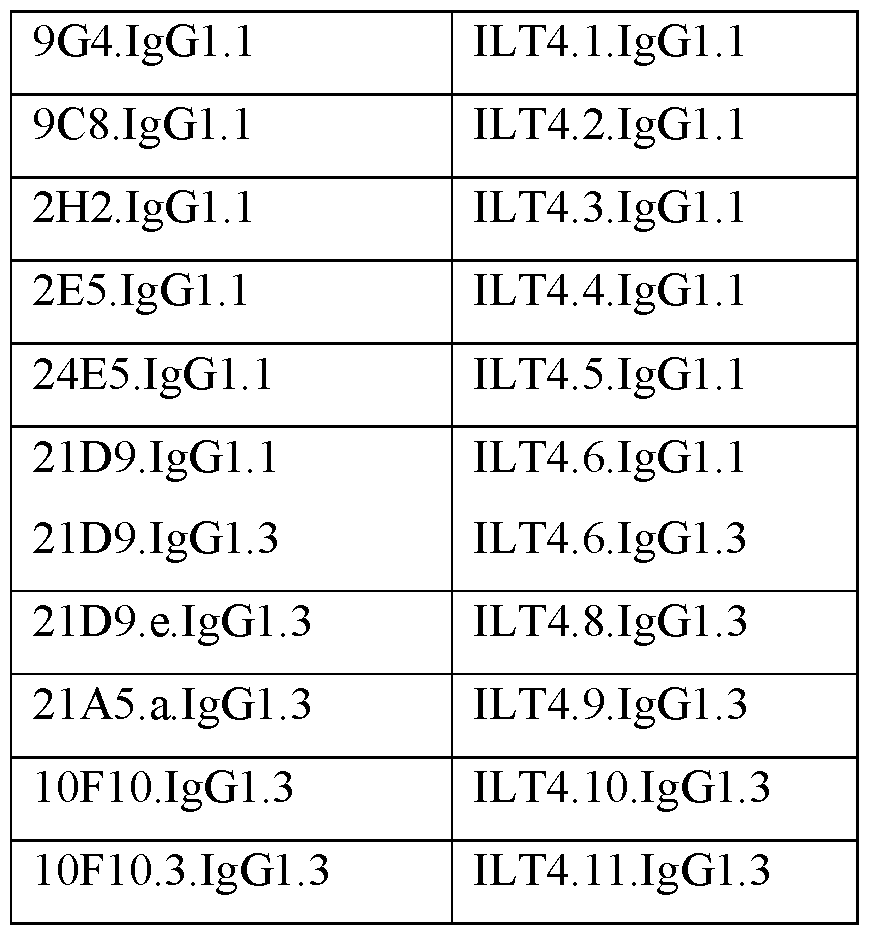


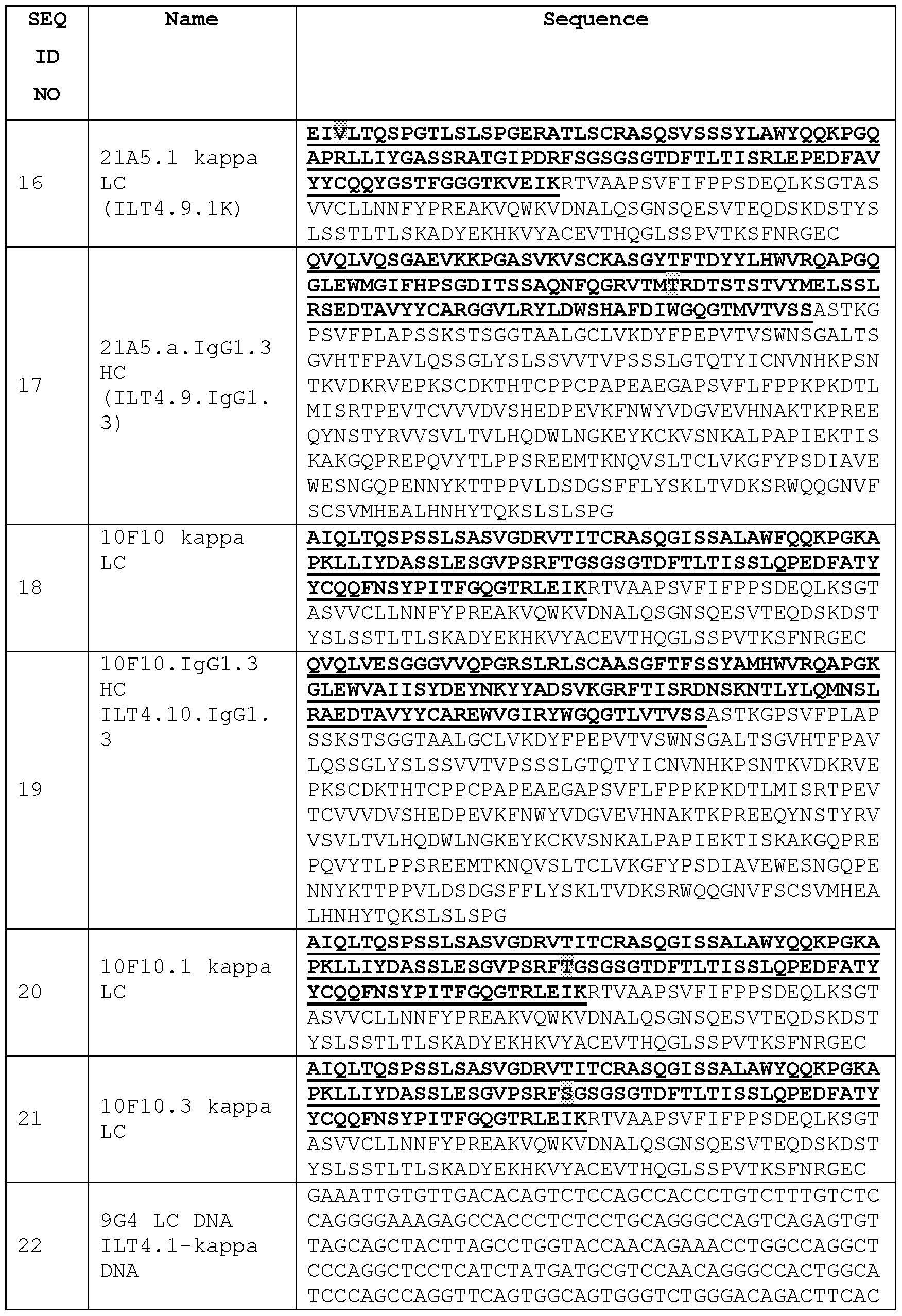


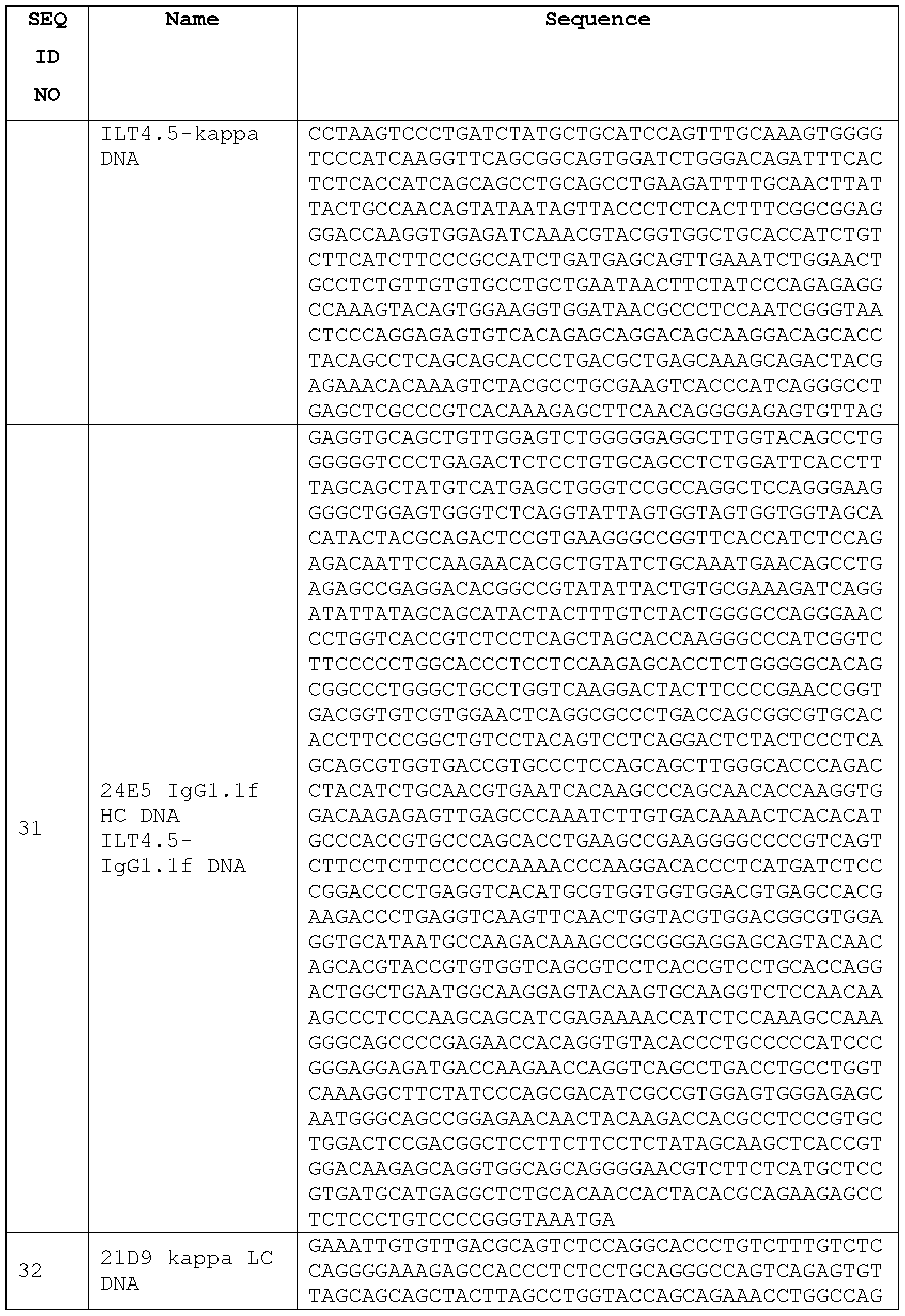


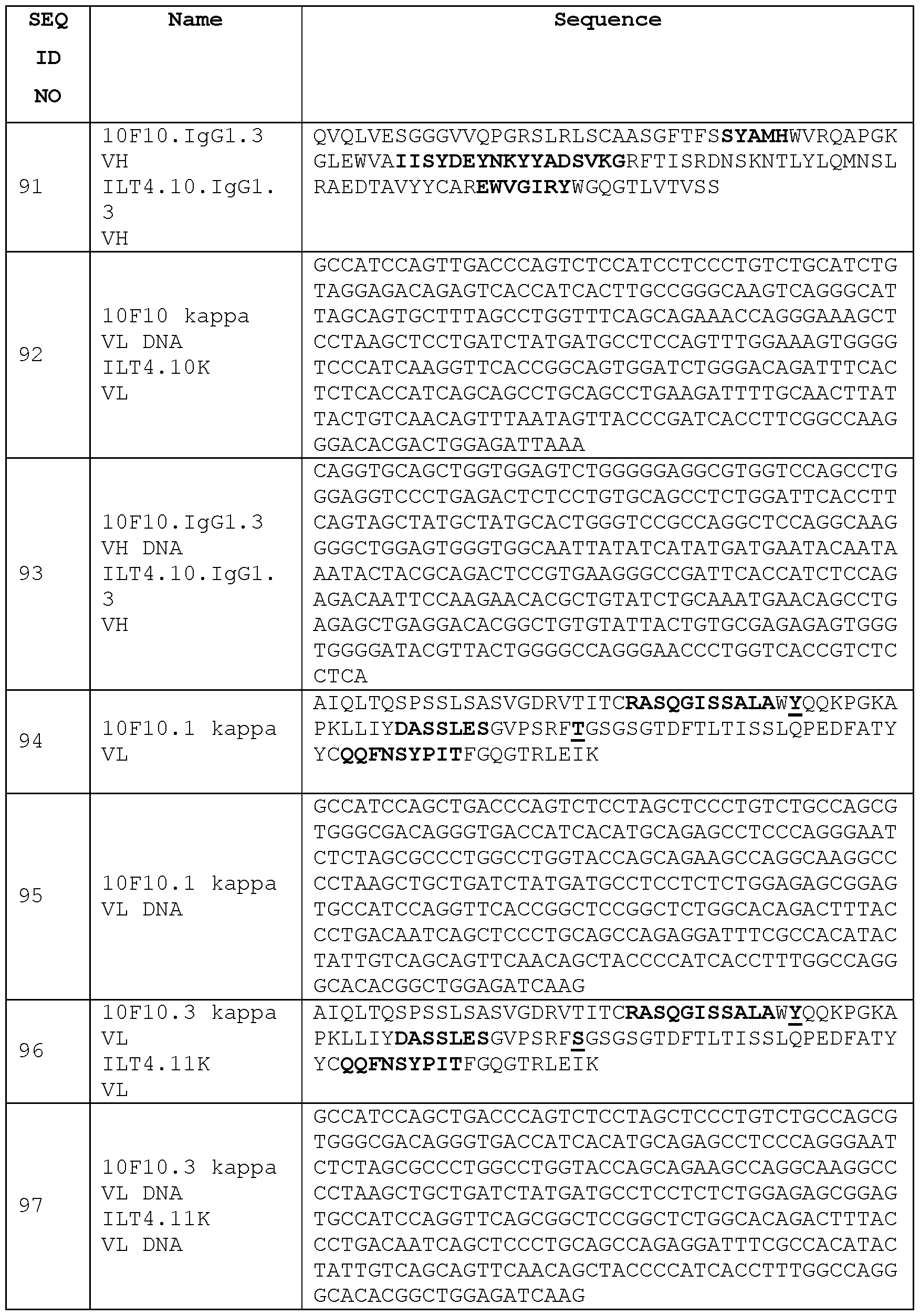

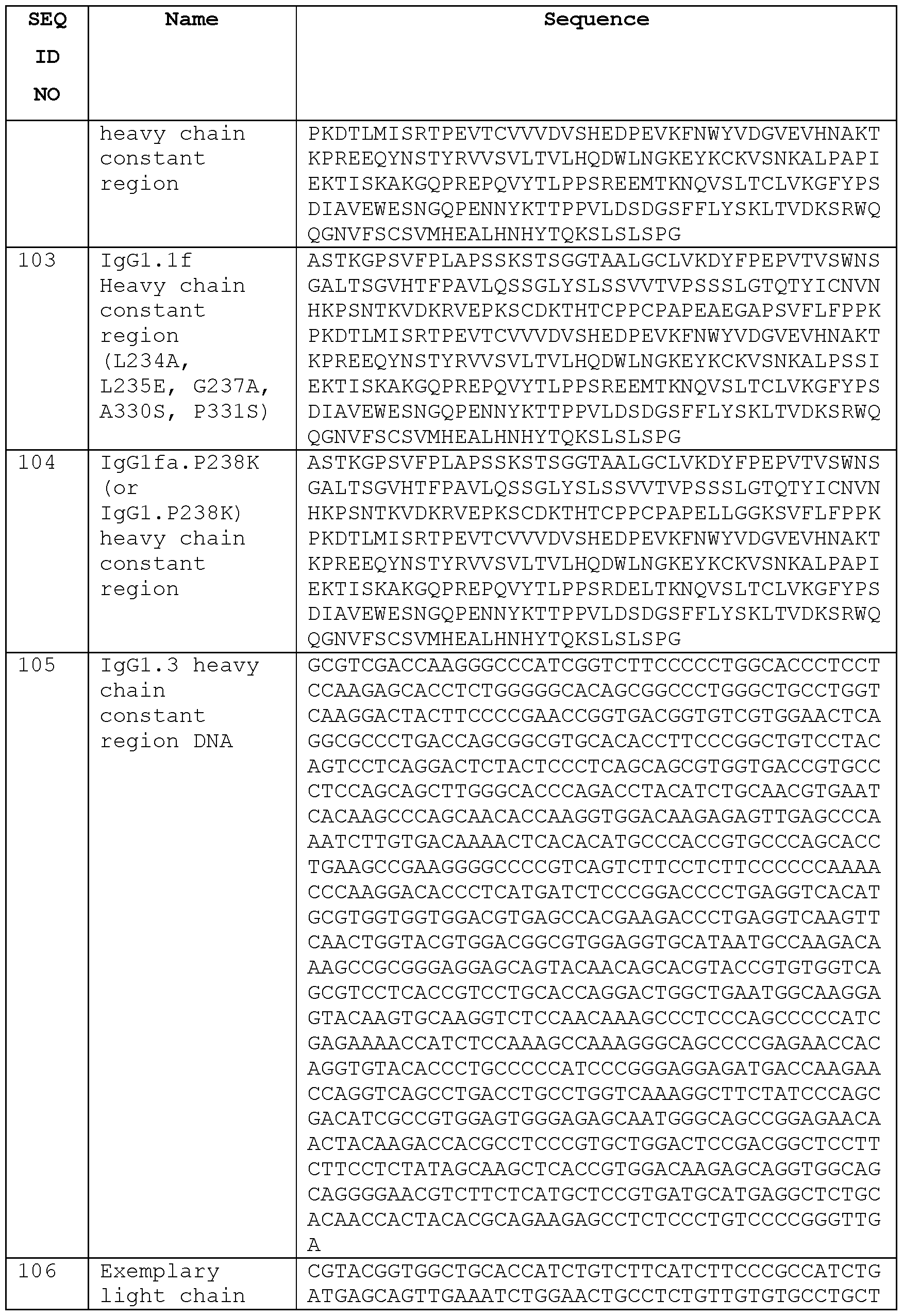

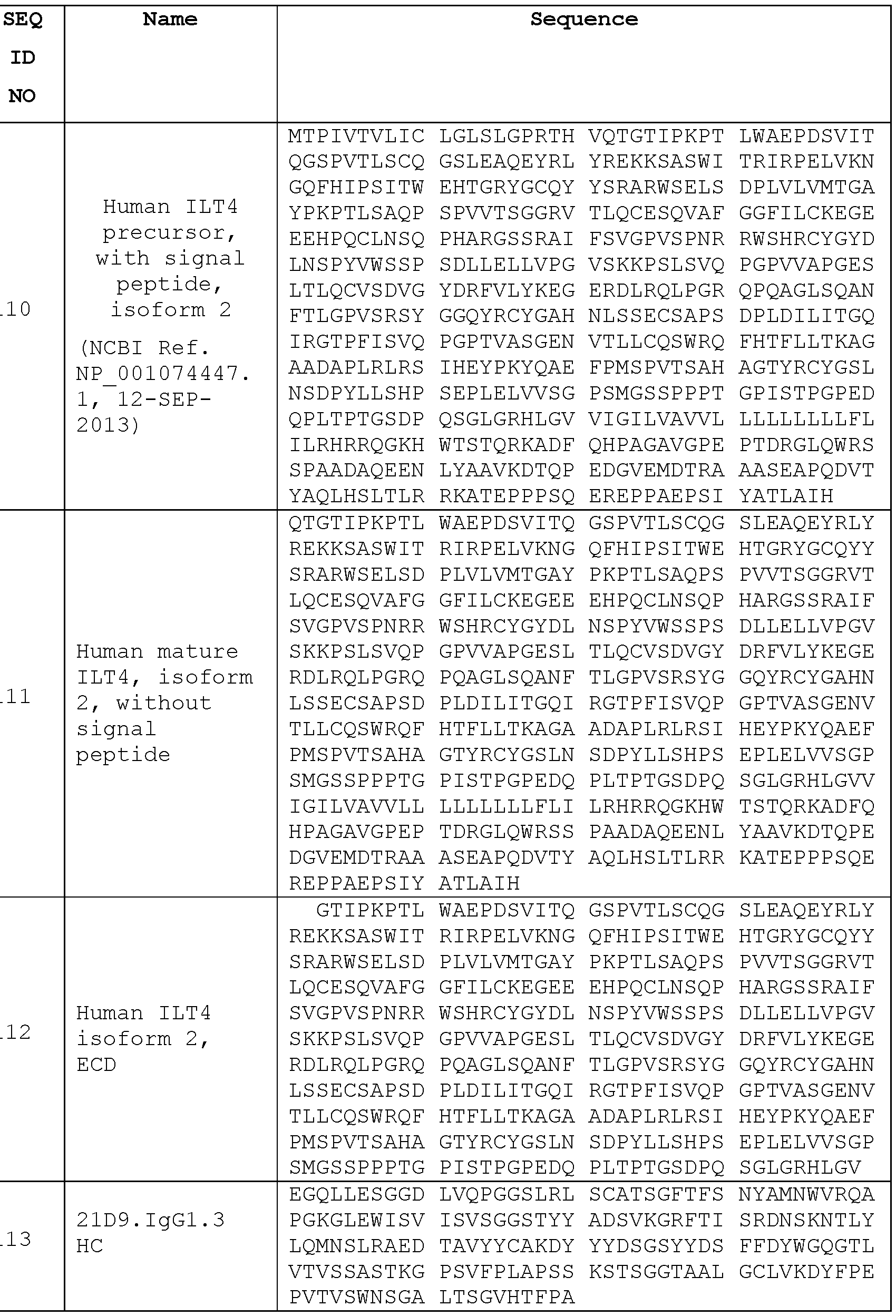
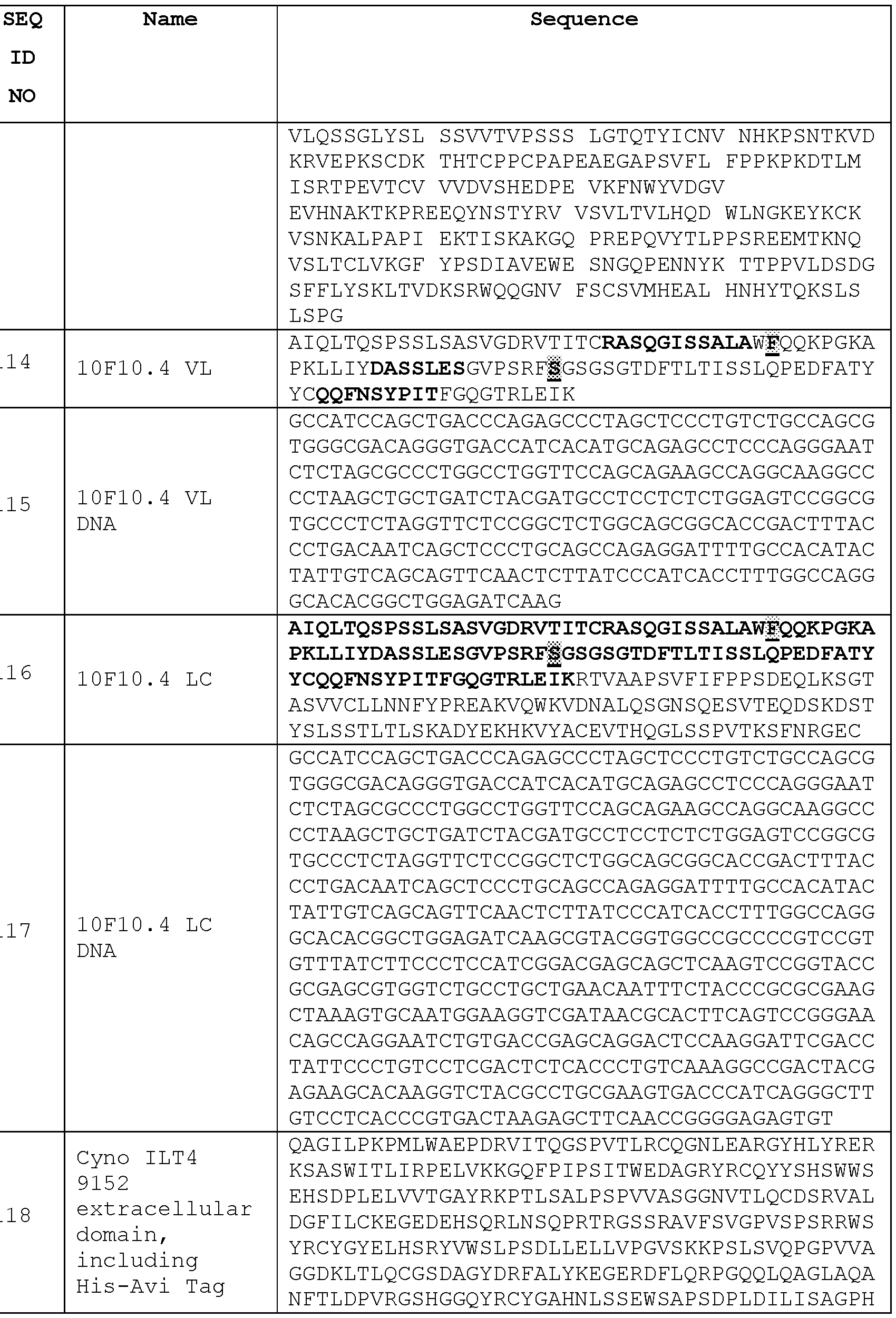


Claims
Priority Applications (18)
| Application Number | Priority Date | Filing Date | Title |
|---|---|---|---|
| AU2019302454A AU2019302454A1 (en) | 2018-07-09 | 2019-07-08 | Antibodies binding to ILT4 |
| PE2021000028A PE20211604A1 (en) | 2018-07-09 | 2019-07-08 | ILT4 UNION ANTIBODIES |
| EA202092835A EA202092835A1 (en) | 2018-10-11 | 2019-07-08 | ANTIBODIES BINDING TO ILT4 |
| CN202411429952.5A CN119390840A (en) | 2018-07-09 | 2019-07-08 | Antibodies that bind to ILT4 |
| MX2021000009A MX2021000009A (en) | 2018-07-09 | 2019-07-08 | ANTIBODIES BINDING TO IMMUNOGLOBULIN TYPE 4 (ILT4) TRANSCRIPTION. |
| CA3104530A CA3104530A1 (en) | 2018-07-09 | 2019-07-08 | Antibodies binding to ilt4 |
| SG11202100096XA SG11202100096XA (en) | 2018-07-09 | 2019-07-08 | Antibodies binding to ilt4 |
| JP2021500623A JP7411627B2 (en) | 2018-07-09 | 2019-07-08 | Antibody that binds to ILT4 |
| EP19752302.0A EP3820904A2 (en) | 2018-07-09 | 2019-07-08 | Antibodies binding to ilt4 |
| CN201980057104.7A CN113056483B (en) | 2018-07-09 | 2019-07-08 | Antibodies that bind to ILT4 |
| KR1020217003581A KR102916159B1 (en) | 2018-07-09 | 2019-07-08 | Antibodies that bind to ILT4 |
| BR112020027095-4A BR112020027095A2 (en) | 2018-07-09 | 2019-07-08 | ILT4 BINDING ANTIBODIES |
| MYPI2021000090A MY201995A (en) | 2018-07-09 | 2019-07-08 | Antibodies binding to ilt4 |
| US16/506,754 US11401328B2 (en) | 2018-07-09 | 2019-07-09 | Antibodies binding to ILT4 |
| IL279894A IL279894A (en) | 2018-07-09 | 2020-12-31 | Antibodies that bind to ilt4 |
| CONC2021/0000044A CO2021000044A2 (en) | 2018-07-09 | 2021-01-06 | Ilt4-binding antibodies |
| US17/845,742 US12435136B2 (en) | 2018-07-09 | 2022-06-21 | Antibodies binding to ILT4 |
| JP2023218223A JP7793587B2 (en) | 2018-07-09 | 2023-12-25 | Antibodies that bind to ILT4 |
Applications Claiming Priority (4)
| Application Number | Priority Date | Filing Date | Title |
|---|---|---|---|
| US201862695600P | 2018-07-09 | 2018-07-09 | |
| US62/695,600 | 2018-07-09 | ||
| US201862744611P | 2018-10-11 | 2018-10-11 | |
| US62/744,611 | 2018-10-11 |
Related Child Applications (1)
| Application Number | Title | Priority Date | Filing Date |
|---|---|---|---|
| US16/506,754 Continuation US11401328B2 (en) | 2018-07-09 | 2019-07-09 | Antibodies binding to ILT4 |
Publications (2)
| Publication Number | Publication Date |
|---|---|
| WO2020014132A2 true WO2020014132A2 (en) | 2020-01-16 |
| WO2020014132A3 WO2020014132A3 (en) | 2020-02-20 |
Family
ID=67551692
Family Applications (1)
| Application Number | Title | Priority Date | Filing Date |
|---|---|---|---|
| PCT/US2019/040820 Ceased WO2020014132A2 (en) | 2018-07-09 | 2019-07-08 | Antibodies binding to ilt4 |
Country Status (17)
| Country | Link |
|---|---|
| US (2) | US11401328B2 (en) |
| EP (1) | EP3820904A2 (en) |
| JP (2) | JP7411627B2 (en) |
| CN (2) | CN119390840A (en) |
| AU (1) | AU2019302454A1 (en) |
| BR (1) | BR112020027095A2 (en) |
| CA (1) | CA3104530A1 (en) |
| CL (2) | CL2021000011A1 (en) |
| CO (1) | CO2021000044A2 (en) |
| IL (1) | IL279894A (en) |
| MX (1) | MX2021000009A (en) |
| MY (1) | MY201995A (en) |
| PE (1) | PE20211604A1 (en) |
| SG (1) | SG11202100096XA (en) |
| TW (2) | TWI819024B (en) |
| WO (1) | WO2020014132A2 (en) |
| ZA (1) | ZA202306641B (en) |
Cited By (10)
| Publication number | Priority date | Publication date | Assignee | Title |
|---|---|---|---|---|
| WO2021158413A1 (en) * | 2020-02-05 | 2021-08-12 | The Board Of Regents Of The University Of Texas System | Novel lilrb2 antibodies and uses thereof |
| US11359019B2 (en) | 2017-12-22 | 2022-06-14 | Jounce Therapeutics, Inc. | Antibodies to LILRB2 |
| US11401328B2 (en) | 2018-07-09 | 2022-08-02 | Five Prime Therapeutics, Inc. | Antibodies binding to ILT4 |
| WO2024008190A1 (en) * | 2022-07-08 | 2024-01-11 | Elpiscience (Suzhou) Biopharma, Ltd. | Anti-lilrb2 antibodies and uses thereof |
| US11897956B2 (en) | 2017-04-07 | 2024-02-13 | Merck Sharp & Dohme Llc | Anti-ILT4 antibodies and antigen-binding fragments |
| WO2024120526A1 (en) | 2022-12-09 | 2024-06-13 | 诺纳生物(苏州)有限公司 | Anti-ilt4 antibody as well as preparation method therefor and use thereof |
| EP4232087A4 (en) * | 2020-10-21 | 2024-10-09 | Immune-ONC Therapeutics, Inc. | NEW ANTI-LILRB2 ANTIBODIES AND DERIVATIVE PRODUCTS |
| EP4213879A4 (en) * | 2020-09-17 | 2024-10-30 | Merck Sharp & Dohme LLC | DOSING SCHEMES OF ANTI-ILT4 ANTIBODIES OR THEIR COMBINATION WITH ANTI-PD-1 ANTIBODIES FOR THE TREATMENT OF CANCER |
| WO2024261729A1 (en) * | 2023-06-23 | 2024-12-26 | Astrazeneca Ab | Lilrb2 binding proteins and uses thereof |
| US12410251B2 (en) | 2020-05-01 | 2025-09-09 | Ngm Biopharmaceuticals, Inc. | ILT-binding agents and methods of use thereof |
Families Citing this family (7)
| Publication number | Priority date | Publication date | Assignee | Title |
|---|---|---|---|---|
| US20160067337A1 (en) * | 2013-03-14 | 2016-03-10 | Bristol-Myers Squibb Company | Combination of dr5 agonist and anti-pd-1 antagonist and methods of use |
| AU2020408678A1 (en) * | 2019-12-20 | 2022-06-23 | Merck Sharp & Dohme Llc | Methods for treating cancer using a combination of a PD-1 antagonist, an ILT4 antagonist, and chemotherapeutic agents |
| WO2021236998A2 (en) * | 2020-05-20 | 2021-11-25 | The Trustees Of Columbia University In The City Of New York | Potent neutralizing antibodies against sars-cov-2, generation and uses thereof |
| WO2022192388A1 (en) * | 2021-03-09 | 2022-09-15 | Jounce Therapeutics, Inc. | Methods for the treatment of cancer |
| CN119604531A (en) * | 2022-07-29 | 2025-03-11 | 盛禾(中国)生物制药有限公司 | A single domain antibody against ILT4 and its application |
| CN119768432A (en) * | 2022-08-22 | 2025-04-04 | 德琪(杭州)生物有限公司 | Novel anti-LILRB2 antibodies and uses thereof |
| JP2025532504A (en) * | 2022-09-08 | 2025-10-01 | 江蘇恒瑞医薬股▲ふん▼有限公司 | Anti-ILT4 antibodies and their pharmaceutical uses |
Citations (87)
| Publication number | Priority date | Publication date | Assignee | Title |
|---|---|---|---|---|
| EP0154316A2 (en) | 1984-03-06 | 1985-09-11 | Takeda Chemical Industries, Ltd. | Chemically modified lymphokine and production thereof |
| EP0401384A1 (en) | 1988-12-22 | 1990-12-12 | Kirin-Amgen, Inc. | Chemically modified granulocyte colony stimulating factor |
| WO1994029351A2 (en) | 1993-06-16 | 1994-12-22 | Celltech Limited | Antibodies |
| US5624821A (en) | 1987-03-18 | 1997-04-29 | Scotgen Biopharmaceuticals Incorporated | Antibodies with altered effector functions |
| WO1997030087A1 (en) | 1996-02-16 | 1997-08-21 | Glaxo Group Limited | Preparation of glycosylated antibodies |
| US5714350A (en) | 1992-03-09 | 1998-02-03 | Protein Design Labs, Inc. | Increasing antibody affinity by altering glycosylation in the immunoglobulin variable region |
| WO1998042752A1 (en) | 1997-03-21 | 1998-10-01 | Brigham And Women's Hospital Inc. | Immunotherapeutic ctla-4 binding peptides |
| WO1998058964A1 (en) | 1997-06-24 | 1998-12-30 | Genentech, Inc. | Methods and compositions for galactosylated glycoproteins |
| US5869046A (en) | 1995-04-14 | 1999-02-09 | Genentech, Inc. | Altered polypeptides with increased half-life |
| WO1999022764A1 (en) | 1997-10-31 | 1999-05-14 | Genentech, Inc. | Methods and compositions comprising glycoprotein glycoforms |
| WO1999054342A1 (en) | 1998-04-20 | 1999-10-28 | Pablo Umana | Glycosylation engineering of antibodies for improving antibody-dependent cellular cytotoxicity |
| WO2000037504A2 (en) | 1998-12-23 | 2000-06-29 | Pfizer Inc. | Human monoclonal antibodies to ctla-4 |
| WO2000042072A2 (en) | 1999-01-15 | 2000-07-20 | Genentech, Inc. | Polypeptide variants with altered effector function |
| US6121022A (en) | 1995-04-14 | 2000-09-19 | Genentech, Inc. | Altered polypeptides with increased half-life |
| US6194551B1 (en) | 1998-04-02 | 2001-02-27 | Genentech, Inc. | Polypeptide variants |
| WO2001014424A2 (en) | 1999-08-24 | 2001-03-01 | Medarex, Inc. | Human ctla-4 antibodies and their uses |
| WO2001058957A2 (en) | 2000-02-11 | 2001-08-16 | Lexigen Pharmaceuticals Corp. | Enhancing the circulating half-life of antibody-based fusion proteins |
| US6277375B1 (en) | 1997-03-03 | 2001-08-21 | Board Of Regents, The University Of Texas System | Immunoglobulin-like domains with increased half-lives |
| EP1125584A1 (en) | 1998-10-30 | 2001-08-22 | Takeda Chemical Industries, Ltd. | Betacellulin protein-containing preparations |
| WO2002006919A2 (en) | 2000-07-18 | 2002-01-24 | Aegis Analytical Corporation | System, method and computer program product for mapping data of multi-database origins |
| EP1176195A1 (en) | 1999-04-09 | 2002-01-30 | Kyowa Hakko Kogyo Co., Ltd. | Method for controlling the activity of immunologically functional molecule |
| WO2003011878A2 (en) | 2001-08-03 | 2003-02-13 | Glycart Biotechnology Ag | Antibody glycosylation variants having increased antibody-dependent cellular cytotoxicity |
| WO2003035835A2 (en) | 2001-10-25 | 2003-05-01 | Genentech, Inc. | Glycoprotein compositions |
| WO2003099196A2 (en) | 2002-05-23 | 2003-12-04 | Cure Tech Ltd. | Humanized immunomodulatory monoclonal antibodies for the treatment of neoplastic disease or immunodeficiency |
| WO2004016750A2 (en) | 2002-08-14 | 2004-02-26 | Macrogenics, Inc. | FcϜRIIB-SPECIFIC ANTIBODIES AND METHODS OF USE THEREOF |
| WO2004029207A2 (en) | 2002-09-27 | 2004-04-08 | Xencor Inc. | Optimized fc variants and methods for their generation |
| WO2004035752A2 (en) | 2002-10-15 | 2004-04-29 | Protein Design Labs, Inc. | ALTERATION OF FcRn BINDING AFFINITIES OR SERUM HALF-LIVES OF ANTIBODIES BY MUTAGENESIS |
| US6737056B1 (en) | 1999-01-15 | 2004-05-18 | Genentech, Inc. | Polypeptide variants with altered effector function |
| WO2004063351A2 (en) | 2003-01-09 | 2004-07-29 | Macrogenics, Inc. | IDENTIFICATION AND ENGINEERING OF ANTIBODIES WITH VARIANT Fc REGIONS AND METHODS OF USING SAME |
| WO2004074455A2 (en) | 2003-02-20 | 2004-09-02 | Applied Molecular Evolution | Fc REGION VARIANTS |
| WO2004099249A2 (en) | 2003-05-02 | 2004-11-18 | Xencor, Inc. | Optimized fc variants and methods for their generation |
| WO2004113304A1 (en) | 2003-05-22 | 2004-12-29 | Abbott Laboratories | Indazole, benzisoxazole, and benzisothiazole kinase inhibitors |
| WO2005040217A2 (en) | 2003-10-17 | 2005-05-06 | Cambridge University Technical Services Limited | Antibodies having a mutated amino acid residue at position 268 (ch2 region) in constant regions |
| US20050123546A1 (en) | 2003-11-05 | 2005-06-09 | Glycart Biotechnology Ag | Antigen binding molecules with increased Fc receptor binding affinity and effector function |
| WO2005070963A1 (en) | 2004-01-12 | 2005-08-04 | Applied Molecular Evolution, Inc | Fc region variants |
| WO2005092925A2 (en) | 2004-03-24 | 2005-10-06 | Xencor, Inc. | Immunoglobulin variants outside the fc region |
| WO2006020114A2 (en) | 2004-08-04 | 2006-02-23 | Applied Molecular Evolution, Inc. | Variant fc regions |
| WO2006029879A2 (en) | 2004-09-17 | 2006-03-23 | F.Hoffmann-La Roche Ag | Anti-ox40l antibodies |
| WO2006105021A2 (en) | 2005-03-25 | 2006-10-05 | Tolerrx, Inc. | Gitr binding molecules and uses therefor |
| WO2006122150A1 (en) | 2005-05-10 | 2006-11-16 | Incyte Corporation | Modulators of indoleamine 2,3-dioxygenase and methods of using the same |
| WO2006121168A1 (en) | 2005-05-09 | 2006-11-16 | Ono Pharmaceutical Co., Ltd. | Human monoclonal antibodies to programmed death 1(pd-1) and methods for treating cancer using anti-pd-1 antibodies alone or in combination with other immunotherapeutics |
| WO2007005874A2 (en) | 2005-07-01 | 2007-01-11 | Medarex, Inc. | Human monoclonal antibodies to programmed death ligand 1 (pd-l1) |
| WO2007075598A2 (en) | 2005-12-20 | 2007-07-05 | Incyte Corporation | N-hydroxyamidinoheterocycles as modulators of indoleamine 2,3-dioxygenase |
| US7317091B2 (en) | 2002-03-01 | 2008-01-08 | Xencor, Inc. | Optimized Fc variants |
| WO2008036642A2 (en) | 2006-09-19 | 2008-03-27 | Incyte Corporation | N-hydroxyamidinoheterocycles as modulators of indoleamine 2,3-dioxygenase |
| WO2008036653A2 (en) | 2006-09-19 | 2008-03-27 | Incyte Corporation | N-hydroxyamidinoheterocycles as modulators of indoleamine 2,3-dioxygenase |
| WO2008132601A1 (en) | 2007-04-30 | 2008-11-06 | Immutep | Cytotoxic anti-lag-3 monoclonal antibody and its use in the treatment or prevention of organ transplant rejection and autoimmune disease |
| JP2008278814A (en) | 2007-05-11 | 2008-11-20 | Igaku Seibutsugaku Kenkyusho:Kk | Release of immune control by agonistic anti-human GITR antibody and its application |
| WO2009014708A2 (en) | 2007-07-23 | 2009-01-29 | Cell Genesys, Inc. | Pd-1 antibodies in combination with a cytokine-secreting cell and methods of use thereof |
| WO2009044273A2 (en) | 2007-10-05 | 2009-04-09 | Immutep | Use of recombinant lag-3 or the derivatives thereof for eliciting monocyte immune response |
| US20090145493A1 (en) | 2004-11-23 | 2009-06-11 | Pip Co., Ltd. | Built-in wall water service box |
| WO2009073620A2 (en) | 2007-11-30 | 2009-06-11 | Newlink Genetics | Ido inhibitors |
| WO2009114335A2 (en) | 2008-03-12 | 2009-09-17 | Merck & Co., Inc. | Pd-1 binding proteins |
| US7635757B2 (en) | 1999-08-23 | 2009-12-22 | Dana-Farber Cancer Institute, Inc. | B7-4 Antibodies and uses therefor |
| US20090317368A1 (en) | 1999-11-30 | 2009-12-24 | Lieping Chen | B7-h1, a novel immunoregulatory molecule |
| WO2009156652A1 (en) | 2008-05-29 | 2009-12-30 | Saint-Gobain Centre De Recherches Et D'etudes Europeen | Cellular structure containing aluminium titanate |
| WO2010019570A2 (en) | 2008-08-11 | 2010-02-18 | Medarex, Inc. | Human antibodies that bind lymphocyte activation gene-3 (lag-3), and uses thereof |
| US20110007023A1 (en) | 2009-07-09 | 2011-01-13 | Sony Ericsson Mobile Communications Ab | Display device, touch screen device comprising the display device, mobile device and method for sensing a force on a display device |
| WO2011028683A1 (en) | 2009-09-03 | 2011-03-10 | Schering Corporation | Anti-gitr antibodies |
| WO2011056652A1 (en) | 2009-10-28 | 2011-05-12 | Newlink Genetics | Imidazole derivatives as ido inhibitors |
| WO2011066389A1 (en) | 2009-11-24 | 2011-06-03 | Medimmmune, Limited | Targeted binding agents against b7-h1 |
| WO2011070024A1 (en) | 2009-12-10 | 2011-06-16 | F. Hoffmann-La Roche Ag | Antibodies binding preferentially human csf1r extracellular domain 4 and their use |
| WO2011107553A1 (en) | 2010-03-05 | 2011-09-09 | F. Hoffmann-La Roche Ag | Antibodies against human csf-1r and uses thereof |
| WO2011109400A2 (en) | 2010-03-04 | 2011-09-09 | Macrogenics,Inc. | Antibodies reactive with b7-h3, immunologically active fragments thereof and uses thereof |
| WO2011131407A1 (en) | 2010-03-05 | 2011-10-27 | F. Hoffmann-La Roche Ag | Antibodies against human csf-1r and uses thereof |
| WO2011140249A2 (en) | 2010-05-04 | 2011-11-10 | Five Prime Therapeutics, Inc. | Antibodies that bind csf1r |
| WO2011161699A2 (en) | 2010-06-25 | 2011-12-29 | Aurigene Discovery Technologies Limited | Immunosuppression modulating compounds |
| US8101720B2 (en) | 2004-10-21 | 2012-01-24 | Xencor, Inc. | Immunoglobulin insertions, deletions and substitutions |
| WO2012032433A1 (en) | 2010-09-09 | 2012-03-15 | Pfizer Inc. | 4-1bb binding molecules |
| US8217149B2 (en) | 2008-12-09 | 2012-07-10 | Genentech, Inc. | Anti-PD-L1 antibodies, compositions and articles of manufacture |
| WO2012142237A1 (en) | 2011-04-15 | 2012-10-18 | Newlink Geneticks Corporation | Fused imidazole derivatives useful as ido inhibitors |
| WO2012145493A1 (en) | 2011-04-20 | 2012-10-26 | Amplimmune, Inc. | Antibodies and other molecules that bind b7-h1 and pd-1 |
| WO2013079174A1 (en) | 2011-11-28 | 2013-06-06 | Merck Patent Gmbh | Anti-pd-l1 antibodies and uses thereof |
| WO2013087699A1 (en) | 2011-12-15 | 2013-06-20 | F. Hoffmann-La Roche Ag | Antibodies against human csf-1r and uses thereof |
| WO2013119716A1 (en) | 2012-02-06 | 2013-08-15 | Genentech, Inc. | Compositions and methods for using csf1r inhibitors |
| WO2013132044A1 (en) | 2012-03-08 | 2013-09-12 | F. Hoffmann-La Roche Ag | Combination therapy of antibodies against human csf-1r and uses thereof |
| WO2013169264A1 (en) | 2012-05-11 | 2013-11-14 | Five Prime Therapeutics, Inc. | Methods of treating conditions with antibodies that bind colony stimulating factor 1 receptor (csf1r) |
| WO2013173223A1 (en) | 2012-05-15 | 2013-11-21 | Bristol-Myers Squibb Company | Cancer immunotherapy by disrupting pd-1/pd-l1 signaling |
| WO2014008218A1 (en) | 2012-07-02 | 2014-01-09 | Bristol-Myers Squibb Company | Optimization of antibodies that bind lymphocyte activation gene-3 (lag-3), and uses thereof |
| WO2014036357A1 (en) | 2012-08-31 | 2014-03-06 | Five Prime Therapeutics, Inc. | Methods of treating conditions with antibodies that bind colony stimulating factor 1 receptor (csf1r) |
| WO2015031667A2 (en) | 2013-08-30 | 2015-03-05 | Amgen Inc. | Gitr antigen binding proteins |
| WO2015184099A1 (en) | 2014-05-28 | 2015-12-03 | 4-Antibody Ag | Anti-gitr antibodies and methods of use thereof |
| WO2015187835A2 (en) | 2014-06-06 | 2015-12-10 | Bristol-Myers Squibb Company | Antibodies against glucocorticoid-induced tumor necrosis factor receptor (gitr) and uses thereof |
| WO2016054638A1 (en) | 2014-10-03 | 2016-04-07 | Dana-Farber Cancer Institute, Inc. | Glucocorticoid-induced tumor necrosis factor receptor (gitr) antibodies and methods of use thereof |
| WO2016057841A1 (en) | 2014-10-08 | 2016-04-14 | Novartis Ag | Compositions and methods of use for augmented immune response and cancer therapy |
| WO2016081746A2 (en) | 2014-11-21 | 2016-05-26 | Bristol-Myers Squibb Company | Antibodies comprising modified heavy constant regions |
| WO2017087678A2 (en) | 2015-11-19 | 2017-05-26 | Bristol-Myers Squibb Company | Antibodies against glucocorticoid-induced tumor necrosis factor receptor (gitr) and uses thereof |
Family Cites Families (68)
| Publication number | Priority date | Publication date | Assignee | Title |
|---|---|---|---|---|
| GB8823869D0 (en) | 1988-10-12 | 1988-11-16 | Medical Res Council | Production of antibodies |
| US5530101A (en) | 1988-12-28 | 1996-06-25 | Protein Design Labs, Inc. | Humanized immunoglobulins |
| US6713610B1 (en) | 1990-01-12 | 2004-03-30 | Raju Kucherlapati | Human antibodies derived from immunized xenomice |
| US6673986B1 (en) | 1990-01-12 | 2004-01-06 | Abgenix, Inc. | Generation of xenogeneic antibodies |
| US5545806A (en) | 1990-08-29 | 1996-08-13 | Genpharm International, Inc. | Ransgenic non-human animals for producing heterologous antibodies |
| US6300129B1 (en) | 1990-08-29 | 2001-10-09 | Genpharm International | Transgenic non-human animals for producing heterologous antibodies |
| US5874299A (en) | 1990-08-29 | 1999-02-23 | Genpharm International, Inc. | Transgenic non-human animals capable of producing heterologous antibodies |
| US5877397A (en) | 1990-08-29 | 1999-03-02 | Genpharm International Inc. | Transgenic non-human animals capable of producing heterologous antibodies of various isotypes |
| US6255458B1 (en) | 1990-08-29 | 2001-07-03 | Genpharm International | High affinity human antibodies and human antibodies against digoxin |
| ATE456656T1 (en) | 1996-12-06 | 2010-02-15 | Schering Corp | ISOLATED GENES FROM MAMMAL MONOCYTES AND RELATED REAGENTS |
| US6448035B1 (en) | 1997-04-24 | 2002-09-10 | Immunex Corporation | Family of immunoregulators designated leukocyte immunoglobulin-like receptor (LIR) |
| US6384203B1 (en) | 1999-05-12 | 2002-05-07 | Immunex Corporation | Family of immunoregulators designated leukocyte immunoglobulin-like receptors (LIR) |
| US6342220B1 (en) | 1997-08-25 | 2002-01-29 | Genentech, Inc. | Agonist antibodies |
| US20040141983A1 (en) | 1999-03-15 | 2004-07-22 | Protein Design Labs, Inc. | Compositions against cancer antigen LIV-1 and uses thereof |
| US6667175B1 (en) | 1999-06-15 | 2003-12-23 | The Trustees Of Columbia University | Generation of antigen specific T suppressor cells for treatment of rejection |
| US20040241167A1 (en) | 2001-06-25 | 2004-12-02 | Nicole Suciu-Foca | Ilt3 and ilt4-related compositons and methods |
| WO2003000199A2 (en) | 2001-06-25 | 2003-01-03 | The Trustees Of Columbia University In The City Of New York | Ilt3 and ilt4-related compositions and methods |
| US20050238643A1 (en) | 2001-11-14 | 2005-10-27 | Arm Jonathan P | Modulation of lir function to treat rheumatoid arthritis |
| US8268582B2 (en) | 2003-10-22 | 2012-09-18 | Keck Graduate Institute | Methods of synthesizing heteromultimeric polypeptides in yeast using a haploid mating strategy |
| EP1799840A4 (en) | 2004-09-03 | 2009-02-18 | Univ Columbia | ILT3 POLYPEPTIDES AND USES |
| WO2006076288A2 (en) | 2005-01-11 | 2006-07-20 | Five Prime Therapeutics, Inc. | Dna constructs for long-term expression of intravascularly injected naked dna |
| US20080286834A1 (en) | 2005-01-27 | 2008-11-20 | Robert Forgan Halenbeck | Leader Sequences For Directing Secretion of Polypeptides and Methods For Production Thereof |
| AU2006261127B2 (en) | 2005-06-17 | 2012-03-15 | Merck Sharp & Dohme Corp. | ILT3 binding molecules and uses therefor |
| CN101325971A (en) | 2005-12-07 | 2008-12-17 | 米德列斯公司 | CTLA-4 antibody dose escalation regimens |
| US20090202544A1 (en) | 2006-02-02 | 2009-08-13 | The Trustees Of Columbia University In The City Of New York | Methods of Treating Diseases by Targeting Silt3 |
| US7777008B2 (en) | 2006-06-19 | 2010-08-17 | Tolerx, Inc. | ILT3 binding molecules and uses therefor |
| US20100047232A1 (en) | 2006-11-14 | 2010-02-25 | Jasvinder Atwal | Modulators of neuronal regeneration |
| MX2009004757A (en) | 2006-11-14 | 2009-05-21 | Genentech Inc | Modulators of neuronal regeneration. |
| UY30776A1 (en) * | 2006-12-21 | 2008-07-03 | Medarex Inc | CD44 ANTIBODIES |
| ES2591281T3 (en) | 2007-07-12 | 2016-11-25 | Gitr, Inc. | Combination therapies that employ GITR binding molecules |
| US7981415B2 (en) | 2007-09-07 | 2011-07-19 | Cisthera, Inc. | Humanized PAI-1 antibodies |
| KR20100109923A (en) | 2007-12-11 | 2010-10-11 | 제넨테크, 인크. | Modulators of neuronal regeneration |
| EP2234620B1 (en) | 2008-01-03 | 2016-03-09 | Université d'Aix-Marseille | Tritherapy used to treat a patient infected by hiv |
| WO2009100135A2 (en) | 2008-02-04 | 2009-08-13 | Medical College Georgia Research Institute, Inc. | Hla-g compositions and methods of use thereof |
| US20090285803A1 (en) | 2008-05-13 | 2009-11-19 | Jasvinder Atwal | ANTI-PirB ANTIBODIES |
| EP2291405A1 (en) | 2008-05-13 | 2011-03-09 | Genentech, Inc. | ANTI-PirB ANTIBODIES |
| WO2011091181A1 (en) | 2010-01-20 | 2011-07-28 | Tolerx, Inc. | Immunoregulation by anti-ilt5 antibodies and ilt5-binding antibody fragments |
| AU2011207253B2 (en) | 2010-01-20 | 2015-02-12 | Merck Sharp & Dohme Corp. | Anti-ILT5 antibodies and ILT5-binding antibody fragments |
| TW201247700A (en) | 2011-05-05 | 2012-12-01 | Baylor Res Inst | Immunoglobulin-like transcript (ILT) receptors as CD8 antagonists |
| US9696312B2 (en) | 2011-09-02 | 2017-07-04 | The Trustees Of Columbia University In The City Of New York | Diagnosis and treatment of cancer expressing ILT3 or ILT3 ligand |
| WO2013036282A2 (en) | 2011-09-07 | 2013-03-14 | The Trustees Of Columbia University In The City Of New York | Downregulation of inflammatory micrornas by ilt3 |
| RU2014117952A (en) | 2011-10-06 | 2015-11-20 | Борд Оф Риджентс, Дзе Юниверсити Оф Техас Систем | ANTIBODIES AGAINST SEMA4A OF A HUMAN USED TO TREAT A DISEASE |
| US20150174203A1 (en) | 2012-05-30 | 2015-06-25 | Icahn School Of Medicine At Mount Sinai | Compositions And Methods For Modulating Pro-Inflammatory Immune Response |
| WO2014006063A2 (en) | 2012-07-02 | 2014-01-09 | Medizinische Universität Wien | Complement split product c4d for the treatment of inflammatory conditions |
| EP2730588A1 (en) | 2012-11-12 | 2014-05-14 | Intelectys | Antibodies and fragments thereof raised against the alpha-3 domain of HLA-G protein, methods and means for their preparation, and uses thereof |
| FR3000966B1 (en) | 2013-01-11 | 2016-10-28 | Biomerieux Sa | METHOD FOR ESTABLISHING IN VITRO A PROGNOSIS OF SEVERITY IN A SEPTIC SHOCK PATIENT |
| EP2970373A1 (en) | 2013-03-12 | 2016-01-20 | The Board of Trustees of The Leland Stanford Junior University | Methods and compositions for inhibiting the effects of amyloid beta oligomers |
| CA2948871A1 (en) * | 2014-05-22 | 2015-11-26 | Fred Hutchinson Cancer Research Center | Lilrb2 and notch-mediated expansion of hematopoietic precursor cells |
| GB201410520D0 (en) * | 2014-06-12 | 2014-07-30 | Univ London Queen Mary | Antibody |
| US20170274003A1 (en) | 2014-09-16 | 2017-09-28 | The Board Of Trustees Of The Leland Stanford Junior University | Blocking pirb upregulates spines and functional synapses to unlock visual cortical plasticity and facilitate recovery from amblyopia |
| WO2016111947A2 (en) * | 2015-01-05 | 2016-07-14 | Jounce Therapeutics, Inc. | Antibodies that inhibit tim-3:lilrb2 interactions and uses thereof |
| AU2016218900A1 (en) | 2015-02-11 | 2017-08-24 | University Health Network | Methods and compositions for modulating LILR proteins |
| CA2977544C (en) * | 2015-03-06 | 2023-12-19 | The Board Of Regents Of The University Of Texas System | Anti-lilrb antibodies and their use in detecting and treating cancer |
| PT3283527T (en) * | 2015-04-13 | 2021-03-03 | Five Prime Therapeutics Inc | COMBINATION THERAPEUTIC FOR CANCER |
| US20190233520A1 (en) | 2016-06-03 | 2019-08-01 | Invectys | Anti hla-g specific antibodies |
| BR112019000431A2 (en) * | 2016-07-14 | 2019-07-09 | Bristol-Myers Squibb Company | antibodies against tim3 and their uses |
| US11906519B2 (en) | 2016-07-29 | 2024-02-20 | The Board Of Regents Of The University Of Texas System | Methods for identifying LILRB-blocking antibodies |
| JOP20190055A1 (en) * | 2016-09-26 | 2019-03-24 | Merck Sharp & Dohme | Anti-cd27 antibodies |
| TW201829463A (en) | 2016-11-18 | 2018-08-16 | 瑞士商赫孚孟拉羅股份公司 | anti-HLA-G antibody and use thereof |
| TWI796329B (en) | 2017-04-07 | 2023-03-21 | 美商默沙東有限責任公司 | Anti-ilt4 antibodies and antigen-binding fragments |
| EP4219559A3 (en) * | 2017-12-22 | 2023-10-18 | Jounce Therapeutics, Inc. | Antibodies for lilrb2 |
| US20210122819A1 (en) | 2018-01-18 | 2021-04-29 | Adanate, Inc. | Anti-lilrb antibodies and uses thereof |
| AR114789A1 (en) | 2018-04-18 | 2020-10-14 | Hoffmann La Roche | ANTI-HLA-G ANTIBODIES AND THE USE OF THEM |
| AR115052A1 (en) | 2018-04-18 | 2020-11-25 | Hoffmann La Roche | MULTI-SPECIFIC ANTIBODIES AND THE USE OF THEM |
| SG11202100096XA (en) | 2018-07-09 | 2021-02-25 | Five Prime Therapeutics Inc | Antibodies binding to ilt4 |
| EP3827020A1 (en) | 2018-07-24 | 2021-06-02 | Amgen Inc. | Combination of lilrb1/2 pathway inhibitors and pd-1 pathway inhibitors |
| CA3111862A1 (en) | 2018-09-17 | 2020-03-26 | Icahn School Of Medicine At Mount Sinai | Anti-lilrb2 antibodies and methods of use thereof |
| US20210340259A1 (en) | 2018-09-27 | 2021-11-04 | Tizona Therapeutics | Anti-hla-g antibodies, compositions comprising anti-hla-g antibodies and methods of using anti-hla-g antibodies |
-
2019
- 2019-07-08 SG SG11202100096XA patent/SG11202100096XA/en unknown
- 2019-07-08 CN CN202411429952.5A patent/CN119390840A/en active Pending
- 2019-07-08 BR BR112020027095-4A patent/BR112020027095A2/en unknown
- 2019-07-08 AU AU2019302454A patent/AU2019302454A1/en not_active Abandoned
- 2019-07-08 MX MX2021000009A patent/MX2021000009A/en unknown
- 2019-07-08 TW TW108123980A patent/TWI819024B/en active
- 2019-07-08 JP JP2021500623A patent/JP7411627B2/en active Active
- 2019-07-08 MY MYPI2021000090A patent/MY201995A/en unknown
- 2019-07-08 CN CN201980057104.7A patent/CN113056483B/en active Active
- 2019-07-08 PE PE2021000028A patent/PE20211604A1/en unknown
- 2019-07-08 EP EP19752302.0A patent/EP3820904A2/en active Pending
- 2019-07-08 TW TW112136418A patent/TW202428604A/en unknown
- 2019-07-08 WO PCT/US2019/040820 patent/WO2020014132A2/en not_active Ceased
- 2019-07-08 CA CA3104530A patent/CA3104530A1/en active Pending
- 2019-07-09 US US16/506,754 patent/US11401328B2/en active Active
-
2020
- 2020-12-31 IL IL279894A patent/IL279894A/en unknown
-
2021
- 2021-01-05 CL CL2021000011A patent/CL2021000011A1/en unknown
- 2021-01-06 CO CONC2021/0000044A patent/CO2021000044A2/en unknown
-
2022
- 2022-06-21 US US17/845,742 patent/US12435136B2/en active Active
-
2023
- 2023-06-28 ZA ZA2023/06641A patent/ZA202306641B/en unknown
- 2023-12-25 JP JP2023218223A patent/JP7793587B2/en active Active
-
2024
- 2024-07-05 CL CL2024002051A patent/CL2024002051A1/en unknown
Patent Citations (94)
| Publication number | Priority date | Publication date | Assignee | Title |
|---|---|---|---|---|
| EP0154316A2 (en) | 1984-03-06 | 1985-09-11 | Takeda Chemical Industries, Ltd. | Chemically modified lymphokine and production thereof |
| US5624821A (en) | 1987-03-18 | 1997-04-29 | Scotgen Biopharmaceuticals Incorporated | Antibodies with altered effector functions |
| US5648260A (en) | 1987-03-18 | 1997-07-15 | Scotgen Biopharmaceuticals Incorporated | DNA encoding antibodies with altered effector functions |
| EP0401384A1 (en) | 1988-12-22 | 1990-12-12 | Kirin-Amgen, Inc. | Chemically modified granulocyte colony stimulating factor |
| US5714350A (en) | 1992-03-09 | 1998-02-03 | Protein Design Labs, Inc. | Increasing antibody affinity by altering glycosylation in the immunoglobulin variable region |
| US6350861B1 (en) | 1992-03-09 | 2002-02-26 | Protein Design Labs, Inc. | Antibodies with increased binding affinity |
| WO1994029351A2 (en) | 1993-06-16 | 1994-12-22 | Celltech Limited | Antibodies |
| US6121022A (en) | 1995-04-14 | 2000-09-19 | Genentech, Inc. | Altered polypeptides with increased half-life |
| US5869046A (en) | 1995-04-14 | 1999-02-09 | Genentech, Inc. | Altered polypeptides with increased half-life |
| WO1997030087A1 (en) | 1996-02-16 | 1997-08-21 | Glaxo Group Limited | Preparation of glycosylated antibodies |
| US6277375B1 (en) | 1997-03-03 | 2001-08-21 | Board Of Regents, The University Of Texas System | Immunoglobulin-like domains with increased half-lives |
| WO1998042752A1 (en) | 1997-03-21 | 1998-10-01 | Brigham And Women's Hospital Inc. | Immunotherapeutic ctla-4 binding peptides |
| US6207156B1 (en) | 1997-03-21 | 2001-03-27 | Brigham And Women's Hospital, Inc. | Specific antibodies and antibody fragments |
| WO1998058964A1 (en) | 1997-06-24 | 1998-12-30 | Genentech, Inc. | Methods and compositions for galactosylated glycoproteins |
| WO1999022764A1 (en) | 1997-10-31 | 1999-05-14 | Genentech, Inc. | Methods and compositions comprising glycoprotein glycoforms |
| US6194551B1 (en) | 1998-04-02 | 2001-02-27 | Genentech, Inc. | Polypeptide variants |
| WO1999054342A1 (en) | 1998-04-20 | 1999-10-28 | Pablo Umana | Glycosylation engineering of antibodies for improving antibody-dependent cellular cytotoxicity |
| US6602684B1 (en) | 1998-04-20 | 2003-08-05 | Glycart Biotechnology Ag | Glycosylation engineering of antibodies for improving antibody-dependent cellular cytotoxicity |
| EP1125584A1 (en) | 1998-10-30 | 2001-08-22 | Takeda Chemical Industries, Ltd. | Betacellulin protein-containing preparations |
| WO2000037504A2 (en) | 1998-12-23 | 2000-06-29 | Pfizer Inc. | Human monoclonal antibodies to ctla-4 |
| WO2000042072A2 (en) | 1999-01-15 | 2000-07-20 | Genentech, Inc. | Polypeptide variants with altered effector function |
| US6737056B1 (en) | 1999-01-15 | 2004-05-18 | Genentech, Inc. | Polypeptide variants with altered effector function |
| EP1176195A1 (en) | 1999-04-09 | 2002-01-30 | Kyowa Hakko Kogyo Co., Ltd. | Method for controlling the activity of immunologically functional molecule |
| US7635757B2 (en) | 1999-08-23 | 2009-12-22 | Dana-Farber Cancer Institute, Inc. | B7-4 Antibodies and uses therefor |
| WO2001014424A2 (en) | 1999-08-24 | 2001-03-01 | Medarex, Inc. | Human ctla-4 antibodies and their uses |
| US20090317368A1 (en) | 1999-11-30 | 2009-12-24 | Lieping Chen | B7-h1, a novel immunoregulatory molecule |
| WO2001058957A2 (en) | 2000-02-11 | 2001-08-16 | Lexigen Pharmaceuticals Corp. | Enhancing the circulating half-life of antibody-based fusion proteins |
| WO2002006919A2 (en) | 2000-07-18 | 2002-01-24 | Aegis Analytical Corporation | System, method and computer program product for mapping data of multi-database origins |
| WO2003011878A2 (en) | 2001-08-03 | 2003-02-13 | Glycart Biotechnology Ag | Antibody glycosylation variants having increased antibody-dependent cellular cytotoxicity |
| WO2003035835A2 (en) | 2001-10-25 | 2003-05-01 | Genentech, Inc. | Glycoprotein compositions |
| US7317091B2 (en) | 2002-03-01 | 2008-01-08 | Xencor, Inc. | Optimized Fc variants |
| WO2003099196A2 (en) | 2002-05-23 | 2003-12-04 | Cure Tech Ltd. | Humanized immunomodulatory monoclonal antibodies for the treatment of neoplastic disease or immunodeficiency |
| WO2004016750A2 (en) | 2002-08-14 | 2004-02-26 | Macrogenics, Inc. | FcϜRIIB-SPECIFIC ANTIBODIES AND METHODS OF USE THEREOF |
| WO2004029207A2 (en) | 2002-09-27 | 2004-04-08 | Xencor Inc. | Optimized fc variants and methods for their generation |
| WO2004035752A2 (en) | 2002-10-15 | 2004-04-29 | Protein Design Labs, Inc. | ALTERATION OF FcRn BINDING AFFINITIES OR SERUM HALF-LIVES OF ANTIBODIES BY MUTAGENESIS |
| WO2004063351A2 (en) | 2003-01-09 | 2004-07-29 | Macrogenics, Inc. | IDENTIFICATION AND ENGINEERING OF ANTIBODIES WITH VARIANT Fc REGIONS AND METHODS OF USING SAME |
| WO2004074455A2 (en) | 2003-02-20 | 2004-09-02 | Applied Molecular Evolution | Fc REGION VARIANTS |
| WO2004099249A2 (en) | 2003-05-02 | 2004-11-18 | Xencor, Inc. | Optimized fc variants and methods for their generation |
| WO2004113304A1 (en) | 2003-05-22 | 2004-12-29 | Abbott Laboratories | Indazole, benzisoxazole, and benzisothiazole kinase inhibitors |
| WO2005040217A2 (en) | 2003-10-17 | 2005-05-06 | Cambridge University Technical Services Limited | Antibodies having a mutated amino acid residue at position 268 (ch2 region) in constant regions |
| US20050123546A1 (en) | 2003-11-05 | 2005-06-09 | Glycart Biotechnology Ag | Antigen binding molecules with increased Fc receptor binding affinity and effector function |
| WO2005070963A1 (en) | 2004-01-12 | 2005-08-04 | Applied Molecular Evolution, Inc | Fc region variants |
| WO2005092925A2 (en) | 2004-03-24 | 2005-10-06 | Xencor, Inc. | Immunoglobulin variants outside the fc region |
| WO2006020114A2 (en) | 2004-08-04 | 2006-02-23 | Applied Molecular Evolution, Inc. | Variant fc regions |
| WO2006029879A2 (en) | 2004-09-17 | 2006-03-23 | F.Hoffmann-La Roche Ag | Anti-ox40l antibodies |
| US8101720B2 (en) | 2004-10-21 | 2012-01-24 | Xencor, Inc. | Immunoglobulin insertions, deletions and substitutions |
| US20090145493A1 (en) | 2004-11-23 | 2009-06-11 | Pip Co., Ltd. | Built-in wall water service box |
| WO2006105021A2 (en) | 2005-03-25 | 2006-10-05 | Tolerrx, Inc. | Gitr binding molecules and uses therefor |
| WO2006121168A1 (en) | 2005-05-09 | 2006-11-16 | Ono Pharmaceutical Co., Ltd. | Human monoclonal antibodies to programmed death 1(pd-1) and methods for treating cancer using anti-pd-1 antibodies alone or in combination with other immunotherapeutics |
| WO2006122150A1 (en) | 2005-05-10 | 2006-11-16 | Incyte Corporation | Modulators of indoleamine 2,3-dioxygenase and methods of using the same |
| WO2007005874A2 (en) | 2005-07-01 | 2007-01-11 | Medarex, Inc. | Human monoclonal antibodies to programmed death ligand 1 (pd-l1) |
| US7943743B2 (en) | 2005-07-01 | 2011-05-17 | Medarex, Inc. | Human monoclonal antibodies to programmed death ligand 1 (PD-L1) |
| WO2007075598A2 (en) | 2005-12-20 | 2007-07-05 | Incyte Corporation | N-hydroxyamidinoheterocycles as modulators of indoleamine 2,3-dioxygenase |
| WO2008036653A2 (en) | 2006-09-19 | 2008-03-27 | Incyte Corporation | N-hydroxyamidinoheterocycles as modulators of indoleamine 2,3-dioxygenase |
| WO2008036642A2 (en) | 2006-09-19 | 2008-03-27 | Incyte Corporation | N-hydroxyamidinoheterocycles as modulators of indoleamine 2,3-dioxygenase |
| WO2008132601A1 (en) | 2007-04-30 | 2008-11-06 | Immutep | Cytotoxic anti-lag-3 monoclonal antibody and its use in the treatment or prevention of organ transplant rejection and autoimmune disease |
| JP2008278814A (en) | 2007-05-11 | 2008-11-20 | Igaku Seibutsugaku Kenkyusho:Kk | Release of immune control by agonistic anti-human GITR antibody and its application |
| WO2009014708A2 (en) | 2007-07-23 | 2009-01-29 | Cell Genesys, Inc. | Pd-1 antibodies in combination with a cytokine-secreting cell and methods of use thereof |
| WO2009044273A2 (en) | 2007-10-05 | 2009-04-09 | Immutep | Use of recombinant lag-3 or the derivatives thereof for eliciting monocyte immune response |
| WO2009073620A2 (en) | 2007-11-30 | 2009-06-11 | Newlink Genetics | Ido inhibitors |
| WO2009114335A2 (en) | 2008-03-12 | 2009-09-17 | Merck & Co., Inc. | Pd-1 binding proteins |
| WO2009156652A1 (en) | 2008-05-29 | 2009-12-30 | Saint-Gobain Centre De Recherches Et D'etudes Europeen | Cellular structure containing aluminium titanate |
| US20110150892A1 (en) | 2008-08-11 | 2011-06-23 | Medarex, Inc. | Human antibodies that bind lymphocyte activation gene-3 (lag-3) and uses thereof |
| WO2010019570A2 (en) | 2008-08-11 | 2010-02-18 | Medarex, Inc. | Human antibodies that bind lymphocyte activation gene-3 (lag-3), and uses thereof |
| US8217149B2 (en) | 2008-12-09 | 2012-07-10 | Genentech, Inc. | Anti-PD-L1 antibodies, compositions and articles of manufacture |
| US20110007023A1 (en) | 2009-07-09 | 2011-01-13 | Sony Ericsson Mobile Communications Ab | Display device, touch screen device comprising the display device, mobile device and method for sensing a force on a display device |
| WO2011028683A1 (en) | 2009-09-03 | 2011-03-10 | Schering Corporation | Anti-gitr antibodies |
| WO2011056652A1 (en) | 2009-10-28 | 2011-05-12 | Newlink Genetics | Imidazole derivatives as ido inhibitors |
| WO2011066389A1 (en) | 2009-11-24 | 2011-06-03 | Medimmmune, Limited | Targeted binding agents against b7-h1 |
| WO2011070024A1 (en) | 2009-12-10 | 2011-06-16 | F. Hoffmann-La Roche Ag | Antibodies binding preferentially human csf1r extracellular domain 4 and their use |
| WO2011109400A2 (en) | 2010-03-04 | 2011-09-09 | Macrogenics,Inc. | Antibodies reactive with b7-h3, immunologically active fragments thereof and uses thereof |
| WO2011107553A1 (en) | 2010-03-05 | 2011-09-09 | F. Hoffmann-La Roche Ag | Antibodies against human csf-1r and uses thereof |
| WO2011131407A1 (en) | 2010-03-05 | 2011-10-27 | F. Hoffmann-La Roche Ag | Antibodies against human csf-1r and uses thereof |
| WO2011140249A2 (en) | 2010-05-04 | 2011-11-10 | Five Prime Therapeutics, Inc. | Antibodies that bind csf1r |
| WO2011161699A2 (en) | 2010-06-25 | 2011-12-29 | Aurigene Discovery Technologies Limited | Immunosuppression modulating compounds |
| WO2012032433A1 (en) | 2010-09-09 | 2012-03-15 | Pfizer Inc. | 4-1bb binding molecules |
| WO2012142237A1 (en) | 2011-04-15 | 2012-10-18 | Newlink Geneticks Corporation | Fused imidazole derivatives useful as ido inhibitors |
| WO2012145493A1 (en) | 2011-04-20 | 2012-10-26 | Amplimmune, Inc. | Antibodies and other molecules that bind b7-h1 and pd-1 |
| WO2013079174A1 (en) | 2011-11-28 | 2013-06-06 | Merck Patent Gmbh | Anti-pd-l1 antibodies and uses thereof |
| WO2013087699A1 (en) | 2011-12-15 | 2013-06-20 | F. Hoffmann-La Roche Ag | Antibodies against human csf-1r and uses thereof |
| WO2013119716A1 (en) | 2012-02-06 | 2013-08-15 | Genentech, Inc. | Compositions and methods for using csf1r inhibitors |
| WO2013132044A1 (en) | 2012-03-08 | 2013-09-12 | F. Hoffmann-La Roche Ag | Combination therapy of antibodies against human csf-1r and uses thereof |
| WO2013169264A1 (en) | 2012-05-11 | 2013-11-14 | Five Prime Therapeutics, Inc. | Methods of treating conditions with antibodies that bind colony stimulating factor 1 receptor (csf1r) |
| WO2013173223A1 (en) | 2012-05-15 | 2013-11-21 | Bristol-Myers Squibb Company | Cancer immunotherapy by disrupting pd-1/pd-l1 signaling |
| WO2014008218A1 (en) | 2012-07-02 | 2014-01-09 | Bristol-Myers Squibb Company | Optimization of antibodies that bind lymphocyte activation gene-3 (lag-3), and uses thereof |
| WO2014036357A1 (en) | 2012-08-31 | 2014-03-06 | Five Prime Therapeutics, Inc. | Methods of treating conditions with antibodies that bind colony stimulating factor 1 receptor (csf1r) |
| WO2015031667A2 (en) | 2013-08-30 | 2015-03-05 | Amgen Inc. | Gitr antigen binding proteins |
| WO2015184099A1 (en) | 2014-05-28 | 2015-12-03 | 4-Antibody Ag | Anti-gitr antibodies and methods of use thereof |
| WO2015187835A2 (en) | 2014-06-06 | 2015-12-10 | Bristol-Myers Squibb Company | Antibodies against glucocorticoid-induced tumor necrosis factor receptor (gitr) and uses thereof |
| WO2016054638A1 (en) | 2014-10-03 | 2016-04-07 | Dana-Farber Cancer Institute, Inc. | Glucocorticoid-induced tumor necrosis factor receptor (gitr) antibodies and methods of use thereof |
| WO2016057841A1 (en) | 2014-10-08 | 2016-04-14 | Novartis Ag | Compositions and methods of use for augmented immune response and cancer therapy |
| WO2016057846A1 (en) | 2014-10-08 | 2016-04-14 | Novartis Ag | Compositions and methods of use for augmented immune response and cancer therapy |
| WO2016081746A2 (en) | 2014-11-21 | 2016-05-26 | Bristol-Myers Squibb Company | Antibodies comprising modified heavy constant regions |
| WO2017087678A2 (en) | 2015-11-19 | 2017-05-26 | Bristol-Myers Squibb Company | Antibodies against glucocorticoid-induced tumor necrosis factor receptor (gitr) and uses thereof |
Non-Patent Citations (42)
| Title |
|---|
| AGNEW, CHEM INTL. ED. ENGL., vol. 33, 1994, pages 183 - 186 |
| ANSEL ET AL.: "Pharmaceutical Dosage Forms and Drug Delivery Systems", 2004, LIPPENCOTT WILLIAMS AND WILKINS |
| BRUMMELL ET AL., BIOCHEM., vol. 32, 1993, pages 1180 - 1187 |
| BURKS, PROC. NATL. ACAD. SCI. USA, vol. 94, 1997, pages 412 - 417 |
| CAMACHO, J. CLIN. ONCOLOGY, vol. 22, no. 145, 2004 |
| DALL ACQUA ET AL., JOURNAL OF IMMUNOLOGY, vol. 169, 2002, pages 5171 - 5180 |
| DALL'ACQUA ET AL., JOURNAL OF BIOLOGICAL CHEMISTRY, vol. 281, 2006, pages 23514 - 23524 |
| DRANOFF ET AL., PROC. NATL. ACAD. SCI U.S.A., vol. 90, 1993, pages 3539 - 43 |
| FERRARAALITALO, NATURE MEDICINE, vol. 5, no. 12, 1999, pages 1359 - 1364 |
| GENNARO: "Remington: The Science and Practice of Pharmacy with Facts and Comparisons: Drugfacts Plus", 2003 |
| HE ET AL., J. IMMUNOL., vol. 173, 2004, pages 4919 - 28 |
| HINTON ET AL., J. BIOL. CHEM., vol. 279, no. 8, 2004, pages 6213 - 6216 |
| HINTON, JOURNAL OF IMMUNOLOGY, vol. 176, 2006, pages 346 - 356 |
| HOLLIGER, PROC. NATL. ACAD. SCI. USA, vol. 90, 1993, pages 6444 - 6448 |
| HUANGCHEN, ANALYTICAL AND BIOANALYTICAL CHEM., vol. 406, 2014, pages 6541 |
| HURWITZ ET AL., PRO. NATL. ACAD. SCI. USA, vol. 95, no. 17, 1998, pages 10067 - 10071 |
| KARLSSON ET AL., ANALYTICAL BIOCHEM., vol. 349, 2005, pages 136 |
| KIBBE ET AL.: "Handbook of Pharmaceutical Excipients", 2000, PHARMACEUTICAL PRESS |
| KIM ET AL., SCIENCE, vol. 266, 1994, pages 2011 - 2013 |
| KLAGSBRUND'AMORE, ANNU. REV. PHYSIOL., vol. 53, 1991, pages 217 - 39 |
| KOBAYASHI ET AL., PROTEIN ENG., vol. 12, no. 10, 1999, pages 879 - 884 |
| KUGLER ET AL., NATURE MEDICINE, vol. 6, 2000, pages 332 - 336 |
| MOKYR ET AL., CANCER RES., vol. 58, 1998, pages 5301 - 5304 |
| MURAKAMI ET AL.: "The Molecular Basis of Cancer", 1995, W.B. SAUNDERS, article "Cell cycle regulation, oncogenes, and antineoplastic drugs" |
| NESTLE ET AL., NATURE MEDICINE, vol. 4, 1998, pages 328 - 332 |
| PETKOVA ET AL., INTERNATIONAL IMMUNOLOGY, vol. 18, no. 12, 2006, pages 1759 - 1769 |
| POLJAK, STRUCTURE, vol. 2, 1994, pages 1121 - 1123 |
| RESTIFO, N.SZNOL, M. ET AL.: "Cancer Vaccines", 1997, article "Cancer: Principles and Practice of Oncology", pages: 3023 - 3043 |
| ROSENBERG, S A, IMMUNITY, vol. 10, 1999, pages 281 - 7 |
| SATO, INT. J. CLIN. ONCOL., vol. 8, 2003, pages 200 - 206 |
| SHIELDS ET AL., JOURNAL OF BIOLOGICAL CHEMISTRY, vol. 276, no. 9, 2001, pages 6591 - 6604 |
| SHIELDS, R.L. ET AL., J. BIOL. CHEM., vol. 277, 2002, pages 26733 - 26740 |
| SHIELDS, R.L., J. BIOL. CHEM., vol. 276, 2001, pages 6591 - 6604 |
| STROHL, CURRENT OPINION IN BIOTECHNOLOGY, vol. 20, 2009, pages 685 - 691 |
| SUOTSRIVASTAVA, SCIENCE, vol. 269, 1995, pages 1585 - 1588 |
| TAMURA ET AL., SCIENCE, vol. 278, 1997, pages 117 - 120 |
| TANG ET AL., NATURE, vol. 356, 1992, pages 152 - 154 |
| TONINI ET AL., ONCOGENE, vol. 22, 2003, pages 6549 - 6556 |
| UMANA ET AL., NAT. BIOTECH., vol. 17, 1999, pages 176 - 180 |
| WEI ET AL., DRUG DISCOVERY TODAY, vol. 19, 2014, pages 95 |
| WRIGHT ET AL., TIBTECH, vol. 15, 1997, pages 26 - 32 |
| YEUNG ET AL., J IMMUNOL, vol. 182, 2010, pages 7663 - 7671 |
Cited By (16)
| Publication number | Priority date | Publication date | Assignee | Title |
|---|---|---|---|---|
| US12344670B2 (en) | 2017-04-07 | 2025-07-01 | Agenus Inc. | Anti-ILT4 antibodies and antigen-binding fragments |
| US11897956B2 (en) | 2017-04-07 | 2024-02-13 | Merck Sharp & Dohme Llc | Anti-ILT4 antibodies and antigen-binding fragments |
| US11897957B2 (en) | 2017-04-07 | 2024-02-13 | Merck Sharp & Dohme Llc | Anti-ILT4 antibodies and antigen-binding fragments |
| US11359019B2 (en) | 2017-12-22 | 2022-06-14 | Jounce Therapeutics, Inc. | Antibodies to LILRB2 |
| US11401328B2 (en) | 2018-07-09 | 2022-08-02 | Five Prime Therapeutics, Inc. | Antibodies binding to ILT4 |
| US12435136B2 (en) | 2018-07-09 | 2025-10-07 | Five Prime Therapeutics, Inc. | Antibodies binding to ILT4 |
| JP2023513158A (en) * | 2020-02-05 | 2023-03-30 | ザ ボード オブ リージェンツ オブ ザ ユニバーシティー オブ テキサス システム | NOVEL LILRB2 ANTIBODY AND USES THEREOF |
| JP7767291B2 (en) | 2020-02-05 | 2025-11-11 | ザ ボード オブ リージェンツ オブ ザ ユニバーシティー オブ テキサス システム | Novel LILRB2 antibodies and uses thereof |
| WO2021158413A1 (en) * | 2020-02-05 | 2021-08-12 | The Board Of Regents Of The University Of Texas System | Novel lilrb2 antibodies and uses thereof |
| US12410251B2 (en) | 2020-05-01 | 2025-09-09 | Ngm Biopharmaceuticals, Inc. | ILT-binding agents and methods of use thereof |
| EP4213879A4 (en) * | 2020-09-17 | 2024-10-30 | Merck Sharp & Dohme LLC | DOSING SCHEMES OF ANTI-ILT4 ANTIBODIES OR THEIR COMBINATION WITH ANTI-PD-1 ANTIBODIES FOR THE TREATMENT OF CANCER |
| EP4232087A4 (en) * | 2020-10-21 | 2024-10-09 | Immune-ONC Therapeutics, Inc. | NEW ANTI-LILRB2 ANTIBODIES AND DERIVATIVE PRODUCTS |
| WO2024008190A1 (en) * | 2022-07-08 | 2024-01-11 | Elpiscience (Suzhou) Biopharma, Ltd. | Anti-lilrb2 antibodies and uses thereof |
| WO2024120526A1 (en) | 2022-12-09 | 2024-06-13 | 诺纳生物(苏州)有限公司 | Anti-ilt4 antibody as well as preparation method therefor and use thereof |
| EP4628508A1 (en) | 2022-12-09 | 2025-10-08 | Biodlink Biopharm Co., Ltd. | Anti-ilt4 antibody as well as preparation method therefor and use thereof |
| WO2024261729A1 (en) * | 2023-06-23 | 2024-12-26 | Astrazeneca Ab | Lilrb2 binding proteins and uses thereof |
Also Published As
| Publication number | Publication date |
|---|---|
| CN113056483B (en) | 2025-08-01 |
| MY201995A (en) | 2024-03-28 |
| TWI819024B (en) | 2023-10-21 |
| BR112020027095A2 (en) | 2021-03-30 |
| CL2024002051A1 (en) | 2024-10-25 |
| KR20210030405A (en) | 2021-03-17 |
| US11401328B2 (en) | 2022-08-02 |
| MX2021000009A (en) | 2021-03-09 |
| JP7411627B2 (en) | 2024-01-11 |
| US20230174647A1 (en) | 2023-06-08 |
| CO2021000044A2 (en) | 2021-04-19 |
| IL279894A (en) | 2021-03-01 |
| SG11202100096XA (en) | 2021-02-25 |
| CN113056483A (en) | 2021-06-29 |
| JP2022513420A (en) | 2022-02-08 |
| CN119390840A (en) | 2025-02-07 |
| PE20211604A1 (en) | 2021-08-23 |
| US20200079848A1 (en) | 2020-03-12 |
| WO2020014132A3 (en) | 2020-02-20 |
| ZA202306641B (en) | 2024-11-27 |
| CA3104530A1 (en) | 2020-01-16 |
| CL2021000011A1 (en) | 2021-05-24 |
| US12435136B2 (en) | 2025-10-07 |
| AU2019302454A1 (en) | 2021-02-25 |
| TW202012438A (en) | 2020-04-01 |
| EP3820904A2 (en) | 2021-05-19 |
| JP2024045119A (en) | 2024-04-02 |
| TW202428604A (en) | 2024-07-16 |
| JP7793587B2 (en) | 2026-01-05 |
Similar Documents
| Publication | Publication Date | Title |
|---|---|---|
| US12435136B2 (en) | Antibodies binding to ILT4 | |
| JP7573659B2 (en) | Antibodies that bind to VISTA at acidic pH | |
| US20250129166A1 (en) | Antibodies Binding to Vista at Acidic pH | |
| JP7700036B2 (en) | Antibody that binds to VISTA at acidic pH | |
| US20230192860A1 (en) | Antibodies Binding to Vista at Acidic pH | |
| EA046477B1 (en) | ANTIBODIES BINDING TO VISTA AT ACID pH | |
| EA042790B1 (en) | ANTIBODIES BINDING TO VISTA AT ACID pH |
Legal Events
| Date | Code | Title | Description |
|---|---|---|---|
| 121 | Ep: the epo has been informed by wipo that ep was designated in this application |
Ref document number: 19752302 Country of ref document: EP Kind code of ref document: A2 |
|
| ENP | Entry into the national phase |
Ref document number: 3104530 Country of ref document: CA |
|
| WWE | Wipo information: entry into national phase |
Ref document number: 279894 Country of ref document: IL |
|
| WWE | Wipo information: entry into national phase |
Ref document number: NC2021/0000044 Country of ref document: CO |
|
| ENP | Entry into the national phase |
Ref document number: 2021500623 Country of ref document: JP Kind code of ref document: A |
|
| NENP | Non-entry into the national phase |
Ref country code: DE |
|
| REG | Reference to national code |
Ref country code: BR Ref legal event code: B01A Ref document number: 112020027095 Country of ref document: BR |
|
| ENP | Entry into the national phase |
Ref document number: 20217003581 Country of ref document: KR Kind code of ref document: A |
|
| ENP | Entry into the national phase |
Ref document number: 2019302454 Country of ref document: AU Date of ref document: 20190708 Kind code of ref document: A |
|
| ENP | Entry into the national phase |
Ref document number: 112020027095 Country of ref document: BR Kind code of ref document: A2 Effective date: 20201231 |
|
| WWP | Wipo information: published in national office |
Ref document number: NC2021/0000044 Country of ref document: CO |
|
| WWE | Wipo information: entry into national phase |
Ref document number: 521420978 Country of ref document: SA |
|
| WWG | Wipo information: grant in national office |
Ref document number: NC2021/0000044 Country of ref document: CO |
|
| WWE | Wipo information: entry into national phase |
Ref document number: 522441496 Country of ref document: SA |
|
| WWW | Wipo information: withdrawn in national office |
Ref document number: 202092835 Country of ref document: EA |
|
| WWR | Wipo information: refused in national office |
Ref document number: 522441496 Country of ref document: SA |
|
| WWE | Wipo information: entry into national phase |
Ref document number: 522441496 Country of ref document: SA |
|
| WWW | Wipo information: withdrawn in national office |
Ref document number: 279894 Country of ref document: IL |
|
| WWG | Wipo information: grant in national office |
Ref document number: 201980057104.7 Country of ref document: CN |