WO2019179370A1 - Data transmission channel address allocation method, association method, apparatus, and storage medium - Google Patents
Data transmission channel address allocation method, association method, apparatus, and storage medium Download PDFInfo
- Publication number
- WO2019179370A1 WO2019179370A1 PCT/CN2019/078354 CN2019078354W WO2019179370A1 WO 2019179370 A1 WO2019179370 A1 WO 2019179370A1 CN 2019078354 W CN2019078354 W CN 2019078354W WO 2019179370 A1 WO2019179370 A1 WO 2019179370A1
- Authority
- WO
- WIPO (PCT)
- Prior art keywords
- data transmission
- transmission channel
- base station
- uplink data
- uplink
- Prior art date
- Legal status (The legal status is an assumption and is not a legal conclusion. Google has not performed a legal analysis and makes no representation as to the accuracy of the status listed.)
- Ceased
Links
Images




Classifications
-
- H—ELECTRICITY
- H04—ELECTRIC COMMUNICATION TECHNIQUE
- H04W—WIRELESS COMMUNICATION NETWORKS
- H04W36/00—Hand-off or reselection arrangements
- H04W36/06—Reselecting a communication resource in the serving access point
-
- H—ELECTRICITY
- H04—ELECTRIC COMMUNICATION TECHNIQUE
- H04W—WIRELESS COMMUNICATION NETWORKS
- H04W76/00—Connection management
- H04W76/10—Connection setup
-
- H—ELECTRICITY
- H04—ELECTRIC COMMUNICATION TECHNIQUE
- H04W—WIRELESS COMMUNICATION NETWORKS
- H04W76/00—Connection management
- H04W76/10—Connection setup
- H04W76/11—Allocation or use of connection identifiers
-
- H—ELECTRICITY
- H04—ELECTRIC COMMUNICATION TECHNIQUE
- H04W—WIRELESS COMMUNICATION NETWORKS
- H04W76/00—Connection management
- H04W76/10—Connection setup
- H04W76/15—Setup of multiple wireless link connections
-
- H—ELECTRICITY
- H04—ELECTRIC COMMUNICATION TECHNIQUE
- H04W—WIRELESS COMMUNICATION NETWORKS
- H04W8/00—Network data management
- H04W8/26—Network addressing or numbering for mobility support
-
- H—ELECTRICITY
- H04—ELECTRIC COMMUNICATION TECHNIQUE
- H04W—WIRELESS COMMUNICATION NETWORKS
- H04W72/00—Local resource management
- H04W72/20—Control channels or signalling for resource management
-
- H—ELECTRICITY
- H04—ELECTRIC COMMUNICATION TECHNIQUE
- H04W—WIRELESS COMMUNICATION NETWORKS
- H04W76/00—Connection management
- H04W76/10—Connection setup
- H04W76/12—Setup of transport tunnels
-
- H—ELECTRICITY
- H04—ELECTRIC COMMUNICATION TECHNIQUE
- H04W—WIRELESS COMMUNICATION NETWORKS
- H04W80/00—Wireless network protocols or protocol adaptations to wireless operation
- H04W80/02—Data link layer protocols
Definitions
- the present disclosure relates to the field of mobile communications technologies, and in particular, to a data transmission channel address allocation method, associated method, apparatus, and storage medium.
- the fifth generation (5G, 5Generation) system includes a next generation core network (5GC, 5 Generation Core) and a Next Generation Radio Access Network (NG-RAN) base station, where 5GC includes access mobile function.
- Basic network element nodes AMF, Access Mobility Function), Session Management Function (SMF), and User Plane Function (UPF);
- NG-RAN includes at least two different types of base stations: based on 4th Generation (4G, 4Generation) Evolved Node B (eNB), Next Generation Evolved Node B (NG-eNB, Next Generation Evolved Node B) and new design support for new wireless standard air interface (NR, New Radio) gNB base station.
- the NG-RAN base station is connected to the 5GC through the NG interface, and the NG-RAN base stations are connected through the Xn interface.
- SC Single Connection
- DC/MC Dual/Multiple Connectivity
- UE User Equipment
- DC/MC Dual/Multiple Connectivity
- the UE can be in the air interface, and can establish the sum with two NG-RAN base stations through the air interface control plane connection (Uu-C, Uu-Control Plane) and the air interface user plane connection (Uu-U, Uu-User Plane).
- Uu-C air interface control plane connection
- Uu-U air interface user plane connection
- Uu-U Uu-User Plane
- Maintain two independent wireless link connections ie, air interface data transmission channels
- one NG-RAN base station is called a primary base station (MN, Master Node)
- the other base station is called a secondary base station (SN, Secondary Node)
- MN and The SN can establish and maintain two independent network side user plane connections (NG-U, Next Generation-User Plane) through the NG interface and the core network user plane network element UPF.
- control plane connection (NG-C, Next Generation-Control Plane) between the network element nodes is indicated by a broken line
- NG-U Next Generation-User
- Plane the user data transmission channel
- the user data transmission channel is further divided into a MN side and an SN side, wherein the NG-U (MN) provides a data transmission channel between the UPF and the MN, that is, a GTP Tunnel (General Packet Radio Service Tunnel Protocol).
- MN NG-U
- GTP Tunnel General Packet Radio Service Tunnel Protocol
- PDU Session Protocol Data Unit Session
- the establishment of this channel requires the UPF to provide the "MN side uplink data transmission channel address" and the MN to provide the "MN side downlink data transmission channel address", including the transport layer address (Transport Layer Address) and general packet radio.
- GTP TEID General Packet Radio Service Tunnel Protocol
- GTP TEID General Packet Radio Service Tunnel Protocol
- the two transmission channel address information of the uplink and downlink pairings are mutually interactive through the NG-C control plane signaling process.
- the establishment of the SN side channel requires the UPF to provide the "SN side uplink data transmission channel address" and the SN to provide the "SN side downlink data transmission channel address", but the difference is that since the SN cannot directly connect with the AMF/SMF, the SN side
- the two transmission channel address information is completed through NG-C control plane signaling and Xn-C control plane signaling.
- the GTP channel established between the MN or the SN and the UPF can only be associated with the unique pair of uplink and downlink paired transmission channel addresses, that is, one GTP channel can only correspond to a pair of allocated channels.
- the upstream and downstream paired transmission channel addresses are not conducive to various flexible deployments of the UPF side implementation unit in a virtualized environment.
- the processing load congestion may occur at the back end of the uplink data transmission channel address port of a single UPF unit, resulting in end-to-end uplink data packets.
- the transmission delay is increased.
- the uplink data transmission channel needs to be re-established with other UPF uplink new addresses, causing service interruption and affecting the user experience.
- the present disclosure provides a data transmission channel address allocation method, an association method, a device, and a storage medium, which are used to solve the following problems of the related art: an uplink data transmission channel address port back end of a single UPF unit is likely to cause end-to-end transmission of uplink data packets. The delay increases, or the uplink data transmission channel needs to be re-established with other UPF uplink new addresses, causing service interruption and affecting the user experience.
- the present disclosure provides a method for allocating a data transmission channel address, including: transmitting a first interface signaling to a first base station, where the first interface signaling includes at least: N uplink data that is preset to be allocated.
- the channel address is transmitted, and N is an integer greater than or equal to 2.
- the present disclosure further provides a method for associating a data transmission channel, including: receiving a first interface signaling sent by a core network, where the first interface signaling includes at least: N preset uplinks. a data transmission channel address, and N is an integer greater than or equal to 2; and N first uplink data transmission channels are respectively established with each of the N uplink data transmission channel addresses, wherein the A type of uplink data transmission channel is used to carry a user service data packet related to a single or multiple protocol data unit PDU session on the first base station side.
- the present disclosure further provides a data transmission channel address allocation apparatus, including: a first sending module, configured to send a first interface signaling to a first base station, where the first interface signaling includes at least : N uplink data transmission channel addresses are preset, and N is an integer greater than or equal to 2.
- the present disclosure further provides an apparatus for associating a data transmission channel, including: a second receiving module, configured to receive the first interface signaling sent by the core network, where the first interface signaling includes at least: Presetting the N uplink data transmission channel addresses, and N is an integer greater than or equal to 2; the uplink channel establishing module is set to establish an N with each of the N uplink data transmission channel addresses And a first type of uplink data transmission channel, where the first type of uplink data transmission channel is used to carry a user service data packet related to a single or multiple protocol data unit PDU session on the first base station side.
- the present disclosure further provides a storage medium storing a computer program, wherein the computer program is executed by the processor to implement the step of allocating the data transmission channel address.
- the present disclosure further provides a storage medium storing a computer program, wherein the computer program is executed by the processor to implement the step of allocating the data transmission channel address.
- the present disclosure enhances data between the NG-RAN base station and the UPF by allocating at least two uplink data transmission channel addresses to the NG-RAN base station on the UPF side, overcoming the limitation of the uplink data transmission channel and the unique uplink data transmission channel address association binding. Transmission flexibility and performance, enhance data transmission channel robustness and load balancing between each other, ensure QoS performance of QoS Flows service data flow, and improve user experience.
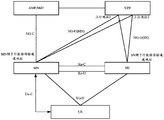
- FIG. 1 is a schematic diagram of a network architecture of a dual connectivity mode of operation in the related art
- FIG. 2 is a flowchart of a method for allocating a data transmission channel address in the first embodiment of the present disclosure
- FIG. 3 is a flowchart of a method for associating data transmission channel addresses in a second embodiment of the present disclosure
- FIG. 4 is a schematic structural diagram of a device for allocating a data transmission channel address in a third embodiment of the present disclosure
- FIG. 5 is a schematic structural diagram of an apparatus for associating data transmission channel addresses in a fourth embodiment of the present disclosure
- FIG. 6 is a schematic diagram of a network architecture of a single connection working mode in a seventh embodiment of the present disclosure
- FIG. 7 is a schematic diagram of a network architecture of a dual connectivity mode of operation in an eighth embodiment of the present disclosure.
- FIG. 8 is a schematic diagram of a network architecture of a dual connectivity mode of operation in a ninth embodiment of the present disclosure.
- FIGS. 9A and 9B are schematic diagrams showing changes in network architecture of a dual connectivity mode of operation in a tenth embodiment of the present disclosure
- 10A and 10B are schematic diagrams showing changes in network architecture of a dual connectivity mode of operation in a tenth embodiment of the present disclosure.
- the uplink data transmission channel address port of a single UPF is likely to cause an increase in the end-to-end transmission delay of the uplink data packet, or the uplink data transmission channel needs to be re-established with other new addresses when the fault occurs, causing service interruption.
- the present disclosure provides a data transmission channel address allocation method, associated method, device, and storage medium. The present disclosure will be further described in detail below with reference to the accompanying drawings and embodiments. It is to be understood that the embodiments described herein are merely illustrative of the disclosure and are not intended to be limiting.
- a first embodiment of the present disclosure provides a method for allocating a data transmission channel address, where the flowchart is as shown in FIG. 2, including step S201: transmitting first interface signaling to a first base station, where the first interface signaling
- the method includes at least: N uplink data transmission channel addresses that are preset to be allocated, and N is an integer greater than or equal to 2.
- the uplink data transmission channel address (referred to as the uplink address) is pre-allocated by the UPF in the 5GC core network, and the first interface signaling generated by the AMF/SMF is sent to the first base station through the NG interface, which should be understood.
- the first base station is the primary base station MN.
- the UPF pre-allocated uplink data transmission channel address is at least two.
- the UPF can allocate multiple uplink data transmission channel addresses for different PDU sessions, but the embodiment of the present disclosure emphasizes that N can be jointly allocated for a specific PDU session.
- Upstream data transmission channel address If there are N uplink data transmission channel addresses in each PDU Session, there are N*X uplink data transmission channel addresses for X different PDU sessions.
- the AMF/SMF further receives the first feedback signaling sent by the first base station by using the NG interface, where the first feedback signaling includes at least a downlink data transmission channel address (referred to as a downlink address) of the first base station, and the UPF
- the downlink data transmission channel is established according to the downlink data transmission channel address of the first base station to transmit downlink data. Since the MN provides only one downlink data transmission channel address, there is only one downlink data transmission channel. In the dual-connection or multi-connection mode, there may be multiple SNs in addition to the MN. The dual-connection mode is taken as an example. In the presence of a second base station, the first base station sends the first feedback signaling in addition to the first base station.
- the downlink data transmission channel address further includes a downlink data transmission channel address of the second base station, and the UPF establishes a downlink data transmission channel between the first base station and the second base station according to the first feedback signaling.
- the third base station, the fourth base station, and the like may exist in the multiple connection mode, and the first feedback signaling further includes the downlink data transmission channel address of the third base station and the fourth base station, and the UPF is according to the first feedback signaling.
- the number of downlink data transmission channel addresses respectively, establishes a downlink data transmission channel address, which will not be described in detail herein.
- the UPF network element may set a usage constraint for each uplink data transmission channel address, and send the above constraint condition to the MN through the first interface signaling.
- the MN transmits the uplink packet according to the content of the constraint.
- the constraints may include, but are not limited to, the following:
- the NG-RAN base station can be used by the NG-RAN base station.
- an uplink address can only be used by the MN, or can only be used by the SN, or
- the MN/SN is used in association at the same time, wherein the UPF network element can also directly indicate the constraint by using the base station ID;
- the uplink address can be used by which QoS flows in the PDU Session, for example, can only be 5G QoS identifier (5QI, 5G QoS Identifier) in a specific range (0-255 continuous interval or discrete) QoS Flows used in the numerical value), or the attribute parameters of a certain aspect of QoS are within a specific value range, such as: the delay is below a certain threshold;
- the ratio of the total amount of data transmission corresponding to the uplink address for example, the UPF allocates two different uplink addresses to a certain NG-RAN base station, and sets the corresponding proportions of the total data transmission to 70% and 30 respectively. %, used to indicate that the base station needs to transmit data to the two address ports in a ratio of 7:3;
- the data transmission time limit corresponding to the uplink address for example, the UPF allocates two different uplink addresses for a certain NG-RAN base station, and sets the data transmission time of the two uplink addresses to 8:00 every day. Up to 2 o'clock, both uplink addresses can be used to transmit data. During the remaining time period, only the uplink address A can be used for data transmission.
- the AMF/SMF sends the second interface signaling to the first base station,
- the two interface signaling includes at least one of modifying one of the N uplink data transmission channel addresses or the M uplink data transmission channel addresses, and modifying the constraint condition, where M is a natural number less than or equal to N.
- the second interface signaling includes modifying the uplink address
- the first base station re-establishes an uplink data transmission channel between the modified uplink address; if the second interface signaling includes the modification of the constraint, the first base station is configured according to The modified constraint conditions are used for the transmission of the uplink data packet.
- the third interface signaling is sent to the first base station, where the third interface signaling includes: deleting and Retrieving one of the N uplink data transmission channel addresses or M uplink data transmission channel addresses, and M is a natural number less than or equal to N.
- the first base station receives the third interface signaling, the uplink data channel between the uplink address deleted in the third interface signaling is disconnected, and the address is recovered by the UPF.
- the first base station needs to send the foregoing second interface signaling and the third interface signaling to the second base station, the third base station, etc., to indicate
- the second base station, the third base station, and the like perform corresponding operations such as channel establishment, deletion, and constraint modification.
- the limitation between the uplink data transmission channel and the unique uplink data transmission channel address association binding is overcome, and the relationship between the NG-RAN base station and the UPF is enhanced.
- the flexibility and performance of data transmission enhance the robustness of data transmission channels and load balancing between each other, ensure the QoS performance of QoS Flows service data flow, and improve the user experience.
- a second embodiment of the present disclosure provides a method for associating data transmission channel addresses, and a flowchart thereof is shown in FIG. 3, including steps S301 and S302:
- the first interface signaling sent by the core network is received, where the first interface signaling includes: at least: N uplink data transmission channel addresses that are preset to be allocated, and N is an integer greater than or equal to 2;
- each of the N uplink data transmission channel addresses N first type uplink data transmission channels, where the first type of uplink data transmission channel is used to carry a single transmission on the first base station side.
- User service data packets related to multiple protocol data unit PDU sessions are used to establish, by each of the N uplink data transmission channel addresses, N first type uplink data transmission channels, where the first type of uplink data transmission channel is used to carry a single transmission on the first base station side.
- the uplink data transmission channel address is pre-allocated by the UPF in the 5GC core network, and the first interface signaling generated by the AMF/SMF is sent to the first base station through the NG interface, and the first base station is the primary base station MN.
- the N uplink data transmission channels established by the first base station according to the N uplink addresses provided in the first interface signaling are used as the first type of uplink data transmission channels, and are used to carry the single or multiple protocol data units on the first base station side.
- the first base station After the first base station receives the first interface signaling, the first base station sends the first feedback signaling to the core network, where the first feedback signaling includes at least the downlink data transmission channel address of the first base station, and the UPF is based on the downlink.
- the address establishes a downlink data transmission channel with the first base station.
- the UPF network element may set a usage constraint for each uplink address, and send the foregoing constraint condition to the MN through the first interface signaling, and the MN
- the uplink packet is sent according to the content of the constraint.
- the constraints may include, but are not limited to, the following:
- the NG-RAN base station can be used by the NG-RAN base station.
- an uplink address can only be used by the MN, or can only be used by the SN, or
- the MN/SN is used in association at the same time, wherein the UPF network element can also directly indicate the constraint by using the base station ID;
- the uplink address can be used in association with which QoS flows in the PDU Session, for example, can only be used by QoS Flows within a continuous interval or discrete value of a range of 0-255 in a range of 0-255, Or some aspect of the QoS attribute parameter is within a specific value range, such as: the delay is below a certain threshold;
- the ratio of the total amount of data transmission corresponding to the uplink address for example, the UPF allocates two different uplink addresses to a certain NG-RAN base station, and sets the corresponding proportions of the total data transmission to 70% and 30 respectively. %, used to indicate that the base station needs to transmit data to the two address ports in a ratio of 7:3;
- the data transmission time limit corresponding to the uplink address for example, the UPF allocates two different uplink addresses for a certain NG-RAN base station, and sets the data transmission time of the two uplink addresses to 8:00 every day. Up to 2 o'clock, both uplink addresses can be used to transmit data. During the remaining time period, only the uplink address A can be used for data transmission.
- connection mode is the dual/multi-connection mode
- there are at least one secondary base station such as the second base station, the third base station, etc.
- the process of the interaction between the secondary base station and the primary base station is the same as that of the primary network.
- the dual connectivity mode is used, that is, the first base station is the MN, and the second base station is the SN.
- the first base station after receiving the first interface signaling, the first base station sends the first type of uplink data to the second base station by using the Xn-c interface to indicate that the second base station establishes the second type of uplink data with the uplink address provided in the first interface signaling.
- a transmission channel carries a user service data packet related to a single or multiple PDU sessions transmitted on the second base station side.
- the first base station obtains the downlink address of the second base station by using the Xn-U, and sends the downlink address together with the downlink address of the first base station to facilitate the core network to establish a downlink data transmission channel.
- the first interface signaling includes a constraint
- the second base station will also send the uplink data packet according to the constraint condition.
- the AMF/SMF sends the second interface signaling to the first base station, and the second interface
- the signaling includes at least one of modifying one of the N uplink data transmission channel addresses or the M uplink data transmission channel addresses, and modifying the constraint condition, where M is a natural number less than or equal to N.
- the second interface signaling includes modifying the uplink address
- the first base station establishes a new uplink data transmission channel with the modified one or M uplink data transmission channel addresses; when the second interface signaling includes modifying the constraint condition, The first base station sends an uplink data packet according to the modified constraint.
- the third interface signaling is sent to the first base station, where the third interface signaling includes: deleting and Retrieving one of the N uplink data transmission channel addresses or M uplink data transmission channel addresses, and M is a natural number less than or equal to N.
- the first base station receives the third interface signaling, the uplink data channel between the uplink address deleted in the third interface signaling is disconnected, and the address is recovered by the UPF.
- the first base station needs to send the foregoing second interface signaling and the third interface signaling to the second base station, the third base station, etc., to indicate
- the second base station, the third base station, and the like perform corresponding operations such as channel establishment, deletion, and constraint modification.
- the base station side can establish multiple uplink data transmission channels, and enhance the flexibility of data transmission between the NG-RAN base station and the UPF. Performance, enhanced data transmission channel robustness and load balancing between each other, ensuring QoS performance of QoS Flows service data flow, and improving user experience.
- a third embodiment of the present disclosure provides a data transmission channel address allocation apparatus, including: a first sending module 401, configured to send first interface signaling to a first base station, where the first interface signaling includes at least : N uplink data transmission channel addresses are preset, and N is an integer greater than or equal to 2.
- the above-mentioned distribution device is installed on a server device used as a core network, and can be divided into an AMF unit, an SMF unit, and a UPF unit according to functions.
- the uplink data transmission channel address is pre-allocated by the UPF, and the first interface signaling generated by the AMF/SMF is sent to the first base station through the first sending module.
- the SN cannot be The AMF/SMF is directly connected, and the first base station is the primary base station MN.
- the UPF pre-allocated uplink data transmission channel address is at least two.
- the UPF can allocate multiple uplink data transmission channel addresses for different PDU sessions, but the embodiment of the present disclosure emphasizes that N can be jointly allocated for a specific PDU session.
- the uplink data transmission channel address In an embodiment, if there are N uplink data transmission channel addresses in each PDU Session, there are N*X uplink data transmission channel addresses for X different PDU sessions.
- the distribution device further includes a first receiving module 402, coupled to the first sending module 401, configured to receive the first feedback signaling sent by the first base station, and the first feedback signaling
- the method includes at least: a downlink data transmission channel address of the first base station.
- the UPF establishes a downlink data transmission channel according to the downlink data transmission channel address of the first base station received by the first receiving module, and the first base station establishes a downlink data transmission channel by using the downlink channel establishing module 403 to transmit downlink data, because the downlink data transmission channel address provided by the MN is only One, so there is only one downlink data transmission channel.
- the dual-connection mode is taken as an example.
- the first base station sends the first feedback signaling in addition to the first base station.
- the downlink data transmission channel address further includes a downlink data transmission channel address of the second base station, and the UPF establishes a downlink data transmission channel between the first base station and the second base station by using a downlink channel establishment module according to the first feedback signaling.
- the third base station, the fourth base station, and the like may exist in the multiple connection mode, and the first feedback signaling further includes the downlink data transmission channel address of the third base station and the fourth base station, and the UPF is according to the first feedback signaling.
- the number of downlink data transmission channel addresses respectively, establishes a downlink data transmission channel address, which will not be described in detail herein.
- the UPF network element may set a usage constraint for each uplink data transmission channel address, and send the foregoing constraint condition to the MN through the first sending module.
- the MN transmits the uplink packet according to the content of the constraint.
- the constraints may include, but are not limited to, the following:
- the NG-RAN base station can be used by the NG-RAN base station.
- an uplink address can only be used by the MN, or can only be used by the SN, or
- the MN/SN is used in association at the same time, wherein the UPF network element can also directly indicate the constraint by using the base station ID;
- the uplink address can be used by which QoS flows in the PDU Session, for example, can only be 5G QoS identifier (5QI, 5G QoS Identifier) in a specific range (0-255 continuous interval or discrete) QoS Flows used in the numerical value), or the attribute parameters of a certain aspect of QoS are within a specific value range, such as: the delay is below a certain threshold;
- the ratio of the total amount of data transmission corresponding to the uplink address for example, the UPF allocates two different uplink addresses to a certain NG-RAN base station, and sets the corresponding proportions of the total data transmission to 70% and 30 respectively. %, used to indicate that the base station needs to transmit data to the two address ports in a ratio of 7:3;
- the data transmission time limit corresponding to the uplink address for example, the UPF allocates two different uplink addresses for a certain NG-RAN base station, and sets the data transmission time of the two uplink addresses to 8:00 every day. Up to 2 o'clock, both uplink addresses can be used to transmit data. During the remaining time period, only the uplink address A can be used for data transmission.
- the first sending module sends the second interface signaling to the first base station.
- the second interface signaling includes at least one of modifying one of the N uplink data transmission channel addresses or the M uplink data transmission channel addresses, and modifying the constraint condition, where M is a natural number less than or equal to N.
- the second interface signaling includes modifying the uplink address
- the first base station re-establishes an uplink data transmission channel between the modified uplink address; if the second interface signaling includes the modification of the constraint, the first base station is configured according to The modified constraint conditions are used for the transmission of the uplink data packet.
- the third interface signaling is sent to the first base station by using the first sending module, and the third interface signaling is used.
- the method at least includes: deleting and retrieving one of the N uplink data transmission channel addresses or M uplink data transmission channel addresses, and M is a natural number less than or equal to N.
- the first base station needs to send the foregoing second interface signaling and the third interface signaling to the second base station, the third base station, etc., to indicate
- the second base station, the third base station, and the like perform corresponding operations such as channel establishment, deletion, and constraint modification.
- the limitation between the uplink data transmission channel and the unique uplink data transmission channel address association binding is overcome, and the relationship between the NG-RAN base station and the UPF is enhanced.
- the flexibility and performance of data transmission enhance the robustness of data transmission channels and load balancing between each other, ensure the QoS performance of QoS Flows service data flow, and improve the user experience.
- a fourth embodiment of the present disclosure provides an apparatus for associating a data transmission channel address, and a schematic structural diagram thereof is shown in FIG. 5, including: a second receiving module 501, configured to receive a first interface signaling sent by a core network, where The first interface signaling includes: at least N preset uplink data transmission channel addresses, and N is an integer greater than or equal to 2; the uplink channel establishing module 502 is coupled with the second receiving module 501, and is set to N Each of the uplink data transmission channel addresses in the uplink data transmission channel address respectively establishes N first type uplink data transmission channels, wherein the first type of uplink data transmission channel is used to carry and transmit single or multiple protocol data on the first base station side. User service data packet related to the unit PDU session.
- the above-described associating device is installed on a server device used as a base station, and more mainly, on a server device as a master base station.
- the first interface signaling is sent to the second receiving module, and the uplink channel establishing module is configured to transmit N uplink data according to the N uplink addresses provided in the first interface signaling.
- the channel is a first type of uplink data transmission channel, and is used for carrying user service data packets related to single or multiple protocol data unit PDU sessions on the first base station side, that is, QoS Flows.
- the second sending module After receiving the first interface signaling, the second sending module sends the first feedback signaling to the core network, where the first feedback signaling includes at least the downlink data transmission channel address of the first base station, and the UPF is established according to the downlink address. A downlink data transmission channel with the first base station.
- the UPF network element may set a usage constraint for each uplink address, and send the foregoing constraint condition to the MN through the first interface signaling, and the MN
- the uplink packet is sent according to the content of the constraint.
- the constraints may include, but are not limited to, the following:
- the NG-RAN base station can be used by the NG-RAN base station.
- an uplink address can only be used by the MN, or can only be used by the SN, or
- the MN/SN is used in association at the same time, wherein the UPF network element can also directly indicate the constraint by using the base station ID;
- the uplink address can be used in association with which QoS flows in the PDU Session, for example, can only be used by QoS Flows within a continuous interval or discrete value of a range of 0-255 in a range of 0-255, Or some aspect of the QoS attribute parameter is within a specific value range, such as: the delay is below a certain threshold;
- the ratio of the total amount of data transmission corresponding to the uplink address for example, the UPF allocates two different uplink addresses to a certain NG-RAN base station, and sets the corresponding proportions of the total data transmission to 70% and 30 respectively. %, used to indicate that the base station needs to transmit data to the two address ports in a ratio of 7:3;
- the data transmission time limit corresponding to the uplink address for example, the UPF allocates two different uplink addresses for a certain NG-RAN base station, and sets the data transmission time of the two uplink addresses to 8:00 every day. Up to 2 o'clock, both uplink addresses can be used to transmit data. During the remaining time period, only the uplink address A can be used for data transmission.
- connection mode is the dual/multi-connection mode
- there are at least one secondary base station such as the second base station, the third base station, etc.
- the process of the interaction between the secondary base station and the primary base station is the same as that of the primary network.
- the dual connectivity mode is used, that is, the first base station is the MN, and the second base station is the SN.
- the first base station After the first base station receives the first interface signaling, the first base station sends the second type of uplink data to the second base station to indicate that the second base station establishes the second type of uplink data with the uplink address provided in the first interface signaling.
- a transmission channel carries a user service data packet related to a single or multiple PDU sessions transmitted on the second base station side.
- the first base station obtains the downlink address of the second base station by using the third receiving module, and sends the downlink address together with the downlink address of the first base station to the core network, so as to facilitate the core network to establish a downlink data transmission channel.
- the first interface signaling includes a constraint
- the second base station will also send the uplink data packet according to the constraint condition.
- the second interface signaling is sent to the first base station, and the second interface signaling includes at least One of the following: modifying one of the N uplink data transmission channel addresses or the M uplink data transmission channel addresses, and modifying the constraint condition, where M is a natural number less than or equal to N.
- the first base station receives the second interface signaling by using the second receiving module, and when the second interface signaling includes modifying the uplink address, the uplink channel establishing module establishes a new one with the modified one or M uplink data transmission channel addresses.
- the third interface signaling is sent to the first base station, where the third interface signaling includes: deleting and Retrieving one of the N uplink data transmission channel addresses or M uplink data transmission channel addresses, and M is a natural number less than or equal to N.
- the first base station receives the third interface signaling by using the second receiving module.
- the uplink channel establishing module disconnects from the uplink address deleted in the signaling of the third interface. Upstream data channel, and address recovery by UPF.
- the first base station needs to send the foregoing second interface signaling and the third interface signaling to the second base station, the third base station, etc., to indicate
- the second base station, the third base station, and the like perform corresponding operations such as channel establishment, deletion, and constraint modification.
- the base station side can establish multiple uplink data transmission channels, and enhance the flexibility of data transmission between the NG-RAN base station and the UPF. Performance, enhanced data transmission channel robustness and load balancing between each other, ensuring QoS performance of QoS Flows service data flow, and improving user experience.
- a fifth embodiment of the present disclosure provides a storage medium on which a computer program for realizing an allocation method of a data transmission channel address is stored.
- the computer program is executed by the processor, the following steps are implemented:
- the first interface signaling is sent to the first base station, where the first interface signaling includes at least: N initial uplink data transmission channel addresses, and N is an integer greater than or equal to 2.
- the storage medium can be installed in a web server as a core network. Since the method of performing the data transmission channel address allocation on the core network side has been described in detail in the first embodiment, it will not be described in detail in this embodiment.
- a sixth embodiment of the present disclosure provides a storage medium on which a computer program for realizing an association method of a data transmission channel address is stored.
- the computer program is executed by the processor, the following steps are implemented:
- the first interface signaling sent by the core network is received, where the first interface signaling includes at least: N uplink data transmission channel addresses that are preset to be allocated, and N is an integer greater than or equal to 2;
- each of the uplink data transmission channel addresses of the N uplink data transmission channel addresses respectively, establishing N first type uplink data transmission channels, where the first type of uplink data transmission channel is used to carry and transmit a single single base station side User service data packets related to multiple protocol data unit PDU sessions.
- the storage medium can be installed in a network server as a primary base station. Since the method of performing the data transmission channel address association on the primary base station side has been described in detail in the first embodiment, it will not be described in detail in this embodiment.
- the foregoing storage medium may include, but not limited to, a USB flash drive, a Read-Only Memory (ROM), a Random Access Memory (RAM), a mobile hard disk, and a magnetic memory.
- ROM Read-Only Memory
- RAM Random Access Memory
- the processor executes the method steps described in the foregoing embodiments according to the stored program code in the storage medium.
- the examples in this embodiment may refer to the examples described in the foregoing embodiments and the optional embodiments, and details are not described herein again.
- modules or steps of the present disclosure described above can be implemented by a general-purpose computing device that can be centralized on a single computing device or distributed across a network of multiple computing devices. Alternatively, they may be implemented by program code executable by the computing device such that they may be stored in the storage device by the computing device and, in some cases, may be different from the order herein.
- the steps shown or described are performed, or they are separately fabricated into individual integrated circuit modules, or a plurality of modules or steps thereof are fabricated as a single integrated circuit module. As such, the disclosure is not limited to any specific combination of hardware and software.
- the method for configuring two uplink data transmission channel addresses is as follows:
- the UPF pre-allocates two uplink data transmission channel addresses 1 and 2 in advance, and the constraint condition is set: the uplink addresses 1 and 2 can be used by all connected base stations of the UE;
- the AMF/SMF sends the NG interface application layer signaling (NGAP, PDU Session Setup process, that is, the first interface signaling in the first embodiment of the disclosure), and the uplink data is sent by the NG interface.
- NGAP NG interface application layer signaling
- the transmission channel addresses 1 and 2 inform the MN that the MN establishes simultaneous association with the uplink data transmission channel addresses 1 and 2, and is used for uplink data transmission;
- the MN informs the AMF/SMF of the unique downlink data transmission channel address allocated by the MN through the NGAP signaling (ie, the first feedback signaling in the first embodiment of the present disclosure);
- the UPF establishes an association with the unique downlink data transmission channel address, and is used for downlink data transmission.
- the MN can freely select to send the uplink data packet included in the PDU session to the uplink address 1 or 2.
- a UE is in a dual-connection working mode, and only one PDU session is to be established, and the PDU session is finally split in the UPF (ie, PDU Session).
- Some of the QoS Flows are directed to the MN side for transmission, and the remaining QoS Flows are directed to the SN side for transmission.
- the method for configuring the two uplink data transmission channel addresses is as follows:
- the UPF pre-allocates two uplink data transmission channel addresses 1 and 2 in advance, and the constraint condition is set: the uplink addresses 1 and 2 can be used by all connected base stations of the UE;
- the AMF/SMF informs the MN of the uplink data transmission channel addresses 1 and 2 through the NGAP signaling (eg, the PDU Session Setup procedure, that is, the first interface signaling in the first embodiment of the present disclosure), and the MN determines the to-be-established PDU.
- the manner in which the session is split in the UPF, that is, the QoS flows are determined to be transmitted to the MN or the SN side, and the first interface signaling is sent by the first base station to the second base station in the second embodiment of the present disclosure.
- Interacting with the SN informing the SN to associate the uplink data transmission channel addresses 1 and 2, and obtaining the SN side downlink data transmission channel address allocated by the SN;
- the MN and the SN each establish a simultaneous association with the uplink data transmission channel addresses 1 and 2 for respective uplink data transmission;
- the MN informs the AMF/SMF of the QoS Flows list associated with each of the MN side and the SN side downlink data transmission channel address and the two downlink addresses through NGAP signaling;
- the UPF establishes a respective association with the downlink data transmission channel address of the MN side and the SN side, and is used for downlink data transmission of each of the MN side and the SN side;
- both the MN and the SN can freely select to send the uplink data packet to the uplink address 1 or 2.
- a UE is in a dual-connection working mode, and only one PDU Session is to be established, and the PDU Session is finally configured in the case that the UPF is split.
- the method of uplink data transmission channel address is as follows:
- the UPF pre-allocates three uplink data transmission channel addresses 1, 2 and 3 in advance, and the constraint condition is set: the uplink addresses 1 and 2 can be used by the primary base station MN connected by the UE, and the uplink addresses 2 and 3 can be used.
- the secondary base station SN connected to the UE is associated with the use;
- the AMF/SMF informs the MN of the uplink data transmission channel addresses 1, 2, and 3 through NGAP signaling, and the MN determines the manner in which the PDU session to be established is split in the UPF, and interacts with the SN through XnAP signaling to notify the SN to associate the foregoing.
- the uplink data transmission channel addresses 2 and 3, and the MN obtains the SN side downlink data transmission channel address allocated by the SN;
- the MN establishes an association with the uplink data transmission channel addresses 1 and 2
- the SN establishes an association with the uplink data transmission channel addresses 2 and 3 for respective uplink data transmission;
- the MN informs the AMF/SMF of the QoS Flows list of the MN side and the SN side downlink data transmission channel address and the two downlink addresses by NGAP signaling;
- the UPF establishes a respective association with the downlink data transmission channel addresses of the MN side and the SN side, and is used for downlink data transmission of each of the MN side and the SN side;
- the MN can freely select to send the uplink data packet to the uplink address 1 or 2; the SN can freely select to send the uplink data packet to the uplink address 2 or 3.
- a UE is in a dual-connection working mode, and only one PDU Session is to be established, and the PDU session is finally configured in the case that the UPF is split.
- the method of two uplink data transmission channel addresses is as follows:
- the UPF pre-allocates two uplink data transmission channel addresses 1 and 2 in advance, and the constraint condition is set: the uplink addresses 1 and 2 can be used by all the base stations connected to the UE, but the uplink address 1 can only serve the guaranteed data.
- QoS Flow of the Transmission Rate (GBR) the uplink address 2 can only serve the QoS Flow of the Non-GBR class;
- the AMF/SMF informs the MN of the uplink data transmission channel addresses 1 and 2 through the NGAP signaling, and the MN determines the manner in which the PDU session to be established is split in the UPF, and interacts with the SN through the XnAP signaling to notify the SN to associate the uplink data. Transmitting channel addresses 1 and 2, and the MN obtains the SN side downlink data transmission channel address allocated by the SN;
- S63, MN and SN each establish a simultaneous association with the uplink data transmission channel addresses 1 and 2 for respective uplink data transmission;
- the MN informs the AMF/SMF of the QoS Flows list associated with each of the MN side and the SN side downlink data transmission channel address and the two downlink addresses through NGAP signaling;
- the UPF establishes a respective association with the downlink data transmission channel addresses of the MN side and the SN side, and is used for downlink data transmission of each of the MN side and the SN side;
- the MN/SN After the S66, MN, and SN uplink data transmission channels are established, according to the above constraint configuration, the MN/SN only sends the GBR QoS Flow to the uplink address 1 to send the uplink data packet, and the MN/SN only uses the Non-GBR class.
- QoS Flow sends an uplink packet to the uplink address 2;
- the UPF modifies the constraint of the uplink address 1 to: the uplink address 1 can only be used in association with the primary base station MN, and the uplink address 2 can serve all types of QoS flows;
- the AMF/SMF informs the MN of the modified conditions of the uplink data transmission channel addresses 1 and 2 through NGAP signaling (eg, PDU Session Modify procedure), and the MN then informs the SN of the uplink addresses 1 and 2 through XnAP signaling.
- NGAP signaling eg, PDU Session Modify procedure
- the SN deletes the association with the uplink address 1, and no longer uses the uplink address 1 port, and the SN redirects all types of QoS flows to the uplink address 2 port; the MN continues to send the GBR QoS Flow to the uplink address 1 to send the uplink packet.
- the QoS Flow of the Non-GBR class is sent to the uplink address 2 for the uplink packet.
- FIG. 9A is a schematic diagram of the network connection before the constraint condition modification
- FIG. 9B is a schematic diagram of the network connection after the constraint condition is modified. It can be seen from the comparison that there is only one uplink channel between the SN and the UPF in FIG. 9B. The channel between the original SN and the upstream address 1 in 9A is deleted due to the modification of the constraint.
- a UE is in a dual connectivity mode, and only one PDU Session is to be established, and the PDU session is finally split in the UPF.
- the method for configuring three upstream data transmission channel addresses is as follows:
- the UPF pre-allocates three uplink data transmission channel addresses 1, 2 and 3 in advance, and the constraint condition is set: the uplink addresses 1 and 2 can be used by the primary base station MN connected by the UE, and the uplink addresses 2 and 3 can be used.
- the secondary base station SN connected to the UE is used in association, and further, for the MN, the uplink address 1 and the 2 port respectively bear the 6:4 uplink data volume ratio; for the SN, the uplink address 2 and the 3 port respectively assume the 2:8 uplink. Ratio of data volume;
- the AMF/SMF informs the MN of the uplink data transmission channel addresses 1, 2 and 3 and the constraint condition by the NGAP signaling, and the MN determines the manner in which the PDU session to be established is split in the UPF, and interacts with the SN through XnAP signaling to notify the SN association.
- the MN establishes an association with the uplink data transmission channel addresses 1 and 2
- the SN establishes an association with the uplink data transmission channel addresses 2 and 3 for respective uplink data transmission;
- the MN informs the AMF/SMF of the QoS Flows list associated with each of the MN side and the SN side downlink data transmission channel address and the two downlink addresses through NGAP signaling;
- the UPF establishes a respective association with the downlink data transmission channel address of the MN side and the SN side, and is used for downlink data transmission of each of the MN side and the SN side;
- the MN sends uplink data packets to the uplink addresses 1 and 2 according to the 6:4 data volume ratio; the SN is directed to the uplink addresses 2 and 3 according to the 2:8 data volume ratio respectively.
- the UPF decides to delete the uplink address 2.
- the AMF/SMF informs the MN of the deletion information of the uplink data transmission channel address 2 through the NGAP signaling (for example, the PDU Session Modify procedure), and the MN then passes the XnAP.
- the signaling informs the SN of the uplink data transmission channel address 2 to delete the information;
- the MN/SN deletes the association with the uplink address 2, and no longer uses the uplink address 2 port.
- the MN sends all types of QoS Flows to the uplink address 1 to send the uplink data packet; the SN forwards all types of QoS Flows to the uplink address. 3 Send an upstream packet.
- FIG. 10A is a schematic diagram of a network connection before the uplink address 2 is deleted
- FIG. 10B is a schematic diagram of a network connection after the uplink address 2 is deleted. It can be seen from the comparison that only the MN/SN and the UPF exist in FIG. 10B respectively.
- the channel between the MN/SN and the upstream address 2 in FIG. 10A disappears due to the deletion and recovery of the uplink address 2.
- the proportion of the transmission data in the constraint condition also fails due to the deletion and recovery of the uplink address 2.
Landscapes
- Engineering & Computer Science (AREA)
- Computer Networks & Wireless Communication (AREA)
- Signal Processing (AREA)
- Databases & Information Systems (AREA)
- Mobile Radio Communication Systems (AREA)
Abstract
Description
本公开涉及移动通讯技术领域,特别是涉及一种数据传输通道地址分配方法、关联方法、装置及存储介质。The present disclosure relates to the field of mobile communications technologies, and in particular, to a data transmission channel address allocation method, associated method, apparatus, and storage medium.
第五代(5G,5Generation)系统中,包含了下一代核心网(5GC,5Generation Core)和下一代无线接入网络(NG-RAN,Next Generation Radio Access Network)基站,其中5GC包含接入移动功能(AMF,Access Mobility Function)、会话管理功能(SMF,Session Management Function)和用户面功能(UPF,User Plane Function)等基本网元节点;而NG-RAN至少包含两种不同类型的基站:基于第四代(4G,4Generation)演进型基站(eNB,Evolved Node B)演进的下一代演进型基站(NG-eNB,Next Generation Evolved Node B)和新设计支持新无线制式空口(NR,New Radio)的gNB基站。NG-RAN基站通过NG接口和5GC连接,而NG-RAN基站之间通过Xn接口连接。The fifth generation (5G, 5Generation) system includes a next generation core network (5GC, 5 Generation Core) and a Next Generation Radio Access Network (NG-RAN) base station, where 5GC includes access mobile function. Basic network element nodes (AMF, Access Mobility Function), Session Management Function (SMF), and User Plane Function (UPF); and NG-RAN includes at least two different types of base stations: based on 4th Generation (4G, 4Generation) Evolved Node B (eNB), Next Generation Evolved Node B (NG-eNB, Next Generation Evolved Node B) and new design support for new wireless standard air interface (NR, New Radio) gNB base station. The NG-RAN base station is connected to the 5GC through the NG interface, and the NG-RAN base stations are connected through the Xn interface.
在NG-RAN系统中,支持单连接(SC,Single Connectivity)和双/多连接(DC/MC,Dual/Multiple Connectivity)操作功能。在SC单连接模式下,用户设备(UE,User Equipment)在空口和网络侧都只有一条数据传输通道,而在DC/MC接模式下,UE在空口或网络侧都有两条或者以上的数据传输通道。下面以DC模式为例,结合图1描述DC模式的构架方式。In the NG-RAN system, single connection (SC, Single Connectivity) and dual/multiple connection (DC/MC, Dual/Multiple Connectivity) operation functions are supported. In the single-connection mode of the SC, the user equipment (UE, User Equipment) has only one data transmission channel on the air interface and the network side. In the DC/MC connection mode, the UE has two or more data on the air interface or the network side. Transmission channel. The DC mode is taken as an example to describe the architecture of the DC mode in conjunction with FIG.
双连接下,UE可以在空口,可通过空口控制面连接(Uu-C,Uu-Control Plane)和空口用户面连接(Uu-U,Uu-User Plane)同时与两个NG-RAN基站建立和保持两条独立的无线链路连接(即空口数据传输通道),一个NG-RAN基站称为主基站(MN,Master Node),另一个基站称为辅基站(SN,Secondary Node);而MN和SN可以通过NG接口,与核心网用户面网元节点UPF同时建立和保持两条独立的网络侧用户面连接,(NG-U,Next Generation-User Plane)即网络用户数据传输通道。图中用虚线表示了网元节点之间的控制面连接(NG-C,Next Generation-Control Plane),用实线表示了网元节点之间的用户面连接(NG-U,Next Generation-User Plane),即用户数据传输通道。Under dual connectivity, the UE can be in the air interface, and can establish the sum with two NG-RAN base stations through the air interface control plane connection (Uu-C, Uu-Control Plane) and the air interface user plane connection (Uu-U, Uu-User Plane). Maintain two independent wireless link connections (ie, air interface data transmission channels), one NG-RAN base station is called a primary base station (MN, Master Node), and the other base station is called a secondary base station (SN, Secondary Node); and MN and The SN can establish and maintain two independent network side user plane connections (NG-U, Next Generation-User Plane) through the NG interface and the core network user plane network element UPF. In the figure, the control plane connection (NG-C, Next Generation-Control Plane) between the network element nodes is indicated by a broken line, and the user plane connection between the network element nodes is indicated by a solid line (NG-U, Next Generation-User). Plane), the user data transmission channel.
用户数据传输通道又分为MN侧和SN侧,其中NG-U(MN)提供了UPF和MN之间的数据传输通道,即无线服务传输隧道(GTP Tunnel,General Packet Radio Service Tunnel Protocol),用于传输特定的协议数据单元会话(PDU Session,Protocol Data Unit Session)内含的多条用户数据服务流(QoS Flows,Quality of Service Flows)上承载的上下行数据包。根据目前使用的协议方式,这条通道的建立需要UPF提供“MN侧上行数据传输通道地址”和MN提供“MN侧下行数据传输通道地址”,包括传输层地址(Transport Layer Address)和通用分组无线服务隧道地址标识(GTP TEID,General Packet Radio Service Tunnel Protocol)。上述上下行配对的两个传输通道地址信息通过NG-C控制面信令流程来交互完成的。相似的,SN侧通道的建立需要UPF提供“SN侧上行数据传输通道地址”和SN提供 “SN侧下行数据传输通道地址”,但不同的是,由于SN无法直接与AMF/SMF连接,SN侧的两个传输通道地址信息是通过NG-C控制面信令和Xn-C控制面信令来完成交互的。The user data transmission channel is further divided into a MN side and an SN side, wherein the NG-U (MN) provides a data transmission channel between the UPF and the MN, that is, a GTP Tunnel (General Packet Radio Service Tunnel Protocol). The uplink and downlink data packets carried on multiple QoS Flows (Quality of Service Flows) included in a specific protocol data unit session (PDU Session, Protocol Data Unit Session). According to the currently used protocol mode, the establishment of this channel requires the UPF to provide the "MN side uplink data transmission channel address" and the MN to provide the "MN side downlink data transmission channel address", including the transport layer address (Transport Layer Address) and general packet radio. Service Packet Address (GTP TEID, General Packet Radio Service Tunnel Protocol). The two transmission channel address information of the uplink and downlink pairings are mutually interactive through the NG-C control plane signaling process. Similarly, the establishment of the SN side channel requires the UPF to provide the "SN side uplink data transmission channel address" and the SN to provide the "SN side downlink data transmission channel address", but the difference is that since the SN cannot directly connect with the AMF/SMF, the SN side The two transmission channel address information is completed through NG-C control plane signaling and Xn-C control plane signaling.
根据当前使用的协议,MN或SN和UPF之间建立的GTP通道,都只能和唯一一对分配的上下行配对传输通道地址相关联,即:一条GTP通道只能对应着一对分配的上下行配对传输通道地址,这不利于虚拟化环境下的UPF侧实现单元的各种灵活部署,单个UPF单元的上行数据传输通道地址端口后端可能发生处理负荷拥塞,导致上行数据包端到端的传输延时增大;或者发生故障的时,上行数据传输通道需要再和其他UPF上行新地址重新建立,造成服务中断,影响用户使用体验效果。According to the currently used protocol, the GTP channel established between the MN or the SN and the UPF can only be associated with the unique pair of uplink and downlink paired transmission channel addresses, that is, one GTP channel can only correspond to a pair of allocated channels. The upstream and downstream paired transmission channel addresses are not conducive to various flexible deployments of the UPF side implementation unit in a virtualized environment. The processing load congestion may occur at the back end of the uplink data transmission channel address port of a single UPF unit, resulting in end-to-end uplink data packets. The transmission delay is increased. When the fault occurs, the uplink data transmission channel needs to be re-established with other UPF uplink new addresses, causing service interruption and affecting the user experience.
发明内容Summary of the invention
本公开提供一种数据传输通道地址分配方法、关联方法、装置及存储介质,用以解决相关技术的如下问题:单个UPF单元的上行数据传输通道地址端口后端容易造成上行数据包端到端的传输延时增大,或故障时上行数据传输通道需要再和其他UPF上行新地址重新建立,造成服务中断,影响用户使用体验效果。The present disclosure provides a data transmission channel address allocation method, an association method, a device, and a storage medium, which are used to solve the following problems of the related art: an uplink data transmission channel address port back end of a single UPF unit is likely to cause end-to-end transmission of uplink data packets. The delay increases, or the uplink data transmission channel needs to be re-established with other UPF uplink new addresses, causing service interruption and affecting the user experience.
一方面,本公开提供一种数据传输通道地址的分配方法,包括:向第一基站发送第一接口信令,其中,所述第一接口信令中至少包括:预设分配的N个上行数据传输通道地址,且N为大于等于2的整数。In one aspect, the present disclosure provides a method for allocating a data transmission channel address, including: transmitting a first interface signaling to a first base station, where the first interface signaling includes at least: N uplink data that is preset to be allocated. The channel address is transmitted, and N is an integer greater than or equal to 2.
第二方面,本公开还提供一种数据传输通道的关联方法,包括:接收核心网发送的第一接口信令,其中,所述第一接口信令中至少包括:预设分配的N个上行数据传输通道地址,且N为大于等于2的整数;与所述N个上行数据传输通道地址中每个上行数据传输通道地址,分别建立N个第一类上行数据传输通道,其中,所述第一类上行数据传输通道用于承载传输第一基站侧的单个或多个协议数据单元PDU会话相关的用户服务数据包。In a second aspect, the present disclosure further provides a method for associating a data transmission channel, including: receiving a first interface signaling sent by a core network, where the first interface signaling includes at least: N preset uplinks. a data transmission channel address, and N is an integer greater than or equal to 2; and N first uplink data transmission channels are respectively established with each of the N uplink data transmission channel addresses, wherein the A type of uplink data transmission channel is used to carry a user service data packet related to a single or multiple protocol data unit PDU session on the first base station side.
第三方面,本公开还提供一种数据传输通道地址的分配装置,包括:第一发送模块,设置为向第一基站发送第一接口信令,其中,所述第一接口信令中至少包括:预设分配的N个上行数据传输通道地址,且N为大于等于2的整数。In a third aspect, the present disclosure further provides a data transmission channel address allocation apparatus, including: a first sending module, configured to send a first interface signaling to a first base station, where the first interface signaling includes at least : N uplink data transmission channel addresses are preset, and N is an integer greater than or equal to 2.
第四方面,本公开还提供一种数据传输通道的关联装置,包括:第二接收模块,设置为接收核心网发送的第一接口信令,其中,所述第一接口信令中至少包括:预设分配的N个上行数据传输通道地址,且N为大于等于2的整数;上行通道建立模块,设置为与所述N个上行数据传输通道地址中每个上行数据传输通道地址,分别建立N个第一类上行数据传输通道,其中,所述第一类上行数据传输通道用于承载传输第一基站侧的单个或多个协议数据单元PDU会话相关的用户服务数据包。In a fourth aspect, the present disclosure further provides an apparatus for associating a data transmission channel, including: a second receiving module, configured to receive the first interface signaling sent by the core network, where the first interface signaling includes at least: Presetting the N uplink data transmission channel addresses, and N is an integer greater than or equal to 2; the uplink channel establishing module is set to establish an N with each of the N uplink data transmission channel addresses And a first type of uplink data transmission channel, where the first type of uplink data transmission channel is used to carry a user service data packet related to a single or multiple protocol data unit PDU session on the first base station side.
第五方面,本公开还提供一种存储介质,存储有计算机程序,其中,所述计算机程序被处理器执行时实现上述的数据传输通道地址的分配方法的步骤。In a fifth aspect, the present disclosure further provides a storage medium storing a computer program, wherein the computer program is executed by the processor to implement the step of allocating the data transmission channel address.
第六方面,本公开还提供一种存储介质,存储有计算机程序,其中,所述计算机程序被处理器执行时实现上述的数据传输通道地址的分配方法的步骤。In a sixth aspect, the present disclosure further provides a storage medium storing a computer program, wherein the computer program is executed by the processor to implement the step of allocating the data transmission channel address.
本公开通过在UPF侧为NG-RAN基站分配至少两个上行数据传输通道地址,克服上行 数据传输通道和唯一上行数据传输通道地址关联绑定的限制,增强NG-RAN基站和UPF之间的数据传输的灵活性和性能,增强数据传输通道鲁棒性和彼此间的负载均衡,保证QoS Flows业务数据流的QoS性能,提高用户的使用体验。The present disclosure enhances data between the NG-RAN base station and the UPF by allocating at least two uplink data transmission channel addresses to the NG-RAN base station on the UPF side, overcoming the limitation of the uplink data transmission channel and the unique uplink data transmission channel address association binding. Transmission flexibility and performance, enhance data transmission channel robustness and load balancing between each other, ensure QoS performance of QoS Flows service data flow, and improve user experience.
图1是相关技术中双连接工作模式的网络架构示意图;1 is a schematic diagram of a network architecture of a dual connectivity mode of operation in the related art;
图2是本公开第一实施例中数据传输通道地址的分配方法流程图;2 is a flowchart of a method for allocating a data transmission channel address in the first embodiment of the present disclosure;
图3是本公开第二实施例中数据传输通道地址的关联方法流程图;3 is a flowchart of a method for associating data transmission channel addresses in a second embodiment of the present disclosure;
图4是本公开第三实施例中数据传输通道地址的分配装置的结构示意图;4 is a schematic structural diagram of a device for allocating a data transmission channel address in a third embodiment of the present disclosure;
图5是本公开第四实施例中数据传输通道地址的关联装置的结构示意图;5 is a schematic structural diagram of an apparatus for associating data transmission channel addresses in a fourth embodiment of the present disclosure;
图6是本公开第七实施例中单连接工作模式的网络架构示意图;6 is a schematic diagram of a network architecture of a single connection working mode in a seventh embodiment of the present disclosure;
图7是本公开第八实施例中双连接工作模式的网络架构示意图;7 is a schematic diagram of a network architecture of a dual connectivity mode of operation in an eighth embodiment of the present disclosure;
图8是本公开第九实施例中双连接工作模式的网络架构示意图;8 is a schematic diagram of a network architecture of a dual connectivity mode of operation in a ninth embodiment of the present disclosure;
图9A和9B是本公开第十实施例中双连接工作模式的网络架构变更示意图;9A and 9B are schematic diagrams showing changes in network architecture of a dual connectivity mode of operation in a tenth embodiment of the present disclosure;
图10A和10B是本公开第十实施例中双连接工作模式的网络架构变更示意图。10A and 10B are schematic diagrams showing changes in network architecture of a dual connectivity mode of operation in a tenth embodiment of the present disclosure.
实施方式Implementation
为了解决相关技术的如下问题:单个UPF的上行数据传输通道地址端口容易造成上行数据包端到端传输延时增大,或故障时上行数据传输通道需要和其他新地址重新建立,造成服务中断,影响用户使用效果,本公开提供了一种数据传输通道地址分配方法、关联方法、装置及存储介质,以下结合附图以及实施例,对本公开进行进一步详细说明。应当理解,此处所描述的实施例仅仅用以解释本公开,并不限定本公开。In order to solve the following problems in the related art, the uplink data transmission channel address port of a single UPF is likely to cause an increase in the end-to-end transmission delay of the uplink data packet, or the uplink data transmission channel needs to be re-established with other new addresses when the fault occurs, causing service interruption. The present disclosure provides a data transmission channel address allocation method, associated method, device, and storage medium. The present disclosure will be further described in detail below with reference to the accompanying drawings and embodiments. It is to be understood that the embodiments described herein are merely illustrative of the disclosure and are not intended to be limiting.
本公开的第一实施例提供了一种数据传输通道地址的分配方法,其流程图如图2所示,包括步骤S201:向第一基站发送第一接口信令,其中,第一接口信令中至少包括:预设分配的N个上行数据传输通道地址,且N为大于等于2的整数。A first embodiment of the present disclosure provides a method for allocating a data transmission channel address, where the flowchart is as shown in FIG. 2, including step S201: transmitting first interface signaling to a first base station, where the first interface signaling The method includes at least: N uplink data transmission channel addresses that are preset to be allocated, and N is an integer greater than or equal to 2.
在本实施例中,上行数据传输通道地址(简称为上行地址)由5GC核心网中的UPF进行预分配,并由AMF/SMF生成第一接口信令通过NG接口发送至第一基站,应当了解的是,在双/多连接模式中,由于SN无法与AMF/SMF直接连接,第一基站即为主基站MN。为了保证UPF和基站间的数据传输的灵活性和性能,UPF预分配的上行数据传输通道地址至少为两个。应当了解的是,在相关技术中,UPF已经能针对不同的PDU Session,分配出多个上行数据传输通道地址,但本公开实施例强调针对某一个特定的PDU Session会话,能联合分配出N个上行数据传输通道地址。若每个PDU Session都存在N个上行数据传输通道地址,则针对X个不同的PDU Session,共有N*X个上行数据传输通道地址。In this embodiment, the uplink data transmission channel address (referred to as the uplink address) is pre-allocated by the UPF in the 5GC core network, and the first interface signaling generated by the AMF/SMF is sent to the first base station through the NG interface, which should be understood. In the dual/multi-connection mode, since the SN cannot directly connect with the AMF/SMF, the first base station is the primary base station MN. In order to ensure the flexibility and performance of data transmission between the UPF and the base station, the UPF pre-allocated uplink data transmission channel address is at least two. It should be understood that, in the related art, the UPF can allocate multiple uplink data transmission channel addresses for different PDU sessions, but the embodiment of the present disclosure emphasizes that N can be jointly allocated for a specific PDU session. Upstream data transmission channel address. If there are N uplink data transmission channel addresses in each PDU Session, there are N*X uplink data transmission channel addresses for X different PDU sessions.
在一实施例中,AMF/SMF还通过NG接口接收第一基站发送的第一反馈信令,第一反馈信令中至少包括第一基站的下行数据传输通道地址(简称为下行地址),UPF根据第一基站的下行数据传输通道地址与第一基站建立下行数据传输通道,以传输下行数据,由于MN 提供的下行数据传输通道地址只有一个,因此下行数据传输通道也只有一条。在双连接或多连接模式下,除MN外,还可以有多个SN,以双连接模式为例,在存在一个第二基站时,第一基站发送的第一反馈信令中除了第一基站的下行数据传输通道地址,还包括第二基站的下行数据传输通道地址,UPF则根据第一反馈信令,分别建立与第一基站和第二基站之间的下行数据传输通道。类似的,多连接模式下可以存在第三基站、第四基站等,第一反馈信令中则还包括第三基站、第四基站的下行数据传输通道地址,UPF则根据第一反馈信令中的下行数据传输通道地址个数,分别建立下行数据传输通道地址,在此不再详细赘述。In an embodiment, the AMF/SMF further receives the first feedback signaling sent by the first base station by using the NG interface, where the first feedback signaling includes at least a downlink data transmission channel address (referred to as a downlink address) of the first base station, and the UPF The downlink data transmission channel is established according to the downlink data transmission channel address of the first base station to transmit downlink data. Since the MN provides only one downlink data transmission channel address, there is only one downlink data transmission channel. In the dual-connection or multi-connection mode, there may be multiple SNs in addition to the MN. The dual-connection mode is taken as an example. In the presence of a second base station, the first base station sends the first feedback signaling in addition to the first base station. The downlink data transmission channel address further includes a downlink data transmission channel address of the second base station, and the UPF establishes a downlink data transmission channel between the first base station and the second base station according to the first feedback signaling. Similarly, the third base station, the fourth base station, and the like may exist in the multiple connection mode, and the first feedback signaling further includes the downlink data transmission channel address of the third base station and the fourth base station, and the UPF is according to the first feedback signaling. The number of downlink data transmission channel addresses, respectively, establishes a downlink data transmission channel address, which will not be described in detail herein.
为了使NG-RAN基站和UPF之间数据传输的灵活性更强,UPF网元可以为每个上行数据传输通道地址设置的使用约束条件,并将上述约束条件通过第一接口信令发送至MN,MN则根据约束条件的内容,进行上行数据包的发送。地,约束条件可以包括但不限于以下内容:In order to make the data transmission flexibility between the NG-RAN base station and the UPF stronger, the UPF network element may set a usage constraint for each uplink data transmission channel address, and send the above constraint condition to the MN through the first interface signaling. The MN transmits the uplink packet according to the content of the constraint. The constraints may include, but are not limited to, the following:
(1)该上行地址能被哪些NG-RAN基站所关联使用,例如:在双/多连接模式下,某个上行地址只能被MN所关联使用,或只能被SN所关联使用,或可被MN/SN都同时关联使用,其中,UPF网元也可以通过基站ID直接指示该约束;(1) The NG-RAN base station can be used by the NG-RAN base station. For example, in the dual/multi-connection mode, an uplink address can only be used by the MN, or can only be used by the SN, or The MN/SN is used in association at the same time, wherein the UPF network element can also directly indicate the constraint by using the base station ID;
(2)该上行地址能被该PDU Session中的哪些的QoS Flow所关联使用,例如:只能被5G QoS标识(5QI,5G QoS Identifier)在特定范围(0-255范围内的连续区间或离散数值)内的QoS Flows所关联使用,或QoS某方面的属性参数在特定值范围内,如:延时低于某个阈值;(2) The uplink address can be used by which QoS flows in the PDU Session, for example, can only be 5G QoS identifier (5QI, 5G QoS Identifier) in a specific range (0-255 continuous interval or discrete) QoS Flows used in the numerical value), or the attribute parameters of a certain aspect of QoS are within a specific value range, such as: the delay is below a certain threshold;
(3)该上行地址所对应的数据传输总量比例,例如:UPF为某个NG-RAN基站分配了两个不同的上行地址,且将对应的数据传输总量比例分别设为70%和30%,用来表示该基站需要按照7:3的比例分别朝这两个地址端口传输数据;(3) The ratio of the total amount of data transmission corresponding to the uplink address, for example, the UPF allocates two different uplink addresses to a certain NG-RAN base station, and sets the corresponding proportions of the total data transmission to 70% and 30 respectively. %, used to indicate that the base station needs to transmit data to the two address ports in a ratio of 7:3;
(4)该上行地址所对应的数据传输时间限制,例如:UPF为某个NG-RAN基站分配了两个不同的上行地址,且将这两个上行地址的数据传输时间设定为每天8时至22时两个上行地址都可用于传输数据,剩余时间段内,只能使用上行地址A进行数据传输。(4) The data transmission time limit corresponding to the uplink address, for example, the UPF allocates two different uplink addresses for a certain NG-RAN base station, and sets the data transmission time of the two uplink addresses to 8:00 every day. Up to 2 o'clock, both uplink addresses can be used to transmit data. During the remaining time period, only the uplink address A can be used for data transmission.
地,若在数据传输的过程中,UPF判断当前的约束条件不适用与当前的传输情况,或当前某一上行地址需要变更,则由AMF/SMF向第一基站发送第二接口信令,第二接口信令至少包括以下之一:修改N个上行数据传输通道地址中的一个或M个上行数据传输通道地址、修改约束条件,其中,M为小于等于N的自然数。当第二接口信令中包括修改上行地址时,第一基站则重新建立与修改后的上行地址间的上行数据传输通道;若第二接口信令中包括约束条件的修改,第一基站则根据修改后的约束条件进行上行数据包的传送。In the process of data transmission, if the UPF determines that the current constraint does not apply to the current transmission situation, or the current uplink address needs to be changed, the AMF/SMF sends the second interface signaling to the first base station, The two interface signaling includes at least one of modifying one of the N uplink data transmission channel addresses or the M uplink data transmission channel addresses, and modifying the constraint condition, where M is a natural number less than or equal to N. When the second interface signaling includes modifying the uplink address, the first base station re-establishes an uplink data transmission channel between the modified uplink address; if the second interface signaling includes the modification of the constraint, the first base station is configured according to The modified constraint conditions are used for the transmission of the uplink data packet.
在一实施例中,UPF判断当前分配的N个上行地址中有一个或M个上行地址不需要的时候,会向第一基站发送第三接口信令,第三接口信令至少包括:删除并回收N个上行数据传输通道地址中的一个或M个上行数据传输通道地址,且M为小于等于N的自然数。当第一基站接收到第三接口信令时,断开与第三接口信令中删除的上行地址之间的上行数据通道,并由UPF进行地址回收。应当了解的是,若当前网络中存在第二基站、第三基站等,第一基站还需要将上述第二接口信令和第三接口信令发送至第二基站、第三基站等,以指示第二基站、第三基站等进行相应的通道建立、删除、约束条件修改等操作。In an embodiment, when the UPF determines that one of the currently allocated N uplink addresses or the M uplink addresses is not required, the third interface signaling is sent to the first base station, where the third interface signaling includes: deleting and Retrieving one of the N uplink data transmission channel addresses or M uplink data transmission channel addresses, and M is a natural number less than or equal to N. When the first base station receives the third interface signaling, the uplink data channel between the uplink address deleted in the third interface signaling is disconnected, and the address is recovered by the UPF. It should be understood that, if there is a second base station, a third base station, and the like in the current network, the first base station needs to send the foregoing second interface signaling and the third interface signaling to the second base station, the third base station, etc., to indicate The second base station, the third base station, and the like perform corresponding operations such as channel establishment, deletion, and constraint modification.
本实施例通过在UPF侧为NG-RAN基站分配至少两个上行数据传输通道地址,克服上行数据传输通道和唯一上行数据传输通道地址关联绑定的限制,增强NG-RAN基站和UPF之间的数据传输的灵活性和性能,增强数据传输通道鲁棒性和彼此间的负载均衡,保证QoS Flows业务数据流的QoS性能,提高用户的使用体验。In this embodiment, by assigning at least two uplink data transmission channel addresses to the NG-RAN base station on the UPF side, the limitation between the uplink data transmission channel and the unique uplink data transmission channel address association binding is overcome, and the relationship between the NG-RAN base station and the UPF is enhanced. The flexibility and performance of data transmission, enhance the robustness of data transmission channels and load balancing between each other, ensure the QoS performance of QoS Flows service data flow, and improve the user experience.
本公开的第二实施例提供了一种数据传输通道地址的关联方法,其流程图如图3所示,包括步骤S301和S302:A second embodiment of the present disclosure provides a method for associating data transmission channel addresses, and a flowchart thereof is shown in FIG. 3, including steps S301 and S302:
S301,接收核心网发送的第一接口信令,其中,第一接口信令中至少包括:预设分配的N个上行数据传输通道地址,且N为大于等于2的整数;S301. The first interface signaling sent by the core network is received, where the first interface signaling includes: at least: N uplink data transmission channel addresses that are preset to be allocated, and N is an integer greater than or equal to 2;
S302,与N个上行数据传输通道地址中每个上行数据传输通道地址,分别建立N个第一类上行数据传输通道,其中,第一类上行数据传输通道用于承载传输第一基站侧的单个或多个协议数据单元PDU会话相关的用户服务数据包。S302, and establishing, by each of the N uplink data transmission channel addresses, N first type uplink data transmission channels, where the first type of uplink data transmission channel is used to carry a single transmission on the first base station side. User service data packets related to multiple protocol data unit PDU sessions.
在本实施例中,上行数据传输通道地址由5GC核心网中的UPF进行预分配,并由AMF/SMF生成第一接口信令通过NG接口发送至第一基站,第一基站即为主基站MN,第一基站根据第一接口信令中提供的N个上行地址建立的N个上行数据传输通道为第一类上行数据传输通道,用于承载传输第一基站侧的单个或多个协议数据单元PDU会话相关的用户服务数据包,即QoS Flows。In this embodiment, the uplink data transmission channel address is pre-allocated by the UPF in the 5GC core network, and the first interface signaling generated by the AMF/SMF is sent to the first base station through the NG interface, and the first base station is the primary base station MN. The N uplink data transmission channels established by the first base station according to the N uplink addresses provided in the first interface signaling are used as the first type of uplink data transmission channels, and are used to carry the single or multiple protocol data units on the first base station side. User service packets related to PDU sessions, ie QoS Flows.
在第一基站接收到第一接口信令后,第一基站会向核心网发送第一反馈信令,第一反馈信令中至少包括第一基站的下行数据传输通道地址,UPF则根据上述下行地址建立与第一基站间的下行数据传输通道。After the first base station receives the first interface signaling, the first base station sends the first feedback signaling to the core network, where the first feedback signaling includes at least the downlink data transmission channel address of the first base station, and the UPF is based on the downlink. The address establishes a downlink data transmission channel with the first base station.
为了使NG-RAN基站和UPF之间数据传输的灵活性更强,UPF网元可以为每个上行地址设置的使用约束条件,并将上述约束条件通过第一接口信令发送至MN,MN则根据约束条件的内容,进行上行数据包的发送。地,约束条件可以包括但不限于以下内容:In order to make the data transmission flexibility between the NG-RAN base station and the UPF stronger, the UPF network element may set a usage constraint for each uplink address, and send the foregoing constraint condition to the MN through the first interface signaling, and the MN The uplink packet is sent according to the content of the constraint. The constraints may include, but are not limited to, the following:
(1)该上行地址能被哪些NG-RAN基站所关联使用,例如:在双/多连接模式下,某个上行地址只能被MN所关联使用,或只能被SN所关联使用,或可被MN/SN都同时关联使用,其中,UPF网元也可以通过基站ID直接指示该约束;(1) The NG-RAN base station can be used by the NG-RAN base station. For example, in the dual/multi-connection mode, an uplink address can only be used by the MN, or can only be used by the SN, or The MN/SN is used in association at the same time, wherein the UPF network element can also directly indicate the constraint by using the base station ID;
(2)该上行地址能被该PDU Session中的哪些的QoS Flow所关联使用,例如:只能被5QI在特定范围0-255范围内的连续区间或离散数值)内的QoS Flows所关联使用,或QoS某方面的属性参数在特定值范围内,如:延时低于某个阈值;(2) The uplink address can be used in association with which QoS flows in the PDU Session, for example, can only be used by QoS Flows within a continuous interval or discrete value of a range of 0-255 in a range of 0-255, Or some aspect of the QoS attribute parameter is within a specific value range, such as: the delay is below a certain threshold;
(3)该上行地址所对应的数据传输总量比例,例如:UPF为某个NG-RAN基站分配了两个不同的上行地址,且将对应的数据传输总量比例分别设为70%和30%,用来表示该基站需要按照7:3的比例分别朝这两个地址端口传输数据;(3) The ratio of the total amount of data transmission corresponding to the uplink address, for example, the UPF allocates two different uplink addresses to a certain NG-RAN base station, and sets the corresponding proportions of the total data transmission to 70% and 30 respectively. %, used to indicate that the base station needs to transmit data to the two address ports in a ratio of 7:3;
(4)该上行地址所对应的数据传输时间限制,例如:UPF为某个NG-RAN基站分配了两个不同的上行地址,且将这两个上行地址的数据传输时间设定为每天8时至22时两个上行地址都可用于传输数据,剩余时间段内,只能使用上行地址A进行数据传输。(4) The data transmission time limit corresponding to the uplink address, for example, the UPF allocates two different uplink addresses for a certain NG-RAN base station, and sets the data transmission time of the two uplink addresses to 8:00 every day. Up to 2 o'clock, both uplink addresses can be used to transmit data. During the remaining time period, only the uplink address A can be used for data transmission.
地,在连接模式为双/多连接模式时,除作为主基站的第一基站外,还存在至少一个的辅基站,如第二基站、第三基站等,由于在双/多连接模式下,所有辅基站与主基站的交互、与 核心网的连接等流程完全相同,在本实施例中,只以双连接模式为例,即第一基站为MN,并存在一个第二基站作为SN。此时,第一基站接收到第一接口信令后,通过Xn-c接口将其发送至第二基站,以指示第二基站与第一接口信令中提供的上行地址建立第二类上行数据传输通道,以承载传输第二基站侧的单个或多个PDU会话相关的用户服务数据包。并且,第一基站通过Xn-U获得第二基站的下行地址,连同第一基站的下行地址一同发送至核心网,以方便核心网分别建立下行数据传输通道。在第一接口信令包括约束条件的情况下,第一基站将第一接口信令发送至第二基站后,第二基站也将根据约束条件发送上行数据包。In addition, when the connection mode is the dual/multi-connection mode, in addition to the first base station as the primary base station, there are at least one secondary base station, such as the second base station, the third base station, etc., because in the dual/multi-connection mode, The process of the interaction between the secondary base station and the primary base station is the same as that of the primary network. In this embodiment, only the dual connectivity mode is used, that is, the first base station is the MN, and the second base station is the SN. At this time, after receiving the first interface signaling, the first base station sends the first type of uplink data to the second base station by using the Xn-c interface to indicate that the second base station establishes the second type of uplink data with the uplink address provided in the first interface signaling. A transmission channel carries a user service data packet related to a single or multiple PDU sessions transmitted on the second base station side. And the first base station obtains the downlink address of the second base station by using the Xn-U, and sends the downlink address together with the downlink address of the first base station to facilitate the core network to establish a downlink data transmission channel. In the case that the first interface signaling includes a constraint, after the first base station sends the first interface signaling to the second base station, the second base station will also send the uplink data packet according to the constraint condition.
若在数据传输的过程中,UPF判断当前的约束条件不适用与当前的传输情况,或当前某一上行地址需要变更,则由AMF/SMF向第一基站发送第二接口信令,第二接口信令至少包括以下之一:修改N个上行数据传输通道地址中的一个或M个上行数据传输通道地址、修改约束条件,其中,M为小于等于N的自然数。当第二接口信令中包括修改上行地址时,第一基站则与修改后的一个或M个上行数据传输通道地址建立新的上行数据传输通道;第二接口信令中包括修改约束条件时,第一基站则根据修改后的约束条件发送上行数据包。If, in the process of data transmission, the UPF determines that the current constraint does not apply to the current transmission situation, or the current uplink address needs to be changed, the AMF/SMF sends the second interface signaling to the first base station, and the second interface The signaling includes at least one of modifying one of the N uplink data transmission channel addresses or the M uplink data transmission channel addresses, and modifying the constraint condition, where M is a natural number less than or equal to N. When the second interface signaling includes modifying the uplink address, the first base station establishes a new uplink data transmission channel with the modified one or M uplink data transmission channel addresses; when the second interface signaling includes modifying the constraint condition, The first base station sends an uplink data packet according to the modified constraint.
在一实施例中,UPF判断当前分配的N个上行地址中有一个或M个上行地址不需要的时候,会向第一基站发送第三接口信令,第三接口信令至少包括:删除并回收N个上行数据传输通道地址中的一个或M个上行数据传输通道地址,且M为小于等于N的自然数。当第一基站接收到第三接口信令时,断开与第三接口信令中删除的上行地址之间的上行数据通道,并由UPF进行地址回收。应当了解的是,若当前网络中存在第二基站、第三基站等,第一基站还需要将上述第二接口信令和第三接口信令发送至第二基站、第三基站等,以指示第二基站、第三基站等进行相应的通道建立、删除、约束条件修改等操作。In an embodiment, when the UPF determines that one of the currently allocated N uplink addresses or the M uplink addresses is not required, the third interface signaling is sent to the first base station, where the third interface signaling includes: deleting and Retrieving one of the N uplink data transmission channel addresses or M uplink data transmission channel addresses, and M is a natural number less than or equal to N. When the first base station receives the third interface signaling, the uplink data channel between the uplink address deleted in the third interface signaling is disconnected, and the address is recovered by the UPF. It should be understood that, if there is a second base station, a third base station, and the like in the current network, the first base station needs to send the foregoing second interface signaling and the third interface signaling to the second base station, the third base station, etc., to indicate The second base station, the third base station, and the like perform corresponding operations such as channel establishment, deletion, and constraint modification.
本实施例通过在UPF侧为NG-RAN基站分配至少两个上行数据传输通道地址,使基站侧可以建立多个上行数据传输通道,增强NG-RAN基站和UPF之间的数据传输的灵活性和性能,增强数据传输通道鲁棒性和彼此间的负载均衡,保证QoS Flows业务数据流的QoS性能,提高用户的使用体验。In this embodiment, by assigning at least two uplink data transmission channel addresses to the NG-RAN base station on the UPF side, the base station side can establish multiple uplink data transmission channels, and enhance the flexibility of data transmission between the NG-RAN base station and the UPF. Performance, enhanced data transmission channel robustness and load balancing between each other, ensuring QoS performance of QoS Flows service data flow, and improving user experience.
本公开的第三实施例提供了一种数据传输通道地址的分配装置,包括:第一发送模块401,设置为向第一基站发送第一接口信令,其中,第一接口信令中至少包括:预设分配的N个上行数据传输通道地址,且N为大于等于2的整数。A third embodiment of the present disclosure provides a data transmission channel address allocation apparatus, including: a first sending module 401, configured to send first interface signaling to a first base station, where the first interface signaling includes at least : N uplink data transmission channel addresses are preset, and N is an integer greater than or equal to 2.
在本实施例中,上述分配装置安装于作为核心网使用的服务器设备上,按照功能可将其分为AMF单元、SMF单元以及UPF单元。上行数据传输通道地址由UPF进行预分配,并由AMF/SMF生成第一接口信令通过第一发送模块发送至第一基站,应当了解的是,在双/多连接模式中,由于SN无法与AMF/SMF直接连接,第一基站即为主基站MN。为了保证UPF和基站间的数据传输的灵活性和性能,UPF预分配的上行数据传输通道地址至少为两个。应当了解的是,在相关技术中,UPF已经能针对不同的PDU Session,分配出多个上行数据传输通道地址,但本公开实施例强调针对某一个特定的PDU Session会话,能联合分配出N个上行数据传输通道地址,在一实施例中,若每个PDU Session都存在N个上行数据传输通道地址,则针对X个不同的PDU Session,共有N*X个上行数据传输通道地址。In the present embodiment, the above-mentioned distribution device is installed on a server device used as a core network, and can be divided into an AMF unit, an SMF unit, and a UPF unit according to functions. The uplink data transmission channel address is pre-allocated by the UPF, and the first interface signaling generated by the AMF/SMF is sent to the first base station through the first sending module. It should be understood that in the dual/multi-connection mode, the SN cannot be The AMF/SMF is directly connected, and the first base station is the primary base station MN. In order to ensure the flexibility and performance of data transmission between the UPF and the base station, the UPF pre-allocated uplink data transmission channel address is at least two. It should be understood that, in the related art, the UPF can allocate multiple uplink data transmission channel addresses for different PDU sessions, but the embodiment of the present disclosure emphasizes that N can be jointly allocated for a specific PDU session. The uplink data transmission channel address. In an embodiment, if there are N uplink data transmission channel addresses in each PDU Session, there are N*X uplink data transmission channel addresses for X different PDU sessions.
在一实施例中,如图4所示,分配装置中还包括第一接收模块402,与第一发送模块401耦合,设置为接收第一基站发送的第一反馈信令,第一反馈信令至少包括:第一基站的下行数据传输通道地址。UPF则根据第一接收模块接收到的第一基站的下行数据传输通道地址与第一基站通过下行通道建立模块403建立下行数据传输通道,以传输下行数据,由于MN提供的下行数据传输通道地址只有一个,因此下行数据传输通道也只有一条。在双连接或多连接模式下,除MN外,还可以有多个SN,以双连接模式为例,在存在一个第二基站时,第一基站发送的第一反馈信令中除了第一基站的下行数据传输通道地址,还包括第二基站的下行数据传输通道地址,UPF则根据第一反馈信令,通过下行通道建立模块分别建立与第一基站和第二基站之间的下行数据传输通道。类似的,多连接模式下可以存在第三基站、第四基站等,第一反馈信令中则还包括第三基站、第四基站的下行数据传输通道地址,UPF则根据第一反馈信令中的下行数据传输通道地址个数,分别建立下行数据传输通道地址,在此不再详细赘述。In an embodiment, as shown in FIG. 4, the distribution device further includes a first receiving module 402, coupled to the first sending module 401, configured to receive the first feedback signaling sent by the first base station, and the first feedback signaling The method includes at least: a downlink data transmission channel address of the first base station. The UPF establishes a downlink data transmission channel according to the downlink data transmission channel address of the first base station received by the first receiving module, and the first base station establishes a downlink data transmission channel by using the downlink channel establishing module 403 to transmit downlink data, because the downlink data transmission channel address provided by the MN is only One, so there is only one downlink data transmission channel. In the dual-connection or multi-connection mode, there may be multiple SNs in addition to the MN. The dual-connection mode is taken as an example. In the presence of a second base station, the first base station sends the first feedback signaling in addition to the first base station. The downlink data transmission channel address further includes a downlink data transmission channel address of the second base station, and the UPF establishes a downlink data transmission channel between the first base station and the second base station by using a downlink channel establishment module according to the first feedback signaling. . Similarly, the third base station, the fourth base station, and the like may exist in the multiple connection mode, and the first feedback signaling further includes the downlink data transmission channel address of the third base station and the fourth base station, and the UPF is according to the first feedback signaling. The number of downlink data transmission channel addresses, respectively, establishes a downlink data transmission channel address, which will not be described in detail herein.
为了使NG-RAN基站和UPF之间数据传输的灵活性更强,UPF网元可以为每个上行数据传输通道地址设置的使用约束条件,并将上述约束条件通过第一发送模块发送至MN,MN则根据约束条件的内容,进行上行数据包的发送。地,约束条件可以包括但不限于以下内容:In order to make the data transmission flexibility between the NG-RAN base station and the UPF stronger, the UPF network element may set a usage constraint for each uplink data transmission channel address, and send the foregoing constraint condition to the MN through the first sending module. The MN transmits the uplink packet according to the content of the constraint. The constraints may include, but are not limited to, the following:
(1)该上行地址能被哪些NG-RAN基站所关联使用,例如:在双/多连接模式下,某个上行地址只能被MN所关联使用,或只能被SN所关联使用,或可被MN/SN都同时关联使用,其中,UPF网元也可以通过基站ID直接指示该约束;(1) The NG-RAN base station can be used by the NG-RAN base station. For example, in the dual/multi-connection mode, an uplink address can only be used by the MN, or can only be used by the SN, or The MN/SN is used in association at the same time, wherein the UPF network element can also directly indicate the constraint by using the base station ID;
(2)该上行地址能被该PDU Session中的哪些的QoS Flow所关联使用,例如:只能被5G QoS标识(5QI,5G QoS Identifier)在特定范围(0-255范围内的连续区间或离散数值)内的QoS Flows所关联使用,或QoS某方面的属性参数在特定值范围内,如:延时低于某个阈值;(2) The uplink address can be used by which QoS flows in the PDU Session, for example, can only be 5G QoS identifier (5QI, 5G QoS Identifier) in a specific range (0-255 continuous interval or discrete) QoS Flows used in the numerical value), or the attribute parameters of a certain aspect of QoS are within a specific value range, such as: the delay is below a certain threshold;
(3)该上行地址所对应的数据传输总量比例,例如:UPF为某个NG-RAN基站分配了两个不同的上行地址,且将对应的数据传输总量比例分别设为70%和30%,用来表示该基站需要按照7:3的比例分别朝这两个地址端口传输数据;(3) The ratio of the total amount of data transmission corresponding to the uplink address, for example, the UPF allocates two different uplink addresses to a certain NG-RAN base station, and sets the corresponding proportions of the total data transmission to 70% and 30 respectively. %, used to indicate that the base station needs to transmit data to the two address ports in a ratio of 7:3;
(4)该上行地址所对应的数据传输时间限制,例如:UPF为某个NG-RAN基站分配了两个不同的上行地址,且将这两个上行地址的数据传输时间设定为每天8时至22时两个上行地址都可用于传输数据,剩余时间段内,只能使用上行地址A进行数据传输。(4) The data transmission time limit corresponding to the uplink address, for example, the UPF allocates two different uplink addresses for a certain NG-RAN base station, and sets the data transmission time of the two uplink addresses to 8:00 every day. Up to 2 o'clock, both uplink addresses can be used to transmit data. During the remaining time period, only the uplink address A can be used for data transmission.
地,若在数据传输的过程中,UPF判断当前的约束条件不适用与当前的传输情况,或当前某一上行地址需要变更,则通过第一发送模块向第一基站发送第二接口信令,第二接口信令至少包括以下之一:修改N个上行数据传输通道地址中的一个或M个上行数据传输通道地址、修改约束条件,其中,M为小于等于N的自然数。当第二接口信令中包括修改上行地址时,第一基站则重新建立与修改后的上行地址间的上行数据传输通道;若第二接口信令中包括约束条件的修改,第一基站则根据修改后的约束条件进行上行数据包的传送。In the process of data transmission, if the UPF determines that the current constraint does not apply to the current transmission situation, or the current uplink address needs to be changed, the first sending module sends the second interface signaling to the first base station. The second interface signaling includes at least one of modifying one of the N uplink data transmission channel addresses or the M uplink data transmission channel addresses, and modifying the constraint condition, where M is a natural number less than or equal to N. When the second interface signaling includes modifying the uplink address, the first base station re-establishes an uplink data transmission channel between the modified uplink address; if the second interface signaling includes the modification of the constraint, the first base station is configured according to The modified constraint conditions are used for the transmission of the uplink data packet.
在一实施例中,UPF判断当前分配的N个上行地址中有一个或M个上行地址不需要的时候,会通过第一发送模块向第一基站发送第三接口信令,第三接口信令至少包括:删除并 回收N个上行数据传输通道地址中的一个或M个上行数据传输通道地址,且M为小于等于N的自然数。当第一基站接收到第三接口信令时,断开与第三接口信令中删除的上行地址之间的上行数据通道,并由UPF进行地址回收。应当了解的是,若当前网络中存在第二基站、第三基站等,第一基站还需要将上述第二接口信令和第三接口信令发送至第二基站、第三基站等,以指示第二基站、第三基站等进行相应的通道建立、删除、约束条件修改等操作。In an embodiment, when the UPF determines that one of the currently allocated N uplink addresses or the M uplink addresses is not required, the third interface signaling is sent to the first base station by using the first sending module, and the third interface signaling is used. The method at least includes: deleting and retrieving one of the N uplink data transmission channel addresses or M uplink data transmission channel addresses, and M is a natural number less than or equal to N. When the first base station receives the third interface signaling, the uplink data channel between the uplink address deleted in the third interface signaling is disconnected, and the address is recovered by the UPF. It should be understood that, if there is a second base station, a third base station, and the like in the current network, the first base station needs to send the foregoing second interface signaling and the third interface signaling to the second base station, the third base station, etc., to indicate The second base station, the third base station, and the like perform corresponding operations such as channel establishment, deletion, and constraint modification.
本实施例通过在UPF侧为NG-RAN基站分配至少两个上行数据传输通道地址,克服上行数据传输通道和唯一上行数据传输通道地址关联绑定的限制,增强NG-RAN基站和UPF之间的数据传输的灵活性和性能,增强数据传输通道鲁棒性和彼此间的负载均衡,保证QoS Flows业务数据流的QoS性能,提高用户的使用体验。In this embodiment, by assigning at least two uplink data transmission channel addresses to the NG-RAN base station on the UPF side, the limitation between the uplink data transmission channel and the unique uplink data transmission channel address association binding is overcome, and the relationship between the NG-RAN base station and the UPF is enhanced. The flexibility and performance of data transmission, enhance the robustness of data transmission channels and load balancing between each other, ensure the QoS performance of QoS Flows service data flow, and improve the user experience.
本公开的第四实施例提供了一种数据传输通道地址的关联装置,其结构示意图如图5所示,包括:第二接收模块501,设置为接收核心网发送的第一接口信令,其中,第一接口信令中至少包括:预设分配的N个上行数据传输通道地址,且N为大于等于2的整数;上行通道建立模块502,与第二接收模块501耦合,设置为与N个上行数据传输通道地址中每个上行数据传输通道地址,分别建立N个第一类上行数据传输通道,其中,第一类上行数据传输通道用于承载传输第一基站侧的单个或多个协议数据单元PDU会话相关的用户服务数据包。A fourth embodiment of the present disclosure provides an apparatus for associating a data transmission channel address, and a schematic structural diagram thereof is shown in FIG. 5, including: a second receiving module 501, configured to receive a first interface signaling sent by a core network, where The first interface signaling includes: at least N preset uplink data transmission channel addresses, and N is an integer greater than or equal to 2; the uplink channel establishing module 502 is coupled with the second receiving module 501, and is set to N Each of the uplink data transmission channel addresses in the uplink data transmission channel address respectively establishes N first type uplink data transmission channels, wherein the first type of uplink data transmission channel is used to carry and transmit single or multiple protocol data on the first base station side. User service data packet related to the unit PDU session.
在本实施例中,上述关联装置安装于作为基站使用的服务器设备上,并且更地,主要安装在作为主基站的服务器设备上。上行数据传输通道地址由UPF进行预分配后,将第一接口信令发送至第二接收模块,上行通道建立模块则根据第一接口信令中提供的N个上行地址建立的N个上行数据传输通道为第一类上行数据传输通道,用于承载传输第一基站侧的单个或多个协议数据单元PDU会话相关的用户服务数据包,即QoS Flows。In the present embodiment, the above-described associating device is installed on a server device used as a base station, and more mainly, on a server device as a master base station. After the uplink data transmission channel address is pre-allocated by the UPF, the first interface signaling is sent to the second receiving module, and the uplink channel establishing module is configured to transmit N uplink data according to the N uplink addresses provided in the first interface signaling. The channel is a first type of uplink data transmission channel, and is used for carrying user service data packets related to single or multiple protocol data unit PDU sessions on the first base station side, that is, QoS Flows.
在接收到第一接口信令后,第二发送模块会向核心网发送第一反馈信令,第一反馈信令中至少包括第一基站的下行数据传输通道地址,UPF则根据上述下行地址建立与第一基站间的下行数据传输通道。After receiving the first interface signaling, the second sending module sends the first feedback signaling to the core network, where the first feedback signaling includes at least the downlink data transmission channel address of the first base station, and the UPF is established according to the downlink address. A downlink data transmission channel with the first base station.
为了使NG-RAN基站和UPF之间数据传输的灵活性更强,UPF网元可以为每个上行地址设置的使用约束条件,并将上述约束条件通过第一接口信令发送至MN,MN则根据约束条件的内容,进行上行数据包的发送。地,约束条件可以包括但不限于以下内容:In order to make the data transmission flexibility between the NG-RAN base station and the UPF stronger, the UPF network element may set a usage constraint for each uplink address, and send the foregoing constraint condition to the MN through the first interface signaling, and the MN The uplink packet is sent according to the content of the constraint. The constraints may include, but are not limited to, the following:
(1)该上行地址能被哪些NG-RAN基站所关联使用,例如:在双/多连接模式下,某个上行地址只能被MN所关联使用,或只能被SN所关联使用,或可被MN/SN都同时关联使用,其中,UPF网元也可以通过基站ID直接指示该约束;(1) The NG-RAN base station can be used by the NG-RAN base station. For example, in the dual/multi-connection mode, an uplink address can only be used by the MN, or can only be used by the SN, or The MN/SN is used in association at the same time, wherein the UPF network element can also directly indicate the constraint by using the base station ID;
(2)该上行地址能被该PDU Session中的哪些的QoS Flow所关联使用,例如:只能被5QI在特定范围0-255范围内的连续区间或离散数值)内的QoS Flows所关联使用,或QoS某方面的属性参数在特定值范围内,如:延时低于某个阈值;(2) The uplink address can be used in association with which QoS flows in the PDU Session, for example, can only be used by QoS Flows within a continuous interval or discrete value of a range of 0-255 in a range of 0-255, Or some aspect of the QoS attribute parameter is within a specific value range, such as: the delay is below a certain threshold;
(3)该上行地址所对应的数据传输总量比例,例如:UPF为某个NG-RAN基站分配了两个不同的上行地址,且将对应的数据传输总量比例分别设为70%和30%,用来表示该基站需要按照7:3的比例分别朝这两个地址端口传输数据;(3) The ratio of the total amount of data transmission corresponding to the uplink address, for example, the UPF allocates two different uplink addresses to a certain NG-RAN base station, and sets the corresponding proportions of the total data transmission to 70% and 30 respectively. %, used to indicate that the base station needs to transmit data to the two address ports in a ratio of 7:3;
(4)该上行地址所对应的数据传输时间限制,例如:UPF为某个NG-RAN基站分配了两个不同的上行地址,且将这两个上行地址的数据传输时间设定为每天8时至22时两个上行地址都可用于传输数据,剩余时间段内,只能使用上行地址A进行数据传输。(4) The data transmission time limit corresponding to the uplink address, for example, the UPF allocates two different uplink addresses for a certain NG-RAN base station, and sets the data transmission time of the two uplink addresses to 8:00 every day. Up to 2 o'clock, both uplink addresses can be used to transmit data. During the remaining time period, only the uplink address A can be used for data transmission.
地,在连接模式为双/多连接模式时,除作为主基站的第一基站外,还存在至少一个的辅基站,如第二基站、第三基站等,由于在双/多连接模式下,所有辅基站与主基站的交互、与核心网的连接等流程完全相同,在本实施例中,只以双连接模式为例,即第一基站为MN,并存在一个第二基站作为SN。此时,第一基站接收到第一接口信令后,通过第三发送模块将其发送至第二基站,以指示第二基站与第一接口信令中提供的上行地址建立第二类上行数据传输通道,以承载传输第二基站侧的单个或多个PDU会话相关的用户服务数据包。并且,第一基站通过第三接收模块获得第二基站的下行地址,连同第一基站的下行地址一同发送至核心网,以方便核心网分别建立下行数据传输通道。在第一接口信令包括约束条件的情况下,第一基站将第一接口信令发送至第二基站后,第二基站也将根据约束条件发送上行数据包。In addition, when the connection mode is the dual/multi-connection mode, in addition to the first base station as the primary base station, there are at least one secondary base station, such as the second base station, the third base station, etc., because in the dual/multi-connection mode, The process of the interaction between the secondary base station and the primary base station is the same as that of the primary network. In this embodiment, only the dual connectivity mode is used, that is, the first base station is the MN, and the second base station is the SN. After the first base station receives the first interface signaling, the first base station sends the second type of uplink data to the second base station to indicate that the second base station establishes the second type of uplink data with the uplink address provided in the first interface signaling. A transmission channel carries a user service data packet related to a single or multiple PDU sessions transmitted on the second base station side. And the first base station obtains the downlink address of the second base station by using the third receiving module, and sends the downlink address together with the downlink address of the first base station to the core network, so as to facilitate the core network to establish a downlink data transmission channel. In the case that the first interface signaling includes a constraint, after the first base station sends the first interface signaling to the second base station, the second base station will also send the uplink data packet according to the constraint condition.
若在数据传输的过程中,UPF判断当前的约束条件不适用与当前的传输情况,或当前某一上行地址需要变更,则向第一基站发送第二接口信令,第二接口信令至少包括以下之一:修改N个上行数据传输通道地址中的一个或M个上行数据传输通道地址、修改约束条件,其中,M为小于等于N的自然数。第一基站通过第二接收模块接收上述第二接口信令,当第二接口信令中包括修改上行地址时,上行通道建立模块则与修改后的一个或M个上行数据传输通道地址建立新的上行数据传输通道;第二接口信令中包括修改约束条件时,第一基站则根据修改后的约束条件发送上行数据包。If, in the process of data transmission, the UPF determines that the current constraint does not apply to the current transmission situation, or the current uplink address needs to be changed, the second interface signaling is sent to the first base station, and the second interface signaling includes at least One of the following: modifying one of the N uplink data transmission channel addresses or the M uplink data transmission channel addresses, and modifying the constraint condition, where M is a natural number less than or equal to N. The first base station receives the second interface signaling by using the second receiving module, and when the second interface signaling includes modifying the uplink address, the uplink channel establishing module establishes a new one with the modified one or M uplink data transmission channel addresses. The uplink data transmission channel; when the second interface signaling includes modifying the constraint condition, the first base station sends the uplink data packet according to the modified constraint condition.
在一实施例中,UPF判断当前分配的N个上行地址中有一个或M个上行地址不需要的时候,会向第一基站发送第三接口信令,第三接口信令至少包括:删除并回收N个上行数据传输通道地址中的一个或M个上行数据传输通道地址,且M为小于等于N的自然数。第一基站通过第二接收模块接收上述第三接口信令,当第一基站接收到第三接口信令时,上行通道建立模块则断开与第三接口信令中删除的上行地址之间的上行数据通道,并由UPF进行地址回收。应当了解的是,若当前网络中存在第二基站、第三基站等,第一基站还需要将上述第二接口信令和第三接口信令发送至第二基站、第三基站等,以指示第二基站、第三基站等进行相应的通道建立、删除、约束条件修改等操作。In an embodiment, when the UPF determines that one of the currently allocated N uplink addresses or the M uplink addresses is not required, the third interface signaling is sent to the first base station, where the third interface signaling includes: deleting and Retrieving one of the N uplink data transmission channel addresses or M uplink data transmission channel addresses, and M is a natural number less than or equal to N. The first base station receives the third interface signaling by using the second receiving module. When the first base station receives the third interface signaling, the uplink channel establishing module disconnects from the uplink address deleted in the signaling of the third interface. Upstream data channel, and address recovery by UPF. It should be understood that, if there is a second base station, a third base station, and the like in the current network, the first base station needs to send the foregoing second interface signaling and the third interface signaling to the second base station, the third base station, etc., to indicate The second base station, the third base station, and the like perform corresponding operations such as channel establishment, deletion, and constraint modification.
本实施例通过在UPF侧为NG-RAN基站分配至少两个上行数据传输通道地址,使基站侧可以建立多个上行数据传输通道,增强NG-RAN基站和UPF之间的数据传输的灵活性和性能,增强数据传输通道鲁棒性和彼此间的负载均衡,保证QoS Flows业务数据流的QoS性能,提高用户的使用体验。In this embodiment, by assigning at least two uplink data transmission channel addresses to the NG-RAN base station on the UPF side, the base station side can establish multiple uplink data transmission channels, and enhance the flexibility of data transmission between the NG-RAN base station and the UPF. Performance, enhanced data transmission channel robustness and load balancing between each other, ensuring QoS performance of QoS Flows service data flow, and improving user experience.
本公开的第五实施例提供了一种存储介质,存储介质上存储有实现数据传输通道地址的分配方法的计算机程序,计算机程序被处理器执行时实现如下步骤:A fifth embodiment of the present disclosure provides a storage medium on which a computer program for realizing an allocation method of a data transmission channel address is stored. When the computer program is executed by the processor, the following steps are implemented:
S11,向第一基站发送第一接口信令,其中,第一接口信令中至少包括:预设分配的N个上行数据传输通道地址,且N为大于等于2的整数。S11. The first interface signaling is sent to the first base station, where the first interface signaling includes at least: N initial uplink data transmission channel addresses, and N is an integer greater than or equal to 2.
在本实施例中,存储介质可以安装在作为核心网的网络服务器中。由于在第一实施例中 已经对核心网侧进行数据传输通道地址分配的方法进行了详细说明,因此,在本实施例中不再赘述。In the present embodiment, the storage medium can be installed in a web server as a core network. Since the method of performing the data transmission channel address allocation on the core network side has been described in detail in the first embodiment, it will not be described in detail in this embodiment.
本公开的第六实施例提供了一种存储介质,存储介质上存储有实现数据传输通道地址的关联方法的计算机程序,计算机程序被处理器执行时实现如下步骤:A sixth embodiment of the present disclosure provides a storage medium on which a computer program for realizing an association method of a data transmission channel address is stored. When the computer program is executed by the processor, the following steps are implemented:
S21,接收核心网发送的第一接口信令,其中,第一接口信令中至少包括:预设分配的N个上行数据传输通道地址,且N为大于等于2的整数;S21. The first interface signaling sent by the core network is received, where the first interface signaling includes at least: N uplink data transmission channel addresses that are preset to be allocated, and N is an integer greater than or equal to 2;
S22,与N个上行数据传输通道地址中每个上行数据传输通道地址,分别建立N个第一类上行数据传输通道,其中,第一类上行数据传输通道用于承载传输第一基站侧的单个或多个协议数据单元PDU会话相关的用户服务数据包。S22, and each of the uplink data transmission channel addresses of the N uplink data transmission channel addresses, respectively, establishing N first type uplink data transmission channels, where the first type of uplink data transmission channel is used to carry and transmit a single single base station side User service data packets related to multiple protocol data unit PDU sessions.
在本实施例中,存储介质可以安装在作为主基站的网络服务器中。由于在第一实施例中已经对主基站侧进行数据传输通道地址关联的方法进行了详细说明,因此,在本实施例中不再赘述。In the present embodiment, the storage medium can be installed in a network server as a primary base station. Since the method of performing the data transmission channel address association on the primary base station side has been described in detail in the first embodiment, it will not be described in detail in this embodiment.
可选地,在本实施例中,上述存储介质可以包括但不限于:U盘、只读存储器(ROM,Read-Only Memory)、随机存取存储器(RAM,Random Access Memory)、移动硬盘、磁碟或者光盘等各种可以存储程序代码的介质。可选地,在本实施例中,处理器根据存储介质中已存储的程序代码执行上述实施例记载的方法步骤。可选地,本实施例中的示例可以参考上述实施例及可选实施方式中所描述的示例,本实施例在此不再赘述。显然,本领域的技术人员应该明白,上述的本公开的各模块或各步骤可以用通用的计算装置来实现,它们可以集中在单个的计算装置上,或者分布在多个计算装置所组成的网络上,可选地,它们可以用计算装置可执行的程序代码来实现,从而,可以将它们存储在存储装置中由计算装置来执行,并且在某些情况下,可以以不同于此处的顺序执行所示出或描述的步骤,或者将它们分别制作成各个集成电路模块,或者将它们中的多个模块或步骤制作成单个集成电路模块来实现。这样,本公开不限制于任何特定的硬件和软件结合。Optionally, in this embodiment, the foregoing storage medium may include, but not limited to, a USB flash drive, a Read-Only Memory (ROM), a Random Access Memory (RAM), a mobile hard disk, and a magnetic memory. A variety of media that can store program code, such as a disc or a disc. Optionally, in this embodiment, the processor executes the method steps described in the foregoing embodiments according to the stored program code in the storage medium. For example, the examples in this embodiment may refer to the examples described in the foregoing embodiments and the optional embodiments, and details are not described herein again. It will be apparent to those skilled in the art that the various modules or steps of the present disclosure described above can be implemented by a general-purpose computing device that can be centralized on a single computing device or distributed across a network of multiple computing devices. Alternatively, they may be implemented by program code executable by the computing device such that they may be stored in the storage device by the computing device and, in some cases, may be different from the order herein. The steps shown or described are performed, or they are separately fabricated into individual integrated circuit modules, or a plurality of modules or steps thereof are fabricated as a single integrated circuit module. As such, the disclosure is not limited to any specific combination of hardware and software.
上述实施例从单个的操作执行主体侧进行了方案阐述,下面将结合的附图及多主体的交互过程,对本公开实施例的方案进行更详尽的阐述。需要指出的是,如下公开的大量技术细节用于解释本公开,并不用于唯一限定本公开。The above embodiments are described from a single operation execution main body side. The embodiments of the present disclosure will be described in more detail below with reference to the accompanying drawings and the multi-subject interaction process. It is to be understood that the invention is not limited to the details of the disclosure.
如图6所示,在本公开的第七实施例中,某UE处于单连接工作模式,以有且只有一个PDU Session待建立的情况下,配置两个上行数据传输通道地址的方法如下:As shown in FIG. 6, in the seventh embodiment of the present disclosure, when a UE is in a single-connection working mode, and one and only one PDU Session is to be established, the method for configuring two uplink data transmission channel addresses is as follows:
S31,UPF提前预分配两个上行数据传输通道地址1和2,约束条件设置为:上行地址1和2可以被该UE所有连接的基站所关联使用;S31, the UPF pre-allocates two uplink data transmission channel addresses 1 and 2 in advance, and the constraint condition is set: the uplink addresses 1 and 2 can be used by all connected base stations of the UE;
S32,AMF/SMF通过NG接口发送NG接口应用层信令(NGAP,Next Generation Application Layer Protocol,如:PDU Session Setup流程,即本公开第一实施例中的第一接口信令),把上行数据传输通道地址1和2告知MN,MN建立和上行数据传输通道地址1和2的同时关联,都用于上行数据传输;S32, the AMF/SMF sends the NG interface application layer signaling (NGAP, PDU Session Setup process, that is, the first interface signaling in the first embodiment of the disclosure), and the uplink data is sent by the NG interface. The transmission channel addresses 1 and 2 inform the MN that the MN establishes simultaneous association with the uplink data transmission channel addresses 1 and 2, and is used for uplink data transmission;
S33,MN通过NGAP信令(即本公开第一实施例中的第一反馈信令)把MN分配的唯一一个下行数据传输通道地址告知AMF/SMF;S33, the MN informs the AMF/SMF of the unique downlink data transmission channel address allocated by the MN through the NGAP signaling (ie, the first feedback signaling in the first embodiment of the present disclosure);
S34,UPF建立和该唯一下行数据传输通道地址的关联,用于下行数据传输;S34. The UPF establishes an association with the unique downlink data transmission channel address, and is used for downlink data transmission.
S35,上行数据传输通道建立完成后,MN可以自由地选择向上行地址1或2发送该PDU Session所包含的上行数据包。S35. After the uplink data transmission channel is established, the MN can freely select to send the uplink data packet included in the PDU session to the uplink address 1 or 2.
如图7所示,在本公开的第八实施例中,某UE处于双连接工作模式,以有且只有一个PDU Session待建立,且该PDU Session最终在UPF被分裂的情况下(即PDU Session中的一部分QoS Flows被导向MN侧传输,其它剩下的QoS Flows被导向SN侧传输),配置两个上行数据传输通道地址的方法如下:As shown in FIG. 7, in the eighth embodiment of the present disclosure, a UE is in a dual-connection working mode, and only one PDU session is to be established, and the PDU session is finally split in the UPF (ie, PDU Session). Some of the QoS Flows are directed to the MN side for transmission, and the remaining QoS Flows are directed to the SN side for transmission. The method for configuring the two uplink data transmission channel addresses is as follows:
S41,UPF提前预分配两个上行数据传输通道地址1和2,约束条件设置为:上行地址1和2可以被该UE所有连接的基站所关联使用;S41. The UPF pre-allocates two uplink data transmission channel addresses 1 and 2 in advance, and the constraint condition is set: the uplink addresses 1 and 2 can be used by all connected base stations of the UE;
S42,AMF/SMF通过NGAP信令(如:PDU Session Setup流程,即本公开第一实施例中的第一接口信令)把上行数据传输通道地址1和2告知MN,MN决定该待建立PDU Session在UPF分裂的方式,即:决定哪些QoS Flows被导向MN或SN侧进行传输,并通过XnAP信令(即本公开第二实施例中第一基站发送给第二基站的第一接口信令)与SN交互,告知SN关联上述上行数据传输通道地址1和2,并且MN获得SN分配的SN侧下行数据传输通道地址;S42. The AMF/SMF informs the MN of the uplink data transmission channel addresses 1 and 2 through the NGAP signaling (eg, the PDU Session Setup procedure, that is, the first interface signaling in the first embodiment of the present disclosure), and the MN determines the to-be-established PDU. The manner in which the session is split in the UPF, that is, the QoS flows are determined to be transmitted to the MN or the SN side, and the first interface signaling is sent by the first base station to the second base station in the second embodiment of the present disclosure. Interacting with the SN, informing the SN to associate the uplink data transmission channel addresses 1 and 2, and obtaining the SN side downlink data transmission channel address allocated by the SN;
S43,MN和SN都各自建立和上行数据传输通道地址1和2的同时关联,用于各自的上行数据传输;S43, the MN and the SN each establish a simultaneous association with the uplink data transmission channel addresses 1 and 2 for respective uplink data transmission;
S44,MN通过NGAP信令把MN侧和SN侧下行数据传输通道地址和两个下行地址各自关联的QoS Flows列表告知AMF/SMF;S44, the MN informs the AMF/SMF of the QoS Flows list associated with each of the MN side and the SN side downlink data transmission channel address and the two downlink addresses through NGAP signaling;
S45,UPF建立和该MN侧和SN侧下行数据传输通道地址的各自关联,用于MN侧和SN侧各自的下行数据传输;S45, the UPF establishes a respective association with the downlink data transmission channel address of the MN side and the SN side, and is used for downlink data transmission of each of the MN side and the SN side;
S46,MN和SN上行数据传输通道建立完成后,MN和SN都可以自由地选择向上行地址1或2发送上行数据包。After the establishment of the uplink data transmission channel of the SMN, the MN and the SN, both the MN and the SN can freely select to send the uplink data packet to the uplink address 1 or 2.
如图8所示,在本公开的第九实施例中,某UE处于双连接工作模式,以有且只有一个PDU Session待建立,且该PDU Session最终在UPF被分裂的情况下,配置三个上行数据传输通道地址的方法如下:As shown in FIG. 8, in the ninth embodiment of the present disclosure, a UE is in a dual-connection working mode, and only one PDU Session is to be established, and the PDU Session is finally configured in the case that the UPF is split. The method of uplink data transmission channel address is as follows:
S51,UPF提前预分配三个上行数据传输通道地址1、2和3,约束条件设置为:上行地址1和2可以被UE所连接的主基站MN所关联使用,而上行地址2和3可以被UE所连接的辅基站SN所关联使用;S51, the UPF pre-allocates three uplink data transmission channel addresses 1, 2 and 3 in advance, and the constraint condition is set: the uplink addresses 1 and 2 can be used by the primary base station MN connected by the UE, and the uplink addresses 2 and 3 can be used. The secondary base station SN connected to the UE is associated with the use;
S52,AMF/SMF通过NGAP信令把上行数据传输通道地址1、2和3告知MN,MN决定该待建立PDU Session在UPF分裂的方式,并通过XnAP信令与SN交互,以告知SN关联上述上行数据传输通道地址2和3,并且MN获得SN分配的SN侧下行数据传输通道地址;S52, the AMF/SMF informs the MN of the uplink data transmission channel addresses 1, 2, and 3 through NGAP signaling, and the MN determines the manner in which the PDU session to be established is split in the UPF, and interacts with the SN through XnAP signaling to notify the SN to associate the foregoing. The uplink data transmission channel addresses 2 and 3, and the MN obtains the SN side downlink data transmission channel address allocated by the SN;
S53,MN建立和上行数据传输通道地址1和2的关联,SN建立和上行数据传输通道地址2和3的关联,用于各自的上行数据传输;S53, the MN establishes an association with the uplink data transmission channel addresses 1 and 2, and the SN establishes an association with the uplink data transmission channel addresses 2 and 3 for respective uplink data transmission;
S54,MN通过NGAP信令把MN侧和SN侧下行数据传输通道地址和两个下行地址各 自关联的QoS Flows列表告知AMF/SMF;S54, the MN informs the AMF/SMF of the QoS Flows list of the MN side and the SN side downlink data transmission channel address and the two downlink addresses by NGAP signaling;
S55,UPF建立和MN侧和SN侧下行数据传输通道地址的各自关联,用于MN侧和SN侧各自的下行数据传输;S55, the UPF establishes a respective association with the downlink data transmission channel addresses of the MN side and the SN side, and is used for downlink data transmission of each of the MN side and the SN side;
S56,MN和SN上行数据传输通道建立完成后,MN可以自由地选择朝上行地址1或2发送上行数据包;SN可以自由地选择朝上行地址2或3发送上行数据包。After the establishment of the uplink data transmission channel of the MN and the SN, the MN can freely select to send the uplink data packet to the uplink address 1 or 2; the SN can freely select to send the uplink data packet to the uplink address 2 or 3.
如图9A和9B所示,在本公开的第十实施例中,某UE处于双连接工作模式,以有且只有一个PDU Session待建立,且该PDU Session最终在UPF被分裂的情况下,配置两个上行数据传输通道地址的方法如下:As shown in FIG. 9A and FIG. 9B, in the tenth embodiment of the present disclosure, a UE is in a dual-connection working mode, and only one PDU Session is to be established, and the PDU session is finally configured in the case that the UPF is split. The method of two uplink data transmission channel addresses is as follows:
S61,UPF提前预分配两个上行数据传输通道地址1和2,约束条件设置为:上行地址1和2可以被该UE所有连接的所有基站所关联使用,但上行地址1只能服务于保证数据传输速率(GBR,Guaranteed Bit Rate)类的QoS Flow,上行地址2只能服务于Non-GBR类的QoS Flow;S61, the UPF pre-allocates two uplink data transmission channel addresses 1 and 2 in advance, and the constraint condition is set: the uplink addresses 1 and 2 can be used by all the base stations connected to the UE, but the uplink address 1 can only serve the guaranteed data. QoS Flow of the Transmission Rate (GBR), the uplink address 2 can only serve the QoS Flow of the Non-GBR class;
S62,AMF/SMF通过NGAP信令把上行数据传输通道地址1和2告知MN,MN决定该待建立PDU Session在UPF分裂的方式,并通过XnAP信令与SN交互,以告知SN关联上述上行数据传输通道地址1和2,并且MN获得SN分配的SN侧下行数据传输通道地址;S62, the AMF/SMF informs the MN of the uplink data transmission channel addresses 1 and 2 through the NGAP signaling, and the MN determines the manner in which the PDU session to be established is split in the UPF, and interacts with the SN through the XnAP signaling to notify the SN to associate the uplink data. Transmitting channel addresses 1 and 2, and the MN obtains the SN side downlink data transmission channel address allocated by the SN;
S63,MN和SN都各自建立和上行数据传输通道地址1和2的同时关联,用于各自的上行数据传输;S63, MN and SN each establish a simultaneous association with the uplink data transmission channel addresses 1 and 2 for respective uplink data transmission;
S64,MN通过NGAP信令把MN侧和SN侧下行数据传输通道地址和两个下行地址各自关联的QoS Flows列表告知AMF/SMF;S64, the MN informs the AMF/SMF of the QoS Flows list associated with each of the MN side and the SN side downlink data transmission channel address and the two downlink addresses through NGAP signaling;
S65,UPF建立和MN侧和SN侧下行数据传输通道地址的各自关联,用于MN侧和SN侧各自的下行数据传输;S65, the UPF establishes a respective association with the downlink data transmission channel addresses of the MN side and the SN side, and is used for downlink data transmission of each of the MN side and the SN side;
S66,MN和SN上行数据传输通道建立完成后,根据上述的约束配置,MN/SN都只将GBR类的QoS Flow向上行地址1发送上行数据包,同时MN/SN都只将Non-GBR类的QoS Flow向上行地址2发送上行数据包;After the S66, MN, and SN uplink data transmission channels are established, according to the above constraint configuration, the MN/SN only sends the GBR QoS Flow to the uplink address 1 to send the uplink data packet, and the MN/SN only uses the Non-GBR class. QoS Flow sends an uplink packet to the uplink address 2;
S67,一段时间后,UPF将上行地址1的约束条件修改为:上行地址1只能给主基站MN关联使用,上行地址2可以服务于所有类型的QoS Flows;S67, after a period of time, the UPF modifies the constraint of the uplink address 1 to: the uplink address 1 can only be used in association with the primary base station MN, and the uplink address 2 can serve all types of QoS flows;
S68,AMF/SMF通过NGAP信令(如:PDU Session Modify流程)把上行数据传输通道地址1和2修改后的约束条件告知MN,MN继而通过XnAP信令告知SN上行地址1和2修改后的约束条件;S68. The AMF/SMF informs the MN of the modified conditions of the uplink data transmission channel addresses 1 and 2 through NGAP signaling (eg, PDU Session Modify procedure), and the MN then informs the SN of the uplink addresses 1 and 2 through XnAP signaling. Restrictions;
S69,SN删除和上行地址1的关联,不再使用上行地址1端口,SN把所有类型的QoS Flows重新导向上行地址2端口;MN继续把GBR类的QoS Flow朝上行地址1发送上行数据包,把Non-GBR类的QoS Flow朝上行地址2发送上行数据包。S69, the SN deletes the association with the uplink address 1, and no longer uses the uplink address 1 port, and the SN redirects all types of QoS flows to the uplink address 2 port; the MN continues to send the GBR QoS Flow to the uplink address 1 to send the uplink packet. The QoS Flow of the Non-GBR class is sent to the uplink address 2 for the uplink packet.
应当了解的是,图9A为约束条件修改前的网络连接示意图,图9B为约束条件修改后的网络连接示意图,经对比可以看出,图9B中SN与UPF之间只存在一条上行通道,图9A中SN原与上行地址1之间的通道由于约束条件的修改被删除。It should be understood that FIG. 9A is a schematic diagram of the network connection before the constraint condition modification, and FIG. 9B is a schematic diagram of the network connection after the constraint condition is modified. It can be seen from the comparison that there is only one uplink channel between the SN and the UPF in FIG. 9B. The channel between the original SN and the upstream address 1 in 9A is deleted due to the modification of the constraint.
如图10A和10B所示,在本公开的第十一实施例中,某UE处于双连接工作模式,以有 且只有一个PDU Session待建立,且该PDU Session最终在UPF被分裂的情况下,配置三个上行数据传输通道地址的方法如下:As shown in FIG. 10A and FIG. 10B, in the eleventh embodiment of the present disclosure, a UE is in a dual connectivity mode, and only one PDU Session is to be established, and the PDU session is finally split in the UPF. The method for configuring three upstream data transmission channel addresses is as follows:
S71,UPF提前预分配三个上行数据传输通道地址1、2和3,约束条件设置为:上行地址1和2可以被UE所连接的主基站MN所关联使用,而上行地址2和3可以被UE所连接的辅基站SN所关联使用,进一步地:针对MN,上行地址1和2端口分别承担6:4的上行数据量比例;针对SN,上行地址2和3端口分别承担2:8的上行数据量比例;S71, the UPF pre-allocates three uplink data transmission channel addresses 1, 2 and 3 in advance, and the constraint condition is set: the uplink addresses 1 and 2 can be used by the primary base station MN connected by the UE, and the uplink addresses 2 and 3 can be used. The secondary base station SN connected to the UE is used in association, and further, for the MN, the uplink address 1 and the 2 port respectively bear the 6:4 uplink data volume ratio; for the SN, the uplink address 2 and the 3 port respectively assume the 2:8 uplink. Ratio of data volume;
S72,AMF/SMF通过NGAP信令把上行数据传输通道地址1、2和3以及约束条件告知MN,MN决定该待建立PDU Session在UPF分裂的方式,通过XnAP信令与SN交互,告知SN关联上述上行数据传输通道地址2和3以及对应的约束条件,并且MN获得SN分配的SN侧下行数据传输通道地址;S72, the AMF/SMF informs the MN of the uplink data transmission channel addresses 1, 2 and 3 and the constraint condition by the NGAP signaling, and the MN determines the manner in which the PDU session to be established is split in the UPF, and interacts with the SN through XnAP signaling to notify the SN association. The uplink data transmission channel addresses 2 and 3 and corresponding constraints, and the MN obtains the SN side downlink data transmission channel address allocated by the SN;
S73,MN建立和上行数据传输通道地址1和2的关联,SN建立和上行数据传输通道地址2和3的关联,用于各自的上行数据传输;S73, the MN establishes an association with the uplink data transmission channel addresses 1 and 2, and the SN establishes an association with the uplink data transmission channel addresses 2 and 3 for respective uplink data transmission;
S74,MN通过NGAP信令把MN侧和SN侧下行数据传输通道地址和两个下行地址各自关联的QoS Flows列表告知AMF/SMF;S74, the MN informs the AMF/SMF of the QoS Flows list associated with each of the MN side and the SN side downlink data transmission channel address and the two downlink addresses through NGAP signaling;
S75,UPF建立和该MN侧和SN侧下行数据传输通道地址的各自关联,用于MN侧和SN侧各自的下行数据传输;S75, the UPF establishes a respective association with the downlink data transmission channel address of the MN side and the SN side, and is used for downlink data transmission of each of the MN side and the SN side;
S76,MN和SN上行数据传输通道建立完成后,MN按照6:4的数据量比例朝上行地址1和2分别发送上行数据包;SN按照2:8的数据量比例朝上行地址2和3分别发送上行数据包;After the S76, MN, and SN uplink data transmission channels are established, the MN sends uplink data packets to the uplink addresses 1 and 2 according to the 6:4 data volume ratio; the SN is directed to the uplink addresses 2 and 3 according to the 2:8 data volume ratio respectively. Send an upstream packet;
S77,一段时间后,由于上行地址2故障,UPF决定删除上行地址2,AMF/SMF通过NGAP信令(如:PDU Session Modify流程)把上行数据传输通道地址2删除信息告知MN,MN继而通过XnAP信令告知SN上行数据传输通道地址2删除信息;S77, after a period of time, due to the failure of the uplink address 2, the UPF decides to delete the uplink address 2. The AMF/SMF informs the MN of the deletion information of the uplink data transmission channel address 2 through the NGAP signaling (for example, the PDU Session Modify procedure), and the MN then passes the XnAP. The signaling informs the SN of the uplink data transmission channel address 2 to delete the information;
S78,MN/SN都删除和上行地址2的关联,不再使用上行地址2端口,MN将所有类型的QoS Flows全部朝上行地址1发送上行数据包;SN将所有类型的QoS Flows全都朝上行地址3发送上行数据包。S78, the MN/SN deletes the association with the uplink address 2, and no longer uses the uplink address 2 port. The MN sends all types of QoS Flows to the uplink address 1 to send the uplink data packet; the SN forwards all types of QoS Flows to the uplink address. 3 Send an upstream packet.
应当了解的是,图10A为上行地址2删除前的网络连接示意图,图10B为上行地址2删除后的网络连接示意图,经对比可以看出,图10B中MN/SN与UPF之间分别只存在一条上行通道,图10A中MN/SN原与上行地址2之间的通道由于上行地址2的删除回收而消失,同时,约束条件中关于传输数据量比例也因为上行地址2的删除回收而失效。It should be understood that FIG. 10A is a schematic diagram of a network connection before the uplink address 2 is deleted, and FIG. 10B is a schematic diagram of a network connection after the uplink address 2 is deleted. It can be seen from the comparison that only the MN/SN and the UPF exist in FIG. 10B respectively. In an uplink channel, the channel between the MN/SN and the upstream address 2 in FIG. 10A disappears due to the deletion and recovery of the uplink address 2. At the same time, the proportion of the transmission data in the constraint condition also fails due to the deletion and recovery of the uplink address 2.
尽管为示例目的,已经公开了本公开的优选实施例,本领域的技术人员将意识到各种改进、增加和取代也是可能的,因此,本公开的范围应当不限于上述实施例。While the preferred embodiment of the present disclosure has been disclosed for purposes of illustration, those skilled in the art will recognize that various modifications, additions and substitutions are possible, and the scope of the present disclosure should not be limited to the embodiments described above.
Claims (20)
Priority Applications (2)
| Application Number | Priority Date | Filing Date | Title |
|---|---|---|---|
| EP19771627.7A EP3771252B1 (en) | 2018-03-21 | 2019-03-15 | Data transmission channel address allocation method, association method, apparatus, and storage medium |
| US16/982,643 US11659606B2 (en) | 2018-03-21 | 2019-03-15 | Data transmission channel address allocation method, association method, apparatus, and storage medium |
Applications Claiming Priority (2)
| Application Number | Priority Date | Filing Date | Title |
|---|---|---|---|
| CN201810235849.5A CN110300407A (en) | 2018-03-21 | 2018-03-21 | Data transmission channel address distribution method, correlating method, device and storage medium |
| CN201810235849.5 | 2018-03-21 |
Publications (1)
| Publication Number | Publication Date |
|---|---|
| WO2019179370A1 true WO2019179370A1 (en) | 2019-09-26 |
Family
ID=67988198
Family Applications (1)
| Application Number | Title | Priority Date | Filing Date |
|---|---|---|---|
| PCT/CN2019/078354 Ceased WO2019179370A1 (en) | 2018-03-21 | 2019-03-15 | Data transmission channel address allocation method, association method, apparatus, and storage medium |
Country Status (4)
| Country | Link |
|---|---|
| US (1) | US11659606B2 (en) |
| EP (1) | EP3771252B1 (en) |
| CN (1) | CN110300407A (en) |
| WO (1) | WO2019179370A1 (en) |
Cited By (1)
| Publication number | Priority date | Publication date | Assignee | Title |
|---|---|---|---|---|
| CN115002936A (en) * | 2022-07-11 | 2022-09-02 | 珠海蓝图控制器科技有限公司 | A bicycle electronic transmission communication method, device and bicycle |
Families Citing this family (1)
| Publication number | Priority date | Publication date | Assignee | Title |
|---|---|---|---|---|
| CN113392057B (en) * | 2021-06-11 | 2023-03-14 | 环荣电子(惠州)有限公司 | Data communication method and system for integrating multiple addresses in single channel |
Citations (4)
| Publication number | Priority date | Publication date | Assignee | Title |
|---|---|---|---|---|
| US20110075675A1 (en) * | 2009-09-26 | 2011-03-31 | Rajeev Koodli | Providing services at a communication network edge |
| CN102223691A (en) * | 2010-04-15 | 2011-10-19 | 北京三星通信技术研究有限公司 | Switching method in mobile communication system |
| CN103888959A (en) * | 2012-12-20 | 2014-06-25 | 北京三星通信技术研究有限公司 | Method, system and equipment for small cell communication |
| CN107580342A (en) * | 2016-07-05 | 2018-01-12 | 大唐移动通信设备有限公司 | A kind of data processing method and device based on base station |
Family Cites Families (15)
| Publication number | Priority date | Publication date | Assignee | Title |
|---|---|---|---|---|
| CN101808361A (en) * | 2009-02-12 | 2010-08-18 | 中兴通讯股份有限公司 | Data transmission method |
| CN102857905B (en) * | 2011-06-28 | 2017-07-21 | 中兴通讯股份有限公司 | Set up implementation method, network element and the system in direct tunnel |
| CN103327642B (en) * | 2012-03-21 | 2018-06-15 | 中兴通讯股份有限公司 | Data transmission method and device |
| CN103458398B (en) * | 2012-05-28 | 2017-02-08 | 电信科学技术研究院 | Method and equipment for transmitting data |
| US9661031B1 (en) * | 2012-11-27 | 2017-05-23 | Cisco Technology, Inc. | Method and apparatus to establish communication for layer 2 switched packets with network address translation (NAT) |
| EP2936883B1 (en) * | 2012-12-19 | 2017-02-01 | Nokia Technologies OY | Power saving in wlan stations using data accumulation at an access point |
| CN104519523B (en) * | 2013-09-29 | 2018-09-14 | 中国电信股份有限公司 | User service gateway redistribution method, system and mobility management entity |
| CN104812008B (en) * | 2014-01-28 | 2020-02-04 | 北京三星通信技术研究有限公司 | Method and device for supporting UE (user equipment) to move in small cell system |
| CN105992272A (en) * | 2015-01-27 | 2016-10-05 | 中国移动通信集团公司 | Data transmitting and receiving method, device and data transmission system |
| JP6262917B2 (en) * | 2015-04-10 | 2018-01-17 | 京セラ株式会社 | Method and base station for controlling handover procedure |
| CN105682140B (en) * | 2015-12-31 | 2019-10-18 | 北京锐安科技有限公司 | Method and system for uplink and downlink judgment and distribution of mobile core network user data |
| EP3689093B1 (en) * | 2017-09-29 | 2023-07-05 | Telefonaktiebolaget LM Ericsson (publ) | Handling dual connectivity in new radio |
| US10736155B2 (en) * | 2017-12-15 | 2020-08-04 | Huawei Technologies Co., Ltd. | Shared PDU session establishment and binding |
| WO2019139530A1 (en) * | 2018-01-09 | 2019-07-18 | Telefonaktiebolaget Lm Ericsson (Publ) | Pdcp duplication configuration over e1 |
| WO2019159082A1 (en) * | 2018-02-14 | 2019-08-22 | Telefonaktiebolaget Lm Ericsson (Publ) | Handling qos mobility and dual connectivity in nr |
-
2018
- 2018-03-21 CN CN201810235849.5A patent/CN110300407A/en active Pending
-
2019
- 2019-03-15 WO PCT/CN2019/078354 patent/WO2019179370A1/en not_active Ceased
- 2019-03-15 EP EP19771627.7A patent/EP3771252B1/en active Active
- 2019-03-15 US US16/982,643 patent/US11659606B2/en active Active
Patent Citations (4)
| Publication number | Priority date | Publication date | Assignee | Title |
|---|---|---|---|---|
| US20110075675A1 (en) * | 2009-09-26 | 2011-03-31 | Rajeev Koodli | Providing services at a communication network edge |
| CN102223691A (en) * | 2010-04-15 | 2011-10-19 | 北京三星通信技术研究有限公司 | Switching method in mobile communication system |
| CN103888959A (en) * | 2012-12-20 | 2014-06-25 | 北京三星通信技术研究有限公司 | Method, system and equipment for small cell communication |
| CN107580342A (en) * | 2016-07-05 | 2018-01-12 | 大唐移动通信设备有限公司 | A kind of data processing method and device based on base station |
Non-Patent Citations (1)
| Title |
|---|
| See also references of EP3771252A4 * |
Cited By (1)
| Publication number | Priority date | Publication date | Assignee | Title |
|---|---|---|---|---|
| CN115002936A (en) * | 2022-07-11 | 2022-09-02 | 珠海蓝图控制器科技有限公司 | A bicycle electronic transmission communication method, device and bicycle |
Also Published As
| Publication number | Publication date |
|---|---|
| EP3771252A4 (en) | 2021-12-15 |
| CN110300407A (en) | 2019-10-01 |
| EP3771252B1 (en) | 2026-01-28 |
| EP3771252A1 (en) | 2021-01-27 |
| US20210029754A1 (en) | 2021-01-28 |
| US11659606B2 (en) | 2023-05-23 |
Similar Documents
| Publication | Publication Date | Title |
|---|---|---|
| CN110351024B (en) | Data transmission method and device | |
| KR102221747B1 (en) | Switching method and device | |
| KR102106778B1 (en) | Data trasmission apparatus and control method thereof | |
| US10924294B2 (en) | Evolved multimedia broadcast/multicast service (EMBMS) system and EMBMS system management method | |
| KR102380004B1 (en) | Method and apparatus for assigning data to split bearers in dual connectivity | |
| CN102883374B (en) | Resource distribution method for satellite communication system | |
| CN102625377A (en) | Method for establishing radio bearer, access point equipment, user equipment and system | |
| JP7035190B2 (en) | Methods and equipment for Psell handover | |
| KR20170107534A (en) | Radio bearer reconfiguration method, radio bearer establishing method, user equipment, and base station | |
| US11076436B2 (en) | QCI change via bearer release and reestablishment | |
| CN110351890B (en) | Communication method and communication device under centralized unit-distributed unit architecture | |
| CN109787791A (en) | Communication means and communication equipment | |
| KR102480610B1 (en) | Address transmission method, device and storage medium | |
| WO2018082597A1 (en) | Congestion control method and device, and base station | |
| CN109246833B (en) | Bearer configuration determination method, bearer configuration information sending method, bearer configuration determination device, bearer configuration information sending device, main base station and auxiliary base station | |
| CN114467288A (en) | Data packet transmission method and device | |
| WO2019179370A1 (en) | Data transmission channel address allocation method, association method, apparatus, and storage medium | |
| US20230403625A1 (en) | A data packet transmission mechanism and device | |
| CN116456352A (en) | Communication method and communication device | |
| US11223968B2 (en) | Method, apparatus and system for reporting radio access network traffic | |
| CN112040565B (en) | Mobile communication system, method and device | |
| WO2020082948A1 (en) | Data transmission method and device | |
| EP4266754A1 (en) | Communication method and communication apparatus | |
| CN113573367B (en) | Method and device for allocating wireless resources | |
| CN109803390B (en) | Message and strategy sending method and device, storage medium and processor |
Legal Events
| Date | Code | Title | Description |
|---|---|---|---|
| 121 | Ep: the epo has been informed by wipo that ep was designated in this application |
Ref document number: 19771627 Country of ref document: EP Kind code of ref document: A1 |
|
| NENP | Non-entry into the national phase |
Ref country code: DE |
|
| ENP | Entry into the national phase |
Ref document number: 2019771627 Country of ref document: EP Effective date: 20201021 |