WO2019072697A1 - Specific 7-amino-1,2,3,4-tetrahydroquinolines, method, and composition - Google Patents
Specific 7-amino-1,2,3,4-tetrahydroquinolines, method, and composition Download PDFInfo
- Publication number
- WO2019072697A1 WO2019072697A1 PCT/EP2018/077088 EP2018077088W WO2019072697A1 WO 2019072697 A1 WO2019072697 A1 WO 2019072697A1 EP 2018077088 W EP2018077088 W EP 2018077088W WO 2019072697 A1 WO2019072697 A1 WO 2019072697A1
- Authority
- WO
- WIPO (PCT)
- Prior art keywords
- hydroxy
- radicals
- alkyl
- optionally substituted
- different
- Prior art date
- Legal status (The legal status is an assumption and is not a legal conclusion. Google has not performed a legal analysis and makes no representation as to the accuracy of the status listed.)
- Ceased
Links
- 0 *C(*)(C1(*)*)C(*)(*)N(*)c2c1c(*)cc(N(*)*)c2* Chemical compound *C(*)(C1(*)*)C(*)(*)N(*)c2c1c(*)cc(N(*)*)c2* 0.000 description 1
- PGUZKTLHDYITOM-UHFFFAOYSA-N CC(C)S(c(c(NCCC1)c1cc1)c1N)(=O)=O Chemical compound CC(C)S(c(c(NCCC1)c1cc1)c1N)(=O)=O PGUZKTLHDYITOM-UHFFFAOYSA-N 0.000 description 1
- KYLWIKZNCUMOQN-UHFFFAOYSA-N CCC(c(c(NCCC1)c1cc1)c1N)=C Chemical compound CCC(c(c(NCCC1)c1cc1)c1N)=C KYLWIKZNCUMOQN-UHFFFAOYSA-N 0.000 description 1
- BYPUSYTVIKBSMF-UHFFFAOYSA-N CNc(c(NCCC1)c1cc1)c1N Chemical compound CNc(c(NCCC1)c1cc1)c1N BYPUSYTVIKBSMF-UHFFFAOYSA-N 0.000 description 1
- REJWDNXUXZGIRR-UHFFFAOYSA-N Cc(c(NCCC1)c1cc1)c1N Chemical compound Cc(c(NCCC1)c1cc1)c1N REJWDNXUXZGIRR-UHFFFAOYSA-N 0.000 description 1
- RMWHOGAUWMTQRZ-UHFFFAOYSA-N Nc1c(CS(O)(=N)=O)c(NCCC2)c2cc1 Chemical compound Nc1c(CS(O)(=N)=O)c(NCCC2)c2cc1 RMWHOGAUWMTQRZ-UHFFFAOYSA-N 0.000 description 1
Classifications
-
- A—HUMAN NECESSITIES
- A61—MEDICAL OR VETERINARY SCIENCE; HYGIENE
- A61K—PREPARATIONS FOR MEDICAL, DENTAL OR TOILETRY PURPOSES
- A61K8/00—Cosmetics or similar toiletry preparations
- A61K8/18—Cosmetics or similar toiletry preparations characterised by the composition
- A61K8/30—Cosmetics or similar toiletry preparations characterised by the composition containing organic compounds
- A61K8/49—Cosmetics or similar toiletry preparations characterised by the composition containing organic compounds containing heterocyclic compounds
- A61K8/4906—Cosmetics or similar toiletry preparations characterised by the composition containing organic compounds containing heterocyclic compounds with one nitrogen as the only hetero atom
- A61K8/4926—Cosmetics or similar toiletry preparations characterised by the composition containing organic compounds containing heterocyclic compounds with one nitrogen as the only hetero atom having six membered rings
-
- A—HUMAN NECESSITIES
- A61—MEDICAL OR VETERINARY SCIENCE; HYGIENE
- A61K—PREPARATIONS FOR MEDICAL, DENTAL OR TOILETRY PURPOSES
- A61K8/00—Cosmetics or similar toiletry preparations
- A61K8/18—Cosmetics or similar toiletry preparations characterised by the composition
- A61K8/30—Cosmetics or similar toiletry preparations characterised by the composition containing organic compounds
- A61K8/49—Cosmetics or similar toiletry preparations characterised by the composition containing organic compounds containing heterocyclic compounds
- A61K8/4906—Cosmetics or similar toiletry preparations characterised by the composition containing organic compounds containing heterocyclic compounds with one nitrogen as the only hetero atom
- A61K8/4933—Cosmetics or similar toiletry preparations characterised by the composition containing organic compounds containing heterocyclic compounds with one nitrogen as the only hetero atom having sulfur as an exocyclic substituent, e.g. pyridinethione
-
- A—HUMAN NECESSITIES
- A61—MEDICAL OR VETERINARY SCIENCE; HYGIENE
- A61K—PREPARATIONS FOR MEDICAL, DENTAL OR TOILETRY PURPOSES
- A61K8/00—Cosmetics or similar toiletry preparations
- A61K8/18—Cosmetics or similar toiletry preparations characterised by the composition
- A61K8/30—Cosmetics or similar toiletry preparations characterised by the composition containing organic compounds
- A61K8/49—Cosmetics or similar toiletry preparations characterised by the composition containing organic compounds containing heterocyclic compounds
- A61K8/494—Cosmetics or similar toiletry preparations characterised by the composition containing organic compounds containing heterocyclic compounds with more than one nitrogen as the only hetero atom
- A61K8/4946—Imidazoles or their condensed derivatives, e.g. benzimidazoles
-
- A—HUMAN NECESSITIES
- A61—MEDICAL OR VETERINARY SCIENCE; HYGIENE
- A61Q—SPECIFIC USE OF COSMETICS OR SIMILAR TOILETRY PREPARATIONS
- A61Q5/00—Preparations for care of the hair
- A61Q5/10—Preparations for permanently dyeing the hair
-
- A—HUMAN NECESSITIES
- A61—MEDICAL OR VETERINARY SCIENCE; HYGIENE
- A61K—PREPARATIONS FOR MEDICAL, DENTAL OR TOILETRY PURPOSES
- A61K2800/00—Properties of cosmetic compositions or active ingredients thereof or formulation aids used therein and process related aspects
- A61K2800/10—General cosmetic use
-
- A—HUMAN NECESSITIES
- A61—MEDICAL OR VETERINARY SCIENCE; HYGIENE
- A61K—PREPARATIONS FOR MEDICAL, DENTAL OR TOILETRY PURPOSES
- A61K2800/00—Properties of cosmetic compositions or active ingredients thereof or formulation aids used therein and process related aspects
- A61K2800/40—Chemical, physico-chemical or functional or structural properties of particular ingredients
- A61K2800/42—Colour properties
- A61K2800/43—Pigments; Dyes
- A61K2800/432—Direct dyes
- A61K2800/4322—Direct dyes in preparations for temporarily coloring the hair further containing an oxidizing agent
-
- A—HUMAN NECESSITIES
- A61—MEDICAL OR VETERINARY SCIENCE; HYGIENE
- A61K—PREPARATIONS FOR MEDICAL, DENTAL OR TOILETRY PURPOSES
- A61K2800/00—Properties of cosmetic compositions or active ingredients thereof or formulation aids used therein and process related aspects
- A61K2800/40—Chemical, physico-chemical or functional or structural properties of particular ingredients
- A61K2800/42—Colour properties
- A61K2800/43—Pigments; Dyes
- A61K2800/432—Direct dyes
- A61K2800/4324—Direct dyes in preparations for permanently dyeing the hair
-
- A—HUMAN NECESSITIES
- A61—MEDICAL OR VETERINARY SCIENCE; HYGIENE
- A61K—PREPARATIONS FOR MEDICAL, DENTAL OR TOILETRY PURPOSES
- A61K2800/00—Properties of cosmetic compositions or active ingredients thereof or formulation aids used therein and process related aspects
- A61K2800/80—Process related aspects concerning the preparation of the cosmetic composition or the storage or application thereof
- A61K2800/88—Two- or multipart kits
- A61K2800/882—Mixing prior to application
Definitions
- the present application is directed to a process for the coating of keratinous fibers, in particular human keratinous fibers such as the hair, comprising a step of applying to said keratinous fibers one or more 7-amino-1 derivatives, 2,3,4-tetrahydroquinoline substituted at the 8-position, the dye compositions comprising such 7-amino-1,2,3,4-tetrahydroquinolines and the devices employing these compounds.
- oxidation bases such as ortho- or para-phenylenediamines, ortho- or para-aminophenol and heterocyclic compounds.
- oxidation bases are colorless or weakly colored compounds which, when combined with oxidizing products, can give rise to compounds which are colored by an oxidative condensation process.
- couplers or modifiers of coloring the latter being chosen especially from aromatic meta-diaminobenzenes, meta-aminophenols, meta-aminophenols and meta-diaminobenzenes. diphenols and certain heterocyclic compounds such as indole compounds.
- the colorants must also make it possible to cover the white hairs, and be the least selective possible, that is to say, to make it possible to obtain the least possible differences in coloring throughout a single wick of keratin fiber. which is usually differently sensitized (ie damaged) between its tip and root.
- Heterocyclic oxidation bases make it possible to obtain a wide range of colors, but their associations with conventional couplers sometimes lack homogeneity, chromaticity and selectivities are often important.
- polyester colorants DE 294 15 12
- Other derivatives have been used for their therapeutic application (see, for example: vaniloide receptor modulator: WO 2003/068749; 5HT 1A, 5HT 1B, HTip receptor antagonists: WO 98/47868; capsaicin receptor modulator: WO 2005/023807, inhibitor NO: US20080234237, and CCR5 receptor agonist or antagonist: WO 00/06146).
- the present invention has for object a method for dyeing keratinous fibers, in particular human keratinous fibers such as the hair, comprising at least one step of applying i) on said keratin fibers, of a or several compounds of the following formula (I), as well as its acid or base salts, organic or mineral, its tautomeric forms, its optical isomers, its geometric isomers and / or its solvates such as its hydrides.
- halogen atom such as fluorine, chlorine, bromine, iodine, preferably fluorine
- radicals which may be identical or different, chosen from the radicals i) hydroxy, ii) (hydroxy) C 1 -C 6 alkoxy, iii) amino -NH 2 , iv) mono and / or di (hydroxy) C 1 -C 6 alkylamino, v) halo such as fluoro -F, vi) sulfonic -SO3H, or sulfonate -SC "3 " M + , vii) thio -SH, viii) (hetero) cationic ring or not cationic, said heterocycle being optionally substituted, in particular optionally substituted by one or more identical or different radicals chosen from (hydroxy) alkyl radicals (C 1 -C 6 ) such as methyl, ethyl, propyl, or 2-hydroxyethyl radicals; hydroxy, the ammonium radicals -N + RR 'R ", An " , with R, R'
- W represents an oxygen atom, sulfur atom, or a divalent group chosen from: -N (R '14) -, - S (O) - and -S (O) 2 -,
- ⁇ R14 and R'14 represent independently:
- C 1 -C 14 alkyl or C 2 -C 14 alkenyl group linear or branched, in particular C 1 -C 6 , preferably C 1 -C 4 ,
- said alkyl or alkenyl group being:
- R14 forms with R9, the nitrogen atom which bears R9 and the carbon atoms which carry -N (R9) (R10) and -W-, a cationic or non-cationic heterocycle, comprising from 5 to 8 members, heterocycle being optionally substituted by one or more radicals, which may be identical or different, chosen from the radicals i) hydroxy, ii) alkyl C1-C4, iii) alkoxy C1-C4, and iv) an ammonium radical - N + RR'R ", An " , with R, R 'and R “identical or different, representing a (C 1 -C 4) alkyl group optionally substituted by one or more hydroxyl groups such as methyl, ethyl, propyl, or 2-hydroxyethyl and at least one of the links of said heterocycle possibly representing a divalent oxo (-C (O) -) radical,
- X 'and X " which may be identical or different, represent an oxygen atom, sulfur atom or an N (R') group with R 'representing a hydrogen atom or a C1-alkyl group; -C4, preferably X 'represents an oxygen atom and X ", represents an oxygen atom, sulfur or an N (R') group with R 'representing a hydrogen atom or a C1-C6 alkyl group; C4;
- radicals which may be identical or different, chosen from the radicals i) hydroxy, ii) (hydroxy) C 1 -C 6 alkoxy, iii) amino -NH 2 , iv) mono and / or di (hydroxyl) ) C 1 -C 6 alkylamino, v) (hetero) cationic or non-cationic ring;
- Ri represents a hydrogen atom
- R 3 , R 4 , R 5, R 6 and R 7 which may be identical or different, represent: a hydrogen atom
- alkyl radical a linear or branched, saturated or unsaturated C 1 -C 6 alkyl radical, said alkyl radical:
- radicals which may be identical or different, chosen from the radicals i) hydroxy, ii) (hydroxy) C 1 -C 6 alkoxy, iii) amino -NH 2 , iv) mono and / or di (hydroxyl) ) C 1 -C 6 alkylamino,
- a (hetero) ring comprising from 5 to 8 ring members, saturated or unsaturated, aromatic or not, optionally substituted with one or more radicals, which may be identical or different, chosen from the radicals i) hydroxy, ii) (hydroxy) C 1 + alkyl -C 6 alkyl, iii) (hydroxy) alkoxy, C i -C 6 alkyl, iii) amino -NH 2, iv) mono and / or di (hydroxy) alkylamino, C i -C 6 alkyl, and one of which at least one of links may represent a divalent radical oxo; preferably R 2 to R 7 represent a hydrogen atom Rs represents:
- halogen atom such as fluorine, chlorine, bromine and iodine, preferably chlorine, fluorine or bromine
- alkyl radical a linear or branched, saturated or unsaturated C 1 -C 8 alkyl radical, said alkyl radical:
- radicals which may be identical or different, chosen from the radicals i) hydroxy, ii) (hydroxy) (C 1 -C 6 ) alkoxy, iii) amino -NH 2 , iv) mono and / or di (hydroxy) C 1 -C 6 alkylamino, v) (heterocycle) cationic or non-cationic;
- Rs represents a hydrogen atom
- R9 and Rio identical or different, represent:
- radicals which may be identical or different, chosen from the radicals i) hydroxy, ii) (hydroxy) (C 1 -C 6 ) alkoxy, iii) amino -NH 2 , iv) mono and / or di (hydroxy) alkylamino-C 6, v)
- R and R 10 form, with the nitrogen atom carrying them, a 5- to 8-membered heterocycle, optionally substituted with one or more radicals, which may be identical or different, chosen from the radicals i) hydroxy, ii) ( hydroxy) alkyl
- R9 and R10 represent a hydrogen atom
- An denotes an anion or a mixture of anions making it possible to ensure the electro-neutrality of the molecule, preferably chosen from halide ions such as bromide, chloride, methylsulphate or toluenesulphonate ions or a mixture of these ions;
- - M + represents a cation or a mixture of cations to ensure the electro-neutrality of the molecule, preferably selected from sodium, potassium, calcium and ammonium.
- R 1, R 2 , R 3 , R 4, R 5, R 6 , and R 7 represent a hydrogen atom.
- R 1, R 2 , R 3 , R 4, R 5, R 6 , and R 7 represent a hydrogen atom.
- An " or M + are only necessary when the charges of the anionic groups and of the cationic groups do not neutralize each other.
- the compounds of formula (I) according to the invention lead to a wide color palette in oxidation co-ordination. These couplers make it possible in particular to widen the color gamut.
- these 8-amino-1,2,3,4-tetrahydroquinoline derivatives substituted in the 8-position allow the production of variously colored coatings, especially light, natural, dark natural hues.
- These heterocyclic couplers also have good solubility.
- the compounds according to the invention thus make it possible to lead to coatings that are resistant to the various aggressions that keratinous fibers such as weather, light, washing and / or perspiration can undergo.
- the oxidation couplers of formula (I) according to the invention make it possible to dye keratin fibers satisfactorily, in particular by leading to powerful, stubborn, chromatic, selectively selective, and / or with a good rise of color.
- the invention also relates to the use of the compounds of formula (I), as well as its organic or inorganic acid or base salts, its tautomeric forms, its optical isomers, its geometrical isomers and / or its lvates, as defined above, for the coororation of keratinous fibers, in particular human keratinous fibers such as the hair
- the invention also relates to a multi-compartment kit or device comprising at least one compound of formula (I) as defined above.
- keratin fibers mainly denotes human keratin fibers, and in particular the hair;
- anion means an anion or a cosmetically acceptable anionic group derived from an organic or inorganic acid salt associated with the cationic charge of the compound of formula (I); more particularly the anion is selected from i) halogenides such as chloride, bromide; ii) alkylsulphonates, including C 1 -C 6 alkylsulphonates: Alk-S (O) 2 0 ⁇ such as methylsulphonate or mesylate and ethylsulphonate; (iii) arylsulfonates: Ar-S (O) 2 0 " such as benzenesulfonate and toluenesulphonate or tosylate, iv) citrate, v) succinate, vi) tartrate, vii) lactate, viii) alkylsulfates: Alk -0-S (0) 0 "such as methylsulfate and ethylsulfate; ix) Arylsulf
- more particularly cosmetically acceptable anions are in particular chosen from halides, such as chloride; the methosulphates; alkylsulfonates: Alk-S (O) 2 O- such as methylsulfonate or mesylate and ethylsulfonate; arylsulfonates: Ar-S (O) 2 0 - such as benzenesulfonate and toluenesulphonate or tosylate, citrate, succinate, tartrate, lactate, alkylsulfates: Alk-O-S (O) 0 - such as methylsulfate; aryl sulphates such as benzenesulphate and toluenesulphate; phosphate; acetate; triflate; borates such as tetrafluoroborate; carbonate; and hydrogencarbonate;
- “Cation” means a cation or a cosmetically acceptable cationic group derived from organic or inorganic base salt associated with the anionic charge of the compound of formula (I); more particularly the cation is selected from i) alkali metals such as Na + , and K + , ii) alkaline earth metals such as Ca ++ , and Mg ++ , and iii) ammoniums such as R a RbR c RdN + with R a , Rb, R c and Rd, identical or different, representing a hydrogen atom, or a hydroxy group, or (C i -Cs) alkyl.
- alkali metals such as Na + , and K +
- ii) alkaline earth metals such as Ca ++ , and Mg ++
- iii) ammoniums such as R a RbR c RdN + with R a , Rb, R c and Rd, identical or different, representing
- Alkyl means a saturated hydrocarbon radical, linear or branched or cyclic, preferably C 1 -C 5, more preferably C 1 -C 6 and even more preferentially C 1 -C 4 such as methyl, ethyl, propyl isobutyl, isopropyl, tert-butyl;
- alkenyl is understood to mean a hydrocarbon radical, linear or branched, preferably C 1 -C 5, more preferably C 1 -C 6 , comprising at least one carbon-carbon double bond or at least one at least one carbon-carbon triple bond, preferably comprising at least one carbon-carbon double bond and even more preferably comprising a carbon-carbon double bond;
- hydroxyalkyl an alkyl group as defined previously substituted with one or more hydroxyl groups, preferably a (C 1 -C 5) alkyl group and more preferentially (C 1 -C 6 ) alkyl substituted by a hydroxyl group, such as hydroxyethyl;
- (hydroxy) alkyl is meant an alkyl or hydroxyalkyl group as defined above;
- alkoxy means a group -O-alkyl with alkyl as defined above; in particular alkoxy means a methoxy or ethoxy group;
- hydroxyalkoxy is meant an alkoxy group as defined previously substituted with one or more hydroxyl groups, preferably a (C 1 -C 6 ) alkoxy group substituted by a hydroxyl group such as ⁇ -hydroxyethoxy;
- (hydroxy) alkoxy is meant an alkoxy or hydroxyalkoxy group as defined above:
- “mono (hydroxy) alkylamino” means a group -NH-
- (hydroxy) alkyl with (hydroxy) alkyl as defined above in particular mono (hydroxy) alkylamino denotes a methylamino, ethylamino, 2-hydroxyethylamino, hydroxymethylamino group;
- di (hydroxy) alkylamino means a group - N ((hydroxy) alkyl) - (hydroxy) alkyl with each (hydroxy) alkyl being as defined above; in particular dialkylamino means dimethylamino, diethylamino, bis (2 hydroxyethylamino);
- heterocycle or “heterocycle” radical is meant a non-cationic cyclic radical preferably comprising from 5 to 14 members, from 1 to 5 heteroatoms such as O, S, N, said radical may be saturated, unsaturated or aromatic and at least one of the links that may designate an oxo radical; more preferably said heterocyclic radical is mono or bi-cyclic, comprising from 5 to 10 members and from 1 to 3 heteroatoms chosen from N, O, S, particularly N and O, such as imidazoles, pyridyls, piperazinyls, pyrrolidinyls, morpholinyls, pyrimidinyls, thiazolyls, benzimidazolyls, benzothiazolyls, oxazolyls, benzotriazolyls, pyrazolyls, triazolyls, benzoxazolyls, piperidyls, pyrrolyles, oxazolidinylones
- optionally substituted heterocycle or “optionally substituted heterocyclic radical” means a "heterocycle” or “heterocyclic” radical as defined above, said radical being optionally substituted by one or more identical or different radicals chosen from the i) hydroxyl radicals; ii) (hydroxy) C 1 -C 10 alkyl, iii) (hydroxy) C 1 -C 6 alkoxy, amino -NH 2 , v) C 1 -C 4 mono and / or di (hydroxy) alkylamino , vi) thio 1 -SH, vii) C 1 -C 4 alkylthio, viii) carboxy -COOH, or carboxylate -COO " , M + ix) C 1 -C 4 alkylcarbonyl, x) C 1 -C 6 alkoxycarbonyl , xi) sulfonic -SO3H, or sulfonate - SO3 " , M + , x
- the radical "(hetero) ring” or “(hetero) cyclic” means a saturated, unsaturated or aromatic hydrocarbon ring radical preferably comprising from 5 to 14 ring members, or a "heterocycle” radical as defined above; more preferentially, said hydrocarbon ring radical is mono or bi-cyclic, comprising from 5 to 10 members, such as a phenyl radical;
- cationic heterocycle or "cationic heterocyclic” radical is understood to mean a "heterocycle” or “heterocyclic” radical as defined above and comprising a cationic charge, said cationic charge possibly constituting a cyclic ring members (endocyclic cationic charge) or a substituent of said ring (exocyclic cationic charge);
- the endocyclic cationic charge designates a divalent radical - N + (R a ) -, An " or -N + (R a ) (Rb) -, An " according to whether the ring is saturated, unsaturated or aromatic or already engaged in a covalent bonding via the cationic nitrogen atom, wherein R a and Rb independently denote a C 1 -C 6 (hydroxy) alkyl radical, preferably a C 1 -C 4 alkyl radical such as methyl; the exocyclic cationic charge designates a trialkylammonium radical such as a radical -N +
- the present invention relates to a process for the coororation of keratinous fibers, in particular human keratinous fibers such as the hair, comprising at least one step of applying i) on said keratinous fibers, one or more compounds of formula (I) as previously described, as well as its organic or inorganic acid or base salts, its tautomeric forms, its optical isomers, its geometrical isomers and / or its solvates such as its hydrates.
- the compounds of formula (I) according to the invention are necessarily substituted at C-8. In other words, the group A can not represent a hydrogen atom.
- the compounds of formula (I) can be in the form of acid salt or base, organic or mineral.
- organic or inorganic acid salt is meant more particularly those selected from the addition salts with a cosmetically acceptable acid such salts derived i) hydrochloric acid HCl, ii) hydrobromic acid HBr, iii) d sulfuric acid H 2 S O 4, iv) alkylsulphonic acids: Alk-S (O) 2 OH such as methylsulphonic acid and ethylsulphonic acid; y) arylsulfonic acids: Ar-S (O) 2 OH such as benzene sulfonic acid and toluene sulfonic acid; (vi) citric acid; vii) succinic acid; viii) tartaric acid; ix) lactic acid, x) alkoxysulfinic acids: Alk-O-S (O) OH such as methoxysulfinic acid and ethoxysulfinic acid; xi) aryloxysulfinic acids such as toluene
- the compounds of formula (I) are optionally salified with strong mineral acids such as HCl, HBr, HI, H 2 SO 4 , H 3 PO 4, or organic acids such as, for example, acetic acid, lactic acid, tartaric, citric or succinic, benzenesulfonic, para-toluenesulfonic, formic, methanesulphonic.
- organic or inorganic base salt is meant more particularly those chosen from addition salts with a cosmetically acceptable base such as alkali metal hydroxides such as sodium hydroxide, potassium hydroxide, ammonia, amines or alkano-laminates. or with a cosmetically acceptable anion as defined above.
- the compounds of formula (I) may also be in the form of solvates, for example a hydrate or a linear or branched alcohol solvate such as ethanol or isopropanol.
- the ammonium radical -N + RR 'R ", An " , with R, R' and R “identical or different, representing a (C 1 -C 4 ) alkyl group optionally substituted with one or more hydroxyl groups, according to the definition of the group A of the compound of formula (I) is chosen from trimethylammonium, triethylammonium, dimethylethylammonium, diethylmethylammonium, diisopropylmethylammonium, diethylpropylammonium, hydroxyethyldiethylammonium, ⁇ , ⁇ -dihydroxyethylmethylammonium, ⁇ , ⁇ , ⁇ -trihydroxyethylammonium radicals; preferably from trimethylammonium, triethyl
- the cationic heterocycle according to the definition of the group A of the compound of formula (I) is chosen from imidazo liums, pyridiniums, piperaziniums, pyrrolidiniums, morpholiniums, pyrimidiniums, thiazoliums, benzimidazoliums, benzothiazoliums, oxazoliums, benzotriazoliums, pyrazo liums, triazoliums, benzoxazoliums; preferably from imidazo liums, pyridiniums, piperaziniums, pyrrolidiniums, morpholiniums, pyrimidiniums, thiazolums, benzimidazoliums, and even more preferably denotes an imidazolium, or a piperazinium.
- the non-cationic heterocycle according to the definition of the group A of the compound of formula (I) is chosen from imidazoles, pyridines, piperazines, pyrrolidines, morpholines, pyrimidines, thiazoles, benzimidazoles, benzothiazoles, oxazoles, benzotriazoles, pyrazoles, triazoles, benzoxazoles, piperidines, pyrroles, oxazolidinones; preferably from morpholines, piperidines, pyrrolidines, imidazoles, pyrroles, piperazines, 1,3-oxazolidin-2-ones.
- R 1, R 2 , R 3 , R 4, R 5, R 6 , R 7 , R 5, which are identical or different, represent:
- Ci-C 6 said alkyl radical being optionally substituted by one or more radicals, which are identical or different, chosen from the radicals i) hydroxy, ii) alkoxy with 1 to 4 carbon atoms, iii) amino -NH 2 , iv) mono and / or di (hydroxy) alkylamino, Ci-C 6.
- R 1, R 2 , R 3, R 4 , R 5, R 6 , R 7 and R 5 represent a hydrogen atom.
- R9 and Rio identical or different, represent:
- a linear or branched, saturated or unsaturated C 1 -C 6 alkyl radical said alkyl radical being optionally substituted by one or more radicals, which are identical or different, chosen from the radicals i) hydroxy, ii) (hydroxyl) alkoxy, Ci-C 6 , iii) amino -NH 2 , iv) mono and / or di (hydroxy) alkylamino C 1 -C 6 .
- R 9 and R 10 are identical and represent a hydrogen atom.
- the compounds of formula (I) are such that A represents a group - C (Ri 2 ) (Ri 3 ) -Ri 1 and Ru forms with R 9, the nitrogen atom which R9 gate and the carbon atoms which carry -N (R9) -Rio and Ru, a cationic or non-cationic heterocycle, comprising from 5 to 8 ring members, said heterocycle being:
- radicals identical or different, chosen from the radicals i) hydroxy, ii) alkyl en C 1 -C 4, iii) C 1 -C 4 alkoxy, and iv) an ammonium radical - N + RR 'R ", An " , with R, R' and R “same or different, representing a group (C i - C 4) C4) alkyl optionally substituted with one or more hydroxy groups such as methyl, ethyl, propyl, or 2-hydroxyethyl;
- At least one of the links of said heterocycle may represent a divalent oxo -C (O) -;
- R12 and R13 being as defined above and preferably denoting a hydrogen atom.
- A represents a group - CH2 - R1 1 and Ru forms with R9, the nitrogen atom which bears R9 and the carbon atoms which carry --N (Rc>) - Ri 0 and Ru, a heterocycle non-cationic compound, comprising 5 or 6 members, preferably 6 members, such as a piperidine ring, said heterocycle being optionally substituted with one or more radicals, which may be identical or different, chosen from the radicals i) hydroxy, ii) alkyl, C 1 -C4, iii) alkoxy
- the compounds of formula (I) are chosen from the following compounds of formula (IA) as well as their geometric or optical isomers, their tautomers, their organic acid or base salts or mineral or their soaps such as hydrates:
- Rf denotes a alkyl radical, C 4 such as methyl iv) alkylcarbonyl -C (0) Rf with Rf as defined above;
- R '14 a radical -N (R '14 ) -R 14 with R'i 4 and Ri 4 as defined above and preferably with R'i 4 denoting a hydrogen atom or a (hydroxy) C 1 -C 6 alkyl radical; such as methyl or 2-hydroxyethyl and R 4 denotes a radical chosen from i) alkyl carbonyl -C (O) -Rf with Rf as defined above ii) alkoxy carbonyl -C (O) -O-Rf with Rf such as defined above iii) (hydroxy) C 1 -C 6 alkyl such as methyl or 2-hydroxyethyl;
- non-cationic 5- or 6-membered heterocycle as defined above and preferably chosen from morpholine, piperazine, piperidine, imidazole, pyrrole, pyrrolidine, oxazolidinone, said heterocycle preferably being unsubstituted;
- the compounds of formula (I) are chosen from compounds (1) to (45) below, as well as their geometric or optical isomers, their tautomers, their acid or organic base salts or mineral or their soaps such as hydrates:
- the compounds are chosen from compounds (1), (2), (3), (25), (34) (37), (39) above, as well as their isomers. geometric or optical, their tautomers, their salts of organic or inorganic acid or base or their solvates such as hydrates.
- the process for the coating of keratinous fibers comprises at least one step of applying i) on said keratinous fibers, one or more compounds of formula (I) such as as defined above and one or more oxidation bases as defined below; and optionally at least one application step ii) on said keratinous fibers of an oxidizing cosmetic composition comprising one or more chemical oxidizing agents, preferably chosen from hydrogen peroxide, urea peroxide and alkali metal bromates.
- an oxidizing cosmetic composition comprising one or more chemical oxidizing agents, preferably chosen from hydrogen peroxide, urea peroxide and alkali metal bromates.
- persalts such as perborates and persulfates, peracids and oxidase enzymes (with their possible co-factors) among which we may mention peroxidases, 2-electron oxidoreductases such as uricases and 4-electron oxygenases such as laccases, more preferably, the chemical oxidizing agent is hydrogen peroxide.
- step or steps ii) when the step or steps ii) are implemented, it is understood that between the step i) and the step or steps ii), said fibers can be rinsed, and / or washed and optionally dried.
- the chemical oxidizing agent (s) are present in the oxidizing cosmetic composition in a total content of between 0.001% and 50% by weight, more preferably between 0.05% and 30% by weight and more preferably between 0.1% by weight. and 20% by weight, still more particularly between 1 and 15% by weight relative to the total weight of the oxidizing cosmetic composition.
- the method of coating the keratinous fibers further comprises at least one step of applying one or more additional oxidation couplers as described below, different from the formula (I) as well as their geometric or optical isomers, their tautomers, their organic or inorganic acid or base salts or their solvates according to the invention.
- the process for the coating of keratinous fibers, in particular human keratinous fibers such as the hair furthermore comprises at least one application step ii) on said keratinous fibers, d. an oxidizing cosmetic composition comprising one or more chemical oxidizing agents, preferably chosen from hydrogen peroxide, urea peroxide, alkali metal bromates, persalts such as perborates and persulfates, peracids and oxidase enzymes (with their possible co-factors) among which may be mentioned peroxidases, 2-electron oxidoreductases such as uricases and 4-electron oxygenases such as laccases; more preferably, the chemical oxidizing agent is hydrogen peroxide;
- step (s) i) and step (s) ii) said fibers may be rinsed, and / or washed and then optionally dried.
- the compound (s) of formula (I) according to the invention are applied during a laying time of between 1 and 60 minutes, preferably between 5 and 40 minutes, and even more preferably between 10 and 30 minutes.
- the compound (s) of formula (I) according to the invention are generally applied to keratinous fibers at room temperature, preferably between 25 and 55 ° C.
- steps i) and ii) are implemented sequentially.
- step (s) ii) are carried out before or after the step (s) i), that is to say in pre- or post-treatment, preferably in post treatment.
- the process according to the invention is a process for the coororation of keratinous fibers, in particular human keratinous fibers such as the hair, comprising at least one step of simultaneous application on said fibers:
- a ready - to - use cosmetic composition may be prepared beforehand, resulting from the mixing of a cosmetic composition comprising one or more compounds of formula (I) as defined above and optionally one or more oxidation bases, and an oxidizing cosmetic composition comprising one or more chemical oxidizing agents as defined above; to then be applied to said fibers.
- said ready-to-use cosmetic composition may be applied during a laying time of between 1 and 60 minutes, preferably between 5 and 40 minutes, and even more preferably between 10 and 30 minutes; and generally at room temperature, preferably between 25 and 55 ° C.
- Another subject of the invention relates to compounds of formula (I), as well as their acid or base salts, organic or inorganic, their tautomeric forms, their optical isomers, their geometric isomers and / or their solvates such as its hydrates, as described above, in which:
- Ru, Ri 2 , R13, identical or different, represent:
- halogen atom such as fluorine, chlorine, bromine, iodine, preferably fluorine
- Ci-Ci 4 linear or branched, in particular Ci-Cs, preferably Ci-C 6 alkyl, said alkyl or alkenyl group:
- radicals which may be identical or different, chosen from the radicals i) hydroxy, ii) (hydroxy) C 1 -C 6 alkoxy, iii) amino - NH 2 , iv) mono and / or di (hydroxy) alkylamino-C 6, v) fluoro -F, vi) sulfonic -SO3H, or sulfonate -SO3 ", M +, vii) thiol -SH, viii) (hetero) cycle cationic or noncationic, said heterocycle being optionally substituted , in particular optionally substituted by one or more identical or different radicals chosen from (hydroxy) alkyl (Ci-Ce) radicals such as methyl, ethyl, propyl, or 2-hydroxyethyl, hydroxy radicals, ammonium-N + RR radicals "R", An " , with R, R 'and R" identical or different, representing a (C
- Ru, R12 and R13 can not simultaneously designate a hydrogen atom
- W represents an oxygen atom, sulfur
- R'14 represents:
- alkyl or alkenyl C 2 -C 14 linear or branched, in particular C 2 -Cs, preferably C2-C6 alkyl, said alkyl or alkenyl group:
- radicals which may be identical or different, chosen from the radicals i) hydroxy, ii) (hydroxy) C 1 -C 6 alkoxy, iii) amino - NH 2 , iv) mono and / or di (hydroxy) alkylamino-C 6, v) fluoro -F, vi) sulfonic -SO3H, or sulphonate -SO3 " , M + , vii) thiol -SH, viii) (hetero) cationic or non-cationic ring, said heterocycle being optionally substituted, in particular optionally substituted by a or more identical or different radicals chosen from (hydroxy) alkyl radicals (C 1 -C 6) such as methyl, ethyl, propyl, or 2-hydroxyethyl, hydroxy radicals, ammonium radicals - N + RR'R ", An " with R, R 'and R "being identical or different,
- R9 the nitrogen atom bearing R9 and the carbon atoms which carry -N (R9) (Rio) and -W-, a cationic heterocycle or not, comprising from 5 to 8-membered said heterocycle being optionally substituted by one or more radicals, which are identical or different, chosen from the radicals i) hydroxy, ii) alkyl C1-C4, iii) alkoxy C1-C4, and iv) an ammonium radical -N + RR "R",
- An " with R, R 'and R" identical or different, representing a (C 1 -C 4) alkyl group optionally substituted by one or more hydroxyl groups such as methyl, ethyl, propyl, or 2-hydroxyethyl and at least one of the links of said heterocyclic ring possibly representing a divalent oxo (-C (O) -) radical,
- radicals which may be identical or different, chosen from the radicals i) hydroxy, ii) (hydroxy) C 1 -C 6 alkoxy, iii) amino - NH 2 , iv) mono and / or di (hydroxy) C 1 -C 6 alkylamino, v) fluoro -F, vi) sulfonic acid -SO3H, or sulfonate -SO3 " , M + , vii) thio1 -SH, viii) (hetero) cationic or non-cationic ring, said heterocycle being optionally substituted, in particular optionally substituted by one or more identical or different radicals chosen from (hydroxy) alkyl (C 1 -C 6) radicals such as methyl, ethyl, propyl, or 2-hydroxyethyl, hydroxy radicals, radicals, ammonium - N + RR 'R ", An " , with R, R' and R
- R15 and R'15 can not simultaneously designate a hydrogen atom
- R15 or R9 form with the nitrogen atom bearing R9 and the carbon atoms which carry -N (R9) (Rio) and -N (R'is) -, a cationic heterocycle or not, comprising from 5 8-membered ring, said heterocycle being optionally substituted by one or more radicals, which may be identical or different, chosen from the radicals i) hydroxy, ii) C 1 -C 4 alkyl, iii) C 1 -C 4 alkoxy, and iv) an ammonium radical - N + RR'R ", An " , with R, R 'and R “identical or different, representing a (C 1 -C 4) alkyl group optionally substituted with one or more hydroxyl groups such as methyl, ethyl, propyl, or 2- hydroxyethyl and at least one of the links of said heterocycle may represent a divalent oxo (-C (O-) radical,
- novel compounds of formula (I) have the following formula (IA) as well as their geometrical or optical isomers, their tautomers, their organic or inorganic acid or base salts or their solvates.
- formula (IA) as well as their geometrical or optical isomers, their tautomers, their organic or inorganic acid or base salts or their solvates.
- Ri 2 , R 13 , R'15 have the same definition as above, it being understood that when s is 2 and Z is a radical CH 2 , then R 9 can not designate a hydrogen atom.
- novel compounds of formula (I) denote the compounds of formula (IB) below as well as their geometrical or optical isomers, their tautomers, their acid or organic or inorganic base salts. or their solvates such as hydrates:
- a radical -OT wherein T denotes bl) a hydrogen atom; b2) a C2-C6 alkyl radical or an alkenyl radical Ci-C 6, said alkyl or alkenyl being optionally substituted by one or more radicals independently selected from i) halogen such as fluorine ii) hydroxyl iii) S0 3 H or S0 3 " , M + with M + as defined above iv) ammonium-N + RR'R", An " , with R, R 'and R" identical or different, representing a (C 1 -C 4) alkyl group such that methyl, and in particular trimethylammonium; b3) a cationic heterocycle such as imidazolium, piperazinium c) a radical chosen from i) SO 3 H or SO 3 " , M + with M + as defined above ii) CO2H or CO2-, M + with M + such that defined above iii) alkoxycarbon
- R 14 denotes a radical chosen from: i) alkyl carbonyl -C (O) -Rf with Rf as defined above ii) alkoxycarbonyl -C (0) -0-R f with R f as defined above iii) (hydroxy) alkyl in Ci-C 6 such as methyl or 2-hydroxyethyl;
- a non-cationic heterocycle as defined above and preferably chosen from morpholine, piperazine, piperidine, imidazole, pyrrole, pyrrolidine, oxazolidinone, said heterocycle preferably being unsubstituted;
- a cationic heterocycle as defined above and preferably selected from piperazinium, imidazolium said heterocycle being optionally substituted for one of two C1-C4 alkyl radicals such as methyl;
- the novel compounds of formula (I) or (IA) or (IB) are chosen from compounds (1), (4), (8), (9), (10) ), (11), (12), (13), (14), (15), (16), (18), (19), (20), (21), (22), (23), (24), (25), (26), (27), (28), (29), (30), (31), (32), (33), (34), (35), (36) ), (37), (38), (39), (40), (41), (42), (43), (44), (45) and their acid or base salts, organic or mineral, their tautomeric forms, their optical isomers, their geometric isomers and / or their solvates such as its hydrates.
- the synthesis of the compounds of formula (I) for which the substituents R 1 to R 10 represent a hydrogen atom can for example be carried out for example according to two synthesis strategies respectively illustrated by the diagrams (1) or (2) following.
- the first step of the first synthesis strategy illustrated by scheme (1) above consists of a Skraup reaction.
- the Skraup reaction consists of the addition of Micka ⁇ l of acrolein formed by glycerol in the presence of sulfuric acid, on amine a l.
- This reaction may in particular be carried out in the presence of sodium iodide as a catalyst.
- the reduction step is carried out under standard conditions known to those skilled in the art, preferably by catalytic reduction, for example by carrying out a hydrogenation reaction by heterogeneous catalysis in the presence of Pd / C, Pd (II) / C, Ni / Ra, etc. or else by carrying out a reduction reaction with a metal, for example with zinc, iron, tin, etc. (see Advanced Organic Chemistry, 3rd Edition, J. March, 1985, VVilley Interscience and Reduction in Organic Chemistry, M. Hudlicky, 1983, Ellis Horwood Chemical Science Series).
- the first route (2.1) is used in particular for the synthesis of 8-alkoxy-7-amino-1,2,3,4-tetrahydroquinoline compounds.
- This synthetic route consists of oxidation followed by functionalization, for example O-alkylation, followed by reduction to obtain the desired 8-substituted-7-amino-1,2,3,4-tetrahydroquinoline compound.
- This synthetic route is particularly illustrated by the synthesis example 2 described below.
- the second route (2.2) consists first of all in a step of halogenation of 7-nitro-tetrahydroquinoline, for example via N-bromo (or chloro) succinimide, and then into a oxidation, followed by nucleophilic substitution or Buchwald coupling or Ullmann coupling, and finally a reduction to obtain the desired 8-substituted-7-amino-1,2,3,4-tetrahydroquinoline compound.
- This synthetic route is particularly illustrated by Synthesis Examples 4 to 7 described below.
- the route (2.2) may also consist of the halogenation step of 7-nitro-tetrahydroquinoline, followed by a reduction step to lead to desired 8-halo-7-amino-1,2,3,4-tetrahydroquinoline compounds.
- the third route (2.3) consists of nucleophilic substitution of 7-nitro-tetrahydroquinoline with chloromethanesulfonic acid chloride followed by intramolecular cyclization. Then the intermediary thus obtained:
- the reduction steps according to the second synthesis strategy are implemented according to the same procedure as that described above for the first synthesis strategy.
- oxidation steps are carried out under standard conditions known to those skilled in the art, preferably by reaction with 2,3-dichloro-5,6-dicyanobenzoquinone (DDQ) as an oxidizer.
- DDQ 2,3-dichloro-5,6-dicyanobenzoquinone
- the present invention also relates to a cosmetic composition
- a cosmetic composition comprising:
- the compounds of formula (I) are chosen from compounds (1) to (45) as described above.
- the subject of the present invention is also a composition C2, in particular a cosmetic composition C2, containing at least one compound of formula (IA) or of formula (IB) or containing at least one compound chosen from compounds (1), (4) , (8), (9), (10), (11), (12), (13), (14), (15), (16), (18), (19), (20), 21), (22), (23), (24), (25), (26), (27), (28), (29), (30), (31), (32), (33) , (34), (35), (36), (37), (38), (39), (40), (41), (42), (43), (44), (45) previously described as well as their organic or inorganic acid or base salts, their tautomeric forms, their optical isomers, their geometric isomers and / or their solvates such as its hydrates.
- the content of the compound (s) of formula (I) or (IA) or (IB) in the composition according to the invention is between 0.001 and 20% by weight, more preferably between 0.005 and 6% by weight, by relative to the total weight of the composition.
- the cosmetic composition according to the invention also comprises at least one oxidation base.
- the oxidation bases are chosen from para-phenylenediamines, bis (phenyl) alkylenediamines, para-aminophenols, ortho-aminophenols and heterocyclic bases and the corresponding addition salts.
- para-phenylenediamines which may be mentioned are, for example, para-phenylenediamine, para-toluenediamine, 2-chloro-para-phenylenediamine, 2,3-dimethyl-para-phenylenediamine, 2,6-dimethyl para-phenylenediamine, 2,6-diethyl-para-phenylenediamine, 2,5-dimethyl-para-phenylenediamine, N, N-dimethyl-para-phenylenediamine, ⁇ , ⁇ -diethyl-para-phenylenediamine, N, N-dipropyl-para-phenylenediamine, 4-amino-N, N-diethyl-3-methylaniline, N, N-bis ( ⁇ -hydroxyethyl) -para-phenylenediamine, 4-N, N-bis ( P-hydroxyethyl) amino-2-methylaniline, 4-N, N-bis (B-hydroxyethyl) amino
- para-phenylenediamine para-toluenediamine, 2-isopropyl-para-phenylenediamine, 2-hydroxyethyl-para-phenylenediamine and 2-hydroxyethyloxy-para-phenylenediamine are particularly preferred.
- the bis (phenyl) alkylenediamines which may be mentioned are, for example, N, N'-bis ( ⁇ -hydroxyethyl) -N, N'-bis (4'-aminophenyl) -1,3-diaminopropanol, N N, N'-bis ( ⁇ -hydroxyethyl) -N, N'-bis (4'-aminophenyl) ethylenediamine, ⁇ , ⁇ '-bis (4-aminophenyl) tetramethylenediamine, N, N'-bis (-hydroxyethyl) N, N'-bis (4-aminophenyl) tetramethylenediamine, N, N'-bis (4-methylaminophenyl) tetramethylenediamine, ⁇ , ⁇ '-bis (ethyl) -N, N'-bis (4'-amino) -3'-methylphenyl) ethylenediamine and 1,8-bis (2,5-di
- para-aminophenols for example, para-aminophenol, 4-amino-3-methylphenol, 4-amino-3-fluorophenol, 4-amino-3-chlorophenol, 4-amino-3-aminophenol, 3-hydroxymethylphenol, 4-amino-2-methylphenol, 4-amino-2-hydroxymethylphenol, 4-amino-2-methoxymethylphenol, 4-amino-2-aminomethylphenol, 4-amino-2-hydroxyethylaminomethyl ) phenol and 4-amino-2-fluorophenol and the corresponding addition salts with an acid.
- para-aminophenol 4-amino-3-methylphenol, 4-amino-3-fluorophenol, 4-amino-3-chlorophenol, 4-amino-3-aminophenol, 3-hydroxymethylphenol, 4-amino-2-methylphenol, 4-amino-2-hydroxymethylphenol, 4-amino-2-methoxymethylphenol, 4-amino-2-aminomethylphenol, 4-amino-2-hydroxyeth
- ortho-aminophenols which may be mentioned are, for example, 2-aminophenol, 2-amino-5-methylphenol, 2-amino-6-methylphenol and 5-acetamido-2-aminophenol and the salts thereof. corresponding additions.
- heterocyclic bases which may be mentioned are, for example, pyridine, pyrimidine and pyrazole derivatives.
- pyridine derivatives which may be mentioned are the compounds for example described in patents GB 1 026 978 and GB 1 153 196, for example 2,5-diaminopyridine, 2- (4-methoxyphenyl) amino-3- aminopyridine and 3,4-diaminopyridine and the corresponding addition salts.
- pyridine oxidation bases which are useful in the present invention are the oxidation bases of 3-aminopyrazolo [1,5-ajpyridine or the corresponding addition salts described, for example, in the FR patent application. 2 801 308.
- Examples that can to be mentioned include pyrazolo [1,5-a] pyrid-3-ylamine, 2-acetylaminopyrazolo [1,5-a] pyrid-3-ylamine, 2-morpholin-4-ylpyrazolo [1,5-a] pyrid-3-ylamine, 3-aminopyrazolo [1,5-a] pyridine-2-carboxylic acid, 2-methoxypyrazolo [1,5-a] pyrid-3-ylamine, (3-aminopyrazolo [1, 5-a] pyrid-7-yl) methanol, 2- (3-aminopyrazolo [1,5-a] pyrid-5-yl) ethanol, 2- (3-amin
- oxidation bases which are useful in the present invention are chosen from 3-aminopyrazolo [1,5-a] pyridines and preferably substituted on the 2-carbon atom by:
- alkyl a (di) (Ci-C6) (alkyl) amino group, said alkyl group may be substituted by at least one hydroxy, amino, imidazolium group;
- pyrimidine derivatives which may be mentioned are the compounds described, for example, in the DE patents. 2359399; JP 88-169571; JP 05-63124; EP 0770375 or the patent application WO 96/15765, such as 2,4,5,6-tetraaminopyrimidine, 4-hydroxy-2,5,6-triaminopyrimidine, 2-hydroxy-4,5,6-triaminopyrimidine , 2,4-dihydroxy-5,6-diaminopyrimidine, 2,5,6-triaminopyrimidine and their addition salts and tautomeric forms, when a tautomeric equilibrium exists.
- pyrazole derivatives which may be mentioned are the compounds described in DE 3843892, DE 4133957 and the patent applications WO 94/08969, WO 94/08970, FRA-2 733 749 and DE 195 43 988, such as 4,5-Diamino-1-methylpyrazole, 4,5-diamino-1- (P-hydroxyethyl) pyrazole, 3,4-diaminopyrazole, 4,5-diamino-1- (4'-chlorobenzyl) pyrazole, 4,5-diamino-1,3-dimethylpyrazole, 4,5-diamino-3-methyl-1-phenylpyrazole, 4,5-diamino-1-methyl-3-phenylpyrazole, 4- amino-1,3-dimethyl-5-hydrazinopyrazole, 1-benzyl-4,5-diamino-3-methylpyrazole, 4,5-diamino-3-tert-butyl-1
- a 4,5-diaminopyrazole will preferably be used and even more preferably 4,5-diamino-1- (P-hydroxyethyl) pyrazole and / or a corresponding salt.
- pyrazole derivatives which may also be mentioned include diamino-N, N-dihydropyrazolopyrazolones and in particular those described in patent application FR-A-2886 136, such as the following compounds and the corresponding addition salts: 2,3-diamino-6,7-dihydro-1H, 5H-pyrazolo [1,2-a] pyrazol-1-one, 2-amino-3-ethylamino-6,7-dihydro-1H, 5H- pyrazolo [1,2-a] pyrazol-1-one, 2-amino-3-isopropylamino-6,7-dihydro-1H, 5H-pyrazolo [1,2-a-pyrazol-1-one, 2-amino- 3- (pyrrolidin-1-yl) -6,7-dihydro-1H, 5H-pyrazolo [1,2-a] pyrazol-1-one, 4,5-diamino-1,2-dimethyl-1
- 4,5-Diamino-1- (p-hydroxyethyl) pyrazole and / or 2,3-diamino-6,7-dihydro-1H, 5H-pyrazolo [1,2-a] pyrazol-1 are preferably used.
- the oxidation base or bases each advantageously represent from 0.001% to 10% by weight relative to the total weight of the composition and preferably from 0.005% to 5% by weight, relative to the total weight of the composition according to the invention. invention.
- the cosmetic composition according to the invention also comprises at least one additional oxidation coupler, different from the compounds of formula (I) as well as their geometrical or optical isomers, their tautomers, their acid or organic base salts. or mineral or their solvates according to the invention.
- at least one additional oxidation coupler different from the compounds of formula (I) as well as their geometrical or optical isomers, their tautomers, their acid or organic base salts. or mineral or their solvates according to the invention.
- oxidation couplers mention may in particular be made of meta-phenylenediamines, meta-aminophenols, meta-diphenols, naphthalene-based coupling agents and heterocyclic coupling agents and the corresponding addition salts.
- 1,3-dihydroxybenzene, 1,3-dihydroxy-2-methylbenzene, 4-chloro-1,3-dihydroxybenzene, 2,4-diamino-1- ( ⁇ -hydroxyethyloxy) benzene may be mentioned, 2-amino-4- ( ⁇ -hydroxyethylamino) -1-methoxybenzene, 1,3-diaminobenzene, 1,3-bis (2,4-diaminophenoxy) propane, 3-ureidoaniline, 3-ureido 1-dimethylaminobenzene, sesamol, 1,1-hydroxyethylamino-3,4-methylene-dioxybenzene, ⁇ -naphthol, 2-methyl-1-naphthol, 6-hydroxyindole, 4-hydroxyindole, 4-hydroxy N-methylindole, 2-amino-3-hydroxypyridine, 6-hydroxybenzomorpholine, 3,5-diamino-2,6-dimeth
- the additional oxidation coupler or couplers different from the compounds of formula (I) as well as their geometrical or optical isomers, their tautomers, their organic or inorganic acid or base salts or their solvates according to the invention , if they are present, each advantageously represents 0.001% to 10% by weight, more preferably 0.005% to 5% by weight, relative to the total weight of the composition according to the invention.
- addition salts of oxidation bases and coupling agents which may be used in the context of the invention are in particular chosen from acid addition salts, such as hydrochlorides, hydrobromides, sulphates, citrates, succinates, tartrates, lactates, tosylates, benzenesulfonates, phosphates and acetates.
- the composition according to the invention may optionally also comprise one or more synthetic or natural direct colors, chosen from cationic, anionic and nonionic species, preferably cationic or nonionic species, either as sole additional colorants or in addition to additional oxidation agent (s).
- Suitable direct colors include azo direct dyes; (poly) methine colorants such as cyanines, hemicyanines and styryls; carbonyl colorants; azine colorants; nitro (hetero) aryl colorants; tri (hetero) arylmethane colorants; porphyrin colorants; phthalocyanine colorants and natural direct colors, alone or in the form of mixtures.
- the direct colorants are preferably cationic direct colors.
- Het + represents a cationic heteroaryl radical, preferably carrying an endocyclic cationic charge, such as imidazolium, indolium or pyridinium, optionally substituted, preferably, with one or more (C 1 -C 5) -alkyl groups, such as methyl;
- Ar + represents an aryl radical, such as phenyl or naphthyl, carrying an exocyclic cationic charge, preferably ammonium, in particular tri (C 1 -C 8) alkylammonium such as trimethylammonium;
- Ar represents an aryl group, in particular phenyl, which is optionally substituted, preferably by one or more electron donor groups, such as i) (Ci-Cs) optionally substituted alkyl, ii) (Ci-Cs) alkoxy optionally substituted, iii) (di) (C 1 -C 8) (alkyl) amino optionally substituted on the alkyl group (s) by a hydroxyl group, iv) aryl (C 1 -C 8) alkylamino, v) N- (C 1 -C 6) C8) optionally substituted alkyl-N-aryl (C1-C8) alkylamino or alternatively Ar represents a julolidine group
- Ar ' represents an optionally substituted divalent (hetero) arylene group, such as phenylene, in particular para-phenylene, or naphthalene, which are optionally substituted, preferably by one or more (C 1 -C 8) alkyl, hydroxyl or (Ci - Cs) alkoxy;
- Ar represents an optionally substituted (hetero) aryl group, such as phenyl or pyrazolyl, which are optionally substituted, preferably by one or more (C 1 -C 8) alkyl, hydroxyl, (di) (C 1 -C 8) (alkyl) groups; ) amino, (C 1 -C 8) alkoxy or phenyl;
- R a and R b which may be the same or different, represent a hydrogen atom or a (C 1 -C 8) alkyl group, which is optionally substituted, preferably with a hydroxyl group; or, alternatively, the substituent R a with a substituent of Het + and / or R b with a substituent of Ar and / or R a with R b form, together with the atoms that carry them, a (hetero) cycloalkyl;
- R a and R b represent a hydrogen atom or a (C 1 -C 4) alkyl group, which is optionally substituted with a hydroxyl group;
- An " represents an anionic counterion, such as mesylate or halide.
- the cationic part is derived from the following derivatives:
- R 1 represents a (C 1 -C 4) -alkyl group such as methyl
- R 2 and R 3 which are identical or different, represent a hydrogen atom or a (C 1 -C 4) alkyl group, such as methyl;
- R 4 represents a hydrogen atom or an electron donor group, such as an optionally substituted (C 1 -C 6) alkyl group,
- R 4 represents a hydrogen atom
- Z represents a CH group or a nitrogen atom, preferably CH;
- An " represents an anionic counterion, such as mesylate or halide.
- the dye of the formulas (IIIa-1) and (IVa-1) is chosen from the Basic Red 51, the Basic Yellow 87 and the Basic Orange 31 or corresponding derivatives:
- Basic Red 51 Basic Orange 31 Basic Yellow 87 Among the natural direct dyes that can be used according to the invention, mention may be made of hennotannic acid, juglone, alizarin, purpurine, carminic acid, kermesic acid, purpurogalline, protocatechaldehyde, indigo, isatin, curcumin, spinulosin, apigenidine and orcein. Extracts or decoctions containing these natural dyes and in particular poultices or extracts based on henna can also be used. When present, the direct dye (s) are more particularly from 0.001% to 10% by weight and preferably from 0.005% to 5% by weight of the total weight of the composition.
- the cosmetic composition according to the invention comprises:
- the compounds of formula (I) are chosen from compounds (1) to (45) as defined previously, more preferably from compounds (1), (4), (8), (9), (10), (11), (12), (13), (14), (15), (16), (18), (19), (20) ), (21), (22), (23), (24), (25), (26), (27), (28), (29), (30), (31), (32), (33), (34), (35), (36), (37), (38), (39), (40), (41), (42), (43), (44), and 45) as defined previously;
- the chemical oxidizing agent (s) are chosen from hydrogen peroxide, urea peroxide, alkali metal bromates, persalts such as perborates and persulfates, peracids and oxidase enzymes (with their potential cofactors). ) among which may be mentioned peroxidases, 2-electron oxidoreductases such as uricases and 4-electron oxygenases such as laccases, preferably the chemical oxidizing agent is hydrogen peroxide.
- the total content of or chemical oxidizing agents present in the cosmetic composition according to the invention is between 0.001 and 30% by weight, more preferably between 0.05 and 20% by weight, more preferably still between 0.2 and 15% by weight, relative to the total weight of the cosmetic composition.
- the pH of the oxidizing composition containing the chemical oxidizing agent (s) is such that, after mixing with the cosmetic composition, the pH of the resulting composition applied to the keratin fibers preferably varies between 2 and 12 approximately, even more preferentially between 3 and 10 and even more particularly between 4 and 9.5. It can be adjusted to the desired value by means of acidifying or alkalinizing agents usually used in the keratinous fiber coatings and as defined above.
- the cosmetic composition is a ready-to-use cosmetic composition, in particular for dyeing keratin fibers, in particular human fibers such as the hair, which results from mixing a cosmetic composition comprising one or more compounds of formula (I) or (IA) or (IB) as defined above and an oxidizing cosmetic composition comprising one or more chemical oxidizing agents.
- the composition comprising one or more compounds of formula (I) or (IA) or (IB) as defined above is devoid of chemical oxidizing agent.
- the composition further comprises a cosmetically acceptable medium for dyeing keratin fibers.
- cosmetically acceptable medium is meant a suitable medium for dyeing keratin fibers which generally comprises water or a mixture of water and at least one solvent.
- organic such as, for example, C 1 -C 4 lower alcohols, branched or unbranched, such as ethanol and isopropanol; polyols and polyol ethers such as 2-butoxyethanol, propylene glycol, propylene glycol monomethyl ether, diethylene glycol monoethyl ether and monomethyl ether, glycerol and aromatic alcohols such as benzyl alcohol or phenoxyethanol; and their mixtures.
- organic such as, for example, C 1 -C 4 lower alcohols, branched or unbranched, such as ethanol and isopropanol
- polyols and polyol ethers such as 2-butoxyethanol, propylene glycol, propylene glycol monomethyl ether, diethylene glycol monoethyl ether and monomethyl ether, glycerol and aromatic alcohols such as
- the pH of the composition according to the invention may optionally be adjusted to the desired value by means of one or more acidifying agents and / or of one or more basifying agents.
- acidifying agents mention may be made, by way of example, of mineral or organic acids such as hydrochloric acid, orthophosphoric acid, sulfuric acid, carboxylic acids such as acetic acid, tartaric acid, citric acid, lactic acid, sulphonic acids.
- mineral or organic acids such as hydrochloric acid, orthophosphoric acid, sulfuric acid, carboxylic acids such as acetic acid, tartaric acid, citric acid, lactic acid, sulphonic acids.
- alkalinizing agents that may be mentioned, by way of example, are ammonia, alkaline carbonates, alkanolamines such as mono-, di- and triethanolamines and their derivatives, sodium or potassium hydroxides and following formula (VI):
- Ra, Rb, R c and Rd which may be identical or different, represent a hydrogen atom or a C 1 -C 4 alkyl or C 1 -C 4 hydroxyalkyl radical.
- the cosmetic composition according to the invention may further comprise at least one additive chosen from perfumes, surfactants (cationic, anionic, nonionic or amphoteric), sequestering agents, polymers, ceramides, silicones, preservatives, pearlescent or opacifying agents, vitamins or provitamins.
- the total content of the additive (s) present in the composition is between 0.01 and 20% by weight relative to the total weight of the composition according to the invention.
- the cosmetic composition according to the invention may be in various forms, such as in the form of liquids, creams, gels, foams, or in any other form suitable for effecting a co-loration of the keratinous fibers, and in particular of the hair humans.
- the invention also relates to a process for the coororation of keratinous fibers, in particular human keratin fibers such as the hair, comprising at least one step of applying to said keratinous fibers of the cosmetic composition according to the invention such that defined above, and optionally at least one step of applying to said keratinous fibers an oxidizing cosmetic composition as described above.
- step (s) ii) when step (s) i) are implemented, it is understood that between step (s) i) and step (s) ii), said fibers may be rinsed, and / or washed and then optionally dried.
- the present invention also relates to a multi-compartment device or "kit” for dyeing, comprising a first compartment containing one or more compounds of formula (I) as defined above, and a second compartment comprising one or more oxidizing agents as defined above.
- the multi-compartment device according to the invention comprises a first compartment containing the cosmetic composition according to the invention as defined above, and a second compartment comprising an oxidizing cosmetic composition. containing one or more oxidizing chemical agents as defined above.
- the device according to the invention comprises a compartment containing a ready-to-use cosmetic composition as defined above.
- the compounds have been fully characterized by standard spectroscopic or spectrometric methods known to those skilled in the art.
- the product is salified with 12 ml of hydrochloric acid solution (5-6M) in 200 ml of isopropanol, the solution is then concentrated and the final product dried. There is thus obtained 8-ethyl-1,2,3,4-tetrahydroquinolin-7-amine dihydrochloride in the form of a beige powder.
- the synthesis is carried out from 7-nitro-tetrahydroquinoline.
- 15 g of 7-nitro-tetrahydroquinoline are introduced into 300 ml of acetonitrile, and 11.3 g of N-chlorosuccinimide are then added.
- the reaction medium is then refluxed for 4 hours 30 minutes.
- the medium is transferred to an IL flask containing 50 ml of water and 300 ml of ethyl acetate.
- the mixture is concentrated on a rotary evaporator and then 200 ml of ethyl acetate and 100 ml of water are added.
- the aqueous phase is extracted twice with ethyl acetate.
- the combined organic phases are washed twice with water and then once with a saturated solution of sodium chloride. After having been dried over anhydrous magnesium sulphate, the organic phase is concentrated under reduced pressure. Purification by flash chromatography on a conventional column (eluent Dichloromethane / Heptane 10/90) is then carried out and the chlorinated product is obtained in the form of an orange powder.
- the synthesis is carried out starting from the 8-chloro-7-nitroquinoline intermediate, as described in the synthesis of Example 4.
- 13.0 g of 8-chloro-7-nitroquinoline are introduced into 500 ml of 1-butanol.
- 18 ml of diethanolamine are added to the solution obtained, with stirring, and the reaction medium is then refluxed for 16 hours.
- dichloromethane and water are added to the residue.
- the aqueous phase is extracted three times with dichloromethane.
- the combined organic phases are washed three times with water and then once with the saturated sodium chloride solution. After having been dried over anhydrous magnesium sulphate, the organic phase is concentrated under reduced pressure and then taken up in diethyl ether and the mixture is stirred for 2 hours until an orange precipitate appears. After removing the solvent, the nitrated precursor of the expected product is isolated in the form of an orange powder.
- the synthesis is carried out starting from the 8-chloro-7-nitroquinoline intermediate as described in the synthesis of Example 4.
- a 500 ml trico 1 equipped with a thermometer and a magnetized bar 7 0 g of 8-chloro-7-nitroquinoline in 250 ml of toluene.
- 8 ml of 1-methylimidazole are added to the solution obtained with stirring and the reaction medium is refluxed for 16 hours.
- a brown precipitate appears and it is filtered and then washed with diethyl ether.
- the precipitate is then taken up in acetonitrile and the mixture is refluxed for 10 minutes.
- the precipitate obtained is filtered, leading to the nitrated precursor of the expected product in the form of a light brown powder.
- the synthesis is carried out starting from the intermediate 8-chloro-7-nitroquinoline as described in Example 4.
- 15 g of 8-chloro-7-nitroquinoline in 150 ml of acetonitrile 25 ml of pyrrole and 70 g of cesium carbonate are then added to the solution obtained, with stirring.
- the three-necked flask is purged with nitrogen, then 1.36g of copper (I) iodide is added.
- the reaction medium is refluxed under nitrogen for 16 hours, the reaction is followed by liquid chromatography coupled to mass spectrometry.
- reaction medium is filtered through silica and eluted with ethyl acetate, the filtrate is then concentrated under reduced pressure and the residue is purified by flash chromatography on a conventional column (eluent. Ethyl acetate / 20/80 petroleum ether ), to give 8-pyrrole-7-nitroquinoline.
- composition (A) according to the present invention was prepared from the ingredients whose contents are indicated, as a percentage by weight of active ingredient relative to the total weight of the composition, in the table below.
- composition A Composition A
- compositions (A1) to (A9) were therefore prepared.
- compositions (A1) to (A9) of the (SI) series include 8-ethyl-1,2,3,4-tetrahydroquinolin-7-amine dihydrochloride as a coupler.
- Each of the (Al) to (A9) compositions of the (S2) series include 8-methoxy-1,2,3,4-tetrahydroquinolin-7-amine dihydrochloride as a coupler.
- Each of the (Al) to (A9) compositions of the (S3) series comprises 1,2,3,4,7,8,9,10-octahydro-1,7-phenanthroline dihydrochloride as a coupler.
- compositions (A2) to (A9) of the (S4) series comprise 8- (morpholin-4-yl) -1,2,3,4-tetrahydroquinolin-7-amine dihydrochloride as a coupler.
- compositions (A2) to (A9) of the (S5) series include 2,2 '- [(7-amino-1,2,3,4-tetrahydroquinolin-8-yl) imino] diethanol dihydrochloride as a coupler. .
- compositions of the (S6) series comprise 1- (7-amino-1,2,3,4-tetrahydroquinolin-8-yl) -3-methyl-1H-imidazole hydrochloride. 3-ium as coupler.
- compositions (A2) to (A9) of the (S7) series include 8- (1H-pyrrol-1-yl) -1,2,3,4-tetrahydroquinolin-7-amine hydrochloride as a coupler.
- each of the compositions (A1) to (A9) is mixed with a solution of hydrogen peroxide at 20 volumes (6% by weight) in a 1: 1 ratio.
- the final pH of each of the mixtures is 9.5.
- the comparative evaluation was carried out with the same dyeing support (A) as described in Example 1, and according to the same operating conditions.
- the couplers are numbered as follows:
- Cl is 8-ethyl-1,2,3,4-tetrahydroquinolin-7-amine dihydrochloride (Invention);
- C2 is 8-methoxy-1,2,3,4-tetrahydroquinolin-7-amine dihydrochloride (Invention);
- C3 is 1,2,3,4,7,8,9,10-octahydro-1,7-phenanthroline dihydrochloride (Invention);
- C4 is 8- (morpholin-4-yl) -1,2,3,4-tetrahydroquinolin-7-amine dihydrochloride (Invention);
- C5 is 2,2 '- [(7-amino-1,2,3,4-tetrahydroquinolin-8-yl) imino] diethanol dihydrochloride (Invention);
- C6 is 1- (7-amino-1,2,3,4-tetrahydroquinolin-8-yl) -3-methyl-1H-imidazol-3-ium chloride hydrochloride (Invention);
- C7 is 8- (1H-pyrrol-1-yl) -1,2,3,4-tetrahydroquinolin-7-amine hydrochloride (Invention);
- B is 4-aminophenylamine dihydrochloride
- B2 is 2-methylbenzene-1,4-diamine sulphate
- B3 is 4-aminophenol.
- each of the compositions is mixed with a solution of hydrogen peroxide at 20 vol (6 wt%) in a 1: 1 ratio.
- the final pH of each mixture is equal to
- each of the compositions is mixed with a solution of hydrogen peroxide at 20 volumes (6% by weight) in a 1: 1 ratio.
- the final pH of each mixture is equal to
- each of the compositions is mixed with a solution of hydrogen peroxide at 20 vol (6 wt%) in a 1: 1 ratio.
- the final pH of each of the mixtures is 9.5.
- a * and b * as defined above are the values measured after staining.
- composition obtained is applied to strands of natural Caucasian hair 90% white of 1 g. After 30 minutes of resting at 27 ° C., the locks are rinsed, washed with a standard shampoo, rinsed again and then dried.
- the oxidation couplers are numbered as follows:
- C2 is 8-methoxy-1,2,3,4-tetrahydroquinolin-7-amine dihydrochloride (Invention);
- D2 is 8-methoxy-1,2,3,4-tetrahydroquinoline
- the oxidation bases are numbered as follows:
- A6 is 2- (4,5-diamino-1H-pyrazol-1-yl) ethanol sulfate
- A7 is 2,3-diamino-6,7-dihydro-1H, 5H-pyrazolo [1,2-a] pyrazol-1-one dimethanesulfonate; and A8 is 2 - [(3-aminopyrazolo [1,5-a] pyridin-2-yl) oxy] ethanol hydrochloride.
- the colorimetric data for each of the locks are then measured with a Minolta CM-3610d spectrophotometer.
- L * a * b * L * represents the brightness
- a * indicates the green / red color axis
- b * the blue / yellow color axis.
- the higher the L * value the lighter or less intense the color.
- the lower the value of L the darker or more intense the color.
- L *, a * and b * represent the values measured after hair coloring BN and Lo *, ao * and bo * represent the measured values before hair dye BN.
- ⁇ the higher the value of ⁇ , the better the rise of the color.
Landscapes
- Life Sciences & Earth Sciences (AREA)
- Health & Medical Sciences (AREA)
- Animal Behavior & Ethology (AREA)
- General Health & Medical Sciences (AREA)
- Public Health (AREA)
- Veterinary Medicine (AREA)
- Birds (AREA)
- Epidemiology (AREA)
- Cosmetics (AREA)
- Pharmaceuticals Containing Other Organic And Inorganic Compounds (AREA)
Abstract
Description
7-amino- l ,2,3,4-tétrahydroquinoléines particuliers, procédé et composition Specific 7-amino-1,2,3,4-tetrahydroquinolines, method and composition
La présente demande a pour obj et un procédé de co loration des fibres kératiniques, en particulier des fibres kératiniques humaines telles que les cheveux, comprenant une étape d' application sur lesdites fibres kératiniques d'un ou plusieurs dérivés de 7-amino- l , 2,3 ,4- tétrahydroquinoléine substitués en position 8 , les compositions tinctoriales comprenant de tels 7-amino- 1 ,2,3 ,4-tétrahydroquinoléines ainsi que les dispositifs mettant en œuvre ces composés. The present application is directed to a process for the coating of keratinous fibers, in particular human keratinous fibers such as the hair, comprising a step of applying to said keratinous fibers one or more 7-amino-1 derivatives, 2,3,4-tetrahydroquinoline substituted at the 8-position, the dye compositions comprising such 7-amino-1,2,3,4-tetrahydroquinolines and the devices employing these compounds.
Il est connu de teindre les fibres kératiniques, et en particulier les cheveux humains avec des compositions tinctoriales contenant des précurseurs de co lorants d'oxydation, appelés généralement bases d'oxydation, tels que des ortho- ou para-phénylènediamines, des ortho- ou para-aminophéno ls et des composés hétérocycliques. Ces bases d'oxydation sont des composés inco lores ou faiblement co lorés qui, associés à des produits oxydants, peuvent donner naissance à des composés co lorés par un processus de condensation oxydative. It is known to dye keratinous fibers, and in particular human hair, with dyeing compositions containing precursors of oxidation dyes, generally known as oxidation bases, such as ortho- or para-phenylenediamines, ortho- or para-aminophenol and heterocyclic compounds. These oxidation bases are colorless or weakly colored compounds which, when combined with oxidizing products, can give rise to compounds which are colored by an oxidative condensation process.
On sait également que l'on peut faire varier les nuances obtenues avec ces bases d'oxydation en les associant à des coupleurs ou modificateurs de co loration, ces derniers étant choisis notamment parmi les méta-diaminobenzènes aromatiques, les méta-aminophénols, les méta-diphénols et certains composés hétérocycliques tels que des composés indo liques. It is also known that the shades obtained with these oxidation bases can be varied by combining them with couplers or modifiers of coloring, the latter being chosen especially from aromatic meta-diaminobenzenes, meta-aminophenols, meta-aminophenols and meta-diaminobenzenes. diphenols and certain heterocyclic compounds such as indole compounds.
La variété des mo lécules mises en j eu au niveau des bases d'oxydation et des coupleurs permet l'obtention d'une riche palette de couleurs. The variety of molecules used in the oxidation bases and couplers makes it possible to obtain a rich palette of colors.
La co loration dite "permanente" obtenue grâce à ces co lorants d'oxydation, doit par ailleurs satisfaire un certain nombre d'exigences . Ainsi, elle doit être sans inconvénient sur le plan toxicologique, elle doit permettre d'obtenir des nuances dans l'intensité souhaitée et présenter une bonne tenue face aux agents extérieurs tels que la lumière, les intempéries, le lavage, les traitements capillaires de mise en forme temporaire ou permanente, la transpiration et les frottements. The so-called "permanent" coloring obtained by means of these oxidation solvents must, moreover, satisfy a certain number of requirements. Thus, it must be harmless from the toxicological point of view, it must make it possible to obtain shades in the desired intensity and present a good resistance to external agents such as light, bad weather, washing, hair treatments for temporary or permanent shaping, perspiration and friction.
Les co lorants doivent également permettre de couvrir les cheveux blancs, et être les moins sélectifs possibles, c'est-à-dire permettre d'obtenir des écarts de co loration les plus faibles possibles tout au long d'une même mèche de fibre kératinique, qui est en général différemment sensibilisée (c'est-à-dire abîmée) entre sa pointe et sa racine. The colorants must also make it possible to cover the white hairs, and be the least selective possible, that is to say, to make it possible to obtain the least possible differences in coloring throughout a single wick of keratin fiber. which is usually differently sensitized (ie damaged) between its tip and root.
Les bases d'oxydation hétérocycliques permettent d'obtenir une large palette de couleurs, mais leurs associations aux coupleurs classiques manquent parfois d'homogénéité, de chromaticité et les sélectivités sont souvent importantes . Heterocyclic oxidation bases make it possible to obtain a wide range of colors, but their associations with conventional couplers sometimes lack homogeneity, chromaticity and selectivities are often important.
Certains dérivés de 7-amino- l ,2,3 ,4-tétrahydroquinoléine sont connus comme co lorants pour polyesters (DE 294 15 12) . D'autres dérivés ont été utilisés pour leur application thérapeutique (voir par exemple : modulateur de récepteur vaniloide : WO 2003/068749 ; antagonistes aux récepteurs 5HT 1 A, 5HT 1 B, HTip : WO 98/47868 ; modulateur de récepteur capsaicine : WO 2005/023807, inhibiteur NO : US20080234237, et agoniste ou antagoniste au récepteur CCR5 : WO 00/06146) . Certain 7-amino-1,2,3,4-tetrahydroquinoline derivatives are known as polyester colorants (DE 294 15 12). Other derivatives have been used for their therapeutic application (see, for example: vaniloide receptor modulator: WO 2003/068749; 5HT 1A, 5HT 1B, HTip receptor antagonists: WO 98/47868; capsaicin receptor modulator: WO 2005/023807, inhibitor NO: US20080234237, and CCR5 receptor agonist or antagonist: WO 00/06146).
Dans la co loration capillaire il est connu d'utiliser des dérivés 7-amino- l ,2,3 ,4-tétrahydroquinoléine comme coupleur (WO 2008/025240). Néanmoins les co lorations obtenues avec ces coupleurs ne sont pas toujours satisfaisantes. En effet, que ce soit en termes de so lubilité, de montée de la couleur, de chromaticité, de ténacité, de rémanence (lavage, intempéries, lumière) et/ou de sélectivité de la couleur (« homogénéité » de la couleur racine/pointe) ces coupleurs ne procurent pas toujours satisfaction à l'utilisateur. In capillary coloring it is known to use 7-amino-1,2,3,4-tetrahydroquinoline derivatives as a coupler (WO 2008/025240). Nevertheless, the lorations obtained with these couplers are not always satisfactory. Indeed, whether in terms of solubility, color rise, chromaticity, toughness, persistence (washing, weather, light) and / or color selectivity ("homogeneity" of the root color / tip) these couplers do not always provide satisfaction to the user.
II existe donc un réel besoin de disposer de coupleurs d' oxydation qui permettent de teindre les fibres kératiniques de manière intense, tenace, peu sélective, chromatique, avec une bonne montée de la couleur, et capable de conduire à des co lorations résistantes aux différentes agressions que peuvent subir les fibres telles que les intempéries, les lavages et la transpiration. There is therefore a real need to have oxidation couplers which make it possible to dye the keratinous fibers intensively, tenaciously, selectively, chromatically, with a good increase in color, and capable of leading to coatings. resistant to the different aggressions that can undergo the fibers such as the bad weather, the washings and the perspiration.
Ces buts sont atteints avec la présente invention qui a notamment pour objet un procédé de coloration des fibres kératiniques, en particulier des fibres kératiniques humaines telles que les cheveux, comprenant au moins une étape d'application i) sur lesdites fibres kératiniques, d'un ou plusieurs composés de formule (I) suivante, ainsi que ses sels d'acide ou de base, organique ou minéral, ses formes tautomères, ses isomères optiques, ses isomères géométriques et/ou ses solvates tels que ses hydr These aims are achieved with the present invention which has for object a method for dyeing keratinous fibers, in particular human keratinous fibers such as the hair, comprising at least one step of applying i) on said keratin fibers, of a or several compounds of the following formula (I), as well as its acid or base salts, organic or mineral, its tautomeric forms, its optical isomers, its geometric isomers and / or its solvates such as its hydrides.
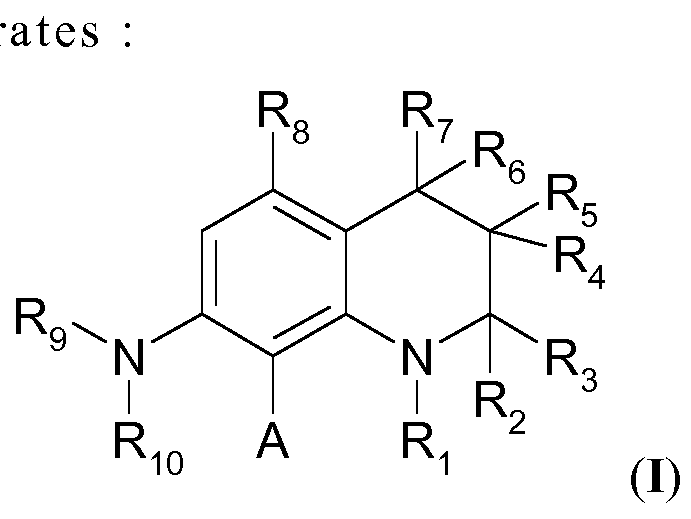
Formule (I) dans laquelle : Formula (I) in which:
- A représente : - A represents:
i) un atome d'halogène, i) a halogen atom,
ii) un radical carboxy -COOH ou carboxylate -COO"M+, ii) a carboxy radical -COOH or carboxylate -COO " M + ,
iii) un radical sulfonique -SO3H ou sulfonate -SC"3"M+, ou alkylsulfonyl -S(0)2-R avec R représentant un groupe (Ci- C4)alkyle linéaire ou ramifié, iii) a sulphonic radical -SO3H or sulphonate -SC "3 " M + , or alkylsulphonyl-S (O) 2 -R with R representing a linear or branched (Ci-C 4 ) alkyl group,
iv) un groupement -C(Ri2)(Ri3)-Ri 1 ou -C(Ri2)=C(Ri i)-Ri3, dans lequel Ru, Ri2, et R13, identiques ou différents, représentent :iv) a group -C (Ri 2 ) (Ri 3 ) -Ri 1 or -C (Ri 2 ) = C (Ri 1) -Ri 3 , in which Ru, Ri 2 and R 13, which may be identical or different, represent:
■ un atome d'hydrogène, ■ a hydrogen atom,
■ un atome d'halogène tel que fluor, chlore, brome, iode, de préférence fluor, ■ a halogen atom such as fluorine, chlorine, bromine, iodine, preferably fluorine,
■ un radical hydroxy, ■ a hydroxyl radical,
■ un groupe alkyle en Ci-Ci4 ou alcényle en C2-C14, linéaire ou ramifié, en particulier alkyle en Ci-Cs ou alcényle en C2_Cs, de préférence alkyle en Ci-C6 ou alcényle en C2_C6, ledit groupe alkyle ou alcényle : éventuellement interrompu par un ou plusieurs hétéroatomes ou groupes, identiques ou différents, choisis parmi -O-, -S-, -S(O)-, -S(0)2-, -N(H)-, -N(R)-, =N-R-, -R-N=,-C(X)- avec X représentant un atome d' oxygène, de soufre ou N-R et avec R représentant un groupe (C i -C4)alkyle éventuellement substitué par un ou plusieurs groupes hydroxy tel que méthyle, éthyle, propyle, ou 2-hydroxyéthyle, ou les associations desdits hétéroatomes ou groupes, de préférence choisies parmi : -O-C(O)-, -C(0)-0-, -C(0)-N=, =N-C(0)-, -C(0)-N(H)-, -N(H)-C(0)-, -N(H)-C(0)-N(H)-, -0-C(0)-N(H)-, -N(H)- C(0)-0-, -N(H)-C(NH)-N(H)-, ■ an alkyl group Ci-4 alkenyl or C 2 -C 14 linear or branched alkyl especially Cl-Cs alkenyl or C 2 _CS, preferably alkyl-C 6 alkenyl or C 2 _C 6 , said alkyl or alkenyl group: optionally interrupted by one or more heteroatoms or groups, identical or different, chosen from -O-, -S-, -S (O) -, -S (O) 2 -, -N (H) -, -N (R ) -, = NR-, -RN =, - C (X) - with X representing an oxygen, sulfur or NR atom and with R representing a (C 1 -C 4) alkyl group optionally substituted by one or more groups hydroxy such as methyl, ethyl, propyl, or 2-hydroxyethyl, or combinations of said heteroatoms or groups, preferably chosen from: -OC (O) -, -C (O) -O-, -C (O) -N =, = NC (0) -, -C (O) -N (H) -, -N (H) -C (O) -, -N (H) -C (O) -N (H) -, -O-C (O) -N (H) -, -N (H) -C (O) -O-, -N (H) -C (NH) -N (H) -,
et/ou ledit groupe alkyle ou alcényle étant and / or said alkyl or alkenyl group being
éventuellement substitué par un ou plusieurs radicaux, identiques ou différents, choisis parmi les radicaux i) hydroxy, ii) (hydroxy)alcoxy en C i -C6, iii) amino -NH2, iv) mono et/ou di(hydroxy)alkylamino en C i -C6, v) halogéno tel que fluoro -F, vi) sulfonique -S O3H, ou sulfonate -SC"3 "M+, vii) thio l -SH, viii) (hétéro)cycle cationique ou non cationique, ledit hétérocycle étant éventuellement substitué, en particulier éventuellement substitué par un ou plusieurs radicaux identiques ou différents choisis parmi les radicaux (hydroxy)alkyls(C i - C6) tels que méthyle, éthyle, propyle, ou 2-hydroxyéthyle, les radicaux hydroxy, les radicaux ammonium -N+RR' R" , An", avec R, R' et R" identiques ou différents, représentant un groupe (C i -C4)alkyle éventuellement substitué par un ou plusieurs groupes hydroxy tel que méthyle, éthyle, propyle, ou 2-hydroxyéthyle; ix) un radical ammonium -N+RR' R" , An", avec R, R' et R" identiques ou différents, représentant un groupe (C i - C4)alkyle éventuellement substitué par un ou plusieurs groupes hydroxy tel que méthyle, éthyle, propyle, ou 2- hydroxyéthyle; ■ ou alors Ru forme avec R9, l'atome d'azote qui porte R9 et les atomes de carbone qui portent -N(Rc>)-Ri0 et Ru, un hétérocycle cationique ou non, comprenant de 5 à 8 chaînons, ledit hétérocycle étant éventuellement substitué par un ou plusieurs radicaux, identiques ou différents, choisis parmi les radicaux i) hydroxy, ii) alkyle en C1-C4, iii) alcoxy en C1-C4, et iv) un radical ammonium -N+RR'R", An", avec R, R' et R" identiques ou différents, représentant un groupe (Ci-C4)alkyle éventuellement substitué par un ou plusieurs groupes hydroxy tel que méthyle, éthyle, propyle, ou 2-hydroxyéthyle et au moins un des chaînons dudit hétérocycle pouvant représenter un radical divalent oxo (- C(O-), optionally substituted by one or more radicals, which may be identical or different, chosen from the radicals i) hydroxy, ii) (hydroxy) C 1 -C 6 alkoxy, iii) amino -NH 2 , iv) mono and / or di (hydroxy) C 1 -C 6 alkylamino, v) halo such as fluoro -F, vi) sulfonic -SO3H, or sulfonate -SC "3 " M + , vii) thio -SH, viii) (hetero) cationic ring or not cationic, said heterocycle being optionally substituted, in particular optionally substituted by one or more identical or different radicals chosen from (hydroxy) alkyl radicals (C 1 -C 6 ) such as methyl, ethyl, propyl, or 2-hydroxyethyl radicals; hydroxy, the ammonium radicals -N + RR 'R ", An " , with R, R' and R "identical or different, representing a (C 1 -C 4) alkyl group optionally substituted by one or more hydroxyl groups such as methyl, ethyl, propyl, or 2-hydroxyethyl, ix) an ammonium radical -N + RR 'R ", An " , with R, R' and R "same or different, representing a (C 1 -C 4 ) alkyl group optionally substituted with one or more hydroxyl groups such as methyl, ethyl, propyl, or 2-hydroxyethyl; ■ then Ru or forms with R 9, the nitrogen atom bearing R9 and the carbon atoms which carry -N (Rc>) - R 0 and R, a cationic or non-heterocyclic ring comprising from 5 to 8 members, said heterocycle being optionally substituted with one or more radicals, which may be identical or different, chosen from the radicals i) hydroxy, ii) alkyl C1-C4, iii) alkoxy C1-C4, and iv) an ammonium radical -N + RR'R ", An " , with R, R 'and R "identical or different, representing a (C 1 -C 4) alkyl group optionally substituted with one or more hydroxyl groups such as methyl, ethyl, propyl, or 2-hydroxyethyl and at least one members of said heterocyclic ring which may represent a divalent oxo (- C (O-) radical,
un groupement -W-R14 dans lequel : a group -WR 14 in which:
■ W représente un atome d'oxygène, de soufre, ou un groupe divalent choisi parmi : -N(R'i4)-,-S(0)- et -S(0)2-,W represents an oxygen atom, sulfur atom, or a divalent group chosen from: -N (R '14) -, - S (O) - and -S (O) 2 -,
■ R14, et R'14 représentent indépendamment : ■ R14 and R'14 represent independently:
o un atome d'hydrogène, o a hydrogen atom,
o un groupe alkyle en C1-C14 ou alcényle en C2-C14, linéaire ou ramifié, en particulier en Ci-Cs, de préférence en Ci-a C 1 -C 14 alkyl or C 2 -C 14 alkenyl group, linear or branched, in particular C 1 -C 6 , preferably C 1 -C 4 ,
Ce, ledit groupe alkyle ou alcényle étant : Ce, said alkyl or alkenyl group being:
■ éventuellement interrompu par un ou plusieurs hétéroatomes ou groupes, identiques ou différents, choisis parmi -O-, -S-, -S(O)-, -S(0)2-, -N(H)-, -N(R)-, =N-R-, -R-N=,-C(X)- avec X représentant un atome d'oxygène , de soufre ou N-R et avec R représentant un groupe (Ci-C4)alkyle éventuellement substitué par un ou plusieurs groupes hydroxy tel que méthyle, éthyle, propyle, ou 2-hydroxyéthyle, , ou les associations desdits hétéroatomes ou groupes, de préférence choisies parmi : -■ optionally interrupted by one or more heteroatoms or groups, identical or different, chosen from -O-, -S-, -S (O) -, -S (O) 2 -, -N (H) -, -N ( R) -, = NR-, -RN =, - C (X) - with X representing an oxygen, sulfur or NR atom and with R representing a (C 1 -C 4) alkyl group optionally substituted by one or more groups hydroxy such as methyl, ethyl, propyl, or 2-hydroxyethyl, or combinations of said heteroatoms or groups, preferably chosen from:
0-C(0)-,-C(0)-0-, -C(0)-N=, =N-C(0)-, -C(0)-N(H)-, -N(H)-C(0)-, -N(H)-C(0)-N(H)-, -0-C(0)-N(H)-, -N(H)-C(0)-0-, -N(H)-C(NH)-N(H)-, et/ou ledit groupe alkyle ou alcényle étant éventuellement substitué par un ou plusieurs radicaux, identiques ou différents, choisis parmi les radicaux i) hydroxy, ii) (hydroxy)alcoxy en Ci-C6, iii) amino -NH2, iv) mono et/ou di(hydroxy)alkylamino en Ci-C6, v) halogéno tel que fluoro -F, vi) sulfonique -SO3H, ou sulfonate -SO3" M+, vii) thiol -SH, viii) (hétéro)cycle cationique ou non cationique, ledit hétérocycle étant éventuellement substitué, en particulier éventuellement substitué par un ou plusieurs radicaux identiques ou différents choisis parmi les radicaux (hydroxy)alkyls(Ci- C6) tels que méthyle, éthyle, propyle, ou 2- hydroxyéthyle, les radicaux hydroxy , les radicaux ammonium -N+RR'R", An", avec R, R' et R" identiques ou différents, représentant un groupe (Ci-C4)alkyle éventuellement substitué par un ou plusieurs groupes hydroxy tel que méthyle, éthyle, propyle, ou 2- hydroxyéthyle; ix) un radical ammonium -N+RR'R", An" , avec R, R' et R" identiques ou différents, représentant un groupe (Ci-C4)alkyle éventuellement substitué par un ou plusieurs groupes hydroxy tel que méthyle, éthyle, propyle, ou 2-hydroxyéthyle; 0-C (O) -, - C (O) -O-, -C (O) -N =, = NC (O) -, -C (O) -N (H) -, -N (H) -C (O) -, -N (H) -C (O) -N (H) -, -O-C (O) -N (H) -, -N (H) -C (O) -O -, -N (H) -C (NH) -N (H) -, and / or said alkyl or alkenyl group being optionally substituted by one or more radicals, which may be identical or different, chosen from the radicals i) hydroxy, ii) (hydroxy) alkoxy Ci-C 6 , iii) amino -NH 2 , iv) mono and / or di (hydroxy) alkylamino, Ci-C 6, v) halo such as fluoro -F, vi) sulfonic -SO3H, or sulfonate -SO3 "M +, vii) thiol -SH, viii) (hetero) cycle cationic or non-cationic, said heterocycle being optionally substituted, in particular optionally substituted by one or more identical or different radicals chosen from (C 1 -C 6 ) (hydroxy) alkyl radicals such as methyl, ethyl, propyl, or 2-hydroxyethyl, the hydroxyl radicals, the ammonium radicals -N + RR'R ", An " , with R, R 'and R "identical or different, representing a (Ci-C4) alkyl group optionally substituted by one or more hydroxyl groups such as methyl ethyl, propyl, or 2-hydroxyethyl; ix) an ammonium radical -N + RR'R ", An " , with R, R 'and R "identical or different, representing a (Ci-C4) alkyl group optionally substituted by one or more hydroxyl groups such as methyl, ethyl propyl or 2-hydroxyethyl;
ou alors R14 forme avec R9, l'atome d'azote qui porte R9 et les atomes de carbone qui portent -N(R9)(Rio) et -W- , un hétérocycle cationique ou non, comprenant de 5 à 8 chaînons, ledit hétérocycle étant éventuellement substitué par un ou plusieurs radicaux, identiques ou différents, choisis parmi les radicaux i) hydroxy, ii) alkyle en C1-C4, iii) alcoxy en C1-C4, et iv) un radical ammonium - N+RR'R", An", avec R, R' et R" identiques ou différents, représentant un groupe (Ci-C4)alkyle éventuellement substitué par un ou plusieurs groupes hydroxy tel que méthyle, éthyle, propyle, ou 2-hydroxyéthyle et au moins un des chaînons dudit hétérocycle pouvant représenter un radical divalent oxo (-C(O)-), or else R14 forms with R9, the nitrogen atom which bears R9 and the carbon atoms which carry -N (R9) (R10) and -W-, a cationic or non-cationic heterocycle, comprising from 5 to 8 members, heterocycle being optionally substituted by one or more radicals, which may be identical or different, chosen from the radicals i) hydroxy, ii) alkyl C1-C4, iii) alkoxy C1-C4, and iv) an ammonium radical - N + RR'R ", An " , with R, R 'and R "identical or different, representing a (C 1 -C 4) alkyl group optionally substituted by one or more hydroxyl groups such as methyl, ethyl, propyl, or 2-hydroxyethyl and at least one of the links of said heterocycle possibly representing a divalent oxo (-C (O) -) radical,
vi) un radical -C(X')-Rn, de préférence carbonyle -C(0)-Rn, avec Ru tel que défini précédemment, vi) a radical -C (X ') - Rn, preferably carbonyl -C (O) -Rn, with Ru as defined above,
vii) un radical -C(X')-X"-R11 de préférence ester -C(0)-0-Rn, thioester -C(0)-S-Rn, dithioester -C(S)-S-Rn, avec Ru tel que défini précédemment, -X"-C(X')-R11 de préférence amide - N(R')-C(0)-Rn ou -X"-C(X')-X-Rn de préférence carbamate -N(R')-C(0)-0-Ri i , vii) a radical -C (X ') - X "-R 1 1 preferably ester -C (O) -O-Rn, thioester -C (O) -S-Rn, dithioester -C (S) -S- Rn, with Ru as defined above, -X "-C (X ') - R 1 1 preferably amide - N (R') - C (O) -Rn or -X" -C (X ') - X Preferably -Rn carbamate -N (R ') - C (O) -O-Ri i,
avec X tel que défini précédemment, et X' et X", identiques ou différents, représentent un atome d'oxygène, de soufre ou un groupe N(R') avec R' représentant un atome d'hydrogène ou un groupe alkyle en C1-C4, de préférence X' représente un atome d'oxygène et X", représente un atome d'oxygène, de soufre ou un groupe N(R') avec R' représentant un atome d'hydrogène ou un groupe alkyle en C1-C4; with X as defined above, and X 'and X ", which may be identical or different, represent an oxygen atom, sulfur atom or an N (R') group with R 'representing a hydrogen atom or a C1-alkyl group; -C4, preferably X 'represents an oxygen atom and X ", represents an oxygen atom, sulfur or an N (R') group with R 'representing a hydrogen atom or a C1-C6 alkyl group; C4;
viii) un (hétéro)cycle cationique ou non cationique éventuellement substitué, viii) an optionally substituted cationic or non-cationic (hetero) ring,
ix) un radical ammonium -N+RR'R", An-, avec R, R' et R" identiques ou différents, représentant un groupe (Ci-C4)alkyle éventuellement substitué par un ou plusieurs groupes hydroxy tel que méthyle, éthyle, propyle, ou 2-hydroxyéthyle, ix) an ammonium radical -N + RR'R ", An-, with R, R 'and R" identical or different, representing a (C 1 -C 4) alkyl group optionally substituted by one or more hydroxyl groups such as methyl, ethyl propyl or 2-hydroxyethyl
- Ri représente : Ri represents:
• un atome d'hydrogène, • a hydrogen atom,
• un radical alkyle, linéaire ou ramifié, saturé ou insaturé, en Ci-C6, ledit radical alkyle: A linear or branched, saturated or unsaturated C 1 -C 6 alkyl radical, said alkyl radical:
■ comprenant éventuellement un ou plusieurs hétéroatomes ou groupes, identiques ou différents, choisis parmi -O-, -S-, - S(O)-, -S(0)2-, -N(H)-, -N(R)-, =N-R-, -R-N=,-C(X)- avec R tel que défini précédemment, et avec X représentant un atome d'oxygène , de soufre ou N-R, ou les associations desdits hétéroatomes ou groupes, de préférence choisies parmi : -O-C(O)-, -C(0)-0-, -C(0)-N(H)-, -N(H)-C(0)-, - C(0)-N=, =N-C(0)-, -N(H)-C(0)-N(H)-, -0-C(0)-N(H)-, - N(H)-C(0)-0-, -N(H)-C(NH)-NH- , et/ou ledit radical alkyle étant ■ optionally comprising one or more heteroatoms or groups, identical or different, chosen from -O-, -S-, -S (O) -, -S (O) 2 -, -N (H) -, -N (R ) -, = NR-, -RN =, - C (X) - with R as defined above, and with X representing an oxygen, sulfur or NR atom, or combinations of said heteroatoms or groups, preferably chosen from: -OC (O) -, -C (O) -O-, -C (O) -N (H) -, -N (H) -C (O) -, - C (O) -N = , = NC (0) -, -N (H) -C (O) -N (H) -, -O-C (O) -N (H) -, - N (H) -C (O) -O-, -N (H) -C (NH) -NH-, and / or said alkyl radical being
■ éventuellement substitué par un ou plusieurs radicaux, identiques ou différents, choisis parmi les radicaux i) hydroxy, ii) (hydroxy)alcoxy en C i -C6, iii) amino -NH2, iv) mono et/ou di(hydroxy)alkylamino en C i -C6, v) (hétéro)cycle cationique ou non cationique ; ■ optionally substituted by one or more radicals, which may be identical or different, chosen from the radicals i) hydroxy, ii) (hydroxy) C 1 -C 6 alkoxy, iii) amino -NH 2 , iv) mono and / or di (hydroxyl) ) C 1 -C 6 alkylamino, v) (hetero) cationic or non-cationic ring;
de préférence Ri représente un atome d' hydrogène ; preferably, Ri represents a hydrogen atom;
R3 , R4, R5 , R6 et R7, identiques ou différents, représentent : un atome d ' hydrogène, R 3 , R 4 , R 5, R 6 and R 7 , which may be identical or different, represent: a hydrogen atom,
un radical hydroxy, a hydroxy radical,
un radical alkyle, linéaire ou ramifié, saturé ou insaturé, en C i -C6, ledit radical alkyle : a linear or branched, saturated or unsaturated C 1 -C 6 alkyl radical, said alkyl radical:
■ comprenant éventuellement un ou plusieurs hétéroatomes ou groupes, identiques ou différents, choisis parmi -O-, - S-, -S(O)-, -S(0)2-, -N(H)-, -N(R)-, =N-R-, -R-N=, -C(X)- avec R tel que défini précédemment, et avec X représentant un atome d' oxygène , de soufre ou N-R, ou les associations desdits hétéroatomes ou groupes, de préférence choisies parmi : -O-C(O)-, -C(0)-0-, -C(O)- N(H)-, -N(H)-C(0)-, -C(0)-N=, =N-C(0)-, -N(H)-C(0)- N(H)-, -0-C(0)-N(H)-, -N(H)-C(0)-0-, -N(H)-C(NH)-NH- , et/ou ledit radical alkyle étant ■ optionally comprising one or more heteroatoms or groups, which may be identical or different, chosen from -O-, -S-, -S (O) -, -S (O) 2 -, -N (H) -, -N (R ) -, = NR-, -RN =, -C (X) - with R as defined above, and with X representing an oxygen, sulfur or NR atom, or combinations of said heteroatoms or groups, preferably chosen from: -OC (O) -, -C (O) -O-, -C (O) -N (H) -, -N (H) -C (O) -, -C (O) -N = , = NC (O) -, -N (H) -C (O) - N (H) -, -O-C (O) -N (H) -, -N (H) -C (O) - 0-, -N (H) -C (NH) -NH-, and / or said alkyl radical being
■ éventuellement substitué par un ou plusieurs radicaux, identiques ou différents, choisis parmi les radicaux i) hydroxy, ii) (hydroxy)alcoxy en C i -C6, iii) amino -NH2, iv) mono et/ou di(hydroxy)alkylamino en C i -C6, ■ optionally substituted by one or more radicals, which may be identical or different, chosen from the radicals i) hydroxy, ii) (hydroxy) C 1 -C 6 alkoxy, iii) amino -NH 2 , iv) mono and / or di (hydroxyl) ) C 1 -C 6 alkylamino,
un (hétéro)cycle, comprenant de 5 à 8 chaînons, saturé ou insaturé, aromatique ou non, éventuellement substitué par un ou plusieurs radicaux, identiques ou différents, choisis parmi les radicaux i) hydroxy, ii) (hydroxy)alkyle en C i -C6, iii) (hydroxy)alcoxy en C i -C6, iii) amino -NH2, iv) mono et/ou di(hydroxy)alkylamino en C i -C6, et dont l 'un au moins des chaînons peut représenter un radical divalent oxo ; de préférence R2 à R7 représentent un atome d'hydrogène Rs représente : a (hetero) ring, comprising from 5 to 8 ring members, saturated or unsaturated, aromatic or not, optionally substituted with one or more radicals, which may be identical or different, chosen from the radicals i) hydroxy, ii) (hydroxy) C 1 + alkyl -C 6 alkyl, iii) (hydroxy) alkoxy, C i -C 6 alkyl, iii) amino -NH 2, iv) mono and / or di (hydroxy) alkylamino, C i -C 6 alkyl, and one of which at least one of links may represent a divalent radical oxo; preferably R 2 to R 7 represent a hydrogen atom Rs represents:
un atome d'hydrogène, a hydrogen atom,
un atome d'halogène tel que fluor, chlore, brome et iode, de préférence chlore, fluor ou brome a halogen atom such as fluorine, chlorine, bromine and iodine, preferably chlorine, fluorine or bromine
un radical hydroxy, a hydroxy radical,
un radical alkyl (Ci-Cs)carbonyle, a (C 1 -C 6) alkylcarbonyl radical,
un radical alkyle, linéaire ou ramifié, saturé ou insaturé, en C1-C8, ledit radical alkyle: a linear or branched, saturated or unsaturated C 1 -C 8 alkyl radical, said alkyl radical:
■ comprenant éventuellement un ou plusieurs hétéroatomes ou groupes, identiques ou différents, choisis parmi -O-, - S-, -S(O)-, -S(0)2-, -N(H)-, -N(R)-, =N-R-, -R-N=, -C(X)- , avec R tel que défini précédemment, et avec X représentant un atome d'oxygène , de soufre ou N-R, ou les associations desdits hétéroatomes ou groupes, de préférence choisies parmi : -O-C(O)-, -C(0)-0-, -C(O)- N(H)-, -N(H)-C(0)-, -C(0)-N=, =N-C(0)-, -N(H)-C(0)- N(H)-, -0-C(0)-N(H)-, -N(H)-C(0)-0-, -N(H)-C(NH)-NH- , et/ou ledit radical alkyle étant ■ optionally comprising one or more heteroatoms or groups, which may be identical or different, chosen from -O-, -S-, -S (O) -, -S (O) 2 -, -N (H) -, -N (R ) -, = NR-, -RN =, -C (X) -, with R as defined above, and with X representing an oxygen, sulfur or NR atom, or combinations of said heteroatoms or groups, preferably selected from: -OC (O) -, -C (O) -O-, -C (O) -N (H) -, -N (H) -C (O) -, -C (O) -N =, = NC (0) -, -N (H) -C (O) -N (H) -, -O-C (O) -N (H) -, -N (H) -C (O) -O-, -N (H) -C (NH) -NH-, and / or said alkyl radical being
■ éventuellement substitué par un ou plusieurs radicaux, identiques ou différents, choisis parmi les radicaux i) hydroxy, ii) (hydroxy)alcoxy en Ci-C6, iii) amino -NH2, iv) mono et/ou di(hydroxy)alkylamino en Ci-C6, v) (hétérocycle) cationique ou non cationique ; ■ optionally substituted with one or more radicals, which may be identical or different, chosen from the radicals i) hydroxy, ii) (hydroxy) (C 1 -C 6 ) alkoxy, iii) amino -NH 2 , iv) mono and / or di (hydroxy) C 1 -C 6 alkylamino, v) (heterocycle) cationic or non-cationic;
préférentiellement Rs représente un atome d'hydrogène ; preferably Rs represents a hydrogen atom;
- R9 et Rio, identiques ou différents, représentent : R9 and Rio, identical or different, represent:
• un atome d'hydrogène, • a hydrogen atom,
• un radical alkyle, linéaire ou ramifié, saturé ou insaturé, en Ci- Ce, ledit radical alkyle : A linear or branched, saturated or unsaturated C 1 -C 6 alkyl radical, said alkyl radical:
■ comprenant éventuellement un ou plusieurs hétéroatomes ou groupes, identiques ou différents, choisis parmi -O-, - S-, -S(O)-, -S(0)2-, -N(H)-, -N(R)-, =N-R-, -R-N=, - C(X)- avec R tel que défini précédemment, et avec X représentant un atome d'oxygène , de soufre ou N-R, ou les associations desdits hétéroatomes ou groupes, de préférence choisies parmi : -O-C(O)-, -C(0)-0-, -C(O)- N(H)-, -N(H)-C(0)-, -C(0)-N=, =N-C(0)-, -N(H)-C(0)- N(H)-, -0-C(0)-N(H)-, -N(H)-C(0)-0-, -N(H)-C(NH)-NH-■ optionally comprising one or more heteroatoms or groups, which may be identical or different, chosen from -O-, -S-, -S (O) -, -S (O) 2 -, -N (H) -, -N (R ) -, = NR-, -RN =, - C (X) - with R as defined previously, and with X representing an oxygen, sulfur or NR atom, or the combinations of said heteroatoms or groups, preferably chosen from: -OC (O) -, -C (O) -O-, -C (O) -N (H) ) -, -N (H) -C (O) -, -C (O) -N =, = NC (O) -, -N (H) -C (O) - N (H) -, -0 -C (O) -N (H) -, -N (H) -C (O) -O-, -N (H) -C (NH) -NH-
, et/ou ledit radical alkyle étant and / or said alkyl radical being
■ éventuellement substitué par un ou plusieurs radicaux, identiques ou différents, choisis parmi les radicaux i) hydroxy, ii) (hydroxy)alcoxy en Ci-C6, iii) amino -NH2, iv) mono et/ou di(hydroxy)alkylamino en Ci-C6, v)■ optionally substituted with one or more radicals, which may be identical or different, chosen from the radicals i) hydroxy, ii) (hydroxy) (C 1 -C 6 ) alkoxy, iii) amino -NH 2 , iv) mono and / or di (hydroxy) alkylamino-C 6, v)
(hétéro)cycle cationique ou non cationique, (hetero) cationic or non-cationic ring,
• ou R et Rio forment, avec l'atome d'azote qui les porte, un hétérocycle comprenant de 5 à 8 chaînons, éventuellement substitué par un ou plusieurs radicaux, identiques ou différents, choisis parmi les radicaux i) hydroxy, ii) (hydroxy)alkyle en Or R and R 10 form, with the nitrogen atom carrying them, a 5- to 8-membered heterocycle, optionally substituted with one or more radicals, which may be identical or different, chosen from the radicals i) hydroxy, ii) ( hydroxy) alkyl
C1-C10, iii) (hydroxy)alcoxy en Ci-C6, iv) amino -NH2, v) mono et/ou di(hydroxy)alkylamino en C1-C4, vi) thiol -SH, vii) alkylthiol en C1-C4, viii) carboxy -COOH, ou carboxylate - COO",M+ ix) alkylcarbonyle en C1-C4, x) sulfonique -SO3H, ou sulfonate -SO3", M+, xi) amido -NH-C(0)CH3, et l'un au moins des chaînons dudit hétérocycle pouvant représenter un radical divalent oxo ; C1-C10, iii) (hydroxy) alkoxy-C 6, iv) amino -NH 2, v) mono- and / or di (hydroxy) C1-C4 alkylamino, vi) thiol -SH, vii) alkylthiol C1 -C4, viii) carboxy -COOH, or carboxylate - COO " , M + ix) C1-C4 alkylcarbonyl, x) sulfonic -SO3H, or sulfonate -SO3 " , M + , xi) amido -NH-C (O) CH 3 , and at least one of the links of said heterocycle may represent a divalent oxo radical;
de préférence R9 et Rio représentent un atome d'hydrogène ; preferably R9 and R10 represent a hydrogen atom;
-An" désigne un anion ou un mélange d'anions permettant d'assurer l'électro-neutralité de la molécule, de préférence choisi parmi les ions halogénures tels que bromure, chlorure, les ions méthylsulfate, toluènesulfonate ou un mélange de ces ions ; " An " denotes an anion or a mixture of anions making it possible to ensure the electro-neutrality of the molecule, preferably chosen from halide ions such as bromide, chloride, methylsulphate or toluenesulphonate ions or a mixture of these ions;
- M+ représente un cation ou un mélange de cations permettant d'assurer l'électro-neutralité de la molécule, de préférence choisi parmi, sodium, potassium, calcium et ammonium. - M + represents a cation or a mixture of cations to ensure the electro-neutrality of the molecule, preferably selected from sodium, potassium, calcium and ammonium.
De préférence Ri, R2, R3, R4, R5, R6, et R7 représentent um atome d'hydrogène. Lorsque les composés de formule (I) comportent à la fois des radicaux cationiques et anioniques, An" ou M+ ne sont nécessaires que lorsque les charges des groupements anioniques et des groupements cationiques ne se neutralisent pas entre elles . Preferably R 1, R 2 , R 3 , R 4, R 5, R 6 , and R 7 represent a hydrogen atom. When the compounds of formula (I) contain both cationic and anionic radicals, An " or M + are only necessary when the charges of the anionic groups and of the cationic groups do not neutralize each other.
Les composés de formule (I) selon l'invention conduisent à une large palette colorielle en co loration d'oxydation. Ces coupleurs permettent notamment d'élargir le gamut co loriel. D e plus, ces dérivés de 7-amino- l ,2,3 ,4-tétrahydroquinoléines substitué en position 8 permettent l'obtention de co lorations aux nuances variées, notamment des nuances claires, naturelles, naturelles foncées. Ces coupleurs hétérocycliques présentent de plus une bonne solubilité . The compounds of formula (I) according to the invention lead to a wide color palette in oxidation co-ordination. These couplers make it possible in particular to widen the color gamut. In addition, these 8-amino-1,2,3,4-tetrahydroquinoline derivatives substituted in the 8-position allow the production of variously colored coatings, especially light, natural, dark natural hues. These heterocyclic couplers also have good solubility.
Les composés selon l' invention permettent ainsi de conduire à des co lorations qui sont résistantes aux diverses agressions que peuvent subir les fibres kératiniques tels que les intempéries, la lumière, les lavages et/ou la transpiration. The compounds according to the invention thus make it possible to lead to coatings that are resistant to the various aggressions that keratinous fibers such as weather, light, washing and / or perspiration can undergo.
De plus, les coupleurs d' oxydation de formule (I) selon l' invention permettent de teindre les fibres kératiniques de manière satisfaisante, notamment en conduisant à des co lorations puissantes, tenaces, chromatiques, peu sélectives, et/ou avec une bonne montée de la couleur. In addition, the oxidation couplers of formula (I) according to the invention make it possible to dye keratin fibers satisfactorily, in particular by leading to powerful, stubborn, chromatic, selectively selective, and / or with a good rise of color.
L'invention a également pour obj et l'utilisation des composés de formule (I), ainsi que ses sels d' acide ou de base, organique ou minéral, ses formes tautomères, ses isomères optiques, ses isomères géométriques et/ou ses so lvates, tels que définis précédemment, pour la co loration des fibres kératiniques, en particulier des fibres kératiniques humaines telles que les cheveux The invention also relates to the use of the compounds of formula (I), as well as its organic or inorganic acid or base salts, its tautomeric forms, its optical isomers, its geometrical isomers and / or its lvates, as defined above, for the coororation of keratinous fibers, in particular human keratinous fibers such as the hair
L'invention a également pour objet un kit ou dispositif à plusieurs compartiments comprenant au moins un composé de formule (I) tel que défini précédemment. D'autres caractéristiques, aspects, obj ets et avantages de la présente invention apparaîtront encore plus clairement à la lecture de la description et des exemples qui suivent. The invention also relates to a multi-compartment kit or device comprising at least one compound of formula (I) as defined above. Other features, aspects, objects and advantages of the present invention will become more apparent upon reading the following description and examples.
Dans ce qui va suivre, et à moins d'une autre indication : In what follows, and unless otherwise indicated:
- les bornes d'un domaine de valeurs sont comprises dans ce domaine, notamment dans les expressions « compris entre » et « allant de ... à ... » ; - the limits of a domain of values are included in this domain, in particular in the expressions "included between" and "going from ... to ...";
- les expressions « au moins un » et « au moins » utilisées dans la présente description sont respectivement équivalentes aux expressions « un ou plusieurs » et « supérieur ou égal » ; - the expressions "at least one" and "at least" used in this description are respectively equivalent to the expressions "one or more" and "greater than or equal to";
- par « fibres kératiniques » selon la présente demande, on désigne principalement les fibres kératiniques humaines, et en particulier les cheveux ; - By "keratin fibers" according to the present application, mainly denotes human keratin fibers, and in particular the hair;
- par « anion » on entend un anion ou un groupement anionique cosmétiquement acceptable issu de sel d' acide organique ou minéral associé à la charge cationique du composé de formule (I) ; plus particulièrement F anion est choisi parmi i) les halo génures tels que le chlorure, le bromure ; ii) les alkylsulfonates parmi lesquels les C i -C6 alkylsulfonates : Alk-S(0)20~ tels que le méthylsulfonate ou mésylate et l ' éthylsulfonate ; iii) les arylsulfonates : Ar-S(0)20" tel que le benzènesulfonate et le toluènesulfonate ou tosylate ; iv) le citrate ; v) le succinate ; vi) le tartrate ; vii) le lactate ; viii) les alkylsulfates : Alk-0-S(0)0" tels que le méthylsulfate et l ' éthylsulfate ; ix) les arylsulfates : Ar-0-S(0)0" tels que le benzènesulfate et le toluènesulfate ; x) les alcoxysulfates : Alk-O-"anion" means an anion or a cosmetically acceptable anionic group derived from an organic or inorganic acid salt associated with the cationic charge of the compound of formula (I); more particularly the anion is selected from i) halogenides such as chloride, bromide; ii) alkylsulphonates, including C 1 -C 6 alkylsulphonates: Alk-S (O) 2 0 ~ such as methylsulphonate or mesylate and ethylsulphonate; (iii) arylsulfonates: Ar-S (O) 2 0 " such as benzenesulfonate and toluenesulphonate or tosylate, iv) citrate, v) succinate, vi) tartrate, vii) lactate, viii) alkylsulfates: Alk -0-S (0) 0 "such as methylsulfate and ethylsulfate; ix) Arylsulfates: Ar-O-S (O) 0 - such as benzenesulphate and toluenesulphate; x) alkoxysulphates: Alk-O-
S(0)20" tel que le méthoxy sulfate et l' éthoxysulfate ; xi) les aryloxysulfates : Ar-0-S(0)20", xii) les phosphates 0=P(OH)2-0", 0=P(0 )2-OH 0=P(0 )3 , HO- [P(0)(0 )]w-P(0)(0 )2 avec w étant un entier ; xiii) l'acétate ; xiv) le triflate ; xv) les borates tels que le tétrafluoroborate ; xvi) le disulfate S(0)202 " ; xvii) le carbonate ; et xviii) l ' hydrogénocarbonate ; S (0) 2 0 "such as methoxy sulfate and ethoxy sulfate; xi) aryloxysulfates: Ar-0-S (0) 2 0", xii) phosphates 0 = P (OH) 2 -0 ", 0 = P (0) 2 -OH 0 = P (O) 3 , HO- [P (0) (0)] wP (0) (0) 2 with w being an integer; xiii) acetate; xiv) the triflate; xv) borates such as tetrafluoroborate; xvi) disulfate S (O) 2 O 2 - ; xvii) carbonate; and xviii) hydrogen carbonate;
plus particulièrement les anions cosmétiquement acceptables sont en particulier choisis parmi les halogénures, comme le chlorure ; les méthosulfates ; les alkylsulfonates : Alk-S(0)20~ tels que le méthylsulfonate ou mésylate et l ' éthylsulfonate ; les arylsulfonates : Ar-S(0)20" tel que le benzènesulfonate et le toluènesulfonate ou tosylate ; le citrate ; le succinate ; le tartrate ; le lactate ; les alkylsulfates : Alk-0-S(0)0" tels que le méthylsulfate ; les arylsulfates tels que le benzènesulfate et le toluènesulfate ; le phosphate ; l ' acétate ; le triflate ; les borates tels que le tétrafluoroborate ; le carbonate ; et l ' hydrogénocarbonate ; more particularly cosmetically acceptable anions are in particular chosen from halides, such as chloride; the methosulphates; alkylsulfonates: Alk-S (O) 2 O- such as methylsulfonate or mesylate and ethylsulfonate; arylsulfonates: Ar-S (O) 2 0 - such as benzenesulfonate and toluenesulphonate or tosylate, citrate, succinate, tartrate, lactate, alkylsulfates: Alk-O-S (O) 0 - such as methylsulfate; aryl sulphates such as benzenesulphate and toluenesulphate; phosphate; acetate; triflate; borates such as tetrafluoroborate; carbonate; and hydrogencarbonate;
Comme F anion, issu de sel d' acide organique ou minéral, assure l ' électroneutralité de la mo lécule, il est entendu que lorsque F anion comprend plusieurs charges anioniques alors le même anion peut servir à l' électroneutralité de plusieurs groupes cationiques dans la même mo lécule ou alors peut servir à l ' électroneutralité de plusieurs mo lécules ; par exemple un composé de formule (I) qui contient éventuellement deux groupes cationiques peut contenir soit deux contres ions anioniques « monochargés » ou soit contient un contre ion anionique « dichargé » tel que S(0)202 " ou 0=P(0")2-OH; Since the anion derived from organic or inorganic acid salt ensures the electroneutrality of the molecule, it is understood that when the anion comprises several anionic charges, then the same anion can be used for the electroneutrality of several cationic groups in the molecule. even a molecule or can be used for the electroneutrality of several molecules; for example a compound of formula (I) which optionally contains two cationic groups may contain either two "monocharged" anionic ions or contains an "dicharged" anionic counterion such as S (O) 2 O 2 - or O = P ( 0 " ) 2 -OH;
Par « cation », on entend un cation ou un groupement cationique cosmétiquement acceptable issu de sel de base organique ou minérale associé à la charge anionique du composé de formule (I) ; plus particulièrement le cation est choisi parmi i) les métaux alcalins tel que Na+, et K+, ii) les métaux alcalino-terreux tels que le Ca++, et Mg++, et iii) les ammoniums tels que RaRbRcRdN+ avec Ra, Rb, Rc et Rd, identiques ou différents, représentant un atome d' hydrogène, ou un groupe hydroxy, ou (C i -Cs)alkyle. "Cation" means a cation or a cosmetically acceptable cationic group derived from organic or inorganic base salt associated with the anionic charge of the compound of formula (I); more particularly the cation is selected from i) alkali metals such as Na + , and K + , ii) alkaline earth metals such as Ca ++ , and Mg ++ , and iii) ammoniums such as R a RbR c RdN + with R a , Rb, R c and Rd, identical or different, representing a hydrogen atom, or a hydroxy group, or (C i -Cs) alkyl.
par « alkyle » on entend un radical hydrocarboné saturé, linéaire ou ramifié ou cyclique, de préférence en C i -Cs , plus préférentiellement en C i -C6 et encore plus préférentiellement en C i - C4 tel que méthyle, éthyle, propyle, isobutyle, isopropyle, ter- butyle; "Alkyl" means a saturated hydrocarbon radical, linear or branched or cyclic, preferably C 1 -C 5, more preferably C 1 -C 6 and even more preferentially C 1 -C 4 such as methyl, ethyl, propyl isobutyl, isopropyl, tert-butyl;
par « alcényle » on entend un radical hydrocarboné, linéaire ou ramifié, de préférence en C i -Cs , plus préférentiellement en C i -C6, comprenant au moins une double liaison carbone-carbone ou au moins une triple liaison carbone-carbone, de préférence comprenant au moins une double-liaison carbone-carbone et encore plus préférentiellement comprenant une double-liaison carbone- carbone ; the term "alkenyl" is understood to mean a hydrocarbon radical, linear or branched, preferably C 1 -C 5, more preferably C 1 -C 6 , comprising at least one carbon-carbon double bond or at least one at least one carbon-carbon triple bond, preferably comprising at least one carbon-carbon double bond and even more preferably comprising a carbon-carbon double bond;
- par « hydroxyalkyle » on entend un groupe alkyle tel que défini précédemment substitué par un ou plusieurs groupes hydroxy, de préférence un groupe (C i -Cs)alkyle et plus préférentiellement (C i - C6)alkyle substitué par un groupe hydroxy , tel que hydroxyéthyle;with "hydroxyalkyl" is meant an alkyl group as defined previously substituted with one or more hydroxyl groups, preferably a (C 1 -C 5) alkyl group and more preferentially (C 1 -C 6 ) alkyl substituted by a hydroxyl group, such as hydroxyethyl;
- par « (hydroxy) alkyle » on entend un groupe alkyle ou hydroxyalkyle tel que défini précédemment ; with "(hydroxy) alkyl" is meant an alkyl or hydroxyalkyl group as defined above;
- par « alcoxy » on entend un groupe -O-alkyle avec alkyle tel que défini précédemment ; en particulier alcoxy désigne un groupe méthoxy ou éthoxy ; "alkoxy" means a group -O-alkyl with alkyl as defined above; in particular alkoxy means a methoxy or ethoxy group;
- par « hydroxyalcoxy », on entend un groupe alcoxy tel que défini précédemment substitué par un ou plusieurs groupes hydroxy, de préférence un groupe (C i -C6)alcoxy substitué par un groupe hydroxy tel que β-hydroxyéthoxy; with "hydroxyalkoxy" is meant an alkoxy group as defined previously substituted with one or more hydroxyl groups, preferably a (C 1 -C 6 ) alkoxy group substituted by a hydroxyl group such as β-hydroxyethoxy;
- par « (hydroxy) alcoxy », on entend un groupe alcoxy ou hydroxyalcoxy tel que défini précédemment ;par « mono (hydroxy) alkylamino » on entend un groupe -NH- - By "(hydroxy) alkoxy" is meant an alkoxy or hydroxyalkoxy group as defined above: "mono (hydroxy) alkylamino" means a group -NH-
(hydroxy)alkyle avec (hydroxy)alkyle tel que défini précédemment ; en particulier mono(hydroxy)alkylamino désigne un groupe méthylamino , éthylamino , 2-hydroxyéthylamino , hydroxyméthylamino ; (hydroxy) alkyl with (hydroxy) alkyl as defined above; in particular mono (hydroxy) alkylamino denotes a methylamino, ethylamino, 2-hydroxyethylamino, hydroxymethylamino group;
- par «di(hydroxy) alkylamino » on entend un groupe - N((hydroxy)alkyle)-(hydroxy)alkyle avec chaque (hydroxy)alkyle étant tel que défini précédemment ; en particulier dialkylamino désigne un groupe diméthylamino , diéthylamino , bis(2 hydroxyéthylamino) ; "di (hydroxy) alkylamino" means a group - N ((hydroxy) alkyl) - (hydroxy) alkyl with each (hydroxy) alkyl being as defined above; in particular dialkylamino means dimethylamino, diethylamino, bis (2 hydroxyethylamino);
- par radical «hétérocycle» ou «hétérocy clique», on entend un radical cyclique non cationique comprenant de préférence de 5 à 14 chaînons, de 1 à 5 hétéroatomes tels que O, S , N, ledit radical pouvant être saturé, insaturé ou aromatique et l 'un au moins des chaînons pouvant désigner un radical oxo ; plus préférentiellement ledit radical hétérocyclique est mono ou bi-cyclique, comprenant de 5 à 10 chaînons et de 1 à 3 hétéroatomes choisis parmi N, O, S , particulièrement N et O comme les imidazo lyles, les pyridinyles, les pipérazinyles, les pyrrolidinyles, les morpholinyles , les pyrimidinyles, les thiazolyles, les benzimidazolyles, les benzothiazolyles, les oxazolyles, les benzotriazolyles, les pyrazolyles, les triazolyles, les benzoxazolyles, les pipéridinyles, les pyrrolyles, les oxazo lidinylones telles que la 1 ,3 -oxazolidin-2- one ; - By "heterocycle" or "heterocycle" radical is meant a non-cationic cyclic radical preferably comprising from 5 to 14 members, from 1 to 5 heteroatoms such as O, S, N, said radical may be saturated, unsaturated or aromatic and at least one of the links that may designate an oxo radical; more preferably said heterocyclic radical is mono or bi-cyclic, comprising from 5 to 10 members and from 1 to 3 heteroatoms chosen from N, O, S, particularly N and O, such as imidazoles, pyridyls, piperazinyls, pyrrolidinyls, morpholinyls, pyrimidinyls, thiazolyls, benzimidazolyls, benzothiazolyls, oxazolyls, benzotriazolyls, pyrazolyls, triazolyls, benzoxazolyls, piperidyls, pyrrolyles, oxazolidinylones such as 1, 3-oxazolidin-2- one;
par radical «hétérocycle éventuellement substitué» ou «hétérocyclique éventuellement substitué», on entend un radical «hétérocycle» ou «hétérocyclique» tel que défini précédemment, ledit radical étant éventuellement substitué par un ou plusieurs radicaux identiques ou différents choisis parmi les radicaux i) hydroxy, ii) (hydroxy)alkyle en C i -C i o, iii) (hydroxy)alcoxy en C i - Ce, iv) amino -NH2, v) mono et/ou di(hydroxy)alkylamino en C i - C4, vi) thio l -SH, vii) alkylthio l en C 1 -C4 , viii) carboxy -COOH, ou carboxylate -COO",M+ ix) alkylcarbonyle en C 1 -C4 , x) alcoxycarbonyle en C i -C6, xi) sulfonique -SO3H, ou sulfonate - SO3", M+, xi) amido -NH-C(0)R avec R désignant un radical alkyle en C 1 -C4 tel que méthyle, xii)halogène tel que fluor, chlore, brome et iode ; the term "optionally substituted heterocycle" or "optionally substituted heterocyclic radical" means a "heterocycle" or "heterocyclic" radical as defined above, said radical being optionally substituted by one or more identical or different radicals chosen from the i) hydroxyl radicals; ii) (hydroxy) C 1 -C 10 alkyl, iii) (hydroxy) C 1 -C 6 alkoxy, amino -NH 2 , v) C 1 -C 4 mono and / or di (hydroxy) alkylamino , vi) thio 1 -SH, vii) C 1 -C 4 alkylthio, viii) carboxy -COOH, or carboxylate -COO " , M + ix) C 1 -C 4 alkylcarbonyl, x) C 1 -C 6 alkoxycarbonyl , xi) sulfonic -SO3H, or sulfonate - SO3 " , M + , xi) amido -NH-C (O) R with R denoting a C 1 -C 4 alkyl radical such as methyl, xii) halogen such as fluorine, chlorine bromine and iodine;
par radical « (hétéro)cycle » ou « (hétéro)cyclique », on entend un radical cyclique hydrocarboné saturé, insaturé ou aromatique comprenant de préférence de 5 à 14 chaînons, ou un radical «hétérocycle» tel que défini précédemment ; p lus préférentiellement ledit radical cyclique hydrocarboné est mono ou bi-cyclique, comprenant de 5 à 1 0 chaînons comme un radical phényle ; the radical "(hetero) ring" or "(hetero) cyclic" means a saturated, unsaturated or aromatic hydrocarbon ring radical preferably comprising from 5 to 14 ring members, or a "heterocycle" radical as defined above; more preferentially, said hydrocarbon ring radical is mono or bi-cyclic, comprising from 5 to 10 members, such as a phenyl radical;
par radical «hétérocycle cationique» ou «hétérocyclique cationique», on entend un radical «hétérocycle» ou «hétérocyclique» tel que défini précédemment et comportant une charge cationique, ladite charge cationique pouvant constituer un des chaînons du radical cyclique (charge cationique endocyclique) ou être un substituant dudit cycle (charge cationique exocyclique) ; la charge cationique endocyclique désigne un radical divalent - N+(Ra)- , An" ou -N+(Ra)(Rb)- , An" selon que le cycle est saturé, insaturé ou aromatique ou déj à engagé dans une liaison covalente par l ' atome d' azote cationique, Ra et Rb désignant indépendamment un radical (hydroxy)alkyl en C i -C6 , de préférence alkyl en C 1 - C 4 tel que méthyle ; la charge cationique exocyclique désigne un radical trialkylammonium tel qu'un radical -N+RR' R " , An", avec R, R' et R" identiques ou différents, représentant un groupe (C i -the term "cationic heterocycle" or "cationic heterocyclic" radical is understood to mean a "heterocycle" or "heterocyclic" radical as defined above and comprising a cationic charge, said cationic charge possibly constituting a cyclic ring members (endocyclic cationic charge) or a substituent of said ring (exocyclic cationic charge); the endocyclic cationic charge designates a divalent radical - N + (R a ) -, An " or -N + (R a ) (Rb) -, An " according to whether the ring is saturated, unsaturated or aromatic or already engaged in a covalent bonding via the cationic nitrogen atom, wherein R a and Rb independently denote a C 1 -C 6 (hydroxy) alkyl radical, preferably a C 1 -C 4 alkyl radical such as methyl; the exocyclic cationic charge designates a trialkylammonium radical such as a radical -N + RR 'R ", An " , with R, R' and R "identical or different, representing a group (C i -
C4)alkyle éventuellement substitué par un ou plusieurs groupes hydroxy tel que méthyle, éthyle, propyle, ou 2-hydroxyéthyle par radical «hétérocycle cationique éventuellement substitué» ou «hétéro cyclique cationique éventuellement substitué» , on entend un radical «hétérocycle éventuellement substitué» ou «hétérocyclique éventuellement substitué» tel que défini précédemment et comportant une charge cationique telle que définie précédemment ; C 4 ) alkyl optionally substituted by one or more hydroxyl groups such as methyl, ethyl, propyl, or 2-hydroxyethyl by "optionally substituted cationic heterocycle" or "optionally substituted cationic hetero ring" radical, means an "optionally substituted heterocycle"radical; or "optionally substituted heterocyclic" as defined above and comprising a cationic charge as defined above;
Procédé de coloration. Composés de formule (1) Staining process Compounds of formula (1)
La présente invention concerne un procédé de co loration des fibres kératiniques, en particulier des fibres kératiniques humaines telles que les cheveux, comprenant au moins une étape d' application i) sur lesdites fibres kératiniques, d'un ou plusieurs composés de formule (I) telle que décrite précédemment, ainsi que ses sels d' acide ou de base, organique ou minéral, ses formes tautomères, ses isomères optiques, ses isomères géométriques et/ou ses so lvates tels que ses hydrates. Les composés de formule (I) selon l 'invention sont nécessairement substitués en C-8. Autrement dit, le groupement A ne peut pas représenter un atome d' hydrogène. Les composés de formule (I) peuvent se trouver sous la forme de sel d'acide ou de base, organique ou minéral. The present invention relates to a process for the coororation of keratinous fibers, in particular human keratinous fibers such as the hair, comprising at least one step of applying i) on said keratinous fibers, one or more compounds of formula (I) as previously described, as well as its organic or inorganic acid or base salts, its tautomeric forms, its optical isomers, its geometrical isomers and / or its solvates such as its hydrates. The compounds of formula (I) according to the invention are necessarily substituted at C-8. In other words, the group A can not represent a hydrogen atom. The compounds of formula (I) can be in the form of acid salt or base, organic or mineral.
Par « sel d'acide organique ou minéral » on entend plus particulièrement ceux choisis parmi les sels d'addition avec un acide cosmétiquement acceptable tels sels dérivés i) d'acide chlorhydrique HCI, ii) d'acide bromhydrique HBr, iii) d'acide sulfurique H2 S O4 , iv) d'acides alkylsulfoniques : Alk-S(0)2OH tels que d'acide méthylsulfonique et d'acide éthylsulfonique ; y) d'acides arylsulfoniques : Ar-S(0)2OH tel que d'acide benzène sulfonique et d'acide toluène sulfonique ; vi) d'acide citrique ; vii) d'acide succinique ; viii) d'acide tartrique ; ix) d'acide lactique, x) d'acides alcoxysulfiniques : Alk-0-S(0)OH tels que d'acide méthoxysulfinique et d'acide éthoxysulfinique ; xi) d'acides aryloxysulfiniques tels que d'acide toluèneoxysulfinique et d'acide phénoxysulfinique ; xii) d'acide phosphorique H3PO4 ; xiii) d'acide acétique CHB C(0)O H ; xiv) d'acide triflique CF3 S O3H, xv) d'acide tétrafluoroborique HBF4, et xvi) d' acide iodhydrique HI . By "organic or inorganic acid salt" is meant more particularly those selected from the addition salts with a cosmetically acceptable acid such salts derived i) hydrochloric acid HCl, ii) hydrobromic acid HBr, iii) d sulfuric acid H 2 S O 4, iv) alkylsulphonic acids: Alk-S (O) 2 OH such as methylsulphonic acid and ethylsulphonic acid; y) arylsulfonic acids: Ar-S (O) 2 OH such as benzene sulfonic acid and toluene sulfonic acid; (vi) citric acid; vii) succinic acid; viii) tartaric acid; ix) lactic acid, x) alkoxysulfinic acids: Alk-O-S (O) OH such as methoxysulfinic acid and ethoxysulfinic acid; xi) aryloxysulfinic acids such as tolueneoxysulfinic acid and phenoxysulfinic acid; xii) phosphoric acid H3PO4; xiii) acetic acid CHB C (O) OH; xiv) triflic acid CF3 S O3H, xv) tetrafluoroboric acid HBF 4 , and xvi) hydrogen iodide HI.
Plus particulièrement, les composés de formule (I) sont éventuellement salifiés par des acides minéraux forts tels que HCI, HBr, HI, H2S04, H3PO4 , ou des acides organiques tels que, par exemple, l'acide acétique, lactique, tartrique, citrique ou succinique, benzènesulfonique, para-toluènesulfonique, formique, méthane- sulfonique. Par « sel de base organique ou minérale », on entend plus particulièrement ceux choisis parmi les sels d'addition avec une base cosmétiquement acceptable comme les hydroxydes de métal alcalin comme la soude, la potasse, l'ammoniaque, les aminés ou les alkano lamines, ou avec un anion cosmétiquement acceptable tel que défini précédemment. More particularly, the compounds of formula (I) are optionally salified with strong mineral acids such as HCl, HBr, HI, H 2 SO 4 , H 3 PO 4, or organic acids such as, for example, acetic acid, lactic acid, tartaric, citric or succinic, benzenesulfonic, para-toluenesulfonic, formic, methanesulphonic. By "organic or inorganic base salt" is meant more particularly those chosen from addition salts with a cosmetically acceptable base such as alkali metal hydroxides such as sodium hydroxide, potassium hydroxide, ammonia, amines or alkano-laminates. or with a cosmetically acceptable anion as defined above.
Les composés de formule (I) peuvent aussi être sous forme de so lvates, par exemple un hydrate ou un solvate d'alcool linéaire ou ramifié tel que l'éthanol ou l'isopropanol. De préférence, le radical ammonium -N+RR' R" , An", avec R, R' et R" identiques ou différents, représentant un groupe (C i - C4)alkyle éventuellement substitué par un ou plusieurs groupes hydroxy, selon la définition du groupement A du composé de formule (I), est choisi parmi les radicaux triméthylammonium, triéthylammonium, diméthyléthylammonium, diéthylméthylammonium, diisopropyl-méthylammonium, diéthylpropyl ammonium, hydroxyéthyldiéthyl ammonium, β, β-dihydroxyéthylméthylammonium, β, β, β-trihydroxyéthylammonium ; de préférence parmi les radicaux triméthylammonium, triéthylammonium, diméthyléthylammonium, diéthylméthylammonium, diisopropylméthylammonium, hydroxyéthyldiéthyl ammonium et encore plus préférentiellement désigne un radical triméthylammonium. The compounds of formula (I) may also be in the form of solvates, for example a hydrate or a linear or branched alcohol solvate such as ethanol or isopropanol. Preferably, the ammonium radical -N + RR 'R ", An " , with R, R' and R "identical or different, representing a (C 1 -C 4 ) alkyl group optionally substituted with one or more hydroxyl groups, according to the definition of the group A of the compound of formula (I) is chosen from trimethylammonium, triethylammonium, dimethylethylammonium, diethylmethylammonium, diisopropylmethylammonium, diethylpropylammonium, hydroxyethyldiethylammonium, β, β-dihydroxyethylmethylammonium, β, β, β-trihydroxyethylammonium radicals; preferably from trimethylammonium, triethylammonium, dimethylethylammonium, diethylmethylammonium, diisopropylmethylammonium, hydroxyethyldiethylammonium and even more preferentially denotes a trimethylammonium radical.
De préférence, l ' hétérocycle cationique selon la définition du groupement A du composé de formule (I), est choisi parmi les imidazo liums, les pyridiniums, les pipéraziniums, les pyrrolidiniums, les morpholiniums, les pyrimidiniums, les thiazoliums, les benzimidazoliums, les benzothiazoliums, les oxazoliums, les benzotriazoliums, les pyrazo liums, les triazoliums, les benzoxazoliums ; de préférence parmi les imidazo liums, les pyridiniums, les pipéraziniums, les pyrrolidiniums, les morpholiniums, les pyrimidiniums, les thiazo liums, les benzimidazoliums, et encore plus préférentiellement désigne un imidazolium, ou un pipérazinium. Preferably, the cationic heterocycle according to the definition of the group A of the compound of formula (I) is chosen from imidazo liums, pyridiniums, piperaziniums, pyrrolidiniums, morpholiniums, pyrimidiniums, thiazoliums, benzimidazoliums, benzothiazoliums, oxazoliums, benzotriazoliums, pyrazo liums, triazoliums, benzoxazoliums; preferably from imidazo liums, pyridiniums, piperaziniums, pyrrolidiniums, morpholiniums, pyrimidiniums, thiazolums, benzimidazoliums, and even more preferably denotes an imidazolium, or a piperazinium.
De préférence, l ' hétérocycle non cationique selon la définition du groupement A du composé de formule (I), est choisi parmi les imidazo les, les pyridines, les pipérazines, les pyrrolidines, les morpholines, les pyrimidines, les thiazoles, les benzimidazoles, les benzothiazoles, les oxazoles, les benzotriazoles, les pyrazoles, les triazoles, les benzoxazo les, les pipéridines, les pyrroles, les oxazo lidinones; de préférence parmi les morpholines, les pipéridines, les pyrrolidines, les imidazo les, les pyrroles, les pipérazines, les 1 ,3 - oxazo lidin-2-ones . De préférence, Ri, R2, R3, R4, R5, R6, R7, Rs, identiques ou différents, représentent : Preferably, the non-cationic heterocycle according to the definition of the group A of the compound of formula (I) is chosen from imidazoles, pyridines, piperazines, pyrrolidines, morpholines, pyrimidines, thiazoles, benzimidazoles, benzothiazoles, oxazoles, benzotriazoles, pyrazoles, triazoles, benzoxazoles, piperidines, pyrroles, oxazolidinones; preferably from morpholines, piperidines, pyrrolidines, imidazoles, pyrroles, piperazines, 1,3-oxazolidin-2-ones. Preferably, R 1, R 2 , R 3 , R 4, R 5, R 6 , R 7 , R 5, which are identical or different, represent:
• un atome d'hydrogène, • a hydrogen atom,
· un radical alkyle, linéaire ou ramifié, saturé ou insaturé, en An alkyl radical, linear or branched, saturated or unsaturated, in
Ci-C6, ledit radical alkyle étant éventuellement substitué par un ou plusieurs radicaux, identiques ou différents, choisis parmi les radicaux i) hydroxy, ii) alcoxy en C1-C4, iii) amino -NH2, iv) mono et/ou di(hydroxy)alkylamino en Ci-C6. Ci-C 6 , said alkyl radical being optionally substituted by one or more radicals, which are identical or different, chosen from the radicals i) hydroxy, ii) alkoxy with 1 to 4 carbon atoms, iii) amino -NH 2 , iv) mono and / or di (hydroxy) alkylamino, Ci-C 6.
Plus préférentiellement, Ri, R2, R3, R4, R5, R6, R7 et Rs représentent un atome d'hydrogène. More preferably, R 1, R 2 , R 3, R 4 , R 5, R 6 , R 7 and R 5 represent a hydrogen atom.
De préférence, R9 et Rio, identiques ou différents, représentent : Preferably, R9 and Rio, identical or different, represent:
• un atome d'hydrogène, • a hydrogen atom,
• un radical alkyle, linéaire ou ramifié, saturé ou insaturé, en Ci-C6, ledit radical alkyle étant éventuellement substitué par un ou plusieurs radicaux, identiques ou différents, choisis parmi les radicaux i) hydroxy, ii) (hydroxy)alcoxy en Ci-C6, iii) amino -NH2, iv) mono et/ou di(hydroxy)alkylamino en Ci- Ce. A linear or branched, saturated or unsaturated C 1 -C 6 alkyl radical, said alkyl radical being optionally substituted by one or more radicals, which are identical or different, chosen from the radicals i) hydroxy, ii) (hydroxyl) alkoxy, Ci-C 6 , iii) amino -NH 2 , iv) mono and / or di (hydroxy) alkylamino C 1 -C 6 .
Plus préférentiellement, R9 et Rio sont identiques et représentent un atome d'hydrogène. More preferably, R 9 and R 10 are identical and represent a hydrogen atom.
Selon un mode de réalisation particulier de l'invention, les composés de formule (I) sont tels que A représente un groupement - C(Ri2)(Ri3)-Ri 1 et Ru forme avec R9 , l'atome d'azote qui porte R9 et les atomes de carbone qui portent -N(R9)-Rio et Ru , un hétérocycle cationique ou non, comprenant de 5 à 8 chaînons, ledit hétérocycle étant : According to a particular embodiment of the invention, the compounds of formula (I) are such that A represents a group - C (Ri 2 ) (Ri 3 ) -Ri 1 and Ru forms with R 9, the nitrogen atom which R9 gate and the carbon atoms which carry -N (R9) -Rio and Ru, a cationic or non-cationic heterocycle, comprising from 5 to 8 ring members, said heterocycle being:
éventuellement substitué par un ou plusieurs radicaux, identiques ou différents, choisis parmi les radicaux i) hydroxy, ii) alkyle en C 1 -C4 , iii) alcoxy en C 1 - C4 , et iv) un radical ammonium - N+RR ' R" , An", avec R, R' et R" identiques ou différents, représentant un groupe (C i -C4)alkyle éventuellement substitué par un ou plusieurs groupes hydroxy tel que méthyle, éthyle, propyle, ou 2-hydroxyéthyle ; optionally substituted with one or more radicals, identical or different, chosen from the radicals i) hydroxy, ii) alkyl en C 1 -C 4, iii) C 1 -C 4 alkoxy, and iv) an ammonium radical - N + RR 'R ", An " , with R, R' and R "same or different, representing a group (C i - C 4) C4) alkyl optionally substituted with one or more hydroxy groups such as methyl, ethyl, propyl, or 2-hydroxyethyl;
éventuellement au moins un des chaînons dudit hétérocycle pouvant représenter un radical divalent oxo -C(O)- ; optionally at least one of the links of said heterocycle may represent a divalent oxo -C (O) -;
R12 et R1 3 étant tels que définis précédemment et désignant de préférence un atome d' hydrogène. R12 and R13 being as defined above and preferably denoting a hydrogen atom.
Selon ce mode de réalisation A représente un groupement - CH2-R1 1 et Ru forme avec R9 , l ' atome d' azote qui porte R9 et les atomes de carbone qui portent -N(Rc>)-Ri 0 et Ru , un hétérocycle non cationique, comprenant de 5 ou 6 chaînons, de préférence 6 chaînons tel qu'un cycle pipéridine, ledit hétérocycle étant éventuellement substitué par un ou plusieurs radicaux, identiques ou différents, choisis parmi les radicaux i) hydroxy, ii) alkyle en C 1 -C4 , iii) alcoxy According to this embodiment A represents a group - CH2 - R1 1 and Ru forms with R9, the nitrogen atom which bears R9 and the carbon atoms which carry --N (Rc>) - Ri 0 and Ru, a heterocycle non-cationic compound, comprising 5 or 6 members, preferably 6 members, such as a piperidine ring, said heterocycle being optionally substituted with one or more radicals, which may be identical or different, chosen from the radicals i) hydroxy, ii) alkyl, C 1 -C4, iii) alkoxy
Selon un autre mode de réalisation de l 'invention, les composés de formule (I) sont choisis parmi les composés de formule (IA) suivante ainsi que leurs isomères géométriques ou optiques, leurs tautomères, leurs sels d' acide ou de base organique ou minéral ou leurs so lvates tels que les hydrates : According to another embodiment of the invention, the compounds of formula (I) are chosen from the following compounds of formula (IA) as well as their geometric or optical isomers, their tautomers, their organic acid or base salts or mineral or their soaps such as hydrates:

a) un radical -(Y)p-B avec Y désignant un atome d' oxygène, de soufre ou -S(0)2-, p désignant un entier égal à zéro ou 1 , et B désignant soit un radical alkyle ou alcényle en C i -C6 , ledit radical alkyle ou alcényle étant éventuellement substitué par un ou plusieurs radicaux choisis indépendamment parmi i) halogène tel que fluor ii) hydroxy iii) SO3H ou SO3", M+ avec M+ tel que défini précédemment iv) ammonium-N+RR'R", An", avec R, R' et R" identiques ou différents, représentant un groupe (Ci- C4)alkyle tel que méthyle, et en particulier triméthylammonium, soit B désigne un hétérocycle cationique à 5 ou 6 chaînons tels qu'imidazolium , pipérazinium ; a) a radical - (Y) p -B with Y denoting an oxygen, sulfur or -S (O) 2 - atom, where p denotes an integer equal to zero or 1, and B denotes an alkyl or alkenyl radical; in C i -C 6 , said alkyl or alkenyl radical being optionally substituted by one or more radicals chosen independently from i) halogen such as fluorine ii) hydroxy iii) SO3H or SO3 " , M + with M + as defined previously iv) ammonium-N + RR'R" , an ', with R, R' and R "are identical or different, representing a (C -C 4) alkyl such as methyl, particularly trimethylammonium, or B is a cationic heterocycle with 5 or 6 members such qu'imidazolium piperazinium;
un radical choisi parmi i) SO3H ou SO3", M+ avec M+ tel que défini précédemment ii) carboxy CO2H ou C02 ", M+ avec M+ tel que défini précédemment iii) alcoxycarbonyle -C02Rf dans lequel Rf désigne un radical alkyle en Ci-C4 tel que méthyle iv) alkyl carbonyle -C(0)-Rf avec Rf tel que défini ci-dessus ; a radical chosen from i) SO3H or SO3 " , M + with M + as defined previously ii) carboxy CO2H or CO 2 " , M + with M + as defined above iii) alkoxycarbonyl -C0 2 Rf in which Rf denotes a alkyl radical, C 4 such as methyl iv) alkylcarbonyl -C (0) Rf with Rf as defined above;
un radical -N(R'14)-R14 avec R'i4 et Ri4 tels que définis précédemment et de préférence avec R'i4 désignant un atome d'hydrogène ou un radical (hydroxy)alkyle en Ci-C6 tel que méthyl ou 2-hydroxyéthyl et Ri4 désignant un radical choisi parmi i) alkyl carbonyle -C(0)-Rf avec Rf tel que défini ci- dessus ii) alcoxy carbonyle -C(0)-0-Rf avec Rf tel que défini ci- dessus iii) (hydroxy)alkyl en Ci-C6 tel que méthyl ou 2- hydroxyéthyl ; a radical -N (R '14 ) -R 14 with R'i 4 and Ri 4 as defined above and preferably with R'i 4 denoting a hydrogen atom or a (hydroxy) C 1 -C 6 alkyl radical; such as methyl or 2-hydroxyethyl and R 4 denotes a radical chosen from i) alkyl carbonyl -C (O) -Rf with Rf as defined above ii) alkoxy carbonyl -C (O) -O-Rf with Rf such as defined above iii) (hydroxy) C 1 -C 6 alkyl such as methyl or 2-hydroxyethyl;
un hétérocycle non cationique à 5 ou 6 chaînons tel que défini précédemment et de préférence choisi parmi morpholine, pipérazine, pipéridine, imidazole, pyrrole, pyrrolidine, oxazolidinone, ledit hétérocycle étant de préférence non substitué ; a non-cationic 5- or 6-membered heterocycle as defined above and preferably chosen from morpholine, piperazine, piperidine, imidazole, pyrrole, pyrrolidine, oxazolidinone, said heterocycle preferably being unsubstituted;
un hétérocycle cationique à 5 ou 6 chaînons tel que défini précédemment et de préférence choisi parmi pipérazinium, imidazolium ledit hétérocycle étant éventuellement substitué pur un deux radicaux alkyle en Ci-C4 tels que méthyle ; a cationic 5- or 6-membered ring as defined above and preferably selected from piperazinium, imidazolium said heterocycle being optionally substituted a pure two alkyl radicals-C 4 such as methyl;
un radical ammonium-N+RR'R", An", avec R, R' et R" identiques ou différents, représentant un groupe (Ci-C4)alkyle tel que méthyle, de préférence un radical triméthylammonium. Selon un mode de réalisation préféré, les composés de formule (I) sont choisis parmi les composés ( 1 ) à (45) ci-dessous ainsi que leurs isomères géométriques ou optiques, leurs tautomères, leurs sels d' acide ou de base organique ou minéral ou leurs so lvates tels que les hydrates : an ammonium radical-N + RR'R ", An " , with R, R 'and R "identical or different, representing a group (Ci-C 4 ) alkyl such as methyl, preferably a trimethylammonium radical. According to a preferred embodiment, the compounds of formula (I) are chosen from compounds (1) to (45) below, as well as their geometric or optical isomers, their tautomers, their acid or organic base salts or mineral or their soaps such as hydrates:
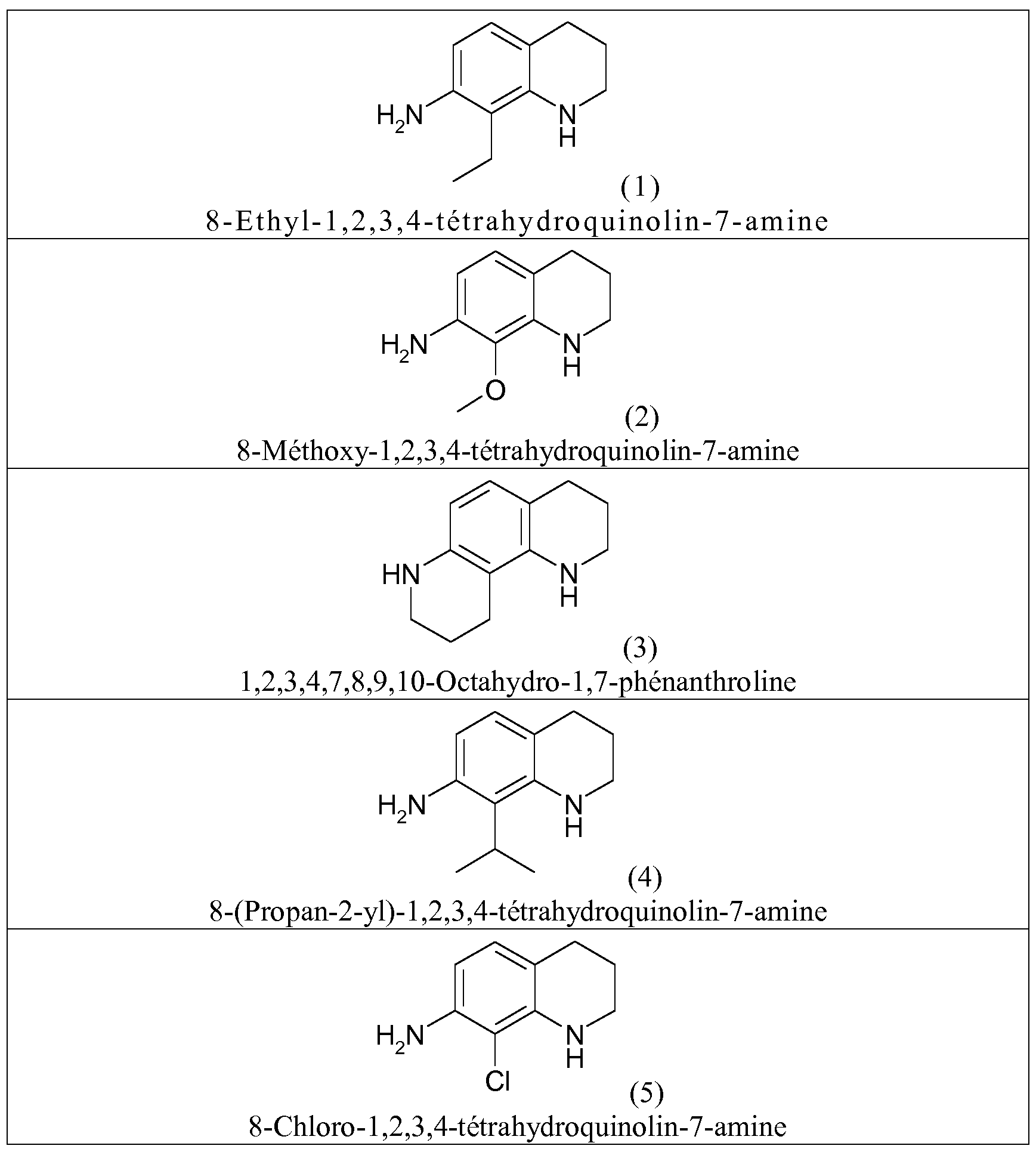

8-Méthyl-l,2,3,4-tétrahydroquinolin-7-amine

8-Tert-butyl-l,2,3,4-tétrahydroquinolin-7-amine
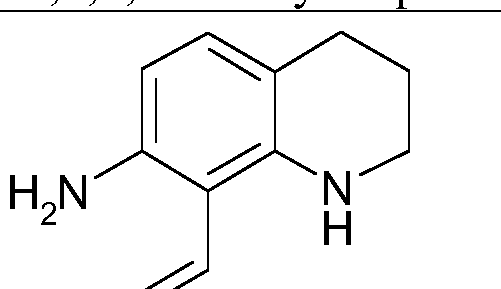
8-Ethenyl-l,2,3,4-tétrahydroquinolin-7-amine
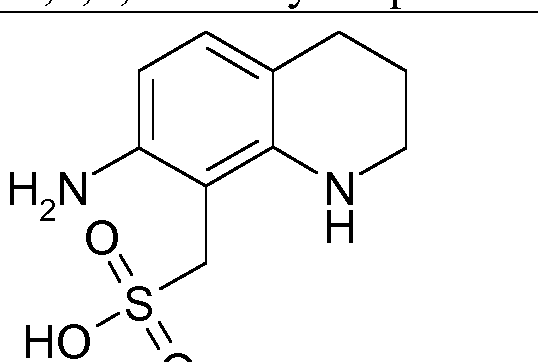
Acide (7-amino-l,2,3,4-tétrahydroquinolin-8-yl)méthane sulfonique

8-(2,2,2-Trifluoroéthyl)- 1 ,2,3 ,4-tétrahydroquinolin-7-amine 8- (2,2,2-Trifluoroethyl) -1,2,3,4-tetrahydroquinolin-7-amine
, 3,4-tétrahydroquinolin-8- 1 ,2,3 ,4-tétrahydroquinolin- thyl)-l,2,3,4-tétrahydroqui

8-Ethoxy-l,2,3,4-tétrahydroquinolin-7-amine

1 -(7-Amino- 1 ,2,3 ,4-tétrahydroquinolin-8-yl)éthanone

Acide 7-amino- 1 ,2,3 ,4-tétrahydroquinoline-8-carboxylique

-Amino-l,2,3,4-tétrahydroquinoline-8-carboxylate de méthyle

N-(7-Amino- 1 ,2,3 ,4-tétrahydroquinolin-8-yl)acétamide

(7-Amino-l,2,3,4-tétrahydroquinolin-8-yl)carbamate de méthyle
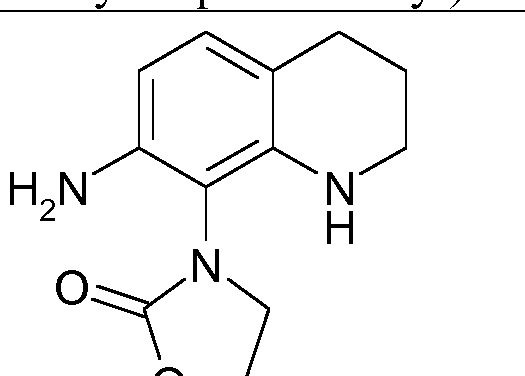
-(7-Amino- 1 ,2,3,4-tétrahydroquinolin-8-yl)- 1 ,3-oxazolidin-2-one

8-(Morpholin-4-yl)-l,2,3,4-tétrahydroquinolin-7-amine

8-(Piperazin- 1 -yl)- 1 ,2,3 ,4-tétrahydroquinolin-7-amine

-(4-Méthylpiperazin- 1 -yl)- 1 ,2,3 ,4-tétrahydroquinolin-7-amine

N8,N8-Diméthyl-l,2,3,4-tétrahydroquinoline-7,8-diamine

8-(Piperidin- 1 -yl)- 1 ,2,3 ,4-tétrahydroquinolin-7-amine

8-(Pyrrolidin- 1 -yl)- 1 ,2,3 ,4-tétrahydroquinolin-7-amine

8-(Propan-2-ylsulfanyl)- 1 ,2,3 ,4-tétrahydroquinolin-7-amine 8- (Propan-2-ylsulfanyl) -1,2,3,4-tetrahydroquinolin-7-amine
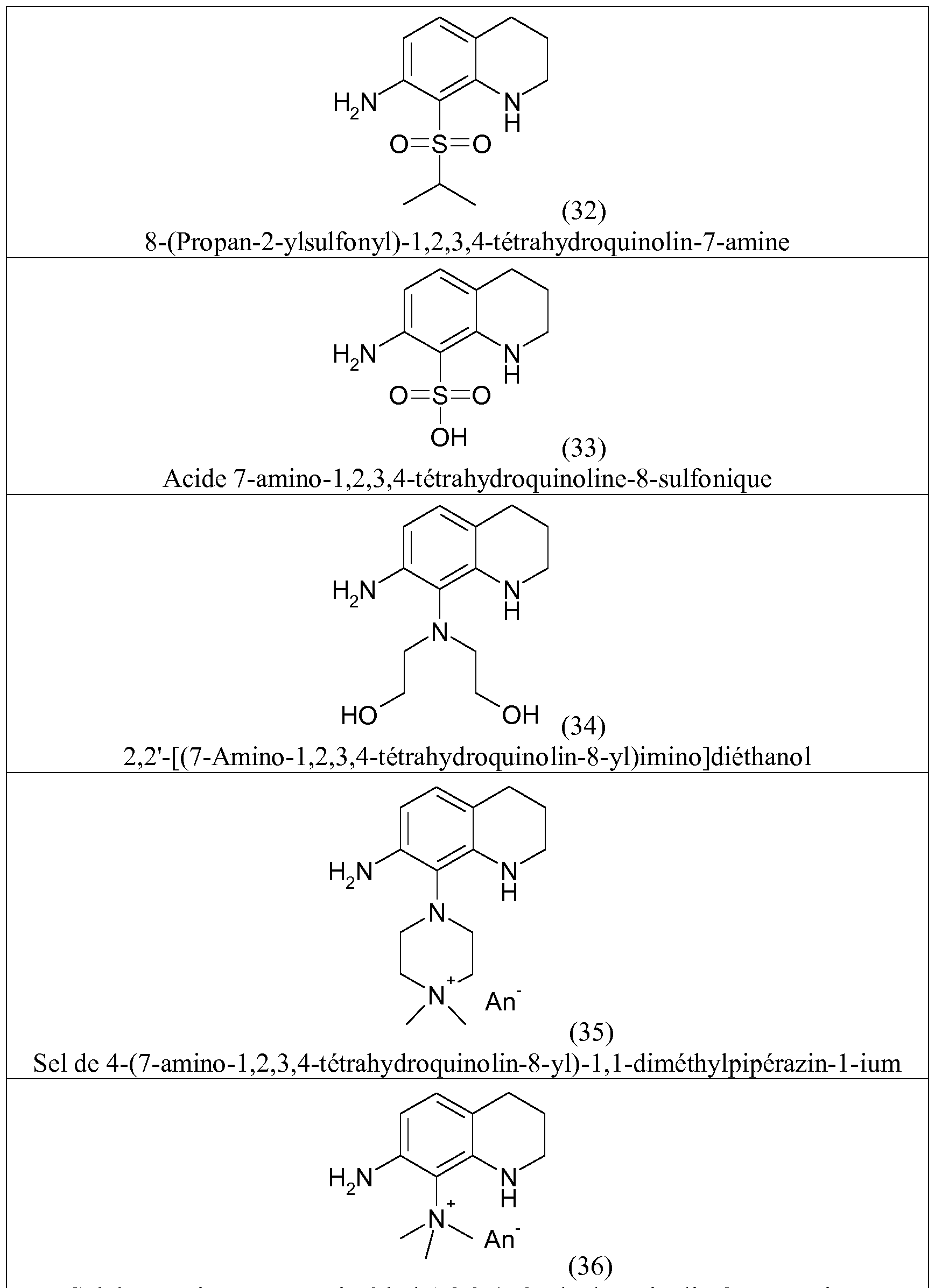
Sel de 7-amino-N,N,N-triméthyl- 1 ,2,3 ,4-tétrahydroquinolin-8-ammonium 7-amino-N, N, N-trimethyl-1,2,3,4-tetrahydroquinolin-8-ammonium salt
8-( 1 H-Pyrrol- 1 -yl)- 1 ,2,3 ,4-tétrahydroquinolin-7-amine
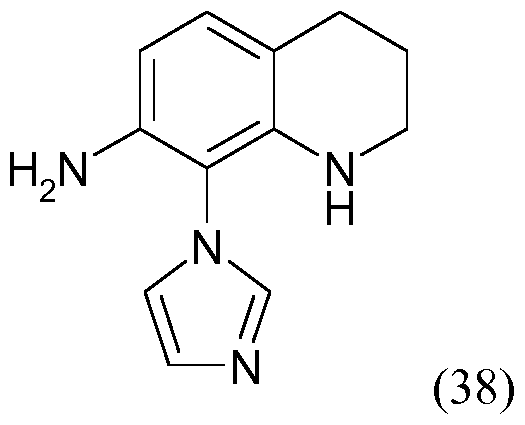
8-( 1 H-Imidazol- 1 -yl)- 1 ,2,3 ,4-tétrahydroquinolin-7-amine

Sel de l-(7-amino-l,2,3,4-tétrahydroquinolin-8-yl)-3-méthyl-lH-imidazol-3-ium

8-(Propan-2-yloxy)- 1 ,2,3 ,4-tétrahydroquinolin-7-amine

8-Tert-butoxy- 1 ,2,3 ,4-tétrahydroquinolin-7-amine 8-Tert-butoxy-1,2,3,4-tetrahydroquinolin-7-amine

Selon une forme avantageuse de l' invention, les composés sont choisis parmi les composés ( 1 ), (2), (3 ), (25), (34) (37), (39) ci- dessus, ainsi que leurs isomères géométriques ou optiques, leurs tautomères, leurs sels d' acide ou de base organique ou minéral ou leurs so lvates tels que les hydrates . De préférence, le procédé de co loration des fibres kératiniques, en particulier des fibres kératiniques humaines telles que les cheveux, comprend au moins une étape d' application i) sur lesdites fibres kératiniques, d'un ou plusieurs composés de formule (I) tels que définis précédemment et d'une ou plusieurs bases d' oxydation telles que définis ci-après ; et éventuellement au moins une étape d' application ii) sur lesdites fibres kératiniques d'une composition cosmétique oxydante comprenant un ou plusieurs agents oxydants chimiques, de préférence choisis parmi le peroxyde d'hydrogène, le peroxyde d'urée, les bromates de métaux alcalins, les persels tels que les perborates et persulfates, les peracides et les enzymes oxydases (avec leurs co facteurs éventuels) parmi lesquelles on peut citer les peroxydases, les oxydo-réductases à 2 électrons telles que les uricases et les oxygénases à 4 électrons comme les laccases, plus préférentiellement, l ' agent oxydant chimique est du peroxyde d' hydrogène. According to an advantageous form of the invention, the compounds are chosen from compounds (1), (2), (3), (25), (34) (37), (39) above, as well as their isomers. geometric or optical, their tautomers, their salts of organic or inorganic acid or base or their solvates such as hydrates. Preferably, the process for the coating of keratinous fibers, in particular human keratin fibers such as the hair, comprises at least one step of applying i) on said keratinous fibers, one or more compounds of formula (I) such as as defined above and one or more oxidation bases as defined below; and optionally at least one application step ii) on said keratinous fibers of an oxidizing cosmetic composition comprising one or more chemical oxidizing agents, preferably chosen from hydrogen peroxide, urea peroxide and alkali metal bromates. persalts such as perborates and persulfates, peracids and oxidase enzymes (with their possible co-factors) among which we may mention peroxidases, 2-electron oxidoreductases such as uricases and 4-electron oxygenases such as laccases, more preferably, the chemical oxidizing agent is hydrogen peroxide.
Selon cette préférence, lorsque le ou les étapes ii) sont mises en œuvre, il est entendu qu ' entre le ou les étapes i) et le ou les étapes ii) , lesdites fibres peuvent être rincées, et/ou lavées puis éventuellement séchées . According to this preference, when the step or steps ii) are implemented, it is understood that between the step i) and the step or steps ii), said fibers can be rinsed, and / or washed and optionally dried.
Encore selon cette préférence, le ou les agents oxydants chimiques sont présents dans la composition cosmétique oxydante en une teneur totale comprise entre 0,001 et 50% en poids, plus préférentiellement entre 0,05 et 30% en poids, plus préférentiellement encore entre 0, 1 et 20%> en poids, encore plus particulièrement entre 1 et 15 % en poids par rapport au poids total de la composition cosmétique oxydante. According to this preference, the chemical oxidizing agent (s) are present in the oxidizing cosmetic composition in a total content of between 0.001% and 50% by weight, more preferably between 0.05% and 30% by weight and more preferably between 0.1% by weight. and 20% by weight, still more particularly between 1 and 15% by weight relative to the total weight of the oxidizing cosmetic composition.
Selon un mode de réalisation préféré de l 'invention, le procédé de co loration des fibres kératiniques comprend en outre au moins une étape d' application d'un ou plusieurs coupleurs d' oxydation additionnels tels que décrits ci-après, différents des composés de formule (I) ainsi que de leurs isomères géométriques ou optiques, leurs tautomères, leurs sels d' acide ou de base organique ou minéral ou leurs solvates selon l' invention. According to a preferred embodiment of the invention, the method of coating the keratinous fibers further comprises at least one step of applying one or more additional oxidation couplers as described below, different from the formula (I) as well as their geometric or optical isomers, their tautomers, their organic or inorganic acid or base salts or their solvates according to the invention.
Selon un autre mode de réalisation préféré de l' invention, le procédé de co loration des fibres kératiniques, en particulier des fibres kératiniques humaines telles que les cheveux, comprend en outre au moins une étape d' application ii) sur lesdites fibres kératiniques, d'une composition cosmétique oxydante comprenant un ou plusieurs agents oxydants chimiques, de préférence choisis parmi le peroxyde d'hydrogène, le peroxyde d'urée, les bromates de métaux alcalins, les persels tels que les perborates et persulfates, les peracides et les enzymes oxydases (avec leurs co facteurs éventuels) parmi lesquelles on peut citer les peroxydases, les oxydo-réductases à 2 électrons telles que les uricases et les oxygénases à 4 électrons comme les laccases ; plus préférentiellement, l ' agent oxydant chimique est du peroxyde d' hydrogène ; According to another preferred embodiment of the invention, the process for the coating of keratinous fibers, in particular human keratinous fibers such as the hair, furthermore comprises at least one application step ii) on said keratinous fibers, d. an oxidizing cosmetic composition comprising one or more chemical oxidizing agents, preferably chosen from hydrogen peroxide, urea peroxide, alkali metal bromates, persalts such as perborates and persulfates, peracids and oxidase enzymes (with their possible co-factors) among which may be mentioned peroxidases, 2-electron oxidoreductases such as uricases and 4-electron oxygenases such as laccases; more preferably, the chemical oxidizing agent is hydrogen peroxide;
étant entendu qu' entre le ou les étapes i) et le ou les étapes ii), lesdites fibres peuvent être rincées, et/ou lavées puis éventuellement séchées . it being understood that between step (s) i) and step (s) ii), said fibers may be rinsed, and / or washed and then optionally dried.
De préférence, le ou les composés de formule (I) selon l' invention sont appliqués pendant un temps de pose compris entre 1 et 60 minutes, de préférence entre 5 et 40 minutes, et encore plus préférentiellement entre 10 et 30 minutes. Preferably, the compound (s) of formula (I) according to the invention are applied during a laying time of between 1 and 60 minutes, preferably between 5 and 40 minutes, and even more preferably between 10 and 30 minutes.
Le ou les composés de formule (I) selon l' invention sont généralement appliqués sur les fibres kératiniques à la température ambiante, de préférence entre 25 et 55 °C . De préférence, les étapes i) et ii) sont mis en œuvre séquentiellement. The compound (s) of formula (I) according to the invention are generally applied to keratinous fibers at room temperature, preferably between 25 and 55 ° C. Preferably, steps i) and ii) are implemented sequentially.
Par « séquentiellement », on entend au sens de la présente invention que le ou les étapes ii) sont réalisées avant ou après le ou les étapes i), c ' est-à-dire en pré- ou post-traitement, de préférence en post-traitement. By "sequentially" is meant in the sense of the present invention that step (s) ii) are carried out before or after the step (s) i), that is to say in pre- or post-treatment, preferably in post treatment.
Selon une variante de l 'invention, le procédé selon l' invention est un procédé de co loration des fibres kératiniques en particulier des fibres kératiniques humaines telles que les cheveux, comprenant au moins une étape d' application simultanée sur lesdites fibres : According to a variant of the invention, the process according to the invention is a process for the coororation of keratinous fibers, in particular human keratinous fibers such as the hair, comprising at least one step of simultaneous application on said fibers:
d'un ou plusieurs composés de formule (I) tels que définis précédemment ; one or more compounds of formula (I) as defined above;
- d'un ou plusieurs agents oxydants chimiques tels que définis précédemment ; one or more chemical oxidizing agents as defined above;
éventuellement d'une ou plusieurs bases d' oxydation telles que décrites ci-après. optionally one or more oxidation bases as described below.
Selon cette variante, une composition cosmétique prête à l ' emploi peut être préparée au préalable, résultant du mélange d 'une composition cosmétique comprenant un ou plusieurs composés de formule (I) tels que définis précédemment et éventuellement une ou plusieurs bases d' oxydation, et d'une composition cosmétique oxydante comprenant un ou plusieurs agents oxydants chimiques tels que définis précédemment ; pour être ensuite appliquée sur lesdites fibres. According to this variant, a ready - to - use cosmetic composition may be prepared beforehand, resulting from the mixing of a cosmetic composition comprising one or more compounds of formula (I) as defined above and optionally one or more oxidation bases, and an oxidizing cosmetic composition comprising one or more chemical oxidizing agents as defined above; to then be applied to said fibers.
Selon cette variante de l' invention, ladite composition cosmétique prête à l ' emplo i peut être appliquée pendant un temps de pose compris entre 1 et 60 minutes, de préférence entre 5 et 40 minutes, et encore plus préférentiellement entre 10 et 30 minutes ; et généralement à la température ambiante, de préférence entre 25 et 55 °C . According to this variant of the invention, said ready-to-use cosmetic composition may be applied during a laying time of between 1 and 60 minutes, preferably between 5 and 40 minutes, and even more preferably between 10 and 30 minutes; and generally at room temperature, preferably between 25 and 55 ° C.
Par « simultanée », on entend que le ou les composés de formule (I) tels que définis précédemment, le ou les agents oxydants chimiques tels que définis précédemment, et éventuellement la ou les bases d'oxydation telles que décrites ci-après, sont appliqués au même moment sur lesdites fibres kératiniques. By "simultaneous" is meant that the compound (s) of formula (I) as defined above, the oxidizing agent (s) as defined above, and optionally the oxidation base or bases as described below, are applied at the same time on said keratinous fibers.
Un autre objet de l'invention concerne des composés de formule (I), ainsi que leurs sels d'acide ou de base, organique ou minéral, leurs formes tautomères, leurs isomères optiques, leurs isomères géométriques et/ou leurs solvates tels que ses hydrates, tels que décrits précédemment, dans laquelle : Another subject of the invention relates to compounds of formula (I), as well as their acid or base salts, organic or inorganic, their tautomeric forms, their optical isomers, their geometric isomers and / or their solvates such as its hydrates, as described above, in which:
- A représente : - A represents:
un atome d'iode ou un atome de fluor, an iodine atom or a fluorine atom,
un radical carboxy -COOH ou carboxylate -COO",M+, un radical sulfonique -SO3H, ou sulfonate -SO3", M+, ou alkylsulfonyl -S(0)2-R avec R représentant un groupe (Ci-a carboxy radical -COOH or carboxylate -COO " , M + , a sulphonic radical -SO3H, or sulphonate -SO3 " , M + , or alkylsulphonyl-S (O) 2 -R with R representing a group (Ci-
C4)alkyle linéaire ou ramifié, C 4 ) linear or branched alkyl,
un groupement -C(Ri2)(Ri3)-Ri 1 ou -C(Ri2)=C(Ri i)-Ri3 , dans lequel : a group -C (R 1 ) (R 1) -R 1 or -C (R 1 ) = C (R 1) -R 1 3, in which:
Ru, Ri2, R13, identiques ou différents, représentent :Ru, Ri 2 , R13, identical or different, represent:
■ un atome d'hydrogène, ■ a hydrogen atom,
■ un atome d'halogène tel que fluor, chlore, brome, iode, de préférence fluor ■ a halogen atom such as fluorine, chlorine, bromine, iodine, preferably fluorine
■ un radical hydroxy, ■ a hydroxyl radical,
■ un groupe alkyle ou alcényle en Ci-Ci4, linéaire ou ramifié, en particulier en Ci-Cs, de préférence en Ci-C6, ledit groupe alkyle ou alcényle : ■ an alkyl or alkenyl group Ci-Ci 4 linear or branched, in particular Ci-Cs, preferably Ci-C 6 alkyl, said alkyl or alkenyl group:
■ comprenant éventuellement un ou plusieurs hétéroatomes ou groupes, identiques ou différents, choisis parmi -O-, -S-, -S(O)-, -S(0)2-, -N(H)-, -N(R)- , =N-R-, -R-N=,-C(X)- avec X représentant un atome d'oxygène , de soufre ou N-R et avec R représentant un groupe (Ci-C4)alkyle éventuellement substitué par un ou plusieurs groupes hydroxy tel que méthyle, éthyle, propyle, ou 2-hydroxyéthyle, , ou les associations desdits hétéroatomes ou groupes, de préférence choisies parmi : -O-C(O)-, -C(0)-0-, - C(0)-N=, =N-C(0)-, -C(0)-N(H)-, -N(H)-C(0)-, - N(H)-C(0)-N(H)-, -0-C(0)-N(H)-, -N(H)-C(0)-0-, - N(H)-C(NH)-NH- , et/ou ledit groupe alkyle ou alcényle étant ■ optionally comprising one or more heteroatoms or groups, which may be identical or different, chosen from -O-, -S-, -S (O) -, -S (O) 2 -, -N (H) -, -N (R ) -, = NR-, -RN =, - C (X) - with X representing an oxygen, sulfur or NR atom and with R representing a (C 1 -C 4 ) alkyl group optionally substituted by one or more groups hydroxy such as methyl, ethyl, propyl, or 2-hydroxyethyl, or combinations of said heteroatoms or groups, preferably chosen from: -OC (O) -, -C (O) -O-, -C (O) -N =, = NC (O) -, -C (O) -N (H) -, -N (H) -C (O) -, - N (H) -C (O) -N (H) -, -O-C (O) -N (H) -, -N (H) -C (O) ) -O-, - N (H) -C (NH) -NH-, and / or said alkyl or alkenyl group being
■ éventuellement substitué par un ou plusieurs radicaux, identiques ou différents, choisis parmi les radicaux i) hydroxy, ii) (hydroxy)alcoxy en Ci-C6, iii) amino - NH2, iv) mono et/ou di(hydroxy)alkylamino en Ci-C6, v) fluoro -F, vi) sulfonique -SO3H, ou sulfonate -SO3" , M+, vii) thiol -SH, viii) (hétéro)cycle cationique ou non cationique, ledit hétérocycle étant éventuellement substitué, en particulier éventuellement substitué par un ou plusieurs radicaux identiques ou différents choisis parmi les radicaux (hydroxy)alkyls(Ci-Ce) tels que méthyle, éthyle, propyle, ou 2-hydroxyéthyle, les radicaux hydroxy , les radicaux ammonium - N+RR'R", An", avec R, R' et R" identiques ou différents, représentant un groupe (Ci-C4)alkyle éventuellement substitué par un ou plusieurs groupes hydroxy tel que méthyle, éthyle, propyle, ou 2- hydroxyéthyle; ix) un radical ammonium -N+RR'R", An", avec R, R' et R" identiques ou différents, représentant un groupe (Ci-C4)alkyle éventuellement substitué par un ou plusieurs groupes hydroxy tel que méthyle, éthyle, propyle, ou 2-hydroxyéthyle; ■ optionally substituted with one or more radicals, which may be identical or different, chosen from the radicals i) hydroxy, ii) (hydroxy) C 1 -C 6 alkoxy, iii) amino - NH 2 , iv) mono and / or di (hydroxy) alkylamino-C 6, v) fluoro -F, vi) sulfonic -SO3H, or sulfonate -SO3 ", M +, vii) thiol -SH, viii) (hetero) cycle cationic or noncationic, said heterocycle being optionally substituted , in particular optionally substituted by one or more identical or different radicals chosen from (hydroxy) alkyl (Ci-Ce) radicals such as methyl, ethyl, propyl, or 2-hydroxyethyl, hydroxy radicals, ammonium-N + RR radicals "R", An " , with R, R 'and R" identical or different, representing a (C 1 -C 4) alkyl group optionally substituted by one or more hydroxyl groups such as methyl, ethyl, propyl, or 2-hydroxyethyl; ix) an ammonium radical -N + RR'R ", An " , with R, R 'and R "identical or different, representing a (Ci-C4) alkyl group optionally substituted by one or more hydroxyl groups such as methyl, ethyl propyl or 2-hydroxyethyl;
étant entendu que Ru, R12 et R13 ne peuvent désigner simultanément un atome d'hydrogène, it being understood that Ru, R12 and R13 can not simultaneously designate a hydrogen atom,
■ ou Ru forme avec R9, l'atome d'azote qui porte R9 et les atomes de carbone qui portent -N(R9)(Rio) et Ru, un hétérocycle cationique ou non, comprenant de 5 à 8 chaînons, ledit hétérocycle étant éventuellement substitué par un ou plusieurs radicaux, identiques ou différents, choisis parmi les radicaux i) hydroxy, ii) alkyle en C1-C4, iii) alcoxy en C1-C4, et iv) un radical ammonium - N+RR'R", An", avec R, R' et R" identiques ou différents, représentant un groupe (Ci-C4)alkyle éventuellement substitué par un ou plusieurs groupes hydroxy tel que méthyle, éthyle, propyle, ou 2-hydroxyéthyle et au moins un des chaînons dudit hétérocycle pouvant représenter un radical divalent oxo (-C(O-), étant entendu que si Rio, R12 et R13 désignent un atome d'hydrogène, R9 et Ru ne peuvent constituer un radical divalent -(CH2)3- ; ■ or Ru form with R9, the nitrogen atom bearing R9 and the carbon atoms which carry -N (R9) (Rio) and Ru, a cationic or non-heterocyclic ring comprising from 5 to 8 members, said heterocycle being optionally substituted with one or more radicals, identical or different, chosen from the radicals i) hydroxy, ii) alkyl C1-C4, iii) C 1 -C 4 alkoxy, and iv) an ammonium radical - N + RR'R ", An " , with R, R 'and R "identical or different, representing a (C 1 -C 4) alkyl group optionally substituted by a or more hydroxyl groups such as methyl, ethyl, propyl, or 2-hydroxyethyl and at least one of the members of said heterocyclic ring may represent a divalent oxo (-C (O-) radical, it being understood that if Rio, R12 and R13 designate an atom of hydrogen, R9 and Ru can not constitute a divalent radical - (CH 2 ) 3-;
groupement -W'(R'i4) dans lequel : grouping -W '(R'i4) in which:
W représente un atome d'oxygène, de soufre, W represents an oxygen atom, sulfur,
R'14, représente : R'14, represents:
■ un atome d'hydrogène, ■ a hydrogen atom,
■ un groupe alkyle ou alcényle en C2-C14, linéaire ou ramifié, en particulier en C2-Cs, de préférence en C2-C6, ledit groupe alkyle ou alcényle : ■ an alkyl or alkenyl C 2 -C 14 linear or branched, in particular C 2 -Cs, preferably C2-C6 alkyl, said alkyl or alkenyl group:
■ éventuellement interrompu par un ou plusieurs hétéroatomes ou groupes, identiques ou différents, choisis parmi -O-, -S-, -S(O)-, -S(0)2-, -N(H)-, -N(R)- , =N-R-, -R-N=,-C(X)- avec X représentant un atome d'oxygène , de soufre ou N-R et avec R représentant un groupe (Ci-C4)alkyle éventuellement substitué par un ou plusieurs groupes hydroxy tel que méthyle, éthyle, propyle, ou 2-hydroxyéthyle, , ou les associations desdits hétéroatomes ou groupes, de préférence choisies parmi : -O-C(O)-, -C(0)-0-, - C(0)-N=, =N-C(0)-, -C(0)-N(H)-, -N(H)-C(0)-, - N(H)-C(0)-N(H)-, -0-C(0)-N(H)-, -N(H)-C(0)-0-, - N(H)-C(NH)-N(H)- , et/ou ledit groupe alkyle ou alcényle étant ■ optionally interrupted by one or more heteroatoms or groups, identical or different, chosen from -O-, -S-, -S (O) -, -S (O) 2 -, -N (H) -, -N ( R) -, = NR-, -RN =, - C (X) - with X representing an oxygen, sulfur or NR atom and with R representing a (C 1 -C 4) alkyl group optionally substituted by one or more groups hydroxy such as methyl, ethyl, propyl, or 2-hydroxyethyl, or the combinations of said heteroatoms or groups, preferably chosen from: -OC (O) -, -C (O) -O-, -C (O) - N =, = NC (O) -, -C (O) -N (H) -, -N (H) -C (O) -, - N (H) -C (O) -N (H) - , -O-C (O) -N (H) -, -N (H) -C (O) -O-, -N (H) -C (NH) -N (H) -, and / or said alkyl or alkenyl group being
■ éventuellement substitué par un ou plusieurs radicaux, identiques ou différents, choisis parmi les radicaux i) hydroxy, ii) (hydroxy)alcoxy en Ci-C6, iii) amino - NH2, iv) mono et/ou di(hydroxy)alkylamino en Ci-C6, v) fluoro -F, vi) sulfonique -SO3H, ou sulfonate -SO3" , M+, vii) thiol -SH, viii) (hétéro)cycle cationique ou non cationique, ledit hétérocycle étant éventuellement substitué, en particulier éventuellement substitué par un ou plusieurs radicaux identiques ou différents choisis parmi les radicaux (hydroxy)alkyls(C 1 -C6) tels que méthyle, éthyle, propyle, ou 2-hydroxyéthyle, les radicaux hydroxy , les radicaux ammonium - N+RR'R", An", avec R, R' et R" identiques ou différents, représentant un groupe (Ci-C4)alkyle éventuellement substitué par un ou plusieurs groupes hydroxy tel que méthyle, éthyle, propyle, ou 2- hydroxyéthyle; ■ optionally substituted with one or more radicals, which may be identical or different, chosen from the radicals i) hydroxy, ii) (hydroxy) C 1 -C 6 alkoxy, iii) amino - NH 2 , iv) mono and / or di (hydroxy) alkylamino-C 6, v) fluoro -F, vi) sulfonic -SO3H, or sulphonate -SO3 " , M + , vii) thiol -SH, viii) (hetero) cationic or non-cationic ring, said heterocycle being optionally substituted, in particular optionally substituted by a or more identical or different radicals chosen from (hydroxy) alkyl radicals (C 1 -C 6) such as methyl, ethyl, propyl, or 2-hydroxyethyl, hydroxy radicals, ammonium radicals - N + RR'R ", An " with R, R 'and R "being identical or different, representing a (C 1 -C 4) alkyl group optionally substituted by one or more hydroxyl groups such as methyl, ethyl, propyl, or 2-hydroxyethyl;
■ ou R'14 forme avec R9 , l'atome d'azote qui porte R9 et les atomes de carbone qui portent -N(R9)(Rio) et -W- , un hétérocycle cationique ou non, comprenant de 5 à 8 chaînons, ledit hétérocycle étant éventuellement substitué par un ou plusieurs radicaux, identiques ou différents, choisis parmi les radicaux i) hydroxy, ii) alkyle en C1-C4, iii) alcoxy en C1-C4, et iv) un radical ammonium -N+RR'R", An", avec R, R' et R" identiques ou différents, représentant un groupe (Ci-C4)alkyle éventuellement substitué par un ou plusieurs groupes hydroxy tel que méthyle, éthyle, propyle, ou 2- hydroxyéthyle et au moins un des chaînons dudit hétérocycle pouvant représenter un radical divalent oxo (-C(O)-), ■ or R'14 form with R9, the nitrogen atom bearing R9 and the carbon atoms which carry -N (R9) (Rio) and -W-, a cationic heterocycle or not, comprising from 5 to 8-membered said heterocycle being optionally substituted by one or more radicals, which are identical or different, chosen from the radicals i) hydroxy, ii) alkyl C1-C4, iii) alkoxy C1-C4, and iv) an ammonium radical -N + RR "R", An " , with R, R 'and R" identical or different, representing a (C 1 -C 4) alkyl group optionally substituted by one or more hydroxyl groups such as methyl, ethyl, propyl, or 2-hydroxyethyl and at least one of the links of said heterocyclic ring possibly representing a divalent oxo (-C (O) -) radical,
un groupement -N(Ris)-R'i5 dans lequel R15, et R'15 représentent indépendamment : a group -N (Ris) -R'15 in which R15, and R'15 independently represent:
■ un atome d'hydrogène, ■ a hydrogen atom,
■ un groupe alkyle ou alcényle en C1-C14, linéaire ou ramifié, en particulier en Ci-Cs, de préférence en Ci-C6, ledit groupe alkyle ou alcényle : éventuellement interrompu par un ou plusieurs hétéroatomes ou groupes, identiques ou différents, choisis parmi -O-, -S-, -S(O)-, -S(0)2-, -N(H)-, -N(R)- , =N-R-, -R-N=,-C(X)- avec X représentant un atome d' oxygène , de soufre ou N-R et avec R représentant un groupe (C i -C4)alkyle éventuellement substitué par un ou plusieurs groupes hydroxy tel que méthyle, éthyle, propyle, ou 2-hydroxyéthyle, , ou les associations desdits hétéroatomes ou groupes, de préférence choisies parmi : -O-C(O)-, -C(0)-0-, - C(0)-N=, =N-C(0)-, -C(0)-N(H)-, -N(H)-C(0)-, - N(H)-C(0)-N(H)-, -0-C(0)-N(H)-, -N(H)-C(0)-0-, - N(H)-C(NH)-NH- , et/ou ledit groupe alkyle ou alcényle étant ■ an alkyl or alkenyl, C1-C14 linear or branched, in particular Ci-Cs, preferably Ci-C 6 alkyl, said alkyl or alkenyl group: optionally interrupted by one or more heteroatoms or groups, identical or different, chosen from -O-, -S-, -S (O) -, -S (O) 2 -, -N (H) -, -N (R ) -, = NR-, -RN =, - C (X) - with X representing an oxygen, sulfur or NR atom and with R representing a (C 1 -C 4) alkyl group optionally substituted by one or more groups hydroxy such as methyl, ethyl, propyl, or 2-hydroxyethyl, or the combinations of said heteroatoms or groups, preferably chosen from: -OC (O) -, -C (O) -O-, -C (O) - N =, = NC (O) -, -C (O) -N (H) -, -N (H) -C (O) -, - N (H) -C (O) -N (H) - , -O-C (O) -N (H) -, -N (H) -C (O) -O-, - N (H) -C (NH) -NH-, and / or said alkyl group or alkenyl being
éventuellement substitué par un ou plusieurs radicaux, identiques ou différents, choisis parmi les radicaux i) hydroxy, ii) (hydroxy)alcoxy en C i -C6, iii) amino - NH2, iv) mono et/ou di(hydroxy)alkylamino en C i -C6, v) fluoro -F, vi) sulfonique -S O3H , ou sulfonate -S O3" , M+, vii) thio l -SH, viii) (hétéro)cycle cationique ou non cationique, ledit hétérocycle étant éventuellement substitué, en particulier éventuellement substitué par un ou plusieurs radicaux identiques ou différents choisis parmi les radicaux (hydroxy)alkyls(C 1 -C6) tels que méthyle, éthyle, propyle, ou 2-hydroxyéthyle, les radicaux hydroxy , les radicaux ammonium - N+RR' R" , An", avec R, R' et R" identiques ou différents, représentant un groupe (C i -C4)alkyle éventuellement substitué par un ou plusieurs groupes hydroxy tel que méthyle, éthyle, propyle, ou 2- hydroxyéthyle; ix) un radical ammonium -N+RR' R" , An", avec R, R' et R" identiques ou différents, représentant un groupe (C i -C4)alkyle éventuellement substitué par un ou plusieurs groupes hydroxy tel que méthyle, éthyle, propyle, ou 2-hydroxyéthyle; optionally substituted with one or more radicals, which may be identical or different, chosen from the radicals i) hydroxy, ii) (hydroxy) C 1 -C 6 alkoxy, iii) amino - NH 2 , iv) mono and / or di (hydroxy) C 1 -C 6 alkylamino, v) fluoro -F, vi) sulfonic acid -SO3H, or sulfonate -SO3 " , M + , vii) thio1 -SH, viii) (hetero) cationic or non-cationic ring, said heterocycle being optionally substituted, in particular optionally substituted by one or more identical or different radicals chosen from (hydroxy) alkyl (C 1 -C 6) radicals such as methyl, ethyl, propyl, or 2-hydroxyethyl, hydroxy radicals, radicals, ammonium - N + RR 'R ", An " , with R, R' and R "identical or different, representing a (C 1 -C 4) alkyl group optionally substituted with one or more hydroxyl groups such as methyl, ethyl, propyl, or 2-hydroxyethyl; ix) an ammonium radical -N + RR 'R ", An " , with R, R' and R "identical or different, representing a (C 1 -C 4) alkyl group optionally substituted with one or more hydroxy groups such as methyl, ethyl, propyl, or 2-hydroxyethyl;
étant entendu que R15 et R'15 et ne peuvent pas désigner simultanément un atome d'hydrogène ; it being understood that R15 and R'15 and can not simultaneously designate a hydrogen atom;
■ ou R15 forme avec R9 , l'atome d'azote qui porte R9 et les atomes de carbone qui portent -N(R9)(Rio) et -N(R'is)- , un hétérocycle cationique ou non, comprenant de 5 à 8 chaînons, ledit hétérocycle étant éventuellement substitué par un ou plusieurs radicaux, identiques ou différents, choisis parmi les radicaux i) hydroxy, ii) alkyle en C1-C4, iii) alcoxy en C1-C4, et iv) un radical ammonium -N+RR'R", An", avec R, R' et R" identiques ou différents, représentant un groupe (Ci-C4)alkyle éventuellement substitué par un ou plusieurs groupes hydroxy tel que méthyle, éthyle, propyle, ou 2- hydroxyéthyle et au moins un des chaînons dudit hétérocycle pouvant représenter un radical divalent oxo (-C(O-), ■ R15 or R9 form with the nitrogen atom bearing R9 and the carbon atoms which carry -N (R9) (Rio) and -N (R'is) -, a cationic heterocycle or not, comprising from 5 8-membered ring, said heterocycle being optionally substituted by one or more radicals, which may be identical or different, chosen from the radicals i) hydroxy, ii) C 1 -C 4 alkyl, iii) C 1 -C 4 alkoxy, and iv) an ammonium radical - N + RR'R ", An " , with R, R 'and R "identical or different, representing a (C 1 -C 4) alkyl group optionally substituted with one or more hydroxyl groups such as methyl, ethyl, propyl, or 2- hydroxyethyl and at least one of the links of said heterocycle may represent a divalent oxo (-C (O-) radical,
· un radical carbonyle -C(0)-Rn, avec Ru tel que défini selon la revendication 1, A carbonyl radical -C (O) -Rn, with Ru as defined according to claim 1,
• un radical ester -C(0)0-Rn, thioester -C(0)S-Rn, ou dithioester -C(S)S-Rn, avec Ru tel que défini selon la revendication 1, An ester radical -C (O) O-Rn, thioester -C (O) S-Rn, or dithioester -C (S) S-Rn, with Ru as defined according to claim 1,
· un (hétéro)cycle cationique ou non cationique éventuellement substitué, An optionally substituted cationic or non-cationic (hetero) ring,
• un radical ammonium -N+RR'R", An", avec R, R' et R" identiques ou différents, représentant un groupe (Ci-C4)alkyle éventuellement substitué par un ou plusieurs groupes hydroxy tel que méthyle, éthyle, propyle, ou 2-hydroxyéthyle ; avec M+ tel que défini précédemment, An ammonium radical -N + RR'R ", An " , with R, R 'and R "identical or different, representing a (C 1 -C 4) alkyl group optionally substituted by one or more hydroxyl groups such as methyl, ethyl, propyl, or 2-hydroxyethyl, with M + as defined above,
et étant entendu que les composés de formule (I) sont différents de : • le 7-amino-8-fluoro-l,2,3,4-tétrahydroquinoléine
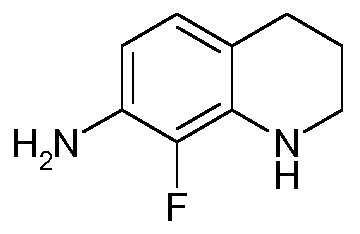
• le 7-amino-8-hydroxy-l,23,4-tétrahydroquinoléine

Selon une forme particulière de l'invention, les composés nouveaux de formule (I) répondent à la formule (IA) suivante ainsi que leurs isomères géométriques ou optiques, leurs tautomères, leurs sels d'acide ou de base organique ou minéral ou leurs solvates tels que les hydrates : According to one particular form of the invention, the novel compounds of formula (I) have the following formula (IA) as well as their geometrical or optical isomers, their tautomers, their organic or inorganic acid or base salts or their solvates. such as hydrates:

Selon un autre mode de réalisation de l'invention, les composés nouveaux de formule (I) désignent les composés de formule (IB) suivante ainsi que leurs isomères géométriques ou optiques, leurs tautomères, leurs sels d'acide ou de base organique ou minéral ou leurs solvates tels que les hydrates : According to another embodiment of the invention, the novel compounds of formula (I) denote the compounds of formula (IB) below as well as their geometrical or optical isomers, their tautomers, their acid or organic or inorganic base salts. or their solvates such as hydrates:
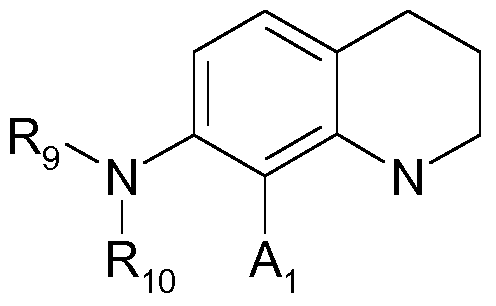
a) un radical -S-B ou -SO2-B, dans lequel B désigne al) un atome d'hydrogène ; a2) un radical alkyle ou alcényle en Ci-C6 , ledit radical alkyle ou alcényle étant éventuellement substitué par un ou plusieurs radicaux choisis indépendamment parmi i) halogène tel que fluor ii) hydroxy iii)S03H ou SO3", M+ avec M+ tel que défini précédemment iv) ammonium-N+RR'R" , An", avec R, R' et R" identiques ou différents, représentant un groupe (Ci-C4)alkyle tel que méthyle, et en particulier triméthylammonium ; a3) un hétérocycle cationique tel qu'imidazolium , pipérazinium ; a) a radical -SB or -SO2-B, wherein B denotes a1) a hydrogen atom; a2) an alkyl or alkenyl radical Ci-C 6, said alkyl or alkenyl being optionally substituted by one or more radicals independently selected from i) halogen such as fluorine ii) hydroxyl iii) S03H or SO3 "M + with M + as defined above iv) ammonium-N + RR'R ", An " , with R, R 'and R "identical or different, representing a (C 1 -C 4) alkyl group such as methyl, and in particular trimethylammonium; a3) a cationic heterocycle such as imidazolium, piperazinium;
b) un radical -O-T, dans lequel T désigne bl) un atome d'hydrogène ; b2) un radical alkyle en C2-C6 ou un radical alcényle en Ci-C6 , ledit radical alkyle ou alcényle étant éventuellement substitué par un ou plusieurs radicaux choisis indépendamment parmi i) halogène tel que fluor ii) hydroxy iii)S03H ou S03 ", M+ avec M+ tel que défini précédemment iv) ammonium-N+RR'R" , An", avec R, R' et R" identiques ou différents, représentant un groupe (Ci-C4)alkyle tel que méthyle, et en particulier triméthylammonium ; b3) un hétérocycle cationique tel qu'imidazolium , pipérazinium c) un radical choisi parmi i) S03H ou S03 ", M+ avec M+ tel que défini précédemment ii) CO2H ou CO2-, M+ avec M+ tel que défini précédemment iii) alcoxycarbonyle -CChRf dans lequel Rf désigne un radical alkyle en C1-C4 tel que méthyle iv) alkyl carbonyle -CO-Rf avec Rf tel que défini ci-dessus ; b) a radical -OT, wherein T denotes bl) a hydrogen atom; b2) a C2-C6 alkyl radical or an alkenyl radical Ci-C 6, said alkyl or alkenyl being optionally substituted by one or more radicals independently selected from i) halogen such as fluorine ii) hydroxyl iii) S0 3 H or S0 3 " , M + with M + as defined above iv) ammonium-N + RR'R", An " , with R, R 'and R" identical or different, representing a (C 1 -C 4) alkyl group such that methyl, and in particular trimethylammonium; b3) a cationic heterocycle such as imidazolium, piperazinium c) a radical chosen from i) SO 3 H or SO 3 " , M + with M + as defined above ii) CO2H or CO2-, M + with M + such that defined above iii) alkoxycarbonyl -CChRf wherein Rf denotes a C1-C4 alkyl radical such as methyl iv) alkyl carbonyl -CO-Rf with Rf as defined above;
d) un radical -N(R'i4)Ri4 avec R'14 et R14 tels que définis précédemment et de préférence avec R'14 désignant un atome d'hydrogène ou un radical (hydroxy)alkyle en Ci-C6 tel que méthyl ou 2-hydroxyéthyl et R14 désignant un radical choisi parmi i) alkyl carbonyle -C(0)-Rf avec Rf tel que défini ci- dessus ii) alcoxy carbonyle -C(0)-0-Rf avec Rf tel que défini ci-dessus iii) (hydroxy)alkyl en Ci-C6 tel que méthyl ou 2- hydroxyéthyl ; d) a radical -N (R'i4) R14 with R'14 and R14 as defined above and preferably with R'14 designating an atom hydrogen or a (C 1 -C 6 ) -hydroxy-alkyl radical such as methyl or 2-hydroxyethyl and R 14 denotes a radical chosen from: i) alkyl carbonyl -C (O) -Rf with Rf as defined above ii) alkoxycarbonyl -C (0) -0-R f with R f as defined above iii) (hydroxy) alkyl in Ci-C 6 such as methyl or 2-hydroxyethyl;
e) un hétérocycle non cationique tel que défini précédemment et de préférence choisi parmi morpholine, pipérazine, pipéridine, imidazole, pyrrole, pyrrolidine, oxazolidinone, ledit hétérocycle étant de préférence non substitué ; e) a non-cationic heterocycle as defined above and preferably chosen from morpholine, piperazine, piperidine, imidazole, pyrrole, pyrrolidine, oxazolidinone, said heterocycle preferably being unsubstituted;
f) un hétérocycle cationique tel que défini précédemment et de préférence choisi parmi pipérazinium, imidazolium ledit hétérocycle étant éventuellement substitué pur un deux radicaux alkyle en C1-C4 tels que méthyle ; f) a cationic heterocycle as defined above and preferably selected from piperazinium, imidazolium said heterocycle being optionally substituted for one of two C1-C4 alkyl radicals such as methyl;
g) un radical ammonium-N+RR'R", An", avec R, R' et R" identiques ou différents, représentant un groupe (Ci-C4)alkyle tel que méthyle, de préférence un radical triméthylammonium. g) an ammonium radical-N + RR'R ", An " , with R, R 'and R "identical or different, representing a (C 1 -C 4) alkyl group such as methyl, preferably a trimethylammonium radical.
Selon un mode de réalisation particulier de l'invention, les composés nouveaux de formule (I) ou (IA) ou (IB) sont choisis parmi les composés (1), (4), (8), (9), (10), (11), (12), (13), (14), (15), (16), (18), (19), (20), (21), (22), (23), (24), (25), (26), (27), (28), (29), (30), (31), (32), (33), (34), (35), (36), (37), (38), (39), (40), (41), (42), (43), (44), (45) ainsi que leurs sels d'acide ou de base, organique ou minéral, leurs formes tautomères, leurs isomères optiques, leurs isomères géométriques et/ou leurs solvates tels que ses hydrates. According to one particular embodiment of the invention, the novel compounds of formula (I) or (IA) or (IB) are chosen from compounds (1), (4), (8), (9), (10) ), (11), (12), (13), (14), (15), (16), (18), (19), (20), (21), (22), (23), (24), (25), (26), (27), (28), (29), (30), (31), (32), (33), (34), (35), (36) ), (37), (38), (39), (40), (41), (42), (43), (44), (45) and their acid or base salts, organic or mineral, their tautomeric forms, their optical isomers, their geometric isomers and / or their solvates such as its hydrates.
Selon un mode de réalisation particulier de l'invention, la synthèse des composés de formule (I) pour lesquels les substituants Ri à Rio représentent un atome d'hydrogène, peut-être réalisée par exemple selon deux stratégies de synthèse respectivement illustrées par les schémas (1) ou (2) suivants.

a1 a2 a3 a1 a2 a3
Schéma (1) Diagram (1)
La première étape de la première stratégie de synthèse illustrée par le schéma ( 1 ) ci-dessus, consiste en une réaction de Skraup . The first step of the first synthesis strategy illustrated by scheme (1) above, consists of a Skraup reaction.
La réaction de Skraup consiste en l ' addition de Mickaël de l ' acroléine formée par le glycérol en présence d' acide sulfurique, sur l ' aminé a l . Une substitution électrophile intra-mo léculaire, puis une déshydratation sur l' intermédiaire ainsi formé, conduisent à la formation de la quino léine a2. Cette réaction peut notamment se faire en présence d ' iodure de sodium comme catalyseur. The Skraup reaction consists of the addition of Mickaël of acrolein formed by glycerol in the presence of sulfuric acid, on amine a l. An intra-molecular electrophilic substitution, followed by dehydration on the intermediate thus formed, leads to the formation of quinoine a2. This reaction may in particular be carried out in the presence of sodium iodide as a catalyst.
Une réduction de la fonction nitro de l 'intermédiaire a2 conduit à la 7-amino-tétrahydroquinoléine a3 souhaitée. Reduction of the nitro function of intermediate a2 leads to the desired 7-amino-tetrahydroquinoline a3.
L ' étape de réduction est réalisée dans des conditions classiques connues par l'homme du métier, de préférence par réduction catalytique par exemple en effectuant une réaction d'hydrogénation par catalyse hétérogène en présence de Pd/C, Pd(II)/C, Ni/Ra, etc. ou encore en effectuant une réaction de réduction par un métal, par exemple par du zinc, fer, étain, etc. (voir Advanced Organic Chemistry, 3 ème édition, J. March, 1985 , VVilley Interscience et Réduction in organic Chemistry, M . Hudlicky, 1983 , Ellis Horwood Séries Chemical Science) . The reduction step is carried out under standard conditions known to those skilled in the art, preferably by catalytic reduction, for example by carrying out a hydrogenation reaction by heterogeneous catalysis in the presence of Pd / C, Pd (II) / C, Ni / Ra, etc. or else by carrying out a reduction reaction with a metal, for example with zinc, iron, tin, etc. (see Advanced Organic Chemistry, 3rd Edition, J. March, 1985, VVilley Interscience and Reduction in Organic Chemistry, M. Hudlicky, 1983, Ellis Horwood Chemical Science Series).
La seconde stratégie de synthèse illustrée par le schéma (2) ci- dessous, se décompose en trois voies de synthèse possible à partir de la 7-nitro-tétrahydroquinoléine.

voie (2.1) way (2.1)
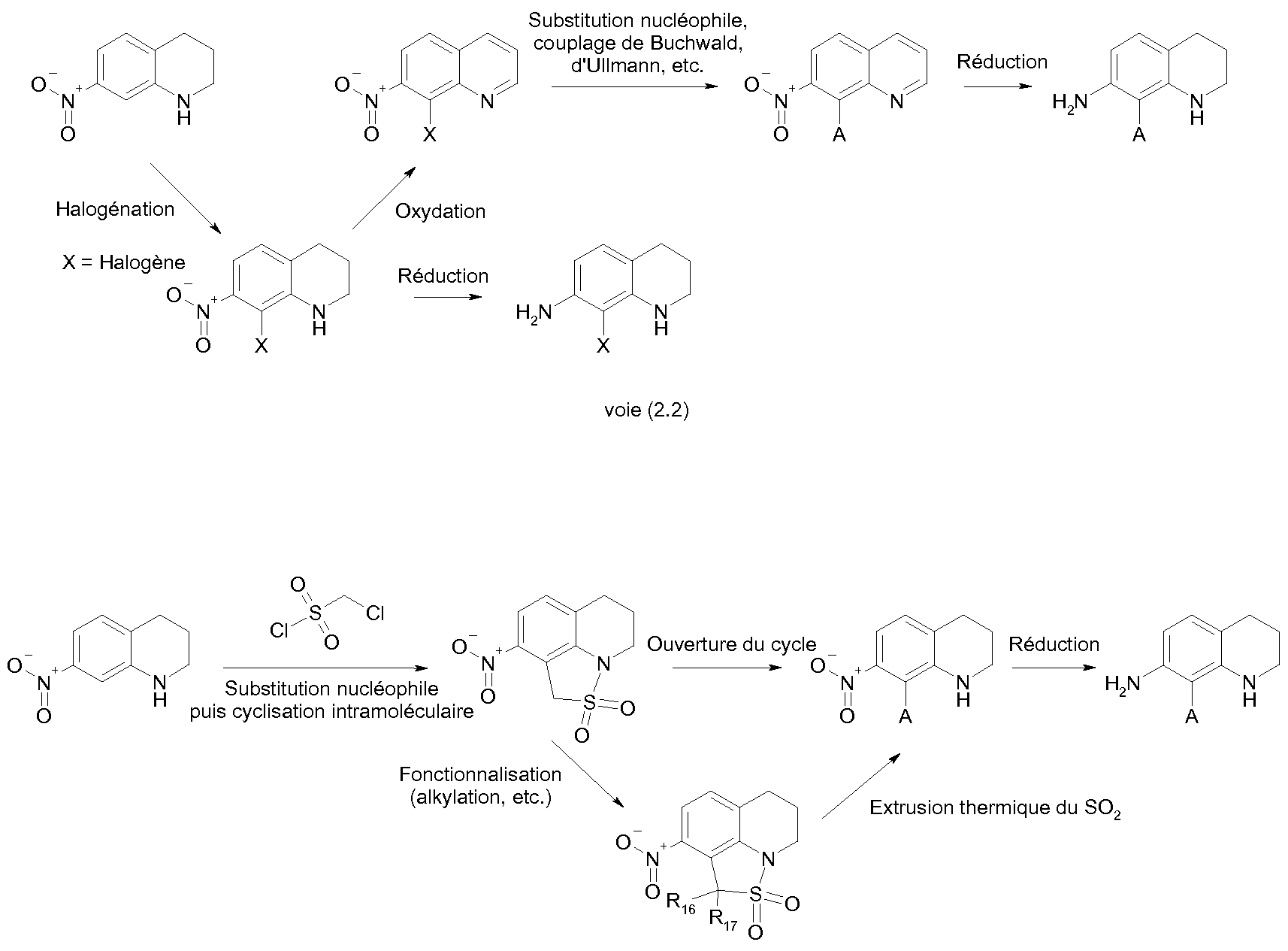
voie (2.3) way (2.3)
Schéma (2) Diagram (2)
La première voie (2.1) est notamment utilisée pour la synthèse des composés 8-alcoxy-7-amino-l,2,3,4-tétrahydroquinoléines. Cette voie de synthèse consiste en une oxydation, puis en une fonctionnalisation, par exemple une O-alkylation, puis en une réduction pour obtenir le composé 8-substitué-7-amino- 1 , 2,3,4- tétrahydroquinoléine souhaité. Cette voie de synthèse est notamment illustrée par l'exemple de synthèse 2 décrit ci-après. The first route (2.1) is used in particular for the synthesis of 8-alkoxy-7-amino-1,2,3,4-tetrahydroquinoline compounds. This synthetic route consists of oxidation followed by functionalization, for example O-alkylation, followed by reduction to obtain the desired 8-substituted-7-amino-1,2,3,4-tetrahydroquinoline compound. This synthetic route is particularly illustrated by the synthesis example 2 described below.
La seconde voie (2.2) consiste dans un premier temps en une étape d'halogénation de la 7-nitro-tétrahydroquinoléine, par exemple par l'intermédiaire du N-bromo(ou chloro)succinimide, puis en une oxydation, puis en une substitution nucléophile ou couplage de Buchwald ou couplage d'Ullmann, et enfin en une réduction pour obtenir le composé 8-substitué-7-amino - l ,2,3 ,4-tétrahydroquinoléine souhaité . Cette voie de synthèse est notamment illustrée par les exemples de synthèse 4 à 7 décrits ci-après . The second route (2.2) consists first of all in a step of halogenation of 7-nitro-tetrahydroquinoline, for example via N-bromo (or chloro) succinimide, and then into a oxidation, followed by nucleophilic substitution or Buchwald coupling or Ullmann coupling, and finally a reduction to obtain the desired 8-substituted-7-amino-1,2,3,4-tetrahydroquinoline compound. This synthetic route is particularly illustrated by Synthesis Examples 4 to 7 described below.
Notamment pour la synthèse des composé (5) et (6) tels que décrits précédemment, la voie (2.2) peut également consister en l ' étape d' halogénation de la 7-nitro-tétrahydroquinoléine, suivie par une étape de réduction pour conduire aux composés 8-halogéno-7- amino- 1 ,2,3 ,4-tétrahydroquinoléines souhaités . In particular for the synthesis of the compounds (5) and (6) as described previously, the route (2.2) may also consist of the halogenation step of 7-nitro-tetrahydroquinoline, followed by a reduction step to lead to desired 8-halo-7-amino-1,2,3,4-tetrahydroquinoline compounds.
La troisième voie (2.3) consiste en une substitution nucléophile de la 7-nitro-tétrahydroquinoléine par le chlorure d' acide chlorométhanesulfonique suivie par une cyclisation intramo léculaire . Ensuite, l' intermédiaire ainsi obtenu : The third route (2.3) consists of nucleophilic substitution of 7-nitro-tetrahydroquinoline with chloromethanesulfonic acid chloride followed by intramolecular cyclization. Then the intermediary thus obtained:
est fonctionnalisé, notamment une alkylation, sur le carbone en alpha du groupement S02 puis subi une extrusion thermique du groupement SO2 pour arriver à l' intermédiaire 8-substitué-7- nitro-tétrahydroquinoléine ; Cette voie de synthèse est notamment illustrée par l ' exemple de synthèse 1 décrit ci-après et le composé (4) pourrait aussi être réalisé par cette voie ; ou subit une ouverture du cycle dioxothiazolidine en milieu basique pour obtenir l ' intermédiaire 8-substitué-7-nitro- tétrahydroquinoléine utile par exemp le pour la synthèse de composé ( 10) . is functionalized, in particular an alkylation, on the alpha carbon of the S0 2 group and then undergoes a thermal extrusion of the SO2 group to arrive at the 8-substituted-7-nitro-tetrahydroquinoline intermediate; This synthetic route is particularly illustrated by the synthesis example 1 described below and the compound (4) could also be achieved by this route; or undergoes an opening of the dioxothiazolidine ring in basic medium to obtain the 8-substituted-7-nitro-tetrahydroquinoline intermediate useful for example for the synthesis of compound (10).
Enfin, l'intermédiaire 8-substitué-7-nitro-tétrahydroquino léine est réduit pour conduire au produit 8-substitué-7-amino- tétrahydroquinoléine souhaité . Finally, the 8-substituted-7-nitro-tetrahydroquinoline intermediate is reduced to yield the desired 8-substituted-7-amino-tetrahydroquinoline product.
Les étapes de réduction selon la seconde stratégie de synthèse sont mises en œuvre selon le même mode opératoire que celui décrit ci-avant pour la première stratégie de synthèse. The reduction steps according to the second synthesis strategy are implemented according to the same procedure as that described above for the first synthesis strategy.
Les étapes d' oxydation sont réalisées dans des conditions classiques connues par l'homme du métier, de préférence par réaction avec le 2,3 -dichloro-5 ,6-dicyanobenzoquinone (DDQ) comme oxydant. Composition The oxidation steps are carried out under standard conditions known to those skilled in the art, preferably by reaction with 2,3-dichloro-5,6-dicyanobenzoquinone (DDQ) as an oxidizer. Composition
La présente invention concerne également une composition cosmétique comprenant : The present invention also relates to a cosmetic composition comprising:
un ou plusieurs composés de formule (I) tels que définis précédemment; et one or more compounds of formula (I) as defined above; and
une ou plusieurs bases d'oxydation. De préférence, les composés de formule (I) sont choisis parmi les composés (1) à (45) tels que décrits précédemment. one or more oxidation bases. Preferably, the compounds of formula (I) are chosen from compounds (1) to (45) as described above.
La présente invention a également pour objet une composition C2, notamment une composition cosmétique C2, contenant au moins un composé de formule (IA) ou de formule (IB) ou contenant au moins un composé choisi parmi les composés (1), (4), (8), (9), (10), (11), (12), (13), (14), (15), (16), (18), (19), (20), (21), (22), (23), (24), (25), (26), (27), (28), (29), (30), (31), (32), (33), (34), (35), (36), (37), (38), (39), (40), (41), (42), (43), (44), (45) décrits précédemment, ainsi que leurs sels d'acide ou de base, organique ou minéral, leurs formes tautomères, leurs isomères optiques, leurs isomères géométriques et/ou leurs solvates tels que ses hydrates. The subject of the present invention is also a composition C2, in particular a cosmetic composition C2, containing at least one compound of formula (IA) or of formula (IB) or containing at least one compound chosen from compounds (1), (4) , (8), (9), (10), (11), (12), (13), (14), (15), (16), (18), (19), (20), 21), (22), (23), (24), (25), (26), (27), (28), (29), (30), (31), (32), (33) , (34), (35), (36), (37), (38), (39), (40), (41), (42), (43), (44), (45) previously described as well as their organic or inorganic acid or base salts, their tautomeric forms, their optical isomers, their geometric isomers and / or their solvates such as its hydrates.
De préférence, la teneur du ou des composés de formule (I) ou (IA) ou (IB) dans la composition selon l'invention est comprise entre 0,001 et 20% en poids, plus préférentiellement entre 0,005 et 6% en poids, par rapport au poids total de la composition. Preferably, the content of the compound (s) of formula (I) or (IA) or (IB) in the composition according to the invention is between 0.001 and 20% by weight, more preferably between 0.005 and 6% by weight, by relative to the total weight of the composition.
Comme indiqué ci-avant, la composition cosmétique selon l'invention comprend également au moins une base d'oxydation. As indicated above, the cosmetic composition according to the invention also comprises at least one oxidation base.
À titre d'exemple, les bases d'oxydation sont choisies parmi les para-phénylènediamines, les bis(phényl)alkylènediamines, les para- aminophénols, les ortho-aminophénols et les bases hétérocycliques et les sels d'addition correspondants. Parmi les para-phénylènediamines qui peuvent être mentionnées, on trouve par exemple la para-phénylènediamine, la para-toluènediamine, la 2-chloro-para-phénylènediamine, la 2,3 - diméthyl-para-phénylènediamine, la 2,6-diméthyl-para- phénylènediamine, la 2,6-diéthyl-para-phénylènediamine, la 2,5 - diméthyl-para-phénylènediamine, la N,N-diméthyl-para- phénylènediamine, la Ν,Ν-diéthyl-para-phénylènediamine, la N,N- dipropyl-para-phénylènediamine, la 4-amino-N,N-diéthyl-3 - méthylaniline, la N,N-bis(P-hydroxyéthyl)-para-phénylènediamine, la 4-N,N-bis(P-hydroxyéthyl)amino-2-méthylaniline, 4-N,N-bis(B- hy dro xyéthyl)amino -2 -chloro aniline, la 2-P-hydroxyéthyl-/?ara- phénylènediamine, la 2-méthoxyméthyl-para-phénylènediamine, la 2- fluoro -para-phénylènediamine, la 2-isopropyl-para-phénylènediamine, la N-(P-hydroxypropyl)-para-phénylènediamine, la 2-hydroxyméthyl- para-phénylènediamine, la N,N-diméthyl-3 -méthyl-para- phénylènediamine, la N-éthyl-N-(P-hydroxyéthyl)-para- phénylènedi aminé, la N-(P,y-dihydroxypropyl) -para-phénylènediamine, la N-(4'-aminophényl)-para-phénylènediamine, la N-phényl-para- phénylènediamine, la 2- -hydroxyéthyloxy-para-phénylènediamine, la 2- -acétylaminoéthyloxy-para-phénylènediamine, la Ν-(β- méthoxyéthyl) -para-phénylènediamine, la 4-aminophénylpyrrolidine, la 2-thiényl-para-phénylènediamine, le 2- -hydroxyéthylamino-5 - aminotoluène et la 3 -hydroxy- 1 -(4'-aminophényl)pyrrolidine et les sels d' addition correspondants avec un acide. By way of example, the oxidation bases are chosen from para-phenylenediamines, bis (phenyl) alkylenediamines, para-aminophenols, ortho-aminophenols and heterocyclic bases and the corresponding addition salts. Among the para-phenylenediamines which may be mentioned are, for example, para-phenylenediamine, para-toluenediamine, 2-chloro-para-phenylenediamine, 2,3-dimethyl-para-phenylenediamine, 2,6-dimethyl para-phenylenediamine, 2,6-diethyl-para-phenylenediamine, 2,5-dimethyl-para-phenylenediamine, N, N-dimethyl-para-phenylenediamine, Ν, Ν-diethyl-para-phenylenediamine, N, N-dipropyl-para-phenylenediamine, 4-amino-N, N-diethyl-3-methylaniline, N, N-bis (β-hydroxyethyl) -para-phenylenediamine, 4-N, N-bis ( P-hydroxyethyl) amino-2-methylaniline, 4-N, N-bis (B-hydroxyethyl) amino-2-chloroaniline, 2-P-hydroxyethyl-α-phenylenediamine, 2-methoxymethyl-para phenylenediamine, 2-fluoro-para-phenylenediamine, 2-isopropyl-para-phenylenediamine, N- (β-hydroxypropyl) -para-phenylenediamine, 2-hydroxymethyl-para-phenylenediamine, N, N-dimethyl- 3-methyl-para-phenylenediamine N-ethyl-N- (β-hydroxyethyl) -para- phenylenediamine, N- (P, γ-dihydroxypropyl) -para-phenylenediamine, N- (4'-aminophenyl) -para-phenylenediamine, N- N-phenyl-para-phenylenediamine, 2-hydroxyethyloxy-para-phenylenediamine, 2-acetylaminoethyloxy-para-phenylenediamine, Ν- (β-methoxyethyl) -para-phenylenediamine, 4-aminophenylpyrrolidine, 2-thienyl para-phenylenediamine, 2-hydroxyethylamino-5-aminotoluene and 3-hydroxy-1- (4'-aminophenyl) pyrrolidine and the corresponding addition salts with an acid.
Parmi les para-phénylènediamines susmentionnées, on préfère en particulier la para-phénylènediamine, la para-toluènediamine, la 2- isopropyl-para-phénylènediamine, la 2- -hydroxyéthyl-para- phénylènediamine, la 2- -hydroxyéthyloxy-para-phénylènediamine, la 2,6-diméthyl-para-phénylènediamine, la 2,6-diéthyl-para- phénylènediamine, la 2,3 -diméthyl-para-phénylènediamine, la N,N- bis( -hydroxyéthyl)-para-phénylènediamine, la 2-chloro-para- phénylènediamine et la 2- -acétylaminoéthyloxy-para- phénylènediamine et les sels d' addition correspondants avec un acide. Parmi les bis(phényl)alkylènediamines qui peuvent être mentionnées, on trouve par exemple le N,N'-bis(P-hydroxyéthyl)-N,N'- bis(4'-aminophényl)-l,3-diaminopropanol, la N,N'-bis(P- hydroxyéthyl)-N,N'-bis(4'-aminophényl)éthylènediamine, la Ν,Ν'- bis(4-aminophényl)tétraméthylènediamine, la N,N'-bis( - hydroxyéthyl)-N,N'-bis(4-aminophényl)tétraméthylènediamine, la N,N'-bis(4-méthylaminophényl)tétraméthylènediamine, la Ν,Ν'- bis(éthyl)-N,N'-bis(4'-amino-3'-méthylphényl)éthylènediamine et le 1 ,8-bis(2,5-diaminophénoxy)-3,6-dioxaoctane et les sels d'addition correspondants. Among the para-phenylenediamines mentioned above, para-phenylenediamine, para-toluenediamine, 2-isopropyl-para-phenylenediamine, 2-hydroxyethyl-para-phenylenediamine and 2-hydroxyethyloxy-para-phenylenediamine are particularly preferred. 2,6-dimethyl-para-phenylenediamine, 2,6-diethyl-para-phenylenediamine, 2,3-dimethyl-para-phenylenediamine, N, N-bis (-hydroxyethyl) -para-phenylenediamine, 2 chloro-para-phenylenediamine and 2-acetylaminoethyloxy-para-phenylenediamine and the corresponding addition salts with an acid. Among the bis (phenyl) alkylenediamines which may be mentioned are, for example, N, N'-bis (β-hydroxyethyl) -N, N'-bis (4'-aminophenyl) -1,3-diaminopropanol, N N, N'-bis (β-hydroxyethyl) -N, N'-bis (4'-aminophenyl) ethylenediamine, Ν, Ν'-bis (4-aminophenyl) tetramethylenediamine, N, N'-bis (-hydroxyethyl) N, N'-bis (4-aminophenyl) tetramethylenediamine, N, N'-bis (4-methylaminophenyl) tetramethylenediamine, Ν, Ν'-bis (ethyl) -N, N'-bis (4'-amino) -3'-methylphenyl) ethylenediamine and 1,8-bis (2,5-diaminophenoxy) -3,6-dioxaoctane and the corresponding addition salts.
Parmi les para-aminophénols qui sont mentionnés, on trouve par exemple le para-aminophénol, le 4-amino-3-méthylphénol, le 4- amino-3-fluorophénol, le 4-amino-3-chlorophénol, le 4-amino-3- hydroxyméthylphénol, le 4-amino-2-méthylphénol, le 4-amino-2- hydroxyméthylphénol, le 4-amino-2-méthoxyméthylphénol, le 4- amino-2-aminométhylphénol, le 4-amino-2-( - hydroxyéthylaminométhyl)phénol et le 4-amino-2-fluorophénol et les sels d'addition correspondants avec un acide. Among the para-aminophenols mentioned are, for example, para-aminophenol, 4-amino-3-methylphenol, 4-amino-3-fluorophenol, 4-amino-3-chlorophenol, 4-amino-3-aminophenol, 3-hydroxymethylphenol, 4-amino-2-methylphenol, 4-amino-2-hydroxymethylphenol, 4-amino-2-methoxymethylphenol, 4-amino-2-aminomethylphenol, 4-amino-2-hydroxyethylaminomethyl ) phenol and 4-amino-2-fluorophenol and the corresponding addition salts with an acid.
Parmi les ortho-aminophénols qui peuvent être mentionnés, on trouve par exemple le 2-aminophénol, le 2-amino-5-méthylphénol, le 2-amino-6-méthylphénol et le 5-acétamido-2-aminophénol et les sels d'addition correspondants. Among the ortho-aminophenols which may be mentioned are, for example, 2-aminophenol, 2-amino-5-methylphenol, 2-amino-6-methylphenol and 5-acetamido-2-aminophenol and the salts thereof. corresponding additions.
Parmi les bases hétérocycliques qui peuvent être mentionnées, on trouve par exemple les dérivés de pyridine, de pyrimidine et de pyrazole. Among the heterocyclic bases which may be mentioned are, for example, pyridine, pyrimidine and pyrazole derivatives.
Parmi les dérivés de pyridine qui peuvent être mentionnés, on trouve les composés par exemple décrits dans les brevets GB 1 026978 et GB 1 153 196, par exemple la 2,5-diaminopyridine, la 2-(4-méthoxyphényl)amino-3-aminopyridine et la 3,4-diaminopyridine et les sels d'addition correspondants. Among the pyridine derivatives which may be mentioned are the compounds for example described in patents GB 1 026 978 and GB 1 153 196, for example 2,5-diaminopyridine, 2- (4-methoxyphenyl) amino-3- aminopyridine and 3,4-diaminopyridine and the corresponding addition salts.
D'autres bases d'oxydation de pyridine qui sont utiles dans la présente invention sont les bases d'oxydation de 3-aminopyrazolo[ 1 ,5- ajpyridine ou les sels d'addition correspondants décrits, par exemple, dans la demande de brevet FR 2 801 308. Des exemples qui peuvent être mentionnés comprennent la pyrazolo [ 1 ,5-a]pyrid-3-ylamine, la 2- acétylaminopyrazolo[ 1 ,5-a]pyrid-3-ylamine, la 2-morpholin-4- ylpyrazolo[l,5-a]pyrid-3-ylamine, l'acide 3-aminopyrazolo[ 1 ,5- a]pyridine-2-carboxylique, la 2-méthoxypyrazolo[ 1 ,5-a]pyrid-3- ylamine, le (3-aminopyrazolo[ 1 ,5-a]pyrid-7-yl)méthanol, le 2-(3- aminopyrazolo[ 1 ,5-a]pyrid-5-yl)éthanol, le 2-(3-aminopyrazolo[ 1 ,5- a]pyrid-7-yl)éthanol, le (3-aminopyrazolo[ 1 ,5-a]pyrid-2-yl)méthanol, la 3,6-diaminopyrazolo[ 1 ,5-a]pyridine, la 3,4-diaminopyrazolo[ 1 ,5- ajpyridine, la pyrazolo[ 1 ,5-a]pyridine-3 ,7-diamine, la 7-morpholin-4- ylpyrazolo[l,5-a]pyrid-3-ylamine, la pyrazolo[ 1 ,5-a]pyridine-3,5- diamine, la 5-morpholin-4-ylpyrazolo[l,5-a]pyrid-3-ylamine, le 2-[(3- aminopyrazolo[ 1 ,5-a]pyrid-5-yl)(2-hydroxyéthyl)-amino]éthanol, le 2- [(3-aminopyrazolo[ 1 ,5-a]pyrid-7-yl)(2-hydroxyéthyl)amino]éthanol, le 3-aminopyrazolo[ 1 ,5-a]pyridin-5-ol, le 3-aminopyrazolo[ 1 ,5-a]pyridin- 4-ol, le 3-aminopyrazolo[l,5-a]pyridin-6-ol, le 3-aminopyrazolo[ 1 ,5- a]pyridin-7-ol, la 2-P-hydroxyéthoxy-3-amino-pyrazolo[ 1 ,5- ajpyridine ; la 2-(4-diméthylpipérazinium- 1 -yl)-3-amino-pyrazolo[ 1 ,5- ajpyridine ; et les sels d'addition correspondants. Other pyridine oxidation bases which are useful in the present invention are the oxidation bases of 3-aminopyrazolo [1,5-ajpyridine or the corresponding addition salts described, for example, in the FR patent application. 2 801 308. Examples that can to be mentioned include pyrazolo [1,5-a] pyrid-3-ylamine, 2-acetylaminopyrazolo [1,5-a] pyrid-3-ylamine, 2-morpholin-4-ylpyrazolo [1,5-a] pyrid-3-ylamine, 3-aminopyrazolo [1,5-a] pyridine-2-carboxylic acid, 2-methoxypyrazolo [1,5-a] pyrid-3-ylamine, (3-aminopyrazolo [1, 5-a] pyrid-7-yl) methanol, 2- (3-aminopyrazolo [1,5-a] pyrid-5-yl) ethanol, 2- (3-aminopyrazolo [1,5-a] pyrid- 7-yl) ethanol, (3-aminopyrazolo [1,5-a] pyrid-2-yl) methanol, 3,6-diaminopyrazolo [1,5-a] pyridine, 3,4-diaminopyrazolo [1, 5-Ajpyridine, pyrazolo [1,5-a] pyridine-3,7-diamine, 7-morpholin-4-ylpyrazolo [1,5-a] pyrid-3-ylamine, pyrazolo [1,5-a] ] pyridine-3,5-diamine, 5-morpholin-4-ylpyrazolo [1,5-a] pyrid-3-ylamine, 2 - [(3-aminopyrazolo [1,5-a] pyrid-5-yl] ) (2-hydroxyethyl) -amino] ethanol, 2 - [(3-aminopyrazolo [1,5-a] pyrid-7-yl) (2-hydroxyethyl) amino] ethanol, 3-aminopyrazolo [1, 5- a] pyridin-5-ol, 3-aminopyrazolo [1,5-a] pyridin-4-ol, 3-amino pyrazolo [1,5-a] pyridin-6-ol, 3-aminopyrazolo [1,5-a] pyridin-7-ol, 2-P-hydroxyethoxy-3-amino-pyrazolo [1,5-a] pyridine; 2- (4-dimethylpiperazinium-1-yl) -3-amino-pyrazolo [1,5-a] pyridine; and the corresponding addition salts.
Plus particulièrement, les bases d'oxydation qui sont utiles dans la présente invention sont choisies parmi les 3-aminopyrazolo- [l,5-a]-pyridines et de préférence substituées sur l'atome de carbone 2 par : More particularly, the oxidation bases which are useful in the present invention are chosen from 3-aminopyrazolo [1,5-a] pyridines and preferably substituted on the 2-carbon atom by:
a) un groupe (di)(Ci-C6)(alkyl)amino, ledit groupe alkyle pouvant être substitué par au moins un groupe hydroxy, amino, imidazolium ; a) a (di) (Ci-C6) (alkyl) amino group, said alkyl group may be substituted by at least one hydroxy, amino, imidazolium group;
b) un groupe hétérocycloalkyle contenant 5 à 7 chaînons et 1 à 3 hétéroatomes, éventuellement cationique, éventuellement substitué par un ou plusieurs groupes (Ci-C6)alkyle, tel qu'un groupe di(Ci- C4)alkylpipérazinium ; ou b) a 5- to 7-membered heterocycloalkyl group and 1 to 3 heteroatoms, optionally cationic, optionally substituted by one or more (C 1 -C 6 ) alkyl groups, such as a di (C 1 -C 4) alkylpiperazinium group; or
c) un groupe (Ci-C6)alcoxy éventuellement substitué par un ou plusieurs groupes hydroxy tels qu'un groupe β-hydroxyalcoxy et les sels d'addition correspondants. c) a (C 1 -C 6 ) alkoxy group optionally substituted by one or more hydroxyl groups such as a β-hydroxyalkoxy group and the corresponding addition salts.
Parmi les dérivés de pyrimidine qui peuvent être mentionnés, on trouve les composés décrits, par exemple, dans les brevets DE 2359399 ; JP 88-169571 ; JP 05-63124 ; EP 0770375 ou la demande de brevet WO 96/15765, tels que la 2,4,5,6-tétraaminopyrimidine, la 4- hydroxy-2,5,6-triaminopyrimidine, la 2-hydroxy-4,5,6- triaminopyrimidine, la 2,4-dihydroxy-5,6-diaminopyrimidine, la 2,5,6- triaminopyrimidine et leurs sels d'addition et leurs formes tautomères, lorsqu'un équilibre tautomère existe. Among the pyrimidine derivatives which may be mentioned are the compounds described, for example, in the DE patents. 2359399; JP 88-169571; JP 05-63124; EP 0770375 or the patent application WO 96/15765, such as 2,4,5,6-tetraaminopyrimidine, 4-hydroxy-2,5,6-triaminopyrimidine, 2-hydroxy-4,5,6-triaminopyrimidine , 2,4-dihydroxy-5,6-diaminopyrimidine, 2,5,6-triaminopyrimidine and their addition salts and tautomeric forms, when a tautomeric equilibrium exists.
Parmi les dérivés de pyrazole qui peuvent être mentionnés, on trouve les composés décrits dans les brevets DE 3843892, DE 4133957 et les demandes de brevet WO 94/08969, WO 94/08970, FRA-2 733 749 et DE 195 43 988, tels que le 4,5-diamino-l-méthylpyrazole, le 4,5-diamino- 1 -(P-hydroxyéthyl)pyrazole, le 3,4-diaminopyrazole, le 4,5-diamino- 1 - (4'-chlorobenzyl)pyrazole, le 4,5-diamino- 1 ,3-diméthyl- pyrazole, le 4,5-diamino-3-méthyl- 1 -phénylpyrazole, le 4,5-diamino- 1 - méthyl-3-phénylpyrazole, le 4-amino- 1 ,3-diméthyl-5-hydrazino- pyrazole, le 1 -benzyl-4,5-diamino-3-méthylpyrazole, le 4,5-diamino-3- ter t-butyl- 1 -méthylpyrazole, le 4,5-diamino - 1 -tert-butyl-3-méthyl- pyrazole, le 4,5-diamino- 1 -(P-hydroxyéthyl)-3-méthylpyrazole, le 4,5- diamino- 1 -éthyl-3-méthylpyrazole, le 4,5-diamino- 1 -éthyl-3-(4'- méthoxyphényl)pyrazole, le 4,5-diamino- 1 -éthyl-3-hydroxyméthyl- pyrazole, le 4, 5-diamino-3-hydroxyméthyl- 1 -méthylpyrazole, le 4,5- diamino-3-hydroxyméthyl- 1 -isopropylpyrazole, le 4,5-diamino-3- méthyl- 1 - isopropylpyrazole, le 4-amino -5 -(2'-aminoéthyl)amino- 1 ,3- diméthylpyrazole, le 3,4,5-triaminopyrazole, le l-méthyl-3,4,5- triaminopyrazole, le 3,5-diamino-l-méthyl-4-méthylaminopyrazole, le 3,5-diamino-4-( -hydroxyéthyl)amino-l-méthylpyrazole et les sels d'addition correspondants. On peut également utiliser le 4,5-diamino- 1 - (P-méthoxyéthyl)pyrazole. Among the pyrazole derivatives which may be mentioned are the compounds described in DE 3843892, DE 4133957 and the patent applications WO 94/08969, WO 94/08970, FRA-2 733 749 and DE 195 43 988, such as 4,5-Diamino-1-methylpyrazole, 4,5-diamino-1- (P-hydroxyethyl) pyrazole, 3,4-diaminopyrazole, 4,5-diamino-1- (4'-chlorobenzyl) pyrazole, 4,5-diamino-1,3-dimethylpyrazole, 4,5-diamino-3-methyl-1-phenylpyrazole, 4,5-diamino-1-methyl-3-phenylpyrazole, 4- amino-1,3-dimethyl-5-hydrazinopyrazole, 1-benzyl-4,5-diamino-3-methylpyrazole, 4,5-diamino-3-tert-butyl-1-methylpyrazole, 4, 5-diamino-1-tert-butyl-3-methylpyrazole, 4,5-diamino-1- (P-hydroxyethyl) -3-methylpyrazole, 4,5-diamino-1-ethyl-3-methylpyrazole, 4,5-diamino-1-ethyl-3- (4'-methoxyphenyl) pyrazole, 4,5-diamino-1-ethyl-3-hydroxymethyl-pyrazole, 4,5-diamino-3-hydroxymethyl-1 methylpyrazole, 4,5-diamino-3-hr 1-isopropylpyrazole, 4,5-diamino-3-methyl-1-isopropylpyrazole, 4-amino-5- (2'-aminoethyl) amino-1,3-dimethylpyrazole, 3,4,5-triaminopyrazole , 1-methyl-3,4,5-triaminopyrazole, 3,5-diamino-1-methyl-4-methylaminopyrazole, 3,5-diamino-4- (-hydroxyethyl) amino-1-methylpyrazole and salts corresponding additions. 4,5-Diamino-1- (P-methoxyethyl) pyrazole can also be used.
Un 4,5-diaminopyrazole sera utilisé de préférence et encore plus préférentiellement le 4,5-diamino-l-(P-hydroxyéthyl)pyrazole et/ou un sel correspondant. A 4,5-diaminopyrazole will preferably be used and even more preferably 4,5-diamino-1- (P-hydroxyethyl) pyrazole and / or a corresponding salt.
Les dérivés de pyrazole qui peuvent également être mentionnés comprennent les diamino-N,N-dihydropyrazolopyrazolones et en particulier ceux décrits dans la demande de brevet FR-A-2886 136, tels que les composés suivants et les sels d'addition correspondants : la 2,3-diamino-6,7-dihydro-lH,5H-pyrazolo[l,2-a]pyrazol-l-one, la 2- amino-3-éthylamino-6,7-dihydro- lH,5H-pyrazolo[ 1 ,2-a]pyrazol- 1 -one, la 2-amino-3-isopropylamino-6,7-dihydro- lH,5H-pyrazolo[ 1 ,2- ajpyrazol- 1 -one, la 2-amino-3-(pyrrolidin- 1 -yl)-6,7-dihydro- 1H,5H- pyrazolo[ 1 ,2-a]pyrazol- 1 -one, la 4,5-diamino- 1 ,2-diméthyl- 1 ,2- dihydropyrazol-3-one, la 4,5-diamino- 1 ,2-diéthyl- 1 ,2-dihy dropyrazol- 3 -one, la 4,5-diamino- 1 ,2-di-(2-hydroxyéthyl)- 1 ,2-dihy dropyrazo 1-3- one, la 2-amino-3-(2-hydroxyéthyl)amino-6,7-dihydro-lH,5H- pyrazolo[ 1 ,2-a]pyrazol- 1 -one, la 2-amino-3-diméthylamino-6,7- dihydro-lH,5H-pyrazolo[l,2-a]pyrazol-l-one, la 2,3-diamino-5,6,7,8- tétrahydro- lH,6H-pyridazino[ 1 ,2-a]pyrazol- 1 -one, la 4-amino- 1 ,2- diéthyl- 5- (pyrrolidin- 1 -yl)- 1 ,2-dihydropyrazol-3-one, la 4-amino-5-(3- diméthylaminopyrrolidin- 1 -yl) - 1 ,2-diéthyl- 1 ,2-dihydropyrazol-3-one, la 2,3-diamino-6-hydroxy-6,7-dihydro-lH,5H-pyrazolo[ 1 ,2-a]pyrazol- 1-one. The pyrazole derivatives which may also be mentioned include diamino-N, N-dihydropyrazolopyrazolones and in particular those described in patent application FR-A-2886 136, such as the following compounds and the corresponding addition salts: 2,3-diamino-6,7-dihydro-1H, 5H-pyrazolo [1,2-a] pyrazol-1-one, 2-amino-3-ethylamino-6,7-dihydro-1H, 5H- pyrazolo [1,2-a] pyrazol-1-one, 2-amino-3-isopropylamino-6,7-dihydro-1H, 5H-pyrazolo [1,2-a-pyrazol-1-one, 2-amino- 3- (pyrrolidin-1-yl) -6,7-dihydro-1H, 5H-pyrazolo [1,2-a] pyrazol-1-one, 4,5-diamino-1,2-dimethyl-1,2 dihydropyrazol-3-one, 4,5-diamino-1,2-diethyl-1,2-dihydropyris-3-one, 4,5-diamino-1,2-di- (2-hydroxyethyl) - 1,2-dihydropyran-3-one, 2-amino-3- (2-hydroxyethyl) amino-6,7-dihydro-1H, 5H-pyrazolo [1,2-a] pyrazol-1-one, 2-amino-3-dimethylamino-6,7-dihydro-1H, 5H-pyrazolo [1,2-a] pyrazol-1-one, 2,3-diamino-5,6,7,8-tetrahydro- 1H, 6H-pyridazino [1,2-a] pyrazol-1-one, 4-amino-1,2-diethyl-5- (pyrrolidin-1-yl) -1,2-dihydropyrazol-3-one, 4-amino-5- (3-dimethylaminopyrrolidin-1-yl) -1,2-diethyl-1,2-dihydropyrazol-3-one, 2,3-diamino-6-hydroxy-6,7-dihydro-1H 5H-pyrazolo [1,2-a] pyrazol-1-one.
On utilisera de préférence la 2,3-diamino-6,7-dihydro-lH,5H- pyrazolo[l,2-a]pyrazol-l-one et/ou un sel correspondant. 2,3-Diamino-6,7-dihydro-1H, 5H-pyrazolo [1,2-a] pyrazol-1-one and / or a corresponding salt are preferably used.
On utilisera de préférence le 4,5-diamino-l-(P- hydroxyéthyl)pyrazole et/ou la 2,3-diamino-6,7-dihydro-lH,5H- pyrazolo[l,2-a]pyrazol-l-one et/ou un sel correspondant comme bases hétérocycliques. 4,5-Diamino-1- (p-hydroxyethyl) pyrazole and / or 2,3-diamino-6,7-dihydro-1H, 5H-pyrazolo [1,2-a] pyrazol-1 are preferably used. -one and / or a corresponding salt as heterocyclic bases.
La ou les bases d'oxydation représentent chacune avantageusement 0,001% à 10%> en poids par rapport au poids total de la composition et de préférence 0,005%) à 5%> en poids, par rapport au poids total de la composition selon l'invention. The oxidation base or bases each advantageously represent from 0.001% to 10% by weight relative to the total weight of the composition and preferably from 0.005% to 5% by weight, relative to the total weight of the composition according to the invention. invention.
De préférence, la composition cosmétique selon l'invention comprend également au moins un coupleur d'oxydation additionnel, différent des composés de formule (I) ainsi que de leurs isomères géométriques ou optiques, leurs tautomères, leurs sels d'acide ou de base organique ou minéral ou leurs solvates selon l'invention. Preferably, the cosmetic composition according to the invention also comprises at least one additional oxidation coupler, different from the compounds of formula (I) as well as their geometrical or optical isomers, their tautomers, their acid or organic base salts. or mineral or their solvates according to the invention.
Parmi ces coupleurs d'oxydation, on peut en particulier mentionner les méta-phénylènediamines, les méta-aminophénols, les méta-diphénols, les agents de couplage à base de naphtalène et les agents de couplage hétérocycliques ainsi que les sels d'addition correspondants. Among these oxidation couplers, mention may in particular be made of meta-phenylenediamines, meta-aminophenols, meta-diphenols, naphthalene-based coupling agents and heterocyclic coupling agents and the corresponding addition salts.
On peut par exemple mentionner le 1 ,3-dihydroxybenzène, le 1 ,3-dihydroxy-2-méthylbenzène, le 4-chloro- 1 ,3-dihydroxybenzène, le 2,4-diamino- 1 -(B-hydroxyéthyloxy)benzène, le 2-amino-4-(B-hydroxy- éthylamino)- 1 -méthoxybenzène, le 1 ,3-diaminobenzène, le l,3-bis(2,4- diaminophénoxy)propane, la 3-uréidoaniline, le 3-uréido- 1 -diméthyl- aminobenzène, le sésamol, le l-B-hydroxyéthylamino-3,4-méthylène- dioxybenzène, Γα-naphtol, le 2-méthyl- 1 -naphtol, le 6-hydroxyindole, le 4-hydroxyindole, le 4-hydroxy-N-méthylindole, la 2-amino-3- hydroxypyridine, la 6-hydroxybenzomorpholine, la 3,5-diamino-2,6- diméthoxypyridine, le l-N-(B-hydroxyéthyl)amino-3,4-méthylène- dioxybenzène, le 2,6-bis(B-hydroxyéthylamino)toluène, la 6-hydroxy- indoline, la 2,6-dihydroxy-4-méthylpyridine, la 1 -H-3-méthylpyrazol- 5-one, la 1 -phényl-3-méthylpyrazol-5-one, le 2,6-diméthyl- pyrazolo[l,5-b]-l,2,4-triazole, le 2,6-diméthyl[3,2-c]-l,2,4-triazole et le 6-méthylpyrazolo[l,5-a]benzimidazole, le 2-méthyl-5-aminophénol, le 5-N-(B-hydroxyéthyl)amino-2-méthylphénol, le 3-aminophénol , le 3-amino-2-chloro-6-méthylphénol, les sels d'addition correspondants avec un acide et les mélanges correspondants. For example, 1,3-dihydroxybenzene, 1,3-dihydroxy-2-methylbenzene, 4-chloro-1,3-dihydroxybenzene, 2,4-diamino-1- (β-hydroxyethyloxy) benzene may be mentioned, 2-amino-4- (β-hydroxyethylamino) -1-methoxybenzene, 1,3-diaminobenzene, 1,3-bis (2,4-diaminophenoxy) propane, 3-ureidoaniline, 3-ureido 1-dimethylaminobenzene, sesamol, 1,1-hydroxyethylamino-3,4-methylene-dioxybenzene, α-naphthol, 2-methyl-1-naphthol, 6-hydroxyindole, 4-hydroxyindole, 4-hydroxy N-methylindole, 2-amino-3-hydroxypyridine, 6-hydroxybenzomorpholine, 3,5-diamino-2,6-dimethoxypyridine, N- (β-hydroxyethyl) amino-3,4-methylene-dioxybenzene, 2,6-bis (β-hydroxyethylamino) toluene, 6-hydroxyindoline, 2,6-dihydroxy-4-methylpyridine, 1-H-3-methylpyrazol-5-one, 1-phenyl-3 methylpyrazol-5-one, 2,6-dimethylpyrazolo [1,5-b] -1,2,4-triazole, 2,6-dimethyl [3,2-c] -1,2,4 -triazole and 6-methylpyrazolo [ 1,5-a] benzimidazole, 2-methyl-5-aminophenol, 5-N- (β-hydroxyethyl) amino-2-methylphenol, 3-aminophenol, 3-amino-2-chloro-6-methylphenol the corresponding addition salts with an acid and the corresponding mixtures.
De préférence, le ou les coupleurs d'oxydation additionnels, différents des composés de formule (I) ainsi que de leurs isomères géométriques ou optiques, leurs tautomères, leurs sels d'acide ou de base organique ou minéral ou leurs solvates selon l'invention, s'ils sont présents, représentent chacun avantageusement 0,001% à 10% en poids, plus préférentiellement 0,005%> à 5% en poids, par rapport au poids total de la composition selon l'invention. Preferably, the additional oxidation coupler or couplers, different from the compounds of formula (I) as well as their geometrical or optical isomers, their tautomers, their organic or inorganic acid or base salts or their solvates according to the invention , if they are present, each advantageously represents 0.001% to 10% by weight, more preferably 0.005% to 5% by weight, relative to the total weight of the composition according to the invention.
En général, les sels d'addition de bases d'oxydation et d'agents de couplages qui peuvent être utilisés dans le contexte de l'invention sont en particulier choisis parmi les sels d'addition avec un acide, tels que les chlorhydrates, les bromhydrates, les sulfates, les citrates, les succinates, les tartrates, les lactates, les tosylates, les benzènesulfonates, les phosphates et les acétates. La composition selon l' invention peut éventuellement comprendre en outre un ou plusieurs co lorants directs synthétiques ou naturels, choisis parmi les espèces cationiques, anioniques et non ioniques, de préférence les espèces cationiques ou non ioniques, soit comme uniques co lorants additionnels soit en plus du/des co lorant(s) d' oxydation additionnels . In general, the addition salts of oxidation bases and coupling agents which may be used in the context of the invention are in particular chosen from acid addition salts, such as hydrochlorides, hydrobromides, sulphates, citrates, succinates, tartrates, lactates, tosylates, benzenesulfonates, phosphates and acetates. The composition according to the invention may optionally also comprise one or more synthetic or natural direct colors, chosen from cationic, anionic and nonionic species, preferably cationic or nonionic species, either as sole additional colorants or in addition to additional oxidation agent (s).
Des exemples de co lorants directs appropriés qui peuvent être mentionnés comprennent les co lorants directs azo ; les co lorants (poly)méthines tels que les cyanines, les hémicyanines et les styryles ; les co lorants carbonyle ; les co lorants azine ; les co lorants nitro(hétéro)aryle ; les co lorants tri(hétéro)arylméthane ; les co lorants porphyrine ; les co lorants phtalocyanine et les co lorants directs naturels, seuls ou sous forme de mélanges. Examples of suitable direct colors which may be mentioned include azo direct dyes; (poly) methine colorants such as cyanines, hemicyanines and styryls; carbonyl colorants; azine colorants; nitro (hetero) aryl colorants; tri (hetero) arylmethane colorants; porphyrin colorants; phthalocyanine colorants and natural direct colors, alone or in the form of mixtures.
Les co lorants directs sont de préférence des co lorants directs cationiques. On peut mentionner les co lorants cationiques hydrazono des formules (Illa) et (Ill' a), les co lorants cationiques azo (IVa) et (IV' a) et les colorants cationiques diazo (Va) ci-dessous : The direct colorants are preferably cationic direct colors. The hydrazono cationic colorants of the formulas (IIIa) and (III 'a), the azo (IVa) and (IV' a) cationic colorants and the cationic diazo (Va) dyes below:
Het+-C(Ra)=N-N(Rb)-Ar, An" (Illa) Het + -C (R a ) = NN (R b ) -Ar, An " (IIIa)
Het+-N(Ra)-N=C(Rb)-Ar, An (Ill ' a) Het + -N (R a ) -N = C (R b ) -Ar, An (III 'a)
Het+-N=N-Ar, An" (IVa) Het + -N = N-Ar, An " (IVa)
Ar+-N=N-Ar" , An" et Het+-N=N-Ar ' -N=N-Ar, An" Ar + -N = N-Ar ", An " and Het + -N = N-Ar '-N = N-Ar, An "
(Va) (IV'a) (Va) (IV'a)
formules (Illa), (Ill ' a), (IVa), (IV' a) et (Va) dans lesquelles : formulas (IIIa), (III 'a), (IVa), (IV' a) and (Va) in which:
· Het+ représente un radical cationique hétéroaryle, portant de préférence une charge cationique endocyclique, tel qu' imidazolium, indolium ou pyridinium, éventuellement substitué, de préférence, par un ou plusieurs groupes (C i -Cs)-alkyle, tels que méthyle ; Het + represents a cationic heteroaryl radical, preferably carrying an endocyclic cationic charge, such as imidazolium, indolium or pyridinium, optionally substituted, preferably, with one or more (C 1 -C 5) -alkyl groups, such as methyl;
· Ar+ représente un radical aryle, tel que phényle ou naphtyle, portant une charge cationique exocyclique, de préférence ammonium, en particulier tri(C i - C 8)alkylammonium tel que triméthylammonium ; • Ar représente un groupe aryle, en particulier phényle, qui est éventuellement substitué, de préférence par un ou plusieurs groupes donneurs d'électrons, tels que i) (Ci-Cs)alkyle éventuellement substitué, ii) (Ci-Cs)alcoxy éventuellement substitué, iii) (di)(Ci-C8)(alkyl)amino éventuellement substitué sur le(s) groupe(s) alkyle par un groupe hydroxyle, iv) aryl(Ci- C8)alkylamino, v) N-(Ci-C8)alkyl-N-aryl(Ci-C8)alkylamino éventuellement substitué ou, en variante, Ar représente un groupe julolidine ; Ar + represents an aryl radical, such as phenyl or naphthyl, carrying an exocyclic cationic charge, preferably ammonium, in particular tri (C 1 -C 8) alkylammonium such as trimethylammonium; Ar represents an aryl group, in particular phenyl, which is optionally substituted, preferably by one or more electron donor groups, such as i) (Ci-Cs) optionally substituted alkyl, ii) (Ci-Cs) alkoxy optionally substituted, iii) (di) (C 1 -C 8) (alkyl) amino optionally substituted on the alkyl group (s) by a hydroxyl group, iv) aryl (C 1 -C 8) alkylamino, v) N- (C 1 -C 6) C8) optionally substituted alkyl-N-aryl (C1-C8) alkylamino or alternatively Ar represents a julolidine group;
• Ar' représente un groupe (hétéro)arylène divalent éventuellement substitué, tel que phénylène, en particulier para-phénylène, ou naphtalène, qui sont éventuellement substitués, de préférence par un ou plusieurs groupes (Ci-C8)alkyle, hydroxyle ou (Ci- Cs)alcoxy ; Ar 'represents an optionally substituted divalent (hetero) arylene group, such as phenylene, in particular para-phenylene, or naphthalene, which are optionally substituted, preferably by one or more (C 1 -C 8) alkyl, hydroxyl or (Ci - Cs) alkoxy;
• Ar" représente un groupe (hétéro)aryle éventuellement substitué, tel que phényle ou pyrazolyle, qui sont éventuellement substitués, de préférence par un ou plusieurs groupes (Ci-C8)alkyle, hydroxyle, (di)(Ci-C8)(alkyl)amino, (Ci-C8)alcoxy ou phényle ; Ar "represents an optionally substituted (hetero) aryl group, such as phenyl or pyrazolyl, which are optionally substituted, preferably by one or more (C 1 -C 8) alkyl, hydroxyl, (di) (C 1 -C 8) (alkyl) groups; ) amino, (C 1 -C 8) alkoxy or phenyl;
• Ra et Rb, qui peuvent être identiques ou différents, représentent un atome d'hydrogène ou un groupe (Ci-C8)alkyle, qui est éventuellement substitué, de préférence par un groupe hydroxyle ; ou, en variante, le substituant Ra avec un substituant de Het+ et/ou Rb avec un substituant de Ar et/ou Ra avec Rb forment, ensemble avec les atomes qui les portent, un (hétéro)cycloalkyle ; R a and R b , which may be the same or different, represent a hydrogen atom or a (C 1 -C 8) alkyl group, which is optionally substituted, preferably with a hydroxyl group; or, alternatively, the substituent R a with a substituent of Het + and / or R b with a substituent of Ar and / or R a with R b form, together with the atoms that carry them, a (hetero) cycloalkyl;
en particulier, Ra et Rb représentent un atome d'hydrogène ou un groupe (Ci-C4)alkyle, qui est éventuellement substitué par un groupe hydroxyle ; in particular, R a and R b represent a hydrogen atom or a (C 1 -C 4) alkyl group, which is optionally substituted with a hydroxyl group;
• An" représente un contre-ion anionique, tel que mésylate ou halogénure. • An " represents an anionic counterion, such as mesylate or halide.
On peut en particulier mentionner les colorants cationiques azo et hydrazono portant une charge cationique endocyclique des formules (Illa), (Ill'a) et (IVa) telles que définies précédemment. Plus particulièrement, ceux des formules (Illa), (Ill'a) et (IVa) dérivés des colorants décrits dans les demandes de brevet WO 95/15144, WO 95/01772 et EP-714954. In particular mention may be made of the cationic dyes azo and hydrazono bearing an endocyclic cationic charge of the formulas (IIIa), (IIIa) and (IVa) as defined above. More particularly, those of formulas (IIIa), (IIIa) and (IVa) derived from dyes described in patent applications WO 95/15144, WO 95/01772 and EP-714954.
De préférence, la partie cationique est dérivée des dérivés suivants :

(IIIa-1) (IVa-1) (IIIa-1) (IVa-1)
formules (IIIa-1) et (IVa-1) avec : formulas (IIIa-1) and (IVa-1) with:
- R1 représentant un groupe (Ci-C4)-alkyle tel que méthyle ;R 1 represents a (C 1 -C 4) -alkyl group such as methyl;
- R2 et R3, qui sont identiques ou différents, représentent un atome d'hydrogène ou un groupe (Ci-C4)-alkyle, tel que méthyle ; etR 2 and R 3 , which are identical or different, represent a hydrogen atom or a (C 1 -C 4) alkyl group, such as methyl; and
- R4 représentent un atome d'hydrogène ou un groupe donneur d'électrons, tel qu'un groupe (Ci-Cs)alkyle éventuellement substitué,R 4 represents a hydrogen atom or an electron donor group, such as an optionally substituted (C 1 -C 6) alkyl group,
(Ci-Cs)alcoxy éventuellement substitué ou (di)(Ci-C8)(alkyl)amino éventuellement substitué sur le(s) groupe(s) alkyle par un groupe hydroxyle ; en particulier R4 représente un atome d'hydrogène, (C1-C8) optionally substituted alkoxy or (di) (C1-C8) (alkyl) amino optionally substituted on the alkyl group (s) by a hydroxyl group; in particular R 4 represents a hydrogen atom,
- Z représente un groupe CH ou un atome d'azote, de préférence CH ; Z represents a CH group or a nitrogen atom, preferably CH;
- An" représente un contre-ion anionique, tel que mésylate ou halogénure. - An " represents an anionic counterion, such as mesylate or halide.
En particulier, le colorant des formules (IIIa-1) et (IVa-1) est choisi parmi le Basic Red 51, le Basic Yellow 87 et le Basic Orange 31 ou des dérivés correspondants : In particular, the dye of the formulas (IIIa-1) and (IVa-1) is chosen from the Basic Red 51, the Basic Yellow 87 and the Basic Orange 31 or corresponding derivatives:

Basic Red 51 Basic Orange 31 Basic Yellow 87 Parmi les colorants directs naturels qui peuvent être utilisés selon l'invention, on peut mentionner l'acide hennotannique, la juglone, l'alizarine, la purpurine, l'acide carminique, l'acide kermésique, la purpurogalline, le protocatéchaldéhyde, l'indigo, l'isatine, la curcumine, la spinulosine, l'apigénidine et l'orcéine. Les extraits ou les décoctions contenant ces colorants naturels et en particulier les cataplasmes ou les extraits à base de henné peuvent également être utilisés. Lorsqu'ils sont présents, le(s) colorant(s) directs représentent plus particulièrement 0,001% à 10%> en poids et de préférence 0,005%) à 5%> en poids du poids total de la composition. Basic Red 51 Basic Orange 31 Basic Yellow 87 Among the natural direct dyes that can be used according to the invention, mention may be made of hennotannic acid, juglone, alizarin, purpurine, carminic acid, kermesic acid, purpurogalline, protocatechaldehyde, indigo, isatin, curcumin, spinulosin, apigenidine and orcein. Extracts or decoctions containing these natural dyes and in particular poultices or extracts based on henna can also be used. When present, the direct dye (s) are more particularly from 0.001% to 10% by weight and preferably from 0.005% to 5% by weight of the total weight of the composition.
Selon un mode de réalisation préféré de l'invention, la composition cosmétique selon l'invention, comprend : According to a preferred embodiment of the invention, the cosmetic composition according to the invention comprises:
- un ou plusieurs composés de formule (I) tels que définis précédemment, de préférence les composés de formule (I) sont choisis parmi les composés (1) à (45) tels que définis précédemment, plus préférentiellement parmi les composés (1), (4), (8), (9), (10), (11), (12), (13), (14), (15), (16), (18), (19), (20), (21), (22), (23), (24), (25), (26), (27), (28), (29), (30), (31), (32), (33), (34), (35), (36), (37), (38), (39), (40), (41), (42), (43), (44), et (45) tels que définis précédemment ; one or more compounds of formula (I) as defined above, preferably the compounds of formula (I) are chosen from compounds (1) to (45) as defined previously, more preferably from compounds (1), (4), (8), (9), (10), (11), (12), (13), (14), (15), (16), (18), (19), (20) ), (21), (22), (23), (24), (25), (26), (27), (28), (29), (30), (31), (32), (33), (34), (35), (36), (37), (38), (39), (40), (41), (42), (43), (44), and 45) as defined previously;
- une ou plusieurs bases d'oxydation ; et one or more oxidation bases; and
- un ou plusieurs agents oxydants chimiques. one or more chemical oxidizing agents.
De préférence, le ou les agents oxydants chimiques sont choisis parmi le peroxyde d'hydrogène, le peroxyde d'urée, les bromates de métaux alcalins, les persels tels que les perborates et persulfates, les peracides et les enzymes oxydases (avec leurs cofacteurs éventuels) parmi lesquelles on peut citer les peroxydases, les oxydo-réductases à 2 électrons telles que les uricases et les oxygénases à 4 électrons comme les laccases, de préférence, l'agent oxydant chimique est du peroxyde d'hydrogène. De préférence, lorsqu ' ils sont présents, la teneur totale de ou des agents oxydants chimiques présents dans la composition cosmétique selon l' invention, est comprise entre 0,001 et 30% en poids, plus préférentiellement entre 0,05 et 20% en poids, plus préférentiellement encore entre 0,2 et 15 % en poids, par rapport au poids total de la composition cosmétique. Preferably, the chemical oxidizing agent (s) are chosen from hydrogen peroxide, urea peroxide, alkali metal bromates, persalts such as perborates and persulfates, peracids and oxidase enzymes (with their potential cofactors). ) among which may be mentioned peroxidases, 2-electron oxidoreductases such as uricases and 4-electron oxygenases such as laccases, preferably the chemical oxidizing agent is hydrogen peroxide. Preferably, when they are present, the total content of or chemical oxidizing agents present in the cosmetic composition according to the invention is between 0.001 and 30% by weight, more preferably between 0.05 and 20% by weight, more preferably still between 0.2 and 15% by weight, relative to the total weight of the cosmetic composition.
Le pH de la composition oxydante renfermant le ou les agents oxydants chimiques est tel qu'après mélange avec la composition cosmétique, le pH de la composition résultante appliquée sur les fibres kératiniques varie de préférence entre 2 et 12 environ, encore plus préférentiellement entre 3 et 1 0 et encore plus particulièrement entre 4 et 9,5. Il peut être ajusté à la valeur désirée au moyen d'agents acidifiants ou alcalinisants habituellement utilisés en co loration des fibres kératiniques et tels que définis précédemment. The pH of the oxidizing composition containing the chemical oxidizing agent (s) is such that, after mixing with the cosmetic composition, the pH of the resulting composition applied to the keratin fibers preferably varies between 2 and 12 approximately, even more preferentially between 3 and 10 and even more particularly between 4 and 9.5. It can be adjusted to the desired value by means of acidifying or alkalinizing agents usually used in the keratinous fiber coatings and as defined above.
Selon une autre variante de l' invention, la composition cosmétique est une composition cosmétique prête à l ' emploi, notamment pour la teinture des fibres kératiniques en particulier humaines telles que les cheveux, qui résulte du mélange d' une composition cosmétique comprenant un ou plusieurs composés de formule (I) ou (IA) ou (IB) tels que définis précédemment et d'une composition cosmétique oxydante comprenant un ou plusieurs agents oxydants chimiques . Selon une autre variante de l' invention, la composition comprenant un ou plusieurs composés de formule (I) ou (IA) ou (IB) tels que définis précédemment est dépourvue d' agent oxydant chimique. De préférence, la composition comprend en outre un milieu cosmétiquement acceptable pour la teinture des fibres kératiniques . According to another variant of the invention, the cosmetic composition is a ready-to-use cosmetic composition, in particular for dyeing keratin fibers, in particular human fibers such as the hair, which results from mixing a cosmetic composition comprising one or more compounds of formula (I) or (IA) or (IB) as defined above and an oxidizing cosmetic composition comprising one or more chemical oxidizing agents. According to another variant of the invention, the composition comprising one or more compounds of formula (I) or (IA) or (IB) as defined above is devoid of chemical oxidizing agent. Preferably, the composition further comprises a cosmetically acceptable medium for dyeing keratin fibers.
Par milieu cosmétiquement acceptable, on entend un milieu approprié pour la teinture des fibres kératiniques qui comprend généralement de l'eau ou un mélange d'eau et d'au moins un so lvant organique tel que, par exemple, les alcools inférieurs en C 1 - C4 , ramifiés ou non, tels que l'éthano l et l'isopropano l ; les polyo ls et éthers de polyo ls comme le 2-butoxyéthano l, le propylèneglycol, le monométhyléther de propylèneglycol, le monoéthyléther et le monométhyléther du diéthylèneglycol, le glycéro l ainsi que les alcools aromatiques comme l'alcool benzylique ou le phénoxyéthano l, et leurs mélanges. By cosmetically acceptable medium is meant a suitable medium for dyeing keratin fibers which generally comprises water or a mixture of water and at least one solvent. organic such as, for example, C 1 -C 4 lower alcohols, branched or unbranched, such as ethanol and isopropanol; polyols and polyol ethers such as 2-butoxyethanol, propylene glycol, propylene glycol monomethyl ether, diethylene glycol monoethyl ether and monomethyl ether, glycerol and aromatic alcohols such as benzyl alcohol or phenoxyethanol; and their mixtures.
Le pH de la composition selon l' invention peut éventuellement être ajusté à la valeur désirée au moyen d 'un ou plusieurs agents acidifiants et/ou d'un ou plusieurs agents alcalinisants . The pH of the composition according to the invention may optionally be adjusted to the desired value by means of one or more acidifying agents and / or of one or more basifying agents.
Parmi les agents acidifiants, on peut citer, à titre d'exemple, les acides minéraux ou organiques comme l'acide chlorhydrique, l'acide orthophosphorique, l'acide sulfurique, les acides carboxyliques comme l'acide acétique, l'acide tartrique, l'acide citrique, l'acide lactique, les acides sulfoniques . Among the acidifying agents, mention may be made, by way of example, of mineral or organic acids such as hydrochloric acid, orthophosphoric acid, sulfuric acid, carboxylic acids such as acetic acid, tartaric acid, citric acid, lactic acid, sulphonic acids.
Parmi les agents alcalinisants on peut citer, à titre d'exemple, l'ammoniaque, les carbonates alcalins, les alcanolamines telles que les mono-, di- et triéthanolamines ainsi que leurs dérivés, les hydroxydes de sodium ou de potassium et les composés de formule (VI) suivante : Among the alkalinizing agents that may be mentioned, by way of example, are ammonia, alkaline carbonates, alkanolamines such as mono-, di- and triethanolamines and their derivatives, sodium or potassium hydroxides and following formula (VI):
RaRbN- Z-NRcRd ; RaRbN-Z-NRcRd;
dans laquelle Z est un groupe (C i - C6)alkylène, linéaire ou ramifié, éventuellement substitué notamment par un ou plusieurs groupes hydroxy ou amino, de préférence Z = propylène éventuellement substitué par un groupement hydroxyle ou un radical alkyle en C i -in which Z is a linear or branched (C 1 -C 6 ) alkylene group, optionally substituted in particular with one or more hydroxyl or amino groups, preferably Z = propylene optionally substituted by a hydroxyl group or a C 1 -C 4 alkyl radical;
C4 ; Ra, Rb , Rc et Rd, identiques ou différents, représentent un atome d'hydrogène, un radical alkyle en C 1 - C4 ou hydroxyalkyle en C 1 - C4. C 4 ; Ra, Rb, R c and Rd, which may be identical or different, represent a hydrogen atom or a C 1 -C 4 alkyl or C 1 -C 4 hydroxyalkyl radical.
Avantageusement, la composition cosmétique selon l' invention peut comprendre en outre au moins un additif choisi parmi les parfums, les tensio actifs (cationiques, anioniques, non ioniques ou amphotères), les agents séquestrant, les polymères, les céramides, les silicones, les agents conservateurs, les agents nacrant ou opacifiant, les vitamines ou provitamines . Lorsqu' ils sont présents, la teneur totale du ou des additifs présents dans la composition est comprise entre 0,01 et 20% en poids par rapport au poids total de la composition selon l' invention. La composition cosmétique selon l'invention peut se présenter sous des formes diverses, telles que sous forme de liquides, de crèmes, de gels, de mousses, ou sous toute autre forme appropriée pour réaliser une co loration des fibres kératiniques, et notamment des cheveux humains. Advantageously, the cosmetic composition according to the invention may further comprise at least one additive chosen from perfumes, surfactants (cationic, anionic, nonionic or amphoteric), sequestering agents, polymers, ceramides, silicones, preservatives, pearlescent or opacifying agents, vitamins or provitamins. When they are present, the total content of the additive (s) present in the composition is between 0.01 and 20% by weight relative to the total weight of the composition according to the invention. The cosmetic composition according to the invention may be in various forms, such as in the form of liquids, creams, gels, foams, or in any other form suitable for effecting a co-loration of the keratinous fibers, and in particular of the hair humans.
L 'invention a également pour obj et un procédé de co loration des fibres kératiniques, en particulier les fibres kératiniques humaines telles que les cheveux, comprenant au moins une étape d' application sur lesdites fibres kératiniques de la composition cosmétique selon l' invention telle que définie précédemment, et éventuellement au moins une étape d' application sur lesdites fibres kératiniques d 'une composition cosmétique oxydante telle que décrite précédemment. The invention also relates to a process for the coororation of keratinous fibers, in particular human keratin fibers such as the hair, comprising at least one step of applying to said keratinous fibers of the cosmetic composition according to the invention such that defined above, and optionally at least one step of applying to said keratinous fibers an oxidizing cosmetic composition as described above.
Selon ce mode de réalisation, lorsque le ou les étapes ii) sont mises en œuvre, il est entendu qu' entre le ou les étapes i) et le ou les étapes ii), lesdites fibres peuvent être rincées, et/ou lavées puis éventuellement séchées . According to this embodiment, when step (s) ii) are implemented, it is understood that between step (s) i) and step (s) ii), said fibers may be rinsed, and / or washed and then optionally dried.
La présente invention a également pour obj et un dispositif à plusieurs compartiments, ou « kit » de teinture, comprenant un premier compartiment contenant un ou plusieurs composés de formule (I) tels que définis précédemment, et un deuxième compartiment comprenant un ou plusieurs agents oxydants chimiques tels que définis précédemment. Selon un mode de réalisation préféré de l 'invention, le dispositif à plusieurs compartiments selon l 'invention, comprend un premier compartiment contenant la composition cosmétique selon l' invention telle que définie précédemment, et un deuxième compartiment comprenant une composition cosmétique oxydante contenant un ou plusieurs agents chimiques oxydants tels que définis précédemment. The present invention also relates to a multi-compartment device or "kit" for dyeing, comprising a first compartment containing one or more compounds of formula (I) as defined above, and a second compartment comprising one or more oxidizing agents as defined above. According to a preferred embodiment of the invention, the multi-compartment device according to the invention comprises a first compartment containing the cosmetic composition according to the invention as defined above, and a second compartment comprising an oxidizing cosmetic composition. containing one or more oxidizing chemical agents as defined above.
Selon une variante de l' invention, le dispositif selon l' invention comprend un compartiment contenant une composition cosmétique prête à l' emploi telle que définie précédemment. According to a variant of the invention, the device according to the invention comprises a compartment containing a ready-to-use cosmetic composition as defined above.
Les exemples qui suivent servent à illustrer l' invention sans toutefois présenter un caractère limitatif. The examples which follow serve to illustrate the invention without, however, being limiting in nature.
Les composés ont été entièrement caractérisés par méthodes spectroscopiques ou spectrométriques classiques connues par l' homme du métier. The compounds have been fully characterized by standard spectroscopic or spectrometric methods known to those skilled in the art.
EXEMPLES DE SYNTHE SE EXAMPLES OF SYNTHE SE
Exemples 1 : synthèse du dichlorhydrate de 8-ethyl- 1 ,2,3 ,4- tetrahydroquino lin-7-amine (Voir Synthesis, 6 ( 1992) 571 -576 pour les premières deux éta es) . Examples 1: Synthesis of 8-ethyl-1,2,3,4-tetrahydroquinino-7-amine dihydrochloride (See Synthesis, 6 (1992) 571-576 for the first two stages).

1 . Dans un ballon de 250ml muni d'un barreau aimanté, on introduit 6,06g de 7-nitro-tétrahydroquinoléine et 417mg de 4- diméthylaminopyridine dans 23ml de Ν,Ν-diisopropyléthylamine. En refroidissant on ajoute goutte-à-goutte dans le milieu réactionnel une so lution de 3 ,0ml de chlorure de chlorométhanesulfonyl dans 34ml de dichlorométhane anhydre et puis on le laisse tourner à température ambiante pendant 5 heures. Ensuite, une solution saturée de chlorure d' ammonium est ajoutée lentement dans le milieu réactionnel pour neutraliser la réaction. Après agitation et séparation des deux phases, la phase aqueuse est extraite trois fois par du dichlorométhane. Les phases organiques réunies sont lavées à l ' eau puis par une so lution saturée de chlorure de sodium puis séchées sur sulfate de sodium anhydre, et concentrées sous pression réduite. Le résidu est purifié par flash chromatographie sur co lonne de gel de silice (éluant Acétate d' éthyle /Heptane 20/80pour conduire au produit substitué attendu obtenu sous forme de poudre j aune foncé. 2. Dans un ballon de 100ml muni d'un barreau aimanté, on introduit 2,6g de l -chloromethanesulfonyl-7-nitro- l ,2,3 ,4-tétrahydroquinoléine dans 14ml de diméthylsulfoxyde on ajoute cette so lution goutte-à- goutte dans un autre ballon qui contient 5 , 16g d' hydroxyde de sodium dans 38ml de diméthylsulfoxyde, puis on laisse agiter le milieu réactionnel à température ambiante pendant 70 minutes. Le milieu réactionnel est ensuite ajouté au mélange de 20ml de chlorure d' ammonium et de 100ml de dichlorométhane. La phase aqueuse est extraite trois fois par de le dichlorométhane et les phases organiques réunies sont lavées à l ' eau puis par une solution saturée de chlorure de sodium. Après avoir été séchées sur sulfate de sodium anhydre, le so lvant est évaporé sous pression réduite et le résidu est purifié par flash chromatographie sur co lonne classique (éluant Acétate d' éthyle /Heptane 30/70) . Après élimination du so lvant, 1 ,57g du produit cyclisé est obtenu sous forme de poudre jaune. 1. In a 250 ml flask equipped with a magnetic bar, 6.06 g of 7-nitro-tetrahydroquinoline and 417 mg of 4-dimethylaminopyridine are introduced into 23 ml of Ν, Ν-diisopropylethylamine. On cooling, a solution of 3.0 ml of chloromethanesulfonyl chloride in 34 ml of anhydrous dichloromethane was added dropwise to the reaction medium and then allowed to run at room temperature for 5 hours. Then, a saturated solution of ammonium chloride is slowly added to the reaction medium to neutralize the reaction. After stirring and separation of the two phases, the aqueous phase is extracted three times with dichloromethane. The combined organic phases are washed with water and then with a saturated solution of sodium chloride and then dried over anhydrous sodium sulphate and concentrated under reduced pressure. The residue is purified by flash chromatography on silica gel column (eluent Ethyl acetate / heptane 20/80 to yield the expected substituted product obtained in the form of a dark yellow powder) 2. In a 100 ml flask equipped with a 2.6 g of 1-chloromethanesulfonyl-7-nitro-1,2,3,4-tetrahydroquinoline are introduced into 14 ml of dimethylsulfoxide and this solution is added dropwise to another flask which contains 5. sodium hydroxide in 38 ml of dimethylsulfoxide, and then the reaction medium is allowed to stir at room temperature for 70 minutes.The reaction medium is then added to the mixture of 20 ml of chloride. of ammonium and 100ml of dichloromethane. The aqueous phase is extracted three times with dichloromethane and the combined organic phases are washed with water and then with a saturated solution of sodium chloride. After drying over anhydrous sodium sulfate, the solvent is evaporated under reduced pressure and the residue is purified by flash chromatography on a standard column (eluent: ethyl acetate / heptane 30/70). After removal of the solvent, 1.57 g of the cyclized product is obtained in the form of a yellow powder.
3. Dans un ballon de 50ml muni d'un barreau aimanté, on introduit 502 mg de l ' intermédiaire cyclisé, 2,06g de potassium carbonate et 7 , l mg de 1 8-crown-6 (0,01 éq.) dans 12ml d' acétonitrile. Ensuite, on ajoute à la so lution obtenue, sous agitation, 0, 1 1 ml de diméthylsulfate goutte- à-goutte et puis on porte le milieu réactionnel au reflux pendant 4 heures. Puis le milieu réactionnel est ajouté sous agitation au mélange d' eau et d' acétate d' éthyle. La phase aqueuse est également extraite trois fois par du dichlorométhane et les phases organiques réunies sont lavées à l ' eau puis à la so lution saturée de chlorure de sodium. Après avoir été séchées sur sulfate de sodium anhydre, le so lvant est évaporé sous pression réduite et le résidu est purifié par flash chromatographie sur co lonne classique (éluant Acétate d' éthyle /Heptane 35/65) . Le tric cle méthylé est alors obtenu sous forme de solide marron. 3. In a 50 ml flask fitted with a magnetized bar, 502 mg of the cyclized intermediate, 2.06 g of potassium carbonate and 7.1 mg of 18-crown-6 (0.01 eq. 12ml of acetonitrile. Then, 0.1 ml of dimethylsulphate is added dropwise with stirring and the reaction medium is then refluxed for 4 hours. The reaction medium is then added with stirring to the mixture of water and ethyl acetate. The aqueous phase is also extracted three times with dichloromethane and the combined organic phases are washed with water and then with the saturated solution of sodium chloride. After drying over anhydrous sodium sulfate, the solvent is evaporated under reduced pressure and the residue is purified by flash chromatography on a conventional column (eluent: ethyl acetate / Heptane 35/65). The methylated key is then obtained in the form of a brown solid.

4. Dans un ballon de 100ml muni d'un barreau aimanté, on introduit 0, 88g de tricycle méthylé dans 25ml de tert-butylbenzene et puis on porte le milieu réactionnel à 165 ° C pendant 22 heures. Le milieu réactionnel est purifié directement par flash chromatographie sur co lonne classique (éluant Dichlorométhane/Heptane 20/80 puis Acétate d' éthyle /Heptane 15/85) pour obtenir l' intermédiaire 7-nitro- 8-vinyle-l,2,3,4-tétrahydro-quinoléine attendu sous forme d' huile jaune orangé. 4. In a 100 ml flask fitted with a magnetic bar, 0.88 g of tricycle methylated in 25 ml of tert-butylbenzene is introduced and then the reaction medium is brought to 165 ° C. for 22 hours. The reaction medium is purified directly by flash chromatography on conventional column (eluent Dichloromethane / Heptane 20/80 then Ethyl acetate / Heptane 15/85) to obtain the intermediate 7-nitro- 8-vinyl-1,2,3,4-tetrahydroquinoline expected as an orange-yellow oil.
5. Une hydrogénation est ensuite effectuée au H-cube sur 0,46g de 7- nitro-8-vinyle-l,2,3,4-tétrahydro-quinoléine dans les conditions suivantes: Concentration : 0,01mol/L dans le méthanol, Pression : 40 bars, Température : 70°C, Production d'hydrogène : 90%, Cartouche : 10% Pd/C, Débit : 3mL/min. 5. Hydrogenation is then carried out with H-cube on 0.46 g of 7-nitro-8-vinyl-1,2,3,4-tetrahydroquinoline under the following conditions: Concentration: 0.01 mol / l in methanol , Pressure: 40 bar, Temperature: 70 ° C, Hydrogen production: 90%, Cartridge: 10% Pd / C, Flow: 3mL / min.
6. Dans la dernière étape, le produit est salifié avec 12ml de solution d'acide chlorhydrique (5-6M) dans 200ml d'isopropanol, la solution est alors concentrée et le produit final séché. On obtient ainsi le dichlorhydrate de 8-éthyle-l,2,3,4-tetrahydroquinolin-7-amine sous forme de poudre beige. 6. In the last step, the product is salified with 12 ml of hydrochloric acid solution (5-6M) in 200 ml of isopropanol, the solution is then concentrated and the final product dried. There is thus obtained 8-ethyl-1,2,3,4-tetrahydroquinolin-7-amine dihydrochloride in the form of a beige powder.
Exemples 2 : synthèse du dichlorhydrate de 8-methoxy-l, 2,3,4- tetrahydroquinolin-7-amine (Voir J. Chem. Soc.,Perkin Trans. 1, 2000) 1259-1264 pour la deuxième étape).

2 HCI 1. Dans un ballon tricol de IL muni d'un thermomètre et d'un barreau aimanté, on introduit 10g de 7-nitroquinoleine dans 770mL de dichlorométhane puis on ajoute 26g de 2,3-dichloro-5,6-dicyano-l,4- benzoquinone. Après 4 heures d'agitation, le milieu réactionnel est filtré puis le filtrat est évaporé sous vide puis séché sous vide. On obtient le produit sous forme de poudre orange. 2 HCl 1. In a three-necked flask of IL equipped with a thermometer and a magnetized bar, 10 g of 7-nitroquinoline are introduced into 770 ml of dichloromethane and then 26 g of 2,3-dichloro-5,6-dicyano- 1,4-benzoquinone. After stirring for 4 hours, the reaction medium is filtered and the filtrate is evaporated under vacuum and dried under vacuum. The product is obtained in the form of an orange powder.
2. Dans un ballon de IL muni d'un thermomètre et d'un barreau aimanté, on introduit 9,9g de 7-nitroquinoléine dans 220mL de tétrahydrofuran puis on ajoute goutte à goutte lOOmL de méthanolate de sodium. Après 18 heures d'agitation à température ambiante, on ajoute de l'eau puis on neutralise jusqu'à pH=7, On filtre sous vide, puis le filtrat est concentré à l'évaporateur rotatif et on ajoute 200mL d'acétate d'éthyle. Après agitation et séparation des deux phases, la phase aqueuse est extraite quatre fois par de l'acétate d'éthyle. Les phases organiques réunies sont lavées deux fois à l'eau, puis une fois par une solution saturée de chlorure de sodium. Après avoir été séchées sur sulfate de magnésium anhydre, la phase organique est concentrée sous pression réduite. On obtient le produit brut sous forme de poudre marron, que l'on purifie par flash chromatographie sur colonne classique (éluant Acétate d'éthyle / Heptane 25/75) pour conduire à la 8-méthoxy-7-nitroquinoléine sous forme de cristaux jaunes. 2. In a flask of IL equipped with a thermometer and a magnetic bar, 9.9 g of 7-nitroquinoline are introduced into 220 ml of tetrahydrofuran and then 100 ml of sodium methanolate are added dropwise. After stirring for 18 hours at room temperature, water is added and then neutralized to pH = 7. the filtrate is then concentrated on a rotary evaporator and 200 ml of ethyl acetate are added. After stirring and separation of the two phases, the aqueous phase is extracted four times with ethyl acetate. The combined organic phases are washed twice with water and then once with a saturated solution of sodium chloride. After having been dried over anhydrous magnesium sulphate, the organic phase is concentrated under reduced pressure. The crude product is obtained in the form of a brown powder, which is purified by flash chromatography on a conventional column (eluent: ethyl acetate / heptane 25/75) to yield 8-methoxy-7-nitroquinoline in the form of yellow crystals. .
3. Une réduction est ensuite effectuée au H-cube sur le produit obtenu à l'étape précédente dans les conditions suivantes: Concentration : 0,02 mol/L dans le méthanol, Pression : 60 bars, Température : 70°C, Production d'hydrogène : 80%, Cartouche : 10% Pd/C, Débit : 3mL/min. 3. A reduction is then carried out with H-cube on the product obtained in the preceding step under the following conditions: Concentration: 0.02 mol / L in methanol, Pressure: 60 bar, Temperature: 70 ° C., Production of hydrogen: 80%, Cartridge: 10% Pd / C, Flow: 3mL / min.
4. Le produit réduit est ensuite salifié de manière identique à l'étape 6 de l'exemple 1. On obtient le dichlorhydrate de 8-méthoxy-l, 2,3,4- tétrahydroquinolin-7-amine sous forme de poudre blanche. 4. The reduced product is then salified identically in step 6 of Example 1. The 8-methoxy-1,2,3,4-tetrahydroquinolin-7-amine dihydrochloride is obtained in the form of a white powder.
Exemples 3 : synthèse du dichlorhydrate de 1,2,3,4,7,8,9,10- octahydro-l,7-phenanthroline (Voir Monatshefte fuer Chemie, 119 (1988) 761-780 our la première étape). Examples 3: Synthesis of 1,2,3,4,7,8,9,10-octahydro-1,7-phenanthroline dihydrochloride (See Monatshefte fuer Chemie, 119 (1988) 761-780 for the first step).

1. Une réduction est effectuée au H-cube à partir du 1,7- phénanthroline dans les conditions suivantes: Concentration : 0,02 mol/L dans le méthanol, Pression : 60 bars, Température : 70°C, Production d'hydrogène : 80%, Cartouche : 10% Pd/C, Débit : 3mL/min. 2. Le produit réduit est ensuite salifié de manière identique à l'étape 6 de l'exemple 1. S'ensuit une recristallisation effectuée après l'évaporation de l'acide en excès. On obtient le produit sous forme de poudre blanche. 1. A reduction is carried out at H-cube from 1,7-phenanthroline under the following conditions: Concentration: 0.02 mol / L in methanol, Pressure: 60 bar, Temperature: 70 ° C, Hydrogen production : 80%, Cartridge: 10% Pd / C, Flow: 3mL / min. 2. The reduced product is then salified identically in step 6 of Example 1. A recrystallization ensues after the evaporation of the excess acid. The product is obtained in the form of a white powder.
Exemples 4 : synthèse du dichlorhydrate de 8-(morpholin-4-yl)- 1 ,2,34-tetrahydroquinolin-7-amine.

1. La synthèse est effectuée à partir de la 7-nitro-tétrahydroquinoléine. Dans un ballon tricol de 500mL muni d'un thermomètre et d'un barreau aimanté, on introduit 15g de 7-nitro-tétrahydroquinoléine dans 300mL d'acétonitrile, puis on ajoute 11,3g de N-chlorosuccinimide. On porte ensuite le milieu réactionnel au reflux pendant 4 heures 30 minutes. Le milieu est transféré dans un ballon de IL contenant 50mL d'eau et 300mL d'acétate d'éthyle. On concentre à l'évaporateur rotatif puis on ajoute 200mL d'acétate d'éthyle et lOOmL d'eau. Après agitation et séparation des deux phases, la phase aqueuse est extraite deux fois par de l'acétate d'éthyle. Les phases organiques réunies sont lavées deux fois à l'eau, puis une fois par une solution saturée de chlorure de sodium. Après avoir été séchées sur sulfate de magnésium anhydre, la phase organique est concentrée sous pression réduite. Une purification par flash chromatographie sur colonne classique (éluant Dichlorométhane / Heptane 10/90) est ensuite effectuée et on obtient le produit chloré, sous forme de poudre orangée. 1. The synthesis is carried out from 7-nitro-tetrahydroquinoline. In a 500 ml three-necked flask equipped with a thermometer and a magnetic bar, 15 g of 7-nitro-tetrahydroquinoline are introduced into 300 ml of acetonitrile, and 11.3 g of N-chlorosuccinimide are then added. The reaction medium is then refluxed for 4 hours 30 minutes. The medium is transferred to an IL flask containing 50 ml of water and 300 ml of ethyl acetate. The mixture is concentrated on a rotary evaporator and then 200 ml of ethyl acetate and 100 ml of water are added. After stirring and separation of the two phases, the aqueous phase is extracted twice with ethyl acetate. The combined organic phases are washed twice with water and then once with a saturated solution of sodium chloride. After having been dried over anhydrous magnesium sulphate, the organic phase is concentrated under reduced pressure. Purification by flash chromatography on a conventional column (eluent Dichloromethane / Heptane 10/90) is then carried out and the chlorinated product is obtained in the form of an orange powder.
2. Dans un ballon tricol de lOOmL muni d'un thermomètre et d'un barreau aimanté, on introduit sous agitation 650mg de 8-chloro-7- nitro-tétrahydroquinoléine dans 25mL de dichlorométhane. On ajoute ensuite l,38mg de 2,3-dichloro-5,6-dicyano-l,4-benzoquinone. Après 6 heures sous agitation, le milieu est filtré, et le filtrat est évaporé sous vide à l'évaporateur rotatif. On purifie par flash chromatographie sur colonne classique (éluant Acétate d'éthyle / Heptane 30/70) et on obtient la 8-chloro-7-nitroquinoléine sous forme de poudre jaune. 2. In a 100mL three-necked flask fitted with a thermometer and a magnetic bar, 650 mg of 8-chloro-7-nitro-tetrahydroquinoline are introduced with stirring into 25 ml of dichloromethane. Then, 38 mg of 2,3-dichloro-5,6-dicyano-1,4-benzoquinone is added. After stirring for 6 hours, the mixture is filtered and the filtrate is evaporated under vacuum on a rotary evaporator. Purify by flash chromatography on a conventional column (eluent Ethyl acetate / Heptane 30/70) and 8-chloro-7-nitroquinoline is obtained in the form of a yellow powder.
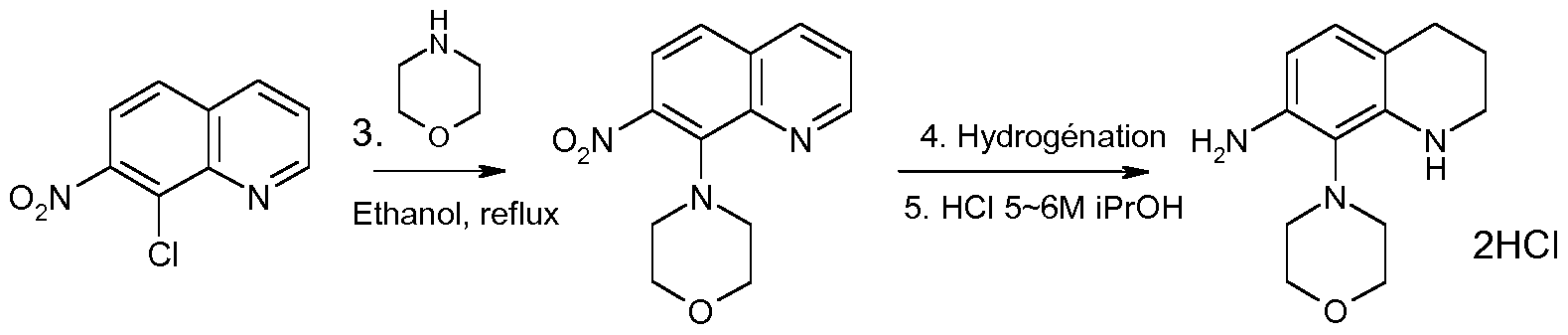
3. Dans un tricol de lOOmL muni d'un thermomètre et d'un barreau aimanté, on introduit 500mg de l'intermédiaire obtenu précédemment dans 25mL d'éthanol et on ajoute 630μί de morpholine. On porte ensuite au reflux pendant 8 heures puis on a évapore à sec le milieu réactionnel sous vide. On ajoute lOOmL d'acétate d'éthyle et lOOmL d'eau. Après agitation et séparation des deux phases, la phase aqueuse est extraite par de l'acétate d'éthyle. Les phases organiques réunies sont lavées deux fois à l'eau, puis une fois par une solution saturée de chlorure de sodium. Après avoir été séchée sur sulfate de magnésium anhydre, la phase organique est concentrée sous pression réduite. Une purification par flash chromatographie sur colonne classique (éluant Acétate d'éthyle / Heptane 10/90)est ensuite effectuée et on obtient ainsi 610mg de produit attendu. 4. Une réduction est ensuite effectuée au H-cube dans les conditions suivantes: Concentration : 0,02 mol/L dans le méthanol, Pression : 60 bars, Température : 70°C, Production d'hydrogène : 80%, Cartouche : 10% Pd/C, Débit : 3mL/min. 5. Le produit réduit est ensuite salifié de manière identique à l'étape 6 de l'exemple 1. On obtient 200mg du dichlorhydrate de 8-(morpholin- 4-yl)-l,2,3,4-tetrahydroquinolin-7-amine sous forme de poudre blanche. Exemples 5 : synthèse du dichlorhydrate de 2,2'-[(7-amino-l,2,3,4- tetrahydroquinolin-8-yl)imino]diethanol. 3. In a 100mL tricolor equipped with a thermometer and a magnetized bar, 500mg of the intermediate previously obtained is introduced into 25mL of ethanol and 630μί of morpholine is added. The mixture is then refluxed for 8 hours and then the reaction medium is evaporated to dryness under vacuum. 100mL of ethyl acetate and 100mL of water are added. After stirring and separation of the two phases, the aqueous phase is extracted with ethyl acetate. The combined organic phases are washed twice with water and then once with a saturated solution of sodium chloride. After having been dried over anhydrous magnesium sulphate, the organic phase is concentrated under reduced pressure. Purification by flash chromatography on a conventional column (eluent ethyl acetate / heptane 10/90) is then carried out and thus 610 mg of expected product is obtained. 4. A reduction is then carried out with H-cube under the following conditions: Concentration: 0.02 mol / l in methanol, pressure: 60 bar, temperature: 70 ° C., hydrogen production: 80%, cartridge: 10 % Pd / C, Flow: 3mL / min. 5. The reduced product is then salified identically in step 6 of Example 1. 200 mg of 8- (morpholin-4-yl) -1,2,3,4-tetrahydroquinolin-7-dihydrochloride are obtained. amine as a white powder. Examples 5: Synthesis of 2,2 '- [(7-amino-1,2,3,4-tetrahydroquinolin-8-yl) imino] diethanol dihydrochloride.
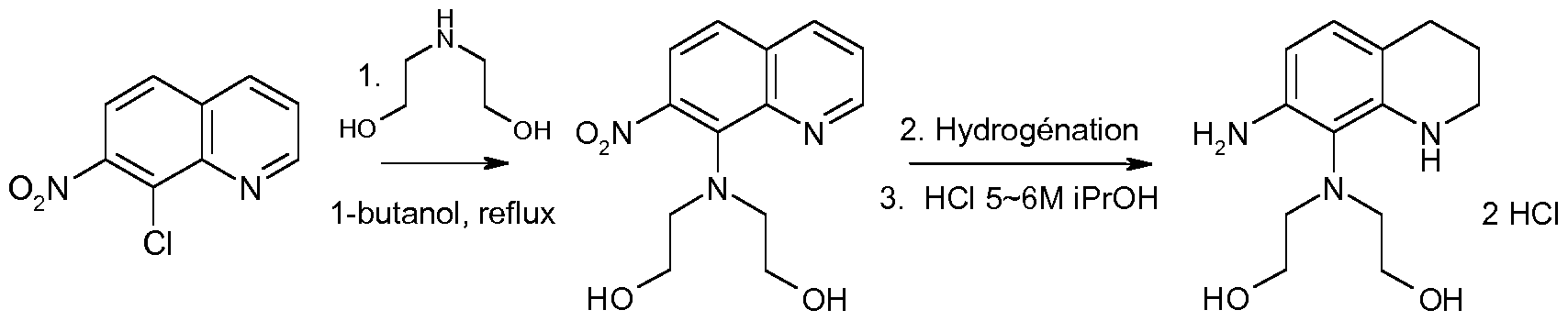
1. La synthèse est effectuée à partir de l'intermédiaire 8-chloro-7- nitroquinoléine, tel que décrit dans la synthèse de l'exemple 4. Dans un ballon tricol de IL muni d'un thermomètre et d'un barreau aimanté, on introduit 13,0g de 8-chloro-7-nitroquinoléine dans 500ml de 1- butanol. Ensuite, on ajoute à la solution obtenue, sous agitation, 18ml de diéthanolamine et puis on porte le milieu réactionnel au reflux pendant 16 heures. Après avoir évaporé le solvant sous vide, on ajoute du dichlorométhane et de l'eau au résidu. Après agitation et séparation des deux phases, la phase aqueuse est extraite trois fois au dichlorométhane. Les phases organiques réunies sont lavées trois fois à l'eau, puis une fois par la solution saturée de chlorure de sodium. Après avoir été séchée sur sulfate de magnésium anhydre, la phase organique est concentrée sous pression réduite puis reprise par de l'éther diéthylique et le mélange est agité pendant 2 heures jusqu'à ce qu'un précipité orange apparaisse. Après élimination du solvant, le précurseur nitré du produit attendu est isolé sous forme de poudre orange. 1. The synthesis is carried out starting from the 8-chloro-7-nitroquinoline intermediate, as described in the synthesis of Example 4. In a three-necked flask of IL equipped with a thermometer and a magnetized bar, 13.0 g of 8-chloro-7-nitroquinoline are introduced into 500 ml of 1-butanol. Then 18 ml of diethanolamine are added to the solution obtained, with stirring, and the reaction medium is then refluxed for 16 hours. After evaporating the solvent in vacuo, dichloromethane and water are added to the residue. After stirring and separation of the two phases, the aqueous phase is extracted three times with dichloromethane. The combined organic phases are washed three times with water and then once with the saturated sodium chloride solution. After having been dried over anhydrous magnesium sulphate, the organic phase is concentrated under reduced pressure and then taken up in diethyl ether and the mixture is stirred for 2 hours until an orange precipitate appears. After removing the solvent, the nitrated precursor of the expected product is isolated in the form of an orange powder.
2. Dans un autoclave de IL, on introduit 7,0g de 8-diéthanolamine-7- nitroquinoléine et 0,7g de Pd/C (10% weight) dans 250ml d'éthanol. Ensuite l'autoclave est scellée et purgée à l'azote, puis remplie avec 20bars de H2 s. Après 48 heures d'agitation à la température ambiante le milieu réactionnel est filtré sur célite, puis le solvant est éliminé sous pression réduite et le résidu est purifié par flash chromatographie sur colonne classique (éluant méthanol / dichlorométhane 10/90). 3. Ensuite le produit est salifié avec 19 ml de so lution d'acide chlorhydrique dans l' isopropanol. Après filtration et élimination du so lvant, le produit attendu est isolé sous forme de poudre marron clair. Exemples 6 : synthèse du chlorhydrate de chlorure de l -(7-amino- 1 2,3 ,4-tetrahydroquinolin- 8-yl)-3 -methyl- l H-imidazo l-3 -ium. 2. In an IL autoclave, 7.0 g of 8-diethanolamine-7-nitroquinoline and 0.7 g of Pd / C (10% weight) are introduced into 250 ml of ethanol. Then the autoclave is sealed and purged with nitrogen, then filled with 20 bars of H 2 s. After stirring for 48 hours at ambient temperature, the reaction mixture is filtered on celite, then the solvent is removed under reduced pressure and the residue is purified by flash chromatography on a standard column (eluent methanol / dichloromethane 10/90). 3. Then the product is salified with 19 ml of hydrochloric acid solution in isopropanol. After filtration and removal of the solvent, the expected product is isolated as a light brown powder. Examples 6 Synthesis of 1- (7-Amino-1,2,3,4-tetrahydroquinolin-8-yl) -3-methyl-1H-imidazo-3-indium chloride hydrochloride.

1 . La synthèse est effectuée à partir de l'intermédiaire 8-chloro-7- nitroquinoléine tel que décrit dans la synthèse de l ' exemple 4. Dans un trico l de 500ml muni d'un thermomètre et d'un barreau aimanté, on introduit 7,0g de 8-chloro-7-nitroquinoléine dans 250ml de toluène . Ensuite, on ajoute à la so lution obtenue, sous agitation, 8ml de 1 - méthylimidazole et puis on porte le milieu réactionnel au reflux pendant 16 heures. Un précipité marron apparaît et il est filtré, puis lavé par le diéthyle éther. Ensuite le précipité est repris dans l ' acétonitrile et on porte le mélange au reflux pendant 10 minutes. Après avoir refroidit à température ambiante, le précipité obtenu est filtré conduisant au précurseur nitré du produit attendu sous forme de poudre marron clair. 1. The synthesis is carried out starting from the 8-chloro-7-nitroquinoline intermediate as described in the synthesis of Example 4. In a 500 ml trico 1 equipped with a thermometer and a magnetized bar, 7 0 g of 8-chloro-7-nitroquinoline in 250 ml of toluene. Then, 8 ml of 1-methylimidazole are added to the solution obtained with stirring and the reaction medium is refluxed for 16 hours. A brown precipitate appears and it is filtered and then washed with diethyl ether. The precipitate is then taken up in acetonitrile and the mixture is refluxed for 10 minutes. After having cooled to room temperature, the precipitate obtained is filtered, leading to the nitrated precursor of the expected product in the form of a light brown powder.
2. Dans un autoclave de I L, on introduit 6,0g de chlorure de 8-( l - methylimidazolium)-7-nitroquino léine et 0,6g de Pd/C ( 10% weight) dans 250 ml d' éthanol. Ensuite l' autoclave est scellée et purgée avec l ' azote, puis remplie par 20bars de H2. La réaction étant incomplète après 3 jours d ' agitation à température ambiante, on rajoute 0,6g de Pd/C ( 10% weight) et la réduction est poursuivie encore 2 jours. Le milieu réactionnel est filtré sur célite, puis le so lvant est éliminé sous pression réduite et le résidu est purifié par flash chromatographie sur co lonne classique (éluant méthano l / dichlorométhane 20/80). 3. Ensuite le produit est salifié avec 3éq. de solution d'acide chlorhydrique dans l'isopropanol. Après élimination du solvant, le chlorhydrate de chlorure de l-(7-amino-l,2,3,4-tetrahydroquinolin-8- yl)-3-methyl- lH-imidazol-3-ium est isolé sous forme de poudre jaune clair. 2. In an IL autoclave, 6.0 g of 8- (1-methylimidazolium) -7-nitroquinoline chloride and 0.6 g of Pd / C (10% weight) are introduced into 250 ml of ethanol. Then the autoclave is sealed and purged with nitrogen, then filled with 20 bars of H 2 . The reaction being incomplete after 3 days of stirring at ambient temperature, 0.6 g of Pd / C (10% weight) are added and the reduction is continued for a further 2 days. The reaction medium is filtered on celite, then the solvent is removed under reduced pressure and the residue is purified by flash chromatography on a conventional column (eluent methanol / dichloromethane 20/80). 3. Then the product is salified with 3 eq. of hydrochloric acid solution in isopropanol. After removal of the solvent, 1- (7-amino-1,2,3,4-tetrahydroquinolin-8-yl) -3-methyl-1H-imidazol-3-ium chloride hydrochloride is isolated as a yellow powder. clear.
Exemples 7 : synthèse du chlorhydrate de 8-(lH-pyrrol-l-yl)- 12,3,4-tetrahydroquinolin-7-amine. Examples 7 Synthesis of 8- (1H-pyrrol-1-yl) -12,3,4-tetrahydroquinolin-7-amine hydrochloride
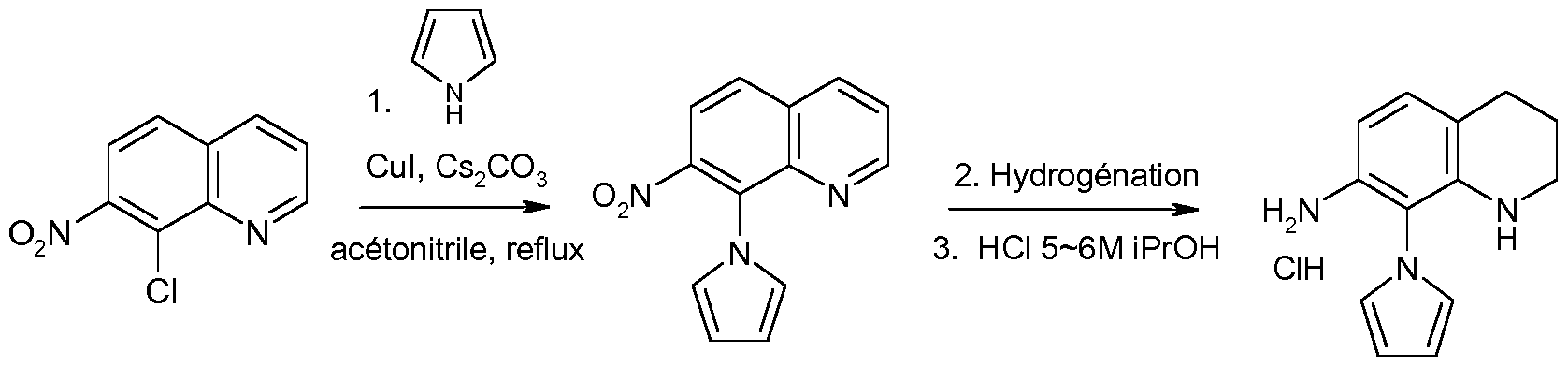
1. La synthèse est effectuée à partir de l'intermédiaire 8-chloro-7- nitroquinoléine tel que décrit dans l'exemple 4. Dans un ballon tricol de 500ml muni d'un thermomètre et d'un barreau aimanté, on introduit 15g de 8-chloro-7-nitroquinoléine dans 150ml d'acétonitrile. Puis on ajoute à la solution obtenue, sous agitation, 25ml de pyrrole et 70g de carbonate de césium. Ensuite le ballon tricol est purgé avec l'azote, puis 1,36g de iodure de cuivre (I) est ajouté. On porte le milieu réactionnel au reflux sous azote pendant 16 heures, la réaction est suivie par chromatographie en phase liquide couplée à la spectrométrie de masse. Ensuite le milieu réactionnel est filtré sur silice et élué par l'acétate d'éthyle, puis le filtrat est concentré sous pression réduite et le résidu est purifié par flash chromatographie sur colonne classique (éluant Acétate d'éthyle /Ether de pétrole 20/80), pour conduire au 8- pyrrole-7-nitroquinoléine. 1. The synthesis is carried out starting from the intermediate 8-chloro-7-nitroquinoline as described in Example 4. In a three-necked flask of 500 ml equipped with a thermometer and a magnetic bar, 15 g of 8-chloro-7-nitroquinoline in 150 ml of acetonitrile. 25 ml of pyrrole and 70 g of cesium carbonate are then added to the solution obtained, with stirring. Then the three-necked flask is purged with nitrogen, then 1.36g of copper (I) iodide is added. The reaction medium is refluxed under nitrogen for 16 hours, the reaction is followed by liquid chromatography coupled to mass spectrometry. Then the reaction medium is filtered through silica and eluted with ethyl acetate, the filtrate is then concentrated under reduced pressure and the residue is purified by flash chromatography on a conventional column (eluent. Ethyl acetate / 20/80 petroleum ether ), to give 8-pyrrole-7-nitroquinoline.
2. Dans un autoclave de IL, on introduit 7,3g de 8-pyrrole-7- nitroquinoléine et 0.73g de Pd/C (10% weight) dans 250 ml d'éthanol. Ensuite l'autoclave est scellée et purgée avec l'azote, puis remplie par 15bars de H2. Après 4 jours d'agitation à la température ambiante, la réaction étant incomplète, on ajoute 0,6g de Pd/C (10% weight) et on poursuit la réduction sous 20bars de H2 pendant 3 jours. Le milieu réactionnel est alors filtré sur célite, puis le solvant est éliminé sous pression réduite et le résidu est purifié deux fois par flash chromatographie sur colonne classique (éluant Dichlorométhane/Ether de pétrole 65/35). 2. In an IL autoclave, 7.3 g of 8-pyrrole-7-nitroquinoline and 0.73 g of Pd / C (10% weight) are introduced into 250 ml of ethanol. Then the autoclave is sealed and purged with nitrogen, then filled with 15 bars of H 2 . After 4 days of stirring at room temperature, the reaction being incomplete, 0.6 g of Pd / C (10% weight) is added and the reduction is continued under 20 bars of H 2 for 3 days. The reaction medium is then filtered on celite, then the solvent is removed under reduced pressure and the residue is purified twice by flash chromatography on a conventional column (eluent Dichloromethane / petroleum ether 65/35).
3. Ensuite le produit est salifié avec 3éq. de solution d'acide chlorhydrique dans l'isopropanol. Après élimination du solvant, le chlorhydrate de 8-(lH-pyrrol-l-yl)-l,2,3,4-tetrahydroquinolin-7-amine est isolé sous forme de poudre jaune. 3. Then the product is salified with 3 eq. of hydrochloric acid solution in isopropanol. After removal of the solvent, 8- (1H-pyrrol-1-yl) -1,2,3,4-tetrahydroquinolin-7-amine hydrochloride is isolated as a yellow powder.
EXEMPLES DE TEINTURE Exemple 1 : Evaluation tinctoriale des coupleurs a) Composition EXAMPLES OF DYEING Example 1: Dye Evaluation of Couplers a) Composition
La composition (A) selon la présente invention a été préparée à partir des ingrédients dont les teneurs sont indiquées, en pourcentage massique de matière active par rapport au poids total de la composition, dans le tableau ci-dessous. The composition (A) according to the present invention was prepared from the ingredients whose contents are indicated, as a percentage by weight of active ingredient relative to the total weight of the composition, in the table below.
Composition AComposition A
Alcool éthylique à 96° 20,8 96 ° 20.8 ethyl alcohol
Métabisulfite de sodium en solution Sodium metabisulfite in solution
0,23 aqueuse à 35% 0.23 aqueous at 35%
Sel pentasodique de l'acide diéthylène- triamine-pentaacétique en solution 0,48 aqueuse à 40% Pentasodium salt of diethylenetriamine pentaacetic acid in 0.48% aqueous 40% solution
Alkyl polyglucoside en Cs-Cio en Cs-Cio alkyl polyglucoside
3,6 solution aqueuse à 60%> 3.6 aqueous solution at 60%>
Alcool benzylique 2,0 Benzyl alcohol 2.0
Polyéthylène glycol à 8 motifs d'oxyde Polyethylene glycol with 8 oxide patterns
3,0 d'éthylène 3.0 ethylene
NH4C1 4,32 NH 4 C1 4.32
Ammoniaque à 20% de NH3 2,94 Ammonia at 20% NH3 2.94
Coupleur 10~3 moleCoupling 10 ~ 3 mole
Base d'oxydation 10~3 moleOxidation base 10 ~ 3 mole
Eau Qsp 100 La composition (A) a été réalisée avec chacune des bases d'oxydation ci-dessous. Water Qs 100 Composition (A) was carried out with each of the oxidation bases below.

Sept séries (SI), (S2), (S3), (S4), (S5), (S6) et (S7) de compositions (Al) à (A9) ont donc été préparées. Seven series (SI), (S2), (S3), (S4), (S5), (S6) and (S7) of compositions (A1) to (A9) were therefore prepared.
Chacune des compositions (Al) à (A9) de la série (SI) comprennent le dichlorhydrate de 8-éthyl-l,2,3,4-tétrahydroquinolin- 7-amine comme coupleur. Each of the compositions (A1) to (A9) of the (SI) series include 8-ethyl-1,2,3,4-tetrahydroquinolin-7-amine dihydrochloride as a coupler.
Chacune des compositions (Al) à (A9) de la série (S2) comprennent le dichlorhydrate de 8-méthoxy-l, 2,3,4- tétrahydroquinolin-7-amine comme coupleur. Chacune des compositions (Al) à (A9) de la série (S3) comprennent le dichlorhydrate de l,2,3,4,7,8,9,10-octahydro-l,7- phénanthroline comme coupleur. Each of the (Al) to (A9) compositions of the (S2) series include 8-methoxy-1,2,3,4-tetrahydroquinolin-7-amine dihydrochloride as a coupler. Each of the (Al) to (A9) compositions of the (S3) series comprises 1,2,3,4,7,8,9,10-octahydro-1,7-phenanthroline dihydrochloride as a coupler.
Chacune des compositions (A2) à (A9) de la série (S4) comprennent le dichlorhydrate de 8-(morpholin-4-yl)-l, 2,3,4- tetrahydroquinolin-7-amine comme coupleur. Each of the compositions (A2) to (A9) of the (S4) series comprise 8- (morpholin-4-yl) -1,2,3,4-tetrahydroquinolin-7-amine dihydrochloride as a coupler.
Chacune des compositions (A2) à (A9) de la série (S5) comprennent le dichlorhydrate de 2,2'-[(7-amino-l,2,3,4- tetrahydroquinolin-8-yl)imino]diethanol comme coupleur. Each of the compositions (A2) to (A9) of the (S5) series include 2,2 '- [(7-amino-1,2,3,4-tetrahydroquinolin-8-yl) imino] diethanol dihydrochloride as a coupler. .
Chacune des compositions (Al) à (A9) de la série (S6) comprennent le chlorhydrate de l-(7-amino-l,2,3,4- tetrahydroquinolin-8-yl)-3-methyl- lH-imidazol-3-ium comme coupleur. Each of the (Al) to (A9) compositions of the (S6) series comprise 1- (7-amino-1,2,3,4-tetrahydroquinolin-8-yl) -3-methyl-1H-imidazole hydrochloride. 3-ium as coupler.
Chacune des compositions (A2) à (A9) de la série (S7) comprennent le chlorhydrate de 8-(lH-pyrrol-l-yl)-l, 2,3,4- tetrahydroquinolin-7-amine comme coupleur. b) Mode opératoire Each of the compositions (A2) to (A9) of the (S7) series include 8- (1H-pyrrol-1-yl) -1,2,3,4-tetrahydroquinolin-7-amine hydrochloride as a coupler. b) Operating procedure
Au moment de l'emploi, chacune des compositions (Al) à (A9) est mélangée à une solution d'eau oxygénée à 20 volumes (6% en poids) selon un rapport 1:1. Le pH final de chacun des mélanges est égal à 9,5. At the time of use, each of the compositions (A1) to (A9) is mixed with a solution of hydrogen peroxide at 20 volumes (6% by weight) in a 1: 1 ratio. The final pH of each of the mixtures is 9.5.
Chaque mélange ainsi obtenu est appliqué sur une mèche de cheveux gris, à 90% blancs. Après 30 minutes de pose, les mèches sont rincées, lavées avec un shampoing standard, puis rincées à nouveau. Les mèches sont ensuite séchées. c) Résultats Each mixture thus obtained is applied to a lock of gray hair, 90% white. After 30 minutes of installation, the locks are rinsed, washed with a standard shampoo, then rinsed again. The locks are then dried. c) Results
Les résultats de couleur sont donnés dans les tableaux ci- dessous. Bilan des évaluations tinctoriales du (S I ) à (S7) The color results are given in the tables below. Assessment of the dye evaluations from (SI) to (S7)
S I S2 S3 S4 S5 S6 S7 S I S2 S3 S4 S5 S6 S7
Jaune Yellow
Al Rouge Rouge Rouge - - - mat Al Red Red Red - - - matt
Bleu Blue
A2 Bleu Bleu Bleu Bleu Bleu Vert A2 Blue Blue Blue Blue Blue Green
vert green
BleuBlue
A3 Bleu Bleu Bleu Bleu Bleu Vert A3 Blue Blue Blue Blue Blue Green
vert green
Bleu Bleu Bleu Bleu vert Blue Blue Blue Blue Green
A4 Vert Vert vert vert vert vert bleu A4 Green Green Green Green Green Green Blue
Bleu Blue
A5 Bleu Bleu Bleu Bleu Vert Vert vert A5 Blue Blue Blue Blue Green Green Green
Rouge Violet Rouge Rouge Rouge Rouge Violet Red Purple Red Red Red Purple Red
A6 A6
violet rouge violet violet violet violet rouge purple red purple purple purple purple red
Rouge Rouge Red Red
A7 Rouge Rouge Rouge Rouge Rouge A7 Red Red Red Red Red
cuivré acajou coppery mahogany
Violet Violet Violet Purple Violet Purple
A8 Violet Violet Violet Violet rouge rouge rouge A8 Purple Purple Purple Purple red red red
A9 Vert Vert Vert Vert Vert Vert Vert A9 Green Green Green Green Green Green Green
Exemple 2 : Evaluation de la rémanence aux shampooings et à la lumière, et de la chromaticité des teintures L'intensité de la coloration obtenue pour chacune des compositions a été évaluée dans le système CIE L* a* b*, au moyen d'un colorimètre Minolta Spectrophotometer CM3610D. Dans ce système L* a* b*, les trois paramètres désignent respectivement l'intensité de la couleur (L*), a* indique l'axe de couleur vert/rouge et b* l'axe de couleur bleu/jaune. EXAMPLE 2 Evaluation of the Remanence to Shampoo and Light and the Chromaticity of the Dyes The intensity of the coloration obtained for each of the compositions was evaluated in the CIE L * a * b * system by means of a Minolta Spectrophotometer CM3610D colorimeter. In this system L * a * b *, the three parameters denote respectively the intensity of the color (L *), a * indicates the green / red color axis and b * the blue / yellow color axis.
L'évaluation comparative a été réalisée avec le même support de teinture (A) tel que décrit dans l'exemple 1, et selon les mêmes conditions opératoires. The comparative evaluation was carried out with the same dyeing support (A) as described in Example 1, and according to the same operating conditions.
Les coupleurs sont numérotés ainsi : The couplers are numbered as follows:
Cl est le dichlorhydrate de 8-éthyl-l,2,3,4-tétrahydroquinolin-7- amine (Invention) ; Cl is 8-ethyl-1,2,3,4-tetrahydroquinolin-7-amine dihydrochloride (Invention);
C2 est le dichlorhydrate de 8-méthoxy-l,2,3,4-tétrahydroquinolin- 7-amine (Invention) ; C2 is 8-methoxy-1,2,3,4-tetrahydroquinolin-7-amine dihydrochloride (Invention);
C3 est le dichlorhydrate de l,2,3,4,7,8,9,10-octahydro-l,7- phenanthroline (Invention) ; C3 is 1,2,3,4,7,8,9,10-octahydro-1,7-phenanthroline dihydrochloride (Invention);
C4 est le dichlorhydrate de 8-(morpholin-4-yl)-l, 2,3,4- tetrahydroquinolin-7-amine (Invention) ; C4 is 8- (morpholin-4-yl) -1,2,3,4-tetrahydroquinolin-7-amine dihydrochloride (Invention);
- C5 est le dichlorhydrate de 2,2'-[(7-amino-l,2,3,4- tetrahydroquinolin-8-yl)imino]diethanol (Invention) ; C5 is 2,2 '- [(7-amino-1,2,3,4-tetrahydroquinolin-8-yl) imino] diethanol dihydrochloride (Invention);
C6 est le chlorhydrate de chlorure de l-(7-amino-l, 2,3,4- tetrahydroquinolin-8-yl)-3-methyl- lH-imidazol-3-ium (Invention) ; - C7 est le chlorhydrate de 8-(lH-pyrrol-l-yl)-l, 2,3,4- tetrahydroquinolin-7-amine (Invention) ; et C6 is 1- (7-amino-1,2,3,4-tetrahydroquinolin-8-yl) -3-methyl-1H-imidazol-3-ium chloride hydrochloride (Invention); C7 is 8- (1H-pyrrol-1-yl) -1,2,3,4-tetrahydroquinolin-7-amine hydrochloride (Invention); and
D est le dichlorhydrate de 1 ,2,3,4-tétrahydroquinolin-7-amine D is 1,2,3,4-tetrahydroquinolin-7-amine dihydrochloride
(Comparatif). Les bases d 'oxydations sont numérotées ainsi : (Comparative). The bases of oxidation are numbered as follows:
B l est le dichlorhydrate de 4-aminophénylamine ; B is 4-aminophenylamine dihydrochloride;
B2 est le sulfate de 2-méthylbenzène- l ,4-diamine ; et B2 is 2-methylbenzene-1,4-diamine sulphate; and
B3 est le 4-aminophéno l. B3 is 4-aminophenol.
Evaluation de la rémanence aux shampooings des teintures Evaluation of the afterglow of shampooing dyes
Au moment de l ' emploi, chacune des compositions est mélangée à une so lution d' eau oxygénée à 20 vo lumes (6% en poids) selon un rapport 1 : 1 . Le pH final de chacun des mélanges est égal à At the time of use, each of the compositions is mixed with a solution of hydrogen peroxide at 20 vol (6 wt%) in a 1: 1 ratio. The final pH of each mixture is equal to
9,5. 9.5.
Chaque mélange ainsi obtenu est appliqué sur une mèche de cheveux gris, à 90% blancs . Après 30 minutes de pose, les mèches sont rincées, lavées avec un shampoing standard, puis rincées à nouveau. Les mèches sont ensuite séchées . Each mixture thus obtained is applied to a lock of gray hair, 90% white. After 30 minutes of installation, the locks are rinsed, washed with a standard shampoo, then rinsed again. The locks are then dried.
La différence de montée de la couleur avant et après cycles de un shampooing et 3 rinçages, a été calculée en appliquant la formule ci-dessous :The difference in the rise of the color before and after the cycles of a shampoo and 3 rinses, was calculated by applying the formula below:

L * , a* et b* , tels que définis précédemment, sont les valeurs mesurées avant le shampooing mais après la co loration ; L, a et b sont les valeurs mesurées après la co loration et après le shampooing (DOP~50%>, 6 cycles de 1 shampooing + 3 rinçages, sur plaque transparente Pall) ou (DOP~2%>, 6 shampooings) . L *, a * and b *, as defined above, are the values measured before the shampoo but after the coloring; L, a and b are the values measured after the coloring and after shampooing (DOP ~ 50%>, 6 cycles of 1 shampoo + 3 rinses, on Pall transparent plate) or (DOP ~ 2%>, 6 shampoos).
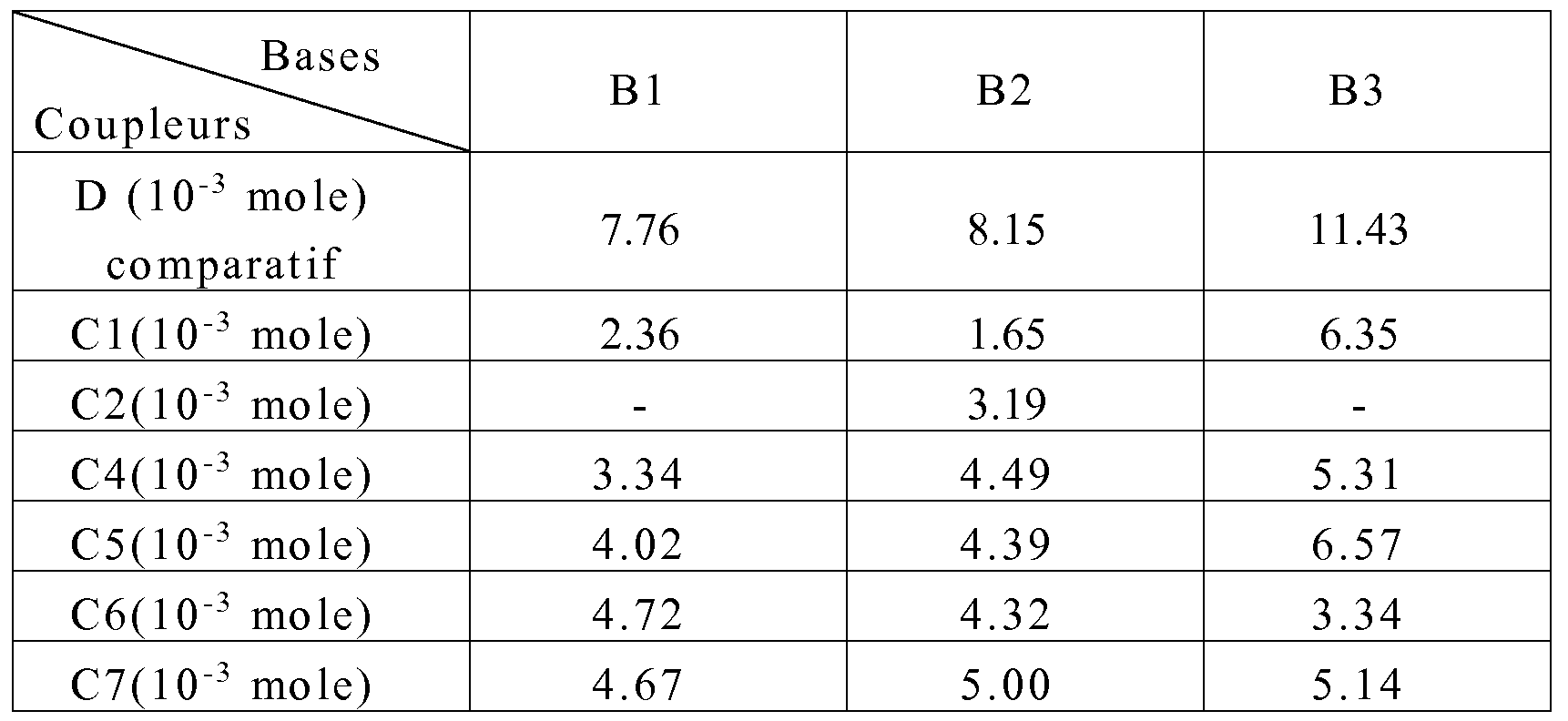
Au moment de l'emploi, chacune des compositions est mélangée à une solution d'eau oxygénée à 20 volumes (6% en poids) selon un rapport 1:1. Le pH final de chacun des mélanges est égal àAt the time of use, each of the compositions is mixed with a solution of hydrogen peroxide at 20 volumes (6% by weight) in a 1: 1 ratio. The final pH of each mixture is equal to
9,5. 9.5.
Chaque mélange ainsi obtenu est appliqué sur une mèche de cheveux gris, à 90% blancs. Après 30 minutes de pose, les mèches sont rincées, lavées avec un shampoing standard, puis rincées à nouveau. Les mèches sont ensuite séchées. Each mixture thus obtained is applied to a lock of gray hair, 90% white. After 30 minutes of installation, the locks are rinsed, washed with a standard shampoo, then rinsed again. The locks are then dried.
La différence de montée de la couleur avant et après l'exposition à la lumière a été calculée en appliquant la formule ci- dessous :

L*, a* et b* tels que définis précédemment, sont les valeurs mesurées avant l'exposition lumière mais après la coloration ; L , a et b sont les valeurs mesurées après la coloration et après l'exposition à la lumière (Xénon- 1600W, exposition 2h26min, équivalent à 1 mois de vie normale). L *, a * and b * as defined above, are the values measured before the light exposure but after the coloring; L, a and b are the values measured after staining and after exposure to light (Xenon-1600W, exposure 2h26min, equivalent to 1 month of normal life).

Au moment de l ' emploi, chacune des compositions est mélangée à une so lution d' eau oxygénée à 20 vo lumes (6% en poids) selon un rapport 1 : 1 . Le pH final de chacun des mélanges est égal à 9,5. At the time of use, each of the compositions is mixed with a solution of hydrogen peroxide at 20 vol (6 wt%) in a 1: 1 ratio. The final pH of each of the mixtures is 9.5.
Chaque mélange ainsi obtenu est appliqué sur une mèche de cheveux gris, à 90% blancs . Après 30 minutes de pose, les mèches sont rincées, lavées avec un shampoing standard, puis rincées à nouveau. Les mèches sont ensuite séchées . Each mixture thus obtained is applied to a lock of gray hair, 90% white. After 30 minutes of installation, the locks are rinsed, washed with a standard shampoo, then rinsed again. The locks are then dried.
La chromaticité de la couleur après la co loration a été calculée en appliquant la formule ci-dessous :

a* et b * tels que définis précédemment, sont les valeurs mesurées après la coloration. a * and b * as defined above, are the values measured after staining.

Il apparaît des résultats ci-dessus du procédé de co loration selon l 'invention qui met en œuvre des coupleurs de type 7- aminotétrahydroquinoline substituée en position 8 vs. le procédé de co loration qui met en œuvre un coupleur de type 7- aminotétrahydroquinoline non substituée en position 8 , que les co loration obtenues avec le procédé de l' invention sont significativement plus rémanentes aux shampooings et à la lumière et plus chromatiques que le comparatif. Exemple 3 : Evaluation comparative de la montée, de l'intensité, et de la chromaticité des teintures It appears from the above results of the method of co-loration according to the invention which implements couplers of 7-aminotetrahydroquinoline type substituted in the 8-position. the method of chlorination which implements a 7-aminotetrahydroquinoline coupler unsubstituted at the 8-position, that the coatings obtained with the process of the invention are significantly more retentive to shampoos and to light and more chromatic than the comparative . Example 3: Comparative evaluation of the rise, intensity, and chromaticity of dyes
L'évaluation comparative a été réalisée avec les compositions tinctoriales préparées à partir des ingrédients suivants : The comparative evaluation was carried out with the dyeing compositions prepared from the following ingredients:

Chaque composition obtenue est appliquée sur des mèches de cheveux caucasiens naturels 90 % blanc de 1 g. Après 30 minutes de pause à 27 °C, les mèches sont rincées, lavées avec un shampooing standard, rincées à nouveau puis séchées Each composition obtained is applied to strands of natural Caucasian hair 90% white of 1 g. After 30 minutes of resting at 27 ° C., the locks are rinsed, washed with a standard shampoo, rinsed again and then dried.
Les coupleurs d'oxydations sont numérotés ainsi : The oxidation couplers are numbered as follows:
C2 est le dichlorhydrate de 8-méthoxy-l,2,3,4-tétrahydroquinolin- 7-amine (Invention) ; C2 is 8-methoxy-1,2,3,4-tetrahydroquinolin-7-amine dihydrochloride (Invention);
D2 est le 8-méthoxy-l,2,3,4-tétrahydroquinolin- D2 is 8-methoxy-1,2,3,4-tetrahydroquinoline
5-amine (Comparatif). 5-amine (Comparative).
Les bases d'oxydations sont numérotées ainsi : The oxidation bases are numbered as follows:
A6 est le sulfate de 2-(4,5-diamino-lH-pyrazol-l-yl)éthanol; A6 is 2- (4,5-diamino-1H-pyrazol-1-yl) ethanol sulfate;
- A7 est le diméthanesulfonate de 2,3-diamino-6,7-dihydro-lH,5H- pyrazolo[l,2-a]pyrazol-l-one; et A8 est le chlorhydrate de 2-[(3-aminopyrazolo[ 1 ,5-a]pyridin-2- yl)oxy]éthanol. A7 is 2,3-diamino-6,7-dihydro-1H, 5H-pyrazolo [1,2-a] pyrazol-1-one dimethanesulfonate; and A8 is 2 - [(3-aminopyrazolo [1,5-a] pyridin-2-yl) oxy] ethanol hydrochloride.
Résultats L, a, b : Results L, a, b:
Les données colorimétriques de chacune des mèches sont ensuite mesurées avec un spectrophotomètre Minolta CM-3610d. Dans ce système L* a* b*, L* représente la luminosité, a* indique l'axe de couleur vert/rouge et b* l'axe de couleur bleu/jaune. Plus la valeur de L* est élevée, plus la couleur est claire ou peu intense. Inversement, plus la valeur de L est faible, plus la couleur est foncée ou très intense. Plus la valeur de a* est élevée plus la nuance est rouge et plus la valeur de b* est élevée plus la nuance est jaune. La montée de la couleur sur cheveux correspond donc à la variation de coloration entre les mèches de cheveux colorés BN (blanc naturels à 90 % blancs) et les cheveux non colorés i.e. non traité BN qui est mesurée par (ΔΕ) selon l'équation suivante : Δ E = (L* - L0 *)2 + (a* - a0 *)2 + (b* - b0 *)2 The colorimetric data for each of the locks are then measured with a Minolta CM-3610d spectrophotometer. In this system L * a * b *, L * represents the brightness, a * indicates the green / red color axis and b * the blue / yellow color axis. The higher the L * value, the lighter or less intense the color. Conversely, the lower the value of L, the darker or more intense the color. The higher the value of a * the higher the shade is red and the higher the value of b * the hue is yellow. The rise of the color on hair thus corresponds to the variation of color between the locks of colored hair BN (natural white at 90% white) and the non-colored hair ie non-treated BN which is measured by (ΔΕ) according to the following equation : Δ E = (L * - L 0 *) 2 + (a * - a 0 *) 2 + (b * - b 0 *) 2
Dans cette équation, L*, a* et b* représentent les valeurs mesurées après coloration des cheveux BN et Lo*, ao* et bo* représentent les valeurs mesurées avant coloration des cheveux BN. Plus la valeur de ΔΕ est élevé, meilleure est la montée de la coloration. In this equation, L *, a * and b * represent the values measured after hair coloring BN and Lo *, ao * and bo * represent the measured values before hair dye BN. The higher the value of ΔΕ, the better the rise of the color.
Evaluation de la montée des teintures (ΔΕ) Evaluation of the rise of dyes (ΔΕ)


La chromaticité est calculée selon la formule suivante

Plus la valeur de la chromaticité C * est élevée, plus la couleur des fibres kératiniques traitées est chromatique. The higher the value of the chromaticity C *, the more the color of the treated keratinous fibers is chromatic.
Evaluation de la chromaticité des teintures (C*) Evaluation of chromaticity of dyes (C *)
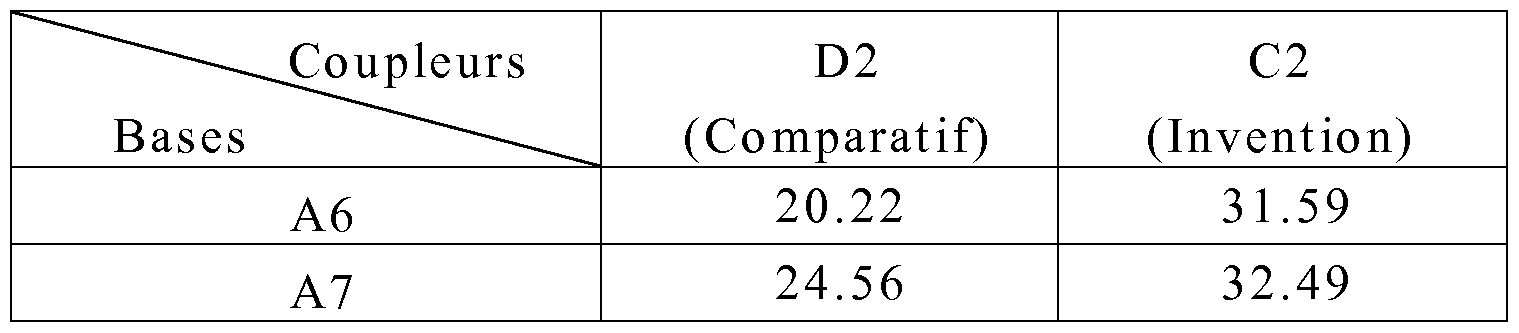
Claims


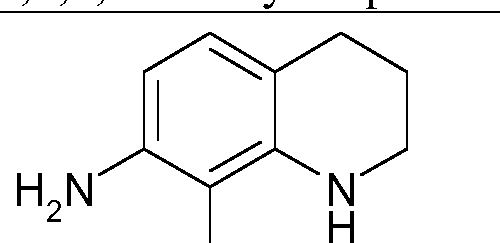


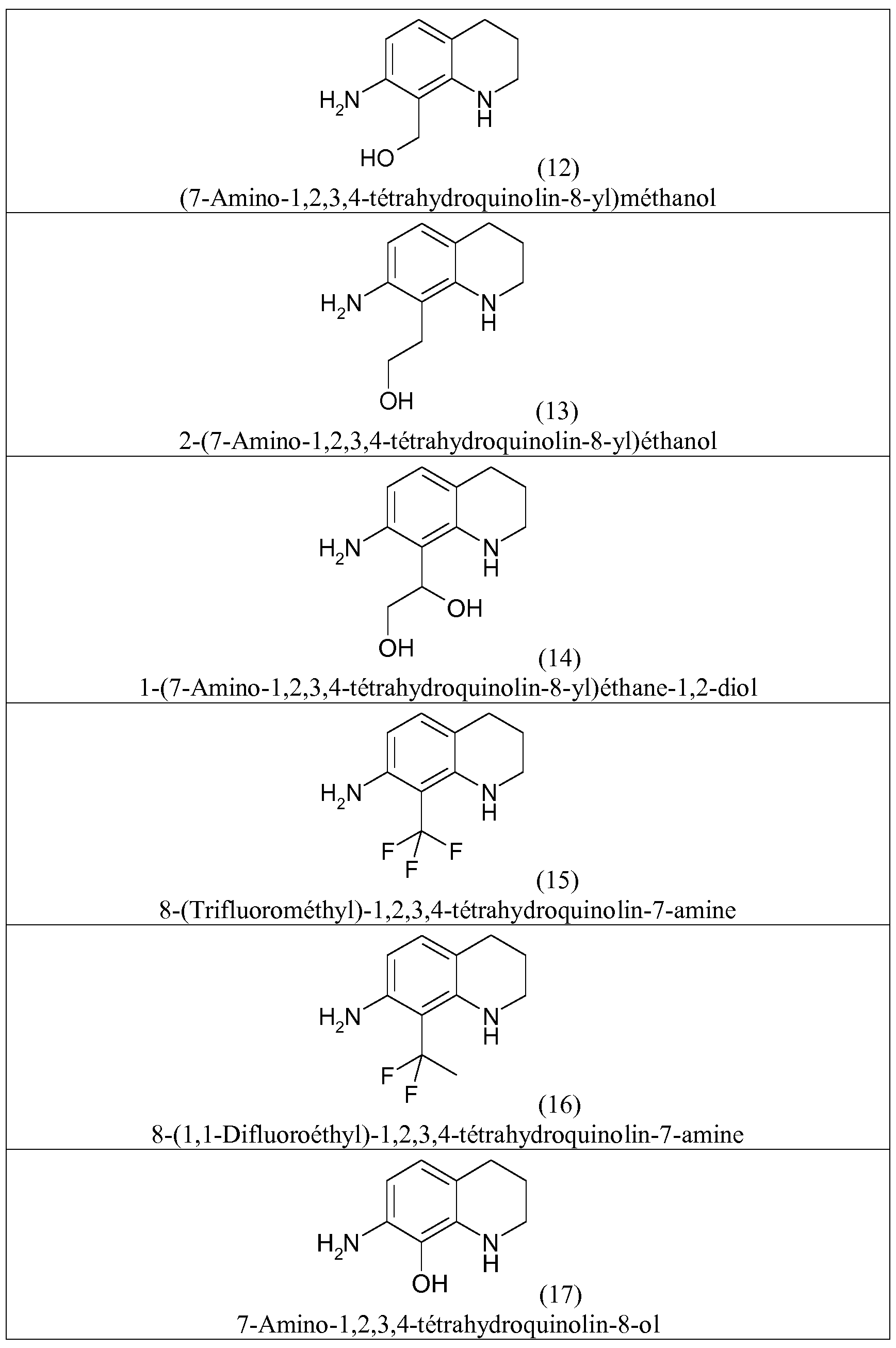

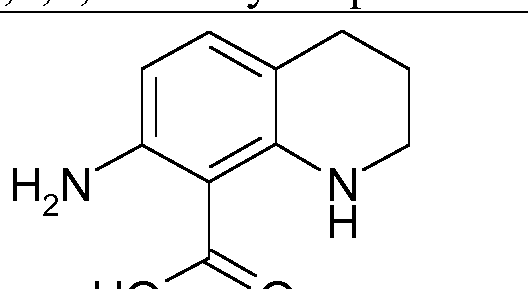


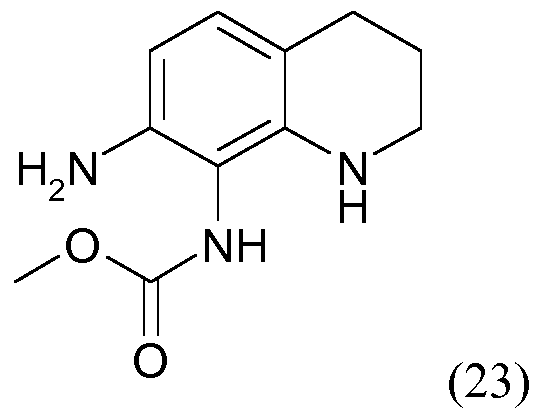
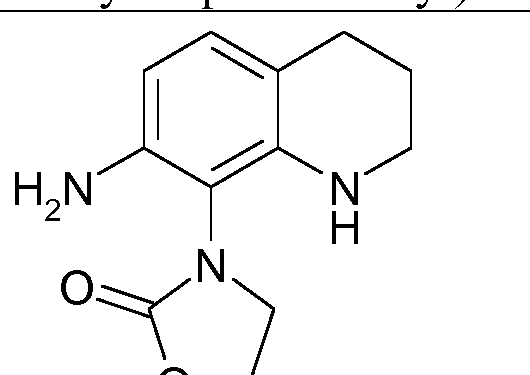
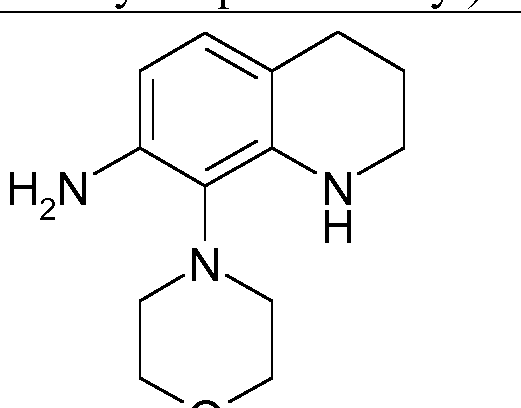

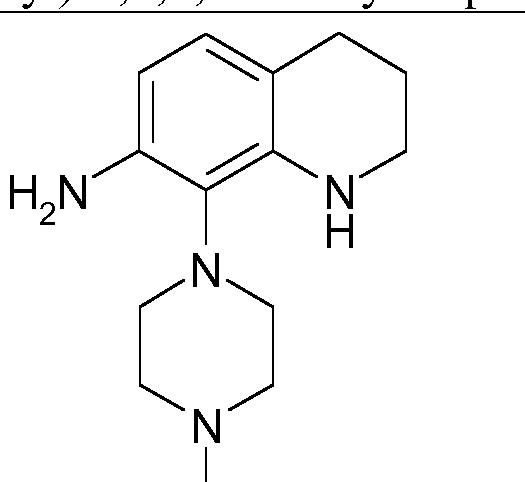

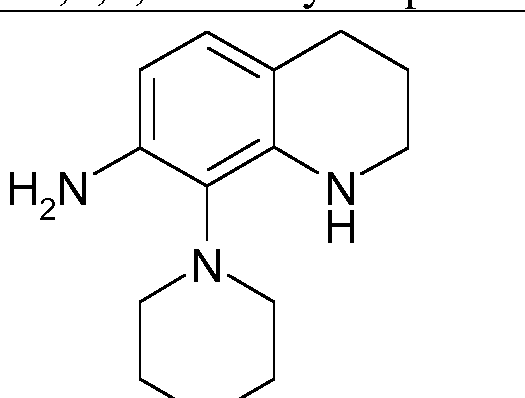


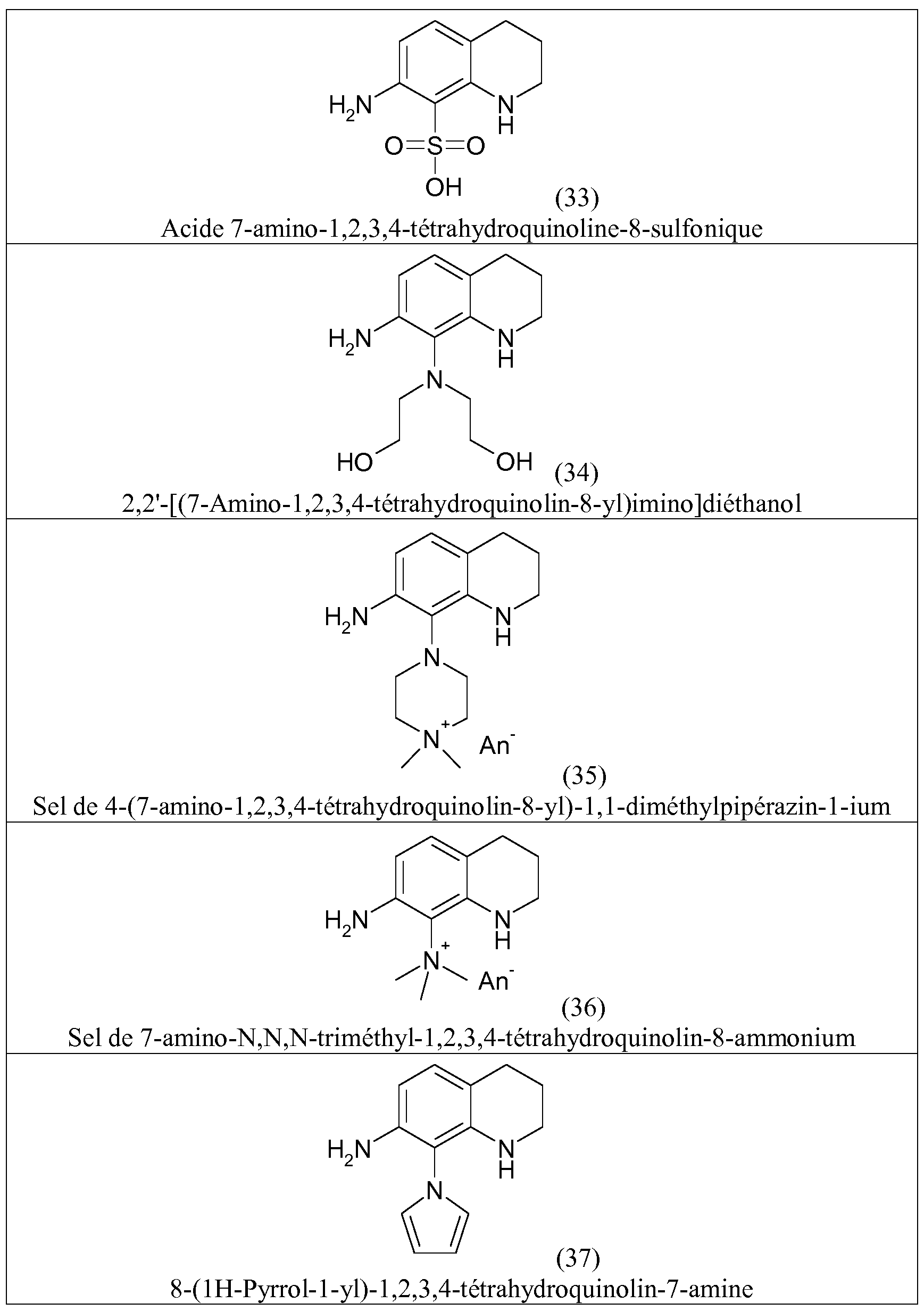


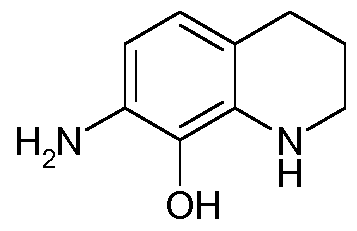
Priority Applications (2)
| Application Number | Priority Date | Filing Date | Title |
|---|---|---|---|
| EP18782976.7A EP3694485A1 (en) | 2017-10-13 | 2018-10-05 | Specific 7-amino-1,2,3,4-tetrahydroquinolines, method, and composition |
| US16/755,832 US20200276102A1 (en) | 2017-10-13 | 2018-10-05 | Specific 7-amino-1,2,3,4-tetrahydroquinolines, method, and composition |
Applications Claiming Priority (2)
| Application Number | Priority Date | Filing Date | Title |
|---|---|---|---|
| FR1759604A FR3072286B1 (en) | 2017-10-13 | 2017-10-13 | PARTICULAR 7-AMINO-1,2,3,4-TETRAHYDROQUINOLEINS, METHOD AND COMPOSITION |
| FR1759604 | 2017-10-13 |
Publications (1)
| Publication Number | Publication Date |
|---|---|
| WO2019072697A1 true WO2019072697A1 (en) | 2019-04-18 |
Family
ID=60765849
Family Applications (1)
| Application Number | Title | Priority Date | Filing Date |
|---|---|---|---|
| PCT/EP2018/077088 Ceased WO2019072697A1 (en) | 2017-10-13 | 2018-10-05 | Specific 7-amino-1,2,3,4-tetrahydroquinolines, method, and composition |
Country Status (4)
| Country | Link |
|---|---|
| US (1) | US20200276102A1 (en) |
| EP (1) | EP3694485A1 (en) |
| FR (1) | FR3072286B1 (en) |
| WO (1) | WO2019072697A1 (en) |
Families Citing this family (3)
| Publication number | Priority date | Publication date | Assignee | Title |
|---|---|---|---|---|
| ES2970151T3 (en) | 2019-04-17 | 2024-05-27 | Arcelormittal | Procedure to monitor a steelmaking process and associated computer program |
| US12396938B2 (en) | 2022-08-31 | 2025-08-26 | L'oreal | Compositions and methods for coloring hair |
| CN119998304A (en) * | 2022-09-30 | 2025-05-13 | 三菱化学株式会社 | Compound, metal complex, catalyst composition for olefin polymerization, catalyst for olefin polymerization, and method for producing olefin polymer |
Citations (30)
| Publication number | Priority date | Publication date | Assignee | Title |
|---|---|---|---|---|
| GB1026978A (en) | 1962-03-30 | 1966-04-20 | Schwarzkopf Verwaltung G M B H | Method of dyeing hair |
| GB1153196A (en) | 1965-07-07 | 1969-05-29 | Schwarzkopf Verwaltung G M B H | Method of Dyeing Hair |
| SU400588A1 (en) * | 1971-12-16 | 1973-10-01 | Московский государственный университет В. Ломоносова | METHOD OF OBTAINING TETRAHYDROPYRIDINO DIBENZO |
| DE2359399A1 (en) | 1973-11-29 | 1975-06-12 | Henkel & Cie Gmbh | Tetraaminopyrimidines as developers in oxidation hair dyes - esp. used with meta aminophenol couplers for blue shading dyes |
| DE2441895A1 (en) * | 1974-09-02 | 1976-03-11 | Henkel & Cie Gmbh | Oxidation dye-based hair-dyeing compsns - contg 5-amino-1,2,3,4-tetrahydroquinolines or their salts as coupler components and standard developers |
| DE2441598A1 (en) * | 1974-08-30 | 1976-03-11 | Henkel & Cie Gmbh | Oxidation dye-based hair-dyeing compsns - contg 5,7-diamino-8-hydroxyquinoline or their salts as developers and standard couplers |
| DE2941512A1 (en) | 1978-10-16 | 1980-04-24 | Eastman Kodak Co | NEW MONOAZO DYES AND THEIR USE |
| DE3843892A1 (en) | 1988-12-24 | 1990-06-28 | Wella Ag | OXIDATION HAIR AGENTS CONTAINING DIAMINOPYRAZOL DERIVATIVES AND NEW DIAMINOPYRAZOLE DERIVATIVES |
| JPH0563124A (en) | 1991-09-03 | 1993-03-12 | Mitsubishi Electric Corp | Hybrid integrated circuit device |
| DE4133957A1 (en) | 1991-10-14 | 1993-04-15 | Wella Ag | HAIR DYE CONTAINING AMINOPYRAZOLE DERIVATIVES AND NEW PYRAZOLE DERIVATIVES |
| WO1994008970A1 (en) | 1992-10-16 | 1994-04-28 | Wella Aktiengesellschaft | Oxidation hair dye containing 4,5-diaminopyrazole derivatives and novel 4,5-diaminopyrazole derivatives and process for their production |
| WO1994008969A1 (en) | 1992-10-16 | 1994-04-28 | Wella Aktiengesellschaft | Process for producing 4,5-diamino pyrazole derivatives, their use for colouring hair and novel pyrazole derivatives |
| WO1995001772A1 (en) | 1993-07-05 | 1995-01-19 | Ciba-Geigy Ag | Process for dyeing keratin-containing fibres |
| WO1995015144A1 (en) | 1993-11-30 | 1995-06-08 | Ciba-Geigy Ag | Cationic dyes for keratin-containing fibres |
| WO1996015765A1 (en) | 1994-11-17 | 1996-05-30 | Henkel Kommanditgesellschaft Auf Aktien | Oxidation dyes |
| EP0714954A2 (en) | 1994-11-03 | 1996-06-05 | Ciba-Geigy Ag | Cationic iminazoleazodyestuffs |
| FR2733749A1 (en) | 1995-05-05 | 1996-11-08 | Oreal | COMPOSITIONS FOR DYEING KERATINIC FIBERS CONTAINING DIAMINO PYRAZOLES, DYEING PROCESS, NOVEL DIAMINO PYRAZOLES, AND PREPARATION METHOD THEREOF |
| EP0770375A1 (en) | 1995-10-21 | 1997-05-02 | GOLDWELL GmbH | Hair dyeing composition |
| DE19543988A1 (en) | 1995-11-25 | 1997-05-28 | Wella Ag | Oxidative hair dye composition |
| US5688808A (en) * | 1994-12-22 | 1997-11-18 | Ligand Pharmaceuticals Incorporated | Steroid receptor modulator compounds and methods |
| WO1998047868A1 (en) | 1997-04-18 | 1998-10-29 | Smithkline Beecham Plc | Heterocycle-containing urea derivatives as 5ht1a, 5ht1b and 5ht1d receptor antagonists |
| WO2000006146A1 (en) | 1998-07-28 | 2000-02-10 | Smithkline Beecham Corporation | Substituted anilide compounds and methods |
| FR2801308A1 (en) | 1999-11-19 | 2001-05-25 | Oreal | KERATIN FIBER DYEING COMPOSITIONS CONTAINING 3-AMINO PYRAZOLO- [1, (- a] -PYRIDINES, DYEING PROCESS, NOVEL 3-AMINO PYRAZOLO- [1,5-a] -PYRIDINES |
| US6441238B1 (en) * | 2001-12-19 | 2002-08-27 | Air Products And Chemicals, Inc. | N-(aminopropyl)-toluenediamines and their use as epoxy curing agents |
| WO2003068749A1 (en) | 2002-02-15 | 2003-08-21 | Glaxo Group Limited | Vanilloid receptor modulators |
| WO2005023807A2 (en) | 2003-09-09 | 2005-03-17 | Neurogen Corporation | 4 - heterobicyclyamino - substituted quinazolines and analogues therof as capsaicin - antagonists |
| FR2886136A1 (en) | 2005-05-31 | 2006-12-01 | Oreal | COMPOSITION FOR DYING KERATIN FIBERS COMPRISING AT LEAST ONE DIAMINO-N, N-DIHYDRO-PYRAZOLONE DERIVATIVE AND A CATIONIC OXIDATION DYE |
| WO2008025240A1 (en) | 2006-08-23 | 2008-03-06 | Jianhua Su | Composition comprising amino heterocyclic compound for hair dyeing and dyeing method |
| US20080234237A1 (en) | 2007-03-23 | 2008-09-25 | Shawn Maddaford | Quinolone and tetrahydroquinolone and related compounds having nos inhibitory activity |
| JP2013169571A (en) | 2012-02-21 | 2013-09-02 | Nippon Steel & Sumitomo Metal Corp | Method of manufacturing forged steel roll |
-
2017
- 2017-10-13 FR FR1759604A patent/FR3072286B1/en not_active Expired - Fee Related
-
2018
- 2018-10-05 US US16/755,832 patent/US20200276102A1/en not_active Abandoned
- 2018-10-05 WO PCT/EP2018/077088 patent/WO2019072697A1/en not_active Ceased
- 2018-10-05 EP EP18782976.7A patent/EP3694485A1/en not_active Withdrawn
Patent Citations (30)
| Publication number | Priority date | Publication date | Assignee | Title |
|---|---|---|---|---|
| GB1026978A (en) | 1962-03-30 | 1966-04-20 | Schwarzkopf Verwaltung G M B H | Method of dyeing hair |
| GB1153196A (en) | 1965-07-07 | 1969-05-29 | Schwarzkopf Verwaltung G M B H | Method of Dyeing Hair |
| SU400588A1 (en) * | 1971-12-16 | 1973-10-01 | Московский государственный университет В. Ломоносова | METHOD OF OBTAINING TETRAHYDROPYRIDINO DIBENZO |
| DE2359399A1 (en) | 1973-11-29 | 1975-06-12 | Henkel & Cie Gmbh | Tetraaminopyrimidines as developers in oxidation hair dyes - esp. used with meta aminophenol couplers for blue shading dyes |
| DE2441598A1 (en) * | 1974-08-30 | 1976-03-11 | Henkel & Cie Gmbh | Oxidation dye-based hair-dyeing compsns - contg 5,7-diamino-8-hydroxyquinoline or their salts as developers and standard couplers |
| DE2441895A1 (en) * | 1974-09-02 | 1976-03-11 | Henkel & Cie Gmbh | Oxidation dye-based hair-dyeing compsns - contg 5-amino-1,2,3,4-tetrahydroquinolines or their salts as coupler components and standard developers |
| DE2941512A1 (en) | 1978-10-16 | 1980-04-24 | Eastman Kodak Co | NEW MONOAZO DYES AND THEIR USE |
| DE3843892A1 (en) | 1988-12-24 | 1990-06-28 | Wella Ag | OXIDATION HAIR AGENTS CONTAINING DIAMINOPYRAZOL DERIVATIVES AND NEW DIAMINOPYRAZOLE DERIVATIVES |
| JPH0563124A (en) | 1991-09-03 | 1993-03-12 | Mitsubishi Electric Corp | Hybrid integrated circuit device |
| DE4133957A1 (en) | 1991-10-14 | 1993-04-15 | Wella Ag | HAIR DYE CONTAINING AMINOPYRAZOLE DERIVATIVES AND NEW PYRAZOLE DERIVATIVES |
| WO1994008970A1 (en) | 1992-10-16 | 1994-04-28 | Wella Aktiengesellschaft | Oxidation hair dye containing 4,5-diaminopyrazole derivatives and novel 4,5-diaminopyrazole derivatives and process for their production |
| WO1994008969A1 (en) | 1992-10-16 | 1994-04-28 | Wella Aktiengesellschaft | Process for producing 4,5-diamino pyrazole derivatives, their use for colouring hair and novel pyrazole derivatives |
| WO1995001772A1 (en) | 1993-07-05 | 1995-01-19 | Ciba-Geigy Ag | Process for dyeing keratin-containing fibres |
| WO1995015144A1 (en) | 1993-11-30 | 1995-06-08 | Ciba-Geigy Ag | Cationic dyes for keratin-containing fibres |
| EP0714954A2 (en) | 1994-11-03 | 1996-06-05 | Ciba-Geigy Ag | Cationic iminazoleazodyestuffs |
| WO1996015765A1 (en) | 1994-11-17 | 1996-05-30 | Henkel Kommanditgesellschaft Auf Aktien | Oxidation dyes |
| US5688808A (en) * | 1994-12-22 | 1997-11-18 | Ligand Pharmaceuticals Incorporated | Steroid receptor modulator compounds and methods |
| FR2733749A1 (en) | 1995-05-05 | 1996-11-08 | Oreal | COMPOSITIONS FOR DYEING KERATINIC FIBERS CONTAINING DIAMINO PYRAZOLES, DYEING PROCESS, NOVEL DIAMINO PYRAZOLES, AND PREPARATION METHOD THEREOF |
| EP0770375A1 (en) | 1995-10-21 | 1997-05-02 | GOLDWELL GmbH | Hair dyeing composition |
| DE19543988A1 (en) | 1995-11-25 | 1997-05-28 | Wella Ag | Oxidative hair dye composition |
| WO1998047868A1 (en) | 1997-04-18 | 1998-10-29 | Smithkline Beecham Plc | Heterocycle-containing urea derivatives as 5ht1a, 5ht1b and 5ht1d receptor antagonists |
| WO2000006146A1 (en) | 1998-07-28 | 2000-02-10 | Smithkline Beecham Corporation | Substituted anilide compounds and methods |
| FR2801308A1 (en) | 1999-11-19 | 2001-05-25 | Oreal | KERATIN FIBER DYEING COMPOSITIONS CONTAINING 3-AMINO PYRAZOLO- [1, (- a] -PYRIDINES, DYEING PROCESS, NOVEL 3-AMINO PYRAZOLO- [1,5-a] -PYRIDINES |
| US6441238B1 (en) * | 2001-12-19 | 2002-08-27 | Air Products And Chemicals, Inc. | N-(aminopropyl)-toluenediamines and their use as epoxy curing agents |
| WO2003068749A1 (en) | 2002-02-15 | 2003-08-21 | Glaxo Group Limited | Vanilloid receptor modulators |
| WO2005023807A2 (en) | 2003-09-09 | 2005-03-17 | Neurogen Corporation | 4 - heterobicyclyamino - substituted quinazolines and analogues therof as capsaicin - antagonists |
| FR2886136A1 (en) | 2005-05-31 | 2006-12-01 | Oreal | COMPOSITION FOR DYING KERATIN FIBERS COMPRISING AT LEAST ONE DIAMINO-N, N-DIHYDRO-PYRAZOLONE DERIVATIVE AND A CATIONIC OXIDATION DYE |
| WO2008025240A1 (en) | 2006-08-23 | 2008-03-06 | Jianhua Su | Composition comprising amino heterocyclic compound for hair dyeing and dyeing method |
| US20080234237A1 (en) | 2007-03-23 | 2008-09-25 | Shawn Maddaford | Quinolone and tetrahydroquinolone and related compounds having nos inhibitory activity |
| JP2013169571A (en) | 2012-02-21 | 2013-09-02 | Nippon Steel & Sumitomo Metal Corp | Method of manufacturing forged steel roll |
Non-Patent Citations (4)
| Title |
|---|
| DATABASE CAPLUS [online] CHEMICAL ABSTRACTS SERVICE, COLUMBUS, OHIO, US; 15 June 2015 (2015-06-15), "7-amino-1,2,3,4-tetrahydro-8-quinolinol", XP002780173, Database accession no. 1780546-48-6 * |
| DATABASE CAPLUS [online] CHEMICAL ABSTRACTS SERVICE, COLUMBUS, OHIO, US; 18 June 2015 (2015-06-18), "8-chloro-1,2,3,4-7-quinolamine", XP002780174, Database accession no. 1783616-18-1 * |
| DATABASE CAPLUS [online] CHEMICAL ABSTRACTS SERVICE, COLUMBUS, OHIO, US; 19 June 2015 (2015-06-19), "8-fluoro-1,2,3,4-tetrahydroquinolin-7-amine", XP002780172, Database accession no. 1784547-45-0 * |
| DATABASE CAPLUS [online] CHEMICAL ABSTRACTS SERVICE, COLUMBUS, OHIO, US; 21 June 2015 (2015-06-21), "8-methoxy-1,2,3,4-tetrahydro-7-quinolamine", XP002780175, Database accession no. 1784373-87-5 * |
Also Published As
| Publication number | Publication date |
|---|---|
| FR3072286B1 (en) | 2022-08-12 |
| US20200276102A1 (en) | 2020-09-03 |
| FR3072286A1 (en) | 2019-04-19 |
| EP3694485A1 (en) | 2020-08-19 |
Similar Documents
| Publication | Publication Date | Title |
|---|---|---|
| WO2019072697A1 (en) | Specific 7-amino-1,2,3,4-tetrahydroquinolines, method, and composition | |
| ES2912472T3 (en) | New direct azomethine dyes that carry at least one cationic charge, cosmetic composition comprising at least one of such dyes, method of implementation and use thereof | |
| US10927259B2 (en) | Dissymmetric azomethine direct dyes and process for their preparation, cosmetic composition comprising at least one such dye and use thereof | |
| FR3071835B1 (en) | CATIONIC HETEROCYCLE PARA-PHENYLENEDIAMINE BASES AND THEIR USE FOR THE KERATIN FIBER OXIDATION DYE | |
| ES2858974T3 (en) | Symmetrical azomethine direct dyes, process for their preparation, cosmetic composition comprising at least one of these dyes and use thereof | |
| US11555017B2 (en) | Oxidation base derived from 1-hexyl-4,5-diaminopyrazole, composition containing same and use thereof in oxidation dyeing of keratin fibres | |
| FR3006181A1 (en) | IMINOAZOMETHINIC DIRECT DYES WITH AN OVERALLIZED ANILINE GROUP, TINCTORIAL COMPOSITION COMPRISING AT LEAST ONE SUCH COLOR, METHOD OF IMPLEMENTATION AND USE | |
| FR2984323B1 (en) | STRUCTURE COUPLER 7 AMINO-1,2,3,4-TETRAHYDROQUINOLINES, TINCTORIAL COMPOSITION COMPRISING THE SAME, METHODS AND USES | |
| FR3006180A1 (en) | AZOMETHINIC DIRECT DYES WITH A CONTAINING ANILINE GROUP, TINCTORIAL COMPOSITION COMPRISING AT LEAST ONE SUCH COLOR, METHOD OF IMPLEMENTATION AND USE | |
| FR2992646A1 (en) | TINCTORIAL COMPOSITION COMPRISING CATIONIC META-PHENYLENEDIAMINE | |
| WO2011110627A1 (en) | New cationic 7-amino-1,2,3,4- tetrahydroquinolines, deying composition comprising a cationic 7-amino-1,2,3,4-tetrahydroquinoline, method and uses. | |
| FR3060003A1 (en) | FUSED CYCLE 4,5-DIAMINOPYRAZOLE DERIVATIVE COMPOUND, COMPOSITION COMPRISING AT LEAST ONE SUCH COMPOUND, PROCESS FOR USE AND USE | |
| FR3006182A1 (en) | AZOMETHINIC DIRECT DYES WITH TWO ANILINE COMPOUND ORTHO GROUPS, TINCTORIAL COMPOSITION COMPRISING AT LEAST ONE SUCH COLOR, METHOD OF IMPLEMENTATION AND USE | |
| FR2915878A1 (en) | COMPOSITIONS COMPRISING FLUORINE XANTHENIC DIRECT COLORANTS, METHODS FOR CARRYING OUT AND USES THEREOF. | |
| EP3687970A1 (en) | Para-phenylenediamine bases with an aliphatic chaine and trialkyl ammonium group, and the use of same for oxidation dyeing keratin fibres | |
| FR2984316A1 (en) | New 7-amino-indole compounds, useful as a coupler for dyeing keratinous fibers, preferably human keratinous fibers such as the hair | |
| FR3060002A1 (en) | NOVEL DERIVED OXIDATION BASES OF 5-AMINOPENTYL-4,5-DIAMINOPYRAZOLE, THE COMPOSITION CONTAINING SAME AND THEIR USE IN KERATIN FIBER OXIDATION DYE | |
| FR3006179A1 (en) | QUINONIC DIRECT DYES WITH A CONTAINING ANILINE GROUP, TINCTORIAL COMPOSITION COMPRISING AT LEAST ONE SUCH COLOR, METHOD OF IMPLEMENTATION AND USE | |
| FR2953516A1 (en) | NOVEL CATIONIC 4-AMINOINDOLES, TINCTORIAL COMPOSITION COMPRISING CATIONIC 4-AMINOINDOLE, METHODS AND USES |
Legal Events
| Date | Code | Title | Description |
|---|---|---|---|
| 121 | Ep: the epo has been informed by wipo that ep was designated in this application |
Ref document number: 18782976 Country of ref document: EP Kind code of ref document: A1 |
|
| NENP | Non-entry into the national phase |
Ref country code: DE |
|
| ENP | Entry into the national phase |
Ref document number: 2018782976 Country of ref document: EP Effective date: 20200513 |