WO2018069243A1 - Process for preparing glucopyranosyl-substituted benzyl-benzene derivatives - Google Patents
Process for preparing glucopyranosyl-substituted benzyl-benzene derivatives Download PDFInfo
- Publication number
- WO2018069243A1 WO2018069243A1 PCT/EP2017/075664 EP2017075664W WO2018069243A1 WO 2018069243 A1 WO2018069243 A1 WO 2018069243A1 EP 2017075664 W EP2017075664 W EP 2017075664W WO 2018069243 A1 WO2018069243 A1 WO 2018069243A1
- Authority
- WO
- WIPO (PCT)
- Prior art keywords
- alkyl
- compound
- general formula
- process according
- iron ions
- Prior art date
- Legal status (The legal status is an assumption and is not a legal conclusion. Google has not performed a legal analysis and makes no representation as to the accuracy of the status listed.)
- Ceased
Links
- 0 *c(cc1Cc(cc2)ccc2O*)ccc1Cl Chemical compound *c(cc1Cc(cc2)ccc2O*)ccc1Cl 0.000 description 1
Classifications
-
- C—CHEMISTRY; METALLURGY
- C07—ORGANIC CHEMISTRY
- C07H—SUGARS; DERIVATIVES THEREOF; NUCLEOSIDES; NUCLEOTIDES; NUCLEIC ACIDS
- C07H7/00—Compounds containing non-saccharide radicals linked to saccharide radicals by a carbon-to-carbon bond
- C07H7/04—Carbocyclic radicals
-
- C—CHEMISTRY; METALLURGY
- C07—ORGANIC CHEMISTRY
- C07H—SUGARS; DERIVATIVES THEREOF; NUCLEOSIDES; NUCLEOTIDES; NUCLEIC ACIDS
- C07H1/00—Processes for the preparation of sugar derivatives
-
- C—CHEMISTRY; METALLURGY
- C07—ORGANIC CHEMISTRY
- C07D—HETEROCYCLIC COMPOUNDS
- C07D407/00—Heterocyclic compounds containing two or more hetero rings, at least one ring having oxygen atoms as the only ring hetero atoms, not provided for by group C07D405/00
- C07D407/02—Heterocyclic compounds containing two or more hetero rings, at least one ring having oxygen atoms as the only ring hetero atoms, not provided for by group C07D405/00 containing two hetero rings
- C07D407/12—Heterocyclic compounds containing two or more hetero rings, at least one ring having oxygen atoms as the only ring hetero atoms, not provided for by group C07D405/00 containing two hetero rings linked by a chain containing hetero atoms as chain links
-
- C—CHEMISTRY; METALLURGY
- C07—ORGANIC CHEMISTRY
- C07H—SUGARS; DERIVATIVES THEREOF; NUCLEOSIDES; NUCLEOTIDES; NUCLEIC ACIDS
- C07H15/00—Compounds containing hydrocarbon or substituted hydrocarbon radicals directly attached to hetero atoms of saccharide radicals
- C07H15/02—Acyclic radicals, not substituted by cyclic structures
- C07H15/04—Acyclic radicals, not substituted by cyclic structures attached to an oxygen atom of the saccharide radical
-
- C—CHEMISTRY; METALLURGY
- C07—ORGANIC CHEMISTRY
- C07H—SUGARS; DERIVATIVES THEREOF; NUCLEOSIDES; NUCLEOTIDES; NUCLEIC ACIDS
- C07H7/00—Compounds containing non-saccharide radicals linked to saccharide radicals by a carbon-to-carbon bond
Definitions
- the present invention relates to processes for preparing glucopyranosyl-substituted benzyl- benzene derivatives of the formula III,
- the present invention relates to the use of the processes according to the invention, e.g. for the synthesis of inhibitors of the sodium-dependent glucose cotransporter
- R 1 to R 6 and R 7a , R 7b , R 7c are described wherein the groups R 1 to R 6 and R 7a , R 7b , R 7c are as defined therein.
- R 1 denotes, among others, R-tetrahydrofuran-3-yl and S- tetrahydrofuran-3-yl and R 3 is as defined therein.
- the example XVIII therein relates to the synthesis of 1 -chloro-4- ⁇ -D-glucopyranos-1 -yl)-2-(4-(S)-tetrahydrofuran-3-yloxy-benzyl)- benzene.
- step (S2) the C-C bond between the glycoside and the aglycone is formed in step (S2) by reaction of a gluconolactone with an
- organometallic species for instance an aryl Grignard compound.
- aryl Grignard reagents are prone to homo-coupling reactions, in particular in the presence of transition metal salts. This can be exploited preparatively (Kharasch et al., J. Am. Chem. Soc. 1941 , 63, 2316.), but may also be observed as an unwanted side reaction in cross-couplings (Furstner et al., J. Am. Chem. Soc. 2002, 124, 13856.).
- the object of the present invention is to provide advantageous processes for preparing a glucopyranosyl-substituted benzyl-benzene derivative of formula III,
- R 1 , R 2 and R' are defined as hereinafter;
- an object of the present invention is to provide a process in which unwanted side reactions are reduced by carrying out the process up to and including the C-C bond forming step at sufficiently low concentrations of iron ions, in particular by choosing appropriate qualities of the equipment and purities of the reagents employed.
- a further object of the present invention is to provide the use of the above-mentioned rocesses for the synthesis of a compound of formula IV
- the present invention relates to a process for preparing a glucopyranosyl- substituted benzyl-benzene derivative of general formula III,
- R 1 denotes (R)-tetrahydrofuran-3-yl or (S)-tetrahydrofuran-3-yl; and R 2 independently of one another denote hydrogen, (Ci -8 -alkyl)carbonyl-, (Ci -8 - alkyl)oxycarbonyl-, phenylcarbonyl-, phenyl-(Ci -3 -alkyl)-carbonyl-, phenyl-Ci -3 -alkyl-, allyl-, R a R b R c Si, CR a R b OR c , wherein two adjacent groups R 2 may be linked with each other to form a bridging group SiR a R b , CR a R b or CR a OR b -CR a OR b ; and
- R a , R b , R c independently of one another denote Ci -4 -alkyl, phenyl or phenyl-
- Ci- 3 -alkyl- while the alkyl groups may be mono- or polysubstituted by halogen; while the phenyl groups mentioned in the definition of the above groups may be mono- or polysubstituted with L1 , wherein L1 independently of one another are selected from among fluorine, chlorine, bromine, Ci -3 -alkyl, Ci -4 -alkoxy and nitro; and
- R' denotes hydrogen, methyl or ethyl; comprising the steps (S1 ), (S2) and (S3):
- R 1 is defined as hereinbefore and X denotes Br, I or triflate;
- step (S2) reacting the organometallic compound obtained in step (S1 ) with a compound of general formula II
- R 2 is defined as hereinbefore;
- lithium bromide and/or lithium chloride is optionally used, and
- R 2 not being hydrogen are optionally cleaved during or at the end of (S2), and
- step (S3) reacting the adduct obtained in step (S2) with a compound R'-OH or a mixture of compounds R'-OH, wherein R' is defined as hereinbefore, in the presence of one or more acids, characterized in that,
- step (S1 ) and/or step (S2) the mole ratio of iron ions in the reaction mixtures of step (S1 ) and/or step (S2) to compound I employed in step (S1 ) does not exceed 40 ppm.
- the present invention relates to the use of the above-mentioned process for preparing a compound of general formula III in the synthesis of a compound of general f rmula IV
- R 1 is defined as hereinbefore; comprising step (S4) and optionally comprising step (S5):
- R 1 preferably denotes (S)-tetrahydrofuran-3-yl.
- R 2 preferably denotes hydrogen, methylcarbonyl, ethylcarbonyl or trimethylsilyl. Most preferably, R 2 denotes trimethylsilyl.
- R a , R b , R c independently of one another preferably denote methyl, ethyl, n-propyl, iso-propyl, tert-butyl or phenyl; most preferably methyl.
- R' preferably denotes methyl
- X preferably denotes I.
- the glucopyranosyl- substituted benzyl-benzene derivative of formula I I I may be synthesized by the reaction of D-gluconolactone or a derivative thereof (II) with the desired benzyl-benzene compound in the form of an organometallic compound lb.
- the starting materials for the processes according to the invention i.e. the compound formula I and the gluconolactone of formula I I , may be synthesized according to the procedures disclosed in WO 201 1/039108 (see compounds of formula V and IV,
- the process according to the invention comprises step (S1 ), a halogen-metal exchange reaction, in which the organometallic compound (lb) is prepared by reacting the compound of formula I
- the Grignard reagent is preferably a Ci- 4 -alkyl-magnesium chloride or bromide, more preferably a C 3-4 -alkyl-magnesium chloride or bromide, most preferably isopropyl magnesium chloride.
- lithium chloride and/or lithium bromide, preferably lithium chloride may be used, e.g. as promoters, at the beginning of, during or at the end of step (S1 ). Most preferably, a mixture of isopropyl magnesium chloride and lithium chloride is employed.
- the term "Grignard reagent” shall be used for Ci- 4 -alkyl-magnesium chloride and/or bromide, optionally in admixture with lithium chloride and/or bromide.
- Solutions comprising the Grignard reagent, preferably with tetrahydrofuran (THF), 2-methyl- tetrahydrofuran or a mixture thereof as the solvent, shall be meant by the term “Grignard solution” (GriS).
- Suitable conditions and means e.g. mole ratios, solvents, further additives, temperatures, reaction times, atmospheric conditions
- Suitable conditions and means e.g. mole ratios, solvents, further additives, temperatures, reaction times, atmospheric conditions
- the reaction is preferably conducted under the following conditions:
- the most preferred Grignard reagent is a mixture of isopropyl magnesium chloride and lithium chloride.
- the Grignard reagent is employed in the form of a solution in
- the mole ratio of isopropyl magnesium chloride and lithium chloride is preferably in the range from 1 : 10 to 10 : 1 , most preferably about 1 : 1 .
- the most preferred amount of the Grignard reagent relative to the compound of formula I is in range from about 0.5 : 1 to 2 : 1 most preferably about equimolar.
- the reaction is carried out in THF or 2-methyl-THF or a mixture thereof.
- the most preferred temperature range is from -40°C to -10°C and the preferred reaction time between 10 min and 600 min.
- the reaction is performed under argon and/or nitrogen inert gas atmosphere.
- reaction product of step (S1 ), the organometallic compound lb may be isolated, although such an isolation is not necessary.
- step (S2) the gluconolactone of formula II is added to the organometallic compound lb in an organic medium, preferably to the reaction mixture obtained in step (S1 ).
- lithium chloride and/or lithium bromide preferably lithium chloride
- Suitable conditions and means e.g. mole ratios, solvents, temperatures, reaction times, atmospheric conditions for carrying out and monitoring the reaction and workup procedures are detailed in WO 201 1/039108 or are known to the one skilled in the art.
- the reaction is preferably conducted under the following conditions:
- the reaction is carried out in tetrahydrofuran or 2-methyltetrahydrofurane or a mixture thereof.
- the preferred amount of the gluconolactone II relative to the organometallic compound lb is about 1 : 1 to 2 : 1 , most preferably about 1 .06 : 1.
- the most preferred temperature range is from -20°C to -5°C and the preferred reaction time between 15 min and 600 min.
- the reaction is performed under argon and/or nitrogen inert gas atmosphere.
- step (S2b) an acidic aqueous solution is added to the reaction mixture obtained in step (S2) such that the reaction mixture forms an aqueous phase and an organic phase whereby the organic phase has a pH in the range from about 0 to 7.
- Suitable conditions and means e.g. acids, acid concentrations, volume ratios, temperatures, addition times, additional salts, additional organic solvents, distillation
- Suitable conditions and means e.g. acids, acid concentrations, volume ratios, temperatures, addition times, additional salts, additional organic solvents, distillation
- the pH range in the organic phase is preferably from about 1 to 4, most preferably from about 2 to 3.
- the pH value is measured preferably at a temperature between about 10°C and 30°C.
- Preferred acids for the aqueous solution are citric acid, acetic acid and tartaric acid, most preferred is citric acid.
- the acid concentration ranges preferably from 5 to 20 weight-%, most preferably it is about 10 weight-%.
- the volume of the aqueous solution relative to the volume of the reaction mixture obtained in the step (S2) is most preferably in the range from about 0.3 to 0.6, for example about 0.4.
- the aqueous solution is added to the reaction mixture most preferably at a temperature from about 10°C to 25°C, most preferably within at least 60 min.
- the volume of the organic phase is reduced by distillation under reduced pressure at a temperature below or equal to about 35°C and further amounts of 2-methyhtetrahydrofurane are added, most preferably about 15 to 35 weight-% relative to the total organic phase of the reaction mixture.
- cleavage of R 2 not being hydrogen may be optionally effected by the reaction conditions applied during step (S2b).
- step (S2c) the organic phase comprising most of the adduct obtained in step (S2) and/or (S2b) is separated from the aqueous phase.
- the aqueous phase may be washed with an organic medium and the organic phases may be combined.
- the volume of the organic phase is reduced by distillation prior to the next reaction step.
- Suitable conditions and means e.g. solvents, temperature, pressure for separation of the liquid phases and distillation are detailed in WO 201 1/039108 or are known to the one skilled in the art.
- phase separation is performed most preferably at temperatures from about 0°C to 30°C and the organic solvents are distilled off, preferably under reduced pressure and at temperatures below or equal to 35°C.
- step (S3) the adduct obtained in the preceding steps is reacted with a compound R'-OH or a mixture of compounds R'-OH, wherein R' denotes hydrogen, methyl or ethyl, preferably methyl, in the presence of one or more acids, preferably in the presence of hydrochloric acid.
- R' denotes hydrogen, methyl or ethyl, preferably methyl
- a full conversion to the product of formula III is advantageously achieved by a subsequent distillation.
- the remaining acid in the reaction mixture is preferably neutralized by the addition of one or more bases, most preferably triethylamine.
- a partial or the total amount of the solvent is preferably distilled off.
- Suitable conditions and means e.g. amounts, pH values, temperatures, times, distillation parameters, reduction of water content
- Suitable conditions and means e.g. amounts, pH values, temperatures, times, distillation parameters, reduction of water content
- the reaction is preferably conducted under the following conditions:
- the alcohol is preferably employed in an amount exceeding an equimolar amount.
- a preferred pH value between about 0 and 4, most preferably between 1 and 2 is obtained.
- the preferred reaction temperature is between 15°C and 25°C and the preferred reaction time is up to 120 min.
- the distillation is preferably carried out at reduced pressure and at a temperature below or equal about 35°C.
- the preferred pH range after neutralization is in the range from 5 to 6.
- the solvent is distilled off at reduced pressure, acetonitrile is added and distilled off again and dichloromethane is added as a solvent.
- cleavage of R 2 not being hydrogen may optionally be effected by the reaction conditions applied during step (S3).
- a compound of formula IV may be synthesized via step (S4), a reduction of the anomeric carbon-oxygen bond of compound III, and via optional step (S5), the cleavage of R 2 not being hydrogen (Scheme 2).
- R 1 , R 2 and R' are defined as hereinbefore.
- a preferred meaning of R 2 is hydrogen or trimethylsilyl.
- R' preferably denotes hydrogen, methyl or ethyl, most preferably methyl.
- the reduction may be conducted in an organic medium with one or more reducing agents, preferably triethylsilane, in the presence of one or more Lewis acids, preferably aluminium chloride, or without a Lewis acid.
- step (S4) hydrogen may be used as reducing agent in the presence of a transition metal catalyst.
- Suitable conditions and means e.g. amounts, reducing reagents, Lewis acids, solvents, temperatures, times, atmospheric conditions
- reducing reagents e.g., sodium bicarbonate
- Lewis acids e.g., sodium bicarbonate
- solvents e.g., sodium bicarbonate
- temperatures e.g., sodium bicarbonate
- times atmospheric conditions
- the reaction is preferably conducted under the following conditions:
- the reaction mixture obtained in step (S4) is added to a mixture of one or more organic solvents, the one or more reducing agents and the one or more Lewis acids.
- the preferred molar amount of the reducing agent relative to compound III is about 2 : 1 to 4 : 1 , most preferably about 2.7 : 1 .
- the preferred molar amount of the Lewis acid agent relative to compound III is about 2 : 1 to 4 : 1 , most preferably about 2.1 : 1 .
- Most preferred solvents for the reaction are acetonitrile, dichloromethane or mixtures thereof.
- the preferred reaction temperature is between about 0°C and 30°C, most preferably between 10°C and 20°C.
- the reaction components are added preferably within 45 min to 120 min and the mixture is preferably stirred for about 30 min to 120 min at about 0°C to 35°C, most preferably at about 15°C to 25°C.
- the reaction is performed under argon and/or nitrogen inert gas atmosphere.
- cleavage of R 2 not being hydrogen may optionally be effected by the reaction conditions applied during step (S4).
- step (S5) the protective groups R 2 not being hydrogen are cleaved from the compound obtained in step (S4), resulting in the compound of formula IV.
- the product may be obtained by crystallisation, for example as described in
- the amount of iron ions was investigated by means of ICP-MS. At the end of step (S1 ), the amount of oligomers formed was determined via HPLC-UV. At the end of step (S2), the amount of the actually desired hemiacetal product (compound of formula III wherein R' denotes H) was measured by HPLC-UV. The results of these investigations are summarized in the section "Description and Results of Experimental Procedures”.
- the mole ratio of iron ions in the reaction mixtures of step (S1 ) and/or (S2) to compound I employed in step (S1 ) does not exceed 40 ppm, preferably 30 ppm, most preferably 20 ppm.
- (S1 ) does not exceed 40 ppm, preferably 30 ppm, most preferably 20 ppm.
- the mole ratio of iron ions in the reaction mixture of step (S2) to compound II employed in step (S2) does not exceed 40 ppm, preferably 30 ppm, most preferably 20 ppm.
- the mass fraction of iron ions in the reaction mixtures of steps (S1 ) and/or (S2) does not exceed 1.5 ppm, preferably 1.1 ppm, most preferably 0.75 ppm.
- the mole ratio of iron ions in the Grignard solution to Ci- 4 -alkyl-magnesium species in the Grignard solution does not exceed 40 ppm, preferably 30 ppm, most preferably 20 ppm.
- the mass fraction of iron ions in the Grignard solution employed in step (S1 ) does not exceed 3 ppm, preferably 2.2 ppm, most preferably 1.5 ppm.
- different reactor materials were tested for the process of the invention (see section "Description and Results of Experimental Procedures"); they were in fact found to be able to release iron ions to different extents when corrosion or oxidation processes were simulated by pre-treatment of the metal test pieces.
- corrosion or oxidation processes are common and well known events in dedicated or multipurpose chemical manufacturing equipment (e.g. reactors, tubing, containers etc.) and may be induced or accelerated by corrosive agents (e.g.
- the process of the invention is carried out in equipment in which the materials of the surfaces that may come into contact with the Grignard solution and/or with the reaction mixtures of steps (S1 ) and/or (S2), in particular the materials of those surfaces that are in contact with the reaction mixtures during the performance of the reactions, are resistant against releasing or leaching of iron ions into the reaction mixtures under the reaction conditions of steps (S1 ) and/or (S2) described hereinbefore and hereinafter.
- the above-mentioned resistance to releasing or leaching of iron ions shall mean that the above-mentioned criteria for mass fractions and mole ratios of iron ions in the Grignard solution and in the reaction mixtures of steps (S1 ) and/or (S2) are met.
- the materials of said surfaces are selected from the group consisting of metal alloys, in particular nickel alloys, with iron mass fractions of not more than 10%, preferably of not more than 6%, most preferably of not more than 1 .5%.
- metal alloys are Alloy 22 (2.4602) with a typical Fe mass fraction of up to 6% and Alloy 59 (2.4605) with a typical Fe mass fraction of up to 1 .5%.
- the materials of said surfaces are selected from the group consisting of materials that are treated and/or coated to prevent releasing or leaching of iron ions.
- Non-limiting examples are glass-lined, metal-plated or polymer-coated surfaces, e.g. glass-lined steel.
- the respective metal test piece was stored in a desiccator under an atmosphere of 5M aqueous hydrochloric acid for 4 weeks.
- Iron ion amounts in solution are determined as mass fractions w(Fe), i.e. the mass of iron ions divided by the mass of the solution, and are given in this document as ppm, i.e. ⁇ g (Fe) / g (solution).
- the mass fraction of iron ions in the Grignard solution may be converted into the mole ratio of iron ions to organomagnesium species (r(Fe/Mg), i.e. the molar amount of iron ions divided by the molar amount of organomagnesium species) with the help of the following formula:
- p(GriS) means the density of the Grignard solution (980 g/L), c(Mg) the molar concentration of the Grignard solution (1.3 mol/L) and M(Fe) the molar mass of iron
- Oligomer monitoring method Gradient HPLC apparatus; eluent A: 1 .0 mL perchloric acid dissolved in 1 .0 L HPLC water; eluent B: gradient grade acetonitrile; column: AMT Halo C8, 4.6 * 150 mm, particle size 2.7 ⁇ ; column temperature: 35 °C; flow: 1 .5 mL/min; gradient profile: 0 min, 60% eluent A, 40% eluent B; 20 min, 10% eluent A, 90% eluent B; 25 min, 0% eluent A, 100% eluent B; 35 min, 0% eluent A, 100% eluent B; equilibration 5 min; sample preparation: direct quench of 0.1 mL reaction mixture with 10 mL methanol; dilute 500 ⁇ of quenched solution with 500 ⁇ THF; injection volume: 1 .0 ⁇ _; UV-detection: 224 nm;
- Reaction monitoring method Gradient HPLC apparatus; eluent A: 1.0 mL trifluoroacetic acid dissolved in 1 .0 L HPLC water; eluent B: 1.0 mL trifluoroacetic acid dissolved in 1 .0 L gradient grade acetonitrile; HPLC column: Agilent, Zorbax Eclipse XDB-C8, 4.6 * 150 mm, particle size 5 ⁇ ; column temperature: 25 °C; flow: 1.2 mL/min; gradient profile: 0 min, 70% eluent A, 30% eluent B; 7 min, 60% eluent A, 40% eluent B; 15 min, 5% eluent A, 95% eluent B; 30 min, 5% eluent A, 95% eluent B; equilibration 7 min; sample preparation: direct quench of 0.1 mL reaction mixture with 5 mL 1 N hydrochloric acid, dilute with 5 mL
Landscapes
- Chemical & Material Sciences (AREA)
- Organic Chemistry (AREA)
- Biotechnology (AREA)
- Life Sciences & Earth Sciences (AREA)
- Engineering & Computer Science (AREA)
- Biochemistry (AREA)
- Health & Medical Sciences (AREA)
- General Health & Medical Sciences (AREA)
- Genetics & Genomics (AREA)
- Molecular Biology (AREA)
- Crystallography & Structural Chemistry (AREA)
- Pharmaceuticals Containing Other Organic And Inorganic Compounds (AREA)
- Saccharide Compounds (AREA)
- Organic Low-Molecular-Weight Compounds And Preparation Thereof (AREA)
Abstract
The present invention relates to processes for preparing glucopyranosyl-substituted benzylbenzene derivatives of general formula III, wherein R1, R2 and R' are defined according to claim 1; and the use of such processes in the synthesis of SGLT2 inhibitors.
Description
Process for preparing glucopyranosyl-substituted benzyl-benzene derivatives
Field of the Invention
The present invention relates to processes for preparing glucopyranosyl-substituted benzyl- benzene derivatives of the formula III,

In addition, the present invention relates to the use of the processes according to the invention, e.g. for the synthesis of inhibitors of the sodium-dependent glucose cotransporter
SGLT2.
Background of the Invention
In WO 2005/092877, glucopyranosyl-substituted benzene derivatives of the general formula

are described wherein the groups R1 to R6 and R7a, R7b, R7c are as defined therein.
In WO 2006/1 17359, a crystalline form of 1 -chloro-4-^-D-glucopyranos-1 -yl)-2-[4-((S)- tetrahydrofuran-3-yloxy)-benzyl]-benzene and its synthesis are described. I of synthesis of compounds of the general formula

are described wherein R1 denotes, among others, R-tetrahydrofuran-3-yl and S- tetrahydrofuran-3-yl and R3 is as defined therein. The example XVIII therein relates to the synthesis of 1 -chloro-4-^-D-glucopyranos-1 -yl)-2-(4-(S)-tetrahydrofuran-3-yloxy-benzyl)- benzene.
In WO 201 1/039108, modified processes are described for preparing glucopyranosyl- substituted benzyl-benzene derivatives of the general formula

wherein R1 denotes, among others, (R)-tetrahydrofuran-3-yl and (S)-tetrahydrofuran-3-yl and R' and R2 are as defined therein. In these processes, the C-C bond between the glycoside and the aglycone is formed in step (S2) by reaction of a gluconolactone with an
organometallic species, for instance an aryl Grignard compound.
It is known, however, that aryl Grignard reagents are prone to homo-coupling reactions, in particular in the presence of transition metal salts. This can be exploited preparatively (Kharasch et al., J. Am. Chem. Soc. 1941 , 63, 2316.), but may also be observed as an unwanted side reaction in cross-couplings (Furstner et al., J. Am. Chem. Soc. 2002, 124, 13856.).
Object of the Invention
The object of the present invention is to provide advantageous processes for preparing a glucopyranosyl-substituted benzyl-benzene derivative of formula III,

wherein R1, R2 and R' are defined as hereinafter;
in particular processes conducted under conditions to reduce side reactions that may impact the yield and the impurity profile of the substance obtained by the process. In particular, an object of the present invention is to provide a process in which unwanted side reactions are reduced by carrying out the process up to and including the C-C bond forming step at sufficiently low concentrations of iron ions, in particular by choosing appropriate qualities of the equipment and purities of the reagents employed. A further object of the present invention is to provide the use of the above-mentioned rocesses for the synthesis of a compound of formula IV

wherein R1 is defined as hereinafter. Other objects of the present invention will become apparent to the person skilled in the art directly from the foregoing and following description.
Summary of the Invention
In a first aspect, the present invention relates to a process for preparing a glucopyranosyl- substituted benzyl-benzene derivative of general formula III,

wherein
R1 denotes (R)-tetrahydrofuran-3-yl or (S)-tetrahydrofuran-3-yl; and R2 independently of one another denote hydrogen, (Ci-8-alkyl)carbonyl-, (Ci-8- alkyl)oxycarbonyl-, phenylcarbonyl-, phenyl-(Ci-3-alkyl)-carbonyl-, phenyl-Ci-3-alkyl-, allyl-, RaRbRcSi, CRaRbORc, wherein two adjacent groups R2 may be linked with each other to form a bridging group SiRaRb, CRaRb or CRaORb-CRaORb; and
wherein Ra, Rb, Rc independently of one another denote Ci-4-alkyl, phenyl or phenyl-
Ci-3-alkyl-, while the alkyl groups may be mono- or polysubstituted by halogen; while the phenyl groups mentioned in the definition of the above groups may be mono- or polysubstituted with L1 , wherein L1 independently of one another are selected from among fluorine, chlorine, bromine, Ci-3-alkyl, Ci-4-alkoxy and nitro; and
R' denotes hydrogen, methyl or ethyl; comprising the steps (S1 ), (S2) and (S3):
(S1 ): reacting a compound of general formula I

wherein R1 is defined as hereinbefore and X denotes Br, I or triflate;
with a Ci-4-alkyl-magnesium chloride or bromide,
wherein lithium bromide and/or lithium chloride is optionally used, and
(S2): reacting the organometallic compound obtained in step (S1 ) with a compound of general formula II

wherein R2 is defined as hereinbefore; and
wherein lithium bromide and/or lithium chloride is optionally used, and
wherein R2 not being hydrogen are optionally cleaved during or at the end of (S2), and
(S3): reacting the adduct obtained in step (S2) with a compound R'-OH or a mixture of compounds R'-OH, wherein R' is defined as hereinbefore, in the presence of one or more acids, characterized in that,
the mole ratio of iron ions in the reaction mixtures of step (S1 ) and/or step (S2) to compound I employed in step (S1 ) does not exceed 40 ppm.
In a second aspect, the present invention relates to the use of the above-mentioned process for preparing a compound of general formula III in the synthesis of a compound of general f rmula IV

wherein R1 is defined as hereinbefore; comprising step (S4) and optionally comprising step (S5):
(54) : reacting the compound of general formula III with a reducing agent; and optionally
(55) : cleavage of the protective groups R2 not being hydrogen in the compound formed step (S4).
Detailed Description of the Invention
In the following, the process steps relevant to this invention are described; they are disclosed in detail in WO 2006/120208 and WO 201 1/039108.
Unless otherwise stated, the groups, residues and substituents, particularly R1, R2, Ra, Rb, Rc, R', L1 , X, are defined as hereinbefore and hereinafter. If residues, substituents or groups occur several times in a compound, they may have the same or different meanings.
In the processes according to this invention, the following meanings of groups and substituents are preferred:
R1 preferably denotes (S)-tetrahydrofuran-3-yl.
R2 preferably denotes hydrogen, methylcarbonyl, ethylcarbonyl or trimethylsilyl. Most preferably, R2 denotes trimethylsilyl.
Ra, Rb, Rc independently of one another preferably denote methyl, ethyl, n-propyl, iso-propyl, tert-butyl or phenyl; most preferably methyl.
R' preferably denotes methyl.
X preferably denotes I.
Any and each of the above definitions of the substituents may be combined with one another.
An overview of the reaction steps according to the present invention that lead to the formation of a compound of general formula I II is given in Scheme 1 : The glucopyranosyl- substituted benzyl-benzene derivative of formula I I I may be synthesized by the reaction of D-gluconolactone or a derivative thereof (II) with the desired benzyl-benzene compound in the form of an organometallic compound lb.
Scheme 1 : Overview of the reaction steps for the synthesis of compound I I I

halogen-metal exchange Step (S1 )

The starting materials for the processes according to the invention, i.e. the compound formula I and the gluconolactone of formula I I , may be synthesized according to the procedures disclosed in WO 201 1/039108 (see compounds of formula V and IV,
respectively, therein). The process according to the invention comprises step (S1 ), a halogen-metal exchange reaction, in which the organometallic compound (lb) is prepared by reacting the compound of formula I

with a magnesium Grignard reagent in an organic medium.
The Grignard reagent is preferably a Ci-4-alkyl-magnesium chloride or bromide, more preferably a C3-4-alkyl-magnesium chloride or bromide, most preferably isopropyl magnesium chloride. Optionally, lithium chloride and/or lithium bromide, preferably lithium chloride, may
be used, e.g. as promoters, at the beginning of, during or at the end of step (S1 ). Most preferably, a mixture of isopropyl magnesium chloride and lithium chloride is employed.
In the following, the term "Grignard reagent" shall be used for Ci-4-alkyl-magnesium chloride and/or bromide, optionally in admixture with lithium chloride and/or bromide. Solutions comprising the Grignard reagent, preferably with tetrahydrofuran (THF), 2-methyl- tetrahydrofuran or a mixture thereof as the solvent, shall be meant by the term "Grignard solution" (GriS).
Suitable conditions and means (e.g. mole ratios, solvents, further additives, temperatures, reaction times, atmospheric conditions) for carrying out and monitoring the reaction are detailed in WO 201 1/039108 or are known to the one skilled in the art.
In particular, the reaction is preferably conducted under the following conditions: The most preferred Grignard reagent is a mixture of isopropyl magnesium chloride and lithium chloride. Most preferably, the Grignard reagent is employed in the form of a solution in
tetrahydrofuran. The mole ratio of isopropyl magnesium chloride and lithium chloride is preferably in the range from 1 : 10 to 10 : 1 , most preferably about 1 : 1 . The most preferred amount of the Grignard reagent relative to the compound of formula I is in range from about 0.5 : 1 to 2 : 1 most preferably about equimolar. Most preferably, the reaction is carried out in THF or 2-methyl-THF or a mixture thereof. The most preferred temperature range is from -40°C to -10°C and the preferred reaction time between 10 min and 600 min.
Preferably, the reaction is performed under argon and/or nitrogen inert gas atmosphere.
The reaction product of step (S1 ), the organometallic compound lb may be isolated, although such an isolation is not necessary.
In step (S2), the gluconolactone of formula II is added to the organometallic compound lb in an organic medium, preferably to the reaction mixture obtained in step (S1 ).
Optionally, lithium chloride and/or lithium bromide, preferably lithium chloride, may be used, e.g. as promoters, at the beginning of, during or at the end of step (S2).
Suitable conditions and means (e.g. mole ratios, solvents, temperatures, reaction times, atmospheric conditions) for carrying out and monitoring the reaction and workup procedures are detailed in WO 201 1/039108 or are known to the one skilled in the art.
In particular, the reaction is preferably conducted under the following conditions: Preferably, the reaction is carried out in tetrahydrofuran or 2-methyltetrahydrofurane or a mixture thereof. The preferred amount of the gluconolactone II relative to the organometallic compound lb is about 1 : 1 to 2 : 1 , most preferably about 1 .06 : 1. The most preferred temperature range is from -20°C to -5°C and the preferred reaction time between 15 min and 600 min. Preferably, the reaction is performed under argon and/or nitrogen inert gas atmosphere.
The reaction product may be isolated.
In step (S2b), an acidic aqueous solution is added to the reaction mixture obtained in step (S2) such that the reaction mixture forms an aqueous phase and an organic phase whereby the organic phase has a pH in the range from about 0 to 7.
Suitable conditions and means (e.g. acids, acid concentrations, volume ratios, temperatures, addition times, additional salts, additional organic solvents, distillation) for achieving phase separation and measuring the pH value are detailed in WO 201 1/039108 or are known to the one skilled in the art.
In particular, the following conditions are preferred: The pH range in the organic phase is preferably from about 1 to 4, most preferably from about 2 to 3. The pH value is measured preferably at a temperature between about 10°C and 30°C. Preferred acids for the aqueous solution are citric acid, acetic acid and tartaric acid, most preferred is citric acid. The acid concentration ranges preferably from 5 to 20 weight-%, most preferably it is about 10 weight-%. The volume of the aqueous solution relative to the volume of the reaction mixture obtained in the step (S2) is most preferably in the range from about 0.3 to 0.6, for example about 0.4. The aqueous solution is added to the reaction mixture most preferably at a temperature from about 10°C to 25°C, most preferably within at least 60 min.
Advantageously and most preferably, the volume of the organic phase is reduced by distillation under reduced pressure at a temperature below or equal to about 35°C and further amounts of 2-methyhtetrahydrofurane are added, most preferably about 15 to 35 weight-% relative to the total organic phase of the reaction mixture.
Additionally, depending on the nature of R2, cleavage of R2 not being hydrogen may be optionally effected by the reaction conditions applied during step (S2b). In step (S2c), the organic phase comprising most of the adduct obtained in step (S2) and/or (S2b) is separated from the aqueous phase. The aqueous phase may be washed with an organic medium and the organic phases may be combined. Preferably, the volume of the organic phase is reduced by distillation prior to the next reaction step.
Suitable conditions and means (e.g. solvents, temperature, pressure) for separation of the liquid phases and distillation are detailed in WO 201 1/039108 or are known to the one skilled in the art.
In particular, the phase separation is performed most preferably at temperatures from about 0°C to 30°C and the organic solvents are distilled off, preferably under reduced pressure and at temperatures below or equal to 35°C.
In step (S3), the adduct obtained in the preceding steps is reacted with a compound R'-OH or a mixture of compounds R'-OH, wherein R' denotes hydrogen, methyl or ethyl, preferably
methyl, in the presence of one or more acids, preferably in the presence of hydrochloric acid. A full conversion to the product of formula III is advantageously achieved by a subsequent distillation. After the completion of the reaction, the remaining acid in the reaction mixture is preferably neutralized by the addition of one or more bases, most preferably triethylamine. A partial or the total amount of the solvent is preferably distilled off.
Suitable conditions and means (e.g. amounts, pH values, temperatures, times, distillation parameters, reduction of water content) for carrying out the reaction and characterizing the product are detailed in WO 201 1/039108 or are known to the one skilled in the art.
In particular, the reaction is preferably conducted under the following conditions: The alcohol is preferably employed in an amount exceeding an equimolar amount. By the addition of the one or more acids, a preferred pH value between about 0 and 4, most preferably between 1 and 2 is obtained. The preferred reaction temperature is between 15°C and 25°C and the preferred reaction time is up to 120 min. The distillation is preferably carried out at reduced pressure and at a temperature below or equal about 35°C. The preferred pH range after neutralization is in the range from 5 to 6. Most preferably, the solvent is distilled off at reduced pressure, acetonitrile is added and distilled off again and dichloromethane is added as a solvent.
Additionally, depending on the nature of R2, cleavage of R2 not being hydrogen may optionally be effected by the reaction conditions applied during step (S3).
A compound of formula IV may be synthesized via step (S4), a reduction of the anomeric carbon-oxygen bond of compound III, and via optional step (S5), the cleavage of R2 not being hydrogen (Scheme 2).
Scheme 2: Reduction and optional deprotection of compound III

I" IV
R1, R2 and R' are defined as hereinbefore. A preferred meaning of R2 is hydrogen or trimethylsilyl. R' preferably denotes hydrogen, methyl or ethyl, most preferably methyl.
In step (S4), the reduction may be conducted in an organic medium with one or more reducing agents, preferably triethylsilane, in the presence of one or more Lewis acids, preferably aluminium chloride, or without a Lewis acid.
Alternatively, in step (S4), hydrogen may be used as reducing agent in the presence of a transition metal catalyst.
Suitable conditions and means (e.g. amounts, reducing reagents, Lewis acids, solvents, temperatures, times, atmospheric conditions) for carrying out the reaction and workup procedures are detailed in WO 201 1/039108 or are known to the one skilled in the art.
In particular, the reaction is preferably conducted under the following conditions: Preferably the reaction mixture obtained in step (S4) is added to a mixture of one or more organic solvents, the one or more reducing agents and the one or more Lewis acids. The preferred molar amount of the reducing agent relative to compound III is about 2 : 1 to 4 : 1 , most preferably about 2.7 : 1 . The preferred molar amount of the Lewis acid agent relative to compound III is about 2 : 1 to 4 : 1 , most preferably about 2.1 : 1 . Most preferred solvents for the reaction are acetonitrile, dichloromethane or mixtures thereof. The preferred reaction temperature is between about 0°C and 30°C, most preferably between 10°C and 20°C. The reaction components are added preferably within 45 min to 120 min and the mixture is preferably stirred for about 30 min to 120 min at about 0°C to 35°C, most preferably at about 15°C to 25°C. Preferably, the reaction is performed under argon and/or nitrogen inert gas atmosphere.
Additionally, depending on the nature of R2, cleavage of R2 not being hydrogen may optionally be effected by the reaction conditions applied during step (S4).
In an optional step (S5), the protective groups R2 not being hydrogen are cleaved from the compound obtained in step (S4), resulting in the compound of formula IV.
Suitable conditions for achieving this depend on the nature of R2, but are detailed in WO 201 1/039108 or are known to the one skilled in the art.
The product may be obtained by crystallisation, for example as described in
WO 2006/1 17359 or WO 201 1/039108.
It was found that the performance of this process is particularly sensitive to the presence of iron ions, in particular in steps (S1 ) and (S2): With increasing iron ion concentrations, the formation of oligomers of I and the like was observed so that the yield and the impurity profile of the obtained product are impaired.
This effect was demonstrated experimentally by adding different levels of iron ions to
Grignard solutions (isopropyl magnesium chloride and lithium chloride in tetrahydrofuran) to be used in the process according to the invention. This was performed either via direct spiking of iron salts (in order to simulate iron ion impurities present in the reaction mixtures) or by adding pre-treated metal test pieces (in order to simulate the release of iron ions from reactor materials into the solution).
The amount of iron ions was investigated by means of ICP-MS. At the end of step (S1 ), the amount of oligomers formed was determined via HPLC-UV. At the end of step (S2), the amount of the actually desired hemiacetal product (compound of formula III wherein R' denotes H) was measured by HPLC-UV. The results of these investigations are summarized in the section "Description and Results of Experimental Procedures".
The spiking experiments revealed that even iron ion mass fractions (e.g. Fe2+ and/or Fe3+) in the low single-digit ppm range in the Grignard solution promote the formation of oligomers of I and the like to a substantial degree and largely suppress the formation of the desired hemiacetal intermediate.
Thus, according to one embodiment of the present invention, the mole ratio of iron ions in the reaction mixtures of step (S1 ) and/or (S2) to compound I employed in step (S1 ) does not exceed 40 ppm, preferably 30 ppm, most preferably 20 ppm.
According to another embodiment of the present invention, the mole ratio of iron ions in the reaction mixtures of steps (S1 ) and/or (S2) to alkyl-magnesium species employed in step
(S1 ) does not exceed 40 ppm, preferably 30 ppm, most preferably 20 ppm.
According to another embodiment of the present invention, the mole ratio of iron ions in the reaction mixture of step (S2) to compound II employed in step (S2) does not exceed 40 ppm, preferably 30 ppm, most preferably 20 ppm.
According to another embodiment of the present invention, the mass fraction of iron ions in the reaction mixtures of steps (S1 ) and/or (S2) does not exceed 1.5 ppm, preferably 1.1 ppm, most preferably 0.75 ppm.
As a consequence, reagents, in particular Grignard solutions, with very low iron ion concentrations are advantageously employed in the process of the invention.
Thus, according to one embodiment of the present invention, the mole ratio of iron ions in the Grignard solution to Ci-4-alkyl-magnesium species in the Grignard solution does not exceed 40 ppm, preferably 30 ppm, most preferably 20 ppm.
According to another embodiment of the present invention, the mass fraction of iron ions in the Grignard solution employed in step (S1 ) does not exceed 3 ppm, preferably 2.2 ppm, most preferably 1.5 ppm.
As a further potential source of iron ions, different reactor materials were tested for the process of the invention (see section "Description and Results of Experimental Procedures"); they were in fact found to be able to release iron ions to different extents when corrosion or oxidation processes were simulated by pre-treatment of the metal test pieces. Such corrosion or oxidation processes are common and well known events in dedicated or multipurpose chemical manufacturing equipment (e.g. reactors, tubing, containers etc.) and may be induced or accelerated by corrosive agents (e.g. hydrochloric acid) and the presence of oxygen. Corrosive agents (e.g. hydrochloric acid) and oxygen are abundant in any dedicated or multi-purpose chemical manufacturing plant. Another factor influencing these corrosion processes is the type or quality of the construction materials used for the reactors, tubing and containers. The above described corrosion processes can lead to leaching of iron ions into the reaction mixtures of steps (S1 ) and/or (S2), as defined hereinbefore, resulting in iron ion mass fractions above 0.75 ppm and the formation of oligomers of I. Therefore, according to another embodiment of the present invention, the process of the invention is carried out in equipment in which the materials of the surfaces that may come into contact with the Grignard solution and/or with the reaction mixtures of steps (S1 ) and/or (S2), in particular the materials of those surfaces that are in contact with the reaction mixtures during the performance of the reactions, are resistant against releasing or leaching of iron ions into the reaction mixtures under the reaction conditions of steps (S1 ) and/or (S2) described hereinbefore and hereinafter.
The above-mentioned resistance to releasing or leaching of iron ions shall mean that the above-mentioned criteria for mass fractions and mole ratios of iron ions in the Grignard solution and in the reaction mixtures of steps (S1 ) and/or (S2) are met.
Thus, preferably, the materials of said surfaces are selected from the group consisting of metal alloys, in particular nickel alloys, with iron mass fractions of not more than 10%, preferably of not more than 6%, most preferably of not more than 1 .5%. Non-limiting examples of such metal alloys are Alloy 22 (2.4602) with a typical Fe mass fraction of up to 6% and Alloy 59 (2.4605) with a typical Fe mass fraction of up to 1 .5%.
According to another embodiment of the invention, the materials of said surfaces are selected from the group consisting of materials that are treated and/or coated to prevent releasing or leaching of iron ions. Non-limiting examples are glass-lined, metal-plated or polymer-coated surfaces, e.g. glass-lined steel.
Description and Results of Experimental Procedures: Experiment A Pre-Treatment of Griqnard solution (GriS; /-PrMgCI / LiCI in THF):
In a glass flask, to a 1.3 mol/L solution of /'-PrMgCI / LiCI in THF (100 mL) the respective iron salt (Fel2 or FeCI3) was spiked and the resulting mixture was stirred at room temperature for 7 days under argon atmosphere. Then, a sample was taken and analyzed for the iron ion content with analytical method A.
Description of the Experiment:
In a glass flask, a solution of compound I, wherein X denotes I and R1 denotes (S)-tetra- hydrofuran-3-yl, (0.072 mol) in THF (54 mL) was cooled to -15 °C to -40 °C under argon atmosphere. 55 mL of the pre-treated Grignard solution (1.0 eq) were added at -15 °C to -40 °C within 60-65 min. A sample was taken and analyzed for compound I and oligomers with analytical method B and C, respectively. To this solution, compound II, wherein R2 denotes trimethylsilyl, (1 .1 eq) was added at -5 °C to -25 °C. After completion of the addition, the resulting mixture was stirred at -5 °C to -15 °C for additional 60-120 min. A sample was taken and analyzed for the hemiacetal intermediate of formula III (R' = H) with analytical method D.
Table 1 : Results of Experiment A

1 reference experiment
2 calculated from mass fraction w(Fe) in Grignard solution (see analytical method A)
Experiment B
Pre-Treatment of the metal test piece:
The respective metal test piece was stored in a desiccator under an atmosphere of 5M aqueous hydrochloric acid for 4 weeks.
Pre-Treatment of Griqnard solution (GriS; /-PrMqCI / LiCI in THF):
In a glass flask, to a 1.3 mol/L solution of /'-PrMgCI / LiCI in THF (100 mL) the respective pre- treated metal test piece was added and the resulting mixture was stirred at room temperature for 7 days under argon atmosphere. Then, a sample was taken and analyzed for the iron ion content with analytical method A.
Description of the Experiment:
In a glass flask, a solution of compound I, wherein X denotes I and R1 denotes (S)-tetra- hydrofuran-3-yl, (0.072 mol) in THF (54 mL) was cooled to -15 °C to -40 °C under argon atmosphere. 55 mL of the pre-treated Grignard solution (1.0 eq) was added at -15 °C to -40 °C within 60-65 min. A sample was taken and analyzed for compound I and oligomers with analytical method B and C, respectively. To this solution, compound II, wherein R2 denotes trimethylsilyl, (1.1 eq) was added at -5 °C to -25 °C. After completion of the addition, the resulting mixture was stirred at -5 °C to -15 °C for additional 60-120 min. A sample was taken and analyzed for the hemiacetal intermediate of formula III (R' = H) with analytical method D.
Table 2: Results of Experiment B
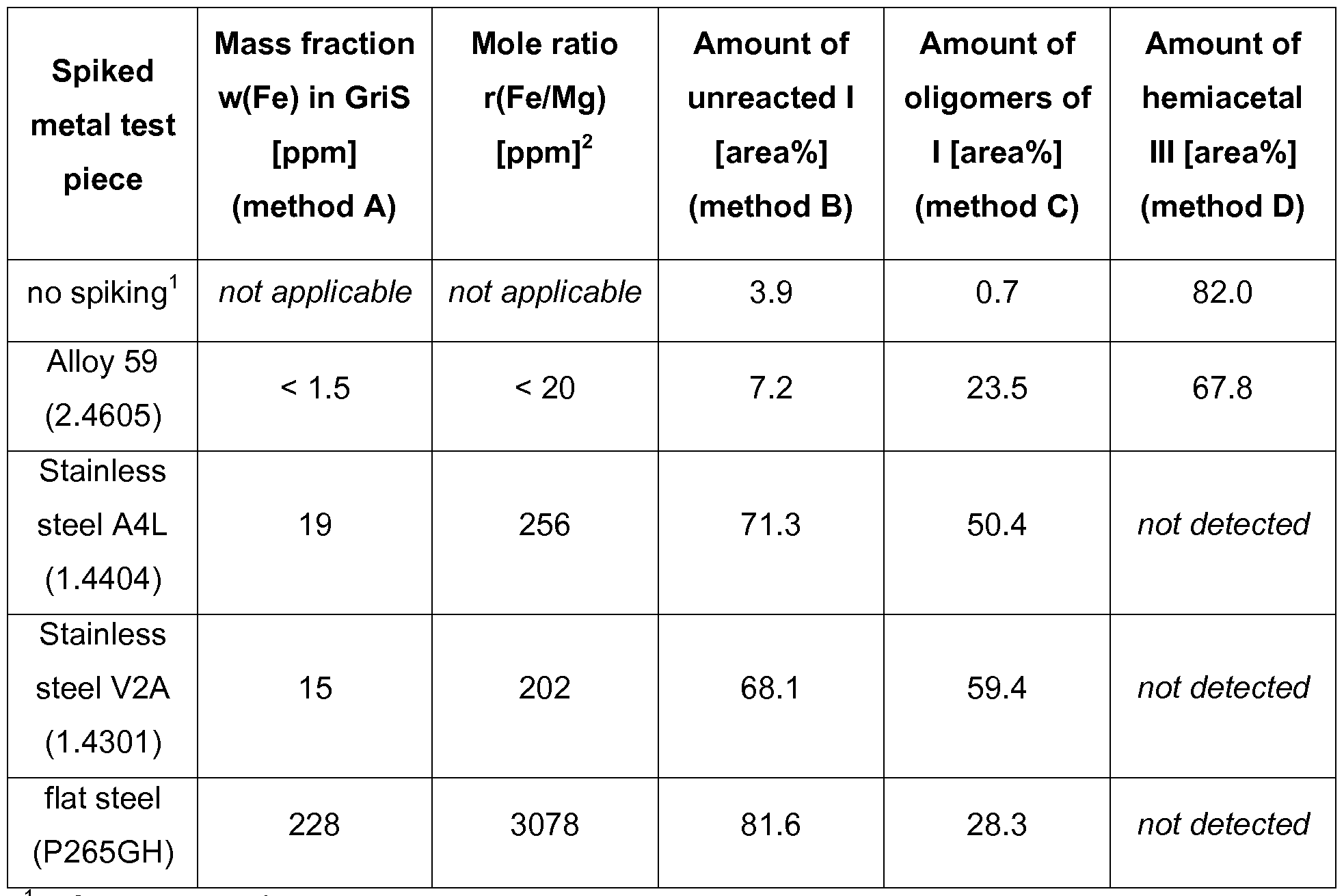
1 reference experiment
2 calculated from mass fraction w(Fe) in Grignard solution (see analytical method A)
Description of Analytical Methods:
Analytical Method A
For the quantification of iron ion concentrations, a quantitative analytical method using ICP- MS (e.g. Perkin Elmer Nexion 300) was used. Samples were filtered using membrane filters (e.g. Pall Acrodisc Premium 25 mm Syringe Filter 0.45 μηη GHP Membrane) and were, after addition of nitric acid and hydrochloric acid, digested using a microwave (e.g. Anton Paar Multiwave 3000). Iron ion amounts in solution are determined as mass fractions w(Fe), i.e. the mass of iron ions divided by the mass of the solution, and are given in this document as ppm, i.e. μg (Fe) / g (solution).
The mass fraction of iron ions in the Grignard solution (w(Fe)) may be converted into the mole ratio of iron ions to organomagnesium species (r(Fe/Mg), i.e. the molar amount of iron ions divided by the molar amount of organomagnesium species) with the help of the following formula:
( Fe \ n(Fe) w( e) p(GriS)
V Mg) ~ n(Mg) ~ c(Mg) * M(Fe)
wherein p(GriS) means the density of the Grignard solution (980 g/L), c(Mg) the molar concentration of the Grignard solution (1.3 mol/L) and M(Fe) the molar mass of iron
(55.845 g/mol). The mole ratios are given in ppm, i.e. μηηοΙ (Fe) / mol (Mg).
Analytical Method B
Reaction monitoring method: Gradient HPLC apparatus; eluent A: 1.0 mL trifluoroacetic acid dissolved in 1.0 L HPLC water; eluent B: 1.0 mL trifluoroacetic acid dissolved in 1 .0 L gradient grade acetonitrile; HPLC column: Agilent, Zorbax Eclipse XDB-C8, 4.6*150 mm, particle size 5 μηη; column temperature: 25 °C; flow: 2.0 mL/min; gradient profile: 0 min, 30% eluent A, 70% eluent B; 5 min, 20% eluent A, 80% eluent B; equilibration 5 min; sample preparation: direct quench of 0.1 mL reaction mixture with 10 mL methanol; injection volume: 1 .0 μί; UV-detection: 230 nm; data evaluation: only peaks of compound I (X = I, R1 = (S)- tetrahydrofuran-3-yl; retention time approx. 3.2 min) and quenched intermediate (compound I with X = H, R1 = (S)-tetrahydrofuran-3-yl;, retention time approx. 2.2 min) are taken into account for area% calculation.
Analytical Method C
Oligomer monitoring method: Gradient HPLC apparatus; eluent A: 1 .0 mL perchloric acid dissolved in 1 .0 L HPLC water; eluent B: gradient grade acetonitrile; column: AMT Halo C8, 4.6*150 mm, particle size 2.7 μηη; column temperature: 35 °C; flow: 1 .5 mL/min; gradient profile: 0 min, 60% eluent A, 40% eluent B; 20 min, 10% eluent A, 90% eluent B; 25 min, 0%
eluent A, 100% eluent B; 35 min, 0% eluent A, 100% eluent B; equilibration 5 min; sample preparation: direct quench of 0.1 mL reaction mixture with 10 mL methanol; dilute 500 μί of quenched solution with 500 μί THF; injection volume: 1 .0 μΙ_; UV-detection: 224 nm; data evaluation: all peaks in chromatogram are taken into account for area% calculation, peaks eluting later than compound I (X = I, R1 = (S)-tetrahydrofuran-3-yl; retention time approx. 1 1 .4 min) are summarized and reported as "oligomers of compound I".
Analytical Method D
Reaction monitoring method: Gradient HPLC apparatus; eluent A: 1.0 mL trifluoroacetic acid dissolved in 1 .0 L HPLC water; eluent B: 1.0 mL trifluoroacetic acid dissolved in 1 .0 L gradient grade acetonitrile; HPLC column: Agilent, Zorbax Eclipse XDB-C8, 4.6*150 mm, particle size 5 μηη; column temperature: 25 °C; flow: 1.2 mL/min; gradient profile: 0 min, 70% eluent A, 30% eluent B; 7 min, 60% eluent A, 40% eluent B; 15 min, 5% eluent A, 95% eluent B; 30 min, 5% eluent A, 95% eluent B; equilibration 7 min; sample preparation: direct quench of 0.1 mL reaction mixture with 5 mL 1 N hydrochloric acid, dilute with 5 mL acetonitrile; injection volume: 1.0 μί; UV-detection: 230 nm; data evaluation: all peaks integrated for area% calculation; reported hemiacetal intermediate (compound of formula III wherein R' = H, R1 = (S)-tetrahydrofuran-3-yl, R2 = trimethylsilyl) at retention time approx. 3.9 min.
Claims
Claims
Process for preparing a compound of general formula II I,

wherein R1 denotes (R)-tetrahydrofuran-3-yl or (S)-tetrahydrofuran-3-yl; and wherein R2 independently of one another denote hydrogen, (Ci-8-alkyl)carbonyl, (Ci-8-alkyl)oxycarbonyl, phenylcarbonyl, phenyl-(Ci-3-alkyl)-carbonyl, phenyl-Ci-3- alkyl, allyl, RaRbRcSi, CRaRbORc, wherein two adjacent groups R2 may be linked with each other to form a bridging group SiRaRb, CRaRb or CRaORb-CRaORb; wherein Ra, Rb, Rc independently of one another denote Ci-4-alkyl, phenyl or phenyl-Ci-3-alkyl, while the alkyl groups may be mono- or polysubstituted by halogen;
while the phenyl groups mentioned in the definition of the above groups may be mono- or polysubstituted with L1 , wherein L1 independently of one another are selected from among fluorine, chlorine, bromine, Ci-3-alkyl, Ci-4-alkoxy and nitro; and
wherein R' denotes hydrogen, methyl or ethyl; comprising the steps (S1 ), (S2) and (S3):
(S1 ): reacting a compound of general formula I

wherein R1 is defined as hereinbefore and X denotes Br, I or triflate;
with a Ci-4-alkyl-magnesium chloride or bromide,
wherein lithium bromide and/or lithium chloride is optionally used, and
(S2): reacting the organometallic compound obtained in step (S1 ) with a compound of general formula II

wherein R2 is defined as hereinbefore; and
wherein lithium bromide and/or lithium chloride is optionally used, and
wherein R2 not being hydrogen are optionally cleaved during or at the end of (S2), and
(S3): reacting the adduct obtained in step (S2) with a compound R'-OH or a mixture of compounds R'-OH, wherein R' is defined as hereinbefore, in the presence of one or more acids, characterized in that,
the mole ratio of iron ions in the reaction mixtures of step (S1 ) and/or (S2) to compound I employed in step (S1 ) does not exceed 40 ppm.
The process according to claim 1 wherein X in step (S1 ) denotes I.
The process according to any of claims 1 and 2 wherein C3-4-alkyl-magnesium chloride or bromide, preferably isopropyl magnesium chloride is employed in step (S1 ) and additionally lithium chloride is used in step (S1 ).
The process according to any of claims 1 to 3 wherein R2 denotes trimethylsilyl in the compound of general formula II used in step (S2).
The process according to any of claims 1 to 4 wherein R' in step (S3) denotes methyl.
Use of the process for preparing a compound of general formula III according to any of claims 1 to 5
in the synthesis of a compound of general formula IV
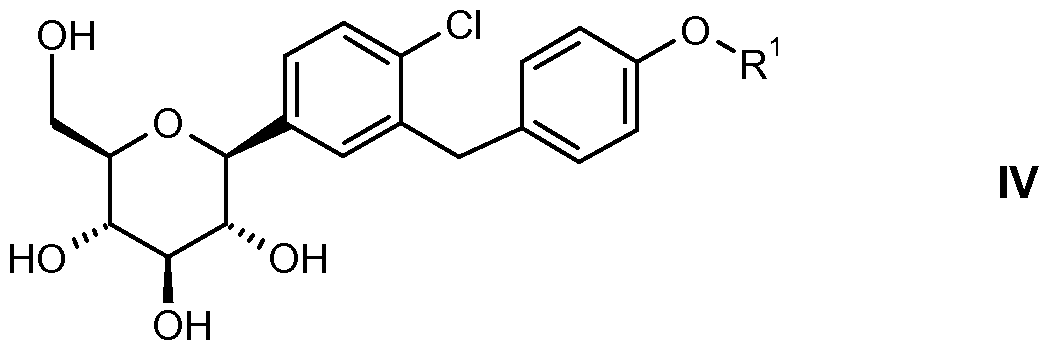
wherein R1 is defined as hereinbefore; comprising step (S4) and optionally comprising step (S5):
(54) : reacting the compound of general formula III with a reducing agent; and optionally
(55) : cleavage of the protective groups R2 not being hydrogen in the compound formed from the compound of general formula III in step (S4).
7. The process according to any of claims 1 to 6 wherein, in the reagent comprising the alkyl-magnesium species used in step (S1 ) and/or in a solution comprising such reagent, the mole ratio of iron ions to Ci-4-alkyl-magnesium species does not exceed 40 ppm.
8. The process according to any of claims 1 to 7 wherein the materials of the
equipment surfaces that may come into contact with a solution comprising the alkyl- magnesium species used in step (S1 ) and/or with the reaction mixtures of steps (S1 ) and/or (S2) are resistant against releasing or leaching of iron ions such that the mole ratio of iron ions in the reaction mixtures of step (S1 ) and/or (S2) to compound I employed in step (S1 ) does not exceed 40 ppm.
9. The process according to any of claims 1 to 8 wherein the materials of the
equipment surfaces that may come into contact with a solution comprising the alkyl- magnesium species used in step (S1 ) are resistant against releasing or leaching of iron ions such that, in said solution, the mole ratio of iron ions to C-i-4-alkyl- magnesium species does not exceed 40 ppm. 10. The process according to any of claims 1 to 9 wherein the materials of the
equipment surfaces that may come into contact with a solution comprising the alkyl- magnesium species used in step (S1 ) and/or with the reaction mixtures of steps (S1 )
and/or (S2) are selected from the group consisting of metal alloys with iron mass fractions of not more than 10%.
The process according to any of claims 1 to 10 wherein the materials of the equipment surfaces that may come into contact with a solution comprising the alkyl- magnesium species used in step (S1 ) and/or the reaction mixtures of steps (S1 ) and/or (S2) are selected from the group consisting of materials that are treated and/or coated to prevent releasing or leaching of iron ions.
Priority Applications (11)
| Application Number | Priority Date | Filing Date | Title |
|---|---|---|---|
| PL17777935T PL3526229T3 (en) | 2016-10-13 | 2017-10-09 | Process for preparing glucopyranosyl-substituted benzyl-benzene derivatives |
| EP21169098.7A EP3889144A1 (en) | 2016-10-13 | 2017-10-09 | Process for preparing glucopyranosyl-substituted benzyl-benzene derivatives |
| DK17777935.2T DK3526229T3 (en) | 2016-10-13 | 2017-10-09 | METHOD OF PREPARING GLUCOPYRANOSYL-SUBSTITUTED BENZYL-BENZENE DERIVATIVES. |
| HRP20211154TT HRP20211154T1 (en) | 2016-10-13 | 2017-10-09 | PROCEDURE FOR PREPARATION OF BENCYL-BENZENE DERIVATIVES SUBSTITUTED BY GLUCOPYRANOSYL |
| SI201730802T SI3526229T1 (en) | 2016-10-13 | 2017-10-09 | Process for preparing glucopyranosyl-substituted benzyl-benzene derivatives |
| US16/340,163 US20190309004A1 (en) | 2016-10-13 | 2017-10-09 | Process for preparing glucopyranosyl-substituted benzyl-benzene derivatives |
| JP2019520146A JP2019530722A (en) | 2016-10-13 | 2017-10-09 | Process for preparing glucopyranosyl-substituted benzyl-benzene derivatives |
| ES17777935T ES2878583T3 (en) | 2016-10-13 | 2017-10-09 | Procedure for the preparation of glucopyranosyl substituted benzyl-benzene derivatives |
| EP17777935.2A EP3526229B1 (en) | 2016-10-13 | 2017-10-09 | Process for preparing glucopyranosyl-substituted benzyl-benzene derivatives |
| US18/049,341 US20230100086A1 (en) | 2016-10-13 | 2022-10-25 | Process for preparing glucopyranosyl-substituted benzyl-benzene derivatives |
| US18/974,874 US20250101055A1 (en) | 2016-10-13 | 2024-12-10 | Process for preparing glucopyranosyl-substituted benzyl-benzene derivatives |
Applications Claiming Priority (2)
| Application Number | Priority Date | Filing Date | Title |
|---|---|---|---|
| EP16193735 | 2016-10-13 | ||
| EP16193735.4 | 2016-10-13 |
Related Child Applications (2)
| Application Number | Title | Priority Date | Filing Date |
|---|---|---|---|
| US16/340,163 A-371-Of-International US20190309004A1 (en) | 2016-10-13 | 2017-10-09 | Process for preparing glucopyranosyl-substituted benzyl-benzene derivatives |
| US18/049,341 Continuation US20230100086A1 (en) | 2016-10-13 | 2022-10-25 | Process for preparing glucopyranosyl-substituted benzyl-benzene derivatives |
Publications (1)
| Publication Number | Publication Date |
|---|---|
| WO2018069243A1 true WO2018069243A1 (en) | 2018-04-19 |
Family
ID=57136729
Family Applications (1)
| Application Number | Title | Priority Date | Filing Date |
|---|---|---|---|
| PCT/EP2017/075664 Ceased WO2018069243A1 (en) | 2016-10-13 | 2017-10-09 | Process for preparing glucopyranosyl-substituted benzyl-benzene derivatives |
Country Status (11)
| Country | Link |
|---|---|
| US (3) | US20190309004A1 (en) |
| EP (2) | EP3889144A1 (en) |
| JP (1) | JP2019530722A (en) |
| DK (1) | DK3526229T3 (en) |
| ES (1) | ES2878583T3 (en) |
| HR (1) | HRP20211154T1 (en) |
| HU (1) | HUE055463T2 (en) |
| PL (1) | PL3526229T3 (en) |
| PT (1) | PT3526229T (en) |
| SI (1) | SI3526229T1 (en) |
| WO (1) | WO2018069243A1 (en) |
Families Citing this family (10)
| Publication number | Priority date | Publication date | Assignee | Title |
|---|---|---|---|---|
| CN102316875A (en) | 2009-02-13 | 2012-01-11 | 贝林格尔.英格海姆国际有限公司 | SGLT-2 inhibitors for the treatment of type 1 diabetes, type 2 diabetes, impaired glucose tolerance or hyperglycemia |
| PT2395983T (en) | 2009-02-13 | 2020-07-03 | Boehringer Ingelheim Int | Pharmaceutical composition comprising a sglt2 inhibitor, a dpp-iv inhibitor and optionally a further antidiabetic agent and uses thereof |
| UY32919A (en) | 2009-10-02 | 2011-04-29 | Boehringer Ingelheim Int | Pharmaceutical composition, pharmaceutical dosage form, procedure for its preparation, methods for its treatment and its uses |
| UY33937A (en) | 2011-03-07 | 2012-09-28 | Boehringer Ingelheim Int | PHARMACEUTICAL COMPOSITIONS CONTAINING DPP-4 AND / OR SGLT-2 AND METFORMIN INHIBITORS |
| CA2812519A1 (en) | 2013-04-05 | 2014-10-05 | Boehringer Ingelheim International Gmbh | Pharmaceutical composition, methods for treating and uses thereof |
| US11813275B2 (en) | 2013-04-05 | 2023-11-14 | Boehringer Ingelheim International Gmbh | Pharmaceutical composition, methods for treating and uses thereof |
| HK1213818A1 (en) | 2013-04-05 | 2016-07-15 | 勃林格殷格翰国际有限公司 | Therapeutic uses of empagliflozin |
| ES2702174T3 (en) | 2013-04-05 | 2019-02-27 | Boehringer Ingelheim Int | Therapeutic uses of empagliflozin |
| DK2986304T3 (en) | 2013-04-18 | 2022-04-04 | Boehringer Ingelheim Int | PHARMACEUTICAL COMPOSITION, TREATMENT PROCEDURES AND USES. |
| CN109922813A (en) | 2016-11-10 | 2019-06-21 | 勃林格殷格翰国际有限公司 | Pharmaceutical composition, treatment method and application thereof |
Citations (4)
| Publication number | Priority date | Publication date | Assignee | Title |
|---|---|---|---|---|
| WO2005092877A1 (en) | 2004-03-16 | 2005-10-06 | Boehringer Ingelheim International Gmbh | Glucopyranosyl-substituted benzol derivatives, drugs containing said compounds, the use thereof and method for the production thereof |
| WO2006117359A1 (en) | 2005-05-03 | 2006-11-09 | Boehringer Ingelheim International Gmbh | CRYSTALLINE FORM OF 1-CHLORO-4-(ß-D-GLUCOPYRANOS-1-YL)-2-[4-((S)-TETRAHYDROFURAN-3-YLOXY)-BENZYL]-BENZENE, A METHOD FOR ITS PREPARATION AND THE USE THEREOF FOR PREPARING MEDICAMENTS |
| WO2006120208A1 (en) | 2005-05-10 | 2006-11-16 | Boehringer Ingelheim International Gmbh | Processes for preparing of glucopyranosyl-substituted benzyl-benzene derivatives and intermediates therein |
| WO2011039108A2 (en) | 2009-09-30 | 2011-04-07 | Boehringer Ingelheim International Gmbh | Processes for preparing of glucopyranosyl-substituted benzyl-benzene derivatives |
-
2017
- 2017-10-09 WO PCT/EP2017/075664 patent/WO2018069243A1/en not_active Ceased
- 2017-10-09 EP EP21169098.7A patent/EP3889144A1/en not_active Withdrawn
- 2017-10-09 DK DK17777935.2T patent/DK3526229T3/en active
- 2017-10-09 JP JP2019520146A patent/JP2019530722A/en active Pending
- 2017-10-09 HR HRP20211154TT patent/HRP20211154T1/en unknown
- 2017-10-09 ES ES17777935T patent/ES2878583T3/en active Active
- 2017-10-09 SI SI201730802T patent/SI3526229T1/en unknown
- 2017-10-09 PL PL17777935T patent/PL3526229T3/en unknown
- 2017-10-09 PT PT177779352T patent/PT3526229T/en unknown
- 2017-10-09 EP EP17777935.2A patent/EP3526229B1/en active Active
- 2017-10-09 US US16/340,163 patent/US20190309004A1/en not_active Abandoned
- 2017-10-09 HU HUE17777935A patent/HUE055463T2/en unknown
-
2022
- 2022-10-25 US US18/049,341 patent/US20230100086A1/en not_active Abandoned
-
2024
- 2024-12-10 US US18/974,874 patent/US20250101055A1/en active Pending
Patent Citations (4)
| Publication number | Priority date | Publication date | Assignee | Title |
|---|---|---|---|---|
| WO2005092877A1 (en) | 2004-03-16 | 2005-10-06 | Boehringer Ingelheim International Gmbh | Glucopyranosyl-substituted benzol derivatives, drugs containing said compounds, the use thereof and method for the production thereof |
| WO2006117359A1 (en) | 2005-05-03 | 2006-11-09 | Boehringer Ingelheim International Gmbh | CRYSTALLINE FORM OF 1-CHLORO-4-(ß-D-GLUCOPYRANOS-1-YL)-2-[4-((S)-TETRAHYDROFURAN-3-YLOXY)-BENZYL]-BENZENE, A METHOD FOR ITS PREPARATION AND THE USE THEREOF FOR PREPARING MEDICAMENTS |
| WO2006120208A1 (en) | 2005-05-10 | 2006-11-16 | Boehringer Ingelheim International Gmbh | Processes for preparing of glucopyranosyl-substituted benzyl-benzene derivatives and intermediates therein |
| WO2011039108A2 (en) | 2009-09-30 | 2011-04-07 | Boehringer Ingelheim International Gmbh | Processes for preparing of glucopyranosyl-substituted benzyl-benzene derivatives |
Non-Patent Citations (3)
| Title |
|---|
| FUERSTNER A ET AL: "Iron-Catalyzed Cross-Coupling Reactions", JOURNAL OF THE AMERICAN CHEMICAL SOCIETY, AMERICAN CHEMICAL SOCIETY, US, vol. 124, 1 January 2002 (2002-01-01), pages 13856 - 13863, XP002250741, ISSN: 0002-7863, DOI: 10.1021/JA027190T * |
| FURSTNER ET AL., J. AM. CHEM. SOC., vol. 124, 2002, pages 13856 |
| KHARASCH ET AL., J. AM. CHEM. SOC., vol. 63, 1941, pages 2316 |
Also Published As
| Publication number | Publication date |
|---|---|
| PT3526229T (en) | 2021-07-06 |
| EP3526229B1 (en) | 2021-04-28 |
| HUE055463T2 (en) | 2021-11-29 |
| SI3526229T1 (en) | 2021-08-31 |
| PL3526229T3 (en) | 2021-11-02 |
| DK3526229T3 (en) | 2021-07-19 |
| US20230100086A1 (en) | 2023-03-30 |
| US20190309004A1 (en) | 2019-10-10 |
| US20250101055A1 (en) | 2025-03-27 |
| JP2019530722A (en) | 2019-10-24 |
| EP3526229A1 (en) | 2019-08-21 |
| EP3889144A1 (en) | 2021-10-06 |
| ES2878583T3 (en) | 2021-11-19 |
| HRP20211154T1 (en) | 2021-10-15 |
Similar Documents
| Publication | Publication Date | Title |
|---|---|---|
| EP3526229B1 (en) | Process for preparing glucopyranosyl-substituted benzyl-benzene derivatives | |
| Alper et al. | Metal catalyzed diazo transfer for the synthesis of azides from amines | |
| JP7280248B2 (en) | Amidite compound and method for producing polynucleotide using said compound | |
| EP1189915B1 (en) | Process for the production of azithromycin | |
| EP2966069A1 (en) | Oxidation reaction with excellent conversion rate | |
| EP2935216B1 (en) | Process for the preparation of tofacitinib and intermediates thereof | |
| EP3027634A1 (en) | Process for preparation of tulathromycin | |
| WO1990010011A1 (en) | Use of 2-tert.-alkylimino-2-di-c1-4-alkylamino-1,3-di-c1-3-alkylperhydro-1,3,2-diazaphosphorine for o-substitution reactions of ribonucleosides | |
| EP3838894A1 (en) | Method for producing intermediate useful for synethesis of sglt inhibitor | |
| EP2963048B1 (en) | Method for producing alpha-halo-tetraacyl glucose | |
| EP0350292B1 (en) | Process for preparing 2'-deoxy-beta-adenosine | |
| JPS6360033B2 (en) | ||
| CN108473523B (en) | Preparation method of epirubicin hydrochloride and intermediate thereof | |
| WO2019170521A1 (en) | Synthesis of obeticholic acid and synthesis intermediate | |
| WO2008069451A1 (en) | Improved process for the preparation of clevudine as anti-hbv agent | |
| Cosford et al. | A short synthesis of 2′, 3′-didehydro-3′-deoxythymidine | |
| RU2337105C2 (en) | Method for indolo-pyrrolo-carbazole derivative production | |
| CN101265212A (en) | Shikonone oxime derivatives that can be used for antitumor | |
| Laventine et al. | Stereoselective synthesis by double reductive amination ring closure of novel aza-heteroannulated sugars | |
| Pino-González et al. | Studies on reactivity of azidoamides, intermediates in the synthesis of tetrahydroxypipecolic acid derivatives | |
| EP2952504B1 (en) | Method for producing desmosine, isodesmosine and derivatives thereof | |
| US20210284681A1 (en) | PROCESS FOR THE PREPARATION OF 3beta-HYDROXY-17-(1H-BENZIMIDAZOL-1-YL)ANDROSTA-5,16-DIENE | |
| EP4349846A1 (en) | Chimeric nucleic acid oligomer including phosphorothioate and boranophosphate, and method for producing same | |
| CN114502567B (en) | Method for producing glycoside compound | |
| KR100911720B1 (en) | Method for preparing crystalline hydrochloride safoglylate |
Legal Events
| Date | Code | Title | Description |
|---|---|---|---|
| 121 | Ep: the epo has been informed by wipo that ep was designated in this application |
Ref document number: 17777935 Country of ref document: EP Kind code of ref document: A1 |
|
| ENP | Entry into the national phase |
Ref document number: 2019520146 Country of ref document: JP Kind code of ref document: A |
|
| NENP | Non-entry into the national phase |
Ref country code: DE |
|
| ENP | Entry into the national phase |
Ref document number: 2017777935 Country of ref document: EP Effective date: 20190513 |