WO2017132484A1 - Photo-cleavable primer compositions and methods of use - Google Patents
Photo-cleavable primer compositions and methods of use Download PDFInfo
- Publication number
- WO2017132484A1 WO2017132484A1 PCT/US2017/015298 US2017015298W WO2017132484A1 WO 2017132484 A1 WO2017132484 A1 WO 2017132484A1 US 2017015298 W US2017015298 W US 2017015298W WO 2017132484 A1 WO2017132484 A1 WO 2017132484A1
- Authority
- WO
- WIPO (PCT)
- Prior art keywords
- group
- rir
- alkyl
- nhch
- independently selected
- Prior art date
- Legal status (The legal status is an assumption and is not a legal conclusion. Google has not performed a legal analysis and makes no representation as to the accuracy of the status listed.)
- Ceased
Links
- 0 *c1cc(CCC(O)=O)cc(OCc2ccccc2)c1OCc1ccccc1 Chemical compound *c1cc(CCC(O)=O)cc(OCc2ccccc2)c1OCc1ccccc1 0.000 description 12
- JVMWYSDGOVWXNK-UHFFFAOYSA-N CC(C)C(OCc(ccc(C1CC1)c1)c1[N+]([O-])=O)=O Chemical compound CC(C)C(OCc(ccc(C1CC1)c1)c1[N+]([O-])=O)=O JVMWYSDGOVWXNK-UHFFFAOYSA-N 0.000 description 1
- AZATZRQKYWUZJE-UHFFFAOYSA-N C[O](Cc1ccccc1)c(cc(CCCO)cc1OCc2ccccc2)c1OCc1ccccc1 Chemical compound C[O](Cc1ccccc1)c(cc(CCCO)cc1OCc2ccccc2)c1OCc1ccccc1 AZATZRQKYWUZJE-UHFFFAOYSA-N 0.000 description 1
Classifications
-
- C—CHEMISTRY; METALLURGY
- C09—DYES; PAINTS; POLISHES; NATURAL RESINS; ADHESIVES; COMPOSITIONS NOT OTHERWISE PROVIDED FOR; APPLICATIONS OF MATERIALS NOT OTHERWISE PROVIDED FOR
- C09D—COATING COMPOSITIONS, e.g. PAINTS, VARNISHES OR LACQUERS; FILLING PASTES; CHEMICAL PAINT OR INK REMOVERS; INKS; CORRECTING FLUIDS; WOODSTAINS; PASTES OR SOLIDS FOR COLOURING OR PRINTING; USE OF MATERIALS THEREFOR
- C09D7/00—Features of coating compositions, not provided for in group C09D5/00; Processes for incorporating ingredients in coating compositions
- C09D7/40—Additives
- C09D7/60—Additives non-macromolecular
- C09D7/63—Additives non-macromolecular organic
-
- A—HUMAN NECESSITIES
- A61—MEDICAL OR VETERINARY SCIENCE; HYGIENE
- A61K—PREPARATIONS FOR MEDICAL, DENTAL OR TOILETRY PURPOSES
- A61K6/00—Preparations for dentistry
- A61K6/20—Protective coatings for natural or artificial teeth, e.g. sealings, dye coatings or varnish
-
- A—HUMAN NECESSITIES
- A61—MEDICAL OR VETERINARY SCIENCE; HYGIENE
- A61K—PREPARATIONS FOR MEDICAL, DENTAL OR TOILETRY PURPOSES
- A61K6/00—Preparations for dentistry
- A61K6/60—Preparations for dentistry comprising organic or organo-metallic additives
- A61K6/62—Photochemical radical initiators
-
- A—HUMAN NECESSITIES
- A61—MEDICAL OR VETERINARY SCIENCE; HYGIENE
- A61K—PREPARATIONS FOR MEDICAL, DENTAL OR TOILETRY PURPOSES
- A61K6/00—Preparations for dentistry
- A61K6/60—Preparations for dentistry comprising organic or organo-metallic additives
- A61K6/65—Dyes
-
- A—HUMAN NECESSITIES
- A61—MEDICAL OR VETERINARY SCIENCE; HYGIENE
- A61K—PREPARATIONS FOR MEDICAL, DENTAL OR TOILETRY PURPOSES
- A61K6/00—Preparations for dentistry
- A61K6/70—Preparations for dentistry comprising inorganic additives
- A61K6/78—Pigments
-
- B—PERFORMING OPERATIONS; TRANSPORTING
- B05—SPRAYING OR ATOMISING IN GENERAL; APPLYING FLUENT MATERIALS TO SURFACES, IN GENERAL
- B05D—PROCESSES FOR APPLYING FLUENT MATERIALS TO SURFACES, IN GENERAL
- B05D3/00—Pretreatment of surfaces to which liquids or other fluent materials are to be applied; After-treatment of applied coatings, e.g. intermediate treating of an applied coating preparatory to subsequent applications of liquids or other fluent materials
- B05D3/002—Pretreatement
-
- B—PERFORMING OPERATIONS; TRANSPORTING
- B05—SPRAYING OR ATOMISING IN GENERAL; APPLYING FLUENT MATERIALS TO SURFACES, IN GENERAL
- B05D—PROCESSES FOR APPLYING FLUENT MATERIALS TO SURFACES, IN GENERAL
- B05D3/00—Pretreatment of surfaces to which liquids or other fluent materials are to be applied; After-treatment of applied coatings, e.g. intermediate treating of an applied coating preparatory to subsequent applications of liquids or other fluent materials
- B05D3/10—Pretreatment of surfaces to which liquids or other fluent materials are to be applied; After-treatment of applied coatings, e.g. intermediate treating of an applied coating preparatory to subsequent applications of liquids or other fluent materials by other chemical means
-
- B—PERFORMING OPERATIONS; TRANSPORTING
- B05—SPRAYING OR ATOMISING IN GENERAL; APPLYING FLUENT MATERIALS TO SURFACES, IN GENERAL
- B05D—PROCESSES FOR APPLYING FLUENT MATERIALS TO SURFACES, IN GENERAL
- B05D3/00—Pretreatment of surfaces to which liquids or other fluent materials are to be applied; After-treatment of applied coatings, e.g. intermediate treating of an applied coating preparatory to subsequent applications of liquids or other fluent materials
- B05D3/10—Pretreatment of surfaces to which liquids or other fluent materials are to be applied; After-treatment of applied coatings, e.g. intermediate treating of an applied coating preparatory to subsequent applications of liquids or other fluent materials by other chemical means
- B05D3/107—Post-treatment of applied coatings
-
- C—CHEMISTRY; METALLURGY
- C07—ORGANIC CHEMISTRY
- C07C—ACYCLIC OR CARBOCYCLIC COMPOUNDS
- C07C205/00—Compounds containing nitro groups bound to a carbon skeleton
- C07C205/39—Compounds containing nitro groups bound to a carbon skeleton the carbon skeleton being further substituted by esterified hydroxy groups
- C07C205/42—Compounds containing nitro groups bound to a carbon skeleton the carbon skeleton being further substituted by esterified hydroxy groups having nitro groups or esterified hydroxy groups bound to carbon atoms of six-membered aromatic rings of the carbon skeleton
-
- C—CHEMISTRY; METALLURGY
- C07—ORGANIC CHEMISTRY
- C07C—ACYCLIC OR CARBOCYCLIC COMPOUNDS
- C07C205/00—Compounds containing nitro groups bound to a carbon skeleton
- C07C205/39—Compounds containing nitro groups bound to a carbon skeleton the carbon skeleton being further substituted by esterified hydroxy groups
- C07C205/42—Compounds containing nitro groups bound to a carbon skeleton the carbon skeleton being further substituted by esterified hydroxy groups having nitro groups or esterified hydroxy groups bound to carbon atoms of six-membered aromatic rings of the carbon skeleton
- C07C205/43—Compounds containing nitro groups bound to a carbon skeleton the carbon skeleton being further substituted by esterified hydroxy groups having nitro groups or esterified hydroxy groups bound to carbon atoms of six-membered aromatic rings of the carbon skeleton to carbon atoms of the same non-condensed six-membered aromatic ring or to carbon atoms of six-membered aromatic rings being part of the same condensed ring system
-
- C—CHEMISTRY; METALLURGY
- C07—ORGANIC CHEMISTRY
- C07C—ACYCLIC OR CARBOCYCLIC COMPOUNDS
- C07C235/00—Carboxylic acid amides, the carbon skeleton of the acid part being further substituted by oxygen atoms
- C07C235/02—Carboxylic acid amides, the carbon skeleton of the acid part being further substituted by oxygen atoms having carbon atoms of carboxamide groups bound to acyclic carbon atoms and singly-bound oxygen atoms bound to the same carbon skeleton
- C07C235/04—Carboxylic acid amides, the carbon skeleton of the acid part being further substituted by oxygen atoms having carbon atoms of carboxamide groups bound to acyclic carbon atoms and singly-bound oxygen atoms bound to the same carbon skeleton the carbon skeleton being acyclic and saturated
- C07C235/06—Carboxylic acid amides, the carbon skeleton of the acid part being further substituted by oxygen atoms having carbon atoms of carboxamide groups bound to acyclic carbon atoms and singly-bound oxygen atoms bound to the same carbon skeleton the carbon skeleton being acyclic and saturated having the nitrogen atoms of the carboxamide groups bound to hydrogen atoms or to acyclic carbon atoms
-
- C—CHEMISTRY; METALLURGY
- C07—ORGANIC CHEMISTRY
- C07C—ACYCLIC OR CARBOCYCLIC COMPOUNDS
- C07C235/00—Carboxylic acid amides, the carbon skeleton of the acid part being further substituted by oxygen atoms
- C07C235/02—Carboxylic acid amides, the carbon skeleton of the acid part being further substituted by oxygen atoms having carbon atoms of carboxamide groups bound to acyclic carbon atoms and singly-bound oxygen atoms bound to the same carbon skeleton
- C07C235/04—Carboxylic acid amides, the carbon skeleton of the acid part being further substituted by oxygen atoms having carbon atoms of carboxamide groups bound to acyclic carbon atoms and singly-bound oxygen atoms bound to the same carbon skeleton the carbon skeleton being acyclic and saturated
- C07C235/18—Carboxylic acid amides, the carbon skeleton of the acid part being further substituted by oxygen atoms having carbon atoms of carboxamide groups bound to acyclic carbon atoms and singly-bound oxygen atoms bound to the same carbon skeleton the carbon skeleton being acyclic and saturated having at least one of the singly-bound oxygen atoms further bound to a carbon atom of a six-membered aromatic ring, e.g. phenoxyacetamides
- C07C235/20—Carboxylic acid amides, the carbon skeleton of the acid part being further substituted by oxygen atoms having carbon atoms of carboxamide groups bound to acyclic carbon atoms and singly-bound oxygen atoms bound to the same carbon skeleton the carbon skeleton being acyclic and saturated having at least one of the singly-bound oxygen atoms further bound to a carbon atom of a six-membered aromatic ring, e.g. phenoxyacetamides having the nitrogen atoms of the carboxamide groups bound to hydrogen atoms or to acyclic carbon atoms
-
- C—CHEMISTRY; METALLURGY
- C07—ORGANIC CHEMISTRY
- C07C—ACYCLIC OR CARBOCYCLIC COMPOUNDS
- C07C271/00—Derivatives of carbamic acids, i.e. compounds containing any of the groups, the nitrogen atom not being part of nitro or nitroso groups
- C07C271/06—Esters of carbamic acids
- C07C271/08—Esters of carbamic acids having oxygen atoms of carbamate groups bound to acyclic carbon atoms
- C07C271/10—Esters of carbamic acids having oxygen atoms of carbamate groups bound to acyclic carbon atoms with the nitrogen atoms of the carbamate groups bound to hydrogen atoms or to acyclic carbon atoms
- C07C271/16—Esters of carbamic acids having oxygen atoms of carbamate groups bound to acyclic carbon atoms with the nitrogen atoms of the carbamate groups bound to hydrogen atoms or to acyclic carbon atoms to carbon atoms of hydrocarbon radicals substituted by singly-bound oxygen atoms
-
- C—CHEMISTRY; METALLURGY
- C07—ORGANIC CHEMISTRY
- C07C—ACYCLIC OR CARBOCYCLIC COMPOUNDS
- C07C69/00—Esters of carboxylic acids; Esters of carbonic or haloformic acids
- C07C69/007—Esters of unsaturated alcohols having the esterified hydroxy group bound to an acyclic carbon atom
- C07C69/01—Vinyl esters
-
- C—CHEMISTRY; METALLURGY
- C07—ORGANIC CHEMISTRY
- C07D—HETEROCYCLIC COMPOUNDS
- C07D217/00—Heterocyclic compounds containing isoquinoline or hydrogenated isoquinoline ring systems
- C07D217/12—Heterocyclic compounds containing isoquinoline or hydrogenated isoquinoline ring systems with radicals, substituted by hetero atoms, attached to carbon atoms of the nitrogen-containing ring
- C07D217/14—Heterocyclic compounds containing isoquinoline or hydrogenated isoquinoline ring systems with radicals, substituted by hetero atoms, attached to carbon atoms of the nitrogen-containing ring other than aralkyl radicals
- C07D217/16—Heterocyclic compounds containing isoquinoline or hydrogenated isoquinoline ring systems with radicals, substituted by hetero atoms, attached to carbon atoms of the nitrogen-containing ring other than aralkyl radicals substituted by oxygen atoms
-
- C—CHEMISTRY; METALLURGY
- C07—ORGANIC CHEMISTRY
- C07F—ACYCLIC, CARBOCYCLIC OR HETEROCYCLIC COMPOUNDS CONTAINING ELEMENTS OTHER THAN CARBON, HYDROGEN, HALOGEN, OXYGEN, NITROGEN, SULFUR, SELENIUM OR TELLURIUM
- C07F7/00—Compounds containing elements of Groups 4 or 14 of the Periodic Table
- C07F7/02—Silicon compounds
- C07F7/08—Compounds having one or more C—Si linkages
- C07F7/0896—Compounds with a Si-H linkage
-
- C—CHEMISTRY; METALLURGY
- C07—ORGANIC CHEMISTRY
- C07F—ACYCLIC, CARBOCYCLIC OR HETEROCYCLIC COMPOUNDS CONTAINING ELEMENTS OTHER THAN CARBON, HYDROGEN, HALOGEN, OXYGEN, NITROGEN, SULFUR, SELENIUM OR TELLURIUM
- C07F9/00—Compounds containing elements of Groups 5 or 15 of the Periodic Table
- C07F9/02—Phosphorus compounds
- C07F9/06—Phosphorus compounds without P—C bonds
- C07F9/08—Esters of oxyacids of phosphorus
- C07F9/09—Esters of phosphoric acids
- C07F9/12—Esters of phosphoric acids with hydroxyaryl compounds
-
- C—CHEMISTRY; METALLURGY
- C07—ORGANIC CHEMISTRY
- C07F—ACYCLIC, CARBOCYCLIC OR HETEROCYCLIC COMPOUNDS CONTAINING ELEMENTS OTHER THAN CARBON, HYDROGEN, HALOGEN, OXYGEN, NITROGEN, SULFUR, SELENIUM OR TELLURIUM
- C07F9/00—Compounds containing elements of Groups 5 or 15 of the Periodic Table
- C07F9/02—Phosphorus compounds
- C07F9/547—Heterocyclic compounds, e.g. containing phosphorus as a ring hetero atom
- C07F9/553—Heterocyclic compounds, e.g. containing phosphorus as a ring hetero atom having one nitrogen atom as the only ring hetero atom
- C07F9/576—Six-membered rings
- C07F9/62—Isoquinoline or hydrogenated isoquinoline ring systems
-
- C—CHEMISTRY; METALLURGY
- C09—DYES; PAINTS; POLISHES; NATURAL RESINS; ADHESIVES; COMPOSITIONS NOT OTHERWISE PROVIDED FOR; APPLICATIONS OF MATERIALS NOT OTHERWISE PROVIDED FOR
- C09D—COATING COMPOSITIONS, e.g. PAINTS, VARNISHES OR LACQUERS; FILLING PASTES; CHEMICAL PAINT OR INK REMOVERS; INKS; CORRECTING FLUIDS; WOODSTAINS; PASTES OR SOLIDS FOR COLOURING OR PRINTING; USE OF MATERIALS THEREFOR
- C09D5/00—Coating compositions, e.g. paints, varnishes or lacquers, characterised by their physical nature or the effects produced; Filling pastes
- C09D5/002—Priming paints
-
- C—CHEMISTRY; METALLURGY
- C08—ORGANIC MACROMOLECULAR COMPOUNDS; THEIR PREPARATION OR CHEMICAL WORKING-UP; COMPOSITIONS BASED THEREON
- C08K—Use of inorganic or non-macromolecular organic substances as compounding ingredients
- C08K5/00—Use of organic ingredients
- C08K5/04—Oxygen-containing compounds
- C08K5/10—Esters; Ether-esters
- C08K5/101—Esters; Ether-esters of monocarboxylic acids
- C08K5/105—Esters; Ether-esters of monocarboxylic acids with phenols
- C08K5/107—Esters; Ether-esters of monocarboxylic acids with phenols with polyphenols
-
- C—CHEMISTRY; METALLURGY
- C08—ORGANIC MACROMOLECULAR COMPOUNDS; THEIR PREPARATION OR CHEMICAL WORKING-UP; COMPOSITIONS BASED THEREON
- C08K—Use of inorganic or non-macromolecular organic substances as compounding ingredients
- C08K5/00—Use of organic ingredients
- C08K5/04—Oxygen-containing compounds
- C08K5/13—Phenols; Phenolates
Definitions
- the present application discloses a cleavage or debonding process between a mineral/metal/oxide-containg surface and a (co)polymer/adhesive/resin surface by specifically cleaving the primer compound using infrared (IR), ultraviolet (UV) and/or a combination of IR and UV irradiation.
- IR infrared
- UV ultraviolet
- the application discloses photocleavable primers for debonding of adhesives by cleaving a covalent bond of the primer compound.
- the debonding is controlled and selective on a particular position on the primer compound, and does not result in a breakage or an uncontrolled depolymerization of the primer or adhesive and/or substrate surface.
- the present technology is applicable to dental adhesives.
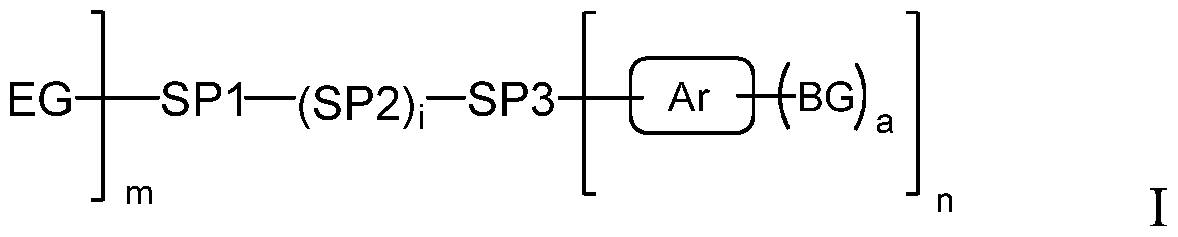
- the present application discloses a photo-cleavable surface binding compound of the Formula I and Formula II:
- the application discloses a method for forming a coating on a surface of a substrate using the surface binding compound of the Formula I or II.
- the present application discloses novel, structurally defined, small molecule compounds as primers and adhesives for medical, dental and electronic applications.
- primers including polyhydroxy aromatic compounds, such as tri-, tetra- and penta-hydroxy benzene, indole and imidazole moieties and their derivatives, that may form bonds, such as hydrogen bonds and/or attach via chelation or a coordination on to a material surface, such as a mineral, metal or oxide-containing surface of a material.
- these head moities adhere/adsorb on to mineral and metal oxide surfaces and generate secondary surfaces to interact (or crosslink) with bulk adhesive, resins or co- polymer surfaces to enhance performance of bonding between minerals, metals and metal oxide containing surfaces.
- Non-exclusive material surfaces include adhesives, cements, resins, paints, inks, proteins etc ...
- the application discloses compounds comprising an aromatic group- containing surface primer.
- the surface primer contains an aromatic group.
- the compound comprises an aromatic group attached to a functional end group through a spacer group.
- the compounds undergo self-assembly onto a substrate, such as a mineral substrate or a metal oxide substrate. When applied to an oxide containing surface, the aromatic group of the compound may self-assemble and form a bond, such as a hydrogen bond, onto the oxide containing surface.
- the compound forms a chelate or a coordination complex on to the metal surface of a substrate.
- the functional end group of the compound can form a secondary surface layer to interact/crosslink with bulk materials chemically, physico-chemically or physically via cross-linking, hydrogen bonding, oxide-metal coordination, electrostatic or hydrophobic interaction.
- a secondary surface can optionally be applied onto the primer.
- the secondary layer may be tunable by modifying the compound, including the functional end group of the aromatic group.
- the present application discloses a surface binding compound of the Formula I:
- each a is independently 1, 2, 3, 4 or 5;
- each of SPl, SP2 and SP3 is a spacer independently selected from the group consisting of -0-, -C(O)-, -S-, -S(O)-, -S(0) 2 -, -N-, -NH-, -NCH 3 -, -C-, -CH-, -(CH 2 ) q -, -(CH(OH)) q -, - (CH 2 CH(OH)CH 2 ) q -, -(C(CH 3 ) 2 ) q -, -(CH(CH 3 )) q -, -NH(CH 2 ) 2 NH-, -OC(O)-, -C0 2 -, - NHCH 2 CH 2 C(0)-, -OCH 2 CH 2 C(0)-, -C(0)CH 2 CH 2 C(0)-, -C(0)NHCH 2 CH 2 NH-, - NHCH 2 C(0)-, -NHCH 2 C(0)-
- Ar is an aryl or heteroaryl group
- each BG is a bonding group independently selected from the group consisting of -OH, - SiR 2 OH, -COOH, -S0 3 H, -P(0) 3 OH, -CONH 2 , -CSNH 2 , -CF 3 , -CF 2 CF 3 , -OCF 3 and -OCF 2 CF 3 ; provided that:
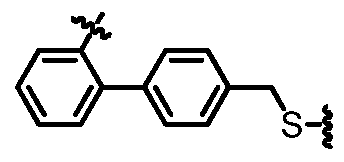
- SPl, SP2 and SP3 are a spacer selected from the group consisting of A, Al , A2, B, C, and ⁇ :
- Z is selected from the group consisting of C, S, S(O), P(OH) and P(OR);
- each E is independently selected from the group consisting of halo, CF 3 -, CF 3 O-, HO- and CH 3 O-; and e is 0, 1, 2 or 3; and
- each Z is independently selected from the group consisting of C, S, S(O), P(OH) and P(OR). In one variation of the compounds, Z is C or S.
- each of SPl, SP2 and SP3 is a spacer independently selected from the group consisting of -0-, -C(O)-, -S-, -S(O)-, -S(0) 2 -, -N-, -NH-, -NCH 3 -, -C-, -CH-, -(CH 2 ) q -, -(CH(OH)) q -, - (CH 2 CH(OH)CH 2 ) q -, -(C(CH 3 ) 2 ) q -, -(CH(CH 3 )) q -, -NH(CH 2 ) 2 NH-, -OC(O)-, -C0 2 -, - NHCH 2 CH 2 C(0)-, -OCH 2 CH 2 C(0)-, -C(0)CH 2 CH 2 C(0)-, -C(0)NHCH 2 CH 2 NH-, - NHCH 2 C(0)-, -NHCH 2 C(0)-
- SPl, SP2 and SP3 are a spacer selected from the group consisting of N, O, P, Q and ⁇ :
- the -Ar-BG group may be referred to as the head group, and the -EG group may be referred to as the tail group of the self-assembled layer or self assembled monolayer (SAM).
- SAMs refers to the spontaneous formation of organic assemblies of the compound of the Formula I or II on a surface by the adsorption of compounds from the solution comprising the compounds by a process of synergistic intermolecular and/or intramolecular interactions.
- the compound comprises of the formulae Ila, lib, lie, lid, lie, Ilf, Ilg and
- -Ar-BG is not a 3,4-dihydroxyphenyl group.
- these trivalent and tetravalent groups may be substituted and may form branched structures, leading up to various arrays, as represented by, e.g., dendrimeric species.
- SPl is -N- or -C-
- the compound of the Formula I (or Formula II) may form a branched structure at the nitro en atom or carbon atom, respectively, as shown:
- branched structures may also be formed with SPl and SP2, SP2 and SP3, or a comb
- a spacer designated or bonded as -C(0)NH- also include the reversible (inverted) spacer that is bonded as -NHC(O)-.
- the SPl, SP2 and SP3 groups may be independently selected from:
- each EG and EGl is independently -N + (CH 3 )(CH 2 OH) 2 , -N + (CH 3 ) 2 (CH 2 OH) and -N + (CH 2 OH) 3 .
- EG and EGl are the same.
- each EG is independently a C 6 alkyl, C 3 alkyl or a Cialkyl or -CH 3 .
- each EG and EGl is independently selected from the group consisting of phenyl or naphthyl each optionally substituted by one or two functional groups selected from the group consisting of halo (F, CI, Br, I), CF 3 -, CF 3 0-, CH 3 0-, -C(0)OH, -C(0)OCi_ 3 alkyl, -C(0)CH 3 , -CN, -NH 2 , -OH, -NHCH 3 , -N(CH 3 ) 2 and Ci_ 3 alkyl.
- halo F, CI, Br, I
- CF 3 -, CF 3 0-, CH 3 0-, -C(0)OH, -C(0)OCi_ 3 alkyl -C(0)CH 3 , -CN, -NH 2 , -OH, -NHCH 3 , -N(CH 3 ) 2 and Ci_ 3 alkyl.
- the EG and EGl referred to as the head or tail will depend on the nature of the functional group and conditions that allow EG or EGl to bind first or second, respectively.
- the EG may be referred to as the head, and EGl as the tail.
- GE and EGl may independently comprise of a polymerizable group, such as a mono-, di- or poly- acrylates and methacrylates (e.g., methyl acrylate, methyl methacrylate, ethyl(methyl)acrylate, isopropyl(methyl)acrylate, n-hexyl(methyl)acrylate, stearyl(methyl)acrylate,
- a polymerizable group such as a mono-, di- or poly- acrylates and methacrylates (e.g., methyl acrylate, methyl methacrylate, ethyl(methyl)acrylate, isopropyl(methyl)acrylate, n-hexyl(methyl)acrylate, stearyl(methyl)acrylate,
- each EG and EGl is independently selected from the group consisting of imidazolyl, indolyl, -N + RiR 2 R 3 , -PO 4 " , -N + RiR 2 R 3 X " , -PO 4 " Y + , -S0 4 ⁇ Y + , wherein each R 1; R 2 and R 3 is independently H and Ci_ 3 alkyl, X " is CI " , Br " and ⁇ and Y + is H + or -N + RiR 2 R 3 .
- each R, R 1; R 2 and R 3 is independently H and Ci_ 3 alkyl optionally substituted with -OH, -SH or -NH 2 .
- each of SPl, SP2 and SP3 is a spacer independently selected from the group consisting of -(CH 2 ) q -, -NH(CH 2 ) 2 NH-, -NHCH 2 CH 2 C(0)-, -C(0)NHCH 2 CH 2 NH-, - NHCH 2 C(0)-, -NHC(O)-, -C(0)N-, -NC(O)-, -C(0)NH-, -NCH 3 C(0)-, -C(0)NCH 3 -, - (CH 2 CH 2 0) p -, -(CH 2 CH 2 0) p CH 2 CH 2 -, -CH 2 CH 2 -(CH 2 CH 2 0) p - and -OCH(CH 2 0-) 2 -.
- each of SPl, SP2 and SP3 is a spacer independently selected from the group consisting of -N + RiR 2 -, -P0 4 ⁇ -, -N + RiR 2 X " -, - ⁇ 0 4 ⁇ + -, -S0 4 " Y + -, -(CH 2 ) q -N + RiR 2 -, - (CH 2 ) q -P0 4 --, -(CH 2 ) q -N + RiR 2 -X -, -(CH 2 ) q -P0 4 " Y + - and -0-PO " (0)0-(CH 2 ) 2 . 4 -N + (RiR 2 )-.
- each of SPl, SP2 and SP3 is independently selected from -CH 2 CH 2 -C(0)NHCH 2 CH 2 NH-C(0)NCH 3 -, -NHC(O)- (CH 2 CH 2 0) p -(CH 2 ) q -, -(CH 2 CH 2 0) p CH 2 CH 2 -C(0)NCH 3 -(CH 2 CH 2 0) p CH 2 CH 2 -, - NHCH 2 CH 2 C(0)-(CH 2 ) q -P0 4 --, -P0 4 -(CH 2 ) q -N + R 1 R 2 X -, -(CH 2 CH 2 0) p -(CH 2 ) q -P0 4 -, - N + RiR 2 X " -(CH 2 ) q -P0 4 " and -P0 4 " -(CH 2 CH 2 0) p -N +
- each BG is a bonding group independently selected from the group consisting of -OH, -SiR 2 OH, -COOH, -S0 3 H, -P(0) 3 OH, -CONH 2 and -CSNH 2 .
- -SP3- is -CH 2 - and Ar-(BG) a is selected from the group consisting of 2,3-dihydroxyphenyl, 3,4- dihydroxyphenyl, 2,3,4-trihydroxyphenyl, 3,4,5-trihydroxyphenyl, 2,3,4,5-tetrahydroxyphenyl, 2,3,4,5,6-pentahydroxyphenyl, 2,3-dicarboxyphenyl, 2,3,4-tricarboxyphenyl, 3,4,5- tricarboxylphenyl, 2,3,4,5-tetracarboxyphenyl, 2,3,4,5,6-pentacarboxyphenyl, 2,3- disiloxyphenyl, 2,3,4-trisiloxyphenyl, 3,4,5-trisiloxyphenyl, 2,3,4,5-tetrasiloxyphenyl and 2,3,4,5,6-pentasiloxyphenyl.
- each EG and EG1 is independently an aryl group selected from the group consisting of:
- aryl group is optionally substituted by 1 or 2 substituents selected from halo, CF 3 -, CF 3 0-, CH 3 0-, -C(0)OH, -C(0)OCi_ 3 alkyl, -C(0)CH 3 , -CN, -NH 2 , -OH, -SiR 2 OH, -NHCH 3 , - N(CH 3 ) 2 and Ci_ 3 alkyl.
- each EG and EG1 is independently a cationic, anionic, zwitterionic, polar and non-polar group.
- m is 2 or 3, and the acrylate is a di-acrylate or a tri-acrylate.
- m is 1 and n is 1.
- p is 1, 2, 3, 4, 5 or 6
- q is 1, 2, 3, 4, 5 or 6
- r is 1, 2, 3, 4, 5 or 6.
- each BG is -OH.
- BG is -OH, -COOH and -OH.
- BG is -OH, -SiR 2 OH or -OH, or a combination thereof.
- R is H.
- the molecular weight is less than 2 kDa, less than 1 kDa or less than 0.5 kDa.
- a method for forming a coating on a surface of a substrate comprises:
- each of SP1, SP2 and SP3 is a spacer independently selected from the group consisting of -0-, -C(O)-, -S-, -S(O)-, -S(0) 2 -, -N-, -NH-, -NCH 3 -, -C-, -CH-, -(CH 2 ) q -, -(CH(OH)) q -, - (CH 2 CH(OH)CH 2 ) q -, -(C(CH 3 ) 2 ) q -, -(CH(CH 3 )) q -, -NH(CH 2 ) 2 NH-, -OC(O)-, -C0 2 -, - NHCH 2 CH 2 C(0)-, -OCH 2 CH 2 C(0)-, -C(0)CH 2 CH 2 C(0)-, -C(0)NHCH 2 CH 2 NH-, - NHCH 2 C(0)-, -NHCH 2 C(0)-,
- Ar is an aryl or heteroaryl group
- each BG is a bonding group independently selected from the group consisting of -OH, - SiR 2 OH, -COOH, -S0 3 H, -P(0) 3 OH, -CONH 2 , -CSNH 2 , -CF 3 , -CF 2 CF 3 , -OCF 3 and -OCF 2 CF 3 ; provided that:
- SPl, SP2 and SP3 are a spacer selected from the group consisting of A, Al , A2, B, and ⁇ :
- Z is selected from the group consisting of C, S, S(O), P(OH) and P(OR);
- each E is independently selected from the group consisting of halo, CF 3 -, CF 3 O-, HO- and CH 3 O-; and e is 0, 1, 2 or 3; and
- each of the group ⁇ ' 1 a is independently selected from the group consisting of:
- each Z is selected from the group consisting of C, S, S(O), P(OH) and P(OR);
- the compound of the Formula I or II forms a SAM.
- the compound used is a compound of the Formula I, or a mixture of the compound of the Formula I to provide the desired improved mechanical or electronic properties of the substrate.
- the first solvent is water, an organic solvent or a mixture of water and the organic solvent.
- the organic solvent is selected from the group consisting of methanol, ethanol, propanol, isopropanol, acetone, methylethyl ketone (2- butanone), hexanes, cyclohexane, heptane, toluene, xylenes, THF, Me-THF and N- methylpyrrolidone, and mixtures thereof.
- the first, second and third solvents are the same or are different, and are selected from the group consisting of water, methanol, ethanol, a mixture of water and methanol, a mixture of water and ethanol or a combination thereof.
- the first solvent is different than the second and the third solvent.
- CH 2 C(phenyl)C(0)0-, isocyanate, epoxy, oxetanyl, styrenyl, vinyl ether, -Ar-(BG) a , phenyl and naphthyl.
- each EG and EG1 is independently selected from the group consisting of imidazolyl, indolyl, -N + RiR 2 R 3 , -P0 4 " , -N + RiR 2 R 3 X " , -P0 4 " Y + , -S0 4 " Y + , wherein each R 1; R 2 and R 3 is independently H and Ci_ 3 alkyl, X " is CI “ , Br " and ⁇ and Y + is H + or -N + RiR 2 R 3 .
- each of SPl, SP2 and SP3 is a spacer independently selected from the group consisting of -(CH 2 ) q -, -NH(CH 2 ) 2 NH-, -NHCH 2 CH 2 C(0)-, - C(0)NHCH 2 CH 2 NH-, -NHCH 2 C(0)-, -NHC(O)-, -C(0)N-, -NC(O)-, -C(0)NH-, -NCH 3 C(0)-, - C(0)NCH 3 -, -(CH 2 CH 2 0) p -, -(CH 2 CH 2 0) p CH 2 CH 2 -, -CH 2 CH 2 -(CH 2 CH 2 0) p - and - O
- each of SPl, SP2 and SP3 is a spacer independently selected from the group consisting of -N + RiR 2 -, -PO 4 -, -N + RiR 2 X " -, - ⁇ 4 ⁇ "1" -, - S0 4 Y + -, -(CH 2 ) q -N + RiR 2 -, -(CH 2 ) q -P0 4 -, -(CH 2 ) q -N + RiR 2 -X -, -(CH 2 ) q -P0 4 " Y + - and -O-PO (0)0-(CH 2 ) 2 . 4 -N + (R 1 R 2 )-.
- each SPl, SP2 and SP3 is a spacer independently selected from the group consisting of -CH 2 CH 2 -C(0)NHCH 2 CH 2 NH-C(0)NCH 3 -, -NHC(O)- (CH 2 CH 2 0) p -(CH 2 ) q -, -(CH 2 CH 2 0) p CH 2 CH 2 -C(0)NCH 3 -(CH 2 CH 2 0) p CH 2 CH 2 -, - NHCH 2 CH 2 C(0)-(CH 2 ) q -P(V-, -PC -CCH ⁇ -N + R ⁇ X -, -(CH 2 CH 2 0) p -(CH 2 ) q -P0 4 -, - N + RiR 2 X " -(CH 2 ) q -P0 4 " and -P0 4 " -(CH 2 CH 2 0) p -N + RiR 2 X
- Ar is an aryl group selected from:
- each BG is a bonding group independently selected from the group consisting of -OH, -SiR 2 OH, -COOH, -SO 3 H, -P(0) 3 OH, -CONH 2 and -CSNH 2 .
- -SP3- is -CH 2 - and Ar-(BG) a is selected from the group consisting of 2,3-dihydroxyphenyl, 3,4-dihydroxyphenyl, 2,3,4-trihydroxyphenyl, 3,4,5- trihydroxyphenyl, 2,3,4,5-tetrahydroxyphenyl, 2,3,4,5,6-pentahydroxyphenyl, 2,3- dicarboxyphenyl, 2,3,4-tricarboxyphenyl, 3,4,5-tricarboxylphenyl, 2,3,4,5-tetracarboxyphenyl, 2,3,4,5,6-pentacarboxyphenyl, 2,3-disiloxyphenyl, 2,3,4-trisiloxyphenyl, 3,4,5-trisiloxyphenyl, 2,3,4,5-tetrasiloxyphenyl and 2,3,4,5,6-pentasiloxyphenyl.
- the coating is formed by a self-assembly of the compound of the Formula I or Formula II onto the surface.
- the self-assembled layer is about 0.1 nm to 20 nm, about 0.1 to 15 nm, 0.1 to 10 nm or about 0.1 to 5 nm.
- the coating is a material selected from an adhesive or a primer.
- the substrate is selected from the group consisting of an oxide, a metal, a metal oxide and a mineral.
- the substrate is selected from the group consisting of mica, silicon, glass, calcium, enamel, bone, steel, tooth enamel, tooth dentin, hydroxylapatite, kaolin and zirconia.
- the metal, metal oxide or oxide is selected from the group consisting of silicate mineral, silica, kaolin, zirconia, aluminum, copper, chrome, chrome-cobalt, titanium, zinc, tin, indium-tin and calcium oxide.
- the adhesive is formed by contacting the tail end of the self-assembled layer comprising the -EG groups of the substrate that is the first substrate, with the tail end of a second substrate comprising a surface binding compound of the Formula I, whereby the tail end of the compound of the Formula I of the first substrate binds with the tail end of the compound of the Formula I of the second substrate.
- the adhesive is formed by contacting one end (or the head) of the self-assembled layer comprising the EG or EG1 groups of the substrate that is the first substrate, with the other end (the EG or EGl groups) of a second substrate comprising a surface binding compound of the Formula II, whereby the EG end of the compound of the Formula II of the first substrate binds with the EGl end of the compound of the Formula II of the second substrate.
- the adhesive forms an adhesive layer for dental application, medical implants and orthopedic application.
- the metal oxide is selected from the group consisting of aluminum oxide, copper oxide, chrome, chrome-cobalt, titanium oxide, zinc oxide, tin oxide and indium-tin-oxide (ITO).
- the substrate is selected from the group consisting of polytetrafluoroethylene (PTFE), silicon, silicon wafer, polyvinyl fluoride (PVF), natural rubber (CR), polypropylene (PP), polyethylene (PE), polymethyl methacrylate, acryl (PMMA), epoxy (EP), polyoxymethylene, acetal (POM), polystyrene (PS), polyvinyl chloride (PVC), vinylidene chloride (VC), polyester (PET), polyimide (PI), polyarylsulfone (PAS), phenolic resin, polyurethane (PUR), polyamide 6 (PA 6), polycarbonate (PC), lead (Pb), aluminum (Al), copper (Cu), chromium (Cr), iron (Fe) and stainless steel (SS).
- PTFE polytetrafluoroethylene
- PVF polyvinyl fluoride
- CR natural rubber
- PP polypropylene
- PE polyethylene
- PMMA polymethyl methacrylate
- EP epoxy
- a method for bonding a dental object on a surface of a tooth comprising: a) preparing the tooth surface for bonding; b) applying a photocleavable adhesive or a mixture of adhesives to the tooth surface; c) contacting the photocleavable adhesive or mixture of adhesives with a dental adhesive to form a bonding mixture; d) contacting the dental object with the combined adhesive mixture to secure the dental object onto the surface of the tooth; and e) applying a source of light to the combined adhesive mixture for a sufficient period of time to cure the combined adhesive mixture and secure the dental object onto the tooth surface; wherein the photocleavable adhesive or mixture of adhesives comprise of the surface binding compound or mixtures thereof, as described herein, or a compound of the formulae 89 to 96, or mixtures thereof.
- the method further comprises f) allowing the dental object to remain on the tooth surface for a sufficient period of time to bond to the tooth surface and remain for a desired purpose; and g) exposing the combined adhesive mixture with a UV radiation or IR radiation for a sufficient period of time, optionally with physical agitation of the dental object and or the tooth for a sufficient period of time, to debond or remove the dental object from the surface.
- the coating is formed by a self-assembly of the compound of the Formula I or Formula II onto the surface.
- the self-assembled layer is a self-assembled monolayer (SAM).
- SAM self-assembled monolayer
- the self-assembled layer forms at less than 40 °C, less than 30 °C or at about RT.
- the self-assembled monolayer forms in less than about 60 min., less than 45 min., less than 30 min. or less than about 15 min.
- the coating is a material selected from an adhesive or a primer.
- the substrate is selected from the group consisting of an oxide, a metal, a metal oxide and a mineral.
- the substrate is selected from the group consisting of mica, silicon, glass, calcium, enamel, bone, steel, tooth enamel, tooth dentin, hydroxylapatite, kaolin and zirconia.
- the metal, metal oxide or oxide is selected from the group consisting of silicate mineral, silica, kaolin, zirconia, aluminum, copper, chrome, chrome-cobalt, titanium, zinc, tin, indium-tin and calcium oxide.
- a method for bonding a dental object on a surface of a tooth comprising: a) preparing the tooth surface for bonding; b) applying a photocleavable adhesive or a mixture of adhesives to the tooth surface; c) contacting the photocleavable adhesive or mixture of adhesives with a dental adhesive to form a bonding mixture; d) contacting the dental object with the combined adhesive mixture to secure the dental object onto the surface of the tooth; and e) applying a source of light to the combined adhesive mixture for a sufficient period of time to cure the combined adhesive mixture and secure the dental object onto the tooth surface; wherein the photocleavable adhesive or mixture of adhesives comprise of the surface binding compound or mixtures thereof, as disclosed herein.
- the mixture of adhesives comprises of photocleavable adhesive, a mixture of photocleavable adhesives, and a mixture of photocleavable and non-photocleavable adhesives.
- the photocleavable adhesive is selected from a compound of the formulae 1 to 45 or a mixture thereof.
- the photocleavable adhesive is selected from the compound of the formulae 89 to 96, or a mixture thereof.
- the non- photocleavable adhesive comprise of the compound of the formulae 63 to 89, or mixtures thereof.
- the source of light for curing the bonding mixture is visible light, such as an LED blue light.
- the dental adhesive is a resin cement or a
- the method further comprises: f) allowing the dental object to remain on the tooth surface for a sufficient period of time to bond to the tooth surface and remain for a desired purpose; and g) exposing the combined adhesive mixture with a UV radiation or IR radiation for a sufficient period of time, optionally with physical agitation of the dental object and/or the tooth for a sufficient period of time, to debond or remove the dental object from the surface.
- the adhesive is formed by contacting the tail end of the self-assembled layer comprising the -EG groups of the substrate that is the first substrate, with the tail end of a second substrate comprising a surface binding compound of the Formula I, whereby the tail end of the compound of the Formula I of the first substrate binds with the tail end of the compound of the Formula I of the second substrate.
- the compound of the Formula I in the first substrate is the same or different than the compound of the Formula I in the second substrate.
- the compound of the Formula II in the first substrate is the same or different than the compound of the Formula II in the second substrate.
- the head end of the compound of the Formula I, or the EG or EGl group of the compound of the Formula II binds with the surface of the substrate via hydrogen bonds, chelation, metal-oxygen coordination bond or via a covalent bond.
- the adhesive forms an adhesive layer for dental application, medical implants and orthopedic application.
- the adhesive layer may be used as an enamel adhesive or cement or a bone adhesive or cement.
- the adhesive layer may be used as a filling, a general adhesive, a cavity liner, a dental cement, a coating composition with or without filler, a root canal filler or sealant with or without filler or a combination thereof.
- the adhesive layer may be a self- adhesive composition or a photo-curable composition.
- the compounds of Formula I and II may be cross-linking agents.
- the SAM or SAM coating that forms the EG group or the -Ar-BG group may include organosilanes or other silane molecules.
- the SAM coating is a chlorosilane, such as a trichlorosilane or a methoxysilane.
- Tricholorosilanes of a SAM as provided herein may be selected from a n-decyl-trichlorosilane (DTS), a n-dodecyl-trichlorosilane, a perfluorodecyl- trichlorosilane (FDTS) or a n-octadecyltrichlorosilane.
- a SAM may include a dimethylaminosilanes and alklysilanes, and alkyltricholorosilane or alkyltrimethoxysilane.
- the SAM comprises siloxanes such as hexamethyldisilazane (HMDS).
- the coating is a self-assembled layer of the compound.
- the surface is a gate dielectric surface for electronic devices, such as an organic field- effect transistor.
- the self-assembled monolayer is ordered and defect-free.
- the high bonding layer provides well-defined, uniform and reproducible layers, such as monolayers, that are bonded to the surface of the substrate.
- the substantially ordered and defect-free layers may be characterized and confirmed using Atomic Force Microscope (AFM), X-Ray Scattering or a combination thereof, as known in the art.
- AFM Atomic Force Microscope
- the self-assembled layer is a surface modifier used for anode binders, electro circuits, field effect transistors (FET; with range value of 20-50 cm 2 V - " 1 s - " 1 ), semiconductors, nanosensing devices, organic solar cells, opto-electronic devices, hetero junctions and electron tunneling junctions.
- FET field effect transistors
- the self-assembled layer is a self-assembled monolayer (SAM).
- the compound forms a SAM in less than about 60 minutes, less than 30 minutes, less than 10 minutes, less than 5 minutes, less than about 2 minutes or less than about 1 minute after contacting with the surface of the substrate.
- the compound forms a substantially smooth, uniform and defect-free SAM.
- the SAM is a surface modifier that produces low contact angles ( ⁇ ) of less than 20°, less than 15°, than 13° or less than 11° for a chlorobenzene droplet.
- the SAM surface modifiers are omniphilic with ⁇ 30° contact angle for water droplets.
- the SAM forms a monolayer of about 0.1 nm to 50 nm, 0.1 nm to 40 nm, 0.1 nm to 30 nm, 0.1 nm to 20 nm or about 0.1 nm to 10 nm.
- the SAM forms a monolayer of less than about 5 nm, less than 4 nm, less than 3 nm or less than 2 nm.
- the method further comprises: providing a layer of organic semiconducting material over the layer of the self-assembled layer or SAM.
- the method provides an improved organic thin- film transistor or other similar electronic devices.
- the self-assembled layer may comprise a self-assembled monolayer.
- the self-assembled layer may comprise a polymer layer.
- the self-assembled layer may have a surface region which is hydrophobic and/or oleophillic.
- the bonding strength or the shear fracture strength is at least 15 kT, greater than 20 kT, greater than 25 kT, greater than 30 kT, greater than 35 kT, greater than 40 kT, greater than 45 kT or greater than 50 kT.
- the adhesion is at least 30 mJ m - " 2 , 35 mJ m - " 2 , 40 mJ m - " 2 or at least 45 mJ m - " 2.
- the compound of Formula I or Formula II may be used as a primer or a coating.
- the compound of Formula I or Formula II provides strong adhesion/adsorption and retains the ability to interact or bond with a secondary layer.
- the compound may adhere to a variety of surfaces and undergo self-assembly to form a thin primer/coating/glue/adhesive layer.
- the primer/coating/glue/adhesive layer has a thickness from between 0.5 to 50 nm.
- the compound of Formula I or Formula II can be applied onto mineral or metal oxide surfaces, such as mica, silicon wafer, glass, bone, tooth enamel, tooth dentin, medical/dental implant, silica, kaolin, zirconia, aluminum, copper, chrome, chrome-cobalt, calcium, aluminum oxide, copper oxide, silica oxide, titanium oxide, zinc oxide, calcium oxide, tin oxide, indium-tin oxide or hydroxylapatite.
- mineral or metal oxide surfaces such as mica, silicon wafer, glass, bone, tooth enamel, tooth dentin, medical/dental implant, silica, kaolin, zirconia, aluminum, copper, chrome, chrome-cobalt, calcium, aluminum oxide, copper oxide, silica oxide, titanium oxide, zinc oxide, calcium oxide, tin oxide, indium-tin oxide or hydroxylapatite.
- the deposited layer of the compound of Formula I or Formula II may be treated with an oxidizing agent, such as periodate.
- the layer may be treated with a base.
- the phenolic groups Based on the hydroxyl-phenyl or phenolic groups that are similar to the molecule DOPA (3,4-dihydroxyphenylalanine), at low pH, the phenolic groups are structurally favored over the corresponding keto- or quinone-like structures (or tautomers), and accordingly, the phenolic forms provide higher bonding forces with the substrate. Accordingly, the keto- or quinone-like forms of the compound and their associated bonding forces are provided at higher pH.
- a strong adhesive interaction of the compound to the substrate may be associated with the interaction of the surfaces with the unoxidized phenolic groups, and the weaker adhesive interaction of the compounds with the surface may be associated with the corresponding oxidized phenolic groups to the oxo- or quinone-type functionality.
- the surface bound materials may be treated with an oxidizing agent, or may be treated with a base to adjust or modify the binding strength of the coating to the substrate.
- deposition of the compound upon the substrate may be performed prior to treatment with an oxidizing agent. It is known that compounds possessing phenolic groups may be crosslinked under oxidative conditions to afford mixtures of polymeric phenols.
- an adhesive interaction between the unoxidized phenolic groups of the compound and the substrate results. Accordingly, the strong adhesive interaction between the phenolic compound and the substrate, will organize the compound along the interface of the substrate. Once the substrate is deposited, oxidation may crosslink the phenolic groups of the compound along the interface between compound and substrate. Oxidation of the compound in solution, prior to deposition on substrate, may crosslink the phenolic groups differently, as a consequence of different chemical environments around the phenolic groups. The resulting properties of the adhesive layer may be modified or adjusted by oxidizing the compound before or after depositing upon the substrate.
- the compound of Formula I or Formula II may be used as a dental/bone adhesive, surface primers for dental/medical implants, surface primers for mineral fillers used for polymer composites including dental and bone cements/adhesives/composites, or electronic devices.
- the deposited layers of the present application comprise a mixture of anionic and cationic groups, such as an anionic or cationic terminal group, provide anti- adsorption properties toward certain compositions, such as proteins, and accordingly, provide effective anti-fouling surfaces.
- the compounds comprise, for example, a phosphate group and an ammonium salt, that form zwitterionic groups that are highly effective as anti-fouling compositions and surfaces.
- the coating has the ability to resist the adsorption of bacteria, barnacle cypris larvae and algal zoospores, and accordingly prevent marine fouling of the surfaces.
- the surface materials are also effective as antibacterial surfaces for different medical applications.
- the anionic and cationic functional groups may be incorporated at an internal position in the compound of the Formula I or Formula II, incorporated at an internal position and at the terminal position, and various combinations thereof.
- the surface coating provides highly effective anti-fouling surfaces or prevents biofoulants from attaching to the surfaces, and accordingly, provides an effective grafting method that provides substrates with better mechanical and chemical robustness and significantly better long term stability of the substrates.
- alkyl is a straight, branched, saturated or unsaturated, aliphatic group having a chain of carbon atoms, optionally with oxygen, nitrogen or sulfur atoms inserted between the carbon atoms in the chain or as indicated.
- a (Ci_2o)alkyl includes alkyl groups that have a chain of between 1 and 20 carbon atoms, and include, for example, the groups methyl, ethyl, propyl, isopropyl, vinyl, allyl, 1-propenyl, isopropenyl, ethynyl, 1-propynyl, 2-propynyl, 1,3-butadienyl, penta-l,3-dienyl, penta-l,4-dienyl, hexa-l,3-dienyl, hexa-l,3,5-trienyl, and the like.
- An alkyl group may also be represented, for example, as a -(CR 1 R2 ) m - group where R 1 and R are independently hydrogen or are independently absent, and for example, m is 1 to 8, and such representation is also intended to cover both saturated and unsaturated alkyl groups.
- An alkyl as noted with another group such as an aryl group, represented as "arylalkyl” for example, is intended to be a straight, branched, saturated or unsaturated aliphatic divalent group with the number of atoms indicated in the alkyl group (as in (Ci_2o)alkyl, for example) and/or aryl group (as in (C5_i4)aryl, for example) or when no atoms are indicated means a bond between the aryl and the alkyl group.
- Nonexclusive examples of such group include benzyl, phenethyl and the like.
- alkylene is a straight, branched, saturated or unsaturated aliphatic divalent group with the number of atoms indicated in the alkyl group; for example, a -(Ci_C 3 )alkylene- or -(Ci_C 3 )alkylenyl-.
- Amino acids are well known in the art and are compounds containing an amine group (-NH 2 ) and a carboxylic acid group (-COOH), usually functionahzed with a side chain for each amino acid.
- Amino acids include glycine, alanine, valine, leucine, isoleucine, serine, cysteine, selenocysteine, threonine, methionine, proline, phenylalanine, tyrosine, tryptophan, histidine, lysine, arginine, aspartate, glutamate, asparagine and glutamine.
- the bonding of two or more amino acids may form a peptide, such as a dipeptide, tripeptide etc ...
- aryl means a monocyclic or polycyclic ring assembly wherein each ring is aromatic, or when fused with one or more rings, forms an aromatic ring assembly. If one or more ring atoms is not carbon (e.g., N, S), the aryl is a heteroaryl. An aryl group may optionally be substituted as noted herein.
- a "cyclyl” such as a monocyclyl or polycyclyl group includes monocyclic, or linearly fused, angularly fused or bridged polycycloalkyl, or combinations thereof. Such cyclyl group is intended to include the heterocyclyl analogs.
- a cyclyl group may be saturated, partially saturated or aromatic.
- a "dental adhesive” or “combined adhesive mixture” means a compound or composition disclosed herein that may be used as a treatment or pre-treatment on a dental unit or structure (such as a tooth) to adhere to a dental element or material (such as an orthodontic appliance (e.g. a bracket)) to a dental surface.
- the dental adhesive may be generally referred to as a composition used to adhere an orthodontic appliance to a dental surface, such as a tooth surface.
- the dental surface may be pre-treated by etching or priming or by applying an adhesive to enhance adhesion with the compound and compositions disclosed herein.
- a “filler” or “fillers” are particle(s) and/or fibers added to a material (plastics, adhesives, composite materials, concrete, cement) to lower the consumption of a more expensive material, such as a binder, or to improve the mechanical properties of the mixed materials.
- the filler may be made of various different materials known in the art, including minerals, e.g., silicate minerals (including mica, silica, glass, kaoline, zirconia etc ...) and biominerals (including calcium carbonate, silica, hydroxyapatite in tooth and bone), and metal/metal oxides, such as
- a filler or a filler matrix may comprise one filler or a mixture of different fillers.
- the filler should generally be non-reactive.
- Representative fillers may include fumed silica, non-acid reactive fluoroaluminosilicate glasses fillers, quartz, ground glasses, non-water-soluble fluorides, silica gels, calcium silicate, zirconium silicate, zeolites and molecular sieves.
- "Halogen" or "halo" means fluorine, chlorine, bromine or iodine.
- heterocyclyl or “heterocycle” is a cycloalkyl wherein one or more of the atoms forming the ring is a heteroatom that is a N, O, or S.
- heterocyclyl include piperidyl, 4-morpholyl, 4-piperazinyl, pyrrolidinyl, 1,4-diazaperhydroepinyl, 1,3- dioxanyl, and the like.
- a "heteroaryl” means a cyclic aromatic group having five or six ring atoms, wherein at least one ring atom is a heteroatom e.g., N, S, O) and the remaining ring atoms are carbon.
- heteroaryl groups include, but are not limited to, those derived from pyridazine, pyridine and pyrimidine.
- a heteroaryl also include, but is not limited to, bicyclic or tricyclic rings, where the heteroaryl ring is fused to one or two rings independently selected from the group consisting of an aryl ring, a cycloalkyl ring, a cycloalkenyl ring, and another monocyclic heteroaryl or heterocycloalkyl ring.
- bicyclic or tricyclic heteroaryls include, but are not limited to, those derived from benzo[b]furan, benzo[b]thiophene, benzimidazole, indolizine, imidazo[l,2a]pyridine, quinoline, isoquinoline, phthalazine, quinoxaline,
- bicyclic or tricyclic heteroaryl rings can be attached through either the heteroaryl group itself or the aryl, cycloalkyl, cycloalkenyl or heterocycloalkyl group to which it is fused.
- the heteroaryl groups of this invention can be substituted or unsubstituted as noted.
- a "mechanical property” or “mechanical properties” of a material includes the stiffness, hardness, Young's modulus (elastic modulus), toughness, strain at fracture
- SAMs are organic assembly structures that are formed by the adsorption of molecular compounds from a solution (or a gas phase) onto the surface of substrates or solids. Typically, the adsorbates organize spontaneously (sometimes epitaxially) into crystalline or semi-crystalline-like structures.
- the molecule (or ligand) such as the compound of the Formula I, that form SAMs has a chemical functionality that may be referred to as a "head group", with a specific affinity for the surface of a substrate. Once the head group of the compound binds to the surface of a substrate, the end group (EG) or tail group forms the surface of the SAM that may further bind with one or more layers, such as a second or subsequent self-assembled layer or SAM.
- Substituted or unsubstituted or “optionally substituted” means that a group such as, for example, alkyl, aryl, heterocyclyl, (Ci-8)cycloalkyl, hetrocyclyl(Ci-8)alkyl, aryl(Ci-8)alkyl, heteroaryl, heteroaryl(Ci-8)alkyl etc unless specifically noted otherwise, may be unsubstituted or may substituted by 1, 2 or 3 substituents selected from the group such as halo, nitro, F 3 C-, F 3 CO-, CH 3 0-, -C(0)OH, -NH 2 , -OH, -SH, -NHCH 3 , -N(CH 3 ) 2 , -SMe, cyano and the like.
- substituents selected from the group such as halo, nitro, F 3 C-, F 3 CO-, CH 3 0-, -C(0)OH, -NH 2 , -OH, -SH,
- a “substrate” means a material, a base material or composition with a surface for printing and electronics fabrication and devices. Substrates are well known in the art, and may be used interchangeably with “material.”
- “Surface primer” or “primer” means a thin layer of material, such as the compound of the Formula I or Formula II, that may form a self-assembled layer, such as a SAM, that may be used to improve the adhesion of surfaces, such as metals, metal oxides, oxides and other materials, with a second layer of material, such as a second self-assembled layer or another SAM.
- the following procedures may be employed for the preparation of the compounds of the present invention.
- the starting materials and reagents used in preparing these compounds are either available from commercial suppliers such as the Aldrich Chemical Company (Milwaukee, Wis.), Bachem (Torrance, Calif.), Sigma (St. Louis, Mo.), or are prepared by methods well known to a person of ordinary skill in the art, following procedures described in such references as Fieser and Fieser's Reagents for Organic Synthesis, vols. 1-17, John Wiley and Sons, New York, N.Y., 1991; Rodd's Chemistry of Carbon Compounds, vols. 1-5 and supps., Elsevier Science Publishers, 1989; Organic Reactions, vols.
- protective groups may be introduced and finally removed. Suitable protective groups for amino, hydroxy and carboxy groups are described in Greene et al.,
- the compounds may be prepared using conventional organic synthetic methods known in the art.
- the alcohol may be converted to the corresponding phosphonate.
- the cyclic phosphate may be treated with an amine at elevated temperatures to provide the zwitterionic compound.
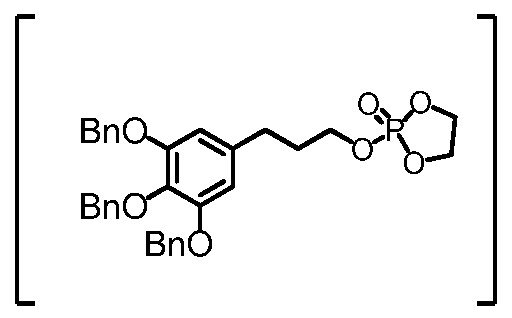
- the tribenzylated ether may be deprotected by hydrogenation with palladium on carbon.
- Benzyl 3-(3,4,5-tris(benzyloxy)phenyl)propanoate is prepared from the corresponding acid.
- a dried 500 ml 3-necked round bottom flask is fitted with rubber septa and a stir-bar and allowed to cool to room temperature (RT) under an argon flow.
- One equivalent of the acid is added, followed by 200 ml of anhydrous DMF with stirring.
- anhydrous K 2 CO 3 _ (6 equiv) is added with stirring.
- Fresh benzyl bromide (4.5 equiv) is added via syringe. The solution is placed in an oil bath at 80°C and stirred for 1 day.
- the reaction is allowed to cool to RT, and then poured through a large fritted glass funnel into a 2 L round bottom flask to remove solids, and the reaction vessel is rinsed 3x300 ml EtOAc through the frit.
- the solvent is then removed with a rotary evaporator. Residual DMF is removed by 4 cycles of evaporation with toluene (500 ml).
- the crude residue is then re-dissolved in 1.5 L of Et 2 0 and washed 5x100 ml cold water, 1 x 500ml brine, dried over anhydrous Na 2 S0 4 , and concentrated under reduced pressure.
- the crude residue is then dry-loaded onto silica gel and purified by flash
- the alcohol is prepared from the acid by reduction with LiAlH 4 . 7.24 grams of acid is dissolved in 100ml of anhydrous THF and cooled to 0 °C. Four equivalent of LiAlH 4 are then added in 4 portions. The reaction is left to stir overnight under argon while warming to RT. The reaction is quenched according to the Fieser workup, diluted with 100ml of Et 2 0 and the aluminum solids filtered off. The solution is transferred to a separatory funnel, washed once with saturated NaHC0 3 , dried over anhydrous Na 2 S0 4 , filtered, and evaporated under reduced pressure to afford crude material. The crude material is purified on a pad of silica eluting with Et 2 0. The compound is isolated as a clear viscous oil.
- the dimethylamide is conveniently prepared using 1-1 ' carbonyldiimidazole as peptide coupling reagent. A dried flask is fitted with a stir bar and rubber septa under argon. One equiv of the corresponding carboxylic acid, four equiv of anhydrous Et 3 N and anhydrous CH 2 C1 2
- the benzyl-protected zwitterionic compounds are prepared via the Chabrier reaction, with certain modifications.
- Ethylene chlorophosphate (Aesar), stored in a freezer, is used as received.
- Et 2 0 [0.4 M] 1.15 equiv Et 3 N
- stirred 1.15 Equiv ethylene chlorophosphate is then added dropwise via syringe where the amine hydrochloride salt precipitates, and the reaction is stirred for 10 minutes.
- the flask is allowed to warm to RT with stirring for 4 hours. Hexanes equal to the volume of Et 2 0 in the flask, is added to precipitate of the amine hydrochloride salt. The contents of the flask are filtered over a pad of basic Celite into a RBF. The contents of the vessel are rinsed with hexanes, and then with Et 2 0 through the pad of basic Celite, and the solvents are removed under reduced pressure. The content is stored in the RBF under vacuum while a second reaction vessel is prepared.
- a Schlenk-bomb type flask is fitted with a stir bar, flame dried, fitted with two rubber septa, under argon.
- the flask containing the phosphate ester is back-filled with argon, removed from the vacuum manifold, fitted with a rubber septum, and an argon needle is inserted into the septum.
- Anhydrous MeCN (2-4 ml per mmol alcohol) is added to this flask via syringe, and swirled until completely dissolved.
- the cyclic phosphate intermediate is used immediately after preparation without further purification.
- the preparation of the corresponding photo-cleavable o-nitrobenzyl derivatives may be performed by the similar Chabrier reaction of the cyclic phosphate with a selected functional derivative of the o-nitrobenzyl compound. See, for example, M.S. Kim et al., Bioorganic & Medicinal Chemistry Letters, 16 (2006) 4007-4010.
- the oxidative stability of each of the zwitterionic compounds containing unprotected alcohols may be either in the solid state, a solution in D 6 - DMSO, or as a colloidal dispersion in water. Effort is made to exclude atmospheric oxygen during all manipulations after the protected alcohols had been deprotected.
- a Schlenk-type flask is fitted with stir bar, fitted with two rubber septa. 10-20 wt% of Pd/C (5% Pd, Aesar) relative to mass of substrate is added to the flask. A small quantity of CH 2 CI 2 (4-8 ml) is added via syringe. A separate RBF containing the desired amount of substrate is fitted with a rubber septum and argon needle to purge air out. The appropriate volume of a 1 : 1 v/v mixture of Ct ⁇ Cb/MeOH is added via syringe. The flask is then swirled until the benzyl- protected compound is dissolved, and the solution containing the substrate is transferred via syringe to the Schlenk flask.
- Pd/C 5% Pd, Aesar
- the RBF is rinsed with MeOH (4-8 ml), and transferred via syringe to the Schlenk flask.
- the Schlenk valve is then opened placing the contents of the flask under vacuum and the atmosphere is removed under vacuum.
- the Schlenk valve is closed, the antechamber before the valve is backfilled with argon and the glass adaptor is replaced with a rubber septum.
- a hydrogen balloon (double ballooned) connected to a needle is placed through the septum and then a vent needle is placed though the septum to purge argon from the antechamber for 30 seconds then it is removed.
- the Schlenk valve is opened slowly to allow hydrogen into the reaction vessel and stirring is continued for 2-4 days, with periodic replacement of the hydrogen balloon with fresh balloons are used with every replacement.
- the Schlenk valve is closed, and the remaining septum is replaced with a vacuum adaptor connected to a vacuum manifold and the antechamber before the Schlenk valve is placed under vacuum.
- the Schlenk valve is then opened placing the contents of the flask under vacuum and hydrogen gas is removed from the system in this manner for 5-10 minutes.
- the Schlenk flask is then backfilled with argon, and while under positive argon flow the Schlenk valve is removed and replaced with a rubber septum.
- a 30 ml, luer lock, PTFE coated syringe is fitted with a long metal needle, and the syringe is filled and purged with argon 3x, then it is inserted through the septum of the reaction vessel.
- the solution is then drawn into the syringe, along with a blanket of Argon and the metal needle is replaced with a 0.45um PTFE syringe filter and disposable needle.
- the solution is then forced through the filter into a RBF to remove Pd/C, and the filtered solution is concentrated under reduced pressure, to afford pure deprotected coacervates, which were stored in a glove box protected from oxygen.
- the flask was removed from the heating bath and cooled to RT, and the contents were poured onto 450 g of crushed ice/water 1: 1. The remaining contents of the flask were rinsed into the ice water with 50 ml of water. The mixture was swirled gently and after all the ice melted, the yellow precipitate was collected by filtration, rinsed with additional water, and vacuum dried for several hours by breaking the cake up gently with a spatula. The crude material was dried overnight under high vacuum, and then crystallized from EtOH/water, filtered and dried to yield 16.8 g of 1 ,4-bis(chloromethyl)-2-nitrobenzene as a pale yellow powder.
- the flask was cooled to RT and the contents poured onto 350 ml of crushed ice:water resulting in the formation of a fine pink precipitate.
- the resulting slurry was gently agitated and let stand at 0 °C in an ice bath for 15 minutes, and it was rapidly filtered on a glass frit with vacuum, washed with water, and vacuum dried for 3 hours.
- the resulting pink powder was placed onto a short column packed with 2.5 inches of silica on top of 0.5 inches of basic alumina and 300 ml of 25% EtOAc hexanes was passed through the column into a 500 ml RBF where the organic solvents were removed in vacuo, and the white residue was evaporated twice with 100 ml of pentanes to afford 4.8 g (75%) of (2-nitro-l ,4- phenylene)bis(methylene) bis(2-methylacrylate) as a white powder which was stored under argon and protected from light.
- the acyl chloride obtained was dissolved in anhydrous THF (35 mL) and a solution of 2NPDM (1.0 g, 5.5 mmol) and triethylamine (1.2 g, 12 mmol) in THF (15 mL) was added dropwise. After stirring the mixture overnight at RT, precipitated solids were removed by filtration and the solution was reduced to dryness. The residue was dissolved in dichloromethane (100 mL), washed with water, dried with MgS0 4 and evaporated. The resulting oil was purified by column chromatography over silica using CHCl 3 /MeOH (40: 1) as eluent.
- the 5 mM concentration shows a molecularly smooth surface suggesting consistent chemical configuration.
- Atomic Force Microscopy scans of a mica surface adsorbed with a compound of the present application from a solution in DI water of varying concentrations (5 mM). The compound forms a defect free atomically smooth bilayer on mica. No formation of small aggregates on the surface or thick multilayer is observed.
- the surface coating, priming or deposition of the compound of the present application may be performed using standard methods known in the art, with the exception of the particular improved procedures and formulations developed and disclosed herein.
- the primer may be provided in a solvent, such as water, ethanol or a mixture of a solution of water and ethanol.
- the same solvent or different solvent may be used to wash the surface of the tooth or enamel.
- the solvent is water and the process provides an environmentally friendly and effective process.
- the solvent may not be needed.
- the use of a solvent in the process is not required.
- the resulting adhesive bonded or crosslinked under visible light, and then debonded (or cleaved) under UV light with physical stimulus or agitation.
- the solution employed may be used at a neutral pH, or may be maintained in acidic conditions, at a pH ⁇ 7, pH ⁇ 6 or pH ⁇ 5, such as where phenolic groups, hydroxyphenyl or polyhydroxyphenyl groups are present in the monomer to avoid oxidation of the phenols to the corresponding keto- compounds or quinones.
- the pH may be adjusted using an acid, such as phosphoric acid, hydrochloric acid, acetic acid or sulfonic acid.
- the pH of the solution may be > pH 5, > pH 6, > pH 6.5 or > pH 7.
- the solution may be degassed using an inert gas or using vacuum or a combination thereof, and the solution and container with the solution may be flushed with an inert gas, such as nitrogen or argon as desired.
- an inert gas such as nitrogen or argon as desired.
- the concentration of the primer in the solution may be prepared at different concentrations and concentration ranges, such as a 0.0001 wt.% to 20 wt.%, 0.0001 wt.% to 15 wt.%, 0.0001 wt.% to 10 wt.%, about 0.001 wt.% to 10 wt.%, about 0.01 wt.% to 10 wt.%, about 0.1 wt.% to 10 wt.% or at about 0.1 wt.% to 5 wt.%; at 0.0001 wt%, 0.001 wt.%, 0.01 wt%, 0.1 wt%, 1.0 wt%, 5 wt%,
- Formula II comprising acrylates or methacrylates and related groups on a substrate may be performed using standard methods known in the art.
- binding may be initiated by photochemical, such as visible-light-initiated free radical polymerization, and may comprise a visible light photoinitiator, such as camphorquinone (CQ), at for example, about 0.25 wt%, and another initiator or co-initiator, such as 2-dimethylaminoethyl methacrylate (DMAEMA) at, for example, about 1 wt%.
- photochemical such as visible-light-initiated free radical polymerization
- CQ camphorquinone
- DMAEMA 2-dimethylaminoethyl methacrylate
- the composition or the solution comprising the composition may be applied onto a surface, such as a mineral and/or metal oxide surface for a period of time to allow the compound/primer to set up or otherwise adsorbed or adhere to the surface.
- adhesion of the compound to the surface may take less than about 10 minutes, less than 5 minutes, less than 3 minutes, less than 2 minutes or less than about 1 minute.
- any excess primer may be removed from the surface by washing or rising with a solvent or solvent mixture.
- the solvent or solvent mixture may be water, ethanol, or a mixture of water and ethanol solution.
- the surface with the adsorbed primer may be dried using air, heat or a combination thereof until the desired dryness is achieved. Depending on the particular application, no further processing is required after applying the composition to the surfaces.
- the solvent or solvent mixture employed in the primer solution and/or as a washing solvent may include water, methanol, ethanol, propanol,
- the solvent is water, or a mixture of the solvent(s) with water, and the process provides an environmentally friendly and effective process. For certain applications, no solvent is used.
- the thickness of the adhered/adsorbed layer may be about 0.5-50 nm, 0.1-40 nm,
- the thickness will depend on the nature of the compound and the desired thickness of the layer and the nature of the application.
- the thickness of the adhered/adsorbed layer may be less than for other self-assembled layers with the desired thickness.
- the surface comprising a first layer may be completely dried before applying second layer or subsequent layers.
- the primer may be provided in a solvent, such as water, ethanol or a mixture of a solution of water and ethanol; or the solvent or solvent mixture employed in the primer solution and/or as a washing solvent may include methanol, ethanol, propanol, isopropanol, acetone, methylethyl ketone, dichloromethane, hexane, cyclohexane, heptane, toluene, xylenes, THF, Me-THF and N-methylpyrrolidone; and various mixtures thereof.
- the same solvent or different solvent may be used to wash the surface of the substrate. In certain applications, no solvent is used with the primer.
- the primer solution employed may be used at a neutral pH, or may be maintained in acidic conditions, at a pH ⁇ 7, pH ⁇ 6 or pH ⁇ 5.
- the pH may be adjusted using an acid, such as phosphoric acid, hydrochloric acid, acetic acid, sulfonic acid, or acidic monomers such as 10-methacryloyl-decyl-dihydrogen-phosphate (MDP).
- MDP 10-methacryloyl-decyl-dihydrogen-phosphate
- the pH of the solution may be pH>5, pH>6, pH>6.5 or pH>7.
- the solution may be de-watered using a drying agent or degassed using an inert gas or using vacuum or a combination thereof, and the solution and container with the solution may be flushed with an inert gas, such as nitrogen or argon as desired.
- Fillers such as pure fillers required as different compositions for different applications, are added to a primer solution.
- the solution is vigorously stirred and or sonicated for several minutes at about RT.
- the fillers are removed or isolated from the solvent, and are rinsed with a solvent or solvent mixture, and then filtered or isolated by centrifugation.
- the fillers may be washed and rinsed more than once as needed.
- the fillers are then dried, such as by air blowing (for dental applications, for example), or may be dried by a freeze dried procedure, or dried by hot air, RT air or gas, or dried by vacuum, as known in the art to the desired level of dryness.
- the dried fillers may be added to various different materials, such as a monomer, a co-monomer mixture, pre -polymer and polymer for performing a polymerizing process with the fillers.
- the fillers may be added to a pre-cement matrix or and adhesive for preparing an adhesive.
- the fillers may be combined with a coating, a paint composition, a rubber or plastic, an ink and/or sealant before the composition is cured and/or dried.
- the mechanical properties (including the hardness, thickness etc ...) of the composite material (with the fillers) may be significantly increased or improved.
- Irradiation may be performed by specifically cleaving the primer using infrared (IR), ultraviolet (UV) and/or a combination of IR and UV irradiation for a sufficient period of time to cleave the primer, coating or adhesive.
- IR infrared
- UV ultraviolet
- photo-irradiation may be performed with 265 nm, 300 nm, 340 nm, 365 nm, 380 nm or 400 nm, at about RT, for a sufficient period of time to debond the primer.
- photo-irradiation such as with a 10 W UV LED light, a 20 W UV LED light, a 130 W UV LED lamp (NobleCure-Altair 75), a 400 W medium pressure
- the irradiation may be performed by IR, UV or a combination thereof.
- the irradiation may be performed at about RT or above RT, such as about 27 °C, 30 °C or about 35 °C or higher, for a sufficient amount of time to debond the material.
- the debonding may be performed in conjunction with physical force, such as twisting or moving the substrates to debond, by sonication, or combinations thereof.
- the photocleavable acrylates such as the photocleavable
- dimethacrylates of the present application were mixed with a visible light photoinitiator such as camphorquinone (CQ, at about 0.25 wt%) and an acrylate such as 2-dimethylaminoethyl methacrylate (DMAEMA, at about 1 wt%), and applied on a surface (e.g., a surface of a tooth) as a primer before applying an adhesive, such as a dental adhesive (also referred to in the art as an adhesive, a resin cement, a sealant or a primer [or second primer]).
- CQ camphorquinone
- DMAEMA 2-dimethylaminoethyl methacrylate
- the photocleavable acrylates such as the dimethacrylates (99-50 wt%) were mixed with a dental resin mixture (1-50 wt%) of Bis-GMA, TEGMA, DMAEMA, CQ, to enhance its mechanical strength of the visible light cured and UV light-cleavable primed layer.
- the photocleavable acrylates may comprise of about 10-99 wt% when mixed with a dental adhesive, that may be present in about 90-1 wt%.
- the photocleavable acrylates comprise of about 50 wt%, 60 wt%, 70 wt%, 80 wt%, 90 wt%, 95 wt% or more.
- the adhesive may be present in about 40 wt%, 30 wt%, 20 wt%, 10 wt%, 5 wt%, 3 wt% or about 1 wt%.
- a first composition that is applied to a surface is referred to as a photocleavable monomer composition that may be a single photocleavable monomer, a mixture of photocleavable monomers or a mixture of photocleavable monomer(s) and non-photocleavable monomers (or monomer blends).
- a second composition that is applied may be referred to as a dental adhesive, which may be adhesives or mixtures of adhesives known in the art.
- the combination of the first composition and the dental adhesive may be referred to as a combined adhesive mixture.
- the dental adhesive was then applied over the primed surface, that is, the surface covered with the photocleavable monomer or monomer blend or mixture, to form the secondary adhesive layer.
- An object such as a bracket or a dental appliance, is then fitted or mounted on the combination of two or more adhesive layers.
- a source of visible light is applied to the combined adhesive mixture comprising the dental adhesive layers that consist of a
- photocleavable adhesive or primer
- dental adhesive or dental primer
- dental resin composite or adhesive
- the removal or debonding of the combined adhesive mixture (along with the coating, cement or sealant) and the object (such as a bracket) may be performed after a desired period of time.
- the period of time may be several minutes, several days, several weeks, several months or several years until the purpose and time for using such combined adhesive mixture is complete.
- the debonding or removal of the combined adhesive mixture (coating, cement or sealant) from the surface, such as a tooth surface may be performed by exposing the combined adhesive mixture (or photocleavable adhesive or mixtures of adhesives) or area with UV radiation, UV light or IR light.
- the exposure to UV light may be performed along with physical agitation, such as by jiggling, moving, rocking, pulling or prying, vibrating or sonicating for a sufficient period of time to debond or remove the object from the surface.
- the exposure and optionally, the physical agitation may be performed over a period of about 30 seconds, about 1 minute, 2 minutes, 3 minutes, 5 minutes or about 10 minutes or less.
- the physical agitation such as sonication
- the bonding strength of the combined adhesive mixture or the relative amount of effort to remove an object from the surface
- a significantly reduced force such as jiggling or sonication, for example
- Compounds that may be used as co-polymers may also include:
- Additional monomers that may be used as co- ol mers include:
Landscapes
- Chemical & Material Sciences (AREA)
- Organic Chemistry (AREA)
- Health & Medical Sciences (AREA)
- Life Sciences & Earth Sciences (AREA)
- General Health & Medical Sciences (AREA)
- Oral & Maxillofacial Surgery (AREA)
- Epidemiology (AREA)
- Animal Behavior & Ethology (AREA)
- Public Health (AREA)
- Veterinary Medicine (AREA)
- Engineering & Computer Science (AREA)
- Wood Science & Technology (AREA)
- Materials Engineering (AREA)
- Chemical Kinetics & Catalysis (AREA)
- Molecular Biology (AREA)
- Biochemistry (AREA)
- General Chemical & Material Sciences (AREA)
- Inorganic Chemistry (AREA)
- Biophysics (AREA)
- Medicinal Chemistry (AREA)
- Polymers & Plastics (AREA)
- Materials For Medical Uses (AREA)
- Dental Preparations (AREA)
- Organic Low-Molecular-Weight Compounds And Preparation Thereof (AREA)
- Paints Or Removers (AREA)
- Adhesives Or Adhesive Processes (AREA)
Abstract
Description




Claims




Priority Applications (4)
| Application Number | Priority Date | Filing Date | Title |
|---|---|---|---|
| EP17707704.7A EP3408253A1 (en) | 2016-01-28 | 2017-01-27 | Photo-cleavable primer compositions and methods of use |
| JP2018559159A JP2019511561A (en) | 2016-01-28 | 2017-01-27 | Photocleavable primer compositions and methods of use |
| CA3012176A CA3012176A1 (en) | 2016-01-28 | 2017-01-27 | Photo-cleavable primer compositions and methods of use |
| CN201780013094.8A CN108698974A (en) | 2016-01-28 | 2017-01-27 | Photodestruciton paint base composition and application method |
Applications Claiming Priority (4)
| Application Number | Priority Date | Filing Date | Title |
|---|---|---|---|
| US201662288281P | 2016-01-28 | 2016-01-28 | |
| US62/288,281 | 2016-01-28 | ||
| US201662309162P | 2016-03-16 | 2016-03-16 | |
| US62/309,162 | 2016-03-16 |
Publications (1)
| Publication Number | Publication Date |
|---|---|
| WO2017132484A1 true WO2017132484A1 (en) | 2017-08-03 |
Family
ID=58185599
Family Applications (1)
| Application Number | Title | Priority Date | Filing Date |
|---|---|---|---|
| PCT/US2017/015298 Ceased WO2017132484A1 (en) | 2016-01-28 | 2017-01-27 | Photo-cleavable primer compositions and methods of use |
Country Status (6)
| Country | Link |
|---|---|
| US (5) | US10689407B2 (en) |
| EP (1) | EP3408253A1 (en) |
| JP (2) | JP2019511561A (en) |
| CN (1) | CN108698974A (en) |
| CA (1) | CA3012176A1 (en) |
| WO (1) | WO2017132484A1 (en) |
Cited By (1)
| Publication number | Priority date | Publication date | Assignee | Title |
|---|---|---|---|---|
| US20190076334A1 (en) * | 2017-09-08 | 2019-03-14 | Ormco Corporation | Orthodontic adhesives and methods of using same |
Families Citing this family (7)
| Publication number | Priority date | Publication date | Assignee | Title |
|---|---|---|---|---|
| WO2019157327A1 (en) | 2018-02-09 | 2019-08-15 | Ormco Corporation | Orthodontic devices and methods for using those devices |
| US11199778B2 (en) | 2019-03-12 | 2021-12-14 | International Business Machines Corporation | Polymer brush adhesion promoter with UV cleavable linker |
| EP3940035B1 (en) * | 2020-07-13 | 2023-10-18 | Heraeus Deutschland GmbH & Co. KG | Electrically conductive adhesive |
| CA3192724A1 (en) * | 2020-10-30 | 2022-05-05 | Tommy Haraldsson | Coating and primer |
| JPWO2023074169A1 (en) * | 2021-10-26 | 2023-05-04 | ||
| CN115947657B (en) * | 2022-12-26 | 2025-05-27 | 徐州博康信息化学品有限公司 | Fluorine-containing photoresist resin monomer and preparation method thereof |
| EP4683606A1 (en) * | 2023-03-21 | 2026-01-28 | Mussel Polymers, Inc. | Dental remineralization using catechol-based compounds |
Citations (4)
| Publication number | Priority date | Publication date | Assignee | Title |
|---|---|---|---|---|
| EP0233053A2 (en) | 1986-02-07 | 1987-08-19 | Applied Biosystems, Inc. | Method of detecting electrophoretically separated oligonucleotides |
| US5241060A (en) | 1982-06-23 | 1993-08-31 | Enzo Diagnostics, Inc. | Base moiety-labeled detectable nucleatide |
| US5366860A (en) | 1989-09-29 | 1994-11-22 | Applied Biosystems, Inc. | Spectrally resolvable rhodamine dyes for nucleic acid sequence determination |
| WO2003082218A2 (en) * | 2002-04-03 | 2003-10-09 | Produits Dentaires Pierre Rolland | Photosensitive adhesive composition |
Family Cites Families (26)
| Publication number | Priority date | Publication date | Assignee | Title |
|---|---|---|---|---|
| US4327022A (en) | 1973-08-16 | 1982-04-27 | Sterling Drug Inc. | Heterocyclic alkyl naphthols |
| DE2734239A1 (en) * | 1977-07-29 | 1979-02-08 | Bayer Ag | Process for the preparation of 2,6-DI-TERT.-ALKYL-4-ALKYLIDEN-2,5-CYCLOHEXADIEN-ONES |
| DE3100387A1 (en) * | 1981-01-09 | 1982-09-02 | Basf Ag, 6700 Ludwigshafen | SUBSTITUTED DIPHENYL ETHER, THIS CONTAINING HERBICIDES AND THEIR USE AS HERBICIDES |
| DE3141861A1 (en) * | 1981-10-22 | 1983-05-05 | Bayer Ag, 5090 Leverkusen | SUBSTITUTED 2-NITRO-5- (4-TRIFLUORMETHYL-PHENOXY) TOLUOLS, METHODS FOR THE PRODUCTION THEREOF AND THEIR USE AS HERBICIDES AND PLANT GROWTH REGULATORS |
| US4500601A (en) | 1983-08-29 | 1985-02-19 | Minnesota Mining And Manufacturing Company | Chelating polymers for modifying metal surface properties |
| US4954659A (en) | 1987-10-21 | 1990-09-04 | Chemex Pharmaceuticals, Inc. | 1,4-bis (dihydroxyphenyl) butane and analogs |
| US5240953A (en) * | 1992-01-30 | 1993-08-31 | Ortho Pharmaceutical Corporation | Substituted triazoles as angiotensin ii inhibitors |
| US5635608A (en) * | 1994-11-08 | 1997-06-03 | Molecular Probes, Inc. | α-carboxy caged compounds |
| EP0712622B1 (en) | 1994-11-21 | 1999-09-01 | Tokuyama Corporation | Dental composition and kit |
| US5925690A (en) | 1995-11-20 | 1999-07-20 | Tokuyama Corproation | Dental primer composition and kit |
| US6043065A (en) * | 1997-12-23 | 2000-03-28 | University Of Maryland Biotechnology Institute | Photosensitive organic compounds that release 2,5,-di(tert-butyl)hydroquinone upon illumination |
| EP1140993B1 (en) * | 1998-12-23 | 2003-06-11 | Theravance, Inc. | Glycopeptide derivatives and pharmaceutical compositions containing the same |
| GB0017676D0 (en) * | 2000-07-19 | 2000-09-06 | Angeletti P Ist Richerche Bio | Inhibitors of viral polymerase |
| EP1325017A2 (en) * | 2000-09-11 | 2003-07-09 | Affymetrix, Inc. | Photocleavable protecting groups |
| US7141596B2 (en) * | 2003-10-08 | 2006-11-28 | Incyte Corporation | Inhibitors of proteins that bind phosphorylated molecules |
| US7588906B2 (en) * | 2004-02-24 | 2009-09-15 | Wisconsin Alumni Research Foundation | Hydrogels for biomolecule analysis and corresponding method to analyze biomolecules |
| US9180196B2 (en) * | 2005-03-11 | 2015-11-10 | The Regents Of The University Of Colorado, A Body Corporate | Photodegradable groups for tunable polymeric materials |
| US8076125B2 (en) * | 2005-11-15 | 2011-12-13 | Worcester Polytechnic Institute | Imagewise patterning of films and devices comprising the same |
| WO2008033455A2 (en) * | 2006-09-13 | 2008-03-20 | The Institutes For Pharmaceutical Discovery, Llc | Biphenyl and heteroaryl phenyl derivatives as protein tyrosine phosphatases inhibitors |
| KR20100059952A (en) * | 2007-09-06 | 2010-06-04 | 머크 샤프 앤드 돔 코포레이션 | Soluble guanylate cyclase activators |
| JPWO2011093461A1 (en) | 2010-01-28 | 2013-06-06 | 国立大学法人 東京大学 | Bioactive substance activity control method and bioactive substance-containing gel |
| WO2011126917A1 (en) | 2010-04-05 | 2011-10-13 | Boehringer Ingelheim International Gmbh | Monophosphorus ligands and their use in cross-coupling reactions |
| JP5846125B2 (en) | 2010-12-24 | 2016-01-20 | 日油株式会社 | Amino group-containing phosphorylcholine compound and method for producing the same |
| KR101458058B1 (en) | 2013-05-29 | 2014-11-04 | 포항공과대학교 산학협력단 | Composition for surface treatment forming self-assembled monolayer easily surface coating and removing |
| WO2015057511A1 (en) * | 2013-10-14 | 2015-04-23 | Stc.Unm | Modular rna regulators and methods |
| JP6176163B2 (en) | 2014-03-25 | 2017-08-09 | 信越化学工業株式会社 | Organosilicon compounds and adhesive compositions and articles |
-
2017
- 2017-01-27 WO PCT/US2017/015298 patent/WO2017132484A1/en not_active Ceased
- 2017-01-27 US US15/417,924 patent/US10689407B2/en active Active
- 2017-01-27 US US15/417,825 patent/US10696698B2/en active Active
- 2017-01-27 CA CA3012176A patent/CA3012176A1/en active Pending
- 2017-01-27 EP EP17707704.7A patent/EP3408253A1/en not_active Withdrawn
- 2017-01-27 CN CN201780013094.8A patent/CN108698974A/en active Pending
- 2017-01-27 JP JP2018559159A patent/JP2019511561A/en active Pending
-
2020
- 2020-05-18 US US16/877,058 patent/US11352512B2/en active Active
- 2020-05-18 US US16/877,097 patent/US11453790B2/en active Active
-
2021
- 2021-06-10 JP JP2021097074A patent/JP7299635B2/en active Active
-
2022
- 2022-07-15 US US17/865,683 patent/US11976219B2/en active Active
Patent Citations (4)
| Publication number | Priority date | Publication date | Assignee | Title |
|---|---|---|---|---|
| US5241060A (en) | 1982-06-23 | 1993-08-31 | Enzo Diagnostics, Inc. | Base moiety-labeled detectable nucleatide |
| EP0233053A2 (en) | 1986-02-07 | 1987-08-19 | Applied Biosystems, Inc. | Method of detecting electrophoretically separated oligonucleotides |
| US5366860A (en) | 1989-09-29 | 1994-11-22 | Applied Biosystems, Inc. | Spectrally resolvable rhodamine dyes for nucleic acid sequence determination |
| WO2003082218A2 (en) * | 2002-04-03 | 2003-10-09 | Produits Dentaires Pierre Rolland | Photosensitive adhesive composition |
Non-Patent Citations (24)
| Title |
|---|
| "Fieser and Fieser's ReagentS for Organic Synthesis", vol. 1-17, 1991, JOHN WILEY AND SONS |
| "Organic Reactions", vol. 1-40, 1991, JOHN WILEY AND SONS |
| "Rodd's Chemistry of Carbon Compounds", vol. 1-5, 1989, ELSEVIER SCIENCE PUBLISHERS |
| B. K. AHN ET AL: "High-performance mussel-inspired adhesives of reduced complexity", NAT COMMUN |
| B. K. AHN ET AL: "Surface-initiated self-healing of polymers in aqueous media", NAT MATER, vol. 13, 2014, pages 867 - 872 |
| B. NIE ET AL.: "Surface invasive cleavage assay on a maskless light-directed diamond DNA microarray for genome-wide human SNP mapping", ANALYST, vol. 140, 2015, pages 4549 - 4557 |
| B. YAN ET AL.: "Near-Infrared Light-Triggered Dissociation of Block Copolymer Micelles Using Upconverting Nanoparticles", J. AM. CHEM. SOC., vol. 133, 2011, pages 19714 - 19717 |
| C. N. Z. SCHMITT ET AL: "Role of Sacrificial Protein-Metal Bond Exchange in Mussel Byssal Thread Self-Healing", BIOMACROMOLECULES, vol. 16, 2015, pages 2852 - 2861 |
| DANIEL KLINGER ET AL: "Photo-sensitive PMMA microgels: light-triggered swelling and degradation", SOFT MATTER, vol. 7, no. 4, 1 January 2011 (2011-01-01), GB, pages 1426 - 1440, XP055363759, ISSN: 1744-683X, DOI: 10.1039/C0SM00638F * |
| F. ZHOU ET AL.: "Grafting zwitterionic polymer brushes via electrochemical surface-initiated atomic-transfer radical polymerization for anti-fouling applications", J. MATER. CHEM. B, vol. 2, 2014, pages 5352 |
| GREENE ET AL.: "Protective Groups in Organic Synthesis", 1991, JOHN WILEY AND SONS |
| H. LEE ET AL: "Single-molecule mechanics of mussel adhesion", PROC NATL ACAD SCI USA, vol. 103, 2006, pages 12999 - 13003 |
| H. ZENG ET AL: "Strong reversible Fe mediated bridging between dopa-containing protein films in water", PROCEEDINGS OF THE NATIONAL ACADEMY OF SCIENCES, vol. 107, 2010, pages 12850 - 12853 |
| LAROCK: "Comprehensive Organic Transformations", 1989, VCH PUBLISHERS |
| M. KROGSGAARD ET AL: "Gels and threads: Mussel-inspired one-pot route to advanced responsive materials", CHEMICAL COMMUNICATIONS, vol. 50, 2014, pages 13278 - 13281 |
| M.S. KIM ET AL., BIOORGANIC & MEDICINAL CHEMISTRY LETTERS, vol. 16, 2006, pages 4007 - 4010 |
| MARCH J.: "Advanced Organic Chemistry", JOHN WILEY AND SONS |
| P. B. MESSERSMITH ET AL.: "Single-molecule mechanics of mussel adhesion", PNAS, vol. 103, no. 35, 2006, pages 12999 - 13003 |
| P. B. MESSERSMITH ET AL.: "Universal Surface-Initiated Polymerization of Antifouling Zwitterionic Brushes Using a Mussel-Mimetic Peptide Initiator", LANGMUIR, vol. 28, 2012, pages 7258 - 7266 |
| QIAN-BAO CHEN ET AL: "Multistimuli-responsive Hydrogel Particles Prepared via the Self-assembly of PEG-based Hyperbranched Polymers", CHEMISTRY LETTERS, vol. 44, no. 5, 5 May 2015 (2015-05-05), JAPAN, pages 677 - 679, XP055363895, ISSN: 0366-7022, DOI: 10.1246/cl.150064 * |
| RADL SIMONE ET AL: "Photocleavable epoxy based materials", POLYMER, vol. 69, 3 June 2015 (2015-06-03), pages 159 - 168, XP029180687, ISSN: 0032-3861, DOI: 10.1016/J.POLYMER.2015.05.055 * |
| S. M. JUNE ET AL.: "Photoactive Polyesters Containing o-Nitro Benzyl Ester Functionality for Photodeactivatable Adhesion", THE JOURNAL OF ADHESION, vol. 89, 2013, pages 548 - 558 |
| SHAFIQ ET AL.: "Bioinspired Underwater Bonding and Debonding on Demand", ANGEW. CHEM., INT. ED, vol. 51, 2012, pages 4332 - 4335 |
| SOFT MATTER, vol. 7, 2011, pages 1426 - 1440 |
Cited By (10)
| Publication number | Priority date | Publication date | Assignee | Title |
|---|---|---|---|---|
| US20190076334A1 (en) * | 2017-09-08 | 2019-03-14 | Ormco Corporation | Orthodontic adhesives and methods of using same |
| US10610458B2 (en) * | 2017-09-08 | 2020-04-07 | Ormco Corporation | Orthodontic adhesives and methods of using same |
| JP2020533322A (en) * | 2017-09-08 | 2020-11-19 | オルムコ コーポレイション | Orthodontic adhesive and how to use it |
| US11259994B2 (en) | 2017-09-08 | 2022-03-01 | Ormco Corporation | Orthodontic adhesives and methods of using same |
| JP2023101523A (en) * | 2017-09-08 | 2023-07-21 | オルムコ コーポレイション | Orthodontic adhesive and method of using same |
| AU2018327265B2 (en) * | 2017-09-08 | 2023-08-10 | Ormco Corporation | Orthodontic adhesives and methods of using same |
| JP7325402B2 (en) | 2017-09-08 | 2023-08-14 | オルムコ コーポレイション | Orthodontic adhesive and method of using same |
| JP7612747B2 (en) | 2017-09-08 | 2025-01-14 | オルムコ コーポレイション | Orthodontic adhesive and method of using same |
| JP2025022915A (en) * | 2017-09-08 | 2025-02-14 | オルムコ コーポレイション | Orthodontic adhesive and method of using same |
| US12357543B2 (en) | 2017-09-08 | 2025-07-15 | Ormco Corporation | Orthodontic adhesives and methods of using same |
Also Published As
| Publication number | Publication date |
|---|---|
| US20230112086A1 (en) | 2023-04-13 |
| CA3012176A1 (en) | 2017-08-03 |
| CN108698974A (en) | 2018-10-23 |
| JP2021167315A (en) | 2021-10-21 |
| JP2019511561A (en) | 2019-04-25 |
| US10696698B2 (en) | 2020-06-30 |
| US10689407B2 (en) | 2020-06-23 |
| US11352512B2 (en) | 2022-06-07 |
| US11976219B2 (en) | 2024-05-07 |
| US20170217999A1 (en) | 2017-08-03 |
| US20170217997A1 (en) | 2017-08-03 |
| US20200347247A1 (en) | 2020-11-05 |
| US20200347248A1 (en) | 2020-11-05 |
| JP7299635B2 (en) | 2023-06-28 |
| EP3408253A1 (en) | 2018-12-05 |
| US11453790B2 (en) | 2022-09-27 |
Similar Documents
| Publication | Publication Date | Title |
|---|---|---|
| US11976219B2 (en) | Photo-cleavable primer compositions and methods of use | |
| US11739223B2 (en) | Surface primer compositions and methods of use | |
| Ahn | Perspectives on mussel-inspired wet adhesion | |
| CN1239634C (en) | Fillings and composite dental materials containing fillings | |
| CN101558106B (en) | Controlling surface properties through chemical modification | |
| TW200848081A (en) | Composition and dental material | |
| CN106659641B (en) | Dental materials with peel-on-demand properties | |
| US20110288252A1 (en) | Dialkoxy- or dihydroxyphenyl radicals containing silanes, adhesives produced therefrom and method for producing silanes and adhesives | |
| CN108348404A (en) | Utilize the polymerizable dental composition of the redox of photo-labile transition metal complex | |
| JP7054147B2 (en) | Modulus improver and dental composition | |
| EP2864340A1 (en) | Peptide-silica hybrid materials | |
| US20200181455A1 (en) | Nano-adhesive and surface primer compound and use thereof | |
| JP2002521551A (en) | Adhesives and sealants | |
| EP3359580B1 (en) | Polymer having antimicrobial and/or antifouling properties | |
| JP5269453B2 (en) | Functional glaze | |
| EP1922323A1 (en) | Mineral/organic composite material | |
| JPH0953022A (en) | Silicone-treated powder and composition containing the same | |
| CN103769064B (en) | Bidentate peptide class chirality silane and chromatogram chiral stationary phase | |
| WO2016088712A1 (en) | Hydrogel-forming material | |
| CN110981784A (en) | A kind of amino acid modified photoinitiator and preparation method thereof |
Legal Events
| Date | Code | Title | Description |
|---|---|---|---|
| 121 | Ep: the epo has been informed by wipo that ep was designated in this application |
Ref document number: 17707704 Country of ref document: EP Kind code of ref document: A1 |
|
| WWE | Wipo information: entry into national phase |
Ref document number: 3012176 Country of ref document: CA |
|
| ENP | Entry into the national phase |
Ref document number: 2018559159 Country of ref document: JP Kind code of ref document: A |
|
| NENP | Non-entry into the national phase |
Ref country code: DE |
|
| WWE | Wipo information: entry into national phase |
Ref document number: 2017707704 Country of ref document: EP |
|
| ENP | Entry into the national phase |
Ref document number: 2017707704 Country of ref document: EP Effective date: 20180828 |
|
| WWW | Wipo information: withdrawn in national office |
Ref document number: 2017707704 Country of ref document: EP |