WO2017071673A1 - Application of pcsk9 inhibitor in preparation of drug treating inflammatory immune diseases - Google Patents
Application of pcsk9 inhibitor in preparation of drug treating inflammatory immune diseases Download PDFInfo
- Publication number
- WO2017071673A1 WO2017071673A1 PCT/CN2016/111613 CN2016111613W WO2017071673A1 WO 2017071673 A1 WO2017071673 A1 WO 2017071673A1 CN 2016111613 W CN2016111613 W CN 2016111613W WO 2017071673 A1 WO2017071673 A1 WO 2017071673A1
- Authority
- WO
- WIPO (PCT)
- Prior art keywords
- pcsk9
- psoriasis
- inflammatory immune
- preparation
- inhibitor
- Prior art date
- Legal status (The legal status is an assumption and is not a legal conclusion. Google has not performed a legal analysis and makes no representation as to the accuracy of the status listed.)
- Ceased
Links
Images


Classifications
-
- C—CHEMISTRY; METALLURGY
- C07—ORGANIC CHEMISTRY
- C07K—PEPTIDES
- C07K16/00—Immunoglobulins [IGs], e.g. monoclonal or polyclonal antibodies
- C07K16/40—Immunoglobulins [IGs], e.g. monoclonal or polyclonal antibodies against enzymes
-
- A—HUMAN NECESSITIES
- A61—MEDICAL OR VETERINARY SCIENCE; HYGIENE
- A61K—PREPARATIONS FOR MEDICAL, DENTAL OR TOILETRY PURPOSES
- A61K31/00—Medicinal preparations containing organic active ingredients
- A61K31/33—Heterocyclic compounds
- A61K31/395—Heterocyclic compounds having nitrogen as a ring hetero atom, e.g. guanethidine or rifamycins
- A61K31/435—Heterocyclic compounds having nitrogen as a ring hetero atom, e.g. guanethidine or rifamycins having six-membered rings with one nitrogen as the only ring hetero atom
- A61K31/4353—Heterocyclic compounds having nitrogen as a ring hetero atom, e.g. guanethidine or rifamycins having six-membered rings with one nitrogen as the only ring hetero atom ortho- or peri-condensed with heterocyclic ring systems
- A61K31/437—Heterocyclic compounds having nitrogen as a ring hetero atom, e.g. guanethidine or rifamycins having six-membered rings with one nitrogen as the only ring hetero atom ortho- or peri-condensed with heterocyclic ring systems the heterocyclic ring system containing a five-membered ring having nitrogen as a ring hetero atom, e.g. indolizine, beta-carboline
-
- A—HUMAN NECESSITIES
- A61—MEDICAL OR VETERINARY SCIENCE; HYGIENE
- A61K—PREPARATIONS FOR MEDICAL, DENTAL OR TOILETRY PURPOSES
- A61K31/00—Medicinal preparations containing organic active ingredients
- A61K31/33—Heterocyclic compounds
- A61K31/395—Heterocyclic compounds having nitrogen as a ring hetero atom, e.g. guanethidine or rifamycins
- A61K31/435—Heterocyclic compounds having nitrogen as a ring hetero atom, e.g. guanethidine or rifamycins having six-membered rings with one nitrogen as the only ring hetero atom
- A61K31/47—Quinolines; Isoquinolines
- A61K31/4738—Quinolines; Isoquinolines ortho- or peri-condensed with heterocyclic ring systems
- A61K31/4743—Quinolines; Isoquinolines ortho- or peri-condensed with heterocyclic ring systems condensed with ring systems having sulfur as a ring hetero atom
-
- A—HUMAN NECESSITIES
- A61—MEDICAL OR VETERINARY SCIENCE; HYGIENE
- A61P—SPECIFIC THERAPEUTIC ACTIVITY OF CHEMICAL COMPOUNDS OR MEDICINAL PREPARATIONS
- A61P17/00—Drugs for dermatological disorders
- A61P17/06—Antipsoriatics
-
- C—CHEMISTRY; METALLURGY
- C12—BIOCHEMISTRY; BEER; SPIRITS; WINE; VINEGAR; MICROBIOLOGY; ENZYMOLOGY; MUTATION OR GENETIC ENGINEERING
- C12N—MICROORGANISMS OR ENZYMES; COMPOSITIONS THEREOF; PROPAGATING, PRESERVING, OR MAINTAINING MICROORGANISMS; MUTATION OR GENETIC ENGINEERING; CULTURE MEDIA
- C12N15/00—Mutation or genetic engineering; DNA or RNA concerning genetic engineering, vectors, e.g. plasmids, or their isolation, preparation or purification; Use of hosts therefor
- C12N15/09—Recombinant DNA-technology
- C12N15/11—DNA or RNA fragments; Modified forms thereof; Non-coding nucleic acids having a biological activity
- C12N15/113—Non-coding nucleic acids modulating the expression of genes, e.g. antisense oligonucleotides; Antisense DNA or RNA; Triplex- forming oligonucleotides; Catalytic nucleic acids, e.g. ribozymes; Nucleic acids used in co-suppression or gene silencing
- C12N15/1137—Non-coding nucleic acids modulating the expression of genes, e.g. antisense oligonucleotides; Antisense DNA or RNA; Triplex- forming oligonucleotides; Catalytic nucleic acids, e.g. ribozymes; Nucleic acids used in co-suppression or gene silencing against enzymes
-
- C—CHEMISTRY; METALLURGY
- C12—BIOCHEMISTRY; BEER; SPIRITS; WINE; VINEGAR; MICROBIOLOGY; ENZYMOLOGY; MUTATION OR GENETIC ENGINEERING
- C12N—MICROORGANISMS OR ENZYMES; COMPOSITIONS THEREOF; PROPAGATING, PRESERVING, OR MAINTAINING MICROORGANISMS; MUTATION OR GENETIC ENGINEERING; CULTURE MEDIA
- C12N9/00—Enzymes; Proenzymes; Compositions thereof; Processes for preparing, activating, inhibiting, separating or purifying enzymes
- C12N9/14—Hydrolases (3)
- C12N9/48—Hydrolases (3) acting on peptide bonds (3.4)
- C12N9/50—Proteinases, e.g. Endopeptidases (3.4.21-3.4.25)
- C12N9/64—Proteinases, e.g. Endopeptidases (3.4.21-3.4.25) derived from animal tissue
- C12N9/6421—Proteinases, e.g. Endopeptidases (3.4.21-3.4.25) derived from animal tissue from mammals
- C12N9/6424—Serine endopeptidases (3.4.21)
- C12N9/6454—Dibasic site splicing serine proteases, e.g. kexin (3.4.21.61); furin (3.4.21.75) and other proprotein convertases
-
- C—CHEMISTRY; METALLURGY
- C12—BIOCHEMISTRY; BEER; SPIRITS; WINE; VINEGAR; MICROBIOLOGY; ENZYMOLOGY; MUTATION OR GENETIC ENGINEERING
- C12Y—ENZYMES
- C12Y304/00—Hydrolases acting on peptide bonds, i.e. peptidases (3.4)
- C12Y304/21—Serine endopeptidases (3.4.21)
- C12Y304/21061—Kexin (3.4.21.61), i.e. proprotein convertase subtilisin/kexin type 9
-
- A—HUMAN NECESSITIES
- A01—AGRICULTURE; FORESTRY; ANIMAL HUSBANDRY; HUNTING; TRAPPING; FISHING
- A01K—ANIMAL HUSBANDRY; AVICULTURE; APICULTURE; PISCICULTURE; FISHING; REARING OR BREEDING ANIMALS, NOT OTHERWISE PROVIDED FOR; NEW BREEDS OF ANIMALS
- A01K2217/00—Genetically modified animals
- A01K2217/07—Animals genetically altered by homologous recombination
- A01K2217/075—Animals genetically altered by homologous recombination inducing loss of function, i.e. knock out
-
- A—HUMAN NECESSITIES
- A01—AGRICULTURE; FORESTRY; ANIMAL HUSBANDRY; HUNTING; TRAPPING; FISHING
- A01K—ANIMAL HUSBANDRY; AVICULTURE; APICULTURE; PISCICULTURE; FISHING; REARING OR BREEDING ANIMALS, NOT OTHERWISE PROVIDED FOR; NEW BREEDS OF ANIMALS
- A01K2227/00—Animals characterised by species
- A01K2227/10—Mammal
- A01K2227/105—Murine
-
- A—HUMAN NECESSITIES
- A01—AGRICULTURE; FORESTRY; ANIMAL HUSBANDRY; HUNTING; TRAPPING; FISHING
- A01K—ANIMAL HUSBANDRY; AVICULTURE; APICULTURE; PISCICULTURE; FISHING; REARING OR BREEDING ANIMALS, NOT OTHERWISE PROVIDED FOR; NEW BREEDS OF ANIMALS
- A01K2267/00—Animals characterised by purpose
- A01K2267/03—Animal model, e.g. for test or diseases
- A01K2267/035—Animal model for multifactorial diseases
- A01K2267/0368—Animal model for inflammation
-
- A—HUMAN NECESSITIES
- A61—MEDICAL OR VETERINARY SCIENCE; HYGIENE
- A61K—PREPARATIONS FOR MEDICAL, DENTAL OR TOILETRY PURPOSES
- A61K39/00—Medicinal preparations containing antigens or antibodies
- A61K2039/505—Medicinal preparations containing antigens or antibodies comprising antibodies
-
- C—CHEMISTRY; METALLURGY
- C07—ORGANIC CHEMISTRY
- C07K—PEPTIDES
- C07K2317/00—Immunoglobulins specific features
- C07K2317/20—Immunoglobulins specific features characterized by taxonomic origin
- C07K2317/21—Immunoglobulins specific features characterized by taxonomic origin from primates, e.g. man
-
- C—CHEMISTRY; METALLURGY
- C12—BIOCHEMISTRY; BEER; SPIRITS; WINE; VINEGAR; MICROBIOLOGY; ENZYMOLOGY; MUTATION OR GENETIC ENGINEERING
- C12N—MICROORGANISMS OR ENZYMES; COMPOSITIONS THEREOF; PROPAGATING, PRESERVING, OR MAINTAINING MICROORGANISMS; MUTATION OR GENETIC ENGINEERING; CULTURE MEDIA
- C12N2310/00—Structure or type of the nucleic acid
- C12N2310/10—Type of nucleic acid
- C12N2310/14—Type of nucleic acid interfering nucleic acids [NA]
Definitions
- the invention belongs to the field of medical biotechnology, and particularly relates to the role and mechanism of PCSK9 in inflammatory immune diseases, and the application of PCSK9 inhibitors in preparing medicines for treating inflammatory immune diseases.
- inflammatory immune diseases are high, with at least hundreds of millions of patients worldwide, including many refractory diseases such as psoriasis, eczema (atopic dermatitis), lupus erythematosus, rheumatoid arthritis, dermatomyositis , scleroderma, Crohn's disease, etc., because these diseases can affect multiple organs, resulting in damage to the heart, liver, kidney, blood vessels, lungs, joints and brain, the mortality rate is second only to malignant tumors. In view of the complexity of the etiology and pathogenesis of this type of disease, it is still impossible to cure.
- the commonly used therapeutic drugs are mainly glucocorticoids and immunosuppressive agents.
- the proprotein convertase subtilisin converting enzyme (PCSK9) is a member of the proprotein convertase family, and the proprotein convertase is secreted as an inactive zymogen in the liver.
- the PCSK9 gene cDNA is 3617 bp in size and encodes a PCSK9 protein consisting of 692 amino acids.
- the PCSK9 precursor is subjected to intramolecular autocatalytic separation of its N-terminal propeptide in the endoplasmic reticulum.
- the isolated N-terminal prodomain is linked to the catalytic domain, allowing the mature PCSK9 protein to leave the endoplasmic reticulum and enter the secretory pathway.
- the first epidermal growth factor-like region on the cell surface binds to the low-density lipoprotein (LDL) receptor, and the PCSK9-LDL receptor complex can enter the lysosomal degradation, resulting in a cell surface LDL receptor.
- LDL low-density lipoprotein
- PCSK9 In view of the significant role of inhibition of PCSK9 in reducing the incidence of LDL-C and coronary heart disease, a number of treatment options are being developed to block PCSK9, which is used to reduce the incidence of LDL-C and coronary heart disease.
- Monoclonal antibodies have become a hot spot in new drug research due to their high blocking efficiency, accurate target position and good stability.
- Two recent PCSK9 monoclonal antibodies have been approved by the FDA and the European Commission for the control of certain hypercholesterolemia patients whose current treatments still do not reduce LDL.
- PCSK9 monoclonal antibodies that have been marketed for the treatment of hypercholesterolemia include Alirocumab (SAR 236553/REGN727, co-developed by Sanofi and Regeneron Pharmaceuticals) and Evolocumab (AMG 145, Amgen).
- Other PCSK9 Preclinical trials of monoclonal antibodies have also been completed, such as Pfizer's bococizumab (as RN316/PF 04950615) and Lilly's LY3015014.
- Clinical studies have found that the above drugs are well tolerated in patients with hypercholesterolemia, and there is no significant difference in the incidence of adverse reactions between the placebo group and the active treatment group.
- the primary target for inhibition of PCSK9 secretion is mRNA, a process in which antisense oligonucleotides (ASOs) can be used to achieve short sequences that can be administered intravenously via small lipid nanoparticles.
- ASOs antisense oligonucleotides
- liver-specific siRNA targeting PCSK9 can silence mRNA by 50-60% and plasma LDL-C by 30%.
- administration of a single dose of 5 mg of the drug reduced LDL-C by 56-70% after 72 hours and was maintained for 3 weeks.
- the siRNA oligonucleotide ALN-PCS02 was studied.
- the drug rapidly reduced PCSK9 (average 68%) and LDL-C (average 41%) levels in a dose-dependent manner compared to placebo.
- the drug is safe and has no obvious adverse reactions.
- PCSK9 small molecule inhibitors Pfizer is developing a PCSK9 small molecule drug blocker. In animal experiments, this drug can significantly reduce LDL-C. In addition, the company is designing a related vaccine drug that allows patients to achieve a long-term reduction in LDL by receiving a vaccine once a year.
- Psoriasis is a multi-gene genetic background, T cell-mediated immune abnormal inflammatory disease, easily associated with metabolic syndrome (hypertension, hyperlipidemia, hyperglycemia and obesity) and cardiovascular disease, there is no cure The disease is prone to recurrent episodes and requires lifelong treatment.
- Psoriasis mainly includes four types: psoriasis vulgaris, pustular psoriasis, erythrodermic psoriasis, psoriatic arthritis (PsA); light, moderate, and severe according to severity .
- the drugs commonly used to treat severe psoriasis mainly include immunosuppressive agents and retinoids, and common adverse reactions include bone marrow suppression, liver and kidney function damage, and elevated blood lipids.
- PsA is the second most common inflammatory joint disease, and progression can lead to disability.
- RA rheumatoid arthritis
- PsA lacks the corresponding therapeutic drugs in therapy.
- Anti-rheumatic drugs such as methotrexate and leflunomide, which lack randomized experimental evidence, have been the first-line treatment for PsA. With the development of its pathogenesis, Biological agents targeting key targets of disease pathogenesis are being gradually used in clinical treatment.
- the biologic agents currently used for the treatment of psoriasis and PsA mainly have monoclonal antibodies (abbreviated as monoclonal antibodies) targeting the target of the immune pathogenesis pathway, including infliximab (trade name: g) , adalimumab injection (trade name: Xiumele) and recombinant human type II tumor necrosis factor receptor antibody fusion protein (trade name: Esip) for injection, and for IL-12, IL-23 Ustuzumab in subunit P40.
- infliximab trade name: g
- adalimumab injection trade name: Xiumele
- Esip recombinant human type II tumor necrosis factor receptor antibody fusion protein
- IL-12, IL-23 Ustuzumab in subunit P40.
- the problems to be solved by the present invention are: the role and mechanism of PCSK9 in the treatment of inflammatory immune diseases, and the use of PCSK9 inhibitors in the preparation of a medicament for the treatment of inflammatory immune diseases.
- the present invention uses psoriasis as a test bed for the study of inflammatory immune diseases, and has found that PCSK9 plays an important role in the treatment of various inflammatory immune diseases.
- PCSK9 plays an important role in the treatment of a variety of inflammatory immune diseases.
- PCSK9 knockout transgenic mice to establish an imiquimod-like (IMQ)-induced psoriatic-like inflammation model, confirming that inhibition of PCSK9 has a very significant therapeutic effect on psoriatic-like inflammatory lesions.
- IMQ imiquimod-like
- the mechanism of inhibition of PCSK9 treatment of inflammatory immune diseases was studied by culturing human keratinocytes (KC). It was found that interference with PCSK9 expression by small RNA can significantly inhibit the abnormal proliferation of KC and promote its apoptosis through the NFkb pathway.
- the present invention collects 30 lesions (PP) and non-lesional lesions (PN) of psoriasis patients, and 30 normal human skin (NN) samples, immunized
- PP lesions
- PN non-lesional lesions
- N normal human skin
- PCSK9 protein can significantly promote the secretion of IL-17, IL-2 and IFN- in CD4+ T cells.
- Gamma also significantly increased the expression of NFkb, which is most pronounced in patients with psoriasis.
- the present invention selects a representative monoclonal antibody, a small interfering RNA and a small molecule inhibitor in a preparation capable of significantly blocking PCSK9, and treats a psoriasis-like mouse model by subcutaneous injection (the dose is the same as the known drop).
- LDL-C experiment was compared with the blank control group. The results showed that the PCSK9 monoclonal antibody group and the PCSK9 small molecule inhibitor group were significantly better than the control group, and no significant adverse reactions were observed in each group. This experiment confirmed that the system used PCSK9 small molecule inhibitor and PCSK9 monoclonal antibody to have obvious therapeutic effect on psoriatic inflammation, and the curative effect was significantly better than the control group.
- the invention further selects a representative PCSK9 small molecule inhibitor and PCSK9 monoclonal antibody, and is respectively formulated into a topical ointment (drug concentration 0.001-0.05%), and is externally applied to IMQ-induced mouse inflammatory lesions once a day. Compared with topical ointment base.
- the results showed that the PCSK9 monoclonal antibody group and the PCSK9 small molecule inhibitor group were significantly better than the control group, and the PCSK9 small molecule inhibitor group was more effective. There was no obvious adverse reaction in each group. It was confirmed that the topical use of PCSK9 small molecule inhibitor and PCSK9 monoclonal antibody had obvious therapeutic effects on psoriatic inflammation, and the curative effect was significantly better than that of the control group. .
- the present invention selects representative PCSK9 small interfering RNA (siPcsk9) and PCSK9 monoclonal antibody, respectively, and is applied to the IMQ-induced mouse inflammatory lesions once a day, compared with the blank group siCon, the drug group
- the lesions were significantly improved, but the siPcsk9 group was superior to the PCSK9 monoclonal antibody group, and no significant adverse reactions were observed in either group.
- topical siPcsk9 and PCSK9 monoclonal antibodies were effective in treating psoriasis-like inflammatory lesions, and siPcsk9 was superior to PCSK9 monoclonal antibody.
- PCSK9 monoclonal antibody Whether it is systemic or topical, PCSK9 monoclonal antibody, PCSK9 small molecule inhibitor and siPcsk9 have therapeutic effects on psoriatic inflammation, which are obviously superior to the control group; 2. External use of PCSK9 is small The effect of molecular interfering RNA on psoriasis-like inflammation was significantly better than that of the control group.
- Monoclonal antibodies are widely used in new drug research due to their high blocking efficiency, accurate target, and good efficacy.
- Our research also found that PCSK9, small molecule inhibitors and small interfering RNAs are effective in the treatment of psoriasis-like inflammation. Significantly better than monoclonal antibodies.
- monoclonal antibodies are superior to small molecule inhibitors in terms of side effects and superior to small interfering RNA preparations in terms of stability, but from our data, small molecule inhibitors and small interfering interferences for PCSK9 RNA treatment of psoriasis-like inflammation is not only effective, but also has mild side effects.
- PCSK9 inhibitors are based on the mechanism of action of PCSK9 above, and other T cell-mediated chronic immune abnormal diseases including, but not limited to, psoriasis, psoriatic arthritis, eczema (atopic dermatitis) ), nettle Rash, hormone-dependent dermatitis, rheumatoid arthritis, scleroderma, diabetes, chronic liver disease, and lymphoma all have therapeutic effects.
- PCSK9 inhibitors can be used alone or in combination with other drugs, including traditional drugs and other new biological agents.
- the present invention relates to the use of a PCSK9 inhibitor for the preparation of a medicament for treating a T cell mediated inflammatory immune disorder, wherein said PCSK9 is a proprotein convertase family; said T cell mediated inflammatory immunity Diseases include psoriasis, psoriatic arthritis, eczema, atopic dermatitis, urticaria, hormone-dependent dermatitis, rheumatoid arthritis, scleroderma, diabetes, chronic liver disease, and lymphoma.
- the PCSK9 inhibitor described above is a PCSK9 monoclonal antibody, a PCSK9 small interfering RNA, and a PCSK9 small molecule inhibitor.
- PCSK9 monoclonal antibody PCSK9 small interfering RNA and PCSK9 small molecule inhibitor are used in a preparation system or external skin treatment for psoriasis, atopic dermatitis or urticaria.
- PCSK9 monoclonal antibody PCSK9 small interfering RNA and PCSK9 small molecule inhibitor are used in a preparation system or external skin treatment for various types of psoriasis.
- PCSK9 small interfering RNA interferes with the expression of PCSK9, which can significantly inhibit the abnormal proliferation of human keratinocytes and promote apoptosis through the NFkb pathway.
- the PCSK9 inhibitor is a PCSK9 vaccine.
- the present invention provides a new and better therapeutic method for the treatment of inflammatory immune diseases, and the system or the external PCSK9 inhibitor can be further prepared by the disclosure of the present invention, thereby developing a monomeric new drug containing various PCSK9 inhibitors or A compound preparation for the treatment of various types of inflammatory immune diseases, especially psoriasis, eczema and urticaria.
- inflammatory immune diseases especially psoriasis, eczema and urticaria.
- Some clinical trials have shown that such drugs containing PCSK9 inhibitors have significant curative effects, small side effects, and good patient tolerance, especially for topical use, which can significantly improve the skin lesions of inflammatory and immune diseases such as psoriasis, which is very suitable for the present.
- the clinical needs are expected to have great application prospects, and will certainly bring a more advantageous therapeutic experience to patients with inflammatory immune diseases.
- FIG. 1 PCSK9 knockout mice IMQ treatment area only mild inflammation of the skin; 5 days after continuous application, C57BL/6 mice showed significant erythema, scale and lesion thickening in the dorsal area, while PCSK9 knockout mice Back application area only Slight erythema, scales and skin lesions appear.
- Fig. 2 The skin inflammation score (erythema + scaly + infiltration) in the IMQ treatment area of PCSK9 knockout mice was significantly lower than that of the control group (P ⁇ 0.05); the lesions of the dorsal area of the mice were scored every day, and the C57BL/6 mice were scored.
- the erythema, scales, skin lesions and total scores (erythema + scaly + lesion thickening) were significantly higher than those of PCSK9 knockout mice (P ⁇ 0.05).
- Fig. 3 The pathological changes of skin tissue in the IMQ treatment area of PCSK9 knockout mice were closer to normal; after 5 days of application, the skin tissues of the back of the mice (treatment area and non-treatment area) were taken for HE staining.
- the skin of the IMQ treatment area of C57BL/6 mice showed thickening of the epidermis, prolongation of the cutaneous process, thickening of the acanthosis, hyperkeratosis with parakeratosis, pathological changes of typical psoriasis such as Kogoj abscess and Munro abscess, and PCSK9 gene.
- Knockout mice with mild epidermal thickening and hyperkeratosis in the IMQ treatment area showed no prolongation of the cutaneous prominence, thickening of the spinous layer, hyperkeratosis with parakeratosis, typical silver crumbs such as Kogoj abscess and Munro abscess.
- FIG. 4 immunofluorescence assay showed that compared with PCSK9 knockout mice, the expression of PCSK9 in the control group was significantly up-regulated in the area of inflammation; the expression of PCSK9 in the IMQ treatment area of C57BL/6 mice was significantly higher than that in the untreated area. PCSK9 expression was not observed in the skin of the IMQ treated area and the untreated area of PCSK9 knockout mice.
- NF-kB in the skin of PCSK9 knockout mice was significantly lower than that of the control group.
- the expression of NF-kB in the IMQ treatment area of C57BL/6 mice and PCSK9 knockout mice was higher than that of the untreated areas. Both were significantly up-regulated, but the expression of NF-kB in the skin of the IMQ treated area of PCSK9 knockout mice was significantly lower than that of C57BL/6 mice.
- FIG. 8 immunohistochemistry showed that the expression of PCSK9 in the lesions of patients with psoriasis was significantly higher than that of non-lesional and normal controls; PCSK9 positive cells were mainly distributed in the epidermis and dermis near the epidermis, and in the cells in the dermal vessels. No expression.
- PCSK9 protein can significantly promote the secretion of IL-17, IL-2 and IFN-Gamma from CD4+ T cells isolated from peripheral blood of patients with psoriasis, eczema and urticaria (P ⁇ 0.01).
- FIG 12 Subcutaneous injection of PCSK9 small molecule inhibitor and PCSK9 monoclonal antibody can reduce IMQ-induced mouse skin
- the erythema, scaly and infiltration scores of PCSK9 small molecule inhibitor group were significantly better than those of PCSK9 monoclonal antibody group.
- the skin erythema, scale and infiltration scores of mice were significantly lower than those of PCSK9 monoclonal antibody group (p ⁇ 0.01).
- PCSK9 small molecule inhibitors can significantly reduce IMQ-induced skin erythema, squam, and infiltration scores in mice.
- PCSK9 small molecule inhibitors are significantly better than topical PCSK9 monoclonal antibodies (p ⁇ 0.01). .
- Figure 14 shows that the expression of Pcsk9 in mouse skin was significantly reduced (p ⁇ 0.01) in PBS (siPcsk9) against Pcsk9 compared to control siRNA (siCon), and the inhibition rate was over 80%.
- siPcsk9 can inhibit the expression levels of inflammatory factors such as NF ⁇ B, IL-17, IL-22 and IL-23 after one day of skin treatment.
- IMSK9 knockdown significantly reduced IMQ-induced psoriasis-like inflammatory response in mice
- IMQ 5% imiquimod cream
- abcam PCSK9 primary antibody
- NF-kB primary antibody abcam
- mice C57BL/6 (B6) mice, male, 7; C57BL/6-PCSK9-/- mice, 5 males and 5 females. These mice were purchased from The Jackson Laboratory, Maine, USA.
- mice The lesions in the dorsal area of the mice were scored every day.
- si-PCSK9 enhances apoptosis and inhibits proliferation of human keratinocytes
- PCSK9 in the lesions of patients with psoriasis was significantly higher than that of non-skin lesions and normal controls.
- PBMC Peripheral blood mononuclear cells
- PCSK9 plasma PCSK9 expression in patients with psoriasis, eczema and urticaria
- PCSK9 enzyme-linked immunosorbent assay
- PCSK9 expression was not detected in PBMC of patients with psoriasis, eczema and urticaria and normal human peripheral blood.
- mice 10 cases of psoriasis, 10 cases of eczema, 10 cases of urticaria and 10 cases of normal human peripheral blood, ELISA kits were purchased from Raybiotech, USA.
- IFN-Gamma represents TH1 type cytokine
- IL-4 represents TH2 type cytokine
- IL-17 represents TH17 type cytokine enzyme-linked immunosorbent assay (ELISA).
- the supernatants were assayed for IFN-Gamma, IL-4, IL-17 levels.
- PCSK9 protein significantly promoted the secretion of IL-17, IL-2 and IFN-Gamma by CD4+ T cells isolated from peripheral blood of patients with psoriasis, eczema and urticaria (P ⁇ 0.01) (Fig. 11) .
- PCSK9 small molecule inhibitor and PCSK9 monoclonal antibody can significantly reduce IMQ-induced systemic inflammation and skin lesions in mice.
- the efficacy of PCSK9 small molecule inhibitor is significantly better than subcutaneous injection of PCSK9 monoclonal antibody.
- mice were aged 6-8 weeks, and were randomly divided into normal control group, model group, PCSK9 inhibitor group and PCSK9 monoclonal antibody group. After pentobarbital sodium 80 mg/kg was anesthetized by intraperitoneal injection, the back was shaved, the area was about 2 cm ⁇ 3 cm, and the single cage was kept for 1 day.
- the normal control group was topically applied with petrolatum.
- the model group, the inhibitor group and the monoclonal antibody group were regularly applied with 5% imiquimod cream 62.5 mg daily for 6 consecutive days, and photographed daily for PASI score.
- PCSK9 small molecule inhibitors can alleviate IMQ-induced skin inflammatory lesions in mice.
- the efficacy of PCSK9 small molecule inhibitors is significantly better than that of topical PCSK9 monoclonal antibodies.
- mice of 6-8 weeks old were purchased and randomly divided into normal control group, model group, PCSK9 inhibitor group and PCSK9 monoclonal antibody group. After pentobarbital sodium 80 mg/kg was anesthetized by intraperitoneal injection, the back was shaved, the area was about 2 cm ⁇ 3 cm, and the single cage was kept for 1 day.
- the normal control group was topically applied with petrolatum.
- the model group, the inhibitor group and the monoclonal antibody group were regularly applied with 5% imiquimod cream 62.5 mg daily for 6 consecutive days, and photographed daily for PASI score.
- PCSK9 small molecule inhibitor cream (0.01% concentration) was applied to the back skin of the inhibitor group, 1 per day. Times. PCSK9 monoclonal antibody group was applied with PCSK9 monoclonal antibody cream (concentration 0.01%) on the back skin of the mice once a day.
- Vaseline was applied to the back of the normal control mice, and the model group, the inhibitor group and the monoclonal antibody group were regularly applied with 5% imiquimod cream 62.5 mg on the back every day, and smeared after one hour.
- PCSK9 inhibitor cream or PCSK9 monoclonal antibody cream was photographed every day for 6 days for PASI score.
- mice Two mouse models C57BL/6J (B6) and Balb/cByJ (BALB) were used in this experiment. These mice were purchased from The Jackson Laboratory, Maine, USA. The line numbers are 000664, 001026 and 005993 (www.jax.org). The mice used in this experiment were female, aged from 3 to 8 months, with 5 rats per experimental group.
- IMQ-induced psoriasis-like lesions The back hair of B6 mice was removed one day before the experiment. In the experiment, 62.5 mg of Imiquimod (IMQ, 3M Pharmaceuticals) was applied to the skin of 2 cm 2 of each mouse. The right ear of some mice was also coated with 5 mg IMQ to visually detect skin thickening. After 24 hours, score the skin color, thickness and scale. The above steps were repeated for 5 consecutive days.
- Imiquimod Imiquimod
- siRNAs against Pcsk9 siRNAs against Pcsk9
- siCon random sequence siRNA
- siRNA and lotion mixture 20 ⁇ l of siRNA and lotion mixture was applied to the skin to be treated 1 hour before application of IMQ.
- the PCSK9 monoclonal antibody was purchased from abcam, and was uniformly mixed with a lotion (CVS pharmacy, Baby Lotion) to prepare a concentration preparation such as siPcsk9 emulsion.
- siPcsk9 The expression of Pcsk9 in the skin of B6 mice was significantly reduced in one day after siPcsk9 was applied to the skin (p ⁇ 0.05), and the inhibition rate was over 80% (Fig. 14). After one day of treatment, siPcsk9 can inhibit the expression levels of inflammatory factors such as NF ⁇ B, IL-17, IL-22 and IL-23 (Fig. 15). The expression of these inflammatory factors is closely related to the incidence of psoriasis and the severity of the disease. It is suggested that siPcsk9 can inhibit the occurrence of psoriasis and reduce the pathological response.
- inflammatory factors such as NF ⁇ B, IL-17, IL-22 and IL-23
Landscapes
- Health & Medical Sciences (AREA)
- Chemical & Material Sciences (AREA)
- Life Sciences & Earth Sciences (AREA)
- Organic Chemistry (AREA)
- Engineering & Computer Science (AREA)
- Genetics & Genomics (AREA)
- General Health & Medical Sciences (AREA)
- Bioinformatics & Cheminformatics (AREA)
- Biomedical Technology (AREA)
- Wood Science & Technology (AREA)
- Zoology (AREA)
- Medicinal Chemistry (AREA)
- Biochemistry (AREA)
- Molecular Biology (AREA)
- General Engineering & Computer Science (AREA)
- Biotechnology (AREA)
- Pharmacology & Pharmacy (AREA)
- Animal Behavior & Ethology (AREA)
- Public Health (AREA)
- Veterinary Medicine (AREA)
- Biophysics (AREA)
- Microbiology (AREA)
- Epidemiology (AREA)
- Nuclear Medicine, Radiotherapy & Molecular Imaging (AREA)
- Immunology (AREA)
- Proteomics, Peptides & Aminoacids (AREA)
- Dermatology (AREA)
- Chemical Kinetics & Catalysis (AREA)
- General Chemical & Material Sciences (AREA)
- Physics & Mathematics (AREA)
- Plant Pathology (AREA)
- Virology (AREA)
- Medicines Containing Antibodies Or Antigens For Use As Internal Diagnostic Agents (AREA)
- Pharmaceuticals Containing Other Organic And Inorganic Compounds (AREA)
- Peptides Or Proteins (AREA)
- Measuring Or Testing Involving Enzymes Or Micro-Organisms (AREA)
Abstract
Description
本发明属于医药生物技术领域,具体涉及PCSK9在炎症免疫性疾病中的作用和机制,以及PCSK9抑制剂在制备治疗炎症免疫性疾病的药物中的应用。The invention belongs to the field of medical biotechnology, and particularly relates to the role and mechanism of PCSK9 in inflammatory immune diseases, and the application of PCSK9 inhibitors in preparing medicines for treating inflammatory immune diseases.
炎症免疫性疾病发病率高,全世界至少有数亿患者,其中包括多种难治性疾病,如银屑病、湿疹(特应性皮炎)、红斑狼疮、类风湿性关节炎、皮肌炎、硬皮病、克隆病等,由于这类疾病可以累及多器官,从而导致心、肝、肾、血管、肺、关节和脑等器官损伤,其死亡率仅次于恶性肿瘤。鉴于该类疾病的病因和发病机制相当复杂,目前仍无法根治,临床常用的治疗药物主要是糖皮质激素和免疫抑制剂,这些药物的有效率仅为50%左右,并且由于其不良反应大,包括骨髓抑制、肝肾功能损伤、骨质疏松、易诱发感染和肿瘤等,大大限制了长期应用。近年来,针对疾病发病机制中的关键靶位研发的生物制剂由于治疗靶位准确,副反应小而逐渐成为今后药物研发的主要方向,但目前已获得显著疗效的此类药物还很少,同时因价格昂贵又限制了其广泛应用。The incidence of inflammatory immune diseases is high, with at least hundreds of millions of patients worldwide, including many refractory diseases such as psoriasis, eczema (atopic dermatitis), lupus erythematosus, rheumatoid arthritis, dermatomyositis , scleroderma, Crohn's disease, etc., because these diseases can affect multiple organs, resulting in damage to the heart, liver, kidney, blood vessels, lungs, joints and brain, the mortality rate is second only to malignant tumors. In view of the complexity of the etiology and pathogenesis of this type of disease, it is still impossible to cure. The commonly used therapeutic drugs are mainly glucocorticoids and immunosuppressive agents. The effective rate of these drugs is only about 50%, and due to its adverse reactions, Including bone marrow suppression, liver and kidney function damage, osteoporosis, easy to induce infection and tumors, greatly limiting long-term application. In recent years, biological agents developed for key targets in the pathogenesis of diseases have become the main direction of drug development in the future due to the accurate target of treatment and small side effects. However, there are few such drugs that have achieved remarkable effects at present. Because of its high price, it limits its wide application.
前蛋白转化酶枯草杆菌转化酶(PCSK9)是前蛋白转换酶家族中的一员,前蛋白转换酶在肝脏内作为一种不活跃酶原分泌。PCSK9基因cDNA的大小为3617bp,编码692个氨基酸组成的PCSK9蛋白。PCSK9前体在内质网内经过分子内自动催化分离其N-末端前肽,分离后的N-末端前区与催化区相连,允许成熟的PCSK9蛋白离开内质网并进入分泌途径。PCSK9分泌至细胞外后,在细胞表面的第一表皮生长因子样区域与低密度脂蛋白(LDL)受体结合,PCSK9-LDL受体复合体可进入溶酶体降解,从而导致细胞表面LDL受体下降,即PCSK9水平与LDL受体成负相关关系。而多项研究显示,PCSK9基因的突变功能丧失可使不同人种的LDL-C水平及冠心病发生率明显下降。The proprotein convertase subtilisin converting enzyme (PCSK9) is a member of the proprotein convertase family, and the proprotein convertase is secreted as an inactive zymogen in the liver. The PCSK9 gene cDNA is 3617 bp in size and encodes a PCSK9 protein consisting of 692 amino acids. The PCSK9 precursor is subjected to intramolecular autocatalytic separation of its N-terminal propeptide in the endoplasmic reticulum. The isolated N-terminal prodomain is linked to the catalytic domain, allowing the mature PCSK9 protein to leave the endoplasmic reticulum and enter the secretory pathway. After PCSK9 is secreted outside the cell, the first epidermal growth factor-like region on the cell surface binds to the low-density lipoprotein (LDL) receptor, and the PCSK9-LDL receptor complex can enter the lysosomal degradation, resulting in a cell surface LDL receptor. The body decline, that is, the PCSK9 level is negatively correlated with the LDL receptor. A number of studies have shown that the loss of mutation function of PCSK9 gene can significantly reduce the levels of LDL-C and coronary heart disease in different races.
鉴于抑制PCSK9对降低LDL-C及冠心病发生率的显著作用,已有多项治疗方案正在研发阻断PCSK9的药物,用于降低LDL-C及冠心病的发生率。单克隆抗体由于阻断效率高、靶位准确和稳定性好而成为新药研究的热点。最近两种PCSK9单克隆抗体已被FDA及欧盟委员会批准上市,用于控制某些目前治疗手段仍不能使LDL降低的高胆固醇血症患者。已经上市用于治疗高胆固醇血症的PCSK9单克隆抗体有:Alirocumab(即SAR236553/REGN727,赛诺菲及Regeneron制药公司合作研发)和Evolocumab(AMG 145,安进公司)。其它PCSK9 单克隆抗体的临床前试验也已经完成,如辉瑞公司的bococizumab(as RN316/PF 04950615)和礼来公司的LY3015014。临床研究发现,以上药物治疗高胆固醇血症患者耐受性良好,安慰剂组与积极治疗组不良反应的发生率无明显区别。In view of the significant role of inhibition of PCSK9 in reducing the incidence of LDL-C and coronary heart disease, a number of treatment options are being developed to block PCSK9, which is used to reduce the incidence of LDL-C and coronary heart disease. Monoclonal antibodies have become a hot spot in new drug research due to their high blocking efficiency, accurate target position and good stability. Two recent PCSK9 monoclonal antibodies have been approved by the FDA and the European Commission for the control of certain hypercholesterolemia patients whose current treatments still do not reduce LDL. PCSK9 monoclonal antibodies that have been marketed for the treatment of hypercholesterolemia include Alirocumab (SAR 236553/REGN727, co-developed by Sanofi and Regeneron Pharmaceuticals) and Evolocumab (AMG 145, Amgen). Other PCSK9 Preclinical trials of monoclonal antibodies have also been completed, such as Pfizer's bococizumab (as RN316/PF 04950615) and Lilly's LY3015014. Clinical studies have found that the above drugs are well tolerated in patients with hypercholesterolemia, and there is no significant difference in the incidence of adverse reactions between the placebo group and the active treatment group.
抑制PCSK9分泌的主要靶标为mRNA,这一过程可以使用反义寡核苷酸(ASOs)达到其短小序列可通过小类脂纳米粒子的形式静脉内给予。在大鼠实验中,以PCSK9为目标的肝脏特异性siRNA可使mRNA最大沉默50-60%、血浆LDL-C下降30%。在非人类的灵长动物中,给予单剂量5mg的药物可在72小时后使LDL-C降低56-70%,并且可维持3周。在I期试验中,研究了siRNA寡核苷酸ALN-PCS02。与安慰剂相比,该药物可以剂量依赖反应的方式快速地降低PCSK9(平均68%)和LDL-C(平均41%)的水平。该药物安全,无明显的不良反应。The primary target for inhibition of PCSK9 secretion is mRNA, a process in which antisense oligonucleotides (ASOs) can be used to achieve short sequences that can be administered intravenously via small lipid nanoparticles. In the rat experiment, liver-specific siRNA targeting PCSK9 can silence mRNA by 50-60% and plasma LDL-C by 30%. In a non-human primate, administration of a single dose of 5 mg of the drug reduced LDL-C by 56-70% after 72 hours and was maintained for 3 weeks. In the phase I trial, the siRNA oligonucleotide ALN-PCS02 was studied. The drug rapidly reduced PCSK9 (average 68%) and LDL-C (average 41%) levels in a dose-dependent manner compared to placebo. The drug is safe and has no obvious adverse reactions.
关于PCSK9小分子抑制剂,辉瑞公司正在开发一种PCSK9小分子药物阻断剂。在动物实验中,这种药物能够使LDL-C明显降低。此外,公司还正在设计一种相关的疫苗药物,患者只需每年接受一次疫苗即可达到长期降低LDL的效果。About PCSK9 small molecule inhibitors, Pfizer is developing a PCSK9 small molecule drug blocker. In animal experiments, this drug can significantly reduce LDL-C. In addition, the company is designing a related vaccine drug that allows patients to achieve a long-term reduction in LDL by receiving a vaccine once a year.
然而,到目前为止,所有有关PCSK9抑制剂的研究及新药开发项目均立足于其对降低LDL-C及冠心病发生率方面的作用,尚未见到应用PCSK9抑制剂治疗炎症免疫性疾病的相关文献、专利和产品。However, to date, all studies on PCSK9 inhibitors and new drug development projects have been based on their role in reducing the incidence of LDL-C and coronary heart disease. No relevant literature on the use of PCSK9 inhibitors in the treatment of inflammatory immune diseases has been published. , patents and products.
众所周知,炎症免疫性疾病发病率高、发病机制复杂且病种众多,然而,各种不同的炎症免疫性疾病之间往往存在着相似的病因学或病理学基础,因此,在临床中通常会使用同一类药物治疗不同类型的炎症免疫性疾病,目前使用最多的是糖皮质激素和免疫抑制剂。就新药开发而言,由于各类型炎症免疫性疾病的治疗用药所显示出的高度同一性,在针对各种炎症免疫性疾病进行新药开发时,通常会选择治疗结果易于观察和分析的疾病模型来开展前期研究,目前来说,由于银屑病皮损的治疗效果易于观察,使之成为研究药物治疗炎症免疫性疾病的实验床。银屑病是具有多基因遗传背景,T细胞介导的免疫异常性炎症性疾病,易伴发代谢综合征(高血压、高血脂、高血糖和肥胖)和心血管疾病,目前还没有根治方法,该病容易反复发作,需要终生治疗。银屑病主要包括4种类型:寻常型银屑病、脓疱型银屑病、红皮病型银屑病、银屑病关节炎(PsA);根据严重程度又分为轻、中、重度。目前常用来治疗严重银屑病的药物主要有免疫抑制剂和维甲酸类,不良反应常见,包括骨髓抑制、肝肾功能损伤和血脂升高等。其中PsA是第二常见的炎性关节疾病,进展可导致残疾。相对于类风湿关节炎(RA)来说,PsA在治疗上缺乏相应的治疗药物。缺乏随机实验证据的甲氨蝶呤、来氟米特等改变病情的抗风湿药一直是治疗PsA的一线用药。随着对其发病机制研究的进展, 针对疾病发病机制关键靶位的生物制剂被逐渐用于临床治疗。目前上市应用治疗银屑病和PsA的生物制剂主要有针对免疫发病机制通路的靶点TNF-a的单克隆抗体(简称:单抗)类药物,包括英夫利西单抗(商品名:类克)、阿达木单抗注射液(商品名:修美乐)和注射用重组人Ⅱ型肿瘤坏死因子受体抗体融合蛋白(商品名:依赛普)等,以及针对IL-12、IL-23共同亚单位P40的乌司奴单抗。然而,约有30%的患者可能表现为对以上药物反应不佳或根本无效,长期使用还具有诱发感染(包括结核)和肿瘤的风险。欧洲药品管理局(EMA)和美国食品药品管理局(FDA)均发现对于那些治疗失败的患者似乎没有更好的治疗方法。综上,目前上市的药物均不能有效改善银屑病患者代谢紊乱的问题。到目前为止,也还没有找到能够同时治疗银屑病皮损和伴发代谢异常的治疗靶位。It is well known that the incidence of inflammatory immune diseases is high, the pathogenesis is complex, and there are many diseases. However, there are often similar etiology or pathological basis between various inflammatory and immune diseases, so it is usually used in clinical practice. The same class of drugs treat different types of inflammatory immune diseases, the most commonly used are glucocorticoids and immunosuppressive agents. In the case of new drug development, due to the high degree of identity demonstrated by the therapeutic drugs for various types of inflammatory and immunological diseases, when developing new drugs for various inflammatory and immune diseases, a disease model in which the treatment results are easy to observe and analyze is usually selected. Pre-study studies have been carried out. Currently, the therapeutic effect of psoriatic lesions is easy to observe, making it an experimental bed for studying drugs for the treatment of inflammatory and immunological diseases. Psoriasis is a multi-gene genetic background, T cell-mediated immune abnormal inflammatory disease, easily associated with metabolic syndrome (hypertension, hyperlipidemia, hyperglycemia and obesity) and cardiovascular disease, there is no cure The disease is prone to recurrent episodes and requires lifelong treatment. Psoriasis mainly includes four types: psoriasis vulgaris, pustular psoriasis, erythrodermic psoriasis, psoriatic arthritis (PsA); light, moderate, and severe according to severity . At present, the drugs commonly used to treat severe psoriasis mainly include immunosuppressive agents and retinoids, and common adverse reactions include bone marrow suppression, liver and kidney function damage, and elevated blood lipids. Among them, PsA is the second most common inflammatory joint disease, and progression can lead to disability. Compared with rheumatoid arthritis (RA), PsA lacks the corresponding therapeutic drugs in therapy. Anti-rheumatic drugs such as methotrexate and leflunomide, which lack randomized experimental evidence, have been the first-line treatment for PsA. With the development of its pathogenesis, Biological agents targeting key targets of disease pathogenesis are being gradually used in clinical treatment. The biologic agents currently used for the treatment of psoriasis and PsA mainly have monoclonal antibodies (abbreviated as monoclonal antibodies) targeting the target of the immune pathogenesis pathway, including infliximab (trade name: g) , adalimumab injection (trade name: Xiumele) and recombinant human type II tumor necrosis factor receptor antibody fusion protein (trade name: Esip) for injection, and for IL-12, IL-23 Ustuzumab in subunit P40. However, approximately 30% of patients may present with poor or no response to the above drugs, and long-term use also has the risk of inducing infections (including tuberculosis) and tumors. Both the European Medicines Agency (EMA) and the US Food and Drug Administration (FDA) have found no better treatment for patients who have failed treatment. In summary, the currently marketed drugs are not effective in improving the metabolic disorders of patients with psoriasis. So far, no therapeutic targets have been found that can simultaneously treat psoriatic lesions and associated metabolic abnormalities.
三、发明内容Third, the content of the invention
解决的技术问题Technical problem solved
本发明需要解决的问题是:PCSK9在治疗炎症免疫性疾病中的作用和机制,以及PCSK9抑制剂在制备治疗炎症免疫性疾病的药物中的应用。本发明以银屑病作为炎症免疫性疾病研究的试验床,发现PCSK9在治疗多种炎症免疫性疾病中发挥了重要作用。The problems to be solved by the present invention are: the role and mechanism of PCSK9 in the treatment of inflammatory immune diseases, and the use of PCSK9 inhibitors in the preparation of a medicament for the treatment of inflammatory immune diseases. The present invention uses psoriasis as a test bed for the study of inflammatory immune diseases, and has found that PCSK9 plays an important role in the treatment of various inflammatory immune diseases.
技术方案Technical solutions
我们首次发现PCSK9在治疗多种炎症免疫性疾病中发挥重要作用。我们用PCSK9敲除转基因小鼠建立咪喹莫特(IMQ)诱导的银屑病样炎症模型,证实抑制PCSK9后对银屑病样炎症皮损具有非常明显的治疗作用。通过培养人角质形成细胞(KC)研究抑制PCSK9治疗炎症免疫性疾病的机制,发现用小RNA干扰PCSK9表达能够通过NFkb途径明显抑制KC的异常增生,促进其凋亡。We first discovered that PCSK9 plays an important role in the treatment of a variety of inflammatory immune diseases. We used PCSK9 knockout transgenic mice to establish an imiquimod-like (IMQ)-induced psoriatic-like inflammation model, confirming that inhibition of PCSK9 has a very significant therapeutic effect on psoriatic-like inflammatory lesions. The mechanism of inhibition of PCSK9 treatment of inflammatory immune diseases was studied by culturing human keratinocytes (KC). It was found that interference with PCSK9 expression by small RNA can significantly inhibit the abnormal proliferation of KC and promote its apoptosis through the NFkb pathway.
为了进一步证实PCSK9在银屑病患者发病机制中的作用,本发明收集30名银屑病患者皮损(PP)和非皮损(PN),以及30名正常人的皮肤(NN)样本,免疫组化检测结果显示:银屑病患者皮损组较非皮损组及正常人组PCSK9的表达均高(p<0.05);PCSK9阳性表达细胞主要分布于表皮和真皮近表皮处的细胞,在真皮血管中的细胞中均未见表达。实时荧光定量核酸扩增检测系统(Q-PCR)检测发现患者和正常人皮肤中均见PCSK9表达,但患者中明显高于正常人(P<0.01)。Q-PCR检测发现PCSK9在银屑病、湿疹、荨麻疹患者和正常人外周血单一核细胞(PBMC)中均无表达。而ELISA检测发现PCSK9在银屑病、湿疹、荨麻疹 患者血浆中表达较正常人明显增高(P<0.05)。接下来,我们从活动期银屑病、湿疹、荨麻疹患者外周血中分离出CD4+T细胞进行研究,发现PCSK9蛋白能够明显促进患者CD4+T细胞分泌IL-17、IL-2和IFN-Gamma,同时显著增加NFkb的表达,其中在银屑病患者中最明显。To further confirm the role of PCSK9 in the pathogenesis of psoriasis patients, the present invention collects 30 lesions (PP) and non-lesional lesions (PN) of psoriasis patients, and 30 normal human skin (NN) samples, immunized The results of histochemical examination showed that the expression of PCSK9 in the lesions group was higher than that in the non-lesional group and the normal group (p<0.05). The PCSK9 positive cells were mainly distributed in the epidermis and the dermis near the epidermis. No expression was observed in cells in the dermal blood vessels. Real-time quantitative nucleic acid amplification detection system (Q-PCR) showed PCSK9 expression in both patients and normal human skin, but the patients were significantly higher than normal (P<0.01). Q-PCR showed that PCSK9 was not expressed in psoriasis, eczema, urticaria and normal human peripheral blood mononuclear cells (PBMC). And ELISA found PCSK9 in psoriasis, eczema, urticaria The expression of plasma in patients was significantly higher than that in normal subjects (P<0.05). Next, we isolated CD4+ T cells from the peripheral blood of patients with active psoriasis, eczema, and urticaria, and found that PCSK9 protein can significantly promote the secretion of IL-17, IL-2 and IFN- in CD4+ T cells. Gamma also significantly increased the expression of NFkb, which is most pronounced in patients with psoriasis.
本发明在能够明显阻断PCSK9的制剂中,分别选取了具有代表性的单克隆抗体、小分子干扰RNA和小分子抑制剂,通过皮下注射治疗银屑病样小鼠模型(剂量同已知降LDL-C实验)与空白对照组比较。结果发现,PCSK9单克隆抗体组和PCSK9小分子抑制剂组疗效明显优于对照组,各组均未出现明显不良反应。该实验证实,系统使用PCSK9小分子抑制剂和PCSK9单克隆抗体对银屑病样炎症具有明显的治疗作用,疗效明显优于对照组。The present invention selects a representative monoclonal antibody, a small interfering RNA and a small molecule inhibitor in a preparation capable of significantly blocking PCSK9, and treats a psoriasis-like mouse model by subcutaneous injection (the dose is the same as the known drop). LDL-C experiment) was compared with the blank control group. The results showed that the PCSK9 monoclonal antibody group and the PCSK9 small molecule inhibitor group were significantly better than the control group, and no significant adverse reactions were observed in each group. This experiment confirmed that the system used PCSK9 small molecule inhibitor and PCSK9 monoclonal antibody to have obvious therapeutic effect on psoriatic inflammation, and the curative effect was significantly better than the control group.
本发明又选取了具有代表性的PCSK9小分子抑制剂和PCSK9单克隆抗体,分别配制成外用药膏(药物浓度0.001~0.05%),外涂于IMQ诱导的小鼠炎症性皮损,每天1次,与外用药膏基质比较。结果发现,PCSK9单克隆抗体组和PCSK9小分子抑制剂组疗效明显优于对照组,PCSK9小分子抑制剂组疗效更佳,各组均未出现明显不良反应。证实外用使用PCSK9小分子抑制剂和PCSK9单克隆抗体对银屑病样炎症具有明显的治疗作用,疗效明显优于对照组。。The invention further selects a representative PCSK9 small molecule inhibitor and PCSK9 monoclonal antibody, and is respectively formulated into a topical ointment (drug concentration 0.001-0.05%), and is externally applied to IMQ-induced mouse inflammatory lesions once a day. Compared with topical ointment base. The results showed that the PCSK9 monoclonal antibody group and the PCSK9 small molecule inhibitor group were significantly better than the control group, and the PCSK9 small molecule inhibitor group was more effective. There was no obvious adverse reaction in each group. It was confirmed that the topical use of PCSK9 small molecule inhibitor and PCSK9 monoclonal antibody had obvious therapeutic effects on psoriatic inflammation, and the curative effect was significantly better than that of the control group. .
另外,本发明选取具有代表性的PCSK9小分子干扰RNA(siPcsk9)和PCSK9单克隆抗体,分别外涂于IMQ诱导的小鼠炎症性皮损,每天1次,与空白组siCon比较,药物组皮损均有明显好转,但siPcsk9组优于PCSK9单克隆抗体组,两组均未出现明显不良反应。证实外用siPcsk9和PCSK9单克隆抗体治疗银屑病样炎症皮损疗效明显,其中siPcsk9优于PCSK9单克隆抗体。In addition, the present invention selects representative PCSK9 small interfering RNA (siPcsk9) and PCSK9 monoclonal antibody, respectively, and is applied to the IMQ-induced mouse inflammatory lesions once a day, compared with the blank group siCon, the drug group The lesions were significantly improved, but the siPcsk9 group was superior to the PCSK9 monoclonal antibody group, and no significant adverse reactions were observed in either group. It was confirmed that topical siPcsk9 and PCSK9 monoclonal antibodies were effective in treating psoriasis-like inflammatory lesions, and siPcsk9 was superior to PCSK9 monoclonal antibody.
本发明首次发现:1、无论是系统应用还是外用,PCSK9单克隆抗体、PCSK9小分子抑制剂和siPcsk9对银屑病样炎症均有的治疗作用,均明显优于对照组;2、外用PCSK9小分子干扰RNA治疗银屑病样炎症的疗效明显优于对照组。The present invention was first discovered: 1. Whether it is systemic or topical, PCSK9 monoclonal antibody, PCSK9 small molecule inhibitor and siPcsk9 have therapeutic effects on psoriatic inflammation, which are obviously superior to the control group; 2. External use of PCSK9 is small The effect of molecular interfering RNA on psoriasis-like inflammation was significantly better than that of the control group.
单克隆抗体由于阻断效率高、靶位准确、疗效佳,目前被广泛应用于新药研究,我们的研究也发现,针对PCSK9,小分子抑制剂和小分子干扰RNA治疗银屑病样炎症的疗效明显优于单克隆抗体。通常来说,单克隆抗体在副作用方面优于小分子抑制剂,在稳定性方面优于小分子干扰RNA制剂,但从我们的研究数据看,针对PCSK9而言,小分子抑制剂和小分子干扰RNA治疗银屑病样炎症不仅疗效好,而且毒副作用轻微。Monoclonal antibodies are widely used in new drug research due to their high blocking efficiency, accurate target, and good efficacy. Our research also found that PCSK9, small molecule inhibitors and small interfering RNAs are effective in the treatment of psoriasis-like inflammation. Significantly better than monoclonal antibodies. In general, monoclonal antibodies are superior to small molecule inhibitors in terms of side effects and superior to small interfering RNA preparations in terms of stability, but from our data, small molecule inhibitors and small interfering interferences for PCSK9 RNA treatment of psoriasis-like inflammation is not only effective, but also has mild side effects.
本领域技术人员公知,基于以上PCSK9的作用机制,PCSK9抑制剂对其他T细胞介导的慢性免疫异常性疾病,包括但不限于银屑病、银屑病性关节炎、湿疹(特应性皮炎)、荨麻 疹、激素依赖性皮炎、类风湿性关节炎、硬皮病、糖尿病、慢性肝病和淋巴瘤等均具有治疗作用。It is well known to those skilled in the art that PCSK9 inhibitors are based on the mechanism of action of PCSK9 above, and other T cell-mediated chronic immune abnormal diseases including, but not limited to, psoriasis, psoriatic arthritis, eczema (atopic dermatitis) ), nettle Rash, hormone-dependent dermatitis, rheumatoid arthritis, scleroderma, diabetes, chronic liver disease, and lymphoma all have therapeutic effects.
PCSK9抑制剂可以单独使用,也可以联合其他药物一起使用,包括传统药物和其他新型生物制剂。PCSK9 inhibitors can be used alone or in combination with other drugs, including traditional drugs and other new biological agents.
基于上述研究,本发明涉及了PCSK9抑制剂在制备治疗T细胞介导的炎症免疫性疾病的药物中的应用,其中所述PCSK9属前蛋白转换酶家族;所述T细胞介导的炎症免疫性疾病包括银屑病、银屑病性关节炎、湿疹、特应性皮炎、荨麻疹、激素依赖性皮炎、类风湿性关节炎、硬皮病、糖尿病、慢性肝病和淋巴瘤。Based on the above studies, the present invention relates to the use of a PCSK9 inhibitor for the preparation of a medicament for treating a T cell mediated inflammatory immune disorder, wherein said PCSK9 is a proprotein convertase family; said T cell mediated inflammatory immunity Diseases include psoriasis, psoriatic arthritis, eczema, atopic dermatitis, urticaria, hormone-dependent dermatitis, rheumatoid arthritis, scleroderma, diabetes, chronic liver disease, and lymphoma.
优选的,上述PCSK9抑制剂为PCSK9单克隆抗体、PCSK9小分子干扰RNA和PCSK9小分子抑制剂。Preferably, the PCSK9 inhibitor described above is a PCSK9 monoclonal antibody, a PCSK9 small interfering RNA, and a PCSK9 small molecule inhibitor.
进一步地,所述PCSK9单克隆抗体、PCSK9小分子干扰RNA和PCSK9小分子抑制剂在制备系统或者皮肤外用治疗银屑病、特应性皮炎或荨麻疹药物中的应用。Further, the PCSK9 monoclonal antibody, PCSK9 small interfering RNA and PCSK9 small molecule inhibitor are used in a preparation system or external skin treatment for psoriasis, atopic dermatitis or urticaria.
进一步地,所述PCSK9单克隆抗体、PCSK9小分子干扰RNA和PCSK9小分子抑制剂在制备系统或者皮肤外用治疗各型银屑病中的应用。Further, the PCSK9 monoclonal antibody, PCSK9 small interfering RNA and PCSK9 small molecule inhibitor are used in a preparation system or external skin treatment for various types of psoriasis.
进一步地,所述PCSK9小分子干扰RNA干扰PCSK9表达能够通过NFkb途径明显抑制人角质形成细胞的异常增生,促进其凋亡。Further, the PCSK9 small interfering RNA interferes with the expression of PCSK9, which can significantly inhibit the abnormal proliferation of human keratinocytes and promote apoptosis through the NFkb pathway.
作为另一种优选,所述PCSK9抑制剂为PCSK9疫苗。As another preferred, the PCSK9 inhibitor is a PCSK9 vaccine.
本发明为炎症免疫性疾病的治疗提供了新的、更好的治疗方法,通过本发明的揭示可进一步制备系统或外用的PCSK9抑制剂,进而开发出包含各类PCSK9抑制剂的单体新药或复方制剂,用于治疗各类型炎症免疫性疾病,尤其是银屑病、湿疹和荨麻疹。已经有的临床试验证明此类包含PCSK9抑制剂的药物疗效显著、副作用小、患者耐受性好,尤其是仅仅外用也能明显改善银屑病等炎症免疫性疾病的皮损,非常适宜于目前的临床需求,预期将会具有巨大的应用前景,必将为广大炎症免疫性疾病患者带来更具优势的治疗体验。The present invention provides a new and better therapeutic method for the treatment of inflammatory immune diseases, and the system or the external PCSK9 inhibitor can be further prepared by the disclosure of the present invention, thereby developing a monomeric new drug containing various PCSK9 inhibitors or A compound preparation for the treatment of various types of inflammatory immune diseases, especially psoriasis, eczema and urticaria. Some clinical trials have shown that such drugs containing PCSK9 inhibitors have significant curative effects, small side effects, and good patient tolerance, especially for topical use, which can significantly improve the skin lesions of inflammatory and immune diseases such as psoriasis, which is very suitable for the present. The clinical needs are expected to have great application prospects, and will certainly bring a more advantageous therapeutic experience to patients with inflammatory immune diseases.
图1PCSK9基因敲除小鼠IMQ处理区仅见皮肤轻微炎症;连续涂药5天后,C57BL/6小鼠的背部涂药区域出现明显红斑、鳞屑及皮损增厚,而PCSK9基因敲除小鼠的背部涂药区域仅 出现轻微的红斑、鳞屑及皮损增厚。Figure 1 PCSK9 knockout mice IMQ treatment area only mild inflammation of the skin; 5 days after continuous application, C57BL/6 mice showed significant erythema, scale and lesion thickening in the dorsal area, while PCSK9 knockout mice Back application area only Slight erythema, scales and skin lesions appear.
图2PCSK9基因敲除小鼠IMQ处理区皮肤炎症评分(红斑+鳞屑+浸润)明显低于对照组(P<0.05);每天对小鼠背部涂药区域皮损进行评分,C57BL/6小鼠的红斑、鳞屑、皮损增厚及总分(红斑+鳞屑+皮损增厚)均明显高于PCSK9基因敲除小鼠的评分(P<0.05)。Fig. 2 The skin inflammation score (erythema + scaly + infiltration) in the IMQ treatment area of PCSK9 knockout mice was significantly lower than that of the control group (P<0.05); the lesions of the dorsal area of the mice were scored every day, and the C57BL/6 mice were scored. The erythema, scales, skin lesions and total scores (erythema + scaly + lesion thickening) were significantly higher than those of PCSK9 knockout mice (P < 0.05).
图3PCSK9基因敲除小鼠IMQ处理区皮肤组织病理改变更接近于正常;涂药5天后,取小鼠背部皮肤组织(处理区及非处理区),进行HE染色。C57BL/6小鼠的IMQ处理区皮肤可见表皮增厚,皮突延长,棘层增厚,角化过度伴角化不全,Kogoj脓疡及Munro脓疡等典型银屑病病理变化,而PCSK9基因敲除小鼠的IMQ处理区皮肤可见轻度表皮增厚及角化过度,未见皮突延长,棘层增厚,角化过度伴角化不全,Kogoj脓疡及Munro脓疡等典型银屑病病理变化;两组小鼠的未处理区皮肤均表现为正常皮肤组织结构。Fig. 3 The pathological changes of skin tissue in the IMQ treatment area of PCSK9 knockout mice were closer to normal; after 5 days of application, the skin tissues of the back of the mice (treatment area and non-treatment area) were taken for HE staining. The skin of the IMQ treatment area of C57BL/6 mice showed thickening of the epidermis, prolongation of the cutaneous process, thickening of the acanthosis, hyperkeratosis with parakeratosis, pathological changes of typical psoriasis such as Kogoj abscess and Munro abscess, and PCSK9 gene. Knockout mice with mild epidermal thickening and hyperkeratosis in the IMQ treatment area showed no prolongation of the cutaneous prominence, thickening of the spinous layer, hyperkeratosis with parakeratosis, typical silver crumbs such as Kogoj abscess and Munro abscess. Pathological changes of the disease; the skin of the untreated area of both groups of mice showed normal skin tissue structure.
图4免疫荧光法检测显示:与PCSK9基因敲除小鼠比较,对照组的PCSK9表达在炎症明显区皮肤明显上调;C57BL/6小鼠的IMQ处理区皮肤PCSK9表达较未处理区明显上调,而PCSK9基因敲除小鼠的IMQ处理区皮肤及未处理区皮肤均未见PCSK9表达。Figure 4 immunofluorescence assay showed that compared with PCSK9 knockout mice, the expression of PCSK9 in the control group was significantly up-regulated in the area of inflammation; the expression of PCSK9 in the IMQ treatment area of C57BL/6 mice was significantly higher than that in the untreated area. PCSK9 expression was not observed in the skin of the IMQ treated area and the untreated area of PCSK9 knockout mice.
图5PCSK9基因敲除小鼠皮肤中的NF-kB的表达较对照组明显降低;C57BL/6小鼠及PCSK9基因敲除小鼠的IMQ处理区皮肤NF-kB的表达较之各自的未处理区均明显上调,但PCSK9基因敲除小鼠的IMQ处理区皮肤的NF-kB的表达较之C57BL/6小鼠明显降低。The expression of NF-kB in the skin of PCSK9 knockout mice was significantly lower than that of the control group. The expression of NF-kB in the IMQ treatment area of C57BL/6 mice and PCSK9 knockout mice was higher than that of the untreated areas. Both were significantly up-regulated, but the expression of NF-kB in the skin of the IMQ treated area of PCSK9 knockout mice was significantly lower than that of C57BL/6 mice.
图6si-PCSK9转染显著抑制人角质形成细胞的活性;si-PCSK9转染后的人原代角质形成细胞的存活数较之si-Con转染后细胞明显降低(P<0.001)。Figure 6si-PCSK9 transfection significantly inhibited human keratinocyte activity; the survival of human primary keratinocytes after si-PCSK9 transfection was significantly lower than that of si-Con transfected cells (P < 0.001).
图7si-PCSK9转染显著促进人角质形成细胞的凋亡,抑制其增殖;si-PCSK9转染后的人原代角质形成细胞凋亡明显增加(P<0.05),而增殖(S+G2/M期细胞比例)则明显降低(P<0.05)。Figure 7si-PCSK9 transfection significantly promoted apoptosis and inhibited proliferation of human keratinocytes; apoptosis of human primary keratinocytes after si-PCSK9 transfection was significantly increased (P<0.05), and proliferation (S+G2/) The proportion of cells in M phase was significantly lower (P<0.05).
图8免疫组化显示银屑病患者皮损中PCSK9表达明显高于非皮损和正常人对照;PCSK9阳性表达细胞主要分布于表皮和真皮近表皮处的细胞,在真皮血管中的细胞中均未见表达。Figure 8 immunohistochemistry showed that the expression of PCSK9 in the lesions of patients with psoriasis was significantly higher than that of non-lesional and normal controls; PCSK9 positive cells were mainly distributed in the epidermis and dermis near the epidermis, and in the cells in the dermal vessels. No expression.
图9Q-PCR结果显示银屑病患者皮损组较非皮损组和正常人对照组PCSK9的表达均显著增高(P<0.001)。Figure 9Q-PCR results showed that the expression of PCSK9 was significantly higher in the lesions group than in the non-lesional group and the normal control group (P<0.001).
图10银屑病、湿疹和荨麻疹患者外周血血浆中PCSK9表达均较正常人对照组明显增加(P<0.05)。Figure 10 The expression of PCSK9 in peripheral blood of patients with psoriasis, eczema and urticaria was significantly higher than that of normal controls (P<0.05).
图11PCSK9蛋白能明显促进银屑病、湿疹和荨麻疹患者外周血分离的CD4+T细胞分泌IL-17、IL-2和IFN-Gamma(P<0.01)。Figure 11 PCSK9 protein can significantly promote the secretion of IL-17, IL-2 and IFN-Gamma from CD4+ T cells isolated from peripheral blood of patients with psoriasis, eczema and urticaria (P<0.01).
图12皮下注射PCSK9小分子抑制剂和PCSK9单克隆抗体均可以降低IMQ诱导的小鼠皮 肤红斑、鳞屑、浸润评分,PCSK9小分子抑制剂组疗效明显优于PCSK9单克隆抗体组,小鼠皮肤红斑、鳞屑、浸润评分均明显低于PCSK9单克隆抗体组(p均<0.01)。Figure 12: Subcutaneous injection of PCSK9 small molecule inhibitor and PCSK9 monoclonal antibody can reduce IMQ-induced mouse skin The erythema, scaly and infiltration scores of PCSK9 small molecule inhibitor group were significantly better than those of PCSK9 monoclonal antibody group. The skin erythema, scale and infiltration scores of mice were significantly lower than those of PCSK9 monoclonal antibody group (p<0.01).
图13外用PCSK9小分子抑制剂和PCSK9单克隆抗体均能够显著减轻IMQ诱导的小鼠皮肤红斑、鳞屑、浸润评分,PCSK9小分子抑制剂疗效明显优于外用PCSK9单克隆抗体(p均<0.01)。Figure 13 External use of PCSK9 small molecule inhibitors and PCSK9 monoclonal antibodies can significantly reduce IMQ-induced skin erythema, squam, and infiltration scores in mice. PCSK9 small molecule inhibitors are significantly better than topical PCSK9 monoclonal antibodies (p<0.01). .
图14与对照siRNA(siCon)相比,针对Pcsk9的siRNA(siPcsk9)涂抹于皮肤后一天即可显著降低小鼠皮肤中Pcsk9的表达(p<0.01),抑制率超过80%。Figure 14 shows that the expression of Pcsk9 in mouse skin was significantly reduced (p < 0.01) in PBS (siPcsk9) against Pcsk9 compared to control siRNA (siCon), and the inhibition rate was over 80%.
图15siPcsk9处理皮肤一天后,可抑制NFκB、IL-17、IL-22、IL-23等炎性因子的表达水平。Figure 15 siPcsk9 can inhibit the expression levels of inflammatory factors such as NFκB, IL-17, IL-22 and IL-23 after one day of skin treatment.
图16IMQ诱导后,外涂siPcsk9能够显著抑制小鼠皮肤银屑病样炎症反应,红斑、鳞屑、浸润评分明显低于对照组(p均<0.01)。Figure 16 After induction of IMQ, the external application of siPcsk9 significantly inhibited the psoriasis-like inflammatory response in the skin of mice, and the erythema, scale, and infiltration scores were significantly lower than those of the control group (p<0.01).
图17IMQ诱导后的第2~6天,与外涂Pcsk9单克隆抗体比较,外涂siPcsk9能够显著抑制IMQ诱导的BALB小鼠皮肤红斑、鳞屑、浸润严重程度。Figure 17 On the 2nd to 6th day after IMQ induction, the external application of siPcsk9 significantly inhibited the erythema, scale and infiltration severity of IMQ-induced BALB mice compared with the externally coated Pcsk9 monoclonal antibody.
以下通过特定的具体实例说明本发明的实施方式,本领域技术人员可由本说明书所揭露的内容轻易地了解本发明的其他优点与功效。本发明还可以通过另外不同的具体实施方式加以实施或应用,本说明书中的各项细节也可以基于不同观点与应用,在没有背离本发明的精神下进行各种修饰或改变。The embodiments of the present invention are described below by way of specific examples, and those skilled in the art can readily understand other advantages and effects of the present invention from the disclosure of the present disclosure. The present invention may be embodied or applied in various other specific embodiments, and various modifications and changes can be made without departing from the spirit and scope of the invention.
在进一步描述本发明具体实施方式之前,应理解,本发明的保护范围不局限于下述特定的具体实施方案;还应当理解,本发明实施例中使用的术语是为了描述特定的具体实施方案,而不是为了限制本发明的保护范围;在本发明说明书和权利要求书中,除非文中另外明确指出,单数形式“一个”、“一”和“这个”包括复数形式。Before the present invention is further described, it is to be understood that the scope of the present invention is not limited to the specific embodiments described below; The singular forms "a", "the", and "the"
当实施例给出数值范围时,应理解,除非本发明另有说明,每个数值范围的两个端点以及两个端点之间任何一个数值均可选用。除非另外定义,本发明中使用的所有技术和科学术语与本技术领域技术人员通常理解的意义相同。除实施例中使用的具体方法、设备、材料外,根据本技术领域的技术人员对现有技术的掌握及本发明的记载,还可以使用与本发明实施例中所述的方法、设备、材料相似或等同的现有技术的任何方法、设备和材料来实现本发明。 When the numerical values are given by the examples, it is to be understood that the two endpoints of each numerical range and any one of the two. Unless otherwise defined, all technical and scientific terms used in the present invention have the same meaning meaning In addition to the specific methods, devices, and materials used in the embodiments, the methods, devices, and materials described in the embodiments of the present invention may also be used according to the prior art and the description of the present invention by those skilled in the art. Any method, apparatus, and material of the prior art, similar or equivalent, is used to practice the invention.
实施例1Example 1
PCSK9敲除后明显减轻IMQ诱导的小鼠银屑病样炎症反应IMSK9 knockdown significantly reduced IMQ-induced psoriasis-like inflammatory response in mice
主要试剂:5%咪喹莫特乳膏(IMQ),PCSK9一抗(abcam公司),NF-kB一抗(abcam公司)Main reagents: 5% imiquimod cream (IMQ), PCSK9 primary antibody (abcam), NF-kB primary antibody (abcam)
实验动物:C57BL/6(B6)小鼠,雄性,7只;C57BL/6-PCSK9-/-小鼠,雌雄各5只。这些小鼠均购于美国缅因州杰克森研究所(The Jackson Laboratory)。Experimental animals: C57BL/6 (B6) mice, male, 7; C57BL/6-PCSK9-/- mice, 5 males and 5 females. These mice were purchased from The Jackson Laboratory, Maine, USA.
实验方法:experimental method:
(1)将两组不同基因型小鼠背部脱毛处理后,每天涂抹62.5mg的5%咪喹莫特乳膏,连续5天。(1) After depilating the back of the two groups of different genotype mice, 62.5 mg of 5% imiquimod cream was applied daily for 5 consecutive days.
(2)涂药前及开始涂药后每天做评分(红斑,鳞屑,皮损增厚及总分)并拍照存档(评分为两名研究者分别打分后取平均值)。(2) Before the application of the drug and after the start of the application, the scores (erythema, scales, skin lesions and total scores) were taken and photographed (the scores were averaged after scoring by two researchers).
(3)实验最后一天,处死所有小鼠,并取背部皮肤组织(处理区及非处理区)。(3) On the last day of the experiment, all mice were sacrificed and the dorsal skin tissue (treatment area and non-treatment area) was taken.
(4)HE染色观察各组皮损形态,免疫荧光法测PCSK9及NF-kB在4组小鼠皮损中的表达和分布。(4) The morphology of each group was observed by HE staining. The expression and distribution of PCSK9 and NF-kB in the skin lesions of 4 groups were detected by immunofluorescence.
实验结果:Experimental results:
(1)连续涂药5天后,7只C57BL/6小鼠的背部涂药区域均出现明显红斑、鳞屑及浸润,符合银屑病样皮损外观,而10只PCSK9基因敲除小鼠的背部涂药区域仅出现轻微的红斑、鳞屑及浸润(见图1)。(1) After 5 days of continuous application, 7 C57BL/6 mice showed obvious erythema, scale and infiltration in the dorsal area, which was consistent with the appearance of psoriasis-like lesions, while the backs of 10 PCSK9 knockout mice There was only mild erythema, scaling and infiltration in the area of application (see Figure 1).
(2)每天对小鼠背部涂药区域皮损进行评分,C57BL/6小鼠的红斑、鳞屑、浸润及总分(红斑+鳞屑+浸润)均明显高于PCSK9基因敲除小鼠的评分(P<0.05)。(2) The lesions in the dorsal area of the mice were scored every day. The erythema, scales, infiltration and total score (erythema + scale + infiltration) of C57BL/6 mice were significantly higher than those of PCSK9 knockout mice ( P < 0.05).
(3)涂药5天后,取小鼠背部皮肤组织(处理区及非处理区),进行HE染色并观察病理变化,C57BL/6小鼠的IMQ处理区皮肤可见表皮增厚,皮突延长,棘层增厚,角化过度伴角化不全,Kogoj脓疡及Munro脓疡等典型银屑病病理变化,而PCSK9基因敲除小鼠的IMQ处理区皮肤可见轻度表皮增厚及角化过度,未见皮突延长,棘层增厚,角化过度伴角化不全,Kogoj脓疡及Munro脓疡等典型银屑病病理变化;两组小鼠的未处理区皮肤均表现为正常皮肤组织结构(见图3)。(3) After 5 days of application, the skin tissue of the back of the mouse (treatment area and non-treatment area) was taken for HE staining and pathological changes were observed. The skin of the IMQ treatment area of C57BL/6 mice showed thickening of the epidermis and prolongation of the skin process. Spinous layer thickening, hyperkeratosis with parakeratosis, pathological changes of typical psoriasis such as Kogoj abscess and Munro abscess, and mild epidermal thickening and hyperkeratosis in the skin of IMQ treated areas of PCSK9 knockout mice There was no prolongation of the skin process, thickening of the spinous layer, hyperkeratosis with parakeratosis, pathological changes of typical psoriasis such as Kogoj abscess and Munro abscess; the skin of the untreated area of both groups of mice showed normal skin tissue. Structure (see Figure 3).
(4)对小鼠背部皮肤组织(处理区及非处理区)进行免疫荧光法检测PCSK9及NF-kB表达情况:1)C57BL/6小鼠的IMQ处理区皮肤PCSK9表达较未处理区明显上调,而PCSK9基因敲除小鼠的IMQ处理区皮肤及未处理区皮肤均未见PCSK9表达(见图4);2)C57BL/6 小鼠及PCSK9基因敲除小鼠的IMQ处理区皮肤NF-kB的表达较之各自的未处理区均明显上调,但PCSK9基因敲除小鼠的IMQ处理区皮肤的NF-kB的表达较之C57BL/6小鼠明显降低(见图5)。(4) Immunofluorescence assay was used to detect the expression of PCSK9 and NF-kB in the skin tissue of the back of the mice (1): 1) The expression of PCSK9 in the IMQ treatment area of C57BL/6 mice was significantly higher than that in the untreated area. However, PCSK9 expression was not observed in the skin of the IMQ treated area and the untreated area of PCSK9 knockout mice (see Figure 4); 2) C57BL/6 The expression of NF-kB in the IMQ treatment area of mice and PCSK9 knockout mice was significantly up-regulated compared with the untreated area, but the expression of NF-kB in the skin of IMQ treatment area of PCSK9 knockout mice was compared. C57BL/6 mice were significantly reduced (see Figure 5).
实施例2Example 2
si-PCSK9转染可增强人角质形成细胞的凋亡并抑制其增殖Transfection of si-PCSK9 enhances apoptosis and inhibits proliferation of human keratinocytes
实验材料及试剂:Experimental materials and reagents:
(1)人原代角质形成细胞(Lifeline Cell Technology,FC-0064);(1) Human primary keratinocytes (Lifeline Cell Technology, FC-0064);
(2)DermaLife角质形成细胞培养液(Lifeline Cell Technology,LL-0007),si-PCSK9(Santa Cruz,sc-45482),Lipofectamine 3000转染试剂(ThermalFisher,L-3000001),AnnexinV(BD),PI(BD)。(2) DermaLife keratinocyte culture solution (Lifeline Cell Technology, LL-0007), si-PCSK9 (Santa Cruz, sc-45482),
实验方法:experimental method:
(1)培养人原代角质形成细胞,种植于6孔板,当细胞密度为60-70%时,进行si-RNA(si-Con&si-PCSK9)转染,转染后24h/48h/72h分别用MTT法测每孔细胞活性,两组细胞每个时间点各计数3个孔,取平均值,绘制细胞活性曲线;(1) Human primary keratinocytes were cultured and plated in 6-well plates. When the cell density was 60-70%, si-RNA (si-Con&si-PCSK9) transfection was performed, and 24 h/48 h/72 h after transfection, respectively. The activity of each well was measured by MTT method. The two groups of cells were counted for 3 wells at each time point, and the average value was taken to plot the cell activity curve.
(2)培养人原代角质形成细胞,种植于6孔板,当细胞密度为60-70%时,进行si-RNA(si-Con&si-PCSK9)转染,转染后24h/48h/72h分别取细胞进行AnnexinV及PI染色监测细胞凋亡及细胞周期,两组细胞每个时间点各计数3个孔,取平均值。(2) Human primary keratinocytes were cultured in 6-well plates. When the cell density was 60-70%, si-RNA (si-Con&si-PCSK9) transfection was performed, and 24 h/48 h/72 h after transfection, respectively. The cells were subjected to Annexin V and PI staining to monitor apoptosis and cell cycle. The two groups of cells were counted for 3 wells at each time point and averaged.
实验结果:Experimental results:
(1)si-PCSK9转染后的人原代角质形成细胞的存活数较之si-Con转染后细胞明显降低(P<0.05,见图6);(1) The survival rate of human primary keratinocytes after si-PCSK9 transfection was significantly lower than that after si-Con transfection (P<0.05, see Figure 6);
(2)si-PCSK9转染后的人原代角质形成细胞凋亡较之si-Con转染后细胞凋亡明显增加(P<0.05),而增殖(S+G2/M期细胞比例)则明显降低(P<0.05)(见图7)。(2) Apoptosis of human primary keratinocytes after si-PCSK9 transfection was significantly higher than that after si-Con transfection (P<0.05), while proliferation (S+G2/M phase ratio) Significantly reduced (P <0.05) (see Figure 7).
实施例3.Example 3.
银屑病患者皮损中PCSK9表达明显高于非皮损和正常人对照The expression of PCSK9 in the lesions of patients with psoriasis was significantly higher than that of non-skin lesions and normal controls.
实验材料:30例银屑病患者皮损、非皮损和30例正常人皮肤,PCSK9抗体(abcam公司)。Experimental materials: 30 cases of psoriasis lesions, non-lesional lesions and 30 normal human skin, PCSK9 antibody (abcam).
实验方法:免疫组化、实时定量-PCR。 Experimental methods: immunohistochemistry, real-time quantitative-PCR.
实验结果:用钻孔法取患者皮损和非皮损处皮肤,正常人皮肤来源于美容手术多余的皮肤。免疫组化检测结果显示银屑病患者皮损中PCSK9表达明显高于非皮损和正常人对照;PCSK9阳性表达细胞主要分布于表皮和真皮近表皮处的细胞,在真皮血管中的细胞中均未见表达(见图8)。皮肤匀浆后提取RNA,Q-PCR检测结果显示银屑病患者皮损组(PP)较非皮损组(PN)和正常人对照组(NN)PCSK9的表达均高(P<0.05)(见图9)。免疫组化和Q-PCR检测结果一致。Experimental results: The skin of the patient's skin lesions and non-skin lesions were taken by drilling method, and the normal human skin was derived from the excess skin of cosmetic surgery. The results of immunohistochemistry showed that the expression of PCSK9 in the lesions of patients with psoriasis was significantly higher than that of non-lesional and normal controls. PCSK9 positive cells were mainly distributed in the epidermis and dermis near the epidermis, and in the cells in the dermal vessels. No expression was seen (see Figure 8). After homogenization of skin, RNA was extracted. The results of Q-PCR showed that the expression of PCSK9 in the lesions group (PP) of the patients with psoriasis was higher than that of the non-lesional group (PN) and the normal control group (NN) (P<0.05). See Figure 9). The results of immunohistochemistry and Q-PCR were consistent.
实施例4.Example 4.
银屑病、湿疹和荨麻疹患者外周血单一核细胞(PBMC)和血浆中PCSK9的表达Peripheral blood mononuclear cells (PBMC) and plasma PCSK9 expression in patients with psoriasis, eczema and urticaria
实验材料:收集30例银屑病、30例湿疹、30例荨麻疹患者和30例正常人外周血5ml。Experimental materials: 30 cases of psoriasis, 30 cases of eczema, 30 cases of urticaria and 30 cases of normal human peripheral blood were collected.
实验方法:experimental method:
(1)分离血浆,用密度梯度法分离外周PBMC;(1) separating plasma and separating peripheral PBMC by density gradient method;
(2)实时定量Q-PCR法检测PBMC中PCSK9的表达;(2) Real-time quantitative Q-PCR detection of PCSK9 expression in PBMC;
(3)酶联免疫吸附测定法(ELISA)(PCSK9Quantikine ELISAKit,美国R&D)法检测血浆中PCSK9的表达。(3) The expression of PCSK9 in plasma was measured by an enzyme-linked immunosorbent assay (ELISA) (PCSK9 Quantikine ELISA Kit, American R&D) method.
实验结果:Experimental results:
(1)银屑病、湿疹和荨麻疹患者和正常人外周血PBMC中均未检测到PCSK9表达。(1) PCSK9 expression was not detected in PBMC of patients with psoriasis, eczema and urticaria and normal human peripheral blood.
(2)银屑病、湿疹和荨麻疹患者外周血血浆中PCSK9表达均较正常人对照组显著增加,其中银屑病组增加最显著(图10)。(2) The expression of PCSK9 in peripheral blood plasma of patients with psoriasis, eczema and urticaria was significantly higher than that of the normal control group, with the most significant increase in the psoriasis group (Fig. 10).
实施例5Example 5
PCSK9蛋白对银屑病、湿疹和荨麻疹患者外周血CD4+T细胞分泌IL-17和IL-2的影响Effect of PCSK9 protein on IL-17 and IL-2 secretion from peripheral blood CD4+ T cells in patients with psoriasis, eczema and urticaria
实验材料:10例银屑病、10例湿疹、10例荨麻疹患者和10例正常人外周血,ELISA试剂盒均购自美国Raybiotech公司。Experimental materials: 10 cases of psoriasis, 10 cases of eczema, 10 cases of urticaria and 10 cases of normal human peripheral blood, ELISA kits were purchased from Raybiotech, USA.
实验方法:experimental method:
(1)外周血CD4+T细胞的分离:(1) Separation of peripheral blood CD4+ T cells:
Ficoll-Hypaque密度梯度离心法分离人外周血PBMC后,加入10倍体积1xBD磁珠缓冲液洗涤,然后每107细胞加入50ul BD IMag TM CD4+磁珠,充分混匀,室温孵育30分钟后,加入1ml 1xBD磁珠缓冲液,将细胞转移至圆底检测管中,置于磁力架8-10min。之后弃上清, 将检测管移出磁场,用1ml 1xBD磁珠缓冲液重悬附于管壁的细胞后,重新置入磁场2-4min,弃上清,移出磁场,再次重悬后置入磁场2-4min,弃上清后所得细胞可用于后续实验。实验所用BD IMag TM CD4+分离系统购于美国BD Biosciences公司。After separation of human peripheral blood PBMC by Ficoll-Hypaque density gradient centrifugation, add 10 volumes of 1xBD magnetic bead buffer, then add 50ul of BD IMag TM CD4+ magnetic beads per 107 cells, mix well, incubate for 30 minutes at room temperature, add 1ml. 1xBD magnetic bead buffer, the cells were transferred to a round bottom detection tube and placed in a magnetic stand for 8-10 min. After abandoning the supernatant, Remove the detection tube from the magnetic field, resuspend the cells attached to the tube wall with 1 ml of 1xBD magnetic bead buffer, re-set the magnetic field for 2-4 min, discard the supernatant, remove the magnetic field, resuspend again, place the magnetic field for 2-4 min, discard The cells obtained after the supernatant were used for subsequent experiments. The BD IMagTM CD4+ separation system used in the experiment was purchased from BD Biosciences, USA.
(2)外周血CD4+T细胞分泌细胞因子的测定(2) Determination of cytokines secreted by peripheral blood CD4+ T cells
细胞在不同条件培养后收集上清液,其中以IFN-Gamma代表TH1型细胞因子,以IL-4代表TH2型细胞因子,以IL-17代表TH17型细胞因子酶联免疫吸附测定法(ELISA)检测上清液中IFN-Gamma,IL-4,IL-17水平。After the cells were cultured under different conditions, the supernatant was collected, in which IFN-Gamma represents TH1 type cytokine, IL-4 represents TH2 type cytokine, and IL-17 represents TH17 type cytokine enzyme-linked immunosorbent assay (ELISA). The supernatants were assayed for IFN-Gamma, IL-4, IL-17 levels.
实验结果:Experimental results:
与正常人对照组比较,PCSK9蛋白显著促进银屑病、湿疹和荨麻疹患者外周血分离的CD4+T细胞分泌IL-17、IL-2和IFN-Gamma(P均<0.01)(图11)。Compared with the normal control group, PCSK9 protein significantly promoted the secretion of IL-17, IL-2 and IFN-Gamma by CD4+ T cells isolated from peripheral blood of patients with psoriasis, eczema and urticaria (P<0.01) (Fig. 11) .
实施例6Example 6
皮下注射PCSK9小分子抑制剂和PCSK9单克隆抗体均能够显著减轻IMQ诱导的小鼠全身炎症和皮损,PCSK9小分子抑制剂疗效明显优于皮下注射PCSK9单克隆抗体。Subcutaneous injection of PCSK9 small molecule inhibitor and PCSK9 monoclonal antibody can significantly reduce IMQ-induced systemic inflammation and skin lesions in mice. The efficacy of PCSK9 small molecule inhibitor is significantly better than subcutaneous injection of PCSK9 monoclonal antibody.
(1)SPF级雌性BALB/c小鼠6-8周龄40只,随机分为正常对照组、模型组、PCSK9抑制剂组和PCSK9单抗组各10只。戊巴比妥钠80mg/kg腹腔注射麻醉后,背部剃毛,面积约为2cm×3cm,单笼饲养1天。(1) SPF female BALB/c mice were aged 6-8 weeks, and were randomly divided into normal control group, model group, PCSK9 inhibitor group and PCSK9 monoclonal antibody group. After pentobarbital sodium 80 mg/kg was anesthetized by intraperitoneal injection, the back was shaved, the area was about 2 cm × 3 cm, and the single cage was kept for 1 day.
(2)正常对照组局部涂抹凡士林,模型组、抑制剂组和单抗组背部每日定时涂抹5%咪喹莫特乳膏62.5mg,连续6天,每天拍照,进行PASI评分。(2) The normal control group was topically applied with petrolatum. The model group, the inhibitor group and the monoclonal antibody group were regularly applied with 5% imiquimod cream 62.5 mg daily for 6 consecutive days, and photographed daily for PASI score.
(3)在造模第1天,正常对照组和模型组皮下注射生理盐水,抑制剂组注射PCSK9小分子抑制剂(8mg/kg,购于美国Selleck公司),单抗组皮下注射PCSK9单克隆抗体(10mg/kg,购于abcam公司)。(3) On the first day of modeling, the normal control group and the model group were injected with physiological saline subcutaneously, the inhibitor group was injected with PCSK9 small molecule inhibitor (8 mg/kg, purchased from Selleck, USA), and the monoclonal antibody group was injected subcutaneously with PCSK9 monoclonal. Antibody (10 mg/kg, purchased from abcam).
实验结果:Experimental results:
(1)连续涂药6天后,模型组小鼠的背部涂药区域均出现明显红斑、鳞屑及浸润,而PCSK9小分子抑制剂组和PCSK9单抗组小鼠的背部涂药区域仅出现轻微的红斑、鳞屑和浸润,PCSK9小分子抑制剂组疗效明显好于PCSK9单抗组。凡士林组未出现任何皮损(见图12)。(1) After 6 days of continuous application, the enamel, scale and infiltration of the back coating area of the model group mice were obvious, while the back coating areas of the PCSK9 small molecule inhibitor group and the PCSK9 monoclonal antibody group showed only slight. The erythema, scales and infiltration were significantly better in the PCSK9 small molecule inhibitor group than in the PCSK9 monoclonal antibody group. There were no skin lesions in the Vaseline group (see Figure 12).
(2)每天对小鼠背部涂药区域皮损进行评分,PCSK9抑制剂组的红斑、鳞屑、浸润及总分(红斑+鳞屑+浸润)均明显低于PCSK9单抗组(P均<0.01)。 (2) The lesions in the dorsal area of the mice were scored every day. The erythema, scales, infiltration and total score (erythema + scale + infiltration) of PCSK9 inhibitor group were significantly lower than those of PCSK9 monoclonal antibody group (P<0.01). .
实施例7Example 7
外用PCSK9小分子抑制剂和PCSK9单克隆抗体均能减轻IMQ诱导的小鼠皮肤炎症皮损,PCSK9小分子抑制剂疗效明显优于外用PCSK9单克隆抗体。Both topical PCSK9 small molecule inhibitors and PCSK9 monoclonal antibodies can alleviate IMQ-induced skin inflammatory lesions in mice. The efficacy of PCSK9 small molecule inhibitors is significantly better than that of topical PCSK9 monoclonal antibodies.
(1)购SPF级雌性BALB/c小鼠6-8周龄40只,随机分为正常对照组、模型组、PCSK9抑制剂组和PCSK9单抗组各10只。戊巴比妥钠80mg/kg腹腔注射麻醉后,背部剃毛,面积约为2cm×3cm,单笼饲养1天。(1) 40 female BALB/c mice of 6-8 weeks old were purchased and randomly divided into normal control group, model group, PCSK9 inhibitor group and PCSK9 monoclonal antibody group. After pentobarbital sodium 80 mg/kg was anesthetized by intraperitoneal injection, the back was shaved, the area was about 2 cm × 3 cm, and the single cage was kept for 1 day.
(2)正常对照组局部涂抹凡士林,模型组、抑制剂组和单抗组背部每日定时涂抹5%咪喹莫特乳膏62.5mg造模,连续6天,每天拍照,进行PASI评分。(2) The normal control group was topically applied with petrolatum. The model group, the inhibitor group and the monoclonal antibody group were regularly applied with 5% imiquimod cream 62.5 mg daily for 6 consecutive days, and photographed daily for PASI score.
(3)从造模前1周起,在正常对照组和模型组小鼠背部皮肤上涂抹凡士林,抑制剂组小鼠背部皮肤上涂抹PCSK9小分子抑制剂乳膏(浓度0.01%),每天1次。PCSK9单克隆抗体组小鼠背部皮肤上涂抹PCSK9单抗乳膏(浓度0.01%),每天1次。(3) Applying petrolatum to the back skin of the normal control group and the model group mice from 1 week before modeling, PCSK9 small molecule inhibitor cream (0.01% concentration) was applied to the back skin of the inhibitor group, 1 per day. Times. PCSK9 monoclonal antibody group was applied with PCSK9 monoclonal antibody cream (concentration 0.01%) on the back skin of the mice once a day.
(4)预处理7天后,同时于正常对照组小鼠背部涂抹凡士林,模型组、抑制剂组和单抗组于背部每日定时涂抹5%咪喹莫特乳膏62.5mg,一小时后涂抹PCSK9抑制剂乳膏或PCSK9单抗乳膏,连续6天,每天拍照,进行PASI评分。(4) After 7 days of pretreatment, Vaseline was applied to the back of the normal control mice, and the model group, the inhibitor group and the monoclonal antibody group were regularly applied with 5% imiquimod cream 62.5 mg on the back every day, and smeared after one hour. PCSK9 inhibitor cream or PCSK9 monoclonal antibody cream was photographed every day for 6 days for PASI score.
实验结果:Experimental results:
(1)连续涂药6天后,模型组小鼠的背部涂药区域均出现明显红斑、鳞屑及浸润,而外用PCSK9抑制剂组和外用PCSK9单抗组小鼠的背部涂药区域仅出现轻微的红斑、鳞屑和浸润,PCSK9抑制剂组疗效明显好于PCSK9单抗组。凡士林组未出现任何皮损(见图13)。(1) After 6 days of continuous application, the model group had obvious erythema, scale and infiltration in the back coating area, while the topical application area of the external PCSK9 inhibitor group and the external PCSK9 monoclonal antibody group showed only slight. The erythema, scales and infiltration were significantly better in the PCSK9 inhibitor group than in the PCSK9 monoclonal antibody group. There were no skin lesions in the Vaseline group (see Figure 13).
(2)每天对小鼠背部涂药区域皮损进行评分,PCSK9抑制剂组的红斑、鳞屑、浸润及总分(红斑+鳞屑+浸润)均明显低于PCSK9单抗组(P均<0.01)。(2) The lesions in the dorsal area of the mice were scored every day. The erythema, scales, infiltration and total score (erythema + scale + infiltration) of PCSK9 inhibitor group were significantly lower than those of PCSK9 monoclonal antibody group (P<0.01). .
实施例8Example 8
外用针对Pcsk9的siRNA(siPcsk9)能够显著减轻IMQ诱导的小鼠皮肤炎症皮损。Topical siRNA against Pcsk9 (siPcsk9) significantly reduced IMQ-induced skin lesions in mice.
材料和方法:Materials and Method:
(1)动物模型:本实验使用了两种小鼠模型C57BL/6J(B6)和Balb/cByJ(BALB)。这些小鼠均购于美国缅因州杰克森研究所(The Jackson Laboratory)。品系号分别为000664,001026和005993(www.jax.org)。本实验所用小鼠均为雌性,年龄3-8月,每实验组5只。(1) Animal model: Two mouse models C57BL/6J (B6) and Balb/cByJ (BALB) were used in this experiment. These mice were purchased from The Jackson Laboratory, Maine, USA. The line numbers are 000664, 001026 and 005993 (www.jax.org). The mice used in this experiment were female, aged from 3 to 8 months, with 5 rats per experimental group.
(2)IMQ诱导的银屑病样皮损:实验前一天剔去B6小鼠背部毛发。实验中,每只小鼠背部2cm2的皮肤上涂抹62.5mg Imiquimod(IMQ,3M Pharmaceuticals)。部分小鼠右耳外廓也涂 以5mg IMQ用来直观地检测皮肤增厚情况。24小时后针对皮肤颜色、厚度及鳞屑程度打分。上述步骤连续重复5天。(2) IMQ-induced psoriasis-like lesions: The back hair of B6 mice was removed one day before the experiment. In the experiment, 62.5 mg of Imiquimod (IMQ, 3M Pharmaceuticals) was applied to the skin of 2 cm 2 of each mouse. The right ear of some mice was also coated with 5 mg IMQ to visually detect skin thickening. After 24 hours, score the skin color, thickness and scale. The above steps were repeated for 5 consecutive days.
(3)应用siRNA抑制Pcsk9并检测其对IMQ诱导的银屑病样皮损的影响:针对Pcsk9的两种siRNA(siPcsk9-1,2)及用作对照实验的随机序列siRNA(siCon)由Sigma-Aldrich公司(Sigma-Aldrich,USA)合成,序列见表1。将siPcsk9-1和2等量混合后用生理盐水稀释至20μM。取12.5μl稀释后siRNA与7.5μl润肤液(CVS pharmacy,Baby Lotion)均匀混合。siCon同样处理。在涂抹IMQ之前1小时将20μl siRNA与润肤液混合物涂抹在所需处理的皮肤上。PCSK9单克隆抗体购于abcam公司,与润肤液(CVS pharmacy,Baby Lotion)均匀混合配制成与siPcsk9乳液等浓度制剂。(3) Inhibition of Pcsk9 by siRNA and detection of its effect on IMQ-induced psoriatic lesions: two siRNAs against Pcsk9 (siPcsk9-1, 2) and random sequence siRNA (siCon) used as a control experiment by Sigma -Aldrich (Sigma-Aldrich, USA) synthesis, the sequence is shown in Table 1. SiPcsk9-1 and 2 were mixed in equal amounts and diluted to 20 μM with physiological saline. 12.5 μl of the diluted siRNA was uniformly mixed with 7.5 μl of emollient (CVS pharmacy, Baby Lotion). siCon is also handled. 20 μl of siRNA and lotion mixture was applied to the skin to be treated 1 hour before application of IMQ. The PCSK9 monoclonal antibody was purchased from abcam, and was uniformly mixed with a lotion (CVS pharmacy, Baby Lotion) to prepare a concentration preparation such as siPcsk9 emulsion.
(4)从造模第一天起,在模型组B6小鼠背部皮肤上涂抹凡士林1小时后涂抹siCON,siPcsk9组B6小鼠背部皮肤上涂抹5%咪喹莫特乳膏1小时后涂抹siPcsk9,每天1次。PCSK9单克隆抗体组在B6小鼠背部皮肤上涂抹5%咪喹莫特乳膏1小时后涂抹PCSK9单抗,每天1次。(4) From the first day of modeling, apply Vaseline on the back skin of model group B6 mice for 1 hour and then apply siCON, siPcsk9 group B6 mice apply 5% imiquimod cream on the back skin for 1 hour and then apply siPcsk9 , once a day. The PCSK9 monoclonal antibody group was applied with 5% imiquimod cream on the back skin of B6 mice for 1 hour and then applied with PCSK9 monoclonal antibody once a day.
(5)半定量基因表达检测(realtime PCR):引物序列见表2。(5) Semi-quantitative gene expression detection (realtime PCR): The primer sequences are shown in Table 2.
表1:siRNA序列及修饰Table 1: siRNA sequences and modifications
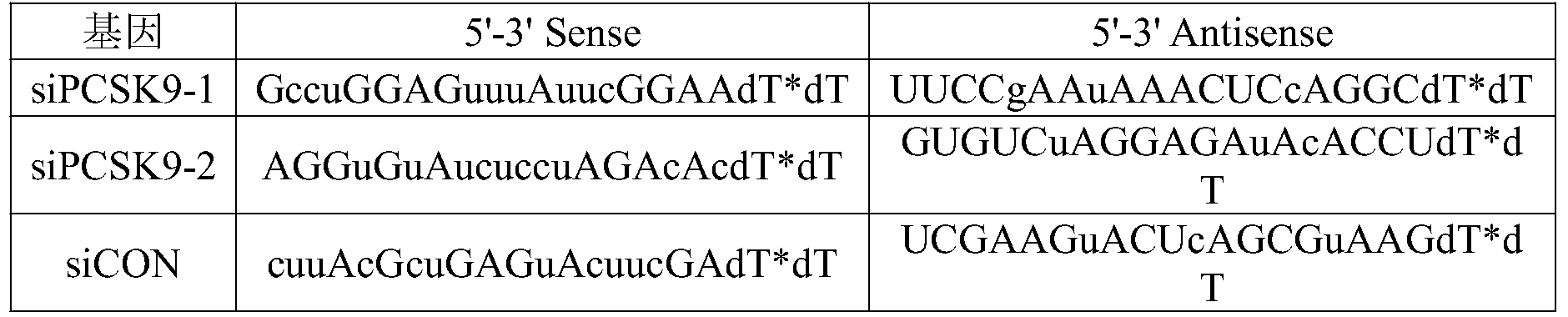
注:小写字母表示2’-OMe修饰。所有序列末尾均加以硫代磷酸酯连接。Note: Lowercase letters indicate 2'-OMe modifications. Phosphorothioate linkages were made at the end of all sequences.
表2:引物序列Table 2: Primer sequences
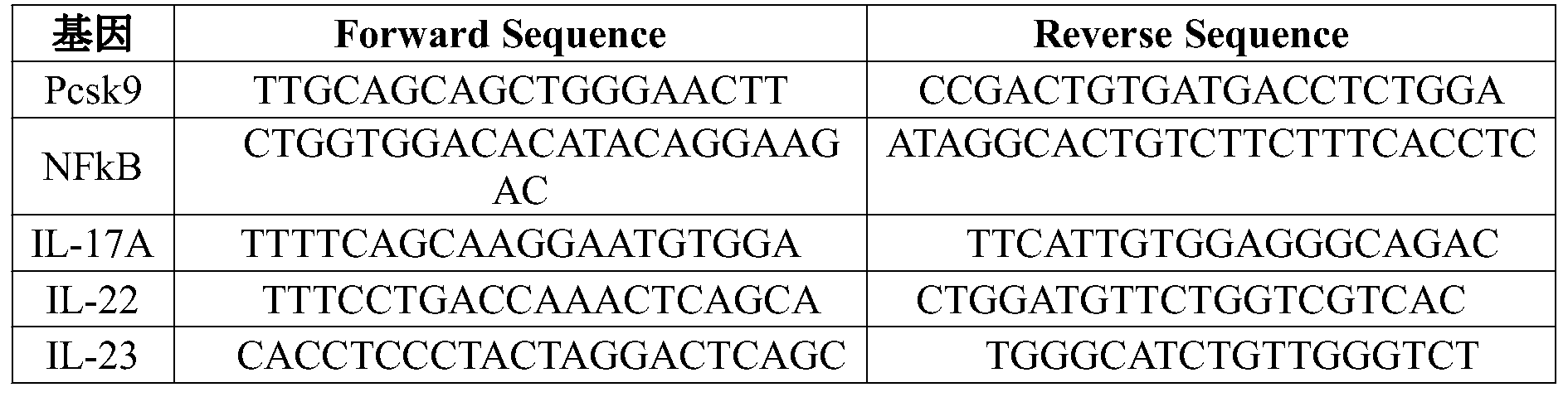
实验结果:Experimental results:
(1)siPcsk9涂抹于皮肤后一天即可显著降低B6小鼠皮肤中Pcsk9的表达(p<0.05),抑制率超过80%(图14)。siPcsk9处理皮肤一天后,可抑制NFκB、IL-17、IL-22、IL-23等炎性因子的表达水平(图15)。这些炎症因子的表达与银屑病的发病及病情严重程度密切相关, 提示siPcsk9可抑制银屑病的发生并减轻病理反应。(1) The expression of Pcsk9 in the skin of B6 mice was significantly reduced in one day after siPcsk9 was applied to the skin (p<0.05), and the inhibition rate was over 80% (Fig. 14). After one day of treatment, siPcsk9 can inhibit the expression levels of inflammatory factors such as NFκB, IL-17, IL-22 and IL-23 (Fig. 15). The expression of these inflammatory factors is closely related to the incidence of psoriasis and the severity of the disease. It is suggested that siPcsk9 can inhibit the occurrence of psoriasis and reduce the pathological response.
(2)连续涂药6天后,模型组小鼠的背部涂药区域均出现明显红斑、鳞屑及浸润,而涂抹siPcsk9组小鼠的背部涂药区域仅出现轻微的红斑、鳞屑和浸润(见图16)。siPcsk9组治疗小鼠银屑病样皮肤的疗效明显优于PCSK9单抗组(P<0.01),凡士林组未出现任何皮损。(2) After 6 days of continuous application, the model group had obvious erythema, scale and infiltration in the dosing area, while the dop-coated area of the siPcsk9 group showed only mild erythema, scale and infiltration (see figure). 16). The effect of siPcsk9 group on psoriasis-like skin in mice was significantly better than that in PCSK9 monoclonal antibody group (P<0.01). No skin lesions appeared in the vaseline group.
(3)每天对B6小鼠背部涂药区域皮损进行评分,siPcsk9组的红斑、鳞屑、浸润及总分(红斑+鳞屑+浸润)均明显低于PCSK9单抗组(P均<0.01)(见图16)。(3) The lesions of the back coating area of B6 mice were scored every day. The erythema, scales, infiltration and total score (erythema + scale + infiltration) of siPcsk9 group were significantly lower than those of PCSK9 monoclonal antibody group (P<0.01). See Figure 16).
(4)为了进一步验证siPcsk9抑制IMQ诱导的银屑病样皮损的作用,我们用同样的处理方法在另一种野生型小鼠BALB中重复了图16中的实验,结果十分近似(见图17)。(4) To further verify the effect of siPcsk9 on IMQ-induced psoriasis-like lesions, we repeated the experiment in Figure 16 in another wild-type mouse BALB using the same treatment, and the results were very similar (see Figure 17).
以上对本发明优选的具体实施方式和实施例作了详细说明,但是本发明并不限于上述实施方式和实施例,在本领域技术人员所具备的知识范围内,还可以在不脱离本发明构思的前提下作出各种变化。 The preferred embodiments and examples of the present invention have been described in detail above, but the present invention is not limited to the above-described embodiments and examples, and may be without departing from the scope of the present invention. Make various changes under the premise.
Claims (6)
Priority Applications (1)
| Application Number | Priority Date | Filing Date | Title |
|---|---|---|---|
| US15/965,907 US11214625B2 (en) | 2015-10-29 | 2018-04-28 | Application of PCSK9 inhibitors in the preparation of drugs for the treatment of inflammatory immune diseases |
Applications Claiming Priority (2)
| Application Number | Priority Date | Filing Date | Title |
|---|---|---|---|
| CN201510728438.6 | 2015-10-29 | ||
| CN201510728438.6A CN105214087B (en) | 2015-10-29 | 2015-10-29 | PCSK9 monoclonal antibodies are preparing the application in treating inflammatory-immune diseases medicine |
Related Child Applications (1)
| Application Number | Title | Priority Date | Filing Date |
|---|---|---|---|
| US15/965,907 Continuation-In-Part US11214625B2 (en) | 2015-10-29 | 2018-04-28 | Application of PCSK9 inhibitors in the preparation of drugs for the treatment of inflammatory immune diseases |
Publications (1)
| Publication Number | Publication Date |
|---|---|
| WO2017071673A1 true WO2017071673A1 (en) | 2017-05-04 |
Family
ID=54983592
Family Applications (1)
| Application Number | Title | Priority Date | Filing Date |
|---|---|---|---|
| PCT/CN2016/111613 Ceased WO2017071673A1 (en) | 2015-10-29 | 2016-12-23 | Application of pcsk9 inhibitor in preparation of drug treating inflammatory immune diseases |
Country Status (3)
| Country | Link |
|---|---|
| US (2) | US11214625B2 (en) |
| CN (1) | CN105214087B (en) |
| WO (1) | WO2017071673A1 (en) |
Cited By (2)
| Publication number | Priority date | Publication date | Assignee | Title |
|---|---|---|---|---|
| WO2020049026A1 (en) * | 2018-09-05 | 2020-03-12 | INSERM (Institut National de la Santé et de la Recherche Médicale) | Methods and compositions for treating asthma and allergic diseases |
| US11214625B2 (en) | 2015-10-29 | 2022-01-04 | Min Chen | Application of PCSK9 inhibitors in the preparation of drugs for the treatment of inflammatory immune diseases |
Families Citing this family (7)
| Publication number | Priority date | Publication date | Assignee | Title |
|---|---|---|---|---|
| WO2018054241A1 (en) * | 2016-09-20 | 2018-03-29 | Wuxi Biologics (Shanghai) Co., Ltd. | Novel anti-pcsk9 antibodies |
| CN108066763A (en) * | 2017-12-21 | 2018-05-25 | 陈敏 | Application of the PCSK9 inhibitor in the inflammatory-immune diseases medicine for preparing treatment T cell mediation |
| CN113387945A (en) * | 2020-03-11 | 2021-09-14 | 陈敏 | Compound PTM-3, PTM-4, preparation method and application of preparing medicine |
| WO2022002160A1 (en) * | 2020-07-01 | 2022-01-06 | 陈敏 | Use of pcsk9 inhibitor in preparation of product for treating multiple diseases |
| CN113876955B (en) * | 2020-07-01 | 2023-06-27 | 陈敏 | Use of PCSK9 inhibitors for the preparation of hair growth promoting products |
| CN115120730A (en) * | 2021-03-25 | 2022-09-30 | 陈敏 | Application of PCSK9 inhibitors in the preparation of products for preventing and treating scars |
| CN114699406B (en) * | 2022-04-06 | 2023-07-28 | 孙良丹 | Use of compounds or pharmaceutically acceptable derivatives thereof for inhibiting AIM2 protein activity |
Citations (4)
| Publication number | Priority date | Publication date | Assignee | Title |
|---|---|---|---|---|
| TW201400464A (en) * | 2012-03-15 | 2014-01-01 | Kowa Co | Novel pyrimidine compound and medicine comprising same |
| CN103717615A (en) * | 2011-06-20 | 2014-04-09 | 霍夫曼-拉罗奇有限公司 | Polypeptides that bind PCSK9 and methods of use |
| WO2014197752A1 (en) * | 2013-06-07 | 2014-12-11 | Regeneron Pharmaceuticals, Inc. | Methods fo inhibting atherosclerosis by administering an inhibitor of pcsk9 |
| CN105214087A (en) * | 2015-10-29 | 2016-01-06 | 陈敏 | The application of PCSK9 monoclonal antibody in preparation treatment inflammatory-immune diseases medicine |
Family Cites Families (16)
| Publication number | Priority date | Publication date | Assignee | Title |
|---|---|---|---|---|
| HU207310B (en) | 1988-12-02 | 1993-03-29 | Pfizer | Process for producing aryl-piperidine derivatives |
| MX2010004454A (en) * | 2007-10-26 | 2010-07-28 | Schering Corp | Anti-pcsk9 and methods for treating lipid and cholesterol disorders. |
| WO2010042755A2 (en) * | 2008-10-08 | 2010-04-15 | Chimeros Inc. | Chimeric therapeutics, compositions, and methods for using same |
| EP4029881A1 (en) * | 2010-11-08 | 2022-07-20 | F. Hoffmann-La Roche AG | Subcutaneously administered anti-il-6 receptor antibody |
| US9682085B2 (en) | 2013-02-22 | 2017-06-20 | Shifa Biomedical Corporation | Anti-proprotein convertase subtilisin kexin type 9 (anti-PCSK9) compounds and methods of using the same in the treatment and/or prevention of cardiovascular diseases |
| WO2014150395A1 (en) | 2013-03-15 | 2014-09-25 | Shifa Biomedical Corporation | Anti-pcsk9 compounds and methods for the treatment and/or prevention of cardiovascular diseases |
| AU2014237312B2 (en) | 2013-03-15 | 2019-03-28 | Shifa Biomedical Corporation | Anti-proprotein convertase subtilisin kexin type 9 (anti-PCSK9) compounds and methods of using the same in the treatment and/or prevention of cardiovascular diseases |
| CA2909442A1 (en) | 2013-04-17 | 2014-10-23 | Pfizer Inc. | N-piperidin-3-ylbenzamide derivatives for treating cardiovascular diseases |
| US20170290806A1 (en) | 2014-09-08 | 2017-10-12 | Temple University-Of The Commonwealth System Of Higher Education | PCSK9 Inhibitors and Methods of Use Thereof |
| CN105753817A (en) | 2015-01-01 | 2016-07-13 | 成都贝斯凯瑞生物科技有限公司 | Nitrogen-substituted heterocyclic derivatives and application thereof |
| CN105753814A (en) | 2015-01-01 | 2016-07-13 | 成都贝斯凯瑞生物科技有限公司 | Substituted nitrogen heterocyclic derivative and application thereof |
| HK1257102A1 (en) | 2015-08-21 | 2019-10-11 | Portola Pharmaceuticals, Inc. | Phenylpiperazine proprotein convertase subtilisin/kexin type 9 (pcsk9) modulators and their use |
| WO2017034994A1 (en) | 2015-08-21 | 2017-03-02 | Portola Pharmaceuticals, Inc. | Composition and methods of use of novel phenylalanine small organic compounds to directly modulate pcsk9 protein activity |
| WO2017034990A1 (en) | 2015-08-21 | 2017-03-02 | Portola Pharmaceuticals, Inc. | Composition and methods of use of tetrahydroisoquinoline small molecules to bind and modulate pcsk9 protein activity |
| CA3027223A1 (en) | 2016-06-21 | 2017-12-28 | Shifa Biomedical Corporation | Anti-proprotein convertase subtilisin kexin type 9 (anti-pcsk9) compounds and methods of using the same in the treatment and/or prevention of cardiovascular diseases |
| CN110546149B (en) * | 2017-04-21 | 2022-11-11 | 深圳信立泰药业股份有限公司 | Piperidines as PCSK9 inhibitors |
-
2015
- 2015-10-29 CN CN201510728438.6A patent/CN105214087B/en active Active
-
2016
- 2016-12-23 WO PCT/CN2016/111613 patent/WO2017071673A1/en not_active Ceased
-
2018
- 2018-04-28 US US15/965,907 patent/US11214625B2/en active Active
-
2021
- 2021-11-22 US US17/533,027 patent/US20220073647A1/en not_active Abandoned
Patent Citations (4)
| Publication number | Priority date | Publication date | Assignee | Title |
|---|---|---|---|---|
| CN103717615A (en) * | 2011-06-20 | 2014-04-09 | 霍夫曼-拉罗奇有限公司 | Polypeptides that bind PCSK9 and methods of use |
| TW201400464A (en) * | 2012-03-15 | 2014-01-01 | Kowa Co | Novel pyrimidine compound and medicine comprising same |
| WO2014197752A1 (en) * | 2013-06-07 | 2014-12-11 | Regeneron Pharmaceuticals, Inc. | Methods fo inhibting atherosclerosis by administering an inhibitor of pcsk9 |
| CN105214087A (en) * | 2015-10-29 | 2016-01-06 | 陈敏 | The application of PCSK9 monoclonal antibody in preparation treatment inflammatory-immune diseases medicine |
Non-Patent Citations (2)
| Title |
|---|
| MAO, CHENGYU ET AL.: "Related Research Progress of Proprotein Convertase Subtilisin/Kexin Type 9", CARDIOVASCULAR DISEASE JOURNAL OF INTEGRATED TRADITIONAL CHINESE AND WESTERN MEDICINE, vol. 3, no. 10, 30 April 2015 (2015-04-30), pages 191 - 194 * |
| PAN, LIHONG ET AL.: "PCSK9/Narc-1 and Nervous System Disease", JOURNAL OF NANHUA UNIVERSITY (MEDICAL EDITION, vol. 36, no. 6, 30 November 2008 (2008-11-30), pages 808 - 809 * |
Cited By (8)
| Publication number | Priority date | Publication date | Assignee | Title |
|---|---|---|---|---|
| US11214625B2 (en) | 2015-10-29 | 2022-01-04 | Min Chen | Application of PCSK9 inhibitors in the preparation of drugs for the treatment of inflammatory immune diseases |
| WO2020049026A1 (en) * | 2018-09-05 | 2020-03-12 | INSERM (Institut National de la Santé et de la Recherche Médicale) | Methods and compositions for treating asthma and allergic diseases |
| EP3846909A1 (en) * | 2018-09-05 | 2021-07-14 | Institut National de la Santé et de la Recherche Médicale (INSERM) | Methods and compositions for treating asthma and allergic diseases |
| JP2021536576A (en) * | 2018-09-05 | 2021-12-27 | アンスティチュ ナショナル ドゥ ラ サンテ エ ドゥ ラ ルシェルシュ メディカル | Methods and compositions for treating asthma and allergic diseases |
| JP7444858B2 (en) | 2018-09-05 | 2024-03-06 | アンスティチュ ナショナル ドゥ ラ サンテ エ ドゥ ラ ルシェルシュ メディカル | Methods and compositions for treating asthma and allergic diseases |
| JP2024063069A (en) * | 2018-09-05 | 2024-05-10 | アンスティチュ ナショナル ドゥ ラ サンテ エ ドゥ ラ ルシェルシュ メディカル | Methods and Compositions for Treating Asthma and Allergic Diseases - Patent application |
| CN112654397B (en) * | 2018-09-05 | 2025-01-03 | 国家医疗保健研究所 | Methods and compositions for treating asthma and allergic diseases |
| US12253528B2 (en) | 2018-09-05 | 2025-03-18 | Inserm (Institut National De La Sante Et De La Recherche Medicale) | Methods and compositions for treating asthma and allergic diseases |
Also Published As
| Publication number | Publication date |
|---|---|
| CN105214087B (en) | 2017-12-26 |
| US11214625B2 (en) | 2022-01-04 |
| CN105214087A (en) | 2016-01-06 |
| US20220073647A1 (en) | 2022-03-10 |
| US20180312607A1 (en) | 2018-11-01 |
Similar Documents
| Publication | Publication Date | Title |
|---|---|---|
| WO2017071673A1 (en) | Application of pcsk9 inhibitor in preparation of drug treating inflammatory immune diseases | |
| JP2023507861A (en) | Method for reducing survival rate of cancer cells by applying alternating electric field to cancer cells and administering checkpoint inhibitor | |
| Dufour et al. | IL-17A dissociates inflammation from fibrogenesis in systemic sclerosis | |
| CN108066763A (en) | Application of the PCSK9 inhibitor in the inflammatory-immune diseases medicine for preparing treatment T cell mediation | |
| Liu et al. | Celastrol gel ameliorates imiquimod-induced psoriasis-like dermatitis in mice by targeting Langerhans cells | |
| Wang et al. | Clara cell 10-kD protein suppresses chitinase 3-like 1 expression associated with eosinophilic chronic rhinosinusitis | |
| Jin et al. | Topical histone deacetylase inhibitor remetinostat improves IMQ-induced psoriatic dermatitis via suppressing dendritic cell maturation and keratinocyte differentiation and inflammation | |
| Zeng et al. | Using siRNA-based anti-inflammatory lipid nanoparticles for gene regulation in psoriasis | |
| CN107250360B (en) | c-Rel specific siRNA and its application in preventing and treating autoimmune psoriasis | |
| CN116870174A (en) | A DNA tetrahedral complex and its use in preparing drugs for treating psoriasis | |
| CN103251931A (en) | Application of Cyr61 in psoriasis medicine | |
| Gu et al. | Topical application of nitrate ameliorates skin fibrosis by regulating ST2+ CD4+ T cells in Systemic Sclerosis Mouse Model | |
| Wang et al. | Suppressive effect of β, β-dimethylacryloyl alkannin on activated dendritic cells in psoriasis by the TLR7/8 pathway | |
| WO2025140008A1 (en) | Use of recombinant protein ccl11 in the treatment of malignant pleural effusions | |
| Tang et al. | KdPT alleviates imiquimod-induced psoriasis-like skin lesion in mice via inhibiting proliferation and inflammation response | |
| Wang et al. | Exosomal miR-1246 of adipose stem cells attenuates obesity by polarizing M2 macrophages, reducing fat mass, and Beiging of white adipose tissue | |
| CN114113630B (en) | Application of SERPINB3/B4 as target spot in medicines for treating inflammatory skin diseases such as rosacea | |
| Tang et al. | ErbB4 affects Th1/Th17 cell differentiation and promotes psoriasis progression | |
| An et al. | Effects of silencing NLRP3 gene on proliferation of psoriasis-like HaCaT cells and expressions of cytokines | |
| Xiao et al. | Ganoderic acid A alleviate psoriasis by inhibiting GSDMD-mediated pyroptosis | |
| CN108004308A (en) | Application of miRNA203 in preparation of medicine for treating diabetic refractory wound | |
| CN115381951A (en) | Application of VEGF gene expression inhibitor in preparation or as preparation for treating psoriasis | |
| CN116077503A (en) | Application of METTL3 enzyme inhibitor in preparation of vitiligo medicine and medicine thereof | |
| CN119667166B (en) | The use of AREG in eosinophilic inflammation of chronic sinusitis with nasal polyps | |
| CN117737068B (en) | Small nucleic acid molecules for the treatment of skin melanoma |
Legal Events
| Date | Code | Title | Description |
|---|---|---|---|
| 121 | Ep: the epo has been informed by wipo that ep was designated in this application |
Ref document number: 16859108 Country of ref document: EP Kind code of ref document: A1 |
|
| NENP | Non-entry into the national phase |
Ref country code: DE |
|
| 122 | Ep: pct application non-entry in european phase |
Ref document number: 16859108 Country of ref document: EP Kind code of ref document: A1 |
|
| 122 | Ep: pct application non-entry in european phase |
Ref document number: 16859108 Country of ref document: EP Kind code of ref document: A1 |