WO2017063519A1 - Method and device for displaying titles - Google Patents
Method and device for displaying titles Download PDFInfo
- Publication number
- WO2017063519A1 WO2017063519A1 PCT/CN2016/101450 CN2016101450W WO2017063519A1 WO 2017063519 A1 WO2017063519 A1 WO 2017063519A1 CN 2016101450 W CN2016101450 W CN 2016101450W WO 2017063519 A1 WO2017063519 A1 WO 2017063519A1
- Authority
- WO
- WIPO (PCT)
- Prior art keywords
- user
- title
- business object
- word
- current
- Prior art date
- Legal status (The legal status is an assumption and is not a legal conclusion. Google has not performed a legal analysis and makes no representation as to the accuracy of the status listed.)
- Ceased
Links
Images

Classifications
-
- G—PHYSICS
- G06—COMPUTING OR CALCULATING; COUNTING
- G06F—ELECTRIC DIGITAL DATA PROCESSING
- G06F16/00—Information retrieval; Database structures therefor; File system structures therefor
- G06F16/90—Details of database functions independent of the retrieved data types
- G06F16/95—Retrieval from the web
- G06F16/953—Querying, e.g. by the use of web search engines
- G06F16/9535—Search customisation based on user profiles and personalisation
-
- G—PHYSICS
- G06—COMPUTING OR CALCULATING; COUNTING
- G06F—ELECTRIC DIGITAL DATA PROCESSING
- G06F16/00—Information retrieval; Database structures therefor; File system structures therefor
-
- G—PHYSICS
- G06—COMPUTING OR CALCULATING; COUNTING
- G06F—ELECTRIC DIGITAL DATA PROCESSING
- G06F16/00—Information retrieval; Database structures therefor; File system structures therefor
- G06F16/30—Information retrieval; Database structures therefor; File system structures therefor of unstructured textual data
- G06F16/33—Querying
- G06F16/3331—Query processing
- G06F16/3332—Query translation
- G06F16/3334—Selection or weighting of terms from queries, including natural language queries
-
- G—PHYSICS
- G06—COMPUTING OR CALCULATING; COUNTING
- G06F—ELECTRIC DIGITAL DATA PROCESSING
- G06F16/00—Information retrieval; Database structures therefor; File system structures therefor
- G06F16/30—Information retrieval; Database structures therefor; File system structures therefor of unstructured textual data
- G06F16/33—Querying
- G06F16/338—Presentation of query results
-
- G—PHYSICS
- G06—COMPUTING OR CALCULATING; COUNTING
- G06F—ELECTRIC DIGITAL DATA PROCESSING
- G06F16/00—Information retrieval; Database structures therefor; File system structures therefor
- G06F16/30—Information retrieval; Database structures therefor; File system structures therefor of unstructured textual data
- G06F16/35—Clustering; Classification
- G06F16/353—Clustering; Classification into predefined classes
Definitions
- the present application relates to the field of Internet information display technology, and in particular, to a title display method and apparatus.
- each web content includes a header portion. The user can quickly learn important information of the network content through the title.
- the existing title display method generally includes: the product provider can fill in the product title according to the product information and display the filled title to the user, and at the same time, when the product provider fills in the title, the product can also be filled in at the same time.
- the short title corresponding to the title.
- the product In order for a product provider to be retrieved as much as possible by the user, the product usually fills in a long title for its product and often adds the current hot vocabulary to the title of its product.
- a long title display may occupy a large amount of space on the user's terminal screen, which is inconvenient for the user to read, and it is difficult for the user to quickly find his or her attention in the long title.
- the existing title providing method can not meet the individual needs of users.
- the purpose of the embodiment of the present application is to provide a title display method and apparatus to ensure that the title displayed to the user is short and meets the personalized needs of the user.
- the embodiment of the present application provides a method and device for displaying a title as follows:
- a method of displaying titles including:
- a title display device includes: a user group classification unit, a preference keyword unit, a current user unit, a word segment matching unit, a new title unit, and a display unit; wherein
- the user group classification unit is configured to divide the user into different user groups according to at least one attribute information of multiple users;
- the preference keyword unit is configured to determine keywords that are preferred by each user group according to user historical behavior logs of different user groups
- the current user unit is configured to receive an access request of the current user to the current service object, and determine a user group corresponding to the current user according to the attribute information of the current user;
- the word segment matching unit is configured to perform word segmentation on the original title of the current business object, and determine a word segmentation matching word segment that is preferred by the user group corresponding to the current user in the word segment;
- the new title unit is configured to generate a new title of the business object according to the matched participle in the participle matching unit;
- the display unit is configured to return a new title in the new title unit to a user client display.
- the method for displaying a title disclosed in the embodiment of the present application can be divided according to the user attribute information, and the user group corresponding to each user and the key of each user group preference are determined in advance.
- the word when receiving the request of the user to access the current business object, segmenting the original title of the business object, determining the word segmentation in the original title that matches the keyword preferred by the group of the user, and then generating the word segment according to the matched word segmentation
- the new title is displayed to the user, and the title displayed to the user can be simplified.
- the title display method and apparatus disclosed in the embodiment of the present application can be used to generate a title that matches the user's group search habit according to the user group in which the user is located.
- the title presented to the user can meet the individual needs of the user.
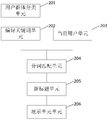
- FIG. 2 is a block diagram of an embodiment of a title display device of the present application.
- the embodiment of the present application provides a method and device for displaying a title.
- the title display method may include:
- S101 Divide the user into different user groups according to at least one attribute information of multiple users.
- a plurality of users may be classified according to the attribute information of the user, and a user group corresponding to different attribute information may be obtained.
- the user attribute information may include at least one of the following: territory, gender, body type, economic ability, activity, preference, and the like.
- the user when the attribute information is the user's geographic information, the user may be divided into a “Northern” user group and a “Southern” user group from the geographic dimension.
- the attribute information is the body type information of the user, the user may be classified into a “fat” user group or a “slim” user group from the body size dimension.
- User groups can be divided in different ways from different dimensions.
- a user may have attribute information of a plurality of different dimensions, and thus one user may correspond to one or more user groups of different dimensions.
- the attribute information of a user in the geographic dimension is “Southern”, and the user can be classified into the “Southern” user group; at the same time, the attribute information of the user in the body dimension is “slim”, and the user can also be classified as “skinny”. "Client.
- S102 Determine keywords that are preferred by each user group according to user history behavior logs of different user groups.
- the keyword of the user group preference may correspond to the user group, and the keyword preferred by the user group may be a query word commonly used when the user group searches for a product.
- the user history behavior log may include: a user search log.
- the user search time and the query word can be recorded in the user search log.
- keywords that are preferred by each user group can be determined. Specifically, the total number of searches in all user search logs in each user group and the number of searches corresponding to each query word may be counted. Can calculate The ratio of the number of searches of each query word to the total number of search times; if the ratio is greater than a preset value, the query word may be determined as a keyword preferred by the user group.
- the total number of searches in all user search logs in the user group in the preset time period and the number of searches corresponding to each query word may also be counted. And calculating a ratio of the number of searches of each query word in the predetermined period of time to the total number of search times; if the ratio is greater than a preset value, the query term may be determined as a preference of the user group. Key words.
- the user can be divided into a “puffy” user group and a “slim” user group.
- the keyword that is preferred by the “preferential” user group may be determined according to the historical history log of the user of the “fat” user group. Specifically, the total number of searches in all user search logs of the "preferential" user group in the last 30 days can be counted, for example, denoted by N. It is also possible to count the number of searches corresponding to each query word in all the user search logs of the "preferential" user group in the past 30 days, for example, by using M1, M2, M3, and the like.
- M1 represents the number of searches for the query word "loose”
- M2 represents the number of searches for the query word "large code”
- M3 represents the number of searches for the query word "low price”.
- S103 Receive an access request of the current user to the current service object, and determine a user group corresponding to the current user according to the attribute information of the current user.
- the current user's access request to the current business object may include: a request to display a title of the current business object on a display screen of the current user.
- the current business object may be a product in the field of electronic commerce.
- the user group corresponding to the current user may be determined according to the attribute information of the current user. Specifically, referring to the description in step S101, for example, the attribute information of the current user in the geographic dimension is “South”, then the current corresponding user group may be determined to be a “Southern” user group.
- S104 Perform a word segmentation on the original title of the current business object, and determine a word segmentation matching keyword of the user group corresponding to the current user in the participle.
- the original title of the current business object can be segmented to obtain multiple word segments.
- the current business object is a jacket
- the original title of the business object may be "the Korean version of the long epaulettes in the long spring and autumn women's windbreaker jacket loose tide”
- the following multiple words can be obtained: “Korean version”, “big shoulder”, “medium long”, “long”, “Spring and Autumn”, “Autumn”, “Women” , "windbreaker", “coat”, “loose”, “tidal”.
- the participle of the keyword matching of the user group corresponding to the current user in the participle may include: the same participle of the keyword preferred by the user group corresponding to the current user.
- the current user is a corresponding user group, which may include: a "female” group, a "young” group, and a “fat” group.
- the keywords of the "female” group preference may include: “women's style”
- the keywords of the "young” group preference may include: “tidal”
- the keywords of the "puffy” group preference may include: “loose”.
- the word segmentation matching the keyword preference of the user group corresponding to the current user may include: “women's style”, “looseness”, and “tidal”.
- S105 Generate a new title of the business object according to the matched word segmentation.
- a new title of the business object may be generated according to the matched word segment. Specifically, the matched word segment may be combined with the preset reduced title of the business object to generate a new title of the business object.
- the order of the direct combination may be arbitrary or may be preset.
- the original title of the above is "the Korean version of the long-shouldered long spring and autumn women's windbreaker jacket loose tide” business object, assuming its pre-defined streamlined title is “women's windbreaker", the matching participle is “women”, “ Loosely and “tidal”, then the matching participle is directly combined with the preset reduced title of the business object, and the new title of the business object can be obtained as "female loose tide women's windbreaker". If the repeated word segmentation in the title of the combination is further deleted, the new title of the business object can be obtained as "loose tide women's windbreaker".
- the step of generating a new title of the business object according to the matched word segment, after combining the matched word segment with the preset reduced title of the business object to generate a title may also The method includes: determining, according to the attribute information of the business object, a feature word corresponding to the business object, and generating a new title based on the title generated according to the word segmentation and the feature word.
- Determining, according to the attribute information of the business object, the feature word corresponding to the business object may include: determining a feature word corresponding to the business object according to the provider information of the business object, and/or, according to the feedback information of the business object Determining the feature words corresponding to the business object.
- the provider information of the business object may include at least one of the following: a business object provider identifier, a proportion of the business object provider in the industry, attribute information of the search user corresponding to the business object, and a business object brand information.
- the feature words corresponding to the business object may be determined according to the provider information of the business object.
- the feature words may include: “Top 100 Industries”, “Hundred Years History”, “Female Preferred”, and the brand name of the business object.
- the feature word corresponding to the business object may be determined according to the feedback information of the business object, and the feedback information may be an evaluation of the business object by the user.
- the feature word may include “praise”, “high cost performance”, and the like.
- Generating a new title based on the title generated according to the word segmentation and the feature word may include: adding the feature word to the title generated according to the word segmentation.
- the new title returned to the user client may be generated by combining the matched word segment with the preset reduced title of the business object.
- the new title returned to the user client may also be a new title to which the feature word is added in the title generated according to the word segmentation.
- the title display method disclosed in the foregoing embodiment divides the user according to the user attribute information, and predetermines a user group corresponding to each user and a keyword preferred by each user group, and when receiving a request for the user to access the current business object, Segmenting the original title of the business object, determining the word segmentation in the original title that matches the keyword preferred by the user group, and then generating a new title according to the matched word segmentation and the preset reduced title to the user, which can be guaranteed to be displayed
- the title of the user is simplified.
- the title display method disclosed in the embodiment of the present application can be used to generate a title that matches the search habit of the user group according to the user group in which the user is located, and the title displayed to the user can satisfy the personalized requirement of the user.
- the title display apparatus may include: a user group classification unit 201, a preference keyword unit 202, a current user unit 203, and a word segmentation match.
- the user group classification unit 201 may be configured to divide the user into different user groups according to at least one attribute information of the multiple users.
- the preference keyword unit 202 may be configured to determine keywords that are preferred by each user group according to user history behavior logs of different user groups.
- the current user unit 203 may be configured to receive an access request of the current user to the current service object, and determine a user group corresponding to the current user according to the attribute information of the current user.
- the word segment matching unit 204 may be configured to perform word segmentation on the original title of the current business object, and determine a word segmentation matching word segment that is preferred by the user group corresponding to the current user in the word segmentation.
- the new title unit 205 may be configured to generate a new title of the business object according to the matched participle in the participle matching unit 204.
- the new title unit 205 is further configured to determine, according to the attribute information of the business object, a feature word corresponding to the business object, based on the title generated according to the word segmentation and the feature word generation. New title.
- the display unit 206 can be configured to return a new title in the new title unit 205 to the user client for display.
- the title display device disclosed in the above embodiment corresponds to the embodiment of the title display method of the present application, and the embodiment of the title display method of the present application can be implemented and the technical effect of the method embodiment can be achieved.
- PLD Programmable Logic Device
- FPGA Field Programmable Gate Array
- HDL Hardware Description Language
- the controller can be implemented in any suitable manner, for example, the controller can take the form of, for example, a microprocessor or processor and a computer readable medium storing computer readable program code (eg, software or firmware) executable by the (micro)processor.
- computer readable program code eg, software or firmware
- examples of controllers include, but are not limited to, the following microcontrollers: ARC 625D, Atmel AT91SAM, The Microchip PIC18F26K20 and the Silicone Labs C8051F320, the memory controller can also be implemented as part of the memory's control logic.
- the controller can be logically programmed by means of logic gates, switches, ASICs, programmable logic controllers, and embedding.
- Such a controller can therefore be considered a hardware component, and the means for implementing various functions included therein can also be considered as a structure within the hardware component.
- a device for implementing various functions can be considered as a software module that can be both a method of implementation and a structure within a hardware component.
- the system, device, module or unit illustrated in the above embodiments may be implemented by a computer chip or an entity, or by a product having a certain function.
- the present application can be implemented by means of software plus a necessary general hardware platform. Based on such understanding, portions of the technical solution of the present application that contribute substantially or to the prior art may be embodied in the form of a software product.
- the computing device includes one or more processors (CPU ), input / output interface, network interface and memory.
- the computer software product can include a number of instructions for causing a computer device (which can be a personal computer, a server, Or a network device or the like) performs the methods described in various embodiments of the present application or in certain portions of the embodiments.
- the computer software product can be stored in a memory, which may include non-persistent memory, random access memory (RAM), and/or nonvolatile memory in a computer readable medium, such as read only memory (ROM) or Flash memory.
- RAM random access memory
- ROM read only memory
- Memory is an example of a computer readable medium.
- Computer readable media includes both permanent and non-persistent, removable and non-removable media.
- Information storage can be implemented by any method or technology.
- the information can be computer readable instructions, data structures, modules of programs, or other data. Examples of computer storage media include, but are not limited to, phase change memory (PRAM), static random access memory (SRAM), dynamic random access memory (DRAM), other types of random access memory (RAM), read only memory.
- PRAM phase change memory
- SRAM static random access memory
- DRAM dynamic random access memory
- RAM random access memory
- ROM read only memory
- EEPROM electrically erasable programmable read only memory
- flash memory or other memory technology
- compact disk read only memory CD-ROM
- DVD digital versatile disk
- Magnetic tape cartridges magnetic tape storage or other magnetic storage devices or any other non-transportable media can be used to store information that can be accessed by a computing device.
- computer readable media does not include transitory computer readable media, such as modulated data signals and carrier waves.
- This application can be used in a variety of general purpose or special purpose computer system environments or configurations.
- the application can be described in the general context of computer-executable instructions executed by a computer, such as a program module.
- program modules include routines, programs, objects, components, data structures, and the like that perform particular tasks or implement particular abstract data types.
- the present application can also be practiced in distributed computing environments where tasks are performed by remote processing devices that are connected through a communication network.
- program modules can be located in both local and remote computer storage media including storage devices.
Landscapes
- Engineering & Computer Science (AREA)
- Theoretical Computer Science (AREA)
- Databases & Information Systems (AREA)
- Data Mining & Analysis (AREA)
- Physics & Mathematics (AREA)
- General Engineering & Computer Science (AREA)
- General Physics & Mathematics (AREA)
- Computational Linguistics (AREA)
- Artificial Intelligence (AREA)
- Information Retrieval, Db Structures And Fs Structures Therefor (AREA)
- Machine Translation (AREA)
- User Interface Of Digital Computer (AREA)
Abstract
Description
本申请要求2015年10月16日递交的申请号为201510671264.4、发明名称为“一种标题展示方法及装置”的中国专利申请的优先权,其全部内容通过引用结合在本申请中。The present application claims priority to Chinese Patent Application Serial No. No. No. No. No. No. No. No. No No No No No No No No No No No No No No No No No No No No No No No No No No No No No No No No No No No No No No No No No No No No No No No No No No No No No No No No No No No No No No No No No No No No
本申请涉及互联网信息展示技术领域,特别涉及一种标题展示方法及装置。The present application relates to the field of Internet information display technology, and in particular, to a title display method and apparatus.
在常见的网络内容的展示中,每一网络内容都包括标题部分。用户可以通过所述标题快速了解所述网络内容的重要信息。In the display of common web content, each web content includes a header portion. The user can quickly learn important information of the network content through the title.
在电子商务系统中,现有的标题展示方法通常包括:产品提供方可以根据产品信息填写产品标题并将填写的标题展示给用户,同时,在产品提供方填写标题时,还可以同时填写该产品标题对应的短标题。当用户使用移动终端检索到所述产品时,可以提供给用户短标题。In the e-commerce system, the existing title display method generally includes: the product provider can fill in the product title according to the product information and display the filled title to the user, and at the same time, when the product provider fills in the title, the product can also be filled in at the same time. The short title corresponding to the title. When the user retrieves the product using the mobile terminal, a short title can be provided to the user.
产品提供方为了使其产品尽可能被用户检索到,通常会为其产品填写较长的标题,并经常在其产品的标题中添加当前热门词汇。过长的标题显示可能会占据用户终端屏幕的大量空间,不方便用户阅读,并且用户很难在过长的标题中快速找到自己的关注点。另一方面,现有的标题提供方式,也不能满足用户的个性化需求。In order for a product provider to be retrieved as much as possible by the user, the product usually fills in a long title for its product and often adds the current hot vocabulary to the title of its product. A long title display may occupy a large amount of space on the user's terminal screen, which is inconvenient for the user to read, and it is difficult for the user to quickly find his or her attention in the long title. On the other hand, the existing title providing method can not meet the individual needs of users.
发明内容Summary of the invention
本申请实施例的目的是提供一种标题展示方法及装置,以保证显示给用户的标题简短且满足用户的个性化需求。The purpose of the embodiment of the present application is to provide a title display method and apparatus to ensure that the title displayed to the user is short and meets the personalized needs of the user.
为解决上述技术问题,本申请实施例提供一种标题展示方法及装置是这样实现的:In order to solve the above technical problem, the embodiment of the present application provides a method and device for displaying a title as follows:
一种标题展示方法,包括:A method of displaying titles, including:
根据多个用户的至少一项属性信息,将所述用户划分为不同的用户群体;Dividing the user into different user groups according to at least one attribute information of multiple users;
根据不同用户群体的用户历史行为日志,确定各用户群体偏好的关键词;Determining keywords that are preferred by each user group according to user history behavior logs of different user groups;
接收当前用户对当前业务对象的访问请求,根据当前用户的属性信息,确定当前用户对应的用户群体;Receiving an access request of the current user to the current business object, and determining a user group corresponding to the current user according to the attribute information of the current user;
对当前业务对象的原始标题进行分词,确定所述分词中与当前用户对应的用户群体偏好的关键词匹配的分词; Demarcating the original title of the current business object, and determining a word segmentation matching keyword of the user group corresponding to the current user in the participle;
根据所述匹配的分词生成所述业务对象的新标题;Generating a new title of the business object according to the matched word segmentation;
将所述新标题返回给用户客户端展示。Return the new title to the user client presentation.
一种标题展示装置,包括:用户群体分类单元、偏好关键词单元、当前用户单元、分词匹配单元、新标题单元和展示单元;其中,A title display device includes: a user group classification unit, a preference keyword unit, a current user unit, a word segment matching unit, a new title unit, and a display unit; wherein
所述用户群体分类单元,用于根据多个用户的至少一项属性信息,将所述用户划分为不同的用户群体;The user group classification unit is configured to divide the user into different user groups according to at least one attribute information of multiple users;
所述偏好关键词单元,用于根据不同用户群体的用户历史行为日志,确定各用户群体偏好的关键词;The preference keyword unit is configured to determine keywords that are preferred by each user group according to user historical behavior logs of different user groups;
所述当前用户单元,用于接收当前用户对当前业务对象的访问请求,根据当前用户的属性信息,确定当前用户对应的用户群体;The current user unit is configured to receive an access request of the current user to the current service object, and determine a user group corresponding to the current user according to the attribute information of the current user;
所述分词匹配单元,用于对所述当前业务对象的原始标题进行分词,确定所述分词中与当前用户对应的用户群体偏好的关键词匹配的分词;The word segment matching unit is configured to perform word segmentation on the original title of the current business object, and determine a word segmentation matching word segment that is preferred by the user group corresponding to the current user in the word segment;
所述新标题单元,用于根据所述分词匹配单元中匹配的分词生成所述业务对象的新标题;The new title unit is configured to generate a new title of the business object according to the matched participle in the participle matching unit;
所述展示单元,用于将所述新标题单元中的新标题返回给用户客户端展示。The display unit is configured to return a new title in the new title unit to a user client display.
由以上本申请实施例提供的技术方案可见,本申请实施例公开的标题展示方法及装置根据用户属性信息对用户进行划分,预先确定与每一用户对应的用户群体以及每一用户群体偏好的关键词,当接收到用户访问当前业务对象的请求时,对业务对象的原始标题进行分词,确定出原始标题中与该用户所在群体偏好的关键词相匹配的分词,再根据匹配的分词和来生成新标题展示给用户,可以保证显示给用户的标题精简,同时,采用本申请实施例公开的标题展示方法及装置可以为用户根据用户所在的用户群体生成符合该用户群体搜索习惯的标题进行展示,展示给用户的标题能够满足用户的个性化需求。The method for displaying a title disclosed in the embodiment of the present application can be divided according to the user attribute information, and the user group corresponding to each user and the key of each user group preference are determined in advance. The word, when receiving the request of the user to access the current business object, segmenting the original title of the business object, determining the word segmentation in the original title that matches the keyword preferred by the group of the user, and then generating the word segment according to the matched word segmentation The new title is displayed to the user, and the title displayed to the user can be simplified. At the same time, the title display method and apparatus disclosed in the embodiment of the present application can be used to generate a title that matches the user's group search habit according to the user group in which the user is located. The title presented to the user can meet the individual needs of the user.
为了更清楚地说明本申请实施例或现有技术中的技术方案,下面将对实施例或现有技术描述中所需要使用的附图作简单地介绍,显而易见地,下面描述中的附图仅仅是本申请中记载的一些实施例,对于本领域普通技术人员来讲,在不付出创造性劳动性的前提下,还可以根据这些附图获得其他的附图。In order to more clearly illustrate the embodiments of the present application or the technical solutions in the prior art, the drawings to be used in the embodiments or the prior art description will be briefly described below. Obviously, the drawings in the following description are only It is a few embodiments described in the present application, and other drawings can be obtained from those skilled in the art without any inventive labor.
图1是本申请一种标题展示方法一个实施例的流程图;1 is a flow chart of an embodiment of a title display method of the present application;
图2是本申请一种标题展示装置实施例的模块图。 2 is a block diagram of an embodiment of a title display device of the present application.
本申请实施例提供一种标题展示方法及装置。The embodiment of the present application provides a method and device for displaying a title.
为了使本技术领域的人员更好地理解本申请中的技术方案,下面将结合本申请实施例中的附图,对本申请实施例中的技术方案进行清楚、完整地描述,显然,所描述的实施例仅仅是本申请一部分实施例,而不是全部的实施例。基于本申请中的实施例,本领域普通技术人员在没有作出创造性劳动前提下所获得的所有其他实施例,都应当属于本申请保护的范围。The technical solutions in the embodiments of the present application are clearly and completely described in the following, in which the technical solutions in the embodiments of the present application are clearly and completely described. The embodiments are only a part of the embodiments of the present application, and not all of them. All other embodiments obtained by a person of ordinary skill in the art based on the embodiments of the present application without departing from the inventive scope shall fall within the scope of the application.
图1是本申请一种标题展示方法一个实施例的流程图。如图1所示,所述标题展示方法可以包括:1 is a flow chart of an embodiment of a title display method of the present application. As shown in FIG. 1, the title display method may include:
S101:根据多个用户的至少一项属性信息,将所述用户划分为不同的用户群体。S101: Divide the user into different user groups according to at least one attribute information of multiple users.
可以对多个用户按照所述用户的属性信息进行分类,得到不同属性信息分别对应的用户群体。A plurality of users may be classified according to the attribute information of the user, and a user group corresponding to different attribute information may be obtained.
所述用户属性信息可以包括下述中的至少一种:地域、性别、体型、经济能力、活跃度、偏好等。The user attribute information may include at least one of the following: territory, gender, body type, economic ability, activity, preference, and the like.
例如所述属性信息为用户的地域信息时,从地域维度可以将用户分为“北方”用户群体和“南方”用户群体。所述属性信息为用户的体型信息时,从体型维度可以将用户分为“偏胖”用户群体或“偏瘦”用户群体。For example, when the attribute information is the user's geographic information, the user may be divided into a “Northern” user group and a “Southern” user group from the geographic dimension. When the attribute information is the body type information of the user, the user may be classified into a “fat” user group or a “slim” user group from the body size dimension.
从不同的维度,用户群体的划分方式也可以不同。用户可以具有多个不同维度的属性信息,因此,一个用户可以对应于一个或多个不同维度的用户群体。例如一个用户在地域维度的属性信息为“南方”,这个用户可以划分到“南方”用户群体;同时,这个用户在体型维度的属性信息为“偏瘦”,这个用户也可以划分到“偏瘦”用户群体。User groups can be divided in different ways from different dimensions. A user may have attribute information of a plurality of different dimensions, and thus one user may correspond to one or more user groups of different dimensions. For example, the attribute information of a user in the geographic dimension is “Southern”, and the user can be classified into the “Southern” user group; at the same time, the attribute information of the user in the body dimension is “slim”, and the user can also be classified as “skinny”. "Client.
S102:根据不同用户群体的用户历史行为日志,确定各用户群体偏好的关键词。S102: Determine keywords that are preferred by each user group according to user history behavior logs of different user groups.
所述用户群体偏好的关键词可以与所述用户群体相对应,所述用户群体偏好的关键词可以是该用户群体查找产品时常用的查询词。The keyword of the user group preference may correspond to the user group, and the keyword preferred by the user group may be a query word commonly used when the user group searches for a product.
所述用户历史行为日志可以包括:用户搜索日志。所述用户搜索日志中可以记录用户搜索时间和查询词。The user history behavior log may include: a user search log. The user search time and the query word can be recorded in the user search log.
根据所述用户搜索日志,可以确定各用户群体偏好的关键词。具体地,可以统计各用户群体中所有用户搜索日志中的搜索总次数和每一查询词对应的搜索次数。可以计算 所述每一查询词的搜索次数与所述总搜索次数的比值;若所述比值大于预设值,可以将该查询词确定为该用户群体偏好的关键词。According to the user search log, keywords that are preferred by each user group can be determined. Specifically, the total number of searches in all user search logs in each user group and the number of searches corresponding to each query word may be counted. Can calculate The ratio of the number of searches of each query word to the total number of search times; if the ratio is greater than a preset value, the query word may be determined as a keyword preferred by the user group.
在另一个实施方式中,还可以统计预设时间段中用户群体中所有用户搜索日志中的搜索总次数和每一查询词对应的搜索次数。再计算所述统计的预设时间段中每一查询词的所述搜索次数与所述总搜索次数的比值;若所述比值大于预设值,可以将该查询词确定为该用户群体偏好的关键词。In another embodiment, the total number of searches in all user search logs in the user group in the preset time period and the number of searches corresponding to each query word may also be counted. And calculating a ratio of the number of searches of each query word in the predetermined period of time to the total number of search times; if the ratio is greater than a preset value, the query term may be determined as a preference of the user group. Key words.
例如,根据体型维度的属性信息可以将用户划分为“偏胖”用户群体和“偏瘦”用户群体。其中,可以根据所述“偏胖”用户群体的用户历史行为日志,确定该“偏胖”用户群体偏好的关键词。具体地,可以统计最近30天内,该“偏胖”用户群体的所有用户搜索日志中搜索的总次数,例如用N表示。还可以统计近30天内,该“偏胖”用户群体的所有用户搜索日志中每一查询词对应的搜索次数,例如可以用M1、M2、M3等来表示。计算每一查询词的所述搜索次数与所述总搜索次数的比值,即M1/N、M2/N、M3/N等。例如M1表示的是查询词“宽松”的搜索次数,M2表示的是查询词“大码”的搜索次数,M3表示的是查询词“低价”的搜索次数。假设M1/N和M2/N的值大于预设值,M3/N的值小于预设值,那么可以确定“宽松”和“大码”为该“偏胖”用户群体偏好的关键词。For example, according to the attribute information of the body size dimension, the user can be divided into a “puffy” user group and a “slim” user group. The keyword that is preferred by the “preferential” user group may be determined according to the historical history log of the user of the “fat” user group. Specifically, the total number of searches in all user search logs of the "preferential" user group in the last 30 days can be counted, for example, denoted by N. It is also possible to count the number of searches corresponding to each query word in all the user search logs of the "preferential" user group in the past 30 days, for example, by using M1, M2, M3, and the like. Calculating a ratio of the number of searches of each query word to the total number of searches, that is, M1/N, M2/N, M3/N, and the like. For example, M1 represents the number of searches for the query word "loose", M2 represents the number of searches for the query word "large code", and M3 represents the number of searches for the query word "low price". Assuming that the values of M1/N and M2/N are greater than the preset value, and the value of M3/N is less than the preset value, it can be determined that “loose” and “large code” are keywords that are preferred by the “fat” user group.
S103:接收当前用户对当前业务对象的访问请求,根据当前用户的属性信息,确定当前用户对应的用户群体。S103: Receive an access request of the current user to the current service object, and determine a user group corresponding to the current user according to the attribute information of the current user.
所述当前用户对当前业务对象的访问请求可以包括:在当前用户的显示屏幕上显示当前业务对象的标题的请求。所述当前业务对象可以是电子商务领域中的产品。The current user's access request to the current business object may include: a request to display a title of the current business object on a display screen of the current user. The current business object may be a product in the field of electronic commerce.
接收所述当前用户对当前业务对象的访问请求后,可以根据当前用户的属性信息确定该用户对应的用户群。具体地,可以参照步骤S101中描述的,例如,当前用户在地域维度的属性信息为“南方”,那么可以确定所述当前对应的用户群体为“南方”用户群体。After receiving the access request of the current user to the current service object, the user group corresponding to the current user may be determined according to the attribute information of the current user. Specifically, referring to the description in step S101, for example, the attribute information of the current user in the geographic dimension is “South”, then the current corresponding user group may be determined to be a “Southern” user group.
S104:对当前业务对象的原始标题进行分词,确定所述分词中与当前用户对应的用户群体偏好的关键词匹配的分词。S104: Perform a word segmentation on the original title of the current business object, and determine a word segmentation matching keyword of the user group corresponding to the current user in the participle.
可以对当前业务对象的原始标题进行分词,得到多个分词。例如,当前业务对象为外套,该业务对象的原始标题可以为“韩版大肩章中长款春秋装女式风衣外套宽松潮”, 通过对所述原始标题进行分词,可以得到下述多个分词:“韩版”、“大肩章”、“中长款”、“长款”、“春秋装”、“秋装”、“女式”、“风衣”、“外套”、“宽松”、“潮”。The original title of the current business object can be segmented to obtain multiple word segments. For example, the current business object is a jacket, and the original title of the business object may be "the Korean version of the long epaulettes in the long spring and autumn women's windbreaker jacket loose tide", By segmenting the original title, the following multiple words can be obtained: "Korean version", "big shoulder", "medium long", "long", "Spring and Autumn", "Autumn", "Women" , "windbreaker", "coat", "loose", "tidal".
所述分词中与当前用户对应的用户群体偏好的关键词匹配的分词,可以包括:与当前用户对应的用户群体偏好的关键词相同的分词。The participle of the keyword matching of the user group corresponding to the current user in the participle may include: the same participle of the keyword preferred by the user group corresponding to the current user.
假设当前用户为对应的用户群体可以包括:“女性”群体、“年轻”群体、“偏胖”群体。其中,“女性”群体偏好的关键词可以包括:“女式”;“年轻”群体偏好的关键词可以包括:“潮”;“偏胖”群体偏好的关键词可以包括:“宽松”。那么,上述多个分词中,与当前用户对应的用户群体偏好的关键词匹配的分词可以包括:“女式”、“宽松”和“潮”。Assume that the current user is a corresponding user group, which may include: a "female" group, a "young" group, and a "fat" group. Among them, the keywords of the "female" group preference may include: "women's style"; the keywords of the "young" group preference may include: "tidal"; the keywords of the "puffy" group preference may include: "loose". Then, among the plurality of word segments, the word segmentation matching the keyword preference of the user group corresponding to the current user may include: “women's style”, “looseness”, and “tidal”.
S105:根据所述匹配的分词生成所述业务对象的新标题。S105: Generate a new title of the business object according to the matched word segmentation.
根据所述匹配的分词可以生成所述业务对象的新标题,具体地,可以将所述匹配的分词与所述业务对象的预设精简标题组合生成所述业务对象的新标题。A new title of the business object may be generated according to the matched word segment. Specifically, the matched word segment may be combined with the preset reduced title of the business object to generate a new title of the business object.
进一步地,所述将所述匹配的分词与所述业务对象的预设精简标题组合生成所述业务对象的新标题,可以采用直接组合的方式对所述分词和所述预设精简标题进行组合,得到所述业务对象的新标题。所述直接组合的顺序可以是任意的,也可以是预先设定的。Further, combining the matched word segment with the preset reduced title of the business object to generate a new title of the business object, and combining the word segment and the preset reduced title by direct combination , get a new title for the business object. The order of the direct combination may be arbitrary or may be preset.
进一步地,所述将所述匹配的分词与所述业务对象的预设精简标题组合生成所述业务对象的新标题,还可以在采用直接组合的方式后删除组合形成的标题中重复的分词,并将删除重复分词后得到的标题作为所述业务对象的新标题。Further, combining the matched word segment with the preset reduced title of the business object to generate a new title of the business object, and deleting the repeated word segmentation in the combined formed title after using the direct combination manner, The title obtained after deleting the repeated word segmentation is taken as the new title of the business object.
例如,上述原始标题为“韩版大肩章中长款春秋装女式风衣外套宽松潮”的业务对象,假设其预设精简标题为“女式风衣”,其匹配的分词为“女式”、“宽松”和“潮”,那么将所述匹配的分词与所述业务对象的预设精简标题直接进行组合,可以得到所述业务对象的新标题为“女式宽松潮女式风衣”。若进一步删除所述组合的标题中重复的分词,那么,可以得到所述业务对象的新标题为“宽松潮女式风衣”。For example, the original title of the above is "the Korean version of the long-shouldered long spring and autumn women's windbreaker jacket loose tide" business object, assuming its pre-defined streamlined title is "women's windbreaker", the matching participle is "women", " Loosely and "tidal", then the matching participle is directly combined with the preset reduced title of the business object, and the new title of the business object can be obtained as "female loose tide women's windbreaker". If the repeated word segmentation in the title of the combination is further deleted, the new title of the business object can be obtained as "loose tide women's windbreaker".
在另一个实施例中,所述根据所述匹配的分词生成所述业务对象的新标题的步骤,在将所述匹配的分词与所述业务对象的预设精简标题组合生成标题后,还可以包括:根据所述业务对象的属性信息确定与所述业务对象对应的特征词,基于所述根据分词生成的标题与所述特征词生成新标题。 In another embodiment, the step of generating a new title of the business object according to the matched word segment, after combining the matched word segment with the preset reduced title of the business object to generate a title, may also The method includes: determining, according to the attribute information of the business object, a feature word corresponding to the business object, and generating a new title based on the title generated according to the word segmentation and the feature word.
所述根据所述业务对象的属性信息确定与所述业务对象对应的特征词可以包括:根据业务对象的提供者信息确定所述业务对象对应的特征词,和/或,根据业务对象的反馈信息确定所述业务对象对应的特征词。Determining, according to the attribute information of the business object, the feature word corresponding to the business object may include: determining a feature word corresponding to the business object according to the provider information of the business object, and/or, according to the feedback information of the business object Determining the feature words corresponding to the business object.
所述业务对象的提供者信息,可以包括下述中的至少一种:业务对象提供者标识、业务对象提供者在所属行业内的占比、业务对象对应的搜索用户的属性信息、业务对象品牌信息。The provider information of the business object may include at least one of the following: a business object provider identifier, a proportion of the business object provider in the industry, attribute information of the search user corresponding to the business object, and a business object brand information.
根据所述业务对象的提供者信息可以确定所述业务对象对应的特征词。例如,所述特征词可以包括:“行业百强”、“百年历史”、“女性首选”以及所述业务对象的品牌名称等。The feature words corresponding to the business object may be determined according to the provider information of the business object. For example, the feature words may include: “Top 100 Industries”, “Hundred Years History”, “Female Preferred”, and the brand name of the business object.
还可以根据业务对象的反馈信息确定所述业务对象对应的特征词,所述反馈信息可以是用户对所述业务对象的评价,例如所述特征词可以包括“好评”、“性价比高”等。The feature word corresponding to the business object may be determined according to the feedback information of the business object, and the feedback information may be an evaluation of the business object by the user. For example, the feature word may include “praise”, “high cost performance”, and the like.
基于所述根据分词生成的标题与所述特征词生成新标题,可以包括:在所述根据分词生成的标题中,加入所述特征词。Generating a new title based on the title generated according to the word segmentation and the feature word may include: adding the feature word to the title generated according to the word segmentation.
S106:将所述新标题返回给用户客户端展示。S106: Return the new title to the user client display.
所述返回给用户客户端展示的新标题可以是所述匹配的分词与所述业务对象的预设精简标题组合生成。The new title returned to the user client may be generated by combining the matched word segment with the preset reduced title of the business object.
在另一个实施例中,所述返回给用户客户端展示的新标题还可以是在所述根据分词生成的标题中加入了所述特征词的新标题。In another embodiment, the new title returned to the user client may also be a new title to which the feature word is added in the title generated according to the word segmentation.
上述实施例公开的标题展示方法,根据用户属性信息对用户进行划分,预先确定与每一用户对应的用户群体以及每一用户群体偏好的关键词,当接收到用户访问当前业务对象的请求时,对业务对象的原始标题进行分词,确定出原始标题中与该用户所在群体偏好的关键词相匹配的分词,再根据匹配的分词和预设精简标题来生成新标题展示给用户,可以保证显示给用户的标题精简,同时,采用本申请实施例公开的标题展示方法可以为根据用户所在的用户群体生成符合该用户群体搜索习惯的标题进行展示,展示给用户的标题能够满足用户的个性化需求。The title display method disclosed in the foregoing embodiment divides the user according to the user attribute information, and predetermines a user group corresponding to each user and a keyword preferred by each user group, and when receiving a request for the user to access the current business object, Segmenting the original title of the business object, determining the word segmentation in the original title that matches the keyword preferred by the user group, and then generating a new title according to the matched word segmentation and the preset reduced title to the user, which can be guaranteed to be displayed The title of the user is simplified. At the same time, the title display method disclosed in the embodiment of the present application can be used to generate a title that matches the search habit of the user group according to the user group in which the user is located, and the title displayed to the user can satisfy the personalized requirement of the user.
图2是本申请一种标题展示装置实施例的模块图,如图2所示,所述标题展示装置可以包括:用户群体分类单元201、偏好关键词单元202、当前用户单元203、分词匹配
单元204、新标题单元205和展示单元206;其中,2 is a block diagram of an embodiment of a title display apparatus of the present application. As shown in FIG. 2, the title display apparatus may include: a user
所述用户群体分类单元201,可以用于根据多个用户的至少一项属性信息,将所述用户划分为不同的用户群体。The user
所述偏好关键词单元202,可以用于根据不同用户群体的用户历史行为日志,确定各用户群体偏好的关键词。The
所述当前用户单元203,可以用于接收当前用户对当前业务对象的访问请求,根据当前用户的属性信息,确定当前用户对应的用户群体。The
所述分词匹配单元204,可以用于对所述当前业务对象的原始标题进行分词,确定所述分词中与当前用户对应的用户群体偏好的关键词匹配的分词。The word
所述新标题单元205,可以用于根据所述分词匹配单元204中匹配的分词生成所述业务对象的新标题。The
在另一个实施例中,所述新标题单元205还可以用于根据所述业务对象的属性信息确定与所述业务对象对应的特征词,基于所述根据分词生成的标题与所述特征词生成新标题。In another embodiment, the
所述展示单元206,可以用于将所述新标题单元205中的新标题返回给用户客户端展示。The
上述实施例公开的标题展示装置与本申请标题展示方法实施例相对应,可以实现本申请的标题展示方法实施例并达到方法实施例的技术效果。The title display device disclosed in the above embodiment corresponds to the embodiment of the title display method of the present application, and the embodiment of the title display method of the present application can be implemented and the technical effect of the method embodiment can be achieved.
在20世纪90年代,对于一个技术的改进可以很明显地区分是硬件上的改进(例如,对二极管、晶体管、开关等电路结构的改进)还是软件上的改进(对于方法流程的改进)。然而,随着技术的发展,当今的很多方法流程的改进已经可以视为硬件电路结构的直接改进。设计人员几乎都通过将改进的方法流程编程到硬件电路中来得到相应的硬件电路结构。因此,不能说一个方法流程的改进就不能用硬件实体模块来实现。例如,可编程逻辑器件(Programmable Logic Device,PLD)(例如现场可编程门阵列(Field Programmable Gate Array,FPGA))就是这样一种集成电路,其逻辑功能由用户对器件编程来确定。由设计人员自行编程来把一个数字系统“集成”在一片PLD上,而不需要请芯片制造厂商来设计和制作专用的集成电路芯片2。而且,如今,取代手工地制作集成电路芯片,这种编程也多半改用“逻辑编译器(logic compiler)”软件来实现,它与 程序开发撰写时所用的软件编译器相类似,而要编译之前的原始代码也得用特定的编程语言来撰写,此称之为硬件描述语言(Hardware Description Language,HDL),而HDL也并非仅有一种,而是有许多种,如ABEL(Advanced Boolean Expression Language)、AHDL(Altera Hardware Description Language)、Confluence、CUPL(Cornell University Programming Language)、HDCal、JHDL(Java Hardware Description Language)、Lava、Lola、MyHDL、PALASM、RHDL(Ruby Hardware Description Language)等,目前最普遍使用的是VHDL(Very-High-Speed Integrated Circuit Hardware Description Language)与Verilog2。本领域技术人员也应该清楚,只需要将方法流程用上述几种硬件描述语言稍作逻辑编程并编程到集成电路中,就可以很容易得到实现该逻辑方法流程的硬件电路。In the 1990s, improvements to a technology could clearly distinguish between hardware improvements (eg, improvements to circuit structures such as diodes, transistors, switches, etc.) or software improvements (for process flow improvements). However, as technology advances, many of today's method flow improvements can be seen as direct improvements in hardware circuit architecture. Designers almost always get the corresponding hardware circuit structure by programming the improved method flow into the hardware circuit. Therefore, it cannot be said that the improvement of a method flow cannot be implemented by hardware entity modules. For example, a Programmable Logic Device (PLD) (such as a Field Programmable Gate Array (FPGA)) is an integrated circuit whose logic function is determined by the user programming the device. The designer is self-programming to "integrate" a digital system onto a single PLD without requiring the chip manufacturer to design and fabricate a dedicated integrated circuit chip 2 . Moreover, today, instead of manually making integrated circuit chips, this programming is mostly implemented by using "logic compiler" software, which The software compiler used in programming development is similar, and the original code before compilation must be written in a specific programming language. This is called Hardware Description Language (HDL), and HDL is not the only one. There are many kinds, such as ABEL (Advanced Boolean Expression Language), AHDL (Altera Hardware Description Language), Confluence, CUPL (Cornell University Programming Language), HDCal, JHDL (Java Hardware Description Language), Lava, Lola, MyHDL , PALASM, RHDL (Ruby Hardware Description Language), etc., currently the most commonly used is VHDL (Very-High-Speed Integrated Circuit Hardware Description Language) and Verilog2. It should also be apparent to those skilled in the art that the hardware flow for implementing the logic method flow can be easily obtained by simply programming the method flow into the integrated circuit with a few hardware description languages.
控制器可以按任何适当的方式实现,例如,控制器可以采取例如微处理器或处理器以及存储可由该(微)处理器执行的计算机可读程序代码(例如软件或固件)的计算机可读介质、逻辑门、开关、专用集成电路(Application Specific Integrated Circuit,ASIC)、可编程逻辑控制器和嵌入微控制器的形式,控制器的例子包括但不限于以下微控制器:ARC 625D、Atmel AT91SAM、Microchip PIC18F26K20以及Silicone Labs C8051F320,存储器控制器还可以被实现为存储器的控制逻辑的一部分。The controller can be implemented in any suitable manner, for example, the controller can take the form of, for example, a microprocessor or processor and a computer readable medium storing computer readable program code (eg, software or firmware) executable by the (micro)processor. In the form of logic gates, switches, application specific integrated circuits (ASICs), programmable logic controllers, and embedded microcontrollers, examples of controllers include, but are not limited to, the following microcontrollers: ARC 625D, Atmel AT91SAM, The Microchip PIC18F26K20 and the Silicone Labs C8051F320, the memory controller can also be implemented as part of the memory's control logic.
本领域技术人员也知道,除了以纯计算机可读程序代码方式实现控制器以外,完全可以通过将方法步骤进行逻辑编程来使得控制器以逻辑门、开关、专用集成电路、可编程逻辑控制器和嵌入微控制器等的形式来实现相同功能。因此这种控制器可以被认为是一种硬件部件,而对其内包括的用于实现各种功能的装置也可以视为硬件部件内的结构。或者甚至,可以将用于实现各种功能的装置视为既可以是实现方法的软件模块又可以是硬件部件内的结构。Those skilled in the art will also appreciate that in addition to implementing the controller in purely computer readable program code, the controller can be logically programmed by means of logic gates, switches, ASICs, programmable logic controllers, and embedding. The form of a microcontroller or the like to achieve the same function. Such a controller can therefore be considered a hardware component, and the means for implementing various functions included therein can also be considered as a structure within the hardware component. Or even a device for implementing various functions can be considered as a software module that can be both a method of implementation and a structure within a hardware component.
上述实施例阐明的系统、装置、模块或单元,具体可以由计算机芯片或实体实现,或者由具有某种功能的产品来实现。The system, device, module or unit illustrated in the above embodiments may be implemented by a computer chip or an entity, or by a product having a certain function.
为了描述的方便,描述以上装置时以功能分为各种单元分别描述。当然,在实施本申请时可以把各单元的功能在同一个或多个软件和/或硬件中实现。For the convenience of description, the above devices are described separately by function into various units. Of course, the functions of each unit may be implemented in the same software or software and/or hardware when implementing the present application.
通过以上的实施方式的描述可知,本领域的技术人员可以清楚地了解到本申请可借助软件加必需的通用硬件平台的方式来实现。基于这样的理解,本申请的技术方案本质上或者说对现有技术做出贡献的部分可以以软件产品的形式体现出来,在一个典型的配置中,计算设备包括一个或多个处理器(CPU)、输入/输出接口、网络接口和内存。该计算机软件产品可以包括若干指令用以使得一台计算机设备(可以是个人计算机,服务器, 或者网络设备等)执行本申请各个实施例或者实施例的某些部分所述的方法。该计算机软件产品可以存储在内存中,内存可能包括计算机可读介质中的非永久性存储器,随机存取存储器(RAM)和/或非易失性内存等形式,如只读存储器(ROM)或闪存(flash RAM)。内存是计算机可读介质的示例。计算机可读介质包括永久性和非永久性、可移动和非可移动媒体可以由任何方法或技术来实现信息存储。信息可以是计算机可读指令、数据结构、程序的模块或其他数据。计算机的存储介质的例子包括,但不限于相变内存(PRAM)、静态随机存取存储器(SRAM)、动态随机存取存储器(DRAM)、其他类型的随机存取存储器(RAM)、只读存储器(ROM)、电可擦除可编程只读存储器(EEPROM)、快闪记忆体或其他内存技术、只读光盘只读存储器(CD-ROM)、数字多功能光盘(DVD)或其他光学存储、磁盒式磁带,磁带磁磁盘存储或其他磁性存储设备或任何其他非传输介质,可用于存储可以被计算设备访问的信息。按照本文中的界定,计算机可读介质不包括短暂电脑可读媒体(transitory media),如调制的数据信号和载波。It will be apparent to those skilled in the art from the above description of the embodiments that the present application can be implemented by means of software plus a necessary general hardware platform. Based on such understanding, portions of the technical solution of the present application that contribute substantially or to the prior art may be embodied in the form of a software product. In a typical configuration, the computing device includes one or more processors (CPU ), input / output interface, network interface and memory. The computer software product can include a number of instructions for causing a computer device (which can be a personal computer, a server, Or a network device or the like) performs the methods described in various embodiments of the present application or in certain portions of the embodiments. The computer software product can be stored in a memory, which may include non-persistent memory, random access memory (RAM), and/or nonvolatile memory in a computer readable medium, such as read only memory (ROM) or Flash memory. Memory is an example of a computer readable medium. Computer readable media includes both permanent and non-persistent, removable and non-removable media. Information storage can be implemented by any method or technology. The information can be computer readable instructions, data structures, modules of programs, or other data. Examples of computer storage media include, but are not limited to, phase change memory (PRAM), static random access memory (SRAM), dynamic random access memory (DRAM), other types of random access memory (RAM), read only memory. (ROM), electrically erasable programmable read only memory (EEPROM), flash memory or other memory technology, compact disk read only memory (CD-ROM), digital versatile disk (DVD) or other optical storage, Magnetic tape cartridges, magnetic tape storage or other magnetic storage devices or any other non-transportable media can be used to store information that can be accessed by a computing device. As defined herein, computer readable media does not include transitory computer readable media, such as modulated data signals and carrier waves.
本说明书中的各个实施例均采用递进的方式描述,各个实施例之间相同相似的部分互相参见即可,每个实施例重点说明的都是与其他实施例的不同之处。尤其,对于系统实施例而言,由于其基本相似于方法实施例,所以描述的比较简单,相关之处参见方法实施例的部分说明即可。The various embodiments in the specification are described in a progressive manner, and the same or similar parts between the various embodiments may be referred to each other, and each embodiment focuses on the differences from the other embodiments. In particular, for the system embodiment, since it is basically similar to the method embodiment, the description is relatively simple, and the relevant parts can be referred to the description of the method embodiment.
本申请可用于众多通用或专用的计算机系统环境或配置中。例如:个人计算机、服务器计算机、手持设备或便携式设备、平板型设备、多处理器系统、基于微处理器的系统、置顶盒、可编程的消费电子设备、网络PC、小型计算机、大型计算机、包括以上任何系统或设备的分布式计算环境等等。This application can be used in a variety of general purpose or special purpose computer system environments or configurations. For example: personal computers, server computers, handheld or portable devices, tablet devices, multiprocessor systems, microprocessor based systems, set-top boxes, programmable consumer electronics devices, network PCs, small computers, mainframe computers, including A distributed computing environment of any of the above systems or devices, and the like.
本申请可以在由计算机执行的计算机可执行指令的一般上下文中描述,例如程序模块。一般地,程序模块包括执行特定任务或实现特定抽象数据类型的例程、程序、对象、组件、数据结构等等。也可以在分布式计算环境中实践本申请,在这些分布式计算环境中,由通过通信网络而被连接的远程处理设备来执行任务。在分布式计算环境中,程序模块可以位于包括存储设备在内的本地和远程计算机存储介质中。The application can be described in the general context of computer-executable instructions executed by a computer, such as a program module. Generally, program modules include routines, programs, objects, components, data structures, and the like that perform particular tasks or implement particular abstract data types. The present application can also be practiced in distributed computing environments where tasks are performed by remote processing devices that are connected through a communication network. In a distributed computing environment, program modules can be located in both local and remote computer storage media including storage devices.
虽然通过实施例描绘了本申请,本领域普通技术人员知道,本申请有许多变形和变化而不脱离本申请的精神,希望所附的权利要求包括这些变形和变化而不脱离本申请的精神。 While the present invention has been described by the embodiments of the present invention, it will be understood by those skilled in the art
Claims (16)
Priority Applications (3)
| Application Number | Priority Date | Filing Date | Title |
|---|---|---|---|
| JP2018519493A JP6929278B2 (en) | 2015-10-16 | 2016-10-08 | Title display method and equipment |
| KR1020187010439A KR20180069813A (en) | 2015-10-16 | 2016-10-08 | Title display method and apparatus |
| US15/953,336 US20180232438A1 (en) | 2015-10-16 | 2018-04-13 | Title display method and apparatus |
Applications Claiming Priority (2)
| Application Number | Priority Date | Filing Date | Title |
|---|---|---|---|
| CN201510671264 | 2015-10-16 | ||
| CN201510671264.4 | 2015-10-16 |
Related Child Applications (1)
| Application Number | Title | Priority Date | Filing Date |
|---|---|---|---|
| US15/953,336 Continuation US20180232438A1 (en) | 2015-10-16 | 2018-04-13 | Title display method and apparatus |
Publications (1)
| Publication Number | Publication Date |
|---|---|
| WO2017063519A1 true WO2017063519A1 (en) | 2017-04-20 |
Family
ID=58517797
Family Applications (1)
| Application Number | Title | Priority Date | Filing Date |
|---|---|---|---|
| PCT/CN2016/101450 Ceased WO2017063519A1 (en) | 2015-10-16 | 2016-10-08 | Method and device for displaying titles |
Country Status (5)
| Country | Link |
|---|---|
| US (1) | US20180232438A1 (en) |
| JP (1) | JP6929278B2 (en) |
| KR (1) | KR20180069813A (en) |
| CN (1) | CN107038186B (en) |
| WO (1) | WO2017063519A1 (en) |
Families Citing this family (21)
| Publication number | Priority date | Publication date | Assignee | Title |
|---|---|---|---|---|
| JP5449466B2 (en) * | 2012-06-29 | 2014-03-19 | 楽天株式会社 | Information processing system, similar category identification method, and program |
| CN107346336B (en) * | 2017-06-29 | 2021-06-08 | 北京百度网讯科技有限公司 | Artificial intelligence-based information processing method and device |
| CN110020107A (en) * | 2017-09-08 | 2019-07-16 | 北京京东尚科信息技术有限公司 | Page display method and system |
| CN110147483B (en) * | 2017-09-12 | 2023-09-29 | 阿里巴巴集团控股有限公司 | Title reconstruction method and device |
| CN109800036A (en) * | 2017-11-15 | 2019-05-24 | 广州市动景计算机科技有限公司 | Information flow page display method, system, calculates equipment and storage medium at device |
| CN108363731B (en) * | 2018-01-15 | 2022-01-28 | 创新先进技术有限公司 | Service publishing method and device and electronic equipment |
| CN108776676B (en) * | 2018-02-02 | 2020-05-05 | 腾讯科技(深圳)有限公司 | Information recommendation method and device, computer readable medium and electronic device |
| CN110309114B (en) * | 2018-02-28 | 2021-07-27 | 腾讯科技(深圳)有限公司 | Method and device for processing media information, storage medium and electronic device |
| US10860642B2 (en) | 2018-06-21 | 2020-12-08 | Google Llc | Predicting topics of potential relevance based on retrieved/created digital media files |
| CN111523954A (en) * | 2019-02-03 | 2020-08-11 | 阿里巴巴集团控股有限公司 | Information processing method, information display method and device |
| CN112214641A (en) * | 2019-07-12 | 2021-01-12 | 阿里巴巴集团控股有限公司 | Commodity cluster title generation method and device, computer system and readable storage medium |
| CN110929505B (en) * | 2019-11-28 | 2021-04-16 | 北京房江湖科技有限公司 | Method and device for generating house source title, storage medium and electronic equipment |
| CN111191022B (en) * | 2019-12-27 | 2023-07-25 | 苏宁云计算有限公司 | Commodity short header generation method and device |
| CN111241401B (en) * | 2020-01-14 | 2023-04-14 | 北京字节跳动网络技术有限公司 | Search request processing method and device |
| CN111460801B (en) * | 2020-03-30 | 2023-08-18 | 北京百度网讯科技有限公司 | Title generation method, device and electronic equipment |
| CN113536778B (en) * | 2020-04-14 | 2024-11-15 | 北京沃东天骏信息技术有限公司 | Title generation method, device and computer readable storage medium |
| CN112949287B (en) * | 2021-01-13 | 2023-06-27 | 平安科技(深圳)有限公司 | Hot word mining method, system, computer equipment and storage medium |
| US11960842B2 (en) * | 2021-02-27 | 2024-04-16 | Walmart Apollo, Llc | Methods and apparatus for natural language understanding in conversational systems using machine learning processes |
| US12373641B2 (en) * | 2021-02-27 | 2025-07-29 | Walmart Apollo, Llc | Methods and apparatus for natural language understanding in conversational systems using machine learning processes |
| CN113204691B (en) * | 2021-05-31 | 2023-08-04 | 抖音视界有限公司 | Information display method, device, equipment and medium |
| CN117171432B (en) * | 2023-08-22 | 2024-03-29 | 广东中山网传媒信息科技有限公司 | Data pushing method of client APP |
Citations (5)
| Publication number | Priority date | Publication date | Assignee | Title |
|---|---|---|---|---|
| CN102460430A (en) * | 2009-04-29 | 2012-05-16 | 谷歌公司 | Short point-of-interest title generation |
| CN104598439A (en) * | 2013-10-30 | 2015-05-06 | 阿里巴巴集团控股有限公司 | Title correction method and device of information object and method for pushing information object |
| CN104679743A (en) * | 2013-11-26 | 2015-06-03 | 阿里巴巴集团控股有限公司 | Method and device for determining preference model of user |
| CN104899215A (en) * | 2014-03-06 | 2015-09-09 | 北京搜狗科技发展有限公司 | Data processing method, recommendation source information organization, information recommendation method and information recommendation device |
| CN104915861A (en) * | 2015-06-15 | 2015-09-16 | 浙江经贸职业技术学院 | An electronic commerce recommendation method for a user group model constructed based on scores and labels |
Family Cites Families (10)
| Publication number | Priority date | Publication date | Assignee | Title |
|---|---|---|---|---|
| US6601026B2 (en) * | 1999-09-17 | 2003-07-29 | Discern Communications, Inc. | Information retrieval by natural language querying |
| US8010576B2 (en) * | 2004-08-19 | 2011-08-30 | Oracle International Corporation | Inventory and configuration management |
| US7809695B2 (en) * | 2004-08-23 | 2010-10-05 | Thomson Reuters Global Resources | Information retrieval systems with duplicate document detection and presentation functions |
| KR100892845B1 (en) * | 2007-03-29 | 2009-04-10 | 엔에이치엔(주) | Method and system for providing ad information for impressions |
| CN101382954B (en) * | 2008-09-25 | 2010-10-20 | 北京搜狗科技发展有限公司 | Method and system for providing web site collection name |
| WO2012009441A2 (en) * | 2010-07-13 | 2012-01-19 | Motionpoint Corporation | Dynamic language translation of web site content |
| US8515984B2 (en) * | 2010-11-16 | 2013-08-20 | Microsoft Corporation | Extensible search term suggestion engine |
| CN103258045B (en) * | 2013-05-24 | 2016-12-28 | 百度在线网络技术(北京)有限公司 | Content recommendation determines system and method |
| CN104679848B (en) * | 2015-02-13 | 2019-05-03 | 百度在线网络技术(北京)有限公司 | Search for recommended methods and devices |
| JP6152199B1 (en) * | 2016-06-28 | 2017-06-21 | ヤフー株式会社 | Generating device, generating method, and generating program |
-
2016
- 2016-10-08 WO PCT/CN2016/101450 patent/WO2017063519A1/en not_active Ceased
- 2016-10-08 JP JP2018519493A patent/JP6929278B2/en active Active
- 2016-10-08 KR KR1020187010439A patent/KR20180069813A/en not_active Withdrawn
- 2016-10-17 CN CN201610902793.5A patent/CN107038186B/en active Active
-
2018
- 2018-04-13 US US15/953,336 patent/US20180232438A1/en not_active Abandoned
Patent Citations (5)
| Publication number | Priority date | Publication date | Assignee | Title |
|---|---|---|---|---|
| CN102460430A (en) * | 2009-04-29 | 2012-05-16 | 谷歌公司 | Short point-of-interest title generation |
| CN104598439A (en) * | 2013-10-30 | 2015-05-06 | 阿里巴巴集团控股有限公司 | Title correction method and device of information object and method for pushing information object |
| CN104679743A (en) * | 2013-11-26 | 2015-06-03 | 阿里巴巴集团控股有限公司 | Method and device for determining preference model of user |
| CN104899215A (en) * | 2014-03-06 | 2015-09-09 | 北京搜狗科技发展有限公司 | Data processing method, recommendation source information organization, information recommendation method and information recommendation device |
| CN104915861A (en) * | 2015-06-15 | 2015-09-16 | 浙江经贸职业技术学院 | An electronic commerce recommendation method for a user group model constructed based on scores and labels |
Also Published As
| Publication number | Publication date |
|---|---|
| CN107038186A (en) | 2017-08-11 |
| JP6929278B2 (en) | 2021-09-01 |
| JP2018537759A (en) | 2018-12-20 |
| US20180232438A1 (en) | 2018-08-16 |
| KR20180069813A (en) | 2018-06-25 |
| CN107038186B (en) | 2021-10-12 |
Similar Documents
| Publication | Publication Date | Title |
|---|---|---|
| WO2017063519A1 (en) | Method and device for displaying titles | |
| CN105824830B (en) | Method, client and equipment for displaying page | |
| KR102125120B1 (en) | Service scenario matching method and system | |
| TW201706881A (en) | Information inquiry method and device | |
| TW201702907A (en) | Information search navigation method and device | |
| TW201814619A (en) | Content recommendation, presentation method, client, server, and system | |
| WO2016004814A1 (en) | Service visualization method and system | |
| US10496686B2 (en) | Method and system for searching and identifying content items in response to a search query using a matched keyword whitelist | |
| WO2021109981A1 (en) | Information display method and apparatus | |
| CN112000329B (en) | A data display method, device, equipment and medium | |
| CN108171267A (en) | User group partitioning method and device, information push method and device | |
| CN107506376A (en) | Obtain the client of information point data in region | |
| CN110060085B (en) | Method, system and equipment for analyzing offline distribution of advertisement target crowd | |
| WO2016177277A1 (en) | Information recommendation method and apparatus | |
| CN107402953A (en) | A kind of method for page jump and device | |
| CN108959330A (en) | Database processing and data query method and device | |
| CN108519986B (en) | Webpage generation method, device and equipment | |
| CN111209277B (en) | Data processing method, device, equipment and medium | |
| CN110245136B (en) | Data retrieval method, device, equipment and storage equipment | |
| CN111752431A (en) | Information display method and device | |
| CN111143546A (en) | Method and device for obtaining recommendation language and electronic equipment | |
| CN111400632B (en) | A review information display method, device, equipment and medium | |
| WO2025201020A1 (en) | Resource data recommendation processing | |
| TW201828113A (en) | Method and device for displaying titles capable of ensuring that titles displayed to users are brief and satisfy the personalized requirements of the users | |
| WO2025108030A1 (en) | Model training |
Legal Events
| Date | Code | Title | Description |
|---|---|---|---|
| 121 | Ep: the epo has been informed by wipo that ep was designated in this application |
Ref document number: 16854898 Country of ref document: EP Kind code of ref document: A1 |
|
| ENP | Entry into the national phase |
Ref document number: 20187010439 Country of ref document: KR Kind code of ref document: A |
|
| WWE | Wipo information: entry into national phase |
Ref document number: 2018519493 Country of ref document: JP |
|
| NENP | Non-entry into the national phase |
Ref country code: DE |
|
| 122 | Ep: pct application non-entry in european phase |
Ref document number: 16854898 Country of ref document: EP Kind code of ref document: A1 |