WO2016185939A1 - Dialkylzinc partial hydrolysate-containing solution and method for producing zinc oxide thin film using solution - Google Patents
Dialkylzinc partial hydrolysate-containing solution and method for producing zinc oxide thin film using solution Download PDFInfo
- Publication number
- WO2016185939A1 WO2016185939A1 PCT/JP2016/063823 JP2016063823W WO2016185939A1 WO 2016185939 A1 WO2016185939 A1 WO 2016185939A1 JP 2016063823 W JP2016063823 W JP 2016063823W WO 2016185939 A1 WO2016185939 A1 WO 2016185939A1
- Authority
- WO
- WIPO (PCT)
- Prior art keywords
- zinc
- solvent
- dialkyl
- thin film
- solution
- Prior art date
- Legal status (The legal status is an assumption and is not a legal conclusion. Google has not performed a legal analysis and makes no representation as to the accuracy of the status listed.)
- Ceased
Links
Images


Classifications
-
- H—ELECTRICITY
- H10—SEMICONDUCTOR DEVICES; ELECTRIC SOLID-STATE DEVICES NOT OTHERWISE PROVIDED FOR
- H10D—INORGANIC ELECTRIC SEMICONDUCTOR DEVICES
- H10D30/00—Field-effect transistors [FET]
- H10D30/60—Insulated-gate field-effect transistors [IGFET]
- H10D30/67—Thin-film transistors [TFT]
- H10D30/674—Thin-film transistors [TFT] characterised by the active materials
- H10D30/6755—Oxide semiconductors, e.g. zinc oxide, copper aluminium oxide or cadmium stannate
-
- C—CHEMISTRY; METALLURGY
- C01—INORGANIC CHEMISTRY
- C01G—COMPOUNDS CONTAINING METALS NOT COVERED BY SUBCLASSES C01D OR C01F
- C01G9/00—Compounds of zinc
- C01G9/02—Oxides; Hydroxides
-
- C—CHEMISTRY; METALLURGY
- C03—GLASS; MINERAL OR SLAG WOOL
- C03C—CHEMICAL COMPOSITION OF GLASSES, GLAZES OR VITREOUS ENAMELS; SURFACE TREATMENT OF GLASS; SURFACE TREATMENT OF FIBRES OR FILAMENTS MADE FROM GLASS, MINERALS OR SLAGS; JOINING GLASS TO GLASS OR OTHER MATERIALS
- C03C17/00—Surface treatment of glass, not in the form of fibres or filaments, by coating
- C03C17/22—Surface treatment of glass, not in the form of fibres or filaments, by coating with other inorganic material
- C03C17/23—Oxides
- C03C17/25—Oxides by deposition from the liquid phase
-
- C—CHEMISTRY; METALLURGY
- C04—CEMENTS; CONCRETE; ARTIFICIAL STONE; CERAMICS; REFRACTORIES
- C04B—LIME, MAGNESIA; SLAG; CEMENTS; COMPOSITIONS THEREOF, e.g. MORTARS, CONCRETE OR LIKE BUILDING MATERIALS; ARTIFICIAL STONE; CERAMICS; REFRACTORIES; TREATMENT OF NATURAL STONE
- C04B35/00—Shaped ceramic products characterised by their composition; Ceramics compositions; Processing powders of inorganic compounds preparatory to the manufacturing of ceramic products
- C04B35/01—Shaped ceramic products characterised by their composition; Ceramics compositions; Processing powders of inorganic compounds preparatory to the manufacturing of ceramic products based on oxide ceramics
- C04B35/453—Shaped ceramic products characterised by their composition; Ceramics compositions; Processing powders of inorganic compounds preparatory to the manufacturing of ceramic products based on oxide ceramics based on zinc, tin, or bismuth oxides or solid solutions thereof with other oxides, e.g. zincates, stannates or bismuthates
-
- C—CHEMISTRY; METALLURGY
- C04—CEMENTS; CONCRETE; ARTIFICIAL STONE; CERAMICS; REFRACTORIES
- C04B—LIME, MAGNESIA; SLAG; CEMENTS; COMPOSITIONS THEREOF, e.g. MORTARS, CONCRETE OR LIKE BUILDING MATERIALS; ARTIFICIAL STONE; CERAMICS; REFRACTORIES; TREATMENT OF NATURAL STONE
- C04B35/00—Shaped ceramic products characterised by their composition; Ceramics compositions; Processing powders of inorganic compounds preparatory to the manufacturing of ceramic products
- C04B35/622—Forming processes; Processing powders of inorganic compounds preparatory to the manufacturing of ceramic products
- C04B35/62222—Forming processes; Processing powders of inorganic compounds preparatory to the manufacturing of ceramic products obtaining ceramic coatings
-
- C—CHEMISTRY; METALLURGY
- C09—DYES; PAINTS; POLISHES; NATURAL RESINS; ADHESIVES; COMPOSITIONS NOT OTHERWISE PROVIDED FOR; APPLICATIONS OF MATERIALS NOT OTHERWISE PROVIDED FOR
- C09D—COATING COMPOSITIONS, e.g. PAINTS, VARNISHES OR LACQUERS; FILLING PASTES; CHEMICAL PAINT OR INK REMOVERS; INKS; CORRECTING FLUIDS; WOODSTAINS; PASTES OR SOLIDS FOR COLOURING OR PRINTING; USE OF MATERIALS THEREFOR
- C09D1/00—Coating compositions, e.g. paints, varnishes or lacquers, based on inorganic substances
-
- C—CHEMISTRY; METALLURGY
- C23—COATING METALLIC MATERIAL; COATING MATERIAL WITH METALLIC MATERIAL; CHEMICAL SURFACE TREATMENT; DIFFUSION TREATMENT OF METALLIC MATERIAL; COATING BY VACUUM EVAPORATION, BY SPUTTERING, BY ION IMPLANTATION OR BY CHEMICAL VAPOUR DEPOSITION, IN GENERAL; INHIBITING CORROSION OF METALLIC MATERIAL OR INCRUSTATION IN GENERAL
- C23C—COATING METALLIC MATERIAL; COATING MATERIAL WITH METALLIC MATERIAL; SURFACE TREATMENT OF METALLIC MATERIAL BY DIFFUSION INTO THE SURFACE, BY CHEMICAL CONVERSION OR SUBSTITUTION; COATING BY VACUUM EVAPORATION, BY SPUTTERING, BY ION IMPLANTATION OR BY CHEMICAL VAPOUR DEPOSITION, IN GENERAL
- C23C18/00—Chemical coating by decomposition of either liquid compounds or solutions of the coating forming compounds, without leaving reaction products of surface material in the coating; Contact plating
- C23C18/02—Chemical coating by decomposition of either liquid compounds or solutions of the coating forming compounds, without leaving reaction products of surface material in the coating; Contact plating by thermal decomposition
- C23C18/12—Chemical coating by decomposition of either liquid compounds or solutions of the coating forming compounds, without leaving reaction products of surface material in the coating; Contact plating by thermal decomposition characterised by the deposition of inorganic material other than metallic material
- C23C18/1204—Chemical coating by decomposition of either liquid compounds or solutions of the coating forming compounds, without leaving reaction products of surface material in the coating; Contact plating by thermal decomposition characterised by the deposition of inorganic material other than metallic material inorganic material, e.g. non-oxide and non-metallic such as sulfides, nitrides based compounds
- C23C18/1208—Oxides, e.g. ceramics
- C23C18/1216—Metal oxides
-
- C—CHEMISTRY; METALLURGY
- C23—COATING METALLIC MATERIAL; COATING MATERIAL WITH METALLIC MATERIAL; CHEMICAL SURFACE TREATMENT; DIFFUSION TREATMENT OF METALLIC MATERIAL; COATING BY VACUUM EVAPORATION, BY SPUTTERING, BY ION IMPLANTATION OR BY CHEMICAL VAPOUR DEPOSITION, IN GENERAL; INHIBITING CORROSION OF METALLIC MATERIAL OR INCRUSTATION IN GENERAL
- C23C—COATING METALLIC MATERIAL; COATING MATERIAL WITH METALLIC MATERIAL; SURFACE TREATMENT OF METALLIC MATERIAL BY DIFFUSION INTO THE SURFACE, BY CHEMICAL CONVERSION OR SUBSTITUTION; COATING BY VACUUM EVAPORATION, BY SPUTTERING, BY ION IMPLANTATION OR BY CHEMICAL VAPOUR DEPOSITION, IN GENERAL
- C23C18/00—Chemical coating by decomposition of either liquid compounds or solutions of the coating forming compounds, without leaving reaction products of surface material in the coating; Contact plating
- C23C18/02—Chemical coating by decomposition of either liquid compounds or solutions of the coating forming compounds, without leaving reaction products of surface material in the coating; Contact plating by thermal decomposition
- C23C18/12—Chemical coating by decomposition of either liquid compounds or solutions of the coating forming compounds, without leaving reaction products of surface material in the coating; Contact plating by thermal decomposition characterised by the deposition of inorganic material other than metallic material
- C23C18/125—Process of deposition of the inorganic material
- C23C18/1279—Process of deposition of the inorganic material performed under reactive atmosphere, e.g. oxidising or reducing atmospheres
-
- H—ELECTRICITY
- H01—ELECTRIC ELEMENTS
- H01B—CABLES; CONDUCTORS; INSULATORS; SELECTION OF MATERIALS FOR THEIR CONDUCTIVE, INSULATING OR DIELECTRIC PROPERTIES
- H01B1/00—Conductors or conductive bodies characterised by the conductive materials; Selection of materials as conductors
- H01B1/20—Conductive material dispersed in non-conductive organic material
- H01B1/22—Conductive material dispersed in non-conductive organic material the conductive material comprising metals or alloys
-
- H—ELECTRICITY
- H01—ELECTRIC ELEMENTS
- H01B—CABLES; CONDUCTORS; INSULATORS; SELECTION OF MATERIALS FOR THEIR CONDUCTIVE, INSULATING OR DIELECTRIC PROPERTIES
- H01B5/00—Non-insulated conductors or conductive bodies characterised by their form
- H01B5/14—Non-insulated conductors or conductive bodies characterised by their form comprising conductive layers or films on insulating-supports
-
- C—CHEMISTRY; METALLURGY
- C03—GLASS; MINERAL OR SLAG WOOL
- C03C—CHEMICAL COMPOSITION OF GLASSES, GLAZES OR VITREOUS ENAMELS; SURFACE TREATMENT OF GLASS; SURFACE TREATMENT OF FIBRES OR FILAMENTS MADE FROM GLASS, MINERALS OR SLAGS; JOINING GLASS TO GLASS OR OTHER MATERIALS
- C03C2217/00—Coatings on glass
- C03C2217/20—Materials for coating a single layer on glass
- C03C2217/21—Oxides
- C03C2217/216—ZnO
Definitions
- the present invention relates to a dialkyl zinc partial hydrolyzate-containing solution having high chemical stability to air and a method for producing a zinc oxide thin film using this solution. If the dialkyl zinc partial hydrolyzate containing solution of this invention is used, formation of a zinc oxide thin film can be performed also in the air.
- Transparent zinc oxide thin film having high permeability to visible light is photocatalyst film, ultraviolet cut film, infrared reflective film, CIGS, buffer layer of organic thin film solar cell, electrode film of dye-sensitized solar cell, antistatic film It is used for thin film transistors, compound semiconductor light emitting devices, phosphor devices, antibacterial / deodorizing films, piezoelectric films, varistor films, plated films, etc., and has a wide range of applications (Non-patent Document 1).
- Non-Patent Document 2 Various methods are known as a method for producing a transparent zinc oxide thin film (Non-Patent Document 2), but it is not necessary to use a vacuum vessel, the apparatus is simple, the film formation speed is high, the productivity is high, and the film production cost is high It is desirable to manufacture by a low coating method.
- Application methods include spin coating (Patent Document 1), dip coating (Non-Patent Document 3), spray pyrolysis (Non-Patent Document 4), and the like.
- the zinc oxide thin film is obtained by heating the substrate temperature to 350 ° C. or higher after coating.
- transparent zinc oxide thin films have come to use plastic substrates as substrates. Therefore, the heating applied at the time of forming the transparent zinc oxide thin film needs to be performed at a temperature lower than the heat resistance temperature of the plastic substrate.
- a transparent zinc oxide thin film cannot be obtained by heating below the heat resistant temperature of the plastic.
- Patent Document 2 a method for forming a transparent zinc oxide thin film even at a temperature of 300 ° C. or lower by using a dialkyl zinc partial hydrolyzate-containing solution obtained by reacting dialkyl zinc with water.
- Patent Document 1 Japanese Patent Application Laid-Open No. 7-182939
- Patent Document 2 Japanese Patent Application Laid-Open No. 2010-254481 (Japanese Patent No. 5546154)
- Non-patent document 1 “Zinc oxide transparent conductive film: Toward the next generation display” Hakusui Co., Ltd. General Information Magazine Info, Vol. 13 (2005) p1
- Non-Patent Document 2 Japan Society for the Promotion of Science, Transparent Oxide Optoelectronic Materials 166 Committee Edition, Transparent Conductive Technology Revised Edition, (2006) p165-173
- Non-Patent Document 3 Y.R. Ohya et al, J. Org. Mater. Sci. , 29 (1994) 4099
- Non-Patent Document 4 J. Org. Aranovic et al, J.A. Vac. Sci. Technol. , 4 (1979) 16
- Patent Documents 1 and 2 and Non-Patent Documents 1 to 4 are specifically incorporated herein by reference.
- the diethylzinc partial hydrolyzate-containing solution described in Patent Document 2 is reactive with water or moisture. Therefore, in order to form a transparent zinc oxide thin film, it is usually supplied in a dry state. It is necessary to form a film in an inert gas such as nitrogen or argon or in a dried air. In order to operate while maintaining the dry state of the inert gas or air, an inert gas, an inert gas supply facility, an air drying device, or a gas holding facility such as a glove box is required, and the zinc oxide thin film There was a problem that the formation cost of the film was slightly higher than that of a normal coating method.
- An object of the present invention is to perform a drying treatment that has high stability against moisture (humidity) contained in air (atmosphere) and is substantially free of spontaneous ignition in air (atmosphere) that has not been subjected to drying treatment.
- a dialkylzinc partial hydrolyzate-containing solution that can be handled in air (atmosphere) that can be handled in air (atmosphere) that has not been subjected to drying treatment. is there.
- the present invention provides a method for producing a zinc oxide thin film that can be carried out in air.
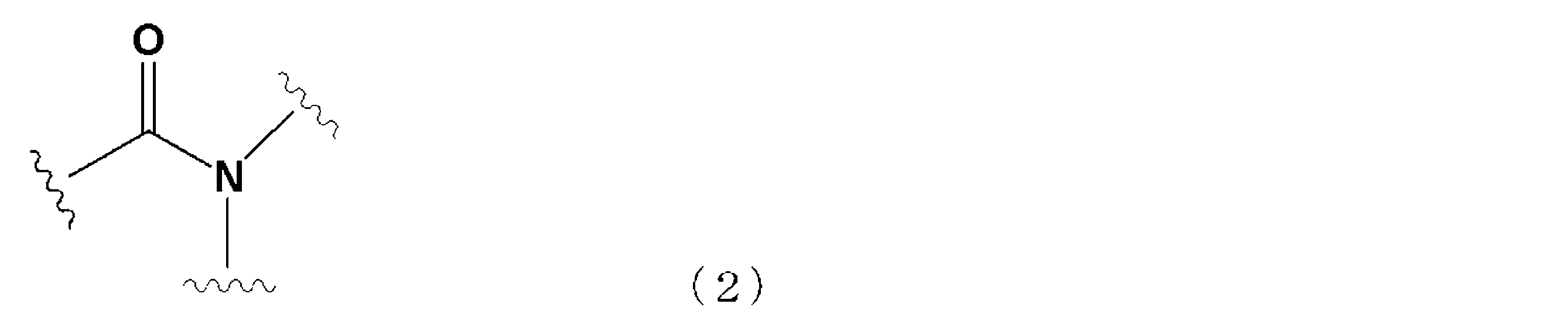
- the solvent is an organic compound having a boiling point of 160 ° C. or higher, an amide structure represented by the following general formula (2), and a cyclic structure (hereinafter referred to as a cyclic amide compound).
- the partial hydrolyzate is hydrolyzed with water having a molar ratio of 0.4 to 0.9 with respect to zinc in the dialkyl zinc. Said solution.
- R 1 is a linear or branched alkyl group having 1 to 6 carbon atoms.
- R 1 is a linear or branched alkyl group having 1 to 6 carbon atoms.
- the cyclic amide compound is N-methyl-2-pyrrolidone, 1,3-dimethyl-imidazolidinone, 1,3-dimethyl-3,4,5,6-tetrahydro-2 (1H) -pyrimidinone, or their The solution according to any one of [1] to [3], which is a mixture. [5] The solution according to any one of [1] to [4], wherein the dialkylzinc is diethylzinc.
- the solvent further includes a solvent other than the cyclic amide compound, and the solvent other than the cyclic amide compound includes an aliphatic hydrocarbon, an alicyclic hydrocarbon, an aromatic hydrocarbon, a hydrocarbon solvent, an ether compound, an ethylene glycol dialkyl ether compound, and diethylene glycol.
- a solvent other than the cyclic amide compound includes an aliphatic hydrocarbon, an alicyclic hydrocarbon, an aromatic hydrocarbon, a hydrocarbon solvent, an ether compound, an ethylene glycol dialkyl ether compound, and diethylene glycol.
- a zinc oxide thin film is obtained by applying the dialkyl zinc partial hydrolyzate-containing solution described in any one of [1] to [6] to a substrate, and then heating the substrate at a temperature of 300 ° C. or lower.
- a method for producing a zinc oxide thin film [8] The manufacturing method according to [7], wherein the coating is performed in air.
- the said zinc oxide thin film is a manufacturing method as described in [7] or [8] which has the transmittance
- a dialkyl zinc partial hydrolyzate-containing solution that is stable in the air and therefore easy to handle and can form a transparent zinc oxide thin film in the air. If the dialkyl zinc partial hydrolyzate containing solution of the invention is used, a transparent zinc oxide thin film can be formed by heating at a substrate temperature of 300 ° C. or lower.
- 1 H-NMR spectrum of diethyl zinc NMP solution 1 H-NMR spectrum of diethyl zinc hydrolyzate NMP solution.
- Vertical transmittance spectrum of zinc oxide thin film IR spectrum of zinc oxide thin film by ATR method.
- IR spectrum by ATR method of glass substrate Cornning, EagleXG.
- Vertical transmittance spectrum of zinc oxide thin film IR spectrum of zinc oxide thin film by ATR method.
- the 1st aspect of this invention is the dialkyl zinc partial hydrolyzate containing solution containing the partial hydrolyzate of dialkyl zinc represented by General formula (1), and a solvent.
- the solvent is an organic compound having a boiling point of 160 ° C. or higher, an amide structure represented by the following general formula (2), and a cyclic structure (sometimes referred to as a cyclic amide compound).
- the partial hydrolyzate is obtained by hydrolysis with water having a molar ratio of 0.4 to 0.9 with respect to zinc in the dialkyl zinc.
- the partial hydrolyzate is a product obtained by hydrolyzing dialkyl zinc by adding water to the mixture of the dialkyl zinc and the cyclic amide compound.
- the dialkyl zinc hydrolyzate-containing solution can be obtained.
- R 1 is a linear or branched alkyl group having 1 to 6 carbon atoms.
- alkyl group include, but are not intended to be limited to, a methyl group, an ethyl group, an isopropyl group, an isobutyl group, and a tert-butyl group.
- the cyclic amide compound is preferably a compound having a boiling point in the range of 200 to 250 ° C., more specifically, N-methyl-2-pyrrolidone (sometimes abbreviated as NMP, boiling point 204 ° C.), 1,3 -Dimethyl-imidazolidinone (boiling point 220 ° C.), 1,3-dimethyl-3,4,5,6-tetrahydro-2 (1H) -pyrimidinone (boiling point about 245 ° C.), or a mixture thereof .
- NMP N-methyl-2-pyrrolidone
- 1,3 -Dimethyl-imidazolidinone boiling point 220 ° C.
- 1,3-dimethyl-3,4,5,6-tetrahydro-2 (1H) -pyrimidinone (boiling point about 245 ° C.), or a mixture thereof .
- the reason for improving the stability glass against air is not clear and is not intended to be bound by theory, but the cyclic amide compound is relatively high boiling point and hardly volatilizes. It is presumed that the stability to air is greatly improved by the coordinate bond of zinc in the amide structure to the lone pair of oxygen and nitrogen to zinc, the decrease in bulkiness due to the cyclic structure, and the increase in the rigid property due to the cyclic structure.
- a compound having an amide structure usually reacts with dialkylzinc. For this reason, it has been predicted in advance that dialkyl zinc causes a chemical change when mixed with the cyclic amide compound.
- the dialkylzinc and the cyclic amide compound do not react to maintain the dialkylzinc state and improve the stability of the partial hydrolyzate to air even after partial hydrolysis of the dialkylzinc.
- the present invention has been completed.
- dialkyl zinc represented by the general formula (1) examples include dimethyl zinc, diethyl zinc, diisopropyl zinc, diisobutyl zinc, di-tert-butyl zinc and the like. From the viewpoint of low price, diethyl zinc is preferable. However, it is not intended to be limited to these compounds.
- the cyclic amide compound is preferably 1 or more in terms of a molar ratio to zinc in the dialkyl zinc partial hydrolyzate from the viewpoint of obtaining a chemically stable partial hydrolyzate-containing solution.
- the molar ratio to zinc in the dialkyl zinc partial hydrolyzate is 2 or more, more preferably 3 or more.
- the upper limit can be appropriately set according to the concentration of the dialkyl zinc or the partial hydrolyzate in the solution, the presence or absence of a solvent other than the cyclic amide compound, the content, and the like.
- the upper limit is 20 or less, preferably 18 or less, more preferably 16 Hereinafter, it is more preferably 14 or less.
- dialkyl zinc as a partial hydrolyzate
- chemical stability to air is improved as compared with dialkyl zinc, but since it still lacks stability, a chemically more stable partial hydrolyzate-containing solution can be obtained.
- the partial hydrolyzate-containing solution of the present invention can further contain a solvent other than the cyclic amide compound.
- the solvent other than the cyclic amide compound include aliphatic hydrocarbons such as n-hexane, octane, and n-decane; alicyclic hydrocarbons such as cyclopentane, cyclohexane, methylcyclohexane, and ethylcyclohexane; benzene, toluene, Aromatic hydrocarbons such as xylene, cumene, etc .; hydrocarbon solvents such as mineral spirits, solvent naphtha, kerosene, petroleum ether, etc .; diethyl ether, tetrahydrofuran, t-butyl methyl ether, di-n-propyl ether, diisopropyl ether, 1 Ether compounds such as 1,4-dioxane, 1,3-dioxalane, di
- the addition amount of the solvent other than the cyclic amide compound is not limited as long as it does not interfere with the effect of the cyclic amide compound, and can be, for example, 100 parts by mass or less with respect to 100 parts by mass of the cyclic amide compound.
- the range that can be added varies depending on the type of dialkyl zinc, the cyclic amide compound, and the type of solvent other than the cyclic amide compound.
- the chemical stability of the dialkyl zinc partial hydrolyzate tends to depend on the molar ratio of the cyclic amide compound to zinc in the dialkyl zinc partial hydrolyzate.
- the amount is not limited as long as the molar ratio of the cyclic amide compound to zinc in the dialkylzinc partial hydrolyzate is sufficient to ensure chemical stability.
- Preparation of the dialkyl zinc partial hydrolyzate is carried out using water or a solution containing water in a molar ratio with respect to the dialkyl zinc of 0.4 to 0.9.
- the molar ratio of water to dialkylzinc is less than 0.4, it is difficult to form a uniform zinc oxide thin film that is liable to become liquid (not easily solid) even after the solvent is removed by drying.
- the molar ratio of water to dialkyl zinc is more preferably 0.6 or more.
- the dialkyl zinc is added in a dry atmosphere (for example, an inert gas atmosphere supplied in a dry state).
- a dry atmosphere for example, an inert gas atmosphere supplied in a dry state.
- Water or a solution containing water is added to the cyclic amide compound and, optionally, a solution dissolved in a solvent other than the cyclic amide compound, or a solution obtained by dissolving the dialkyl zinc in a solvent other than the cyclic amide compound.
- water itself pure water which is not a mixture with a solvent
- the solvent of the solution containing water may be any of a cyclic amide compound, a mixed solvent of a solvent other than the cyclic amide compound and the cyclic amide compound, or a solvent other than the cyclic amide compound. From the viewpoint of ease of production, it is preferable to use a cyclic amide compound.
- the solvent of the solution containing water is a cyclic amide compound, or After completion of partial hydrolysis, the composition of the present invention can be prepared by adding a cyclic amide compound.
- the concentration of dialkyl zinc in the dialkyl zinc solution to which water or a solution containing water is added can be 0.1 to 50% by mass, and is in the range of 0.1 to 30% by mass. It is preferable from the viewpoint of easiness of film forming property (cohesion and uniformity of the formed film) in application. However, this range is an example and is not intended to be limited to this range.
- the addition of water or a solution containing water to the dialkylzinc solution can be appropriately set depending on the type and volume of the raw material to be mixed, and can be set in the range of 1 minute to 10 hours, for example.
- the temperature at the time of addition can be arbitrarily selected from -20 to 150 ° C. However, in view of safety and the like, it is preferably in the range of ⁇ 20 to 80 ° C. However, this range is an example and is not intended to be limited to this range.
- the dialkyl zinc can be aged for 0.1 to 50 hours in order to further promote partial hydrolysis of the dialkyl zinc with water.
- the aging temperature can be selected from -20 to 150 ° C. However, this range is an example and is not intended to be limited to this range.
- the cyclic amide compound and, if desired, a solvent other than the cyclic amide compound, dialkylzinc, water, or a solution containing water can be introduced into the reaction vessel according to any conventional method.
- the pressure in the reaction vessel is not limited.
- the hydrolysis reaction step may be any of a batch operation method, a semi-batch operation method, and a continuous operation method, and is not particularly limited, but a batch operation method is preferable.
- the above dialkyl zinc partial hydrolyzate-containing solution is obtained by the partial hydrolysis. Analysis of the composition of the partial hydrolyzate has been performed for a long time. However, the product composition results differ depending on the report, and the product composition is not clearly specified. The composition of the product also varies depending on the solvent, concentration, molar ratio of water added, addition temperature, reaction temperature, reaction time, and the like.
- dialkyl zinc partial hydrolyzate in the method of the present invention is presumed to be a mixture of compounds containing a structural unit represented by the following general formula (3).
- R 1 is the same as R 1 in the general formula (1), m is an integer of 1-20.
- the partial hydrolysis is preferably performed under the condition that a solid (gel) or the like does not precipitate, and the solid (gel) or the like is a complete hydrolyzate (zinc oxide) in which hydrolysis of dialkylzinc has progressed, or
- m is more than 20
- the amount of the alkyl group R 1 in the molecule is reduced, and the partial hydrolyzate has reduced solubility in the solvent.
- the solids can be removed by purification by filtration, centrifugation, decantation, etc.
- a dialkyl zinc partial hydrolyzate-containing solution suitable for preparing a zinc oxide thin film having substantially good transparency and containing only a partial hydrolyzate dissolved in a solvent can be obtained.
- the solid content concentration of the dialkyl zinc partial hydrolyzate-containing solution can be adjusted (increased) by concentration (solvent removal), for example.
- concentration solvent removal
- after or without concentration add the solvent used for the hydrolysis reaction or a solvent different from the one used for the hydrolysis reaction, and adjust the solid content concentration, polarity, viscosity, boiling point, economy, etc. as appropriate. You can also
- solvents different from those used in the hydrolysis reaction include aliphatic hydrocarbons such as n-hexane, octane, and n-decane; alicyclic hydrocarbons such as cyclopentane, cyclohexane, methylcyclohexane, and ethylcyclohexane.
- Aromatic hydrocarbons such as benzene, toluene, xylene, cumene, etc .; hydrocarbon solvents such as mineral spirits, solvent naphtha, kerosene, petroleum ether, etc .; diethyl ether, tetrahydrofuran, t-butyl methyl ether, di-n-propyl ether , Diisopropyl ether, 1,4-dioxane, 1,3-dioxalane, dibutyl ether, cyclopentylmethyl ether, anisole, and other ether compounds; 1,2-dimethoxyethane, 1,2-diethoxyethane, 1,2-dibutoxy Ethi etc.
- Diethylene glycol dialkyl ether compounds such as diethylene glycol dimethyl ether, diethylene glycol diethyl ether and diethylene glycol dibutyl ether; Triethylene glycol dialkyl ether compounds such as triethylene glycol dimethyl ether and triethylene glycol diethyl ether; Propylene glycol dialkyl such as propylene glycol dimethyl ether Compound; Dipropylene glycol dialkyl such as dipropylene glycol dimethyl; Tripropylene glycol dialkyl compound such as tripropylene glycol dimethyl, and the like.
- the amount of the cyclic amide compound in the dialkyl zinc partial hydrolyzate-containing solution obtained is the same as that of zinc in the dialkyl zinc partial hydrolyzate-containing solution.
- maintaining a molar ratio of 1 or more, preferably 2 or more, more preferably 3 or more is appropriate from the viewpoint of maintaining the effect of the present invention.
- the content of the dialkyl zinc partial hydrolyzate in the dialkyl zinc partial hydrolyzate-containing solution of the present invention can be appropriately determined according to the use.
- the content can be adjusted by adjusting the amount of the cyclic amide compound and / or the amount of the solvent other than the cyclic amide compound.
- the content of the dialkylzinc partial hydrolyzate can be adjusted as appropriate, for example, in the range of 0.1 to 50% by mass in consideration of properties suitable for the production of a zinc oxide thin film described later. However, it is not intended to be limited to this range.
- a second aspect of the present invention is a method for producing a zinc oxide thin film, which method comprises applying the dialkyl zinc partial hydrolyzate-containing solution of the present invention to a substrate, thereby obtaining a zinc oxide thin film. It is.
- Application of the solution to the substrate includes spin coating, dip coating, screen printing, bar coating, slit coating, die coating, gravure coating, roll coating, curtain coating, and spray pyrolysis. , Electrostatic spray pyrolysis method, ink jet method, mist CVD method and the like can be used.
- the application of the solution to the substrate can be performed in an inert atmosphere or an air atmosphere, but from the viewpoint of economy, it is preferable to perform the solution in an air atmosphere because the apparatus is simple.
- the application of the solution to the substrate can be performed under pressure or under reduced pressure. However, it is preferable to perform the solution at atmospheric pressure from the viewpoint of economy because the apparatus is simple.
- the said base material does not have a restriction
- the shape of the substrate is not particularly limited, and examples thereof include powder, a film, a plate, or a three-dimensional structure having a three-dimensional shape.
- the substrate coated with the dialkyl zinc partial hydrolyzate-containing solution is oxidized by drying the solvent at a predetermined temperature and then baking at the predetermined temperature, or by performing drying and baking at the predetermined temperature in parallel.
- a zinc thin film can be formed.
- spray pyrolysis method electrostatic spray pyrolysis method, ink jet method, mist CVD method
- the solvent is dried simultaneously with coating, Alternatively, it can be fired simultaneously with drying.
- the predetermined temperature for drying the solvent is preferably 300 ° C. or less, more preferably 20 to 250 ° C. in consideration of the heat resistance of the substrate.
- the solvent can be dried, for example, over 0.5 to 60 minutes. However, it is not intended to be limited to these ranges.
- Calcination for forming the zinc oxide can be performed at any temperature in the range of 50 to 550 ° C., for example. However, considering the type of base material (heat resistance), it is appropriate to set the temperature so that the base material is not damaged, and the base material with low heat resistance is not damaged. From the viewpoint that a zinc oxide thin film can be formed, in the method of the present invention, a zinc oxide thin film is formed by firing a coating film of a dialkyl zinc partial hydrolyzate-containing solution at a temperature of 300 ° C. or lower. Is appropriate. The firing temperature is more preferably in the range of 50 to 250 ° C, still more preferably in the range of 50 to 200 ° C, and still more preferably in the range of 50 to 150 ° C.
- the firing time may be 0.5 to 300 minutes, for example, when the solvent is dried to obtain the precursor film and then fired at different temperatures and when the solvent drying and firing are performed in parallel.
- the firing time can be appropriately set depending on the firing temperature, the composition of the dialkyl zinc partial hydrolyzate-containing solution, the thickness of the coating film, and the like.
- the film thickness of the zinc oxide thin film obtained as described above can be, for example, 0.005 to 3 ⁇ m.
- the film thickness of the zinc oxide thin film formed in one operation can be adjusted by adjusting the composition and concentration of the dialkyl zinc partial hydrolyzate-containing solution, the coating method and conditions, and if necessary, the coating, Thicker ones can be obtained by repeating the drying and baking steps a plurality of times.
- the zinc oxide thin film obtained as described above is used in an oxidizing gas atmosphere such as oxygen, in a reducing gas atmosphere such as hydrogen, in a water vapor atmosphere in which a large amount of moisture exists, or in argon, nitrogen, oxygen, etc.
- an oxidizing gas atmosphere such as oxygen
- a reducing gas atmosphere such as hydrogen
- a water vapor atmosphere in which a large amount of moisture exists
- the crystallinity and denseness of zinc oxide can be improved by heating at a predetermined temperature in the plasma atmosphere. Residual organic substances and the like in the zinc oxide thin film obtained by irradiation with light such as ultraviolet rays or microwave treatment can be removed.
- the dialkyl zinc partial hydrolyzate-containing solution of the present invention was prepared in a nitrogen gas atmosphere, and all solvents were dehydrated and degassed before use.
- the zinc oxide thin film prepared by the production method of the present invention is obtained by an ATR (Attenuated Total Reflection) method using a ZnSe prism with an FT-IR spectrometer (“FT / IR-4100” manufactured by JASCO Corporation). Relative IR measurements were performed without ATR correction.
- ATR Attenuated Total Reflection
- the film thickness measurement of the zinc oxide thin film prepared by the production method of the present invention was carried out using a stylus type surface shape measuring device (DektakXT-S, manufactured by Bruker Nano Co., Ltd.) by scraping a part of the film with a knife.
- a stylus type surface shape measuring device (DektakXT-S, manufactured by Bruker Nano Co., Ltd.) by scraping a part of the film with a knife.
- Example 4 100 ⁇ l of the diethyl zinc partially hydrolyzed composition NMP solution obtained in Example 1 was dropped on a 15 mm square glass substrate (Corning Inc., EagleXG) under an air atmosphere, and spun at 2000 rpm for 20 seconds with a spin coater. Applied. A thin film was formed by performing heating at 100 ° C. for 5 minutes.
- the IR spectrum of the glass substrate itself by the ATR method is FIG. 5 and clearly differs from FIG.
- the film thickness was 323 nm.
- Example 5 A thin film was formed in the same manner as in Example 4 except that the diethyl zinc partial hydrolysis composition NMP solution obtained in Example 2 was dropped.
- a thin film was formed in the same manner as in Example 4 except that the mixed solution was dropped.
- the vertical transmittance was measured, the vertical transmittance of 550 nm light was 63%, and an opaque thin film of less than 80% was obtained.
- the present invention is useful in the field of manufacturing zinc oxide thin films.
- Zinc oxide thin film is photocatalyst film, UV cut film, infrared reflective film, CIGS, organic thin film solar cell buffer layer, dye-sensitized solar cell electrode film, antistatic film, thin film transistor, compound semiconductor light emitting element, phosphor element, antibacterial -It can be used for deodorizing films, piezoelectric films, varistor films, and plating films.
Landscapes
- Chemical & Material Sciences (AREA)
- Engineering & Computer Science (AREA)
- Organic Chemistry (AREA)
- Inorganic Chemistry (AREA)
- Materials Engineering (AREA)
- Ceramic Engineering (AREA)
- Physics & Mathematics (AREA)
- General Chemical & Material Sciences (AREA)
- Chemical Kinetics & Catalysis (AREA)
- Mechanical Engineering (AREA)
- Metallurgy (AREA)
- Thermal Sciences (AREA)
- Manufacturing & Machinery (AREA)
- Life Sciences & Earth Sciences (AREA)
- Dispersion Chemistry (AREA)
- Spectroscopy & Molecular Physics (AREA)
- Structural Engineering (AREA)
- Geochemistry & Mineralogy (AREA)
- Wood Science & Technology (AREA)
- Inorganic Compounds Of Heavy Metals (AREA)
- Conductive Materials (AREA)
- Non-Insulated Conductors (AREA)
- Paints Or Removers (AREA)
Abstract
Description
本発明は、空気に対する化学的安定性が高いジアルキル亜鉛部分加水分解物含有溶液およびこの溶液を用いる酸化亜鉛薄膜の製造方法に関する。本発明のジアルキル亜鉛部分加水分解物含有溶液を用いれば、酸化亜鉛薄膜の形成を空気中においても、行うことができる。
関連出願の相互参照
本出願は、2015年5月19日出願の日本特願2015-101817号の優先権を主張し、その全記載は、ここに特に開示として援用される。
The present invention relates to a dialkyl zinc partial hydrolyzate-containing solution having high chemical stability to air and a method for producing a zinc oxide thin film using this solution. If the dialkyl zinc partial hydrolyzate containing solution of this invention is used, formation of a zinc oxide thin film can be performed also in the air.
This application claims the priority of Japanese Patent Application No. 2015-101817 filed on May 19, 2015, the entire description of which is specifically incorporated herein by reference.
可視光線に対して高い透過性を有する透明な酸化亜鉛薄膜は、光触媒膜、紫外線カット膜、赤外線反射膜、CIGS、有機薄膜太陽電池のバッファ層、色素増感太陽電池の電極膜、帯電防止膜、薄膜トランジスタ、化合物半導体発光素子、蛍光体素子、抗菌・脱臭膜、圧電膜、バリスタ膜、メッキ膜、等に使用され、幅広い用途を持つ(非特許文献1)。 Transparent zinc oxide thin film having high permeability to visible light is photocatalyst film, ultraviolet cut film, infrared reflective film, CIGS, buffer layer of organic thin film solar cell, electrode film of dye-sensitized solar cell, antistatic film It is used for thin film transistors, compound semiconductor light emitting devices, phosphor devices, antibacterial / deodorizing films, piezoelectric films, varistor films, plated films, etc., and has a wide range of applications (Non-patent Document 1).
透明な酸化亜鉛薄膜の製造方法として種々の方法が知られている(非特許文献2)が、真空容器を用いる必要がなく装置が簡便で、膜形成速度が速いため生産性も高く膜製造コストが低い塗布法による製造が望ましい。 Various methods are known as a method for producing a transparent zinc oxide thin film (Non-Patent Document 2), but it is not necessary to use a vacuum vessel, the apparatus is simple, the film formation speed is high, the productivity is high, and the film production cost is high It is desirable to manufacture by a low coating method.
塗布法として、スピンコート法(特許文献1)、ディップコート法(非特許文献3)、スプレー熱分解法(非特許文献4)等がある。 Application methods include spin coating (Patent Document 1), dip coating (Non-Patent Document 3), spray pyrolysis (Non-Patent Document 4), and the like.
上記スピンコート法、ディップコート法、スプレー熱分解法では、それぞれ塗布後に基板温度を350℃以上に加熱することで酸化亜鉛薄膜を得ている。 In the spin coating method, dip coating method, and spray pyrolysis method, the zinc oxide thin film is obtained by heating the substrate temperature to 350 ° C. or higher after coating.
しかし、透明な酸化亜鉛薄膜は、基板としてプラスチック基板を用いるようになってきている。そのため、透明な酸化亜鉛薄膜の形成時に適用される加熱は、プラスチック基板の耐熱温度以下で実施される必要がある。しかるに、上記スピンコート法、ディップコート法、スプレー熱分解法では、プラスチックの耐熱温度以下の加熱では、透明な酸化亜鉛薄膜を得ることはできない。 However, transparent zinc oxide thin films have come to use plastic substrates as substrates. Therefore, the heating applied at the time of forming the transparent zinc oxide thin film needs to be performed at a temperature lower than the heat resistance temperature of the plastic substrate. However, in the above spin coating method, dip coating method, and spray pyrolysis method, a transparent zinc oxide thin film cannot be obtained by heating below the heat resistant temperature of the plastic.
そこで、本発明者らの検討により、ジアルキル亜鉛と水を反応させたジアルキル亜鉛部分加水分解物含有溶液を用いることで、300℃以下の温度でも透明な酸化亜鉛薄膜を形成する方法が見出された(特許文献2)。 In view of the above, the inventors have found a method for forming a transparent zinc oxide thin film even at a temperature of 300 ° C. or lower by using a dialkyl zinc partial hydrolyzate-containing solution obtained by reacting dialkyl zinc with water. (Patent Document 2).
特許文献1:日本特開平7-182939号公報
特許文献2:日本特開2010-254481号公報(日本特許第5546154号)
Patent Document 1: Japanese Patent Application Laid-Open No. 7-182939 Patent Document 2: Japanese Patent Application Laid-Open No. 2010-254481 (Japanese Patent No. 5546154)
非特許文献1:“酸化亜鉛透明導電膜:次世代ディスプレイに向けて“ ハクスイ株式会社総合情報誌 インフォ, 第13巻 (2005) p1
非特許文献2:日本学術振興会透明酸化物光電子材料166委員会編, 透明導電膜の技術 改訂2版, (2006) p165~173
非特許文献3:Y.Ohya et al, J. Mater. Sci., 29 (1994) 4099
非特許文献4:J.Aranovich et al, J. Vac. Sci. Technol., 4(1979)16
特許文献1~2及び非特許文献1~4の全記載は、ここに特に開示として援用される。
Non-patent document 1: “Zinc oxide transparent conductive film: Toward the next generation display” Hakusui Co., Ltd. General Information Magazine Info, Vol. 13 (2005) p1
Non-Patent Document 2: Japan Society for the Promotion of Science, Transparent Oxide Optoelectronic Materials 166 Committee Edition, Transparent Conductive Technology Revised Edition, (2006) p165-173
Non-Patent Document 3: Y.R. Ohya et al, J. Org. Mater. Sci. , 29 (1994) 4099
Non-Patent Document 4: J. Org. Aranovic et al, J.A. Vac. Sci. Technol. , 4 (1979) 16
The entire descriptions of
しかし、特許文献2に記載のジエチル亜鉛部分加水分解物含有溶液は、水又は水分との反応性があり、そのため、透明な酸化亜鉛薄膜を形成するためには、通常、乾燥状態で供給される窒素、アルゴン等の不活性ガスや乾燥処理を施した空気中で製膜をする必要がある。不活性ガスや空気の乾燥状態を維持しつつ操作をするには、不活性ガス、不活性ガス供給設備、または空気の乾燥装置、さらにはグローブボックス等のガス保持設備を必要とし、酸化亜鉛薄膜の形成コストが通常の塗布法よりやや高くなるという課題があった。
However, the diethylzinc partial hydrolyzate-containing solution described in
本発明の目的は、空気(大気)に含まれる水分(湿気)対する安定性が高く、乾燥処理を施していない空気(大気)中での自然発火性が実質的に無い、乾燥処理を施していない空気(大気)中での取扱いが可能であり、酸化亜鉛薄膜の形成を乾燥処理を施していない空気(大気)中で行うことが可能なジアルキル亜鉛部分加水分解物含有溶液を提供することである。加えて本発明は、空気中での実施も可能な、酸化亜鉛薄膜の製造方法を提供する。 An object of the present invention is to perform a drying treatment that has high stability against moisture (humidity) contained in air (atmosphere) and is substantially free of spontaneous ignition in air (atmosphere) that has not been subjected to drying treatment. By providing a dialkylzinc partial hydrolyzate-containing solution that can be handled in air (atmosphere) that can be handled in air (atmosphere) that has not been subjected to drying treatment. is there. In addition, the present invention provides a method for producing a zinc oxide thin film that can be carried out in air.
本発明は以下の通りである。
[1]
下記一般式(1)で表されるジアルキル亜鉛の部分加水分解物及び溶媒を含有する、ジアルキル亜鉛部分加水分解物含有溶液であって、
前記溶媒は、沸点が160℃以上であり、下記一般式(2)で示すアミド構造を有し、かつ、環状構造を有する有機化合物(以下、環状アミド化合物と呼ぶ)であり、
前記部分加水分解物は、前記ジアルキル亜鉛中の亜鉛に対して、モル比が0.4~0.9の範囲の水で加水分解したものである、
前記溶液。

前記環状アミド化合物は、沸点が200~250℃の範囲の化合物である、[1]に記載の溶液。
[3]
ジアルキル亜鉛部分加水分解物中の亜鉛に対してモル比で1以上の前記環状アミド化合物を含有する、[1]又は[2]に記載の溶液。
[4]
前記環状アミド化合物は、N-メチル-2-ピロリドン、1,3-ジメチル-イミダゾリジノン、1,3-ジメチル-3,4,5,6-テトラヒドロ-2(1H)-ピリミジノン、又はそれらの混合物である、[1]~[3]のいずれか1項に記載の溶液。
[5]
前記ジアルキル亜鉛がジエチル亜鉛である、[1]~[4]のいずれか1項に記載の溶液。
[6]
前記環状アミド化合物以外の溶媒をさらに含み、環状アミド化合物以外の溶媒は、脂肪族炭化水素、脂環式炭化水素、芳香族炭化水素、炭化水素系溶媒、エーテル化合物、エチレングリコールジアルキルエーテル化合物、ジエチレングリコールジアルキルエーテル化合物、トリエチレングリコールジアルキルエーテル化合物、プロピレングリコールジアルキル化合物、ジプロピレングリコールジアルキルおよびトリプロピレングリコールジアルキル化合物から成る群から選ばれる少なくとも1種の溶媒である、[1]~[5]のいずれか1項に記載の溶液。
[7]
[1]~[6]のいずれか1項に記載のジアルキル亜鉛部分加水分解物含有溶液を基材に塗布し、次いで300℃以下の温度で基材を加熱することにより酸化亜鉛薄膜を得ることを特徴とする、酸化亜鉛薄膜の製造方法。
[8]
前記塗布を空気中で行うことを特徴とする、[7]に記載の製造方法。
[9]
前記酸化亜鉛薄膜は、550nmの可視光線に対して80%以上の透過率を有する、[7]又は[8]に記載の製造方法。
The present invention is as follows.
[1]
A dialkyl zinc partial hydrolyzate-containing solution containing a partial hydrolyzate of dialkyl zinc represented by the following general formula (1) and a solvent:
The solvent is an organic compound having a boiling point of 160 ° C. or higher, an amide structure represented by the following general formula (2), and a cyclic structure (hereinafter referred to as a cyclic amide compound).
The partial hydrolyzate is hydrolyzed with water having a molar ratio of 0.4 to 0.9 with respect to zinc in the dialkyl zinc.
Said solution.
The solution according to [1], wherein the cyclic amide compound is a compound having a boiling point in the range of 200 to 250 ° C.
[3]
The solution according to [1] or [2], which contains 1 or more of the cyclic amide compound in a molar ratio with respect to zinc in the dialkyl zinc partial hydrolyzate.
[4]
The cyclic amide compound is N-methyl-2-pyrrolidone, 1,3-dimethyl-imidazolidinone, 1,3-dimethyl-3,4,5,6-tetrahydro-2 (1H) -pyrimidinone, or their The solution according to any one of [1] to [3], which is a mixture.
[5]
The solution according to any one of [1] to [4], wherein the dialkylzinc is diethylzinc.
[6]
The solvent further includes a solvent other than the cyclic amide compound, and the solvent other than the cyclic amide compound includes an aliphatic hydrocarbon, an alicyclic hydrocarbon, an aromatic hydrocarbon, a hydrocarbon solvent, an ether compound, an ethylene glycol dialkyl ether compound, and diethylene glycol. Any one of [1] to [5], which is at least one solvent selected from the group consisting of dialkyl ether compounds, triethylene glycol dialkyl ether compounds, propylene glycol dialkyl compounds, dipropylene glycol dialkyl and tripropylene glycol
[7]
A zinc oxide thin film is obtained by applying the dialkyl zinc partial hydrolyzate-containing solution described in any one of [1] to [6] to a substrate, and then heating the substrate at a temperature of 300 ° C. or lower. A method for producing a zinc oxide thin film.
[8]
The manufacturing method according to [7], wherein the coating is performed in air.
[9]
The said zinc oxide thin film is a manufacturing method as described in [7] or [8] which has the transmittance | permeability of 80% or more with respect to 550 nm visible light.
本発明によれば、空気中で安定であり、そのため取扱いが容易であり、空気中で透明な酸化亜鉛薄膜を形成しうるジアルキル亜鉛部分加水分解物含有溶液を提供することができ、かつ、本発明のジアルキル亜鉛部分加水分解物含有溶液を用いれば、300℃以下の基材温度で加熱することにより透明な酸化亜鉛薄膜を形成することができる。 According to the present invention, it is possible to provide a dialkyl zinc partial hydrolyzate-containing solution that is stable in the air and therefore easy to handle and can form a transparent zinc oxide thin film in the air. If the dialkyl zinc partial hydrolyzate containing solution of the invention is used, a transparent zinc oxide thin film can be formed by heating at a substrate temperature of 300 ° C. or lower.
[ジアルキル亜鉛加水分解物含有溶液]
本発明の第一の態様は、一般式(1)で表されるジアルキル亜鉛の部分加水分解物及び溶媒を含有する、ジアルキル亜鉛部分加水分解物含有溶液である。前記溶媒は、沸点が160℃以上であり、下記一般式(2)で示すアミド構造を有し、かつ、環状構造を有する有機化合物(環状アミド化合物と呼ぶことがある)である。さらに、前記部分加水分解物は、前記ジアルキル亜鉛中の亜鉛に対して、モル比が0.4~0.9の範囲の水で加水分解したものである。前記部分加水分解物は、前記ジアルキル亜鉛と前記環状アミド化合物との混合物に対して水を添加してジアルキル亜鉛を加水分解することで得られる物であることが、加水分解の操作により、本発明のジアルキル亜鉛加水分解物含有溶液を得ることができることから適当である。
[Dialkyl zinc hydrolyzate-containing solution]
The 1st aspect of this invention is the dialkyl zinc partial hydrolyzate containing solution containing the partial hydrolyzate of dialkyl zinc represented by General formula (1), and a solvent. The solvent is an organic compound having a boiling point of 160 ° C. or higher, an amide structure represented by the following general formula (2), and a cyclic structure (sometimes referred to as a cyclic amide compound). Further, the partial hydrolyzate is obtained by hydrolysis with water having a molar ratio of 0.4 to 0.9 with respect to zinc in the dialkyl zinc. The partial hydrolyzate is a product obtained by hydrolyzing dialkyl zinc by adding water to the mixture of the dialkyl zinc and the cyclic amide compound. The dialkyl zinc hydrolyzate-containing solution can be obtained.

アルキル基としては、メチル基、エチル基、イソプロピル基、イソブチル基、tert-ブチル基を挙げることができるが、これらに限定される意図ではない。
Examples of the alkyl group include, but are not intended to be limited to, a methyl group, an ethyl group, an isopropyl group, an isobutyl group, and a tert-butyl group.

環状アミド化合物は、沸点が200~250℃の範囲の化合物であることが好ましく、より具体的にはN-メチル-2-ピロリドン(NMPと略記することがある。沸点204℃)、1,3-ジメチル-イミダゾリジノン(沸点220℃)、1,3-ジメチル-3,4,5,6-テトラヒドロ-2(1H)-ピリミジノン(沸点約245℃)、又はそれらの混合物であることができる。 The cyclic amide compound is preferably a compound having a boiling point in the range of 200 to 250 ° C., more specifically, N-methyl-2-pyrrolidone (sometimes abbreviated as NMP, boiling point 204 ° C.), 1,3 -Dimethyl-imidazolidinone (boiling point 220 ° C.), 1,3-dimethyl-3,4,5,6-tetrahydro-2 (1H) -pyrimidinone (boiling point about 245 ° C.), or a mixture thereof .
前記溶媒として前記環状アミド化合物を用いることで、空気に対する安定性ガラス向上する理由は定かではなく、また理論に拘泥する意図はないが、前記環状アミド化合物は、比較的高沸点で揮発しにくい、アミド構造中の酸素、窒素の非共有電子対の亜鉛への配位結合、環状構造による嵩高さの減少、環状構造によるリジッド性の増加により空気に対する安定性が大きく向上すると推定される。アミド構造を有する化合物は、ジアルキル亜鉛と反応することが通常である。そのため、事前の予想では、前記環状アミド化合物と混合することでジアルキル亜鉛は化学変化を起こすと推察していた。しかし、予想外にジアルキル亜鉛と前記環状アミド化合物は反応せず、ジアルキル亜鉛の状態を保持するとともに、ジアルキル亜鉛を部分加水分解した後にも、部分加水分解物の空気に対する安定性を向上させることを見出して、本発明を完成させた。 By using the cyclic amide compound as the solvent, the reason for improving the stability glass against air is not clear and is not intended to be bound by theory, but the cyclic amide compound is relatively high boiling point and hardly volatilizes. It is presumed that the stability to air is greatly improved by the coordinate bond of zinc in the amide structure to the lone pair of oxygen and nitrogen to zinc, the decrease in bulkiness due to the cyclic structure, and the increase in the rigid property due to the cyclic structure. A compound having an amide structure usually reacts with dialkylzinc. For this reason, it has been predicted in advance that dialkyl zinc causes a chemical change when mixed with the cyclic amide compound. However, unexpectedly, the dialkylzinc and the cyclic amide compound do not react to maintain the dialkylzinc state and improve the stability of the partial hydrolyzate to air even after partial hydrolysis of the dialkylzinc. As a result, the present invention has been completed.
一般式(1)で表されるジアルキル亜鉛の例としては、ジメチル亜鉛、ジエチル亜鉛、ジイソプロピル亜鉛、ジイソブチル亜鉛、ジ-tert-ブチル亜鉛等をあげることができる。価格が安価であるという観点から、ジエチル亜鉛が好ましい。但し、これらの化合物に限定される意図ではない。 Examples of the dialkyl zinc represented by the general formula (1) include dimethyl zinc, diethyl zinc, diisopropyl zinc, diisobutyl zinc, di-tert-butyl zinc and the like. From the viewpoint of low price, diethyl zinc is preferable. However, it is not intended to be limited to these compounds.
前記環状アミド化合物は、前記ジアルキル亜鉛部分加水分解物中の亜鉛に対するモル比で1以上とすることが、化学的に安定な部分加水分解物含有溶液を得るとの観点から好ましい。好ましくは、前記ジアルキル亜鉛部分加水分解物中の亜鉛に対するモル比は、2以上、さらに好ましくは3以上である。上限は、ジアルキル亜鉛または部分加水分解物の溶液中の濃度や、環状アミド化合物以外の溶媒の有無や含有量などに応じて適宜設定でき、例えば、20以下、好ましくは18以下、より好ましくは16以下、さらに好ましくは14以下である。尚、ジアルキル亜鉛を部分加水分解物とすることで、空気に対する化学的安定性はジアルキル亜鉛に比べれば向上するが、依然として安定性に欠けることから、化学的により安定な部分加水分解物含有溶液を得るという観点から、上記所定量の環状アミド化合物との混合物とすることが好ましい。 The cyclic amide compound is preferably 1 or more in terms of a molar ratio to zinc in the dialkyl zinc partial hydrolyzate from the viewpoint of obtaining a chemically stable partial hydrolyzate-containing solution. Preferably, the molar ratio to zinc in the dialkyl zinc partial hydrolyzate is 2 or more, more preferably 3 or more. The upper limit can be appropriately set according to the concentration of the dialkyl zinc or the partial hydrolyzate in the solution, the presence or absence of a solvent other than the cyclic amide compound, the content, and the like. For example, the upper limit is 20 or less, preferably 18 or less, more preferably 16 Hereinafter, it is more preferably 14 or less. In addition, by using dialkyl zinc as a partial hydrolyzate, chemical stability to air is improved as compared with dialkyl zinc, but since it still lacks stability, a chemically more stable partial hydrolyzate-containing solution can be obtained. From the viewpoint of obtaining, it is preferable to use a mixture with the predetermined amount of the cyclic amide compound.
本発明の部分加水分解物含有溶液は、環状アミド化合物以外の溶媒をさらに含むことができる。環状アミド化合物以外の溶媒としては、例えば、n-ヘキサン、オクタン、n-デカン、等の脂肪族炭化水素;シクロペンタン、シクロヘキサン、メチルシクロヘキサン、エチルシクロヘキサン等の脂環式炭化水素;ベンゼン、トルエン、キシレン、クメン、等の芳香族炭化水素;ミネラルスピリット、ソルベントナフサ、ケロシン、石油エーテル、等の炭化水素系溶媒;ジエチルエーテル、テトラヒドロフラン、t-ブチルメチルエーテル、ジn-プロピルエーテル、ジイソプロピルエーテル、1,4-ジオキサン、1,3-ジオキサラン、ジブチルエーテル、シクロペンチルメチルエーテル、アニソール等のエーテル化合物;1,2-ジメトキシエタン、1,2-ジエトキシエタン、1,2-ジブトキシエタン等のエチレングリコールジアルキルエーテル化合物;ジエチレングリコールジメチルエーテル、ジエチレングリコールジエチルエーテル、ジエチレングリコールジブチルエーテル等のジエチレングリコールジアルキルエーテル化合物;トリエチレングリコールジメチルエーテル、トリエチレングリコールジエチルエーテル等のトリエチレングリコールジアルキルエーテル化合物;プロピレングリコールジメチルエーテル等のプロピレングリコールジアルキル化合物;ジプロピレングリコールジメチル等のジプロピレングリコールジアルキル;トリプロピレングリコールジメチル等のトリプロピレングリコールジアルキル化合物、等を挙げることができる。環状アミド化合物以外の溶媒の添加量は、環状アミド化合物の効果を妨げない範囲であれば制限はなく、例えば、環状アミド化合物100質量部に対して100質量部以下とすることができる。但し、ジアルキル亜鉛の種類、環状アミド化合物及び環状アミド化合物以外の溶媒の種類により添加可能な範囲は変化する。また、本発明においては、ジアルキル亜鉛部分加水分解物の化学的安定性は、ジアルキル亜鉛部分加水分解物中の亜鉛に対する環状アミド化合物のモル比に依存する傾向があり、環状アミド化合物以外の溶媒の量は、ジアルキル亜鉛部分加水分解物中の亜鉛に対する環状アミド化合物のモル比が、化学的安定性を確保できるに十分な量であれば、限定されるものではない。 The partial hydrolyzate-containing solution of the present invention can further contain a solvent other than the cyclic amide compound. Examples of the solvent other than the cyclic amide compound include aliphatic hydrocarbons such as n-hexane, octane, and n-decane; alicyclic hydrocarbons such as cyclopentane, cyclohexane, methylcyclohexane, and ethylcyclohexane; benzene, toluene, Aromatic hydrocarbons such as xylene, cumene, etc .; hydrocarbon solvents such as mineral spirits, solvent naphtha, kerosene, petroleum ether, etc .; diethyl ether, tetrahydrofuran, t-butyl methyl ether, di-n-propyl ether, diisopropyl ether, 1 Ether compounds such as 1,4-dioxane, 1,3-dioxalane, dibutyl ether, cyclopentylmethyl ether, anisole; ethylene glycol such as 1,2-dimethoxyethane, 1,2-diethoxyethane, 1,2-dibutoxyethane The Dialkyl ether compounds such as diethylene glycol dimethyl ether, diethylene glycol diethyl ether and diethylene glycol dibutyl ether; triethylene glycol dialkyl ether compounds such as triethylene glycol dimethyl ether and triethylene glycol diethyl ether; propylene glycol dialkyl compounds such as propylene glycol dimethyl ether; Examples include dipropylene glycol dialkyl such as dipropylene glycol dimethyl; tripropylene glycol dialkyl compounds such as tripropylene glycol dimethyl, and the like. The addition amount of the solvent other than the cyclic amide compound is not limited as long as it does not interfere with the effect of the cyclic amide compound, and can be, for example, 100 parts by mass or less with respect to 100 parts by mass of the cyclic amide compound. However, the range that can be added varies depending on the type of dialkyl zinc, the cyclic amide compound, and the type of solvent other than the cyclic amide compound. In the present invention, the chemical stability of the dialkyl zinc partial hydrolyzate tends to depend on the molar ratio of the cyclic amide compound to zinc in the dialkyl zinc partial hydrolyzate. The amount is not limited as long as the molar ratio of the cyclic amide compound to zinc in the dialkylzinc partial hydrolyzate is sufficient to ensure chemical stability.
ジアルキル亜鉛部分加水分解物の調製は、前記ジアルキル亜鉛に対するモル比が0.4~0.9の範囲で、水、又は水を含有する溶液を用いて行う。ジアルキル亜鉛に対する水のモル比が0.4未満では、溶媒を乾燥除去した後も液状になり易く(固体になりにくく)均一な酸化亜鉛薄膜を形成することが困難である。均一な酸化亜鉛薄膜を形成するという観点からは、ジアルキル亜鉛に対する水のモル比が0.6以上であることがより好ましい。一方、ジアルキル亜鉛に対する水のモル比が0.9を超えると溶媒に不溶なゲル、固体が析出し、ゲル、固体による均一な酸化亜鉛薄膜の形成が困難になる。析出したゲルや固体は、ろ過除去することも可能であるが、亜鉛分の損失に繋がるので好ましくない。 Preparation of the dialkyl zinc partial hydrolyzate is carried out using water or a solution containing water in a molar ratio with respect to the dialkyl zinc of 0.4 to 0.9. When the molar ratio of water to dialkylzinc is less than 0.4, it is difficult to form a uniform zinc oxide thin film that is liable to become liquid (not easily solid) even after the solvent is removed by drying. From the viewpoint of forming a uniform zinc oxide thin film, the molar ratio of water to dialkyl zinc is more preferably 0.6 or more. On the other hand, when the molar ratio of water to dialkylzinc exceeds 0.9, a gel or solid insoluble in the solvent is precipitated, and it becomes difficult to form a uniform zinc oxide thin film from the gel and solid. The precipitated gel or solid can be removed by filtration, but this is not preferable because it leads to a loss of zinc content.
前記ジアルキル亜鉛部分加水分解物の調製は、具体的には、ジアルキル亜鉛との反応性を考慮すると、例えば、乾燥雰囲気(例えば、乾燥状態で供給される不活性ガス雰囲気)下、前記ジアルキル亜鉛を前記環状アミド化合物、及び所望により、環状アミド化合物以外の溶媒に溶解した溶液、又は前記ジアルキル亜鉛を環状アミド化合物以外の溶媒に溶解した溶液に、水、又は水を含有する溶液を添加して行うことができる。水自身(溶媒との混合物ではない純粋な水)を添加してもよいが、ジアルキル亜鉛と水の反応時の発熱制御の点からは水を含有する溶液を添加して行うことが好ましい。水を含有する溶液の溶媒は、環状アミド化合物、環状アミド化合物と環状アミド化合物以外の溶媒の混合溶媒、または環状アミド化合物以外の溶媒の何れであっても良いが、水の溶媒への溶解度、製造の簡易さ、という観点から、環状アミド化合物を用いることが好ましい。また、前記ジアルキル亜鉛を環状アミド化合物以外の溶媒に溶解した溶液に、水、又は水を含有する溶液を添加する場合には、水を含有する溶液の溶媒を環状アミド化合物とすること、あるいは、部分加水分解が終了後に、環状アミド化合物を添加することで、本発明の組成物を調製することができる。 In preparation of the dialkyl zinc partial hydrolyzate, specifically, considering the reactivity with dialkyl zinc, for example, the dialkyl zinc is added in a dry atmosphere (for example, an inert gas atmosphere supplied in a dry state). Water or a solution containing water is added to the cyclic amide compound and, optionally, a solution dissolved in a solvent other than the cyclic amide compound, or a solution obtained by dissolving the dialkyl zinc in a solvent other than the cyclic amide compound. be able to. Although water itself (pure water which is not a mixture with a solvent) may be added, it is preferable to carry out by adding a solution containing water from the viewpoint of heat generation control during the reaction of dialkylzinc and water. The solvent of the solution containing water may be any of a cyclic amide compound, a mixed solvent of a solvent other than the cyclic amide compound and the cyclic amide compound, or a solvent other than the cyclic amide compound. From the viewpoint of ease of production, it is preferable to use a cyclic amide compound. In addition, when adding water or a solution containing water to a solution in which the dialkylzinc is dissolved in a solvent other than the cyclic amide compound, the solvent of the solution containing water is a cyclic amide compound, or After completion of partial hydrolysis, the composition of the present invention can be prepared by adding a cyclic amide compound.
水、又は水を含有する溶液を添加する前記ジアルキル亜鉛溶液中のジアルキル亜鉛の濃度は、0.1~50質量%とすることができ、0.1~30質量%の範囲であることが、塗布における造膜性(形成された膜の密着性、均一性等)の容易さという観点から好ましい。但し、この範囲は例示であり、この範囲に限定される意図ではない。 The concentration of dialkyl zinc in the dialkyl zinc solution to which water or a solution containing water is added can be 0.1 to 50% by mass, and is in the range of 0.1 to 30% by mass. It is preferable from the viewpoint of easiness of film forming property (cohesion and uniformity of the formed film) in application. However, this range is an example and is not intended to be limited to this range.
前記ジアルキル亜鉛溶液への水、又は水を含有する溶液の添加は、混合する原料の種類や容量等により適宜設定できるが、例えば、1分~10時間の範囲とすることができる。添加時の温度は-20~150℃の間の任意の温度を選択できる。但し、安全性等を考慮すると-20~80℃の範囲であることが好ましい。但し、この範囲は例示であり、この範囲に限定される意図ではない。 The addition of water or a solution containing water to the dialkylzinc solution can be appropriately set depending on the type and volume of the raw material to be mixed, and can be set in the range of 1 minute to 10 hours, for example. The temperature at the time of addition can be arbitrarily selected from -20 to 150 ° C. However, in view of safety and the like, it is preferably in the range of −20 to 80 ° C. However, this range is an example and is not intended to be limited to this range.
水、又は水を含有する溶液の添加後に、前記ジアルキル亜鉛の水による部分加水分解をさらに進行させるために、0.1~50時間熟成させることができる。熟成温度は-20~150℃の間で任意の温度を選択できる。但し、この範囲は例示であり、この範囲に限定される意図ではない。 After the addition of water or a solution containing water, the dialkyl zinc can be aged for 0.1 to 50 hours in order to further promote partial hydrolysis of the dialkyl zinc with water. The aging temperature can be selected from -20 to 150 ° C. However, this range is an example and is not intended to be limited to this range.
前記環状アミド化合物、及び所望により、環状アミド化合物以外の溶媒、ジアルキル亜鉛、水、又は水を含有する溶液は、あらゆる慣用の方法に従って反応容器に導入できる。反応容器の圧力は制限されない。加水分解反応工程は回分操作式、半回分操作式、連続操作式のいずれでもよく特に制限はないが、回分操作式が好ましい。 The cyclic amide compound and, if desired, a solvent other than the cyclic amide compound, dialkylzinc, water, or a solution containing water can be introduced into the reaction vessel according to any conventional method. The pressure in the reaction vessel is not limited. The hydrolysis reaction step may be any of a batch operation method, a semi-batch operation method, and a continuous operation method, and is not particularly limited, but a batch operation method is preferable.
上記部分加水分解により、上記ジアルキル亜鉛部分加水分解物含有溶液が得られる。部分加水分解物の組成についての解析は古くから行われている。しかし、報告により生成物の組成結果が異なり、生成物の組成が明確に特定されていない。また、溶媒、濃度、水の添加モル比、添加温度、反応温度、反応時間、等によっても生成物の組成は変化する。 The above dialkyl zinc partial hydrolyzate-containing solution is obtained by the partial hydrolysis. Analysis of the composition of the partial hydrolyzate has been performed for a long time. However, the product composition results differ depending on the report, and the product composition is not clearly specified. The composition of the product also varies depending on the solvent, concentration, molar ratio of water added, addition temperature, reaction temperature, reaction time, and the like.
本発明の方法におけるジアルキル亜鉛部分加水分解物は下記一般式(3)で表される構造単位を含む化合物の混合物であると推定される。 The dialkyl zinc partial hydrolyzate in the method of the present invention is presumed to be a mixture of compounds containing a structural unit represented by the following general formula (3).

前記部分加水分解は、固体(ゲル)等が析出しない条件で行うことが好ましく、固体(ゲル)等は、ジアルキル亜鉛の加水分解が進んだ、完全加水分解物(酸化亜鉛)であるか、または、上記一般式(3)におけるmが20を超え、分子中のアルキル基R1の量が低下して、溶媒に対する溶解度が低下した部分加水分解物である。部分加水分解終了後、このような固体(ゲル)等が析出している場合には、ろ過、遠心分離、デカント等の方法により精製することで固体等を除去することができ、この除去操作により、溶媒に溶解した部分加水分解物のみを実質的に含有し、透明性が良好な酸化亜鉛薄膜調製に適したジアルキル亜鉛部分加水分解物含有溶液を得ることができる。 The partial hydrolysis is preferably performed under the condition that a solid (gel) or the like does not precipitate, and the solid (gel) or the like is a complete hydrolyzate (zinc oxide) in which hydrolysis of dialkylzinc has progressed, or In the above general formula (3), m is more than 20, the amount of the alkyl group R 1 in the molecule is reduced, and the partial hydrolyzate has reduced solubility in the solvent. If such solids (gels) are deposited after the partial hydrolysis, the solids can be removed by purification by filtration, centrifugation, decantation, etc. Thus, a dialkyl zinc partial hydrolyzate-containing solution suitable for preparing a zinc oxide thin film having substantially good transparency and containing only a partial hydrolyzate dissolved in a solvent can be obtained.
上記ジアルキル亜鉛部分加水分解物含有溶液は、例えば、濃縮(溶媒除去)により固形分濃度を調整する(増大させる)ことができる。また、濃縮後または濃縮することなく、加水分解反応に使用した溶媒、加水分解反応に使用したものとは異なる溶媒を添加して、固形分濃度、極性、粘度、沸点、経済性等を適宜調整することもできる。 The solid content concentration of the dialkyl zinc partial hydrolyzate-containing solution can be adjusted (increased) by concentration (solvent removal), for example. In addition, after or without concentration, add the solvent used for the hydrolysis reaction or a solvent different from the one used for the hydrolysis reaction, and adjust the solid content concentration, polarity, viscosity, boiling point, economy, etc. as appropriate. You can also
加水分解反応に使用したものとは異なる溶媒としては、例えば、n-ヘキサン、オクタン、n-デカン、等の脂肪族炭化水素;シクロペンタン、シクロヘキサン、メチルシクロヘキサン、エチルシクロヘキサン等の脂環式炭化水素;ベンゼン、トルエン、キシレン、クメン、等の芳香族炭化水素;ミネラルスピリット、ソルベントナフサ、ケロシン、石油エーテル、等の炭化水素系溶媒;ジエチルエーテル、テトラヒドロフラン、t-ブチルメチルエーテル、ジn-プロピルエーテル、ジイソプロピルエーテル、1,4-ジオキサン、1,3-ジオキサラン、ジブチルエーテル、シクロペンチルメチルエーテル、アニソール等のエーテル化合物;1,2-ジメトキシエタン、1,2-ジエトキシエタン、1,2-ジブトキシエタン等のエチレングリコールジアルキルエーテル化合物;ジエチレングリコールジメチルエーテル、ジエチレングリコールジエチルエーテル、ジエチレングリコールジブチルエーテル等のジエチレングリコールジアルキルエーテル化合物;トリエチレングリコールジメチルエーテル、トリエチレングリコールジエチルエーテル等のトリエチレングリコールジアルキルエーテル化合物;プロピレングリコールジメチルエーテル等のプロピレングリコールジアルキル化合物;ジプロピレングリコールジメチル等のジプロピレングリコールジアルキル;トリプロピレングリコールジメチル等のトリプロピレングリコールジアルキル化合物、等を挙げることができる。尚、加水分解反応に使用したものとは異なる溶媒を用いる場合にも、得られるジアルキル亜鉛部分加水分解物含有溶液中の環状アミド化合物の量は、ジアルキル亜鉛部分加水分解物含有溶液中の亜鉛に対してモル比で1以上、好ましくは2以上、さらに好ましくは3以上であることを維持することが本発明の効果を維持するという観点から適当である。 Examples of solvents different from those used in the hydrolysis reaction include aliphatic hydrocarbons such as n-hexane, octane, and n-decane; alicyclic hydrocarbons such as cyclopentane, cyclohexane, methylcyclohexane, and ethylcyclohexane. Aromatic hydrocarbons such as benzene, toluene, xylene, cumene, etc .; hydrocarbon solvents such as mineral spirits, solvent naphtha, kerosene, petroleum ether, etc .; diethyl ether, tetrahydrofuran, t-butyl methyl ether, di-n-propyl ether , Diisopropyl ether, 1,4-dioxane, 1,3-dioxalane, dibutyl ether, cyclopentylmethyl ether, anisole, and other ether compounds; 1,2-dimethoxyethane, 1,2-diethoxyethane, 1,2-dibutoxy Ethi etc. Diethylene glycol dialkyl ether compounds such as diethylene glycol dimethyl ether, diethylene glycol diethyl ether and diethylene glycol dibutyl ether; Triethylene glycol dialkyl ether compounds such as triethylene glycol dimethyl ether and triethylene glycol diethyl ether; Propylene glycol dialkyl such as propylene glycol dimethyl ether Compound; Dipropylene glycol dialkyl such as dipropylene glycol dimethyl; Tripropylene glycol dialkyl compound such as tripropylene glycol dimethyl, and the like. Even when a solvent different from that used for the hydrolysis reaction is used, the amount of the cyclic amide compound in the dialkyl zinc partial hydrolyzate-containing solution obtained is the same as that of zinc in the dialkyl zinc partial hydrolyzate-containing solution. On the other hand, maintaining a molar ratio of 1 or more, preferably 2 or more, more preferably 3 or more is appropriate from the viewpoint of maintaining the effect of the present invention.
本発明のジアルキル亜鉛部分加水分解物含有溶液におけるジアルキル亜鉛部分加水分解物の含有量は、用途に応じて適宜決定できる。含有量は、環状アミド化合物の量及び/又は環状アミド化合物以外の溶媒の量を調整することで調整できる。ジアルキル亜鉛部分加水分解物の含有量は、例えば、0.1~50質量%の範囲で、後述する酸化亜鉛薄膜の製造に適した性状等も考慮して、適宜調整できる。但し、この範囲に限定される意図ではない。 The content of the dialkyl zinc partial hydrolyzate in the dialkyl zinc partial hydrolyzate-containing solution of the present invention can be appropriately determined according to the use. The content can be adjusted by adjusting the amount of the cyclic amide compound and / or the amount of the solvent other than the cyclic amide compound. The content of the dialkylzinc partial hydrolyzate can be adjusted as appropriate, for example, in the range of 0.1 to 50% by mass in consideration of properties suitable for the production of a zinc oxide thin film described later. However, it is not intended to be limited to this range.
[酸化亜鉛薄膜の製造方法]
本発明の第2の態様は、酸化亜鉛薄膜の製造方法であり、この方法は、前記本発明のジアルキル亜鉛部分加水分解物含有溶液を基材に塗布することを含む、酸化亜鉛薄膜を得る方法である。
[Method for producing zinc oxide thin film]
A second aspect of the present invention is a method for producing a zinc oxide thin film, which method comprises applying the dialkyl zinc partial hydrolyzate-containing solution of the present invention to a substrate, thereby obtaining a zinc oxide thin film. It is.
前記基材への前記溶液の塗布は、スピンコート法、ディップコート法、スクリーン印刷法、バーコート法、スリットコート法、ダイコート法、グラビアコート法、ロールコート法、カーテンコート法、スプレー熱分解法、静電スプレー熱分解法、インクジェット法、ミストCVD法、等の慣用の方法で行うことができる。 Application of the solution to the substrate includes spin coating, dip coating, screen printing, bar coating, slit coating, die coating, gravure coating, roll coating, curtain coating, and spray pyrolysis. , Electrostatic spray pyrolysis method, ink jet method, mist CVD method and the like can be used.
前記基材への前記溶液の塗布は、不活性雰囲気下でも空気雰囲気下でも行うことができるが、経済性の観点から、空気雰囲気下で行うことが装置も簡便となり好ましい。 The application of the solution to the substrate can be performed in an inert atmosphere or an air atmosphere, but from the viewpoint of economy, it is preferable to perform the solution in an air atmosphere because the apparatus is simple.
前記基材への前記溶液の塗布は、加圧下や減圧下でも実施できるが、経済性の点から、大気圧下で行うことが装置も簡便となり好ましい。 The application of the solution to the substrate can be performed under pressure or under reduced pressure. However, it is preferable to perform the solution at atmospheric pressure from the viewpoint of economy because the apparatus is simple.
前記基材は、特に制限はないが、例えば、鉛ガラス、ソーダガラス、ホウ珪酸ガラス、無アルカリガラス、等のガラス;シリカ、アルミナ、チタニア、ジルコニア、複合酸化物、等の酸化物;ポリエチレン(PE)、ポリプロピレン(PP)、ポリエチレンテレフタレート(PET)、ポリエチレンナフタレート(PEN)、ポリメチルメタクレート(PMMA)、ポリカーボネート(PC)、ポリフェニレンサルファイド(PPS)、ポリスチレン(PS)、ポリビニルアルコール(PVA)、ポリ塩化ビニル(PVC)、ポリ塩化ビニリデン、環状ポリオレフィン(COP)、エチレン-酢酸ビニル共重合体(EVA)、ポリイミド、ポリアミド、ポリエーテルスルホン(PES)、ポリウレタン、トリアセテート、トリアセチルセルロース(TAC)、セロファン、ポリテトラフルオロエチレン(PTFE)、ポリクロロトリフルオロエチレン(PCTFE)、ポリフッ化ビニリデン(PVDF)、ポリフッ化ビニル(PVF)、ペルフルオロアルコキシフッ素樹脂(PFA)、四フッ化エチレン・六フッ化プロピレン共重合体(ETFE)、エチレン・クロロトリフルオロエチレン共重合体(ECTFE)、等の高分子、等を挙げることができる。 Although the said base material does not have a restriction | limiting in particular, For example, glass, such as lead glass, soda glass, borosilicate glass, an alkali free glass; Oxides, such as a silica, an alumina, a titania, a zirconia, a complex oxide; Polyethylene ( PE), polypropylene (PP), polyethylene terephthalate (PET), polyethylene naphthalate (PEN), polymethyl methacrylate (PMMA), polycarbonate (PC), polyphenylene sulfide (PPS), polystyrene (PS), polyvinyl alcohol (PVA) , Polyvinyl chloride (PVC), polyvinylidene chloride, cyclic polyolefin (COP), ethylene-vinyl acetate copolymer (EVA), polyimide, polyamide, polyethersulfone (PES), polyurethane, triacetate, triacetyl cell (TAC), cellophane, polytetrafluoroethylene (PTFE), polychlorotrifluoroethylene (PCTFE), polyvinylidene fluoride (PVDF), polyvinyl fluoride (PVF), perfluoroalkoxy fluororesin (PFA), tetrafluoride And polymers such as ethylene / hexafluoropropylene copolymer (ETFE) and ethylene / chlorotrifluoroethylene copolymer (ECTFE).
前記基材の形状は、特に制限はないが、例えば、粉、フィルム、板、又は三次元形状を有する立体構造物を挙げることができる。 The shape of the substrate is not particularly limited, and examples thereof include powder, a film, a plate, or a three-dimensional structure having a three-dimensional shape.
前記ジアルキル亜鉛部分加水分解物含有溶液を塗布した基材は、所定の温度において溶媒を乾燥し、次いで所定の温度で焼成するか、または所定の温度で乾燥と焼成を並行して行うことにより酸化亜鉛薄膜を形成させることができる。尚、塗布を、スプレー熱分解法、静電スプレー熱分解法、インクジェット法、ミストCVD法により行う場合には、塗布前に基材を所定の温度に加熱できるため、塗布と同時に溶媒を乾燥、または、乾燥と同時に焼成させることができる。 The substrate coated with the dialkyl zinc partial hydrolyzate-containing solution is oxidized by drying the solvent at a predetermined temperature and then baking at the predetermined temperature, or by performing drying and baking at the predetermined temperature in parallel. A zinc thin film can be formed. In addition, when applying by spray pyrolysis method, electrostatic spray pyrolysis method, ink jet method, mist CVD method, since the substrate can be heated to a predetermined temperature before coating, the solvent is dried simultaneously with coating, Alternatively, it can be fired simultaneously with drying.
前記溶媒を乾燥させるための所定の温度は、基材の耐熱性を考慮すると300℃以下が好ましく、20~250℃の間がさらに好ましい。前記溶媒を、例えば、0.5~60分かけて乾燥させることができる。但し、これらの範囲に限定される意図ではない。 The predetermined temperature for drying the solvent is preferably 300 ° C. or less, more preferably 20 to 250 ° C. in consideration of the heat resistance of the substrate. The solvent can be dried, for example, over 0.5 to 60 minutes. However, it is not intended to be limited to these ranges.
前記酸化亜鉛を形成させるための焼成は、例えば、50~550℃の範囲の任意の温度で実施することができる。但し、基材の種類(耐熱性)を考慮して、基材がダメージを受けない温度に設定することが適当であり、耐熱性の低い基材に対しても基材にダメージを与えることなく酸化亜鉛薄膜を形成させることができるという観点からは、本発明の方法においては、ジアルキル亜鉛部分加水分解物含有溶液の塗布膜を300℃以下の温度で焼成することより、酸化亜鉛薄膜を形成させることが適当である。焼成温度は、より好ましくは50~250℃の範囲、さらに好ましくは50~200℃の範囲、一層好ましくは50~150℃の範囲である。焼成させる所定の温度が、溶媒を乾燥させる所定の温度と同一な場合、溶媒の乾燥と焼成を並行して行うことができる。焼成時間は、溶媒を乾燥して前駆膜を得た後に異なる温度で焼成する場合、および溶媒乾燥と焼成を並行して行う場合の何れの場合にも、例えば、0.5~300分かけて焼成させることができ、焼成時間は、焼成温度、ジアルキル亜鉛部分加水分解物含有溶液の組成、塗布膜の膜厚などにより適宜設定できる。 Calcination for forming the zinc oxide can be performed at any temperature in the range of 50 to 550 ° C., for example. However, considering the type of base material (heat resistance), it is appropriate to set the temperature so that the base material is not damaged, and the base material with low heat resistance is not damaged. From the viewpoint that a zinc oxide thin film can be formed, in the method of the present invention, a zinc oxide thin film is formed by firing a coating film of a dialkyl zinc partial hydrolyzate-containing solution at a temperature of 300 ° C. or lower. Is appropriate. The firing temperature is more preferably in the range of 50 to 250 ° C, still more preferably in the range of 50 to 200 ° C, and still more preferably in the range of 50 to 150 ° C. When the predetermined temperature for baking is the same as the predetermined temperature for drying the solvent, the drying and baking of the solvent can be performed in parallel. The firing time may be 0.5 to 300 minutes, for example, when the solvent is dried to obtain the precursor film and then fired at different temperatures and when the solvent drying and firing are performed in parallel. The firing time can be appropriately set depending on the firing temperature, the composition of the dialkyl zinc partial hydrolyzate-containing solution, the thickness of the coating film, and the like.
前記のようにして得られる酸化亜鉛薄膜の膜厚は、例えば、0.005~3μmであることができる。1回の操作で成形される酸化亜鉛薄膜の膜厚は、ジアルキル亜鉛部分加水分解物含有溶液の組成や濃度、塗布方法や条件を調整することで調整でき、さらに必要に応じ、前記の塗布、乾燥、焼成の工程を複数回繰り返すことにより、より厚いものを得ることもできる。 The film thickness of the zinc oxide thin film obtained as described above can be, for example, 0.005 to 3 μm. The film thickness of the zinc oxide thin film formed in one operation can be adjusted by adjusting the composition and concentration of the dialkyl zinc partial hydrolyzate-containing solution, the coating method and conditions, and if necessary, the coating, Thicker ones can be obtained by repeating the drying and baking steps a plurality of times.
必要に応じて前記のようにして得られた酸化亜鉛薄膜を、酸素等の酸化ガス雰囲気下、水素等の還元ガス雰囲気下、多量に水分が存在する水蒸気雰囲気下、またはアルゴン、窒素、酸素等のプラズマ雰囲気下で、所定の温度で加熱することにより酸化亜鉛の結晶性、緻密性を向上させることもできる。紫外線等の光照射やマイクロ波処理により得られた酸化亜鉛薄膜中の残存有機物等を除去することができる。 If necessary, the zinc oxide thin film obtained as described above is used in an oxidizing gas atmosphere such as oxygen, in a reducing gas atmosphere such as hydrogen, in a water vapor atmosphere in which a large amount of moisture exists, or in argon, nitrogen, oxygen, etc. The crystallinity and denseness of zinc oxide can be improved by heating at a predetermined temperature in the plasma atmosphere. Residual organic substances and the like in the zinc oxide thin film obtained by irradiation with light such as ultraviolet rays or microwave treatment can be removed.
以下、本発明を実施例に基づいて更に詳細に説明する。但し、実施例は本発明の例示であって、本発明は実施例に限定される意図ではない。 Hereinafter, the present invention will be described in more detail based on examples. However, the examples are illustrative of the present invention, and the present invention is not intended to be limited to the examples.
本発明のジアルキル亜鉛部分加水分解物含有溶液の調製は、窒素ガス雰囲気下で行い、溶媒は全て脱水および脱気して使用した。 The dialkyl zinc partial hydrolyzate-containing solution of the present invention was prepared in a nitrogen gas atmosphere, and all solvents were dehydrated and degassed before use.
<物性測定>
本発明のジアルキル亜鉛含有溶液、ジアルキル亜鉛部分加水分解物含有溶液をC6D6に溶解させた後、NMR装置(JEOL RESONANCE社製「JNM-ECA500」)にて1H-NMR測定を実施した。
<Measurement of physical properties>
The dialkyl zinc-containing solution and dialkyl zinc partial hydrolyzate-containing solution of the present invention were dissolved in C 6 D 6 , and then 1H-NMR measurement was performed with an NMR apparatus (“JNM-ECA500” manufactured by JEOL RESONANCE).
本発明の製造方法により作成された酸化亜鉛薄膜は、FT-IR分光装置(日本分光社製「FT/IR-4100」)にてZnSeプリズムを用いたATR(Attenuated Total Reflection:全反射)法によりATR補正なしで相対的にIR測定を実施した。 The zinc oxide thin film prepared by the production method of the present invention is obtained by an ATR (Attenuated Total Reflection) method using a ZnSe prism with an FT-IR spectrometer (“FT / IR-4100” manufactured by JASCO Corporation). Relative IR measurements were performed without ATR correction.
本来ZnSeプリズムを用いた場合、屈折率が1.7を超える薄膜の測定は難しく、一般的な酸化亜鉛の屈折率が1.9であることを考えると測定は難しいと想定された。しかし、驚くべきことに測定が可能であった。 Originally, when a ZnSe prism was used, it was difficult to measure a thin film having a refractive index exceeding 1.7, and it was assumed that the measurement was difficult considering that the refractive index of general zinc oxide was 1.9. However, surprisingly measurements were possible.
本発明の製造方法により作成された酸化亜鉛薄膜の膜厚測定は、膜の一部をナイフで削り取り、触針式表面形状測定装置(ブルカーナノ社製、DektakXT-S)を用いて実施した。 The film thickness measurement of the zinc oxide thin film prepared by the production method of the present invention was carried out using a stylus type surface shape measuring device (DektakXT-S, manufactured by Bruker Nano Co., Ltd.) by scraping a part of the film with a knife.
[参考例1]
N-メチル-2-ピロリドン(以下、NMP)5.0gにジエチル亜鉛(東ソー・ファインケム社製)2.15gを25℃で加え、十分攪拌することにより30質量%のジエチル亜鉛NMP溶液を得た。NMRスペクトルは図1のようになり、24時間後再測定したところ全く同じスペクトルが得られた。
[Reference Example 1]
2.15 g of diethylzinc (manufactured by Tosoh Finechem) was added to 5.0 g of N-methyl-2-pyrrolidone (hereinafter referred to as NMP) at 25 ° C. and sufficiently stirred to obtain a 30 wt% diethylzinc NMP solution. . The NMR spectrum was as shown in FIG. 1. After 24 hours, the same spectrum was obtained.
NMR(1H,C6D6,ppm)
ジエチル亜鉛


Diethyl zinc
[実施例1]
NMP90.0gにジエチル亜鉛(東ソー・ファインケム社製)10.0gを25℃で加え、十分攪拌した(NMP/ジエチル亜鉛(モル比)=11.2)。-15℃に冷却した後、11.5質量%水含有NMP溶液11.6g([水]/[ジエチル亜鉛]=0.6)を90分かけて滴下して加えた。-15℃で30分熟成した後、25℃まで昇温した後5時間攪拌を続けることにより熟成反応を行い、薄黄色透明なジエチル亜鉛部分加水分解組成物NMP溶液を得た。空気(湿度約40%)中に少量取り出したところ自然発火性はなかった。NMR測定したところ図2のようなスペクトルが得られ、実施例1のスペクトルと比較してジエチル亜鉛のエチル基由来のピークの消失したことから、原料のジエチル亜鉛の消失が確認された。
[Example 1]
10.0 g of diethyl zinc (manufactured by Tosoh Finechem) was added to 90.0 g of NMP at 25 ° C., and the mixture was sufficiently stirred (NMP / diethyl zinc (molar ratio) = 11.2). After cooling to −15 ° C., 11.6 g of an NMP solution containing 11.5 mass% water ([water] / [diethylzinc] = 0.6) was added dropwise over 90 minutes. After aging at −15 ° C. for 30 minutes, the temperature was raised to 25 ° C. and then stirring was continued for 5 hours to obtain a light yellow transparent diethyl zinc partially hydrolyzed composition NMP solution. When a small amount was taken out into the air (humidity of about 40%), it was not pyrophoric. As a result of NMR measurement, a spectrum as shown in FIG. 2 was obtained. Compared with the spectrum of Example 1, the disappearance of the peak derived from the ethyl group of diethylzinc confirmed the disappearance of the raw material diethylzinc.
[実施例2]
NMP90.0gにジエチル亜鉛(東ソー・ファインケム社製)10.0gを25℃で加え、十分攪拌した(NMP/ジエチル亜鉛(モル比)=11.2)。-15℃に冷却した後、11.5質量%水含有NMP溶液15.4g([水]/[ジエチル亜鉛]=0.8)を90分かけて滴下して加えた。-15℃で30分熟成した後、25℃まで昇温した後5時間攪拌を続けることにより熟成反応を行い、薄黄色透明なジエチル亜鉛部分加水分解組成物NMP溶液を得た。空気(湿度約40%)中に少量取り出したところ自然発火性はなかった。
[Example 2]
10.0 g of diethyl zinc (manufactured by Tosoh Finechem) was added to 90.0 g of NMP at 25 ° C., and the mixture was sufficiently stirred (NMP / diethyl zinc (molar ratio) = 11.2). After cooling to −15 ° C., 15.4 g of an NMP solution containing 11.5% by mass water ([water] / [diethylzinc] = 0.8) was added dropwise over 90 minutes. After aging at −15 ° C. for 30 minutes, the temperature was raised to 25 ° C. and then stirring was continued for 5 hours to obtain a light yellow transparent diethyl zinc partially hydrolyzed composition NMP solution. When a small amount was taken out into the air (humidity of about 40%), it was not pyrophoric.
[実施例3]
NMP80.0gに、混合キシレン10.0g、ジエチル亜鉛(東ソー・ファインケム社製)10.0gを25℃で加え、十分攪拌した(NMP/ジエチル亜鉛(モル比)=9.97)。-15℃に冷却した後、11.5質量%水含有NMP溶液11.5g([水]/[ジエチル亜鉛]=0.6)を90分間かけて滴下して加えた。-15℃で30分熟成した後、25℃まで昇温した後5時間攪拌を続けることにより熟成反応を行い、薄黄色透明なジエチル亜鉛部分加水分解組成物NMPキシレン混合溶液を得た。空気(湿度約40%)中に少量取り出したところ自然発火性はなかった。
[Example 3]
To 80.0 g of NMP, 10.0 g of mixed xylene and 10.0 g of diethylzinc (manufactured by Tosoh Finechem) were added at 25 ° C. and sufficiently stirred (NMP / diethylzinc (molar ratio) = 9.97). After cooling to −15 ° C., 11.5 g of an NMP solution containing 11.5% by mass of water ([water] / [diethylzinc] = 0.6) was added dropwise over 90 minutes. After aging at −15 ° C. for 30 minutes, the temperature was raised to 25 ° C. and then stirring was continued for 5 hours to obtain a light yellow transparent diethyl zinc partially hydrolyzed composition NMP xylene mixed solution. When a small amount was taken out into the air (humidity of about 40%), it was not pyrophoric.
[参考例1]
NMP90.0gにジエチル亜鉛(東ソー・ファインケム社製)10.0gを25℃で加え、十分攪拌した(NMP/ジエチル亜鉛(モル比)=11.2)。-15℃に冷却した後、11.5質量%水NMP溶液19.4g([水]/[ジエチル亜鉛]=1.0)を90分かけて滴下して加えた。-15℃で30分熟成した後、25℃まで昇温した後5時間攪拌を続けることにより熟成反応を行い、薄黄色透明なジエチル亜鉛部分加水分解組成物NMP溶液を得た。しかし、数日以内にゲル化し、薄黄色透明な固体になり、塗布困難な組成物となった。
[Reference Example 1]
10.0 g of diethyl zinc (manufactured by Tosoh Finechem) was added to 90.0 g of NMP at 25 ° C., and the mixture was sufficiently stirred (NMP / diethyl zinc (molar ratio) = 11.2). After cooling to −15 ° C., 19.4 g of a 11.5 mass% water NMP solution ([water] / [diethylzinc] = 1.0) was added dropwise over 90 minutes. After aging at −15 ° C. for 30 minutes, the temperature was raised to 25 ° C. and then stirring was continued for 5 hours to obtain a light yellow transparent diethyl zinc partially hydrolyzed composition NMP solution. However, it gelled within a few days and became a light yellow transparent solid, resulting in a composition that was difficult to apply.
[実施例4]
実施例1で得られたジエチル亜鉛部分加水分解組成物NMP溶液を、空気雰囲気下、15mm角のガラス基板(コーニング社製、EagleXG)上に100μl滴下し、スピンコーターにより2000rpm、20秒間スピンして塗布した。100℃で5分乾燥を兼ねた加熱を実施することで薄膜を形成させた。
[Example 4]
100 μl of the diethyl zinc partially hydrolyzed composition NMP solution obtained in Example 1 was dropped on a 15 mm square glass substrate (Corning Inc., EagleXG) under an air atmosphere, and spun at 2000 rpm for 20 seconds with a spin coater. Applied. A thin film was formed by performing heating at 100 ° C. for 5 minutes.
垂直透過率を測定したところ、図3のようなスペクトルが得られ、550nmの光の垂直透過率は99%であった。紫外領域の垂直透過率が低いことから酸化亜鉛の形成が確認された。ATR法によるIR測定したところ、図4のようなスペクトルが得られた。550から1500cm-1付近にブロードなZn-O-Znの振動ピーク、2500から4000cm-1付近にブロードなZn-OHの振動ピークが確認され、Zn-O-Zn、Zn-OH結合の形成が確認できた。したがって、酸化亜鉛薄膜の形成が確認された。3000cm-1付近の有機物の振動ピークがほとんどないため、残存有機物が少ないことが確認できた。ガラス基板自体のATR法によるIRスペクトルは図5であり明らかに図4と異なる。膜厚は323nmであった。 When the vertical transmittance was measured, a spectrum as shown in FIG. 3 was obtained, and the vertical transmittance of light at 550 nm was 99%. Formation of zinc oxide was confirmed from the low vertical transmittance in the ultraviolet region. As a result of IR measurement by the ATR method, a spectrum as shown in FIG. 4 was obtained. A broad Zn—O—Zn vibration peak was observed near 550 to 1500 cm −1 , and a broad Zn—OH vibration peak was observed near 2500 to 4000 cm −1 , indicating the formation of Zn—O—Zn and Zn—OH bonds. It could be confirmed. Therefore, formation of the zinc oxide thin film was confirmed. Since there was almost no vibration peak of the organic substance in the vicinity of 3000 cm −1, it was confirmed that the residual organic substance was small. The IR spectrum of the glass substrate itself by the ATR method is FIG. 5 and clearly differs from FIG. The film thickness was 323 nm.
[実施例5]
実施例2で得られたジエチル亜鉛部分加水分解組成物NMP溶液を滴下した以外は実施例4と同様にして薄膜を形成させた。
[Example 5]
A thin film was formed in the same manner as in Example 4 except that the diethyl zinc partial hydrolysis composition NMP solution obtained in Example 2 was dropped.
垂直透過率を測定したところ、図6のようなスペクトルが得られ、550nmの光の垂直透過率は82%であった。紫外領域の垂直透過率が低いことから酸化亜鉛の形成が確認された。ATR法によるIR測定したところ、図7のようなスペクトルが得られた。550から1500cm-1付近にブロードなZn-O-Znの振動ピーク、2500から4000cm-1付近にブロードなZn-OHの振動ピークが確認され、Zn-O-Zn、Zn-OH結合の形成が確認できた。したがって、酸化亜鉛薄膜の形成が確認された。3000cm-1付近の有機物の振動ピークがほとんどないため、残存有機物が少ないことが確認できた。ガラス基板自体のATR法によるIRスペクトルは図5であり明らかに図7と異なる。膜厚は815nmであった。 When the vertical transmittance was measured, a spectrum as shown in FIG. 6 was obtained, and the vertical transmittance of light at 550 nm was 82%. Formation of zinc oxide was confirmed from the low vertical transmittance in the ultraviolet region. As a result of IR measurement by the ATR method, a spectrum as shown in FIG. 7 was obtained. A broad Zn—O—Zn vibration peak was observed near 550 to 1500 cm −1 , and a broad Zn—OH vibration peak was observed near 2500 to 4000 cm −1 , indicating the formation of Zn—O—Zn and Zn—OH bonds. It could be confirmed. Therefore, formation of the zinc oxide thin film was confirmed. Since there was almost no vibration peak of the organic substance in the vicinity of 3000 cm −1, it was confirmed that the residual organic substance was small. The IR spectrum of the glass substrate itself according to the ATR method is shown in FIG. The film thickness was 815 nm.
[比較例1]
テトラヒドロフラン90.0gにジエチル亜鉛(東ソー・ファインケム社製)10.0gを25℃で加え、十分攪拌した。-15℃に冷却した後、11.5質量%水含有テトラヒドロフラン(以下、THF)溶液11.5g([水]/[ジエチル亜鉛]=0.6)を90分かけて滴下して加えた。-15℃で30分熟成した後、25℃まで昇温した後5時間攪拌を続けることにより熟成反応を行い、薄黄色透明なジエチル亜鉛部分加水分解組成物THF混合溶液を得た。
[Comparative Example 1]
10.0 g of diethylzinc (manufactured by Tosoh Finechem) was added to 90.0 g of tetrahydrofuran at 25 ° C., and the mixture was sufficiently stirred. After cooling to −15 ° C., 11.5 g of a 11.5 mass% water-containing tetrahydrofuran (hereinafter, THF) solution ([water] / [diethylzinc] = 0.6) was added dropwise over 90 minutes. After aging at −15 ° C. for 30 minutes, the mixture was heated to 25 ° C. and then stirred for 5 hours to carry out an aging reaction, thereby obtaining a light yellow transparent diethyl zinc partial hydrolysis composition THF mixed solution.
前記混合溶液を滴下した以外は実施例4と同様にして薄膜を形成させた。垂直透過率を測定したところ、550nmの光の垂直透過率は63%であり、80%未満の不透明な薄膜になった。 A thin film was formed in the same manner as in Example 4 except that the mixed solution was dropped. When the vertical transmittance was measured, the vertical transmittance of 550 nm light was 63%, and an opaque thin film of less than 80% was obtained.
本発明は、酸化亜鉛薄膜の製造分野に有用である。酸化亜鉛薄膜は光触媒膜、紫外線カット膜、赤外線反射膜、CIGS、有機薄膜太陽電池のバッファ層、色素増感太陽電池の電極膜、帯電防止膜、薄膜トランジスタ、化合物半導体発光素子、蛍光体素子、抗菌・脱臭膜、圧電膜、バリスタ膜、メッキ膜、に供することができる。 The present invention is useful in the field of manufacturing zinc oxide thin films. Zinc oxide thin film is photocatalyst film, UV cut film, infrared reflective film, CIGS, organic thin film solar cell buffer layer, dye-sensitized solar cell electrode film, antistatic film, thin film transistor, compound semiconductor light emitting element, phosphor element, antibacterial -It can be used for deodorizing films, piezoelectric films, varistor films, and plating films.
Claims (9)
前記溶媒は、下記一般式(2)で示すアミド構造を有し、かつ、環状構造を有する有機化合物(以下、環状アミド化合物と呼ぶ)であり、
前記部分加水分解物は、前記ジアルキル亜鉛中の亜鉛に対して、モル比が0.4~0.9の範囲の水で加水分解したものである、
前記溶液。


The solvent is an organic compound having an amide structure represented by the following general formula (2) and having a cyclic structure (hereinafter referred to as a cyclic amide compound).
The partial hydrolyzate is hydrolyzed with water having a molar ratio of 0.4 to 0.9 with respect to zinc in the dialkyl zinc.
Said solution.
Priority Applications (4)
| Application Number | Priority Date | Filing Date | Title |
|---|---|---|---|
| US15/574,746 US10381488B2 (en) | 2015-05-19 | 2016-05-10 | Dialkylzinc partial hydrolysate-containing solution and method of production of zinc oxide thin film using the solution |
| EP16796333.9A EP3299341B1 (en) | 2015-05-19 | 2016-05-10 | Dialkylzinc partial hydrolysate-containing solution and method for producing zinc oxide thin film using solution |
| KR1020177036149A KR102499194B1 (en) | 2015-05-19 | 2016-05-10 | Dialkyl zinc partial hydrolyzate-containing solution and method for preparing a zinc oxide thin film using the solution |
| CN201680028675.4A CN107531504B (en) | 2015-05-19 | 2016-05-10 | Solution containing dialkylzinc partial hydrolyzate and method for producing zinc oxide thin film using the same |
Applications Claiming Priority (2)
| Application Number | Priority Date | Filing Date | Title |
|---|---|---|---|
| JP2015-101817 | 2015-05-19 | ||
| JP2015101817A JP6514568B2 (en) | 2015-05-19 | 2015-05-19 | Solution containing dialkyl zinc partial hydrolyzate and method for producing zinc oxide thin film using this solution |
Publications (1)
| Publication Number | Publication Date |
|---|---|
| WO2016185939A1 true WO2016185939A1 (en) | 2016-11-24 |
Family
ID=57320209
Family Applications (1)
| Application Number | Title | Priority Date | Filing Date |
|---|---|---|---|
| PCT/JP2016/063823 Ceased WO2016185939A1 (en) | 2015-05-19 | 2016-05-10 | Dialkylzinc partial hydrolysate-containing solution and method for producing zinc oxide thin film using solution |
Country Status (6)
| Country | Link |
|---|---|
| US (1) | US10381488B2 (en) |
| EP (1) | EP3299341B1 (en) |
| JP (1) | JP6514568B2 (en) |
| KR (1) | KR102499194B1 (en) |
| CN (1) | CN107531504B (en) |
| WO (1) | WO2016185939A1 (en) |
Cited By (1)
| Publication number | Priority date | Publication date | Assignee | Title |
|---|---|---|---|---|
| WO2019167669A1 (en) * | 2018-02-28 | 2019-09-06 | 東ソー・ファインケム株式会社 | Composition for forming zinc oxide thin film, and method for producing zinc oxide thin film |
Families Citing this family (2)
| Publication number | Priority date | Publication date | Assignee | Title |
|---|---|---|---|---|
| JP6944443B2 (en) * | 2016-05-16 | 2021-10-06 | 東ソー・ファインケム株式会社 | A composition for forming aluminum oxide and a method for producing the same, and a polyolefin-based polymer nanocomposite containing zinc oxide particles or aluminum oxide particles and a method for producing the same. |
| JP7015112B2 (en) * | 2017-02-02 | 2022-02-15 | 東ソー・ファインケム株式会社 | A solution containing dialkyl zinc and a dialkyl zinc partial hydrolyzate, and a method for producing a zinc oxide thin film using these solutions. |
Citations (3)
| Publication number | Priority date | Publication date | Assignee | Title |
|---|---|---|---|---|
| JP2010254481A (en) * | 2009-04-21 | 2010-11-11 | Tosoh Finechem Corp | Composition for producing zinc oxide thin film and method for producing zinc oxide thin film using the same |
| WO2013107017A1 (en) * | 2012-01-17 | 2013-07-25 | 上海杰事杰新材料(集团)股份有限公司 | Application of lactam as solvent in nanomaterial preparation |
| WO2016027861A1 (en) * | 2014-08-21 | 2016-02-25 | 東ソー・ファインケム株式会社 | Chemically stable alkyl aluminum solution, alkyl aluminum hydrolysate composition solution, composition for aluminum oxide film coating formation, article having aluminum oxide film, method for producing same, method for producing aluminum oxide thin-film, method for producing passivation film, passivation film, and solar cell element using same |
Family Cites Families (5)
| Publication number | Priority date | Publication date | Assignee | Title |
|---|---|---|---|---|
| JPH07182939A (en) | 1993-12-22 | 1995-07-21 | Mitsubishi Materials Corp | Composition for forming transparent conductive film and method for forming transparent conductive film |
| CN1208295C (en) | 1998-04-01 | 2005-06-29 | 弗门尼舍有限公司 | Reduction of carbonyl compounds by silanes in the presence of zinc catalysts |
| KR20100010929A (en) * | 2007-05-22 | 2010-02-02 | 도쿄엘렉트론가부시키가이샤 | Method and apparatus for production of metal oxide thin film |
| KR101743308B1 (en) * | 2009-04-21 | 2017-06-02 | 토소 화인켐 가부시키가이샤 | Composition for forming doped or non-doped zinc oxide thin film, and method for producing zinc oxide thin film using same |
| KR101357595B1 (en) * | 2011-11-17 | 2014-02-05 | (주)디엔에프 | Alkyl zinc halide zinc oxide precursor and method of depositing zinc oxide-based thin film using the same |
-
2015
- 2015-05-19 JP JP2015101817A patent/JP6514568B2/en active Active
-
2016
- 2016-05-10 US US15/574,746 patent/US10381488B2/en active Active
- 2016-05-10 WO PCT/JP2016/063823 patent/WO2016185939A1/en not_active Ceased
- 2016-05-10 EP EP16796333.9A patent/EP3299341B1/en active Active
- 2016-05-10 CN CN201680028675.4A patent/CN107531504B/en active Active
- 2016-05-10 KR KR1020177036149A patent/KR102499194B1/en active Active
Patent Citations (3)
| Publication number | Priority date | Publication date | Assignee | Title |
|---|---|---|---|---|
| JP2010254481A (en) * | 2009-04-21 | 2010-11-11 | Tosoh Finechem Corp | Composition for producing zinc oxide thin film and method for producing zinc oxide thin film using the same |
| WO2013107017A1 (en) * | 2012-01-17 | 2013-07-25 | 上海杰事杰新材料(集团)股份有限公司 | Application of lactam as solvent in nanomaterial preparation |
| WO2016027861A1 (en) * | 2014-08-21 | 2016-02-25 | 東ソー・ファインケム株式会社 | Chemically stable alkyl aluminum solution, alkyl aluminum hydrolysate composition solution, composition for aluminum oxide film coating formation, article having aluminum oxide film, method for producing same, method for producing aluminum oxide thin-film, method for producing passivation film, passivation film, and solar cell element using same |
Non-Patent Citations (3)
| Title |
|---|
| AKIKO IDE ET AL.: "Non-vacuum Process of ZnO Films by Spray Method", MEMOIRS OF FACULTY OF ENGINEERING, UNIVERSITY OF MIYAZAKI, vol. 42, 30 August 2013 (2013-08-30), pages 89 - 94, XP009507481 * |
| See also references of EP3299341A4 * |
| YUJIN TAKEMOTO ET AL.: "Diethyl Aen(DEZ) o Genryo ni Mochiita Spray-ho ni yoru ZnO Hakumaku no Taiki Sakusei", 2010 NEN SHUKI DAI 71 KAI EXTENDED ABSTRACTS; THE JAPAN SOCIETY OF APPLIED PHYSICS, vol. 71, 30 August 2010 (2010-08-30), XP009507519 * |
Cited By (4)
| Publication number | Priority date | Publication date | Assignee | Title |
|---|---|---|---|---|
| WO2019167669A1 (en) * | 2018-02-28 | 2019-09-06 | 東ソー・ファインケム株式会社 | Composition for forming zinc oxide thin film, and method for producing zinc oxide thin film |
| JP2019152702A (en) * | 2018-02-28 | 2019-09-12 | 東ソー・ファインケム株式会社 | Composition for thin film formation of zinc oxide and method for producing zinc oxide thin film |
| JP7060406B2 (en) | 2018-02-28 | 2022-04-26 | 東ソー・ファインケム株式会社 | A composition for forming a zinc oxide thin film and a method for producing a zinc oxide thin film. |
| US12151261B2 (en) | 2018-02-28 | 2024-11-26 | Tosoh Finechem Corporation | Composition for formation of zinc oxide thin film, and method for producing a zinc oxide thin film |
Also Published As
| Publication number | Publication date |
|---|---|
| EP3299341A4 (en) | 2019-01-23 |
| KR20180011154A (en) | 2018-01-31 |
| CN107531504B (en) | 2019-12-17 |
| US20180145179A1 (en) | 2018-05-24 |
| KR102499194B1 (en) | 2023-02-13 |
| EP3299341B1 (en) | 2025-06-18 |
| CN107531504A (en) | 2018-01-02 |
| EP3299341A1 (en) | 2018-03-28 |
| JP6514568B2 (en) | 2019-05-15 |
| US10381488B2 (en) | 2019-08-13 |
| EP3299341C0 (en) | 2025-06-18 |
| JP2016216292A (en) | 2016-12-22 |
Similar Documents
| Publication | Publication Date | Title |
|---|---|---|
| CN106573790B (en) | Alkyl aluminum solution, alkyl aluminum hydrolysis composition solution, aluminum oxide film coating-forming composition, article with aluminum oxide film | |
| KR102094049B1 (en) | Method for producing coating solution for metal oxide coating, coating solution for metal oxide coating, and metal oxide coating | |
| CN102482113A (en) | Composition for forming doped or non-doped zinc oxide thin film, and method for producing zinc oxide thin film using same | |
| CN107531504B (en) | Solution containing dialkylzinc partial hydrolyzate and method for producing zinc oxide thin film using the same | |
| CN103153865B (en) | The preparation method of the sull of sull preparation compositions and use said composition | |
| JP5546154B2 (en) | Composition for producing zinc oxide thin film and method for producing zinc oxide thin film using the same | |
| TWI743025B (en) | Composition for manufacturing zinc oxide thin film containing group 2 elements and manufacturing method thereof | |
| US11453786B2 (en) | Dialkylzinc- and dialkylzinc partial hydrolysate-containing solution, and method for producing zinc oxide thin film using solution | |
| WO2010131621A1 (en) | Composition for production of doped zinc oxide thin film, process for production of zinc oxide thin film, antistatic thin film, ultraviolet ray blocking thin film, and transparent electrode thin film | |
| JP6669449B2 (en) | Chemically stable alkyl aluminum solution, alkyl aluminum hydrolyzate composition solution, and method for producing aluminum oxide thin film | |
| JP2011046566A (en) | Composition for producing doped zinc oxide thin film, and method for producing doped zinc oxide thin film using the same | |
| JP6487709B2 (en) | Simple method for producing aluminum oxide thin film | |
| JP5756273B2 (en) | Zinc oxide thin film production composition and zinc oxide thin film production method using doped zinc oxide thin film production composition, and antistatic thin film, UV cut thin film, transparent electrode thin film produced by this method | |
| JP5756272B2 (en) | Composition for producing zinc oxide thin film and composition for producing doped zinc oxide thin film |
Legal Events
| Date | Code | Title | Description |
|---|---|---|---|
| 121 | Ep: the epo has been informed by wipo that ep was designated in this application |
Ref document number: 16796333 Country of ref document: EP Kind code of ref document: A1 |
|
| WWE | Wipo information: entry into national phase |
Ref document number: 15574746 Country of ref document: US |
|
| NENP | Non-entry into the national phase |
Ref country code: DE |
|
| ENP | Entry into the national phase |
Ref document number: 20177036149 Country of ref document: KR Kind code of ref document: A |
|
| WWE | Wipo information: entry into national phase |
Ref document number: 2016796333 Country of ref document: EP |
|
| WWG | Wipo information: grant in national office |
Ref document number: 2016796333 Country of ref document: EP |