WO2016090157A1 - Biomolecule conjugates - Google Patents
Biomolecule conjugates Download PDFInfo
- Publication number
- WO2016090157A1 WO2016090157A1 PCT/US2015/063774 US2015063774W WO2016090157A1 WO 2016090157 A1 WO2016090157 A1 WO 2016090157A1 US 2015063774 W US2015063774 W US 2015063774W WO 2016090157 A1 WO2016090157 A1 WO 2016090157A1
- Authority
- WO
- WIPO (PCT)
- Prior art keywords
- group
- aryl
- formula
- carbocyclyl
- alkyl
- Prior art date
- Legal status (The legal status is an assumption and is not a legal conclusion. Google has not performed a legal analysis and makes no representation as to the accuracy of the status listed.)
- Ceased
Links
- 0 CC(C*(C)N(*)C*(C)C*(C)C(C)(C)OCCC(C)(C)O*(C)C*)C(C)=O Chemical compound CC(C*(C)N(*)C*(C)C*(C)C(C)(C)OCCC(C)(C)O*(C)C*)C(C)=O 0.000 description 7
- HIQFQUGPIWWNQO-UHFFFAOYSA-N CC(C)(C(C)=O)c1ccccc1NC Chemical compound CC(C)(C(C)=O)c1ccccc1NC HIQFQUGPIWWNQO-UHFFFAOYSA-N 0.000 description 1
- XMAAVXIURDDUQQ-UHFFFAOYSA-N CC1(CC1)C(CCCNC)=O Chemical compound CC1(CC1)C(CCCNC)=O XMAAVXIURDDUQQ-UHFFFAOYSA-N 0.000 description 1
- YPKAQPVTGMICDY-GIAWTJKWSA-N C[C@@H](C(O[C@@H](CC(N(C)c(cc(C/C(/C)=C/C=C/[C@H]([C@@](C1)(N2)O)OC)cc3OC)c3Cl)=O)[C@@H]3OC3[C@H](C)[C@H]1OC2=O)=O)N(C)C(CCCNC(CCOCCOCCOCCOCCNC(OC1CCC=CCCC1)=O)=O)=O Chemical compound C[C@@H](C(O[C@@H](CC(N(C)c(cc(C/C(/C)=C/C=C/[C@H]([C@@](C1)(N2)O)OC)cc3OC)c3Cl)=O)[C@@H]3OC3[C@H](C)[C@H]1OC2=O)=O)N(C)C(CCCNC(CCOCCOCCOCCOCCNC(OC1CCC=CCCC1)=O)=O)=O YPKAQPVTGMICDY-GIAWTJKWSA-N 0.000 description 1
Classifications
-
- A—HUMAN NECESSITIES
- A61—MEDICAL OR VETERINARY SCIENCE; HYGIENE
- A61K—PREPARATIONS FOR MEDICAL, DENTAL OR TOILETRY PURPOSES
- A61K31/00—Medicinal preparations containing organic active ingredients
- A61K31/33—Heterocyclic compounds
- A61K31/395—Heterocyclic compounds having nitrogen as a ring hetero atom, e.g. guanethidine or rifamycins
- A61K31/535—Heterocyclic compounds having nitrogen as a ring hetero atom, e.g. guanethidine or rifamycins having six-membered rings with at least one nitrogen and one oxygen as the ring hetero atoms, e.g. 1,2-oxazines
- A61K31/5365—Heterocyclic compounds having nitrogen as a ring hetero atom, e.g. guanethidine or rifamycins having six-membered rings with at least one nitrogen and one oxygen as the ring hetero atoms, e.g. 1,2-oxazines ortho- or peri-condensed with heterocyclic ring systems
-
- A—HUMAN NECESSITIES
- A61—MEDICAL OR VETERINARY SCIENCE; HYGIENE
- A61K—PREPARATIONS FOR MEDICAL, DENTAL OR TOILETRY PURPOSES
- A61K47/00—Medicinal preparations characterised by the non-active ingredients used, e.g. carriers or inert additives; Targeting or modifying agents chemically bound to the active ingredient
- A61K47/50—Medicinal preparations characterised by the non-active ingredients used, e.g. carriers or inert additives; Targeting or modifying agents chemically bound to the active ingredient the non-active ingredient being chemically bound to the active ingredient, e.g. polymer-drug conjugates
- A61K47/51—Medicinal preparations characterised by the non-active ingredients used, e.g. carriers or inert additives; Targeting or modifying agents chemically bound to the active ingredient the non-active ingredient being chemically bound to the active ingredient, e.g. polymer-drug conjugates the non-active ingredient being a modifying agent
- A61K47/68—Medicinal preparations characterised by the non-active ingredients used, e.g. carriers or inert additives; Targeting or modifying agents chemically bound to the active ingredient the non-active ingredient being chemically bound to the active ingredient, e.g. polymer-drug conjugates the non-active ingredient being a modifying agent the modifying agent being an antibody, an immunoglobulin or a fragment thereof, e.g. an Fc-fragment
- A61K47/6801—Drug-antibody or immunoglobulin conjugates defined by the pharmacologically or therapeutically active agent
- A61K47/6803—Drugs conjugated to an antibody or immunoglobulin, e.g. cisplatin-antibody conjugates
-
- A—HUMAN NECESSITIES
- A61—MEDICAL OR VETERINARY SCIENCE; HYGIENE
- A61K—PREPARATIONS FOR MEDICAL, DENTAL OR TOILETRY PURPOSES
- A61K47/00—Medicinal preparations characterised by the non-active ingredients used, e.g. carriers or inert additives; Targeting or modifying agents chemically bound to the active ingredient
- A61K47/50—Medicinal preparations characterised by the non-active ingredients used, e.g. carriers or inert additives; Targeting or modifying agents chemically bound to the active ingredient the non-active ingredient being chemically bound to the active ingredient, e.g. polymer-drug conjugates
- A61K47/51—Medicinal preparations characterised by the non-active ingredients used, e.g. carriers or inert additives; Targeting or modifying agents chemically bound to the active ingredient the non-active ingredient being chemically bound to the active ingredient, e.g. polymer-drug conjugates the non-active ingredient being a modifying agent
- A61K47/54—Medicinal preparations characterised by the non-active ingredients used, e.g. carriers or inert additives; Targeting or modifying agents chemically bound to the active ingredient the non-active ingredient being chemically bound to the active ingredient, e.g. polymer-drug conjugates the non-active ingredient being a modifying agent the modifying agent being an organic compound
- A61K47/545—Heterocyclic compounds
-
- A—HUMAN NECESSITIES
- A61—MEDICAL OR VETERINARY SCIENCE; HYGIENE
- A61K—PREPARATIONS FOR MEDICAL, DENTAL OR TOILETRY PURPOSES
- A61K47/00—Medicinal preparations characterised by the non-active ingredients used, e.g. carriers or inert additives; Targeting or modifying agents chemically bound to the active ingredient
- A61K47/50—Medicinal preparations characterised by the non-active ingredients used, e.g. carriers or inert additives; Targeting or modifying agents chemically bound to the active ingredient the non-active ingredient being chemically bound to the active ingredient, e.g. polymer-drug conjugates
- A61K47/51—Medicinal preparations characterised by the non-active ingredients used, e.g. carriers or inert additives; Targeting or modifying agents chemically bound to the active ingredient the non-active ingredient being chemically bound to the active ingredient, e.g. polymer-drug conjugates the non-active ingredient being a modifying agent
- A61K47/56—Medicinal preparations characterised by the non-active ingredients used, e.g. carriers or inert additives; Targeting or modifying agents chemically bound to the active ingredient the non-active ingredient being chemically bound to the active ingredient, e.g. polymer-drug conjugates the non-active ingredient being a modifying agent the modifying agent being an organic macromolecular compound, e.g. an oligomeric, polymeric or dendrimeric molecule
- A61K47/59—Medicinal preparations characterised by the non-active ingredients used, e.g. carriers or inert additives; Targeting or modifying agents chemically bound to the active ingredient the non-active ingredient being chemically bound to the active ingredient, e.g. polymer-drug conjugates the non-active ingredient being a modifying agent the modifying agent being an organic macromolecular compound, e.g. an oligomeric, polymeric or dendrimeric molecule obtained otherwise than by reactions only involving carbon-to-carbon unsaturated bonds, e.g. polyureas or polyurethanes
- A61K47/60—Medicinal preparations characterised by the non-active ingredients used, e.g. carriers or inert additives; Targeting or modifying agents chemically bound to the active ingredient the non-active ingredient being chemically bound to the active ingredient, e.g. polymer-drug conjugates the non-active ingredient being a modifying agent the modifying agent being an organic macromolecular compound, e.g. an oligomeric, polymeric or dendrimeric molecule obtained otherwise than by reactions only involving carbon-to-carbon unsaturated bonds, e.g. polyureas or polyurethanes the organic macromolecular compound being a polyoxyalkylene oligomer, polymer or dendrimer, e.g. PEG, PPG, PEO or polyglycerol
-
- A—HUMAN NECESSITIES
- A61—MEDICAL OR VETERINARY SCIENCE; HYGIENE
- A61K—PREPARATIONS FOR MEDICAL, DENTAL OR TOILETRY PURPOSES
- A61K47/00—Medicinal preparations characterised by the non-active ingredients used, e.g. carriers or inert additives; Targeting or modifying agents chemically bound to the active ingredient
- A61K47/50—Medicinal preparations characterised by the non-active ingredients used, e.g. carriers or inert additives; Targeting or modifying agents chemically bound to the active ingredient the non-active ingredient being chemically bound to the active ingredient, e.g. polymer-drug conjugates
- A61K47/51—Medicinal preparations characterised by the non-active ingredients used, e.g. carriers or inert additives; Targeting or modifying agents chemically bound to the active ingredient the non-active ingredient being chemically bound to the active ingredient, e.g. polymer-drug conjugates the non-active ingredient being a modifying agent
- A61K47/68—Medicinal preparations characterised by the non-active ingredients used, e.g. carriers or inert additives; Targeting or modifying agents chemically bound to the active ingredient the non-active ingredient being chemically bound to the active ingredient, e.g. polymer-drug conjugates the non-active ingredient being a modifying agent the modifying agent being an antibody, an immunoglobulin or a fragment thereof, e.g. an Fc-fragment
- A61K47/6801—Drug-antibody or immunoglobulin conjugates defined by the pharmacologically or therapeutically active agent
- A61K47/6803—Drugs conjugated to an antibody or immunoglobulin, e.g. cisplatin-antibody conjugates
- A61K47/68031—Drugs conjugated to an antibody or immunoglobulin, e.g. cisplatin-antibody conjugates the drug being an auristatin
-
- A—HUMAN NECESSITIES
- A61—MEDICAL OR VETERINARY SCIENCE; HYGIENE
- A61K—PREPARATIONS FOR MEDICAL, DENTAL OR TOILETRY PURPOSES
- A61K47/00—Medicinal preparations characterised by the non-active ingredients used, e.g. carriers or inert additives; Targeting or modifying agents chemically bound to the active ingredient
- A61K47/50—Medicinal preparations characterised by the non-active ingredients used, e.g. carriers or inert additives; Targeting or modifying agents chemically bound to the active ingredient the non-active ingredient being chemically bound to the active ingredient, e.g. polymer-drug conjugates
- A61K47/51—Medicinal preparations characterised by the non-active ingredients used, e.g. carriers or inert additives; Targeting or modifying agents chemically bound to the active ingredient the non-active ingredient being chemically bound to the active ingredient, e.g. polymer-drug conjugates the non-active ingredient being a modifying agent
- A61K47/68—Medicinal preparations characterised by the non-active ingredients used, e.g. carriers or inert additives; Targeting or modifying agents chemically bound to the active ingredient the non-active ingredient being chemically bound to the active ingredient, e.g. polymer-drug conjugates the non-active ingredient being a modifying agent the modifying agent being an antibody, an immunoglobulin or a fragment thereof, e.g. an Fc-fragment
- A61K47/6801—Drug-antibody or immunoglobulin conjugates defined by the pharmacologically or therapeutically active agent
- A61K47/6803—Drugs conjugated to an antibody or immunoglobulin, e.g. cisplatin-antibody conjugates
- A61K47/68033—Drugs conjugated to an antibody or immunoglobulin, e.g. cisplatin-antibody conjugates the drug being a maytansine
-
- A—HUMAN NECESSITIES
- A61—MEDICAL OR VETERINARY SCIENCE; HYGIENE
- A61K—PREPARATIONS FOR MEDICAL, DENTAL OR TOILETRY PURPOSES
- A61K47/00—Medicinal preparations characterised by the non-active ingredients used, e.g. carriers or inert additives; Targeting or modifying agents chemically bound to the active ingredient
- A61K47/50—Medicinal preparations characterised by the non-active ingredients used, e.g. carriers or inert additives; Targeting or modifying agents chemically bound to the active ingredient the non-active ingredient being chemically bound to the active ingredient, e.g. polymer-drug conjugates
- A61K47/51—Medicinal preparations characterised by the non-active ingredients used, e.g. carriers or inert additives; Targeting or modifying agents chemically bound to the active ingredient the non-active ingredient being chemically bound to the active ingredient, e.g. polymer-drug conjugates the non-active ingredient being a modifying agent
- A61K47/68—Medicinal preparations characterised by the non-active ingredients used, e.g. carriers or inert additives; Targeting or modifying agents chemically bound to the active ingredient the non-active ingredient being chemically bound to the active ingredient, e.g. polymer-drug conjugates the non-active ingredient being a modifying agent the modifying agent being an antibody, an immunoglobulin or a fragment thereof, e.g. an Fc-fragment
- A61K47/6801—Drug-antibody or immunoglobulin conjugates defined by the pharmacologically or therapeutically active agent
- A61K47/6803—Drugs conjugated to an antibody or immunoglobulin, e.g. cisplatin-antibody conjugates
- A61K47/68037—Drugs conjugated to an antibody or immunoglobulin, e.g. cisplatin-antibody conjugates the drug being a camptothecin [CPT] or derivatives
-
- A—HUMAN NECESSITIES
- A61—MEDICAL OR VETERINARY SCIENCE; HYGIENE
- A61K—PREPARATIONS FOR MEDICAL, DENTAL OR TOILETRY PURPOSES
- A61K47/00—Medicinal preparations characterised by the non-active ingredients used, e.g. carriers or inert additives; Targeting or modifying agents chemically bound to the active ingredient
- A61K47/50—Medicinal preparations characterised by the non-active ingredients used, e.g. carriers or inert additives; Targeting or modifying agents chemically bound to the active ingredient the non-active ingredient being chemically bound to the active ingredient, e.g. polymer-drug conjugates
- A61K47/51—Medicinal preparations characterised by the non-active ingredients used, e.g. carriers or inert additives; Targeting or modifying agents chemically bound to the active ingredient the non-active ingredient being chemically bound to the active ingredient, e.g. polymer-drug conjugates the non-active ingredient being a modifying agent
- A61K47/68—Medicinal preparations characterised by the non-active ingredients used, e.g. carriers or inert additives; Targeting or modifying agents chemically bound to the active ingredient the non-active ingredient being chemically bound to the active ingredient, e.g. polymer-drug conjugates the non-active ingredient being a modifying agent the modifying agent being an antibody, an immunoglobulin or a fragment thereof, e.g. an Fc-fragment
- A61K47/6835—Medicinal preparations characterised by the non-active ingredients used, e.g. carriers or inert additives; Targeting or modifying agents chemically bound to the active ingredient the non-active ingredient being chemically bound to the active ingredient, e.g. polymer-drug conjugates the non-active ingredient being a modifying agent the modifying agent being an antibody, an immunoglobulin or a fragment thereof, e.g. an Fc-fragment the modifying agent being an antibody or an immunoglobulin bearing at least one antigen-binding site
-
- A—HUMAN NECESSITIES
- A61—MEDICAL OR VETERINARY SCIENCE; HYGIENE
- A61K—PREPARATIONS FOR MEDICAL, DENTAL OR TOILETRY PURPOSES
- A61K47/00—Medicinal preparations characterised by the non-active ingredients used, e.g. carriers or inert additives; Targeting or modifying agents chemically bound to the active ingredient
- A61K47/50—Medicinal preparations characterised by the non-active ingredients used, e.g. carriers or inert additives; Targeting or modifying agents chemically bound to the active ingredient the non-active ingredient being chemically bound to the active ingredient, e.g. polymer-drug conjugates
- A61K47/51—Medicinal preparations characterised by the non-active ingredients used, e.g. carriers or inert additives; Targeting or modifying agents chemically bound to the active ingredient the non-active ingredient being chemically bound to the active ingredient, e.g. polymer-drug conjugates the non-active ingredient being a modifying agent
- A61K47/68—Medicinal preparations characterised by the non-active ingredients used, e.g. carriers or inert additives; Targeting or modifying agents chemically bound to the active ingredient the non-active ingredient being chemically bound to the active ingredient, e.g. polymer-drug conjugates the non-active ingredient being a modifying agent the modifying agent being an antibody, an immunoglobulin or a fragment thereof, e.g. an Fc-fragment
- A61K47/6889—Conjugates wherein the antibody being the modifying agent and wherein the linker, binder or spacer confers particular properties to the conjugates, e.g. peptidic enzyme-labile linkers or acid-labile linkers, providing for an acid-labile immuno conjugate wherein the drug may be released from its antibody conjugated part in an acidic, e.g. tumoural or environment
-
- A—HUMAN NECESSITIES
- A61—MEDICAL OR VETERINARY SCIENCE; HYGIENE
- A61P—SPECIFIC THERAPEUTIC ACTIVITY OF CHEMICAL COMPOUNDS OR MEDICINAL PREPARATIONS
- A61P35/00—Antineoplastic agents
-
- C—CHEMISTRY; METALLURGY
- C07—ORGANIC CHEMISTRY
- C07D—HETEROCYCLIC COMPOUNDS
- C07D498/00—Heterocyclic compounds containing in the condensed system at least one hetero ring having nitrogen and oxygen atoms as the only ring hetero atoms
- C07D498/12—Heterocyclic compounds containing in the condensed system at least one hetero ring having nitrogen and oxygen atoms as the only ring hetero atoms in which the condensed system contains three hetero rings
- C07D498/18—Bridged systems
-
- C—CHEMISTRY; METALLURGY
- C07—ORGANIC CHEMISTRY
- C07F—ACYCLIC, CARBOCYCLIC OR HETEROCYCLIC COMPOUNDS CONTAINING ELEMENTS OTHER THAN CARBON, HYDROGEN, HALOGEN, OXYGEN, NITROGEN, SULFUR, SELENIUM OR TELLURIUM
- C07F17/00—Metallocenes
- C07F17/02—Metallocenes of metals of Groups 8, 9 or 10 of the Periodic Table
Definitions
- the present invention relates to biomolecule conjugates which comprise a biomolecule wherein at least one non-natural amino acid ( AA) is integral to the structure of the biomolecule and wherein the NNAA is a point of attachment of a linker to which a payload, particularly a cytotoxic agent, is attached.
- This invention further relates to conjugates of cell- binding agents and cytotoxic agents wherein the conjugates are produced by means of a cycloaddition reaction. Methods of production, pharmaceutical compositions and methods of use are provided.
- NGA Next-generation antibody
- mAb monoclonal antibody
- ADCs Antibody-drug conjugates
- the first ADC product gemtuzumab ozogamicin (MYLOTARG®; Wyeth), a calicheamicin-linked CD33 -specific mAb for the treatment of acute myeloid leukaemia (AML), was approved in 2000 but withdrawn in 2010 over safety concerns.
- Ado-trastuzumab-emtansine and the mAb pertuzumab were developed as line-extensions of trastuzumab (HERCEPTIN®; Roche), targeting HER2 (also known as ERBB2) with different modes of action; PERJETA® inhibits HER2-HER3 dimerization whereas ado-trastuzumab-emtansine delivers a cytotoxic payload to the cells.
- Cytotoxic molecules, radionuclides, and certain chemotherapeutic drugs have been chemically linked to monoclonal antibodies that bind tumor-specific or tumor-associated cell surface antigens. See, e.g., International (PCT) Patent Application Nos. WO 00/02587, WO 02/060955, WO 02/092127; and, US patents 8198417, 8012485, 5475092, 6340701, and 6171586.
- the present invention is directed to isolated biomolecule conjugates and to isolated biomolecule conjugates prepared by means of cycloaddition reactions described herein.
- the current invention is also directed to methods of preparing isolated biomolecule conjugates by means of cycloaddition comprising
- a compound of Formula I which comprises a cyclic strained alkyne or alkene, (A) attached to a linker (spacer arm), ((E) m ), and wherein a payload (D), is also attached to the linker; and,
- Formula II providing a compound of Formula II is provided, a biomolecule (CB), comprising at least one non-naturally occurring amino acid (NNAA) (M) integral to its structure wherein the NNAA exhibits an azide (azido-pheylalanine or azido-para-methyl-phenylalanine, for example) or a tetrazine group (T); and, reacting the compound of Formula I with the compound of Formula II to produce a compound (biomolecule conjugate) of Formula III, Formula ⁇ or Formula ⁇ '
- the invention is further directed to isolated biomolecule conjugates of Formula III, ⁇ , or ⁇ ' prepared by means of cycloaddition reactions described herein wherein the biomolecule conjugates comprise at least one non-naturally occurring amino acid (NNAA) (M) integral to the biomolecule
- NAA non-naturally occurring amino acid
- p and q are each an integer from 0-10;
- R 6 is is H, an amino acid within a polypeptide, or a bond
- R 7 is OH, an amino acid within a polypeptide, or a bond
- V is an alkyl or aryl carbocycle, heterocycle, or absent;
- W is O, N, S, or absent.
- the invention is accordingly further directed to isolated biomolecule conjugates of Formula III, ⁇ (or III" (III” shall also be considered within the scope throughout this discosure)) prepared by means of cycloaddition reactions described herein wherein the biomolecule conjugates comprise at least one non-naturally occurring amino acid (NNAA) (M) integral to consisting essentially of formulae
- NAA non-naturally occurring amino acid
- the current invention is directed to isolated biomolecule conjugates of Formula III or ⁇ prepared by means of cycloaddition reactions described herein wherein the biomolecule conjugates comprise at least one payload (D) which is a cytotoxic agent.
- D payload
- the invention is accordingly further directed to isolated biomolecule conjugates of Formula III or ⁇ prepared by means of cycloaddition reactions described herein wherein the biomolecule conjugates comprise at least one maytansinoid as a payload (D).
- the invention is accordingly further directed to isolated biomolecule conjugates of Formula III or ⁇ prepared by means of cycloaddition reactions described herein wherein the biomolecule conjugates comprise at least one cytotoxic agent as a payload (D) of the structure
- compositions which comprise a therapeutically effective amount of a biomolecule conjugate described herein and a pharmaceutically-acceptable carrier.
- the invention is further directed to a method of treatment of an abnormal physiological condition in a mammal comprising administering an effective amount of a biomolecule conjugate described herein.
- the invention is accordingly further directed to a method of treatment of a cell proliferative disorder in a mammal comprising administering an effective amount of a biomolecule conjugate described herein.
- the invention is accordingly further directed to a method of treatment of a hematological oncology disorder in a mammal comprising administering an effective amount of a biomolecule conjugate described herein.
- A is a strained alkyne or alkene ring, wherein the ring is carbocyclyl or heterocyclyl,
- D is a payload
- R CS-CS carbocyclyl, heterocyclyl, -(CH 2 CH 2 0) a -, - (CH 2 CH 2 0)a-(CH2)b,— (CH 2 )aC(0)-, amino acid, and peptide;
- R 3 is selected from the group consisting of H, C1-C8 alkyl, C2-C8 alkenyl, C2-C8 alkynyl, C6-C20 aryl, C5-C20 heteroaryl, C3-C8 carbocyclyl, and C1-C20 heterocyclyl;
- n 1 to 100;
- a and b are each an integer from 1 to 100.
- each E is independently selected from the group consisting of -(CH 2 CH 2 0) a -, -(CH 2 ) a C(0)NR 3 -, - (CH 2 ) a NR 3 C(0)-, -(CH 2 )aC(0)NR 3 (CH 2 ) b -, -(CH 2 ) a C(0)NR 3 (CH 2 CH 2 0)b-, - (CH 2 )aC(0)NR 3 (CH 2 CH 2 0)b(CH 2 )c-, -(CH 2 CH 2 0) a C(0)NR 3 (CH 2 CH 2 0) b -, - (CH 2 CH 2 0)aC(0)NR 3 (CH 2 CH 2 0) b , -(CH 2 CH 2 0)aC(0)NR 3 (CH 2 CH 2 0) b , -(CH 2 CH 2 0) a C(0)NR 3 (CH 2 ) b -, -(CH 2 CH 2 0) a
- G is selected from the group consisting of alkyl, aryl, carbocyclyl, and heterocyclyl; and,
- Hi, H2, and H3 are each independently selected from N or CR 1 .
- each E is independently selected from the group consisting of
- J is an amino acid or peptide
- d, e, g, i, j, and k are each independently an integer from 1 to 30;
- h is an integer from 0 to 30;
- R 3 is defined as above;
- Each R 4 is independently selected from the group consisting of H, alkyl, -N(R 3 )2, -SR 3 , and C1-C8 alkoxy, aryl; and,
- R 5 is selected from the group consisting of H, -N(R 3 )2, -SR 3 , C1-C8 alkoxy, aryl, and NO2.
- the invention is further directed to each of the following exemplary isolated compounds of Formula I as well as analogs and derivatives thereof -9-
- Figure 1 illustrates an example preparation of a compound of Formula I by first forming an amide linking group followed by an extension of the linker.
- Figure 2 illustrates an example preparation of a compound of Formula I and corresponding intermediates.
- Figure 3 shows the preparation of an intermediate wherein a strained alkyne is connected to a fragment of a linker.
- Figure 4 describes the preparation of a compound of Formula I by first forming an amide linking group followed by extension of the linker.
- Figure 5 describes the preparation of an intermediate wherein a strained alkyne is connected to a linker.
- Figure 6A illustrates a 1,3-dipolar cycloaddition reaction
- Figure 6B illustrates a strained alkene and a tetrazine 4+2 cycloaddtion reaction.
- Figure 7 schematic illustrates amide bonds used to attach cytotoxic agents.
- Figure 8 shows example AA for employment in the present invention.
- FIGS 9A-C illustrate several example compounds of the present invention.
- Figure 10 illustrates an example synthetic scheme for a compound of the present invention.
- Figure 11 illustrates an example synthetic scheme for a compound of the present invention
- Figure 12 illustrates an example synthetic scheme for a compound of the present invention.
- Figure 13 illustrates an example synthetic scheme for a compound of the present invention.
- Figure 14 illustrates an example synthetic scheme for a compound of the present invention.
- Figure 15 illustrates an example synthetic scheme for a compound of the present invention.
- Figure 16 illustrates an example synthetic scheme for a compound of the present invention.
- Figure 17 illustrates an example synthetic scheme for a compound of the present invention.
- Figure 18 illustrates an example synthetic scheme for a compound of the present invention.
- Figure 19 illustrates an example synthetic scheme for a compound of the present invention.
- Figure 20 illustrates an example synthetic scheme for a compound of the present invention.
- Figure 21 illustrates an example synthetic scheme for a compound of the present invention.
- Figure 22 illustrates an example synthetic scheme for a compound of the present invention.
- Figure 23 illustrates an example synthetic scheme for a compound of the present invention.
- Figure 24 illustrates an example synthetic scheme for a compound of the present invention.
- Figure 25 illustrates an example synthetic scheme for a compound of the present invention.
- Targeted anti-cancer therapeutics described herein are designed to reduce nonspecific toxicities and increase efficacy relative to conventional cancer chemotherapy. This approach is embodied by the powerful targeting ability of monoclonal antibodies to specifically deliver highly potent, conjugated therapeutics to a cell which exhibits cancer-specific or cancer- associated antigens. Payloads, particularly cytotoxic agents are coupled to targeting molecules such as antibodies or ligands that bind with a high degree of specificity to cancer cells to form compounds referred to herein as biomolecule conjugates (conjugates) or antibody-drug conjugates (ADC) or immunoconjugates. Conjugates described herein should be less toxic because they direct a cytotoxic agent to cells, blood cancer cells, for example, that exhibit or otherwise overexpress the particular cell surface antigen or receptor.
- Alkyl is a CI -CI 8 hydrocarbon moiety containing normal, secondary, tertiary or cyclic carbon atoms.
- alkyl radicals include C1-C8 hydrocarbon moieties such as: methyl (Me,— CH 3 ), ethyl (Et,— CH2CH3), 1 -propyl (n-Pr, n-propyl,— CH2CH2CH3), 2- propyl (i-Pr, i-propyl,— CH(CH 3 ) 2 ), 1 -butyl (n-Bu, n-butyl,— CH2CH2CH2CH3), 2-methyl- 1 -propyl (i-Bu, i-butyl,— CH2CH(CH 3 ) 2 ), 2-butyl (s-Bu, s-butyl,— CH(CH3)CH 2 CH 3 ), 2- methyl-2-propyl (t-Bu, t-butyl,— C(CH 3 )
- Alkenyl is a C2-C18 hydrocarbon moiety containing normal, secondary, tertiary or cyclic carbon atoms with at least one site of unsaturation, i.e. a carbon-carbon, sp2 double bond.
- An alkenyl group can be substituted or
- Alkynyl is a C2-C18 hydrocarbon moiety containing normal, secondary, tertiary or cyclic carbon atoms with at least one site of unsaturation, i.e. a carbon-carbon, sp triple bond.
- alkynyl radicals include C2-C8 hydrocarbon moieties such as, but not limited to: acetylenic (— C ⁇ CH) and propargyl (— CH2C ⁇ CH).
- An alkynyl group can be substituted or unsubstituted.
- amino is substituted or unsubstituted unless otherwise noted.
- An amino group can be substituted by one or two substituents selected from hydrogen, alkyl, alkenyl, alkinyl, cycloalkyl, cycloalkylalkyl, arylalkyl, hydroxyalkyl, alkoxyalkyl, haloalkyl, unsubstituted or substituted aryl, aminoalkyl, acyl, e.g.
- methylsulfonylamino or phenylsulfonylamino especially amino or dimethylamino.
- Aryl means any carbon-based aromatic group including, but not limited to, benzene, naphthalene, phenyl, biphenyl, phenoxybenzene, and the like.
- An aryl group can be substituted or unsubstituted.
- heteroaryl is defined as a group that contains an aromatic group that has at least one heteroatom incorporated within the ring of the aromatic group. Examples of heteroatoms include, but are not limited to, nitrogen, oxygen, sulfur, 10 and phosphorus.
- non-heteroaryl which is included in the term “aryl,” defines a group that contains an aromatic group that does not contain a heteroatom. The aryl or heteroaryl group can be substituted or unsubstituted.
- the aryl or heteroaryl group can be substituted with one or more groups including, but not limited to, alkyl, halogenated alkyl, alkoxy, alkenyl, alkynyl, aryl, heteroaryl, aldehyde, amino, carboxylic acid, ester, ether, 15 halide, hydroxy, ketone, nitro, silyl, sulfo-oxo, sulfonyl, sulfone, sulfoxide, or thiol as described herein.
- the term "biaryl" is a specific type of aryl group and is included in the definition of aryl. Biaryl refers to two aryl groups that are bound together via a fused ring structure, as in naphthalene, or are attached via one or more carbon-carbon bonds, as in biphenyl.
- Heterocyclic or heterocyclyl is a saturated, partially saturated or unsaturated, mono or bicyclic ring containing 4-12 atoms of which at least one atom is chosen from nitrogen, sulphur or oxygen, which may, unless otherwise specified, be carbon or nitrogen linked, wherein a— CH2— group can optionally be replaced by a— C(O)— , and a ring sulphur atom may be optionally oxidized to form S-oxide(s).
- heterocyclyls include, but are not limited to, pyrrolidinyl, morpholino, piperidyl, pyridyl, pyranyl, pyrrolyl, isothiazolyl, indolyl, quinolyl, thienyl, furyl, 1,3-benzodioxolyl, thiadiazolyl, piperazinyl, isoxazolyl, thiazolyl, thiazolidinyl, pyrrolidinyl, thiomorpholino, pyrazolyl, pyrrolinyl, homopiperazinyl, tetrahydropyranyl, imidazolyl, pyrimidyl, pyrazinyl, pyridazinyl, isoxazolyl, 4-pyridone, 1- isoquinolone, 2-pyrrolidone, 4-thiazolidone, imidazo[l,2-a]pyridine or 3-aza-8- oxabicyclo[
- Heterocycles are described in Paquette, Leo A., "Principles of Modern Heterocyclic Chemistry” (W. A. Benjamin, New York, 1968), particularly Chapters 1, 3, 4, 6, 7, and 9; "The Chemistry of Heterocyclic Compounds, A series of Monographs” (John Wiley & Sons, New York, 1950 to present), in particular Volumes 13, 14, 16, 19, and 28; and J. Am. Chem. Soc. (1960) 82:5566.
- a heterocyclic group can be substituted or unsubstituted.
- Carbamoyl can be substituted or unsubstituted unless otherwise noted.
- a carbamoyl group may be substituted by one or two substituents selected from hydrogen, alkyl, alkenyl, alkinyl, cycloalkyl, cycloalkylalkyl, arylalkyl, hydroxyalkyl, alkoxyalkyl, haloalkyl, unsubstituted or substituted aryl, or aminoalkyl, or carbamoyl wherein the substituents and the nitrogen atom of the carbamoyl group represent a 5 or 6 membered heterocyclyl further comprising 0, 1 or 2 hetero atoms selected from , O and S; and is preferably carbamoyl, methylcarbamoyl, dimethylcarbamoyl, propylcarbamoyl, hydroxyethyl-methyl-carbamoyl,
- Carbocycle and “carbocyclyl”, synonymous, indicate a saturated or unsaturated ring having 3 to 7 carbon atoms as a monocycle or 7 to 12 carbon atoms as a bicycle.
- Monocyclic carbocycles have 3 to 6 ring atoms, still more typically 5 or 6 ring atoms.
- Bicyclic carbocycles have 7 to 12 ring atoms, e.g. arranged as a bicyclo [4,5], [5,5], [5,6] or [6,6] system, or 9 or 10 ring atoms arranged as a bicyclo [5,6] or [6,6] system.
- Examples of monocyclic carbocycles include cyclopropyl, cyclobutyl, cyclopentyl, 1-cyclopent-l-enyl, 1- cyclopent-2-enyl, l-cyclopent-3-enyl, cyclohexyl, 1-cyclohex-l-enyl, l-cyclohex-2-enyl, 1- cyclohex-3-enyl, cycloheptyl, and cyclooctyl.
- An carbocycle group can be substituted or unsubstituted.
- a non-natural amino acid fundamentally refers to an amino acid that is not one of the 20 amino acids found in nature.
- Examples of such NNAA include, but are not limited to, amino acids having an azide group or a tetrazine group.
- Example NNAA include, but are not limited to, azido-pheylalanine or azido-para-methyl-phenylalanine.
- linking group refers to a functional group between a linker (E) and a payload (D).
- a linking group include, but are not limited to, amide, ester, carbamate, ether, thioether, disulfide, hydrazone, oxime, semicarbazide, urea, carbonate, acid labile group, photolabile group, peptidase labile group and esterase labile group. See, for example, US 5208020; 5475092; 6441163; 6716821 ; 6913748; 7276497; 7276499; 7368565; 7388026 and 7414073.
- a “linker” (spacer arm) (E) refers to a chemical moiety between two linking groups. CB-E- D.
- Linker (E) is the chemical moiety between a linking group to the cell binding agent (CB) and a linking group to a payload (D).
- a linker (E) can be cleavable or non-cleavable.
- a linker links a cytotoxic agent with a cell-binding agent or a chemical moiety which can be further connected to a cell-binding agent.
- a linker (E) links a maytansinoid to a chemical moiety such as a strained alkyne, which is capable of being connected, as described herein, to an antibody containing an azide-substituted non-natural amino acid via Huisgen cycloadditions (aka Sharpless "click” reactions).
- linkers are readily available to one of ordinary skill in the art. Goldmacher et ah, Antibody-drug Conjugates and Immunotoxins: From Pre-clinical Development to Therapeutic Applications, Chapter 7, in Linker Technology and Impact of Linker Design on ADC Properties. Edited by Phillips GL; Ed. Springer Science and Business Media, New York (2013). Linker structures for use in the present invention are also disclosed in US 8198417; 8012485; 7989434; 6333410; 5416064, and 5208020, for example; the entire disclosures of which are hereby incorporated by reference.
- Cleavable linkers (E) are linkers that can be cleaved under mild conditions.
- Disulfide containing linkers are linkers cleavable through disulfide exchange which occur under physiological conditions.
- Acid-labile linkers are linkers cleavable at acid pH.
- certain intracellular compartments such as endosomes and lysosomes, have an acidic pH (pH 4-5), and provide conditions suitable to cleave acid-labile linkers.
- Linkers that are photo- labile are useful at the body surface and in many body cavities that are accessible to light. Furthermore, infrared light can penetrate tissue. Certain linkers can be cleaved by native peptidases.
- Peptides are composed of a-amino acids and peptidic bonds, which are amide bonds between the carboxylate of one amino acid and the a-amino group of another amino acid and so on and on.
- Other amide bonds such as the bond between a carboxylate and the ⁇ -amino group of lysine, are understood not to be peptidic bonds and are considered non-cleavable.
- Many linkers known in the art can be cleaved by esterases.
- esters are formed by the condensation of a carboxylic acid and an alcohol.
- Simple esters are esters produced with simple alcohols, such as aliphatic alcohols, and small cyclic and small aromatic alcohols.
- a non-cleavable linker (E) is any chemical moiety that is capable of linking a payload, e.g., a cytotoxic agent, to a cell-binding agent in a stable, covalent manner and does not fall under the categories listed above as cleavable linkers.
- a payload e.g., a cytotoxic agent
- non-cleavable linkers are generally resistant to acid-induced cleavage, light-induced cleavage, peptidase-induced cleavage, esterase-induced cleavage, and disulfide bond cleavage.
- pharmaceutically acceptable salt refers to pharmaceutically acceptable organic or inorganic salts of a compound of the invention, including biomolecule conjugates.
- Exemplary salts include, but are not limited, to sulfate, citrate, acetate, oxalate, chloride, bromide, iodide, nitrate, bisulfate, phosphate, acid phosphate, isonicotinate, lactate, salicylate, acid citrate, tartrate, oleate, tannate, pantothenate, bitartrate, ascorbate, succinate, maleate, gentisinate, fumarate, gluconate, glucuronate, saccharate, formate, benzoate, glutamate, methanesulfonate "mesylate", ethanesulfonate, benzenesulfonate, p-toluenesulfonate, pamoate (i.e., 1,1 '- methylene-bis-(2-hydroxy-3-naphthoate)) salts, alkali metal (e.g., sodium and potassium) salts, alka
- a pharmaceutically acceptable salt may involve the inclusion of another molecule such as an acetate ion, a succinate ion or other counter ion.
- the counter ion may be any organic or inorganic moiety that stabilizes the charge on the parent compound.
- a pharmaceutically acceptable salt may have more than one charged atom in its structure. Instances where multiple charged atoms are part of the pharmaceutically acceptable salt can have multiple counter ions. Hence, a pharmaceutically acceptable salt can have one or more charged atoms and/or one or more counter ion.
- terapéuticaally effective amount means that amount of active compound or conjugate that elicits the desired biological response or therapeutic effect in a subject. Such response includes alleviation of the symptoms of the disease or disorder being treated, prevention, inhibition or a delay in the recurrence of symptom of the disease or of the disease itself, an increase in the longevity of the subject compared with the absence of the treatment, or prevention, inhibition or delay in the progression of symptom of the disease or of the disease itself. Determination of the effective amount is well within the capability of those skilled in the art, especially in light of the detailed disclosure provided herein. Toxicity and therapeutic efficacy is determined by standard pharmaceutical procedures in cell culture and animal studies.
- the effective amount of compound or conjugate of the present invention or other therapeutic agent to be administered to a subject will depend on the stage, category and status of the condition, multiple myeloma or leukemia, for example, and characteristics of the subject, such as general health, age, sex, body weight and drug tolerance.
- the effective amount of compound or conjugate of the present invention or other therapeutic agent to be administered will also depend on administration route and dosage form. Intravenous (IV) and subcutaneous (SC) administration routes are preferred. Dosage amount and interval can be adjusted individually to provide plasma levels of the active compound that are sufficient to maintain desired therapeutic effects.
- (A) is a strained ring, i.e., strained alkyne ring or strained alkene ring.
- the strained alkyne (A) or strained alkene (A) and cytotoxic agent, for example, (D) are connected via a linker (E) m .
- Various linking groups for employment at the point of connection of (E) m (to (A) or (D), or both) include, for example, but are not limited to ester, amide, carbamate, amine, and thioether.
- A is a ring, provided that A is a ring with a strained alkyne when the dotted line represents a bond, or A is a ring with a strained alkene when the dotted line is absent; words, includes both following structures:
- Formula lb D is a cytotoxic agent
- R 3 is independently selected from the group consisting of H, C1-C8 alkyl, C2-C8 alkenyl, C2- C8 alkynyl, C6-C20 aryl, C6-C20 heteroaryl, C3-C8 carbocyclyl, and C1-C20 heterocyclyl;
- alkyl, carbocyclyl, alkenyl, alkynyl, aryl, heteroaryl, carbocyclyl, and heterocyclyl are independently substituted with one or more substituents selected from the group consisting of F, CI, Br, I, OH,— N(R 3 ) 2 ,— N(R 3 + , C1-C8 alkylhalide, carboxylate, sulfate, sulfamate, sulfonate, C1-C8 alkylsulfonate, C1-C8 alkylamino, 4- dialkylaminopyridinium, C1-C8 alkylhydroxyl,
- n 1 to 100;
- a and b are each an integer from 1 to 100.
- m is an integer from 1 to 30. In some embodiments, m is an integer from 1 to 25. In some embodiments, m is an integer from 1 to 20. In some embodiments, m is an integer from 1 to 15. In some embodiments, m is an integer from 1 to 10. In some embodiments, m is an integer from 1 to 5. In some embodiments, m is an integer from 1 to 3. In some embodiments, m is an integer from 1 to 2. In some embodiments, m is 1. In certain embodiments, a and b are each independently an integer from 1 to 100. In some embodiments, a and b are each independently an integer from 1 to 30. In some embodiments, a and b are each independently an integer from 1 to 25.
- a and b are each independently an integer from 1 to 20. In some embodiments, a and b are each independently an integer from 1 to 15. In some embodiments, a and b are each independently an integer from 1 to 10. In some embodiments, a and b are each independently an integer from 1 to 5. In some embodiments, a and b are each independently an integer from 1 to 3. In some embodiments, a and b are each independently an integer from 1 to 2. In some embodiments, a and b are each independently 1.
- Each E in -(E) m - can be the same or different, In one embodiment, for example, a combination of alkyl and carbocycle leads to -(E)2-, wherein one E is alkyl and the other E is carbocycle.
- each E can be derived from a maleimido-based moiety selected from N-succinimidyl 4-(maleimidomethyl)cyclohexanecarboxylate (SMCC), N-succinimidyl-4-( -maleimidomethyl)-cyclohexane- 1 -carboxy-(6-amidocaproate) (LC- SMCC), K-maleimidoundecanoic acid N-succinimidyl ester (KMUA), ⁇ -maleimidobutyric acid N-succinimidyl ester (GMBS), ⁇ -maleimidcaproic acid N-hydroxysuccinimide ester (EMCS), m-maleimidobenzoyl-N-hydroxysuccinimide ester(MBS), N-(a- maleimidoacetoxy)-succinimide ester (AMAS), succinimidyl-6-( - maleimidopropiona
- each E can also be derived from a haloacetyl-based moiety selected from N-succinimidyl-4-(iodoacetyl)- aminobenzoate (SIAB), N-succinimidyl iodoacetate (SIA), N-succinimidyl bromoacetate (SB A), N-succinimidyl 3-(bromoacetamido)propionate (SBAP), or a sulfo-succinimidyl variant or an analog thereof.
- SIAB N-succinimidyl-4-(iodoacetyl)- aminobenzoate
- SIA N-succinimidyl iodoacetate
- SB A N-succinimidyl bromoacetate
- SBAP N-succinimidyl 3-(bromoacetamido)propionate
- G is selected from the group consisting of alkyl, aryl, and heterocyclyl
- H 2 , and H3 are each N or CR 1 ;
- R 1 , R 2 , and R 3 are as defined above.
- each E is independently selected from the group consisting of
- J is an amino acid or peptide
- d, e, g, i, j, and k are each independently an integer from 1 to 30;
- h is an integer from 0 to 30;
- R 1 , R 2 , and R 3 are as defined above;
- Each R 4 is independently selected from the group consisting of H, alkyl, -N(R 3 )2, -SR 3 ; and, C1-C8 alkoxy, aryl;
- R 5 is selected from the group consisting of H, -N(R 3 )2, -SR 3 , C1-C8 alkoxy, aryl, and NO2..
- d, e, g, i, j, and k are each independently an integer from 1 to 30. In some embodiments, d, e, g, i, j, and k are each independently an integer from 1 to 25. In some embodiments, d, e, g, i, j, and k are each independently an integer from 1 to 20. In some embodiments, d, e, g, i, j, and k are each independently an integer from 1 to 15. In some embodiments, d, e, g, i, j, and k are each independently an integer from 1 to 10.
- d, e, g, i, j, and k are each independently an integer from 1 to 5. In some embodiments, a and b are each independently an integer from 1 to 3. In some embodiments, d, e, g, i, j, and k are each independently an integer from 1 to 2. In some embodiments, d, e, g, i, j, and k are each independently 1.
- h is an integer from 0 to 30. In some embodiments, h is an integer from 0 to 25. In some embodiments, h is an integer from 0 to 20. In some embodiments, h is an integer from 0 to 15. In some embodiments, h is an integer from 0 to 10. In some embodiments, h is an integer from 0 to 5. In some embodiments, h is an integer from 0 to 3. In some embodiments, h is an integer from 0 to 2. In some embodiments, h is 1. In some embodiments, h is 0.
- each E is independently selected from the group consisting of
- E may have any of the following structures
- strained ring refers to a strained alkyne or a strained alkene ring.
- Strained alkyne rings have bond angles for the sp-hybridized carbons less than 180°, in contrast to linear alkynes. Strained alkyne rings can be substituted on the rings and/or on their side chains. Strained alkynes, as referred to herein, may also include derivatives with reactive functional groups for connecting linkers (E).
- Strained alkyne A of Formula I enables it to react efficiently with azide-containing NNAA under mild conditions without the addition of copper catalysts.
- Preparations of various strained alkynes and their reactions with azide-containing compounds are well known in the literature, including Martell et al, Molecules, 2014, 19(2), 1378-93; Sletten et al, Org. Lett. 2014, 16(6), 1634-7; Debets et al, Acc. Chem. Res. 201 1, 44(9), 805-15; Jewett et al, Org. Lett. 2011, 13(22), 5937-9; Jewett et al, Chem. Soc. Rev. 2010, 39(4), 1272-9; Bertozzi et al, J. Am. Chem. Soc. 2010, 132, 3688; Jewett et al Chem Soc Rev. 2010 Apr; 39(4): 1272- 9.
- Non-limiting exemplary embodiments include strained alkyne regents dibenzocyclooctyne, cyclooct-4-ynol, (lR,8S,9S)-bicyclo[6.1.0]non-4-yn-9-ylmethyl N-succinimidyl carbonate, as well as their derivatives and analogs.
- Strained alkynes may be connected to a linker (E), for example, by an amide bond, amine nd, or ester bond.
- a linker for example, by an amide bond, amine nd, or ester bond.
- Strained alkynes may be connected to a linker (E), for example, by an ether, amide, carbamate, or ester.
- a linker for example, by an ether, amide, carbamate, or ester.
- strained alkenes for employment in the present invention may have the following structures:
- the present invention provides compounds of Formula II as follows: M-T
- CB is a cell-binding agent
- M is a non-natural amino acid
- T is an azide group or a tetrazine group.
- M has the following structure:
- p and q are each independently an integer from 0-10;
- R 6 is H, amino acid, polypeptide, or amino terminus modification group, or a bond
- R 7 is OH, amino acid, polypeptide, or carboxy terminus modification group, or a bond; V is an alkyl, aryl, carbocycle, heterocycle, or absent; and,
- W is O, N, S, or absent; provided that when R 6 is a bond, the non-natural amino acid is connected to the cell-binding agent via R 6 , and when R 7 is a bond, the non-natural amino acid is connected to the cell-binding agent via R 7 .
- p and q are each independently an integer from 0-8. In some embodiments, p and q are each independently an integer from 0-6. In some embodiments, p and q are each independently an integer from 0-4. In some embodiment, p and q are each independently an integer from 0-2. may exhibit the following structure formulae:
- Non-natural amino acids (moiety and point (T) of linker (E) attachment)
- NNAAs bear a side chain (T) that is any substituent diverse from side clains exhibited by any of the twenty natural amino acids. Because NNAAs typically differ from natural amino acids only in the structure of the side chain, NNAAs form amide bonds with other amino acids, including but not limited to natural amino acids, in the same manner they exist in naturally occurring polypeptides.
- a side chain of a non-natural amino acid optionally comprises an alkyl-, aryl-, acyl-, keto-, azide-, hydroxyl-, hydrazine, cyano-, halo-, hydrazide, alkenyl, alkynl, ether, thiol, seleno-, sulfonyl-, borate, boronate, phospho, phosphono, phosphine, heterocyclic, enone, imine, aldehyde, ester, thioacid, hydroxylamine, amino group, tetrazine, or the like, or any combination thereof.
- non-naturally occurring amino acids of interest include, but are not limited to, amino acids comprising a photoactivatable cross-linker, spin-labeled amino acids, fluorescent amino acids, metal binding amino acids, metal-containing amino acids, radioactive amino acids, amino acids with novel functional groups, amino acids that covalently or noncovalently interact with other molecules, photocaged and/or
- photoisomerizable amino acids amino acids comprising biotin or a biotin analogue, glycosylated amino acids such as a sugar substituted serine, other carbohydrate modified amino acids, keto-containing amino acids, amino acids comprising polyethylene glycol or polyether, heavy atom substituted amino acids, chemically cleavable and/or photocleavable amino acids, amino acids with an elongated side chains as compared to natural amino acids, including but not limited to, polyethers or long chain hydrocarbons, including but not limited to, greater than about 5 or greater than about 10 carbons, carbon-linked sugar-containing amino acids, redox-active amino acids, amino thioacid containing amino acids, and amino acids comprising one or more toxic moiety.
- Various non-natural amino acids and their synthesis are provided in US 7632924, US 20140046030, US 20140066598, and US
- FIG.8 shows example AA for employment in the present invention. Spicer, CD, et ah, Nature Communications, 5:4740 (2014).
- the non-naturally encoded amino acids include side chain functional groups that react efficiently and selectively with functional groups not found in the 20 common amino acids (including but not limited to, azide, ketone, aldehyde and aminooxy groups) to form stable conjugates.
- a cell-binding agent that includes a non- naturally encoded amino acid containing an azide functional group can be reacted with a compound containing an alkyne moiety to form a stable conjugate resulting from the selective reaction of the azide and the alkyne functional groups to form a Huisgen [3+2] cycloaddition product.
- Exemplary azide-containing or tetrazine-containing non-natural amino acids for incorporating to the cell-binding agent can be represented as follows:
- R 6 is H, amino acid, polypeptide, or amino terminus modification group
- R 7 is OH, amino acid, polypeptide, or carboxy terminus modification group
- U is a carbonyl, amino-carbonyl-amino, carbamoyl, amino-carbonyloxy, or absent
- V is an alkyl, aryl, carbocycle, heterocycle, or absent
- W is O, N, S, or absent
- T is an azide group or a tetrazine group.
- V is an aryl and W is absent.
- R 6 is H and R 7 is OH.
- U is a carbonyl, amino-carbonyl-amino, carbamoyl, or amino- carbonyloxy; V is a heterocycle or absent; W is absent; and T is an azide group.
- the present invention expressly contemplate all isomers, including but not limited to tautomers and stereoisomers (R and S), as an individual isomer or as a mixture, and all salt forms of a non- natural amino acid.
- Exemplary azide-containing non-natural amino acids include, but are not limited to, the following:
- azido and “azide” are used interchangeably in the present invention and both refer to an -N3 group.
- Many azide-containing amino acids are available from commercial sources.
- 4-azidophenylalanine can be obtained from Chem-lmpex International, Inc. (Wood Dale, III).
- the azide group can be prepared relatively readily using standard methods known to those of skill in the art, including, for example, displacement of a suitable leaving group (including but not limited to, halide, mesylate, tosylate) or via opening of a suitably protected lactone. See, e.g., Advanced Organic Chemistry by March (Third Edition, 1985, Wiley and Sons, New York).
- Exemplary tetrazine-containing non-natural amino acids include, but are not limited to, the following:
- Tetrazine-containing NNAAs can be readily incorporated integral to peptides and
- Antibodies comprising site specific NNAAs may be produced, for example, in an in vitro prokaryotic cell-free system.
- site-specific insertion of azido-phenylalanine or azido- para-methyl-phenylalanine, for example, into a growing synthetic peptide by means of an orthogonal tRNA synthetase/tRNA pair is accomplished wherein the charged tRNA recognizes a nonsense codon.
- Scalable cell-free protein synthesis systems are known in the art for the site specific insertion of NNAAs and for the full production of antibodies including disulfide bonds. Swartz, JR., et al, Simplifying and Streamlining Escherichia Coli-Based Cell-Free Protein Synthesis.
- Biomolecule conjugates of the present invention are intended for the administration to mammals, for example, for the treatment of disease conditions.
- the biomolecule conjugates comprise a biomolecule wherein at least one non-natural amino acid (NNAA) is integral to the structure of the biomolecule and wherein the NNAA is a point of attachment of a linker to which a payload, particularly a cytotoxic agent, is attached.
- Biomolecule conjugates of the present invention generally release active compounds comprising a payload cytotoxic agent following administration.
- Another aspect of the current invention is a release product corresponding to each Formula I compound described herein comprising the payload.
- a further aspect of the invention is a release product corresponding to each of the Formula I compounds described herein comprising the linker and the payload.
- an active release compound (corresponding to the employment of NNAA azido-para-methyl-phenylalanine (M2) and Formula I (compound 14) of the present invention generally comprises the non-naturally occurring amino acid, the linker, and the payload as follows:
- This active release product for example, exists in regioisomeric form. Since 14 exists as two regio-isomers, the catabolite also exists as two regio-isomers.
- analogous active release products fundamentally comprising the non-natural amino acid, the linker and payload are generated upon/after administration of biomolecule conjugates described herein.
- another aspect of the present invention - an example of which is AR4 - is a release product, corresponding to each of the Formula I compounds described herein, comprising a non-natural amino acid described herein, the linker and the payload.
- Cycloaddition reaction between compounds of Formula I containing a strained alkyne and compounds of Formula II containing at least one azide-substituted non-natural amino acid is a selective and biocompatible approach (azide + triple bond [3+2] cycloadditon (or "click” reaction)) to the production of Formula III conjugates.
- the Formula I dotted line (A) represents a strained alkyne.
- the Formula II (T) is an azide group on the AA (M). Other groups and substituents are defined supra.
- Azide and strained alkyne functional groups are largely inert towards biological molecules in an aqueous environment allows the use of the azide-alkyne cycloaddition reactions described herein for the coupling of cytotoxic agents (D), for example, to cell-binding agents (CB) as illustrated in Scheme I. See, e.g., FIG.6A.
- the resulting triazoles have similarities to the ubiquitous amide moiety found in nature, but unlike amides, are not susceptible to hydrolytic or enzymatically catalyzed cleavage.
- the cycloaddition reactions employed in assembling conjugates of the present invention is the reaction between a 1,3-dipol, e.g. an azide, and a dipolarophile, e.g., a substituted alkyne, to form a five-membered ring.
- a 1,3-dipol e.g. an azide
- a dipolarophile e.g., a substituted alkyne
- the increased reactivity resulting from the strained alkyne allows the cycloaddition reaction between compounds of Formula I and compounds of Formula II to proceed smoothly at room temperature without the use of copper or other catalysts.
- Procedures for the copper- free cycloaddition reaction are well known in the field of chemistry. See, e.g.
- biomolecules which comprises at least one azide-substituted AA preferably a plurality of each, e.g., 2-50, 2-25, 2-15, 2-10, or 2-5 of each is within the scope of the invention described herein.
- biomolecules e.g., antibody species, having at least one azide + triple bond [3+2] cycloadditon conjugated payload species is within the scope of the invention described herein.
- Biomolecules e.g., antibody species, having a plurality, e.g., 2-100, 2-50, 2-25, 2-10, or 2-5, of azide + triple bond (3+2) cycloadditon conjugated payload species is within the scope of the invention described herein.
- Formula I (A) dotted line is absent, i.e., strained alkene (rather than strained alkyne), and Formula II (T) is a tetrazine group on the NNAA (M).
- biomolecules which comprises at least one tetrazine-substituted NNAA preferably a plurality of each, e.g., 2-50, 2-25, 2-15, 2-10, or 2-5 of each is within the scope of the invention described herein.
- biomolecules e.g., antibody species, having at least one strained alkene tetrazine moiety [4+2]
- cycloaddition conjugated payload species is within the scope of the invention described herein.
- Biomolecules, e.g., antibody species, having a plurality, e.g., 2-100, 2-50, 2-25, 2-10, or 2-5, of strained alkene tetrazine moiety [4+2] cycloaddition conjugated payload species is within the scope of the invention described herein.
- Separate Payload (D) species can be conjugated to the same biomolecule by first generating a biomolecule, e.g., antibody species, with two non-natural amino acids, one for [4+2] incorporation of linker/payload, and the other amino acid for [3+2] incorporation of a different linker and/or payload. Accordingly, separate Payload (D) species can be conjugated to the same biomolecule as otherwise described herein (CB) by means of incorporating different NNAAs (M) into the same biomolecule (CB) (Formula II), e.g., (1) azide-substituted NNAA (M-T) and (2) tetrazine substituted NNAA (M-T).
- M NNAAs
- Formula III conjugates by means of 1,3-dipolar cycloaddition reactions and Formula ⁇ conjugates by means of [4+2] cycloaddition reactions can be performed on the same biomolecule (CB).
- Single biomolecules e.g., a single antibody species, which comprises at least one azide- substituted NNAA and at least one tetrazine substituted NNAA, each ofwhich NNAA are described herein, is within the scope of the invention.
- single biomolecules e.g., a single antibody species, having two distinct conjugated payload species (D) and/or linkers ((E) m ) is within the scope of the invention described herein.
- Methods of producing such biomolecules which comprises at least one azide-substituted AA and at least one tetrazine substituted NNAA, preferably a plurality of each, e.g., 2-50, 2-25, 2-15, 2-10, or 2-5 of each is, according to this disclosure, within the scope of the invention.
- Methods of producing single biomolecules having two distinct conjugated payload species (D) and/or linkers ((E) m ) is further within the scope of the invention described herein. branched linkers
- each linker has a branch point such that two payloads, for example, can be attached.
- Cytotoxic agent refers to any compound that results in the static growth, decreased viability or induction of death for certain cell types.
- Suitable payload cytotoxic agents include, for example, maytansinoids and maytansinoid analogs, taxoids, CC-1065 and analogs, dolastatin and analogs, zelesin and analogs, pyrrolobenzodiazepine dimers and analogs; natural product cytotoxins and synthetic analogs including crytophycins, amatoxins, tubulysins, as well as any other potent natural or non-natural small molecule agent.
- Monomethylvaline compounds See, e.g., US 7994135; 7964567; 7964566; 7745394; 7498298.
- Maytansinoids for example, inhibit microtubule formation and are highly toxic to mammalian cells.
- the payload is a cytotoxic agent which is a maytansinoid, including maytansinol, maytansinol analogs, ansamitocin and ansamitocin analogs.
- Maytansinoids are a cytotoxic agent which is a maytansinoid, including maytansinol, maytansinol analogs, ansamitocin and ansamitocin analogs.
- Maytansinoids are highly cytotoxic drugs. Maytansine was first isolated by Kupchan, et al from the east African shrub Maytenus serrata and shown to be 100- to 1000-fold more cytotoxic than conventional cancer chemotherapeutic agents like methotrexate, daunorubicin, and vincristine (US 38961 11). Subsequently, it was discovered that certain microbes also produce maytansinoids, such as maytansinol and C-3 esters of maytansinol (US 4151042). Synthetic C-3 esters of maytansinol and analogues of maytansinol have also been reported (Kupchan, et al, 21 J. Med. Chem.
- Examples of analogues of maytansinol from which C-3 esters have been prepared include maytansinol with
- Maytansinoids suitable for use in the present invention are well known in the art.
- suitable maytansinol analogs include those having modified aromatic rings and/or modifications at other positions.
- Such maytansinoids are described in, for example, US 4256746, 4294757, 4307016, 4313946, 4315929, 4322348, 4331598, 4361650,
- Suitable maytansinol analogs having a modified aromatic ring include:
- Examples of maytansinoids also include, but are not limited to, the following:
- p is 1-8. In some embodiments, p is 1-6. In some embodiments, p is 1-4. In some embodiments, p is 1-2. In some embodiments, p is 1. Many positions on maytansinol are known to be useful as the linkage position, depending upon the type of link. For example, for forming an ester linkage, the C-3 position having a hydroxyl group, the C-14 position modified with hydroxymethyl, the C-15 position modified with a hydroxyl group and the C-20 position having a hydroxyl group are all suitable. The C- 3 position is preferred.
- Cytotoxic agents comprising maytansinoids and their therapeutic use. See, US 5208020; 5416064; 7276497; 7851432; 7473796; 7601354; 7303749; 8198417; 8163888; 7989598; 8088387.
- the C-3 position of maytansinol is preferred.
- the linking group between linker (E) and a maytansinoid include, but are not limited to, amide, ester, carbamate, carbonate, ether, hydrazone, thioether, and disulfide.
- the linking group is an amide.
- the linking group is carbamate.
- the linking group is an ester.
- the chemistry resulting in the linking group between the linker and a maytansinoid is generally known in the art.
- a maytansinoid can be linked to (E) in a single step.
- a maytansinoid can first form a linking group with a fragment of a linker followed by extension of the linker.
- biomolecule as used herein generally refers to a structure of natural or synthetic origin which exhibits affinity for, or otherwise an ability to bind or interact with, a certain biological target, preferably in vivo.
- Biomolecules for employment in the present invention are, for example, protein-based entities which exhibit secondary, and in some embodiments tertiary and/or quaternary structures. Biomolecules may have post-translational
- Ligands and receptors are each example classes of biomolecules for employment in the conjugates of the present invention.
- Soluble forms of ligands and receptors for example, generally fusion constructs, are well known in the art, including human IgGl-Fc fusions, for example.
- Soluble ligand as well as receptor fusion constructs are exemplary classes of biomolecules for employment in the conjugate structures of the present invention.
- Preferred biomolecules for drug conjugates of the present invention are antibodies, particularly monoclonal antibodies (mAb), including bispecific antibodies, and functional fragments thereof.
- Antibody architecture modifications also represent an example area of biomolecules for use in conjugates of the present invention. See, Next-Generation Antibodies, Nature Reviews Drug Discovery, 13:413 (2014).
- An alternate biomolecule approach is to provide an alternative ligand that can fulfil antibody-like affinity functions, including DARP (designed ankyrin repeat protein) embodiments.
- DARP designed ankyrin repeat protein
- Cell-binding agents may be of any kind presently known, or that become known and includes peptides and non-peptides. Generally antibodies, ligand fusion constructs, and bispecific antibodies are most preferred. Examples of cell-binding agents include monoclonal antibodies, fragments of antibodies such as Fab, Fab', and F(ab')2, Fv, and, particularly, bispecific antibodies.
- Cell-binding agent maytansinoid conjugates of the invention can be evaluated for their ability to suppress growth and/or proliferation of various cell lines in vitro.
- cell lines such as the human colon carcinoma line COLO205, the human melanoma cell line A375, the human myeloid leukemia cell line HL60, the human breast carcinoma line SKBR3, or the human epidermoid carcinoma cell line KB can be used for the assessment of cytotoxicity of these conjugates.
- Cells to be evaluated can be exposed, for example, to the compounds for 24 hours and the surviving fractions of cells measured in direct assays by known methods. See, e.g. Goldmacher et al, 135 J. Immunol. 3648-3651 (1985), and Goldmacher et al, 102 J. Cell Biol. 1312-1319 (1986).) ICso values for growth inbition and/or cell death are calculated from the results of the assays.
- Conjugates described herein can be used in a method for targeting a cytotoxic agent to a selected cell population, the method comprising contacting a cell population or tissue suspected of containing the selected cell population with a cell-binding agent cytotoxic agent conjugate, wherein one or more cytotoxic agents is covalently linked to the cell-binding agent via a linker.
- the cell-binding agent binds to cells of the selected cell population.
- Conjugates described herein can also be used in a method of destroying cells, the method comprising contacting the cells with a cell-binding agent maytansinoid conjugate, for example, wherein one or more maytansinoids is covalently linked to the cell-binding agent via a linker, for example, and the cell-binding agent binds to the cells.
- a cell-binding agent maytansinoid conjugate
- one or more maytansinoids is covalently linked to the cell-binding agent via a linker, for example, and the cell-binding agent binds to the cells.
- a linker for example
- the entire conjugate is internalized by the target cell.
- Conjugates of the present invention can also be used in a method of treatment of afflictions including but not limited to malignant tumors, autoimmune diseases, graft rejections, graft versus host disease, viral infections, microorganism infections, and parasite infections, the method comprising administering to a subject in need of treatment an effective amount of a cell-binding agent cytotoxic agent conjugate, wherein one or more cytotoxic agents is covalently linked to the cell-binding agent via a linker and the cell-binding agent binds diseased or infected cells of the affliction.
- a cell-binding agent cytotoxic agent conjugate wherein one or more cytotoxic agents is covalently linked to the cell-binding agent via a linker and the cell-binding agent binds diseased or infected cells of the affliction.
- Examples of medical conditions that can be treated according to the methods of the present invention include but are not limited to malignancy of any type including, for example, hematological conditions including blood cancers, MDS, Leukemic conditions, lymphoma, myeloma, cancer of the lung, breast, colon, prostate, kidney, pancreas, ovary, and lymphatic organs; autoimmune diseases, such as systemic lupus, rheumatoid arthritis, and multiple sclerosis; graft rejections, such as renal transplant rejection, liver transplant rejection, lung transplant rejection, cardiac transplant rejection, and bone marrow transplant rejection; graft versus host disease; viral infections, such as CMV infection, HIV infection.; and other conditions as determined by one of ordinary skill in the art. Conjugates of the present invention can be used to treat oncology conditions, tumors, hematological conditions, particularly B-cell malignancies, multiple myeloma, and B-cell lymphomas, for example.
- hematological conditions including blood cancers,
- conjugates of the present invention can be supplied as a solution or a lyophilized powder that is tested for sterility and toxin levels.
- Conjugates can be given, for example, weekly for 4 weeks as an intravenous bolus each week.
- Bolus doses can be given in 50 to 500 ml of normal saline to which 5 to 10 ml of human serum albumin, for example, can be added.
- Dosages can be 10 mg to 2000 mg per administration, intravenously (range, for example, of 100 ng to 200 mg/kg per day). After one to six (1-6) weeks, for example, two to four (2-4) weeks, for example, of treatment, the patient can continue to receive treatment on a weekly basis.
- Protein is stored at -80°C and drug linker is stored at 4°C or -20°C for long-term storage.
- Protein stock concentration XI mg/mL Protein stock concentration XI mg/mL, final desired protein concentration X2 mg/mL, drug stock concentration X3 mM, and CB protein to be conjugated X4 mg.
- a recommended protein to drug molar ratio is 10: 1, but can be as low, e.g., 5: 1. Protein MW may cause adjustment of the calculation if it is not 150K.
- Conjugation duration and temperature can vary for different antibody variants. Room temperature and 16 hours are recommended.
- Free drug can be removed by desalting the conjugation mixture using Thermo scientific zeba spin 7K MWCO deslating columns. Select the column size based on sample volume.
- Target positive and target negative cells were obtained from ATCC and maintained in RPMI, high glucose (Cellgro-Mediatech; Manassas, VA) supplemented with 20% heat-inactivated fetal bovine serum (Hyclone; Thermo Scientific; Waltham, MA), 2mM glutamax (Invitrogen; Carlsbad, CA) and lx Pencillin/streptomycin (Cellgro- Mediatech; Manassas, VA).
- Hyclone Thermo Scientific
- 2mM glutamax Invitrogen; Carlsbad, CA
- lx Pencillin/streptomycin Cellgro- Mediatech; Manassas, VA
- Conjugated leads were formulated at 2x concentration in RPMI medium and filtered through MultiScreen HTS 96- Well Filter Plates (Millipore; Billerica, MA). Filter sterilized conjugated leads were added into treatment wells and plates were cultured at 37°C in a C02 incubator for 72hrs.
- 80 ⁇ 1 of Cell Titer-Glo® reagent Promega Corp.; Madison, WI was added into each well, and plates processed as per product instructions. Relative luminescence was measured on an ENVISION® plate reader (Perkin-Elmer; Waltham, MA). Relative luminescence readings were converted to % viability using untreated cells as controls.
- the crude residue is purified by reverse phase chromatography using C18 column, 20-40 micron (50 g), eluted with a gradient (10-95% over 18 mins) of acetonitrile (0.1% AcOH) in water (0.1 % AcOH), lyophilized to afford maytan-N-Me-L-Ala glutaric acid NHS ester 33 (190 mg, 0.22 mmol, 82% yield) as a white solid.
- the crude residue is purified by reverse phase chromatography using CI 8 column, 20-40 micron (50 g), eluted with a gradient (10-95% over 18 mins) of acetonitrile (0.1% AcOH) in water (0.1% AcOH), lyophilized to yield maytan-N-Me-L-Ala glutaric PEG4 acid (170 mg, 0.168 mmol, 76% yield) as a white solid.
- the crude residue is purified by reverse phase chromatography using C18 column, 20-40 micron (50 g), eluted with a gradient (10-95% over 18 mins) of acetonitrile (0.1% AcOH) in water (0.1% AcOH), lyophilized to give maytan-N-Me-L-Ala glutaric PEG4-acid NHS ester (150 mg, 0.135mmol, 80%) as a white solid.
- the crude residue is purified by reverse phase chromatography using C18 column, 20-40 micron (50 g), eluting with a gradient (10-95% over 18 mins) of acetonitrile (0.1% AcOH) in water (0.1% AcOH), lyophilized to obtain maytan-N-Me-L-Ala glutaric PEG4-DIBCO (105 mg, 0.08 mmol, 60% yield) as a white solid.
- Ethyl trifluroacetate (5.7mL, 6.8g, 48mmol) and triethylamine (5.4mL, 3.9g, 39mmol) are added to a suspension of 6-aminohexanoic acid (5.00g, 38.1mmol) in dry methanol (19mL).
- the reaction mixture is stirred for 17 hours at room temperature under argon.
- Ether (lOOmL) is then added, and washed with lOOmL aqueous 2M HC1.
- the aqueous layer is twice extracted with lOOmL ether.
- the organic layers are combined, washed with 150mL brine and dried over anhydrous sodium sulfate.
- a solution of diisobutylaluminum hydride in dichloromethane (1.0 M, 192 mL) is cooled on a water bath and solid dibenzo[a,d]cyclohepten-5-one oxime, (8.48 g, 38.3 mmol) is added in portions at a rate to maintain the temperature between 15 °C and 27 °C.
- the water bath is removed and the resultant solution is stirred at ambient temperature for 3 days.
- the solution is cooled on a water bath and solid sodium sulfate decahydrate (20.4 g, 63.3 mmol) is added in portions at a rate to maintain the temperature between 12 °C and 30 °C. Celite is added and the mixture is stirred at ambient temperature for 1 hour.
- the inorganics are separated by filtration and washed generously with ethyl acetate.
- the organic solutions are combined and the solvents evaporated in vacuo.
- the residue is applied to a silica gel column (150 g) and eluted with a gradient of dichloromethane (20% to 100%) in hexanes to afford the product, 5.0 g (63%), as a yellow solid.
- the crude product is purified by reverse phase flash chromatography (Isco) in 2 injections using a 275g CI 8 column, 20-40 micron eluted with 5-95% acetonitrile (0.1%AcOH)/water (0.1% AcOH).
- the crude residue is purified by reverse phase chromatography using CI 8 column, 20-40 micron (50 g), eluting with a gradient (10-95% over 18 min) of acetonitrile (0.1% AcOH) in water (0.1%> AcOH), lyophilized to obtain maytan-N-Me-L-Ala glutaric N-Me-PEG4-N-Me-DIBCO (14) (135 mg, 0.10 mmol, 54% yield) as a white solid.
- 6-Methylaminohexanoic acid hydrochloride (5.38 g, 29.6 mmol) is dissolved in 20 mL of methanol, and ethyl trifluoroacetate (4.4 mL, 5.3 g, 37 mmol) and triethylamine (8.3 mL, 6.0 g, 60 mmol) are added.
- the reaction mixture is stirred for 19.5 hours under argon at room temperature.
- 80 ml of 2M aqueous HCl is added, and the mixture is extracted with 3X60 mL ether.
- a solution of diisobutylaluminum hydride in dichloromethane (1.0 M, 192 mL) is cooled on a water bath and solid dibenzo[a,d]cyclohepten-5-one oxime (8.48 g, 38.3 mmol) is added in portions at a rate to maintain the temperature between 15-27 °C.
- the water bath is removed and the resultant solution is stirred at rt for 3 days.
- the solution is cooled on a water bath and solid sodium sulfate decahydrate (20.4 g, 63.3 mmol) is added in portions at a rate to maintain the temperature between 12-30 °C. Celite is added and the mixture is stirred at rt for 1 hour.
- the reaction mixture is stirred at room temperature under argon for 2.5 hours. It is then diluted with 150 mL of methylene chloride, and washed with 150 mL of water. The aqueous layer is extracted with 150 mL of methylene chloride. The combined organic layers are then washed with 150 mL brine, dried with anhydrous sodium sulfate, filtered and concentrated.
- the crude product is flash chromatographed (Isco) on a 220 g silica gel cartridge (Isco) with 0-50% ethyl acetate/hexane. After concentrating and drying in vacuo, the product is obtained as a thick yellow syrup. (5.64 g, 87.4%, 13.1 mmol). (53-36)
- a solution of potassium ?-butoxide in THF (1.0 M, 5.3 mL, 5.3 mmol) is added dropwise to a solution of N-[6-(l 1, 12-dibromo-l l, 12-dihydro-6H-dibenzo[£J]azocin-5-yl)-6-oxo-hexyl]- 2,2,2-trifluoro-N-methyl-acetamide (1.2 g, 2.03 mmol) in THF (15 mL), cooled on an ice bath, and stirred for 1 hour. The solution is diluted with ethyl acetate and slowly poured into IN HC1 with rapid stirring, cooled on an ice bath.
Landscapes
- Health & Medical Sciences (AREA)
- Chemical & Material Sciences (AREA)
- Bioinformatics & Cheminformatics (AREA)
- Engineering & Computer Science (AREA)
- Life Sciences & Earth Sciences (AREA)
- Veterinary Medicine (AREA)
- Medicinal Chemistry (AREA)
- Pharmacology & Pharmacy (AREA)
- Animal Behavior & Ethology (AREA)
- General Health & Medical Sciences (AREA)
- Public Health (AREA)
- Epidemiology (AREA)
- Organic Chemistry (AREA)
- Immunology (AREA)
- Nuclear Medicine, Radiotherapy & Molecular Imaging (AREA)
- General Chemical & Material Sciences (AREA)
- Chemical Kinetics & Catalysis (AREA)
- Medicinal Preparation (AREA)
- Peptides Or Proteins (AREA)
- Pharmaceuticals Containing Other Organic And Inorganic Compounds (AREA)
- Medicines That Contain Protein Lipid Enzymes And Other Medicines (AREA)
- Toxicology (AREA)
- Botany (AREA)
- Molecular Biology (AREA)
- Nitrogen And Oxygen Or Sulfur-Condensed Heterocyclic Ring Systems (AREA)
Abstract
Description


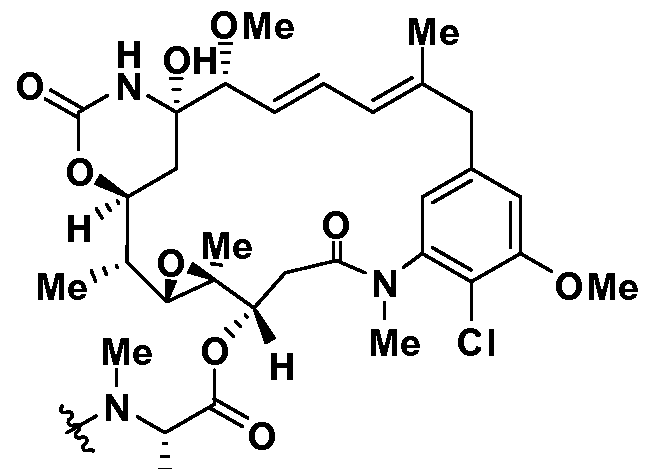


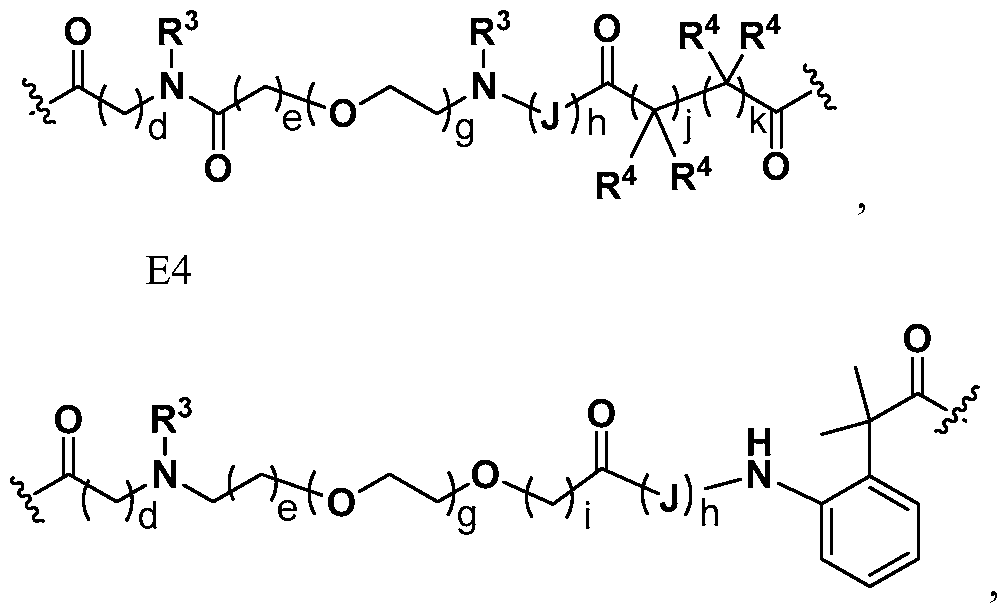


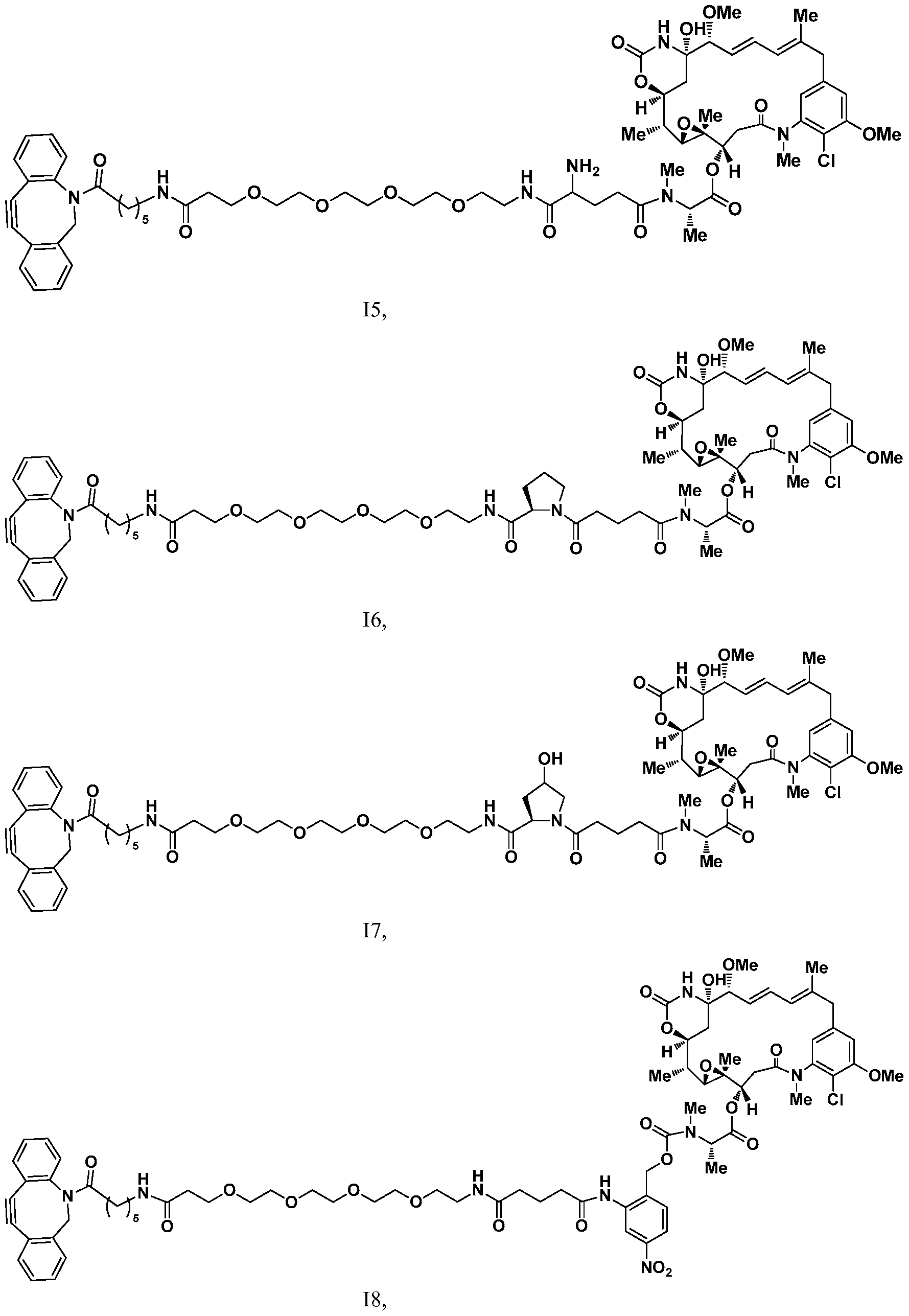


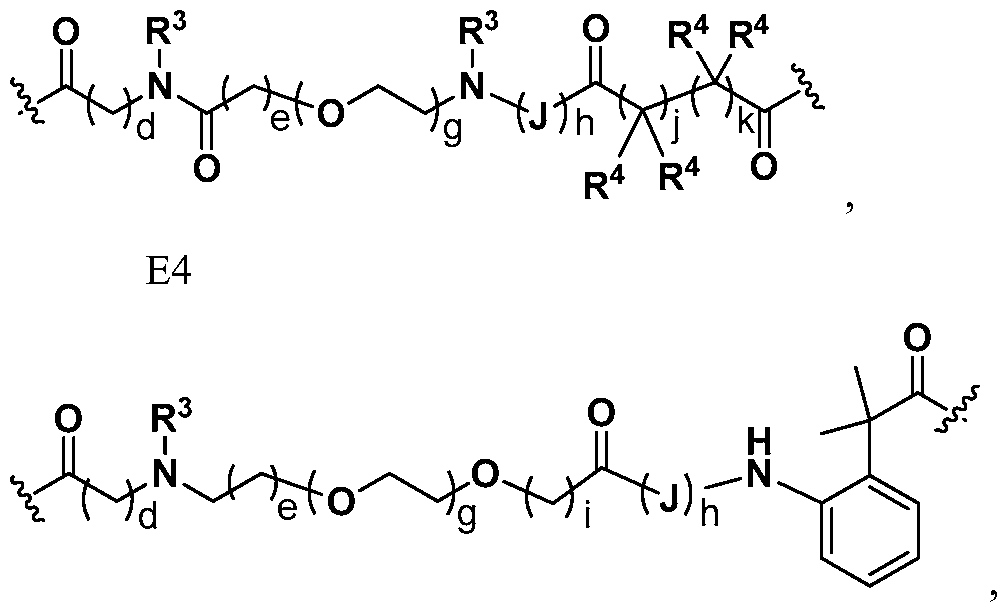

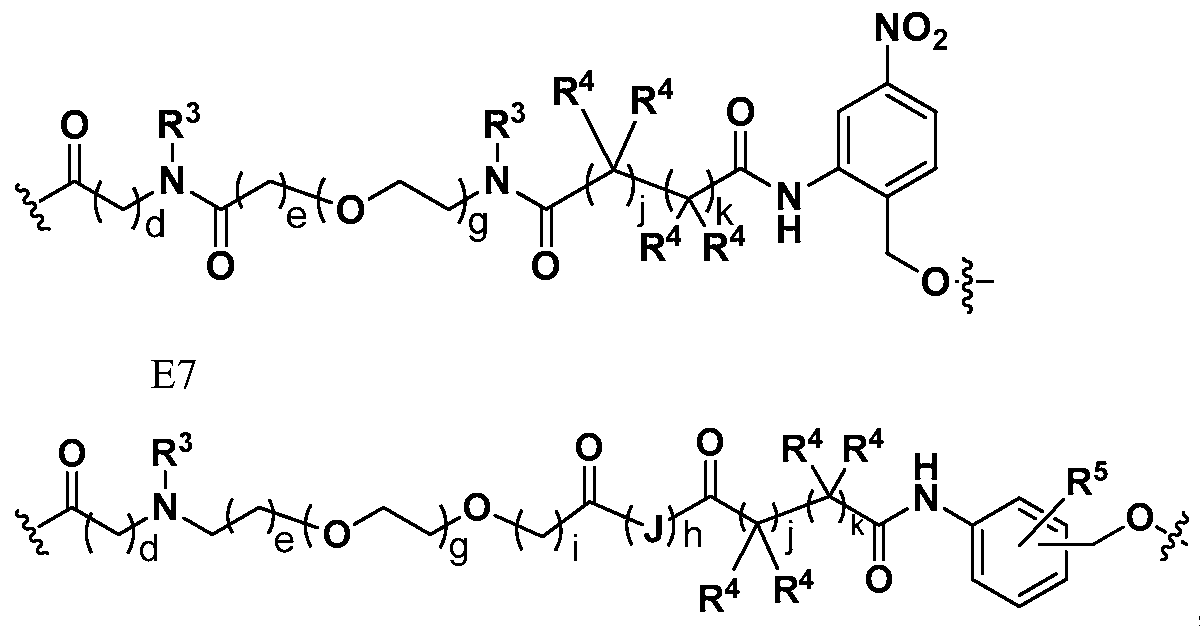

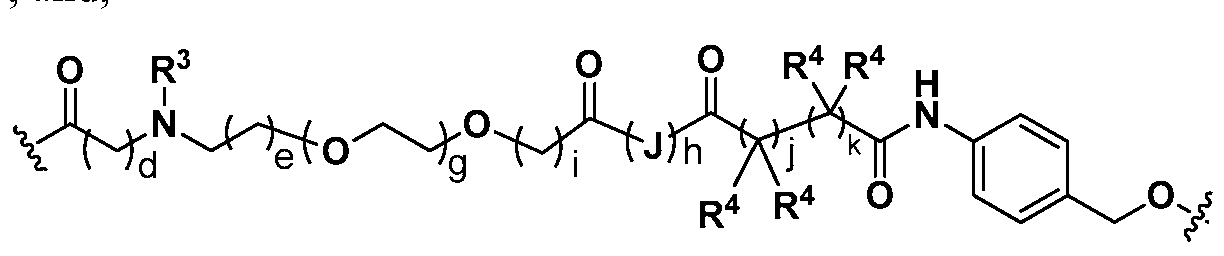


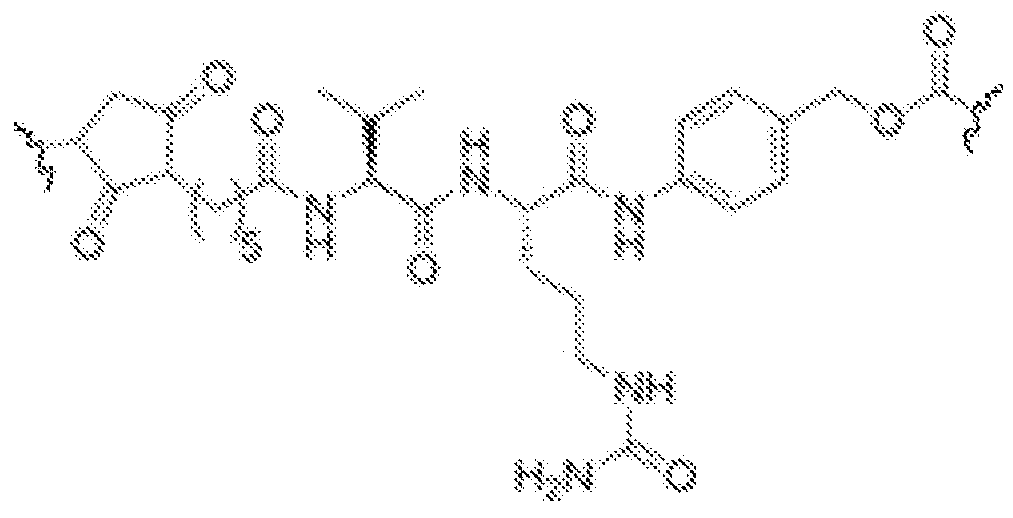


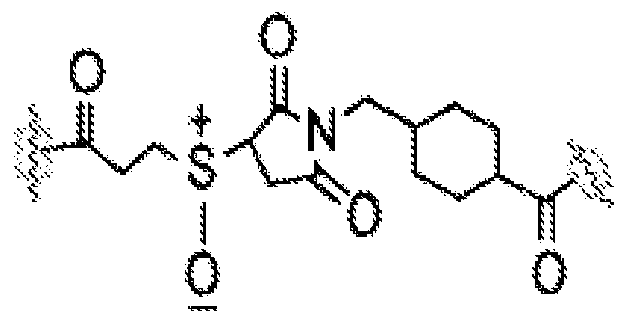


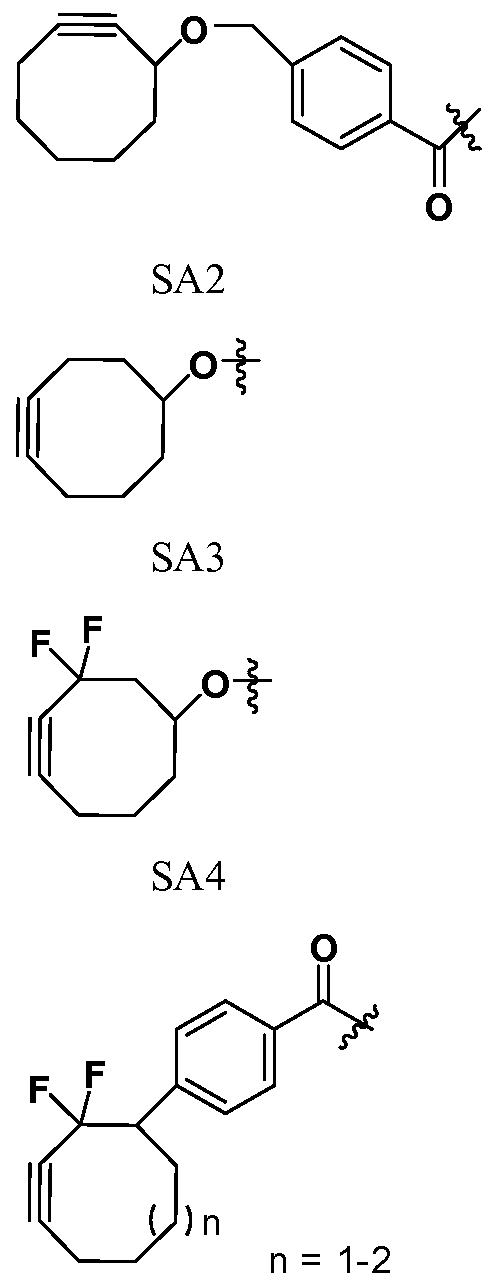

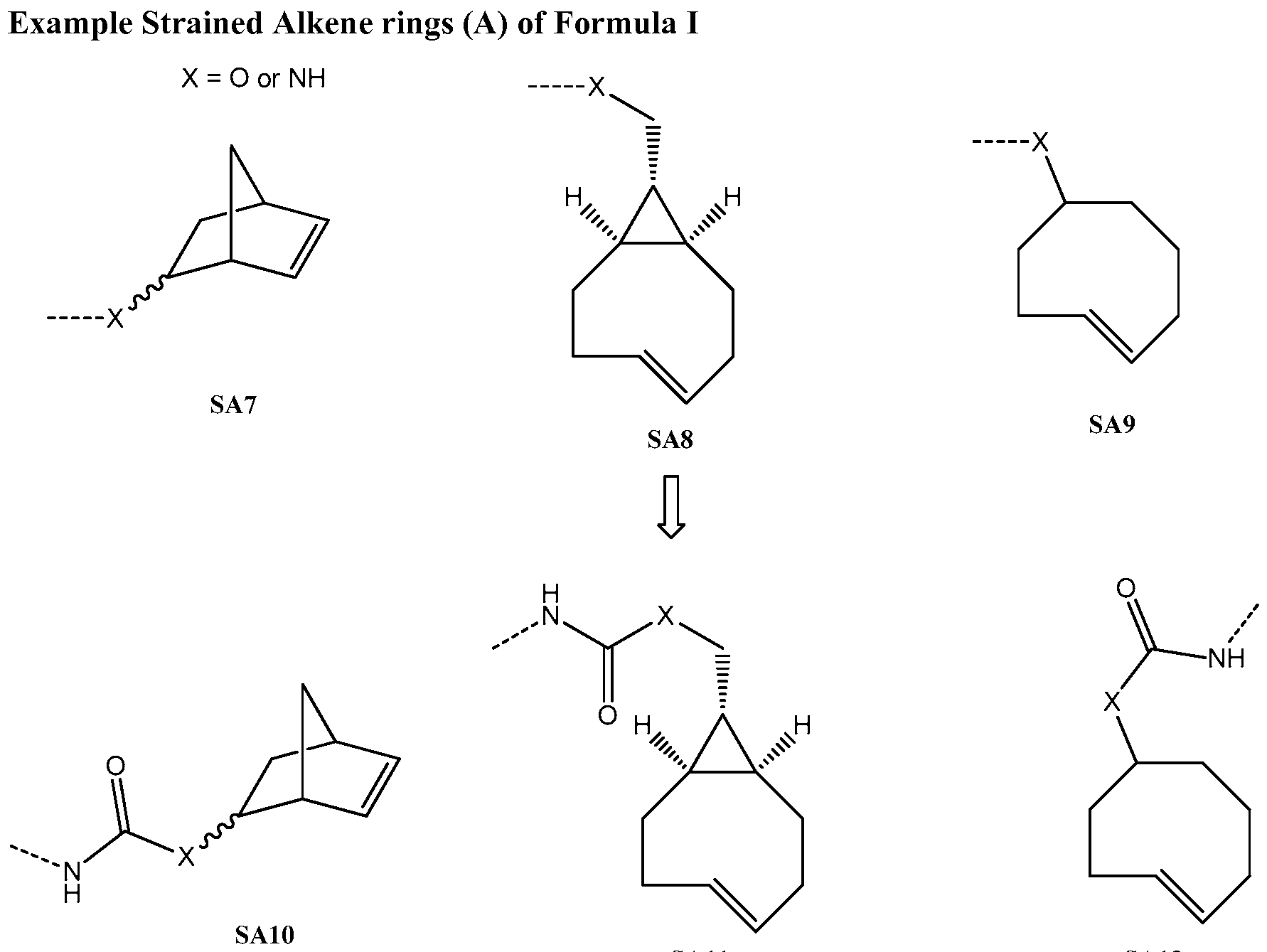
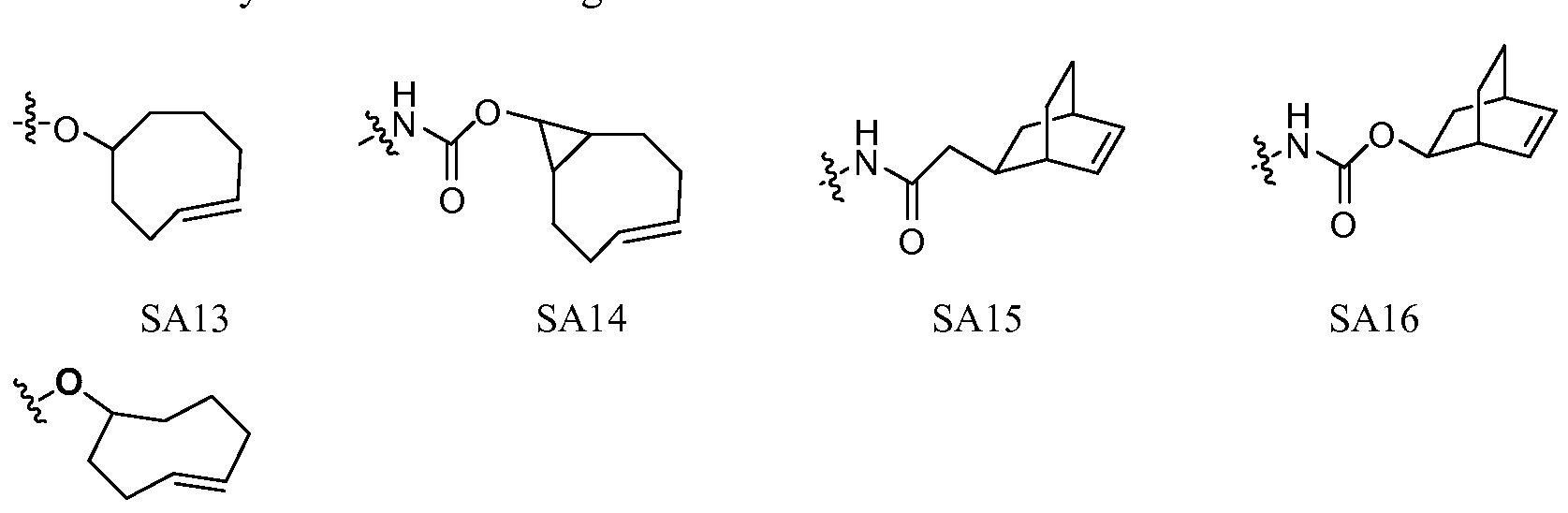
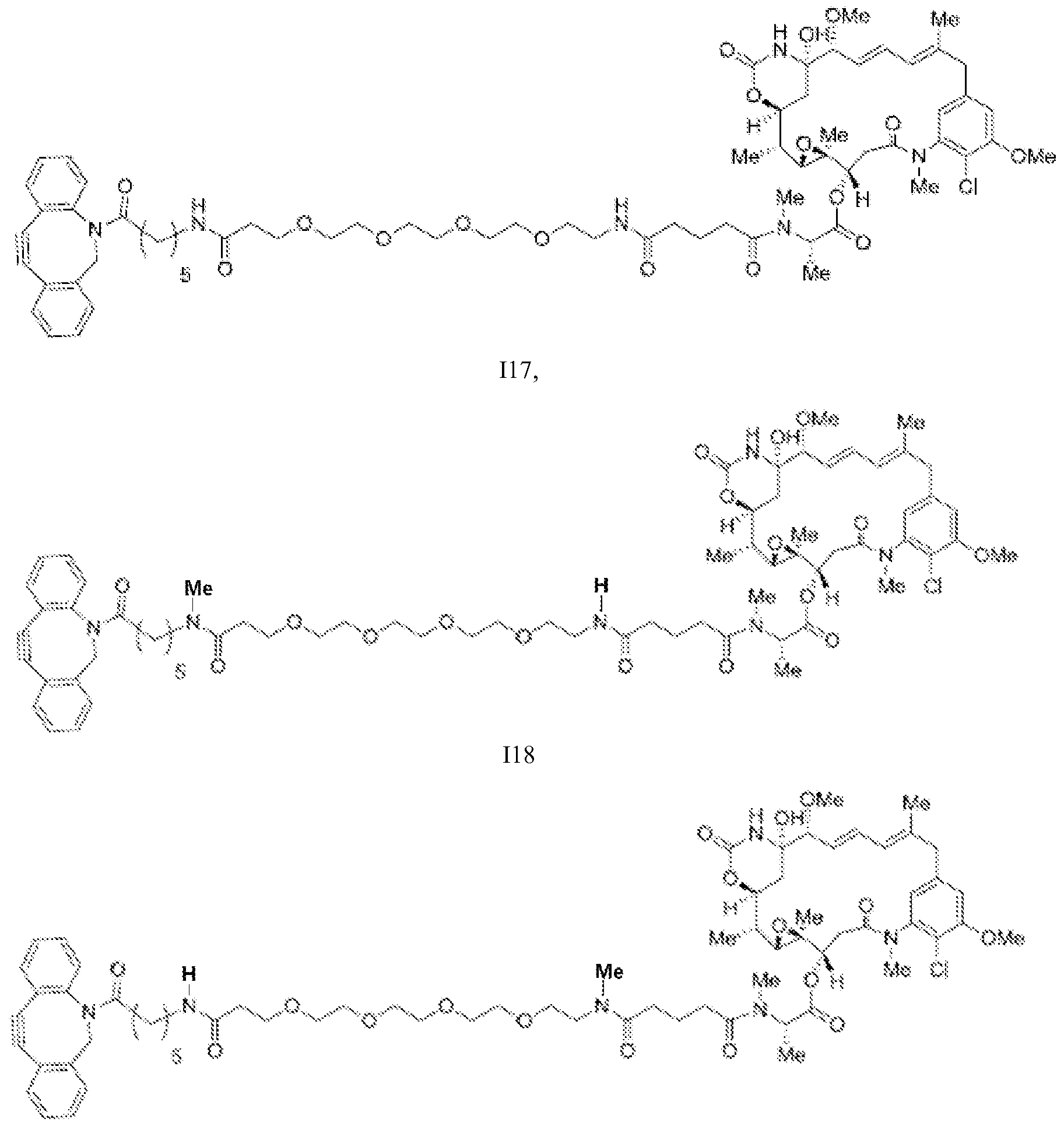


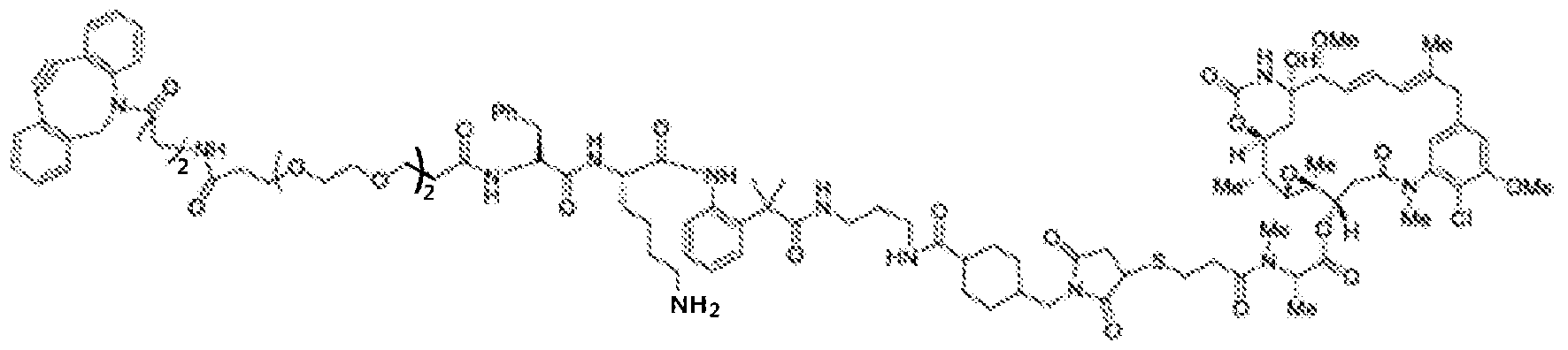


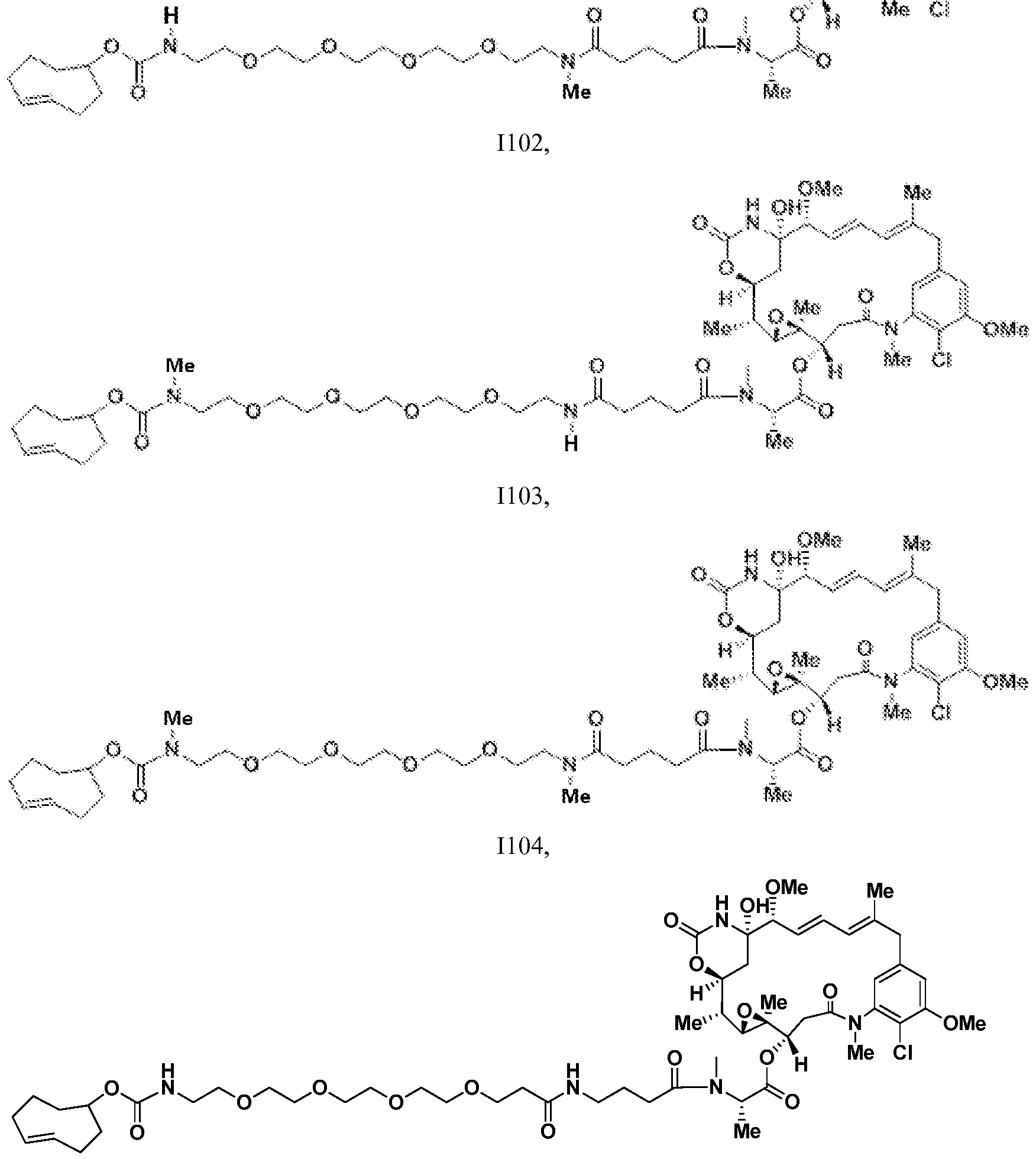


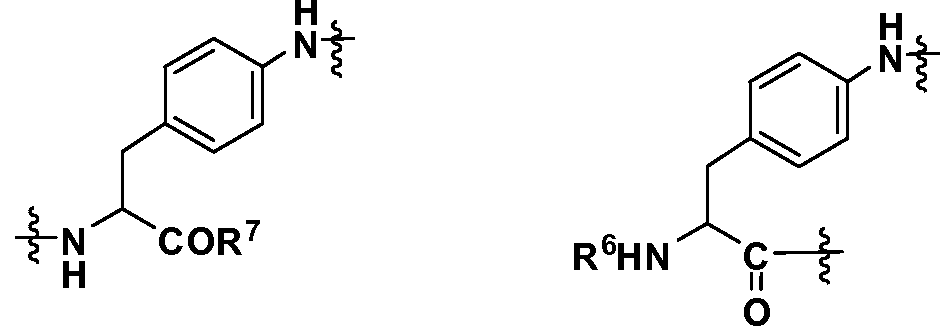





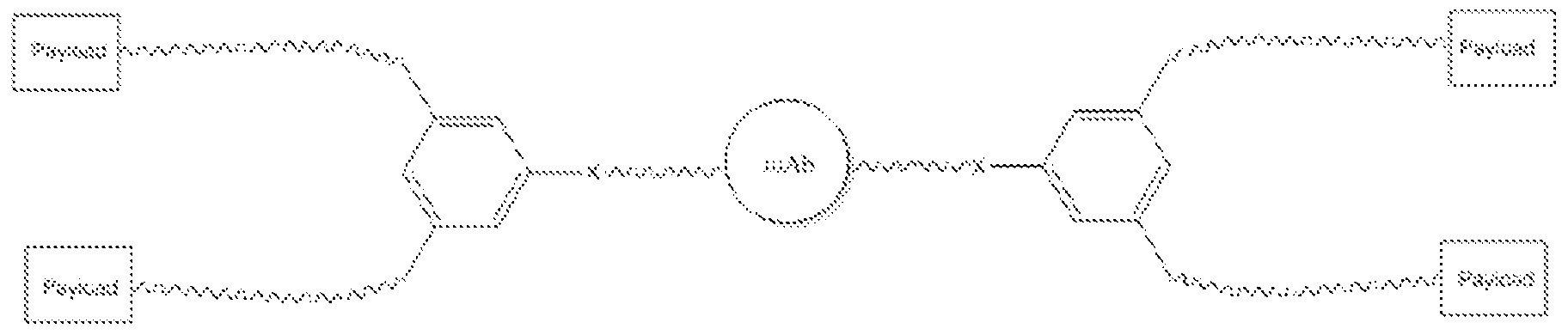


Claims


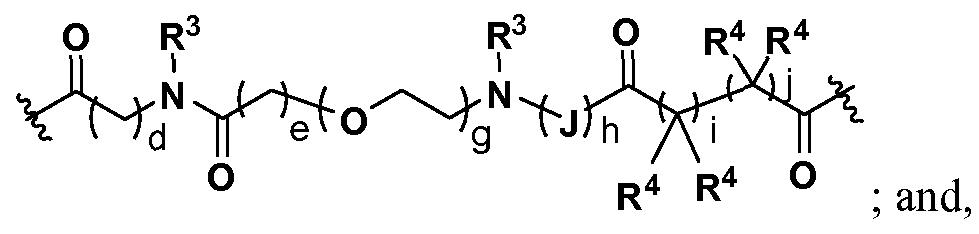


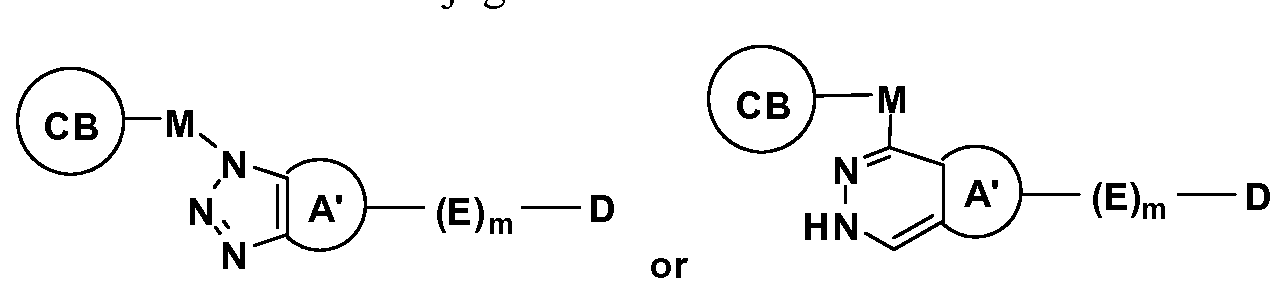

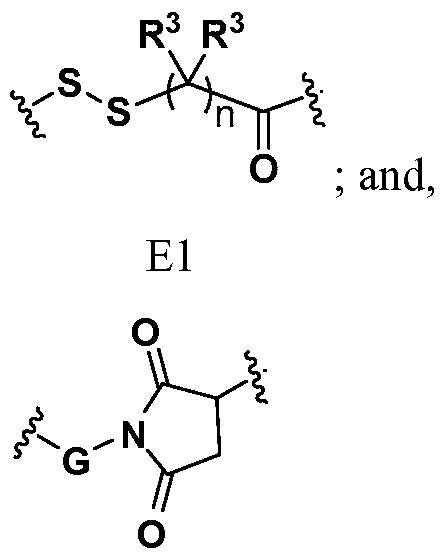


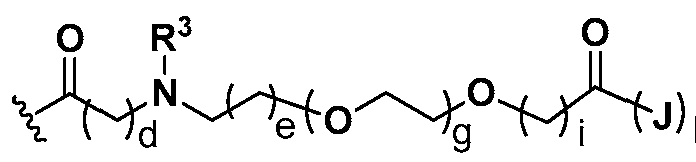





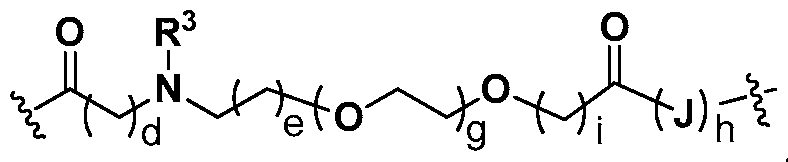


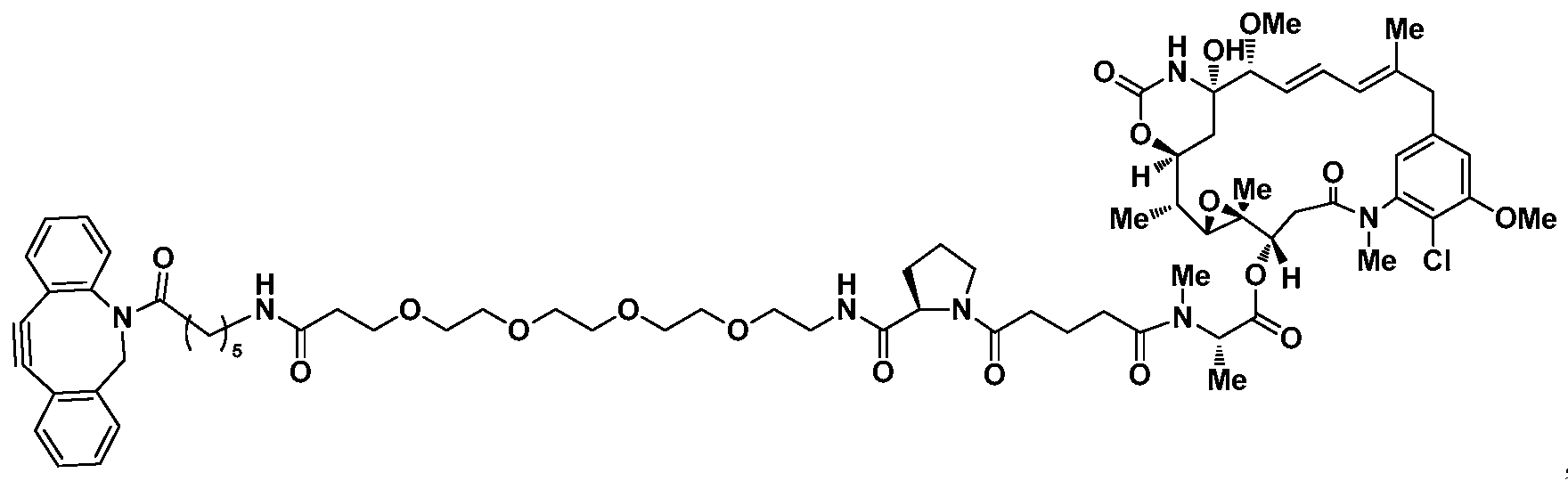
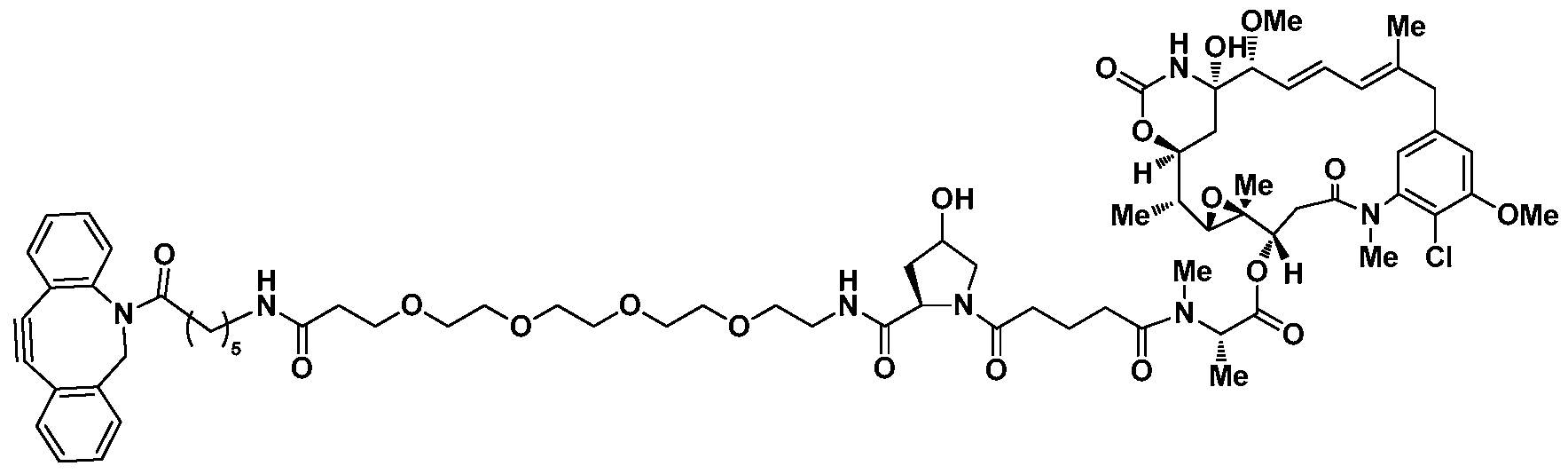


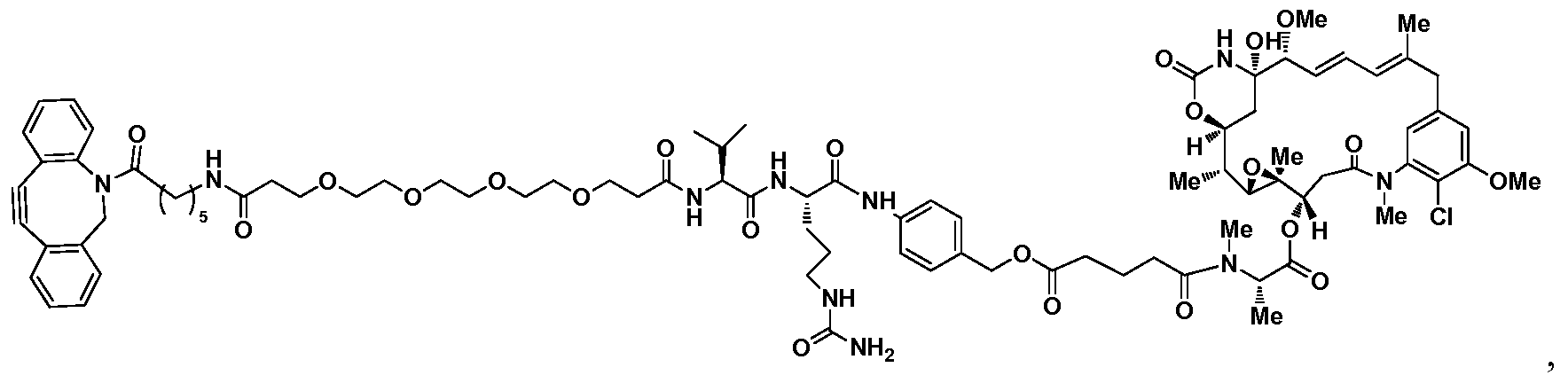


Priority Applications (18)
| Application Number | Priority Date | Filing Date | Title |
|---|---|---|---|
| CN201580074962.4A CN107406463A (en) | 2014-12-04 | 2015-12-03 | biomolecular conjugates |
| SG11201704487XA SG11201704487XA (en) | 2014-12-04 | 2015-12-03 | Biomolecule conjugates |
| EA201791024A EA039794B1 (en) | 2014-12-04 | 2015-12-03 | BIOMOLECULE CONJUGATES |
| CA2969584A CA2969584C (en) | 2014-12-04 | 2015-12-03 | Biomolecule conjugates |
| KR1020177018256A KR20170125799A (en) | 2014-12-04 | 2015-12-03 | Biomolecule conjugates |
| US15/532,255 US10335495B2 (en) | 2014-12-04 | 2015-12-03 | Biomolecule conjugates |
| BR112017011773-8A BR112017011773A2 (en) | 2014-12-04 | 2015-12-03 | isolated compound, isolated conjugates, pharmaceutical compositions, and methods of treating a disorder in a mammal |
| JP2017529620A JP2018502067A (en) | 2014-12-04 | 2015-12-03 | Biomolecular complex |
| MX2017007218A MX2017007218A (en) | 2014-12-04 | 2015-12-03 | Biomolecule conjugates. |
| AU2015358367A AU2015358367B2 (en) | 2014-12-04 | 2015-12-03 | Biomolecule conjugates |
| CN202210366853.1A CN114656483A (en) | 2014-12-04 | 2015-12-03 | Biomolecular Conjugates |
| EP21167338.9A EP3903826B1 (en) | 2014-12-04 | 2015-12-03 | Biomolecule conjugates |
| EP23204558.3A EP4289483A3 (en) | 2014-12-04 | 2015-12-03 | Biomolecule conjugates |
| EP15817004.3A EP3226910A1 (en) | 2014-12-04 | 2015-12-03 | Biomolecule conjugates |
| KR1020237033558A KR20230144660A (en) | 2014-12-04 | 2015-12-03 | Biomolecule conjugates |
| NZ732624A NZ732624B2 (en) | 2015-12-03 | Biomolecule conjugates | |
| IL252618A IL252618B (en) | 2014-12-04 | 2017-06-01 | Conjugates of biomolecules containing maytansinoid |
| IL289802A IL289802B1 (en) | 2014-12-04 | 2022-01-12 | Biomolecule conjugates containing maytansinoid, pharmaceutical compositions comprising the biomolecule conjugates, their use in therapy, and processes of producing thereof |
Applications Claiming Priority (2)
| Application Number | Priority Date | Filing Date | Title |
|---|---|---|---|
| US201462087369P | 2014-12-04 | 2014-12-04 | |
| US62/087,369 | 2014-12-04 |
Publications (1)
| Publication Number | Publication Date |
|---|---|
| WO2016090157A1 true WO2016090157A1 (en) | 2016-06-09 |
Family
ID=55025405
Family Applications (1)
| Application Number | Title | Priority Date | Filing Date |
|---|---|---|---|
| PCT/US2015/063774 Ceased WO2016090157A1 (en) | 2014-12-04 | 2015-12-03 | Biomolecule conjugates |
Country Status (14)
| Country | Link |
|---|---|
| US (1) | US10335495B2 (en) |
| EP (3) | EP4289483A3 (en) |
| JP (1) | JP2018502067A (en) |
| KR (2) | KR20230144660A (en) |
| CN (2) | CN107406463A (en) |
| AU (1) | AU2015358367B2 (en) |
| BR (1) | BR112017011773A2 (en) |
| CA (2) | CA2969584C (en) |
| EA (1) | EA039794B1 (en) |
| ES (1) | ES2986970T3 (en) |
| IL (2) | IL252618B (en) |
| MX (2) | MX2017007218A (en) |
| SG (2) | SG10202008302XA (en) |
| WO (1) | WO2016090157A1 (en) |
Cited By (4)
| Publication number | Priority date | Publication date | Assignee | Title |
|---|---|---|---|---|
| EP3475291A1 (en) * | 2016-06-28 | 2019-05-01 | Ventana Medical Systems, Inc. | Application of click chemistry for signal amplification in ihc and ish assays |
| WO2019118314A3 (en) * | 2017-12-13 | 2020-03-26 | Merck Sharp & Dohme Corp. | Scintillation proximity assay system comprising mutant dehalogenase |
| WO2020245229A1 (en) * | 2019-06-03 | 2020-12-10 | Synaffix B.V. | Acetal-based cleavable linkers |
| EP3595729A4 (en) * | 2017-02-10 | 2022-01-12 | The Board of Trustees of the University of Illinois | TRIGGER-ACTIVATED SUGAR CONJUGATES FOR CANCER SELECTIVE LABELING AND TARGETING |
Families Citing this family (12)
| Publication number | Priority date | Publication date | Assignee | Title |
|---|---|---|---|---|
| HRP20210809T8 (en) | 2014-10-29 | 2021-09-17 | Bicyclerd Limited | Bicyclic peptide ligands specific for mt1-mmp |
| CN107080751A (en) * | 2017-04-27 | 2017-08-22 | 皖西学院 | A kind of Western medicine compound for treating hypertrophic osteoarthropathy and its application |
| WO2019025811A1 (en) | 2017-08-04 | 2019-02-07 | Bicycletx Limited | Bicyclic peptide ligands specific for cd137 |
| MX2020008791A (en) | 2018-02-23 | 2021-01-08 | Bicycletx Ltd | Multimeric bicyclic peptide ligands. |
| US11180531B2 (en) | 2018-06-22 | 2021-11-23 | Bicycletx Limited | Bicyclic peptide ligands specific for Nectin-4 |
| GB201820325D0 (en) | 2018-12-13 | 2019-01-30 | Bicyclerd Ltd | Bicyclic peptide ligands specific for psma |
| GB201820295D0 (en) | 2018-12-13 | 2019-01-30 | Bicyclerd Ltd | Bicyclic peptide ligands specific for MT1-MMP |
| GB201820288D0 (en) | 2018-12-13 | 2019-01-30 | Bicycle Tx Ltd | Bicycle peptide ligaands specific for MT1-MMP |
| EP3897849A1 (en) | 2018-12-21 | 2021-10-27 | BicycleTx Limited | Bicyclic peptide ligands specific for pd-l1 |
| GB201900529D0 (en) | 2019-01-15 | 2019-03-06 | Bicycletx Ltd | Bicyclic peptide ligands specific for CD38 |
| TWI862640B (en) | 2019-07-30 | 2024-11-21 | 英商拜西可泰克斯有限公司 | Heterotandem bicyclic peptide complex |
| CA3189761A1 (en) | 2020-08-03 | 2022-02-10 | Gemma Mudd | Peptide-based linkers |
Citations (52)
| Publication number | Priority date | Publication date | Assignee | Title |
|---|---|---|---|---|
| US3896111A (en) | 1973-02-20 | 1975-07-22 | Research Corp | Ansa macrolides |
| US4151042A (en) | 1977-03-31 | 1979-04-24 | Takeda Chemical Industries, Ltd. | Method for producing maytansinol and its derivatives |
| US4256746A (en) | 1978-11-14 | 1981-03-17 | Takeda Chemical Industries | Dechloromaytansinoids, their pharmaceutical compositions and method of use |
| US4294757A (en) | 1979-01-31 | 1981-10-13 | Takeda Chemical Industries, Ltd | 20-O-Acylmaytansinoids |
| US4307016A (en) | 1978-03-24 | 1981-12-22 | Takeda Chemical Industries, Ltd. | Demethyl maytansinoids |
| US4313946A (en) | 1981-01-27 | 1982-02-02 | The United States Of America As Represented By The Secretary Of Agriculture | Chemotherapeutically active maytansinoids from Trewia nudiflora |
| US4315929A (en) | 1981-01-27 | 1982-02-16 | The United States Of America As Represented By The Secretary Of Agriculture | Method of controlling the European corn borer with trewiasine |
| US4322348A (en) | 1979-06-05 | 1982-03-30 | Takeda Chemical Industries, Ltd. | Maytansinoids |
| US4331598A (en) | 1979-09-19 | 1982-05-25 | Takeda Chemical Industries, Ltd. | Maytansinoids |
| US4362663A (en) | 1979-09-21 | 1982-12-07 | Takeda Chemical Industries, Ltd. | Maytansinoid compound |
| US4364866A (en) | 1979-09-21 | 1982-12-21 | Takeda Chemical Industries, Ltd. | Maytansinoids |
| US4371533A (en) | 1980-10-08 | 1983-02-01 | Takeda Chemical Industries, Ltd. | 4,5-Deoxymaytansinoids, their use and pharmaceutical compositions thereof |
| US4424219A (en) | 1981-05-20 | 1984-01-03 | Takeda Chemical Industries, Ltd. | 9-Thiomaytansinoids and their pharmaceutical compositions and use |
| US4450254A (en) | 1980-11-03 | 1984-05-22 | Standard Oil Company | Impact improvement of high nitrile resins |
| US5208020A (en) | 1989-10-25 | 1993-05-04 | Immunogen Inc. | Cytotoxic agents comprising maytansinoids and their therapeutic use |
| US5475092A (en) | 1992-03-25 | 1995-12-12 | Immunogen Inc. | Cell binding agent conjugates of analogues and derivatives of CC-1065 |
| WO2000002587A1 (en) | 1998-07-13 | 2000-01-20 | Board Of Regents, The University Of Texas System | Cancer treatment methods using therapeutic conjugates that bind to aminophospholipids |
| US6171586B1 (en) | 1997-06-13 | 2001-01-09 | Genentech, Inc. | Antibody formulation |
| US6333410B1 (en) | 2000-08-18 | 2001-12-25 | Immunogen, Inc. | Process for the preparation and purification of thiol-containing maytansinoids |
| US6340701B1 (en) | 1999-11-24 | 2002-01-22 | Immunogen Inc | Cytotoxic agents comprising taxanes and their therapeutic use |
| WO2002060955A2 (en) | 2001-01-29 | 2002-08-08 | Idec Pharmaceuticals Corporation | Modified antibodies and methods of use |
| US6441163B1 (en) | 2001-05-31 | 2002-08-27 | Immunogen, Inc. | Methods for preparation of cytotoxic conjugates of maytansinoids and cell binding agents |
| WO2002092127A1 (en) | 2001-05-11 | 2002-11-21 | Board Of Regents, The University Of Texas System | Anti-cd26 monoclonal antibodies as therapy for diseases associated with cells expressing cd26 |
| US6716821B2 (en) | 2001-12-21 | 2004-04-06 | Immunogen Inc. | Cytotoxic agents bearing a reactive polyethylene glycol moiety, cytotoxic conjugates comprising polyethylene glycol linking groups, and methods of making and using the same |
| US6913748B2 (en) | 2002-08-16 | 2005-07-05 | Immunogen, Inc. | Cross-linkers with high reactivity and solubility and their use in the preparation of conjugates for targeted delivery of small molecule drugs |
| US7045337B2 (en) | 2001-04-19 | 2006-05-16 | The Scripps Research Institute | In vivo incorporation of unnatural amino acids |
| US7276497B2 (en) | 2003-05-20 | 2007-10-02 | Immunogen Inc. | Cytotoxic agents comprising new maytansinoids |
| US7303749B1 (en) | 1999-10-01 | 2007-12-04 | Immunogen Inc. | Compositions and methods for treating cancer using immunoconjugates and chemotherapeutic agents |
| US7332571B2 (en) | 2004-12-22 | 2008-02-19 | Ambrx, Inc. | Compositions containing, methods involving, and uses of non-natural amino acids and polypeptides |
| US7338789B2 (en) | 2002-08-19 | 2008-03-04 | The Board Of Trustees Of The Leland Stanford Junior University | Methods of in vitro protein synthesis |
| US7388026B2 (en) | 2002-04-05 | 2008-06-17 | Immunogen, Inc. | Prodrugs of CC-1065 analogs |
| US7414073B2 (en) | 2002-08-02 | 2008-08-19 | Immunogen Inc. | Cytotoxic agents containing novel potent taxanes and their therapeutic use |
| US7432092B2 (en) | 2002-10-16 | 2008-10-07 | The Scripps Research Institute | Site specific incorporation of keto amino acids into proteins |
| US7498298B2 (en) | 2003-11-06 | 2009-03-03 | Seattle Genetics, Inc. | Monomethylvaline compounds capable of conjugation to ligands |
| US7601354B2 (en) | 1999-10-01 | 2009-10-13 | Immunogen Inc. | Compositions and methods for treating cancer using immunoconjugates and chemotherapeutic agents |
| US7608423B2 (en) | 2003-04-17 | 2009-10-27 | The Scripps Research Institute | Expanding the eukaryotic genetic code |
| US7632924B2 (en) | 2004-06-18 | 2009-12-15 | Ambrx, Inc. | Antigen-binding polypeptides and their uses |
| US7989434B2 (en) | 2004-02-23 | 2011-08-02 | Seattle Genetics, Inc. | Heterocyclic self-immolative linkers and conjugates |
| US7989598B2 (en) | 2003-10-10 | 2011-08-02 | Immunogen Inc. | Method of targeting specific cell populations using cell-binding agent maytansinoid conjugates linked via a non-cleavable linker, said conjugates and methods of making said conjugates |
| US8008428B2 (en) | 2003-10-09 | 2011-08-30 | Ambrx, Inc. | Azide- or acetylene-terminated poly(alkylene oxide, oxyethylated polyol or olefinic Alcohol) |
| US8012485B2 (en) | 2003-05-14 | 2011-09-06 | Immunogen, Inc. | Drug conjugate composition |
| US8236319B2 (en) | 2008-04-30 | 2012-08-07 | Immunogen, Inc. | Cross-linkers and their uses |
| US8337856B2 (en) | 2000-03-16 | 2012-12-25 | Immunogen, Inc. | Methods of treatment using anti-ERBB antibody-maytansinoid conjugates |
| US8603483B2 (en) | 2004-12-09 | 2013-12-10 | Janssen Biotech, Inc. | Anti-integrin immunoconjugates, methods and uses |
| US8624003B2 (en) | 2009-06-03 | 2014-01-07 | Immunogen, Inc. | Methods for preparation of antibody-maytansinoid conjugates |
| US20140023665A1 (en) | 2011-04-18 | 2014-01-23 | Immunogen, Inc. | Novel maytansinoid derivatives with sulfoxide linker |
| US20140046030A1 (en) | 2012-06-08 | 2014-02-13 | Sutro Biopharma, Inc. | Antibodies comprising site-specific non-natural amino acid residues, methods of their preparation and methods of their use |
| US20140051836A1 (en) | 2012-06-26 | 2014-02-20 | Sutro Biopharma, Inc. | Modified Fc Proteins Comprising Site-Specific Non-Natural Amino Acid Residues, Conjugates of the Same, Methods of Their Preparation and Methods of Their Use |
| US20140066598A1 (en) | 2012-08-31 | 2014-03-06 | Sutro Biopharma, Inc. | Modified Amino Acids |
| WO2014065661A1 (en) * | 2012-10-23 | 2014-05-01 | Synaffix B.V. | Modified antibody, antibody-conjugate and process for the preparation thereof |
| US8715958B2 (en) | 2006-06-29 | 2014-05-06 | The Board Of Trustees Of The Leland Stanford Junior University | Cell-free synthesis of proteins containing unnatural amino acids |
| WO2014134483A2 (en) * | 2013-02-28 | 2014-09-04 | Immunogen, Inc. | Conjugates comprising cell-binding agents and cytotoxic agents |
-
2015
- 2015-12-03 BR BR112017011773-8A patent/BR112017011773A2/en not_active Application Discontinuation
- 2015-12-03 SG SG10202008302XA patent/SG10202008302XA/en unknown
- 2015-12-03 KR KR1020237033558A patent/KR20230144660A/en not_active Ceased
- 2015-12-03 ES ES21167338T patent/ES2986970T3/en active Active
- 2015-12-03 CN CN201580074962.4A patent/CN107406463A/en active Pending
- 2015-12-03 CA CA2969584A patent/CA2969584C/en active Active
- 2015-12-03 US US15/532,255 patent/US10335495B2/en active Active
- 2015-12-03 CA CA3184805A patent/CA3184805A1/en active Pending
- 2015-12-03 SG SG11201704487XA patent/SG11201704487XA/en unknown
- 2015-12-03 EP EP23204558.3A patent/EP4289483A3/en active Pending
- 2015-12-03 EP EP21167338.9A patent/EP3903826B1/en active Active
- 2015-12-03 CN CN202210366853.1A patent/CN114656483A/en active Pending
- 2015-12-03 KR KR1020177018256A patent/KR20170125799A/en not_active Ceased
- 2015-12-03 JP JP2017529620A patent/JP2018502067A/en active Pending
- 2015-12-03 EP EP15817004.3A patent/EP3226910A1/en not_active Withdrawn
- 2015-12-03 MX MX2017007218A patent/MX2017007218A/en unknown
- 2015-12-03 EA EA201791024A patent/EA039794B1/en unknown
- 2015-12-03 AU AU2015358367A patent/AU2015358367B2/en active Active
- 2015-12-03 WO PCT/US2015/063774 patent/WO2016090157A1/en not_active Ceased
-
2017
- 2017-06-01 IL IL252618A patent/IL252618B/en unknown
- 2017-06-05 MX MX2022003952A patent/MX2022003952A/en unknown
-
2022
- 2022-01-12 IL IL289802A patent/IL289802B1/en unknown
Patent Citations (89)
| Publication number | Priority date | Publication date | Assignee | Title |
|---|---|---|---|---|
| US3896111A (en) | 1973-02-20 | 1975-07-22 | Research Corp | Ansa macrolides |
| US4151042A (en) | 1977-03-31 | 1979-04-24 | Takeda Chemical Industries, Ltd. | Method for producing maytansinol and its derivatives |
| US4307016A (en) | 1978-03-24 | 1981-12-22 | Takeda Chemical Industries, Ltd. | Demethyl maytansinoids |
| US4361650A (en) | 1978-03-24 | 1982-11-30 | Takeda Chemical Industries, Ltd. | Fermentation process of preparing demethyl maytansinoids |
| US4256746A (en) | 1978-11-14 | 1981-03-17 | Takeda Chemical Industries | Dechloromaytansinoids, their pharmaceutical compositions and method of use |
| US4294757A (en) | 1979-01-31 | 1981-10-13 | Takeda Chemical Industries, Ltd | 20-O-Acylmaytansinoids |
| US4322348A (en) | 1979-06-05 | 1982-03-30 | Takeda Chemical Industries, Ltd. | Maytansinoids |
| US4331598A (en) | 1979-09-19 | 1982-05-25 | Takeda Chemical Industries, Ltd. | Maytansinoids |
| US4364866A (en) | 1979-09-21 | 1982-12-21 | Takeda Chemical Industries, Ltd. | Maytansinoids |
| US4362663A (en) | 1979-09-21 | 1982-12-07 | Takeda Chemical Industries, Ltd. | Maytansinoid compound |
| US4371533A (en) | 1980-10-08 | 1983-02-01 | Takeda Chemical Industries, Ltd. | 4,5-Deoxymaytansinoids, their use and pharmaceutical compositions thereof |
| US4450254A (en) | 1980-11-03 | 1984-05-22 | Standard Oil Company | Impact improvement of high nitrile resins |
| US4313946A (en) | 1981-01-27 | 1982-02-02 | The United States Of America As Represented By The Secretary Of Agriculture | Chemotherapeutically active maytansinoids from Trewia nudiflora |
| US4315929A (en) | 1981-01-27 | 1982-02-16 | The United States Of America As Represented By The Secretary Of Agriculture | Method of controlling the European corn borer with trewiasine |
| US4424219A (en) | 1981-05-20 | 1984-01-03 | Takeda Chemical Industries, Ltd. | 9-Thiomaytansinoids and their pharmaceutical compositions and use |
| US5208020A (en) | 1989-10-25 | 1993-05-04 | Immunogen Inc. | Cytotoxic agents comprising maytansinoids and their therapeutic use |
| US5416064A (en) | 1989-10-25 | 1995-05-16 | Immunogen, Inc. | Cytotoxic agents comprising maytansinoids and their therapeutic use |
| US5475092A (en) | 1992-03-25 | 1995-12-12 | Immunogen Inc. | Cell binding agent conjugates of analogues and derivatives of CC-1065 |
| US5585499A (en) | 1992-03-25 | 1996-12-17 | Immunogen Inc. | Cyclopropylbenzindole-containing cytotoxic drugs |
| US5846545A (en) | 1992-03-25 | 1998-12-08 | Immunogen, Inc. | Targeted delivery of cyclopropylbenzindole-containing cytotoxic drugs |
| US6171586B1 (en) | 1997-06-13 | 2001-01-09 | Genentech, Inc. | Antibody formulation |
| WO2000002587A1 (en) | 1998-07-13 | 2000-01-20 | Board Of Regents, The University Of Texas System | Cancer treatment methods using therapeutic conjugates that bind to aminophospholipids |
| US7601354B2 (en) | 1999-10-01 | 2009-10-13 | Immunogen Inc. | Compositions and methods for treating cancer using immunoconjugates and chemotherapeutic agents |
| US7303749B1 (en) | 1999-10-01 | 2007-12-04 | Immunogen Inc. | Compositions and methods for treating cancer using immunoconjugates and chemotherapeutic agents |
| US6340701B1 (en) | 1999-11-24 | 2002-01-22 | Immunogen Inc | Cytotoxic agents comprising taxanes and their therapeutic use |
| US7276499B2 (en) | 1999-11-24 | 2007-10-02 | Immunogen Inc. | Cytotoxic agents comprising taxanes and their therapeutic use |
| US8337856B2 (en) | 2000-03-16 | 2012-12-25 | Immunogen, Inc. | Methods of treatment using anti-ERBB antibody-maytansinoid conjugates |
| US6333410B1 (en) | 2000-08-18 | 2001-12-25 | Immunogen, Inc. | Process for the preparation and purification of thiol-containing maytansinoids |
| WO2002060955A2 (en) | 2001-01-29 | 2002-08-08 | Idec Pharmaceuticals Corporation | Modified antibodies and methods of use |
| US8173364B2 (en) | 2001-04-19 | 2012-05-08 | The Scripps Research Institute | Methods and composition for the production of orthogonal tRNA-aminoacyl tRNA synthetase pairs |
| US7368275B2 (en) | 2001-04-19 | 2008-05-06 | The Scripps Research Institute | In vivo incorporation of unnatural amino acids |
| US7638300B2 (en) | 2001-04-19 | 2009-12-29 | The Scripps Research Institute | In vivo incorporation of unnatural amino acids |
| US8030074B2 (en) | 2001-04-19 | 2011-10-04 | The Scripps Research Institute | In vivo incorporation of unnatural amino acids |
| US8114648B2 (en) | 2001-04-19 | 2012-02-14 | The Scripps Research Institute | In vivo incorporation of unnatural amino acids |
| US8183012B2 (en) | 2001-04-19 | 2012-05-22 | The Scripps Research Institute | Methods and composition for the production of orthogonal tRNA-aminoacyltRNA synthetase pairs |
| US7915025B2 (en) | 2001-04-19 | 2011-03-29 | The Scripps Research Institute | In vivo incorporation of unnatural amino acids |
| US7354761B2 (en) | 2001-04-19 | 2008-04-08 | The Scripps Research Institute | Methods and composition for the production of orthogonal tRNA-aminoacyltRNA synthetase pairs |
| US8173392B2 (en) | 2001-04-19 | 2012-05-08 | The Scripps Research Institute | In vivo incorporation of unnatural amino acids |
| US7713721B2 (en) | 2001-04-19 | 2010-05-11 | The Scripps Research Institute | Methods and composition for the production of orthogonal tRNA-aminoacyltRNA synthetase pairs |
| US7083970B2 (en) | 2001-04-19 | 2006-08-01 | The Scripps Research Institute | Methods and compositions for the production of orthogonal tRNA-aminoacyl tRNA synthetase pairs |
| US8012739B2 (en) | 2001-04-19 | 2011-09-06 | The Scripps Research Institute | Methods and compositions for the production of orthogonal tRNA-aminoacyl-tRNA synthetase pairs |
| US7045337B2 (en) | 2001-04-19 | 2006-05-16 | The Scripps Research Institute | In vivo incorporation of unnatural amino acids |
| WO2002092127A1 (en) | 2001-05-11 | 2002-11-21 | Board Of Regents, The University Of Texas System | Anti-cd26 monoclonal antibodies as therapy for diseases associated with cells expressing cd26 |
| US7368565B2 (en) | 2001-05-31 | 2008-05-06 | Immunogen Inc. | Methods for preparation of cytotoxic conjugates of maytansinoids and cell binding agents |
| US6441163B1 (en) | 2001-05-31 | 2002-08-27 | Immunogen, Inc. | Methods for preparation of cytotoxic conjugates of maytansinoids and cell binding agents |
| US6716821B2 (en) | 2001-12-21 | 2004-04-06 | Immunogen Inc. | Cytotoxic agents bearing a reactive polyethylene glycol moiety, cytotoxic conjugates comprising polyethylene glycol linking groups, and methods of making and using the same |
| US7388026B2 (en) | 2002-04-05 | 2008-06-17 | Immunogen, Inc. | Prodrugs of CC-1065 analogs |
| US7414073B2 (en) | 2002-08-02 | 2008-08-19 | Immunogen Inc. | Cytotoxic agents containing novel potent taxanes and their therapeutic use |
| US6913748B2 (en) | 2002-08-16 | 2005-07-05 | Immunogen, Inc. | Cross-linkers with high reactivity and solubility and their use in the preparation of conjugates for targeted delivery of small molecule drugs |
| US7338789B2 (en) | 2002-08-19 | 2008-03-04 | The Board Of Trustees Of The Leland Stanford Junior University | Methods of in vitro protein synthesis |
| US8071344B2 (en) | 2002-10-16 | 2011-12-06 | The Scripps Research Institute | Site specific incorporation of keto amino acids into proteins |
| US7910345B2 (en) | 2002-10-16 | 2011-03-22 | The Scripps Research Institute | Site specific incorporation of keto amino acids into proteins |
| US7432092B2 (en) | 2002-10-16 | 2008-10-07 | The Scripps Research Institute | Site specific incorporation of keto amino acids into proteins |
| US8114629B2 (en) | 2002-10-16 | 2012-02-14 | The Scripps Research Institute | Site specific incorporation of keto amino acids into proteins |
| US7524647B2 (en) | 2002-10-16 | 2009-04-28 | The Scripps Research Institute | Site specific incorporation of keto amino acids into proteins |
| US7608423B2 (en) | 2003-04-17 | 2009-10-27 | The Scripps Research Institute | Expanding the eukaryotic genetic code |
| US8012485B2 (en) | 2003-05-14 | 2011-09-06 | Immunogen, Inc. | Drug conjugate composition |
| US7276497B2 (en) | 2003-05-20 | 2007-10-02 | Immunogen Inc. | Cytotoxic agents comprising new maytansinoids |
| US7851432B2 (en) | 2003-05-20 | 2010-12-14 | Immunogen Inc. | Cytotoxic agents comprising new maytansinoids |
| US7473796B2 (en) | 2003-05-20 | 2009-01-06 | Immunogen Inc. | Cytotoxic agents comprising new maytansinoids |
| US8008428B2 (en) | 2003-10-09 | 2011-08-30 | Ambrx, Inc. | Azide- or acetylene-terminated poly(alkylene oxide, oxyethylated polyol or olefinic Alcohol) |
| US7989598B2 (en) | 2003-10-10 | 2011-08-02 | Immunogen Inc. | Method of targeting specific cell populations using cell-binding agent maytansinoid conjugates linked via a non-cleavable linker, said conjugates and methods of making said conjugates |
| US8088387B2 (en) | 2003-10-10 | 2012-01-03 | Immunogen Inc. | Method of targeting specific cell populations using cell-binding agent maytansinoid conjugates linked via a non-cleavable linker, said conjugates, and methods of making said conjugates |
| US8685920B2 (en) | 2003-10-10 | 2014-04-01 | Immunogen Inc. | Method of targeting specific cell populations using cell-binding agent maytansinoid conjugates linked via a non-cleavable linker, said conjugates and methods of making said conjugates |
| US8563509B2 (en) | 2003-10-10 | 2013-10-22 | Immunogen Inc. | Method of targeting specific cell populations using cell-binding agent maytansinoid conjugates linked via a non-cleavable linker, said conjugates and methods of making said conjugates |
| US8198417B2 (en) | 2003-10-10 | 2012-06-12 | Immunogen Inc. | Method of targeting specific cell populations using cell-binding agent maytansinoid conjugates linked via a non-cleavable linker, said conjugates and methods of making said conjugates |
| US8163888B2 (en) | 2003-10-10 | 2012-04-24 | Immunogen, Inc. | Method of targeting specific cell populations using cell-binding agent maytansinoid conjugates linked via a non-cleavable linker, said conjugates and methods of making said conjugates |
| US7964566B2 (en) | 2003-11-06 | 2011-06-21 | Seattle Genetics, Inc. | Monomethylvaline compounds capable of conjugation to ligands |
| US7745394B2 (en) | 2003-11-06 | 2010-06-29 | Seattle Genetics, Inc. | Monomethylvaline compounds capable of conjugation to ligands |
| US7498298B2 (en) | 2003-11-06 | 2009-03-03 | Seattle Genetics, Inc. | Monomethylvaline compounds capable of conjugation to ligands |
| US7994135B2 (en) | 2003-11-06 | 2011-08-09 | Seattle Genetics, Inc. | Monomethylvaline compounds capable of conjugation to ligands |
| US7964567B2 (en) | 2003-11-06 | 2011-06-21 | Seattle Genetics, Inc. | Monomethylvaline compounds capable of conjugation to ligands |
| US7989434B2 (en) | 2004-02-23 | 2011-08-02 | Seattle Genetics, Inc. | Heterocyclic self-immolative linkers and conjugates |
| US7632924B2 (en) | 2004-06-18 | 2009-12-15 | Ambrx, Inc. | Antigen-binding polypeptides and their uses |
| US8603483B2 (en) | 2004-12-09 | 2013-12-10 | Janssen Biotech, Inc. | Anti-integrin immunoconjugates, methods and uses |
| US7332571B2 (en) | 2004-12-22 | 2008-02-19 | Ambrx, Inc. | Compositions containing, methods involving, and uses of non-natural amino acids and polypeptides |
| US7696312B2 (en) | 2004-12-22 | 2010-04-13 | Ambrx, Inc. | Compositions containing, methods involving, and uses of non-natural amino acids and polypeptides |
| US7385028B2 (en) | 2004-12-22 | 2008-06-10 | Ambrx, Inc | Derivatization of non-natural amino acids and polypeptides |
| US7928163B2 (en) | 2004-12-22 | 2011-04-19 | Ambrx, Inc. | Compositions containing, methods involving, and uses of non-natural amino acids and polypeptides |
| US8715958B2 (en) | 2006-06-29 | 2014-05-06 | The Board Of Trustees Of The Leland Stanford Junior University | Cell-free synthesis of proteins containing unnatural amino acids |
| US8613930B2 (en) | 2008-04-30 | 2013-12-24 | Immunogen, Inc. | Cross-linkers and their uses |
| US8236319B2 (en) | 2008-04-30 | 2012-08-07 | Immunogen, Inc. | Cross-linkers and their uses |
| US8624003B2 (en) | 2009-06-03 | 2014-01-07 | Immunogen, Inc. | Methods for preparation of antibody-maytansinoid conjugates |
| US20140023665A1 (en) | 2011-04-18 | 2014-01-23 | Immunogen, Inc. | Novel maytansinoid derivatives with sulfoxide linker |
| US20140046030A1 (en) | 2012-06-08 | 2014-02-13 | Sutro Biopharma, Inc. | Antibodies comprising site-specific non-natural amino acid residues, methods of their preparation and methods of their use |
| US20140051836A1 (en) | 2012-06-26 | 2014-02-20 | Sutro Biopharma, Inc. | Modified Fc Proteins Comprising Site-Specific Non-Natural Amino Acid Residues, Conjugates of the Same, Methods of Their Preparation and Methods of Their Use |
| US20140066598A1 (en) | 2012-08-31 | 2014-03-06 | Sutro Biopharma, Inc. | Modified Amino Acids |
| WO2014065661A1 (en) * | 2012-10-23 | 2014-05-01 | Synaffix B.V. | Modified antibody, antibody-conjugate and process for the preparation thereof |
| WO2014134483A2 (en) * | 2013-02-28 | 2014-09-04 | Immunogen, Inc. | Conjugates comprising cell-binding agents and cytotoxic agents |
Non-Patent Citations (57)
| Title |
|---|
| "McGraw-Hill Dictionary of Chemical Terms", 1984, MCGRAW-HILL BOOK COMPANY |
| "Next-Generation Antibodies", NATURE REVIEWS DRUG DISCOVERY, vol. 13, 2014, pages 413 |
| "The Chemistry of Heterocyclic Compounds, A series of Monographs", vol. 13,14,16, 1950, JOHN WILEY & SONS |
| BERTOZZI ET AL., ANGEW. CHEM. INT. ED., vol. 48, 2009, pages 6974 |
| BERTOZZI ET AL., J. AM. CHEM. SOC., vol. 132, 2010, pages 3688 |
| BIOCONJUG CHEM., vol. 25, no. 2, 19 February 2014 (2014-02-19), pages 351 - 361 |
| BLACKMAN ET AL., J. AM. CHEM. SOC., vol. 130, 2008, pages 13518 |
| BLACKMAN, M. L. ET AL., J. AM. CHEM. SOC., vol. 130, 2008, pages 13518 |
| DEBETS ET AL., ACC. CHEM. RES., vol. 44, no. 9, 2011, pages 805 - 815 |
| DEVARAJ ET AL., ACC. CHEM. RES., vol. 44, 2011, pages 816 |
| DEVARAJ ET AL., BIOCONJUGATE CHEM., vol. 19, 2008, pages 2297 |
| DEVARAJ, N. K.; WEISSLEDER, R., ACC. CHEM. RES., vol. 44, 2011, pages 816 |
| DIETER SOIL ET AL.: "When Protein Engineering Confronts the tRNA World", PNAS US, vol. 94, no. 19, 1997, pages 10007 |
| ELIEL, E.; WILEN, S.: "Stereochemistry of Organic Compounds", 1994, JOHN WILEY & SONS, INC. |
| ERIK S. ZIMMERMAN ET AL: "Production of Site-Specific Antibody-Drug Conjugates Using Optimized Non-Natural Amino Acids in a Cell-Free Expression System", BIOCONJUGATE CHEMISTRY, vol. 25, no. 2, 17 January 2014 (2014-01-17), pages 351 - 361, XP055107336, ISSN: 1043-1802, DOI: 10.1021/bc400490z * |
| GOLDMACHER ET AL., J. CELL BIOL., vol. 102, 1986, pages 1312 - 1319 |
| GOLDMACHER ET AL., J. IMMUNOL., vol. 135, 1985, pages 3648 - 3651 |
| GOLDMACHER ET AL.: "Linker Technology and Impact of Linker Design on ADC Properties", 2013, SPRINGER SCIENCE AND BUSINESS MEDIA, article "Antibody-drug Conjugates and Immunotoxins: From Pre-clinical Development to Therapeutic Applications" |
| HALLAM, T. ET AL., FUTURE MED CHEM., vol. 6, no. 11, July 2014 (2014-07-01), pages 1309 - 1324 |
| HIGASHIDE ET AL., NATURE, vol. 270, 1977, pages 721 - 722 |
| J. AM. CHEM. SOC., vol. 82, 1960, pages 5566 |
| J. MED. CHEM., vol. 49, 2006, pages 4392 |
| J. W. CHIN ET AL., JOURNAL OF THE AMERICAN CHEMICAL SOCIETY, vol. 124, 2002, pages 9026 - 9027 |
| J. W. CHIN ET AL., PNAS, vol. 99, 2002, pages 11020 - 11024 |
| J. W. CHIN ET AL., SCIENCE, vol. 301, 2003, pages 964 - 967 |
| J. W. CHIN; P. G. SCHULTZ, CHEM BIO CHEM, vol. 11, 2002, pages 1135 - 1137 |
| JEWETT ET AL., CHEM SOC REV., vol. 39, no. 4, 2010, pages 1272 - 1279 |
| JEWETT ET AL., CHEM SOC REV., vol. 39, no. 4, April 2010 (2010-04-01), pages 1272 - 1279 |
| JEWETT ET AL., CHEM. SOC. REV., vol. 39, no. 4, 2010, pages 1272 - 1279 |
| JEWETT ET AL., ORG. LETT., vol. 13, no. 22, 2011, pages 5937 - 5939 |
| KAWAI ET AL., CHEM. PHARM. BULL., vol. 32, 1984, pages 3441 - 3451 |
| KIM ET AL., CURR. OPIN. CHEM. BIOL., vol. 17, no. 3, 2013, pages 412 - 419 |
| KUPCHAN ET AL., J. MED. CHEM., vol. 21, 1978, pages 31 - 37 |
| L. WANG ET AL., SCIENCE, vol. 292, 2001, pages 498 - 500 |
| L. WANG; P. G. SCHULTZ, CHEM. COMM., 2002, pages 1 - 10 |
| LANG ET AL., NATURE CHEM., vol. 4, 2012, pages 298 - 304 |
| LUTZ, ANGEW CHEM INT ED ENGL., vol. 47, no. 12, 2008, pages 2182 - 2184 |
| MARCH: "Advanced Organic Chemistry", 1985, WILEY AND SONS |
| MARTELL ET AL., MOLECULES, vol. 19, no. 2, 2014, pages 1378 - 1393 |
| PAQUETTE, LEO A.: "Principles of Modern Heterocyclic Chemistry", 1968, W. A. BENJAMIN |
| SCHULTZ ET AL., ORG. LETT., vol. 12, no. 10, 2010, pages 2398 - 2401 |
| SCHULTZ, PG ET AL.: "A General Method for Site-Specific Incorporation of Unnatural Amino Acids into Proteins", SCIENCE, vol. 244, no. 4901, 1989, pages 182 |
| SCHULTZ, PG ET AL.: "Development of Improved tRNAs for In Vitro Biosynthesis of Proteins Containing Unnatural Amino Acids", CHEM BIOL., vol. 3, no. 12, 1996, pages 1033 |
| SECKUTE ET AL., CURR OPIN CHEM BIOL., vol. 17, no. 5, 2013, pages 761 - 767 |
| SEITCHIK ET AL., J. AM. CHEM. SOC., vol. 134, no. 6, 2012, pages 2898 - 2901 |
| SLETTEN ET AL., ORG. LETT., vol. 16, no. 6, 2014, pages 1634 - 1637 |
| SPICER, CD ET AL., NATURE COMMUNICATIONS, vol. 5, 2014, pages 4740 |
| SWARTZ, JR. ET AL.: "An Integrated Cell-Free Metabolic Platform for Protein Production and Synthetic Biology", MOL SYST BIOL., vol. 4, 2008, pages 220 |
| SWARTZ, JR. ET AL.: "Cell-free Production of Antibody Fragment Bioconjugates for Ex Vivo Detection of Tumor Cells", BIOCHEM BIOPHYS RES COMMUN, vol. 390, no. 3, 2009, pages 971 |
| SWARTZ, JR. ET AL.: "Simplifying and Streamlining Escherichia Coli-Based Cell-Free Protein Synthesis", BIOTECHNOL PROG., vol. 28, no. 2, 2012, pages 413 |
| SYED, B.A. ET AL.: "Next-Generation Antibodies", NATURE REVIEWS DRUG DISCOVERY, vol. 13, 2014, pages 413 |
| TAYLOR ET AL., J. AM. CHEM. SOC., vol. 133, 2011, pages 9646 |
| TAYLOR, M. T. ET AL., J. AM. CHEM. SOC., vol. 133, 2011, pages 9646 |
| TROUET ET AL., PROC. NATL. ACAD. SCI. USA, vol. 79, 1982, pages 626 - 629 |
| UMEMOTO ET AL., INT. J. CANCER, vol. 43, 1989, pages 677 - 684 |
| VOLOSHIN ET AL., METHOD FOR INTRODUCING NON-NATIVE AMINO ACIDS INTO PRESELECTED POSITIONS OF A POLYPEPTIDE USING A CELL-FREE SYNTHESIS SYSTEM |
| WANG ET AL., NATURE CHEM., vol. 6, 2014, pages 393 - 403 |
Cited By (11)
| Publication number | Priority date | Publication date | Assignee | Title |
|---|---|---|---|---|
| EP3475291A1 (en) * | 2016-06-28 | 2019-05-01 | Ventana Medical Systems, Inc. | Application of click chemistry for signal amplification in ihc and ish assays |
| US11860167B2 (en) | 2016-06-28 | 2024-01-02 | Ventana Medical Systems, Inc. | Application of click chemistry for signal amplification in IHC and ISH assays |
| JP2024161373A (en) * | 2016-06-28 | 2024-11-19 | ヴェンタナ メディカル システムズ, インク. | Application of Click Chemistry for Signal Amplification in IHC and ISH Assays |
| US12372531B2 (en) | 2016-06-28 | 2025-07-29 | Ventana Medical Systems, Inc. | Application of click chemistry for signal amplification in IHC and ISH assays |
| JP7737517B2 (en) | 2016-06-28 | 2025-09-10 | ヴェンタナ メディカル システムズ, インク. | Application of Click Chemistry for Signal Amplification in IHC and ISH Assays |
| EP3475291B1 (en) * | 2016-06-28 | 2025-10-01 | Ventana Medical Systems, Inc. | Application of click chemistry for signal amplification in ihc and ish assays |
| US12517132B2 (en) | 2016-06-28 | 2026-01-06 | Ventana Medical Systems, Inc. | Application of click chemistry for signal amplification in IHC and ISH assays |
| EP3595729A4 (en) * | 2017-02-10 | 2022-01-12 | The Board of Trustees of the University of Illinois | TRIGGER-ACTIVATED SUGAR CONJUGATES FOR CANCER SELECTIVE LABELING AND TARGETING |
| US11299509B2 (en) | 2017-02-10 | 2022-04-12 | The Board Of Trustees Of The University Of Illinois | Trigger-activatable sugar conjugates for cancer-selective labeling and targeting |
| WO2019118314A3 (en) * | 2017-12-13 | 2020-03-26 | Merck Sharp & Dohme Corp. | Scintillation proximity assay system comprising mutant dehalogenase |
| WO2020245229A1 (en) * | 2019-06-03 | 2020-12-10 | Synaffix B.V. | Acetal-based cleavable linkers |
Also Published As
| Publication number | Publication date |
|---|---|
| CA2969584A1 (en) | 2016-06-09 |
| EP4289483A2 (en) | 2023-12-13 |
| NZ767670A (en) | 2024-01-26 |
| CN114656483A (en) | 2022-06-24 |
| US10335495B2 (en) | 2019-07-02 |
| MX2022003952A (en) | 2022-05-02 |
| BR112017011773A2 (en) | 2018-02-20 |
| NZ732624A (en) | 2024-01-26 |
| EP3903826B1 (en) | 2024-05-08 |
| MX2017007218A (en) | 2018-02-21 |
| US20170360952A1 (en) | 2017-12-21 |
| IL252618A0 (en) | 2017-08-31 |
| AU2015358367A1 (en) | 2017-07-13 |
| IL289802A (en) | 2022-03-01 |
| KR20230144660A (en) | 2023-10-16 |
| IL252618B (en) | 2022-04-01 |
| SG10202008302XA (en) | 2020-10-29 |
| KR20170125799A (en) | 2017-11-15 |
| ES2986970T3 (en) | 2024-11-13 |
| EP3226910A1 (en) | 2017-10-11 |
| EA039794B1 (en) | 2022-03-15 |
| EA201791024A1 (en) | 2017-11-30 |
| SG11201704487XA (en) | 2017-06-29 |
| CA2969584C (en) | 2023-03-14 |
| AU2015358367B2 (en) | 2020-07-02 |
| CA3184805A1 (en) | 2016-06-09 |
| IL289802B1 (en) | 2026-01-01 |
| JP2018502067A (en) | 2018-01-25 |
| EP4289483A3 (en) | 2024-02-28 |
| CN107406463A (en) | 2017-11-28 |
| EP3903826A1 (en) | 2021-11-03 |
Similar Documents
| Publication | Publication Date | Title |
|---|---|---|
| US10335495B2 (en) | Biomolecule conjugates | |
| EP3958977B1 (en) | Camptothecin derivatives | |
| AU2022202418B2 (en) | Cytotoxic benzodiazepine derivatives | |
| KR101627871B1 (en) | Cytotoxic agents comprising new tomaymycin derivatives and their therapeutic use | |
| KR20240017343A (en) | Chemical bond linkers and their uses | |
| US10869934B2 (en) | Antiproliferative compounds and conjugates made therefrom | |
| KR20140037208A (en) | Novel maytansinoid derivatives with peptide linker and conjugates thereof | |
| JP2012516896A (en) | New benzodiazepine derivatives | |
| NO339597B1 (en) | Enhanced cytotoxic agents which include novel maytansinoids; process for their preparation; intermediates thereof and process for their preparation; conjugate between the maytansinoids and a cell binding agent; process for its preparation and its use in a therapeutic method or for the manufacture of a medicament, and a pharmaceutical preparation thereof. | |
| WO2024216150A1 (en) | Benzoporphyrin analogs, conjugates, and methods of use thereof | |
| HK40062520A (en) | Biomolecule conjugates | |
| US20250205349A1 (en) | Anti-human trop2 antibody-camptothecin drug conjugate and medical use thereof | |
| HK40104845A (en) | Camptothecin derivatives | |
| HK40069519A (en) | Camptothecin derivatives | |
| HK40069519B (en) | Camptothecin derivatives | |
| KR20250153767A (en) | Chemical conjugation linkers and uses thereof |
Legal Events
| Date | Code | Title | Description |
|---|---|---|---|
| 121 | Ep: the epo has been informed by wipo that ep was designated in this application |
Ref document number: 15817004 Country of ref document: EP Kind code of ref document: A1 |
|
| ENP | Entry into the national phase |
Ref document number: 2969584 Country of ref document: CA |
|
| WWE | Wipo information: entry into national phase |
Ref document number: 11201704487X Country of ref document: SG Ref document number: 252618 Country of ref document: IL Ref document number: 15532255 Country of ref document: US |
|
| ENP | Entry into the national phase |
Ref document number: 2017529620 Country of ref document: JP Kind code of ref document: A |
|
| WWE | Wipo information: entry into national phase |
Ref document number: MX/A/2017/007218 Country of ref document: MX |
|
| NENP | Non-entry into the national phase |
Ref country code: DE |
|
| REEP | Request for entry into the european phase |
Ref document number: 2015817004 Country of ref document: EP |
|
| WWE | Wipo information: entry into national phase |
Ref document number: 201791024 Country of ref document: EA |
|
| WWE | Wipo information: entry into national phase |
Ref document number: DZP2017000356 Country of ref document: DZ |
|
| ENP | Entry into the national phase |
Ref document number: 20177018256 Country of ref document: KR Kind code of ref document: A |
|
| ENP | Entry into the national phase |
Ref document number: 2015358367 Country of ref document: AU Date of ref document: 20151203 Kind code of ref document: A |
|
| REG | Reference to national code |
Ref country code: BR Ref legal event code: B01A Ref document number: 112017011773 Country of ref document: BR |
|
| ENP | Entry into the national phase |
Ref document number: 112017011773 Country of ref document: BR Kind code of ref document: A2 Effective date: 20170602 |
|
| WWW | Wipo information: withdrawn in national office |
Ref document number: 732624 Country of ref document: NZ |