[go: up one dir, main page]

WO2016066534A1 - Radiolabeled cannabinoid receptor 2 ligand - Google Patents

Radiolabeled cannabinoid receptor 2 ligand Download PDF

Info

Publication number
WO2016066534A1
WO2016066534A1 PCT/EP2015/074557 EP2015074557W WO2016066534A1 WO 2016066534 A1 WO2016066534 A1 WO 2016066534A1 EP 2015074557 W EP2015074557 W EP 2015074557W WO 2016066534 A1 WO2016066534 A1 WO 2016066534A1
Authority
WO
WIPO (PCT)
Prior art keywords
receptor
compound
sample
compound according
ligand
Prior art date
Legal status (The legal status is an assumption and is not a legal conclusion. Google has not performed a legal analysis and makes no representation as to the accuracy of the status listed.)
Ceased
Application number
PCT/EP2015/074557
Other languages
French (fr)
Inventor
Simon M. AMETAMEY
Juergen Fingerle
Luca Gobbi
Uwe Grether
Ahmed HAIDER
Thomas Hartung
Linjing Mu
Leo NICHOLLS
Mark Rogers-Evans
Christoph Ullmer
Current Assignee (The listed assignees may be inaccurate. Google has not performed a legal analysis and makes no representation or warranty as to the accuracy of the list.)
F Hoffmann La Roche AG
Eidgenoessische Technische Hochschule Zurich ETHZ
Zurich Universitaet Institut fuer Medizinische Virologie
Hoffmann La Roche Inc
Original Assignee
F Hoffmann La Roche AG
Eidgenoessische Technische Hochschule Zurich ETHZ
Zurich Universitaet Institut fuer Medizinische Virologie
Hoffmann La Roche Inc
Priority date (The priority date is an assumption and is not a legal conclusion. Google has not performed a legal analysis and makes no representation as to the accuracy of the date listed.)
Filing date
Publication date
Priority to KR1020177008551A priority Critical patent/KR20170072876A/en
Priority to RU2017116665A priority patent/RU2017116665A/en
Priority to CN201580046629.2A priority patent/CN106795121A/en
Priority to JP2017514901A priority patent/JP6637034B2/en
Priority to BR112017008664A priority patent/BR112017008664A2/en
Priority to MX2017002015A priority patent/MX2017002015A/en
Application filed by F Hoffmann La Roche AG, Eidgenoessische Technische Hochschule Zurich ETHZ, Zurich Universitaet Institut fuer Medizinische Virologie, Hoffmann La Roche Inc filed Critical F Hoffmann La Roche AG
Priority to EP15784679.1A priority patent/EP3212241B1/en
Priority to CA2956056A priority patent/CA2956056A1/en
Publication of WO2016066534A1 publication Critical patent/WO2016066534A1/en
Priority to US15/443,894 priority patent/US10227308B2/en
Anticipated expiration legal-status Critical
Ceased legal-status Critical Current

Links

Classifications

    • CCHEMISTRY; METALLURGY
    • C07ORGANIC CHEMISTRY
    • C07DHETEROCYCLIC COMPOUNDS
    • C07D231/00Heterocyclic compounds containing 1,2-diazole or hydrogenated 1,2-diazole rings
    • C07D231/02Heterocyclic compounds containing 1,2-diazole or hydrogenated 1,2-diazole rings not condensed with other rings
    • C07D231/10Heterocyclic compounds containing 1,2-diazole or hydrogenated 1,2-diazole rings not condensed with other rings having two or three double bonds between ring members or between ring members and non-ring members
    • C07D231/14Heterocyclic compounds containing 1,2-diazole or hydrogenated 1,2-diazole rings not condensed with other rings having two or three double bonds between ring members or between ring members and non-ring members with hetero atoms or with carbon atoms having three bonds to hetero atoms with at the most one bond to halogen, e.g. ester or nitrile radicals, directly attached to ring carbon atoms
    • C07D231/38Nitrogen atoms
    • C07D231/40Acylated on said nitrogen atom
    • AHUMAN NECESSITIES
    • A61MEDICAL OR VETERINARY SCIENCE; HYGIENE
    • A61KPREPARATIONS FOR MEDICAL, DENTAL OR TOILETRY PURPOSES
    • A61K51/00Preparations containing radioactive substances for use in therapy or testing in vivo
    • A61K51/02Preparations containing radioactive substances for use in therapy or testing in vivo characterised by the carrier, i.e. characterised by the agent or material covalently linked or complexing the radioactive nucleus
    • A61K51/04Organic compounds
    • A61K51/041Heterocyclic compounds
    • A61K51/044Heterocyclic compounds having nitrogen as a ring hetero atom, e.g. guanethidine, rifamycins
    • A61K51/0453Heterocyclic compounds having nitrogen as a ring hetero atom, e.g. guanethidine, rifamycins having five-membered rings with two or more ring hetero atoms, at least one of which being nitrogen, e.g. tetrazole
    • AHUMAN NECESSITIES
    • A61MEDICAL OR VETERINARY SCIENCE; HYGIENE
    • A61PSPECIFIC THERAPEUTIC ACTIVITY OF CHEMICAL COMPOUNDS OR MEDICINAL PREPARATIONS
    • A61P1/00Drugs for disorders of the alimentary tract or the digestive system
    • AHUMAN NECESSITIES
    • A61MEDICAL OR VETERINARY SCIENCE; HYGIENE
    • A61PSPECIFIC THERAPEUTIC ACTIVITY OF CHEMICAL COMPOUNDS OR MEDICINAL PREPARATIONS
    • A61P1/00Drugs for disorders of the alimentary tract or the digestive system
    • A61P1/02Stomatological preparations, e.g. drugs for caries, aphtae, periodontitis
    • AHUMAN NECESSITIES
    • A61MEDICAL OR VETERINARY SCIENCE; HYGIENE
    • A61PSPECIFIC THERAPEUTIC ACTIVITY OF CHEMICAL COMPOUNDS OR MEDICINAL PREPARATIONS
    • A61P1/00Drugs for disorders of the alimentary tract or the digestive system
    • A61P1/16Drugs for disorders of the alimentary tract or the digestive system for liver or gallbladder disorders, e.g. hepatoprotective agents, cholagogues, litholytics
    • AHUMAN NECESSITIES
    • A61MEDICAL OR VETERINARY SCIENCE; HYGIENE
    • A61PSPECIFIC THERAPEUTIC ACTIVITY OF CHEMICAL COMPOUNDS OR MEDICINAL PREPARATIONS
    • A61P11/00Drugs for disorders of the respiratory system
    • AHUMAN NECESSITIES
    • A61MEDICAL OR VETERINARY SCIENCE; HYGIENE
    • A61PSPECIFIC THERAPEUTIC ACTIVITY OF CHEMICAL COMPOUNDS OR MEDICINAL PREPARATIONS
    • A61P13/00Drugs for disorders of the urinary system
    • A61P13/12Drugs for disorders of the urinary system of the kidneys
    • AHUMAN NECESSITIES
    • A61MEDICAL OR VETERINARY SCIENCE; HYGIENE
    • A61PSPECIFIC THERAPEUTIC ACTIVITY OF CHEMICAL COMPOUNDS OR MEDICINAL PREPARATIONS
    • A61P17/00Drugs for dermatological disorders
    • A61P17/02Drugs for dermatological disorders for treating wounds, ulcers, burns, scars, keloids, or the like
    • AHUMAN NECESSITIES
    • A61MEDICAL OR VETERINARY SCIENCE; HYGIENE
    • A61PSPECIFIC THERAPEUTIC ACTIVITY OF CHEMICAL COMPOUNDS OR MEDICINAL PREPARATIONS
    • A61P19/00Drugs for skeletal disorders
    • A61P19/08Drugs for skeletal disorders for bone diseases, e.g. rachitism, Paget's disease
    • AHUMAN NECESSITIES
    • A61MEDICAL OR VETERINARY SCIENCE; HYGIENE
    • A61PSPECIFIC THERAPEUTIC ACTIVITY OF CHEMICAL COMPOUNDS OR MEDICINAL PREPARATIONS
    • A61P25/00Drugs for disorders of the nervous system
    • A61P25/28Drugs for disorders of the nervous system for treating neurodegenerative disorders of the central nervous system, e.g. nootropic agents, cognition enhancers, drugs for treating Alzheimer's disease or other forms of dementia
    • AHUMAN NECESSITIES
    • A61MEDICAL OR VETERINARY SCIENCE; HYGIENE
    • A61PSPECIFIC THERAPEUTIC ACTIVITY OF CHEMICAL COMPOUNDS OR MEDICINAL PREPARATIONS
    • A61P27/00Drugs for disorders of the senses
    • A61P27/02Ophthalmic agents
    • AHUMAN NECESSITIES
    • A61MEDICAL OR VETERINARY SCIENCE; HYGIENE
    • A61PSPECIFIC THERAPEUTIC ACTIVITY OF CHEMICAL COMPOUNDS OR MEDICINAL PREPARATIONS
    • A61P27/00Drugs for disorders of the senses
    • A61P27/02Ophthalmic agents
    • A61P27/06Antiglaucoma agents or miotics
    • AHUMAN NECESSITIES
    • A61MEDICAL OR VETERINARY SCIENCE; HYGIENE
    • A61PSPECIFIC THERAPEUTIC ACTIVITY OF CHEMICAL COMPOUNDS OR MEDICINAL PREPARATIONS
    • A61P29/00Non-central analgesic, antipyretic or antiinflammatory agents, e.g. antirheumatic agents; Non-steroidal antiinflammatory drugs [NSAID]
    • AHUMAN NECESSITIES
    • A61MEDICAL OR VETERINARY SCIENCE; HYGIENE
    • A61PSPECIFIC THERAPEUTIC ACTIVITY OF CHEMICAL COMPOUNDS OR MEDICINAL PREPARATIONS
    • A61P3/00Drugs for disorders of the metabolism
    • A61P3/08Drugs for disorders of the metabolism for glucose homeostasis
    • A61P3/10Drugs for disorders of the metabolism for glucose homeostasis for hyperglycaemia, e.g. antidiabetics
    • AHUMAN NECESSITIES
    • A61MEDICAL OR VETERINARY SCIENCE; HYGIENE
    • A61PSPECIFIC THERAPEUTIC ACTIVITY OF CHEMICAL COMPOUNDS OR MEDICINAL PREPARATIONS
    • A61P35/00Antineoplastic agents
    • AHUMAN NECESSITIES
    • A61MEDICAL OR VETERINARY SCIENCE; HYGIENE
    • A61PSPECIFIC THERAPEUTIC ACTIVITY OF CHEMICAL COMPOUNDS OR MEDICINAL PREPARATIONS
    • A61P37/00Drugs for immunological or allergic disorders
    • A61P37/02Immunomodulators
    • A61P37/06Immunosuppressants, e.g. drugs for graft rejection
    • AHUMAN NECESSITIES
    • A61MEDICAL OR VETERINARY SCIENCE; HYGIENE
    • A61PSPECIFIC THERAPEUTIC ACTIVITY OF CHEMICAL COMPOUNDS OR MEDICINAL PREPARATIONS
    • A61P9/00Drugs for disorders of the cardiovascular system
    • AHUMAN NECESSITIES
    • A61MEDICAL OR VETERINARY SCIENCE; HYGIENE
    • A61PSPECIFIC THERAPEUTIC ACTIVITY OF CHEMICAL COMPOUNDS OR MEDICINAL PREPARATIONS
    • A61P9/00Drugs for disorders of the cardiovascular system
    • A61P9/04Inotropic agents, i.e. stimulants of cardiac contraction; Drugs for heart failure
    • AHUMAN NECESSITIES
    • A61MEDICAL OR VETERINARY SCIENCE; HYGIENE
    • A61PSPECIFIC THERAPEUTIC ACTIVITY OF CHEMICAL COMPOUNDS OR MEDICINAL PREPARATIONS
    • A61P9/00Drugs for disorders of the cardiovascular system
    • A61P9/10Drugs for disorders of the cardiovascular system for treating ischaemic or atherosclerotic diseases, e.g. antianginal drugs, coronary vasodilators, drugs for myocardial infarction, retinopathy, cerebrovascula insufficiency, renal arteriosclerosis
    • CCHEMISTRY; METALLURGY
    • C07ORGANIC CHEMISTRY
    • C07BGENERAL METHODS OF ORGANIC CHEMISTRY; APPARATUS THEREFOR
    • C07B59/00Introduction of isotopes of elements into organic compounds ; Labelled organic compounds per se
    • C07B59/002Heterocyclic compounds
    • GPHYSICS
    • G01MEASURING; TESTING
    • G01NINVESTIGATING OR ANALYSING MATERIALS BY DETERMINING THEIR CHEMICAL OR PHYSICAL PROPERTIES
    • G01N33/00Investigating or analysing materials by specific methods not covered by groups G01N1/00 - G01N31/00
    • G01N33/48Biological material, e.g. blood, urine; Haemocytometers
    • G01N33/50Chemical analysis of biological material, e.g. blood, urine; Testing involving biospecific ligand binding methods; Immunological testing
    • G01N33/53Immunoassay; Biospecific binding assay; Materials therefor
    • G01N33/566Immunoassay; Biospecific binding assay; Materials therefor using specific carrier or receptor proteins as ligand binding reagents where possible specific carrier or receptor proteins are classified with their target compounds
    • GPHYSICS
    • G01MEASURING; TESTING
    • G01NINVESTIGATING OR ANALYSING MATERIALS BY DETERMINING THEIR CHEMICAL OR PHYSICAL PROPERTIES
    • G01N33/00Investigating or analysing materials by specific methods not covered by groups G01N1/00 - G01N31/00
    • G01N33/48Biological material, e.g. blood, urine; Haemocytometers
    • G01N33/50Chemical analysis of biological material, e.g. blood, urine; Testing involving biospecific ligand binding methods; Immunological testing
    • G01N33/58Chemical analysis of biological material, e.g. blood, urine; Testing involving biospecific ligand binding methods; Immunological testing involving labelled substances
    • G01N33/60Chemical analysis of biological material, e.g. blood, urine; Testing involving biospecific ligand binding methods; Immunological testing involving labelled substances involving radioactive labelled substances
    • GPHYSICS
    • G01MEASURING; TESTING
    • G01NINVESTIGATING OR ANALYSING MATERIALS BY DETERMINING THEIR CHEMICAL OR PHYSICAL PROPERTIES
    • G01N33/00Investigating or analysing materials by specific methods not covered by groups G01N1/00 - G01N31/00
    • G01N33/48Biological material, e.g. blood, urine; Haemocytometers
    • G01N33/50Chemical analysis of biological material, e.g. blood, urine; Testing involving biospecific ligand binding methods; Immunological testing
    • G01N33/94Chemical analysis of biological material, e.g. blood, urine; Testing involving biospecific ligand binding methods; Immunological testing involving narcotics or drugs or pharmaceuticals, neurotransmitters or associated receptors
    • G01N33/948Sedatives, e.g. cannabinoids, barbiturates
    • GPHYSICS
    • G01MEASURING; TESTING
    • G01NINVESTIGATING OR ANALYSING MATERIALS BY DETERMINING THEIR CHEMICAL OR PHYSICAL PROPERTIES
    • G01N2333/00Assays involving biological materials from specific organisms or of a specific nature
    • G01N2333/435Assays involving biological materials from specific organisms or of a specific nature from animals; from humans
    • G01N2333/705Assays involving receptors, cell surface antigens or cell surface determinants
    • GPHYSICS
    • G01MEASURING; TESTING
    • G01NINVESTIGATING OR ANALYSING MATERIALS BY DETERMINING THEIR CHEMICAL OR PHYSICAL PROPERTIES
    • G01N2333/00Assays involving biological materials from specific organisms or of a specific nature
    • G01N2333/435Assays involving biological materials from specific organisms or of a specific nature from animals; from humans
    • G01N2333/705Assays involving receptors, cell surface antigens or cell surface determinants
    • G01N2333/72Assays involving receptors, cell surface antigens or cell surface determinants for hormones
    • G01N2333/726G protein coupled receptor, e.g. TSHR-thyrotropin-receptor, LH/hCG receptor, FSH
    • GPHYSICS
    • G01MEASURING; TESTING
    • G01NINVESTIGATING OR ANALYSING MATERIALS BY DETERMINING THEIR CHEMICAL OR PHYSICAL PROPERTIES
    • G01N2500/00Screening for compounds of potential therapeutic value
    • G01N2500/20Screening for compounds of potential therapeutic value cell-free systems
    • GPHYSICS
    • G01MEASURING; TESTING
    • G01NINVESTIGATING OR ANALYSING MATERIALS BY DETERMINING THEIR CHEMICAL OR PHYSICAL PROPERTIES
    • G01N2800/00Detection or diagnosis of diseases

Definitions

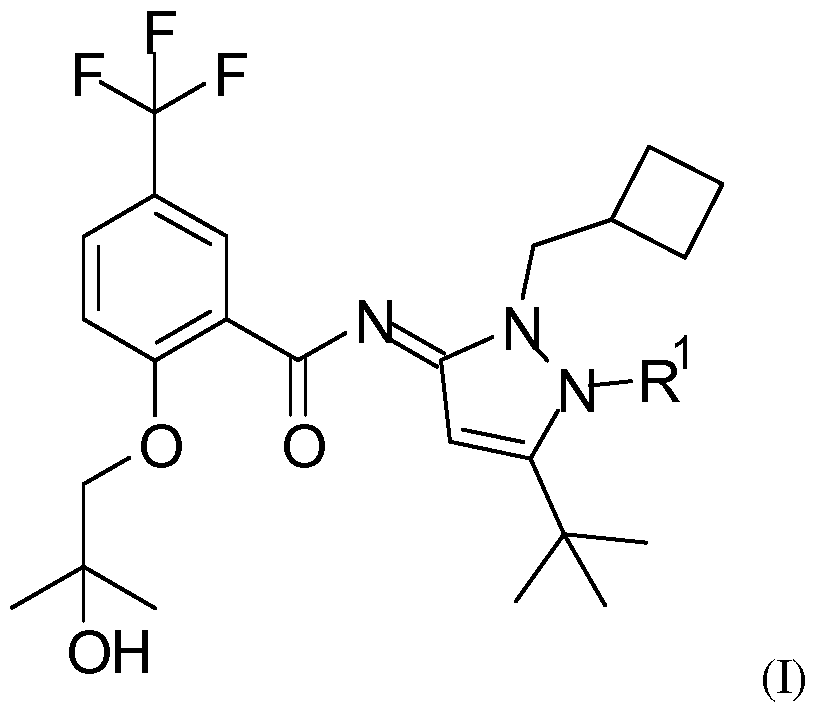
  • Radiolabeled Cannabinoid Receptor 2 Ligand The present invention relates to a radiolabeled Cannabinoid Receptor 2 ligand.
  • the invention relates in particular to a compound of formula (I)
  • R 1 is a methyl group and wherein said methyl group comprises at least one radionuclide.
  • the cannabinoid receptors are a class of cell membrane receptors belonging to the G protein-coupled receptor superfamily. There are currently two known subtypes, termed Cannabinoid Receptor 1 (CBl) and Cannabinoid Receptor 2 (CB2).
  • CBl receptor has a wide range of expression. It is mainly expressed in the central nervous (i.e. amygdala cerebellum, hippocampus) system and to a lesser amount in the periphery.
  • CB2 which is encoded by the CNR2 gene, is mostly expressed peripherally, on cells of the immune system, such as macrophages, B- and, T-cells (Ashton, J. C. et al.
  • the CB2 receptor is also present in the brain where it is found primarily on microglia and not on neurons (Cabral, G. A. et al. Br J Pharmacol 2008, 153(2): 240-51).
  • ischemia/reperfusion injury Pacher, P. et al. Br J Pharmacol 2008, 153(2), 252-62
  • systemic fibrosis Akhmetshina, A. et al. Arthritis Rheum 2009, 60(4), 1129-36; Garcia- Gonzalez, E. et al. Rheumatology (Oxford) 2009, 48(9), 1050-6
  • liver fibrosis Julien, B. et al. Gastroenterology 2005, 128(3), 742-55; Munoz-Luque, J. et al. J Pharmacol Exp Ther 2008, 324(2), 475-83).
  • Ischemia/reperfusion (UK) injury is the principal cause of tissue damage occurring in conditions such as stroke, myocardial infarction, cardiopulmonary bypass and other vascular surgeries, and organ transplantation, as well as a major mechanism of end-organ damage complicating the course of circulatory shock of various etiologies. All these conditions are characterized by a disruption of normal blood supply resulting in an insufficient tissue oxygenation. Re-oxygenation e.g., reperfusion is the ultimate treatment to restore normal tissue oxygenation. However the absence of oxygen and nutrients from blood creates a condition in which the restoration of circulation results in further tissue damage. The damage of reperfusion injury is due in part to the inflammatory response of damaged tissues.
  • White blood cells carried to the area by the newly returning blood, release a host of inflammatory factors such as interleukins as well as free radicals in response to tissue damage.
  • the restored blood flow reintroduces oxygen within cells that damages cellular proteins, DNA, and the plasma membrane.
  • Remote ischemic preconditioning represents a strategy for harnessing the body's endogenous protective capabilities against the injury incurred by ischemia and reperfusion. It describes the interesting phenomenon in which transient non-lethal ischemia and reperfusion of one organ or tissue confers resistance to a subsequent episode of "lethal" ischemia reperfusion injury in a remote organ or tissue. The actual mechanism through which transient ischemia and reperfusion of an organ or tissue confers protection is currently unknown although several hypotheses have been proposed.
  • the humoral hypothesis proposes that the endogenous substance (such as adenosine, bradykinin, opioids, CGRP, endocannabinoids, Angiotensin I or some other as yet unidentified humoral factor) generated in the remote organ or tissue enters the blood stream and activates its respective receptor in the target tissue and thereby recruiting the various intracellular pathways of cardioprotection implicated in ischemic preconditioning.
  • endogenous substance such as adenosine, bradykinin, opioids, CGRP, endocannabinoids, Angiotensin I or some other as yet unidentified humoral factor
  • CB2 can also be of interest in sub-chronic and chronic setting.
  • Specific upregulation of CBl and CB2 has been shown to be associated in animal models of chronic diseases associated with fibrosis (Garcia-Gonzalez, E. et al. Rheumatology (Oxford) 2009, 48(9), 1050-6; Yang, Y. Y. et al. Liver Int 2009, 29(5), 678-85) with a relevant expression of CB2 in
  • CB2 receptor Activation of CB2 receptor by selective CB2 agonist has in fact been shown to exert anti-fibrotic effect in diffuse systemic sclerosis (Garcia-Gonzalez, E. et al. Rheumatology (Oxford) 2009, 48(9), 1050-6) and CB2 receptor has emerged as a critical target in experimental dermal fibrosis (Akhmetshina, A. et al. Arthritis Rheum 2009, 60(4), 1129- 36) and in in liver pathophysiology, including fibrogenesis associated with chronic liver diseases (Lotersztajn, S. et al.
  • the first strategy was to identify ligands with high selectivity for CB2 versus CB 1 and structural homology to naturally occurring cannabinoids.
  • the CB2 agonist HU-910 (described in WO 2011/061744) was selected according to its high selectivity and to its structurally related nature to cannabinoid type compounds found in plants. Although HU- 910 selectively and competitively binds to CB2 receptors that have been labeled with [ H]- CP55940, [ ⁇ ] -HU-910 displayed high non-specific binding thereby masking the specific binding sites to CB2 receptors that are expected to represent a small fraction of the total binding sites.
  • the compound of formula (I) as defined above was surprisingly identified to have the desired properties and turned with highly reduced non-specitic binding.
  • the compound of formula (I) proved to specifically and selectively bind to membranes prepared from cells recombinantly expressing CB2 receptors.
  • the compound of formula (I) turned out to specifically label CB2 receptors in spleen tissues, which is an organ with a high expression of both CB land CB2 receptors.
  • the compound of formula (I) can therefore be used for example in tissue
  • radionuclide defines the isotope of an atom with an unstable nucleus and that undergoes radioactive decay.
  • Particular radionuclides of the invention are [ 3 H], [ n C] and [ 14 C].
  • binding constant refers to the equilibrium constant associated with the binding reaction of a ligand to a receptor.
  • the term "selective binding" characterizes the binding of a ligand to a very limited type of receptors.
  • the invention thus relates to:
  • a compound of formula (I) wherein the at least one radionuclide is independently selected from [ 3 H], [ U C] and [ 14 C];
  • R 1 is C[ 3 H] 3 , [ n C]H 3 or [ 14 C]H 3 ;
  • a compound of formula (I) selected from (NE)-N-[5-tert-butyl-2-(cyclobutylmethyl)- l-(tritritiomethyl)pyrazol-3-ylidene]-2-(2- hydroxy-2-methyl-propoxy)-5-(trifluoromethyl)benzamide;
  • a disease is characterized by a change in the expression of the CB2 receptor, wherein the disease is pain, atherosclerosis, age-related macular degeneration, diabetic retinopathy, glaucoma, diabetes mellitus, inflammation, inflammatory bowel disease, ischemia-reperfusion injury, acute liver failure, liver fibrosis, lung fibrosis, kidney fibrosis, systemic fibrosis, acute allograft rejection, chronic allograft nephropathy, diabetic nephropathy, glomerulonephropathy, cardiomyopathy, heart failure, myocardial ischemia, myocardial infarction, systemic sclerosis, thermal injury, burning, hypertrophic scars, keloids, gingivitis pyrexia, liver cirrhosis or tumors, regulation of bone mass, neurodegeneration, stroke, transient ischemic attack or uveitis;
  • a compound of formula (I) for use in the diagnosis in a patient or tissue of a disease A compound of formula (I) for use in the diagnosis in a patient or tissue of a disease as defined above, wherein the disease is characterized by a change in the expression of the CB2 receptor in said patient or tissue compared to the expression of the CB2 receptors in a healthy subject or tissue;
  • a compound for use as defined above wherein the diagnosis comprises the step of comparing the expression of the CB2 receptor in the patient or tissue to the expression of the CB2 receptor in a healthy subject or tissue;
  • the invention further relates to a method for identifying a compound that binds to a
  • CB2 receptor comprising the following steps:
  • the invention also relates to a method as defined above, further comprising the step of measuring the binding strength to the CB2 receptor of the compound suspected to bind to the CB2 receptor.
  • the invention also relates to a method for determining whether a compound selectively binds to the CB2 receptor against the CB 1 receptor comprising the following steps:
  • the invention further relates to a method for determining whether a compound selectively binds to the CB2 receptor against the CB 1 receptor as defined above further comprising measuring the binding constant to the CB2 receptor of the compound suspected to bind selectively to the CB2 receptor.
  • the invention also relates to a method for identifying a cellular receptor as a CB2 receptor comprising the following steps:
  • the invention also relates to a method for measuring in an animal, a patient or a sample the percentage of CB2 receptors occupied by a compound suspected to bind to the CB2 receptor when a dose of said compound is administered to the animal or patient, or put in contact with the sample, comprising the following steps:
  • the invention also relates to a method for determining the dose of a CB2 ligand that needs to be administered to a patient in need thereof comprising the following steps:
  • step (b5) repeating steps (b2) to (b4) until the percentage of CB2 receptors calculated in step (a4) is also obtained in step (b4); and (b6) calculating the addition of the doses that have been administered in steps
  • the invention also relates to a method for determining whether a disease is characterized by a change in the expression of the CB2 receptor comprising the following steps:
  • the invention also relates to a method of the invention wherein autoradiography or positron emission tomography is used during the monitoring.
  • the invention further relates to a pharmaceutical composition comprising a compound of formula (I).
  • the invention also relates to a compound of formula (I) for use as a diagnostic agent, i.e. for use in the diagnostic of a disease.
  • the invention also relates to a compound of formula (I) for use in the diagnostic of pain, atherosclerosis, age-related macular degeneration, diabetic retinopathy, glaucoma, diabetes mellitus, inflammation, inflammatory bowel disease, ischemia-reperfusion injury, acute liver failure, liver fibrosis, lung fibrosis, kidney fibrosis, systemic fibrosis, acute allograft rejection, chronic allograft nephropathy, diabetic nephropathy,
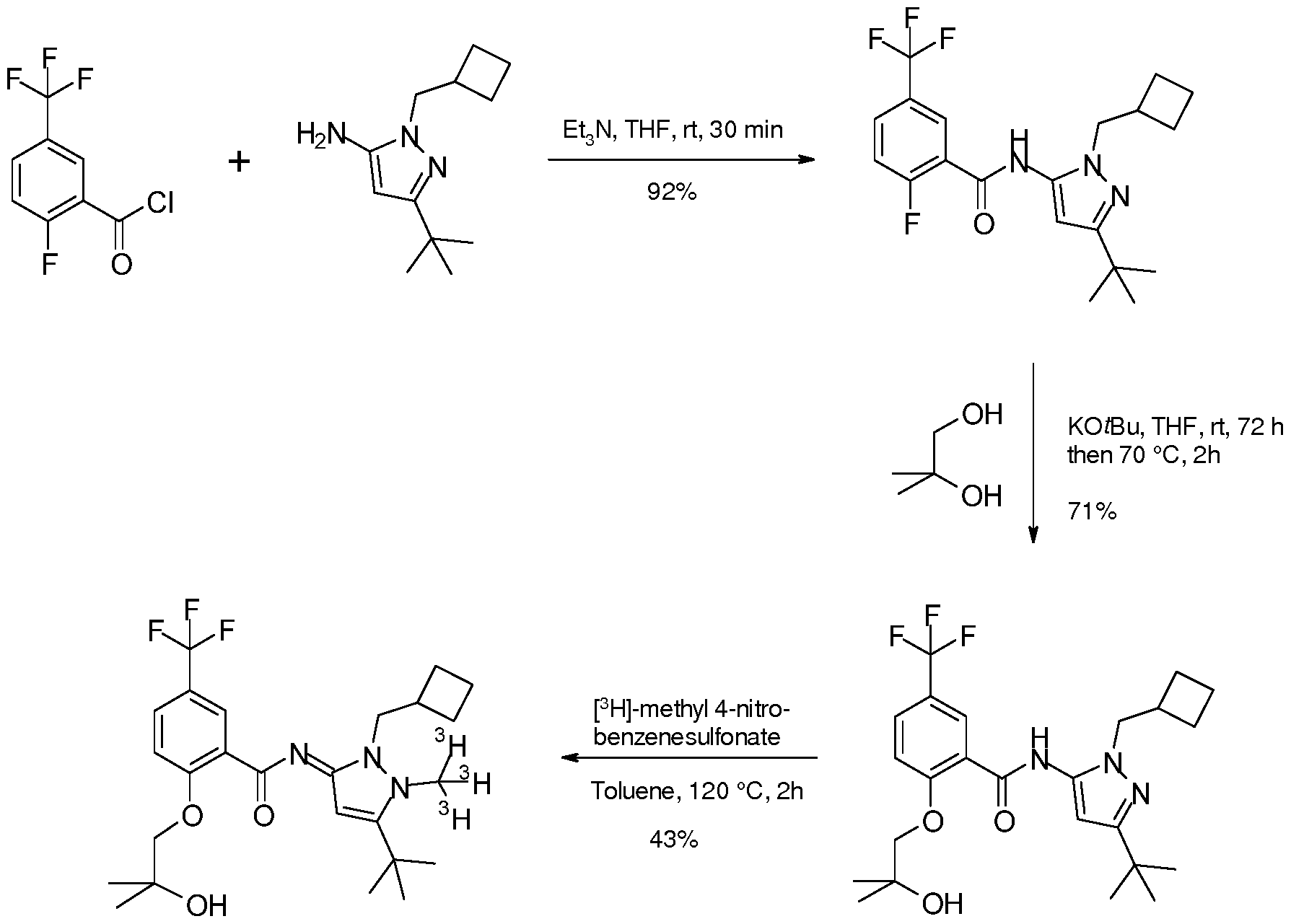
  • the synthesis of the compound of formula (I) can, for example, be accomplished according to the following scheme.
  • the target compound is easily accessible via one-step tritio-methylation reaction of the desmethyl precursor N-[5-tert-butyl-2-(cyclobutylmethyl)pyrazol-3-yl]-2-(2-hydroxy-2- methyl-propoxy)-5-(trifluoromethyl)benzamide using well established tritio-methylation agents like [ 3 H]methyl sulfonates (e.g., [ 3 H]methyl 4-nitrobenzenesulfonate) or [ 3 H]methyl iodide.
  • tritio-methylation agents like [ 3 H]methyl sulfonates (e.g., [ 3 H]methyl 4-nitrobenzenesulfonate) or [ 3 H]methyl iodide.
  • ALARA fundamental principle of radiation protection
  • the desmethyl-precursor is typically used in 2-3 fold excess in relation to the radio-methylation agent.
  • [ 14 C/ n C]-labeled methyl transfer reagents like [ 14 C/ u C]MeI or [ 14 C/ u C]methylsulfonates (e.g.,
  • [ 14 C/ u C]methyl triflate, [ 14 C/ u C]methyl 4-nitrobenzenesulfonate) the corresponding [ 14 C]- and [ u C]-labeled derivatives can be prepared starting from the same precursor molecule.
  • [ n C] -labeling strategies it is of utmost importance to establish a short, fast and efficient synthesis due to the short half-life of 20 min of the positron emitter carbon-11.
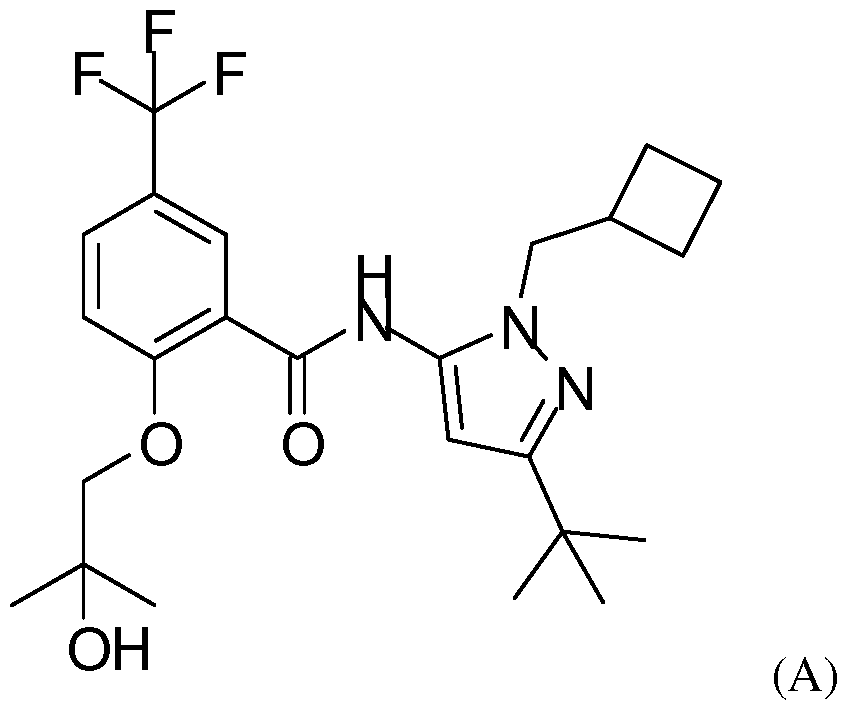
  • the invention thus also relates to a process for the manufacture of a compound of formula (I) comprising reacting a compound of formula (A)
  • the compound of formula (A) is advantageously reacted in the presence of [ 3 H] -methyl 4-nitrobenzenesulfonate, [ 11 C] -methyl triflate or [ 14 C] -methyl 4-nitrobenzenesulfonate.
  • the process of the invention is advantageously carried out in toluene.
  • the process of the invention is advantageously carried out at a temperature of approximately 100 °C to 150 °C, particularly at approximately 120 °C.
  • the invention further relates to a compound manufactured according to a process of the invention.
  • CAN CAS Registry Number
  • LC liquid chromatography
  • MS mass spectrometry
  • NMR nuclear magnetic resonance
  • SEM standard error of the mean
  • THF
  • the aqueous layer was extracted with ethyl acetate (3 x 70 mL). The organic layers were combined and dried using sodium sulfate, before concentrating in vacuo.
  • the crude material was purified by flash chromatography (10% to 20% ethyl acetate in heptane) to give 794.4 mg (2.0 mmol, 91 % yield) of the title compound as an orange powder.
  • Potassium tert-butoxide (203 mg, 1.81 mmol) was added and stirring was continued at 70 °C for 2 hours.
  • Aqueous 1M sodium hydrogen carbonate solution 50 mL
  • ethyl acetate 50 mL
  • the aqueous phase was extracted with ethyl acetate (2 x 50 mL).
  • the organic layers were combined and dried using sodium sulfate, before concentrating in vacuo.
  • the crude material was purified by flash chromotography (30 to 50 % ethyl acetate in heptane), giving 334 mg (0.714 mmol, 71 % yield) of the title compound as a white powder.
  • Carbon-11 was produced via the 14 N(p,a) n C nuclear reaction at a Cyclone 18/9 cyclotron (18-MeV, IBA, Belgium) in the form of [ n C]C0 2 .
  • [ n C]Methyl iodide ([ n C]MeI) was generated in a 2-step reaction sequence involving the reduction of [ n C]C0 2 over nickel catalyst to [ n C]methane and subsequent gas phase iodination. After passing through an AgOTf/C column at 190°C, the more reactive [ n C]methyl inflate (ca.
  • CHO-K1 beta-arrestin cells (DiscoveRx Inc., Fremont, CA) expressing human CB1 and human CB2 were cultured in F-12 Nutrient Mixture (HAM) supplemented with 10% FBS, 300 ⁇ g ml-1 hygromycin and 800 ⁇ g ml-1 geneticin (G418). Cells were incubated in a humidified atmosphere at 37°C with 5% C02.
  • Stably transfected cells or spleen tissue were homogenized in 15 mmol L-1 Hepes, 0.3 mmol L-1 EDTA, 1 mmol L-1 EGTA, 2 mmol L-1 MgCl 2 , complete EDTA-free protease inhibitor (Roche Applied Science, Rotnch, Switzerland), pH 7.4 using a glass potter and centrifugation at 47,800 g at 4°C for 30 min. The pellet was then rehomogenized twice in the same buffer and centrifuged (47,800 g, 4°C, 30 min).
  • the final pellet was then resuspended in 75 mmol L-1 Tris, 0.3 mmol L-1 EDTA, 1 mmol L-1 EGTA, 12.5 mmol L- 1 MgCl 2 , 250 mmol L-1 sucrose, pH 7.4 at a protein concentration of 1 to 3 mg mL-1, aliquoted, frozen on dry ice and stored at -80°C.
  • Assay buffer consisted of 50 mmol.L- 1 Tris-HCl, 5 mmol L- 1 MgCl 2 , 2.5 mmol L- 1 EGTA, and 0.1 % fatty acid-free BSA, pH 7.4. Assays were initiated by addition of membranes in a final volume of 250 ⁇ /well.
  • wash buffer 50 mmol L-1 Tris-HCl, 5 mmol L-1 MgCl 2 , 2.5 mmol L-1 EGTA, and 0.5 % fatty acid-free BSA, pH 7.4
  • wash buffer 50 mmol L-1 Tris-HCl, 5 mmol L-1 MgCl 2 , 2.5 mmol L-1 EGTA, and 0.5 % fatty acid-free BSA, pH 7.4
  • membrane preparations were incubated either with 0.3 nM of
  • Figure 1 shows high specific binding in mouse spleen tissues of the compound of formula (I). Using increasing amounts of membranes, non-specific binding remains constant but specific binding increases.
  • Figure 2 shows that specific binding in mouse spleen tissues of compound of formula (I) is saturable.
  • the calculated half maximal affinity (Kd) is 0.58 nM for mouse CB2 receptors and the CB2 receptor expression level (Bmax) is 430 fmol/mg in mouse spleen tissue.
  • Figure 3 Radioligand binding ( [H] -compound of formula (I)) using mouse spleen KO (NIH)
  • Figure 3 shows in contrast to Figure 1 lack of specific binding of compound of formula (I) in mouse spleen tissues that were retrieved from CB2 deficient mice. Using increasing amounts of membranes, specific binding remains absent, indicating the high specific binding to CB2 receptors as demonstrated in mouse spleen tissues that were retrieved from wild type littermates.

Landscapes

  • Health & Medical Sciences (AREA)
  • Chemical & Material Sciences (AREA)
  • Life Sciences & Earth Sciences (AREA)
  • Engineering & Computer Science (AREA)
  • Organic Chemistry (AREA)
  • Medicinal Chemistry (AREA)
  • General Health & Medical Sciences (AREA)
  • Pharmacology & Pharmacy (AREA)
  • Immunology (AREA)
  • Bioinformatics & Cheminformatics (AREA)
  • Animal Behavior & Ethology (AREA)
  • Veterinary Medicine (AREA)
  • Public Health (AREA)
  • Molecular Biology (AREA)
  • Biomedical Technology (AREA)
  • Urology & Nephrology (AREA)
  • Hematology (AREA)
  • Nuclear Medicine, Radiotherapy & Molecular Imaging (AREA)
  • General Chemical & Material Sciences (AREA)
  • Chemical Kinetics & Catalysis (AREA)
  • Physics & Mathematics (AREA)
  • Cell Biology (AREA)
  • Pathology (AREA)
  • General Physics & Mathematics (AREA)
  • Biochemistry (AREA)
  • Analytical Chemistry (AREA)
  • Food Science & Technology (AREA)
  • Microbiology (AREA)
  • Biotechnology (AREA)
  • Epidemiology (AREA)
  • Optics & Photonics (AREA)
  • Proteomics, Peptides & Aminoacids (AREA)
  • Cardiology (AREA)
  • Anesthesiology (AREA)
  • Diabetes (AREA)
  • Heart & Thoracic Surgery (AREA)
  • Ophthalmology & Optometry (AREA)
  • Rheumatology (AREA)
  • Physical Education & Sports Medicine (AREA)
  • Neurology (AREA)

Abstract

The present invention relates to a compound of formula (I), wherein R is defined as in the description and in the claims. The compound of formula (I) can be used as radiolabeled ligand.

Description

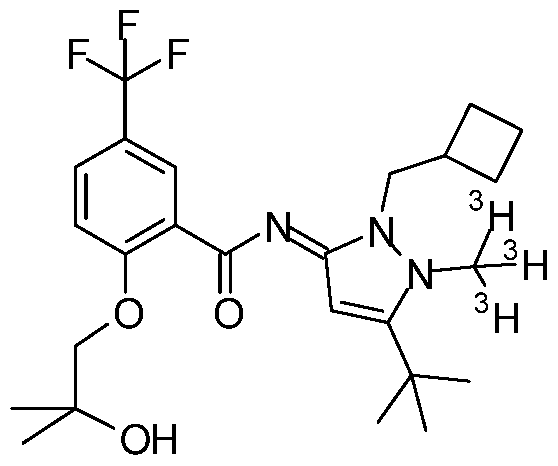
Radiolabeled Cannabinoid Receptor 2 Ligand The present invention relates to a radiolabeled Cannabinoid Receptor 2 ligand. The invention relates in particular to a compound of formula (I)
Figure imgf000003_0001
wherein R1 is a methyl group and wherein said methyl group comprises at least one radionuclide.
The cannabinoid receptors are a class of cell membrane receptors belonging to the G protein-coupled receptor superfamily. There are currently two known subtypes, termed Cannabinoid Receptor 1 (CBl) and Cannabinoid Receptor 2 (CB2). The CBl receptor has a wide range of expression. It is mainly expressed in the central nervous (i.e. amygdala cerebellum, hippocampus) system and to a lesser amount in the periphery. CB2, which is encoded by the CNR2 gene, is mostly expressed peripherally, on cells of the immune system, such as macrophages, B- and, T-cells (Ashton, J. C. et al. Curr Neuropharmacol 2007, 5(2), 73-80; Miller, A. M. et al. Br J Pharmacol 2008, 153(2), 299-308; Centonze, D., et al. Curr Pharm Des 2008, 14(23), 2370-42), and in the gastrointestinal system (Wright, K. L. et al. Br J Pharmacol 2008, 153(2), 263-70). The CB2 receptor is also present in the brain where it is found primarily on microglia and not on neurons (Cabral, G. A. et al. Br J Pharmacol 2008, 153(2): 240-51).
DP/19.08.15 The interest in CB2 receptor agonists has been steadily on the rise during the last decade (currently 30-40 patent applications/year) due to the fact that several of the early compounds have been shown to have beneficial effects in pre-clinical models for a number of human diseases including chronic pain (Beltramo, M. Mini Rev Med Chem 2009, 9(1), 11-25), atherosclerosis (Mach, F. et al. J Neuroendocrinol 2008, 20 Suppl 1, 53-7), regulation of bone mass (Bab, I. et al. Br J Pharmacol 2008, 153(2), 182-8),
neuroinflammation (Cabral, G. A. et al. J Leukoc Biol 2005, 78(6), 1192-7),
ischemia/reperfusion injury (Pacher, P. et al. Br J Pharmacol 2008, 153(2), 252-62), systemic fibrosis (Akhmetshina, A. et al. Arthritis Rheum 2009, 60(4), 1129-36; Garcia- Gonzalez, E. et al. Rheumatology (Oxford) 2009, 48(9), 1050-6), liver fibrosis (Julien, B. et al. Gastroenterology 2005, 128(3), 742-55; Munoz-Luque, J. et al. J Pharmacol Exp Ther 2008, 324(2), 475-83).
Ischemia/reperfusion (UK) injury is the principal cause of tissue damage occurring in conditions such as stroke, myocardial infarction, cardiopulmonary bypass and other vascular surgeries, and organ transplantation, as well as a major mechanism of end-organ damage complicating the course of circulatory shock of various etiologies. All these conditions are characterized by a disruption of normal blood supply resulting in an insufficient tissue oxygenation. Re-oxygenation e.g., reperfusion is the ultimate treatment to restore normal tissue oxygenation. However the absence of oxygen and nutrients from blood creates a condition in which the restoration of circulation results in further tissue damage. The damage of reperfusion injury is due in part to the inflammatory response of damaged tissues. White blood cells, carried to the area by the newly returning blood, release a host of inflammatory factors such as interleukins as well as free radicals in response to tissue damage. The restored blood flow reintroduces oxygen within cells that damages cellular proteins, DNA, and the plasma membrane.
Remote ischemic preconditioning (RIPC) represents a strategy for harnessing the body's endogenous protective capabilities against the injury incurred by ischemia and reperfusion. It describes the intriguing phenomenon in which transient non-lethal ischemia and reperfusion of one organ or tissue confers resistance to a subsequent episode of "lethal" ischemia reperfusion injury in a remote organ or tissue. The actual mechanism through which transient ischemia and reperfusion of an organ or tissue confers protection is currently unknown although several hypotheses have been proposed.
The humoral hypothesis proposes that the endogenous substance (such as adenosine, bradykinin, opioids, CGRP, endocannabinoids, Angiotensin I or some other as yet unidentified humoral factor) generated in the remote organ or tissue enters the blood stream and activates its respective receptor in the target tissue and thereby recruiting the various intracellular pathways of cardioprotection implicated in ischemic preconditioning. Recent data indicates that endocannabinnoids and their receptors, in particular CB2, might be involved in pre-conditioning and contribute to prevent reperfusion injury by downregulation of the inflammatory response (Pacher, P. et al. Br J Pharmacol 2008, 153(2), 252-62). Specifically, recent studies using CB2 tool agonists demonstrated the efficacy of this concept for reducing the VR injury in the heart (Defer, N. et al. Faseb J 2009, 23(7), 2120-30), the brain (Zhang, M. et al. J Cereb Blood Flow Metab 2007, 27(7), 1387-96), the liver (Batkai, S. et al. Faseb J 2007, 21(8), 1788-800) and the kidney (Feizi, A. et al. Exp Toxicol Pathol 2008, 60(4-5), 405-10).
Moreover, over the last few years, a growing body of literature indicates that CB2 can also be of interest in sub-chronic and chronic setting. Specific upregulation of CBl and CB2 has been shown to be associated in animal models of chronic diseases associated with fibrosis (Garcia-Gonzalez, E. et al. Rheumatology (Oxford) 2009, 48(9), 1050-6; Yang, Y. Y. et al. Liver Int 2009, 29(5), 678-85) with a relevant expression of CB2 in
myofibroblasts, the cells responsible for fibrosis progression. Activation of CB2 receptor by selective CB2 agonist has in fact been shown to exert anti-fibrotic effect in diffuse systemic sclerosis (Garcia-Gonzalez, E. et al. Rheumatology (Oxford) 2009, 48(9), 1050-6) and CB2 receptor has emerged as a critical target in experimental dermal fibrosis (Akhmetshina, A. et al. Arthritis Rheum 2009, 60(4), 1129- 36) and in in liver pathophysiology, including fibrogenesis associated with chronic liver diseases (Lotersztajn, S. et al. Gastroenterol Clin Biol 2007, 31(3), 255-8; Mallat, A. et al. Expert Opin Ther Targets 2007, 11(3), 403-9; Lotersztajn, S. et al. Br J Pharmacol 2008, 153(2), 286-9).
The need to unequivocally detect CB2 in tissues came along the growing interest in this receptor. Assessing CB2 expression and receptor occupancy in patients or samples with appropriate tools could verify the target cell of expression, permit dose finding of any CB2 ligand in human studies, or be used for diagnostic purpose.
There is up to now a deficit in efficient tools for the detection of CB2 receptor protein in tissues, which is a consequence of the low expression levels of the CB2 receptor. Another reason for the lack of specific antibodies as detection tools of CB2 could be reasoned in the apparent difficulty to use CB2 as an imunogen.
In order to approach this problem, we explored the possiblity of using a radiolabeled ligand that selectively binds to CB2. To our knowledge, there is only one radiolabeled CB2 ligand available, called [3H-CP55940 (Priller, J. et al Molecular Pharmacology 1995, 48, 288-292). However [¾]-CP55940 is a non- selective agonist for CBl and CB2 receptors and does not distinguish between the two receptors in several mammalian species tested. Therefore, in order to detect CB2 in tissues that might also express CBl, there is a need for a selective CB2 ligand that is radiolabeled with the common isotopes H for competition assays, 14C for autoradiography or nC for PET tracing techniques.
The first strategy was to identify ligands with high selectivity for CB2 versus CB 1 and structural homology to naturally occurring cannabinoids. The CB2 agonist HU-910 (described in WO 2011/061744) was selected according to its high selectivity and to its structurally related nature to cannabinoid type compounds found in plants. Although HU- 910 selectively and competitively binds to CB2 receptors that have been labeled with [ H]- CP55940, [Ή] -HU-910 displayed high non-specific binding thereby masking the specific binding sites to CB2 receptors that are expected to represent a small fraction of the total binding sites. Without willing to be bound by this theory, we ascribed this phenomenon to the high lipophilicity of [ H] -HU-910, causing a high partitioning into the membranes and thereby causing a high non-specific binding that can not be competed off by excess of unlabeled HU-910. It was therefore desired to find a CB2 ligand of high hydrophilicity in addition to potency and selectivity, paired with the option to introduce a radiolabel in a final step of the chemical synthesis.
The compound of formula (I) as defined above was surprisingly identified to have the desired properties and turned with highly reduced non-specitic binding. The compound of formula (I) proved to specifically and selectively bind to membranes prepared from cells recombinantly expressing CB2 receptors. Furthermore, the compound of formula (I) turned out to specifically label CB2 receptors in spleen tissues, which is an organ with a high expression of both CB land CB2 receptors. Moreover, in spleen tissues isolated from CB2 receptor deficient mice, binding by the compound of formula (I) was absent. In this particular case, the total binding signal could not be reduced by excess of unlabeled (Rx= CH3) compound of formula (I).
The compound of formula (I) can therefore be used for example in tissue
autoradiography and PET imaging, e.g. to assess receptor expression and receptor occupancy, for dose finding of any CB2 ligand in human studies, or for diagnostic purposes.
In the present description, the term "radionuclide" defines the isotope of an atom with an unstable nucleus and that undergoes radioactive decay. Particular radionuclides of the invention are [3H], [nC] and [14C]. The term "binding constant" refers to the equilibrium constant associated with the binding reaction of a ligand to a receptor.
The term "selective binding" characterizes the binding of a ligand to a very limited type of receptors. The invention thus relates to:
A compound of formula (I) wherein the at least one radionuclide is independently selected from [3H], [UC] and [14C];
A compound of formula (I) wherein R1 is C[3H]3, [nC]H3 or [14C]H3;
A compound of formula (I) selected from (NE)-N-[5-tert-butyl-2-(cyclobutylmethyl)- l-(tritritiomethyl)pyrazol-3-ylidene]-2-(2- hydroxy-2-methyl-propoxy)-5-(trifluoromethyl)benzamide;
(NE)-N-[5-tert-butyl-2-(cyclobutylmethyl)-l-([14C]methyl)pyrazol-3-ylidene]-2-(2- hydroxy-2-methyl-propoxy)-5-(trifluoromethyl)benzamide; and
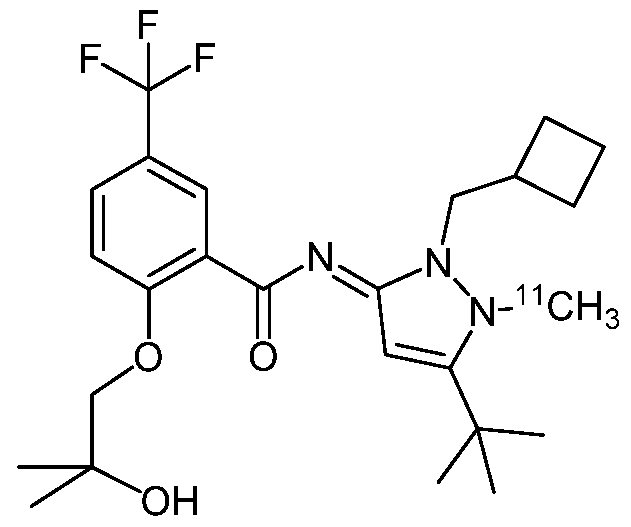
(NE)-N-[5-tert-butyl-2-(cyclobutylmethyl)-l-([uC]methyl)pyrazol-3-ylidene]-2-(2- hydroxy-2-methyl-propoxy)-5-(trifluoromethyl)benzamide;
The use of a compound of formula (I) for localizing a CB2 receptor in a patient or sample;
The use of a compound of formula (I) for imaging a CB2 receptor in a patient or sample; The use of a compound of formula (I) for determining whether another compound binds to a CB2 receptor;
The use of a compound of formula (I) for determining whether another compound binds to a CB2 receptor further comprising measuring the binding constant of said another compound to the CB2 receptor; The use as defined above in the presence of the CB 1 receptor;
The use of a compound of formula (I) to determine whether a disease is characterized by a change in the expression of the CB2 receptor;
The use of a compound of formula (I) to determine whether a disease is characterized by a change in the expression of the CB2 receptor, wherein the disease is pain, atherosclerosis, age-related macular degeneration, diabetic retinopathy, glaucoma, diabetes mellitus, inflammation, inflammatory bowel disease, ischemia-reperfusion injury, acute liver failure, liver fibrosis, lung fibrosis, kidney fibrosis, systemic fibrosis, acute allograft rejection, chronic allograft nephropathy, diabetic nephropathy, glomerulonephropathy, cardiomyopathy, heart failure, myocardial ischemia, myocardial infarction, systemic sclerosis, thermal injury, burning, hypertrophic scars, keloids, gingivitis pyrexia, liver cirrhosis or tumors, regulation of bone mass, neurodegeneration, stroke, transient ischemic attack or uveitis;
A compound of formula (I) for use in the diagnosis in a patient or tissue of a disease; A compound of formula (I) for use in the diagnosis in a patient or tissue of a disease as defined above, wherein the disease is characterized by a change in the expression of the CB2 receptor in said patient or tissue compared to the expression of the CB2 receptors in a healthy subject or tissue;
A compound for use as defined above wherein the diagnosis comprises the step of comparing the expression of the CB2 receptor in the patient or tissue to the expression of the CB2 receptor in a healthy subject or tissue;
The use of a compound of formula (I) to predict whether a patient affected with a disease is likely to respond to a treatment involving the administration of a CB2 ligand;
The use of a compound of formula (I) to predict whether a patient affected with a disease is likely to respond to a treatment involving the administration of a CB2 ligand comprising comparing the expression of the CB2 receptor in the patient to the expression of the CB2 receptor in a healthy subject or tissue; and
The use of a compound of formula (I) for determining the dose of a CB2 ligand that needs to be administered to a patient in need thereof. The invention further relates to a method for identifying a compound that binds to a
CB2 receptor comprising the following steps:
(a) contacting the compound suspected to bind to the CB2 receptor with a sample comprising a CB2 receptor and a compound of formula (I); and
(b) monitoring whether the compound suspected to bind to the CB2 receptor
influences the binding of the compound of formula (I) to the CB2 receptor. The invention also relates to a method as defined above, further comprising the step of measuring the binding strength to the CB2 receptor of the compound suspected to bind to the CB2 receptor.
The invention also relates to a method for determining whether a compound selectively binds to the CB2 receptor against the CB 1 receptor comprising the following steps:
(a) contacting the compound suspected to bind selectively to the CB2 receptor with a sample comprising the CB 1 receptor, the CB2 receptor and a compound of formula (I); and
(b) monitoring whether the compound suspected to bind selectively to the CB2 receptor influences the binding of the compound of formula (I) to the CB2 receptor.
The invention further relates to a method for determining whether a compound selectively binds to the CB2 receptor against the CB 1 receptor as defined above further comprising measuring the binding constant to the CB2 receptor of the compound suspected to bind selectively to the CB2 receptor.
The invention also relates to a method for identifying a cellular receptor as a CB2 receptor comprising the following steps:
(a) contacting a sample suspected to comprise a CB2 receptor with a compound of formula (I); and
(b) monitoring whether the binding of the compound of of formula (I) has occured; and
(c) optionally further contacting the sample with another known CB2 ligand and monitoring whether said known CB2 ligand has displaced the compound of formula (I) from its binding site.
The invention also relates to a method for measuring in an animal, a patient or a sample the percentage of CB2 receptors occupied by a compound suspected to bind to the CB2 receptor when a dose of said compound is administered to the animal or patient, or put in contact with the sample, comprising the following steps:
(a) administering to an animal or patient or contacting a sample comprising at least one CB2 receptor with a compound of formula (I) in an amount sufficient to occupy 100% of the CB2 receptors of the animal, patient or sample; (b) administering to the animal or patient or contacting the sample with the dose of said compound suspected to bind to the CB2 receptor;
(c) monitoring the displacement of the compound of formula (I) by the compound suspected to bind to the CB2 receptor; and
(d) calculating the percentage of the at least one CB2 receptor that is occupied by the compound suspected to bind to the CB2 receptor.
The invention also relates to a method for determining the dose of a CB2 ligand that needs to be administered to a patient in need thereof comprising the following steps:
(a) determining in an animal or sample the percentage of CB2 receptors occupied by the CB2 ligand after a dose of the CB2 ligand that is known to provide a pharmacological response in said animal or sample is administered to the animal or put in contact with the sample comprising:
(al) administering to the animal or contacting the sample with a compound of formula (I) in an amount sufficient to occupy 100% of the CB2 receptors of the animal or sample;
(a2) administering to the animal or contacting the sample with the dose that is known to provide the pharmacological response in said animal or sample;
(a3) monitoring the displacement of the compound of formula (I) by the CB2 ligand; and
(a4) calculating the percentage of CB2 receptors that is occupied by the CB2 ligand;
(b) determining the dose of the CB2 ligand that gives the same percentage of CB2 receptors occupied by the CB2 ligand in a human subject or sample comprising:
(bl) administering to the human subject or contacting the sample with a compound of formula (I) in an amount sufficient to occupy 100% of the CB2 receptors of the human subject;
(b2) administering to the human subject or contacting the sample with a dose of the CB2 ligand;
(b3) monitoring the displacement of the compound of of formula (I) by the CB2 ligand; and (b4) calculating the percentage of CB2 receptors that is occupied by the CB2 ligand;
(b5) repeating steps (b2) to (b4) until the percentage of CB2 receptors calculated in step (a4) is also obtained in step (b4); and (b6) calculating the addition of the doses that have been administered in steps
(b2) in order to obtain the dose of the CB2 ligand that needs to be administered to a patient.
The invention also relates to a method for determining whether a disease is characterized by a change in the expression of the CB2 receptor comprising the following steps:
(a) contacting a sample or administering to a subject affected with said disease and a healty sample or a healthy subject with a compound of formula (I);
(b) monitoring in both samples whether the binding of the compound of formula (I) has occurred; and (c) comparing in both samples the amount of compound of formula (I) that is bound to the CB2 receptors.
The invention also relates to a method of the invention wherein autoradiography or positron emission tomography is used during the monitoring.
The invention further relates to a pharmaceutical composition comprising a compound of formula (I).
The invention also relates to a compound of formula (I) for use as a diagnostic agent, i.e. for use in the diagnostic of a disease.
The invention also relates to a compound of formula (I) for use in the diagnostic of pain, atherosclerosis, age-related macular degeneration, diabetic retinopathy, glaucoma, diabetes mellitus, inflammation, inflammatory bowel disease, ischemia-reperfusion injury, acute liver failure, liver fibrosis, lung fibrosis, kidney fibrosis, systemic fibrosis, acute allograft rejection, chronic allograft nephropathy, diabetic nephropathy,
glomerulonephropathy, cardiomyopathy, heart failure, myocardial ischemia, myocardial infarction, systemic sclerosis, thermal injury, burning, hypertrophic scars, keloids, gingivitis pyrexia, liver cirrhosis or tumors, regulation of bone mass, neurodegeneration, stroke, transient ischemic attack or uveitis. The synthesis of the compound of formula (I) can, for example, be accomplished according to the following scheme.
Scheme 1
Figure imgf000012_0001
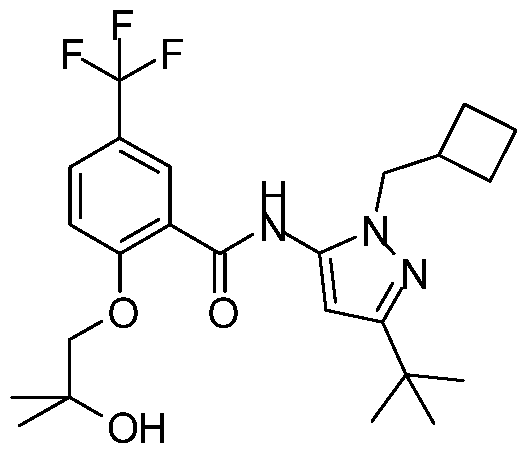
The target compound is easily accessible via one-step tritio-methylation reaction of the desmethyl precursor N-[5-tert-butyl-2-(cyclobutylmethyl)pyrazol-3-yl]-2-(2-hydroxy-2- methyl-propoxy)-5-(trifluoromethyl)benzamide using well established tritio-methylation agents like [ 3 H]methyl sulfonates (e.g., [ 3 H]methyl 4-nitrobenzenesulfonate) or [ 3 H]methyl iodide. The main advantage of this synthesis concept is that the incorporation of the radionuclide can be accomplished in the last step of the synthesis route which is usually the most feasible method to fulfill the fundamental principle of radiation protection known as ALARA (as low as reasonably achieveable).
In order to further minimize the use of radioactive material the desmethyl-precursor is typically used in 2-3 fold excess in relation to the radio-methylation agent. By applying the same synthesis concept and by using known [14C/nC]-labeled methyl transfer reagents like [14C/uC]MeI or [14C/uC]methylsulfonates (e.g.,
[14C/uC]methyl triflate, [14C/uC]methyl 4-nitrobenzenesulfonate) the corresponding [14C]- and [uC]-labeled derivatives can be prepared starting from the same precursor molecule. In particular for [nC] -labeling strategies it is of utmost importance to establish a short, fast and efficient synthesis due to the short half-life of 20 min of the positron emitter carbon-11.
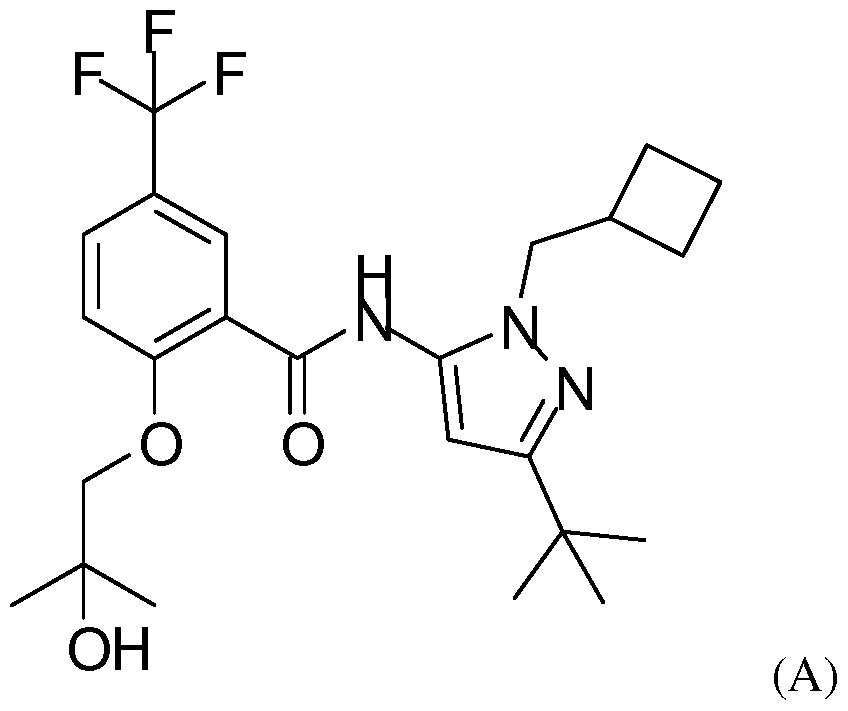
The invention thus also relates to a process for the manufacture of a compound of formula (I) comprising reacting a compound of formula (A)
Figure imgf000013_0001
in the presence of [ 3 H] -methyl 4-nitrobenzenesulfonate, [ 3 H] -methyl iodide, [ 11 C] -methyl triflate, [nC] -methyl iodide, [nC] -methyl 4-nitrobenzenesulfonate, [14C] -methyl triflate, [14C]-methyl iodide or [14C]-methyl 4-nitrobenzenesulfonate. In the process of the invention, the compound of formula (A) is advantageously reacted in the presence of [ 3 H] -methyl 4-nitrobenzenesulfonate, [ 11 C] -methyl triflate or [14C] -methyl 4-nitrobenzenesulfonate
The process of the invention is advantageously carried out in toluene.
The process of the invention is advantageously carried out at a temperature of approximately 100 °C to 150 °C, particularly at approximately 120 °C.
The invention further relates to a compound manufactured according to a process of the invention.
The invention will now be illustrated by the following examples which have no limiting character. Examples
Abbreviations
CAN = CAS Registry Number; LC = liquid chromatography; MS = mass spectrometry; NMR = nuclear magnetic resonance; SEM = standard error of the mean; THF =
tetrahydrofuran; WT = wild type.
Experimental
All reactions were undertaken in flame dried glassware under an atmosphere of argon. Analytical grade solvents were used for reactions and when required, dry solvents were used without further purification. Reagents were purchased from reputable commercial suppliers and used without further purification, unless otherwise stated. All 1H NMR spectra were recorded on a Bruker Advance Ultra Shield 300 MHz spectrometer. Chemical shifts are reported relevant to the stated deuterated solvent. Mass spectra were recorded on PE Sciex API 150EX LC/MS Turbo Spray System. Flash chromatography was conducted using an Isco Combi Flash companion, using prepacked silica solumns (230-400 mesh, 40- 63 μιη) of various sizes from various commercial suppliers. Thin layer chromatography was carried on pre-coated plates (20 x 20 cm, silica gel F254) purchased from Merck KgaA and was visualized using a 254 nm CAMAG UV lamp or using a basic potassium permanganate solution. All reactions were monitored using a combination of thin layer chromatography, LCMS and 1H NMR. Example 1
(NE)-N-[5-tert-butyl-2-(cyclobutylmethyl)-l-(tritritiomethyl)pyrazol-3-ylidene]-2-(2- hydroxy-2-methyl-propoxy)-5-(trifluoromethyl)benzamide
Figure imgf000014_0001
a) N-[5-tert-butyl-2-(cyclobutylmethyl)pyrazol-3-yl]-2-fluoro-5- (trifluoromethyl)benzamide
Figure imgf000015_0001
To a solution of 3-tert-butyl-l-(cyclobutylmethyl)-lH-pyrazol-5-amine (458 mg, 2.21 mmol, CAN 1018679-74-7) and triethylamine (670 mg, 923 μΐ,, 6.62 mmol) in dry THF (9 mL) was added dropwise a solution of 2-fluoro-5-(trifluoromethyl)benzoyl chloride (500 mg, 333 μΐ,, 2.21 mmol, CAN 207981-46-2) in dry THF (9 mL). The pink suspension was stirred at ambient temperature for 30 minutes and extracted with 1M aqueous sodium hydrogen carbonate solution (70 mL). The aqueous layer was extracted with ethyl acetate (3 x 70 mL). The organic layers were combined and dried using sodium sulfate, before concentrating in vacuo. The crude material was purified by flash chromatography (10% to 20% ethyl acetate in heptane) to give 794.4 mg (2.0 mmol, 91 % yield) of the title compound as an orange powder.
1H NMR (300 MHz, CHLOROFORM-d) δ ppm 1.32 (s, 9 H), 1.72 - 2.20 (m, 6 H), 2.81 (dt, J=14.73, 7.37 Hz, 1 H), 4.04 (d, J=7.06 Hz, 2 H), 6.37 (s, 1 H) 7.38 (dd, J=11.61, 8.58 Hz, 1 H), 7.80 - 7.91 (m, 1 H), 8.27 (d, J=15.95 Hz, 1 H), 8.53 (dd, J=6.96, 2.32 Hz, 1 H). MS m/z 398.2 [M+H]+. b) N-[5-tert-butyl-2-(cyclobutylmethyl)pyrazol-3-yl]-2-(2-hydroxy-2-methyl-propoxy)-5- (trifluoromethyl)benzamide
Figure imgf000015_0002
Potassium tert-butoxide (203 mg, 1.81 mmol) was added to an ice-cold solution of 2- methylpropane-l,2-diol (136 mg, 138 μΐ,, 1.51 mmol, CAN 558-43-0) in dry THF (7 mL). The colourless suspension was stirred at 0 °C for 5 minutes, allowed to warm to room temperature and stirred for 1 hour. At 0 °C (N-[5-tert-butyl-2-(cyclobutylmethyl)pyrazol-3- yl]-2-fluoro-5-(trifluoromethyl)benzamide (400 mg, 1.01 mmol) was added. The resulting yellow suspension was stirred at room temperature for 72 h. Potassium tert-butoxide (203 mg, 1.81 mmol) was added and stirring was continued at 70 °C for 2 hours. Aqueous 1M sodium hydrogen carbonate solution (50 mL) and ethyl acetate (50 mL) were added and the layers were separated. The aqueous phase was extracted with ethyl acetate (2 x 50 mL). The organic layers were combined and dried using sodium sulfate, before concentrating in vacuo. The crude material was purified by flash chromotography (30 to 50 % ethyl acetate in heptane), giving 334 mg (0.714 mmol, 71 % yield) of the title compound as a white powder.
1H NMR (300 MHz, CHLOROFORM-d) δ ppm 1.30 (s, 9 H), 1.43 (s, 6 H), 1.69 - 2.05 (m, 6 H), 2.77 (dt, J=14.63, 7.22 Hz, 1 H), 4.02 - 4.19 (m, 4 H), 6.19 (s, 1 H), 7.13 (d, J=8.88 Hz, 1 H), 7.75 (dd, J=8.68, 2.42 Hz, 1 H), 8.55 (d, J=2.22 Hz, 1 H), 9.69 (s, 1 H). MS m/z 468.3 [M+H]+. c) (NE) -N- [5 -tert-butyl-2- (cyclobutylmethyl)- 1 - (tritritiomethyl)pyrazol- 3 -ylidene] -2- (2- hydroxy-2-methyl-propoxy)-5-(trifluoromethyl)benzamide
In a 1-ml screw cap vial N-[5-tert-butyl-2-(cyclobutylmethyl)pyrazol-3-yl]-2-(2-hydroxy-2- methyl-propoxy)-5-(trifluoromethyl)benzamide (1.0 mg, 2.14 μιηιηοΐ) was added to a solution of [ H]methyl 4-nitrobenzenesulfonate (50 mCi, 0.16 mg, 0.71 μιηιηοΐ) in dry toluene (50 μί). The vial was closed and the reaction mixture was stirred for 2 h at 120 °C. Afterwards the crude material was purified by flash chromatography (silica, dichloro- methane / methanol 95 : 5) to give 21.4 mCi (43%) of the title compound in > 99% radiochemical purity (HPLC: X-Bridge C18, acetonitrile / formate buffer pH 3.0) and in a specific activity of 85 Ci/mmol.
Example 2
(NE)-N-[5-tert-butyl-2-(cyclobutylmethyl)-l-([ C]methyl)pyrazol-3-ylidene]-2-(2- hydroxy-2-methyl-propoxy)-5-(trifluoromethyl)benzamide
Figure imgf000016_0001
In a 2-ml screw cap vial N-[5-tert-butyl-2-(cyclobutylmethyl)pyrazol-3-yl]-2-(2-hydroxy-2- methyl-propoxy)-5-(trifluoromethyl)benzamide (209 mg, 0.45 mmol) was added to a solution of [14C]methyl 4-nitrobenzenesulfonate (25 mCi, 98 mg, 0.45 mmol) in dry toluene (1.5 mL). The vial was closed and the reaction mixture was stirred for 20 h at 120 °C. After removal of the solvent the crude material was purified by flash chromatography (silica, dichloromethane / methanol / triethyl amine 97 : 3 : 0.5) to give 8.7 mCi (35%) of the title compound in > 99% radiochemical purity (HPLC: X-Bridge CI 8, water / acetonitrile containing 0.05% of triethyl amine) and in a specific activity of 56 mCi/mmol.
Example 3
(NE)-N-[5-tert-butyl-2-(cyclobutylme tthhyyll))--ll--(([[nC C]methyl)pyrazol-3-ylidene]-2-(2- hydroxy-2-methyl-propoxy)-5-(trifluoromethyl)benzamide
Figure imgf000017_0001
Carbon-11 was produced via the 14N(p,a)nC nuclear reaction at a Cyclone 18/9 cyclotron (18-MeV, IBA, Belgium) in the form of [nC]C02. [nC]Methyl iodide ([nC]MeI) was generated in a 2-step reaction sequence involving the reduction of [nC]C02 over nickel catalyst to [nC]methane and subsequent gas phase iodination. After passing through an AgOTf/C column at 190°C, the more reactive [nC]methyl inflate (ca. 30 GBq) was formed which was bubbled through a 3-mL reactor vial containing N-[5-tert-butyl-2- (cyclobutylmethyl)pyrazol-3-yl]-2-(2-hydroxy-2-methyl-propoxy)-5-(trifluoromethyl) benzamide (3 mg, 6.46 μιηοΐ) and dry toluene (0.25 mL). The mixture was heated to 150 °C for 5 min. After dilution with 30% acetonitrile in water (1.5 mL), the crude product was purified using semi-preparative HPLC (column: Sunfire CI 8 5 μιη; 10 x 150 mm; product peak at ca. 10 min). The collected product was diluted with water (10 mL), trapped on a CI 8 cartridge (Waters, preconditioned with 5 mL EtOH and 10 mL water), washed with water (5 mL) and eluted with EtOH (0.5 mL). For formulation of the final product, water for injection (9.5 mL) was added to give an ethanol concentration of 5%. For quality control, an aliquot of the formulated solution was injected into an analytical HPLC system (column: ACE column, C18, 3 μιη). The identity of the nC-labeled product was confirmed by comparison with the retention time of its nonradioactive reference compound and by co-injection. Specific activity of the product was calculated by comparison of UV peak intensity with a calibration curve of the cold reference compound. In a typical experiment, the specific activity was > 500 GBq/μιηοΙ with a total activity of 2 + 1.00 GBq at the end of synthesis (n = 30). The total synthesis time from end of bombardment was approximately 40 min. Example 4
Radioligand binding in mice
Cell culture
CHO-K1 beta-arrestin cells (DiscoveRx Inc., Fremont, CA) expressing human CB1 and human CB2 were cultured in F-12 Nutrient Mixture (HAM) supplemented with 10% FBS, 300 μg ml-1 hygromycin and 800 μg ml-1 geneticin (G418). Cells were incubated in a humidified atmosphere at 37°C with 5% C02.
Radioligand Binding Assay
Stably transfected cells or spleen tissue were homogenized in 15 mmol L-1 Hepes, 0.3 mmol L-1 EDTA, 1 mmol L-1 EGTA, 2 mmol L-1 MgCl2, complete EDTA-free protease inhibitor (Roche Applied Science, Rotkreuz, Switzerland), pH 7.4 using a glass potter and centrifugation at 47,800 g at 4°C for 30 min. The pellet was then rehomogenized twice in the same buffer and centrifuged (47,800 g, 4°C, 30 min). The final pellet was then resuspended in 75 mmol L-1 Tris, 0.3 mmol L-1 EDTA, 1 mmol L-1 EGTA, 12.5 mmol L- 1 MgCl2, 250 mmol L-1 sucrose, pH 7.4 at a protein concentration of 1 to 3 mg mL-1, aliquoted, frozen on dry ice and stored at -80°C.
Saturation binding
Saturation binding was performed with 0.05 to 2.4 nM compound of formula (I) and 40 μg of membrane protein. CP55940 (10 μΜ) was used to define nonspecific binding. Assay buffer consisted of 50 mmol.L- 1 Tris-HCl, 5 mmol L- 1 MgCl2, 2.5 mmol L- 1 EGTA, and 0.1 % fatty acid-free BSA, pH 7.4. Assays were initiated by addition of membranes in a final volume of 250 μΐ/well. Assays were incubated for 2 h at room temperature and then vacuum filtered and rinsed with wash buffer (50 mmol L-1 Tris-HCl, 5 mmol L-1 MgCl2, 2.5 mmol L-1 EGTA, and 0.5 % fatty acid-free BSA, pH 7.4) on a Filtermate cell harvester through Packard GF/B filters presoaked in 0.3 % polyethylenimine.
Competition binding
For competition binding, membrane preparations were incubated either with 0.3 nM of
[ 3 H]-CP55940 in the presence or absence of increasing concentrations of unlabeled (R 1 = CH3) compound of formula (I) or with 1.5 nM compound of formula (I) and increasing amounts of membranes (2.5 - 80 μg) in the presence or absence of CP55940 (10 μΜ) for 60 min at 30 °C in a final volume of 0.2 niL of 50 mmol L-1 Tris-HCl, 5 mmol L-1 MgCl2, 2.5 mmol L-1 EGTA, 0.1 % fatty acid-free BSA and 1 % DMSO, pH 7.4, buffer, gently shaking. All binding reactions were terminated by vacuum filtration onto 0.5% polyethylenimine presoaked GF/B filter plates (Packard) followed by seven brief washes with 2 mL of ice-cold binding buffer containing 0.5 % fatty acid-free BSA. Plates were dried at 50 °C for 1 h and liquid scintillation counting was used to determine bound radiolabel. IC50 values and Hill slopes were determined by a four parameter logistic model using ActivityBase (ID Business Solution, Ltd.).
The results are shown in Table 1 below and in Figures 1 to 3.
Table 1
Radioligand competition binding of [3H]-CP55940 using CHO-K1 cell expressing human CB2 receptors
Human CB1 Human CB2 pKi 5.41 8.97
SEM ±0.018 ±0.027
n 6 13 Table 1 demonstrates high binding selectivity of the unlabeled (R1= CH3) compound of formula (I) for human CB2 receptors (pKi 8.97) vs human CB1 receptors (pKi 5.41) in cells that recombinantly express these receptors and using the non-selective CB1/CB2 radioligand [3H]-CP55940.
Figure 1: Radioligand binding (1.5 nM [ H] -compound of formula (I)) using mouse spleen tissue WT
Figure 1 shows high specific binding in mouse spleen tissues of the compound of formula (I). Using increasing amounts of membranes, non-specific binding remains constant but specific binding increases.
Figure 2: Radioligand saturation binding ([ H]-compound of formula (I)) using mouse spleen tissue WT
Figure 2 shows that specific binding in mouse spleen tissues of compound of formula (I) is saturable. The calculated half maximal affinity (Kd) is 0.58 nM for mouse CB2 receptors and the CB2 receptor expression level (Bmax) is 430 fmol/mg in mouse spleen tissue. Figure 3: Radioligand binding ( [H] -compound of formula (I)) using mouse spleen KO (NIH)
Figure 3 shows in contrast to Figure 1 lack of specific binding of compound of formula (I) in mouse spleen tissues that were retrieved from CB2 deficient mice. Using increasing amounts of membranes, specific binding remains absent, indicating the high specific binding to CB2 receptors as demonstrated in mouse spleen tissues that were retrieved from wild type littermates.

Claims

Claims
1. A compound of formula (I)
Figure imgf000021_0001
wherein R1 is a methyl group and wherein said methyl group comprises at least one radionuclide.
A compound according to claim 1, wherein the at least one radionuclide is independently selected from [¾], [UC] and [ - 14, ],
3. A compound according to claim 1 or 2, wherein R1 is C[3H]3, [UC]H3 or [14C]H3.
4. The use of a compound according to any one of claims 1 to 3 for localizing a CB2 receptor in a patient or sample.
5. The use of a compound according to any one of claims 1 to 3 for imaging a CB2 receptor in a patient or sample.
6. The use of a compound according to any one of claims 1 to 3 for determining
whether another compound binds to a CB2 receptor.
7. The use according to claim 6 further comprising measuring the binding constant of said another compound to the CB2 receptor.
8. The use according to claim 6 or 7 in the presence of the CB1 receptor.
9. The use of a compound according to any one of claims 1 to 3 to determine whether a disease is characterized by a change in the expression of the CB2 receptor.
10. The use according to claim 9, wherein the disease is pain, atherosclerosis, age-related macular degeneration, diabetic retinopathy, glaucoma, diabetes mellitus,
inflammation, inflammatory bowel disease, ischemia-reperfusion injury, acute liver failure, liver fibrosis, lung fibrosis, kidney fibrosis, systemic fibrosis, acute allograft rejection, chronic allograft nephropathy, diabetic nephropathy,
glomerulonephropathy, cardiomyopathy, heart failure, myocardial ischemia, myocardial infarction, systemic sclerosis, thermal injury, burning, hypertrophic scars, keloids, gingivitis pyrexia, liver cirrhosis or tumors, regulation of bone mass, neurodegeneration, stroke, transient ischemic attack or uveitis.
11. A compound according to any one of claims 1 to 3 for use in the diagnosis in a
patient or tissue of a disease
12. A compound for use according to claim 11, wherein the disease is characterized by a change in the expression of the CB2 receptor in said patient or tissue compared to the expression of the CB2 receptors in a healthy subject or tissue.
13. A compound according to claim 11 or 12, wherein the diagnosis comprises the step of comparing the expression of the CB2 receptor in the patient or tissue to the expression of the CB2 receptor in a healthy subject or tissue.
14. The use of a compound according to any one of claims 1 to 3 to predict whether a patient affected with a disease is likely to respond to a treatment involving the administration of a CB2 ligand.
15. The use according to claim 13 comprising comparing the expression of the CB2
receptor in the patient to the expression of the CB2 receptor in a healthy subject or tissue.
16. The use of a compound according to any one of claims 1 to 3 for determining the dose of a CB2 ligand that needs to be administered to a patient in need thereof.
17. A method for identifying a compound that binds to a CB2 receptor comprising the following steps:
(a) contacting the compound suspected to bind to the CB2 receptor with a sample comprising a CB2 receptor and a compound according to any one of claims 1 to 3; and
(b) monitoring whether the compound suspected to bind to the CB2 receptor
influences the binding of the compound according to any one of claims 1 to 3 to the CB2 receptor.
18. A method according to claim 17 further comprising the step of measuring the binding strength to the CB2 receptor of the compound suspected to bind to the CB2 receptor.
19. A method for determining whether a compound selectively binds to the CB2 receptor against the CB1 receptor comprising the following steps:
(a) contacting the compound suspected to bind selectively to the CB2 receptor with a sample comprising the CB 1 receptor, the CB2 receptor and a compound according to any one of claim 1 to 3; and
(b) monitoring whether the compound suspected to bind selectively to the CB2 receptor influences the binding of the compound according to any one of claims
1 to 3 to the CB2 receptor.
20. A method according to claim 19 further comprising measuring the binding constant to the CB2 receptor of the compound suspected to bind selectively to the CB2 receptor.
21. A method for identifying a cellular receptor as a CB2 receptor comprising the
following steps:
(a) contacting a sample suspected to comprise a CB2 receptor with a compound according to any one of claims 1 to 3; and
(b) monitoring whether the binding of the compound according to any one of claims 1 to 3 has occurred; and
(c) optionally further contacting the sample with another known CB2 ligand and monitoring whether said known CB2 ligand has displaced the compound according to any one of claims 1 to 3 from its binding site.
22. A method for measuring in an animal, a patient or a sample the percentage of CB2 receptors occupied by a compound suspected to bind to the CB2 receptor when a dose of said compound is administered to the animal or patient, or put in contact with the sample, comprising the following steps:
(a) administering to an animal or patient or contacting a sample comprising at least one CB2 receptor with a compound according to any one of claims 1 to 3 in an amount sufficient to occupy 100% of the CB2 receptors of the animal, patient or sample; (b) administering to the animal or patient or contacting the sample with the dose of said compound suspected to bind to the CB2 receptor;
(c) monitoring the displacement of the compound according to any one of claims 1 to 3 by the compound suspected to bind to the CB2 receptor; and
(d) calculating the percentage of the at least one CB2 receptor that is occupied by the compound suspected to bind to the CB2 receptor.
A method for determining the dose of a CB2 ligand that needs to be administered to a patient in need thereof comprising the following steps:
(a) determining in an animal or sample the percentage of CB2 receptors occupied by the CB2 ligand after a dose of the CB2 ligand that is known to provide a pharmacological response in said animal or sample is administered to the animal or put in contact with the sample comprising:
(al) administering to the animal or contacting the sample with a compound according to any one of claims 1 to 3 in an amount sufficient to occupy 100% of the CB2 receptors of the animal or sample;
(a2) administering to the animal or contacting the sample with the dose that is known to provide the pharmacological response in said animal or sample;
(a3) monitoring the displacement of the compound according to any one of claims 1 to 3 by the CB2 ligand; and
(a4) calculating the percentage of CB2 receptors that is occupied by the CB2 ligand;
(b) determining the dose of the CB2 ligand that gives the same percentage of CB2 receptors occupied by the CB2 ligand in a human subject or sample comprising:
(bl) administering to the human subject or contacting the sample with a
compound according to any one of claims 1 to 3 in an amount sufficient to occupy 100% of the CB2 receptors of the human subject;
(b2) administering to the human subject or contacting the sample with a dose of the CB2 ligand;
(b3) monitoring the displacement of the compound according to any one of claims 1 to 3 by the CB2 ligand; and (b4) calculating the percentage of CB2 receptors that is occupied by the CB2 ligand;
(b5) repeating steps (b2) to (b4) until the percentage of CB2 receptors
calculated in step (a4) is also obtained in step (b4); and
(b6) calculating the addition of the doses that have been administered in steps (b2) in order to obtain the dose of the CB2 ligand that needs to be administered to a patient.
A method for determining whether a disease is characterized by a change in the expression of the CB2 receptor comprising the following steps:
(a) contacting a sample or administering to a subject affected with said disease and a healty sample or a healthy subject with a compound according to any one of claims 1 to 3;
(b) monitoring in both samples whether the binding of the compound according to any one of claims 1 to 3 has occurred; and
(c) comparing in both samples the amount of compound according to any one of claims 1 to 3 that is bound to the CB2 receptors.
A method according to any one of claims 17 to 24 wherein autoradiography or positron emission tomography is used during the monitoring.
A pharmaceutical composition comprising a compound according to any one of claims 1 to 3.
A compound according to any one of claims 1 to 3 for use as a diagnostic agent.
A compound according to any one of claims 1 to 3 for use in the diagnostic of pain, atherosclerosis, age-related macular degeneration, diabetic retinopathy, glaucoma, diabetes mellitus, inflammation, inflammatory bowel disease, ischemia-reperfusion injury, acute liver failure, liver fibrosis, lung fibrosis, kidney fibrosis, systemic fibrosis, acute allograft rejection, chronic allograft nephropathy, diabetic
nephropathy, glomerulonephropathy, cardiomyopathy, heart failure, myocardial ischemia, myocardial infarction, systemic sclerosis, thermal injury, burning, hypertrophic scars, keloids, gingivitis pyrexia, liver cirrhosis or tumors, regulation of bone mass, neurodegeneration, stroke, transient ischemic attack or uveitis.
A process for the manufacture of a compound according to any one of claims 1 to 3 comprising reacting a compound of formula (A)
Figure imgf000026_0001
in the presence of [ 3 H] -methyl 4-nitrobenzenesulfonate, [ 3 H] -methyl iodide, [ 11 C]- methyl triflate, [nC] -methyl iodide, [nC] -methyl 4-nitrobenzenesulfonate, [14C]- methyl triflate, [14C]-methyl iodide or [14C]-methyl 4-nitrobenzenesulfonate.
30. A compound manufactured according to a process of claim 29.
31. The invention as hereinbefore described.
***
PCT/EP2015/074557 2014-10-27 2015-10-23 Radiolabeled cannabinoid receptor 2 ligand Ceased WO2016066534A1 (en)

Priority Applications (9)

Application Number Priority Date Filing Date Title
RU2017116665A RU2017116665A (en) 2014-10-27 2015-10-23 RADIOACTIVE LIGAND OF CANNABINOID RECEPTORS 2
CN201580046629.2A CN106795121A (en) 2014-10-27 2015-10-23 The part of radioactive label Cannabined receptor 2
JP2017514901A JP6637034B2 (en) 2014-10-27 2015-10-23 Radiolabeled cannabinoid receptor 2 ligand
BR112017008664A BR112017008664A2 (en) 2014-10-27 2015-10-23 ligand 2 of radiolabelled cannabinoid receptor
MX2017002015A MX2017002015A (en) 2014-10-27 2015-10-23 Radiolabeled cannabinoid receptor 2 ligand.
KR1020177008551A KR20170072876A (en) 2014-10-27 2015-10-23 Radiolabeled cannabinoid receptor 2 ligand
EP15784679.1A EP3212241B1 (en) 2014-10-27 2015-10-23 Radiolabeled cannabinoid receptor 2 ligand
CA2956056A CA2956056A1 (en) 2014-10-27 2015-10-23 Radiolabeled cannabinoid receptor 2 ligand
US15/443,894 US10227308B2 (en) 2014-10-27 2017-02-27 Radiolabeled cannabinoid receptor 2 ligand

Applications Claiming Priority (2)

Application Number Priority Date Filing Date Title
EP14190523 2014-10-27
EP14190523.2 2014-10-27

Related Child Applications (1)

Application Number Title Priority Date Filing Date
US15/443,894 Continuation US10227308B2 (en) 2014-10-27 2017-02-27 Radiolabeled cannabinoid receptor 2 ligand

Publications (1)

Publication Number Publication Date
WO2016066534A1 true WO2016066534A1 (en) 2016-05-06

Family

ID=51870829

Family Applications (1)

Application Number Title Priority Date Filing Date
PCT/EP2015/074557 Ceased WO2016066534A1 (en) 2014-10-27 2015-10-23 Radiolabeled cannabinoid receptor 2 ligand

Country Status (10)

Country Link
US (1) US10227308B2 (en)
EP (1) EP3212241B1 (en)
JP (1) JP6637034B2 (en)
KR (1) KR20170072876A (en)
CN (1) CN106795121A (en)
BR (1) BR112017008664A2 (en)
CA (1) CA2956056A1 (en)
MX (1) MX2017002015A (en)
RU (1) RU2017116665A (en)
WO (1) WO2016066534A1 (en)

Cited By (4)

* Cited by examiner, † Cited by third party
Publication number Priority date Publication date Assignee Title
US10227308B2 (en) 2014-10-27 2019-03-12 Hoffmann-La Roche Inc. Radiolabeled cannabinoid receptor 2 ligand
US20210115012A1 (en) * 2018-06-27 2021-04-22 Hoffmann-La Roche Inc. Radiolabeled cannabinoid receptor 2 ligand
US12071420B2 (en) 2018-06-27 2024-08-27 Hoffmann-La Roche Inc. Pyridine and pyrazine compounds as inhibitors of cannabinoid receptor 2
US12180196B2 (en) 2018-06-27 2024-12-31 Hoffmann-La Roche Inc. Azetidine-substituted pyridine and pyrazine compounds as inhibitors of cannabinoid receptor 2

Families Citing this family (2)

* Cited by examiner, † Cited by third party
Publication number Priority date Publication date Assignee Title
CN109091681B (en) * 2018-08-09 2021-08-03 中山大学附属第一医院 [18F]Trifluoromethyl sulfur-containing amino acid PET imaging agent and its preparation method and application
EP4016069A1 (en) * 2020-12-21 2022-06-22 F. Hoffmann-La Roche AG Sensor device and method of its use

Citations (2)

* Cited by examiner, † Cited by third party
Publication number Priority date Publication date Assignee Title
WO2008141249A1 (en) * 2007-05-10 2008-11-20 Acadia Pharmaceuticals Inc. Imidazol (1,2-a)pyridines and related compounds with activity at cannabinoid cb2 receptors
US20100069348A1 (en) * 2008-09-16 2010-03-18 Abbott Laboratories Novel compounds as cannabinoid receptor ligands

Family Cites Families (2)

* Cited by examiner, † Cited by third party
Publication number Priority date Publication date Assignee Title
MX355972B (en) 2009-11-19 2018-05-07 Yissum Res Dev Co Of Hebrew Univ Jerusalem Ltd Novel arylated camphenes, processes for their preparation and uses thereof.
CN106795121A (en) 2014-10-27 2017-05-31 豪夫迈·罗氏有限公司 The part of radioactive label Cannabined receptor 2

Patent Citations (2)

* Cited by examiner, † Cited by third party
Publication number Priority date Publication date Assignee Title
WO2008141249A1 (en) * 2007-05-10 2008-11-20 Acadia Pharmaceuticals Inc. Imidazol (1,2-a)pyridines and related compounds with activity at cannabinoid cb2 receptors
US20100069348A1 (en) * 2008-09-16 2010-03-18 Abbott Laboratories Novel compounds as cannabinoid receptor ligands

Non-Patent Citations (3)

* Cited by examiner, † Cited by third party
Title
EVENS N ET AL: "Synthesis and biological evaluation of carbon-11- and fluorine-18-labeled 2-oxoquinoline derivatives for type 2 cannabinoid receptor positron emission tomography imaging", NUCLEAR MEDICINE AND BIOLOGY, ELSEVIER, NY, US, vol. 36, no. 4, 1 May 2009 (2009-05-01), pages 455 - 465, XP026091565, ISSN: 0969-8051, [retrieved on 20090326], DOI: 10.1016/J.NUCMEDBIO.2009.01.009 *
LINJING MU ET AL: "Radiolabeling and in vitro / in vivo evaluation of N-(1-adamantyl)-8-methoxy-4-oxo-1-phenyl-1,4-dihydroquinoline-3-carboxamide as a PET probe for imaging cannabinoid type 2 receptor", JOURNAL OF NEUROCHEMISTRY, vol. 126, no. 5, 19 September 2013 (2013-09-19), pages 616 - 624, XP055146558, ISSN: 0022-3042, DOI: 10.1111/jnc.12354 *
LINJING MU ET AL: "Synthesis and Preliminary Evaluation of a 2-Oxoquinoline Carboxylic Acid Derivative for PET Imaging the Cannabinoid Type 2 Receptor", PHARMACEUTICALS, vol. 7, no. 3, 6 March 2014 (2014-03-06), pages 339 - 352, XP055236251, DOI: 10.3390/ph7030339 *

Cited By (5)

* Cited by examiner, † Cited by third party
Publication number Priority date Publication date Assignee Title
US10227308B2 (en) 2014-10-27 2019-03-12 Hoffmann-La Roche Inc. Radiolabeled cannabinoid receptor 2 ligand
US20210115012A1 (en) * 2018-06-27 2021-04-22 Hoffmann-La Roche Inc. Radiolabeled cannabinoid receptor 2 ligand
US11999710B2 (en) * 2018-06-27 2024-06-04 Hoffmann-La Roche Inc. Radiolabeled cannabinoid receptor 2 ligand
US12071420B2 (en) 2018-06-27 2024-08-27 Hoffmann-La Roche Inc. Pyridine and pyrazine compounds as inhibitors of cannabinoid receptor 2
US12180196B2 (en) 2018-06-27 2024-12-31 Hoffmann-La Roche Inc. Azetidine-substituted pyridine and pyrazine compounds as inhibitors of cannabinoid receptor 2

Also Published As

Publication number Publication date
JP2017534580A (en) 2017-11-24
US20170166534A1 (en) 2017-06-15
RU2017116665A (en) 2018-11-29
US10227308B2 (en) 2019-03-12
MX2017002015A (en) 2017-09-01
CA2956056A1 (en) 2016-05-06
EP3212241A1 (en) 2017-09-06
KR20170072876A (en) 2017-06-27
JP6637034B2 (en) 2020-01-29
RU2017116665A3 (en) 2019-04-23
BR112017008664A2 (en) 2018-01-30
CN106795121A (en) 2017-05-31
EP3212241B1 (en) 2019-05-08

Similar Documents

Publication Publication Date Title
US10227308B2 (en) Radiolabeled cannabinoid receptor 2 ligand
JP7752201B2 (en) Radiolabeled cannabinoid receptor 2 ligand
US20150139903A1 (en) Phosphodiesterase 1-targeting tracers and methods
JP2023036883A (en) Compounds
Woodard et al. Bridged cyclams as imaging agents for chemokine receptor 4 (CXCR4)
Pretze et al. Synthesis, radiolabelling and initial biological characterisation of 18 F-labelled xanthine derivatives for PET imaging of Eph receptors
Lindemann et al. Radiosynthesis and in vivo evaluation of a fluorine-18 labeled pyrazine based radioligand for PET imaging of the adenosine A2B receptor
Piras et al. High‐Affinity “Click” RGD Peptidomimetics as Radiolabeled Probes for Imaging αvβ3 Integrin
Burai et al. Synthesis and characterization of tricarbonyl-Re/Tc (I) chelate probes targeting the G protein-coupled estrogen receptor GPER/GPR30
Schieferstein et al. Selective binding to monoamine oxidase A: in vitro and in vivo evaluation of 18F-labeled β-carboline derivatives
Wang et al. Synthesis and biological evaluation of 18F labeled fluoro-oligo-ethoxylated 4-benzylpiperazine derivatives for sigma-1 receptor imaging
CN106317057B (en) With Imidazopyrazines analog derivative, preparation and its application in medicine
Petroni et al. Toward PET imaging of A2B adenosine receptors: A carbon-11 labeled triazinobenzimidazole tracer: Synthesis and imaging of a new A2B PET tracer
Wängler et al. Application of tris-allyl-DOTA in the preparation of DOTA–peptide conjugates
Verbeken et al. Blood–brain transfer and antinociception of linear and cyclic N-methyl-guanidine and thiourea-enkephalins
Gao et al. Simple synthesis of new carbon-11-labeled 1, 2, 4-triazolo [4, 3-a] quinoxalin-1-one derivatives for PET imaging of A3 adenosine receptor
HK1233251A1 (en) Radiolabeled cannabinoid receptor 2 ligand
Fishback et al. Synthesis and characterization of [3H]-SN56, a novel radioligand for the σ1 receptor
CA2974311A1 (en) Pet imaging agents
HK40044011B (en) Radiolabeled cannabinoid receptor 2 ligand
HK40089266A (en) Radiolabeled cannabinoid receptor 2 ligand
HK40044011A (en) Radiolabeled cannabinoid receptor 2 ligand
Lengkeek et al. Synthesis and Binding Affinity of Fluorine Containing NG-acyl and-sulfonyl BIBP3226 Derivatives: Ligands for the NPY Y1 Receptor
Auberson et al. PET Imaging of T Cells: Target Identification and Feasibility Assessment
Selvaraj Catalytic carbozincation of diazoesters and development of probes for F-18 imaging based on rapid bioorthogonal reactivity

Legal Events

Date Code Title Description
121 Ep: the epo has been informed by wipo that ep was designated in this application

Ref document number: 15784679

Country of ref document: EP

Kind code of ref document: A1

DPE1 Request for preliminary examination filed after expiration of 19th month from priority date (pct application filed from 20040101)
ENP Entry into the national phase

Ref document number: 2956056

Country of ref document: CA

WWE Wipo information: entry into national phase

Ref document number: MX/A/2017/002015

Country of ref document: MX

ENP Entry into the national phase

Ref document number: 2017514901

Country of ref document: JP

Kind code of ref document: A

ENP Entry into the national phase

Ref document number: 20177008551

Country of ref document: KR

Kind code of ref document: A

REEP Request for entry into the european phase

Ref document number: 2015784679

Country of ref document: EP

WWE Wipo information: entry into national phase

Ref document number: 2015784679

Country of ref document: EP

NENP Non-entry into the national phase

Ref country code: DE

ENP Entry into the national phase

Ref document number: 2017116665

Country of ref document: RU

Kind code of ref document: A

REG Reference to national code

Ref country code: BR

Ref legal event code: B01A

Ref document number: 112017008664

Country of ref document: BR

ENP Entry into the national phase

Ref document number: 112017008664

Country of ref document: BR

Kind code of ref document: A2

Effective date: 20170426