[go: up one dir, main page]

WO2015183902A1 - Ox40l fusion proteins and uses thereof - Google Patents

Ox40l fusion proteins and uses thereof Download PDF

Info

Publication number
WO2015183902A1
WO2015183902A1 PCT/US2015/032598 US2015032598W WO2015183902A1 WO 2015183902 A1 WO2015183902 A1 WO 2015183902A1 US 2015032598 W US2015032598 W US 2015032598W WO 2015183902 A1 WO2015183902 A1 WO 2015183902A1
Authority
WO
WIPO (PCT)
Prior art keywords
cells
hexameric protein
cell
human
protein
Prior art date
Legal status (The legal status is an assumption and is not a legal conclusion. Google has not performed a legal analysis and makes no representation as to the accuracy of the status listed.)
Ceased
Application number
PCT/US2015/032598
Other languages
French (fr)
Inventor
Melissa Damschroder
Michael Oberst
Scott Hammond
Hui Feng
Current Assignee (The listed assignees may be inaccurate. Google has not performed a legal analysis and makes no representation or warranty as to the accuracy of the list.)
MedImmune LLC
Original Assignee
MedImmune LLC
Priority date (The priority date is an assumption and is not a legal conclusion. Google has not performed a legal analysis and makes no representation as to the accuracy of the date listed.)
Filing date
Publication date
Application filed by MedImmune LLC filed Critical MedImmune LLC
Priority to MX2016014647A priority Critical patent/MX360295B/en
Priority to EP15799339.5A priority patent/EP3148573A4/en
Priority to BR112016027845A priority patent/BR112016027845A2/en
Priority to RU2016150096A priority patent/RU2016150096A/en
Priority to JP2016569060A priority patent/JP6666267B2/en
Priority to CN201580028116.9A priority patent/CN106456734A/en
Publication of WO2015183902A1 publication Critical patent/WO2015183902A1/en
Anticipated expiration legal-status Critical
Ceased legal-status Critical Current

Links

Classifications

    • CCHEMISTRY; METALLURGY
    • C07ORGANIC CHEMISTRY
    • C07KPEPTIDES
    • C07K14/00Peptides having more than 20 amino acids; Gastrins; Somatostatins; Melanotropins; Derivatives thereof
    • C07K14/435Peptides having more than 20 amino acids; Gastrins; Somatostatins; Melanotropins; Derivatives thereof from animals; from humans
    • C07K14/705Receptors; Cell surface antigens; Cell surface determinants
    • C07K14/70575NGF/TNF-superfamily, e.g. CD70, CD95L, CD153, CD154
    • CCHEMISTRY; METALLURGY
    • C07ORGANIC CHEMISTRY
    • C07KPEPTIDES
    • C07K14/00Peptides having more than 20 amino acids; Gastrins; Somatostatins; Melanotropins; Derivatives thereof
    • C07K14/435Peptides having more than 20 amino acids; Gastrins; Somatostatins; Melanotropins; Derivatives thereof from animals; from humans
    • C07K14/52Cytokines; Lymphokines; Interferons
    • AHUMAN NECESSITIES
    • A61MEDICAL OR VETERINARY SCIENCE; HYGIENE
    • A61KPREPARATIONS FOR MEDICAL, DENTAL OR TOILETRY PURPOSES
    • A61K38/00Medicinal preparations containing peptides
    • A61K38/16Peptides having more than 20 amino acids; Gastrins; Somatostatins; Melanotropins; Derivatives thereof
    • A61K38/17Peptides having more than 20 amino acids; Gastrins; Somatostatins; Melanotropins; Derivatives thereof from animals; from humans
    • A61K38/19Cytokines; Lymphokines; Interferons
    • A61K38/191Tumor necrosis factors [TNF], e.g. lymphotoxin [LT], i.e. TNF-beta
    • AHUMAN NECESSITIES
    • A61MEDICAL OR VETERINARY SCIENCE; HYGIENE
    • A61KPREPARATIONS FOR MEDICAL, DENTAL OR TOILETRY PURPOSES
    • A61K39/00Medicinal preparations containing antigens or antibodies
    • A61K39/39Medicinal preparations containing antigens or antibodies characterised by the immunostimulating additives, e.g. chemical adjuvants
    • AHUMAN NECESSITIES
    • A61MEDICAL OR VETERINARY SCIENCE; HYGIENE
    • A61PSPECIFIC THERAPEUTIC ACTIVITY OF CHEMICAL COMPOUNDS OR MEDICINAL PREPARATIONS
    • A61P35/00Antineoplastic agents
    • AHUMAN NECESSITIES
    • A61MEDICAL OR VETERINARY SCIENCE; HYGIENE
    • A61PSPECIFIC THERAPEUTIC ACTIVITY OF CHEMICAL COMPOUNDS OR MEDICINAL PREPARATIONS
    • A61P35/00Antineoplastic agents
    • A61P35/02Antineoplastic agents specific for leukemia
    • AHUMAN NECESSITIES
    • A61MEDICAL OR VETERINARY SCIENCE; HYGIENE
    • A61PSPECIFIC THERAPEUTIC ACTIVITY OF CHEMICAL COMPOUNDS OR MEDICINAL PREPARATIONS
    • A61P37/00Drugs for immunological or allergic disorders
    • A61P37/02Immunomodulators
    • A61P37/04Immunostimulants
    • CCHEMISTRY; METALLURGY
    • C07ORGANIC CHEMISTRY
    • C07KPEPTIDES
    • C07K19/00Hybrid peptides, i.e. peptides covalently bound to nucleic acids, or non-covalently bound protein-protein complexes
    • CCHEMISTRY; METALLURGY
    • C12BIOCHEMISTRY; BEER; SPIRITS; WINE; VINEGAR; MICROBIOLOGY; ENZYMOLOGY; MUTATION OR GENETIC ENGINEERING
    • C12NMICROORGANISMS OR ENZYMES; COMPOSITIONS THEREOF; PROPAGATING, PRESERVING, OR MAINTAINING MICROORGANISMS; MUTATION OR GENETIC ENGINEERING; CULTURE MEDIA
    • C12N15/00Mutation or genetic engineering; DNA or RNA concerning genetic engineering, vectors, e.g. plasmids, or their isolation, preparation or purification; Use of hosts therefor
    • C12N15/09Recombinant DNA-technology
    • C12N15/11DNA or RNA fragments; Modified forms thereof; Non-coding nucleic acids having a biological activity
    • C12N15/62DNA sequences coding for fusion proteins
    • AHUMAN NECESSITIES
    • A61MEDICAL OR VETERINARY SCIENCE; HYGIENE
    • A61KPREPARATIONS FOR MEDICAL, DENTAL OR TOILETRY PURPOSES
    • A61K39/00Medicinal preparations containing antigens or antibodies
    • A61K2039/555Medicinal preparations containing antigens or antibodies characterised by a specific combination antigen/adjuvant
    • A61K2039/55511Organic adjuvants
    • A61K2039/55516Proteins; Peptides
    • AHUMAN NECESSITIES
    • A61MEDICAL OR VETERINARY SCIENCE; HYGIENE
    • A61KPREPARATIONS FOR MEDICAL, DENTAL OR TOILETRY PURPOSES
    • A61K39/00Medicinal preparations containing antigens or antibodies
    • A61K2039/60Medicinal preparations containing antigens or antibodies characteristics by the carrier linked to the antigen
    • A61K2039/6031Proteins
    • A61K2039/6056Antibodies
    • CCHEMISTRY; METALLURGY
    • C07ORGANIC CHEMISTRY
    • C07KPEPTIDES
    • C07K2319/00Fusion polypeptide
    • C07K2319/30Non-immunoglobulin-derived peptide or protein having an immunoglobulin constant or Fc region, or a fragment thereof, attached thereto
    • CCHEMISTRY; METALLURGY
    • C07ORGANIC CHEMISTRY
    • C07KPEPTIDES
    • C07K2319/00Fusion polypeptide
    • C07K2319/70Fusion polypeptide containing domain for protein-protein interaction
    • C07K2319/73Fusion polypeptide containing domain for protein-protein interaction containing coiled-coiled motif (leucine zippers)

Definitions

  • OX40 (CD 134; TNFRSF4) is a tumor necrosis factor receptor found primarily on activated CD4 + and CD8 + T-cells, regulatory T cells (Treg) and natural killer (NK) cells (Croft et al., 2009, Immunol Rev. 229: 173-91).
  • OX40 has one known endogenous ligand, OX40 ligand (OX40L; CD152; TNFSF4), that exists in a trimeric form and can cluster OX40 resulting in potent cell signaling events within T cells (Croft et al., 2009, Immunol Rev. 229: 173-91).
  • OX40 signaling through OX40 on activated CD4 + and CD8 + T cells leads to enhanced cytokine production, granzyme and perforin release and expansion of effector and memory T cell pools (Jensen et al., 2010, Semin Oncol. 37:524-32).
  • OX40 signaling on Treg cells inhibits expansion of Tregs, shuts down the induction of Tregs and blocks Treg-suppressive function (Voo et al., 2013, J Immunol. 191:3641-50; Vu et al, 2007, Blood. 110:2501-10).
  • Treg cell inhibition and co-stimulation of effector T cells were shown to be necessary for tumor growth inhibition of OX40 agonists (Piconese et al., 2008, J Exp Med. 205:825-39). Many strategies and technologies have been explored to enhance the anti-tumor effect of OX40 agonist therapy through combinations with vaccines, chemotherapy, radiotherapy, and immunotherapy (Jensen et al., 2010, Semin Oncol. 37:524-32; Melero et al., 2013, Clin Cancer Res. 19:997-1008).
  • polypeptide subunits each including, as a fusion polypeptide, the receptor-binding domain of OX40 Ligand (OX40L), a trimerization domain and a human IgG4 Fc domain, which are capable of forming stable multimeric, e.g., hexameric proteins.
  • OX40L OX40 Ligand
  • trimerization domain a trimerization domain
  • human IgG4 Fc domain a human IgG4 Fc domain
  • the disclosure provides a single-chain polypeptide subunit that includes: a human IgG4 Fc domain; a functional trimerization domain; and a receptor binding domain of OX40L.
  • a polypeptide subunit as provided can self-assemble into a trimeric or a hexameric protein.
  • the polypeptide subunit includes, from the amino terminus to the carboxy terminus, the human IgG4 Fc domain, followed by the trimerization domain, followed by the OX40L receptor binding domain.
  • the IgG4 Fc domain includes an IgG4 hinge region, which can include a mutation that confers complete inter heavy chain disulfide bond formation, e.g., a serine to proline mutation at position 228 (S228P) according to EU numbering.
  • the hinge region includes amino acids 1 to 12 of SEQ ID NO: 4.
  • the human IgG4 Fc domain can further include a CH2 region, and/or a CH3 region.
  • the human IgG4 Fc domain includes amino acids 1 to 229 of SEQ ID NO: 4.
  • the trimerization domain provided by the disclosure can include an alpha-helical coiled coil domain, a leucine zipper domain, or a combination thereof.
  • the trimerization domain can be derived from TRAF2; Thrombospondin 1; Matrilin-4; CMP (matrilin-1); HSF1; or Cubilin.
  • the trimerization domain includes a human TRAF2 trimerization domain.
  • the TRAF2 trimerization domain includes amino acids 310 to 349 of human TRAF2 (SEQ ID NO: 2).
  • the OX40L receptor binding domain can include amino acids 51 to 183 of human OX40L (SEQ ID NO: 1).
  • the polypeptide subunit provided by the disclosure can self-assemble into a hexameric fusion protein that can specifically bind to human OX40.
  • the polypeptide subunit includes the amino acid sequence SEQ ID NO: 4.
  • a polypeptide subunit as provided herein can further include an associated heterologous agent.
  • a heterologous agent as provided herein can be a heterologous polypeptide that is fused to the polypeptide subunit via a peptide bond.
  • the heterologous polypeptide can be fused, for example, to the N-terminus of the IgG4-Fc domain, to the C-terminus of the receptor binding domain of OX40L, between the C-terminus of the IgG4-Fc domain and to the N-terminus of the trimerization domain, or between the C-terminus of the trimerization domain and to the N-terminus of the receptor binding domain of OX40L.
  • the heterologous agent can be chemically conjugated to the polypeptide subunit and can be, for example a cytotoxic molecule, a stabilizing agent, an immune response modifier, or a detectable agent.
  • the disclosure provides polypeptide subunits that can be used as controls.
  • the disclosure provides a polypeptide subunit where the OX40L receptor binding domain includes amino acids 51 to 183 of human OX40L (SEQ ID NO: 1), except for a single phenylalanine to alanine substitution at position 180 (F180A).
  • a hexameric fusion protein that self- assembles from this polypeptide subunit is incapable of binding to human OX40.
  • this control polypeptide subunit includes the amino acid sequence SEQ ID NO: 6.
  • the disclosure provides a trimeric protein that includes three polypeptide subunits as provided herein.
  • the disclosure provides a hexameric protein that includes six polypeptide subunits as described above.
  • the six polypeptide subunits each include the amino acid sequence SEQ ID NO: 4.
  • An exemplary hexameric fusion protein is OX40L IgG4P Fusion Protein.
  • a hexameric protein as provided by the disclosure can specifically bind to OX40 as expressed on activated CD4 + or CD8 + T cells from human, cynomolgus monkey, and/or rhesus monkey.
  • the hexameric protein can specifically bind to OX40 as expressed on primary activated CD4 + T cells from human, cynomolgus monkey, and/or rhesus monkey.
  • the binding affinity for human OX40 expressed on primary activated human CD4 + T cells is about 1.0 pM to about 8.0 pM, e.g., about 3.6 pM as measured by flow cytometry.
  • the hexameric protein can achieve 20% receptor occupancy on primary activated human CD4 + T cells (EC 2 o) at about 0.5 to about 3.0 pM, e.g., about 1.8 pM, 50% receptor occupancy on primary activated human CD4 + T cells (EC 50 ) at about 3.0 to about 10 pM, e.g., about 6.6 pM , and 90% receptor occupancy on primary activated human CD4 + T cells (EC 90 ) at about 35 to about 70 pM, e.g., about 53 pM, all as measured by flow cytometry.
  • a hexameric protein as provided by the disclosure has a binding affinity for human OX40 expressed on OX40-overexpressing Jurkat cells of about 1.0 pM to about 24 pM, e.g., about 12 pM, as measured by flow cytometry.
  • the hexameric protein can achieve EC 20 on OX40-overexpressing Jurkat cells at about 1.0 to about 15 pM, e.g., about 7.2 pM, EC 50 on OX40-overexpressing Jurkat cells at about 1.0 to about 40 pM, e.g., about 16 pM, and EC 90 on OX40-overexpressing Jurkat cells at about 10 to about 100 pM, e.g., about 57 pM, all as measured by flow cytometry.
  • a hexameric protein as provided by the disclosure has a binding affinity for cynomolgus monkey OX40 expressed on primary activated cynomolgus monkey CD4 + T cells is about 1.0 pM to about 50 pM, e.g., about 24 pM, as measured by flow cytometry.
  • a hexameric protein as provided by the disclosure has a binding affinity for rhesus monkey OX40 expressed on primary activated rhesus monkey CD4 + T cells is about 1.0 pM to about 50 pM, e.g., about 21 pM, as measured by flow cytometry.
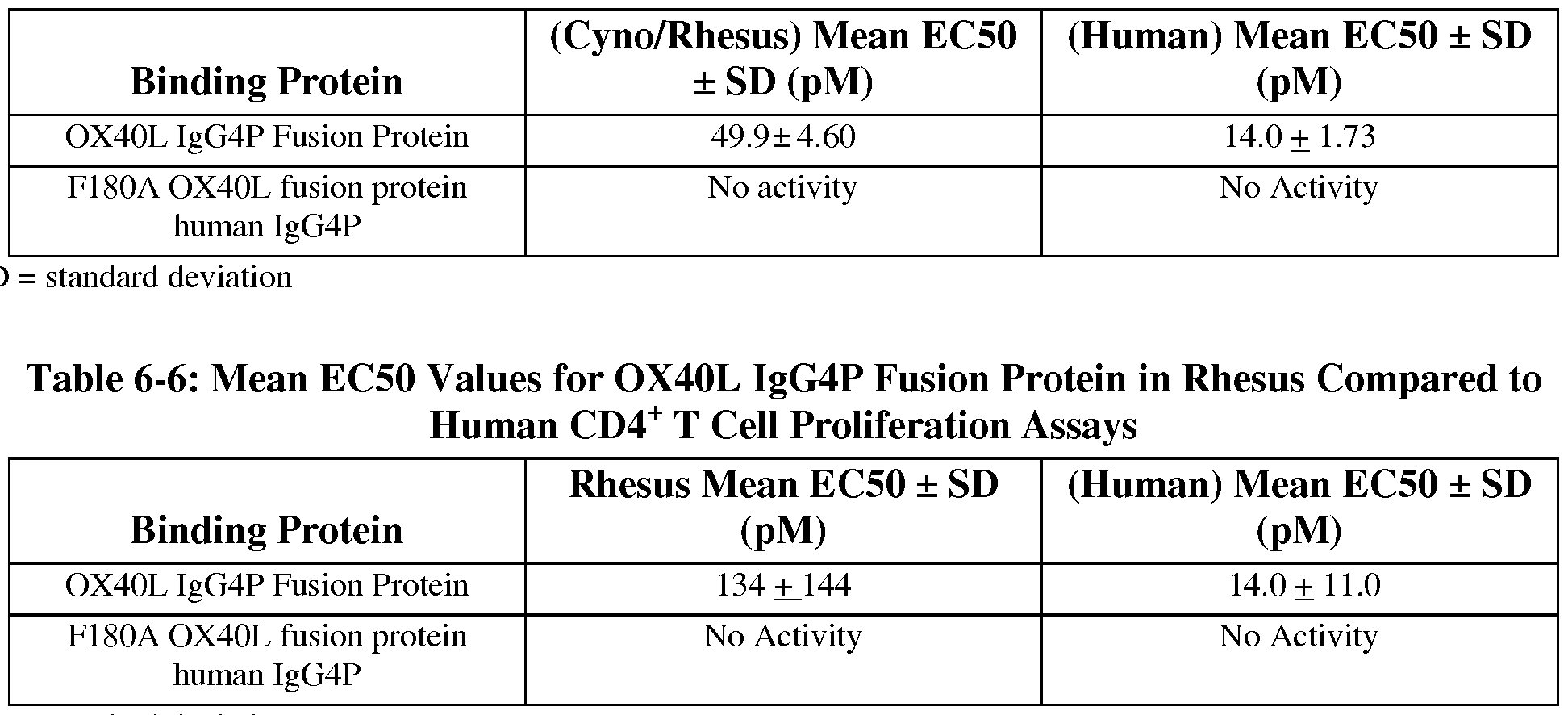
  • a hexameric protein as provided by the disclosure can induce dose- dependent proliferation of activated CD4 + T cells and dose-dependent cytokine release from activated CD4 + T cells in a plate-based assay.
  • a 20% maximal proliferation response (EC 2 o) can be achieved in primary activated human CD4 + T cells at a hexameric protein concentration of about 1.0 pM to about 15 pM, e.g., about 8.0 pM
  • a 50% maximal proliferation response (EC 50 ) can be achieved in primary activated human CD4 + T cells at a hexameric protein concentration of about 5.0 pM to about 25 pM, e.g., about 14 pM
  • a 90% maximal proliferation response (EC 90 ) can be achieved in primary activated human CD4 + T cells at a hexameric protein concentration of about 50 pM to about 65 pM, e.g., about 57 pM, all as measured by flow cytometry
  • the hexameric protein can induce dose-dependent release of IFNy, TNFa, IL-5, IL- 10, IL-2, IL-4, IL-13, IL-8, IL-12 p70, and/or IL- ⁇ .
  • the cytokines released include IFNy, TNFa, IL-5, and/or IL-10.
  • a hexameric protein as provided by the disclosure can achieve CD4 + T cell proliferation and cytokine release in primary activated cynomolgus monkey CD4 + T cells and in primary activated rhesus monkey CD4 + T cells.
  • a hexameric protein as provided by the disclosure can activate the NFKB pathway in OX40 expressing T cells in the presence of FcyR-expressing cells.
  • the OX40-expressing T cells can be OX40-expressing Jurkat NFKB-lucif erase reporter cells that produce luciferase in response to stimulation of the NFKB signaling pathway.
  • the OX40 expressed by these cells can be, e.g., human OX40, cynomolgus monkey OX40 or rhesus monkey OX40.
  • a hexameric protein as provided by the disclosure when administered as an effective dose to a subject in need of cancer treatment, can inhibit tumor growth in the subject, for example, in the presence of T-cells.
  • tumor growth can be inhibited by at least 10%, at least 20%, at least 30%, at least 40%, and least 50%, at least 60%, or at least 70% compared to administration of an isotype-matched control.
  • a hexameric protein as provided by the disclosure can induce proliferation of activated, OX40-expressing CD4 + T cells through binding to OX40, but does not substantially trigger complement-dependent or antibody-dependent cytotoxicity against the activated CD4 + T cells.
  • a hexameric protein as provided herein does not bind to Clq or trigger NK cell-mediated antibody-dependent cellular cytotoxicity of activated CD4 + T cells.
  • a hexameric protein as provided by the disclosure upon co-administration with a vaccine antigen to a subject, can increase CD4+ central memory (cM) T-cell proliferation, effector memory (eM) CD8+ T cell proliferation, NK cell proliferation, and/or B cell proliferation.
  • CD8+ eM T-cell proliferation, NK cell proliferation, B cell proliferation, or any combination thereof is measured as intracellular Ki67 expression in peripheral blood mononuclear cells.
  • a hexameric protein as provided by the disclosure upon co-administration with a vaccine antigen, including, but not limited to an antigen from respiratory syncytial virus (RSV), hepatitis B or C virus, Ebola virus, influenza virus, Pseudomonas aeruginosa, Clostridium difficile, or Staphylococcus aureus, to a subject, can increase antigen- specific T-cell response that can be measured, e.g., as increased interferon gamma (IFN-gamma) expression.
  • RSV respiratory syncytial virus
  • hepatitis B or C virus hepatitis B or C virus
  • Ebola virus influenza virus
  • Pseudomonas aeruginosa Clostridium difficile
  • Staphylococcus aureus Staphylococcus aureus
  • a hexameric protein as provided by the disclosure upon co-administration with a vaccine antigen to a subject, can increase antigen- specific IgG titers.
  • the antigen can be a soluble F glycoprotein of respiratory syncytial virus (RSV sF), and coadministration of the hexameric protein and the RSV antigen to a subject can increase titers of RSV- neutralizing antibodies.
  • RSV sF respiratory syncytial virus
  • the subject to which the hexameric protein and vaccine antigen is coadministered is a non-human primate.
  • a hexameric protein as provided by the disclosure can inhibit regulatory T cell (Treg) mediated suppression of effector T cell proliferation, e.g., in a plate-based assay.
  • the effector T cells are effector CD4+ T cells.
  • the ratio of effector cells to Treg cells can be about 1:0.5 to about 1:3, e.g., about 1: 1 or about 1:2.
  • composition that includes a hexameric protein as provided herein, and a carrier.
  • the disclosure provides a polynucleotide that includes a nucleic acid encoding a polypeptide subunit as provided herein, or a hexameric protein as provided herein.
  • the polynucleotide can include the nucleic acid sequence SEQ ID NO: 3.
  • the disclosure further provides a vector that incorporates the polynucleotide as provided and a host cell that incorporates the polynucleotide or the vector as provided.
  • the disclosure provides a method of producing a polypeptide subunit of as provided herein or a hexameric protein as provided herein, where the method includes culturing the provided host cell under conditions in which the polypeptide subunit or hexameric protein encoded by the polynucleotide is expressed, and recovering the polypeptide subunit or hexameric protein.
  • the disclosure provides a method to promote survival or proliferation of activated T cells, where the method includes contacting activated T cells with a hexameric protein as provided herein such that the hexameric protein can specifically bind to OX40 on the surface of the T cells.
  • the disclosure further provides a method of inducing cytokine release from activated T cells, where the method includes contacting activated T cells with a hexameric protein as provided herein such that the hexameric protein can specifically bind to OX40 on the surface of the T cells.
  • the cytokine can be IFNy, TNFa, IL-5, IL- 10, IL-2, IL-4, IL- 13, IL-8, IL- 12 p70, and/or IL- 1 ⁇ , e.g., IFNy, TNFa, IL-5, and/or IL- 10.
  • the activated T cells are activated CD4 + T cells and/or activated CD8 + T cells.
  • the activated CD4 + T cells can be human CD4 + T cells, cynomolgus monkey CD4 + T cells, and/or rhesus monkey CD4 + T cells.
  • the disclosure provides a method to reduce regulatory T cell (Treg)- mediated suppression of activated T cell proliferation, where the method includes contacting a mixture of activated T cells and Treg cells with the hexameric protein of any one of claims 26 to 70, wherein the hexameric protein can specifically bind to OX40 on the surface of the T cells.
  • Treg regulatory T cell
  • the disclosure provides a method of promoting T cell activation, where the method includes contacting T cells with a hexameric protein as provided herein such that the hexameric protein can specifically bind to OX40 on the surface of the T cells.
  • this method further includes cross-linking of the hexameric protein through interaction of the IgG4-Fc domain with a cell expressing FcyR.
  • the cell expressing FcyR can be, e.g., a B cell, a monocyte, a macrophage, a myeloid or plasmacytoid dendritic cell, a follicular dendritic cell, a Langerhans cell, an endothelial cell, an NK cell, an activated T cell, a neutrophil, an eosinophil, a platelet, a mast cell, a CD45 + cell from a primary human tumor or tumor-draining or non-draining lymph node, and/or a CD45+ cell from other secondary or tertiary lymphoid structures.
  • a B cell e.g., a B cell, a monocyte, a macrophage, a myeloid or plasmacytoid dendritic cell, a follicular dendritic cell, a Langerhans cell, an endothelial cell, an NK cell, an activated T cell, a neutrophil, an e
  • T cell activation can be measured through stimulation of the NFKB signal transduction pathway, and in certain aspects the activated T cells are activated CD4 + T cells and/or activated CD8 + T cells, for example, human CD4 + T cells, cynomolgus monkey CD4 + T cells, and/or rhesus monkey CD4 + T cells.
  • the methods provided above include administering an effective amount of the hexameric protein or composition as provided by the disclosure to a subject in need of treatment.
  • the disclosure provides a method of treating cancer in a subject, where the method includes administering to a subject in need of treatment an effective amount of a hexameric protein as provided herein.
  • the cancer is a solid tumor.
  • administration of the hexameric protein or composition can inhibit tumor growth, can promote tumor reduction, or both. In certain aspects tumor growth inhibition is achieved in the presence of T-cells.
  • the disclosure provides a method of enhancing an immune response in a subject, where the method includes administering to a subject in need thereof a therapeutically effective amount of a hexameric protein as provided by the disclosure, or a composition as provided by the disclosure.
  • the subject can be a human subject.
  • the disclosure provides a method of inducing expression of ICOS on T cells, comprising contacting T cells with a hexameric protein as provided by the disclosure, wherein the hexameric protein can specifically bind to OX40 on the surface of the T cells.
  • the disclosure provides a method of inducing expression of PD-1 on T cells, comprising contacting T cells with the hexameric protein as provided by the disclsoure, wherein the hexameric protein can specifically bind to OX40 on the surface of the T cells.
  • Figure 1 Schematically illustrates an exemplary multimeric protein, namely an OX40L fusion protein.
  • FIG. 1 Amino Acid Sequence of OX40L IgG4P Fusion Protein (N to C terminus, SEQ ID NO: 4). Amino Acid Sequence huIgG4PFcTF2OX40L F180A is disclosed as SEQ ID NO: 12.
  • FIG. 3A OX40L IgG4P Fusion Protein and control protein binding to OX40 expressed on the surface of primary activated human CD4 + T cells. Data was used for determination of apparent affinity (K d ) and apparent concentrations to achieve receptor occupancy of 20%, 50% and 90% (EC 2 o, EC50, and EC90 values).
  • FIG. 3B OX40L IgG4P Fusion Protein and control protein binding to human OX40 expressed on Jurkat T cells. Data was used for determination of apparent affinity (K d ) and apparent concentrations to achieve receptor occupancy of 20%, 50% and 90% (EC 20 , EC 50 , and EC 90 values).
  • FIG. 4A OX40L IgG4P Fusion Protein lacks binding to OX40 expressed on primary activated mouse CD4 + T cells.
  • MFI mean fluorescence intensity.
  • FIG. 4B OX40L IgG4P Fusion Protein lacks binding to OX40 expressed on primary activated rat CD4 + T cells.
  • MFI mean fluorescence intensity.
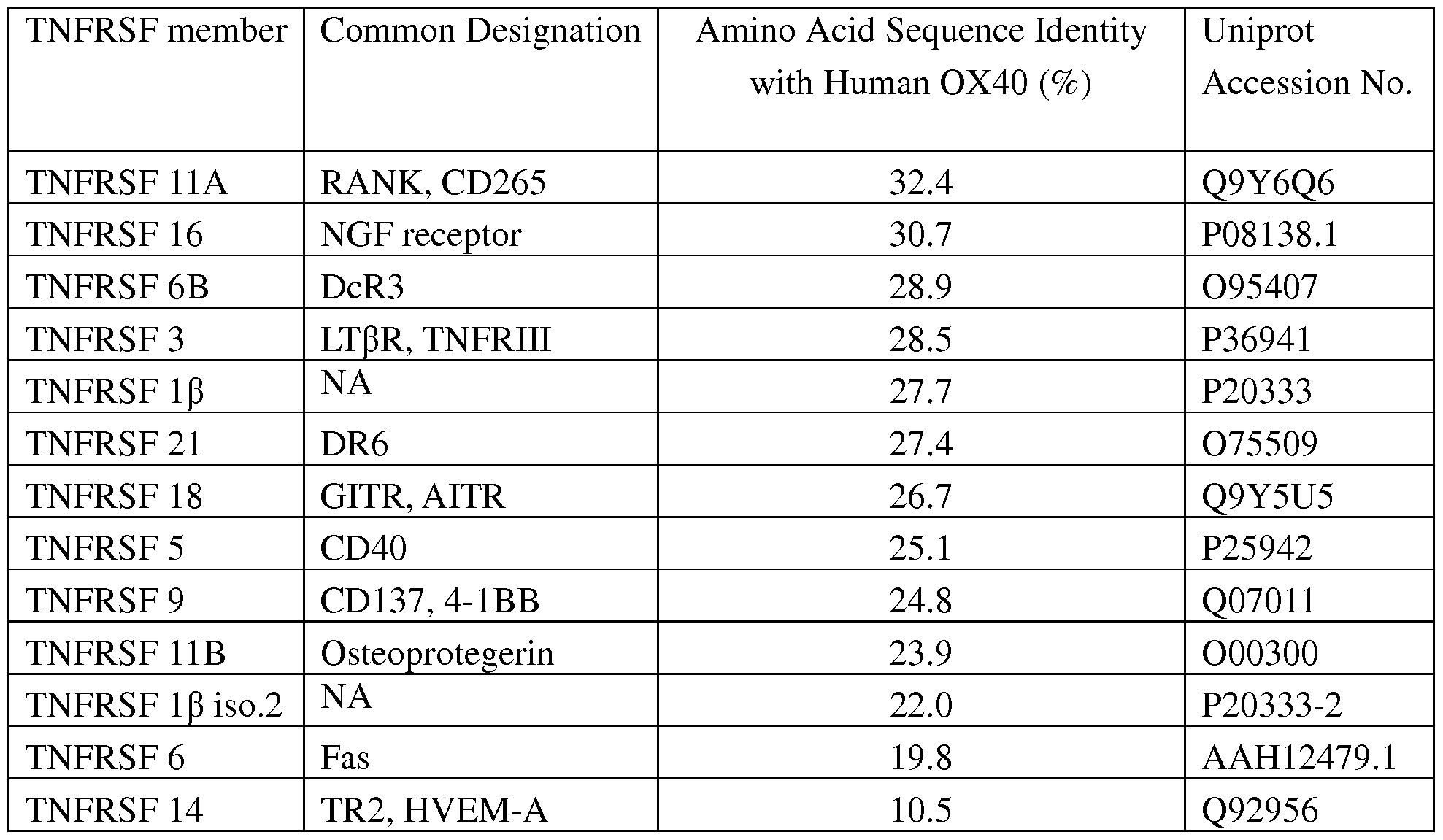
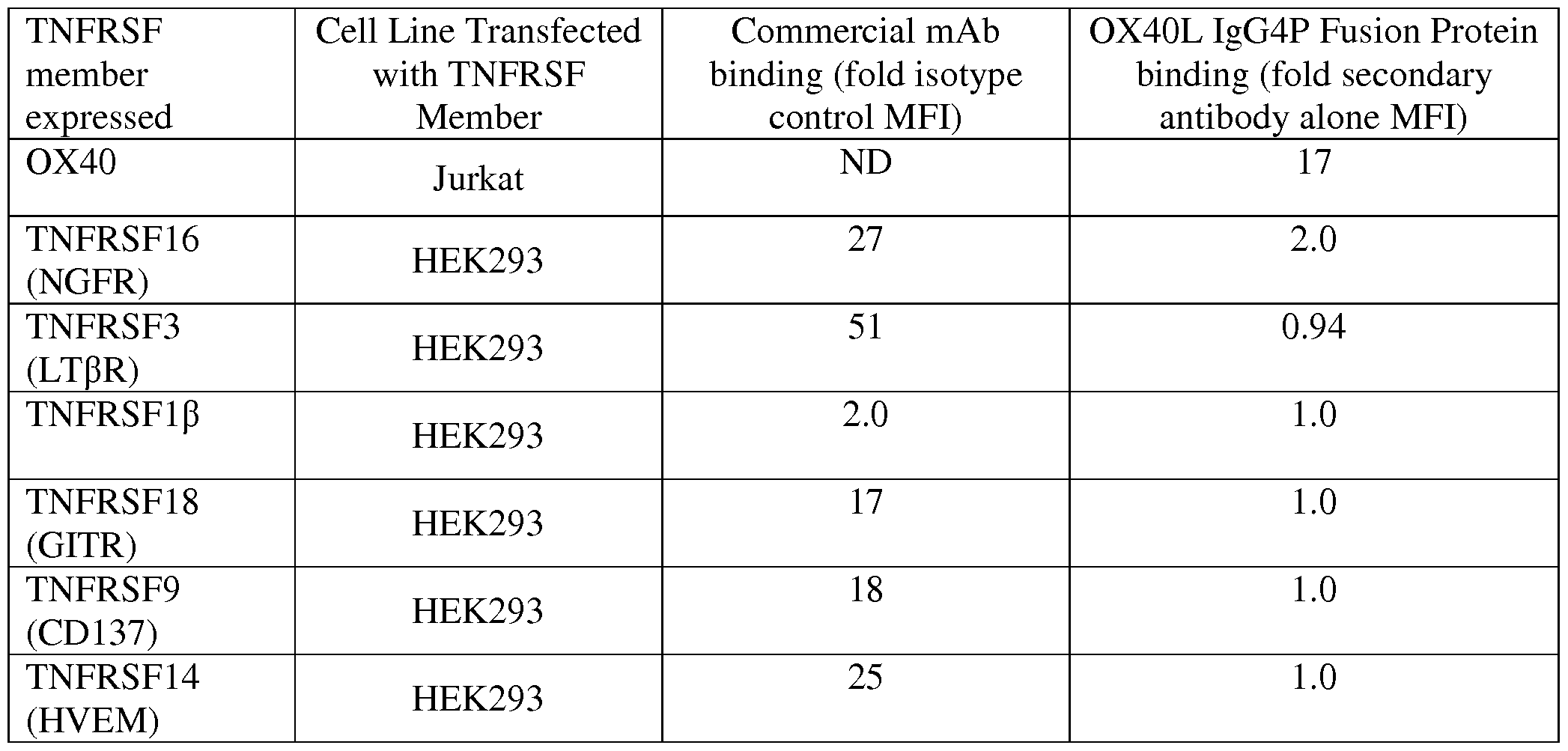
  • FIG. 5A-C Binding of OX40L IgG4P Fusion Protein to TNFRSF-expressing HEK293 and OX40-expressing Jurkat.
  • A-B Transient expression of TNFRSF members, as indicated to left of histograms, in HEK293 cells and binding to TNFRSF- specific mAbs or to OX40L IgG4P Fusion Protein, as indicated above histograms.
  • Gray histogram fluorochrome-conjugated isotype control antibody binding for TNFRSF- specific mAb or goat anti-human AlexaFluor ® 647 secondary antibody binding control for OX40L IgG4P Fusion Protein; Open histogram, TNFRSF- specific mAb or OX40L IgG4P Fusion Protein binding.
  • C Binding of OX40L IgG4P Fusion Protein to OX40- expressing Jurkat as a positive control. Gray histogram, goat anti-human AlexaFluor ® 647 secondary antibody binding control; Open histogram, OX40L IgG4P Fusion Protein binding.
  • FIG. 6 Schematic diagram of the OX40L IgG4P Fusion Protein plate-bound bioactivity assay.
  • Q OX40L IgG4P Fusion Protein.
  • anti-CD3 clone OKT3.
  • Figure 7A-E OX40L IgG4P Fusion Protein co- stimulates primary CD4 T cell to proliferate and release cytokines in a plate-based bioactivity assay.
  • FIG. 8 Cell systems used for measuring OX40L IgG4P Fusion Protein bioactivity.
  • OX40L IgG4P Fusion Protein cross linking by FcyR-expressing cells mediates the clustering of OX40 on the OX40-expressing Jurkat NFKB-lucif erase clone 64 reporter cell line, resulting in NFKB-dependent production of luciferase that can be measured as a surrogate for NFKB activity and T cell activation.
  • FIG. 9A-C Bioactivity of OX40L IgG4P Fusion Protein when cross-linked or not by FcyR.
  • A Reporter activity after cross-linking of OX40L IgG4P Fusion Protein by CD32A- expressing HEK293.
  • B Reporter activity in the presence of HEK293 parental cells without FcyR expression.
  • C Reporter activity with drug and without HEK293 cells. RLU, relative light units.
  • Figure 10 Examples of OX40L IgG4P Fusion Protein bioactivity using Raji, CD32B- expressing HEK293, CD32A-expressing HEK293, or CD45+ cells isolated from primary human tumors for FcyR mediated drug cross-linking and the OX40-expressing Jurkat NFkB-luciferase clone 64 reporter cells for bioactivity readout.
  • A OX40L IgG4P Fusion Protein activity clustered by Raji B cells;
  • B CD32B-expressing HEK293;
  • C CD32A-expressing HEK293;
  • D CD45+ cells isolated from primary human tumors.
  • RLU Relative Light Units.
  • M Molarity.
  • FIG. 14A-D Assessment of natural killer cell-mediated antibody-dependent cellular cytotoxicity of OX40L IgG4P Fusion Protein, OX40L IgGl Fusion Protein and anti-CD20 antibodies, Experiment #1. Specific killing of OX40-expressing CD4 + T cells by primary activated NK cells mediated by the OX40L fusion protein IgGl, but not by OX40L IgG4P Fusion Protein nor by F180A OX40L fusion protein IgGl and IgG4P controls: (A) Donor 1 NK cells incubated with activated CD4 + T cells; (B) Donor 1 NK cells incubated with Toledo B cells; (C) Donor 2 NK cells incubated with activated CD4 + T cells.
  • NK cells used in the ADCC assays were capable of mediating efficient lysis of the Toledo B cells bound to rituximab: (D) Donor 2 NK cell combined with Toledo B cells. Experimental replicates were conducted in triplicate. Error bars represent standard deviation of the mean.
  • Figure 15 Assessment of natural killer cell-mediated antibody-dependent cellular cytotoxicity of OX40L IgG4P Fusion Protein and the OX40 ligand fusion protein IgGl, Experiment #2. Specific killing of OX40-expressing CD4 + T cells by primary activated NK cells mediated by the OX40L fusion protein IgGl, but not by OX40L IgG4P Fusion Protein nor by F180A OX40L fusion protein IgGl and IgG4P controls. Experimental replicates were conducted in triplicate. Error bars represent standard deviation of the mean.
  • FIG. 16A-B Assessment of OX40L IgG4P Fusion Protein binding to purified Clq protein.
  • A The indicated concentrations of purified human Clq protein were injected onto the biosensor chip. Blank represents injections of PBS/0.005% Tween 20 vehicle alone,
  • B In the same experiment, control human IgGl bound purified human Clq.
  • FIG. 17 Effect of OX40L IgG4P Fusion Protein on Growth of A375 Cells in a Mouse Xenograft Model.
  • Six NOD/SCID mice in each group were engrafted SC on Day 1 with A375 cells mixed with alloreactive human CD4 + and CD8 + T cell lines at E:T ratio 1:6.
  • Test article (Isotype control or OX40L IgG4P Fusion Protein) was administered IP on Days 4, 7, 9 and 12. Mean values of tumor volumes are shown.
  • a comparison between OX40L IgG4P Fusion Protein- treated and the Isotype control-treated animals was made, and intergroup differences were analyzed for statistical significance by a Mann- Whitney rank sum test. Error bars represent standard error of the mean.
  • TGI tumor growth inhibition
  • FIG. 18 Effect of OX40L IgG4P Fusion Protein on Growth of A375 Cells in a Mouse Xenograft Model.
  • Six NOD/SCID mice in each group were engrafted SC on Day 1 with A375 cells alone (no T cells) or mixed with alloreactive human CD4 + and CD8 + T cell lines (ratio of 2: 1) at E:T ratio 1:6 Test article (Isotype control or OX40L IgG4P Fusion Protein) was administered IP on Days 3, 6, 8 and 10. Mean values of tumor volumes are shown.
  • a comparison between OX40L IgG4P Fusion Protein-treated and the Isotype control-treated animals was made, and intergroup differences were analyzed for statistical significance by a Mann- Whitney rank sum test.
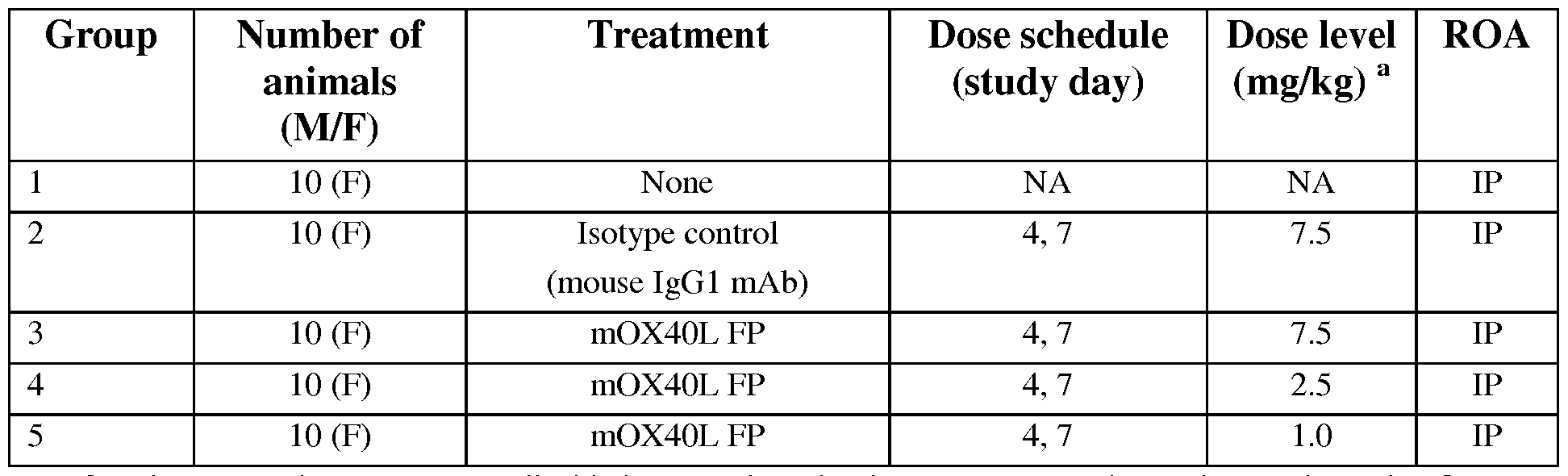
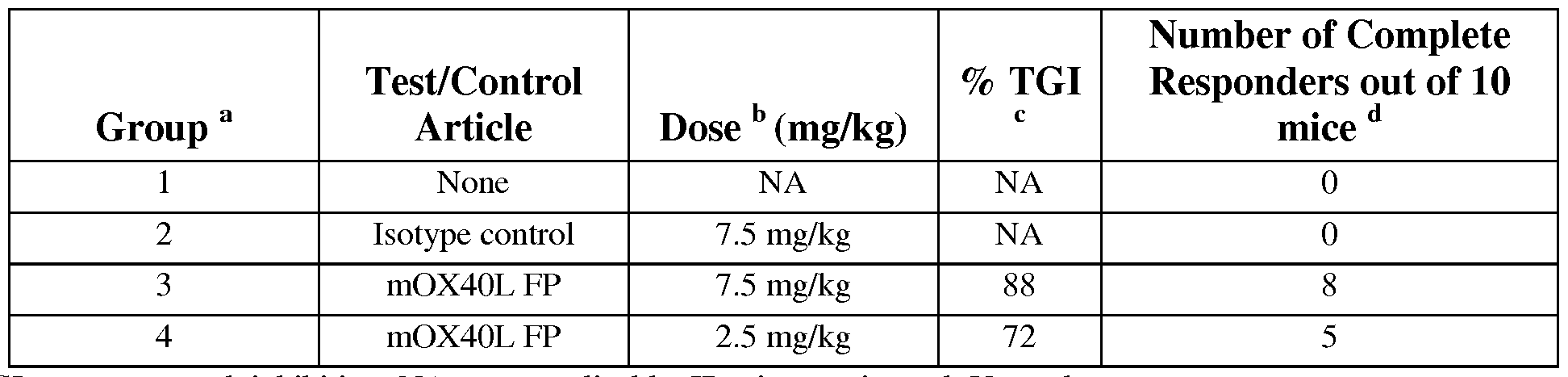
  • FIG. 19 Effect of Murine OX40 Ligand Fusion Protein on Growth of Renca Cell Line in a Mouse Syngeneic Model.
  • Ten BALB/c mice in each group were inoculated SC on Day 1 with Renca cells.
  • Control article (isotype control) and test article (mOX40L FP) were administered IP on Days 4 and 7.
  • Mean (panel A) and individual (pane B) values of tumor volumes are shown.
  • a comparison between mOX40L FP-treated and the Isotype control-treated animals was made, and intergroup differences were analyzed for statistical significance by the method described in Section 6.8 using GraphPad Prism 6.0 software. Error bars represent standard error of the mean.
  • SC subcutaneous
  • IP intraperitoneal
  • TGI tumor growth inhibition.
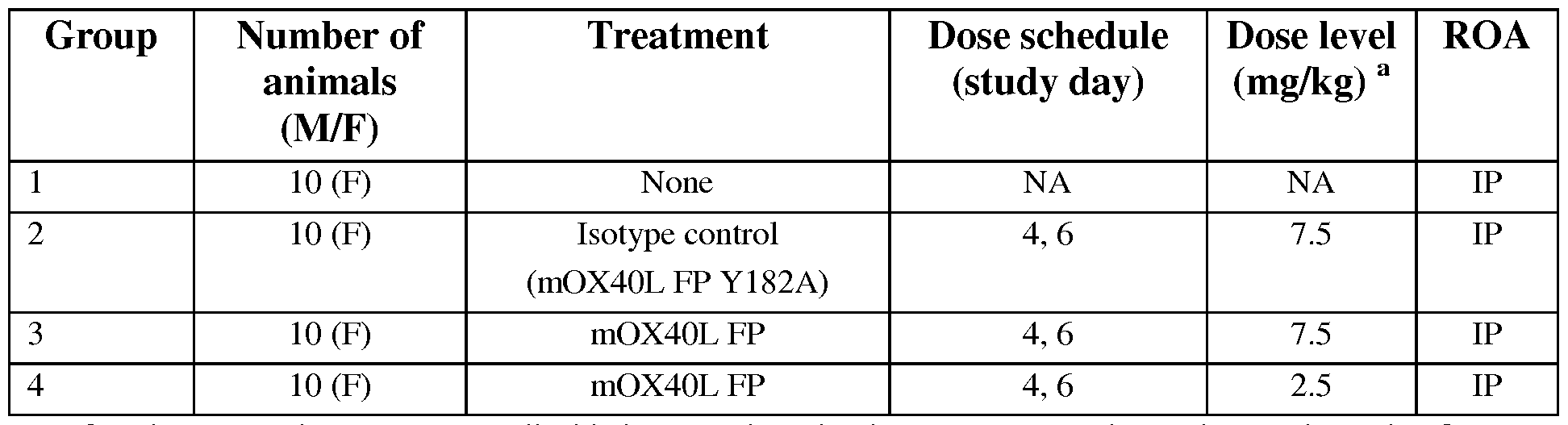
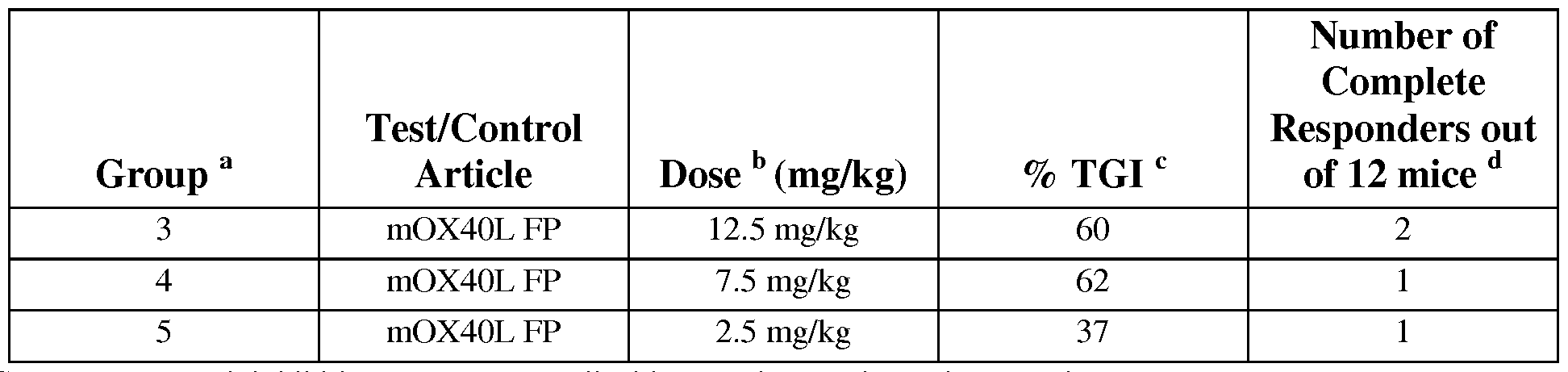
  • FIG. 20 Effect of Murine OX40 Ligand Fusion Protein on Growth of CT26 Cell Line in a Mouse Syngeneic Model.
  • Ten BALB/c mice in each group were inoculated SC on Day 1 with CT26 cells.
  • Control article (isotype control) and test article (mOX40L FP) were administered IP on Days 4 and 6.
  • Mean (panel A) and individual (panel B) values of tumor volumes are shown.
  • a comparison between mOX40L FP-treated and the isotype control-treated animals was made, and intergroup differences were analyzed for statistical significance by the method described in Section 6.8 using GraphPad Prism 6.0 software. Error bars represent standard error of the mean.
  • SC subcutaneous
  • IP intraperitoneal
  • TGI tumor growth inhibition.
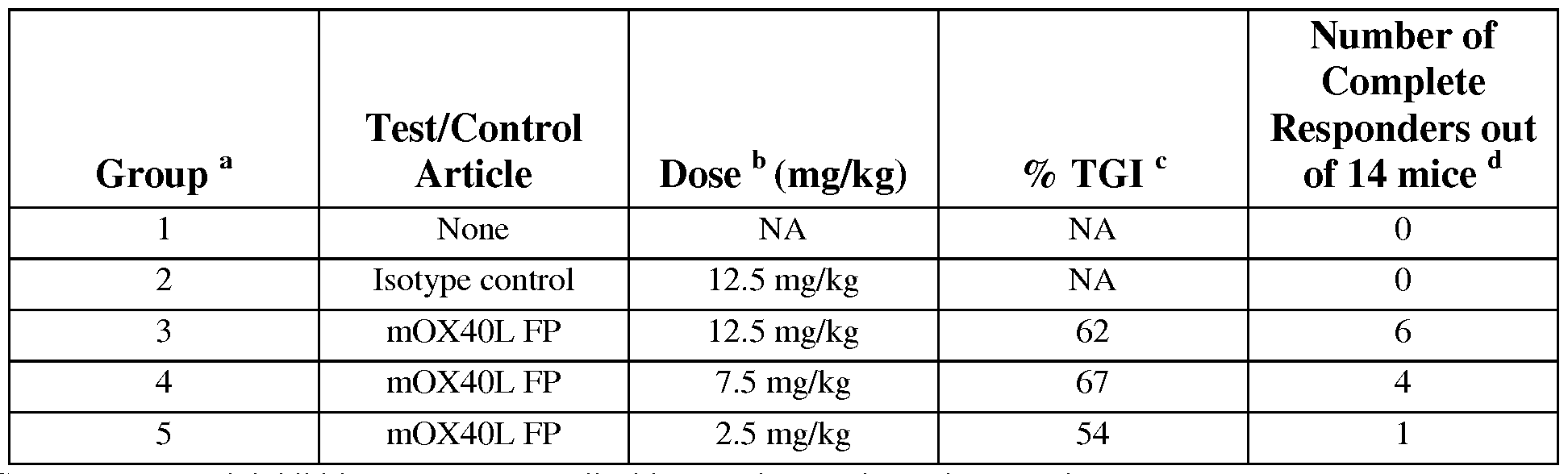
  • FIG. 22 Effect of Murine OX40 Ligand Fusion Protein on Growth of MCA205 Cell Line in a Mouse Syngeneic Model.
  • a comparison between mOX40L FP-treated and the isotype control-treated animals was made, and intergroup differences were analyzed for statistical significance by the method described in Section 6.8 using GraphPad Prism 6.0 software. Error bars represent standard error of the mean.
  • SC subcutaneous
  • IP intraperitoneal
  • TGI tumor growth inhibition.
  • FIG. 23 OX40L IgG4P Fusion Protein Overcomes Regulatory T Cell Suppression of Effector CD4+ T cells.
  • Effector CD4+ T cells were labelled with carboxyfluorescein diacetate succinimidyl ester (CFSE) and cultured, with and without regulatory T cells (Tregs) at the ratios indicated, for 4 days in the presence of anti-CD3, anti-CD28 and test or control articles.
  • FIG. 24 OX40L IgG4P Fusion Protein Effects on Regulatory T Cell Suppression of Effector CD4+ T cells are Concentration Dependent. Effector CD4+ T cells were labelled with carboxyfluorescein diacetate succinimidyl ester (CFSE) and cultured, with and without regulatory T cells (Tregs) at a 1: 1 ratio, for 4 days in the presence of anti-CD3, anti-CD28 and test or control articles. The percentage of divided effector CD4+ T cells at the end of the assay was assessed by flow cytometry. Error bars represent the standard error of the mean from duplicate assay wells. Significance was calculated using the Student's T test where *p ⁇ 0.05; **p ⁇ 0.01.
  • Figure 25 Study design for monitoring pharmacodynamics effects of OX40L fusion protein IgG4-FP administered via the intravenous route to Rhesus monkeys.
  • FIG. 26 A-D Pharmacodynamics (as measured by Ki-67 expression) of total CD4 memory T-cells (A), naive CD4 T cells (B), total memory CD8 T-cells (C), and naive CD8 T-cells (D).
  • Figure 27 A-D Pharmacodynamics (as measured by ICOS expression) of total CD4 memory T-cells (A), naive CD4 T cells (B), total memory CD 8 T-cells (C), and naive CD 8 T-cells (D).
  • Figure 28 A-D Pharmacodynamics (as measured by PD-1 expression) of total CD4 memory T-cells (A), naive CD4 T cells (B), total memory CD 8 T-cells (C), and naive CD 8 T-cells (D).
  • FIG. 29 Pharmacodynamics (as measured by Ki-67 expression) as proliferation of Lin- CD20+ B cells.
  • Engagement of the OX40 receptor on T cells results in an increased response of the T cells, e.g., CD4 + T-cells to the antigen.
  • engagement refers to binding to and stimulation of at least one activity mediated by the OX40 receptor.
  • engagement of the OX40 receptor on antigen specific T cells e.g., CD4 + T-cells results in increased T cell proliferation as compared to the response to antigen alone, and increased cytokine production.
  • the elevated response to the antigen can be maintained for a period of time substantially longer than in the absence of OX40 receptor engagement.
  • OX40 agonists can enhance antigen specific immune responses in a subject, such as a human subject, when administered to the subject during or shortly after priming of T-cells by an antigen.
  • OX40 agonists include OX40 ligand ("OX40L”), such as soluble OX40L fusion proteins and anti- OX40 antibodies or fragments thereof.
  • a specific example is a fusion polypeptide subunit comprising the receptor binding domain of OX40L, a trimerization domain, e.g., an isoleucine zipper domain from TRAF-2, and a human IgG4 Fc domain, where the polypeptide subunit self-assembles into a multimeric (e.g., trimeric or hexameric) fusion protein.
  • a multimeric e.g., trimeric or hexameric
  • nucleic acids including polynucleotide sequences that encode such fusion polypeptides.
  • This disclosure also provides methods for enhancing an antigen specific immune response in a subject using the multimeric OX40L fusion polypeptides.
  • the compositions and methods disclosed herein with respect to OX40L fusion proteins can be more generally applied to the production and use of multimeric (e.g., trimeric and hexameric) receptor-binding fusion proteins.
  • a or “an” entity refers to one or more of that entity; for example, “polypeptide subunit” is understood to represent one or more polypeptide subunits.
  • polypeptide subunit is understood to represent one or more polypeptide subunits.
  • the terms “a” (or “an”), “one or more,” and “at least one” can be used interchangeably herein.
  • polypeptide is intended to encompass a singular “polypeptide” as well as plural “polypeptides,” and refers to a molecule composed of monomers (amino acids) linearly linked by amide bonds (also known as peptide bonds).
  • polypeptide refers to any chain or chains of two or more amino acids, and does not refer to a specific length of the product.
  • polypeptides peptides, dipeptides, tripeptides, oligopeptides, "protein,” “amino acid chain,” or any other term used to refer to a chain or chains of two or more amino acids are included within the definition of "polypeptide,” and the term “polypeptide” can be used instead of, or interchangeably with any of these terms.
  • polypeptide is also intended to refer to the products of post-expression modifications of the polypeptide, including without limitation glycosylation, acetylation, phosphorylation, amidation, derivatization by known protecting/blocking groups, proteolytic cleavage, or modification by non-standard amino acids.
  • a polypeptide can be derived from a natural biological source or produced by recombinant technology, but is not necessarily translated from a designated nucleic acid sequence. It can be generated in any manner, including by chemical synthesis.
  • a "protein” as used herein can refer to a single polypeptide, i.e., a single amino acid chain as defined above, but can also refer to two or more polypeptides that are associated, e.g., by disulfide bonds, hydrogen bonds, or hydrophobic interactions, to produce a multimeric protein.
  • polypeptide subunit refers to a polypeptide chain of amino acids which can interact with other polypeptide subunits, either identical or different, to form a multimeric protein, e.g., a hexameric protein as described herein.
  • a polypeptide as disclosed herein can be of a size of about 3 or more, 5 or more, 10 or more, 20 or more, 25 or more, 50 or more, 75 or more, 100 or more, 200 or more, 500 or more, 1,000 or more, or 2,000 or more amino acids.
  • Polypeptides can have a defined three-dimensional structure, although they do not necessarily have such structure. Polypeptides with a defined three-dimensional structure are referred to as folded, and polypeptides that do not possess a defined three-dimensional structure, but rather can adopt a large number of different conformations, and are referred to as unfolded.
  • an "isolated" polypeptide or a fragment, variant, or derivative thereof is intended a polypeptide that is not in its natural milieu. No particular level of purification is required.
  • an isolated polypeptide can be removed from its native or natural environment.
  • Recombinantly produced polypeptides and proteins expressed in host cells are considered isolated as disclosed herein, as are native or recombinant polypeptides that have been separated, fractionated, or partially or substantially purified by any suitable technique.
  • polypeptides disclosed herein are fragments, derivatives, analogs, or variants of the foregoing polypeptides, and any combination thereof.
  • fragment can include any polypeptide or protein that retain at least some of the activities of the complete polypeptide or protein, but which is structurally different. Fragments of polypeptides include, for example, proteolytic fragments, as well as deletion fragments.
  • variants include fragments as described above, and also polypeptides with altered amino acid sequences due to amino acid substitutions, deletions, or insertions. Variants can occur spontaneously or be intentionally constructed.
  • variants can be produced using art-known mutagenesis techniques.
  • Variant polypeptides can comprise conservative or non-conservative amino acid substitutions, deletions or additions.
  • Derivatives are polypeptides that have been altered so as to exhibit additional features not found on the native polypeptide. Examples include fusion proteins.
  • Variant polypeptides can also be referred to herein as "polypeptide analogs.”
  • a "derivative” refers to a subject polypeptide having one or more amino acids chemically derivatized by reaction of a functional side group. Also included as “derivatives" are those peptides that contain one or more standard or synthetic amino acid derivatives of the twenty standard amino acids.
  • 4-hydroxyproline can be substituted for proline; 5-hydroxylysine can be substituted for lysine; 3-methylhistidine can be substituted for histidine; homoserine can be substituted for serine; and ornithine can be substituted for lysine.
  • a “conservative amino acid substitution” is one in which one amino acid is replaced with another amino acid having a similar side chain.
  • Families of amino acids having similar side chains have been defined in the art, including basic side chains (e.g., lysine, arginine, histidine), acidic side chains (e.g., aspartic acid, glutamic acid), uncharged polar side chains (e.g.
  • asparagine, glutamine, serine, threonine, tyrosine, cysteine nonpolar side chains (e.g., glycine, alanine, valine, leucine, isoleucine, proline, phenylalanine, methionine, tryptophan), beta-branched side chains (e.g. , threonine, valine, isoleucine) and aromatic side chains (e.g. , tyrosine, phenylalanine, tryptophan, histidine).
  • nonpolar side chains e.g., glycine, alanine, valine, leucine, isoleucine, proline, phenylalanine, methionine, tryptophan
  • beta-branched side chains e.g. , threonine, valine, isoleucine
  • aromatic side chains e.g. , tyrosine, phenylalanine, tryptophan, his
  • the term "antibody” refers to at least the minimal portion of an antibody which is capable of binding to antigen, e.g., at least the variable domain of a heavy chain (VH) and the variable domain of a light chain (VL) in the context of a typical antibody produced by a B cell.
  • VH variable domain of a heavy chain
  • VL variable domain of a light chain
  • Basic antibody structures in vertebrate systems are relatively well understood. See, e.g., Harlow et al., Antibodies: A Laboratory Manual, (Cold Spring Harbor Laboratory Press, 2nd ed. 1988).
  • Antibodies or antigen-binding fragments, variants, or derivatives thereof include, but are not limited to, polyclonal, monoclonal, human, humanized, or chimeric antibodies, single chain antibodies, epitope-binding fragments, e.g., Fab, Fab' and F(ab')2, Fd, Fvs, single-chain Fvs (scFv), single-chain antibodies, disulfide-linked Fvs (sdFv), fragments comprising either a VL or VH domain, fragments produced by a Fab expression library.
  • ScFv molecules are known in the art and are described, e.g., in US patent 5,892,019.
  • Immunoglobulin or antibody molecules encompassed by this disclosure can be of any type (e.g., IgG, IgE, IgM, IgD, IgA, and IgY), class (e.g., IgGl, IgG2, IgG3, IgG4, IgAl and IgA2) or subclass of immunoglobulin molecule.
  • polynucleotide is intended to encompass a singular nucleic acid as well as plural nucleic acids, and refers to an isolated nucleic acid molecule or construct, e.g., messenger RNA (mRNA) or plasmid DNA (pDNA).
  • mRNA messenger RNA
  • pDNA plasmid DNA
  • a polynucleotide can comprise a conventional phosphodiester bond or a non-conventional bond (e.g., an amide bond, such as found in peptide nucleic acids (PNA)).
  • PNA peptide nucleic acids
  • nucleic acid refers to any one or more nucleic acid segments, e.g., DNA or RNA fragments, present in a polynucleotide.
  • isolated nucleic acid or polynucleotide is intended a nucleic acid molecule, DNA or RNA, which has been removed from its native environment.
  • a recombinant polynucleotide encoding a polypeptide subunit contained in a vector is considered isolated as disclosed herein.
  • Further examples of an isolated polynucleotide include recombinant polynucleotides maintained in heterologous host cells or purified (partially or substantially) polynucleotides in solution.
  • Isolated RNA molecules include in vivo or in vitro RNA transcripts of polynucleotides. Isolated polynucleotides or nucleic acids further include such molecules produced synthetically.
  • polynucleotide or a nucleic acid can be or can include a regulatory element such as a promoter, ribosome binding site, or a transcription terminator.
  • a "coding region” is a portion of nucleic acid comprising codons translated into amino acids. Although a “stop codon” (TAG, TGA, or TAA) is not translated into an amino acid, it can be considered to be part of a coding region, but any flanking sequences, for example promoters, ribosome binding sites, transcriptional terminators, introns, and the like, are not part of a coding region. Two or more coding regions can be present in a single polynucleotide construct, e.g. , on a single vector, or in separate polynucleotide constructs, e.g. , on separate (different) vectors.
  • any vector can contain a single coding region, or can comprise two or more coding regions, e.g. , a single vector can separately encode an immunoglobulin heavy chain variable region and an immunoglobulin light chain variable region.
  • a vector, polynucleotide, or nucleic acid can encode heterologous coding regions, either fused or unfused to a nucleic acid encoding a polypeptide subunit or fusion protein as provided herein.
  • Heterologous coding regions include without limitation specialized elements or motifs, such as a secretory signal peptide or a heterologous functional domain.
  • the polynucleotide or nucleic acid is DNA.
  • a polynucleotide comprising a nucleic acid that encodes a polypeptide normally can include a promoter and/or other transcription or translation control elements operably associated with one or more coding regions.
  • An operable association or linkage is when a coding region for a gene product, e.g. , a polypeptide, is associated with one or more regulatory sequences in such a way as to place expression of the gene product under the influence or control of the regulatory sequence(s).
  • Two DNA fragments are "operably associated” or “operably linked” if induction of promoter function results in the transcription of mRNA encoding the desired gene product and if the nature of the linkage between the two DNA fragments does not interfere with the ability of the expression regulatory sequences to direct the expression of the gene product or interfere with the ability of the DNA template to be transcribed.
  • a promoter region would be operably associated with a nucleic acid encoding a polypeptide if the promoter was capable of effecting transcription of that nucleic acid.
  • the promoter can be a cell-specific promoter that directs substantial transcription of the DNA only in predetermined cells.
  • transcription control elements besides a promoter, for example enhancers, operators, repressors, and transcription termination signals, can be operably associated with the polynucleotide to direct cell-specific transcription.
  • Suitable promoters and other transcription control regions are disclosed herein.
  • transcription control regions are known to those skilled in the art. These include, without limitation, transcription control regions that function in vertebrate cells, such as, but not limited to, promoter and enhancer segments from cytomegaloviruses (the immediate early promoter, in conjunction with intron-A), simian virus 40 (the early promoter), and retroviruses (such as Rous sarcoma virus).
  • Other transcription control regions include those derived from vertebrate genes such as actin, heat shock protein, bovine growth hormone and rabbit ⁇ -globin, as well as other sequences capable of controlling gene expression in eukaryotic cells. Additional suitable transcription control regions include tissue-specific promoters and enhancers as well as lymphokine-inducible promoters (e.g. , promoters inducible by interferons or interleukins).
  • translation control elements include, but are not limited to ribosome binding sites, translation initiation and termination codons, and elements derived from picomaviruses (particularly an internal ribosome entry site, or IRES, also referred to as a CITE sequence).
  • a polynucleotide can be RNA, for example, in the form of messenger RNA (mRNA).
  • mRNA messenger RNA
  • Polynucleotide and nucleic acid coding regions can be associated with additional coding regions that encode secretory or signal peptides, which direct the secretion of a polypeptide encoded by a polynucleotide as disclosed herein, e.g. , a polynucleotide encoding a polypeptide subunit provided herein.
  • proteins secreted by mammalian cells have a signal peptide or secretory leader sequence that is cleaved from the mature protein once export of the growing protein chain across the rough endoplasmic reticulum has been initiated.
  • polypeptides secreted by vertebrate cells generally have a signal peptide fused to the N-terminus of the polypeptide, which is cleaved from the complete or "full length" polypeptide to produce a secreted or "mature” form of the polypeptide.
  • the native signal peptide e.g. , an immunoglobulin heavy chain or light chain signal peptide is used, or a functional derivative of that sequence that retains the ability to direct the secretion of the polypeptide that is operably associated with it.
  • a heterologous mammalian signal peptide, or a functional derivative thereof can be used.
  • the wild-type leader sequence can be substituted with the leader sequence of human tissue plasminogen activator (TPA) or mouse ⁇ - glucuronidase.
  • a "vector” is nucleic acid molecule as introduced into a host cell, thereby producing a transformed host cell.
  • a vector can include nucleic acid sequences that permit it to replicate in a host cell, such as an origin of replication.
  • a vector can also include one or more selectable marker gene and other genetic elements known in the art.
  • a "transformed” cell, or a "host” cell is a cell into which a nucleic acid molecule has been introduced by molecular biology techniques.
  • transformation encompasses all techniques by which a nucleic acid molecule can be introduced into such a cell, including transfection with viral vectors, transformation with plasmid vectors, and introduction of naked DNA by electroporation, lipofection, and particle gun acceleration.
  • a transformed cell or a host cell can be a bacterial cell or a eukaryotic cell.
  • a molecule e.g., an OX40L or receptor- binding fragment thereof, binds to another molecule, e.g., OX40, via its receptor-binding domain, and that the binding entails some complementarity between the antigen binding domain and the epitope.
  • a ligand is said to "specifically bind” to a receptor when it binds to that receptor, via its receptor-binding domain more readily than it would bind to a random, unrelated molecule.
  • the term "specificity" is used herein to qualify the relative affinity by which a certain ligand binds to a certain receptor.
  • ligand "A” can be deemed to have a higher specificity for a given receptor than ligand "B,” or ligand “A” can be said to bind to receptor "C” with a higher specificity than it has for related receptor "D.”
  • a receptor-binding domain it is intended a binding domain comprised in a ligand, e.g., an OX40L as disclosed herein.
  • a ligand e.g., an OX40L-IgG4-Fc polypeptide subunit or multimeric fusion protein as disclosed herein can bind to a receptor, e.g., OX40, with an off rate (k(off)) of less than or equal to 5 X 10 "2 sec “1 , 10 "2 sec “1 , 5 X 10 "3 sec “1 or 10 "3 sec “1 .
  • a receptor e.g., OX40
  • a ligand e.g., an OX40L-IgG4-Fc polypeptide subunit or multimeric fusion protein as disclosed herein can bind to a receptor, e.g., OX40, with an off rate (k(off)) less than or equal to 5 X 10 "4 sec “1 , 10 "4 sec “1 , 5 X 10 "5 sec “1 , or 10 "5 sec “1 5 X 10 "6 sec “1 , 10 “6 sec “1 , 5 X 10 "7 sec “1 or 10 “7 sec “1 .
  • the terms “inhibit,” “block,” and “suppress” are used interchangeably herein and refer to any statistically significant decrease in biological activity, including full blocking of the activity. For example, “inhibition” can refer to a decrease of about 10%, 20%, 30%, 40%, 50%, 60%, 70%, 80%, 90% or 100% in biological activity.
  • the term “affinity” refers to a measure of the strength of the binding of a ligand to its cognate receptor.
  • the term “avidity” refers to the overall stability of the complex between a population of ligands and receptors, that is, the functional combining strength of a combination of ligands and receptors, e.g., interaction of a hexameric OX40L-IgG4 Fusion Protein to cell surface OX40.
  • Avidity is related to both the affinity of individual receptor binding domains in the population with specific receptors, and also the valencies of the ligands and the receptors.
  • a ligand e.g., an OX40L-IgG4-Fc polypeptide subunit or multimeric fusion protein as disclosed herein can also be described or specified in terms of its binding affinity to a ligand.
  • a ligand can bind to a receptor with a dissociation constant or K D no greater than 5 x 10 " M, 10 "2 M, 5 x 10 "3 M, 10 "3 M, 5 x 10 "4 M, 10 "4 M, 5 x 10 "5 M, 10 "5 M, 5 x 10 "6 M, 10 “6 M, 5 x 10 "7 M, 10 "7 M, 5 x 10 "8 M, 10 “8 M, 5 x 10 "9 M, 10 "9 M, 5 x 10 "10 M, 10 “10 M, 5 x 10 "11 M, 10 "11 M, 5 x 10 "12 M, 10 "12 M, 5 x 10 "13 M, 10 "13 M, 5 x 10 "14 M, 10 "
  • a ligand e.g., an OX40L-IgG4-Fc polypeptide subunit or multimeric fusion protein as disclosed herein can bind to a receptor, e.g., OX40, with an on rate (k(on)) of greater than or equal to 10 3 M "1 sec “1 , 5 X 10 3 M “1 sec “1 , 10 4 M “1 sec “1 or 5 X 10 4 M “1 sec “1 .
  • a receptor e.g., OX40
  • a ligand e.g., an OX40L-IgG4- Fc polypeptide subunit or multimeric fusion protein as disclosed herein can bind to a receptor, e.g., OX40, with an on rate (k(on)) greater than or equal to 10 5 M "1 sec “1 , 5 X 10 5 M “1 sec “1 , 10 6 M “1 sec “1 , or 5 X 10 6 M “1 sec “1 or 10 7 M “1 sec “1 .
  • a receptor e.g., OX40
  • OX40 or "OX40 receptor” is a protein (also variously termed CD 134, tumor necrosis factor receptor superfamily member 4, and ACT-35) expressed on the surface of activated T cells, e.g., CD4 + and CD8 + T-cells, as well as on Foxp3 + CD4 + regulatory T cells (Tregs). Naive CD4 + and CD8 + T cells do not express OX40 (Croft, M., (2010) Ann Rev Immunol 28:57-78).
  • OX40 ligand (also variously termed tumor necrosis factor ligand superfamily member 4, gp34, TAX transcriptionally-activated glycoprotein- 1, and CD252) is found largely on antigen presenting cells (APCs), and can be induced on activated B cells, dendritic cells (DCs), Langerhans cells, plamacytoid DCs, and macrophages (Croft, M., (2010) Ann Rev Immunol 28:57-78). Other cells, including activated T cells, NK cells, mast cells, endothelial cells, and smooth muscle cells can express OX40L in response to inflammatory cytokines (Id.).
  • OX40L specifically binds to the OX40 receptor.
  • the human protein is described in PCT Publication No. WO 95/21915.
  • the mouse OX40L is described in U.S. Pat. No. 5,457,035.
  • OX40L is expressed on the surface of cells and includes an intracellular, a transmembrane and an extracellular receptor-binding domain.
  • a functionally active soluble form of OX40L can be produced by deleting the intracellular and transmembrane domains as described, e.g., in U.S. Pat. Nos. 5,457,035 and 6,312,700, and WO 95/21915, the disclosures of which are incorporated herein for all purposes.
  • a functionally active form of OX40L is a form that retains the capacity to bind specifically to OX40, that is, that possesses an OX40 "receptor binding domain.”
  • An example is amino acids 51 to 183 of SEQ ID NO: 1, human OX40L. Methods of determining the ability of an OX40L molecule or derivative to bind specifically to OX40 are discussed below.
  • OX40L and its derivatives are described in WO 95/21915, which also describes proteins comprising the soluble form of OX40L linked to other peptides, such as human immunoglobulin ("Ig") Fc regions, that can be produced to facilitate purification of OX40 ligand from cultured cells, or to enhance the stability of the molecule after in vivo administration to a mammal (see also, U.S. Pat. No. 5,457,035 and PCT Publication No. WP 2006/121810, both of which are incorporated by reference herein in their entireties).
  • Ig human immunoglobulin
  • OX40L includes the entire OX40 ligand, soluble OX40 ligand, and functionally active portions of the OX40 ligand. Also included within the definition of OX40L are OX40 ligand variants which vary in amino acid sequence from naturally occurring OX40 ligand molecules but which retain the ability to specifically bind to an OX40 receptor. Such variants are described in U.S. Pat. No. 5,457,035 and WO 95/21915.
  • the disclosure provides mutants of OX40L which have lost the ability to specifically bind to OX40, for example amino acids 51 to 183 of SEQ ID NO: 1, in which the phenylalanine at position 180 of the receptor- binding domain of human OX40L has been replaced with alanine (F180A).
  • trimerization domain is an amino acid sequence within a polypeptide that promotes assembly of the polypeptide into trimers.
  • a trimerization can promote assembly into trimers via associations with other trimerization domains (of additional polypeptides with the same or a different amino acid sequence).
  • trimerization domains of additional polypeptides with the same or a different amino acid sequence.
  • trimerization domains of additional polypeptides with the same or a different amino acid sequence.
  • the term is also used to refer to a polynucleotide that encodes such a peptide or polypeptide.
  • Fc domain refers to a portion of an antibody constant region.
  • Fc domain refers to a protease (e.g., papain) cleavage product encompassing the paired CH2, CH3 and hinge regions of an antibody.
  • Fc domain or Fc refers to any polypeptide (or nucleic acid encoding such a polypeptide), regardless of the means of production, that includes all or a portion of the CH2, CH3 and hinge regions of an immunoglobulin polypeptide, e.g., a human IgG4 Fc.
  • CH2 domain includes the portion of the Fc domain of a heavy chain molecule that extends, e.g., from about amino acid 244 to amino acid 360 of an antibody using conventional numbering schemes (amino acids 244 to 360, Kabat numbering system; and amino acids 231-340, EU numbering system). It is also well documented that the CH3 domain extends from the CH2 domain to the C-terminal of the IgG molecule and comprises approximately 108 amino acids.
  • hinge region includes the portion of the Fc domain of a heavy chain molecule that joins the CHI domain to the CH2 domain. This hinge region comprises approximately 25 amino acids and is flexible, thus allowing the two N-terminal antigen binding regions to move independently. Hinge regions can be subdivided into three distinct domains: upper, middle, and lower hinge domains (Roux et al., J. Immunol. 7(57:4083 (1998)).
  • disulfide bond includes the covalent bond formed between two sulfur atoms.
  • the amino acid cysteine comprises a thiol group that can form a disulfide bond or bridge with a second thiol group.
  • a human IgG4 Fc domain can be mutated in the hinge region to insure disulfide bond formation between two hinge regions, specifically, a serine to proline mutation at position 228 (according to EU numbering). Human IgG4 Fc domains comprising the S228P mutation are referred to herein as "IgG4P Fc domains.”
  • an "in-frame fusion” refers to the joining of two or more polynucleotide open reading frames (ORFs) to form a continuous longer ORF, in a manner that maintains the correct translational reading frame of the original ORFs.
  • ORFs polynucleotide open reading frames
  • a recombinant fusion protein is a single protein containing two or more segments that correspond to polypeptides encoded by the original ORFs (which segments are not normally so joined in nature.), e.g., an OX40L IgG4P fusion protein as provided herein.
  • the reading frame is thus made continuous throughout the fused segments, the segments can be physically or spatially separated by, for example, in-frame linker sequence.
  • a “linear sequence” or a “sequence” is an order of amino acids in a polypeptide in an amino to carboxyl terminal direction in which amino acids that neighbor each other in the sequence are contiguous in the primary activated structure of the polypeptide.
  • expression refers to a process by which a gene produces a biochemical, for example, a polypeptide.
  • the process includes any manifestation of the functional presence of the gene within the cell including, without limitation, gene knockdown as well as both transient expression and stable expression. It includes without limitation transcription of the gene into messenger RNA (mRNA), and the translation of such mRNA into polypeptide(s). If the final desired product is a biochemical, expression includes the creation of that biochemical and any precursors.
  • mRNA messenger RNA
  • a gene product can be either a nucleic acid, e.g., a messenger RNA produced by transcription of a gene, or a polypeptide which is translated from a transcript.
  • Gene products described herein further include nucleic acids with post transcriptional modifications, e.g., polyadenylation, or polypeptides with post translational modifications, e.g., methylation, glycosylation, the addition of lipids, association with other protein subunits, proteolytic cleavage, and the like.
  • treating a cancer patient refers to reducing the potential for disease pathology, reducing the occurrence of disease symptoms, e.g., to an extent that the subject has a longer survival rate or reduced discomfort.
  • treating can refer to the ability of a therapy when administered to a subject, to reduce disease symptoms, signs, or causes. Treating also refers to mitigating or decreasing at least one clinical symptom and/or inhibition or delay in the progression of the condition and/or prevention or delay of the onset of a disease or illness.
  • subject or “individual” or “animal” or “patient” or “mammal,” is meant any subject, particularly a mammalian subject, for whom diagnosis, prognosis, or therapy is desired.
  • Mammalian subjects include humans, domestic animals, farm animals, sports animals, and zoo animals, including, e.g., humans, non-human primates, dogs, cats, guinea pigs, rabbits, rats, mice, horses, cattle, bears, and so on.
  • composition refers to a preparation that is in such form as to permit the biological activity of the active ingredient to be effective, and that contains no additional components that are unacceptably toxic to a subject to which the composition would be administered.
  • Such composition can be sterile.
  • an “effective amount” of an antibody as disclosed herein is an amount sufficient to carry out a specifically stated purpose.
  • An “effective amount” can be determined empirically and in a routine manner, in relation to the stated purpose.
  • the present disclosure relates to an OX40L fusion polypeptide subunit that can assemble into a hexameric protein with an increased ability to stimulate human T cells.
  • the polypeptide subunit provided herein comprises a human IgG4 Fc domain, e.g., a human IgG4P Fc domain, a trimerization domain, e.g., a TRAF-2 isoleucine zipper trimerization domain, and the receptor binding domain of human OX40L.
  • An exemplary embodiment is illustrated schematically in FIG. 1.
  • the IgG4 Fc domain, the trimerization domain and the OX40L receptor binding domain are arranged in an N-terminal to C-terminal direction.
  • An exemplary OX40L fusion polypeptide subunit is represented by SEQ ID NO: 4.
  • the OX40L receptor binding domain is an extracellular domain of a human OX40L.
  • the sequence of one such a domain is represented by amino acids 51 to 183 of SEQ ID NO: 1.
  • OX40 receptor is suitable in the fusion polypeptides and methods described herein.
  • Adjacent to the OX40L receptor binding domain is a trimerization domain.
  • the trimerization domain serves to promote self-assembly of individual OX40L fusion polypeptide molecules into a trimeric protein.
  • an OX40L fusion polypeptide with a trimerization domain self-assembles into a trimeric OX40L fusion protein.
  • the trimerization domain is a leucine zipper domain.
  • An exemplary leucine zipper domain is the engineered yeast GCN4 leucine variant described by Harbury et al. (1993) Science 262: 1401-1407, the disclosure of which is incorporated herein for all purposes.
  • trimerization domains include: TNF receptor- associated factor-2 (TRAF2) (GENBANK® Accession No. Q12933 [gi:23503103]; amino acids 310-349); Thrombospondin 1 (Accession No. P07996 [gi: 135717]; amino acids 291-314); Matrilin- 4 (Accession No. 095460 [gi: 14548117]; amino acids 594-618; cartilage matrix protein (matrilin-1) (Accession No. NP002370 [gi:4505111]; amino acids 463-496; Heat shock transcription factor (HSF) (Accession No.
  • TNF receptor- associated factor-2 (TRAF2) (GENBANK® Accession No. Q12933 [gi:23503103]; amino acids 310-349); Thrombospondin 1 (Accession No. P07996 [gi: 135717]; amino acids 291-314); Matrilin- 4 (Accession No. 095460 [g
  • the trimerization domain comprises amino acids 310 to 349 of human TRAF2 (SEQ ID NO: 2).
  • the fusion polypeptide includes an immunoglobulin domain, such as a constant region or "Fc" domain.
  • the present disclosure provides a human IgG4 Fc domain including at least the hinge region.
  • the human IgG4 Fc domain further includes the CH2 domain.
  • the human IgG4 Fc domain further includes the CH3 domain.
  • the hinge region comprises a serine to proline mutation at position 228 (according to EU numbering) which confers complete inter-heavy chain disulfide bond formation.
  • the hinge region comprises amino acids 1 to 12 of SEQ ID NO: 4.
  • the human IgG4 Fc domain comprises amino acids 1 to 229 of SEQ ID NO: 4. [00119] In combination with the trimerization domain which brings together three OX40L receptor binding domains, the disulfide bond formation between two IgG4 Fc domains results in the formation of a hexameric protein (Fig. 1).
  • the immunoglobulin domain serves as a dimerization domain that promotes assembly between two trimeric fusion polypeptides into a stable hexamer (that is a multimer that contains six OX40L fusion polypeptide subunits) via interactions between unpaired immunoglobulin domains.
  • the human IgG4 Fc domain provides stability to the hexameric protein without promoting effector functions such as antibody dependent cellular cytotoxicity (ADCC) or complement-dependent cellular cytotoxicity.
  • ADCC antibody dependent cellular cytotoxicity
  • complement-dependent cellular cytotoxicity complement-dependent cellular cytotoxicity
  • this disclosure provides a single-chain polypeptide subunit that self-assembles to form a hexameric protein that can specifically binds to OX40.
  • An exemplary polypeptide subunit comprises a human IgG4 Fc domain, a functional trimerization domain, and a receptor binding domain of OX40L.
  • the polypeptide subunit can self-assemble into a trimeric or a hexameric protein.
  • the polypeptide subunit is arranged, from the amino terminus to the carboxy terminus, as follows: the human IgG4 Fc domain, followed by the trimerization domain, followed by the OX40L receptor binding domain. The three domains can be immediately adjacent.
  • the carboxy terminus of the human IgG4 Fc domain is fused directly to the amino terminus of the trimerization domain, and the carboxy terminus of the trimerization domain is fused directly to the amino terminus of the OX40L receptor binding domain.
  • the three domains can be separated by one or more linkers, spacers, or other heterologous polypeptides
  • an OX40L fusion polypeptide subunit as provided herein can specifically bind to human OX40.
  • an OX40L fusion polypeptide subunit as provided herein can specifically bind to a non-human primate OX40, e.g., cynomolgus monkey OX40 or rhesus monkey OX40.
  • an OX40L fusion polypeptide subunit as provided herein does not bind to mouse OX40 or to rat OX40.
  • An OX40L subunit polypeptide as provided herein can contain one or more conservative amino acid changes, e.g., up to ten conservative changes (e.g., two substituted amino acids, three substituted amino acids, four substituted amino acids, or five substituted amino acids, etc.), provided that the changes can be made in the polypeptide without changing a biochemical function of the OX40L fusion polypeptide subunit or hexameric protein.
  • one or more conservative changes can be made in an OX40L receptor binding domain without changing its ability to bind to OX40.
  • one or more conservative changes can be made in trimerization domain without altering its ability to trimerize.
  • part of a polypeptide domain can be deleted without impairing or eliminating all of its functions.
  • insertions or additions can be made in the polypeptide chain, for example, adding epitope tags, without impairing or eliminating its functions, as described below.
  • Other modifications that can be made without materially impairing one or more functions of a polypeptide include, for example, in vivo or in vitro chemical and biochemical modifications that incorporate unusual amino acids. Such modifications include, for example, acetylation, carboxylation, phosphorylation, glycosylation, labeling, e.g., with radionuclides, and various enzymatic modifications, as will be readily appreciated by those of ordinary skill in the art.
  • a variety of methods for labeling polypeptides, and labels useful for such purposes are well known in the art, and include radioactive isotopes such as 32 P, fluorophores, chemiluminescent agents, enzymes, and antiligands.
  • the fusion polypeptide subunit can further include a heterologous agent, e.g., a stabilizing agent, an immune response modifier, or a detectable agent.
  • a heterologous agent e.g., a stabilizing agent, an immune response modifier, or a detectable agent.
  • the heterologous agent comprises one or more additional polypeptide sequences fused to the polypeptide subunit via a peptide bond, such as a signal sequence (e.g., a secretory signal sequence), a linker sequence, an amino acid tag or label, or a peptide or polypeptide sequence that facilitates purification.
  • the heterologous polypeptide can be fused to the N-terminus of the IgG4-Fc domain, the heterologous polypeptide can be fused to the C-terminus of the receptor binding domain of OX40L, the heterologous polypeptide can be fused to the C-terminus of the IgG4- Fc domain and to the N-terminus of the trimerization domain, or the heterologous polypeptide can be fused to the C-terminus of the trimerization domain and to the N-terminus of the receptor binding domain of OX40L.
  • the heterologous polypeptide can be fused internally within any of the IgG4 Fc domain, the trimerization domain, or the OX40L receptor binding domain, as long as the functional characteristics of the domains are maintained.
  • the heterologous agent can be chemically conjugated to the polypeptide subunit.
  • exemplary heterologous agents that can be chemically conjugated to the polypeptide subunit include, without limitation, linkers, drugs, toxins, imaging agents, radioactive compounds, organic and inorganic polymers, and any other compositions which might provide a desired activity that is not provided by the polypeptide subunit itself.
  • Specific agents include, without limitation, polyethylene glycol (PEG), a cytotoxic agent, a radionuclide, an imaging agent, biotin.
  • the disclosure provides certain OX40L-related polypeptide subunits to be used as controls or research tools.
  • the disclosure provides an OX40L- related subunit polypeptide as described above, where the OX40L receptor binding domain comprises amino acids 51 to 183 of human OX40L (SEQ ID NO: 1), except for a single phenylalanine to alanine substitution at position 180 (F180A).
  • This OX40L-related polypeptide subunit, comprising SEQ ID NO: 6, is incapable of binding to human OX40.
  • the disclosure provides OX40L polypeptide subunits that can form a hexameric protein as described above, but where the OX40L receptor binding domain is a mouse or rat OX40L receptor binding domain, and the Fc domain is a murine IgGl Fc domain, and the trimerization domain is a mouse TRAF2 trimerization domain.
  • This mouse-derived construct can be used to conduct in vivo experiments in rodents.
  • OX40L fusion polypeptide subunit as described above can self-assemble into a trimeric or hexameric OX40L fusion protein. Accordingly, the disclosure provides a hexameric protein comprising six polypeptide subunits as described above.
  • An exemplary polypeptide subunit described in the Examples self-assembles into a hexameric protein designated herein as "OX40L IgG4P Fusion Protein.” Except where specifically noted, the term "OX40L IgG4P Fusion Protein" as used herein refers to a human OX40L IgG4P Fusion Protein.
  • an OX40L fusion polypeptide subunit can also self-assemble into a trimeric protein comprising three polypeptide subunits. This could occur, for example, where an Fc domain does not exhibit complete dimerization.
  • a hexameric protein as provided herein, e.g., OX40L IgG4P Fusion Protein, can specifically bind to OX40 as expressed on primary activated T cells, e.g., primary activated CD4 + T cells, from human, cynomolgus monkey, rhesus monkey, or any combination thereof.
  • a hexameric protein as provided herein can bind to human OX40 expressed on primary activated human CD4 + T cells with a binding affinity of about 0.01 pM to about 1 nM, e.g., about 0.1 pM to about 100 pM, e.g., about 1 pM to about 10 pM, e.g., about 1.0 pM to about 8.0 pM, all as measured by flow cytometry.
  • a hexameric protein as provided herein can bind to human OX40 expressed on primary activated human CD4 + T cells with a binding affinity of about 0.1 pM, about 0.5 pM, about 1 pM, about 2 pM, about 3 pM, about 4 pM, about 5 pM, about 6 pM, about 7 pM, about 8 pM, about 9 pM, about 10 pM, about 20 pM, about 30 pM, about 40 pM, about 50 pM, about 60 pM, about 70 pM, about 80 pM, about 90 pM, about 100 pM, about 500 pM, or about 1 nM, all as measured by flow cytometry.
  • a hexameric protein as provided herein can bind to human OX40 expressed on primary activated human CD4 + T cells with a binding affinity of about 3.6 pM. Binding affinity can be measured by a number of different methods and/or instruments, and the relative binding affinities can vary depending on the method or instrument, as is well understood by persons or ordinary skill in the art.
  • a hexameric protein as provided herein e.g., OX40L IgG4P Fusion Protein, given its multivalent characteristic can occupy and cross-link some or all of the OX40 molecules on the surface of a cell, e.g., a primary activated human CD4 + T cell.
  • a hexameric protein as provided herein can bind to human OX40 expressed on primary activated human CD4 + T cells, and can achieve 20% receptor occupancy on primary activated human CD4 + T cells (EC 2 o) at a concentration of about 0.01 pM to about 1 nM, e.g., about 0.1 pM to about 100 pM, e.g., about 0.5 pM to about 10 pM, e.g., or about 0.5 to about 3.0 pM, e.g., about 0.5 pM, about 0.6 pM, about 0.7 pM, about 0.8 pM, about 0.9 pM, about 2 pM, about 2 pM, or about 3 pM, as measured by flow cytometry.
  • a hexameric protein as provided herein can bind to human OX40 expressed on primary activated human CD4 + T cells, and can achieve 50% receptor occupancy on primary activated human CD4 + T cells (EC 50 ) at a concentration of about 0.01 pM to about 1 nM, e.g., about 0.1 pM to about 100 pM, e.g., about 0.5 pM to about 10 pM, e.g., or about 3.0 pM to about 10 pM, e.g., about 2 pM, about 3 pM, about 4 pM, about 5 pM, about 6 pM, about 7 pM, about 8 pM, about 9 pM, or about 10 pM, as measured by flow cytometry.
  • a hexameric protein as provided herein can bind to human OX40 expressed on primary activated human CD4 + T cells, and can achieve 90% receptor occupancy on primary activated human CD4 + T cells (EC 90 ) at a concentration of about 0.1 pM to about 10 nM, e.g., about 1 pM to about 1 nM, e.g., about 10 pM to about 100 pM, e.g., or about 35 to about 70 pM, e.g., about 30 pM, about 40 pM, about 50 pM, about 60 pM, or about 70 pM, as measured by flow cytometry.
  • OX40L IgG4P Fusion Protein can bind to human OX40 expressed on primary activated human CD4 + T cells, and can achieve 90% receptor occupancy on primary activated human CD4 + T cells (EC 90 ) at a concentration of about 0.1 pM to about 10 nM, e.g., about 1 pM to about 1
  • hexameric protein as provided herein e.g., OX40L IgG4P Fusion
  • Protein can bind to human OX40 expressed on primary activated human CD4 + T cells, and can achieve EC 20 a concentration of about 1.8 pM, EC 50 at a concentration about 6.6 pM, and EC 90 at a concentration of about 53 pM, all as measured by flow cytometry.
  • hexameric protein as provided herein e.g., OX40L IgG4P Fusion
  • Protein can bind to human OX40 expressed on OX40-overexpressing Jurkat cells with a binding affinity of about 1.0 pM to about 24 pM, e.g., about 12 pM as measured by flow cytometry.
  • hexameric protein as provided herein e.g., OX40L IgG4P Fusion
  • Protein can bind to human OX40 expressed on OX40-overexpressing Jurkat cells, and can achieve EC 20 at a concentration of about 1.0 to about 15 pM, EC 50 at a concentration of about 1.0 to about 40 pM, and EC 90 at a concentration about 10 to about 100 pM as measured by flow cytometry.
  • a hexameric protein as provided herein can bind to human OX40 expressed on OX40-overexpressing Jurkat cells and can achieve EC 20 at a concentration of about 7.2 pM, EC 50 at a concentration of about 16 pM, and EC 90 at a concentration of about 57 pM, as measured by flow cytometry.
  • hexameric protein as provided herein e.g., OX40L IgG4P
  • a hexameric protein as provided herein, e.g., OX40L IgG4P Fusion Protein can bind to rhesus monkey OX40 expressed on primary activated rhesus monkey CD4 + T cells with a binding affinity of about 1.0 pM to about 50 pM, e.g., about 21 pM, as measured by flow cytometry.
  • a hexameric protein as provided herein, e.g., OX40L IgG4P Fusion Protein can bind to rhesus monkey OX40 expressed on primary activated rhesus monkey CD4 + T cells with a binding affinity of about 1.0 pM to about 50 pM, e.g., about 21 pM, as measured by flow cytometry.
  • a hexameric protein as provided herein, e.g., OX40L IgG4P Fusion Protein can bind to cynomolgus monkey OX40 expressed on primary activated cy
  • a 20% maximal proliferation response (EC 2 o) can be achieved in primary activated human CD4 + T cells at a hexameric protein concentration of about 1.0 pM to about 15 pM, e.g., about 8.0 pM
  • a 50% maximal proliferation response (EC 50 ) can be achieved in primary activated human CD4 + T cells at a hexameric protein concentration of about 5.0 pM to about 25 pM, e.g., about 14 pM
  • a 90% maximal proliferation response (EC 90 ) can be achieved in primary activated human CD4 + T cells at a hexameric protein concentration of about 50 pM to about 65 pM, e.g., about 57 pM, all as measured by flow
  • hexameric protein as provided herein e.g., OX40L IgG4P Fusion
  • the Protein can induce dose-dependent cytokine release from activated CD4 + T cells, e.g., human primary activated CD4 + T cells.
  • the released cytokine is IFNy, TNFa, IL-5, IL-10, IL-2, IL-4, IL-13, IL-8, IL-12 p70, IL- ⁇ , or any combination thereof.
  • the cytokine is IFNy, TNFa, IL-5, IL-10, or any combination thereof.
  • a hexameric protein as provided herein can achieve CD4 + T cell proliferation and cytokine release in primary activated cynomolgus monkey CD4 + T cells and in primary activated rhesus monkey CD4 + T cells.
  • hexameric protein as provided herein e.g., OX40L IgG4P
  • a hexameric protein as provided herein, e.g., OX40L IgG4P Fusion Protein can activate the NFKB pathway in OX40-expressing Jurkat NFKB-luciferase reporter cells that produce luciferase in response to stimulation of the NFKB signaling pathway.
  • a hexameric protein as provided herein, e.g., OX40L IgG4P Fusion Protein can activate the NFKB pathway in cells expressing human OX40, cynomolgus monkey OX40 or rhesus monkey OX40.
  • hexameric protein as provided herein, e.g., OX40L IgG4P
  • Fusion Protein can facilitate cancer treatment, e.g., by slowing tumor growth, stalling tumor growth, or reducing the size of existing tumors, when administrated as an effective dose to a subject in need of cancer treatment.
  • the facilitation of cancer treatment can be achieved in the presence of T-cells.
  • a hexameric protein as provided herein, e.g., OX40L IgG4P Fusion Protein when administered as an effective dose to a subject in need of treatment, can reduce tumor growth by at least 10%, at least 20%, at least 30%, at least 40%, and least 50%, at least 60%, or at least 70% compared to administration of an isotype-matched control molecule.
  • hexameric protein as provided herein e.g., OX40L IgG4P
  • a hexameric protein as provided herein e.g., OX40L IgG4P Fusion Protein, can induce proliferation of activated, OX40- expressing CD4 + T cells through binding to OX40, but does not bind to Clq or trigger NK cell- mediated antibody-dependent cellular cytotoxicity of activated CD4 + T cells.
  • the disclosure further provides a polynucleotide comprising a nucleic acid that encodes an OX40L fusion polypeptide subunit, or a hexameric protein as provided herein, e.g., OX40L IgG4P Fusion Protein.
  • An exemplary polynucleotide sequence that encodes a polypeptide subunit of OX40L IgG4P Fusion Protein is represented by SEQ ID NO: 3.
  • nucleic acid sequences encoding the IgG4 Fc domain, the trimerization domain and the OX40L receptor binding domains are joined in a 5' to 3' orientation, e.g., contiguously linked in a 5' to 3' orientation.
  • the provided polynucleotide can further comprise a signal sequence encoding, e.g., a secretory signal peptide or membrane localization sequence.
  • a signal sequence encoding e.g., a secretory signal peptide or membrane localization sequence.
  • Polynucleotides encoding any and all OX40L fusion polypeptide subunits or multimeric, e.g., hexameric proteins comprising the subunits, are provided by this disclosure.
  • the disclosure provides a polynucleotide comprising a nucleic acid that encodes OX40L IgG4P Fusion Protein.
  • the nucleic acid sequence comprises SEQ ID NO: 3.
  • Polynucleotides encoding control proteins provided herein, e.g., the disclosure provides a polynucleotide comprising a nucleic acid that encodes HuIgG-4FcPTF2OX40L F180A.
  • the nucleic acid comprises SEQ ID NO: 5.
  • Polynucleotides encoding an OX40L fusion polypeptide subunit, or a hexameric protein as provided herein, e.g., OX40L IgG4P Fusion Protein include deoxyribonucleotides (DNA, cDNA) or ribodeoxynucletides (RNA) sequences, or modified forms of either nucleotide, which encode the fusion polypeptides described herein.
  • the term includes single and double stranded forms of DNA and/or RNA.
  • polynucleotides comprising nucleic acid sequences comprising one or a small number of deletions, additions and/or substitutions. Such changes can be contiguous or can be distributed at different positions in the nucleic acid.
  • a substantially identical nucleic acid sequence can, for example, have 1, or 2, or 3, or 4, or even more nucleotide deletions, additions and/or substitutions.
  • the one or more deletions, additions and/or substitutions do not alter the reading frame encoded by the polynucleotide sequence, such that a modified ("mutant") but substantially identical polypeptide is produced upon expression of the nucleic acid.
  • sequence identity is expressed in terms of the similarity between the sequences, otherwise referred to as sequence identity. Sequence identity is frequently measured in terms of percentage identity (or similarity); the higher the percentage, the more similar are the primary activated structures of the two sequences. "Percent (%) identity” is defined herein as the percentage of amino acid residues in a candidate sequence that are identical with the amino acid residues in a selected sequence, after aligning the sequences and introducing gaps in the candidate and/or selected sequence, if necessary, to achieve the maximum percent sequence identity, and not considering any conservative amino acid substitutions as part of the sequence identity.
  • a polynucleotide comprising a nucleic acid that encodes an OX40L fusion polypeptide subunit, or a hexameric protein as provided herein, e.g., OX40L IgG4P Fusion Protein can be at least about 95%, or at least 96%, frequently at least 97%, 98%, or 99% identical to SEQ ID NO: 4 or to at least one subsequence thereto. Alignment for purposes of determining percent homology (i.e. , sequence similarity) or percent identity can be achieved in various ways that are within the skill in the art, for instance, using publicly or proprietary algorithms. For instance, sequence similarity can be determined using pairwise alignment methods, e.g.
  • sequence alignment can be achieved using structural alignment methods (e.g. , methods using secondary or tertiary structure information to align two or more sequences), or hybrid methods combining sequence, structural, and phylogenetic information to identify and optimally align candidate protein sequences.
  • NCBI Basic Local Alignment Search Tool (BLAST) (Altschul et al, J. Mol.
  • Biol. (1990) 215:403) is available from several sources, including the National Center for Biotechnology Information (NCBI, Bethesda, Md.) and on the internet, for use in connection with the sequence analysis programs blastp, blastn, blastx, tblastn and tblastx. A description of how to determine sequence identity using this program is available on the NCBI website on the internet.
  • NCBI National Center for Biotechnology Information
  • nucleic acid sequence that is substantially identical, or substantially similar to
  • SEQ ID NO: 4 is encompassed within the present disclosure.
  • a sequence is substantially identical to SEQ ID NO: 4 if the sequence is identical, on a nucleotide by nucleotide basis, with at least a subsequence of the reference sequence ⁇ e.g., SEQ ID NO: 4).
  • Such nucleic acids can include, e.g., insertions, deletions, and substitutions relative to SEQ ID NO: 4.
  • nucleic acids can be at least about 70%, 80%, 90%, 95%, 96%, 97%, 98% or even 99% identical to a reference nucleic acid, or encode a polypeptide at least about 70%, 80%, 90%, 95%, 96%, 97%, 98% or even 99% identical to the reference polypeptide sequence, e.g., SEQ ID NO: 4.
  • a polynucleotide comprising a nucleic acid encoding an OX40L fusion polypeptide subunit, or a hexameric protein as provided herein, e.g., OX40L IgG4P Fusion Protein can also include polynucleotide sequences, such as expression regulatory sequences and/or vector sequences that facilitate the expression or replication of the nucleic acids.
  • a polynucleotide comprising a nucleic acid encoding an OX40L fusion polypeptide subunit, or a hexameric protein as provided herein, e.g., OX40L IgG4P Fusion Protein, can include additional coding sequences that confer functional attributes on the encoded polypeptide. Such sequences include secretory signal sequences and membrane localization signals.
  • a polynucleotide comprising a nucleic acid encoding an OX40L fusion polypeptide subunit, or a hexameric protein as provided herein, e.g., OX40L IgG4P Fusion Protein, can be introduced into a vector, such as a eukaryotic expression vector, by conventional techniques. Accordingly, the disclosure provides a vector comprising a polynucleotide as provided herein.
  • An expression vector is designed to permit the transcription of the polynucleotide sequence encoding an OX40L fusion polypeptide subunit, or a hexameric protein as provided herein, e.g., OX40L IgG4P Fusion Protein in cells by providing regulatory sequences that initiate and enhance the transcription of the cDNA and ensure its proper splicing and polyadenylation.
  • OX40L IgG4P Fusion Protein e.g., OX40L IgG4P Fusion Protein
  • Useful expression vectors for eukaryotic hosts include, for example, vectors comprising expression control sequences from SV40, bovine papilloma virus, adenovirus and cytomegalovirus.
  • Useful expression vectors for bacterial hosts include known bacterial plasmids, such as plasmids from E. coli, including pCR 1, pBR322, pMB9 and their derivatives, wider host range plasmids, such as Ml 3 and filamentous single- stranded DNA phages.
  • Suitable host cells for expression of an OX40L fusion polypeptide subunit, or a hexameric protein as provided herein, e.g., OX40L IgG4P Fusion Protein include prokaryotes, yeast, insect or higher eukaryotic cells under the control of appropriate promoters.
  • Prokaryotes include gram negative or gram positive organisms, for example E. coli or bacilli.
  • Higher eukaryotic cells include established cell lines of mammalian origin as described below. Cell-free translation systems could also be employed. Additional information regarding methods of protein production, including antibody production, can be found, e.g., in U.S. Patent Publication No. 2008/0187954, U.S. Patent Nos. 6,413,746 and 6,660,501, and International Patent Publication No. WO 2004/009823, each of which is hereby incorporated by reference herein in its entirety.
  • a host cell comprising a polynucleotide or vector as provided herein.
  • Suitable mammalian host cell lines include HEK-293 and HEK-293T, the COS-7 lines of monkey kidney cells, described by Gluzman (Cell 23: 175, 1981), and other cell lines including, for example, L cells, C127, 3T3, Chinese hamster ovary (CHO), HeLa and BHK cell lines.
  • Mammalian expression vectors can comprise nontranscribed elements such as an origin of replication, a suitable promoter and enhancer linked to the gene to be expressed, and other 5' or 3' flanking nontranscribed sequences, and 5' or 3' nontranslated sequences, such as necessary ribosome binding sites, a polyadenylation site, splice donor and acceptor sites, and transcriptional termination sequences.
  • nontranscribed elements such as an origin of replication, a suitable promoter and enhancer linked to the gene to be expressed, and other 5' or 3' flanking nontranscribed sequences, and 5' or 3' nontranslated sequences, such as necessary ribosome binding sites, a polyadenylation site, splice donor and acceptor sites, and transcriptional termination sequences.
  • proteins such as an OX40L fusion polypeptide subunit, or a hexameric protein as provided herein, e.g., OX40L IgG4P Fusion Protein
  • purified proteins have many uses, including for instance functional analyses, antibody production, and diagnostics, as well as the prophylactic and therapeutic uses described below.
  • polypeptide subunits or hexameric proteins provided herein can be used to produce pharmaceutical compositions, including vaccine compositions suitable for prophylactic and/or therapeutic administration.
  • OX40L fusion polypeptide subunit or a hexameric protein as provided herein, e.g., OX40L IgG4P Fusion Protein produced by a transformed host, can be purified according to any suitable method.
  • standard methods include chromatography (e.g., ion exchange, affinity and sizing column chromatography), centrifugation, differential solubility, or by any other standard technique for protein purification.
  • Affinity tags such as hexahistidine (SEQ ID NO: 11), maltose binding domain, influenza coat sequence and glutathione-S -transferase can be attached to the protein to allow easy purification by passage over an appropriate affinity column.
  • Isolated proteins can also be physically characterized using such techniques as proteolysis, nuclear magnetic resonance and x- ray crystallography.
  • supernatants from systems that secrete recombinant protein into culture media can be first concentrated using a commercially available protein concentration filter, for example, an Amicon or Millipore Pellicon ultrafiltration unit. Following the concentration step, the concentrate can be applied to a suitable purification matrix.
  • a suitable purification matrix for example, an anion exchange resin can be employed, for example, a matrix or substrate having pendant diethylaminoethyl (DEAE) groups.
  • the matrices can be acrylamide, agarose, dextran, cellulose or other types commonly employed in protein purification.
  • a cation exchange step can be employed. Suitable cation exchangers include various insoluble matrices comprising sulfopropyl or carboxymethyl groups.
  • RP-HPLC reversed-phase high performance liquid chromatography
  • hydrophobic RP-HPLC media e.g., silica gel having pendant methyl or other aliphatic groups
  • OX40L fusion polypeptide subunit or a hexameric protein as provided herein, e.g., OX40L IgG4P Fusion Protein produced in bacterial culture, can be isolated, for example, by initial extraction from cell pellets, followed by one or more concentration, salting-out, aqueous ion exchange or size exclusion chromatography steps. High performance liquid chromatography (HPLC) can be employed for final purification steps.
  • Microbial cells employed in expression of a recombinant protein can be disrupted by any convenient method, including freeze-thaw cycling, sonication, mechanical disruption, or use of cell lysing agents.
  • OX40L IgG4P Fusion Protein as provided herein, to a subject in need thereof, e.g., to enhance an immune response in a cancer patient, e.g., to inhibit or reduce tumor growth, are well known to or can be readily determined by those skilled in the art.
  • the route of administration of a hexameric protein as provided herein, e.g., OX40L IgG4P Fusion Protein can be, for example, oral, parenteral, by inhalation or topical.
  • parenteral as used herein includes, e.g., intravenous, intraarterial, intraperitoneal, intramuscular, subcutaneous, rectal, or vaginal administration.
  • a suitable pharmaceutical composition can comprise, without limitation, a buffer (e.g. acetate, phosphate or citrate buffer), a surfactant (e.g. polysorbate), a stabilizer agent (e.g. human albumin), etc.
  • a hexameric protein as provided herein e.g., OX40L IgG4P Fusion Protein as provided herein can be delivered directly to the site of the adverse cellular population thereby increasing the exposure of the diseased tissue to the therapeutic agent.
  • compositions provided herein can be orally administered in an acceptable dosage form including, e.g., capsules, tablets, aqueous suspensions or solutions. Certain pharmaceutical compositions also can be administered by nasal aerosol or inhalation. Such compositions can be prepared as solutions in saline, employing benzyl alcohol or other suitable preservatives, absorption promoters to enhance bioavailability, and/or other conventional solubilizing or dispersing agents.
  • Protein that can be combined with carrier materials to produce a single dosage form will vary depending upon the subject treated and the particular mode of administration.
  • the composition can be administered as a single dose, multiple doses or over an established period of time in an infusion. Dosage regimens also can be adjusted to provide the optimum desired response (e.g., a therapeutic or prophylactic response).
  • terapéuticaally effective dose or amount or “effective amount” is intended an amount of a hexameric protein as provided herein, e.g., OX40L IgG4P Fusion Protein, that when administered brings about a positive therapeutic response with respect to treatment of a patient with a disease or condition to be treated.
  • kits that comprise a hexameric protein as provided herein, e.g., OX40L IgG4P Fusion Protein described herein and that can be used to perform the methods described herein.
  • a kit comprises at least one purified a hexameric protein as provided herein, e.g., OX40L IgG4P Fusion Protein, in one or more containers.
  • OX40L IgG4P Fusion Protein can be readily incorporated into one of the established kit formats that are well known in the art.
  • a hexameric protein as provided herein, e.g., OX40L IgG4P Fusion Protein can be assayed for specific and/or selective binding by any method known in the art.
  • the immunoassays that can be used include but are not limited to competitive and non-competitive assay systems using techniques such as Western blots, radioimmunoassays, ELISA (enzyme linked immunosorbent assay), fluorescent focus assay (FFA), microneutralization assay, hemagglutination inhibition assay (HAI), "sandwich” immunoassays, immunoprecipitation assays, precipitin reactions, gel diffusion precipitin reactions, immunodiffusion assays, agglutination assays, complement-fixation assays, immunoradiometric assays, fluorescent immunoassays, to name but a few.
  • an antigen-specific immune response in a subject ⁇ e.g., a mammalian subject, such as a human subject
  • OX40 on activated T cells e.g., activated CD4 + T-cells during or after antigen activation
  • activated T cells e.g., activated CD4 + T-cells during or after antigen activation
  • the method of choice will primarily depend upon the type of antigen against which it is desired to enhance the immune response, and various methods available are discussed below.
  • a hexameric protein as provided herein can be administered to a subject, e.g., a human patient such that it is presented to T-cells of the subject during or shortly after priming of the T-cells by antigen.
  • a subject e.g., a human patient
  • Exemplary methods of activating an immune response in a subject e.g., a human subject using a hexameric protein as provided herein, e.g., OX40L IgG4P Fusion Protein, are presented in PCT Publication No. WO 2006/121810, which is incorporated by reference herein in its entirety.
  • the disclosure provides a method to promote survival or proliferation of activated T cells, e.g., activated CD4 + T cells, comprising contacting the activated T cells, e.g., activated CD4 + T cells, with a hexameric protein as provided herein, e.g., OX40L IgG4P Fusion Protein, under conditions where the hexameric protein can specifically bind to OX40 on the surface of the T cells, e.g., activated CD4 + T cells.
  • the contacting is in vitro.
  • the contacting is in vivo, e.g. via administration of an effective dose of the hexameric protein to a subject in need of treatment.
  • the contacting can occur at the same time as T cell activation, e.g., antigen activation, in certain aspects the contacting can occur after T cell activation.
  • the disclosure provides a method of inducing cytokine release from activated T cells, e.g., activated CD4 + T cells, comprising contacting the activated T cells, e.g., activated CD4 + T cells, with a hexameric protein as provided herein, e.g., OX40L IgG4P Fusion Protein, wherein the hexameric protein can specifically bind to OX40 on the surface of the activated T cells, e.g., activated CD4 + T cells.
  • the contacting is in vitro.
  • the contacting is in vivo, e.g. via administration of an effective dose of the hexameric protein to a subject in need of treatment.
  • the contacting can occur at the same time as T cell activation, e.g., antigen activation, in certain aspects the contacting can occur after T cell activation.
  • the cytokine can be IFNy, TNFa, IL-5, IL-10, IL-2, IL-4, IL-13, IL-8, IL-12 p70, IL- ⁇ , or any combination thereof. In certain aspects the cytokine is IFNy, TNFa, IL-5, IL-10, or any combination thereof.
  • the activated T cells e.g., activated CD4 + T cells are human CD4 +
  • T cells cynomolgus monkey CD4 + T cells, rhesus monkey CD4 + T cells, or a combination thereof.
  • the disclosure further provides a method of promoting T cell activation, comprising contacting T cells with a hexameric protein as provided herein, e.g., OX40L IgG4P Fusion Protein, wherein the hexameric protein can specifically bind to OX40 on the surface of the T cells.
  • a hexameric protein as provided herein, e.g., OX40L IgG4P Fusion Protein, wherein the hexameric protein can specifically bind to OX40 on the surface of the T cells.
  • the contacting occurs in the presence of antigen, e.g., a tumor antigen.
  • the method further comprising cross-linking of the hexameric protein through interaction of the IgG4-Fc domain with a cell expressing FcyR, e.g., a B cell, monocyte, macrophage, myeloid or plasmacytoid dendritic cell, follicular dendritic cell, Langerhans cell, endothelial cell, NK cell, activated T cell, neutrophil, eosinophil, platelet, mast cell, a CD45 + cell from a primary human tumor or tumor- draining or non-draining lymph node, a CD45 + cell from other secondary or tertiary lymphoid structures, or a combination thereof.
  • FcyR e.g., a B cell, monocyte, macrophage, myeloid or plasmacytoid dendritic cell, follicular dendritic cell, Langerhans cell, endothelial cell, NK cell, activated T cell, neutrophil, eosinophil,
  • the T cell activation can be measured through stimulation of the NFKB signal transduction pathway.
  • the contacting is in vitro.
  • the contacting is in vivo, e.g. via administration of an effective dose of the hexameric protein to a subject in need of treatment.
  • the disclosure further provides a method of inducing expression of ICOS or
  • PD-1 Programmed cell death protein 1 (PD-1) on T-cells, comprising contacting T-cells with a hexameric protein as provided herein, e.g., OX40L IgG4P Fusion Protein, wherein the hexameric protein can specifically bind to OX40 on the surface of the T cells.
  • a hexameric protein as provided herein, e.g., OX40L IgG4P Fusion Protein, wherein the hexameric protein can specifically bind to OX40 on the surface of the T cells.
  • the disclosure further provides a method of treating cancer in a subject, comprising administering to a subject in need of treatment an effective amount of a hexameric protein as provided herein, e.g., OX40L IgG4P Fusion Protein, or a composition or formulation comprising the hexameric protein.
  • the cancer is a solid tumor.
  • administration of the hexameric protein or composition can inhibit tumor growth; can promote tumor reduction, or both.
  • the tumor growth inhibition is achieved in the presence of T- cells.
  • cancer refers to or describe the physiological condition in mammals that is typically characterized by unregulated cell growth.
  • cancers include but are not limited to, carcinoma including adenocarcinomas, lymphomas, blastomas, melanomas, sarcomas, and leukemias.
  • cancers include squamous cell cancer, small-cell lung cancer, non- small cell lung cancer, gastrointestinal cancer, Hodgkin's and non-Hodgkin's lymphoma, pancreatic cancer, glioblastoma, glioma, cervical cancer, ovarian cancer, liver cancer such as hepatic carcinoma and hepatoma, bladder cancer, breast cancer (including hormonally mediated breast cancer, see, e.g., Innes et al. (2006) Br. J.
  • Cancer 94: 1057-1065 colon cancer, colorectal cancer, endometrial carcinoma, myeloma (such as multiple myeloma), salivary gland carcinoma, kidney cancer such as renal cell carcinoma and Wilms' tumors, basal cell carcinoma, melanoma, prostate cancer, vulval cancer, thyroid cancer, testicular cancer, esophageal cancer, various types of head and neck cancer including, but not limited to, squamous cell cancers, and cancers of mucinous origins, such as, mucinous ovarian cancer, cholangiocarcinoma (liver) and renal papillary carcinoma.
  • myeloma such as multiple myeloma
  • salivary gland carcinoma such as multiple myeloma
  • kidney cancer such as renal cell carcinoma and Wilms' tumors
  • basal cell carcinoma melanoma
  • prostate cancer vulval cancer
  • thyroid cancer testicular cancer
  • esophageal cancer various types of head and neck cancer including, but
  • Some embodiments are directed to a method of preventing or treating a cancer in a subject in need thereof, comprising administering to the subject an effective amount of a hexameric protein as provided herein, e.g., OX40L IgG4P Fusion Protein, a composition or formulation comprising the hexameric protein, or a polynucleotide, a vector, or a host cell as described herein.
  • Effective doses of compositions for treatment of cancer vary depending upon many different factors, including means of administration, target site, physiological state of the patient, whether the patient is human or an animal, other medications administered, and whether treatment is prophylactic or therapeutic.
  • the patient is a human but non-human mammals including transgenic mammals can also be treated. Treatment dosages can be titrated using routine methods known to those of skill in the art to optimize safety and efficacy.
  • compositions of the disclosure can be administered by any suitable method, e.g., parenterally, intraventricularly, orally, by inhalation spray, topically, rectally, nasally, buccally, vaginally or via an implanted reservoir.
  • parenteral as used herein includes subcutaneous, intravenous, intramuscular, intra- articular, intra-synovial, intrasternal, intrathecal, intrahepatic, intralesional and intracranial injection or infusion techniques.
  • the disclosure further provides a method of enhancing an immune response in a subject comprising administering to a subject in need thereof a therapeutically effective amount of a hexameric protein as provided herein, e.g., OX40L IgG4P Fusion Protein, or a composition or formulation comprising the hexameric protein.
  • a hexameric protein as provided herein, e.g., OX40L IgG4P Fusion Protein, or a composition or formulation comprising the hexameric protein.
  • the subject to be treated can be any animal, e.g., mammal, in need of treatment, in certain aspects, subject is a human subject.
  • a preparation to be administered to a subject is a hexameric protein as provided herein, e.g., OX40L IgG4P Fusion Protein, administered in conventional dosage form, and in some aspects, combined with a pharmaceutical excipient, carrier or diluent as described elsewhere herein.
  • a hexameric protein as provided herein, e.g., OX40L IgG4P Fusion Protein can be administered by any suitable method as described elsewhere herein, e.g., via IV infusion.
  • a hexameric protein as provided herein, e.g., OX40L IgG4P Fusion Protein can be introduced into a tumor, or in the vicinity of a tumor cell.
  • All types of tumors are potentially amenable to treatment by this approach including, without limitation, carcinoma of the breast, lung, pancreas, ovary, kidney, colon and bladder, as well as melanomas, sarcomas and lymphomas.
  • mOX40L FP A mouse OX40 ligand mouse IgGl fusion protein mOX40L FP (Y182A) A mouse OX40 ligand mouse IgGl fusion protein with a point mutation in the OX40L that renders the fusion protein incapable of binding to murine OX40
  • NIP228 A mouse IgGl kappa monoclonal antibody against 4- hydroxy-3-iodo-5-nitrophenylacetic acid
  • OX40L IgG4P Fusion Protein is a genetically engineered human OX40 ligand
  • the N- terminal Fc consists of the hinge region (HC) and the gamma heavy chain constant domains 2 and 3 (CH2, CH3) of human immunoglobulin G4 (IgG4).
  • the core hinge region contains a serine to proline mutation at position 228 (according to EU numbering) which confers complete inter-heavy chain disulfide bond formation.
  • the IgG4P Fc domain is fused directly to an isoleucine zipper trimerization domain derived from amino acid residues 310-349 of human tumor necrosis factor 2 (TRAF2). Fused to the c-terminus of the TRAF2 domain are amino acid residues 51-183 of the extracellular receptor binding domain (RBD) of human OX40L (gene name TNFSF4).
  • the TRAF2 domain stabilizes the homotrimeric structure of OX40L RBDs to enable OX40 binding and activation, while the IgG4P Fc domain confers serum stability, dimerization of OX40L trimers, and facilitates Fey receptor clustering of the hexameric fusion protein.
  • OX40L IgG4P Fusion Protein was genetically engineered by fusing two separate
  • An in-house plasmid containing the S228P IgG4P mutation previously introduced into the IgG4 DNA sequence by site-directed mutagenesis was used as a template in polymerase chain reaction (PCR) to generate the IgG4P Fc DNA fragment.
  • PCR polymerase chain reaction
  • a separate in-house plasmid containing a DNA sequence encoding a fusion of the TRAF2 and OX40L RBD was used as a PCR template to generate the second DNA fragment.
  • the latter fragment was recombined with the IgG4P Fc fragment by overlap extension PCR resulting in a single DNA fragment encoding the full-length fusion protein.
  • the oligonucleotide primers used in the PCR were designed to introduce a 5' BssHII restriction site and a 3' Nhel restriction site to digest, ligate and clone the full-length fragment into an in-house pOE plasmid expression vector.
  • the nucleotide sequence of the insert comprises the following nucleotide sequence (SEQ ID NO: 3), and the expression product from this construct, also referred to herein as huIgGFcPTF2OX40L comprises the following amino acid sequence (SEQ ID NO: 4):
  • SEQ ID NO: 3 DNA Sequence of huIgG4FcPTF2OX40L (5' to 3' Open Reading Frame)
  • the IgG4P-Fc domain is shown in regular font with the S228P mutation underlined, the TRAF2 trimerization domain is underlined, and the RBD of OX40L is depicted in BOLD.
  • a variant (F180A) was also produced that encodes a phenylalanine (F) to alanine (A) mutation at the amino acid corresponding to position 180 in OX40L.
  • This mutation ablates OX40 receptor binding activity of the OX40L protein, thus the resulting molecule can serve as an experimental control to validate the specific activity of the fusion protein.
  • This variant was generated by site-directed mutagenesis using a primer encoding alanine at position 180 and the plasmid encoding the fusion protein as template.
  • the nucleotide sequence of the insert comprises the following nucleotide sequence (SEQ ID NO: 5), and the expression product from this construct, also referred to herein as huIgGFcPTF2OX40L F180A comprises the following amino acid sequence (SEQ ID NO: 6):
  • the IgG4P-Fc domain is shown in regular font with the S228P mutation underlined, the TRAF2 trimerization domain is underlined, the RBD of OX40L is depicted in BOLD, and the F180A mutation is double-underlined.
  • IgG4P Fc domain with a human IgGl Fc domain Rather than utilizing overlap extension PCR, this construct was designed in silico and prepared by gene synthesis (GeneArt®, Life Technologies). As previously described, the synthesized gene fragment was used as PCR template to introduce BssHII and Nhel restriction sites for digestion and ligation into the pOE plasmid expression vector.
  • the nucleotide sequence of the insert comprises the following nucleotide sequence (SEQ ID NO: 7), and the expression product from this construct, also referred to herein as huIgGFcPTF2OX40L F180A comprises the following amino acid sequence (SEQ ID NO: 8):
  • SEQ ID NO: 7 DNA Sequence of huIgGlTF2OX40L (5' to 3' Open Reading Frame)
  • SEQ ID NO: 8 Amino Acid Sequence of huIgGlFcTF2OX40L (N to C terminus)
  • the IgGl-Fc domain is shown in regular font, the TRAF2 trimerization domain is underlined, and the RBD of OX40L is depicted in BOLD.
  • HEK293 cells for transient expression, then the soluble fusion proteins was purified from the culture media by Protein A chromatography and gel filtration.
  • the purified fusion proteins underwent biochemical characterization using a homogenous time-resolved fluorescence (HTRF) epitope competition assay (Cisbio, catalog # 62C16PAE).
  • HTRF competition assay was performed to assess the binding activity of the huIgG4PFcTF2OX40L to the V158 high affinity variant of CD16a (FcyRIIIa) which mediates antibody-dependent cellular cytotoxicity (ADCC).
  • FcyRIIIa and ⁇ -chain are co-expressed in HEK293 cells and labeled with SNAP-terbium donor dye.
  • Preparations of huIgG4PFcTF2OX40L protein at concentrations between 0.1-1 ⁇ are added to the labeled cells, followed by addition of acceptor dye-labeled human IgG (IgG-d2).
  • IgG-d2 bound to labeled FcyRIIIa and triggered a measurable FRET signal.
  • Competition of IgG-d2 binding by huIgG4PFcTF2OX40L inhibited FRET, and this negative signal is inversely proportional to the binding affinity of the fusion protein for FcyRIIIa.
  • HuIgG4PFcTF2OX40L bound to FcyRIIIa, with a half maximal response (EC50) of 500 nM.
  • human IgGl monoclonal antibody bound with an EC50 of 220 nM, indicating that the fusion protein has -2.3 fold decreased affinity for FcyRIIIa relative to a typical IgGl antibody.
  • the huIgGlFcTF2OX40L variant was also tested in the HTRF assay and it bound FcyRIIIa with an EC50 of 4 nM, or -55 fold increased affinity relative to the IgGl antibody.
  • EXAMPLE 2 Binding Affinity and Receptor Occupancy of OX40L IgG4P Fusion Protein to Native OX40 Expressed on the Surface of Activated Human, Non-human
  • cell-based equilibrium binding assays were performed to measure the apparent affinity of binding of OX40L IgG4P Fusion Protein to OX40 expressed on the cell surface of human, non-human primate, rat and mouse T cells. Additionally, the equilibrium binding assays were conducted to determine what concentrations of OX40L IgG4P Fusion Protein achieved 20%, 50%, or 90% human OX40 receptor occupancy (EC 2 o, EC 50 , and EC 90 ).
  • CD4 + cells were first isolated from sodium heparin anti-coagulated whole blood obtained from healthy donors through the
  • RT fetal bovine serum
  • FACS buffer 2% heat inactivated newborn calf serum in PBS, pH 7.2
  • DM-L media layered onto DM-L media followed by centrifugation at 380g (1200 rpm) in a table-top centrifuge for 20 min with the break off.
  • the buffy coat containing human CD4 + T cells was removed with a 10 mL pipette and the cells washed once with RT FACS buffer and once with RT complete RPMI media.
  • Cells for binding experiments were subsequently collected by centrifugation (380g for 5 min at RT), suspended in FACS buffer and counted on a Beckman Coulter ViCell counter to determine cell viability. Cells determined to be >95 viable were subsequently used for binding assays after dilution to 1.0 x 10 6 cells per mL in FACS buffer. Then, 100 ⁇ L ⁇ of viable cells (100,000) were added to each well of a non-TC treated 96-well round-bottom plate for binding assays.
  • Cells were then incubated with 100 ⁇ ⁇ of FACS buffer containing 25 ⁇ g/mL AlexaFluor ® 647 labeled goat anti-human secondary antibody and 1 ⁇ g/mL propidium iodide (PI) for 30 minutes at 4°C in the dark. Following secondary antibody incubation, cells were washed two times with 4°C FACS buffer (200 ⁇ ⁇ per wash) and then suspended in 100 ⁇ L ⁇ FACS buffer for flow cytometry analysis on a BD LSRII flow cytometer.
  • FACS buffer containing 25 ⁇ g/mL AlexaFluor ® 647 labeled goat anti-human secondary antibody and 1 ⁇ g/mL propidium iodide (PI) for 30 minutes at 4°C in the dark. Following secondary antibody incubation, cells were washed two times with 4°C FACS buffer (200 ⁇ ⁇ per wash) and then suspended in 100 ⁇ L ⁇ FACS buffer for flow cytometry analysis on a BD
  • This mutated control protein represents OX40L IgG4P Fusion Protein with a single amino acid mutation at position 180 (F to A amino acid change) that prevents OX40L binding to OX40 but does not affect the overall structure of OX40L IgG4P Fusion Protein; it does not bind to native OX40 and thus demonstrates that receptor occupancy on activated T cells is mediated specifically by OX40L:OX40 interactions.
  • Flow Jo cytometry analysis software (TreeStar) was used. After fluorescence compensation using compensation controls to define the compensation matrix, live (PI negative) cells were gated and the mean fluorescence intensity (MFI) of secondary antibody determined. MFI of OX40L IgG4P Fusion Protein binding was plotted versus protein concentration (M) to determine binding curves, and the apparent equilibrium dissociation binding constant (3 ⁇ 4) and concentrations representing receptor occupancy of 20, 50 and 90% (EC 2 o, EC 50 , and EC 90 respectively) were determined in GraphPad prism using a single site (hyperbola) non-linear regression equations and ECf calculations using sigmoidal dose-response curves (variable slope), respectively.
  • MFI mean fluorescence intensity
  • Table 2-2 Apparent Affinity (Kd) and Receptor Occupancy Values (EC 20 , EC50, EC90) for Binding of OX40L IgG4P Fusion Protein to human OX40-expressing Jurkat NFkB-luciferase
  • OX40L IgG4P Fusion Protein binding to mouse OX40 was investigated using OX40- expressing activated primary activated mouse CD4 + T cells.
  • Mouse CD4 + T cells were isolated from harvested normal Balb/C mouse spleens according to the following protocol:
  • Splenocytes were centrifuged at 330 x g (1200 rpm) for 10 min at RT in a tabletop centrifuge to pellet cells.
  • Mouse CD4 + T cell isolation was performed with a Miltenyi process kit according to manufacturer's instructions. Next, the CD4 + positive T cells were suspended at 1.5 x 10 6 per mL in complete media.
  • Activated CD4 + T cells were removed from the incubation plate and 100,000 cells were transferred to each well of a non-tissue culture treated 96- well round-bottom plate for binding assays and cells washed once with FACS buffer (PBS pH 7.2 with 2% FBS).
  • Binding was performed with 1 ⁇ g/mL OX40L IgG4P Fusion Protein and rat anti- mouse clone 0X86 (positive control) antibodies serially diluted 3-fold in FACS buffer for a 10-point data curve, and 1 ⁇ g/mL F180A mutant OX40L fusion protein IgG4P (negative control) was diluted in deep well polypropylene plates 6-fold for a 3 point data curve. 50 ⁇ ⁇ of FACS buffer containing OX40L IgG4P Fusion Protein or antibodies were added to cells in duplicate and incubated for 45 minutes at 4°C. Following primary activated incubation, cells were washed twice with 200 ⁇ ⁇ of cold (4°C) FACS buffer per wash.
  • Flow Jo cytometry analysis software (TreeStar, Ashland, Oregon) was used to determine OX40L IgG4P Fusion Protein and control protein binding to cells. Using compensation controls to define the compensation matrix, live (PI negative) cells were gated and the mean fluorescence intensity (MFI) of secondary antibody determined. MFI of OX40L IgG4P Fusion Protein binding was plotted versus protein concentration (nM) to determine binding curves, and the apparent equilibrium dissociation binding constant (K d ) was determined using GraphPad prism (La Jolla, CA) and using a single-site (hyperbola) non-linear regression equation.
  • MFI mean fluorescence intensity
  • OX40L IgG4P Fusion Protein does not bind to activated mouse CD4 + T cells.
  • Rat CD4 + cells were isolated from fresh harvested normal Sprague Dawley rat spleens according to the following protocol: 1. Spleens were mashed against a 70 ⁇ nylon filter with the back of a sterile 3 mL syringe plunger to release splenocytes and the filter rinsed with complete media (RPMI 1640 with 10% FBS, 1% antibiotic/antimycotic solution, and 55 ⁇ BME).
  • Splenocytes were centrifuged at 330 x g (1200 rpm) for 10 min at RT in a tabletop centrifuge to pellet cells.
  • Rat CD4 + T cell isolation was performed with an R&D Systems Magcellect kit according to manufacturer's instructions. Next, the CD4 + positive T cells were suspended at 1.5 x 10 6 per mL in complete media.
  • Rat CD4 + T cells (1 x 10 6 per mL complete media) were cultured in a T75 cell culture flask with 1 ⁇ g/mL concanavalin A (Con A) and 500 IU/mL IL-2 to activate T cells and induce OX40 expression and incubated overnight in a humidified tissue culture incubator at 37 °C and 5% C0 2 .
  • Activated CD4 + T cells were removed from the flask and 100,000 cells were transferred to each well of a non-tissue culture treated 96-well round-bottom plate for binding assays and cells washed once with FACS buffer.
  • Binding was performed with 10 ⁇ g/mL OX40L IgG4P Fusion Protein and mouse anti-rat clone OX40 (positive control) antibodies serially diluted 3-fold for a 10 point data curve in FACS buffer and 10 ⁇ g/mL F180A mutant OX40L fusion protein IgG4P (negative control) serially diluted 6-fold for a 3 point data curve in deep well polypropylene plates.
  • 100 ⁇ ⁇ of OX40L IgG4P Fusion Protein, control protein, or antibodies were added to cells in duplicate and incubated for 1 hour at 4°C. Following primary activated incubation, cells were washed twice with 200 ⁇ ⁇ of cold (4°C) FACS buffer per wash.
  • Flow Jo cytometry analysis software (TreeStar, Ashland, OR) was used to determine OX40L IgG4P Fusion Protein and control protein binding to cells. Using compensation controls to define the compensation matrix, live (PI negative) cells were gated and the mean fluorescence intensity (MFI) of secondary antibody determined. MFI of OX40L IgG4P Fusion Protein binding was plotted versus protein concentration (nM) to determine binding curves, and the apparent equilibrium dissociation binding constant (Ka) was determined using GraphPad prism (San Diego, CA) and using a single-site (hyperbola) non-linear regression equation.
  • Ka apparent equilibrium dissociation binding constant
  • IgG4P Fusion Protein does not bind to activated rat CD4 + T cells.
  • the equilibrium binding constant (K ⁇ j) for OX40L IgG4P Fusion Protein binding to cynomolgous monkey (cyno) OX40 was determined using OX40-expressing activated primary activated cyno CD4 + T cells.
  • PBMC Peripheral blood mononuclear cells
  • antibiotics/antimycotics was added to the pellet to stop the lysing process at the end of incubation time.
  • CD4 + T cell isolation was performed with a Miltenyi non-human primate kit according to manufacturer's instructions, then CD4 + T cells counted on a ViCell counter and suspended at 1 x 10 6 per mL in complete media as described above.
  • Cyno CD4 + T cells (1 x 10 6 per mL in complete media) were cultured in a T75 cell culture flask with 2 ⁇ g/mL PHA-L and 20 IU/mL IL-2 to activate T cells and induce OX40 expression and incubated 48 hours in a humidified tissue culture incubator at 37°C and 5% C0 2 .
  • Activated CD4 + T cells were removed from the flask and 100,000 cells were transferred to each well of a non-tissue culture treated 96-well round-bottom plate for binding assays and cells washed once with 200 ⁇ ⁇ FACS buffer.
  • Binding was performed with 1 ⁇ g/mL OX40L IgG4P Fusion Protein serially diluted 3-fold in FACS buffer for a 10 point data curve and 1 ⁇ g/mL F180A mutant OX40L fusion protein IgG4P (negative control) serially diluted 8-fold in deep well polypropylene plates for a 3 point data curve. 100 ⁇ ⁇ of FACS buffer containing OX40L IgG4P Fusion Protein or control protein was added to cells in duplicate and incubated for 1 hour at 4°C. Following primary activated incubation, cells were washed twice with 200 ⁇ ⁇ of cold (4°C) FACS buffer per wash.
  • OX40L IgG4P Fusion Protein and control protein binding to cells were gated and the mean fluorescence intensity (MFI) of secondary antibody determined.
  • MFI of OX40L IgG4P Fusion Protein binding was plotted versus protein concentration (nM) to determine binding curves, and the apparent equilibrium dissociation binding constant (Ka) was determined using GraphPad prism (San Diego, CA) and using a single site (hyperbola) non-linear regression equation.
  • Table 2-4 Apparent Affinity (K d ) for Binding of OX40L IgG4P Fusion Protein to cynomolgous monkey OX40-expressing Activated Primary activated CD4 + T cells
  • the equilibrium binding constant (Ka) for OX40L IgG4P Fusion Protein binding to rhesus monkey OX40 was determined using OX40-expressing activated primary activated rhesus CD4 + T cells.
  • Lymphocyte separation media was diluted to 95% by adding 5 ml of PBS to 95 mL of LSM at RT.
  • Heparinized rhesus blood was diluted 1 : 1 with PBS at RT and 20 mL of diluted whole blood was layered onto 15 ml of 95% LSM in a 50 ml conical centrifuge tube.
  • PBMC Peripheral blood mononuclear cells
  • antibiotics/antimycotics was added to the pellet to stop the lysing process at the end of incubation time.
  • Rhesus CD4 + T cells (1 x 10 6 per mL in complete media) were cultured in a T75 cell culture flask with 2 ⁇ g/mL PHA-L and 20 IU/mL IL-2 to activate T cells and induce OX40 expression and incubated 48 hours in a humidified tissue culture incubator at 37°C and 5% C0 2 .
  • Activated CD4 + T cells were removed from the flask and 100,000 cells were transferred to each well of a non-tissue culture treated 96-well round-bottom plate for binding assays and cells washed once with 200 ⁇ ⁇ FACS buffer.
  • Binding was performed with 1 ⁇ g/mL OX40L IgG4P Fusion Protein serially diluted 3-fold in FACS buffer in deep well polypropylene plates for a 10 point (assay 1) or 12 point data curve (assay 2) and 1 ⁇ g/mL F180A mutant OX40L fusion protein IgG4P (negative control) was diluted 6-fold for a 2 data points.
  • 100 ⁇ ⁇ of FACS buffer containing OX40L IgG4P Fusion Protein or control protein were added to cells in duplicate wells and incubated for 1 hour at 4°C. Following primary activated incubation, cells were washed twice with 200 ⁇ ⁇ of cold (4°C) FACS buffer per wash.
  • OX40L IgG4P Fusion Protein and control protein binding to cells were gated and the mean fluorescence intensity (MFI) of secondary antibody determined.
  • MFI of OX40L IgG4P Fusion Protein binding was plotted versus protein concentration (nM) to determine binding curves, and the apparent equilibrium dissociation binding constant (K ⁇ j) was determined using GraphPad prism (San Diego, CA) and using a single site (hyperbola) non-linear regression equation.
  • IgG4P Fusion Protein binding to human, mouse, rat, cyno, rhesus monkey OX40, a non-linear regression (curve fit) equation for one site binding (hyperbola) was employed using GraphPad Prism version 5.01 for Windows, GraphPad Software, San Diego California USA, www.graphpad.com.
  • ECf is the concentration of agonist that gives a response f percent of the way between Bottom and Top, and in this case represents 20, 50, and 90% receptor occupancy when set to 20, 50, or 90, respectively, and where the Top of the calculated curve represents 100% receptor occupancy.
  • EC 2 o, EC 50 or EC 90 values determined from binding assays from primary activated human T cells or OX40 expressing Jurkat, a 2-sided unpaired Student's t test with 95% confidence level and Welch's correction to account for data sets with different standard deviations was utilized in Graphpad Prism software.
  • Anti-rat CD3 antibody purified NA/LE BD Biosciences, San Jose, CA
  • BSA Bovine serum albumin
  • Ethylenediaminetetraacetic acid Life Technologies, Carlsbad, CA
  • Lymphocyte separation media MP Biomedicals, Santa Ana, CA
  • Non-human primate CD4+ T cell isolation kit Miltenyi, San Diego, CA
  • PBS Phosphate Buffer Saline
  • the resulting ratios of the mean K ⁇ j values for OX40L IgG4P Fusion Protein bound to OX40 on the cell surface of cynomolgous monkey compared to human primary activated T cells and rhesus macaque compared to human primary activated T cells was calculated to be 7 and 6, respectively.
  • OX40L IgG4P Fusion Protein did not bind to OX40 expressed on the cell surface of rat or mouse T cells. Additionally, the concentration of OX40L IgG4P Fusion Protein that achieves 20%, 50%, or 90% human OX40 receptor occupancy (EC 2 o, EC 50 , and EC 90 ) at equilibrium was calculated to be 1.8 pM, 6.6 pM and 53 pM, respectively.
  • EXAMPLE 3 Determination of the Binding Specificity of OX40L IgG4P Fusion Protein for OX40 Compared to Related Human Tumor Necrosis Factor Receptor
  • OX40L IgG4P Fusion Protein was determined in flow-cytometry-based cell binding assays using human embryonic kidney (HEK293) cells transiently transfected with cDNA constructs directing the expression of TNFR superfamily (TNFRSF) members with high sequence identity to OX40.
  • HEK293 human embryonic kidney
  • TNFRSF TNFR superfamily
  • OX40 a sequence homology search was conducted using the protein sequence of OX40.
  • the UniProt website http://www.uniprot.org
  • Table 3-1 Amino acid Sequence identity of twelve TNFRSF members with the highest homology to human OX40.
  • cDNA constructs capable of directing the expression of individual TNFRSF members when transfected into mammalian cells were obtained from Origene Technologies. These cDNA constructs were amplified and purified by the Protein Sciences group at Medlmmune in Gaithersburg, MD for use in transient transfections.
  • HEK293 cells were individually transfected using Lipofectamine 2000 combined with 2.5 ⁇ g DNA of an expression vector encoding one of the TNFRSF members; manufacturer's suggested protocol for Lipofectamine 2000 was followed.
  • FCS flow cytometry standard
  • FlowJo software To analyze mAb binding, cells were first gated for viable (PI negative) cells, and then the MFI plotted versus number of events to generate binding histograms. Also, the geometric mean fluorescence intensity of viable cells was determined for each binding so that the fold MFI over background (isotype control or secondary antibody alone) could be determined.
  • BSA Bovine serum albumin
  • CD137 TNFRSF9
  • pCMV6-XL5 expression Origene Technologies, Inc. Rockville, MD vector
  • FACS buffer PBS + 2% heat inactivated Materials from Life Technologies, Carlsbad, newborn calf serum CA
  • GITR TNFRSF 18
  • Origene Technologies, Inc. Rockville, MD Item Source
  • HVEM (TNFRSF14) pCMV6-XL4 Origene Technologies, Inc., Rockville, MD expression vector
  • APC anti-mouse IgGl isotype Biolegend, San Diego, CA
  • NGFR TNFRSF16
  • pCMV6-XL5 Origene Technologies, Inc. Rockville, MD expression vector
  • PBS Phosphate Buffered Saline
  • sequence homology BLAST search on OX40 identified 12 human TNFRSF proteins that shared 10% or more amino acid sequence identity with OX40. The proteins and the percentage of sequence identity are listed in Table 3-1.
  • OX40 binding of OX40L IgG4P Fusion Protein to a Jurkat cell line engineered to express human OX40 or to transiently transfected HEK293 cells that expressed human NGFR, LTpR, TNFR2, GITR, CD 137 or HVEM was assessed by flow cytometry. Binding of OX40L IgG4P Fusion Protein to a Jurkat cell line that expressed OX40 as determined by MFI was 17-fold greater than the MFI of the secondary antibody alone ( Figure 5A-B).
  • MFI mean fluorescence intensity
  • the bioactivity of OX40L IgG4P Fusion Protein was determined using primary activated human CD4 + T cells in a plate-based assay. Activated primary activated human CD4 + cells were plated onto plate-captured sub-optimal anti-CD3 (OKT3) monoclonal antibody for TCR stimulation together with a dose titration of OX40L IgG4P Fusion Protein for OX40 receptor-mediated co-stimulation. CD4 + T cell proliferation as well as cytokine release were determined to measure OX40 bioactivity.
  • OX40L IgG4P Fusion Protein To determine the ability of OX40L IgG4P Fusion Protein to enhance activation of T cells concomitantly with activation through the TCR (co-stimulation), plate-based bioactivity assays were performed and T cell activation assessed. Measurements of T cell co- stimulation included determination of CD4 + T cell proliferation and cytokine release.
  • a mutated version of OX40L IgG4P Fusion Protein containing an OX40L ECD that is incapable of binding OX40 F180A OX40L fusion protein IgG4P was used in place of OX40L IgG4P Fusion Protein to demonstrate the requirement of OX40 engagement for co-stimulation.
  • OX40L IgG4P Fusion Protein was determined using activated primary activated human CD4 + T cells in a plate-based drug capture assay with CD4 + T cell proliferation as well as cytokine release as activity readouts ( Figure 6).
  • cytokine release For analysis of cytokine release, cell culture supernatants obtained after 72 hours of culture were analyzed for cytokine content using a 10-plex Thl/Th2 cytokine analysis kit from MSD according to the manufacturer's protocol. This kit employs an electrochemical detection method to quantitatively measure the following cytokines: IFNy, IL-2, IL-4, IL-5, IL-8, IL-10, IL-12 p70, IL- 13, and IL- ⁇ . In previous experiments, a 72 hour time point has been shown to qualitatively reflect cytokine release at earlier time points, and therefore does not bias for or against the detection of certain Thl/Th2 cytokines under these conditions.
  • BSA Bovine serum albumin
  • FACS buffer PBS + 2% heat inactivated Materials from Life Technologies, Carlsbad, newborn calf serum CA
  • PBS Phosphate Buffer Saline
  • Thl/Th2 multi-cytokine detection array Mesoscale Discovery Rockville, MD
  • Example of outcomes that gave dose-responses for one of four donors is shown in Figure 7A-E.
  • a summary of data for the donors is summarized in Table 4-2. Because poorly formed dose-response curves were observed for IL-2, IL-4, IL-13, IL-8, IL-12 p70, and IL- ⁇ cytokine release, potency values were not available for these measures.
  • the mean EC 2 o, EC 50 , and EC 90 values for four donors with respect to CD4 + T cell proliferation were 8.0 + 7.6, 14 + 11, and 57 + 5.8 pM.
  • the mean EC 2 o, EC 50 , and EC 90 values for cytokine release were as follows: INFy, 45 + 39, 65 + 41, and 140 + 45 pM; TNFa, 22 + 17, 48 + 26, and 230 + 132 pM; IL-10, 32 + 20, 53 + 34, and 137 + 70 pM; IL-5, 43 + 28, 59 + 40, and 134 + 57 pM.
  • the proliferation of CD4 + T cells was the most sensitive measure of OX40L IgG4P Fusion
  • Table 4-2 Proliferation and cytokine release activity of OX40L IgG4P Fusion Protein in a plate-based bioactivity assay.
  • EXAMPLE 5 In vitro activity of OX40L IgG4P Fusion Protein: 2-cell based
  • OX40L IgG4P Fusion Protein was determined using an OX40-expressing Jurkat NFkB-luciferase reporter cell line in two-cell based activity assays. Specifically, OX40 Jurkat NFkB-luciferase reporter cells were plated together with FcyR- expressing HEK293 cells, tumor cell lines, or with CD45 + cells isolated from primary human tumors together with a dose titration of OX40L IgG4P Fusion Protein for OX40 receptor-mediated activation of NFkB signaling.
  • NFkB signaling is a well-known downstream event in OX40 signaling, and correlates well qualitatively with other measures of T cell activation such as proliferation and cytokine release.
  • T cell activation was assessed. Measurement of T cell activation was accomplished by using an OX40-expressing Jurkat NFkB- luciferase T cell reporter line that produces luciferase in response to stimulation of the NFkB signaling pathway ( Figure 8), a quintessential result of primary activated human T cell activation. The amount of luciferase, and thus T cell activation, can be measured by adding a luciferase substrate to cell lysates and measuring light emitted by a reaction product using a luminometer.
  • OX40L IgG4P Fusion Protein T cell activation was measured for soluble OX40L IgG4P Fusion Protein as well as FcyR cross-linked OX40L IgG4P Fusion Protein using cells that express different complements of FcyRs.
  • a mutated version of OX40L IgG4P Fusion Protein containing a single F to A amino acid substitution in the OX40L ECD F180A OX40L FP IgG4P, that renders the ECD incapable of binding OX40, was used in place of OX40L IgG4P Fusion Protein to demonstrate the specificity of the effects for OX40 engagement.
  • OX40L IgG4P Fusion Protein was tested for bioactivity using a 2-cell bioactivity assay that uses the human OX40-expressing Jurkat NFkB -luciferase reporter clone 64 (OX40 Jurkat reporter) for readout of OX40 agonism (NFkB activity) and a second FcyR-expressing cell line that mediates OX40L IgG4P Fusion Protein cross linking that clusters OX40 on the OX40-expressing Jurkat reporter cells ( Figure 8).
  • the FcyR-expressing cell lines used for drug cross linking included the Raji B cell tumor line, CD32B-expressing HEK293, CD32A-expressing HEK293 or CD45 + immune cells isolated from primary human tumors or normal adjacent tissue.
  • OX40L IgG4P Fusion Protein To determine the soluble activity of OX40L IgG4P Fusion Protein, bioactivity assays were conducted using parental HEK293 cells (FcyR null) in place of FcyR-expressing cell lines, or in the absence of a second cross- linking cell line altogether. To demonstrate the requirement of OX40 engagement on reporter cells, a mutated OX40L fusion protein IgG4P or a mutated OX40L fusion protein IgGl reduced for OX40 binding was used in place of OX40L IgG4P Fusion Protein.
  • OX40 Jurkat reporter cells Prior to use, OX40 Jurkat reporter cells were cultured in complete RPMI at 37 °C and
  • OX40-expressing Jurkat NFkB -luciferase reporter cells plus OX40L IgG4P Fusion Protein in the absence of a second cell type or in the presence of HEK293 cells lacking exogenously expressed FcyRs. Under these conditions, OX40L IgG4P Fusion Protein exhibited little reporter activity. However, in the presence of an FcR-expressing cell line, such as CD32A-expressing HEK293, OX40L IgG4P Fusion Protein demonstrates potent T cell stimulation activity as measured by NFkB pathway stimulation ( Figure 9).
  • OX40L IgG4P Fusion Protein demonstrates potent bioactivity in 2-cell assays using Raji B cells, CD32B-expressing HEK293 cells, CD32A-expressing HEK293, or CD45+ cell isolated from primary human tumors for drug cross-linking (Figure 10).
  • Table 5-2 The mean + standard deviation EC 20 , EC 50 , and EC 90 values for the assays were 35 + 29 pM, 59 + 47, and 141 + 114 pM, respectively.
  • Table 5-2 2-cell bioactivity of OX40L IgG4P Fusion Protein. As indicated, assays used Raji, CD32B-expressing HEK293, CD32A -expressing HEK293, or CD45+ cells isolated from primary human tumors with OX40-expressing Jurkat NFkB-luciferase clone 64 reporter cells.
  • OX40L IgG4P Fusion Protein mediates the activation of human T cells as measured through the activation of the NFkB pathway in the OX40-expressing Jurkat NFkB-luciferase reporter line. This bioactivity is low in the absence of cells that express FcRs capable of cross linking the drug via the Fc domains of OX40L IgG4P Fusion Protein.
  • FcR-expressing cells Raji, CD32A- or CD32B-expressing HEK293
  • Cynomolgus (cyno) and rhesus macaque monkeys have been used for safety and pharmacokinetic/pharmacodynamic (PK/PD) modeling for OX40L IgG4P Fusion Protein and the species share identical OX40 sequence.
  • PK/PD pharmacokinetic/pharmacodynamic
  • the bioactivity of OX40L IgG4P Fusion Protein was determined using a Jurkat NFKB -luciferase reporter cell line expressing cyno/rhesus monkey OX40 in a two-cell based activity assay.
  • NFKB-luciferase reporter cells were plated together with an Fey receptor-expressing rhesus B cell line or isolated rhesus cells containing antigen presenting cells, then treated with a dose titration of OX40L IgG4P Fusion Protein for OX40 receptor- mediated activation of NFKB signaling.
  • NFKB signaling is a well- known downstream event in OX40 signaling, and can correlate with other measures of T cell activation such as proliferation and cytokine release.
  • OX40L IgG4P Fusion Protein was determined using primary activated rhesus CD4 + T cells in a plate-based proliferation assay.
  • Primary activated rhesus CD4 + T cells were plated onto plate-captured sub-optimal anti-CD3 monoclonal antibody for TCR stimulation together with a dose titration of OX40L IgG4P Fusion Protein for OX40 receptor- mediated co-stimulation.
  • CD4 + T cell proliferation was measured to determine OX40 bioactivity.
  • OX40L IgG4P Fusion Protein was tested for bioactivity using a two -cell assay with
  • Fey receptor-expressing cells used to mediate OX40L IgG4P Fusion Protein cross linking and consequently, OX40 clustering on Jurkat reporter cells. Since cyno and rhesus monkeys share identical OX40 sequence, the first cell type is a cyno/rhesus OX40-expressing Jurkat NFKB- luciferase reporter cell line (clone B2) used for readout of OX40 agonism (NFKB activity). The second cell type is an Fey receptor-expressing cell line, rhesus B cell line LCL8664, or Fey receptor- expressing immune cells from whole blood of a normal rhesus monkey.
  • Complete medium (RPMI with 10% FBS) was added to cyno/rhesus OX40- expressing Jurkat NFKB-luciferase reporter clone B2 and rhesus B cell line LCL8664 to achieve cell density at approximately 500,000 and 400,000 cells per mL, respectively, to promote good cell viability in the assay.
  • Cyno/rhesus OX40-expressing Jurkat NFKB-luciferase reporter clone B2 and rhesus B cell line LCL8664 were collected in separate 50 mL conical centrifuge tubes, pelleted at 330 x g and the supernatants discarded. Cells were then suspended in 10 mL complete medium, the cell suspensions counted using a ViCell counter and cell concentration for both cell lines adjusted to 2.5 x 10 6 in complete medium previously described.
  • Cyno/rhesus OX40-expressing Jurkat NFKB-luciferase reporter clone B2 and rhesus B cell line LCL8664 were mixed at equal volume to a final concentration of 1.25 x 10 6 of each cell per mL, then 80 ⁇ L ⁇ of the mixed cell suspension was dispensed to each well of a 96-well bottom non-tissue culture treated plate.
  • OX40L IgG4P Fusion Protein or F180A mutant OX40L fusion protein IgG4P was then added to each well, and the plates transferred to a 37°C incubator with a humidified 5% C0 2 atmosphere.
  • the cell mixture was centrifuged at 300 x g for 10 minutes; then the supernatant was discarded.
  • Lymphocyte separation media was diluted to 95% by adding 5 mL of PBS to 95 mL of LSM at RT. 2.
  • Fresh heparinized rhesus blood was diluted 1: 1 with PBS at RT, and then 20 mL of diluted whole blood was overlayed onto 15 mL of 95% LSM in a 50 mL conical centrifuge tube.
  • PBMC Peripheral blood mononuclear cells
  • PBMC cells were then pelleted in a centrifuge at 330 x g for 10 min and washed twice with 20 mL of cold Miltenyi MACS buffer.
  • Rhesus CD4 + T cells (1 x 10 6 per mL in complete medium) were cultured for 48 hours in a humidified tissue culture incubator at 37°C and 5% C0 2 in a T75 cell culture flask with 5 ⁇ g/mL Concanavalin A and 1000 IU/mL IL-2 to activate T cells and induce OX40 expression.
  • Non-tissue culture treated round-bottom 96 well assay plates were coated with 100 ⁇ L ⁇ of 2 ⁇ g/mL of goat anti-mouse IgG (Fey- specific) and 2 ⁇ g/mL goat anti-human IgG (Fcy-specific) in PBS, then incubated overnight at 4°C.
  • the antibody-coated plates were washed once with 200 ⁇ ⁇ of PBS, and then the plates were blocked with 1% BSA in PBS (1% BS A/PBS) for 90 minutes at 37°C. 2. Plates were washed twice with 200 ⁇ ⁇ of PBS; then 100 ⁇ ⁇ of 2 ng/mL anti-CD3 clone SP34-2 in 1% BS A/PBS was added per well and incubated for 90 minutes at 37°C.
  • Activated Rhesus CD4 + T cells were adjusted to 1 x 10 6 viable cells/mL in RT complete medium as previously described.
  • Rhesus CD4 + T cells were labeled with carboxy fluorescein diacetate succinimidyl ester (CFSE) according to the manufacturer's instructions, with the exception of using 1.25 ⁇ CFSE as opposed to the recommended 5 ⁇ , and incubated 10 minutes at 37°C. After cell labeling, cells were suspended in complete medium and previously described and concentration adjusted to 1.5 x 10 6 per ml
  • CD4 + T cells as shown in Table 6-3.
  • live (PI negative) events were gated using
  • BSA Bovine serum albumin
  • FACS buffer PBS + 2% heat inactivated Materials from Life Technologies, Carlsbad, newborn calf serum CA
  • Lymphocyte separation media MP Biomedicals, Santa Ana, CA
  • Non-human primate CD4+ T cell isolation kit Miltenyi, San Diego, CA
  • PBS Phosphate Buffer Saline
  • Raji B cell line is 3.6 fold higher.
  • Table 6-2 Mean EC50 Value for OX40L IgG4P Fusion Protein in Cyno Rhesus OX40- expressing Jurkat NF B -luciferase Clone B2 and LCL8664 Rhesus B Cell Bioactivity Assays
  • Table 6-3 EC50 value for OX40L IgG4P Fusion Protein in Cyno Rhesus OX40 Expressing Jurkat NFKB Luciferase Clone B2 and Fc Gamma Receptor Expressing Rhesus Immune Cells
  • OX40L IgG4P Fusion Protein 1 50.8 (45.7, 56.4)
  • NIP228 IgG4P isotype 1
  • No activity CI confidence interval
  • Results for the rhesus primary activated T cell proliferation assay are shown in Table 6-4 and Figure 13.
  • the EC 50 value for OX40L IgG4P Fusion Protein activity in the rhesus CD4 + T cell proliferation assay compared to human CD4 + T cell proliferation is 9.6 fold higher.
  • Table 6-4 Mean EC 50 for OX40L IgG4P Fusion Protein in Primary activated Rhesus CD4 + T
  • Table 6-5 Mean EC50 Values for OX40L IgG4P Fusion Protein in Cyno Rhesus OX40- expressing Jurkat NFicB-lucif erase Clone B2 and LCL8664 Rhesus B Cell Bioactivity Assays Compared to Human OX40-Expressing Jurkat NFicB-luciferase Clone 64 and Raji Human B
  • OX40L IgG4P Fusion Protein activated the OX40 signaling pathway in cyno/rhesus
  • OX40 expressing T cells in the presence of rhesus B cells or rhesus immune cells expressing Fey receptors from whole lysed blood.
  • OX40L IgG4P Fusion Protein induced proliferation of primary activated rhesus CD4 + T cells.
  • This example assesses the ability of OX40L IgG4P Fusion Protein to bind to Clq, and to trigger natural killer (NK) cell-mediated antibody-dependent cellular cytotoxicity (ADCC) against primary activated human CD4 + T cells expressing high levels of OX40.
  • NK natural killer
  • ADCC antibody-dependent cellular cytotoxicity
  • a version of OX40L IgG4P Fusion Protein and of the OX40L FP IgGl bearing a point mutation (F180A) in the OX40L receptor binding domain has reduced binding capacity for OX40 and was produced to evaluate the contribution of the OX40 binding-domain to trigger ADCC against cells expressing OX40.
  • the anti-CD20 antibody rituximab binds to B cells expressing CD20 and was used as a positive control for ADCC experiments. Because primary activated human CD4 + T cells do not express CD20, a separate assay using the Toledo B cell line, which does express CD20, was conducted to confirm that the ADCC assay system was valid.
  • a human IgGl control antibody was used as a positive control for Clq binding assays.
  • Blood was diluted 1: 1 with sterile room temperature FACS buffer (2% heat inactivated newborn calf serum in PBS, pH 7.2) and layered onto DM-L media followed by centrifugation at 380g (1200 rpm) in a table-top centrifuge for 20 min with the break off.
  • FACS buffer 2% heat inactivated newborn calf serum in PBS, pH 7.2
  • the buffy coat containing human CD4 + T cells was removed with a 10 mL pipette and the cells washed once with RT FACS buffer and once with RT complete RPMI media.
  • effector NK cells were isolated from sodium heparin anti-coagulated blood from the Medlmmune Blood Donor Program using the same protocol as above for CD4 + T cells with the exception that 1 mL of RosetteSep NK cell isolation kit antibody mix was used in place of 1 mL of RosetteSep CD4 + T cell isolation kit antibody mix.
  • Isolated primary activated human NK cells were washed two times with warm complete RPMI media (RPMI-1640 plus 10% FBS) and then suspended in complete RPMI at a concentration of 2.67 x 10 6 per ml Likewise, activated primary activated human CD4 + T cells were also washed two times in warm complete RPMI and suspended at a concentration of 2.67 x 10 5 per ml Thereafter, 75 ⁇ ⁇ of primary activated human NK cells (200,000) and 75 ⁇ ⁇ of activated primary activated human CD4 + T cells (20,000) were added to wells of sterile non-TC treated round bottom 96-well plates for an effector-to-target ratio of 10: 1.
  • a ProteOn XPR36 instrument was used to determine the binding parameters of human complement protein Clq purified from a pool of human sera to OX40L IgG4P Fusion Protein. Standard amine coupling was used to immobilize OX40L IgG4P Fusion Protein to the surface of a GLC biosensor chip. Human Clq was suspended in PBS/0.005% Tween 20, pH 7.4 at five concentrations ranging from 26 nM to 1.6 nM. The samples were injected at 30 ⁇ 7 ⁇ for 200 seconds, and the dissociation phase was followed for 600 seconds. Sensorgram data was processed using ProteOn Manager 2.1 software (Bio-Rad) using 1:1 fitting.
  • BSA Bovine serum albumin
  • PBS Phosphate Buffer Saline
  • Therapeutic antibodies can generally be classified into three categories (Jiang et al,
  • Class I and Class II antibodies bind to cell- bound antigens
  • Class III antibodies bind to and neutralize soluble antigens.
  • the mechanism of action of Class I antibodies involves Fc effector functions, such as CDC and ADCC.
  • Fc effector functions are not expected to be part of the mechanism of action of Class II and Class III antibodies.
  • OX40L IgG4P Fusion Protein is a human OX40 ligand IgG4P fusion protein that specifically binds to OX40, a cell surface-associated protein. IgG4P-containing molecules demonstrate relatively low affinity interactions with Fc gamma receptors and lack effector functions (Jiang et al, 2011).
  • OX40L IgG4P Fusion Protein is classified as a Class II antibody, and is not expected to trigger measurable effector function.
  • the lack of effector function of OX40L IgG4P Fusion Protein was confirmed in ADCC assays and a Clq binding assay.
  • OX40L IgG4P Fusion Protein-mediated ADCC was evaluated using enriched primary activated human NK cells as effector cells and activated human CD4 + cells that express high levels of OX40 as target cells.
  • the ADCC activity of OX40L IgG4P Fusion Protein and the OX40L fusion protein IgGl was evaluated; anti-CD20 antibody (rituximab) was used as a positive control antibody.
  • OX40L fusion protein IgGl demonstrated concentration-dependent ADCC activity ( Figure 14A and C; Figure 15). In contrast, and as expected based on the IgG4P Fc domain, OX40L IgG4P Fusion Protein did not have any detectable ADCC ( Figure 14A and C; Figure 15).
  • a human IgGl antibody was used as a positive control antibody.
  • IgGl demonstrated a concentration-dependent ability to bind to purified human Clq protein as expected ( Figure 16).
  • OX40L IgG4P Fusion Protein did not have any detectable binding to Clq protein ( Figure 16).
  • OX40L IgG4P Fusion Protein does not bind to Clq or trigger ADCC against activated CD4 + T cells that express high levels of OX40.
  • EXAMPLE 8 Activity of OX40L IgG4P Fusion Protein in Mouse Models of Human
  • This example tests whether OX40L IgG4P Fusion Protein can be effective as a single-agent therapy for the treatment of cancers and if T cells contribute to the in vivo anticancer activity of OX40L IgG4P Fusion Protein.
  • This study was conducted in xenograft models of human cancers in immunocompromised NOD/SCID (non-obese diabetic/severe combined immunodeficient, Table 8-1) mice.
  • DMEM Dulbecco's modified Eagle medium
  • FCS fetal calf serum
  • Human cancerous A375 cells were harvested from cell cultures, washed once with and resuspended in phosphate buffered saline (PBS). A375 cells were subsequently mixed with CD4 + and CD8 + T cell lines alloreactive to A375 tumor cell lines before implanted into animals. [00281] To generate CD4 + and CD8 + T cell lines, human peripheral blood mononuclear cells
  • PBMCs peripheral blood mononuclear cells
  • PBMCs peripheral blood mononuclear cells
  • CD4 + and CD8 + T cells were cultured separately for 7 to 10 days in medium supplemented with recombinant human interleukin 2 (rhIL-2) and each combined with mitomyosin C-treated A375 cells. T cells were collected and separately cultured again for 7 to 10 days in medium supplemented with rhIL-2 and combined with mitomyosin C-treated A375 cells. CD4 + and CD8 + T cells were collected and combined at a 2: 1 ratio.
  • rhIL-2 recombinant human interleukin 2
  • A375 cells and PBMCs enriched for CD4 + and CD8 + T cells were mixed at a ratio of
  • Xenografts were established by subcutaneous (SC) injection of 3.5 x 10 6 cells (A375 cells mixed with human T cells at an effector-to-target [E:T] ratio of 1:6 and suspended in 200 ⁇ ⁇ of PBS) into the right flanks of the animals.
  • SC subcutaneous
  • Test and control articles were administered intraperitoneally (IP) in a total volume of 200 ⁇ L ⁇
  • IP intraperitoneally
  • the first dose of test and control articles was administered on Day 3 or 4 after implantation of cancerous/effector T cells.
  • the animals received up to 3 additional doses of the test and control articles on days listed in the figure legends Figures 17 and 18.
  • the formation of tumors was observed in each animal 1- or 2-times a week.
  • the primary activated endpoint in this study was either a tumor volume of 2000 mm or gross tumor necrosis.
  • Tumors were measured by caliper and tumor volumes (V) were calculated using the following formula:
  • tumor volume [length (mm) x width (mm) ] 12
  • % TGI percent tumor growth inhibition
  • OX40L IgG4P Fusion Protein significantly inhibited growth of A375 cells by up to
  • OX40L IgG4P Fusion Protein inhibited growth of A375 cells in the presence of human T cells, but not when T cells were absent.
  • Table 8-3 Treatment Groups and Percent TGI in A375 Xenograft Model on Day 28
  • TGI tumor growth inhibition
  • NA not applicable
  • IP intraperitoneal
  • V volume
  • Table 8-4 Treatment Groups and Percent TGI in A375 Xenograft Model on Day 30
  • TGI tumor growth inhibition
  • NA not applicable
  • IP intraperitoneal
  • V volume
  • OX40L IgG4P Fusion Protein demonstrated potent anticancer activity in mouse models of human cancer. These results provide evidence that 1) OX40L IgG4P Fusion Protein can be effective as a single-agent therapy for the treatment of patients with cancer, 2) T cells thus contribute to the anticancer activity of OX40L IgG4P Fusion Protein in vivo.
  • mice OX40 agonism a mouse OX40 ligand mouse IgGl fusion protein (mOX40L FP) that specifically binds to and triggers signaling by the mouse OX40 receptor was produced.
  • the DNA and amino acid sequences are presented as SEQ ID NO: 9 and SEQ ID NO: 10, respectively.
  • mOX40L FP was selected as a surrogate mouse OX40L FP for OX40L IgG4P Fusion
  • SEQ ID NO: 9 DNA Sequence of mouse construct mIgGlniTF2mOX40L (5' to 3' Open Reading Frame)

Landscapes

  • Health & Medical Sciences (AREA)
  • Life Sciences & Earth Sciences (AREA)
  • Chemical & Material Sciences (AREA)
  • Organic Chemistry (AREA)
  • General Health & Medical Sciences (AREA)
  • Medicinal Chemistry (AREA)
  • Genetics & Genomics (AREA)
  • Immunology (AREA)
  • Pharmacology & Pharmacy (AREA)
  • Animal Behavior & Ethology (AREA)
  • Public Health (AREA)
  • Veterinary Medicine (AREA)
  • Engineering & Computer Science (AREA)
  • Biochemistry (AREA)
  • Molecular Biology (AREA)
  • Zoology (AREA)
  • General Chemical & Material Sciences (AREA)
  • Chemical Kinetics & Catalysis (AREA)
  • Biophysics (AREA)
  • Proteomics, Peptides & Aminoacids (AREA)
  • Bioinformatics & Cheminformatics (AREA)
  • Gastroenterology & Hepatology (AREA)
  • Epidemiology (AREA)
  • Microbiology (AREA)
  • Biomedical Technology (AREA)
  • Nuclear Medicine, Radiotherapy & Molecular Imaging (AREA)
  • Toxicology (AREA)
  • Mycology (AREA)
  • Biotechnology (AREA)
  • General Engineering & Computer Science (AREA)
  • Wood Science & Technology (AREA)
  • Cell Biology (AREA)
  • Plant Pathology (AREA)
  • Oncology (AREA)
  • Hematology (AREA)
  • Physics & Mathematics (AREA)
  • Peptides Or Proteins (AREA)
  • Micro-Organisms Or Cultivation Processes Thereof (AREA)
  • Medicines That Contain Protein Lipid Enzymes And Other Medicines (AREA)
  • Preparation Of Compounds By Using Micro-Organisms (AREA)

Abstract

The disclosure provides OX40L huIgG4 fusion polypeptide subunits comprising a human IgG4 Fc domain, a trimerization domain, and the receptor binding domain of Ox40 ligand, where the fusion polypeptide subunits can self-assemble into hexameric proteins. Also provided are methods of making fusion polypeptide subunits and hexameric proteins, and methods of use, e.g., treatment of cancer.

Description
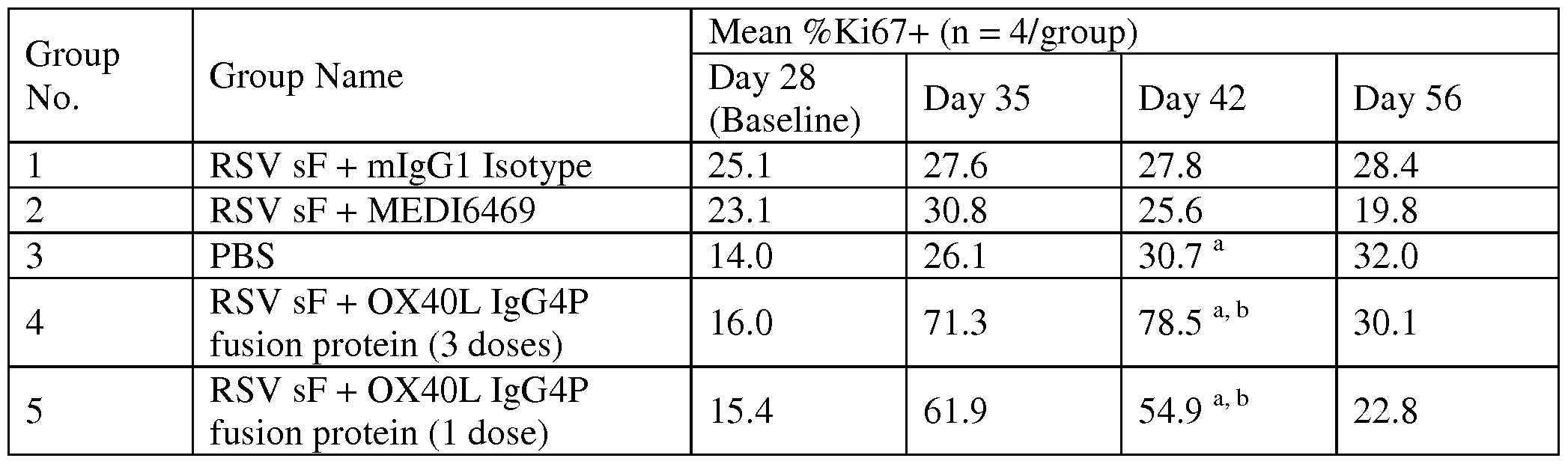
OX40L FUSION PROTEINS AND USES THEREOF
SEQUENCE LISTING
[0001] The instant application contains a Sequence Listing which has been submitted electronically in ASCII format and is hereby incorporated by reference in its entirety. Said ASCII copy, created on May 21, 2015, is named OX40F-101WOl_SL.txt and is 31,496 bytes in size.
BACKGROUND
[0002] OX40 (CD 134; TNFRSF4) is a tumor necrosis factor receptor found primarily on activated CD4+ and CD8+ T-cells, regulatory T cells (Treg) and natural killer (NK) cells (Croft et al., 2009, Immunol Rev. 229: 173-91). OX40 has one known endogenous ligand, OX40 ligand (OX40L; CD152; TNFSF4), that exists in a trimeric form and can cluster OX40 resulting in potent cell signaling events within T cells (Croft et al., 2009, Immunol Rev. 229: 173-91). Signaling through OX40 on activated CD4+ and CD8+ T cells leads to enhanced cytokine production, granzyme and perforin release and expansion of effector and memory T cell pools (Jensen et al., 2010, Semin Oncol. 37:524-32). In addition, OX40 signaling on Treg cells inhibits expansion of Tregs, shuts down the induction of Tregs and blocks Treg-suppressive function (Voo et al., 2013, J Immunol. 191:3641-50; Vu et al, 2007, Blood. 110:2501-10).
[0003] Immunohistochemistry studies and early flow cytometry analyses showed that OX40 is expressed on T cells infiltrating a broad range of human cancers (Baruah et al., 2011, Immunobiology 217:668-675; Curti et al, 2013, Cancer Res. 73:7189-98; Ladanyi et al, 2004, Clin Cancer Res. 10:521-30; Petty et al, 2002, Am J Surg. 183:512-8; Ramstad et al, 2000, Am J Surg. 179:400-6; Sarff et al, 2008, Am J Surg. 195:621-5; discussion 625; Vetto et al, 1997, Am J Surg. 174:258-65). OX40 expression on tumor-infiltrating lymphocytes correlates with longer survival in several human cancers, suggesting that OX40 signals may play a critical role in establishing an antitumor immune response (Ladanyi et al., 2004, Clin Cancer Res. 10:521-30; Petty et al., 2002, Am J Surg. 183:512-8).
[0004] In a variety of nonclinical mouse tumor models, agonists of OX40, including antibodies and OX40 ligand fusion proteins, have been used successfully with promising results (Kjaergaard et al., 2000, Cancer Res. 60:5514-21; Ndhlovu et al, 2001, / Immunol. 167:2991-9; Weinberg et al., 2000, J Immunol. 164:2160-9). Co- stimulating T cells through OX40 promoted anti-tumor activity that in some cases was durable, providing long-lasting protection against subsequent tumor challenge (Weinberg et al., 2000, J Immunol. 164:2160-9). Treg cell inhibition and co-stimulation of effector T cells were shown to be necessary for tumor growth inhibition of OX40 agonists (Piconese et al., 2008, J Exp Med. 205:825-39). Many strategies and technologies have been explored to enhance the anti-tumor effect of OX40 agonist therapy through combinations with vaccines, chemotherapy, radiotherapy, and immunotherapy (Jensen et al., 2010, Semin Oncol. 37:524-32; Melero et al., 2013, Clin Cancer Res. 19:997-1008).
SUMMARY
[0005] This disclosure relates to polypeptide subunits, each including, as a fusion polypeptide, the receptor-binding domain of OX40 Ligand (OX40L), a trimerization domain and a human IgG4 Fc domain, which are capable of forming stable multimeric, e.g., hexameric proteins. Compositions and methods are provided that are useful for cancer immunotherapy.
[0006] The disclosure provides a single-chain polypeptide subunit that includes: a human IgG4 Fc domain; a functional trimerization domain; and a receptor binding domain of OX40L. In certain aspects, a polypeptide subunit as provided can self-assemble into a trimeric or a hexameric protein. In certain aspects, the polypeptide subunit includes, from the amino terminus to the carboxy terminus, the human IgG4 Fc domain, followed by the trimerization domain, followed by the OX40L receptor binding domain. The carboxy terminus of the human IgG4 Fc domain can be fused directly to the amino terminus of the trimerization domain, and the carboxy terminus of the trimerization domain can be fused directly to the amino terminus of the OX40L receptor binding domain. [0007] In further aspects of the polypeptide subunit provided by the disclosure, the IgG4 Fc domain includes an IgG4 hinge region, which can include a mutation that confers complete inter heavy chain disulfide bond formation, e.g., a serine to proline mutation at position 228 (S228P) according to EU numbering. In certain aspects, the hinge region includes amino acids 1 to 12 of SEQ ID NO: 4. The human IgG4 Fc domain can further include a CH2 region, and/or a CH3 region. In certain aspects the human IgG4 Fc domain includes amino acids 1 to 229 of SEQ ID NO: 4.
[0008] The trimerization domain provided by the disclosure can include an alpha-helical coiled coil domain, a leucine zipper domain, or a combination thereof. For example, the trimerization domain can be derived from TRAF2; Thrombospondin 1; Matrilin-4; CMP (matrilin-1); HSF1; or Cubilin. In certain aspects, the trimerization domain includes a human TRAF2 trimerization domain. In certain aspects the TRAF2 trimerization domain includes amino acids 310 to 349 of human TRAF2 (SEQ ID NO: 2).
[0009] In additional aspects of the polypeptide subunit provided by the disclosure, the OX40L receptor binding domain can include amino acids 51 to 183 of human OX40L (SEQ ID NO: 1). In certain aspects the polypeptide subunit provided by the disclosure can self-assemble into a hexameric fusion protein that can specifically bind to human OX40. In certain aspects the polypeptide subunit includes the amino acid sequence SEQ ID NO: 4.
[0010] A polypeptide subunit as provided herein can further include an associated heterologous agent. A heterologous agent as provided herein can be a heterologous polypeptide that is fused to the polypeptide subunit via a peptide bond. The heterologous polypeptide can be fused, for example, to the N-terminus of the IgG4-Fc domain, to the C-terminus of the receptor binding domain of OX40L, between the C-terminus of the IgG4-Fc domain and to the N-terminus of the trimerization domain, or between the C-terminus of the trimerization domain and to the N-terminus of the receptor binding domain of OX40L. In certain aspects the heterologous agent can be chemically conjugated to the polypeptide subunit and can be, for example a cytotoxic molecule, a stabilizing agent, an immune response modifier, or a detectable agent.
[0011] In certain aspects, the disclosure provides polypeptide subunits that can be used as controls. For example, the disclosure provides a polypeptide subunit where the OX40L receptor binding domain includes amino acids 51 to 183 of human OX40L (SEQ ID NO: 1), except for a single phenylalanine to alanine substitution at position 180 (F180A). A hexameric fusion protein that self- assembles from this polypeptide subunit is incapable of binding to human OX40. In certain aspects, this control polypeptide subunit includes the amino acid sequence SEQ ID NO: 6.
[0012] In certain aspects, the disclosure provides a trimeric protein that includes three polypeptide subunits as provided herein.
[0013] The disclosure provides a hexameric protein that includes six polypeptide subunits as described above. In certain aspects, the six polypeptide subunits each include the amino acid sequence SEQ ID NO: 4. An exemplary hexameric fusion protein is OX40L IgG4P Fusion Protein.
[0014] In certain aspects, a hexameric protein as provided by the disclosure can specifically bind to OX40 as expressed on activated CD4+ or CD8+ T cells from human, cynomolgus monkey, and/or rhesus monkey. For example, the hexameric protein can specifically bind to OX40 as expressed on primary activated CD4+ T cells from human, cynomolgus monkey, and/or rhesus monkey. In certain aspects, the binding affinity for human OX40 expressed on primary activated human CD4+ T cells is about 1.0 pM to about 8.0 pM, e.g., about 3.6 pM as measured by flow cytometry. In certain aspects the hexameric protein can achieve 20% receptor occupancy on primary activated human CD4+ T cells (EC2o) at about 0.5 to about 3.0 pM, e.g., about 1.8 pM, 50% receptor occupancy on primary activated human CD4+ T cells (EC50) at about 3.0 to about 10 pM, e.g., about 6.6 pM , and 90% receptor occupancy on primary activated human CD4+ T cells (EC90) at about 35 to about 70 pM, e.g., about 53 pM, all as measured by flow cytometry.
[0015] In certain aspects a hexameric protein as provided by the disclosure has a binding affinity for human OX40 expressed on OX40-overexpressing Jurkat cells of about 1.0 pM to about 24 pM, e.g., about 12 pM, as measured by flow cytometry. In certain aspects the hexameric protein can achieve EC20 on OX40-overexpressing Jurkat cells at about 1.0 to about 15 pM, e.g., about 7.2 pM, EC50 on OX40-overexpressing Jurkat cells at about 1.0 to about 40 pM, e.g., about 16 pM, and EC90 on OX40-overexpressing Jurkat cells at about 10 to about 100 pM, e.g., about 57 pM, all as measured by flow cytometry.
[0016] In certain aspects a hexameric protein as provided by the disclosure has a binding affinity for cynomolgus monkey OX40 expressed on primary activated cynomolgus monkey CD4+ T cells is about 1.0 pM to about 50 pM, e.g., about 24 pM, as measured by flow cytometry. In certain aspects a hexameric protein as provided by the disclosure has a binding affinity for rhesus monkey OX40 expressed on primary activated rhesus monkey CD4+ T cells is about 1.0 pM to about 50 pM, e.g., about 21 pM, as measured by flow cytometry.
[0017] In certain aspects a hexameric protein as provided by the disclosure can induce dose- dependent proliferation of activated CD4+ T cells and dose-dependent cytokine release from activated CD4+ T cells in a plate-based assay. In certain aspects, a 20% maximal proliferation response (EC2o) can be achieved in primary activated human CD4+ T cells at a hexameric protein concentration of about 1.0 pM to about 15 pM, e.g., about 8.0 pM, a 50% maximal proliferation response (EC50) can be achieved in primary activated human CD4+ T cells at a hexameric protein concentration of about 5.0 pM to about 25 pM, e.g., about 14 pM, and a 90% maximal proliferation response (EC90) can be achieved in primary activated human CD4+ T cells at a hexameric protein concentration of about 50 pM to about 65 pM, e.g., about 57 pM, all as measured by flow cytometry. In certain aspects the hexameric protein can induce dose-dependent release of IFNy, TNFa, IL-5, IL- 10, IL-2, IL-4, IL-13, IL-8, IL-12 p70, and/or IL-Ιβ. In certain aspects the cytokines released include IFNy, TNFa, IL-5, and/or IL-10.
[0018] In certain aspects a hexameric protein as provided by the disclosure can achieve CD4+ T cell proliferation and cytokine release in primary activated cynomolgus monkey CD4+ T cells and in primary activated rhesus monkey CD4+ T cells.
[0019] In certain aspects a hexameric protein as provided by the disclosure can activate the NFKB pathway in OX40 expressing T cells in the presence of FcyR-expressing cells. For example, the OX40-expressing T cells can be OX40-expressing Jurkat NFKB-lucif erase reporter cells that produce luciferase in response to stimulation of the NFKB signaling pathway. The OX40 expressed by these cells can be, e.g., human OX40, cynomolgus monkey OX40 or rhesus monkey OX40.
[0020] In certain aspects a hexameric protein as provided by the disclosure, when administered as an effective dose to a subject in need of cancer treatment, can inhibit tumor growth in the subject, for example, in the presence of T-cells. In certain aspects, tumor growth can be inhibited by at least 10%, at least 20%, at least 30%, at least 40%, and least 50%, at least 60%, or at least 70% compared to administration of an isotype-matched control.
[0021] In certain aspects a hexameric protein as provided by the disclosure can induce proliferation of activated, OX40-expressing CD4+ T cells through binding to OX40, but does not substantially trigger complement-dependent or antibody-dependent cytotoxicity against the activated CD4+ T cells. For example, in certain aspects a hexameric protein as provided herein does not bind to Clq or trigger NK cell-mediated antibody-dependent cellular cytotoxicity of activated CD4+ T cells.
[0022] In certain aspects a hexameric protein as provided by the disclosure, upon co-administration with a vaccine antigen to a subject, can increase CD4+ central memory (cM) T-cell proliferation, effector memory (eM) CD8+ T cell proliferation, NK cell proliferation, and/or B cell proliferation. In certain aspects, CD4+ cM T-cell proliferation. CD8+ eM T-cell proliferation, NK cell proliferation, B cell proliferation, or any combination thereof is measured as intracellular Ki67 expression in peripheral blood mononuclear cells.
[0023] In certain aspects a hexameric protein as provided by the disclosure, upon co-administration with a vaccine antigen, including, but not limited to an antigen from respiratory syncytial virus (RSV), hepatitis B or C virus, Ebola virus, influenza virus, Pseudomonas aeruginosa, Clostridium difficile, or Staphylococcus aureus, to a subject, can increase antigen- specific T-cell response that can be measured, e.g., as increased interferon gamma (IFN-gamma) expression.
[0024] In certain aspects a hexameric protein as provided by the disclosure, upon co-administration with a vaccine antigen to a subject, can increase antigen- specific IgG titers. In certain aspects the antigen can be a soluble F glycoprotein of respiratory syncytial virus (RSV sF), and coadministration of the hexameric protein and the RSV antigen to a subject can increase titers of RSV- neutralizing antibodies.
[0025] In certain aspects, the subject to which the hexameric protein and vaccine antigen is coadministered is a non-human primate.
[0026] In certain aspects a hexameric protein as provided by the disclosure can inhibit regulatory T cell (Treg) mediated suppression of effector T cell proliferation, e.g., in a plate-based assay. In certain aspects the effector T cells are effector CD4+ T cells. In certain aspects, the ratio of effector cells to Treg cells can be about 1:0.5 to about 1:3, e.g., about 1: 1 or about 1:2.
[0027] The disclosure further provides a composition that includes a hexameric protein as provided herein, and a carrier.
[0028] In certain aspects, the disclosure provides a polynucleotide that includes a nucleic acid encoding a polypeptide subunit as provided herein, or a hexameric protein as provided herein. In certain aspects, the polynucleotide can include the nucleic acid sequence SEQ ID NO: 3. [0029] The disclosure further provides a vector that incorporates the polynucleotide as provided and a host cell that incorporates the polynucleotide or the vector as provided. In a related aspect, the disclosure provides a method of producing a polypeptide subunit of as provided herein or a hexameric protein as provided herein, where the method includes culturing the provided host cell under conditions in which the polypeptide subunit or hexameric protein encoded by the polynucleotide is expressed, and recovering the polypeptide subunit or hexameric protein.
[0030] In further aspects, the disclosure provides a method to promote survival or proliferation of activated T cells, where the method includes contacting activated T cells with a hexameric protein as provided herein such that the hexameric protein can specifically bind to OX40 on the surface of the T cells. The disclosure further provides a method of inducing cytokine release from activated T cells, where the method includes contacting activated T cells with a hexameric protein as provided herein such that the hexameric protein can specifically bind to OX40 on the surface of the T cells. In certain aspects, the cytokine can be IFNy, TNFa, IL-5, IL- 10, IL-2, IL-4, IL- 13, IL-8, IL- 12 p70, and/or IL- 1β, e.g., IFNy, TNFa, IL-5, and/or IL- 10. In certain aspects the activated T cells are activated CD4+ T cells and/or activated CD8+ T cells. For example, the activated CD4+ T cells can be human CD4+ T cells, cynomolgus monkey CD4+ T cells, and/or rhesus monkey CD4+ T cells.
[0031] In further aspects, the disclosure provides a method to reduce regulatory T cell (Treg)- mediated suppression of activated T cell proliferation, where the method includes contacting a mixture of activated T cells and Treg cells with the hexameric protein of any one of claims 26 to 70, wherein the hexameric protein can specifically bind to OX40 on the surface of the T cells.
[0032] In yet another aspect the disclosure provides a method of promoting T cell activation, where the method includes contacting T cells with a hexameric protein as provided herein such that the hexameric protein can specifically bind to OX40 on the surface of the T cells. In certain aspects, this method further includes cross-linking of the hexameric protein through interaction of the IgG4-Fc domain with a cell expressing FcyR. The cell expressing FcyR can be, e.g., a B cell, a monocyte, a macrophage, a myeloid or plasmacytoid dendritic cell, a follicular dendritic cell, a Langerhans cell, an endothelial cell, an NK cell, an activated T cell, a neutrophil, an eosinophil, a platelet, a mast cell, a CD45+ cell from a primary human tumor or tumor-draining or non-draining lymph node, and/or a CD45+ cell from other secondary or tertiary lymphoid structures. In certain aspects, T cell activation can be measured through stimulation of the NFKB signal transduction pathway, and in certain aspects the activated T cells are activated CD4+ T cells and/or activated CD8+ T cells, for example, human CD4+ T cells, cynomolgus monkey CD4+ T cells, and/or rhesus monkey CD4+ T cells.
[0033] In certain aspects, the methods provided above include administering an effective amount of the hexameric protein or composition as provided by the disclosure to a subject in need of treatment. In a related aspect, the disclosure provides a method of treating cancer in a subject, where the method includes administering to a subject in need of treatment an effective amount of a hexameric protein as provided herein. In certain aspects, the cancer is a solid tumor. In certain aspects, administration of the hexameric protein or composition can inhibit tumor growth, can promote tumor reduction, or both. In certain aspects tumor growth inhibition is achieved in the presence of T-cells.
[0034] In yet another aspect, the disclosure provides a method of enhancing an immune response in a subject, where the method includes administering to a subject in need thereof a therapeutically effective amount of a hexameric protein as provided by the disclosure, or a composition as provided by the disclosure. For any of the treatment methods provided in this disclosure, the subject can be a human subject.
[0035] In an additional aspect, the disclosure provides a method of inducing expression of ICOS on T cells, comprising contacting T cells with a hexameric protein as provided by the disclosure, wherein the hexameric protein can specifically bind to OX40 on the surface of the T cells.
[0036] In another aspect, the disclosure provides a method of inducing expression of PD-1 on T cells, comprising contacting T cells with the hexameric protein as provided by the disclsoure, wherein the hexameric protein can specifically bind to OX40 on the surface of the T cells.
BRIEF DESCRIPTION OF THE DRAWINGS/FIGURES
[0037] Figure 1. Schematically illustrates an exemplary multimeric protein, namely an OX40L fusion protein.
[0038] Figure 2. Amino Acid Sequence of OX40L IgG4P Fusion Protein (N to C terminus, SEQ ID NO: 4). Amino Acid Sequence huIgG4PFcTF2OX40L F180A is disclosed as SEQ ID NO: 12.
[0039] Figure 3A. OX40L IgG4P Fusion Protein and control protein binding to OX40 expressed on the surface of primary activated human CD4+ T cells. Data was used for determination of apparent affinity (Kd) and apparent concentrations to achieve receptor occupancy of 20%, 50% and 90% (EC2o, EC50, and EC90 values).
[0040] Figure 3B. OX40L IgG4P Fusion Protein and control protein binding to human OX40 expressed on Jurkat T cells. Data was used for determination of apparent affinity (Kd) and apparent concentrations to achieve receptor occupancy of 20%, 50% and 90% (EC20, EC50, and EC90 values).
[0041] Figure 4A. OX40L IgG4P Fusion Protein lacks binding to OX40 expressed on primary activated mouse CD4+ T cells. MFI= mean fluorescence intensity. nM= nanomolar. Error bars= SEM.
[0042] Figure 4B. OX40L IgG4P Fusion Protein lacks binding to OX40 expressed on primary activated rat CD4+ T cells. MFI= mean fluorescence intensity. nM= nanomolar. Error bars= SEM.
[0043] Figure 4C. Binding of OX40L IgG4P Fusion Protein to OX40 expressed on primary activated cynomolgous monkey CD4+ T cells. Single well data averaged from two independent assays was used for determination of apparent affinity (Kd) values. MFI= mean fluorescence intensity. nM= nanomolar.
[0044] Figure 4D. Binding of OX40L IgG4P Fusion Protein to OX40 expressed on primary activated rhesus macaque CD4+ T cells. Data averaged from two independent assays was used for determination of apparent affinity (Kd) values. MFI= mean fluorescence intensity. nM= nanomolar. Error bars= SEM
[0045] Figure 5A-C. Binding of OX40L IgG4P Fusion Protein to TNFRSF-expressing HEK293 and OX40-expressing Jurkat. (A-B) Transient expression of TNFRSF members, as indicated to left of histograms, in HEK293 cells and binding to TNFRSF- specific mAbs or to OX40L IgG4P Fusion Protein, as indicated above histograms. Gray histogram, fluorochrome-conjugated isotype control antibody binding for TNFRSF- specific mAb or goat anti-human AlexaFluor® 647 secondary antibody binding control for OX40L IgG4P Fusion Protein; Open histogram, TNFRSF- specific mAb or OX40L IgG4P Fusion Protein binding. (C) Binding of OX40L IgG4P Fusion Protein to OX40- expressing Jurkat as a positive control. Gray histogram, goat anti-human AlexaFluor® 647 secondary antibody binding control; Open histogram, OX40L IgG4P Fusion Protein binding.
[0046] Figure 6. Schematic diagram of the OX40L IgG4P Fusion Protein plate-bound bioactivity assay. Q, OX40L IgG4P Fusion Protein. ¥, anti-CD3 clone OKT3. [0047] Figure 7A-E. OX40L IgG4P Fusion Protein co- stimulates primary CD4 T cell to proliferate and release cytokines in a plate-based bioactivity assay. Representative data for donor 4 presented for (A) CD4 T cell proliferation and release of (B) IFNy, (C) TNFa, (D) IL-10, (E) IL-13; similar results were found for donors 1, 2, and 3. Symbols, mean values; Error bars, standard deviation of the mean.
[0048] Figure 8. Cell systems used for measuring OX40L IgG4P Fusion Protein bioactivity. OX40L IgG4P Fusion Protein cross linking by FcyR-expressing cells mediates the clustering of OX40 on the OX40-expressing Jurkat NFKB-lucif erase clone 64 reporter cell line, resulting in NFKB-dependent production of luciferase that can be measured as a surrogate for NFKB activity and T cell activation.
[0049] Figure 9A-C. Bioactivity of OX40L IgG4P Fusion Protein when cross-linked or not by FcyR. (A) Reporter activity after cross-linking of OX40L IgG4P Fusion Protein by CD32A- expressing HEK293. (B) Reporter activity in the presence of HEK293 parental cells without FcyR expression. (C) Reporter activity with drug and without HEK293 cells. RLU, relative light units.
[0050] Figure 10. Examples of OX40L IgG4P Fusion Protein bioactivity using Raji, CD32B- expressing HEK293, CD32A-expressing HEK293, or CD45+ cells isolated from primary human tumors for FcyR mediated drug cross-linking and the OX40-expressing Jurkat NFkB-luciferase clone 64 reporter cells for bioactivity readout. (A) OX40L IgG4P Fusion Protein activity clustered by Raji B cells; (B) CD32B-expressing HEK293; (C) CD32A-expressing HEK293; (D) CD45+ cells isolated from primary human tumors. RLU=Relative Light Units. M=Molarity.
[0051] Figure 11. OX40L IgG4P Fusion Protein is Active in Cyno/Rhesus OX40-expressing Jurkat NFKB-luciferase Clone B2 and LCL8664 Rhesus B Cell Bioactivity Assays. Concentration- dependent activity in RLU of OX40L IgG4P Fusion Protein to induce signaling through cyno/rhesus OX40 expressed on the cell surface of a Jurkat NFKB-luciferase reporter cell line. 4 replicates per data point. Error bars= SEM. RLU, relative light units; n=2 assays; nM= nanomolar
[0052] Figure 12. OX40L IgG4P Fusion Protein is active in a Cyno/Rhesus OX40-expressing Jurkat NFKB-luciferase and Fc Gamma Receptor Expressing Rhesus Immune Cells Bioactivity Assay. Concentration-dependent activity in RLU of OX40L IgG4P Fusion Protein to induce signaling through cyno/rhesus OX40 expressed on the cell surface of a Jurkat NFKB-luciferase reporter cell line. 2 replicates per data point. Error bars= SEM. RLU, relative light units; nM= nanomolar. [0053] Figure 13. OX40L IgG4P Fusion Protein Causes Proliferation of Primary activated Rhesus CD4+ T Cells. Concentration-dependent activity of OX40L IgG4P Fusion Protein to induce primary activated rhesus CD4+ T cells into the cell cycle and divide. Specific activity of OX40L IgG4P Fusion Protein was calculated by subtracting the average value for stimulated cells with anti-CD3 antibody only from the percent CD4 divided value. Data shown for 2 independent assays with triplicate wells. nM= nanomolar. Error bars= SEM.
[0054] Figure 14A-D. Assessment of natural killer cell-mediated antibody-dependent cellular cytotoxicity of OX40L IgG4P Fusion Protein, OX40L IgGl Fusion Protein and anti-CD20 antibodies, Experiment #1. Specific killing of OX40-expressing CD4+ T cells by primary activated NK cells mediated by the OX40L fusion protein IgGl, but not by OX40L IgG4P Fusion Protein nor by F180A OX40L fusion protein IgGl and IgG4P controls: (A) Donor 1 NK cells incubated with activated CD4+ T cells; (B) Donor 1 NK cells incubated with Toledo B cells; (C) Donor 2 NK cells incubated with activated CD4+ T cells. Primary activated NK cells used in the ADCC assays were capable of mediating efficient lysis of the Toledo B cells bound to rituximab: (D) Donor 2 NK cell combined with Toledo B cells. Experimental replicates were conducted in triplicate. Error bars represent standard deviation of the mean.
[0055] Figure 15. Assessment of natural killer cell-mediated antibody-dependent cellular cytotoxicity of OX40L IgG4P Fusion Protein and the OX40 ligand fusion protein IgGl, Experiment #2. Specific killing of OX40-expressing CD4+ T cells by primary activated NK cells mediated by the OX40L fusion protein IgGl, but not by OX40L IgG4P Fusion Protein nor by F180A OX40L fusion protein IgGl and IgG4P controls. Experimental replicates were conducted in triplicate. Error bars represent standard deviation of the mean.
[0056] Figure 16A-B. Assessment of OX40L IgG4P Fusion Protein binding to purified Clq protein. (A) The indicated concentrations of purified human Clq protein were injected onto the biosensor chip. Blank represents injections of PBS/0.005% Tween 20 vehicle alone, (B) In the same experiment, control human IgGl bound purified human Clq.
[0057] Figure 17. Effect of OX40L IgG4P Fusion Protein on Growth of A375 Cells in a Mouse Xenograft Model. Six NOD/SCID mice in each group were engrafted SC on Day 1 with A375 cells mixed with alloreactive human CD4+ and CD8+ T cell lines at E:T ratio 1:6. Test article (Isotype control or OX40L IgG4P Fusion Protein) was administered IP on Days 4, 7, 9 and 12. Mean values of tumor volumes are shown. A comparison between OX40L IgG4P Fusion Protein- treated and the Isotype control-treated animals was made, and intergroup differences were analyzed for statistical significance by a Mann- Whitney rank sum test. Error bars represent standard error of the mean. *: TGI > 50%, P < 0.05 as compared to the isotype-control group. NOD/SCID = nonobese diabetic/severe combined immunodeficient; SC = subcutaneous; E:T = effector-to-target ratio; IP = intraperitoneal; TGI = tumor growth inhibition
[0058] Figure 18. Effect of OX40L IgG4P Fusion Protein on Growth of A375 Cells in a Mouse Xenograft Model. Six NOD/SCID mice in each group were engrafted SC on Day 1 with A375 cells alone (no T cells) or mixed with alloreactive human CD4+ and CD8+ T cell lines (ratio of 2: 1) at E:T ratio 1:6 Test article (Isotype control or OX40L IgG4P Fusion Protein) was administered IP on Days 3, 6, 8 and 10. Mean values of tumor volumes are shown. A comparison between OX40L IgG4P Fusion Protein-treated and the Isotype control-treated animals was made, and intergroup differences were analyzed for statistical significance by a Mann- Whitney rank sum test. Error bars represent standard error of the mean. *: TGI > 50%, P < 0.05 as compared to the isotype control group. NOD/SCID = nonobese diabetic/severe combined immunodeficient; SC = subcutaneous; E:T = effector-to-target ratio; IP = intraperitoneal; TGI = tumor growth inhibition.
[0059] Figure 19. Effect of Murine OX40 Ligand Fusion Protein on Growth of Renca Cell Line in a Mouse Syngeneic Model. Ten BALB/c mice in each group were inoculated SC on Day 1 with Renca cells. Control article (isotype control) and test article (mOX40L FP) were administered IP on Days 4 and 7. Mean (panel A) and individual (pane B) values of tumor volumes are shown. A comparison between mOX40L FP-treated and the Isotype control-treated animals was made, and intergroup differences were analyzed for statistical significance by the method described in Section 6.8 using GraphPad Prism 6.0 software. Error bars represent standard error of the mean. *: TGI > 50%, P < 0.0001 as compared to the isotype-control group on Day 26. SC = subcutaneous; IP = intraperitoneal; TGI = tumor growth inhibition.
[0060] Figure 20. Effect of Murine OX40 Ligand Fusion Protein on Growth of CT26 Cell Line in a Mouse Syngeneic Model. Ten BALB/c mice in each group were inoculated SC on Day 1 with CT26 cells. Control article (isotype control) and test article (mOX40L FP) were administered IP on Days 4 and 6. Mean (panel A) and individual (panel B) values of tumor volumes are shown. A comparison between mOX40L FP-treated and the isotype control-treated animals was made, and intergroup differences were analyzed for statistical significance by the method described in Section 6.8 using GraphPad Prism 6.0 software. Error bars represent standard error of the mean. *: TGI > 50%, P < 0.0001 as compared to the isotype-control group on study day 22. SC = subcutaneous; IP = intraperitoneal; TGI = tumor growth inhibition.
[0061] Figure 21. Effect of Murine OX40 Ligand Fusion Protein on Growth of 4T1 Cell Line in a Mouse Syngeneic Model. Twelve BALB/c mice in each group were inoculated SC on Day 1 with 4T1 cells. Control article (isotype control) and test article (mOX40L FP) were administered IP on Days 4 and 7. Mean (panel A) and individual (panel B) values of tumor volumes are shown. A comparison between mOX40L FP-treated and the Isotype control-treated animals was made, and intergroup differences were analyzed for statistical significance by the method described in Section 6.8 using GraphPad Prism 6.0 software. Error bars represent standard error of the mean. *: TGI > 50%, P < 0.0006 as compared to the isotype-control group on study day 25. SC = subcutaneous; IP = intraperitoneal; TGI = tumor growth inhibition.
[0062] Figure 22. Effect of Murine OX40 Ligand Fusion Protein on Growth of MCA205 Cell Line in a Mouse Syngeneic Model. Fourteen C57BL/6 mice in each group were inoculated SC on Day 1 with MCA205 cells. Control article (isotype control) and test article (OX40L FP) were administered IP on Days 11 and 14. Mean (panel A) and individual (panel B) values of tumor volumes are shown. A comparison between mOX40L FP-treated and the isotype control-treated animals was made, and intergroup differences were analyzed for statistical significance by the method described in Section 6.8 using GraphPad Prism 6.0 software. Error bars represent standard error of the mean. *: TGI > 50%, P < 0.028 as compared to the isotype-control group on study day 22. SC = subcutaneous; IP = intraperitoneal; TGI = tumor growth inhibition.
[0063] Figure 23. OX40L IgG4P Fusion Protein Overcomes Regulatory T Cell Suppression of Effector CD4+ T cells. Effector CD4+ T cells were labelled with carboxyfluorescein diacetate succinimidyl ester (CFSE) and cultured, with and without regulatory T cells (Tregs) at the ratios indicated, for 4 days in the presence of anti-CD3, anti-CD28 and test or control articles. The percentage of divided effector CD4+ T cells at the end of the assay was assessed by flow cytometry. Error bars represent the standard error of the mean from duplicate assay wells. Significance was calculated using the Student's T test where *p=0.0042; **p=0.0002, ***p<0.0001. [0064] Figure 24. OX40L IgG4P Fusion Protein Effects on Regulatory T Cell Suppression of Effector CD4+ T cells are Concentration Dependent. Effector CD4+ T cells were labelled with carboxyfluorescein diacetate succinimidyl ester (CFSE) and cultured, with and without regulatory T cells (Tregs) at a 1: 1 ratio, for 4 days in the presence of anti-CD3, anti-CD28 and test or control articles. The percentage of divided effector CD4+ T cells at the end of the assay was assessed by flow cytometry. Error bars represent the standard error of the mean from duplicate assay wells. Significance was calculated using the Student's T test where *p<0.05; **p<0.01.
[0065] Figure 25. Study design for monitoring pharmacodynamics effects of OX40L fusion protein IgG4-FP administered via the intravenous route to Rhesus monkeys.
[0066] Figure 26 A-D. Pharmacodynamics (as measured by Ki-67 expression) of total CD4 memory T-cells (A), naive CD4 T cells (B), total memory CD8 T-cells (C), and naive CD8 T-cells (D).
[0067] Figure 27 A-D. Pharmacodynamics (as measured by ICOS expression) of total CD4 memory T-cells (A), naive CD4 T cells (B), total memory CD 8 T-cells (C), and naive CD 8 T-cells (D).
[0068] Figure 28 A-D. Pharmacodynamics (as measured by PD-1 expression) of total CD4 memory T-cells (A), naive CD4 T cells (B), total memory CD 8 T-cells (C), and naive CD 8 T-cells (D).
[0069] Figure 29. Pharmacodynamics (as measured by Ki-67 expression) as proliferation of Lin- CD20+ B cells.
DETAILED DESCRIPTION
[0070] Engagement of the OX40 receptor on T cells, e.g., CD4+ T-cells during, or shortly after, priming by an antigen results in an increased response of the T cells, e.g., CD4+ T-cells to the antigen. In the context of the present disclosure, the term "engagement" refers to binding to and stimulation of at least one activity mediated by the OX40 receptor. For example, engagement of the OX40 receptor on antigen specific T cells, e.g., CD4+ T-cells results in increased T cell proliferation as compared to the response to antigen alone, and increased cytokine production. The elevated response to the antigen can be maintained for a period of time substantially longer than in the absence of OX40 receptor engagement. Thus, stimulation via the OX40 receptor enhances the antigen specific immune response by boosting T-cell recognition of antigens, e.g., tumor antigens. [0071] OX40 agonists can enhance antigen specific immune responses in a subject, such as a human subject, when administered to the subject during or shortly after priming of T-cells by an antigen. OX40 agonists include OX40 ligand ("OX40L"), such as soluble OX40L fusion proteins and anti- OX40 antibodies or fragments thereof. A specific example is a fusion polypeptide subunit comprising the receptor binding domain of OX40L, a trimerization domain, e.g., an isoleucine zipper domain from TRAF-2, and a human IgG4 Fc domain, where the polypeptide subunit self-assembles into a multimeric (e.g., trimeric or hexameric) fusion protein. Also described are nucleic acids including polynucleotide sequences that encode such fusion polypeptides. This disclosure also provides methods for enhancing an antigen specific immune response in a subject using the multimeric OX40L fusion polypeptides. The compositions and methods disclosed herein with respect to OX40L fusion proteins can be more generally applied to the production and use of multimeric (e.g., trimeric and hexameric) receptor-binding fusion proteins.
DEFINITIONS
[0072] The term "a" or "an" entity refers to one or more of that entity; for example, "polypeptide subunit" is understood to represent one or more polypeptide subunits. As such, the terms "a" (or "an"), "one or more," and "at least one" can be used interchangeably herein.
[0073] Unless defined otherwise, all technical and scientific terms used herein have the same meaning as commonly understood by one of ordinary skill in the art to which this disclosure is related. For example, the Concise Dictionary of Biomedicine and Molecular Biology, Juo, Pei-Show, 2nd ed., 2002, CRC Press; The Dictionary of Cell and Molecular Biology, 3rd ed., 1999, Academic Press; and the Oxford Dictionary Of Biochemistry And Molecular Biology, Revised, 2000, Oxford University Press, provide one of skill with a general dictionary of many of the terms used in this disclosure.
[0074] Units, prefixes, and symbols are denoted in their Systeme International de Unites (SI) accepted form. Numeric ranges are inclusive of the numbers defining the range. Unless otherwise indicated, amino acid sequences are written left to right in amino to carboxy orientation. The headings provided herein are not limitations of the various aspects or aspects of the disclosure, which can be had by reference to the specification as a whole. Accordingly, the terms defined immediately below are more fully defined by reference to the specification in its entirety. [0075] As used herein, the term "polypeptide" is intended to encompass a singular "polypeptide" as well as plural "polypeptides," and refers to a molecule composed of monomers (amino acids) linearly linked by amide bonds (also known as peptide bonds). The term "polypeptide" refers to any chain or chains of two or more amino acids, and does not refer to a specific length of the product. Thus, peptides, dipeptides, tripeptides, oligopeptides, "protein," "amino acid chain," or any other term used to refer to a chain or chains of two or more amino acids are included within the definition of "polypeptide," and the term "polypeptide" can be used instead of, or interchangeably with any of these terms. The term "polypeptide" is also intended to refer to the products of post-expression modifications of the polypeptide, including without limitation glycosylation, acetylation, phosphorylation, amidation, derivatization by known protecting/blocking groups, proteolytic cleavage, or modification by non-standard amino acids. A polypeptide can be derived from a natural biological source or produced by recombinant technology, but is not necessarily translated from a designated nucleic acid sequence. It can be generated in any manner, including by chemical synthesis.
[0076] A "protein" as used herein can refer to a single polypeptide, i.e., a single amino acid chain as defined above, but can also refer to two or more polypeptides that are associated, e.g., by disulfide bonds, hydrogen bonds, or hydrophobic interactions, to produce a multimeric protein. As used herein, the term "polypeptide subunit" refers to a polypeptide chain of amino acids which can interact with other polypeptide subunits, either identical or different, to form a multimeric protein, e.g., a hexameric protein as described herein.
[0077] A polypeptide as disclosed herein can be of a size of about 3 or more, 5 or more, 10 or more, 20 or more, 25 or more, 50 or more, 75 or more, 100 or more, 200 or more, 500 or more, 1,000 or more, or 2,000 or more amino acids. Polypeptides can have a defined three-dimensional structure, although they do not necessarily have such structure. Polypeptides with a defined three-dimensional structure are referred to as folded, and polypeptides that do not possess a defined three-dimensional structure, but rather can adopt a large number of different conformations, and are referred to as unfolded.
[0078] By an "isolated" polypeptide or a fragment, variant, or derivative thereof is intended a polypeptide that is not in its natural milieu. No particular level of purification is required. For example, an isolated polypeptide can be removed from its native or natural environment. Recombinantly produced polypeptides and proteins expressed in host cells are considered isolated as disclosed herein, as are native or recombinant polypeptides that have been separated, fractionated, or partially or substantially purified by any suitable technique.
[0079] Other polypeptides disclosed herein are fragments, derivatives, analogs, or variants of the foregoing polypeptides, and any combination thereof. The terms "fragment," "variant," "derivative" and "analog" when referring to polypeptide subunit or multimeric protein as disclosed herein can include any polypeptide or protein that retain at least some of the activities of the complete polypeptide or protein, but which is structurally different. Fragments of polypeptides include, for example, proteolytic fragments, as well as deletion fragments. Variants include fragments as described above, and also polypeptides with altered amino acid sequences due to amino acid substitutions, deletions, or insertions. Variants can occur spontaneously or be intentionally constructed. Intentionally constructed variants can be produced using art-known mutagenesis techniques. Variant polypeptides can comprise conservative or non-conservative amino acid substitutions, deletions or additions. Derivatives are polypeptides that have been altered so as to exhibit additional features not found on the native polypeptide. Examples include fusion proteins. Variant polypeptides can also be referred to herein as "polypeptide analogs." As used herein a "derivative" refers to a subject polypeptide having one or more amino acids chemically derivatized by reaction of a functional side group. Also included as "derivatives" are those peptides that contain one or more standard or synthetic amino acid derivatives of the twenty standard amino acids. For example, 4-hydroxyproline can be substituted for proline; 5-hydroxylysine can be substituted for lysine; 3-methylhistidine can be substituted for histidine; homoserine can be substituted for serine; and ornithine can be substituted for lysine.
[0080] A "conservative amino acid substitution" is one in which one amino acid is replaced with another amino acid having a similar side chain. Families of amino acids having similar side chains have been defined in the art, including basic side chains (e.g., lysine, arginine, histidine), acidic side chains (e.g., aspartic acid, glutamic acid), uncharged polar side chains (e.g. , asparagine, glutamine, serine, threonine, tyrosine, cysteine), nonpolar side chains (e.g., glycine, alanine, valine, leucine, isoleucine, proline, phenylalanine, methionine, tryptophan), beta-branched side chains (e.g. , threonine, valine, isoleucine) and aromatic side chains (e.g. , tyrosine, phenylalanine, tryptophan, histidine). For example, substitution of a phenylalanine for a tyrosine is a conservative substitution. Methods of identifying nucleotide and amino acid conservative substitutions which do not eliminate protein activity are well-known in the art (see, e.g., Brummell et al., Biochem. 32: 1180-1 187 (1993); Kobayashi et al, Protein Eng. 12(10):879-884 (1999); and Burks et al, Proc. Natl. Acad. Sci. USA 94:412-417 (1997)).
[0081] As used herein, the term "antibody" (or a fragment, variant, or derivative thereof) refers to at least the minimal portion of an antibody which is capable of binding to antigen, e.g., at least the variable domain of a heavy chain (VH) and the variable domain of a light chain (VL) in the context of a typical antibody produced by a B cell. Basic antibody structures in vertebrate systems are relatively well understood. See, e.g., Harlow et al., Antibodies: A Laboratory Manual, (Cold Spring Harbor Laboratory Press, 2nd ed. 1988).
[0082] Antibodies or antigen-binding fragments, variants, or derivatives thereof include, but are not limited to, polyclonal, monoclonal, human, humanized, or chimeric antibodies, single chain antibodies, epitope-binding fragments, e.g., Fab, Fab' and F(ab')2, Fd, Fvs, single-chain Fvs (scFv), single-chain antibodies, disulfide-linked Fvs (sdFv), fragments comprising either a VL or VH domain, fragments produced by a Fab expression library. ScFv molecules are known in the art and are described, e.g., in US patent 5,892,019. Immunoglobulin or antibody molecules encompassed by this disclosure can be of any type (e.g., IgG, IgE, IgM, IgD, IgA, and IgY), class (e.g., IgGl, IgG2, IgG3, IgG4, IgAl and IgA2) or subclass of immunoglobulin molecule.
[0083] The term "polynucleotide" is intended to encompass a singular nucleic acid as well as plural nucleic acids, and refers to an isolated nucleic acid molecule or construct, e.g., messenger RNA (mRNA) or plasmid DNA (pDNA). A polynucleotide can comprise a conventional phosphodiester bond or a non-conventional bond (e.g., an amide bond, such as found in peptide nucleic acids (PNA)). The term "nucleic acid" refers to any one or more nucleic acid segments, e.g., DNA or RNA fragments, present in a polynucleotide. By "isolated" nucleic acid or polynucleotide is intended a nucleic acid molecule, DNA or RNA, which has been removed from its native environment. For example, a recombinant polynucleotide encoding a polypeptide subunit contained in a vector is considered isolated as disclosed herein. Further examples of an isolated polynucleotide include recombinant polynucleotides maintained in heterologous host cells or purified (partially or substantially) polynucleotides in solution. Isolated RNA molecules include in vivo or in vitro RNA transcripts of polynucleotides. Isolated polynucleotides or nucleic acids further include such molecules produced synthetically. In addition, polynucleotide or a nucleic acid can be or can include a regulatory element such as a promoter, ribosome binding site, or a transcription terminator.
[0084] As used herein, a "coding region" is a portion of nucleic acid comprising codons translated into amino acids. Although a "stop codon" (TAG, TGA, or TAA) is not translated into an amino acid, it can be considered to be part of a coding region, but any flanking sequences, for example promoters, ribosome binding sites, transcriptional terminators, introns, and the like, are not part of a coding region. Two or more coding regions can be present in a single polynucleotide construct, e.g. , on a single vector, or in separate polynucleotide constructs, e.g. , on separate (different) vectors. Furthermore, any vector can contain a single coding region, or can comprise two or more coding regions, e.g. , a single vector can separately encode an immunoglobulin heavy chain variable region and an immunoglobulin light chain variable region. In addition, a vector, polynucleotide, or nucleic acid can encode heterologous coding regions, either fused or unfused to a nucleic acid encoding a polypeptide subunit or fusion protein as provided herein. Heterologous coding regions include without limitation specialized elements or motifs, such as a secretory signal peptide or a heterologous functional domain.
[0085] In certain embodiments, the polynucleotide or nucleic acid is DNA. In the case of DNA, a polynucleotide comprising a nucleic acid that encodes a polypeptide normally can include a promoter and/or other transcription or translation control elements operably associated with one or more coding regions. An operable association or linkage is when a coding region for a gene product, e.g. , a polypeptide, is associated with one or more regulatory sequences in such a way as to place expression of the gene product under the influence or control of the regulatory sequence(s). Two DNA fragments (such as a polypeptide coding region and a promoter associated therewith) are "operably associated" or "operably linked" if induction of promoter function results in the transcription of mRNA encoding the desired gene product and if the nature of the linkage between the two DNA fragments does not interfere with the ability of the expression regulatory sequences to direct the expression of the gene product or interfere with the ability of the DNA template to be transcribed. Thus, a promoter region would be operably associated with a nucleic acid encoding a polypeptide if the promoter was capable of effecting transcription of that nucleic acid. The promoter can be a cell-specific promoter that directs substantial transcription of the DNA only in predetermined cells. Other transcription control elements, besides a promoter, for example enhancers, operators, repressors, and transcription termination signals, can be operably associated with the polynucleotide to direct cell-specific transcription. Suitable promoters and other transcription control regions are disclosed herein.
[0086] A variety of transcription control regions are known to those skilled in the art. These include, without limitation, transcription control regions that function in vertebrate cells, such as, but not limited to, promoter and enhancer segments from cytomegaloviruses (the immediate early promoter, in conjunction with intron-A), simian virus 40 (the early promoter), and retroviruses (such as Rous sarcoma virus). Other transcription control regions include those derived from vertebrate genes such as actin, heat shock protein, bovine growth hormone and rabbit β-globin, as well as other sequences capable of controlling gene expression in eukaryotic cells. Additional suitable transcription control regions include tissue-specific promoters and enhancers as well as lymphokine-inducible promoters (e.g. , promoters inducible by interferons or interleukins).
[0087] Similarly, a variety of translation control elements are known to those of ordinary skill in the art. These include, but are not limited to ribosome binding sites, translation initiation and termination codons, and elements derived from picomaviruses (particularly an internal ribosome entry site, or IRES, also referred to as a CITE sequence).
[0088] In other embodiments, a polynucleotide can be RNA, for example, in the form of messenger RNA (mRNA).
[0089] Polynucleotide and nucleic acid coding regions can be associated with additional coding regions that encode secretory or signal peptides, which direct the secretion of a polypeptide encoded by a polynucleotide as disclosed herein, e.g. , a polynucleotide encoding a polypeptide subunit provided herein. According to the signal hypothesis, proteins secreted by mammalian cells have a signal peptide or secretory leader sequence that is cleaved from the mature protein once export of the growing protein chain across the rough endoplasmic reticulum has been initiated. Those of ordinary skill in the art are aware that polypeptides secreted by vertebrate cells generally have a signal peptide fused to the N-terminus of the polypeptide, which is cleaved from the complete or "full length" polypeptide to produce a secreted or "mature" form of the polypeptide. In certain embodiments, the native signal peptide, e.g. , an immunoglobulin heavy chain or light chain signal peptide is used, or a functional derivative of that sequence that retains the ability to direct the secretion of the polypeptide that is operably associated with it. Alternatively, a heterologous mammalian signal peptide, or a functional derivative thereof, can be used. For example, the wild-type leader sequence can be substituted with the leader sequence of human tissue plasminogen activator (TPA) or mouse β- glucuronidase.
[0090] A "vector" is nucleic acid molecule as introduced into a host cell, thereby producing a transformed host cell. A vector can include nucleic acid sequences that permit it to replicate in a host cell, such as an origin of replication. A vector can also include one or more selectable marker gene and other genetic elements known in the art.
[0091] A "transformed" cell, or a "host" cell, is a cell into which a nucleic acid molecule has been introduced by molecular biology techniques. As used herein, the term transformation encompasses all techniques by which a nucleic acid molecule can be introduced into such a cell, including transfection with viral vectors, transformation with plasmid vectors, and introduction of naked DNA by electroporation, lipofection, and particle gun acceleration. A transformed cell or a host cell can be a bacterial cell or a eukaryotic cell.
[0092] By "specifically binds," it is generally meant that a molecule, e.g., an OX40L or receptor- binding fragment thereof, binds to another molecule, e.g., OX40, via its receptor-binding domain, and that the binding entails some complementarity between the antigen binding domain and the epitope. According to this definition, a ligand is said to "specifically bind" to a receptor when it binds to that receptor, via its receptor-binding domain more readily than it would bind to a random, unrelated molecule. The term "specificity" is used herein to qualify the relative affinity by which a certain ligand binds to a certain receptor. For example, ligand "A" can be deemed to have a higher specificity for a given receptor than ligand "B," or ligand "A" can be said to bind to receptor "C" with a higher specificity than it has for related receptor "D."
[0093] By "a receptor-binding domain," it is intended a binding domain comprised in a ligand, e.g., an OX40L as disclosed herein.
[0094] A ligand, e.g., an OX40L-IgG4-Fc polypeptide subunit or multimeric fusion protein as disclosed herein can bind to a receptor, e.g., OX40, with an off rate (k(off)) of less than or equal to 5 X 10"2 sec"1, 10"2 sec"1, 5 X 10"3 sec"1 or 10"3 sec"1. A ligand, e.g., an OX40L-IgG4-Fc polypeptide subunit or multimeric fusion protein as disclosed herein can bind to a receptor, e.g., OX40, with an off rate (k(off)) less than or equal to 5 X 10"4 sec"1, 10"4 sec"1, 5 X 10"5 sec"1, or 10"5 sec"1 5 X 10"6 sec"1, 10"6 sec"1, 5 X 10"7 sec"1 or 10"7 sec"1. [0095] The terms "inhibit," "block," and "suppress" are used interchangeably herein and refer to any statistically significant decrease in biological activity, including full blocking of the activity. For example, "inhibition" can refer to a decrease of about 10%, 20%, 30%, 40%, 50%, 60%, 70%, 80%, 90% or 100% in biological activity.
[0096] As used herein, the term "affinity" refers to a measure of the strength of the binding of a ligand to its cognate receptor. As used herein, the term "avidity" refers to the overall stability of the complex between a population of ligands and receptors, that is, the functional combining strength of a combination of ligands and receptors, e.g., interaction of a hexameric OX40L-IgG4 Fusion Protein to cell surface OX40. Avidity is related to both the affinity of individual receptor binding domains in the population with specific receptors, and also the valencies of the ligands and the receptors.
[0097] A ligand, e.g., an OX40L-IgG4-Fc polypeptide subunit or multimeric fusion protein as disclosed herein can also be described or specified in terms of its binding affinity to a ligand. For example, a ligand can bind to a receptor with a dissociation constant or KD no greater than 5 x 10" M, 10"2 M, 5 x 10"3 M, 10"3 M, 5 x 10"4 M, 10"4 M, 5 x 10"5 M, 10"5 M, 5 x 10"6 M, 10"6 M, 5 x 10"7 M, 10"7 M, 5 x 10"8 M, 10"8 M, 5 x 10"9 M, 10"9 M, 5 x 10"10 M, 10"10 M, 5 x 10"11 M, 10"11 M, 5 x 10"12 M, 10"12 M, 5 x 10"13 M, 10"13 M, 5 x 10"14 M, 10"14 M, 5 x 10"15 M, or 10"15 M.
[0098] A ligand, e.g., an OX40L-IgG4-Fc polypeptide subunit or multimeric fusion protein as disclosed herein can bind to a receptor, e.g., OX40, with an on rate (k(on)) of greater than or equal to 103 M"1 sec"1, 5 X 10³ M"1 sec"1, 104 M"1 sec"1 or 5 X 10⁴ M"1 sec"1. A ligand, e.g., an OX40L-IgG4- Fc polypeptide subunit or multimeric fusion protein as disclosed herein can bind to a receptor, e.g., OX40, with an on rate (k(on)) greater than or equal to 105 M"1 sec"1, 5 X 10⁵ M"1 sec"1, 106 M"1 sec"1, or 5 X 10⁶ M"1 sec"1 or 107 M"1 sec"1.
[0099] OX40, or "OX40 receptor" is a protein (also variously termed CD 134, tumor necrosis factor receptor superfamily member 4, and ACT-35) expressed on the surface of activated T cells, e.g., CD4+ and CD8+ T-cells, as well as on Foxp3+CD4+ regulatory T cells (Tregs). Naive CD4+ and CD8+ T cells do not express OX40 (Croft, M., (2010) Ann Rev Immunol 28:57-78).
[00100] "OX40 ligand" ("OX40L") (also variously termed tumor necrosis factor ligand superfamily member 4, gp34, TAX transcriptionally-activated glycoprotein- 1, and CD252) is found largely on antigen presenting cells (APCs), and can be induced on activated B cells, dendritic cells (DCs), Langerhans cells, plamacytoid DCs, and macrophages (Croft, M., (2010) Ann Rev Immunol 28:57-78). Other cells, including activated T cells, NK cells, mast cells, endothelial cells, and smooth muscle cells can express OX40L in response to inflammatory cytokines (Id.). OX40L specifically binds to the OX40 receptor. The human protein is described in PCT Publication No. WO 95/21915. The mouse OX40L is described in U.S. Pat. No. 5,457,035. OX40L is expressed on the surface of cells and includes an intracellular, a transmembrane and an extracellular receptor-binding domain. A functionally active soluble form of OX40L can be produced by deleting the intracellular and transmembrane domains as described, e.g., in U.S. Pat. Nos. 5,457,035 and 6,312,700, and WO 95/21915, the disclosures of which are incorporated herein for all purposes. A functionally active form of OX40L is a form that retains the capacity to bind specifically to OX40, that is, that possesses an OX40 "receptor binding domain." An example is amino acids 51 to 183 of SEQ ID NO: 1, human OX40L. Methods of determining the ability of an OX40L molecule or derivative to bind specifically to OX40 are discussed below. Methods of making and using OX40L and its derivatives (such as derivatives that include an OX40 binding domain) are described in WO 95/21915, which also describes proteins comprising the soluble form of OX40L linked to other peptides, such as human immunoglobulin ("Ig") Fc regions, that can be produced to facilitate purification of OX40 ligand from cultured cells, or to enhance the stability of the molecule after in vivo administration to a mammal (see also, U.S. Pat. No. 5,457,035 and PCT Publication No. WP 2006/121810, both of which are incorporated by reference herein in their entireties).
[00101] As used herein, the term "OX40L" includes the entire OX40 ligand, soluble OX40 ligand, and functionally active portions of the OX40 ligand. Also included within the definition of OX40L are OX40 ligand variants which vary in amino acid sequence from naturally occurring OX40 ligand molecules but which retain the ability to specifically bind to an OX40 receptor. Such variants are described in U.S. Pat. No. 5,457,035 and WO 95/21915. In a related embodiment, the disclosure provides mutants of OX40L which have lost the ability to specifically bind to OX40, for example amino acids 51 to 183 of SEQ ID NO: 1, in which the phenylalanine at position 180 of the receptor- binding domain of human OX40L has been replaced with alanine (F180A).
[00102] A "trimerization domain" is an amino acid sequence within a polypeptide that promotes assembly of the polypeptide into trimers. For example, a trimerization can promote assembly into trimers via associations with other trimerization domains (of additional polypeptides with the same or a different amino acid sequence). The term is also used to refer to a polynucleotide that encodes such a peptide or polypeptide.
[00103] The term "Fc" domain refers to a portion of an antibody constant region.
Traditionally, the term Fc domain refers to a protease (e.g., papain) cleavage product encompassing the paired CH2, CH3 and hinge regions of an antibody. In the context of this disclosure, the term Fc domain or Fc refers to any polypeptide (or nucleic acid encoding such a polypeptide), regardless of the means of production, that includes all or a portion of the CH2, CH3 and hinge regions of an immunoglobulin polypeptide, e.g., a human IgG4 Fc.
[00104] As used herein the term "CH2 domain" includes the portion of the Fc domain of a heavy chain molecule that extends, e.g., from about amino acid 244 to amino acid 360 of an antibody using conventional numbering schemes (amino acids 244 to 360, Kabat numbering system; and amino acids 231-340, EU numbering system). It is also well documented that the CH3 domain extends from the CH2 domain to the C-terminal of the IgG molecule and comprises approximately 108 amino acids.
[00105] As used herein, the term "hinge region" includes the portion of the Fc domain of a heavy chain molecule that joins the CHI domain to the CH2 domain. This hinge region comprises approximately 25 amino acids and is flexible, thus allowing the two N-terminal antigen binding regions to move independently. Hinge regions can be subdivided into three distinct domains: upper, middle, and lower hinge domains (Roux et al., J. Immunol. 7(57:4083 (1998)).
[00106] As used herein the term "disulfide bond" includes the covalent bond formed between two sulfur atoms. The amino acid cysteine comprises a thiol group that can form a disulfide bond or bridge with a second thiol group. In certain aspects provided herein, a human IgG4 Fc domain can be mutated in the hinge region to insure disulfide bond formation between two hinge regions, specifically, a serine to proline mutation at position 228 (according to EU numbering). Human IgG4 Fc domains comprising the S228P mutation are referred to herein as "IgG4P Fc domains."
[00107] As used herein, the terms "linked," "fused" or "fusion" can be used interchangeably.
These terms refer to the joining together of two more elements or components, by whatever means including chemical conjugation or recombinant means. An "in-frame fusion" refers to the joining of two or more polynucleotide open reading frames (ORFs) to form a continuous longer ORF, in a manner that maintains the correct translational reading frame of the original ORFs. Thus, a recombinant fusion protein is a single protein containing two or more segments that correspond to polypeptides encoded by the original ORFs (which segments are not normally so joined in nature.), e.g., an OX40L IgG4P fusion protein as provided herein. Although the reading frame is thus made continuous throughout the fused segments, the segments can be physically or spatially separated by, for example, in-frame linker sequence.
[00108] In the context of polypeptides, a "linear sequence" or a "sequence" is an order of amino acids in a polypeptide in an amino to carboxyl terminal direction in which amino acids that neighbor each other in the sequence are contiguous in the primary activated structure of the polypeptide.
[00109] The term "expression" as used herein refers to a process by which a gene produces a biochemical, for example, a polypeptide. The process includes any manifestation of the functional presence of the gene within the cell including, without limitation, gene knockdown as well as both transient expression and stable expression. It includes without limitation transcription of the gene into messenger RNA (mRNA), and the translation of such mRNA into polypeptide(s). If the final desired product is a biochemical, expression includes the creation of that biochemical and any precursors. Expression of a gene produces a "gene product." As used herein, a gene product can be either a nucleic acid, e.g., a messenger RNA produced by transcription of a gene, or a polypeptide which is translated from a transcript. Gene products described herein further include nucleic acids with post transcriptional modifications, e.g., polyadenylation, or polypeptides with post translational modifications, e.g., methylation, glycosylation, the addition of lipids, association with other protein subunits, proteolytic cleavage, and the like.
[00110] As used herein the terms "treat," "treatment," or "treatment of" (e.g., in the phrase
"treating a cancer patient ") refers to reducing the potential for disease pathology, reducing the occurrence of disease symptoms, e.g., to an extent that the subject has a longer survival rate or reduced discomfort. For example, treating can refer to the ability of a therapy when administered to a subject, to reduce disease symptoms, signs, or causes. Treating also refers to mitigating or decreasing at least one clinical symptom and/or inhibition or delay in the progression of the condition and/or prevention or delay of the onset of a disease or illness.
[00111] By "subject" or "individual" or "animal" or "patient" or "mammal," is meant any subject, particularly a mammalian subject, for whom diagnosis, prognosis, or therapy is desired. Mammalian subjects include humans, domestic animals, farm animals, sports animals, and zoo animals, including, e.g., humans, non-human primates, dogs, cats, guinea pigs, rabbits, rats, mice, horses, cattle, bears, and so on.
[00112] The term "pharmaceutical composition" refers to a preparation that is in such form as to permit the biological activity of the active ingredient to be effective, and that contains no additional components that are unacceptably toxic to a subject to which the composition would be administered. Such composition can be sterile.
[00113] An "effective amount" of an antibody as disclosed herein is an amount sufficient to carry out a specifically stated purpose. An "effective amount" can be determined empirically and in a routine manner, in relation to the stated purpose.
OX40L IgG4 Fusion Polypeptide Subunits
[00114] The present disclosure relates to an OX40L fusion polypeptide subunit that can assemble into a hexameric protein with an increased ability to stimulate human T cells. The polypeptide subunit provided herein comprises a human IgG4 Fc domain, e.g., a human IgG4P Fc domain, a trimerization domain, e.g., a TRAF-2 isoleucine zipper trimerization domain, and the receptor binding domain of human OX40L. An exemplary embodiment is illustrated schematically in FIG. 1. Typically, the IgG4 Fc domain, the trimerization domain and the OX40L receptor binding domain are arranged in an N-terminal to C-terminal direction. An exemplary OX40L fusion polypeptide subunit is represented by SEQ ID NO: 4.
[00115] In an exemplary embodiment, the OX40L receptor binding domain is an extracellular domain of a human OX40L. The sequence of one such a domain is represented by amino acids 51 to 183 of SEQ ID NO: 1.
>sp I P23510 I TNFL4_HUMAN Tumor necrosis factor ligand superfamily member 4 OS=Homo sapiens GN=TNFSF4 PE=1 SV=1
MERVQPLEENVGNAARPRFERNKLLLVASVIQGLGLLLCFTYICLH SALQVSHRYPRIQSIKVQFTEYKKEKGFILTSQ KEDEIMKVQNNSVIINCDGFYLISLKGYFSQE ISLHYQKDEEPLFQLKKVRS SIiMVASLTYKDKVYLNVTTDNTSL DDFHV GGELILIHQNPGEFCVL
[00116] Any OX40L polypeptide sequence that retains the desired property of binding to the
OX40 receptor is suitable in the fusion polypeptides and methods described herein.
[00117] Adjacent to the OX40L receptor binding domain is a trimerization domain. The term
"adjacent" includes, for example, contiguous with, or associated via a linker or heterologous agent. The trimerization domain serves to promote self-assembly of individual OX40L fusion polypeptide molecules into a trimeric protein. Thus, an OX40L fusion polypeptide with a trimerization domain self-assembles into a trimeric OX40L fusion protein. In one embodiment, the trimerization domain is a leucine zipper domain. An exemplary leucine zipper domain is the engineered yeast GCN4 leucine variant described by Harbury et al. (1993) Science 262: 1401-1407, the disclosure of which is incorporated herein for all purposes. Exemplary trimerization domains include: TNF receptor- associated factor-2 (TRAF2) (GENBANK® Accession No. Q12933 [gi:23503103]; amino acids 310-349); Thrombospondin 1 (Accession No. P07996 [gi: 135717]; amino acids 291-314); Matrilin- 4 (Accession No. 095460 [gi: 14548117]; amino acids 594-618; cartilage matrix protein (matrilin-1) (Accession No. NP002370 [gi:4505111]; amino acids 463-496; Heat shock transcription factor (HSF) (Accession No. AAX42211 [gi:61362386]; amino acids 165-191; and Cubilin (Accession No. NP001072 [gi:4557503]; amino acids 104-138. In certain aspects, the trimerization domain comprises amino acids 310 to 349 of human TRAF2 (SEQ ID NO: 2).
>sp I Q12933 I TRAF2_HUMAN TNF receptor-associated factor 2 OS=Homo sapiens GN=TRAF2 PE=1 SV=2
MAAASVTPPGSLELLQPGFSKTLLGTKLEAKYLCSACRNVLRRPFQAQCGHRYCSFCLAS ILSSGPQ NCAACVHEGIYEEGI S ILESSSAFPDNAARREVESLPAVCPSDGCTWKGTLKEYESCHEGRCPLMLT ECPACKGLVRLGEKERHLEHECPERSLSCRHCRAPCCGADVKAHHEVCPKFPLTCDGCGKKKIPREK FQDHVKTCGKCRVPCRFHAIGCLETVEGEKQQEHEVQWLREHLAMLLSSVLEAKPLLGDQSHAGSEL LQRCESLEKKTATFENIVCVLNREVERVAMTAEACSRQHRLDQDKIEALSSKVQQLERSIGLKDLAM ADLEQKVLEMEASTYDGVFIWKI SDFARKRQEAVAGRIPAIFSPAFYTSRYGYKMCLRIYLNGDGTG RGTHLSLFFVVMKGPNDALLRWPFNQKVTLMLLDQNNREHVIDAFRPDVTSSSFQRPVNDMNIASGC PLFCPVSKMEAKNSYVRDDAIFIKAIVDLTGL
[00118] In addition to the OX40L receptor binding domain and the trimerization domain, the fusion polypeptide includes an immunoglobulin domain, such as a constant region or "Fc" domain. The present disclosure provides a human IgG4 Fc domain including at least the hinge region. In certain aspects the human IgG4 Fc domain further includes the CH2 domain. In certain aspects the human IgG4 Fc domain further includes the CH3 domain. In certain aspects the hinge region comprises a serine to proline mutation at position 228 (according to EU numbering) which confers complete inter-heavy chain disulfide bond formation. In certain aspects the hinge region comprises amino acids 1 to 12 of SEQ ID NO: 4. In certain aspects the human IgG4 Fc domain comprises amino acids 1 to 229 of SEQ ID NO: 4. [00119] In combination with the trimerization domain which brings together three OX40L receptor binding domains, the disulfide bond formation between two IgG4 Fc domains results in the formation of a hexameric protein (Fig. 1). Thus, the immunoglobulin domain serves as a dimerization domain that promotes assembly between two trimeric fusion polypeptides into a stable hexamer (that is a multimer that contains six OX40L fusion polypeptide subunits) via interactions between unpaired immunoglobulin domains. In certain aspects, the human IgG4 Fc domain provides stability to the hexameric protein without promoting effector functions such as antibody dependent cellular cytotoxicity (ADCC) or complement-dependent cellular cytotoxicity.
[00120] In certain aspects, this disclosure provides a single-chain polypeptide subunit that self-assembles to form a hexameric protein that can specifically binds to OX40. An exemplary polypeptide subunit comprises a human IgG4 Fc domain, a functional trimerization domain, and a receptor binding domain of OX40L. In specific aspects the polypeptide subunit can self-assemble into a trimeric or a hexameric protein. In certain aspects, the polypeptide subunit is arranged, from the amino terminus to the carboxy terminus, as follows: the human IgG4 Fc domain, followed by the trimerization domain, followed by the OX40L receptor binding domain. The three domains can be immediately adjacent. For example, in certain aspects the carboxy terminus of the human IgG4 Fc domain is fused directly to the amino terminus of the trimerization domain, and the carboxy terminus of the trimerization domain is fused directly to the amino terminus of the OX40L receptor binding domain. Alternatively, the three domains can be separated by one or more linkers, spacers, or other heterologous polypeptides
[00121] In certain aspects, an OX40L fusion polypeptide subunit as provided herein can specifically bind to human OX40. In certain aspects, an OX40L fusion polypeptide subunit as provided herein can specifically bind to a non-human primate OX40, e.g., cynomolgus monkey OX40 or rhesus monkey OX40. In certain aspects, an OX40L fusion polypeptide subunit as provided herein does not bind to mouse OX40 or to rat OX40.
[00122] An OX40L subunit polypeptide as provided herein can contain one or more conservative amino acid changes, e.g., up to ten conservative changes (e.g., two substituted amino acids, three substituted amino acids, four substituted amino acids, or five substituted amino acids, etc.), provided that the changes can be made in the polypeptide without changing a biochemical function of the OX40L fusion polypeptide subunit or hexameric protein. [00123] For example, one or more conservative changes can be made in an OX40L receptor binding domain without changing its ability to bind to OX40. Similarly, one or more conservative changes can be made in trimerization domain without altering its ability to trimerize.
[00124] Additionally, part of a polypeptide domain can be deleted without impairing or eliminating all of its functions. Similarly, insertions or additions can be made in the polypeptide chain, for example, adding epitope tags, without impairing or eliminating its functions, as described below. Other modifications that can be made without materially impairing one or more functions of a polypeptide include, for example, in vivo or in vitro chemical and biochemical modifications that incorporate unusual amino acids. Such modifications include, for example, acetylation, carboxylation, phosphorylation, glycosylation, labeling, e.g., with radionuclides, and various enzymatic modifications, as will be readily appreciated by those of ordinary skill in the art. A variety of methods for labeling polypeptides, and labels useful for such purposes, are well known in the art, and include radioactive isotopes such as 32 P, fluorophores, chemiluminescent agents, enzymes, and antiligands.
[00125] The fusion polypeptide subunit can further include a heterologous agent, e.g., a stabilizing agent, an immune response modifier, or a detectable agent. In certain aspects the heterologous agent comprises one or more additional polypeptide sequences fused to the polypeptide subunit via a peptide bond, such as a signal sequence (e.g., a secretory signal sequence), a linker sequence, an amino acid tag or label, or a peptide or polypeptide sequence that facilitates purification. In certain aspects, the heterologous polypeptide can be fused to the N-terminus of the IgG4-Fc domain, the heterologous polypeptide can be fused to the C-terminus of the receptor binding domain of OX40L, the heterologous polypeptide can be fused to the C-terminus of the IgG4- Fc domain and to the N-terminus of the trimerization domain, or the heterologous polypeptide can be fused to the C-terminus of the trimerization domain and to the N-terminus of the receptor binding domain of OX40L. Alternatively the heterologous polypeptide can be fused internally within any of the IgG4 Fc domain, the trimerization domain, or the OX40L receptor binding domain, as long as the functional characteristics of the domains are maintained.
[00126] In certain aspects, the heterologous agent can be chemically conjugated to the polypeptide subunit. Exemplary heterologous agents that can be chemically conjugated to the polypeptide subunit include, without limitation, linkers, drugs, toxins, imaging agents, radioactive compounds, organic and inorganic polymers, and any other compositions which might provide a desired activity that is not provided by the polypeptide subunit itself. Specific agents include, without limitation, polyethylene glycol (PEG), a cytotoxic agent, a radionuclide, an imaging agent, biotin.
[00127] In certain aspects, the disclosure provides certain OX40L-related polypeptide subunits to be used as controls or research tools. For example, the disclosure provides an OX40L- related subunit polypeptide as described above, where the OX40L receptor binding domain comprises amino acids 51 to 183 of human OX40L (SEQ ID NO: 1), except for a single phenylalanine to alanine substitution at position 180 (F180A). This OX40L-related polypeptide subunit, comprising SEQ ID NO: 6, is incapable of binding to human OX40. In another example, the disclosure provides OX40L polypeptide subunits that can form a hexameric protein as described above, but where the OX40L receptor binding domain is a mouse or rat OX40L receptor binding domain, and the Fc domain is a murine IgGl Fc domain, and the trimerization domain is a mouse TRAF2 trimerization domain. This mouse-derived construct can be used to conduct in vivo experiments in rodents.
Multimeric OX40L IgG4P Fusion Proteins
[00128] An OX40L fusion polypeptide subunit as described above can self-assemble into a trimeric or hexameric OX40L fusion protein. Accordingly, the disclosure provides a hexameric protein comprising six polypeptide subunits as described above. An exemplary polypeptide subunit described in the Examples self-assembles into a hexameric protein designated herein as "OX40L IgG4P Fusion Protein." Except where specifically noted, the term "OX40L IgG4P Fusion Protein" as used herein refers to a human OX40L IgG4P Fusion Protein. The amino acid sequence of the polypeptide subunit that self-assembles into the hexameric protein OX40 IgG4P Fusion Protein is provided in SEQ ID NO: 4. Nonetheless, one of ordinary skill in the art will recognize that numerous other sequences also fulfill the criteria set forth herein for hexameric OX40L fusion proteins.
[00129] In certain aspects, an OX40L fusion polypeptide subunit can also self-assemble into a trimeric protein comprising three polypeptide subunits. This could occur, for example, where an Fc domain does not exhibit complete dimerization. [00130] A hexameric protein as provided herein, e.g., OX40L IgG4P Fusion Protein, can specifically bind to OX40 as expressed on primary activated T cells, e.g., primary activated CD4+ T cells, from human, cynomolgus monkey, rhesus monkey, or any combination thereof. In certain aspects, a hexameric protein as provided herein, e.g., OX40L IgG4P Fusion Protein, can bind to human OX40 expressed on primary activated human CD4+ T cells with a binding affinity of about 0.01 pM to about 1 nM, e.g., about 0.1 pM to about 100 pM, e.g., about 1 pM to about 10 pM, e.g., about 1.0 pM to about 8.0 pM, all as measured by flow cytometry. For example, a hexameric protein as provided herein, e.g., OX40L IgG4P Fusion Protein, can bind to human OX40 expressed on primary activated human CD4+ T cells with a binding affinity of about 0.1 pM, about 0.5 pM, about 1 pM, about 2 pM, about 3 pM, about 4 pM, about 5 pM, about 6 pM, about 7 pM, about 8 pM, about 9 pM, about 10 pM, about 20 pM, about 30 pM, about 40 pM, about 50 pM, about 60 pM, about 70 pM, about 80 pM, about 90 pM, about 100 pM, about 500 pM, or about 1 nM, all as measured by flow cytometry. In certain aspects, a hexameric protein as provided herein, e.g., OX40L IgG4P Fusion Protein, can bind to human OX40 expressed on primary activated human CD4+ T cells with a binding affinity of about 3.6 pM. Binding affinity can be measured by a number of different methods and/or instruments, and the relative binding affinities can vary depending on the method or instrument, as is well understood by persons or ordinary skill in the art.
[00131] A hexameric protein as provided herein, e.g., OX40L IgG4P Fusion Protein, given its multivalent characteristic can occupy and cross-link some or all of the OX40 molecules on the surface of a cell, e.g., a primary activated human CD4+ T cell. In certain aspects, a hexameric protein as provided herein, e.g., OX40L IgG4P Fusion Protein, can bind to human OX40 expressed on primary activated human CD4+ T cells, and can achieve 20% receptor occupancy on primary activated human CD4+ T cells (EC2o) at a concentration of about 0.01 pM to about 1 nM, e.g., about 0.1 pM to about 100 pM, e.g., about 0.5 pM to about 10 pM, e.g., or about 0.5 to about 3.0 pM, e.g., about 0.5 pM, about 0.6 pM, about 0.7 pM, about 0.8 pM, about 0.9 pM, about 2 pM, about 2 pM, or about 3 pM, as measured by flow cytometry. In certain aspects, a hexameric protein as provided herein, e.g., OX40L IgG4P Fusion Protein, can bind to human OX40 expressed on primary activated human CD4+ T cells, and can achieve 50% receptor occupancy on primary activated human CD4+ T cells (EC50) at a concentration of about 0.01 pM to about 1 nM, e.g., about 0.1 pM to about 100 pM, e.g., about 0.5 pM to about 10 pM, e.g., or about 3.0 pM to about 10 pM, e.g., about 2 pM, about 3 pM, about 4 pM, about 5 pM, about 6 pM, about 7 pM, about 8 pM, about 9 pM, or about 10 pM, as measured by flow cytometry. In certain aspects, a hexameric protein as provided herein, e.g., OX40L IgG4P Fusion Protein, can bind to human OX40 expressed on primary activated human CD4+ T cells, and can achieve 90% receptor occupancy on primary activated human CD4+ T cells (EC90) at a concentration of about 0.1 pM to about 10 nM, e.g., about 1 pM to about 1 nM, e.g., about 10 pM to about 100 pM, e.g., or about 35 to about 70 pM, e.g., about 30 pM, about 40 pM, about 50 pM, about 60 pM, or about 70 pM, as measured by flow cytometry.
[00132] In certain aspects, a hexameric protein as provided herein, e.g., OX40L IgG4P Fusion
Protein, can bind to human OX40 expressed on primary activated human CD4+ T cells, and can achieve EC20 a concentration of about 1.8 pM, EC50 at a concentration about 6.6 pM, and EC90 at a concentration of about 53 pM, all as measured by flow cytometry.
[00133] For example, a hexameric protein as provided herein, e.g., OX40L IgG4P Fusion
Protein, can bind to human OX40 expressed on OX40-overexpressing Jurkat cells with a binding affinity of about 1.0 pM to about 24 pM, e.g., about 12 pM as measured by flow cytometry.
[00134] In certain aspects, a hexameric protein as provided herein, e.g., OX40L IgG4P Fusion
Protein, can bind to human OX40 expressed on OX40-overexpressing Jurkat cells, and can achieve EC20 at a concentration of about 1.0 to about 15 pM, EC50 at a concentration of about 1.0 to about 40 pM, and EC90 at a concentration about 10 to about 100 pM as measured by flow cytometry. In certain aspects, a hexameric protein as provided herein, e.g., OX40L IgG4P Fusion Protein, can bind to human OX40 expressed on OX40-overexpressing Jurkat cells and can achieve EC20 at a concentration of about 7.2 pM, EC50 at a concentration of about 16 pM, and EC90 at a concentration of about 57 pM, as measured by flow cytometry.
[00135] In another example, a hexameric protein as provided herein, e.g., OX40L IgG4P
Fusion Protein, can bind to cynomolgus monkey OX40 expressed on primary activated cynomolgus monkey CD4+ T cells with a binding affinity of about 1.0 pM to about 50 pM, e.g., about 24 pM, as measured by flow cytometry. In another example, a hexameric protein as provided herein, e.g., OX40L IgG4P Fusion Protein, can bind to rhesus monkey OX40 expressed on primary activated rhesus monkey CD4+ T cells with a binding affinity of about 1.0 pM to about 50 pM, e.g., about 21 pM, as measured by flow cytometry. [00136] In certain aspects, a hexameric protein as provided herein, e.g., OX40L IgG4P Fusion
Protein, can induce dose-dependent proliferation of activated CD4+ T cells in a plate-based assay. For example, in an in vitro assay using a hexameric protein as provided herein, e.g., OX40L IgG4P Fusion Protein, a 20% maximal proliferation response (EC2o) can be achieved in primary activated human CD4+ T cells at a hexameric protein concentration of about 1.0 pM to about 15 pM, e.g., about 8.0 pM, a 50% maximal proliferation response (EC50) can be achieved in primary activated human CD4+ T cells at a hexameric protein concentration of about 5.0 pM to about 25 pM, e.g., about 14 pM, and a 90% maximal proliferation response (EC90) can be achieved in primary activated human CD4+ T cells at a hexameric protein concentration of about 50 pM to about 65 pM, e.g., about 57 pM, all as measured by flow cytometry.
[00137] In certain aspects, a hexameric protein as provided herein, e.g., OX40L IgG4P Fusion
Protein, can induce dose-dependent cytokine release from activated CD4+ T cells, e.g., human primary activated CD4+ T cells. In certain aspects, the released cytokine is IFNy, TNFa, IL-5, IL-10, IL-2, IL-4, IL-13, IL-8, IL-12 p70, IL-Ιβ, or any combination thereof. In certain aspects, the cytokine is IFNy, TNFa, IL-5, IL-10, or any combination thereof. Similarly, a hexameric protein as provided herein, e.g., OX40L IgG4P Fusion Protein, can achieve CD4+ T cell proliferation and cytokine release in primary activated cynomolgus monkey CD4+ T cells and in primary activated rhesus monkey CD4+ T cells.
[00138] In additional aspects, a hexameric protein as provided herein, e.g., OX40L IgG4P
Fusion Protein, can activate the NFKB pathway in OX40 expressing T cells in the presence of FcyR- expressing cells. For example, a hexameric protein as provided herein, e.g., OX40L IgG4P Fusion Protein can activate the NFKB pathway in OX40-expressing Jurkat NFKB-luciferase reporter cells that produce luciferase in response to stimulation of the NFKB signaling pathway. Alternatively, a hexameric protein as provided herein, e.g., OX40L IgG4P Fusion Protein can activate the NFKB pathway in cells expressing human OX40, cynomolgus monkey OX40 or rhesus monkey OX40.
[00139] In yet another aspect a hexameric protein as provided herein, e.g., OX40L IgG4P
Fusion Protein can facilitate cancer treatment, e.g., by slowing tumor growth, stalling tumor growth, or reducing the size of existing tumors, when administrated as an effective dose to a subject in need of cancer treatment. In certain aspects the facilitation of cancer treatment can be achieved in the presence of T-cells. In certain aspects, a hexameric protein as provided herein, e.g., OX40L IgG4P Fusion Protein, when administered as an effective dose to a subject in need of treatment, can reduce tumor growth by at least 10%, at least 20%, at least 30%, at least 40%, and least 50%, at least 60%, or at least 70% compared to administration of an isotype-matched control molecule.
[00140] In yet further aspects, a hexameric protein as provided herein, e.g., OX40L IgG4P
Fusion Protein, can induce proliferation of activated, OX40-expressing CD4+ T cells through binding to OX40, but does not substantially trigger complement-dependent or antibody-dependent cytotoxicity against the activated CD4+ T cells. Moreover in certain aspects, a hexameric protein as provided herein, e.g., OX40L IgG4P Fusion Protein, can induce proliferation of activated, OX40- expressing CD4+ T cells through binding to OX40, but does not bind to Clq or trigger NK cell- mediated antibody-dependent cellular cytotoxicity of activated CD4+ T cells.
Polynucleotides Encoding OX40L Fusion Proteins
[00141] The disclosure further provides a polynucleotide comprising a nucleic acid that encodes an OX40L fusion polypeptide subunit, or a hexameric protein as provided herein, e.g., OX40L IgG4P Fusion Protein. An exemplary polynucleotide sequence that encodes a polypeptide subunit of OX40L IgG4P Fusion Protein is represented by SEQ ID NO: 3. In certain aspects, nucleic acid sequences encoding the IgG4 Fc domain, the trimerization domain and the OX40L receptor binding domains are joined in a 5' to 3' orientation, e.g., contiguously linked in a 5' to 3' orientation. In other aspects, the provided polynucleotide can further comprise a signal sequence encoding, e.g., a secretory signal peptide or membrane localization sequence. Polynucleotides encoding any and all OX40L fusion polypeptide subunits or multimeric, e.g., hexameric proteins comprising the subunits, are provided by this disclosure.
[00142] In certain aspects, the disclosure provides a polynucleotide comprising a nucleic acid that encodes OX40L IgG4P Fusion Protein. In certain aspects the nucleic acid sequence comprises SEQ ID NO: 3. Polynucleotides encoding control proteins provided herein, e.g., the disclosure provides a polynucleotide comprising a nucleic acid that encodes HuIgG-4FcPTF2OX40L F180A. In certain aspects the nucleic acid comprises SEQ ID NO: 5.
[00143] Polynucleotides encoding an OX40L fusion polypeptide subunit, or a hexameric protein as provided herein, e.g., OX40L IgG4P Fusion Protein include deoxyribonucleotides (DNA, cDNA) or ribodeoxynucletides (RNA) sequences, or modified forms of either nucleotide, which encode the fusion polypeptides described herein. The term includes single and double stranded forms of DNA and/or RNA.
[00144] Also provided are polynucleotides comprising nucleic acid sequences comprising one or a small number of deletions, additions and/or substitutions. Such changes can be contiguous or can be distributed at different positions in the nucleic acid. A substantially identical nucleic acid sequence can, for example, have 1, or 2, or 3, or 4, or even more nucleotide deletions, additions and/or substitutions. In certain aspects, the one or more deletions, additions and/or substitutions do not alter the reading frame encoded by the polynucleotide sequence, such that a modified ("mutant") but substantially identical polypeptide is produced upon expression of the nucleic acid.
[00145] The similarity between amino acid (and/or nucleic acid) sequences is expressed in terms of the similarity between the sequences, otherwise referred to as sequence identity. Sequence identity is frequently measured in terms of percentage identity (or similarity); the higher the percentage, the more similar are the primary activated structures of the two sequences. "Percent (%) identity" is defined herein as the percentage of amino acid residues in a candidate sequence that are identical with the amino acid residues in a selected sequence, after aligning the sequences and introducing gaps in the candidate and/or selected sequence, if necessary, to achieve the maximum percent sequence identity, and not considering any conservative amino acid substitutions as part of the sequence identity.
[00146] Thus, a polynucleotide comprising a nucleic acid that encodes an OX40L fusion polypeptide subunit, or a hexameric protein as provided herein, e.g., OX40L IgG4P Fusion Protein, can be at least about 95%, or at least 96%, frequently at least 97%, 98%, or 99% identical to SEQ ID NO: 4 or to at least one subsequence thereto. Alignment for purposes of determining percent homology (i.e. , sequence similarity) or percent identity can be achieved in various ways that are within the skill in the art, for instance, using publicly or proprietary algorithms. For instance, sequence similarity can be determined using pairwise alignment methods, e.g. , BLAST, BLAST-2, ALIGN, or ALIGN-2 or multiple sequence alignment methods such as Megalign (DNASTAR), ClustalW or T-Coffee software. Those skilled in the art can determine appropriate scoring functions, e.g. , gap penalties or scoring matrices for measuring alignment, including any algorithms needed to achieve optimal alignment quality over the full-length of the sequences being compared. In addition, sequence alignment can be achieved using structural alignment methods (e.g. , methods using secondary or tertiary structure information to align two or more sequences), or hybrid methods combining sequence, structural, and phylogenetic information to identify and optimally align candidate protein sequences.
[00147] The NCBI Basic Local Alignment Search Tool (BLAST) (Altschul et al, J. Mol.
Biol. (1990) 215:403) is available from several sources, including the National Center for Biotechnology Information (NCBI, Bethesda, Md.) and on the internet, for use in connection with the sequence analysis programs blastp, blastn, blastx, tblastn and tblastx. A description of how to determine sequence identity using this program is available on the NCBI website on the internet.
[00148] Thus, a nucleic acid sequence that is substantially identical, or substantially similar to
SEQ ID NO: 4 is encompassed within the present disclosure. A sequence is substantially identical to SEQ ID NO: 4 if the sequence is identical, on a nucleotide by nucleotide basis, with at least a subsequence of the reference sequence {e.g., SEQ ID NO: 4). Such nucleic acids can include, e.g., insertions, deletions, and substitutions relative to SEQ ID NO: 4. For example, such nucleic acids can be at least about 70%, 80%, 90%, 95%, 96%, 97%, 98% or even 99% identical to a reference nucleic acid, or encode a polypeptide at least about 70%, 80%, 90%, 95%, 96%, 97%, 98% or even 99% identical to the reference polypeptide sequence, e.g., SEQ ID NO: 4.
[00149] Additionally, a polynucleotide comprising a nucleic acid encoding an OX40L fusion polypeptide subunit, or a hexameric protein as provided herein, e.g., OX40L IgG4P Fusion Protein, can also include polynucleotide sequences, such as expression regulatory sequences and/or vector sequences that facilitate the expression or replication of the nucleic acids. Similarly, a polynucleotide comprising a nucleic acid encoding an OX40L fusion polypeptide subunit, or a hexameric protein as provided herein, e.g., OX40L IgG4P Fusion Protein, can include additional coding sequences that confer functional attributes on the encoded polypeptide. Such sequences include secretory signal sequences and membrane localization signals.
[00150] A polynucleotide comprising a nucleic acid encoding an OX40L fusion polypeptide subunit, or a hexameric protein as provided herein, e.g., OX40L IgG4P Fusion Protein, can be introduced into a vector, such as a eukaryotic expression vector, by conventional techniques. Accordingly, the disclosure provides a vector comprising a polynucleotide as provided herein. An expression vector is designed to permit the transcription of the polynucleotide sequence encoding an OX40L fusion polypeptide subunit, or a hexameric protein as provided herein, e.g., OX40L IgG4P Fusion Protein in cells by providing regulatory sequences that initiate and enhance the transcription of the cDNA and ensure its proper splicing and polyadenylation. Numerous expression vectors are known to those of skill in the art, and are available commercially, or can be assembled from individual components according to conventional molecular biology procedures.
[00151] The choice of expression control sequence and expression vector will depend upon the choice of host cell. A wide variety of expression host/vector combinations can be employed. Useful expression vectors for eukaryotic hosts, include, for example, vectors comprising expression control sequences from SV40, bovine papilloma virus, adenovirus and cytomegalovirus. Useful expression vectors for bacterial hosts include known bacterial plasmids, such as plasmids from E. coli, including pCR 1, pBR322, pMB9 and their derivatives, wider host range plasmids, such as Ml 3 and filamentous single- stranded DNA phages.
[00152] Suitable host cells for expression of an OX40L fusion polypeptide subunit, or a hexameric protein as provided herein, e.g., OX40L IgG4P Fusion Protein include prokaryotes, yeast, insect or higher eukaryotic cells under the control of appropriate promoters. Prokaryotes include gram negative or gram positive organisms, for example E. coli or bacilli. Higher eukaryotic cells include established cell lines of mammalian origin as described below. Cell-free translation systems could also be employed. Additional information regarding methods of protein production, including antibody production, can be found, e.g., in U.S. Patent Publication No. 2008/0187954, U.S. Patent Nos. 6,413,746 and 6,660,501, and International Patent Publication No. WO 2004/009823, each of which is hereby incorporated by reference herein in its entirety.
[00153] Also provided is a host cell comprising a polynucleotide or vector as provided herein.
Various mammalian or insect cell culture systems can be advantageously employed to express polypeptide subunits or hexameric proteins provided herein. Expression of recombinant proteins in mammalian cells can be performed because such proteins are generally correctly folded, appropriately modified and completely functional. Examples of suitable mammalian host cell lines include HEK-293 and HEK-293T, the COS-7 lines of monkey kidney cells, described by Gluzman (Cell 23: 175, 1981), and other cell lines including, for example, L cells, C127, 3T3, Chinese hamster ovary (CHO), HeLa and BHK cell lines. Mammalian expression vectors can comprise nontranscribed elements such as an origin of replication, a suitable promoter and enhancer linked to the gene to be expressed, and other 5' or 3' flanking nontranscribed sequences, and 5' or 3' nontranslated sequences, such as necessary ribosome binding sites, a polyadenylation site, splice donor and acceptor sites, and transcriptional termination sequences. Baculovirus systems for production of heterologous proteins in insect cells are reviewed by Luckow and Summers, BioTechnology 6:47 (1988).
[00154] The expression and purification of proteins, such as an OX40L fusion polypeptide subunit, or a hexameric protein as provided herein, e.g., OX40L IgG4P Fusion Protein, can be performed using standard laboratory techniques. Examples of such methods are discussed or referenced herein. After expression, purified proteins have many uses, including for instance functional analyses, antibody production, and diagnostics, as well as the prophylactic and therapeutic uses described below. For example, polypeptide subunits or hexameric proteins provided herein can be used to produce pharmaceutical compositions, including vaccine compositions suitable for prophylactic and/or therapeutic administration.
[00155] An OX40L fusion polypeptide subunit, or a hexameric protein as provided herein, e.g., OX40L IgG4P Fusion Protein produced by a transformed host, can be purified according to any suitable method. Such standard methods include chromatography (e.g., ion exchange, affinity and sizing column chromatography), centrifugation, differential solubility, or by any other standard technique for protein purification. Affinity tags such as hexahistidine (SEQ ID NO: 11), maltose binding domain, influenza coat sequence and glutathione-S -transferase can be attached to the protein to allow easy purification by passage over an appropriate affinity column. Isolated proteins can also be physically characterized using such techniques as proteolysis, nuclear magnetic resonance and x- ray crystallography.
[00156] For example, supernatants from systems that secrete recombinant protein into culture media can be first concentrated using a commercially available protein concentration filter, for example, an Amicon or Millipore Pellicon ultrafiltration unit. Following the concentration step, the concentrate can be applied to a suitable purification matrix. Alternatively, an anion exchange resin can be employed, for example, a matrix or substrate having pendant diethylaminoethyl (DEAE) groups. The matrices can be acrylamide, agarose, dextran, cellulose or other types commonly employed in protein purification. Alternatively, a cation exchange step can be employed. Suitable cation exchangers include various insoluble matrices comprising sulfopropyl or carboxymethyl groups. Finally, one or more reversed-phase high performance liquid chromatography (RP-HPLC) steps employing hydrophobic RP-HPLC media, e.g., silica gel having pendant methyl or other aliphatic groups, can be employed to further purify an influenza B/Yamagata virus-binding molecule. Some or all of the foregoing purification steps, in various combinations, can also be employed to provide a homogeneous recombinant protein.
[00157] An OX40L fusion polypeptide subunit, or a hexameric protein as provided herein, e.g., OX40L IgG4P Fusion Protein produced in bacterial culture, can be isolated, for example, by initial extraction from cell pellets, followed by one or more concentration, salting-out, aqueous ion exchange or size exclusion chromatography steps. High performance liquid chromatography (HPLC) can be employed for final purification steps. Microbial cells employed in expression of a recombinant protein can be disrupted by any convenient method, including freeze-thaw cycling, sonication, mechanical disruption, or use of cell lysing agents.
Pharmaceutical Compositions and Administration Methods
[00158] Methods of preparing and administering a hexameric protein as provided herein, e.g.,
OX40L IgG4P Fusion Protein as provided herein, to a subject in need thereof, e.g., to enhance an immune response in a cancer patient, e.g., to inhibit or reduce tumor growth, are well known to or can be readily determined by those skilled in the art. The route of administration of a hexameric protein as provided herein, e.g., OX40L IgG4P Fusion Protein can be, for example, oral, parenteral, by inhalation or topical. The term parenteral as used herein includes, e.g., intravenous, intraarterial, intraperitoneal, intramuscular, subcutaneous, rectal, or vaginal administration. While all these forms of administration are clearly contemplated as suitable forms, another example of a form for administration would be a solution for injection, in particular for intravenous or intraarterial injection or drip. Usually, a suitable pharmaceutical composition can comprise, without limitation, a buffer (e.g. acetate, phosphate or citrate buffer), a surfactant (e.g. polysorbate), a stabilizer agent (e.g. human albumin), etc. In other methods compatible with the teachings herein, a hexameric protein as provided herein, e.g., OX40L IgG4P Fusion Protein as provided herein can be delivered directly to the site of the adverse cellular population thereby increasing the exposure of the diseased tissue to the therapeutic agent.
[00159] Certain pharmaceutical compositions provided herein can be orally administered in an acceptable dosage form including, e.g., capsules, tablets, aqueous suspensions or solutions. Certain pharmaceutical compositions also can be administered by nasal aerosol or inhalation. Such compositions can be prepared as solutions in saline, employing benzyl alcohol or other suitable preservatives, absorption promoters to enhance bioavailability, and/or other conventional solubilizing or dispersing agents.
[00160] The amount of a hexameric protein as provided herein, e.g., OX40L IgG4P Fusion
Protein that can be combined with carrier materials to produce a single dosage form will vary depending upon the subject treated and the particular mode of administration. The composition can be administered as a single dose, multiple doses or over an established period of time in an infusion. Dosage regimens also can be adjusted to provide the optimum desired response (e.g., a therapeutic or prophylactic response).
[00161] By "therapeutically effective dose or amount" or "effective amount" is intended an amount of a hexameric protein as provided herein, e.g., OX40L IgG4P Fusion Protein, that when administered brings about a positive therapeutic response with respect to treatment of a patient with a disease or condition to be treated.
Kits
[00162] This disclosure further provides kits that comprise a hexameric protein as provided herein, e.g., OX40L IgG4P Fusion Protein described herein and that can be used to perform the methods described herein. In certain embodiments, a kit comprises at least one purified a hexameric protein as provided herein, e.g., OX40L IgG4P Fusion Protein, in one or more containers. One skilled in the art will readily recognize that the disclosed hexameric protein as provided herein, e.g., OX40L IgG4P Fusion Protein, can be readily incorporated into one of the established kit formats that are well known in the art.
Immunoassays
[00163] A hexameric protein as provided herein, e.g., OX40L IgG4P Fusion Protein can be assayed for specific and/or selective binding by any method known in the art. The immunoassays that can be used include but are not limited to competitive and non-competitive assay systems using techniques such as Western blots, radioimmunoassays, ELISA (enzyme linked immunosorbent assay), fluorescent focus assay (FFA), microneutralization assay, hemagglutination inhibition assay (HAI), "sandwich" immunoassays, immunoprecipitation assays, precipitin reactions, gel diffusion precipitin reactions, immunodiffusion assays, agglutination assays, complement-fixation assays, immunoradiometric assays, fluorescent immunoassays, to name but a few. Such assays are routine and well known in the art (see, e.g., Ausubel et al., eds, (1994) Current Protocols in Molecular Biology (John Wiley & Sons, Inc., NY) Vol. 1, which is incorporated by reference herein in its entirety). FFA, microneutralization assay, and HAI will be discussed in details in the Examples below.
[00164] Methods and reagents suitable for determination of binding characteristics of a hexameric protein as provided herein are known in the art and/or are commercially available. Equipment and software designed for such kinetic analyses are commercially available {e.g., BIAcore®, BIAevaluation® software, GE Healthcare; KINEXA® Software, Sapidyne Instruments).
Methods of Immune Enhancement and Treatment
[00165] The enhancement of an antigen- specific immune response in a subject {e.g., a mammalian subject, such as a human subject) by engaging OX40 on activated T cells, e.g., activated CD4+ T-cells during or after antigen activation can be accomplished using a wide variety of methods. The method of choice will primarily depend upon the type of antigen against which it is desired to enhance the immune response, and various methods available are discussed below. Whatever method is selected, a hexameric protein as provided herein, e.g., OX40L IgG4P Fusion Protein, can be administered to a subject, e.g., a human patient such that it is presented to T-cells of the subject during or shortly after priming of the T-cells by antigen. Exemplary methods of activating an immune response in a subject, e.g., a human subject using a hexameric protein as provided herein, e.g., OX40L IgG4P Fusion Protein, are presented in PCT Publication No. WO 2006/121810, which is incorporated by reference herein in its entirety.
[00166] In certain aspects, the disclosure provides a method to promote survival or proliferation of activated T cells, e.g., activated CD4+ T cells, comprising contacting the activated T cells, e.g., activated CD4+ T cells, with a hexameric protein as provided herein, e.g., OX40L IgG4P Fusion Protein, under conditions where the hexameric protein can specifically bind to OX40 on the surface of the T cells, e.g., activated CD4+ T cells. In certain aspects the contacting is in vitro. In certain aspects the contacting is in vivo, e.g. via administration of an effective dose of the hexameric protein to a subject in need of treatment. In certain aspects the contacting can occur at the same time as T cell activation, e.g., antigen activation, in certain aspects the contacting can occur after T cell activation.
[00167] In further aspects, the disclosure provides a method of inducing cytokine release from activated T cells, e.g., activated CD4+ T cells, comprising contacting the activated T cells, e.g., activated CD4+ T cells, with a hexameric protein as provided herein, e.g., OX40L IgG4P Fusion Protein, wherein the hexameric protein can specifically bind to OX40 on the surface of the activated T cells, e.g., activated CD4+ T cells. In certain aspects the contacting is in vitro. In certain aspects the contacting is in vivo, e.g. via administration of an effective dose of the hexameric protein to a subject in need of treatment. In certain aspects the contacting can occur at the same time as T cell activation, e.g., antigen activation, in certain aspects the contacting can occur after T cell activation. In certain aspects the cytokine can be IFNy, TNFa, IL-5, IL-10, IL-2, IL-4, IL-13, IL-8, IL-12 p70, IL-Ιβ, or any combination thereof. In certain aspects the cytokine is IFNy, TNFa, IL-5, IL-10, or any combination thereof.
[00168] In certain aspects, the activated T cells, e.g., activated CD4+ T cells are human CD4+
T cells, cynomolgus monkey CD4+ T cells, rhesus monkey CD4+ T cells, or a combination thereof.
[00169] The disclosure further provides a method of promoting T cell activation, comprising contacting T cells with a hexameric protein as provided herein, e.g., OX40L IgG4P Fusion Protein, wherein the hexameric protein can specifically bind to OX40 on the surface of the T cells. In certain aspects the contacting occurs in the presence of antigen, e.g., a tumor antigen. In certain aspects the method further comprising cross-linking of the hexameric protein through interaction of the IgG4-Fc domain with a cell expressing FcyR, e.g., a B cell, monocyte, macrophage, myeloid or plasmacytoid dendritic cell, follicular dendritic cell, Langerhans cell, endothelial cell, NK cell, activated T cell, neutrophil, eosinophil, platelet, mast cell, a CD45+ cell from a primary human tumor or tumor- draining or non-draining lymph node, a CD45+ cell from other secondary or tertiary lymphoid structures, or a combination thereof. In certain aspects, the T cell activation can be measured through stimulation of the NFKB signal transduction pathway. In certain aspects the contacting is in vitro. In certain aspects the contacting is in vivo, e.g. via administration of an effective dose of the hexameric protein to a subject in need of treatment. [00170] The disclosure further provides a method of inducing expression of ICOS or
Programmed cell death protein 1 (PD-1) on T-cells, comprising contacting T-cells with a hexameric protein as provided herein, e.g., OX40L IgG4P Fusion Protein, wherein the hexameric protein can specifically bind to OX40 on the surface of the T cells.
[00171] The disclosure further provides a method of treating cancer in a subject, comprising administering to a subject in need of treatment an effective amount of a hexameric protein as provided herein, e.g., OX40L IgG4P Fusion Protein, or a composition or formulation comprising the hexameric protein. In certain aspects, the cancer is a solid tumor. According to this method, administration of the hexameric protein or composition can inhibit tumor growth; can promote tumor reduction, or both. In certain aspects, the tumor growth inhibition is achieved in the presence of T- cells.
[00172] The terms "cancer", "tumor", "cancerous", and "malignant" refer to or describe the physiological condition in mammals that is typically characterized by unregulated cell growth. Examples of cancers include but are not limited to, carcinoma including adenocarcinomas, lymphomas, blastomas, melanomas, sarcomas, and leukemias. More particular examples of such cancers include squamous cell cancer, small-cell lung cancer, non- small cell lung cancer, gastrointestinal cancer, Hodgkin's and non-Hodgkin's lymphoma, pancreatic cancer, glioblastoma, glioma, cervical cancer, ovarian cancer, liver cancer such as hepatic carcinoma and hepatoma, bladder cancer, breast cancer (including hormonally mediated breast cancer, see, e.g., Innes et al. (2006) Br. J. Cancer 94: 1057-1065), colon cancer, colorectal cancer, endometrial carcinoma, myeloma (such as multiple myeloma), salivary gland carcinoma, kidney cancer such as renal cell carcinoma and Wilms' tumors, basal cell carcinoma, melanoma, prostate cancer, vulval cancer, thyroid cancer, testicular cancer, esophageal cancer, various types of head and neck cancer including, but not limited to, squamous cell cancers, and cancers of mucinous origins, such as, mucinous ovarian cancer, cholangiocarcinoma (liver) and renal papillary carcinoma.
[00173] Some embodiments are directed to a method of preventing or treating a cancer in a subject in need thereof, comprising administering to the subject an effective amount of a hexameric protein as provided herein, e.g., OX40L IgG4P Fusion Protein, a composition or formulation comprising the hexameric protein, or a polynucleotide, a vector, or a host cell as described herein. [00174] Effective doses of compositions for treatment of cancer vary depending upon many different factors, including means of administration, target site, physiological state of the patient, whether the patient is human or an animal, other medications administered, and whether treatment is prophylactic or therapeutic. Usually, the patient is a human but non-human mammals including transgenic mammals can also be treated. Treatment dosages can be titrated using routine methods known to those of skill in the art to optimize safety and efficacy.
[00175] The compositions of the disclosure can be administered by any suitable method, e.g., parenterally, intraventricularly, orally, by inhalation spray, topically, rectally, nasally, buccally, vaginally or via an implanted reservoir. The term "parenteral" as used herein includes subcutaneous, intravenous, intramuscular, intra- articular, intra-synovial, intrasternal, intrathecal, intrahepatic, intralesional and intracranial injection or infusion techniques.
[00176] The disclosure further provides a method of enhancing an immune response in a subject comprising administering to a subject in need thereof a therapeutically effective amount of a hexameric protein as provided herein, e.g., OX40L IgG4P Fusion Protein,, or a composition or formulation comprising the hexameric protein.
[00177] The subject to be treated can be any animal, e.g., mammal, in need of treatment, in certain aspects, subject is a human subject.
[00178] In its simplest form, a preparation to be administered to a subject is a hexameric protein as provided herein, e.g., OX40L IgG4P Fusion Protein, administered in conventional dosage form, and in some aspects, combined with a pharmaceutical excipient, carrier or diluent as described elsewhere herein.
[00179] A hexameric protein as provided herein, e.g., OX40L IgG4P Fusion Protein can be administered by any suitable method as described elsewhere herein, e.g., via IV infusion. In certain aspects, a hexameric protein as provided herein, e.g., OX40L IgG4P Fusion Protein, can be introduced into a tumor, or in the vicinity of a tumor cell.
[00180] All types of tumors are potentially amenable to treatment by this approach including, without limitation, carcinoma of the breast, lung, pancreas, ovary, kidney, colon and bladder, as well as melanomas, sarcomas and lymphomas.
*** [00181] This disclosure employs, unless otherwise indicated, conventional techniques of cell biology, cell culture, molecular biology, transgenic biology, microbiology, recombinant DNA, and immunology, which are within the skill of the art. Such techniques are explained fully in the literature. See, for example, Sambrook et al., ed. (1989) Molecular Cloning A Laboratory Manual (2nd ed.; Cold Spring Harbor Laboratory Press); Sambrook et al., ed. (1992) Molecular Cloning: A Laboratory Manual, (Cold Springs Harbor Laboratory, NY); D. N. Glover ed., (1985) DNA Cloning, Volumes I and II; Gait, ed. (1984) Oligonucleotide Synthesis; Mullis et al. U.S. Pat. No. 4,683,195; Hames and Higgins, eds. (1984) Nucleic Acid Hybridization; Hames and Higgins, eds. (1984) Transcription And Translation; Freshney (1987) Culture Of Animal Cells (Alan R. Liss, Inc.); Immobilized Cells And Enzymes (IRL Press) (1986); Perbal (1984) A Practical Guide To Molecular Cloning; the treatise, Methods In Enzymology (Academic Press, Inc., N.Y.); Miller and Calos eds. (1987) Gene Transfer Vectors For Mammalian Cells, (Cold Spring Harbor Laboratory); Wu et al., eds., Methods In Enzymology, Vols. 154 and 155; Mayer and Walker, eds. (1987) Immunochemical Methods In Cell And Molecular Biology (Academic Press, London); Weir and Blackwell, eds., (1986) Handbook Of Experimental Immunology, Volumes I- IV; Manipulating the Mouse Embryo, Cold Spring Harbor Laboratory Press, Cold Spring Harbor, N.Y., (1986); and in Ausubel et al. (1989) Current Protocols in Molecular Biology (John Wiley and Sons, Baltimore, Md.).
[00182] General principles of antibody engineering are set forth in Borrebaeck, ed. (1995)
Antibody Engineering (2nd ed.; Oxford Univ. Press). General principles of protein engineering are set forth in Rickwood et al., eds. (1995) Protein Engineering, A Practical Approach (IRL Press at Oxford Univ. Press, Oxford, Eng.). General principles of antibodies and antibody-hapten binding are set forth in: Nisonoff (1984) Molecular Immunology (2nd ed.; Sinauer Associates, Sunderland, Mass.); and Steward (1984) Antibodies, Their Structure and Function (Chapman and Hall, New York, N.Y.). Additionally, standard methods in immunology known in the art and not specifically described are generally followed as in Current Protocols in Immunology, John Wiley & Sons, New York; Stites et al., eds. (1994) Basic and Clinical Immunology (8th ed; Appleton & Lange, Norwalk, Conn.) and Mishell and Shiigi (eds) (1980) Selected Methods in Cellular Immunology (W.H. Freeman and Co., NY).
[00183] Standard reference works setting forth general principles of immunology include
Current Protocols in Immunology, John Wiley & Sons, New York; Klein (1982) J., Immunology: The Science of Self-Nonself Discrimination (John Wiley & Sons, NY); Kennett et al., eds. (1980) Monoclonal Antibodies, Hybridoma: A New Dimension in Biological Analyses (Plenum Press, NY); Campbell (1984) "Monoclonal Antibody Technology" in Laboratory Techniques in Biochemistry and Molecular Biology, ed. Burden et al., (Elsevier, Amsterdam); Goldsby et al., eds. (2000) Kuby Immunology (4th ed.; H. Freemand & Co.); Roitt et al. (2001) Immunology (6th ed.; London: Mosby); Abbas et al. (2005) Cellular and Molecular Immunology (5th ed.; Elsevier Health Sciences Division); Kontermann and Dubel (2001) Antibody Engineering (Springer Verlag); Sambrook and Russell (2001) Molecular Cloning: A Laboratory Manual (Cold Spring Harbor Press); Lewin (2003) Genes VIII (Prentice Hall 2003); Harlow and Lane (1988) Antibodies: A Laboratory Manual (Cold Spring Harbor Press); Dieffenbach and Dveksler (2003) PCR Primer (Cold Spring Harbor Press).
[00184] All of the references cited above, as well as all references cited herein, are incorporated herein by reference in their entireties.
[00185] The following examples are offered by way of illustration and not by way of limitation.
EXAMPLES
Table 1 -1 : List of Abbreviations and Definitions of Terms
Abbreviation or Term Definition
1A7 A mouse IgGl kappa isotype control antibody
A Alanine
A375 human melanoma cell line
ADCC Antibody-dependent cellular cytotoxicity
BSA Bovine serum albumin
°C Degrees Celsius
CI Confidence Interval
CDC Complement-dependent cytotoxicity
CR complete response
Cyno cynomolgus
DM-L Density Media- Lymphocyte
EC Effective concentration
ECf Effective concentration resulting in f % of maximal
effect
EC20 Effective concentration resulting in 20% of maximal
effect Table 1 -1 : List of Abbreviations and Definitions of Terms
Abbreviation or Term Definition
EC50 Half maximal effective concentration
EC90 Effective concentration resulting in 90% of maximal effect
E:T effector-to-target
F Fraction of maximal
F Phenylalanine
FACS Fluorescence Activated Cell Sorting
FBS Fetal bovine serum
Fc Crystallizable fragment of IgG
G Force of gravity
H+L Heavy plus light chains
IgG Immuno globulin
IL-2 interleukin 2
IP intraperitoneal
IU International Units
Kd Equilibrium binding dissociation constant
LSM Lymphocyte separation medium
M molarity
mAb monoclonal antibody
OX40L IgG4P Fusion Protein human OX40 ligand IgG4P fusion protein
μ micrograms
MFI Mean fluorescence intensity
min minutes
mL milliliter
mOX40L FP A mouse OX40 ligand mouse IgGl fusion protein mOX40L FP (Y182A) A mouse OX40 ligand mouse IgGl fusion protein with a point mutation in the OX40L that renders the fusion protein incapable of binding to murine OX40
NA Not applicable
NIP228 A mouse IgGl kappa monoclonal antibody against 4- hydroxy-3-iodo-5-nitrophenylacetic acid
NK Natural killer
NOD/SCID non-obese diabetic/severe combined immunodeficient
OX40L FP IgG4P Y180A human OX40 ligand IgG4P fusion protein engineered to have reduced binding to OX40
PBMC peripheral blood mononuclear cells
PBS Phosphate buffered saline
PHA-L Phytohemaglutinin-Leucoagglutinin
PI Propidium iodide Table 1 -1 : List of Abbreviations and Definitions of Terms
Figure imgf000050_0001
EXAMPLE 1 : Engineering of OX40L IgG4P Fc Fusion Protein
[00186] OX40L IgG4P Fusion Protein is a genetically engineered human OX40 ligand
(OX40L) hexameric fusion protein composed of three distinct domains (Figure 1): a human IgG4P Fc, the isoleucine zipper of TRAF2, and the receptor binding domain of human OX40L. The N- terminal Fc consists of the hinge region (HC) and the gamma heavy chain constant domains 2 and 3 (CH2, CH3) of human immunoglobulin G4 (IgG4). The core hinge region contains a serine to proline mutation at position 228 (according to EU numbering) which confers complete inter-heavy chain disulfide bond formation. The IgG4P Fc domain is fused directly to an isoleucine zipper trimerization domain derived from amino acid residues 310-349 of human tumor necrosis factor 2 (TRAF2). Fused to the c-terminus of the TRAF2 domain are amino acid residues 51-183 of the extracellular receptor binding domain (RBD) of human OX40L (gene name TNFSF4). The TRAF2 domain stabilizes the homotrimeric structure of OX40L RBDs to enable OX40 binding and activation, while the IgG4P Fc domain confers serum stability, dimerization of OX40L trimers, and facilitates Fey receptor clustering of the hexameric fusion protein. [00187] OX40L IgG4P Fusion Protein was genetically engineered by fusing two separate
DNA fragments together and then cloning the fused DNA into a plasmid vector, thereby generating a single gene encoding the complete fusion protein termed huIgG4PFcTF2OX40L. An in-house plasmid containing the S228P IgG4P mutation previously introduced into the IgG4 DNA sequence by site-directed mutagenesis was used as a template in polymerase chain reaction (PCR) to generate the IgG4P Fc DNA fragment. A separate in-house plasmid containing a DNA sequence encoding a fusion of the TRAF2 and OX40L RBD was used as a PCR template to generate the second DNA fragment. The latter fragment was recombined with the IgG4P Fc fragment by overlap extension PCR resulting in a single DNA fragment encoding the full-length fusion protein. The oligonucleotide primers used in the PCR were designed to introduce a 5' BssHII restriction site and a 3' Nhel restriction site to digest, ligate and clone the full-length fragment into an in-house pOE plasmid expression vector. The nucleotide sequence of the insert comprises the following nucleotide sequence (SEQ ID NO: 3), and the expression product from this construct, also referred to herein as huIgGFcPTF2OX40L comprises the following amino acid sequence (SEQ ID NO: 4):
SEQ ID NO: 3: DNA Sequence of huIgG4FcPTF2OX40L (5' to 3' Open Reading Frame)
GAGAGCAAGTACGGCCCTCCCTGCCCCCCTTGCCCTGCCCCCGAGTTCCTGGGCGGACC
TAGCGTGTTCCTGTTCCCCCCCAAGCCCAAGGACACCCTGATGATCAGCAGAACCCCCG
AGGTGACCTGCGTGGTGGTGGACGTGTCCCAGGAGGACCCCGAGGTCCAGTTTAATTGG
TACGTGGACGGCGTGGAAGTGCATAACGCCAAGACCAAGCCCAGAGAGGAGCAGTTCA
ACAGCACCTACAGAGTGGTGTCCGTGCTGACCGTGCTGCACCAGGACTGGCTGAACGG
CAAGGAATACAAGTGCAAGGTCTCCAACAAGGGCCTGCCTAGCAGCATCGAGAAGACC
ATCAGCAAGGCCAAGGGCCAGCCACGGGAGCCCCAGGTCTACACCCTGCCACCTAGCC
AAGAGGAGATGACCAAGAACCAGGTGTCCCTGACCTGTCTGGTGAAAGGCTTCTATCCC
AGCGATATCGCCGTGGAGTGGGAGAGCAACGGCCAGCCCGAGAACAACTACAAGACCA
CCCCCCCTGTGCTGGACAGCGACGGCAGCTTCTTCCTGTACTCCAGACTGACCGTGGAC
AAGTCCAGATGGCAGGAGGGCAACGTCTTCAGCTGCTCCGTGATGCACGAGGCCCTGC
ACAACCACTACACCCAGAAGTCCCTGAGCCTGAGCCTGGGCAAGGACCAGGATAAGAT
CGAGGCTCTGTCCTCCAAGGTGCAGCAGCTGGAACGGTCCATCGGCCTGAAGGACCTG
GCCATGGCTGACCTGGAACAGAAAGTGCTGGAAATGGAAGCCTCCACACAGGTGTCAC
ACAGATACCCCCGGATCCAGTCCATTAAGGTGCAGTTCACCGAGTACAAGAAAGAGAA
GGGCTTTATCCTGACCTCCCAGAAAGAGGACGAGATCATGAAGGTGCAGAACAACTCC
GTGATCATCAACTGCGACGGGTTCTACCTGATCTCCCTGAAGGGCTACTTCAGCCAGGA
AGTGAACATCTCCCTGCACTACCAGAAGGACGAGGAACCCCTGTTCCAGCTGAAGAAA
GTGCGGAGCGTGAACTCCCTGATGGTGGCCTCTCTGACCTACAAGGACAAGGTGTACCT
GAACGTGACCACCGACAACACCTCCCTGGACGACTTCCACGTGAACGGCGGCGAGCTG
ATCCTGATCCACCAGAACCCTGGCGAGTTCTGCGTGCTG SEQ ID NO: 4: Amino Acid Sequence of huIgG4FcPTF2OX40L (N to C terminus)
ES KYGPPCPPCPAPEFLGGPS VFLFPPKPKDTLMIS RTPE VTC V V VD VS QEDPEVQFNWY VD
GVEVHNAKTKPREEQFNSTYRVVSVLTVLHQDWLNGKEYKCKVSNKGLPSSIEKTISKAKG
QPREPQ V YTLPPS QEEMTKNQ VS LTCLVKGF YPS DIA VEWES NGQPENN YKTTPP VLDS DG
SFFLYSRLTVDKSRWOEGNVFSCSVMHEALHNHYTOKSLSLSLGKDODKIEALSSKVOQLE
RSIGLKDLAMADLEOKVLEMEASTOVSHRYPRIOSIKVQFTEYKKEKGFILTSOKEDEIM
KVQNNSVIINCDGFYLISLKGYFSQEVNISLHYQKDEEPLFQLKKVRSVNSLMVASLTY
KDKVYLNVTTDNTSLDDFHVNGGELILIHQNPGEFCVL
The IgG4P-Fc domain is shown in regular font with the S228P mutation underlined, the TRAF2 trimerization domain is underlined, and the RBD of OX40L is depicted in BOLD.
[00188] In addition to this construct, a variant (F180A) was also produced that encodes a phenylalanine (F) to alanine (A) mutation at the amino acid corresponding to position 180 in OX40L. This mutation ablates OX40 receptor binding activity of the OX40L protein, thus the resulting molecule can serve as an experimental control to validate the specific activity of the fusion protein. This variant was generated by site-directed mutagenesis using a primer encoding alanine at position 180 and the plasmid encoding the fusion protein as template. The nucleotide sequence of the insert comprises the following nucleotide sequence (SEQ ID NO: 5), and the expression product from this construct, also referred to herein as huIgGFcPTF2OX40L F180A comprises the following amino acid sequence (SEQ ID NO: 6):
DNA Sequence of huIgG4FcPTF2OX40L F180A (5' to 3' Open Reading Frame)
GAGAGCAAGTACGGCCCTCCCTGCCCCCCTTGCCCTGCCCCCGAGTTCCTGGGCGGACC
TAGCGTGTTCCTGTTCCCCCCCAAGCCCAAGGACACCCTGATGATCAGCAGAACCCCCG
AGGTGACCTGCGTGGTGGTGGACGTGTCCCAGGAGGACCCCGAGGTCCAGTTTAATTGG
TACGTGGACGGCGTGGAAGTGCATAACGCCAAGACCAAGCCCAGAGAGGAGCAGTTCA
ACAGCACCTACAGAGTGGTGTCCGTGCTGACCGTGCTGCACCAGGACTGGCTGAACGG
CAAGGAATACAAGTGCAAGGTCTCCAACAAGGGCCTGCCTAGCAGCATCGAGAAGACC
ATCAGCAAGGCCAAGGGCCAGCCACGGGAGCCCCAGGTCTACACCCTGCCACCTAGCC
AAGAGGAGATGACCAAGAACCAGGTGTCCCTGACCTGTCTGGTGAAAGGCTTCTATCCC
AGCGATATCGCCGTGGAGTGGGAGAGCAACGGCCAGCCCGAGAACAACTACAAGACCA
CCCCCCCTGTGCTGGACAGCGACGGCAGCTTCTTCCTGTACTCCAGACTGACCGTGGAC
AAGTCCAGATGGCAGGAGGGCAACGTCTTCAGCTGCTCCGTGATGCACGAGGCCCTGC
ACAACCACTACACCCAGAAGTCCCTGAGCCTGAGCCTGGGCAAGGACCAGGATAAGAT
CGAGGCTCTGTCCTCCAAGGTGCAGCAGCTGGAACGGTCCATCGGCCTGAAGGACCTG GCCATGGCTGACCTGGAACAGAAAGTGCTGGAAATGGAAGCCTCCACACAGGTGTCAC
ACAGATACCCCCGGATCCAGTCCATTAAGGTGCAGTTCACCGAGTACAAGAAAGAGAA
GGGCTTTATCCTGACCTCCCAGAAAGAGGACGAGATCATGAAGGTGCAGAACAACTCC
GTGATCATCAACTGCGACGGGTTCTACCTGATCTCCCTGAAGGGCTACTTCAGCCAGGA
AGTGAACATCTCCCTGCACTACCAGAAGGACGAGGAACCCCTGTTCCAGCTGAAGAAA
GTGCGGAGCGTGAACTCCCTGATGGTGGCCTCTCTGACCTACAAGGACAAGGTGTACCT
GAACGTGACCACCGACAACACCTCCCTGGACGACTTCCACGTGAACGGCGGCGAGCTG
ATCCTGATCCACCAGAACCCTGGCGAGGCCTGCGTGCTG
Amino Acid Sequence of huIgG4PFcTF2OX40L F180A (N to C terminus)
ES KYGPPCPPCPAPEFLGGPS VFLFPPKPKDTLMIS RTPE VTC V V VD VS QEDPEVQFNWY VD
GVEVHNAKTKPREEQFNSTYRVVSVLTVLHQDWLNGKEYKCKVSNKGLPSSIEKTISKAKG
QPREPQ V YTLPPS QEEMTKNQ VS LTCLVKGF YPS DIA VEWES NGQPENN YKTTPP VLDS DG
SFFLYSRLTVDKSRWOEGNVFSCSVMHEALHNHYTOKSLSLSLGKDODKIEALSSKVOQLE
RSIGLKDLAMADLEOKVLEMEASTOVSHRYPRIOSIKVQFTEYKKEKGFILTSOKEDEIM
KVQNNSVIINCDGFYLISLKGYFSQEVNISLHYQKDEEPLFQLKKVRSVNSLMVASLTY
KDKVYLNVTTDNTSLDDFHVNGGELILIHQNPGE CVL
The IgG4P-Fc domain is shown in regular font with the S228P mutation underlined, the TRAF2 trimerization domain is underlined, the RBD of OX40L is depicted in BOLD, and the F180A mutation is double-underlined.
[00189] The huIgG4PFcTF2OX40L and huIgG4PFcTF2OX40L F180A constructs are depicted graphically in FIG. 2.
[00190] A third variant, huIgGlFcTF2OX40L, was also constructed, which replaced the
IgG4P Fc domain with a human IgGl Fc domain. Rather than utilizing overlap extension PCR, this construct was designed in silico and prepared by gene synthesis (GeneArt®, Life Technologies). As previously described, the synthesized gene fragment was used as PCR template to introduce BssHII and Nhel restriction sites for digestion and ligation into the pOE plasmid expression vector. The nucleotide sequence of the insert comprises the following nucleotide sequence (SEQ ID NO: 7), and the expression product from this construct, also referred to herein as huIgGFcPTF2OX40L F180A comprises the following amino acid sequence (SEQ ID NO: 8):
SEQ ID NO: 7: DNA Sequence of huIgGlTF2OX40L (5' to 3' Open Reading Frame)
GATAAGACCCACACCTGTCCCCCTTGTCCTGCCCCTGAACTGCTGGGCGGACCTTCCGT
GTTCCTGTTCCCCCCAAAGCCCAAGGACACCCTGATGATCTCCCGGACCCCCGAAGTGA
CCTGCGTGGTGGTGGATGTGTCCCACGAGGACCCTGAAGTGAAGTTCAATTGGTACGTG
GACGGCGTGGAAGTGCACAACGCCAAGACCAAGCCCAGAGAGGAACAGTACAACTCC
ACCTACCGGGTGGTGTCCGTGCTGACCGTGCTGCACCAGGATTGGCTGAACGGCAAAG
AGTACAAGTGCAAGGTGTCCAACAAGGCCCTGCCTGCCCCCATCGAAAAGACCATCTCC AAGGCCAAGGGCCAGCCCCGGGAACCCCAGGTGTACACACTGCCCCCTAGCCGGGAAG
AGATGACCAAGAACCAGGTGTCCCTGACCTGTCTCGTGAAGGGCTTCTACCCCTCCGAT
ATCGCCGTGGAATGGGAGTCCAACGGCCAGCCTGAGAACAACTACAAGACCACCCCCC
CTGTGCTGGACTCCGACGGCTCATTCTTCCTGTACTCCAAGCTGACAGTGGACAAGTCC
CGGTGGCAGCAGGGCAACGTGTTCTCCTGCTCCGTGATGCACGAGGCCCTGCACAACCA
CTACACCCAGAAGTCCCTGTCCCTGAGCCCCGGCAAGGACCAGGATAAGATCGAGGCT
CTGTCCTCCAAGGTGCAGCAGCTGGAACGGTCCATCGGCCTGAAGGACCTGGCCATGGC
TGACCTGGAACAGAAAGTGCTGGAAATGGAAGCCTCCACACAGGTGTCACACAGATAC
CCCCGGATCCAGTCCATTAAGGTGCAGTTCACCGAGTACAAGAAAGAGAAGGGCTTTAT
CCTGACCTCCCAGAAAGAGGACGAGATCATGAAGGTGCAGAACAACTCCGTGATCATC
AACTGCGACGGGTTCTACCTGATCTCCCTGAAGGGCTACTTCAGCCAGGAAGTGAACAT
CTCCCTGCACTACCAGAAGGACGAGGAACCCCTGTTCCAGCTGAAGAAAGTGCGGAGC
GTGAACTCCCTGATGGTGGCCTCTCTGACCTACAAGGACAAGGTGTACCTGAACGTGAC
CACCGACAACACCTCCCTGGACGACTTCCACGTGAACGGCGGCGAGCTGATCCTGATCC
ACCAGAACCCTGGCGAGTTCTGCGTGCTG
SEQ ID NO: 8: Amino Acid Sequence of huIgGlFcTF2OX40L (N to C terminus)
DKTHTCPPCPAPELLGGPSVFLFPPKPKDTLMISRTPEVTCVVVDVSHEDPEVKFNWYVDGV
EVHNAKTKPREEQYNSTYRVVSVLTVLHQDWLNGKEYKCKVSNKALPAPIEKTISKAKGQ
PREPQ V YTLPPS REEMTKNQ VS LTCLVKGF YPS DIA VEWES NGQPENN YKTTPP VLDS DGS F
FLYSKLTVDKSRWOOGNVFSCSVMHEALHNHYTOKSLSLSPGKDODKIEALSSKVOOLERS
IGLKDLAMADLEOKVLEMEASTOVSHRYPRIOSIKVQFTEYKKEKGFILTSOKEDEIMK
VQNNSVIINCDGFYLISLKGYFSQEVNISLHYQKDEEPLFQLKKVRSVNSLMVASLTYK
DKVYLNVTTDNTSLDDFHVNGGELILIHQNPGEFCVL
The IgGl-Fc domain is shown in regular font, the TRAF2 trimerization domain is underlined, and the RBD of OX40L is depicted in BOLD.
[00191] The generated pOE plasmids encoding for the fusion proteins were transfected into
HEK293 cells for transient expression, then the soluble fusion proteins was purified from the culture media by Protein A chromatography and gel filtration. The purified fusion proteins underwent biochemical characterization using a homogenous time-resolved fluorescence (HTRF) epitope competition assay (Cisbio, catalog # 62C16PAE). The HTRF competition assay was performed to assess the binding activity of the huIgG4PFcTF2OX40L to the V158 high affinity variant of CD16a (FcyRIIIa) which mediates antibody-dependent cellular cytotoxicity (ADCC). In this assay, FcyRIIIa and γ-chain are co-expressed in HEK293 cells and labeled with SNAP-terbium donor dye. Preparations of huIgG4PFcTF2OX40L protein at concentrations between 0.1-1 μΜ are added to the labeled cells, followed by addition of acceptor dye-labeled human IgG (IgG-d2). IgG-d2 bound to labeled FcyRIIIa and triggered a measurable FRET signal. Competition of IgG-d2 binding by huIgG4PFcTF2OX40L inhibited FRET, and this negative signal is inversely proportional to the binding affinity of the fusion protein for FcyRIIIa. HuIgG4PFcTF2OX40L bound to FcyRIIIa, with a half maximal response (EC50) of 500 nM. In comparison, human IgGl monoclonal antibody bound with an EC50 of 220 nM, indicating that the fusion protein has -2.3 fold decreased affinity for FcyRIIIa relative to a typical IgGl antibody. The huIgGlFcTF2OX40L variant was also tested in the HTRF assay and it bound FcyRIIIa with an EC50 of 4 nM, or -55 fold increased affinity relative to the IgGl antibody.
EXAMPLE 2: Binding Affinity and Receptor Occupancy of OX40L IgG4P Fusion Protein to Native OX40 Expressed on the Surface of Activated Human, Non-human
Primate, Rat and Mouse T cells
[00192] In this example, cell-based equilibrium binding assays were performed to measure the apparent affinity of binding of OX40L IgG4P Fusion Protein to OX40 expressed on the cell surface of human, non-human primate, rat and mouse T cells. Additionally, the equilibrium binding assays were conducted to determine what concentrations of OX40L IgG4P Fusion Protein achieved 20%, 50%, or 90% human OX40 receptor occupancy (EC2o, EC50, and EC90).
Binding of OX40L IgG4P Fusion Protein to primary activated Human CD4+ T cells and OX40- expressing Jurkat T cells
[00193] The equilibrium binding constant (K<j) for OX40L IgG4P Fusion Protein binding to human OX40 and the concentrations to bind 20%, 50%, or 90% of human OX40 receptor (EC2o, EC50, and EC90) at equilibrium were calculated from binding curves of OX40L IgG4P Fusion Protein to OX40-expressing activated primary human CD4+ T cells or human OX40-expressing Jurkat T cells.
[00194] For binding to activated primary activated human CD4+ T cells, CD4+ cells were first isolated from sodium heparin anti-coagulated whole blood obtained from healthy donors through the
Medlmmune Blood Donor Program according to the following protocol:
1. 1 mL of Stem Cell Technologies RosetteSep CD4+ T cell isolation kit antibody mix was added per 20 mL of whole blood, mixed, and incubated for 20 minutes (min) at room temperature
(RT). 2. Blood was diluted 1: 1 with sterile room temperature FACS buffer (2% heat inactivated newborn calf serum in PBS, pH 7.2) and layered onto DM-L media followed by centrifugation at 380g (1200 rpm) in a table-top centrifuge for 20 min with the break off.
3. After centrifugation, the buffy coat containing human CD4+ T cells was removed with a 10 mL pipette and the cells washed once with RT FACS buffer and once with RT complete RPMI media.
4. Cells were counted on a ViCell counter to determine cell number and viability and CD4+ T cells were suspended in complete RPMI media at a concentration of 1.0 x 10⁶ per ml
[00195] Primary activated human CD4+ T cells (1.0 x 10⁶ per mL in complete RPMI media) were cultured in a humidified tissue culture incubator at 37 °C and 5% C02 for 48 hours in the presence of 2 μg/mL PHA-L and 20 IU/mL rhIL-2 to activate T cells and up-regulate OX40. These cells were subsequently used in OX40L IgG4P Fusion Protein binding experiments. All donors in the tables and figures below represent separate individuals; that is, CD4+ T cells were not isolated from the same donor for repeat binding experiments.
[00196] Human OX40-expressing Jurkat NFkB-luciferase clone 64 cells were cultured in complete RPMI prior to binding experiments, but without activation.
[00197] Cells for binding experiments were subsequently collected by centrifugation (380g for 5 min at RT), suspended in FACS buffer and counted on a Beckman Coulter ViCell counter to determine cell viability. Cells determined to be >95 viable were subsequently used for binding assays after dilution to 1.0 x 10⁶ cells per mL in FACS buffer. Then, 100 μL· of viable cells (100,000) were added to each well of a non-TC treated 96-well round-bottom plate for binding assays.
[00198] To bind OX40L IgG4P Fusion Protein to cells, the drug was diluted to 1 μg/mL in
4°C FACS buffer and diluted 3-fold over a 15 point dilution series. After dilution, cells added to 96 well plates were spun down at 380 g to pellet cells, and FACS buffer removed. 100 μΐ^ of FACS buffer containing OX40L IgG4P Fusion Protein was then added to cells and incubated for 1 hour at 4°C. Following OX40L IgG4P Fusion Protein incubation, cells were washed three times with 4°C FACS buffer using 200 μΐ^ per wash. Cells were then incubated with 100 μΐ^ of FACS buffer containing 25 μg/mL AlexaFluor®647 labeled goat anti-human secondary antibody and 1 μg/mL propidium iodide (PI) for 30 minutes at 4°C in the dark. Following secondary antibody incubation, cells were washed two times with 4°C FACS buffer (200 μΐ^ per wash) and then suspended in 100 μL· FACS buffer for flow cytometry analysis on a BD LSRII flow cytometer. For compensation, wells containing OX40-expressing cells bound to 10 μg/mL antibody (no PI), cells bound to secondary AlexaFluor®647 labeled Ab reagent only or cells permeabilized with 0.1% saponin and treated with 1 μg/mL PI were prepared for single-stain compensation controls. For background subtraction, cells containing secondary antibody in the absence of primary antibody was also prepared as described above. F180A mutant OX40L fusion protein IgG4P control was used at the same concentrations as OX40L IgG4P Fusion Protein in early experiments to demonstrate that OX40L IgG4P Fusion Protein binding was mediated specifically by OX40L binding to OX40 on activated T cells. This mutated control protein represents OX40L IgG4P Fusion Protein with a single amino acid mutation at position 180 (F to A amino acid change) that prevents OX40L binding to OX40 but does not affect the overall structure of OX40L IgG4P Fusion Protein; it does not bind to native OX40 and thus demonstrates that receptor occupancy on activated T cells is mediated specifically by OX40L:OX40 interactions.
[00199] For analysis of OX40L IgG4P Fusion Protein and control protein binding to cells,
Flow Jo cytometry analysis software (TreeStar) was used. After fluorescence compensation using compensation controls to define the compensation matrix, live (PI negative) cells were gated and the mean fluorescence intensity (MFI) of secondary antibody determined. MFI of OX40L IgG4P Fusion Protein binding was plotted versus protein concentration (M) to determine binding curves, and the apparent equilibrium dissociation binding constant (¾) and concentrations representing receptor occupancy of 20, 50 and 90% (EC2o, EC50, and EC90 respectively) were determined in GraphPad prism using a single site (hyperbola) non-linear regression equations and ECf calculations using sigmoidal dose-response curves (variable slope), respectively. P-values, if any, determined from 2- tailed Student's T tests comparing apparent Kd and EC2o, EC50, and EC90 values derived using primary human CD4 T cells and derived using OX40-expressing Jurkat cells are presented in the summary tables.
[00200] OX40L IgG4P Fusion Protein bound to activated human CD4+ T cells with a mean
Kd of 3.6 + 4.3 pM and EC2o, EC50, and EC90 receptor occupancy values of 1.8 ± 1.1, 6.6 + 2.8, and 53 + 17 pM, respectively (Table 2-1 and Figure 3A). [00201] OX40L IgG4P Fusion Protein bound to OX40-expressing Jurkat T cells with a mean
Kd of 12 +12 pM and EC2o, EC50, and EC90 receptor occupancy values of 7.2 + 8.8, 16 +16, and 57 + 46 pM, respectively (Table 2-2 and Figure 3B). No statistical differences in binding affinity or receptor occupancy values were calculated between OX40-expressing activated primary activated human CD4+ T cells and OX40-expressing Jurkat cells as shown in Table 2-3
Table 2-1 Apparent Affinity (Kd) and Receptor Occupancy Values (EC20, EC50, EC90) for Binding of OX40L IgG4P Fusion Protein to OX40-expressing Activated Primary activated
Human CD4+ T Cells
Figure imgf000058_0001
Table 2-2: Apparent Affinity (Kd) and Receptor Occupancy Values (EC20, EC50, EC90) for Binding of OX40L IgG4P Fusion Protein to human OX40-expressing Jurkat NFkB-luciferase
Clone 64 cells
Binding Protein N Kd ± SD EC20 ± SD EC50 ± SD EC 9o + SD experiments (pM) (pM) (pM) (pM)
OX40L IgG4P Fusion Protein 3 12 + 12 7.2 + 8.8 16 + 16 57 + 46
F180A OX40L fusion protein 3 No binding No binding No binding No binding human IgG4P
Table 2-3: Statistical Comparison of Apparent Affinity and Receptor Occupancy Values between Primary activated Human CD4+ T cells and Human OX40-expressing Jurkat
Figure imgf000059_0001
OX40L IgG4P Fusion Protein binding to mouse CD4+ T cells
[00202] OX40L IgG4P Fusion Protein binding to mouse OX40 was investigated using OX40- expressing activated primary activated mouse CD4+ T cells. Mouse CD4+ T cells were isolated from harvested normal Balb/C mouse spleens according to the following protocol:
1. Spleens were mashed against a 70 μΜ nylon filter with the back of a sterile 3 mL syringe plunger to release splenocytes and the filter rinsed with 1 mL complete media (RPMI 1640 with 10% fetal bovine serum (FBS), 1% antibiotic/antimycotic solution, and 55 μΜ beta mercaptoethanol (BME).
2. Splenocytes were centrifuged at 330 x g (1200 rpm) for 10 min at RT in a tabletop centrifuge to pellet cells.
3. Supernatant was discarded and pellet was treated with 5 mL of IX red blood cell (RBC) lysis buffer and incubated at RT for 5 minutes to lyse RBCs. 45 mL of complete media was added to the mix to restore osmolarity at the end of incubation time.
4. Cells were pelleted in a centrifuge at 330 x g for 10 min and washed twice in Miltenyi MACS buffer (PBS pH 7.2 + 0.5% bovine serum albumin (BSA) + 2 mM ethylenediamine tetraacetic acid (EDTA)).
5. Supernatant was discarded and the cell pellet was suspended in cold MACS buffer and counted with a ViCell counter to determine cell number and viability.
6. Mouse CD4+ T cell isolation was performed with a Miltenyi process kit according to manufacturer's instructions. Next, the CD4+ positive T cells were suspended at 1.5 x 10⁶ per mL in complete media.
[00203] Mouse CD4+ T cells (150,000 per well in 100 complete media) were cultured in
96-well plates coated with 2 μg/mL hamster anti-mouse CD3 and hamster anti-mouse CD28 antibodies to activate T cells and induce OX40 expression and incubated overnight in a humidified tissue culture incubator at 37°C and 5% C02. Activated CD4+ T cells were removed from the incubation plate and 100,000 cells were transferred to each well of a non-tissue culture treated 96- well round-bottom plate for binding assays and cells washed once with FACS buffer (PBS pH 7.2 with 2% FBS). Binding was performed with 1 μg/mL OX40L IgG4P Fusion Protein and rat anti- mouse clone 0X86 (positive control) antibodies serially diluted 3-fold in FACS buffer for a 10-point data curve, and 1 μg/mL F180A mutant OX40L fusion protein IgG4P (negative control) was diluted in deep well polypropylene plates 6-fold for a 3 point data curve. 50 μΐ^ of FACS buffer containing OX40L IgG4P Fusion Protein or antibodies were added to cells in duplicate and incubated for 45 minutes at 4°C. Following primary activated incubation, cells were washed twice with 200 μΐ^ of cold (4°C) FACS buffer per wash. Cells were then incubated for 30 minutes at 4°C in the dark with 50 μL· of FACS buffer containing 10 μg/mL AlexaFluor®488 labeled goat anti-human secondary or AlexaFluor®488 labeled goat anti-rat secondary antibody and 5 μg/mL propidium iodide (PI). Following secondary antibody incubation, cells were washed twice with 4°C FACS buffer (200 μΐ^ per wash) and suspended in 100 μΐ^ FACS buffer for flow cytometry analysis on a BD LSRII flow cytometer. Wells containing OX40-expressing cells (no PI), cells bound to secondary AlexaFluor®488 labeled antibody reagent only or cells permeabilized with 0.1% saponin and treated with 10 μg/mL PI were prepared for single-stain compensation controls.
[00204] Flow Jo cytometry analysis software (TreeStar, Ashland, Oregon) was used to determine OX40L IgG4P Fusion Protein and control protein binding to cells. Using compensation controls to define the compensation matrix, live (PI negative) cells were gated and the mean fluorescence intensity (MFI) of secondary antibody determined. MFI of OX40L IgG4P Fusion Protein binding was plotted versus protein concentration (nM) to determine binding curves, and the apparent equilibrium dissociation binding constant (Kd) was determined using GraphPad prism (La Jolla, CA) and using a single-site (hyperbola) non-linear regression equation.
[00205] Binding assay results for activated mouse CD4+ T cells are shown in Figure 4A.
OX40L IgG4P Fusion Protein does not bind to activated mouse CD4+ T cells.
OX40L IgG4P Fusion Protein binding to rat CD4+ T cells
[00206] OX40L IgG4P Fusion Protein binding to rat OX40 was investigated with OX40- expressing activated primary activated rat CD4+ T cells. Rat CD4+ cells were isolated from fresh harvested normal Sprague Dawley rat spleens according to the following protocol: 1. Spleens were mashed against a 70 μΜ nylon filter with the back of a sterile 3 mL syringe plunger to release splenocytes and the filter rinsed with complete media (RPMI 1640 with 10% FBS, 1% antibiotic/antimycotic solution, and 55 μΜ BME).
2. Splenocytes were centrifuged at 330 x g (1200 rpm) for 10 min at RT in a tabletop centrifuge to pellet cells.
3. Supernatant was discarded and the pellet was treated with 5 mL of IX RBC lysis buffer and incubated at RT for 5 minutes. 45 mL of complete media was added to the pellet to stop lysis at the end of incubation time.
4. Cells were pelleted in a centrifuge at 330 x g for 10 min and washed twice in Miltenyi MACS buffer (PBS pH 7.2 + 0.5% BSA + 2 mM EDTA).
5. Supernatant was discarded and cell pellet was suspended in cold MACS buffer and counted with a ViCell counter to determine cell number and viability.
6. Rat CD4+ T cell isolation was performed with an R&D Systems Magcellect kit according to manufacturer's instructions. Next, the CD4+ positive T cells were suspended at 1.5 x 10⁶ per mL in complete media.
[00207] Rat CD4+ T cells (1 x 10⁶ per mL complete media) were cultured in a T75 cell culture flask with 1 μg/mL concanavalin A (Con A) and 500 IU/mL IL-2 to activate T cells and induce OX40 expression and incubated overnight in a humidified tissue culture incubator at 37 °C and 5% C02. Activated CD4+ T cells were removed from the flask and 100,000 cells were transferred to each well of a non-tissue culture treated 96-well round-bottom plate for binding assays and cells washed once with FACS buffer. Binding was performed with 10 μg/mL OX40L IgG4P Fusion Protein and mouse anti-rat clone OX40 (positive control) antibodies serially diluted 3-fold for a 10 point data curve in FACS buffer and 10 μg/mL F180A mutant OX40L fusion protein IgG4P (negative control) serially diluted 6-fold for a 3 point data curve in deep well polypropylene plates. 100 μΐ^ of OX40L IgG4P Fusion Protein, control protein, or antibodies were added to cells in duplicate and incubated for 1 hour at 4°C. Following primary activated incubation, cells were washed twice with 200 μΐ^ of cold (4°C) FACS buffer per wash. Cells were then incubated for 30 minutes at 4°C in the dark with 100 μL· of FACS buffer containing 10 μg/mL AlexaFluor®488 labeled goat anti-human or AlexaFluor®488 labeled goat anti-mouse secondary antibody and 5 μg/mL propidium iodide (PI). Following secondary antibody incubation, cells were washed twice with 4°C FACS buffer (200 per wash) and resuspended in 100 FACS buffer for flow cytometry analysis on a BD LSRII flow cytometer. Wells containing OX40-expressing cells (no PI), cells bound to secondary AlexaFluor®488 labeled antibody reagent only or cells permeabilized with
0.1 saponin and treated with 10 μg/mL PI were prepared for single-stain compensation controls.
[00208] Flow Jo cytometry analysis software (TreeStar, Ashland, OR) was used to determine OX40L IgG4P Fusion Protein and control protein binding to cells. Using compensation controls to define the compensation matrix, live (PI negative) cells were gated and the mean fluorescence intensity (MFI) of secondary antibody determined. MFI of OX40L IgG4P Fusion Protein binding was plotted versus protein concentration (nM) to determine binding curves, and the apparent equilibrium dissociation binding constant (Ka) was determined using GraphPad prism (San Diego, CA) and using a single-site (hyperbola) non-linear regression equation.
[00209] Binding assay results for activated rat CD4+ T cells are shown in Figure 4B. OX40L
IgG4P Fusion Protein does not bind to activated rat CD4+ T cells.
OX40L IgG4P Fusion Protein binding to cynomolgus monkey CD4+ T cells
[00210] The equilibrium binding constant (K<j) for OX40L IgG4P Fusion Protein binding to cynomolgous monkey (cyno) OX40 was determined using OX40-expressing activated primary activated cyno CD4+ T cells. Cyno CD4+ T cells were isolated from sodium heparin anti-coagulated whole blood obtained from healthy cyno donors (N= 2) from World Wide Primates (Miami, FL) according to the following protocol:
1. (Assay 1) 60% Percoll was prepared by combining 52.8 mL Percoll Plus, 1.2 mL of 1M HEPES, 6 mL of 10X PBS pH 7.2 and 40 mL of IX PBS pH 7.2, then 10 mL of whole blood was layered onto 30 mL of 60% Percoll in a 50 ml conical centrifuge tube. (Assay 2) Lymphocyte separation media (LSM) was diluted to 85% by adding 15 mL of PBS to 85 mL of LSM at RT, then 20 mL of whole blood was layered onto 15 mL of 85% LSM.
2. (Assay 1) Blood was centrifuged at 400 x g for 30 min at RT in a tabletop centrifuge without the brake. (Assay 2) Blood was centrifuged at 1100 x g for 20 min at RT in a tabletop centrifuge without the brake.
3. Peripheral blood mononuclear cells (PBMC) were collected at the interphase and washed twice with cold (4°C) Miltenyi MACS buffer at 1200 RPM for 10 minutes. 4. Supernatant was discarded and pellet was treated with 5 mL of IX RBC lysis buffer and incubated at RT for 5 minutes. 45 mL of complete media (RPMI with 10% FBS and 1%
antibiotics/antimycotics) was added to the pellet to stop the lysing process at the end of incubation time.
5. Cells were then pelleted in a centrifuge at 330 x g for 10 min and washed twice with 20 mL of cold (4°C) Miltenyi MACS buffer.
6. Supernatant was discarded and cell pellet was suspended in cold (4°C) MACS buffer and counted with a ViCell counter to determine cell number and viability.
7. Cyno CD4+ T cell isolation was performed with a Miltenyi non-human primate kit according to manufacturer's instructions, then CD4+ T cells counted on a ViCell counter and suspended at 1 x 10⁶ per mL in complete media as described above.
[00211] Cyno CD4+ T cells (1 x 10⁶ per mL in complete media) were cultured in a T75 cell culture flask with 2 μg/mL PHA-L and 20 IU/mL IL-2 to activate T cells and induce OX40 expression and incubated 48 hours in a humidified tissue culture incubator at 37°C and 5% C02. Activated CD4+ T cells were removed from the flask and 100,000 cells were transferred to each well of a non-tissue culture treated 96-well round-bottom plate for binding assays and cells washed once with 200 μΐ^ FACS buffer. Binding was performed with 1 μg/mL OX40L IgG4P Fusion Protein serially diluted 3-fold in FACS buffer for a 10 point data curve and 1 μg/mL F180A mutant OX40L fusion protein IgG4P (negative control) serially diluted 8-fold in deep well polypropylene plates for a 3 point data curve. 100 μΐ^ of FACS buffer containing OX40L IgG4P Fusion Protein or control protein was added to cells in duplicate and incubated for 1 hour at 4°C. Following primary activated incubation, cells were washed twice with 200 μΐ^ of cold (4°C) FACS buffer per wash. Cells were then incubated for 30 minutes at 4°C in the dark with 100 μΐ^ of FACS buffer containing 10 μg/mL AlexaFluor®488 labeled goat anti-human secondary antibody and 5 μg/mL propidium iodide (PI). Following secondary antibody incubation, cells were washed twice with 4°C FACS buffer (200 μΐ^ per wash) and suspended in 100 μΐ^ FACS buffer for flow cytometry analysis on a BD LSRII flow cytometer. Wells containing OX40-expressing cells (no PI), cells bound to secondary AlexaFluor®488 labeled antibody reagent only or cells permeabilized with 0.1% saponin and treated with 10 μg/mL PI were prepared for single-stain compensation controls. [00212] Flow Jo cytometry analysis software (TreeStar, Ashland, OR) was used to determine
OX40L IgG4P Fusion Protein and control protein binding to cells. Using compensation controls to define the compensation matrix, live (PI negative) cells were gated and the mean fluorescence intensity (MFI) of secondary antibody determined. MFI of OX40L IgG4P Fusion Protein binding was plotted versus protein concentration (nM) to determine binding curves, and the apparent equilibrium dissociation binding constant (Ka) was determined using GraphPad prism (San Diego, CA) and using a single site (hyperbola) non-linear regression equation.
[00213] Results for binding assays using OX40-expressing activated primary activated cyno
CD4+ T cells (N=2) are shown in Table 2-4 and Figure 4C. Calculation of the equilibrium dissociation constants (Ka) demonstrated that OX40L IgG4P Fusion Protein bound to activated cyno CD4+ T cells with a mean Ka of 24.2 + 31.4 pM. The ratio between cyno Ka and human Ka measurements is seven-fold.
Table 2-4: Apparent Affinity (Kd) for Binding of OX40L IgG4P Fusion Protein to cynomolgous monkey OX40-expressing Activated Primary activated CD4+ T cells
Figure imgf000064_0001
OX40L IgG4P Fusion Protein binding to rhesus monkey CD4+ T cells
[00214] The equilibrium binding constant (Ka) for OX40L IgG4P Fusion Protein binding to rhesus monkey OX40 was determined using OX40-expressing activated primary activated rhesus CD4+ T cells. Rhesus CD4+ T cells were isolated from sodium heparin anti-coagulated whole blood obtained from healthy rhesus donors (N= 2) from World Wide Primates (Miami, FL) according to the following protocol:
1. Lymphocyte separation media (LSM) was diluted to 95% by adding 5 ml of PBS to 95 mL of LSM at RT.
2. Heparinized rhesus blood was diluted 1 : 1 with PBS at RT and 20 mL of diluted whole blood was layered onto 15 ml of 95% LSM in a 50 ml conical centrifuge tube.
3. Blood was centrifuged at 400 x g for 30 min at RT in a tabletop centrifuge without the brake. 4. Peripheral blood mononuclear cells (PBMC) were collected at the interphase and washed twice with cold Miltenyi MACS buffer at 1200 RPM for 10 minutes.
5. Supernatant was discarded and pellet was treated with 5 mL of IX RBC lysis buffer and incubated at RT for 5 minutes. 45 mL of complete media (RPMI with 10% FBS and 1%
antibiotics/antimycotics) was added to the pellet to stop the lysing process at the end of incubation time.
6. Cells were then pelleted in a centrifuge at 330 x g for 10 min and washed twice with 20 mL of cold Miltenyi MACS buffer.
7. Supernatant was discarded and cell pellet was suspended in cold MACS buffer and counted with a ViCell counter to determine cell number and viability.
8. Rhesus CD4+ T cell isolation was performed with a Miltenyi non-human primate kit according to manufacturer's instructions, then CD4+ T cells counted on a ViCell counter and resuspended at 1 x 10⁶ per mL in complete media as described above.
[00215] Rhesus CD4+ T cells (1 x 10⁶ per mL in complete media) were cultured in a T75 cell culture flask with 2 μg/mL PHA-L and 20 IU/mL IL-2 to activate T cells and induce OX40 expression and incubated 48 hours in a humidified tissue culture incubator at 37°C and 5% C02. Activated CD4+ T cells were removed from the flask and 100,000 cells were transferred to each well of a non-tissue culture treated 96-well round-bottom plate for binding assays and cells washed once with 200 μΐ^ FACS buffer. Binding was performed with 1 μg/mL OX40L IgG4P Fusion Protein serially diluted 3-fold in FACS buffer in deep well polypropylene plates for a 10 point (assay 1) or 12 point data curve (assay 2) and 1 μg/mL F180A mutant OX40L fusion protein IgG4P (negative control) was diluted 6-fold for a 2 data points. 100 μΐ^ of FACS buffer containing OX40L IgG4P Fusion Protein or control protein were added to cells in duplicate wells and incubated for 1 hour at 4°C. Following primary activated incubation, cells were washed twice with 200 μΐ^ of cold (4°C) FACS buffer per wash. Cells were then incubated for 30 minutes at 4°C in the dark with 100 μΐ^ of FACS buffer containing 10 μg/mL AlexaFluor® 488 labeled goat anti-human or AlexaFluor®488 labeled goat anti-mouse secondary antibody and 5 μg/mL propidium iodide (PI). Following secondary antibody incubation, cells were washed twice with 4°C FACS buffer (200 μΐ^ per wash) and suspended in 100 μΐ^ FACS buffer for flow cytometry analysis on a BD LSRII flow cytometer. Wells containing OX40-expressing cells (no PI), cells bound to secondary AlexaFluor®488 labeled Ab reagent only or cells permeabilized with 0.1% saponin and treated with 10 μg/mL PI were prepared for single- stain compensation controls.
[00216] Flow Jo cytometry analysis software (TreeStar, Ashland, OR) was used to determine
OX40L IgG4P Fusion Protein and control protein binding to cells. Using compensation controls to define the compensation matrix, live (PI negative) cells were gated and the mean fluorescence intensity (MFI) of secondary antibody determined. MFI of OX40L IgG4P Fusion Protein binding was plotted versus protein concentration (nM) to determine binding curves, and the apparent equilibrium dissociation binding constant (K<j) was determined using GraphPad prism (San Diego, CA) and using a single site (hyperbola) non-linear regression equation.
[00217] Results for binding assays using OX40-expressing activated primary activated rhesus
CD4+ T cells (N=2) are shown in Table 2-5 and Figure 4D. Calculation of the equilibrium dissociation constants (Kd) demonstrated that OX40L IgG4P Fusion Protein bound to activated rhesus CD4+ T cells with a mean Kd of 20.65 + 22.56 pM. The ratio between cyno Kd and human Kd measurements is six-fold.
Table 2-5: Apparent Affinity (Kd) for Binding of OX40L IgG4P Fusion Protein to rhesus macaque OX40-expressing Activated Primary CD4+ T cells
Figure imgf000066_0001
SD= Standard Deviation
Statistical Methods
[00218] To determine the apparent dissociation equilibrium binding constants (Kd) for OX40L
IgG4P Fusion Protein binding to human, mouse, rat, cyno, rhesus monkey OX40, a non-linear regression (curve fit) equation for one site binding (hyperbola) was employed using GraphPad Prism version 5.01 for Windows, GraphPad Software, San Diego California USA, www.graphpad.com.
[00219] For the determination of the concentration at which 20%, 50%, and 90% of OX40 receptors were occupied by antibody, the concentration values (M) were first transformed using the equation X=log[X], and subsequently the EC Anything (ECf) was determined for f=20, f=50 and f=90 from sigmoidal dose-response (variable slope concentration-MFI) binding curves using Graphpad Prism software. ECf is the concentration of agonist that gives a response f percent of the way between Bottom and Top, and in this case represents 20, 50, and 90% receptor occupancy when set to 20, 50, or 90, respectively, and where the Top of the calculated curve represents 100% receptor occupancy.
[00220] To determine the statistical significance between apparent K<j values or apparent
EC2o, EC50 or EC90 values determined from binding assays from primary activated human T cells or OX40 expressing Jurkat, a 2-sided unpaired Student's t test with 95% confidence level and Welch's correction to account for data sets with different standard deviations was utilized in Graphpad Prism software.
[00221] Significant p-values, if any, obtained from the data are presented in the summary tables and figures adjacent to the descriptive statistics (i.e. mean and standard deviation).
[00222] Materials used in this study are listed in Table 2-6.
Table 2-6: Materials
Item Source
AlexaFluor*A488 goat anti-human IgG (H+L) Life Technologies, Carlsbad, CA
AlexaFluor*A488 goat anti-mouse IgG (H+L) Life Technologies, Carlsbad, CA
AlexaFluor*A488 goat anti-rat IgG (H+L) Life Technologies, Carlsbad, CA
Antibiotic/antimycotic solution, 100X Life Technologies, Carlsbad, CA
Anti-rat CD 134 (OX40 clone) antibody Biolegend, San Jose, CA
Anti-rat CD3 antibody, purified NA/LE BD Biosciences, San Jose, CA
Anti-mouse CD 134 (OX86 clone) antibody Medlmmune, Gaithersburg, MD
Balb/C mouse Harlan, Indianapolis, IN
Betamercaptoethanol Life Technologies, Carlsbad, CA
Bovine serum albumin (BSA) Sigma, St Louis, MO
Complete RPMI media: RPMI-1640 + 10% FBS Materials from Life Technologies, Carlsbad, CA
Concanavalin A Sigma, St Louis, MO
Deep well plates, polypropylene, 2 mL VWR, Radnor, PA
Ethylenediaminetetraacetic acid (EDTA) Life Technologies, Carlsbad, CA
Heat inactivated fetal bovine serum Life Technologies, Carlsbad, CA
Hamster anti-mouse CD3 antibody, purified NA/LE BD Biosciences, San Jose, CA
Hamster anti-mouse CD28 antibody, purified BD Biosciences, San Jose, CA
NA/LE
IL-2, recombinant human Preprotech, Rocky Hill, NJ
LSR II flow cyto meter BD Biosciences, San Jose, CA
Lymphocyte separation media (LSM) MP Biomedicals, Santa Ana, CA
Magcellect rat CD4+ T cell isolation kit R&D Systems, Minneapolis, MN
Miltenyi MACS buffer Miltenyi, San Diego, CA
Mouse CD4+ T cell isolation kit Miltenyi, San Diego, CA
Non-human primate CD4+ T cell isolation kit Miltenyi, San Diego, CA
Non-TC treated round-bottom 96 well plates VWR, Radnor, PA
Nylon mesh filter, 70 micron BD Biosciences, San Jose, CA
PBS, phosphate buffered saline, pH 7.2 Life Technologies, Carlsbad, CA
Percoll Sigma, St. Louis, MO
PHA-L Roche Applied Science, Indianapolis, IN
Phosphate Buffer Saline (PBS) pH7.2 without Life Technologies, Carlsbad, CA Item Source
Calcium and Magnesium
Propidium iodide (1 mg/mL solution) Sigma, Saint Louis, MO
Red blood ceil lysis buffer Biolegend, San Diego, CA
RPMI-1640 Life Technologies, Carlsbad, CA
Sprague Dawley rat Harlan, Indianapolis, IN
ViCell counter Beckman Coulter, Indianapolis, IN
Whole blood, sodium heparin anti-coagulated Medlmmune Blood Donor Program,
Gaithersburg, MD
CONCLUSIONS
[00223] OX40L IgG4P Fusion Protein bound to OX40 expressed on the cell surface of primary activated CD4+ T cells with an apparent K<j of 3.6 pM for human, 24 pM for cynomolgous monkey and OX40 and 21 pM for rhesus macaque. The resulting ratios of the mean K<j values for OX40L IgG4P Fusion Protein bound to OX40 on the cell surface of cynomolgous monkey compared to human primary activated T cells and rhesus macaque compared to human primary activated T cells was calculated to be 7 and 6, respectively. OX40L IgG4P Fusion Protein did not bind to OX40 expressed on the cell surface of rat or mouse T cells. Additionally, the concentration of OX40L IgG4P Fusion Protein that achieves 20%, 50%, or 90% human OX40 receptor occupancy (EC2o, EC50, and EC90) at equilibrium was calculated to be 1.8 pM, 6.6 pM and 53 pM, respectively.
EXAMPLE 3: Determination of the Binding Specificity of OX40L IgG4P Fusion Protein for OX40 Compared to Related Human Tumor Necrosis Factor Receptor
Superfamily Members Expressed on the Surface of Cells
[00224] In this example, the specificity of OX40L IgG4P Fusion Protein was determined in flow-cytometry-based cell binding assays using human embryonic kidney (HEK293) cells transiently transfected with cDNA constructs directing the expression of TNFR superfamily (TNFRSF) members with high sequence identity to OX40.
Methods
Search for Proteins with Close Sequence Homology to Human OX40
[00225] In order to identify human proteins with close amino acid sequence identify to human
OX40, a sequence homology search was conducted using the protein sequence of OX40. The UniProt website (http://www.uniprot.org) was used for the search and to determine the percentage amino acid identity between human OX40 and the identified human proteins (Table 3-1).
Table 3-1: Amino acid Sequence identity of twelve TNFRSF members with the highest homology to human OX40.
Figure imgf000069_0001
NA = not applicab
Binding specificity of OX40L IgG4P Fusion Protein
[00226] cDNA constructs capable of directing the expression of individual TNFRSF members when transfected into mammalian cells were obtained from Origene Technologies. These cDNA constructs were amplified and purified by the Protein Sciences group at Medlmmune in Gaithersburg, MD for use in transient transfections. For expression of each of the TNFRSF members, HEK293 cells were individually transfected using Lipofectamine 2000 combined with 2.5 μg DNA of an expression vector encoding one of the TNFRSF members; manufacturer's suggested protocol for Lipofectamine 2000 was followed. Forty eight hours post transfection, cells were removed from tissue culture plates by trypsinization and trypsin neutralized by the addition of serum-containing complete media followed by cell pelleting and washes in complete media. Cells were then suspended in cold FACS buffer (PBS + 2% FBS) and plated into 96 well non-TC treated plates for binding studies with TNFRSF- specific mAbs and OX40L IgG4P Fusion Protein.
[00227] For binding to antibodies, cells were pelleted, FACS buffer removed, and cells suspended in FACS buffer containing 1 μg/mL propidium iodide (PI) and either a fluorochrome- labeled mAb specific for the transfected TNFRSF member at a volume recommended by the manufacturer, or with OX40L IgG4P Fusion Protein at a concentration of 1 μg/ml For binding controls, cells were separately incubated with fluorochrome-labeled isotype control antibodies. Cells were incubated with antibodies for 1 hour at 4°C in the dark. Thereafter, cells incubated with fluorochrome-labeled monoclonal antibodies were washed 2 times in cold FACS buffer and then events analyzed by flow cytometry using an LSRII flow cytometer. Cells incubated with OX40L IgG4P Fusion Protein were washed three times in ice cold FACS buffer and then suspended in 25 μg/mL of AlexaFluor®647 goat anti-human IgG (H+L) secondary antibody and incubated for a further 30 minutes at 4°C in the dark. For binding control, some cells were incubated in the absence of OX40L IgG4P Fusion Protein but in the presence of fluorochrome-labeled secondary antibody alone. Thereafter, cells were washed an additional two times with cold FACS buffer and suspended in cold FACS buffer for analysis on an LSRII flow cytometer.
[00228] For flow cytometry analysis, flow cytometry standard (FCS) data was examined using
FlowJo software. To analyze mAb binding, cells were first gated for viable (PI negative) cells, and then the MFI plotted versus number of events to generate binding histograms. Also, the geometric mean fluorescence intensity of viable cells was determined for each binding so that the fold MFI over background (isotype control or secondary antibody alone) could be determined.
[00229] Materials used in this study are listed in Table 3-2.
Table 3-2: Materials
Item Source
AlexaFluor®647 goat anti-human IgG (H+L) Life Technologies, Carlsbad, CA
Bovine serum albumin (BSA) Sigma, Saint Louis, MO
CD137 (TNFRSF9) pCMV6-XL5 expression Origene Technologies, Inc., Rockville, MD vector
Complete RPMI media: RPMI-1640 + 10% Materials from Life Technologies, Carlsbad, FBS CA
FACS buffer: PBS + 2% heat inactivated Materials from Life Technologies, Carlsbad, newborn calf serum CA
GITR (TNFRSF 18) pCMV6-XL5 expression Origene Technologies, Inc., Rockville, MD Item Source
vector
Heat inactivated newborn calf serum Life Technologies, Carlsbad, CA
HVEM (TNFRSF14) pCMV6-XL4 Origene Technologies, Inc., Rockville, MD expression vector
Lipofectamine 2000 Life Technologies, Carlsbad, CA
LSR II flow cytometer BD Biosciences, San Jose, CA
AF488 anti-mouse IgGl isotype Biolegend
AF488 anti-human GITR Ebioscience, San Diego, CA
AF647 anti-human NGFR BD, San Jose, CA
APC anti -human CD 137 BD, San Jose, CA
APC anti-mouse IgGl isotype Biolegend, San Diego, CA
LTPR (TNFRSF3) pCMV6-XL4 expression Origene Technologies, Inc., Rockville, MD vector
Newborn calf serum, heat inactivated (FBS) Life Technologies, Carlsbad, CA
NGFR (TNFRSF16) pCMV6-XL5 Origene Technologies, Inc., Rockville, MD expression vector
Non-TC treated round-bottom 96 well plates VWR, Radnor, PA
OX40-expressing Jurkat T cell line, clone 64 Biopharmaceutical Development Group,
Gaithersburg, MD
PBS, phosphate buffered saline, pH 7.2 Life Technologies, Carlsbad, CA
PE anti -human HVEM Ebioscience, San Diego, CA
PE anti-human LT$R R&D systems, Minneapolis, MN
PE anti-human TNFRSF IB BD, San Jose, CA
PE anti-mouse IgGl isotype Biolegend
PE anti-rat isotype Ebioscience, San Diego, CA
Phosphate Buffered Saline (PBS) pH7.2 Life Technologies, Carlsbad, CA
without Calcium and Magnesium
Propidium iodide (1 mg/mL solution) Sigma, Saint Louis, MO
RPMI-1640 Life Technologies, Carlsbad, CA
TNFRSF 1β pCMV6-XL5 expression vector Origene Technologies, Inc., Rockville, MD
ViCell counter Beckman Coulter, Indianapolis, IN
[00230] The sequence homology BLAST search on OX40 identified 12 human TNFRSF proteins that shared 10% or more amino acid sequence identity with OX40. The proteins and the percentage of sequence identity are listed in Table 3-1.
[00231] To confirm the specificity of binding of OX40L IgG4P Fusion Protein for human
OX40, binding of OX40L IgG4P Fusion Protein to a Jurkat cell line engineered to express human OX40 or to transiently transfected HEK293 cells that expressed human NGFR, LTpR, TNFR2, GITR, CD 137 or HVEM was assessed by flow cytometry. Binding of OX40L IgG4P Fusion Protein to a Jurkat cell line that expressed OX40 as determined by MFI was 17-fold greater than the MFI of the secondary antibody alone (Figure 5A-B). Cell surface expression of human NGFR, LTpR, TNFR2, GITR, CD 137 and HVEM was confirmed using commercially available antibodies specific for each human TNFRSF protein; fold increase in MFI as compared to isotype control antibodies for each TNFRSF protein is shown in Table 12-2. Binding of OX40L IgG4P Fusion Protein to HEK293 cells that expressed human NGFR, LTpR, TNFR2, GITR, CD 137 or HVEM was not above that seen for binding of the secondary antibody alone to those same cells (Table 3-3, Figure 5C).
Table 3-3. Fold binding of fluorochrome-labeled TNFRSF-specific mAbs and OX40L IgG4P Fusion Protein to TNFRSF-expressing HEK293 cells or OX40L IgG4P Fusion Protein to
OX40-expressing Jurkat cells.
Figure imgf000072_0001
MFI = mean fluorescence intensity; ND = not determined.
CONCLUSIONS
[00232] Binding of OX40L IgG4P Fusion Protein to human OX40 is specific. OX40L IgG4P
Fusion Protein is not cross-reactive to highly related antigens of the TNFRSF. EXAMPLE 4: In vitro bioactivity of OX40L IgG4P Fusion Protein: plate-based bioassay using primary activated human CD4+ T cells
[00233] In this example, the bioactivity of OX40L IgG4P Fusion Protein was determined using primary activated human CD4+ T cells in a plate-based assay. Activated primary activated human CD4+ cells were plated onto plate-captured sub-optimal anti-CD3 (OKT3) monoclonal antibody for TCR stimulation together with a dose titration of OX40L IgG4P Fusion Protein for OX40 receptor-mediated co-stimulation. CD4+ T cell proliferation as well as cytokine release were determined to measure OX40 bioactivity.
[00234] To determine the ability of OX40L IgG4P Fusion Protein to enhance activation of T cells concomitantly with activation through the TCR (co-stimulation), plate-based bioactivity assays were performed and T cell activation assessed. Measurements of T cell co- stimulation included determination of CD4+ T cell proliferation and cytokine release. A mutated version of OX40L IgG4P Fusion Protein containing an OX40L ECD that is incapable of binding OX40 (F180A OX40L fusion protein IgG4P) was used in place of OX40L IgG4P Fusion Protein to demonstrate the requirement of OX40 engagement for co-stimulation.
[00235] The bioactivity of OX40L IgG4P Fusion Protein was determined using activated primary activated human CD4+ T cells in a plate-based drug capture assay with CD4+ T cell proliferation as well as cytokine release as activity readouts (Figure 6).
[00236] To measure OX40L IgG4P Fusion Protein bioactivity, the following protocol was used:
Day O:
• Human immune cells in the form of a leuko pak was obtained from AllCells. CD4+ T cells were subsequently purified using an EasySep CD4+ T cell enrichment kit according to the manufacturer's protocol.
• Suspend CD4+ T cells in complete RPMI culture media and adjust cell concentration to 1.0 x 10⁶ per ml Add media containing PHA-L and recombinant human IL-2 to final concentrations of 2 μg/mL and 20 IU/mL, respectively, and culture cells at 37°C and 5% C02 in a humidified tissue culture incubator for 2 days to activate T cells.
Day 1: • Coat non-TC treated round-bottom 96 well assay plates with 100 μΐ^ of 2 μg/mL of goat anti mouse IgG, Fcy-specific and 2 μg/mL goat anti human, Fcy-specific in PBS
• Incubate overnight at 4°C
Day 2:
• Wash the plate with 200 μΐ. of PBS
• Block the plate for 90 minutes at 37°C with 1% BSA in PBS (1% BSA/PBS)
• Wash the plate 3 times with PBS
• Add 2 ng/mL of anti CD3 clone OKT3 reconstituted in 1% BSA/PBS for 90 minutes at 37°C
• Wash the plate 3 times with PBS
• Add OX40L IgG4P Fusion Protein or control F180A-mutated OX40L fusion protein IgG4P diluted in 1% BSA/PBS starting at 1 μg/mL (100 μΐ^ per well; 3 nM) and continuing over a 3-fold dilution series. Incubate for 90 minutes at 37°C
• In the meantime, collect activated primary activated human CD4+ T cells and adjust concentration to 1.0 x 10⁶ viable cells/mL in room temperature (RT) complete RPMI
• Label cells with CFSE according to the manufacturer's instructions, with the exception of using 1.25 μΜ CFSE as opposed to the recommended 5 μΜ with an incubation of 10 minutes at 37°C. After labeling, suspend cells in complete RPMI and adjust concentration to 0.5 x 10⁶ per ml
• Wash the plate 3 times with PBS
• Add 200 μΐ^ of cells (100,000) per well. Gently pellet cells by centrifugation at lOOxg on tabletop centrifuge. Place in a humidified tissue culture incubator at 37°C and 5% C02 for 3 days Day 3
• The next day (24 hours incubation time), remove 40 μΐ^ of cell culture supernatant for cytokine release measurement
Day 5
• After 72 hours incubation time, remove 40 μΐ^ of cell culture supernatant for cytokine release measurement
• Pellet CD4+ T cells at 380g, and wash once with 4°C PBS containing 2% FBS (FACS buffer)
• Suspend cells in binding mix containing antibodies for the labeling of CD4+ T cells and propidium iodide for live/non-viable cell discrimination. Incubate for 30 minutes followed by 2 washes in 4°C FACS buffer. Re-suspend in 4°C FACS buffer and analyze events by flow cytometry using an LSRII flow cytometer and FlowJo software for analysis of FCS flow cytometry data.
[00237] For analysis of cytokine release, cell culture supernatants obtained after 72 hours of culture were analyzed for cytokine content using a 10-plex Thl/Th2 cytokine analysis kit from MSD according to the manufacturer's protocol. This kit employs an electrochemical detection method to quantitatively measure the following cytokines: IFNy, IL-2, IL-4, IL-5, IL-8, IL-10, IL-12 p70, IL- 13, and IL-Ιβ. In previous experiments, a 72 hour time point has been shown to qualitatively reflect cytokine release at earlier time points, and therefore does not bias for or against the detection of certain Thl/Th2 cytokines under these conditions.
[00238] For the analysis of cell proliferation, live (PI negative) events were gated using
FlowJo software, and the percentage of CD4+ T cells showing dilution of CFSE determined as a measure of the percentage of cells undergoing proliferation. The concentration of OX40L IgG4P Fusion Protein that produces a half-maximal response in terms of proliferation or cytokine release (EC50), as well as the concentrations of drug for 20% and 90% of maximal response (EC20 and EC90) was determined using non-linear regression analysis in GraphPad Prism, version 5.01.
[00239] Materials used in this study are listed in Table 4- 1.
Table 4-1: Materials
Item Source
AlexaFluor®647 goat anti-human IgG (H+L) Life Technologies, Carlsbad, CA
Bovine serum albumin (BSA) Sigma, Saint Louis, MO
CFSE cell labeling kit Life Technologies, Carlsbad, CA
Complete RPMI media: RPMI-1640 + 10% Materials from Life Technologies, Carlsbad,
FBS CA
Deep well plates, polypropylene, 2 mL VWR, Radnor, PA
EasySep CD4+ T cell enrichment kit Stem Cell Technologies, Vancouver, BC
Canada
FACS buffer: PBS + 2% heat inactivated Materials from Life Technologies, Carlsbad, newborn calf serum CA
Heat inactivated newborn calf serum Life Technologies, Carlsbad, CA
IL-2, recombinant human Preprotech, Rocky Hill, NJ
Leuko Pak AUCells, Alameda, CA
LSM MP Biomedicals, Santa Ana, CA
LSR II flow cytometer BD Biosciences, San Jose, CA
Newborn calf serum, heat inactivated (FBS) Life Technologies, Carlsbad, CA Item Source
Non-TC treated round-bottom 96 well plates VWR, Radnor, PA
PBS, phosphate buffered saline, pH 7.2 Life Technologies, Carlsbad, CA
PHA-L Roche Applied Science, Indianapolis, IN
Phosphate Buffer Saline (PBS) pH7.2 Life Technologies, Carlsbad, CA
without Calcium and Magnesium
Propidium iodide (1 mg/mL solution) Sigma, Saint Louis, MO
RPMI-1640 Life Technologies, Carlsbad, CA
Thl/Th2 multi-cytokine detection array Mesoscale Discovery (MSD), Rockville, MD
Vi cell counter Beckman Coulter, Indianapolis, IN
Whole blood, sodium heparin anti-coagulated Medlmmune Blood Donor Program,
Gaithersburg, MD
[00240] Enriched CD4+ T cells showed dose-dependent responses to OX40L IgG4P Fusion
Protein with regard to induction of proliferation and cytokine release for IFNy, TNFa, IL-5, IL-10, with poorly formed curves for IL-2, IL-4, IL-13, IL-8, IL-12 p70, and IL-Ιβ. Example of outcomes that gave dose-responses for one of four donors is shown in Figure 7A-E. A summary of data for the donors is summarized in Table 4-2. Because poorly formed dose-response curves were observed for IL-2, IL-4, IL-13, IL-8, IL-12 p70, and IL-Ιβ cytokine release, potency values were not available for these measures.
[00241] The mean EC2o, EC50, and EC90 values for four donors with respect to CD4+ T cell proliferation were 8.0 + 7.6, 14 + 11, and 57 + 5.8 pM. The mean EC2o, EC50, and EC90 values for cytokine release were as follows: INFy, 45 + 39, 65 + 41, and 140 + 45 pM; TNFa, 22 + 17, 48 + 26, and 230 + 132 pM; IL-10, 32 + 20, 53 + 34, and 137 + 70 pM; IL-5, 43 + 28, 59 + 40, and 134 + 57 pM. Thus, the proliferation of CD4+ T cells was the most sensitive measure of OX40L IgG4P Fusion
Protein potency in this format.
Table 4-2: Proliferation and cytokine release activity of OX40L IgG4P Fusion Protein in a plate-based bioactivity assay.
Donor Number Readout EC20 (pM) EC50 (pM) EC90 (pM)
1 Proliferation 3 9 65
2 Proliferation 15 25 63
3 Proliferation 0.02 0.5 53
4 Proliferation 14 22 47
Mean ± Standard Deviation (pM) 8.0 ± 7.6 14 ± 11 57 ± 8.5 Readout EC20 (pM) ECso (pM) EC90 (pM)
1 Cytokine: IFNy 3 12 96
2 Cytokine: IFNy 42 81 202
3 Cytokine: IFNy 36 58 127
4 Cytokine: IFNy 98 110 132
Mean ± Standard Deviation (pM) 45 ± 39 65 ± 41 140 ± 45
Readout EC20 (pM) ECso (pM) EC90 (pM)
1 Cytokine: TNFa 2 18 381
2 Cytokine: TNFa 31 65 145
3 Cytokine: TNFa -37 -38 -48
4 Cytokine: TNFa 32 60 162
Mean ± Standard Deviation (pM) 22 ± 17 48 ± 26 230 ± 132
Readout EC20 (pM) ECso (pM) EC90 (pM)
1 Cytokine: IL-10 12 22 86
2 Cytokine: IL-10 32 49 109
3 Cytokine: IL-10 -36 -40 -50
4 Cytokine: IL-10 51 89 217
Mean ± Standard Deviation (pM) 32 ± 20 53 ± 34 137 ± 70
Readout EC20 (pM) ECso (pM) EC90 (pM)
1 Cytokine: IL-5 23 30 93
2 Cytokine: IL-5 62 87 174
3 Cytokine: IL-5 ND ND ND
4 Cytokine: IL-5 ND ND ND
Mean ± Standard Deviation (pM) 43 + 28 59 + 40 134 + 57
EXAMPLE 5: In vitro activity of OX40L IgG4P Fusion Protein: 2-cell based
bioactivity assays using Jurkat NFkB-luciferase reporter T cells
[00242] In this example, the bioactivity of OX40L IgG4P Fusion Protein was determined using an OX40-expressing Jurkat NFkB-luciferase reporter cell line in two-cell based activity assays. Specifically, OX40 Jurkat NFkB-luciferase reporter cells were plated together with FcyR- expressing HEK293 cells, tumor cell lines, or with CD45+ cells isolated from primary human tumors together with a dose titration of OX40L IgG4P Fusion Protein for OX40 receptor-mediated activation of NFkB signaling. NFkB signaling is a well-known downstream event in OX40 signaling, and correlates well qualitatively with other measures of T cell activation such as proliferation and cytokine release.
[00243] To determine the ability of OX40L IgG4P Fusion Protein to enhance activation of T cells, a set of 2-cell reporter bioactivity assays were performed and T cell activation assessed. Measurement of T cell activation was accomplished by using an OX40-expressing Jurkat NFkB- luciferase T cell reporter line that produces luciferase in response to stimulation of the NFkB signaling pathway (Figure 8), a quintessential result of primary activated human T cell activation. The amount of luciferase, and thus T cell activation, can be measured by adding a luciferase substrate to cell lysates and measuring light emitted by a reaction product using a luminometer. T cell activation was measured for soluble OX40L IgG4P Fusion Protein as well as FcyR cross-linked OX40L IgG4P Fusion Protein using cells that express different complements of FcyRs. Likewise, a mutated version of OX40L IgG4P Fusion Protein containing a single F to A amino acid substitution in the OX40L ECD (F180A OX40L FP IgG4P), that renders the ECD incapable of binding OX40, was used in place of OX40L IgG4P Fusion Protein to demonstrate the specificity of the effects for OX40 engagement.
Assay 1
[00244] OX40L IgG4P Fusion Protein was tested for bioactivity using a 2-cell bioactivity assay that uses the human OX40-expressing Jurkat NFkB -luciferase reporter clone 64 (OX40 Jurkat reporter) for readout of OX40 agonism (NFkB activity) and a second FcyR-expressing cell line that mediates OX40L IgG4P Fusion Protein cross linking that clusters OX40 on the OX40-expressing Jurkat reporter cells (Figure 8). The FcyR-expressing cell lines used for drug cross linking included the Raji B cell tumor line, CD32B-expressing HEK293, CD32A-expressing HEK293 or CD45+ immune cells isolated from primary human tumors or normal adjacent tissue. To determine the soluble activity of OX40L IgG4P Fusion Protein, bioactivity assays were conducted using parental HEK293 cells (FcyR null) in place of FcyR-expressing cell lines, or in the absence of a second cross- linking cell line altogether. To demonstrate the requirement of OX40 engagement on reporter cells, a mutated OX40L fusion protein IgG4P or a mutated OX40L fusion protein IgGl reduced for OX40 binding was used in place of OX40L IgG4P Fusion Protein.
[00245] Prior to use, OX40 Jurkat reporter cells were cultured in complete RPMI at 37 °C and
5% C02 in a humidified tissue culture incubator at a density of 0.5-1.5e6 per ml Cells were passaged the day prior to the bioassay to a concentration of le6 per ml
[00246] The bioassay of OX40L IgG4P Fusion Protein was set up using the following protocol:
Day O
• Collect OX40 Jurkat reporter cells and FcyR-expressing cell lines, or HEK parental cells, in 50 mL centrifuge tubes and pellet cells at 380g (1200 rpm). For CD45+ cells isolated from primary activated human tumors and normal adjacent tissues, tissues were dissociated and CD45+ cells isolated and re-suspended in complete RPMI media for use in bioactivity assays, as described below.
• Re-suspend each cell type in complete RPMI and set aside while diluting antibodies.
• Make a serial dilution of OX40L IgG4P Fusion Protein starting at μg/mL range and diluting 3-fold in complete RPMI media to sub-ng/mL concentrations. Dilute F180A OX40L fusion protein in complete RPMI media as a control.
• Place OX40 reporter cells plus FcyR-expressing cell lines or HEK parental cells (each at 100,000 cells per well) in a 96 well plate.
• Add OX40L IgG4P Fusion Protein to cells in complete RPMI media, to a final concentration starting at 1 μg/mL diluting down 3-fold as described above. F180A OX40L fusion protein is diluted to a final concentration of 1 μg/mL as a control.
Day 1
• The next day (16-24 hours incubation time), add 100 μΐ^ of RT reconstituted SteadyGlo luciferase assay solution from Promega to each well and mix well to lyse cells.
• Incubate for 5 minutes at RT to equilibrate luciferase signal, and transfer 150μΕ of steady glow/sample lysate using reverse pipetting technique (to avoid air bubbles) from each well to a 96 well white walled assay plate for detection and read luminescence signal using a Perkin Elmer Envision luminescence reader. • Analyze data by plotting concentration of OX40L IgG4P Fusion Protein (x-axis in log 10 of Molarity) versus RLU of luminescence (y-axis). EC2o, EC50, and EC90 values were determined via non-linear regression analysis using GraphPad prism version 5.01 software.
[00247] The following protocol was used to isolate primary human CD45+ cells from human tumors and normal adjacent tissue:
• Remove tumor or normal adjacent tissue sample from transport media and place in sterile petri dish. Add Hank's Buffer Salt Solution and dissect visible necrotic tissue or any normal tissue from tumor sample.
• Using forceps and scissors, mince tissue into small pieces (~1 mm) and place in a 50mL conical tube and add 10-20 mL of CoUagenase III enzyme mix (250 IU/mL coUagenase III, 3 mM CaCl2, 315 μg/mL DNAase I). Mix well and incubate at 30°C incubator for approximately ½ hour.
• Filter the digested sample through a 70 micron filter. Gently press material against the filter with the back end of a 1 mL syringe plunger, and use cold MACS buffer to wash the filter frequently, to help wash cells through.
• Pellet dissociated cells at 900 rpm (190g RCF) for 15 min at 4°C.
• Determine cell number and viability using a Vi cell counter.
• For each 10 million cells, suspend in 80 MACS buffer (PBS pH7.2 plus 0.5% BSA and 2mM EDTA) and add 20 of CD45 microbeads.
• Incubate on ice for 15 min at 4°C.
• Wash cells in 2 mL cold MACS buffer per 10 million cells.
• Re-suspend in 500 μΐ, cold MACS buffer
• Pre- wet one LS column for each selection tumor and normal tissue sample with 3mL of cold MACS buffer
• Apply 500 μΐ^ of bead-bound cell suspension to column and add 3 X 3 mL of cold MACS buffer (total of 9 mL) to wash unbound cells through the column.
• Elute bead-bound CD45+ cells by removing the column from the magnet and adding 5 mL of MACS buffer. Gently push MACS buffer together with cells through the column with a plunger. Pellet and re-suspend the CD45+ cells in complete RPMI media and use in bioactivity assays as described above. [00248] Materials used in this study are listed in Table 5-1
Table 5-1: Materials
Figure imgf000081_0001
Results of 2-cell Bioactivity Assays
[00249] The bioactivity of OX40L IgG4P Fusion Protein was tested as a soluble protein using
OX40-expressing Jurkat NFkB -luciferase reporter cells plus OX40L IgG4P Fusion Protein in the absence of a second cell type or in the presence of HEK293 cells lacking exogenously expressed FcyRs. Under these conditions, OX40L IgG4P Fusion Protein exhibited little reporter activity. However, in the presence of an FcR-expressing cell line, such as CD32A-expressing HEK293, OX40L IgG4P Fusion Protein demonstrates potent T cell stimulation activity as measured by NFkB pathway stimulation (Figure 9). [00250] As in the presence of CD32A-expressing HEK, OX40L IgG4P Fusion Protein demonstrates potent bioactivity in 2-cell assays using Raji B cells, CD32B-expressing HEK293 cells, CD32A-expressing HEK293, or CD45+ cell isolated from primary human tumors for drug cross-linking (Figure 10).
[00251] Potency values (EC2o, EC50, and EC90) for the two-cell bioassays are summarized in
Table 5-2. The mean + standard deviation EC20, EC50, and EC90 values for the assays were 35 + 29 pM, 59 + 47, and 141 + 114 pM, respectively.
Table 5-2: 2-cell bioactivity of OX40L IgG4P Fusion Protein. As indicated, assays used Raji, CD32B-expressing HEK293, CD32A -expressing HEK293, or CD45+ cells isolated from primary human tumors with OX40-expressing Jurkat NFkB-luciferase clone 64 reporter cells.
Figure imgf000082_0001
[00252] OX40L IgG4P Fusion Protein mediates the activation of human T cells as measured through the activation of the NFkB pathway in the OX40-expressing Jurkat NFkB-luciferase reporter line. This bioactivity is low in the absence of cells that express FcRs capable of cross linking the drug via the Fc domains of OX40L IgG4P Fusion Protein. In 2-cell systems using FcR-expressing cells (Raji, CD32A- or CD32B-expressing HEK293) for drug cross-linking and the Jurkat NFkB- luciferase reporter line for readout of T cell activation, MEDI mediated potent T cell activation with a mean EC50 value of 60 + 52 pM.
EXAMPLE 6: In vitro Comparability Studies with OX40L IgG4P Fusion Protein and
Cynomolgus and Rhesus Monkey T Cells
[00253] Cynomolgus (cyno) and rhesus macaque monkeys have been used for safety and pharmacokinetic/pharmacodynamic (PK/PD) modeling for OX40L IgG4P Fusion Protein and the species share identical OX40 sequence. In this example, the bioactivity of OX40L IgG4P Fusion Protein was determined using a Jurkat NFKB -luciferase reporter cell line expressing cyno/rhesus monkey OX40 in a two-cell based activity assay. Cyno/rhesus OX40 Jurkat NFKB-luciferase reporter cells were plated together with an Fey receptor-expressing rhesus B cell line or isolated rhesus cells containing antigen presenting cells, then treated with a dose titration of OX40L IgG4P Fusion Protein for OX40 receptor- mediated activation of NFKB signaling. NFKB signaling is a well- known downstream event in OX40 signaling, and can correlate with other measures of T cell activation such as proliferation and cytokine release.
[00254] In addition, the bioactivity of OX40L IgG4P Fusion Protein was determined using primary activated rhesus CD4+ T cells in a plate-based proliferation assay. Primary activated rhesus CD4+ T cells were plated onto plate-captured sub-optimal anti-CD3 monoclonal antibody for TCR stimulation together with a dose titration of OX40L IgG4P Fusion Protein for OX40 receptor- mediated co-stimulation. CD4+ T cell proliferation was measured to determine OX40 bioactivity.
Cyno/Rhesus 2-Cell Bioactivity assays
[00255] OX40L IgG4P Fusion Protein was tested for bioactivity using a two -cell assay with
Fey receptor-expressing cells used to mediate OX40L IgG4P Fusion Protein cross linking and consequently, OX40 clustering on Jurkat reporter cells. Since cyno and rhesus monkeys share identical OX40 sequence, the first cell type is a cyno/rhesus OX40-expressing Jurkat NFKB- luciferase reporter cell line (clone B2) used for readout of OX40 agonism (NFKB activity). The second cell type is an Fey receptor-expressing cell line, rhesus B cell line LCL8664, or Fey receptor- expressing immune cells from whole blood of a normal rhesus monkey. To determine the activity of soluble OX40L IgG4P Fusion Protein, a control was conducted in the absence of a second cross- linking cell line ("target only"). Background bioactivity was assessed without the addition of OX40L IgG4P Fusion Protein ("target + effector"). To demonstrate the requirement of OX40 engagement on reporter cells, the mutated F180A OX40L fusion protein IgG4P with reduced OX40 binding was used in place of OX40L IgG4P Fusion Protein. The OX40L IgG4P Fusion Protein 2-cell bioactivity assay with LCL8664 was performed according to the following protocol:
Day before assay:
1. Complete medium (RPMI with 10% FBS) was added to cyno/rhesus OX40- expressing Jurkat NFKB-luciferase reporter clone B2 and rhesus B cell line LCL8664 to achieve cell density at approximately 500,000 and 400,000 cells per mL, respectively, to promote good cell viability in the assay.
Day O:
1. Cyno/rhesus OX40-expressing Jurkat NFKB-luciferase reporter clone B2 and rhesus B cell line LCL8664 were collected in separate 50 mL conical centrifuge tubes, pelleted at 330 x g and the supernatants discarded. Cells were then suspended in 10 mL complete medium, the cell suspensions counted using a ViCell counter and cell concentration for both cell lines adjusted to 2.5 x 10⁶ in complete medium previously described.
2. 10 μg/mL OX40L IgG4P Fusion Protein was serially diluted in 3-fold increments in complete medium in deep well polypropylene plates for an 11 -point data curve. 10 μg/mL F180A mutant OX40L fusion protein and IgG4P antibody (negative isotype control) were similarly diluted in 6-fold increments for a 5 point data curve.
3. Cyno/rhesus OX40-expressing Jurkat NFKB-luciferase reporter clone B2 and rhesus B cell line LCL8664 were mixed at equal volume to a final concentration of 1.25 x 10⁶ of each cell per mL, then 80 μL· of the mixed cell suspension was dispensed to each well of a 96-well bottom non-tissue culture treated plate.
4. 20 of OX40L IgG4P Fusion Protein or F180A mutant OX40L fusion protein IgG4P was then added to each well, and the plates transferred to a 37°C incubator with a humidified 5% C02 atmosphere.
Day 1: 1. After 16 hours incubation, plates were acclimated to room temperature for 30 minutes; then 100 μΐ^ of reconstituted room temperature SteadyGlo luciferase assay solution (Promega) was added to each well to lyse the cells.
2. Plates were incubated for 5 minutes at RT on a rotary shaker to equilibrate luciferase signal. 150μί of SteadyGlo/s ample lysate from each well was transferred to wells of a 96-well white-walled assay plate and luminescence signal in each well determined using a Perkin Elmer Envision luminescence reader.
[00256] The following protocol was used to isolate immune cells expressing Fey receptors from sodium heparin anti-coagulated whole blood obtained from a healthy Indian-origin rhesus macaque donor (World Wide Primates, Miami, FL):
1. 5 mL of fresh whole blood was added to a 50 mL conical tube and 45 mL of ammonium chloride solution was added. The cell mixture was incubated for 10 minutes on ice.
2. The cell mixture was centrifuged at 300 x g for 10 minutes; then the supernatant was discarded.
3. Cell pellets were washed twice with 40 mL of complete cell culture medium as previously described, and then cells were ready for use in the 2-cell bioactivity assay.
[00257] The 2-cell bioactivity assay with rhesus whole lysed blood was performed as previously described with the LCL8664 rhesus B cell line, except NIP228 IgG4P was used as the negative control antibody at 10 μg/mL concentration only.
Rhesus CD4+ T Cell Proliferation Assay
[00258] OX40L IgG4P Fusion Protein bioactivity was determined using activated primary activated rhesus CD4+ T cells in a plate-based drug capture assay and CD4+ T cell proliferation was measured. OX40L IgG4P Fusion Protein bioactivity was assessed according to the following protocol using Rhesus CD4+ T cells isolated from sodium heparin anti-coagulated whole blood obtained from healthy rhesus donors (N= 2) from World Wide Primates (Miami, FL) :
Day 1:
1. Lymphocyte separation media (LSM) was diluted to 95% by adding 5 mL of PBS to 95 mL of LSM at RT. 2. Fresh heparinized rhesus blood was diluted 1: 1 with PBS at RT, and then 20 mL of diluted whole blood was overlayed onto 15 mL of 95% LSM in a 50 mL conical centrifuge tube.
3. Blood was centrifuged at 400 x g for 30 min at RT in a tabletop centrifuge without the brake.
4. Peripheral blood mononuclear cells (PBMC) were collected at the interphase and washed twice with cold Miltenyi MACS buffer at 1200 RPM for 10 minutes.
5. Supernatant was discarded and the cell pellet was treated with 5 mL of RT IX RBC lysis buffer and incubated at RT for 5 minutes. 45 mL of complete medium (Advanced RPMI with 10% FBS and 1% antibiotics/antimycotics) was added to the pellet to stop the lysing process at the end of the incubation time.
6. PBMC cells were then pelleted in a centrifuge at 330 x g for 10 min and washed twice with 20 mL of cold Miltenyi MACS buffer.
7. Supernatant was discarded and cell pellet was suspended in cold MACS buffer and counted with a ViCell counter to determine cell number and viability.
8. Rhesus CD4+ T cell isolation was performed with a Miltenyi non-human primate kit according to manufacturer's instructions, then CD4+ T cells counted on a ViCell counter and suspended at 1 x 10⁶ per mL in complete cell culture medium as previously described.
9. Rhesus CD4+ T cells (1 x 10⁶ per mL in complete medium) were cultured for 48 hours in a humidified tissue culture incubator at 37°C and 5% C02 in a T75 cell culture flask with 5 μg/mL Concanavalin A and 1000 IU/mL IL-2 to activate T cells and induce OX40 expression.
Day 2:
1. Non-tissue culture treated round-bottom 96 well assay plates were coated with 100 μL· of 2 μg/mL of goat anti-mouse IgG (Fey- specific) and 2 μg/mL goat anti-human IgG (Fcy-specific) in PBS, then incubated overnight at 4°C.
Day 3:
1. The antibody-coated plates were washed once with 200 μΐ^ of PBS, and then the plates were blocked with 1% BSA in PBS (1% BS A/PBS) for 90 minutes at 37°C. 2. Plates were washed twice with 200 μΐ^ of PBS; then 100 μΐ^ of 2 ng/mL anti-CD3 clone SP34-2 in 1% BS A/PBS was added per well and incubated for 90 minutes at 37°C.
3. Plates were washed twice with 200 μΐ^ of PBS, then 100 μΐ^ of 0.5 μg/mL (assay 1) or 1 μg/mL (assay 2) OX40L IgG4P Fusion Protein serially diluted in 1% BS A/PBS 3- fold for a 10 point data curve or control NIP228 IgG4P isotype at 1 μg/mL was added per well. Plates were incubated for 90 minutes at 37°.
4. Activated Rhesus CD4+ T cells were adjusted to 1 x 10⁶ viable cells/mL in RT complete medium as previously described.
5. Rhesus CD4+ T cells were labeled with carboxy fluorescein diacetate succinimidyl ester (CFSE) according to the manufacturer's instructions, with the exception of using 1.25 μΜ CFSE as opposed to the recommended 5 μΜ, and incubated 10 minutes at 37°C. After cell labeling, cells were suspended in complete medium and previously described and concentration adjusted to 1.5 x 10⁶per ml
6. 100 μΐ^ of activated rhesus CD4+ T cells (150,000) were added per well, and the plates placed in a humidified tissue culture incubator at 37°C and 5% C02 for three days.
Day 5:
1. Rhesus CD4+ T cells were pelleted in a centrifuge at 330 x g, then washed once with 200 μΐ. of 4°C PBS containing 2% FBS (FACS buffer)
2. Cells were suspended in a 4°C binding mix containing 2.5 μΐ^ CD4-V450 antibody for the labeling of rhesus CD4+ T cells and 0.5 μΐ^ of propidium iodide (PI) for live/non-viable cell discrimination.
3. Cell plates were incubated at 4°C for 30 minutes then washed twice with 200 μΐ^ of 4°C FACS buffer per well. Cell were suspended in 100 μΐ^ 4°C buffer per well and analyzed by flow cytometry using an LSRII flow cytometer and FlowJo software (TreeStar, Ashland, OR) for analysis of FCS flow cytometry data.
[00259] The assay was repeated in two independent assays using primary activated rhesus
CD4+ T cells, as shown in Table 6-3. [00260] For the analysis of cell proliferation, live (PI negative) events were gated using
FlowJo software and the percentage of CD4-gated cells showing dilution of CFSE determined as a measure of the percentage of cells undergoing proliferation.
[00261] The concentration of OX40L IgG4P Fusion Protein that produces a half-maximal
(EC50) response in terms of bioactivity and proliferation was determined using non-linear regression analysis (log dose-response, 4-parameter fit curves) in GraphPad Prism, version 5.01 (San Diego, CA). Standard deviation was determined as a measure of deviation between individual experiments and donors.
[00262] Materials used in this study are listed in Table 6- 1.
Table 6-1: Materials
Item Source
Antibiotic-Anti-mycotic solution Life Technologies, Carlsbad, CA
Advanced RPMI media Life Technologies, Carlsbad, CA
Bovine serum albumin (BSA) Sigma, Saint Louis, MO
Ammonium Chloride StemCell Technologies, Vancouver, BC
Anti-human CD3 antibody, clone SP34-2 BD Biosciences, San Jose, CA
Anti-human CD4-V450 antibody, clone L200 BD Biosciences, San Jose, CA
Anti-human CD28 antibody, clone CD28.2 BD Biosciences, San Jose, CA
Goat anti human Fey antibody Jackson Immunoresearch, West Grove, PA
Goat anti-mouse Fey antibody Jackson Immunoresearch, West Grove, PA
CFSE cell labeling kit Life Technologies, Carlsbad, CA
Concanavalin A Sigma, St. Louis, MO
Deep well plates, polypropylene, 2 mL VWR, Radnor, PA
Envision multilabel plate reader Perkin Elmer, Waltham, MA
FACS buffer: PBS + 2% heat inactivated Materials from Life Technologies, Carlsbad, newborn calf serum CA
Fetal bovine serum, heat inactivated (FBS) Life Technologies, Carlsbad, CA
Goat anti human Fey antibody Jackson Immunoresearch, West Grove, PA
Goat anti-mouse Fey antibody Jackson Immunoresearch, West Grove, PA
Heat inactivated fetal bovine serum Life Technologies, Carlsbad, CA
IL-2, recombinant human Preprotech, Rocky Hill, NJ
LSR II flow cytometer BD Biosciences, San Jose, CA
Lymphocyte separation media (LSM) MP Biomedicals, Santa Ana, CA
MACS buffer Miltenyi, San Diego, CA
Non-human primate CD4+ T cell isolation kit Miltenyi, San Diego, CA
Non-TC treated round-bottom 96 well plates VWR, Radnor, PA
PBS, phosphate buffered saline, pH 7.2 Life Technologies, Carlsbad, CA Item Source
Phosphate Buffer Saline (PBS) pH7.2 Life Technologies, Carlsbad, CA
without Calcium and Magnesium
Propidium iodide (1 mg/mL solution) Sigma, Saint Louis, MO
RBC Lysis Buffer Biolegend, San Jose, CA
Rhesus monkey (Indian Origin) whole blood, Worldwide Primates, Miami, CA
sodium heparin anti-coagulated
RPMI-1640 Life Technologies, Carlsbad, CA
Steady Glow Luciferase Assay Solution Promega, Madison, WI
Vi cell counter Beckman Coulter, Indianapolis, IN
RESULTS
Results of Cyno/Rhesus 2-Cell Bioactivity Assay
[00263] Results for the cyno/rhesus 2-cell bioactivity assays are shown in Tables 6-2 and 6-3 and Figures 11 and 12. OX40L IgG4P Fusion Protein demonstrated the ability to activate OX40 signaling pathway in Jurkat T cells in the presence of the rhesus B cell line, LCL8664, with a mean
EC50 of 49.9 ± 4.60 pM (N = 2 assays). As shown in Table 6-5, the EC50 value for OX40L IgG4P
Fusion Protein activity in the cyno/rhesus 2-cell assay compared to human 2-cell assays with the
Raji B cell line is 3.6 fold higher. In addition, OX40L IgG4P Fusion Protein activated OX40 signaling pathway in Jurkat T cells in the presence of total rhesus immune cells expressing Fey receptors, with an EC50 of 50.8 (95% CI 45.7, 56.4) pM (N = 1 assay).
Table 6-2: Mean EC50 Value for OX40L IgG4P Fusion Protein in Cyno Rhesus OX40- expressing Jurkat NF B -luciferase Clone B2 and LCL8664 Rhesus B Cell Bioactivity Assays
Figure imgf000089_0001
SD = standard deviation
Table 6-3: EC50 value for OX40L IgG4P Fusion Protein in Cyno Rhesus OX40 Expressing Jurkat NFKB Luciferase Clone B2 and Fc Gamma Receptor Expressing Rhesus Immune Cells
Bioactivity Assay
Binding Protein Number of Experiments EC50 (95% CI)
OX40L IgG4P Fusion Protein 1 50.8 (45.7, 56.4)
NIP228 IgG4P isotype 1 No activity CI = confidence interval
Results of Rhesus Primary activated T Cell Proliferation Assay
[00264] Results for the rhesus primary activated T cell proliferation assay (N = 2) are shown in Table 6-4 and Figure 13. OX40L IgG4P Fusion Protein induced proliferation of primary activated rhesus CD4+ T cells with a mean EC50 of 134 ^144 pM (N= 2 assays). As shown in Table 6-6, the EC50 value for OX40L IgG4P Fusion Protein activity in the rhesus CD4+ T cell proliferation assay compared to human CD4+ T cell proliferation is 9.6 fold higher.
Table 6-4: Mean EC50 for OX40L IgG4P Fusion Protein in Primary activated Rhesus CD4+ T
Cell Proliferation Assays
Figure imgf000090_0001
SD = standard deviation
Table 6-5: Mean EC50 Values for OX40L IgG4P Fusion Protein in Cyno Rhesus OX40- expressing Jurkat NFicB-lucif erase Clone B2 and LCL8664 Rhesus B Cell Bioactivity Assays Compared to Human OX40-Expressing Jurkat NFicB-luciferase Clone 64 and Raji Human B
Cell Bioactivity Assays
Figure imgf000090_0002
SD = standard deviation
[00265] OX40L IgG4P Fusion Protein activated the OX40 signaling pathway in cyno/rhesus
OX40 expressing T cells in the presence of rhesus B cells or rhesus immune cells expressing Fey receptors from whole lysed blood. In addition, OX40L IgG4P Fusion Protein induced proliferation of primary activated rhesus CD4+ T cells.
EXAMPLE 7: Determination of the Ability of OX40L IgG4P Fusion Protein to
Trigger Effector Function
[00266] This example assesses the ability of OX40L IgG4P Fusion Protein to bind to Clq, and to trigger natural killer (NK) cell-mediated antibody-dependent cellular cytotoxicity (ADCC) against primary activated human CD4+ T cells expressing high levels of OX40. A version of OX40L IgG4P Fusion Protein bearing a human IgGl Fc domain (OX40L FP IgGl) was generated to assess the contribution of an Fc domain known and capable of triggering ADCC or binding to Clq. A version of OX40L IgG4P Fusion Protein and of the OX40L FP IgGl bearing a point mutation (F180A) in the OX40L receptor binding domain has reduced binding capacity for OX40 and was produced to evaluate the contribution of the OX40 binding-domain to trigger ADCC against cells expressing OX40. The anti-CD20 antibody rituximab binds to B cells expressing CD20 and was used as a positive control for ADCC experiments. Because primary activated human CD4+ T cells do not express CD20, a separate assay using the Toledo B cell line, which does express CD20, was conducted to confirm that the ADCC assay system was valid. A human IgGl control antibody was used as a positive control for Clq binding assays.
Antibody-dependent cellular cytotoxicity
[00267] The ADCC activity of OX40L IgG4P Fusion Protein relative to that of OX40L fusion protein IgGl and rituximab was tested using enriched primary activated human NK cells as effectors and OX40-expressing primary activated human CD4+ T cells as targets. For the isolation of primary activated human CD4+ T cells, heparin anti-coagulated whole blood obtained from healthy donors through the Medlmmune Blood Donor Program and processed according to the following protocol: 1. 1 mL of Stem Cell Technologies RosetteSep CD4+ T cell isolation kit antibody mix was added per 20 mL of whole blood, mixed, and incubated for 20 minutes (min) at room temperature (RT). 2. Blood was diluted 1: 1 with sterile room temperature FACS buffer (2% heat inactivated newborn calf serum in PBS, pH 7.2) and layered onto DM-L media followed by centrifugation at 380g (1200 rpm) in a table-top centrifuge for 20 min with the break off.
3. After centrifugation, the buffy coat containing human CD4+ T cells was removed with a 10 mL pipette and the cells washed once with RT FACS buffer and once with RT complete RPMI media.
4. Cells were counted on a ViCell counter to determine cell number and viability and CD4+ T cells were suspended in complete RPMI media at a concentration of 1.0 x 10⁶ per ml
[00268] Primary activated human CD4+ T cells (1.0 x 10⁶ per mL in complete RPMI media) were cultured in a humidified tissue culture incubator at 37 °C and 5% C02 for 48 hours in the presence of 2 μg/mL PHA-L and 20 IU/mL rhIL-2 to activate T cells and up-regulate OX40 and subsequently used in OX40L IgG4P Fusion Protein ADCC assays. All donors in the tables and figures below represent separate individuals; that is, CD4+ T cells were not isolated from the same donor for repeat ADCC experiments.
[00269] After activation of the primary activated human CD4+ T cells, effector NK cells were isolated from sodium heparin anti-coagulated blood from the Medlmmune Blood Donor Program using the same protocol as above for CD4+ T cells with the exception that 1 mL of RosetteSep NK cell isolation kit antibody mix was used in place of 1 mL of RosetteSep CD4+ T cell isolation kit antibody mix. Isolated primary activated human NK cells were washed two times with warm complete RPMI media (RPMI-1640 plus 10% FBS) and then suspended in complete RPMI at a concentration of 2.67 x 10⁶ per ml Likewise, activated primary activated human CD4+ T cells were also washed two times in warm complete RPMI and suspended at a concentration of 2.67 x 10⁵ per ml Thereafter, 75 μΐ^ of primary activated human NK cells (200,000) and 75 μΐ^ of activated primary activated human CD4+ T cells (20,000) were added to wells of sterile non-TC treated round bottom 96-well plates for an effector-to-target ratio of 10: 1. To the cells in the plate were added 50 μΐ^ of complete RPMI containing a dilution series of OX40L IgG4P Fusion Protein or OX40L fusion protein IgGl. 10 μg/mL of rituximab control antibody was used as a positive control in wells containing CD20-expressing Raji B cells in place of activated primary activated human CD4+ T cells. Cells in the ADCC assay were gently pelleted by centrifugation (lOOg for 2 min at RT) and subsequently cultured for 24 hours at 37°C and 5% C02 in a humidified tissue culture incubator. [00270] At the end of the incubation period, cells were pelleted by centrifugation at 380g and then suspended in 100 μΐ^ FACS buffer containing 10 μg/mL propidium iodide for non-viable cell discrimination by flow cytometry analysis on a BD LSRII flow cytometer. For compensation, wells containing OX40-expressing cells bound to 10 μg/mL Ab (no PI), cells bound to secondary AlexaFluor® 647 labeled Ab reagent only or cells permeabilized with 0.1% saponin and treated with 10 μg/mL PI were prepared for single-stain compensation controls. For background subtraction, cells containing secondary antibody in the absence of primary activated antibody was also prepared as described above.
OX40L IgG4P Fusion Protein binding to Clq
[00271] A ProteOn XPR36 instrument was used to determine the binding parameters of human complement protein Clq purified from a pool of human sera to OX40L IgG4P Fusion Protein. Standard amine coupling was used to immobilize OX40L IgG4P Fusion Protein to the surface of a GLC biosensor chip. Human Clq was suspended in PBS/0.005% Tween 20, pH 7.4 at five concentrations ranging from 26 nM to 1.6 nM. The samples were injected at 30 μΙ7ηιίη for 200 seconds, and the dissociation phase was followed for 600 seconds. Sensorgram data was processed using ProteOn Manager 2.1 software (Bio-Rad) using 1:1 fitting.
[00272] Materials used in this study are listed in Table 7-1.
Table 7-1: Materials
Item Source
Bovine serum albumin (BSA) Sigma, Saint Louis, MO
Complement protein Clq QuideL San Diego, CA
Complete RPMI media: RPMI-1640 + 10% Materials from Life Technologies, Carlsbad,
FBS CA
Deep well plates, polypropylene, 2 mL VWR, Radnor, PA
DM-L media Stem Cell Technologies, Vancouver, BC
Canada
GLC biosensor chip Bio-Rad, Hercules, CA
Heat inactivated newborn calf serum Life Technologies, Carlsbad, CA
IL-2, recombinant human Preprotech, Rocky Hill, NJ
LSR II flow cytometer BD Biosciences, San Jose, CA
Newborn calf serum, heat inactivated (FBS) Life Technologies, Carlsbad, CA
Non-TC treated round-bottom 96 well plates VWR, Radnor, PA
PBS, phosphate buffered saline, pH 7.2 Life Technologies, Carlsbad, CA
PHA-L Roche Applied Science, Indianapolis, IN Item Source
Phosphate Buffer Saline (PBS) pH7.2 Life Technologies, Carlsbad, CA
without Calcium and Magnesium
Phosphate Buffered Saline with Tween-20 Bio-Rad, Hercules, CA,
Propidium iodide ( I mg/mL solution) Sigma, Saint Louis, MO
ProteOn XPR36 instrument Bio-Rad, Hercules, CA
RosetteSep CD4+ T cell enrichment kit Stem Cell Technologies, Vancouver, BC
Canada
RosetteSep Human NK cell enrichment Stem Cell Technologies, Vancouver, BC
Canada
RPMI-1640 Life Technologies, Carlsbad, CA
ViCell counter Beckman Coulter, Indianapolis, IN
Whole blood, sodium heparin anti-coagulated Medlmmune Blood Donor Program,
Medlmmune, Gaithersburg, MD
[00273] Therapeutic antibodies can generally be classified into three categories (Jiang et al,
2011) based on their potential to elicit effector functions. Class I and Class II antibodies bind to cell- bound antigens, and Class III antibodies bind to and neutralize soluble antigens. Generally, the mechanism of action of Class I antibodies involves Fc effector functions, such as CDC and ADCC. In contrast, Fc effector functions are not expected to be part of the mechanism of action of Class II and Class III antibodies. OX40L IgG4P Fusion Protein is a human OX40 ligand IgG4P fusion protein that specifically binds to OX40, a cell surface-associated protein. IgG4P-containing molecules demonstrate relatively low affinity interactions with Fc gamma receptors and lack effector functions (Jiang et al, 2011). Thus, OX40L IgG4P Fusion Protein is classified as a Class II antibody, and is not expected to trigger measurable effector function. As part of this study, the lack of effector function of OX40L IgG4P Fusion Protein was confirmed in ADCC assays and a Clq binding assay.
[00274] The potential for OX40L IgG4P Fusion Protein-mediated ADCC was evaluated using enriched primary activated human NK cells as effector cells and activated human CD4+ cells that express high levels of OX40 as target cells. The ADCC activity of OX40L IgG4P Fusion Protein and the OX40L fusion protein IgGl was evaluated; anti-CD20 antibody (rituximab) was used as a positive control antibody. OX40L fusion protein IgGl demonstrated concentration-dependent ADCC activity (Figure 14A and C; Figure 15). In contrast, and as expected based on the IgG4P Fc domain, OX40L IgG4P Fusion Protein did not have any detectable ADCC (Figure 14A and C; Figure 15). In addition, the F180A mutant versions of each OX40L fusion protein IgGl and IgG4P did not have any detectable ADCC activity (Figure 14A and C; Figure 15) confirming that ADCC activity was dependent on fusion protein engagement with OX40 on the target cells. A positive-control antibody against human CD20 also demonstrated ADCC (Figure 14B and D); this supports the validity of the assay. Collectively, the results of these experiments confirmed that OX40L IgG4P Fusion Protein does not trigger ADCC against target cells expressing high levels of OX40.
[00275] The potential for OX40L IgG4P Fusion Protein to bind to the human complement component Clq was assessed using a surface plasma resonance assay. In this assay, binding to Clq was used as a surrogate for complement dependent cytotoxicity assay (Dall'Acqua, W.F., K.E. Cook, M.M. Damschroder, R.M. Woods and H Wu. 2006. J. Immunol. 177: 1129-1138.).
[00276] A human IgGl antibody was used as a positive control antibody. The control human
IgGl demonstrated a concentration-dependent ability to bind to purified human Clq protein as expected (Figure 16). OX40L IgG4P Fusion Protein did not have any detectable binding to Clq protein (Figure 16).
CONCLUSIONS
[00277] OX40L IgG4P Fusion Protein does not bind to Clq or trigger ADCC against activated CD4+ T cells that express high levels of OX40.
EXAMPLE 8: Activity of OX40L IgG4P Fusion Protein in Mouse Models of Human
Cancers
[00278] This example tests whether OX40L IgG4P Fusion Protein can be effective as a single-agent therapy for the treatment of cancers and if T cells contribute to the in vivo anticancer activity of OX40L IgG4P Fusion Protein. This study was conducted in xenograft models of human cancers in immunocompromised NOD/SCID (non-obese diabetic/severe combined immunodeficient, Table 8-1) mice.
Test Animals
Table 8-1: Test Animals
Species Mouse
Strain NOD/SCID
Source Harlan Laboratories, Inc., Indianapolis, IN Table 8-1: Test Animals
Figure imgf000096_0001
Housing
[00279] The animals were humanely treated and housed according to Institutional Animal
Care and Use Committee approved protocols in the Laboratory Animal Resources facility at Medlmmune, an Association for Animal Accreditation of Laboratory Animal Care and United States Department of Agriculture-licensed facility. The animals were kept in sterile micro-isolator units, provided with sterile bedding and food, and acidified drinking water ad libitum. Environmental conditions were standardized (room temperature: 20°C + 1°C; relative humidity: 50% + 10%; 12- hour light-dark cycle). The animals were monitored daily for adverse clinical signs and weekly for body weight. Body weights were not collected weekly for the experiment testing the activity of OX40L IgG4P Fusion Protein with and without the presence of T cells. If hind limb paralysis, respiratory distress, 20% body weight loss, or tumor volume greater than 2000 mm were noted, the animals were immediately sacrificed humanely by asphyxiation with C02.
Establishment of Xenografts
Human Cell Line Used in the Study
Table 8-2: Description of Cell Line: A375
Figure imgf000096_0002
DMEM = Dulbecco's modified Eagle medium; FCS = fetal calf serum
Preparation of Cells for Implantation
[00280] Human cancerous A375 cells were harvested from cell cultures, washed once with and resuspended in phosphate buffered saline (PBS). A375 cells were subsequently mixed with CD4+ and CD8+ T cell lines alloreactive to A375 tumor cell lines before implanted into animals. [00281] To generate CD4+ and CD8+ T cell lines, human peripheral blood mononuclear cells
(PBMCs) from healthy donors were enriched for CD4+ or CD8+ T cells by the addition of 1 mL RosetteSep T cell enrichment product per 20 mL of whole blood. This was followed by a 20-minute incubation and subsequent isolation by density gradient centrifugation using RosetteSep DM-L density medium. After centrifugation, the cells were washed 3-times with PBS supplemented with 2% fetal bovine serum (FBS) and resuspended in RPMI1640 medium supplemented with 10% FBS. Enriched CD4+ and CD8+ T cells were cultured separately for 7 to 10 days in medium supplemented with recombinant human interleukin 2 (rhIL-2) and each combined with mitomyosin C-treated A375 cells. T cells were collected and separately cultured again for 7 to 10 days in medium supplemented with rhIL-2 and combined with mitomyosin C-treated A375 cells. CD4+ and CD8+ T cells were collected and combined at a 2: 1 ratio.
[00282] A375 cells and PBMCs enriched for CD4+ and CD8+ T cells were mixed at a ratio of
6 A375 cells to 1 T cell immediately before implantation.
Implantation of Xenografts
[00283] Xenografts were established by subcutaneous (SC) injection of 3.5 x 10⁶ cells (A375 cells mixed with human T cells at an effector-to-target [E:T] ratio of 1:6 and suspended in 200 μΐ^ of PBS) into the right flanks of the animals.
Randomization, Group Designation and Dose Levels
[00284] Six animals were randomly assigned to each experimental group prior to SC injection of cells. There were no animal substitutions. Group designations and dose levels for each experiment are listed in Table 8-3 and Table 8-4. Test and control articles were administered intraperitoneally (IP) in a total volume of 200 μL· The first dose of test and control articles was administered on Day 3 or 4 after implantation of cancerous/effector T cells. The animals received up to 3 additional doses of the test and control articles on days listed in the figure legends Figures 17 and 18. The formation of tumors was observed in each animal 1- or 2-times a week. The primary activated endpoint in this study was either a tumor volume of 2000 mm or gross tumor necrosis. Tumor Measurements
[00285] Tumors were measured by caliper and tumor volumes (V) were calculated using the following formula:
tumor volume = [length (mm) x width (mm) ] 12
[00286] For each group, the results are reported as the arithmetic mean.
[00287] Anticancer effects were expressed as percent tumor growth inhibition (% TGI), which was calculated as follows:
% TGI = (1 - [mean tumor V of treatment group] ÷ [mean tumor V of control group]) x 100. Statistical Methods
[00288] A comparison between OX40L IgG4P Fusion Protein-treated and isotype control- treated animals was made, and intergroup differences were analyzed for statistical significance by a Mann- Whitney rank sum test.
[00289] Significant p-values obtained from the Mann-Whitney rank sum test are presented in the summary tables and figures adjacent to the arithmetic mean and standard deviation of the mean.
[00290] Materials used in this study, and their source, are listed in Table 8-5.
Table 8-5 Materials
Figure imgf000098_0001
[00291] The activity of OX40L IgG4P Fusion Protein on growth of tumors in mouse models of human cancer was investigated in this study. Immunodeficient NOD/SCID female animals were implanted with human cancerous cell lines mixed with alloreactive human CD4+ and CD8+ T cell lines. CD4+ and CD8+ T cells were derived from PBMCs isolated from healthy human donors. Animals received the first dose of the test and control articles three or four days after implantation of xenografts, and were administered additional doses of the test and control articles as indicated.
[00292] OX40L IgG4P Fusion Protein significantly inhibited growth of A375 cells by up to
74% as compared to the isotype-control group (Table 8-3, Table 8-4, Figure 17 and Figure 18). Antitumor activity of OX40L IgG4P Fusion Protein was dependent on the addition of the alloreactive human T cells (Table 8-4 and Figure 18). OX40L IgG4P Fusion Protein inhibited growth of A375 cells in the presence of human T cells, but not when T cells were absent.
Table 8-3: Treatment Groups and Percent TGI in A375 Xenograft Model on Day 28
Figure imgf000099_0001
TGI = tumor growth inhibition; NA = not applicable; IP = intraperitoneal; V = volume
Number of animals per group: 6.
b All animals received 200 μΐ^ of test article IP on Days 4, 7, 9 and 12.
c % TGI = [1 - (mean tumor V of treatment group) ÷ (mean tumor V of control group)] x 100
Table 8-4: Treatment Groups and Percent TGI in A375 Xenograft Model on Day 30
Group a Test Article Dose b (mg/kg) % TGI c
1 None; no T cells NA NA
2 none NA NA
3 Isotype control; no T cells 3 NA
4 Isotype control 3 NA
5 OX40L IgG4P Fusion 3 < 0
Protein; no T cells
6 OX40L IgG4P Fusion Protein 3 61 TGI = tumor growth inhibition; NA = not applicable; IP = intraperitoneal; V = volume
Number of animals per group: 6.
b All animals received 200 |iL of test article IP on Days 3, 6, 8 and 10.
c % TGI = [1 - (mean tumor V of treatment group) ÷ (mean tumor V of control group)] x 100
[00293] OX40L IgG4P Fusion Protein demonstrated potent anticancer activity in mouse models of human cancer. These results provide evidence that 1) OX40L IgG4P Fusion Protein can be effective as a single-agent therapy for the treatment of patients with cancer, 2) T cells thus contribute to the anticancer activity of OX40L IgG4P Fusion Protein in vivo.
EXAMPLE 9: Murine OX40 Ligand Fusion Protein Inhibits the Growth of Mouse
Cancer Cell Lines in Syngeneic Models
[00294] OX40L IgG4P Fusion Protein does not cross-react to mouse (m)OX40 (See Example
2); therefore, it is impossible to test its activity in immunocompetent mouse models. To more fully study the effects of OX40 agonism, a mouse OX40 ligand mouse IgGl fusion protein (mOX40L FP) that specifically binds to and triggers signaling by the mouse OX40 receptor was produced. The DNA and amino acid sequences are presented as SEQ ID NO: 9 and SEQ ID NO: 10, respectively.
[00295] mOX40L FP was selected as a surrogate mouse OX40L FP for OX40L IgG4P Fusion
Protein. This non-GLP study was conducted to evaluate the single-agent activity of mOX40L FP in four mouse models of cancer.
SEQ ID NO: 9: DNA Sequence of mouse construct mIgGlniTF2mOX40L (5' to 3' Open Reading Frame)
GTGCCTAGAGATTGCGGCTGCAAGCCCTGCATCTGCACCGTGCCCGAGGTGTCCAGCGT
GTTCATCTTCCCACCCAAGCCCAAGGACGTGCTGACCATCACCCTGACCCCCAAAGTGA
CCTGCGTGGTGGTGGACATCAGCAAGGACGACCCCGAGGTGCAGTTCAGTTGGTTCGTG
GACGACGTGGAAGTGCACACCGCCCAGACCCAGCCCAGAGAGGAACAGTTCAACAGCA
CCTTCAGAAGCGTGTCCGAGCTGCCCATCATGCACCAGGACTGGCTGAACGGCAAAGA
ATTCAAGTGCAGAGTGAACAGCGCCGCCTTCCCTGCCCCCATCGAGAAAACCATCAGCA
AGACCAAGGGCAGACCCAAGGCCCCCCAGGTGTACACCATCCCCCCACCCAAAGAACA
GATGGCCAAGGACAAGGTGTCCCTGACCTGCATGATCACCGATTTCTTCCCAGAGGACA
TCACCGTGGAATGGCAGTGGAACGGCCAGCCCGCCGAGAACTACAAGAACACCCAGCC
CATCATGGACACCGACGGCAGCTACTTCGTGTACAGCAAGCTGAACGTGCAGAAGTCC
AACTGGGAGGCCGGCAACACCTTCACCTGTAGCGTGCTGCACGAGGGCCTGCACAACC ACCACACCGAGAAGTCCCTGAGCCACAGCCCCGGCAAGCGGCTGGACCAGGACAAGAT
CGAGGCCCTGAGCAACAAGGTGCAGCAGCTGGAACGGTCTATCGGCCTGAAGGACCTG
GCTATGGCCGACCTGGAACAGAAAGTGTCTGAGCTGGAAGTGTCCACCAGCAGCCCCG
CCAAGGACCCTCCCATCCAGAGACTGAGAGGCGCCGTGACCAGATGCGAGGACGGCCA
GCTGTTCATCAGCAGCTACAAGAACGAGTACCAGACCATGGAAGTGCAGAACAACAGC
GTGGTCATCAAGTGCGACGGCCTGTACATCATCTACCTCAAGGGCAGCTTCTTCCAGGA
AGTGAAGATCGACCTGCACTTCAGAGAGGACCACAACCCCATCAGCATCCCCATGCTG
AACGACGGCAGACGGATCGTGTTCACCGTGGTGGCTAGCCTGGCCTTCAAGGACAAAG
TGTATCTGACCGTGAACGCCCCCGACACCCTGTGCGAGCATCTGCAGATCAACGACGGC
GAGCTGATCGTGGTGCAGCTGACCCCCGGCTACTGTGCCCCTGAGGGCAGCTACCACAG
CACCGTGAACCAGGTGCCCCTG
SEQ ID NO: 10: Amino Acid Sequence of mouse construct mIgGlFcmTF2mOX40L (N to C terminus)
VPRDCGCKPCICTVPEVSSVFIFPPKPKDVLTITLTPKVTCVVVDISKDDPEVQFSWFVDDVE
VHTAQTQPREEQFNS TFRS VS ELPIMHQD WLNGKEFKCRVNS A AFP APIEKTIS KTK
GRPKAPQVYTIPPPKEQMAKDKVSLTCMITDFFPEDITVEWQWNGQPAENYKNTQPIMDTD
GS YFV YS KLN VQKS N WE AGNTFTCS VLHEGLHNHHTEKS LS HS PGKRLDQDKIEALSNK V
OOLERSIGLKDLAMADLEOKVSELEVSTSSPAKDPPIORLRGAVTRCEDGOLFLSSYKNEY
OTMEVONNSVVIKCDGLYIIYLKGSFFOEVKIDLHFREDHNPISIPMLNDGRRIVFTVVASLA
FKDKVYLTVNAPDTLCEHLOINDGELIVVOLTPGYCAPEGSYHSTVNOVPL
Mouse IgGlFc domain mouse TRAF2 domain (bold) mouse OX40L RBD domain
[00296] Test Animals are described in Tables 9-1 and 9-2.
Table 9-1: Test Animals: BALB/c Mice
Species Mus musculus
Strain BALB/c
Source Harlan Laboratories, Inc., Indianapolis, IN
Total number (include number/sex if applicable) 150/Female
Age at receipt 6-8 weeks
Age at start of study 7-9 weeks
Body weight range 15.4 - 23.4 grams
Identification Microchip transponder
Table 9-2: Test Animals: C57BL/6 Mice
Species Mus musculus
Strain C57BL/6
Source Harlan Laboratories, Inc., Indianapolis, IN
Total number (include number/sex if applicable) 70/Female Table 9-2: Test Animals: C57BL/6 Mice
Age at receipt 6-8 weeks
Age at start of study 7-9 weeks
Body weight range 17.3 - 23.5 grams
Identification Microchip transponder
Housing
[00297] The animals were humanely treated and housed according to Institutional Animal
Care and Use Committee approved protocols in the Laboratory Animal Resources facility at Medlmmune, an Association for Animal Accreditation of Laboratory Animal Care and United States Department of Agriculture-licensed facility. The animals were kept in sterile micro-isolator units, provided with sterile bedding and food, and acidified drinking water ad libitum. Environmental conditions were standardized (room temperature: 20°C + 1°C; relative humidity: 50% + 10%; 12- hour light-dark cycle). The animals were monitored daily for adverse clinical signs and weekly for body weight. If hind limb paralysis, respiratory distress, 20% body weight loss, or tumor volume greater than 2000 mm were noted, the animals were immediately sacrificed humanely by asphyxiation with C02.
Establishment of Syngeneic Tumors
[00298] The cell lines used in the syngeneic tumor models are described in Tables 9-3 through
9-6.
Table 9-3: Description of Cell Line: Renca
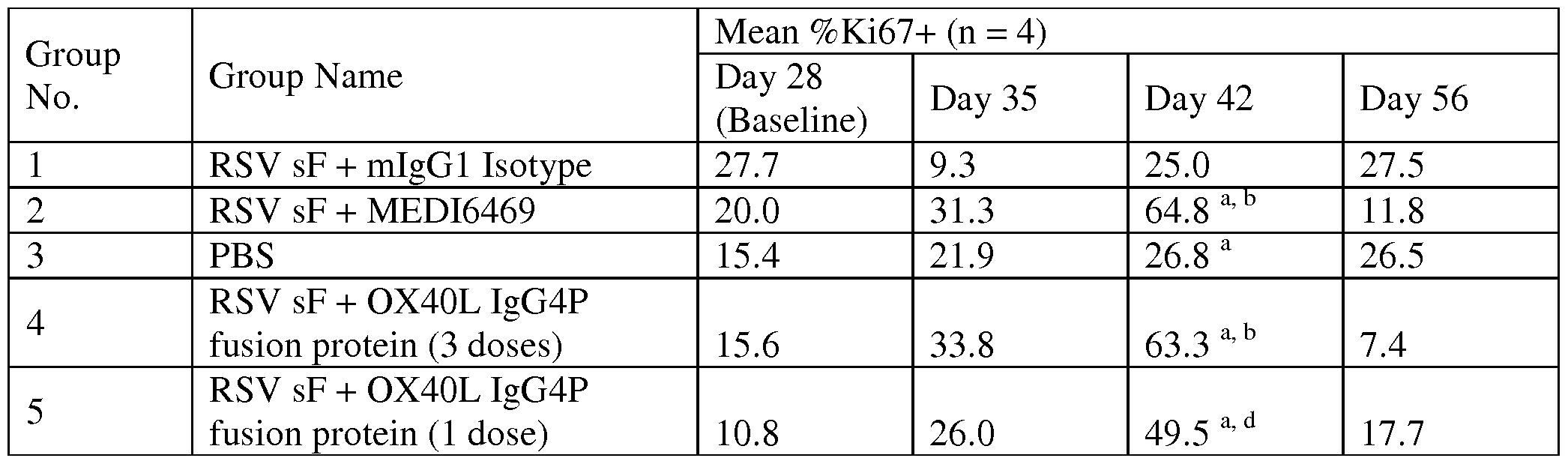
Cell line Renca
Tissue origin Kidney, mouse
Source ATCC, Manassas, VA
Growth media RPMI 1640 supplemented with 10% FBS
Growth conditions 37°C, 5% CO2 in humidified tissue culture chamber
Table 9-4: Description of Cell Line: CT26
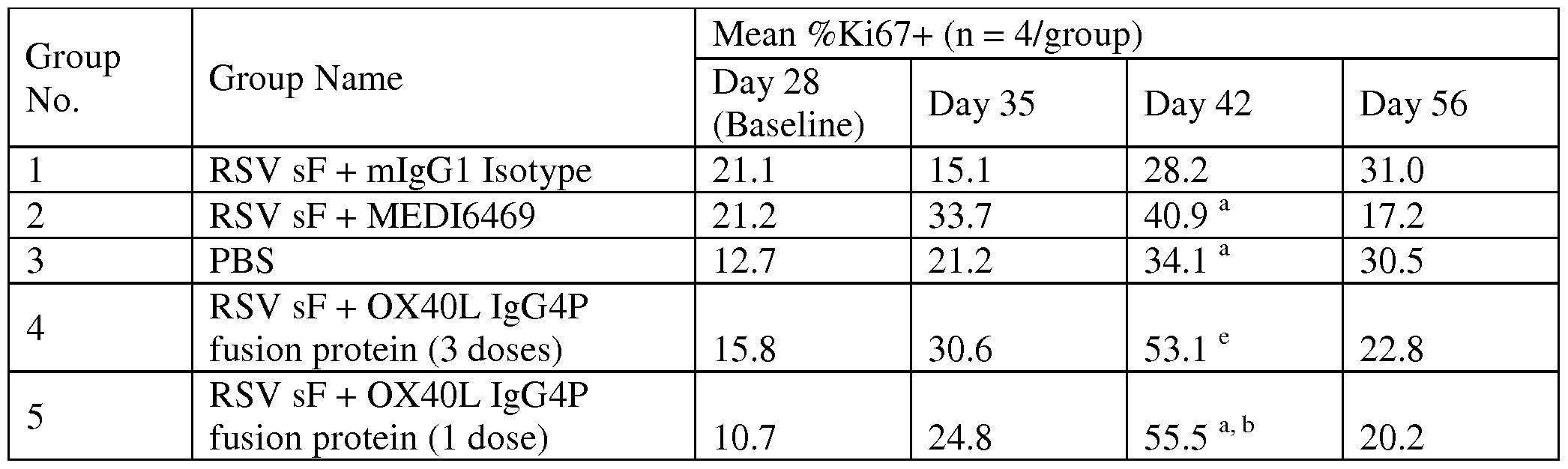
Cell line CT26
Tissue origin Colon, mouse
Source ATCC, Manassas, VA
Growth media RPMI 1640 supplemented with 10% FBS Table 9-4: Description of Cell Line: CT26
Figure imgf000103_0001
Table 9-6: Description of Cell Line: MCA205
Figure imgf000103_0002
RPMI 1640 = Roswell Park Memorial Institute 1640 medium; FBS = fetal bovine serum
Implantation of Syngeneic Tumors
[00299] Allografts were established by subcutaneous (SC) injection of 5.0 x 10⁵ Renca cells,
5.0 x 10⁵ CT26 cells or 1.0 x 10⁵ 4T1 cells suspended in 0.1 mL of PBS into the right flank of 7- to 9-week-old BALB/c mice that were randomly distributed into study groups, while 2.5 x 10⁶ MCA205 cells suspended in 0.1 mL of PBS were injected into the right flank of 7- to 9-week-old C57BL/6 mice.
Randomization, Group Designation and Dose Levels
[00300] BALB/c (total of 150) and C57BL/6 (total of 70) female mice were used in this study.
BALB/c mice were randomly assigned into treatment groups before injection of Renca and CT26 tumor cell lines. Balb/c mice implanted with 4T1 tumor cells were randomized by body weight 3 days post implantation. C57BL/6 mice were randomly assigned after tumors grew to a mean volume of 95 mm per cohort, 11 days after implantation. Group designations, number of animals, dose levels and dose schedule are presented in Table 9-7, Table 9-8, Table 9-9 and Table 9-10.
[00301] All treatments were administered intraperitoneally (IP) on the appropriate study days as presented in Table 9-7, Table 9-8, Table 9-9 and Table 9-10. There were no animal substitutions.
[00302] Animals from each group were sacrificed when tumor volumes reached approximately 2000 mm .
Table 9-7: Group Designation and Dose Levels in Study OX40-013-029 (Renca cancer cell line)
Figure imgf000104_0001
F = female; M = male; NA = not applicable because the animals were not treated; IP = intraperitoneal; ROA = route of administration; mOX40L FP = murine OX40 ligand murine IgGl fusion protein
Dose volume: 0.2 ml
Table 9-8: Group Designation and Dose Levels in Study OX40-013-039 (CT26 Cancer
Cell Line)
Figure imgf000104_0002
F = female; M = male; NA = not applicable because the animals were not treated; IP = intraperitoneal; ROA = route of administration; mOX40L FP = murine OX40 ligand murine IgGl fusion protein; mOX40L FP
(Y182A) = point mutation in the OX40L that renders the fusion protein incapable of binding to murine OX40 Dose volume: 0.2 ml Table 9-9: Group Designation and Dose Levels in Study IMT-14-003 (4T1 Cancer Cell
Line)
Figure imgf000105_0001
F = female; M = male; NA = not applicable because the animals were not treated; IP = intraperitoneal; ROA = route of administration; mOX40L FP = murine OX40 ligand murine IgGl fusion protein
Dose volume: 0.2 ml
Table 9-10: Group Designation and Dose Levels in Study OX40-013-065 (MCA205
Cancer Cell Line)
Figure imgf000105_0002
F = female; M = male; IP = intraperitoneal; ROA = route of administration; mOX40L FP = murine OX40 ligand murine IgGl fusion protein; mOX40L FP (Y182A) = point mutation in the OX40L that renders the fusion
protein incapable of binding to murine OX40
Dose volume: 0.2 ml
Tumor Measurements
[00303] Tumors were measured by caliper and tumor volumes were calculated using the following formula:
tumor volume = [length (mm) x width (mm) ] 12
where length was defined as the larger side and width as the smaller side perpendicular to the length. [00304] Antitumor effects of each group were expressed as tumor growth inhibition (TGI), which was calculated as follows:
percent TGI = (1 - T/C) x 100
where T = final tumor volumes from a treated group after the last dose and C = final tumor volumes from the control group after the last dose.
[00305] Tumor growth responses were categorized as a complete response (CR) if there was no measureable tumor.
Statistical Methods
[00306] One-way ANOVA was used to determine mean tumor volume differences. In the event of a significant F test a Dunnett's or Sidak's multiple comparison test was utilized (where appropriate). Where applicable, a log 10 transformation was applied to tumor volumes to account for heteroscedasticity. A p value < 0.05 was considered significant.
[00307] Materials used in this study, and their source, are listed in Table 9-11.
Table 9-11: Materials
Figure imgf000106_0001
[00308] Treatment of mice with the murine OX40 ligand fusion protein IgGl (mOX40L FP) results in significantly reduced growth of Renca, CT26, 4T1 and MCA205 tumor cells compared to isotype control (Table 9-7, Table 9-8, Table 9-9 and Table 9-10, Figure 19, Figure 20, Figure 21 and Figure 22).
[00309] Mixed response is often shown in syngeneic models. The response of the treatment with mOX40L FP is clearer from the individual animal tumor growth graphs (panel B in Figure 19, Figure 20, Figure 12-3 and Figure 21). Untreated and isotype control treated animals were euthanized by day 25 (Figure 19, Figure 21), day 42 (Figure 22) or day 43 (Figure 20) due to large tumor size. A dose-response was observed in mice treated with mOX40L FP based on tumor growth inhibition (Table 9-12, Figure 19) or the number of animals with complete responses (Table 9-13, Table 9-14 and Table 9-15). Table 9-12: Treatment Groups and Percent TGI on Day 26 and Number of Complete
Responders in Renca Syngeneic Model
Figure imgf000107_0001
TGI = tumor growth inhibition; NA = not applicable; IP = intraperitoneal; V = volume
Number of animals per group: 10.
b All animals received 200 μΐ^ of test article IP on Days 4 and 7.
c % TGI = [1 - (mean tumor V of treatment group) ÷ (mean tumor V of control group)] x 100
d Number of animals in a group with a tumor volume measurement recorded as zero at the end of the study.
Table 9-13: Treatment Groups and Percent TGI on Day 22 and Number of Complete
Responders in CT26 Syngeneic Model
Figure imgf000107_0002
TGI = tumor growth inhibition; NA = not applicable; IP = intraperitoneal; V = volume
Number of animals per group: 10.
b All animals received 200 μΐ^ of test article IP on Days 4 and 7.
c % TGI = [1 - (mean tumor V of treatment group) ÷ (mean tumor V of control group)] x 100
d Number of animals in a group with a tumor volume measurement recorded as zero by the end of the study.
Table 9-14: Treatment Groups and Percent TGI on Day 25 and Number of Complete
Responders in 4T1 Syngeneic Model
Number of Complete
Test/Control Responders out
Group a Article Dose b (mg/kg) % TGI c of 12 mice d
1 None NA NA 0
2 Isotype control 10 mg/kg NA 0 Table 9-14: Treatment Groups and Percent TGI on Day 25 and Number of Complete
Responders in 4T1 Syngeneic Model
Figure imgf000108_0001
TGI = tumor growth inhibition; NA = not applicable; IP = intraperitoneal; V = volume
Number of animals per group: 12.
b All animals received 200 μΐ^ of test article IP on Days 4 and 7.
c % TGI = [1 - (mean tumor V of treatment group) ÷ (mean tumor V of control group)] x 100
d Number of animals in a group with a tumor volume measurement recorded as zero at the end of the study.
Table 9-15: Treatment Groups, Percent TGI and Number of Complete Responders in
MCA205 Syngeneic Model on Day 22
Figure imgf000108_0002
TGI = tumor growth inhibition; NA = not applicable; IP = intraperitoneal; V = volume
Number of animals per group: 14.
b All animals received 200 μΐ^ of test article IP on Days 4 and 7.
c % TGI = [1 - (mean tumor V of treatment group) ÷ (mean tumor V of control group)] x 100
d Number of animals in a group with a tumor volume measurement recorded as zero at the end of the study.
CONCLUSIONS
[00310] Single-agent treatment of tumor-bearing mice with mOX40L FP resulted in a dose- dependent anti-tumor activity that significantly reduced growth of four different tumors as compared to untreated and isotype control treated groups. Example 10: Response to OX40L IgG4P Fusion Protein in a Non-Human Primate
Vaccination Model
[00311] In this example, the in vivo activity of OX40 agonists was evaluated in a non-human primate (NHP) vaccination model. The antigen used for this study was respiratory syncytial virus soluble F glycoprotein (RSV sF) antigen, which can induce both a T-cell response and an antibody response in cynomolgus macaques (data not shown).
[00312] An anti-human OX40 monoclonal antibody termed clone LI 06 has been shown to enhance both T and B cell responses in a nonhuman primate (NHP) model of simian immunodeficiency virus glycoprotein 130 (SIV gpl340) vaccination (Weinberg, AD et al, / Immunother 29:575-585 (2006)). In Phase 1 human clinical trials in patients with cancer, MEDI6469, a mouse anti-human OX40 monoclonal antibody also known as clone 9B12, was shown to stimulate T-cell proliferative responses to co-administered antigen (both a recall response to tetanus toxoid and a de novo response to Keyhole limpet hemocyanin), with tumor regression occurring in some patients (Curti BD et al., Cancer Res 73:7189-98 (2013)).
Materials and Methods
[00313] Table 10-1 describes the group designations and dosing regimens. Two female and two male experimentally naive Chinese cynomolgus monkeys were utilized in this study. Animals were randomized and assigned to groups. The animals were approximately 2.3 to 5.5 years of age at the time of dosing with body weights ranging from 2.5 to 3.5 kg. Animals were socialized during the study.
Table 10-1 : Treatment Groups and Dosing Regimens
Antigen Antigen OX40 OX40 OX40
Group Group Prime Boost (Day Agonist Agonist/ Agonist/
No. Name (Day O) 29) Day Day Day
Dose/Route Dose/Route 29 Route 31 Route 33/Route
5 mg/kg
RSV sF +
100 μ§ 100 μ§ mlgGl
1 mlgGl NA NA
RSV sF/IM RSV sF/IM isotype
Isotype
control/IV
5 mg/kg
RSV sF + 100 μ§ 100 μ§
2 MEDI6469/ NA NA
MEDI6469 RSV sF/IM RSV sF/IM
IV Antigen Antigen OX40 OX40 OX40
Group Group Prime Boost (Day Agonist Agonist/ Agonist/
No. Name (Day O) 29) Day Day Day
Dose/Route Dose/Route 29/Route 31/Route 33/Route
3 PBS PBS/IM PBS/IM PBS/TV NA NA
RSV sF +
5 mg/kg 5 mg/kg 5 mg/kg OX40L
OX40L OX40L OX40L
IgG4P 100 μ§ 100 μ§
4 IgG4P IgG4P IgG4P
fusion RSV sF/IM RSV sF/IM
fusion fusion fusion protein (3
protein/IV protein/IV protein/IV doses) a
RSV sF +
1 mg/kg
OX40L
OX40L
IgG4P 100 μ§ 100 μ§
5 IgG4P NA NA
fusion RSV sF/IM RSV sF/IM
fusion
protein (1
protein /IV
dose)
aAnimals dosed on Days 29, 31, and 33.
Isolation of Cynomolgus Monkey Peripheral Blood Mononuclear Cells from Whole Blood
[00314] Peripheral blood mononuclear cells (PBMC) were isolated over a Percoll gradient.
Briefly, whole blood (approximately 15 mL) was overlayed onto 30 mL of 60% Percoll working solution in a 50-mL conical tube and centrifuged at room temperature (RT) for 20 minutes at 1100 x g. The PBMCs were harvested from the Percoll interface, transferred to a new conical tube and washed with 1 x phosphate-buffered saline (PBS), pelleted and resuspended in 2 mL ammonium-chloride-potassium lysis buffer at RT to lyse the red blood cells. The PBMC were washed with 1 x PBS then pelleted and resuspended in 25 mL of 1 x PBS for counting on the Guava easyCyte-HT instrument (Millipore; Billerica, MA). The total viable PBMC count was attained using a 1:20 dilution into the ViaCount reagent. Before centrifuging, the PBMC sample from each animal was split into two tubes: one for the ELISpot assay and one for the Ki67 assays, because each assay type requires a different cell concentration. After centrifugation, the ELISpot PBMCs were resuspended at 2 x 10⁶ PBMC/mL in CTL-test media (with L-glutamine) and the Ki67 PBMCs were resuspended at 5 x 10⁶ PBMC/mL in media. Intracellular Ki67 Staining Assay
[00315] Ki67 is an intracellular (nuclear) marker for proliferation that allows simultaneous evaluation of cell proliferation in multiple immune subsets in whole blood or purified PBMCs. Ki67 proliferation is an established pharmacodynamic marker for measuring in vivo activity of OX40 agonists in CD4+ and CD8+memory T cells (Curti BD, et al. Cancer Res. 73:7189-98 (2013)).
[00316] All monkeys were evaluated for Ki67 levels in central memory (cM) CD4+ T cells, effector memory (eM) CD8+ T cells, NK cells, and B cells on Days -7, 42, and 56 using purified PBMCs and on Days 28, 35, and 38 using whole blood. An aliquot of 100 μΐ^ of whole blood or PBMCs (106 cells/well) was pipetted into multiple wells of a 96-well v-bottom plate, one well per immuno-phenotyping panel (i.e., one for memory T cells, one for NK cells, and one for B cells). The CD4+ cM subset (CD95+, CCR5-) represents the majority of CD4+ memory T cells, while the CD8+ eM (CD95+, CCR5+) subset represents the majority of CD8+ memory T cells. Focusing on these subsets increased the resolution of the assay.
[00317] Immuno-phenotyping antibody cocktails for NHP memory T cells and NK cells were prepared using antibodies listed in Table 10-2. Immuno-phenotyping antibody cocktails were incubated with 100 μΐ^ of whole blood or PBMCs at RT for 20 minutes. Wells were washed twice with fluorescence-activated cell sorting (FACS) staining buffer (FSB), followed by resuspension of the cell pellet with FACS™ Lyse at RT for 10 minutes. Cell pellets were then washed with FSB and permeabilized with FACS Perm for 10 minutes at RT (twice). Following another wash of the cell pellet with FSB, 10 μΐ^ of Ki67 fluorescein isothiocyanate antibody was added to each well for 45 minutes at RT in the dark. Cell pellets were washed twice with 200 μΐ^ FSB and resuspended in 200 μΐ^ FSB. One-hundred thousand events per sample were acquired on the flow cytometer and data were analyzed using FACS Diva and FlowJo 10.6 software (Tree Star; Ashland, OR).
NHP IFN -gamma ELISpot Assay
[00318] The IFNy ELISpot is a 96-well assay used to detect frequency of antigen- specific
T cells by capturing and quantitating individual membrane spots corresponding to individual cells secreting the IFNy cytokine. This assay is the most sensitive assay in the field for detecting antigen- specific T cells. [00319] Anti-monkey IFNy kits including antibody-precoated plates and detection antibodies were purchased from Mabtech (Mariemont, OH) and used according to manufacturer's instructions. Plates were blocked with CTL-Test media. A sample of 200,000 PBMCs per well were stimulated in triplicate with mock (CTL-Test plus dimethyl sulfoxide) or RSV F peptide pools (2 μg/mL), while 20,000 PBMCs per well were stimulated in triplicate with staphylococcal enterotoxin B (1 μg/mL) as a positive control. Plates were incubated at 37°C for 22 + 2 hours then washed 10 times with PBS. Detection of IFNy spots was accomplished by incubation with detection antibody (7-B6-l-biotin, 1: 1000) for 2 hours at RT, followed by another wash and incubation with secondary detection antibody (streptavidin-ALP, 1: 1000) at RT for 1 hour. The spots were then visualized with the addition of BCIP/NBT-plus substrate for 4 minutes, with plates washed well with water to stop spot development and dried overnight at RT in the dark. The next day, the spots in each well were counted using the CTL Immunospot plate reader and Immunospot 5.1 software (CTL; Cleveland, OH). Results were graphed using GraphPad Prism 6 (GraphPad Software; La Jolla, CA) as F- specific spot forming counts (SFC)/106 PBMC after subtraction of dimethyl sulfoxide wells (background).
RSV -F -specific Serum IgG Detection Assays
[00320] For RSV-F IgG enzyme-linked immunosorbent assay (ELISA), high-binding 96-well flat-bottom plates were coated at 4°C overnight with 0.1 μg/mL RSV sF protein. Serum samples were manually diluted 1: 100 in dilution buffer (PBS-Tween 20 [PBST] supplemented with 10% superblock), then 1:3 serially diluted 7 times in 96-well sample-dilution block (0.5 mL) using a Bravo liquid handler SRT. Each sample-dilution block also included both human serum as positive control and a negative control without antiserum for measuring the assay background. After the assay plates were washed 3 times with PBST and blocked for 1 hour at RT with superblock, serum dilutions in 96-well sample-dilution blocks were transferred to 96-well assay plates and further incubated for 1 hour at RT under constant shaking. At the end of incubation, the assay plates were washed 3 times with PBST, and incubated with horseradish peroxidase-conjugated anti-monkey IgG (1:80,000) for 1 hour at RT with constant shaking. The assay plates were washed 3 times with PBST then developed in 3,3',5,5'-tetramethylbenzidine (TMB) for 8-15 minutes. Color development was terminated with 1 N HCl and wells were read at optical density (Οϋ)45ο on a plate reader. Serum - I l l - titers were quantified as the reciprocal-fold serum dilution that gave OD450 values 4-fold above that of the mean background of each assay plate. RSV-F antigen- specific IgG ELISA titers were log2 transformed and plotted. Limit of detection (LOD) for this assay was determined to be the reciprocal of the first serum dilution performed on the serum sample, i.e. 1: 100 dilution means the LOD is 100 or log2 6.6 and the imputed LOD value for samples that are < 100 is one-half the LOD, which in this example case is 50 or log2 5.6.
RSVA2 Microneutralization Assay
[00321] Serum RSV neutralization titers were determined by an RSV A2-green fluorescent protein (GFP) microneutralization assay. Control and test sample sera were heat-inactivated at 56°C for an hour to inactivate complement. The heat-inactivated serum control and test samples were serially diluted 3-fold, for 8 dilutions, starting at 1:5 or 1: 10, using the Bravo SRT liquid handler (Agilent; Santa Clara, CA). RSV A2 engineered to express GFP (RSV-GFP) was added to each serum dilution and virus-only control wells at a dilution to achieve approximately 500 fluorescent foci units per well. Meanwhile, Vero cells, plated in 96-well plates to achieve a 95%-100% confluent monolayer, were prepared. The serum-virus mixture was incubated at RT for 1 hour for neutralization and then added to duplicate, twice-washed Vero cell plates using the Bravo SRT liquid handler. The infected cell plates were incubated 22-24 hours in a 37°C, 5% C02 incubator. Fluorescent foci produced by non-neutralized RSV-GFP were enumerated after plate data were acquired by the ImageXpress Micro XL automated imaging platform (Molecular Devices; Sunnyvale, CA). Foci counts were logged into an automated data analysis worksheet to determine the log2 50% inhibitory concentration titer using a 2-point interpolation from data normalized to the virus control on each plate. The 2-point interpolation was calculated from the linear regression of 2 points surrounding 50% neutralization of virus. For this assay, LOD was determined to be the reciprocal of the first dilution performed on the sample, i.e. 1: 10 dilution means the LOD is 10 or log2 3.3 and the imputed LOD value for samples that are < 10 is one-half the LOD, which in this example case is 5 or log2 2.3. Statistical Methods
[00322] Significant p-values were obtained using the mixed-effects model (Brown H and
Prescott R. Applied Mixed Models in Medicine, New York, NY: John Wiley & Sons, 1999). Significance was set at p < 0.05. Values that were near significance, p-values between 0.05 and 0.1, were also reported and identified for analysis and assessment purposes. Analysis of statistical significance was performed to compare across groups and across days using the calculated GeoMeans from the 4 individual animal assay values within a particular group at a particular time point.
[00323] Materials used in this study are listed in Table 10-2.
Table 10-2: Materials
Reagent Name Supplier Location
Percoll GE Life Sciences or Piscataway, NJ
MPBio
CryoABC CTL Shaker Heights,
OH
BD FACS Lysing Solution BD Biosciences, San Jose, CA
BD FACS Staining Buffer (FSB) BD Biosciences, San Jose, CA
Anti-Ki-67 (clone B56)-fluorescein BD Biosciences, San Jose, CA isothiocyanate Ab
CD3 Alexa 700 BD San Jose, CA
CD4 PerCPCy5.5 BD San Jose, CA
CD 8 BV605 BioLegend San Diego, CA
CD20 APC-H7 BD San Jose, CA
CD28 PE BioLegend San Diego, CA
CD95 PECy7 BioLegend San Diego, CA
CD 195 APC BD San Jose, CA
CD197 BV785 BioLegend San Diego, CA
CD278/ICOS BV421 BioLegend San Diego, CA
CD 11c APC BioLegend San Diego, CA
CD14 PECy7 BioLegend San Diego, CA
CD16 BV785 BioLegend San Diego, CA Reagent Name Supplier Location
CD20 PerCPCy5.5 BioLegend San Diego, CA
CD56 BV421 BioLegend San Diego, CA
HLA-DR BV605 BioLegend San Diego, CA
CD159a/NKG2a PE Beckman Brea, CA
CD25 APC BD San Jose, CA
Foxp3 PE BioLegend San Diego, CA
CD28 fluorescein isothiocyanate BD San Jose, CA
CD 159a APC Beckman Brea, CA
OX40/CD134 PE BD San Jose, CA
ELISpot PLUS for NHP IFNy Mabtech Cincinnati, OH
CTL Test Media (500 mL) CTL Shaker Heights,
OH
CTL Wash Media (1 Ox) CTL Shaker Heights,
OH
Benzonase Nuclease EMD Billerica, MA
ViaCount Reagent Millipore Billerica, MA
Guava EasyCheck Beads Millipore Billerica, MA
RSV Fpp JPT Peptides Berlin, Germany
CEFpp CTL Shaker Heights,
OH
Staphylococcal Enterotoxin B (SEB) EMD Billerica, MA
Goat-anti-monkey IgG-HRP Thermo Scientific, Rockford, IL
Superblock Thermo Scientific, Rockford, IL
TMB (3, 3 5, 5 '-tetramethylbenzidene; SeeBlue KPL, Gaithersburg, MD Reserve)
Control human serum for RSV F ELISA Innovative Research Novi, MI
RSV sF protein Medlmmune Gaithersburg, MD
Human Pooled Sera Innovative Research Novi, MI
RSV A2-GFP (Lot 87429-10) Medlmmune Santa Clara, CA Results
Intracellular Ki67 Levels
Ki67 in CD4+ cM T-Cells
[00324] Table 10-3 summarizes the CD4+ cM T-cell proliferation results (percentage Ki67 induction). The optimal time point (based on peak Ki67 levels) for assessing CD4+ cM T-cell proliferation is usually between Day 35 to 42.
[00325] Monkeys given 3 doses of OX40L IgG4P fusion protein on Days 29, 31, and 33
(Group 10) had the strongest enhancement in CD4+ cM T-cell proliferation at Day 42, significantly greater than any other group. The increase in percentage Ki67 stimulation was highly significant compared with baseline at Day 28 (p = 0.0003), and elicited CD4+ cM T-cell proliferation of over 70% at Days 35 and 42. By Day 56, CD4+ cM T-cell proliferation elicited by OX40L IgG4P fusion protein returned almost to baseline. Whereas animals in Group 4 were administered 3 doses of OX40L IgG4P fusion protein at 5 mg/kg, animals in Group 5 were administered OX40L IgG4P fusion protein in a single 1 mg/kg dose. The response elicited by one dose of OX40L IgG4P fusion protein was comparable to that elicited by the 3-dose OX40L IgG4P fusion protein regimen and was significantly stronger than those of the PBS or mlgGl isotype control groups, indicating that OX40L IgG4P fusion protein can achieve significant OX40 agonism in the cynomolgus monkey following a single dose.
[00326] MEDI6469 showed no significant activity in the CD4+ cM T-cell proliferation assay compared to PBS control group (see Table 10-3).
Table 10-3: Summary of CD4+ cM T-Cell Proliferation Results
Figure imgf000116_0001
Statistical significance for group changes from baseline and group-to-group comparisons was Mean Ki67+ (n = 4/group)
Group
Group Name Day 28
No. Day 35 Day 42 Day 56
(Baseline)
determined using the Day 42 time point.
ap < 0.05 vs. Day 28 (Baseline).
bp < 0.05 Test Group vs. Group 1.
Ki67 in CD8+ eM T Cells
[00327] Table 10-4 summarizes the CD8+ eM T-cell proliferation results (percentage Ki67 induction). CD8+ eM T-cell proliferation was optimal at Day 42. OX40L IgG4P fusion protein showed the strongest CD8+ eM T-cell proliferation response at Day 42 compared with baseline (p = 0.0095). MEDI6469 also induced strong CD8+ eM T-cell proliferation by Day 42 compared with baseline (p = 0.007) and the isotype control, mlgGl (p = 0.015). The peak magnitude of CD8+ eM T-cell proliferative response, observed for OX40L IgG4P fusion protein (3 doses), was over 50% (%Ki67+cells among CD8+ eM T cells). OX40L IgG4P fusion protein and MEDI6469 were the only OX40 agonists whose activity reached significance compared with the PBS and mlgGl isotype control groups in CD8+ eM T-cell proliferation.
Table 10-4: Summary of CD8+ eM T-cell Proliferation Results
Figure imgf000117_0001
Statistical significance for group changes from baseline and group-to-group comparisons was determined using the Day 42 time point.
ap < 0.05 vs. Day 28 (Baseline).
bp < 0.05 Test Group vs. Group 1.
cp < 0.1 vs. Day 28 (Baseline).
dp < 0.1 Test Group vs, Group 1. - l ie -
Kiev in NK Cells
[00328] Table 10-5 summarizes the NK cell proliferation results (percentage of Ki67+ NK cells). OX40 is reported to be expressed on NK cells at low levels (Croft M, et al. Immunol Rev. 229: 173-91 (2009)), so NK cells can be direct targets of OX40 agonism or can be influenced by interactions with T cells. OX40L IgG4P fusion protein elicited the highest NK cell proliferation response at Day 42 of all the groups tested; the response was significant compared with PBS control (p = 0.020) and mlgGl isotype control (p = 0.032), and was similar to MEDI6469 (p = 0.74). The single 1 mg/kg dose of OX40L IgG4P fusion protein was similar to the 3-dose (5 mg/kg) regimen (p = 0.48). MEDI6469 enhanced NK cell proliferation by Day 42, which was significantly higher than the PBS control (p = 0.0083) and mlgGl isotype control (p = 0.042) groups.
Table 10-5: Summary of NK Cell Proliferation Results
Figure imgf000118_0001
Statistical significance for group changes from baseline and group -to -group comparisons was determined using the Day 42 time point.
ap < 0.05 vs. Day 28 (Baseline).
bp < 0.05 Test Group vs. Group 1.
cp < 0.1 vs. Day 28 (Baseline).
dp < 0.1 Test Group vs. Group 1.
Ki67 in B Cells
[00329] Table 10-6 summarizes the B-cell proliferation results (percentage Ki67+ B cells).
B cells are not known to express OX40, but they can be influenced by interactions with activated T cells. Significant B-cell proliferation was observed by Day 42 compared with baseline (p < 0.05) with the 3-dose OX40L IgG4P fusion protein regimen and the 1-dose OX40L IgG4P fusion protein regimen. In the 3-dose OX40L IgG4P fusion protein regimen, a difference from baseline was observed, but possibly due to missing baseline values for 2 animals and a small sample size, the result was not statistically significant. The PBS control group also showed increases in B-cell proliferation that were significantly different from baseline (p = 0.0007). Because of this, the only group with significantly higher B-cell proliferation than the PBS control group was the 1-dose OX40L IgG4P fusion protein group (p = 0.0316). The only group showing significant B-cell proliferation increases over the mlgGl isotype control group was the 1-dose OX40L IgG4P fusion protein regimen. The 1-dose OX40L IgG4P fusion protein regimen was similar to the 3-dose OX40L IgG4P fusion protein regimen.
Table 10-6: Summary of B-Cell Proliferation Results
Figure imgf000119_0001
Statistical significance for group changes from baseline and group-to-group comparisons was determined using the Day 42 time point.
ap < 0.05 vs. Day 28 (Baseline).
bp < 0.05 Test Group vs. Group 1.
cp < 0.1 vs. Day 28 (Baseline).
dp < 0.1 Test Group vs. Group 1.
RSV-F IFN-gamma ELISpot
[00330] Table 10-7 summarizes the RSV-F-specific IFNy T-cell responses as measured by
ELISpot. Optimal T-cell responses to an RSV sF prime-boost vaccination regimen can be observed 14-28 days after administration of booster antigen, which correspond to Days 42-56 in this study. An animal was considered a responder if it had a response level 4 times its baseline (pre-vaccination) level and > 50 spots/million PBMCs.
[00331] The 3-dose OX40L IgG4P fusion protein regimen demonstrated the strongest induction of RSV-F-specific T-cell response, which was detected at Days 42 and 56, with 4/4 monkeys having a positive response at each time point. Responses were significant versus baseline at Day 42 (p = 0.012) and Day 56 (p = 0.010) and significantly different from PBS control (p = 0.0023) and mlgGl isotype control (p = 0.0024) groups. The response in the animals given 1 dose of OX40L IgG4P fusion protein was similar to the response in the animals given 3 doses of OX40L IgG4P fusion protein at Day 42 (p = 0.47) and Day 56 (p = 0.38).
Table 10-7: Summary of RSV F-specific IFN-gamma T-Cell ELISpot Results
Figure imgf000120_0001
Statistical significance for group changes from baseline and group-to-group comparisons was determined using the Day 42 time point.
ap <0.1 Test Group vs. Group 1.
bp < 0.05 Test Group vs. Group 1.
cp < 0.1 Day 28 (Baseline).
dp < 0.05 vs. Day 28 (Baseline).
[00332] At Day 42, MEDI6469 elicited a 25% response rate, which was not significantly different from the PBS control (p = 0.093) or mlgGl isotope control (p = 0.066) groups. By Day 56, MEDI6469 had a 50% response rate, significantly different from the mlgGl isotype control group (p = 0.039). This response was not significantly different from MEDI6469 given without delay after antigen boost.
Anti-RSV-F IgG Titers
[00333] Table 10-8 summarizes the anti-RSV-F IgG titers. B cells can be influenced by interactions with activated T cells to make more or higher-affinity antibodies to shared antigenic targets. As shown by the Ki67 data in Table 10-6, B cells were induced to proliferate by several OX40 agonist regimens. Antigen-specific antibody titers were assessed to determine whether this proliferation translated to a functional effect. RSV-F- specific IgG levels were below assay detection limits in most (or all) animals before the first immunization at Day 0. Low levels of anti-RSV-F IgG antibodies were detected at Day 14 in all the RSV sF-immunized groups but not in the PBS control group. The peak antibody responses were observed at Day 42, 14 days after OX40 agonist administration. The mlgGl isotype control group demonstrated increases in RSV-F IgG titers (from baseline to approximately 1:256 titer or 8 log2) following priming (Days 14 and 28), which were further increased approximately 8-fold (approximately 1:2048 titer or 11 log2) by Days 42 and 56 following the RSV-F antigen-alone boost. OX40 agonism with MEDI6469 significantly enhanced anti-RSV-F IgG antibodies compared with the mlgGl isotype control group (p = 0.050) by Day 42 (approximately 1: 16,400 titer or 14 log2) with a 300-fold increase from baseline. The 3-dose OX40L IgG4P fusion protein group showed strong induction of anti-RSV-F IgG antibodies by Day 42, which were similar to MEDI6469 (p = 0.33 and p = 0.44, respectively). Day 56 responses were equivalent to Day 42 responses in magnitude and significance for these 2 groups. Also, the 1-dose OX40L IgG4P fusion protein group was equivalent to the 3-dose OX40L IgG4P fusion protein group at eliciting anti-RSV-F IgG antibodies (p = 0.23).
Table 10-8: Summary of RSV F-specific IgG Titers
Figure imgf000121_0001
RSV Neutralizing Antibody Titers
[00334] Table 10-9 summarizes the mean (per group) RSV neutralizing titer observed in the serum of the animals. This assay is less sensitive than the RSV-F IgG assay because it only assesses antibodies that can neutralize the RSV virus. A positive neutralizing response is defined as a 4-fold rise in neutralizing antibody titer over baseline. Maximum RSV neutralizing antibodies were observed at Days 42 and 56. Maximum responses in this assay were observed with the 3-dose OX40L IgG4P fusion protein group yielding a 100% response rate (4/4 animals). The 1-dose OX40L IgG4P fusion protein group reached a 75% response rate by Day 56 with magnitudes significantly higher than its baseline and similar to 3-dose OX40L IgG4P fusion protein at Day 42 (p = 0.21) and Day 56 (p = 0.45). The 1-dose and 3-dose OX40L IgG4P fusion protein groups were the only groups that showed statistical significance from the PBS control group at Day 56 (p = 0.029 for both groups).
Table 10-9: Summary of RSV A2 Neutralizing Antibody Titers
Figure imgf000122_0001
Statistical significance for group changes from baseline and group -to -group comparisons was determined using the Day 42 time point.
ap < 0.05 vs. Day 28 (Baseline).
Conclusions
[00335] OX40L IgG4P fusion protein induced strong responses in terms of both Ki67 proliferation levels and in RSV-F antigen specific responses. MEDI6469 was active eliciting CD8+ eM T cell proliferation similar to that of OX40L IgG4P fusion protein and eliciting RSV F specific T cell and B cell responses weaker than OX40L IgG4P fusion protein. Overall, one dose of OX40L IgG4P fusion protein (at 1 mg/kg) induced similar responses in most assays evaluated to three doses (at 5 mg/kg), although the 3 dose regimen was superior in Ki67 proliferation and in eliciting RSV neutralizing antibodies. OX40L IgG4P fusion protein administered with RSV sF resulted in significant F-specific IFNy responses compared with baseline. The results of this NHP study provide evidence that administration of an OX40 agonist to NHP can drive defined antigen specific immune responses. Example 11 : Effect of Human OX40L IgG4P Fusion Protein on Treg-Mediated
Suppression of Human CD4+ Effector T Cells
[00336] In this Example the effect of OX40L IgG4P fusion protein on the suppressive effect of human regulatory T cells was investigated.
Materials and Methods
Isolation of Effector and Regulatory T Cells
[00337] Anonymized human leukocyte cones were supplied by the National Health Service
Blood Transfusion Service (NHSBT) in the United Kingdom. Human peripheral blood mononuclear cells (PBMCs) were isolated from leukocyte cones by layering blood over Ficoll-Paque Plus and centrifuging as per manufacturer's instructions (GE Healthcare, Chalfont St Giles, UK). Human CD4+ effector and regulatory T cells were isolated from PBMCs using a human T-regulatory cell isolation kit as per manufacturer's instructions (Life Technologies, Paisley, UK). Briefly, this process involves negative selection of total CD4+ cells by antibody labelling of non-CD4+ cells and their removal through use of magnetic bead based depletion. Regulatory T cells are then separated from effector CD4+ cells by labelling with anti-CD25 followed by positive selection with magnetic beads, which are subsequently removed from the isolated cells.
[00338] Round bottom 96 well tissue culture plates were coated with anti-CD3 antibody and test articles in two sequential steps. In the first, 100 μΐ^ of 0.5 μg/mL anti-CD3 antibody was added to each well and plates were incubated overnight at 4°C. Plates were then washed with PBS, 100 μΐ^ of test or control articles were added to relevant wells at the appropriate concentration and plates were incubated overnight at 4°C. Following incubation the plates were washed again with PBS before use in subsequent suppression assays.
[00339] Effector CD4+ T cells were labelled with carboxyfluorescein diacetate succinimidyl ester (CFSE) using the CellTrace™ CFSE cell proliferation kit according to manufacturer's instructions (Life Technologies, Paisley, UK).
[00340] Effector CD4+ T cells and regulatory T cells were co-cultured at 1: 1 or 1:2 ratios in the anti-CD3 coated plates. Culture media was RPMI-1640 Glutamax-I containing 1% v/v Penicillin and Streptomycin, 5% v/v Human AB serum and 1 μg/mL anti-CD28 antibody. Culture conditions were a temperature of 37°C and an atmosphere of 5% C02. [00341] After 4 days of culture cells were removed from the culture plates, washed twice in
PBS and stained with Fixable Viability Dye eFluor® 780 according to the manufacturer's instructions (eBiosciences, Hatfield, UK). After staining cells were washed in FACS buffer (eBioscience) and fixed by resuspension in 100 μΐ^ of CellFix™ (Becton Dickinson, Oxford, UK) followed by incubation at room temperature for 15 minutes.
[00342] Fixed cells were suspended in FACS Buffer and analyzed using a Becton Dickinson
FACSCanto II flow cytometer. The percentage of divided effector T cells (CFSE low) was assessed using FlowJo software (version vX.0.7) after fluorescence compensation. Non-viable (eFluor positive) cells and regulatory T cells (CFSE negative) were discriminated, and excluded from the analysis.
[00343] Graphical representation of the data, including determination of mean values and standard error of the mean, was generated using GraphPad Prism version 6.0 for Windows.
[00344] Materials used in this example are listed in Table 11-1.
Table 11-1 : Materials
Item Source
Leukocyte Cones NHS Blood and Transplant Service, Watford, UK
Ficoll Paque Plus GE Healthcare, Chalfont St Giles, UK
RPMI-1640 Glutamax-I Life Technologies, Paisley, UK
Human AB serum Life Technologies, Paisley, UK
Penicillin and Streptomycin Life Technologies, Paisley, UK
96-well U-bottomed culture plate Corning B.V. Life Sciences, Amsterdam, Netherlands
Anti-human CD3 clone OKT3 eBiosciences, Hatfield, UK
Anti-human CD28 clone CD28.2 eBiosciences, Hatfield, UK
Human T-regulatory cell isolation kit Life Technologies, Paisley, UK
CellTrace* CFSE kit Life Technologies, Paisley, UK
96 well V-bottomed plate Greiner Bio-One GmbH, Kremsmunster, Austria
FACS Buffer eBiosciences, Hatfield, UK
CellFix™ Becton Dickinson, Oxford, UK
Fixable Viability Dye eFluor® 780 eBiosciences, Hatfield, UK Results
Human OX40L IgG4P Fusion Protein Overcomes Regulatory T-Cell Mediated Suppression of Human Effector CD4+ T-Cell Proliferation
[00345] Human effector CD4+ T cells did not divide in the absence of stimulation. The addition of anti-CD3 and anti-CD28 resulted in an increase in the percentage of divided cells to 33%. Addition of OX40L IgGl fusion protein at a concentration of 40 nM or lOnM significantly increased the percentage of divided cells to 41% and 61%, respectively (Figure 23). Addition of a control construct (F180A OX40L FP IgGl; this phenylalanine (F) to Alanine (A) mutation ablates OX40 receptor binding activity of the OX40L protein, see Example 1) at a concentration of 40 nM or lOnM did not significantly increase the % of divided cells relative to anti-CD3 + anti-CD28 alone (Figure 23 "isotype control" (F180A OX40L FP IgGl)).
[00346] The addition of regulatory T cells (Tregs) at a 1: 1 effector to Treg ratio reduced the percentage of divided cells to 15%. The addition of regulatory T cells (Tregs) at a 1:2 effector to Treg ratio reduced the percentage of divided cells further to 12%. The addition of the control construct (F180A OX40L FP IgGl) at 40nM or 10 nM did not significantly impact the suppression of effector T-cell division by Tregs when present at either a 1: 1 or 1:2 effector to Treg ratio. In contrast the addition of OX40L IgGl fusion protein at 40nM or 10 nM significantly increased the percentage of divided effector CD4+ T cells, to 52% and 67% respectively, when cultured in the presence of Tregs at an effector to Treg ratio of 1 : 1. The addition of OX40L IgGl fusion protein at 40nM and 10 nM significantly increased the percentage of divided effector CD4+ T cells, to 53% and 66%, when cultured in the presence of Tregs at an effector to Treg ratio of 1:2 (Figure 23).
The Effects of OX40L IgG4P Fusion Protein on Regulatory T-Cell Mediated Suppression of Effector CD4+ T-Cell Proliferation are Concentration Dependent
[00347] In a subsequent assay, the concentration dependence of the OX40L IgG4P fusion protein mediated effects described above was assessed. In this assay the addition of anti-CD3 and anti-CD28 resulted in 3.4% divided CD4+ effector cells. This was increased by the addition of OX40L IgG4P fusion protein but these increases did not reach statistical significance except at 2.5 nM at which OX40L IgG4P fusion protein, increased the percentage of divided effector cells to 17% (Figure 24). [00348] The addition of Tregs at a 1: 1 ratio reduced the percentage of divided effector T cells to 2.5%. The addition of OX40L fusion protein IgG4-FPat 40 nM and 2.5 nM, but not at 10 nM and 0.62 nM, significantly increased the percentage of dividing effector CD4+ T cells to 6.7% and 24% respectively (Figure 24).
[00349] Addition of control article (NIP228 IgG4P (see Table 1-1)) at a concentration of 40 nM did not significantly increase the % of divided CD4+ effector cells when cultured alone or in the presence of Tregs (Figure 24).
Conclusions
[00350] OX40L fusion proteins can overcome the suppressive effects of Tregs cells on the proliferation of CD4+ effector T cells. The effects of OX40L fusion proteins on Treg cell mediated suppression are concentration dependent and require at least 2.5 nM of OX40L fusion protein.
Example 12: Pharmacodynamics of OX40 Agonists in Rhesus monkeys
[00351] Pharmacodynamics of OX40 agonists were determined after intravenous administration to rhesus monkeys. Values were based on proliferation of peripheral blood T, B and NK cells (as changes in cell surface immunomodulatory proteins and intracellular Ki-67 on immune cells) following dosing with MEDI6469 (9B12 antibody) or OX40L fusion protein IgG4-FP. The expression Ki-67 as a marker of cell proliferation, as well as immunomodulatory proteins such as PD-1 and ICOS were examined on these cell populations. An additional group received saline as a control.
[00352] The study design was as follows {see also, Figure 25):
Table 12-1: Study Design and Groups
Study Dose Test Item Route No. of Dosing No. of
Groups (mg/kg) Doses Days Animals
A 0 PBS IV 3 0, 2, 4 5
B 5 9B12 IV 1 0 5
F 1 OX40L IV 3 0, 2, 4 5
fusion protein
IgG4-FP [00353] Viable single cells were analyzed by flow cytometry to determine changes in pharmacodynamics markers. Total memory CD4 and CD8 T cells were defined as CD3+CD4+CD95+CD20~ and CD3+CD8+CD95+CD20~, respectively. Central memory CD4 and CD 8 T cells were defined as CD3+CD4+CD28+CD95+CCR5~CCR7+CD20- and CD3+CD8+CD28+CD95+CCR5~CCR7+CD20-, respectively. Effector memory CD4 and CD 8 T cells were defined as CD3+CD4+CD28~CD95+CCR7~CD20- and CD3+CD8+CD28~CD95+CCR7~CD20-, respectively. B cells were defined as cells that were CD3~CD20+ {see Table 12-2 below).
Table 12-2: Immunotyping panels
Figure imgf000127_0001
[00354] Results for MEDI6469 and OX40L fusion protein IgG4-FP were both quantitatively and qualitatively different at the peak biological effects compared to PBS control group. MEDI6469 showed a 3.5 fold mean increase in total memory CD4 T cell proliferation relative to the PBS treated group (30% compared to 7.6%). This was reflected in a 3.0 fold increase in central memory CD4 (23% compared to 7.7%) and a 3.2 fold increase (22% compared to 6.8%) in effector memory CD4 T cells. OX40L fusion protein IgG4-FP induced a 7 -fold increase in proliferation of total memory CD4+ T cells (52% compared to 7.6%). The peak increase in OX40L fusion protein IgG4-FP - induced effector memory CD4 T cell proliferation (day 14) was delayed relative to that observed for total and central memory CD4 T cell proliferation (day 10). The increase in proliferation of CD8+ total memory T cells in response OX40L fusion protein IgG4-FP (19% compared to 7.6%; 2.5 fold) were similar to that observed for MEDI6469 (17% compared to 9.2%, 1.8 fold). For OX40L fusion protein IgG4-FP, the increase in total memory CD8 T cells was reflected in a 3.3 fold change in central memory CD8 T cells (29% compared to 8.9%), and a 1.9 fold change in effector memory CD8 T cells (21% compared to 11%). Similar to that observed for CD4 T cells, the peak in effector memory CD8 T cell proliferation after OX40L fusion protein IgG4-FP treatment (day 14) was delayed relative to that for total and central memory CD 8 T cell proliferation (day 10). No substantial changes in naive CD4 or CD8 T cell proliferation were observed for OX40L fusion protein IgG4-FP nor MEDI6469 (Figure 26). [00355] An increase of ICOS+ cells in total memory CD4 T cells corresponded qualitatively with OX40-mediated proliferation of total memory CD4 T cells for OX40L fusion protein IgG4-FP, showing a 6.4 fold increase in mean % positive cells (15% vs 2.3% for PBS group), although representing lower overall gross percentage induction on cells. A 6.0 fold increase in ICOS+ memory CD8 T cells was also observed (3.8 vs 0.64%), higher than the relative increase in CD8 memory T cell proliferation (Ki67; 2.5 fold), but at low overall total % induction. In contrast to OX40L fusion protein IgG4-FP, MEDI6469 induced a lower 2.4 fold increase for ICOS induction, similar to the 3.5 fold induction of proliferation (Ki67) on total memory CD4 T cells. No ICOS induction was observed after MEDI6469 treatment on total memory CD8 T cells, which therefore differed from the results for OX40L fusion protein IgG4-FP. Changes in the expression of ICOS on naive CD4 or CD 8 T cells were not observed for OX40L fusion protein IgG4-FP or MEDI6469 (Figure 27).
[00356] PD-1 expression on total memory CD4 T cells after OX40L fusion protein IgG4-FP administration increased by 3.1 fold (3.3% vs 1.1% PBS group), while for MEDI6469 administration that increase was approximately 5.1 fold (1.1 to 5.4%), although the induction on a gross percentage basis was low (2.0 % and 4.0%, respectively). For total memory CD8 T cells, OX40L fusion protein IgG4-FP and MEDI6469 induced a 2.7 fold (2.5% compared to 0.92%) and a 5.0-fold (2.6% compared to 0.54%) peak increase in PD-1 expressing cells, respectively, although the increase on a gross percentage basis for each was quite low (1.6% and 2.1%, respectively). The greater induction of PD-1 by MEDI6469 on total memory CD4 and CD 8 T cells differs qualitatively from that observed for ICOS, where OX40L fusion protein IgG4-FP -induced changes were greater. Changes in the expression of PD-1 on naive CD4 or CD8 T cells were not observed for OX40L fusion protein IgG4-FP or MEDI6469 (Figure 28).
[00357] OX40L fusion protein IgG4-FP and MEDI6469 induced the proliferation of CD20+ B cells. At the peak, OX40L fusion protein IgG4-FP increased Ki67 expression in B cells by 2.8 fold (24% compared to 8.5%), and MEI6469 by 2.5 fold (17% compared to 6.7%) (Figure 29).
Conclusions
[00358] OX40L fusion protein IgG4-FP induced the proliferation of total, central, and effector memory CD4 and CD8 T cells. The magnitude of effect was greater for CD4 than CD8 T cell populations. The induction of effector memory CD4 and CD8 T cell proliferation was delayed relative to that of total and central memory T cells, indicating either an indirect or delayed biological effect on the effector T cell populations. OX40L fusion protein IgG4-FP induced higher levels of proliferation of total memory CD4 T cells than MED 16469, although the induction total memory CD8 T cell proliferation was similar at these doses and schedule of drug.
[00359] OX40L fusion protein IgG4-FP induced ICOS and PD-1 expression on total memory
CD4 and CD8 T cells, with a higher gross percentage induction for each observed on total memory CD4 compared to total memory CD8 T cells. More ICOS induction on total memory CD4 and CD8 T cells was observed for OX40L fusion protein IgG4-FP than for MEDI6469. However, there was a greater induction of PD-1 by MEDI6469 than was observed for OX40L fusion protein IgG4-FP on total memory CD4 T cells, indicating a possible biological difference in the ability of the OX40L fusion protein OX40L fusion protein IgG4-FP to induce the PD-1 T cell inhibitory protein relative to the agonist mAb MEDI6469 on these cells.
***
[00360] The breadth and scope of the present disclosure should not be limited by any of the above-described exemplary embodiments, but should be defined only in accordance with the following claims and their equivalents.

Claims

WHAT IS CLAIMED IS:
1. A single-chain polypeptide subunit comprising: a human IgG4 Fc domain; a functional trimerization domain; and a receptor binding domain of OX40L, wherein the polypeptide subunit can self-assemble into a trimeric or a hexameric protein.
2. The polypeptide subunit of claim 1 comprising, from the amino terminus to the carboxy terminus, the human IgG4 Fc domain, followed by the trimerization domain, followed by the OX40L receptor binding domain.
3. The polypeptide subunit of claim 2, wherein the carboxy terminus of the human IgG4 Fc domain is fused directly to the amino terminus of the trimerization domain, and the carboxy terminus of the trimerization domain is fused directly to the amino terminus of the OX40L receptor binding domain.
4. The polypeptide subunit of any one of claims 1 to 3, wherein the IgG4 Fc domain comprises an IgG4 hinge region.
5. The polypeptide subunit of claim 4, wherein the hinge region comprises a mutation that confers complete inter heavy chain disulfide bond formation.
6. The polypeptide subunit of claim 5, wherein the mutation comprises a serine to proline mutation at position 228 (S228P) according to EU numbering.
7. The polypeptide subunit of claim 5 or claim 6, wherein the hinge region comprises amino acids 1 to 12 of SEQ ID NO: 4.
8. The polypeptide subunit of any one of claims 1 to 7, wherein the human IgG4 Fc domain further comprises a CH2 region.
9. The polypeptide subunit of any one of claims 1 to 8, wherein the human IgG4 Fc domain further comprises a CH3 region.
10. The polypeptide subunit of claim 9, wherein the human IgG4 Fc domain comprises amino acids 1 to 229 of SEQ ID NO: 4.
11. The polypeptide subunit of any one of claims 1 to 10, wherein the trimerization domain comprises an alpha-helical coiled coil domain, a leucine zipper domain, or a combination thereof.
12. The polypeptide subunit of claim 11, wherein the trimerization domain is derived from TRAF2; Thrombospondin 1; Matrilin-4; CMP (matrilin-1); HSF1; or Cubilin.
13. The polypeptide subunit of claim 12, wherein the trimerization domain comprises amino acids 310 to 349 of human TRAF2 (SEQ ID NO: 2).
14. The polypeptide subunit of any one of claims 1 to 13, wherein the OX40L receptor binding domain comprises amino acids 51 to 183 of human OX40L (SEQ ID NO: 1).
15. The polypeptide subunit of claim 14, wherein a hexameric protein assembled from six of the polypeptide subunits can specifically bind to human OX40.
16. The polypeptide subunit of any one of claims 1 to 15, comprising the amino acid sequence SEQ ID NO: 4.
17. The polypeptide subunit of any one of claims 1 to 16, further comprising an associated heterologous agent.
18. The polypeptide subunit of claim 17, wherein the heterologous agent is a heterologous polypeptide and is fused to the polypeptide subunit via a peptide bond.
19. The polypeptide subunit of claim 18, wherein the heterologous polypeptide is fused to the N-terminus of the IgG4-Fc domain, is fused to the C-terminus of the receptor binding domain of OX40L, is fused to the C-terminus of the IgG4-Fc domain and to the N-terminus of the trimerization domain, or is fused to the C-terminus of the trimerization domain and to the N-terminus of the receptor binding domain of OX40L.
20. The polypeptide subunit of claim 17, wherein the heterologous agent is chemically conjugated to the polypeptide subunit.
21. The polypeptide subunit of any one of claims 17 to 20, wherein the heterologous agent comprises a cytotoxic molecule, a stabilizing agent, an immune response modifier, or a detectable agent.
22. A trimeric protein comprising three polypeptide subunits of any one of claims 1 to 21.
23. A hexameric protein comprising six polypeptide subunits of any one of claims 1 to 21.
24. The hexameric protein of claim 23, wherein the six polypeptide subunits each comprise the amino acid sequence SEQ ID NO: 4.
25. The hexameric protein of claim 24 comprising OX40L IgG4P Fusion Protein.
26. The hexameric protein of any one of claims 23 to 25, which specifically binds to OX40 as expressed on activated CD4+ or CD8+ T cells from human, cynomolgus monkey, rhesus monkey, or any combination thereof.
27. The hexameric protein of claim 26, which can specifically bind to OX40 as expressed on primary activated CD4+ T cells from human, cynomolgus monkey, rhesus monkey, or any combination thereof.
28. The hexameric protein of claim 26 or claim 27, wherein the binding affinity for human OX40 expressed on primary activated human CD4+ T cells is about 1.0 pM to about 8.0 pM as measured by flow cytometry.
29. The hexameric protein of claim 28, wherein the binding affinity is about 3.6 pM.
30. The hexameric protein of claim 26 or claim 27, which can achieve 20% receptor occupancy on primary activated human CD4+ T cells (EC2o) at about 0.5 to about 3.0 pM, 50% receptor occupancy on primary activated human CD4+ T cells (EC50) at about 3.0 to about 10 pM, and 90% receptor occupancy on primary activated human CD4+ T cells (EC90) at about 35 to about 70 pM as measured by flow cytometry.
31. The hexameric protein of claim 30, wherein EC20 is about 1.8 pM, EC50 is about 6.6 pM, and EC90 is about 53 pM.
32. The hexameric protein of claim 26, wherein the binding affinity for human OX40 expressed on OX40-overexpressing Jurkat cells is about 1.0 pM to about 24 pM as measured by flow cytometry.
33. The hexameric protein of claim 32, wherein the binding affinity is about 12 pM.
34. The hexameric protein of claim 26, which can achieve EC20 on OX40-overexpressing Jurkat cells at about 1.0 to about 15 pM, EC50 on OX40-overexpressing Jurkat cells at about 1.0 to about 40 pM, and EC90 on OX40-overexpressing Jurkat cells at about 10 to about 100 pM as measured by flow cytometry.
35. The hexameric protein of claim 34, wherein EC20 is about 7.2 pM, EC50 is about 16 pM, and EC90 is about 57 pM.
36. The hexameric protein of claim 26 or claim 27, wherein the binding affinity for cynomolgus monkey OX40 expressed on primary activated cynomolgus monkey CD4+ T cells is about 1.0 pM to about 50 pM as measured by flow cytometry.
37. The hexameric protein of claim 36, wherein the binding affinity is about 24 pM.
38. The hexameric protein of claim 26 or claim 27, wherein the binding affinity for rhesus monkey OX40 expressed on primary activated rhesus monkey CD4+ T cells is about 1.0 pM to about 50 pM as measured by flow cytometry.
39. The hexameric protein of claim 38, wherein the binding affinity is about 21 pM.
40. The hexameric protein of any one of claims 23 to 39, which induces dose-dependent proliferation of activated CD4+ T cells and dose-dependent cytokine release from activated CD4+ T cells in a plate-based assay.
41. The hexameric protein of claim 40, wherein a 20% maximal proliferation response (EC2o) can be achieved in primary activated human CD4+ T cells at a hexameric protein concentration of about 1.0 pM to about 15 pM, a 50% maximal proliferation response (EC50) can be achieved in primary activated human CD4+ T cells at a hexameric protein concentration of about 5.0 pM to about 25 pM, and a 90% maximal proliferation response (EC90) can be achieved in primary activated human CD4+ T cells at a hexameric protein concentration of about 50 pM to about 65 pM, all as measured by flow cytometry.
42. The hexameric protein of claim 41, wherein EC20 is about 8.0 pM, EC50 is about 14 pM, and EC90 is about 57 pM.
43. The hexameric protein of claim 40, wherein the cytokine is IFNy, TNFa, IL-5, IL-10, IL-2, IL-4, IL-13, IL-8, IL-12 p70, IL-Ιβ, or any combination thereof.
44. The hexameric protein of claim 43, wherein the cytokine is IFNy, TNFa, IL-5, IL-10, or any combination thereof.
45. The hexameric protein of any one of claims 23 to 39, which can achieve CD4+ T cell proliferation and cytokine release in primary activated cynomolgus monkey CD4+ T cells and in primary activated rhesus monkey CD4+ T cells.
46. The hexameric protein of any one of claims 23 to 39, which can activate the NFKB pathway in OX40 expressing T cells in the presence of FcyR-expressing cells.
47. The hexameric protein of claim 46, wherein the OX40-expressing T cells are OX40- expressing Jurkat NFKB-luciferase reporter cells that produce luciferase in response to stimulation of the NFKB signaling pathway.
48. The hexameric protein of claim 46 or claim 47, wherein the cells express human OX40, cynomolgus monkey OX40 or rhesus monkey OX40.
49. The hexameric protein of any one of claims 23 to 48, wherein administration of an effective dose to a subject in need of cancer treatment can inhibit tumor growth in the subject.
50. The hexameric protein of claim 49, wherein the tumor growth inhibition is achieved in the presence of T-cells.
51. The hexameric protein of claim 48 or claim 49, wherein tumor growth is inhibited by at least 10%, at least 20%, at least 30%, at least 40%, and least 50%, at least 60%, or at least 70% compared to administration of an isotype-matched control.
52. The hexameric protein of any one of claims 23 to 51, which can induce proliferation of activated, OX40-expressing CD4+ T cells through binding to OX40, but does not substantially trigger complement-dependent or antibody-dependent cytotoxicity against the activated CD4+ T cells.
53. The hexameric protein of any one of claims 23 to 52, which does not bind to Clq or trigger NK cell-mediated antibody-dependent cellular cytotoxicity of activated CD4+ T cells.
54. The hexameric protein of any one of claims 23 to 53, wherein co-administration of the hexameric protein and a vaccine antigen to a subject can increase CD4+ central memory (cM) T-cell proliferation.
55. The hexameric protein of any one of claims 23 to 53, wherein co-administration of the hexameric protein and a vaccine antigen to a subject can increase effector memory (eM) CD8+ T cell proliferation.
56. The hexameric protein of any one of claims 23 to 53, wherein co-administration of the hexameric protein and a vaccine antigen to a subject can increase NK cell proliferation.
57. The hexameric protein of any one of claims 23 to 53, wherein co-administration of the hexameric protein and a vaccine antigen to a subject can increase B cell proliferation.
58. The hexameric protein of any one of claims 54 to 57, wherein CD4+ cM T-cell proliferation. CD8+ eM T-cell proliferation, NK cell proliferation, B cell proliferation, or any combination thereof is measured as intracellular Ki67 expression in peripheral blood mononuclear cells.
59. The hexameric protein of any one of claims 23 to 58, wherein co-administration of the hexameric protein and a vaccine antigen to a subject can increase antigen- specific T-cell response.
60. The hexameric protein of claim 59, wherein the antigen-specific T-cell response is measured as increased interferon gamma (IFN-gamma) expression.
61. The hexameric protein of any one of claims 23 to 60, wherein co-administration of the hexameric protein and a vaccine antigen to a subject can increase antigen- specific IgG titers.
62. The hexameric protein of claim 61, wherein the antigen is a soluble F glycoprotein of respiratory syncytial virus (RSV sF), and wherein co-administration of the hexameric protein and the RSV antigen to a subject can increase titers of RSV-neutralizing antibodies.
63. A composition comprising the hexameric protein of any one of claims 23 to 62, and a carrier.
64. A polynucleotide comprising a nucleic acid that encodes the polypeptide subunit of any one of claims 1 to 21, or the hexameric protein of any one of claims 23 to 62.
65. The polynucleotide of claim 64, comprising SEQ ID NO: 3.
66. A vector comprising the polynucleotide of claim 64 or claim 65.
67. A host cell comprising the polynucleotide of claim 64 or claim 65 or the vector of claim 66.
68. A method of producing the polypeptide subunit of any one of claims 1 to 21 or the hexameric protein of any one of claims 23 to 62, comprising culturing the host cell of claim 67 under conditions in which the polypeptide subunit or hexameric protein encoded by the polynucleotide is expressed, and recovering the polypeptide subunit or hexameric protein.
69. A method to promote survival or proliferation of activated T cells, comprising contacting activated T cells with the hexameric protein of any one of claims 23 to 62, wherein the hexameric protein can specifically bind to OX40 on the surface of the T cells.
70. A method to reduce regulatory T cell (Treg)-mediated suppression of activated T cell proliferation, comprising contacting a mixture of activated T cells and Treg cells with the hexameric protein of any one of claims 23 to 62, wherein the hexameric protein can specifically bind to OX40 on the surface of the T cells.
71. A method of inducing cytokine release from activated T cells, comprising contacting activated T cells with the hexameric protein of any one of claims 23 to 62, wherein the hexameric protein can specifically bind to OX40 on the surface of the T cells.
72. The method of claim 71, wherein the cytokine is IFNy, TNFa, IL-5, IL-10, IL-2, IL-4, IL-13, IL-8, IL-12 p70, IL-Ιβ, or any combination thereof.
73. The method of claim 72, wherein the cytokine is IFNy, TNFa, IL-5, IL-10, or any combination thereof.
74. The method of any one of claims 69 to 73, wherein the activated T cells are activated CD4+ T cells, activated CD8+ T cells, or a combination thereof.
75. The method of any one of claim 74, wherein the activated CD4+ T cells are human CD4+ T cells, cynomolgus monkey CD4+ T cells, rhesus monkey CD4+ T cells, or a combination thereof.
76. A method of promoting T cell activation, comprising contacting T cells with the hexameric protein of any one of claims 23 to 62, wherein the hexameric protein can specifically bind to OX40 on the surface of the T cells.
77. The method of claim 76, further comprising cross-linking of the hexameric protein through interaction of the IgG4-Fc domain with a cell expressing FcyR.
78. The method of claim 77, wherein the cell expressing FcyR is a B cell, a monocyte, a macrophage, a myeloid or plasmacytoid dendritic cell, a follicular dendritic cell, a Langerhans cell, an endothelial cell, an NK cell, an activated T cell, a neutrophil, a eosinophil, a platelet, a mast cell, a CD45+ cell from a primary human tumor or tumor-draining or non-draining lymph node, a CD45+ cell from other secondary or tertiary lymphoid structures, or a combination thereof.
79. The method of any one of claims 76 to 78, wherein T cell activation can be measured through stimulation of the NFKB signal transduction pathway.
80. The method of any one of claims 76 to 79, wherein the activated T cells are activated CD4+ T cells, activated CD8+ T cells, or a combination thereof.
81. The method of claim 80, wherein the activated CD4+ T cells are human CD4+ T cells, cynomolgus monkey CD4+ T cells, rhesus monkey CD4+ T cells, or a combination thereof.
82. The method of any one of claims 69 to 81, wherein the contacting comprises administering an effective amount of the hexameric protein to a subject.
83. A method of treating cancer in a subject, comprising administering to a subject in need of treatment an effective amount of the hexameric protein of any one of claims 23 to 62 or the composition of claim 63.
84. The method of claim 83, wherein the cancer is a solid tumor.
85. The method of claim 83 or claim 84, wherein administration of the hexameric protein or composition can inhibit tumor growth, can promote tumor reduction, or both.
86. The method of any one of claims 83 to 85, wherein tumor growth inhibition is achieved in the presence of T-cells.
87. A method of enhancing an immune response in a subject comprising administering to a subject in need thereof a therapeutically effective amount of the hexameric protein of any one of claims 23 to 62, or the composition of claim 63.
88. The method of any one of claims 83 to 87, wherein the subject is a human subject.
89. A method of inducing expression of ICOS on T cells, comprising contacting T cells with the hexameric protein of any one of claims 23 to 62, wherein the hexameric protein can specifically bind to OX40 on the surface of the T cells.
90. A method of inducing expression of PD-1 on T cells, comprising contacting T cells with the hexameric protein of any one of claims 23 to 62, wherein the hexameric protein can specifically bind to OX40 on the surface of the T cells.
PCT/US2015/032598 2014-05-29 2015-05-27 Ox40l fusion proteins and uses thereof Ceased WO2015183902A1 (en)

Priority Applications (6)

Application Number Priority Date Filing Date Title
MX2016014647A MX360295B (en) 2014-05-29 2015-05-27 Ox40l fusion proteins and uses thereof.
EP15799339.5A EP3148573A4 (en) 2014-05-29 2015-05-27 Ox40l fusion proteins and uses thereof
BR112016027845A BR112016027845A2 (en) 2014-05-29 2015-05-27 ox40l fusion proteins and uses thereof
RU2016150096A RU2016150096A (en) 2014-05-29 2015-05-27 OX40L-BASED FUSION PROTEINS AND WAYS OF THEIR APPLICATION
JP2016569060A JP6666267B2 (en) 2014-05-29 2015-05-27 OX40L fusion proteins and uses thereof
CN201580028116.9A CN106456734A (en) 2014-05-29 2015-05-27 OX40L fusion proteins and uses thereof

Applications Claiming Priority (4)

Application Number Priority Date Filing Date Title
US201462004555P 2014-05-29 2014-05-29
US62/004,555 2014-05-29
US201562111796P 2015-02-04 2015-02-04
US62/111,796 2015-02-04

Publications (1)

Publication Number Publication Date
WO2015183902A1 true WO2015183902A1 (en) 2015-12-03

Family

ID=53540957

Family Applications (1)

Application Number Title Priority Date Filing Date
PCT/US2015/032598 Ceased WO2015183902A1 (en) 2014-05-29 2015-05-27 Ox40l fusion proteins and uses thereof

Country Status (10)

Country Link
US (1) US9718870B2 (en)
EP (1) EP3148573A4 (en)
JP (1) JP6666267B2 (en)
CN (1) CN106456734A (en)
BR (1) BR112016027845A2 (en)
GB (1) GB2532817A (en)
MX (1) MX360295B (en)
RU (1) RU2016150096A (en)
TW (1) TW201623327A (en)
WO (1) WO2015183902A1 (en)

Cited By (14)

* Cited by examiner, † Cited by third party
Publication number Priority date Publication date Assignee Title
GB2532817A (en) * 2014-05-29 2016-06-01 Medimmune Llc OX40L fusion proteins and uses thereof
WO2017167672A1 (en) 2016-03-29 2017-10-05 F. Hoffmann-La Roche Ag Trimeric costimulatory tnf family ligand-containing antigen binding molecules
EP3243836A1 (en) * 2016-05-11 2017-11-15 F. Hoffmann-La Roche AG C-terminally fused tnf family ligand trimer-containing antigen binding molecules
WO2018115003A3 (en) * 2016-12-19 2018-08-09 Glenmark Pharmaceuticals S.A. Novel tnfr agonists and uses thereof
US10086042B2 (en) 2015-10-01 2018-10-02 Heat Biologics, Inc. Compositions and methods for adjoining type I and type II extracellular domains as heterologous chimeric proteins
WO2018178074A1 (en) 2017-03-29 2018-10-04 F. Hoffmann-La Roche Ag Trimeric antigen binding molecules specific for a costimulatory tnf receptor
US10392445B2 (en) 2014-11-14 2019-08-27 Hoffmann-La Roche Inc. Tumor necrosis factor (TNF) family ligand trimer-containing antigen-binding molecules
US10464981B2 (en) 2015-03-31 2019-11-05 Hoffmann-La Roche, Inc. Tumor necrosis factor (TNF) family ligand trimer-containing antigen binding molecules
US10513548B2 (en) 2017-02-27 2019-12-24 Shattuck Labs, Inc. CSF1R-based chimeric proteins
JP2020517913A (en) * 2017-04-28 2020-06-18 ファイブ プライム セラピューティクス, インコーポレイテッド Method of treatment with CD80 extracellular domain polypeptide
US10780121B2 (en) 2018-08-29 2020-09-22 Shattuck Labs, Inc. FLT3L-based chimeric proteins
US10899817B2 (en) 2017-02-27 2021-01-26 Shattuck Labs, Inc. TIGIT- and light-based chimeric proteins
US11192933B2 (en) 2017-02-27 2021-12-07 Shattuck Labs, Inc. VSIG8-based chimeric proteins
US11286300B2 (en) 2015-10-01 2022-03-29 Hoffmann-La Roche Inc. Humanized anti-human CD19 antibodies and methods of use

Families Citing this family (16)

* Cited by examiner, † Cited by third party
Publication number Priority date Publication date Assignee Title
US10046047B2 (en) * 2015-02-06 2018-08-14 Heat Biologics, Inc. Vector co-expressing vaccine and costimulatory molecules
EP3314255B1 (en) * 2015-06-25 2019-07-31 H. Hoffnabb-La Roche Ag Cell based assay for determining antibody or ligand binding and function
CA2994346A1 (en) 2015-08-12 2017-02-16 Medimmune Limited Gitrl fusion proteins and uses thereof
CA3040123A1 (en) 2016-10-11 2018-04-19 University Of Miami Vectors and vaccine cells for immunity against zika virus
US10331232B2 (en) * 2016-10-27 2019-06-25 Fluidity Technologies, Inc. Controller with situational awareness display
US10331233B2 (en) * 2016-10-27 2019-06-25 Fluidity Technologies, Inc. Camera and sensor controls for remotely operated vehicles and virtual environments
AU2017371225A1 (en) * 2016-12-09 2019-05-16 Seagen Inc. Bivalent antibodies masked by coiled coils
WO2018187260A1 (en) 2017-04-04 2018-10-11 Heat Biologics, Inc. Intratumoral vaccination
US11377490B2 (en) * 2017-05-31 2022-07-05 Sichuan Clover Biopharmaceuticals, Inc Method for treating cancer using disulfide-linked trimeric 4-1BBL
CN109839509A (en) * 2019-02-15 2019-06-04 浠思(上海)生物技术有限公司 Utilize the method for the HTRF binding analysis experimental technique screening potential agonist of OX40/OX40L
CA3131700A1 (en) 2019-02-27 2020-09-03 Ionis Pharmaceuticals, Inc. Modulators of malat1 expression
PE20221506A1 (en) * 2019-12-17 2022-10-04 Amgen Inc DUAL INTERLEUKIN-2/TNF RECEPTOR AGONIST FOR USE IN THERAPY
JP2023525140A (en) * 2020-05-13 2023-06-14 アンセルム(アンスティチュート・ナシオナル・ドゥ・ラ・サンテ・エ・ドゥ・ラ・ルシェルシュ・メディカル) Recombinant proteins with OX40 activation properties
EP4277639A4 (en) * 2021-01-15 2025-03-05 Seattle Children's Hospital d/b/a Seattle Children's Research Institute HYBRID AND TRUSIONED IMMUNE CELL PROTEINS
US20250319144A1 (en) * 2021-11-19 2025-10-16 Nankai University Recombinant Armed Oncolytic Virus Composition and Use Thereof in TIL Adoptive Therapy
CN114966061B (en) * 2022-07-28 2022-10-21 中国食品药品检定研究院 A kind of biological activity detection method of anti-OX40 antibody

Citations (4)

* Cited by examiner, † Cited by third party
Publication number Priority date Publication date Assignee Title
WO2002072605A2 (en) * 2001-03-07 2002-09-19 Merck Patent Gmbh Expression technology for proteins containing a hybrid isotype antibody moiety
US7959925B2 (en) * 2005-05-06 2011-06-14 Providence Health System Trimeric OX40-immunoglobulin fusion protein and methods of use
US20110243966A1 (en) * 2007-05-14 2011-10-06 Biogen Idec Ma Inc. SINGLE CHAIN Fc (ScFc) REGIONS, BINDING POLYPEPTIDES COMPRISING SAME, AND METHODS RELATED THERETO
US20130345406A1 (en) * 2007-05-31 2013-12-26 Genmab A/S Stable igg4 antibodies

Family Cites Families (18)

* Cited by examiner, † Cited by third party
Publication number Priority date Publication date Assignee Title
US5681718A (en) 1986-03-14 1997-10-28 Celltech Limited Methods for enhanced production of tissue plasminogen activator in cell culture using alkanoic acids or salts thereof
US5892019A (en) 1987-07-15 1999-04-06 The United States Of America, As Represented By The Department Of Health And Human Services Production of a single-gene-encoded immunoglobulin
US5457035A (en) 1993-07-23 1995-10-10 Immunex Corporation Cytokine which is a ligand for OX40
US6242566B1 (en) 1994-02-10 2001-06-05 Board Of Trustees Of The Leland Stanford Junior University Ligand (ACT-4-L) to a receptor on the surface of activated CD4+ T-cells
US6312700B1 (en) 1998-02-24 2001-11-06 Andrew D. Weinberg Method for enhancing an antigen specific immune response with OX-40L
US7056695B2 (en) * 2000-03-02 2006-06-06 Xencor TNF-α variants
AU2003210806A1 (en) * 2002-03-05 2003-09-22 Eli Lilly And Company Heterologous g-csf fusion proteins
GB0216648D0 (en) 2002-07-18 2002-08-28 Lonza Biologics Plc Method of expressing recombinant protein in CHO cells
EP1725585A2 (en) 2004-03-10 2006-11-29 Lonza Ltd Method for producing antibodies
EP1810979B1 (en) * 2004-09-22 2012-06-20 Kyowa Hakko Kirin Co., Ltd. STABILIZED HUMAN IgG4 ANTIBODIES
AU2013263717B2 (en) * 2005-05-06 2016-05-19 Providence Health & Services - Oregon Trimeric OX40L-immunoglobulin fusion protein and methods of use
TWI461436B (en) * 2005-11-25 2014-11-21 Kyowa Hakko Kirin Co Ltd Human CD134 (OX40) human monoclonal antibody and method of making and using same
US20070172504A1 (en) * 2005-12-08 2007-07-26 University Of Lousville Research Foundation, Inc. In vivo cell surface engineering
US8637637B2 (en) * 2010-01-12 2014-01-28 Bill Nai-Chau Sun Fc fusion proteins of human growth hormone
GB201014033D0 (en) * 2010-08-20 2010-10-06 Ucb Pharma Sa Biological products
HK1205691A1 (en) * 2012-03-02 2015-12-24 Providence Health & Services - Oregon Dual ox40 agonist/il-2 cancer therapy methods
WO2015183902A1 (en) * 2014-05-29 2015-12-03 Medimmune, Llc Ox40l fusion proteins and uses thereof
EP3550019A1 (en) * 2014-10-24 2019-10-09 Astrazeneca AB Combination

Patent Citations (4)

* Cited by examiner, † Cited by third party
Publication number Priority date Publication date Assignee Title
WO2002072605A2 (en) * 2001-03-07 2002-09-19 Merck Patent Gmbh Expression technology for proteins containing a hybrid isotype antibody moiety
US7959925B2 (en) * 2005-05-06 2011-06-14 Providence Health System Trimeric OX40-immunoglobulin fusion protein and methods of use
US20110243966A1 (en) * 2007-05-14 2011-10-06 Biogen Idec Ma Inc. SINGLE CHAIN Fc (ScFc) REGIONS, BINDING POLYPEPTIDES COMPRISING SAME, AND METHODS RELATED THERETO
US20130345406A1 (en) * 2007-05-31 2013-12-26 Genmab A/S Stable igg4 antibodies

Non-Patent Citations (1)

* Cited by examiner, † Cited by third party
Title
See also references of EP3148573A4 *

Cited By (46)

* Cited by examiner, † Cited by third party
Publication number Priority date Publication date Assignee Title
GB2532817A (en) * 2014-05-29 2016-06-01 Medimmune Llc OX40L fusion proteins and uses thereof
US11306154B2 (en) 2014-11-14 2022-04-19 Hoffmann-La Roche Inc. Methods of treating cancer by administering antigen-binding molecules comprising a TNF family ligand trimer
US12441812B2 (en) 2014-11-14 2025-10-14 Hoffmann-La Roche Inc. Methods of treating cancer by administering tumor necrosis factor (TNF) family ligand trimer-containing antigen-binding molecules
US10392445B2 (en) 2014-11-14 2019-08-27 Hoffmann-La Roche Inc. Tumor necrosis factor (TNF) family ligand trimer-containing antigen-binding molecules
US11267903B2 (en) 2014-11-14 2022-03-08 Hofmann-La Roche Inc. Antigen-binding molecules comprising a tumor necrosis factor (TNF) family ligand trimer
US10464981B2 (en) 2015-03-31 2019-11-05 Hoffmann-La Roche, Inc. Tumor necrosis factor (TNF) family ligand trimer-containing antigen binding molecules
US12202870B2 (en) 2015-03-31 2025-01-21 Hoffmann-La Roche Inc. Antigen binding molecules comprising a trimeric TNF family ligand and encoding polynucleotides thereof
US11547742B1 (en) 2015-10-01 2023-01-10 Heat Biologics, Inc. Compositions and methods for adjoining type I and type II extracellular domains as heterologous chimeric proteins
US10543253B2 (en) 2015-10-01 2020-01-28 Heat Biologics, Inc. Compositions and methods for adjoining type I and type II extracellular domains as heterologous chimeric proteins
US10183060B2 (en) 2015-10-01 2019-01-22 Heat Biologics, Inc. Compositions and methods for adjoining type I and type II extracellular domains as heterologous chimeric proteins
US10188701B2 (en) 2015-10-01 2019-01-29 Heat Biologics, Inc. Compositions and methods for adjoining type I and type II extracellular domains as heterologous chimeric proteins
US11654180B2 (en) 2015-10-01 2023-05-23 Heat Biologies, Inc. Compositions and methods for adjoining type I and type II extracellular domains as heterologous chimeric proteins
US10086042B2 (en) 2015-10-01 2018-10-02 Heat Biologics, Inc. Compositions and methods for adjoining type I and type II extracellular domains as heterologous chimeric proteins
US12178847B2 (en) 2015-10-01 2024-12-31 Kopfkino Ip, Llc Compositions and methods for adjoining type I and type II extracellular domains as heterologous chimeric proteins
US10660936B2 (en) 2015-10-01 2020-05-26 Heat Biologics, Inc. Compositions and methods for adjoining type I and type II extracellular domains as heterologous chimeric proteins
US10449233B2 (en) 2015-10-01 2019-10-22 Heat Biologics, Inc. Compositions and methods for adjoining type I and type II extracellular domains as heterologous chimeric proteins
US10653748B2 (en) 2015-10-01 2020-05-19 Heat Biologics, Inc. Compositions and methods for adjoining type I and type II extracellular domains as heterologous chimeric proteins
US10493128B2 (en) 2015-10-01 2019-12-03 Heat Biologics, Inc. Compositions and methods for adjoining type I and type II extracellular domains as heterologous chimeric proteins
US11286300B2 (en) 2015-10-01 2022-03-29 Hoffmann-La Roche Inc. Humanized anti-human CD19 antibodies and methods of use
US10525102B2 (en) 2015-10-01 2020-01-07 Heat Biologics, Inc. Compositions and methods for adjoining type I and type II extracellular domains as heterologous chimeric proteins
US10646545B2 (en) 2015-10-01 2020-05-12 Heat Biologics, Inc. Compositions and methods for adjoining type I and type II extracellular domains as heterologous chimeric proteins
CN108966652A (en) * 2016-03-29 2018-12-07 豪夫迈·罗氏有限公司 Antigen-binding molecules containing trimeric co-stimulatory TNF family ligands
WO2017167672A1 (en) 2016-03-29 2017-10-05 F. Hoffmann-La Roche Ag Trimeric costimulatory tnf family ligand-containing antigen binding molecules
EP3231813A1 (en) 2016-03-29 2017-10-18 F. Hoffmann-La Roche AG Trimeric costimulatory tnf family ligand-containing antigen binding molecules
CN109311973A (en) * 2016-05-11 2019-02-05 豪夫迈·罗氏有限公司 Antigen-binding molecules containing C-terminally fused TNF family ligand trimers
JP7043422B2 (en) 2016-05-11 2022-03-29 エフ・ホフマン-ラ・ロシュ・アクチェンゲゼルシャフト C-terminal fusion TNF family ligand trimer-containing antigen-binding molecule
EP3243836A1 (en) * 2016-05-11 2017-11-15 F. Hoffmann-La Roche AG C-terminally fused tnf family ligand trimer-containing antigen binding molecules
WO2017194438A1 (en) * 2016-05-11 2017-11-16 F. Hoffmann-La Roche Ag C-terminally fused tnf family ligand trimer-containing antigen binding molecules
CN109311973B (en) * 2016-05-11 2023-04-04 豪夫迈·罗氏有限公司 Antigen binding molecules comprising C-terminal fused TNF family ligand trimers
JP2019521655A (en) * 2016-05-11 2019-08-08 エフ・ホフマン−ラ・ロシュ・アクチェンゲゼルシャフト C-terminal fused TNF family ligand trimer-containing antigen-binding molecule
WO2018115003A3 (en) * 2016-12-19 2018-08-09 Glenmark Pharmaceuticals S.A. Novel tnfr agonists and uses thereof
CN110291108A (en) * 2016-12-19 2019-09-27 格兰马克药品股份有限公司 Novel TNFR agonists and their uses
US11267856B2 (en) 2017-02-27 2022-03-08 Shattuck Labs, Inc. CSF1R-CD40L chimeric proteins
US12071465B2 (en) 2017-02-27 2024-08-27 Shattuck Labs, Inc. Methods of making and using extracellular domain-based chimeric proteins
US10513548B2 (en) 2017-02-27 2019-12-24 Shattuck Labs, Inc. CSF1R-based chimeric proteins
US11267857B2 (en) 2017-02-27 2022-03-08 Shattuck Labs, Inc. CSF1R-based chimeric proteins
US11332509B2 (en) 2017-02-27 2022-05-17 Shattuck Labs, Inc. Methods of making and using extracellular domain-based chimeric proteins
US10899817B2 (en) 2017-02-27 2021-01-26 Shattuck Labs, Inc. TIGIT- and light-based chimeric proteins
US11192934B2 (en) 2017-02-27 2021-12-07 Shattuck Labs, Inc. VSIG8-based chimeric proteins
US10927159B2 (en) 2017-02-27 2021-02-23 Shattuck Labs, Inc. TIGIT- and light-based chimeric proteins
US11834488B2 (en) 2017-02-27 2023-12-05 Shattuck Labs VSIG8-based chimeric proteins
US11192933B2 (en) 2017-02-27 2021-12-07 Shattuck Labs, Inc. VSIG8-based chimeric proteins
WO2018178074A1 (en) 2017-03-29 2018-10-04 F. Hoffmann-La Roche Ag Trimeric antigen binding molecules specific for a costimulatory tnf receptor
JP2020517913A (en) * 2017-04-28 2020-06-18 ファイブ プライム セラピューティクス, インコーポレイテッド Method of treatment with CD80 extracellular domain polypeptide
US11896618B2 (en) 2018-08-29 2024-02-13 Shattuck Labs, Inc. FLT3L-based chimeric proteins
US10780121B2 (en) 2018-08-29 2020-09-22 Shattuck Labs, Inc. FLT3L-based chimeric proteins

Also Published As

Publication number Publication date
RU2016150096A (en) 2018-07-02
US20160024176A1 (en) 2016-01-28
MX2016014647A (en) 2017-05-30
BR112016027845A2 (en) 2017-10-31
JP6666267B2 (en) 2020-03-13
CN106456734A (en) 2017-02-22
TW201623327A (en) 2016-07-01
EP3148573A1 (en) 2017-04-05
US9718870B2 (en) 2017-08-01
RU2016150096A3 (en) 2019-01-24
MX360295B (en) 2018-10-29
GB201509062D0 (en) 2015-07-08
EP3148573A4 (en) 2017-11-15
JP2017519494A (en) 2017-07-20
GB2532817A (en) 2016-06-01

Similar Documents

Publication Publication Date Title
US9718870B2 (en) OX40L fusion proteins and uses thereof
US10428131B2 (en) GITRL fusion proteins comprising a human coronin 1a derived trimerization domain
EP3204422B1 (en) Humanized anti-ox40 antibodies and uses thereof
JP2019501883A (en) Antibodies and methods of use thereof
Ahmed et al. TCR-mimic bispecific antibodies targeting LMP2A show potent activity against EBV malignancies
AU2012369202A1 (en) Cancer treatment and monitoring methods using OX40 agonists
Gombos et al. Toxicological and pharmacological assessment of AGEN1884, a novel human IgG1 anti-CTLA-4 antibody
TW202112826A (en) Anti-tigit antibodies and methods of use
Herrera Development of Antigen-Selective Immunotherapeutic Approaches and Discovery of Novel Immune Pathways
WO2024209072A1 (en) Multispecific binding agents against pd-l1 and cd137 for treating cancer
Cassotta Clonal selection and immunodominance in the human T cell response to microbial antigens and biologicals
WO2025114541A1 (en) Antibodies capable of binding to ox40 in combination therapy
WO2023218046A1 (en) Binding agents capable of binding to cd27 in combination therapy

Legal Events

Date Code Title Description
121 Ep: the epo has been informed by wipo that ep was designated in this application

Ref document number: 15799339

Country of ref document: EP

Kind code of ref document: A1

WWE Wipo information: entry into national phase

Ref document number: MX/A/2016/014647

Country of ref document: MX

ENP Entry into the national phase

Ref document number: 2016569060

Country of ref document: JP

Kind code of ref document: A

NENP Non-entry into the national phase

Ref country code: DE

REG Reference to national code

Ref country code: BR

Ref legal event code: B01A

Ref document number: 112016027845

Country of ref document: BR

REEP Request for entry into the european phase

Ref document number: 2015799339

Country of ref document: EP

WWE Wipo information: entry into national phase

Ref document number: 2015799339

Country of ref document: EP

ENP Entry into the national phase

Ref document number: 2016150096

Country of ref document: RU

Kind code of ref document: A

ENP Entry into the national phase

Ref document number: 112016027845

Country of ref document: BR

Kind code of ref document: A2

Effective date: 20161128