WO2015054060A1 - Novel pyridyloxyacetyl tetrahydroisoquinoline compounds useful as nampt inhibitors - Google Patents
Novel pyridyloxyacetyl tetrahydroisoquinoline compounds useful as nampt inhibitors Download PDFInfo
- Publication number
- WO2015054060A1 WO2015054060A1 PCT/US2014/059054 US2014059054W WO2015054060A1 WO 2015054060 A1 WO2015054060 A1 WO 2015054060A1 US 2014059054 W US2014059054 W US 2014059054W WO 2015054060 A1 WO2015054060 A1 WO 2015054060A1
- Authority
- WO
- WIPO (PCT)
- Prior art keywords
- cancer
- compound
- mmol
- salt
- methyl
- Prior art date
- Legal status (The legal status is an assumption and is not a legal conclusion. Google has not performed a legal analysis and makes no representation as to the accuracy of the status listed.)
- Ceased
Links
- 0 *c1cc(CCN(C2)C(COc3cnccc3)=O)c2cc1 Chemical compound *c1cc(CCN(C2)C(COc3cnccc3)=O)c2cc1 0.000 description 1
- PDQQNWOEQHFYKG-UHFFFAOYSA-N CC(C)(C)OC(N1Cc2ccc(CN(CC3)CCN3C(CC(C)(C)O)=O)cc2CC1)=O Chemical compound CC(C)(C)OC(N1Cc2ccc(CN(CC3)CCN3C(CC(C)(C)O)=O)cc2CC1)=O PDQQNWOEQHFYKG-UHFFFAOYSA-N 0.000 description 1
- USOJGQUHCIINTI-UHFFFAOYSA-N CCC(C)(CC(Nc1cc(CCN(C2)C(OC(C)(C)C)=O)c2cc1)=O)O Chemical compound CCC(C)(CC(Nc1cc(CCN(C2)C(OC(C)(C)C)=O)c2cc1)=O)O USOJGQUHCIINTI-UHFFFAOYSA-N 0.000 description 1
- MZAYZLZLENBJHY-UHFFFAOYSA-N COCCS(Nc1cc(CCNC2)c2cc1)(=O)=O Chemical compound COCCS(Nc1cc(CCNC2)c2cc1)(=O)=O MZAYZLZLENBJHY-UHFFFAOYSA-N 0.000 description 1
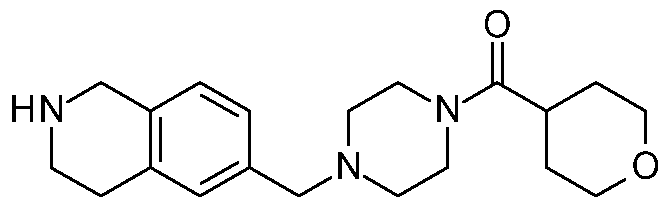
- QBFHVZLQYWUXOI-UHFFFAOYSA-N O=C(C1CCOCC1)N1CCN(Cc2cc(CCNC3)c3cc2)CC1 Chemical compound O=C(C1CCOCC1)N1CCN(Cc2cc(CCNC3)c3cc2)CC1 QBFHVZLQYWUXOI-UHFFFAOYSA-N 0.000 description 1
Classifications
-
- C—CHEMISTRY; METALLURGY
- C07—ORGANIC CHEMISTRY
- C07D—HETEROCYCLIC COMPOUNDS
- C07D401/00—Heterocyclic compounds containing two or more hetero rings, having nitrogen atoms as the only ring hetero atoms, at least one ring being a six-membered ring with only one nitrogen atom
- C07D401/02—Heterocyclic compounds containing two or more hetero rings, having nitrogen atoms as the only ring hetero atoms, at least one ring being a six-membered ring with only one nitrogen atom containing two hetero rings
- C07D401/12—Heterocyclic compounds containing two or more hetero rings, having nitrogen atoms as the only ring hetero atoms, at least one ring being a six-membered ring with only one nitrogen atom containing two hetero rings linked by a chain containing hetero atoms as chain links
-
- A—HUMAN NECESSITIES
- A61—MEDICAL OR VETERINARY SCIENCE; HYGIENE
- A61K—PREPARATIONS FOR MEDICAL, DENTAL OR TOILETRY PURPOSES
- A61K31/00—Medicinal preparations containing organic active ingredients
- A61K31/33—Heterocyclic compounds
- A61K31/395—Heterocyclic compounds having nitrogen as a ring hetero atom, e.g. guanethidine or rifamycins
- A61K31/435—Heterocyclic compounds having nitrogen as a ring hetero atom, e.g. guanethidine or rifamycins having six-membered rings with one nitrogen as the only ring hetero atom
- A61K31/44—Non condensed pyridines; Hydrogenated derivatives thereof
- A61K31/455—Nicotinic acids, e.g. niacin; Derivatives thereof, e.g. esters, amides
-
- A—HUMAN NECESSITIES
- A61—MEDICAL OR VETERINARY SCIENCE; HYGIENE
- A61K—PREPARATIONS FOR MEDICAL, DENTAL OR TOILETRY PURPOSES
- A61K31/00—Medicinal preparations containing organic active ingredients
- A61K31/33—Heterocyclic compounds
- A61K31/395—Heterocyclic compounds having nitrogen as a ring hetero atom, e.g. guanethidine or rifamycins
- A61K31/435—Heterocyclic compounds having nitrogen as a ring hetero atom, e.g. guanethidine or rifamycins having six-membered rings with one nitrogen as the only ring hetero atom
- A61K31/47—Quinolines; Isoquinolines
- A61K31/472—Non-condensed isoquinolines, e.g. papaverine
- A61K31/4725—Non-condensed isoquinolines, e.g. papaverine containing further heterocyclic rings
-
- A—HUMAN NECESSITIES
- A61—MEDICAL OR VETERINARY SCIENCE; HYGIENE
- A61K—PREPARATIONS FOR MEDICAL, DENTAL OR TOILETRY PURPOSES
- A61K31/00—Medicinal preparations containing organic active ingredients
- A61K31/33—Heterocyclic compounds
- A61K31/395—Heterocyclic compounds having nitrogen as a ring hetero atom, e.g. guanethidine or rifamycins
- A61K31/495—Heterocyclic compounds having nitrogen as a ring hetero atom, e.g. guanethidine or rifamycins having six-membered rings with two or more nitrogen atoms as the only ring heteroatoms, e.g. piperazine or tetrazines
- A61K31/496—Non-condensed piperazines containing further heterocyclic rings, e.g. rifampin, thiothixene or sparfloxacin
-
- A—HUMAN NECESSITIES
- A61—MEDICAL OR VETERINARY SCIENCE; HYGIENE
- A61K—PREPARATIONS FOR MEDICAL, DENTAL OR TOILETRY PURPOSES
- A61K31/00—Medicinal preparations containing organic active ingredients
- A61K31/33—Heterocyclic compounds
- A61K31/395—Heterocyclic compounds having nitrogen as a ring hetero atom, e.g. guanethidine or rifamycins
- A61K31/535—Heterocyclic compounds having nitrogen as a ring hetero atom, e.g. guanethidine or rifamycins having six-membered rings with at least one nitrogen and one oxygen as the ring hetero atoms, e.g. 1,2-oxazines
- A61K31/5375—1,4-Oxazines, e.g. morpholine
- A61K31/5377—1,4-Oxazines, e.g. morpholine not condensed and containing further heterocyclic rings, e.g. timolol
-
- A—HUMAN NECESSITIES
- A61—MEDICAL OR VETERINARY SCIENCE; HYGIENE
- A61P—SPECIFIC THERAPEUTIC ACTIVITY OF CHEMICAL COMPOUNDS OR MEDICINAL PREPARATIONS
- A61P35/00—Antineoplastic agents
-
- A—HUMAN NECESSITIES
- A61—MEDICAL OR VETERINARY SCIENCE; HYGIENE
- A61P—SPECIFIC THERAPEUTIC ACTIVITY OF CHEMICAL COMPOUNDS OR MEDICINAL PREPARATIONS
- A61P35/00—Antineoplastic agents
- A61P35/02—Antineoplastic agents specific for leukemia
-
- C—CHEMISTRY; METALLURGY
- C07—ORGANIC CHEMISTRY
- C07D—HETEROCYCLIC COMPOUNDS
- C07D401/00—Heterocyclic compounds containing two or more hetero rings, having nitrogen atoms as the only ring hetero atoms, at least one ring being a six-membered ring with only one nitrogen atom
- C07D401/14—Heterocyclic compounds containing two or more hetero rings, having nitrogen atoms as the only ring hetero atoms, at least one ring being a six-membered ring with only one nitrogen atom containing three or more hetero rings
-
- C—CHEMISTRY; METALLURGY
- C07—ORGANIC CHEMISTRY
- C07D—HETEROCYCLIC COMPOUNDS
- C07D403/00—Heterocyclic compounds containing two or more hetero rings, having nitrogen atoms as the only ring hetero atoms, not provided for by group C07D401/00
- C07D403/14—Heterocyclic compounds containing two or more hetero rings, having nitrogen atoms as the only ring hetero atoms, not provided for by group C07D401/00 containing three or more hetero rings
-
- C—CHEMISTRY; METALLURGY
- C07—ORGANIC CHEMISTRY
- C07D—HETEROCYCLIC COMPOUNDS
- C07D405/00—Heterocyclic compounds containing both one or more hetero rings having oxygen atoms as the only ring hetero atoms, and one or more rings having nitrogen as the only ring hetero atom
- C07D405/14—Heterocyclic compounds containing both one or more hetero rings having oxygen atoms as the only ring hetero atoms, and one or more rings having nitrogen as the only ring hetero atom containing three or more hetero rings
Definitions
- the present invention relates to novel pyridyloxyacetyl tetrahydroisoquinoline compounds that inhibit activity of nicotinamide phosphoribosyltransferase (NAMPT), pharmaceutical compositions comprising the compounds, and methods of using the compounds to treat physiological disorders, more particularly for the treatment of cancer, during which NAMPT is expressed.
- NAMPT nicotinamide phosphoribosyltransferase
- Nicotinamide adenine dinucleotide (NAD + ) is required for metabolism, energy production, DNA repair, and signaling in many types of cancer cells.
- NAD + can be synthesized from nicotinamide, nicotinic acid or tryptophan.
- the two-step salvage pathway that converts nicotinamide to NAD + represents the major route to NAD + biosynthesis in mammals.
- NAMPT is also essential for the biosynthesis of NAD + in many cancer cells. NAMPT catalyzes the rate-limiting step in the conversion of nictotinamide to
- NAMPT nicotinamide mononucleotide
- Nicotinic acid phosphoribosyltransferase an enzyme essential for salvaging NAD + from nicotinic acid is expressed in human tissues and in some tumors.
- the co- administration of nicotinic acid with certain NAMPT inhibitors has been shown to enhance the therapeutic index since NAD + continues to be synthesized in host tissues from the co-administered nicotinic acid through the NAPRT-mediated nicotinic acid pathway, but as a result, the co-administration of nicotinic acid with these NAMPT inhibitors protects NAPRT-proficient normal cells from the effects of NAMPT inhibitors whereas this co-administration does not appear to affect the antitumor activity of NAMPT inhibitors on NAPRT-deficient tumor cells.
- NAMPT inhibitors are already known in the art for the treatment of cancer; see for example, FK866/AP0866, disclosed in W09748696. There are also many other NAMPT inhibitors disclosed in the art, see for example, WO2012038904. There remains a need to provide alternative NAMPT inhibitors, more particularly for the treatment of cancer. Accordingly, the present invention provides NAMPT inhibitors which may be useful for treating cancer.
- the present invention provides novel pyridyloxyacetyl tetrahydroisoquinoline compounds that are inhibitors of NAMPT and may have clinical utility as a single agent for treatment of different types of cancers and in particular breast cancer, gastric cancer, colorectal cancer, liver cancer, renal cancer, brain cancer (in particular glioblastoma and neuroblastoma), melanoma, prostate cancer, ovarian cancer, NSCLC, sarcomas (including soft tissues sarcomas), leukemia, lymphoma, endometrial, kidney, adrenal gland, and/or autonomic ganglia cancers.
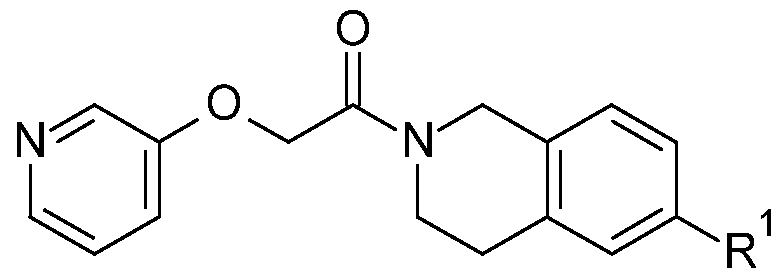
- the present invention provides a compound of the following formula:
- R 1 is -NHSO 2 R 2 , -NHC(0)CH 2 R 3 , -CH 2 -piperazinyl-C(0)R 4 , or -CH(CH 3 )- piperazinyl- C(0)R 4 ;
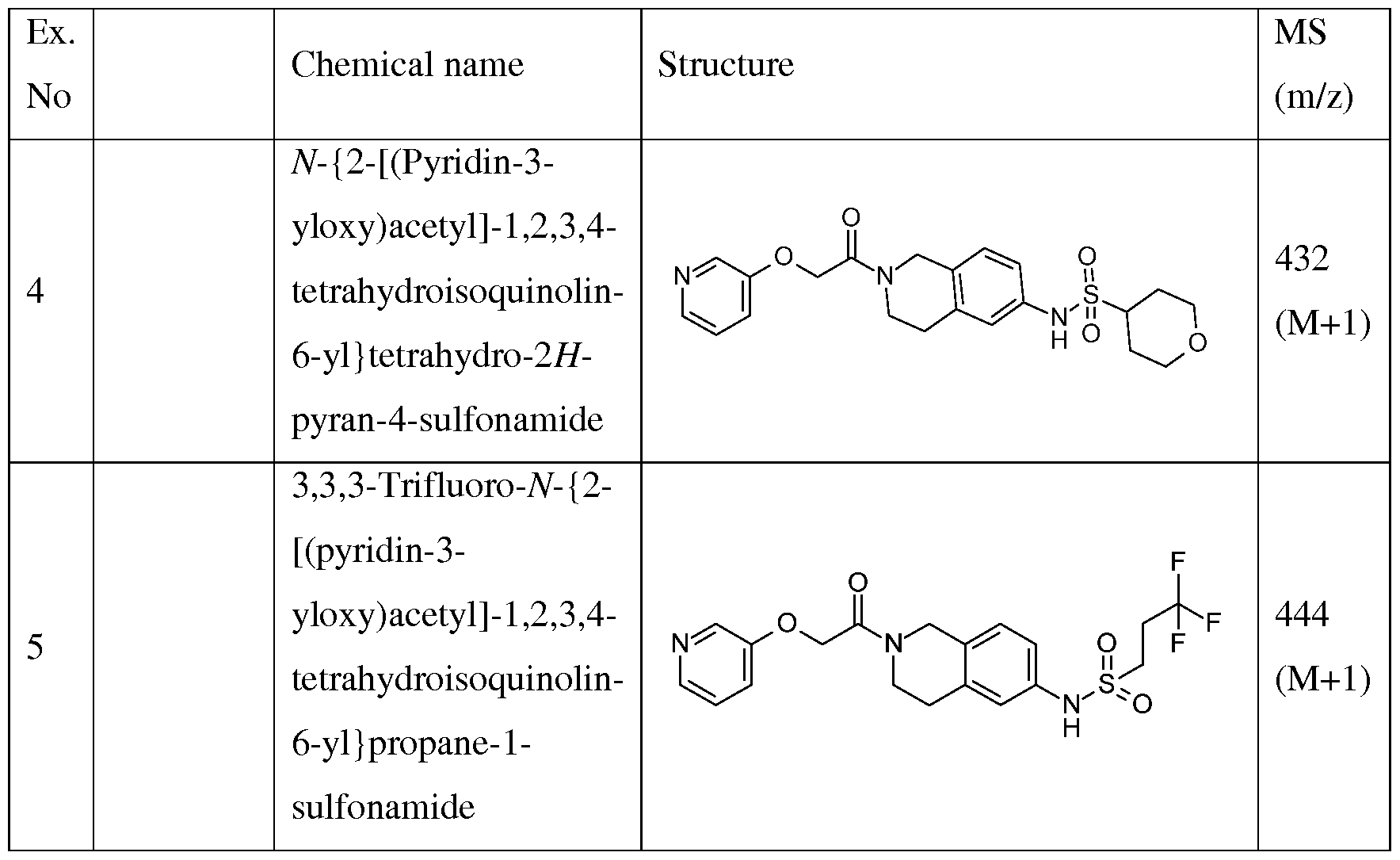
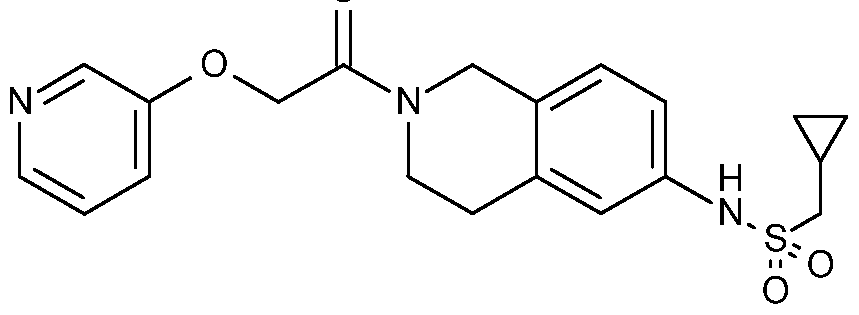
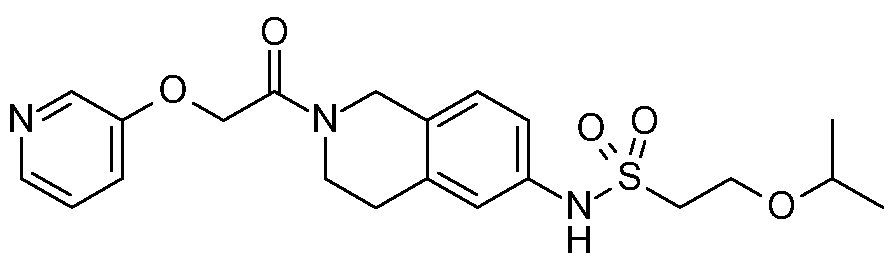
- R 2 is N-methylpiperidin-4-yl, N-oxetan-3-yl-piperidin-4-yl, tetrahydropyran-4-yl, tetrahydropyran-4-yl-N-carbonyl-piperidin-4-yl, 2-hydroxy-2-methyl-prop-l-yl, methoxyethyl, 2-isopropoxyethyl, 2-trifluoromethylethyl, cyclopropylmethyl, or pyrid-2- yi;
- R 3 is tetrahydropyran-2-yl, t-butyl, -C(CH 3 )(CH 3 )(OH)-C(OH)(CH 3 )(CH 2 CH 3 ), or -C(OH)(CH 3 )(CF 3 );
- R 4 is tetrahydropyran-4-yl, tetrahydropyran-4-yl-methyl, morpholin-4-yl-methyl, or 2-hydroxy-2-methyl-propyl;
- R 1 is -NHS0 2 R 2 .
- the present invention provides a compound which is 2-hydroxy-2-methyl-N-[2- [2-(3-pyridyloxy)acetyl]-3,4-dihydro-lH-isoquinolin-6-yl]propane-l-sulfonamide, or a pharmaceutically acceptable salt thereof.
- the present invention also provides a compound which is 2-methoxy-N-[2-[2-(3- pyridyloxy)acetyl]-3,4-dihydro-lH-isoquinolin-6-yl]ethanesulfonamide, or a
- the present invention provides a method of treating breast cancer in a mammal comprising administering to a mammal in need of such treatment an effective amount of a compound or salt of the present invention.
- this method further comprises the simultaneous, separate, or sequential administration of nicotinic acid.
- the present invention provides a method of treating gastric cancer in a mammal comprising administering to a mammal in need of such treatment an effective amount of a compound or salt of the present invention.
- this method further comprises the simultaneous, separate, or sequential administration of nicotinic acid.
- the present invention provides a method of treating colorectal cancer in a mammal comprising administering to a mammal in need of such treatment an effective amount of a compound or salt of the present invention.
- this method further comprises the simultaneous, separate, or sequential administration of nicotinic acid.
- the present invention provides a method of treating liver cancer in a mammal comprising administering to a mammal in need of such treatment an effective amount of a compound or salt of the present invention.
- this method further comprises the simultaneous, separate, or sequential administration of nicotinic acid.
- the present invention provides a method of treating renal cancer in a mammal comprising administering to a mammal in need of such treatment an effective amount of a compound or salt of the present invention.
- this method further comprises the simultaneous, separate, or sequential administration of nicotinic acid.
- the present invention provides a method of treating brain cancer in a mammal comprising administering to a mammal in need of such treatment an effective amount of a compound or salt of the present invention.
- the brain cancer is glioblastoma and neuroblastoma.
- this method further comprises the simultaneous, separate, or sequential administration of nicotinic acid.
- the present invention provides a method of treating melanoma in a mammal comprising administering to a mammal in need of such treatment an effective amount of a compound or salt of the present invention.
- this method further comprises the simultaneous, separate, or sequential administration of nicotinic acid.
- the present invention provides a method of treating prostate cancer in a mammal comprising administering to a mammal in need of such treatment an effective amount of a compound or salt of the present invention.
- this method further comprises the simultaneous, separate, or sequential administration of nicotinic acid.
- the present invention provides a method of treating ovarian cancer in a mammal comprising administering to a mammal in need of such treatment an effective amount of a compound or salt of the present invention.
- this method further comprises the simultaneous, separate, or sequential administration of nicotinic acid.
- the present invention provides a method of treating NSCLC in a mammal comprising administering to a mammal in need of such treatment an effective amount of a compound or salt of the present invention.
- this method further comprises the simultaneous, separate, or sequential administration of nicotinic acid.
- the present invention provides a method of treating sarcomas, in particular soft tissue sarcomas, in a mammal comprising administering to a mammal in need of such treatment an effective amount of a compound or salt of the present invention.
- this method further comprises the simultaneous, separate, or sequential administration of nicotinic acid.
- the present invention provides a method of treating leukemia in a mammal comprising administering to a mammal in need of such treatment an effective amount of a compound or salt of the present invention.
- this method further comprises the simultaneous, separate, or sequential administration of nicotinic acid.
- the present invention provides a method of treating lymphoma in a mammal comprising administering to a mammal in need of such treatment an effective amount of a compound or salt of the present invention.
- this method further comprises the simultaneous, separate, or sequential administration of nicotinic acid.
- the present invention provides a method of treating endometrial cancer in a mammal comprising administering to a mammal in need of such treatment an effective amount of a compound or salt of the present invention.
- this method further comprises the simultaneous, separate, or sequential administration of nicotinic acid.
- the present invention provides a method of treating kidney cancer in a mammal comprising administering to a mammal in need of such treatment an effective amount of a compound or salt of the present invention.
- this method further comprises the simultaneous, separate, or sequential administration of nicotinic acid.
- the present invention provides 2-hydroxy-2-methyl-N-[2-[2-(3- pyridyloxy)acetyl]-3,4-dihydro-lH-isoquinolin-6-yl]propane-l-sulfonamide in crystalline form.
- the present invention also provides 2-hydroxy-2-methyl-N-[2-[2-(3- pyridyloxy)acetyl]-3,4-dihydro-lH-isoquinolin-6-yl]propane-l-sulfonamide in crystalline anhydrous free base form characterized by a X-ray powder diffraction pattern having characteristic peaks, in 2 ⁇ + 0.2, occurring at 17.97 and one or more of 21.59, 18.53, and 14.96.
- the present invention provides 2-methoxy-N-[2-[2-(3-pyridyloxy)acetyl]-3,4- dihydro-lH-isoquinolin-6-yl]ethanesulfonamide in crystalline form.
- the present invention also provides 2-methoxy-N-[2-[2-(3-pyridyloxy)acetyl]-3,4-dihydro-lH- isoquinolin-6-yl]ethanesulfonamide in crystalline anhydrous free base form characterized by a X-ray powder diffraction pattern having characteristic peaks, in 2 ⁇ + 0.2, occurring at 24.21 and one or more of 15.73, 18.95, and 18.28.
- the invention also provides pharmaceutical compositions comprising a compound or salt of the present invention and one or more pharmaceutically acceptable carriers, diluents, or excipients.
- the composition further comprises nicotinic acid.
- This invention also provides a compound or salt of the present invention for use in therapy.
- the invention also provides a compound or salt of the present invention for use in the treatment of cancer.
- this invention provides use of a compound or salt of the present invention in the manufacture of a medicament for treating cancer.
- this invention provides a compound or salt of the present invention for use in the treatment of cancer.
- this cancer is breast cancer. Additionally, this cancer is gastric cancer. Additionally, this cancer is colorectal cancer. Additionally, this cancer is liver cancer. Additionally, this cancer is renal cancer. Additionally, this cancer is brain cancer, more particularly glioblastoma and neuroblastoma. Additionally, this cancer is melanoma. Additionally, this cancer is prostate cancer. Additionally, this cancer is ovarian cancer.
- this cancer is NSCLC. Additionally, this cancer is sarcoma, more particularly soft tissue sarcoma. Additionally this cancer is leukemia. Additionally, this cancer is lymphoma. Additionally, this cancer is endometrial cancer. Additionally, this cancer is kidney cancer. Additionally, the compound or salt is optionally administered in simultaneous, separate, or sequential combination with nicotinic acid.
- compounds of the present invention are capable of forming salts.
- the compounds of the present invention contain basic heterocycles, and accordingly react with any of a number of inorganic and organic acids to form pharmaceutically acceptable acid addition salts.
- Such pharmaceutically acceptable acid addition salts and common methodology for preparing them are well known in the art. See, e.g., P. Stahl, et al., HANDBOOK OF PHARMACEUTICAL SALTS: PROPERTIES, SELECTION AND USE, (VCHA/Wiley-VCH, 2008); S.M. Berge, et al., "Pharmaceutical Salts", Journal of Pharmaceutical Sciences, Vol 66, No. 1, January 1977.
- the single enantiomers or diastereomers may be prepared beginning with chiral reagents or by stereoselective or stereospecific synthetic techniques. Alternatively, the single enantiomers or diastereomers may be isolated from mixtures by standard chiral chromatographic or crystallization techniques.
- the compounds of the present invention can be prepared according to synthetic methods well known and appreciated in the art. Suitable reaction conditions for the steps of these reactions are well known in the art and appropriate substitutions of solvents and co-reagents are within the skill of the art. Likewise, it will be appreciated by those skilled in the art that synthetic intermediates may be isolated and/or purified by various well known techniques as needed or desired, and that frequently, it will be possible to use various intermediates directly in subsequent synthetic steps with little or no purification. Furthermore, the skilled artisan will appreciate that in some circumstances, the order in which moieties are introduced is not critical.
- ACN refers to acetonitrile
- ATP refers to adenosine-5'-triphosphate
- BID refers to twice a day
- BOC di-tert-butyl-dicarbonate
- DMSO dimethylsulf oxide
- DTT refers to dithiothreitol
- FBS fetal bovine serum
- HATU refers to 0-(7- azabenzotriazol- l-yl)-N,N,N',N'-tetramethyluronium hexafluorophosphate
- HPES refers to 4-(2-hydroxyethyl)-l-piperazineethanesulfonic acid
- HPLC refers to high- pressure liquid chromatography
- Isomer 2 refers to the isomer that elutes off of the column second
- IVTI refers
- the compounds of the present invention can be prepared by amide formation conditions well known to skilled artisans.
- Compound 1 is reacted with an appropriately substituted Compound 2 or a proper salt of Compound 2 such as a hydrochloride salt, in the presence of a proper amide bond formation reagent such as HATU, 1- propanephosphonic acid cyclic anhydride, or bis(2-oxo-3-oxazolidinyl)phosphonic chloride, and a suitable base such as triethylamine in an appropriate solvent such as dimethylformamide to provide the desired compound of Formula I Scheme II
- R 1 -NHC(0)CH2R 3 ,
- R 1 NHC(0)CH2R 3 or -NHSO2R 2
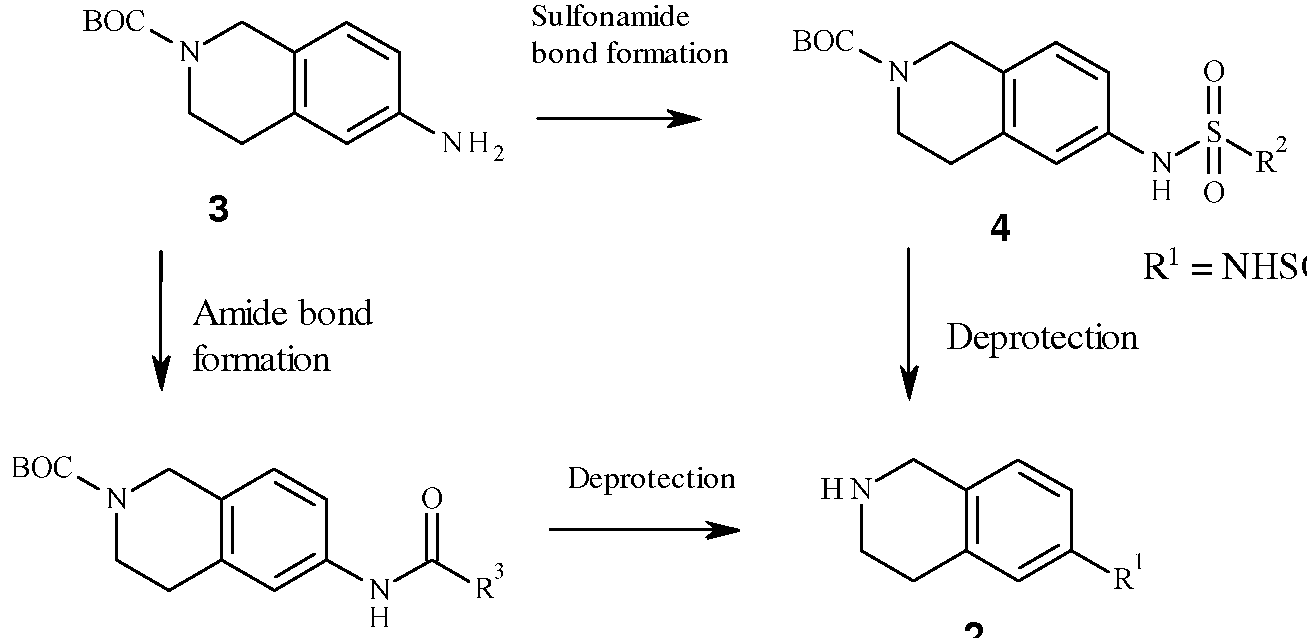
- R 1 is -NHS0 2 R 2
- Compound 3 is reacted with an appropriately substituted sulfonyl chloride, in the presence of a proper sulfonamide bond formation reagent such as HATU, 1-propanephosphonic acid cyclic anhydride, or bis(2-oxo-3- oxazolidinyl)phosphonic chloride, and a suitable base such as triethylamine in an appropriate solvent such as dimethylformamide to provide Compound 4.
- a proper sulfonamide bond formation reagent such as HATU, 1-propanephosphonic acid cyclic anhydride, or bis(2-oxo-3- oxazolidinyl)phosphonic chloride
- a suitable base such as triethylamine in an appropriate solvent such as dimethylformamide
- R 1 is -NHC(0)CH 2 R 3
- Compound 3 is reacted with an appropriately substituted carboxylic acid, in the presence of a proper amide bond formation reagent such as HATU, 1-propanephosphonic acid cyclic anhydride, or bis(2-oxo-3- oxazolidinyl)phosphonic chloride, and a suitable base such as triethylamine in an appropriate solvent such as dimethylformamide to provide Compound 5.
- a proper amide bond formation reagent such as HATU, 1-propanephosphonic acid cyclic anhydride, or bis(2-oxo-3- oxazolidinyl)phosphonic chloride
- a suitable base such as triethylamine in an appropriate solvent such as dimethylformamide
- Compound 4 or 5 can be de-protected by a suitable de-protecting reagent such as trifluoroacetic acid or hydrochloric acid to give Compound 2 when R 1 is
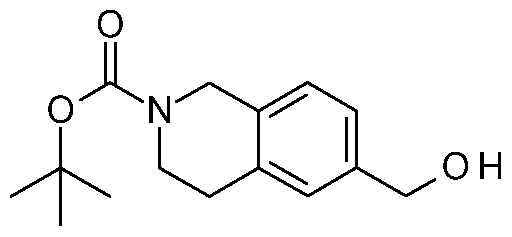
- Compound 6 is reduced with a proper reducing reagent such as lithium aluminum hydride in an appropriate solvent such as tetrahydrofuran to provide Compound 7.
- a proper reducing reagent such as lithium aluminum hydride in an appropriate solvent such as tetrahydrofuran to provide Compound 7.
- Compound 7 can be oxidized by an oxidative reagent such as manganese (IV) oxide in a suitable solvent such as dichloromethane to provide Compound 8, which is further reacted with Compound 9 under reductive amination conditions well known to a skilled artisan to provide Compound 10.
- Compound 8 can react with Compound 9 with the existence of a suitable reducing reagent such a triacetoxyborohydride and a proper acid such as acetic acid, in a proper solvent such as dichloromethane to provide Compound 10.
- Compound 10 can be de-protected by a suitable de-protecting reagent such as trifluoroacetic acid or hydrochloric acid to give Compound 2 when R 1 is -CH 2 - piperazinyl-C(0)R 4 .
- a suitable de-protecting reagent such as trifluoroacetic acid or hydrochloric acid
- R 1 CH(CH 3 )-pf>erazinyl-C(0)R 4
- Compound 11 can react with ⁇ , ⁇ -dimethylhydroxylamine hydrochloride under amide bond formation condition described above to provide Compound 12.
- Compound 12 can react with methyl magnesium bromide in a proper solvent such as tetrahydrofuran to provide Compound 13.
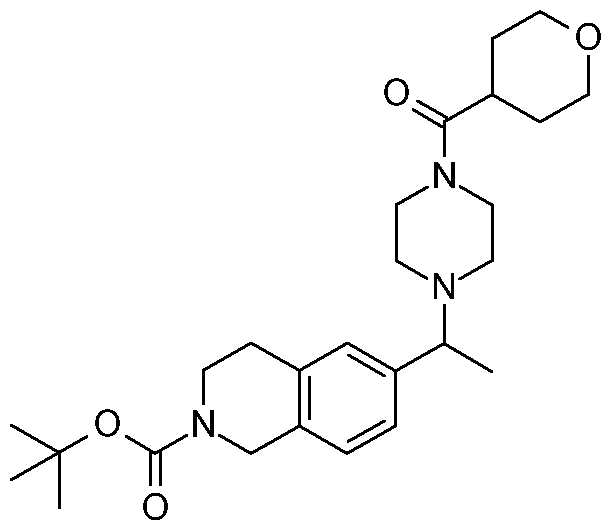
- Compound 13 can reacted with Compound 9 under reductive amination conditions described above to provide Compound 14, which can be further de- protected by a suitable de-protecting reagent such as trifluoroacetic acid or hydrochloric acid to give Compound 2 when R 1 is -CH(CH 3 )-piperazinyl-C(0)R 4 .
- Preparation 45 is prepared essentially by the method of Preparation 44. MS (m/z): 358 (M+l).
- Example 9 is prepared essentially by the method of Example 8. MS (m/z): 445
- the sample is scanned between 4 and 40° in 2 ⁇ , with a step size of 0.009° in 2 ⁇ and a scan rate of 0.5 seconds/step, and with 0.6 mm divergence, 5.28 fixed anti-scatter, and 9.5 mm detector slits.
- the dry powder is packed on a quartz sample holder and a smooth surface is obtained using a glass slide.
- the crystal form diffraction patterns are collected at ambient temperature and relative humidity.
- the relative intensities of the diffraction peaks may vary due to preferred orientation resulting from factors such as crystal morphology and habit. Where the effects of preferred orientation are present, peak intensities are altered, but the characteristic peak positions of the polymorph are unchanged.
- the angular peak positions may vary slightly. For example, peak positions can shift due to a variation in the temperature or humidity at which a sample is analyzed, sample displacement, or the presence or absence of an internal standard. In the present case, a peak position variability of 0.2 in 2 ⁇ will take into account these potential variations without hindering the unequivocal identification of the indicated crystal form.
- Confirmation of a crystal form may be made based on any unique combination of distinguishing peaks (in units of ° 2 ⁇ ), typically the more prominent peaks.
- the crystal form diffraction patterns, collected at ambient temperature and relative humidity, are adjusted based on NBS standard reference material 675 (mica) with peaks at 8.853 and 26.774 degrees 2-theta.
- a prepared sample of the crystalline free base is characterized by an X-ray diffraction pattern using CuKa radiation as having diffraction peaks (2-theta values) as described in Table 1 below, and in particular having peaks at 17.97 in combination with one or more of the peaks selected from the group consisting of 21.59, 18.53, and 14.96; with a tolerance for the diffraction angles of 0.2 degrees.
- Table 1 diffraction peaks (2-theta values) as described in Table 1 below, and in particular having peaks at 17.97 in combination with one or more of the peaks selected from the group consisting of 21.59, 18.53, and 14.96; with a tolerance for the diffraction angles of 0.2 degrees.
- DSC Differential scanning calorimetry
- Instruments DSC unit Q2000 Samples are heated in crimped aluminum pans from 25 to 300°C at 10°C/min with a nitrogen purge of 50 mL/min.
- the DSC temperature is calibrated with indium standard, onset of 156.3-156.9°C. This crystalline anhydrous free base displays a melting point onset at 164.06°C by DSC.
- X-ray diffraction (XRD) patterns of crystalline solids are obtained as in essentially the same manner as described in Example 21 above.
- a prepared sample of the crystalline free base is characterized by an X-ray diffraction pattern using CuKa radiation as having diffraction peaks (2-theta values) as described in Table 2 below, and in particular having peaks at 24.21 in combination with one or more of the peaks selected from the group consisting of 15.73, 18.95, and 18.28; with a tolerance for the diffraction angles of 0.2 degrees.
- NAMPT N-expressed in several types of tumor cells including breast cancer, gastric cancer, colorectal cancer, liver cancer, renal cancer, brain cancer, melanoma, prostate cancer, NSCLC, and others; and its expression appears to be associated with tumor progression.
- Bi T. Q., et al, Oncol. Rep. 26, 1251-7, 2011
- Van Beijnum. J. R. et al., Int. J.
- Examples 1 through 20 demonstrate that Examples 1 through 20, inhibitors of NAMPT, inhibit NAMPT catalytic activity.
- the results of the following assays also demonstrate that Examples 1 through 20 have in vitro cellular activities against the target, NAMPT, in cancer cells as the treatment of cancer cells with these compounds decreases their NAD + formation and cell viability.
- certain compounds of the present invention lead to the attenuation of glycolysis as indicated by the increase in the glycolytic intermediates before and at the glyceraldehyde3 -phosphate dehydrogenase step and the decrease in the glycolytic intermediates after the glyceraldehyde3-phosphate dehydrogenase step. Attenuation of glycolysis leads to depletion of ATP and retardation of tumor cell growth.
- results of the following assays demonstrate that certain compounds of the present invention have in vivo activities against the target, NAMPT, in tumor xenograft as indicated by the decreased NAD + formation. Furthermore, certain compounds of the present invention inhibit the growth of different tumor xenografts.
- reaction mixtures (25 ⁇ ) containing 50 mM HEPES at pH 7.5, 50 mM NaCl, 1 mM DTT, 0.005% TRITON ® X-100, 1.5 ⁇ phosphoribosyl- pyrophosphate, 0.5 ⁇ nicotinamide (NAM), 1.5 nM NAMPT, 2.5 mM ATP, 1.25 mM MgCl 2 , 4% (v/v) DMSO and compounds after a ten-point series dilution from either 1 ⁇ to 50 pM or 0.1 ⁇ to 5 pM (final) are prepared.
- NMN nicotinamide mononucleotide -d 4
- LC-MS Liquid Chromatography-Mass Spectrometry
- the gradient is as follows: 0 minutes, 0% B; 0.3 minutes, 0% B; 1.5 minutes, 35% B; 1.51 minutes, 95% B; 2.0 minutes, 95 % B, 2.01 minutes, 0 % B, 3 minutes, stop.
- a positive control group (enzyme and DMSO, but no compound) is used to measure minimum inhibition (0%) of NMN formation.
- Percent inhibition of compound treated groups is calculated relative to the minimum inhibition group.
- the relative IC 50 for each compound is calculated from a dose response study and is the concentration necessary to achieve 50% inhibition at this time point using the above disclosed ranges of 1 ⁇ to 50 pM (final).
- the data generated from the dose- response studies is fit to a four-parameter logistic equation using ACTIVITYBASE 4.0 Equation 205.
- Example 1 through 20 inhibit NAMPT catalytic activity, i.e. the compounds of these examples inhibit NAMPT with an IC 50 of equal or less than 16.7 nM.
- Example 1 and Example 2 have an IC 50 value of 3.1 and 1.1 nM, respectively.
- A2780 (the NCI-DCTD Tumor repository) tumor cells, an ovarian cancer cell line, are cultured in RPMI 1640 (SH30255.01, Hyclone) supplemented with 10% FBS. Cells are seeded into a 96-well culture plate (8 x 10 4 cells/well) and incubated at 37°C in 5% C0 2 for 4 hours, and then treated with a compound of the present invention (1 ⁇ to 0.002 ⁇ or 10 nM to 0.02 nM depending on the potency of each compound) for 24 hours. FK866 (100 nM) is also included as a positive control for maximum inhibition (100%). Each compound is tested 1-4 times in this assay.
- A2780 cells grown in the above referenced 96-well plates are lysed with RIPA buffer (Pierce) followed by addition of 50 ⁇ L ⁇ of 0.2 N HC1.
- the resulting cell lysates are incubated at 60 °C for 10 minutes and neutralized with 50 ⁇ L ⁇ of 0.2 N NaOH. After centrifugation at 2000 x g for 15 minutes, the supernatants (50 ⁇ ) are collected.
- NAD + /NMN assays are described by Putt and Hergenrother (Putt, K.S, and Hergenrother, P.J., An enzymatic assay for poly(ADP- ribose) polymerase- 1 (PARP-1) via the chemical quantitation of NAD + : application to the high-throughput screening of small molecules as potential inhibitors.
- PARP-1 poly(ADP- ribose) polymerase- 1
- NAMPT-mediated NAD + /NMN formation in A2780 tumor cells with IC 50 values of equal or less than 195 nM.
- Cell Proliferation Assay +NA Nicotinic Acid
- the purpose of this assay is to measure the ability of a compound to inhibit proliferation of endometrium, kidney, adrenal gland, and autonomic ganglia cancer cell lines dependent on the NAMPT-mediated NAD + formation in the presence or absence of NA (10 ⁇ ) in vitro.
- one vial of assay ready frozen cells is thawed, and the cells are grown overnight in the media as shown in Table 3 under 5% C0 2 at 37 °C.
- the cell layer is briefly rinsed with 0.25% (w/v) Trypsin-0.038% (w/v) EDTA solution followed with the addition of 3.0 ml of Trypsin-EDTA solution.
- a ten-point compound dilution series (3 -fold each) for a compound (from 2.0 ⁇ to 0.0001 ⁇ ) is prepared in growth media containing 0.5% DMSO (v/v) without or with 10 ⁇ NA (final). Then, 0.5 ⁇ L ⁇ or 1 ⁇ L ⁇ of compound after a ten-point series dilution is added to each well containing 100 or 200 ⁇ L ⁇ of cell suspension. The cell plates are covered and incubated for 48, 96, 120, or 144 hours under at 37 °C. After the incubation, the cell plates are equilibrated to room temperature for approximately 30 minutes.
- the CellTiter-Glo Buffer (Promega) is thawed and equilibrated to room temperature.
- the lyophilized CellTiter-Glo substrate (Promega) is also equilibrated to room temperature.
- the appropriate volume of CellTiter-Glo Buffer (Promega) is transferred into an amber bottle containing CellTiter-Glo substrate to reconstitute the lyophilized enzyme/substrate mixture, which forms the CellTiter-Glo Reagent.
- the CellTiter-Glo Reagent ( ⁇ ) is added to the cell plates. The plates are shaken on an orbital shaker for 2 minutes to induce cell lysis and then incubated at room temperature for 10 minutes. The bottom of each plate is pasted with a white back seal and luminescence is recorded using a Flexstation 3 with the following settings: Luminescence and integration time of 500ms.
- Example 1 inhibits proliferation of a number of kidney, endometrium, adrenal gland, and autonomic ganglia cancer cell lines in the presence or absence of NA in vitro.
- This assay also demonstrates that the anti- proliferative activity of Example 1 against some of the cancer cell lines tested is rescued or reversed by the addition of 10 ⁇ NA to the growth medium as indicated by the increased IC 50 values to > 2.0 ⁇ , showing that Example 1 specifically inhibits NAMPT in the cell, while the anti-proliferative activity of Example 1 against a number of other cancer cell lines tested is not rescued or reversed by the addition of 10 ⁇ NA to the growth medium as indicated by the relatively unchanged IC 50 values. Therefore, this assay additionally demonstrates that a significant portion of the cancer types that the cancer cell lines represent does not express or expresses a very low level of NAPRT. Table 3. Growth conditions and sources of cell lines
- HEC-1A is tested in a growth medium containing nicotinic acid.
- This assay is to measure the ability of a compound to inhibit proliferation of A2780 cells (the NCI-DCTD Tumor repository) dependent on the
- the A2780 cell proliferation assay uses assay -ready frozen cells.
- A2780 cells an ovarian cancer cell line, are cultured in growth media containing RPMI 1640 (Gibco 30-2001) supplemented with 10 % FBS, in T-150 flasks for 3-4 days. Cells are then treated with 4 mL of 0.25% (v/v) trypsin for 1 minute (Hyclone SH30042).
- Trypsin-treated cells are then diluted with 10 mL of growth media, and the cell slurry is gently mixed and then decanted to a centrifuge tube. Cells are counted and then pelleted by centrifugation at 1400 rpm for 5 minutes. After centrifugation the supernatant is removed and the cell pellets are re- suspended in GIBCO® RECOVERYTM Cell Culture Freezing Medium (Invitrogen 12648-010) at 2-5 x 10 6 cells/mL and then aliquoted at 1 mL volumes into cryovials. Cryo vials are stored initially at -80 °C for 16 hours, and then transferred to liquid nitrogen for long term storage.
- a ten-point compound dilution series for each compound is prepared in growth media containing 2% DMSO (v/v, 0.2% final) with or without 100 mM NAM (10 mM final). Then 10 ⁇ . of compounds after a ten-point series dilution from either 2 or 0.1 ⁇ (depending potency of each compound) to 50 pM or 5 pM (final) are added to the wells of the cell plates. Cell plates are covered and incubated for 72 hours under 5% C0 2 at 37 °C.
- one vial of GF-AFC substrate (CELL TTTER-FLUORTM Cell Viability Assay Kit, Promega G6081) is vortexed and the substrate is transferred to one vial of thawed CELL TITER- FLU OKTM Assay Buffer.
- the resulting CELL T1TER-FLUORTM reagent is then vortexed well to thoroughly dissolve the substrate.
- the CELL TTTER-FLUORTM reagent is then diluted (1:2) in growth medium and 50 ⁇ L ⁇ of diluted CELL TITER-FLUORTM reagent is added to each well of the cell plate.
- the cell plate is covered and incubated under 5% C0 2 at 37 °C for 1-3 hours. Finally the cell plates are removed from the incubator and the well fluorescence is measured on an Envision® Multilabel Reader (Perkin Elmer, ⁇ 6 ⁇ 355/ ⁇ 6 ⁇ 1 495).
- Example 1 and Example 2 The anti-proliferative activity of Example 1 and Example 2 against A2780 cancer cells is rescued or reversed by the addition of 10 mM nicotinamide to the growth medium as indicated by the increased IC 50 value to > 0.1 ⁇ , showing that Example 1 and Example 2 specifically inhibits NAMPT in the cell.
- HCC1937 (breast cancer) cells are cultured in RPMI-1640 supplemented with 10% FBS.
- Calu-6 (lung cancer) cells and MCF-7 (breast cancer) cells are cultured in Minimum Essential Medium (MEM) (Gibcoll095) supplemented with 1 mM sodium pyruvate (Gibco 11360), 1% Non-Essential Amino Acids Solution (100X; Gibco 11140) and 10% FBS.
- MEM Minimum Essential Medium
- NCI-H1155 (lung cancer) cells are cultured in Dulbecco's Modified Eagle Medium (DMEM) (Gibco 11965) with 10% FBS.
- DMEM Dulbecco's Modified Eagle Medium
- the cells are also treated with staurosporine (10 ⁇ ) as a positive control and 0.1% DMSO as a negative control.
- Cell viability is analyzed by using an assay kit (CYTOTOX-GLOTM
- Cytotoxicity Assay kit Promega
- 50 ⁇ of CYTOTOX-GLOTM Cytotoxicity Assay reagent is added to each well.
- the plate is mixed briefly by orbital shaking.
- the plate is incubated for 15 minutes at room temperature.
- Luminescence is measured using a Wallac Victor3 V 1420 Multilabel Counter (Perkin Elmer), referred to as dead cell luminescence.
- Add 50 ⁇ L ⁇ of Lysis Reagent to each well, and the plate is mixed briefly by orbital shaking. After the plate is incubated at room temperature for 15 minutes, luminescence is measured using the plate reader, referred to as total luminescence.
- Viable cell luminescence (CPS) is calculated by subtracting the dead cell luminescence from the total luminescence. Inhibition of cell viability is calculated based on the equation as follows:
- Inhibition (%) (CPSnegative- CPS sampl e)/(CPS n e g ative-CPS positive )* 100 where CPS is the luminescence of viable cells.
- Example 1 is tested 5 times (2-3 replicates each) in NCI-H1155, and once (3 replicates) in Calu 6, HCC1937, and MCF-7;
- Example 2 is tested 5 times (2-3 replicates each) in NCI-H1155, twice (2-3 replicates) in Calu6 and HCC1937; and 3 times (2-3 replicates each) in MCF-7.
- This assay demonstrates that Example 1 and Example 2 induce cell death in NCI- HI 155, Calu-6, HCC1937, and MCF-7 cell lines.
- NAD + metabolites nicotinamide mononucleotide (NMN), NAD + , reduced nicotinamide adenine dinucleotide (NADH), and nicotinamide adenine dinucleotide phosphate (NADP) is performed on an HPLC system coupled to a Thermo Quantum Ultra triple quadrupole mass spectrometer operated in positive heated electrospray mode with selected reaction monitoring detection.
- NPN nicotinamide mononucleotide
- NADH reduced nicotinamide adenine dinucleotide
- NADP nicotinamide adenine dinucleotide phosphate
- IS solution contains 10 ⁇ nicotinamide ⁇ (C/D/N Isotopes), nicotinic acid-d 4 (C/D/N Isotopes), nicotinamide mononucleotide ⁇ (prepared by custom synthesis) and nicotinamide 1 ,N 6 -ethenoadenine dinucleotide in methanol.
- the metabolites are separated on a Waters XB RIDGETM Amide (2.1 x 50 mm, 3 ⁇ ) with an injection volume of 10 ⁇ and a flow rate of 1 mL/minute using 10 mM ammonium acetate in 95% acetonitrile for mobile phase A and 10 mM ammonium acetate in 50% acetonitrile for mobile phase B .
- the gradient is as follows: 0 minutes, 0% B; 2.5 minutes, 70% B; 2.51 minutes, 100% B; 2.8 minutes, 100% B; 2.81 minutes, 0 % B, 3.6 minutes, 0% B.
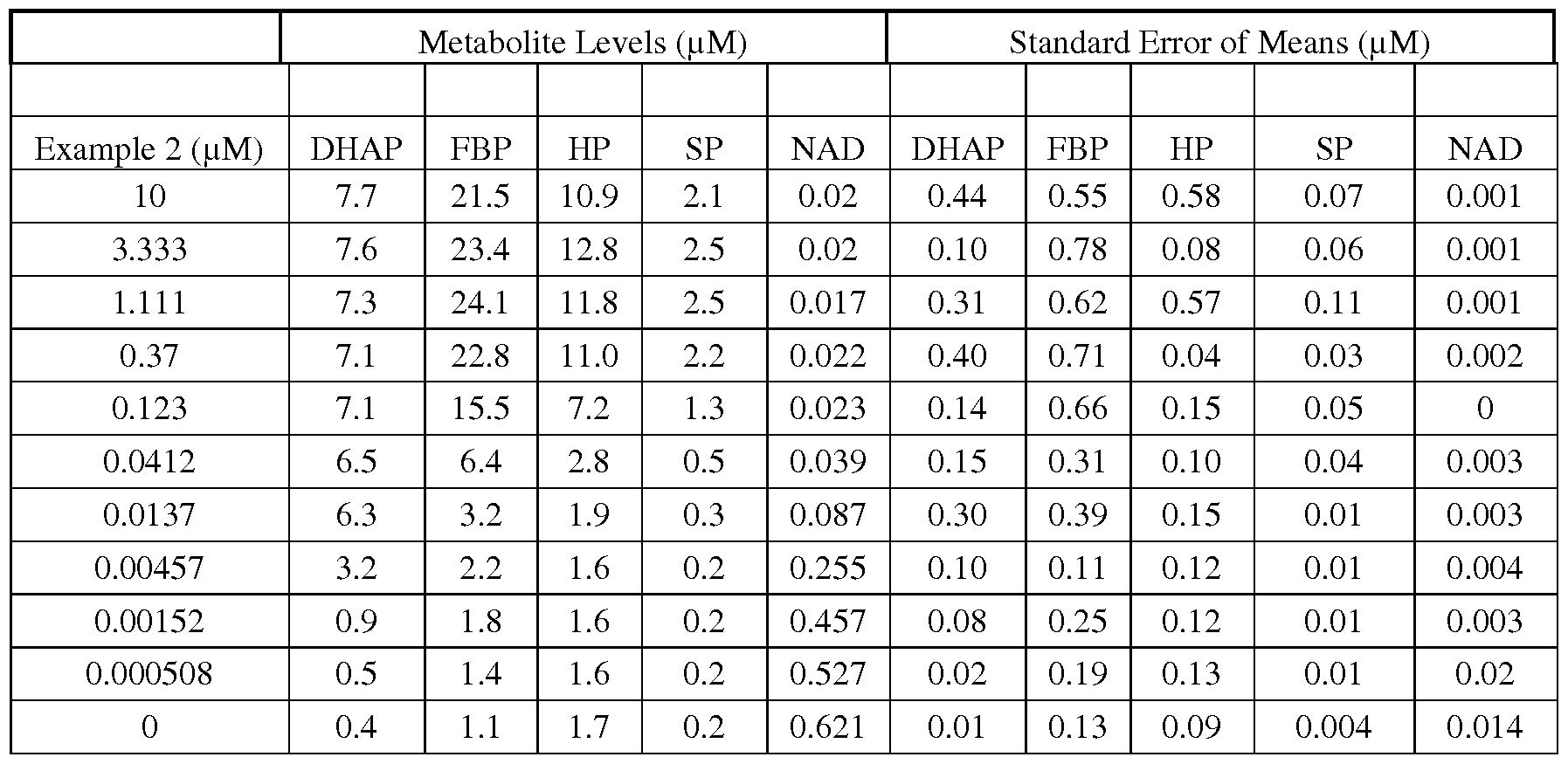
- the purpose of this assay is to measure effects of NAMPT inhibitors on the levels of metabolites such as glucose-6-phosphate /fructose-6-phosphate /fructose- 1 -phosphate collectively as hexose phosphate (HP), fructose- 1 ,6-bisphosphate (FBP), glyceraldehyde- 3-phosphate (G3P), dihydroxyacetone phosphate (DHAP), 3-phosphoglycerate (3PG), 2- phosphoglycerate (2PG), phosphoenoylpyruvate (PEP), gluconate-6-phosphate (GN6P), xylulose-5-phosphate (X5P), ribulose-5-phosphate (Ru5P), ribose-5 -phosphate (R5P), sedoheptulose-7- phosphate/ sedoheptulose-1- phosphate collectively as sedoheptulose phosphate (SP), erythrose-4-phosphate (
- Cells (50,000 /well) are grown as described above in 100 ⁇ L ⁇ of Dulbecco's Modified Eagle Medium supplemented with 10% FBS (dialyzed) and 25 mM glucose, and treated with a compound in triplicates in the presence or absence of 10 ⁇ nicotinic acid. After 24 hours of treatment, the growth medium is removed and 200 ⁇ L ⁇ of 80% methanol is added to each well. After incubation at room temperature for 15 minutes, the resulting extracts are transferred to 96-deep-well plates and washed twice with 200 ⁇ L ⁇ of 80%
- the plates are heat sealed and stored at -80 °C, or dried and reconstituted in 100 ⁇ L ⁇ of 25 ⁇ ethylenediaminetetraacetic acid and injected into LC- MS for analysis.
- the LC-MS analysis for carbohydrate metabolites is performed as follows.
- Chromatographic separations are performed with an HPLC system, which is coupled to an AB Sciex triple quadrupole LC-MS mass spectrometer.
- Analytes with phosphates are analyzed as follows. The samples are dried and reconstituted in ACN/water solutions and are separated on a Phenomenex Luna amino HPLC column (2.1 x 30 mm 3 ⁇ ) under the conditions as described by Yuan et al. (Nature Protocols, 2012, 17, 872-881.).
- the mass spectrometer is operated under negative ESI MRM mode.
- Example 1 demonstrates a dose-dependent inhibition of NAD formation.
- the NAD depletion demonstrated by certain compounds, for example, Example 1 leads to the attenuation of glycolysis at the G3P dehydrogenase step as indicated by the dose-dependent increase in the glycolytic intermediates (HP, FBP, and DHAP/G3P) before and at the G3P dehydrogenase step and the dose-dependent decrease in the intermediates (PEP, and PG) after the G3P dehydrogenase step.
- Example 1 Inhibits NAD + Formation, Attenuates Glycolysis, and Alters the
- A2780 cells (ATCC) are grown as described above for the NAD + assay (Assay for NAD + /NMN Levels in A2780 Cells).
- the cells (5 x 10 6 /animal) are mixed with MATRIGEL® (1:1) and implanted subcutaneously into the rear flank of the mice (female nude mice, Harlan).
- the implanted tumor cells grow as solid tumors.
- the tumor volume and body weight are measured twice a week with a caliper. After tumor volume reaches approximately 300- 500 mm 3 , animals are randomized and grouped into positive control (described herein; 5 animals/group) and compound treatment groups (5 animals/group).
- the compound described herein; 5 animals/group
- Tumor tissues (-100 mg each) are placed into in a tube (Lysing Matrix D tube, MPBio # 6913-100) on dry ice and homogenized in an extraction buffer (0.8 mL each) (Biovision, cat# K337-100-1) for 45 seconds (3 x 15 seconds) using a BiolOl FastPrep FP120 homogenizer (setting 5).
- the resulting preparations (0.5 mL each) are filtered (with a 10K cutoff filter) to remove hemoglobin because red color interferes with the absorbance. Centrifuge the resulting preparations in accordance with the manufacturer's instructions (9500 RPM X 40 minutes, Millipore). The flow through are collected and stored at -80 °C until they are assayed.
- the resulting preparations ( ⁇ 140 ⁇ L ⁇ each) are transferred to another 96-well plate, which is heated to 60 °C for 30 minutes. The plate is cooled to room temperature for approximately 4 to 10 minutes and then centrifuged briefly.
- NAD + quantitation is carried out using a NAD + /NADH cycling assay kit (Bio Vision, cat# 337-100-1).
- the positive control (vehicle group) is used to measure the minimum inhibition (0%) of NAD + formation.
- TED 50 is calculated from a dose response study and is the dose necessary to achieve 50% inhibition at this time point.
- This assay demonstrates the ability of a test compound to inhibit the NAMPT-mediated NAD + formation in tumors in an animal model.
- Example 1 has a TED 50 value of 2.56 + 0.37 mg/kg (SE) after 2 doses.
- This assay is to measure the effects of NAMPT inhibitors on NAD + levels in vivo as described above.
- Tumors are grown and treated as described below for efficacy in xenograft tumor models below (7 animals/group). Each compound is also formulated as described for efficacy in xenograft tumor models below.
- Vehicle is 20% of CAPTISOL® and 25 mM of phosphate buffer, pH 2 without compound.
- tumor tissues 50 mg each
- the resulting preparations are centrifuged at 14000 x g for 6 minutes.
- the supernatant fractions (500 ⁇ each) are collected and extracted with chloroform (0.5 mL).
- the aqueous fractions (0.3 mL each) are collected into a 96-well plate ready for LC-MS analysis.
- the LC-MS analysis of NAD + metabolites is performed as described above.
- This assay demonstrates that certain compounds of the present invention inhibit NAD + formation in tumor xenografts. This assay also demonstrates Example 1 and Example 2 inhibit the target NAMPT not only in vitro in cancer cells and also in vivo in tumors as it reduces NAD + levels in tumors.
- Example 1 and Example 2 Inhibit NAD Formation in A2780 Tumor Xenografts
- Example 2 32 mg/kg (BID) 6.38 0.91 Table 9.
- Example 1 and Example 2 Inhibit NAD + Formation in NCI-H1155 Tumor Xenografts
- the purpose of this assay is to measure reduction in tumor volume in response to test compound administration.
- A2780 and NCI-H1155 (NSCLC) cells are grown as described above for IVTI studies. Cells are harvested and injected subcutaneously onto the rear flank of nude mice. When tumors are established (7-21 days after implant), animals are randomized and grouped into control and test groups (7 animals/group).
- the test compound is formulated in 20% of CAPTISOL® and 25 mM of phosphate buffer, pH 2.
- Test compound and vehicle (20% of CAPTISOL® and 25 mM of phosphate buffer, pH 2 without compound) are administered by oral gavage.
- Example 1 and Example 2 demonstrate dose dependent anti-tumor activity in A2780 and NCI-H1155 xenograft tumor models.
- Example 1 in HI 155 tumor model when dosed at 10 mg/kg (twice a day (BID) on a 4-day-on and 3-day-off schedule for 17 days, a T/C of 5.5 (P value ⁇ 0.001 based on T-test) is achieved; when dosed at 20 mg kg on the same schedule, a T/C of -81.1 (P value ⁇ 0.001 based on T-test) is achieved.
- Example 2 in HI 155 tumor model when dosed at 8 mg/kg (twice a day (BID) on a 4-day-on and 3-day-off schedule for 17 days, a T/C of 5.2 (P value ⁇ 0.001 based on T-test) is achieved; when dosed at 16 mg/kg on the same schedule, a T/C of -82.7 (P value ⁇ 0.001 based on T-test) is achieved.
- Example 1 in A2780 tumor model when dosed at 10 mg/kg (twice a day (BID) on a 4-day-on and 3- day-off schedule for 17 days, a T/C of 41.7 (P value ⁇ 0.007 based on T-test) is achieved; when dosed at 20 mg/kg on the same schedule, a T/C of 2.4 (P value ⁇ 0.001 based on T- test) is achieved.
- Example 2 in A2780 tumor model when dosed at 8 mg/kg (twice a day (BID) on a 4-day-on and 3-day-off schedule for 17 days, a T/C of 40.5 (P value ⁇ 0.063 based on T-test) is achieved; when dosed at 16 mg/kg on the same schedule, a T/C of 1.5 (P value ⁇ 0.001 based on T-test) is achieved.
- the compounds of the present invention are preferably formulated as
- compositions administered by a variety of routes More preferably, such compositions are for oral or intravenous administration.
- Such pharmaceutical compositions and processes for preparing same are well known in the art. See, e.g., REMINGTON: THE SCIENCE AND PRACTICE OF PHARMACY (D. Troy, et al. , eds., 21 st ed., Lippincott Williams & Wilkins, 2005).
- a pharmaceutical composition comprises a compound or salt of the present invention with hydroxyethylcellulose 1% / Tween® 80 0.25% / antifoam 0.05% in deionized water.
- the hydroxyethylcellulose is Natrosol® 250L Pharm and the antifoam is DOW CORNING® ANTIFOAM 1510 - US.
- the composition further comprises nicotinic acid.
- the compounds of the present invention are generally effective over a wide dosage range.
- dosages per day normally fall within the daily range of about 1-1000 mg.
- dosages fall within the daily range of 25-400 mg. More preferably such doses fall within the daily range of 100-120 mg.
- dosages per day of nictotinic acid for example, NIASPAN® (slow release nicotinic acid), if necessary, normally fall within the range of about 50-2000 mg/day.
- dosage levels below the lower limit of the aforesaid ranges may be more than adequate, while in other cases still larger doses may be employed, and therefore the above dosage ranges are not intended to limit the scope of the invention in any way.
- the amount of the compound actually administered will be determined by a physician, in the light of the relevant circumstances, including the condition to be treated, the chosen route of administration, the actual compound or compounds administered, the age, weight, and response of the individual patient, and the severity of the patient's symptoms.
Landscapes
- Chemical & Material Sciences (AREA)
- Organic Chemistry (AREA)
- Health & Medical Sciences (AREA)
- Medicinal Chemistry (AREA)
- Pharmacology & Pharmacy (AREA)
- Life Sciences & Earth Sciences (AREA)
- Animal Behavior & Ethology (AREA)
- General Health & Medical Sciences (AREA)
- Public Health (AREA)
- Veterinary Medicine (AREA)
- Epidemiology (AREA)
- Chemical Kinetics & Catalysis (AREA)
- General Chemical & Material Sciences (AREA)
- Nuclear Medicine, Radiotherapy & Molecular Imaging (AREA)
- Hematology (AREA)
- Oncology (AREA)
- Pharmaceuticals Containing Other Organic And Inorganic Compounds (AREA)
- Other In-Based Heterocyclic Compounds (AREA)
Abstract
Description













Claims

Priority Applications (5)
| Application Number | Priority Date | Filing Date | Title |
|---|---|---|---|
| CN201480054687.5A CN105579449A (en) | 2013-10-09 | 2014-10-03 | Novel pyridyloxyacetyl tetrahydroisoquinoline compounds useful as NAMPT inhibitors |
| JP2016520641A JP2016532648A (en) | 2013-10-09 | 2014-10-03 | Novel pyridyloxyacetyl tetrahydroisoquinoline compounds useful as NAMPT inhibitors |
| EP14786410.2A EP3055304A1 (en) | 2013-10-09 | 2014-10-03 | Novel pyridyloxyacetyl tetrahydroisoquinoline compounds useful as nampt inhibitors |
| US15/024,062 US20160229835A1 (en) | 2013-10-09 | 2014-10-03 | Novel pyridyloxyacetyl tetrahydroisoquinoline compounds useful as nampt inhibitors |
| CA2921532A CA2921532A1 (en) | 2013-10-09 | 2014-10-03 | Novel pyridyloxyacetyl tetrahydroisoquinoline compounds useful as nampt inhibitors |
Applications Claiming Priority (2)
| Application Number | Priority Date | Filing Date | Title |
|---|---|---|---|
| EP13382399.7 | 2013-10-09 | ||
| EP13382399 | 2013-10-09 |
Publications (1)
| Publication Number | Publication Date |
|---|---|
| WO2015054060A1 true WO2015054060A1 (en) | 2015-04-16 |
Family
ID=49382375
Family Applications (1)
| Application Number | Title | Priority Date | Filing Date |
|---|---|---|---|
| PCT/US2014/059054 Ceased WO2015054060A1 (en) | 2013-10-09 | 2014-10-03 | Novel pyridyloxyacetyl tetrahydroisoquinoline compounds useful as nampt inhibitors |
Country Status (6)
| Country | Link |
|---|---|
| US (1) | US20160229835A1 (en) |
| EP (1) | EP3055304A1 (en) |
| JP (1) | JP2016532648A (en) |
| CN (1) | CN105579449A (en) |
| CA (1) | CA2921532A1 (en) |
| WO (1) | WO2015054060A1 (en) |
Cited By (17)
| Publication number | Priority date | Publication date | Assignee | Title |
|---|---|---|---|---|
| US9856241B2 (en) | 2013-07-03 | 2018-01-02 | Karyopharm Therapeutics Inc. | Substituted benzofuranyl and benzoxazolyl compounds and uses thereof |
| US9938258B2 (en) | 2012-11-29 | 2018-04-10 | Karyopharm Therapeutics Inc. | Substituted 2,3-dihydrobenzofuranyl compounds and uses thereof |
| US9994558B2 (en) | 2013-09-20 | 2018-06-12 | Karyopharm Therapeutics Inc. | Multicyclic compounds and methods of using same |
| WO2019055234A1 (en) | 2017-09-13 | 2019-03-21 | Massachusetts Institute Of Technology | Genotype-directed local delivery of targeted therapeutics |
| US10363247B2 (en) | 2015-08-18 | 2019-07-30 | Karyopharm Therapeutics Inc. | (S,E)-3-(6-aminopyridin-3-yl)-N-((5-(4-(3-fluoro-3-methylpyrrolidine-1-carbonyl)phenyl-7-(4-fluorophenyl)benzofuran-2-yl)methyl)acrylamide for the treatment of cancer |
| US10858347B2 (en) | 2015-12-31 | 2020-12-08 | Karyopharm Therapeutics Inc. | Multicyclic compounds and uses thereof |
| WO2022058594A1 (en) | 2020-09-18 | 2022-03-24 | Araris Biotech Ag | Transglutaminase conjugation method with amino acid-based linkers |
| WO2022084560A1 (en) | 2020-10-25 | 2022-04-28 | Araris Biotech Ag | Means and methods for producing antibody-linker conjugates |
| CN114660187A (en) * | 2020-12-23 | 2022-06-24 | 安徽古特生物科技有限公司 | Preparation method of beta-nicotinamide mononucleotide |
| US11638762B2 (en) | 2016-10-18 | 2023-05-02 | Seagen Inc. | Targeted delivery of nicotinamide adenine dinucleotide salvage pathway inhibitors |
| WO2023072934A1 (en) | 2021-10-25 | 2023-05-04 | Araris Biotech Ag | Methods for producing antibody-linker conjugates |
| WO2023161291A1 (en) | 2022-02-22 | 2023-08-31 | Araris Biotech Ag | Peptide linkers comprising two or more payloads |
| US11931414B2 (en) | 2017-04-27 | 2024-03-19 | Seagen Inc. | Quaternized nicotinamide adenine dinucleotide salvage pathway inhibitor conjugates |
| US12128110B2 (en) | 2017-09-19 | 2024-10-29 | Paul Scherrer Institut | Transglutaminase conjugation method and linker |
| CN118994104A (en) * | 2024-08-01 | 2024-11-22 | 天津市医药科学研究所(天津市医药与健康研究中心) | Compound serving as PARP-NAMPT double-target inhibitor and application thereof |
| WO2025082990A1 (en) | 2023-10-15 | 2025-04-24 | Araris Biotech Ag | Antibody-drug conjugates using two different types of topoisomerase i inhibitors |
| WO2026013234A1 (en) | 2024-07-10 | 2026-01-15 | Araris Biotech Ag | Triple-payload antibody-drug conjugates (adcs) |
Families Citing this family (5)
| Publication number | Priority date | Publication date | Assignee | Title |
|---|---|---|---|---|
| CN118406099A (en) * | 2020-04-02 | 2024-07-30 | 中国人民解放军第二军医大学 | A NAMPT protein degradation targeted chimera and its preparation method and application |
| US20230321086A1 (en) * | 2020-11-20 | 2023-10-12 | Universiy of Pittsburgh - of the Commonwealth System of Higher Education | Methods and materials for inhibiting nicotinamide phosphoribosyltransferase activity |
| JP7627461B2 (en) | 2021-04-14 | 2025-02-06 | 国立大学法人大阪大学 | Method for measuring the concentration of nicotinamide mononucleotide |
| CN117281804A (en) * | 2023-11-14 | 2023-12-26 | 北京大学 | New application of nicotinic acid and new derivatives thereof in preparation of medicines for preventing or treating liver cancer |
| WO2025168575A1 (en) | 2024-02-05 | 2025-08-14 | Institut National de la Santé et de la Recherche Médicale | Inhibitors of nad biosynthesis for the treatment of dengue virus infections |
Citations (3)
| Publication number | Priority date | Publication date | Assignee | Title |
|---|---|---|---|---|
| EP1113007A1 (en) * | 1999-12-24 | 2001-07-04 | Pfizer Inc. | Tetrahydroisoquinoline compounds as estrogen agonists/antagonists |
| US20070142377A1 (en) * | 1996-06-20 | 2007-06-21 | Elfi Biedermann | Pyridyl Alkene and Pyridyl Alkine-Acid Amides as Cytostatics and Immunosuppressives |
| WO2012038904A1 (en) * | 2010-09-24 | 2012-03-29 | Sanofi | Nicotinamide derivatives, preparation thereof and therapeutic use thereof |
Family Cites Families (3)
| Publication number | Priority date | Publication date | Assignee | Title |
|---|---|---|---|---|
| AU2011275417A1 (en) * | 2010-07-05 | 2013-02-21 | Actelion Pharmaceuticals Ltd | 1-phenyl-substituted heterocyclyl derivatives and their use as prostaglandin D2 receptor modulators |
| CN103347860A (en) * | 2010-11-15 | 2013-10-09 | Abbvie公司 | Nampt inhibitor |
| JP2014518223A (en) * | 2011-06-20 | 2014-07-28 | アルツハイマーズ・インスティテュート・オブ・アメリカ・インコーポレイテッド | Compounds and their therapeutic uses |
-
2014
- 2014-10-03 JP JP2016520641A patent/JP2016532648A/en not_active Withdrawn
- 2014-10-03 CA CA2921532A patent/CA2921532A1/en not_active Abandoned
- 2014-10-03 US US15/024,062 patent/US20160229835A1/en not_active Abandoned
- 2014-10-03 WO PCT/US2014/059054 patent/WO2015054060A1/en not_active Ceased
- 2014-10-03 EP EP14786410.2A patent/EP3055304A1/en not_active Withdrawn
- 2014-10-03 CN CN201480054687.5A patent/CN105579449A/en active Pending
Patent Citations (3)
| Publication number | Priority date | Publication date | Assignee | Title |
|---|---|---|---|---|
| US20070142377A1 (en) * | 1996-06-20 | 2007-06-21 | Elfi Biedermann | Pyridyl Alkene and Pyridyl Alkine-Acid Amides as Cytostatics and Immunosuppressives |
| EP1113007A1 (en) * | 1999-12-24 | 2001-07-04 | Pfizer Inc. | Tetrahydroisoquinoline compounds as estrogen agonists/antagonists |
| WO2012038904A1 (en) * | 2010-09-24 | 2012-03-29 | Sanofi | Nicotinamide derivatives, preparation thereof and therapeutic use thereof |
Non-Patent Citations (1)
| Title |
|---|
| IRMA MAHMUTOVIC-PERSSON AND CO: ""capacity of capsazenidoids to relax human small airways and inhibit TLR3-induced TSLP and IFN-beta production in diseased bronchial epithelial cells"", INTERNATIONAL IMMUNOPHARMACOLOGY, vol. 13, 27 April 2012 (2012-04-27), pages 292 - 300, XP002732560 * |
Cited By (21)
| Publication number | Priority date | Publication date | Assignee | Title |
|---|---|---|---|---|
| US9938258B2 (en) | 2012-11-29 | 2018-04-10 | Karyopharm Therapeutics Inc. | Substituted 2,3-dihydrobenzofuranyl compounds and uses thereof |
| US11008309B2 (en) | 2013-07-03 | 2021-05-18 | Karyopharm Therapeutics Inc. | Substituted benzofuranyl and benzoxazolyl compounds and uses thereof |
| US9856241B2 (en) | 2013-07-03 | 2018-01-02 | Karyopharm Therapeutics Inc. | Substituted benzofuranyl and benzoxazolyl compounds and uses thereof |
| US10399963B2 (en) | 2013-07-03 | 2019-09-03 | Karyopharm Therapeutics Inc. | Substituted benzofuranyl and benzoxazolyl compounds and uses thereof |
| US12331040B2 (en) | 2013-07-03 | 2025-06-17 | Karyopharm Therapeutics Inc. | Substituted benzofuranyl and benzoxazolyl compounds and uses thereof |
| US9994558B2 (en) | 2013-09-20 | 2018-06-12 | Karyopharm Therapeutics Inc. | Multicyclic compounds and methods of using same |
| US10363247B2 (en) | 2015-08-18 | 2019-07-30 | Karyopharm Therapeutics Inc. | (S,E)-3-(6-aminopyridin-3-yl)-N-((5-(4-(3-fluoro-3-methylpyrrolidine-1-carbonyl)phenyl-7-(4-fluorophenyl)benzofuran-2-yl)methyl)acrylamide for the treatment of cancer |
| US10858347B2 (en) | 2015-12-31 | 2020-12-08 | Karyopharm Therapeutics Inc. | Multicyclic compounds and uses thereof |
| US11638762B2 (en) | 2016-10-18 | 2023-05-02 | Seagen Inc. | Targeted delivery of nicotinamide adenine dinucleotide salvage pathway inhibitors |
| US11931414B2 (en) | 2017-04-27 | 2024-03-19 | Seagen Inc. | Quaternized nicotinamide adenine dinucleotide salvage pathway inhibitor conjugates |
| WO2019055234A1 (en) | 2017-09-13 | 2019-03-21 | Massachusetts Institute Of Technology | Genotype-directed local delivery of targeted therapeutics |
| US12128110B2 (en) | 2017-09-19 | 2024-10-29 | Paul Scherrer Institut | Transglutaminase conjugation method and linker |
| WO2022058594A1 (en) | 2020-09-18 | 2022-03-24 | Araris Biotech Ag | Transglutaminase conjugation method with amino acid-based linkers |
| US12076412B2 (en) | 2020-10-25 | 2024-09-03 | Araris Biotech Ag | Antibody-drug conjugates through specific linker oligopeptides |
| WO2022084560A1 (en) | 2020-10-25 | 2022-04-28 | Araris Biotech Ag | Means and methods for producing antibody-linker conjugates |
| CN114660187A (en) * | 2020-12-23 | 2022-06-24 | 安徽古特生物科技有限公司 | Preparation method of beta-nicotinamide mononucleotide |
| WO2023072934A1 (en) | 2021-10-25 | 2023-05-04 | Araris Biotech Ag | Methods for producing antibody-linker conjugates |
| WO2023161291A1 (en) | 2022-02-22 | 2023-08-31 | Araris Biotech Ag | Peptide linkers comprising two or more payloads |
| WO2025082990A1 (en) | 2023-10-15 | 2025-04-24 | Araris Biotech Ag | Antibody-drug conjugates using two different types of topoisomerase i inhibitors |
| WO2026013234A1 (en) | 2024-07-10 | 2026-01-15 | Araris Biotech Ag | Triple-payload antibody-drug conjugates (adcs) |
| CN118994104A (en) * | 2024-08-01 | 2024-11-22 | 天津市医药科学研究所(天津市医药与健康研究中心) | Compound serving as PARP-NAMPT double-target inhibitor and application thereof |
Also Published As
| Publication number | Publication date |
|---|---|
| JP2016532648A (en) | 2016-10-20 |
| CN105579449A (en) | 2016-05-11 |
| CA2921532A1 (en) | 2015-04-16 |
| US20160229835A1 (en) | 2016-08-11 |
| EP3055304A1 (en) | 2016-08-17 |
Similar Documents
| Publication | Publication Date | Title |
|---|---|---|
| EP3055304A1 (en) | Novel pyridyloxyacetyl tetrahydroisoquinoline compounds useful as nampt inhibitors | |
| CA2687909C (en) | Indolin-2-ones and aza-indolin-2-ones | |
| AU2016245864B2 (en) | Substituted quinazoline compounds and methods of use thereof | |
| EP2970221B1 (en) | Cdc7 inhibitors | |
| CN113683616A (en) | KRAS G12C mutein inhibitors | |
| ES2824814T3 (en) | Pharmaceutical compounds | |
| KR102792479B1 (en) | Method for preparing a modulator of p300 and/or CBP | |
| MD3341368T2 (en) | Novel 6-6 bicyclic aromatic ring substituted nucleoside analogues for use as prmt5 inhibitors | |
| CN108779102B (en) | Deuterated compounds and compositions and methods thereof for the treatment of cancer and related diseases and conditions | |
| AU2015239100A1 (en) | Macrocylic pyridine derivatives | |
| WO2018191587A1 (en) | Tam kinase inhibitors | |
| AU2016357433A1 (en) | A solid state form of pladienolide pyridine compounds and methods of use | |
| EA029789B1 (en) | IMIDAZOPYRIDAZINE DERIVATIVES AS PI3Kβ INHIBITORS | |
| EP4293029B1 (en) | Azaheteroaryl compound, preparation method therefor, and application thereof | |
| JP6586463B2 (en) | Heterocycle-linked imidazopyridazine derivatives as PI3Kβ inhibitors | |
| KR20200037356A (en) | Pyridazinone-based compound, method for manufacturing same, pharmaceutical composition and use | |
| CN120289432B (en) | Quinoline compound with aurora kinase B and epidermal growth factor receptor dual inhibition effect and application thereof | |
| Wang et al. | Design, synthesis, and biological evaluation of substituted oxopyridine derivatives as selective FXIa inhibitors | |
| AU2024302003A1 (en) | Crystal form of enpp1 inhibitor | |
| WO2025184565A1 (en) | Targeted protein modification | |
| CN118063464A (en) | A PIN1 inhibitor and its use in preparing medicine | |
| HK40048422A (en) | Process for preparing modulators of p300 and/or cbp | |
| HK40048422B (en) | Process for preparing modulators of p300 and/or cbp | |
| HK1212696B (en) | Cdc7 inhibitors | |
| HK1210172A1 (en) | Crystal of dispiropyrrolidine derivative |
Legal Events
| Date | Code | Title | Description |
|---|---|---|---|
| WWE | Wipo information: entry into national phase |
Ref document number: 201480054687.5 Country of ref document: CN |
|
| 121 | Ep: the epo has been informed by wipo that ep was designated in this application |
Ref document number: 14786410 Country of ref document: EP Kind code of ref document: A1 |
|
| ENP | Entry into the national phase |
Ref document number: 2921532 Country of ref document: CA |
|
| REEP | Request for entry into the european phase |
Ref document number: 2014786410 Country of ref document: EP |
|
| WWE | Wipo information: entry into national phase |
Ref document number: 2014786410 Country of ref document: EP |
|
| WWE | Wipo information: entry into national phase |
Ref document number: 15024062 Country of ref document: US |
|
| ENP | Entry into the national phase |
Ref document number: 2016520641 Country of ref document: JP Kind code of ref document: A |
|
| NENP | Non-entry into the national phase |
Ref country code: DE |