WO2014178892A1 - Use of sobetirome in the treatment of x-linked adrenolenoleukodystrophy - Google Patents
Use of sobetirome in the treatment of x-linked adrenolenoleukodystrophy Download PDFInfo
- Publication number
- WO2014178892A1 WO2014178892A1 PCT/US2013/053640 US2013053640W WO2014178892A1 WO 2014178892 A1 WO2014178892 A1 WO 2014178892A1 US 2013053640 W US2013053640 W US 2013053640W WO 2014178892 A1 WO2014178892 A1 WO 2014178892A1
- Authority
- WO
- WIPO (PCT)
- Prior art keywords
- sobetirome
- ald
- study
- dose
- day
- Prior art date
- Legal status (The legal status is an assumption and is not a legal conclusion. Google has not performed a legal analysis and makes no representation as to the accuracy of the status listed.)
- Ceased
Links
Classifications
-
- A—HUMAN NECESSITIES
- A61—MEDICAL OR VETERINARY SCIENCE; HYGIENE
- A61K—PREPARATIONS FOR MEDICAL, DENTAL OR TOILETRY PURPOSES
- A61K31/00—Medicinal preparations containing organic active ingredients
- A61K31/185—Acids; Anhydrides, halides or salts thereof, e.g. sulfur acids, imidic, hydrazonic or hydroximic acids
- A61K31/19—Carboxylic acids, e.g. valproic acid
- A61K31/192—Carboxylic acids, e.g. valproic acid having aromatic groups, e.g. sulindac, 2-aryl-propionic acids, ethacrynic acid
-
- A—HUMAN NECESSITIES
- A61—MEDICAL OR VETERINARY SCIENCE; HYGIENE
- A61K—PREPARATIONS FOR MEDICAL, DENTAL OR TOILETRY PURPOSES
- A61K9/00—Medicinal preparations characterised by special physical form
- A61K9/0012—Galenical forms characterised by the site of application
- A61K9/0053—Mouth and digestive tract, i.e. intraoral and peroral administration
-
- A—HUMAN NECESSITIES
- A61—MEDICAL OR VETERINARY SCIENCE; HYGIENE
- A61P—SPECIFIC THERAPEUTIC ACTIVITY OF CHEMICAL COMPOUNDS OR MEDICINAL PREPARATIONS
- A61P1/00—Drugs for disorders of the alimentary tract or the digestive system
-
- A—HUMAN NECESSITIES
- A61—MEDICAL OR VETERINARY SCIENCE; HYGIENE
- A61P—SPECIFIC THERAPEUTIC ACTIVITY OF CHEMICAL COMPOUNDS OR MEDICINAL PREPARATIONS
- A61P13/00—Drugs for disorders of the urinary system
- A61P13/12—Drugs for disorders of the urinary system of the kidneys
-
- A—HUMAN NECESSITIES
- A61—MEDICAL OR VETERINARY SCIENCE; HYGIENE
- A61P—SPECIFIC THERAPEUTIC ACTIVITY OF CHEMICAL COMPOUNDS OR MEDICINAL PREPARATIONS
- A61P15/00—Drugs for genital or sexual disorders; Contraceptives
- A61P15/10—Drugs for genital or sexual disorders; Contraceptives for impotence
-
- A—HUMAN NECESSITIES
- A61—MEDICAL OR VETERINARY SCIENCE; HYGIENE
- A61P—SPECIFIC THERAPEUTIC ACTIVITY OF CHEMICAL COMPOUNDS OR MEDICINAL PREPARATIONS
- A61P21/00—Drugs for disorders of the muscular or neuromuscular system
-
- A—HUMAN NECESSITIES
- A61—MEDICAL OR VETERINARY SCIENCE; HYGIENE
- A61P—SPECIFIC THERAPEUTIC ACTIVITY OF CHEMICAL COMPOUNDS OR MEDICINAL PREPARATIONS
- A61P25/00—Drugs for disorders of the nervous system
-
- A—HUMAN NECESSITIES
- A61—MEDICAL OR VETERINARY SCIENCE; HYGIENE
- A61P—SPECIFIC THERAPEUTIC ACTIVITY OF CHEMICAL COMPOUNDS OR MEDICINAL PREPARATIONS
- A61P25/00—Drugs for disorders of the nervous system
- A61P25/02—Drugs for disorders of the nervous system for peripheral neuropathies
-
- A—HUMAN NECESSITIES
- A61—MEDICAL OR VETERINARY SCIENCE; HYGIENE
- A61P—SPECIFIC THERAPEUTIC ACTIVITY OF CHEMICAL COMPOUNDS OR MEDICINAL PREPARATIONS
- A61P25/00—Drugs for disorders of the nervous system
- A61P25/14—Drugs for disorders of the nervous system for treating abnormal movements, e.g. chorea, dyskinesia
-
- A—HUMAN NECESSITIES
- A61—MEDICAL OR VETERINARY SCIENCE; HYGIENE
- A61P—SPECIFIC THERAPEUTIC ACTIVITY OF CHEMICAL COMPOUNDS OR MEDICINAL PREPARATIONS
- A61P25/00—Drugs for disorders of the nervous system
- A61P25/28—Drugs for disorders of the nervous system for treating neurodegenerative disorders of the central nervous system, e.g. nootropic agents, cognition enhancers, drugs for treating Alzheimer's disease or other forms of dementia
-
- A—HUMAN NECESSITIES
- A61—MEDICAL OR VETERINARY SCIENCE; HYGIENE
- A61P—SPECIFIC THERAPEUTIC ACTIVITY OF CHEMICAL COMPOUNDS OR MEDICINAL PREPARATIONS
- A61P27/00—Drugs for disorders of the senses
-
- A—HUMAN NECESSITIES
- A61—MEDICAL OR VETERINARY SCIENCE; HYGIENE
- A61P—SPECIFIC THERAPEUTIC ACTIVITY OF CHEMICAL COMPOUNDS OR MEDICINAL PREPARATIONS
- A61P27/00—Drugs for disorders of the senses
- A61P27/16—Otologicals
-
- A—HUMAN NECESSITIES
- A61—MEDICAL OR VETERINARY SCIENCE; HYGIENE
- A61P—SPECIFIC THERAPEUTIC ACTIVITY OF CHEMICAL COMPOUNDS OR MEDICINAL PREPARATIONS
- A61P5/00—Drugs for disorders of the endocrine system
-
- A—HUMAN NECESSITIES
- A61—MEDICAL OR VETERINARY SCIENCE; HYGIENE
- A61P—SPECIFIC THERAPEUTIC ACTIVITY OF CHEMICAL COMPOUNDS OR MEDICINAL PREPARATIONS
- A61P5/00—Drugs for disorders of the endocrine system
- A61P5/14—Drugs for disorders of the endocrine system of the thyroid hormones, e.g. T3, T4
-
- A—HUMAN NECESSITIES
- A61—MEDICAL OR VETERINARY SCIENCE; HYGIENE
- A61P—SPECIFIC THERAPEUTIC ACTIVITY OF CHEMICAL COMPOUNDS OR MEDICINAL PREPARATIONS
- A61P5/00—Drugs for disorders of the endocrine system
- A61P5/38—Drugs for disorders of the endocrine system of the suprarenal hormones
-
- A—HUMAN NECESSITIES
- A61—MEDICAL OR VETERINARY SCIENCE; HYGIENE
- A61P—SPECIFIC THERAPEUTIC ACTIVITY OF CHEMICAL COMPOUNDS OR MEDICINAL PREPARATIONS
- A61P5/00—Drugs for disorders of the endocrine system
- A61P5/38—Drugs for disorders of the endocrine system of the suprarenal hormones
- A61P5/40—Mineralocorticosteroids, e.g. aldosterone; Drugs increasing or potentiating the activity of mineralocorticosteroids
-
- A—HUMAN NECESSITIES
- A61—MEDICAL OR VETERINARY SCIENCE; HYGIENE
- A61K—PREPARATIONS FOR MEDICAL, DENTAL OR TOILETRY PURPOSES
- A61K9/00—Medicinal preparations characterised by special physical form
- A61K9/0087—Galenical forms not covered by A61K9/02 - A61K9/7023
- A61K9/0095—Drinks; Beverages; Syrups; Compositions for reconstitution thereof, e.g. powders or tablets to be dispersed in a glass of water; Veterinary drenches
Definitions
- X-ALD is caused by mutations in the ABCD1 gene, which encodes a peroxisomal membrane ABC transporter.
- the clinical manifestations of XALD result from damage to CNS myelin, the adrenal cortex, and testicular Leydig cells, and show significant variability.
- Approximately 1/3 of males with a mutation in ABCD1 (hemizygotes) develop the childhood cerebral form of X-ALD, a rapidly progressive demyelinating disorder with an average age of onset of 7 years. Boys typically present between 4 and 8 years of age with ADHD-like symptoms, progressing to complete disability and/or death within three years of onset.
- APN adrenomyeloneuropathy
- Symptoms may also include problems with sphincter control, erectile dysfunction, and adrenocortical insufficiency.
- the third primary X-ALD phenotype is Addison disease only. Boys usually present in the first decade of life with adrenal dysfunction but without neurologic problems, though most eventually develop symptoms of AMN.
- X-ALD primarily affects males, up to 50% of female carriers develop a late onset (>35 years of age) AMN phenotype with spastic paraparesis.
- HCT Hematopoietic cell transplantation
- X-ALD is an X- linked genetic disease that results from defective ABCD 1 , a peroxisomal membrane protein of unknown function that belongs to the subfamily D of the ABC transporter family.
- Subfamily D contains three other genes ABCD2, ABCD3, and ABCD4 that like ABCDl, encode peroxisomal transporters.
- ABCD2 has been shown to function similarly to ABCDl by restoring VLCFA ⁇ -oxidation in fibroblasts isolated from X-ALD patients; however, ABCD2 is not expressed at sufficient levels in X-ALD patients to functionally compensate for the defective ABCDl (Singh I et aL , N Engl J Med 339, 702-703 (1998); incorporated by reference herein. Accordingly, there is currently great interest in indentifying agents that can up- regulate the expression of ABCD2 to create a new therapeutic mechanism for the treatment of X-ALD.
- ABCD2 gene is regulated transcriptionally by thyroid hormone.
- the ABCD2 promoter sequence contains a canonical DR4 thyroid hormone response element (TRE) that binds the thyroid hormone receptor (TR) and the retinoid-X-receptor as a heterodimer.
- DR4 elements such as the one present in the ABCD2 promoter trigger transcriptional up-regulation of the gene upon binding of thyroid hormone, or synthetic thyroid hormone agonists, to the thyroid hormone receptor.
- thyroid hormone induces ABCD2 promoter driven reporter gene transcription in cells, induces in vivo ABCD2 expression in rat liver, but does not induce ABCD2 expression in knock-out mice devoid of TR .
- thyroid hormone induction of the ABCD2 gene correlates with normalization of the elevated VLCFA level X-ALD phenotype in X-ALD fibroblasts.
- thyroid hormones such as thyroxine (T4) or 3, 5, 3 '-triiodothyronine (T3) as therapeutic agents for X-ALD is not possible in spite of the these promising results because of the undesired and unsafe toxic side effects associated with excess thyroid hormone.
- Thyrotoxic effects associated with hyperthyroidism are both acute and chronic and include tachycardia, muscle- wasting, osteoporosis, and psychiatric symptoms (Rizzo WB et al.., Ann Neurol 21, 232-239 (1987); incorporated by reference herein.)
- Such undesired thyrotoxic side effects are eliminated, however, by using synthetic selective thyromimetic agents such as sobetirome. Indeed, at efficacious doses for cholesterol lowering in rodents, monkeys, and humans, sobetirome is devoid of the acute and chronic thyrotoxic side effects associated with
- sobetirome has recently been shown to be effective at up-regulating ABCD2 (Kemp S and Wanders RJA Mol Genet Metab 90, 268-276 (2007); incorporated by reference herein); in that study sobetirome is referred to by its original compound name, GC- 1. Like T3 and another selective thyromimetic CGS 23425, sobetirome was found to dose dependently activate TR driven ABCD2 promoter activity, and induce ABCD2 expression in human liver cells.
- sobetirome In X-ALD human fibroblasts, sobetirome was found to be more efficacious than either T3 or CGS 23425 at inducing ABCD2 expression, and was also able to induce the expression of ABCD3, a D subfamily member that like ABCD2, has also been shown to have redundant function to ABCDl. Upregulation of ABCD2 or ABCD3 in the brain would be expected to have the greatest beneficial effect of ameliorating the cerebral phenotypes of XALD, and this requires that the therapeutic agent crosses the blood-brain barrier and achieves CNS distribution. Sobetirome has a large volume of distribution and was found to distribute to the brain and CNS following oral administration in IND enabling preclinical studies.
- ABCDl is one of four human ABC transporters that comprise D subfamily of the ABC transporter super family. A functional relationship between these proteins was demonstrated by partial (ABCD3) or complete
- ABCD2 Abcdl-/-
- Abcd2 Abcd2 normalized VLCFA levels and prevented a lateonset AMN-like disorder.
- One group of drugs being evaluated are fibrates, which bind to the peroxisome proliferator- activated receptor (PPAR) and increase the transcription of genes associated with peroxisome function, including ABCD2.
- PPAR peroxisome proliferator- activated receptor
- Sobetirome is a thyroid hormone receptor beta ( ⁇ ) specific thyromimetic that has tissue and organ selective thyroid hormone actions, but in contrast to natural thyroid hormone is devoid of the acute and chronic thyrotoxic side effects associated with hyperthyroidism (US Patent 5,883,294, incorporated by reference herein).
- ⁇ thyroid hormone receptor beta
- Other names for sobetirome found in the literature and regulatory filings include QRX-431 and GC-1.
- Toxicologic studies with sobetirome were carried out at single doses of up to 2000 mg/kg in rats and 1000 mg/kg in monkeys.
- 5-day studies of up to 1000 mg/kg/day in rats and up to 300 mg/kg/day in monkeys were performed.
- the rat studies showed weight loss and lethality at 500 and 1000 mg kg/day for 5 days and some sporadic mortality at 250, 1000, and 2000 mg/kg/day following single administration.
- all doses were well- tolerated although there was some loss in body weight at the higher doses.
- Oral sobetirome appears to be well absorbed in both rats and monkeys, with distribution predominantly to the liver, and minimal distribution to the heart. Excretion is primarily biliary with minimal material in the urine. Pharmacokinetics in both species are linear with a half -life compatible with once daily dosing.
- Free-T4 levels were also normal, except at the 100 meg dose, which resulted in a decrease to slightly below the lower limit of normal (0.81 ng/dL vs. LLN of 0.89 ng/dL).
- Serum transaminases AST and ALT
- AST and ALT remained in the normal range for all subjects and no notable safety issues were identified.
- doses of sobetirome were identified in these clinical studies that resulted in meaningful LDL cholesterol lowering with negligible thyroid effects and no effect on heart rate, providing proof of concept in humans that sobetirome acts as a selective thyromimetic agent.
- sobetirome results from 10-fold selectivity (relative to the natural ligand, triiodothyronine (T 3 )) for binding to beta isoforms of the thyroid hormone receptor ( ⁇ ) compared with alpha isoforms (TRa). Selectivity for TRp receptors was even greater (20-fold) when assayed by its ability to stimulate thyroid responsive gene expression in cultured cells. Although both TRa and TR receptors are present in most tissues, their relative proportions differ, allowing isoform specific agonists to have tissue specificity not seen with T 3 . For example, sobetirome and T 3 have similar effects on cholesterol and triglycerides that result from thyroid hormone effects on the liver where TR receptors are predominant.
- sobetirome has little effect on heart rate and other cardiac functions in comparison with T 3 .
- sobetirome has little effect on heart rate and other cardiac functions in comparison with T 3 .
- sobetirome has been shown to increase the expression of ABCD2 in fibroblasts from patients with X-ALD, indicating this effect is mediated by ⁇ ⁇ receptors (Genin EC et al.., J Steroid Biochem Mol Biol 116, 37-43 (2009), incorporated by reference herein).
- sobetirome that lack the side effects of natural thyroid hormones may have therapeutic potential in X-ALD.
- sobetirome is devoid of the acute and chronic thyrotoxic side effects associated with hyperthyroidism. Consequently sobetirome has all the characteristics required to be an excellent candidate drug for treatment of X-ALD.
- Subjects will have a screening visit to assess eligibility within 6 weeks prior to the Baseline visit.
- Eligible subjects will have a confirmed diagnosis of X-ALD and must meet al l of the following criteria before being enrolled into the study.
- Patient must be diagnosed with X-ALD by elevated levels of VLCFAs or DNA testing.
- X-ALD is an X-linked genetic disease, and although there are symptomatic female carriers, variable X-Chromosome inactivation leads to significant variability in VLCFA levels. Thus, in this very small initial study looking for an effect on VLCFA, a subject population with consistent VLCFA elevations is important. In addition, toxicology testing to date does not include reproductive studies. Inclusion of women will be appropriate after reproductive toxicology has been evaluated and in larger studies where a subanalysis by gender can be accommodated.
- Patient has history of coronary artery disease, angina pectoris or cardiac arrhythmia, including PAT, PAF, PACs, atrial arrhythmia or mitral valve prolapse, or is found to have any ECG abnormality other than sinus bradycardia.
- triiodothyronine therapy such as cytomel (lio thyronine), thyrolar, Armour or other thyroid extract. Patients may be converted to levothyroxine only therapy and be re- screened.
- Patient has abnormal thyroid function tests at screening visit. Patients may undergo initiation of levothyroxine and/or adjustment of levothyroxine dosing and be rescreened.
- Patient has untreated adrenal insufficiency. Patients may undergo initiation and stabilization of glucocorticoid replacement and be rescreened. 7. Patient is currently taking Lorenzo's oil or other lipid lowering agent known to effect VLCFA levels. Patients may be rescreened 6 weeks after their last exposure to such agents.
- VLCFAs VLCFAs. Subjects will receive a single oral dose of 50 meg daily for the first 14 days. If safety at this dose is found to be acceptable, subjects will receive 100 meg sobetirome daily for the next 14 days.
- VLCFAs and safety labs including serum chemistries, thyroid studies (T3, T4, TSH), fatty acid profiles, complete blood counts and urinalyses will be assessed at 7 day intervals while taking study drug; Thyroid function will be assessed at 14 day intervals while taking study drug.
- Safety assessments include physical examinations, vital signs, ECGs and queries for adverse events, and will be assessed at 7 day intervals. Pharmacokinetics will be assessed after the first dose of sobetirome.
- Subjects will return to the clinic on day 42, 14 days after final sobetirome dose, for an End of Study visit that will involve a final collection of blood and urine to check for reversibility of any effects.
- Baseline visit At the Baseline visit (Day 1), blood will be drawn for measuring baseline levels of VLCFAs.
- Subjects will receive a single oral dose of 50 meg daily for the first 14 days. If safety at this dose is found to be acceptable, subjects will receive 100 meg sobetirome daily for the next 14 days.
- VLCFAs and safety labs including serum chemistries, thyroid studies (T3, T4, TSH), fatty acid profiles, complete blood counts and urinalyses will be assessed at 7 day intervals while taking study drug; Thyroid function will be assessed at 14 day intervals while taking study drug.
- Safety assessments include physical examinations, vital signs, ECGs and queries for adverse events, and will be assessed at 7 day intervals. Pharmacokinetics will be assessed after the first dose of sobetirome. Subjects will return to the clinic on day 42, 14 days after final sobetirome dose, for an End of Study visit that will involve a final collection of blood and urine to check for reversibility of any effects.
- Days 2-6 Subjects self-administer 50 meg oral doses of study medication once daily.
- Day 7 Subjects self-administer 50 meg oral dose of study medication prior to clinic visit. Perform ECG and measure vital signs (weight, heart rate, blood pressure, respiratory rate, and body temperature).
- Days 8-14 Subject self-administer 50 meg oral doses of study medication once daily.
- Day 15 Subjects DO NOT take any study medication prior to clinic visit. Perform ECG and measure vital signs (weight, blood pressure, heart rate, respiratory rate and body
- Days 16-20 Subjects self-administer 100 meg oral doses of study medication once daily.
- Day 21 Subjects self-administer 100 meg dose of study medication prior to clinic visit. Obtain ECG and measure vital signs (weight, heart rate, blood pressure, respiratory rate and body temperature). Perform physical examination. Collect fasting blood and urine specimens for safety clinical laboratory testing including blood chemistry, thyroid function, hematology and urinalysis. Collect fasting blood specimen for VLCFA. Record concurrent medications. Monitor for adverse events. Collect used and unused study drug syringes. Dispense 100 meg dose sobetirome syringes sufficient for next visit.
- Day 22-27 Subjects self-administer 100 meg oral doses of study medication once daily.
- Outcome Visit - Day 28 Subjects self-administer final 100 meg dose of study medication prior to clinic visit. Obtain ECG and measure vital signs (weight, heart rate, blood pressure, respiratory rate, and body temperature). Perform physical examination. Collect fasting blood and urine specimens for safety clinical laboratory testing including blood chemistry, thyroid function, hematology and urinalysis. Collect fasting blood specimen for VLCFA. Record concurrent medications. Monitor for adverse events. Collect used and unused study drug syringes.
- End of Study Visit - Day 42 All clinically significant laboratory abnormalities and adverse events present at the end of study visit should be followed until resolution or diagnosis can be made.
- ECG and vital signs weight, heart rate, blood pressure, respiratory rate, and body temperature.
- Perform physical exam Collect fasting blood and urine specimens for safety clinical laboratory testing including blood chemistry, thyroid function, hematology and urinalysis.
- Sobetirome study drug substance will be supplied as a powder.
- the pharmacist will add the appropriate amount of study drug into bottles as a powder for solution, to be reconstituted into an oral dosing solution.
- the pharmacist will reconstitute the drug product to a stock solution with the concentration of 100 ⁇ g/mL.
- the pharmacist will retain dose formulation samples at each dose preparation procedure. Dosing syringes and unused dosing solutions will be retained after subject dosing until the site monitor visually inspects them.
- the pharmacist must prepare the stock solution within 7 days of scheduled dosing.
- Individual doses may also be prepared up to 7 days in advance of scheduled dosing.
- Preparation of stock Accurately weigh 20 mg of sobetirome powder into 4 oz. glass bottle with Teflon seal (this procedure can be done in advance of drug reconstitution for dosing). Carefully open study medication bottle containing 20 mg sobetirome drug substance. Transfer 8 mL of absolute alcohol over the sobetirome powder in the bottle. Secure cap on bottle. Turn bottle horizontally and gently move bottle back and forth, rotating frequently if needed, until sobetirome is completely dissolved. Add 192 mL of purified water to the bottle and close the cap. Shake well. Use stock solution within 7 days of preparation. Preparation of Active Doses: Prepare the requisite volume of stock solution.
- Label glass bottle with screw cap with the concentration of the active dosing solution and write date and time of preparation on the label Remove cap from glass bottle. Transfer the requisite volume of stock solution into the glass bottle. Transfer the requisite volume of purified water into the bottle. Replace the cap on bottle. Shake well. Transfer the requisite aliquot of active dosing solution into each appropriately labeled oral dosing syringe designated for each subject randomized to active treatment. Transfer a 3 mL aliquot of dosing solution into a clear glass 4 mL vial to be used as a retained sample for the analysis of dosing solutions. Vial should be labeled with concentration and date of preparation.
Landscapes
- Health & Medical Sciences (AREA)
- Pharmacology & Pharmacy (AREA)
- Veterinary Medicine (AREA)
- Chemical & Material Sciences (AREA)
- Public Health (AREA)
- General Health & Medical Sciences (AREA)
- Medicinal Chemistry (AREA)
- Animal Behavior & Ethology (AREA)
- Life Sciences & Earth Sciences (AREA)
- Bioinformatics & Cheminformatics (AREA)
- Engineering & Computer Science (AREA)
- Chemical Kinetics & Catalysis (AREA)
- Organic Chemistry (AREA)
- Nuclear Medicine, Radiotherapy & Molecular Imaging (AREA)
- General Chemical & Material Sciences (AREA)
- Neurology (AREA)
- Endocrinology (AREA)
- Biomedical Technology (AREA)
- Neurosurgery (AREA)
- Diabetes (AREA)
- Epidemiology (AREA)
- Physiology (AREA)
- Nutrition Science (AREA)
- Orthopedic Medicine & Surgery (AREA)
- Reproductive Health (AREA)
- Urology & Nephrology (AREA)
- Gynecology & Obstetrics (AREA)
- Physical Education & Sports Medicine (AREA)
- Psychiatry (AREA)
- Hospice & Palliative Care (AREA)
- Psychology (AREA)
- Pharmaceuticals Containing Other Organic And Inorganic Compounds (AREA)
- Medicines That Contain Protein Lipid Enzymes And Other Medicines (AREA)
- Acyclic And Carbocyclic Compounds In Medicinal Compositions (AREA)
- Peptides Or Proteins (AREA)
- Medicinal Preparation (AREA)
Abstract
Described herein is the use of sobetirome for the treatment of neurodegenerative disease involving demyelination or other abnormalities with oligodendrocyte function, including but not limited to X-linked adrenoleukodystrophy (X-ALD), multiple sclerosis, cerebral palsy, and other leukodystropies.
Description
USE OF SOBETIROME IN THE TREATMENT OF X-LINKED
ADRENOLEUKODYSTROPY
CROSS-REFERENCE TO RELATED APPLICATION This application claims the benefit of the earlier filing date of U.S. Provisional Patent
Application No. 61/819,467, filed on May 3, 2013, which is incorporated by reference herein in its entirety.
BACKGROUND
X-ALD is an X-linked disorder of peroxisome function characterized by the
accumulation of saturated very long chain fatty acids (VLCFA; C22, C24, and C26) in the blood and all tissues. X-ALD is caused by mutations in the ABCD1 gene, which encodes a peroxisomal membrane ABC transporter. The clinical manifestations of XALD result from damage to CNS myelin, the adrenal cortex, and testicular Leydig cells, and show significant variability. Approximately 1/3 of males with a mutation in ABCD1 (hemizygotes) develop the childhood cerebral form of X-ALD, a rapidly progressive demyelinating disorder with an average age of onset of 7 years. Boys typically present between 4 and 8 years of age with ADHD-like symptoms, progressing to complete disability and/or death within three years of onset. Between 40 and 45% of hemizygotes develop adrenomyeloneuropathy (AMN), a progressive paraparesis that presents in the 3rd to 4th decade. Symptoms may also include problems with sphincter control, erectile dysfunction, and adrenocortical insufficiency. The third primary X-ALD phenotype is Addison disease only. Boys usually present in the first decade of life with adrenal dysfunction but without neurologic problems, though most eventually develop symptoms of AMN. There can be significant overlap between X-ALD phenotypes, including cerebral symptoms in adolescents and adults that were initially asymptomatic or presented with an Addison only phenotype. Though X-ALD primarily affects males, up to 50% of female carriers develop a late onset (>35 years of age) AMN phenotype with spastic paraparesis.
Based on evidence that accumulation of VLCFA contributes to the neurologic damage in X-ALD, both dietary and pharmacologic approaches to normalize VLCFA have been used. The most well known treatment is Lorenzo's oil (LO), a 4: 1 mixture of glyceryl trioleate and glyceryl trierucate. The rationale for LO was the observation that when added to cultured skin fibroblasts from X-ALD patients both oleic acid (CI 8: 1) and erucic acid (C22:l) reduced synthesis of VLCFA, particularly C26. It was subsequently shown that blood C26 can be reduced to normal by a combination of LO and a diet that is restricted in VLCFA. During the more than twenty years since these initial observations there have been many clinical studies of
LO. The largest such study included 89 hemizygous boys that were followed for a mean of 6.9 years, and demonstrated a 2-fold decrease in the incidence of the childhood cerebral form of X- ALD. The current consensus is that if LO treatment is begun in young boys prior to the onset of any neurologic problems it can reduce the likelihood of developing cerebral symptoms. Studies on the efficacy of LO in preventing onset or progression of AMN and other phenotypes are still ongoing.
In contrast to reports of a possible benefit of LO in asymptomatic boys, it has not shown efficacy in stopping or reversing symptoms in patients with CNS disease. The rapid progression of symptoms in the childhood cerebral form of X-ALD is associated with a cerebral inflammatory response that results in rapid destruction of myelin. Immune therapy using agents such as beta interferon, thalidomide, cyclophosphamide and cyclosporine has been attempted, but with little clinical benefit. Hematopoietic cell transplantation (HCT) has shown benefit in boys that were treated at the first signs of CNS involvement, but has not been effective in those with more advanced disease. Current recommendations are that boys be monitored clinically and by brain MRI every six months, and referred for HCT at the first sign of cerebral disease. The ability of HCT to slow or halt disease progression is believed to result from repopulation of the brain with donor-derived microglia, which are phagocytic cells present in the CNS. Based on this mechanism ex- vivo gene therapy has been used to genetically correct patient derived marrow stem cells with a functional ABCD 1 cDNA, following which they are used for autologous HCT. The two patients that have been reported showed an arrest of CNS damage within 14-16 months of treatment, which is similar to what is seen following allogeneic HCT. Four years after treatment both patients remained neurologically stable. In spite of such aggressive therapy, analysis of a cohort of 126 X-ALD patients that received an HCT showed that even in patients whose pretransplant CNS symptoms were limited to MRI changes with no clinical symptoms, nearly half developed neurologic deficits subsequent to HCT. Consequently, therapies designed to prevent the onset of symptoms still hold the most promise for treatment of X-ALD.
Although encouraging, studies of LO reported to date have been open label without a placebo control, with outcomes reported in comparison to historical controls, leaving uncertainty about its true efficacy. Consequently, alternate approaches to lower levels of VLCFA and prevent symptoms of X-ALD are being actively pursued. Several reports have shown that the HMG-CoA reductase inhibitor lovastatin reduces plasma VLCFA levels. However, others reported that the effect on plasma VLCFAs is simply a consequence of reduced LDL and other lipoproteins, rather than a true decrease in production of VLCFA, as occurs with LO. No long-
term trials to assess clinical efficacy of lovastatin or other HMG-CoA reductase inhibitors have been reported.
DETAILED DESCRIPTION
X-ALD
X-ALD is an X- linked genetic disease that results from defective ABCD 1 , a peroxisomal membrane protein of unknown function that belongs to the subfamily D of the ABC transporter family. Subfamily D contains three other genes ABCD2, ABCD3, and ABCD4 that like ABCDl, encode peroxisomal transporters. ABCD2 has been shown to function similarly to ABCDl by restoring VLCFA β-oxidation in fibroblasts isolated from X-ALD patients; however, ABCD2 is not expressed at sufficient levels in X-ALD patients to functionally compensate for the defective ABCDl (Singh I et aL , N Engl J Med 339, 702-703 (1998); incorporated by reference herein. Accordingly, there is currently great interest in indentifying agents that can up- regulate the expression of ABCD2 to create a new therapeutic mechanism for the treatment of X-ALD.
Expression of the ABCD2 gene is regulated transcriptionally by thyroid hormone. The ABCD2 promoter sequence contains a canonical DR4 thyroid hormone response element (TRE) that binds the thyroid hormone receptor (TR) and the retinoid-X-receptor as a heterodimer. DR4 elements such as the one present in the ABCD2 promoter trigger transcriptional up-regulation of the gene upon binding of thyroid hormone, or synthetic thyroid hormone agonists, to the thyroid hormone receptor. Indeed, thyroid hormone induces ABCD2 promoter driven reporter gene transcription in cells, induces in vivo ABCD2 expression in rat liver, but does not induce ABCD2 expression in knock-out mice devoid of TR . Finally, thyroid hormone induction of the ABCD2 gene correlates with normalization of the elevated VLCFA level X-ALD phenotype in X-ALD fibroblasts.
Using thyroid hormones such as thyroxine (T4) or 3, 5, 3 '-triiodothyronine (T3) as therapeutic agents for X-ALD is not possible in spite of the these promising results because of the undesired and unsafe toxic side effects associated with excess thyroid hormone. Thyrotoxic effects associated with hyperthyroidism are both acute and chronic and include tachycardia, muscle- wasting, osteoporosis, and psychiatric symptoms (Rizzo WB et al.., Ann Neurol 21, 232-239 (1987); incorporated by reference herein.) Such undesired thyrotoxic side effects are eliminated, however, by using synthetic selective thyromimetic agents such as sobetirome. Indeed, at efficacious doses for cholesterol lowering in rodents, monkeys, and humans, sobetirome is devoid of the acute and chronic thyrotoxic side effects associated with
hyperthyroidism.
In addition to being devoid of the toxic effects of T4 and T3, sobetirome has recently been shown to be effective at up-regulating ABCD2 (Kemp S and Wanders RJA Mol Genet Metab 90, 268-276 (2007); incorporated by reference herein); in that study sobetirome is referred to by its original compound name, GC- 1. Like T3 and another selective thyromimetic CGS 23425, sobetirome was found to dose dependently activate TR driven ABCD2 promoter activity, and induce ABCD2 expression in human liver cells. In X-ALD human fibroblasts, sobetirome was found to be more efficacious than either T3 or CGS 23425 at inducing ABCD2 expression, and was also able to induce the expression of ABCD3, a D subfamily member that like ABCD2, has also been shown to have redundant function to ABCDl. Upregulation of ABCD2 or ABCD3 in the brain would be expected to have the greatest beneficial effect of ameliorating the cerebral phenotypes of XALD, and this requires that the therapeutic agent crosses the blood-brain barrier and achieves CNS distribution. Sobetirome has a large volume of distribution and was found to distribute to the brain and CNS following oral administration in IND enabling preclinical studies.
Activation of ABCDl homologs:
A therapeutic approach under active study is the search for agents to activate expression of genes encoding homologs of ABCDl with functional overlap. ABCDl is one of four human ABC transporters that comprise D subfamily of the ABC transporter super family. A functional relationship between these proteins was demonstrated by partial (ABCD3) or complete
(ABCD2) normalization of VLCFA levels following their overexpression in fibroblasts from patients with X-ALD. In mice lacking functional Abcdl (Abcdl-/-) expression of Abcd2 normalized VLCFA levels and prevented a lateonset AMN-like disorder. One group of drugs being evaluated are fibrates, which bind to the peroxisome proliferator- activated receptor (PPAR) and increase the transcription of genes associated with peroxisome function, including ABCD2. In wild type mice several different PPAR- agonists have been shown to increase Abcd2 expression in the liver and adrenal, but they had no effect in the brain. Treatment of Abcdl-/- mice with the PPAR-a agonist fenofibrate increased expression of Abcd2 and normalized VLCFA oxidation in the liver. However, the effect on the brain was not evaluated. A clinical study evaluating the PPAR-a agonist bezafibrate was recently completed, but results have yet to be reported.
Transcription of the ABCD2 gene is also regulated by thyroid hormone, and as with PPAR agonists, addition of thyroid hormone (T3) to fibroblasts from patients with XALD or Abcdl-/- mice results in reduction of VLCFA levels (Fourcade S et al.., Mol Pharmacology 63,
1296-1303 (2003); incorporated by reference herein). However, due to the adverse effects of excess thyroid hormone this is not a viable option for X-ALD patients.
Sobetirome
Sobetirome is a thyroid hormone receptor beta (ΤΡνβ) specific thyromimetic that has tissue and organ selective thyroid hormone actions, but in contrast to natural thyroid hormone is devoid of the acute and chronic thyrotoxic side effects associated with hyperthyroidism (US Patent 5,883,294, incorporated by reference herein). Other names for sobetirome found in the literature and regulatory filings include QRX-431 and GC-1.
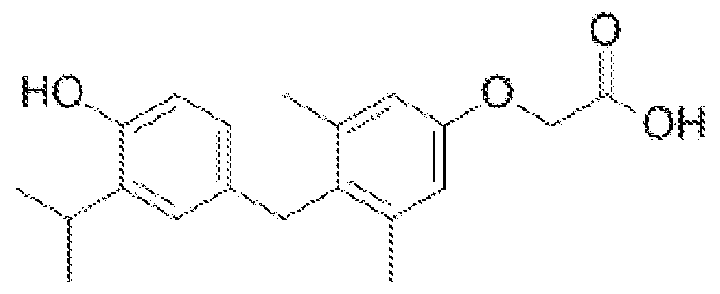
Toxicologic studies with sobetirome were carried out at single doses of up to 2000 mg/kg in rats and 1000 mg/kg in monkeys. In addition, 5-day studies of up to 1000 mg/kg/day in rats and up to 300 mg/kg/day in monkeys were performed. The rat studies showed weight loss and lethality at 500 and 1000 mg kg/day for 5 days and some sporadic mortality at 250, 1000, and 2000 mg/kg/day following single administration. In the monkeys, all doses were well- tolerated although there was some loss in body weight at the higher doses.
Based on these findings, a 4-week study at 3, 30, and 100 mg/kg/day was completed. In rats, mortality was seen at all doses starting on Day 9, whereas in monkeys the same doses were well-tolerated with no drug-induced lethality. A subsequent 4-week rat study at doses of 20, 200, and 800 μg/kg/day had a similar outcome, though no lethality was seen at the lowest dose.
Biochemical and histologic evaluation of the treated animals suggesting that the liver and kidney were the target organs of toxicity, a finding similar to that reported in the literature for T3. Thus, as with T3 sobetirome has a far greater safety margin in monkeys than rats. On the basis of an additional 4- week study at doses of 1, 5, 20, and 80 μg kg, the no-observed-adverse-effect-level (NOAEL) in rats was determined to be 1 μg/kg/day.
Two additional toxicology studies have been completed to show reversibility of the changes seen in the 4-week studies. In rats dosed daily for 28 days with either 10 or 40 μg/kg all previously reported biochemical changes were observed, and all were reversed after 28 days off treatment. In contrast, some histological changes to bone and the spleen did not reverse within the 4 weeks off of study drug. A similar study in monkeys using a dose of 1 mg kg/day was
associated with reductions in TSH, T3 and T4, which all reversed during the 4 weeks off treatment. Some other changes to biochemistry were noted but all fully reversed.
Oral sobetirome appears to be well absorbed in both rats and monkeys, with distribution predominantly to the liver, and minimal distribution to the heart. Excretion is primarily biliary with minimal material in the urine. Pharmacokinetics in both species are linear with a half -life compatible with once daily dosing.
Phase I Clinical Studies
Single oral doses of 1, 5, 25, 50, 75, 150, 300, and 450 meg of sobetirome have been investigated in a randomized, double-blind, placebo controlled, cross-over, single rising dose safety and tolerance study in healthy male volunteers. All doses were well tolerated with no notable safety concerns. The second phase 1 study involved multiple oral doses of 10, 30, 70 and 100 meg of sobetirome administered daily for 14 days in a randomized, double-blind, placebo controlled, rising multiple-dose safety and tolerance study in healthy male volunteers. These studies demonstrated a dose-dependent lowering of LDL cholesterol without an increase in heart rate. Assessment of thyroid status demonstrated that TSH and free T3 levels remained in the normal range at all doses. Free-T4 levels were also normal, except at the 100 meg dose, which resulted in a decrease to slightly below the lower limit of normal (0.81 ng/dL vs. LLN of 0.89 ng/dL). Serum transaminases (AST and ALT) remained in the normal range for all subjects and no notable safety issues were identified. In summary, doses of sobetirome were identified in these clinical studies that resulted in meaningful LDL cholesterol lowering with negligible thyroid effects and no effect on heart rate, providing proof of concept in humans that sobetirome acts as a selective thyromimetic agent. Use of Sobetirome in X-ALD
The tissue specificity of sobetirome results from 10-fold selectivity (relative to the natural ligand, triiodothyronine (T3)) for binding to beta isoforms of the thyroid hormone receptor (ΤΙΙβ) compared with alpha isoforms (TRa). Selectivity for TRp receptors was even greater (20-fold) when assayed by its ability to stimulate thyroid responsive gene expression in cultured cells. Although both TRa and TR receptors are present in most tissues, their relative proportions differ, allowing isoform specific agonists to have tissue specificity not seen with T3. For example, sobetirome and T3 have similar effects on cholesterol and triglycerides that result from thyroid hormone effects on the liver where TR receptors are predominant. In contrast, thyroid effects on the heart are primarily mediated by TRa receptors, and consequently sobetirome has little effect on heart rate and other cardiac functions in comparison with T3.
Similarly, the deleterious effects of elevated thyroid hormone on bone and muscle are not seen with sobetirome. Like T3, sobetirome has been shown to increase the expression of ABCD2 in fibroblasts from patients with X-ALD, indicating this effect is mediated by Τ <αβ receptors (Genin EC et al.., J Steroid Biochem Mol Biol 116, 37-43 (2009), incorporated by reference herein).
The demonstration that increased expression of ABCD2 can restore normal rates of VLCFA oxidation in fibroblasts from X-ALD patients and Abcdl_/~ mice, and normalize VLCFA levels and prevent the late-onset AMN-like pathology in Abcdl-/- mice suggests that thyromimetics such as sobetirome that lack the side effects of natural thyroid hormones may have therapeutic potential in X-ALD. At doses efficacious for cholesterol lowering in rodents, monkeys, and humans, sobetirome is devoid of the acute and chronic thyrotoxic side effects associated with hyperthyroidism. Consequently sobetirome has all the characteristics required to be an excellent candidate drug for treatment of X-ALD.
EXAMPLES
Example 1 - Evaluation of sobetirome for the treatment of X-ALD
Subjects will have a screening visit to assess eligibility within 6 weeks prior to the Baseline visit.
Eligible subjects will have a confirmed diagnosis of X-ALD and must meet al l of the following criteria before being enrolled into the study.
1. Patient must be between the ages of 18 and 65 years old.
2. Patient must be diagnosed with X-ALD by elevated levels of VLCFAs or DNA testing.
3. Patient must sign the IRB approved informed consent and agree to complete required clinic visits.
Exclusion Criteria
Subjects who meet any of the following exclusion criteria are not eligible to participate in the study.
1. Female gender. Justification: X-ALD is an X-linked genetic disease, and although there are symptomatic female carriers, variable X-Chromosome inactivation leads to significant variability in VLCFA levels. Thus, in this very small initial study looking for an effect on VLCFA, a subject population with consistent VLCFA elevations is important. In addition, toxicology testing to date does not include reproductive studies. Inclusion of women will be
appropriate after reproductive toxicology has been evaluated and in larger studies where a subanalysis by gender can be accommodated.
2. Patient has clinically significant abnormal laboratory test results at the screening visit (except for VLCFA) as defined in Table 1 below.
TABLE 1

3. Patient has history of coronary artery disease, angina pectoris or cardiac arrhythmia, including PAT, PAF, PACs, atrial arrhythmia or mitral valve prolapse, or is found to have any ECG abnormality other than sinus bradycardia.
4. Use of triiodothyronine therapy (such as cytomel (lio thyronine), thyrolar, Armour or other thyroid extract). Patients may be converted to levothyroxine only therapy and be re- screened.
5. Patient has abnormal thyroid function tests at screening visit. Patients may undergo initiation of levothyroxine and/or adjustment of levothyroxine dosing and be rescreened.
6. Patient has untreated adrenal insufficiency. Patients may undergo initiation and stabilization of glucocorticoid replacement and be rescreened.
7. Patient is currently taking Lorenzo's oil or other lipid lowering agent known to effect VLCFA levels. Patients may be rescreened 6 weeks after their last exposure to such agents.
8. Patient has participated in an investigational drug study within 30 days prior to Day 1. Patients may be rescreened after 30 days after last exposure to an investigational drug.
At the Baseline visit (Day 1), blood will be drawn for measuring baseline levels of
VLCFAs. Subjects will receive a single oral dose of 50 meg daily for the first 14 days. If safety at this dose is found to be acceptable, subjects will receive 100 meg sobetirome daily for the next 14 days. VLCFAs and safety labs, including serum chemistries, thyroid studies (T3, T4, TSH), fatty acid profiles, complete blood counts and urinalyses will be assessed at 7 day intervals while taking study drug; Thyroid function will be assessed at 14 day intervals while taking study drug. Safety assessments include physical examinations, vital signs, ECGs and queries for adverse events, and will be assessed at 7 day intervals. Pharmacokinetics will be assessed after the first dose of sobetirome. Subjects will return to the clinic on day 42, 14 days after final sobetirome dose, for an End of Study visit that will involve a final collection of blood and urine to check for reversibility of any effects. Baseline visit. At the Baseline visit (Day 1), blood will be drawn for measuring baseline levels of VLCFAs. Subjects will receive a single oral dose of 50 meg daily for the first 14 days. If safety at this dose is found to be acceptable, subjects will receive 100 meg sobetirome daily for the next 14 days. VLCFAs and safety labs, including serum chemistries, thyroid studies (T3, T4, TSH), fatty acid profiles, complete blood counts and urinalyses will be assessed at 7 day intervals while taking study drug; Thyroid function will be assessed at 14 day intervals while taking study drug. Safety assessments include physical examinations, vital signs, ECGs and queries for adverse events, and will be assessed at 7 day intervals. Pharmacokinetics will be assessed after the first dose of sobetirome. Subjects will return to the clinic on day 42, 14 days after final sobetirome dose, for an End of Study visit that will involve a final collection of blood and urine to check for reversibility of any effects.
Days 2-6: Subjects self-administer 50 meg oral doses of study medication once daily. Day 7: Subjects self-administer 50 meg oral dose of study medication prior to clinic visit. Perform ECG and measure vital signs (weight, heart rate, blood pressure, respiratory rate, and body temperature).
Perform physical examination
Collect fasting blood and urine specimens for safety clinical laboratory testing including blood chemistry, thyroid function, hematology and urinalysis. Collect fasting blood specimen for VLCFA. Record concurrent medications. Monitor for adverse events. Collect used and unused study drug syringes. Dispense 50 meg dose sobetirome syringes sufficient for next visit.
Days 8-14: Subject self-administer 50 meg oral doses of study medication once daily.
Day 15: Subjects DO NOT take any study medication prior to clinic visit. Perform ECG and measure vital signs (weight, blood pressure, heart rate, respiratory rate and body
temperature). Perform physical examination. Collect fasting blood and urine specimens for safety clinical laboratory testing including blood chemistry, thyroid function, hematology and urinalysis (see Section 7.5.1. for specific safety clinical laboratory testing to be performed). Collect fasting blood specimen for VLCFA. Record concurrent medications. Monitor for adverse events. Collect used and unused study drug syringes. Verify acceptable results of safety labs. If physical examination, ECG, serum chemistry, hematology and urinalysis are acceptable, administer study medication (100 μg) as a single oral dose, with 8 oz of water. Perform physical examination approximately 1 hour (+/- 15 minutes) postdose. Perform ECG and vital signs
(heart rate, blood pressure, respiratory rate and body temperature) approximately 1 hour (+/- 15 minutes) post-dose. Dispense 100 meg dose sobetirome syringes sufficient for next visit.
Days 16-20: Subjects self-administer 100 meg oral doses of study medication once daily.
Day 21: Subjects self-administer 100 meg dose of study medication prior to clinic visit. Obtain ECG and measure vital signs (weight, heart rate, blood pressure, respiratory rate and body temperature). Perform physical examination. Collect fasting blood and urine specimens for safety clinical laboratory testing including blood chemistry, thyroid function, hematology and urinalysis. Collect fasting blood specimen for VLCFA. Record concurrent medications. Monitor for adverse events. Collect used and unused study drug syringes. Dispense 100 meg dose sobetirome syringes sufficient for next visit.
Day 22-27: Subjects self-administer 100 meg oral doses of study medication once daily.
Outcome Visit - Day 28: Subjects self-administer final 100 meg dose of study medication prior to clinic visit. Obtain ECG and measure vital signs (weight, heart rate, blood pressure, respiratory rate, and body temperature). Perform physical examination. Collect fasting blood and urine specimens for safety clinical laboratory testing including blood chemistry, thyroid function, hematology and urinalysis. Collect fasting blood specimen for VLCFA. Record concurrent medications. Monitor for adverse events. Collect used and unused study drug syringes.
End of Study Visit - Day 42: All clinically significant laboratory abnormalities and adverse events present at the end of study visit should be followed until resolution or diagnosis can be made. Obtain ECG and vital signs (weight, heart rate, blood pressure, respiratory rate, and body temperature). Perform physical exam. Collect fasting blood and urine specimens for safety clinical laboratory testing including blood chemistry, thyroid function, hematology and urinalysis. Collect fasting blood specimen for VLCFA. Record concurrent medications. Monitor for adverse events.
Example 2 - Dose Selection
The two doses we have chosen for our protocol (50 μg x 14 days, and 100 μg for 14 days), have both been used safely in previous studies, though not in sequence as we have proposed. Pharmacokinetics studies indicate that sobetirome does not accumulate. Nonetheless there is an interim safety assessment at the completion of the initial 14-day course of 50 μg/day that patients must pass prior to advancing to the higher (100 μg/day) dose. We do not anticipate that subjects with X-ALD will experience side effects different than those seen in the populations already studied. In addition to safety concerns, dose selection was also based on prior efficacy. The following table shows dose-dependent effects of sobetirome on cholesterol levels. We expect similar pharmacodynamic effects on VLCFA levels in subjects with X-ALD.

Example 3 - Preparation of Doses
Sobetirome study drug substance will be supplied as a powder. The pharmacist will add the appropriate amount of study drug into bottles as a powder for solution, to be reconstituted into an oral dosing solution. The pharmacist will reconstitute the drug product to a stock solution with the concentration of 100 μg/mL. The pharmacist will retain dose formulation samples at each dose preparation procedure. Dosing syringes and unused dosing solutions will be retained after subject dosing until the site monitor visually inspects them.
The pharmacist must prepare the stock solution within 7 days of scheduled dosing.
Individual doses may also be prepared up to 7 days in advance of scheduled dosing.
Preparation of stock: Accurately weigh 20 mg of sobetirome powder into 4 oz. glass bottle with Teflon seal (this procedure can be done in advance of drug reconstitution for dosing). Carefully open study medication bottle containing 20 mg sobetirome drug substance. Transfer 8 mL of absolute alcohol over the sobetirome powder in the bottle. Secure cap on bottle. Turn bottle horizontally and gently move bottle back and forth, rotating frequently if needed, until sobetirome is completely dissolved. Add 192 mL of purified water to the bottle and close the cap. Shake well. Use stock solution within 7 days of preparation.
Preparation of Active Doses: Prepare the requisite volume of stock solution. Label glass bottle with screw cap with the concentration of the active dosing solution and write date and time of preparation on the label. Remove cap from glass bottle. Transfer the requisite volume of stock solution into the glass bottle. Transfer the requisite volume of purified water into the bottle. Replace the cap on bottle. Shake well. Transfer the requisite aliquot of active dosing solution into each appropriately labeled oral dosing syringe designated for each subject randomized to active treatment. Transfer a 3 mL aliquot of dosing solution into a clear glass 4 mL vial to be used as a retained sample for the analysis of dosing solutions. Vial should be labeled with concentration and date of preparation.

Claims
1. Use of sobetirome or a pharmaceutically acceptable salt thereof in the manufacture of a medicament for treating a subject with X-linked adrenoleukodystrophy.
2. The use of claim 1 wherein the progression of at least one symptom of X-linked adrenoleukodystrophy is reduced.
3. The use of claim 1 wherein the effective amount is at least 30 μg.
4. The use of claim 2 wherein the effective amount is at least 50 μg.
5. The use of claim 3 wherein the effective amount is at least 100 μg.
6. The use of any of claims 1-5 wherein the pharmaceutical composition is administered orally.
7. The use of any of claims 1-5 wherein the subject is human.
8. The use of claim 7 wherein the human subject has at least one symptom of X-linked adrenoleukodystrophy.
9. A pharmaceutical composition for use in the treatment of a human subject with X-linked adrenoleukodystrophy, the composition comprising an effective amount of sobetirome.
10. The pharmaceutical composition of claim 7 comprising at least 30 μg of sobetirome.
11. The pharmaceutical composition of claim 8 comprising at least 50 μg of sobetirome.
12. The pharmaceutical composition of claim 9 comprising at least 100 μg of sobetirome.
13. The pharmaceutical composition of any of claims 9-12 formulated for oral
administration.
medicament for treating a subject with cerebral palsy.
15. The use of claim 14 wherein at least one symptom of cerebral palsy is reduced.
16. The use of claim 14 wherein the subject is human.
Priority Applications (19)
| Application Number | Priority Date | Filing Date | Title |
|---|---|---|---|
| JP2016511718A JP2016517883A (en) | 2013-05-03 | 2013-08-05 | Use of sovetilome in the treatment of X-linked adrenoleukodystrophy |
| MX2015015228A MX379043B (en) | 2013-05-03 | 2014-02-05 | USE OF SOBETIROME IN THE TREATMENT OF MYELINIZATION DISEASES. |
| CN201480038129.XA CN105431163A (en) | 2013-05-03 | 2014-02-05 | Sobetirome in the treatment of myelination diseases |
| SG10201709090UA SG10201709090UA (en) | 2013-05-03 | 2014-02-05 | Sobetirome in the treatment of myelination diseases |
| EP14791718.1A EP2991670B8 (en) | 2013-05-03 | 2014-02-05 | Sobetirome in the treatment of myelination diseases |
| AU2014260468A AU2014260468A1 (en) | 2013-05-03 | 2014-02-05 | Sobetirome in the treatment of myelination diseases |
| BR112015027682A BR112015027682A2 (en) | 2013-05-03 | 2014-02-05 | USE OF SOBETIROME IN THE TREATMENT OF DISEASES OR CONDITIONS ASSOCIATED WITH DEMYELINATION OR INSUFFICIENT MYELINATION |
| PCT/US2014/014943 WO2014178931A1 (en) | 2013-05-03 | 2014-02-05 | Sobetirome in the treatment of myelination diseases |
| ES14791718T ES2745532T3 (en) | 2013-05-03 | 2014-02-05 | Sobetirome in the treatment of myelination diseases |
| US14/888,577 US10226438B2 (en) | 2013-05-03 | 2014-02-05 | Sobetirome in the treatment of myelination diseases |
| HK16110708.4A HK1222552B (en) | 2013-05-03 | 2014-02-05 | Sobetirome in the treatment of myelination diseases |
| JP2016511726A JP6360552B6 (en) | 2013-05-03 | 2014-02-05 | Sobetilom in the treatment of myelinating diseases |
| CA2911309A CA2911309A1 (en) | 2013-05-03 | 2014-02-05 | Sobetirome in the treatment of myelination diseases |
| RU2015151216A RU2015151216A (en) | 2013-05-03 | 2014-02-05 | CONSUMER FOR TREATMENT OF DISEASES CONNECTED WITH MYELINIZATION |
| SG11201509012QA SG11201509012QA (en) | 2013-05-03 | 2014-02-05 | Sobetirome in the treatment of myelination diseases |
| MX2021000538A MX2021000538A (en) | 2013-05-03 | 2015-10-30 | Sobetirome in the treatment of myelination diseases. |
| JP2018118891A JP2018141024A (en) | 2013-05-03 | 2018-06-22 | Sobetilom in the treatment of myelinating diseases |
| US16/275,117 US20190175531A1 (en) | 2013-05-03 | 2019-02-13 | Sobetirome in the treatment of myelination diseases |
| US16/922,852 US11510887B2 (en) | 2013-05-03 | 2020-07-07 | Sobetirome in the treatment of myelination diseases |
Applications Claiming Priority (2)
| Application Number | Priority Date | Filing Date | Title |
|---|---|---|---|
| US201361819467P | 2013-05-03 | 2013-05-03 | |
| US61/819,467 | 2013-05-03 |
Related Child Applications (2)
| Application Number | Title | Priority Date | Filing Date |
|---|---|---|---|
| PCT/US2014/014943 Continuation-In-Part WO2014178931A1 (en) | 2013-05-03 | 2014-02-05 | Sobetirome in the treatment of myelination diseases |
| US14/888,577 Continuation-In-Part US10226438B2 (en) | 2013-05-03 | 2014-02-05 | Sobetirome in the treatment of myelination diseases |
Publications (2)
| Publication Number | Publication Date |
|---|---|
| WO2014178892A1 true WO2014178892A1 (en) | 2014-11-06 |
| WO2014178892A8 WO2014178892A8 (en) | 2015-12-17 |
Family
ID=51843844
Family Applications (2)
| Application Number | Title | Priority Date | Filing Date |
|---|---|---|---|
| PCT/US2013/053640 Ceased WO2014178892A1 (en) | 2013-05-03 | 2013-08-05 | Use of sobetirome in the treatment of x-linked adrenolenoleukodystrophy |
| PCT/US2014/014943 Ceased WO2014178931A1 (en) | 2013-05-03 | 2014-02-05 | Sobetirome in the treatment of myelination diseases |
Family Applications After (1)
| Application Number | Title | Priority Date | Filing Date |
|---|---|---|---|
| PCT/US2014/014943 Ceased WO2014178931A1 (en) | 2013-05-03 | 2014-02-05 | Sobetirome in the treatment of myelination diseases |
Country Status (12)
| Country | Link |
|---|---|
| US (3) | US10226438B2 (en) |
| EP (1) | EP2991670B8 (en) |
| JP (4) | JP2016517883A (en) |
| CN (1) | CN105431163A (en) |
| AU (1) | AU2014260468A1 (en) |
| BR (1) | BR112015027682A2 (en) |
| CA (1) | CA2911309A1 (en) |
| ES (1) | ES2745532T3 (en) |
| MX (2) | MX379043B (en) |
| RU (1) | RU2015151216A (en) |
| SG (2) | SG11201509012QA (en) |
| WO (2) | WO2014178892A1 (en) |
Cited By (15)
| Publication number | Priority date | Publication date | Assignee | Title |
|---|---|---|---|---|
| WO2017075580A1 (en) * | 2015-10-29 | 2017-05-04 | The Johns Hopkins University | Compositions and methods for treatment of peroxisomal disorders and leukodystrophies |
| US10226438B2 (en) | 2013-05-03 | 2019-03-12 | Oregon Health & Science University | Sobetirome in the treatment of myelination diseases |
| JP2019515915A (en) * | 2016-04-22 | 2019-06-13 | バイキング セラピューティクス,インコーポレーテッド | Use of thyroid beta agonists |
| US10369124B2 (en) | 2014-04-30 | 2019-08-06 | The Johns Hopkins University | Dendrimer compositions and their use in treatment of diseases of the eye |
| WO2020180624A1 (en) | 2019-03-01 | 2020-09-10 | Autobahn Therapeutics, Inc. | Novel thyromimetics |
| US10918720B2 (en) | 2014-08-13 | 2021-02-16 | The Johns Hopkins University | Selective dendrimer delivery to brain tumors |
| WO2021108549A1 (en) | 2019-11-29 | 2021-06-03 | Autobahn Therapeutics, Inc. | Novel thyromimetics |
| US11160881B2 (en) | 2017-04-27 | 2021-11-02 | The Johns Hopkins University | Dendrimer compositions for use in angiography |
| US11351183B2 (en) | 2016-04-22 | 2022-06-07 | Viking Therapeutics, Inc. | Use of thyroid beta-agonists |
| US11612660B2 (en) | 2019-12-04 | 2023-03-28 | Ashvattha Therapeutics, Inc. | Dendrimer compositions and methods for drug delivery to the eye |
| US11660281B2 (en) | 2017-06-29 | 2023-05-30 | Yale University | Compositions and methods of treating or preventing fibrotic lung diseases |
| IL264765B1 (en) * | 2016-08-12 | 2023-11-01 | Univ Oregon Health & Science | Amide compounds, pharmaceutical compositions thereof, and methods of using the same |
| US11827596B2 (en) | 2018-12-12 | 2023-11-28 | Autobahn Therapeutics, Inc. | Thyromimetics |
| US11918657B2 (en) | 2017-11-10 | 2024-03-05 | The Johns Hopkins University | Dendrimer delivery system and methods of use thereof |
| US12528761B2 (en) | 2020-06-17 | 2026-01-20 | Autobahn Therapeutics, Inc. | Thyromimetics |
Families Citing this family (7)
| Publication number | Priority date | Publication date | Assignee | Title |
|---|---|---|---|---|
| HUE056357T2 (en) * | 2016-05-18 | 2022-02-28 | Univ Oregon Health & Science | Derivatives of sobetirome |
| WO2018183940A1 (en) * | 2017-03-31 | 2018-10-04 | Neurovia, Inc. | Methods and compositions for treating niemann-pick disease |
| WO2018208707A1 (en) * | 2017-05-08 | 2018-11-15 | Neurovia, Inc. | Methods and compositions for treating demyelinating diseases |
| US10780069B2 (en) * | 2017-05-18 | 2020-09-22 | University of Pittsburgh—of the Commonwealth System of Higher Education | Use of GC-1 in transplant related population |
| CN110891583B (en) | 2017-07-18 | 2023-06-06 | 学校法人庆应义塾 | Antibacterial composition against Th1 cell-inducing bacteria |
| CN111116684B (en) * | 2019-12-31 | 2020-09-25 | 厦门甘宝利生物医药有限公司 | A kind of liver targeting compound with thyroid hormone receptor agonist properties and pharmaceutical composition thereof |
| CN115569233B (en) * | 2022-10-17 | 2023-07-14 | 湖南大学 | Preparation method of high-efficiency photoinhibitor capable of absorbing light and reacting with free radicals |
Citations (2)
| Publication number | Priority date | Publication date | Assignee | Title |
|---|---|---|---|---|
| US20080124280A1 (en) * | 2003-09-15 | 2008-05-29 | Mousa Shaker A | Thyroid Hormone Analogs and Methods of Use |
| WO2008125724A1 (en) * | 2007-04-11 | 2008-10-23 | Markku Ahotupa | Estimation and biological consequences of oxidative metabolism |
Family Cites Families (22)
| Publication number | Priority date | Publication date | Assignee | Title |
|---|---|---|---|---|
| DE3815221C2 (en) | 1988-05-04 | 1995-06-29 | Gradinger F Hermes Pharma | Use of a retinol and / or retinoic acid ester-containing pharmaceutical preparation for inhalation for acting on the mucous membranes of the tracheo-bronchial tract, including the lung alveoli |
| US6236946B1 (en) | 1995-12-13 | 2001-05-22 | Thomas S. Scanlan | Nuclear receptor ligands and ligand binding domains |
| CA2260992C (en) | 1996-08-20 | 2004-03-09 | The Regents Of The University Of California | Eye treatments using synthetic thyroid hormone compositions |
| US5883294A (en) | 1997-06-18 | 1999-03-16 | The Regeants Of The University Of California | Selective thyroid hormone analogs |
| EP1598334A1 (en) | 1998-06-30 | 2005-11-23 | The Regents Of The University Of California | Thyroid hormone analogues and methods for their preparation |
| US7560433B2 (en) | 2001-12-21 | 2009-07-14 | Biotempt B.V. | Treatment of multiple sclerosis (MS) |
| US7302347B2 (en) | 2002-12-10 | 2007-11-27 | The Regents Of The University Of California | Method for creating specific, high affinity nuclear receptor pharmaceuticals |
| WO2005027895A2 (en) * | 2003-09-15 | 2005-03-31 | Ordway Research Institute | Thyroid hormone analogs and methods of use in angiogenesis |
| WO2006012015A2 (en) | 2004-06-29 | 2006-02-02 | Oregon Health And Science University | Methods and compositions for nerve regeneration |
| JP2008513461A (en) * | 2004-09-15 | 2008-05-01 | オードウェイ リサーチ インスティテュート | Thyroid hormone analogs that promote angiogenesis |
| US20090117054A1 (en) | 2005-03-29 | 2009-05-07 | University Of Kentucky Research Foundation | Sublingual spray for the treatment of pain |
| US8252329B2 (en) | 2007-01-05 | 2012-08-28 | Acelrx Pharmaceuticals, Inc. | Bioadhesive drug formulations for oral transmucosal delivery |
| AU2007311052B2 (en) | 2006-10-20 | 2014-01-16 | Biogen Idec Ma Inc. | Treatment of demyelinating disorders with soluble lymphotoxin-beta-receptor |
| US8623861B2 (en) | 2006-11-03 | 2014-01-07 | Xin-Min Li | Method of treating demyelination diseases |
| BRPI0814624A2 (en) | 2007-07-11 | 2015-01-27 | Medicinova Inc | TREATMENT OF PROGRESIVE NEURODEGENERATIVE DISEASE WITH IBUDILAST |
| WO2009097995A1 (en) * | 2008-02-07 | 2009-08-13 | Sanofi-Aventis | Novel phenyl-substituted imidazolidines, method for the production thereof, medicaments containing said compounds and use thereof |
| KR102340754B1 (en) * | 2008-04-21 | 2021-12-16 | 오토노미, 인코포레이티드 | Auris formulations for treating otic diseases and conditions |
| CA2761538A1 (en) | 2009-05-20 | 2010-12-23 | Lingual Consegna Pty Ltd | Buccal and/or sublingual therapeutic formulation |
| TW201221505A (en) | 2010-07-05 | 2012-06-01 | Sanofi Sa | Aryloxyalkylene-substituted hydroxyphenylhexynoic acids, process for preparation thereof and use thereof as a medicament |
| KR101890317B1 (en) | 2010-12-16 | 2018-08-22 | 선오비온 파마슈티컬스 인코포레이티드 | Sublingual Films |
| JP6060268B2 (en) * | 2012-10-25 | 2017-01-11 | ボルボ トラック コーポレイション | Electronically controlled air brake system for a vehicle, a vehicle comprising such a system and a method for controlling such a system |
| WO2014178892A1 (en) * | 2013-05-03 | 2014-11-06 | Scanlan Thomas S | Use of sobetirome in the treatment of x-linked adrenolenoleukodystrophy |
-
2013
- 2013-08-05 WO PCT/US2013/053640 patent/WO2014178892A1/en not_active Ceased
- 2013-08-05 JP JP2016511718A patent/JP2016517883A/en not_active Withdrawn
-
2014
- 2014-02-05 CA CA2911309A patent/CA2911309A1/en not_active Abandoned
- 2014-02-05 AU AU2014260468A patent/AU2014260468A1/en not_active Abandoned
- 2014-02-05 CN CN201480038129.XA patent/CN105431163A/en active Pending
- 2014-02-05 WO PCT/US2014/014943 patent/WO2014178931A1/en not_active Ceased
- 2014-02-05 BR BR112015027682A patent/BR112015027682A2/en not_active IP Right Cessation
- 2014-02-05 MX MX2015015228A patent/MX379043B/en unknown
- 2014-02-05 ES ES14791718T patent/ES2745532T3/en active Active
- 2014-02-05 EP EP14791718.1A patent/EP2991670B8/en active Active
- 2014-02-05 JP JP2016511726A patent/JP6360552B6/en active Active
- 2014-02-05 SG SG11201509012QA patent/SG11201509012QA/en unknown
- 2014-02-05 SG SG10201709090UA patent/SG10201709090UA/en unknown
- 2014-02-05 RU RU2015151216A patent/RU2015151216A/en not_active Application Discontinuation
- 2014-02-05 US US14/888,577 patent/US10226438B2/en active Active
-
2015
- 2015-10-30 MX MX2021000538A patent/MX2021000538A/en unknown
-
2018
- 2018-06-22 JP JP2018118891A patent/JP2018141024A/en active Pending
- 2018-07-23 JP JP2018137754A patent/JP2018162321A/en active Pending
-
2019
- 2019-02-13 US US16/275,117 patent/US20190175531A1/en not_active Abandoned
-
2020
- 2020-07-07 US US16/922,852 patent/US11510887B2/en active Active
Patent Citations (2)
| Publication number | Priority date | Publication date | Assignee | Title |
|---|---|---|---|---|
| US20080124280A1 (en) * | 2003-09-15 | 2008-05-29 | Mousa Shaker A | Thyroid Hormone Analogs and Methods of Use |
| WO2008125724A1 (en) * | 2007-04-11 | 2008-10-23 | Markku Ahotupa | Estimation and biological consequences of oxidative metabolism |
Non-Patent Citations (1)
| Title |
|---|
| SCANLAN, T. S.: "Sobetirome : a Case History of Bench-to-Clinic Drug Discovery and Developement", HEART FAIL REV, vol. 15, 2010, pages 177 - 182 * |
Cited By (26)
| Publication number | Priority date | Publication date | Assignee | Title |
|---|---|---|---|---|
| US10226438B2 (en) | 2013-05-03 | 2019-03-12 | Oregon Health & Science University | Sobetirome in the treatment of myelination diseases |
| US11510887B2 (en) | 2013-05-03 | 2022-11-29 | Oregon Health & Science University | Sobetirome in the treatment of myelination diseases |
| US10369124B2 (en) | 2014-04-30 | 2019-08-06 | The Johns Hopkins University | Dendrimer compositions and their use in treatment of diseases of the eye |
| US10918720B2 (en) | 2014-08-13 | 2021-02-16 | The Johns Hopkins University | Selective dendrimer delivery to brain tumors |
| WO2017075580A1 (en) * | 2015-10-29 | 2017-05-04 | The Johns Hopkins University | Compositions and methods for treatment of peroxisomal disorders and leukodystrophies |
| EP3445373B1 (en) * | 2016-04-22 | 2024-08-21 | Viking Therapeutics, Inc. | Use of thyroid beta-agonists |
| US12440502B2 (en) | 2016-04-22 | 2025-10-14 | Viking Therapeutics, Inc. | Use of thyroid beta-agonists |
| AU2023202321B2 (en) * | 2016-04-22 | 2025-04-24 | Viking Therapeutics, Inc. | Use of thyroid beta-agonists |
| US11351183B2 (en) | 2016-04-22 | 2022-06-07 | Viking Therapeutics, Inc. | Use of thyroid beta-agonists |
| EP3445372A4 (en) * | 2016-04-22 | 2020-03-25 | Viking Therapeutics, Inc. | USE OF BETA-AGONISTS OF THYROID HORMONES |
| AU2017252122B2 (en) * | 2016-04-22 | 2023-02-09 | Viking Therapeutics, Inc. | Use of Thyroid beta-Agonists |
| US11951114B2 (en) | 2016-04-22 | 2024-04-09 | Viking Therapeutics, Inc. | Use of thyroid beta-agonists |
| JP2019515915A (en) * | 2016-04-22 | 2019-06-13 | バイキング セラピューティクス,インコーポレーテッド | Use of thyroid beta agonists |
| IL264765B2 (en) * | 2016-08-12 | 2024-03-01 | Univ Oregon Health & Science | Amide compounds, pharmaceutical compositions thereof, and methods of using the same |
| IL264765B1 (en) * | 2016-08-12 | 2023-11-01 | Univ Oregon Health & Science | Amide compounds, pharmaceutical compositions thereof, and methods of using the same |
| US11160881B2 (en) | 2017-04-27 | 2021-11-02 | The Johns Hopkins University | Dendrimer compositions for use in angiography |
| US11660281B2 (en) | 2017-06-29 | 2023-05-30 | Yale University | Compositions and methods of treating or preventing fibrotic lung diseases |
| US11918657B2 (en) | 2017-11-10 | 2024-03-05 | The Johns Hopkins University | Dendrimer delivery system and methods of use thereof |
| US11827596B2 (en) | 2018-12-12 | 2023-11-28 | Autobahn Therapeutics, Inc. | Thyromimetics |
| US11667606B2 (en) | 2019-03-01 | 2023-06-06 | Autobahn Therapeutics, Inc. | Thyromimetics |
| WO2020180624A1 (en) | 2019-03-01 | 2020-09-10 | Autobahn Therapeutics, Inc. | Novel thyromimetics |
| WO2021108549A1 (en) | 2019-11-29 | 2021-06-03 | Autobahn Therapeutics, Inc. | Novel thyromimetics |
| US12466781B2 (en) | 2019-11-29 | 2025-11-11 | Autobahn Therapeutics, Inc. | Thyromimetics |
| US11612660B2 (en) | 2019-12-04 | 2023-03-28 | Ashvattha Therapeutics, Inc. | Dendrimer compositions and methods for drug delivery to the eye |
| US12121585B2 (en) | 2019-12-04 | 2024-10-22 | Ashvattha Therapeutics, Inc. | Dendrimer compositions and methods for drug delivery to the eye |
| US12528761B2 (en) | 2020-06-17 | 2026-01-20 | Autobahn Therapeutics, Inc. | Thyromimetics |
Also Published As
| Publication number | Publication date |
|---|---|
| WO2014178892A8 (en) | 2015-12-17 |
| JP6360552B2 (en) | 2018-07-18 |
| EP2991670B1 (en) | 2019-07-03 |
| JP2018141024A (en) | 2018-09-13 |
| US20160081955A1 (en) | 2016-03-24 |
| US20200405669A1 (en) | 2020-12-31 |
| MX2021000538A (en) | 2021-04-28 |
| AU2014260468A1 (en) | 2015-11-19 |
| EP2991670A4 (en) | 2017-01-18 |
| US20190175531A1 (en) | 2019-06-13 |
| MX379043B (en) | 2025-03-10 |
| RU2015151216A (en) | 2017-06-08 |
| JP2016517883A (en) | 2016-06-20 |
| ES2745532T3 (en) | 2020-03-02 |
| EP2991670B8 (en) | 2019-09-11 |
| JP2016517884A (en) | 2016-06-20 |
| WO2014178931A1 (en) | 2014-11-06 |
| SG11201509012QA (en) | 2015-11-27 |
| WO2014178931A8 (en) | 2015-11-26 |
| US10226438B2 (en) | 2019-03-12 |
| HK1222552A1 (en) | 2017-07-07 |
| SG10201709090UA (en) | 2017-12-28 |
| EP2991670A1 (en) | 2016-03-09 |
| JP2018162321A (en) | 2018-10-18 |
| CA2911309A1 (en) | 2014-11-06 |
| MX2015015228A (en) | 2016-10-03 |
| CN105431163A (en) | 2016-03-23 |
| JP6360552B6 (en) | 2018-08-15 |
| US11510887B2 (en) | 2022-11-29 |
| BR112015027682A2 (en) | 2017-08-29 |
Similar Documents
| Publication | Publication Date | Title |
|---|---|---|
| WO2014178892A1 (en) | Use of sobetirome in the treatment of x-linked adrenolenoleukodystrophy | |
| Kwak et al. | Pharmacological interventions for treatment of sarcopenia: current status of drug development for sarcopenia | |
| Lecka-Czernik | Bone loss in diabetes: use of antidiabetic thiazolidinediones and secondary osteoporosis | |
| Kanchanatawan et al. | Add-on treatment with curcumin has antidepressive effects in Thai patients with major depression: results of a randomized double-blind placebo-controlled study | |
| Viollet et al. | Cellular and molecular mechanisms of metformin: an overview | |
| RU2746000C2 (en) | Composition for inhibiting synthesis of 5-ht2b agonist and methods of use thereof | |
| Rossi et al. | Iron overload causes osteoporosis in thalassemia major patients through interaction with transient receptor potential vanilloid type 1 (TRPV1) channels | |
| Wu et al. | Identification of fatty acid binding protein 4 as an adipokine that regulates insulin secretion during obesity | |
| Rooyackers et al. | Hormonal regulation of human muscle protein metabolism | |
| Kapadia et al. | Mechanisms of anti-inflammatory and neuroprotective actions of PPAR-gamma agonists | |
| Morris et al. | Insulin: an emerging treatment for Alzheimer’s disease dementia? | |
| Nolan | Metabolic complications associated with HIV protease inhibitor therapy | |
| De Boer et al. | Paricalcitol does not improve glucose metabolism in patients with stage 3–4 chronic kidney disease | |
| CN110891558A (en) | The use of fenfluramine in the treatment of Dozer syndrome | |
| Viscarra et al. | 5′ AMP-activated protein kinase activity is increased in adipose tissue of northern elephant seal pups during prolonged fasting-induced insulin resistance | |
| Ma et al. | Effects of anti-diabetic drugs on sarcopenia: Best treatment options for elderly patients with type 2 diabetes mellitus and sarcopenia | |
| CN117355297A (en) | Methods and compositions for inducing brown adipogenesis | |
| JP7749593B2 (en) | Methods and compositions for inducing brown adipogenesis | |
| Fang et al. | Effect of baicalin on GLUT4 expression and glucose uptake in myotubes of rats | |
| Sun et al. | Deletion of phosphatidylserine flippase β-subunit Tmem30a in satellite cells leads to delayed skeletal muscle regeneration | |
| Wang et al. | Teneligliptin alleviates diabetes-related cognitive impairment by inhibiting the endoplasmic reticulum (ER) stress and NLRP3 inflammasome in mice | |
| Moon et al. | Pancreatic beta‐cell mass and function and therapeutic implications of using antidiabetic medications in type 2 diabetes | |
| US20250161273A1 (en) | Pharmaceutical composition comprising diphenyldiazole derivatives and methods of use | |
| JP2008520582A (en) | Treatment of conditions caused by calcium abnormalities | |
| Gerrits et al. | Oral follicle-stimulating hormone agonist tested in healthy young women of reproductive age failed to demonstrate effect on follicular development but affected thyroid function |
Legal Events
| Date | Code | Title | Description |
|---|---|---|---|
| 121 | Ep: the epo has been informed by wipo that ep was designated in this application |
Ref document number: 13883834 Country of ref document: EP Kind code of ref document: A1 |
|
| ENP | Entry into the national phase |
Ref document number: 2016511718 Country of ref document: JP Kind code of ref document: A |
|
| NENP | Non-entry into the national phase |
Ref country code: DE |
|
| 122 | Ep: pct application non-entry in european phase |
Ref document number: 13883834 Country of ref document: EP Kind code of ref document: A1 |