WO2013182740A1 - Novel proteins for the treatment of cellulosic material - Google Patents
Novel proteins for the treatment of cellulosic material Download PDFInfo
- Publication number
- WO2013182740A1 WO2013182740A1 PCT/FI2013/050568 FI2013050568W WO2013182740A1 WO 2013182740 A1 WO2013182740 A1 WO 2013182740A1 FI 2013050568 W FI2013050568 W FI 2013050568W WO 2013182740 A1 WO2013182740 A1 WO 2013182740A1
- Authority
- WO
- WIPO (PCT)
- Prior art keywords
- polypeptide
- seq
- polynucleotide
- sequence
- cellulosic material
- Prior art date
- Legal status (The legal status is an assumption and is not a legal conclusion. Google has not performed a legal analysis and makes no representation as to the accuracy of the status listed.)
- Ceased
Links
Classifications
-
- C—CHEMISTRY; METALLURGY
- C12—BIOCHEMISTRY; BEER; SPIRITS; WINE; VINEGAR; MICROBIOLOGY; ENZYMOLOGY; MUTATION OR GENETIC ENGINEERING
- C12N—MICROORGANISMS OR ENZYMES; COMPOSITIONS THEREOF; PROPAGATING, PRESERVING, OR MAINTAINING MICROORGANISMS; MUTATION OR GENETIC ENGINEERING; CULTURE MEDIA
- C12N9/00—Enzymes; Proenzymes; Compositions thereof; Processes for preparing, activating, inhibiting, separating or purifying enzymes
- C12N9/14—Hydrolases (3)
- C12N9/24—Hydrolases (3) acting on glycosyl compounds (3.2)
- C12N9/2402—Hydrolases (3) acting on glycosyl compounds (3.2) hydrolysing O- and S- glycosyl compounds (3.2.1)
- C12N9/2405—Glucanases
- C12N9/2434—Glucanases acting on beta-1,4-glucosidic bonds
- C12N9/2437—Cellulases (3.2.1.4; 3.2.1.74; 3.2.1.91; 3.2.1.150)
-
- D—TEXTILES; PAPER
- D06—TREATMENT OF TEXTILES OR THE LIKE; LAUNDERING; FLEXIBLE MATERIALS NOT OTHERWISE PROVIDED FOR
- D06M—TREATMENT, NOT PROVIDED FOR ELSEWHERE IN CLASS D06, OF FIBRES, THREADS, YARNS, FABRICS, FEATHERS OR FIBROUS GOODS MADE FROM SUCH MATERIALS
- D06M16/00—Biochemical treatment of fibres, threads, yarns, fabrics, or fibrous goods made from such materials, e.g. enzymatic
- D06M16/003—Biochemical treatment of fibres, threads, yarns, fabrics, or fibrous goods made from such materials, e.g. enzymatic with enzymes or microorganisms
-
- A—HUMAN NECESSITIES
- A23—FOODS OR FOODSTUFFS; TREATMENT THEREOF, NOT COVERED BY OTHER CLASSES
- A23K—FODDER
- A23K20/00—Accessory food factors for animal feeding-stuffs
- A23K20/10—Organic substances
- A23K20/142—Amino acids; Derivatives thereof
- A23K20/147—Polymeric derivatives, e.g. peptides or proteins
-
- A—HUMAN NECESSITIES
- A23—FOODS OR FOODSTUFFS; TREATMENT THEREOF, NOT COVERED BY OTHER CLASSES
- A23K—FODDER
- A23K20/00—Accessory food factors for animal feeding-stuffs
- A23K20/10—Organic substances
- A23K20/189—Enzymes
-
- C—CHEMISTRY; METALLURGY
- C11—ANIMAL OR VEGETABLE OILS, FATS, FATTY SUBSTANCES OR WAXES; FATTY ACIDS THEREFROM; DETERGENTS; CANDLES
- C11D—DETERGENT COMPOSITIONS; USE OF SINGLE SUBSTANCES AS DETERGENTS; SOAP OR SOAP-MAKING; RESIN SOAPS; RECOVERY OF GLYCEROL
- C11D3/00—Other compounding ingredients of detergent compositions covered in group C11D1/00
- C11D3/16—Organic compounds
- C11D3/38—Products with no well-defined composition, e.g. natural products
- C11D3/386—Preparations containing enzymes, e.g. protease or amylase
-
- C—CHEMISTRY; METALLURGY
- C11—ANIMAL OR VEGETABLE OILS, FATS, FATTY SUBSTANCES OR WAXES; FATTY ACIDS THEREFROM; DETERGENTS; CANDLES
- C11D—DETERGENT COMPOSITIONS; USE OF SINGLE SUBSTANCES AS DETERGENTS; SOAP OR SOAP-MAKING; RESIN SOAPS; RECOVERY OF GLYCEROL
- C11D3/00—Other compounding ingredients of detergent compositions covered in group C11D1/00
- C11D3/16—Organic compounds
- C11D3/38—Products with no well-defined composition, e.g. natural products
- C11D3/386—Preparations containing enzymes, e.g. protease or amylase
- C11D3/38645—Preparations containing enzymes, e.g. protease or amylase containing cellulase
-
- C—CHEMISTRY; METALLURGY
- C12—BIOCHEMISTRY; BEER; SPIRITS; WINE; VINEGAR; MICROBIOLOGY; ENZYMOLOGY; MUTATION OR GENETIC ENGINEERING
- C12N—MICROORGANISMS OR ENZYMES; COMPOSITIONS THEREOF; PROPAGATING, PRESERVING, OR MAINTAINING MICROORGANISMS; MUTATION OR GENETIC ENGINEERING; CULTURE MEDIA
- C12N9/00—Enzymes; Proenzymes; Compositions thereof; Processes for preparing, activating, inhibiting, separating or purifying enzymes
- C12N9/14—Hydrolases (3)
- C12N9/24—Hydrolases (3) acting on glycosyl compounds (3.2)
- C12N9/2402—Hydrolases (3) acting on glycosyl compounds (3.2) hydrolysing O- and S- glycosyl compounds (3.2.1)
- C12N9/2405—Glucanases
- C12N9/2434—Glucanases acting on beta-1,4-glucosidic bonds
-
- C—CHEMISTRY; METALLURGY
- C12—BIOCHEMISTRY; BEER; SPIRITS; WINE; VINEGAR; MICROBIOLOGY; ENZYMOLOGY; MUTATION OR GENETIC ENGINEERING
- C12P—FERMENTATION OR ENZYME-USING PROCESSES TO SYNTHESISE A DESIRED CHEMICAL COMPOUND OR COMPOSITION OR TO SEPARATE OPTICAL ISOMERS FROM A RACEMIC MIXTURE
- C12P19/00—Preparation of compounds containing saccharide radicals
- C12P19/02—Monosaccharides
-
- D—TEXTILES; PAPER
- D06—TREATMENT OF TEXTILES OR THE LIKE; LAUNDERING; FLEXIBLE MATERIALS NOT OTHERWISE PROVIDED FOR
- D06P—DYEING OR PRINTING TEXTILES; DYEING LEATHER, FURS OR SOLID MACROMOLECULAR SUBSTANCES IN ANY FORM
- D06P5/00—Other features in dyeing or printing textiles, or dyeing leather, furs, or solid macromolecular substances in any form
- D06P5/15—Locally discharging the dyes
- D06P5/158—Locally discharging the dyes with other compounds
-
- C—CHEMISTRY; METALLURGY
- C11—ANIMAL OR VEGETABLE OILS, FATS, FATTY SUBSTANCES OR WAXES; FATTY ACIDS THEREFROM; DETERGENTS; CANDLES
- C11D—DETERGENT COMPOSITIONS; USE OF SINGLE SUBSTANCES AS DETERGENTS; SOAP OR SOAP-MAKING; RESIN SOAPS; RECOVERY OF GLYCEROL
- C11D2111/00—Cleaning compositions characterised by the objects to be cleaned; Cleaning compositions characterised by non-standard cleaning or washing processes
- C11D2111/10—Objects to be cleaned
- C11D2111/14—Hard surfaces
- C11D2111/20—Industrial or commercial equipment, e.g. reactors, tubes or engines
-
- D—TEXTILES; PAPER
- D06—TREATMENT OF TEXTILES OR THE LIKE; LAUNDERING; FLEXIBLE MATERIALS NOT OTHERWISE PROVIDED FOR
- D06M—TREATMENT, NOT PROVIDED FOR ELSEWHERE IN CLASS D06, OF FIBRES, THREADS, YARNS, FABRICS, FEATHERS OR FIBROUS GOODS MADE FROM SUCH MATERIALS
- D06M2101/00—Chemical constitution of the fibres, threads, yarns, fabrics or fibrous goods made from such materials, to be treated
- D06M2101/02—Natural fibres, other than mineral fibres
- D06M2101/04—Vegetal fibres
- D06M2101/06—Vegetal fibres cellulosic
-
- D—TEXTILES; PAPER
- D06—TREATMENT OF TEXTILES OR THE LIKE; LAUNDERING; FLEXIBLE MATERIALS NOT OTHERWISE PROVIDED FOR
- D06M—TREATMENT, NOT PROVIDED FOR ELSEWHERE IN CLASS D06, OF FIBRES, THREADS, YARNS, FABRICS, FEATHERS OR FIBROUS GOODS MADE FROM SUCH MATERIALS
- D06M2200/00—Functionality of the treatment composition and/or properties imparted to the textile material
- D06M2200/35—Abrasion, pilling or fibrillation resistance
-
- D—TEXTILES; PAPER
- D06—TREATMENT OF TEXTILES OR THE LIKE; LAUNDERING; FLEXIBLE MATERIALS NOT OTHERWISE PROVIDED FOR
- D06M—TREATMENT, NOT PROVIDED FOR ELSEWHERE IN CLASS D06, OF FIBRES, THREADS, YARNS, FABRICS, FEATHERS OR FIBROUS GOODS MADE FROM SUCH MATERIALS
- D06M2200/00—Functionality of the treatment composition and/or properties imparted to the textile material
- D06M2200/50—Modified hand or grip properties; Softening compositions
-
- Y—GENERAL TAGGING OF NEW TECHNOLOGICAL DEVELOPMENTS; GENERAL TAGGING OF CROSS-SECTIONAL TECHNOLOGIES SPANNING OVER SEVERAL SECTIONS OF THE IPC; TECHNICAL SUBJECTS COVERED BY FORMER USPC CROSS-REFERENCE ART COLLECTIONS [XRACs] AND DIGESTS
- Y02—TECHNOLOGIES OR APPLICATIONS FOR MITIGATION OR ADAPTATION AGAINST CLIMATE CHANGE
- Y02E—REDUCTION OF GREENHOUSE GAS [GHG] EMISSIONS, RELATED TO ENERGY GENERATION, TRANSMISSION OR DISTRIBUTION
- Y02E50/00—Technologies for the production of fuel of non-fossil origin
- Y02E50/10—Biofuels, e.g. bio-diesel
Definitions
- the present invention relates to novel polypeptides and enzyme preparations containing them, which enhance the efficiency of cellulosic degradation even at elevated temperatures.
- the invention also relates to polynu- cleotides, vectors and host cells comprising the polynucleotides as well as methods of producing the polypeptides.
- the present invention relates to a method for treating cellulosic material with the novel polypeptide or enzyme preparation, wherein the hydrolysis of cellulosic material is enhanced.
- the novel polypeptides are useful in treating cellulosic material.
- the novel polypeptides may be used in detergent compositions, in machine dishwashing applications or for improving quality of animal feed.
- Biomass resources can be broadly categorized as agricultural or forestry-based, including secondary sources derived from agro- and wood industries, waste sources and municipal solid wastes.
- biofuels i.e. (bio)ethanol from lignocellulosic materials.
- lignocellulose which essentially consists of cellulose, hemicellulose, and lignin.
- Lignocellulose can be converted into bioethanol and other chemical products via fermentation following hydrolysis to fermentable sugars.
- a conventional lignocellu- lose-to-ethanol process the lignocellulosic material is first pretreated either chemically or physically to make the cellulose fraction more accessible to hydrolysis.
- the cellulose fraction is then hydrolysed to obtain sugars that can be fermented by yeast or other fermentative organisms into ethanol and distilled to obtain pure ethanol.
- Lignin is obtained as a main co-product that may be used as a solid fuel.
- Enzymatic hydrolysis is considered to be the most promising technology for converting cellulosic biomass into fermentable sugars. However, enzymatic hydrolysis is used only to a limited amount at industrial scale, and especially when using strongly lignified material such as wood or agricultural waste the technology is not satisfactory. The cost of the enzymatic step is one of the major economic factors of the process. Efforts have been made to improve the efficiency of the enzymatic hydrolysis of the cellulosic material (Badger 2002).
- WO2005074647 and WO201 1035027 disclose isolated polypeptides having cellulolytic enhancing activity and polynucleotides thereof from Thielavia terrestris.
- WO 2005074656 discloses an isolated polypeptide having cellulolytic enhancing activity and the polynucleotide thereof from Thermo- ascus aurantiacus.
- WO2007089290 discloses an isolated polypeptide having cellulolytic enhancing activity and the polynucleotide thereof from Trichoderma reesei.
- WO2008140749 relates to compositions and methods for degrading or converting a cellulose containing material with a cellulolytic enzyme composition comprising a Trichoderma reesei polypeptide having cellulolytic enhancing activity, and one or more components selected from the group consisting of a CEL7, CEL12 and CEL45 polypeptides having endoglucanase activity or cel- lobiohydrolase activity.
- WO2009085868 relates to isolated polypeptides having cellulolytic enhancing activity and polynucleotides thereof from Myceliophthora thermophila.
- WO2009033071 relates to fungal enzymes from Chrysosporium lucknowense (now reidentified as Myceliophthora thermophile; Visser et al. 201 1 ) and methods for using the enzymes and compositions of such enzymes in a variety of other processes, including washing of clothing, detergent pro- Waits, biorefining, deinking and biobleaching of paper and pulp, and treatment of waste streams.
- Chrysosporium lucknowense now reidentified as Myceliophthora thermophile; Visser et al. 201 1
- methods for using the enzymes and compositions of such enzymes in a variety of other processes including washing of clothing, detergent pro- Waits, biorefining, deinking and biobleaching of paper and pulp, and treatment of waste streams.
- new efficient methods of degrading cellulosic substrates in particular lignocellulosic substrates
- new cellulase enhancing factors which can considerably improve the hy- dr
- Especially the object of the invention is to provide polypeptides to improve hydrolysis of lignocellulosic substrates in order to produce ethanol.
- Another object of the present invention is to provide a method for treating cellulosic material, wherein the hydrolysis of cellulosic material is enhanced and wherein versatile process configurations at variable conditions are possible.
- novel polypeptides of GH family 61 obtained from Acremonium thermophilium or Melanocarpus al- bomyces.
- the present invention provides a GH61 polypeptide comprising an amino acid sequence having at least 75% sequence identity to SEQ ID NO: 23, at least 78% sequence identity to SEQ ID NO: 24 or at least 79% sequence identity to SEQ ID NO: 25, or a fragment or variant thereof capable of enhancing hydrolysis of cellulosic material.
- the present invention also relates to an isolated polynucleotide selected from the group consisting of:
- a polynucleotide comprising a nucleotide sequence which is de- generate to the nucleotide sequence of a polynucleotide sequence of a) or b);
- the invention is also directed to a vector, which comprises said polynucleotide and a host cell comprising said vector.
- Escherichia coli strains having accession number DSM 25497, DSM 25495 and DSM 25499 are also in- eluded in the invention.
- a further object of the invention is to provide a method of producing said GH61 polypeptide, the method comprising the steps of transforming a host cell with an expression vector encoding said polypeptide, and culturing said host cell under conditions enabling expression of said polypeptide, and optionally recovering and purifying said polypeptide.
- enzyme preparations comprising at least one of the novel polypeptides and the use of said enzyme preparations and polypeptides for biomass processing, and in biofuel, starch, textile, detergent, pulp and paper, food, feed or beverage industry.
- the polypeptides and enzyme preparation containing the polypeptide are used for cleaning the interior of a dishwashing machine.
- the invention provides an animal feed comprising the novel polypeptide.
- the invention also provides a method for treating cellulosic material with a GH61 polypeptide or an enzyme preparation comprising said polypep- tide, wherein the method comprises reacting the fibrous/cellulosic material with said polypeptide or enzyme preparation comprising said polypeptide.
- the method of the invention comprises cleaning the interior of a dishwasher.
- the present invention also provides a detergent composition com- prising the GH61 polypeptide.
- the invention further relates to a method for improving fabric care properties or textile cleaning effect of a detergent composition, comprising adding a polypeptide of the invention to the detergent composition.
- novel GH61 polypeptides and methods of the invention offer considerable potential to increase the overall performance of cellulase enzyme mixtures and reduce the protein loading required to achieve effective hydrolysis of lignocellulosic substrates.
- the novel GH61 polypeptides are applicable in hydrolysing different cellulosic materials particularly in combination with enzymes used in hydrolysis of various cellulosic or lignocellulosic materials.
- the present inventors also found that the novel GH61 polypeptides are very effective over a broad range of temperatures, and although they have high cellulolytic enhancing activity at standard hydrolysis temperatures, they are also very efficient at high temperatures. This makes them extremely well suited for varying cellulosic substrate hydrolysis processes carried out both at conventional temperatures and at elevated temperatures.
- SHF separate hydrolysis and fermentation process
- the temperature of enzymatic hydrolysis is typically higher than that of fermentation.
- the use of ther- mostable enzymes in the hydrolysis offer potential benefits, such as higher reaction rates at elevated temperatures, reduction of enzyme load due to higher specific activity and stability of the enzymes, increased flexibility with respect to process configuration and decreased contamination risk.
- the general robustness of the thermostable enzymes compared to mesophilic ones also increases the recyclability of enzymes in the industrial process.
- novel GH61 polypeptides of the invention are effective in reducing fibrous/cellulosic fibres typically found in the filter of a dishwashing machine.
- FIG 1 schematically shows the cassette used for expressing the ce/67 genes in Trichoderma reesei.
- the ce/67 genes were under the control of T. reesei cbh1/cel7A promoter (cbhl prom) and the termination of the tran- scription was ensured by using T. reesei cbh1/cel7A terminator sequence (cbhl term).
- the amdS gene was included as a transformation marker.
- Figure 2 shows results from hydrolysis of steam exploded hardwood performed with enzyme mixtures comprising the GH61 proteins of the invention.
- the hardwood substrate with 12% dry matter was hydrolyzed using different enzyme mixtures at a dosage of 2 mg of protein per gram of total sol- ids at 37°C, 45°, 50° and 55°C.
- Enzyme mixtures containing GH61 proteins Thielavia terrestris Tt_GH61 E (MIXTURE 1_TT), Acremonium thermophilum At_GH61 (MIXTURE 1_AT) and Melanocarpus albomyces Ma_GH61A (MIXTURE 1_MA) were used.
- MIXTURE 1 and compositions comprising the tested GH61 proteins are described in Example 5. Samples from duplicate tubes were taken after 72 hours hydrolysis time and quantified by HPLC, in which the concentration of glucose was determined.
- Figure 3 shows results from hydrolysis of ground apple/orange/- wheat fibre mixture performed with enzyme mixtures comprising the GH61 pro- teins of the invention.
- the test was performed in dilute citrate buffer, pH 4.0 containing ca. 0.5% (w/w) propylene glycol with an equal amount of each fiber at final total solids concentration of 4 g per litre.
- Enzymes were added at a dosage of 25 mg of protein per gram of total solids in 500 ml shake flasks.
- Basic Trichoderma reesei cellulase mixture (Roal Oy) was used as a control.
- the blank did not contain any added enzyme.
- Percentage of fiber weight after 60 min hydrolysis at 50°C is presented for the control and mixtures containing 72% (w/w) T. reesei cellulase mixture and 28% (w/w) of GH61 proteins At_GH61 or Ma_GH61A. Standard deviations are included in the graph.
- SEQ ID NO:2 Sequence of a tryptic peptide 1763,938 from Acremonium thermophilum ALKO4245 At_GH61 protein.
- SEQ ID NO:4 Sequence of a tryptic peptide 882.971 1 from Acremonium thermophilum ALKO4245 At_GH61 protein.
- SEQ ID NO:8 Sequence of a tryptic peptide 1283,527 from Melano- carpus albomyces ALKO4237 Ma_GH61 B protein.
- SEQ ID NO:9 Sequence of a tryptic peptide 2131 ,948 from Melano- carpus albomyces ALKO4237 Ma_GH61 B protein.
- SEQ ID NO: 10 Sequence of a tryptic peptide 4466,106 from Mela- nocarpus albomyces ALKO4237 Ma_GH61 B protein.
- SEQ ID NO:11 The sequence of the oligonucleotide primer FIB54 derived from peptide SEQ ID NO:5.
- SEQ ID NO:12 The sequence of the oligonucleotide primer FIB57 derived from peptide SEQ ID NO:1 .
- SEQ ID NO:13 The sequence of the oligonucleotide primer FIB99 derived from peptide SEQ ID NO:6.
- SEQ ID NO:14 The sequence of the oligonucleotide primer FIB101 derived from peptide SEQ ID NO:9.
- SEQ ID NO:15 The sequence of the oligonucleotide primer FIB35.
- SEQ ID NO:16 The sequence of the oligonucleotide primer FIB38.
- SEQ ID NO:17 The sequence of the PCR fragment obtained using the primers FIB54 (SEQ ID NO:1 1 ) and FIB57 (SEQ ID NO:12) and Acremonium thermophilum ALKO4245 genomic DNA as a template.
- SEQ ID NO:18 The sequence of the PCR fragment obtained using the primers FIB99 (SEQ ID NO:13) and FIB101 (SEQ ID NO:14) and Melano- carpus albomyces ALKO4237 genomic DNA as a template.
- SEQ ID NO:19 The sequence of the PCR fragment obtained using the primer FIB35 (SEQ ID NO:15) and FIB38 (SEQ ID NO:16) and Melanocar- pus albomyces ALKO4237 genomic DNA as a template.
- SEQ ID NO:20 The nucleotide sequence of the full-length Acremonium thermophilum ALKO4245 ce/67 gene, At_cel61.
- SEQ ID NO:21 The nucleotide sequence of the full-length Melano- carpus albomyces ALKO4237 ce/67 gene, Ma_cel61a.
- SEQ ID NO:22 The nucleotide sequence of the full-length Melano- carpus albomyces ALKO4237 ce/67 gene, Ma_cel61b.
- SEQ ID NO:23 The deduced amino acid sequence of the full-length Acremonium thermophilum ALKO4245 GH61 protein (At_GH61 ) including amino acids from Met1 to Gln328.
- SEQ ID NO:24 The deduced amino acid sequence of the full-length Melanocarpus albomyces ALKO4237 GH61 protein (Ma_GH61A) including amino acids from Met1 to Cys246.
- SEQ ID NO:25 The deduced amino acid sequence of the full-length Melanocarpus albomyces ALKO4237 GH61 protein (Ma_GH61 B) including amino acids from Met1 to Cys225.
- the E.coli strain RF9002 including the plasmid pALK2992 was deposited at the Deutsche Sammlung von Mikroorganismen und Zellkulturen GmbH (DSMZ), Inhoffenstrasse 7B, D-38124 Braunschweig, Germany on 15 December 201 1 and assigned accession number DSM25494.
- the E.coli strain RF9091 including the plasmid pALK2993 was deposited at the Deutsche Sammlung von Mikroorganismen und Zellkulturen GmbH (DSMZ), Inhoffenstrasse 7B, D-38124 Braunschweig, Germany on 15 December 201 1 and assigned accession number DSM25495.
- the E.coli strain RF9150 including the plasmid pALK3374 was deposited at the Deutsche Sammlung von Mikroorganismen und Zellkulturen GmbH (DSMZ), Inhoffenstrasse 7B, D-38124 Braunschweig, Germany on 15 December 201 1 and assigned accession number DSM25496.
- the E.coli strain RF9319 including the plasmid pALK3375 was deposited at the Deutsche Sammlung von Mikroorganismen und Zellkulturen GmbH (DSMZ), Inhoffenstrasse 7B, D-38124 Braunschweig, Germany on 15 December 201 1 and assigned accession number DSM25497.
- the E.coli strain RF9537 including the plasmid pALK3378 was deposited at the Deutsche Sammlung von Mikroorganismen und Zellkulturen GmbH (DSMZ), Inhoffenstrasse 7B, D-38124 Braunschweig, Germany on 15 December 201 1 and assigned accession number DSM25498.
- the E.coli strain RF9696 including the plasmid pALK3379 was deposited at the Deutsche Sammlung von Mikroorganismen und Zellkulturen GmbH (DSMZ), Inhoffenstrasse 7B, D-38124 Braunschweig, Germany on 15 December 201 1 and assigned accession number DSM25499.
- Cellulose is the major structural component of higher plants. It provides plant cells with high tensile strength helping them to resist mechanical stress and osmotic pressure.
- Cellulose is a -1 ,4-glucan composed of linear chains of glucose residues joined by ⁇ -1 ,4-glycosidic linkages.
- Cellobiose is the smallest repeating unit of cellulose. In cell walls cellulose is packed in vari- ously oriented sheets, which are embedded in a matrix of hemicellulose and lignin.
- Hemicellulose is a heterogeneous group of carbohydrate polymers containing mainly different glucans, xylans and mannans.
- Hemicellulose consists of a linear backbone with ⁇ -1 ,4-linked residues substituted with short side chains usually containing acetyl, glucuronyl, arabinosyl and galactosyl. Hemi- cellulose can be chemically cross-linked to lignin. Lignin is a complex cross- linked polymer of variously substituted p-hydroxyphenylpropane units that provides strength to the cell wall to withstand mechanical stress, and it also protects cellulose from enzymatic hydrolysis.
- Cellulose or “cellulosic material” as used herein, relates to any ma- terial comprising cellulose, hemicellulose and/or lignocellulose as a significant component.
- Cellulose is generally found, for example, in the stems, leaves, hulls, husks, and cobs of plants or leaves, branches, and wood of trees.
- the cellulosic material can be, but is not limited to, herbaceous material, agricultural residue, forestry residue, municipal solid waste, waste paper, and pulp and paper mill residue. Examples of cellulosic material include textile fibers derived e.g.
- cellulosic material also include fibrous or cellulosic type residues like soils found in a filter of automatic dishwashers.
- “Lignocellulose” is a combination of cellulose and hemicellulose and lignin. It is physically hard, dense, and inaccessible and the most abundant biochemical material in the biosphere. "Lignocellulosic material” means any material comprising lignocellulose. Such materials are for example: hardwood and softwood chips, wood pulp, sawdust and forestry and wood industrial waste, agricultural biomass as cereal straws, sugar beet pulp, corn fibre, corn stover and cobs, sugar cane bagasse, stems, leaves, hulls, husks, and the like; waste products as municipal solid waste, newspaper and waste office paper, milling waste of e.g.
- ⁇ ⁇ ⁇ ⁇ ⁇ ⁇ ⁇ ⁇ ⁇ ⁇ ⁇ ⁇ ⁇ ⁇ ⁇ ⁇ ⁇ ⁇ ⁇ ⁇ ⁇ ⁇ ⁇ ⁇ ⁇ ⁇ ⁇ ⁇ ⁇ ⁇ ⁇ ⁇ ⁇ ⁇ ⁇ ⁇ ⁇ ⁇ ⁇ ⁇ ⁇ ⁇ ⁇ ⁇ ⁇ ⁇ ⁇ ⁇ ⁇ ⁇ ⁇ ⁇ ⁇ ⁇ ⁇ ⁇ ⁇ ⁇ ⁇ ⁇ ⁇ ⁇ ⁇ ⁇ ⁇ ⁇ ⁇ ⁇ ⁇ ⁇ ⁇ ⁇ ⁇ ⁇ ⁇ ⁇ ⁇ ⁇ ⁇ ⁇ ⁇ ⁇ ⁇ ⁇ ⁇ ⁇ ⁇ ⁇ ⁇ ⁇ ⁇ ⁇ ⁇ ⁇ ⁇ ⁇ ⁇ ⁇ ⁇ ⁇ ⁇ ⁇ ⁇ ⁇ ⁇ ⁇ ⁇ ⁇ ⁇ ⁇ ⁇ ⁇ ⁇ ⁇ ⁇ ⁇ ⁇ ⁇ ⁇ ⁇ ⁇ ⁇ ⁇ ⁇ ⁇ ⁇ ⁇
- Cellulosic material is degraded in nature by a number of various organisms including bacteria and fungi which produce enzymes capable of hy- drolyzing carbohydrate polymers. Degradation usually requires different cellulases acting sequentially or simultaneously. Degradation of more complex cellulose containing substrates requires a broad range of various enzymes. For the degradation process the cellulosic material may be used as is or may be subjected to pretreatment, using conventional methods known in the art.
- Cellulolytic enzymes or “cellulases” are enzymes having "celluloly- tic activity", which means that they are capable of hydrolysing cellulosic substrates or derivatives thereof into smaller saccharides.
- Cellulolytic enzymes thus include both cellulases and hemicellulases.
- Hemicellulases like xylanase and mannanase, are enzymes hydrolysing hemicellulose.
- Cellulases as used herein include (1 ) endoglucanases (EG, EC 3.2.1 .4) which cut internal beta- 1 ,4-glucosidic bonds; (2) exoglucanases or cellobiohydrolases (CBH, EC 3.2.1 .176, EC 3.2.1 .91 ) that cut the dissaccharide cellobiose from the reducing or non-reducing end of the crystalline cellulose polymer chain; (3) beta-1 ,4- glucosidases (BG, EC 3.2.1 .21 ) which hydrolyze the cellobiose and other short cello-oligosaccharides to glucose.
- endoglucanases EG, EC 3.2.1 .4
- CBH exoglucanases or cellobiohydrolases
- BG beta-1 ,4- glucosidases
- the CAZY (carbohydrate active enzymes) classification system collates glycosyl hydrolase (GH) enzymes into families according to sequence similarity, which have been shown to reflect shared structural features.
- GH glycosyl hydrolase
- this cellulases can be classified into various glycosyl hydrolase families according their primary sequence, supported by analysis of the three dimensional structure of some members of the family (Henrissat 1991 , Henrissat and Bairoch 1993, 1996).
- the GH61 polypeptides have cellulolytic enhancing activity, which means that they "enhance the hydrolysis of a cellulosic material" catalyzed by an enzyme having cellulolytic activity.
- saccharifying a cellulosic material with cellulolytic enzymes in the presence of a GH61 polypeptide increases the degradation of cellulosic material compared to the presence of only the cellulolytic enzymes.
- the cellulosic material can be any material containing cellulose.
- Family 61 glycoside hydrolase or “Family GH61” or “GH61 polypeptide” means a polypeptide falling into the glycoside hydrolase Family 61 (EC 3.2.1 .4) according to Henrissat B., 1991 , Biochem. J. 280: 309- 316, and Henrissat B., and Bairoch A., 1996, Biochem. J. 316: 695- 696.
- a GH61 protein is also referred to as a CEL61 protein.
- GH61 proteins contain a core domain without a conventional glyco- side hydrolase active site.
- GH61 proteins may contain a carbohydrate binding module/domain, also named as cellulose binding domain (CBM/CBD), which can be located either at the N- or C-terminus of the core domain.
- CBM carbohydrate binding module/domain
- CBM mediates the binding of the protein to crystalline cellulose but has little or no effect on functional activity.
- These two domains are typically connected via a flexible and highly glycosylated linker region.
- the present invention is based on studies, which attempted to find novel GH61 family polypeptides which would enhance hydrolysis efficiency of cellulosic substrates and which could be used for versatile applications even at elevated temperatures.
- Three novel GH 61 family polypeptides referred to as At_GH61 , Ma_GH61A and Ma_GH61 B were obtained (Table 1 ).
- the novel GH61 polypeptides according to the present invention are obtainable from Acremonium thermophilum or Melanocarpus albomyces.
- the polypeptides are obtainable from A. thermophilium strain having the characteristics of strain ALKO4245 deposited as CBS 1 16240 or M. albomyces strain having the characteristics of strain ALKO4237 deposited as CBS 132099.
- Obtainable from means that they can be obtained from said species, but it does not exclude the possibility of obtaining them from other sources. In other words they may originate from any organism including plants. Preferably they originate from microorganisms e.g. bacteria or fungi.
- the bacteria may be for example from a genus selected from Bacillus, Azospirillum and Streptomy- ces. More preferably the enzyme originates from fungi (including filamentous fungi and yeasts), for example from a genus selected from the group consisting of Thermoascus, Acremonium, Chaetomium, Achaetomium, Thielavia, As- pergillus, Botrytis, Chrysosporium, Collybia, Fomes, Fusarium, Humicola, Hypocrea, Lentinus, Melanocarpus, Myceliophthora, Myriococcum, Neurospo- ra, Penicillium, Phanerochaete, Phlebia, Pleurotus, Podospora, Polyporus, Rhizoctonia, Scytalidium, Pycnoporus, Talaromyces, Trametes and Tricho- derma.
- fungi including filamentous fungi
- novel GH61 polypeptides of the invention preferably comprise an amino acid sequence having at least 75% sequence identity to SEQ ID NO: 23, at least 78% sequence identity to SEQ ID NO: 24 or at least 79% sequence identity to SEQ ID NO: 25, or a fragment or variant thereof capable of enhancing hydrolysis of cellulosic material.
- the polypeptide has at least 80, 85, 90, 95, 98 or 99% identity to SEQ ID NO: 23, SEQ ID NO: 24 or SEQ ID NO: 25 or to a fragment thereof capable of enhancing hydrolysis of cellulosic material.
- the polypeptide has at least 90%, preferably 95%, and most preferably at least 98% identity to SEQ ID NO: 23, SEQ ID NO: 24 or SEQ ID NO: 25 or to a fragment thereof capable of enhancing hydrolysis of cellulosic material.
- identity is here meant the global identity between two amino acid sequences compared to each other from the first amino acid encoded by the corresponding gene to the last amino acid.
- the identity of the full- length sequences is measured by using EMBOSS Needle Needleman-Wunsch global alignment program at EBI (European Bioinformatics Institute) http://www.ebi.ac.uk/Tools/psa/emboss_needle/with the following parameters: BLOSUM50, Gap open 10.0, Gap extend 0.5.
- the algorithm is described in Needleman and Wunsch (1970). The man skilled in the art is aware of the fact that results using Needleman-Wunsch algorithm are comparable only when aligning corresponding domains of the sequence and using the same parameters in each comparison.
- fragment enhancing hydrolysis of cellulosic material is meant any fragment of a defined sequence that has capability to enhance hydrolysis of cellulosic material catalyzed by an enzyme having cellulolytic activity.
- a fragment enhancing hydrolysis of cellulosic material may be the mature protein part of the defined sequence, or it may be only a fragment of the mature protein part, provided that it still has capability to enhance hydrolysis of cellulosic material.
- cellulolytic enhancing activity is determined by measuring the increase of the total glucose concentration from the hydrolysis of a cellulosic material by a celluloly- tic enzyme mixture containing the GH61 polypeptide compared to equal protein loading of the cellulolytic enzyme mixture without the GH61 polypeptide.
- novel polypeptides may also be variants of said polypeptides.
- a "variant" may be a polypeptide that occurs naturally e.g. as an allelic variant within the same strain, species or genus, or it may have been generated by mutagenesis. It may comprise amino acid substitutions, deletions or insertions, but it still functions in a substantially similar manner to the polypeptides defined above i.e. it comprises a fragment enhancing hydrolysis of cellulosic material.
- the GH61 are usually produced in the cell as prepolypeptides comprising a signal sequence that is cleaved off during secretion of the protein. They may also be further processed during secretion both at the N-terminal and/or C-terminal end to give a mature, enzymatically active protein.
- a polypeptide enhancing hydrolysis of cellulosic material thus denotes that the polypeptide may be either in immature or mature form, preferably it is in mature form, i.e. the processing has taken place.
- the "mature form” means an enzyme which has been cleaved from its carrier protein in fusion constructions.
- the polypeptides of the present invention are preferably recombinant proteins, which may be produced in a generally known manner.
- a polynucleotide fragment of the GH61 gene is isolated, the gene is inserted under a strong promoter into an expression vector, the vector is transformed into suitable host cells and the host cells are cultivated under conditions provoking production of the enzyme.
- Methods for protein production by recombinant technology in different host systems are well known in the art (Sambrook et ai, 2001 ; Coen, 2001 ; Gellissen, 2005).
- the polypeptides are produced as extracellular proteins that are secreted into the culture medium, from which they can easily be recovered and isolated.
- the recombinant polypeptide may be a fused polypeptide in which another polypeptide is fused at the N-terminus or the C-terminus of the polypeptide of the present invention.
- Techniques for producing fusion polypeptides are known in the art, and include ligating the coding sequences encoding the polypeptides so that they are in frame and that expression of the fused polypeptide is under control of the same promoter and terminator.
- the GH61 polypeptides of the invention may be used with a signal sequence included or without a signal sequence and/or CBM or the signal sequence and/or CBM may derive from different enzymes of the above men- tioned microorganisms or different microorganism or be synthetically or re- combinantly incorporated to the core domain of the above proteins.
- the present invention relates to novel polynucleotides which comprise a nucleotide sequence of SEQ ID NO: 20, 21 , or 22, or a sequence encoding a novel polypeptide as defined above, including complementary strands thereof.
- Polynucleotide refers to both RNA and DNA, and it may be single stranded or double stranded. Further the polynucleotide may be degenerate as a result of the genetic code to any one of the sequences as defined above. This means that different codons may code for the same amino acid.
- the polynucleotide may also be a fragment of said polynucleotides comprising at least 24 nucleotides, e.g. at least 25, 30, 40 or 50 nucleotides.
- the polynucleotide has a sequence set forth as SEQ ID NO 1 1 , 12, 13, 14, 15 or 16.
- GH61 polypeptide which is encoded by a nucleic acid molecule or polynucleotide sequence hybridizing under stringent conditions to a polynucleotide sequence or a subsequence thereof included in SEQ ID NO: 20, 21 , or 22.
- Hybridization performed at "high stringency” conditions may be hybridization at a temperature, which is 20-25°C below the calculated melting temperature (Tm) of a perfect hybrid, the Tm cal- culated according to Bolton and McCarthy (1962) and posthybridization washes in low salt concentration.
- prehybridization and hybridization are performed at least at 65°C in 6xSSC (or 6xSSPE), 5xDenhardt's reagent, 0.5% (w/v) SDS, 100 g/ml denatured, fragmented salmon sperm DNA. Addition of 50% formamide lowers the prehybridization and hybridization temperatures to 42°C. High stringency washes are performed in low salt concentration, e.g. in 2xSSC-0.1 % SDS (w/v) at RT, and finally in 0.1 xSSC-0.1 % SDS (w/v) at least at 65°C, e.g. at 68°C.
- the polynucleotide comprises a gene similar to that included in a microorganism having ac- cession number DSM 25497, DSM 25495 or DSM 25499.
- the present invention relates to a recombinant expression "vector" comprising a polynucleotide encoding the GH61 polypeptide as characterized above, operably linked to regulatory sequences, which are capable of directing the expression of a gene encoding said GH61 polypeptide in a suitable host.
- Said regulatory sequences may be homologous or heterologous to the production organism or they may originate from the organism, from which the gene encoding the GH61 polypeptide of the invention is isolated.
- the expression vector may further comprise marker genes for selection of the transformant strains or the selection marker may be introduced to the host in another vector construct by co-transformation.
- the present invention relates to a production "host", which can be any homologous or heterologous organism capable of expressing the desired polypeptide.
- the host is a microbial cell, more preferably a fungus. Most preferably the host is a filamentous fungus.
- Preferred hosts for producing the polypeptides of the invention are in particular strains from the genus Trichoderma or Aspergillus.
- the recombinant host is modified to express and secrete cellulolytic enzymes or polypeptides of the invention as its main activity or one of its main activities. This can be done by deleting genes encoding major homologous secreted enzymes e.g. the four major cel- lulases of Trichoderma and by integrating heterologous genes to a locus with high expression and production levels.
- the present invention relates also to a method for producing a GH61 polypeptide of the invention, said method comprising the steps of transforming a host cell with an expression vector encoding said polypeptide, and culturing said host cell under conditions enabling expression of said polypeptide, and optionally recovering and purifying said polypeptide.
- the production medium may be a medium suitable for growing the host organism and containing inducers for efficient expression.
- the polypeptides of the present invention may be isolated, which in the present context may simply mean that the cells and cell debris have been removed from the culture medium containing the polypeptide.
- the polypeptides are isolated e.g. by adding anionic and/or cationic polymers (floc- culants) to the spent culture medium to enhance precipitation of cells and cell debris.
- the medium is then filtrated using an inorganic filtering agent and a filter to remove the precipitants formed. After this the filtrate is further pro- Ended using a semi-permeable membrane to remove excess of salts, sugars and metabolic products.
- the polypeptides can also be purified or concentrated by crystallization.
- the novel GH61 polypeptides which are obtainable by the method of the present invention may be components of an enzyme preparation.
- the term "enzyme preparation” denotes to a composition comprising at least one of the novel polypeptides described herein.
- the polypeptide in the enzyme preparation may be a recombinant GH61 protein comprising an amino acid sequence having at least 75% sequence identity to SEQ ID NO: 23, at least 78% sequence identity to SEQ ID NO: 24 or at least 79% sequence identity to SEQ ID NO: 25, or a fragment or variant thereof capable of enhancing hydrolysis of cellulosic material.
- the enzyme preparation comprises a polypeptide having at least 80, 85, 90, 95, 98 or 99% identity to SEQ ID NO: 23, SEQ ID NO: 24 or SEQ ID NO: 25.
- the enzyme preparation may further comprise at least one enzyme selected from a group of cellobiohydrolase, endoglucanase, beta-glucosidase, beta-glucanase, xyloglucanase, xylanase, beta-xylosidase, cellobiose dehydrogenase, mannanase, beta-mannosidase, a-glucuronidase, acetyl xylan esterase, a-arabinofuranosidase, a-galactosidase, pectinase, involving endo- and exo-a-L-arabinases, endo- and exo-galactoronase, endopectinlyase, pectate lyase, and pectinesterase, phenol esterase, ligninase involving lignin peroxidase, manganese- dependent peroxidase, H 2 O2-generating
- the enzyme preparation comprises at least cellobiohydrolase, endoglucanase, beta-glucosidase and optionally xylanase.
- the enzyme preparation of the invention may contain additives, such as mediators, stabilizers, buffers, preservatives, surfactants and/or culture medium components. Preferred additives are such, which are commonly used in the enzyme preparations intended for a particular application.
- the enzyme preparations of the invention may also contain metal and/or redox-active cofactors.
- the enzyme preparation may be in the form of liquid, powder or granulate. It may be a filtrate containing one or more cellulolytic enzymes. Preferably the enzyme preparation is a spent culture medium. "Spent culture medium” refers to the culture medium of the host comprising the produced en- zymes/polypeptides. Preferably the host cells are separated from the said medium after the production.
- the enzyme preparation or composition may also be a "whole culture broth" obtained, optionally after inactivating the production host(s) or microorganism(s) without any biomass separation, down-stream processing or purification of the desired cellulolytic enzyme(s). In the consolidated bioprocess the enzyme composition or at least some of the enzymes of the enzyme composition may be produced by the fermentative microorganism.
- the enzyme preparation may contain the polypeptides in at least partially purified and isolated form. It may even essentially consist of the de- sired polypeptide.
- the culture medium with or without host cells may be utilized as an enzyme preparation as such without further purification, because the GH61 proteins can be secreted into the culture medium, and they display activity in the ambient conditions of the spent culture medium.
- the present invention provides a method for treating cellulosic ma- terial, wherein the cellulosic material is reacted with an effective amount of the GH61 polypeptide or the enzyme preparation comprising said GH61 polypeptide in the presence of cellulolytic enzymes under suitable conditions, such as appropriate pH and temperature, and the reaction is allowed to continue for a time sufficient for the enzymatic reaction to take place.
- suitable conditions such as appropriate pH and temperature
- the GH61 polypeptides of the invention are capable of enhancing hydrolysis of cellulosic material at moderate to elevated temperatures.
- the term “moderate temperature” or “conventional temperature” in context of the present invention means temperatures commonly used in cellulose hydrolysis and corresponding to the optimal temperatures or thermal stabilities of the en- zymes used in such processes. Thus, the terms refer to temperature ranges from about 30°C to 45°C.
- the term “elevated temperature” or “high temperature” refers to temperature ranges from about 45°C to 70°C. Enzymes active or stable at such elevated temperature ranges are also called “thermostable” or “thermophilic” enzymes.
- the GH61 polypeptides of the invention are used preferably at temperatures between about 35°C and 60°C.
- temperatures between 37°C and 55°C More preferably they are used at temperatures between 37°C and 55°C, most preferably at temperatures between 45°C and 55°C.
- these temperatures are also applicable to the use of GH61 polypeptides of the invention for improving fabric care properties or textile cleaning effect of a detergent composition and further in biofinishing and biostoning.
- the GH61 polypeptides are especially suitable for producing fermentable sugars from lignocellulosic material.
- the fermentable sugars may then be fermented by yeast into ethanol, and used as fuel. They can also be used as intermediates or raw materials for the production of various chemicals or building blocks for the processes of chemical industry, e.g. in so called bio- refinery.
- Any method known in the art comprising pretreatment, enzymatic hydrolysis, fermentation, or a combination thereof, can be used in the context of the present invention. Current pretreatments include mechanical, chemical or thermal processes and combinations thereof.
- the material may for example be pretreated by steam explosion or acid hydrolysis.
- the method of treating cellulosic material comprises cleaning the interior of a dishwasher by contacting at least part of the interior of the dishwasher with the GH61 poly- peptide of the invention or the enzyme preparation comprising said GH61 polypeptide.
- the enzyme preparation of the invention may be placed directly into the interior of the machine or alternatively into a dispensing draw or cup of the machine or to areas in the interior of the dishwasher, which require removal of fibrous soils (e. g. the filter).
- Useful methods for cleaning dishwasher machine are described e.g. in WO201 1 161459.
- the enzyme preparation may also be specifically applied to those areas of a dishwasher machine, where fi- brous/cellulosic soil is deposited.
- the method may be applicable manually whilst the dishwasher is not being operated or whilst the dishwasher is undergoing a loaded or unloaded washing and/or rinsing cycle.
- the GH61 polypeptides of the present invention may be used at all wash temperatures of a dishwashing system, even at temperatures greater than 55°C.
- the GH61 polypeptides may be used to degrade tough fibrous/- cellulosic soils which may otherwise be difficult to remove from the interior of the dishwashing machine such as from the filter.
- Soils which can be broken down by the GH61 polypeptide or the enzyme preparation containing said pol- ypeptide include cereals, fruits and vegetables. Some specific examples include apple and orange peels and wheat fiber.
- novel GH61 polypeptides, enzyme preparations and the methods of the invention may be applied in any process involving cellulolytic enzymes, such as biomass processing, and in biofuel, starch, textile, detergent, pulp and paper, food, feed or beverage industry. They may be used for treating any cellulosic material, such as textile material, plants used in animal feed, or wood-derived mechanical or chemical pulp or secondary fiber. They may also be added into detergents and other media used for such applications.
- the GH61 polypeptides can also be added to wastewater to reduce the amount of solids such as sludge.
- the GH61 polypeptides of the present invention may be used as a detergent additive suitable for laundry detergent and dish wash compositions, including automatic dish washing compositions.
- a detergent means a substance or material intended to assist cleaning or having cleaning properties.
- the GH61 polypeptides of the present invention may be used in an automatic dishwasher cleaning composition that works well at all wash temperatures of a dishwashing system, even at temperatures greater than 55°C.
- the present invention relates to a detergent composition
- a detergent composition comprising a GH61 polypeptide or an enzyme preparation of the invention and optionally one or more surfactants.
- a detergent composition contains an enzyme preparation of the invention comprising at least one GH61 polypeptide and other enzymes selected from the group of protease, amylase, cellulase, lipase, xylanase, mannanase, cutinase, pectinase or oxidase with or without a mediator as well as suitable additives selected from the group of stabilizers, buffers, surfactants, bleaching agents, mediators, anti-corrosion agents, builders, antiredeposition agents, optical brighteners, dyes, pigments, caustics, abrasives and preservatives, etc.
- Cellylolytic enzymes may be used in detergent compositions, for example, for the purpose of improving fabric care properties by antipilling, antigraying, color clarification and softening, and to im- prove textile cleaning effect, for instance soil removal.
- the enzyme preparations of the invention may contain a surfactant which can be anionic, non-ionic, cationic, amphoteric or a mixture of these types, especially when used as a detergent composition, Useful detergent compositions are described e.g. in WO 94/07998, U.S. Patent No. 5,443,750 and U.S. Patent No. 3,664,961 .
- the present invention also relates a method for enhancing the cleaning ability of a detergent composition for a dishwasher, comprising adding a polypeptide or enzyme preparation of the invention to the detergent composition. Furthermore, the invention relates to a method for improving fabric care properties or textile cleaning effect of a detergent composition, comprising adding a polypeptide or enzyme preparation of the invention to the detergent composition.
- the enzyme preparations of the invention are useful in the treatment of textile materials, such as fabrics and garments.
- the textile material may be manufactured of natural cellulose containing fibers or man-made cellulose containing fibers or mixtures thereof, or a blend of synthetic fibers and cellulose containing fibers.
- the enzyme preparations of this invention are especially useful in biofinishing.
- Biofinishing refers to the use of enzymes in a controlled hydrolysis of cellulosic fibers in order to modify the fabric or yarn surface in a manner that prevents permanently pilling, improves fabric handle like softness and smoothness, clears the surface structure by reducing fuzzing, which results in clarification of colors, improves the drapability of the fabric, improves moisture absorbability and which may improve also the dyeability.
- Biostoning re- fers to the enzymatic denim finishing processes in which cellulases have replaced or are being used together with pumice stones to give the fabric its desired "worn” look. Controlled enzyme treatments result in less damage to the garments and machines and eliminate the need for disposal of stones.
- Example 1 Purification of GH61 proteins from Melanocarpus albomyces ALK04237 and Acremonium thermophilum ALK04245
- the PD slants of the ALKO4237 and ALKO4245 strains were inoculated into a complex culture medium which contained: 18 g/l Solka-Floc® cellulose (International Fiber Europe N.V., Belgium), 18 g/l Distiller ' s spent grain, 9 g/l Locust bean gum, 9 g/l Oats spelt xylan, 4.5 g/l Soybean meal, 3 g/l Wheat bran, 2 g/l CaCO 3 , 4.5 g/l (NH 4 )HPO 4 , 1 .5 g/l KH 2 PO 4 , 1 .5 g/l MgSO 4 x H 2 O, 0.9 g/l KNO3, 0.5 g/l NaCI and trace elements MnSO 4 , ZnSO 4 , CoCI 2 and FeSO 4 .
- a complex culture medium which contained: 18 g/l Solka-Floc® cellulose (International Fiber Europe N.V.
- the pH of the medium was adjusted before sterilization with KOH to 6.5-7.5 and the medium was autoclaved for 15 minutes at 121 °C.
- the microbes were culti- vated on a shaker (250 rpm) at 42°C for 7-9 days. Cells and solids were removed from the spent culture medium by centrifugation. The spent culture su- pernatants were analyzed on sodium dodecyl sulfate polyacrylamide gel electrophoresis (SDS-PAGE).
- the culture supernatants were subjected to purification steps to separate proteins to fractions.
- Culture supernatant of Acremonium thermophilum ALKO4245 was subjected to cellulose-affinity purification step to identify proteins that are capable to bind cellulose.
- One gram of cellulose powder Al- phaCelTM BH300 International Fiber Europe N.V., Belgium
- the cellulose suspensions was agitated for 5 min and cen- trifuged 2000 *g for 5 min.
- the pellet was suspended in pure Milli-Q water and washing steps were repeated 3 times.
- Cellulose was suspended in 3 ml of Milli-Q water and 0.5 ml of cellulose suspension was added to a mixture of 10 ml of spent culture supernatant and 10 ml of 20 mM Hepes, 75 mM NaCI, pH 7. The sample was agitated on ice for 30 min and centrifuged for 2000 *g for 5 min. The pellet was washed 3 times with 40 ml of cold 20 mM Hepes, 75 mM NaCI, pH 7 -buffer. Proteins were eluted from cellulose by incubating the sample for 10 min at 60°C with 200 ⁇ of SDS-PAGE sample buffer.
- Eluted proteins were analyzed on SDS-PAGE gel and protein bands were identified by amino acid sequencing (Example 2).
- a 410 ml batch of Melanocarpus albomyces ALKO4237 culture supernatant was filtered through a 0.44 ⁇ filter (MILLEX HV Millipore, MA, USA). 43.6 g of solid ammonium sulfate was dissolved into the sample and incubated on ice for 30 min. Precipitated proteins were collected by centrifuga- tion 15 min, 10000 *g at +4°C. The pellet was dissolved into 10 ml of 20 mM Hepes, pH 7.5.
- the sample was filtered through a 0.44 ⁇ filter (MILLEX HV Millipore, MA, USA) and applied to a 5 mL Q Sepharose FF column (GE Healthcare, UK) equilibrated with 20 mM Hepes, pH 7.5. Flow through fraction was collected and concentrated to 2 ml using Macrosep 10K centrifugal device (PALL Life Sciences, NY, USA). The sample was further fractionated using Superdex 26/60 75 pg gel-filtration column equilibrated with 20 mM MES, 100 mM NaCI, pH 6.5. Eluted fractions were analyzed on SDS-PAGE gel and protein bands with expected sizes according to calculations basing on published GH61 sequences were identified by amino acid sequencing (Example 2).
- the Coomassie Brilliant Blue stained band was cut out of the polyacrylamide gel and "in-gel” digested essentially as described by Shevchenko et al. (1996). Proteins were reduced with dithiothreitol and alkylated with iodoacetamide before digestion with trypsin (Sequencing Grade Modified Trypsin, V51 1 1 , Promega, Wl, USA) and mass determination.
- Electrospray ionization quadrupole time-of-flight tandem mass spec- tra for de novo sequencing were generated using a Q-TOF instrument (Micro- mass, Manchester, UK) connected to an Ultimate nano liquid chromatograph (LC-Packings, The Netherlands) essentially as described previously (Poutanen et al., 2001 ) but using a 150 pm x 1 .0 mm trapping column (3 ⁇ , 120A, #222403, SGE Ltd, UK) for peptide preconcentration.
- Protein CBI52679 is similar to proteins of the Glycoside Hydrolase family 61 .
- the 46 kDa protein from Acremonium thermophilum is named At_GH61 .
- N-terminal and internal peptides from a 22 kDa purified protein from Melanocarpus albo- myces ALKO4237 showed similarity to a published hypothetical protein from Chaetomium globosum with Accession number XP 001225931 .
- the hypothetical protein XP_001225931 is similar to family GH61 proteins.
- the 22 kDa protein from Melanocarpus albomyces is thus named Ma_GH61 B.
- the internal and N-terminal peptide sequences obtained from proteins At_GH61 SEQ ID NOs: 1 -5) and Ma_GH61 B (SEQ ID NOs: 6-10) are shown in Table 2.
- Standard molecular biology methods were used in the isolation and enzyme treatments of DNA (e.g. isolation of plasmid DNA, digestion of DNA to produce DNA fragments), in E. coli transformations, sequencing etc.
- the basic methods used were either as described by the enzyme, reagent or kit manufacturer or as described in the standard molecular biology handbooks, e.g. Sambrook and Russell (2001 ). Isolation of genomic DNA was performed as described in detail by Raeder and Broda (1985).
- Degenerate oligonucleotides were planned basing on the amino acid sequences of the peptides obtained from the purified At_GH61 and Ma_GH61 B proteins (Table 2). The degenerate oligos were used to synthesize probes for the genes encoding the proteins. Sequences of the degenerate oli- gos used as primers are shown in Table 3 (SEQ ID NOs: 1 1 -14).
- Primer combination of FIB54 and FIB57 produced a 349 bp PCR product with Acremonium thermophilum ALK04245 genomic DNA as template in PCR conditions containing 1x Phusion GC buffer, 0.25 mM dNTPs, 1 ⁇ of primers FIB54 and FIB57 (Table 3), 1 -2 units of Phusion DNA polymerase (Finnzymes, Finland) and 0.5-3 ⁇ g of the ALKO4245 genomic DNA per 100 ⁇ reaction volume.
- the conditions for the PCR reactions were the following: 1 min initial denaturation at 98°C, followed by 29 cycles of 10 sec at 98°C, 30 sec annealing at 52°C ( ⁇ 8°C gradient), 30 sec extension at 72°C and a final extension at 72°C for 5 min.
- the obtained PCR product had the expected size according to calculations basing on published ce/67 sequences.
- the PCR product was isolated and purified from the PCR reaction mixture and cloned to pCR ® 4Blunt-TOPO ® -vector according to the manufacturer's instructions (Invitrogen, USA). The insert was characterized by sequencing.
- Primer combination of FIB99 and FIB101 produced a 239 bp PCR product with Melanocarpus albomyces ALKO4237 genomic DNA as template in PCR conditions containing 10 mM Tris-HCI, pH 8.8, 50 mM KCI, 0.1 % Triton X-100, 1 .5 mM MgCI 2 , 0.2 mM dNTPs, 1 ⁇ of primers FIB99 and FIB101 (Table 2), 2 units of Dynazyme II DNA polymerase (Finnzymes, Finland) and 0.5-3 ⁇ g of the ALKO4237 genomic DNA per 100 ⁇ reaction volume (optional 5% DMSO).
- the conditions for the PCR reactions were the following: 5 min initial denaturation at 95°C, followed by 31 cycles of 1 min at 95°C, 30 sec annealing at 50°C ( ⁇ 8°C gradient), 1 min extension at 72°C and a final extension at 72°C for 5 min.
- the obtained PCR product had the expected size according to calculations basing on published ce/67 sequences.
- the PCR product was isolated and purified from the PCR reaction mixture and cloned to pCR ® 4-TOPO-TA ® -vector according to the manufacturer's instructions (Invitrogen, USA). The insert was characterized by sequencing.
- Primer combination of FIB35 and FIB38 produced a 860 bp PCR product with Melanocarpus albomyces ALKO4237 ge- nomic DNA as template in PCR conditions containing 1x Phusion GC buffer, 5% DMSO, 0.25 mM dNTPs, 1 ⁇ of primers FIB35 and FIB38 (Table 2), 1 -2 units of Phusion DNA polymerase (Finnzymes, Finland) and 0.5-3 ⁇ g of the ALKO4237 genomic DNA per 100 ⁇ reaction volume.
- the conditions for the PCR reactions were the following: 1 min initial denaturation at 98°C, followed by 29 cycles of 10 sec at 98°C, 30 sec annealing at 48°C ( ⁇ 8°C gradient), 30 sec extension at 72°C and a final extension at 72°C for 5 min.
- the PCR product was isolated and purified from the PCR reaction mixture and cloned to pCR ® 4Blunt-TOPO ® -vector according to the manufacturer's instructions (Invitrogen, USA).
- the insert was characterized by sequencing and the nucleotide sequence contained a partial coding region of an unknown gene.
- the deduced amino acid sequence of the partial gene showed similarity to a published hypothetical protein from Chaetomium globosum with Accession number XP_001219904.
- the hypothetical protein XP_001219904 is similar to family GH61 proteins.
- the unknown gene is named Ma_cel61a.
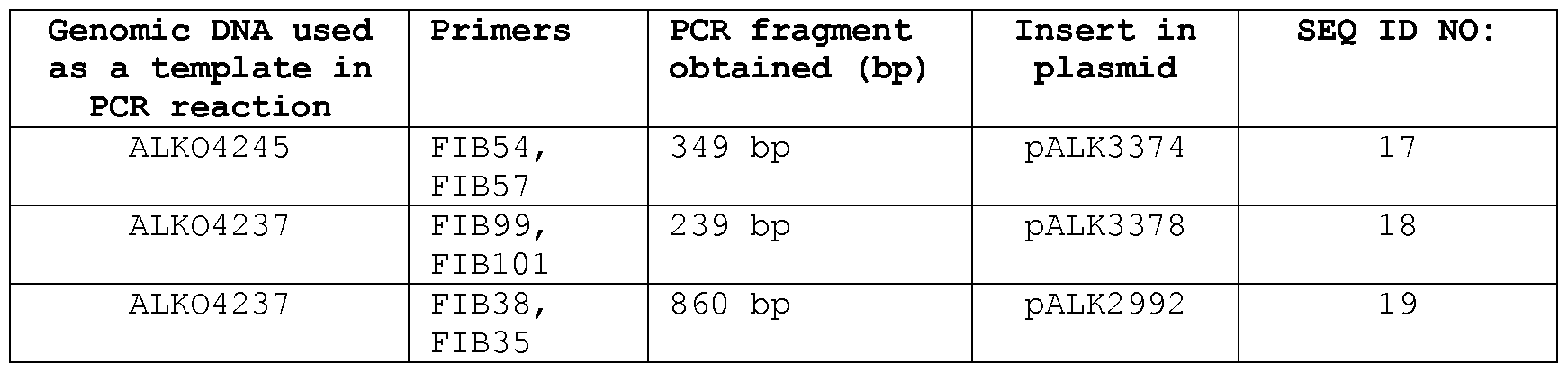
- the genomic template DNA, primers used in the PCR reactions, size of the PCR fargments obtained, the name of the plasmid containing the probe fragment and SEQ ID NOs of the probe sequences are shown.
- the pCR ® 4-TOPO ® plasmid containing the PCR amplified probe for cloning the full-length gene encoding At_GH61 was named pALK3374 and the E. coli strain including this plasmid, RF9150, was deposited to the DSM collection under the accession number DSM25496.
- the pCR ® 4-TOPO ® plasmid containing the PCR amplified probe for gene Ma_cel61a was named pALK2992 and the E. coli strain including this plasmid, RF9002, was deposited to the DSM collection under the accession number DSM25494.
- the pCR ® 4- TOPO ® plasmid containing the PCR amplified probe for cloning the full-length gene encoding Ma_GH61 B was named pALK3378 and the E. coli strain including this plasmid, RF9537 was deposited to the DSM collection under the accession number DSM25498.
- the genomic fragments were isolated from agarose gel and were cloned to pBluescript II KS+ (Stratagene, CA, USA) vectors cleaved with Xba ⁇ , Bam ⁇ or Xho ⁇ . Ligation mixtures were transformed to Escherichia coli XL10-Gold cells (Strata- gene, CA, USA) and plated on LB (Luria-Bertani) plates containing 50-100 g/ml ampicillin. The E. coli colonies were screened for positive clones using colonial hybridization with the pALK3374, pALK2992 and pALK3378 inserts as probes in the hybridization conditions correspondingly to that described above for Southern blot analyses.
- the full-length gene encoding the Acremonium thermophilum ALKO4245 protein At_GH61 was sequenced from the 4.5 kb Xba ⁇ insert and the plasmid containing this insert was named pALK3375.
- the E. coli strain RF9319 including the plasmid pALK3375 was deposited to the DSM collection under the accession number DSM25497.
- the gene encoding the Acremonium thermophilum ALKO4245 protein At_GH61 is named as At_cel61 (SEQ ID NO: 20).
- the full-length gene encoding the Melanocarpus albomyces ALKO4237 Ma_GH61 B was sequenced from the 3.5 kb Xho ⁇ insert and the plasmid containing this insert was named pALK3379.
- the E. coli strain RF9696 including the plasmid pALK3379 was deposited to the DSM collection under the accession number DSM25499.
- the gene encoding the Melanocarpus albomyces ALKO4237 protein Ma_GH61 B is named as Ma_cel61b (SEQ ID NO: 22).
- the full-length gene Ma_cel61a (SEQ ID NO: 21 ) was sequenced from the Melanocarpus albomyces ALKO4237 5 kb Bam ⁇ insert and the plasmid containing this insert was named pALK2993.
- the partial ce/67 sequence found in the pALK2992 insert (SEQ ID NO: 18) was included in the full- length Ma_cel61a gene sequence (SEQ ID NO: 21 ) obtained from the cloning.
- the E. coli strain RF9091 including the plasmid pALK2993 was deposited to the DSM collection under the accession number DSM25495.
- the relevant information on the gene sequences (SEQ ID NOs: 20-22) is summarized in Ta- ble 5.
- the deduced amino acid sequence of the gene At_cel61 included the sequences of the At_GH61 peptides 1669,824 (SEQ ID NO: 1 ), 1763,938 (SEQ ID NO: 2), 431 .7752 (SEQ ID NO: 3), 882.971 1 (SEQ ID NO: 4) and 855.9166 (SEQ ID NO: 5) (Table 2). This confirms that the gene At_cel61 obtained from the cloning is the gene encoding the purified At_GH61 protein.
- the deduced amino acid sequence of gene Ma_cel61b included the sequences of the Ma_GH61 B peptides #4349 (SEQ ID NO: 6), 2130,813 (SEQ ID NO: 7), 1283,527 (SEQ ID NO: 8), 2131 ,948 (SEQ ID NO: 9) and 4466,106 (SEQ ID NO: 10) (Table 2). This confirms that the gene Ma_cel61b obtained from the cloning is the gene encoding the purified Ma_GH61 B protein.
- the relevant information on the deduced protein sequences (SEQ ID NOs: 23-25) is summarized in Table 6.
- the protein deduced from the gene sequence Ma_cel61a is named Ma GH61A. Table 6.
- CBD cellulose-binding domain
- Expression plasmids were constructed for production of recombinant GH61 proteins from Acremonium thermophilum ALKO4245 and Melano- carpus albomyces ALKO4237 in Trichoderma reesei.
- the recombinant ce/67 genes including their own signal sequences, were exactly fused to the T. reesei cbh /cel7lk promoter by PCR.
- a BamH ⁇ site was created after the stop codon by PCR to fuse the gene at the 3 ' -end to the T. reesei cbhMceUA terminator. This leaves no original terminator in the constructs prior to the cbhl terminator sequence.
- nidulans amdS marker gene was used for selection of the transformants as described in Paloheimo et al. (2003).
- the linear expression cassettes (Fig. 1 ) were isolated from the vector backbones after Not ⁇ digestion.
- the expression cassettes of At_cel61 (6.8 kb), Ma_cel61a (6.2 kb) and Ma_cel61b (6.1 kb) were transformed into T. reesei protoplasts.
- the host strain used does not produce any of the four major T. reesei cellulases (CBHI, CBHII, EGI, EGII).
- the transformations were performed as in Penttila et al. (1987) with the modifications described in Karhunen et al. (1993), selecting acetamide as a sole nitrogen source (amdS marker gene).
- the transformants were purified on selection plates through single conidia prior to sporulating them on PD.
- the GH61 protein production of the transformants was analysed from the culture supernatants of the shake flask cultivations.
- the transformants were inoculated from the PD slants to shake flasks containing 50 ml of complex lactose-based cellulase inducing medium (Joutsjoki et al., 1993) buffered with 5% KH 2 PO 4 .
- the GH61 protein production was analyzed after cultivation for 7 days at 30°C, 250 rpm. Heterologous production of recombinant proteins was analyzed by SDS-PAGE with subsequent Coomassie staining.
- the genotypes of the chosen transformants were confirmed by Southern blot analyses in which genomic digests were included and the respective expression cas- sette was used as a probe.
- the best-producing transformants were chosen to be cultivated in laboratory scale bioreactors at 28°C in the cellulase inducing complex medium for 3-4 days with pH control 5.5 ⁇ 0.2 or 6.0 ⁇ 0.2 (NH 3 /H 3 PO 4 ) to obtain material for the application tests.
- the supernatants were recovered by centrifuga- tion and filtering through Seitz-K 150 and EK filters (Pall SeitzSchenk Filtersys- tems GmbH, Bad Kreuznach, Germany).
- Example 5 Hydrolysis of hardwood substrate with enzyme preparations comprising recombinant GH61 proteins
- the substrate was hydrolysed using different enzyme mixtures at a dosage of 2 mg of protein per gram of total solids in 2 ml reaction tubes.
- the protein contents of the enzyme components were determined using the Pierce BCA assay kit, Product number 23227 (Thermo Scientific, MA, USA) with Bovine Serum Albumin, Product number 23209 (Thermo Scientific, MA, USA) as standard.
- the reaction tubes were agitated in a linear-shaking waterbath 1086 from GFL adjusted in different temperatures. For each sample point, a sample of 0.5 ml was taken from duplicate reaction tubes and centrifuged. The supernatant was boiled for 20 minutes to terminate the enzymatic hydrolysis, and analysed for reaction products from the hydrolysis.
- a basis mixture of different cellulases was prepared using the following components:
- All cellulases were heterologously produced as monocomponents in Trichoderma reesei host strain having cellulase-free background (the genes encoding the four major cellulases CBHI/Cel7A, CBHII/Cel6A, EGI/Cel7B and EGII/Cel5A were deleted). Crude culture supernatants were used in the mix- ture.
- the enzyme components were combined as follows to prepare a basis mixture: cellobiohydrolase CBHI/Cel7A preparation 61 .1 %, cellobiohydrolase CBHII/Cel6A preparation 15.3%, endoglucanase EGII/Cel5A preparation 10.2%, endoglucanase EGI/Cel7B preparation 8.2%, xylanase Xynl OA preparation 3% and ⁇ -glucosidase ⁇ / ⁇ 3 ⁇ preparation 2.2%.
- This enzyme mixture was designated as MIXTURE 1 .
- GH61 enzyme preparation containing Thielavia terrestris Tt_GH61 E, a GH61 protein known in the art and described in Harris et al. (2010), Accession number ACE10234.
- Tt_GH61 E were designated as MIXTURE 1_AT, MIXTURE 1_MA and MIXTURE 1_TT, respectively.
- results show better performance of the MIXTURE 1_AT and MIXTURE 1_MA at all tested temperatures (37°C, 45°C, 50°C and 55°C) in comparison to the control MIXTURE 1_TT.
- the MIXTURE 1_MA and MIXTURE 1_AT performed 24% and 16% better than the control mix MIX- TURE 1_TT.
- the amounts of sugars released from the hardwood substrate with the MIXTURE 1_AT and MIXTURE 1_MA were found to increase 27% and 1 1 % in comparison to the control mix MIXTURE 1_TT at 50°C.
- the enzyme MIXTURE 1_AT and MIXTURE 1_MA were found to perform 24 % and 10% better than the control mix MIXTURE 1_TT.
- MIXTURE 1_AT and MIXTURE 1_MA performed 48% and 27% better than the control mix MIXTURE 1_TT.
- Hydrolysis of fibrous residues building up in automatic dishwashers was measured with ground fibers from apples, oranges and wheat suspended in dilute citrate buffer, pH 4.0 containing ca. 0.5% propylene glycol in 500 ml shake flasks. Equal amount of each fiber was added and the final total solids concentration was 4 g per litre. Enzymes were added at a dosage of 25 mg of protein per gram of total solids. The amount of protein from the enzyme preparations was determined by Bio-Rad protein assay (Bio-Rad Laboratories, Her- cules, CA, USA) using bovine gammaglobulin (Bio-Rad Laboratories, Hercules, CA, USA) as standard.
- the flasks containing fibers and enzymes in dilute citrate buffer were heated to 50°C in 230 rpm shaking. After 60 min incubation time at 50°C, the solution was filtered through a 200 ⁇ mesh and the fibers left on the sieve dried for at least 20 h at 50°C. The dried fibers were weighed to measure the weight loss of the fibers. Weight loss was calculated as percentage of the weight of a blank. The blank containing fiber alone in the buffer (no enzymes) was prepared identically to the other samples.
- the average results from triplicate samples of the control and samples containing the GH61 proteins are shown in Fig. 3.
- the weight of the fiber residues left in the sieve was found to decrease 1 1 % and 7% by partly replac- ing the basic T. reesei cellulase mixture with Acremonium thermophilum At_GH61 or Melanocarpus albomyces Ma_GH61A proteins, respectively.
- the results show, thus, better performance when the T. reesei cellulase mixture is supplemented with GH61 protein At_GH61 or Ma_GH61A.
- Transformation of Trichoderma reesei with the Hormoconis resinae glucoamylase P (gamP) gene production of a heterologous glucoamylase by Trichoderma reesei. Curr. Genet. 24: 223-228.
Landscapes
- Chemical & Material Sciences (AREA)
- Life Sciences & Earth Sciences (AREA)
- Engineering & Computer Science (AREA)
- Zoology (AREA)
- Organic Chemistry (AREA)
- Polymers & Plastics (AREA)
- Wood Science & Technology (AREA)
- Health & Medical Sciences (AREA)
- Microbiology (AREA)
- Biochemistry (AREA)
- Bioinformatics & Cheminformatics (AREA)
- Genetics & Genomics (AREA)
- Chemical Kinetics & Catalysis (AREA)
- Food Science & Technology (AREA)
- Animal Husbandry (AREA)
- General Engineering & Computer Science (AREA)
- Biotechnology (AREA)
- General Health & Medical Sciences (AREA)
- Proteomics, Peptides & Aminoacids (AREA)
- Textile Engineering (AREA)
- General Chemical & Material Sciences (AREA)
- Medicinal Chemistry (AREA)
- Biomedical Technology (AREA)
- Oil, Petroleum & Natural Gas (AREA)
- Molecular Biology (AREA)
- Enzymes And Modification Thereof (AREA)
- Micro-Organisms Or Cultivation Processes Thereof (AREA)
- Preparation Of Compounds By Using Micro-Organisms (AREA)
- Detergent Compositions (AREA)
- Peptides Or Proteins (AREA)
Description




Claims
Priority Applications (7)
| Application Number | Priority Date | Filing Date | Title |
|---|---|---|---|
| BR112014030003A BR112014030003A2 (en) | 2012-06-07 | 2013-05-24 | proteins for the treatment of cellulosic material |
| AP2014008095A AP2014008095A0 (en) | 2012-06-07 | 2013-05-24 | Novel proteins for the treatment of cellulosic material |
| CN201380029931.8A CN104379736B (en) | 2012-06-07 | 2013-05-24 | Novel protein for processing cellulosic materials |
| DK13800373.6T DK2859095T3 (en) | 2012-06-07 | 2013-05-24 | Hitherto unknown proteins for the treatment of cellulose-containing material |
| EP13800373.6A EP2859095B1 (en) | 2012-06-07 | 2013-05-24 | Novel proteins for the treatment of cellulosic material |
| CA2872225A CA2872225C (en) | 2012-06-07 | 2013-05-24 | Novel proteins for the treatment of cellulosic material |
| ZA2014/08474A ZA201408474B (en) | 2012-06-07 | 2014-11-18 | Novel proteins for the treatment of cellulosic material |
Applications Claiming Priority (2)
| Application Number | Priority Date | Filing Date | Title |
|---|---|---|---|
| FI20125623A FI124477B (en) | 2012-06-07 | 2012-06-07 | New proteins for cellulosic material processing |
| FI20125623 | 2012-06-07 |
Publications (1)
| Publication Number | Publication Date |
|---|---|
| WO2013182740A1 true WO2013182740A1 (en) | 2013-12-12 |
Family
ID=49711462
Family Applications (1)
| Application Number | Title | Priority Date | Filing Date |
|---|---|---|---|
| PCT/FI2013/050568 Ceased WO2013182740A1 (en) | 2012-06-07 | 2013-05-24 | Novel proteins for the treatment of cellulosic material |
Country Status (9)
| Country | Link |
|---|---|
| EP (1) | EP2859095B1 (en) |
| CN (2) | CN104379736B (en) |
| AP (1) | AP2014008095A0 (en) |
| BR (1) | BR112014030003A2 (en) |
| CA (1) | CA2872225C (en) |
| DK (1) | DK2859095T3 (en) |
| FI (1) | FI124477B (en) |
| WO (1) | WO2013182740A1 (en) |
| ZA (1) | ZA201408474B (en) |
Cited By (2)
| Publication number | Priority date | Publication date | Assignee | Title |
|---|---|---|---|---|
| CN109486867A (en) * | 2018-10-30 | 2019-03-19 | 中国科学院天津工业生物技术研究所 | Compound cellulose enzyme system and its application in starch fuel ethanol production |
| EP3317388B1 (en) * | 2015-06-30 | 2019-11-13 | Novozymes A/S | Laundry detergent composition, method for washing and use of composition |
Families Citing this family (1)
| Publication number | Priority date | Publication date | Assignee | Title |
|---|---|---|---|---|
| CN107556369A (en) * | 2017-08-23 | 2018-01-09 | 天津国际生物医药联合研究院 | A kind of Antigenic Peptide and preparation method for antibody and its application for detecting tumour cell |
Citations (18)
| Publication number | Priority date | Publication date | Assignee | Title |
|---|---|---|---|---|
| US3664961A (en) | 1970-03-31 | 1972-05-23 | Procter & Gamble | Enzyme detergent composition containing coagglomerated perborate bleaching agent |
| WO1994007998A1 (en) | 1992-10-06 | 1994-04-14 | Novo Nordisk A/S | Cellulase variants |
| US5443750A (en) | 1991-01-16 | 1995-08-22 | The Procter & Gamble Company | Detergent compositions with high activity cellulase and softening clays |
| WO2005074647A2 (en) | 2004-01-30 | 2005-08-18 | Novozymes Inc. | Polypeptides having cellulolytic enhancing activity and polynucleotides encoding same |
| WO2005074656A2 (en) | 2004-02-06 | 2005-08-18 | Novozymes, Inc. | Polypeptides having cellulolytic enhancing activity and polynucleotides encoding same |
| WO2007071818A1 (en) | 2005-12-22 | 2007-06-28 | Roal Oy | Treatment of cellulosic material and enzymes useful therein |
| WO2007089290A2 (en) | 2005-09-30 | 2007-08-09 | Novozymes, Inc. | Methods for enhancing the degradation or conversion of cellulosic material |
| WO2008140749A2 (en) | 2007-05-10 | 2008-11-20 | Novozymes, Inc. | Compositions and methods for enhancing the degradation or conversion of cellulose-containing material |
| WO2009033071A2 (en) | 2007-09-07 | 2009-03-12 | Dyadic International, Inc. | Novel fungal enzymes |
| WO2009085868A1 (en) | 2007-12-19 | 2009-07-09 | Novozymes A/S | Polypeptides having cellulolytic enhancing activity and polynucleotides encoding same |
| WO2011035027A2 (en) | 2009-09-17 | 2011-03-24 | Novozymes, Inc. | Polypeptides having cellulolytic enhancing activity and polynucleotides encoding same |
| WO2011080317A2 (en) | 2009-12-30 | 2011-07-07 | Roal Oy | Method for treating cellulosic material and cbhii/cel6a enzymes useful therein |
| WO2011126897A2 (en) * | 2010-03-30 | 2011-10-13 | Novozymes A/S | Methods for enhancing by-products from fermentation processes |
| WO2011161459A1 (en) | 2010-06-23 | 2011-12-29 | Reckitt Benckiser N.V. | Machine dishwashing compositions and methods |
| WO2012024698A1 (en) * | 2010-08-20 | 2012-02-23 | Codexis, Inc. | Use of glycoside hydrolase 61 family proteins in processing of cellulose |
| WO2012061517A1 (en) * | 2010-11-02 | 2012-05-10 | Novozymes, Inc. | Methods of pretreating cellulosic material with a gh61 polypeptide |
| WO2012068509A1 (en) * | 2010-11-18 | 2012-05-24 | Novozymes, Inc. | Chimeric polypeptides having cellulolytic enhancing activity and polynucleotides encoding same |
| WO2012138772A1 (en) * | 2011-04-04 | 2012-10-11 | The Regents Of The University Of California | Enhanced cellulose degradation |
Family Cites Families (2)
| Publication number | Priority date | Publication date | Assignee | Title |
|---|---|---|---|---|
| WO2012021401A1 (en) * | 2010-08-12 | 2012-02-16 | Novozymes, Inc. | Compositions comprising a polypeptide having cellulolytic enhancing activity and a bicyclic compound and uses thereof |
| BR112013009817B1 (en) * | 2010-10-26 | 2020-02-04 | Novozymes As | methods to degrade or convert sugar cane refuse, to produce a fermentation product, and to ferment sugar cane refuse |
-
2012
- 2012-06-07 FI FI20125623A patent/FI124477B/en not_active IP Right Cessation
-
2013
- 2013-05-24 BR BR112014030003A patent/BR112014030003A2/en not_active Application Discontinuation
- 2013-05-24 CN CN201380029931.8A patent/CN104379736B/en not_active Expired - Fee Related
- 2013-05-24 CA CA2872225A patent/CA2872225C/en not_active Expired - Fee Related
- 2013-05-24 CN CN201811170695.2A patent/CN109536475A/en active Pending
- 2013-05-24 DK DK13800373.6T patent/DK2859095T3/en active
- 2013-05-24 WO PCT/FI2013/050568 patent/WO2013182740A1/en not_active Ceased
- 2013-05-24 EP EP13800373.6A patent/EP2859095B1/en active Active
- 2013-05-24 AP AP2014008095A patent/AP2014008095A0/en unknown
-
2014
- 2014-11-18 ZA ZA2014/08474A patent/ZA201408474B/en unknown
Patent Citations (18)
| Publication number | Priority date | Publication date | Assignee | Title |
|---|---|---|---|---|
| US3664961A (en) | 1970-03-31 | 1972-05-23 | Procter & Gamble | Enzyme detergent composition containing coagglomerated perborate bleaching agent |
| US5443750A (en) | 1991-01-16 | 1995-08-22 | The Procter & Gamble Company | Detergent compositions with high activity cellulase and softening clays |
| WO1994007998A1 (en) | 1992-10-06 | 1994-04-14 | Novo Nordisk A/S | Cellulase variants |
| WO2005074647A2 (en) | 2004-01-30 | 2005-08-18 | Novozymes Inc. | Polypeptides having cellulolytic enhancing activity and polynucleotides encoding same |
| WO2005074656A2 (en) | 2004-02-06 | 2005-08-18 | Novozymes, Inc. | Polypeptides having cellulolytic enhancing activity and polynucleotides encoding same |
| WO2007089290A2 (en) | 2005-09-30 | 2007-08-09 | Novozymes, Inc. | Methods for enhancing the degradation or conversion of cellulosic material |
| WO2007071818A1 (en) | 2005-12-22 | 2007-06-28 | Roal Oy | Treatment of cellulosic material and enzymes useful therein |
| WO2008140749A2 (en) | 2007-05-10 | 2008-11-20 | Novozymes, Inc. | Compositions and methods for enhancing the degradation or conversion of cellulose-containing material |
| WO2009033071A2 (en) | 2007-09-07 | 2009-03-12 | Dyadic International, Inc. | Novel fungal enzymes |
| WO2009085868A1 (en) | 2007-12-19 | 2009-07-09 | Novozymes A/S | Polypeptides having cellulolytic enhancing activity and polynucleotides encoding same |
| WO2011035027A2 (en) | 2009-09-17 | 2011-03-24 | Novozymes, Inc. | Polypeptides having cellulolytic enhancing activity and polynucleotides encoding same |
| WO2011080317A2 (en) | 2009-12-30 | 2011-07-07 | Roal Oy | Method for treating cellulosic material and cbhii/cel6a enzymes useful therein |
| WO2011126897A2 (en) * | 2010-03-30 | 2011-10-13 | Novozymes A/S | Methods for enhancing by-products from fermentation processes |
| WO2011161459A1 (en) | 2010-06-23 | 2011-12-29 | Reckitt Benckiser N.V. | Machine dishwashing compositions and methods |
| WO2012024698A1 (en) * | 2010-08-20 | 2012-02-23 | Codexis, Inc. | Use of glycoside hydrolase 61 family proteins in processing of cellulose |
| WO2012061517A1 (en) * | 2010-11-02 | 2012-05-10 | Novozymes, Inc. | Methods of pretreating cellulosic material with a gh61 polypeptide |
| WO2012068509A1 (en) * | 2010-11-18 | 2012-05-24 | Novozymes, Inc. | Chimeric polypeptides having cellulolytic enhancing activity and polynucleotides encoding same |
| WO2012138772A1 (en) * | 2011-04-04 | 2012-10-11 | The Regents Of The University Of California | Enhanced cellulose degradation |
Non-Patent Citations (26)
Cited By (3)
| Publication number | Priority date | Publication date | Assignee | Title |
|---|---|---|---|---|
| EP3317388B1 (en) * | 2015-06-30 | 2019-11-13 | Novozymes A/S | Laundry detergent composition, method for washing and use of composition |
| CN109486867A (en) * | 2018-10-30 | 2019-03-19 | 中国科学院天津工业生物技术研究所 | Compound cellulose enzyme system and its application in starch fuel ethanol production |
| CN109486867B (en) * | 2018-10-30 | 2022-05-27 | 中国科学院天津工业生物技术研究所 | Composite cellulase system and application thereof in starch fuel ethanol production |
Also Published As
| Publication number | Publication date |
|---|---|
| CA2872225A1 (en) | 2013-12-12 |
| CN104379736B (en) | 2018-11-02 |
| BR112014030003A2 (en) | 2017-09-12 |
| EP2859095A1 (en) | 2015-04-15 |
| EP2859095A4 (en) | 2016-06-15 |
| FI124477B (en) | 2014-09-15 |
| CN104379736A (en) | 2015-02-25 |
| DK2859095T3 (en) | 2020-06-15 |
| ZA201408474B (en) | 2015-12-23 |
| AP2014008095A0 (en) | 2014-12-31 |
| CA2872225C (en) | 2021-07-20 |
| EP2859095B1 (en) | 2020-05-13 |
| CN109536475A (en) | 2019-03-29 |
| FI20125623L (en) | 2013-12-08 |
Similar Documents
| Publication | Publication Date | Title |
|---|---|---|
| EP2519630B1 (en) | Method for treating cellulosic material and cbhii/cel6a enzymes useful therein | |
| US9758777B2 (en) | Treatment of cellulosic material and enzymes useful therein | |
| EP2912171B1 (en) | Novel esterases in the treatment of cellulosic and lignocellulosic material | |
| US8975058B2 (en) | Endoglucanases for treatment of cellulosic material | |
| US9458440B2 (en) | Proteins for the treatment of cellulosic material | |
| EP2855673B1 (en) | Improved endoglucanases for treatment of cellulosic material | |
| EP2859095B1 (en) | Novel proteins for the treatment of cellulosic material | |
| US9434929B2 (en) | Esterases useful in the treatment of cellulosic and lignocellulosic material | |
| Class et al. | Patent application title: Treatment of Cellulosic Material and Enzymes Useful Therein Inventors: Jari Vehmaanperä (Klaukkala, FI) Jari Vehmaanperä (Klaukkala, FI) Marika Alapuranen (Rajamaki, FI) Terhi Puranen (Nurmijarvi, FI) Terhi Puranen (Nurmijarvi, FI) Matti Siika-Aho (Helsinki, FI) Jarno Kallio (Jarvenpaa, FI) Jarno Kallio (Jarvenpaa, FI) Satu Hooman (Espoo, FI) Sanni Voutilainen (Lohja, FI) Teemu Halonen (Espoo, FI) Liisa Viikari (Helsinki, FI) Assignees: Roal OY |
Legal Events
| Date | Code | Title | Description |
|---|---|---|---|
| 121 | Ep: the epo has been informed by wipo that ep was designated in this application |
Ref document number: 13800373 Country of ref document: EP Kind code of ref document: A1 |
|
| ENP | Entry into the national phase |
Ref document number: 2872225 Country of ref document: CA |
|
| WWE | Wipo information: entry into national phase |
Ref document number: 2013800373 Country of ref document: EP |
|
| NENP | Non-entry into the national phase |
Ref country code: DE |
|
| REG | Reference to national code |
Ref country code: BR Ref legal event code: B01A Ref document number: 112014030003 Country of ref document: BR |
|
| ENP | Entry into the national phase |
Ref document number: 112014030003 Country of ref document: BR Kind code of ref document: A2 Effective date: 20141201 |