WO2011095218A1 - Template-fixed pep tidomime tics with cxcr7 modulating activity - Google Patents
Template-fixed pep tidomime tics with cxcr7 modulating activity Download PDFInfo
- Publication number
- WO2011095218A1 WO2011095218A1 PCT/EP2010/051417 EP2010051417W WO2011095218A1 WO 2011095218 A1 WO2011095218 A1 WO 2011095218A1 EP 2010051417 W EP2010051417 W EP 2010051417W WO 2011095218 A1 WO2011095218 A1 WO 2011095218A1
- Authority
- WO
- WIPO (PCT)
- Prior art keywords
- pro
- dab
- arg
- chr
- dap
- Prior art date
- Legal status (The legal status is an assumption and is not a legal conclusion. Google has not performed a legal analysis and makes no representation as to the accuracy of the status listed.)
- Ceased
Links
- 0 CC(N(*)C=*)=NC=* Chemical compound CC(N(*)C=*)=NC=* 0.000 description 12
- KJRRQXYWFQKJIP-UHFFFAOYSA-N Cc1c[o]cc1 Chemical compound Cc1c[o]cc1 KJRRQXYWFQKJIP-UHFFFAOYSA-N 0.000 description 1
- QENGPZGAWFQWCZ-UHFFFAOYSA-N Cc1c[s]cc1 Chemical compound Cc1c[s]cc1 QENGPZGAWFQWCZ-UHFFFAOYSA-N 0.000 description 1
- VQKFNUFAXTZWDK-UHFFFAOYSA-N Cc1ccc[o]1 Chemical compound Cc1ccc[o]1 VQKFNUFAXTZWDK-UHFFFAOYSA-N 0.000 description 1
- XQQBUAPQHNYYRS-UHFFFAOYSA-N Cc1ccc[s]1 Chemical compound Cc1ccc[s]1 XQQBUAPQHNYYRS-UHFFFAOYSA-N 0.000 description 1
Classifications
-
- C—CHEMISTRY; METALLURGY
- C07—ORGANIC CHEMISTRY
- C07K—PEPTIDES
- C07K7/00—Peptides having 5 to 20 amino acids in a fully defined sequence; Derivatives thereof
- C07K7/64—Cyclic peptides containing only normal peptide links
-
- A—HUMAN NECESSITIES
- A61—MEDICAL OR VETERINARY SCIENCE; HYGIENE
- A61K—PREPARATIONS FOR MEDICAL, DENTAL OR TOILETRY PURPOSES
- A61K38/00—Medicinal preparations containing peptides
-
- A—HUMAN NECESSITIES
- A61—MEDICAL OR VETERINARY SCIENCE; HYGIENE
- A61K—PREPARATIONS FOR MEDICAL, DENTAL OR TOILETRY PURPOSES
- A61K38/00—Medicinal preparations containing peptides
- A61K38/16—Peptides having more than 20 amino acids; Gastrins; Somatostatins; Melanotropins; Derivatives thereof
- A61K38/17—Peptides having more than 20 amino acids; Gastrins; Somatostatins; Melanotropins; Derivatives thereof from animals; from humans
-
- A—HUMAN NECESSITIES
- A61—MEDICAL OR VETERINARY SCIENCE; HYGIENE
- A61K—PREPARATIONS FOR MEDICAL, DENTAL OR TOILETRY PURPOSES
- A61K38/00—Medicinal preparations containing peptides
- A61K38/16—Peptides having more than 20 amino acids; Gastrins; Somatostatins; Melanotropins; Derivatives thereof
- A61K38/17—Peptides having more than 20 amino acids; Gastrins; Somatostatins; Melanotropins; Derivatives thereof from animals; from humans
- A61K38/177—Receptors; Cell surface antigens; Cell surface determinants
-
- A—HUMAN NECESSITIES
- A61—MEDICAL OR VETERINARY SCIENCE; HYGIENE
- A61K—PREPARATIONS FOR MEDICAL, DENTAL OR TOILETRY PURPOSES
- A61K38/00—Medicinal preparations containing peptides
- A61K38/16—Peptides having more than 20 amino acids; Gastrins; Somatostatins; Melanotropins; Derivatives thereof
- A61K38/17—Peptides having more than 20 amino acids; Gastrins; Somatostatins; Melanotropins; Derivatives thereof from animals; from humans
- A61K38/177—Receptors; Cell surface antigens; Cell surface determinants
- A61K38/1793—Receptors; Cell surface antigens; Cell surface determinants for cytokines; for lymphokines; for interferons
-
- A—HUMAN NECESSITIES
- A61—MEDICAL OR VETERINARY SCIENCE; HYGIENE
- A61P—SPECIFIC THERAPEUTIC ACTIVITY OF CHEMICAL COMPOUNDS OR MEDICINAL PREPARATIONS
- A61P1/00—Drugs for disorders of the alimentary tract or the digestive system
-
- A—HUMAN NECESSITIES
- A61—MEDICAL OR VETERINARY SCIENCE; HYGIENE
- A61P—SPECIFIC THERAPEUTIC ACTIVITY OF CHEMICAL COMPOUNDS OR MEDICINAL PREPARATIONS
- A61P1/00—Drugs for disorders of the alimentary tract or the digestive system
- A61P1/02—Stomatological preparations, e.g. drugs for caries, aphtae, periodontitis
-
- A—HUMAN NECESSITIES
- A61—MEDICAL OR VETERINARY SCIENCE; HYGIENE
- A61P—SPECIFIC THERAPEUTIC ACTIVITY OF CHEMICAL COMPOUNDS OR MEDICINAL PREPARATIONS
- A61P1/00—Drugs for disorders of the alimentary tract or the digestive system
- A61P1/04—Drugs for disorders of the alimentary tract or the digestive system for ulcers, gastritis or reflux esophagitis, e.g. antacids, inhibitors of acid secretion, mucosal protectants
-
- A—HUMAN NECESSITIES
- A61—MEDICAL OR VETERINARY SCIENCE; HYGIENE
- A61P—SPECIFIC THERAPEUTIC ACTIVITY OF CHEMICAL COMPOUNDS OR MEDICINAL PREPARATIONS
- A61P11/00—Drugs for disorders of the respiratory system
-
- A—HUMAN NECESSITIES
- A61—MEDICAL OR VETERINARY SCIENCE; HYGIENE
- A61P—SPECIFIC THERAPEUTIC ACTIVITY OF CHEMICAL COMPOUNDS OR MEDICINAL PREPARATIONS
- A61P11/00—Drugs for disorders of the respiratory system
- A61P11/06—Antiasthmatics
-
- A—HUMAN NECESSITIES
- A61—MEDICAL OR VETERINARY SCIENCE; HYGIENE
- A61P—SPECIFIC THERAPEUTIC ACTIVITY OF CHEMICAL COMPOUNDS OR MEDICINAL PREPARATIONS
- A61P13/00—Drugs for disorders of the urinary system
-
- A—HUMAN NECESSITIES
- A61—MEDICAL OR VETERINARY SCIENCE; HYGIENE
- A61P—SPECIFIC THERAPEUTIC ACTIVITY OF CHEMICAL COMPOUNDS OR MEDICINAL PREPARATIONS
- A61P17/00—Drugs for dermatological disorders
-
- A—HUMAN NECESSITIES
- A61—MEDICAL OR VETERINARY SCIENCE; HYGIENE
- A61P—SPECIFIC THERAPEUTIC ACTIVITY OF CHEMICAL COMPOUNDS OR MEDICINAL PREPARATIONS
- A61P17/00—Drugs for dermatological disorders
- A61P17/02—Drugs for dermatological disorders for treating wounds, ulcers, burns, scars, keloids, or the like
-
- A—HUMAN NECESSITIES
- A61—MEDICAL OR VETERINARY SCIENCE; HYGIENE
- A61P—SPECIFIC THERAPEUTIC ACTIVITY OF CHEMICAL COMPOUNDS OR MEDICINAL PREPARATIONS
- A61P17/00—Drugs for dermatological disorders
- A61P17/06—Antipsoriatics
-
- A—HUMAN NECESSITIES
- A61—MEDICAL OR VETERINARY SCIENCE; HYGIENE
- A61P—SPECIFIC THERAPEUTIC ACTIVITY OF CHEMICAL COMPOUNDS OR MEDICINAL PREPARATIONS
- A61P19/00—Drugs for skeletal disorders
- A61P19/02—Drugs for skeletal disorders for joint disorders, e.g. arthritis, arthrosis
-
- A—HUMAN NECESSITIES
- A61—MEDICAL OR VETERINARY SCIENCE; HYGIENE
- A61P—SPECIFIC THERAPEUTIC ACTIVITY OF CHEMICAL COMPOUNDS OR MEDICINAL PREPARATIONS
- A61P19/00—Drugs for skeletal disorders
- A61P19/04—Drugs for skeletal disorders for non-specific disorders of the connective tissue
-
- A—HUMAN NECESSITIES
- A61—MEDICAL OR VETERINARY SCIENCE; HYGIENE
- A61P—SPECIFIC THERAPEUTIC ACTIVITY OF CHEMICAL COMPOUNDS OR MEDICINAL PREPARATIONS
- A61P25/00—Drugs for disorders of the nervous system
-
- A—HUMAN NECESSITIES
- A61—MEDICAL OR VETERINARY SCIENCE; HYGIENE
- A61P—SPECIFIC THERAPEUTIC ACTIVITY OF CHEMICAL COMPOUNDS OR MEDICINAL PREPARATIONS
- A61P27/00—Drugs for disorders of the senses
- A61P27/02—Ophthalmic agents
-
- A—HUMAN NECESSITIES
- A61—MEDICAL OR VETERINARY SCIENCE; HYGIENE
- A61P—SPECIFIC THERAPEUTIC ACTIVITY OF CHEMICAL COMPOUNDS OR MEDICINAL PREPARATIONS
- A61P27/00—Drugs for disorders of the senses
- A61P27/02—Ophthalmic agents
- A61P27/04—Artificial tears; Irrigation solutions
-
- A—HUMAN NECESSITIES
- A61—MEDICAL OR VETERINARY SCIENCE; HYGIENE
- A61P—SPECIFIC THERAPEUTIC ACTIVITY OF CHEMICAL COMPOUNDS OR MEDICINAL PREPARATIONS
- A61P27/00—Drugs for disorders of the senses
- A61P27/02—Ophthalmic agents
- A61P27/06—Antiglaucoma agents or miotics
-
- A—HUMAN NECESSITIES
- A61—MEDICAL OR VETERINARY SCIENCE; HYGIENE
- A61P—SPECIFIC THERAPEUTIC ACTIVITY OF CHEMICAL COMPOUNDS OR MEDICINAL PREPARATIONS
- A61P27/00—Drugs for disorders of the senses
- A61P27/02—Ophthalmic agents
- A61P27/14—Decongestants or antiallergics
-
- A—HUMAN NECESSITIES
- A61—MEDICAL OR VETERINARY SCIENCE; HYGIENE
- A61P—SPECIFIC THERAPEUTIC ACTIVITY OF CHEMICAL COMPOUNDS OR MEDICINAL PREPARATIONS
- A61P29/00—Non-central analgesic, antipyretic or antiinflammatory agents, e.g. antirheumatic agents; Non-steroidal antiinflammatory drugs [NSAID]
-
- A—HUMAN NECESSITIES
- A61—MEDICAL OR VETERINARY SCIENCE; HYGIENE
- A61P—SPECIFIC THERAPEUTIC ACTIVITY OF CHEMICAL COMPOUNDS OR MEDICINAL PREPARATIONS
- A61P3/00—Drugs for disorders of the metabolism
-
- A—HUMAN NECESSITIES
- A61—MEDICAL OR VETERINARY SCIENCE; HYGIENE
- A61P—SPECIFIC THERAPEUTIC ACTIVITY OF CHEMICAL COMPOUNDS OR MEDICINAL PREPARATIONS
- A61P3/00—Drugs for disorders of the metabolism
- A61P3/08—Drugs for disorders of the metabolism for glucose homeostasis
- A61P3/10—Drugs for disorders of the metabolism for glucose homeostasis for hyperglycaemia, e.g. antidiabetics
-
- A—HUMAN NECESSITIES
- A61—MEDICAL OR VETERINARY SCIENCE; HYGIENE
- A61P—SPECIFIC THERAPEUTIC ACTIVITY OF CHEMICAL COMPOUNDS OR MEDICINAL PREPARATIONS
- A61P31/00—Antiinfectives, i.e. antibiotics, antiseptics, chemotherapeutics
-
- A—HUMAN NECESSITIES
- A61—MEDICAL OR VETERINARY SCIENCE; HYGIENE
- A61P—SPECIFIC THERAPEUTIC ACTIVITY OF CHEMICAL COMPOUNDS OR MEDICINAL PREPARATIONS
- A61P31/00—Antiinfectives, i.e. antibiotics, antiseptics, chemotherapeutics
- A61P31/12—Antivirals
-
- A—HUMAN NECESSITIES
- A61—MEDICAL OR VETERINARY SCIENCE; HYGIENE
- A61P—SPECIFIC THERAPEUTIC ACTIVITY OF CHEMICAL COMPOUNDS OR MEDICINAL PREPARATIONS
- A61P31/00—Antiinfectives, i.e. antibiotics, antiseptics, chemotherapeutics
- A61P31/12—Antivirals
- A61P31/14—Antivirals for RNA viruses
- A61P31/18—Antivirals for RNA viruses for HIV
-
- A—HUMAN NECESSITIES
- A61—MEDICAL OR VETERINARY SCIENCE; HYGIENE
- A61P—SPECIFIC THERAPEUTIC ACTIVITY OF CHEMICAL COMPOUNDS OR MEDICINAL PREPARATIONS
- A61P35/00—Antineoplastic agents
-
- A—HUMAN NECESSITIES
- A61—MEDICAL OR VETERINARY SCIENCE; HYGIENE
- A61P—SPECIFIC THERAPEUTIC ACTIVITY OF CHEMICAL COMPOUNDS OR MEDICINAL PREPARATIONS
- A61P35/00—Antineoplastic agents
- A61P35/02—Antineoplastic agents specific for leukemia
-
- A—HUMAN NECESSITIES
- A61—MEDICAL OR VETERINARY SCIENCE; HYGIENE
- A61P—SPECIFIC THERAPEUTIC ACTIVITY OF CHEMICAL COMPOUNDS OR MEDICINAL PREPARATIONS
- A61P35/00—Antineoplastic agents
- A61P35/04—Antineoplastic agents specific for metastasis
-
- A—HUMAN NECESSITIES
- A61—MEDICAL OR VETERINARY SCIENCE; HYGIENE
- A61P—SPECIFIC THERAPEUTIC ACTIVITY OF CHEMICAL COMPOUNDS OR MEDICINAL PREPARATIONS
- A61P37/00—Drugs for immunological or allergic disorders
- A61P37/02—Immunomodulators
- A61P37/06—Immunosuppressants, e.g. drugs for graft rejection
-
- A—HUMAN NECESSITIES
- A61—MEDICAL OR VETERINARY SCIENCE; HYGIENE
- A61P—SPECIFIC THERAPEUTIC ACTIVITY OF CHEMICAL COMPOUNDS OR MEDICINAL PREPARATIONS
- A61P43/00—Drugs for specific purposes, not provided for in groups A61P1/00-A61P41/00
-
- A—HUMAN NECESSITIES
- A61—MEDICAL OR VETERINARY SCIENCE; HYGIENE
- A61P—SPECIFIC THERAPEUTIC ACTIVITY OF CHEMICAL COMPOUNDS OR MEDICINAL PREPARATIONS
- A61P5/00—Drugs for disorders of the endocrine system
- A61P5/14—Drugs for disorders of the endocrine system of the thyroid hormones, e.g. T3, T4
-
- A—HUMAN NECESSITIES
- A61—MEDICAL OR VETERINARY SCIENCE; HYGIENE
- A61P—SPECIFIC THERAPEUTIC ACTIVITY OF CHEMICAL COMPOUNDS OR MEDICINAL PREPARATIONS
- A61P7/00—Drugs for disorders of the blood or the extracellular fluid
-
- A—HUMAN NECESSITIES
- A61—MEDICAL OR VETERINARY SCIENCE; HYGIENE
- A61P—SPECIFIC THERAPEUTIC ACTIVITY OF CHEMICAL COMPOUNDS OR MEDICINAL PREPARATIONS
- A61P7/00—Drugs for disorders of the blood or the extracellular fluid
- A61P7/02—Antithrombotic agents; Anticoagulants; Platelet aggregation inhibitors
-
- A—HUMAN NECESSITIES
- A61—MEDICAL OR VETERINARY SCIENCE; HYGIENE
- A61P—SPECIFIC THERAPEUTIC ACTIVITY OF CHEMICAL COMPOUNDS OR MEDICINAL PREPARATIONS
- A61P9/00—Drugs for disorders of the cardiovascular system
-
- A—HUMAN NECESSITIES
- A61—MEDICAL OR VETERINARY SCIENCE; HYGIENE
- A61P—SPECIFIC THERAPEUTIC ACTIVITY OF CHEMICAL COMPOUNDS OR MEDICINAL PREPARATIONS
- A61P9/00—Drugs for disorders of the cardiovascular system
- A61P9/04—Inotropic agents, i.e. stimulants of cardiac contraction; Drugs for heart failure
-
- A—HUMAN NECESSITIES
- A61—MEDICAL OR VETERINARY SCIENCE; HYGIENE
- A61P—SPECIFIC THERAPEUTIC ACTIVITY OF CHEMICAL COMPOUNDS OR MEDICINAL PREPARATIONS
- A61P9/00—Drugs for disorders of the cardiovascular system
- A61P9/10—Drugs for disorders of the cardiovascular system for treating ischaemic or atherosclerotic diseases, e.g. antianginal drugs, coronary vasodilators, drugs for myocardial infarction, retinopathy, cerebrovascula insufficiency, renal arteriosclerosis
-
- A—HUMAN NECESSITIES
- A61—MEDICAL OR VETERINARY SCIENCE; HYGIENE
- A61P—SPECIFIC THERAPEUTIC ACTIVITY OF CHEMICAL COMPOUNDS OR MEDICINAL PREPARATIONS
- A61P9/00—Drugs for disorders of the cardiovascular system
- A61P9/12—Antihypertensives
-
- C—CHEMISTRY; METALLURGY
- C07—ORGANIC CHEMISTRY
- C07K—PEPTIDES
- C07K14/00—Peptides having more than 20 amino acids; Gastrins; Somatostatins; Melanotropins; Derivatives thereof
- C07K14/435—Peptides having more than 20 amino acids; Gastrins; Somatostatins; Melanotropins; Derivatives thereof from animals; from humans
- C07K14/705—Receptors; Cell surface antigens; Cell surface determinants
-
- C—CHEMISTRY; METALLURGY
- C07—ORGANIC CHEMISTRY
- C07K—PEPTIDES
- C07K14/00—Peptides having more than 20 amino acids; Gastrins; Somatostatins; Melanotropins; Derivatives thereof
- C07K14/435—Peptides having more than 20 amino acids; Gastrins; Somatostatins; Melanotropins; Derivatives thereof from animals; from humans
- C07K14/705—Receptors; Cell surface antigens; Cell surface determinants
- C07K14/715—Receptors; Cell surface antigens; Cell surface determinants for cytokines; for lymphokines; for interferons
-
- C—CHEMISTRY; METALLURGY
- C07—ORGANIC CHEMISTRY
- C07K—PEPTIDES
- C07K14/00—Peptides having more than 20 amino acids; Gastrins; Somatostatins; Melanotropins; Derivatives thereof
- C07K14/435—Peptides having more than 20 amino acids; Gastrins; Somatostatins; Melanotropins; Derivatives thereof from animals; from humans
- C07K14/705—Receptors; Cell surface antigens; Cell surface determinants
- C07K14/715—Receptors; Cell surface antigens; Cell surface determinants for cytokines; for lymphokines; for interferons
- C07K14/7158—Receptors; Cell surface antigens; Cell surface determinants for cytokines; for lymphokines; for interferons for chemokines
Definitions
- the present invention provides novel peptidomimetics incorporating a chain of -amino acid residues as defined below attached to a template which provides specific structural constrains for a ⁇ -hairpin like conformation.
- These template-fixed ⁇ -hairpin mimetics have a selective modulating activity on the CXCR7 receptor and are thus useful in the treatment of a variety of diseases and disorders mediated by or sustained through the activity of CXCR7 or in the support of therapeutic treatments of specific disease conditions of primarily different cause.
- the present invention relates to methods of using these compounds in the treatment of the various diseases and disorders, to pharmaceutical compositions and forms comprising these compounds and efficient processes for the preparation and production of these compounds and their intermediates .
- chemokines and their receptors are mediated by signal transduction that involves chemokines and their receptors, for instance the tissue specific recruitment of leukocytes to sites of inflammation.
- GPCRs for some receptors the full scope of downstream activity and sometimes organ specific function still remains not fully understood.
- One of this recently deorphanized GPCRs is the chemokine receptor CXCR7 (RDC1), which binds with high affinity the inflammatory and homing chemokines CXCL11 (ITAC) and CXCL12 (SDF-1) (K. Balabanian, B. Lagane et al . , J. Biol. Chem. 2005, 280, 35760-35766).
- CXCL12 also binds to another chemokine receptor, CXCR4, and the CXCL12/CXCR4 axis has been demonstrated to play a crucial role in different inflammatory and cancer diseases.
- CXCR4 chemokine receptor 4
- CXCR7 chemokine receptor 7
- CXCR7 does not induce typical chemokine responses such as calcium mobilization. Instead, recent findings indicate that the receptor has a key function in the generation of a CXCL12 local gradient for CXCR4-dependent migration by scavenging CXCL12. These observations seem to be in favor of a main role of CXCR7 as a decoy receptor ("CXCL12 sink") with the critical function of clearing the excess of CXCL12 by internalization (B. Boldajipour, H. Mahabaleshwar et al . , Cell 2008 , 132, 463- 73; Cell Adh. Migr. 2008 , 2, 69-70) .
- CXCL12 sink decoy receptor
- CXCR7 can modulate CXCR4 activity by forming heterodimers and that it may activate other intracellular signaling pathways (A. Levoye, K. Balabanian et al . , Blood 2009 , 113, 6085-93) .
- CXCR7 may be involved in the same disease conditions in which CXCR4 has been shown to play an important role.
- CXCR7 is markedly expressed in a variety of tumors and respective tumor cell lines (e.g. prostate, bladder, breast cancer, multiple myeloma, rhabdomyosarcoma, non-small cell lung cancer) ; its expression level is often correlated with tumor growth and, moreover, with invasiveness.
- tumors and respective tumor cell lines e.g. prostate, bladder, breast cancer, multiple myeloma, rhabdomyosarcoma, non-small cell lung cancer
- CXCR7 Two major mechanisms have been suggested for the role of CXCR7 in tumor development and metastasis: 1) increase of cancer cell proliferation and survival, which may be supported by a pro-angiogenic effect; 2) CXCR7 favors adhesion and transendothelial migration of cancer cells together with CXCR4-mediated migration .
- CXCR7 may also be implicated in rheumatoid arthritis, other chronic and/or autoimmune inflammatory diseases (G. Graham et al . , Curr. Mol. Med. 2009, 9 (2), 86-93) or pulmonary arterial hyper ⁇ tension since it is up-regulated in certain specific tissues, such as in lungs under hypoxic conditions (C. M. Costello, P. McLoughlin et al . , Am. J. Physiol. Lung Cell Mol. Physiol. 2008, 295 (2), 272-284).
- the present invention provides now new chemical entities for a potential use as potent, selective and drugable ligands for the GPC-receptor CXCR7.
- a special strategy is utilized to stabilize ⁇ -hairpin conformations in backbone-cyclic ⁇ - hairpin mimetics exhibiting selective activity against the CXCR7 receptor. This involves transplanting a loop sequence of a natural or unnatural biopolymer onto a template, whose function is to restrain the peptide loop backbone into a ⁇ - hairpin geometry.
- the present invention relates
- T 1 is an -amino acid residue of one of the formulae
- T 2 is an -amino acid residue of one of the formulae AA11 to AA17, hereinabove, or an a-amino acid residue of one of the formulae
- A is 0; NR 16 ; S; SO; or S0 2 ;
- X is OH; NH 2 ; OR 16 ; NR X R 16 ; or NR 17 R 18 ;
- Y is NH 2 ; OR 16 ; NR X R 16 ; or NR 17 R 18 ;
- R 1 , R 2 and R 3 are independently
- R 4 , R 5 , R 6 , R 7 and R 8 are independently
- R 4 and R 5 ; R 5 and R 6 ; R 6 and R 7 ; R 7 and R 8 ; or R 6 and R 9 taken together can form:
- R 4 and R 5 are independently X;
- R 9 , R 10 , R 11 and R 12 are independently H; F; CF 3 ; lower alkyl; lower alkenyl; cycloalkyl; heterocycloalkyl ; aryl; heteroaryl; aryl-lower alkyl; heteroaryl-lower alkyl; - (CHR 15 ) r OR 17 ;
- R 14 are independently
- heterocycloalkyl-lower alkyl aryl; heteroaryl;
- heterocycloalkyl cycloalkyl-lower alkyl
- heterocycloalkyl-lower alkyl aryl; heteroaryl;
- aryl-lower alkyl heteroaryl-lower alkyl; cycloalkyl- aryl; heterocycloalkyl-aryl ; cycloalkyl-heteroaryl ; heterocycloalkyl-heteroaryl ; aryl -cycloalkyl ; aryl-heterocycloalkyl ; heteroaryl-cycloalkyl ;
- R 17 , R 18 , R 19 and R 20 are independently
- aryl-lower alkyl heteroaryl-lower alkyl; cycloalkyl- aryl; heterocycloalkyl-aryl ; cycloalkyl-heteroaryl ; heterocycloalkyl-heteroaryl ; aryl -cycloalkyl ; aryl-heterocycloalkyl; heteroaryl-cycloalkyl; or heteroaryl-heterocycloalkyl; or
- heterocycloalkyl aryl-heterocycloalkyl
- R 21 , R 22 , R 23 and R 24 are independently
- R 25 and R 26 are independently
- R 29 is H; alkyl; alkenyl; cycloalkyl-lower alkyl;
- heterocycloalkyl-lower alkyl - (CHR 4 ) 0 OR 17 ;
- R 30 is - (CR X R 4 ) n R 35 - (CH 2 ) n O(CH 2 ) m R 35 ; - (CH 2 ) n S (CH 2 ) m R 35 ; or
- R 32 is -COR 29 ; -COR 30 ; -CO (CR 1 R 15 ) 0 R 17 / -CO (CR 1 R 15 ) 0 OR 16 ;
- R 33 is -NR X C (R 2 ) (R 29 ) COOR 17 ; -NR X C (R 2 ) (R 29 ) CONR 17 R 18 ;
- R 38 is an aryl group of the formula
- R 39 , R 40 and R 41 are independently
- R is H; lower alkyl; or aryl-lower alkyl; n and m are independently an integer of 0-5 with the proviso that n+m ⁇ 6;
- alkyl taken alone or in combinations (i.e. as part of another group, such as “arylalkyl") designates saturated, straight-chain or branched hydrocarbon radicals having up to 12, preferably up to 8, carbon atoms and may be optionally substituted.
- alkyl is "lower alkyl” which designated alkyl groups having up to 6 carbon atoms .
- alkenyl taken alone or in combinations, designates straight chain or branched hydrocarbon radicals having up to 12, preferably up to 8, carbon atoms and containing at least one or, depending on the chain length, up to four olefinic double bonds.
- alkenyl moieties are optionally substituted and can exist as E or Z configura- tions, both of which are part of the invention.
- cycloalkyl taken alone or in combinations, refers to a saturated or partially unsaturated alicyclic moiety having from three to ten carbon atoms and may be optionally substituted. Examples of this moiety include, but are not limited to, cyclohexyl, norbonyl, decalinyl and the like.
- heterocycloalkyl taken alone or in combi- nations, describes a saturated or partially unsaturated mono- or bicyclic moiety having from three to nine ring carbon atoms and one or more ring heteroatoms selected from nitrogen, oxygen or sulphur.
- This term includes, for example, morpholino, piperazino, azetidinyl, pyrrolidinyl , tetrahydrofuranyl , piperidinyl, octahydro-lH-indolyl, 1,7- diazaspiro [ 4.4 ] nonane and the like.
- Said heterocycloalkyl ring(s) may be optionally substituted.
- aryl taken alone or in combinations, designates aromatic carbocyclic hydrocarbon radicals containing one or two six-membered rings, such as phenyl or naphthyl, which may be optionally substituted by up to three substituents such as Br, CI, F, CF 3 , OCF 3 , OCHF 2 , N(CH 3 ) 2 , N0 2 , lower alkyl, lower alkenyl, phenyl or phenoxy.
- heteroaryl taken alone or in combinations, designates aromatic heterocyclic radicals containing one or two five- and/or six-membered rings, at least one of them containing up to three heteroatoms selected from the group consisting of 0, S and N and whereby the heteroaryl radicals or tautomeric forms thereof may be attached via any suitable atom.
- Said heteroaryl ring(s) are optionally substituted, e.g. as indicated above for "aryl”.
- arylalkyl refers to an alkyl group as defined above, substituted by an aryl group, as defined above.
- arylalkyl moieties include, but are not limited to, benzyl, 1-phenylethyl, 2-phenylethyl, 3-phenylpropyl , 2-phenylpropyl and the like.
- aryl-lower alkyl refers to the above moiety but wherein the alkyl group is a "lower alkyl” group.
- heteroarylalkyl refers to an alkyl group as defined above, substituted by a heteroaryl group, as defined above.
- heteroaryl- lower alkyl refers to the above moiety but wherein the alkyl group is a "lower alkyl” group.
- aryl-cycloalkyl refers to a cycloalkyl group as defined above, substituted or annelated by an aryl group, as defined above.
- aryl- cycloalkyl moieties include, but are not limited to, phenylcyclopentyl , 2, 3-dihydro-lH-indenyl, 1, 2, 3, 4-tetra- hydronaphthalenyl and the like.
- aryl-heterocycloalkyl refers to a heterocycloalkyl group as defined above, substituted or annelated by an aryl group, as defined above.
- aryl-heterocycloalkyl moieties include, but are not limited to, indolinyl, 1, 2, 3, 4-tetrahydroquinolinyl and the like.
- heteroaryl-cycloalkyl refers to a cycloalkyl group as defined above, substituted or annelated by a heteroaryl group, as defined above.
- heteroaryl-cycloalkyl moieties include, but are not limited to, 5, 6, 7, 8-tetrahydroquinolinyl and the like.
- heteroaryl-heterocycloalkyl refers to a heterocycloalkyl group as defined above, sub- stituted or annelated by a heteroaryl group, as defined above.
- heteroaryl-heterocycloalkyl moieties include, but are not limited to, 4- (thiazol-2-yl) pipera- zinyl, 5, 6, 7, 8-tetrahydro-l, 6-naphthyridinyl and the like.
- cycloalkyl-aryl “heterocycloalkyl-aryl”, “cycloalkyl-heteroaryl”, and “heterocycloalkyl-heteroaryl”, as used herein, are defined analogously to the terms “aryl- cycloalkyl”, “aryl-heterocycloalkyl”, “heteroaryl-cyclo- alkyl” and “heteroaryl-heterocycloalkyl”, as defined above, but connected in the opposite direction, e.g. instead of 4- (thiazol-2-yl) piperazinyl the term refers to 2- (piperazin- 1-yl) thiazolyl and the like.
- alkoxy and aryloxy taken alone or in combinations, refer to the groups of -O-alkyl and -O-aryl respectively, wherein an alkyl group or an aryl group is as defined above.
- substituents independently selected from but not limited to, e.g., amino (-N3 ⁇ 4) , dimethylamino, nitro (-NO 2 ) , halogen (F, CI, Br, I), CF
- lower designates radicals and compounds having up to 6 carbon atoms.
- lower alkyl designates saturated, straight-chain, or branched hydrocarbon radicals having up to 6 carbon atoms, such as methyl, ethyl, n-propyl, isopropyl, n-butyl, s-butyl, isobutyl, t-butyl, and the like.
- the peptidomimetics of the present invention can also be diastereomers (e.g. epimers) of the compounds of formula (I) based on chiral centers where the absolute stereochemistry is not explicitly defined in the above description.
- These stereoisomers can be prepared by a modification of the process described below in which epimers or enantiomers of chiral starting materials are used. In case of ambiguous stereochemistry in the above description each single epimer is part of the present invention as well as a mixture of both.
- a further embodiment of the present invention may also include compounds, which are identical to the compounds of formula (I), except that one or more atoms are replaced by an atom having an atomic mass number or mass different from the atomic mass number or mass usually found in nature, e.g. compounds enriched in 2 H (D) , 3 H, X1 C, 14 C, 127 I etc.
- isotopic analogs and their pharmaceutical salts and formulations are considered useful agents in the therapy and/or diagnostic, for example, but not limited to, where a fine-tuning of in vivo half-life time could lead to an optimized dosage regimen.
- R 16 is H; CF 3 ; lower alkyl; lower alkenyl; cycloalkyl;
- heterocycloalkyl cycloalkyl-lower alkyl
- heterocycloalkyl-lower alkyl aryl; heteroaryl;
- R 17 , R 18 , R 19 and R 20 are independently
- cycloalkyl cycloalkyl; heterocycloalkyl; cycloalkyl-lower alkyl; heterocycloalkyl-lower alkyl; aryl; heteroaryl; aryl-lower alkyl; or heteroaryl-lower alkyl; or the structural elements -NR 17 R 18 and -NR 19 R 20 can
- heterocycloalkyl aryl-heterocycloalkyl ; or
- R 31 is alkyl; alkenyl; - (CR 1 R 15 ) q NR 17 R 18 ; - (CR 1 R 15 ) q NR 2 R 16 ;
- T 1 is D Pro; D Pip; D Tic; D Tiq; D Oic; D Azt; D Pro ( (3R) OH) ;
- T 2 is Thr; alloThr; Ser; hSer; Pro((3i?)OH); Pro ((35) OH);
- Pro ( (4i ?) NH 2 ) ; Pro ( ( 45) NH 2 ) ; Pro((45)F); Pro ( ( 45) NHBz ) ; or Mor ; or
- T 1 is D Pro ( (3R) OH) ; D Pro ( ( ( 35) OH) ; D Pro ( (3R) H 2 ) ;
- Orn (Arl) Orn (Ar2) ; Orn(Ar3); Orn(Ar4); Orn(Ar5);
- Orn (Ar6) Orn (Ar7) ; Orn(Ar8); Orn(Ar9); Orn (ArlO);
- Dab (Ar4) Dab (Ar5) ; Dab(Ar6); Dab(Ar7); Dab(Ar8);
- Dab (Ar9) Dab (ArlO) ; Dab (Aril); Dab(Arl2); Dab (SI) ;
- Orn A42 Orn(A43); Orn(A44); Orn(A45); Orn(A46)
- Asp cNl Asp(cN2); Asp(cN3); Asp(cN4); Asp(cN5);
- Asp cN6) Asp(cN7); Asp(cN8); Asp(cN9); Asp(cNlO); Asp cNll); Asp(cN12); Asp(cN13); Asp(cN14); Asp(cN15); Asp cN16); Asp(cN17); Dap(Arl); Dap(Ar2); Dap(Ar3); Dap Ar4); Dap(Ar5); Dap(Ar6); Dap(Ar7); Dap(Ar8);
- Dap Ar9) Dap(ArlO); Dap (Aril); Dap(Arl2); Dap (SI); Dap S2); Dap (S3); Dap(S4); Dap(S5); Dap(S6); Dap(S7); Dap S8); Dap(S9); Dap(SlO); Dap(Sll); Dap(S12);
- Dap S18 Dap(Al); Dap(A2); Dap (A3); Dap(A4); Dap(A5); Dap A6) ; Dap(A7); Dap(A8); Dap(A9); Dap(AlO);
- Dap All Dap (A12) ; Dap (A13) ; Dap (A14) ; Dap (A15) ;
- Dap A16 Dap (A17) ; Dap (A18) ; Dap (A19) ; Dap (A20) ;
- Dap A21 Dap (A22) ; Dap (A23) ; Dap (A24) ; Dap (A25) ;
- Dap A26 Dap (A27) ; Dap (A28) ; Dap (A29) ; Dap (A30) ;
- Dap A36 Dap (A37) ; Dap (A38) ; Dap (A39) ; Dap (A40) ;
- Dap A41 Dap (A42) ; Dap (A43) ; Dap (A44) ; Dap (A45) ;
- Dap A46 Dap (A47) ; Dap (A48) ; Dap (A49) ; Dap (A50) ;
- T 1 is D Pro; D Pip; D Tic; D Tiq; D Oic; D Azt; D Pro ( (3R) OH) ;
- T 2 is Thr; alloThr; Ser; hSer; Pro ( ( 3R) OH) ; Pro ( ( 35) OH) ;
- T 1 is D Pro ( (3R) OH) ; D Pro ( ( ( 35) OH) ; D Pro ( (3R) H 2 ) ;
- T 2 can in addition be
- P 1 is lie; Nle; Leu; Val; Chg; Cha; Abu; Ala; Ala(cPr);
- Trp INal; 2Nal; Phe; Tyr; 2 Pal; 3 Pal; 4 Pal; Thr; His;
- P 3 is Arg; hArg; Agb; Agp; Lys; Orn; Orn(A41); Cit; Thr;
- Dab Dab; Dap; Phe; Trp; His; Tyr; or lie
- P 4 is Trp; His; Phe; INal; 2Nal; Tyr; Leu; lie; Arg; hArg;
- T 1 is D Pro; D Pip; D Tic; D Pro ( (45) OH) ; D Pro ( (4.R) NH 2 ) ; or
- T 2 is Thr; alloThr; Ser; hSer; Pro ((35) OH); (45) -Hyp (Bn) ;
- P 1 is lie; Nle; Leu; Val; Chg; Cha; Abu; Ala; Trp; INal;
- P 2 is D Arg; D Lys; D Orn; D Cit; D Thr; D Dab; D Phe; D Trp; D His; or
- P 3 is Arg; hArg; Agb; Agp; Lys; Orn; Orn(A41); Dab; Trp; or His;
- P 4 is Trp; His; Phe; INal; 2Nal; Tyr; lie; Arg; hArg; Lys;
- Hyp (Ph) 25, 4f?) -4-phenoxypyrrolidine-2-carboxylic acid Lys (Ac) (5) -6-acetamido-2-aminohexanoic acid
- Lys (Nic) (5) -2-amino-6- (nicotinamido) hexanoic acid Lys ( (5R) OH) (25, 5R) -2, 6-diamino-5-hydroxyhexanoic acid Lys (40xa) (5) -2-amino-3- (2-aminoethoxy) propanoic acid Met (0 2 ) (S) -2-amino-4- (methylsulfonyl ) butanoic acid Mor ( 5) -morpholine-3-carboxylic acid INal (5) -2-amino-3-naphthalen-l-ylpropanoic acid 2Nal (5) -2-amino-3-naphthalen-2-ylpropanoic acid Nle (5) -2-amino-hexanoic acid
- Trp (6CF 3 ) (5) -2-amino-3- (6- (trifluoromethyl) -lfi-indol- 3-yl ) propanoic acid
- Trp (5C1) (5) -2-amino-3- (5-chloro-lH-indol-3-yl) - propanoic acid
- Trp (6C1) (S) -2-amino-3- (6-chloro-lH-indol-3-yl) - propanoic acid
- Trp (5, 6C1) (5) -2-amino-3- (5, 6-dichloro-lH-indol-3-yl) - propanoic acid
- Glu (cN5) (5) -2-amino-5-oxo-5- (piperazin-l-yl) pentanoic acid
- Glu (cN6) (5) -2-amino-5- (4-methylpiperazin-l-yl) -5- oxopentanoic acid
- Glu (cN9) (25) -2 -amino-5- ( 7 -methyl- 1 , 7-diazaspiro[4.4]nonan- 1-yl) -5-oxopentanoic acid
- Glu cNIO S
- Glu cNll (5) -2-amino-5- (5, 6-dihydro-l, 7-naphthyridin-7 (QH) yl ) -5-oxopentanoic acid
- Lys Arl (5) -2-amino-6- (pyridin-2-ylamino) hexanoic acid Lys Ar2) (5) -2-amino-6- (pyrimidin-2-ylamino) hexanoic acid Lys Ar3) (5) -2 -amino- 6- (1,2, 4-triazin-3-ylamino) hexanoic acid
- Lys ArlO (5) -2-amino-6- (lH-pyrazol-l-yl) hexanoic acid
- Lys Aril (5) -2-amino-6- (bis ( (l-methyl-lH-imidazol-2-yl) - methyl) amino) hexanoic acid
- Dab (Arl) (5) -2-amino-4- (pyridin-2-ylamino) butanoic acid Dab(Ar2) (5) -2-amino-4- (pyrimidin-2-ylamino) butanoic acid Dab(Ar3) (5) -2-amino-6- (1, 2, 4-triazin-3-ylamino) butanoic acid
- Dab 517) (5) -2 -amino- 4- (lH-1, 2, 4 -triazole-5-sulfonamido) - butanoic acid
- Dab (A28: (5) -2-amino-4- (2- (4-aminotetrahydro-2H-pyran-4- yl) acetamido) butanoic acid (25) -2-amino-4- (2, 2 -dimethyl- 1, 3-dioxolane-4- carboxamido) butanoic acid
- Dab (5) -2-amino-4- ( l-methyl-lH-imidazole-2-carbox- amido) butanoic acid Dab A48) (S) -2-amino-4- ( l-methyl-lH-imidazole-5-carbox- amido) butanoic acid
- Orn A7) (5) -2-amino-5- (3-aminopropanamido) pentanoic acid Orn A8) (5) -2-amino-5- (4-aminobutanamido) pentanoic acid Orn A9) (5) -2-amino-5- (5-aminopentanamido) pentanoic acid Orn A10) (5) -2-amino-5- (3-methoxypropanamido) pentanoic acid Orn All) (5) -2-amino-5- (3- (methylamino) propanamido) - pentanoic acid
- Dap Arl (S) -2-amino-4- (pyridin-2-ylamino) propanoic acid Dap Ar2) (5) -2-amino-4- (pyrimidin-2-ylamino) propanoic acid Dap Ar3) (5) -2 -amino- 6- (1,2, 4-triazin-3-ylamino) propanoic acid
- Dap ArlO (5) -2-amino-4- (lH-pyrazol-l-yl) propanoic acid Dap Aril) (S) -2-amino-4- (bis ( (l-methyl-lH-imidazol-2-yl) - methyl) amino) propanoic acid Dap (Arl2) (S) -2 -amino- 4- (lH-1, 2, 4-triazol-l-yl) propanoic acid
- Dap(A14) (25) -2-amino-3- (3-aminobutanamido) propanoic acid
- Dap (A15) -2-amino-3- (3-amino-3-methylbutanamido) - propanoic acid
- D-isomers e.g. D Lys(Arl) corresponds to the epimer at the 2-position of the appropriate amino acid described above.
- the compounds of the general formula (I) are selected from the group consisting of:
- a further embodiment of the invention relates to the pre ⁇ paration of the present ⁇ -hairpin peptidomimetics by a process which comprises the steps of (a) coupling an appropriately functionalized solid support with an appropriately N-protected derivative of that amino acid which in the desired end-product is in position T 1 or T 2 or P 1 to P 4 as defined above; any functional group which may be present in said N- protected amino acid derivative being likewise
- step (a)
- the process of the invention can advantageously be carried out as parallel array synthesis to yield libraries of template-fixed ⁇ -hairpin peptidomimetics of the above general formula (I) .
- Such parallel synthesis allow one to obtain arrays of numerous (normally 24 to 192, typically 96) compounds of general formula (I) in high yields and defined purities, minimizing the formation of dimeric and polymeric by-products.
- the proper choice of the functionalized solid-support (i.e. solid support plus linker molecule) , template and site of cyclization play thereby key roles.
- the functionalized solid support is conveniently derived from polystyrene crosslinked with, preferably 1-5%, divinylbenzene ; polystyrene coated with polyethyleneglycol spacers (Tentagel ® ) ; and polyacrylamide resins (see also Obrecht, D.; Villalgordo, J.-M, "Solid- Supported Combinatorial and Parallel Synthesis of Small-Molecular- Weight Compound Libraries", Tetrahedron Organic Chemistry Series, Vol. 17, Pergamon, Elsevier Science, 1998) .
- the solid support is functionalized by means of a linker, i.e.
- bifunctional spacer molecule which contains on one end an anchoring group for attachment to the solid support and on the other end a selectively cleavable functional group used for the subsequent chemical transformations and cleavage procedures.
- linkers two types are used:
- Type 1 linkers are designed to release the amide group under acidic conditions (Rink H, Tetrahedron Lett. 1987, 28, 3783-3790) .
- Linkers of this kind form amides of the carboxyl group of the amino acids; examples of resins functionalized by such linker structures include 4-[(((2,4- dimethoxyphenyl ) Fmoc-aminomethyl) phenoxyacetamido) amino- methyl] PS resin, 4- [ ( ( (2, 4-dimethoxyphenyl) Fmoc-amino- methyl) phenoxyacetamido) aminomethyl] -4-methylbenzhydryl- amine PS resin (Rink amide MBHA PS Resin), and 4-[(((2,4- dimethoxyphenyl ) Fmoc-aminomethyl) phenoxyacetamido) aminomethyl ] benzhydrylamine PS-resin (Rink amide BHA PS resin).
- the support is derived from polystyrene crosslinked with, most preferably 1-5%, divinylbenzene and functionalized by means of the 4- (( (2 , 4-dimethoxy ⁇ phenyl) Fmoc-aminomethyl) phenoxyacetamido) linker .
- Type 2 linkers are designed to eventually release the carboxyl group under acidic conditions.
- Linkers of this kind form acid-labile esters with the carboxyl group of the amino acids, usually acid-labile benzyl, benzhydryl and trityl esters; examples of such linker structures include 2-methoxy-4-hydroxymethylphenoxy (Sasrin ® linker), 4- (2, 4- dimethoxyphenyl-hydroxymethyl ) -phenoxy (Rink linker), 4- (4- hydroxymethyl-3-methoxyphenoxy) butyric acid (HMPB linker), trityl and 2-chlorotrityl .
- the support is derived from polystyrene crosslinked with, most preferably 1-5%, divinylbenzene and functionalized by means of the 2- chlorotrityl linker.
- reaction vessels normally 24 to 192, typically 96
- 25 to 1000 mg preferably 100 mg
- the appropriate func- tionalized solid support which is preferably derived from polystyrene cross-linked with 1 to 3% of divinylbenzene, or from Tentagel resin.
- the solvent to be used must be capable of swelling the resin and includes, but is not limited to, dichloromethane (DCM) , dimethylformamide (DMF) , N-methylpyrrolidone (NMP) , dioxane, toluene, tetrahydrofuran (THF) , ethanol (EtOH) , trifluoroethanol (TFE) , isopropylalcohol and the like.
- Solvent mixtures containing as at least one component a polar solvent e. g. 20% TFE/DCM, 35% THF/NMP
- linker which are suitable for the processes of the invention include the super acid labile 4- (2, 4-dimethoxyphenyl-hydroxymethyl) - phenoxy linker (Rink linker, Rink, H. Tetrahedron Lett.
- Suitable protecting groups for amino acids and, respectively, for their residues are, for example, for the amino group (as is present e.g. also in the side-chain of lysine) Cbz benzyloxycarbonyl
- Trt triphenymethyl or trityl for the carboxyl group (as is present e.g. also in the side-chain of aspartic and glutamic acid) by con ⁇ version into esters with the alcohol components tBu tert. -butyl
- Tee trichloroethyl for the guanidino group (as is present e.g. in the side-chain of arginine)
- Ts tosyl i.e. p-toluenesulfonyl
- the 9-fluorenylmethoxycarbonyl- (Fmoc) -protected amino acid derivatives are preferably used as the building blocks for the construction of the template-fixed ⁇ -hairpin loop mimetics of formula (I) .
- the deprotection i. e. cleaving off of the Fmoc group, 20% piperidine in DMF or 2% DBU/2% piperidine in DMF can be used.
- the quantity of the reactant i. e. of the amino acid derivative, is usually 1 to 20 equivalents based on the milliequivalents per gram (meq/g) loading of the func- tionalized solid support (typically 0.1 to 2.85 meq/g for polystyrene resins) originally weighed into the reaction tube. Additional equivalents of reactants can be used, if required, to drive the reaction to completion in a reasonable time.
- the reaction tubes, in combination with the holder block and the manifold, are reinserted into the reservoir block and the apparatus is fastened together. Gas flow through the manifold is initiated to provide a controlled environment, for example, nitrogen, argon, air and the like.
- the gas flow may also be heated or chilled prior to flow through the manifold. Heating or cooling of the reaction wells is achieved by heating the reaction block or cooling it externally with isopropanol/dry ice and the like to bring about the desired synthetic reactions. Agitation is achieved by shaking or magnetic stirring (within the reaction tube) .
- the preferred workstations are Labsource's Combi-chem station and MultiSyn Tech's-Syro synthesizer.
- Amide bond formation requires the activation of the 0C- carboxyl group for the acylation step. If this activation is being carried out by means of the commonly used carbo- diimides, such as dicyclohexylcarbodiimide (DCC, Sheehan & Hess, J. Am. Chem. Soc. 1955, 77, 1067-1068) or diisopropylcarbodiimide (DIC, Sarantakis et al Biochem . Biophys . Res. Commun.19 ⁇ 6, 73, 336-342), the resulting dicyclohexylurea and diisopropylurea is insoluble and, respectively, soluble in the solvents generally used.
- DCC dicyclohexylcarbodiimide
- DIC Diisopropylcarbodiimide
- 1-hydroxybenzotriazole (HOBt, Konig & Geiger, Chem. Ber 1970, 103, 788-798) is included as an additive to the coupling mixture.
- HOBt prevents dehydration, suppresses racemization of the activated amino acids and acts cL S cL C3.talyst to improve the sluggish coupling reactions.
- Certain phosphonium reagents have been used as direct coupling reagents, such as benzotriazol-l-yl-oxy-tris- (dimethylamino) -phosphonium hexafluorophosphate (BOP, Castro et al . , Tetrahedron Lett. 1975, 14, 1219-1222; Synthesis, 1976, 751-752), or benzotriazol-l-yl-oxy-tris-pyrrolidino-phosphonium
- the resin-bound intermediate within each reaction tube is washed free of excess of retained reagents, of solvents, and of by-products by repetitive exposure to pure solvent ( s ) .
- Washing procedures are repeated up to about 30 times (preferably about 5 times) , monitoring the efficiency of reagent, solvent, and by-product removal by methods such as TLC, GC, LC-MS or inspection of the washings.
- the above described procedure of reacting the resin-bound compound with reagents within the reaction wells followed by removal of excess reagents, by-products, and solvents is repeated with each successive transformation until the final resin-bound fully protected linear peptide has been obtained .
- the progress of the reaction is followed, e.g. by RP-HPLC (Reverse Phase High Performance Liquid Chromatography) .
- RP-HPLC Reverse Phase High Performance Liquid Chromatography
- the solvent is removed by evaporation, the fully protected cyclic peptide derivative is dissolved in a solvent which is not miscible with water, such as DCM, and the solution is extracted with water or a mixture of water-miscible solvents, in order to remove any excess of the coupling reagent .
- the fully protected peptide derivative is treated with 95% TFA, 2.5% H 2 0, 2.5% TIS or another combination of scavengers for effecting the cleavage of protecting groups.
- the cleavage reaction time is commonly 30 minutes to 12 hours, preferably about 2.5 hours.
- the volatiles are evaporated to dryness and the crude peptide is dissolved in 20% AcOH in water and extracted with isopropyl ether or other solvents which are suitable therefor.
- the aqueous layer is collected and evaporated to dryness, and the fully deprotected cyclic peptide derivative of formula (I) is obtained as end-product.
- additional synthetic steps are required for some compound of the present invention according general formula (I) additional synthetic steps are required.
- transformations can be applied either on a partially deprotected cyclic or linear peptide, attached to or already released from the solid support, or on the final deprotected molecule as exemplified below.
- this peptide derivative can be used directly for biological assays, or it has to be further purified, for example by preparative HPLC.
- the building blocks for the peptidomimetics of the present invention can be synthesized according to the literature methods (examples described below) or are known to a person skilled in the art and/or are commercially available. A few additional new syntheses were carried out for this invention and are described in the examples. All other corresponding amino acids have been described either as unprotected or as Boc- or Fmoc-protected racemates, (D) - or (L) -isomers. It will be appreciated that unprotected amino acid building blocks can be easily transformed into the corresponding Fmoc-protected amino acid building blocks required for the present invention by standard protecting group manipulations. Reviews describing general methods for the synthesis of -amino acids include: R.
- Hydrolytic enzymes involve hydrolysis of amides and nitriles by aminopeptidases or nitrilases, cleavage of N-acyl groups by acylases, and ester hydrolysis by lipases or proteases. It is well documented that certain enzymes will lead specifically to pure (L) -enantiomers whereas others yield the corresponding (D) -enantiomers (e.g.: R. Duthaler, Tetrahedron Report 1994, 349, 1540- 1650; R. M. Williams, "Synthesis of optically active - amino acids", Tetrahedron Organic Chemistry Series, Vol.7, J. E. Baldwin, P. D. Magnus (Eds.), Pergamon Press., Oxford 1989) .
- the ⁇ -hairpin peptidomimetics of this invention can be used in a wide range of applications in order to selectively modulate the activity of the CXCR7 receptor and are thus useful in the treatment of a variety of diseases and disorders mediated by or sustained through the activity of CXCR7 or in the support of therapeutic treatments of specific disease conditions of primarily different cause, for example but not limited to the areas of dermatological disorders, metabolic diseases, inflammatory diseases, fibrotic diseases, infectious diseases, neurological diseases, cardiovascular diseases, respiratory diseases, gastro-intestinal tract disorders, urological diseases, ophthalmic diseases, stomatological diseases, haemato- logical diseases and cancer, or the mobilisation of stem cells, in man or, due to their similar etiology, in other mammals .
- diseases or conditions such as, but not limited to, HIV infections, Epstein-Barr Virus infection, conjunctivitis, scleritis, uveitis, dry eye syndrome, Sjogren's syndrome, glaucoma, age-related macular degene ⁇ ration, rhinosinusitis , Whim syndrome, lupus erythematosus, pulmonary hypertension, pulmonary hypoxia, chronic obstructive pulmonary disease, asthma, osteoarthritis, rheumatoid arthritis, synovitis, psoriasis, multiple sclerosis, diabetes mellitus, Crohns disease, mixed connec ⁇ tive tissue disease, chronic lymphocytic thyroiditis, Graves' disease, graft-versus-host disease, atherosclero- sis, myocarditis, heart failure, such as myocardial infarction; angiogenesis , sarcoma, such
- the ⁇ -hairpin peptidomimetics can be administered singly, as mixtures of several ⁇ -hairpin peptidomimetics or in combination with other pharmaceu- tically active agents.
- the ⁇ -hairpin peptidomimetics may be administered per se or applied as a pharmaceutical preparation, e.g. an appropriate formulation together with carriers, diluents or excipients well known in the art.
- Pharmaceutical compositions comprising ⁇ -hairpin peptido ⁇ mimetics of the invention may be manufactured by means of conventional mixing, dissolving, granulating, coated tablet-making, levigating, emulsifying, encapsulating, entrapping or lyophilizing processes.
- Pharmaceutical com- positions may be formulated in conventional manner using one or more physiologically acceptable carriers, diluents, excipients or auxiliaries which facilitate processing of the active ⁇ -hairpin peptidomimetics into preparations which can be used pharmaceutically. Proper formulation depends upon the method of administration chosen.
- ⁇ -hairpin peptidomimetics of the invention may be formulated as solutions, gels, oint- ments, creams, suspensions, etc. as are well-known in the art .
- Systemic formulations include those designed for adminis- tration by injection, e.g. subcutaneous, intravenous, intramuscular, intrathecal or intraperitoneal injection, as well as those designed for transdermal, transmucosal , oral or pulmonary administration.
- the ⁇ -hairpin peptidomimetics of the invention may be formulated in adequate solutions, preferably in physiologically compatible buffers such as Hink' s solution, Ringer' s solution, or physiological saline buffer.
- the solution may contain formulatory agents such as suspending, stabilizing and/or dispersing agents.
- the ⁇ -hairpin peptidomimetics of the invention may be in powder form for combination with a suitable vehicle, e.g., sterile pyrogen-free water, before use.
- a suitable vehicle e.g., sterile pyrogen-free water
- penetrants appropriate to the barrier to be permeated are used in the formulation as known in the art.
- the compounds can be readily formulated by combining the active ⁇ -hairpin peptido ⁇ mimetics of the invention with pharmaceutically acceptable carriers well known in the art.
- Such carriers enable the ⁇ - hairpin peptidomimetics of the invention to be formulated as tablets, pills, dragees, capsules, liquids, gels, syrups, slurries, suspensions etc., for oral ingestion of a patient to be treated.
- suitable excipients include fillers such as sugars, such as lactose, sucrose, mannitol and sorbitol; cellulose preparations such as maize starch, wheat starch, rice starch, potato starch, gelatin, gum tragacanth, methyl cellulose, hydroxypropylmethyl cellulose, sodium carboxymethylcellulose, and/or polyvinyl- pyrrolidone (PVP) ; granulating agents; and binding agents.
- desintegrating agents may be added, such as cross-linked polyvinylpyrrolidones, agar, or alginic acid or a salt thereof, such as sodium alginate.
- solid dosage forms may be sugar-coated or enteric-coated using standard techniques.
- suitable carriers, excipients or diluents include water, glycols, oils, alcohols, etc.
- flavoring agents, presser- vatives, coloring agents and the like may be added.
- the composition may take the form of tablets, lozenges, etc. formulated as usual.
- the ⁇ -hairpin peptidomimetics of the invention are conveniently delivered in form of an aerosol spray from pressurized packs or a nebulizer, with the use of a suitable propellant, e.g. dichlorodifluoromethane, trichlorofluromethane, carbon di ⁇ oxide or another suitable gas.
- a suitable propellant e.g. dichlorodifluoromethane, trichlorofluromethane, carbon di ⁇ oxide or another suitable gas.
- the dose unit may be determined by providing a valve to deliver a metered amount.
- gelatin for use in an inhaler or insufflator may be formulated containing a powder mix of the ⁇ -hairpin peptidomimetics of the invention and a suitable powder base such as lactose or starch.
- the compounds may also be formulated in rectal or vaginal compositions such as solutions for enema or suppositories together with appropriate suppository bases such as cocoa butter or other glycerides.
- the ⁇ -hairpin peptidomimetics of the invention may also be formulated as depot preparations. Such long acting formu ⁇ lations may be administered by implantation (e.g. subcutaneously or intramuscularly) or by intramuscular injection.
- the ⁇ -hairpin peptidomimetics of the invention may be formulated with suitable polymeric or hydrophobic materials (e.g. as an emulsion in an acceptable oil) or ion exchange resins, or as sparingly soluble salts.
- ⁇ -hairpin peptido ⁇ mimetics of the invention may be delivered using a sustained-release system, such as semipermeable matrices of solid polymers containing the therapeutic agent.
- sustained-release materials have been established and are well known by those skilled in the art. Sustained-release capsules may, depending on their chemical nature, release the compounds for a few weeks up to over 3 years. Depending on the chemical nature and the biological stability of the therapeutic agent, additional strategies for protein stabi- lization may be employed.
- ⁇ -hairpin peptidomimetics of the invention may contain charged residues, they may be included in any of the above-described formulations as such or as pharma ⁇ ceutically acceptable salts.
- Pharmaceutically acceptable salts tend to be more soluble in aqueous and other protic solvents than are the corresponding free base forms.
- the compounds of the present invention and their pharmaceutical acceptable salts may be used per se or in any appropriate formulation in morphological different solid state forms, which may or may not contain different amounts of solvent, e.g. hydrate remaining from the crys ⁇ tallization process.
- ⁇ -hairpin peptidomimetics of the invention will generally be used in an amount effective to achieve the intended purpose. It is to be understood that the amount used will depend on a particular application .
- the ⁇ -hairpin peptidomimetics of the invention or compositions thereof are administered or applied in a therapeutically effective amount. Determina- tion of a therapeutically effective amount is well within the capacities of those skilled in the art, especially in view of the detailed disclosure provided herein.
- the effective dosage of the active ingredients employed may vary depending on the particular compound or pharmaceutical preparation employed, the mode of administration and the severity and type of the condition treated.
- the dosage regimen is selected in accordance with factors including the route of administration and the clearance pathway, e.g. the renal and hepatic function of the patient.
- a physician, clinician or veterinarian skilled in the art can readily determine and prescribe the amount of the single active ingredients required to prevent, ameliorate or arrest the progress of the condition or disease.
- Optimal precision in achieving concentration of active ingredients without toxicity requires a regimen based on the kinetics of the active ingredients' availability to the target sites. This involves a consideration of the distribution, equilibrium, and elimination of the active ingredients.
- the effective local concentration of the ⁇ -hairpin peptido- mimetics of the invention may not be related to plasma concentration.
- One having the skills in the art will be able to optimize therapeutically effective local dosages without undue experimentation.
- DIPEA Diisopropylethylamine
- HATU 0- (7-Aza-benzotriazole-l-yl) - ⁇ , ⁇ , ⁇ ' , ⁇ ' - tetramethyluronoium hexafluorophosphate ;
- HBTU 0- (Benzotriazol-l-yl) - ⁇ , ⁇ , ⁇ ' ⁇ '-tetra ⁇ methyluronium hexafluorophosphate ;
- HCTU 6-Chlorobenzotriazol-l-yl) - ⁇ , ⁇ , ⁇ ' , ⁇ ' - tetramethyluronium hexafluorophosphate ;
- Method A and Method B Two general methods, Method A and Method B, for the synthesis of the peptidemimetics of the present invention are exemplified here. This is to demonstrate the concept in principle and does not limit or restrict the present invention in any way. A person skilled in the art is easily able to modify these procedures, especially, but not limited to, choosing a different starting position within the ring system, to still achieve the preparation of the claimed cyclic peptidomimetic compounds of the present invention .
- the resin was washed with CH 2 C1 2 (lx), DMF (lx), CH 2 C1 2 (lx), DMF(lx), CH 2 C1 2 (2x) .
- the resin was shaken in 30 ml CH 2 Cl 2 /MeOH/DIPEA (17:2:1) for 30 min; then washed in the following order with CH 2 C1 2 (lx), DMF (lx), CH 2 C1 2 (lx), MeOH (lx), CH 2 C1 2 (lx), MeOH (lx), CH 2 C1 2 (2x) , Et 2 0 (2x) and dried under vacuum for 6 hours .
- 2-chlorotritylchloride resin (loading: 1.4 mmol/g) is swollen in dry CH 2 CI 2 for 30 min (7 ml CH 2 CI 2 per g resin).
- a solution of 0.8 eq of Fmoc-AA-OH and 6 eq of DIPEA in dry CH 2 C1 2 /DMF (4/1) (10 ml per g resin) is added. After shaking for 2-4 h at rt the resin is filtered and washed successively with CH 2 C1 2 , DMF, CH 2 C1 2 , DMF and CH 2 C1 2 .
- the following preloaded resins were prepared: Fmoc-Ile-2- chlorotrityl resin, Fmoc-Arg-2-chlorotrityl resin, Fmoc- Trp-2-chlorotrityl resin, Fmoc-Thr-2-chlorotrityl resin, Fmoc- D Pro-2-chlorotrityl resin, Fmoc-Ser-2-chlorotrityl resin, Fmoc-Agp-2-chlorotrityl resin, Fmoc-Agb-2-chloro- trityl resin, Fmoc-Tic-2-chlorotrityl resin, Fmoc-Oic-2- chlorotrityl resin, Fmoc- (45) -Hyp (Bn) -2-chlorotrityl resin, Fmoc-Pro ( (45) HBz) -2 -chlorotrityl resin, Fmoc- D Pip-2
- Steps 3 to 6 are repeated to add each amino acid residue. After the synthesis of the fully protected peptide fragment had been terminated, the cleavage, cyclization and work up procedures, as described herein below, were used for the preparation of the final compounds.
- the fully protected linear peptide was solubilised in 8 ml of dry DMF. Then 2 eq. of HATU in dry DMF (1-2 ml) and 4 eq. of DIPEA in dry DMF (1-2 ml) were added to the peptide, followed by stirring for 16 h. The volatiles were removed by evaporation. The crude cyclic peptide was dissolved in 7 ml of CH 2 C1 2 and extracted three times with 4.5 ml 10% acetonitrile in water (v/v) . The CH 2 C1 2 layers were evaporated to dryness.
- Examples 1 - 5 are shown in Table 1.
- the peptides were synthesized according general Method B starting with the amino acid L-isoleucin, which was grafted to the resin (Fmoc-Ile-2-chlorotrityl resin) .
- the linear peptides were synthesized on the solid support according to the procedure described above in the following sequence: Resin-Ile-Thr- D Pro-P 4 -P 3 -P 2 .
- the products were cleaved from the resin, cyclized, deprotected and purified by prepa ⁇ rative reverse phase LC-MS as described above.
- the peptides were synthesized according general Method B starting with the amino acid L-arginin, which was grafted to the resin (Fmoc-Arg-2-chlorotrityl resin) .
- the linear peptides were synthesized on the solid support according to the procedure described above in the following sequence: Resin-Arg-P 2 -P 1 -T 2 -T 1 -P 4 .
- the products were cleaved from the resin, cyclized, deprotected and purified by preparative reverse phase LC-MS as described above.
- Example 8 and 9 are shown in Table 1.
- the peptides were synthesized according general Method B starting with the amino acid L-tryptophan, which was grafted to the resin (Fmoc-Trp-2-chlorotrityl resin) .
- the linear peptides were synthesized on the solid support according to the procedure described above in the following sequence: Resin-Trp-Arg- D Arg-Ile-T 2 -T 1 .
- the products were cleaved from the resin, cyclized, deprotected and purified by preparative reverse phase LC-MS as described above.
- Example 10 - 16 are shown in Table 1.
- the peptides were synthesized according general Method B starting with the amino acid L-threonin, which was grafted to the resin (Fmoc-Thr-2-chlorotrityl resin) .
- the linear peptides were synthesized on the solid support according to the procedure described above in the following sequence: Resin-Thr-T 1 -? 4 -? 3 -? 2 -? 1 .
- the products were cleaved from the resin, cyclized, deprotected and purified by preparative reverse phase LC-MS as described above.
- Examples 17 - 20 are shown in Table 1.
- the peptides were synthesized according general Method A starting with the amino acid D-proline, which was grafted to the resin (Fmoc- D Pro-2-chlorotrityl resin) .
- the linear peptides were synthesized on the solid support according to the procedure described above in the following sequence: Resin- D Pro-P 4 -P 3 -P 2 -P 1 -T 1 .
- the products were cleaved from the resin, cyclized, deprotected and purified by preparative reverse phase LC-MS as described above.
- the peptides were synthesized according general Method B starting with the amino acid D-proline, which was grafted to the resin (Fmoc- D Pro-2-chlorotrityl resin) .
- the linear peptides were synthesized on the solid support according to the procedure described above in the following sequence: Resin- D Pro-P 4 -P 3 -P 2 -P 1 -T 1 .
- the products were cleaved from the resin, cyclized, deprotected and purified by preparative reverse phase LC-MS as described above.
- Example 22 is shown in Table 1.
- the peptide was synthesized according general Method B starting with the amino acid L-serin, which was grafted to the resin (Fmoc-Ser-2-chlorotrityl resin) .
- the linear peptide was synthesized on the solid support according to the procedure described above in the following sequence: Resin-Ser- D Pro-Trp-Arg- D Arg-Ile .
- the product was cleaved from the resin, cyclized, deprotected and purified by preparative reverse phase LC-MS as described above. After lyophilisation, the product was obtained as a white powder and characterised by HPLC-MS, analytical method A as described above. For analytical data, see Ex. 22 in Table 1.
- Example 23 is shown in Table 1.
- the peptide was synthesized according general Method B starting with the amino acid (5) -2-amino-3- guanidinopropanoic acid, which was grafted to the resin (Fmoc-Agp-2-chlorotrityl resin) .
- the linear peptide was synthesized on the solid support according to the procedure described above in the following sequence: Resin-Agp- D Arg- Ile-Thr- D Pro-Trp .
- the product was cleaved from the resin, cyclized, deprotected and purified by preparative reverse phase LC-MS as described above.
- Example 24 is shown in Table 1.
- the peptide was synthesized according general Method B starting with the amino acid (5) -2-amino-4- guanidinobutanoic acid, which was grafted to the resin (Fmoc-Agb-2-chlorotrityl resin) .
- the linear peptide was synthesized on the solid support according to the procedure described above in the following sequence: Resin-Agb- D Arg- Ile-Thr- D Pro-Trp .
- the product was cleaved from the resin, cyclized, deprotected and purified by preparative reverse phase LC-MS as described above.
- Examples 25 - 40 are shown in Table 1.
- the peptides were synthesized according general Method B starting with the amino acid (3S) -1, 2, 3, 4-
- Tetrahydroisoquinoline-3-carboxylic acid which was grafted to the resin (Fmoc-Tic-2-chlorotrityl resin) .
- the linear peptides were synthesized on the solid support according to the procedure described above in the following sequence: Resin-Tic-T 1 -? 4 -? 3 -? 2 -? 1 .
- the products were cleaved from the resin, cyclized, deprotected and purified by preparative reverse phase LC-MS as described above.
- the peptides were synthesized according general Method B starting with the amino acid (25, 3aS, 7aS) -octahydro-lfi- indole-2-carboxylic acid, which was grafted to the resin (Fmoc-Oic-2-chlorotrityl resin) .
- the linear peptides were synthesized on the solid support according to the procedure described above in the following sequence: Resin-Oic- D Pro ( (4f?) NH 2 ) -Arg-Trp- D Phe-P 1 .
- the products were cleaved from the resin, cyclized, deprotected and purified by preparative reverse phase LC-MS as described above.
- Examples 43 - 46 are shown in Table 1.
- the peptides were synthesized according general Method B starting with the amino acid L-tryptophan, which was grafted to the resin (Fmoc-Trp-2-chlorotrityl resin) .
- the linear peptides were synthesized on the solid support according to the procedure described above in the following sequence: Resin-Trp- D Phe-Trp-T 2 -T 1 -P 4 .
- the products were cleaved from the resin, cyclized, deprotected and purified by preparative reverse phase LC-MS as described above.
- Example 47 is shown in Table 1.
- the peptide was synthesized according general Method B starting with the amino acid L-tryptophan, which was grafted to the resin (Fmoc-Trp-2-chlorotrityl resin) .
- the linear peptide was synthesized on the solid support according to the procedure described above in the following sequence: Resin-Trp-Arg- D Arg-Ile-Mor- D Pro .
- the product was cleaved from the resin, cyclized, deprotected and purified by preparative reverse phase LC-MS as described above.
- Example 51 is shown in Table 1.
- the peptide was synthesized according general Method A starting with the amino acid (25, 45) -4-benzamidopyrro- lidine-2-carboxylic acid, which was grafted to the resin (Fmoc-Pro ( (45) HBz) -2-chlorotrityl resin).
- the linear peptide was synthesized on the solid support according to the procedure described above in the following sequence: Resin- Pro ( (45) HBz) - D Pro-Trp-His- D Tpr-His .
- the product was cleaved from the resin, cyclized, deprotected and purified by preparative reverse phase LC-MS as described above.
- Example 54 is shown in Table 1.
- the peptide was synthesized according general Method B starting with the amino acid (R) -piperidine-2-carboxylic acid, which was grafted to the resin (Fmoc- D Pip-2- chlorotrityl resin) .
- the linear peptide was synthesized on the solid support according to the procedure described above in the following sequence: Resin- D Pip-Trp-Arg- D Arg- Ile-Pro ( (35) OH) .
- the product was cleaved from the resin, cyclized, deprotected and purified by preparative reverse phase LC-MS as described above.
- Example 55 is shown in Table 1.
- the peptide was synthesized according general Method B starting with the amino acid (2R, 35) -3-hydroxypyrrolidine- 2-carboxylic acid, which was grafted to the resin (Fmoc- D Pro ( (35) OH-2 -chlorotrityl resin).
- the linear peptide was synthesized on the solid support according to the procedure described above in the following sequence: Resin- D Pro ( (35) OH-Trp-Arg- D Arg-Ile-Thr) .
- the product was cleaved from the resin, cyclized, deprotected and purified by preparative reverse phase LC-MS as described above.
- Examples 56 - 66 are shown in Table 1.
- the peptides were synthesized according general Method B starting with the amino acid L-threonin, which was grafted to the resin (Fmoc-Thr-2-chlorotrityl resin) .
- the linear peptides were synthesized on the solid support according to the procedure described above in the following sequence: Resin-Thr-T 1 -? 4 -? 3 -? 2 -? 1 .
- the products were cleaved from the resin, cyclized, deprotected and purified by preparative reverse phase LC-MS as described above.
Landscapes
- Health & Medical Sciences (AREA)
- Life Sciences & Earth Sciences (AREA)
- Chemical & Material Sciences (AREA)
- General Health & Medical Sciences (AREA)
- Medicinal Chemistry (AREA)
- Organic Chemistry (AREA)
- Veterinary Medicine (AREA)
- Public Health (AREA)
- Animal Behavior & Ethology (AREA)
- Pharmacology & Pharmacy (AREA)
- Engineering & Computer Science (AREA)
- Bioinformatics & Cheminformatics (AREA)
- Nuclear Medicine, Radiotherapy & Molecular Imaging (AREA)
- General Chemical & Material Sciences (AREA)
- Chemical Kinetics & Catalysis (AREA)
- Immunology (AREA)
- Proteomics, Peptides & Aminoacids (AREA)
- Zoology (AREA)
- Gastroenterology & Hepatology (AREA)
- Epidemiology (AREA)
- Cell Biology (AREA)
- Diabetes (AREA)
- Molecular Biology (AREA)
- Genetics & Genomics (AREA)
- Biophysics (AREA)
- Biochemistry (AREA)
- Cardiology (AREA)
- Ophthalmology & Optometry (AREA)
- Oncology (AREA)
- Hematology (AREA)
- Heart & Thoracic Surgery (AREA)
- Toxicology (AREA)
- Dermatology (AREA)
- Pulmonology (AREA)
- Communicable Diseases (AREA)
- Virology (AREA)
- Physical Education & Sports Medicine (AREA)
- Biomedical Technology (AREA)
- Endocrinology (AREA)
- Urology & Nephrology (AREA)
Abstract
Novel template-fixed β-hairpin peptidomimetics of the general formula (I) wherein the single elements T or P are α-amino acid residues connected from the carbonyl (C=O) point of attachment to the nitrogen (N) of the next element in clockwise direction and wherein said elements, depending on their positions in the chain, are defined in the description and the claims have the property to act on the receptor CXCR7. Thus, these β-hairpin peptidomimetics can be useful in the treatment or prevention of diseases or conditions in the area of dermatological disorders, metabolic diseases, inflammatory diseases, fibrotic diseases, infectious diseases, neurological diseases, cardiovascular diseases, respiratory diseases, gastro-intestinal tract disorders, urological diseases, ophthalmic diseases, stomatological diseases, haematological diseases and cancer; or the mobilisation of stem cells.
Description
Template - fixed pe tidomimetics with CXCR7 modulating activity
The present invention provides novel peptidomimetics incorporating a chain of -amino acid residues as defined below attached to a template which provides specific structural constrains for a β-hairpin like conformation. These template-fixed β-hairpin mimetics have a selective modulating activity on the CXCR7 receptor and are thus useful in the treatment of a variety of diseases and disorders mediated by or sustained through the activity of CXCR7 or in the support of therapeutic treatments of specific disease conditions of primarily different cause. The present invention relates to methods of using these compounds in the treatment of the various diseases and disorders, to pharmaceutical compositions and forms comprising these compounds and efficient processes for the preparation and production of these compounds and their intermediates .
Many medically relevant biological processes are mediated by signal transduction that involves chemokines and their receptors, for instance the tissue specific recruitment of leukocytes to sites of inflammation. As for other ligand/receptor pairs of their super family, the GPCRs, for some receptors the full scope of downstream activity and sometimes organ specific function still remains not fully understood. One of this recently deorphanized GPCRs is the chemokine receptor CXCR7 (RDC1), which binds with high affinity the inflammatory and homing chemokines CXCL11 (ITAC) and CXCL12 (SDF-1) (K. Balabanian, B. Lagane et al . , J. Biol. Chem. 2005, 280, 35760-35766).
CXCL12 also binds to another chemokine receptor, CXCR4, and the CXCL12/CXCR4 axis has been demonstrated to play a crucial role in different inflammatory and cancer diseases. The recent finding that CXCL12 binds to both CXCR4 and CXCR7 indicates that the physiological and pathological functions of CXCL12 might be mediated by two distinct receptors (C. Dambly-Chaudiere et al . , BMC Dev. Biol. 2007 , 7-23) .
In contrast to CXCR4, CXCR7 does not induce typical chemokine responses such as calcium mobilization. Instead, recent findings indicate that the receptor has a key function in the generation of a CXCL12 local gradient for CXCR4-dependent migration by scavenging CXCL12. These observations seem to be in favor of a main role of CXCR7 as a decoy receptor ("CXCL12 sink") with the critical function of clearing the excess of CXCL12 by internalization (B. Boldajipour, H. Mahabaleshwar et al . , Cell 2008 , 132, 463- 73; Cell Adh. Migr. 2008 , 2, 69-70) . Moreover, it has been shown that CXCR7 can modulate CXCR4 activity by forming heterodimers and that it may activate other intracellular signaling pathways (A. Levoye, K. Balabanian et al . , Blood 2009 , 113, 6085-93) .
As a consequence of the close functional relation between the two receptors, CXCR7 may be involved in the same disease conditions in which CXCR4 has been shown to play an important role. In particular, CXCR7 is markedly expressed in a variety of tumors and respective tumor cell lines (e.g. prostate, bladder, breast cancer, multiple myeloma, rhabdomyosarcoma, non-small cell lung cancer) ; its expression level is often correlated with tumor growth and,
moreover, with invasiveness. Two major mechanisms have been suggested for the role of CXCR7 in tumor development and metastasis: 1) increase of cancer cell proliferation and survival, which may be supported by a pro-angiogenic effect; 2) CXCR7 favors adhesion and transendothelial migration of cancer cells together with CXCR4-mediated migration .
Moreover, recent studies suggest that CXCR7 may also be implicated in rheumatoid arthritis, other chronic and/or autoimmune inflammatory diseases (G. Graham et al . , Curr. Mol. Med. 2009, 9 (2), 86-93) or pulmonary arterial hyper¬ tension since it is up-regulated in certain specific tissues, such as in lungs under hypoxic conditions (C. M. Costello, P. McLoughlin et al . , Am. J. Physiol. Lung Cell Mol. Physiol. 2008, 295 (2), 272-284).
The present invention provides now new chemical entities for a potential use as potent, selective and drugable ligands for the GPC-receptor CXCR7. In the compounds described below, a special strategy is utilized to stabilize β-hairpin conformations in backbone-cyclic β- hairpin mimetics exhibiting selective activity against the CXCR7 receptor. This involves transplanting a loop sequence of a natural or unnatural biopolymer onto a template, whose function is to restrain the peptide loop backbone into a β- hairpin geometry.
Template-bound hairpin mimetic peptides have been described in the literature (D. Obrecht, J. A. Robinson, Adv. Med. Chem. 1999, 4, 1-68; J. A. Robinson, Syn. Lett. 2000, 4,
429-441) and the ability to generate β-hairpin peptido-
mimetics using combinatorial and parallel synthesis methods has now been established (L. Jiang, K. Moehle, B. Dhanapal, D. Obrecht, J. A. Robinson, Helv. Chim. Acta. 2000, 83,
3097-3112). These methods allow the synthesis and screening of large hairpin mimetic libraries, which in turn considerably facilitates structure-activity studies, and hence the discovery of new molecules with potent and, especially, selective agonizing or antagonizing activity. There are few studies in the field describing tetrameric peptides linked to a template as agonist and/or antagonists of GPCR' s in general (e.g. WO2008092281) . The present invention is now providing novel compounds, which differ significantly in structure and exhibit a high biological activity and surprising selectivity for a specific novel receptor in this field, namely, for the CXCR7 receptor.
The present invention relates
peptidomimetics of the general formula
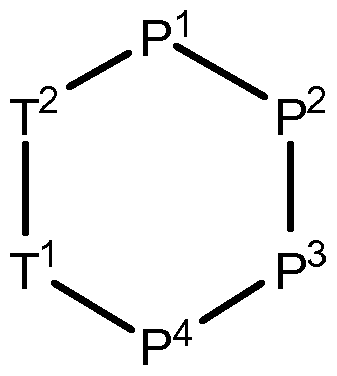
(I) wherein the single elements T or P are connected in either direction from the carbonyl (C=0) point of attachment to the nitrogen (N) of the next element and wherein
either
T1 is an -amino acid residue of one of the formulae


AA18 AA19 AA20

AA23 and
T2 is an -amino acid residue of one of the formulae AA11 to AA17, hereinabove, or an a-amino acid residue of one of the formulae

■NP^CH (R29) CO-; -NP^CH (R30 ) CO- ; or -NR^H (R31 ) CO- ;
an a-amino acid residue of one of the formulae

AA33 AA34
A is 0; NR16; S; SO; or S02;
X is OH; NH2; OR16; NRXR16 ; or NR17R18;
Y is NH2; OR16; NRXR16 ; or NR17R18;
R1, R2 and R3 are independently
H; CF3; lower alkyl; lower alkenyl; aryl-lower alkyl; or heteroaryl-lower alkyl;
R4, R5, R6, R7 and R8 are independently
H; F; CF3; lower alkyl; lower alkenyl; cycloalkyl; heterocycloalkyl ; aryl; heteroaryl; aryl-lower alkyl; heteroaryl-lower alkyl; - (CHR15) 0OR17;
- (CHR15) 0SR17; - (CHR15) 0NR17R18; - (CHR15) 0OCONR17R18;
- (CHR15) 0NR1CONR17R18 ; - (CHR15) 0NR1COR17; - (CHR15) 0COOR17;
- (CHR15) 0CONR17R18; - (CHR15) 0PO (OR1) 2; - (CHR15) oS02R17;
- (CHR15) oNR1S02R17; - (CHR15) oS02NR17R18; - (CRXR15) 0R35; or
- (CHR1) nO (CHR2)mR35; or
R4 and R2 taken together can form
=0; -(CHR15)p-; - (CH2) nO (CH2) m- ; - (CH2) nS (CH2) m- ; or
-CH2)nNR1 (CH2)m-; or
R4 and R5; R5 and R6; R6 and R7; R7 and R8; or R6 and R9 taken together can form:
-(CHR15)p-; - (CH2)nO(CH2)m-; - (CH2) nS (CH2) m- ; or
- (CH2)nNR1 (CH2)m-; or
R4 and R5 are independently X;
R9, R10, R11 and R12 are independently
H; F; CF3; lower alkyl; lower alkenyl; cycloalkyl; heterocycloalkyl ; aryl; heteroaryl; aryl-lower alkyl; heteroaryl-lower alkyl; - (CHR15) rOR17;
- (CHR15) rSR17; - (CHR15) rNR17R18; - (CHR15) rOCONR17R18;
- (CHR15) rNR1CONR17R18 ; - (CHR15) rNR1COR17; - (CHR15) 0COOR17;
- (CHR15) 0CONR17R18; - (CHR15) rPO (OR1) 2; - (CHR15) rS02R17;
- (CHR15) rNR1S02R17; - (CHR15) rS02NR17R18; - (CRXR15) 0R35; or
- (CHR1) rO (CHR1) 0R35; or
and R12 taken together can form
=0; or =NR1;
and R14 are independently
H; F; CI; Br; CF3; OCF3; OCHF2; CN; N02; lower alkyl; lower alkenyl; aryl; heteroaryl; aryl-lower alkyl; heteroaryl-lower alkyl; - (CHR15) 0OR17;
- (CHR15) 0SR17; - (CHR15) 0NR17R18; - (CHR15) 0OCONR17R18;
- (CHR15) 0NR1CONR17R18 ; - (CHR15) 0NR1COR17; - (CHR15) 0COOR17;
- (CHR15) 0CONR17R18; - (CHR15) 0PO (OR1) 2; - (CHR15) oS02R17;
- (CHR15) oNR1S02R17; - (CHR15) oS02NR17R18; - (CRXR15) 0R35; or
- (CHR1) rO (CHR1) 0R35;
is H; F; CF3; lower alkyl; lower alkenyl; cycloalkyl; heterocycloalkyl; cycloalkyl-lower alkyl;
heterocycloalkyl-lower alkyl; aryl; heteroaryl;
aryl-lower alkyl; heteroaryl-lower alkyl; -(CHR1)0OR17
- (CHR1) 0SR17; - (CHR1) 0NR17R18; - (CHR1) 0NC (=NR19) NR17R18;
- (CHR1) oCOOR17; - (CHR1) 0CONR17R18; - (CHR1) oS02R17; or
- (CHR1) oS02NR17R18;
is H; CF3; lower alkyl; lower alkenyl; cycloalkyl;
heterocycloalkyl; cycloalkyl-lower alkyl;
heterocycloalkyl-lower alkyl; aryl; heteroaryl;
aryl-lower alkyl; heteroaryl-lower alkyl; cycloalkyl- aryl; heterocycloalkyl-aryl ; cycloalkyl-heteroaryl ; heterocycloalkyl-heteroaryl ; aryl -cycloalkyl ;
aryl-heterocycloalkyl ; heteroaryl-cycloalkyl ;
heteroaryl-heterocycloalkyl ;
- (CHR1) 0OR17; - (CHR1) 0SR17; - (CHR1) 0NR17R18; - (CHR1) 0COR17;
- (CHR1) oCOOR17; - (CHR1) 0CONR17R18; or - (CHR1) oS02R17;
R17, R18, R19 and R20 are independently
H; lower alkyl; lower alkenyl; lower alkoxy; cycloalkyl; heterocycloalkyl ; cycloalkyl-lower alkyl; heterocycloalkyl-lower alkyl; aryl; heteroaryl;
aryl-lower alkyl; heteroaryl-lower alkyl; cycloalkyl- aryl; heterocycloalkyl-aryl ; cycloalkyl-heteroaryl ; heterocycloalkyl-heteroaryl ; aryl -cycloalkyl ; aryl-heterocycloalkyl; heteroaryl-cycloalkyl; or heteroaryl-heterocycloalkyl; or
the structural elements -NR17R18 and -NR19R20 can
independently form:
heterocycloalkyl; aryl-heterocycloalkyl; or
heteroaryl-heterocycloalkyl ;
or a group of one of the formulae

C5 C6 C7 C8
Z and Z' are independently
-CR39; or N;
R21, R22, R23 and R24 are independently
H; F; CF3; lower alkyl; lower alkenyl; cycloalkyl; heterocycloalkyl ; aryl; heteroaryl; aryl-lower alkyl; heteroaryl-lower alkyl; - (CHR1) 0OR17; - (CHR1) 0SR17;
- (CHR1) 0NR2R17; - (CHR1) 0OCONR2R17; - (CHR1) 0NR2CONR3R17 ;
- (CHR1) 0NR2COR17; - (CHR1) 0COOR17; - (CHR1) 0CONR2R17;
- (CHR1) 0PO (OR2) 2; - (CHR1) oS02R17; - (CHR1) oNR2S02R17;
- (CHR1) oS02NR2R17; - (CRXR2) 0R38; or - (CHR1) nO (CHR2) mR38;
R25 and R26 are independently
H; F; CF3; lower alkyl; lower alkenyl; cycloalkyl; heterocycloalkyl; aryl; heteroaryl; aryl-lower alkyl; heteroaryl-lower alkyl; - (CHR1) rOR17; - (CHR1) rSR17;
- (CHR1) rNR2R17; - (CHR1) rOCONR2R17; - (CHR1) rNR2CONR3R17 ;
- (CHR1) rNR2COR17; - (CHR1) 0COOR17; - (CHR1) 0CONR2R17;
- (CHR1) rPO (OR2) 2; - (CHR1) rS02R17; - (CHR1) rNR2S02R17;
- (CHR1) rS02NR2R17; - (CRXR2) 0R38; or - (CHR1) rO (CHR2) 0R38; R27 and R28 are independently
H; F; CI; Br; CF3; OCF3; OCHF2; CN; N02; lower alkyl; lower alkenyl; aryl; heteroaryl; aryl-lower alkyl; heteroaryl-lower alkyl; - (CHR1) 0OR17; - (CHR1) 0SR17;
- (CHR1) 0NR2R17; - (CHR1) 0OCONR2R17; - (CHR1) 0NR2CONR3R17 ;
- (CHR1) 0NR2COR17; - (CHR1) 0COOR17; - (CHR1) 0CONR2R17;
- (CHR1) 0PO (OR2) 2; - (CHR1) oS02R17; - (CHR1) oNR2S02R17;
- (CHR1) oS02NR2R17; - (CRXR2) 0R38; or - (CHR1) rO (CHR2) 0R38;
R29 is H; alkyl; alkenyl; cycloalkyl-lower alkyl;
heterocycloalkyl-lower alkyl; - (CHR4) 0OR17;
- (CHR4) 0SR17; or - (CHR4) rNR17R18;
R30 is - (CRXR4) nR35 - (CH2)nO(CH2)mR35; - (CH2) nS (CH2) mR35; or
- (CH2)nNR1 (CH2)mR35;
R31 is alkyl; alkenyl; - (CR1R15) qNR17R18; - (CR1R15) qNR2R16;
-
 qNR16COR17; - (CH2) qC (=NR15) NR17R:
- (CH2)qC (=NOR19)NR17R18; - (CH2)qC (=NNR17R18) NR19R2 !;
- (CR1R15) qNR2C (=NR19)NR17R18; - (CR^15) qN=C (NR17R18 ) NR19R20 ;
- (CR^15) qOR17; - (CR^15) qOR32; - (CR^15) qSR17;
- (CR^15) qS02R17; - (CR^15) qNR16S02R17; - (CR^15) qS02NR2R16;
- (CRXR15) qNR16S02NR17R18; - (CRV5) qS02NR17R18;
- (CR1R15)qPO(OR2)2; - (CH2)nO(CH2)mNR17R18;
- (CH2)nO(CH2)mC (=NR19)NR17R18; - (CH2) nO (CH2) mC (=NOR19) NR17R
- (CH2) nO (CH2)mC (=NNR17R18)NR19R20;
- (CH2)nO(CH2)mNR1C (=NR19) NR17R18 ;
-
 (NR17R18)NR19R20; - (CH2)nS (CH2) mNR17R18;
- (CH2)riS (CH2)mC (=NR19)NR17R18; - (CH2)nS (CH2 ) mC (=NOR19) NR17R
- (CH2)nS (CH2)mC (=NNR17R18)NR19R20;
- (CH2)nS (CH^NR^ (=NR19)NR17R18;
- (CH2)nS (CH2)mN=C (NR17R18)NR19R20; - (CR^15) qCOOR17;
- (CRV5) qCONR17R18; or - (CRV5) qCOR33;
R32 is -COR29; -COR30; -CO (CR1R15) 0R17/ -CO (CR1R15) 0OR16;
-CO (CR1R15) 0NR17R18; -CO (CR1R15) 0NR2R16; -CO (CR1R29) NR17R18 ; -CO (CR1R30)NR17R18; -CO (CR1R34) NR17R18; -CO (CHR1 ) 0CONR17R18 ;
-CO (CHR1) 0CONR2S02R17; -CO (CR 5) oNR2S02R17;
-CONR1 (CHR17) nNR2 (CHR15)mR16; -CO (CHR17) nO (CHR15) mR16;
-CONR1 (CHR17)nO(CHR15)mR16; -S02R29; -S02R30;
-S02 (CR^15) 0R17; or -S02 (CRXR15) 0NR17R18;
R33 is -NRXC (R2) (R29) COOR17; -NRXC (R2) (R29) CONR17R18;
-NRXC (R2) (R30)COOR17; -NRXC (R2) (R30 ) CONR17R18 ;
-NR1C (R2) (R34)COOR17; or -NRXC (R2 ) (R34 ) CONR17R18 ;
R34 is - (CR1R15) qNR17R18; - (CH2) qC (=NR19) NR17R18;
- (CH2)qC (=NOR19)NR17R18; - (CH2)qC (=NNR17R18) NR19R20;
- (CR1R15)qNR2C (=NR1 )NR17R18; - (CR1R15)qN=C (NR17R18 ) NR19R20 ;
- (CR^15) qOR16; - (CRXR15) qSR17; - (CRXR15) qS02R17;
- (CRXR15) qNR16S02R17; - (CRXR15) qSOz R^16;
- (CRXR15) qS02NR17R18; - (CRXR15) qNR2S02NR17R18;
(CRiRi5)qPO(ORi)2; - (CH2)nO(CH2)mNR1/Rld;
( CH2 ) nO ( CH2 ) mC ( =NRX ) NR17R18 ; - ( CH2 ) nO ( CH2 ) mC (=NOR19 ) NR17R
( CH2 ) nO ( CH2 ) mC ( =NNR17R18) NR19R2 ! /
( CH2 ) nO ( CH2 ) mNR16C ( =NRX 9 ) NR17R18 ;
(CH2) nO (CH2)mN=C (NR17R18)NR19R20;
(CH2)nS (CH2)mNR17R18/ - (CH2)nS (CH2) mNR17R18/
(CH2)nS (CH2)mC (=NR1 )NR17R18; - (CH2)nS (CH2)mC (=NOR19) NR17R: (CH2)nS (CH2)mC (=NNR17R18)NR19R20;
(CH2)nS (CH2)mNR16C (=NR19) R17R18/
(CH2)nS (CH2)mN=C (NR17R18)NR1 R20; - (CRV5) qCOOR17; or (CR^15)„CONR17R18;


H; F; CI; Br; CF3; OCF3; OCHF2; CN; N02; lower alkyl; lower alkenyl; aryl; heteroaryl; aryl-lower alkyl; heteroaryl-lower alkyl; -(CH2)0R38; -(CH2)0OR17;
-0(CH2)oR38; -(CH2)0SR17; - (CH2) 0NR17R18; - (CH2) oOCONR^R1
- (CH2) 0NR1CONR17R18 ; - (CH2) oNR^OR17; - (CH2) 0COOR17;
- (CH2)0CONR17R18; - (CH2) 0PO (OR1) 2; - (CH2) ooSk02R16; or

R38 is an aryl group of the formula

R39, R40 and R41 are independently
H; F; CI; Br; OH; NH2; N02; CN; CF3; OCHF2; OCF3;
-NRXR17 ; - (CH2) oCOOR17; - (CH2) QCO R^17; lower alkyl; lower alkoxy; or lower alkenyl;
R is H; lower alkyl; or aryl-lower alkyl; n and m are independently an integer of 0-5 with the proviso that n+m ≤ 6;
o is 0-4; p is 2-6; q is 1-6; r is 1-3; and pharmaceutically acceptable salts thereof.
Each single group "Rx" with the same index-number x for x = 1 - 42 in a specific formula is independently selected and therefore these groups are the same or different. As used in this description, the term "alkyl", taken alone or in combinations (i.e. as part of another group, such as "arylalkyl") designates saturated, straight-chain or branched hydrocarbon radicals having up to 12, preferably up to 8, carbon atoms and may be optionally substituted. In accordance with a preferred embodiment of the present invention "alkyl" is "lower alkyl" which designated alkyl groups having up to 6 carbon atoms .
The term "alkenyl", taken alone or in combinations, designates straight chain or branched hydrocarbon radicals having up to 12, preferably up to 8, carbon atoms and containing at least one or, depending on the chain length, up to four olefinic double bonds. Such alkenyl moieties are optionally substituted and can exist as E or Z configura- tions, both of which are part of the invention.
The term "cycloalkyl", taken alone or in combinations, refers to a saturated or partially unsaturated alicyclic moiety having from three to ten carbon atoms and may be optionally substituted. Examples of this moiety include, but are not limited to, cyclohexyl, norbonyl, decalinyl and the like.
The term "heterocycloalkyl", taken alone or in combi- nations, describes a saturated or partially unsaturated mono- or bicyclic moiety having from three to nine ring carbon atoms and one or more ring heteroatoms selected from nitrogen, oxygen or sulphur. This term includes, for
example, morpholino, piperazino, azetidinyl, pyrrolidinyl , tetrahydrofuranyl , piperidinyl, octahydro-lH-indolyl, 1,7- diazaspiro [ 4.4 ] nonane and the like. Said heterocycloalkyl ring(s) may be optionally substituted.
The term "aryl", taken alone or in combinations, designates aromatic carbocyclic hydrocarbon radicals containing one or two six-membered rings, such as phenyl or naphthyl, which may be optionally substituted by up to three substituents such as Br, CI, F, CF3, OCF3, OCHF2, N(CH3)2, N02, lower alkyl, lower alkenyl, phenyl or phenoxy.
The term "heteroaryl", taken alone or in combinations, designates aromatic heterocyclic radicals containing one or two five- and/or six-membered rings, at least one of them containing up to three heteroatoms selected from the group consisting of 0, S and N and whereby the heteroaryl radicals or tautomeric forms thereof may be attached via any suitable atom. Said heteroaryl ring(s) are optionally substituted, e.g. as indicated above for "aryl".
The term "arylalkyl", as used herein, refers to an alkyl group as defined above, substituted by an aryl group, as defined above. Examples of arylalkyl moieties include, but are not limited to, benzyl, 1-phenylethyl, 2-phenylethyl, 3-phenylpropyl , 2-phenylpropyl and the like. Similarly, the term "aryl-lower alkyl", refers to the above moiety but wherein the alkyl group is a "lower alkyl" group. The term "heteroarylalkyl", as used herein, refers to an alkyl group as defined above, substituted by a heteroaryl group, as defined above. Analogously the term "heteroaryl-
lower alkyl", refers to the above moiety but wherein the alkyl group is a "lower alkyl" group.
The term "aryl-cycloalkyl", as used herein, refers to a cycloalkyl group as defined above, substituted or annelated by an aryl group, as defined above. Examples of aryl- cycloalkyl moieties include, but are not limited to, phenylcyclopentyl , 2, 3-dihydro-lH-indenyl, 1, 2, 3, 4-tetra- hydronaphthalenyl and the like.
The term "aryl-heterocycloalkyl", as used herein, refers to a heterocycloalkyl group as defined above, substituted or annelated by an aryl group, as defined above. Examples of aryl-heterocycloalkyl moieties include, but are not limited to, indolinyl, 1, 2, 3, 4-tetrahydroquinolinyl and the like.
The term "heteroaryl-cycloalkyl", as used herein, refers to a cycloalkyl group as defined above, substituted or annelated by a heteroaryl group, as defined above. Examples of heteroaryl-cycloalkyl moieties include, but are not limited to, 5, 6, 7, 8-tetrahydroquinolinyl and the like.
The term "heteroaryl-heterocycloalkyl", as used herein, refers to a heterocycloalkyl group as defined above, sub- stituted or annelated by a heteroaryl group, as defined above. Examples of heteroaryl-heterocycloalkyl moieties include, but are not limited to, 4- (thiazol-2-yl) pipera- zinyl, 5, 6, 7, 8-tetrahydro-l, 6-naphthyridinyl and the like. The terms "cycloalkyl-aryl", "heterocycloalkyl-aryl", "cycloalkyl-heteroaryl", and "heterocycloalkyl-heteroaryl", as used herein, are defined analogously to the terms "aryl- cycloalkyl", "aryl-heterocycloalkyl", "heteroaryl-cyclo-
alkyl" and "heteroaryl-heterocycloalkyl", as defined above, but connected in the opposite direction, e.g. instead of 4- (thiazol-2-yl) piperazinyl the term refers to 2- (piperazin- 1-yl) thiazolyl and the like.
The terms "alkoxy" and "aryloxy", taken alone or in combinations, refer to the groups of -O-alkyl and -O-aryl respectively, wherein an alkyl group or an aryl group is as defined above.
The term "optionally substituted" is intended to mean that a group, such as but not limited to alkyl, alkenyl, cycloalkyl, aryl, heteroaryl, heterocycloalkyl , alkoxy and aryloxy may be substituted with one or more substituents independently selected from but not limited to, e.g., amino (-N¾) , dimethylamino, nitro (-NO2) , halogen (F, CI, Br, I), CF3, cyano (-CN) , hydroxy, methoxy, oxo (=0) , carboxy, phenyl, phenyloxy, benzyl, sulfonic acid, sulfate, phos- phonic acid, phosphate, or phosphonate etc.
The term "lower" designates radicals and compounds having up to 6 carbon atoms. Thus, for example, the term "lower alkyl" designates saturated, straight-chain, or branched hydrocarbon radicals having up to 6 carbon atoms, such as methyl, ethyl, n-propyl, isopropyl, n-butyl, s-butyl, isobutyl, t-butyl, and the like.
The peptidomimetics of the present invention can also be diastereomers (e.g. epimers) of the compounds of formula (I) based on chiral centers where the absolute stereochemistry is not explicitly defined in the above description. These stereoisomers can be prepared by a modification of the
process described below in which epimers or enantiomers of chiral starting materials are used. In case of ambiguous stereochemistry in the above description each single epimer is part of the present invention as well as a mixture of both.
A further embodiment of the present invention may also include compounds, which are identical to the compounds of formula (I), except that one or more atoms are replaced by an atom having an atomic mass number or mass different from the atomic mass number or mass usually found in nature, e.g. compounds enriched in 2H (D) , 3H, X1C, 14C, 127I etc. These isotopic analogs and their pharmaceutical salts and formulations are considered useful agents in the therapy and/or diagnostic, for example, but not limited to, where a fine-tuning of in vivo half-life time could lead to an optimized dosage regimen.
A particular embodiment of the invention relates to
derivatives of general formula (I),
wherein specifically
R16 is H; CF3; lower alkyl; lower alkenyl; cycloalkyl;
heterocycloalkyl ; cycloalkyl-lower alkyl;
heterocycloalkyl-lower alkyl; aryl; heteroaryl;
aryl-lower alkyl; heteroaryl-lower alkyl; - (CHR1) sOR17;
- (CHR1) SSR17; - (CHR1) SNR17R18; - (CHR1) 0COR17;
- (CHR1) oCOOR17; - (CHR1) 0CONR17R18; or - (CHR1) oS02R17;
R17, R18, R19 and R20 are independently
H; lower alkyl; lower alkenyl; lower alkoxy;
cycloalkyl; heterocycloalkyl; cycloalkyl-lower alkyl; heterocycloalkyl-lower alkyl; aryl; heteroaryl;
aryl-lower alkyl; or heteroaryl-lower alkyl; or the structural elements -NR17R18 and -NR19R20 can
independently form:
heterocycloalkyl ; aryl-heterocycloalkyl ; or
heteroaryl-heterocycloalkyl;
or a group of one of the above formulae CI to C8;
R31 is alkyl; alkenyl; - (CR1R15) qNR17R18; - (CR1R15) qNR2R16;
- (CR^15) qNR16COR17; - (CH2) qC (=NR15) NR17R18;
- (CR1R15) qNR2C (=NR19) NR17R18; - (CR^15) qOR17; - (CR^15) qSR17;
- (CR^15) qS02R17; - (CR^15) qNR16S02R17; - (CR^15) qS02NR2R16;
- (CR'R^qSC^NR^R18; - (CH2) nO (CH2) mNR17R18;
- (CH2)nO(CH2)mC(=NR19)NR17R18;
- (CH2)nO(CH2)mNR1C(=NR19)NR17R18; - (CH2)nS (CH2) mNR17R18; - (CH2)nS (CH2)mNR1C (=NR19)NR17R18; - (CR^15) qCONR17R18; or
- (CR^15) qCOR33;
s is 2-4
with all other elements of formula (I) as described above. In a further particular embodiment of the invention the elements of general formula (I) are defined as follows T1 is DPro; DPip; DTic; DTiq; DOic; DAzt; DPro ( (3R) OH) ;
DPro ( (35) OH) ; DPro ( (3R) NH2 ) ; DPro ( (35) NH2) ;
DPro ( (4i¾) OH) ; DPro ( ( 45) OH) ; DPro ( ( J¾) NH2 ) ;
DPro ( (45) NH2) ; DPro ( (45) NHBz ) ; or DMor;
T2 is Thr; alloThr; Ser; hSer; Pro((3i?)OH); Pro ((35) OH);
Hyp(Bn); (45) -Hyp (Bn) ; Pro ( ( 3R) NH2 ) ; Pro ( (35) NH2) ;
Pro ( (4i=?) NH2) ; Pro ( ( 45) NH2 ) ; Pro((45)F); Pro ( ( 45) NHBz ) ; or Mor ; or
when T1 is DPro ( (3R) OH) ; DPro ( ( 35) OH) ; DPro ( (3R) H2 ) ;
DPro ( (35)NH2) ; DPro ( ( J¾) NH2 ) ; DPro ( (45) NH2 ) ;
Pro ( (45) NHBz) ; or DMor
T can in addition be
Pro; Pip; Tic; Tiq; Oic; or Azt;
and P4 are independently
Ala; Arg; Asn; Asp; Cit; Cys; Glu; Gin; Gly; His; lie; Leu; Lys; Met; Orn; Phe; Pro; Ser; Thr; Trp; Tyr; Val; Abu; Agb; Agp; Ala(tBu); Ala(cPr); Ala(2Furyl);
Ala(3Furyl); Ala(Ppz); Ala(2Quin); Ala(3Quin);
Ala(4Quin); Azt; Bbta; Bip; Cha; Chg; Dab; Dab (Ac) ; Dab (cPr) ; Dab (iPr) ; Dab (4Me2NPhS02) ; Dab (MeOEtNCO) ; Dab (MePpzCO) ; Dab (MeS02) ; Dab (morphCO) ; Dab (INal) ;
Dab (2Nal) ; Dap; Dap (CONH2) ; Dap (MeOEt) ; Dap ( (MeOEt) 2) ; Deg; Gly(tBu); hArg; hCha; hCys; hHis; hLys; hPhe; hSer; hSer(Me); hTrp; hTyr; His (Me) ; His (Bn) ; Hyp (Bn) ; (45) -Hyp (Bn) ; Hyp(4BrBn); Hyp ( 3CNBn) ; Hyp ( 4CNBn) ;
Hyp(CONHPh); Hyp(Ph); Lys (Ac) ; Lys (Bz) ; Lys(cPr);
Lys(iPr); Lys (Me) ; Lys (Nic) ; Lys((5£)OH); Lys (40xa) ; Met(02); INal; 2Nal; Nle; Nle(60Bn); OctG; Oic;
Orn(cPr); Orn(iPr); 2Pal; 3Pal; 4Pal; Phe(2Cl);
Phe(3Cl); Phe(4Cl); Phe(3,4Cl2); Phe (2F) ; Phe(3F);
Phe(4F); Phe(4CN); Phe(4CF3); Phe(4COOMe); Phg; Pip; Pro((4£)Bn); Pro((45)F); Pro ( (45) cHex) ; Pro(5,5Me2); Ser(Bn); Ser (Me); Thi; alloThr; Thr (Bn) ; Thz;
Thz(5,5Me2); Tic; Tic(70H); Trp(7Aza); Trp(5Br);
Trp(6Br); Trp(6CF3); Trp(5Cl); Trp(6Cl); Trp(5,6Cl); Trp(50H); Tyr (Bn) ; Tyr (Me); Tyr ( 4MeOCOBn) ; Tyr(Ph); Tyr (40HPh) ; Tza;
Gln(Alkl); Gln(Alk2); Gln(Alk3); Gln(Alk4); Gln(Alk5); Gln(Alk6); Gln(Alk7); Gln(Alk8); Gln(Alk9);
Gln(AlklO); Gln(Alkll); Gln(Alkl2); Gln(Alkl3);
Gln(Alkl4); Gln(Alkl5); Gln(Alkl6); Gln(Alkl7);
Gln(Alkl8); Gln(Alkl9); Gln(Alk20); Gln(Alk21);
Gln(Alk22); Gln(Alk23); Gln(Alk24); Gln(Alk25);
Gln(Alk26); Gln(Alk27); Gln(Alk28); Gln(Alk29);
Gin (Alk30); Gln(Alk31); Gln(Alk32); Gln(Alk33);
Gin (Alk34) ; Glu (cNl) ; Glu(cN2); Glu(cN3); Glu(cN4);
Glu (cN5) ; Glu (cN6) ; Glu(cN7); Glu(cN8); Glu(cN9);
Glu (cNIO) ; Glu(cNll) ; Glu(cN12); Glu(cN13); Glu(cN14)
Glu (cN15) ; Glu(cN16) ; Glu(cN17); Lys (Arl); Lys(Ar2);
Lys (Ar3) ; Lys (Ar4) ; Lys(Ar5); Lys (Ar6) ; Lys(Ar7);
Lys (Ar8) ; Lys (Ar9) ; Lys (ArlO); Lys (Aril); Lys(Arl2);
Orn (Arl) ; Orn (Ar2) ; Orn(Ar3); Orn(Ar4); Orn(Ar5);
Orn (Ar6) ; Orn (Ar7) ; Orn(Ar8); Orn(Ar9); Orn (ArlO);
Orn (Aril) ; Orn(Arl2) ; Dab (Arl) ; Dab (Ar2) ; Dab (Ar3) ;
Dab (Ar4) ; Dab (Ar5) ; Dab(Ar6); Dab(Ar7); Dab(Ar8);
Dab (Ar9) ; Dab (ArlO) ; Dab (Aril); Dab(Arl2); Dab (SI) ;
Dab (S2) ; Dab (S3); Dab(S4); Dab(S5); Dab(S6); Dab(S7);
Dab (S8) ; Dab(S9); Dab(SlO); Dab(Sll); Dab(S12);
Dab (S13) ; Dab (S14) ; Dab(S15); Dab (SI 6); Dab(S17);
Dab (S18) ; Dab (Al ) ; Dab (A2 ) ; Dab (A3 ) ; Dab (A4 ) ; Dab (A5 )
Dab (A6) ; Dab(A7); Dab(A8); Dab(A9); Dab(AlO);
Dab (All) ; Dab (A12) ; Dab(A13); Dab(A14); Dab(A15);
Dab (A16) ; Dab (A17) ; Dab(A18); Dab(A19); Dab(A20);
Dab (A21) ; Dab (A22) ; Dab(A23); Dab(A24); Dab(A25);
Dab (A26) ; Dab (A27) ; Dab(A28); Dab(A29); Dab(A30);
Dab (A31) ; Dab (A32) ; Dab(A33); Dab(A34); Dab(A35);
Dab (A36) ; Dab (A37) ; Dab(A38); Dab (A39); Dab(A40);
Dab (A41) ; Dab (A42) ; Dab(A43); Dab(A44); Dab(A45);
Dab (A46) ; Dab (A47) ; Dab(A48); Dab(A49); Dab(A50);
Dab (A51) ; Dab (A52) ; Dab(A53); Dab(A54); Dab(A55);
Orn (Al) ; Orn(A2); Orn (A3); Orn(A4); Orn(A5); Orn(A6);
Orn (A7) ; Orn(A8); Orn(A9); Orn(AlO); Orn (All);
Orn (A12) ; Orn (A13) ; Orn(A14); Orn(A15); Orn(A16);
Orn (A17) ; Orn (A18) ; Orn(A19); Orn(A20); Orn(A21);
Orn (A22) ; Orn (A23) ; Orn(A24); Orn(A25); Orn(A26);
Orn (A27) ; Orn (A28) ; Orn(A29); Orn(A30); Orn(A31);
Orn (A32) ; Orn (A33) ; Orn(A34); Orn(A35); Orn(A36);
Orn A37); Orn(A38); Orn(A39); Orn(A40); Orn(A41)
Orn A42); Orn(A43); Orn(A44); Orn(A45); Orn(A46)
Orn A47); Orn(A48); Orn(A49); Orn(A50); Orn(A51)
Orn A52); Orn(A53); Orn(A54); Orn(A55); Asn(Alkl); Asn Alk2); Asn(Alk3); Asn(Alk4); Asn(Alk5); Asn(Alk6); Asn Alk7); Asn(Alk8); Asn(Alk9); Asn(AlklO);
Asn Alkll) Asn (Alkl2) Asn (Alkl3) Asn (Alkl4)
Asn Alkl5) Asn (Alkl6) Asn (Alkl7) Asn (Alkl8)
Asn Alkl9) Asn (Alk20) Asn (Alk21) Asn (Alk22)
Asn Alk23) Asn (Alk24) Asn (Alk25) Asn (Alk26)
Asn Alk27) Asn (Alk28) Asn (Alk29) Asn (Alk30)
Asn Alk31) Asn (Alk32) Asn (Alk33) Asn (Alk34)
Asp cNl); Asp(cN2); Asp(cN3); Asp(cN4); Asp(cN5);
Asp cN6) ; Asp(cN7); Asp(cN8); Asp(cN9); Asp(cNlO); Asp cNll); Asp(cN12); Asp(cN13); Asp(cN14); Asp(cN15); Asp cN16); Asp(cN17); Dap(Arl); Dap(Ar2); Dap(Ar3); Dap Ar4); Dap(Ar5); Dap(Ar6); Dap(Ar7); Dap(Ar8);
Dap Ar9) ; Dap(ArlO); Dap (Aril); Dap(Arl2); Dap (SI); Dap S2); Dap (S3); Dap(S4); Dap(S5); Dap(S6); Dap(S7); Dap S8); Dap(S9); Dap(SlO); Dap(Sll); Dap(S12);
Dap S13); Dap(S14); Dap(S15); Dap (SI 6); Dap(S17);
Dap S18); Dap(Al); Dap(A2); Dap (A3); Dap(A4); Dap(A5); Dap A6) ; Dap(A7); Dap(A8); Dap(A9); Dap(AlO);
Dap All); Dap (A12) ; Dap (A13) ; Dap (A14) ; Dap (A15) ;
Dap A16) ; Dap (A17) ; Dap (A18) ; Dap (A19) ; Dap (A20) ;
Dap A21 ) ; Dap (A22) ; Dap (A23) ; Dap (A24) ; Dap (A25) ;
Dap A26) ; Dap (A27) ; Dap (A28) ; Dap (A29) ; Dap (A30) ;
Dap A31) ; Dap (A32) ; Dap (A33) ; Dap (A34) ; Dap (A35) ;
Dap A36) ; Dap (A37) ; Dap (A38) ; Dap (A39) ; Dap (A40) ;
Dap A41 ) ; Dap (A42) ; Dap (A43) ; Dap (A44) ; Dap (A45) ;
Dap A46) ; Dap (A47) ; Dap (A48) ; Dap (A49) ; Dap (A50) ;
Dap A51) ; Dap (A52) ; Dap (A53) ; Dap (A54) ; or Dap (A55) ;
Έ>ζ is DArg; DhArg; DAgb; Lys; DOrn; DCit; DThr; DDab; DDab;
DPhe; DTrp; DHis; DTyr; D2Pal; D3Pal; D4Pal;
DLys(Arl); DLys(Ar2); DLys(Ar3); DLys(Ar4); DLys(Ar5);
DLys(Ar6); DLys(Ar7); DLys(Ar8); DLys (Ar9) ; DLys(ArlO);
DLys(Arll); DLys(Arl2); DOrn(Arl); DOrn(Ar2); DOrn(Ar3)
DOrn(Ar4); DOrn(Ar5); DOrn(Ar6); DOrn(Ar7); DOrn(Ar8);
DOrn(Ar9); DOrn(ArlO); DOrn(Arll); DOrn(Arl2);
DDab(Arl); DDab(Ar2); DDab(Ar3); DDab(Ar4); DDab(Ar5);
DDab(Ar6); DDab(Ar7); DDab(Ar8); DDab(Ar9); DDab(ArlO);
DDab(Arll); DDab(Arl2); DDap(Arl); DDap(Ar2); DDap(Ar3)
DDap(Ar4); DDap(Ar5); DDap(Ar6); DDap(Ar7); DDap(Ar8);
DDap(Ar9); DDap(ArlO); DDap(Arll); or DDap(Arl2);
and pharmaceutically acceptable salts thereof. In an even further particular embodiment of the invention the elements of general formula (I) are defined as follows T1 is DPro; DPip; DTic; DTiq; DOic; DAzt; DPro ( (3R) OH) ;
DPro ( (35) OH) ; DPro ( ( 3R) NH2 ) ; DPro ( (35) H2 ) ;
DPro ( (4i¾) OH) ; DPro ( ( 45) OH) ; DPro ( ( J¾) NH2 ) ;
DPro ( (45) NH2) ; DPro ( (45) NHBz ) ; or DMor;
T2 is Thr; alloThr; Ser; hSer; Pro ( ( 3R) OH) ; Pro ( ( 35) OH) ;
Hyp(Bn); (45) -Hyp (Bn) ; Pro ( ( 3R) N¾ ) ; Pro ( (35) N¾) ;
Pro ( ( 4f?) H2 ) ; Pro ( (45) NH2) ; Pro((45)F); Pro ( (45) NHBz) ; or Mor ; or
when T1 is DPro ( (3R) OH) ; DPro ( ( 35) OH) ; DPro ( (3R) H2 ) ;
DPro ( (35)NH2) ; DPro ( (4i¾) NH2) ; DPro ( (45) NH2 ) ;
Pro ( (45) NHBz) ; or DMor
then T2 can in addition be
Pro; Pip; Tic; Tiq; Oic; or Azt;
P1 is lie; Nle; Leu; Val; Chg; Cha; Abu; Ala; Ala(cPr);
Trp; INal; 2Nal; Phe; Tyr; 2 Pal; 3 Pal; 4 Pal; Thr; His;
Arg; hArg; Agb; or Pip;
Έ>ζ is DArg; DhArg; DAgb; Lys; DOrn; DCit; DThr; DDab; DDap;
DPhe; DTrp; DHis; DTyr; D2Pal; D3Pal; or D4Pal;
P3 is Arg; hArg; Agb; Agp; Lys; Orn; Orn(A41); Cit; Thr;
Dab; Dap; Phe; Trp; His; Tyr; or lie
P4 is Trp; His; Phe; INal; 2Nal; Tyr; Leu; lie; Arg; hArg;
Lys; Dab; Dap; or Orn;
and pharmaceutically acceptable salts thereof.
In an even further specific embodiment of the invention the elements of general formula (I) are defined as follows
T1 is DPro; DPip; DTic; DPro ( (45) OH) ; DPro ( (4.R) NH2) ; or
DPro ( (4S)NH2) ;
T2 is Thr; alloThr; Ser; hSer; Pro ((35) OH); (45) -Hyp (Bn) ;
Pro ( (4.R) NH2) ; Pro ( (45) NH2) ; Pro((45)F); Pro ( ( 45) NHBz ) ; or Mor;
P1 is lie; Nle; Leu; Val; Chg; Cha; Abu; Ala; Trp; INal;
Tyr; 3Pal; Thr; His; Arg; hArg; Agb; or Pip;
P2 is DArg; DLys; DOrn; DCit; DThr; DDab; DPhe; DTrp; DHis; or
D3Pal;
P3 is Arg; hArg; Agb; Agp; Lys; Orn; Orn(A41); Dab; Trp; or His;
P4 is Trp; His; Phe; INal; 2Nal; Tyr; lie; Arg; hArg; Lys;
Dab; or Orn;
and pharmaceutically acceptable salts thereof.
Hereinafter follows a list of abbreviations, corresponding to generally adopted usual practice of amino acids, which, or the residues of which, are suitable for the purposes of the present invention and referred to in this document: Ala L-Alanine
Arg L-Arginine
Asn L-Asparagine
Asp L-Aspartic acid
Cit L-Citrulline
Cys L-Cysteine
Glu L-Glutamic acid
Gin L-Glutamine
Gly Glycine
His L-Histidine
He L-Isoleucine
Leu L-Leucine
Lys L-Lysine
Met L-Methionine
Orn L-Ornithine
Phe L- Phenylalanine
Pro L-Proline
Ser L-Serine
Thr L-Threonine
rp L-Tryptophan
Tyr L-Tyrosine
Val L-Valine
Abu (S) - 2 -aminobutanoic acid
Agb (S) -2 -amino-4-guanidinobutanoic acid
Agp (S) -2 -amino-3-guanidinopropanoic acid
Ala (tBu) (S) -2 -amino-4 , 4-dimethylpentanoic acid
Ala (cPr) (S) -2 -amino-3- cyclopropylpropanoic acid
Ala (2Furyl) (S) -2 -amino-3- (furan-2-yl) propanoic acid
Ala (3Furyl) (S) -2 -amino-3- ( furan-3-yl ) propanoic acid
Ala (Ppz) (S) -2 -amino-3- (piperazin-l-yl) propanoic acid
Ala (2Quin) (S) -2 -amino-3- (quinolin-2-yl) propanoic acid
Ala (3Quin) (S) -2 -amino-3- (quinolin-3-yl ) propanoic acid
Ala (4Quin) (S) -2 -amino-3- (quinolin-4-yl) propanoic acid
Azt (S) -azetidine- 2-carboxylic acid
2 \
Bbta (5) -2-amino-3- (l-benzothiophen-3-yl) - propanoic acid
Bip (5) -2-amino-3- (4-biphenylyl) propanoic acid Cha (5) -2-amino-3-cyclohexylpropanoic acid
Dab (5) -2, 4-diaminobutanoic acid
Dab (Ac) (5) -4-acetamido-2-aminobutanoic acid
Dab (cPr) (5) -2-amino-4- (cyclopropylamino) butanoic acid
Dab (iPr) (5) -2-amino-4- (isopropylamino) butanoic acid
Dab (4Me2NPhS02: (5) -2-amino-4- (4- (dimethylamino) phenylsulfonamido) butanoic acid
Dab (MeOEtNCO) (5) -2-amino-4- (3- (2-methoxyethyl) ureido) - butanoic acid
Dab (MePpzCO) (5) -2-amino-4- (4-methylpiperazine-l-carbox- amido) butanoic acid
Dab(MeS02) (5) -2-amino-4- (methylsulfonamido) butanoic acid Dab (morphCO) (5) -2-amino-4- (morpholine-4-carboxamido) - butanoic acid
Dab (INal) (5) -2-amino-4- ( (5) -2-amino-3- (naphthalen-1- yl) -propanamido) butanoic acid
Dab(2Nal) (5) -2-amino-4- ( (5) -2-amino-3- (naphthalen-2- yl) -propanamido) butanoic acid
Dap (5) -2, 4-diaminopropanoic acid
Dap (CONH2) (5) -2-amino-3-ureidopropanoic acid
Dap (MeOEt) (5) -2-amino-3- (2-methoxyethylamino) propanoic acid
Dap ( (MeOEt) 2) (5) -2-amino-3- (bis (2-methoxyethyl) amino) - propanoic acid
Deg 2-amino-2-ethylbutanoic acid
Gly (tBu) (5) -2-amino-3, 3-dimethylbutanoic acid
hArg (5) -2-amino-6-guanidinohexanoic acid
hCha (5) -2-amino-4-cyclohexylbutanoic acid
hCys (5) -2-amino-4-mercaptobutanoic acid
hHis (5) -2-amino-4- ( lH-imidazol-5-yl ) butanoic acid
hLys (5) -2, 7-diaminoheptanoic acid
hPhe (5) -2-amino-4-phenylbutanoic acid
hSer (5) -2-amino-4-hydroxybutanoic acid
hSer (Me) (5) -2-amino-4-methoxybutanoic acid
hTrp (5) -2-amino-4- ( lH-indol-3-yl ) butanoic acid hTyr (5) -2-amino-4- (4-hydroxyphenyl) butanoic acid His (Me) (5) -2-amino-3- (l-methyl-lH-imidazol-5-yl) - propanoic acid
His (Bn) (5) -2-amino-3- (l-benzyl-lH-imidazol-5-yl) - propanoic acid
Hyp (Bn; (25, 4f?) - 4- (benzyloxy) pyrrolidine-2- carboxylic acid
(45) -Hyp (Bn; (25, 45) - 4- (benzyloxy) pyrrolidine-2- carboxylic acid
Hyp(4BrBn; (25, 4f?) - 4- (4-bromobenzyloxy) pyrrol idine-2 - carboxylic acid
Hyp (3CNBn; (25, 4f?) - 4- (3-cyanobenzyloxy) pyrrol idine-2 - carboxylic acid
Hyp (4CNBn; (25, 4f?) - 4- (4-cyanobenzyloxy) pyrrol idine-2 - carboxylic acid
Hyp (CONHPh) (25, 4f?) -4- (phenylcarbamoyloxy) pyrrolidine-2- carboxylic acid
Hyp (Ph) (25, 4f?) -4-phenoxypyrrolidine-2-carboxylic acid Lys (Ac) (5) -6-acetamido-2-aminohexanoic acid
Lys (Bz) (5) -2-amino-6-benzamidohexanoic acid
Lys ( cPr ) (5) -2-amino-6- (cyclopropylamino) hexanoic acid Lys (iPr) (5) -2-amino-6- (isopropylamino) hexanoic acid Lys (Me) (5) -2-amino-6- (methylamino) hexanoic acid
Lys (Nic) (5) -2-amino-6- (nicotinamido) hexanoic acid Lys ( (5R) OH) (25, 5R) -2, 6-diamino-5-hydroxyhexanoic acid Lys (40xa) (5) -2-amino-3- (2-aminoethoxy) propanoic acid Met (02) (S) -2-amino-4- (methylsulfonyl ) butanoic acid Mor ( 5) -morpholine-3-carboxylic acid
INal (5) -2-amino-3-naphthalen-l-ylpropanoic acid 2Nal (5) -2-amino-3-naphthalen-2-ylpropanoic acid Nle (5) -2-amino-hexanoic acid
Nle (60Bn) (5) -2-amino-6- (benzyloxy) hexanoic acid
OctG (5) -2-aminodecanoic acid
Oic (25, 3a5, 7a5) -octahydro-lH-indole-2- carboxylic acid
Orn ( cPr ) (5) -2 -amino- ■5- (cyclopropylamino) pentanoic acid Orn ( iPr ) (S) -2 -amino- ■5- (isopropylamino) pentanoic acid 2Pal (5) -2 -amino- ■3- (pyridine-2-yl) -propionic acid 3Pal (5) -2 -amino- ■3- (pyridine-3-yl ) -propionic acid 4Pal (5) -2 -amino- ■3- (pyridine-4-yl) -propionic acid Phe (2C1) (5) -2 -amino- ■3- (2-chlorophenyl) propanoic acid Phe (3C1) (5) -2 -amino- ■3- ( 3-chlorophenyl ) propanoic acid Phe (4C1) (5) -2 -amino- ■3- (4-chlorophenyl) propanoic acid Phe (3, 4C12 (5) -2 -amino- ■3- (3, 4-dichlorophenyl) propanoic acid
Phe (2F) (5) -2 -amino- ■3- (2-fluorophenyl) propanoic acid Phe (3F) (5) -2 -amino- ■3- ( 3-fluorophenyl ) propanoic acid Phe (4F) (5) -2 -amino- ■3- (4 -fluorophenyl) propanoic acid Phe (4CN) (5) -2 -amino- ■3- (4-cyanophenyl) propanoic ;acid Phe (4CF3) (5) -2 -amino- ■3- (4- (trifluoromethyl) )propanoic acid
Phe (4COOMe) (5) -2 -amino- ■3- (4- (methoxycarbonyl ) phenyl ) - propanoic acid
Phg (5) -2-amino-2-phenylacetic acid
Pip (5) -piperidine-2-carboxylic acid
Pro ( (4.R) Bn) (25, 4f?) -4-benzylpyrrolidine-2-carboxylic acid Pro ( (45) F) (25, 45) -4-fluoropyrrolidine-2-carboxylic acid Pro ( (45) cHex) (25, 45) -4-cyclohexylpyrrolidine-2-carboxylic acid
Pro ( (3£)NH2) (25, 3R) -3-aminopyrrolidine-2-carboxylic acid Pro ( (35)NH2) (25, 35) -3-aminopyrrolidine-2-carboxylic acid
Pro ( (4.R) NH2) (25, 4f?) -4-aminopyrrolidine-2-carboxylic acid Pro ( (45)NH2) (25, 45) -4-aminopyrrolidine-2-carboxylic acid Pro ( (45) NHBz) (25, 45) -4-benzamidopyrrolidine-2-carboxylic acid
Pro (5, 5Me2) (5) -3, 3-dimethylpyrrolidine-2-carboxylic acid Pro ( (3R) OH) (25, 3R) -3-hydroxypyrrolidine-2-carboxylic
acid
Pro ( (35) OH) (25, 35) -3-hydroxypyrrolidine-2-carboxylic acid Ser (Bn) (5) -2-amino-3- (benzyloxy) propanoic acid
Ser (Me) (5) -2-amino-3-methoxy-propanoic acid
Thi (5) -2-amino-3- (thiophen-2-yl) propanoic acid alloThr (25, 35) -2-amino-3-hydroxybutanoic acid
Thr (Bn) (25, 3R) -2 -amino- 3- (benzyloxy) butanoic acid Thz ( 4f?) -1, 3-thiazolidine-4-carboxylic acid
Thz (5, 5Me2) ( 4f?) -5, 5 -dimethyl -1 , 3-thiazolidine-4- carboxylic acid
Tic (35) -1,2,3, 4-Tetrahydroisoquinoline-3- carboxylic acid
Tic (70H) (35) -7-hydroxy-l , 2, 3, 4-tetrahydro- isoquinoline-3-carboxylic acid
Tiq (5) -1,2,3, 4-tetrahydroisoquinoline-l- carboxylic acid
Trp (7Aza) (R) -2 -amino- 3- (IH-pyrrolo [2, 3-b] pyridin-3-yl ) - propanoic acid
Trp(5Br) (5) -2-amino-3- (5-bromo-lH-indol-3-yl) - propanoic acid
Trp ( 6Br) (5) -2-amino-3- ( 6-bromo-lH-indol-3-yl) - propanoic acid
Trp (6CF3) (5) -2-amino-3- (6- (trifluoromethyl) -lfi-indol- 3-yl ) propanoic acid
Trp (5C1) (5) -2-amino-3- (5-chloro-lH-indol-3-yl) - propanoic acid
Trp (6C1) (S) -2-amino-3- (6-chloro-lH-indol-3-yl) - propanoic acid
Trp (5, 6C1) (5) -2-amino-3- (5, 6-dichloro-lH-indol-3-yl) - propanoic acid
Trp(50H) (5) -2-amino-3- (5-hydroxy-lH-indol-3-yl) - propanoic acid
Tyr (Bn) (5) -2 -amino- 3- (4- (benzyloxy) phenyl) propanoic acid
Tyr (Me) (5) -2-amino-3- (4-methoxyphenyl) propanoic acid Tyr (4MeOCOBn) (5) -2-amino-3- (4- (4- (methoxycarbonyl ) benzyloxy) phenyl ) -propanoic acid
Tyr(Ph) (5) -2-amino-3- (4-phenoxyphenyl) propanoic acid
Tyr (40HPh) (5) -2 -amino- 3- [4- (4-hydroxyphenoxy) phenyl] - propanoic acid
Tza (5) -2-amino-3- (thiazol-4-yl) propanoic acid
Gin (Alkl) (5) -2-amino-5-oxo-5- (2,2, 2-trifluoroethylamino) - pentanoic acid
Gin (Alk2) (5) -2-amino-5- (cyclopentylamino) -5-oxopentanoic acid
Gin (Alk3) (5) -2-amino-5- (cyclohexylamino) -5-oxopentanoic acid
Gin (Alk4) (5) -2-amino-5-oxo-5- ( tetrahydro-2H-pyran-4- ylamino) pentanoic acid
Gln(Alk5) (5) -2-amino-5- (2-hydroxyethylamino) -5-oxopentanoic acid
Gin (Alk6) (5) -2-amino-5- (2-methoxyethylamino) -5-oxopentanoic acid
Gin (Alk7) (5) -2-amino-5- (2-aminoethylamino) -5-oxopentanoic acid
Gin (Alk8) (5) -2-amino-5- (2- (dimethylamino) ethylamino) -5- oxopentanoic acid
Gln(Alk9) (S) -2-amino-5- ( (2-methoxyethyl) (methyl) amino) -5- oxopentanoic acid
Gln(AlklO) (S) -2-amino-5- ( (2- (dimethylamino) ethyl) (methyl) - amino) -5-oxopentanoic acid
Gln(Alkll) (5) -2-amino-5- (3-aminopropylamino) -5-oxopentanoic acid
Gin (Alkl2) (5) -2 -amino- 5- (3- (dimethylamino) propylamino) -5- oxopentanoic acid
Gln(Alkl3) (5) -2-amino-5- ( (3- (dimethylamino) propyl) (methyl) - amino) -5-oxopentanoic acid
Gin (Alkl4) (5) -5- (3-acetamidopropylamino) -2-amino-5- oxopentanoic acid
Gin (Alkl5) (5) -2-amino-5-oxo-5- (2- (pyrrolidin-l-yl) - ethylamino) pentanoic acid
Gln(Alkl6) (5) -2-amino-5- (2-morpholinoethylamino) -5- oxopentanoic acid
Gin (Alkl7) (5) -2-amino-5- (3-morpholinopropylamino) -5- oxopentanoic acid
Gin (Alkl8) (5) -2-amino-5- (1, 3-dihydroxypropan-2-ylamino) -5- oxopentanoic acid
Gin (Alkl9) (5) -2-amino-5- (4-hydroxy-3-
(hydroxymethyl) butylamino) -5-oxopentanoic acid Gin (Alk20) (5) -2-amino-5-oxo-5- (piperidin-4-ylmethylamino) - pentanoic acid
Gln(Alk21) (S) -2-amino-5- (methyl ( (tetrahydro-2H-pyran-4-yl) - methyl) amino) -5-oxopentanoic acid
Gin (Alk22) (25) -2-amino-5- (methyl (2- ( l-methylpyrrolidin-2- yl) ethyl) amino) -5-oxopentanoic acid
Gin (Alk23) (5) -2-amino-5-oxo-5- ( thiazol-2-ylmethylamino) - pentanoic acid
Gin (Alk24) (5) -2-amino-5- ( (l-methyl-lH-imidazol-4-yl) - methylamino) -5-oxopentanoic acid
Gln(Alk25) (5) -2-amino-5- (benzylamino) -5-oxopentanoic acid
Gin (Alk26) (5) -2 -amino-5- (4- (methylsuIfonyl ) benzylamino) -5- oxopentanoic acid
Gin (Alk27) (5) -2-amino-5-oxo-5- (pyridin-3-ylmethylamino) - pentanoic acid
Gln(Alk28) (5) -2-amino-5-oxo-5- (4- (trifluoromethyl) - benzylamino) pentanoic acid
Gin (Alk29) (5) -2-amino-5- (2-methoxybenzylamino) -5- oxopentanoic acid
Gin (Alk30) (5) -2-amino-5- ( ( 1-methyl-lH-benzo [d] imidazol-2- yl) methylamino) -5-oxopentanoic acid
Gin (Alk31) (5) -2-amino-5- ( (4-methyl-6- (trifluoromethyl) - pyrimidin-2-yl) -methylamino) -5-oxopentanoic acid Gin (Alk32) (5) -5- (2- ( lH-indol-3-yl ) ethylamino ) -2-amino-5- oxopentanoic acid
Gin (Alk33) (25) -2-amino-5- (2, 3-dihydro-lH-inden-l-ylamino) -5- oxopentanoic acid
Gin (Alk34) (25) -2-amino-5-oxo-5- (1,2,3, 4-tetrahydro- naphthalen-l-ylamino) pentanoic acid
Glu (cNl) (5) -2-amino-5- (azetidin-l-yl) -5-oxopentanoic acid Glu (cN2) (5) -2-amino-5-oxo-5- (pyrrolidin-l-yl) pentanoic
acid
Glu (cN3) (5) -2-amino-5-oxo-5- (piperidin-l-yl) pentanoic acid Glu (cN4) (5) -2-amino-5-morpholino-5-oxopentanoic acid
Glu (cN5) (5) -2-amino-5-oxo-5- (piperazin-l-yl) pentanoic acid Glu (cN6) (5) -2-amino-5- (4-methylpiperazin-l-yl) -5- oxopentanoic acid
Glu (cN7) (5) -2-amino-5- (4-hydroxypiperidin-l-yl) -5- oxopentanoic acid
Glu (cN8) (5) -2-amino-5- (4- (dimethylamino) piperidin-l-yl) -5- oxopentanoic acid
Glu (cN9) (25) -2 -amino-5- ( 7 -methyl- 1 , 7-diazaspiro[4.4]nonan- 1-yl) -5-oxopentanoic acid
Glu cNIO) (S) -2-amino-5- (indolin-l-yl) -5-oxopentanoic acid Glu cNll) (5) -2-amino-5- (5, 6-dihydro-l, 7-naphthyridin-7 (QH) yl ) -5-oxopentanoic acid
Glu cN12) (5) -2-amino-5- (3, 4-dihydro-l, 5-naphthyridin-l (2H) yl ) -5-oxopentanoic acid
Glu cN13 ) (5) -2 -amino- 5- ( 5 , 6-dihydroimidazo [l,2-a]pyrazin-
7 ( 8H) -yl ) -5-oxopentanoic acid
Glu cN14) (5) -5- (4- (lH-imidazol-l-yl) piperidin-l-yl) -2- amino-5-oxopentanoic acid
Glu cN15) (5) -5- (4- (lH-imidazol-2-yl) piperidin-l-yl) -2- amino-5-oxopentanoic acid
Glu cN16) (5) -2-amino-5- (1, 4-oxazepan-4-yl) -5-oxopentanoic acid
Glu cN17) (5) -2-amino-5- (4-methyl-l, 4-diazepan-l-yl) -5- oxopentanoic acid
Lys Arl) (5) -2-amino-6- (pyridin-2-ylamino) hexanoic acid Lys Ar2) (5) -2-amino-6- (pyrimidin-2-ylamino) hexanoic acid Lys Ar3) (5) -2 -amino- 6- (1,2, 4-triazin-3-ylamino) hexanoic acid
Lys Ar4) (5) -2-amino-6- (pyridin-2-ylmethylamino) hexanoic acid
Lys Ar5) (5) -2-amino-6- (pyrimidin-2-ylmethylamino) hexanoic acid
Lys Ar6) (5) -2-amino-6- (bis (pyrimidin-2-ylmethyl) amino) - hexanoic acid
Lys Ar7) (5) -2-amino-6- ( (l-methyl-lH-imidazol-2-yl) - methylamino) hexanoic acid
Lys Ar8) (5) -2 -amino- 6- ( (4 -methyl -4H-1, 2, 4-triazol-3-yl) - methylamino) hexanoic acid
Lys Ar9) (5) -2 -amino- 6- ( ( 1 -methyl -lH-1 , 2 , 4-triazol-5-yl) - methylamino) hexanoic acid
Lys ArlO) (5) -2-amino-6- (lH-pyrazol-l-yl) hexanoic acid
Lys Aril) (5) -2-amino-6- (bis ( (l-methyl-lH-imidazol-2-yl) - methyl) amino) hexanoic acid
Lys Arl2) (S) -2-amino-6- 2, 4-triazol-l-yl) hexanoic acid
Orn Arl) (S) -2-amino-5- (pyridin-2-ylamino) pentanoic acid Orn Ar2) (5) -2-amino-4- (pyrimidin-2-ylamino) pentanoic acid Orn Ar3) (5) -2 -amino- 6- (1,2, 4-triazin-3-ylamino) pentanoic acid
Orn Ar4) (5) -2-amino-4- (pyridin-2-ylmethylamino) pentanoic acid
Orn Ar5) (5) -2-amino-4- (pyrimidin-2-ylmethylamino) pentanoic acid
Orn Ar6) (5) -2-amino-4- (bis (pyrimidin-2-ylmethyl) amino) - pentanoic acid
Orn Ar7) (5) -2-amino-4- ( (l-methyl-lH-imidazol-2-yl) - methylamino) pentanoic acid
Orn Ar8) (5) -2 -amino- 4- ( (4 -methyl -4H-1, 2, 4-triazol-3-yl) - methylamino) pentanoic acid
Orn Ar9) (5) -2 -amino- 4- ( ( 1 -methyl -lH-1 , 2 , 4-triazol-5-yl) - methylamino) pentanoic acid
Orn ArlO) (5) -2-amino-4- (lH-pyrazol-l-yl) pentanoic acid Orn Aril) (S) -2-amino-4- (bis ( (l-methyl-lH-imidazol-2-yl) - methyl) amino) pentanoic acid
Orn Arl2) (5) -2 -amino- 4- (lH-1, 2, 4-triazol-l-yl) pentanoic acid
Dab (Arl) (5) -2-amino-4- (pyridin-2-ylamino) butanoic acid Dab(Ar2) (5) -2-amino-4- (pyrimidin-2-ylamino) butanoic acid Dab(Ar3) (5) -2-amino-6- (1, 2, 4-triazin-3-ylamino) butanoic acid
Dab (Ar4) (5) -2 -amino- 4- (pyridin-2-ylmethylamino) butanoic acid
Dab (Ar5) (S) -2-amino-4- (pyrimidin-2-ylmethylamino) butanoic acid
Dab (Ar6) (5) -2-amino-4- (bis (pyrimidin-2-ylmethyl) amino) - butanoic acid
Dab (Ar7) (5) -2-amino-4- ( (l-methyl-lfi-imidazol-2-yl) - methylamino) butanoic acid
Dab (Ar8) (5) -2-amino-4- ( (4 -methyl -4H-1, 2, 4-triazol-3-yl) - methylamino) butanoic acid
Dab (Ar9) (5) -2-amino-4- ( ( 1 -methyl -lH-1, 2, 4-triazol-5-yl) - methylamino) butanoic acid
Dab (ArlO) (5) -2-amino-4- (lH-pyrazol-l-yl) butanoic acid
Dab (Aril) (5) -2-amino-4- (bis ( (l-methyl-lfi-imidazol-2-yl) - methyl) amino) butanoic acid
Dab (Arl2) (5) -2-amino-4- (lfi-l,2,4-triazol-l-yl) butanoic acid
Dab (SI) (5) -2-amino-4- (methylsulfonamido) butanoic acid
Dab (S2) (5) -2-amino-4- (ethylsulfonamido) butanoic acid
Dab (S3) (5) -2-amino-4- ( 1 -methylethylsulfonamido) butanoic acid
Dab (S4) (5) -2-amino-4- (cyclopropanesuIfonamido) butanoic acid
Dab (S5) (5) -2-amino-4- (2-methylpropylsulfonamido) butanoic acid
Dab (S6) (5) -2-amino-4- (2,2, 2-trifluoroethylsulfonamido) - butanoic acid
Dab (S7) (5) -2-amino-4- (cyclopentanesuIfonamido) butanoic acid
Dab (S8) (5) -2-amino-4- ( eyelohexanesuIfonamido) butanoic
acid
Dab (S9) (5) -2-amino-4- ( tetrahydro-2H-pyran- 4- sulfonamido) - butanoic acid
Dab (S10) (5) -2-amino-4- (phenylsulfonamido) butanoic acid
Dab 511) (S) -2-amino-4- (4-aminophenylsulfonamido) butanoic acid
Dab 512) (5) -2-amino-4- (4- (dimethylamino) phenylsulfonamido) butanoic acid
Dab 513) (5) -2-amino-4- (4-morpholinophenylsulfonamido) - butanoic acid
Dab 514) (5) -2-amino-4- (4-cyanophenylsulfonamido) butanoic acid
Dab 515) (5) -2-amino-4- (5-cyanopyridine-2-sulfonamido) - butanoic acid
Dab 516) (5) -2-amino-4- ( lH-pyrazole-4-sulfonamido) butanoic acid
Dab 517) (5) -2 -amino- 4- (lH-1, 2, 4 -triazole-5-sulfonamido) - butanoic acid
Dab 518) (5) -2-amino-4- (1, 1-dimethylethylsulfonamido) - butanoic acid
Dab (Al) (5) -4 -acetamido-2-aminobutanoic acid
Dab (A2) (5) -2 -amino- ■4 -propionamidobutanoic acid
Dab (A3) (5) -2 -amino- ■4 -isobutyramidobutanoic acid
Dab (A4) (5) -2 -amino- ■4 - (cyclopropanecarboxamido) butanoic acid
Dab (A5) (5) -2 -amino- ■4 -(3,3, 3-trifluoropropanamido) butanoic acid
Dab (A6) (5) -2 -amino- ■4 -(4,4, 4-trifluorobutanamido) butanoic acid
Dab (A7) (5) -2 -amino- ■4 - (3-aminopropanamido) butanoic acid
Dab (A8) (5) -2 -amino- ■4 - (4-aminobutanamido) butanoic acid
Dab (A9) (5) -2 -amino- ■4 - (5-aminopentanamido) butanoic acid
Dab (A10) (5) -2 -amino- ■4 - (3-methoxypropanamido) butanoic acid
Dab (All) (5) -2 -amino- ■4 - (3- (methylamino) propanamido) butanoic acid
Dab (A12) (5) -2-amino-4- (3- (dimethylamino) propanamido) - butanoic acid
Dab (A13) (5) -2-amino-4- (3- (phenylamino) propanamido) butanoic acid
Dab (A14) (25) -2-amino-4- (3-aminobutanamido) butanoic acid Dab (A15) (5) -2-amino-4- (3-amino-3-methylbutanamido) butanoic acid
Dab (A16) (5) -2-amino-4- (3- (methylsulfonyl ) propanamido) - butanoic acid
Dab (A17) (5) -2-amino-4- (2-cyclopropylacetamido) butanoic acid
Dab (A18) (25) -2-amino-4- (2- (pyrrolidin-3-yl ) acetamido) - butanoic acid
Dab (A19) (25) -2-amino-4- (2- (pyrrolidin-2-yl) acetamido) - butanoic acid
Dab (A20) (5) -2-amino-4- (2- (piperidin-4-yl) acetamido) - butanoic acid
Dab (A21) (25) -2-amino-4- (2- (piperidin-3-yl ) acetamido) - butanoic acid
Dab (A22) (25) -2-amino-4- (2- (piperidin-2-yl) acetamido) - butanoic acid
Dab (A23) (5) -2-amino-4- (3- (piperidin-l-yl) propanamido) - butanoic acid
Dab (A24) (5) -2-amino-4- (3- (piperazin-l-yl) propanamido) - butanoic acid
Dab (A25) (5) -2-amino-4- (3- (4-methylpiperazin-l-yl) - propanamido) butanoic acid
Dab (A26) (5) -2-amino-4- (3-morpholinopropanamido) butanoic acid
Dab(A27) (5) -2-amino-4- (2- (1-aminocyclohexyl) acetamido) - butanoic acid
Dab (A28: (5) -2-amino-4- (2- (4-aminotetrahydro-2H-pyran-4- yl) acetamido) butanoic acid
(25) -2-amino-4- (2, 2 -dimethyl- 1, 3-dioxolane-4- carboxamido) butanoic acid
Dab (5) -2-amino-4-benzamidobutanoic acid
Dab (5) -2-amino-4- (isonicotinamido) butanoic acid Dab (5) -2-amino-4- (nicotinamide) butanoic acid
Dab (5) -2-amino-4- (picolinamido) butanoic acid
Dab (5) -2 -amino- 4- ( 6- (trifluoromethyl) nicotinamide) - butanoic acid
Dab (5) -2-amino-4- (3-methoxybenzamido) butanoic acid Dab (5) -2-amino-4- (3- (difluoromethoxy) benzamido) - butanoic acid
Dab (5) -2-amino-4- (4- (methylsulfonyl ) benzamido) - butanoic acid
Dab ( S) -2 -amino- 4- (benzo[d] [l,3]dioxole-5-carbox- amido) butanoic acid
Dab (5) -2 -amino- 4- (2- (pyridin-3-yl ) acetamido) butanoic acid
Dab (5) -2-amino-4- (pyrimidine-4-carboxamido) butanoic acid
Dab (5) -2-amino-4- (pyrazine-2-carboxamido) butanoic acid
Dab (5) -2-amino-4- (3-cyanobenzamido) butanoic acid Dab (5) -2-amino-4- (thiophene-2-carboxamido) butanoic acid
Dab (5) -2-amino-4- ( l-methyl-lH-pyrrole-2-carboxamido) butanoic acid
Dab (5) -2-amino-4- (thiazole-2-carboxamido) butanoic acid
Dab (5) -2-amino-4- (thiazole-4-carboxamido) butanoic acid
Dab (5) -2-amino-4- ( l-methyl-lH-imidazole-2-carbox- amido) butanoic acid
Dab A48) (S) -2-amino-4- ( l-methyl-lH-imidazole-5-carbox- amido) butanoic acid
Dab A49) (5) -2-amino-4- ( l-methyl-lH-indole-2-carboxamido) - butanoic acid
Dab A50) (5) -2-amino-4- (benzo [d] thiazole-2-carboxamido) - butanoic acid
Dab A51) (S) -2-amino-4- (quinoxaline-2-carboxamido) butanoic acid
Dab A52) (5) -4- (3- ( lH-indol-3-yl) propanamido) -2-amino- butanoic acid
Dab A53) (5) -2-amino-4- (2-aminothiazole-4-carboxamido) - butanoic acid
Dab A54) (5) -2-amino-4- (2- (2-aminothiazol-4-yl) acetamido) - butanoic acid
Dab A55) (5) -2-amino-4- (4-guanidinobutanamido) butanoic acid
Orn Al) (S) -5-acetamido-2-aminopentanoic acid
Orn A2) (5) -2-amino-5-propionamidopentanoic acid
Orn A3) (5) -2-amino-5-isobutyramidopentanoic acid
Orn A4) (5) -2-amino-5- (cyclopropanecarboxamido) pentanoic acid
Orn A5) (5) -2-amino-5- (3, 3, 3-trifluoropropanamido) - pentanoic acid
Orn A6) (5) -2 -amino- 5- (4,4, 4-trifluorobutanamido) pentanoic acid
Orn A7) (5) -2-amino-5- (3-aminopropanamido) pentanoic acid Orn A8) (5) -2-amino-5- (4-aminobutanamido) pentanoic acid Orn A9) (5) -2-amino-5- (5-aminopentanamido) pentanoic acid Orn A10) (5) -2-amino-5- (3-methoxypropanamido) pentanoic acid Orn All) (5) -2-amino-5- (3- (methylamino) propanamido) - pentanoic acid
Orn (A12) (5) -2 -amino- 5- (3- (dimethylamino) propanamido) - pentanoic acid
(5) -2-amino-5- (3- (phenylamino) propanamido) - pentanoic acid
(25) -2-amino-5- (3-aminobutanamido) pentanoic acid (5) -2-amino-5- (3-amino-3-methylbutanamido) - pentanoic acid
(5) -2-amino-5- (3- (methylsulfonyl ) propanamido) - pentanoic acid
(5) -2-amino-5- (2-cyclopropylacetamido) pentanoic acid
(25) -2-amino-5- (2- (pyrrolidin-3-yl ) acetamido) - pentanoic acid
(25) -2-amino-5- (2- (pyrrolidin-2-yl) acetamido) - pentanoic acid
(5) -2-amino-5- (2- (piperidin-4-yl) acetamido) - pentanoic acid
(25) -2-amino-5- (2- (piperidin-3-yl ) acetamido) - pentanoic acid
(25) -2-amino-5- (2- (piperidin-2-yl) acetamido) - pentanoic acid
(5) -2-amino-5- (3- (piperidin-l-yl) propanamido) - pentanoic acid
(5) -2-amino-5- (3- (piperazin-l-yl) propanamido) - pentanoic acid
(5) -2-amino-5- (3- (4-methylpiperazin-l-yl) - propanamido) pentanoic acid
(5) -2-amino-5- (3-morpholinopropanamido) pentanoic acid
(5) -2-amino-5- (2- (1-aminocyclohexyl) acetamido) - pentanoic acid
(5) -2-amino-5- (2- (4-aminotetrahydro-2H-pyran-4- yl) acetamido) pentanoic acid
(25) -2-amino-5- (2, 2-dimethyl-l, 3-dioxolane-4- carboxamido) pentanoic acid
Orn (S) -2-amino-5-benzamidopentanoic acid Orn (5) -2-amino-5- (isonicotinamido) pentanoic acid Orn (5) -2-amino-5- (nicotinamide) pentanoic acid
Orn (5) -2-amino-5- (picolinamido) pentanoic acid
Orn (5) -2 -amino- 5- ( 6- (trifluoromethyl) nicotinamide) - pentanoic acid
Orn (5) -2-amino-5- (3-methoxybenzamido) pentanoic acid Orn (5) -2-amino-5- (3- (difluoromethoxy) benzamido) - pentanoic acid
Orn (5) -2-amino-5- (4- (methylsulfonyl ) benzamido) - pentanoic acid
Orn ( S) -2 -amino- 5- (benzo[d] [l,3]dioxole-5-carbox- amido) pentanoic acid
Orn (5) -2 -amino- 5- (2- (pyridin-3-yl ) acetamido) pentanoic acid
Orn (5) -2-amino-5- (pyrimidine-4-carboxamido) pentanoic acid
Orn (5) -2-amino-5- (pyrazine-2-carboxamido) pentanoic acid
Orn (5) -2-amino-5- (3-cyanobenzamido) pentanoic acid Orn (5) -2-amino-5- (thiophene-2-carboxamido) pentanoic acid
Orn (5) -2-amino-5- ( l-methyl-lH-pyrrole-2-carboxamido) - pentanoic acid
Orn (5) -2-amino-5- (thiazole-2-carboxamido) pentanoic acid
Orn (5) -2-amino-5- (thiazole-4-carboxamido) pentanoic acid
Orn (5) -2-amino-5- ( l-methyl-lH-imidazole-2-carbox- amido) pentanoic acid
Orn (5) -2-amino-5- ( l-methyl-lH-imidazole-5-carbox- amido) pentanoic acid
Orn A49) (S) -2-amino-5- ( l-methyl-lH-indole-2-carboxamido) - pentanoic acid
Orn A50) (5) -2-amino-5- (benzo [d] thiazole-2-carboxamido) - pentanoic acid
Orn A51) (S) -2-amino-5- (quinoxaline-2-carboxamido) pentanoic acid
Orn A52) (5) -5- (3- ( lH-indol-3-yl) propanamido) -2-amino- pentanoic acid
Orn A53) (5) -2-amino-5- (2-aminothiazole-4-carboxamido) - pentanoic acid
Orn A54) (5) -2-amino-5- (2- (2-aminothiazol-4-yl) acetamido) - pentanoic acid
Orn A55) (5) -2-amino-5- (4-guanidinobutanamido) pentanoic acid
Asn Alkl) (5) -2-amino-4-oxo-4- (2,2, 2-trifluoroethylamino) - butanoic acid
Asn Alk2) (5) -2-amino-4- (cyclopentylamino) -4-oxobutanoic acid
Asn Alk3) (5) -2-amino-4- (cyclohexylamino) -4-oxobutanoic acid Asn Alk4) (5) -2-amino-4-oxo-4- ( tetrahydro-2H-pyran-4-yl- amino) butanoic acid
Asn Alk5) (5) -2-amino-4- (2-hydroxyethylamino) -4-oxobutanoic acid
Asn Alk6) (5) -2-amino-4- (2-methoxyethylamino) -4-oxobutanoic acid
Asn Alk7) (5) -2-amino-4- (2-aminoethylamino) -4-oxobutanoic acid
Asn Alk8) (5) -2-amino-4- (2- (dimethylamino) ethylamino) -4- oxobutanoic acid
Asn Alk9) (5) -2-amino-4- ( (2-methoxyethyl) (methyl) amino) -4- oxobutanoic acid
(S) -2-amino-4- ( (2- (dimethylamino) ethyl) (methyl) - amino) -4-oxobutanoic acid
(5) -2-amino-4- (3-aminopropylamino) -4-oxobutanoic acid
(5) -2-amino-4- (3- (dimethylamino) propylamino) -4- oxobutanoic acid
(5) -2-amino-4- ( (3- (dimethylamino) propyl) (methyl) - amino) -4-oxobutanoic acid
(5) -4- (3-acetamidopropylamino) -2-amino-4- oxobutanoic acid
(5) -2-amino-4-oxo-4- (2- (pyrrolidin-l-yl) ethyl- amino) butanoic acid
(5) -2-amino-4- (2-morpholinoethylamino) -4- oxobutanoic acid
(5) -2-amino-4- (3-morpholinopropylamino) -4- oxobutanoic acid
(5) -2-amino-4- (1, 3-dihydroxypropan-2-ylamino) -4- oxobutanoic acid
(5) -2-amino-4- (4-hydroxy-3- (hydroxymethyl ) butyl- amino) -4-oxobutanoic acid
(5) -2-amino-4-oxo-4- (piperidin-4-ylmethylamino) - butanoic acid
(5) -2-amino-4- (methyl ( ( tetrahydro-2H-pyran-4- yl) methyl) amino) -4-oxobutanoic acid
(25) -2-amino-4- (methyl (2- ( l-methylpyrrolidin-2- yl) ethyl) amino) -4-oxobutanoic acid
(5) -2-amino-4-oxo-4- ( thiazol-2-ylmethylamino) - butanoic acid
(5) -2-amino-4- ( (l-methyl-lH-imidazol-4-yl) - methylamino) -4-oxobutanoic acid
(5) -2-amino-4- (benzylamino) -4-oxobutanoic acid (5) -2-amino-4- (4- (methylsulfonyl ) benzylamino) -4- oxobutanoic acid
(5) -2-amino-4-oxo-4- (pyridin-3-ylmethylamino) - butanoic acid
(5) -2-amino-4-oxo-4- (4- (trifluoromethyl) benzyl- amino) butanoic acid
(5) -2-amino-4- (2-methoxybenzylamino) -4-oxobutanoic acid
(5) -2-amino-4- ( ( 1-methyl-lH-benzo [d] imidazol-2- yl) methylamino) -4-oxobutanoic acid
(5) -2-amino-4- ( (4-methyl-6- (trifluoromethyl) - pyrimidin-2-yl) -methylamino) -4-oxobutanoic acid (5) -4- (2- ( lH-indol-3-yl ) ethylamino ) -2-amino-4- oxobutanoic acid
(25) -2-amino-4- (2, 3-dihydro-lH-inden-l-ylamino) -4- oxobutanoic acid
(25) -2-amino-4-oxo-4- (1,2,3, 4-tetrahydro- naphthalen-l-ylamino) butanoic acid (5) -2-amino-4- (azetidin-l-yl) -4-oxobutanoic acid (5) -2-amino-4-oxo-4- (pyrrolidin-l-yl) butanoic acid (5) -2-amino-4-oxo-4- (piperidin-l-yl) butanoic acid (5) -2-amino-4-morpholino-4-oxobutanoic acid
(5) -2-amino-4-oxo-4- (piperazin-l-yl) butanoic acid (5) -2-amino-4- (4-methylpiperazin-l-yl) -4- oxobutanoic acid
(5) -2-amino-4- (4-hydroxypiperidin-l-yl) -4- oxobutanoic acid
(5) -2-amino-4- (4- (dimethylamino) piperidin-l-yl) -4- oxobutanoic acid
(25) -2 -amino- 4- ( 7 -methyl- 1 , 7-diazaspiro[4.4]nonan-
1-yl) -4-oxobutanoic acid
(5) -2-amino-4- (indolin-l-yl) -4-oxobutanoic acid (5) -2-amino-4- (5, 6-dihydro-l, 7-naphthyridin-7 (QH) - yl) -4-oxobutanoic acid
Asp cN12) (5) -2-amino-4- (3, 4-dihydro-l, 5-naphthyridin-l (2H) yl) -4-oxobutanoic acid
Asp cN13 ) (5) -2 -amino- 4- ( 5 , 6-dihydroimidazo [l,2-a]pyrazin-
7 (8H) -yl) -4-oxobutanoic acid
Asp cN14) (5) -4- (4- (lH-imidazol-l-yl) piperidin-l-yl) -2- amino-4-oxobutanoic acid
Asp cN15) (5) -4- (4- (lH-imidazol-2-yl) piperidin-l-yl) -2- amino-4-oxobutanoic acid
Asp cN16) (5) -2-amino-4- (1, 4-oxazepan-4-yl) -4-oxobutanoic acid
Asp cN17) (5) -2-amino-4- (4 -methyl- 1, 4-diazepan-l-yl) -4- oxobutanoic acid
Dap Arl) (S) -2-amino-4- (pyridin-2-ylamino) propanoic acid Dap Ar2) (5) -2-amino-4- (pyrimidin-2-ylamino) propanoic acid Dap Ar3) (5) -2 -amino- 6- (1,2, 4-triazin-3-ylamino) propanoic acid
Dap Ar4) (5) -2-amino-4- (pyridin-2-ylmethylamino) propanoic acid
Dap Ar5) (5) -2-amino-4- (pyrimidin-2-ylmethylamino) propanoic acid
Dap Ar6) (5) -2-amino-4- (bis (pyrimidin-2-ylmethyl) amino) - propanoic acid
Dap Ar7) (5) -2-amino-4- ( (l-methyl-lH-imidazol-2-yl) methyl- amino) propanoic acid
Dap Ar8) (5) -2 -amino- 4- ( (4 -methyl -4H-1, 2, 4-triazol-3-yl) - methylamino) propanoic acid
Dap Ar9) (5) -2 -amino- 4- ( ( 1 -methyl -lH-1 , 2 , 4-triazol-5-yl) - methylamino) propanoic acid
Dap ArlO) (5) -2-amino-4- (lH-pyrazol-l-yl) propanoic acid Dap Aril) (S) -2-amino-4- (bis ( (l-methyl-lH-imidazol-2-yl) - methyl) amino) propanoic acid
Dap (Arl2) (S) -2 -amino- 4- (lH-1, 2, 4-triazol-l-yl) propanoic acid
Dap (SI) (S) -2-amino-3- methylsulfonamido) propanoic acid Dap (S2) (5) -2-amino-3- ethylsulfonamido) propanoic acid Dap (S3) (5) -2-amino-3- 1 -methylethylsulfonamido) propanoic acid
Dap (S4) (5) -2-amino-3- cyclopropanesuIfonamido) propanoic acid
Dap (S5) (5) -2-amino-3- 2-methylpropylsulfonamido) propanoic acid
Dap (S6) (5) -2-amino-3- 2,2, 2-trifluoroethylsulfonamido) - propanoic acid
Dap (S7) (5) -2-amino-3- cyc1opentanesuIfonamido) propanoic acid
Dap (S8) (5) -2-amino-3- eyelohexanesuIfonamido) propanoic acid
Dap (S9) (5) -2-amino-3- tetrahydro-2H-pyran- 4 -sulfonamido) - propanoic acid
Dap (SI 0) (5) -2-amino-3- phenylsulfonamido) propanoic acid Dap (SI 1) (5) -2-amino-3- 4 -aminophenylsuIfonamido) propanoic acid
Dap (S12) (5) -2-amino-3- ( dimethylamino phenylsulfonamido) propanoic acid
Dap (S13) (5) -2-amino-3- 4-morpholinophenylsulfonamido) - propanoic acid
Dap (S14) (5) -2-amino-3- 4 -cyanophenyl sulfonamido) propanoic acid
Dap (S15) (5) -2-amino-3- 5-cyanopyridine-2-sulfonamido) - propanoic acid
Dap (SI 6) (5) -2-amino-3- lfi-pyrazole- 4 -sulfonamido) propanoic acid
Dap (S17) (5) -2 -amino- 3- (lH-1, 2, 4-triazole-5-sulfonamido) - propanoic acid
Dap (S18) (5) -2-amino-3- (1, 1-dimethylethylsulfonamido) - propanoic acid
Dap(Al) (5) -3-acetamido-2-aminopropanoic acid
Dap(A2) (5) -2-amino-3-propionamidopropanoic acid
Dap (A3) (5) -2-amino-3-isobutyramidopropanoic acid
Dap (A4) (5) -2-amino-3- (cyclopropanecarboxamido) propanoic acid
Dap (A5) (5) -2-amino-3- (3, 3, 3-trifluoropropanamido) - propanoic acid
Dap (A6) (5) -2 -amino- 3- (4,4, 4-trifluorobutanamido) propanoic acid
Dap(A7) (5) -2-amino-3- (3-aminopropanamido) propanoic acid
Dap(A8) (5) -2-amino-3- (4-aminobutanamido) propanoic acid
Dap(A9) (5) -2-amino-3- (5-aminopentanamido) propanoic acid
Dap(AlO) (5) -2-amino-3- (3-methoxypropanamido) propanoic acid Dap (All) (5) -2 -amino- 3- (3- (methylamino) propanamido) - propanoic acid
Dap (A12) (5) -2-amino-3- (3- (dimethylamino) propanamido) - propanoic acid
Dap (A13) (5) -2 -amino- 3- (3- (phenylamino) propanamido) - propanoic acid
Dap(A14) (25) -2-amino-3- (3-aminobutanamido) propanoic acid Dap (A15) (5) -2-amino-3- (3-amino-3-methylbutanamido) - propanoic acid
Dap (A16) (5) -2 -amino- 3- (3- (methyl suIfonyl ) propanamido) - propanoic acid
Dap(A17) (5) -2-amino-3- (2-cyclopropylacetamido) propanoic acid
Dap (A18) (25) -2-amino-3- (2- (pyrrolidin-3-yl ) acetamido) - propanoic acid
Dap (25) -2-amino-3- (2- (pyrrolidin-2-yl) acetamido) - propanoic acid
Dap (5) -2-amino-3- (2- (piperidin-4-yl) acetamido) - propanoic acid
Dap (25) -2-amino-3- (2- (piperidin-3-yl ) acetamido) - propanoic acid
Dap (25) -2-amino-3- (2- (piperidin-2-yl) acetamido) - propanoic acid
Dap (5) -2-amino-3- (3- (piperidin-l-yl) propanamido) - propanoic acid
Dap (5) -2-amino-3- (3- (piperazin-l-yl) propanamido) - propanoic acid
Dap (5) -2-amino-3- (3- (4-methylpiperazin-l-yl) - propanamido) propanoic acid
Dap (5) -2-amino-3- (3-morpholinopropanamido) propanoic acid
Dap (5) -2-amino-3- (2- (1-aminocyclohexyl) acetamido) - propanoic acid
Dap (5) -2-amino-3- (2- (4-aminotetrahydro-2H-pyran-4- yl) acetamido) -propanoic acid
Dap (25) -2-amino-3- (2, 2-dimethyl-l, 3-dioxolane-4- carboxamido) propanoic acid
Dap (5) -2-amino-3-benzamidopropanoic acid
Dap (5) -2-amino-3- (isonicotinamido) propanoic acid Dap (5) -2-amino-3- (nicotinamido) propanoic acid
Dap (5) -2-amino-3- (picolinamido) propanoic acid
Dap (5) -2 -amino-3- ( 6- (trifluoromethyl) nicotinamido) - propanoic acid
Dap (5) -2-amino-3- (3-methoxybenzamido) propanoic acid Dap (5) -2-amino-3- (3- (difluoromethoxy) benzamido) - propanoic acid
(5) -2-amino-3- (4- (methylsulfonyl ) benzamido) - propanoic acid
Dap (A38) ( S) -2 -amino- 3- (benzo[d] [l,3]dioxole-5- carboxamido) propanoic acid
Dap (A39) (5) -2 -amino- 3- (2- (pyridin-3-yl ) acetamido) propanoic acid
Dap (A40) (5) -2-amino-3- (pyrimidine-4-carboxamido) propanoic acid
Dap (A41) (5) -2-amino-3- (pyrazine-2-carboxamido) propanoic acid
Dap (A42) (5) -2-amino-3- (3-cyanobenzamido) propanoic acid Dap (A43) (5) -2-amino-3- (thiophene-2-carboxamido) propanoic acid
Dap (A44) (5) -2-amino-3- ( l-methyl-lH-pyrrole-2-carboxamido) - propanoic acid
Dap (A45) (5) -2-amino-3- (thiazole-2-carboxamido) propanoic acid
Dap (A46) (5) -2-amino-3- (thiazole-4-carboxamido) propanoic acid
Dap (A47) (5) -2-amino-3- (1 -methyl -lH-imidazole-2- carboxamido) propanoic acid
Dap (A48) (5) -2-amino-3- ( l-methyl-lH-imidazole-5- carboxamido) propanoic acid
Dap (A49) (5) -2-amino-3- ( l-methyl-lH-indole-2-carboxamido) - propanoic acid
Dap (A50) (5) -2-amino-3- (benzo [d] thiazole-2-carboxamido) - propanoic acid
Dap (A51) (S) -2-amino-3- (quinoxaline-2-carboxamido) propanoic acid
Dap (A52) (5) -3- (3- ( lH-indol-3-yl) propanamido) -2-amino- propanoic acid
Dap (A53) (5) -2-amino-3- (2-aminothiazole-4- carboxamido) propanoic acid
Dap (A54) (5) -2-amino-3- (2- (2-aminothiazol-4-yl) - acetamido) propanoic acid
Dap (A55) (S) -2-amino-3- (4-guanidinobutanamido) propanoic acid
The abbreviation of D-isomers, e.g. DLys(Arl) corresponds to the epimer at the 2-position of the appropriate amino acid described above.
In a preferred embodiment of the invention the compounds of the general formula (I) are selected from the group
consisting of: cyclo (-Ile- DArg -Arg- Ile- DPro- Thr-) ;
cyclo (-Ile- DArg -Arg- Tyr- DPro- Thr-) ;
cyclo (-Ile- DArg -Lys- Trp- DPro- Thr-) ;
cyclo (-Ile- DArg -Dab- Trp- DPro- Thr-) ;
cyclo (-Ile- DDab -Arg- Trp- DPro- Thr-) ;
cyclo (-Ile- DArg -Arg- Phe- DPro- Thr-) ;
cyclo (-Ile- DThr -Arg- Trp- DPro- Thr-) ;
cyclo (-Ile- DArg -Arg- Trp- DPro- Hs e - ) ;
cyclo (-Ile- DArg -Arg- Trp- DPro- alloT r-) ;
cyclo (-lNal -DArg-Arg-Trp -DPro -Thr-) ;
cyclo (-Ile- DLys -Arg- Trp- DPro- Thr-) ;
cyclo (-Ile- DHis -Arg- Trp- DPro- Thr-) ;
cyclo (-Ile- DCit -Arg- Trp- DPro- Thr-) ;
cyclo (-Ile- DArg -Arg- Trp- DPip- Thr-) ;
cyclo (-Ile- DArg -Arg- 2Nal -DPro -Thr-) ;
cyclo (-Ile- DArg -Arg- INal -DPro -Thr-) ;
cyclo (-Ile- DArg -Trp- Arg- DPro- Thr-) ;
cyclo (-Ile- DArg -Arg- Trp- DPro- Thr-) ;
cyclo (-Thr- DArg -Trp- Arg- DPro- Thr-) ;
cyclo ( -Trp- DArg -Arg- Trp- DPro- Thr-) ;
cyclo (-Ile- DArg -Arg- Trp- DPro- Pro ( (35) OH) -) ;
cyclo (-Ile-DArg-Arg-Trp-DPro-Ser-) ;
cyclo (-Ile- DArg-Agp-Trp-DPro-Thr-) ;
cyclo (-Ile- DArg-Agb-Trp-DPro-Thr-) ;
cyclo ( -Trp- DPhe-Trp-Arg-DPro ( (45)NH2) -Tic-) ;
cyclo ( -Trp- DPhe-Trp-Arg-DPro ( (4^)NH2) -Tic-) ;
cyclo (-Ala- DPhe-Trp-Arg-DPro ( (4^)NH2) -Tic-) ;
cyclo (-Tyr- DPhe-Trp-Arg-DPro ( (4^)NH2) -Tic-) ;
cyclo ( -Trp- DPhe-Trp-Orn-DPro ( (4£)NH2) -Tic-) ;
cyclo ( -Trp- DPhe-Trp-Dab-DPro ( (4£)NH2) -Tic-) ;
cyclo ( -Trp- DPhe-Trp-Lys-DPro ( (4£)NH2) -Tic-) ;
cyclo ( -Trp- DPhe-Trp-His-DPro ( (4£)NH2) -Tic-) ;
cyclo ( -Arg- DPhe-Trp-Arg-DPro ( (4£)NH2) -Tic-) ;
cyclo (-Pip- DPhe-Trp-Arg-DPro ( (4£)NH2) -Tic-) ;
cyclo ( -hArg -DPhe-Trp-Arg-DPro ( (4£)NH2) -Tic-) ;
cyclo (-Agb- DPhe-Trp-Arg-DPro ( (4£)NH2) -Tic-) ;
cyclo (-3Pal -DPhe-Trp-Arg-DPro ( (4£)NH2) -Tic-) ;
cyclo ( -Trp- D3Pal-Trp-Arg-DPro ( (4£)NH2) -Tic-) ;
cyclo ( -Arg- DPhe-Trp-hArg-DPro ( (4£)NH2) -Tic-) ;
cyclo ( -Arg- DPhe-Trp-Arg-DPro ( (45)NH2) -Tic-) ;
cyclo ( -Trp- DPhe-Trp-Arg-DPro ( (4£)NH2) -Oic-) ;
cyclo ( -Arg- DPhe-Trp-Arg-DPro ( (4£)NH2) -Oic-) ;
cyclo ( -Trp- DPhe-Trp-Arg-DPro-Pro ( (45) F) -) ;
cyclo ( -Trp- DPhe-Trp-Arg-DPro-Pro ( (45)NH2) -) ;
cyclo ( -Trp- DPhe-Trp-Arg-DPro-Pro ( (4Λ)ΝΗ2) -) ;
cyclo ( -Trp- DPhe-Trp-Arg-DPro-Mor-) ;
cyclo (-Ile- DArg-Arg-Trp-DPro-Mor-) ;
cyclo ( -Arg- DPhe-Trp-Arg-DPro- (45) -Hyp (Bn) -) ;
cyclo ( -Trp- DPhe-Trp-Arg-DPro ( (45) OH) - (45) -Hyp (Bn) cyclo ( -Trp- DPhe-Trp-Arg-DPro ( (4i=?) NH2) - (45) -Hyp (Bn cyclo (-His- DTrp-His-Trp-DPro- Pro ( (45) HBz) -) ; cyclo (-lNal -DArg-Arg-Trp-DPro-Pro ( (35) OH) -) ;
cyclo (-Ile- DArg-Arg-2Nal-DPro-Pro ( (35) OH) -) ;
cyclo (-Ile- DArg-Arg-Trp-DPip-Pro ( (35) OH) -) ;
cyclo -Ile- DArg -Arg-Trp-DPro ( (45) OH) -Thr-) ;
cyclo -Ile- DArg -Arg-Trp- DPro ( (4i=?) NH2) -Thr-) ;
cyclo -Val- DArg -Arg-Trp- DPro-Thr-) ;
cyclo -Abu- DArg -Arg-Trp- DPro-Thr-) ;
cyclo -Chg- DArg -Arg-Trp- DPro-Thr-) ;
cyclo -Leu- DArg -Arg-Trp- DPro-Thr-) ;
cyclo -Nle- DArg -Arg-Trp- DPro-Thr-) ;
cyclo -Cha- DArg -Arg-Trp- DPro-Thr-) ;
cyclo -Ile- DOrn -Arg-Trp- DPro-Thr-) ;
cyclo -Ile- DArg -Orn (A41) -Trp-DPro-Thr-) ;
cyclo -Ile- DArg -Orn-Trp- DPro-Thr-) ;
cyclo -Ile- DArg -hArg-Trp -DPro-Thr-) ;
cyclo -Ile- DArg -Arg-Trp- DTic-Thr-) ;
and pharmaceutically acceptable salts thereof.
In a most preferred embodiment of the invention the compounds of the general formula (I) are selected from the group consisting of:
cyclo -Ile- DArg-Arg-Trp-DPip-Thr-) ;
cyclo -Ile- DArg-Arg-2Nal-DPro-Thr-) ;
cyclo -Ile- DArg-Arg-Trp-DPro-Thr-) ;
cyclo -Ile- DArg-Arg-Trp-DPro-Ser-) ;
cyclo -Trp- DPhe-Trp-Arg-DPro ( (4^)NH2) -Tic-) ;
cyclo ( -Trp- DPhe-Trp-Dab-DPro ( (4^)NH2) -Tic-) ;
cyclo -3Pal -DPhe-Trp-Arg-DPro ( (4^)NH2) -Tic-) ;
cyclo -Trp- DPhe-Trp-Arg-DPro ( (4Λ)ΝΗ2) -Oic-) ;
cyclo -Trp- DPhe-Trp-Arg-DPro ( (45) OH) - (45) -Hyp (Bn) - ■) ; cyclo -Ile- DArg-Arg-Trp-DPip-Pro ( (35) OH) -) ;
cyclo (-Chg- DArg-Arg-Trp-DPro-Thr-) ;
cyclo (-Ile- DArg-hArg-Trp-DPro-Thr-) ;
and pharmaceutically acceptable salts thereof.
A further embodiment of the invention relates to the pre¬ paration of the present β-hairpin peptidomimetics by a process which comprises the steps of (a) coupling an appropriately functionalized solid support with an appropriately N-protected derivative of that amino acid which in the desired end-product is in position T1 or T2 or P1 to P4 as defined above; any functional group which may be present in said N- protected amino acid derivative being likewise
appropriately protected;
(b) removing the N-protecting group from the product
obtained in step (a) ;
(c) coupling the product thus obtained with an
appropriately N-protected derivative of that amino acid which in the desired end-product is in the position of the next element (T or P) , following counterclockwise or clockwise the sequence according general formula (I) in -COOH to -N¾ orientation; any functional group which may be present in said N- protected amino acid derivative being likewise
appropriately protected;
(d) removing the N-protecting group from the product thus obtained;
(e) repeating steps (c) and (d) until all amino acid
residues have been introduced;
(f) if desired, selectively deprotecting one or several protected functional group (s) present in the molecule and appropriately substituting the reactive group (s) thus liberated;
(g) detaching the product thus obtained from the solid
support ;
(h) cyclizing the product cleaved from the solid support;
(i) removing any protecting groups present on functional groups of any members of the chain of amino acid residues and, if desired, any protecting group (s) which may in addition be present in the molecule; and
(j) if desired, implementing additional chemical
transformations of one or more reactive group (s) present in the molecule; and/or
(k) if desired, converting the product thus obtained into a pharmaceutically acceptable salt or converting a pharmaceutically acceptable, or unacceptable, salt thus obtained into the corresponding free compound of formula (I) or into a different, pharmaceutically acceptable, salt.
The process of the invention can advantageously be carried out as parallel array synthesis to yield libraries of template-fixed β-hairpin peptidomimetics of the above general formula (I) . Such parallel synthesis allow one to obtain arrays of numerous (normally 24 to 192, typically 96) compounds of general formula (I) in high yields and defined purities, minimizing the formation of dimeric and polymeric by-products. The proper choice of the functionalized solid-support (i.e. solid support plus linker molecule) , template and site of cyclization play thereby key roles.
The functionalized solid support is conveniently derived from polystyrene crosslinked with, preferably 1-5%, divinylbenzene ; polystyrene coated with polyethyleneglycol spacers (Tentagel®) ; and polyacrylamide resins (see also Obrecht, D.; Villalgordo, J.-M, "Solid- Supported
Combinatorial and Parallel Synthesis of Small-Molecular- Weight Compound Libraries", Tetrahedron Organic Chemistry Series, Vol. 17, Pergamon, Elsevier Science, 1998) . The solid support is functionalized by means of a linker, i.e. a bifunctional spacer molecule which contains on one end an anchoring group for attachment to the solid support and on the other end a selectively cleavable functional group used for the subsequent chemical transformations and cleavage procedures. For the purposes of the present invention two types of linkers are used:
Type 1 linkers are designed to release the amide group under acidic conditions (Rink H, Tetrahedron Lett. 1987, 28, 3783-3790) . Linkers of this kind form amides of the carboxyl group of the amino acids; examples of resins functionalized by such linker structures include 4-[(((2,4- dimethoxyphenyl ) Fmoc-aminomethyl) phenoxyacetamido) amino- methyl] PS resin, 4- [ ( ( (2, 4-dimethoxyphenyl) Fmoc-amino- methyl) phenoxyacetamido) aminomethyl] -4-methylbenzhydryl- amine PS resin (Rink amide MBHA PS Resin), and 4-[(((2,4- dimethoxyphenyl ) Fmoc-aminomethyl) phenoxyacetamido) aminomethyl ] benzhydrylamine PS-resin (Rink amide BHA PS resin). Preferably, the support is derived from polystyrene crosslinked with, most preferably 1-5%, divinylbenzene and functionalized by means of the 4- (( (2 , 4-dimethoxy¬ phenyl) Fmoc-aminomethyl) phenoxyacetamido) linker .
Type 2 linkers are designed to eventually release the carboxyl group under acidic conditions. Linkers of this kind form acid-labile esters with the carboxyl group of the amino acids, usually acid-labile benzyl, benzhydryl and trityl esters; examples of such linker structures include 2-methoxy-4-hydroxymethylphenoxy (Sasrin® linker), 4- (2, 4-
dimethoxyphenyl-hydroxymethyl ) -phenoxy (Rink linker), 4- (4- hydroxymethyl-3-methoxyphenoxy) butyric acid (HMPB linker), trityl and 2-chlorotrityl . Preferably, the support is derived from polystyrene crosslinked with, most preferably 1-5%, divinylbenzene and functionalized by means of the 2- chlorotrityl linker.
When carried out as parallel array syntheses the processes of the invention can be advantageously carried out as described herein below but it will be immediately apparent to those skilled in the art how these procedures will have to be modified in case it is desired to synthesize one single compound of the above formula (I). A number of reaction vessels (normally 24 to 192, typically 96) equal to the total number of compounds to be synthesized by the parallel method are loaded with 25 to 1000 mg, preferably 100 mg, of the appropriate func- tionalized solid support which is preferably derived from polystyrene cross-linked with 1 to 3% of divinylbenzene, or from Tentagel resin.
The solvent to be used must be capable of swelling the resin and includes, but is not limited to, dichloromethane (DCM) , dimethylformamide (DMF) , N-methylpyrrolidone (NMP) , dioxane, toluene, tetrahydrofuran (THF) , ethanol (EtOH) , trifluoroethanol (TFE) , isopropylalcohol and the like. Solvent mixtures containing as at least one component a polar solvent (e. g. 20% TFE/DCM, 35% THF/NMP) are beneficial for ensuring high reactivity and solvation of the resin-bound peptide chains (Fields, G. B., Fields, C. G., J. Am. Chem. Soc. 1991, 113, 4202-4207).
With the development of various linkers that release the C- terminal carboxylic acid group under mild acidic conditions, not affecting acid-labile groups protecting functional groups in the side chain (s), considerable progresses have been made in the synthesis of protected peptide fragments. The 2-methoxy-4-hydroxybenzylalcohol- derived linker (Sasrin® linker, Mergler et al . , Tetrahedron Lett. 1988, 29 4005-4008) is cleavable with diluted trifluoroacetic acid (0.5-1% TFA in DCM) and is stable to Fmoc deprotection conditions during the peptide synthesis, Boc/ Bu-based additional protecting groups being compatible with this protection scheme. Other linkers which are suitable for the processes of the invention include the super acid labile 4- (2, 4-dimethoxyphenyl-hydroxymethyl) - phenoxy linker (Rink linker, Rink, H. Tetrahedron Lett. 1987, 28, 3787-3790), where the removal of the peptide requires 10% acetic acid in DCM or 0.2% trifluoroacetic acid in DCM; the 4- (4-hydroxymethyl-3-methoxyphenoxy) - butyric acid-derived linker (HMPB-linker, Florsheimer & Riniker, Peptides 1991,1990 131) which is also cleaved with 1% TFA/DCM in order to yield a peptide fragment containing all acid labile side-chain protective groups; and, in addition, the 2-chlorotritylchloride linker (Barlos et al., Tetrahedron Lett. 1989, 30, 3943-3946), which allows the peptide detachment using a mixture of glacial acetic acid/trifluoroethanol/DCM (1:2:7) for about 30 min.
Suitable protecting groups for amino acids and, respectively, for their residues are, for example, for the amino group (as is present e.g. also in the side-chain of lysine)
Cbz benzyloxycarbonyl
Boc tert . -butyloxycarbonyl
Fmoc 9-fluorenylmethoxycarbonyl
Alloc allyloxycarbonyl
Teoc trimethylsilylethoxycarbonyl
Tec trichloroethoxycarbonyl
Nps o-nitrophenylsulfonyl ;
Trt triphenymethyl or trityl for the carboxyl group (as is present e.g. also in the side-chain of aspartic and glutamic acid) by con¬ version into esters with the alcohol components tBu tert. -butyl
Bn benzyl
Me methyl
Ph phenyl
Pac phenacyl
allyl
Tse trimethylsilylethyl
Tee trichloroethyl ; for the guanidino group (as is present e.g. in the side-chain of arginine)
Pmc 2,2,5,7, 8-pentamethylchroman-6-sulfonyl
Ts tosyl (i.e. p-toluenesulfonyl )
Cbz benzyloxycarbonyl
Pbf 2,2,4,6, 7-pentamethyldihydrobenzofuran-5- sulfonyl for the hydroxy group (as is present e.g. in the side- chain of threonine and serine)
tBu tert. -butyl
Bn benzyl
Trt trityl and for the mercapto group (as is present e.g. in the side-chain of cysteine)
Acm acetamidomethy1
tBu tert . -butyl
Bn benzyl
Trt trityl
Mtr 4-methoxytrityl .
The 9-fluorenylmethoxycarbonyl- (Fmoc) -protected amino acid derivatives are preferably used as the building blocks for the construction of the template-fixed β-hairpin loop mimetics of formula (I) . For the deprotection, i. e. cleaving off of the Fmoc group, 20% piperidine in DMF or 2% DBU/2% piperidine in DMF can be used.
The quantity of the reactant, i. e. of the amino acid derivative, is usually 1 to 20 equivalents based on the milliequivalents per gram (meq/g) loading of the func- tionalized solid support (typically 0.1 to 2.85 meq/g for polystyrene resins) originally weighed into the reaction tube. Additional equivalents of reactants can be used, if required, to drive the reaction to completion in a reasonable time. The reaction tubes, in combination with the holder block and the manifold, are reinserted into the reservoir block and the apparatus is fastened together. Gas flow through the manifold is initiated to provide a controlled environment, for example, nitrogen, argon, air and the like. The gas flow may also be heated or chilled prior to flow through the manifold. Heating or cooling of the reaction wells is achieved by heating the reaction
block or cooling it externally with isopropanol/dry ice and the like to bring about the desired synthetic reactions. Agitation is achieved by shaking or magnetic stirring (within the reaction tube) . The preferred workstations (without, however, being limited thereto) are Labsource's Combi-chem station and MultiSyn Tech's-Syro synthesizer.
Amide bond formation requires the activation of the 0C- carboxyl group for the acylation step. If this activation is being carried out by means of the commonly used carbo- diimides, such as dicyclohexylcarbodiimide (DCC, Sheehan & Hess, J. Am. Chem. Soc. 1955, 77, 1067-1068) or diisopropylcarbodiimide (DIC, Sarantakis et al Biochem . Biophys . Res. Commun.19Ί6, 73, 336-342), the resulting dicyclohexylurea and diisopropylurea is insoluble and, respectively, soluble in the solvents generally used. In a variation of the carbodiimide method 1-hydroxybenzotriazole (HOBt, Konig & Geiger, Chem. Ber 1970, 103, 788-798) is included as an additive to the coupling mixture. HOBt prevents dehydration, suppresses racemization of the activated amino acids and acts cL S cL C3.talyst to improve the sluggish coupling reactions. Certain phosphonium reagents have been used as direct coupling reagents, such as benzotriazol-l-yl-oxy-tris- (dimethylamino) -phosphonium hexafluorophosphate (BOP, Castro et al . , Tetrahedron Lett. 1975, 14, 1219-1222; Synthesis, 1976, 751-752), or benzotriazol-l-yl-oxy-tris-pyrrolidino-phosphonium
hexafluorophosphate (Py-BOP, Coste et al . , Tetrahedron Lett. 1990, 31, 205-208), or 2- ( lH-benzotriazol-l-yl- ) 1 , 1 , 3 , 3-tetramethyluronium tetrafluoroborate (TBTU) , or hexafluorophosphate (HBTU, Knorr et al . , Tetrahedron Lett. 1989, 30, 1927-1930); these phosphonium and uronium
reagents are also suitable for in situ formation of HOBt esters with the protected amino acid derivatives. More recently diphenoxyphosphoryl azide (DPPA) or 0- (7-aza- benzotriazol-l-yl) -Ν,Ν,Ν' ,Ν' -tetramethyluronium tetra- fluoroborate (TATU) or 0- (7-aza-benzotriazol-l-yl) - N, N, N' , N' -tetramethyluronium hexafluorophosphate (HATU) /7- aza-l-hydroxy benzotriazole (HOAt, Carpino et al . , Tetra¬ hedron Lett. 1994, 35, 2279-2281) have also been used as coupling reagents.
Due to the fact that near-quantitative coupling reactions are essential, it is desirable to have experimental evidence for completion of the reactions . The ninhydrin test (Kaiser et al . , Anal. Biochemistry 1970, 34, 595), where a positive colorimetric response to an aliquot of resin-bound peptide indicates qualitatively the presence of the primary amine, can easily and quickly be performed after each coupling step. Fmoc chemistry allows the spectrophotometric detection of the Fmoc chromophore when it is released with the base (Meienhofer et al., Int. J. Peptide Protein Res. 1979, 13, 35-42) .
The resin-bound intermediate within each reaction tube is washed free of excess of retained reagents, of solvents, and of by-products by repetitive exposure to pure solvent ( s ) .
Washing procedures are repeated up to about 30 times (preferably about 5 times) , monitoring the efficiency of reagent, solvent, and by-product removal by methods such as TLC, GC, LC-MS or inspection of the washings.
The above described procedure of reacting the resin-bound compound with reagents within the reaction wells followed by removal of excess reagents, by-products, and solvents is repeated with each successive transformation until the final resin-bound fully protected linear peptide has been obtained .
Before this fully protected linear peptide is detached from the solid support, it is possible, if desired, to selectively deprotect one or several protected functional group (s) present in the molecule and to appropriately substitute the reactive group (s) thus liberated. To this effect, the functional group (s) in question must initially be protected by a protecting group which can be selectively removed without affecting the remaining protecting groups present. Alloc (allyloxycarbonyl) is an example for such an amino protecting group which can be selectively removed, e.g. by means of Pd° and phenylsilane in CH2CI2, without affecting the remaining protecting groups, such as Fmoc, present in the molecule. The reactive group thus liberated can then be treated with an agent suitable for introducing the desired substituent. Thus, for example, an amino group can be acylated by means of an acylating agent corres¬ ponding to the acyl substituent to be introduced.
After detachment of the fully protected linear peptide from the solid support the individual solutions/extracts are then manipulated as needed to isolate the final compounds. Typical manipulations include, but are not limited to, evaporation, concentration, liquid/liquid extraction, acidification, basification, neutralization or additional reactions in solution.
The solutions containing the fully protected linear peptide derivatives which have been cleaved off from the solid support and neutralized with a base, are evaporated. Cyclization is then effected in solution using solvents such as DCM, DMF, dioxane, THF and the like. Various coupling reagents which were mentioned earlier can be used for the cyclization. The duration of the cyclization is about 6-48 hours, preferably about 16 hours. The progress of the reaction is followed, e.g. by RP-HPLC (Reverse Phase High Performance Liquid Chromatography) . Then the solvent is removed by evaporation, the fully protected cyclic peptide derivative is dissolved in a solvent which is not miscible with water, such as DCM, and the solution is extracted with water or a mixture of water-miscible solvents, in order to remove any excess of the coupling reagent .
Finally, the fully protected peptide derivative is treated with 95% TFA, 2.5% H20, 2.5% TIS or another combination of scavengers for effecting the cleavage of protecting groups. The cleavage reaction time is commonly 30 minutes to 12 hours, preferably about 2.5 hours. The volatiles are evaporated to dryness and the crude peptide is dissolved in 20% AcOH in water and extracted with isopropyl ether or other solvents which are suitable therefor. The aqueous layer is collected and evaporated to dryness, and the fully deprotected cyclic peptide derivative of formula (I) is obtained as end-product. For some compound of the present invention according general formula (I) additional synthetic steps are required. These transformations can be applied either on a partially
deprotected cyclic or linear peptide, attached to or already released from the solid support, or on the final deprotected molecule as exemplified below. Depending on its purity, this peptide derivative can be used directly for biological assays, or it has to be further purified, for example by preparative HPLC.
As mentioned earlier, it is thereafter possible, if desired, to convert a fully deprotected product of formula (I) thus obtained into a pharmaceutically acceptable salt or to convert a pharmaceutically acceptable, or unacceptable, salt thus obtained into the corresponding free compound of formula (I) or into a different, pharmaceutically accept- able, salt. Any of these operations can be carried out by methods well known in the art.
In general the building blocks for the peptidomimetics of the present invention can be synthesized according to the literature methods (examples described below) or are known to a person skilled in the art and/or are commercially available. A few additional new syntheses were carried out for this invention and are described in the examples. All other corresponding amino acids have been described either as unprotected or as Boc- or Fmoc-protected racemates, (D) - or (L) -isomers. It will be appreciated that unprotected amino acid building blocks can be easily transformed into the corresponding Fmoc-protected amino acid building blocks required for the present invention by standard protecting group manipulations. Reviews describing general methods for the synthesis of -amino acids include: R. Duthaler, Tetrahedron (Report) 1994, 349, 1540-1650; R. M. Williams, "Synthesis of optically active a-amino acids", Tetrahedron
Organic Chemistry Series, Vol.7, J. E. Baldwin, P. D. Magnus (Eds.), Pergamon Press., Oxford 1989. An especially useful method for the synthesis of optically active -amino acids relevant for this invention includes kinetic resolution using hydrolytic enzymes (M. A. Verhovskaya, I. A. Yamskov, Russian Chem. Rev. 1991, 60, 1163-1179; R. M. Williams, "Synthesis of optically active a-amino acids", Tetrahedron Organic Chemistry Series, Vol.7, J. E. Baldwin, P. D. Magnus (Eds.), Pergamon Press., Oxford 1989, Chapter 7, p.257-279). Hydrolytic enzymes involve hydrolysis of amides and nitriles by aminopeptidases or nitrilases, cleavage of N-acyl groups by acylases, and ester hydrolysis by lipases or proteases. It is well documented that certain enzymes will lead specifically to pure (L) -enantiomers whereas others yield the corresponding (D) -enantiomers (e.g.: R. Duthaler, Tetrahedron Report 1994, 349, 1540- 1650; R. M. Williams, "Synthesis of optically active - amino acids", Tetrahedron Organic Chemistry Series, Vol.7, J. E. Baldwin, P. D. Magnus (Eds.), Pergamon Press., Oxford 1989) .
The β-hairpin peptidomimetics of this invention can be used in a wide range of applications in order to selectively modulate the activity of the CXCR7 receptor and are thus useful in the treatment of a variety of diseases and disorders mediated by or sustained through the activity of CXCR7 or in the support of therapeutic treatments of specific disease conditions of primarily different cause, for example but not limited to the areas of dermatological disorders, metabolic diseases, inflammatory diseases, fibrotic diseases, infectious diseases, neurological diseases, cardiovascular diseases, respiratory diseases, gastro-intestinal tract disorders, urological diseases, ophthalmic diseases, stomatological diseases, haemato- logical diseases and cancer, or the mobilisation of stem cells, in man or, due to their similar etiology, in other mammals .
Especially they can be used as agents for treating and/or preventing diseases or conditions such as, but not limited to, HIV infections, Epstein-Barr Virus infection, conjunctivitis, scleritis, uveitis, dry eye syndrome, Sjogren's syndrome, glaucoma, age-related macular degene¬ ration, rhinosinusitis , Whim syndrome, lupus erythematosus, pulmonary hypertension, pulmonary hypoxia, chronic obstructive pulmonary disease, asthma, osteoarthritis, rheumatoid arthritis, synovitis, psoriasis, multiple sclerosis, diabetes mellitus, Crohns disease, mixed connec¬ tive tissue disease, chronic lymphocytic thyroiditis, Graves' disease, graft-versus-host disease, atherosclero- sis, myocarditis, heart failure, such as myocardial infarction; angiogenesis , sarcoma, such as osteosarcoma, rhabdomyosarcoma, Kaposi's sarcoma, synovial sarcoma; lipoma, such as angiolipoma; glioblastoma multiforme,
astrocytomas, metastasis, neuroblastoma; carcinoma, such as adenocarcinoma; malignant epithelial and mucoepidermoid neoplasms, thyroid neoplasm, gonadal neoplasms, prostate cancer, breast cancer, melanoma, lung carcinoma, pancreatic carcinoma, colorectal cancer; solid tumors; lymphoma, such as Birkitt's lymphoma, Hodgkin's lymphoma, non-Hodgkin ' s lymphoma; multiple myeloma and leukemia; for stem cell mobilisation of peripheral blood stem cells and/or mesenchymal stem cells; or for different kinds of tissue-repair in human or other mammals.
For use as medicaments the β-hairpin peptidomimetics can be administered singly, as mixtures of several β-hairpin peptidomimetics or in combination with other pharmaceu- tically active agents. The β-hairpin peptidomimetics may be administered per se or applied as a pharmaceutical preparation, e.g. an appropriate formulation together with carriers, diluents or excipients well known in the art. Pharmaceutical compositions comprising β-hairpin peptido¬ mimetics of the invention may be manufactured by means of conventional mixing, dissolving, granulating, coated tablet-making, levigating, emulsifying, encapsulating, entrapping or lyophilizing processes. Pharmaceutical com- positions may be formulated in conventional manner using one or more physiologically acceptable carriers, diluents, excipients or auxiliaries which facilitate processing of the active β-hairpin peptidomimetics into preparations which can be used pharmaceutically. Proper formulation depends upon the method of administration chosen.
For topical administration the β-hairpin peptidomimetics of the invention may be formulated as solutions, gels, oint-
ments, creams, suspensions, etc. as are well-known in the art .
Systemic formulations include those designed for adminis- tration by injection, e.g. subcutaneous, intravenous, intramuscular, intrathecal or intraperitoneal injection, as well as those designed for transdermal, transmucosal , oral or pulmonary administration. For injections, the β-hairpin peptidomimetics of the invention may be formulated in adequate solutions, preferably in physiologically compatible buffers such as Hink' s solution, Ringer' s solution, or physiological saline buffer. The solution may contain formulatory agents such as suspending, stabilizing and/or dispersing agents. Alternatively, the β-hairpin peptidomimetics of the invention may be in powder form for combination with a suitable vehicle, e.g., sterile pyrogen-free water, before use. For transmucosal administration, penetrants appropriate to the barrier to be permeated are used in the formulation as known in the art.
For oral administration, the compounds can be readily formulated by combining the active β-hairpin peptido¬ mimetics of the invention with pharmaceutically acceptable carriers well known in the art. Such carriers enable the β- hairpin peptidomimetics of the invention to be formulated as tablets, pills, dragees, capsules, liquids, gels, syrups, slurries, suspensions etc., for oral ingestion of a patient to be treated. For oral formulations such as, for example, powders, capsules and tablets, suitable excipients include fillers such as sugars, such as lactose, sucrose,
mannitol and sorbitol; cellulose preparations such as maize starch, wheat starch, rice starch, potato starch, gelatin, gum tragacanth, methyl cellulose, hydroxypropylmethyl cellulose, sodium carboxymethylcellulose, and/or polyvinyl- pyrrolidone (PVP) ; granulating agents; and binding agents. If desired, desintegrating agents may be added, such as cross-linked polyvinylpyrrolidones, agar, or alginic acid or a salt thereof, such as sodium alginate. If desired, solid dosage forms may be sugar-coated or enteric-coated using standard techniques.
For oral liquid preparations such as, for example, suspensions, elixirs and solutions, suitable carriers, excipients or diluents include water, glycols, oils, alcohols, etc. In addition, flavoring agents, presser- vatives, coloring agents and the like may be added.
For buccal administration, the composition may take the form of tablets, lozenges, etc. formulated as usual.
For administration by inhalation, the β-hairpin peptidomimetics of the invention are conveniently delivered in form of an aerosol spray from pressurized packs or a nebulizer, with the use of a suitable propellant, e.g. dichlorodifluoromethane, trichlorofluromethane, carbon di¬ oxide or another suitable gas. In the case of a pressurized aerosol the dose unit may be determined by providing a valve to deliver a metered amount. Capsules and cartridges of e.g. gelatin for use in an inhaler or insufflator may be formulated containing a powder mix of the β-hairpin peptidomimetics of the invention and a suitable powder base such as lactose or starch.
The compounds may also be formulated in rectal or vaginal compositions such as solutions for enema or suppositories together with appropriate suppository bases such as cocoa butter or other glycerides.
In addition to the formulations described previously, the β-hairpin peptidomimetics of the invention may also be formulated as depot preparations. Such long acting formu¬ lations may be administered by implantation (e.g. subcutaneously or intramuscularly) or by intramuscular injection. For the manufacture of such depot preparations the β-hairpin peptidomimetics of the invention may be formulated with suitable polymeric or hydrophobic materials (e.g. as an emulsion in an acceptable oil) or ion exchange resins, or as sparingly soluble salts.
In addition, other pharmaceutical delivery systems may be employed such as liposomes and emulsions well known in the art. Certain organic solvents such as dimethylsulfoxide also may be employed. Additionally, the β-hairpin peptido¬ mimetics of the invention may be delivered using a sustained-release system, such as semipermeable matrices of solid polymers containing the therapeutic agent. Various sustained-release materials have been established and are well known by those skilled in the art. Sustained-release capsules may, depending on their chemical nature, release the compounds for a few weeks up to over 3 years. Depending on the chemical nature and the biological stability of the therapeutic agent, additional strategies for protein stabi- lization may be employed.
As the β-hairpin peptidomimetics of the invention may contain charged residues, they may be included in any of
the above-described formulations as such or as pharma¬ ceutically acceptable salts. Pharmaceutically acceptable salts tend to be more soluble in aqueous and other protic solvents than are the corresponding free base forms.
In addition, the compounds of the present invention and their pharmaceutical acceptable salts may be used per se or in any appropriate formulation in morphological different solid state forms, which may or may not contain different amounts of solvent, e.g. hydrate remaining from the crys¬ tallization process.
The β-hairpin peptidomimetics of the invention, or compositions thereof, will generally be used in an amount effective to achieve the intended purpose. It is to be understood that the amount used will depend on a particular application .
For the use of treating or preventing diseases or disorders with an etiology comprising or associated with an increased or reduced activity of the CXCR7 receptor and its ligands (e.g. CXCL11 and CXCL12), the β-hairpin peptidomimetics of the invention or compositions thereof, are administered or applied in a therapeutically effective amount. Determina- tion of a therapeutically effective amount is well within the capacities of those skilled in the art, especially in view of the detailed disclosure provided herein.
The effective dosage of the active ingredients employed may vary depending on the particular compound or pharmaceutical preparation employed, the mode of administration and the severity and type of the condition treated. Thus, the dosage regimen is selected in accordance with factors
including the route of administration and the clearance pathway, e.g. the renal and hepatic function of the patient. A physician, clinician or veterinarian skilled in the art can readily determine and prescribe the amount of the single active ingredients required to prevent, ameliorate or arrest the progress of the condition or disease. Optimal precision in achieving concentration of active ingredients without toxicity requires a regimen based on the kinetics of the active ingredients' availability to the target sites. This involves a consideration of the distribution, equilibrium, and elimination of the active ingredients.
In cases of local administration or selective uptake, the effective local concentration of the β-hairpin peptido- mimetics of the invention may not be related to plasma concentration. One having the skills in the art will be able to optimize therapeutically effective local dosages without undue experimentation.
The invention will now be further described in the Examples below, which are intended as an illustration only and not as limiting the scope of the invention in any way.
The following abbreviations are used:
Boc tert-Butyloxycarbonyl ;
DIPEA: Diisopropylethylamine ;
Fmoc Fluorenylmethyloxycarbonyl ;
HATU: 0- (7-Aza-benzotriazole-l-yl) -Ν,Ν,Ν' ,Ν' - tetramethyluronoium hexafluorophosphate ;
HBTU: 0- (Benzotriazol-l-yl) -Ν,Ν,Ν' ^'-tetra¬ methyluronium hexafluorophosphate ;
HCTU: 0- (6-Chlorobenzotriazol-l-yl) -Ν,Ν,Ν' ,Ν' - tetramethyluronium hexafluorophosphate ;
HOAt 7-Aza-l-hydroxy benzotriazole ;
HOBt 1-Hydroxybenzotriazole;
PyBop® (Benzotriazol-l-yloxy) tripyrrolidino- phosphonium hexafluorophosphate ;
TATU 0- (7-Aza-benzotriazol-l-yl) -Ν,Ν,Ν' ,Ν' - tetramethyluronium tetrafluoroborate;
TBTU 2- (lH-Benzotriazol-l-yl-) 1,1,3, 3-tetra- methyluronium tetrafluoroborate;
TIS Triisopropylsilane ;
TPP Triphenylphosphine ;
rt Room temperature;
RT Retention time.
Examples
1. Peptide synthesis 1.1 General synthetic procedures
Two general methods, Method A and Method B, for the synthesis of the peptidemimetics of the present invention are exemplified here. This is to demonstrate the concept in principle and does not limit or restrict the present invention in any way. A person skilled in the art is easily able to modify these procedures, especially, but not limited to, choosing a different starting position within the ring system, to still achieve the preparation of the claimed cyclic peptidomimetic compounds of the present invention .
Coupling of the first protected amino acid residue to the resin
Method A:
0.5 g of 2-chlorotritylchloride resin (Barlos et al . Tetrahedron Lett. 1989, 30, 3943-3946) (1.4 mmol/g, 0.7 mmol) was filled into a dried flask. The resin was suspended in CH2CI2 (2.5 ml) and allowed to swell at room temperature for 30 min. The resin was treated with 0.43 mmol (0.6 eq) of the first suitably protected amino acid residue and 488 μΐ (4eq) of diisopropylethylamine (DIPEA) in CH2CI2 (2.5 ml), the mixture was shaken at 25°C for 4 hours. The resin was washed with CH2C12 (lx), DMF (lx), CH2C12 (lx), DMF(lx), CH2C12 (2x) . The resin was shaken in 30 ml CH2Cl2/MeOH/DIPEA (17:2:1) for 30 min; then washed in the following order with CH2C12 (lx), DMF (lx), CH2C12 (lx),
MeOH (lx), CH2C12 (lx), MeOH (lx), CH2C12 (2x) , Et20 (2x) and dried under vacuum for 6 hours .
Method B :
In a dried flask, 2-chlorotritylchloride resin (loading: 1.4 mmol/g) is swollen in dry CH2CI2 for 30 min (7 ml CH2CI2 per g resin). A solution of 0.8 eq of Fmoc-AA-OH and 6 eq of DIPEA in dry CH2C12/DMF (4/1) (10 ml per g resin) is added. After shaking for 2-4 h at rt the resin is filtered and washed successively with CH2C12, DMF, CH2C12, DMF and CH2C12. Then a solution of dry CH2Cl2/MeOH/DIPEA (17:2:1) is added (10 ml per g resin) . After shaking for 3 x 30 min the resin is filtered in a pre-weighed sinter funnel and washed successively with CH2C12, DMF, CH2C12, MeOH, CH2C12, MeOH, CH2CI2 (2x) and Et20 (2x) . The resin is dried under high vacuum overnight. The final mass of resin is calculated before the qualitative control.
The following preloaded resins were prepared: Fmoc-Ile-2- chlorotrityl resin, Fmoc-Arg-2-chlorotrityl resin, Fmoc- Trp-2-chlorotrityl resin, Fmoc-Thr-2-chlorotrityl resin, Fmoc-DPro-2-chlorotrityl resin, Fmoc-Ser-2-chlorotrityl resin, Fmoc-Agp-2-chlorotrityl resin, Fmoc-Agb-2-chloro- trityl resin, Fmoc-Tic-2-chlorotrityl resin, Fmoc-Oic-2- chlorotrityl resin, Fmoc- (45) -Hyp (Bn) -2-chlorotrityl resin, Fmoc-Pro ( (45) HBz) -2 -chlorotrityl resin, Fmoc-DPip-2- chlorotrityl resin, Fmoc-DPro ( (35) OH-2-chlorotrityl resin.
Synthesis of the fully protected peptide fragment
The synthesis was carried out on a Syro-peptide synthesizer (MultiSynTech GmbH) using 24 to 96 reaction vessels. In each vessel were placed approximately 60 mg (Method A) or
80 mg (Method B) of the above resin (weight of the resin before loading) . The following reaction cycles were pro- grammed and carried out: Method A:
Step Reagent Time
1 CH2CI2, wash and swell (manual) 1 x 3 min
2 DMF, wash and swell 1 x 60 min
3 40 % piperidine/DMF 1 x 5 min and
1 x 15 min
4 DMF, wash 5 x 1 min
5 5 equiv. Fmoc amino acid/DMF
+ 5 eq. HCTU
+ 10 eq. DIPEA 2 x 60 min
6 DMF, wash 5 x 1 min
7 CH2CI2, wash 3 x 1 min
(at the end of the synthesis)
Steps 3 to 6 are repeated to add each amino acid residue. Method B:
Step Reagent Time
1 CH2CI2, wash and swell (manual) 1 x 3 min
2 DMF, wash and swell 1 x 60 min
3 40 % piperidine/DMF 1 x 5 min and
1 x 15 min
4 DMF, wash 5 x 1 min
5 3.5 equiv. Fmoc amino acid/DMF
+ 3.5 eq. HCTU
+ 7 eq. DIPEA 2 x 60 min
6 DMF, wash 5 x 1 min
7 CH2CI2, wash 3 x 1 min
(at the end of the synthesis)
Steps 3 to 6 are repeated to add each amino acid residue.
After the synthesis of the fully protected peptide fragment had been terminated, the cleavage, cyclization and work up procedures, as described herein below, were used for the preparation of the final compounds.
Cleavage, backbone cyclization and deprotection of the peptide After assembly of the linear peptide, the resin was suspended in 1 ml of 1% TFA in CH2C12 (v/v; 0.14 mmol) for 3 minutes and filtered, and the filtrate was neutralized with 1 ml of 20% DIPEA in CH2C12 (v/v; 1.15 mmol) . This procedure was repeated four times to ensure completion of the cleavage. The resin was washed three times with 1 ml of CH2C12. The CH2C12 layers containing product were evaporated to dryness.
The fully protected linear peptide was solubilised in 8 ml of dry DMF. Then 2 eq. of HATU in dry DMF (1-2 ml) and 4 eq. of DIPEA in dry DMF (1-2 ml) were added to the peptide, followed by stirring for 16 h. The volatiles were removed by evaporation. The crude cyclic peptide was dissolved in 7 ml of CH2C12 and extracted three times with 4.5 ml 10% acetonitrile in water (v/v) . The CH2C12 layers were evaporated to dryness.
To fully deprotect the peptide, 4-7 ml of cleavage cocktail TFA/TIS/H20 (95:2.5:2.5) were added, and the mixture was kept for 2.5-4 h at room temperature until the reaction was complete. The reaction mixture was evaporated to dryness and the crude peptide was dissolved in 7 ml 20% AcOH in water (v/v) and extracted three times with 4 ml diisopropyl
ether. The aqueous layer was collected and evaporated to dryness, and the residue was purified by preparative reverse phase LC-MS . Purification procedure (preparative reverse phase LC-MS)
Compounds were purified by reverse phase chromatography using a Vydac 218MS column, 30 x 150 mm (Cat No. 218MS103015) , 10 ym or a Waters XBridge C18, 30 x 150 mm, 5 ym (Cat No. 186002982).
Mobile phases used were:
A: 0.1 % TFA in water/acetonitrile 95/5 v/v
B: 0.1 % TFA in acetonitrile
Gradient slopes in the preparative runs were adapted each time based on analytical LC-MS analysis of the crude product of the synthesis. As an example a typical run (purification of Ex. 29) was executed with a flow rate of 35 ml/min running a gradient from 0-2 min. 25% B, 6.5 min. 45% B to a final of 6.6-10.7 min. 100% B (retention time: 4.99 min in this case) .
Detection: MS and UV @ 220 nm
Fractions collected were evaporated using a Genevac HT4 evaporator or a Buchi system. Alternatively for larger amounts the following LC- purification system was used:
Column: Vydac 218MS, 10 ym, 50 x 150 mm
Mobile phase A: 0.1% TFA in water
Mobile phase B: 0.1% TFA in acetonitrile
Flow rate: 150 ml/min
Detection: UV @ 220 nm
After lyophilisation the products were obtained typically as white to off-white powders and analysed by HPLC-ESI-MS
methods as described below. Analytical data after preparative HPLC purification are shown in Table 1.
1.2 Analytical Methods
Analytical method A:
Analytical HPLC retention times (RT, in minutes) were determined using a Gemini NX column, 50 x 2.0 mm, (cod. 00B-4453-B0 - Phenomenex) with the following solvents A (H20 + 0.1% TFA) and B (CH3CN + 0.1% TFA) and the gradient: 0-0.1 min: 97% A, 3% B; 2.7 min: 3% A 97% B; 2.7-3 min: 3% A, 97% B; 3.05-3.3 min: 97% A, 3% B. Flow rate = 0.8 ml/min .
Analytical method B:
Analytical HPLC retention times (RT, in minutes) were determined using a XBridge C18 column, 50 x 2.0 mm, (cod. 186003084 - Waters) with the following solvents A (H20 + 0.1% TFA) and B (CH3CN + 0.1% TFA) and the gradient: 0-0.05 min: 97% A, 3% B; 3 min: 3% A 97% B; 3-3.6 min: 3% A, 97% B; 3.6-4.3 min: 97% A, 3% B. Flow rate = 0.5 ml/min.
Analytical method C :
Analytical HPLC retention times (RT, in minutes) were determined using an UPLC BEH C18 column, 100 x 2.1 mm, (cod. 186002352 - Waters) with the following solvents A (H20 + 0.1% TFA) and B (CH3CN + 0.1% TFA) and the gradient: 0-0.2 min: 99% A, 1% B; 4 min: 35% A 65% B; 4.05-4.2 min: 5% A, 95% B; 4.2-4.5 min: 99% A, 1% B. Flow rate = 0.6 ml/min .
1.3 Synthesis of peptide sequences
Examples 1 - 5 are shown in Table 1.
The peptides were synthesized according general Method B starting with the amino acid L-isoleucin, which was grafted to the resin (Fmoc-Ile-2-chlorotrityl resin) . The linear peptides were synthesized on the solid support according to the procedure described above in the following sequence: Resin-Ile-Thr-DPro-P4-P3-P2. The products were cleaved from the resin, cyclized, deprotected and purified by prepa¬ rative reverse phase LC-MS as described above.
After lyophilisation, the products were obtained as white to off-white powders and characterised by HPLC-MS, analytical method A as described above. For analytical data, see Ex. 1, 2, 3, 4, 5 in Table 1.
Examples 6, 7 and 67 are shown in Table 1.
The peptides were synthesized according general Method B starting with the amino acid L-arginin, which was grafted to the resin (Fmoc-Arg-2-chlorotrityl resin) . The linear peptides were synthesized on the solid support according to the procedure described above in the following sequence: Resin-Arg-P2-P1-T2-T1-P4. The products were cleaved from the resin, cyclized, deprotected and purified by preparative reverse phase LC-MS as described above.
After lyophilisation, the products were obtained as white powders and characterised by HPLC-MS, analytical method A as described above. For analytical data, see Ex. 6, 7, 67 in Table 1.
Example 8 and 9 are shown in Table 1.
The peptides were synthesized according general Method B starting with the amino acid L-tryptophan, which was
grafted to the resin (Fmoc-Trp-2-chlorotrityl resin) . The linear peptides were synthesized on the solid support according to the procedure described above in the following sequence: Resin-Trp-Arg-DArg-Ile-T2-T1. The products were cleaved from the resin, cyclized, deprotected and purified by preparative reverse phase LC-MS as described above.
After lyophilisation, the products were obtained as white powders and characterised by HPLC-MS, analytical method A as described above. For analytical data, see Ex. 8, 9 in Table 1.
Example 10 - 16 are shown in Table 1.
The peptides were synthesized according general Method B starting with the amino acid L-threonin, which was grafted to the resin (Fmoc-Thr-2-chlorotrityl resin) . The linear peptides were synthesized on the solid support according to the procedure described above in the following sequence: Resin-Thr-T1-?4-?3-?2-?1. The products were cleaved from the resin, cyclized, deprotected and purified by preparative reverse phase LC-MS as described above.
After lyophilisation, the products were obtained as white to off-white powders and characterised by HPLC-MS, analytical method A as described above. For analytical data, see Ex. 10, 11, 12, 13, 14, 15, 16 in Table 1.
Examples 17 - 20 are shown in Table 1.
The peptides were synthesized according general Method A starting with the amino acid D-proline, which was grafted to the resin (Fmoc-DPro-2-chlorotrityl resin) . The linear peptides were synthesized on the solid support according to the procedure described above in the following sequence: Resin-DPro-P4-P3-P2-P1-T1. The products were cleaved from the
resin, cyclized, deprotected and purified by preparative reverse phase LC-MS as described above.
After lyophilisation, the products were obtained as white powders and characterised by HPLC-MS, analytical method A as described above, except Ex. 20, for which analytical method B was used. For analytical data, see Ex. 17, 18, 19, 20 in Table 1.
Examples 21, 52 and 53 are shown in Table 1.
The peptides were synthesized according general Method B starting with the amino acid D-proline, which was grafted to the resin (Fmoc-DPro-2-chlorotrityl resin) . The linear peptides were synthesized on the solid support according to the procedure described above in the following sequence: Resin-DPro-P4-P3-P2-P1-T1. The products were cleaved from the resin, cyclized, deprotected and purified by preparative reverse phase LC-MS as described above.
After lyophilisation, the products were obtained as white powders and characterised by HPLC-MS, analytical method C as described above, except Ex. 21, for which analytical method A was used. For analytical data, see Ex. 21, 52, 53 in Table 1.
Example 22 is shown in Table 1.
The peptide was synthesized according general Method B starting with the amino acid L-serin, which was grafted to the resin (Fmoc-Ser-2-chlorotrityl resin) . The linear peptide was synthesized on the solid support according to the procedure described above in the following sequence: Resin-Ser-DPro-Trp-Arg-DArg-Ile . The product was cleaved from the resin, cyclized, deprotected and purified by preparative reverse phase LC-MS as described above.
After lyophilisation, the product was obtained as a white powder and characterised by HPLC-MS, analytical method A as described above. For analytical data, see Ex. 22 in Table 1.
Example 23 is shown in Table 1.
The peptide was synthesized according general Method B starting with the amino acid (5) -2-amino-3- guanidinopropanoic acid, which was grafted to the resin (Fmoc-Agp-2-chlorotrityl resin) . The linear peptide was synthesized on the solid support according to the procedure described above in the following sequence: Resin-Agp-DArg- Ile-Thr-DPro-Trp . The product was cleaved from the resin, cyclized, deprotected and purified by preparative reverse phase LC-MS as described above.
After lyophilisation, the product was obtained as a white powder and characterised by HPLC-MS, analytical method A as described above. For analytical data, see Ex. 23 in Table 1.
Example 24 is shown in Table 1.
The peptide was synthesized according general Method B starting with the amino acid (5) -2-amino-4- guanidinobutanoic acid, which was grafted to the resin (Fmoc-Agb-2-chlorotrityl resin) . The linear peptide was synthesized on the solid support according to the procedure described above in the following sequence: Resin-Agb-DArg- Ile-Thr-DPro-Trp . The product was cleaved from the resin, cyclized, deprotected and purified by preparative reverse phase LC-MS as described above.
After lyophilisation, the product was obtained as a white powder and characterised by HPLC-MS, analytical method A as
described above. For analytical data, see Ex. 24 in Table 1.
Examples 25 - 40 are shown in Table 1.
The peptides were synthesized according general Method B starting with the amino acid (3S) -1, 2, 3, 4-
Tetrahydroisoquinoline-3-carboxylic acid, which was grafted to the resin (Fmoc-Tic-2-chlorotrityl resin) . The linear peptides were synthesized on the solid support according to the procedure described above in the following sequence: Resin-Tic-T1-?4-?3-?2-?1. The products were cleaved from the resin, cyclized, deprotected and purified by preparative reverse phase LC-MS as described above.
After lyophilisation, the products were obtained as white to off-white powders and characterised by HPLC-MS, analytical method C as described above, except Ex. 25 and 26, for which analytical method A was used. For analytical data, see Ex. 25, 26, 27, 28, 29, 30, 31, 32, 33, 34, 35, 36, 37, 38, 39, 40 in Table 1.
Examples 41 and 42 are shown in Table 1.
The peptides were synthesized according general Method B starting with the amino acid (25, 3aS, 7aS) -octahydro-lfi- indole-2-carboxylic acid, which was grafted to the resin (Fmoc-Oic-2-chlorotrityl resin) . The linear peptides were synthesized on the solid support according to the procedure described above in the following sequence: Resin-Oic- DPro ( (4f?) NH2) -Arg-Trp-DPhe-P1. The products were cleaved from the resin, cyclized, deprotected and purified by preparative reverse phase LC-MS as described above.
After lyophilisation, the products were obtained as white powders and characterised by HPLC-MS, analytical method C
as described above. For analytical data, see Ex. 41, 42 in Table 1.
Examples 43 - 46 are shown in Table 1.
The peptides were synthesized according general Method B starting with the amino acid L-tryptophan, which was grafted to the resin (Fmoc-Trp-2-chlorotrityl resin) . The linear peptides were synthesized on the solid support according to the procedure described above in the following sequence: Resin-Trp-DPhe-Trp-T2-T1-P4. The products were cleaved from the resin, cyclized, deprotected and purified by preparative reverse phase LC-MS as described above.
After lyophilisation, the products were obtained as white to off-white powders and characterised by HPLC-MS, analytical method C as described above. For analytical data, see Ex. 43, 44, 45, 46 in Table 1.
Example 47 is shown in Table 1.
The peptide was synthesized according general Method B starting with the amino acid L-tryptophan, which was grafted to the resin (Fmoc-Trp-2-chlorotrityl resin) . The linear peptide was synthesized on the solid support according to the procedure described above in the following sequence: Resin-Trp-Arg-DArg-Ile-Mor-DPro . The product was cleaved from the resin, cyclized, deprotected and purified by preparative reverse phase LC-MS as described above.
After lyophilisation, the product was obtained as a white powder and characterised by HPLC-MS, analytical method C as described above. For analytical data, see Ex. 47 in Table 1.
Examples 48 - 50 are shown in Table 1.
The peptides were synthesized according general Method B starting with the amino acid (25, 45) -4-
(benzyloxy) pyrrolidine-2-carboxylic acid, which was grafted to the resin (Fmoc- (45) -Hyp (Bn) -2-chlorotrityl resin). The linear peptides were synthesized on the solid support according to the procedure described above in the following sequence: Resin- (45) -Hyp (Bn) -T1-^4-^3-^2-^1. The products were cleaved from the resin, cyclized, deprotected and purified by preparative reverse phase LC-MS as described above .
After lyophilisation, the products were obtained as white to off-white powders and characterised by HPLC-MS, analytical method C as described above. For analytical data, see Ex. 48, 49, 50 in Table 1.
Example 51 is shown in Table 1.
The peptide was synthesized according general Method A starting with the amino acid (25, 45) -4-benzamidopyrro- lidine-2-carboxylic acid, which was grafted to the resin (Fmoc-Pro ( (45) HBz) -2-chlorotrityl resin). The linear peptide was synthesized on the solid support according to the procedure described above in the following sequence: Resin- Pro ( (45) HBz) -DPro-Trp-His-DTpr-His . The product was cleaved from the resin, cyclized, deprotected and purified by preparative reverse phase LC-MS as described above.
After lyophilisation, the product was obtained as a white powder and characterised by HPLC-MS, analytical method A as described above. For analytical data, see Ex. 51 in Table 1.
Example 54 is shown in Table 1.
The peptide was synthesized according general Method B starting with the amino acid (R) -piperidine-2-carboxylic acid, which was grafted to the resin (Fmoc-DPip-2- chlorotrityl resin) . The linear peptide was synthesized on the solid support according to the procedure described above in the following sequence: Resin-DPip-Trp-Arg-DArg- Ile-Pro ( (35) OH) . The product was cleaved from the resin, cyclized, deprotected and purified by preparative reverse phase LC-MS as described above.
After lyophilisation, the product was obtained as a white powder and characterised by HPLC-MS, analytical method C as described above. For analytical data, see Ex. 54 in Table 1.
Example 55 is shown in Table 1.
The peptide was synthesized according general Method B starting with the amino acid (2R, 35) -3-hydroxypyrrolidine- 2-carboxylic acid, which was grafted to the resin (Fmoc- DPro ( (35) OH-2 -chlorotrityl resin). The linear peptide was synthesized on the solid support according to the procedure described above in the following sequence: Resin- DPro ( (35) OH-Trp-Arg-DArg-Ile-Thr) . The product was cleaved from the resin, cyclized, deprotected and purified by preparative reverse phase LC-MS as described above.
After lyophilisation, the product was obtained as a white powder and characterised by HPLC-MS, analytical method C as described above. For analytical data, see Ex. 55 in Table 1.
Examples 56 - 66 are shown in Table 1.
The peptides were synthesized according general Method B starting with the amino acid L-threonin, which was grafted
to the resin (Fmoc-Thr-2-chlorotrityl resin) . The linear peptides were synthesized on the solid support according to the procedure described above in the following sequence: Resin-Thr-T1-?4-?3-?2-?1. The products were cleaved from the resin, cyclized, deprotected and purified by preparative reverse phase LC-MS as described above.
After lyophilisation, the products were obtained as white to off-white powders and characterised by HPLC-MS, analytical method C as described above. For analytical data, see Ex. 56, 57, 58, 59, 60, 61, 62, 63, 64, 65, 66 in Table 1.
Sequence data
Table 1 : Examples

Table 1 : Examples (continued)

Table 1: Examples (continued)

a) Abbreviations of amino acid see listing above. c) Retention Time with applied method. b) %-purity of compounds after prep. HPLC. d) [M+TFA+Hf
2. Biological methods
2.1 Preparation of the peptide samples .
Lyophilized peptides were weighed on a Microbalance (Mettler MX5) and dissolved in DMSO to a final concen¬ tration of 10 mM unless otherwise stated. Stock solutions were kept at +4°C, and protected from light.
2.2 CXCR7 β-arrestin recruitment assay
The PathHunter CHO-CXCR7 (DiscoverX) assay was performed according to the manufacturer's protocol. In brief, CHO CXCR7 β-arrestin cells were seeded at a density of 5000 cells per well in 40μ1 of F12 medium in a 96-half volume well black culture plate and incubated overnight at 37°C in a humidified atmosphere with 5% CO2. The next day, serial dilutions of PEM compounds have been prepared in DMSO and subsequently diluted in HBSS buffer containing 0.1% BSA.
For agonistic assay, 10 μΐ of compound solution or a solution of stromal cell-derived factor-1 (SDF-1) as positive control was added to the cells with a final DMSO concentration of 1% (v/v) . The plate was incubated for 90 min at 37 C CO2 incubator with gentle shaking (300 rpm) before addition of 40ul of detection reagent per well. Reaction was developed 90 min at room temperature in the dark with shaking, and chemiluminescence was measured with a Topcount (Perkin Elmer) luminescence counter.
Results
Table 2: Biological Results β-Arrestin
β-Arrestin
Ex. Sequence ID Activity [%]
ECso [nM] at O-Ι μΜ at l MM
1 SEQ ID NO:1 nd 155.8 79.7 ± 99.7
2 SEQ ID NO:2 nd 193.8 83.7 ± 77.4
3 SEQ ID NO:3 nd 201 .9 78.7 ± 1 14.7
4 SEQ ID NO:4 nd 149.8 87.0 ± 84.1
5 SEQ ID NO:5 nd 239.3 48.4 ± 67.5
6 SEQ ID NO:6 nd 216.5 46.4 ± 57.9
7 SEQ ID NO:7 nd 172.4 53.2 ± 35.8
8 SEQ ID NO:8 nd nd 346.6 ± 10.3
9 SEQ ID NO:9 nd nd 291 .7 ± 101 .3
10 SEQ ID NO:10 nd nd 28.5 ± 12.6
11 SEQ ID NO:11 nd nd 86.7 ± 9.7
12 SEQ ID NO:12 nd nd 545.7 ± 241 .3
13 SEQ ID NO:13 nd nd 472.5 ± 68.9
14 SEQ ID NO:14 nd nd 0.1 ± 0.0
15 SEQ ID NO:15 nd nd 0.4 ± 0.1
16 SEQ ID NO:16 nd nd 17.9 ± 2.6
17 SEQ ID NO:17 nd nd 62.4 ± 1 .8
18 SEQ ID NO:18 nd nd 6.7 ± 5.1
19 SEQ ID NO:19 nd nd 17.2 ± 18.9
20 SEQ ID NO:20 nd nd 538.2 ± 105.3
21 SEQ ID NO:21 nd 106.9 122.8 ± 85.2
22 SEQ ID NO:22 nd nd 12.8 ± 3.5
23 SEQ ID NO:23 nd 152.5 90.5 ± 60.8
24 SEQ ID NO:24 nd 203.7 22.2 ± 29.3
25 SEQ ID NO:25 nd 251 .1 17.5 ± 12.2
26 SEQ ID NO:26 nd 216.5 6.1 ± 3.3
Table 2 : Biological Results (continued) β-Arrestin
β-Arrestin
Ex. Sequence ID Activity [%]
ECso [nM] at O-Ι μΜ at l MM
27 SEQ ID NO:27 26.9 107.7 nd
28 SEQ ID NO:28 215.8 160.7 20.87 ± 27.25
29 SEQ ID NO:29 104.6 158.1 26.1 1 ± 16.68
30 SEQ ID NO:30 109.2 159.2 13.56 ± 5.01
31 SEQ ID NO:31 39.5 147.7 137.59 ± 1 14.91
32 SEQ ID NO:32 233.0 220.3 20.43 ± 6.63
33 SEQ ID NO:33 37.0 1 17.9 nd
34 SEQ ID NO:34 16.1 91 .3 nd
35 SEQ ID NO:35 148.5 168.0 nd
36 SEQ ID NO:36 17.4 89.9 nd
37 SEQ ID NO:37 264.5 219.8 5.05 ± 0.93
38 SEQ ID NO:38 214.8 212.3 6.12 ± 1 .52
39 SEQ ID NO:39 36.3 151 .5 nd
40 SEQ ID NO:40 167.5 202.1 13.1 1 ± 4.41
41 SEQ ID NO:41 253.4 220.0 20.92 ± 33.69
42 SEQ ID NO:42 80.4 139.8 20.54 ± 10.92
43 SEQ ID NO:43 52.0 180.4 1 19.1 1 ± 42.32
44 SEQ ID NO:44 1 14.9 176.8 36.86 ± 14.03
45 SEQ ID NO:45 91 .3 186.2 26.91 ± 12.55
46 SEQ ID NO:46 51 .4 201 .2 132.50 ± 53.14
47 SEQ ID NO:47 13.8 1 15.0 nd
48 SEQ ID NO:48 58.3 177.0 76.78 ± 24.72
49 SEQ ID NO:49 269.3 233.6 7.64 ± 10.06
50 SEQ ID NO:50 231 .8 246.3 6.57 ± 1 .59
51 SEQ ID NO:51 30.5 105.5 nd
52 SEQ ID NO:52 202.6 193.5 13.73 ± 5.07
53 SEQ ID NO:53 44.4 137.4 76.79 ± 47.86
54 SEQ ID NO:54 222.5 213.0 8.18 ± 3.39
Table 2 : Biological Results (continued)

nd = not determined
Claims
Compounds of the general formula

(I) wherein the single elements T or P are connected in either direction from the carbonyl (C=0) point of attachment to the nitrogen (N) of the next element and wherein
either
T1 is an -amino acid residue of one of the formulae


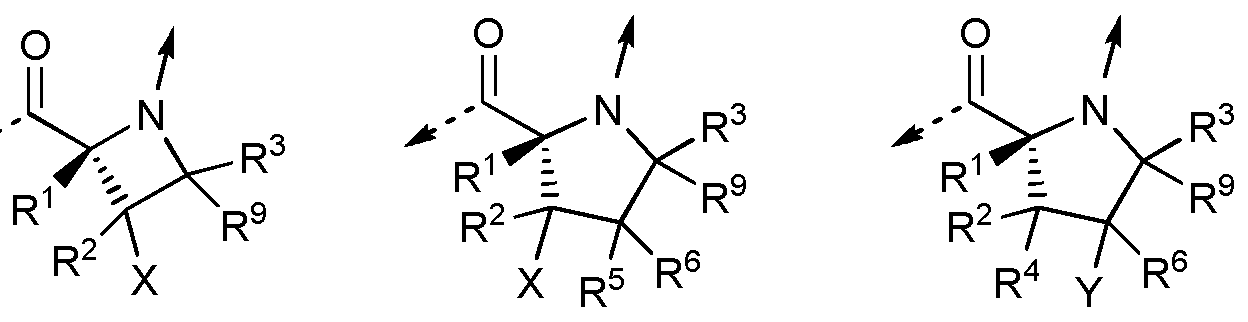
AA18 AA19 AA20 
AA21 AA22 AA23 and
T2 is an -amino acid residue of one of the formulae AAll to AA17, hereinabove, or an a-amino acid residue of one of the formulae

P1, P3 and P4 are independently
-NP^CH (R29) CO-; -NP^CH (R30 ) CO- ; or -NR^H (R31 ) CO- ; P is an -amino acid residue of one of the formulae

AA33 AA34 
X is OH; NH2; OR 16 NR R or NR
Y is NH2; OR NR R or NR
R R and R are independently
H; CF3; lower alkyl; lower alkenyl; aryl-lower alkyl; or heteroaryl-lower alkyl;
R¾ R5, R6, R7 and R8 are independently
H; F; CF3; lower alkyl; lower alkenyl; cycloalkyl; heterocycloalkyl ; aryl; heteroaryl; aryl-lower alkyl; heteroaryl-lower alkyl; - (CHR15) 0OR17; - (CHR15) 0SR17;
(CHR ) oNR^R (CHR ) oOCONR - (CHR ) 0NR CONR
( CHR15 ) 0NRICORI ' ; - ( CHR15 ) QCOOR1 ' ; - (CHR15) 0CONR17R18;
(CHR15) 0PO (OR1) 2; - (CHR15) oS02R17; - (CHR15) ONR1S02R17;
(CHR ) oS02NRi/R (CRlR ,RJ0; or
- (CHR ) nO (CHR ) mR ; or
R4 and R2 taken together can form
=0; -(CHR15)p-; - (CH2) nO (CH2) m- ; - (CH2) nS (CH2) m- ; or
- (CH2)nNR1 (CH2)m-; or
R4 and R5; R5 and R6; R6 and R7; R7 and R8; or R6 and R9 taken together can form:
-(CHR15)p-; - (CH2)nO(CH2)m-; - (CH2) nS (CH2) m- ; or
- (CH2)nNR1 (CH2)m-; or
R4 and R5 are independently X; R , R , R and R are independently
H; F; CF3; lower alkyl; lower alkenyl; cycloalkyl; heterocycloalkyl ; aryl; heteroaryl; aryl-lower alkyl; heteroaryl-lower alkyl; - (CHR15) rOR17; - (CHR15) rSR17; - (CHR15) rNR17R18; - (CHR15) rOCONR17R18; - (CHR15) rNR1CONR17R18 ;
- (CHR15) rNR1COR17; - (CHR15) 0COOR17; - (CHR15) 0CONR17R18;
- (CHR15) rPO (OR1) 2; - (CHR15) rS02R17; - (CHR15) rNR1S02R17;
- (CHR15) rS02NR17R18; - (CRXR15) 0R35; or
- (CHR1) rO (CHR1) 0R35; or
R11 and R12 taken together can form
=0; or =NR1;
R13 and R14 are independently
H; F; CI; Br; CF3; OCF3; OCHF2; CN; N02; lower alkyl; lower alkenyl; aryl; heteroaryl; aryl-lower alkyl; heteroaryl-lower alkyl; - (CHR15) 0OR17; - (CHR15) 0SR17;
- ( CHR1 5 ) 0NR17R18; - ( CHR1 5 ) 0OCONR17R18; - ( CHR1 5 ) QNR^ONR^R1 8 ;
- (CHR15) o R^OR17; - (CHR15) 0COOR17; - (CHR15) 0CONR17R18;
- (CHR15) 0PO (OR1) 2; - (CHR15) oS02R17; - (CHR15) oNR1S02R17;
- (CHR15) oS02NR17R18; - (CRXR15) 0R35; or - (CHR1) rO (CHR1) 0R35; R15 is H; F; CF3; lower alkyl; lower alkenyl; cycloalkyl; heterocycloalkyl; cycloalkyl-lower alkyl;
heterocycloalkyl-lower alkyl; aryl; heteroaryl;
aryl-lower alkyl; heteroaryl-lower alkyl; - (CHR1) 0OR17;
- (CHR1) 0SR17; - (CHR1) 0NR17R18; - (CHR1) 0NC (=NR19) NR17R18; - (CHR1) oCOOR17; - (CHR1) 0CONR17R18; - (CHR1) oS02R17;
or - (CHR1) oS02NR17R18;
R16 is H; CF3; lower alkyl; lower alkenyl; cycloalkyl;
heterocycloalkyl; cycloalkyl-lower alkyl;
heterocycloalkyl-lower alkyl; aryl; heteroaryl;
aryl-lower alkyl; heteroaryl-lower alkyl; cycloalkyl- aryl; heterocycloalkyl-aryl ; cycloalkyl-heteroaryl ; heterocycloalkyl-heteroaryl ; aryl-cycloalkyl ; aryl-heterocycloalkyl ; heteroaryl-cycloalkyl ;
heteroaryl-heterocycloalkyl ;
- (CHR1) 0OR17; - (CHR1) 0SR17; - (CHR1) 0NR17R18; - (CHR1) 0COR17;
- (CHR1) oCOOR17; - (CHR1) 0CONR17R18; or - (CHR1) oS02R17;
R17, R18, R19 and R20 are independently
H; lower alkyl; lower alkenyl; lower alkoxy; cycloalkyl; heterocycloalkyl ; cycloalkyl-lower alkyl; heterocycloalkyl-lower alkyl; aryl; heteroaryl;
aryl-lower alkyl; heteroaryl-lower alkyl; cycloalkyl- aryl; heterocycloalkyl-aryl ; cycloalkyl-heteroaryl ; heterocycloalkyl-heteroaryl ; aryl-cycloalkyl ; aryl-heterocycloalkyl; heteroaryl-cycloalkyl; or heteroaryl-heterocycloalkyl; or
the structural elements -NR17R18 and -NR19R20 can
independently form:
heterocycloalkyl; aryl-heterocycloalkyl; or
heteroaryl-heterocycloalkyl ;
or a group of one of the formulae

C5 C6 C7 C8 Z and Z' are independently
-CR39; or N;
R21, R22, R23 and R24 are independently
H; F; CF3; lower alkyl; lower alkenyl; cycloalkyl; heterocycloalkyl ; aryl; heteroaryl; aryl-lower alkyl; heteroaryl-lower alkyl; - (CHR1) 0OR17; - (CHR1) 0SR17;
- (CHR1) 0NR2R17; - (CHR1) 0OCONR2R17; - (CHR1) 0NR2CONR3R17 ;
- (CHR1) 0NR2COR17; - (CHR1) 0COOR17; - (CHR1) 0CONR2R17;
- (CHR1) 0PO (OR2) 2; - (CHR1) oS02R17; - (CHR1) oNR2S02R17;
- (CHR1) oS02NR2R17; - (CRXR2) 0R38; or - (CHR1) nO (CHR2) mR38; R25 and R26 are independently
H; F; CF3; lower alkyl; lower alkenyl; cycloalkyl; heterocycloalkyl; aryl; heteroaryl; aryl-lower alkyl; heteroaryl-lower alkyl; - (CHR1) rOR17; - (CHR1) rSR17;
- (CHR1) rNR2R17; - (CHR1) rOCONR2R17; - (CHR1) rNR2CONR3R17 ;
- (CHR1) rNR2COR17; - (CHR1) 0COOR17; - (CHR1) 0CONR2R17;
- (CHR1) rPO (OR2) 2; - (CHR1) rS02R17; - (CHR1) rNR2S02R17;
- (CHR1) rS02NR2R17; - (CRXR2) 0R38; or - (CHR1) rO (CHR2) 0R38; and R are independently
H; F; CI; Br; CF3; OCF3; OCHF2; CN; N02; lower alkyl; lower alkenyl; aryl; heteroaryl; aryl-lower alkyl; heteroaryl-lower alkyl; - (CHR1) 0OR17; - (CHR1) 0SR17;
- (CHR1) 0NR2R17; - (CHR1) 0OCONR2R17; - (CHR1) 0NR2CONR3R17 ;
- (CHR1) 0NR2COR17; - (CHR1) 0COOR17; - (CHR1) 0CONR2R17;
- (CHR1) 0PO (OR2) 2; - (CHR1) oS02R17; - (CHR1) oNR2S02R17;
- (CHR1) oS02NR2R17; - (CRXR2) 0R38; or - (CHR1) rO (CHR2) 0R38;
R is H; alkyl; alkenyl; cycloalkyl-lower alkyl;
heterocycloalkyl-lower alkyl; - (CHR4) 0OR17;
- (CHR4) oSR17; or - (CHR4) rNR17R18;
R30 is - (CRXR4) nR35 - (CH2)nO(CH2)mR35; - (CH2) nS (CH2) mR35; or
- (CH2)nNR1 (CH2)mR35; R31 is alkyl; alkenyl; - (CR1R15) qNR17R18; - (CR1R15) qNR2R16;
-  qNR16COR17; - (CH2) qC (=NR15) NR17R
- (CH2)qC (=NOR19) NR17R18; - (CH2)qC (=NNR17R18) NR19R20;
- (CR1R15) qNR2C (=NR19)NR17R18; - (CR1R15)qN=C (NR17R18 ) NR19R20 ; - (CR^15) qOR17; - (CR^15) qOR32; - (CR^15) qSR17;

- (CRV5) qNR16S02NR17R18; - (CRXR15) qS02NR17R18;
-  - (CH2)nO(CH2)mNR17R18;
- (CH2)nO(CH2)mC (=NR19)NR17R18; - (CH2) nO (CH2) mC (=NOR19) NR17R - (CH2)nO(CH2)mC (=NNR17R18)NR19R20;
- (CH2)nO(CH2)mNR1C (=NR19)NR17R18;
- (CH2)riO(CH2)mN=C (NR17R18)NR19R20; - (CH2)nS (CH2 ) mNR17R18 ;
- (CH2)nS (CH2)mC (=NR19)NR17R18; - (CH2)nS (CH2)mC (=NOR19) NR17R
- (CH2)nS (CH2)mC (=NNR17R18)NR19R20;
- (CH2)nS (CH^NR^ (=NR19) NR17R18 ;
- (CH2)nS (CH2)mN=C (NR17R18)NR19R20; - (CR^15) qCOOR17;
- (CR^^qCONR^R18; or - (CR^15 ) qCOR33 ;
R32 is -COR29; -COR30; -CO (CR1R15) 0R17 -CO (CR1R15) 0OR16;
-CO (CR1R15) 0NR17R18; -CO (CR1R15) 0NR2R16; -CO (CR1R29) NR17R18 ;
-CO (CR1R3 )NR17R18; -CO (CR1R34 ) NR17R18 ; -CO (CHR1) 0CONR17R18; -CO (CHR1) 0CONR2S02R17; -CO (CR^15 ) oNR2S02R17 ;
-CONR1 (CHR17) nNR2 (CHR15)mR16; -CO (CHR17) nO (CHR15)mR16;
-CONR1 (CHR17)nO(CHR15)mR16; -S02R29; -S02R30;
-S02 (CRXR15) 0R17; or -S02 (CRV5) 0NR17R18;
R33 is -NRXC (R2) (R29) COOR17; -NR1C (R2) (R29) CONR17R18 ;
-NRXC (R2) (R30)COOR17; -NRXC (R2) (R30 ) CONR17R18 ;
-NRXC (R2) (R34) COOR17; or -NRXC (R2 ) (R34 ) CONR17R18 ;
R34 is - (CRXR15) qNR17R18; - (CH2) qC (=NR19) NR17R18;
- (CH2)qC (=NOR19)NR17R18; - (CH2) qC (=NNR17R18) NR19R20;
- (CR1R15) qNR2C (=NR19)NR17R18; - (CR1R15)qN=C (NR17R18 ) NR19R20 ;
- (CRXR15) qOR16; - (CRXR15) qSR17; - (CRXR15) qS02R17;
- (CRXR15) qNR16S02R17; - (CRXR15) qSOz R^16; (CR'R^qSOzNR^R10; - (CR'R15) qNR2S02NR17R18;
- (CRlR15)„PO (OR >17π18
(CH2) nO (CH2)mNR1'Ri
(CH2) nO (CH2)mC (=NR19)NR1 ,R ( CH2 ) nO ( CH2 ) mC ( =NORx ) NR1 'R1 *;
>19π20
- (CH2) nO (CH2)mC (=NNR17R18)NRi R
,17π18
(CH2) nO (CH2)mNR16C (=NRia)NRi /R
>19π20
- (CH2) nO (CH2)mN=C (NR17R18)NRi R (CH2) nS (CH2)mNR
(CH2) nS (CH2)mNR17R18; - (CH2) nS (CH2)mC (=NR19) NR17R18 ; (CH2) nS (CH2)mC (=NOR19)NR17R18;
(CH2) nS (CH2)mC (=NNR17R18)NR19R:
(CH2) riS (CH2)mNR16C (=NR19)NR17R
(CH2) nS (CH2)mN=C (NR17R18)NR19R: 17
- (CR'R OOR or
17^18
- (CR^-R^JaCONR^R1";






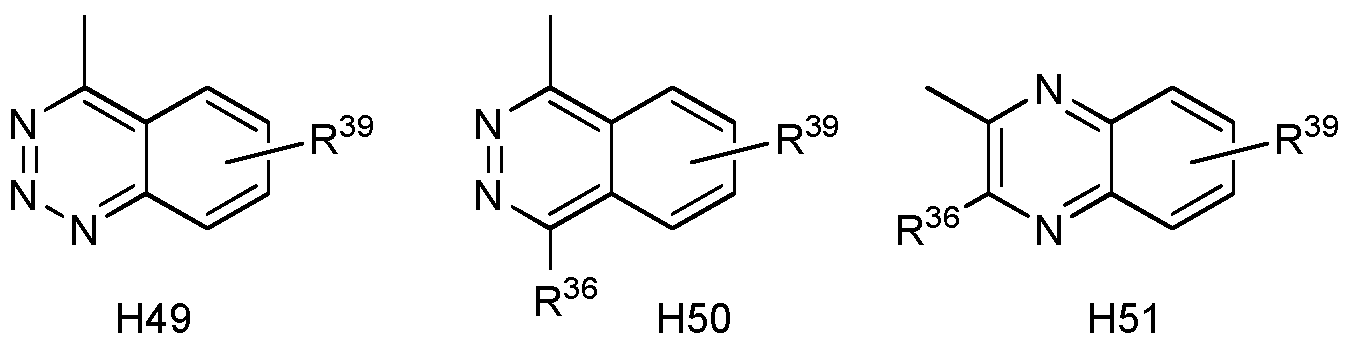
H; F; CI; Br; CF3; OCF3; OCHF2; CN; N02; lower alkyl; lower alkenyl; aryl; heteroaryl; aryl-lower alkyl; heteroaryl-lower alkyl; -(CH2)0R38; -(CH2)0OR17;
-0(CH2)oR38; -(CH2)0SR17; - (CH2) 0NR17R18; - (CH2) oOCONR^R1
- (CH2) 0NR1CONR17R18 ; - (CH2) oNR^OR17; - (CH2) 0COOR17;
- (CH2)0CONR17R18; - (CH2) 0PO (OR1) 2; - (CH2) oS02R16; or - (CH2)0COR
R38 is an aryl group of the formula 
R39, R40 and R41 are independently
H; F; CI; Br; OH; NH2; N02; CN; CF3; OCHF2; OCF3;
-NRXR17 ; - (CH2) oCOOR17; - (CH2) QCO R^17; lower alkyl; lower alkoxy; or lower alkenyl;
R is H; lower alkyl; or aryl-lower alkyl; n and m are independently an integer of 0-5 with the proviso that n+m ≤ 6;
o is 0-4; p is 2-6; q is 1-6; r is 1-3; and pharmaceutically acceptable salts thereof.
2. Compounds according to claim 1 wherein
R is H; CF3; lower alkyl; lower alkenyl; cycloalkyl;
heterocycloalkyl ; cycloalkyl-lower alkyl;
heterocycloalkyl-lower alkyl; aryl; heteroaryl;
aryl-lower alkyl; heteroaryl-lower alkyl; - (CHR1) sOR17;
- (CHR1) SSR17; - (CHR1) SNR17R18; - (CHR1) 0COR17;
- (CHR1) oCOOR17; - (CHR1) 0CONR17R18; or - (CHR1) oS02R17;
R17, R18, R19 and R20 are independently
H; lower alkyl; lower alkenyl; lower alkoxy;
cycloalkyl; heterocycloalkyl; cycloalkyl-lower alkyl; heterocycloalkyl-lower alkyl; aryl; heteroaryl;
aryl-lower alkyl; or heteroaryl-lower alkyl; or the structural elements -NR17R18 and -NR19R20 can
independently form:
heterocycloalkyl; aryl-heterocycloalkyl ; or
heteroaryl -heterocycloalkyl ;
or a group of one of the above formulae CI to C8;
R31 is alkyl; alkenyl; - (CRXR15) qNR17R18; - (CRXR15) qNR2R16;
- (CRXR15) qNR16COR17; - (CH2) qC (=NR15) NR17R18;
- (CRXR15) qNR2C (=NR19) NR17R18; - (CRXR15) qOR17; - (CRXR15) qSR17;
- (CRXR15) qS02R17; - (CRXR15) qNR16S02R17; - (CRXR15) qS02NR2R16; - (CR'R^qSO^R^R18; - (CH2) nO (CH2) mNR17R18;
- (CH2)nO(CH2)mC(=NR19)NR17R18;
- (CH2)nO(CH2)mNR1C(=NR19)NR17R18; - (CH2)nS (CH2) mNR17R18;
- (CH2)nS (CH2)mNR1C (=NR19) NR17R18; - (CRXR15) qCONR17R18;
or - (CRXR15) qCOR33;
s is 2-4
and pharmaceutically acceptable salts thereof.
3. Compounds according to claim 1 wherein
T1 is DPro; DPip; DTic; DTiq; DOic; DAzt; DPro ( (3R) OH) ;
DPro ( (35) OH) ; DPro ( ( 3R) NH2 ) ; DPro ( (35) NH2) ;
DPro ( (4i¾) OH) ; DPro ( ( 45) OH) ; DPro ( ( J¾) NH2 ) ;
DPro ( (45) NH2) ; DPro ( (45) NHBz) ; or DMor;
T2 is Thr; alloThr; Ser; hSer; Pro ( ( 3R) OH) ; Pro ( ( 35) OH) ;
Hyp(Bn); (45) -Hyp (Bn) ; Pro ( ( 3R) NH2 ) ; Pro ( (35) NH2) ;
Pro ( ( 4f?) NH2 ) ; Pro ( ( 45) NH2 ) ; Pro((45)F); Pro ( ( 45) NHBz ) ; or Mor; or
when T1 is DPro ( (3R) OH) ; DPro ( ( 35) OH) ; DPro ( (3R) H2 ) ;
DPro ( (35)NH2) ; DPro ( ( 4J¾) NH2 ) ; DPro ( (45) NH2 ) ;
DPro ( (45) NHBz) ; or DMor
then T2 can in addition be
Pro; Pip; Tic; Tiq; Oic; or Azt;
P1, P3 and P4 are independently
Ala; Arg; Asn; Asp; Cit; Cys; Glu; Gin; Gly; His; lie; Leu; Lys; Met; Orn; Phe; Pro; Ser; Thr; Trp; Tyr; Val; Abu; Agb; Agp; Ala(tBu); Ala(cPr); Ala(2Furyl);
Ala(3Furyl); Ala(Ppz); Ala(2Quin); Ala(3Quin);
Ala(4Quin); Azt; Bbta; Bip; Cha; Chg; Dab; Dab (Ac) ; Dab (cPr) ; Dab (iPr) ; Dab (4Me2NPhS02) ; Dab (MeOEtNCO) ; Dab (MePpzCO) ; Dab (MeS02) ; Dab (morphCO) ; Dab (INal) ;
Dab (2Nal) ; Dap; Dap (CONH2) ; Dap (MeOEt) ; Dap ( (MeOEt) 2) ; Deg; Gly(tBu); hArg; hCha; hCys; hHis; hLys; hPhe; hSer; hSer(Me); hTrp; hTyr; His (Me) ; His (Bn) ; Hyp (Bn) ; (45) -Hyp (Bn) ; Hyp(4BrBn); Hyp ( 3CNBn) ; Hyp ( 4CNBn) ;
Hyp(CONHPh); Hyp(Ph); Lys (Ac) ; Lys(Bz); Lys(cPr);
Lys(iPr); Lys (Me) ; Lys (Nic) ; Lys((5£)OH); Lys (40xa) ; Met(02); INal; 2Nal; Nle; Nle(60Bn); OctG; Oic;
Orn(cPr); Orn(iPr); 2Pal; 3Pal; 4Pal; Phe(2Cl);
Phe(3Cl); Phe(4Cl); Phe(3,4Cl2); Phe (2F) ; Phe(3F);
Phe(4F); Phe(4CN); Phe(4CF3); Phe(4COOMe); Phg; Pip; Pro ((4£)Bn); Pro((45)F); Pro ( (45) cHex) ; Pro (5, 5Me2) ;
Ser (Bn) ; Ser (Me); Thi; alloThr; Thr (Bn) ; Thz;
Thz (5, 5Me2 ); Tic; Tic(70H); Trp(7Aza); Trp(5Br);
rp (6Br) ; Trp(6CF3); Trp(5Cl); Trp(6Cl); Trp(5,6Cl); rp (50H) ; Tyr(Bn); Tyr (Me); Tyr ( 4MeOCOBn) ; Tyr(Ph);
Tyr (40HPh) ; Tza;
Gin (Alkl) ; Gln(Alk2); Gln(Alk3); Gln(Alk4); Gln(Alk5)
Gin (Alk6) ; Gln(Alk7); Gln(Alk8); Gln(Alk9);
Gin (AlklO) ; Gln(Alkll); Gln(Alkl2); Gln(Alkl3);
Gin (Alkl4) ; Gln(Alkl5); Gln(Alkl6); Gln(Alkl7);
Gin (Alkl8) ; Gln(Alkl9); Gln(Alk20); Gln(Alk21);
Gin (Alk22) ; Gln(Alk23); Gln(Alk24); Gln(Alk25);
Gin (Alk26) ; Gln(Alk27); Gln(Alk28); Gln(Alk29);
Gin (Alk30) ; Gln(Alk31); Gln(Alk32); Gln(Alk33);
Gin (Alk34) ; Glu(cNl); Glu(cN2); Glu(cN3); Glu(cN4);
Glu (cN5) ; Glu(cN6); Glu(cN7); Glu(cN8); Glu(cN9);
Glu (cNIO) ; Glu(cNll); Glu(cN12); Glu(cN13); Glu(cN14)
Glu (cN15) ; Glu(cN16); Glu(cN17); Lys (Arl); Lys(Ar2);
Lys (Ar3) ; Lys(Ar4); Lys(Ar5); Lys (Ar6) ; Lys(Ar7);
Lys (Ar8) ; Lys(Ar9); Lys(ArlO); Lys (Aril); Lys(Arl2);
Orn (Arl) ; Orn(Ar2); Orn(Ar3); Orn(Ar4); Orn(Ar5);
Orn (Ar6) ; Orn(Ar7); Orn(Ar8); Orn(Ar9); Orn(ArlO);
Orn (Aril) ; Orn(Arl2); Dab (Arl); Dab(Ar2); Dab(Ar3);
Dab (Ar4) ; Dab(Ar5); Dab(Ar6); Dab(Ar7); Dab(Ar8);
Dab (Ar9) ; Dab(ArlO); Dab (Aril); Dab(Arl2); Dab (SI) ;
Dab (S2); Dab (S3); Dab(S4); Dab(S5); Dab(S6); Dab(S7);
Dab (S8); Dab(S9); Dab(SlO); Dab(Sll); Dab(S12);
Dab (S13) ; Dab(S14); Dab(S15); Dab (SI 6); Dab(S17);
Dab (S18) ; Dab (Al ) ; Dab (A2 ) ; Dab (A3 ) ; Dab (A4 ) ; Dab (A5 )
Dab (A6) ; Dab(A7); Dab(A8); Dab(A9); Dab(AlO);
Dab (All) ; Dab(A12); Dab(A13); Dab(A14); Dab(A15);
Dab (A16) ; Dab(A17); Dab(A18); Dab(A19); Dab(A20);
Dab (A21) ; Dab(A22); Dab(A23); Dab(A24); Dab(A25); Dab (A26) ; Dab(A27); Dab(A28); Dab(A29); Dab(A30);
Dab (A31) ; Dab(A32); Dab(A33); Dab(A34); Dab(A35);
Dab (A36) ; Dab(A37); Dab(A38); Dab (A39); Dab(A40);
Dab (A41) ; Dab(A42); Dab(A43); Dab(A44); Dab(A45);
Dab (A46) ; Dab(A47); Dab(A48); Dab(A49); Dab(A50);
Dab (A51) ; Dab(A52); Dab(A53); Dab(A54); Dab(A55);
Orn (Al) ; Orn(A2); Orn (A3); Orn(A4); Orn(A5); Orn(A6);
Orn (A7) ; Orn(A8); Orn(A9); Orn(AlO); Orn (All);
Orn (A12) ; Orn(A13); Orn(A14); Orn(A15); Orn(A16);
Orn (A17) ; Orn(A18); Orn(A19); Orn(A20); Orn(A21);
Orn (A22) ; Orn(A23); Orn(A24); Orn(A25); Orn(A26);
Orn (A27) ; Orn(A28); Orn(A29); Orn(A30); Orn(A31);
Orn (A32) ; Orn(A33); Orn(A34); Orn(A35); Orn(A36);
Orn (A37) ; Orn(A38); Orn(A39); Orn(A40); Orn(A41);
Orn (A42) ; Orn(A43); Orn(A44); Orn(A45); Orn(A46);
Orn (A47) ; Orn(A48); Orn(A49); Orn(A50); Orn(A51);
Orn (A52) ; Orn(A53); Orn(A54); Orn(A55); Asn(Alkl);
Asn (Alk2) Asn(Alk3); Asn(Alk4); Asn(Alk5); Asn(Alk6);
Asn (Alk7) Asn(Alk8); Asn(Alk9); Asn(AlklO);
Asn (Alkll) ; Asn(Alkl2); Asn(Alkl3); Asn(Alkl4);
Asn (Alkl5) ; Asn(Alkl6); Asn(Alkl7); Asn(Alkl8);
Asn (Alkl9) ; Asn(Alk20); Asn(Alk21); Asn(Alk22);
Asn (Alk23) ; Asn(Alk24); Asn(Alk25); Asn(Alk26);
Asn (Alk27) ; Asn(Alk28); Asn(Alk29); Asn(Alk30);
Asn (Alk31) ; Asn(Alk32); Asn(Alk33); Asn(Alk34);
Asp (cNl) ; Asp ( cN2 ) ; Asp ( cN3 ) ; Asp ( cN4 ) ; Asp ( cN5 ) ;
Asp (cN6) ; Asp(cN7); Asp(cN8); Asp(cN9); Asp(cNlO);
Asp (cNll) Asp(cN12); Asp(cN13); Asp(cN14); Asp(cN15);
Asp (cN16) Asp(cN17); Dap(Arl); Dap(Ar2); Dap(Ar3);
Dap (Ar4) ; Dap(Ar5); Dap(Ar6); Dap(Ar7); Dap(Ar8);
Dap (Ar9) ; Dap(ArlO); Dap (Aril); Dap(Arl2); Dap (SI);
Dap (S2) ; Dap (S3); Dap(S4); Dap(S5); Dap(S6); Dap(S7);
Dap (S8) ; Dap(S9); Dap(SlO); Dap(Sll); Dap(S12); Dap(S13); Dap(S14); Dap(S15); Dap (SI 6); Dap(S17);
Dap (SI 8); Dap(Al); Dap(A2); Dap (A3); Dap(A4); Dap(A5);
Dap(A6); Dap(A7); Dap(A8); Dap(A9); Dap(AlO);
Dap (All) ; Dap (A12) ; Dap(A13); Dap (A14) ; Dap (A15) ;
Dap (A16) ; Dap (A17) ; Dap(A18); Dap (A19) ; Dap (A20) ;
Dap (A21) ; Dap (A22) ; Dap(A23); Dap (A24) ; Dap (A25) ;
Dap (A26) ; Dap (A27) ; Dap(A28); Dap (A29) ; Dap (A30) ;
Dap (A31) ; Dap (A32) ; Dap (A33); Dap (A34) ; Dap (A35) ;
Dap (A36) ; Dap (A37) ; Dap (A38); Dap (A39) ; Dap (A40) ;
Dap (A41) ; Dap (A42) ; Dap(A43); Dap (A44) ; Dap (A45) ;
Dap (A46) ; Dap (A47) ; Dap(A48); Dap (A49) ; Dap (A50) ;
Dap (A51) ; Dap (A52) ; Dap(A53); Dap (A54) ; or Dap (A55) ;
P2 is DArg; DhArg; DAgb; DLys; DOrn; DCit; DThr; DDab; DDab;
DPhe; Trp ; His ; DTyr; D2Pal; D3Pal; D4Pal;
DLys(Arl); DLys(Ar2); DLys(Ar3); DLys(Ar4); DLys(Ar5);
DLys(Ar6); DLys(Ar7); DLys(Ar8); DLys (Ar9) ; DLys(ArlO);
DLys(Arll); DLys(Arl2); DOrn(Arl); DOrn(Ar2);
DOrn(Ar3); DOrn(Ar4); DOrn(Ar5); DOrn(Ar6); DOrn(Ar7); DOrn(Ar8); DOrn(Ar9); DOrn(ArlO); DOrn(Arll);
DOrn(Arl2); DDab(Arl); DDab(Ar2); DDab(Ar3); DDab(Ar4);
DDab(Ar5); DDab(Ar6); DDab(Ar7); DDab(Ar8); DDab(Ar9);
DDab(ArlO); DDab(Arll); DDab(Arl2); DDap(Arl);
DDap(Ar2); DDap(Ar3); DDap(Ar4); DDap(Ar5); DDap(Ar6); DDap(Ar7); DDap(Ar8); DDap(Ar9); DDap(ArlO);
DDap(Arll); or DDap(Arl2);
and pharmaceutically acceptable salts thereof.
4. Compounds according to claim 1 wherein
T1 is DPro; DPip; DTic; DTiq; DOic; DAzt; DPro ( (3R) OH) ;
DPro ( (35) OH) ; DPro ( (3R) N¾ ) ; DPro ( (35) NH2) ; Pro ( ( 4f?) OH) ; Pro ((45) OH) ; uPro ( ( R) NH2 ) ;
DPro ( (45) NH2) ; DPro ( (45) NHBz) ; or DMor;
T2 is Thr; alloThr; Ser; hSer; Pro ( ( 3R) OH) ; Pro ( ( 35) OH) ;
Hyp(Bn); (45) -Hyp (Bn) ; Pro ( ( 3R) NH2 ) ; Pro ( (35) NH2) ;
Pro ( (4£)NH2) ; Pro ( ( 45) NH2 ) ; Pro((45)F); Pro ( ( 45) NHBz ) ; or Mor ; or
when T1 is DPro ( (3R) OH) ; DPro ( ( 35) OH) ; DPro ( (3R) NH2 ) ;
DPro ( (35)NH2) ; DPro ( ( J¾) NH2 ) ; DPro ( (45) NH2 ) ;
DPro ( (45) NHBz) ; or DMor
then T2 can in addition be
Pro; Pip; Tic; Tiq; Oic; or Azt;
P1 is lie; Nle; Leu; Val; Chg; Cha; Abu; Ala; Ala(cPr);
Trp; INal; 2Nal; Phe; Tyr; 2 Pal; 3 Pal; 4 Pal; Thr; His;
Arg; hArg; Agb; or Pip;
P2 is DArg; DhArg; DAgb; DLys; DOrn; DCit; DThr; DDab; DDap;
DPhe; DTrp; DHis; DTyr; D2Pal; D3Pal; or D4Pal;
P3 is Arg; hArg; Agb; Agp; Lys; Orn; Orn(A41); Cit; Thr;
Dab; Dap; Phe; Trp; His; Tyr; or lie
P4 is Trp; His; Phe; INal; 2Nal; Tyr; Leu; lie; Arg; hArg;
Lys; Dab; Dap; or Orn;
and pharmaceutically acceptable salts thereof.
5. Compounds according to claim 1 wherein
T1 is DPro; DPip; DTic; DPro ( (45) OH) ; DPro ( (4.R) NH2) ; or
DPro ( (45)NH2) ;
T2 is Thr; alloThr; Ser; hSer; Pro ((35) OH); (45) -Hyp (Bn) ;
Pro ( ( 4f?) NH2 ) ; Pro ( ( 45) NH2 ) ; Pro((45)F); Pro ( ( 45) NHBz ) ; or Mor;
P1 is lie; Nle; Leu; Val; Chg; Cha; Abu; Ala; Trp; INal;
Tyr; 3 Pal; Thr; His; Arg; hArg; Agb; or Pip; P2 is DArg; DLys; DOrn; DCit; DThr; DDab; DPhe; DTrp; DHis; or D3Pal;
P3 is Arg; hArg; Agb; Agp; Lys; Orn; Orn(A41); Dab; Trp; or His;
P4 is Trp; His; Phe; INal; 2Nal; Tyr; lie; Arg; hArg; Lys;
Dab; or Orn;
and pharmaceutically acceptable salts thereof.
6 Compounds according claim 1 selected from cyclo (-Ile- DArg -Arg- Ile- DPro- Thr-) ;
cyclo (-Ile- DArg -Arg- Tyr- DPro- Thr-) ;
cyclo (-Ile- DArg -Lys- rp- DPro- Thr-) ;
cyclo (-Ile- DArg -Dab- rp- DPro- Thr-) ;
cyclo (-Ile- DDab -Arg- rp- DPro- Thr-) ;
cyclo (-Ile- DArg -Arg- Phe- DPro- Thr-) ;
cyclo (-Ile- DThr -Arg- Trp- DPro- Thr-) ;
cyclo (-Ile- DArg -Arg- rp- DPro- Hse - ) ;
cyclo (-Ile- DArg -Arg- rp- DPro-alloT r-) ;
cyclo (-lNal -DArg-Arg-Trp -DPro -Thr-) ;
cyclo (-Ile- DLys -Arg- rp- DPro- Thr-) ;
cyclo (-Ile- DHis -Arg- rp- DPro- Thr-) ;
cyclo (-Ile- DCit -Arg- Trp- DPro- Thr-) ;
cyclo (-Ile- DArg -Arg- rp- DPip- Thr-) ;
cyclo (-Ile- DArg -Arg- 2Nal -DPro -Thr-) ;
cyclo (-Ile- DArg -Arg- INal -DPro -Thr-) ;
cyclo (-Ile- DArg - rp- Arg- DPro- Thr-) ;
cyclo (-Ile- DArg -Arg- Trp- DPro- Thr-) ;
cyclo (-Thr- DArg -Trp- Arg- DPro- Thr-) ;
cyclo ( -Trp- DArg -Arg- rp- DPro- Thr-) ;
cyclo (-Ile- DArg -Arg- rp- DPro- Pro ( (35) OH)
cyclo (-Ile- DArg -Arg- rp- DPro- Ser-) ; cyclo (-Ile-DArg-Agp-Trp-DPro-Thr-) ;
cyclo (-Ile- DArg-Agb-Trp-DPro-Thr-) ;
cyclo ( -Trp- DPhe-Trp-Arg-DPro ( (45)NH2) -Tic-) ;
cyclo ( -Trp- DPhe-Trp-Arg-DPro ( (4^)NH2) -Tic-) ;
cyclo (-Ala- DPhe-Trp-Arg-DPro ( (4^)NH2) -Tic-) ;
cyclo (-Tyr- DPhe-Trp-Arg-DPro ( (4^)NH2) -Tic-) ;
cyclo ( -Trp- DPhe-Trp-Orn-DPro ( (4£)NH2) -Tic-) ;
cyclo ( -Trp- DPhe-Trp-Dab-DPro ( (4£)NH2) -Tic-) ;
cyclo ( -Trp- DPhe-Trp-Lys-DPro ( (4£)NH2) -Tic-) ;
cyclo ( -Trp- DPhe-Trp-His-DPro ( (4£)NH2) -Tic-) ;
cyclo ( -Arg- DPhe-Trp-Arg-DPro ( (4£)NH2) -Tic-) ;
cyclo (-Pip- DPhe-Trp-Arg-DPro ( (4£)NH2) -Tic-) ;
cyclo ( -hArg -DPhe-Trp-Arg-DPro ( (4£)NH2) -Tic-) ;
cyclo (-Agb- DPhe-Trp-Arg-DPro ( (4£)NH2) -Tic-) ;
cyclo (-3Pal -DPhe-Trp-Arg-DPro ( (4£)NH2) -Tic-) ;
cyclo ( -Trp- D3Pal-Trp-Arg-DPro ( (4£)NH2) -Tic-) ;
cyclo ( -Arg- DPhe-Trp-hArg-DPro ( (4£)NH2) -Tic-) ;
cyclo ( -Arg- DPhe-Trp-Arg-DPro ( (45)NH2) -Tic-) ;
cyclo ( -Trp- DPhe-Trp-Arg-DPro ( (4£)NH2) -Oic-) ;
cyclo ( -Arg- DPhe-Trp-Arg-DPro ( (4£)NH2) -Oic-) ;
cyclo ( -Trp- DPhe-Trp-Arg-DPro-Pro ( (45) F) -) ;
cyclo ( -Trp- DPhe-Trp-Arg-DPro-Pro ( (45)NH2) -) ;
cyclo ( -Trp- DPhe-Trp-Arg-DPro-Pro ( (4£)NH2) -) ;
cyclo ( -Trp- DPhe-Trp-Arg-DPro-Mor-) ;
cyclo (-Ile- DArg-Arg-Trp-DPro-Mor-) ;
cyclo ( -Arg- DPhe-Trp-Arg-DPro- (45) -Hyp (Bn) -) ;
cyclo ( -Trp- DPhe-Trp-Arg-DPro ( (45) OH) - (45) -Hyp (Bn) cyclo ( -Trp- DPhe-Trp-Arg-DPro ( (4i=?) NH2) - (45) -Hyp (Bn cyclo (-His- DTrp-His-Trp-DPro- Pro ( (45) HBz) -) ; cyclo (-lNal -DArg-Arg-Trp-DPro-Pro ( (35) OH) -) ;
cyclo (-Ile- DArg-Arg-2Nal-DPro-Pro ( (35) OH) -) ;
cyclo (-Ile- DArg-Arg-Trp-DPip-Pro ( (35) OH) -) ;
cyclo (-Ile- DArg-Arg-Trp-DPro ( (45) OH) -Thr-) ; cyclo (-Ile- DArg--Arg-Trp-DPro ( (4i=?) NH2) -Thr-) ;
cyclo (-Val- DArg- -Arg-Trp- DPro- Thr-) ;
cyclo (-Abu- DArg- -Arg-Trp- DPro- Thr-) ;
cyclo (-Chg- DArg- -Arg-Trp- DPro- Thr-) ;
cyclo ( -Leu- DArg- -Arg-Trp- DPro- Thr-) ;
cyclo (-Nle- DArg- -Arg-Trp- DPro- Thr-) ;
cyclo (-Cha- DArg- -Arg-Trp- DPro- Thr-) ;
cyclo (-Ile- DOrn- -Arg-Trp- DPro- Thr-) ;
cyclo (-Ile- DArg- -Orn (A41) - rp- -DPro-Thr-) ;
cyclo (-Ile- DArg- -Orn-Trp- DPro- Thr-) ;
cyclo (-Ile- DArg- -hArg-Trp -DPrc -Thr-) ;
cyclo (-Ile- DArg- -Arg-Trp- DTic- Thr-) ;
and pharmaceutically acceptable salts thereof.
7. Compounds according claim 6 selected from cyclo -Ile- DArg- Arg-Trp-DPip-Thr-) ;
cyclo -Ile- DArg- Arg-2Nal-DPro-Thr-) ;
cyclo -Ile- DArg- Arg-Trp-DPro-Thr-) ;
cyclo -Ile- DArg- Arg-Trp-DPro-Ser- ) ;
cyclo -Trp- DPhe- Trp-Arg-DPro ( (4^)NH2) -Tic-) ;
cyclo ( -Trp- DPhe- Trp-Dab-DPro ( (4^)NH2) -Tic-) ;
cyclo -3Pal -DPhe -Trp-Arg-DPro ( (4^)NH2) -Tic-) ;
cyclo -Trp- DPhe- Trp-Arg-DPro ( (4£)NH2) -Oic-) ;
cyclo -Trp- DPhe- Trp-Arg-DPro ( (45) OH) - (45) -Hyp (Bn) - ■) ; cyclo -Ile- DArg- Arg-Trp-DPip-Pro ( (35) OH) -) ;
cyclo (-Chg- DArg- Arg-Trp-DPro-Thr-) ;
cyclo (-Ile- DArg- hArg-Trp-DPro-Thr-) ;
and pharmaceutically acceptable salts thereof.
8. Diastereomers , epimers and enantiomers of the
compounds of formula (I) as defined in claim 1.
9. Compounds according to any one of claims 1 to 8 for use as therapeutically active substances, especially for use as therapeutically active substances against diseases or conditions mediated or sustained through the activity of CXCR7.
10. Compounds according any one of claims 1 to 8 having modulating activity against the CXCR7 receptor, especially interfering selectively with the natural activity of the CXCR7 receptor and its natural ligands CXCL11 and/or
CXCL12.
11. A pharmaceutical composition containing a compound or a mixture of compounds according to any one of claims 1 to 8 and a pharmaceutically inert carrier.
12. Compositions according to claim 11 in a form suitable for oral, topical, transdermal, injection, buccal,
transmucosal , rectal, pulmonary or inhalation
administration, especially in the form of tablets, dragees, capsules, solutions, liquids, gels, plaster, creams, ointments, syrup, slurries, suspensions, spray, nebuliser or suppositories.
13. The use of compounds according to any one of claims 1 to 8 for the manufacture of a medicament as the sole active pharmaceutical ingredient or in combination with other active pharmaceutical ingredients.
14. The use of compounds according to any one of claims 1 to 8 for the manufacture of a medicament for the treatment, prevention or the supportive treatment of diseases or conditions related to the activity of CXCR7 in the area of dermatological disorders, metabolic diseases, inflammatory diseases, fibrotic diseases, infectious diseases,
neurological diseases, cardiovascular diseases, respiratory diseases, gastro-intestinal tract disorders, urological diseases, ophthalmic diseases, stomatological diseases, haematological diseases and oncology, or the mobilisation of stem cells,
especially for the manufacture of a medicament for the treatment, prevention or the supportive treatment of diseases or conditions such as HIV infections, Epstein-Barr Virus infection, conjunctivitis, scleritis, uveitis, dry eye syndrome, Sjogren's syndrome, glaucoma, age-related macular degeneration, rhinosinusitis , Whim syndrome, lupus erythematosus, pulmonary hypertension, pulmonary hypoxia, chronic obstructive pulmonary disease, asthma,
osteoarthritis, rheumatoid arthritis, synovitis, psoriasis, multiple sclerosis, diabetes mellitus, Crohns disease, mixed connective tissue disease, chronic lymphocytic thyroiditis, Graves' disease, graft-versus-host disease, atherosclerosis, myocarditis, heart failure, such as myocardial infarction; angiogenesis , sarcoma, such as osteosarcoma, rhabdomyosarcoma, Kaposi's sarcoma, synovial sarcoma; lipoma, such as angiolipoma; glioblastoma
multiforme, astrocytomas, metastasis, neuroblastoma;
carcinoma, such as adenocarcinoma; malignant epithelial and mucoepidermoid neoplasms, thyroid neoplasm, gonadal
neoplasms, prostate cancer, breast cancer, melanoma, lung carcinoma, pancreatic carcinoma, colorectal cancer; solid tumors; lymphoma, such as Birkitt's lymphoma, Hodgkin's lymphoma, non-Hodgkin ' s lymphoma; multiple myeloma and leukemia; for stem cell mobilisation of peripheral blood stem cells and/or mesenchymal stem cells; or for different kinds of tissue-repair in human or other mammals.
15. A process for the preparation of compounds according to any one of claims 1 to 8, which comprises
(a) coupling an appropriately functionalized solid support with an appropriately N-protected derivative of that amino acid which in the desired end-product is in position T1 or T2 or P1 to P4 as defined above; any functional group which may be present in said N- protected amino acid derivative being likewise
appropriately protected;
(b) removing the N-protecting group from the product
obtained in step (a) ;
(c) coupling the product thus obtained with an
appropriately N-protected derivative of that amino acid which in the desired end-product is in the position of the next element (T or P) , following counterclockwise or clockwise the sequence according general formula (I) in -COOH to -N¾ orientation; any functional group which may be present in said N- protected amino acid derivative being likewise
appropriately protected;
(d) removing the N-protecting group from the product thus obtained;
(e) repeating steps (c) and (d) until all amino acid
residues have been introduced;
(f) if desired, selectively deprotecting one or several protected functional group (s) present in the molecule and appropriately substituting the reactive group (s) thus liberated;
(g) detaching the product thus obtained from the solid support ;
(h) cyclizing the product cleaved from the solid support; (i) removing any protecting groups present on functional groups of any members of the chain of amino acid residues and, if desired, any protecting group (s) which may in addition be present in the molecule; and (j) if desired, implementing additional chemical
transformations of one or more reactive group (s) present in the molecule; and/or
(k) if desired, converting the product thus obtained into a pharmaceutically acceptable salt or converting a pharmaceutically acceptable, or unacceptable, salt thus obtained into the corresponding free compound of formula (I) or into a different, pharmaceutically acceptable, salt.
Priority Applications (13)
| Application Number | Priority Date | Filing Date | Title |
|---|---|---|---|
| PCT/EP2010/051417 WO2011095218A1 (en) | 2010-02-05 | 2010-02-05 | Template-fixed pep tidomime tics with cxcr7 modulating activity |
| NZ601803A NZ601803A (en) | 2010-02-05 | 2011-02-04 | Template-fixed peptidomimetics with cxcr7 modulating activity |
| JP2012551639A JP5955780B2 (en) | 2010-02-05 | 2011-02-04 | Template-immobilized peptide mimic with CXCR7 modulating activity |
| EP11702229.3A EP2531520B1 (en) | 2010-02-05 | 2011-02-04 | Template-fixed peptidomimetics with cxcr7 modulating activity |
| US13/577,143 US9109009B2 (en) | 2010-02-05 | 2011-02-04 | Template-fixed peptidomimetics with CXCR7 modulating activity |
| PCT/EP2011/051686 WO2011095607A1 (en) | 2010-02-05 | 2011-02-04 | Template-fixed peptidomimetics with cxcr7 modulating activity |
| CN201180015668.8A CN102844327B (en) | 2010-02-05 | 2011-02-04 | Template-immobilized peptide mimetics with CXCR7-modulating activity |
| AU2011212412A AU2011212412B2 (en) | 2010-02-05 | 2011-02-04 | Template-fixed peptidomimetics with CXCR7 modulating activity |
| SG2012057907A SG183180A1 (en) | 2010-02-05 | 2011-02-04 | Template-fixed peptidomimetics with cxcr7 modulating activity |
| CA2789119A CA2789119C (en) | 2010-02-05 | 2011-02-04 | Template-fixed peptidomimetics with cxcr7 modulating activity |
| ES11702229.3T ES2586817T3 (en) | 2010-02-05 | 2011-02-04 | Peptide mimetics attached to a mold with modulating activity of CXCR7 |
| IL221316A IL221316A (en) | 2010-02-05 | 2012-08-05 | Template-fixed peptidomimetics with cxcr7 modulating activity |
| US14/795,694 US9637520B2 (en) | 2010-02-05 | 2015-07-09 | Template-fixed peptidomimetics with CXCR7 modulating activity |
Applications Claiming Priority (1)
| Application Number | Priority Date | Filing Date | Title |
|---|---|---|---|
| PCT/EP2010/051417 WO2011095218A1 (en) | 2010-02-05 | 2010-02-05 | Template-fixed pep tidomime tics with cxcr7 modulating activity |
Publications (1)
| Publication Number | Publication Date |
|---|---|
| WO2011095218A1 true WO2011095218A1 (en) | 2011-08-11 |
Family
ID=43034275
Family Applications (2)
| Application Number | Title | Priority Date | Filing Date |
|---|---|---|---|
| PCT/EP2010/051417 Ceased WO2011095218A1 (en) | 2010-02-05 | 2010-02-05 | Template-fixed pep tidomime tics with cxcr7 modulating activity |
| PCT/EP2011/051686 Ceased WO2011095607A1 (en) | 2010-02-05 | 2011-02-04 | Template-fixed peptidomimetics with cxcr7 modulating activity |
Family Applications After (1)
| Application Number | Title | Priority Date | Filing Date |
|---|---|---|---|
| PCT/EP2011/051686 Ceased WO2011095607A1 (en) | 2010-02-05 | 2011-02-04 | Template-fixed peptidomimetics with cxcr7 modulating activity |
Country Status (11)
| Country | Link |
|---|---|
| US (2) | US9109009B2 (en) |
| EP (1) | EP2531520B1 (en) |
| JP (1) | JP5955780B2 (en) |
| CN (1) | CN102844327B (en) |
| AU (1) | AU2011212412B2 (en) |
| CA (1) | CA2789119C (en) |
| ES (1) | ES2586817T3 (en) |
| IL (1) | IL221316A (en) |
| NZ (1) | NZ601803A (en) |
| SG (1) | SG183180A1 (en) |
| WO (2) | WO2011095218A1 (en) |
Cited By (9)
| Publication number | Priority date | Publication date | Assignee | Title |
|---|---|---|---|---|
| WO2016046397A1 (en) * | 2014-09-25 | 2016-03-31 | Servicio Andaluz De Salud | Cyclic peptides against the outer membrane protein a (ompa) for the treatment of infections caused by gram negative pathogens |
| US10456443B2 (en) | 2014-08-27 | 2019-10-29 | Ohio State Innovation Foundation | Peptidyl calcineurin inhibitors |
| US10626147B2 (en) | 2014-05-21 | 2020-04-21 | Entrada Therapeutics, Inc. | Cell penetrating peptides and methods of making and using thereof |
| US10815276B2 (en) | 2014-05-21 | 2020-10-27 | Entrada Therapeutics, Inc. | Cell penetrating peptides and methods of making and using thereof |
| US11168310B2 (en) | 2018-02-22 | 2021-11-09 | Entrada Therapeutics, Inc. | Compositions and methods for treating mitochondrial neurogastrointestinal encephalopathy |
| US20220236279A1 (en) * | 2019-05-03 | 2022-07-28 | Luxembourg Institute Of Health (Lih) | Novel Selective ACKR3 Modulators and Uses Thereof |
| US11576946B2 (en) | 2018-01-29 | 2023-02-14 | Ohio State Innovation Foundation | Peptidyl inhibitors of calcineurin-NFAT interaction |
| US12281181B2 (en) | 2017-10-04 | 2025-04-22 | Ohio State Innovation Foundation | Bicyclic peptidyl inhibitors |
| US12496350B2 (en) | 2018-01-29 | 2025-12-16 | Ohio State Innovation Foundation | Cyclic peptidyl inhibitors of CAL-PDZ binding domain |
Families Citing this family (6)
| Publication number | Priority date | Publication date | Assignee | Title |
|---|---|---|---|---|
| WO2007079597A1 (en) | 2006-01-16 | 2007-07-19 | Polyphor Ltd. | Template - fixed peptidomimetics with antimicrobial activity |
| WO2008092281A1 (en) | 2007-01-29 | 2008-08-07 | Polyphor Ltd. | Template-fixed peptidomimetics |
| CA2679414C (en) | 2007-02-28 | 2014-10-28 | Universitaet Zuerich | Template-fixed peptidomimetics |
| US11202833B2 (en) | 2016-11-10 | 2021-12-21 | Ruprecht-Karls-Universität Heidelberg | Methylglyoxal-scavenging cyclic peptides and their use for the prevention and treatment of diseases associated with elevated methylglyoxal levels |
| AR122446A1 (en) * | 2020-04-29 | 2022-09-14 | Medimmune Llc | COMPOSITIONS AND METHODS FOR DELIVERY PHARMACEUTICALLY ACTIVE AGENTS |
| WO2024145687A1 (en) * | 2022-12-30 | 2024-07-04 | The Regents Of The University Of California | Bioreactive proteins containing an unnatural amino acid and arginine |
Citations (2)
| Publication number | Priority date | Publication date | Assignee | Title |
|---|---|---|---|---|
| WO2002066500A2 (en) * | 2001-02-19 | 2002-08-29 | Wilex Ag | ANTAGONISTS FPR Α4β7-INTEGRIN |
| WO2008092281A1 (en) | 2007-01-29 | 2008-08-07 | Polyphor Ltd. | Template-fixed peptidomimetics |
Family Cites Families (2)
| Publication number | Priority date | Publication date | Assignee | Title |
|---|---|---|---|---|
| GB0323728D0 (en) * | 2003-10-10 | 2003-11-12 | Royal College Of Surgeons Ie | Peptidomimetics and uses thereof |
| WO2011060832A1 (en) | 2009-11-20 | 2011-05-26 | Polyphor Ag | Template-fixed peptidomimetics with ccr10 antagonistic activity |
-
2010
- 2010-02-05 WO PCT/EP2010/051417 patent/WO2011095218A1/en not_active Ceased
-
2011
- 2011-02-04 CA CA2789119A patent/CA2789119C/en active Active
- 2011-02-04 CN CN201180015668.8A patent/CN102844327B/en not_active Expired - Fee Related
- 2011-02-04 WO PCT/EP2011/051686 patent/WO2011095607A1/en not_active Ceased
- 2011-02-04 SG SG2012057907A patent/SG183180A1/en unknown
- 2011-02-04 NZ NZ601803A patent/NZ601803A/en unknown
- 2011-02-04 JP JP2012551639A patent/JP5955780B2/en not_active Expired - Fee Related
- 2011-02-04 AU AU2011212412A patent/AU2011212412B2/en not_active Ceased
- 2011-02-04 ES ES11702229.3T patent/ES2586817T3/en active Active
- 2011-02-04 EP EP11702229.3A patent/EP2531520B1/en not_active Not-in-force
- 2011-02-04 US US13/577,143 patent/US9109009B2/en not_active Expired - Fee Related
-
2012
- 2012-08-05 IL IL221316A patent/IL221316A/en not_active IP Right Cessation
-
2015
- 2015-07-09 US US14/795,694 patent/US9637520B2/en not_active Expired - Fee Related
Patent Citations (2)
| Publication number | Priority date | Publication date | Assignee | Title |
|---|---|---|---|---|
| WO2002066500A2 (en) * | 2001-02-19 | 2002-08-29 | Wilex Ag | ANTAGONISTS FPR Α4β7-INTEGRIN |
| WO2008092281A1 (en) | 2007-01-29 | 2008-08-07 | Polyphor Ltd. | Template-fixed peptidomimetics |
Non-Patent Citations (35)
| Title |
|---|
| A. LEVOYE; K. BALABANIAN ET AL., BLOOD, vol. 113, 2009, pages 6085 - 93 |
| B. BOLDAJIPOUR; H. MAHABALESHWAR ET AL., CELL, vol. 132, 2008, pages 463 - 73 |
| BARLOS ET AL., TETRAHEDRON LETT., vol. 30, 1989, pages 3943 - 3946 |
| C. DAMBLY-CHAUDI6RE ET AL., BMC DEV. BIOL., 2007, pages 7 - 23 |
| C. M. COSTELLO; P. MCLOUGHLIN ET AL., AM. J. PHYSIOL. LUNG CELL MOL. PHYSIOL., vol. 295, no. 2, 2008, pages 272 - 284 |
| CARPINO ET AL., TETRAHEDRON LETT., vol. 35, 1994, pages 2279 - 2281 |
| CASTRO ET AL., TETRAHEDRON LETT., vol. 14, 1975, pages 1219 - 1222 |
| CELL ADH. MIGR., vol. 2, 2008, pages 69 - 70 |
| COSTE ET AL., TETRAHEDRON LETT., vol. 31, 1990, pages 205 - 208 |
| D. OBRECHT; J. A. ROBINSON, ADV. MED. CHEM., vol. 4, 1999, pages 1 - 68 |
| FIELDS, G. B.; FIELDS, C. G., J. AM. CHEM. SOC., vol. 113, 1991, pages 4202 - 4207 |
| FLORSHEIMER; RINIKER, PEPTIDES, vol. 1990, 1991, pages 131 |
| G. GRAHAM ET AL., CURR. MOL. MED., vol. 9, no. 2, 2009, pages 86 - 93 |
| GALZI J L ET AL: "Neutralizing endogenous chemokines with small molecules", PHARMACOLOGY AND THERAPEUTICS, ELSEVIER, GB LNKD- DOI:10.1016/J.PHARMTHERA.2009.12.003, vol. 126, no. 1, 1 April 2010 (2010-04-01), pages 39 - 55, XP026946710, ISSN: 0163-7258, [retrieved on 20100201] * |
| J. A. ROBINSON, SYN. LETT., vol. 4, 2000, pages 429 - 441 |
| K. BALABANIAN; B. LAGANE ET AL., J. BIOL. CHEM., vol. 280, 2005, pages 35760 - 35766 |
| KAISER ET AL., ANAL. BIOCHEMISTRY, vol. 34, 1970, pages 595 |
| KNORR ET AL., TETRAHEDRON LETT., vol. 30, 1989, pages 1927 - 1930 |
| KONIG; GEIGER, CHEM. BER, vol. 103, 1970, pages 788 - 798 |
| KRSTENANSKY JOHN L ET AL: "Cyclic hexapeptide antagonists of the bradykinin B-2 receptor: Receptor binding and solution backbone conformation", LETTERS IN PEPTIDE SCIENCE, ESCOM SCIENCE PUBLISHERS, NL, vol. 1, no. 5, 1 January 1995 (1995-01-01), pages 229 - 234, XP009137863, ISSN: 0929-5666 * |
| L. JIANG; K. MOEHLE; B. DHANAPAL; D. OBRECHT; J. A. ROBINSON, HELV. CHIM. ACTA., vol. 83, 2000, pages 3097 - 3112 |
| M. A. VERHOVSKAYA; I. A. YAMSKOV, RUSSIAN CHEM. REV., vol. 60, 1991, pages 1163 - 1179 |
| MEIENHOFER ET AL., INT. J. PEPTIDE PROTEIN RES., vol. 13, 1979, pages 35 - 42 |
| MERGLER ET AL., TETRAHEDRON LETT., vol. 29, 1988, pages 4005 - 4008 |
| OBRECHT, D.; VILLALGORDO, J.-M: "Tetrahedron Organic Chemistry Series", vol. 17, 1998, PERGAMON, ELSEVIER SCIENCE, article "Solid- Supported Combinatorial and Parallel Synthesis of Small-Molecular-Weight Compound Libraries" |
| R. DUTHALER, TETRAHEDRON REPORT, vol. 349, 1994, pages 1540 - 1650 |
| R. DUTHALER, TETRAHEDRON, vol. 349, 1994, pages 1540 - 1650 |
| R. M. WILLIAMS: "Tetrahedron Organic Chemistry Series", vol. 7, 1989, PERGAMON PRESS, article "Synthesis of optically active a-amino acids" |
| R. M. WILLIAMS: "Tetrahedron Organic Chemistry Series", vol. 7, 1989, PERGAMON PRESS, article "Synthesis of optically active a-amino acids", pages: 257 - 279 |
| R. M. WILLIAMS: "Tetrahedron Organic Chemistry Series", vol. 7, 1989, PERGAMON PRESS., article "Synthesis of optically active a-amino acids" |
| RINK H, TETRAHEDRON LETT., vol. 28, 1987, pages 3783 - 3790 |
| RINK LINKER; RINK, H, TETRAHEDRON LETT., vol. 28, 1987, pages 3787 - 3790 |
| SARANTAKIS ET AL., BIOCHEM. BIOPHYS. RES. COMMUN., vol. 73, 1976, pages 336 - 342 |
| SHEEHAN; HESS, J. AM. CHEM. SOC., vol. 77, 1955, pages 1067 - 1068 |
| SYNTHESIS, 1976, pages 751 - 752 |
Cited By (12)
| Publication number | Priority date | Publication date | Assignee | Title |
|---|---|---|---|---|
| US10626147B2 (en) | 2014-05-21 | 2020-04-21 | Entrada Therapeutics, Inc. | Cell penetrating peptides and methods of making and using thereof |
| US10815276B2 (en) | 2014-05-21 | 2020-10-27 | Entrada Therapeutics, Inc. | Cell penetrating peptides and methods of making and using thereof |
| US11225506B2 (en) | 2014-05-21 | 2022-01-18 | Entrada Therapeutics, Inc. | Cell penetrating peptides and methods of making and using thereof |
| US10456443B2 (en) | 2014-08-27 | 2019-10-29 | Ohio State Innovation Foundation | Peptidyl calcineurin inhibitors |
| WO2016046397A1 (en) * | 2014-09-25 | 2016-03-31 | Servicio Andaluz De Salud | Cyclic peptides against the outer membrane protein a (ompa) for the treatment of infections caused by gram negative pathogens |
| US12281181B2 (en) | 2017-10-04 | 2025-04-22 | Ohio State Innovation Foundation | Bicyclic peptidyl inhibitors |
| US11576946B2 (en) | 2018-01-29 | 2023-02-14 | Ohio State Innovation Foundation | Peptidyl inhibitors of calcineurin-NFAT interaction |
| US12329799B2 (en) | 2018-01-29 | 2025-06-17 | Ohio State Innovation Foundation | Peptidyl inhibitors of calcineurin-NFAT interaction |
| US12496350B2 (en) | 2018-01-29 | 2025-12-16 | Ohio State Innovation Foundation | Cyclic peptidyl inhibitors of CAL-PDZ binding domain |
| US11168310B2 (en) | 2018-02-22 | 2021-11-09 | Entrada Therapeutics, Inc. | Compositions and methods for treating mitochondrial neurogastrointestinal encephalopathy |
| US11987821B2 (en) | 2018-02-22 | 2024-05-21 | Entrada Therapeutics, Inc. | Compositions and methods for treating mitochondrial neurogastrointestinal encephalopathy |
| US20220236279A1 (en) * | 2019-05-03 | 2022-07-28 | Luxembourg Institute Of Health (Lih) | Novel Selective ACKR3 Modulators and Uses Thereof |
Also Published As
| Publication number | Publication date |
|---|---|
| CA2789119C (en) | 2020-01-28 |
| AU2011212412B2 (en) | 2015-05-07 |
| AU2011212412A1 (en) | 2012-08-30 |
| SG183180A1 (en) | 2012-09-27 |
| CA2789119A1 (en) | 2011-08-11 |
| US9109009B2 (en) | 2015-08-18 |
| CN102844327A (en) | 2012-12-26 |
| NZ601803A (en) | 2014-04-30 |
| US9637520B2 (en) | 2017-05-02 |
| US20130225506A1 (en) | 2013-08-29 |
| ES2586817T3 (en) | 2016-10-19 |
| CN102844327B (en) | 2016-10-26 |
| WO2011095607A1 (en) | 2011-08-11 |
| JP2013518862A (en) | 2013-05-23 |
| US20150307556A1 (en) | 2015-10-29 |
| JP5955780B2 (en) | 2016-07-20 |
| EP2531520B1 (en) | 2016-05-11 |
| EP2531520A1 (en) | 2012-12-12 |
| IL221316A0 (en) | 2012-10-31 |
| IL221316A (en) | 2016-12-29 |
Similar Documents
| Publication | Publication Date | Title |
|---|---|---|
| US9637520B2 (en) | Template-fixed peptidomimetics with CXCR7 modulating activity | |
| CA2789030C (en) | Template - fixed peptidomimetics with cxcr7 modulating activity | |
| CN102712676B (en) | There is the peptidomimetic that the template of CCR10 antagonistic activity is fixing | |
| WO2016162127A1 (en) | Backbone-cyclized peptidomimetics | |
| AU2017204122B2 (en) | Template -fixed peptidomimetics as inhibitors of FPR1 | |
| US8865656B2 (en) | Beta-hairpin peptidomimetics having CXCR4 antagonizing activity | |
| HK1179280A (en) | Template-fixed peptidomimetics with cxcr7 modulating activity | |
| HK1179280B (en) | Template-fixed peptidomimetics with cxcr7 modulating activity | |
| EP2501715A1 (en) | Template-fixed peptidomimetics with ccr10 antagonistic activty |
Legal Events
| Date | Code | Title | Description |
|---|---|---|---|
| 121 | Ep: the epo has been informed by wipo that ep was designated in this application |
Ref document number: 10702497 Country of ref document: EP Kind code of ref document: A1 |
|
| NENP | Non-entry into the national phase |
Ref country code: DE |
|
| 122 | Ep: pct application non-entry in european phase |
Ref document number: 10702497 Country of ref document: EP Kind code of ref document: A1 |