WO2011066241A1 - Fused tricyclic compounds and derivatives thereof useful for the treatment of viral diseases - Google Patents
Fused tricyclic compounds and derivatives thereof useful for the treatment of viral diseases Download PDFInfo
- Publication number
- WO2011066241A1 WO2011066241A1 PCT/US2010/057708 US2010057708W WO2011066241A1 WO 2011066241 A1 WO2011066241 A1 WO 2011066241A1 US 2010057708 W US2010057708 W US 2010057708W WO 2011066241 A1 WO2011066241 A1 WO 2011066241A1
- Authority
- WO
- WIPO (PCT)
- Prior art keywords
- group
- bond
- another embodiment
- alkyl
- optional
- Prior art date
- Legal status (The legal status is an assumption and is not a legal conclusion. Google has not performed a legal analysis and makes no representation as to the accuracy of the status listed.)
- Ceased
Links
- 0 Bc1cc2cccc(*)c2cc1 Chemical compound Bc1cc2cccc(*)c2cc1 0.000 description 51
- JYNLKDYIWVEJHS-UHFFFAOYSA-N CC(C)Cc(cc1)cc(C23CC2)c1-c1c3nc(C)[nH]1 Chemical compound CC(C)Cc(cc1)cc(C23CC2)c1-c1c3nc(C)[nH]1 JYNLKDYIWVEJHS-UHFFFAOYSA-N 0.000 description 1
- ZOHYHOHLHHPWJW-UHFFFAOYSA-N CC(C1)[NH+2]CC1(F)F Chemical compound CC(C1)[NH+2]CC1(F)F ZOHYHOHLHHPWJW-UHFFFAOYSA-N 0.000 description 1
- YQRKYVFIVQKPBS-UHFFFAOYSA-N CC(NC12)=CC1C=Cc1c2[s]c(C)n1 Chemical compound CC(NC12)=CC1C=Cc1c2[s]c(C)n1 YQRKYVFIVQKPBS-UHFFFAOYSA-N 0.000 description 1
- IJQYCJPUCXIOMG-UHFFFAOYSA-N CCC(C1)(CNC1NC)F Chemical compound CCC(C1)(CNC1NC)F IJQYCJPUCXIOMG-UHFFFAOYSA-N 0.000 description 1
- TYBYHEXFKFLRFT-UHFFFAOYSA-N Nc(c1c(cc2)nccc1)c2[N+]([O-])=O Chemical compound Nc(c1c(cc2)nccc1)c2[N+]([O-])=O TYBYHEXFKFLRFT-UHFFFAOYSA-N 0.000 description 1
Classifications
-
- C—CHEMISTRY; METALLURGY
- C07—ORGANIC CHEMISTRY
- C07D—HETEROCYCLIC COMPOUNDS
- C07D471/00—Heterocyclic compounds containing nitrogen atoms as the only ring hetero atoms in the condensed system, at least one ring being a six-membered ring with one nitrogen atom, not provided for by groups C07D451/00 - C07D463/00
- C07D471/02—Heterocyclic compounds containing nitrogen atoms as the only ring hetero atoms in the condensed system, at least one ring being a six-membered ring with one nitrogen atom, not provided for by groups C07D451/00 - C07D463/00 in which the condensed system contains two hetero rings
- C07D471/04—Ortho-condensed systems
-
- A—HUMAN NECESSITIES
- A61—MEDICAL OR VETERINARY SCIENCE; HYGIENE
- A61P—SPECIFIC THERAPEUTIC ACTIVITY OF CHEMICAL COMPOUNDS OR MEDICINAL PREPARATIONS
- A61P1/00—Drugs for disorders of the alimentary tract or the digestive system
- A61P1/16—Drugs for disorders of the alimentary tract or the digestive system for liver or gallbladder disorders, e.g. hepatoprotective agents, cholagogues, litholytics
-
- A—HUMAN NECESSITIES
- A61—MEDICAL OR VETERINARY SCIENCE; HYGIENE
- A61P—SPECIFIC THERAPEUTIC ACTIVITY OF CHEMICAL COMPOUNDS OR MEDICINAL PREPARATIONS
- A61P31/00—Antiinfectives, i.e. antibiotics, antiseptics, chemotherapeutics
- A61P31/12—Antivirals
-
- A—HUMAN NECESSITIES
- A61—MEDICAL OR VETERINARY SCIENCE; HYGIENE
- A61P—SPECIFIC THERAPEUTIC ACTIVITY OF CHEMICAL COMPOUNDS OR MEDICINAL PREPARATIONS
- A61P31/00—Antiinfectives, i.e. antibiotics, antiseptics, chemotherapeutics
- A61P31/12—Antivirals
- A61P31/14—Antivirals for RNA viruses
-
- A—HUMAN NECESSITIES
- A61—MEDICAL OR VETERINARY SCIENCE; HYGIENE
- A61P—SPECIFIC THERAPEUTIC ACTIVITY OF CHEMICAL COMPOUNDS OR MEDICINAL PREPARATIONS
- A61P31/00—Antiinfectives, i.e. antibiotics, antiseptics, chemotherapeutics
- A61P31/12—Antivirals
- A61P31/20—Antivirals for DNA viruses
- A61P31/22—Antivirals for DNA viruses for herpes viruses
-
- A—HUMAN NECESSITIES
- A61—MEDICAL OR VETERINARY SCIENCE; HYGIENE
- A61P—SPECIFIC THERAPEUTIC ACTIVITY OF CHEMICAL COMPOUNDS OR MEDICINAL PREPARATIONS
- A61P37/00—Drugs for immunological or allergic disorders
- A61P37/02—Immunomodulators
-
- A—HUMAN NECESSITIES
- A61—MEDICAL OR VETERINARY SCIENCE; HYGIENE
- A61P—SPECIFIC THERAPEUTIC ACTIVITY OF CHEMICAL COMPOUNDS OR MEDICINAL PREPARATIONS
- A61P43/00—Drugs for specific purposes, not provided for in groups A61P1/00-A61P41/00
-
- C—CHEMISTRY; METALLURGY
- C07—ORGANIC CHEMISTRY
- C07D—HETEROCYCLIC COMPOUNDS
- C07D471/00—Heterocyclic compounds containing nitrogen atoms as the only ring hetero atoms in the condensed system, at least one ring being a six-membered ring with one nitrogen atom, not provided for by groups C07D451/00 - C07D463/00
- C07D471/12—Heterocyclic compounds containing nitrogen atoms as the only ring hetero atoms in the condensed system, at least one ring being a six-membered ring with one nitrogen atom, not provided for by groups C07D451/00 - C07D463/00 in which the condensed system contains three hetero rings
- C07D471/14—Ortho-condensed systems
-
- C—CHEMISTRY; METALLURGY
- C07—ORGANIC CHEMISTRY
- C07D—HETEROCYCLIC COMPOUNDS
- C07D493/00—Heterocyclic compounds containing oxygen atoms as the only ring hetero atoms in the condensed system
- C07D493/02—Heterocyclic compounds containing oxygen atoms as the only ring hetero atoms in the condensed system in which the condensed system contains two hetero rings
- C07D493/04—Ortho-condensed systems
-
- C—CHEMISTRY; METALLURGY
- C07—ORGANIC CHEMISTRY
- C07D—HETEROCYCLIC COMPOUNDS
- C07D495/00—Heterocyclic compounds containing in the condensed system at least one hetero ring having sulfur atoms as the only ring hetero atoms
- C07D495/02—Heterocyclic compounds containing in the condensed system at least one hetero ring having sulfur atoms as the only ring hetero atoms in which the condensed system contains two hetero rings
- C07D495/04—Ortho-condensed systems
-
- C—CHEMISTRY; METALLURGY
- C07—ORGANIC CHEMISTRY
- C07D—HETEROCYCLIC COMPOUNDS
- C07D513/00—Heterocyclic compounds containing in the condensed system at least one hetero ring having nitrogen and sulfur atoms as the only ring hetero atoms, not provided for in groups C07D463/00, C07D477/00 or C07D499/00 - C07D507/00
- C07D513/02—Heterocyclic compounds containing in the condensed system at least one hetero ring having nitrogen and sulfur atoms as the only ring hetero atoms, not provided for in groups C07D463/00, C07D477/00 or C07D499/00 - C07D507/00 in which the condensed system contains two hetero rings
- C07D513/04—Ortho-condensed systems
-
- C—CHEMISTRY; METALLURGY
- C07—ORGANIC CHEMISTRY
- C07D—HETEROCYCLIC COMPOUNDS
- C07D519/00—Heterocyclic compounds containing more than one system of two or more relevant hetero rings condensed among themselves or condensed with a common carbocyclic ring system not provided for in groups C07D453/00 or C07D455/00
Definitions
- the present invention relates to novel Fused Tricyclic Compounds, compositions comprising at least one Fused Tricyclic Compound, and methods of using Fused Tricyclic Compounds for treating or preventing a viral infection or a virus-related disorder in a patient.
- HCV Hepatitis C virus
- BB-NANBH blood-associated NANBH
- NANBH is to be distinguished from other types of viral-induced liver disease, such as hepatitis A virus (HAV), hepatitis B virus (HBV), delta hepatitis virus (HDV), cytomegalovirus (CMV) and Epstein-Barr virus (EBV), as well as from other forms of liver disease such as alcoholism and primary biliar cirrhosis.
- HAV hepatitis A virus
- HBV hepatitis B virus
- HDV delta hepatitis virus
- CMV cytomegalovirus
- EBV Epstein-Barr virus
- RNA genome of HCV contains a 5'-nontranslated region (5' NTR) of 341 nucleotides, a large open reading frame (ORF) encoding a single polypeptide of 3,010 to 3,040 amino acids, and a 3'-nontranslated region (3'-NTR) of variable length of about 230 nucleotides.
- 5' NTR 5'-nontranslated region
- ORF open reading frame
- 3'-NTR 3'-nontranslated region of variable length of about 230 nucleotides.
- HCV is similar in amino acid sequence and genome organization to flaviviruses and pestiviruses, and therefore HCV has been classified as a third genus of the family Flaviviridae.
- the 5' NTR contains an internal ribosome entry site (IRES) which plays a pivotal role in the initiation of translation of the viral polyprotein.
- IRS internal ribosome entry site
- a single long open reading frame encodes a polyprotein, which is co- or post-translationally processed into structural (core, El, E2 and p7) and nonstructural (NS2, NS3, NS4A, NS4B, NS5A, and NS5B) viral proteins by either cellular or viral proteinases.
- the 3' NTR consists of three distinct regions: a variable region of about 38 nucleotides following the stop codon of the polyprotein.
- HCV NS5A is a 447 amino acid phosphoprotein which lacks-a defined enzymatic function. It runs as 56kd and 58kd bands on gels depending on phosphorylation state (Tanji, et al. J. Virol. 69:3980-3986 (1995)). HCV NS5A resides in replication complex and may be responsible for the switch from replication of RNA to production of infectious virus (Huang, Y, et al, Virology . 364:1-9 (2007)).
- a and B are independently selected from phenyl and a six-membered
- D and E are independently five-membered heteroaromatic rings;
- R 3 , R 3 , R 4 and R 4' can each be heterocycloalkyl or substituted amino groups; and wherein R 2 and R , together with the carbon atoms to which they are attached, can join to form a five- to eight-membered unsaturated ring.
- U.S. Patent Publication No. US2009/020478 discloses hepatitis C virus inhibitors of formula F: wherein D and D' can each be NH, O or S; R and R- , together with the carbon atoms to which-they are attached, join to form a five- to eight-membered aromatic or non aromatic carbocyclic or heterocyclic ring; R 2 and R 3 , together with the carbon atoms to which they are attached, join to form a five- to eight-membered aromatic or non aromatic carbocyclic or heterocyclic ring; and R 4 and R 4 are each.independently selected from a nitrogen- containing non-aromatic heterocycle or a substituted aminoniethyl group.
- non-peptide, small-molecule compounds having desirable or improved physicochemical properties that are useful for inhibiting viruses and treating viral infections and vims-related disorders.
- compounds and methods useful for modulating the activity of serine proteases including NS3, as well as modulating HCV NS2, NS4A, NS4B, NS5A, NS5B and IRES.
- the present invention provides Compounds of Formula (I):
- A is -alkylene-N(R 11 )(R 13 ) or heterocycloalkyl, wherein said heterocycloalkyl group can be optionally and independently substituted with from one to three R 4 groups, and wherein said heterocycloalkyl group can be optionally fused to a cycloalkyl group or a benzene group;
- C is -alkylene-N(R' ')(R 13 ) or heterocycloalkyl, wherein said heterocycloalkyl group can be optionally and independently substituted with from one to three R 4 groups, and wherein said heterocycloalkyl group can be optionally fused to a cycloalkyl group or a benzene group;
- X 4 is - (CH(R 5 )) m C(R 5 )-, -N-, -CH(R 5 )CH(R 5 )N-, -CH(R 5 )NHC(R 5 )-, -NHCH(R 5 )C(R 5 )- ; -O- C(R 5 )-, -N(R 6 )C(R 5 )-, -N(R 6 )-N-, -S-C(R 5 )- or - S(O) 2 C(R 5 )- when the optional and additional bond to X 4 is present, such that
- Y l is -C- when an optional and additional bond to Y 1 is present, and Y 1 is -CH- when an optional and additional bond to Y 1 is absent;
- Y 2 is -C- when an optional and additional bond to Y 2 is present, and Y 2 is -CHr when an optional and additional bond to Y is absent;
- Y 3 is -C- when an optional and additional bond to Y 3 is present and Y 3 is -CH- when an optional and additional bond to Y 3 is absent;
- Y 4 is -C- when an optional and additional bond to Y 4 is present, and Y 4 is -CH- when an optional and additional bond to Y 4 is absent;
- each occurrence of R 1 is independently alkyl, haloalkyl, aryl, cycloalkyl, heterocycloalkyl or heteroaryl, wherein said aryl group, said cycloalkyl group, said heterocycloalkyl group or said heteroaryl group can be optionally and independently substituted with R 2 ;
- each occurrence of R is independently alkyl, halo, haloalkyl, aryl,
- heterocycloalkyl heteroaryl, -CN, -OR 3 , -N(R 3 ) 2 , -C(O)R 12 ., -C(O)OR 3 , -C(O)N(R 3 ) 2 , - NHC(O)R 12 , -NHC(O)NHR 3 , -NHC(O)OR 3 , -OC(O)R 12 , -SR 3 or -S(O) 2 R 12 ;
- each occurrence of R 3 is independently H, alkyl, haloalkyl, aryl, cycloalkyl, heterocycloalkyl or heteroaryl ;
- each occurrence of R 4 is independently halo, -C(OHC(R 5 ) 2 ] q N(R 6 ) 2 ,
- each occurrence of R 5 is independently H-, -C 1 -C 6 alkyl, 3 to 7-membered cycloalkyl, aryl or heteroaryl;
- each occurrence of R 6 is independently H, -C 1 -C 6 alkyl, 3 to 7-membered cycloalkyl, 4 to 7-membered heterocycloalkyl, aryl, or heteroaryl, wherein said 3 to 7- membered cycloalkyl group, said 4 to 7-membered heterocycloalkyl group, said aryl group or said heteroaryl group can be optionally and independently substituted with up to two R groups, and wherein two R 6 groups that are attached to a common nitrogen atom, together with the nitrogen atom to which they are attached, can optionally join to form a 4 to 7- membered heterocycloalkyl group;
- each occurrence of R 7 is independently H, -C 1 -C 6 alkyl, 3 to 7-membered cycloalkyl, 3 to 7-membered heterocycloalkyl, aryl or heteroaryl, wherein said 3 to 7- membered cycloalkyl group, said 3 to 7-membered heterocycloalkyl group, said aryl group or said heteroaryl group can be optionally and independently substituted, with up to 3 substituents, which can be the same or different, and are selected from C 1 -C 6 alkyl, halo, - C 1 -C 6 haloalkyl, -C 1 -C 6 hydroxyalkyl, -OH, -C(O)NH-(C 1 -C 6 alkyl), -C(O)N(C 1 -C 6 alkyl) 2 , -O-(C 1 -C 6 alkyl), -NH 2 , -NH(C 1 -C 6 -alky
- each occurrence of R 8 is independently H or -C 1 -C 6 alkyl
- each occurrence of R 9 is independently H, -C 1 -C 6 alkyl, 3 to 6-membered cycloalkyl or 4 to 6-membered heterocycloalkyl;
- R 11 is 3 to 7-membered cycloalkyl. 3 to 7-membered heterocycloalkyl, aryl or heteroaryl, wherein said 3 to 7-membered cycloalkyl group, said 3 to 7-membered heterocycloalkyl group, said aryl group or said heteroaryl group can be optionally and independently substituted with up to three R 2 groups;
- each occurrence of R 12 is independently alkyl, haloalkyl, aryl, cycloalkyl, heterocycloalkyl or heteroaryl;
- each occurrence of R 13 is independently -C(O)-[C(R 7 ) 2 ] q N(R 6 ) 2 ,
- each occurrence of R 14 is H, -C
- each occurrence of m is independently an integer ranging from 0 to 2; and each occurrence of q is independently an integer ranging from 1 to 4,
- Compounds and pharmaceutically acceptable salts, solvates, esters and prodrugs thereof can be useful for treating or preventing a viral infection or a virus-related disorder in a patient
- the Fused Tricyclic Compounds or pharmaceutically acceptable salts, solvates, prodrugs or esters thereof can also be useful for treating or preventing a viral infection or a virus-related disorder in a patient.
- Also provided by the invention are methods for treating or preventing a viral infection or a virus-related disorder in a patient, comprising administering to the patient an effective amount of at least one Fused Tricyclic Compound.
- the present invention further provides pharmaceutical compositions comprising an effective amount of at least one Fused Tricyclic Compound or a pharmaceutically acceptable salt, solvate, ester or prodrug thereof, and a pharmaceutically acceptable carrier.
- the compositions can be useful for treating or preventing a viral infection or a virus-related disorder in a patient.
- the present invention provides Fused Tricyclic Compounds, pharmaceutical compositions comprising at least one Fused Tricyclic Compound, and methods of using the Fused Tricyclic Compounds for treating or preventing a viral infection or a virus- related disorder in a patient.
- a "patient” is a human or non-human mammal.
- a patient- is a human, in another embodiment, a patient is a chimpanzee.
- an effective amount refers to an amount of Fused Tricyclic Compound and/or an additional therapeutic agent, or a composition thereof that is effective in producing the.desired therapeutic, ameliorative, inhibitory or preventative effect when administered to a patient suffering from a viral infection or virus-related disorder.
- an effective amount can refer to each individual agent or to the combination as a whole, wherein the amounts of all agents administered are together effective, but wherein the component agent of the combination may not be present individually in an effective amount.
- alkyl refers to an aliphatic hydrocarbon group having one of its hydrogen atoms replaced with a bond.
- Ail alkyl group may be straight or branched and contain from about 1 to about 20 carbon atoms. In one embodiment, an alkyl group contains from about 1 to about 12 carbon atoms. In another embodiment, an alkyl group contains from about 1 to about 6 carbon atoms.
- Non-limiting examples of alkyl groups include methyl, ethyl, n-propyl, isopropyl, n-butyl, sec-butyl, isobutyl, tert- butyl, n-pentyl, neopentyl, isopentyl, n-hexyl, isohexyl and neohexyl.
- An alkyl group may be unsubstituted or substituted by one or more substituents which may be the same or different, each substituent being independently selected from the group consisting of halo, alkenyl, alkynyl, aryl, cycloalkyl, cyano, hydroxy, -O-alkyl, -O-aiyl, -alkylene-O-alkyl, alkylthio, -NH 2 , -NH(alkyl), -N(alkyl) 2 , -NH(cycloalkyl), -O-C(O)-alkyl, -O-C(O)-aryl, - 0-C(O)-cycloalkyl, -C(O)OH and -C(O)0-alkyl.
- substituents which may be the same or different, each substituent being independently selected from the group consisting of halo, alkenyl, alkynyl, aryl, cycloalky
- an alkyl group is unsubstituted. In another embodiment, an alkyl group is linear. In another embodiment, an alkyl group is branched.
- the term "C 1 -C 6 alkyl” refers to an alkyl group having from 1 to 6 carbon atoms.
- alkenyl refers to an aliphatic hydrocarbon group containing at least one carbon-carbon double bond and having one of its hydrogen atoms replaced with a bond.
- An alkenyl group may be straight or branched and contain from about 2 to about 15 carbon atoms. In one embodiment, an alkenyl group contains from about 2 to about 12 carbon atoms. In another embodiment, an alkenyl group contains from about 2 to about 6 carbon atoms.
- Non-limiting examples of alkenyl groups include ethenyl, propenyl, n-butenyl, 3-methylbut-2-enyl, n-pentenyl, octenyl and decenyl.
- An alkenyl group may be unsubstituted or substituted by one or more substituents which may be the same or different, each substituent being independently selected from the group consisting of halo, alkenyi, alkynyl, aryl, cycloalkyl, cyano, hydroxy, -O-alkyl, -O-aryl, - alkylene-O-alkyl, alkylthio, -NH 2 , -NH(alkyl), -N(alkyl) 2 , -NH(cycloalkyl), -O-C(O)- alkyl, -O-C(O)-aryl, -O-C(O)-cycloalkyl, -C(O)OH and -C(O)0-alkyl.
- substituents which may be the same or different, each substituent being independently selected from the group consisting of halo, alkenyi, alkynyl, aryl, cycloalkyl
- an alkenyl group is unsubstituted.
- C 2 -C 6 alkenyl refers to an alkenyl group having from 2 to 6 carbon atoms.
- alkynyl refers to an aliphatic hydrocarbon group containing at least one carbon-carbon triple bond and having one of its hydrogen atoms replaced with a bond.
- An alkynyl group may be straight or branched and contain from about 2 to about 15 carbon atoms. In one embodiment, an alkynyl group contains from about 2 to about 12 carbon atoms. In another embodiment, an alkynyl group contains from about 2 to about 6 carbon atoms.
- Non-limiting examples of alkynyl groups include ethynyl, propynyl, 2-butynyl and 3-methylbutynyl.
- An alkynyl group may be
- an alkynyl group is unsubstituted.
- C 2 -C 6 alkynyl refers to an alkynyl group having from 2 to 6 carbon atoms.
- alkylene refers to an alkyl group, as defined above, wherein one of the alkyl group's hydrogen atoms has been replaced with a bond.
- alkylene groups include -CH 2 -, -CH 2 CH 2 -, -CH 2 CH 2 CH 2 -, - CH 2 CH 2 CH 2 CH 2 -, -CH(CH 3 )CH 2 CH 2 -, -CH(C ⁇ )- and -CH 2 CH(CH 3 )CH 2 -.
- an alkylene group has from 1 to about 6 carbon atoms.
- an alkylene group is branched.
- an alkylene group is linear.
- an alkylene group is -CH 2 -.
- CpCe alkylene refers to an alkylene group having from 1 to 6 carbon atoms.
- aryl refers to an aromatic monocyclic or multicyclic ring system comprising from about 6 to about 14 carbon atoms. In one embodiment, an aryl group contains from about 6 to about 10 carbon atoms.
- An aryl group can be optionally substituted with one or more "ring system substituents" which may be the same or different, and are as defined herein below.
- an aryl group can be optionally fused to a cycloalkyl or cycloalkanoyl group.
- Non-limiting examples of aryl groups include phenyl and naphthyl.
- an aryl group is phenyl.
- arylene refers to a divalent group derived from an aryl group, as defined above, by removal of a hydrogen atom from a ring carbon of an aryl group.
- An arylene group can be derived from a monocyclic or multicyclic ring system comprising from about 6 to about 14 carbon atoms. In-one embodiment, an arylene group contains from about 6 to about 10 carbon atoms. In another embodiment, an arylene group is a naphthylene group. In another embodiment, an arylene group is.a phenylene group.
- An arylene group can be optionally substituted with one or more "ring system
- arylene group is divalent and either available bond on an arylene group can connect to either group flanking the arylene group.
- an arylene group can be optionally fused to a cycloalkyl or cycloalkanoyl group.
- arylene groups include phenylene and naphthalene.
- an arylene group is unsubstituted.
- an arylene group is:
- cycloalkyl refers to a non-aromatic mono- or multicyclic ring system comprising from about 3 to about 10 ring carbon atoms. In one embodiment, a cycloalkyl contains from about 5 to about 10 ring carbon atoms. In another embodiment, a cycloalkyl contains from about 3 to about 7 ring atoms. In another embodiment, a cycloalkyl contains from about 5 to about 6 ring atoms.
- cycloalkyl also encompasses a cycloalkyl group, as defined above, which is fused to an aryl (e.g., benzene) or heteroaryl ring.
- a cycloalkyl group is monocyclic.
- monocyclic cycloalkyls include-cyclopropyl, cyclobutyl, cyclopentyl, cyclohexyl, cycloheptyl and cyclooctyl.
- Non-limiting examples of multicyclic cycloalkyls include 1-decalinyl, norbornyl and adamantyl.
- a cycloalkyl group can be optionally substituted with one or more "ring system substituents" which may be the same or different, and are as defined herein below.
- a cycloalkyl group is unsubstituted.
- the term "3 to 7-membered cycloalkyl” refers to a cycloalkyl group having from 3 to 7 ring carbon atoms.
- a ring carbon atom of a cycloalkyl group may be functionalized as a carbonyl group.
- An illustrative example of such a cycloalkyl group (also referred to herein as a "cycloalkanoyl” group) includes, but is not limited to, cyclobutanoyl:
- cycloalkylene refers to a cycloalkyl group, as defined above, wherein one of the cycloalkyl group's hydrogen atoms has been replaced with a bond.
- Non-limiting examples of cycloalkylene groups include cyclopropylene, cyclobutylene, cyclopentylene, cyclohexylene and cyclopentylene.
- a cycloalkylene group has from 3 to about 8 ring carbon atoms.
- a cycloalkylene group has from 3 to about 7 ring carbon atoms.
- a cycloalkylene group has from 5 to about 7 ring carbon atoms.
- a cycloalkylene group is monocyclic.
- a cycloalkylene group is bicyclic.
- cycloalkenyl refers to a non-aromatic mono- or multicyclic ring system comprising from about 4 to about 10 ring carbon atoms and containing at least one endocyclic double bond. In one embodiment, a cycloalkenyl contains from about 4 to about 7 ring carbon atoms. In another embodiment, a
- cycloalkenyl contains 5 or 6 ring atoms.
- a cycloalkenyl group is monocyclic.
- monocyclic cycloalkenyls include cyclopentenyl, cyclohexenyl, cyclohepta-1,3-dienyl, and the like.
- a cycloalkenyl group can be optionally substituted with one or more "ring system substituents" which may be the same or different, and are as defined herein below.
- a ring carbon atom of a cycloalkyl group may be functional ized as a carbonyl group.
- a cycloalkenyl group is unsubstituted.
- a cycloalkenyl group is cyclopentenyl.
- a cycloalkenyl group is cyclohexenyl.
- the term "4 to 7-membered cycloalkenyl" refers to a cycloalkenyl group having from 4 to 7 ring carbon atoms.
- cycloalkenylene refers to a cycloalkenyl group, as defined above, wherein one of the cycloalkenyl group's hydrogen atoms has been replaced with a bond.
- Non-limiting examples of cycloalkenylene groups include cyclopropenylene, cyclobutenylene, cyclopentenylene, cyclohexenylene and cyclopentenylene.
- a. cycloalkenylene group has from 3 to about 8 ring carbon atoms.
- a cycloalkenylene group has from 3 to about 7 ring carbon atoms.
- a cycloalkenylene group has from 5 to about 7 ring carbon atoms. In another embodiment, a cycloalkenylene group is monocyclic. In another embodiment, a cycloalkenylene group is bicyclic.
- Halo means -F, -CI, -Br or -I. In one embodiment, halo .refers to -F, -CI or -Br.
- haloalkyl refers to an alkyl group as defined above, wherein one or more of the alkyl group's hydrogen atoms has been replaced with a halogen. In one embodiment, a haloalkyl group has from 1 to 6 carbon atoms. In another embodiment, a haloalkyl group is substituted with from 1 to 3 F atoms. Non-limiting examples of haloalkyl groups include -CH 2 F, -CHF 2 , -CF 3 , -CH 2 C1 and -CCI3.
- C 1 -C 6 haloalkyl refers to a haloalkyl group having from 1 to 6 carbon atoms.
- hydroxyalkyl refers to an alkyl group as defined above, wherein one or more of the alkyl group's hydrogen atoms has been replaced with an -OH group. In ene-embodiment. a hydroxyalkyl group has from 1 to 6 carbon atoms. Non- limiting examples of hydroxyalkyl groups include -CH 2 OH, -CH 2 CH 2 OH, - CH 2 CH 2 CH 2 OH and -CH 2 CH(OH)CH 3 .
- C 1 -C 6 hydroxyalkyl refers to a hydroxyalkyl group having from 1 to 6 carbon atoms.
- heteroaryl refers to an aromatic monocyclic or multicyclic ring system comprising about 5 to about 14 ring atoms, wherein from 1 to 4 of the ring atoms is independently O. N or S and the remaining ring atoms are carbon atoms.
- a heteroaryl group has 5 to 10 ring atoms.
- a heteroaryl group is monocyclic and has 5 or 6 ring atoms.
- a heteroaryl group- is bicyclic.
- a heteroaryl group can -be optionally substituted by one or more "ring system substituents" which may be the same or different, and are as defined herein below.
- heteroaryl group is joined via a ring carbon atom, and any nitrogen atom of a heteroaryl can be optionally oxidized to the corresponding N-oxide.
- heteroary also encompasses a heteroaryl group, as defined above, which is fused to a benzene ring.
- heteroaryls include pyridyl, pyrazinyl, furanyl, thienyl, pyrimidinyl, pyridone (including N-substituted pyridones), isoxazolyl, isothiazolyl, oxazolyl, oxadiazolyl, thiazolyl, pyrazolyl, furazanyl, pyrrolyl, triazolyl, 1 -2,4-thiadiazoIyI, pyrazinyl, pyridazinyl, quinoxalinyl, phthalazinyl, oxindolyl.
- heteroaryl also refers to partially saturated heteroaryl moieties such as, for example, tetrahydroisoquinolyl. tetrahydroquinolyl and the like.
- a heteroaryl group is unsubstituted.
- a heteroaryl group is a 5-membered heteroaryl.
- a heteroaryl group is a 6- membered heteroaryl.
- a heteroaryl group comprises a 5 ro 6- membered heteroaryl group fused to a benzene ring.
- the term "3 to 7-membered cycloalkyl" refers to a cycloalkyl group having from 3 to 8 ring carbon atoms.
- heteroarylene refers to a divalent group derived from a heteroaryl group, as defined above, by removal of a hydrogen atom from a ring carbon or ring heteroatom of a heteroaryl group.
- a heteroarylene group can be derived from a monocyclic or multicyclic ring system comprising about 5 to about 14 ring atoms, wherein from 1 to 4 of the ring atoms- are each independently O, N or S and the remaining ring atoms are carbon atoms.
- a heteroarylene group has 5 to 10 ring atoms.
- a heteroarylene group is monocyclic.
- a heteroarylene group is monocyclic and has 5 or 6 ring atoms.
- a heteroarylene .group is bicyclic and has 9 or 10 ring atoms.
- heteroarylene group can be optionally substituted by one or more "ring system
- heteroarylene group is joined via a ring carbon atom or by a nitrogen atom with an open valence, and any nitrogen atom of a heteroarylene can be optionally oxidized to the corresponding N-oxide.
- heteroarylene also encompasses a heteroarylene group, as defined above, which is fused to a benzene ring.
- heteroarylenes include pyridylene, pyrazinylene, furanylene, thienylene, pyrimidinylene, pyridonylene (including those derived from N-substituted pyridonyls), isoxazolylene, isothiazolylene, oxazolylene, oxadiazolylene.
- quinoxalinylene phthalazinylene, oxindolylene, imidazo[1,2-a]pyridinylene, imidazo[2,l- b]thiazolylene, benzofurazanylene, indolylene, azaindolylene, benzimidazolylene, benzothienylene, quinolinylene, imidazolylene, benzimidazolylene, thienopyridylene, quinazolinylene, thienopyrimidylene, pyrro!opyridylene, imidazopyridylene,
- heteroarylene also refers to partially saturated heteroarylene moieties such as, for example, tetrahydroisoquinolylene,
- a heteroarylene group is divalent and either available bond on a heteroarylene ring can connect to either group flanking the heteroarylene group.
- A-heteroarylene-B wherein the heteroarylene group is:
- a heteroarylene group is unsubstituted.
- heteroarylene group is a 5-membered heteroarylene.
- a heteroarylene group is a 6-membered heteroarylene.
- a heteroarylene group is unsubstituted.
- heteroarylene group comprises a 5 or 6-membered heteroarylene group fused to a benzene ring.
- a heteroarylene grou is:
- heterocycloalkyl refers to a non-aromatic saturated monocyclic or multicyc!ic ring system comprising 3 to about 10 ring atoms, wherein from 1 to 4 of the ring atoms are independently O, S or N and the remainder of the ring atoms are carbon atoms.
- a heterocycloalkyl group can be joined via a ring carbon or ring nitrogen atom.
- a heterocycloalkyl group has from about 3 to about 7 ring atoms.
- a heterocycloalkyl group has 5 or 6 ring atoms.
- a heterocycloalkyl group is monocyclic.
- a heterocycloalkyl group is bicyclic. There are no adjacent oxygen and/or sulfur atoms present in the ring system. Any -NH group in a heterocycloalkyl ring may exist protected such as, for example, as an -N(BOC), -N(Cbz), -N(Tos) group and the like; such protected heterocycloalkyl groups are considered part of this invention.
- the term "heterocycloalkyi” also encompasses a heterocycloalkyl group, as defined above, which is fused to an aryl (e.g., benzene) or heteroaryl ring.
- a heterocycloalkyl group can be optionally substituted by one or more "ring system substituents" which may be the same or different, and are as defined herein below.
- heterocycloalkyl can be optionally oxidized to the corresponding N-oxide, S-oxide or S,S- dioxide.
- monocyclic heterocycloalkyl rings include oxetanyl, piperidyl, pyrrolidinyl, piperazinyl, morpholinyl, thiomorpholinyl, thiazolidinyl, 1,4- dioxanyl, tetrahydrofuranyl, tetrahydrothiophenyl, lactam, lactone and the like, and all isomers thereof.
- a ring carbon atom of a heterocycloalkyl group may be functionalized as a carbonyl group.
- An illustrative example of such a heterocycloalkyl group is
- a heteroeycloalkyl group is unsubstituted. In another embodiment, a heteroeycloalkyl group is a 5-membered heteroeycloalkyl. In another embodiment, a heteroeycloalkyl group is a 6-membered heteroeycloalkyl.
- the term "3 to 7-membered cycloalkyl" refers to a heterocycloalkyl group having from 3 to 7 ring atoms.
- heterocycloalkylene refers to.a divalent group derived from a heteroeycloalkyl group,.as defined above, by removal of a hydrogen atom from a ring carbon or ring heteroatom of a heteroeycloalkyl group.
- a heterocycloalkylene group can be derived from a monocyclic or multicyclic ring system comprising about 5 to about 14 ring atoms, wherein from 1 to 4 of the ring atoms are each independently O, N or S and the remaining ring atoms are carbon atoms.
- a heterocycloalkylene group has 5 to 10 ring atoms.
- a heterocycloalkylene group is monocyclic.
- a heterocycloalkylene group is monocyclic and has 5 or 6 ring atoms. In another embodiment, a heterocycloalkylene group is bicyclic and has 9 or 10 ring atoms.
- a heterocycloalkylene group can be optionally substituted by one or more "ring system substituents" which may be the same or different, and are as defined herein below.
- a heterocycloalkylene group is joined via a ring carbon atom or via a ring nitrogen atom with an open valence, and any nitrogen atom of a heterocycloalkylene can be optionally oxidized to the corresponding N-oxide.
- heterocycloalkylene also encompasses a heterocycloalkylene group, as defined above, which is fused to a benzene ring.
- heterocycloalkylenes include oxetanylene, piperidylene, pyrrolidinylene, piperazinylene, morpholinylene, thiomorpholinylene, thiazolidinylene, 1,4-dioxanylene, tetrahydrofuranylene, tetrahydrothiophenylene, and the like, and all isomeric forms thereof.
- heterocycloalkenyl refers to a heteroeycloalkyl group, as defined above, wherein the heteroeycloalkyl group contains from 4 to 10 ring atoms, and at least one endocyclic carbon-carbon or carbon-nitrogen double bond.
- heterocycloalkenyl group can be joined via a ring carbon or ring nitrogen atom.
- a heterocycloalkenyl group is monocyclic.
- a heterocycloalkenyl group has from 4 to 7 ring atoms.
- a heterocycloalkenyl group is monocyclic and has 5 or 6 ring atoms.
- a heterocycloalkenyl group is bicyclic.
- a heterocycloalkenyl group can optionally substituted by one or more ring system substituents, wherein "ring system substituent" is as defined above.
- the nitrogen or sulfur atom of the heterocycloalkenyl can be optionally oxidized to the corresponding N-oxide, S-oxide or S,S-dioxide.
- Non- limiting examples of heteroc3'cloa!kenyl groups include 1,2,3,4-tetrahydropyridinyl, 1 ,2- dihydropyridinyl, 1,4-dihydropyridinyl, 1,2,3,6-tetiahydropyridinyl, 1,4,5,6- tetrahydropyrimidtnyl, 2-pyrrolinyl, 3-pyrrolinyl, 2-imidazolinyl, 2-pyrazolinyl, dihydroimidazolyl, dihydrooxazolyl, dihydrooxadiazolyl, dihydrethiazolyl, 3,4-dihydro- 2H-pyranyl, dihydrofuranyl, fluoro-substituted-dihydrofuranyl.
- a ring carbon atom of a heterocycloalkenyl group may be functionalized as a carbonyl group.
- a heterocycloalkenyl group is unsubstituted.
- a heterocycloalkenyl group is a 5-membered heterocycloalkenyl.
- a heterocycloalkenyl group is a 6-membered heterocycloalkenyl.
- the term "4 to 7- membered heterocycloalkenyl" refers to a heterocycloalkenyl group having from 4 to 7 ring atoms.
- heterocycloalkenylene refers to a divalent group derived from a heterocycloalkenyl group, as defined above, by removal of a hydrogen atom from a ring carbon or ring heteroatom of a heterocycloalkenyl group.
- heterocycloalkenylene group can be derived from a monocyclic or multicyclic ring system comprising about 5 to about 14 ring atoms, wherein from 1 to 4 of the ring atoms are each independently O, N or S and the remaining ring atoms are carbon atoms.
- a heterocycloalkenylene group has 5 to 10 ring atoms.
- a heterocycloalkenylene group is monocyclic.
- a heterocycloalkenylene group is monocyclic and has 5 or 6 ring atoms.
- a heterocycloalkenylene group is bicyclic and has 9 or 10 ring atoms.
- a heterocycloalkenylene group can be optionally substituted by one or more "ring system substituents" which may be the same or different, and are as defined herein below.
- a heterocycloalkenylene group is joined via a ring carbon atom or via a ring nitrogen atom with an open valence, and any nitrogen atom of a heterocycloalkenylene can be optionally oxidized to the corresponding N-oxide.
- the term "heterocycloalkenylene” also encompasses a heterocycloalkenylene group, as defined above, which is fused to a benzene ring.
- heterocycloalkenylenes include 1,2,3,4- tetrahydropyridinylene, 1 ,2-dihydropyridinylene, 1 ,4-dihydropyridinylene, 1,2,3,6- tetrahydiopyridinylene, 1,4,5,6-tetrahydropyrimidinylene, 2-pyrrolinylene, 3- pyrrolinylene, 2-imidazolinylene, 2-pyrazolinylene, dihydr.oimidazolylene, dihydrooxazolylene, dihydrooxadiazolylene, dihydrotfiiazolylene, 3,4-dihydro-2H- pyranylene, dihydrofuranylene, fluoro-substituted dihydrofuranylene, 7- oxabicyc!o[2.2.1]heptenylene, dihydrothiophenylene, dihydrothiopyranylene, and the like, and all isomeric forms
- Ring system substituent refers to a substituent group attached to an aromatic or non-aromatic ring system which, for.example, replaces an available hydrogen on the ring system.
- Ring system substituents may be the same or different, each- being independently selected from the group consisting of alkyl, alkenyl, alkynyl, aryl, heteroaryl, -alkylene-aryl, -arylene-alkyl, -alkylene-heteroaryl, -alkenylene- heteroaryl, -alkynylene-heteroaryl, hydroxy, hydroxyalkyl, haloalkyl, -O-alkyl, -O- haloalkyl, -alkylene-O-alkyl, -O-aryl, aralkoxy, acyl, aroyl, halo, nitro, cyano, -SF 5 , carboxy, -C(O)0-alkyl,
- substituted means that one or more hydrogens on the designated atom is replaced with a selection from the indicated group, provided that the designated atom's normal valency under the existing circumstances is not exceeded, and that the substitution results in a stable compound. Combinations of substituents and/or variables are permissible only if such combinations result in stable compounds.
- stable compound' or “stable structure” is meant a compound that is sufficiently robust to survive isolation to a useful degree of purity from a reaction mixture, and formulation- into an efficacious, therapeutic agent.
- purified refers to the physical state of the compound after being isolated from a synthetic process (e.g., from a reaction mixture), or natural source or combination thereof.
- purified refers to the physical state of the compound after being obtained from a purification process or processes described herein or well-known to the skilled artisan (e.g., chromatography, recrystallization and the like), in sufficient purity to be
- protecting groups When a functional group in a compound is termed "protected", this means that-the group is in modified form to preclude undesired side reactions at the protected site when the compound is subjected to a reaction. Suitable protecting groups will be recognized by those with ordinary skill in the art as well as by reference to standard textbooks such as, for example, T. W. Greene et al, Protective Groups in Organic Synthesis (1991), Wiley, New York.
- variable e.g., aryl, heterocycle, R 2 , etc.
- its definition on each occurrence is independent of its definition at every other occurrence.
- composition is intended to encompass a product comprising the specified ingredients in the specified amounts, as well as any product which results, directly or indirectly, from combination of the specified ingredients in the specified amounts.
- Prodrugs and solvates of the compounds of the invention are also contemplated herein.
- a discussion of prodrugs is provided in T. Higuchi and V. Stella, Pro-drugs as Novel Delivery Systems (1987) 14 of the A.C.S. Symposium Series, and in Bioreversible Carriers in Drug Design, (1987) Edward B. Roche, ed., American Pharmaceutical Association and Pergamon Press.
- the term "prodrug” means a compound (e.g., a drug precursor) that is transformed in vivo to provide a Fused Tricyclic Compound or a pharmaceutically acceptable salt, hydrate or solvate of the compound. The transformation may occur by various mechanisms (e.g., by metabolic or chemical processes), such as, for example, through hydrolysis in blood.
- a prodrug can comprise an ester formed by the replacement of the hydrogen atom of the acid group, with a group such as, for example, (C 1 -C 8 )alkyl, (C 2 -C 1 2)alkanoyloxymethyl, 1- (alkanoyloxy)ethyl having from 4 to 9 carbon-atoms, 1 -methyl- 1 -(alkanoyloxy)-ethyl having from 5 to 10 carbon atoms, alkoxycarbonyloxymethyl having from 3 to 6 carbon atoms, l-(alkoxycarbonyloxy)ethyl having from 4 to 7 carbon atoms, 1 -methyl- 1- (alkoxycarbonyloxy)ethyl having from 5 to 8 carbon atoms, N- (alkoxycarbonyl)aminomethyl having from 3 to 9 carbon atoms,
- a prodrug can be formed by the replacement of the hydrogen atom of the alcohol group with a group such as, for example, (C 1 -C 6 )alkanoyloxymethyl, l-((Cj-C 6 )alkanoyloxy)ethyl, 1- methyl-1-((C)-C 6 )alkanoyioxy)ethyl, (C 1 -C 6 )alkoxycarborryloxymethyl, N-(C 1 -
- each a-aminoacyl group is independently selected from the naturally occurring L-amino acids, -P(O)(OH) 2 , -P(O)(0(C 1 -C 6 )alkyl) 2 or glycosyl (the radical resulting from the removal of a hydroxyl group of the hemiacetal form of a carbohydrate), and the like.
- a prodrug can be formed by the replacement of a hydrogen atom in the amine group with a group such as, for example, R-carbonyl-, RO-carbonyl-, NRR'-carbonyl- wherein R and R' are each independently (C 1 -C 1 o)alkyl, (C3-C7) cycloalkyl, benzyl, a natural D-aminoacyl,— C(OH)C(O)OY' wherein Y 1 is H, (C 1 -C 6 )alkyI or benzyl,— C(OY 2 )Y 3 wherein Y 2 is (C,- C4) alkyl and Y 3 is (C 1 -C 6 )alkyl; carboxy (C 1 -C 6 )alkyl; amino(C 1 -C 4 )alkyl or mono-N- or di-N,N-(C,-C 6 )a]
- esters of the present compounds include the following groups: (1) carboxylic acid esters obtained by esterification of the hydroxy group of a hydroxyl compound, in which the non-carbonyl moiety of the carboxylic acid portion of the ester grouping is selected from straight or branchedchain alkyl (for example, methyl, ethyl, n-propyl, isopropyl, t-butyl, sec-butyl or n-butyl), alkoxyalkyl (for example, methoxymethyl), aralkyl (for example, benzyl), aryloxyalkyl (for example, phenoxymethyl), aryl (for example, phenyl optionally substituted with, for example, halogen, C 1 .
- alkyl for example, methyl, ethyl, n-propyl, isopropyl, t-butyl, sec-butyl or n-butyl
- alkoxyalkyl for example, methoxymethyl
- phosphate esters may be further esterified by, for example, a C 1 -20 alcohol or reactive derivative thereof, or by a 2,3-di (C 6-2 )acyI glycerol.
- One or more compounds of the invention may exist in unsolvated as well as solvated forms with pharmaceutically acceptable solvents such as water, ethanol, and the like, and it is intended that the invention embrace both solvated and unsolvated forms.
- “Solvate” means a physical association of a compound of this invention with one or more solvent molecules. This physical association involves varying degrees of ionic and covalent bonding, including hydrogen bonding. In certain- instances the solvate will be capable of isolation, for example when one or more solvent molecules are incorporated in the crystal lattice of the crystalline solid. "Solvate” encompasses both solution-phase and isolatable solvates. Non-limiting examples of solvates include ethanolates, methanolates, and the like. "Hydrate” is a solvate wherein the solvent molecule is H 2 0.
- One or more compounds of the invention may optionally be converted to a solvate.
- Preparation of solvates is generally known.
- compositions describe the preparation of the solvates of the antifungal fluconazole in ethyl acetate as well as from water. Similar preparations of solvates, hemisolvate, hydrates and the like are described by E. C. van Tonder et al, AAPS PharmSciTechours. , 5(1), article 12 (2004); and A. L. Bingham et al, Chem. Commun., 603-604 (2001).
- a typical, non-limiting, process involves dissolving the inventive compound in desired amounts of the desired solvent (organic or water or mixtures thereof) at a higher than ambient temperature, and cooling the solution at a rate sufficient to form crystals which are then isolated by standard methods. Analytical techniques such as, for example IR spectroscopy, show the presence of the solvent (or water) in the crystals as a solvate (or hydrate).
- the Fused Tricyclic Compounds can form salts which are also within the scope of this invention.
- Reference to a Fused Tricyclic Compound herein is understood to include reference to salts thereof, unless otherwise indicated.
- the term "salt(s)", as employed herein, denotes acidic salts formed with inorganic and/or organic acids, as well as basic salts formed with inorganic and/or organic bases.
- zwitterions may be formed and are included within the term "salt(s)" as used herein.
- the salt is a pharmaceutically acceptable (i.e., non-toxic, physiologically acceptable) salt.
- the salt is other than a pharmaceutically acceptable salt.
- Salts of the Compounds of Formula (I) may be formed, for example, by reacting a Fused Tricyclic Compound with an amount of acid or base, such as an equivalent amount, in a medium such as one in which the salt precipitates or in an- aqueous medium followed by lyophilization.
- Exemplary acid addition salts include acetates, ascorbates, benzoates,
- benzenesulfonates bisulfates, borates, butyrates, citrates, camphorates,
- camphorsulfonates fumarates, hydrochlorides, hydrobromides, hydroiodides, lactates, maleates, methanesulfonates, naphthalenesulfonates, nitrates, oxalates, phosphates, propionates, salicylates, succinates, sulfates, tartarates, thiocyanates, toluenesulfonates (also known as tosylates) and the like.
- acids which are generally considered suitable for the formation of pharmaceutically useful salts from basic pharmaceutical compounds are discussed, for example, by P. Stahl et al, Camille G. (eds.) Handbook of Pharmaceutical Salts. Properties, Selection and Use. (2002) Zurich: Wiley- VCH; S. Berge et al, Journal of Pharmaceutical Sciences (1977) 66(1 ) 1 -19; P. Gould,
- Exemplary basic salts include ammonium salts, alkali metal salts such as sodium, lithium, and potassium salts, alkaline earth metal salts such as calcium and magnesium salts, salts with organic bases (for example, organic amines) such as dicyclohexylamine, t- butyl amine, choline, and salts with amino acids such as arginine, lysine-and the like.
- alkali metal salts such as sodium, lithium, and potassium salts
- alkaline earth metal salts such as calcium and magnesium salts
- salts with organic bases for example, organic amines
- organic bases for example, organic amines
- amino acids such as arginine, lysine-and the like.
- Basic nitrogen-containing groups may be quartemized with agents such as lower alkyl halides (e.g., methyl, ethyl, and butyl chlorides, bromides and iodides), dialkyl sulfates (e.g., dimethyl, diethyl, and dibutyl sulfates), long chain halides (e.g., decyl, lauryl, and stearyl chlorides, bromides and iodides), aralkyl halides (e.g., benzyl and phenethyl bromides), and others.
- lower alkyl halides e.g., methyl, ethyl, and butyl chlorides, bromides and iodides
- dialkyl sulfates e.g., dimethyl, diethyl, and dibutyl sulfates
- long chain halides e.g., decyl, lauryl,
- Diastereomeric mixtures can be separated into their individual diastereomers on the basis of their physical chemical differences by methods well-known to those skilled in the art; such as, for example, by chromatography and/or fractional crystallization.
- Enantiomers can be separated by converting the enantiomeric mixture into a
- an appropriate optically active compound e.g., chiral auxiliary such as a chiral alcohol or Mosher's acid chloride
- separating the diastereomers and converting (e.g., hydrolyzing) the individual diastereomers to the corresponding pure enantiomers Sterochemically pure compounds may also be prepared by using chiral starting materials or by employing salt resolution techniques.
- someof the Eused Tricyclic Compounds may be atropisomers (e.g., substituted biaryls) and are considered as part of this invention. Enantiomers can also be directly separated using chiral chromatographic techniques.
- Fused Tricyclic Compounds may exist in different tautomeric forms, and all such forms are embraced within the scope of the invention.
- all keto-enol and imine-enamine forms of the compounds are included in the invention.
- tautomeric forms such as, for example, the moieties:
- All stereoisomers for example, geometric isomers, optical isomers and the like
- of the present compounds including those of the salts, solvates, hydrates, esters and prodrugs of the compounds as well as the salts, solvates and esters of the prodrugs, such as those which-may exist due to asymmetric carbons on various substituents, including
- Individual stereoisomers of the compounds of the invention may, for example, be substantially free of other isomers, or may be admixed, for example, as racemates or with all other, or other selected, stereoisomers.
- the chiral centers of the present invention ca have the S orTR configuration as defined by the IUPAC 1974 Recommendations.
- the use of the terms "salt”, “solvate”, “ester”, “prodrug” and the like, is intended to apply equally to the salt, solvate, ester and prodrug of enantiomers, stereoisomers, rotamers, tautomers, positional isomers, racemates or prodrugs of the inventive compounds.
- the present invention also embraces isotopically-labelled compounds of the present invention which are identical to those recited herein,, but for the fact that one or more atoms are replaced by an atom having an atomic mass or mass number different from the atomic mass or mass number usually found in nature.
- isotopes that can be incorporated into compounds of the invention include isotopes of hydrogen, carbon, nitrogen, oxygen, phosphorus, fluorine and chlorine, such as 2 H, 3 H, 13 C, M C, ,5 N, 18 O, l7 O, 31 P, 32 P, 35 S, 1S F, and 36 C1, respectively.
- Certain isotopically-labelled Fused Tricyclic Compounds ⁇ e.g., those labeled with 3 H and ,4 C) are useful in compound and/or substrate tissue distribution assays.
- tritiated (i.e., 3 H) and carbon-14 (i.e., 14 C) isotopes are employed for their ease of preparation and detectability.
- substitution with heavier isotopes such as deuterium (i.e., 2 H) may afford certain therapeutic advantages resulting from greater metabolic stability (e.g., increased in vivo half-life or reduced dosage requirements).
- a Compound of Formula (I) has one or more of its hydrogen atoms replaced with a deuterium atom.
- Isotopically labelled compounds of Formula (I) can generally be prepared by following procedures analogous to those disclosed in the Schemes and/or in the Examples herein below, by substituting an appropriate isotopically labelled reagent for a non-isotopically labelled reagent.
- Polymorpliic -fonns of the Fused Tricyclic Compounds, and of the salts, solvates, hydrates, esters and prodrugs of the Fused Tricyclic Compounds are intended to be included in the present invention.
- the present invention provides Fused Tricyclic Compounds of Formula (I)
- A is -alkylene-N(R' ')(R 13 ).
- A is heterocycloalkyl
- A is 4 to 7-membered heterocycloalkyl.
- A is selected from:
- A is selected from:
- A is a first amine
- A is:
- R 4 is -C(O)-[CH(R 5 )] q N(R 6 )C(O)0-R 1 .
- A is:
- R 4 is: , wherein R a is H, alkyl, haloalkyl, cycloalkyl or aryl, and R is alkyl,
- A is:
- R 4 is:
- R a is H, methyl,.ethyl, propyl, isopropyl, -CH(CH 3 )(OCH 3 ), t-
- A is:
- A is:
- A is -alkylene-N(cycloalkyl)-C(O)-CH(alkyl)-NHC(O)0- alkyl.
- A is -alkylene-N(cy-clohexyl)-C(O)-CH(isopropyl)- NHC(O)0-methyl.
- A is -alky)ene-N(aiyl)-C(O)-CH(alkyl)-NHC(O)0-alkyl.
- B is a bond
- B is phenylene
- B is: In still another embodiment, B is C 1 -C 3 alkylene.
- B is -CH 2 -.
- B is -G ⁇ C-.
- B is monocyclic cycloalkyl.
- B is cyclopentyl or cyclohexyl.
- B is monocyclic heterocycloalkyl. In still another embodiment, B is monocyclic heteroarylene. In one embodiment, C is -alkylene-N(R 1 1 )RR 13 ).
- C is heterocycloalkyl
- C is 4 to 7-membered heterocycloalkyl.
- C is selected from:
- C is selected- from:
- C is selected from:
- C is
- C is:
- C is:
- R 4 is: , wherein R a is H, alkyl, haloalkyl, cycloalkyl or aryl, and R b is alky], haloalkyl or cycloalkyl.
- C is:
- R- is: , wherein R a is H, methyl, ethyl, propyl ⁇ isopropyl, -CH(CH 3 )(OCH 3 ), t- butyl, cyclopropyl, -CH 2 CH 2 CF 3 or phenyl.
- C is:
- R 4 is:
- C is -alkylene-N(cycloalkyl)-C(O)-CH(alkyl)-NHC(O)0- alkyl.
- C is -alkylene-N(cyclohexyl)-C(O)-CH(isopropyl)- NHC(O)0-methyl.
- C is -alkyiene-N(aryl)-C(O)-CH(aIkyl)-NHC(O)0-alkyl.
- a and C are each independently -alkylene-N(R 11 )(R 13 ).
- a and C are each independently a 4 to 7-membered heterocycloalkyl.
- a and C are each independently selected from:
- a and C are each independently selected from: -
- a and C are each independently selected from:
- a and C are each:
- a and C are each independently:
- each R 4 is independently -C(O)-[CH(R 5 )] q N(R 6 )C(O)0-R 1 .
- a and C are each independently
- each R 4 is independently , wherein R a is H, alkyl, haloalkyl, cycloalkyl or aryl, and R is alkyl,
- a and C are each independently
- each R 4 is-independently: wherein R a is H, methyl, ethyl, propyl, isopropyl, -CH(CH 3 )(OCH 3 ), t- butyl, cyclopropyl, -CH 2 CH 2 CF 3 or phenyl.
- a and C are each independently
- each R 4 is independently:
- a and C are each independently selected from:
- R 4 is independently selected from:
- a and C are each independently selected from:
- R is independently selected from:
- a and C are each independently and each occurrence of R 4 is independently selected from:
- a and C are each independently: and each occurrence of R
- a and C are each independently -alkylene-N(cycloalkyl)- C(O)-CH(alkyl)-NHC(O)0-alkyl.
- a and C are each independently -alkylene-N(cyclohexyl)- C(O)-CH(isopropyl)-NHC(O)0-methyl.
- a and C are each independently -alkylene-N(aryl)-C(O)- CH(aIkyl)-NHC(O)0-alkyl.
- one of A and C is -alkylene-N(R 11 )(R 13 ) and the other is a 4 to 7-membered heterocycloalkyl.
- one of A and C is -alkylene-N(R' l )(R 13 ) and the other is:
- At least one of M 1 and M 2 is -[C(R 7 ) 2 ] Q -.
- At least one of M 1 and M 2 is -C(R 7 ) 2 C(R 7 ) 2 C(R 7 ) 2 -.
- At least one of M 1 and M 2 is -C(R 7 ) 2 C(R 7 ) 2 -.
- At least one of M 1 and M 2 is -C(RV
- At least one of M 1 and M 2 is -CH 2 -.
- At least one of M 1 and M 2 is -CH 2 CH 2 -.
- At least one of M 1 and M 2 is a bond.
- At least one of M 1 and M 2 is -CH 2 C(R 7 ) 2 CH 2 -.
- At least one of M 1 and M 2 is -CKNCH-.
- At least one of M 1 and M 2 is -[C(R 7 ) 2 ]n,-O-[C(R 7 ) 2 ] M ,
- At least one of M 1 and M 2 is -C(R 7 ) 2 OC(R 7 ) 2 -.
- At least one of M 1 and M 2 is -CH 2 OCH 2 -.
- At least one of M 1 and M 2 is -[C(R 7 ) 2 ] M -N(R 6 )-[C(R 7 ) 2 ] M
- At least one.of M 1 and M 2 is -[C(R 7 ) 2 J-N(R 6 )-[C(R 7 ) 2 ]-, n another embodiment, at least one of M 1 and M 2 is -CH 2 N(R 6 )CH 2 -.
- At least one of M 1 and M 2 is -CH 2 NHCH 2 -.
- At least one of M 1 and M 2 is-NR 6 -.
- At least one of M 1 and M 2 is [C(R 7 )2] m -S(O)2-[C(R 7 ) 2 ] m -- n another embodiment, at least one of M 1 and M 2 is [C(R 7 ) 2 ]-S(O) 2 -[C(R 7 ) 2 ]-. n yet another embodiment, at least one of M 1 and M 2 is -CH 2 S(O) 2 CH 2 -.
- At least one of M 1 and M 2 is -CH 2 CH 2 S(O) 2 -.
- At least one of M 1 and M 2 is -S(O) 2 CH 2 -.
- At least one of M 1 and M 2 is -S(O)2-.
- At least one of M 1 and M 2 is -S-.
- At least one of M 1 and M 2 is -[C(R 7 ) 2 ] m -OC(O)N(R 6 )-
- At least one of M 1 and M 2 is -OC(O)K(R 6 )-[C(R 7 ) 2 ] m -.
- at least one of M 1 and M 2 is -OC(O)N(R 6 )CH 2 -.
- At least one of M 1 and M 2 is -OC(O)N(R 6 )- n still another embodiment, at least one of M 1 and M 2 is -OC(O)NH-.
- At least one of M 1 and M 2 is -
- At least one of M 1 and M 2 is -N(R 6 )C(O)N(R 6 )[C(R 7 ) 2 ] m -.
- at least one of M 1 and " M 2 is -N(R 6 )C(O)N(R 6 )CH 2 -.
- at least one of M 1 and M 2 is -N(R 6 )C(O)N(R 6 )-.
- At least one of M 1 and M 2 is -NHC(O)NH-.
- At least one of M 1 and M 2 is -[C(R 7 ) 2 ] m -S(O) 2 N(R 6 )-
- At least one of M 1 andM 2 is -S(O) 2 N(R 6 )-[C(R 7 ) 2 ] m -- n another embodiment, at least one of M 1 and M 2 is -CH 2 S(O) 2 N(R 6 )CH 2 -.
- At least one of M 1 and M 2 is -S(O) 2 N(R 6 )CH 2 -.
- At least one of M 1 and M 2 is -CH 2 S(O) 2 N(R 6 )-.
- At least one of M 1 and M 2 is -S(O) 2 N(R 6 )-.
- At least one of M 1 and M 2 is -S(O) 2 NH-.
- At least one of M 1 and M 2 is - [C(R 7 ) 2 ] m N(R 6 )S(O) 2 N(R 6 )[C(R 7 ) 2 ] m -. In still another embodiment, at least one of M 1 and M 2 is - C(R 7 ) 2 N(R 6 )S(O) 2 N(R 6 )C(R 7 ) 2 -.
- At least one of M 1 and M 2 is -CH 2 N(R 6 )S(O) 2 N(R 6 )CH 2 -. In another embodiment, at least one of M 1 and M 2 is -N(R 6 )S(O) 2 N(R 6 )CH 2 -. In yet another embodiment, at least one of M 1 and ' M 2 is -NHS(O) 2 NHCH 2 -.
- At least one of M 1 and M 2 is -NHS(O) 2 NH-.
- M is a bond and M is other than a bond.
- M is a bond and M is other than a bond.
- M 1 and M 2 are each -C(R 12 ) 2 -.
- M 1 and M 2 are each -CH 2 -.
- M 1 and M 2 are each -NH-.
- one of M and M is -CH 2 - and the other is
- one of M 1 and M 2 is a bond.
- one of M and M is a bond and the other is
- one of M 1 and M 2 is a bond and the other is
- one of M 1 and M 2 is a bond and the other is -0-. In one embodiment, at least one of M 3 and M 4 is -[C(R 7 ) 2 ] q -.
- At least one of M 3 and M 4 is -C(R 7 ) 2 C(R 7 ) 2 C(R 7 ) 2 -.
- At least one of M 3 and M 4 is -C(R 7 ) 2 C(R 7 ) 2 -.
- At least one of M 3 and M 4 is -C(R 7 ) 2 -.
- At least one of M 3 and M 4 is -CH 2 -.
- At least one of M 3 and M 4 is -CH 2 CH 2 -.
- At least one of M 3 and M 4 is a bond.
- At least one of M 3 and M 4 is -CH 2 C(R 7 ) 2 CH 2 -.
- At least one of M 3 and M 4 is -[C(R 7 ) 2 ] m -O-[C(R 7 ) 2 ] m ,
- At least one of M 3 and M 4 is -C(R 7 ) 2 OC(R 7 ) 2 -.
- atieast one of M and M 4 is -CH 2 OCH 2 -.
- At least one of M 3 and M 4 is -[C(R 7 ) 2 ] m -N(R 6 )-[C(R 7 ) 2 ] m - n a further embodiment, at least one of M 3 and M 4 is -[C(R 7 ) 2 ]-N(R 6 )-[C(R 7 ) 2 ]- 5 n another embodiment, at least one of M 3 and M 4 is -CH 2 N(R 6 )CH 2 -.
- At least one of M 3 - and M 4 is -CH 2 NHCH 2 -.
- At least one of M 3 and M 4 is -NR 6 -.
- At least one of M 3 and M 4 is [C(R 7 ) 2 ] m -S(O) 2 -[C(R 7 ) 2 ] m -.
- at least one of M 3 and M 4 is [C(R 7 ) 2 ]-S(O) 2 -[C(R 7 ) 2 ]-.
- at least one of M 3 and M 4 is -CH 2 S(O) 2 CH 2 -.
- At least one of M 3 and M 4 is -CH 2 CH 2 S(O) 2 -.
- At least one of M 3 and M 4 is -S(O) 2 CH 2 -.
- At least one of M 3 and M 4 is -S(O) 2 -.
- At least one of M J and M 4 is -S-.
- At least one of M 3 and M 4 is -[C(R 7 ) 2 ] m -OC(O)N(R 6 )- [C(R 7 ) 2 ]m-.
- At least one of M 3 and M 4 is -OC(O)N(R 6 )-[C(R 7 ) 2 J m - n another embodiment, at least one of M 3 and M 4 is -OC(O)N(R 6 )CH 2 -.
- At least one of M 3 and M 4 is -OC(O)N(R 6 )-.
- At least one of M 3 and M 4 is -OC(O)NH-.
- At least one ofM 3 and M 4 is -
- At least one of M 3 and M 4 is -N(R 6 )C(O)N(R 6 )[C(R 7 ) 2 ] m - n a-fairther embodiment, at least one of M 3 and M 4 is -N(R 6 )C(O)N(R 6 )CH 2 -. n another embodiment, at least one of M 3 and M 4 is -N(R 6 )C(O)N(R 6 )-.
- At least one of M 3 and M 4 is -NHC(O)NH-.
- At least one of M 3 and M 4 is -[C(R 7 ) 2 3 m -S(O) 2 N(R 6 )-
- At least one of M 3 and M 4 is -S(O) 2 N(R 6 )-[C(R 7 ) 2 ] m -.
- at least one of M 3 and M 4 is -CH 2 S(O) 2 N(R 6 )CH 2 -.
- at least one of M 3 and M 4 is -S(O) 2 N(R 6 )CH 2 -.
- At least one of M 3 and M 4 is -CH 2 S(O) 2 N(R 6 )-.
- At least one of M 3 and M 4 is -S(O) 2 N(R 6 )-.
- At least one of M 3 and M 4 is -S(O) 2 NH-.
- at -least one of M 3 and M 4 is - [C(R 7 ) 2 ] m N(R 6 )S(O) 2 N(R 6 )[C(R 7 ) 2 ] m -.
- At least one of M 3 and M 4 ⁇ is - C(R 7 ) 2 N(R 6 )S(O) 2 N(R 6 )C(R 7 ) 2 -.
- At least one of M 3 and M 4 is -CH 2 N(R 6 )S(O) 2 N(R 6 )CH 2
- At least one of M 3 and M 4 is -N(R 6 )S(0>2N(R 6 )CH 2 -.
- At least one of M 3 and M 4 is -NHS(O) 2 NHCH 2 -.
- M 3 is -NHS(O) 2 NH-.
- M 3 is a bond and M 4 is other than a bond.
- M 4 is a bond and M 3 is other than a bond.
- M" and M are each -C(R ,2 ) 2 -.
- M 3 and M 4 are each -CH 2 -.
- M 3 and M 4 are each -NH-.
- one of M 3 and M 4 is -CH 2 - and the other is
- one of M 3 and M 4 is.a bond and the other is
- one of M 3 and M 4 is a bond and the other is -NH-
- one of M 4 and M 4 is a bond and the other is -0-.
- X 1 is is a bond.
- X' is -O-.
- X 1 is -N(R 6 )-.
- X 1 is -S-.
- X 1 is -S(O) 2 -.
- X 1 is -C(R 5 )(CH(R 5 )) m -.
- X 1 is -N-.
- X 1 is -N-CH(R 5 )CH(R 5 )-.
- X 1 is -C(R 5 )NHCH(R 5 )-
- X 1 is -C(R 5 )CH(R 5 )NH-. In yet another embodiment, X 1 is -C(R')0-.
- X 1 is -C(R 5 )N(R 6 )-
- X 1 is -N : N(R 6 )-
- X 1 is -C(R 5 )S-.
- X 1 is -C(R 5 )S(O) 2 -.
- X 2 is is a bond.
- X 2 is -O-.
- X 2 is -N(R 6 )-
- X 2 is -S-.
- X 2 is -S(O) 2 -.
- X 2 is -(CH(R 5 )) m C(R 5 )-.
- X" is -N-.
- X 2 is -CH(R 5 )CH(R 5 )N-
- X 2 is -CH(R 5 )NHC(R 5 )-.
- X 2 is -NHCH(R 5 )C(R 5 )-.
- X 2 is -O-C(R 3 )-.
- X 2 is -N(R 6 )C(R 5 )-.
- X 2 is -N(R 6 )-N-.
- X 2 is -S-C(R 5 )-.
- X 2 is -S(O) 2 C(R 5 )-
- X 3 is is a bond.
- X 3 is -O-.
- X 3 is -N(R 6 )-.
- X 3 is -S-.
- X 3 is -S(O) 2 -. In another embodiment X 3 is ⁇ C(R 5 )(CH(R 5 )) m -.
- X 3 is -N-.
- X 3 is -N-CH(R 5 )CH(R 5 )-
- X 3 is ⁇ C(R 5 )NHCH(R 5 )-
- X 3 is -C(R 5 )CH(R 5 )NH-.
- -X 3 is -C(R 5 )0-.
- X 3 is -C(R 5 )N(R 6 )-.
- X 3 is -N-N(R 6 )-.
- X 3 is -C(R 5 )S-.
- X 3 is -C(R 5 )S(O) 2 -.
- X 4 is is a bond.
- X 4 is -O-.
- X 4 is -N(R 6 )-
- X 4 is -S-.
- X 4 is -S(O) 2 -.
- X 4 is -(CH(R 5 )-) m C(R 5 )--
- X 4 is -N-.
- X 4 is -CH(R 5 )CH(R 5 )N-.
- X 4 is -CH(R 5 )NHC(R 5 )-.
- X 4 is -NHCH(R 5 )C(R 5 )-.
- X 4 is -O-C(R 5 )-.
- X 4 is -N(R 6 )C(R 5 )-.
- X 4 is -N(R 6 )-N-.
- X 4 is -S-C(R 5 )-.
- X 4 is -S(O) 2 C(R 5 )-
- Z 1 is is a bond
- Z 1 is -O-.
- Z 1 is -N(-R 6 )-
- Z 1 is -S-.
- Z 1 is -S(O) 2 -.
- Z 1 is -C(R 5 )(CH(R 5 )) M -.
- Z 1 is -N-.
- Z 1 is 4NI-CH(R 5 )CH(R 5 )-
- Z 1 is -C(R 5 )NHCH(R 5 )-.
- Z 1 is -C(R 5 )CH(R 5 )NH-.
- Z 1 is -C(R 5 )0-.
- Z L is -C(R 5 )N(R 6 )-.
- Z ! is -N-N(R 6 )-.
- Z 1 is -C(R 5 )S-.
- Z 1 is -C(R 5 )S(O) 2 -.
- Z 2 is is a bond.
- Z is -O-.
- Z 2 is -N(R 6 )-.
- Z is -S-.
- Z 2 is -S(O) 2 -.
- Z 2 is -(CH(R 5 )) M C(R 5 )-.
- Z is -N-.
- Z 2 is -CH(R 5 )CH(R 5 )N-.
- Z 2 is -CH(R 5 )NHC(R 5 )-
- Z 2 is -NHCH(R 5 )C(R 5 )-.
- Z 2 is -O-C(R 5 )-.
- Z 2 is -N(R 6 )C(R 5 )-
- Z 2 is -N(R 6 )-N-.
- Z 2 is -S-C(R 5 )-.
- Z 2 is -S(O) 2 C(R 5 )- n
- Z is is a bond
- Z 3 is -O-.
- Z 3 is -N(R 6 )-.
- Z 3 is -S-.
- Z 3 is -S(O) 2 -.
- Z 3 is -C(R 5 )(CH(R 5 )) m -. n another embodiment, Z 3 is -N-.
- Z 3 is -N-CH(R 5 )CH(R 5 )- n another embodiment, Z 3 is -C(R 5 )NHCH(R 5 )-. n another embodiment, Z 3 is -C(R 5 )CH(R 5 )NH-. n yet another embodiment, Z 3 is -C(R 5 )0-.
- Z 3 is -C(R 5 )N(R 6 )-.
- Z 3 is -N-N(R 6 )- n another embodiment, Z 3 is -C(R 5 )S-.
- Z 3 is -C(R 5 )S(O) 2 -.
- Z 4 is is a bond
- Z 4 is -O-.
- Z 4 is -N(R 3 ⁇ 4 )-.
- Z 4 is -S-.
- Z 4 is -S(O) 2 -.
- Z 4 is -(CH(R 5 )) m C(R 5 )-. n another embodiment, Z 4 is -N-.
- Z 4 is -CH(R 5 )CH(R 5 )N-. In another embodiment, Z 4 is -CH(R 5 )NHC(R 5 )-. In another embodiment, Z 4 is -NHCH(R?)C(R 5 )-- In yet another embodiment, Z 4 is -O-C(R 5 )-. ⁇ another embodiment, Z 4 is -N(R 6 )C(R 5 )-. In another embodiment, Z 4 is -N(R 6 )-N-.
- Z 4 is -S-C(R 5 )-.
- Z 4 is -S(O) 2 C(R 5 )-.
- the group ;
- A is -alkylene-N(R 11 )(R 13 ) or heterocycloalkyl, wherein said heterocycloalkyl group can be optionally and independently substituted with from one to three R 4 groups, and wherein said heterocycloalkyl group can be optionally fused to a cycloalkyl group or a benzene group;
- C is -alkylene-N(R 11 )(R 13 ) or heterocycloalkyl, wherein said heterocycloalkyl group can be optionally and independently substituted with from one to three R 4 groups; and wherein said heterocycloalkyl group can be optionally fused to a cycloalkyl group or a benzene group;
- N(R 6 )S(O) 2 N(R 6 )-[C(R 7 ) 2 ] nr such that at least one of M 1 and M 2 is other than a bond, and such that the central ring of formula (I) that contains M 1 and M 2 has from 5 to 10 total ring atoms, and wherein two vicinal R 7 groups of M 1 or M 2 together with the carbon atoms to which they are attached, can optionally join to form a 3- to 7-membered cycloalkyl group, a 3- to 7-membered heterocycloalkyl group, or a 5- to 6-membered heteroaryl group;
- Y 1 is -C- when an optional and additional bond to Y 1 is present, and Y ! is -CH- when an optional and additional bond to Y 1 is absent;
- Y 2 is -C- when an optional and additional bond to Y 2 is present, and Y 2 is -CH- when an optional and additional bond to Y 2 is absent;
- Y 3 is -C- when an optional and additional bond to Y 3 is present, and Y 3 is -CH- when an optional and additional bond to Y 3 .is absent; Y 4 is -C- when an optional and additional bond to Y 4 is present, and Y 4 is -CH- when an optional and additional bond to Y 4 is absent;
- each occurrence of R 1 is independently alky], haloalkyl, aryl, cycloalkyl, heterocycloalkyl or heteroaryl. wherein said aryl group, said cycloalkyl group, said heterocycloalkyl group or said heteroaryl group can be optionally and independently substituted with R 2 ;
- each occurrence of R 2 is independently alkyl, halo, haloalkyl, aryl,
- heterocycloalkyl heteroaryl, -CN, -OR 3 , -N(R 3 ) 2 , -C(O)R 12 , -C(O)OR 3 , -C(O)N(R 3 ) 2 , - NHC(O)R 12 , -NHC(O)NHR 3 , -NHC(O)OR 3 , -OC(O)R 12 , -SR 3 or -S(O) 2 R 12 ; eaeh-occurrence of R 3 is independently H, alkyl, haloalkyl, aryl, cycloalkyl, heterocycloalkyl or heteroaryl;
- each occurrence of R 4 is independently halo, -C(O)-[C(R 5 ) 2 ] q N(R 6 ) 2 ,
- each occurrence of R 5 is independently H, -C 1 -C 6 alkyl, 3 to 7-membered cycloalkyl, aryl or heteroaryl;
- R 6 is independently H, -C 1 -C 6 alkyl, 3 to 7-membered cycloalkyl, 4 to 7-membered heterocycloalkyl, aryl, or heteroaryl, wherein said 3 to 7- membered cycloalkyl group, said 4 to 7-membered heterocycloalkyl group, said aryl group or said heteroaryl group can be optionally and independently substituted with up to two R 8 groups, and wherein two R 6 groups that are attached to a common nitrogen atom, together with the nitrogen atom to which they are attached, can optionally join to form a 4 to 7- membered heterocycloalkyl group;
- each occurrence of R 7 Js independently H, -C 1 -C 6 alkyl, 3 to 7-membered cycloalkyl, 3 to 7-membered heterocycloalkyl, aryl or heteroaryl, wherein said 3 to 7- membered cycloalkyl group, said 3 to 7-membered heterocycloalkyl group, said aryl group or said heteroaryl group can be optionally and independently substituted with up to 3 substituents, which can be the same or different, and are selected from Cj-C 6 alkyl, halo, - C 1 -C 6 haloalkyl, -C 1 -C 6 hydroxyalkyl, -OH, -C(O)NH-(C 1 -C 6 alkyl), -C(O)N(C 1 -C 6 alkyl) 2 , -O-(C 1 -C 6 alkyl), -NH 2 , -NH(C,-C 6 alkyl), -
- each occurrence of R 8 is independently H or -C 1 -C 6 alkyl
- each occurrence of R 9 is independently H, -C 1 -C 6 alkyl, 3 to 6-membered cycloalkyl or 4 to 6-membered heterocycloalkyl;
- R 11 is 3 to 7-membered cycloalkyl, 3 to 7-membered heterocycloalkyl, aryl or heteroaryl, wherein said 3 to 7-membered cycloalkyl group, said 3 to 7-membered -heterocycloalkyl group, saicLaryl group or said heteroaryl group can be optionally and independently substituted with up to three Pi groups;
- each occurrence of R 12 is independently alkyl, haloalkyl, aryl, cycloalkyl, heterocycloalkyl or heteroaryl;
- each occurrence of R 13 is independently -C(O)-[C(R 7 ) 2 ] q N(R 6 ) 2 ,
- each occurrence of R 14 is H, -C 1 -C 6 alkyl, 3 to 7-membered cycloalkyl, 3 to 7- membered heterocycloalkyl, aryl, heteroaryl, halo, haloalkyl, -CN, -OR 3 , -N(R 3 ) 2 , - C(O)R 12 , -C(O)OR 3 , -C(O)N(R 3 ) 2 , -NHC(O)R 12 , -NHC(O)NHR 3 , -NHC(O)OR 3 , - OC(O)R 12 , -SR 3 or -S(O) 2 R 12 ;
- each occurrence of m is independently an integer ranging from 0 to 2; and each occurrence of q is independently an integer ranging from 1 to 4,
- B is a bond; the group:
- R 4 is -C 1 -Cealkyl.
- R 4 is halo
- R 4 is -C(O)-[C(R 5 2 ] q N(R 6 ) 2 .
- R 4 is -C(O)-[CH(R 5 )] q N(R 6 )C(O)-R 1 .
- R 4 is -C(O)-[CH(R 5 )] ⁇ ! N(R 6 )C(O)0-R ] .
- R 4 is -C(O)-[CH(R 5 ] q C(O)0-R'.
- R 4 is -C(O)[CH(R 5 ] q N(R 6 )S0 2 -R' .
- R 4 is -alkylene-N(R 6 )-[CH(R 5 ] q -N(R 6 )-C(O)0-R 1 .
- each occurrence of R 4 is independently selected from:
- each occurrence of R 4 is independently -C(O)- [CH(R 5 )] q N(R 6 )C(O)0-R 1 .
- each occurrence of R 4 is independently: . wherein R a is H, alkyl, haloalkyl. cycloalkyl or aryl, and R b is alkyl, haloalkyl or cycloalkyl.
- each occurrence of R 4 is independently: , wherein R a is H, methyl, ethyl, propyl, isopropyl, -CH(CH 3 )(OCH 3 ), t- butyl, cyclopropyl, -CH 2 CH 2 CF3 or phenyl.
- each occurrence of R 4 is independently:
- a and C are each and B is a bond.
- a and C are each independently selected from:
- a and C are each independently selected from:
- R 4 is independently: wherein R is H, alkyl, haloalkyl, cycloalkyl or aryl, and R b is alkyl,
- a and C are each independently selected from:
- R a is H, methyl, ethyl, propyl, isopropyl, -CH(CH3)(OCH 3 ), t-butyl, cyclopropyl, -CH 2 CH 2 CF 3 or phenyl
- R b is methyl, ethyl, propyl, isopropyl, t- butyl, cyclopropyl, or -CH 2 CH 2 CF 3 .
- a and C are each independently selected from:
- a and C are each each occurrence of R is independently selected from:
- a and C are each and each occurrence ot R 4 is independently selected from:
- a and C are each and each occurrence of R is independently: , wherein R a is H, alkyl, haloalkyl, cycloalkyl or aryl, and R b is alkyl, haloalkyl or cycloalkyl.
- R a is H, alkyl, haloalkyl, cycloalkyl or aryl
- R b is alkyl, haloalkyl or cycloalkyl.
- a and C are eac and each occurrence of R 4 is independently:
- R a is H, methyl, ethyl, propyl, isopropyl, -CH(CH3)(OCH 3 ),
- R b is methyl, ethyl, propyl, isopropyl, t- butyl, cyclopropyl, or -CH 2 CH 2 CF3.
- a and C are each and each occurrence of R is:
- the group has the structure:
- a and C are each independently -alkylene-N(R 11 )(R 13 ), and the group:
- a and C are each independently heterocycloalkyl, and-the group:
- a and C are each independently selected from:
- a and C are each:
- a and C are each independently -alkylene-N 1 1 )(R 13 ), and the group:
- a and C are each independently heterocycloalkyl, and the group:
- a and C are each independently selected from: and the group:
- a and C are each:
- a and C are each independently selected from:
- R 4 is independently selected from:
- a and C are each independently selected from:
- R 4 is independently: wherein R a is H, alkyl, haloalkyl, cycloalkyl or aryl, and R b is alkyl, haloalkyl or cycloalkyl.
- a and C are each independently selected from:
- R 4 is independently:
- a and C are each independently selected from: the group:
- a and C are each. independently selected from:
- R a is H. alkyl, haloalkyl, cycloalkyl or aryl, and R b is alkyl, haloalkyl or cycloalkyl.
- a and C are each independently selected from:
- Z 2 , Z 3 and Z 4 in the Compounds of Formula (I) are selected independently from each other.
- a Compound of Formula (I) is in purified form.
- a Compound of Formula (I) has one or more of its hydrogen atoms replaced with a deuterium atom.
- the compounds of formula (I) have the formula (la):
- B is a bond, phenylene, monocyclic cycloalkylene, monocyclic cycloalkenylene, monocyclic heterocycloalkylene, monocyclic heterocycloalkenylene or monocyclic heteroarylene, wherein a phenylene or monocyclic cycloalkylene can be optionally and independently substituted with one or more R 14 groups, and wherein a monocyclic heterocycloalkylene or monocyclic heteroarylene can be optionally and independently substituted on one or more ring nitrogen atoms with R 6 and on one or more ring carbon atoms with-R 14 ;
- Y 1 is -C-, and an optional and additional bond to Y 1 is present
- Y 2 is -C-, and an optional and additional bond to Y 2 is present
- Y 3 is -C-, and an optional and additional bond to Y 3 is present
- Y 4 is -C-, and an optional and additional bond to Y 4 is present.
- a and C are each heterocycloaikyl.
- A is selected from
- R a is H, alkyl, haloalkyl, cycloalkyl or aryl.
- A is:
- At least one of A and C is selected from
- a and C is -CH(R a )-N(R 11 )(R 13 ), wherein R a is H, alkyl, haloalkyl, cycloalkyl or aryl.
- a and C are each:
- B is a bond
- each occurrence of R 4 is independently selected from:
- each occurrence of R* is independently:
- R a is H, alkyl, haloalkyl, cycloalkyl or aryl, and R is alkyl
- each occurrence of R is independently: wherein R a is H, methyl, ethyl, propyl, isopropyl, - CH(CH 3 )(OCH 3 ), t-butyl, cyclopropyl, -CH 2 CH 2 CF 3 or phenyl, and R b is methyl, ethyl, propyl, isopropyl, t-butyl, cyclopropyl, or -CH 2 CH 2 CF 3 .
- each occurrence of R 4 is:
- the compounds of formula (I) have the formula (lb):
- A is selected from :
- A is -CH(R a )-N(R 11 )(R 13 ), wherein R a is H, alkyl, haloalkyl, cycloalkyl on B is a bond or phenylene, wherein a phenylene can be optionally and independently substituted with one or more R 14 groups; and
- C is selected from:
- a and C is -CH(R a )-N(R 11 )(R 13 ), wherein R a is H, alkyl, haloalkyl, cycloalkyl or aryl.
- a and C are each:
- At least one of A is selected from:
- a and C is -CH(R a )-N(R 1 ) )(R 13 ), wherein R a is H, alkyl, haloalkyl, cycloalkyl or aryl; and each occurrence of R 4 is independently selected from:
- At least one of A and C is selected from:
- a and C is -CH(R a )-N(R 11 )(R 13 ), wherein R a is H, alkyl, haloalkyl, cycioalkyl or aryl; and each occurrence of R 4 is independently:
- R is H, alkyl, haloalkyl, cycioalkyl or aryl, and R is alkyl, haloalkyl or cycioalkyl.
- At least one of A and C is selected from:
- a and C is -CH(R a )-N(R 11 )(R 13 ), wherein R a is H, alkyl, haloalkyl, cycloalkyl or aryl; and each occurrence of R 4 is independently: , wherein R a is H, methyl, ethyl, propyl, isopropyl, -CH(CH 3 )(OCH 3 ), t-butyl, cyclopropyl, -CH 2 CH 2 CF 3 or phenyl, and R b is methyl, ethyl, propyl, isopropyl, t- butyl, cyclopropyl, or -CH 2 CH 2 CF 3 .
- At least one of A and C is selected from:
- a and C is -CH(R a )-N(R 11 )(R 13 ), wherein R a is H, alkyl, haloalkyl, cycloalkyl or aryl; and each occurrence of R 4 is:
- At least one of A and C is selected from:
- a and C is -CH(R a )-N(R 11 )(R 13 ), wherein R a is H, alkyl, haloalkyl, cycloalkyl or aryl; each occurrence of R 4 is independently: , wherein R a is H, alkyl, haloalkyl, cycloalkyl or aryl, and R is alkyl, haloalkyl or cycloalkyl; and B is a bond,
- At least one of A is selected from:
- a and C is -CH(R a )-N(R 11 )(R 13 ), wherein R a is H, alkyl, haloalkyl, cycloalkyl or aryl; each occurrence of R 4 is independently: , wherein R a is H, alkyl, haloalkyl, cycloalkyl or aryl, and R b is alkyl, haloalkyl or cycloalkyl; and B is a bond.
- a and ' C are each:
- Non-limiting examples of the Compounds of Formula (I) include compounds 1-69 as set forth below:
- the Compounds of Formula (I) may be prepared from known or readily prepared starting materials, following methods known to one skilled in the art of organic synthesis. Methods useful for making the Compounds of Formula (I) are set forth in the Examples below and generalized below in Schemes 1-5. Alternative synthetic pathways and analogous structures will be apparent to those skilled in the art of organic synthesis. All stereoisomers and tautomeric forms of the compounds are contemplated.
- Scheme 1 shows a method useful for making thenaphtyl imidazole compounds of formula A6 and A7, which are useful intermediates for making the Compounds of Formula (I).
- PG-AA-OH refers to an amino acid that has its N-terminus protected by a protecting group (PG), such as Boc.
- Nitration of bromonaphthal acetaniide Al provides nitro analog A2 (J Am. Chem. Soc, 73:4297 (1997)).
- the removal of acetyl group under acidic conditions followed by reduction of the nitro group should afford diaminonaphthalene A4.
- Coupling of the aniline to an amino acid gives an amide, which upon heating in acetic acid will cyclize to provide tricyclic boimonaphthalimidazole A6.
- the bromide could be converted to a boronate A7 with a palladium catalyst.
- Scheme 2 shows a method useful for making the quinolineimidazole compounds of formula B6. which are useful intermediates for making the Compounds of Formula (I).
- diaminoquinoline B2 which is then coupled to an amino acid to provide an amide B3. It can then be cyclized to quinolineimidazole B4 under acidic conditions. N-oxide B5 can then be obtained with m-chloroperbenzoic acid. Upon treatment with phosphorous oxychloride, B5 should give the desired chloroquinoline B6, which can used in Suzuki coupling reactions.
- an aromatic diamine CI could be converted to a bicyclic imidazole C3 through a two step coupling-cyclization procedure (Scheme 3).
- the corresponding boronate C4 can then be obtained from bromide C3.
- Both C3 and C4 can be used in a Suzuki coupling to provide the precursors for. the final target molecules.
- Scheme 4 shows methods useful for making the Compounds of Formula (I) via a Suzuki Coupling process.
- Suzuki coupling between an aryl halide (e.g., A6 and B6) and an aryl boronate (e.g., A7) should provide biaryl products such as Dl (Scheme 4) using, for example the methods disclosedin Angew Chem. Int. Ed. Engl, 40, 4544 (2001).
- an appropriate cap can be introduced-to the resulted bis-amine using reactions including, but not limited to acylation (with an acyl chloride or amino acid coupling reagent such as HATU or HOBt/EDCI), sulfonylation (with a sulfonyl chloride) or alkylation (with alkyl halide or reductive amination) to provide the desired compounds of type D3.
- acylation with an acyl chloride or amino acid coupling reagent such as HATU or HOBt/EDCI
- sulfonylation with a sulfonyl chloride
- alkylation with alkyl halide or reductive amination
- Scheme 5 shows methods useful for making the Compounds of Formula (I) via a
- the product El is processed to the final targets E3 after removal the protecting groups and introducing the capping groups on the two amines using the method similar to the preparation of D3.
- amide bonds include but are not limited to, the use of a reactive carboxy derivative (e.g., an acid halide, or ester at elevated temperatures) or the use of an acid with a coupling reagent (e.g., HOBt, EDCJ, DCC, HATU, PyBrop) with an amine.
- a reactive carboxy derivative e.g., an acid halide, or ester at elevated temperatures
- a coupling reagent e.g., HOBt, EDCJ, DCC, HATU, PyBrop
- Such materials can be characterized using conventional means, including physical constants and spectral data.
- Step C Preparation of Compound 1C
- a solution of compound 1B (60.6 g.-229 mmol) and acetic anhydride (120 mL) in acetic acid (500 mL) at 0 °C was added a solution of fuming nitric acid (36 mL) in AcOH (84 mL) dropwise over 2 hours.
- the resulting mixture was warmed to room temperature and stirred vigorously for 4.5 hours.
- the reaction mixture was filtered and the collected solids were washed with water (100 mL). The washed solids were recrystallized from EtOH (1.4 L) to provide Compound 1C as an off-white solid (58.5 g, 83%).
- the reaction mixture was then poured into a mixture of cold water (25 mL), saturated NaHC0 3 solution (25 mL) and EtOAc (50 mL). The resulting suspension was further diluted with brine (50 mL) and EtOAc (25 mL). The layers were partitioned and the aqueous portion extracted with EtOAc (75 mL). The combined organic extracts were concentrated in vacuo and the resulting solution of product in remaining DMF was diluted with 100 mL water, heated to 40 °C and allowed to stir overnight while cooling to room temperature on its own.
- the resulting suspension was then filtered and the collected brown solid, was purified using flash chromatography on an ISCO 40 g Redi-Sep column using a gradient from 100 % CH 2 C1 2 to 1 %NH 4 0H/9% CH 3 OH/90%C ⁇ C1 2 as the eluent.
- the resulting yellow oil was dissolved in a mixture of CH 3 CN and water and the solution was freeze-dried ovemightto provide Compound 1 as a yellow solid (99 mg, 51%).
- replicon cells were seeded at 5000 cells/well in 96- well collagen I-coated Nunc plates in the presence of the test compound.
- Various concentrations of test compound typically in 10 serial 2-fold dilutions, were added to the assay mixture, with the starting concentration ranging from 250 ⁇ to 1 ⁇ .
- the final concentration of DMSO was 0.5%, fetal bovine serum was 5%, in the assay media.
- Cells were harvested on day 3 by the addition of lx cell lysis buffer (Ambion cat #8721).
- the replicon RNA level was measured using real time PCR (Taqman assay).
- the amplicon was located in 5B.
- the PCR primers were: 5B.2F, ATGGACAGGCGCCCTGA; 5B.2R,
- GAPDH RNA was used as endogenous control and was amplified in the same reaction as NS5B (multiplex PCR) using primers and VIC-labeled probe recommended by the manufacturer (PE Applied Biosystem).
- the real-time RT-PCR reactions were run on ABI PRISM 7900HT Sequence Detection System using the following program: 48 ° C and allowed to stir at this temperature for 30 min, 95 C and allowed to stir at this temperature for 10 min, 40 cycles of 95 C and allowed to stir at this temperature for 15 sec, 60°C and allowed to stir at this temperature for 1 minute.
- ACT values were plotted against the concentration of test compound and fitted to the sigmoid dose-response model using XLfit4 (MDL).
- a standard curve was established by including serially diluted T7 transcripts of replicon RNA in the Taqman assay. All Taqman reagents were from PE Applied Biosystems. Such an assay procedure was described in detail in e.g. Malcolm et al, Antimicrobial Agents and Chemotherapy 50: 1013-1020 (2006). Using this method, Compound 1 demonstrated an ECso value of less than 1 nM.
- the Fused Tricyclic Compounds are useful in human and veterinary medicine for treating or preventing a viral infection or a virus-related disorder in a patient.
- the Fused Tricyclic Compounds can be administered to a patient in need of treatment or prevention of a viral infection or a virus-related disorder.
- the invention provides methods for treating a viral infection in a patient comprising administering to the patientan effective amount of at least one Fused Tricyclic Compound or a pharmaceutically acceptable salt, solvate, ester or prodrug thereof.
- the invention provides methods for treating a virus-related disorder in a patient comprising administering to the patient an effective amount of at least one Fused Tricyclic Compound or a pharmaceutically acceptable salt, solvate, ester or prodrug thereof.
- the Fused Tricyclic Compounds can be useful for treating or preventing a viral infection.
- the Fused Tricyclic Compounds can be inhibitors of viral replication.
- the Fused Tricyclic Compounds can be inhibitors of HCV replication. Accordingly, the Fused Tricyclic Compounds are useful for treating viral infections, such as HCV.
- viral infections examples include but are not limited to, hepatitis A infection, hepatitis B infection and hepatitis C infection.
- the viral infection is hepatitis C infection.
- the hepatitis C infection is acute hepatitis C. In another embodiment, the hepatitis C infection is chronic hepatitis C.
- compositions and combinations of the present invention can be useful for treating a patient suffering from infection related to any HCV genotype.
- HCV types and subtypes may differ in their antigenicity, level of viremia, severity of disease produced, and response to interferon therapy as described in Holland el ai, Pathology, 30(2): 192- 195 (1998).
- the nomenclature set forth in Simmonds et al. Gen Virol, 74(Ptl 0:2391 - 2399 (1993) is widely used and classifies isolates into six major genotypes, 1 through 6, with two or more related subtypes, e.g., la and lb.
- genotypes 7-10 and 11 have been proposed, however the phylogenetic basis on which this classification is based has-been questioned, and thus types 7, 8, 9 and 1 1 isolates have been reassigned as type 6, and type 10 isolates as type 3 (see Lamballerie et al, J Gen Virol, 78(Ptl ):45-51 (1997)).
- the Fused Tricyclic Compounds can be useful for treating or preventing a virus- related disorder. Accordingly, the Fused Tricyclic Compounds are useful for treating disorders related to the activity of a virus, such as liver inflammation or cirrhosis. Virus- related disorders include, but are not limited to, R A-dependent polymerase-related disorders and disorders related to HCV infection.
- the Fused Tricyclic Compounds can be useful for treating or preventing a RNA dependent polymerase (RdRp) related disorder in a patient.
- RdRp RNA dependent polymerase
- disorders include viral infections wherein the infective virus contains a RdRp enzyme.
- the present invention provides a method for treating a RNA dependent polymerase-related disorder in a patient, comprising
- the Fused Tricyclic Compounds can be useful for treating or preventing a disorder related to a. HCV infection.
- disorders include, but are not limited to, cirrhosis, portal hypertension, ascites, bone pain, varices, jaundice, hepatic
- the invention provides methods for treating a KCV-related disorder in a patient, wherein the method-comprises administering to the patient a therapeutically effective amount of at least one Fused Tricyclic Compound, or a pharmaceutically acceptable salt, solvate, ester or prodrug thereof.
- the present methods for treating or preventing a viral infection or a virus-related disorder can further comprise the administration of one or more additional therapeutic agents which-are not Substituted -Fused Tricyclic Compounds.
- the additional- therapeutic agent is an antiviral agent.
- the additional therapeutic agent is an immunomodulatory agent, such as an immunosuppressive agent.
- the present invention provides methods for treating a viral infection in a patient, the method comprising administering to the patient: (i) at least one Substituted Fused Tricyclic Compound, or a pharmaceutically acceptable salt, solvate, ester or prodrug thereof, and (ii) at least one.additional therapeutic agent that is other than a Substituted Fused Tricyclic Compound, wherein the amounts administered are together effective to treat or prevent a viral infection.
- therapeutic agents in the combination may be administered in any order such as, for example, sequentially, concurrently, together, simultaneously and the like.
- the amounts of the various actives in such combination therapy may be different amounts (different dosage amounts) or same amounts (same dosage amounts).
- a Substituted Fused Tricyclic Compound and an additional therapeutic agent may be present in fixed amounts (dosage amounts) in a single dosage unit (e.g., a capsule, a tablet and the like).
- a commercial example of such single dosage unit containing fixed amounts of two different active compounds is VYTORIN ® (available from Merck Schering-Plough Pharmaceuticals, enilworth. New Jersey).
- the at least one Substituted Fused Tricyclic Compound is administered during a time when the additional therapeutic agent(s) exert their
- the at least one Substituted Fused Tricyclic Compound and the additional therapeutic agent(s) are administered in doses commonly employed when such agents are _ used as monotherapy for treating a viral infection.
- the at least one Substituted Fused Tricyclic Compound and the additional therapeutic agent(s) are administered in doses lower than the doses commonly employed when such agents are used as monotherapy for treating a viral infection.
- Compound and the additional therapeutic agent(s) act synergistically and are administered in doses lower than the doses commonly employed when such agents are used as monotherapy for treating a viral infection.
- the at least one Substituted Fused Tricyclic Compound and the additional therapeutic agent(s) are present in the same composition.
- this composition is suitable for oral administration.
- this composition is suitable for intravenous administration,
- this composition- is suitable for subcutaneous administration.
- this composition is suitable for parenteral administration.
- Viral infections and virus-related disorders that can be treated or prevented using the combination therapy methods of the present invention include, but are not limited to, those listed above.
- the viral infection is HCV infection.
- the at least one Substituted Fused Tricyclic Compound and the additional therapeutic agent(s) can act additively or synergistically.
- a synergistic combination may aliow the use of lower dosages of one or more agents and/or less frequent administration of one or more agents of a combination therapy.
- a lowerdosage or less frequent administration of one or more agents may lower toxicity of therapy without reducing the efficacy of therapy.
- the administration of at least one Substituted Fused Tricyclic Compound and the additional therapeutic agent(s) may inhibit the resistance of a viral infection to these agents.
- Non-limiting examples of additional therapeutic agents useful in the present compositions and methods include an interferon, an immunomodulator, a viral replication inhibitor, an antisense agent, a therapeutic vaccine, a viral polymerase inhibitor, a nucleoside inhibitor, a viral protease inhibitor, a viral helicase inliibitor,. a virion production inhibitor, a viral-entry inhibitor, a viral assembly inhibitor, an antibody therapy (monoclonal or polyclonal), and any agent useful for treating an RNA-dependent polymerase-related disorder.
- the additional therapeutic agent is a viral protease inhibitor.
- the additional therapeutic agent is a viral replication inhibitor.
- the additional therapeutic agent is an HCV NS3 protease inhibitor.
- the additional therapeutic agent is an HCV-NS5B polymerase inhibitor.
- the additional therapeutic agent is a nucleoside inhibitor. In another embodiment, the additional therapeutic agent is an interferon.
- the additional therapeutic agent is an HCV rep!icase inhibitor. In another embodiment, the additional therapeutic, agent is an antisense agent.
- the additional therapeutic agent is a therapeutic vaccine. In a further embodiment, the additional therapeutic agent is a virion production iniiibitor.
- the additional therapeutic agent is an antibody therapy. In another embodiment, the additional therapeutic agent is an HCV NS2 inhibitor..
- the additional therapeutic agent is an HCV NS4A inliibitor.
- the additional therapeutic agent is an HCV NS4B inhibitor.
- the additional therapeutic agent is an HCV NS5A inhibitor
- the additional therapeutic agent is an HCV NS3 helicase inhibitor.
- the additional therapeutic agent is an HCV IRES inliibitor. In another embodiment, the additional therapeutic agent is an HCV p7 inhibitor. In another embodiment, the additional therapeutic agent is an HCV entry inhibitor.
- the additional therapeutic agent is an HCV assembly inhibitor.
- the additional- therapeutic agents xomprise a protease inhibitor and a polymerase inhibitor:
- the additional therapeutic agents comprise a protease inhibitor and an immunomodulatory agent.
- the additional therapeutic agents comprise a polymerase inhibitor and an immunomodulatory agent.
- the additional therapeutic agents comprise a protease inhibitor and a nucleoside.
- the additional therapeutic agents comprise an
- the additional therapeutic agents comprise a protease inhibitor and a NS5A inhibitor.
- the additional therapeutic agents comprise a nucleoside and aJNS5A inhibitor.
- the additional therapeutic agents comprise a protease inhibitor, an immunomodulatory agent and a nucleoside.
- the additional therapeutic agents comprise a protease inhibitor, a nucleoside and a NS5 A inhibitor.
- the additional therapeutic agents comprise a protease inhibitor, a polymerase inhibitor and an immunomodulatory agent.
- the additional therapeutic agent is ribavirin.
- HCV polymerase inhibitors useful in the present compositions and methods include, but are not limited to, VP- 19744 (Wyeth/ViroPharma), PSI-7851 (Pharmasset), R7128 (Roche/Pharmasset), PF-868554/filibuvir (Pfizer), VCH-759 (ViroChem Pharma), HCV-796 (Wyeth/ViroPharma), IDX-184 (Idenix), IDX-375 (Idenix), NM-283
- HCV polymerase inhibitors useful in the present compositions and methods include, but are not limited to, those disclosed in International Publication Nos. WO 08/082484, WO 08/082488, WO 08/083351 , WO 08/136815, WO 09/0321 16, WO
- Interferons useful-in the present compositions and methods include, but are not limited to, interferon a!fa-2a, interferon alfa-2b, interferon alfacon-1 and PEG-interferon alpha conjugates.
- PEG-interferon alpha conjugates are interferon alpha molecules covalently attached to a PEG molecule.
- Illustrative PEG-interferon alpha conjugates include interferon alpha-2a (RoferonTM, Hoffman La-Roche, Nutley, New Jersey) in the form of pegylated interferon alpha-2a (e.g., as sold under the trade name PegasysTM), interferon alpha-2b (IntronTM, from Schering-Plough Corporation) in the form of pegylated interferon alpha-2b (e.g., as sold under the trade name PEG-lntronTMfrom Schering-Plough Corporation), interferon alpha-2b-XL (e.g., as sold under the trade name PEG-Intron 1M ), interferon alpha-2c (Berofor AlphaTM, Boehringer Ingelheim, Ingelheim, Germany), PEG-interferon lambda (Bristol-Myers Squibb and ZymoGenetics), interferon alfa-2b alpha fusion polypeptides, interferon fused with the human
- Antibody therapy agents useful in the present compositions and methods include, but are not limited to, antibodies specific to IL-10 (such as those disclosed in US Patent Publication No. US2005/0101770, humanized 12G8, a humanized monoclonal antibody against human IL-10, plasmids containing the nucleic acids encoding the humanized 12G8 light and heavy chains were deposited with the American Type Culture Collection
- viral protease inhbitors useful in the present compositions and methods include, but are not limited to, an HCV protease inhibitor.
- HCV protease inhibitors useful in the present compositions and methods include, but are not limited to, those disclosed in U.S. Patent Nos. 7,494,988, 7,485,625, 7,449,447, 7,442,695, 7,425,576, 7,342,041, 7,253,160, 7,244,721 , 7,205,330, 7,192,-957, 7,186,747, 7,173,057, 7,169,760, 7,012,066, 6,914,122, 6,91 1,428, 6,894,072, 6,846,802 ⁇ 6,83-8,475, 6,800,434, 6;767,991, 5,017,380, 4,933,443, 4,812,561 and 4,634,697; U.S. Patent Publication Nos.
- HCV protease inhibitors useful in the present compositions and methods include, but are not limited to, SCH503034 (Boceprevir, Schering-Plough), SCH900518 (Schering-Plough), VX-950 (Telaprevir, Vertex), VX-500 (Vertex), VX-813 (Vertex), VBY-376 (Virobay), BI-201335 (Boehringer Ingelheim), TMC-435
- HCV protease inhbitors useful in the present compositions and methods include, but are not limited to, those disclosed in Landro et al, Biochemistry, 36(31):9340-9348 (1997); Ingallinella et al, Biochemistry, 37£25J: 8906-8914 (1998); Llinas-Brunet et al. , Bioorg Med Chem Lett, 8(13): 1713-1718 (1998); Martin et al. , Biochemistry, 37(33):!
- HCV protease inhibitors useful in the present compositions and methods include, but. are not limited to. the following compounds:
- Viral replication inhibitors useful in the present compositions and methods include, but are not limited to, HCV replicase inhibitors, IRES inhibitors, NS4A inhibitors, NS3 helicase inhibitors, NS5A inhibitors, ribavirin, AZD-2836 (Astra Zeneca), BMS-790052 (Bristol-Myers Squibb), viramidine, A-831 (Arrow Therapeutics); an antisense agent or a therapeutic vaccine.
- viral replication inhibitors useful in the present compositions and methods include, but are not limited to, HCV replicase inhibitors, IRES inhibitors, NS4A inhibitors, NS3 helicase inhibitors and NS5A inhibitors.
- HCV NS4A inhibitors useful in the useful in the present compositions and methods include, but are not limited to, those disclosed in U.S. Patent Nos. 7,476,686 and
- HCV NS4A inhibitors useful in the useful in the present compositions and methods include, but are not limited to, AZD2836 (Astra Zeneca) and ACH-806 (Achillon Pharmaceuticals, New Haven, CT).
- HCV replicase inhibitors useful in the useful in the present compositions and methods include, but are not limited to, those disclosed in U.S. Patent Publication No. US20090081636.
- Therapeutic vaccines useful in the present compositions and methods include, but are not limited to, IC41 (Intercell Novartis), CSL123 (Chiron/CSL), GI 5005
- compositions and methods include, but are not limited to, TT033 (Benitec/Tacere
- MaxamineTM Maxim Pharmaceuticals, San Diego, California
- NKB- 122 JenKen Bioscience Inc., North Carolina
- Alinia Renishaw Laboratories
- INFORM- 1 a combination of R7128 and ITMN-191
- mycophenolate mofetil Hoffman—
- the doses and dosage regimen of the other agents used in the combination therapies of the present invention for the treatment or prevention of a viral infection or virus-related disorder can be determined by the attending clinician, taking into
- the Substituted Fused Tricyclic Compound(s) and the other agent(s) can be administered simultaneously (i.e., in the same composition or in separate compositions one right after the other) or sequentially. This is particularly useful when the components of the combination are given on different dosing schedules, e.g., one component is administered once daily and another every six hours, or when the preferred pharmaceutical compositions are different, e.g., one is a tablet and one is a. capsule.
- a kit comprising the separate dosage forms is therefore advantageous.
- Compound(s) alone, or when administered as combination therapy can range from about 1 to about 2500 mg per day, although variations wilLnecessarily occur depending on the target of therapy, the patient and the route of administration.
- the dosage is.from about 10 to about 1000 mg/day, administered in a single dose or in 2-4 divided doses.
- the dosage is from about 1 to about 500 mg/day, administered in a single dose or in 2-4 divided doses.
- the dosage is from about 1 to about 100 mg/day, administered in a single dose or in 2-4 divided doses.
- the dosage is from about 1 to about 50 mg/day, administered in a single dose or in 2-4 divided doses.
- the dosage is from about 500 to about 1500 mg/day, administered in a single dose or in 2-4 divided doses. In still another embodiment, the dosage is from about 500 to about 1000 mg/day, administered in a single dose or in 2-4 divided doses. In yet another embodiment, the dosage is from about 100 to about 500 mg/day, administered in a single dose or in 2-4 divided doses.
- the additional therapeutic agent when the additional therapeutic agent is INTRON-A interferon alpha 2b (commercially available from Schering-Plough Corp.), this agent is administered by subcutaneous injection at 3MIU(12 mcg)/0.5niL/TIW for 24 weeks or 48 weeks for first time treatment.
- this agent when the additional therapeutic agent is PEG-INTRON interferon alpha 2b pegylated (commercially available from Schering-Plough Corp.), this agent is administered by subcutaneous injection at 1.5 mcg/kg/week, within a range of 40 to 150 meg/week, for at least 24 weeks.
- the additional therapeutic agent is ROFERON A interferon alpha ⁇ a (commercially available from Hoffmann-La Roche)
- this agent is administered by subcutaneous or intramuscular injection at 3MIU(1 1.1 mcg/mL)/TIW for at least 48 to 52 weeks, or alternatively 6MIU/TIW for 12 weeks followed by 3MIU/TIW for 36 weeks.
- the additional therapeutic agent is PEGASUS interferon alpha 2a pegylated (commercially available from Hoffmann-La Roche)
- this agent is. administered by subcutaneous injection at 180 mcg/lmL or 180 mcg/0.5mL, once a week for at least 24 weeks.
- the additional therapeutic agent is INFERGEN interferon alphacon-1 (commercially available from Amgen)
- this agent is administered by subcutaneous injection at 9 mcg/TI W is 24 weeks for first time treatment and up to 15 mcg/TIW for 24 weeks for non-responsive or relapse treatment.
- the- additional therapeutic agent is Ribavirin (commercially available.as REBETOL ribavirin from Schering-Plough or COPEGUS ribavirin from Hoffmann-La Roche)
- this agent is administered at a daily dosage of from about 600 to about 1400 mg/day for at least 24 weeks.
- one or more compounds of the present invention are administered with one or more additional therapeutic agents selected from an HCV protease inhibitor, an HCV replication inhibitor, a nucleoside, an interferon, a pegylated interferon and ribavirin.
- the combination therapies can include any combination of these additional therapeutic agents.
- one or more compounds of the present invention are administered with one additional therapeutic agent selected from an HCV protease inhibitor, an HCV replication inhibitor, a nucleoside, an interferon, a pegylated interferon and ribavirin.
- one additional therapeutic agent selected from an HCV protease inhibitor, an HCV replication inhibitor, a nucleoside, an interferon, a pegylated interferon and ribavirin.
- one or more compounds of the present invention are administered with two additional therapeutic agents selected from an HCV protease inhibitor, an HCV replication-inhibitor, a nucleoside, an interferon, a pegylated interferon and ribavirin.
- two additional therapeutic agents selected from an HCV protease inhibitor, an HCV replication-inhibitor, a nucleoside, an interferon, a pegylated interferon and ribavirin.
- one or more compounds of the present invention are administered with an HCV protease inhibitor and ribavirin.
- an HCV protease inhibitor and ribavirin.
- one or more compounds of the present invention are administered with a pegylated interferon and ribavirin.
- one or more compounds of the present invention are administered with three additional therapeutic agents selected from an HCV protease inhibitor, an HCV replication inhibitor, a nucleoside, an interferon, a pegylated interferon and ribavirin.
- one or more compounds of the present invention are administered with one ox more additional therapeutic agents selected from an HCV polymerase inhibitor, a viral protease inhibitor, an interferon, and a viral replication inhibitor.
- one or more- compounds of the present invention are administered with one or more additional therapeutic agents selected from an HCV polymerase inhibitor, a viral protease inhibitor, an interferon, and a viral replication inhibitor.
- one.or more compounds of the present invention are administered with one or more additional therapeutic agents selected from an HCV polymerase inhibitor, a viral protease inhibitor, an interferon, and ribavirin.
Landscapes
- Organic Chemistry (AREA)
- Chemical & Material Sciences (AREA)
- Health & Medical Sciences (AREA)
- Life Sciences & Earth Sciences (AREA)
- Veterinary Medicine (AREA)
- Virology (AREA)
- Medicinal Chemistry (AREA)
- Nuclear Medicine, Radiotherapy & Molecular Imaging (AREA)
- Chemical Kinetics & Catalysis (AREA)
- Pharmacology & Pharmacy (AREA)
- General Chemical & Material Sciences (AREA)
- Animal Behavior & Ethology (AREA)
- General Health & Medical Sciences (AREA)
- Public Health (AREA)
- Engineering & Computer Science (AREA)
- Bioinformatics & Cheminformatics (AREA)
- Communicable Diseases (AREA)
- Oncology (AREA)
- Molecular Biology (AREA)
- Immunology (AREA)
- Biotechnology (AREA)
- Gastroenterology & Hepatology (AREA)
- Pharmaceuticals Containing Other Organic And Inorganic Compounds (AREA)
- Nitrogen Condensed Heterocyclic Rings (AREA)
- Nitrogen And Oxygen Or Sulfur-Condensed Heterocyclic Ring Systems (AREA)
- Medicines That Contain Protein Lipid Enzymes And Other Medicines (AREA)
- Medicines Containing Antibodies Or Antigens For Use As Internal Diagnostic Agents (AREA)
- Heterocyclic Carbon Compounds Containing A Hetero Ring Having Oxygen Or Sulfur (AREA)
Abstract
Description


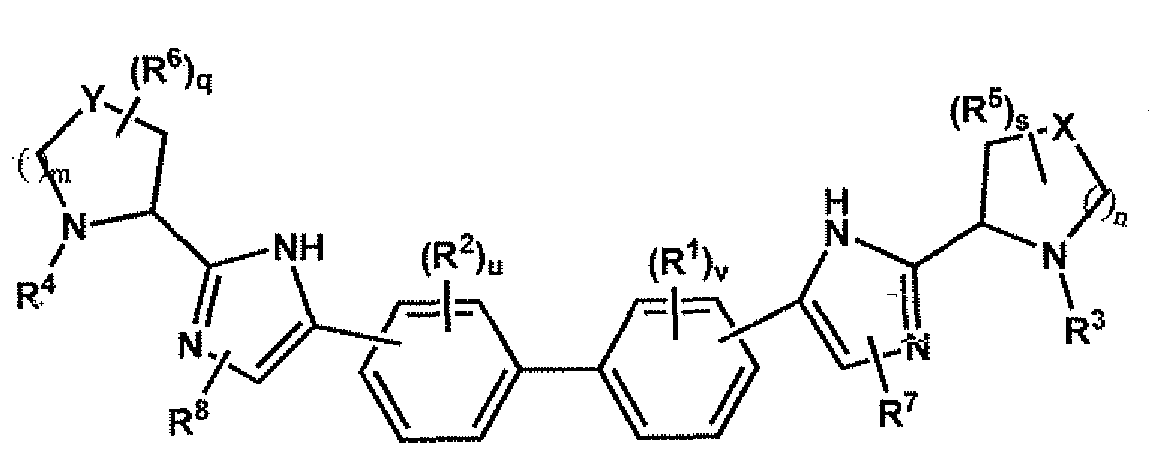

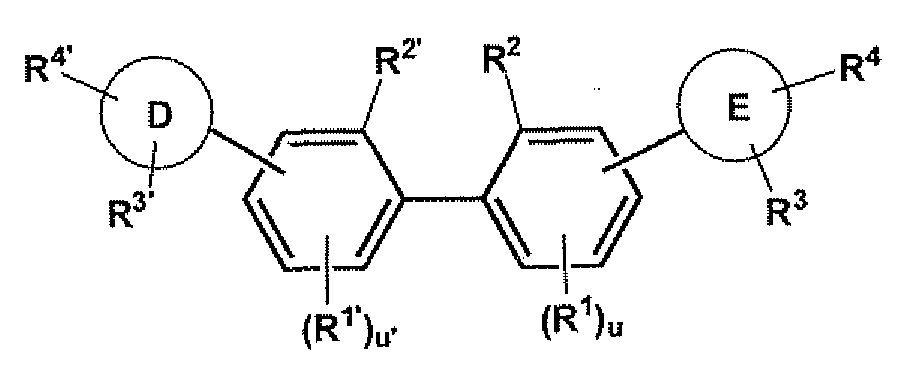
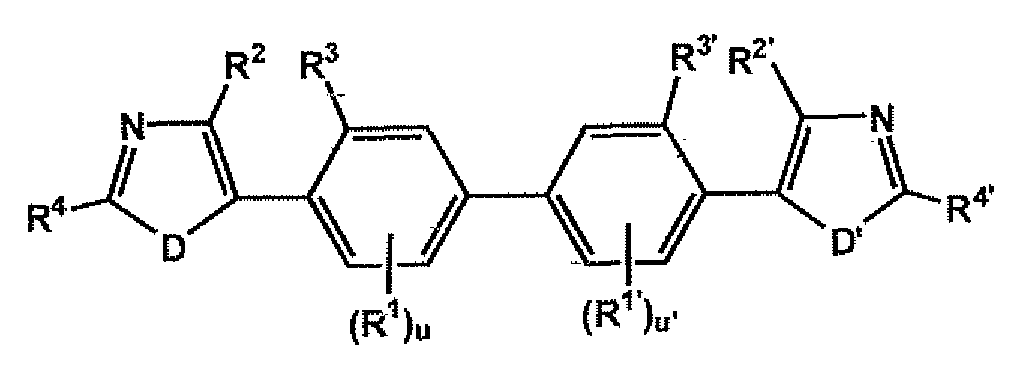


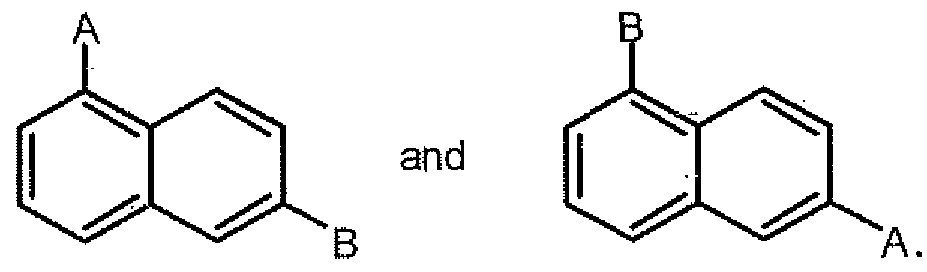

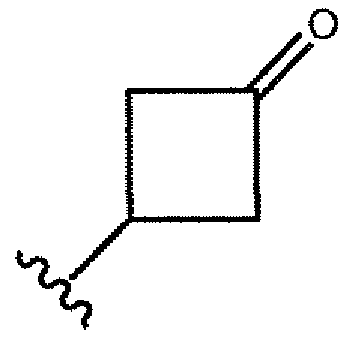

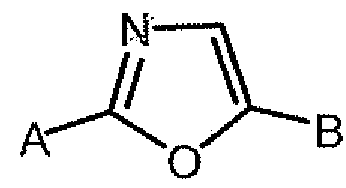


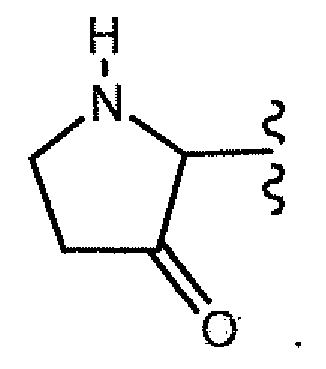

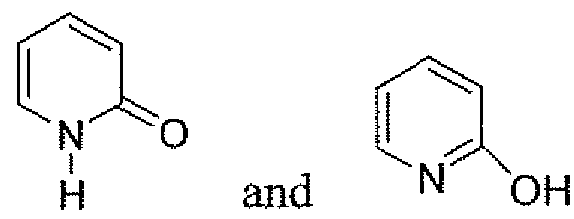


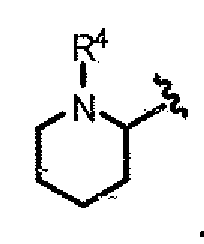
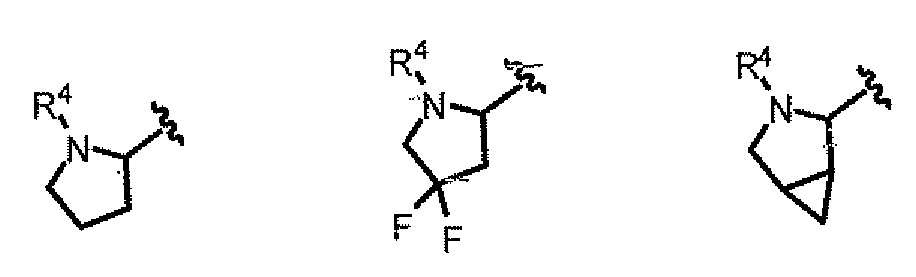


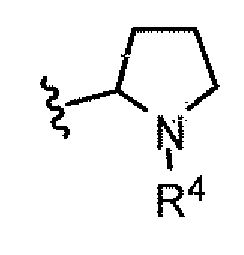

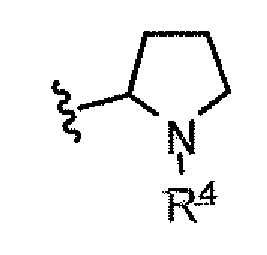


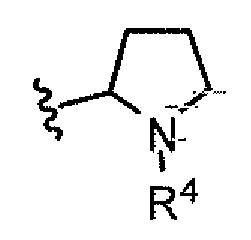

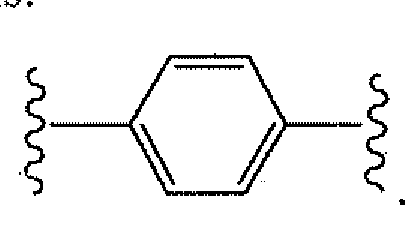
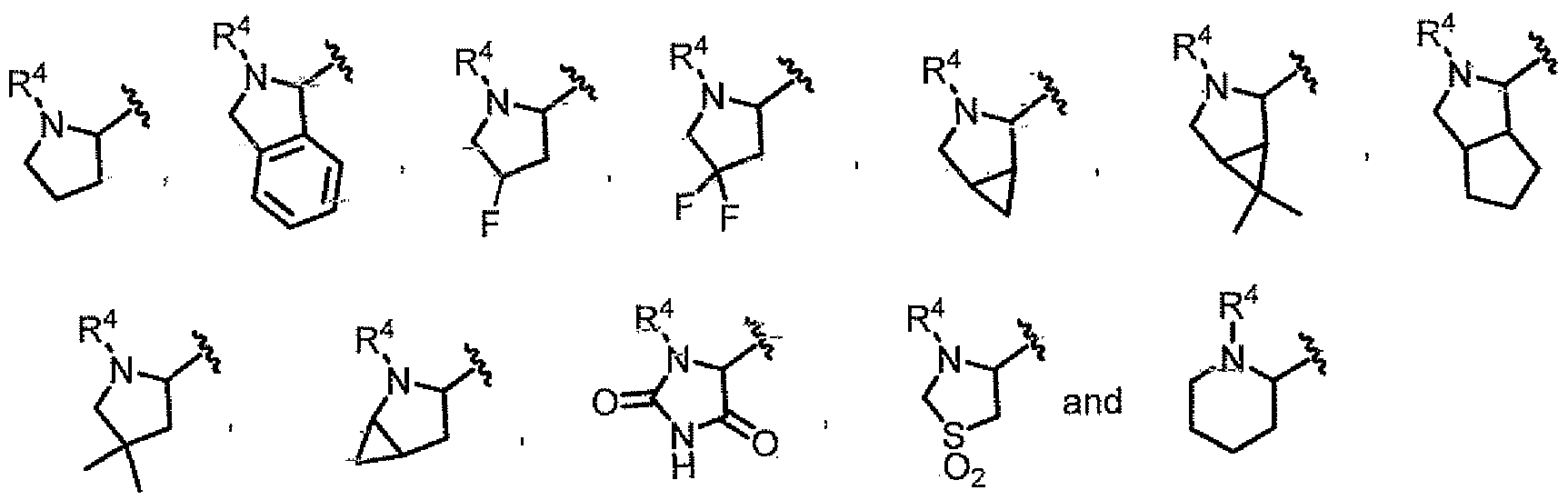


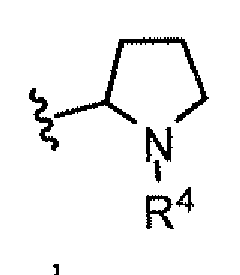
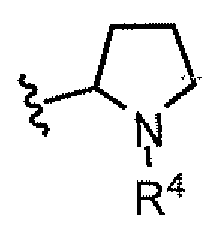

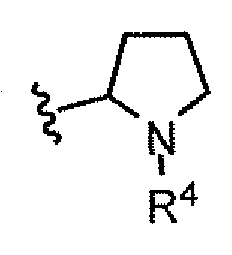

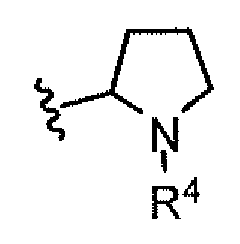


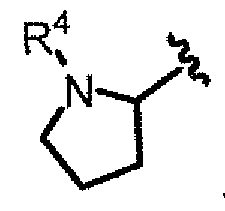


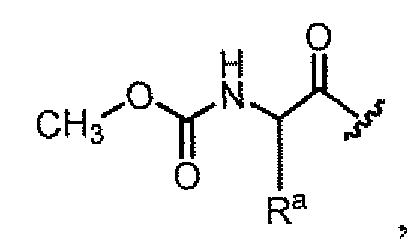

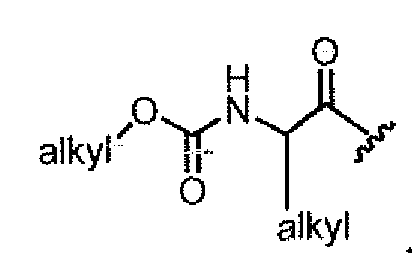


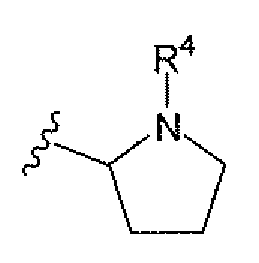


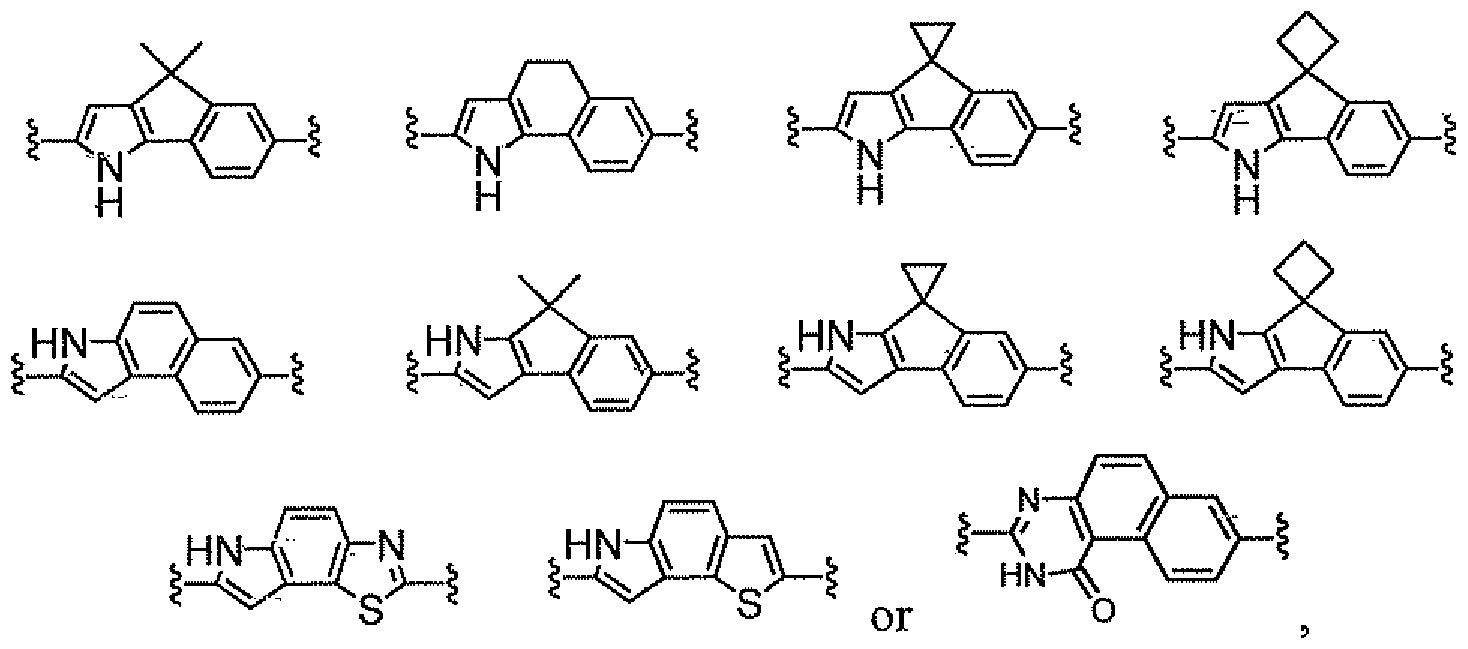


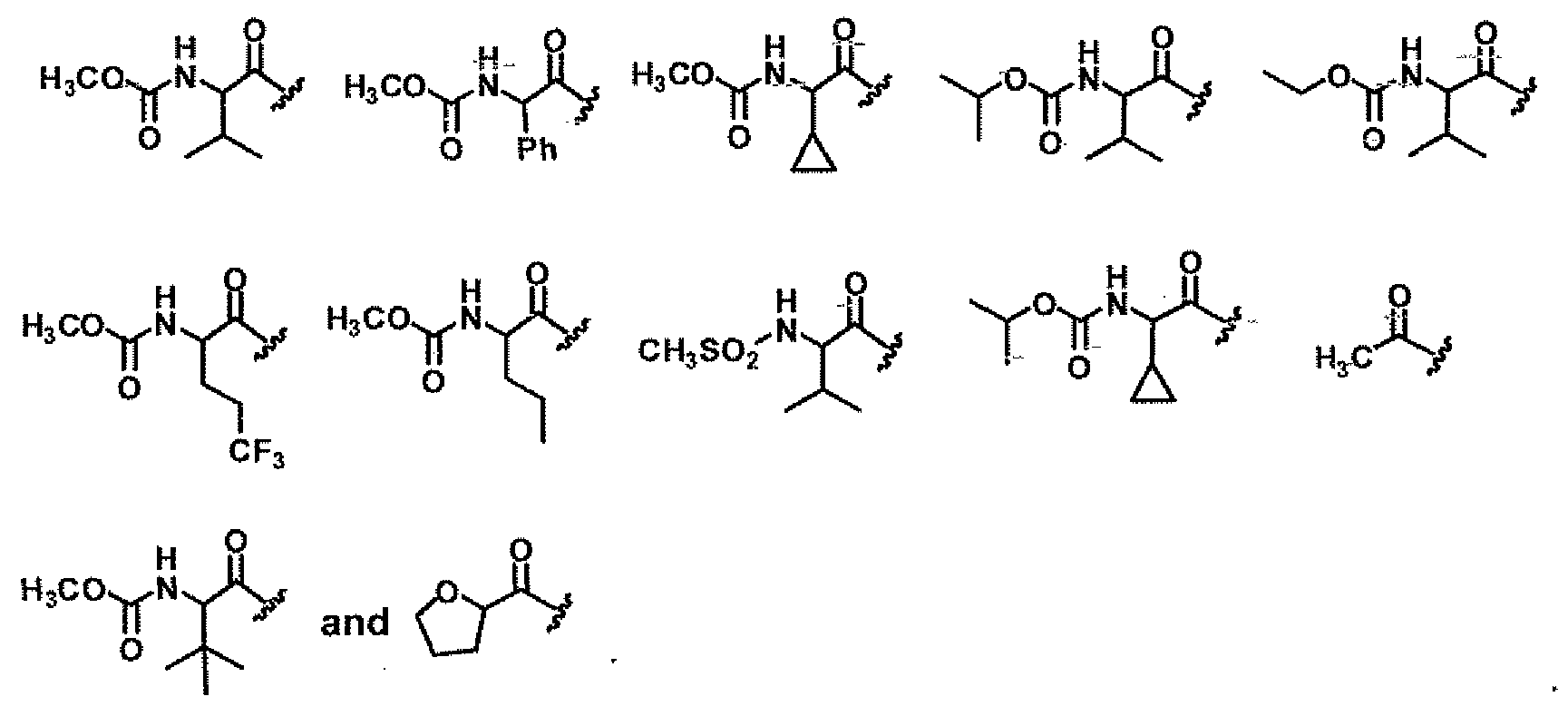


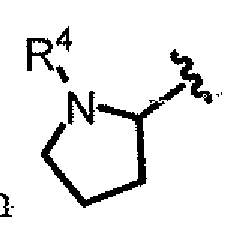
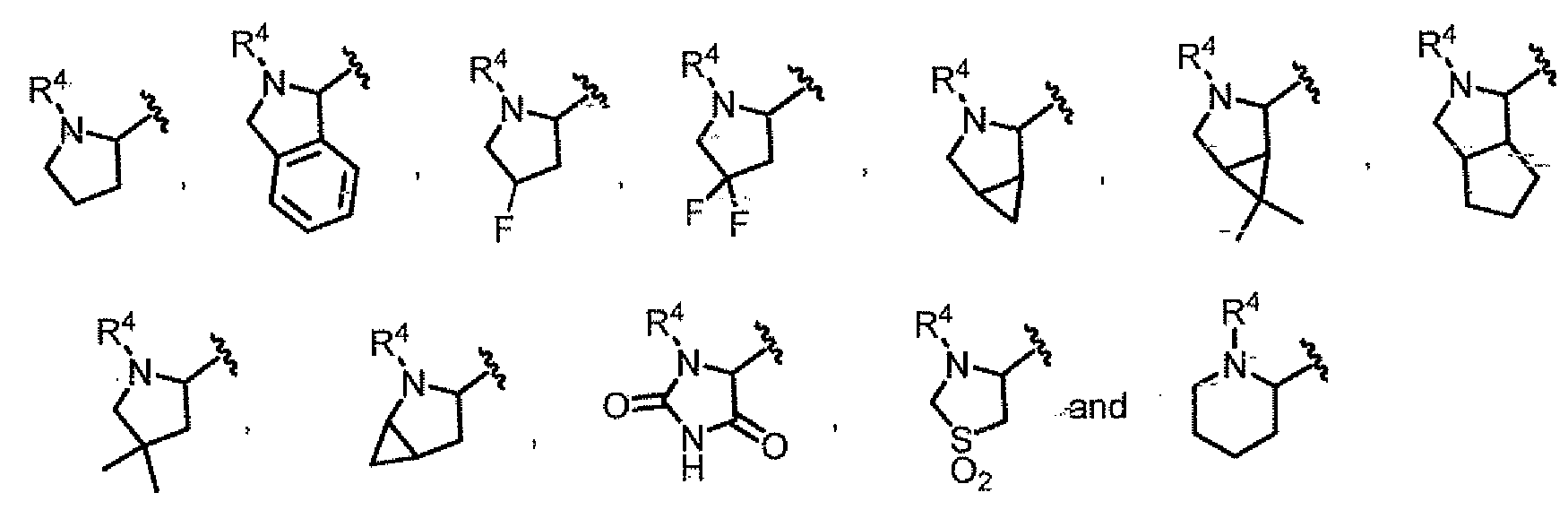


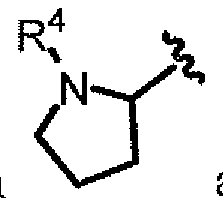


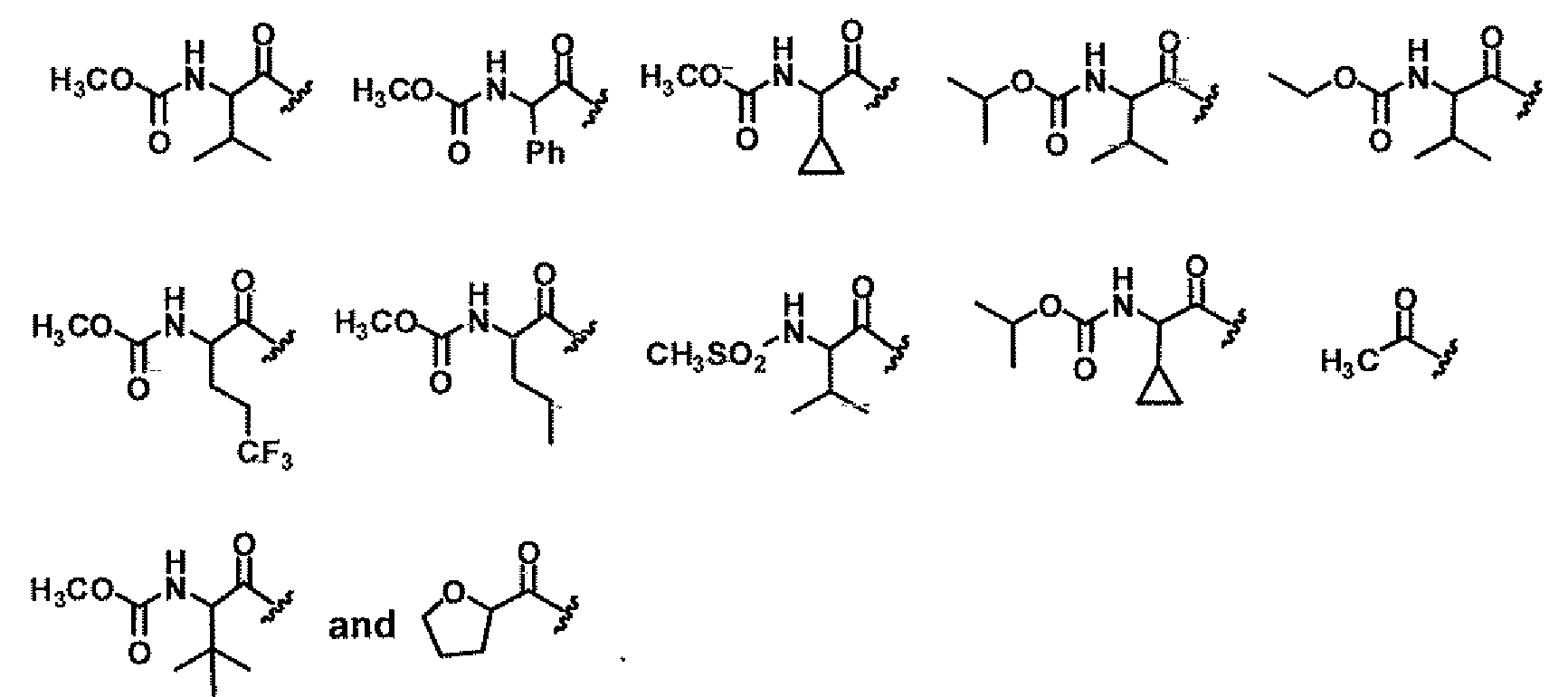

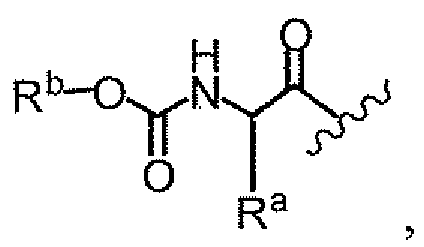

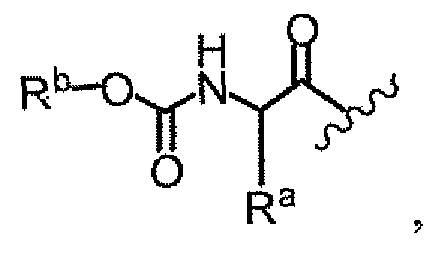


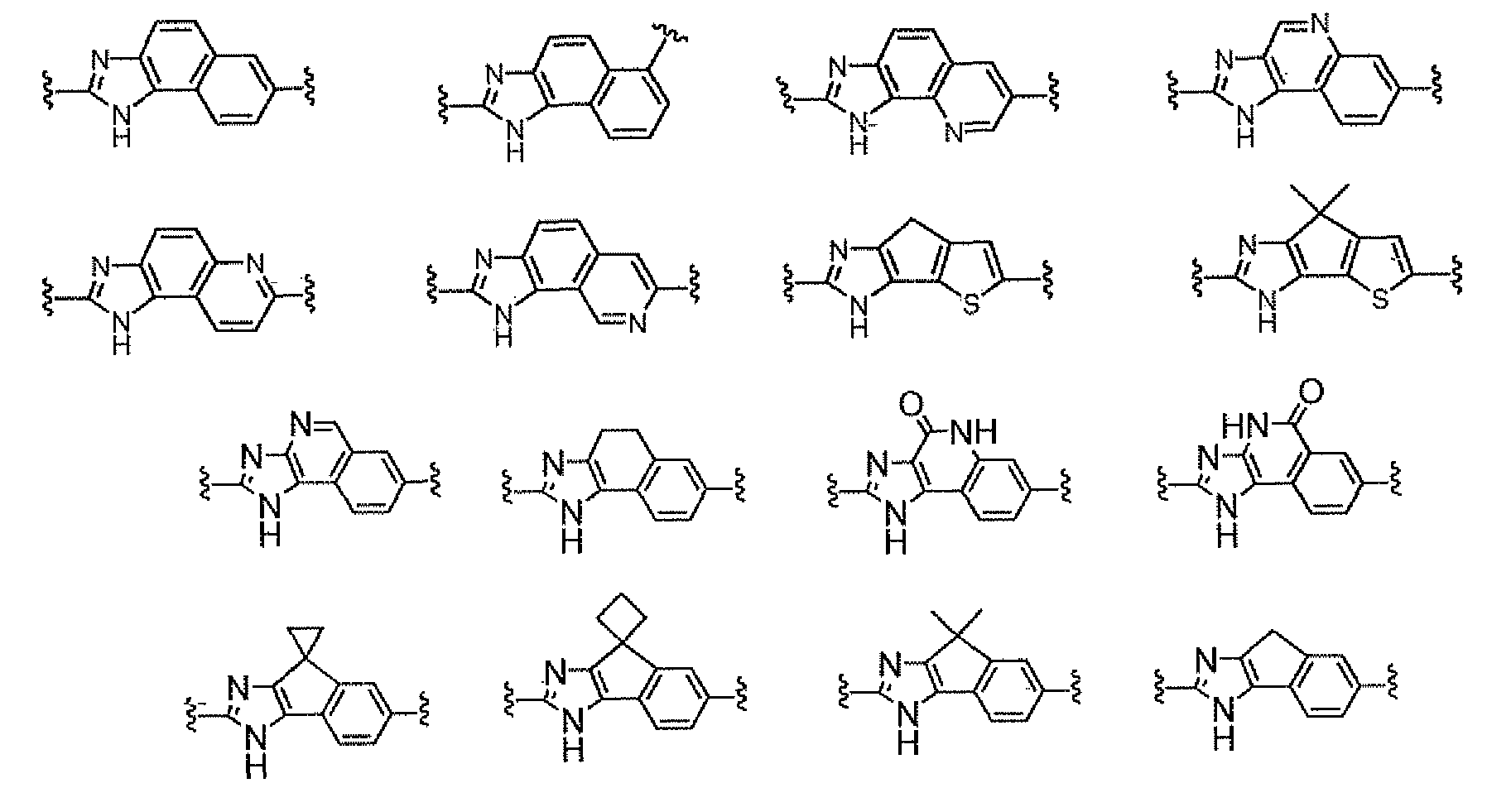

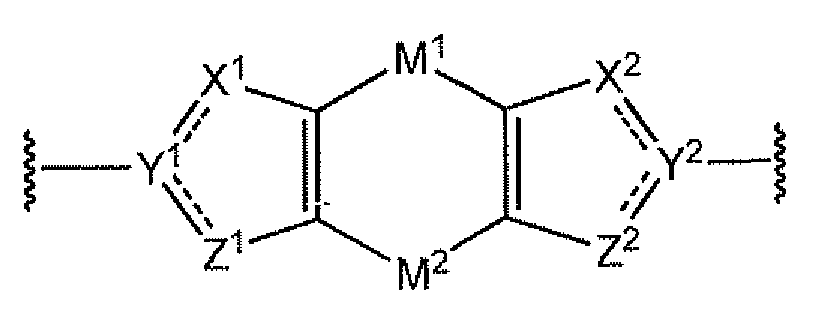

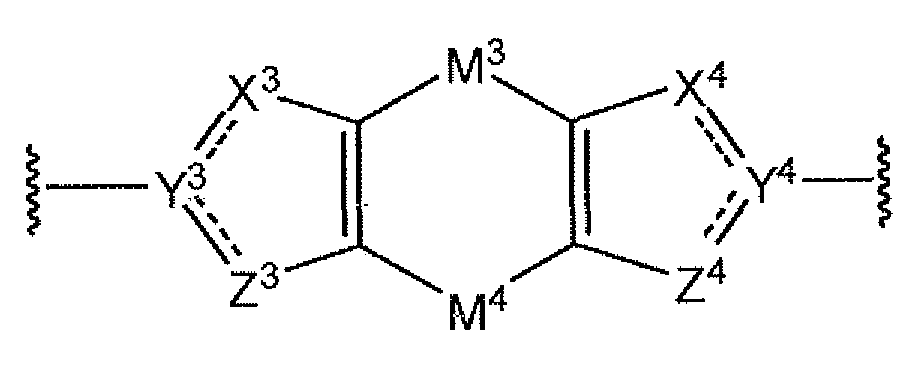


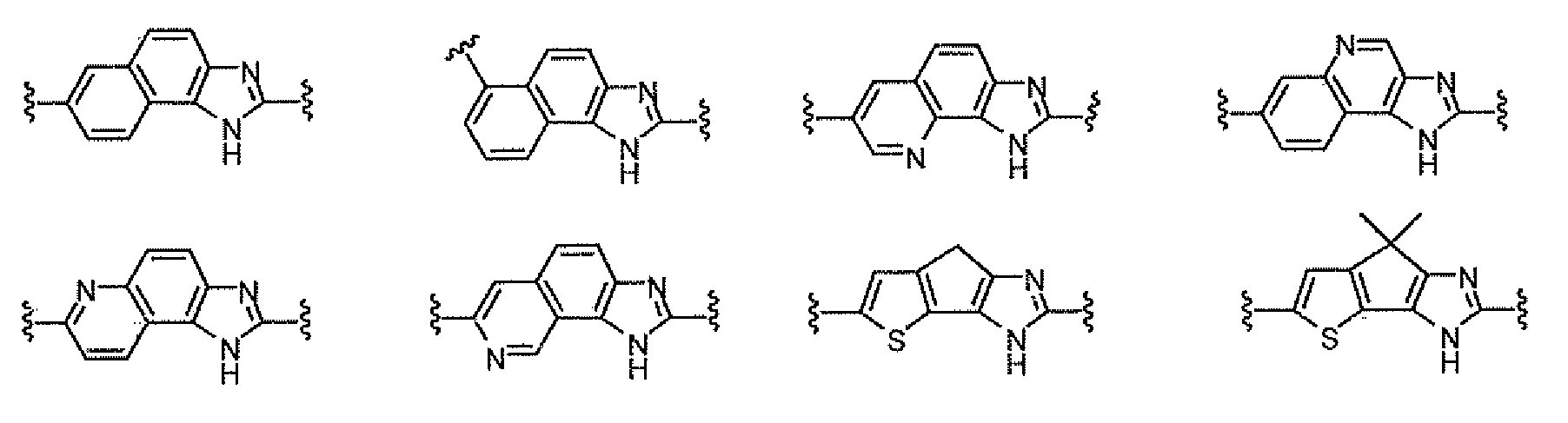
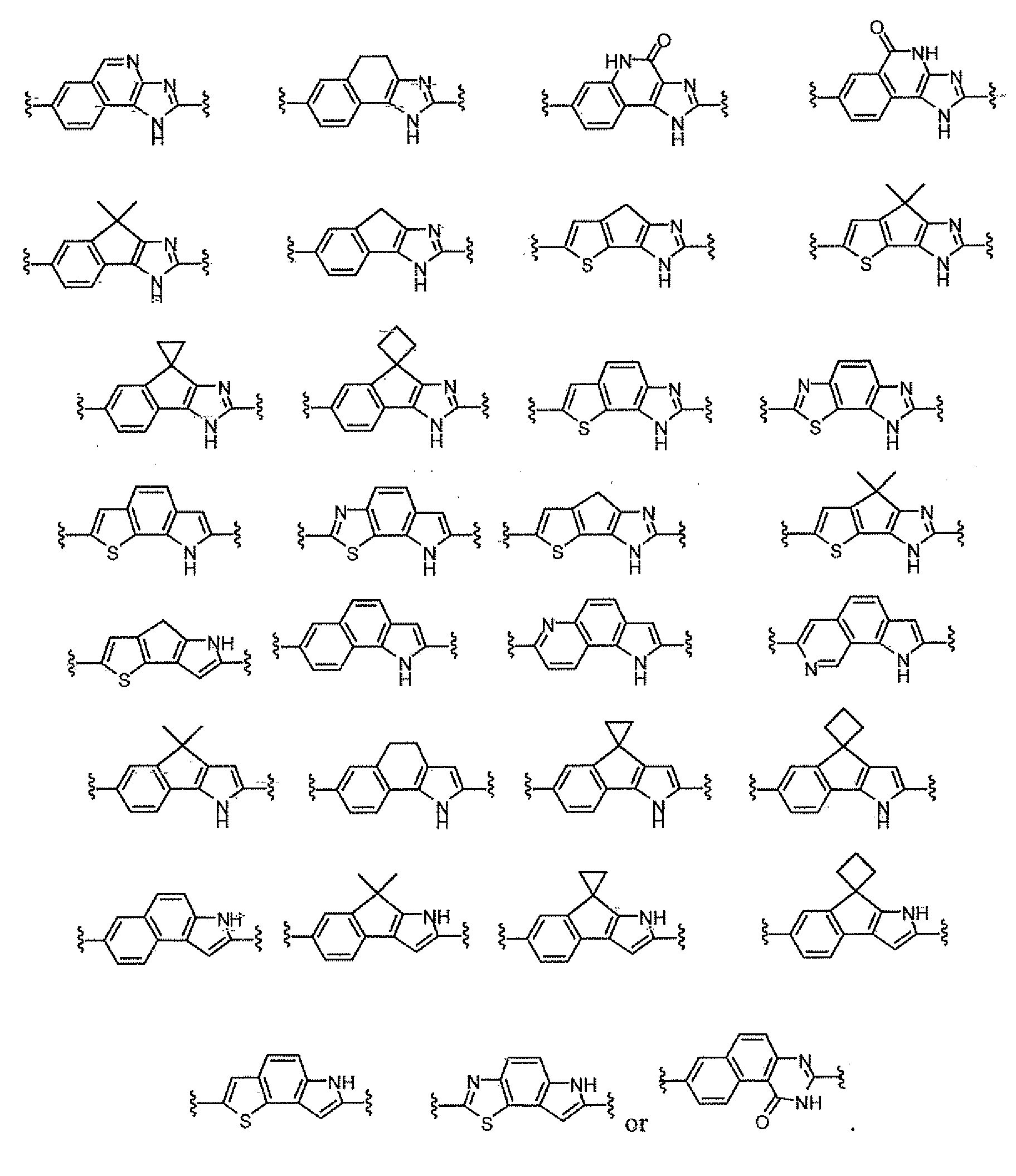


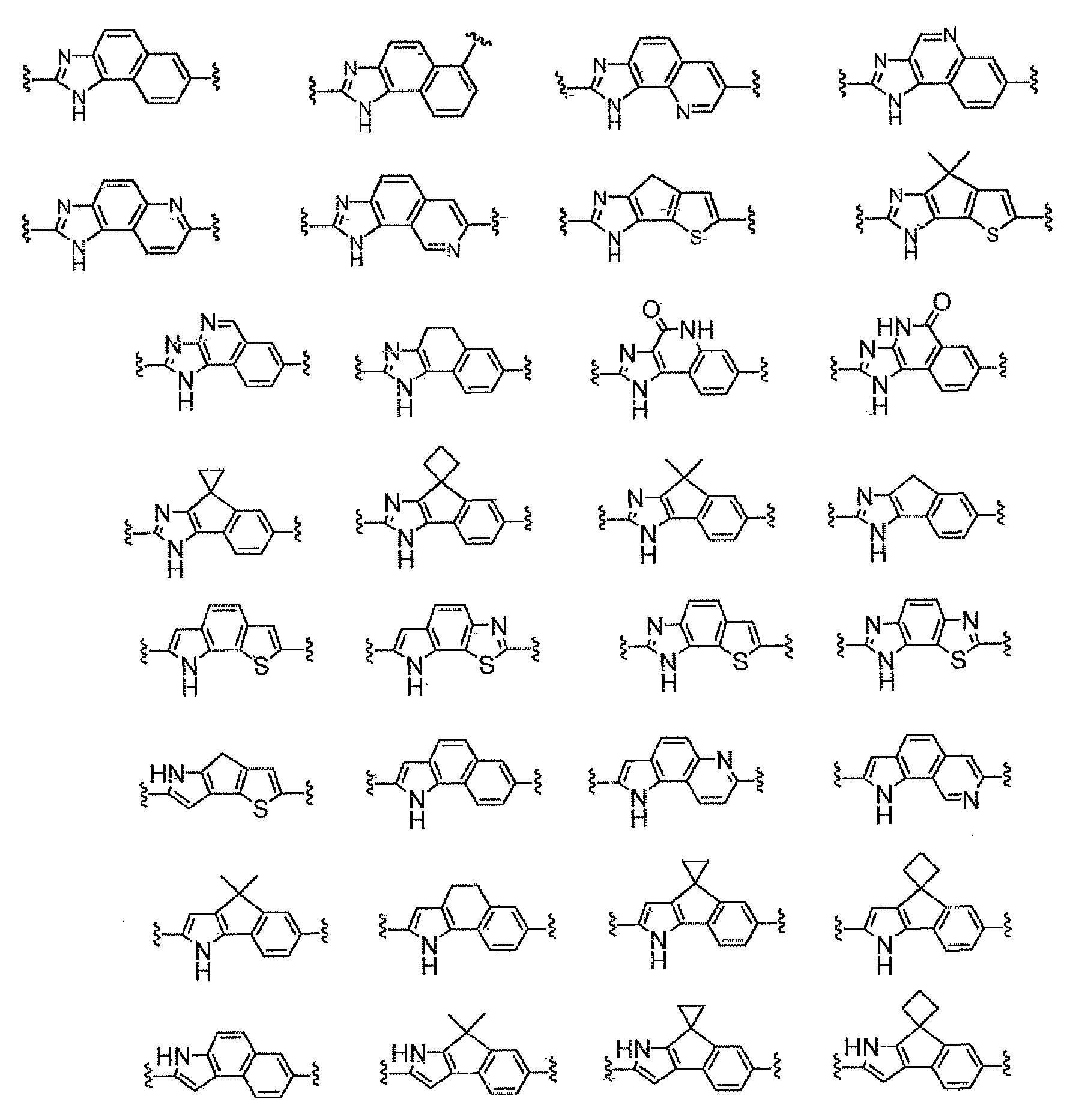


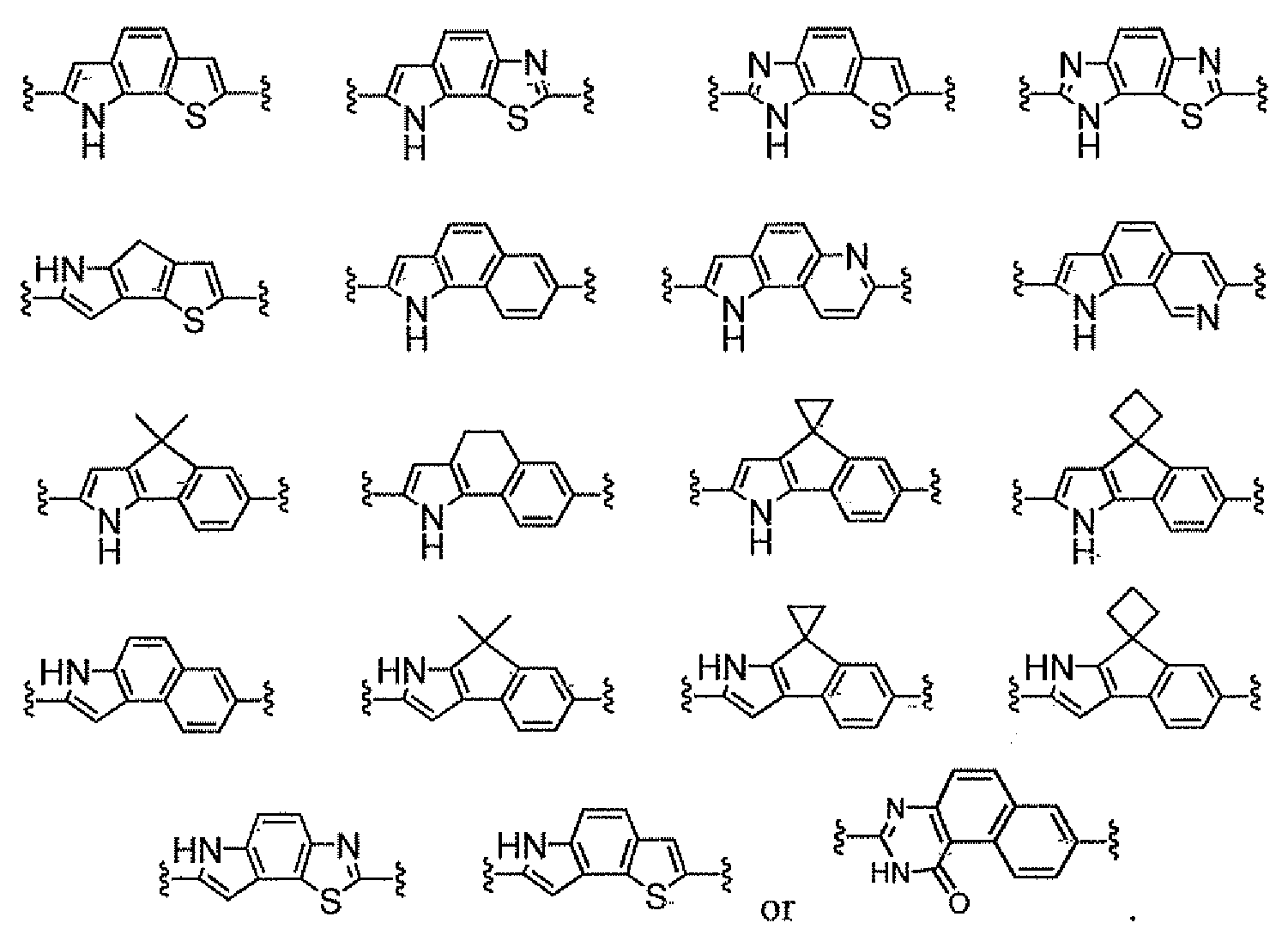
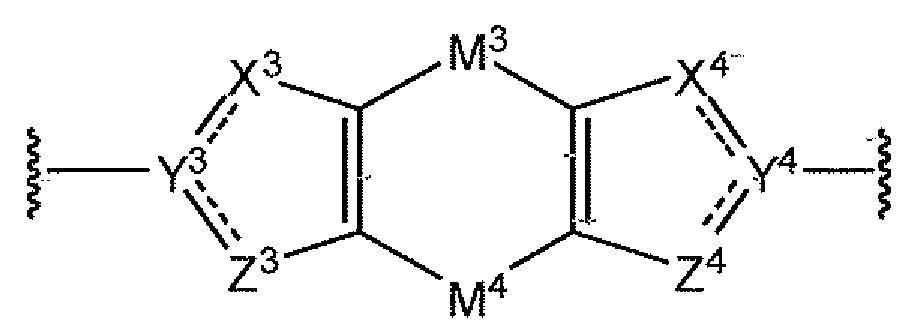


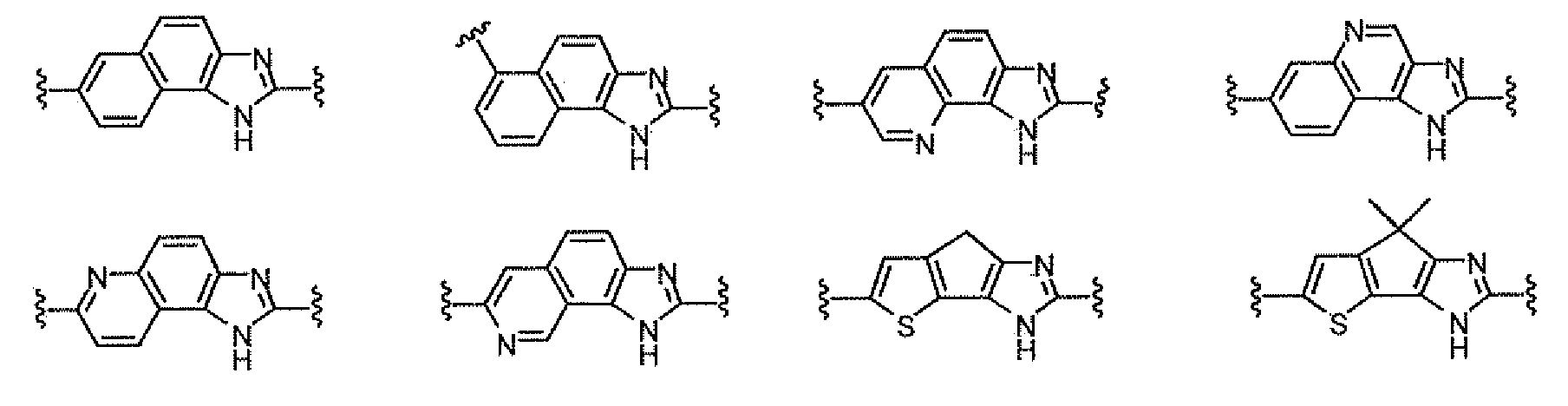


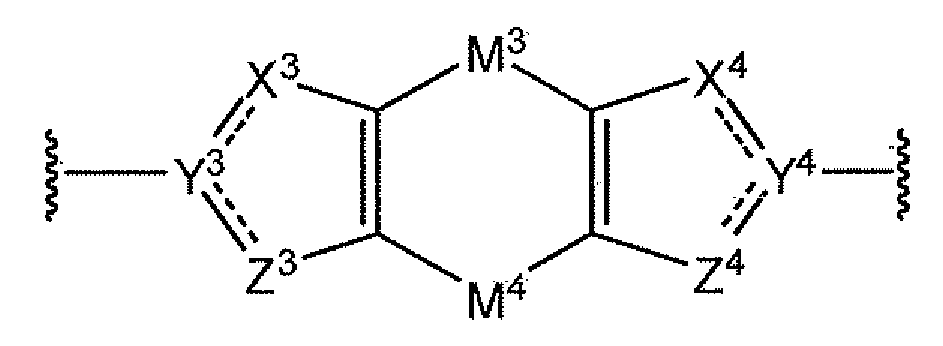




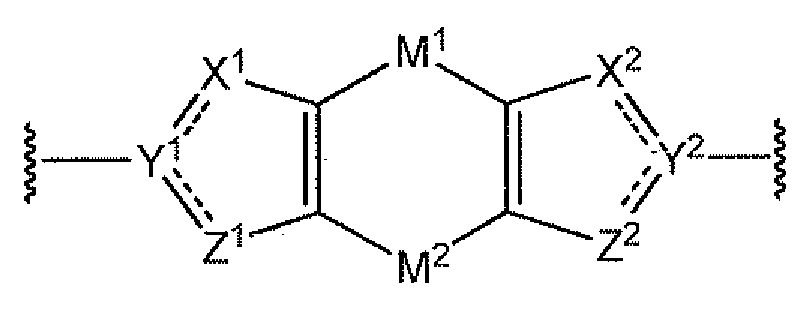


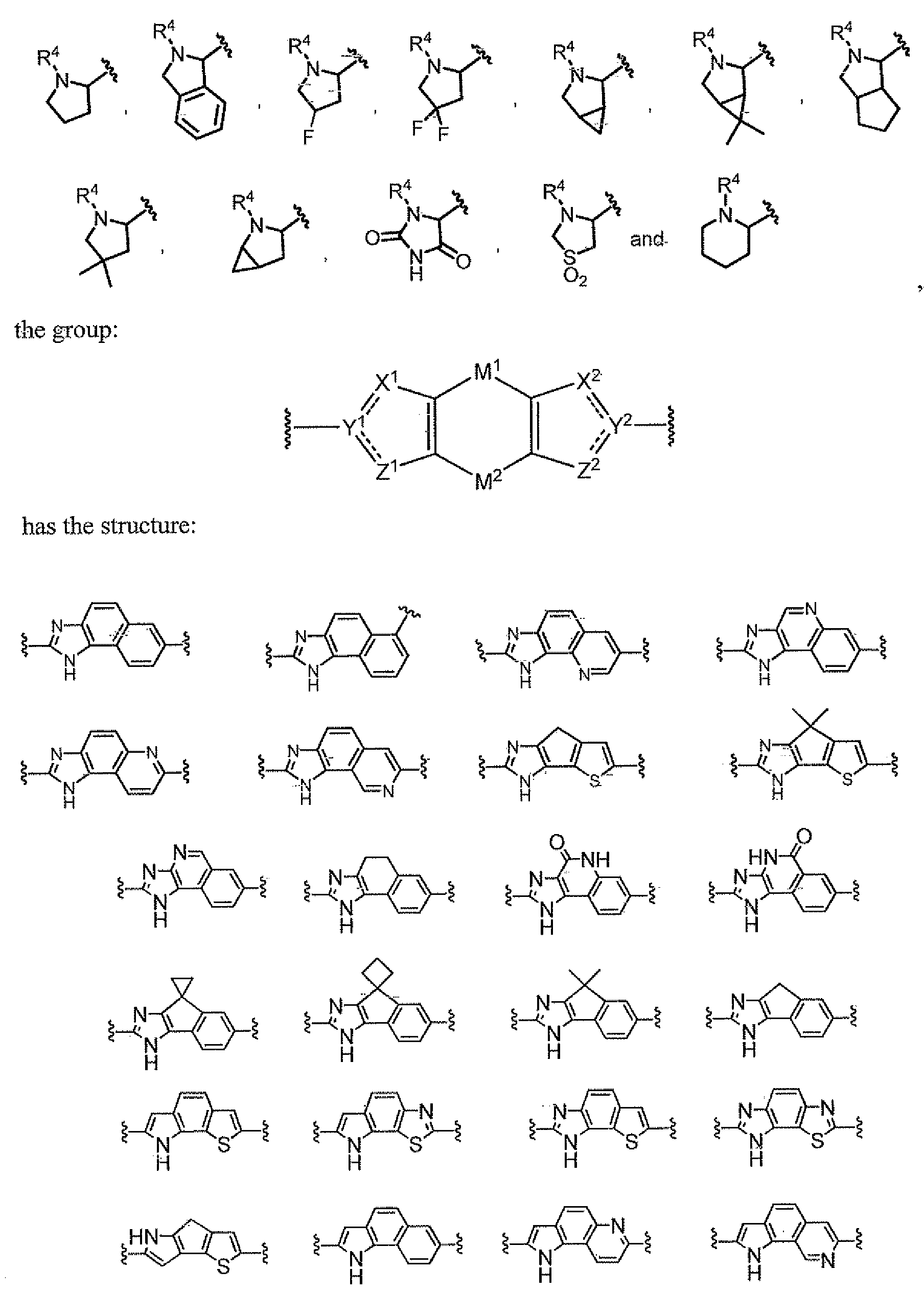
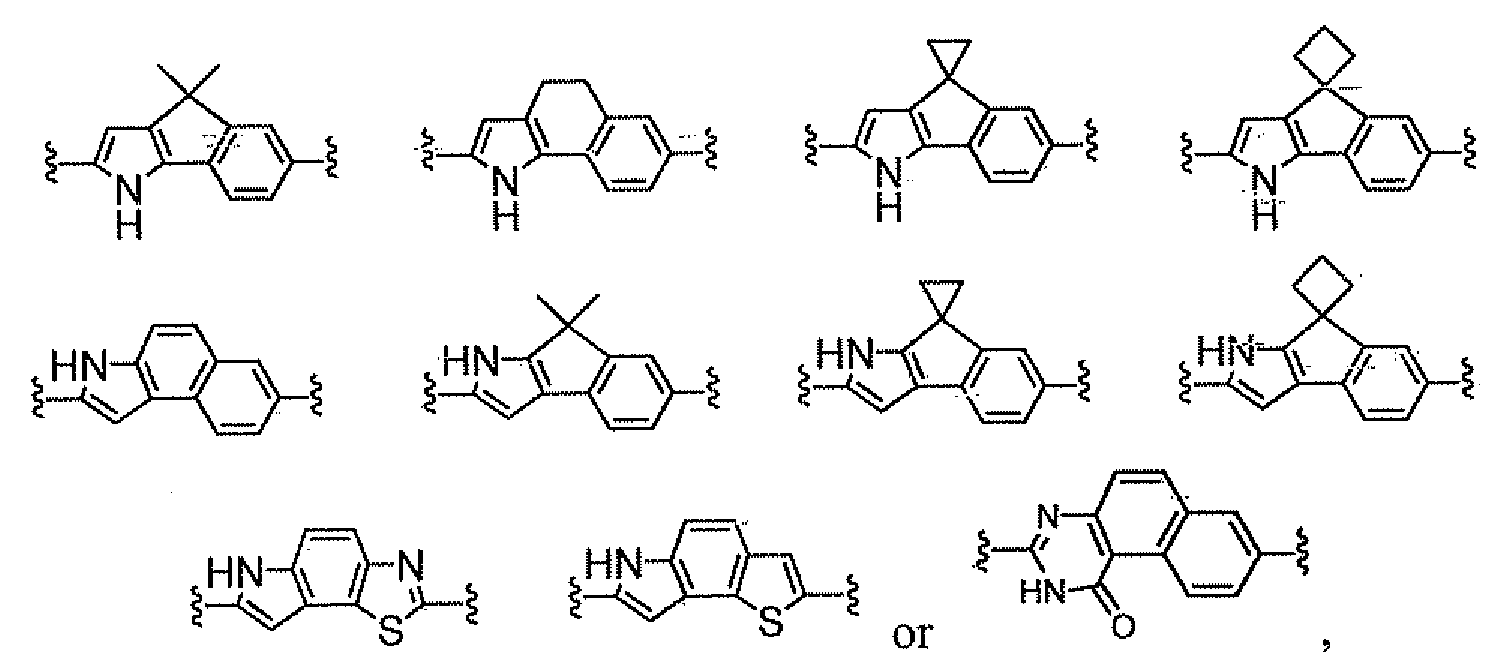

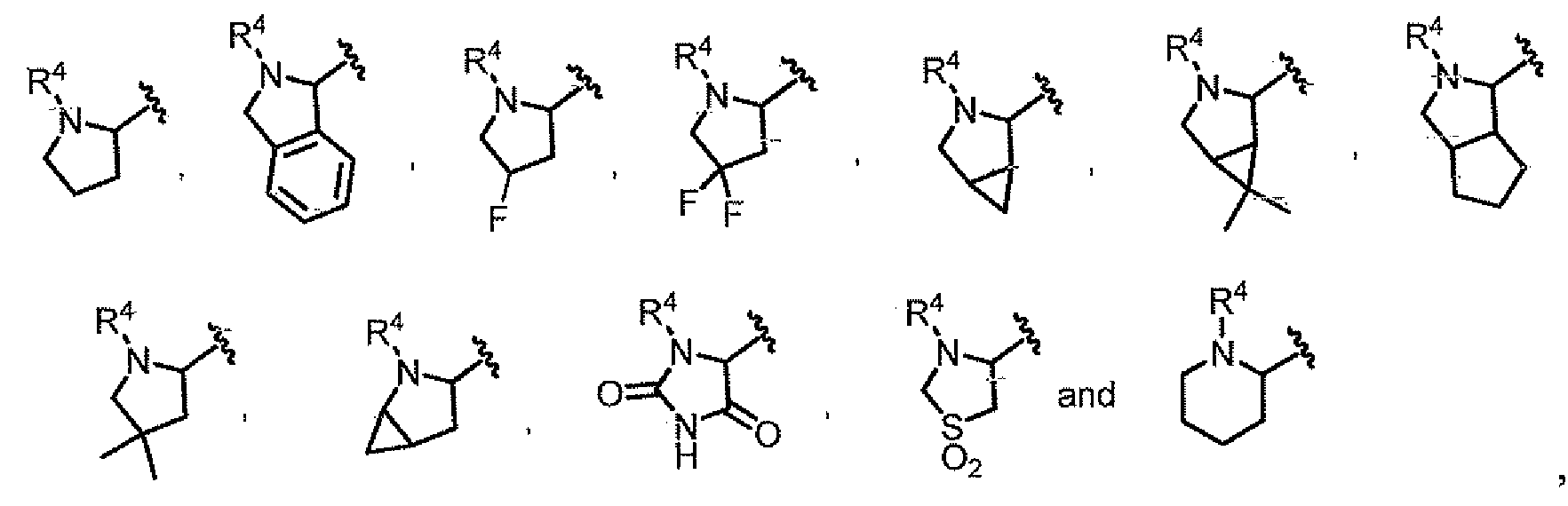


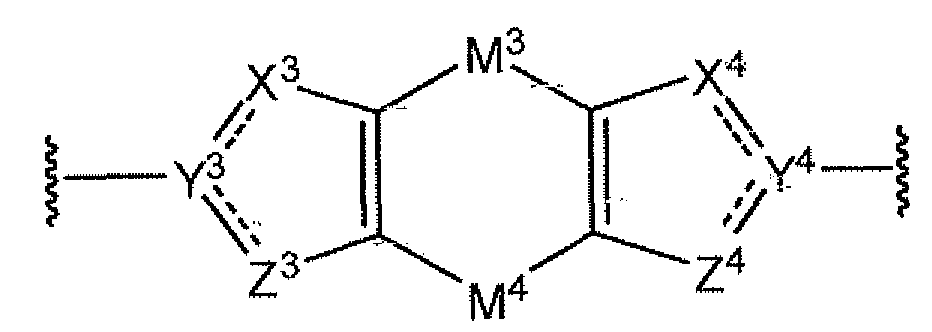


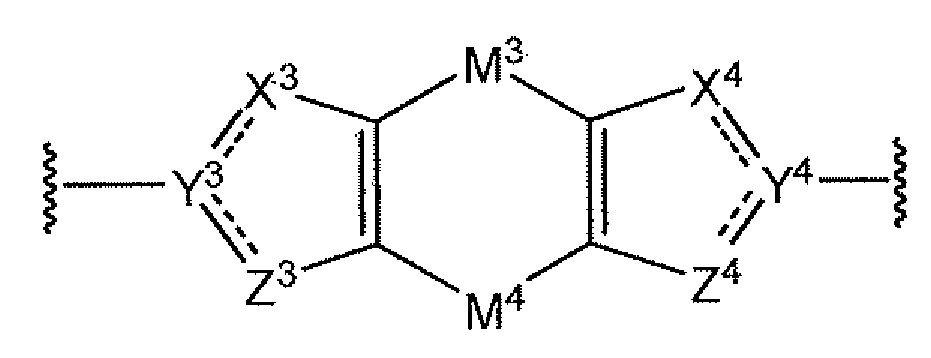
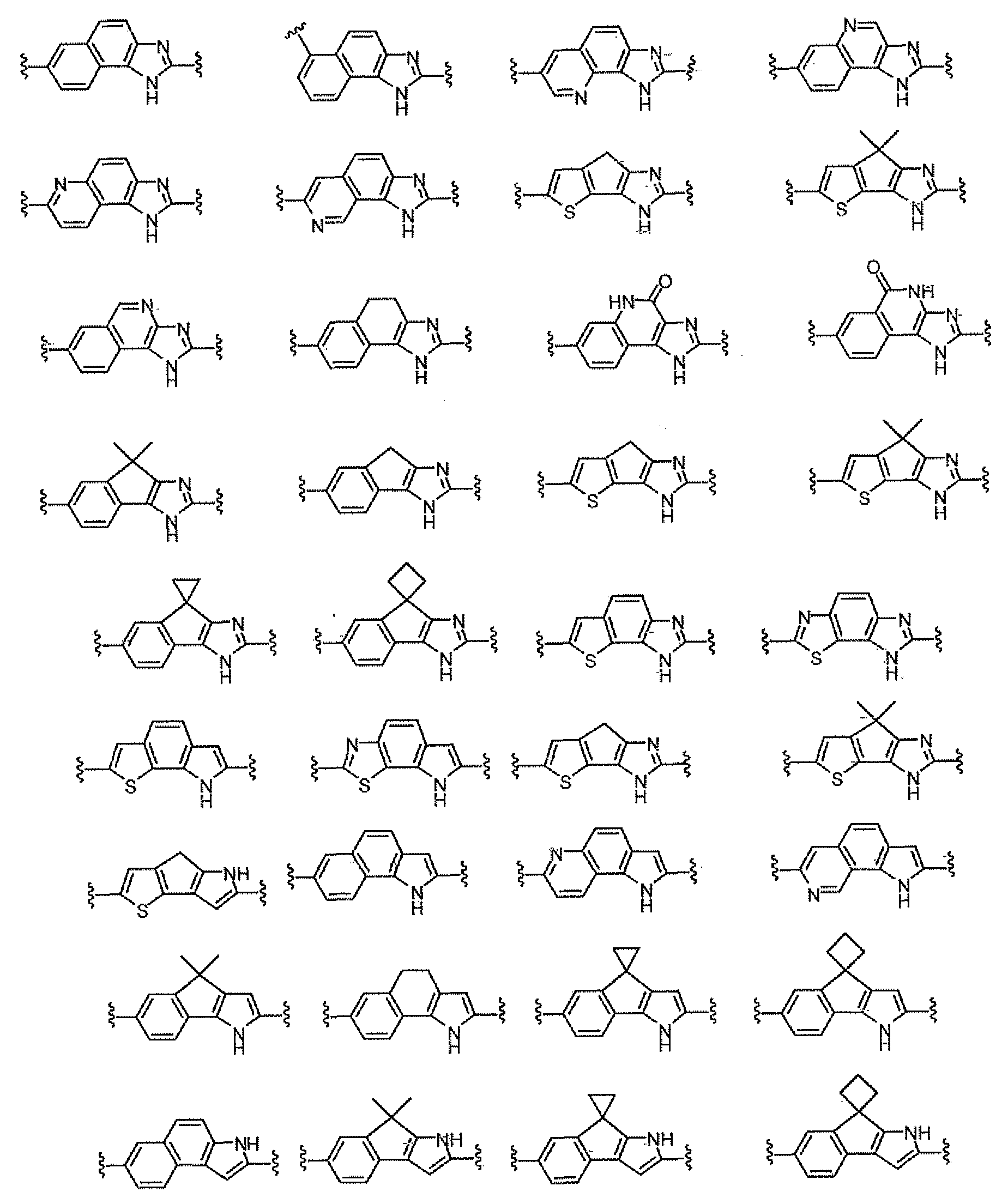


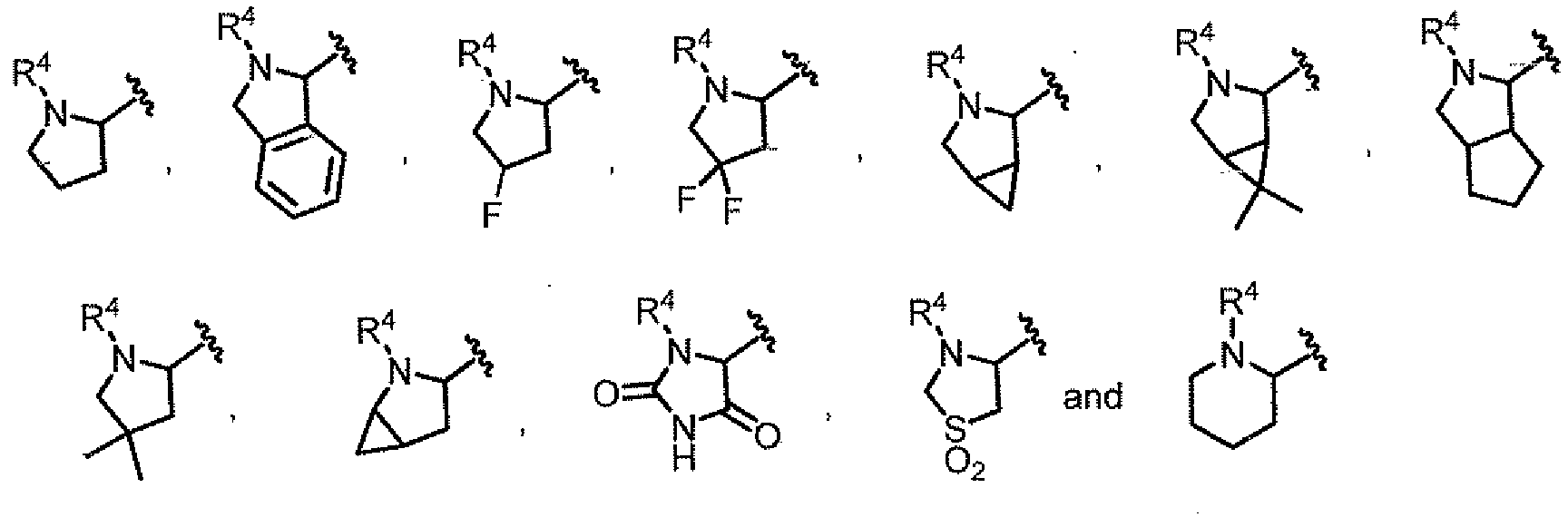


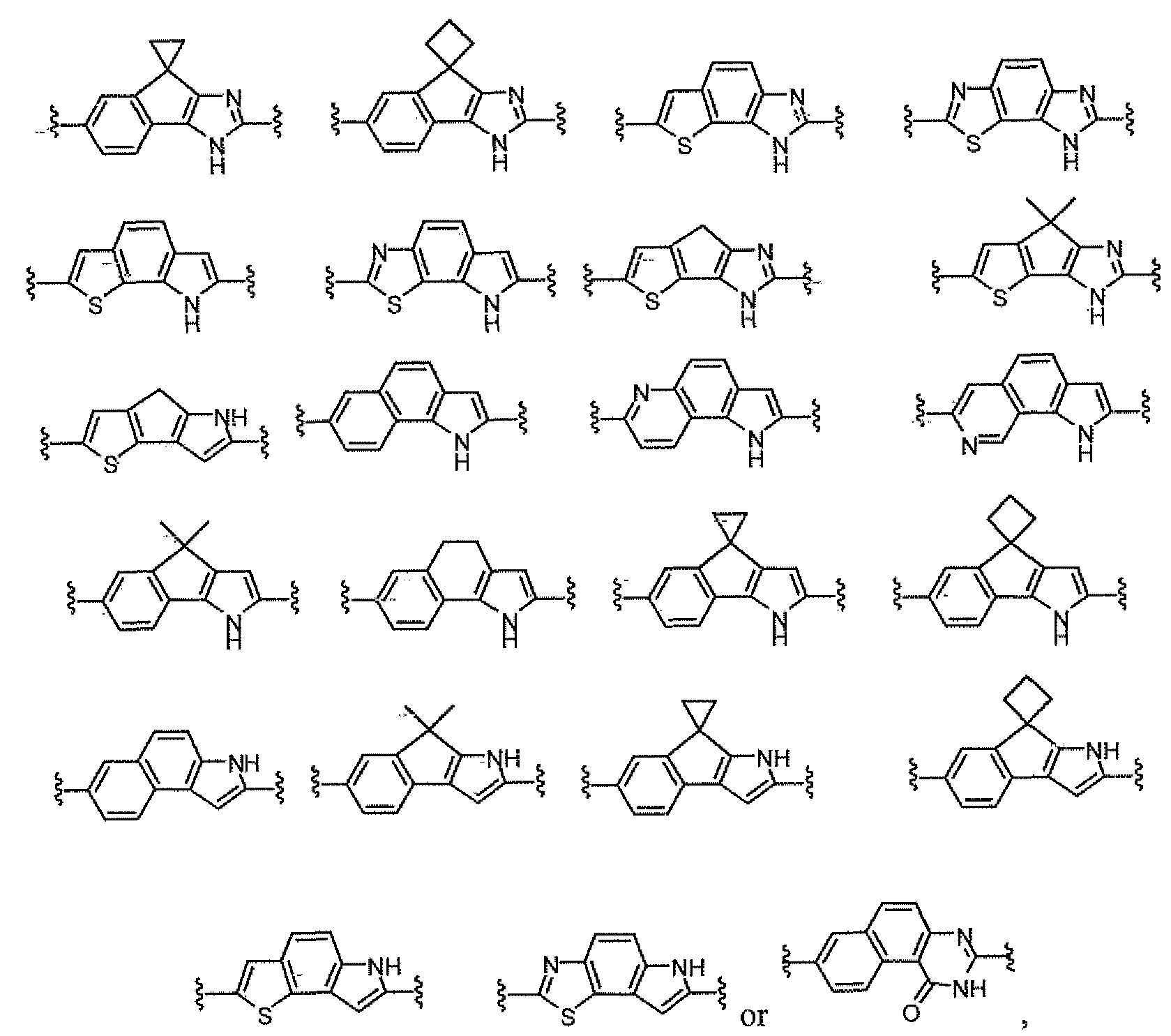
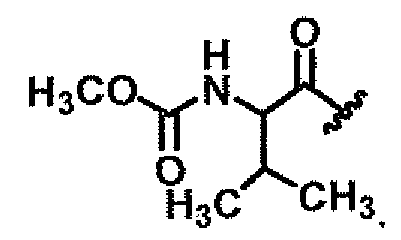

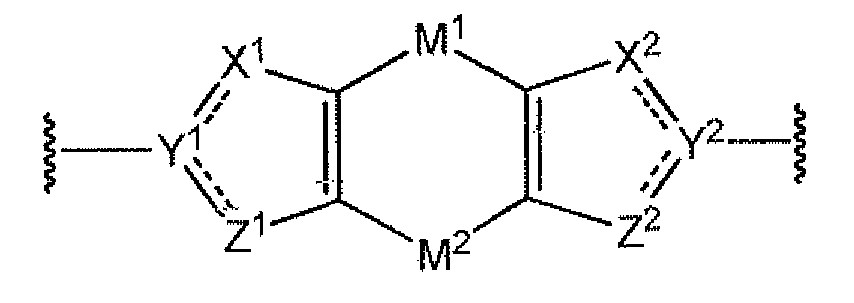


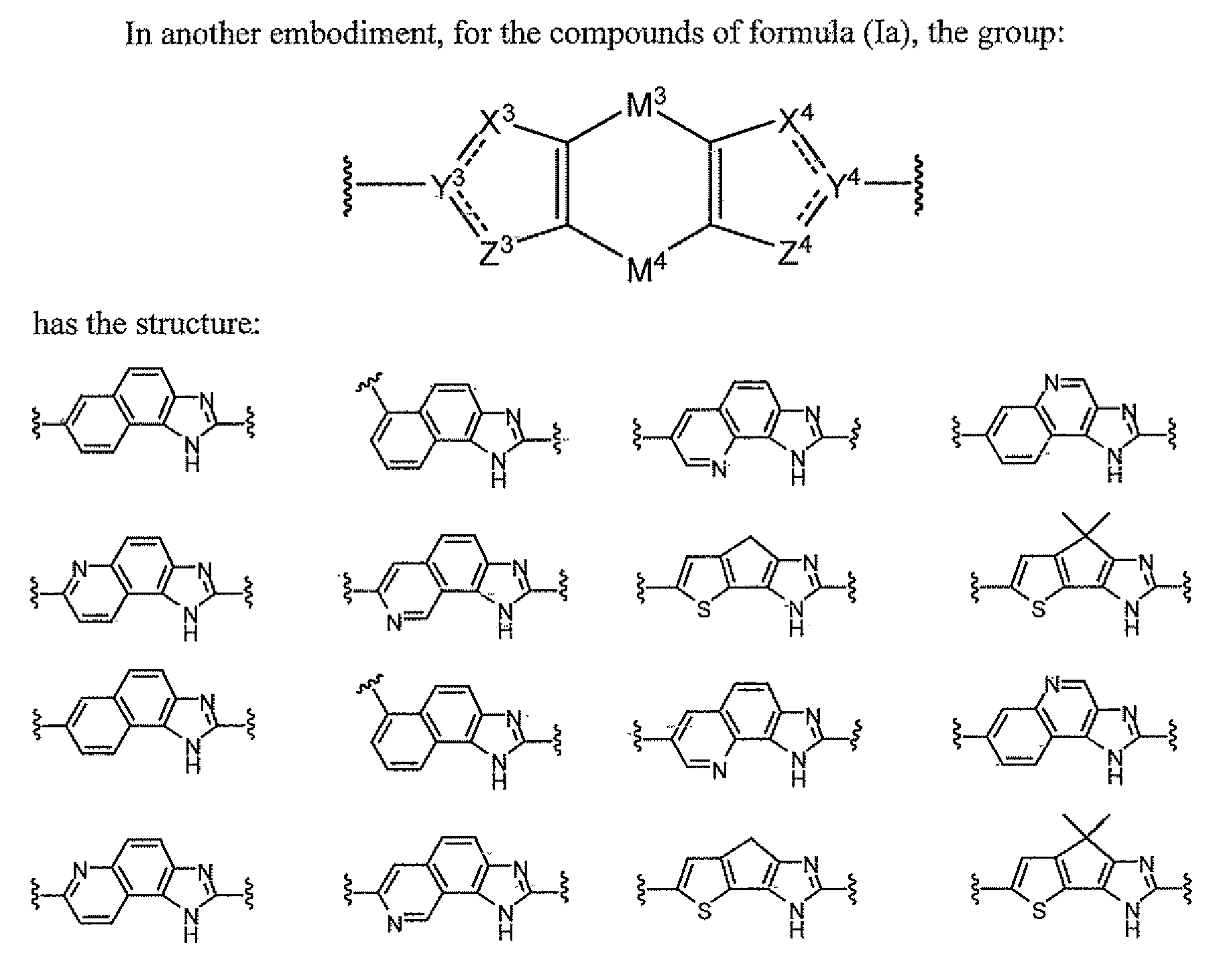

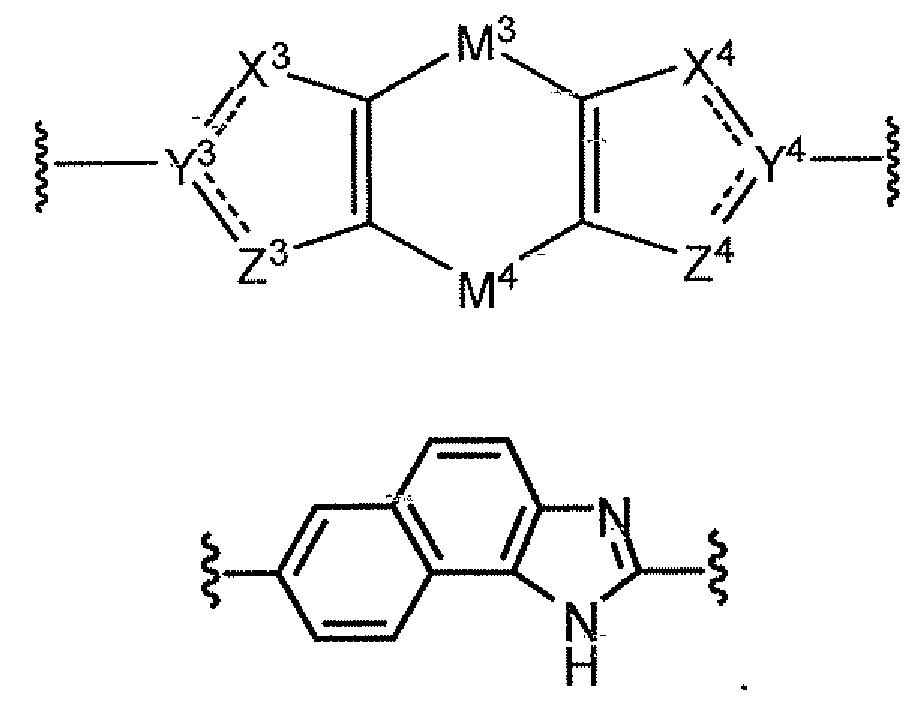
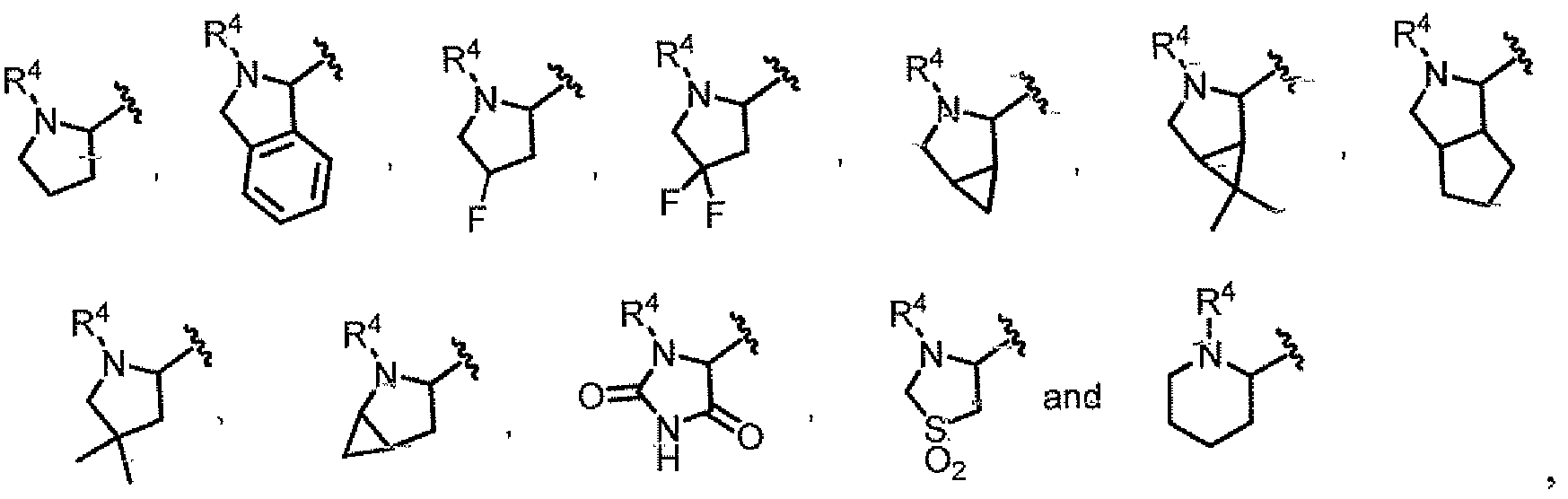


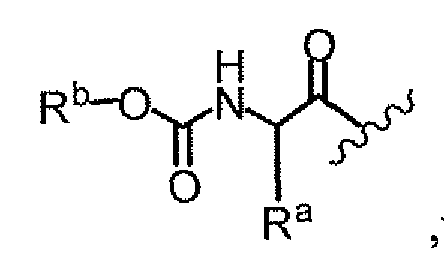
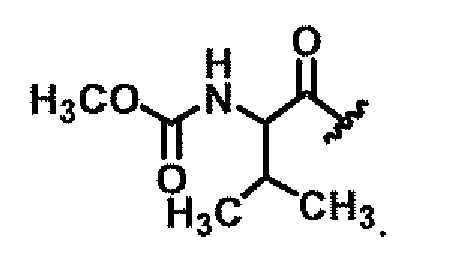


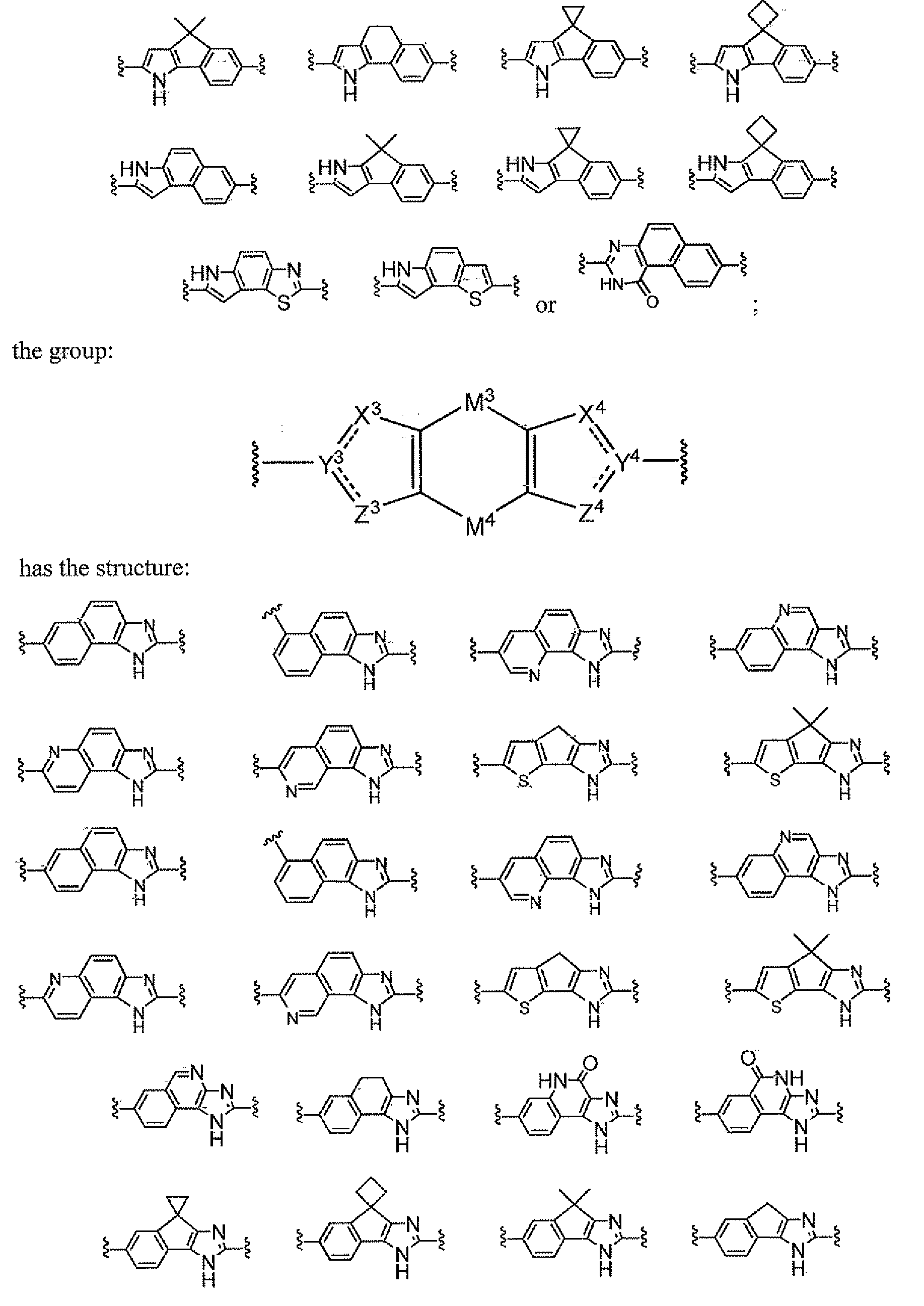


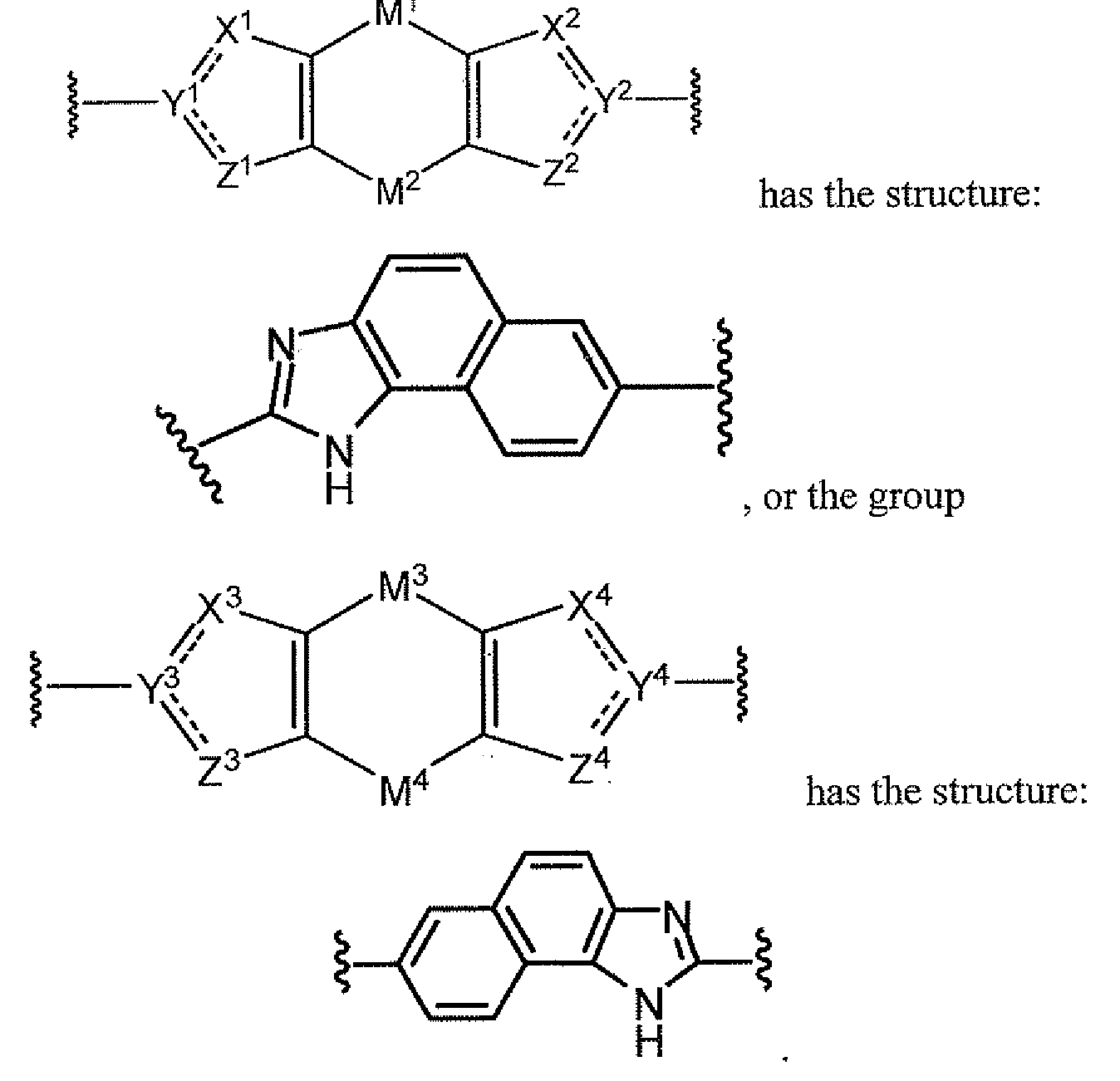
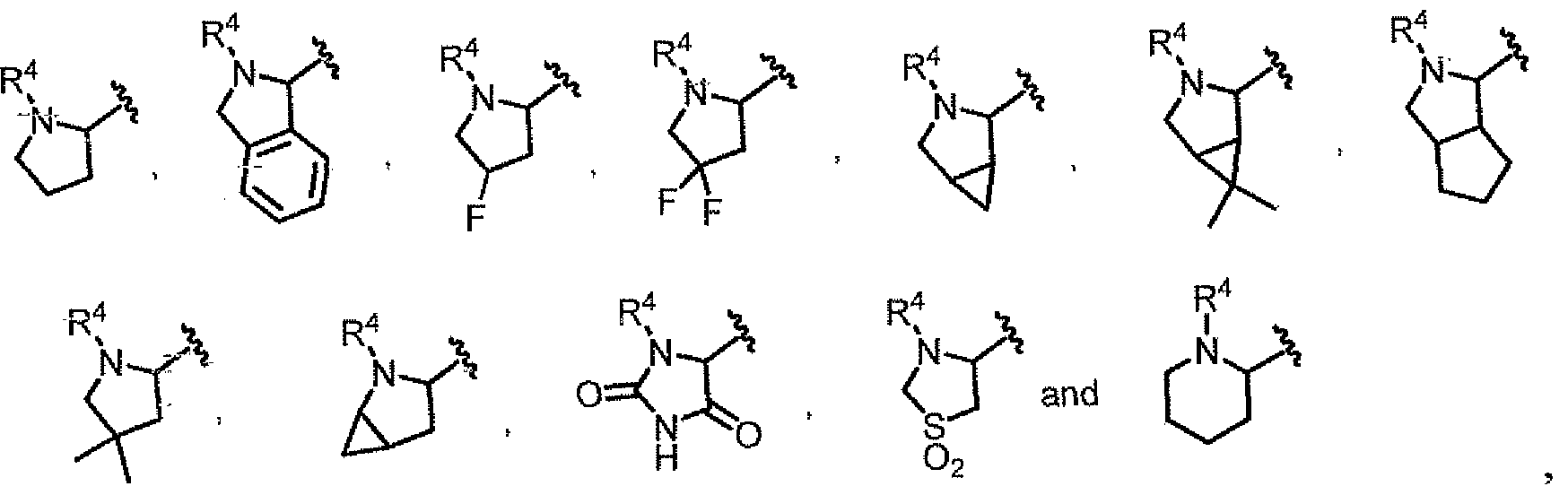


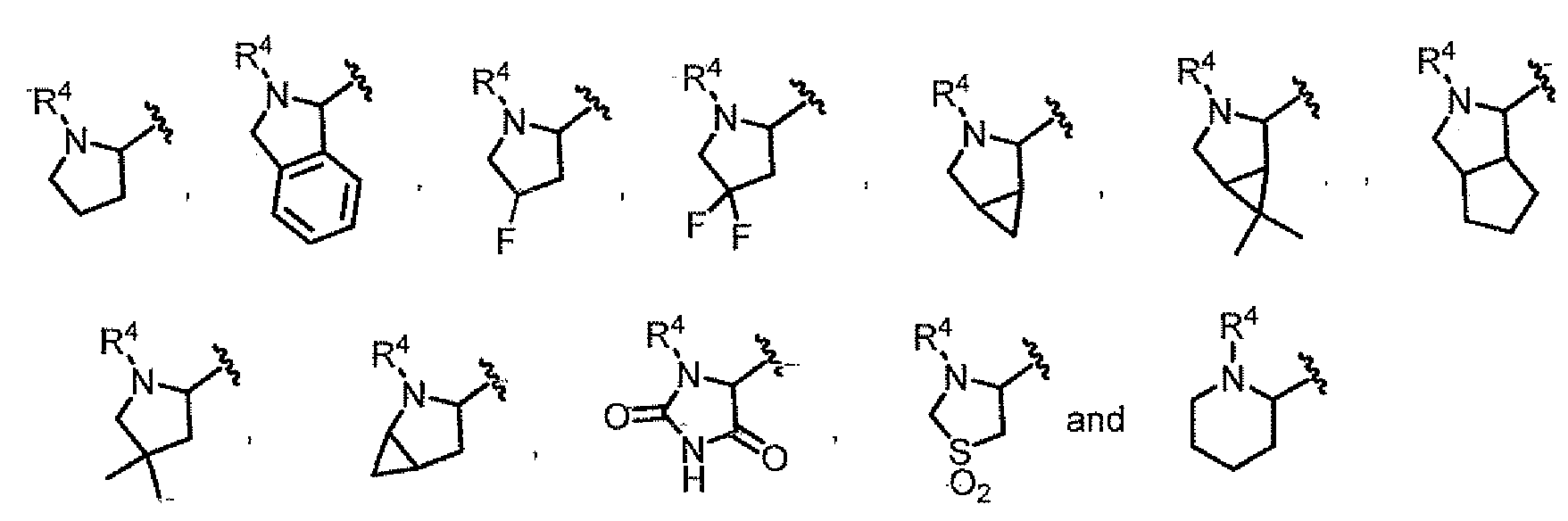
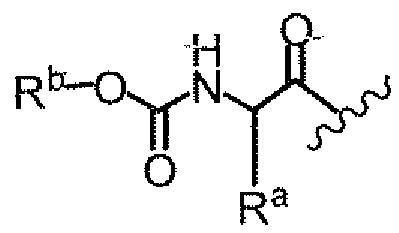

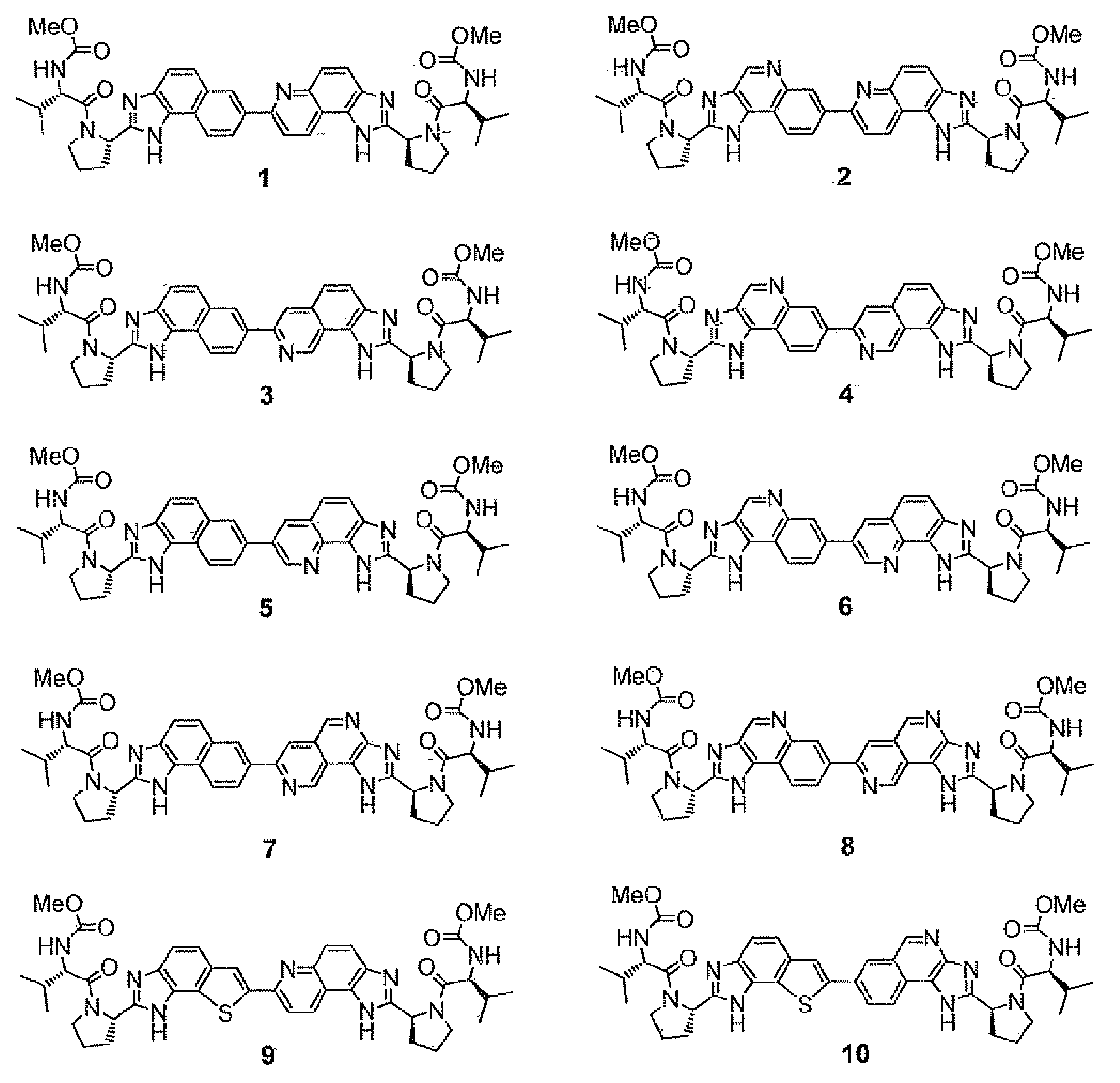

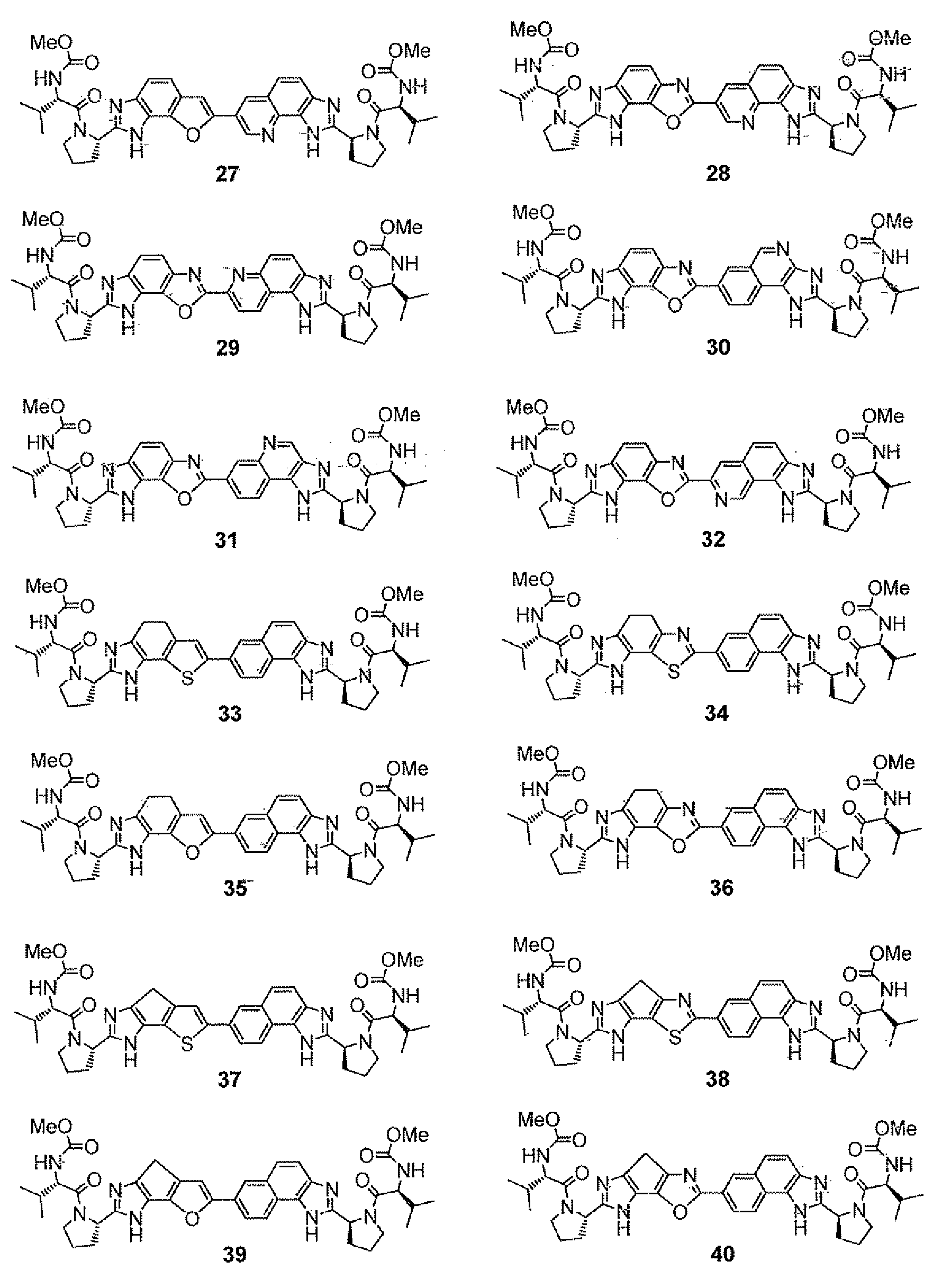

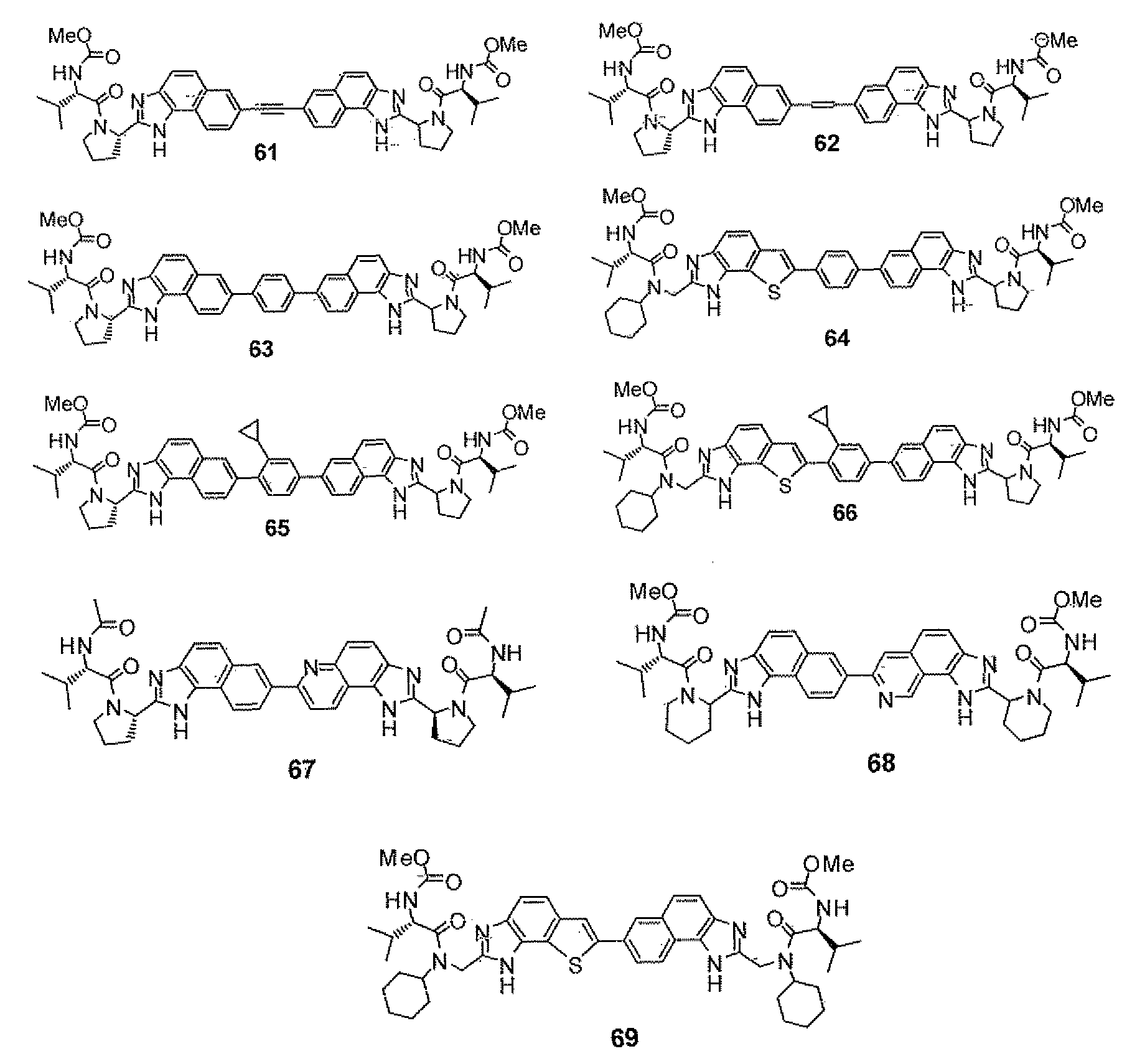

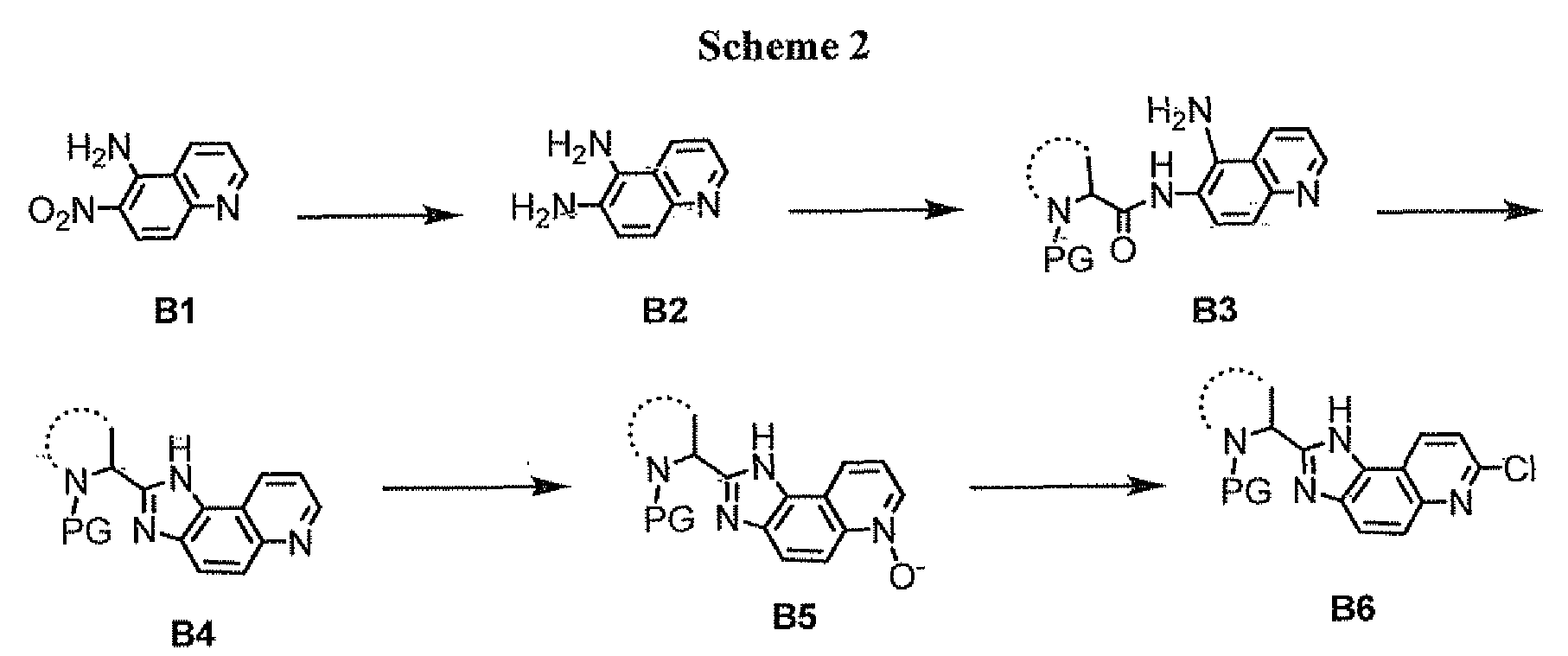


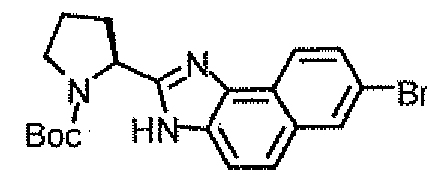


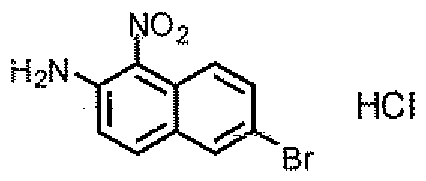


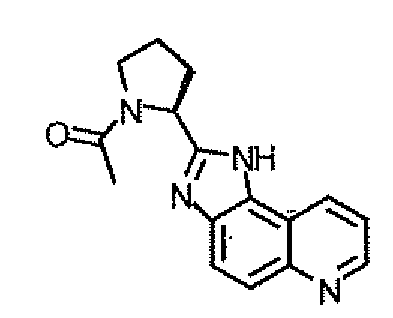


Claims


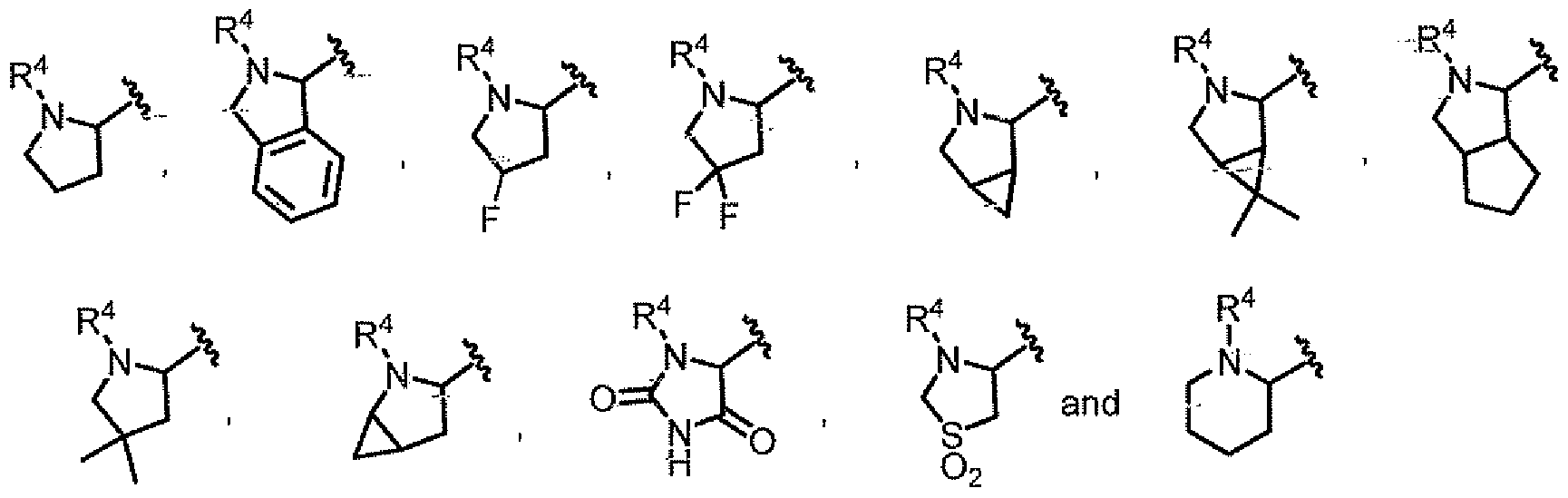


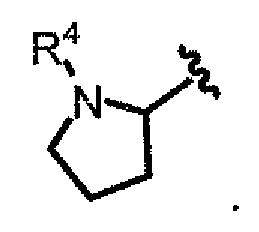


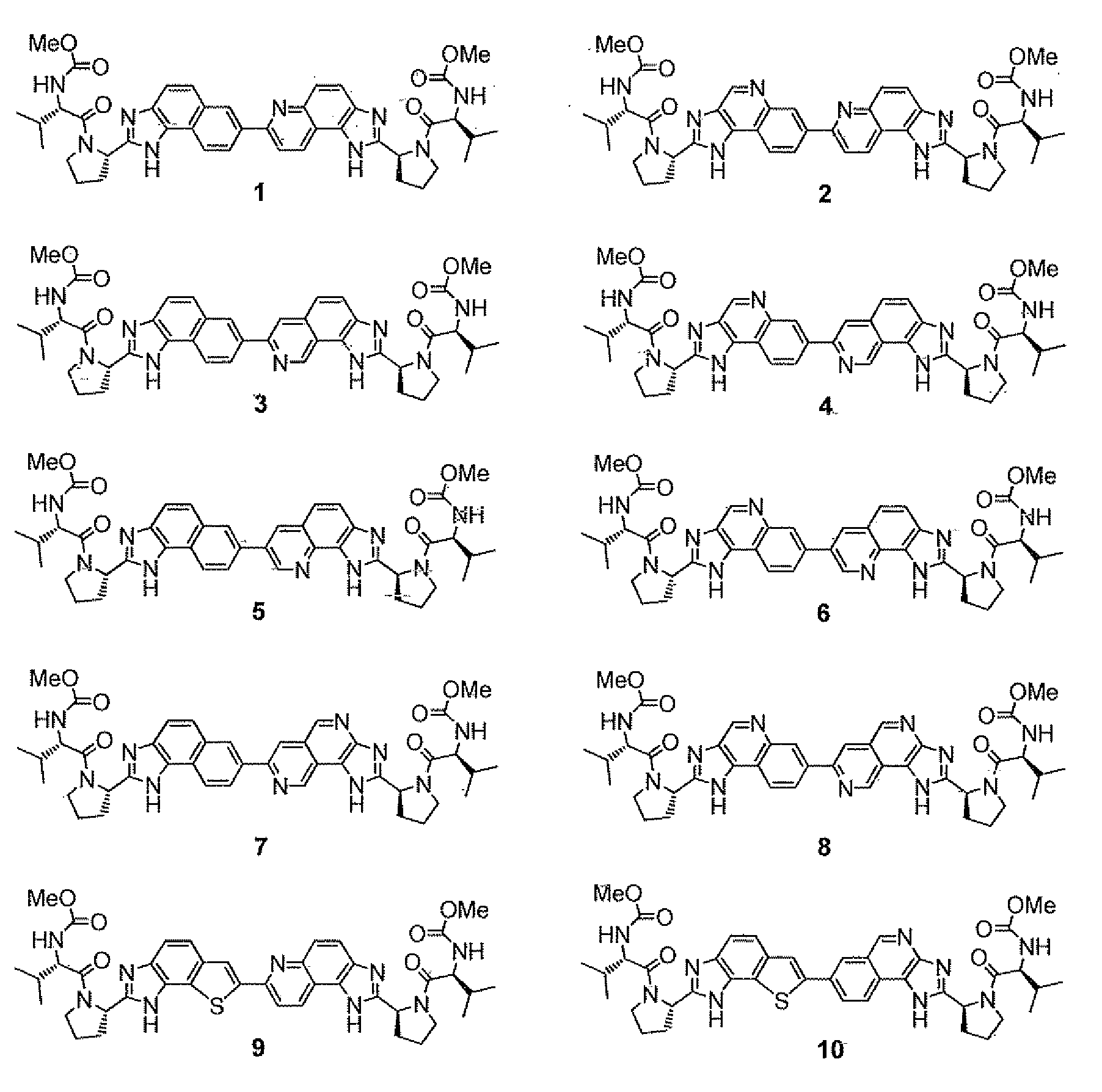


Priority Applications (5)
| Application Number | Priority Date | Filing Date | Title |
|---|---|---|---|
| JP2012541149A JP2013512246A (en) | 2009-11-25 | 2010-11-23 | Condensed tricyclic compounds and derivatives useful for the treatment of viral diseases |
| CA2782024A CA2782024A1 (en) | 2009-11-25 | 2010-11-23 | Fused tricyclic compounds and derivatives thereof useful for the treatment of viral diseases |
| AU2010324871A AU2010324871A1 (en) | 2009-11-25 | 2010-11-23 | Fused tricyclic compounds and derivatives thereof useful for the treatment of viral diseases |
| US13/512,073 US20120276047A1 (en) | 2009-11-25 | 2010-11-23 | Fused tricyclic compounds and derivatives thereof useful for the treatment of viral diseases |
| EP20100833831 EP2503881B1 (en) | 2009-11-25 | 2010-11-23 | Fused tricyclic compounds and derivatives thereof useful for the treatment of viral diseases |
Applications Claiming Priority (2)
| Application Number | Priority Date | Filing Date | Title |
|---|---|---|---|
| US26442209P | 2009-11-25 | 2009-11-25 | |
| US61/264,422 | 2009-11-25 |
Publications (1)
| Publication Number | Publication Date |
|---|---|
| WO2011066241A1 true WO2011066241A1 (en) | 2011-06-03 |
Family
ID=44066875
Family Applications (1)
| Application Number | Title | Priority Date | Filing Date |
|---|---|---|---|
| PCT/US2010/057708 Ceased WO2011066241A1 (en) | 2009-11-25 | 2010-11-23 | Fused tricyclic compounds and derivatives thereof useful for the treatment of viral diseases |
Country Status (6)
| Country | Link |
|---|---|
| US (1) | US20120276047A1 (en) |
| EP (1) | EP2503881B1 (en) |
| JP (1) | JP2013512246A (en) |
| AU (1) | AU2010324871A1 (en) |
| CA (1) | CA2782024A1 (en) |
| WO (1) | WO2011066241A1 (en) |
Cited By (45)
| Publication number | Priority date | Publication date | Assignee | Title |
|---|---|---|---|---|
| US8088368B2 (en) | 2009-05-13 | 2012-01-03 | Gilead Sciences, Inc. | Antiviral compounds |
| US8138215B2 (en) | 2009-05-29 | 2012-03-20 | Bristol-Myers Squibb Company | Hepatitis C virus inhibitors |
| US8143301B2 (en) | 2009-04-09 | 2012-03-27 | Bristol Myers Squibb Company | Hepatitis C virus inhibitors |
| US8143414B2 (en) | 2009-04-13 | 2012-03-27 | Bristol-Myers Squibb Company | Hepatitis C virus inhibitors |
| US8211928B2 (en) | 2009-05-29 | 2012-07-03 | Bristol-Myers Squibb Company | Hepatitis C virus inhibitors |
| WO2012068234A3 (en) * | 2010-11-17 | 2013-01-17 | 12Gilead Sciences, Inc. | Antiviral compounds |
| US8362020B2 (en) | 2009-12-30 | 2013-01-29 | Bristol-Myers Squibb Company | Hepatitis C virus inhibitors |
| US8377980B2 (en) | 2009-12-16 | 2013-02-19 | Bristol-Myers Squibb Company | Hepatitis C virus inhibitors |
| US8394968B2 (en) | 2009-02-17 | 2013-03-12 | Bristol-Myers Squibb Company | Hepatitis C virus inhibitors |
| WO2013075029A1 (en) * | 2011-11-16 | 2013-05-23 | Gilead Sciences, Inc. | Condensed imidazolylimidazoles as antiviral compounds |
| US8541424B2 (en) | 2008-12-23 | 2013-09-24 | Abbott Laboratories | Anti-viral compounds |
| US8546405B2 (en) | 2008-12-23 | 2013-10-01 | Abbott Laboratories | Anti-viral compounds |
| US8552047B2 (en) | 2011-02-07 | 2013-10-08 | Bristol-Myers Squibb Company | Hepatitis C virus inhibitors |
| US8618153B2 (en) | 2009-11-12 | 2013-12-31 | Bristol-Myers Squibb Company | Hepatitis C virus inhibitors |
| US8686026B2 (en) | 2010-06-10 | 2014-04-01 | Abbvie Inc. | Solid compositions |
| US8691938B2 (en) | 2009-06-11 | 2014-04-08 | Abbvie Inc. | Anti-viral compounds |
| US8716454B2 (en) | 2009-06-11 | 2014-05-06 | Abbvie Inc. | Solid compositions |
| US8796466B2 (en) | 2009-03-30 | 2014-08-05 | Bristol-Myers Squibb Company | Hepatitis C virus inhibitors |
| US8937150B2 (en) | 2009-06-11 | 2015-01-20 | Abbvie Inc. | Anti-viral compounds |
| US9006455B2 (en) | 2009-11-11 | 2015-04-14 | Bristol-Myers Squibb Company | Hepatitis C virus inhibitors |
| US9034832B2 (en) | 2011-12-29 | 2015-05-19 | Abbvie Inc. | Solid compositions |
| US9278922B2 (en) | 2009-04-15 | 2016-03-08 | Abbvie Inc. | Anti-viral compounds |
| US9326973B2 (en) | 2012-01-13 | 2016-05-03 | Bristol-Myers Squibb Company | Hepatitis C virus inhibitors |
| US9333204B2 (en) | 2014-01-03 | 2016-05-10 | Abbvie Inc. | Solid antiviral dosage forms |
| US9393256B2 (en) | 2011-09-16 | 2016-07-19 | Gilead Pharmasset Llc | Methods for treating HCV |
| US9394279B2 (en) | 2009-06-11 | 2016-07-19 | Abbvie Inc. | Anti-viral compounds |
| US9546160B2 (en) | 2011-05-12 | 2017-01-17 | Bristol-Myers Squibb Company | Hepatitis C virus inhibitors |
| CN106488920A (en) * | 2014-06-11 | 2017-03-08 | 吉利德制药有限责任公司 | The preparation method of antiviral compound |
| US9717712B2 (en) | 2013-07-02 | 2017-08-01 | Bristol-Myers Squibb Company | Combinations comprising tricyclohexadecahexaene derivatives for use in the treatment of hepatitis C virus |
| US9770439B2 (en) | 2013-07-02 | 2017-09-26 | Bristol-Myers Squibb Company | Hepatitis C virus inhibitors |
| US9776981B2 (en) | 2009-11-11 | 2017-10-03 | Bristol-Myers Squibb Company | Hepatitis C virus inhibitors |
| US9775831B2 (en) | 2013-07-17 | 2017-10-03 | Bristol-Myers Squibb Company | Combinations comprising biphenyl derivatives for use in the treatment of HCV |
| US10039779B2 (en) | 2013-01-31 | 2018-08-07 | Gilead Pharmasset Llc | Combination formulation of two antiviral compounds |
| US10086011B2 (en) | 2013-08-27 | 2018-10-02 | Gilead Pharmasset Llc | Combination formulation of two antiviral compounds |
| US10201541B1 (en) | 2011-05-17 | 2019-02-12 | Abbvie Inc. | Compositions and methods for treating HCV |
| US10617675B2 (en) | 2015-08-06 | 2020-04-14 | Bristol-Myers Squibb Company | Hepatitis C virus inhibitors |
| US10710986B2 (en) | 2018-02-13 | 2020-07-14 | Gilead Sciences, Inc. | PD-1/PD-L1 inhibitors |
| US10774071B2 (en) | 2018-07-13 | 2020-09-15 | Gilead Sciences, Inc. | PD-1/PD-L1 inhibitors |
| US10800789B2 (en) | 2012-05-16 | 2020-10-13 | Gilead Pharmasset Llc | Antiviral compounds |
| US10899735B2 (en) | 2018-04-19 | 2021-01-26 | Gilead Sciences, Inc. | PD-1/PD-L1 inhibitors |
| US11203599B2 (en) | 2014-06-11 | 2021-12-21 | Gilead Pharmasset Llc | Solid forms of an antiviral compound |
| US11236085B2 (en) | 2018-10-24 | 2022-02-01 | Gilead Sciences, Inc. | PD-1/PD-L1 inhibitors |
| US11484534B2 (en) | 2013-03-14 | 2022-11-01 | Abbvie Inc. | Methods for treating HCV |
| US12037340B2 (en) | 2021-05-21 | 2024-07-16 | Gilead Sciences, Inc. | Pentacyclic derivatives as Zika virus inhibitors |
| US12497408B2 (en) | 2021-05-21 | 2025-12-16 | Gilead Sciences, Inc. | Tetracyclic compounds and methods for the treatment of Zika virus infection |
Families Citing this family (9)
| Publication number | Priority date | Publication date | Assignee | Title |
|---|---|---|---|---|
| US8980920B2 (en) | 2009-05-29 | 2015-03-17 | Merck Sharp & Dohme Corp. | Antiviral compounds of three linked aryl moieties to treat diseases such as hepatitis C |
| CA2762885A1 (en) | 2009-05-29 | 2010-12-02 | Schering Corporation | Antiviral compounds composed of three aligned aryl moieties to treat diseases such as hepatitis c |
| WO2011087740A1 (en) | 2009-12-22 | 2011-07-21 | Schering Corporation | Fused tricyclic compounds and methods of use thereof for the treatment of viral diseases |
| EP2545060B1 (en) * | 2010-03-09 | 2015-11-25 | Merck Sharp & Dohme Corp. | Fused tricyclic silyl compounds and methods of use thereof for the treatment of viral diseases |
| TWI482766B (en) | 2011-07-09 | 2015-05-01 | Sunshine Lake Pharma Co Ltd | As a spiro compound for hepatitis C virus inhibitors |
| TWI610916B (en) | 2012-08-03 | 2018-01-11 | 廣東東陽光藥業有限公司 | Bridged ring compounds as hepatitis c virus (hcv) inhibitors and pharmaceuticals applications thereof |
| TWI585082B (en) | 2012-11-29 | 2017-06-01 | 廣東東陽光藥業有限公司 | Spiro ring compound as hepatitis c virus (hcv) inhibitor and uses thereof |
| WO2014082380A1 (en) | 2012-11-29 | 2014-06-05 | Sunshine Lake Pharma Co., Ltd. | Fused ring compounds as hepatitis c virus inhibitors, pharmaceutical compositions and uses thereof |
| WO2015110048A1 (en) | 2014-01-23 | 2015-07-30 | Sunshine Lake Pharma Co., Ltd. | Bridged ring compounds as hepatitis c virus inhibitors, pharmaceutical compositions and uses thereof |
Citations (67)
| Publication number | Priority date | Publication date | Assignee | Title |
|---|---|---|---|---|
| US4634697A (en) | 1983-10-04 | 1987-01-06 | Shionogi & Co., Ltd. | Carboxyalkenamidocephalosporins |
| US4812561A (en) | 1986-07-02 | 1989-03-14 | Shionogi & Co., Ltd. | Crystalline hydrate of oral cephalosporin and its composition |
| WO1989004669A1 (en) | 1987-11-18 | 1989-06-01 | Chiron Corporation | Nanbv diagnostics and vaccines |
| EP0381216A1 (en) | 1989-02-01 | 1990-08-08 | Asahi Glass Company Ltd. | Hydrochlorofluorocarbon azeotropic or azeotropic-like mixture |
| US5017380A (en) | 1986-07-02 | 1991-05-21 | Shionogi & Co., Ltd. | Gelatin hard capsule containing crystalline hydrate of oral cephalosporin |
| WO1998014181A1 (en) | 1996-09-30 | 1998-04-09 | Regents Of The University Of California | Treatment and prevention of hepatic disorders |
| WO1998017679A1 (en) | 1996-10-18 | 1998-04-30 | Vertex Pharmaceuticals Incorporated | Inhibitors of serine proteases, particularly hepatitis c virus ns3 protease |
| WO1998022496A2 (en) | 1996-11-18 | 1998-05-28 | F. Hoffmann-La Roche Ag | Antiviral peptide derivatives |
| WO1999007734A2 (en) | 1997-08-11 | 1999-02-18 | Boehringer Ingelheim (Canada) Ltd. | Hepatitis c inhibitor peptide analogues |
| WO2000020400A1 (en) * | 1998-10-05 | 2000-04-13 | Axys Pharmaceuticals, Inc. | Novel compounds and compositions for treating hepatitis c infections |
| US20020068702A1 (en) | 2000-07-21 | 2002-06-06 | Marguerita Lim-Wilby | Novel peptides as NS3-serine protease inhibitors of hepatitis C virus |
| US20020160962A1 (en) | 2000-07-21 | 2002-10-31 | Saksena Anil K. | Novel peptides as NS3-serine protease inhibitors of hepatitis C virus |
| WO2003006490A1 (en) | 2001-07-11 | 2003-01-23 | Vertex Pharmaceuticals Incorporated | Bridged bicyclic serine protease inhibitors |
| WO2003087092A2 (en) | 2002-04-11 | 2003-10-23 | Vertex Pharmaceuticals Incorporated | Inhibitors of serine proteases, particularly hepatitis c virus ns3 - ns4 protease |
| WO2004039859A1 (en) | 2002-10-30 | 2004-05-13 | Sumitomo Chemical Company, Limited | High-molecular compounds and polymerer light emitting devices made by using the same |
| US6767991B1 (en) | 1997-08-11 | 2004-07-27 | Boehringer Ingelheim (Canada) Ltd. | Hepatitis C inhibitor peptides |
| US6800434B2 (en) | 2000-07-21 | 2004-10-05 | Schering Corporation | Peptides as NS3-serine protease inhibitors of hepatitis C virus |
| WO2004092161A1 (en) | 2003-04-11 | 2004-10-28 | Vertex Pharmaceuticals Incorporated | Inhibitors of serine proteases, particularly hcv ns3-ns4a protease |
| US6838475B2 (en) | 2000-07-21 | 2005-01-04 | Schering Corporation | Imidazolidinones as NS3-serine protease inhibitors of hepatitis C virus |
| US6846802B2 (en) | 2000-04-05 | 2005-01-25 | Schering Corporation | Macrocyclic NS3-serine protease inhibitors of hepatitis C virus comprising N-cyclic P2 moieties |
| US20050038037A1 (en) | 2001-06-06 | 2005-02-17 | Schering Aktiengesellschaft | Platelet adenosine diphosphate receptor antagonists |
| US20050101770A1 (en) | 2003-11-10 | 2005-05-12 | Presta Leonard G. | Interleukin-10 antibodies |
| US6894072B2 (en) | 2002-01-23 | 2005-05-17 | Schering Corporation | Compounds as NS3-serine protease inhibitors of hepatitis C virus |
| US20050119168A1 (en) | 2003-09-26 | 2005-06-02 | Schering Corporation | Macrocyclic inhibitors of hepatitis C virus NS3-serine protease |
| US6911428B2 (en) | 2000-12-12 | 2005-06-28 | Schering Corporation | Diaryl peptides as NS3-serine protease inhibitors of hepatitis C virus |
| US6914122B2 (en) | 2000-04-19 | 2005-07-05 | Schering Corporation | Macrocyclic NS-3 serine protease inhibitors of hepatitis C virus comprising alkyl and aryl alanine P2 moieties |
| WO2005087731A1 (en) | 2004-02-27 | 2005-09-22 | Schering Corporation | Sulfur compounds as inhibitors of hepatitis c virus ns3 serine protease |
| US20050209164A1 (en) | 2004-02-27 | 2005-09-22 | Schering Corporation | Cyclobutenedione-containing compounds as inhibitors of hepatitis C virus NS3 serine protease |
| US20050249702A1 (en) | 2004-05-06 | 2005-11-10 | Schering Corporation | (1R,2S,5S)-N-[(1S)-3-amino-1-(cyclobutylmethyl)-2,3-dioxopropyl]-3-[(2S)-2-[[[(1,1-dimethylethyl)amino]carbonyl]amino]-3,3-dimethyl-1-oxobutyl]-6,6-dimethyl-3-azabicyclo[3.1.0]hexane-2-carboxamide as inhibitor of hepatitis C virus NS3/NS4a serine protease |
| WO2006019832A1 (en) | 2004-07-22 | 2006-02-23 | Ptc Therapeutics, Inc. | Thienopyridines for treating hepatitis c |
| WO2006019831A1 (en) | 2004-07-14 | 2006-02-23 | Ptc Therapeutics, Inc. | Methods for treating hepatitis c |
| US7012066B2 (en) | 2000-07-21 | 2006-03-14 | Schering Corporation | Peptides as NS3-serine protease inhibitors of hepatitis C virus |
| US20060276511A1 (en) | 2005-06-06 | 2006-12-07 | Michael Serrano-Wu | Inhibitors of HCV replication |
| US7173057B2 (en) | 2004-02-27 | 2007-02-06 | Schering Corporation | Ketoamides with cyclic P4'S as inhibitors of NS3 protease of hepatitis C virus |
| US7186747B2 (en) | 2004-02-27 | 2007-03-06 | Schering Corporation | Compounds as inhibitors of hepatitis C virus NS3 serine protease |
| US7192957B2 (en) | 2004-02-27 | 2007-03-20 | Schering Corporation | Compounds as inhibitors of hepatitis C virus NS3 serine protease |
| US7205330B2 (en) | 2004-02-27 | 2007-04-17 | Schering Corporation | Inhibitors of hepatitis C virus NS3 protease |
| US7244721B2 (en) | 2000-07-21 | 2007-07-17 | Schering Corporation | Peptides as NS3-serine protease inhibitors of hepatitis C virus |
| US7253160B2 (en) | 2003-11-20 | 2007-08-07 | Schering Corporation | Depeptidized inhibitors of hepatitis C virus NS3 protease |
| US20070274951A1 (en) | 2006-02-09 | 2007-11-29 | Xiao Tong | Combinations comprising HCV protease inhibitor(s) and HCV polymerase inhibitor(s), and methods of treatment related thereto |
| US20080044380A1 (en) | 2006-08-11 | 2008-02-21 | Bristol-Myers Squibb Company | Hepatitis C Virus Inhibitors |
| US20080044379A1 (en) | 2006-08-11 | 2008-02-21 | Bristol-Myers Squibb Company | Hepatitis C Virus Inhibitors |
| US20080050336A1 (en) | 2006-08-11 | 2008-02-28 | Bristol-Myers Squibb Company | Hepatitis C Virus Inhibitors |
| US7342041B2 (en) | 2004-02-27 | 2008-03-11 | Schering Corporation | 3,4-(cyclopentyl)-fused proline compounds as inhibitors of hepatitis C virus NS3 serine protease |
| WO2008082484A1 (en) | 2006-12-22 | 2008-07-10 | Schering Corporation | 4,5-ring annulated indole derivatives for treating or preventing of hcv and related viral infections |
| WO2008082488A1 (en) | 2006-12-22 | 2008-07-10 | Schering Corporation | 4, 5-ring annulated indole derivatives for treating or preventing of hcv and related viral infections |
| WO2008083351A2 (en) | 2006-12-29 | 2008-07-10 | Genifuel Corporation | Controlled growth environments for algae cultivation |
| WO2008098368A1 (en) * | 2007-02-16 | 2008-08-21 | Boehringer Ingelheim International Gmbh | Inhibitors of hepatitis c ns3 protease |
| WO2008124148A2 (en) | 2007-04-10 | 2008-10-16 | Schering Corporation | Sulfur compounds as inhiibitors of hepatitis c virus ns3 serine protease |
| US7438920B1 (en) * | 1997-08-14 | 2008-10-21 | Vertex Pharmaceuticals Incorporated | Crystals of hepatitis C virus helicase or fragments thereof comprising a helicase binding pocket |
| US7449447B2 (en) | 2003-08-26 | 2008-11-11 | Schering Corporation | Peptidomimetic NS3-serine protease inhibitors of hepatitis C virus |
| WO2008136815A2 (en) | 2006-12-22 | 2008-11-13 | Schering Corporation | 5, 6-ring annulated indole derivatives and use thereof |
| US20080311075A1 (en) | 2007-05-17 | 2008-12-18 | Bristol-Myers Squibb Company | Hepatitis C Virus Inhibitors |
| US7476686B2 (en) | 2002-11-19 | 2009-01-13 | Achillion Pharmaceuticals, Inc. | Substituted aryl thioureas and related compounds; inhibitors of viral replication |
| US20090020478A1 (en) | 2007-07-19 | 2009-01-22 | Bayer Material Science Ag | Processes for the regeneration of an anion exchanger loaded with hexachlorostannate |
| US20090022688A1 (en) | 2003-04-11 | 2009-01-22 | Farmer Luc J | Inhibitors of serine protease, particularly hcv ns3-ns4a protease |
| US7485625B2 (en) | 2003-12-11 | 2009-02-03 | Schering Corporation | Inhibitors of hepatitis C virus NS3/NS4a serine protease |
| US7494988B2 (en) | 2000-04-03 | 2009-02-24 | Vertex Pharmaceuticals Incorporated | Inhibitors of serine proteases, particularly hepatitis C virus NS3 protease |
| WO2009032123A2 (en) | 2007-08-29 | 2009-03-12 | Schering Corporation | Tetracyclic indole derivatives and their use for treating or preventing viral infections |
| WO2009032125A1 (en) | 2007-08-29 | 2009-03-12 | Schering Corporation | 2,3-substituted azaindole derivatives for treating viral infections |
| WO2009032124A1 (en) | 2007-08-29 | 2009-03-12 | Schering Corporation | Substituted indole derivatives and methods of use thereof |
| US20090068140A1 (en) | 2006-08-11 | 2009-03-12 | Bristol-Myers Squibb Company | Hepatitis c virus inhibitors |
| WO2009032116A1 (en) | 2007-08-29 | 2009-03-12 | Schering Corporation | 2, 3-substituted indole derivatives for treating viral infections |
| US20090081636A1 (en) | 2005-04-11 | 2009-03-26 | Mingjun Huang | Pharmaceutical compositions for and methods of inhibiting HCV replication |
| US20090202483A1 (en) | 2008-02-13 | 2009-08-13 | Bristol-Myers Squibb Company | Hepatitis C Virus Inhibitors |
| WO2010017401A1 (en) * | 2008-08-07 | 2010-02-11 | Bristol-Myers Squibb Company | Bi-1h-benzimidazoles as hepatitis c virus inhibitors |
| WO2010132538A1 (en) * | 2009-05-12 | 2010-11-18 | Schering Corporation | Fused tricyclic aryl compounds useful for the treatment of viral diseases |
Family Cites Families (1)
| Publication number | Priority date | Publication date | Assignee | Title |
|---|---|---|---|---|
| US8147818B2 (en) * | 2008-02-13 | 2012-04-03 | Bristol-Myers Squibb Company | Hepatitis C virus inhibitors |
-
2010
- 2010-11-23 US US13/512,073 patent/US20120276047A1/en not_active Abandoned
- 2010-11-23 AU AU2010324871A patent/AU2010324871A1/en not_active Abandoned
- 2010-11-23 EP EP20100833831 patent/EP2503881B1/en not_active Not-in-force
- 2010-11-23 WO PCT/US2010/057708 patent/WO2011066241A1/en not_active Ceased
- 2010-11-23 JP JP2012541149A patent/JP2013512246A/en not_active Withdrawn
- 2010-11-23 CA CA2782024A patent/CA2782024A1/en not_active Abandoned
Patent Citations (74)
| Publication number | Priority date | Publication date | Assignee | Title |
|---|---|---|---|---|
| US4634697A (en) | 1983-10-04 | 1987-01-06 | Shionogi & Co., Ltd. | Carboxyalkenamidocephalosporins |
| US4812561A (en) | 1986-07-02 | 1989-03-14 | Shionogi & Co., Ltd. | Crystalline hydrate of oral cephalosporin and its composition |
| US4933443A (en) | 1986-07-02 | 1990-06-12 | Shionogi & Co., Ltd. | Method for preparing crystalline hydrate of oral celphalosporin and its composition |
| US5017380A (en) | 1986-07-02 | 1991-05-21 | Shionogi & Co., Ltd. | Gelatin hard capsule containing crystalline hydrate of oral cephalosporin |
| WO1989004669A1 (en) | 1987-11-18 | 1989-06-01 | Chiron Corporation | Nanbv diagnostics and vaccines |
| EP0381216A1 (en) | 1989-02-01 | 1990-08-08 | Asahi Glass Company Ltd. | Hydrochlorofluorocarbon azeotropic or azeotropic-like mixture |
| WO1998014181A1 (en) | 1996-09-30 | 1998-04-09 | Regents Of The University Of California | Treatment and prevention of hepatic disorders |
| WO1998017679A1 (en) | 1996-10-18 | 1998-04-30 | Vertex Pharmaceuticals Incorporated | Inhibitors of serine proteases, particularly hepatitis c virus ns3 protease |
| WO1998022496A2 (en) | 1996-11-18 | 1998-05-28 | F. Hoffmann-La Roche Ag | Antiviral peptide derivatives |
| WO1999007734A2 (en) | 1997-08-11 | 1999-02-18 | Boehringer Ingelheim (Canada) Ltd. | Hepatitis c inhibitor peptide analogues |
| US6767991B1 (en) | 1997-08-11 | 2004-07-27 | Boehringer Ingelheim (Canada) Ltd. | Hepatitis C inhibitor peptides |
| US7438920B1 (en) * | 1997-08-14 | 2008-10-21 | Vertex Pharmaceuticals Incorporated | Crystals of hepatitis C virus helicase or fragments thereof comprising a helicase binding pocket |
| WO2000020400A1 (en) * | 1998-10-05 | 2000-04-13 | Axys Pharmaceuticals, Inc. | Novel compounds and compositions for treating hepatitis c infections |
| US7494988B2 (en) | 2000-04-03 | 2009-02-24 | Vertex Pharmaceuticals Incorporated | Inhibitors of serine proteases, particularly hepatitis C virus NS3 protease |
| US6846802B2 (en) | 2000-04-05 | 2005-01-25 | Schering Corporation | Macrocyclic NS3-serine protease inhibitors of hepatitis C virus comprising N-cyclic P2 moieties |
| US6914122B2 (en) | 2000-04-19 | 2005-07-05 | Schering Corporation | Macrocyclic NS-3 serine protease inhibitors of hepatitis C virus comprising alkyl and aryl alanine P2 moieties |
| US7012066B2 (en) | 2000-07-21 | 2006-03-14 | Schering Corporation | Peptides as NS3-serine protease inhibitors of hepatitis C virus |
| US6800434B2 (en) | 2000-07-21 | 2004-10-05 | Schering Corporation | Peptides as NS3-serine protease inhibitors of hepatitis C virus |
| US20020068702A1 (en) | 2000-07-21 | 2002-06-06 | Marguerita Lim-Wilby | Novel peptides as NS3-serine protease inhibitors of hepatitis C virus |
| US6838475B2 (en) | 2000-07-21 | 2005-01-04 | Schering Corporation | Imidazolidinones as NS3-serine protease inhibitors of hepatitis C virus |
| US7244721B2 (en) | 2000-07-21 | 2007-07-17 | Schering Corporation | Peptides as NS3-serine protease inhibitors of hepatitis C virus |
| US20050176648A1 (en) | 2000-07-21 | 2005-08-11 | Schering-Plough Corporation | Novel peptides as NS3-serine protease inhibitors of hepatitis C virus |
| US20020160962A1 (en) | 2000-07-21 | 2002-10-31 | Saksena Anil K. | Novel peptides as NS3-serine protease inhibitors of hepatitis C virus |
| US7169760B2 (en) | 2000-07-21 | 2007-01-30 | Schering Corporation | Peptides as NS3-serine protease inhibitors of hepatitis C virus |
| US6911428B2 (en) | 2000-12-12 | 2005-06-28 | Schering Corporation | Diaryl peptides as NS3-serine protease inhibitors of hepatitis C virus |
| US20050038037A1 (en) | 2001-06-06 | 2005-02-17 | Schering Aktiengesellschaft | Platelet adenosine diphosphate receptor antagonists |
| WO2003006490A1 (en) | 2001-07-11 | 2003-01-23 | Vertex Pharmaceuticals Incorporated | Bridged bicyclic serine protease inhibitors |
| US6894072B2 (en) | 2002-01-23 | 2005-05-17 | Schering Corporation | Compounds as NS3-serine protease inhibitors of hepatitis C virus |
| WO2003087092A2 (en) | 2002-04-11 | 2003-10-23 | Vertex Pharmaceuticals Incorporated | Inhibitors of serine proteases, particularly hepatitis c virus ns3 - ns4 protease |
| US7273885B2 (en) | 2002-04-11 | 2007-09-25 | Vertex Pharmaceuticals Incorporated | Inhibitors of serine proteases, particularly HCV NS3-NS4A protease |
| WO2004039859A1 (en) | 2002-10-30 | 2004-05-13 | Sumitomo Chemical Company, Limited | High-molecular compounds and polymerer light emitting devices made by using the same |
| US7476686B2 (en) | 2002-11-19 | 2009-01-13 | Achillion Pharmaceuticals, Inc. | Substituted aryl thioureas and related compounds; inhibitors of viral replication |
| US20090022688A1 (en) | 2003-04-11 | 2009-01-22 | Farmer Luc J | Inhibitors of serine protease, particularly hcv ns3-ns4a protease |
| WO2004092161A1 (en) | 2003-04-11 | 2004-10-28 | Vertex Pharmaceuticals Incorporated | Inhibitors of serine proteases, particularly hcv ns3-ns4a protease |
| US7449447B2 (en) | 2003-08-26 | 2008-11-11 | Schering Corporation | Peptidomimetic NS3-serine protease inhibitors of hepatitis C virus |
| US20050119168A1 (en) | 2003-09-26 | 2005-06-02 | Schering Corporation | Macrocyclic inhibitors of hepatitis C virus NS3-serine protease |
| US20050101770A1 (en) | 2003-11-10 | 2005-05-12 | Presta Leonard G. | Interleukin-10 antibodies |
| US7442695B2 (en) | 2003-11-20 | 2008-10-28 | Schering Corporation | Depeptidized inhibitors of hepatitis C virus NS3 protease |
| US7253160B2 (en) | 2003-11-20 | 2007-08-07 | Schering Corporation | Depeptidized inhibitors of hepatitis C virus NS3 protease |
| US7485625B2 (en) | 2003-12-11 | 2009-02-03 | Schering Corporation | Inhibitors of hepatitis C virus NS3/NS4a serine protease |
| US7173057B2 (en) | 2004-02-27 | 2007-02-06 | Schering Corporation | Ketoamides with cyclic P4'S as inhibitors of NS3 protease of hepatitis C virus |
| US7425576B2 (en) | 2004-02-27 | 2008-09-16 | Schering Corporation | Compounds as inhibitors of hepatitis C virus NS3 serine protease |
| US7192957B2 (en) | 2004-02-27 | 2007-03-20 | Schering Corporation | Compounds as inhibitors of hepatitis C virus NS3 serine protease |
| US7186747B2 (en) | 2004-02-27 | 2007-03-06 | Schering Corporation | Compounds as inhibitors of hepatitis C virus NS3 serine protease |
| US20070042968A1 (en) | 2004-02-27 | 2007-02-22 | Schering Corporation | Sulfur compounds as inhibitors of Hepatitis C virus NS3 serine protease |
| US20050209164A1 (en) | 2004-02-27 | 2005-09-22 | Schering Corporation | Cyclobutenedione-containing compounds as inhibitors of hepatitis C virus NS3 serine protease |
| WO2005087731A1 (en) | 2004-02-27 | 2005-09-22 | Schering Corporation | Sulfur compounds as inhibitors of hepatitis c virus ns3 serine protease |
| US7205330B2 (en) | 2004-02-27 | 2007-04-17 | Schering Corporation | Inhibitors of hepatitis C virus NS3 protease |
| US7342041B2 (en) | 2004-02-27 | 2008-03-11 | Schering Corporation | 3,4-(cyclopentyl)-fused proline compounds as inhibitors of hepatitis C virus NS3 serine protease |
| US20050249702A1 (en) | 2004-05-06 | 2005-11-10 | Schering Corporation | (1R,2S,5S)-N-[(1S)-3-amino-1-(cyclobutylmethyl)-2,3-dioxopropyl]-3-[(2S)-2-[[[(1,1-dimethylethyl)amino]carbonyl]amino]-3,3-dimethyl-1-oxobutyl]-6,6-dimethyl-3-azabicyclo[3.1.0]hexane-2-carboxamide as inhibitor of hepatitis C virus NS3/NS4a serine protease |
| WO2006019831A1 (en) | 2004-07-14 | 2006-02-23 | Ptc Therapeutics, Inc. | Methods for treating hepatitis c |
| WO2006019832A1 (en) | 2004-07-22 | 2006-02-23 | Ptc Therapeutics, Inc. | Thienopyridines for treating hepatitis c |
| US20090081636A1 (en) | 2005-04-11 | 2009-03-26 | Mingjun Huang | Pharmaceutical compositions for and methods of inhibiting HCV replication |
| US20060276511A1 (en) | 2005-06-06 | 2006-12-07 | Michael Serrano-Wu | Inhibitors of HCV replication |
| US20070274951A1 (en) | 2006-02-09 | 2007-11-29 | Xiao Tong | Combinations comprising HCV protease inhibitor(s) and HCV polymerase inhibitor(s), and methods of treatment related thereto |
| US20080050336A1 (en) | 2006-08-11 | 2008-02-28 | Bristol-Myers Squibb Company | Hepatitis C Virus Inhibitors |
| US20090068140A1 (en) | 2006-08-11 | 2009-03-12 | Bristol-Myers Squibb Company | Hepatitis c virus inhibitors |
| US20080044379A1 (en) | 2006-08-11 | 2008-02-21 | Bristol-Myers Squibb Company | Hepatitis C Virus Inhibitors |
| US20080044380A1 (en) | 2006-08-11 | 2008-02-21 | Bristol-Myers Squibb Company | Hepatitis C Virus Inhibitors |
| WO2008082484A1 (en) | 2006-12-22 | 2008-07-10 | Schering Corporation | 4,5-ring annulated indole derivatives for treating or preventing of hcv and related viral infections |
| WO2008136815A2 (en) | 2006-12-22 | 2008-11-13 | Schering Corporation | 5, 6-ring annulated indole derivatives and use thereof |
| WO2008082488A1 (en) | 2006-12-22 | 2008-07-10 | Schering Corporation | 4, 5-ring annulated indole derivatives for treating or preventing of hcv and related viral infections |
| WO2008083351A2 (en) | 2006-12-29 | 2008-07-10 | Genifuel Corporation | Controlled growth environments for algae cultivation |
| WO2008098368A1 (en) * | 2007-02-16 | 2008-08-21 | Boehringer Ingelheim International Gmbh | Inhibitors of hepatitis c ns3 protease |
| WO2008124148A2 (en) | 2007-04-10 | 2008-10-16 | Schering Corporation | Sulfur compounds as inhiibitors of hepatitis c virus ns3 serine protease |
| US20080311075A1 (en) | 2007-05-17 | 2008-12-18 | Bristol-Myers Squibb Company | Hepatitis C Virus Inhibitors |
| US20090020478A1 (en) | 2007-07-19 | 2009-01-22 | Bayer Material Science Ag | Processes for the regeneration of an anion exchanger loaded with hexachlorostannate |
| WO2009032125A1 (en) | 2007-08-29 | 2009-03-12 | Schering Corporation | 2,3-substituted azaindole derivatives for treating viral infections |
| WO2009032124A1 (en) | 2007-08-29 | 2009-03-12 | Schering Corporation | Substituted indole derivatives and methods of use thereof |
| WO2009032116A1 (en) | 2007-08-29 | 2009-03-12 | Schering Corporation | 2, 3-substituted indole derivatives for treating viral infections |
| WO2009032123A2 (en) | 2007-08-29 | 2009-03-12 | Schering Corporation | Tetracyclic indole derivatives and their use for treating or preventing viral infections |
| US20090202483A1 (en) | 2008-02-13 | 2009-08-13 | Bristol-Myers Squibb Company | Hepatitis C Virus Inhibitors |
| WO2010017401A1 (en) * | 2008-08-07 | 2010-02-11 | Bristol-Myers Squibb Company | Bi-1h-benzimidazoles as hepatitis c virus inhibitors |
| WO2010132538A1 (en) * | 2009-05-12 | 2010-11-18 | Schering Corporation | Fused tricyclic aryl compounds useful for the treatment of viral diseases |
Non-Patent Citations (40)
| Title |
|---|
| "Comprehensive Heterocyclic Chemistry", ELSEVIER |
| "Comprehensive Organic Chemistry", ELSEVIER |
| "Comprehensive Organic Functional Group Transformations" |
| "Comprehensive Organic Transformation", WILY-CVH |
| "Handbook of Pharmaceutical Salts. Properties, Selection and Use", 2002, WILEY-VCH |
| "The Orange Book", FOOD & DRUG ADMINISTRATION |
| A. L. BINGHAM ET AL., CHEM. COMMUN., 2001, pages 603 - 604 |
| ANDERSON ET AL.: "The Practice of Medicinal Chemistry", 1996, ACADEMIC PRESS |
| ANGEW CHEM. INT. ED. ENGL., vol. 40, 2001, pages 4544 |
| BEAULIEU ET AL., CURRENT OPINION IN INVESTIGATIONAL DRUGS, vol. 5, 2004, pages 83 |
| BIO WORLD TODAY, vol. 9, no. 217, 10 November 1998 (1998-11-10), pages 4 |
| DIMASI ET AL., J VIROL, vol. 71, no. 10, 1997, pages 7461 - 7469 |
| E. C. VAN TONDER ET AL., AAPS PHARMSCITECHOURS, vol. 5, no. 1, 2004 |
| ELZOUKI ET AL., J HEPAT, vol. 27, no. 1, 1997, pages 42 - 48 |
| FANTA ET AL., SYNTH., 1974, pages 9 - 21 |
| GREENE ET AL.: "Protective Groups in Organic Synthesis", 1999, WILEY-INTERSCIENCE |
| HOLLAND ET AL., PATHOLOGY, vol. 30, no. 2, 1998, pages 192 - 195 |
| HUANG, Y ET AL., VIROLOGY, vol. 364, 2007, pages 1 - 9 |
| INGALLINELLA ET AL., BIOCHEMISTRY, vol. 37, no. 25, 1998, pages 8906 - 8914 |
| J. AM. CHEM. SOC, vol. 73, 1997, pages 4297 |
| KRICKA ET AL., CHEM. REW., vol. 74, 1974, pages 101 - 123 |
| KRICKA ET AL., J. CHEM. SOC. PERKIN TRANS, vol. I, 1973, pages 859 - 863 |
| KURFUERST ET AL., COLL. CZECH. CHEM. COMM., vol. 54, 1989, pages 1705 - 1715 |
| LAMBALLERIE ET AL., J GEN VIROL, vol. 78, 1997, pages 45 - 51 |
| LANDRO ET AL., BIOCHEMISTRY, vol. 36, no. 31, 1997, pages 9340 - 9348 |
| LLINAS-BRUNET ET AL., BIOORG MED CHEM LETT, vol. 8, no. 13, 1998, pages 1713 - 1718 |
| M. CAIRA ET AL., J. PHARMACEUTICAL SCI., vol. 93, no. 3, 2004, pages 601 - 611 |
| MALCOLM ET AL., ANTIMICROBIAL AGENTS AND CHEMOTHERAPY, vol. 50, 2006, pages 1013 - 1020 |
| MARTIN ET AL., BIOCHEMISTRY, vol. 37, no. 33, 1998, pages 11459 - 11468 |
| MARTIN ET AL., PROTEIN ENG, vol. 10, no. 5, 1997, pages 607 - 614 |
| NI ET AL., CURRENT OPINION IN DRUG DISCOVERY AND DEVELOPMENT, vol. 7, no. 4, 2004, pages 446 |
| P. GOULD, INTERNATIONAL J. OF PHARMACEUTICS, vol. 33, 1986, pages 201 - 217 |
| S. BERGE ET AL., JOURNAL OF PHARMACEUTICAL SCIENCES, vol. 66, no. 1, 1977, pages 1 - 19 |
| SAROJA ET AL., J. ORG. CHEM., vol. 69, 2004, pages 987 - 990 |
| See also references of EP2503881A4 |
| SIMMONDS ET AL., J GEN VIROL, vol. 75, 1994, pages 1053 - 1061 |
| SIMMONDS ET AL., J GEN VIROL,, vol. 74, 1993, pages 2391 - 2399 |
| T. W. GREENE ET AL.: "Protective Groups in Organic Synthesis", 1991, WILEY |
| TAN ET AL., NATURE REVIEWS, vol. 1, 2002, pages 867 |
| TANJI, ET AL., J. VIROL., vol. 69, 1995, pages 3980 - 3986 |
Cited By (96)
| Publication number | Priority date | Publication date | Assignee | Title |
|---|---|---|---|---|
| US9163017B2 (en) | 2008-12-23 | 2015-10-20 | Abbvie Inc. | Anti-viral compounds |
| US8546405B2 (en) | 2008-12-23 | 2013-10-01 | Abbott Laboratories | Anti-viral compounds |
| US9249138B2 (en) | 2008-12-23 | 2016-02-02 | Abbvie Inc. | Anti-viral compounds |
| US8541424B2 (en) | 2008-12-23 | 2013-09-24 | Abbott Laboratories | Anti-viral compounds |
| US8394968B2 (en) | 2009-02-17 | 2013-03-12 | Bristol-Myers Squibb Company | Hepatitis C virus inhibitors |
| US8796466B2 (en) | 2009-03-30 | 2014-08-05 | Bristol-Myers Squibb Company | Hepatitis C virus inhibitors |
| US8143301B2 (en) | 2009-04-09 | 2012-03-27 | Bristol Myers Squibb Company | Hepatitis C virus inhibitors |
| US8143414B2 (en) | 2009-04-13 | 2012-03-27 | Bristol-Myers Squibb Company | Hepatitis C virus inhibitors |
| US9278922B2 (en) | 2009-04-15 | 2016-03-08 | Abbvie Inc. | Anti-viral compounds |
| US9511056B2 (en) | 2009-05-13 | 2016-12-06 | Gilead Pharmasset Llc | Antiviral compounds |
| US8088368B2 (en) | 2009-05-13 | 2012-01-03 | Gilead Sciences, Inc. | Antiviral compounds |
| US9981955B2 (en) | 2009-05-13 | 2018-05-29 | Gilead Pharmasset Llc | Antiviral compounds |
| US8273341B2 (en) | 2009-05-13 | 2012-09-25 | Gilead Sciences, Inc. | Antiviral compounds |
| US8841278B2 (en) | 2009-05-13 | 2014-09-23 | Gilead Pharmasset Llc | Antiviral compounds |
| US8822430B2 (en) | 2009-05-13 | 2014-09-02 | Gilead Pharmasset Llc | Antiviral compounds |
| US8669234B2 (en) | 2009-05-13 | 2014-03-11 | Gilead Sciences, Inc. | Antiviral compounds |
| US8211928B2 (en) | 2009-05-29 | 2012-07-03 | Bristol-Myers Squibb Company | Hepatitis C virus inhibitors |
| US8138215B2 (en) | 2009-05-29 | 2012-03-20 | Bristol-Myers Squibb Company | Hepatitis C virus inhibitors |
| US9586978B2 (en) | 2009-06-11 | 2017-03-07 | Abbvie Inc. | Anti-viral compounds |
| US8921514B2 (en) | 2009-06-11 | 2014-12-30 | Abbvie Inc. | Anti-viral compounds |
| US8716454B2 (en) | 2009-06-11 | 2014-05-06 | Abbvie Inc. | Solid compositions |
| US9394279B2 (en) | 2009-06-11 | 2016-07-19 | Abbvie Inc. | Anti-viral compounds |
| US8691938B2 (en) | 2009-06-11 | 2014-04-08 | Abbvie Inc. | Anti-viral compounds |
| US10028937B2 (en) | 2009-06-11 | 2018-07-24 | Abbvie Inc. | Anti-viral compounds |
| US10039754B2 (en) | 2009-06-11 | 2018-08-07 | Abbvie Inc. | Anti-viral compounds |
| US8937150B2 (en) | 2009-06-11 | 2015-01-20 | Abbvie Inc. | Anti-viral compounds |
| US9776981B2 (en) | 2009-11-11 | 2017-10-03 | Bristol-Myers Squibb Company | Hepatitis C virus inhibitors |
| US9006455B2 (en) | 2009-11-11 | 2015-04-14 | Bristol-Myers Squibb Company | Hepatitis C virus inhibitors |
| US8618153B2 (en) | 2009-11-12 | 2013-12-31 | Bristol-Myers Squibb Company | Hepatitis C virus inhibitors |
| US8377980B2 (en) | 2009-12-16 | 2013-02-19 | Bristol-Myers Squibb Company | Hepatitis C virus inhibitors |
| US8735398B2 (en) | 2009-12-30 | 2014-05-27 | Bristol-Myers Squibb Company | Hepatitis C virus inhibitors |
| US8362020B2 (en) | 2009-12-30 | 2013-01-29 | Bristol-Myers Squibb Company | Hepatitis C virus inhibitors |
| US8686026B2 (en) | 2010-06-10 | 2014-04-01 | Abbvie Inc. | Solid compositions |
| US10344019B2 (en) | 2010-11-17 | 2019-07-09 | Gilead Pharmasset Llc | Antiviral compounds |
| WO2012068234A3 (en) * | 2010-11-17 | 2013-01-17 | 12Gilead Sciences, Inc. | Antiviral compounds |
| US9156823B2 (en) | 2010-11-17 | 2015-10-13 | Gilead Pharmasset Llc | Antiviral compounds |
| US8552047B2 (en) | 2011-02-07 | 2013-10-08 | Bristol-Myers Squibb Company | Hepatitis C virus inhibitors |
| US9340520B2 (en) | 2011-02-07 | 2016-05-17 | Bristol-Myers Squibb Company | Hepatitis C virus inhibitors |
| US9546160B2 (en) | 2011-05-12 | 2017-01-17 | Bristol-Myers Squibb Company | Hepatitis C virus inhibitors |
| US10201584B1 (en) | 2011-05-17 | 2019-02-12 | Abbvie Inc. | Compositions and methods for treating HCV |
| US10201541B1 (en) | 2011-05-17 | 2019-02-12 | Abbvie Inc. | Compositions and methods for treating HCV |
| US9393256B2 (en) | 2011-09-16 | 2016-07-19 | Gilead Pharmasset Llc | Methods for treating HCV |
| US10456414B2 (en) | 2011-09-16 | 2019-10-29 | Gilead Pharmasset Llc | Methods for treating HCV |
| US9809600B2 (en) | 2011-11-16 | 2017-11-07 | Gilead Pharmasset Llc | Antiviral compounds |
| US8921341B2 (en) | 2011-11-16 | 2014-12-30 | Gilead Pharmasset Llc | Antiviral compounds |
| CN103328480B (en) * | 2011-11-16 | 2016-05-25 | 吉利德法莫赛特有限责任公司 | Condensed imidazolyl imidazoles as antiviral compounds |
| MD4403C1 (en) * | 2011-11-16 | 2016-09-30 | Gilead Pharmasset Llc. | Antiviral compounds based on condensed dihydroxyisochromene-naphthoimidazoles |
| EA037883B1 (en) * | 2011-11-16 | 2021-05-31 | Джилид Фармассет Ллс | Antiviral compounds |
| KR102241651B1 (en) | 2011-11-16 | 2021-04-20 | 길리애드 파마셋 엘엘씨 | Condensed imidazolylimidazoles as antiviral compounds |
| WO2013075029A1 (en) * | 2011-11-16 | 2013-05-23 | Gilead Sciences, Inc. | Condensed imidazolylimidazoles as antiviral compounds |
| EP3778606A3 (en) * | 2011-11-16 | 2021-03-03 | Gilead Pharmasset LLC | Condensed imidazolylimidazoles as antiviral compounds |
| US10807990B2 (en) | 2011-11-16 | 2020-10-20 | Gilead Pharmasset Llc | Antiviral compounds |
| KR20200117043A (en) * | 2011-11-16 | 2020-10-13 | 길리애드 파마셋 엘엘씨 | Condensed imidazolylimidazoles as antiviral compounds |
| KR20140096239A (en) * | 2011-11-16 | 2014-08-05 | 길리애드 사이언시즈, 인코포레이티드 | Condensed imidazolylimidazoles as antiviral compounds |
| CN103328480A (en) * | 2011-11-16 | 2013-09-25 | 吉利德科学公司 | Condensed imidazolylimidazoles as antiviral compounds |
| KR102036469B1 (en) | 2011-11-16 | 2019-10-24 | 길리애드 파마셋 엘엘씨 | Condensed imidazolylimidazoles as antiviral compounds |
| MD4521B1 (en) * | 2011-11-16 | 2017-10-31 | Gilead Pharmasset Llc. | Antiviral compounds based on condensed imidazolyl-dihydroisochromeno-naphthoimidazols |
| US9221833B2 (en) | 2011-11-16 | 2015-12-29 | Gilead Pharmasset Llc | Antiviral compounds |
| US9868745B2 (en) | 2011-11-16 | 2018-01-16 | Gilead Pharmasset Llc | Antiviral compounds |
| EP2907816A1 (en) * | 2011-11-16 | 2015-08-19 | Gilead Pharmasset LLC | Condensed imidazolylimidazoles as antiviral compounds |
| US9051340B2 (en) | 2011-11-16 | 2015-06-09 | Gilead Pharmasset Llc | Antiviral compounds |
| US8575135B2 (en) | 2011-11-16 | 2013-11-05 | Gilead Sciences, Inc. | Antiviral compounds |
| EA023644B1 (en) * | 2011-11-16 | 2016-06-30 | Джилид Фармассет Ллс | Antiviral compounds |
| KR101890400B1 (en) | 2011-11-16 | 2018-08-21 | 길리애드 파마셋 엘엘씨 | Condensed imidazolylimidazoles as antiviral compounds |
| KR20180095119A (en) * | 2011-11-16 | 2018-08-24 | 길리애드 파마셋 엘엘씨 | Condensed imidazolylimidazoles as antiviral compounds |
| US8940718B2 (en) | 2011-11-16 | 2015-01-27 | Gilead Pharmasset Llc | Antiviral compounds |
| EP3431477A1 (en) * | 2011-11-16 | 2019-01-23 | Gilead Pharmasset LLC | Condensed imidazolylimidazoles as antiviral compounds |
| EA030941B1 (en) * | 2011-11-16 | 2018-10-31 | Джилид Фармассет Ллс | Antiviral compounds |
| US9034832B2 (en) | 2011-12-29 | 2015-05-19 | Abbvie Inc. | Solid compositions |
| US9326973B2 (en) | 2012-01-13 | 2016-05-03 | Bristol-Myers Squibb Company | Hepatitis C virus inhibitors |
| US10800789B2 (en) | 2012-05-16 | 2020-10-13 | Gilead Pharmasset Llc | Antiviral compounds |
| US10039779B2 (en) | 2013-01-31 | 2018-08-07 | Gilead Pharmasset Llc | Combination formulation of two antiviral compounds |
| US11484534B2 (en) | 2013-03-14 | 2022-11-01 | Abbvie Inc. | Methods for treating HCV |
| US9770439B2 (en) | 2013-07-02 | 2017-09-26 | Bristol-Myers Squibb Company | Hepatitis C virus inhibitors |
| US9717712B2 (en) | 2013-07-02 | 2017-08-01 | Bristol-Myers Squibb Company | Combinations comprising tricyclohexadecahexaene derivatives for use in the treatment of hepatitis C virus |
| US9775831B2 (en) | 2013-07-17 | 2017-10-03 | Bristol-Myers Squibb Company | Combinations comprising biphenyl derivatives for use in the treatment of HCV |
| US11707479B2 (en) | 2013-08-27 | 2023-07-25 | Gilead Sciences, Inc. | Combination formulation of two antiviral compounds |
| US11116783B2 (en) | 2013-08-27 | 2021-09-14 | Gilead Pharmasset Llc | Combination formulation of two antiviral compounds |
| US10086011B2 (en) | 2013-08-27 | 2018-10-02 | Gilead Pharmasset Llc | Combination formulation of two antiviral compounds |
| US9333204B2 (en) | 2014-01-03 | 2016-05-10 | Abbvie Inc. | Solid antiviral dosage forms |
| US9744170B2 (en) | 2014-01-03 | 2017-08-29 | Abbvie Inc. | Solid antiviral dosage forms |
| US10105365B2 (en) | 2014-01-03 | 2018-10-23 | Abbvie Inc. | Solid antiviral dosage forms |
| CN106488920A (en) * | 2014-06-11 | 2017-03-08 | 吉利德制药有限责任公司 | The preparation method of antiviral compound |
| US11192875B2 (en) | 2014-06-11 | 2021-12-07 | Gilead Pharmasset Llc | Processes for preparing antiviral compounds |
| US10584109B2 (en) | 2014-06-11 | 2020-03-10 | Gillead Pharmasset LLC | Processes for preparing antiviral compounds |
| US11203599B2 (en) | 2014-06-11 | 2021-12-21 | Gilead Pharmasset Llc | Solid forms of an antiviral compound |
| US10617675B2 (en) | 2015-08-06 | 2020-04-14 | Bristol-Myers Squibb Company | Hepatitis C virus inhibitors |
| US10710986B2 (en) | 2018-02-13 | 2020-07-14 | Gilead Sciences, Inc. | PD-1/PD-L1 inhibitors |
| US11555029B2 (en) | 2018-02-13 | 2023-01-17 | Gilead Sciences, Inc. | PD-1/PD-L1 inhibitors |
| US12338233B2 (en) | 2018-02-13 | 2025-06-24 | Gilead Sciences, Inc. | PD-1/Pd-L1 inhibitors |
| US10899735B2 (en) | 2018-04-19 | 2021-01-26 | Gilead Sciences, Inc. | PD-1/PD-L1 inhibitors |
| US10774071B2 (en) | 2018-07-13 | 2020-09-15 | Gilead Sciences, Inc. | PD-1/PD-L1 inhibitors |
| US12269812B2 (en) | 2018-07-13 | 2025-04-08 | Gilead Sciences, Inc. | PD-1/PD-L1 inhibitors |
| US11236085B2 (en) | 2018-10-24 | 2022-02-01 | Gilead Sciences, Inc. | PD-1/PD-L1 inhibitors |
| US12037340B2 (en) | 2021-05-21 | 2024-07-16 | Gilead Sciences, Inc. | Pentacyclic derivatives as Zika virus inhibitors |
| US12497408B2 (en) | 2021-05-21 | 2025-12-16 | Gilead Sciences, Inc. | Tetracyclic compounds and methods for the treatment of Zika virus infection |
Also Published As
| Publication number | Publication date |
|---|---|
| US20120276047A1 (en) | 2012-11-01 |
| CA2782024A1 (en) | 2011-06-03 |
| EP2503881A4 (en) | 2013-04-24 |
| AU2010324871A1 (en) | 2012-06-14 |
| EP2503881B1 (en) | 2015-05-13 |
| JP2013512246A (en) | 2013-04-11 |
| EP2503881A1 (en) | 2012-10-03 |
Similar Documents
| Publication | Publication Date | Title |
|---|---|---|
| EP2503881A1 (en) | Fused tricyclic compounds and derivatives thereof useful for the treatment of viral diseases | |
| US9796705B2 (en) | Fused tricyclic compounds and methods of use thereof for the treatment of viral diseases | |
| EP2685984B1 (en) | Tetracyclic xanthene derivatives and methods of use thereof for the treatment of viral diseases | |
| US8772505B2 (en) | Antiviral compounds composed of three aligned aryl moieties to treat diseases such as hepatitis C | |
| EP2621279B1 (en) | Fused tetracycle derivatives and methods of use thereof for the treatment of viral diseases | |
| WO2010132538A1 (en) | Fused tricyclic aryl compounds useful for the treatment of viral diseases | |
| CA2805440A1 (en) | Substituted biphenylene compounds and methods of use thereof for the treatment of viral diseases | |
| EP2435424A1 (en) | Antiviral compounds composed of three linked aryl moieties to treat diseases such as hepatitis c | |
| WO2012040924A1 (en) | Fused tetracyclic heterocycle compounds and methods of use thereof for treatment of viral diseases | |
| EP2621932A1 (en) | Tetracyclic heterocycle compounds for treating hepatitis c viral infection | |
| WO2012003642A1 (en) | Fused tricyclic compounds and use thereof for treating viral diseases | |
| WO2012040923A1 (en) | Tetracyclic indole derivatives and methods of use thereof for the treatment of viral diseases | |
| WO2018035006A1 (en) | Chromane-substituted tetracyclic compounds and uses thereof for the treatment of viral diseases | |
| WO2018032468A1 (en) | Heterocycle-substitued tetracyclic compounds and methods of use thereof for treatment of viral diseases | |
| WO2017112531A1 (en) | Silane-containing heterocyclic compounds and methods of use thereof for the treatment of viral diseases |
Legal Events
| Date | Code | Title | Description |
|---|---|---|---|
| 121 | Ep: the epo has been informed by wipo that ep was designated in this application |
Ref document number: 10833831 Country of ref document: EP Kind code of ref document: A1 |
|
| WWE | Wipo information: entry into national phase |
Ref document number: 2010833831 Country of ref document: EP |
|
| WWE | Wipo information: entry into national phase |
Ref document number: 2010324871 Country of ref document: AU |
|
| WWE | Wipo information: entry into national phase |
Ref document number: 2012541149 Country of ref document: JP |
|
| ENP | Entry into the national phase |
Ref document number: 2782024 Country of ref document: CA |
|
| NENP | Non-entry into the national phase |
Ref country code: DE |
|
| WWE | Wipo information: entry into national phase |
Ref document number: 13512073 Country of ref document: US |
|
| ENP | Entry into the national phase |
Ref document number: 2010324871 Country of ref document: AU Date of ref document: 20101123 Kind code of ref document: A |