WO2011051393A1 - Herbicidal tetrahydrophthalimides - Google Patents
Herbicidal tetrahydrophthalimides Download PDFInfo
- Publication number
- WO2011051393A1 WO2011051393A1 PCT/EP2010/066363 EP2010066363W WO2011051393A1 WO 2011051393 A1 WO2011051393 A1 WO 2011051393A1 EP 2010066363 W EP2010066363 W EP 2010066363W WO 2011051393 A1 WO2011051393 A1 WO 2011051393A1
- Authority
- WO
- WIPO (PCT)
- Prior art keywords
- compositions
- formula
- methyl
- tetrahydrophthalimides
- herbicidal
- Prior art date
- Legal status (The legal status is an assumption and is not a legal conclusion. Google has not performed a legal analysis and makes no representation as to the accuracy of the status listed.)
- Ceased
Links
- 0 CCCCC=C1N(*)c(cc(c(*)c2)[N+]([O-])=O)c2OC1(*)* Chemical compound CCCCC=C1N(*)c(cc(c(*)c2)[N+]([O-])=O)c2OC1(*)* 0.000 description 2
Classifications
-
- C—CHEMISTRY; METALLURGY
- C07—ORGANIC CHEMISTRY
- C07D—HETEROCYCLIC COMPOUNDS
- C07D413/00—Heterocyclic compounds containing two or more hetero rings, at least one ring having nitrogen and oxygen atoms as the only ring hetero atoms
- C07D413/02—Heterocyclic compounds containing two or more hetero rings, at least one ring having nitrogen and oxygen atoms as the only ring hetero atoms containing two hetero rings
- C07D413/04—Heterocyclic compounds containing two or more hetero rings, at least one ring having nitrogen and oxygen atoms as the only ring hetero atoms containing two hetero rings directly linked by a ring-member-to-ring-member bond
Definitions
- the present invention relates to tetrahydrophthalimides of the general formula I defined below and to their use as herbicides. Moreover, the invention relates to compositions for crop protection and to a method for controlling unwanted vegetation.
- EP 170191 describes structurally similar compounds for which herbicidal action is stated, which differ from the tetrahydrophthalimides I according to the present invention in that the benzo[1 ,4]oxazine ring carries in the 2-position preferably one alkyl group, whereas the tetrahydrophthalimides of formula I according to the present invention are substituted in said position by two halogen atoms.
- tetrahydrophthalimides which have high herbicidal activity, in particular even at low application rates, and which are sufficiently compatible with crop plants for commercial utilization.
- tetrahydrophthalimides of the formula I defined below, and by their agriculturally suitable salts. Accordingly, the present invention provides tetrahydrophthalimides of formula I
- R 1 is hydrogen or halogen
- R 2 is hydrogen, Ci-C6-alkyl, Ci-C6-haloalkyl, C3-C6-cycloalkyl, C3-C6-alkenyl, C3-C6-haloalkenyl, C3-C6-alkynyl, C3-C6-haloalkynyl, Ci-C6-alkoxy or C3-C6- cycloa I kyl-Ci -Ce-a I kyl ;
- R 3 is halogen
- R 4 is halogen, preferably fluorine
- W is O or S.
- the present invention also provides herbicidally active compositions comprising at least one tetrahydrophthalimide of formula I and at least one further compound selected from herbicidal active compounds B and safeners C.
- the present invention also provides the use of tetrahydrophthalimides of the general formula I as herbicides, i.e. for controlling harmful plants.
- the present invention also provides mixtures comprising at least one
- the present invention furthermore provides a method for controlling unwanted vegetation where a herbicidal effective amount of at least one tetrahydrophthalimide of the formula I is allowed to act on plants, their seeds and/or their habitat.
- Application can be done before, during and/or after the emergence of the undesirable plants.
- the invention relates to processes and intermediates for preparing tetrahydrophthalimides of the formula I.
- the terms "undesirable vegetation” and “harmful plants” are synonyms. If the tetrahydrophthalimides of formula I as described herein are capable of forming geometrical isomers, for example E/Z isomers, it is possible to use both, the pure isomers and mixtures thereof, in the compositions according to the invention.
- tetrahydrophthalimides of formula I as described herein have one or more centers of chirality and, as a consequence, are present as enantiomers or diastereomers, it is possible to use both the pure enantiomers and diastereomers and their mixtures in the compositions according to the invention.
- the organic moieties mentioned in the definition of the variables R 1 to R 4 are - like the term halogen - collective terms for individual enumerations of the individual group members.
- the term halogen denotes in each case fluorine, chlorine, bromine or iodine. All hydrocarbon chains, i.e. all alkyl, can be straight-chain or branched, the prefix C n -C m denoting in each case the possible number of carbon atoms in the group. Examples of such meanings are:
- Ci-C4-haloalkyl a Ci-C4-alkyl radical as mentioned above which is partially or fully substituted by fluorine, chlorine, bromine and/or iodine, for example, chloromethyl, dichloromethyl, trichloromethyl, fluoromethyl, difluoromethyl, trifluoromethyl, chloro- fluoromethyl, dichlorofluoromethyl, chlorodifluoromethyl, bromomethyl, iodomethyl, 2- fluoroethyl, 2-chloroethyl, 2-bromoethyl, 2-iodoethyl, 2,2-difluoroethyl, 2,2,2- trifluoroethyl, 2-chloro-2-fluoroethyl, 2-chloro-2,2-difluoroethyl, 2,2-dichloro- 2-fluoroethyl, 2,2,2-trichloroethyl, pentafluoroethyl, 2-
- Ci-C6-haloalkyl Ci-C4-haloalkyl as mentioned above, and also, for example,
- C3-C6-alkenyl for example 1 -propenyl, 2-propenyl, 1 -methylethenyl, 1 -butenyl, 2- butenyl, 3-butenyl, 1 -methyl-1 -propenyl, 2-methyl-1 -propenyl, 1 -methyl-2-propenyl, 2- methyl-2-propenyl, 1 -pentenyl, 2-pentenyl, 3-pentenyl, 4-pentenyl, 1 -methyl-1 -butenyl, 2-methyl-1 -butenyl, 3-methyl-1 -butenyl, 1 -methyl-2-butenyl, 2-methyl-2-butenyl, 3- methyl-2-butenyl, 1 -methyl-3-butenyl, 2-methyl-3-butenyl, 3-methyl-3-butenyl, 1 ,1 - dimethyl-2-propenyl, 1 ,2-dimethyl-1 -propenyl, 1 ,2-dimethyl-2
- C3-C6-haloalkenyl a C3-C6-alkenyl radical as mentioned above which is partially or fully substituted by fluorine, chlorine, bromine and/or iodine, for example 2-chloro- prop-2-en-1-yl, 3-chloroprop-2-en-1-yl, 2,3-dichloroprop-2-en-1-yl, 3,3-dichloroprop-2- en-1-yl, 2,3,3-trichloro-2-en-1-yl, 2,3-dichlorobut-2-en-1-yl, 2-bromoprop-2-en-1-yl, 3- bromoprop-2-en-1-yl, 2,3-dibromoprop-2-en-1-yl, 3,3-dibromoprop-2-en-1-yl, 2,3,3- tribromo-2-en-1-yl or 2,3-dibromobut-2-en-1-yl;
- C3-C6-alkynyl for example 1-propynyl, 2-propynyl, 1-butynyl, 2-butynyl, 3-butynyl, 1-methyl-2-propynyl, 1-pentynyl, 2-pentynyl, 3-pentynyl, 4-pentynyl, 1-methyl-2-butynyl, 1-methyl-3-butynyl, 2-methyl-3-butynyl, 3-methyl-1-butynyl, 1 ,1-dimethyl-2-propynyl, 1- ethyl-2-propynyl, 1-hexynyl, 2-hexynyl, 3-hexynyl, 4-hexynyl, 5-hexynyl, 1-methyl-2- pentynyl, 1-methyl-3-pentynyl, 1-methyl-4-pentynyl, 2-methyl-3-pentynyl, 2-methyl-4- pentynyl
- C3-C6-haloalkynyl a C3-C6-alkynyl radical as mentioned above which is partially or fully substituted by fluorine, chlorine, bromine and/or iodine, for example
- R 1 is hydrogen; is also preferably halogen, particularly preferred F or CI, especially preferred F;
- R 2 is C3-C6-alkynyl or C3-C6-halolkynyl, preferably C3-alkynyl or C3-halolkynyl,
- C3-C6-alkynyl is also preferably C3-C6-alkynyl, preferably C3-alkynyl; particularly preferred CH 2 C ⁇ CH;
- C3-C6-haloalkynyl is also preferably C3-C6-haloalkynyl, preferably C3-haloalkynyl, particularly preferred CH 2 C ⁇ CCI or CH 2 C ⁇ CBr;
- R 3 is F
- R 4 is F
- tetrahydrophthalimides of formula I wherein R 4 is F and W is O and which herein below are also referred to as tetrahydrophthalimides of formula la:
- tetrahydrophthalimides of formula I according to the invention can be prepared by standard processes of organic chemistry, for example by the following process:
- the reaction of the phthalic anhydride II with the amino compound III is usually carried out at from 80°C to the boiling point of the reaction mixture, preferably at from 80°C to 200°C, in an inert organic solvent for a period of 1 to 24 hours [EP 170 191 ].
- the phthalic anhydride II is used in an amount of one to three equivalents compared to one equivalent of the amino compound.
- Suitable solvents are aliphatic hydrocarbons such as pentane, hexane, cyclohexane, mixtures of Cs-Cs-alkanes, heptane and ligroin; aromatic hydrocarbons such as toluene, 0-, m- and p-xylene, halogenated hydrocarbons such as dichloromethane, 1 ,2- dichloroethane, chloroform and chlorobenzene, ethers such as diethyl ether, diisopro- pyl ether, tert.
- aromatic hydrocarbons such as toluene, 0-, m- and p-xylene, halogenated hydrocarbons such as dichloromethane, 1 ,2- dichloroethane, chloroform and chlorobenzene
- ethers such as diethyl ether, diisopro- pyl ether, tert.
- reaction mixtures are worked up in a customary manner, for example by mixing with water, separation of the phases and, if appropriate, chromatographic purification of the crude product.
- Some of the intermediates and end products are obtained in the form of viscous oils, which can be purified or freed from volatile components under reduced pressure and at moderately elevated temperature. If the intermediates and the end products are obtained as solid, purification can also be carried out by recrystallisa- tion or digestion.
- the amino compounds III can be obtained from the corresponding nitro compounds IV:
- the reduction of the nitro compounds IV is usually carried out at from 20°C to the boiling point of the reaction mixture, preferably at from 20°C to 200°C, particularly preferably at from 20°C to 100°C, in an inert organic solvent [Organikum, Heidelberg, 1993, pages 320-323].
- Suitable reducing agents are nascent hb; hydrogen in the presence of catalytic amounts of transition metals or transition metal compounds, in particular those of the 8 th transition group, preferably Ni, Pd, Pt, Ru or Rh, either as such, in supported form e.g. supported via activated carbon, Al, Zr02, T1O2, S1O2, carbonates and the like, or in compounds such as palladium oxide or platinum oxide ; or metal hydrides, semimetal hydrides such as aluminium hydride and hydrides derived therefrom such as lithium aluminium hydride, diisobutylaluminiumhydride, borohydrides such as diborane or bo- ranates derived therefrom such as sodium borohydride or lithium borohydride.
- transition metals or transition metal compounds in particular those of the 8 th transition group, preferably Ni, Pd, Pt, Ru or Rh, either as such, in supported form e.g. supported via activated carbon, Al, Zr02, T1O2, S
- Suitable solvents are aliphatic hydrocarbons such as pentane, hexane, cyclohexane and mixtures of Cs-Cs-alkanes, aromatic hydrocarbons such as toluene, 0-, m- and p- xylene, ethers such as diethyl ether, diisopropyl ether, tert.
- glycol ethers such as dimethyl glycol ether, diethyl glycol ether, diethylene glycol dimethyl ether, esters such as ethyl acetate, propyl acetate, methyl isobutyrate, isobutyl acetate, carboxamides such as ⁇ , ⁇ -dimethylformamide, N- methylpyrrolidone, ⁇ , ⁇ -dimethylacetamide, nitriles such as acetonitrile and propioni- trile, alcohols such as methanol, ethanol, n-propanol, isopropanol, n-butanol and tert- butanol, Particular preference is given to toluene and methanol.
- nitro compounds IV in turn can be obtained from the corresponding phenyl compounds V:
- the nitration of the phenyl compound V is usually carried out at from -20°C to 100°C, particularly preferably at from 0°C to 20°C [Organikum, Heidelberg, 1993, pages 553- 557].
- Suitable nitrating agents are mixtures of H2SO4 cone and H N03 conc, preferably in a range of 50 : 1 to 1 : 50, more preferably 20 : 1 to 1 : 20, especially preferred in a range of 10 : 1 to 1 : 10.
- nitro compounds IV wherein R 2 is C3-C6-alkenyl, C3-C6-haloalkenyl, Cs-Ce- alkynyl or C3-C6-haloalkynyl, preferably C3-C6-alkynyl, can also be prepared by alkylation of nitro compounds IV, wherein R 2 is H:
- This reaction is usually carried out at from -78°C to the boiling point of the reaction mixture, preferably at from -40°C to 100°C, particularly preferably at from -20°C to 30°C, in an inert organic solvent in the presence of a base [WO 02/ 066471].
- Suitable solvents are aliphatic hydrocarbons such as pentane, hexane, cyclohexane and mixtures of Cs-Cs-alkanes, aromatic hydrocarbons such as toluene, o-, m- and p- xylene, halogenated hydrocarbons such as dichloromethane, 1 ,2-dichloroethane, chlo- roform and chlorobenzene, ethers such as diethyl ether, diisopropyl ether, tert.
- aliphatic hydrocarbons such as pentane, hexane, cyclohexane and mixtures of Cs-Cs-alkanes
- aromatic hydrocarbons such as toluene, o-, m- and p- xylene
- halogenated hydrocarbons such as dichloromethane, 1 ,2-dichloroethane, chlo- roform and
- glycol ethers such as dimethyl glycol ether, diethyl glycol ether, diethylene glycol dimethyl ether, esters such as ethyl acetate, propyl acetate, methyl isobutyrate, isobutyl acetate, carboxamides such as ⁇ , ⁇ -dimethylformamide, N-methylpyrrolidone, ⁇ , ⁇ -dimethylacetamide, nitriles such as acetonitrile and propionitrile, ketones such as acetone, methyl ethyl ketone, diethyl ketone and tert-butyl methyl ketone, as well as dimethylsulfoxide.
- glycol ethers such as dimethyl glycol ether, diethyl glycol ether, diethylene glycol dimethyl ether
- esters such as ethyl acetate, propyl acetate, methyl isobutyrate, isobutyl acetate
- carboxamides such
- ethers such as diethyl ether, diisopropyl ether, tert. -butyl methyl ether, dioxane, anisole and tetrahydrofuran. It is also possible to use mixtures of the solvents mentioned.
- Suitable bases are, in general inorganic compounds such as alkali metal and alkaline earth metal hydrides such as lithium hydride, sodium hydride, potassium hydride and calcium hydride, alkali metal and alkaline earth metal carbonates such as lithium carbonate, potassium carbonate and calcium carbonate, as well as alkali metal bicarbon- ates such as sodium bicarbonate, alkali metal and alkaline earth metal alkoxides such as sodium methoxide, sodium ethoxide, potassium ethoxide, potassium tert-butoxide, potassium tert-pentoxide and dimethoxymagnesium, and furthermore organic bases, such as tertiary amines such as trimethylamine, triethylamine, diisopropylethylamine and N-methylpiperidine, pyridine, substituted pyridines such as collidine, lutidine, N- methylmorpholine and 4-dimethylaminopyridine and also bicyclic amines.
- tertiary amines such as trimethylamine, triethylamine, diisopropylethylamine and alkali metal and alkaline earth metal alkoxides such as sodium methoxide, sodium ethoxide, potassium ethoxide,
- the bases are generally employed in catalytic amounts; however they can also be em- ployed in equimolar amounts, in excess or, if appropriate, be used as solvent.
- the phenyl compounds V in turn can be obtained from the corresponding phenyl compounds V.
- the cyclisation of the acetamide VI is usually carried out at from 0°C to the boiling point of the reaction mixture, preferably at from 0°C to 140°C, particularly preferably at from 20°C to 120°C, in an inert organic solvent in the presence of a base [WO 02/ 066471].
- L 1 is halogen selected from CI, Br, I; preferably CI or Br; most preferably CI, also most preferably Br.
- Suitable solvents are aliphatic hydrocarbons such as pentane, hexane, cyclohexane and mixtures of Cs-Cs-alkanes, aromatic hydrocarbons such as toluene, o-, m- and p- xylene, halogenated hydrocarbons such as dichloromethane, 1 ,2-dichloroethane, chloroform and chlorobenzene, ethers such as diethyl ether, diisopropyl ether, tert.
- aliphatic hydrocarbons such as pentane, hexane, cyclohexane and mixtures of Cs-Cs-alkanes
- aromatic hydrocarbons such as toluene, o-, m- and p- xylene
- halogenated hydrocarbons such as dichloromethane, 1 ,2-dichloroethane, chloroform and chlorobenzene
- ethers such as
- glycol ethers such as dimethyl glycol ether, diethyl glycol ether, diethylene glycol dimethyl ether, esters such as ethyl acetate, propyl acetate, methyl isobutyrate, isobutyl acetate, carboxamides such as ⁇ , ⁇ -dimethylformamide, N-methylpyrrolidone, ⁇ , ⁇ -dimethylacetamide, nitriles such as acetonitrile and propionitrile, as well as dimethylsulfoxide.
- Suitable bases are, in general Inorganic compounds such as alkali metal and alkaline earth metal hydroxides such as lithium hydroxide, sodium hydroxide, potassium hydroxide and calcium hydroxide, alkali metal and alkaline earth metal oxide such as lithium oxide, sodium oxide, calcium oxide and magnesium oxide, alkali metal and alkaline earth metal hydrides such as lithium hydride, sodium hydride, potassium hydride and calcium hydride, alkali metal and alkaline earth metal carbonates such as lithium car- bonate, potassium carbonate and calcium carbonate, as well as alkali metal bicarbon- ates such as sodium bicarbonate, metal organic compounds, preferably alkali metal alkyls such as methyl lithium, butyl lithium and phenyl lithium, alkyl magnesium halides such as methyl magnesium chloride as well as alkali metal and alkaline earth metal alkoxides such as sodium methoxide, sodium ethoxide, potassium ethoxide, potassium tert-butoxide, potassium tert-
- the bases are generally employed in catalytic amounts, however they can also be employed in equimolar amounts, in excess or, if appropriate, be used as solvent.
- This reaction is usually carried out at from -78°C to the boiling point of the reaction mixture, preferably at from -40°C to 100°C, particularly preferably at from -20°C to 30°C, in an inert organic solvent in the presence of a base [WO 02/ 066471].
- L 1 is halogen selected from CI, Br, I; preferably CI or Br; most preferably CI, also most preferably Br.
- L 2 is a known activating group for acylations, e.g. halogen or Ci-C6-alkoxy, preferably CI or d-Ce-alkoxy, most preferably CI, OCH 3 or OC 2 H 5 .
- Suitable solvents are aliphatic hydrocarbons such as pentane, hexane, cyclohexane and mixtures of Cs-Cs-alkanes, aromatic hydrocarbons such as toluene, o-, m- and p- xylene, halogenated hydrocarbons such as dichloromethane, 1 ,2-dichloroethane, chlo- roform and chlorobenzene, ethers such as diethyl ether, diisopropyl ether, tert.
- aliphatic hydrocarbons such as pentane, hexane, cyclohexane and mixtures of Cs-Cs-alkanes
- aromatic hydrocarbons such as toluene, o-, m- and p- xylene
- halogenated hydrocarbons such as dichloromethane, 1 ,2-dichloroethane, chlo- roform and
- glycol ethers such as dimethyl glycol ether, diethyl glycol ether, diethylene glycol dimethyl ether, esters such as ethyl acetate, propyl acetate, methyl isobutyrate, isobutyl acetate, carboxamides such as ⁇ , ⁇ -dimethylformamide, N-methylpyrrolidone, ⁇ , ⁇ -dimethylacetamide, nitriles such as acetonitrile and propionitrile, ketones such as acetone, methyl ethyl ketone, diethyl ketone and tert-butyl methyl ketone, as well as dimethylsulfoxide.
- glycol ethers such as dimethyl glycol ether, diethyl glycol ether, diethylene glycol dimethyl ether
- esters such as ethyl acetate, propyl acetate, methyl isobutyrate, isobutyl acetate
- carboxamides such
- ethers such as diethyl ether, diisopropyl ether, tert- butyl methyl ether, dioxane, anisole and tetrahydrofuran.
- Suitable bases are, in general inorganic compounds such as alkali metal and alkaline earth metal hydrides such as lithium hydride, sodium hydride, potassium hydride and calcium hydride, alkali metal and alkaline earth metal carbonates such as lithium carbonate, potassium carbonate and calcium carbonate, as well as alkali metal bicarbon- ates such as sodium bicarbonate, alkali metal and alkaline earth metal alkoxides such as sodium methoxide, sodium ethoxide, potassium ethoxide, potassium tert-butoxide, potassium tert-pentoxide and dimethoxymagnesium, and furthermore organic bases, such as tertiary amines such as trimethylamine, triethylamine, diisopropylethylamine and N-methylpiperidine, pyridine, substituted pyridines such as collidine, lutidine, N- methylmorpholine and 4-dimethylaminopyridine and also bicyclic amines.
- tertiary amines such as trimethylamine, triethylamine, diisopropylethylamine and alkali metal and alkaline earth metal alkoxides such as sodium methoxide, sodium ethoxide, potassium ethoxide,
- the bases are generally employed in catalytic amounts, however they can also be em- ployed in equimolar amounts, in excess or, if appropriate, be used as solvent.
- phenols VIII required for the preparation of the acetamides VI are known from the literature [WO 02/ 066471 ] or they can be prepared in accordance with the literature cited and/or are commercially available.
- the compounds VII required for the preparation of the acetamides VI are commercially available.
- the variables mentioned in connection with the educts have the same meaning, preferably the preferred meaning as mentioned herein with regard to the respective variables in formula I.
- the tetrahydrophthalimides of formula I are suitable as herbicides. They are suitable as such or as an appropriately formulated composition (herbicidal composition). As used in this application, the terms "formulated composition” and “herbicidal composition” are synonyms.
- the herbicidal compositions comprising the tetrahydrophthalimides of formula I control vegetation on non-crop areas very efficiently, especially at high rates of application. They act against broad-leaved weeds and grass weeds in crops such as wheat, rice, maize, soya and cotton without causing any significant damage to the crop plants. This effect is mainly observed at low rates of application.
- the tetrahydrophthalimides of formula I or compositions comprising them can additionally be employed in a further number of crop plants for eliminating undesirable plants. Examples of suitable crops are the following:
- Prunus domestica Ribes sylvestre, Ricinus communis, Saccharum officinarum, Secale cereale, Sinapis alba, Solanum tuberosum, Sorghum bicolor (s. vulgare), Theobroma cacao, Trifolium pratense, Triticum aestivum, Triticale, Triticum durum, Vicia faba, Vitis vinifera and Zea mays.
- Preferred crops are the following: Arachis hypogaea, Beta vulgaris spec, altissima, Brassica napus var. napus, Brassica oleracea, Citrus limon, Citrus sinensis, Coffea arabica (Coffea canephora, Coffea liberica), Cynodon dactylon, Glycine max,
- Gossypium hirsutum (Gossypium arboreum, Gossypium herbaceum, Gossypium vitifolium), Helianthus annuus, Hordeum vulgare, Juglans regia, Lens culinaris, Linum usitatissimum, Lycopersicon lycopersicum, Malus spec, Medicago sativa, Nicotiana tabacum (N.rustica), Olea europaea, Oryza sativa , Phaseolus lunatus, Phaseolus vulgaris, Pistacia vera, Pisum sativum, Prunus dulcis, Saccharum officinarum, Secale cereale, Solanum tuberosum, Sorghum bicolor (s. vulgare), Triticale, Triticum aestivum, Triticum durum, Vicia faba, Vitis vinifera and Zea mays.
- the tetrahydrophthalimides of formula I according to the invention can also be used in genetically modified plants.
- genetically modified plants is to be understood as plants, which genetic material has been modified by the use of recombinant DNA techniques in a way that under natural circumstances it cannot readily be obtained by cross breeding, mutations or natural recombination.
- one or more genes have been integrated into the genetic material of a genetically modified plant in order to improve certain properties of the plant.
- Such genetic modifications also include but are not limited to targeted post-translational modification of protein(s), oligo- or polypep- tides e. g.
- HPPD hydroxyphenylpyruvate dioxygenase
- ALS acetolactate synthase
- EP-A 242 236, EP- A 242 246) or oxynil herbicides see e. g. US 5,559,024) as a result of conventional methods of breeding or genetic engineering.
- Several cultivated plants have been rendered tolerant to herbicides by conventional methods of breeding (mutagenesis), e. g. Clearfield ® summer rape (Canola, BASF SE, Germany) being tolerant to imidazoli- nones, e. g. imazamox.
- VIP vegetative insecticidal proteins
- VIP1 e.g. VIP1 , VIP2, VIP3 or VIP3A
- insecti- cidal proteins of bacteria colonizing nematodes e. g. Photo-rhab-dus spp.
- toxins produced by animals such as scorpion toxins, arachnid toxins, wasp toxins, or other insect-specific neurotoxins
- toxins produced by fungi such Strep- tomycetes toxins, plant lectins, such as pea or barley lectins; aggluti-nins
- proteinase inhibitors such as trypsin inhibitors, serine protease inhibitors, patatin, cystatin or pa- pain inhibitors
- ribosome-inactivating proteins (RIP) such as ricin, maize-RIP, abrin, luffin, saporin or bryodin
- steroid metabolism enzymes such as 3-hydroxy-steroid oxidase, ecdysteroid-IDP-glycosyl-transferase, cholesterol oxidases, ecdysone inhibitors or HMG-CoA-reductase
- ion channel blockers such as block
- these insecticidal proteins or toxins are to be under-stood expressly also as pre-toxins, hybrid proteins, truncated or otherwise modified proteins.
- Hybrid proteins are characterized by a new combination of protein domains, (see, e. g. WO 02/015701 ).
- Further examples of such toxins or genetically modified plants capa- ble of synthesizing such toxins are dis-closed, e. g., in EP-A 374 753, WO 93/007278, WO 95/34656, EP-A 427 529, EP-A 451 878, WO 03/18810 und WO 03/52073.
- the methods for producing such genetically modified plants are generally known to the person skilled in the art and are described, e. g. in the published publications mentioned above.
- These insecticidal proteins contained in the genetically modified plants impart to the plants producing these proteins tolerance to harmful pests from all taxonomic groups of arthropods, especially to beetles (Coeloptera), two-winged insects (Diptera), and moths (Lepidoptera) and to nematodes (Nematoda).
- Genetically modified plants capable to synthesize one or more insecticidal pro-teins are, e.
- Agrisure ® CB and Bt176 from Syngenta Seeds SAS, France, (corn cultivars producing the CrylAb toxin and PAT enzyme), MIR604 from Syngenta Seeds SAS, France (corn cultivars producing a modified version of the Cry3A toxin, c.f.
- WO 03/018810 MON 863 from Monsanto Europe S.A., Belgium (corn cultivars produ-cing the Cry3Bb1 toxin), IPC 531 from Monsanto Europe S.A., Belgium (cotton cultivars producing a modified version of the CrylAc toxin) and 1507 from Pioneer Overseas Corporation, Belgium (corn cultivars producing the Cry1 F toxin and PAT enzyme).
- plants are also covered that are by the use of recombinant DNA tech- niques capable to synthesize one or more proteins to in-crease the resistance or tolerance of those plants to bacterial, viral or fungal pathogens.
- proteins are the so-called "pathogenesis-related proteins" (PR proteins, see, e.g. EP-A 392 225), plant disease resistance genes (e. g. potato culti-vars, which express resistance genes acting against Phytophthora infestans derived from the Mexican wild potato So- lanum bulbocastanum) or T4-lyso-zyme (e.g. potato cultivars capable of synthesizing these proteins with increased resistance against bacteria such as Erwinia amylvora).
- PR proteins pathogenesis-related proteins
- plant disease resistance genes e. g. potato culti-vars, which express resistance genes acting against Phytophthora infestans derived from the Mexican wild potato So- lanum bulbocastanum
- plants are also covered that are by the use of recombinant DNA techniques capable to synthesize one or more proteins to increase the productivity (e.g. bio mass production, grain yield, starch content, oil content or protein content), tolerance to drought, salinity or other growth-limiting environ-mental factors or tolerance to pests and fungal, bacterial or viral pathogens of those plants.
- productivity e.g. bio mass production, grain yield, starch content, oil content or protein content
- plants are also covered that contain by the use of recombinant DNA techniques a modified amount of substances of content or new substances of content, specifically to improve human or animal nutrition, e. g. oil crops that produce health- promoting long-chain omega-3 fatty acids or unsaturated omega-9 fatty acids (e. g. Nexera ® rape, DOW Agro Sciences, Canada).
- plants are also covered that contain by the use of recombinant DNA techniques a modified amount of substances of content or new substances of content, specifically to improve raw material production, e.g. potatoes that produce increased amounts of amylopectin (e.g. Amflora ® potato, BASF SE, Germany).
- the tetrahydrophthalimides of formula I according to the invention can also be used in crop plants which are resistant to one or more herbicides owing to genetic engineering or breeding, which are resistant to one or more pathogens such as plant pathogenous fungi owing to genetic engineering or breeding, or which are resistant to attack by in- sects owing to genetic engineering or breeding.
- Suitable are for example crop plants, preferably corn, wheat, sunflower, sugarcane, cotton, rice, canola, oilseed rape or soybeans, which crops are resistant to herbicidal PPO inhibitors, or crop plants which, owing to introduction of the gene for Bt toxin by genetic modification, are resistant to attack by certain insects.
- the tetrahydrophthalimides of the formula I are also suitable for the defoliation and/or desiccation of plant parts, for which crop plants such as cotton, potato, oilseed rape, sunflower, soybean or field beans, in particular cotton, are suitable.
- compositions for the desiccation and/or defoliation of plants processes for preparing these compositions and methods for desiccating and/or defoliating plants using the tetrahydrophthalimides of the formula I.
- the tetrahydrophthalimides of the formula I are particularly suitable for desiccating the above-ground parts of crop plants such as potato, oilseed rape, sunflower and soybean, but also cereals. This makes possible the fully mechanical harvesting of these important crop plants.
- Also of economic interest is to facilitate harvesting, which is made possible by concentrating within a certain period of time the dehiscence, or reduction of adhesion to the tree, in citrus fruit, olives and other species and varieties of pernicious fruit, stone fruit and nuts.
- the same mechanism i.e. the promotion of the development of abscission tissue between fruit part or leaf part and shoot part of the plants is also essential for the controlled defoliation of useful plants, in particular cotton.
- the tetrahydrophthalimides of formula I, or the herbicidal compositions comprising the tetrahydrophthalimides of formula I can be used, for example, in the form of ready-to- spray aqueous solutions, powders, suspensions, also highly concentrated aqueous, oily or other suspensions or dispersions, emulsions, oil dispersions, pastes, dusts, materials for broadcasting, or granules, by means of spraying, atomizing, dusting, spreading, watering or treatment of the seed or mixing with the seed.
- the use forms depend on the intended purpose; in any case, they should ensure the finest possible distribution of the active ingredients according to the invention.
- the herbicidal compositions comprise an herbicidal effective amount of at least one tetrahydrophthalimides of the formula I and auxiliaries which are customary for the formulation of crop protection agents.
- auxiliaries customary for the formulation of crop protection agents are inert auxiliaries, solid carriers, surfactants (such as dispersants, protective colloids, emulsifiers, wetting agents and tackifiers), organic and inorganic thickeners, bactericides, antifreeze agents, antifoams, optionally colorants and, for seed formulations, adhesives.
- surfactants such as dispersants, protective colloids, emulsifiers, wetting agents and tackifiers
- organic and inorganic thickeners such as bactericides, antifreeze agents, antifoams, optionally colorants and, for seed formulations, adhesives.
- thickeners i.e. compounds which impart to the formulation modified flow properties, i.e. high viscosity in the state of rest and low viscosity in motion
- thickeners are polysaccharides, such as xanthan gum (Kelzan® from Kelco), Rhodopol® 23 (Rhone Poulenc) or Veegum® (from R.T. Vanderbilt), and also organic and inorganic sheet minerals, such as Attaclay® (from Engelhardt).
- antifoams examples include silicone emulsions (such as, for example, Silikon ® SRE, Wacker or Rhodorsil® from Rhodia), long-chain alcohols, fatty acids, salts of fatty acids, organofluorine compounds and mixtures thereof.
- Bactericides can be added for stabilizing the aqueous herbicidal formulations.
- bactericides are bactericides based on diclorophen and benzyl alcohol hemiformal (Proxel® from ICI or Acticide® RS from Thor Chemie and Kathon® MK from Rohm & Haas), and also isothiazolinone derivates, such as alkylisothiazolinones and benzisothiazolinones (Acticide MBS from Thor Chemie).
- antifreeze agents are ethylene glycol, propylene glycol, urea or glycerol.
- colorants are both sparingly water-soluble pigments and water- soluble dyes. Examples which may be mentioned are the dyes known under the names Rhodamin B, C.I. Pigment Red 1 12 and C.I. Solvent Red 1 , and also pigment blue 15:4, pigment blue 15:3, pigment blue 15:2, pigment blue 15:1 , pigment blue 80, pigment yellow 1 , pigment yellow 13, pigment red 1 12, pigment red 48:2, pigment red 48:1 , pigment red 57:1 , pigment red 53:1 , pigment orange 43, pigment orange 34, pigment orange 5, pigment green 36, pigment green 7, pigment white 6, pigment brown 25, basic violet 10, basic violet 49, acid red 51 , acid red 52, acid red 14, acid blue 9, acid yellow 23, basic red 10, basic red 108.
- adhesives are polyvinylpyrrolidone, polyvinyl acetate, polyvinyl alcohol and tylose.
- Suitable inert auxiliaries are, for example, the following: mineral oil fractions of medium to high boiling point, such as kerosene and diesel oil, furthermore coal tar oils and oils of vegetable or animal origin, aliphatic, cyclic and aromatic hydrocarbons, for example paraffin, tetrahydronaphthalene, alkylated naphthalenes and their derivatives, alkylated benzenes and their derivatives, alcohols such as methanol, ethanol, propanol, butanol and cyclohexanol, ketones such as cyclohexanone or strongly polar solvents, for example amines such as N-methylpyrrolidone, and water.
- mineral oil fractions of medium to high boiling point such as kerosene and diesel oil, furthermore coal tar oils and oils of vegetable or animal origin
- aliphatic, cyclic and aromatic hydrocarbons for example paraffin, tetrahydronaphthalene, alkylated naphthal
- Suitable carriers include liquid and solid carriers.
- Liquid carriers include e.g. nonaqueous solvents such as cyclic and aromatic hydrocarbons, e.g. paraffins, tetrahy- dronaphthalene, alkylated naphthalenes and their derivatives, alkylated benzenes and their derivatives, alcohols such as methanol, ethanol, propanol, butanol and cyclohex- anol, ketones such as cyclohexanone, strongly polar solvents, e.g. amines such as N- methylpyrrolidone, and water as well as mixtures thereof.
- solvents such as cyclic and aromatic hydrocarbons, e.g. paraffins, tetrahy- dronaphthalene, alkylated naphthalenes and their derivatives, alkylated benzenes and their derivatives, alcohols such as methanol, ethanol, propanol, but
- Solid carriers include e.g. mineral earths such as silicas, silica gels, silicates, talc, kaolin, limestone, lime, chalk, bole, loess, clay, dolomite, diatomaceous earth, calcium sulfate, magnesium sulfate and magnesium oxide, ground synthetic materials, fertilizers such as ammonium sulfate, ammonium phosphate, ammonium nitrate and ureas, and products of vegetable origin, such as cereal meal, tree bark meal, wood meal and nutshell meal, cellulose powders, or other solid carriers.
- mineral earths such as silicas, silica gels, silicates, talc, kaolin, limestone, lime, chalk, bole, loess, clay, dolomite, diatomaceous earth, calcium sulfate, magnesium sulfate and magnesium oxide, ground synthetic materials, fertilizers such as ammonium sulfate, ammonium phosphate, ammonium nit
- Suitable surfactants are the alkali metal salts, alkaline earth metal salts and ammonium salts of aromatic sulfonic acids, for example lignosulfonic acids (e.g.
- methylcellulose methylcellulose
- hydrophobically modified starches polyvinyl alcohol (Mowiol types Clariant), polycarboxylates (BASF AG, Sokalan types), polyalkoxylates, polyvinylamine (BASF AG, Lupamine types), polyethyleneimine (BASF AG, Lupasol types), polyvinylpyrrolidone and copolymers thereof.
- Powders, materials for broadcasting and dusts can be prepared by mixing or concomitant grinding the active ingredients together with a solid carrier.
- Granules for example coated granules, impregnated granules and homogeneous granules, can be prepared by binding the active ingredients to solid carriers.
- Aqueous use forms can be prepared from emulsion concentrates, suspensions, pastes, wettable powders or water-dispersible granules by adding water.
- the tetrahydrophthalimides of the formula I can be homogenized in water by means of a wetting agent, tackifier, dispersant or emulsifier.
- a wetting agent tackifier, dispersant or emulsifier.
- concentrates comprising active compound, wetting agent, tackifier, dispersant or emulsifier and, if desired, solvent or oil, which are suitable for dilution with water.
- the concentrations of the tetrahydrophthalimides of the formula I in the ready-to- use preparations (formulations) can be varied within wide ranges.
- the formulations comprise approximately from 0.001 to 98% by weight, preferably 0.01 to 95% by weight of at least one active ingredient.
- the active ingredients are employed in a purity of from 90% to 100%, preferably 95% to 100% (according to NMR spectrum).
- the active ingredients e.g. the tetrahydrophthalimides of formula I
- the active ingredients are present in suspended, emulsified or dissolved form.
- the formulation according to the invention can be in the form of aqueous solutions, powders, suspensions, also highly- concentrated aqueous, oily or other suspensions or dispersions, aqueous emulsions, aqueous microemulsions, aqueous suspo-emulsions, oil dispersions, pastes, dusts, materials for spreading or granules.
- tetrahydrophthalimides of formula I according to the present invention can, for example, be formulated as follows:
- active compound 10 parts by weight of active compound are dissolved in 90 parts by weight of water or a water-soluble solvent. As an alternative, wetters or other adjuvants are added. The active compound dissolves upon dilution with water. This gives a formulation with an active compound content of 10% by weight.
- active compound 20 parts by weight of active compound are dissolved in 70 parts by weight of cyclohexanone with addition of 10 parts by weight of a dispersant, for example polyvinylpyrrolidone. Dilution with water gives a dispersion.
- a dispersant for example polyvinylpyrrolidone.
- the active compound content is 20% by weight.
- active compound 15 parts by weight of active compound are dissolved in 75 parts by weight of an organic solvent (e.g. alkylaromatics) with addition of calcium dodecylbenzenesulfonate and castor oil ethoxylate (in each case 5 parts by weight). Dilution with water gives an emulsion.
- the formulation has an active compound content of 15% by weight.
- active compound 25 parts by weight of active compound are dissolved in 35 parts by weight of an organic solvent (e.g. alkylaromatics) with addition of calcium dodecylbenzenesulfonate and castor oil ethoxylate (in each case 5 parts by weight).
- organic solvent e.g. alkylaromatics
- calcium dodecylbenzenesulfonate and castor oil ethoxylate in each case 5 parts by weight.
- This mixture is introduced into 30 parts by weight of water by means of an emulsifier (Ultraturrax) and made into a homogeneous emulsion. Dilution with water gives an emulsion.
- the formulation has an active compound content of 25% by weight.
- active compound 20 parts by weight of active compound are comminuted with addition of 10 parts by weight of dispersants and wetters and 70 parts by weight of water or an organic solvent to give a fine active compound suspension. Dilution with water gives a stable suspension of the active compound.
- the active compound content in the formulation is 20% by weight.
- active compound 50 parts by weight of active compound are ground finely with addition of 50 parts by weight of dispersants and wetters and made into water-dispersible or water-soluble granules by means of technical appliances (for example extrusion, spray tower, fluidized bed). Dilution with water gives a stable dispersion or solution of the active compound.
- the formulation has an active compound content of 50% by weight.
- Aqueous use forms can be prepared from emulsion concentrates, suspensions, pastes, wettable powders or water-dispersible granules by adding water.
- the tetrahydrophthalimides of the formula I or the herbicidal compositions comprising them can be applied pre-, post-emergence or pre-plant, or together with the seed of a crop plant. It is also possible to apply the herbicidal composition or active compounds by applying seed, pretreated with the herbicidal compositions or active compounds, of a crop plant. If the active ingredients are less well tolerated by certain crop plants, application techniques may be used in which the herbicidal compositions are sprayed, with the aid of the spraying equipment, in such a way that as far as possible they do not come into contact with the leaves of the sensitive crop plants, while the active ingredients reach the leaves of undesirable plants growing underneath, or the bare soil surface (post-directed, lay-by).
- the tetrahydrophthalimides of the formula I or the herbicidal compositions can be applied by treating seed.
- the treatment of seeds comprises essentially all procedures familiar to the person skilled in the art (seed dressing, seed coating, seed dusting, seed soaking, seed film coating, seed multilayer coating, seed encrusting, seed dripping and seed pelleting) based on the tetrahydrophthalimides of the formula I according to the invention or the compositions prepared therefrom.
- the herbicidal compositions can be applied diluted or undiluted.
- seed comprises seed of all types, such as, for example, corns, seeds, fruits, tubers, seedlings and similar forms.
- seed describes corns and seeds.
- the seed used can be seed of the useful plants mentioned above, but also the seed of transgenic plants or plants obtained by customary breeding methods.
- the rates of application of the active tetrahydrophthalimides of formula I according to the present invention are from 0.1 g/ha to
- the application rates of the tetrahydrophthalimides of formula I are in the range from 0.1 g/ha to 5000 g/ha and pref- erably in the range from 1 g/ha to 2500 g/ha or from 5 g/ha to 2000 g/ha of active substance (a.s.).
- the application rate of the tetra- hydrophthalimides of formula I is 0.1 to 1000 g/ha, preferablyl to 750 g/ha, more preferably 5 to 500 g/ha, of active substance.
- the tetrahydrophthalimides of formula I are generally employed in amounts of from 0.001 to 10 kg per 100 kg of seed.
- the tetrahydrophthalimides of the formula I may be mixed with a large number of representatives of other herbicidal or growth-regulating active ingredient groups and then applied concomitantly.
- Suitable components for mixtures are, for example, 1 ,2,4-thiadiazoles, 1 ,3,4-thiadiazoles, amides, aminophosphoric acid and its derivatives, aminotriazoles, anilides, (het)aryloxyalkanoic acids and their derivatives, benzoic acid and its derivatives, benzothiadiazinones, 2-aroyl-1 ,3-cyclohexanediones, 2-hetaroyl-1 ,3- cyclohexanediones, hetaryl aryl ketones, benzylisoxazolidinones, meta-CF3-phenyl derivatives, carbamates, quinolinecarboxylic acid and its derivatives, chloroacet- anil
- tetrahydrophthalimides of the formula I alone or in combination with other herbicides, or else in the form of a mixture with other crop protection agents, for example together with agents for controlling pests or
- mineral salt solutions which are employed for treating nutritional and trace element deficiencies.
- Other additives such as non- phytotoxic oils and oil concentrates may also be added.
- the further herbicidal active component B is preferably selected from the herbicides of class b1 ) to b15):
- ALS inhibitors acetolactate synthase inhibitors
- protoporphyrinogen-IX oxidase inhibitors b4) protoporphyrinogen-IX oxidase inhibitors, b5) bleacher herbicides;
- EBP inhibitors enolpyruvyl shikimate 3-phosphate synthase inhibitors
- DHP inhibitors 7,8-dihydropteroate synthase inhibitors
- VLCFA inhibitors very long chain fatty acids
- b1 1 cellulose biosynthesis inhibitors
- herbicides selected from the group consisting of bromobutide, chlorflure- nol, chlorflurenol-methyl, cinmethylin, cumyluron, dalapon, dazomet, difenzo- quat, difenzoquat-metilsulfate, dimethipin, DSMA, dymron, endothal and its salts, etobenzanid, flamprop, flamprop-isopropyl, flamprop-methyl, flamprop-M- isopropyl, flamprop-M-methyl, flurenol, flurenol-butyl, flurprimidol, fosamine, fosamine-ammonium, indanofan, indaziflam, maleic hydrazide, mefluidide, metam, methyl azide, methyl bromide, methyl-dymron, methyl iodide, MSMA, oleic acid, oxaziclo
- compositions according to the present invention comprising at least one herbicide B selected from herbicides of class b2, b3, b4, b5, b6, b9 and b10.
- compositions according to the present invention which comprise at least one herbicide B selected from the herbicides of class b4, b6 and b10.
- herbicides B which can be used in combination with the tetrahydrophthal- imides of the formula I according to the present invention are: b1 ) from the group of the lipid biosynthesis inhibitors:
- ACC-herbicides such as alloxydim, alloxydim-sodium, butroxydim, clethodim, clodina- fop, clodinafop-propargyl, cycloxydim, cyhalofop, cyhalofop-butyl, diclofop, diclofop- methyl, fenoxaprop, fenoxaprop-ethyl, fenoxaprop-P, fenoxaprop-P-ethyl, fluazifop, fluazifop-butyl, fluazifop-P, fluazifop-P-butyl, haloxyfop, haloxyfop-methyl, haloxyfop-P, haloxyfop-P-methyl, metamifop, pinoxaden, profoxydim, propaquizafop, quizalofop, quizalofop-eth
- Sulfonylureas such as amidosulfuron, azimsulfuron, bensulfuron, bensulfuron-methyl, chlorimuron, chlorimuron-ethyl, chlorsulfuron, cinosulfuron, cyclosulfamuron, ethamet- sulfuron, ethametsulfuron-methyl, ethoxysulfuron, flazasulfuron, flucetosulfuron, flupyr- sulfuron, flupyrsulfuron-methyl-sodium, foramsulfuron, halosulfuron, halosulfuron- methyl, imazosulfuron, iodosulfuron, iodosulfuron-methyl-sodium, mesosulfuron, meta- zosulfuron, metsulfuron, metsulfuron-methyl, nicosulfuron, orthosulfamuron, oxasulfu-
- inhibitors of the photosystem II e.g. triazine herbicides, including of chlorotriazine, triazinones, triazindiones, methylthiotnazines and pyridazinones such as ametryn, atrazine, chloridazone, cyanazine, desmetryn, dimethametryn,hexazinone, metribuzin, prometon, prometryn, propazin, simazin, simetryn, terbumeton, terbuthy- lazin, terbutryn and trietazin, aryl urea such as chlorobromuron, chlorotoluron, chlo- roxuron, dimefuron, diuron, fluometuron, isoproturon, isouron, linuron, metamitron, methabenzthiazuron, metobenzuron, metoxuron, monolinuron, neburon, si
- a preferred embodiment of the invention relates to those compositions comprising at least one aryl urea herbicide.
- a preferred embodiment of the invention relates to those compositions comprising at least one triazine herbicide; among these, likewise a preferred embodiment of the invention relates to those compositions comprising at least one nitrile herbicide; b4) from the group of the protoporphyrinogen-IX oxidase inhibitors:
- acifluorfen acifluorfen-sodium, azafenidin, bencarbazone, benzfendizone, bifenox, butafenacil, carfentrazone, carfentrazone-ethyl, chlomethoxyfen, cinidon-ethyl, flua- zolate, flufenpyr, flufenpyr-ethyl, flumiclorac, flumiclorac-pentyl, flumioxazin, fluorogly- cofen, fluoroglycofen-ethyl, fluthiacet, fluthiacet-methyl, fomesafen, halosafen, lactofen, oxadiargyl, oxadiazon, oxyfluorfen, pentoxazone, profluazol, pyraclonil, pyraflufen, py- raflufen-ethyl, saflufenacil,
- PDS inhibitors beflubutamid, diflufenican, fluridone, flurochloridone, flurtamone, norflu- razon, picolinafen, and 4-(3-trifluoromethylphenoxy)-2-(4-trifluoromethylphenyl)- pyrimidine (CAS 180608-33-7), HPPD inhibitors: benzobicyclon, benzofenap, isoxaflu- tole, mesotrione, pyrasulfotole, pyrazolynate, pyrazoxyfen, sulcotrione, tefuryltrione, tembotrione, topramezone and bicyclopyrone, bleacher, unknown target: aclonifen, amitrole, clomazone and flumeturon; b6) from the group of the EPSP synthase inhibitors:
- bilanaphos (bialaphos), bilanaphos-sodium, glufosinate, glufosinate-P and glufosinate- ammonium; b8) from the group of the DHP synthase inhibitors:
- compounds of group K1 dinitroanilines such as benfluralin, butralin, dinitramine, ethalfluralin, fluchloralin, oryzalin, pendimethalin, prodiamine and trifluralin, phos- phoramidates such as amiprophos, amiprophos-methyl, and butamiphos, benzoic acid herbicides such as chlorthal, chlorthal-dimethyl, pyridines such as dithiopyr and thia- zopyr, benzamides such as propyzamide and tebutam; compounds of group K2: chlor- propham, propham and carbetamide, among these, compounds of group K1 , in particular dinitroanilines are preferred; b10) from the group of the VLCFA inhibitors:
- chloroacetamides such as acetochlor, alachlor, butachlor, dimethachlor, dimethenamid, dimethenamid-P, metazachlor, metolachlor, metolachlor-S, pethoxamid, pretilachlor, propachlor, propisochlor and thenylchlor, oxyacetanilides such as flufenacet and me- fenacet, acetanilides such as diphenamid, naproanilide and napropamide, tetrazoli- nones such fentrazamide, and other herbicides such as anilofos, cafenstrole, fenox- asulfone, ipfencarbazone, piperophos, pyroxasulfone and isoxazoline compounds of the formula II,
- R 21 , R 22 , R 23 , R 24 , W, Z and n have the following meanings:
- R 21 , R 22 , R 23 , R 24 independently of one another hydrogen, halogen or Ci-C4-alkyl;
- W phenyl or monocyclic 5-, 6-, 7-, 8-, 9- or 10-membered heterocyclyl contain- ing, in addition to carbon ring members one, two or three same or different heteroatoms selected from oxygen, nitrogen and sulfur as ring members, wherein phenyl and heterocyclyl are unsubstituted or carry 1 , 2 or 3 sub- stituents Rw selected from halogen, Ci-C4-alkyl, Ci-C4-alkoxy, C1-C4- haloalkyl and Ci-C4-haloalkoxy; preferably phenyl or 5- or 6-membered aromatic heterocyclyl (hetaryl) which contains, in addition to carbon ring members, one, two or three nitrogen atoms as ring members, wherein phenyl and hetaryl are unsubstituted or carry
- n zero or one
- isoxazoline compounds of the formula I I preference is given to isoxazoline compounds of the formula I I , wherein
- R 21 , R 22 , R 23 , R 24 independently of one another are H, F, CI or methyl;
- n 0 or 1 ;
- W is phenyl, pyrazolyl or 1 ,2,3-triazolyl, wherein the three last-mentioned radicals are unsubstituted or carry one, two or three substituents Rw, especially one of the following radicals
- R 22 is halogen, Ci-C4-alkyl or Ci-C4-haloalkyl
- R 26 is Ci-C 4 -alkyl
- R 27 is halogen, Ci-C 4 -alkoxy or Ci-C 4 -haloalkoxy
- R 28 is halogen, Ci-C 4 -alkyl, Ci-C 4 -haloalkyl or Ci-C 4 -haloalkoxy;
- n 0, 1 , 2 or 3;
- # denotes the point of attachment to the group CR 23 R 24 ;
- R 21 is hydrogen
- R 22 is fluorine
- R 23 is hydrogen or fluorine
- R 24 is hydrogen or fluorine
- W is one of the radicals of the formulae W 1 , W 2 , W 3 or W 4 w w 2 w 3 w 4 wherein # denotes the point of attachment to the group CR 13 R 14 ;
- n is zero or 1 , in particular 1 ; and among these, especially preferred are the isoxazoline compounds of the formulae 11.
- the isoxazoline compounds of the formula II are known in the art, e.g. from WO 2006/024820, WO 2006/037945, WO 2007/071900 and WO 2007/096576; among the VLCFA inhibitors, preference is given to chloroacetamides and oxya- cetamides; b1 1 ) from the group of the cellulose biosynthesis inhibitors:
- A is phenyl or pyridyl where R a is attached in the ortho-position to the point of attachment of A to a carbon atom;
- Ry is d-Ce-alkyl, C 3 -C 4 -alkenyl, C 3 -C 4 -alkynyl, NR A R B or Ci-C 4 -haloalkyl and q is 0, 1 or 2;
- R A ,R B independently of one another are hydrogen, Ci-C6-alkyl, C3-C6- alkenyl and C3-C6-alkynyl; together with the nitrogen atom to which they are attached, R A ,R B may also form a five- or six- membered saturated, partially or fully unsaturated ring which, in addition to carbon atoms, may contain 1 , 2 or 3 heteroatoms selected from the group consisting of O, N and S, which ring may be substituted by 1 to 3 groups R aa ;
- D is a covalent bond, Ci-C 4 -alkylene, C2-C6-alkenyl or C2-C6-alkynyl;
- R a1 is hydrogen, OH, Ci-C 8 -Alkyl, Ci-C 4 -haloalkyl, C 3 -C 6 -cycloalkyl,
- Ci-C6-alkoxyamino Ci-C6-alkylsulfonylamino, C1-C6- alkylaminosulfonylamino, [di-(Ci-C6)alkylamino]sulfonylamino, C3-C6-alkenylamino, C3-C6-alkynylamino, N-(C2-C6-alkenyl)-N- (Ci-C6-alkyl)amino, N-(C2-C6-alkynyl)-N-(Ci-C6-alkyl)amino, N-(C2-C6-alkynyl)-N-(Ci-C6-alkyl)amino, N-(C2-C6-alkynyl)-N-(Ci-C6-alkyl)amino, N-(C2-C6-alkynyl)-N-(Ci-C6-alkyl)
- R aa is halogen, OH, CN, N0 2 , Ci-C 4 -alkyl, Ci-C 4 -haloalkyl, Ci-C 4 -alkoxy,
- Ci-C 4 -haloalkoxy, S(0) q Ry, D-C( 0)-R a1 and tri-Ci-C 4 -alkylsilyl;
- R b together with the group R a or R b attached to the adjacent ring atom may also form a five- or six-membered saturated or partially or fully unsaturated ring which, in addition to carbon atoms, may contain 1 , 2 or 3 heteroatoms selected from the group consisting of O, N and S, which ring may be partially or fully substituted by R aa ;
- R 40 is hydrogen, Ci-C 4 -alkyl, Ci-C 4 -haloalkyl, Ci-C 4 -alkoxy or Ci-C 4 -halo- alkoxy;
- D 1 is carbonyl or a group D
- groups R 15 , R a and their sub-substituents may carry 1 , 2, 3 or 4 substituents R aa and/or R a1 ;
- Ci-C 4 -alkyl is Ci-C 4 -alkyl, C3-C 4 -alkenyl or C3-C 4 -alkynyl;
- R 32 is OH, NH 2 , Ci-C 4 -alkyl, C 3 -C 6 -cycloalkyl, C 3 -C 6 -alkenyl, C 3 -C 6 -alkynyl,
- Ci-C 4 -hydroxyalkyl, Ci-C 4 -cyanoalkyl, Ci-C 4 -haloalkyl, Ci-C 4 -alkoxy-Ci-C 4 - alkyl or C( 0)R 40 ;
- R 33 is hydrogen, halogen, Ci-C 4 -alkyl or Ci-C 4 -haloalkyl, or R 33 and R 34 together are a covalent bond;
- R 34 , R 35 , R 36 , R 37 independently of one another are hydrogen, halogen, OH, CN, N0 2 , Ci-C 4 -alkyl, Ci-C 4 -haloalkyl, C 2 -C 6 -alkenyl, C 2 -C 6 -alkynyl, C1-C4- alkoxy, Ci-C 4 -haloalkoxy, C3-C6-cycloalkyl, C3-C6-cycloalkenyl and C3-C6- cycloalkynyl;
- R 38 , R 39 independently of one another are hydrogen, halogen, OH, haloalkyl, NR A R B , NR A C(0)R 41 , CN, N0 2 , Ci-C 4 -alkyl, Ci-C 4 -haloalkyl, C 2 -C 4 -alkenyl, C3-C6-alkynyl, Ci-C 4 -alkoxy, Ci-C 4 -haloalkoxy, 0-C(0)R 41 , phenoxy or ben- zyloxy, where in groups R 38 and R 39 the carbon chains and/or the cyclic groups may carry 1 , 2, 3 or 4 substituents R aa ;
- R 41 is Ci-C 4 -alkyl or NR A R B ;
- A is phenyl or pyridyl where R a is attached in the ortho-position to the point of attachment of A to a carbon atom;
- R a is CN, N0 2 , Ci-C 4 -alkyl, Ci-C 4 -haloalkyl, Ci-C 4 -alkoxy, Ci-C 4 -haloalkoxy or
- Ry is d-Ce-alkyl, C 3 -C 4 -alkenyl, C 3 -C 4 -alkynyl, NR A R B or Ci-C 4 -haloalkyl and q is 0, 1 or 2;
- R A ,R B independently of one another are hydrogen, Ci-C6-alkyl, C3-C6- alkenyl and C3-C6-alkynyl; together with the nitrogen atom to which they are attached, R A ,R B may also form a five- or six- membered saturated, partially or fully unsaturated ring which, in addition to carbon atoms, may contain 1 , 2 or 3 heteroatoms selected from the group consisting of O, N and S, which ring may be substituted by 1 to 3 groups R aa ;
- D is a covalent bond or Ci-C 4 -alkylene
- R a1 is hydrogen, OH, Ci-C 8 -Alkyl, Ci-C 4 -haloalkyl, C 3 -C 6 -cycloalkyl;
- R aa is halogen, OH, CN, N0 2 , Ci-C 4 -alkyl, Ci-C 4 -haloalkyl, Ci-C 4 -alkoxy,
- Ci-C 4 -haloalkoxy, S(0) q Ry, D-C( 0)-R a1 and tri-Ci-C 4 -alkylsilyl;
- R b independently of one another is CN, NO2, halogen, Ci-C 4 -alkyl, C1-C4- haloalkyl, C2-C 4 -alkenyl, C3-C6-alkynyl, Ci-C 4 -alkoxy, Ci-C 4 -haloalkoxy, benzyl or S(0) q Ry,
- R b together with the group R a or R b attached to the adjacent ring atom may also form a five- or six-membered saturated or partially or fully unsaturated ring which, in addition to carbon atoms, may contain 1 , 2 or 3 heteroatoms selected from the group consisting of O, N and S, which ring may be partially or fully substituted by R aa ;
- p is 0 or1 ;
- R 40 is hydrogen, Ci-C4-alkyl, Ci-C4-haloalkyl, Ci-C4-alkoxy or Ci-C4-halo- alkoxy;
- R 30 , R a and their sub-substituents may carry 1 , 2, 3 or 4 substituents R aa and/or R a1 ;
- R 31 is Ci-C 4 -alkyl
- R 33 is hydrogen, or R 33 and R 34 together are a covalent bond
- R 34 , R 35 , R 36 , R 37 independently of one another are hydrogen;
- R 38 , R 39 independently of one another are hydrogen, halogen or OH; b12) from the group of the decoupler herbicides:
- Safeners are chemical compounds which prevent or reduce damage on useful plants without having a major impact on the herbicidal action of the tetrahydrophthalimides of the formula I towards unwanted plants. They can be applied either before sowings (e.g. on seed treatments, shoots or seedlings) or in the pre- emergence application or post-emergence application of the useful plant. The safeners and the tetrahydrophthalimides of the formula I can be applied simultaneously or in succession.
- Suitable safeners are e.g. (quinolin-8-oxy)acetic acids, 1 -phenyl-5-haloalkyl-1 H-1 ,2,4- triazol-3-carboxylic acids, 1 -phenyl-4,5-dihydro-5-alkyl-1 H-pyrazol-3,5-dicarboxylic acids, 4,5-dihydro-5,5-diaryl-3-isoxazol carboxylic acids, dichloroacetamides, alpha- oximinophenylacetonitriles, acetophenonoximes, 4,6-dihalo-2-phenylpyrimidines, N-[[4- (aminocarbonyl)phenyl]sulfonyl]-2-benzoic amides, 1 ,8-naphthalic anhydride, 2-halo-4- (haloalkyl)-5-thiazol carboxylic acids, phosphorthiolates and N-alkyl-O-phenyl-
- Examples of preferred safeners C are benoxacor, cloquintocet, cyometrinil, cyprosul- famide, dichlormid, dicyclonon, dietholate, fenchlorazole, fenclorim, flurazole, fluxofe- nim, furilazole, isoxadifen, mefenpyr, mephenate, naphthalic anhydride, oxabetrinil, 4-(dichloroacetyl)-1 -oxa-4-azaspiro[4.5]decane (MON4660, CAS 71526-07-3) and 2,2, 5-trimethyl-3-(dichloroacetyl)-1 ,3-oxazolidine (R-29148, CAS 52836-31 -4).
- Especially preferred safeners C are benoxacor, cloquintocet, cyprosulfamide, dichlor- mid, fenchlorazole, fenclorim, flurazole, fluxofenim, furilazole, isoxadifen, mefenpyr, naphthalic anhydride, oxabetrinil, 4-(dichloroacetyl)-1 -oxa-4-azaspiro[4.5]decane (MON4660, CAS 71526-07-3) and 2,2, 5-trimethyl-3-(dichloroacetyl)-1 ,3-oxazolidine (R- 29148, CAS 52836-31 -4).
- Particularly preferred safeners C are benoxacor, cloquintocet, cyprosulfamide, dichlormid, fenchlorazole, fenclorim, furilazole, isoxadifen, mefenpyr, naphthalic anhydride, 4- (dichloroacetyl)-1 -oxa-4-azaspiro[4.5]decane (MON4660, CAS 71526-07-3) and 2,2,5- trimethyl-3-(dichloroacetyl)-1 ,3-oxazolidine (R-29148, CAS 52836-31 -4).
- the active compounds of groups b1 ) to b15) and the safeners C are known herbicides and safeners, see, for example, The Compendium of Pesticide Common Names (http://www.alanwood.nel/pesticides/); B. Hock, C. Fedtke, R. R. Schmidt, Herbizide [Herbicides], Georg Thieme Verlag, Stuttgart, 1995. Further herbicidally active compounds are known from WO 96/26202, WO 97/41 1 16, WO 97/41 1 17, WO
- the invention also relates to compositions in the form of a crop protection composition formulated as a 1 -component composition comprising an active compound combination comprising at least one tetrahydrophthalimide of the formula I and at least one further active compound, preferably selected from the active compounds of groups b1 to b15, and at least one solid or liquid carrier and/or one or more surfactants and, if desired, one or more further auxiliaries customary for crop protection compositions.
- the invention also relates to compositions in the form of a crop protection composition formulated as a 2-component composition
- a first component comprising at least one tetrahydrophthalimide of the formula I, a solid or liquid carrier and/or one or more surfactants and a second component comprising at least one further active com- pound selected from the active compounds of groups b1 to b15, a solid or liquid carrier and/or one or more surfactants, where additionally both components may also comprise further auxiliaries customary for crop protection compositions.
- the weight ratio of the active compounds A:B is generally in the range of from 1 :1000 to 1000:1 , preferably in the range of from 1 :500 to 500:1 , in particular in the range of from 1 :250 to 250:1 and particularly preferably in the range of from 1 :75 to 75:1 .
- the weight ratio of the active compounds A:C is generally in the range of from 1 :1000 to 1000:1 , preferably in the range of from 1 :500 to 500:1 , in particular in the range of from 1 :250 to 250:1 and particularly preferably in the range of from 1 :75 to 75:1 .
- the relative parts by weight of the components A:B are generally in the range of from 1 :1000 to 1000:1 , preferably in the range of from 1 :500 to 500:1 , in particular in the range of from 1 :250 to 250:1 and particularly preferably in the range of from 1 :75 to 75:1 ;
- the weight ratio of the components A:C is generally in the range of from 1 :1000 to 1000:1 , preferably in the range of from 1 :500 to 500:1 , in particular in the range of from 1 :250 to 250:1 and particularly preferably in the range of from 1 :75 to 75:1 ;
- the weight ratio of the components B:C is generally in the range of from 1 :1000 to 1000:1 , preferably in the range of from 1 :500 to 500:1 , in particular in the range of from 1 :250 to 250:1 and particularly preferably in the range of from 1 :75 to 75:1 ;
- the weight ratio of the components B:C is generally in the range of
- the weight ratio of the components A + B to the component C is in the range of from 1 :500 to 500:1 , in particular in the range of from 1 :250 to 250:1 and particularly preferably in the range of from 1 :75 to 75:1.
- herbicides B are the herbicides B as defined above; in particular the herbicides B.1 - B.142 listed below in table B:
- Herbicide B Herbicide B
- safeners C which, as component C, are constituent of the composition according to the invention are the safeners C as defined above; in particular the safeners C.1 - C.12 listed below in table C:
- compositions mentioned below comprising the tetrahy- drophthalimides of formula I as defined and the substance(s) as defined in the respective row of table 1 ;
- compositions 1.1 to 1.1858, comprising the tetrahydro- phthalimide Ia18 and the substance(s) as defined in the respective row of table 1:
- Composition 1.777 for example comprises the tetrahydrophthalimide Ia18, terbutryn (B.67) and fenchlorazole (C.5) (see table 1 , entry 1.777; as well as table B, entry B.67 and table C, entry C.5).
- Composition 2.777 for example comprises the tetrahydrophthalimide Ia1 (see the definition for compositions 2.1 to 2.1858 below), terbutryn (B.67) and fenchlorazole (C.5) (see table 1 , entry 1.777; as well as table B, entry B.67 and table C, entry C.5).
- Composition 7.777 for example comprises imazapyr (B31) (see the definition for compositions 7.1 to 7.1858 below), and the tetrahydrophthalimide Ia18, terbutryn (B.67) and fenchlorazole (C.5) (see table 1 , entry 1.777; as well as table B, entry B.67 and table C, entry C.5). Also especially preferred are compositions 2.1. to 2.1858 which differ from the corresponding compositions 1.1 to 1 .1858 only in that they comprise as the active com- pound A the tetrahydrophthalimide Ia1 .
- compositions 3.1. to 3.1858 which differ from the corresponding compositions 1.1 to 1 .1858 only in that they additionally comprise B.2 as further herbicide B.
- compositions 4.1. to 4.1858 which differ from the cor- responding compositions 1.1 to 1 .1858 only in that they additionally comprise B.7 as further herbicide B.
- compositions 5.1. to 5.1858 which differ from the corresponding compositions 1.1 to 1 .1858 only in that they additionally comprise B.29 as further herbicide B.
- compositions 6.1. to 6.1858 which differ from the corresponding compositions 1.1 to 1 .1858 only in that they additionally comprise B.30 as further herbicide B.
- compositions 7.1. to 7.1858 which differ from the corresponding compositions 1.1 to 1 .1858 only in that they additionally comprise B.31 as further herbicide B.
- compositions 8.1. to 8.1858 which differ from the corresponding compositions 1.1 to 1 .1858 only in that they additionally comprise B.32 as further herbicide B.
- compositions 9.1. to 9.1858 which differ from the cor- responding compositions 1.1 to 1 .1858 only in that they additionally comprise B.33 as further herbicide B.
- compositions 10.1 . to 10.1858 which differ from the corresponding compositions 1 .1 to 1 .1858 only in that they additionally comprise B.40 as further herbicide B.
- compositions 1 1 .1 . to 1 1 .1858 which differ from the corresponding compositions 1 .1 to 1 .1858 only in that they additionally comprise B.44 as further herbicide B.
- compositions 12.1 . to 12.1858 which differ from the corresponding compositions 1 .1 to 1 .1858 only in that they additionally comprise B.45 as further herbicide B.
- compositions 13.1 . to 13.1858 which differ from the corresponding compositions 1 .1 to 1 .1858 only in that they additionally comprise B.52 as further herbicide B.
- compositions 14.1 . to 14.1858 which differ from the corresponding compositions 1 .1 to 1 .1858 only in that they additionally comprise B.53 as further herbicide B.
- compositions 15 I . to 15.1858 which differ from the corresponding compositions 1 .1 to 1 .1858 only in :hat they additionally comprise B.54 as further herbicide B.
- compositions 16 I . to 16.1858 which differ from the corresponding compositions 1 .1 to 1 .1858 only in :hat they additionally comprise B.55 as further herbicide B.
- compositions 17 I . to 17.1858 which differ from the corresponding compositions 1 .1 to 1 .1858 only in :hat they additionally comprise B.56 as further herbicide B.
- compositions 18 I . to 18.1858 which differ from the corresponding compositions 1 .1 to 1 .1858 only in :hat they additionally comprise B.57 as further herbicide B.
- compositions 19 I . to 19.1858 which differ from the corresponding compositions 1 .1 to 1 .1858 only in :hat they additionally comprise B.60 as further herbicide B.
- compositions 20 I . to 20.1858 which differ from the corresponding compositions 1 .1 to 1 .1858 only in :hat they additionally comprise B.65 as further herbicide B.
- compositions 21 I . to 21 .1858 which differ from the corresponding compositions 1 .1 to 1 .1858 only in :hat they additionally comprise B.66 as further herbicide B.
- compositions 22 I . to 22.1858 which differ from the corresponding compositions 1 .1 to 1 .1858 only in :hat they additionally comprise B.69 as further herbicide B.
- compositions 23 I . to 23.1858 which differ from the corresponding compositions 1 .1 to 1 .1858 only in :hat they additionally comprise B.72 as further herbicide B.
- compositions 24 I . to 24.1858 which differ from the corresponding compositions 1 .1 to 1 .1858 only in :hat they additionally comprise B.73 as further herbicide B.
- compositions 25 I . to 25.1858 which differ from the corresponding compositions 1 .1 to 1 .1858 only in :hat they additionally comprise B.76 as further herbicide B.
- compositions 26 I . to 26.1858 which differ from the corresponding compositions 1 .1 to 1 .1858 only in :hat they additionally comprise B.77 as further herbicide B.
- compositions 27 I . to 27.1858 which differ from the corresponding compositions 1 .1 to 1 .1858 only in :hat they additionally comprise B.81 as further herbicide B.
- compositions 28 I . to 28.1858 which differ from the corresponding compositions 1 .1 to 1 .1858 only in :hat they additionally comprise B.82 as further herbicide B.
- compositions 29. to 29.1858 which differ from the corresponding compositions 1 .1 to 1 .1858 only in hat they additionally comprise B.85 as further herbicide B.
- compositions 30. to 30.1858 which differ from the corresponding compositions 1 .1 to 1 .1858 only in hat they additionally comprise B.85 and B.54 as further herbicides B.
- compositions 31 . . to 31 .1858 which differ from the corresponding compositions 1 .1 to 1 .1858 only in hat they additionally comprise B.85 and B.60 as further herbicides B.
- compositions 32. to 32.1858 which differ from the corresponding compositions 1 .1 to 1 .1858 only in hat they additionally comprise B.85 and B.66 as further herbicides B.
- compositions 33. . to 33.1858 which differ from the corresponding compositions 1 .1 to 1 .1858 only in hat they additionally comprise B. 86 as further herbicide B.
- compositions 34. to 34.1858 which differ from the corresponding compositions 1 .1 to 1 .1858 only in hat they additionally comprise B. 86 and B.54 as further herbicides B.
- compositions 35. to 35.1858 which differ from the corresponding compositions 1 .1 to 1 .1858 only in hat they additionally comprise B. 86 and B.60 as further herbicides B.
- compositions 36. . to 36.1858 which differ from the corresponding compositions 1 .1 to 1 .1858 only in hat they additionally comprise B. 86 and B.66 as further herbicides B.
- compositions 37. . to 37.1858 which differ from the corresponding compositions 1 .1 to 1 .1858 only in hat they additionally comprise B.88 as further herbicide B.
- compositions 38. . to 38.1858 which differ from the corresponding compositions 1 .1 to 1 .1858 only in hat they additionally comprise B. 89 as further herbicide B.
- compositions 39. to 39.1858 which differ from the corresponding compositions 1 .1 to 1 .1858 only in hat they additionally comprise B. 89 and B.54 as further herbicides B.
- compositions 40. to 40.1858 which differ from the corresponding compositions 1 .1 to 1 .1858 only in hat they additionally comprise B. 89 and B.60 as further herbicides B.
- compositions 41 . . to 41.1858 which differ from the corresponding compositions 1 .1 to 1 .1858 only in hat they additionally comprise B. 89 and B.66 as further herbicides B.
- compositions 42. 1 . to 42.1858 which differ from the corresponding compositions 1.1 to 1 .1858 only in that they additionally comprise B.91 as further herbicide B.
- compositions 43. to 43.1858 which differ from the corresponding compositions 1 .1 to 1 .1858 only in hat they additionally comprise B.92 as further herbicide B.
- compositions 44. to 44.1858 which differ from the corresponding compositions 1 .1 to 1 .1858 only in hat they additionally comprise B.92 and B.54 as further herbicides B.
- compositions 45. . to 45.1858 which differ from the corresponding compositions 1 .1 to 1 .1858 only in hat they additionally comprise B.92 and B.60 as further herbicides B.
- compositions 46. . to 46.1858 which differ from the corresponding compositions 1 .1 to 1 .1858 only in hat they additionally comprise B.92 and B.66 as further herbicides B.
- compositions 47. . to 47.1858 which differ from the corresponding compositions 1 .1 to 1 .1858 only in hat they additionally comprise B.96 as further herbicide B.
- compositions 48. to 48.1858 which differ from the corresponding compositions 1 .1 to 1 .1858 only in hat they additionally comprise B.96 and B.54 as further herbicides B.
- compositions 49. to 49.1858 which differ from the corresponding compositions 1 .1 to 1 .1858 only in hat they additionally comprise B.96 and B.76 as further herbicides B.
- compositions 50. . to 50.1858 which differ from the corresponding compositions 1 .1 to 1 .1858 only in hat they additionally comprise B.96 and B.85 as further herbicides B.
- compositions 51 . . to 51 .1858 which differ from the corresponding compositions 1 .1 to 1 .1858 only in hat they additionally comprise B.96 and B.104 as further herbicides B.
- compositions 52. to 52.1858 which differ from the corresponding compositions 1 .1 to 1 .1858 only in hat they additionally comprise B.96 and B.86 as further herbicides B.
- compositions 53. to 53.1858 which differ from the corresponding compositions 1 .1 to 1 .1858 only in hat they additionally comprise B.96 and B.89 as further herbicides B.
- compositions 54. to 54.1858 which differ from the corresponding compositions 1 .1 to 1 .1858 only in hat they additionally comprise B.96 and B.92 as further herbicides B.
- compositions 55. . to 55.1858 which differ from the corresponding compositions 1 .1 to 1 .1858 only in hat they additionally comprise B.99 as further herbicide B.
- compositions 56. to 56.1858 which differ from the corresponding compositions 1 .1 to 1 .1858 only in hat they additionally comprise B.102 as further herbicide B.
- compositions 57. to 57.1858 which differ from the corresponding compositions 1 .1 to 1 .1858 only in hat they additionally comprise B.104 as further herbicide B.
- compositions 58. to 58.1858 which differ from the corresponding compositions 1 .1 to 1 .1858 only in hat they additionally comprise B.107 as further herbicide B.
- compositions 59. . to 59.1858 which differ from the corresponding compositions 1 .1 to 1 .1858 only in hat they additionally comprise B.108 as further herbicide B.
- compositions 60. . to 60.1858 which differ from the corresponding compositions 1 .1 to 1 .1858 only in hat they additionally comprise B.109 as further herbicide B.
- compositions 61 . to 61 .1858 which differ from the corresponding compositions 1 .1 to 1 .1858 only in hat they additionally comprise B.1 1 1 as further herbicide B.
- compositions 62. to 62.1858 which differ from the corresponding compositions I .1 to 1 .1858 only in hat they additionally comprise B.1 13 as further herbicide B.
- compositions 63. . to 63.1858 which differ from the corresponding compositions I I .1 to 1.1858 only in that they additionally comprise B.1 14 as further herbicide B.
- compositions 64. . to 64.1858 which differ from the corresponding compositions 1 .1 to 1 .1858 only in hat they additionally comprise B.1 18 as further herbicide B.
- compositions 65. . to 65.1858 which differ from the corresponding compositions 1 .1 to 1 .1858 only in hat they additionally comprise B.120 as further herbicide B.
- compositions 66. to 66.1858 which differ from the corresponding compositions 1 .1 to 1 .1858 only in hat they additionally comprise B.121 as further herbicide B.
- compositions 67. . to 67.1858 which differ from the corresponding compositions 1 .1 to 1 .1858 only in hat they additionally comprise B.123 as further herbicide B.
- compositions 68. to 68.1858 which differ from the corresponding compositions 1 .1 to 1 .1858 only in hat they additionally comprise B.124 as further herbicide B.
- compositions 69. . to 69.1858 which differ from the corresponding compositions 1 .1 to 1 .1858 only in hat they additionally comprise B.131 as further herbicide B.
- the culture containers used were plastic flowerpots containing loamy sand with approximately 3.0% of humus as the substrate.
- the seeds of the test plants were sown separately for each species.
- the active ingredients which had been suspended or emulsified in water, were applied directly after sowing by means of finely distributing nozzles.
- the containers were irrigated gently to promote germination and growth and subsequently covered with transparent plastic hoods until the plants had rooted. This cover caused uniform germination of the test plants, unless this has been impaired by the active ingredients.
- test plants were first grown to a height of 3 to 15 cm, depending on the plant habit, and only then treated with the active ingredients which had been suspended or emulsified in water.
- the test plants were either sown directly and grown in the same containers, or they were first grown separately as seedlings and transplanted into the test containers a few days prior to treatment.
- the plants were kept at 10 - 25°C or 20 - 35°C.
- the test period extended over 2 to 4 weeks. During this time, the plants were tended, and their response to the individual treatments was evaluated.
- Evaluation was carried out using a scale from 0 to 100. 100 means no emergence of the plants, or complete destruction of at least the aerial moieties, and 0 means no damage, or normal course of growth. A good herbicidal activity is given at values of at least 70 and a very good herbicidal activity is given at values of at least 85.
- the compound Ia18 applied by the post-emergence method showed very good herbicidal activity against Abutilon theophrasti, Ambrosia elatior, Chenopodium album and Pharbitis purpurea.
- the compound Ia18 applied by the pre-emergence method showed very good herbicidal activity against Amaranthus retroflexus and Erig- eron canadensis.
- Table 2 Synergistic herbicidal action of the mixture 1.30 applied by the post- emergence method
- Table 3 Synergistic herbicidal action of the mixture 1 .76 applied by the pre-emergence method
- Table 4 Synergistic herbicidal action of the mixture 1 .76 applied by the post- emergence method
- Table 6 Synergistic herbicidal action of the mixture 1 .102 applied by the pre- emergence method
- Table 7 Synergistic herbicidal action of the mixture 1 .107 applied by the pre- emergence method
- Table 8 Synergistic herbicidal action of the mixture 1 .1 17 applied by the pre- emergence method
Landscapes
- Chemical & Material Sciences (AREA)
- Organic Chemistry (AREA)
- Agricultural Chemicals And Associated Chemicals (AREA)
- Plural Heterocyclic Compounds (AREA)
- Heterocyclic Carbon Compounds Containing A Hetero Ring Having Nitrogen And Oxygen As The Only Ring Hetero Atoms (AREA)
Abstract
Description
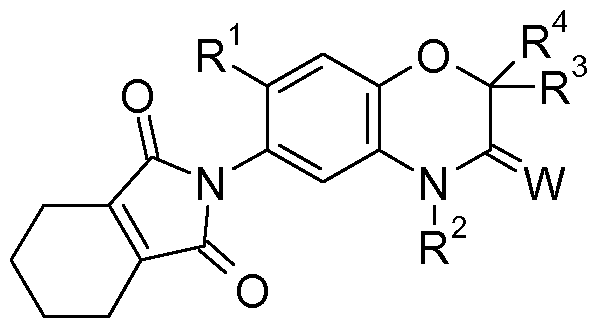
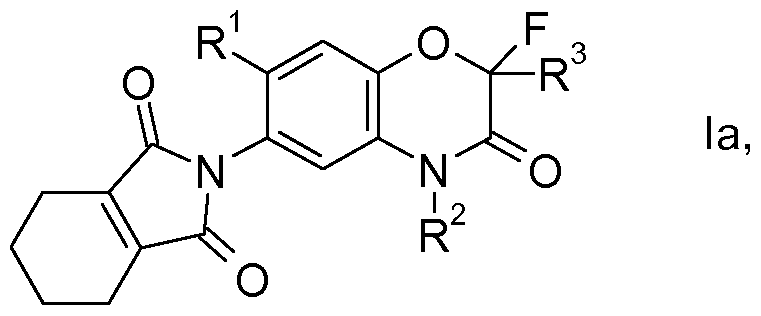


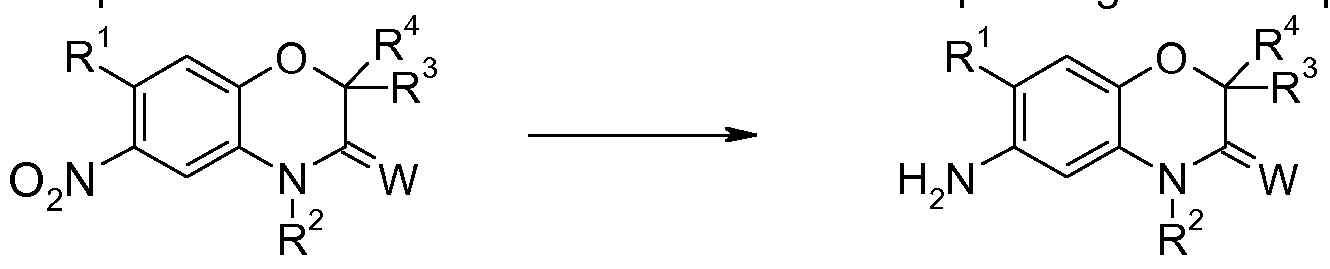


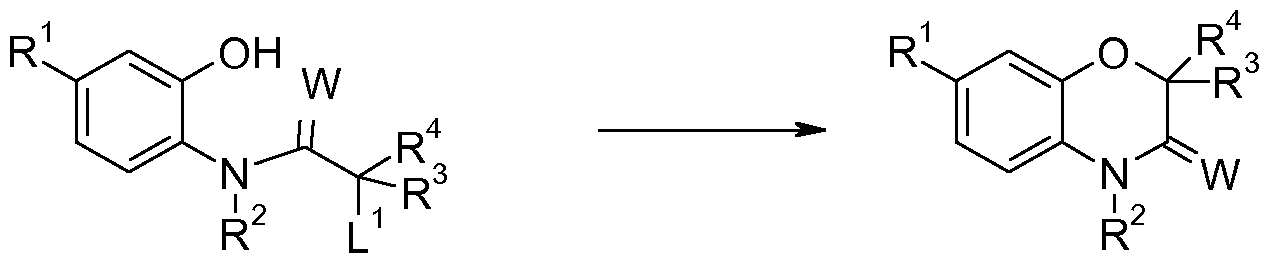


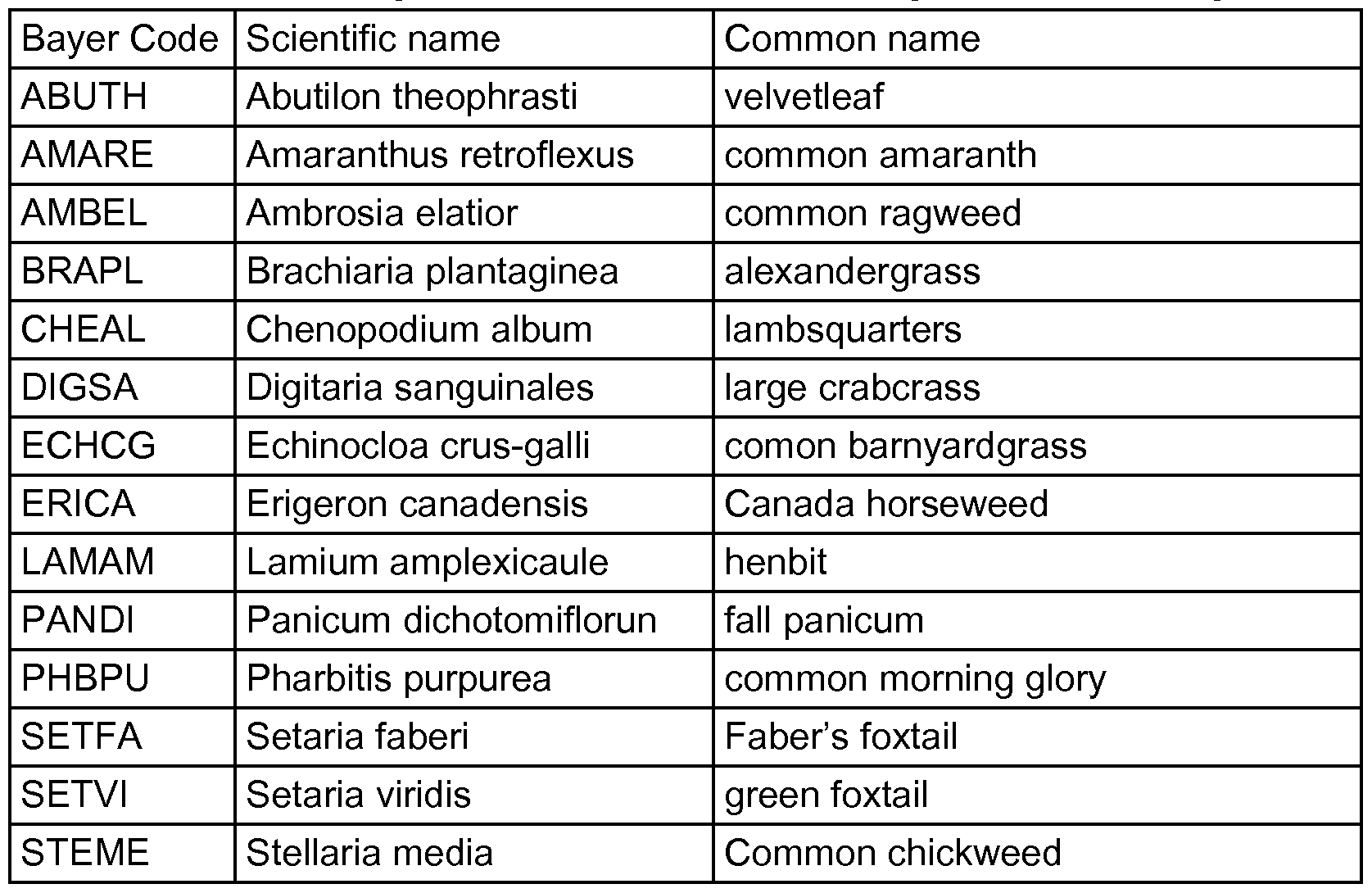
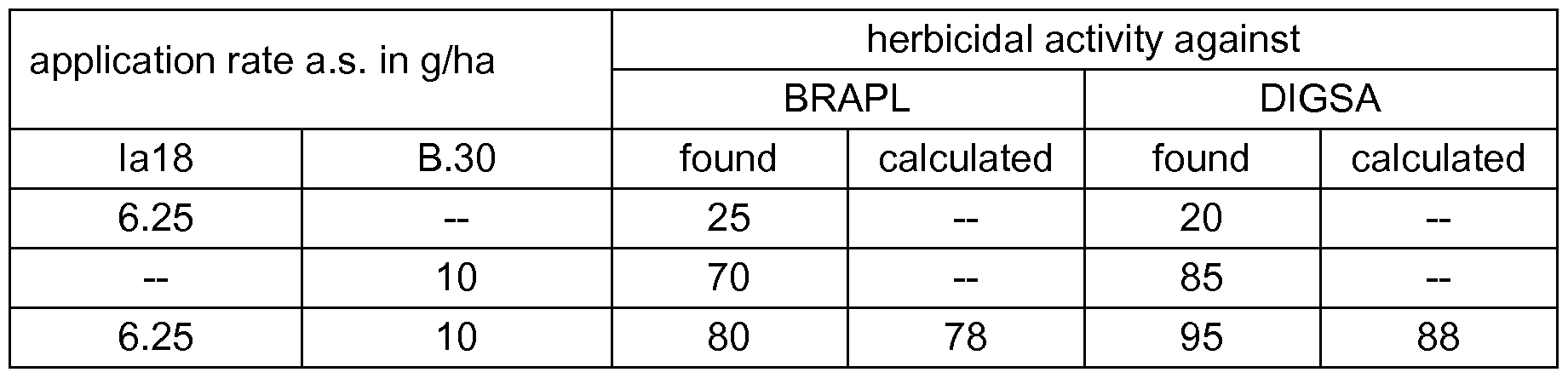


Claims
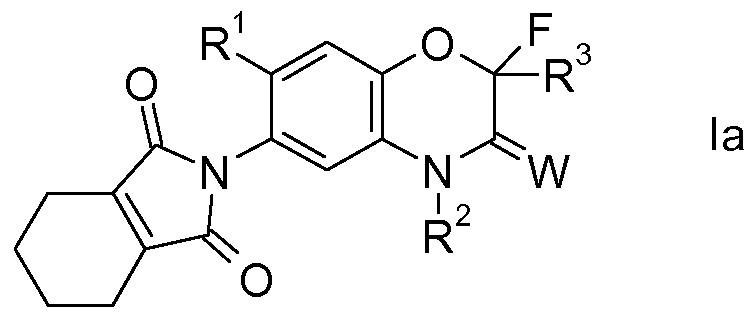

Priority Applications (5)
| Application Number | Priority Date | Filing Date | Title |
|---|---|---|---|
| BR112012009987A BR112012009987A2 (en) | 2009-11-02 | 2010-10-28 | '' tetrahydrophthalimides of formula ia, process for preparing active herbicidal compositions and method for controlling unwanted vegetation '' |
| US13/505,106 US8445407B2 (en) | 2009-11-02 | 2010-10-28 | Herbicidal tetrahydrophthalimides |
| CN2010800596734A CN102686583A (en) | 2009-11-02 | 2010-10-28 | Herbicidal tetrahydrophthalimides |
| EP10773899.9A EP2496573B1 (en) | 2009-11-02 | 2010-10-28 | Herbicidal tetrahydrophthalimides |
| JP2012535828A JP2013509379A (en) | 2009-11-02 | 2010-10-28 | Herbicide tetrahydrophthalimide |
Applications Claiming Priority (2)
| Application Number | Priority Date | Filing Date | Title |
|---|---|---|---|
| EP09174774.1 | 2009-11-02 | ||
| EP09174774 | 2009-11-02 |
Publications (1)
| Publication Number | Publication Date |
|---|---|
| WO2011051393A1 true WO2011051393A1 (en) | 2011-05-05 |
Family
ID=43430720
Family Applications (1)
| Application Number | Title | Priority Date | Filing Date |
|---|---|---|---|
| PCT/EP2010/066363 Ceased WO2011051393A1 (en) | 2009-11-02 | 2010-10-28 | Herbicidal tetrahydrophthalimides |
Country Status (7)
| Country | Link |
|---|---|
| US (1) | US8445407B2 (en) |
| EP (1) | EP2496573B1 (en) |
| JP (1) | JP2013509379A (en) |
| CN (1) | CN102686583A (en) |
| AR (1) | AR078861A1 (en) |
| BR (1) | BR112012009987A2 (en) |
| WO (1) | WO2011051393A1 (en) |
Cited By (2)
| Publication number | Priority date | Publication date | Assignee | Title |
|---|---|---|---|---|
| US8481723B2 (en) | 2009-11-13 | 2013-07-09 | Basf Se | 3-(3,4-dihydro-2H-benzo [1,4]oxazin-6-yl)-1H-Pyrimidin-2,4-dione compounds as herbicides |
| US8669208B2 (en) | 2010-10-01 | 2014-03-11 | Basf Se | Herbicidal benzoxazinones |
Families Citing this family (5)
| Publication number | Priority date | Publication date | Assignee | Title |
|---|---|---|---|---|
| CN104447385A (en) | 2009-06-19 | 2015-03-25 | 巴斯夫欧洲公司 | Herbicidal benzoxazinones |
| WO2012080239A1 (en) | 2010-12-15 | 2012-06-21 | Basf Se | Herbicidal compositions |
| WO2014122674A1 (en) | 2013-02-08 | 2014-08-14 | Rallis India Limited | Process for preparation of derivatives of tetrahydrophthalimide |
| CN111132979B (en) | 2017-07-24 | 2024-03-26 | 瑞戴格作物保护公司 | Benzoxazinone derivatives used as herbicides |
| WO2025064329A1 (en) * | 2023-09-19 | 2025-03-27 | West Virginia Universityboard Of Governors On Behalf Of West Virginia University | Herbicide mixture composition for weed control in pastures and hayfields |
Citations (35)
| Publication number | Priority date | Publication date | Assignee | Title |
|---|---|---|---|---|
| EP0170191A2 (en) | 1984-07-23 | 1986-02-05 | Sumitomo Chemical Company, Limited | Tetrahydrophtalimides, and their production and use |
| EP0242246A1 (en) | 1986-03-11 | 1987-10-21 | Plant Genetic Systems N.V. | Plant cells resistant to glutamine synthetase inhibitors, made by genetic engineering |
| EP0374753A2 (en) | 1988-12-19 | 1990-06-27 | American Cyanamid Company | Insecticidal toxines, genes coding therefor, antibodies binding them, transgenic plant cells and plants expressing these toxines |
| EP0392225A2 (en) | 1989-03-24 | 1990-10-17 | Ciba-Geigy Ag | Disease-resistant transgenic plants |
| EP0427529A1 (en) | 1989-11-07 | 1991-05-15 | Pioneer Hi-Bred International, Inc. | Larvicidal lectins and plant insect resistance based thereon |
| EP0451878A1 (en) | 1985-01-18 | 1991-10-16 | Plant Genetic Systems, N.V. | Modifying plants by genetic engineering to combat or control insects |
| WO1992000377A1 (en) | 1990-06-25 | 1992-01-09 | Monsanto Company | Glyphosate tolerant plants |
| WO1993007278A1 (en) | 1991-10-04 | 1993-04-15 | Ciba-Geigy Ag | Synthetic dna sequence having enhanced insecticidal activity in maize |
| WO1995034656A1 (en) | 1994-06-10 | 1995-12-21 | Ciba-Geigy Ag | Novel bacillus thuringiensis genes coding toxins active against lepidopteran pests |
| WO1996026202A1 (en) | 1995-02-21 | 1996-08-29 | Degussa Aktiengesellschaft | Process for producing thietanones |
| US5559024A (en) | 1988-03-23 | 1996-09-24 | Rhone-Poulenc Agrochimie | Chimeric nitrilase-encoding gene for herbicidal resistance |
| WO1997041117A1 (en) | 1996-04-26 | 1997-11-06 | Nippon Soda Co., Ltd. | Novel benzene derivatives substituted by heterocycles and herbicides |
| WO1997041218A1 (en) | 1996-04-29 | 1997-11-06 | Board Of Supervisors Of Louisiana State University And Agricultural And Mechanical College | Herbicide resistant rice |
| WO1997041116A1 (en) | 1996-04-26 | 1997-11-06 | Nippon Soda Co., Ltd. | Benzene derivatives substituted by heterocycles and herbicides |
| WO1997041118A1 (en) | 1996-04-26 | 1997-11-06 | Nippon Soda Co., Ltd. | Benzene derivatives substituted by heterocycles and herbicides |
| WO1998002527A1 (en) | 1996-07-17 | 1998-01-22 | Michigan State University | Imidazolinone herbicide resistant sugar beet plants |
| WO1998002526A1 (en) | 1996-07-17 | 1998-01-22 | Michigan State University | Imidazolinone herbicide resistant sugar beet plants |
| WO2000026390A2 (en) | 1998-10-29 | 2000-05-11 | American Cyanamid Company | Genes and vectors for conferring herbicide resistance in plants |
| US6222100B1 (en) | 1984-03-06 | 2001-04-24 | Mgi Pharma, Inc. | Herbicide resistance in plants |
| WO2001083459A2 (en) | 2000-05-04 | 2001-11-08 | Basf Aktiengesellschaft | Uracil substituted phenyl sulfamoyl carboxamides |
| WO2001082685A1 (en) | 2000-04-28 | 2001-11-08 | Basf Aktiengesellschaft | Use of the maize x112 mutant ahas 2 gene and imidazolinone herbicides for selection of transgenic monocots, maize, rice and wheat plants resistant to the imidazolinone herbicides |
| WO2002015701A2 (en) | 2000-08-25 | 2002-02-28 | Syngenta Participations Ag | Bacillus thuringiensis crystal protein hybrids |
| WO2003014356A1 (en) | 2001-08-09 | 2003-02-20 | University Of Saskatchewan | Wheat plants having increased resistance to imidazolinone herbicides |
| WO2003013225A2 (en) | 2001-08-09 | 2003-02-20 | Northwest Plant Breeding Company | Wheat plants having increased resistance to imidazolinone herbicides |
| WO2003014357A1 (en) | 2001-08-09 | 2003-02-20 | University Of Saskatchewan | Wheat plants having increased resistance to imidazolinone herbicides |
| WO2003018810A2 (en) | 2001-08-31 | 2003-03-06 | Syngenta Participations Ag | Modified cry3a toxins and nucleic acid sequences coding therefor |
| WO2003052073A2 (en) | 2001-12-17 | 2003-06-26 | Syngenta Participations Ag | Novel corn event |
| WO2004016073A2 (en) | 2002-07-10 | 2004-02-26 | The Department Of Agriculture, Western Australia | Wheat plants having increased resistance to imidazolinone herbicides |
| WO2004106529A2 (en) | 2003-05-28 | 2004-12-09 | Basf Aktiengesellschaft | Wheat plants having increased tolerance to imidazolinone herbicides |
| WO2005020673A1 (en) | 2003-08-29 | 2005-03-10 | Instituto Nacional De Technologia Agropecuaria | Rice plants having increased tolerance to imidazolinone herbicides |
| WO2006024820A1 (en) | 2004-09-03 | 2006-03-09 | Syngenta Limited | Isoxazoline derivatives and their use as herbicides |
| WO2006037945A1 (en) | 2004-10-05 | 2006-04-13 | Syngenta Limited | Isoxazoline derivatives and their use as herbicides |
| WO2007071900A1 (en) | 2005-12-21 | 2007-06-28 | Syngenta Limited | Novel herbicides |
| WO2007096576A1 (en) | 2006-02-27 | 2007-08-30 | Syngenta Limited | Herbicidal isoxazoline compounds |
| WO2008074991A1 (en) | 2006-12-21 | 2008-06-26 | Syngenta Limited | Novel herbicides |
Family Cites Families (7)
| Publication number | Priority date | Publication date | Assignee | Title |
|---|---|---|---|---|
| DE3807295A1 (en) * | 1988-03-05 | 1989-09-14 | Basf Ag | NEW N-HETEROARYL TETRAHYDROPHTHALIMIDE COMPOUNDS |
| NZ231658A (en) * | 1988-12-12 | 1992-05-26 | Fmc Corp | Inhibitors of protoporphyrinogen oxidase and compositions for killing tumour cells |
| US5281571A (en) * | 1990-10-18 | 1994-01-25 | Monsanto Company | Herbicidal benzoxazinone- and benzothiazinone-substituted pyrazoles |
| US5670455A (en) * | 1992-01-29 | 1997-09-23 | E. I. Du Pont De Nemours And Company | Substituted phenylheterocyclic herbicides |
| AU4653693A (en) * | 1992-07-29 | 1994-03-03 | E.I. Du Pont De Nemours And Company | Herbicidal triazinones |
| JP2000247975A (en) * | 1999-02-25 | 2000-09-12 | Nissan Chem Ind Ltd | Heterocycle-condensed pyrimidinone derivative and herbicide containing the same |
| CN104447385A (en) * | 2009-06-19 | 2015-03-25 | 巴斯夫欧洲公司 | Herbicidal benzoxazinones |
-
2010
- 2010-10-28 US US13/505,106 patent/US8445407B2/en active Active
- 2010-10-28 EP EP10773899.9A patent/EP2496573B1/en not_active Not-in-force
- 2010-10-28 JP JP2012535828A patent/JP2013509379A/en active Pending
- 2010-10-28 WO PCT/EP2010/066363 patent/WO2011051393A1/en not_active Ceased
- 2010-10-28 CN CN2010800596734A patent/CN102686583A/en active Pending
- 2010-10-28 BR BR112012009987A patent/BR112012009987A2/en not_active IP Right Cessation
- 2010-11-01 AR ARP100104032A patent/AR078861A1/en unknown
Patent Citations (36)
| Publication number | Priority date | Publication date | Assignee | Title |
|---|---|---|---|---|
| US6222100B1 (en) | 1984-03-06 | 2001-04-24 | Mgi Pharma, Inc. | Herbicide resistance in plants |
| EP0170191A2 (en) | 1984-07-23 | 1986-02-05 | Sumitomo Chemical Company, Limited | Tetrahydrophtalimides, and their production and use |
| EP0451878A1 (en) | 1985-01-18 | 1991-10-16 | Plant Genetic Systems, N.V. | Modifying plants by genetic engineering to combat or control insects |
| EP0242246A1 (en) | 1986-03-11 | 1987-10-21 | Plant Genetic Systems N.V. | Plant cells resistant to glutamine synthetase inhibitors, made by genetic engineering |
| EP0242236A1 (en) | 1986-03-11 | 1987-10-21 | Plant Genetic Systems N.V. | Plant cells resistant to glutamine synthetase inhibitors, made by genetic engineering |
| US5559024A (en) | 1988-03-23 | 1996-09-24 | Rhone-Poulenc Agrochimie | Chimeric nitrilase-encoding gene for herbicidal resistance |
| EP0374753A2 (en) | 1988-12-19 | 1990-06-27 | American Cyanamid Company | Insecticidal toxines, genes coding therefor, antibodies binding them, transgenic plant cells and plants expressing these toxines |
| EP0392225A2 (en) | 1989-03-24 | 1990-10-17 | Ciba-Geigy Ag | Disease-resistant transgenic plants |
| EP0427529A1 (en) | 1989-11-07 | 1991-05-15 | Pioneer Hi-Bred International, Inc. | Larvicidal lectins and plant insect resistance based thereon |
| WO1992000377A1 (en) | 1990-06-25 | 1992-01-09 | Monsanto Company | Glyphosate tolerant plants |
| WO1993007278A1 (en) | 1991-10-04 | 1993-04-15 | Ciba-Geigy Ag | Synthetic dna sequence having enhanced insecticidal activity in maize |
| WO1995034656A1 (en) | 1994-06-10 | 1995-12-21 | Ciba-Geigy Ag | Novel bacillus thuringiensis genes coding toxins active against lepidopteran pests |
| WO1996026202A1 (en) | 1995-02-21 | 1996-08-29 | Degussa Aktiengesellschaft | Process for producing thietanones |
| WO1997041117A1 (en) | 1996-04-26 | 1997-11-06 | Nippon Soda Co., Ltd. | Novel benzene derivatives substituted by heterocycles and herbicides |
| WO1997041116A1 (en) | 1996-04-26 | 1997-11-06 | Nippon Soda Co., Ltd. | Benzene derivatives substituted by heterocycles and herbicides |
| WO1997041118A1 (en) | 1996-04-26 | 1997-11-06 | Nippon Soda Co., Ltd. | Benzene derivatives substituted by heterocycles and herbicides |
| WO1997041218A1 (en) | 1996-04-29 | 1997-11-06 | Board Of Supervisors Of Louisiana State University And Agricultural And Mechanical College | Herbicide resistant rice |
| WO1998002527A1 (en) | 1996-07-17 | 1998-01-22 | Michigan State University | Imidazolinone herbicide resistant sugar beet plants |
| WO1998002526A1 (en) | 1996-07-17 | 1998-01-22 | Michigan State University | Imidazolinone herbicide resistant sugar beet plants |
| WO2000026390A2 (en) | 1998-10-29 | 2000-05-11 | American Cyanamid Company | Genes and vectors for conferring herbicide resistance in plants |
| WO2001082685A1 (en) | 2000-04-28 | 2001-11-08 | Basf Aktiengesellschaft | Use of the maize x112 mutant ahas 2 gene and imidazolinone herbicides for selection of transgenic monocots, maize, rice and wheat plants resistant to the imidazolinone herbicides |
| WO2001083459A2 (en) | 2000-05-04 | 2001-11-08 | Basf Aktiengesellschaft | Uracil substituted phenyl sulfamoyl carboxamides |
| WO2002015701A2 (en) | 2000-08-25 | 2002-02-28 | Syngenta Participations Ag | Bacillus thuringiensis crystal protein hybrids |
| WO2003014356A1 (en) | 2001-08-09 | 2003-02-20 | University Of Saskatchewan | Wheat plants having increased resistance to imidazolinone herbicides |
| WO2003013225A2 (en) | 2001-08-09 | 2003-02-20 | Northwest Plant Breeding Company | Wheat plants having increased resistance to imidazolinone herbicides |
| WO2003014357A1 (en) | 2001-08-09 | 2003-02-20 | University Of Saskatchewan | Wheat plants having increased resistance to imidazolinone herbicides |
| WO2003018810A2 (en) | 2001-08-31 | 2003-03-06 | Syngenta Participations Ag | Modified cry3a toxins and nucleic acid sequences coding therefor |
| WO2003052073A2 (en) | 2001-12-17 | 2003-06-26 | Syngenta Participations Ag | Novel corn event |
| WO2004016073A2 (en) | 2002-07-10 | 2004-02-26 | The Department Of Agriculture, Western Australia | Wheat plants having increased resistance to imidazolinone herbicides |
| WO2004106529A2 (en) | 2003-05-28 | 2004-12-09 | Basf Aktiengesellschaft | Wheat plants having increased tolerance to imidazolinone herbicides |
| WO2005020673A1 (en) | 2003-08-29 | 2005-03-10 | Instituto Nacional De Technologia Agropecuaria | Rice plants having increased tolerance to imidazolinone herbicides |
| WO2006024820A1 (en) | 2004-09-03 | 2006-03-09 | Syngenta Limited | Isoxazoline derivatives and their use as herbicides |
| WO2006037945A1 (en) | 2004-10-05 | 2006-04-13 | Syngenta Limited | Isoxazoline derivatives and their use as herbicides |
| WO2007071900A1 (en) | 2005-12-21 | 2007-06-28 | Syngenta Limited | Novel herbicides |
| WO2007096576A1 (en) | 2006-02-27 | 2007-08-30 | Syngenta Limited | Herbicidal isoxazoline compounds |
| WO2008074991A1 (en) | 2006-12-21 | 2008-06-26 | Syngenta Limited | Novel herbicides |
Non-Patent Citations (4)
| Title |
|---|
| "Modern Crop Protection Compounds", vol. 1, 2007, WILEY VCH |
| B. HOCK; C. FEDTKE; R. R. SCHMIDT: "Herbizide", 1995, GEORG THIEME VERLAG |
| ORGANIKUM, 1993, pages 320 - 323 |
| ORGANIKUM, 1993, pages 553 - 557 |
Cited By (3)
| Publication number | Priority date | Publication date | Assignee | Title |
|---|---|---|---|---|
| US8481723B2 (en) | 2009-11-13 | 2013-07-09 | Basf Se | 3-(3,4-dihydro-2H-benzo [1,4]oxazin-6-yl)-1H-Pyrimidin-2,4-dione compounds as herbicides |
| US8748348B2 (en) | 2009-11-13 | 2014-06-10 | Basf Se | 3-(3,4-dihydro-2H-benzo [1,4]oxazin-6-yl)-1H-pyrimidin-2,4-dione compounds as herbicides |
| US8669208B2 (en) | 2010-10-01 | 2014-03-11 | Basf Se | Herbicidal benzoxazinones |
Also Published As
| Publication number | Publication date |
|---|---|
| BR112012009987A2 (en) | 2015-09-29 |
| CN102686583A (en) | 2012-09-19 |
| US8445407B2 (en) | 2013-05-21 |
| EP2496573A1 (en) | 2012-09-12 |
| JP2013509379A (en) | 2013-03-14 |
| US20120214668A1 (en) | 2012-08-23 |
| AR078861A1 (en) | 2011-12-07 |
| EP2496573B1 (en) | 2015-07-01 |
Similar Documents
| Publication | Publication Date | Title |
|---|---|---|
| US9220268B2 (en) | Herbicidal benzoxazinones | |
| EP2499136B1 (en) | 3-(3,4-dihydro-2h-benzo[1,4]oxazin-6-yl)-1h-pyrimidin-2,4-dione compounds as herbicides | |
| EP2621924B1 (en) | Herbicidal benzoxazinones | |
| EP2651226B1 (en) | Herbicidal compositions | |
| WO2011018486A2 (en) | Herbicidally active composition comprising benzoxazinones | |
| EP2496573B1 (en) | Herbicidal tetrahydrophthalimides |
Legal Events
| Date | Code | Title | Description |
|---|---|---|---|
| WWE | Wipo information: entry into national phase |
Ref document number: 201080059673.4 Country of ref document: CN |
|
| 121 | Ep: the epo has been informed by wipo that ep was designated in this application |
Ref document number: 10773899 Country of ref document: EP Kind code of ref document: A1 |
|
| DPE1 | Request for preliminary examination filed after expiration of 19th month from priority date (pct application filed from 20040101) | ||
| WWE | Wipo information: entry into national phase |
Ref document number: 2012535828 Country of ref document: JP |
|
| WWE | Wipo information: entry into national phase |
Ref document number: 13505106 Country of ref document: US Ref document number: 1087/MUMNP/2012 Country of ref document: IN |
|
| NENP | Non-entry into the national phase |
Ref country code: DE |
|
| WWE | Wipo information: entry into national phase |
Ref document number: 2010773899 Country of ref document: EP |
|
| REG | Reference to national code |
Ref country code: BR Ref legal event code: B01A Ref document number: 112012009987 Country of ref document: BR |
|
| ENP | Entry into the national phase |
Ref document number: 112012009987 Country of ref document: BR Kind code of ref document: A2 Effective date: 20120427 |