WO2011044132A1 - Generation of haploid plants and improved plant breeding - Google Patents
Generation of haploid plants and improved plant breeding Download PDFInfo
- Publication number
- WO2011044132A1 WO2011044132A1 PCT/US2010/051483 US2010051483W WO2011044132A1 WO 2011044132 A1 WO2011044132 A1 WO 2011044132A1 US 2010051483 W US2010051483 W US 2010051483W WO 2011044132 A1 WO2011044132 A1 WO 2011044132A1
- Authority
- WO
- WIPO (PCT)
- Prior art keywords
- cenh3
- plant
- protein
- histone
- domain
- Prior art date
- Legal status (The legal status is an assumption and is not a legal conclusion. Google has not performed a legal analysis and makes no representation as to the accuracy of the status listed.)
- Ceased
Links
Classifications
-
- C—CHEMISTRY; METALLURGY
- C12—BIOCHEMISTRY; BEER; SPIRITS; WINE; VINEGAR; MICROBIOLOGY; ENZYMOLOGY; MUTATION OR GENETIC ENGINEERING
- C12N—MICROORGANISMS OR ENZYMES; COMPOSITIONS THEREOF; PROPAGATING, PRESERVING, OR MAINTAINING MICROORGANISMS; MUTATION OR GENETIC ENGINEERING; CULTURE MEDIA
- C12N15/00—Mutation or genetic engineering; DNA or RNA concerning genetic engineering, vectors, e.g. plasmids, or their isolation, preparation or purification; Use of hosts therefor
- C12N15/09—Recombinant DNA-technology
- C12N15/63—Introduction of foreign genetic material using vectors; Vectors; Use of hosts therefor; Regulation of expression
- C12N15/79—Vectors or expression systems specially adapted for eukaryotic hosts
- C12N15/82—Vectors or expression systems specially adapted for eukaryotic hosts for plant cells, e.g. plant artificial chromosomes (PACs)
- C12N15/8241—Phenotypically and genetically modified plants via recombinant DNA technology
-
- C—CHEMISTRY; METALLURGY
- C07—ORGANIC CHEMISTRY
- C07K—PEPTIDES
- C07K14/00—Peptides having more than 20 amino acids; Gastrins; Somatostatins; Melanotropins; Derivatives thereof
- C07K14/415—Peptides having more than 20 amino acids; Gastrins; Somatostatins; Melanotropins; Derivatives thereof from plants
-
- C—CHEMISTRY; METALLURGY
- C12—BIOCHEMISTRY; BEER; SPIRITS; WINE; VINEGAR; MICROBIOLOGY; ENZYMOLOGY; MUTATION OR GENETIC ENGINEERING
- C12N—MICROORGANISMS OR ENZYMES; COMPOSITIONS THEREOF; PROPAGATING, PRESERVING, OR MAINTAINING MICROORGANISMS; MUTATION OR GENETIC ENGINEERING; CULTURE MEDIA
- C12N15/00—Mutation or genetic engineering; DNA or RNA concerning genetic engineering, vectors, e.g. plasmids, or their isolation, preparation or purification; Use of hosts therefor
- C12N15/09—Recombinant DNA-technology
- C12N15/63—Introduction of foreign genetic material using vectors; Vectors; Use of hosts therefor; Regulation of expression
- C12N15/79—Vectors or expression systems specially adapted for eukaryotic hosts
- C12N15/82—Vectors or expression systems specially adapted for eukaryotic hosts for plant cells, e.g. plant artificial chromosomes (PACs)
- C12N15/8241—Phenotypically and genetically modified plants via recombinant DNA technology
- C12N15/8261—Phenotypically and genetically modified plants via recombinant DNA technology with agronomic (input) traits, e.g. crop yield
-
- C—CHEMISTRY; METALLURGY
- C12—BIOCHEMISTRY; BEER; SPIRITS; WINE; VINEGAR; MICROBIOLOGY; ENZYMOLOGY; MUTATION OR GENETIC ENGINEERING
- C12N—MICROORGANISMS OR ENZYMES; COMPOSITIONS THEREOF; PROPAGATING, PRESERVING, OR MAINTAINING MICROORGANISMS; MUTATION OR GENETIC ENGINEERING; CULTURE MEDIA
- C12N15/00—Mutation or genetic engineering; DNA or RNA concerning genetic engineering, vectors, e.g. plasmids, or their isolation, preparation or purification; Use of hosts therefor
- C12N15/09—Recombinant DNA-technology
- C12N15/63—Introduction of foreign genetic material using vectors; Vectors; Use of hosts therefor; Regulation of expression
- C12N15/79—Vectors or expression systems specially adapted for eukaryotic hosts
- C12N15/82—Vectors or expression systems specially adapted for eukaryotic hosts for plant cells, e.g. plant artificial chromosomes (PACs)
- C12N15/8241—Phenotypically and genetically modified plants via recombinant DNA technology
- C12N15/8261—Phenotypically and genetically modified plants via recombinant DNA technology with agronomic (input) traits, e.g. crop yield
- C12N15/8287—Phenotypically and genetically modified plants via recombinant DNA technology with agronomic (input) traits, e.g. crop yield for fertility modification, e.g. apomixis
-
- Y—GENERAL TAGGING OF NEW TECHNOLOGICAL DEVELOPMENTS; GENERAL TAGGING OF CROSS-SECTIONAL TECHNOLOGIES SPANNING OVER SEVERAL SECTIONS OF THE IPC; TECHNICAL SUBJECTS COVERED BY FORMER USPC CROSS-REFERENCE ART COLLECTIONS [XRACs] AND DIGESTS
- Y02—TECHNOLOGIES OR APPLICATIONS FOR MITIGATION OR ADAPTATION AGAINST CLIMATE CHANGE
- Y02A—TECHNOLOGIES FOR ADAPTATION TO CLIMATE CHANGE
- Y02A40/00—Adaptation technologies in agriculture, forestry, livestock or agroalimentary production
- Y02A40/10—Adaptation technologies in agriculture, forestry, livestock or agroalimentary production in agriculture
- Y02A40/146—Genetically Modified [GMO] plants, e.g. transgenic plants
Definitions
- the present invention provides for new ways for producing haploid organisms.
- the invention provides a transgenic plant comprising a heterologous transgene expression cassette, the expression cassette comprising a promoter operably linked to a polynucleotide encoding a recombinantly altered CENH3, CENPC, MIS 12, NDC80 or NUF2 polypeptide, wherein in the event the recombinantly altered polypeptide is expressed in a first plant having a corresponding inactivated endogenous CENH3, CENPC, MIS 12, NDC80 or NUF2 gene and the first plant is crossed to a wildtype plant, at least 0.1% of resulting progeny are haploid.
- one or two alleles of the endogenous CENH3, CENPC, MIS 12, NDC80 or NUF2 genomic coding sequence of the plant is inactivated or knocked out.
- all alleles of the endogenous CENH3, CENPC, MIS 12, NDC80 or NUF2 genomic coding sequence of the plant is inactivated or knocked out.
- the plant when crossed with a wildtype plant, generates at least 0.1% (or, e.g., 0.5, 1, 2, 5, 10, 20% or more) haploid progeny.
- the polypeptide is a recombinantly altered CENH3 polypeptide.
- the polypeptide comprises a heterologous amino acid sequence of at least 5 amino acids linked to a protein comprising a CENH3 histone-fold domain, wherein the amino acid sequence is heterologous to the CENH3 histone-fold domain.
- the heterologous amino acid sequence is linked directly to the CENH3 histone-fold domain and the polypeptide lacks a CENH3 tail domain.
- the heterologous amino acid sequence is linked to the CENH3 histone-fold domain via an intervening protein sequence.
- the intervening protein sequence comprises a non-CENH3 histone H3 tail domain.
- the non- CENH3 histone H3 tail domain comprises an amino acid sequence at least 70% identical to SEQ ID NO:95, or a fragment thereof at least 20 amino acids long.
- the intervening protein sequence comprises a CENH3 tail domain.
- the intervening protein sequence comprises a histone H3 tail domain and a heterologous histone CENH3 tail domain.
- the CENH3 tail domain is heterologous to the CENH3 histone-fold domain.
- the heterologous amino acid sequence is at least 10 amino acids long.
- the intervening protein sequence comprises a histone H3 tail domain and a heterologous histone CENH3 tail domain
- the heterologous amino acid sequence comprises green fluorescent protein.
- the heterologous amino acid sequence disrupts centromeres.
- the CENH3 histone-fold domain is selected from the group consisting of SEQ ID NOs: 49-94.
- the polypeptide comprises a non-CENH3 tail domain linked to a CENH3 histone-fold domain.
- the polypeptide comprises a CENH3 histone-fold domain and a truncated CENH3 tail domain, wherein the amino terminus of the tail domain is truncated relative to the plant's endogenous tail domain.
- the truncated CENH3 tail domain lacks three or more amino terminal amino acids of the endogenous tail domain.
- a heterologous amino acid sequence is linked to the amino terminus of the truncated tail domain. In some embodiments, the heterologous amino acid sequence is at least 10 amino acids long.
- the heterologous amino acid sequence comprises green fluorescent protein. In some embodiments, the heterologous amino acid sequence disrupts centromeres. In some embodiments, the CENH3 histone-fold domain is selected from the group consisting of SEQ ID NOs: 49-94. [0013] In some embodiments, the polypeptide is a recombinantly altered CENPC, MIS 12, NDC80 and NUF2 polypeptide.
- the present invention also provides for an isolated nucleic acid comprising a polynucleotide encoding a polypeptide, wherein the polypeptide comprises: a non-CENH3 tail domain linked to a CENH3 histone-fold domain; or a truncated CENH3 tail domain linked to a CENH3 histone-fold domain, wherein the amino terminus of the tail domain is truncated.
- the present invention also provides for a plant comprising a silenced CENH3 or one or two copies of an allele of a knocked out, inactivated, or mutated endogenous CENH3 gene.
- the present invention also provides for method of generating a haploid plant, the method comprising, crossing a plant expressing an endogenous CENH3 protein to a transgenic plant comprising a heterologous transgene expression cassette, the expression cassette comprising a promoter operably linked to a polynucleotide encoding a recombinantly altered CENH3, CENPC, MIS 12, NDC80 or NUF2 polypeptide, wherein in the event the recombinantly altered polypeptide is expressed in a first plant having a corresponding inactivated endogenous CENH3, CENPC, MIS 12, NDC80 or NUF2 gene and the first plant is crossed to a wildtype plant, at least 0.1% of resulting progeny are haploid; and selecting Fl haploid progeny generated from the crossing step.
- the plant expressing an endogenous CENH3 protein is the pollen parent of the cross.
- the plant expressing an endogenous CENH3 protein is the ovule parent of the cross.
- the method further comprises converting at least one selected haploid plant into a doubled haploid plant.
- a method of making a transgenic plant comprising a heterologous transgene expression cassette, the expression cassette comprising a promoter operably linked to a polynucleotide encoding a recombinantly altered CENH3, CENPC, MIS 12, NDC80 or NUF2 polypeptide, wherein in the event the recombinantly altered polypeptide is expressed in a first plant having a corresponding inactivated endogenous CENH3, CENPC, MIS 12, NDC80 or NUF2 gene and the first plant is crossed to a wildtype plant, at least 0.1% of resulting progeny are haploid, the method comprising, transforming plant cells with a nucleic acid comprising the expression cassette; and selecting transformants comprising the nucleic acid, thereby making the plant.
- the present invention provides an isolated polynucleotide encoding a polypeptide, wherein the polypeptide comprises: an amino acid sequence of at least 5 amino acids linked to a protein comprising a CENH3 histone-fold domain, wherein the amino acid sequence is heterologous to the CENH3 histone-fold domain; or a protein comprising a CENH3 histone-fold domain and a truncated CENH3 tail domain, wherein the amino terminus of the tail domain is truncated.
- the heterologous amino acid sequence is linked directly to the CENH3 histone-fold domain.
- the polypeptide lacks a CENH3 tail domain.
- the heterologous amino acid sequence is linked to the CENH3 histone-fold domain via an intervening protein sequence.
- the intervening protein sequence comprises a non-CENH3 histone H3 tail domain.
- the intervening protein sequence comprises a CENH3 tail domain.
- the CENH3 tail domain is heterologous to the CENH3 histone-fold domain.
- the non-CENH3 histone H3 tail domain comprises an amino acid sequence at least 70% identical to SEQ ID NO: 95, or a fragment thereof at least 20 amino acids long.
- the intervening protein sequence comprises a histone H3 tail domain and a heterologous histone CENH3 tail domain.
- the heterologous amino acid sequence is at least 3, 5, 10, 15, 20, 30, or 50 amino acids long, optionally lacking a fixed secondary structure. [0025] In some embodiments, the heterologous amino acid sequence comprises green fluorescent protein.
- the heterologous amino acid sequence disrupts centromeres.
- the CENH3 histone-fold domain is selected from the group consisting of SEQ ID NOs: 49-94.
- the polypeptide comprises a protein comprising a CENH3 histone-fold domain and a truncated CENH3 tail domain, wherein the amino terminus of the tail domain is truncated.
- the truncated CENH3 tail domain lacks at least 1, 2, 3,4,5, 6, 10, 15, or 20 amino terminal amino acids of the endogenous tail domain.
- a heterologous amino acid sequence is linked to the amino terminus of the truncated tail domain.
- the heterologous amino acid sequence is at least at least 3, 5, 10, 15, 20, 30, or 50 amino acids long.
- the heterologous amino acid sequence comprises green fluorescent protein.
- the heterologous amino acid sequence disrupts centromeres.
- the CENH3 histone-fold domain is selected from the group consisting of SEQ ID NOs: 49-94.
- the present invention also provides an expression cassette comprising any of the above-listed the polynucleotides, wherein the expression cassette comprises a promoter operably linked to the polynucleotide encoding a polypeptide.
- the invention provides for a vector comprising the expression cassette.
- the invention provides for a plant comprising the expression cassette.
- the heterologous histone tail domain comprises a histone H3 tail domain or a heterologous histone CENH3 tail domain.
- the polypeptide comprises a histone H3 tail domain and a histone CENH3 tail domain.
- the plant comprises a silenced CENH3 or one or two copies of an allele of a knocked out or mutated endogenous CENH3 gene.
- the expression cassette is integrated into the chromosome of the plant.
- the present invention also provides for a plant comprising a silenced CENH3 or one or two copies of an allele of a knocked out or mutated endogenous CENH3 gene.
- the present invention also provides for a method of generating a haploid plant.
- the method comprises, crossing a plant expressing an endogenous CENH3 protein to the plant as described herein (e.g., expressing a tailswap protein); and selecting Fl haploid progeny generated from the crossing step.
- the plant expressing an endogenous CENH3 protein is the pollen parent of the cross.
- the plant expressing an endogenous CENH3 protein is the ovule parent of the cross.
- the method further comprises converting at least one selected haploid plant into a doubled haploid plant.
- An "endogenous" gene or protein sequence refers to a non-recombinant sequence of an organism as the sequence occurs in the organism before human-induced mutation of the sequence.
- a “mutated” sequence refers to a human-altered sequence. Examples of human- induced mutation include exposure of an organism to a high dose of chemical, radiological, or insertional mutagen for the purposes of selecting mutants, as well as recombinant alteration of a sequence. Examples of human-induced recombinant alterations can include, e.g., fusions, insertions, deletions, and/or changes to the sequence.
- promoter refers to regions or sequence located upstream and/or downstream from the start of transcription and which are involved in recognition and binding of RNA polymerase and other proteins to initiate transcription.
- a "plant promoter” is a promoter capable of initiating transcription in plant cells.
- a plant promoter can be, but does not have to be, a nucleic acid sequence originally isolated from a plant.
- operably linked refers to a functional linkage between a nucleic acid expression control sequence (such as a promoter, or array of transcription factor binding sites) and a second nucleic acid sequence, wherein the expression control sequence directs transcription of the nucleic acid corresponding to the second sequence.
- a nucleic acid expression control sequence such as a promoter, or array of transcription factor binding sites
- plant includes whole plants, shoot vegetative organs/structures
- the class of plants that can be used in the method of the invention is generally as broad as the class of higher and lower plants amenable to transformation techniques, including
- angiosperms (monocotyledonous and dicotyledonous plants), gymnosperms, ferns, and multicellular algae. It includes plants of a variety of ploidy levels, including aneuploid, polyploid, diploid, haploid and hemizygous.
- a polynucleotide or polypeptide sequence is "heterologous to" an organism or a second sequence if it originates from a foreign species, or, if from the same species, is modified from its original form.
- a promoter operably linked to a heterologous coding sequence refers to a coding sequence from a species different from that from which the promoter was derived, or, if from the same species, a coding sequence which is not naturally associated with the promoter (e.g. a genetically engineered coding sequence or an allele from a different ecotype or variety).
- a CENH3 tail domain from a first species is heterologous to a CENH3 histone-fold domain from a second species.
- Recombinant refers to a human manipulated polynucleotide or a copy or complement of a human manipulated polynucleotide.
- a recombinant expression cassette comprising a promoter operably linked to a second polynucleotide may include a promoter that is heterologous to the second polynucleotide as the result of human manipulation (e.g., by methods described in Sambrook et al, Molecular Cloning - A
- a recombinant expression cassette may comprise
- polynucleotides combined in such a way that the polynucleotides are extremely unlikely to be found in nature.
- human manipulated restriction sites or plasmid vector sequences may flank or separate the promoter from the second polynucleotide.
- polynucleotides can be manipulated in many ways and are not limited to the examples above.
- transgenic plant is a plant comprising a transgene, i.e., is a genetically-modified plant.
- the transgenic plant can be the initial plant into which the transgene was introduced as well as progeny thereof whose genome contain the transgene.
- corresponding as used herein is used to mean “respective.” For example, where it is said that a plant contains a recombinantly altered copy of a protein selected from A, B, and C, and the plant also contains a "corresponding" mutated endogenous copy of the gene selected from a gene encoding A, B, or C, if the plant contains a
- the corresponding mutated endogenous copy would also be A.
- the plant contains a recombinantly altered protein B, the corresponding mutated endogenous copy would also be B, etc.
- nucleic acid or “polynucleotide sequence” refers to a single or double- stranded polymer of deoxyribonucleotide or ribonucleotide bases read from the 5' to the 3' end. Nucleic acids may also include modified nucleotides that permit correct read through by a polymerase, and/or formation of double-stranded duplexes, and do not significantly alter expression of a polypeptide encoded by that nucleic acid.
- nucleic acid sequence encoding refers to a nucleic acid which directs the expression of a specific protein or peptide.
- the nucleic acid sequences include both the DNA strand sequence that is transcribed into RNA and the RNA sequence that is translated into protein.
- the nucleic acid sequences include both the full length nucleic acid sequences as well as non-full length sequences derived from the full length sequences. It should be further understood that the sequence includes the degenerate codons of the native sequence or sequences which may be introduced to provide codon preference in a specific host cell.
- host cell refers to a cell from any organism.
- Exemplary host cells are derived from plants, bacteria, yeast, fungi, insects or other animals. Methods for introducing polynucleotide sequences into various types of host cells are well known in the art.
- An "expression cassette” refers to a nucleic acid construct, which when introduced into a host cell (e.g., a plant cell), results in transcription and/or translation of a RNA or polypeptide, respectively.
- An expression cassette can result in transcription without translation, for example, when an siRNA or other non-protein encoding RNA is transcribed.
- Two nucleic acid sequences or polypeptides are said to be “identical” if the sequence of nucleotides or amino acid residues, respectively, in the two sequences is the same when aligned for maximum correspondence as described below. The term
- “complementary to” is used herein to mean that the sequence is complementary to all or a portion of a reference polynucleotide sequence.
- Examples of algorithms that are suitable for determining percent sequence identity and sequence similarity are the BLAST and BLAST 2.0 algorithms, which are described in Altschul et ai, Nuc. Acids Res. 25:3389-3402 (1977), and Altschul et ai, J. Mol. Biol.
- HSPs high scoring sequence pairs
- Cumulative scores are calculated using, for nucleotide sequences, the parameters M (reward score for a pair of matching residues; always > 0) and N (penalty score for mismatching residues; always ⁇ 0).
- M forward score for a pair of matching residues; always > 0
- N penalty score for mismatching residues; always ⁇ 0.
- a scoring matrix is used to calculate the cumulative score. Extension of the word hits in each direction are halted when: the cumulative alignment score falls off by the quantity X from its maximum achieved value; the cumulative score goes to zero or below, due to the accumulation of one or more negative- scoring residue alignments; or the end of either sequence is reached.
- the BLAST algorithm parameters W, T, and X determine the sensitivity and speed of the alignment.
- W wordlength
- E expectation
- BLASTP program uses as defaults a wordlength of 3, and expectation (E) of 10, and the BLOSUM62 scoring matrix (see Henikoff and Henikoff, Proc. Natl. Acad. Sci. USA
- the BLAST algorithm also performs a statistical analysis of the similarity between two sequences (see, e.g., Karlin and Altschul, Proc. Natl. Acad. Sci. USA 90:5873-5787, (1993)).
- One measure of similarity provided by the BLAST algorithm is the smallest sum probability (P(N)), which provides an indication of the probability by which a match between two nucleotide or amino acid sequences would occur by chance.
- P(N) the smallest sum probability
- a nucleic acid is considered similar to a reference sequence if the smallest sum probability in a comparison of the test nucleic acid to the reference nucleic acid is less than about 0.2, more preferably less than about 0.01, and most preferably less than about 0.001.
- Percentage of sequence identity is determined by comparing two optimally aligned sequences over a comparison window, wherein the portion of the polynucleotide sequence in the comparison window may comprise additions or deletions (i.e., gaps) as compared to the reference sequence (which does not comprise additions or deletions) for optimal alignment of the two sequences. The percentage is calculated by determining the number of positions at which the identical nucleic acid base or amino acid residue occurs in both sequences to yield the number of matched positions, dividing the number of matched positions by the total number of positions in the window of comparison and multiplying the result by 100 to yield the percentage of sequence identity.
- substantially identical of polynucleotide sequences means that a polynucleotide comprises a sequence that has at least 25% sequence identity to a designated reference sequence.
- percent identity can be any integer from 25% to 100%, for example, at least: 25%, 30%, 35%, 40%, 45%, 50%, 55%, 60%, 65%, 70%, 75%, 80%, 85%, 90%, 95%, or 99% compared to a reference sequence using the programs described herein; preferably BLAST using standard parameters, as described below.
- percent identity values above can be appropriately adjusted to determine corresponding identity of proteins encoded by two nucleotide sequences by taking into account codon degeneracy, amino acid similarity, reading frame positioning and the like.
- Substantial identity of amino acid sequences for these purposes normally means sequence identity of at least 40%.
- Percent identity of polypeptides can be any integer from 40% to 100%, for example, at least 40%, 45%, 50%, 55%, 60%, 65%, 70%, 75%, 80%, 85%, 90%, 95%, or 99%.
- polypeptides that are "substantially similar" share sequences as noted above except that residue positions that are not identical may differ by conservative amino acid changes. Conservative amino acid substitutions refer to the interchangeability of residues having similar side chains.
- a group of amino acids having aliphatic side chains is glycine, alanine, valine, leucine, and isoleucine; a group of amino acids having aliphatic-hydroxyl side chains is serine and threonine; a group of amino acids having amide-containing side chains is asparagine and glutamine; a group of amino acids having aromatic side chains is phenylalanine, tyrosine, and tryptophan; a group of amino acids having basic side chains is lysine, arginine, and histidine; and a group of amino acids having sulfur-containing side chains is cysteine and methionine.
- Exemplary conservative amino acids substitution groups are: valine-leucine-isoleucine, phenylalanine- tyrosine, lysine-arginine, alanine-valine, aspartic acid-glutamic acid, and asparagine- glutamine.
- the present invention is based, in part, on the surprising discovery that elimination of an endogenous CENH3 in combination with expression of a heterologous protein comprising an altered CENH3 results in a plant that has useful properties for breeding. For example, when a plant that lacks an endogenous CENH3 protein, and expresses a protein comprising (listed from amino terminus to carboxyl terminus) a GFP tag, a non-CENH3 tail domain and a CENH3 histone fold domain, is crossed to a plant having an endogenous
- CENH3 protein a portion of the resulting progeny lack all chromosomes derived from the parent plant that expresses an altered version of CENH3.
- the invention allows for the production of haploid progeny. Haploid plants are useful, for example, for improving and speeding breeding.
- CENH3 is a member of the kinetochore complex, the protein structure on chromosomes where spindle fibers attach during cell division. Without intending to limit the scope of the invention, it is believed that the observed results are due in part to generation of a kinetochore protein that acts more weakly than wildtype, thereby resulting in functional kinetochore complexes (for example, in mitosis), but which result in relatively poorly segregating chromosomes during meiosis relative to chromosomes also containing wildtype kinetochore complexes from the other parent.
- kinetochore complexes when the altered protein is the only isoform in the cell, but relatively poorly segregating chromosomes during mitosis when the parent with altered kinetochores is crossed to a parent with wildtype kinetochore complexes.
- other kinetochore proteins include, e.g., CENPC, MCM21, MIS 12, NDC80, and NUF2.
- the present invention provides for plants, fungi, or animals (or cells thereof) that express a recombinant mutated kinetochore protein (including but not limited to CENH3, CENPC, MCM21, MIS 12, NDC80, and NUF2) that disrupts the centromere, and/or plants, fungi, or animals (or cells thereof) in which at least one or both copies of an allele of the endogenous CENH3 gene has been knocked out, mutated to reduce or eliminate its function, or silenced.
- a recombinant mutated kinetochore protein including but not limited to CENH3, CENPC, MCM21, MIS 12, NDC80, and NUF2
- the mutated kinetochore protein can be mutated in many different ways, including but not limited to, as a "tailswap" protein, comprising a CENH3 histone-fold domain and a heterologous amino terminal sequence.
- the present invention also provides for methods of generating a haploid plant by crossing a plant expressing a mutated kinetochore protein (including but not limited to a tailswap CENH3 protein), and not expressing an endogenous CENH3 protein, to a plant that expresses an endogenous CENH3 protein.
- CENH3 proteins are a well characterized class of proteins that are variants of H3 histone proteins and that are specialized proteins associated with the centromere.
- CENH3 proteins are characterized by a variable tail domain, which does not form a rigid secondary structure, and a conserved histone fold domain made up of three oc-helical regions connected by loop sections. Additional structural and functional features of CENH3 proteins can be found in, e.g., Cooper et al, Mol Biol Evol. 21(9): 1712-8 (2004); Malik et al, Nat Struct Biol. 10(11):882-91 (2003); Black et al, Curr Opin Cell Biol. 20(1):91-100 (2008).
- CENH3 proteins are one of the proteins that form the kinetochore complex.
- a wide variety of CENH3 proteins have been identified. See, e.g., SEQ ID NOs: l- 48. It will be appreciated that the above list is not intended to be exhaustive and that additional CENH3 sequences are available from genomic studies or can be identified from genomic databases or by well-known laboratory techniques. For example, where a particular plant or other organism species CENH3 is not readily available from a database, one can identify and clone the organism's CENH3 gene sequence using primers, which are optionally degenerate, based on conserved regions of other known CENH3 proteins.
- CENH3 histone fold domain is conserved between CENH3 proteins from different species.
- the CENH3 histone fold domain can be distinguished by three oc-helical regions connected by loop sections. While it will be appreciated that the exact location of the histone fold domain will vary in CENH3 proteins from other species, it will be found at the carboxyl terminus of an endogenous (wildtype) CENH3 protein.
- a CENH3 protein can be identified in an endogenous protein as having a carboxyl terminal domain substantially similar (e.g., at least 30%, 40%, 50%, 60%, 70%, 85%, 90%, 95% or more identity) to any of SEQ ID NO:s 49-94.
- FIG. 1 An alignment of a selection of CENH3 proteins is provided in Figure 1 and illustrates areas of conservation in the histone fold domain.
- the border between the tail domain and the histone fold domain of CENH3 proteins is at, within, or near (i.e., within 5, 10, 15, 20, or 25 amino acids from the "P" of) the conserved PGTVAL (SEQ ID NO: 114) sequence.
- the PGTVAL (SEQ ID NO: 114) sequence is approximately 81 amino acids from the N terminus of the Arabidopsis CENH3 protein, though the distance from the N terminus of different endogenous CENH3 proteins varies. See, for example, the sequence listing.
- the histone fold region of CENH3 employed in the tailswap proteins includes all of the C-terminal amino acids of an endogenous CENH3 protein (or a protein substantially similar to the endogenous sequence) up to and including the PGTVAL (SEQ ID NO: 114). SEQ ID NOS:49-94 reflect this option.
- the tailswap proteins of the invention can comprise more or less of the CENH3 sequence.
- the tailswap will comprise the C-terminal sequence of a CENH3 protein, but only up to an amino acid 5, 10, 15, 20, or 25 amino acids in the C-terminal direction from the "P" of the conserved PGTVAL (SEQ ID NO: l 14) sequence.
- the tailswap will comprise the C- terminal sequence of a CENH3 protein, but only up to an amino acid 5, 10, 15, 20, or 25 amino acids in the N-terminal direction from the "P" of the conserved PGTVAL (SEQ ID NO: 114) sequence.
- CENH3 histone-fold domain of CENH3 evolves more rapidly than that of conventional H3, CENH3 and H3 histone-fold domains can still be aligned.
- N- terminal tail domains of CENH3 are highly variable even between closely related species.
- Histone tail domains are flexible and unstructured, as shown by their lack of strong electron density in the structure of the nucleosome determined by X- ray crystallography (Luger et al, Nature 389(6648):251-60 (1997)).
- any number of mutations of CENH3 can be introduced into a CENH3 protein to generate a mutated (including but not limited to a recombinantly altered) CENH3 protein capable of generating haploid plants when expressed in a plant lacking, or having suppressed expression of, an endogenous CENH3 protein, and where the resulting transgenic plant is crossed to a plant expressing a wildtype CENH3 protein.
- Active mutated CENH3 proteins can be identified, for example, by random mutagenesis, by single or multiple amino acid targeted mutagenesis, by generation of complete or partial protein domain deletions, by fusion with heterologous amino acid sequences, or by combinations thereof.
- Active mutant CENH3 proteins refer to proteins, which when expressed in a plant in which CENH3 is knocked out or inactivated, results in viable plants, which viable plants when crossed to a wildtype plant, produce haploid progeny at a more than normal frequency (e.g., at least 0.1, 0.5, 1, 5, 10, 20% or more). Mutated CENH3 proteins can be readily tested by recombinant expression of the mutated CENH3 protein in a plant lacking endogenous CENH3 protein, crossing the transgenic plant (as a male or female, depending on fertility) to a plant expression wildtype CENH3 protein, and then screening for the production of haploid progeny.
- the mutated CENH3 protein is identical to an endogenous CENH3 protein but for 1, 2, 3, 4, 5, 6, 7, 8, or more (e.g., 1-2, 1-4, 1-7) amino acids.
- the endogenous wildtype protein from the plant is identical or substantially identical to any of SEQ ID NOs: 1-48 and the mutated CENH3 protein differs from the endogenous CENH3 protein by 1, 2, 3, 4, 5, 6, 7, 8, or more (e.g., 1-2, 1-4, 1-7) amino acids.
- the mutated CENH3 protein contains a CENH3 histone-fold domain identical to the CENH3 histone-fold domain of an endogenous CENH3 protein but for 1, 2, 3, 4 , 5, 6, 7, 8, or more (e.g., 1-2, 1-4, 1-7) amino acids.
- the endogenous wildtype CENH3 histone-fold domain from the plant is identical or substantially identical to any of SEQ ID NOs: 49-94 and the mutated CENH3 protein contains a CENH3 histone-fold domain that differs from the endogenous CENH3 protein histone-fold domain by 1, 2, 3, 4, 5, 6, 7, 8, or more (e.g., 1-2, 1-4, 1-7) amino acids.
- active CENH3 mutants include, for example, proteins comprising: a heterologous amino acid sequence (including but not limited to GFP) linked to a CENH3 truncated or complete tail domain or non-CENH3 tail domain, either of which is linked to a CENH3 histone fold domain; or
- CENH3 truncated tail domain a CENH3 truncated tail domain, a heterologous CENH3 tail domain, or non- CENH3 tail domain, either of which is linked to a CENH3 histone fold domain.
- the mutated CENH3 protein comprises a fusion of an amino- terminal heterologous amino acid sequence to the histone-fold domain of a CENH3 protein.
- the histone fold domain will be identical or at least substantially identical to the CENH3 protein endogenous to the organism in which the mutated CENH3 protein will be expressed.
- the mutated CENH3 protein will include a histone tail domain, which can be, for example, a non-CENH3 tail domain, or a CENH3 tail domain.
- the heterologous sequence is linked directly to the CENH3 histone-fold domain.
- the heterologous sequence is linked is an intervening amino acid sequence to the CENH3 histone-fold domain.
- the intervening amino acid sequence is an intact or truncated CENH3 tail domain.
- the heterologous amino acid sequence in combination with the histone-fold domain, will be sufficient to prevent the lethality associated with loss of endogenous CENH3, but will sufficiently disrupt centromeres to allow for production of haploid progeny, as discussed herein.
- the heterologous amino acid sequence will comprise a portion that is, or mimics the function of, a histone tail domain and optionally can also comprise a bulky amino acid sequence that disrupts centromere function.
- CENH3 protein comprises any amino acid sequence of at least 10, 20, 30, 40, 50, e.g., 10-30, 10-50, 20-50, 30-60 amino acids, optionally lacking a stable secondary structure (e.g., lacking coils, helices, or beta-sheets).
- the tail domain has less than 90, 80, or 70% identity with the tail domain (e.g., the N-terminal 135 amino acids) of the CENH3 protein endogenous to the organism in which the mutated CENH3 protein will be expressed.
- the tail domain of the mutated CENH3 protein comprises the tail domain of a non-CENH3 histone protein, including but not limited to an H3 histone protein.
- the tail domain of the mutated CENH3 protein comprises the tail domain of a non-CENH3 histone protein endogenous to the organism in which the mutated CENH3 protein will be expressed.
- the tail domain of the mutated CENH3 protein comprises the tail domain of a homologous or orthologous (from a different plant species) CENH3 tail. For example, it has been found that GFP fused to a maize CENH3 tail domain linked to an Arabidopsis CENH3 histone-fold domain is active.
- the tail domain of an H3 histone (not to be confused with a CENH3 histone) is used as the tail domain portion of the mutated CENH3 protein (these embodiments are sometimes referred to as "tailswap" proteins).
- Plant H3 tail domains are well conserved in various organisms.
- a common H3 tail domain from plants is SEQ ID NO:95.
- the heterologous tail portion of the tailswap protein will comprise an amino acid sequence substantially identical (e.g., at least 70, 80, 90, 95, or 100% identical) to SEQ ID NO:95, or a fragment thereof at least 15, 20, 25, 30, 35, or 40 amino acids long.
- the mutated CENH3 proteins of the invention will lack at least a portion (e.g., at least 5, 10, 15, 20, 25, 30, or more amino acids) of the endogenous CENH3 N-terminal region, and thus, in some embodiments, will have a truncated CENH3 tail domain compared to a wildtype endogenous CENH3 protein.
- Mutated CENH3 proteins may, or may not, be linked to a heterologous sequence.
- the heterologous amino acid sequence can comprise, or further comprise, one or more amino acid sequences at the amino and/or carboxyl terminus and/or linking the tail and histone fold domains.
- the mutated CENH3 protein e.g., a tailswap or other CENH3 mutated protein
- the heterologous sequence is linked to the amino terminus of an otherwise wildtype CENH3 protein, wherein the heterologous sequence interferes with centromere function.
- the heterologous sequence can be any sequence that disrupts the CENH3 protein's ability to maintain centromere function.
- the heterologous sequence comprises a an amino acid sequence of at least 5, 10, 15, 20, 25, 30, 50, or more kD.
- the mutated CENH3 protein will comprise a protein domain that acts as a detectable or selectable marker.
- an exemplary selectable marker protein is fluorescent or an antibiotic or herbicide resistance gene product. Selectable or detectable protein domains are useful for monitoring the presence or absence of the mutated CENH3 protein in an organism.
- NON-CENH3 KINETOCHORE PROTEINS [0079] It is believed that other proteins that make up the kinetochore complex can also be mutated and expressed in a plant that otherwise does not express the corresponding endogenous kinetochore complex protein to result in a viable plant which, when crossed to a wildtype plant having a wildtype kinetochore complex, generates haploid progeny at a certain frequency (e.g., at least 0.1, 0.5, 1, 5, 10, 20,%, or more) .
- exemplary non-CENH3 members of the kinetochore complex include, e.g., CENPC, MCM21, MIS 12, NDC80, and NUF2.
- Active mutated non-CENH3 kinetochore complex proteins e.g., CENPC, MCM21, MIS 12, NDC80, or NUF2
- CENPC CENPC
- MCM21, MIS 12, NDC80, or NUF2 can be identified, for example, by random mutagenesis, single or multiple amino acid targeted mutagenesis, by generation or complete or partial protein domain deletions, by fusion with heterologous amino acid sequences, or combinations thereof.
- Active mutant non-CENH3 kinetochore complex proteins refer to proteins, which when expressed in a plant in which the corresponding non-CENH3 kinetochore complex protein is knocked out or inactivated, results in viable plants, which when crossed to a wildtype plant, produce haploid progeny at a more than normal frequency (e.g., at least 1, 5, 10, 20% or more).
- active mutated CENPC, MCM21, MIS 12, NDC80, or NUF2 polypeptides are substantially identical to SEQ ID NOs: 96, 97, 98, 99, or 100, respectively.
- Mutated non-CENH3 kinetochore complex proteins can be readily tested by recombinant expression of the mutated non-CENH3 kinetochore complex protein in a plant lacking endogenous non-CENH3 kinetochore complex protein, crossing the transgenic plant (as a male or female, depending on fertility) to a plant expressing a wildtype non-CENH3 kinetochore complex protein, and then screening for the production of haploid progeny.
- the mutated non-CENH3 kinetochore complex protein is identical to an endogenous non-CENH3 kinetochore complex protein but for 1, 2, 3, 4, 5, 6, 7, 8, or more (e.g., 1-2, 1-4, 1-7) amino acids.
- the endogenous wildtype protein from the plant is identical or substantially identical to any of SEQ ID NOs: 96, 97, 98, 99, or 100 and the mutated non-CENH3 kinetochore complex protein differs from the endogenous non-CENH3 kinetochore complex protein by 1, 2, 3, 4, 5, 6, 7, 8, or more (e.g., 1-2, 1-4, 1-7) amino acids.
- the heterologous amino acid sequence can comprise one or more amino acid sequences at the amino and/or carboxyl terminus and/or linking the tail and histone fold domains.
- the mutated non-CENH3 kinetochore complex protein comprises a heterologous amino acid sequence linked to an amino end of the non- CENH3 kinetochore complex protein.
- the heterologous sequence can be any sequence.
- the heterologous sequence is linked to the amino terminus of an otherwise wildtype non-CENH3 kinetochore complex protein, wherein the heterologous sequence interferes with centromere function.
- the heterologous sequence comprises a an amino acid sequence of at least 5, 10, 15, 20, 25, 30, 50, or more kD.
- the mutated non-CENH3 kinetochore complex protein will comprise a protein domain that acts as a detectable or selectable marker.
- an exemplary selectable marker protein is fluorescent or an antibiotic or herbicide resistance gene product. Selectable or detectable protein domains are useful for monitoring the presence or absence of the mutated non-CENH3 kinetochore complex protein in an organism.
- the present invention provides for organisms that do not express, or express at reduced levels (e.g., less than 90, 80, 70, 60, 50, 40, 30, 20, or 10% of wildtype levels), an endogenous CENH3 protein or non-CENH3 kinetochore complex protein and optionally that express a corresponding mutated CENH3 protein or non-CENH3 kinetochore complex protein.
- reduced levels e.g., less than 90, 80, 70, 60, 50, 40, 30, 20, or 10% of wildtype levels
- an endogenous CENH3 protein or non-CENH3 kinetochore complex protein e.g., less than 90, 80, 70, 60, 50, 40, 30, 20, or 10% of wildtype levels
- an endogenous CENH3 protein or non-CENH3 kinetochore complex protein e.g., less than 90, 80, 70, 60, 50, 40, 30, 20, or 10% of wildtype levels
- a kinetochore complex protein e.g., CENH3, CENPC, MCM21 , MIS 12, NDC80, or NUF2
- Progeny from the heterozygote can then be selected that are homozygous for the mutation or knockout but that comprise the recombinantly expressed heterologous mutated kinetochore complex protein.
- the invention provides plants, plant cells or other organisms in which one or both CENH3 alleles are knocked out or mutated to significantly or essentially completely lack CENH3 activity, i.e., sufficient to induce embryo lethality without a complementary expression of a mutated kinetochore complex protein as described herein (e.g., a tailswap protein).
- the invention also provides plants, plant cells or other organisms in which one or both alleles of a non-CENH3 kinetochore complex gene are knocked out or mutated to significantly or essentially completely lack the corresponding non-CENH3 kinetochore complex protein activity, i.e., sufficient to induce embryo lethality without a complementary expression of a mutated kinetochore complex protein as described herein.
- plants having more than a diploid set of chromosomes e.g. tetraploids
- all alleles can be inactivated, mutated, or knocked out.
- a mutated kinetochore complex protein e.g., including but not limited to, a tailswap protein
- an intact set of kinetochore complex protein e.g., CENH3, CENPC, MCM21, MIS 12, NDC80, or NUF2
- endogenous kinetochore complex protein e.g., CENH3, CENPC, MCM21, MIS 12, NDC80, or NUF2
- an siRNA or microRNA can be introduced or expressed in the organism that reduces or eliminates expression of the endogenous kinetochore complex protein (e.g., CENH3, CENPC, MCM21, MIS 12, NDC80, or NUF2) protein.
- endogenous kinetochore complex protein e.g., CENH3, CENPC, MCM21, MIS 12, NDC80, or NUF2
- the silencing siRNA or other silencing agent is selected to silence the endogenous kinetochore complex protein (e.g., CENH3, CENPC, MCM21, MIS 12, NDC80, or NUF2) gene but does not substantially interfere with expression of the mutated endogenous kinetochore complex protein (e.g., CENH3, CENPC, MCM21, MIS 12, NDC80, or NUF2) gene but does not substantially interfere with expression of the mutated endogenous kinetochore complex protein (e.g., CENH3, CENPC, MCM21, MIS 12, NDC80, or NUF2) gene but does not substantially interfere with expression of the mutated endogenous kinetochore complex protein (e.g., CENH3, CENPC, MCM21, MIS 12, NDC80, or NUF2) gene but does not substantially interfere with expression of the mutated endogenous kinetochore complex protein (e.g., CENH3, CENPC, MCM21,
- kinetochore complex protein e.g., a tailswap protein
- endogenous CENH3 is to be inactivated, this can be achieved, for example, by targeting the siRNA to the N-terminal tail coding section, or untranslated portions, or the CENH3 mRNA, depending on the structure of the mutated kinetochore complex protein.
- the mutated kinetochore complex protein transgene can be designed with novel codon usage, such that it lacks sequence homology with the endogenous kinetochore complex protein gene and with the silencing siRNA. IV. REDUCTION OR ELIMINATION OF ENDOGENOUS KINETOCHORE
- a number of methods can be used to inhibit, mutate, or inactivate expression of a kinetochore complex protein (e.g., CENH3, CENPC, MCM21, MIS 12, NDC80, or NUF2) in plants.
- a kinetochore complex protein e.g., CENH3, CENPC, MCM21, MIS 12, NDC80, or NUF2
- antisense technology can be conveniently used to inactivate gene expression.
- a nucleic acid segment from the desired gene is cloned and operably linked to a promoter such that the antisense strand of RNA will be transcribed.
- the expression cassette is then transformed into plants and the antisense strand of RNA is produced.
- antisense RNA inhibits gene expression by preventing the accumulation of mRNA which encodes the polypeptide of interest, see, e.g., Sheehy et al, Proc. Nat. Acad. Sci. USA, 85:8805-8809 (1988); Pnueli et al, The Plant Cell 6: 175-186 (1994); and Hiatt et al, U.S. Patent No. 4,801,340.
- the antisense nucleic acid sequence transformed into plants will be substantially identical to at least a portion of the endogenous gene or genes to be repressed. The sequence, however, does not have to be perfectly identical to inhibit expression.
- a kinetochore complex protein e.g., CENH3, CENPC, MCM21, MIS 12, NDC80, or NUF2
- mRNA including but not limited to untranslated portions of the
- the vectors of the present invention are optionally designed such that the inhibitory effect applies only to a kinetochore complex protein (e.g., CENH3, CENPC, MCM21, MIS 12, NDC80, or NUF2) and does not affect expression of other genes.
- a kinetochore complex protein e.g., CENH3, CENPC, MCM21, MIS 12, NDC80, or NUF2
- one method for achieving this goal is to target the antisense sequence to CENH3 sequences (e.g., tail or untranslated mRNA sequences) not found in other proteins within a family of genes exhibiting homology or substantial homology to the CENH3 gene.
- the introduced sequence also need not be full length relative to either the primary transcription product or fully processed mRNA. Generally, higher homology can be used to compensate for the use of a shorter sequence. Furthermore, the introduced sequence need not have the same intron or exon pattern, and homology of non- coding segments may be equally effective. For example, a sequence of between about 30 or 40 nucleotides can be used, and in some embodiments, about full length nucleotides should be used, though a sequence of at least about 20, 50, 100, 200, or 500 nucleotides can be used.
- Catalytic RNA molecules or ribozymes can also be used to inhibit expression of a kinetochore complex protein (e.g., CENH3, CENPC, MCM21, MIS 12, NDC80, or NUF2) genes. It is possible to design ribozymes that specifically pair with virtually any target RNA and cleave the phosphodiester backbone at a specific location, thereby functionally inactivating the target RNA. In carrying out this cleavage, the ribozyme is not itself altered, and is thus capable of recycling and cleaving other molecules, making it a true enzyme. The inclusion of ribozyme sequences within antisense RNAs confers RNA-cleaving activity upon them, thereby increasing the activity of the constructs.
- a kinetochore complex protein e.g., CENH3, CENPC, MCM21, MIS 12, NDC80, or NUF2
- RNAs A number of classes of ribozymes have been identified.
- One class of ribozymes is derived from a number of small circular RNAs that are capable of self-cleavage and replication in plants.
- the RNAs replicate either alone (viroid RNAs) or with a helper virus (satellite RNAs). Examples include RNAs from avocado sunblotch viroid and the satellite RNAs from tobacco ringspot virus, lucerne transient streak virus, velvet tobacco mottle virus, solanum nodiflorum mottle virus and subterranean clover mottle virus.
- the design and use of target RNA-specific ribozymes is described in Haseloff et al. Nature, 334:585-591 (1988).
- sense suppression also known as co- suppression
- Introduction of expression cassettes in which a nucleic acid is configured in the sense orientation with respect to the promoter has been shown to be an effective means by which to block the transcription of target genes.
- this method to modulate expression of endogenous genes see, Napoli et al., The Plant Cell 2:279-289
- the introduced sequence generally will be substantially identical to the endogenous sequence intended to be repressed. This minimal identity will typically be greater than about 65% to the target a kinetochore complex protein (e.g., CENH3, CENPC, MCM21, MIS 12, NDC80, or NUF2) sequence, but a higher identity can exert a more effective repression of expression of the endogenous sequences.
- a kinetochore complex protein e.g., CENH3, CENPC, MCM21, MIS 12, NDC80, or NUF2
- sequences with substantially greater identity are used, e.g., at least about 80, at least about 95%, or 100% identity are used.
- antisense regulation the effect can be designed and tested so as to not significantly affect expression of other proteins within a similar family of genes exhibiting homology or substantial homology.
- the introduced sequence in the expression cassette needing less than absolute identity, also need not be full length, relative to either the primary transcription product or fully processed mRNA. This may be preferred to avoid concurrent production of some plants that are overexpressers. A higher identity in a shorter than full length sequence compensates for a longer, less identical sequence. Furthermore, the introduced sequence need not have the same intron or exon pattern, and identity of non- coding segments will be equally effective. In some embodiments, a sequence of the size ranges noted above for antisense regulation is used, i.e., 30-40, or at least about 20, 50, 100, 200, 500 or more nucleotides.
- RNAi RNA interference
- co-suppression can be considered a type of RNAi, which uses a double- stranded RNA having a sequence identical or similar to the sequence of the target gene.
- RNAi is the phenomenon in which when a double- stranded RNA having a sequence identical or similar to that of the target gene is introduced into a cell, the expressions of both the inserted exogenous gene and target endogenous gene are suppressed.
- the double-stranded RNA may be formed from two separate complementary RNAs or may be a single RNA with internally complementary sequences that form a double-stranded RNA.
- complete details of the mechanism of RNAi are still unknown, it is considered that the introduced double-stranded RNA is initially cleaved into small fragments, which then serve as indexes of the target gene in some manner, thereby degrading the target gene.
- RNAi is known to be also effective in plants (see, e.g., Chuang, C. F. & Meyerowitz, E. M., Proc. Natl. Acad. Sci. USA 97: 4985 (2000); Waterhouse et al, Proc. Natl. Acad. Sci. USA 95: 13959-13964 (1998); Tabara et al. Science 282:430-431 (1998); Matthew, Comp Funct. Genom. 5: 240-244
- a double-stranded RNA having the sequence of an mRNA encoding the kinetochore complex protein e.g., CENH3, CENPC, MCM21 , MIS 12, NDC80, or NUF2
- a substantially similar sequence thereof including those engineered not to translate the protein or fragment thereof, is introduced into a plant or other organism of interest.
- RNAi RNAi RNAi RNAi RNAi RNAi .
- the genes used for RNAi need not be completely identical to the target gene, they may be at least 70%, 80%, 90%, 95% or more identical to the target (e.g., CENH3 sequences as described herein) gene sequence. See, e.g., U.S., Patent Publication No. 2004/0029283 for an example of a non-identical siRNA sequence used to suppress gene expression.
- RNA molecules with a stem-loop structure that is unrelated to the target gene and that is positioned distally to a sequence specific for the gene of interest may also be used to inhibit target gene expression. See, e.g., U.S. Patent Publication No. 2003/0221211.
- the RNAi polynucleotides can encompass the full-length target RNA or may correspond to a fragment of the target RNA. In some cases, the fragment will have fewer than 100, 200, 300, 400, 500 600, 700, 800, 900 or 1,000 nucleotides corresponding to the target sequence. In addition, in some embodiments, these fragments are at least, e.g., 10, 15, 20, 50, 100, 150, 200, or more nucleotides in length.
- fragments for use in RNAi will be at least substantially similar to regions of a target protein that do not occur in other proteins in the organism or may be selected to have as little similarity to other organism transcripts as possible, e.g., selected by comparison to sequences in analyzing publicly- available sequence databases.
- Expression vectors that continually express siRNA in transiently- and stably- transfected have been engineered to express small hairpin RNAs, which get processed in vivo into siRNAs molecules capable of carrying out gene-specific silencing (Brummelkamp et al, Science 296:550-553 (2002), and Paddison, et al, Genes & Dev. 16:948-958 (2002)).
- Post- transcriptional gene silencing by double-stranded RNA is discussed in further detail by Hammond et al. Nature Rev Gen 2: 110-119 (2001), Fire et al. Nature 391 : 806-811 (1998) and Timmons and Fire Nature 395: 854 (1998).
- sense including but not limited to siRNA
- antisense transcript should be targeted to sequences with the most variance between family members where the goal is to target only one (e.g., CENH3, CENPC, MCM21, MIS 12, NDC80, or NUF2) histone family member.
- microRNA that suppresses a target (e.g., a CENH3, CENPC, MCM21, MIS 12, NDC80, or NUF2 gene).
- a target e.g., a CENH3, CENPC, MCM21, MIS 12, NDC80, or NUF2 gene.
- Artificial microRNAs are single-stranded RNAs (e.g., between 18-25 mers, generally 21 mers), that are not normally found in plants and that are processed from endogenous miRNA precursors.
- Methods for introducing genetic mutations into plant genes and selecting plants with desired traits are well known and can be used to introduce mutations or to knock out a kinetochore complex protein (e.g., CENH3, CENPC, MCM21, MIS 12, NDC80, or NUF2).
- a kinetochore complex protein e.g., CENH3, CENPC, MCM21, MIS 12, NDC80, or NUF2.
- seeds or other plant material can be treated with a mutagenic insertional polynucleotide (e.g., transposon, T-DNA, etc.) or chemical substance, according to standard techniques.
- a mutagenic insertional polynucleotide e.g., transposon, T-DNA, etc.
- chemical substances include, but are not limited to, the following: diethyl sulfate, ethylene imine, ethyl methanesulfonate and N-nitroso-N-ethylure
- ionizing radiation from sources such as, X-rays or gamma rays can be used.
- Plants having mutated a kinetochore complex protein e.g., CENH3, CENPC, MCM21, MIS 12, NDC80, or NUF2 can then be identified , for example, by phenotype or by molecular techniques.
- Modified protein chains can also be readily designed utilizing various recombinant DNA techniques well known to those skilled in the art and described for instance, in
- Hydroxylamine can also be used to introduce single base mutations into the coding region of the gene (Sikorski et al., Meth. Enzymol., 194:302-318 (1991)).
- the chains can vary from the naturally occurring sequence at the primary structure level by amino acid substitutions, additions, deletions, and the like. These modifications can be used in a number of combinations to produce the final modified protein chain.
- homologous recombination can be used to induce targeted gene modifications or knockouts by specifically targeting the a kinetochore complex protein gene (e.g., CENH3, CENPC, MCM21, MIS12, NDC80, or NUF2) gene in vivo (see, generally, Grewal and Klar, Genetics, 146: 1221-1238 (1997) and Xu et al., Genes Dev., 10:241 1-2422 (1996)). Homologous recombination has been demonstrated in plants (Puchta et al.,
- kinetochore complex protein gene sequences including 5' upstream, 3' downstream, and intragenic regions
- mutations in selected portions of an kinetochore complex protein gene sequences are made in vitro and then introduced into the desired plant using standard techniques. Since the efficiency of homologous recombination is known to be dependent on the vectors used, use of dicistronic gene targeting vectors as described by Mountford et al, Proc. Natl. Acad. Sci. USA, 91 :4303-4307 (1994); and Vaulont et al, Transgenic Res., 4:247-255 (1995) are conveniently used to increase the efficiency of selecting for altered CENH3 gene expression in transgenic plants. The mutated gene will interact with the target wild-type gene in such a way that homologous recombination and targeted replacement of the wild-type gene will occur in transgenic plant cells, resulting in suppression of kinetochore complex protein activity.
- DNA vectors suitable for transformation of plant cells are prepared. Techniques for transforming a wide variety of higher plant species are well known and described in the technical and scientific literature, e.g., Weising et al., Ann. Rev. Genet. 22:421-477 (1988).
- a DNA sequence coding for the desired polypeptide for example the tailswap protein fusions as described herein and/or siRNA, antisense, or other silencing constructs, will be combined with transcriptional and translational initiation regulatory sequences which will direct the transcription of the sequence from the gene in the intended tissues of the transformed plant.
- a plant promoter fragment may be employed which will direct expression of the gene in all tissues of a regenerated plant.
- the plant promoter may direct expression of the polynucleotide of the invention in a specific tissue (tissue- specific promoters), organ (organ-specific promoters) or may be otherwise under more precise environmental control (inducible promoters).
- tissue-specific promoters under developmental control include promoters that initiate transcription only in certain tissues, such as fruit, seeds, flowers, pistils, or anthers.
- Suitable promoters include those from genes encoding storage proteins or the lipid body membrane protein, oleosin.
- polyadenylation region at the 3'-end of the coding region should be included.
- the polyadenylation region can be derived from the natural gene, from a variety of other plant genes, or from T-DNA.
- the vector comprising the sequences (e.g., promoters or coding regions) from genes of the invention can also comprise, for example, a marker gene that confers a selectable phenotype on plant cells.
- the marker may encode biocide resistance, particularly antibiotic resistance, such as resistance to kanamycin, G418, bleomycin, hygromycin, or herbicide resistance, such as resistance to chlorosulfuron or Basta.
- a promoter, or an active fragment thereof can be employed which will direct expression of a nucleic acid encoding a fusion protein of the invention, in all transformed cells or tissues, e.g. as those of a regenerated plant.
- Such promoters are referred to herein as "constitutive" promoters and are active under most environmental conditions and states of development or cell differentiation.
- constitutive promoters include those from viruses which infect plants, such as the cauliflower mosaic virus (CaMV) 35S transcription initiation region (see, e.g., Dagless, Arch. Virol. 142: 183-191 (1997)); the ⁇ - or 2'- promoter derived from T-DNA of Agrobacterium tumefaciens (see, e.g., Mengiste supra (1997);
- an inducible promoter to control (1) expression of an artificial micro RNA, siRNA, or other silencing polynucleotide, (2) and simultaneously turn on expression of the transgenic mutated (e.g., tailswap) protein, or (3) both (1) and (2).
- An alternative is to down-regulate the endogenous protein (e.g. by gene silencing) in a specific tissue (e.g., at least in the mature gametophytes (either pollen or embryo sac)) and to replace it only in this tissue with a specific promoter that drives expression of a tailswap protein.
- a specific tissue e.g., at least in the mature gametophytes (either pollen or embryo sac)
- a specific promoter that drives expression of a tailswap protein.
- the same tissue-specific promoter is used to drive an artificial micro RNA, siRNA, or other silencing polynucleotide and the rescuing tailswap- encoding transgene.
- DNA constructs of the invention may be introduced into the genome of the desired plant host by a variety of conventional techniques.
- the DNA construct may be introduced directly into the genomic DNA of the plant cell using techniques such as electroporation and microinjection of plant cell protoplasts, or the DNA constructs can be introduced directly to plant tissue using biolistic methods, such as DNA particle
- the DNA constructs may be combined with suitable T-DNA flanking regions and introduced into a conventional Agrobacterium tumefaciens host vector.
- the virulence functions of the Agrobacterium tumefaciens host will direct the insertion of the construct and adjacent marker into the plant cell DNA when the cell is infected by the bacteria.
- Microinjection techniques are known in the art and well described in the scientific and patent literature. The introduction of DNA constructs using polyethylene glycol precipitation is described in Paszkowski et al., Embo J. 3:2717-2722 (1984). Electroporation techniques are described in Fromm et al., Proc. Natl. Acad. Set USA 82:5824 (1985).
- Transformed plant cells which are derived by any of the above transformation techniques can be cultured to regenerate a whole plant which possesses the transformed genotype and thus the desired phenotype such as increased disease resistance compared to a control plant that was not transformed or transformed with an empty vector.
- Such regeneration techniques rely on manipulation of certain phytohormones in a tissue culture growth medium, typically relying on a biocide and/or herbicide marker which has been introduced together with the desired nucleotide sequences. Plant regeneration from cultured protoplasts is described in Evans et ah, Protoplasts Isolation and Culture, Handbook of Plant Cell Culture, pp. 124-176, MacMillilan Publishing Company, New York, 1983; and Binding, Regeneration of Plants, Plant Protoplasts, pp. 21-73, CRC Press, Boca Raton, 1985.
- Regeneration can also be obtained from plant callus, explants, organs, or parts thereof. Such regeneration techniques are described generally in Klee et al., Ann. Rev. of Plant Phys.
- nucleic acids and encoded polypeptides of the invention can be used to confer the characteristics described herein, including the ability to generate haploid progeny, as described herein, on essentially any plant.
- the invention has use over a broad range of plants, including dicots or monocots, including e.g., species from the genera Asparagus, Atropa, Avena, Brassica, Citrus, Citrullus, Capsicum, Cucumis, Cucurbita, Daucus,
- Crossing plants that lack an endogenous kinetochore complex protein and express an active mutated kinetochore complex protein as described herein e.g., a tailswap or other mutated CENH3 or non-CENH3 kinetochore complex protein
- an endogenous kinetochore complex protein e.g., CENH3, CENPC, MCM21, MIS 12, NDC80, or NUF2 protein
- progeny e.g., at least 0.1%, 0.5%, 1%, 5%, 10%, 20% or more
- the present invention allows for the generation of haploid plants having all of its chromosomes from a plant of interest by crossing the plant of interest with a plant transgenically expressing the mutated kinetochore complex protein and collecting the resulting haploid seed.
- the plant expressing an endogenous wildtype CENH3 protein can be crossed as either the male or female parent.
- One unique aspect of the present invention is that it allows for generation of a plant (or other organism) having only a male parent's nuclear chromosomes and a female parent's cytoplasm with associated mitochondria and plastids, when the tailswap parent is the male parent.
- CENH3 protein made up of GFP-histone H3 tail-CENH3 histone-fold domain have limited male fertility, it has been found that plants lacking an endogenous CENH3 gene and expressing both a mutated CENH3 protein made up of GFP-histone H3 tail-CENH3 histone- fold domain and GFP-wildtype CENH3 results in plants with higher male fertility making them convenient for use as a male, as well as female, parent in crossing.
- the invention provides for expression of two or more different mutated kinetochore complex proteins in a plant (e.g., a plant lacking expression of the corresponding endogenous kinetochore complex protein(s).
- haploid plants can be used for a variety of useful endeavors, including but not limited to the generation of doubled haploid plants, which comprise an exact duplicate copy of chromosomes. Such doubled haploid plants are of particular use to speed plant breeding, for example. A wide variety of methods are known for generating doubled haploid organisms from haploid organisms.
- Somatic haploid cells, haploid embryos, haploid seeds, or haploid plants produced from haploid seeds can be treated with a chromosome doubling agent.
- Homozygous double haploid plants can be regenerated from haploid cells by contacting the haploid cells, including but not limited to haploid callus, with chromosome doubling agents, such as colchicine, anti-microtubule herbicides, or nitrous oxide to create homozygous doubled haploid cells.
- Methods can involve, for example, contacting the haploid cell with nitrous oxide, anti-microtubule herbicides, or colchicine.
- the haploids can be transformed with a heterologous gene of interest, if desired.
- Double haploid plants can be further crossed to other plants to generate Fl, F2, or subsequent generations of plants with desired traits. VIII. Non-plant organisms
- the invention is also functional in non-plant organisms that do not have unmatched sex chromosomes.
- Those of skill in the art can thus generate a mutated kinetochore complex protein (including but not limited to a tailswap protein) based on a particular organism's kinetochore complex protein (e.g., CENH3, CENPC, MCM21, MIS 12, NDC80, or NUF2) protein sequence and knockout the corresponding endogenous
- kinetochore complex protein gene as appropriate for that organisms.
- exemplary non-plant organisms for which the invention is believed to be applicable include, but is not limited to, yeast and other fungi, as well as to animals that lack unmatched (e.g., XY) sex or other chromosomes for whom haploids are not viable.
- haploid plants that inherit chromosomes from only one parent can greatly accelerate plant breeding (Dunwell, J. M., Plant Biotechnol J in press; Forster, B. P. et al., Trends Plant Sci 12:368-75 (2007); Forster, B. P. & Thomas, W. T. B. in Plant Breeding Reviews (ed. Janick, J.) 57-88 (John Wiley & Sons, Inc., 2005)).
- Haploids generated from a heterozygous individual and converted to diploid create instant homozygous lines, bypassing generations of inbreeding.
- haploids Two methods are generally used to produce haploids: First, cultured gametophyte cells may be regenerated into haploid plants (Guha, S. & Maheshwari, S. C, Nature 204:497 (1964)), but many species and genotypes are recalcitrant to this process (Forster, B. P. et al., Trends Plant Sci 12:368-75 (2007); Wedzony, M. et al. in Advances in Haploid Production in Higher Plants (eds. Touraev, A., Forster, B. P. & Jain, S. M.) 1-33 (Springer, 2009)).
- haploids can be induced from rare interspecific crosses, in which one parental genome is eliminated after fertilization (Bains, G. S. & Howard, H. W., Nature 166:795 (1950); Barclay, I. R., Nature 256:410-411 (1975); Burk, L. G. et al, Science 206:585 (1979); Clausen, R. E. & Mann, M. C, Proc Natl Acad Sci U S A 10: 121-124 (1924); Hougas, H. W. & Peloquin, S. J., Nature 180: 1209-1210 (1957); Kasha, K. J. & Kao, K. N., Nature 225:874-6 (1970)).
- centromeres from the two parent species interact unequally with the mitotic spindle, causing selective chromosome loss (Bennett, M. D. et al., Chromosoma 54: 175-200 (1976); Finch, R. A., Chromosoma 88:386- 393 (1983); Why, D. A. & Bennett, M. D., Genome 32:953-961 (1989)).
- haploid Arabidopsis thaliana can be easily generated through seeds by manipulating a single centromere protein, the centromere-specific histone CENH3/CENP-A.
- Centromeres are the chromosomal loci that attach to spindle microtubules to mediate faithful inheritance of the genome during cell division. They are epigenetically specified by incorporation of CENH3 (CENP-A in humans, HTR12 in A. thaliana (T albert, P. B. et al., Plant Cell 14: 1053-66 (2002))), a histone H3 variant that replaces conventional H3 in centromeric nucleosomes (Henikoff, S.
- Cenh3-1 an embryo-lethal null mutant in A. thaliana that allows us to completely replace native CENH3 with modified variants, was isolated.
- cenh3-l plants complemented by transgenic green fluorescent protein-tagged CENH3 (GFP-CENH3) have a wild-type phenotype.
- cenh3-l can also be rescued by "GFP-tailswap" , a transgene in which the hypervariable N-terminal tail domain of CENH3 was replaced with the tail of conventional H3, using the H3.3 variant (encoded by Atlgl3370).
- GFP-tailswap was tagged at its N- terminus with GF and contained the N-terminal tail of H3 fused to the histone fold domain of CENH3 as follows:
- H3 tail MARTKQSARKSHGGKAPTKQLATKAARKSAPTTGGVKKPHRFR (SEQ ID NO:95) joined to the CENH3 histone fold domain:
- GFP-ta ⁇ l wap plants (cenh3-l rescued by a GFP-tailswap transgene) showed accurate mitosis, as aneuploidy in somatic cells was not detected.
- GFP-tailswap plants were sterile upon flowering, indicating that they may have a specific defect in meiosis.
- GFP- tailswap was mostly male sterile, although it could be used as a pollen donor if many anthers were pooled. When crossed as the female to a wild type male, GFP-tailswap plants were 60- 70% as fertile as wild type.
- Table 1 1 Haploid plants contain only the nuclear genome of their wild type parent.
- GFP-CENH3 diploids triploids aneuploids
- haploid plants missegregated and lost, creating haploid plants with chromosomes only from their wild type parent.
- GFP-tailswap plants in the Col-0 accession
- haploid plants were crossed to several polymorphic accessions and genotyped Fl haploids for markers on all five A. thaliana chromosomes (Table 1).
- haploid plants invariably contained only wild-type chromosomes (paternal haploids), indicating that the GFP-tailswap genome was eliminated (a total of 42 haploids were genotyped).
- our results show that the process of inducing haploids by centromere-mediated genome elimination is independent of the genotype of the wild-type parent.
- Genome elimination induced by CENH3 alterations is not specific to the GFP- tailswap transgene.
- Crossing cenh3-l mutants complemented by GFP-CENH3 to wild type also yielded haploid plants, but at a lower frequency than GFP-tailswap (Table 1).
- Haploid progeny from self-fertilized GFP-tailswap or GFP-CENH3 plants were not observed (Table 1).
- Our results suggest that general perturbations in centromere structure are sufficient to impede chromosome segregation during zygotic mitosis, creating a haploid embryo when chromosomes containing mutant CENH3 compete with wild type on the same spindle.
- Haploids are efficiently generated from a GFP-tailswap x wild type cross, comprising 25-45% of viable offspring (Table 1). Remaining progeny were either diploid hybrids, or aneuploid hybrids showing the developmental phenotypes typical of A. thaliana plants with more than 10 chromosomes (Henry, I. M. et al., Genetics 170: 1979-88 (2005)) (Table 1). Aneuploidy might also account for the high level of seed abortion in a GFP- tailswap x wild type cross, as some embryos with unbalanced karyotypes may be inviable.
- Uniparental haploids may contain the genome of either their female or male parent. Haploids were also obtained by crossing a wild-type female to GFP-tailswap as the pollen donor (Table 1). In this case, haploid progeny are purely maternal in origin. Genotyping of the plastid genome showed that both maternal and paternal haploids contained the cytoplasm of their maternal parent. Either maternal or paternal haploids were made by using GFP- tailswap plants as the male or female parent respectively in a cross to wild type. The proportion of haploids and aneuploids was much lower if a wild-type female was crossed to a GFF '-tailswap male (Table 1).
- CENH3 is expressed earlier in development from the maternal (wild type) genome, wild-type CENH3 could be incorporated into paternal chromosomes derived from GFP-tailswap, preventing genome elimination in a wild type x GFP-tailswap cross.
- Hapioid A. thaliana plants are morphologically similar to diploids, but are comparatively smaller in size. Early in vegetative development, haploids have narrower rosette leaves. After bolting, haploids produce more leaves from secondary meristems. Hapioid flowers are smaller than diploid flowers, following the general trend that flower size increases with ploidy in A. thaliana. Haploids are generally sterile. They contain a single copy of each chromosome and cannot undergo homologue pairing in meiosis, resulting in gametes that do not contain a full complement of chromosomes. Maternal and paternal hapioid plants had similar adult morphology. This is consistent with the fact that all documented imprinting in A. thaliana occurs in the short-lived endosperm, a structure confined to the seed.
- haploids To exploit the potential of haploids in crop improvement, their genome should be doubled to generate fertile diploids (doubled haploids) (Forster, B. P., et al. Trends Plant Sci 12:368-75 (2007)). A close inspection of A. thaliana haploids revealed that random siliques had one or two seeds. Each hapioid plant yielded a total of 50-2500 seeds depending on the wild-type parental accession (Table S I).
- thaliana plants was observed; a side branch from the main inflorescence (2 out of 78 plants) or a random silique (6 out of 78 plants) showed a complete seed set.
- the microtubule polymerization inhibitor colchicine also induces somatic chromosome doubling in haploid A. thaliana, and diploid shoots that regenerate after treatment show complete seed set.
- A. thaliana haploids have been produced through anther culture (Avetisov, V. A., Genetika, 12: 17-25 (1976)), spontaneous diploids recovered in these experiments were reportedly sterile (Scholl, R. & Amos, J. A., Z convincedphysiol 96:407-414 (1980)), and the method has not been widely adopted.
- the ease of generating haploids through seed by altering CENH3, and of converting haploids into diploids allows large scale generation of doubled haploids in A. thaliana.
- Haploid inducing lines have been described in the grasses (Coe, E. H., American Naturalist 93:381-382 (1959); Hagberg, A. & Hagberg, G., Hereditas 93:341-343 (1980); Kermicle, J. L., Science 166: 1422-1424 (1969)), but their genetic basis is not known, except for maize indeterminate gametophyte (ig) (Evans, M. M., Plant Cell 19:46-62 (2007)). The effect of ig may be limited to maize, because mutations in the A. thaliana ig orthologue AS2 do not phenocopy its effect (Ori, N. et al., Development 127:5523-32 (2000)).
- GFP-CENH3 and GFP-tailswap transgenes contained an N-terminal GFP, and used the endogenous CENH3 promoter and terminator. The location of the GFP-tailswap transgene was determined by TAIL-PCR, allowing us to determine whether the transgene was homozygous or hemizygous.
- the C24/Ler male sterile line was a gift from Dr Luca Comai (University of California, Davis). Male sterility was conferred by the A9-barnase transgene. Plants were grown under 16 hrs of light / 8 hours of dark at 20 degrees C.
- Genomic DNA preparation and PCR genotyping were performed using standard methods.
- cenh3-l was predicted to disrupt normal splicing of CENH3, because it mutates a conserved splice acceptor site at the beginning of the second coding exon. Translation of an mRNA containing the first coding exon spliced to an incorrect location within CENH3 is predicted to yield only 18 correct amino acids. As the histone-fold domain of CENH3 begins at amino acid residue 82, it is believed that cenh3-l is a null allele (this is supported by its embryo-lethal phenotype).
- the percentage of normal seeds was determined by visual inspection using a dissecting microscope.
- the quartet mutant used was qrtl-2 (Francis, K. E. et al., Plant Physiol 142: 1004- 13 (2006)).
- Mitotic and meiotic chromosome spreads from anthers were prepared according to published protocols (Ross, K. J. et al., Chromosome Res 4:507-16 (1996)).
- Colchicine treatment of developing haploid plants used a previously published protocol with minor modifications (Josefsson, C. et al., Curr Biol 16: 1322-8 (2006)).
- a solution of 0.25% colchicine, 0.2% Silwet was prepared, and a 20 ⁇ drop was placed on the meristem prior to bolting. Plants became transiently sick after colchicine treatment. Upon recovery, fertile inflorescences appeared from secondary meristems indicating successful chromosome doubling. Haploid plants can also be treated after bolting, although the rate of success is considerably lower.
- GFP -maizetailsw p creates Fl haploids in a cross to wild type
- a chimera was created in which the A. thaliana CENH3 tail from CENH3 is replaced with the CENH3 tail domain (SEQ ID NO: 102) from maize (Zea mays), thereby generating a fusion of the maize CENH3 tail and A. thaliana CENH3 histone-fold domain, and transformed the fusion into cenh3-l heterozygotes.
- this GFP- maizetailswap protein was targeted to kinetochores and rescued the embryo-lethal phenotype of cenh3-l.
- Complemented plants were more sterile than GFP-tailswap complemented plants, but had limited fertility when used as the female.
- cenh3-l GFP -maizetailswap females were crossed to wild-type males, 2 haploids, 3 diploids and 5 aneuploids were found among a total of 10 Fl progeny.
- mCherry-tailswap creates Fl haploids in a cross to wild type
- a transgene was created in which the GFP tag in GFP-tailswap was replaced with an N-terminal mCherry tag (mCherry (SEQ IDNO: 105) is a monomeric version of the red fluorescent protein DsRed). From N-terminus to C-terminus, this protein contains mCherry, the tail domain of Arabidopsis thaliana H3.3, and the histone fold domain of Arabidopsis thaliana CENH3. mCherry -tailswap transgenes were transformed into cenh3-l heterozygotes. When complemented cenh3-l mCherry -tailswap plants were crossed as female to wild-type male, 1 haploid, 6 aneuploids and 4 diploids were observed from 11 Fl progeny.
- the mCherry-tailswap construct was made as a CP 169 vector pCAMBIA 1300 with an HTR promoter.
- the insert included a Mlu I site followed by the N terminal mcherry Sal I Xbal followed by HTR 12 terminator.
- the H3 Tailswap fragment was synthesized by overlapping PCR and digested with Sail +Xba I and cloned into CP 169 to make the mcherrytailswap construct.
- a tailswap transgene with no GFP tag complements a cenh3-l mutation.
- Complemented plants create Fl haploids in a cross to wild type
- a transgene was created in which the GFP tag in GFP-tailswap was removed. From N-terminus to C-terminus, this protein contains the tail domain of Arabidopsis thaliana H3.3, and the histone fold domain of Arabidopsis thaliana CENH3. tailswap transgenes were transformed into cenh3-l heterozygotes. When complemented cenh3-l tailswap plants were crossed as female to wild-type male, 4 haploids, 27 aneuploids and 67 diploids were observed from 95 Fl progeny.
- Co-expression of different CENH3 variants creates desirable properties in a genome elimination strain.
- GFP-tailswap plant cenh3-l mutant plants rescued by a GFP-tailswap transgene
- GFP-CENH3 cenh3-l mutant plants rescued by a GFP-CENH3 transgene
- GFP-CENH3 and GFP-tailswap in cenh3-l plants would produce more viable pollen than GFP-tailswap, yet still induce genome elimination when these plants were crossed to wild-type diploid or tetraploids.
- GEM plants are a major improvement over GFP-tailswap or GFP-CENH3 when the wild-type parent is a tetraploid that has diploid gametes.
- chromosomes from the GEM parent were eliminated in a subset of Fl progeny (Table 3).
- GEM is fertile as either male or female, and shows efficient genome elimination when crossed to a tetraploid parent with diploid gametes.
- Maize tailswap CENH3 transgene was constructed by fusing in frame the Maize CENH3 N- terminal tail (corresponding to l-61aa ) and Arabidopsis CENH3 histone fold domain (corresponding to 82-179 aa) by overlapping PCR.
- the maize N terminal tail domain (206 bp) was amplified from maize cDNA using the primer combinations CP 384 (5'- NNNNgtcgacATGGCTCGAACCAAGCACCA-3' (SEQ ID NO: l 10), Sail site is italiziced) and CP 572 (5 ' -C AACGGTTCCTGGCCTCC AGCGGTGGC-3 ' (SEQ ID NO: 111)).
- Arabidopsis HFD (950 bp) was amplified from genomic DNA using primer combinations CP 571 (5 ' -GCC ACCGCTGG AGGCC AGGA ACCGTTG-3 ' (SEQ ID NO: 112)) and CP 375 (5 ' -NNNNtci gaTC ACC ATGGTCTGCCTTTTCCTCC-3 ' (SEQ ID NO: l 13), Xbal site is italiziced).
- the resultant fragments were gel purified and used as a template to fuse them in an overlapping PCR using primer combinations CP 384 and CP 375.
- the resultant 1.15kb fragment is cloned as a Sall-Xbal fragment in a binary vector CP 93 (derived from pCAMBIA 1300).
- the vector CP 93 contains GFP coding sequence upstream in frame with Sall-Xbal site and its expression is controlled by the 5' and 3' regulatory sequences of Arabidopsis CENH3 gene.
Landscapes
- Health & Medical Sciences (AREA)
- Genetics & Genomics (AREA)
- Life Sciences & Earth Sciences (AREA)
- Chemical & Material Sciences (AREA)
- Engineering & Computer Science (AREA)
- Organic Chemistry (AREA)
- Molecular Biology (AREA)
- Wood Science & Technology (AREA)
- Biotechnology (AREA)
- General Engineering & Computer Science (AREA)
- Bioinformatics & Cheminformatics (AREA)
- Biomedical Technology (AREA)
- Zoology (AREA)
- General Health & Medical Sciences (AREA)
- Biochemistry (AREA)
- Biophysics (AREA)
- Microbiology (AREA)
- Physics & Mathematics (AREA)
- Plant Pathology (AREA)
- Cell Biology (AREA)
- Botany (AREA)
- Gastroenterology & Hepatology (AREA)
- Medicinal Chemistry (AREA)
- Proteomics, Peptides & Aminoacids (AREA)
- Breeding Of Plants And Reproduction By Means Of Culturing (AREA)
- Peptides Or Proteins (AREA)
- Micro-Organisms Or Cultivation Processes Thereof (AREA)
- Developmental Biology & Embryology (AREA)
- Environmental Sciences (AREA)
Abstract
Description
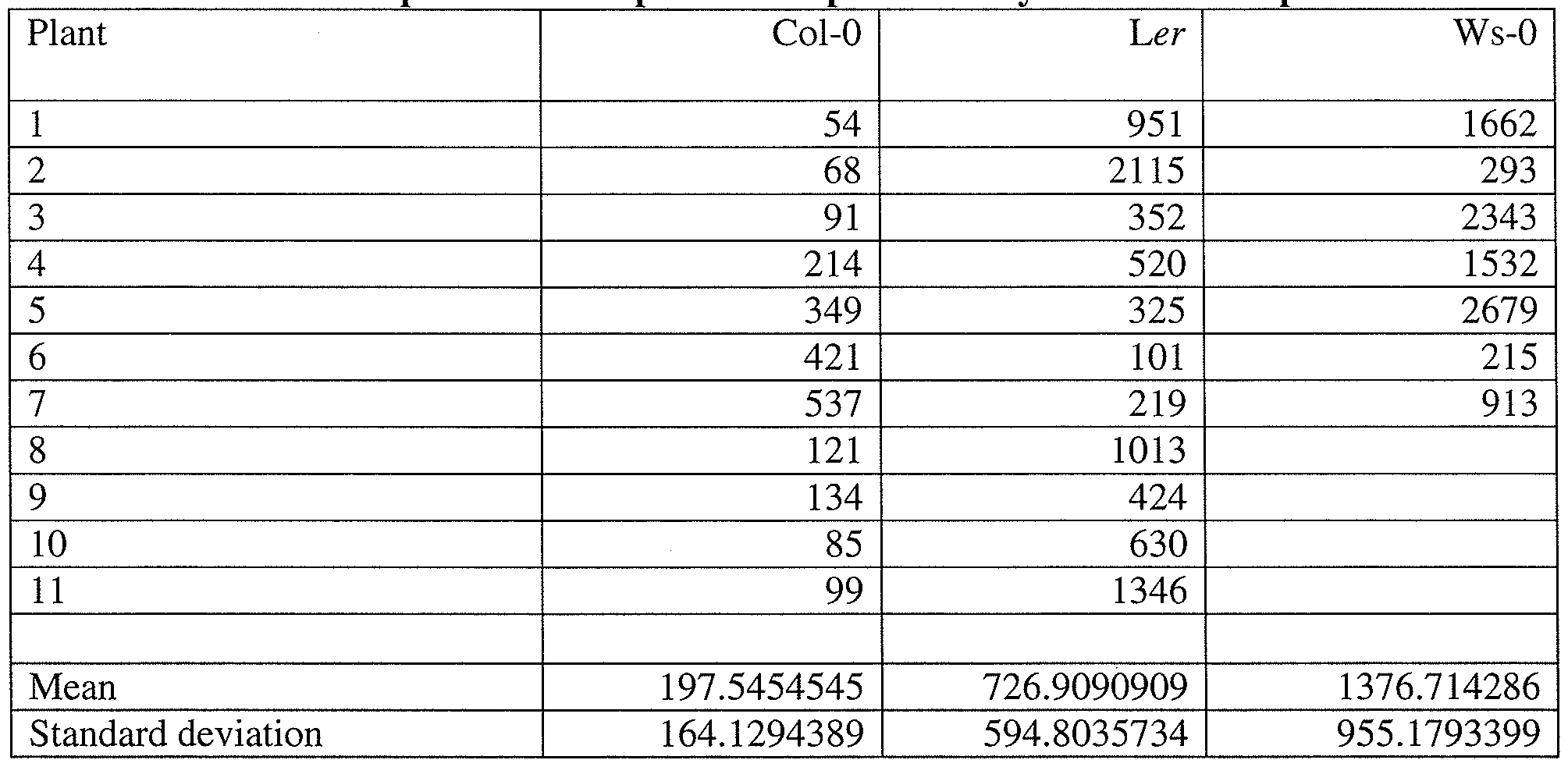

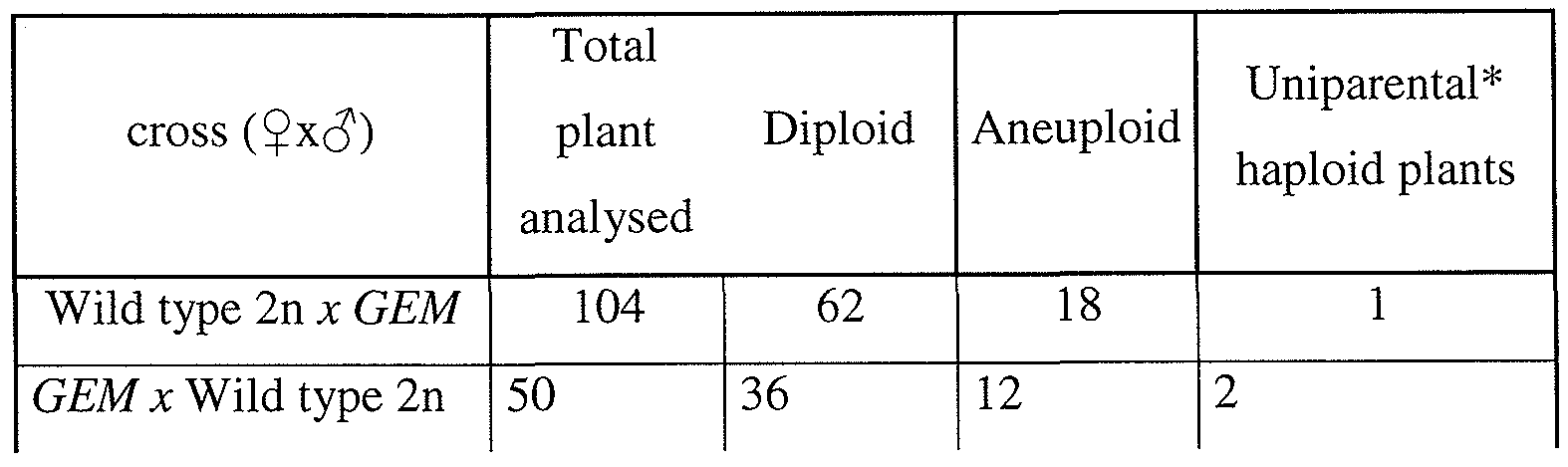
Claims
Priority Applications (10)
| Application Number | Priority Date | Filing Date | Title |
|---|---|---|---|
| MX2012003981A MX2012003981A (en) | 2009-10-06 | 2010-10-05 | Generation of haploid plants and improved plant breeding. |
| AU2010303635A AU2010303635B2 (en) | 2009-10-06 | 2010-10-05 | Generation of haploid plants and improved plant breeding |
| ES10822533T ES2774722T3 (en) | 2009-10-06 | 2010-10-05 | Haploid plant generation and improved plant breeding |
| RU2012118381/10A RU2571927C2 (en) | 2009-10-06 | 2010-10-05 | Generation of haploid plants and improved plant breeding |
| EP19177524.6A EP3560951B1 (en) | 2009-10-06 | 2010-10-05 | Generation of haploid plants and improved plant breeding |
| CA2774941A CA2774941C (en) | 2009-10-06 | 2010-10-05 | Generation of haploid plants and improved plant breeding |
| MX2016007969A MX349747B (en) | 2009-10-06 | 2010-10-05 | Generation of haploid plants and improved plant breeding. |
| BR112012007692-2A BR112012007692B1 (en) | 2009-10-06 | 2010-10-05 | POLYPEPTIDE, AND, METHOD FOR GENERATING AN F1 PROGENY PLANT HAVING HALF THE PLOIDY OF A PRECURSOR PLANT |
| EP10822533.5A EP2486135B1 (en) | 2009-10-06 | 2010-10-05 | Generation of haploid plants and improved plant breeding |
| AU2015200432A AU2015200432B2 (en) | 2009-10-06 | 2015-01-29 | Generation of haploid plants and improved plant breeding |
Applications Claiming Priority (2)
| Application Number | Priority Date | Filing Date | Title |
|---|---|---|---|
| US24899609P | 2009-10-06 | 2009-10-06 | |
| US61/248,996 | 2009-10-06 |
Publications (1)
| Publication Number | Publication Date |
|---|---|
| WO2011044132A1 true WO2011044132A1 (en) | 2011-04-14 |
Family
ID=43824181
Family Applications (1)
| Application Number | Title | Priority Date | Filing Date |
|---|---|---|---|
| PCT/US2010/051483 Ceased WO2011044132A1 (en) | 2009-10-06 | 2010-10-05 | Generation of haploid plants and improved plant breeding |
Country Status (9)
| Country | Link |
|---|---|
| US (4) | US8618354B2 (en) |
| EP (2) | EP3560951B1 (en) |
| AU (1) | AU2010303635B2 (en) |
| CA (2) | CA2774941C (en) |
| CL (1) | CL2012000877A1 (en) |
| ES (2) | ES2974294T3 (en) |
| MX (3) | MX349747B (en) |
| RU (1) | RU2571927C2 (en) |
| WO (1) | WO2011044132A1 (en) |
Cited By (19)
| Publication number | Priority date | Publication date | Assignee | Title |
|---|---|---|---|---|
| WO2012142311A1 (en) * | 2011-04-15 | 2012-10-18 | Pioneer Hi-Bred International, Inc. | Self-reproducing hybrid plants |
| EP2554045A1 (en) | 2011-08-04 | 2013-02-06 | Rijk Zwaan Zaadteelt en Zaadhandel B.V. | Method for systemically influencing processes in the male meiocyte |
| EP2574234A1 (en) | 2011-09-29 | 2013-04-03 | Rijk Zwaan Zaadteelt en Zaadhandel B.V. | Quartet breeding |
| EP2679089A1 (en) | 2012-06-29 | 2014-01-01 | Rijk Zwaan Zaadteelt en Zaadhandel B.V. | Line design |
| US9006515B2 (en) | 2012-01-06 | 2015-04-14 | Pioneer Hi Bred International Inc | Pollen preferred promoters and methods of use |
| WO2015066011A3 (en) * | 2013-10-29 | 2015-07-16 | Pioneer Hi-Bred International, Inc. | Self-reproducing hybrid plants |
| WO2016005467A1 (en) | 2014-07-08 | 2016-01-14 | Rijk Zwaan Zaadteelt En Zaadhandel B.V. | Method for making chromosome substitution libraries |
| EP2989889A1 (en) * | 2014-08-28 | 2016-03-02 | Kws Saat Se | Generation of haploid plants |
| WO2016030019A1 (en) * | 2014-08-28 | 2016-03-03 | Kws Saat Se | Generation of haploid plants |
| WO2016075255A1 (en) * | 2014-11-12 | 2016-05-19 | Kws Saat Se | Haploid inducers |
| EP3037540A1 (en) * | 2014-12-23 | 2016-06-29 | Kws Saat Se | Haploid inducer |
| WO2017058022A1 (en) | 2015-10-02 | 2017-04-06 | Keygene N.V. | Method for the production of haploid and subsequent doubled haploid plants |
| WO2017058023A1 (en) | 2015-10-02 | 2017-04-06 | Keygene N.V. | Method for the production of haploid and subsequent doubled haploid plants |
| WO2017081011A1 (en) | 2015-11-09 | 2017-05-18 | Rijk Zwaan Zaadteelt En Zaadhandel B.V. | Non-transgenic haploid inducer lines in cucurbits |
| WO2017081009A1 (en) * | 2015-11-09 | 2017-05-18 | Rijk Zwaan Zaadteelt En Zaadhandel B.V. | Non-transgenic haploid inducer lines in cucurbits |
| WO2017200386A1 (en) | 2016-05-20 | 2017-11-23 | Keygene N.V. | Method for the production of haploid and subsequent doubled haploid plants |
| EP3512329A4 (en) * | 2016-09-14 | 2020-03-04 | Monsanto Technology LLC | HAPLOID INDUCTION GENOMIC EDITING METHODS AND COMPOSITIONS |
| RU2788349C2 (en) * | 2016-12-02 | 2023-01-17 | Зингента Партисипейшнс Аг | Simultaneous gene editing and haploid induction |
| US12195737B2 (en) | 2016-12-02 | 2025-01-14 | Syngenta Crop Protection Ag | Simultaneous gene editing and haploid induction |
Families Citing this family (24)
| Publication number | Priority date | Publication date | Assignee | Title |
|---|---|---|---|---|
| MX349747B (en) | 2009-10-06 | 2017-08-09 | Univ California | Generation of haploid plants and improved plant breeding. |
| BR112014030281A2 (en) * | 2012-06-07 | 2017-09-12 | Futuragene Israel Ltd | transgenic plant, and methods of co-cultivating plants, developing a plant in shaded condition, and increasing the nitrogen level in soil |
| WO2014110274A2 (en) * | 2013-01-09 | 2014-07-17 | Regents Of The University Of California A California Corporation | Generation of haploid plants |
| CN104335889B (en) * | 2013-07-24 | 2016-03-02 | 中国农业大学 | The haploid method of inducing maize |
| CN104342450B (en) * | 2013-07-24 | 2017-08-25 | 中国农业大学 | The method for cultivating corn haploid induction line of the corn haploid-induction higher than corn haploid induction line CAU5 |
| US20160192608A1 (en) * | 2014-01-23 | 2016-07-07 | The Board Of Regents Of The University Of Nebraska | Epigenetically Enhanced Double Haploids |
| WO2015168158A1 (en) * | 2014-04-28 | 2015-11-05 | Fredy Altpeter | Targeted genome editing to modify lignin biosynthesis and cell wall composition |
| US20180116141A1 (en) * | 2015-02-24 | 2018-05-03 | The Regents Of The University Of California | Haploid induction |
| EP3159413A1 (en) | 2015-10-22 | 2017-04-26 | Leibniz-Institut für Pflanzengenetik und Kulturpflanzenforschung (IPK); OT Gatersleben | Generation of haploid plants based on knl2 |
| CA3016487A1 (en) | 2016-03-18 | 2017-09-21 | Marc C. Albertsen | Methods and compositions for producing clonal, non-reduced, non-recombined gametes |
| WO2018015389A1 (en) * | 2016-07-18 | 2018-01-25 | University Of Bremen | Method of generating polyploid plants |
| US11447787B2 (en) | 2017-04-10 | 2022-09-20 | The Regents Of The University Of California | Generation of haploid plants |
| US11155825B2 (en) | 2017-10-05 | 2021-10-26 | Iowa State University Research Foundation, Inc. | Methods and compositions for generating doubled haploid plants and use of same in breeding |
| US20200340009A1 (en) * | 2018-01-08 | 2020-10-29 | The Regents Of The University Of California | Cenh3 deletion mutants |
| CN111394386A (en) | 2018-04-12 | 2020-07-10 | 中国水稻研究所 | A method for exploiting plant heterosis |
| MX2021011836A (en) | 2019-04-01 | 2021-10-22 | Syngenta Crop Protection Ag | INCREASE IN THE TRANSFORMABILITY OF PLANTS BY CYTOTYPE TRANSFER. |
| MX2021014861A (en) | 2019-06-25 | 2022-06-22 | Inari Agriculture Tech Inc | Improved homology dependent repair genome editing. |
| US11746354B2 (en) | 2019-07-19 | 2023-09-05 | Inari Agriculture Technology, Inc. | Homology dependent repair genome editing |
| PE20230080A1 (en) * | 2020-05-29 | 2023-01-11 | Kws Saat Se And Co Kgaa | INDUCTION OF HAPLOIDS IN PLANTS |
| AU2021286555B2 (en) * | 2020-06-09 | 2025-04-03 | Cold Spring Harbor Laboratory | Heterozygous CENH3 monocots and methods of use thereof for haploid induction and simultaneous genome editing |
| EP4525602A1 (en) | 2022-05-19 | 2025-03-26 | Leibniz-Institut für Pflanzengenetik und Kulturpflanzenforschung (IPK) | Generation of haploid plants based on novel knl2 |
| US12533523B2 (en) | 2022-10-07 | 2026-01-27 | Greatbatch Ltd. | High-voltage electrically insulating designs for use in active implantable medical devices |
| US12246183B1 (en) | 2023-10-06 | 2025-03-11 | Greatbatch Ltd. | Self-centering polymeric washer that prevents misalignment when positioned between a feedthrough and a circuit board supporting EMI filter capacitors for a medical device |
| WO2025078496A1 (en) * | 2023-10-12 | 2025-04-17 | KWS SAAT SE & Co. KGaA | In vivo haploid inducer for sunflower |
Citations (11)
| Publication number | Priority date | Publication date | Assignee | Title |
|---|---|---|---|---|
| US4801340A (en) | 1986-06-12 | 1989-01-31 | Namiki Precision Jewel Co., Ltd. | Method for manufacturing permanent magnets |
| US5034323A (en) | 1989-03-30 | 1991-07-23 | Dna Plant Technology Corporation | Genetic engineering of novel plant phenotypes |
| US5231020A (en) | 1989-03-30 | 1993-07-27 | Dna Plant Technology Corporation | Genetic engineering of novel plant phenotypes |
| US5770788A (en) | 1990-04-23 | 1998-06-23 | Jia; Xu | Inducing chromosome doubling in anther culture in maize |
| US20030221211A1 (en) | 2002-01-30 | 2003-11-27 | Arborgen, Llc | Methods of suppressing gene expression |
| US20040029283A1 (en) | 2002-06-21 | 2004-02-12 | Fillatti Joanne J. | Intron double stranded RNA constructs and uses thereof |
| US20040210959A1 (en) | 2003-03-19 | 2004-10-21 | Monsanto Technology Llc | A Novel Method for Production of Transformed Dihaploid Corn Plants |
| US20050289673A1 (en) | 2004-06-25 | 2005-12-29 | Monsanto Technology Llc | A Novel Method for Agrobacterium Transformation for Dihaploid Corn Plants |
| US7135615B2 (en) | 2001-06-05 | 2006-11-14 | The Curators Of The University Of Missouri | Chromosome doubling method |
| US20080313773A1 (en) | 2007-05-14 | 2008-12-18 | The Rockefeller University | Production of artificial micrornas using synthetic microrna precursors |
| US20090144849A1 (en) * | 2002-02-11 | 2009-06-04 | Lutfiyya Linda L | Nucleic acid molecules and other molecules associated with transcription in plants |
Family Cites Families (6)
| Publication number | Priority date | Publication date | Assignee | Title |
|---|---|---|---|---|
| GB9313975D0 (en) * | 1993-07-06 | 1993-08-18 | Sandoz Ltd | Improvements in or relating to organic compounds |
| US5749169A (en) | 1995-06-07 | 1998-05-12 | Pioneer Hi-Bred International, Inc. | Use of the indeterminate gametophyte gene for maize improvement |
| US8030556B2 (en) | 2008-07-17 | 2011-10-04 | Pioneer Hi-Bred International, Inc. | Highly transformable elite doubled haploid line PH17AW |
| EP2208790A1 (en) | 2009-01-07 | 2010-07-21 | Institut National De La Recherche Agronomique (I.N.R.A.) | Plants producing 2N gametes or apomeiotic gametes |
| MX349747B (en) | 2009-10-06 | 2017-08-09 | Univ California | Generation of haploid plants and improved plant breeding. |
| EP2645845A4 (en) | 2010-12-01 | 2014-11-05 | Agronomique Inst Nat Rech | SYNTHETIC CLONAL REPRODUCTION THROUGH SEEDS |
-
2010
- 2010-10-05 MX MX2016007969A patent/MX349747B/en unknown
- 2010-10-05 WO PCT/US2010/051483 patent/WO2011044132A1/en not_active Ceased
- 2010-10-05 CA CA2774941A patent/CA2774941C/en active Active
- 2010-10-05 EP EP19177524.6A patent/EP3560951B1/en active Active
- 2010-10-05 AU AU2010303635A patent/AU2010303635B2/en active Active
- 2010-10-05 MX MX2012003981A patent/MX2012003981A/en active IP Right Grant
- 2010-10-05 EP EP10822533.5A patent/EP2486135B1/en active Active
- 2010-10-05 ES ES19177524T patent/ES2974294T3/en active Active
- 2010-10-05 CA CA3175800A patent/CA3175800A1/en active Pending
- 2010-10-05 US US12/898,216 patent/US8618354B2/en active Active
- 2010-10-05 ES ES10822533T patent/ES2774722T3/en active Active
- 2010-10-05 RU RU2012118381/10A patent/RU2571927C2/en active
-
2012
- 2012-04-02 MX MX2015007052A patent/MX339939B/en unknown
- 2012-04-05 CL CL2012000877A patent/CL2012000877A1/en unknown
-
2013
- 2013-11-22 US US14/088,065 patent/US9215849B2/en active Active
-
2015
- 2015-11-12 US US14/939,181 patent/US10306848B2/en active Active
-
2019
- 2019-04-16 US US16/385,982 patent/US10912264B2/en active Active
Patent Citations (12)
| Publication number | Priority date | Publication date | Assignee | Title |
|---|---|---|---|---|
| US4801340A (en) | 1986-06-12 | 1989-01-31 | Namiki Precision Jewel Co., Ltd. | Method for manufacturing permanent magnets |
| US5034323A (en) | 1989-03-30 | 1991-07-23 | Dna Plant Technology Corporation | Genetic engineering of novel plant phenotypes |
| US5231020A (en) | 1989-03-30 | 1993-07-27 | Dna Plant Technology Corporation | Genetic engineering of novel plant phenotypes |
| US5283184A (en) | 1989-03-30 | 1994-02-01 | Dna Plant Technology Corporation | Genetic engineering of novel plant phenotypes |
| US5770788A (en) | 1990-04-23 | 1998-06-23 | Jia; Xu | Inducing chromosome doubling in anther culture in maize |
| US7135615B2 (en) | 2001-06-05 | 2006-11-14 | The Curators Of The University Of Missouri | Chromosome doubling method |
| US20030221211A1 (en) | 2002-01-30 | 2003-11-27 | Arborgen, Llc | Methods of suppressing gene expression |
| US20090144849A1 (en) * | 2002-02-11 | 2009-06-04 | Lutfiyya Linda L | Nucleic acid molecules and other molecules associated with transcription in plants |
| US20040029283A1 (en) | 2002-06-21 | 2004-02-12 | Fillatti Joanne J. | Intron double stranded RNA constructs and uses thereof |
| US20040210959A1 (en) | 2003-03-19 | 2004-10-21 | Monsanto Technology Llc | A Novel Method for Production of Transformed Dihaploid Corn Plants |
| US20050289673A1 (en) | 2004-06-25 | 2005-12-29 | Monsanto Technology Llc | A Novel Method for Agrobacterium Transformation for Dihaploid Corn Plants |
| US20080313773A1 (en) | 2007-05-14 | 2008-12-18 | The Rockefeller University | Production of artificial micrornas using synthetic microrna precursors |
Non-Patent Citations (110)
| Title |
|---|
| "Current Protocols in Molecular Biology", vol. 1-3, 1994, JOHN WILEY & SONS, INC |
| "Generating of rice OsCENH3-GFP transgenic plants and their genetic applications", CHINESE SCIENCE BULL, vol. 53, no. 19, 2008, pages 2981 - 2988, XP008155582 * |
| "Handbook of Experimental Immunology", vol. I-IV, 1986, BLACKWELL SCIENTIFIC PUBLICATIONS |
| "Methods In Enzymology", ACADEMIC PRESS, INC. |
| "Molecular Biology Techniques: An Intensive Laboratory Course", 1998, ACADEMIC PRESS |
| "Molecular Cloning: A Laboratory Manual", vol. I-III, 1989, COLD SPRING HARBOR LABORATORY PRESS |
| "PCR (Introduction to Biotechniques Series", 1997, SPRINGER VERLAG |
| "Remington's Pharmaceutical Sciences", 1990, MACK PUBLISHING CO. |
| "Short Protocols in Molecular Biology", 1999, JOHN WILEY & SONS |
| "The Pharmacological Basis of Therapeutics", 2001, MCGRAW-HILL |
| "Uniprot reference: A4PIF4_LEPVR", 15 May 2007 (2007-05-15), XP008154697, Retrieved from the Internet <URL:http://www.genome.jp/dbget-bin/www_bget?uniprot:A4PIF4 LEPVR> [retrieved on 20101123] * |
| ALTSCHUL ET AL., J. MOL. BIOL., vol. 215, 1990, pages 403 - 410 |
| ALTSCHUL ET AL., NUC. ACIDS RES., vol. 25, 1977, pages 3389 - 3402 |
| ANTOINE-MICHARD, S. ET AL.: "Plant Cell, Tissue Organ Cult.", vol. 48, 1997, NETHERLANDS, KLUWER ACADEMIC PUBLISHERS, pages: 203 - 207 |
| AVETISOV, V. A., GENETIKA, vol. 12, 1976, pages 17 - 25 |
| BAINS, G. S.; HOWARD, H. W., NATURE, vol. 166, 1950, pages 795 |
| BARCLAY, 1. R., NATURE, vol. 256, 1975, pages 410 - 411 |
| BENNETT, M. D. ET AL., CHROMOSOMA, vol. 54, 1976, pages 175 - 200 |
| BINDING: "Regeneration of Plants, Plant Protoplasts", 1985, CRC PRESS, pages: 21 - 73 |
| BLACK ET AL., CURR OPIN CELL BIOL., vol. 20, no. 1, 2008, pages 91 - 100 |
| BRUMMELKAMP ET AL., SCIENCE, vol. 296, 2002, pages 550 - 553 |
| BURK, L. G. ET AL., SCIENCE, vol. 206, 1979, pages 585 |
| BUSHELL, C. ET AL., PLANT CELL, vol. 15, 2003, pages 1430 - 42 |
| CHASE, S. S., BOTANICAL REVIEW, vol. 35, 1969, pages 117 - 167 |
| CHUANG, C. F.; MEYEROWITZ, E. M., PROC. NATL. ACAD. SCI. USA, vol. 97, 2000, pages 4985 |
| CLAUSEN, R. E.; MANN, M. C., PROC NATL ACAD SCI USA, vol. 10, 1924, pages 121 - 124 |
| COE, E. H., AMERICAN NATURALIST, vol. 93, 1959, pages 381 - 382 |
| COMAI, L.; HENIKOFF, S., PLANT J, vol. 45, 2006, pages 684 - 94 |
| COOPER ET AL., MOL BIOL EVOL., vol. 21, no. 9, 2004, pages 1712 - 8 |
| DAGLESS, ARCH. VIROL., vol. 142, 1997, pages 183 - 191 |
| DUNWELL, J. M., PLANT BIOTECHNOL J |
| EVANS ET AL.: "Protoplasts Isolation and Culture, Handbook of Plant Cell Culture", 1983, MACMILLILAN PUBLISHING COMPANY, pages: 124 - 176 |
| EVANS, M. M., PLANT CELL, vol. 19, 2007, pages 46 - 62 |
| FINCH, R. A., CHROMOSOMA, vol. 88, 1983, pages 386 - 393 |
| FIRE ET AL., NATURE, vol. 391, 1998, pages 806 - 811 |
| FLAVELL, PROC. NATL. ACAD. SCI., USA, vol. 91, 1994, pages 3490 - 3496 |
| FORSTER, B. P. ET AL., TRENDS PLANT SCI, vol. 12, 2007, pages 368 - 75 |
| FORSTER, B. P.; THOMAS, W. T. B.: "Plant Breeding Reviews", 2005, JOHN WILEY & SONS, INC., pages: 57 - 88 |
| FRALEY ET AL., PROC. NATL. ACAD. SCI. USA, vol. 80, 1983, pages 4803 |
| FRANCIS, K. E. ET AL., PLANT PHYSIOL, vol. 142, 2006, pages 1004 - 13 |
| FROMM ET AL., PROC. NATL. ACAD. SCI. USA, vol. 82, 1985, pages 5824 |
| GREWAL; KLAR, GENETICS, vol. 146, 1997, pages 1221 - 1238 |
| GUHA, S.; MAHESHWARI, S. C., NATURE, vol. 204, 1964, pages 497 |
| HAGBERG, A.; HAGBERG, G., HEREDITAS, vol. 93, 1980, pages 341 - 343 |
| HAMMOND ET AL., NATURE REV GEN, vol. 2, 2001, pages 110 - 119 |
| HASELOFF ET AL., NATURE, vol. 334, 1988, pages 585 - 591 |
| HENIKOFF, S. ET AL., SCIENCE, vol. 293, 2001, pages 1098 - 102 |
| HENIKOFF, S.; DALAL, Y., CURR OPIN GENET DEV, vol. 15, 2005, pages 177 - 84 |
| HENIKOFF; HENIKOFF, PROC. NATL. ACAD. SCI. USA, vol. 89, 1989, pages 10915 |
| HENRY, I. M. ET AL., GENETICS, vol. 170, 2005, pages 1979 - 88 |
| HEPPICH, S. ET AL., THEOR APPL GENET, vol. 61, 1982, pages 101 - 104 |
| HOLTORF: "Comparison of different constitutive and inducible promoters for the overexpression of transgenes in Arabidopsis thaliana", PLANT MOL. BIOL., vol. 29, 1995, pages 637 - 646, XP002036874, DOI: doi:10.1007/BF00041155 |
| HORSCH ET AL., SCIENCE, vol. 233, 1984, pages 496 - 498 |
| HOUGAS, H. W.; PELOQUIN, S. J., NATURE, vol. 180, 1957, pages 1209 - 1210 |
| HUANG ET AL., PLANT MOL. BIOL., vol. 33, 1996, pages 125 - 139 |
| HUANG, PLANT MOL. BIOL., vol. 33, 1997, pages 125 - 139 |
| JAUHAR, P. P. ET AL., CROP SCIENCE, vol. 40, 2000, pages 1742 - 1749 |
| JIN, W. ET AL., PLANT CELL, vol. 16, 2004, pages 571 - 81 |
| JOSEFSSON, C. ET AL., CURR BIOL, vol. 16, 2006, pages 1322 - 8 |
| KARLIN; ALTSCHUL, PROC. NATL. ACAD. SCI. USA, vol. 90, 1993, pages 5873 - 5787 |
| KASHA, K. J.; KAO, K. N., NATURE, vol. 225, 1970, pages 874 - 6 |
| KATO, A., MAIZE GENETICS COOPERATION NEWSLETTER, 1997, pages 36 - 37 |
| KEMPIN ET AL., NATURE, vol. 389, 1997, pages 802 - 803 |
| KERMICLE, J. L., SCIENCE, vol. 166, 1969, pages 1422 - 1424 |
| KLEE ET AL., ANN. REV. OF PLANT PHYS., vol. 38, 1987, pages 467 - 486 |
| KLEIN ET AL., NATURE, vol. 327, 1987, pages 70 - 73 |
| KOOTER; MOL, CURRENT OPIN. BIOL., vol. 4, 1993, pages 166 - 171 |
| LAURIE, D. A.; BENNETT, M. D., GENOME, vol. 32, 1989, pages 953 - 961 |
| LERMONTOVA ET AL.: "Loading of Arabidopsis Centromeric Histone CENH3 Occurs Mainly during G2 and Requires the Presence of the Histone Fold Domain", PLANT CELL, vol. 18, no. 10, 2006, pages 2443 - 2451, XP008154698 * |
| LI ET AL.: "Fused sister kinetochores initiate the reductional division in meiosis I", NATURE CELL BIOL, vol. 11, no. 9, 16 August 2009 (2009-08-16), pages 1103 - 1108, PG 1104, XP008154684 * |
| LU ET AL., NUCLEIC ACIDS RESEARCH, vol. 32, no. 21, 2004, pages E171 |
| LUGER ET AL., NATURE, vol. 389, no. 6648, 1997, pages 251 - 60 |
| MAITI, TRANSGENIC RES., vol. 6, 1997, pages 143 - 156 |
| MALIK ET AL., NAT STRUCT BIOL., vol. 10, no. 11, 2003, pages 882 - 91 |
| MANJUNATH ET AL., PLANT MOL. BIOL., vol. 33, 1997, pages 97 - 112 |
| MARTINEZ ET AL., J. MOL. BIOL., vol. 208, 1989, pages 551 - 565 |
| MATTHEW, COMP FUNCT. GENOM., vol. 5, 2004, pages 240 - 244 |
| MILLAR, PLANT MOL. BIOL., vol. 31, 1996, pages 897 - 904 |
| MOUNTFORD ET AL., PROC. NATL. ACAD. SCI. USA, vol. 91, 1994, pages 4303 - 4307 |
| NAGAKI ET AL.: "Sequencing of a rice centromere uncovers active genes", NAT GENET, vol. 36, 2004, pages PG 138 - 145. PG 138, XP008154690 * |
| NAPOLI ET AL., THE PLANT CELL, vol. 2, 1990, pages 279 - 289 |
| NORRIS ET AL., PLANT MOL. BIOL., vol. 21, 1993, pages 895 |
| OFFRINGA ET AL., PROC. NATL. ACAD. SCI. USA, vol. 90, 1993, pages 7346 - 7350 |
| O'GRADY, PLANT MOL. BIOL., vol. 29, 1995, pages 99 - 108 |
| ORI, N. ET AL., DEVELOPMENT, vol. 127, 2000, pages 5523 - 32 |
| PADDISON ET AL., GENES & DEV., vol. 16, 2002, pages 948 - 958 |
| PASZKOWSKI ET AL., EMBO J., vol. 3, 1984, pages 2717 - 2722 |
| PAUL, W. ET AL., PLANT MOL BIOL, vol. 19, 1992, pages 611 - 22 |
| PNUELI ET AL., THE PLANT CELL, vol. 6, 1994, pages 175 - 186 |
| PUCHTA ET AL., EXPERIENTIA, vol. 50, 1994, pages 277 - 284 |
| ROSS, K. J. ET AL., CHROMOSOME RES, vol. 4, 1996, pages 507 - 16 |
| SAMBROOK ET AL.: "Molecular Cloning - A Laboratory Manual", 1989, COLD SPRING HARBOR LABORATORY |
| SCHOLL, R.; AMOS, J. A., ZPFLANZENPHYSIOL, vol. 96, 1980, pages 407 - 414 |
| SCHWAB ET AL., THE PLANT CELL, vol. 18, 2006, pages 1121 - 1133 |
| SHEEHY ET AL., PROC. NAT. ACAD. SCI. USA, vol. 85, 1988, pages 8805 - 8809 |
| SIKORSKI ET AL., METH. ENZYMOL., vol. 194, 1991, pages 302 - 318 |
| SOLOCOMBE ET AL., PLANT PHYSIOL., vol. 104, 1994, pages 1167 - 1176 |
| SWOBODA ET AL., EMBO J., vol. 13, 1994, pages 484 - 489 |
| TABARA ET AL., SCIENCE, vol. 282, 1998, pages 430 - 431 |
| TALBERT, P. B. ET AL., PLANT CELL, vol. 14, 2002, pages 1053 - 66 |
| TIMMONS; FIRE, NATURE, vol. 395, 1998, pages 854 |
| UDALL, J. A.; WENDEL, J. F., CROP SCI, vol. 46, 2006, pages S3 - S14 |
| VAULONT ET AL., TRANSGENIC RES., vol. 4, 1995, pages 247 - 255 |
| WAN, Y. ET AL., TRENDS GENETICS, vol. 77, 1989, pages 889 - 892 |
| WAN, Y. ET AL., TRENDS GENETICS, vol. 81, 1991, pages 205 - 211 |
| WATERHOUSE ET AL., PROC. NATL. ACAD. SCI. USA, vol. 95, 1998, pages 13959 - 13964 |
| WEDZONY, M. ET AL.: "Advances in Haploid Production in Higher Plants", 2009, SPRINGER, pages: 1 - 33 |
| WEISING ET AL., ANN. REV. GENET., vol. 22, 1988, pages 421 - 477 |
| XU ET AL., GENES DEV., vol. 10, 1996, pages 2411 - 2422 |
| ZHONG ET AL., MOL. GEN. GENET., vol. 251, 1996, pages 196 - 203 |
Cited By (58)
| Publication number | Priority date | Publication date | Assignee | Title |
|---|---|---|---|---|
| CN103597080A (en) * | 2011-04-15 | 2014-02-19 | 先锋国际良种公司 | self-propagating hybrid plants |
| WO2012142311A1 (en) * | 2011-04-15 | 2012-10-18 | Pioneer Hi-Bred International, Inc. | Self-reproducing hybrid plants |
| CN103597080B (en) * | 2011-04-15 | 2017-07-21 | 先锋国际良种公司 | self-propagating hybrid plants |
| EP2554045A1 (en) | 2011-08-04 | 2013-02-06 | Rijk Zwaan Zaadteelt en Zaadhandel B.V. | Method for systemically influencing processes in the male meiocyte |
| WO2013017683A1 (en) | 2011-08-04 | 2013-02-07 | Rijk Zwaan Zaadteelt En Zaadhandel B.V | Method for systemically influencing processes in the male meiocyte |
| CN103957698A (en) * | 2011-09-29 | 2014-07-30 | 瑞克斯旺种苗集团公司 | quadruple breeding |
| WO2013045616A1 (en) | 2011-09-29 | 2013-04-04 | Rijk Zwaan Zaadteelt En Zaadhandel B.V. | Quartet breeding |
| EP2574234A1 (en) | 2011-09-29 | 2013-04-03 | Rijk Zwaan Zaadteelt en Zaadhandel B.V. | Quartet breeding |
| US9750205B2 (en) | 2011-09-29 | 2017-09-05 | Rijk Zwaan Zaadteelt En Zaadhandel B.V. | Quartet breeding |
| US9006515B2 (en) | 2012-01-06 | 2015-04-14 | Pioneer Hi Bred International Inc | Pollen preferred promoters and methods of use |
| WO2014001467A1 (en) | 2012-06-29 | 2014-01-03 | Rijk Zwaan Zaadteelt En Zaadhandel B.V. | Line design |
| EP2679089A1 (en) | 2012-06-29 | 2014-01-01 | Rijk Zwaan Zaadteelt en Zaadhandel B.V. | Line design |
| CN104411158A (en) * | 2012-06-29 | 2015-03-11 | 瑞克斯旺种苗集团公司 | Line design |
| US10785929B2 (en) | 2012-06-29 | 2020-09-29 | Rijk Zwaan Zaadteelt En Zaadhandel B.V. | Line design |
| WO2015066011A3 (en) * | 2013-10-29 | 2015-07-16 | Pioneer Hi-Bred International, Inc. | Self-reproducing hybrid plants |
| WO2016005467A1 (en) | 2014-07-08 | 2016-01-14 | Rijk Zwaan Zaadteelt En Zaadhandel B.V. | Method for making chromosome substitution libraries |
| US11895960B2 (en) | 2014-08-28 | 2024-02-13 | KWS SAAT SE & Co. KGaA | Generation of haploid plants |
| EA037899B1 (en) * | 2014-08-28 | 2021-06-03 | Квс Заат Се | Generation of haploid plants |
| US10993391B2 (en) | 2014-08-28 | 2021-05-04 | KWS SAAT SE & Co. KGaA | Generation of haploid plants |
| EP2989889A1 (en) * | 2014-08-28 | 2016-03-02 | Kws Saat Se | Generation of haploid plants |
| WO2016030019A1 (en) * | 2014-08-28 | 2016-03-03 | Kws Saat Se | Generation of haploid plants |
| CN106998665B (en) * | 2014-08-28 | 2024-02-27 | Kws种子欧洲股份公司 | The production of haploid plants |
| CN106998665A (en) * | 2014-08-28 | 2017-08-01 | Kws种子欧洲股份公司 | The generation of haplophyte |
| WO2016075255A1 (en) * | 2014-11-12 | 2016-05-19 | Kws Saat Se | Haploid inducers |
| US10631482B2 (en) | 2014-11-12 | 2020-04-28 | KWS SAAT SE & Co. KGaA | Haploid inducers |
| US20180139917A1 (en) * | 2014-12-23 | 2018-05-24 | Kws Saat Se | Generation of haploid plants |
| EP4144851A1 (en) * | 2014-12-23 | 2023-03-08 | KWS SAAT SE & Co. KGaA | Generation of haploid plants |
| AU2021225142B2 (en) * | 2014-12-23 | 2023-06-29 | KWS SAAT SE & Co. KGaA | Generation of haploid plants |
| EP3037540A1 (en) * | 2014-12-23 | 2016-06-29 | Kws Saat Se | Haploid inducer |
| US12102048B2 (en) | 2014-12-23 | 2024-10-01 | KWS SAAT SE & Co. KGaA | Generation of haploid plants |
| EP4144855A1 (en) * | 2014-12-23 | 2023-03-08 | KWS SAAT SE & Co. KGaA | Generation of haploid plants |
| EP4144852A1 (en) * | 2014-12-23 | 2023-03-08 | KWS SAAT SE & Co. KGaA | Generation of haploid plants |
| EP4144850A1 (en) * | 2014-12-23 | 2023-03-08 | KWS SAAT SE & Co. KGaA | Generation of haploid plants |
| EP4144854A1 (en) * | 2014-12-23 | 2023-03-08 | KWS SAAT SE & Co. KGaA | Generation of haploid plants |
| EP4141123A1 (en) * | 2014-12-23 | 2023-03-01 | KWS SAAT SE & Co. KGaA | Generation of haploid plants |
| US10844401B2 (en) | 2014-12-23 | 2020-11-24 | KWS SAAT SE & Co. KGaA | Generation of haploid plants |
| CN107205354A (en) * | 2014-12-23 | 2017-09-26 | Kws种子欧洲股份公司 | haploid inducer |
| EP4144853A1 (en) * | 2014-12-23 | 2023-03-08 | KWS SAAT SE & Co. KGaA | Generation of haploid plants |
| WO2016102665A3 (en) * | 2014-12-23 | 2017-03-16 | Kws Saat Se | Generation of haploid plants |
| AU2015370904B2 (en) * | 2014-12-23 | 2021-07-22 | KWS SAAT SE & Co. KGaA | Generation of haploid plants |
| EA039590B1 (en) * | 2014-12-23 | 2022-02-14 | Квс Заат Се | Haploid inducer |
| US10849289B2 (en) | 2015-10-02 | 2020-12-01 | Keygene N.V. | Method for the production of haploid and subsequent doubled haploid plants |
| US11279947B2 (en) | 2015-10-02 | 2022-03-22 | Keygene N.V. | Method for the production of haploid and subsequent doubled haploid plants |
| WO2017058022A1 (en) | 2015-10-02 | 2017-04-06 | Keygene N.V. | Method for the production of haploid and subsequent doubled haploid plants |
| US11576318B2 (en) | 2015-10-02 | 2023-02-14 | Keygene N.V. | Method for the production of haploid and subsequent doubled haploid plants |
| WO2017058023A1 (en) | 2015-10-02 | 2017-04-06 | Keygene N.V. | Method for the production of haploid and subsequent doubled haploid plants |
| CN108347893A (en) * | 2015-11-09 | 2018-07-31 | 瑞克斯旺种苗集团公司 | Non-transgenic haploid inducing line in Curcurbitaceae |
| CN108347892A (en) * | 2015-11-09 | 2018-07-31 | 瑞克斯旺种苗集团公司 | Non-transgenic haploid-inducible lines in Cucurbitaceae |
| NL2015752B1 (en) * | 2015-11-09 | 2017-05-26 | Rijk Zwaan Zaadteelt En Zaadhandel Bv | Non-transgenic haploid inducer lines in cucurbits. |
| WO2017081009A1 (en) * | 2015-11-09 | 2017-05-18 | Rijk Zwaan Zaadteelt En Zaadhandel B.V. | Non-transgenic haploid inducer lines in cucurbits |
| WO2017081011A1 (en) | 2015-11-09 | 2017-05-18 | Rijk Zwaan Zaadteelt En Zaadhandel B.V. | Non-transgenic haploid inducer lines in cucurbits |
| JP2019516373A (en) * | 2016-05-20 | 2019-06-20 | キージーン ナムローゼ フェンノートシャップ | Method of producing haploid and subsequent doubled haploid plants |
| WO2017200386A1 (en) | 2016-05-20 | 2017-11-23 | Keygene N.V. | Method for the production of haploid and subsequent doubled haploid plants |
| US11401524B2 (en) | 2016-09-14 | 2022-08-02 | Monsanto Technology, Llc | Methods and compositions for genome editing via haploid induction |
| EP3512329A4 (en) * | 2016-09-14 | 2020-03-04 | Monsanto Technology LLC | HAPLOID INDUCTION GENOMIC EDITING METHODS AND COMPOSITIONS |
| RU2788349C2 (en) * | 2016-12-02 | 2023-01-17 | Зингента Партисипейшнс Аг | Simultaneous gene editing and haploid induction |
| US12195737B2 (en) | 2016-12-02 | 2025-01-14 | Syngenta Crop Protection Ag | Simultaneous gene editing and haploid induction |
| RU2854455C2 (en) * | 2016-12-02 | 2026-01-13 | Зингента Партисипейшнс Аг | Simultaneous gene editing and haploid induction |
Also Published As
| Publication number | Publication date |
|---|---|
| RU2012118381A (en) | 2013-11-20 |
| US20140090099A1 (en) | 2014-03-27 |
| ES2974294T3 (en) | 2024-06-26 |
| RU2571927C2 (en) | 2015-12-27 |
| BR112012007692A2 (en) | 2017-05-09 |
| US8618354B2 (en) | 2013-12-31 |
| MX339939B (en) | 2016-06-17 |
| CA2774941C (en) | 2022-10-04 |
| CA2774941A1 (en) | 2011-04-14 |
| US20190343060A1 (en) | 2019-11-14 |
| CA3175800A1 (en) | 2011-04-14 |
| ES2774722T3 (en) | 2020-07-22 |
| US20110083202A1 (en) | 2011-04-07 |
| US20160057953A1 (en) | 2016-03-03 |
| US10306848B2 (en) | 2019-06-04 |
| CL2012000877A1 (en) | 2014-05-09 |
| EP2486135A1 (en) | 2012-08-15 |
| EP3560951B1 (en) | 2024-02-14 |
| EP2486135B1 (en) | 2020-01-08 |
| AU2010303635B2 (en) | 2014-10-30 |
| EP3560951A1 (en) | 2019-10-30 |
| MX2012003981A (en) | 2012-06-12 |
| US9215849B2 (en) | 2015-12-22 |
| US10912264B2 (en) | 2021-02-09 |
| MX349747B (en) | 2017-08-09 |
| EP2486135A4 (en) | 2013-09-18 |
| AU2010303635A1 (en) | 2012-04-19 |
Similar Documents
| Publication | Publication Date | Title |
|---|---|---|
| US10912264B2 (en) | Generation of haploid plants and improved plant breeding | |
| WO2014110274A2 (en) | Generation of haploid plants | |
| US11447787B2 (en) | Generation of haploid plants | |
| WO2016124918A1 (en) | Plants with increased seed size | |
| JP2003528601A (en) | LEAFYCOTYLEDON2 gene and use thereof | |
| US8878002B2 (en) | Nucleic acids and methods for producing seeds with a full diploid complement of the maternal genome in the embryo | |
| AU2001241600B2 (en) | Leafy cotyledon1 genes and their uses | |
| AU2015200432B2 (en) | Generation of haploid plants and improved plant breeding | |
| US7049488B2 (en) | Nucleic acids that control seed and fruit development in plants | |
| BR112012007692B1 (en) | POLYPEPTIDE, AND, METHOD FOR GENERATING AN F1 PROGENY PLANT HAVING HALF THE PLOIDY OF A PRECURSOR PLANT | |
| WO2013055867A1 (en) | Genes involved in stress response in plants | |
| MX2008007458A (en) | Nucleic acids and methods for producing seeds having a full diploid complement of the maternal genome in the embryo |
Legal Events
| Date | Code | Title | Description |
|---|---|---|---|
| 121 | Ep: the epo has been informed by wipo that ep was designated in this application |
Ref document number: 10822533 Country of ref document: EP Kind code of ref document: A1 |
|
| WWE | Wipo information: entry into national phase |
Ref document number: 2774941 Country of ref document: CA |
|
| WWE | Wipo information: entry into national phase |
Ref document number: 2010822533 Country of ref document: EP |
|
| WWE | Wipo information: entry into national phase |
Ref document number: 2010303635 Country of ref document: AU |
|
| WWE | Wipo information: entry into national phase |
Ref document number: MX/A/2012/003981 Country of ref document: MX |
|
| WWE | Wipo information: entry into national phase |
Ref document number: 2012000877 Country of ref document: CL |
|
| NENP | Non-entry into the national phase |
Ref country code: DE |
|
| ENP | Entry into the national phase |
Ref document number: 2010303635 Country of ref document: AU Date of ref document: 20101005 Kind code of ref document: A |
|
| WWE | Wipo information: entry into national phase |
Ref document number: 3766/DELNP/2012 Country of ref document: IN |
|
| WWE | Wipo information: entry into national phase |
Ref document number: 2012118381 Country of ref document: RU |
|
| REG | Reference to national code |
Ref country code: BR Ref legal event code: B01A Ref document number: 112012007692 Country of ref document: BR |
|
| ENP | Entry into the national phase |
Ref document number: 112012007692 Country of ref document: BR Kind code of ref document: A2 Effective date: 20120403 |