WO2009117821A1 - Compositions and methods related to silicon transport - Google Patents
Compositions and methods related to silicon transport Download PDFInfo
- Publication number
- WO2009117821A1 WO2009117821A1 PCT/CA2009/000373 CA2009000373W WO2009117821A1 WO 2009117821 A1 WO2009117821 A1 WO 2009117821A1 CA 2009000373 W CA2009000373 W CA 2009000373W WO 2009117821 A1 WO2009117821 A1 WO 2009117821A1
- Authority
- WO
- WIPO (PCT)
- Prior art keywords
- seq
- plant
- polynucleotide
- silicon
- cell
- Prior art date
- Legal status (The legal status is an assumption and is not a legal conclusion. Google has not performed a legal analysis and makes no representation as to the accuracy of the status listed.)
- Ceased
Links
Classifications
-
- C—CHEMISTRY; METALLURGY
- C12—BIOCHEMISTRY; BEER; SPIRITS; WINE; VINEGAR; MICROBIOLOGY; ENZYMOLOGY; MUTATION OR GENETIC ENGINEERING
- C12N—MICROORGANISMS OR ENZYMES; COMPOSITIONS THEREOF; PROPAGATING, PRESERVING, OR MAINTAINING MICROORGANISMS; MUTATION OR GENETIC ENGINEERING; CULTURE MEDIA
- C12N15/00—Mutation or genetic engineering; DNA or RNA concerning genetic engineering, vectors, e.g. plasmids, or their isolation, preparation or purification; Use of hosts therefor
- C12N15/09—Recombinant DNA-technology
- C12N15/63—Introduction of foreign genetic material using vectors; Vectors; Use of hosts therefor; Regulation of expression
- C12N15/79—Vectors or expression systems specially adapted for eukaryotic hosts
- C12N15/82—Vectors or expression systems specially adapted for eukaryotic hosts for plant cells, e.g. plant artificial chromosomes (PACs)
- C12N15/8241—Phenotypically and genetically modified plants via recombinant DNA technology
- C12N15/8261—Phenotypically and genetically modified plants via recombinant DNA technology with agronomic (input) traits, e.g. crop yield
- C12N15/8271—Phenotypically and genetically modified plants via recombinant DNA technology with agronomic (input) traits, e.g. crop yield for stress resistance, e.g. heavy metal resistance
- C12N15/8279—Phenotypically and genetically modified plants via recombinant DNA technology with agronomic (input) traits, e.g. crop yield for stress resistance, e.g. heavy metal resistance for biotic stress resistance, pathogen resistance, disease resistance
- C12N15/8282—Phenotypically and genetically modified plants via recombinant DNA technology with agronomic (input) traits, e.g. crop yield for stress resistance, e.g. heavy metal resistance for biotic stress resistance, pathogen resistance, disease resistance for fungal resistance
-
- C—CHEMISTRY; METALLURGY
- C07—ORGANIC CHEMISTRY
- C07K—PEPTIDES
- C07K14/00—Peptides having more than 20 amino acids; Gastrins; Somatostatins; Melanotropins; Derivatives thereof
- C07K14/415—Peptides having more than 20 amino acids; Gastrins; Somatostatins; Melanotropins; Derivatives thereof from plants
-
- C—CHEMISTRY; METALLURGY
- C12—BIOCHEMISTRY; BEER; SPIRITS; WINE; VINEGAR; MICROBIOLOGY; ENZYMOLOGY; MUTATION OR GENETIC ENGINEERING
- C12N—MICROORGANISMS OR ENZYMES; COMPOSITIONS THEREOF; PROPAGATING, PRESERVING, OR MAINTAINING MICROORGANISMS; MUTATION OR GENETIC ENGINEERING; CULTURE MEDIA
- C12N15/00—Mutation or genetic engineering; DNA or RNA concerning genetic engineering, vectors, e.g. plasmids, or their isolation, preparation or purification; Use of hosts therefor
- C12N15/09—Recombinant DNA-technology
- C12N15/63—Introduction of foreign genetic material using vectors; Vectors; Use of hosts therefor; Regulation of expression
- C12N15/79—Vectors or expression systems specially adapted for eukaryotic hosts
- C12N15/82—Vectors or expression systems specially adapted for eukaryotic hosts for plant cells, e.g. plant artificial chromosomes (PACs)
- C12N15/8241—Phenotypically and genetically modified plants via recombinant DNA technology
- C12N15/8261—Phenotypically and genetically modified plants via recombinant DNA technology with agronomic (input) traits, e.g. crop yield
- C12N15/8271—Phenotypically and genetically modified plants via recombinant DNA technology with agronomic (input) traits, e.g. crop yield for stress resistance, e.g. heavy metal resistance
-
- C—CHEMISTRY; METALLURGY
- C12—BIOCHEMISTRY; BEER; SPIRITS; WINE; VINEGAR; MICROBIOLOGY; ENZYMOLOGY; MUTATION OR GENETIC ENGINEERING
- C12N—MICROORGANISMS OR ENZYMES; COMPOSITIONS THEREOF; PROPAGATING, PRESERVING, OR MAINTAINING MICROORGANISMS; MUTATION OR GENETIC ENGINEERING; CULTURE MEDIA
- C12N15/00—Mutation or genetic engineering; DNA or RNA concerning genetic engineering, vectors, e.g. plasmids, or their isolation, preparation or purification; Use of hosts therefor
- C12N15/09—Recombinant DNA-technology
- C12N15/63—Introduction of foreign genetic material using vectors; Vectors; Use of hosts therefor; Regulation of expression
- C12N15/79—Vectors or expression systems specially adapted for eukaryotic hosts
- C12N15/82—Vectors or expression systems specially adapted for eukaryotic hosts for plant cells, e.g. plant artificial chromosomes (PACs)
- C12N15/8241—Phenotypically and genetically modified plants via recombinant DNA technology
- C12N15/8261—Phenotypically and genetically modified plants via recombinant DNA technology with agronomic (input) traits, e.g. crop yield
- C12N15/8271—Phenotypically and genetically modified plants via recombinant DNA technology with agronomic (input) traits, e.g. crop yield for stress resistance, e.g. heavy metal resistance
- C12N15/8279—Phenotypically and genetically modified plants via recombinant DNA technology with agronomic (input) traits, e.g. crop yield for stress resistance, e.g. heavy metal resistance for biotic stress resistance, pathogen resistance, disease resistance
Definitions
- the invention relates to compositions and methods which may be useful for increasing silicon uptake and increasing resistance to biotic and abiotic stresses in plants such as soybean.
- Biotic and abiotic stresses on plants cause billions of dollars worth of damage to crops each year.
- Soybean rust a disease caused by the Phakopsora pachyrhizi fungus, resulted in approximately $1 billion worth of damage in Brazil in 2003.
- This disease has now begun to spread into the United States, the largest producer of soybean worldwide. While the rust can be treated using chemical fungicides, doing so is expensive, potentially damaging to the environment, and may only be partially effective. Accordingly, there is a need for additional or improved methods for protecting plants against biotic as well as abiotic stresses. Prevention or control of soybean rust is one of the most important applications in this regard.
- the present invention thus features polynucleotides encoding silicon transporters; vectors, cells, and plants including such polynucleotides; and methods for making such plants.
- the invention also features silicon transporter polypeptides and fragments thereof. Particularly useful are soybean plants transformed with the silicon transporters described herein, where expression of the silicon transporter results in increased resistance to soybean rust.
- the invention features a substantially pure polynucleotide including a nucleic acid sequence substantially identical (e.g., at least 85%, 90%, 95%, 96%, 97%, 98%, 99%, 99.5%, or 100% identical) to a sequence selected from the group consisting of SEQ ID NOS :4, 9, 12, 13, 14, 15, 33, 52, 67, nucleotides 124-919 of SEQ ID NO:21, nucleotides 146-694 of SEQ ID NO:22, and nucleotides 124-1014 of SEQ ID NO:32, or a fragment thereof.
- a nucleic acid sequence substantially identical e.g., at least 85%, 90%, 95%, 96%, 97%, 98%, 99%, 99.5%, or 100% identical
- the invention also features a polynucleotide including a nucleic acid sequence that encodes a polypeptide substantially identical to a sequence selected from the group consisting of SEQ ID NOS:5, 6, 34-38, 60, and 68, or a fragment thereof.
- the nucleic acid sequence is modified to contain one or more (e.g., at least 2, 3, 4, 5, 8, 10, 15) mutations, deletions, insertions, or a combination thereof.
- the modified nucleic acid sequence may encode a polypeptide having increased or decreased silicon transport when expressed in a cell.
- the polypeptide may have a mutation at the position corresponding to position 132 of the wheat SIITl sequence (SEQ ID NO:37).
- the mutation is a threonine to alanine mutation).
- the polynucleotide is substantially identical to SEQ ID NO:50 or the polynucleotide encodes a polypeptide substantially identical to SEQ ID NO:51.
- expression of the polypeptide encoded by the polynucleotide of the first aspect in a cell increases or is capable of increasing silicon transport into the cell.
- the invention features a substantially pure polynucleotide including a nucleic acid sequence substantially identical (e.g., at least 85%, 90%, 95%, 96%, 97%, 98%, 99%, 99.5%, or 100% identical) to a nucleotide sequence selected from the group consisting of SEQ ID NOS:29, 71, and 73, or a fragment thereof.
- the invention also features a substantially pure polynucleotide including a nucleic acids sequence that encodes a polypeptide substantially identical to an amino acid sequence selected from the group consisting of SEQ ID NOS:31, 72, and 74, or a fragment thereof.
- expression of the polypeptide encoded by the polynucleotide in a cell increases or is capable of increasing silicon transport from the cell.
- the invention features a substantially pure polynucleotide including a nucleic acid sequence substantially identical (e.g., at least 85%, 90%, 95%, 96%, 97%, 98%, 99%, 99.5%, or 100% identical) to a nucleotide sequence selected from the group consisting of SEQ ID NOS.56, 58, and 59, or a fragment thereof.
- the invention also features a substantially pure polynucleotide including a nucleic acid sequence that encodes a polypeptide substantially identical to a sequence selected from the group consisting of SEQ ID NOS:63, 65, and 66, or a fragment thereof.
- expression of the polypeptide encoded by the polynucleotide in a cell increases or is capable of increasing silicon transport into the cell.
- the polynucleotide may be less than 1,000, 500, 100, 50, 30, 20, 15, 10, 8, 6, 5, 4, 3, or 2 kb in length.
- the polynucleotide may be operably linked to a promoter, for example, a promoter capable of expression in a plant cell.
- the promoter may be time-dependent, cell specific (e.g., root cells), or tissue specific (e.g., in any tissue described herein).
- the promoter may be constitutive or inducible, for example, under environmental conditions such any abiotic or biotic stress (e.g., those described herein).
- the invention also features a vector including a polynucleotide of the invention.
- the vector may further include a second polynucleotide.
- the second polynucleotide encodes a silicon efflux transporter or a fragment thereof (e.g., a polynucleotide substantially identical to a sequence selected from the group consisting of SEQ ID NOS:28, 29, 71, and 73, a polynucleotide encoding a polypeptide substantially identical to a sequence selected from the group consisting of SEQ ID NOS:30, 31, 72, and 74, or a fragment thereof).
- a silicon efflux transporter or a fragment thereof e.g., a polynucleotide substantially identical to a sequence selected from the group consisting of SEQ ID NOS:28, 29, 71, and 73, a polynucleotide encoding a polypeptide substantially identical to a sequence selected from the group consisting of SEQ ID NOS:30, 31, 72, and 74, or a fragment thereof.
- the second polynucleotide encodes a silicon influx transporter or a fragment thereof (e.g., a polynucleotide substantially identical to a sequence selected from the group consisting of SEQ ID NOS:3, 4, 9, 12, 13, 14, 15, 33, 50, 52, 53, 55, 56, 57, 58, 59, 67, nucleotides 124-919 of SEQ ID NO:21, nucleotides 146-694 of SEQ ID NO:22, and nucleotides 124-1014 of SEQ ID NO:32, a polynucleotide encoding a polypeptide substantially identical to an amino acid sequence selected from the group consisting of SEQ ID NOS:5, 6, 34-38, 51, 54, 60, 61, 62, 63, 64, 65, 66, and 68, or a fragment thereof).
- a silicon influx transporter or a fragment thereof e.g., a polynucleotide substantially identical to a sequence selected from the group
- the invention also features a cell such as a plant cell (e.g., a soybean cell or a cell from any plant described herein), a bacterial cell, or any cell described herein including the vector.
- the cell may, in some embodiments, be part of a plant seed or a tissue from a plant (e.g., any described herein).
- the invention also features a polypeptide, or fragment thereof, encoded by any of the polynucleotides described herein.
- the polypeptide may be substantially pure or may be expressed in a cell recombinantly.
- the invention features a plant (e.g., soybean or any plant described herein), plant tissue, or seed including one or more heterologous polynucleotides including a nucleic acid sequence substantially identical to a nucleic acid sequence encoding a silicon influx transporter or a fragment thereof (e.g., a nucleic acid sequence substantially identical to a sequence selected from the group consisting of SEQ ID NOS:3, 4, 9, 12, 13, 14, 15, 33, 50, 52, 53, 67, nucleotides 124-919 of SEQ ID NO:21, nucleotides 146- 694 of SEQ ID NO:22, and nucleotides 124-1014 of SEQ ID NO:32, or a fragment thereof) or a nucleic acid sequence encoding a polypeptide substantially identical to an amino acid sequence SEQ ID NOS:5, 6, 34-38, 51, 54, 60, 61, and 68, or a fragment thereof.
- a plant e.g., soybean or any plant described herein
- the polypeptide encoded by the heterologous polynucleotide may increase or be capable of increasing the transport of silicon into at least one tissue or cell (e.g., root cells) within the plant upon expression.
- the plant, plant tissue, or seed may further include a second heterologous polynucleotide substantially identical to a polynucleotide encoding a silicon efflux transporter, a silicon influx transporter, or a fragment thereof.
- the second heterologous polynucleotide may be substantially identical to (a) a nucleic acid sequence selected from the group consisting of SEQ ID NO:28, 29, 71, and 73, (b) a nucleic acid sequence encoding an amino acid sequence selected from the group consisting of SEQ ID NO:30, 31, 72, and 74, or (c) a fragment thereof.
- the second heterologous polynucleotide is substantially identical to (a) the nucleic acid sequence of SEQ ID NO:55, 56, 57, 58, or 59, (b) a nucleic acid sequence encoding the amino acid sequence of SEQ ID NO:62, 63, 64, 65, or 66, or (c) a fragment thereof.
- the plant may exhibit increased resistance to one or more biotic or abiotic stress (e.g., those described herein).
- the plant is a soybean plant exhibiting increased resistance to soybean rust, or a tissue or seed from such a plant.
- the invention features a plant (e.g., soybean or any plant described herein), plant tissue, or seed including one or more heterologous polynucleotides including a nucleic acid sequence substantially identical to a nucleic acid sequence encoding a silicon efflux transporter or a fragment thereof.
- the polynucleotide may include a sequence substantially identical to (a) a nucleic acid sequence selected from the group consisting of SEQ ID NOS:28, 29, 71, and 73 or (b) a nucleic acid sequence encoding an amino acid sequence selected from the group consisting of SEQ ID NOS:30, 31, 72, and 74, or (c) a fragment thereof.
- the heterologous polynucleotide may encode a polypeptide that increases or is capable of increasing transport of silicon from at least one tissue or cell (e.g., a root cell) within the plant upon expression.
- the plant, plant tissue, or seed may further include a second heterologous polynucleotide sequence substantially identical to a nucleic acid sequence encoding a silicon influx transporter, or a fragment thereof.
- the second polynucleotide may be substantially identical to (a) a nucleic acid sequence selected from the group consisting of SEQ ID NOS:3, 4, 9, 12, 13, 14, 15, 33, 50, 52, 53, 67, nucleotides 124-919 of SEQ ID NO:21, nucleotides 146- 694 of SEQ ID NO:22, and nucleotides 124-1014 of SEQ ID NO:32, (b) a nucleic acid sequence encoding an amino acid sequence selected from the group consisting of SEQ ID NOS:5, 6, 34-38, 51, 54, 60, 61, and 68, or (c) a fragment thereof.
- the second heterologous polynucleotide is substantially identical to (a) a nucleic acid sequence selected from the group consisting of SEQ ID NOS:55, 56, 57, 58, and 59, (b) a nucleic acid sequence encoding an amino acid sequence selected from the group consisting of SEQ ID NOS:62, 63, 64, 65, and 66, or (c) a fragment thereof.
- the plant, plant tissue, or seed may exhibit increased resistance to one or more biotic or abiotic stress (e.g., those described herein).
- the plant is a soybean plant exhibiting increased resistance to soybean rust, or a tissue or seed from such a plant.
- the invention features a plant (e.g., soybean or any plant described herein), plant tissue, or seed including a heterologous polynucleotide substantially identical to a nucleic acid sequence encoding a silicon influx transporter or a fragment thereof.
- a plant e.g., soybean or any plant described herein
- plant tissue e.g., soybean or any plant described herein
- seed including a heterologous polynucleotide substantially identical to a nucleic acid sequence encoding a silicon influx transporter or a fragment thereof.
- the polynucleotide may include a nucleic acid sequence substantially identical (e.g., at least 85%, 90%, 95%, 96%, 97%, 98%, 99%, 99.5%, or 100% identical) to (a) a nucleic acid sequence selected from the group consisting of SEQ ID NOS:55, 56, 57, 58, and 59, (b) a nucleic acid sequence encoding an amino acid sequence selected from the group consisting of SEQ ID NO:62, 63, 64, 65, and 66, or (c) a fragment thereof.
- a nucleic acid sequence substantially identical e.g., at least 85%, 90%, 95%, 96%, 97%, 98%, 99%, 99.5%, or 100% identical
- the polypeptide encoded by the heterologous polynucleotide may increase or be capable of increasing the transport of silicon into at least one tissue or cell (e.g., root, stem, or leaf cells) within the plant upon expression.
- the plant, plant tissue, or seed may further include a second heterologous sequence.
- the second polynucleotide may be silicon influx transporter (e.g., a polynucleotide substantially identical to (a) a nucleic acid sequence selected from the group consisting of SEQ ID NOS :3, 4, 9, 12, 13, 14, 15, 33, 50, 52, 53, 67, nucleotides 124-919 of SEQ ID NO:21, nucleotides 146- 694 of SEQ ID NO:22, and nucleotides 124-1014 of SEQ ID NO:32, (b) a nucleic acid sequence encoding an amino acid sequence selected from the group consisting of SEQ ID NO:5, 6, 34-38, 51, 54, 60, 61, and 68, or (c) a fragment thereof).
- silicon influx transporter e.g., a polynucleotide substantially identical to (a) a nucleic acid sequence selected from the group consisting of SEQ ID NOS :3, 4, 9, 12, 13, 14, 15, 33, 50, 52, 53, 67, nu
- the plant is transformed with a third heterologous polynucleotide, e.g., a polynucleotide encoding a silicon efflux transporter.
- the second heterologous polynucleotide encodes silicon efflux transporter.
- the polynucleotides encoding a silicon efflux transporter can be a polynucleotide substantially identical to (a) a nucleic acid sequence selected from the group consisting of SEQ ID NO:28, 29, 71, and 73, (b) a nucleic acid sequence encoding an amino acid sequence selected from the group consisting of SEQ ID NO:30, 31 , 72, and 74, or (c) a fragment thereof.
- the invention also features methods for generating any of the plants, plant tissues, or seeds described above.
- the method includes (a) providing a first vector including a polynucleotide substantially identical to a nucleic acid sequence encoding a silicon influx transporter or a fragment thereof (e.g., any of those described above); (b) transforming a plant cell (e.g., a soybean cell or a cell from any plant described herein) with the vector; and (c) growing a plant from the cell, where the plant expresses the polynucleotide, thereby generating a plant with increased silicon uptake.
- the transformation may be performed using any method known in the art (e.g., any method described herein).
- the vector may include a second polynucleotide including a nucleic acid sequence substantially identical to a silicon efflux transporter (e.g., any of those described above), or a fragment thereof.
- the invention also features a method of generating a plant, plant tissues, or plant seeds with increased silicon transport.
- the method includes (a) providing a first vector including a polynucleotide substantially identical to a nucleic acid sequence encoding a silicon transporter, or a fragment thereof (e.g., an influx transporter (e.g., an SIITl or SIIT2) or an efflux transporter, such as any of those described above); (b) transforming a plant cell (e.g., a soybean cell or cell from any plant described herein) with the vector; and (c) growing a plant from the cell, where the plant expresses the polynucleotide, thereby generating a plant with increased silicon transport.
- the vector may further include a second polynucleotide substantially identical to a nucleic acid encoding a silicon influx transporter (e.g., any of those described above), or a fragment thereof.
- the second polynucleotide may alternatively be included in a second vector, which is transformed (e.g., simultaneously with or sequentially to) the first vector.
- the method may further include step (d) generating seeds from the plant or harvesting at least one tissue from the plant.
- the first polynucleotide is a silicon efflux transporter and the second polynucleotide is a silicon influx transporter.
- the plant tissue may be, for example, root, fruit, ovule, male tissue, seed, integument, tuber, stalk, pericarp, leaf, stigma, pollen, anther, petal, sepal, pedicel, silique, and stem.
- Seed tissues include embryo, endosperm, and seed coat.
- substantially pure polynucleotide is meant a nucleic acid (e.g., a
- DNA or an RNA molecule that is free of the genes which, in the naturally- occurring genome of the organism from which the nucleic acid molecule of the invention is derived, flank the gene.
- the term therefore includes, for example, a recombinant DNA that is incorporated into a vector; into an autonomously replicating plasmid or virus; or into the genomic DNA of a prokaryote or eukaryote; or that exists as a separate molecule (for example, a cDNA or a genomic or cDNA fragment produced by PCR or restriction endonuclease digestion) independent of other sequences.
- the term includes an RNA molecule which is transcribed from a DNA molecule, as well as a recombinant DNA which is part of a hybrid gene encoding additional polypeptide sequence.
- substantially pure polypeptide is meant a polypeptide that has been separated from the components that naturally accompany it. Typically, the polypeptide is substantially pure when it is at least 30%, 50%, 60%, 70%, 80%, 90% 95%, or even 99%, by weight, free from the proteins and naturally- occurring organic molecules with which it is naturally associated.
- a substantially pure polypeptide may be obtained by extraction from a natural source, by expression of a recombinant nucleic acid in a cell that does not normally express that protein, or by chemical synthesis.
- transformed cell is meant a cell into which (or into an ancestor of which) has been introduced, by means of recombinant DNA techniques, a DNA molecule, for example, a DNA molecule encoding a silicon influx or efflux transporter or any of the nucleic acids described herein.
- fragment of a polynucleotide or amino acid sequence is meant at least 10, 15, 20, 25, 30, 50, 75, 100, 250, 300, 400, or 500 contiguous nucleic acids or amino acids of any of a longer sequence (e.g., a sequence described herein).
- substantially identical as applied to amino acid sequences denotes a characteristic of a polypeptide, wherein the peptide comprises a sequence that has at least 60 % 70%, 80%, 85%, 90%, 95%, 96%, 97%, 98%, 99%, or 100% sequence identity, to another sequence (e.g., any of the sequences of Figure 1, or a fragment thereof).
- nucleic acid sequences denotes a characteristic of a polynucleotide sequence, wherein the polynucleotide comprises a sequence that has at least 50 percent, preferably 50%, 60%, 65%, 70%, 75%, 80%, 85%, 90%, 95%, 96%, 97%, 98%, 99%, or 100% identical as compared to a reference (e.g., any of the sequences described herein).
- nucleotide sequences are substantially identical is if two molecules hybridize to each other under stringent conditions.
- stringent conditions are sequence-dependent and will be different in different circumstances. Generally, stringent conditions are selected to be about 5 0 C to about 20 0 C, usually about 10 0 C to about 15 0 C, lower than the thermal melting point (T m ) for the specific sequence at a defined ionic strength and pH. The T m is the temperature (under defined ionic strength and pH) at which 50% of the target sequence hybridizes to a matched probe. Typically, stringent conditions will be those in which the salt concentration is about 0.02 molar at pH 7 and the temperature is at least about 60° C.
- stringent conditions will include an initial wash in 6x SSC at 42 0 C followed by one or more additional washes in 0.2x SSC at a temperature of at least about 55 0 C, typically about 60 0 C, and often about 65 0 C.
- Nucleotide sequences are also substantially identical for purposes of this invention when said nucleotide sequences encode polypeptides and/or proteins which are substantially identical.
- one nucleic acid sequence encodes essentially the same polypeptide as a second nucleic acid sequence
- the two nucleic acid sequences are substantially identical even if they would not hybridize under stringent conditions due to degeneracy permitted by the genetic code (see, Darnell et al., Molecular Cell Biology, Second Edition Scientific American Books W. H. Freeman and Company New York, 1990 for an explanation of codon degeneracy and the genetic code).
- Protein purity or homogeneity can be indicated by a number of means well known in the art, such as polyacrylamide gel electrophoresis of a protein sample, followed by visualization upon staining. For certain purposes high resolution may be needed and HPLC or a similar means for purification may be used.
- a polypeptide which "increases silicon transport" into or from a cell is meant a polypeptide whose expression in that cell results in increase (e.g., by at least 5%, 10%, 25%, 50%, 100%, 200%, 300%, 500%, 1,000%, 5,000%, or 10,000%) in the rate of silicon or germanium transport through the cell membrane (e.g., into or out of the cell) as compared to a cell lacking the polypeptide, but does not substantially disrupt the cell membrane or increase transport of other molecules (e.g., glycerol) in a non-specific manner.
- a "silicon influx transporter” or a "silicon efflux transporter” is a polypeptide that is able to increase silicon transport into or out of a cell, respectively.
- Figure 2 is an alignment of SIITl and SIIT2 predicted amino acid sequences. Identical amino acids are marked in black; similar amino acids are marked in gray.
- Figure 3 is an alignment of SIETl predicted amino acid sequences.
- Identical amino acids are marked in black; similar amino acids are marked in gray.
- Figure 4 is a set of graphs showing quantification of silicon concentration in oocytes after O, 15, 30, or 60 minutes of incubation in a solution without Si or with 1.7 mM Si. Control oocytes were injected with water. Rice and wheat SIITl were tested for their ability to transport Si.
- Figure 5 is a set of graphs showing quantification of silicon concentration in oocytes after 0, 15. 30, or 60 minutes of incubation in a solution without Si or with 1.7 mM Si. Control oocytes were injected with water. "Lsi-” indicates oocytes injected with mutated SIITl cRNA, and “Lsi+” indicates oocytes injected with wild-type SIITl cRNA.
- Horsetail and grasses such as wheat, oat, sorghum, and barley are known to be high accumulators of silicon.
- Horsetail in particular, is known to accumulate silicon very efficiently, and silicon compounds can make up to 15% of horsetail dry weight.
- These transporters may therefore be used to increase silicon uptake in a heterologous cell (e.g.. in a plant that normally has lower silicon uptake or transport) by expressing a transporter described herein.
- the present invention features polynucleotides and polypeptides having sequence identity to the silicon transporters identified herein, vectors, cells, and plants (e.g., soybean) containing such polynucleotides, and methods for making such plants. Plants expressing silicon transports may exhibit increased resistance to fungus such as rust.
- Silicon (Si) is absorbed by the root system in the form of silicic acid where it can eventually accumulate in the form of polymerized silicon in the shoots and leaves of plants.
- plants vary greatly in their ability to absorb silicon, thereby causing variability in their ability to benefit from Si feeding.
- Si accumulation In a survey of nearly 500 plant species, plants were ranked into three groups according to their Si accumulation: 1) high Si accumulators including Gramineae (grasses); 2) intermediate accumulators including Cucurbitaceae; and 3) low accumulators including most other plant species (for a summary see Ma and Takahashi, Soil, Fertilizer, and Plant Silicon Research in Japan, Amsterdam rElsevier Science, 2002).
- grasses such as oat, rye, and ryegrass, contained 2.04, 2.41, and 2.34 % SiO 2 , when grown in soil containing 45 ppm SiO 2 in solution at pH 6.0.
- crimson clover, peas, and mustard in the same soil, contained 0.12, 0.25, and 0.15 % SiO 2 , respectively (Jones et al, Advances in Agronomy, 107-149, 1967). Differences in Si accumulation have been attributed to the ability of the roots to take up Si whereby plants would possess one of three modes of absorption: active, passive, or rejective uptake.
- Si is one of the most abundant elements on the surface of the earth, but its essentiality in plant growth has not been clearly established (Epstein, Silicon in Agriculture. Datnoff et al., eds. New York: Elsevier Science; 2001:1- 15; Epstein, Proc Natl Acad Sci USA 91:11-17, 1994; Epstein, Annu Rev Plant Physiol Plant MoI Biol 50:641-664, 1999). While its nutritional role in plants appears limited, there is accumulating evidence that Si absorption plays an important function in protection against biotic and abiotic stresses. Many reports have implicated Si with improved plant growth in situations of nutrient deficiency or excess.
- Si fertilization has also been linked to increased resistance of plants to diseases, including powdery mildew pathogens on wheat, barley, rose, cucumber, muskmelon, zucchini squash, grape, and dandelion and for other diseases such as blast (Pyricularia grisea) and brown spot (Bipolaris oryzae) on rice, Bo try t is cinerea, Didymella bryoniae, Fusarium wilt, and root rot caused by Pythium ultimum and P. aphanidermatum on cucumber.
- Three silicon transporters have been identified in rice (Ma et al., Nature
- SIITl Si influx transporters
- SIIT2 Si influx transporters
- SIETl Si efflux transporter
- the influx transporters SIITl and SIIT2 are predicted to be membrane proteins similar to water channel proteins, aquaporins. These proteins belong to the NIP subfamily (Nod26-like major intrinsic protein).
- the channel is formed from six transmembrane segments (TM), two hydrophilic loops (HL3 between TM3 and TM4; HL4 between TM4 and TM5) and two Asn-Pro-Ala (NPA) motifs, an arrangement that is conserved in aquaporins.
- TM transmembrane segments
- HL3 between TM3 and TM4
- HL4 between TM4 and TM5
- NPA Asn-Pro-Ala
- a pore structure and constrictions that may determine selective water permeability are assembled with HL3 and the second NPA domain (NPA2) in the extracellular side and with HL4 and the first NPA domain (NPAl) in the cytoplasmic membrane.
- the NPA boxes may be important for correct assembly of the three-dimensional structures of aquaporins, because such proteins with mutations near NPA boxes can be folded improperly.
- the expression of the SIITl transporter appears to be localized in roots with a constitutive expression regulated by Si level.
- the transporter SIIT2 appears to be expressed in the root tips and in the xylem parenchyma cells of leaf sheaths and blades.
- the rice Si efflux gene which is predicted to encode a membrane anion transporter with 11 transmembrane domains, has no similarity to the Si influx transporter SIITl .
- SIETl is an active efflux transporter.
- SIETl expression in roots appears to follow the same pattern of SIITl, but is localized on the proximal side of the exodermal and endodermal cells, whereas SIITl is localized on the distal side of root cells.
- SIIT2 also shows polar localization in xylem parenchyma cells on the side facing the xylem vessel. SIIT2 is thought to be involved in transporting Si out of the xylem and into the leaves.
- the invention features polynucleotides having substantial identity to any of the polynucleotides described herein, or fragments of such polynucleotides.
- the polynucleotides may encode functional silicon transporter polypeptides (e.g., polypeptides, that when expressed in a cell are capable of increasing silicon influx or efflux). Identification of exemplary polynucleotides of the invention is described in greater detail below.
- the invention also features fragments of the polynucleotides described herein. Such fragments may also encode functional silicon transporter polypeptides. Shorter fragments may be useful as primers, or may encode antigenic polypeptide sequences. Fragments may include the transmembrane segments, or the hydrophilic loops of the transporter. Identification of silicon influx transporters in plants
- Primers IF (TCCCTCCTCACCTCCTCAAGAAG (SEQ ID NO:7)) and 2R (AGCTTGAAGGAGGAGAGCTTCTG (SEQ ID NO:8)) used to verify the presence of the transport gene by PCR in wheat cDNA preparation.
- PCR was performed at 94 0 C for 120 seconds; followed by 30 cycles of 94 0 C for 30 seconds; 62 °C for 30 seconds; and 72 0 C 90 seconds; followed by 72 °C 10 min.
- 100 ng of wheat cDNA was used with 0.2 ⁇ M of each primer.
- This PCR reaction amplified a 700 bp fragment, which was then sequenced (SEQ ID NO:9) and compared with the databank EST sequence.
- PCR was performed using 100 ng of each cDNA preparation with 0.2 ⁇ M of each primer. The PCR reaction was performed at 94 0 C for 120 seconds; followed by 30 cycles of 94 °C for 30 seconds; 62 0 C for 30 seconds; and 72 0 C for 60 seconds; followed by 72 0 C 10 minutes. Each amplified fragment was then sequenced. These sequences were compared to the rice and wheat coding sequences (SEQ ID NOS :3 and 4). The corresponding regions of each fragment to the coding sequence and percent identities are shown in Table 2. Table 2. Com arison of fra ments to rice and wheat trans orters
- the amino acid sequence encoded by the above barley and oat polynucleotide sequences are provided in SEQ ID NOS:34 and 35, respectively.
- the partial barley amino acid sequence (SEQ ID NO:34) corresponds to amino acids 57-260 of the rice and wheat amino acid SIITl sequences (SEQ ID NOS:5 and 6).
- the partial oat amino acid sequence (SEQ ID NO:35) corresponds to amino acids 47-206 of the rice and wheat SIITl amino acid sequences.
- GGAATCAGTCAGTAAT ⁇ GGAGGTTTTTTTT ⁇ TTTTTT ⁇ (SEQ ID NO: 16) AND ADA: GGAATCAGTCAGTAATTGGAGG (SEQ ID NO: 17)).
- Plant specific primers were designed for reverse primers.
- BIeR TCCTCGAAGCGGATGTAG (SEQ ID NO: 18)
- BleRNested CCTGCGAAGATGGAGGTAA (SEQ ID NO: 19)
- PreleRNested CGAGGGTGACGAACATCAT (SEQ ID NO:20) was used.
- a 3' RACE was performed in wheat.
- PCR was performed with 100 ng of total wheat cDNA, obtained from oligodT reverse transcription, with 0.2 ⁇ M of the ADApT and BIeR primers. The product of this amplification was purified using a PCR purification Kit from QIAgen then diluted 100 times. A second PCR was performed with 0.2 ⁇ M of ADA and BleRNested primers. Each PCR was performed as follows: 94 0 C for 120 seconds; followed by 40 cycles of 94 0 C for 60 seconds, 52 0 C for 30 seconds, and 72 0 C for 60 seconds; followed by 72 0 C for 10 min. The amplified fragment was then inserted in pGEM-T vector (Promega) and used to transform an E. coli DH5 ⁇ strain.
- pGEM-T vector Promega
- the presence of the proper insert was screened using PCR with 0.2 ⁇ M of each of Ml 3 forward (Ml 3F) and reverse (M13R) primers under the following conditions: 94 0 C for 120 seconds; followed 25 cycles of 94 0 C for 30 seconds, 55 0 C for 30 seconds, and 72 0 C 90 seconds, followed by 72 0 C for 5 min.
- a plasmid extraction was performed on positive clones using a plasmid extraction kit from QIAgen.
- the insert was sequenced with Ml 3F and Ml 3R primers; the resulting sequence is shown in SEQ ID NO:21.
- Total cDNA was obtained from horsetail following the same protocol as described above. Using 100 ng of total horsetail cDNA with 0.2 ⁇ M of ADApT and PreleRNested. The product of this amplification was diluted 100 times and a second PCR was performed with 0.2 ⁇ M of ADA and PreleRNested. The amplified fragment (700 bp) was purified with the PCR purification kit from QI Agen then inserted in pGEM-T vector (Promega). This vector was used to transform an E. coli DH5 ⁇ strain.
- Ml 3 forward (Ml 3F) and reverse (M13R) primers under the following conditions: 94 0 C for 120 seconds; followed 25 cycles of 94 0 C for 30 seconds, 55 0 C for 30 seconds, and 72 0 C 90 seconds, followed by 72 °C for 5 min.
- a plasmid extraction was made on positive clones with the plasmid extraction kit from QIAgen. Plasmids were sequenced with M13F and M 13R primers; the resulting sequence is shown in SEQ ID NO:22. This sequence was then compared to the wheat SIITl gene.
- Table 4 Percent identity of SIITl silicon transporter amino acid sequences among different plant species.
- the wheat and barley SIIT2 sequences were identified in the Gene Index Databases at the Dana-Farber Cancer Institute, Boston, MA (available online at http://biocomp.dfci.harvard.edu/tgi/tgipage.html).
- the sorghum sequence was identified in the PlantGDB Database (available online athttp://www.plantgdb.org/).
- the barley cDNA sequence identified above (SEQ ID NO: 13) is identical to a portion of the barley SIIT2 sequence found in the databank (SEQ ID NO:59).
- Table 6 Identity percentage of amino acid sequences between SIIT2 silicon transporters of different plant species.
- Table 7 Identity percentage between nucleic acid sequences of SIITl and SIIT2 silicon influx transporters of the same plant species.
- the PCR was performed as follows: 94 0 C for 120 seconds; followed by 35 cycles of 94 0 C for 30 seconds, 56 0 C for 30 seconds, and 72 0 C for 90 seconds; followed by 72 0 C for 5 min.
- the amplified fragment (850 bp) was purified (PCR purification kit from QIAgen), inserted in a pGEM-T-T vector (Promega), which was used to transform an E. coli DH5 ⁇ strain. Presence of the proper insert was determined by PCR using the M13F and M13R primers, as described above. A plasmid extraction was made on positive clones (plasmid extraction kit from QIAgen). The plasmids were then sequenced using the M13F and M13R primers; the resulting sequence is shown in SEQ ID NO:27.
- the cloned wheat (SEQ ID NO:27) SIETl sequence have 83.5% identity within the 850 bp of the overlapping region with the rice sequence (SEQ ID NO:23). Comparison of the rice SIETl (SEQ ID NO:23) and the wheat SIETl database sequence (SEQ ID NO:24) indicated 76.5% identity over the same region. Finally, the wheat SIETl gene (SEQ ID NO:24) and the sequenced fragment obtained in our study (SEQ ID NO:27) are 98.5% identical. These differences are likely due to natural genetic variations between different wheat cultivars.
- the deduced open reading frames (SEQ ID NOS:28 and 29, respectively, which correspond to nucleotides 152-1570 of SEQ ID NO:23 and nucleotides 220-981 of SEQ ID NO:24) of the rice and wheat SIETl genes are shown, as are the encoded amino acid sequences (SEQ ID NOS: 30 and 31, respectively). SEQ ID NOS:28 and 29 are 57% identical and SEQ ID NOS:30 and 31 are 38.9% identical.
- New primers SEQ ID NO:69; SEQ ID NO:70
- SEQ ID NO:71 and SEQ ID NO:72 A comparison between SIETl sequences from rice, sorghum (PlantGDB Database) and wheat is represented in Table 9 (nucleic acid sequence) and 10 (amino acid sequence).
- An alignment of SIETl amino acid sequence is shown in Figure 3.
- Si-transporter cRNA can be generated using any method known in the art and can be injected into the oocytes, resulting in production of functional Si- transport proteins. Using this system, the rate of silicon uptake or efflux for different transporters can be evaluated. Such a system allows the characterization of Si-transporter(s) and selection of transporters with desirable traits, including more rapid rate of silicon uptake or a greater total silicon uptake. Alternatively, silicon efflux transporters can be evaluated for their ability to remove silicon from oocytes.
- Oocytes have been widely used to study proteins through transient overexpression of the corresponding genes. Ooctyes are particularly well suited for studies of receptors, channels, and ion pumps because these proteins often display normal electrophysiological characteristics in oocytes. It is therefore possible to study assembly, membrane insertion, and function of such proteins. In addition, because oocytes are mammalian cells, complex proteins that require post-translational modification can be produced and retain their functionality.
- oocytes can be injected with cRNA to produce transient production of the encoded protein.
- a gene of interest can be cloned into an expression vector capable of producing cRNA containing the gene.
- the production of a functional cRNA can be obtained by in vitro transcription of the DNA sequence of the gene of interest to produce a pre-cRNA.
- the pre-cRNA is then capped with a 7-methylguanosine, which mimics most eukaryotic mRNAs found in vivo. Capping of RNA improves its stability and therefore the yield of translation.
- Purified, capped cRNA can then be microinjected in prepared oocytes. Such a process is described by Hildebrand et al.
- An analogous assay can be used to measure silicon efflux from oocytes.
- oocytes are preloaded with 68 Ge, and then injected with a test RNA encoding a putative silicon efflux transporter. Following expression of the RNA, extracellular 68 Ge is measured. An increase in transport Of 68 Ge upon RNA injection is thus indicative of silicon efflux activity.
- Primers called "mut" were used to create the point mutation by PCR.
- a first PCR round was performed at 94 0 C for 120 seconds; followed by 35 cycles of 94 0 C for 30 seconds; 62 0 C for 30 seconds; and 72 0 C 90 seconds; followed by 72 0 C 10 min.
- One hundred ng of rice cDNA were used with 0.2 ⁇ M of each primer.
- This PCR reaction amplified a 400 bp fragment for the 5' half and a 500bp fragment for the 3' half of SIITl coding sequence. Both halves were purified by a PCR purification kit from QIAgen, quantified, and used for a second round of PCR.
- the primers RizLsilF (SEQ ID NO:41) and RizLsilR (SEQ ID NO:42) were used to obtain the full length mutated coding sequence.
- the PCR was performed at 94 0 C for 120 seconds; followed by 35 cycles of 94 0 C for 30 seconds; 62 0 C for 30 seconds; and 72 0 C 90 seconds; followed by 72 0 C 10 min.
- a mix of 50 ng of each half rice cDNA amplicon was used with 0.2 ⁇ M of each primer.
- An expression vector, Poll (SEQ ID NO: 49), was used for the in vitro transcription of SIITl coding sequences. These sequences were inserted into the Poll vector using restriction sites that were added by the primers used for PCR amplification: an EcoRI/Xbal fragment containing the coding sequence of SIITl was inserted from pGEMt to Poll vector using an excision/ligation procedure known in the art. New vectors were transformed in E. coli DH5 ⁇ strains and kept frozen at -80 0 C.
- Plasmids were recovered from a fresh bacteria culture using a miniprep plasmid extraction kit from QIAgen. Plasmids were digested with Nhel restriction enzyme (Roche) allowing the linearization of the plasmid. The digestion was purified using a PCR purification kit (QIAgen) and 1 ⁇ g fd DNA was used for the in vitro transcription using the mMessage mMachine T7 Ultra kit (Ambion). cRNA were recovered, solubilized in DEPC-treated water and kept frozen at -80 0 C until use. Promoters
- Any polynucleotide described herein can be operatively linked to an appropriate promoter to confer gene expression (e.g., in a cell or in an in vitro system such as a cell extract).
- Promoters can regulate expression in a time- dependent, cell specific (e.g., root cells), or tissue specific manner.
- Promoters useful in the expression cassettes of the invention include any promoter that is capable of initiating transcription in a plant cell. Such promoters include those that can be obtained from plants, plant viruses, and bacteria that contain genes that are expressed in plants, such as Agrobacterium and Rhizobium.
- the promoter is constitutively active in root cells (e.g., the AtI 7.1 promoter).
- the promoter is induced by a biotic or abiotic stress.
- the promoter may be constitutive, inducible, developmental stage- preferred, cell type-preferred, tissue-preferred, or organ-preferred. Constitutive promoters are active under most conditions. Examples of constitutive promoters include the CaMV 19S and 35S promoters (Odell et al., Nature 313:810-812,1985), the sX CaMV 35S promoter (Kay et al., Science 236:1299- 1302, 1987), the Sepl promoter, the rice actin promoter (McElroy et al., Plant Cell 2: 163-171, 1990), the Arabidopsis actin promoter, the ubiquitin promoter (Christensen et al., Plant MoI. Biol. 18:675-689, 1989), pEmu (Last et al.,
- ssuRUBISCO small subunit of ribulose biphosphate carboxylase
- an inducible promoter is used.
- Such promoters are preferentially active under certain environmental conditions, such as the presence or absence of a nutrient or metabolite, heat or cold, light, pathogen attack, anaerobic conditions, or under any abiotic or biotic stress (e.g., those described herein).
- the hsp80 promoter from Brassica is induced by heat shock
- the PPDK promoter is induced by light
- the PR-I promoters from tobacco, Arabidopsis, and maize are inducible by infection with a pathogen
- the Adhl promoter is induced by hypoxia and cold stress.
- Plant gene expression can also be facilitated via an inducible promoter (for review, see Gatz, Annu.
- Chemically inducible promoters are especially suitable if gene expression is wanted to occur in a time specific manner. Examples of such promoters are a salicylic acid inducible promoter (PCT Publication No. WO 95/19443), a tetracycline inducible promoter (Gatz et al. Plant J. 2:397-404, 1992), and an ethanol inducible promoter (PCT Publication No. WO 93/21334).
- An inducible promoter is a stress-inducible promoter.
- Such promoters may be activated based on sub-optimal conditions associated with salinity, drought, temperature, metal, chemical, pathogenic, and oxidative stresses.
- Stress inducible promoters include, but are not limited to, Cor78 (Chak et al., Planta 210:875-883, 2000; Hovath et al., Plant Physiol. 103:1047-1053, 1993), Corl5a (Artus et al., Proc Natl Acad Sci USA 93: 13404-09, 1996), Rci2A (Medin et al., Plant Physiol. 125:1655-66, 2001 ; Nylander et al., Plant MoI. Biol.
- Tissue and organ preferred promoters include those that are preferentially expressed in certain tissues or organs, such as roots, xylem, leaves, or seeds.
- An example of an organ-preferred and stress upregulated promoter is the AtI 7.1 promoter, which drives gene expression in the roots and vascular system of soybean plants (Mazarei et al., MoI Plant Pathol 5:409-423, 2004).
- tissue-preferred and organ- preferred promoters include, root-preferred, fruit-preferred, ovule-preferred, male tissue-preferred, seed-preferred, integument-preferred, tuber-preferred, stalk-preferred, pericarp-preferred, and leaf-preferred, stigma-preferred, pollen- preferred, anther-preferred, petal-preferred, sepal-preferred, pedicel-preferred, silique-preferred, and stem-preferred. Seed-preferred promoters are preferentially expressed during seed development and/or germination.
- seed-preferred promoters can be embryo-preferred, endosperm- preferred, and seed coat-preferred (see Thompson et al., BioEssays 10:108, 1989).
- seed preferred promoters include cellulose synthase (celA), Ciml, gamma-zein, globulin- 1, and maize 19 kD zein (cZ19Bl).
- tissue-preferred or organ-preferred promoters include the napin-gene promoter from rapeseed (U.S. Pat. No. 5,608,152), the USP- promoter from Vicia faba (Baeumlein et al., MoI. Gen. Genet. 225:459-67, 1991), the oleosin-promoter from Arabidopsis (PCT Application No. WO 98/45461), the phaseolin-promoter from Phaseolus vulgaris (U.S. Pat. No. 5,504,200), the Bce4-promoter from Brassica (PCT Application No.
- WO 91/13980 or the legumin B4 promoter (LeB4; Baeumlein et al., Plant Journal, 2:233-9, 1992), as well as promoters conferring seed-specific expression in monocot plants including maize, barley, wheat, rye, and rice.
- Suitable promoters are the Ipt2 or Iptl-gene promoter from barley (PCT Publication Nos. WO 95/15389 and WO 95/23230) or those described in PCT Publication No.
- WO 99/16890 promoters from the barley hordein-gene, rice glutelin gene, rice oryzin gene, rice prolamin gene, wheat gliadin gene, wheat glutelin gene, oat glutelin gene, Sorghum kasirin-gene, and rye secalin gene).
- promoters useful in the invention include the major chlorophyll a/b binding protein promoter, histone promoters, the Ap3 promoter, the ⁇ -conglycin promoter, the napin promoter, the soybean lectin promoter, the maize 15 kD zein promoter, the 22 kD zein promoter, the 27 kD zein promoter, the ⁇ -zein promoter, the waxy, shrunken 1, shrunken 2, and bronze promoters, the ZmI 3 promoter (U.S. Pat. No. 5,086,169), the maize polygalacturonase promoters (PG) (U.S. Pat. Nos. 5,412,085 and 5,545,546), and the SGB6 promoter (U.S. Pat. No. 5,470,359), as well as synthetic or other natural promoters.
- PG maize polygalacturonase promoters
- SGB6 promoter U.S. Pat. No. 5,470,359
- a polynucleotide encoding a silicon transporter may be part of an expression vector.
- Any suitable vector known in the art may be used.
- the vector may be an autonomously replicating vector, i.e., a vector existing as an extrachromosomal entity, the replication of which is independent of chromosomal replication, e.g., a plasmid.
- the vector may be one which, when introduced into a host cell, is integrated into the host cell genome and replicated simultaneously with the chromosomes into which it has been integrated.
- Plant expression vectors can include (1) a cloned plant gene (e.g., a silicon transporter gene) under the transcriptional control of 5' and optionally 3' regulatory sequences (e.g., a promoter such as a promoter described herein). The vector may also include a dominant selectable marker. Such plant expression vectors may also contain, if desired, a promoter regulatory region (for example, one conferring inducible or constitutive, pathogen- or wound- induced, environmentally- or developmentally-regulated, or cell- or tissue- specific expression), a transcription initiation start site, a ribosome binding site, an RNA processing signal, a transcription termination site, and/or a polyadenylation signal.
- a promoter regulatory region for example, one conferring inducible or constitutive, pathogen- or wound- induced, environmentally- or developmentally-regulated, or cell- or tissue- specific expression
- a transcription initiation start site for example, one conferring inducible or constitutive, pathogen- or wound- induced,
- Plant expression vectors may also optionally include RNA processing signals, e.g., introns, which have been shown to be important for efficient RNA synthesis and accumulation.
- RNA processing signals e.g., introns
- the location of the RNA splice sequences can dramatically influence the level of transgene expression in plants.
- An intron may therefore be positioned upstream or downstream of a silicon transporter coding sequence in the transgene to alter levels of gene expression.
- the expression vectors may also include regulatory control regions which are generally present in the 3' regions of plant genes.
- the 3' terminator region may be included in the expression vector to increase stability of the mRNA.
- One such terminator region may be derived from the PI-II terminator region of potato.
- other commonly used terminators are derived from the octopine or nopaline synthase signals.
- the plant expression vector also typically contains a dominant selectable marker gene used to identify those cells that have become transformed.
- Useful selectable genes for plant systems include the aminoglycoside phosphotransferase gene of transposon Tn5 (Aph II), genes encoding antibiotic resistance genes, for example, those encoding resistance to hygromycin, kanamycin, bleomycin, neomycin, G418, streptomycin, or spectinomycin. Genes required for photosynthesis may also be used as selectable markers in photosynthetic-deficient strains.
- genes encoding herbicide resistance may be used as selectable markers; useful herbicide resistance genes include the bar gene encoding the enzyme phosphinothricin acetyltransferase and conferring resistance to the broad-spectrum herbicide Basta ® (Bayer Cropscience GmbH, Langenfeld, Germany).
- Other selectable markers include genes that provide resistance to other such herbicides such as glyphosate and the like, and imidazolinones, sulfonylureas, triazolopyrimidine herbicides, such as chlorosulfron, bromoxynil, dalapon, and the like.
- genes encoding dihydrofolate reductase may be used in combination with molecules such as methatrexate.
- Efficient use of selectable markers is facilitated by a determination of the susceptibility of a plant cell to a particular selectable agent and a determination of the concentration of this agent which effectively kills most, if not all, of the transformed cells.
- Some useful concentrations of antibiotics for tobacco transformation include, for example, 20-100 ⁇ g/ml (kanamycin), 20-50 ⁇ g/ml (hygromycin), or 5-10 ⁇ g/ml (bleomycin).
- a useful strategy for selection of transformants for herbicide resistance is described, for example, by Vasil (Cell Culture and Somatic Cell Genetics of Plants, VoI I, II, III Laboratory Procedures and Their Applications Academic Press, New York, 1984).
- a reporter gene may be used without a selectable marker.
- Reporter genes are genes which are typically not present or expressed in the recipient organism or tissue.
- the reporter gene typically encodes for a protein which provide for some phenotypic change or enzymatic property. Examples of such genes are provided in Weising et al. (Ann. Rev. Genetics 22:421-478, 1988), which is incorporated herein by reference.
- Preferred reporter genes include without limitation glucuronidase (GUS) gene and GFP genes.
- Any method for genetic transformation can be used to insert a polynucleotide encoding a silicon transporter into a plant.
- Methods for the transformation of many plants, including soybeans are well known to those of skill in the art.
- techniques which may be employed for the genetic transformation of soybeans include electroporation, microprojectile bombardment, Agrobacterium-mediated transformation and direct DNA uptake by protoplasts.
- friable tissues such as a suspension culture of cells or embryogenic callus or alternatively one may transform immature embryos or other organized tissue directly.
- pectolyases pectolyases
- Protoplasts can also be employed for electroporation transformation of plants (Bates, MoI. Biotechnol., 2:135-145, 1994; Lazzeri, Methods MoI. Biol., 49:95-106, 1995).
- a particularly efficient method for delivering transforming DNA segments to plant cells is microprojectile bombardment.
- particles are coated with nucleic acids and delivered into cells by a propelling force.
- Exemplary particles include those comprised of tungsten, platinum, and preferably, gold.
- cells in suspension are concentrated on filters or solid culture medium.
- immature embryos or other target cells can be arranged on solid culture medium.
- the cells to be bombarded are positioned at an appropriate distance below the macroprojectile stopping plate.
- An illustrative embodiment of a method for delivering DNA into plant cells by acceleration is the Biolistics Particle Delivery System, which can be used to propel particles coated with DNA or cells through a screen, such as a stainless steel or Nytex screen, onto a surface covered with target soybean cells.
- the screen disperses the particles so that they are not delivered to the recipient cells in large aggregates. The smaller aggregates are believed to reduce the damage inflicted on cells by larger projectiles, thus resulting in higher transformation efficiency.
- Microprojectile bombardment techniques are widely applicable, and may be used to transform virtually any plant species (e.g., soybean or any plant described herein). The application of microprojectile bombardment for the transformation of soybeans is described, for example, in U.S. Pat. No. 5,322,783, hereby incorporated by reference.
- Agrobacterium-mediated transfer is another widely used system for introducing gene loci into plant cells.
- An advantage of the technique is that DNA can be introduced into whole plant tissues, thereby bypassing the need for regeneration of an intact plant from a protoplast.
- Modern Agrobacterium transformation vectors are capable of replication in E. coli as well as
- Agrobacterium allowing for convenient manipulations (Klee et al., Bio. Tech., 3:637-642, 1985). Recent technological advances in vectors for Agrobacterium-mediated gene transfer have improved the arrangement of genes and restriction sites in the vectors to facilitate the construction of vectors capable of expressing various polypeptide coding genes.
- the vectors described have convenient multi-linker regions flanked by a promoter and a polyadenylation site for direct expression of inserted polypeptide coding genes.
- Agrobacterium containing both armed and disarmed Ti genes can be used for transformation. Agrobacterium-mediated transformation is described in U.S. Patent Nos. 6,384,301 and 6,037,522, hereby incorporated by reference.
- Agrobacterium-mediated transformation In those plant strains where Agrobacterium-mediated transformation is efficient, it is the method of choice because of the facile and defined nature of the gene locus transfer.
- the use of Agrobacterium-mediated plant integrating vectors to introduce DNA into plant cells is well known in the art (Fraley et al., Bio. Tech., 3:629-635, 1985; U.S. Pat. No. 5,563,055).
- Use of Agrobacterium in the context of soybean transformation has been described, for example, by Chee et al. (Methods MoI. Biol., 44:101-119, 1995) and in U.S. Pat. No. 5,569,834, each of which is hereby incorporated by reference.
- Transformation of plant protoplasts also can be achieved using methods based on calcium phosphate precipitation, polyethylene glycol treatment, electroporation, and combinations of these treatments (see, e.g., Potrykus et al., MoI. Gen. Genet., 199:169-177, 1985; Omirulleh et al., Plant MoI. Biol., 21 :415-428, 1993; Fromm et al., Nature, 319(6056):791-793., 1986; Uchimiya et al., MoI. Gen. Genet., 204:204-207, 1986; Marcotte et al., Nature, 335:454- 457, 1988).
- the demonstrated ability to regenerate soybean plants from protoplasts makes each of these techniques applicable to soybean (Dhir et al., Plant Cell Rep., 10:97-101, 1991).
- Any plant may be used in the present invention.
- a plant that naturally does not accumulate high levels of silicon is used. Many plants do not efficiently accumulate silicon including soybean.
- it may be desirable to increase silicon uptake in a plant that efficiently accumulates silicon e.g., rice or a grassy plant such as wheat, oat, sorghum, or barley).
- Plants that may be used in the invention include a monocotyledenous crop plant such as barley, maize, oats, rice, rye, sorghum, and wheat; and a member of the grass family of Poaceae, such as Phleum spp., Dactylis spp., Lolium spp., Festulolium spp., Festuca spp., Poa spp., Bromus spp., Agrostis spp., Arrhenatherum spp., Phalaris spp., and Trisetum spp., for example, Phleum pratense, Phleum bertolonii, Dactylis glomerata, Lolium perenne, Lolium multiflorum, Lolium multiflorum westervoldicum, Festulolium braunii, Festulolium loliaceum, Festulolium holmbergii, Festulolium pabulare, Fest
- screening can be accomplished by any means known in the art. In some cases, screening is performed using the silicon detection techniques described below. Other screening techniques may involve screening for uptake, transport, or efflux of
- Ge has been used to evaluate silicon uptake in Xenopus oocytes. Such an approach can also be used to evaluate silicon uptake in higher plants, as molar ratios between Ge and silicon have been observed to remain constant following uptake in different plant tissues (Nikolic et al., Plant Physiol 143:495-503, 2007).
- the plants can be screened for resistance to one or more biotic stresses, one or more abiotic stresses, or any combination thereof.
- soybean plants transformed with a silicon influx transport, a silicon efflux transporter, or both are screened for resistance to soybean rust (Phakopsora pachyrhyzi).
- untransformed plants and transformed plants are grown in the presence of a stress (e.g., any described herein), and the effect of silicon transporter expression on stress resistance is determined by measuring a phenotypic response to the stress (e.g., growth, survival, weight, yield), where an improvement in the phenotypic response (e.g., increased growth, higher rate of survival) in the transformed plant as compared to the non-transformed plants indicates that the transformation with the silicon transporter is beneficial.
- a stress e.g., any described herein
- Any appropriate abiotic stress may be used to evaluate the effect of transforming a cell or plant with a silicon transporter.
- exemplary abiotic stresses include salinity, temperature (e.g., heat or cold), oxidative stress, insufficient or excess water (waterlogging or drought), insufficient or excessive minerals (e.g., mineral toxicity), physical stress (e.g., wind).
- Health or growth parameters, such as height, weight, yield, or survival are recorded and compared to untransformed control plants subjected to the same stress.
- plants may be subjected to biotic stresses, such as bacteria, fungus, or an insect. Any biotic stress known in the art may be used to screen plants.
- biotic stresses such as bacteria, fungus, or an insect. Any biotic stress known in the art may be used to screen plants.
- Other pathogens affecting soybean include Phytophthora megasperma fsp. glycinea, Macrophomina phaseolina, Rhizoctonia solani, Sclerotinia sclerotiorum, Fusarium oxysporum, Diaporthephaseolorum var. sojae (Phomopsis sojae), Diaporthephaseolorum var.
- phaseoli Microsphaera diffusa, Fusarium semitectum, Phialophora gregata, Soybean mosaic virus, Glomerella glycines, Tobacco Ring spot virus, Tobacco Streak virus, Pythium aphanidermatum, Pythium ultimum, Pythium debaryanum, Tomato spotted wilt virus, Heterodera glycines, and Fusarium solani.
- exemplary fungi include Alternaria (Alternaria brassicola; Alternaria solani), Ascochyta (Ascochyta pisi); Botrytis (Botrytis cinerea); Cercospora (Cercospora kikuchii; Cercospora zeae-maydis); Colletotrichum (Colletotrichum lindemuthianum); Diplodia (Diplodia maydis); Erysiphe (Erysiphe graminis f. sp. graminis; Erysiphe graminis f. sp. hordei); Fusarium
- Gaeumanomyces Gaeumanomyces graminis f, sp. tritici
- Helminthosporium Helminthosporium turcicum; Helminthosporium carbonum; Helminthosporium maydis
- Macrophomina Macrophomina phaseolina
- Nectria Nectria haematococca
- Phymatotrichum Phymatotrichum omnivorum
- Phytophthora Phytophthora cinnamomi
- Phytophthora cactorum Phytophthora phaseoli
- Phytophthora parasitica Phytophthora citrophthora
- Phytophthora megasperma f. sp. sojae Phymatotrichum omnivorum
- Phytophthora Phythora cinnamomi
- Phytophthora cactorum Phytophthora phaseoli
- Phytophthora parasitica Phytophthora citrophthora
- Phytophthora megasperma f. sp. sojae Phytophthora megasperma f. sp. sojae
- Puccinia Plantosphaera leucotricha
- Puccinia Puccinia sorghi
- Puccinia striiformis Puccinia striiformis
- Puccinia graminis f. sp. tritici Puccinia asparagi; Puccinia recondita; Puccinia arachidis); Pyrenophora (Pyrenophora tritici-repentis); Pyricularia (Pyricularia oryzae); Pythium (Pythium aphanidermatum; Pythium ultimum); Rhizoctonia
- Sclerotinia Sclerotinia sclerotiorum
- Septoria Septoria lycopersici; Septoria glycines; Septoria nodorum; septoria tritici
- Thielaviopsis Thielaviopsis basicola
- Uncinula Uncinula necator
- Venturia Venturia inaequalis
- Verticillium (Verticillium dahliae; Verticillium albo-atrum).
- rusts include rust caused by Basidiomycetes of the order
- Puccinia P. graminis, P. stiiformis, P. recondita, P. hordei, P. coronata, P. sorghi., P. polysora, P. purpurea, P. sacchari P. kuehnii, P. stakmanii, P. asparagi, P. chrysanthemi, P. malvacearum, and P. antirrhini
- Puccinia P. graminis, P. stiiformis, P. recondita, P. hordei, P. coronata, P. sorghi., P. polysora, P. purpurea, P. sacchari P. kuehnii, P. stakmanii, P. asparagi, P. chrysanthemi, P. malvacearum, and P. antirrhini
- Puccinia P. graminis, P. stiiformis, P. recondita, P.
- Gymnosporangium G. juniperi-virginianae, G. globosum
- Hemileia H. vastatrix
- Phragmidium Uromyces (U. caryophyllinus)
- Cronartium C. ribicola, C. quercuum f. sp. fusiforme, C. quercuum f. sp. virginianae, C. comptoniae, C. comandrae, C. strobilinum
- Melampsora M. lini
- Coleosporium C. asterinum
- Gymnoconia Phakopsora (P. pahyrhizi) and Tranzschelia.
- transformed plants and untransformed controls are grown hydroponically in a nutritive solution containing 1.7 mM Si, the maximum solubility of Si in solution. Plant roots and aerial parts are harvested, and their Si content is measured by techniques described below.
- a cell or a plant e.g., a Xenopus oocyte or a plant described herein
- Si transporter it may be desirable to measure the amount of silicon in the cell or plant.
- One non-destructive analytical method is X-ray fluorescence spectroscopy. This technique allows detection and quantification of Si in biological material, for example, by measuring and analyzing the secondary radiation emitted from a substrate excited with a X-ray source. Prior to visualization, samples are frozen to -80 0 C and then lyophilized. Once completely dry, they are attached to carbon SEM stubs and coated with gold. Samples are then submitted to X-rays and the secondary radiation is recorded and quantified.
- ICP inductively coupled plasma
- a desolvation/volatilization phase occurs, in which water is driven off while solid and liquid fractions are converted into gases. Then an atomization phase takes place where gas phase bonds are broken.
- This step produces a plasma which requires a high temperature (5000 to 8000 0 C) to maintain and an inert chemical environment, usually provided by Argon.
- the plasma is then excited by X-rays and releases electromagnetic radiation (hv) in an element-specific wavelength.
- Si emits at 251,611 nm.
- a detector measures the light emitted and quantifies it. ICP can thus be used to assess Si-transport efficiency following oocyte transformation and also to measure Si absorption in plants (e.g., transformed or untransformed).
- Atomic-absorption spectroscopy uses the absorption of light to measure the concentration of gas- phase atoms. Because samples are usually liquids or solids, the analyte atoms or ions must be vaporized in a flame or graphite furnace. The atoms absorb ultraviolet or visible light and make transitions to higher electronic energy levels. The analyte concentration is determined from the amount of absorption. Silicon concentration measurements were determined from a working curve after calibrating the instrument with standards of known concentration. Synthesis of silicon transporter polypeptides
- Nucleic acids that encode silicon transporter polypeptides or fragments thereof may be introduced into various cell types or cell-free systems for expression, thereby allowing purification of these polypeptides for biochemical characterization, large-scale production, antibody production, and patient therapy.
- Eukaryotic and prokaryotic silicon transporter expression systems may be generated in which a silicon transporter gene sequence is introduced into a plasmid or other vector, which is then used to transform living cells. Constructs in which the silicon transporter cDNA contains the entire open reading frame inserted in the correct orientation into an expression plasmid may be used for protein expression. Alternatively, portions of the silicon transporter gene sequences, including wild-type or mutant silicon transporter sequences, may be inserted.
- Prokaryotic (e.g., E. coli) and eukaryotic expression systems allow various important functional domains of the silicon transporter proteins to be recovered, if desired, as fusion proteins, and then used for binding, structural, and functional studies and also for the generation of appropriate antibodies.
- Typical expression vectors contain promoters that direct the synthesis of large amounts of mRNA corresponding to the inserted silicon transporter nucleic acid in the plasmid-bearing cells. They may also include a eukaryotic or prokaryotic origin of replication sequence allowing for their autonomous replication within the host organism, sequences that encode genetic traits that allow vector-containing cells to be selected for in the presence of otherwise toxic drugs, and sequences that increase the efficiency with which the synthesized mRNA is translated. Stable long-term vectors may be maintained as freely replicating entities by using regulatory elements of, for example, viruses (e.g., the OriP sequences from the Epstein Barr Virus genome).
- viruses e.g., the OriP sequences from the Epstein Barr Virus genome
- Cell lines may also be produced that have integrated the vector into the genomic DNA, and in this manner the gene product is produced on a continuous basis.
- Expression of foreign sequences in bacteria requires the insertion of the silicon transporter nucleic acid sequence into a bacterial expression vector.
- Such plasmid vectors contain several elements required for the propagation of the plasmid in bacteria, and for expression of the DNA inserted into the plasmid. Propagation of only plasmid-bearing bacteria is achieved by introducing, into the plasmid, selectable marker- encoding sequences that allow plasmid-bearing bacteria to grow in the presence of otherwise toxic drugs.
- the plasmid also contains a transcriptional promoter capable of producing large amounts of mRNA from the cloned gene. Such promoters may be (but are not necessarily) inducible promoters that initiate transcription upon induction.
- the plasmid also preferably contains a polylinker to simplify insertion of the gene in the correct orientation within the vector.
- the appropriate expression vectors containing a silicon transporter gene, fragment, fusion, or mutant are constructed, they are introduced into an appropriate host cell by transformation techniques, such as, but not limited to, calcium phosphate transfection, DEAE-dextran transfection, electroporation, microinjection, protoplast fusion, or liposome-mediated transfection.
- the host cells that are transfected with the vectors of this invention may include (but are not limited to) E. coli or other bacteria, yeast, fungi, plant cells, insect cells (using, for example, baculoviral vectors for expression in SF9 insect cells), or cells derived from mice, humans, or other animals.
- silicon transporter proteins In vitro expression of silicon transporter proteins, fusions, polypeptide fragments, or mutants encoded by cloned DNA may also be used. Those skilled in the art of molecular biology will understand that a wide variety of expression systems and purification systems may be used to produce recombinant silicon transporter proteins and fragments thereof.
- a recombinant protein Once a recombinant protein is expressed, it can be isolated from cell lysates using protein purification techniques such as affinity chromatography. Once isolated, the recombinant protein can, if desired, be purified further, e.g., by high performance liquid chromatography (HPLC; e.g., see Fisher, Laboratory Techniques In Biochemistry And Molecular Biology, Work and Burdon, Eds., Elsevier, 1980).
- HPLC high performance liquid chromatography
- Polypeptides of the invention can also be produced by chemical synthesis (e.g., by the methods described in Solid Phase Peptide Synthesis, 2nd ed., 1984, The Pierce Chemical Co., Rockford, IL).
- Total mRNA was then extracted from the root powder using an RNA extraction kit (QIAgen); the RNA was stored at -80 0 C until use. Five ⁇ l of a 300 ng/ ⁇ l of total mRNAs were added to a mix containing 2 ⁇ l of oligodT18 (5 ⁇ M), 1 ⁇ l of dNTP (1OmM) and 4.5 ⁇ l of RNAse free water then incubated 5 min at 65 0 C followed by 2 min on ice.
- QIAgen RNA extraction kit
- RNA sample was then purified with a PCR purification kit (QIAgen) to remove all traces of dNTP, oligodT and RNA fragments.
- PCR 100 ng of wheat cDNA obtained as described in Example 1 were added to a mix containing 1 ⁇ l of dNTP (10 mM), 2.5 ⁇ l pf TP 1OX, 1.5 ⁇ l of 25 mM MgCl 2 , 12.75 ⁇ l of ddH 2 O, 0.25 ⁇ l of HotStart Taq DNA polymerase (Eppendorf), 1 ⁇ l of 5 ⁇ M primer IF (SEQ ID NO:7), and 1 ⁇ l of 5 ⁇ M primer 2R (SEQ ID NO: 8). PCR was conducted using the following conditions.
- ligation reaction Five ⁇ l of the ligation reaction were placed on a nylon membrane and desalted 30 min with 30% glycerol. The desalted ligation was added to 50 ⁇ l of DH5 ⁇ E. coli competent cells in a sterile electroporation cuvette placed in an electroporator (Biorad). The electroporation conditions were (200 ⁇ , 2,5KV). 950 ⁇ l of pre-cooled LB medium were added to electoporated cells and the solution was incubated 30 min at 37 0 C before plating different volumes of the transformation on LB + 100 ⁇ g/ml ampicillin Petri plates.
- PCR was conducted using the following conditions. Initial denaturation was performed at 94 0 C for 2 min, followed by 24 cycles of denaturation (94 0 C, 30 s), annealing (55 0 C, 30 s) and primer extension (68 0 C, 2 min), and one final extension (62 0 C, 10 min).
- PCR 100 ng of wheat cDNA obtained as described in example 1 were added to a mix containing 1 ⁇ l of dNTP (1OmM), 2.5 ⁇ l pf TP 10X, 1.5 ⁇ l of 25 InMMgCl 2 , 12.75 ⁇ l of ddH 2 O, 0.25 ⁇ l of HotStart Taq DNA polymerase (Eppendorf), 1 ⁇ l of 5 ⁇ M ADApT primer (SEQ ID NO: 16) and 1 ⁇ l of 5 ⁇ M BIeR primer (SEQ ID NO: 18). PCR was conducted using the following conditions.
- Oocytes were taken from Xenopus laevis females. After dissection, a set of oocytes was transferred to a physiological medium with antibiotics. They were kept at 18 0 C until use for up to 72 h. cRNA was dissolved in RNase-free water. Twenty to 50 nl of the injection fluid (200 ng / ⁇ l cRNA) was injected into each prepared oocyte using a micromanipulator. The oocytes were then incubated at 18 0 C for about 48 h to allow protein synthesis and membrane integration. Si uptake measurement was then performed. Si was added to the physiological medium to reach a 1.7 mM concentration. After 0, 15, 30, or 60 min, oocytes were rinsed to remove external Si. Si content in oocytes was then measured by atomic absorption spectrometry, as described above.
- kanamycin resistance as a selection marker: CaMV 35 S promoter - kanamycin resistance gene - terminator - CaMV 35 S promoter - SIITl gene - terminator - CaMV 35 S promoter - SIIT2 gene - terminator - CaMV 35 S promoter - SIETl gene - terminator, (see, e.g., Dans and Wei Plant Science 173:381-389, 2007 for an example of soybean transformation with two insect resistance genes).
- the DNA construction is introduced in Agrobacterium tumefasciens bacteria.
- Soybean calluses are co-cultured with the Agrobacterium.
- the plant cells are then transferred to a culture medium containing the selection marker, kanamycin in this example. Only the plant cells that have integrated the DNA construction and expressed the kanamycin-resistance gene will grow.
- Additional controls can be performed using PCR.
- total plant DNA is extracted, and PCR is performed using primers specific for either the SIITl, SIIT2, or SIETl genes.
- PCR is then performed on the cDNA using primers specific for the SIITl, SIIT2, and SLETl genes using standard methods.
Landscapes
- Health & Medical Sciences (AREA)
- Genetics & Genomics (AREA)
- Life Sciences & Earth Sciences (AREA)
- Chemical & Material Sciences (AREA)
- Engineering & Computer Science (AREA)
- Organic Chemistry (AREA)
- Molecular Biology (AREA)
- Bioinformatics & Cheminformatics (AREA)
- Biotechnology (AREA)
- General Engineering & Computer Science (AREA)
- Biomedical Technology (AREA)
- Wood Science & Technology (AREA)
- Zoology (AREA)
- Biophysics (AREA)
- General Health & Medical Sciences (AREA)
- Biochemistry (AREA)
- Physics & Mathematics (AREA)
- Microbiology (AREA)
- Plant Pathology (AREA)
- Cell Biology (AREA)
- Botany (AREA)
- Gastroenterology & Hepatology (AREA)
- Medicinal Chemistry (AREA)
- Proteomics, Peptides & Aminoacids (AREA)
- Breeding Of Plants And Reproduction By Means Of Culturing (AREA)
- Micro-Organisms Or Cultivation Processes Thereof (AREA)
Abstract
Description


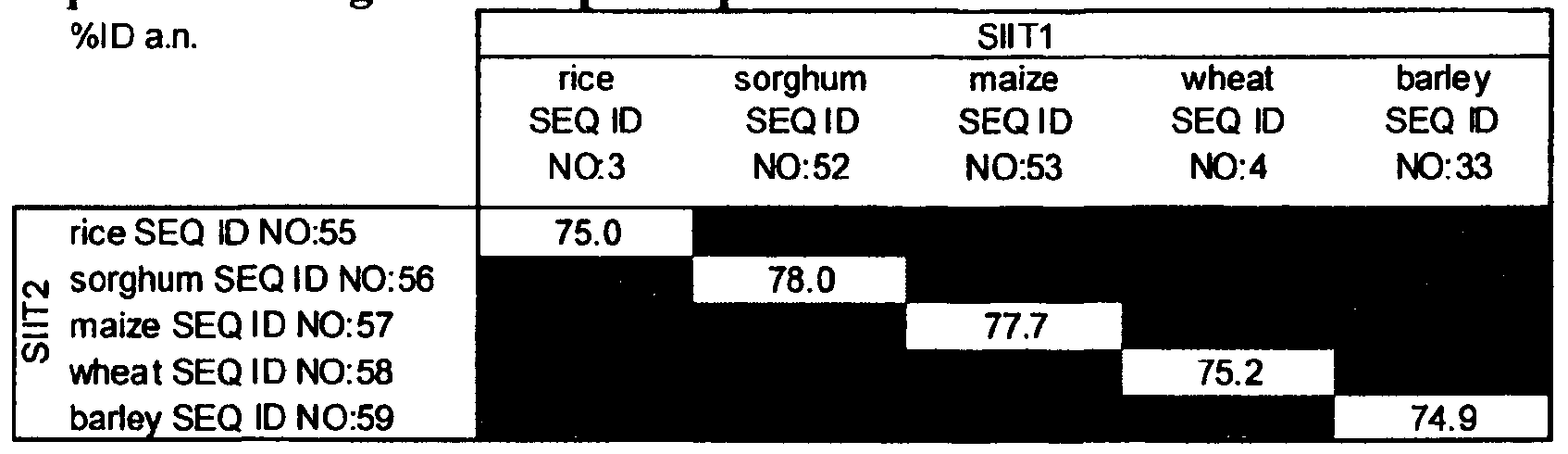


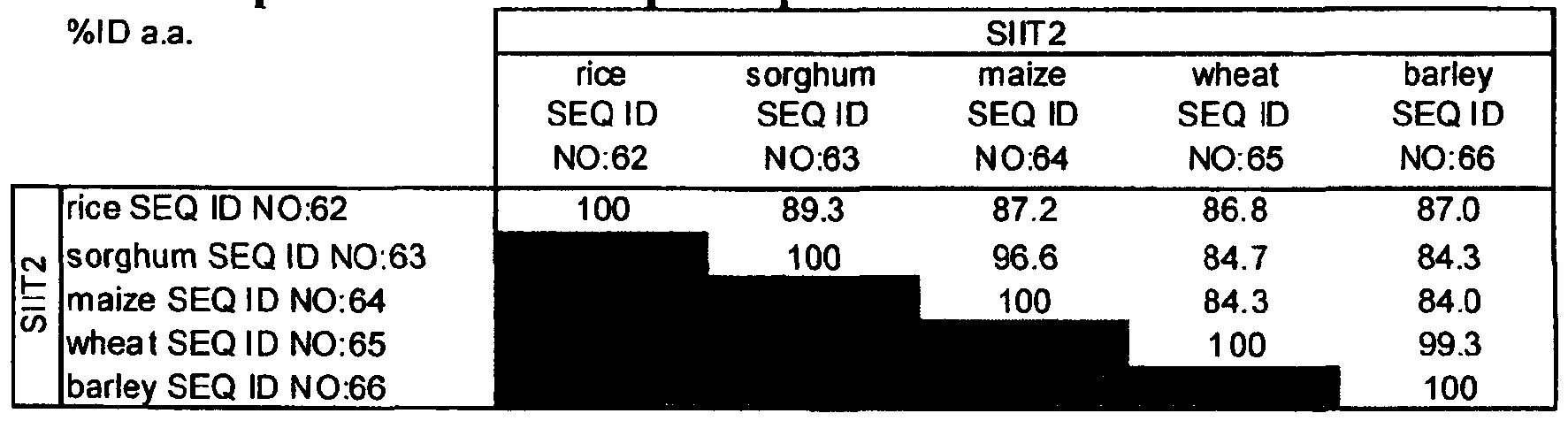
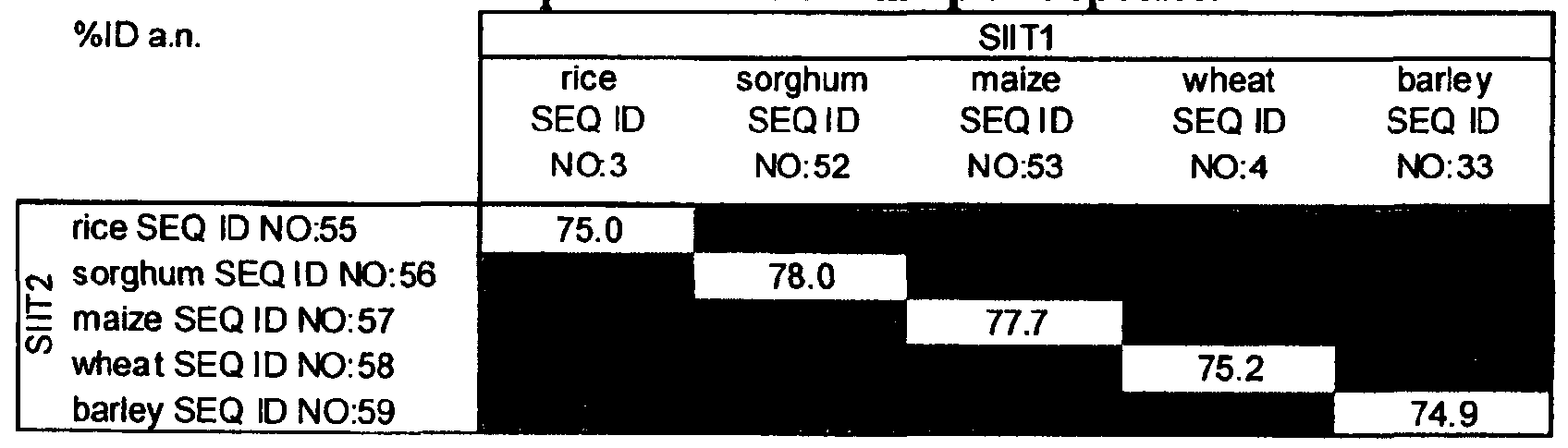


Claims
Priority Applications (5)
| Application Number | Priority Date | Filing Date | Title |
|---|---|---|---|
| US12/934,255 US20110154532A1 (en) | 2008-03-24 | 2009-03-24 | Compositions and methods related to silicon transport |
| BRPI0909001-0A BRPI0909001A2 (en) | 2008-03-24 | 2009-03-24 | Compositions and methods related to silicon transport |
| CA2718850A CA2718850A1 (en) | 2008-03-24 | 2009-03-24 | Compositions and methods related to silicon transport |
| EP09725728A EP2268814A4 (en) | 2008-03-24 | 2009-03-24 | COMPOSITIONS AND METHODS RELATED TO SILICON TRANSPORT |
| CN2009801163893A CN102177238A (en) | 2008-03-24 | 2009-03-24 | Compositions and methods related to silicon transport |
Applications Claiming Priority (2)
| Application Number | Priority Date | Filing Date | Title |
|---|---|---|---|
| US7052808P | 2008-03-24 | 2008-03-24 | |
| US61/070,528 | 2008-03-24 |
Publications (1)
| Publication Number | Publication Date |
|---|---|
| WO2009117821A1 true WO2009117821A1 (en) | 2009-10-01 |
Family
ID=41112887
Family Applications (1)
| Application Number | Title | Priority Date | Filing Date |
|---|---|---|---|
| PCT/CA2009/000373 Ceased WO2009117821A1 (en) | 2008-03-24 | 2009-03-24 | Compositions and methods related to silicon transport |
Country Status (6)
| Country | Link |
|---|---|
| US (1) | US20110154532A1 (en) |
| EP (1) | EP2268814A4 (en) |
| CN (2) | CN102943078A (en) |
| BR (1) | BRPI0909001A2 (en) |
| CA (1) | CA2718850A1 (en) |
| WO (1) | WO2009117821A1 (en) |
Cited By (1)
| Publication number | Priority date | Publication date | Assignee | Title |
|---|---|---|---|---|
| EP3298150A4 (en) * | 2015-05-20 | 2018-10-10 | Université Laval | Plant with increased silicon uptake |
Families Citing this family (2)
| Publication number | Priority date | Publication date | Assignee | Title |
|---|---|---|---|---|
| US9874655B2 (en) * | 2014-10-31 | 2018-01-23 | Schlumberger Technology Corporation | Fluid analyzer using absorption spectroscopy |
| CN116496374B (en) * | 2023-04-26 | 2024-08-06 | 中山大学 | Application and method of a water channel protein in improving the ability of arbuscular mycorrhizal fungi symbiotic plants to enrich, absorb and transport arsenic and phosphorus |
Citations (1)
| Publication number | Priority date | Publication date | Assignee | Title |
|---|---|---|---|---|
| US7214786B2 (en) * | 2000-12-14 | 2007-05-08 | Kovalic David K | Nucleic acid molecules and other molecules associated with plants and uses thereof for plant improvement |
Family Cites Families (2)
| Publication number | Priority date | Publication date | Assignee | Title |
|---|---|---|---|---|
| CA2359868A1 (en) * | 1999-01-14 | 2000-07-20 | Monsanto Company | Soybean transformation method |
| US7678962B2 (en) * | 2006-04-28 | 2010-03-16 | Monsanto Technology Llc | Soybean variety 0330739 |
-
2009
- 2009-03-24 US US12/934,255 patent/US20110154532A1/en not_active Abandoned
- 2009-03-24 BR BRPI0909001-0A patent/BRPI0909001A2/en not_active IP Right Cessation
- 2009-03-24 EP EP09725728A patent/EP2268814A4/en not_active Withdrawn
- 2009-03-24 CA CA2718850A patent/CA2718850A1/en not_active Abandoned
- 2009-03-24 CN CN2012103438466A patent/CN102943078A/en active Pending
- 2009-03-24 WO PCT/CA2009/000373 patent/WO2009117821A1/en not_active Ceased
- 2009-03-24 CN CN2009801163893A patent/CN102177238A/en active Pending
Patent Citations (1)
| Publication number | Priority date | Publication date | Assignee | Title |
|---|---|---|---|---|
| US7214786B2 (en) * | 2000-12-14 | 2007-05-08 | Kovalic David K | Nucleic acid molecules and other molecules associated with plants and uses thereof for plant improvement |
Non-Patent Citations (9)
| Title |
|---|
| CHIBA ET AL.: "HvLsil is a silicon influx transporter in barley.", PLANT. J., vol. 57, March 2009 (2009-03-01), pages 810 - 818., XP008142915 * |
| DATABASE GENBANK 15 July 2009 (2009-07-15), ALLARD, F. ET AL.: "Functional Genomics of Abiotic Stress In Wheat and Canola Crops.", XP008143097, Database accession no. CK205202. * |
| DATABASE GENBANK 15 July 2009 (2009-07-15), HU H. ET AL.: "A silicon transporter in Zea mays.", XP008143096, Database accession no. DQ524811 * |
| MA, J.F. ET AL.: "A silicon transporter in rice.", NATURE, vol. 440, March 2006 (2006-03-01), pages 688 - 691, XP003008746 * |
| MA, J.F. ET AL.: "An efflux transporter of silicon in rice.", NATURE, vol. 448, July 2007 (2007-07-01), pages 209 - 212, XP008142912 * |
| MA, J.F. ET AL.: "Functions and transport of silicon in plants.", CELL MOL LIFE SCI., vol. 65, October 2008 (2008-10-01), pages 3049 - 3057, XP019652096 * |
| MA, J.F. ET AL.: "Genotypic difference in silicon uptake and expression of silicon transporter genes in rice.", PLANT PHYSIOL., vol. 145, November 2007 (2007-11-01), pages 919 - 924, XP008142913 * |
| MITANI, N. ET AL.: "Identification of maize silicon influx transporters.", PLANT CELL PHYSIOL., vol. 50, January 2009 (2009-01-01), pages 5 - 12, XP008142914 * |
| YAMAJI, N. ET AL.: "A transporter regulating silicon distribution in rice shoots.", PLANT CELL, vol. 20, May 2008 (2008-05-01), pages 1381 - 1389, XP008142916 * |
Cited By (1)
| Publication number | Priority date | Publication date | Assignee | Title |
|---|---|---|---|---|
| EP3298150A4 (en) * | 2015-05-20 | 2018-10-10 | Université Laval | Plant with increased silicon uptake |
Also Published As
| Publication number | Publication date |
|---|---|
| EP2268814A1 (en) | 2011-01-05 |
| CA2718850A1 (en) | 2009-10-01 |
| BRPI0909001A2 (en) | 2015-07-28 |
| US20110154532A1 (en) | 2011-06-23 |
| CN102177238A (en) | 2011-09-07 |
| CN102943078A (en) | 2013-02-27 |
| EP2268814A4 (en) | 2011-07-27 |
Similar Documents
| Publication | Publication Date | Title |
|---|---|---|
| CN102939384B (en) | Genes conferring stress tolerance in plants and uses thereof | |
| EP2419510B1 (en) | Modulation of acc synthase improves plant yield under low nitrogen conditions | |
| CN104981149B (en) | Antifungal plants expressing EIN2 | |
| CN101437947A (en) | Methods of increasing abiotic stress tolerance and/or biomass in plants and plants produced thereby | |
| CN102165072A (en) | Genetic loci associated with head smut resistance in maize | |
| EP1635629A2 (en) | Plant transcriptional regulators of disease resistance | |
| CN101932712A (en) | Maize ethylene signal transduction genes and modulation thereof for improving plant stress tolerance | |
| WO2013033571A1 (en) | Plants with enhanced tolerance to multiple abiotic stresses | |
| US20150240254A1 (en) | Genetic reduction of male fertility in plants | |
| CN109111514B (en) | Method for cultivating transgenic wheat with resistance to sheath blight and root rot and related biological material thereof | |
| WO2014004487A1 (en) | Manipulation of serine/threonine protein phosphatases for crop improvement | |
| CA2629521A1 (en) | Dof (dna binding with one finger) sequences and methods of use | |
| WO1995018230A1 (en) | Plant pathogen resistance genes and uses thereof | |
| WO2016109619A1 (en) | Scn plants and methods for making the same | |
| US20110154532A1 (en) | Compositions and methods related to silicon transport | |
| CN105143248A (en) | Maize stress related transcription factor 18 and uses thereof | |
| US20140223604A1 (en) | Crop plants with improved water use efficiency and grain yield and methods of making them | |
| CN102325442B (en) | Engineering plants for heat-stable disease resistance | |
| WO2012040851A1 (en) | Horsetail silicon transporter genes and uses thereof | |
| US20080028487A1 (en) | USES OF THE PSEUDOMONAS SYRINGAE EFFECTOR PROTEIN HopU1 RELATED TO ITS ABILITY TO ADP-RIBOSYLATE EUKARYOTIC RNA BINDING PROTEINS | |
| EP2451830B1 (en) | Method for increasing the resistance of a plant or a part thereof to a pathogen, method for screening the resistance of a plant or part thereof to a pathogen, and use thereof | |
| US20240417750A1 (en) | Resistance genes against root knot-nematodes in tomato | |
| AU2011200774B8 (en) | Carotenoid biosynthesis inhibitor resistance genes and methods of use in plants | |
| WO2018148558A2 (en) | Hypersensitive aba receptors having modified pp2c-binding interfaces |
Legal Events
| Date | Code | Title | Description |
|---|---|---|---|
| WWE | Wipo information: entry into national phase |
Ref document number: 200980116389.3 Country of ref document: CN |
|
| 121 | Ep: the epo has been informed by wipo that ep was designated in this application |
Ref document number: 09725728 Country of ref document: EP Kind code of ref document: A1 |
|
| WWE | Wipo information: entry into national phase |
Ref document number: 2718850 Country of ref document: CA |
|
| NENP | Non-entry into the national phase |
Ref country code: DE |
|
| WWE | Wipo information: entry into national phase |
Ref document number: 2009725728 Country of ref document: EP |
|
| WWE | Wipo information: entry into national phase |
Ref document number: 6661/CHENP/2010 Country of ref document: IN |
|
| WWE | Wipo information: entry into national phase |
Ref document number: 12934255 Country of ref document: US |
|
| ENP | Entry into the national phase |
Ref document number: PI0909001 Country of ref document: BR Kind code of ref document: A2 Effective date: 20100923 |