WO2009079946A1 - Microporous polymer separators for lithium ion batteries and method for producing the same - Google Patents
Microporous polymer separators for lithium ion batteries and method for producing the same Download PDFInfo
- Publication number
- WO2009079946A1 WO2009079946A1 PCT/CN2008/072889 CN2008072889W WO2009079946A1 WO 2009079946 A1 WO2009079946 A1 WO 2009079946A1 CN 2008072889 W CN2008072889 W CN 2008072889W WO 2009079946 A1 WO2009079946 A1 WO 2009079946A1
- Authority
- WO
- WIPO (PCT)
- Prior art keywords
- microporous polymer
- lithium ion
- colloidal emulsion
- added
- monomer
- Prior art date
- Legal status (The legal status is an assumption and is not a legal conclusion. Google has not performed a legal analysis and makes no representation as to the accuracy of the status listed.)
- Ceased
Links
Classifications
-
- H—ELECTRICITY
- H01—ELECTRIC ELEMENTS
- H01M—PROCESSES OR MEANS, e.g. BATTERIES, FOR THE DIRECT CONVERSION OF CHEMICAL ENERGY INTO ELECTRICAL ENERGY
- H01M50/00—Constructional details or processes of manufacture of the non-active parts of electrochemical cells other than fuel cells, e.g. hybrid cells
- H01M50/40—Separators; Membranes; Diaphragms; Spacing elements inside cells
- H01M50/403—Manufacturing processes of separators, membranes or diaphragms
-
- C—CHEMISTRY; METALLURGY
- C08—ORGANIC MACROMOLECULAR COMPOUNDS; THEIR PREPARATION OR CHEMICAL WORKING-UP; COMPOSITIONS BASED THEREON
- C08J—WORKING-UP; GENERAL PROCESSES OF COMPOUNDING; AFTER-TREATMENT NOT COVERED BY SUBCLASSES C08B, C08C, C08F, C08G or C08H
- C08J5/00—Manufacture of articles or shaped materials containing macromolecular substances
- C08J5/20—Manufacture of shaped structures of ion-exchange resins
- C08J5/22—Films, membranes or diaphragms
- C08J5/2206—Films, membranes or diaphragms based on organic and/or inorganic macromolecular compounds
- C08J5/2218—Synthetic macromolecular compounds
- C08J5/2231—Synthetic macromolecular compounds based on macromolecular compounds obtained by reactions involving unsaturated carbon-to-carbon bonds
-
- C—CHEMISTRY; METALLURGY
- C08—ORGANIC MACROMOLECULAR COMPOUNDS; THEIR PREPARATION OR CHEMICAL WORKING-UP; COMPOSITIONS BASED THEREON
- C08J—WORKING-UP; GENERAL PROCESSES OF COMPOUNDING; AFTER-TREATMENT NOT COVERED BY SUBCLASSES C08B, C08C, C08F, C08G or C08H
- C08J5/00—Manufacture of articles or shaped materials containing macromolecular substances
- C08J5/20—Manufacture of shaped structures of ion-exchange resins
- C08J5/22—Films, membranes or diaphragms
-
- H—ELECTRICITY
- H01—ELECTRIC ELEMENTS
- H01M—PROCESSES OR MEANS, e.g. BATTERIES, FOR THE DIRECT CONVERSION OF CHEMICAL ENERGY INTO ELECTRICAL ENERGY
- H01M10/00—Secondary cells; Manufacture thereof
- H01M10/05—Accumulators with non-aqueous electrolyte
- H01M10/052—Li-accumulators
- H01M10/0525—Rocking-chair batteries, i.e. batteries with lithium insertion or intercalation in both electrodes; Lithium-ion batteries
-
- H—ELECTRICITY
- H01—ELECTRIC ELEMENTS
- H01M—PROCESSES OR MEANS, e.g. BATTERIES, FOR THE DIRECT CONVERSION OF CHEMICAL ENERGY INTO ELECTRICAL ENERGY
- H01M10/00—Secondary cells; Manufacture thereof
- H01M10/05—Accumulators with non-aqueous electrolyte
- H01M10/056—Accumulators with non-aqueous electrolyte characterised by the materials used as electrolytes, e.g. mixed inorganic/organic electrolytes
-
- H—ELECTRICITY
- H01—ELECTRIC ELEMENTS
- H01M—PROCESSES OR MEANS, e.g. BATTERIES, FOR THE DIRECT CONVERSION OF CHEMICAL ENERGY INTO ELECTRICAL ENERGY
- H01M10/00—Secondary cells; Manufacture thereof
- H01M10/05—Accumulators with non-aqueous electrolyte
- H01M10/056—Accumulators with non-aqueous electrolyte characterised by the materials used as electrolytes, e.g. mixed inorganic/organic electrolytes
- H01M10/0564—Accumulators with non-aqueous electrolyte characterised by the materials used as electrolytes, e.g. mixed inorganic/organic electrolytes the electrolyte being constituted of organic materials only
- H01M10/0565—Polymeric materials, e.g. gel-type or solid-type
-
- H—ELECTRICITY
- H01—ELECTRIC ELEMENTS
- H01M—PROCESSES OR MEANS, e.g. BATTERIES, FOR THE DIRECT CONVERSION OF CHEMICAL ENERGY INTO ELECTRICAL ENERGY
- H01M50/00—Constructional details or processes of manufacture of the non-active parts of electrochemical cells other than fuel cells, e.g. hybrid cells
- H01M50/40—Separators; Membranes; Diaphragms; Spacing elements inside cells
- H01M50/409—Separators, membranes or diaphragms characterised by the material
- H01M50/411—Organic material
- H01M50/414—Synthetic resins, e.g. thermoplastics or thermosetting resins
-
- H—ELECTRICITY
- H01—ELECTRIC ELEMENTS
- H01M—PROCESSES OR MEANS, e.g. BATTERIES, FOR THE DIRECT CONVERSION OF CHEMICAL ENERGY INTO ELECTRICAL ENERGY
- H01M50/00—Constructional details or processes of manufacture of the non-active parts of electrochemical cells other than fuel cells, e.g. hybrid cells
- H01M50/40—Separators; Membranes; Diaphragms; Spacing elements inside cells
- H01M50/409—Separators, membranes or diaphragms characterised by the material
- H01M50/411—Organic material
- H01M50/414—Synthetic resins, e.g. thermoplastics or thermosetting resins
- H01M50/417—Polyolefins
-
- H—ELECTRICITY
- H01—ELECTRIC ELEMENTS
- H01M—PROCESSES OR MEANS, e.g. BATTERIES, FOR THE DIRECT CONVERSION OF CHEMICAL ENERGY INTO ELECTRICAL ENERGY
- H01M50/00—Constructional details or processes of manufacture of the non-active parts of electrochemical cells other than fuel cells, e.g. hybrid cells
- H01M50/40—Separators; Membranes; Diaphragms; Spacing elements inside cells
- H01M50/409—Separators, membranes or diaphragms characterised by the material
- H01M50/431—Inorganic material
-
- H—ELECTRICITY
- H01—ELECTRIC ELEMENTS
- H01M—PROCESSES OR MEANS, e.g. BATTERIES, FOR THE DIRECT CONVERSION OF CHEMICAL ENERGY INTO ELECTRICAL ENERGY
- H01M50/00—Constructional details or processes of manufacture of the non-active parts of electrochemical cells other than fuel cells, e.g. hybrid cells
- H01M50/40—Separators; Membranes; Diaphragms; Spacing elements inside cells
- H01M50/409—Separators, membranes or diaphragms characterised by the material
- H01M50/443—Particulate material
-
- H—ELECTRICITY
- H01—ELECTRIC ELEMENTS
- H01M—PROCESSES OR MEANS, e.g. BATTERIES, FOR THE DIRECT CONVERSION OF CHEMICAL ENERGY INTO ELECTRICAL ENERGY
- H01M50/00—Constructional details or processes of manufacture of the non-active parts of electrochemical cells other than fuel cells, e.g. hybrid cells
- H01M50/40—Separators; Membranes; Diaphragms; Spacing elements inside cells
- H01M50/409—Separators, membranes or diaphragms characterised by the material
- H01M50/446—Composite material consisting of a mixture of organic and inorganic materials
-
- H—ELECTRICITY
- H01—ELECTRIC ELEMENTS
- H01M—PROCESSES OR MEANS, e.g. BATTERIES, FOR THE DIRECT CONVERSION OF CHEMICAL ENERGY INTO ELECTRICAL ENERGY
- H01M50/00—Constructional details or processes of manufacture of the non-active parts of electrochemical cells other than fuel cells, e.g. hybrid cells
- H01M50/40—Separators; Membranes; Diaphragms; Spacing elements inside cells
- H01M50/489—Separators, membranes, diaphragms or spacing elements inside the cells, characterised by their physical properties, e.g. swelling degree, hydrophilicity or shut down properties
-
- H—ELECTRICITY
- H01—ELECTRIC ELEMENTS
- H01M—PROCESSES OR MEANS, e.g. BATTERIES, FOR THE DIRECT CONVERSION OF CHEMICAL ENERGY INTO ELECTRICAL ENERGY
- H01M50/00—Constructional details or processes of manufacture of the non-active parts of electrochemical cells other than fuel cells, e.g. hybrid cells
- H01M50/40—Separators; Membranes; Diaphragms; Spacing elements inside cells
- H01M50/489—Separators, membranes, diaphragms or spacing elements inside the cells, characterised by their physical properties, e.g. swelling degree, hydrophilicity or shut down properties
- H01M50/491—Porosity
-
- C—CHEMISTRY; METALLURGY
- C08—ORGANIC MACROMOLECULAR COMPOUNDS; THEIR PREPARATION OR CHEMICAL WORKING-UP; COMPOSITIONS BASED THEREON
- C08J—WORKING-UP; GENERAL PROCESSES OF COMPOUNDING; AFTER-TREATMENT NOT COVERED BY SUBCLASSES C08B, C08C, C08F, C08G or C08H
- C08J2333/00—Characterised by the use of homopolymers or copolymers of compounds having one or more unsaturated aliphatic radicals, each having only one carbon-to-carbon double bond, and only one being terminated by only one carboxyl radical, or of salts, anhydrides, esters, amides, imides, or nitriles thereof; Derivatives of such polymers
- C08J2333/04—Characterised by the use of homopolymers or copolymers of compounds having one or more unsaturated aliphatic radicals, each having only one carbon-to-carbon double bond, and only one being terminated by only one carboxyl radical, or of salts, anhydrides, esters, amides, imides, or nitriles thereof; Derivatives of such polymers esters
- C08J2333/06—Characterised by the use of homopolymers or copolymers of compounds having one or more unsaturated aliphatic radicals, each having only one carbon-to-carbon double bond, and only one being terminated by only one carboxyl radical, or of salts, anhydrides, esters, amides, imides, or nitriles thereof; Derivatives of such polymers esters of esters containing only carbon, hydrogen, and oxygen, the oxygen atom being present only as part of the carboxyl radical
- C08J2333/08—Homopolymers or copolymers of acrylic acid esters
-
- H—ELECTRICITY
- H01—ELECTRIC ELEMENTS
- H01M—PROCESSES OR MEANS, e.g. BATTERIES, FOR THE DIRECT CONVERSION OF CHEMICAL ENERGY INTO ELECTRICAL ENERGY
- H01M2300/00—Electrolytes
- H01M2300/0017—Non-aqueous electrolytes
- H01M2300/0065—Solid electrolytes
- H01M2300/0082—Organic polymers
-
- Y—GENERAL TAGGING OF NEW TECHNOLOGICAL DEVELOPMENTS; GENERAL TAGGING OF CROSS-SECTIONAL TECHNOLOGIES SPANNING OVER SEVERAL SECTIONS OF THE IPC; TECHNICAL SUBJECTS COVERED BY FORMER USPC CROSS-REFERENCE ART COLLECTIONS [XRACs] AND DIGESTS
- Y02—TECHNOLOGIES OR APPLICATIONS FOR MITIGATION OR ADAPTATION AGAINST CLIMATE CHANGE
- Y02E—REDUCTION OF GREENHOUSE GAS [GHG] EMISSIONS, RELATED TO ENERGY GENERATION, TRANSMISSION OR DISTRIBUTION
- Y02E60/00—Enabling technologies; Technologies with a potential or indirect contribution to GHG emissions mitigation
- Y02E60/10—Energy storage using batteries
-
- Y—GENERAL TAGGING OF NEW TECHNOLOGICAL DEVELOPMENTS; GENERAL TAGGING OF CROSS-SECTIONAL TECHNOLOGIES SPANNING OVER SEVERAL SECTIONS OF THE IPC; TECHNICAL SUBJECTS COVERED BY FORMER USPC CROSS-REFERENCE ART COLLECTIONS [XRACs] AND DIGESTS
- Y02—TECHNOLOGIES OR APPLICATIONS FOR MITIGATION OR ADAPTATION AGAINST CLIMATE CHANGE
- Y02P—CLIMATE CHANGE MITIGATION TECHNOLOGIES IN THE PRODUCTION OR PROCESSING OF GOODS
- Y02P70/00—Climate change mitigation technologies in the production process for final industrial or consumer products
- Y02P70/50—Manufacturing or production processes characterised by the final manufactured product
Definitions
- the present invention relates to a separator material for an energy storage device such as a lithium ion secondary battery and a method for preparing the same, and belongs to the field of battery and capacitor manufacturing.
- Microporous polymer membrane is one of the three major materials that are indispensable for the manufacture of lithium ion batteries.
- the material properties, microporous structure and physical and chemical properties used are closely related to the electrical properties, safety and cycle life of lithium ion batteries.
- the separators used in conventional liquid batteries are mainly microporous polyolefin membranes, microporous polyvinylidene fluoride membranes, and microporous polyolefin membrane/polyvinylidene fluoride membrane composite membranes.
- Microporous polyolefin membrane including polyethylene/polypropylene/polyethylene propylene composite membrane. Mechanical biaxial stretching (dry) and solvent extraction (wet) process techniques are employed. Since the polyolefin is a non-polar material, it has poor compatibility with the polar organic solvent of the electrolyte solution, and only plays a simple mechanical isolation between the positive and negative electrodes. The separator has no fixing effect on the electrolyte, so that most of the electrolyte solution is free. The state exists in the battery.
- Polyvinylidene fluoride and its derivatives have film-forming properties only in the presence of a plasticizer.
- the PVDF film containing a plasticizer has high self-adhesiveness, low mechanical strength, and poor process workability, and cannot be separately prepared into a microporous polymer film like a polyolefin resin.
- the preparation method of the microporous polymer film is basically to form a dry cell by thermally bonding a PVDF film containing a plasticizer and a positive electrode and a negative electrode of the battery, and then extracting the dry cell by using an organic solvent to form a positive and negative voltage. Extremely composite PVDF microporous polymer film.
- PVDF microporous polymer film In order to solve the technical difficulties in the preparation of PVDF microporous polymer film, it can be formed into a film like a microporous polyolefin film to improve the operability of battery preparation.
- the PVDF solution is coated on the microporous polyolefin film, and then used.
- a microporous polyolefin film/polyvinylidene fluoride film composite film was prepared by solvent extraction or reverse phase film formation.
- inorganic ceramic porous membranes with a polymer non-woven fabric as a support.
- This non-woven support membrane uses a large amount of inorganic filler. These fillers are compounded onto the nonwoven fabric by a silane adhesive.
- This composite method is used during the drying and use of the diaphragm. Vibration, bending, folding, inevitably, powder leakage will occur, resulting in uneven coating of the diaphragm. When the battery is charged and discharged, the current is unevenly distributed and the local voltage rises, which may cause current breakdown.
- SSzhang et al. used a reverse phase film formation method to prepare a P(AN-MMA) microporous polymer film.
- the technical problem to be solved by the present invention is to provide a novel separator suitable for an energy storage device such as a lithium ion battery, that is, a microporous polymer separator.
- the separator is low in cost, simple in preparation method, green and environmentally friendly; and the prepared separator has good high temperature resistance, and is suitable for energy storage devices such as secondary batteries and has high cycle life.
- the invention uses water as a reaction medium, and polyvinyl alcohol is polymerized with a multi-component different polar monomer (such as a hydrophobic monomer or a hydrophilic monomer) to obtain a polymer colloidal emulsion, which is coated by a casting coating process.
- a multi-component different polar monomer such as a hydrophobic monomer or a hydrophilic monomer
- the microporous polymer separator of the present invention is peeled off.
- the pore formation of the separator of the present invention is different in the interaction parameters of each component in the film formation process, and the volatilization speed is different to form microphase separation during the film formation process to form microporous pores.
- the microporous polymer membrane provided by the present invention is obtained by polymerizing polyvinyl alcohol, a hydrophobic monomer (which may also be added with a certain amount of a hydrophilic monomer) from an initiator in an aqueous solution to obtain a colloidal emulsion.
- the weight ratio of the raw materials for preparing the microporous polymer separator of the present invention is: 100 parts of polyvinyl alcohol, 0-100 parts of hydrophilic monomer, 30 parts of hydrophobic monomer 30 parts, and 1 to 5 parts of initiator;
- the degree of polymerization is between 1700 and 2400, and the degree of hydrolysis is between 50 and 99.
- hydrophobic (lipophilic) monomer structural formula is: — H or one
- R 2 —C 6 H 5 , an OCOCH 3 , a COOCH 3 , a COOCH 2 CH 3 , a COOCH 2 CH 2 CH 2 CH 3 , a COOCH 2 CH(CH 2 CH 3 )CH 2 CH 2 CH 2 CH 3 , — CN;
- the hydrophobic monomer is at least one of the above hydrophobic monomers;
- a hydrophilic monomer may be added to the reaction.
- the amount of the hydrophilic monomer is preferably 10 100 parts by weight.
- R 3 - H, a CH 3 or a COOLi
- R 4 - H, a CH 3 or a COOLi
- R 5 —COOLi, a CH 2 COOLi, a COO(CH 2 ) 6 S0 3 Li, a CO H 2 , a CO HCH 3 , a CONHCH 2 CH 3 , a CON (CH 3 ) 2 , a CON (CH 2 CH 3 ) 2 ;
- the hydrophilic monomer is the above hydrophilic single At least one of the bodies;
- the initiator is a water-soluble initiator such as ammonium persulfate, potassium persulfate, hydrogen peroxide or azobisisobutylphosphonate or they are combined with Na 2 S0 3 , ?
- a redox initiation system consisting of ⁇ 0 4 and the like.
- the reaction also contains not more than 3 parts by weight of an auxiliary agent acting as an emulsifier, which has a certain stabilizing effect on the colloidal emulsion.
- the adjuvant is selected from the group consisting of dodecylsulfonate, dodecylbenzenesulfonate, and vinylsulfonate.
- the preparation method of the microporous polymer membrane of the invention is: a. adding polyvinyl alcohol to water, heating and stirring until completely dissolved; if hydrophilic monomer or/and auxiliary agent is used, adding water and heating and stirring together with polyvinyl alcohol;
- the reactor temperature is constant to the desired reaction temperature of 30-90 ° C
- the hydrophobic monomer is added to the reactor in a single or fractional manner
- the initiator polymerization is added for 4-35 hours, 5 to 20 hours
- a polymer colloidal emulsion is obtained; the initiator may also be added dropwise or in portions during the reaction.
- the polymer colloidal emulsion prepared above is added to 5-20% of the filler and 50-100% of the plasticizer according to the solid content of 100%, and is ball milled for 5 hours, and the obtained slurry is coated by a coating process.
- a plastic base tape such as B0PP, PET, PE, PP, etc., it can be used as a separator for an energy storage device such as a battery after being dried and peeled off.
- the hydrophilic monomer of the above reaction may also be added in a step B with a hydrophobic monomer or an initiator by dropwise addition or fractional addition, and a stepwise polymerization reaction.
- the filler may be an ultrafine inorganic filler, has a high specific surface area and a strong surface adsorption capacity, is beneficial to the absorption and ion conduction of the electrolyte; and at the same time increases the rigidity of the separator and facilitates the fabrication of the energy storage device.
- the inorganic filler mainly selects oxides such as silica, alumina, titania, zirconia, magnesia, calcium oxide, glass fibers and the like.
- a silane coupling agent may be added. 5 ⁇ The silane coupling agent is added in an amount of 0.5 to 5 parts by weight. It can also be added when a filler or a plasticizer is added after the preparation of the polymer colloidal emulsion. 0% ⁇ The amount of the solid content of the polymer colloidal emulsion, 0. 5-3. 0%.
- the silane coupling agent may be 3-aminopropyltriethoxysilane, 2-aminoethyl-3-hydroxypropyltrimethoxysilane, 3-glycidyloxytrimethoxysilane, 3-methacryloyloxypropane Trimethoxysilane, vinyltriethoxysilane, vinyltrimethoxysilane, vinyltris(2-methoxyethoxy)silane.
- a micron-sized organic filler-modified separator may be added, and the organic filler may be at least one selected from the group consisting of polyethylene powder, polyethylene wax powder, and oxidized polyethylene wax powder.
- the plasticizer may be glycerin, propylene glycol, polyethylene glycol, benzyl alcohol, isopropanol, phosphate, or the like.
- the microporous polymer separator of the present invention has been developed on the basis of a conventional liquid lithium battery separator, which does not require biaxial stretching and pore formation, and does not require solvent extraction and pore formation. Instead, use a completely different pore-making principle - micro
- the phase separation method for the first time, applies the phase separation principle to the field of battery separators to prepare microporous polymer membranes.
- the invention changes the chemical composition of the traditional battery separator substrate, uses water as a reaction medium, and grafts copolymerization of multi-component and different polar monomers to obtain a polymer colloidal emulsion with micro phase separation structure, environmental protection and pollution-free, lithium ion
- the battery has good cycle stability and long life.
- the microporous polymer membrane of the invention not only has rich material source, low price, adopts conventional equipment, but also has simple operation, stable performance and commercial value.
- hydrophilic polymer polyvinyl alcohol (PVA) 1750 and lipophilic monomer vinyl acetate (VAC) are used.
- graft copolymerization is carried out to prepare an aqueous polymer emulsion for a lithium battery separator.
- the polymer emulsion is specifically prepared by adding 1000 g of distilled water and 100 g of polyvinyl alcohol (PVA) 1750 in a four-port reaction vessel with condensed water, and the reactor is heated to 75 ° C, stirred and dissolved, and the rotation speed is 100. After 3 hours, when the material is transparent, it can be regarded as dissolved, the heating is turned off, and it is naturally cooled to 55 °C. 5 ⁇ (APS), about 0.5g of aqueous initiator ammonium persulfate (APS), about 0. 5g of aqueous initiator ammonium persulfate (APS) After 20 minutes, the material was light blue, turned into a white milk after 30 minutes, and copolymerized for 2 hours to obtain a reaction intermediate.
- PVA polyvinyl alcohol
- the weakly acidic lithium vinyl sulfonate (svsLi) was subjected to emulsion polymerization, and the reaction time was 10 hours, that is, a polymer colloidal emulsion was obtained.
- the resulting polymer colloidal emulsion was ball milled for 5 hours by adding 19 g of zirconium dioxide filler and 160 g of benzyl alcohol plasticizer.
- a cast coating apparatus is used.
- the slurry polymer colloidal emulsion is coated on a B0PP plastic base tape, and the microporous polymer film is obtained by drying the drying channel by hot air, volatilizing water and plasticizer.
- the hot air drying temperature is slightly 60 to 130 degrees, preferably 80 to 100 degrees.
- EA lipophilic monomer ethyl acrylate
- AM hydrophilic acrylamide
- the specific preparation method of the polymer emulsion is as follows: All the monomers are added by a one-time feeding method, the material concentration is adjusted to 13% or so, and the initiator is directly added, and the slurry quickly passes through a process of colorless, light blue and white milk. The reaction rate is faster than in Example 1. The 12-hour reaction was terminated, and a polymer membrane emulsion for a lithium battery was obtained.
- the third step is the same as in the first embodiment.
- polyvinyl alcohol 1788 is added to the lipophilic monomer styrene (St) / butyl acrylate (Ba) / acrylonitrile (AN) in the aqueous phase for ternary copolymerization, prepared for lithium battery separator
- the polymer emulsion adopts stepwise polymerization: in a four-port reaction vessel with condensed water, 1000 g of distilled water and 100 g of polyvinyl alcohol (PVA) 1799 are added, and the reactor is heated to 90 degrees, stirred and dissolved, and the rotation speed is 100 rpm. After 3 hours, when the material is transparent, it can be regarded as dissolved, the heating is turned off, and it is naturally cooled to a reaction temperature of 65 °C. Add styrene (st) monomer and a little ammonium persulfate initiator, react about 20, turn white emulsion, at the same time, The butyl acrylate (Ba) was put in and the reaction was continued for 2 hours.
- PVA polyvinyl alcohol
- the acrylonitrile monomer was slowly added dropwise to the above reaction solution (the peristaltic pump was used to control the dropping rate, and the addition was completed within 5 hours), and 1.5 g of the initiator was further added for further polymerization for 12 hours. That is, a polymer membrane emulsion for a lithium battery.
- the third step is the same as in the first embodiment.
- polyvinyl alcohol 1788 PVA
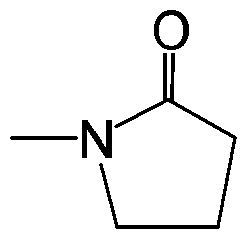
- hydrophilic monomer is vinylpyrrolidone (NVP)
- lipophilic monomer is butyl acrylate (Ba) and acrylonitrile (AN), prepared for lithium battery separator
- the polymer emulsion is obtained by one-step polymerization, and the monomer and the initiator are simultaneously charged.
- the initiator is an oxidation-reduction system of sulfite-monopersulfate, the reaction temperature is 72 degrees, and the reaction time is still 12 hours.
- a white colloidal emulsion slurry having a concentration of 19.5% was obtained.
- the resulting polymer colloidal emulsion was charged with 15% of a silica filler treated with a 2% 3-aminopropyltriethoxysilane coupling agent and 100% triethyl phosphate plasticizer. Adjust the viscosity of the slurry to 2500 mpa ⁇ s.
- the third step is the same as in the first embodiment.
- PVA is used, and the hydrophilic monomer is lithium acrylate, and the lipophilic monomer acrylonitrile (AN) is polymerized in an aqueous phase to prepare an aqueous polymer emulsion for a lithium battery separator.
- the specific preparation method of the polymer emulsion is as follows: In the first step, the polyvinyl alcohol 1788 is completely dissolved at 50 ° C, and the acrylate and acrylonitrile monomers are added at one time.
- the polymerization method is the same as the previous example, and the polymerization is completed in the time of 12 hours.
- the obtained polymer colloidal emulsion was added with a 30% alumina filler and a 120% triethyl phosphate plasticizer.
- an oxidized polyethylene wax emulsion of 35% was added. Ball milling for 5 hours, adjusting the viscosity of the slurry to 2500 mPa * s.
- the third step is the same as in the first embodiment.
- polyvinyl alcohol 1799 PVA
- a hydrophobic monomer are vinyltriethoxysilane coupling agent 151 / acrylonitrile (AN) grafted in an aqueous phase to prepare a lithium battery separator.
- the polymer emulsion is specifically prepared by adding 1000 g of distilled water and 100 g of polyvinyl alcohol (PVA) 1799 in a four-port reaction vessel with condensed water, heating to 90 degrees, stirring and dissolving for about 3 hours, and dissolving, The material is transparent. Subsequently, the heating was turned off, and the temperature was naturally lowered to a polymerization temperature of 60 ° C, and a mixture of vinyltriethoxysilane 151 40 g and acrylonitrile (AN) 50 g of an initiator persulfate amine 1. 9 g was added, and graft copolymerization was carried out for 12 hours. A white colloidal emulsion slurry having a concentration of 17.4% was obtained.
- PVA polyvinyl alcohol
- the polymer colloidal emulsion was adjusted to be weakly acidic with dilute hydrochloric acid, and then a triethyl phosphate-dispersed silica filler was added.
- the specific amounts were: 20% silica filler and 100% triethyl phosphate plasticizer.
- the ball was blended for 5 hours to adjust the viscosity of the slurry to 2500 mPa*s.
- the third step is the same as in the first embodiment.
- the microporous polymer separator prepared in Examples 1 to 6 was vacuum dried at 90 ° C for 3 to 8 hours, and the whole test process was carried out in a dry air atmosphere (relative humidity of dry air atmosphere was 3%), and the separator was electrolyzed.
- the liquid was immersed for 2, 4, 6 and 12 hours, respectively, and the residual electrolyte on the surface was absorbed by a filter paper, and weighed by an analytical balance to an accuracy of 0.01 g, the difference in weight before and after the impregnation of the electrolyte, that is, the amount of liquid absorbed by the membrane.
- the separator immersed in the electrolytic solution for 12 hours was taken out, and after standing for 3 hours, the aqueous polymer separator electrolyte retention rate was measured, and the examples were compared with the PP film. The results are shown in Table 1. Table 1
- Example 7 Lithium-ion battery containing the microporous polymer separator of the present invention
- the microporous polymer membrane prepared in accordance with Example 6 was assembled into a lithium ion battery constructed of a LiMn204 cathode material, a graphite anode material, and an electrolyte composed of ethylene carbonate/diethyl carbonate.
- the battery was subjected to DOD 100% charge and discharge cycle under 1C conditions.
- the experiment showed that the capacity of the battery was 7.5 cycles and the initial passenger capacity was more than 75%, and the internal resistance of the battery increased by less than 10%.
- a lithium ion battery assembled with a commercial microporous polypropylene film has a capacity of only about 75% of the initial passenger volume after 400 cycles, and the internal resistance of the battery is increased by more than 35%.
- the lithium ion battery assembled by the microporous polymer membrane of the present invention has a long cycle life and a small cell polarization, which is attributed to the fact that the microporous polymer membrane of the present invention is made of a highly polar polymer material. It has good affinity and liquid retention with polar electrolyte solutions.
Landscapes
- Chemical & Material Sciences (AREA)
- Chemical Kinetics & Catalysis (AREA)
- Engineering & Computer Science (AREA)
- General Chemical & Material Sciences (AREA)
- Electrochemistry (AREA)
- Manufacturing & Machinery (AREA)
- Inorganic Chemistry (AREA)
- Materials Engineering (AREA)
- Polymers & Plastics (AREA)
- Organic Chemistry (AREA)
- Medicinal Chemistry (AREA)
- Health & Medical Sciences (AREA)
- Physics & Mathematics (AREA)
- Condensed Matter Physics & Semiconductors (AREA)
- Dispersion Chemistry (AREA)
- General Physics & Mathematics (AREA)
- Composite Materials (AREA)
- Cell Separators (AREA)
- Electric Double-Layer Capacitors Or The Like (AREA)
Abstract
Description
锂离子电池用微孔聚合物隔膜及其制备方法 Microporous polymer separator for lithium ion battery and preparation method thereof
所属技术领域 本发明涉及用于锂离子二次电池等储能器件的隔膜材料及其制备方法,属于电池、 电容器制造领域。 TECHNICAL FIELD The present invention relates to a separator material for an energy storage device such as a lithium ion secondary battery and a method for preparing the same, and belongs to the field of battery and capacitor manufacturing.
背景技术 Background technique
微孔聚合物膜是制造锂离子电池不可或缺的三大材料之一,它所使用的材料特性、 微孔结构、 理化特性对锂离子电池的电性能、 安全性和循环寿命密切相关。 传统液态 电池所用隔膜主要是微孔聚烯烃膜、微孔聚偏氟乙烯膜以及微孔聚烯烃膜 /聚偏氟乙烯 膜复合膜。 Microporous polymer membrane is one of the three major materials that are indispensable for the manufacture of lithium ion batteries. The material properties, microporous structure and physical and chemical properties used are closely related to the electrical properties, safety and cycle life of lithium ion batteries. The separators used in conventional liquid batteries are mainly microporous polyolefin membranes, microporous polyvinylidene fluoride membranes, and microporous polyolefin membrane/polyvinylidene fluoride membrane composite membranes.
微孔聚烯烃膜:包括聚乙烯 /聚丙烯 /聚乙烯丙烯复合膜。采用机械双向拉伸(干法) 和溶剂萃取法 (湿法) 工艺技术。 由于聚烯烃属于非极性材料, 与电解质溶液的极性 有机溶剂相容性差, 在正负极间只起到简单的机械隔离作用, 隔膜对电解液没有固定 作用, 使得电解质溶液大部分以游离状态存在于电池中, 充放电循环使用过程中这种 游离的电解液不可避免地与正负极材料发生氧化还原副反应, 消耗电池中的电解液, 造成电池贫锂, 从而使得电池极化增大, 在充放电时容易形成锂的沉积结晶, 出现隔 膜剌穿现象; 因为隔膜对电解液吸收不好, 容易出现电解液干区, 发生静电击穿现象。 上述两种现象严重时都易导致锂离子电池燃烧、 爆炸。 锂离子电池的安全隐患制约了 它在大容量、 大功率动力型电源应用中的发展空间。 Microporous polyolefin membrane: including polyethylene/polypropylene/polyethylene propylene composite membrane. Mechanical biaxial stretching (dry) and solvent extraction (wet) process techniques are employed. Since the polyolefin is a non-polar material, it has poor compatibility with the polar organic solvent of the electrolyte solution, and only plays a simple mechanical isolation between the positive and negative electrodes. The separator has no fixing effect on the electrolyte, so that most of the electrolyte solution is free. The state exists in the battery. During the charging and discharging cycle, the free electrolyte inevitably undergoes a redox side reaction with the positive and negative materials, consuming the electrolyte in the battery, causing the battery to be depleted of lithium, thereby increasing the polarization of the battery. Large, it is easy to form lithium deposition crystallization during charging and discharging, and the diaphragm puncturing phenomenon occurs; because the diaphragm does not absorb the electrolyte well, the electrolyte dry area is prone to occur, and electrostatic breakdown occurs. When the above two phenomena are serious, it is easy to cause the lithium ion battery to burn and explode. The safety hazard of lithium-ion batteries has limited its development space in high-capacity, high-power power supply applications.
聚偏氟乙烯及其衍生物只有在增塑剂存在下, 才具有成膜性。 含有增塑剂的 PVDF 膜自粘连性大, 而且机械强度较低, 工艺可操作性差, 不能像聚烯烃树脂一样单独制 备成微孔聚合物膜。这类微孔聚合物膜的制备方法基本采用将含增塑剂的 PVDF膜与电 池正负极极片通过热粘合制成干电芯, 然后使用有机溶剂萃取干电芯, 形成与正负极 复合的 PVDF微孔聚合物膜。 为了解决 PVDF微孔聚合物膜制备技术难点, 使之能像微 孔聚烯烃膜一样, 单独成膜, 提高电池制备的可操作性, 将 PVDF溶液涂覆在微孔聚烯 烃膜上, 然后采用溶剂萃取法或倒相成膜法制备微孔聚烯烃膜 /聚偏氟乙烯膜复合膜。 Polyvinylidene fluoride and its derivatives have film-forming properties only in the presence of a plasticizer. The PVDF film containing a plasticizer has high self-adhesiveness, low mechanical strength, and poor process workability, and cannot be separately prepared into a microporous polymer film like a polyolefin resin. The preparation method of the microporous polymer film is basically to form a dry cell by thermally bonding a PVDF film containing a plasticizer and a positive electrode and a negative electrode of the battery, and then extracting the dry cell by using an organic solvent to form a positive and negative voltage. Extremely composite PVDF microporous polymer film. In order to solve the technical difficulties in the preparation of PVDF microporous polymer film, it can be formed into a film like a microporous polyolefin film to improve the operability of battery preparation. The PVDF solution is coated on the microporous polyolefin film, and then used. A microporous polyolefin film/polyvinylidene fluoride film composite film was prepared by solvent extraction or reverse phase film formation.
另外, 正在研发的其它类型的微孔聚合物膜有如德国的德古萨公司以高聚物非织 布为支撑体制备了无机陶瓷多孔膜, 这种非织布支撑膜采用了大量的无机填料, 这些 填料通过硅烷粘胶剂复合到非织布上。 这种复合方式在膜片干燥和使用过程中, 由于 振动、 弯曲、 折叠, 不可避免的会出现掉粉现象, 导致膜片涂层凹凸不平, 电池充放 电时, 因为电流分布不均, 局部电压升高, 可能引发电流击穿现象。 S.S.zhang等人采 用倒相成膜法制备 P(AN-MMA) 微孔聚合物膜。 In addition, other types of microporous polymer membranes under development, such as Degussa, Germany, have prepared inorganic ceramic porous membranes with a polymer non-woven fabric as a support. This non-woven support membrane uses a large amount of inorganic filler. These fillers are compounded onto the nonwoven fabric by a silane adhesive. This composite method is used during the drying and use of the diaphragm. Vibration, bending, folding, inevitably, powder leakage will occur, resulting in uneven coating of the diaphragm. When the battery is charged and discharged, the current is unevenly distributed and the local voltage rises, which may cause current breakdown. SSzhang et al. used a reverse phase film formation method to prepare a P(AN-MMA) microporous polymer film.
发明内容 Summary of the invention
本发明所要解决的技术问题是提供一种适于锂离子电池等储能器件的新型隔膜, 即微孔聚合物隔膜。 该隔膜成本低廉、 制备方法简单、 绿色环保; 且制备所得的隔膜 耐高温性能好, 应用于二次电池等储能器件安全性好和循环寿命高。 The technical problem to be solved by the present invention is to provide a novel separator suitable for an energy storage device such as a lithium ion battery, that is, a microporous polymer separator. The separator is low in cost, simple in preparation method, green and environmentally friendly; and the prepared separator has good high temperature resistance, and is suitable for energy storage devices such as secondary batteries and has high cycle life.
本发明以水为反应介质, 聚乙烯醇与多组分不同极性单体 (如疏水性单体或亲水 性单体) 聚合得到聚合物胶体乳液, 采用流延涂布工艺, 涂覆在等塑料基带上, 干燥 后剥离得到本发明的微孔聚合物隔膜。 本发明隔膜的孔隙形成是在成膜过程中各组分 相互作用参数不同, 挥发速度不同使得成膜过程中形成微相分离, 形成微孔孔隙。 具 体说, 本发明提供的微孔聚合物隔膜是由聚乙烯醇、 疏水性单体 (也可以加入一定量 的亲水性单体) 由引发剂在水溶液中弓 I发聚合反应得到胶体乳液。 The invention uses water as a reaction medium, and polyvinyl alcohol is polymerized with a multi-component different polar monomer (such as a hydrophobic monomer or a hydrophilic monomer) to obtain a polymer colloidal emulsion, which is coated by a casting coating process. On the plastic base tape, after drying, the microporous polymer separator of the present invention is peeled off. The pore formation of the separator of the present invention is different in the interaction parameters of each component in the film formation process, and the volatilization speed is different to form microphase separation during the film formation process to form microporous pores. Specifically, the microporous polymer membrane provided by the present invention is obtained by polymerizing polyvinyl alcohol, a hydrophobic monomer (which may also be added with a certain amount of a hydrophilic monomer) from an initiator in an aqueous solution to obtain a colloidal emulsion.
制备本发明微孔聚合物隔膜的原料重量配比为: 聚乙烯醇 100 份、 亲水性单体 0-100份, 疏水性单体 30 100份、 引发剂 1~5份; 其中聚乙烯醇聚合度 1700 2400之 间, 水解度 50 99之间。 优选 1700聚合度, 99水解度的聚乙烯醇 _ _即?¥ 1799。 The weight ratio of the raw materials for preparing the microporous polymer separator of the present invention is: 100 parts of polyvinyl alcohol, 0-100 parts of hydrophilic monomer, 30 parts of hydrophobic monomer 30 parts, and 1 to 5 parts of initiator; The degree of polymerization is between 1700 and 2400, and the degree of hydrolysis is between 50 and 99. Preferably, 1700 degrees of polymerization, 99 degrees of hydrolysis of polyvinyl alcohol _ _ ie? ¥ 1799.
其中, 所述疏水性 (亲油性) 单体结构式为:

CH3; CH 3 ;
R2=— C6H5、 一 OCOCH3、 一 COOCH3、 一 COOCH2CH3、 一 COOCH2CH2CH2CH3、 一 COOCH2CH(CH2CH3)CH2CH2CH2CH3、 — CN; 疏水性单体为上述疏水性单体中的 至少一种; R 2 =—C 6 H 5 , an OCOCH 3 , a COOCH 3 , a COOCH 2 CH 3 , a COOCH 2 CH 2 CH 2 CH 3 , a COOCH 2 CH(CH 2 CH 3 )CH 2 CH 2 CH 2 CH 3 , — CN; the hydrophobic monomer is at least one of the above hydrophobic monomers;
为了改善对电解液的溶胀性、 提高隔膜对电解液的亲合性等, 反应中还可加入亲 水性单体。 亲水性单体用量优选 10 100重量份。 In order to improve the swelling property of the electrolytic solution, to improve the affinity of the separator to the electrolyte, and the like, a hydrophilic monomer may be added to the reaction. The amount of the hydrophilic monomer is preferably 10 100 parts by weight.
所述亲水性单体结构式为: CHR3=CR4R5, 其中, The structural formula of the hydrophilic monomer is: CHR 3 =CR 4 R 5 , wherein
R3=— H、 一 CH3或一 COOLi; R 3 = - H, a CH 3 or a COOLi;
R4=— H、 一 CH3或一 COOLi; R 4 = - H, a CH 3 or a COOLi;
R5=— COOLi、 一 CH2COOLi、 一 COO(CH2)6S03Li、 一 CO H2、 一 CO HCH3、
所述的引发剂为过硫酸铵、 过硫酸钾、 过氧化氢、 偶氮二异丁脒等水溶性引发剂 或它们与 Na2S03、 ?^04等构成的氧化还原引发体系。 The initiator is a water-soluble initiator such as ammonium persulfate, potassium persulfate, hydrogen peroxide or azobisisobutylphosphonate or they are combined with Na 2 S0 3 , ? A redox initiation system consisting of ^0 4 and the like.
反应中还加入不超过 3重量份的助剂充当乳化剂的作用, 对胶体乳液起到一定的 稳定作用。 所述助剂选自十二烷基磺酸盐、 十二烷基苯磺酸盐、 乙烯基磺酸盐。 The reaction also contains not more than 3 parts by weight of an auxiliary agent acting as an emulsifier, which has a certain stabilizing effect on the colloidal emulsion. The adjuvant is selected from the group consisting of dodecylsulfonate, dodecylbenzenesulfonate, and vinylsulfonate.
本发明微孔聚合物隔膜的制备方法是: a、将聚乙烯醇加水, 加热搅拌直到完全溶 解; 如果采用了亲水性单体或 /和助剂, 则与聚乙烯醇一同加水加热搅拌; The preparation method of the microporous polymer membrane of the invention is: a. adding polyvinyl alcohol to water, heating and stirring until completely dissolved; if hydrophilic monomer or/and auxiliary agent is used, adding water and heating and stirring together with polyvinyl alcohol;
b、 然后将反应器温度恒定到所需反应温度 30-90 °C, 将疏水性单体采用一次或分 次方式加入反应器中, 加入引发剂聚合反应 4-35小时, 以 5〜20小时为佳, 得到聚合 物胶体乳液; 引发剂也可以在反应过程中滴加或分次加入。 b, then the reactor temperature is constant to the desired reaction temperature of 30-90 ° C, the hydrophobic monomer is added to the reactor in a single or fractional manner, the initiator polymerization is added for 4-35 hours, 5 to 20 hours Preferably, a polymer colloidal emulsion is obtained; the initiator may also be added dropwise or in portions during the reaction.
c、 上述制得的聚合物胶体乳液按固含量 100%计, 加入 5-20%的填料和 50-100%的 增塑剂, 球磨 5小时, 所得浆料采用流延涂布工艺, 涂覆在 B0PP、 PET、 PE、 PP等塑 料基带上, 干燥后剥离即可作为电池等储能器件的隔膜使用。 c. The polymer colloidal emulsion prepared above is added to 5-20% of the filler and 50-100% of the plasticizer according to the solid content of 100%, and is ball milled for 5 hours, and the obtained slurry is coated by a coating process. On a plastic base tape such as B0PP, PET, PE, PP, etc., it can be used as a separator for an energy storage device such as a battery after being dried and peeled off.
上述反应的亲水性单体也可以在 B步骤中与疏水性单体、 引发剂, 通过滴加或分 次加入方式加入, 分步聚合反应。 The hydrophilic monomer of the above reaction may also be added in a step B with a hydrophobic monomer or an initiator by dropwise addition or fractional addition, and a stepwise polymerization reaction.
所述填料可以是超细无机填料, 具有较高的比表面积和较强的表面吸附能力, 有 利于电解液的吸收和离子传导; 同时也能增加隔膜刚性, 便于储能器件的制作。 无机 填料主要选择氧化物类, 如二氧化硅、 三氧化二铝、 二氧化钛、 二氧化锆、 氧化镁、 氧化钙、 玻璃纤维等。 The filler may be an ultrafine inorganic filler, has a high specific surface area and a strong surface adsorption capacity, is beneficial to the absorption and ion conduction of the electrolyte; and at the same time increases the rigidity of the separator and facilitates the fabrication of the energy storage device. The inorganic filler mainly selects oxides such as silica, alumina, titania, zirconia, magnesia, calcium oxide, glass fibers and the like.
为了提高无机填料在聚合物胶体乳液中的分散性, 可加入硅烷偶联剂。 硅烷偶联 剂可在聚合反应时加入, 加入量为 0. 5-5重量份。 也可在制得聚合物胶体乳液后添加 填料、 增塑剂时加入。 硅烷偶联剂的加入量为: 以聚合物胶体乳液按固含量 100%计, 0. 5-3. 0%。 硅烷偶联剂可为 3—氨基丙基三乙氧硅烷, 2—氨基乙基一 3—胺基丙基三 甲氧硅烷、 3—缩水甘油基氧三甲氧硅烷、 3—甲基丙烯酰氧丙基三甲氧硅烷、 乙烯基 三乙氧硅烷、 乙烯基三甲氧硅烷、 乙烯基三 (2—甲氧乙氧) 硅烷。 In order to increase the dispersibility of the inorganic filler in the polymer colloidal emulsion, a silane coupling agent may be added. 5重量份份。 The silane coupling agent is added in an amount of 0.5 to 5 parts by weight. It can also be added when a filler or a plasticizer is added after the preparation of the polymer colloidal emulsion. 0%。 The amount of the solid content of the polymer colloidal emulsion, 0. 5-3. 0%. The silane coupling agent may be 3-aminopropyltriethoxysilane, 2-aminoethyl-3-hydroxypropyltrimethoxysilane, 3-glycidyloxytrimethoxysilane, 3-methacryloyloxypropane Trimethoxysilane, vinyltriethoxysilane, vinyltrimethoxysilane, vinyltris(2-methoxyethoxy)silane.
为了增强隔膜强度、 韧性的目的, 还可以添加微米级有机填料改性隔膜, 可以是 有机填料选自聚乙烯粉、 聚乙烯蜡粉、 氧化聚乙烯蜡粉中的至少一种。 In order to enhance the strength and toughness of the separator, a micron-sized organic filler-modified separator may be added, and the organic filler may be at least one selected from the group consisting of polyethylene powder, polyethylene wax powder, and oxidized polyethylene wax powder.
所述增塑剂可以是甘油、 丙二醇、 聚乙二醇、 苯甲醇、 异丙醇、 磷酸酯等。 本发明微孔聚合物隔膜, 是在传统的液态锂电池隔膜基础上发展起来的, 它既不 需要进行双向拉伸造孔, 也不需要溶剂萃取造孔。 而是采用完全不同造孔原理——微 相分离法, 首次将相分离原理应用于电池隔膜领域制备微孔聚合物隔膜。 本发明改变 了传统的电池隔膜基材的化学成分, 以水为反应介质, 多组分不同极性单体接枝共聚 合得到具有微相分离结构的聚合物胶体乳液, 环保无污染, 锂离子电池具有良好的循 环稳定性和长寿命。 The plasticizer may be glycerin, propylene glycol, polyethylene glycol, benzyl alcohol, isopropanol, phosphate, or the like. The microporous polymer separator of the present invention has been developed on the basis of a conventional liquid lithium battery separator, which does not require biaxial stretching and pore formation, and does not require solvent extraction and pore formation. Instead, use a completely different pore-making principle - micro The phase separation method, for the first time, applies the phase separation principle to the field of battery separators to prepare microporous polymer membranes. The invention changes the chemical composition of the traditional battery separator substrate, uses water as a reaction medium, and grafts copolymerization of multi-component and different polar monomers to obtain a polymer colloidal emulsion with micro phase separation structure, environmental protection and pollution-free, lithium ion The battery has good cycle stability and long life.
本发明微孔聚合物隔膜具有如下特点: The microporous polymer membrane of the present invention has the following characteristics:
①吸液性高, 吸液速度快, 亲水性好, 吸收并保持电池额定容量的电解液, 并在 整个寿命期间保持较高的吸液率。 1 High liquid absorption, fast liquid absorption, good hydrophilicity, absorb and maintain the electrolyte capacity of the battery, and maintain a high liquid absorption rate throughout the life.
②表面积大, 孔隙率高。 2 large surface area, high porosity.
③孔径小可有效防止电池短路和枝晶穿透。 3 small aperture can effectively prevent battery short circuit and dendrite penetration.
④有较好的抗氧化性、 电阻率低。 4 has good oxidation resistance and low electrical resistivity.
⑤较高的离子穿透性、 优良的机械强度。 5 high ion permeability, excellent mechanical strength.
⑥具有较好的热稳定 (热收缩小, 尺寸变形小) 和电化学稳定性。 6 has good heat stability (small heat shrinkage, small dimensional deformation) and electrochemical stability.
本发明的微孔聚合物隔膜不但材料来源丰富、 价格低廉、 采用常规设备, 而且操 作简单、 性能稳定, 具有商业化价值。 The microporous polymer membrane of the invention not only has rich material source, low price, adopts conventional equipment, but also has simple operation, stable performance and commercial value.
具体实施方式 detailed description
以下通过具体实施例的方式对本发明做进一步详述, 但不代表本发明只能采用以 下方式实施。 The invention is further described in detail below by way of specific examples, but does not represent that the invention can be practiced in the following manner.
实施例 1 本发明微孔聚合物隔膜的制备 Example 1 Preparation of Microporous Polymer Membrane of the Invention
第一步 聚合物胶体乳液的合成 First step Synthesis of polymer colloidal emulsion
本实施例中以亲水性高分子聚乙烯醇(PVA) 1750和亲油性单体醋酸乙烯酯(VAC) In this embodiment, hydrophilic polymer polyvinyl alcohol (PVA) 1750 and lipophilic monomer vinyl acetate (VAC) are used.
/丙烯酸乙酯 (EA) /丙烯腈 (AN) 在水相中进行接枝共聚, 制备用于锂电池隔膜的水 性聚合物乳液, 其共聚组成为 PVA: VAC: EA: AN=10 : 2 : 2 : 5 (重量比, 下同), 共 聚物含量为 17%, 产物为白色不透明乳液。 /ethyl acrylate (EA) / acrylonitrile (AN) In the aqueous phase, graft copolymerization is carried out to prepare an aqueous polymer emulsion for a lithium battery separator. The copolymerization composition is PVA: VAC: EA: AN=10: 2 : 2 : 5 (weight ratio, the same below), the copolymer content was 17%, and the product was a white opaque emulsion.
该聚合物乳液的具体制法是: 在带冷凝水的四口反应容器中, 加入 1000g蒸熘水 和 100g聚乙烯醇 (PVA) 1750, 反应釜升温到 75°C, 搅拌溶解, 转速为 100转 /分, 3 小时后, 物料呈透明状时, 可视为溶解完毕, 关闭加热, 自然冷却至 55°C。 一次性 加入 40g的亲油性单体醋酸乙烯酯 (VAC)和丙烯酸乙酯 (EA) 1 : 1的共混物, 搅拌分 散 10分钟, 加入 0. 5g水性引发剂过硫酸胺(APS), 约 20分钟后, 物料呈浅蓝色, 30 分钟后转为白色乳状, 共聚反应 2小时, 得到反应中间体。 The polymer emulsion is specifically prepared by adding 1000 g of distilled water and 100 g of polyvinyl alcohol (PVA) 1750 in a four-port reaction vessel with condensed water, and the reactor is heated to 75 ° C, stirred and dissolved, and the rotation speed is 100. After 3 hours, when the material is transparent, it can be regarded as dissolved, the heating is turned off, and it is naturally cooled to 55 °C. 5克的水溶液剂的胺硫酸胺(APS), about 0.5g of aqueous initiator ammonium persulfate (APS), about 0. 5g of aqueous initiator ammonium persulfate (APS) After 20 minutes, the material was light blue, turned into a white milk after 30 minutes, and copolymerized for 2 hours to obtain a reaction intermediate.
将上述反应液和 50g亲油性单体丙烯腈(AN)混合分散,补加 1. 5g引发剂和 0. 5g 弱酸性乙烯基磺酸锂 (svsLi) 进行乳液聚合, 反应时间为 10小时, 即得聚合物胶体 乳液。 5g的剂剂和0. 5g 5 5 5 5 5 5 5 5 5 5 5 5 5 5 5 5 5 5 5 5 5 5 5 5 5 5 5 5 5 5 5 5 5 5 5 5 5 5 5 5 5 5 5 5 5 5 5 5 5 5 5 5 5 The weakly acidic lithium vinyl sulfonate (svsLi) was subjected to emulsion polymerization, and the reaction time was 10 hours, that is, a polymer colloidal emulsion was obtained.
第二步 浆料配备 The second step
制得的聚合物胶体乳液加入 19g的二氧化锆填料和 160g苯甲醇增塑剂, 球磨 5 小时。 T=20.6°C, RH=64%环境温度下测定浆料粘度: T衆料 =35°C, 粘度 =2500mpa · s。 The resulting polymer colloidal emulsion was ball milled for 5 hours by adding 19 g of zirconium dioxide filler and 160 g of benzyl alcohol plasticizer. T=20.6 ° C, RH = 64% ambient temperature to determine the viscosity of the slurry: T mass = 35 ° C, viscosity = 2500mpa · s.
第三步 涂布 The third step
使用流延涂布设备。浆聚合物胶体乳液涂覆 B0PP塑料基带上,通过热风干燥烘道, 挥发水份和增塑剂即可得到微孔聚合物膜。热风烘干温度微 60〜130度,优选 80〜100 度。 A cast coating apparatus is used. The slurry polymer colloidal emulsion is coated on a B0PP plastic base tape, and the microporous polymer film is obtained by drying the drying channel by hot air, volatilizing water and plasticizer. The hot air drying temperature is slightly 60 to 130 degrees, preferably 80 to 100 degrees.
实施例 2本发明微孔聚合物隔膜的制备 Example 2 Preparation of Microporous Polymer Membrane of the Present Invention
第一步 聚合物胶体乳液的合成 First step Synthesis of polymer colloidal emulsion
反应步骤基本同实施例 1, 不同之处在于, 将亲油性单体丙烯酸乙酯 (EA) 换为 亲水性良好的丙烯酰胺 (AM), 其共聚组成为 PVA: VAC: AM: AN=10 : 2 : 1 : 8。 The reaction procedure was basically the same as in Example 1, except that the lipophilic monomer ethyl acrylate (EA) was changed to a hydrophilic acrylamide (AM) having a copolymerization composition of PVA: VAC: AM: AN=10 : 2 : 1 : 8.
该聚合物乳液的具体制法是: 所有单体采用一次性投料方式加入, 物料浓度调节 至 13%上下, 直接加入引发剂, 浆料很快经过由无色一浅蓝一白色乳状的过程, 比实 施例 1反应速度更快。 12小时反应结束出料, 即得锂电池用聚合物隔膜乳液。 The specific preparation method of the polymer emulsion is as follows: All the monomers are added by a one-time feeding method, the material concentration is adjusted to 13% or so, and the initiator is directly added, and the slurry quickly passes through a process of colorless, light blue and white milk. The reaction rate is faster than in Example 1. The 12-hour reaction was terminated, and a polymer membrane emulsion for a lithium battery was obtained.
第二步 浆料配备 The second step
所加填料份额与实施例 1相同, 材料为二氧化钛和苯甲醇, 球磨 5小时。 通过调 节固含量, 使其在 T衆料 =35°C时, 粘度保持 2500mpa * s。 The proportion of filler added was the same as in Example 1, and the materials were titanium dioxide and benzyl alcohol, which were ball milled for 5 hours. By adjusting the solid content, the viscosity is maintained at 2500 mpa * s at T mass = 35 °C.
第三步 同实施例 1。 The third step is the same as in the first embodiment.
实施例 3 Example 3
第一步 聚合物胶体乳液的合成 First step Synthesis of polymer colloidal emulsion
本实施例中,聚乙烯醇 1788 (PVA)加入亲油性单体苯乙烯(St) /丙烯酸丁酯(Ba) /丙烯腈(AN)在水相中进行三元共聚, 制备用于锂电池隔膜的水性聚合物乳液, 其共 聚组成为 PVA: St: Ba: AN=10 : 2 : 4 : 5 (重量比, 下同), 共聚物含量为 17%, 产物 为白色不透明乳液。 In this embodiment, polyvinyl alcohol 1788 (PVA) is added to the lipophilic monomer styrene (St) / butyl acrylate (Ba) / acrylonitrile (AN) in the aqueous phase for ternary copolymerization, prepared for lithium battery separator The aqueous polymer emulsion had a copolymer composition of PVA: St: Ba: AN = 10: 2 : 4 : 5 (weight ratio, the same below), the copolymer content was 17%, and the product was a white opaque emulsion.
该聚合物乳液采用分步聚合: 在带冷凝水的四口反应容器中, 加入 1000g蒸熘水 和 100g聚乙烯醇 (PVA) 1799, 反应釜升温到 90度, 搅拌溶解, 转速为 100转 /分, 3 小时后, 物料呈透明状时, 可视为溶解完毕, 关闭加热, 自然冷却至反应温度 65°C。 加入苯乙烯(st)单体和少许过硫酸铵引发剂, 反应 20左右, 变白色乳液, 于此同时, 投入丙烯酸丁酯 (Ba), 继续反应 2小时。 The polymer emulsion adopts stepwise polymerization: in a four-port reaction vessel with condensed water, 1000 g of distilled water and 100 g of polyvinyl alcohol (PVA) 1799 are added, and the reactor is heated to 90 degrees, stirred and dissolved, and the rotation speed is 100 rpm. After 3 hours, when the material is transparent, it can be regarded as dissolved, the heating is turned off, and it is naturally cooled to a reaction temperature of 65 °C. Add styrene (st) monomer and a little ammonium persulfate initiator, react about 20, turn white emulsion, at the same time, The butyl acrylate (Ba) was put in and the reaction was continued for 2 hours.
向上述反应液缓慢滴加丙烯腈单体 (蠕动泵控制滴加速度, 保持在 5小时内加料 完毕), 补加 1. 5g引发剂继续聚合 12小时。 即得锂电池用聚合物隔膜乳液。 The acrylonitrile monomer was slowly added dropwise to the above reaction solution (the peristaltic pump was used to control the dropping rate, and the addition was completed within 5 hours), and 1.5 g of the initiator was further added for further polymerization for 12 hours. That is, a polymer membrane emulsion for a lithium battery.
第二步 浆料配备 The second step
制得的聚合物胶体乳液加入 15%二氧化硅填料和 100%磷酸三丁酯增塑剂, 球磨 5 小时。 调节浆料粘度到粘度 =2500mpa · s。 The resulting polymer colloidal emulsion was ball milled for 5 hours by adding 15% silica filler and 100% tributyl phosphate plasticizer. Adjust the viscosity of the slurry to a viscosity = 2500 mpa · s.
第三步 同实施例 1。 The third step is the same as in the first embodiment.
实施例 4 Example 4
第一步 聚合物胶体乳液的合成 First step Synthesis of polymer colloidal emulsion
本实施例中以聚乙烯醇 1788 ( PVA)、 亲水性单体为乙烯基吡咯烷酮 (NVP ) ; 亲油 性单体为丙烯酸丁酯 (Ba) 和丙烯腈 (AN), 制备用于锂电池隔膜的水性聚合物乳液, 其共聚组成为 PVA: NVP: Ba: AN=10 : 2 : 4 : 5 (重量比)。 In this embodiment, polyvinyl alcohol 1788 (PVA), hydrophilic monomer is vinylpyrrolidone (NVP); lipophilic monomer is butyl acrylate (Ba) and acrylonitrile (AN), prepared for lithium battery separator The aqueous polymer emulsion has a copolymerization composition of PVA: NVP: Ba: AN = 10 : 2 : 4 : 5 (weight ratio).
该聚合物乳液采用一步法聚合而得, 单体、 引发剂同时投入, 引发剂选用氧化一 还原体系亚硫酸胺一过硫酸钾, 反应温度为 72度, 反应时间仍为 12小时。 得到浓度 为 19. 5%的白色胶体乳液浆料。 The polymer emulsion is obtained by one-step polymerization, and the monomer and the initiator are simultaneously charged. The initiator is an oxidation-reduction system of sulfite-monopersulfate, the reaction temperature is 72 degrees, and the reaction time is still 12 hours. A white colloidal emulsion slurry having a concentration of 19.5% was obtained.
第二步 浆料配备 The second step
制得的聚合物胶体乳液加入 15%的用 2% 3—氨基丙基三乙氧硅烷偶联剂处理的二 氧化硅填料和 100%磷酸三乙酯增塑剂。 调节浆料粘度到 2500mpa · s。 The resulting polymer colloidal emulsion was charged with 15% of a silica filler treated with a 2% 3-aminopropyltriethoxysilane coupling agent and 100% triethyl phosphate plasticizer. Adjust the viscosity of the slurry to 2500 mpa · s.
第三步 同实施例 1。 The third step is the same as in the first embodiment.
实施例 5 Example 5
第一步 聚合物胶体乳液的合成 First step Synthesis of polymer colloidal emulsion
本实施例以 PVA, 亲水性单体为丙烯酸锂盐, 亲油性单体丙烯腈 (AN) 在水相中 聚合, 制出用于锂电池隔膜的水性聚合物乳液, 其共聚组成为 PVA: MAALi: AN=10: 2: 5 (重量比)。 In this embodiment, PVA is used, and the hydrophilic monomer is lithium acrylate, and the lipophilic monomer acrylonitrile (AN) is polymerized in an aqueous phase to prepare an aqueous polymer emulsion for a lithium battery separator. The copolymerization composition is PVA: MAALi: AN=10: 2: 5 (weight ratio).
该聚合物乳液的具体制法是: 第一步, 50 °C完全溶解聚乙烯醇 1788, 一次性加入 丙烯酸盐和丙烯腈单体, 聚合方法同前例, 时间 12小时, 聚合完毕。 The specific preparation method of the polymer emulsion is as follows: In the first step, the polyvinyl alcohol 1788 is completely dissolved at 50 ° C, and the acrylate and acrylonitrile monomers are added at one time. The polymerization method is the same as the previous example, and the polymerization is completed in the time of 12 hours.
第二步 浆料配备 The second step
制得的聚合物胶体乳液加入 30%的三氧化二铝填料和 120%磷酸三乙酯增塑剂, 为 了改善隔膜与 B0PP基材的粘附性, 加入了氧化聚乙烯蜡乳液 35%。 球磨 5小时, 调节 浆料粘度到 2500mpa * s。 第三步 同实施例 1。 The obtained polymer colloidal emulsion was added with a 30% alumina filler and a 120% triethyl phosphate plasticizer. In order to improve the adhesion of the separator to the B0PP substrate, an oxidized polyethylene wax emulsion of 35% was added. Ball milling for 5 hours, adjusting the viscosity of the slurry to 2500 mPa * s. The third step is the same as in the first embodiment.
实施例 6 Example 6
第一步 聚合物胶体乳液的合成 First step Synthesis of polymer colloidal emulsion
本实施例中以聚乙烯醇 1799(PVA)、疏水性单体为乙烯基三乙氧基硅烷偶联剂 151 /丙烯腈(AN)在水相中接枝聚和, 制备用于锂电池隔膜的水性聚合物乳液, 其共聚组 成为 PVA: 151: AN=10 : 4 : 5 (重量比)。 In this embodiment, polyvinyl alcohol 1799 (PVA) and a hydrophobic monomer are vinyltriethoxysilane coupling agent 151 / acrylonitrile (AN) grafted in an aqueous phase to prepare a lithium battery separator. The aqueous polymer emulsion has a copolymerization composition of PVA: 151: AN = 10: 4: 5 (weight ratio).
该聚合物乳液的具体制法是: 在带冷凝水的四口反应容器中, 加入 1000g蒸熘水 和 100g聚乙烯醇 (PVA) 1799, 加热到 90度, 搅拌溶解 3小时左右, 溶解完毕, 物料 呈透明状。 随后关闭加热, 自然降温到聚合温度 60°C, 加入乙烯基三乙氧基硅烷 151 40g和丙烯腈 (AN) 50g引发剂过硫酸胺 1. 9 g, 接枝共聚 12小时。 得到浓度为 17. 4% 的白色胶体乳液浆料。 The polymer emulsion is specifically prepared by adding 1000 g of distilled water and 100 g of polyvinyl alcohol (PVA) 1799 in a four-port reaction vessel with condensed water, heating to 90 degrees, stirring and dissolving for about 3 hours, and dissolving, The material is transparent. Subsequently, the heating was turned off, and the temperature was naturally lowered to a polymerization temperature of 60 ° C, and a mixture of vinyltriethoxysilane 151 40 g and acrylonitrile (AN) 50 g of an initiator persulfate amine 1. 9 g was added, and graft copolymerization was carried out for 12 hours. A white colloidal emulsion slurry having a concentration of 17.4% was obtained.
第二步 浆料配备 The second step
用稀盐酸调节聚合物胶体乳液偏弱酸性, 然后加入磷酸三乙酯分散的二氧化硅填 料, 具体量是: 20%二氧化硅填料和 100%磷酸三乙酯增塑剂。 为了改善隔膜的收缩情 况, 我们尝试添加 30%无碱玻璃纤维, 尺寸为微米级; 该玻璃纤维事先用马弗炉 500 度高温培烧, 炉内自然冷备用。 共混球磨 5小时, 调节浆料粘度到 2500mpa * s。 第三步 同实施例 1。 The polymer colloidal emulsion was adjusted to be weakly acidic with dilute hydrochloric acid, and then a triethyl phosphate-dispersed silica filler was added. The specific amounts were: 20% silica filler and 100% triethyl phosphate plasticizer. In order to improve the shrinkage of the diaphragm, we tried to add 30% alkali-free glass fiber in the micron size; the glass fiber was previously fired at a high temperature of 500 ° in a muffle furnace, and the furnace was naturally cooled. The ball was blended for 5 hours to adjust the viscosity of the slurry to 2500 mPa*s. The third step is the same as in the first embodiment.
实施例 1〜6隔膜吸液量 Example 1~6 Diaphragm Liquid Absorption
实施例 1〜6制备的微孔聚合物隔膜在 90°C真空干燥 3〜8个小时, 整个测试过程 在干燥空气气氛 (干燥的空气氛的相对湿度在 3%) 以下中进行, 隔膜在电解液中分别 浸渍 2、 4、 6、 12小时后取出, 用滤纸吸干表面残留电解液, 用分析天平称量, 准确 到 0. 01g, 浸渍电解液前后的重量差, 即隔膜吸液量。 将浸渍在电解液中 12小时后的 隔膜取出, 放置 3小时后, 测定水性聚合物隔膜电解液保持率, 实施例与 PP膜对比实 验, 结果如表 1。 表 1 The microporous polymer separator prepared in Examples 1 to 6 was vacuum dried at 90 ° C for 3 to 8 hours, and the whole test process was carried out in a dry air atmosphere (relative humidity of dry air atmosphere was 3%), and the separator was electrolyzed. The liquid was immersed for 2, 4, 6 and 12 hours, respectively, and the residual electrolyte on the surface was absorbed by a filter paper, and weighed by an analytical balance to an accuracy of 0.01 g, the difference in weight before and after the impregnation of the electrolyte, that is, the amount of liquid absorbed by the membrane. The separator immersed in the electrolytic solution for 12 hours was taken out, and after standing for 3 hours, the aqueous polymer separator electrolyte retention rate was measured, and the examples were compared with the PP film. The results are shown in Table 1. Table 1
吸液率测试数据 电解液 LB305 Aspiration rate test data electrolyte LB305
种类 浸泡时间 干膜重量 湿膜重量 吸液量 吸液率 Type Soaking time Dry film weight Wet film weight Aspirate Aspiration rate
2 23 35 12 52% 2 23 35 12 52%
4 23 37 14 60% 4 23 37 14 60%
PP PP
6 23 38 14 65% 6 23 38 14 65%
12 23 38 15 65% 12 23 38 15 65%
2 25 44 19 76% 2 25 44 19 76%
4 25 49 24 96% 实施例 1 4 25 49 24 96% Example 1
6 25 53 28 112% 6 25 53 28 112%
12 25 53 28 112% 12 25 53 28 112%
2 24 40 16 67% 2 24 40 16 67%
4 24 44 20 83% 实施例 3 4 24 44 20 83% Example 3
6 24 49 23 95% 6 24 49 23 95%
12 24 50 25 96% 12 24 50 25 96%
2 25 43 18 72% 2 25 43 18 72%
4 25 48 23 92% 实施例 4 4 25 48 23 92% Example 4
6 25 50 25 100% 6 25 50 25 100%
12 25 50 25 100% 12 25 50 25 100%
2 24 39 15 62% 2 24 39 15 62%
4 25 44 19 76% 实施例 6 4 25 44 19 76% Example 6
6 25 45 20 83% 6 25 45 20 83%
12 25 46 21 84% 实施例 7: 含本发明微孔聚合物隔膜的锂离子电池 12 25 46 21 84% Example 7: Lithium-ion battery containing the microporous polymer separator of the present invention
将按实施例 6制备的微孔聚合物隔膜组装成锂离子电池,该电池由 LiMn204正极 材料, 石墨负极材料和由碳酸乙烯酯 /碳酸二乙酯的 LiPF6组成的电解质构戍。 该电池 在 1C条件下进行 DOD100%充放电循环, 实验表明经 1500次循环其容量还有初始客 量的 75%以上, 其电池内阻增大不到 10%。 作为对比以商品微孔聚丙烯膜组装的锂离 子电池在相同条件下, 400次循环后其容量仅为初始客量的 75%左右, 电池内阻增大 35%以上。 The microporous polymer membrane prepared in accordance with Example 6 was assembled into a lithium ion battery constructed of a LiMn204 cathode material, a graphite anode material, and an electrolyte composed of ethylene carbonate/diethyl carbonate. The battery was subjected to DOD 100% charge and discharge cycle under 1C conditions. The experiment showed that the capacity of the battery was 7.5 cycles and the initial passenger capacity was more than 75%, and the internal resistance of the battery increased by less than 10%. As a comparison, a lithium ion battery assembled with a commercial microporous polypropylene film has a capacity of only about 75% of the initial passenger volume after 400 cycles, and the internal resistance of the battery is increased by more than 35%.
本发明的微孔聚合物隔膜组装成的锂离子电池之所以具有长循环寿命和较小的电 池极化, 这归因于本发明的微孔聚合物隔膜是由高极性聚合物材料制成, 它与极性的 电解质溶液具有良好的亲和性和保液性。 The lithium ion battery assembled by the microporous polymer membrane of the present invention has a long cycle life and a small cell polarization, which is attributed to the fact that the microporous polymer membrane of the present invention is made of a highly polar polymer material. It has good affinity and liquid retention with polar electrolyte solutions.
Claims


Priority Applications (3)
| Application Number | Priority Date | Filing Date | Title |
|---|---|---|---|
| US12/665,328 US8389587B2 (en) | 2007-12-21 | 2008-10-31 | Microporous polymer separators for lithium ion batteries and method for producing the same |
| JP2009552998A JP5193234B2 (en) | 2007-12-21 | 2008-10-31 | Microporous polymer membrane for lithium ion battery and method for producing the same |
| KR1020097020538A KR101298272B1 (en) | 2007-12-21 | 2008-10-31 | Microporous polymer separators for lithium ion batteries and method for producing the same |
Applications Claiming Priority (2)
| Application Number | Priority Date | Filing Date | Title |
|---|---|---|---|
| CN200710203338.7 | 2007-12-21 | ||
| CNB2007102033387A CN100505383C (en) | 2007-12-21 | 2007-12-21 | Microporous polymer isolating film for Li-ion battery and method for producing the same |
Publications (1)
| Publication Number | Publication Date |
|---|---|
| WO2009079946A1 true WO2009079946A1 (en) | 2009-07-02 |
Family
ID=39611817
Family Applications (1)
| Application Number | Title | Priority Date | Filing Date |
|---|---|---|---|
| PCT/CN2008/072889 Ceased WO2009079946A1 (en) | 2007-12-21 | 2008-10-31 | Microporous polymer separators for lithium ion batteries and method for producing the same |
Country Status (5)
| Country | Link |
|---|---|
| US (1) | US8389587B2 (en) |
| JP (1) | JP5193234B2 (en) |
| KR (1) | KR101298272B1 (en) |
| CN (1) | CN100505383C (en) |
| WO (1) | WO2009079946A1 (en) |
Families Citing this family (37)
| Publication number | Priority date | Publication date | Assignee | Title |
|---|---|---|---|---|
| WO2007027655A1 (en) | 2005-08-30 | 2007-03-08 | International Technology Center | Uv protective coatings |
| CN100505383C (en) * | 2007-12-21 | 2009-06-24 | 成都中科来方能源科技有限公司 | Microporous polymer isolating film for Li-ion battery and method for producing the same |
| JP2015513174A (en) * | 2012-02-16 | 2015-04-30 | ソルベイ スペシャルティ ポリマーズ イタリー エス.ピー.エー. | Manufacturing method of composite separator |
| US20150099156A1 (en) * | 2012-04-10 | 2015-04-09 | Sumitomo Chemical Company, Limited | Use for resin, resin composition, separator for nonaqueous-electrolyte secondary battery, method for manufacturing said separator, and nonaqueous-electrolyte secondary battery |
| CN103456908A (en) * | 2012-05-28 | 2013-12-18 | 万向电动汽车有限公司 | High security diaphragm and high capacity lithium ion power battery using high security diaphragm |
| TWI511352B (en) * | 2012-06-04 | 2015-12-01 | Ion polymer film material and its preparation method and lithium secondary battery | |
| CN102760851B (en) * | 2012-07-05 | 2015-06-10 | 中国科学院化学研究所 | Composite membrane as well as preparation method and application of composite membrane |
| CN102790195B (en) * | 2012-07-18 | 2015-03-11 | 上海交通大学 | Preparation method of lithium battery diaphragm |
| US10227458B2 (en) | 2012-10-17 | 2019-03-12 | Indian Institute Of Technology Kanpur | Polymeric nanocomposites and methods for their preparation and use |
| CN103811699A (en) * | 2012-11-08 | 2014-05-21 | 深圳市崧鼎实业有限公司 | Isolation film for lithium ion secondary battery, and making method thereof |
| WO2014149181A1 (en) * | 2013-03-15 | 2014-09-25 | Washington State University | Gum-like electrolytes and methods of making the same |
| CN103199209B (en) * | 2013-04-01 | 2015-09-02 | 中国海诚工程科技股份有限公司 | There is lithium ion battery nonwoven fabrics ceramic diaphragm and the technique of excellent closed pore performance |
| TWI521770B (en) * | 2013-10-18 | 2016-02-11 | Lg化學股份有限公司 | Separation membrane and lithium-sulfur battery including the same |
| CN106415893B (en) | 2014-06-13 | 2019-06-18 | 株式会社Lg 化学 | Lithium electrode and lithium secondary battery including the same |
| WO2015190897A1 (en) * | 2014-06-13 | 2015-12-17 | 주식회사 엘지화학 | Lithium electrode and lithium battery including same |
| TWI501452B (en) * | 2014-07-03 | 2015-09-21 | Benq Materials Corp | Heat-resistant porous separator and method for manufacturing thereof |
| KR102390373B1 (en) | 2015-05-21 | 2022-04-25 | 삼성전자주식회사 | Lithium air battery and preparing method thereof |
| JP6893402B2 (en) * | 2015-07-24 | 2021-06-23 | 旭化成株式会社 | Separator for power storage device |
| WO2017125264A1 (en) * | 2016-01-18 | 2017-07-27 | Evonik Degussa Gmbh | Metal oxide dispersion in trialkyl phosphate |
| CN111052445A (en) * | 2017-07-24 | 2020-04-21 | 株式会社可乐丽 | Separator for non-aqueous electrolyte battery, and non-aqueous electrolyte battery using the same |
| JP7055464B2 (en) | 2018-01-08 | 2022-04-18 | エルジー エナジー ソリューション リミテッド | Separation membrane for secondary battery and electrochemical element to which it is applied |
| HUE068130T2 (en) * | 2018-10-19 | 2024-12-28 | Lg Chemical Ltd | Dispersant for non-aqueous electrolyte battery separator including cyanoethyl group-containing polymer, non-aqueous electrolyte battery separator, and non-aqueous electrolyte battery |
| EP3922653A4 (en) * | 2019-02-06 | 2022-07-27 | Denka Company Limited | Composition, slurry for positive electrode, and battery |
| CN110428982B (en) * | 2019-07-31 | 2021-03-02 | 太仓碧奇新材料研发有限公司 | Preparation method of supercapacitor diaphragm |
| JP7735255B2 (en) * | 2019-08-20 | 2025-09-08 | ゼロックス コーポレイション | Biodegradable Electrochemical Devices |
| CN110729440B (en) * | 2019-09-29 | 2023-02-17 | 深圳中兴新材技术股份有限公司 | Lithium ion battery coating diaphragm, preparation method and lithium ion battery |
| CN113067096B (en) * | 2019-12-16 | 2022-11-01 | 河北金力新能源科技股份有限公司 | Functional diaphragm for lithium-sulfur battery and preparation method and application thereof |
| WO2021134503A1 (en) * | 2019-12-31 | 2021-07-08 | 兰州金福乐生物工程有限公司 | Separator |
| WO2021222527A1 (en) | 2020-04-30 | 2021-11-04 | Piersica Inc. | Solid-state polymer separator for lithium-ion batteries |
| CN112701417A (en) * | 2020-12-25 | 2021-04-23 | 河北金力新能源科技股份有限公司 | Polyethylene-based film, lithium battery diaphragm slurry and lithium battery diaphragm prepared from same |
| CN113782911A (en) * | 2021-09-03 | 2021-12-10 | 北京阳光鸿志电气工程技术有限公司 | Modified diaphragm and solid vanadium battery assembled by same |
| CN115820064B (en) * | 2022-01-27 | 2024-03-22 | 宁德时代新能源科技股份有限公司 | Coating compositions, separators, secondary batteries, battery modules, battery packs and electrical devices |
| CN115000621B (en) * | 2022-05-26 | 2024-02-06 | 河北金力新能源科技股份有限公司 | Lithium ion battery diaphragm with stable breakdown resistance and preparation method thereof |
| US12006387B1 (en) | 2022-11-14 | 2024-06-11 | Piersica, Inc. | Polymer composition and methods for making same |
| CN115498360A (en) * | 2022-11-15 | 2022-12-20 | 宁德卓高新材料科技有限公司 | Twill polymer composite diaphragm and preparation method and application thereof |
| CN116656278A (en) * | 2023-05-30 | 2023-08-29 | 河北金力新能源科技股份有限公司 | Preparation method of high-wettability high-adhesion lithium battery diaphragm |
| CN118718770B (en) * | 2024-08-28 | 2025-02-25 | 天津工业大学绍兴柯桥研究院 | A method for preparing a ZIF-8/polyvinyl alcohol-based full heat exchange membrane |
Citations (4)
| Publication number | Priority date | Publication date | Assignee | Title |
|---|---|---|---|---|
| CN1285084A (en) * | 1997-12-19 | 2001-02-21 | 摩尔科技公司 | Separators for electrochemical cells |
| US20060081530A1 (en) * | 2004-01-20 | 2006-04-20 | Boundless Corporation | Highly microporous polymers and methods for producing and using the same |
| WO2007095348A2 (en) * | 2006-02-15 | 2007-08-23 | Steven Allen Carlson | Separators for electrochemical cells |
| CN101212036A (en) * | 2007-12-21 | 2008-07-02 | 成都中科来方能源科技有限公司 | Microporous polymer isolating film for Li-ion battery and method for producing the same |
Family Cites Families (7)
| Publication number | Priority date | Publication date | Assignee | Title |
|---|---|---|---|---|
| JPS60130052A (en) * | 1983-12-15 | 1985-07-11 | Furukawa Electric Co Ltd:The | Separator for alkaline battery |
| WO1995008195A1 (en) * | 1993-09-13 | 1995-03-23 | Daramic, Inc. | Composite gauntet/separator |
| US5368614A (en) * | 1994-03-21 | 1994-11-29 | Hughes Aircraft Company | Preparation of polymer-impregnated battery separator material and cell made therewith |
| JP4792688B2 (en) * | 2003-01-24 | 2011-10-12 | 住友化学株式会社 | Method for producing separator for non-aqueous electrolyte secondary battery |
| KR100542198B1 (en) * | 2003-10-23 | 2006-01-11 | 삼성에스디아이 주식회사 | Lithium polymer secondary battery |
| JP2006057019A (en) * | 2004-08-20 | 2006-03-02 | Nippon Synthetic Chem Ind Co Ltd:The | Aqueous acrylic copolymer emulsion, redispersible acrylic copolymer emulsion powder, and method for producing them |
| CN1296426C (en) * | 2005-02-04 | 2007-01-24 | 武汉大学 | Non-aqueous/aqueous two-phase gel electrolyte, preparation and battery thereof |
-
2007
- 2007-12-21 CN CNB2007102033387A patent/CN100505383C/en active Active
-
2008
- 2008-10-31 WO PCT/CN2008/072889 patent/WO2009079946A1/en not_active Ceased
- 2008-10-31 KR KR1020097020538A patent/KR101298272B1/en active Active
- 2008-10-31 JP JP2009552998A patent/JP5193234B2/en active Active
- 2008-10-31 US US12/665,328 patent/US8389587B2/en active Active
Patent Citations (4)
| Publication number | Priority date | Publication date | Assignee | Title |
|---|---|---|---|---|
| CN1285084A (en) * | 1997-12-19 | 2001-02-21 | 摩尔科技公司 | Separators for electrochemical cells |
| US20060081530A1 (en) * | 2004-01-20 | 2006-04-20 | Boundless Corporation | Highly microporous polymers and methods for producing and using the same |
| WO2007095348A2 (en) * | 2006-02-15 | 2007-08-23 | Steven Allen Carlson | Separators for electrochemical cells |
| CN101212036A (en) * | 2007-12-21 | 2008-07-02 | 成都中科来方能源科技有限公司 | Microporous polymer isolating film for Li-ion battery and method for producing the same |
Also Published As
| Publication number | Publication date |
|---|---|
| JP2010521047A (en) | 2010-06-17 |
| US8389587B2 (en) | 2013-03-05 |
| JP5193234B2 (en) | 2013-05-08 |
| KR20090118089A (en) | 2009-11-17 |
| CN101212036A (en) | 2008-07-02 |
| KR101298272B1 (en) | 2013-08-26 |
| CN100505383C (en) | 2009-06-24 |
| US20100178545A1 (en) | 2010-07-15 |
Similar Documents
| Publication | Publication Date | Title |
|---|---|---|
| WO2009079946A1 (en) | Microporous polymer separators for lithium ion batteries and method for producing the same | |
| JP5226704B2 (en) | Nonwoven fabric reinforced microporous polymer membrane, and production method and use thereof | |
| KR101298273B1 (en) | Microporous polymer membrane modified by aqueous polymer, manufacturing method and use thereof | |
| CN110911612B (en) | Cellulose acetate-based cross-linked composite lithium ion battery diaphragm and preparation method and application thereof | |
| CN102529247B (en) | Inorganic/organic composite porous lithium battery diaphragm and preparation method thereof | |
| CN104993088B (en) | The non-woven fabric type lithium battery diaphragm and preparation method of a kind of low temperature closed pore high-temperature stable | |
| CN105428571B (en) | Poly-dopamine modified lithium ceramic particle prepares PVDF HFP based polyalcohols membranes and preparation method | |
| WO2011035689A1 (en) | Porous polymer membrane, battery comprising porous polymer membrane and method of preparing the same | |
| KR20200139769A (en) | Coating slurry for manufacturing separator, separator for electrochemical device, and method for manufacturing same | |
| JP2010024385A (en) | Method for producing porous resin film, porous resin film, and cell separator | |
| CN101246958B (en) | Lithium ion battery and combination electrode used for the same and production method thereof | |
| CN115528380A (en) | Battery separator, preparation method thereof, and lithium battery | |
| CN116544606B (en) | Ceramic coating diaphragm of silsesquioxane and preparation method and application thereof | |
| JP7475081B2 (en) | Composite separator for lithium secondary battery and method for producing same | |
| CN117497957A (en) | Lithium ion battery diaphragm, preparation method thereof and lithium battery | |
| CN107437600A (en) | A kind of lithium ion battery active membrane of skeleton and gel-type vehicle integration and preparation method thereof | |
| CN116169298A (en) | A non-fluorine large particle binder for lithium-ion battery ceramic diaphragm, composite ceramic diaphragm and preparation method | |
| WO2025131010A1 (en) | Dry-process separator, preparation method therefor and use thereof | |
| TWI511352B (en) | Ion polymer film material and its preparation method and lithium secondary battery | |
| CN114207928A (en) | Porous separator and electrochemical device including the same | |
| TW200939551A (en) | Non-woven-fabric enhancement micro-pore polymeric membrane and the preparation method | |
| CN112086608A (en) | Lithium ion battery Janus diaphragm | |
| KR102051636B1 (en) | Microporous separator using glass wool and prepatarion method thereof | |
| CN121238172A (en) | Coating for battery separator, preparation method and application | |
| CN119481583A (en) | Composite battery separator and preparation method thereof and lithium ion battery |
Legal Events
| Date | Code | Title | Description |
|---|---|---|---|
| 121 | Ep: the epo has been informed by wipo that ep was designated in this application |
Ref document number: 08864178 Country of ref document: EP Kind code of ref document: A1 |
|
| WWE | Wipo information: entry into national phase |
Ref document number: 2009552998 Country of ref document: JP |
|
| WWE | Wipo information: entry into national phase |
Ref document number: 1020097020538 Country of ref document: KR |
|
| WWE | Wipo information: entry into national phase |
Ref document number: 12665328 Country of ref document: US |
|
| NENP | Non-entry into the national phase |
Ref country code: DE |
|
| 122 | Ep: pct application non-entry in european phase |
Ref document number: 08864178 Country of ref document: EP Kind code of ref document: A1 |